Home Posts tagged Law (Page 25)
Court Dockets Departments

The following is a compilation of recent lawsuits involving area businesses and organizations. These are strictly allegations that have yet to be proven in a court of law. Readers are advised to contact the parties listed, or the court, for more information concerning the individual claims.

CHICOPEE DISTRICT COURT
Laura Zych v. Complete Restoration Solutions Inc.
Allegation: Negligence and failure to warn of accumulation of liquid on floor causing a slip and fall: $3,608.57
Filed: 6/11/14

FRANKLIN SUPERIOR COURT
Jennifer Atlee and Marko Packard v. Michael G. John d/b/a Excavating, Etc. and Timothy E. Maginnis
Allegation: Negligence in the design and installation of a septic system: $28,000
Filed: 6/10/14

Kevin Davis, as parent of Nicole Davis, and Leah Davis v. Zoar Outdoor Adventure Resort Inc.
Allegation: Failure to properly supervise a whitewater rafting trip and failure to respond to a medical emergency involving the minor plaintiff: $50,000
Filed: 6/6/14

Laura Doull, et al v. Anna C. Foster, N.P. and Robert J. Miller, M.D.
Allegation: Failure to adequately monitor and document dosage of progesterone therapy leading to right heart failure, severe VTE due to thrombophilia ascribed to progesterone: $1,000,000+
Filed: 5/15/14

GREENFIELD DISTRICT COURT
M. Solomon Casket Co. of Rhode Island Inc. v. Fiske Funeral Home Inc., d/b/a Fiske-Murphy & Mack Funeral Home
Allegation: Non-payment of goods sold and delivered: $18,235.99
Filed: 6/9/14

Western Mass Electric Co. v. Somerset Long Term Care, LLC
Allegation: Non-payment of electrical services provided: $24,795.63
Filed: 5/2/14

HAMPDEN SUPERIOR COURT
Bakaert Corp. v. Rene America Co.
Allegation: Non-payment of goods sold and delivered: $27,579.93
Filed: 6/14/14

City of Springfield v. MGB Inc.
Allegation: Breach of contract: $59,750
Filed: 6/9/14

Pedro T. Perez v. Pascacio Reynoso and Springfield Homeowners Assoc. Inc.
Allegation: Misrepresentation in the sale of a business and breach of contract: $130,000
Filed: 5/30/14

Raymond St. Hilaire v. Western MA Environmental, LLC
Allegation: Negligence and breach of warranty in connection with remediation work done at the plaintiff’s residence: $100,000+
Filed: 5/30/14

HOLYOKE DISTRICT COURT
Elena Reyes v. Premier Plus Consulting, LLC and Raymona Dube
Allegation: Defendant accepted payment for services they failed to provide: $5,495
Filed: 5/23/14

Jennifer P. Kalvinek v. Oscar Reyes d/b/a Reyes Auto Sales
Allegation: Fraudulent sale of vehicle, odometer fraud, breach of Truth in Lending Act: $20,000
Filed: 6/9/14

PALMER DISTRICT COURT
Adler Tank Rentals, LLC v. GML Construction Inc.
Allegation: Non-payment of goods sold and delivered: $6,817.51
Filed: 6/17/14

Country Development Corp. v. Maureen Basile d/b/a Maureen’s Sweet Shoppe
Allegation: Breach of lease agreement: $11,957.30
Filed: 6/3/14

SPRINGFIELD DISTRICT COURT
Islam Agayev, a minor, by his parents and next friends, Ravshan Agayev and Dilbar Takhsilova v. Everett Beird, Eric Fleming, 3PD Inc., and Tony Walters Services
Allegation: Negligence causing the minor plaintiff to be struck by a refrigerator falling off of a truck: $60,000
Filed: 5/1/14

M.B. Haynes Corp. v. Alliance Medical Gas Corp.
Allegation: Enforcement of a previous judgment: $14,781.74
Filed: 5/19/14

Western Mass Electric Co. v. Ronald H. Lynde, Roy Bros. Inc., and Safety Insurance Co.
Allegation: Defendant struck and damaged plaintiff’s electrical facilities and failed to make a reasonable offer of settlement: $9,755.34
Filed: 5/15/14

Cover Story
All Bets Are Off on the State’s Casino Referendum

COVERl0714aPaul Robbins calls it “casino fatigue.”

He describes this condition as being burned out by the long, drawn-out, often controversial process of bringing casino gambling to the Bay State, to the point where this frustration will manifest itself at the polls in November when state residents will vote on a referendum that will decide the fate of the industry here.

“You may have voters who say, ‘you know what? This was an experiment, it came and went, it’s a mixed bag, there’s a lot of questions … let’s just vote ‘no,’” said Robbins, principal with the marketing and public relations firm Paul Robbins Associates, adding quickly that the amount of casino fatigue that exists now — and will exist come Nov. 4 — is one of a great many unknowns when it comes to what will be perhaps the most expensive and most closely watched referendum vote in the state’s history.

Some others? Here’s just a short list:

• Will the casino operators come together and form an effective coalition to fight the referendum question?
• How hard will Mohegan Sun — which has proposed a casino at Suffolk Downs in Revere, but is the short answer to the question ‘who benefits most if the anti-casino forces prevail?’ because of its operation in Connecticut — fight to win this referendum battle?
• How will area communities (like Longmeadow and Northampton) that are not necessarily happy with MGM’s plans for a casino in Springfield, or the way they’ve been treated by the company, vote come November?
• How will MGM, which has drawn considerable praise for the campaign to win the vote in Springfield and then the Western Mass. license, scale up its campaign and make it statewide?
• How prominently will Springfield, the only community with a casino license, and its story, involving everything from high unemployment to tornado damage, be on display in this campaign? And how will that story be received?
• How will the highly publicized struggles of the casino industry in Atlantic City — several facilities have closed or gone bankrupt in recent months — play into the equation in Massachusetts?
• How will the casino referendum impact the many political races on the ballot this fall, from the governor’s contest to the pitched battle for the Senate seat being vacated by Gail Candaras?
• How will the confusing nature of the question itself — a ‘yes’ vote means opposition to casinos and a ‘no’ vote means you support them — impact the outcome?
• What will ultimately determine how this casino vote will go?

Mike Mathis

Mike Mathis, like Springfield Mayor Domenic Sarno, used the word ‘grassroots’ early and often as he talked about the upcoming campaign concerning the casino referendum question.

Many of these questions are not yet answerable, but BusinessWest put them to a host of key players, including analysts like Robbins and Tony Cignoli, president of A.L. Cignoli Co.; Springfield Mayor Domenic Sarno; Mike Mathis, president of MGM Springfield; and others.

They are, for the most part, predicting a close contest, one where Springfield’s story will get a considerable amount of play, and one where the outcome will likely be determined by how effective the rival camps are at getting their points across and separating fact from conjecture — words that have different meanings to different people.

For example, Mathis noted, casino opponents and some analysts say that economic conditions have changed considerably since the gaming legislation was passed in 2011, and believe there is sentiment that casinos are no longer needed as a stimulus for jobs and economic development. But Mathis said that whatever progress has been made is more or less confined to the eastern part of the state, and conditions elsewhere, and especially Springfield, remain dire.

“In November 2011, the state’s unemployment rate was 7%. Today, it’s about 5.5% across the state, but lower in the east, so clearly the Greater Boston area is in the middle of a recovery,” he explained. “In November 2011, the unemployment rate in Springfield was 10.5%, and today, it’s still 10.5%, and across the region it’s probably 7.5%. It’s great that the rest of the state is recovering, but Springfield still needs this economic injection.”

Cignoli said that sentiment has been borne out in some recent headlines, such as those from North Adams — the mayor there said the fiscally struggling city was “one cycle away from Detroit” — and suggested that a case can, and will, be made that cities and towns need casino revenue.

Tony Cignoli

Tony Cignoli says Western Mass., and especially the city of Springfield, will likely play a big role in the upcoming referendum fight.

“I can see the gaming folks showing up in North Adams and saying, ‘gosh, we realize that you’re about to go under; you’re one year away from insolvency,’” he said. “They can make a case to the people of North Adams — ‘here’s your salvation, here’s that chunk of change you need.’”

Overall, there is no shortage of speculation concerning this referendum and the factors that will determine the outcome. For this issue, BusinessWest takes an indepth look at the many nuances of this critical moment in the state’s history and what will likely determine the fate of the casino industry in the Commonwealth.

Playing the Odds

Mathis told BusinessWest that MGM has not faced a referendum question quite like the one in Massachusetts — where companies that have earned licenses can have them swept away by a vote of the residents — but it has confronted statewide votes on casino issues, such as a recent, hotly contested bid to expand gaming in Maryland with a sixth license in Prince George’s County.

MGM learned a number of lessons from that campaign and others like it, he said, including several involving not underestimating the opposition — and the many forms it takes.

Indeed, he noted that, in addition to in-state opponents to the planned expansion, there were casino rivals in neighboring states that had a vested interest in the outcome, and thus injected themselves into the fray by secretly funneling money to those opposing the measure.

“When the state Supreme Judicial Court ruled that this question could go on the ballot, there were lawmakers and different businesses in Connecticut and Rhode Island that were given a real gift — the possibility that they can keep their operations in full force and Massachusetts would continue to give them hundreds of millions of dollars in tax revenues and tens of thousands of jobs,” he said. “We are very concerned about the outside influences that may impact this campaign and try to protect their own across state lines.

“Foxwoods is looking for a potential license in the southeast part of the state, and Mohegan is looking for a license in Boston, but a facility like Twin River in Rhode Island has no conflict of interest — they clearly want this law to go away so their slots facility can continue to generate the millions of dollars of revenue that they see,” Mathis went on. “So there’s a real potential for outside influence, and I suspect it will come through late financial contributions to casino opponents, and it will come in such a form that you won’t find out where the money came from until after the race is over.”

But outside influence is just one of many factors that those we spoke with believe could possibly determine the outcome of the referendum question. Others range from the amount of money that will be spent to present both sides of the argument to the tone of the messages that are sent, to that aforementioned ‘casino fatigue’ and just how much of it exists.

The most recent polls, including one conducted by the Boston Globe just before the SJC’s decision on the referendum, show there that there is still support for casinos in the state, with more than 50% of those queried backing the licensing of up to three facilities.

But Robbins said the poll numbers can, and often do, change quickly in the heat of campaigns. He noted that the numbers on this referendum are narrowing and that opposition forces have certainly picked up momentum in recent months, in part because of changing economic conditions since the legislation was passed, and also because casinos in other states are struggling.

But there are other factors in play as well, he said, noting that casino operators made a number of mistakes during the licensing-contest portion of this process that have cast the industry in a more negative light. He lists everything from Hard Rock’s proposal to place a casino on the Big E grounds — a plan that drew considerable criticism inside and outside West Springfield — to what he considers Mohegan Sun’s bungling of its plans to place a casino off Turnpike exit 8, a gambit that ended abruptly when Palmer voters narrowly rejected the proposal last November.

Paul Robbins

Paul Robbins says the so-called ‘casino fatigue’ factor is one of many unknowns going into what is expected to be an intense campaign leading up to the referendum question.

“Somehow, Mohegan took a consistent 20-point lead in polling over the past two years and lost a nail-biter — by less than one percentage point,” Robbins wrote in a recent blog post titled “The Massachusetts Casino Wars.”

“Some of this was just bad communications or a lack of communications,” he went on. “Mohegan presented its casino renderings — affectionately called by some opponents ‘the spaceship,’ because it looked like one and it landed in front of voters with no input from the local community. Mohegan also promoted one of the traffic options being a five-lane access road — communicating this proudly on the front of mailers to residents living in a two-lane, rural community. Not terribly smart.”

Robbins said the fate of the referendum may come down to how deep — and effective — a coalition of supporters becomes. And he threw into question, as other analysts have, just how hard Mohegan Sun will fight for this question.

“They’re conflicted, there’s no doubt about it,” he said. “At the end of the day, they’re the ones that stand to benefit most if gaming is defeated.”

Mathis concurred. “What Mohegan is proposing at Suffolk Downs is a $1 billion facility; what they have in Connecticut is a $5 billion facility,” he explained. “They pay an 18% tax rate in Connecticut, and in Massachusetts they would pay a 25% tax rate — anyone can do the math. I think they do want a presence in Boston, and I think they are fighting hard for that license, but at the same time, I don’t think they’d be harmed if, at the end of the day, they didn’t have that license.”

Dicey Situation

Overall, Mathis expects the emergence of a broad pro-casino coalition, one that will involve not only the casino operators, but also labor groups, business and economic-development organizations, convention and visitors bureaus, and elected leaders in communities, like Springfield, that have the most at stake.

“The issue for us it to make it as broad as we can and make sure that all the different supporters who have a stake in this are part of the effort,” he explained. “When most people think about a coalition, they think about MGM Springfield and the other casino applicants, but that’s secondary to us; what we’re attempting to do is build a coalition around Massachusetts stakeholders who are already here.

“We compete for these licenses from time to time, and we understand that we go in not knowing if we’re going to be successful or not,” he went on. “Frankly, we can afford to lose and life will go on for us, and we’ll do it again in another jurisdiction, probably internationally. But what we’ll leave behind is a great gateway city like Springfield that is in the middle of a renaissance partly inspired by what we’re trying to do downtown. Those are the people that the rest of the Massachusetts residents need to hear from.”

Sarno agreed. He expects that the city’s story — all of it, from its economic struggles to its resiliency in the face of natural disasters — will be a big factor in the referendum battle. And he believes the task at hand is to convince those who don’t want a casino in their backyard that there will be benefits — for the state, this region, and especially Springfield — to putting one in someone else’s backyard.

“What’s important for people across the state to know is that, in Springfield, we’re trying to stand on our two feet, and that’s not easy because we don’t get a tremendous amount of unrestricted government or local aid,” he explained. “We have to send out a heartfelt message that, while someone may not want a casino in their community, this is important for our city, it’s an outside-the-box proposal, and it’s woven into the fabric and the mosaic of Springfield.”

MGM’s $800 million casino plan translates to $25 million in direct aid to Springfield each year, he went on, as well as 2,500 to 3,000 permanent jobs, a unique opportunity to revitalize 15 blighted, tornado-ravaged acres in the South End, and a real chance to move the city out of decades of stagnation. And he believes that story will resonate around the Commonwealth.

As they talked about the campaign ahead, Mathis and Sarno made repeated use of the word ‘grassroots.’ They said this was the tone of the initiative that was successful in Springfield, and it will be scaled up and taken statewide.

“The Springfield campaign was door-to-door, and we think that’s the key to a successful campaign statewide,” Mathis explained. “The question is how do you scale it up, and how do you make sure that the rest of the state, which isn’t directly impacted by all the great things that are happening in Springfield, understands at least how important it is to Springfield.

“We’re going to do that in a number of ways,” he went on. “Most importantly, we’re going to go back to our supporters in Springfield and Western Mass. and make sure that they’re engaged and they’re talking to their friends and neighbors and colleagues across the state about how important this industry and this development is to them; it’s as simple as that.”

Elaborating, he said the broad strategy will boil down to two primary missions: educating and communicating.

“This is a new industry in Massachusetts, so what we did in Springfield was educate them about the industry, which is not the old industry,” he told BusinessWest. “What the antis [opponents] want to do is put us in a box and rely on old, tired stereotypes. We at MGM are a Fortune 500, international hospitality company; we got that message across in Springfield, and we need help getting that message out to the rest of the state.”

Bill Mandel, a professor of Political Science at Western New England University who believes that pro-casino forces will prevail come November, said one key for gaming supporters is to drive home all the economic-development aspects of their argument and convince voters in every corner of the state that this is a critical matter for some communities — like Springfield.

“Leaders in Springfield really need to go out and sell this to the rest of the state as something that we need and want,” he explained. They need to go out there and say ‘we want it,’ and explain to the people of Arlington, Belmont, and Foxborough that, while it may seem abstract to them, it’s very important to us. That may be a critical strategy.”

Playing Their Cards Right

Cignoli told BusinessWest that, while there are many question marks concerning the upcoming referendum fight, some things are known.

For starters, it appears certain that the turnout will be high — perhaps record-setting, given the casino question and a number of high-profile races, especially the one for governor. What isn’t known, although there is speculation, is which side gets helped the most by that turnout.

Robbins said conventional wisdom holds that the side that spends the most money benefits from a high turnout. However, Cignoli said a high turnout generally brings out opponents.

What’s also certain is that this will be a lucrative year for the media, with the pro-casino forces expected to spend heavily on print, radio, television, and social media to get their message across, said Cignoli, who projects that $10 million and perhaps much more could be spent on the casino referendum, because of the stakes involved.

“There’s so much on the line, not only for the developers, but all the people around them who will try to motivate this issue,” he explained. “There are the political consultants, the lawyers, the lobbyists — this has been a full-employment bonanza for a lot of these people, especially in the Boston area. So they’re going to double down, no pun intended, and go the full nine yards.”

And he expects the Western Mass. market to get a decent share of that windfall, because he believes this region will play an important role in this contest, even though the vast majority of votes are concentrated in the eastern part of the state.

“It’s going to be close, so that means every vote is going to count,” he explained. “It’s polling 50-50 right now, and in a tight race, you have to pay attention to Western Mass., especially because of the urban base in Springfield, which can turn out a significant vote. You need every single vote you can get in Western Mass.”

And to get votes, in this region and elsewhere, Cignoli believes the pro-casino forces will lean heavily on MGM and the strategy that worked well for it in Springfield — primarily a focus on jobs, economic development, and revitalizing the tornado-ravaged South End — as well as Penn National’s slots parlor in Plainville, which is already under construction.

“MGM ran a fantastic public-relations campaign leading up to Sarno choosing them to move forward,” said Cignoli, “and they ran a very good referendum campaign. So you can use the better elements of that out and about and in the other 350 cities and towns. They were textbook perfect in their campaign in Springfield — can that translate and help them elsewhere? That’s the big question.

“Also, Penn National will be front and center as well,” he continued. “They won a license for slots, and they’re in the ground. They’re pouring concrete, you can see cranes, you can see jobs, you can see economic impact already.”

But while the stories in Springfield and Plainville may sway some of the voters in communities not directly impacted by casinos, the question of ‘what’s in this for me?’ may ultimately decide how this referendum question goes, he went on.

“That’s the big litmus test this year,” he told BusinessWest. “If I live in Pittsfield, North Adams, or Fall River, what’s in this for me? Why should I care if this benefits Revere, Everett, Greater Boston, Springfield, or Plainville? You have to motivate those voters in those other places.

“And if you’re a proponent of casinos, you have to worry about the parochial aspects of this,” he went on. “Longmeadow may be getting a settlement from MGM, but do the people there really want this? This is their first opportunity to vote for or against this. And in Northampton, there’s always been that rivalry with Springfield, and Northampton has been out there very clearly with their concerns about a revival in Springfield and MGM in Springfield and what that means to their nightlife and their entertainment district. Casino proponents have to make a case to everyone and explain what’s in it for them.”

Cignoli told BusinessWest, and several other media outlets, that conventional wisdom suggests that it’s easier to secure ‘no’ votes in such referendum questions, and in this case, ‘no’ is a vote against casinos.

But Mandel said that conventional wisdom may not apply in this case, because of the many factors mentioned earlier, and especially the large amounts of money that pro-casino forces will spend to get their messages out.

“There’s a good amount of time left, and there’s going to be a lot of money thrown into this,” he noted. “Any thoughts right now as to how this may go might well be off the mark.”

No Sure Bets

There is considerable time before November, leaving plenty of opportunities for speculation about the vote and what might drive its outcome.

What’s certain is that this will be a high-profile, high-stakes contest, where, as Cignoli suggested, all the parties involved will be doubling down.

That’s because, when this is over, all the chips will be in the middle of the table, and the winner really will take all. n

George O’Brien can be reached at [email protected]

Opinion
A New Framework for Medical Care

By KERRY ANN HAYON

Whether practices have gone through the National Committee for Quality Assurance’s (NCQA) rigorous process or have unofficially structured themselves as a medical home, the patient-centered medical home (PCMH) movement here in Massachusetts continues to expand.

The PCMH elements outlined in Chapter 224 — the state’s healthcare cost-containment law — and the goal of the state Executive Office of Health and Human Services are to have all primary-care practices in the state become patient-centered medical homes by 2015.

The PCMH movement has been focused on primary-care practices, but specialty practices are increasingly adopting the concept of the medical-home model as well. In order to accommodate this growing demand, the NCQA recently rolled out a patient-centered specialty-practice designation.

In talking with physicians and practice managers, I often encourage them to start by considering the following high-level framework:

• Do you have access to data? The ability to drill down and access patient-level, disease-specific data and to identify what your practice considers complex and high-risk patients is an important component of the medical-home model.
• What are your processes? Often practices have processes, but they may not be clearly outlined, documented, or well-communicated. Having your staff trained on reliable, consistent processes in place is key.
• How do you communicate? Com-munication can be considered a core-framework component of the PCMH model. It is extremely important to have communication among practice staff, between care providers both in the practice and externally, with patients, and with other support services and other healthcare institutions. Consistent communication on essential patient information with key stakeholders in a timely and consistent manner is critical.
• Do you engage your patients? Engaging patients is not just a buzzword in a PCMH model; it is a crucial element. Identifying how to engage your patients and mechanisms that work for your particular patient base will be required.
• Is your practice accessible? Appoint-ment availability during office hours and the ability to reach a care provider during off hours is extremely important. Providing same-day appointments for patients who require them is a must-pass element in the NCQA’s criteria. You may want to start with reviewing your data, determining where you currently stand, and working on necessary improvements in access.

While it is important to note that implementing a medical-home model calls for attention to numerous requirements with a considerable level of detail, reflecting upon where your practice stands in relation to this high-level framework is a great first step in considering what elements you may already have in place and what elements may need to be implemented.


Kerry Ann Hayon is manager of the Mass. Medical Society’s (MMS) Physician Practice Resource Center. This article first appeared in Vital Signs, an MMS publication.

Daily News

WEST SPRINGFIELD — Market Mentors, LLC, a full-service marketing, advertising, and public-relations firm, announced the grand opening of its new office located at 30 Capital Dr. in West Springfield.

The grand opening of the new Market Mentors office comes on the heels of the company’s 10th-anniversary celebration last summer. Clients of the firm represent a broad range of industries, including banking, financial planning, healthcare, higher education, insurance, law, political, nonprofit, retail, as well as manufacturing and industrial — many of which contributed to the design of the new office space, said company President Michelle Abdow.

She added that environmentally friendly business practices are becoming more than just an initiative, and the ‘green’ movement has created an entirely new set of industry standards that were included in the construction. “Working with our clients to build our new space was a natural extension of our professional relationship,” Abdow said. “For example, our new offices feature high-efficiency and energy-saving lighting from Hampden Zimmerman and appliances including high-speed, energy-efficient XLERATOR hand dryers from Excel Dryer.”

Daily News

SPRINGFIELD — The Western New England University Small Business Legal Clinic is now accepting applications from entrepreneurs and small-business owners seeking legal assistance for the fall 2014 semester.

Under faculty supervision, law students assist clients with legal issues including choice of entity, employment policies, contract drafting, regulatory compliance, and intellectual-property issues relating to trademark and copyright. This is a free service available to local businesses that would not otherwise have the resources to obtain these types of services. The Small Business Clinic at Western New England University School of Law has assisted more than 250 small businesses.

“The clinic is a great resource for entrepreneurs who lack the finances to retain an attorney,” said Assistant Clinical Professor of Law Robert Statchen. “By using the clinic’s services, businesses can avoid problems by getting legal issues addressed early and correctly. It also provides students with a great opportunity to get real-world experience.”

The Small Business Legal Clinic asks small business owners to submit their applications by Aug. 1. Applications received after that date will be considered if additional resources are available. Students will begin providing services in September. For more information, call the Legal Clinic at (413) 782-1469 or e-mail [email protected].

The Western New England University Small Business Legal Clinic was established to provide law students with an opportunity to provide practical consultation to entrepreneurs starting new and building existing small businesses in the community. The initiative strengthens alliances within the community by using the resources of the university to foster new-business development. For more information, visit www1.wne.edu/cie.

Daily News

WASHINGTON, D.C. — U.S. Sens. Edward Markey and Elizabeth Warren, U.S. Rep. Richard Neal, and Massachusetts Gov. Deval Patrick congratulated Hampden County Sheriff Michael Ashe Jr. for being honored this week at the White House as a “Champion of Change” for his exemplary work establishing a model continuum of supported community re-entry for offenders.

Ashe is chief administrator of the Hampden County Correctional Center, which supervises approximately 1,450 offenders in five levels of security — medium, minimum, pre-release, day reporting, and after-incarceration support. As part of his re-entry effort, Ashe has utilized some 300 community partnerships to help offenders find 523 jobs in 2013, and more than 10,000 jobs in the past 20 years, having an impact on recidivism and public safety.

The Champions of Change program was created as an opportunity for the White House to feature individuals doing extraordinary things to empower and inspire members of their communities. This spring, Markey and Neal nominated Ashe for the White House Champion of Change Award in the category of Expanding Reentry Employment Opportunities.

“Sheriff Ashe is one of the most passionate and innovative public officials in the country, and this recognition honors his nearly four decades of exemplary service to the people of Massachusetts,” said Markey. “He has led the charge in implementing rehabilitation and re-entry polities for incarcerated individuals that have become the model for facilities across the country. His motto as sheriff is ‘strength reinforced with decency; firmness dignified with fairness,’ and this recognition from the White House honors these ideals and his extraordinary record of achievement.”

Added Neal, “I was honored to nominate my great friend Mike Ashe for the Champions of Change Award. In my opinion, there is no one in law enforcement more deserving of this special recognition from the White House than Sheriff Ashe. It is a fitting tribute to a remarkable career in public service.”

Education Sections
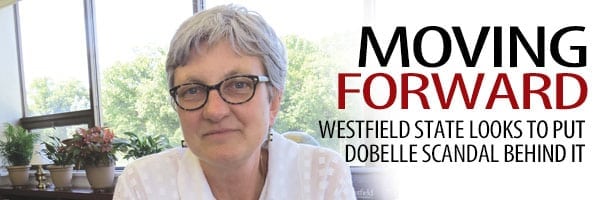
Westfield State Works to Put the Dobelle Controversy Behind It

WSU Interim President Elizabeth Preston

WSU Interim President Elizabeth Preston

Elizabeth Preston acknowledged that, in the vast majority of cases, when someone in academia has the title ‘interim president’ in front of their name, they are usually in a caretaking role, holding down the fort until the institution chooses its next leader.

But at Westfield State University, that hasn’t always been the case. In fact, it’s been more of the exception than the rule, she said, noting that individuals have been called upon to restore order and change the tenor of front-page headlines in the wakes of scandals in the ’80s that led to the resignations of Frank Pilecki and Irving Buchen.

And that is the situation that Preston, formerly the school’s vice president of Academic Affairs, finds herself in as she serves as interim leader following the tumultuous end to what could only be called the Evan Dobelle era at WSU.

It’s been roughly eight months since Dobelle, who by then had the adjective ‘embattled’ seemingly attached to his name and title, abruptly retired amid a searing controversy over his lavish spending of university resources. Dobelle, who had been suspended from his $240,000-a-year job with pay while a law firm hired by the university’s board of trustees investigated his spending habits, had vowed to fight for that job, filing a federal lawsuit against the trustees and accusing the chairman of conspiring to destroy his reputation.

But he eventually stepped down for what he said was the good of the university — although state and federal lawsuits he’s filed against various parties are still pending — and Preston, who has also served as dean of faculty and chair of the school’s Communications Department, stepped into the breach, first as acting president, then as interim, which means she’ll serve until a new president is selected — a year from now, by most estimates. She will not be a candidate for the permanent position.

Today, most of the headlines concerning the university — and the Dobelle controversy — concern the size of the legal bills the school has amassed in this mess (roughly $1.3 million to date), and there is still the rather large matter of a state inspector general’s report on the school’s noncompliance with the state’s Public Records Law, which was due to arrive several weeks ago, but is still being awaited.

But Preston believes that, to a large degree, the university is succeeding with the ongoing work of putting the Dobelle scandal behind it and moving on with the present, and especially the future.

WSU community

Elizabeth Preston says the WSU community has recovered quickly from last fall’s controversy.

It is being helped in this regard by the school’s 175th-anniversary celebration — which has come in parts and is still in progress (more on that later) — because there have been a number of events that have helped the campus community focus on the positive, said Preston, and also change the tone of news coverage and begin the discussion about what the school could, and should, look like when it turns 200.

The sentiment can be summed up with the phrase ‘moving forward,’ which is more than the name given to a website (www.westfield.ma.edu/movingforward) created to serve as the university’s official resource for information on the inspector general’s investigation and related legal action.

Indeed, it is also a mindset.

Looking back on the academic year that began last September and ended in May, Preston said that, while there were some bright spots, this was what amounted to a timeout for the college, as the Dobelle controversy played itself out in the media, he eventually retired, and the school dealt with the aftereffects.

“And you can’t have a two-year timeout. You can’t sit in the break-down lane for two years. That’s simply not an option in higher education today,” she went on, adding that evidence that this won’t happen comes in a number of forms. They range from enrollment numbers for this fall, which are slightly higher than last year, and on target with the administration’s goals, to fund-raising efforts, including a successful initiative that was part of the recent 175th Anniversary Gala, to comments she’s received from faculty, students, and parents.

Meanwhile, there are other positive developments, such as the planned construction of a new science center, the matriculation of the school’s first class of nursing students last spring, and a collaborative initiative with Holyoke Community College to improve access to, and the affordability of, a bachelor’s degree.

For this issue and its focus on education, BusinessWest talked at length with Preston about what being interim president means in this situation, and about what’s next for this school as it marks a milestone.

Altered State

Preston was vacationing in Yosemite National Park last July when the controversy surrounding Dobelle and his spending habits started to reach a boiling point.

She had only limited Internet access where she was staying, but enough to learn that a special meeting of the board of trustees had been called. “That’s when it first occurred to me that this was serious.”

That wasn’t the first time she allowed herself to think about having to assume the role of acting president — the vice president of Academic Affairs is next in line in such situations, according to the school’s well-entrenched succession plan — but it was the first time she thought it was a real possibility.

And four controversy-filled months later, it was reality.

A few weeks after that, her title changed to interim president, which is not an automatic progression, but a role she wanted and one the board of trustees asked her to accept.

It’s been a learning experience on many levels, one that has taken her out of what she called her “comfort zone” within academic affairs, but she’s found it rewarding in a number of ways.

“I was a little bit unprepared for the feeling of responsibility that I have — I’ve always been in a position where there was someone else who was ultimately responsible for things,” she explained. “There’s something very challenging about knowing that you’re responsible for the institution. That would be challenging under any circumstances, but under these circumstances, it’s been more difficult.”

Preston told BusinessWest that, from the beginning, she’s considered her job description as interim president to be fairly simple, even if carrying out that assignment isn’t.

“I thought I clearly had the responsibility for boosting morale and restoring confidence,” she explained, adding that she has gone about this in a number of ways, from effectively communicating not only with the campus but the outside community as well, especially with the ‘moving forward’ website, to putting in place spending safeguards to prevent another controversy like the one authored by Dobelle, to revamping the school’s financial-management team by creating two new positions that focus on internal auditing and risk management.

The website is a key part of the process of putting information in the hands of those who want and need it, and being completely transparent, she said, stressing the importance of communication — at all times, but especially in situations like these. The site answers often-asked questions about the inspector general’s investigation, which began last August, other investigations, ongoing litigation and the accompanying costs to the school, the impact of the scandal on enrollment and fund-raising, and even the search for a new president.

As she talked about the past academic year, using that term ‘timeout’ on more than one occasion, Preston said it’s obviously been a challenging time for the school — and for her.

But in some ways, she said she’s been pleasantly surprised by how quickly the school has seemingly recovered, while also acknowledging that maybe she shouldn’t be surprised.

Indeed, Preston told BusinessWest that, in many ways, the Dobelle scandal, while it received national and international coverage, did not leave what she would consider a deep mark on the school. Few on the campus were really affected by the spending controversies, she noted, and many at the school have been able to focus on the many positive developments from Dobelle’s tenure, and not on how or why it ended so badly.

“The controversy really hasn’t affected much of the work of the university,” she explained. “In terms of morale, Evan Dobelle did a lot of good things for this university, and he greatly elevated its profile.”


School of Thought

Backing up a bit, she noted that, prior to Dobelle’s arrival, WSU endured two caretaker interim presidencies following the departure of Vickie Carwein and then a failed presidential search. This led to what she called “pent-up energy” when Dobelle arrived that translated into a number of initiatives.

She used one — a greater focus on international programs — to show how this pent-up energy manifested itself.

“There was a lot of interest in international study-abroad programs and travel-abroad trips; the faculty had been proposing those kinds of programs for years on campus and hadn’t been able to get any traction,” she explained. “He [Dobelle] opened the doors to all kinds of international programs, and that was typical of a number of things.

“There was a lot of interest in movement on campus in a number of directions,” she went on, “and he elevated the profile of the institution and also empowered faculty and staff to do a number of things they wanted to do; there were a lot of people on campus who were very partial to his presidency.”

So when the controversy broke and Dobelle was eventually compelled to resign, some felt a sense of loss, while others experienced a sense of betrayal, she went on, adding that the extensive, global media coverage and commentary that slammed not only Dobelle, but the trustees — first for hiring him and then for an apparent lack of oversight — made matters much worse.

It all added up to a challenging period, but one that she doesn’t believe has lingered.

A new science building

A new science building, seen here in an architect’s rendering, is one of many positive developments taking place on the Westfield State campus.

“This really is a tight campus community, and people are really focused on the education and experience that our students receive,” she said. “So it was surprising to me how quickly things returned to a degree of normalcy on campus.”

She can’t pinpoint exactly when that happened, but a social event late last fall may have been a factor in accelerating the healing process.

“There were no speeches, and there was no program,” she said of the gathering. “There was just a chance for everyone to reconnect. I think that was the beginning of the process of rebuilding morale on campus.”

Meanwhile, the 175th anniversary and various celebrations to mark that occasion provided not necessarily a distraction, she went on, but a chance to focus on the institution’s history, future, and core values.

“When you celebrate something like a 175th anniversary, what gives that occasion such power is what it allows you to recognize and talk about where the institution has been, and also about the timeless values that have been the foundation of everything you’ve been doing, and how much they’re still present.

“It gave us a chance to celebrate being a public institution, our history of inclusion, and the centrality of service to our academic programs and the campus culture,” she went on, “because those have been part of the institution for 175 years, and it gave people a chance to be proud of who we are and where we’ve come from; it was very helpful in moving the institution forward.”

The festivities culminated with a gala on campus on March 29. The event raised more than $125,000 for scholarships, the highest total for a single event in the school’s history.

And the 175th celebration will continue, she said, adding that there is some “fuzziness” about the dates surrounding the school; the Legislature approved the charter for Framingham State and what became Westfield State in 1838, but the schools didn’t open until the fall of 1839.

Moving forward (there’s that phrase again), the school is looking at new enrollment of more than 1,500 students this fall, which will exceed the target set by administrators. Meanwhile, work is expected to commence this fall on the new, $48 million science building, the first new academic building on campus in nearly 40 years.

There are other initiatives, such as an RN-to-BSN initiative that will be part of a growing Allied Health program, as well as the articulation agreement with Holyoke Community College, which will enable students at HCC to transfer from that school’s online associate’s degree program to WSU’s complete online bachelor’s degree program.

“We have a lot going on here,” said Preston, adding quickly that such initiatives may not be generating big headlines, at least when compared to those stories about the school’s legal bills, but they do provide evidence that the timeout is clearly over.

Steady Course

Preston wanted to make it clear — and did — that the Dobelle controversy and its aftereffects are not entirely in the rear-view mirror.

The inspector general’s report still hangs over the campus, as do the lawsuits filed by Dobelle and the resulting legal fees. Meanwhile, there are several vacancies on the board of trustees resulting from resignations  and expiring terms.

“We’re not on the other side of this completely,” she told BusinessWest, adding quickly that, with the issues that matter most — those of morale, momentum, and positive energy with regard to what comes next — the school has in almost every sense turned the corner.

Which means that Westfield State University is moving forward — in a great many ways.

George O’Brien can be reached at [email protected]

Education Sections
Bay Path Launches Program in Negotiation, Leadership

Joshua Weiss

Joshua Weiss says negotiation isn’t a lost art, but simply one that too many people haven’t taken the time and trouble to master.

Joshua Weiss was talking about the difference between being assertive and being aggressive.

And while doing so, he made it clear that, in the worlds of leadership and negotiation, these terms that appear to be synonymous are anything but.

“When you’re assertive, you’re standing on your own two feet, and when you’re aggressive, you’re standing on the other person’s toes, and people often don’t make that distinction,” said Weiss, co-founder of something called the Global Negotiation Initiative at the Program on Negotiation at Harvard Law School. He’s also an acclaimed author and consultant in the field who now has a new title on his business card, although they haven’t actually arrived from the printer yet.

Indeed, he is the director of Bay Path College’s newest program, the Master of Science in Leadership and Negotiation, or MSLN.

This fully online initiative is the first of its kind — in this country and probably on a global basis as well, said Weiss, adding quickly that understanding the difference between assertive and aggressive is just one of many things students will learn in this program, which will begin this fall.

They’ll also learn how to deal with the concept of power and how to wield it, understand how men and women approach leadership and negotiation differently, learn about the many psychological dimensions of leadership and negotiation, understand the role of emotions in these realms and how to control them, and grasp the importance of relationships and how they go on after the negotiations are over.

“Aggressive … that means I steamroll you to get to where I want to go,” Weiss explained, returning to his lesson in both vocabulary and effective management. “Being assertive means I explain clearly that ‘this is what I need, and I want to work with you, but I’m not going to accept anything that doesn’t fit into that.’

“You have to understand what you want to achieve, and assert for that,” he went on, “but also understand that the relationship is going to exist after this negotiation, and that there’s a way to go through negotiations so you don’t burn bridges — you don’t have to.”

As he talked about these concepts and others, Weiss said that negotiation certainly isn’t a lost art. But it is one that many people don’t make an effort to master. Elaborating, he said it’s a skill that many people will say they lack, for one reason or another, but don’t try to acquire, because they don’t believe they can or don’t believe they need it.

“A lot of people see negotiation as what the select few — the diplomat or the contract negotiator — would do,” he said. “There’s a sense that certain people negotiate and others don’t.”

These are flawed assumptions, he went on, adding that both leadership and negotiation can be taught and have been taught over the years, but not in a very comprehensive way — usually with a course or perhaps two, not with a degree program.

Such a higher level of instruction is necessary, he said, because advancing telecommunications technology and the emergence of flatter organizational structures in companies of all sizes means that more people will — or should be — called upon to provide leadership and negotiate, and they will have to do both in different ways and with a wider array of issues.

Indeed, while most think of negotiation in terms of mergers, acquisitions, and salary numbers — and those are still important parts of the equation — it now also involves such matters as flex time, working environments, and generational differences when it comes to the evolving world of work.

For example, while the conference-room table has long been the unofficial symbol of negotiation, people are now doing it with e-mail, text messages, and a host of other media, he said, adding that successfully leading, and dealing, through these platforms requires specific skills.

All these factors and others led Bay Path, with some strong encouragement from Weiss, to create the new program, which he believes will become attractive to both graduating seniors and those already in the workplace looking to advance, and who are seeking an alternative to the traditional MBA.

For this issue and its focus on education, BusinessWest talked at length with Weiss about negotiation, leadership, the new program, and why that acronym MSLN might soon become an important part of the regional business lexicon.

Courses of Action

It’s called the Abraham Path, or Abraham’s Path.

This is, as the name suggests, a walking trail across the Middle East that essentially follows the epic journey of Abraham, considered the world’s first pilgrim. It starts at his birthplace in Urfa in Turkey and ends at his burial cave in the Palestinian city of Hebron. Other stops include Nablus, Jericho, Jerusalem, and Bethlehem.

Weiss was part of the team that worked to create the path starting in 2003, and he called it a learning experience on a number of levels, and especially when it comes to negotiation.

“Right now, despite all the things that are going on in that region, there’s about 500 kilometers of path that have been mapped and are in use,” he explained. “Some people walk considerable distances, and others go for a day; there are many students and others who do community-service projects along the path, everything from helping with the olive harvest to painting a school — ways in which people can come to understand, and interact with, the region differently.

“Early on, my job was to go and negotiate with the governments and get their approval for this,” he went on. “There were negotiations all over the place, from the national governments down to the governors, mayors, to sitting in villages with families drinking goat’s yogurt and trying to persuade them that this was an interesting idea and that they should get involved.”

Weiss will take lessons from the Middle East, as well as others from countless businesses he’s consulted for, and try to impart them upon students who enroll in the MSLN.

This is an initiative that meets his desire to return to the classroom (he’s taught at Harvard and other schools) and direct a program, but that also meets what he considers a critical need — for employees who possess more and better leadership and negotiation skills.

“A lot of people tend to see negotiation as a skill that leaders need,” he explained. “I see it much differently; I believe negotiation is very much a mindset and how you approach issues and challenges that come up. Yes, leaders need to learn how to negotiate, but leadership today, from my perspective, requires a lot of different skills.

“You certainly still at times have the ability to coerce others, but leadership seems to rely more on persuasion and empowerment and on modeling the kind of behavior you’re looking for from your employees,” he continued. “So I see this degree as being good for both the student in terms of their own growth and ability and being able to move on from where they are to the next level, but also very valuable for an employer, because if I know I have someone who is very skilled in leadership and negotiation, I can hand that individual a project knowing that it requires the ability to lead, and when problems come up, he or she can negotiate their way through them; they’ve become a very valuable employee, and one that I don’t have to worry about.

“Leaders often micromanage because they worry and lack trust in people and their skill sets,” he went on. “With these skills, people will ultimately become real assets.”

Even better, he told BusinessWest, he believes these skills have a way of rubbing off on other people, meaning that effective leadership and negotiation can permeate a team or a company.

Talking the Talk

Returning to the subject of negotiation, Weiss said it has always been part of doing business — and life in general — but it is in some ways changing and evolving, and those who wish to advance their careers need to appreciate both its importance and many nuances.

“I tend to view negotiation in a very broad sense,” he explained. “To me, negotiation is ubiquitous; it’s something we deal with every day. So, in the workplace, it may be more formal negotiations where you’re talking about mergers and acquisitions or a job salary. Or it may be more informal things when you’re working on projects with employees and there’s a disagreement and you need to go back and forth and figure out how you’re going to work together in a different capacity.”

Elaborating, he said there isn’t necessarily more negotiating going on today, although one might be able to make that case. Instead, people are increasingly recognizing that negotiation is what they’re doing, and that they need to become better at it.

There have been some seminal moments that have helped manifest this mindset, he went on, citing, in particular, the publishing of Getting to Yes, authored by Roger Fischer and William Ury, in 1981.

“It’s been on the bestseller list ever since,” said Weiss, adding that the book and others that followed helped foster an understanding of the importance of negotiation. “If the average person had experience with negotiation, they thought about it in terms of buying a car or a home or something like that. This book changed all that and got people to realize that, first of all, a lot more of us are negotiating, and there’s a different way to negotiate, one that for a lot of people feels more comfortable.

“Part of the reason people don’t like to negotiate for things like cars is that they feel like the process itself centered around manipulation,” he said. “That’s one way of approaching negotiation, but there’s another way; for most of us, our negotiations are with people that we have to work with over time, and so that model of manipulating and distrust is a self-defeating way of negotiating.”

The model that was presented in Getting to Yes and has been built upon ever since is called ‘interest-based negotiation,” said Weiss, adding that, in simple terms, it involves creating scenarios where there is not a winner and a loser, but where both sides’ interests are respected and, by and large, met.

“When people started to realize that they were negotiating with someone they needed to work with over the long term, they understood that it would be better to build a relationship so that they meet the needs they have rather than trying to one-up each other,” he said, adding that, over the past several years, and especially since the recession broke out in 2008, businesses are embracing this concept.

While books like Getting to Yes have opened some eyes about the importance of negotiation, there have historically been only limited opportunities to learn about it in the classroom, said Weiss.

He noted that many law schools and business schools offer a course or two in the subjects of negotiation and leadership, and that in many instances, such offerings are required. But such courses provide only what Weiss called the basics. Bay Path’s new program amounts to what he called a “deep dive.”

The 36-credit program will be taught in eight-week blocks. Courses include “Leading and Negotiating in a Virtual and Multicultural World,” “Psychological Dimensions of Leadership and Negotiation,” “Gender, Leadership, and Negotiation,” and “Case Studies of Leadership and Negotiation.”

Weiss said there has been strong early interest in the program, and he expects to start with eight to 10 students in the fall and see that number rise as individuals, businesses, and nonprofit agencies realize the importance of leadership and negotiation to their success moving forward.

Bottom Line

As he talked about his program and its target audience, Weiss relayed the comments of a biotech engineer who has been kicking the tires on Bay Path’s new offering and leaning toward enrolling.

“She said, ‘I’ve been looking at MBA programs, but keep getting pulled back to yours because I don’t want budgets and finance and that kind of stuff,’” he noted. “She said, ‘where I am, technically I’m very good at what I do, but I’m in a mid-level position, and I know I’m capable of more than that. What’s holding me back is this ability to assert for myself and lead other people; I don’t know how to do that.’”

There are countless others who can say the same thing, and because they can, Bay Path’s program would appear to be the right offering at the right time.


George O’Brien can be reached at [email protected]

Company Notebook Departments

Meredith Corp. to Acquire WGGB
SPRINGFIELD — John Gormally, president of Gormally Broadcasting, LLC, as well as BusinessWest magazine, yesterday announced that he has signed an agreement to sell Springfield-based ABC 40/FOX 6 to Des Moines, Iowa-based Meredith Corp. The sale is subject to approval from the Federal Communications Commission and is expected to close later this summer or early fall. Gormally acquired ABC 40 in the fall of 2007 and soon began a series of significant investments in new facilities and equipment. Shortly thereafter, he launched Fox 6 Springfield, bringing a fourth TV station to the market. The sale is a reflection of a trend toward ongoing consolidation within the media industry, particularly in television. Meredith currently operates 14 local broadcast stations, including WFSB Channel 3 in Hartford and its low-power sister station, WSHM, in Springfield. Other Meredith stations are located in Georgia, Oregon, Missouri, South Carolina, North Carolina, Michigan, Arizona, Tennessee, and Nevada. Under Gormally’s ownership, ABC 40 earned numerous awards for news excellence, including News Station of the Year honors from the Associated Press in 2013 and 2014, competing against all Springfield and Providence, R.I. stations. WGGB continues to be the only commercial TV station broadcasting news in HD.

Baystate Health Announces Naming of Tolosky Center
SPRINGFIELD — To honor the leadership and achievements of President and CEO Mark Tolosky over his 22-year career, the Baystate Health board of trustees announced the naming of the Tolosky Center at 3300 Main St. in Springfield. The Tolosky Center, a regional destination for outpatient healthcare services, opened in 1998 and ignited the redevelopment of an underused former industrial area in Springfield’s North End. The area today comprises more than $200 million of Baystate Health investment and more than 455,000 square feet of space, including the Tolosky Center, the D’Amour Center for Cancer Care, the Baystate Children’s Specialty Center, the Baystate Breast and Wellness Center, and the Baystate Orthopedic Surgery Center, among other Baystate-owned and -occupied properties. Tolosky is transitioning out of his position as president and CEO on July 1, moving into a president emeritus role. He served Baystate Health and the community for 22 years, beginning in 1992 as executive vice president of Baystate Health and CEO of Baystate Medical Center. In 2004, while retaining leadership of Baystate Medical Center, he assumed the titles of president and CEO of Baystate Health. The naming of the Tolosky Center culminates a series of recognitions of Tolosky’s long tenure and contributions to Baystate Health and the community. In May, a program that has provided nearly $1 million in forgivable loans to help Baystate Health employees purchase homes was renamed the Mark R. Tolosky Baystate Neighbors Program. Also last month, the nurses of Baystate Medical Center recognized Tolosky with their Nursing Collaborative Award, a testament to his commitment to nurses, patients, and families. “During his tenure, Mark’s commitment has extended beyond the traditional definition of health,” said Victor Woolridge, chair of the Baystate Health board of trustees. “He made it a priority to forge community partnerships that improve lives, and as a result he has helped to strengthen the Western Mass. economy. He has been committed to the well-being of communities and the individuals and families within them.” Presiding over the naming ceremony for the Tolosky Center were James Sadowsky, vice chair of the Baystate Health board of trustees, and John Maybury, chair of the Baystate Health Foundation board of trustees. “My family and I consider ourselves very fortunate to be part of this amazing community,” said Tolosky. “We’ll look with tremendous pride and gratitude upon on our family name on this building, where so many patients receive the skilled and compassionate care that changes their lives for the better.” Under Tolosky, Baystate Health has developed a national reputation as a leader in healthcare quality, being named among America’s top 15 health systems and seeing its hospitals regularly included on prestigious lists of the top-performing medical facilities in the country. In the same period, Baystate Health has scaled up its charitable commitment to the communities it serves, providing hundreds of millions of dollars in community-benefit funding, and collaborating with a diverse range of partners to devise and implement new ways to improve community health each year. It also has substantially increased its economic impact, now employing 10,000 people and producing more than $2.6 billion in economic output annually, according to one recent study. Tolosky recently led Baystate Health through the largest building project in the history of the health system and region, the planning, design, and construction of the $300 million expansion of Baystate Medical Center. During tenuous economic times, he championed the need for these projects for patients, families, and the community. He also fostered unprecedented support from generous donors in the community, raising more than $23 million to make it possible. On July 1, Dr. Mark Keroack assumes duties as Baystate Health’s president and CEO.

Jewish Geriatric Launches Rebranding Campaign with New Name, Logo
LONGMEADOW — Jewish Geriatric Services Inc. (JGS) announced recently that it is launching a rebranding campaign featuring the new name Jewish Lifecare (JL), a redesigned logo and brand identity. “Two years ago, JGS celebrated its centennial. It was a time to look back at this organization’s venerable history of caring for our elders, but also an opportunity to envision the future,” said Martin Baicker, president and CEO of JL. “We challenged ourselves to develop a brand that would provide greater clarity of who we are and what we do.” In 2012, the JGS board of directors voted to move forward with the rebranding process, and a rebranding committee was formed, chaired by Susan Goldsmith, president of Marcus Printing in Holyoke. “We needed to shed limiting parts of our present brand, while differentiating ourselves from competitors,” said Goldsmith. “The name Jewish Lifecare was chosen because it encompasses so much more than just geriatrics. It provides the image of life in its entirety and the phases in which we live.” Retaining the word ‘Jewish’ in the name was important because it embodies the mission of the organization, which is rooted in the Jewish faith. The tagline, “Excellence for generations. Serving all faiths” highlights a 102-year history of excellence in the community and the broader audience of people of all faiths, she added. The icon combines the symbolism of an eternal flame and tree of life into one cohesive image. The dot on the top of the icon allows the symbol of a person to emerge, and ties in the human connection to the organization. Jewish Lifecare will phase in the new branding across all platforms and services over the next several months. “We’re introducing the world to the next evolution of an organization founded as the Daughters of Zion Home for the Aged,” said Baicker. “We have a long tradition of embracing culture change to better serve our residents, patients, and families, and we are excited to introduce the community to the next stage of this venerable organization.”
 
Country Bank Awards $80,000 in Scholarships
WARE — Country Bank recently awarded $80,000 in scholarships to 16 area high-school students at its annual Scholarship Dinner. The recipients, selected from the scholarship committees established at each location where a scholarship is awarded, each received $5,000 to help get them started in their college career and assist with the many expenses that go along with a higher education. At the event, staged this year at Teresa’s Restaurant & Alfonso Banquet Room in Ware, Paul Scully, president and CEO of Country Bank, had the opportunity to meet each of the recipients, their guests, and a representative from their high school. “It means so much to have the opportunity to meet the students and their parents when the scholarships are presented,” he said. “They have all worked very hard to get to this point, and I have no doubt that each of them will succeed in the next chapter of their lives.”

Country Bank Awards $12,000 to Carson Center 
WARE — Paul Scully, president and CEO of Country Bank, and Shelly Regin, first vice president and director of marketing at the bank, recently paid a surprise visit to the Baystate Mary Lane Community Benefits Advisory Committee (CBAC). Scully personally acknowledged the work of the CBAC and awarded the Carson Center two checks. The first, for $2,000, was a portion of the proceeds from Country Bank’s Community Series performances at the Center at Eagle Hill. The second check, for $10,000, was a direct gift from Country Bank to further the Carson Center’s provision of services for community members who are struggling with addiction. These funds were given to compliment the Yes to Life structured outpatient addiction program at the Carson Center, which was funded by Baystate Mary Lane Hospital’s determination-of-need (DON) funds last year. DON funding was made available for community health initiatives as part of the state Department of Public Health’s DON process related to capital expenditures for Baystate Medical Center’s new Emergency Department in Springfield. “We are so proud to support this important and worthwhile program, which will help so many of our community members” Regin said. “Country Bank recognizes this as an opportunity to assist the Carson Center and their Yes to Life Program, and in turn bring support to those who need it in our surrounding towns.”

MassMutual Donates $155,000 on Behalf of Financial Professionals
SPRINGFIELD — MassMutual has awarded $155,000 to eligible nonprofit organizations through its annual Community Service Awards (CSA) program. The awards are given on behalf of MassMutual financial professionals who demonstrate outstanding commitment to nonprofit organizations in their local community. New this year, MassMutual has increased its giving to include six $5,000 Silver awards in addition to its usual 10 $10,000 Gold awards and a top $25,000 Platinum award. “At MassMutual, we are proud of the significant impact our financial professionals have on their communities. What better way to encourage more of them to volunteer than to recognize those that are highly dedicated to helping others?” said Nick Fyntrilakis, vice president of Community Responsibility at MassMutual. “We are delighted to expand our program this year to honor more individuals who are making a positive difference in their communities across the country.” This year’s $25,000 Platinum Award winner is Darren Scrimpshire, a financial professional with MassMutual South Texas in San Antonio. Scrimpshire is being recognized for his work with San Antonio Fitness, Independent, & Recreational Environment (SAFIRE), a day activity center for young adults with intellectual disabilities that focuses on healthy lifestyles, continuing education, and pre-vocational skills. This year is MassMutual’s 18th year presenting Community Service Awards. Each award recognizes the many selfless hours of volunteer time and talent that MassMutual’s financial professionals put in during the year to improve their communities. MassMutual has contributed more than $1.4 million to charitable organizations across the country through its CSA program since its inception in 1996. The CSA program is just one of a variety of philanthropic programs sponsored by MassMutual in support of nonprofit organizations where its financial professionals live and work. Last year, in total, MassMutual provided nearly $8 million in philanthropic investments throughout the U.S., of which more than $900,000 supported organizations in honor of its financial professionals.

Steward Health Care, Doctors Express Announce Affiliation
SPRINGFIELD — Doctors Express has announced support for a growing trend of healthcare system partnerships with urgent-care facilities. Steward Health Care, the largest fully integrated community-care organization and community-hospital network in New England, recently announced a new clinical affiliation with AFC Doctors Express Urgent Care, the largest urgent-care provider in New England. This partnership is the first of its kind in Massachusetts and makes urgent-care centers available to Steward patients and others within the next year. Master franchisors Richard Crews and James Brennan of the local Doctors Express facilities — located in Springfield and West Springfield — commend the efforts to increase the quality and efficiency of patient care. Doctors Express has 11 locations in Massachusetts and plans to open 15 more locations in the next two years. Steward now has the largest integrated network of urgent-care providers in Massachusetts with 24 affiliated locations to be opened within the next year. Through this affiliation with Doctors Express, 45 family-practice, emergency-medicine, and internal-medicine physicians employed by Doctors Express will join the Steward Health Care Network. As part of this clinical affiliation, Doctors Express physicians will now have access to Steward’s patient portal to evaluate a patient’s clinical history prior to commencing treatment. Clinical notes from a Doctors Express visit will be communicated back to a patient’s primary-care physician or specialist for necessary follow-up. Steward patients will remain in-network while visiting a Doctors Express location. Urgent care includes some services offered by primary-care physicians, including treatment for acute illness, trauma (including minor surgical procedures), vaccinations, X-rays, medication dispensing, and more. Many patients might not take advantage of these services through primary-care practices because of inconvenient hours. “Our Doctors Express urgent-care practices are an advocate for better healthcare throughout our Western Mass. community,” said Brennan. “Not only do our physicians treat symptoms, but they also provide preventative care. We have moved urgent care far beyond the boundaries of traditional clinic care, and we look forward to more growth opportunities, from franchise development to partnerships with major healthcare systems.” Added Crews, “emergency rooms continue to be overcrowded with patients seeking non-emergency health-care. Partnerships with major healthcare providers alleviate the burden of crowded emergency rooms, and more importantly, these partnerships increase the quality of care by providing fast and efficient care during non-business hours.”

Shatz, Schwartz and Fentin Receives United Way’s Gold Award
SPRINGFIELD — Local law firm Shatz, Schwartz and Fentin, P.C., serving Massachusetts, New York, and Connecticut, was recognized as a Gold award recipient from the United Way of Pioneer Valley during its 2014 annual celebration. Local businesses were recognized with Gold, Silver, or Bronze awards for extraordinary support during the 2013-14 campaign. Each year, the United Way of Pioneer Valley runs an annual campaign that provides funding for local nonprofit organizations and community initiatives. Donations finance health and human-service programs throughout the region. Awards were presented at the annual celebration, which was hosted recently at Chez Josef in Agawam. “We are proud to have the good fortune to be able to give back to a community that supports our success,” said partner Steve Schwartz, who has been with the firm since its inception 45 years ago. “We are equally proud of the other contributing businesses recognized at the United Way of Pioneer Valley annual event. We accomplish more working together.” The United Way of Pioneer Valley is the regional affiliate of United Way Worldwide, a leadership and support organization and network of nearly 1,800 community-based United Ways in 45 countries and territories. United Way envisions a world where all individuals and families achieve their full potential through education, income stability, and healthy lives. For 90 years, the United Way of Pioneer Valley has been working in partnership with individuals, businesses, and organizations that advance the common good throughout the Greater Springfield community, including the 25 cities in Hampden County, South Hadley, and Granby.

Departments People on the Move

Kristina Drzal Houghton

Kristina Drzal Houghton

At its recent annual meeting, the Springfield Boys & Girls Club board of directors elected Kristina Drzal Houghton as its new Chairman. Houghton has been an active member of the Springfield Boys & Girls Club’s board of directors since 2003, serving on the club’s finance, Festival of Trees, and resource-development committees. Houghton is a partner and director of taxation services for the Holyoke-based public accounting firm Meyers Brothers Kalicka, P.C. She has extensive experience in tax-exempt organizations and unrelated business-income tax issues, as well as tax compliance and planning for closely held businesses. Her clients include those in the service, retail, transportation, medical, construction, manufacturing, education, insurance, and not-for-profit industries. Houghton received her bachelor’s degree in business administration from American International College and her master’s in taxation from Bentley College, and she has more than 30 years of experience in the area of taxation. She was a former tax manager with Coopers & Lybrand. Her professional affiliations include the AICPA and the MSCPA. She is the immediate past president of the board of the Springfield Symphony, served as the former treasurer of Spirit of Springfield, and was a troop leader for more than 12 years for the Girl Scouts of Central and Western Mass. Houghton is licensed as a certified public accountant in Massachusetts and Connecticut.
• • • • •
The Columbus Blue Jackets have named Jared Bednar Head Coach of the Springfield Falcons, the club’s American Hockey League affiliate. Bednar has served as an assistant coach of the Falcons since 2012, helping the club capture consecutive division titles since his arrival. “Jared has been instrumental in the development of several of our prospects in Springfield while serving as an assistant coach, and was a big part of the team’s recent success,” said Blue Jackets Assistant General Manager Chris MacFarland. “He’s very well-respected throughout the hockey community, and we’re confident he will excel in his new role within our organization.” Bednar served as the head coach of the AHL’s Peoria Rivermen from 2010 to 2012, amassing a record of 81-63-12 over the course of two seasons. He joined the Rivermen after serving as an assistant coach with the AHL’s Abbotsford Heat during that club’s inaugural 2009-10 season.
• • • • •
Susan Seaver

Susan Seaver

Florence Savings Bank, a mutually owned savings bank serving the Pioneer Valley through nine branch locations, announced that Susan Seaver has joined the bank as Vice President and Mortgage Originator, responsible for mortgage originations in Hampden, Hampshire, and Franklin counties. Seaver comes to FSB with a strong résumé of service in the banking industry. Most recently, she was vice president and mortgage officer with People’s United Bank. Her experience includes training and supporting a staff of in-house originators, and she has been a multi-year recipient of the top producer award for success in closing residential loans. Her professional activities include serving as a member of the Realtor Assoc. of Pioneer Valley, the Professional Women’s Chamber of Western Mass., and the National Mortgage Licensing System and Registry. In the community, she has volunteered with a number of organizations, including the Michael J. Dias Foundation, Big Brothers Big Sisters, and Western Mass. Eldercare. In announcing the appointment, FSB President and CEO John Heaps Jr., said that “we are very pleased to have Susan join our team here at Florence Savings Bank. She comes to us with extensive banking experience. I am confident our customers will be well-served by her contributions.”
• • • • •
Loomis Communities announced that Gabrielle Thomes has been appointed Director of Social Services at the nursing center at Loomis Lakeside at Reeds Landing. In this role, she will plan and implement social services and help individuals and their families find the correct level they need for care and recovery or, when necessary, hospice. Thomes is a licensed social worker who previously worked at Wingate in East Longmeadow.
• • • • •
Joseph Malmborg

Joseph Malmborg

FSB Financial Group, the investment division of Florence Savings Bank, announced that Joseph Malmborg of Springfield has joined its team as a Financial Services Representative. In this capacity, he will work with individuals and business owners to develop strategic, long-term financial plans to help customers achieve their financial goals and objectives. Malmborg comes to FSB Financial Group with a résumé of 25 years of banking and investment-management experience. Most recently, he was an investment advisor with United Bank, where he managed and developed a $30 million investment portfolio. He is additionally a former investment advisor at Banknorth, registered investment advisor with MassMutual, and business development manager at Fleet Financial. Malmborg began his career as a branch sales manager at SIS Bank. The Westfield State College graduate is a licensed investment advisor representative with Commonwealth Financial Network, holding the Series 7 (General Securities) and Series 65 (Uniform Investment Adviser Law) licenses. He is also licensed to sell both life and health insurance. Malmborg is a past director of the East Longmeadow Chamber of Commerce. His other community activities include teaching Junior Achievement and being involved with Cursillo of Western Mass. “We are pleased to welcome Joe to our investment team. He will work closely with Jean Kelley and Nicole Domnarski to ensure that every FSB Financial Services client receives the highest degree of service and best possible investment advice in the Pioneer Valley,” said John Heaps Jr., president and CEO of Florence Savings Bank. “Joe’s extensive background and strong community involvement will make him an invaluable part of our team.”

Court Dockets Departments

The following is a compilation of recent lawsuits involving area businesses and organizations. These are strictly allegations that have yet to be proven in a court of law. Readers are advised to contact the parties listed, or the court, for more information concerning the individual claims.

CHICOPEE DISTRICT COURT
Severa Toledo v. Springfield Center Assoc., L.P., d/b/a Wendy’s Restaurant
Allegation: Negligent maintenance of property causing slip and fall: $4,086.30
Filed: 5/13/14

HAMPDEN SUPERIOR COURT
Anthony B. Choquette v. Merrimack Mutual Fire Insurance Co.
Allegation: Misrepresentation and breach of insurance contract: $60,000
Filed: 5/29/14

Lansal Inc. v. Mama Mae’s, LLC
Allegation: Breach of contract and failure to pay: $92,498.01
Filed: 5/16/14

Ronald and Linda Weston v. John Oakes and Farm Family Casualty Insurance
Allegation: Negligent misrepresentation by fraudulently concealing a reduction in coverage to the blind plaintiff: $182,000
Filed: 5/29/14

HAMPSHIRE SUPERIOR COURT
Mary Aubrey and Nancy Kent v. Breakaway Retail Enterprises Inc. d/b/a Manny’s
Allegation: Negligent installation of a dishwasher causing mold and rot damage: $60,000+
Filed: 4/15/14

Susan Amuso v. Interskate 91 Skating and Fun Center, Pyramid Mall of Hadley Inc.
Allegation: Negligent maintenance of property causing injury: $38,106
Filed: 4/18/14

Transborder Marketing Inc. v. Transborder Marketing S.P. Zoo
Allegation: Non-payment of loan: $250,000
Filed: 4/28/14

NORTHAMPTON DISTRICT COURT
Dennis K. Burke Inc. v. Thomas L. Engwer, III d/b/a Tom Engwer Trucking
Allegation: Non-payment of goods sold and delivered: $8,711.39
Filed: 4/21/14

Easthampton Savings Bank v. Etinde Painting and Dieudonne B. Etinde
Allegation: Non-payment of revolving line of credit: $11,588.52
Filed: 4/16/14

LexisNexis v. Kairos Capital, LLC
Allegation: Non-payment of subscription agreement: $5,888.87
Filed: 4/24/14

PALMER DISTRICT COURT
Helena Chemical Co. v. St. Clair Landscaping Inc.
Allegation: Non-payment of goods sold and delivered: $19,029.65
Filed: 5/13/14

SPRINGFIELD DISTRICT COURT
Comcast Spotlight Inc. v. Evolution Fitness, d/b/a Edward J. Mazzuchelli
Allegation: Non-payment of advertising services rendered: $7,279.06
Filed: 5/7/14

Doner House, LLC v. Caceras Ferez Gomez Realty, LLC
Allegation: Breach of commercial lease: $20,496.79
Filed: 5/7/14

Liberty Mutual Insurance Co. v. D. Porter Masonry Corp.
Allegation: Non-payment of workers’ compensation policy: $13,206.39
Filed: 4/22/14

Packaging Corp. of America v. Rosa’s Candies Inc.
Allegation: Breach of contract and monies owed: $3,686.12
Filed: 4/30/14

Events Features
The Class of 2014 Has Its Day in the Sun

DSC_0632
DSC_0674The population of 40 Under Forty winners in Western Mass. officially reached 320 on June 19, as BusinessWest’s Class of 2014 received their plaques — and the applause of more than 600 people — at ceremonies at the Log Cabin Banquet & Meeting House in Holyoke. Perfect weather greeted guests on the penultimate day of spring, and they enjoyed one of the best networking events of the year. The gala featured fine food, music — each winner was introduced to a song of their choosing — and a chance to meet this program’s eighth class of rising stars, as well as many previous winners. On the pages that follow, we offer a fun look back at a memorable evening. Meanwhile, we’ll remind you that the nomination process for the Class of 2015 begins in roughly six months. So it’s time to start thinking about who could be the next members of this prestigious club. This year’s gala was sponsored by Baystate Medical Center, Fathers & Sons, Hampden Bank, Health New England, the Isenberg School of Management at UMass Amherst, Moriarty & Primack, P.C., Paragus Strategic IT, St. Germain Investment Management, and the Young Professional Society of Greater Springfield.

Program Sponsors:

BaystateMedCenter130x70

For reprints contact: Denise Smith Photography / www.denisesmithphotography.com / [email protected]

DSC_0582
From left, Jennifer Stratton, assistant professor of Education at Springfield College; Seth Stratton, class of 2014, attorney with Fitzgerald Attorneys at Law; Kathleen Schneider, senior director of Budget and Award Management for Save the Children; Michael Schneider, class of 2014, associate attorney at Doherty, Wallace, Pillsbury & Murphy, P.C.; Kevin Maltby, class of 2014, attorney at Bacon Wilson, P.C.; and his wife, Eliza Maltby.

DSC_0586Mike Matty, president of St. Germain Investment Management, one of this year’s 40 Under Forty sponsors, congratulates Patricia Faginski, vice president and financial advisor for the company and member of the class of 2014.


Below, from left, Melinda Moreno, adjunct professor at Bay Path College, networks with Tamara Blake, class of 2014, director of Psychology at Bay Path College and president and founder of Angels Take Flight; Lee Hagon, class of 2014, vocal music director at Minnechaug Regional High School; York Mayo, CEO of Community Volunteers; Angela Lussier, class of 2014, CEO of Anglea Lussier Enterprises; and Nick Rattner, editor at the Ugly Duckling Presse.

DSC_0588

DSC_0601


Jeremy Casey, class of 2013, assistant vice president and Commercial Services officer at Westfield Bank, networks with Garett DiStefano, class of 2014, director of residential dining at UMass Amherst.
DSC_0595
From left, Terra Missildine, co-owner and operations manager at Beloved Earth Environmentally Friendly Custodial Services; Kyle Sullivan, class of 2014, business insurance broker at the John M. Glover Agency; Ashley Clark, assistant store manager, officer at TD Bank; Alfonso Santaniello, class of 2014, president and CEO of the Creative Strategy Agency; Juli Thibault, Manager of Talent Acquistion at Baystate Health; and Jesse Tolan, digital media coordinator at the Creative Strategy Agency.

DSC_0621Jill Monson, left, class of 2010, chief inspiration officer at Inspired Marketing, networks with Rich Griffin, project manager for the City of Springfield, and his wife, Nicole Griffin, class of 2014, president and CEO of Griffin Staffing Network.


DSC_0617
Representing Health New England, one of the program’s sponsors, are, from left, Robert Azeez, Medicaid behavioral health manager; Taylor Moore, credit and collections analyst; Kerri Kane, process improvement facilitator; and Yvonne Diaz, account executive for existing business.

DSC_0614Anthony Surrette, class of 2014, principal at Corbin & Tapases, P.C., stops for a picture with his proud mother, Theresa Surrette.

DSC_0610


From left, Sandy Cassanelli, class of 2014, CEO of Greenough Packaging, and her husband, Craig Cassanelli, president of Greenough Packaging, stop for a picture with Michael Schneider, class of 2014, associate attorney at Doherty, Wallace, Pillsbury & Murphy, P.C., and his wife, Kathleen Schneider, senior director of budget and award management for Save the Children.

DSC_0626

Representing Hampden Bank, an event sponsor, are, from left, Amy Scribner, vice president and director of marketing; Kristy Batchelor, branch manager at the Tower Square location; and Peg Daoust, branch manager at the Boston Road location.

DSC_0623
Representing the UMass Isenberg School of Management, an event sponsor, are Kyle Bate, left, academic advisor and director of regional program development, and Katherine Piedra, director of the full-time MBA program.


DSC_0637Steve Oparowski, art director at Darby O’Brien Advertising, represents event sponsor Paragus Strategic IT near the main hallway, handing out martini glasses to the guests.


DSC_0644


From left, Mark Wisnewski, Greenfield town councilor, and his wife, Francia Wisnewski, class of 2014, regional program manager at Raising a Reader Massachusetts, network with Denise Hurst, class of 2014, quality improvement manager and human rights coordinator at the Department of Mental Health, and her husband, Justin Hurst, also a member of the class of 2014, owner of Hurst & Crane Investments, and a Springfield city councilor.

DSC_0647
Rich Griffin, left, project manager for the city of Springfield, stops for a photo with Jose Delgado, class of 2014, mayoral aide for the city of Springfield, and Danielle Emery, a second-grade teacher at Kensington Elementary School.

DSC_0651
Representing Monson Savings Bank are, from left, Jaimye Hebert, class of 2011, vice president of Commercial Lending; Melanie Garcia, teller; Robert Chateauneuf, class of 2014, assistant vice president of Commercial Lending; his wife, Shauna Chateauneuf, case manager at MassMutual Financial Group; and Sara Rodrigues, teller.

DSC_0655
From left, Seth Stratton, class of 2014, attorney at Fitzgerald Attorneys at Law; Jennifer Stratton, assistant professor of Education at Springfield College; and Seth’s mother, Mary Stratton, talk with Patrick Leary, class of 2007, shareholder and vice president of Moriarty and Primack, P.C., an event sponsor.

DSC_0615
Jason Randall, class of 2014, director of Human Resources for Peter Pan Bus Lines, networks with Pam Thornton, center, business development manager for United Personnel, and Cindy Landry, human resources generalist at Health New England.

DSC_0657
From left, Waleska Lugo-DeJesus, class of 2012, director of Multicultural Affairs at Westfield State University, networks with Ed Nunéz, senior business development officer at Freedom Credit Union and treasurer of the Young Professional Society of Greater Springfield, an event sponsor; Michelle Crosby, branch manager at PeoplesBank; Jason Tsitso, class of 2012, project manager at R&R Windows; and Sarah Tsitso, class of 2007, executive director of the Springfield Boys & Girls Club.

DSC_0661
Representing Fathers & Sons, an event sponsor, are, from left, Tony Quiterio, manager; Shera Smith, sales; Steve Langieri, sales manager; Bill Visneau, product specialist; Damon Cartelli, class of 2010, general manager; and Stephen Parent, sales director.

DSC_0669
Representing event sponsor Baystate Medical Center are, from left, Sean Gouvin, class of 2014, director of Facilities Planning and Engineering; Ryan Thomas, performance improvement coordinator; and Kevin Kirrane, process improvement coordinator.

DSC_0680
Ryan McCollum, left, owner of RMC Strategies, shares a moment with Erin Brunelle, class of 2013, realtor at Century 21 Hometown Associates, and Holyoke Mayor Alex Morse, class of 2014.

DSC_0703


Jim Barrett, managing partner of Meyers Brother Kalicka, P.C., one of five judges chosen to review this year’s 40 Under Forty nominations, receives a gift basket on stage. Each of the judges was given a basket in gratitude for their hard work.


SelfieGOBAlfonso Santaniello, class of 2014, president and CEO of the Creative Strategy Agency, surprises George O’Brien, BusinessWest editor, with a quick selfie as he accepts his award on stage at the Log Cabin.

Daily News

MONSON — Monson Savings Bank will stage a complimentary ‘lunch and learn’ workshop titled “Estate Planning for Rental Property Owners,” featuring attorney David Walczak, a leading expert on real-estate law and, in particular, estate planning for rental real estate.

The event is designed to help owners of residential and commercial rental real estate to learn how an appropriate estate plan and the use of a real-estate trust can avoid the costs, risks, and headaches associated with inheriting rental property. It will be held Tuesday, July 15 from noon to 1:30 p.m. at MSB’s Wilbraham branch, located at 100 Post Office Park. The event is free and includes lunch, and it is open to the public; however, reservations are required.

“We are pleased to bring this important information to our communities,” said Steve Lowell, president and CEO of Monson Savings Bank. “Many rental property owners do not realize that, too often, when rental property is included in a will — or worse, a probate situation because the property is not included in a will — the costs, risks, and headaches end up outweighing the value to the person inheriting the property.”

Walczak focuses his practice on estate planning, real-estate transactions, small-business organization, and transactional law. His firm, David Walczak Attorney at Law, P.C., is based in Wilbraham.

Daily News

SPRINGFIELD — The Women’s Professional Chamber of Commerce has announced that Patricia Diaz Dennis, retired senior vice president and assistant general counsel for AT&T and commissioner of the Federal Communications Commission during the Reagan administration, has been confirmed as the luncheon speaker for the fourth annual Western Mass. Business Expo, set for Oct. 29 at the MassMutual Center.

Dennis, a member of the board of directors at MassMutual, is a highly sought-after speaker, whose broad résumé also includes service on the National Labor Relations Board, a stint as assistant secretary of State for human rights and humanitarian affairs, a three-year term as chair of the Girl Scouts of America, and a lengthy stint on the Texas State University System Board of Regents.

At AT&T, from which she retired in 2008, she was responsible for corporate litigation, procurement, corporate real estate, environmental corporate compliance, IT, and trademark and copyright legal matters. Before joining AT&T in 1995, Dennis was special counsel to Sullivan & Cromwell for communications matters in the international law firm’s Washington, D.C. office. From 1989 to 1991, she was a partner and head of the communications section of the Jones, Day, Reavis & Pogue law firm.

The Western Mass. Business Expo, presented by BusinessWest, will feature more than 150 exhibitors and a number of informative programs. The slate of speakers and programs is being finalized, with more information to be released in the weeks to come. For more information on the event, visit www.businesswest.com or www.wmbexpo.com.

Daily News

BOSTON — Massachusetts employers will save money on unemployment insurance under legislation signed by Gov. Deval Patrick Thursday as part of a compromise to raise the state’s minimum wage. The new law freezes the rates for the insurance this year at 2013 levels, and lowers them slightly in 2015, 2016, and 2017. Currently, Massachusetts has the fourth-highest unemployment-insurance cost, with companies spending $714 per employee, on average. Under the new law, the minimum wage in Massachusetts will increase to $11 per hour by 2017, from $8.

Daily News

BOSTON — On June 24, the state Supreme Judicial Court cleared the way for a repeal of the state casino law in November’s election. In a unanimous vote, the SJC ruled that Attorney General Martha Coakley was wrong to reject the anti-casino ballot question last year. “We conclude that the attorney general erred in declining to certify and grant the requested relief so that the initiative may be decided by the voters at the November election,” the court said in a lengthy decision written by Justice Ralph Gants. The ruling paves the way the way for what experts predict will be a protracted — and expensive — campaign that will certainly draw significant national interest. Commenting on the court’s decision, Springfield Mayor Domenic Sarno stated, “I appreciate the due diligence and consideration the SJC has given to this case. Going forward, we will proceed like we did last year before our local referendum and present the facts on what this means to not only Springfield but to Western Mass. and the entire Commonwealth.” He argued that the two main keys to knocking down poverty and public-safety issues in urban America are education and jobs. “People are hungry to work. MGM Springfield is a massive jobs-generation project. It also means $50 million dollars in local vendor procurement opportunities and the redevelopment of the downtown area heavily affected by the June 1, 2011 tornado.” He added, “The entertainment attractions that MGM Springfield will offer to all of New England will not only bring new life and vibrancy to Western Mass., but help to repatriate over a billion dollars currently leaving Massachusetts to other resort destinations. We are prepared and optimistic that, once the voters of the Commonwealth see and hear all the facts, we will prevail.” Michael Mathis, president of MGM Springfield, also weighed in on the decision in a prepared statement. “MGM Resorts has spent three years collaborating and talking with the people of Western Mass. on the value of a casino resort as a unique economic-development catalyst,” he said. “We are confident that our urban revitalization project in Springfield, one of the Commonwealth’s most prominent gateway cities, is something to which all Massachusetts voters can relate. It is a comeback story in progress with hardworking people eager to grow jobs and get back to work. We are fully prepared to extend this message to a larger audience through a statewide campaign to educate the voters on the enormous economic benefits that would be lost to the taxpayers of the Commonwealth in a repeal.”

Daily News

WEST SPRINGFIELD — The Scuderi Group announced the signing of a power-purchasing agreement (PPA) with Mexico City-based developer and gaming company AHIS in an effort to lower electrical costs by up to 20% at 13 of its properties. This contract also enables the Scuderi Group to be given authorization to generate electricity for the Mexican power grid. According to the agreement, the Scuderi Group will build the necessary power-generation and energy-storage units to be installed at 13 of AHIS’s casinos located in Mexico City and other resort locations, which currently house an average of 350 machines each, as well as sports/race betting and bingo. The deal will also require the Scuderi Group to begin selling electricity to the country of Mexico since Mexican law mandates that any power generation taking place privately must also sell at least the same amount to the regional grid. This opens up major growth opportunities for the Scuderi Group. The Scuderi split-cycle engine incorporates a unique and highly efficient power-generation and compressed-air energy-storage capability that combines the energy of the high-pressure compressed air with the kinetic energy of the fuel to create a significant efficiency gain. When applied to properties with large power demands, the system has the capability to reduce electricity consumption up to 20%. AHIS is a leading gaming company in Mexico since 1993, currently operating 13 casinos around the country with an additional 29 operations in development. “We are very pleased to advance this project with AHIS to the PPA stage, which brings us closer to seeing the first installations of the Scuderi technology in Mexico take place,” said Sal Scuderi, president of Scuderi Group. “Not only do we look forward to seeing our systems at work saving significant energy, we are also excited to begin contributing electricity to the Mexican grid and helping it to meet its power demands. This is another important milestone for Scuderi Group.” After finalizing the extensive review and evaluation of current and future energy usage at the sites, the Scuderi Group will begin designing and building 13 natural-gas-powered electrical generators with CAES capability that will be sized and optimized according to each building’s specific requirements. The first systems are expected to be up and running next year. The Scuderi engine provides a major advantage when generating power over conventional generators. By utilizing the compressed-air storage capability, the Scuderi engine can capture energy produced via the grid, wind, solar, and other sources. Energy can then be provided on demand to users less expensively when power is in high demand. The system also increases the reliability and capacity of solar and wind farms so energy does not go to waste in off-peak hours. Because of the unique combustion process, the compressed-air energy-storage tanks require far less space than conventional compressed-air energy-storage systems.

Cover Story
Hot Table Puts Expansion on the Menu
Co-founders John (left) and Chris DeVoie.

Co-founders John (left) and Chris DeVoie.

John DeVoie calls it an “internal motivator.”

That’s how he chose to describe the small, rather nondescript note taped to one wall of what passes for the corporate headquarters of Hot Table Panini — the cramped back room of the location within Tower Square in Springfield.

It reads simply “500 stores by 2030.”

That’s not an official goal of this company, which now operates three sites that specialize in what could be called custom panini sandwiches, and has another two set to open in the next six months or so. But it is a target, or a conversation starter, or, as he said, a number designed to motivate those working for this growing venture.

“If you don’t put goals on the walls, you don’t get anywhere,” he joked, adding that Hot Table may indeed have 500 locations by the start of the century’s fourth decade. “Or it could have five by 2030.”

Right now, the plan is to be exponentially closer to the former number than the latter, said both John and his brother, Chris, who launched this venture together, along with their brother-in-law, Don Watroba, in 2006, and have made their brand a growing part of the local culinary lexicon ever since.

They started in the Breckwood Shoppes in Sixteen Acres near Western New England University (they’re both alums) in the spring of 2007, opened their second site in Tower Square in 2009, and their third in Enfield in 2012. They plan to open a site in Glastonbury, Conn. in September, and another on Route 9 in Hadley a few months later.

After that? Well, that’s to be determined, said the brothers DeVoie, who noted that there have been discussions about more locations in Connecticut and Western Mass., a likely push toward Central and Eastern Mass., possibly starting in the region known as MetroWest, and perhaps expansion in the Albany area.

“We’re leaving ourselves open; we’re pushing further south into the Hartford market,” said John, adding that the company is in preliminary talks with franchising consultants about that eventual step. “But we do see opportunities in Eastern and Central Mass.”

What is known is that the co-owners feel good about where they are, and excited about where they could be a few years down the road. In other words, they believe the concept they’ve adopted — what’s known in the industry as ‘fast casual,’ which rests strategically between fast food and traditional sit-down dining — shows great promise and staying power, and also that their brand has established itself in this market and has the potential to do so in other markets.

For evidence, they look at what’s been achieved at their first three locations. The Breckwood Shoppes store has shown steady growth and has attracted a following that goes well beyond the university across the street, said Chris. Meanwhile, the downtown Springfield location has succeeded in space where several other eateries failed, growing each year since it opened and showing enough promise to re-up on the lease for another five years.

The original Hot Table location

The original Hot Table location, in the Breckwood Shoppes, has drawn business from well beyond Western New England University, which sits across the street.

And in Enfield, on Freshwater Boulevard next to Costco, Hot Table has proven it can go toe-to-toe with a host of competitors in close proximity, said John, noting that the location there, in a major retail area, competes effectively with Starbucks, Red Robin, Panera Bread, McDonald’s, Friendly’s, Arby’s, and many others.

“You gain confidence when you jump into the sandbox, and there’s a Panera Bread across the street, and a Chipotle, and a Moe’s, and a D’Angelo’s,” he explained. “In Springfield, we were working in a certain market with not a lot of competition, but then we jumped into Enfield, and all the national brands are there — you name it, it’s there — and we’ve grown sales every year since 2012, hopefully taking market share from all those other people.”

Chris agreed. “When you’re on that stage with all the nationals, you need to perform,” he explained. “You need to give people a reason to choose Hot Table over all the others, and we’ve done that.”

All of the above has given the DeVoies that confidence John noted, as well as the wherewithal to scale up their concept. The questions now concern when, where, and how the expansion will play out.

The partners intend to be patient, picking their spots carefully and strategically, and for this issue, they talked at length with BusinessWest about just what those terms mean.

Bread Winners

While certainly not as well-known as the exploits of the Blake brothers — Prestley and Curtis — who launched Friendly’s almost 80 years ago, the story of the DeVoie brothers is becoming part of local entrepreneurial lore.

A decade or so ago, they were both working in corporate sales, doing well at their craft and making good money. But they were not feeling entirely satisfied.

“I was getting tired of making money for other people,” said John, effectively speaking for the two of them. “I always wanted to do something on my own, and I was definitely ready for something else, something entrepreneurial.”

HotTableLogo0614And he and Chris were leaning strongly toward that ‘something else’ being in the restaurant business.

They started talking with Watroba, a veteran of the industry who had operated the Gold Mine, Admiral DW’s, Captain DW’s, and TD Smith’s, among other area venues, and eventually agreed to go into business together.

And in choosing a dining concept, they listened, and responded, to advice from other family members.

Indeed, it was the DeVoies’ sister who told them about a dining model she encountered on a trip to Italy — cafés of sorts called tavola calda, which translates, literally, to ‘hot table.’

“This was their version of fast casual,” said Chris, adding that more input from their parents helped solidify the concept. After returning from an ocean cruise, they reported that the most popular dining option was a made-to-order panini bar.

Meanwhile, the two took what they had learned from years on the road in sales and applied it to their vision. “We had a lot of experience with taking clients out, all over the Northeast, and all over the country, for that matter,” said Chris, “and we could see the fast-casual market was what people were migrating toward — away from the sit-down restaurants and diners, where they could sit in a good environment or get it to go. We knew that this was the kind of restaurant we wanted to establish.”

What eventually emerged and opened its doors in the Breckwood Shoppes in 2007 was what John described as a cross between Panera Bread — which he credited with popularizing fast casual — and Subway, where customers could customize their sandwich, see it being prepared, and, if they desired, eat it in a warm, relaxed atmosphere.

“People like to customize their sandwich as they move down the line,” John explained. “They like to see what’s being done, and they love to see presentation.”

Over the past seven years, the brothers DeVoie have solidified their place in the market (Watroba is no longer involved in the venture) while also putting in place a product and a culture they believe will help take the company to the next level, or the next several levels, as the case may be.

“To succeed in this business today, you have to fire on all cylinders; if not, you’ll get gobbled up,” said John, referring to food, service, cleanliness, and the environment. “You have to do it all well, and I think I can say that we do that here.

“At this point in the game, we’re pretty confident that we have a product that people want, and while we’re still streamlining things, we know who we are,” he went on. “Now it’s the real-estate game — finding the right real estate for us to expand.”


Turning Up the Heat

As he talked with BusinessWest, John DeVoie opened his laptop and clicked his way to Google Earth and then to aerial photos of the area in Glastonbury where the next Hot Table location will open in the fall.

He did so to illustrate just what the company is looking for as it goes about selecting sites. This particular location, on Main Street, is in the middle of a bustling retail area that sits on the edge of a large, somewhat affluent residential area, he said, adding that this site is very similar to the Enfield location in that regard, and this is the model the company is eyeing as it moves forward.

“Look at the rooftops,” he said while panning across the specific site. “It’s right off a major highway, and this plaza is loaded — there’s a whole bunch of high-end retail. And right down the street, there’s a Whole Foods, Panera Bread, Plan B Burger, Five Guys, and more. There’s also a corporate center where a lot of people work; this is where we want to be.”

That same phrase could be applied to Hadley, he went on. The chosen location on Route 9, a plaza now under construction, is just in front of the Home Depot, visible from the road, and surrounded by a host of national chains, including Panera Bread. Hot Table will share the building with Starbucks, Aspen Dental, and two or three other tenants, and hopefully draw from the area colleges, but also the surrounding neighborhoods and businesses.

“That area has a lot going on,” said John. “It has the university and the five-college system, but there are also a lot of people living there, and it’s a huge retail area.”

Chris agreed. “The college community is part of it,” he explained, “but we look for rooftops, industry, businesses, and a destination shopping area, because people will often drive to an area like Hadley or Enfield and say, ‘where do we want to go to eat?’ — and there are several choices.”

While working to get the next two locations off the ground almost simultaneously — something the company hasn’t done before — the DeVoies have been thinking about where to go next, and when.

They are in no rush to expand, and will be careful and deliberate in this process, waiting for sites they know will enable their model to succeed.

For example, the company would like to expand into West Springfield and be part of the sprawling retail area on Riverdale Street. But they can’t find exactly what they want and have no intention of forcing the issue.

“There’s tons of space available, but finding the right spot is very difficult, and I’d rather wait for the right spot than make a mistake,” said John, referring to his overall philosophy with regard to expansion. “I’d love to be in West Springfield on Riverdale, but we’re not going to put a store north of I-91 — that’s a deathtrap there. I’d like to be in the Riverdale Shops, and we’ve been looking for four years, but there’s nothing that meets our criteria.”

Overall, said Chris, the preferred locations must offer visibility, accessibility, and parking, and would ideally be in a regional shopping center located in a heavily populated area. In other words, Hot Table is looking for the same qualities that all other chains are seeking.

And this helps in the selection process, he went on, adding that it’s very easy to track where other brands, such as Panera Bread, have gone, and essentially follow their lead when it makes sense to do so.

“The nationals spend a lot of money picking the right real estate,” he explained. “We can piggyback on what they do.”

This is what many experts say Burger King did decades ago — locating almost everywhere McDonald’s did — and it’s not a bad strategy for an emerging company that doesn’t have a small army of people scouting possible sites.

Elaborating, John said the company won’t expand simply for the sake of expanding and reaching stated goals, something he said Starbucks did years ago when it was adding roughly six new sites a day and eventually had to close many of them due to poor performance and what amounted to market oversaturation.

“It’s all about picking the right spots,” he said, adding that the proper equation involves both quantity and quality. “The big guys can afford to make mistakes, and they all do, but at our size, we can’t.”


Food for Thought

Looking ahead, the DeVoies said they’ll continue to look for expansion possibilities in Western Mass. and Connecticut, but also look hard at taking the brand — complete with a new logo featuring the name and a grill — into new markets.

“Our short-term goal into next year is to stick our toe into Eastern and Central Mass.,” said Chris, adding that MetroWest, a cluster of cities of towns west of Boston and east of Worcester, will likely be the landing point.

Also, there could be movement west into the Albany area, he went on, adding that there are ongoing discussions about which direction — figuratively, but also quite literally — to take next.

But there is more to taking a brand like Hot Table to the next level than scouting for locations, said the brothers.

Indeed, the company must be aggressive in its branding and marketing, said John, with the goal of associating the name with a product — in this case, paninis — an important consideration when it comes to taking it to new markets.

He noted that, with products like fried chicken and burritos, a few brand names immediately come to mind. And when it comes to burgers, it’s more than a few, especially with the flood of new chains to emerge in recent years. The goal with Hot Table is to make just such an association, he went on, adding that the company is working hard on that assignment.

“Paninis are very popular, and you’ll find them on a lot of menus,” he explained. “And the industry leader [Panera] has a section of the menu dedicated to paninis. But no one, on a national scale, has said, ‘this is ours — this is what we identify our company with.’

“Before McDonald’s came on the scene, everyone was selling hamburgers — they were very popular, and they were on everyone’s menu,” he went on. “Then McDonald’s came along and said, ‘this is going to be what we do.’ Our strategy is to do the same thing with the panini.”

As part of this process, the company, working in conjunction with the Springfield-based marketing firm Six Point Creative, has introduced a logo, one that ditches the coffee cup that was once juxtaposed against the Hot Table name and replaces it with a grill mark.

“This is one of the ways we’re working to associate us with the panini — and nothing leaves the store without a logo on it,” said Chris, adding that the company is building name recognition, and a reputation, largely through word of mouth and aggressive use of social media, although other vehicles, such as billboards, may be put to use after the two new locations open for business.

Meanwhile, another challenge for the company as it expands, said John, is maintaining standards for excellence, as well as the company’s culture — which he said is grounded in taking care of both customers and employees — as it moves into new markets, either organically or through franchising.

“One of the challenges to growing, and especially with franchising, is making sure things get done the Hot Table way, and also making sure people know the heart of our company, know who we are, know our systems, and know how we treat employees,” he explained.

“If you open a store in Natick and just hire someone off the street,” he continued, “you might find someone who’s great, but they still don’t know the culture. So we have to figure out a way to imbue that culture without watering it down. And that’s a challenge for any company that’s growing.”

Setting Their Sites

Returning to that small sign in the Hot Table headquarters room, John DeVoie said, in essence, that 500 is just a number, or, as he said, a motivator.

He and Chris are not at all sure how many locations they’ll have in 16 years, or 16 months, for that matter. What they do know is that their concept and their specific product works. And they believe they can take it to new markets regionally and perhaps nationally.

“When we started this venture, the plan was never to build just one of these,” said Chris, adding that the business plan has been altered many times over the past eight years, and that process will certainly continue. “How many we open and where we go … those are questions we can’t answer now, but we wanted to build a scalable model, and we have.”

In other words, and as they say in another medium, stay tuned.

George O’Brien can be reached at [email protected]

Opinion
Healthcare Stakeholders Support Reform

By LYNN NICHOLAS

An impressive collection of healthcare stakeholders have joined with the Mass. Hospital Assoc. (MHA) in calling for the state to support two extremely important reform efforts in the FY 2015 budget.

First, policymakers should address desperately needed behavioral-health reform measures. Five of Massachusetts’ largest care-provider organizations are jointly calling on the Legislature to support vital behavioral-health reform measures in next year’s budget. In addition to MHA, the Mass. Assoc. of Behavioral Health Systems, the Mass. Medical Society, the Mass. College of Emergency Physicians, and the Mass. Psychiatric Society are urging the adoption of both budgetary action and vital administrative steps needed to bolster timely access to behavioral-health services.

The Commonwealth’s behavioral-health system is broken, and immediate supports are needed to reinforce critical mental-health and substance-abuse services while we all work toward comprehensive, systemic reform. The multi-step plan advanced by our collective organizations calls for important investments in community-based placement services, outpatient and community-based diversionary services, and inpatient hospital-level services. It also urges the Legislature to adopt operational reforms that advance patient access to appropriate services on a timely basis and reduce emergency-department delays.

The persistent call for comprehensive reform of the Commonwealth’s behavioral-health system is gaining traction throughout the state. While thorough and systemic reform may take some time, it’s essential that policymakers move forward on some immediate interim steps that will preserve access and advance true parity for behavioral-health coverage and services. We hope this growing call from healthcare, public advocacy, and civic leaders will result in meaningful improvements for all patients in the very near future.

Second, new federal healthcare funding should be dedicated to its intended purpose — to support both low-income health-coverage programs and those who provide the care.

Hospitals, home-care providers, physicians, community health centers, advocates for patients, and organizations devoted to fighting major diseases are all calling on the state to ensure that the use of federal healthcare funding coming to Massachusetts through the Affordable Care Act is set aside to support the funding of Medicaid and other low-income healthcare programs in a transparent manner. Gov. Deval Patrick’s budget created the Health Insurance Expansion Fund to house the enhanced federal Medicaid revenues the state receives and dedicate the funding to support the financing of health-insurance coverage for low-income Massachusetts residents.

This approach is supported by the MHA, Health Care For All, Health Law Advocates, the Home Care Alliance of Massachusetts, the Mass. League of Community Health Centers, the Mass. Assoc. of Behavioral Health Systems, the Mass. Law Reform Institute, the American Heart Assoc. and American Stroke Assoc., the Mass. Medical Society, the Mass. Health Council, the American Cancer Society Cancer Action Network, and the Conference of Boston Teaching Hospitals.

This coalition has urged the Legislature to carry the governor’s recommendation forward while adding language that increases transparency — so that the amount of revenues in the fund, as well as expected additions and expenditures, are reported regularly — and explicitly authorizes one of the uses for the funding to be to support those who provide care to Medicaid patients.

This federal money was intended to shore up and support the important healthcare programs that have been developed under the state’s reform effort. By connecting the funding directly to these programs, the Legislature can create true transparency and accountability and help preserve the many collective successes we have achieved since the passage of the first health-reform efforts back in 2006.


Lynn Nicholas is president and CEO of the Mass. Hospital Assoc.

Law Sections
Holland & Bonzagni Helps Clients Protect Their Intellectual Property

Partner Donald Holland

Partner Donald Holland

Don Holland says most people don’t realize that a patent application in the U.S. can be a long, tedious process, taking on average three to five years. It’s more believable when one considers the sheer volume of existing and potential patents.

For example, back in the 1970s, Holland — who has an aerospace engineering degree in addition to his law degree — was employed at the U.S. Patent and Trademark Office, working on rotary pumps and turbines for jet engines.

“It’s amazing to think there are 230,000 patents in that area alone,” he told BusinessWest — representing a tiny sample of all the patents issued by the U.S., across all industries.

It doesn’t help, he added, that patent examiners almost always reject an application on first submittal, because they want to build a record of diligence and avoid the impression that they’re not doing their job. “So it’s not a smooth road.”

But it’s a fascinating one for Holland, who left the Patent Office in 1981 to launch his own intellectual-property law firm. He was joined in 1989 by a partner, Mary Bonzagni — a former student from his teaching days at Western New England College School of Law — to form Longmeadow-based Holland & Bonzagni.

Although they’re registered as ‘patent attorneys’ (the only term technically allowed by the American Bar Assoc.), their work runs much deeper than that, encompassing patents, trademarks, copyrights, trade secrets, product licensing, litigation, and general counseling — in other words, just about anything a client needs to bring new products to market and then zealously safeguard those products.

“In this field,” Holland said, “I like to say that nobody dies, and nobody goes to jail. Instead, you do everything you can to help clients succeed with their products and services without impediments from copycats.”

He detailed one memorable case involving a manufacturer of household items who took action against Christmas Tree Shops. The discount chain had bought seconds from the client one year, then wanted firsts at seconds prices the following year. When the client refused, the chain commissioned Asian manufacturers to create cheaper knock-offs of his products.

Holland & Bonzagni did some investigating, then assembled a team of sheriffs to seize 117,000 items from the stores to assess the level of damage to the plaintiff. Within six weeks, Christmas Tree Shops ceased its knockoff sales, wrote the plaintiff a six-figure check — and then became its best customer.

Another high-profile case involved Yankee Candle, which successfully sued New England Candle Co. for copying the look of the Yankee Candle storefronts at its Enfield store.

Those types of cases might make news, Holland said, but they only scratch the surface of a broad palette of services — and a rich education in intellectual-property law — that the firm brings to its clients. For this issue’s focus on law, BusinessWest sat down with Holland to learn more about a field that continues to challenge and gratify him today, 33 years after taking on his first client.


Stock in Trade

The firm has expanded its client base significantly since then, he noted, working with between 100 and 200 companies every year and dealing with patent and trademark issues in between 50 and 75 countries.

“We’re no different than any other intellectual-property firm,” he said. “Most patent attorneys are either engineers or have strong science backgrounds. Recently, there are patent attorneys who are computer programmers, too. I’m an aerospace engineer, and Mary is a chemist.” In fact, she was working with a solid-waste management firm on a sludge-recycling project in Detroit when she started to consider other career paths for her organic-chemistry background, and pursued her law degree at WNEC.

The firm’s clients are generally industrial corporations, both foreign and domestic, and include manufacturers of aircraft, food, paper products, biomedical equipment, computer software, chemicals, electronic components, and other high-tech items. It also services chains of restaurants, hospitals, and other businesses. Bonzagni does a good deal of work for paper companies, including one area firm that makes security threads for currency.

“My work is 50% trademark work, which is a lot of fun,” Holland said, adding that the firm has a long-standing policy of representing only companies it admires, from regional names like Yankee Candle and Friendly’s to much smaller firms. “We’ve said we don’t do work for anyone we don’t like, and we stand by that. Early in our practice, we wanted to work for people we respect and enjoy, and that’s what we still try to do.”

The first step in trademark work, he explained, is determining which brands are the most sacred to a company — “the brands a company would be ticked if someone else copied.” Why not protect all of them? It comes down to budget, as each action costs money and time.

“If you say, ‘you have 40 trademarks, and you need to register all of them,’ you’re not going to get the work,” he said. “They don’t want to spend that kind of money. Typically, you take a look at the top three to five trademarks, and analyze which can be protected and to what extent. We suggest to them which marks should be registered.” Trademarks, he added, are applied to products, and service marks to services.

This work to protect trademarks becomes critical when another company copies a product name or look.

“If a client has registered its name and the registration has become incontestable, that’s one half of the lawsuit; you don’t have to prove who owns your name,” Holland said. “So when you go to court, you’ve already proven one of two things. The second is whether someone has infringed that trademark, or has used a mark confusingly similar.” Generally, consumers are surveyed as part of the legal action, and if 35% of them are confused by the similar names or logos, the plaintiff has proven his case.

Litigating a trademark violation can take one to three years and cost upwards of $200,000, but patent litigation ­— a claim that a company has copied a patented product design — can be much more involved, lasting four to eight years and costing between $500,000 and $2 million, depending on the type of case and the parties involved.


Knowledge Is Power

Beyond litigation and consulting with clients on how to bring their products to market and grow their business, education is a large part of Holland & Bonzagni’s mission.

After teaching intellectual-property law for 23 years at WNEC, Holland now teaches in the Paralegal Studies program at Bay Path College. “I have  a lot of fun teaching,” he said. “My patent professor was able to get a patent job for anyone in class who wanted to go into the patent profession, so it has been my pleasure to teach students about the fun and rewards of being intellectual-property attorneys.”

The firm also presents seminars on a number of subjects in the broad realm of trademarks, trade secrets, counterfeit goods, licensing technology, Internet piracy, and more.

“We have 10 different seminars tailored for different clients, which we give at no charge after we establish a relationship with the client,” he said, before adding, “I typically will tell the owner or president of the company that there will be no charge for the seminar — if somebody will give me a tour.”

Holland has also authored a booklet titled Corporate Guide to Patents, Trademarks, Copyrights, and Trade Secrets, and the firm posts industry news on its website, www.hblaw.org. Currently, visitors can read about the America Invents Act passed by Congress last year that shifts the U.S. from a first-to-invent to a first-to-file system, meaning only the first person to file a patent application can receive a patent, unless the first inventor publicly disclosed the invention beforehand and filed a patent application within 12 months after that disclosure.

In other words, there is no longer a one-year grace period for an inventor to keep an invention totally secret before deciding to file a U.S. patent application. Someone with knowledge of the invention could conceivably beat the earlier inventor to Patent Office and prevail.

“A lot of companies don’t know this until they’ve been burned,” Holland said. “Under the old system, you had a grace period. Now, if you’ve invested $2 million, $3 million, $5 million in a product, competitors could copy the product and don’t have to spend the millions you did in research and development.”

Other challenges exist for inventors, he added. For instance, there’s no such thing as a worldwide patent, meaning if someone wants to market a product in, say, Europe, Canada, and Australia, they need to pay separate fees and go through individual processes in each country. Fortunately, 2015 will see the emergence of a single European patent, covering most European Union members and reducing filing costs by more than 75%.

Meanwhile, the Internet age has produced its own raft of trademark issues, including the practice known as ‘typosquatting,’ where someone will create a website almost named after a real company — www.smythandwesson.com, for instance, with the ‘i’ replaced with a ‘y’ — to draw in users who misspell a URL.


Back to the Drawing Board

Holland continuously came back to how impressed he is with the clients he works with, and how much he learns from them.

“People are brilliant at what they do, but sometimes too humble to recognize it,” he said, citing as one example the man who created the x-ray arm that moves around a patient. “Previously, the table moved. His invention is now in 5,600 hospitals.”

Then there’s another favorite client, a company that claims roughly 10% of the U.S. market share for beef. “It was fun going out to visit them and represent them in all sorts of trademark matters and patent matters.”

When it comes to fascinating clients, however, “everyone has them,” he told BusinessWest. “I’m not alone. Go to any intellectual-property firm, and they have clients as good as ours or better.”

And, as a general rule, those clients are not in the mood for lengthy legal battles. They just want to get on with their business.

“Some law firms are all about wins and losses,” Holland said. “But I’ve learned that our clients just want to solve a problem and move on to the next matter. They just want to sell their product or service and not get involved in a lawsuit.”

He laughed when he recalled his fastest-ever litigation, a copycat case where the documentation was clear and the case was settled in two weeks — and the defendant ended up purchasing work from the client. Most cases are much more complex, keeping the staff at Holland & Bonzagni — which also includes two paralegals and four support staff — busy.

Holland said the firm wants to grow, but it’s difficult to get lawyers to commit to Springfield. “We’ve been looking for three or four years. If you graduate law school, do you want to go to Boston or New York, or Springfield? Unless you grew up here and know how great the area is, it’s tough to see it.”

So hiring, like patent law, isn’t a smooth road, either. But it’s all part of the challenge for an engineer and a scientist who found, in the broad realm of intellectual-property law, a far more satisfying path. n


Joseph Bednar can be reached at [email protected]

Law Sections
Managers Must Understand the Term ‘Adverse Employment Action’

By HUNTER S. KEIL

Hunter Keil

Hunter Keil

When an employee sues their employer, it is often obvious why they are upset. They may have been fired, their hours may have been cut, or they may have been passed over for a promotion. Sometimes, however, the employer action is not obviously adverse or apparently detrimental to the employee. This leads to the important threshold question of what constitutes an ‘adverse employment action.’

While the term ‘adverse employment action’ does not appear anywhere in the Massachusetts anti-discrimination statutes, courts have long used it to differentiate between terms, conditions, or privileges of employment that are material — and therefore governed by the anti-discrimination statute — and those effects that are trivial and not properly the subject of a claim. In order for a plaintiff to successfully bring a claim against their employer for discrimination or retaliation, they must prove they were subject to an adverse employment action.

The courts and the Mass. Commission Against Discrimination (MCAD) have interpreted what constitutes an adverse employment action broadly, and what may appear to an employer to be a neutral and rational action could be found by the courts or the MCAD to be an adverse employment action resulting in large damages.

This is exactly what happened this past March in Superior Court. In Kelley v. Commonwealth of Massachusetts Department of Conservation and Recreation, a Superior Court judge upheld a jury’s finding that a lateral transfer of an employee, which could have been seen as a promotion, was an adverse employment action for the purposes of a retaliation claim. The trial judge upheld the jury’s award of $500,000 in emotional distress and $250,000 in punitive damages. While the employer may have felt that its actions were a rational response to a difficult situation, and that the plaintiff was not negatively impacted, the jury and judge saw it differently.

The plaintiff in this case was employed by the Department of Conservation and Recreation as a clerk in the sign shop. The plaintiff was educated only to a seventh-grade level. She had previously applied to have her position upgraded to an administrative assistant I, but that request was denied because she was not deemed to have the requisite skills for that position. In 2005, a co-worker and a supervisor began having an affair, resulting in what the judge called “blatant favoritism.” In January 2006, the plaintiff complained about the situation, and this complaint eventually resulted in a sexual-harassment investigation by human resources into the relationship between the plaintiff’s supervisor and the co-worker.

During the course of the investigation, the plaintiff was interviewed at her place of employment in alleged disregard for her privacy. The supervisor under investigation was told to stay away from the sign shop, but the plaintiff saw him there. Further, an e-mail the plaintiff sent summarizing the allegations was shared with the co-worker, and was found in other places in the workplace. This upset the plaintiff to the extent that she took approximately five weeks of sick leave.

The investigation concluded that the relationship between the co-worker and supervisor had been inappropriate and detrimental to the workplace. After the findings were released, the plaintiff sent a letter to the defendants voicing her displeasure with some of the findings and informing her employer that she may file a complaint with the MCAD. When she returned to work, there were changes to her starting time and lunch break, and she was asked to take a refresher course for a skill she claimed she no longer performed. The plaintiff was upset enough by these changes to leave work and go back on sick leave.

Approximately a week later, the plaintiff was transferred laterally to a position as an administrative assistant in a different location. The reason given for this transfer was to make the plaintiff more comfortable, but the plaintiff was never consulted as to whether the transfer would in fact make her more comfortable.

The trial judge explained that job transfers are reviewed under the “totality of the circumstances,” and that multiple factors in this case supported the jury’s finding of an adverse employment action. These reasons included a longer commute, new duties that the employer had previously determined the plaintiff did not possess the skills for, different hours, and a loss of the comfort the plaintiff had felt in her previous position.

This case highlights just how cautious employers must be when transferring employees or making any significant changes to the terms and conditions of employment. The employer may have thought it was doing the right thing in this case by removing the employee from a work environment that she was clearly struggling with and giving her a job title she had previously applied for. The employer likely did not even consider many of the factors the court relied on in finding that the transfer was an adverse employment action.

The courts and MCAD will consider how the transfer will affect the employee in ways besides salary and benefits, and employers must consider these factors as well. The easiest way the employer in this case could have protected itself was by discussing the move with the employee. Some of the factors taken into account — such as commute times — may not have been known to the employer at the time of the transfer. The only way the employer could have understood the multiple factors the court considered would have been to engage with the employee to understand what factors the employee saw as significant. While the standard for an adverse employment action is an objective one — an employee’s subjective feelings are not enough — this case highlights how it is difficult to determine whether the employee has been materially disadvantaged without understanding his or her subjective feelings.

Finally, extra care must be taken when an employee has engaged in protected activity. The employer knew in this case that the employee had engaged in protected activity by filing the sexual-harassment complaint, and the employer knew that she was considering action in the MCAD. In such a scenario, employers must take extra caution before any change is made to the terms and conditions of employment.


Hunter Keil is an associate with Robinson Donovan, P.C., where he concentrates on employment law and litigation; (413) 732-2301; hkeil@robinson-donovan.

Law Sections
Restaurateurs Must Take Steps to Avoid Costly Penalties

By MARK A. TANNER, Esq.

Mark A. Tanner

Mark A. Tanner

It is impossible to order a cup of coffee or sandwich without being confronted by a ubiquitous jar labeled “tips for tuition,” “tipping isn’t just for cows,” or some such other catchy phrase. While many patrons smile and happily drop their spare change in the tip jar or leave a gratuity following a meal, the seemingly selfless act of tipping can lead to unintended consequences for restaurateurs who are either unaware that Massachusetts closely regulates tips, or have implemented unlawful tip-sharing procedures.

These unintended consequences may include the imposition of multiple damage awards and civil and criminal penalties for unwary restaurateurs who violate Massachusetts General Laws c. 149 § 152A.

The far-reaching impact of this law is demonstrated in the 2012 case of Matamoros v. Starbucks Corp. In this class-action lawsuit, a group of coffee baristas brought and won a lawsuit against Starbucks over the distribution of tips from the jar placed alongside the store’s cash registers. Under Starbucks’ policy, tips from the collective tip jar were distributed to workers, including workers who had managerial responsibilities for Starbucks such as ‘shift supervisors.’ In finding for the baristas and against Starbucks, the federal appellate court held under Massachusetts law that no employee with managerial responsibilities could participate in Starbucks’ tip-sharing procedure, even though the lion’s share of the shift supervisors’ day-to-day work involved the same job function as the baristas, serving Starbucks’ guests.

As applied to restaurants in Massachusetts, the law mandates that management may not keep, demand, request, or accept any portion of a tip given to waitstaff or a service bartender, and prohibits management from distributing tips or service charges to anyone who does not fall into one of these two categories. Restaurant management may, however, require that waitstaff and service bartenders pool or share tips or service charges with other employees who fall into one of these categories, but all tips or service charges must be paid by the end of the same business day.

A tip under Massachusetts law is broadly defined as “a sum of money, including any amount designated by a credit-card patron, a gift, or a gratuity, given as an acknowledgment of any service performed by a waitstaff employee or service bartender.” Most mandatory service charges imposed by restaurants must be treated the same as tips.

Under the law, ‘waitstaff’ is a broad category of employees that includes servers, bus people, and counter staff, who: (1) serve beverages or prepared food directly to patrons, or who clear patrons’ tables; (2) work in a restaurant, banquet facility, or other place where prepared food or beverages are served; and (3) have no managerial responsibility. ‘Service bartenders’ are employees who prepare alcoholic or non-alcoholic beverages for patrons to be served by another employee, such as a waitstaff employee. Stated plainly, the law allows tip pooling or sharing or ‘tipping out’ between servers, counter people, bus people, and all bartenders, but specifically excludes any individual with managerial responsibility, no matter how slight, as well as those individuals not specifically included, such as doormen, cooks, hostesses, and expediters.

As evidenced in the Starbucks case and a number of other recent lawsuits and settlements, restaurateurs who violate this law are subject to far greater liability than the wrongfully withheld tips. Under the law, an employee, and often an entire class of employees (say, your entire front-of-house staff for the past three years) may seek up to three years worth of prior unpaid tips, multiple damages equal to three times the wrongfully withheld tips, as well as their attorneys’ fees and costs. Additionally, any restaurateur who violates the act, even if it does so innocently, may be liable to the Commonwealth for fines of up to $25,000 and criminal penalties. Put into context, the judgment against Starbucks in the barista case was slightly over $14 million.

Courts have ruled that the Legislature’s intent in passing the act was to ensure that service employees receive the tips, gratuities, and service charges that customers intend them to receive. With the potential for huge judgments and onerous civil penalties, unless the law is amended, restaurant management should, at a bare minimum, implement these practical suggestions for tips and service charges:

• Do not allow restaurant employees with supervisory responsibility, no matter how slight, to share in tips earned by waitstaff or service bartenders;

• Have a written tip pooling/sharing policy that excludes individuals who are not waitstaff or service bartenders, and ensure it is followed by all employees;

• Pay out pooled tips only to eligible employees and on the same day the tips were earned; and, finally,

• Hold regular trainings with managers, supervisors, and employees to ensure compliance with the law and your individual restaurant’s tip-sharing policies.


Mark A. Tanner is a shareholder in the Northampton office of Bacon/Wilson, P.C. Prior to practicing law, he graduated from the Hotel Restaurant Management program at UMass Amherst, received an MBA from the University of Colorado, and managed numerous restaurants throughout the country. Tanner currently advises restaurateurs and other businesses in litigation and business-planning matters. This article is provided for information purposes only and does not constitute legal advice; (413) 584-1287; baconwilson.com/attorneys/tanner

Law Sections
This Controversial Practice Is Coming Under Intense Scrutiny

By AMELIA J. HOLMSTROM, Esq.

Amelia J. Holstrom

Amelia J. Holstrom

Summer is here, and as the temperature rises, so do the number of job applications and résumés found in an employer’s mailbox. It isn’t any secret that college students nationwide are aggressively applying for summer jobs or internships that will provide them with the experience they need after graduation. In addition, because of the downturn in the economy, employers are doing more with less and do not have extra money available to hire and pay these individuals.

In response, more employers have been striking the balance between work and resources by classifying workers as unpaid interns instead of hiring them as employees. The increase in unpaid internships has not gone unnoticed by the Department of Labor (DOL) and the courts.

Unpaid internships have come under increasing scrutiny in the past few years. Wage-and-hour lawsuits filed by unpaid interns are receiving national news coverage more and more frequently.

Just last year, a federal court judge found that unpaid interns at Fox Searchlight Pictures who worked on the movie Black Swan were entitled to wages as employees. The unpaid interns in that case performed tasks such as photocopying, taking lunch orders, and answering the phones, all tasks that had previously been performed by paid employees.

Fox Searchlight Pictures was not the only company in the news. There have been others: Warner Music Group, Charlie Nash, and publishers Conde Nast and the Hearst Corporation have also been sued by former interns.

With employers under the microscope, now is the time for companies to carefully review when a for-profit company can legitimately classify a worker as an unpaid intern without setting themselves up for a costly lawsuit. Private-sector internship programs may offer unpaid internships only under very specific criteria. The six criteria that must be met in order to properly classify a worker as an unpaid intern are as follows:

• The internship must provide training similar to training the individual would receive in an educational environment;
• The intern must benefit from the experience;
• The intern does not displace other employees and works under the close supervision of already-existing staff;
• The employer derives no immediate advantage from the work of the intern;
• The intern is not necessarily entitled to a job after the internship; and
• The intern and employer both understand that the intern is not entitled to wages for the hours worked.

An employer must carefully consider all of the facts and circumstances when determining whether interns must be paid. If all six criteria are not met, then an employment relationship exists between the business and the intern, and, consequently, the intern must be paid at least the minimum wage, plus overtime if the intern works more than 40 hours in a workweek. For employers in Massachusetts, misclassification of interns can lead to mandatory treble damages plus payment of their attorneys’ fees under the state’s wage-and-hour laws.

Internships can be extremely valuable to both the intern and the employer, but can lead to legal risks if an unpaid intern position does not meet all of the six criteria. There are some things employers can do to limit their risk:

• Draft a written agreement confirming that no wages will be paid for the time spent performing work and that the intern is not entitled to employment at the completion of the internship, and have the intern sign it;
• Do not use interns to cover vacations or as temporary employees while a position is vacant;
• Establish a specific duration for the internship and stick to it;
• Provide close supervision to the intern by existing staff;
• Ensure that the internship is for the benefit and experience of the intern, rather than the employer; and
• Make the internship as academic an experience as possible.

Given the recent attention directed toward internships, employers need to be vigilant about their unpaid internships. To do so, employers must carefully examine every internship they want to offer and ensure that it is in compliance with state and federal wage-and-hour laws. To be sure that you are making the right choices, you should consult with your labor and employment counsel before hiring an unpaid intern.


Amelia J. Holstrom joined Skoler, Abbott & Presser in 2012 after serving as a judicial law clerk to the judges of Connecticut Superior Court, where she assisted with complex matters at all stages of litigation. She is a 2011 graduate of Western New England University School of Law, where she was the managing editor of the Western New England Law Review. Her practice is focused in labor law and employment litigation; (413) 737-4753; skoler-abbott.com

Law Sections
Avoiding Discrimination Claims Based on Caregiver Responsibilities

By KARINA L. SCHRENGOHST and CRYSTAL BOATENG

Karina L. Schrengohst

Karina L. Schrengohst

Crystal Boateng

Crystal Boateng

Over the past 30 years, the demographics of the workforce have changed. Women comprise approximately half of the working population, many of whom are working mothers. In addition, although women primarily continue to carry caregiver responsibilities, gender lines related to family and caregiver responsibilities have shifted, and the number of men who take on or share in primary caregiver responsibilities continues to increase.

Further, many employees, both female and male, have caregiver responsibilities for elderly parents and other family members, which is a trend that will likely continue to increase as the Baby Boomer population ages. Additionally, a growing number of employees face both child-care and elder-care responsibilities simultaneously. Finally, some employees have caregiver responsibilities for children, spouses, parents, and other family members who are disabled.

Whether they have children, elderly parents, disabled spouses or family members, or a combination of caregiver roles, many employees have family and caregiver responsibilities that they must balance with work responsibilities. What does that mean for employers? In a nutshell, it means that many employees are asking their employers for flexible work schedules and leave (sometimes beyond that required by state and federal law).

‘Caregiver responsibilities’ is not a protected category under state or federal law. However, despite the absence of state or federal laws that prohibit discrimination based on family or caregiver responsibilities, claims based on caregiver discrimination may be pursued under the umbrella of other protected categories, such as sex or race. This is because employment decisions that give rise to discrimination claims based on caregiver responsibilities are often based on assumptions and stereotypes about gender roles and race or ethnicity. Consequently, caregiver discrimination is frequently unintentional, which makes it even more challenging for employers.

Supervisors sometimes make assumptions about how committed, ambitious, and dependable an employee with caregiver responsibilities is. These assumptions impact the employment decisions they make. For instance, female caregivers may be perceived as more committed to caregiving than to their jobs and as less competent than other employees, regardless of how their caregiver responsibilities actually impact their work. As a result, women may be denied employment opportunities or other benefits available to men.

On the flip side, male caregivers may be perceived to be poorly suited to caregiving. As a result, men may be denied parental leave or other benefits that are available to women. Stereotypes may further limit employment opportunities for people of a particular race or ethnicity.

How can employers reduce the risks associated with discrimination claims based on caregiver responsibilities? To begin with, employers should consider adopting best practices such as:

• Developing, disseminating, and en-forcing a strong policy of equal employment opportunity;
• Focusing on specific, job-related qualification standards;
• Ensuring that employment decisions are based on such standards and are well-documented; and
• Investigating complaints of caregiver discrimination promptly and thoroughly.

In addition, employers need to understand what their obligations are (and aren’t) under state and federal law to provide leave for caregiver responsibilities. Some employers may have an obligation to provide leave under the federal Family Medical Leave Act (FMLA).

In addition, in some states, including Massachusetts, some employers may have an obligation to provide leave in addition to that required under the FMLA. Under the Massachusetts Small Necessities Leave Act, an employee who is eligible for FMLA leave is also eligible for a total of 24 hours in a 12-month period to accompany his or her child or elderly relative to medical appointments or appointments for other professional services related to the elder’s care.

Further, employers would be wise to consult with employment counsel when developing or revising policies and procedures that may impact employees with caregiver responsibilities to ensure compliance with state and federal law.

Finally, it is important for employers to train managers and supervisors about company policies and procedures, the company’s legal obligations, and how to handle requests for a flexible schedule and time off, to ensure that employment decisions concerning employees with caregiver responsibilities are consistent with state and federal law.


Karina L. Schrengohst, Esq. is an attorney at Royal LLP, a woman-owned, SOMWBA-certified, boutique, management-side labor and employment law firm;  (413) 586-2288; [email protected]. Crystal Boateng is a law clerk at Royal LLP.

Accounting and Tax Planning Sections
Take Steps Now to Reduce Your Tax Burden Later

By JAMES BARRETT
TaxPlanningARTThe first half of 2014 has produced little in the way of major tax legislation, but tax-planning opportunities still exist.

This mid-year tax-planning article focuses on plans that may take a little more time to implement rather than on strategies that must be executed in the limited time remaining at year-end.


Tax Planning for Individuals


Managing Your Income

Income-tax planning typically involves some combination of three strategies:

• Earn income taxed at favorable tax rates, such as long-term capital gains or qualified dividends;
• Avoid income bubbles, which can cause you to be subjected to a higher marginal tax rate in the ‘bubble year’ than your normal, or average, marginal tax rate; and
• Delay the payment of tax by deferring the receipt of income to a later year or accelerating the payment of deductible expenditures into the current year.

James Barrett

James Barrett

Managing your income to minimize your tax has become more challenging with the advent of complex tax provisions such as the alternative minimum tax (AMT) and the 3.8% surtax on net investment income. The former causes you to lose any tax benefit from otherwise tax-deductible expenditures, such as state income taxes and real-estate taxes on your home. The latter subjects your investment income to a premium tax rate if your adjusted gross income (AGI) exceeds a stated threshold.

When you are estimating your income for 2014, you may want to consider several target figures:

Paying Your Income Taxes

If you do not pay enough tax throughout the year, penalties may apply. But with proper planning, the penalties are avoidable.

If it appears that you will be subject to an underpayment penalty, you may be able to reduce or eliminate the penalty by initiating or increasing your quarterly estimated tax payments. If you’re employed, instructing your employer to withhold more from your pay can even eliminate penalties that accrued earlier in the year. A quirk in the penalty rules treats withheld taxes — even withholding that occurs late in the year — as if they had been taken evenly throughout the year.

While most people want to avoid unnecessary penalties, it is seldom a good idea to pay more than the law requires or to pay your taxes earlier than necessary. Why let the government hold your money only to return it to you next year as a tax refund — with no interest?

Your goal should be to pay just enough to avoid an underpayment penalty but not so much as to create a large refund. If it looks as if you have been paying too much tax, cut back on your withholding or lower your remaining quarterly estimated tax payments.

Funding Your Retirement Plans

Contributing to a tax-qualified retirement plan can reduce your current tax obligations and help you save for your retirement in a tax-efficient manner. Contributions and the earnings on them provide tax deferral on earnings until you receive distributions.

In the case of Roth IRAs, the tax deferral may be permanent. So the sooner you make the contribution, the sooner your tax-deferred earnings begin. If you already have a plan in place, consider making a contribution now rather than waiting until the last minute.

The following limits apply for the 2014 tax year:

• Participants in a 401(k) plan can defer up to $17,500 ($23,000 for ages 50 or older);
• The IRA contribution limit is $5,500 ($6,500 for ages 50 and older);
• Simple IRA participants can defer up to $12,000 ($14,500 for age 50 and older);
• Self-employed individuals can contribute 20% of their self-employment income up to $52,000.

IRAs and Roth Accounts

Anyone with earned income, including alimony, is generally eligible to contribute to an IRA. That means that a child who has a job can set up an IRA and begin saving for retirement.

Claiming a deduction for your contribution to a traditional IRA is another matter. It depends on your income and whether you (or your spouse if you are married) are covered by an employer-sponsored retirement plan. Contributions to a Roth IRA are never deductible.

• If neither you nor your spouse is covered by an employer’s plan, you may choose to deduct your contribution to your traditional IRA.
• At higher income levels — modified adjusted gross income above $70,000 for singles and $116,000 for joint filers — no deduction is allowed if you (and your spouse if you are married) are covered by an employer’s plan.
• If you are married and only one of you is covered by an employer’s plan, the spouse who is not covered may claim the deduction, unless your joint modified adjusted gross income exceeds $191,000.

Many people find the long-term benefits of contributing to a Roth IRA or a Roth 401(k) outweigh the short-term financial benefits of tax-deductible contributions. While Roth contributions are not tax-deductible, none of the income earned in the Roth account will ever be subject to income tax unless there are early distributions.

In addition, the Roth account is not subject to the lifetime required minimum distribution rules that apply when you reach age 70½.

Eligibility to contribute to a Roth IRA depends on the amount of your income. No contribution is allowed if your modified adjusted gross income for 2014 exceeds $129,000 for singles or $191,000 for joint filers.

You can make a direct rollover from your traditional IRA or other qualified retirement plan into a Roth IRA. However, you must pay tax on the rollover amount. There is no income limit associated with Roth rollovers.

‘Magic-age’ Years

Is 2014 a magic-age year for you? There are two ages that affect retirement plans, and both involve a ‘half birthday.’ Once you reach age 59½, the extra 10% penalty no longer applies to distributions from your qualified retirement plans, including IRAs.

But if you reach age 70½ during 2014, you must begin to receive minimum distributions from your traditional IRAs. Although the first annual distribution need not be taken until April 15, 2015, you may want to take the first distribution during 2014, to avoid the need for two distributions in 2015.

Changes to the 60-day Rollover Rule

This year (2014) will be the last year that you can obtain multiple short-term tax-free loans from your IRAs. A withdrawal from your IRA is treated as a tax-free transaction if you redeposit the amount into the same or another IRA no later than 60 days after the date you made the withdrawal. Note that the IRS may waive the 60-day requirement under some circumstances, for example, such as an error by your financial institution.

You are allowed only one tax-free rollover per year. The one-year waiting period begins on the date you receive the IRA distribution, not on the date you roll it back into another IRA.

For years, the IRS had said that the one-year waiting period applied separately to each of your IRAs. After the Tax Court interpreted the rule differently in its Bobrow decision (TC Memo 2014-21), the IRS decided to treat all of your IRAs as one IRA for the purposes of the one-year waiting period. However, the IRS says it will not apply this more restrictive interpretation to any rollover that involves a distribution from an IRA before Jan. 1, 2015.

Rollovers between Roth IRAs are subject to the same 60-day rule and one-year waiting period that apply to rollovers between traditional IRAs. After 2014, all of your Roth IRAs will be treated as one Roth IRA for purposes of the one-year waiting period between rollovers.

Rollovers from employer retirement plans to IRAs do not count for purposes of the one-year waiting period. Similarly, conversions of regular IRAs to Roth IRAs are not considered. The one-year waiting period also does not apply to trustee-to-trustee transfers between traditional IRAs or between Roth IRAs.

Making Your Home Energy-efficient

While most of the residential energy tax credits expired at the end of 2013, one remains in effect — the credit for qualified expenditures made for residential energy-efficient property placed in service before Jan. 1, 2017. The IRS defines qualified expenditures for residential energy-efficient property to include:

• Qualified solar electric property expenditures for use in a qualifying dwelling unit;
• Qualified solar water-heating property expenditures for property that heats water for use in a qualifying dwelling unit, if at least half of the energy used by the property for such purpose is derived from the sun;
• Certain qualified fuel-cell property expenditures;
• Qualified small wind-energy property expenditures for property that uses a wind turbine to generate electricity for use in connection with a qualifying dwelling unit; and
• Certain qualified geothermal heat-pump property used to heat a dwelling unit or as a thermal energy sink to cool the dwelling unit, which meets the requirements of the Energy Star program.

The residential alternative energy credit is equal to 30% of the cost of eligible solar water heaters, solar-electricity equipment, fuel-cell plants, small wind-energy property, and geothermal heat-pump property.

You may rely on a manufacturer’s certification that property is eligible for the credit, so long as the IRS has not withdrawn the manufacturer’s right to make the certification.

Complying with the ACA

Starting in 2014, lower-income individuals may be eligible for a tax credit to help pay for health-insurance coverage purchased through an affordable insurance exchange established by the Affordable Care Act. The credit is refundable, so those with little or no income-tax liability can still benefit. The credit also can be paid in advance to the insurance company to help cover the cost of premiums.

Starting in 2014, the individual shared-responsibility provision calls for each person to have minimum essential coverage for each month, qualify for an exemption, or make a payment when filing his or her federal income-tax return. The open-enrollment period to purchase health insurance coverage for 2014 through the Affordable Insurance Exchange ran from Oct. 1, 2013 through March 31, 2014.

Keeping Good Records

Every April, most people resolve that they are going to keep better tax records … next year. While it is obvious that, if you do not keep good records, you are likely to overlook legitimate tax deductions, the result could be even harsher.

In the Durden decision (TC Memo 2012-140), the Tax Court disallowed a couple’s charitable-contribution deduction to their church even though they could prove the payments with canceled checks. The tax law requires a contemporaneous written acknowledgment from the charity for gifts of $250 or more.

In this case, the couple obtained the required letter after their tax return was being examined by the IRS. The court denied the deduction because the letter was not issued prior to the due date of the tax return as required by the tax law.

Business Activities

Whether you own your business or work for someone else, a number of tax-saving opportunities could be available to you if you stay alert and keep good records.

Changing Jobs

Costs you incur in seeking new employment may be deductible if you itemize. And if you have to relocate, the cost of moving yourself and your family may be deductible — even if you don’t itemize.

As with most provisions of the tax law, a review of the technical rules is necessary to determine whether you qualify. Be sure to contact your tax adviser.

Hiring Your Children

If you own a business and have children, consider putting them to work during summer vacation or after school. You will be able to deduct their wages, as long as you make their pay commensurate with what you would pay non-family employees for the same services.

For 2014, each child can earn as much as $6,200 and pay zero income tax. A child who earns $11,700 and contributes $5,500 to a traditional IRA will also pay zero income tax.

Honing Your Job Skills

Parents of college-age students are generally aware of education tax credits like the American Opportunity Credit. If you undertake training to maintain or enhance your job skills or if you pursue an additional degree, you may qualify for the Lifetime Learning Credit or be able to deduct the cost of your education or training as an itemized deduction.

Talk with your tax adviser. Not only are you never too old to learn, but you’re also never too old to claim a tax benefit.

Working from Home

If you operate a business from your home and use a distinct room or area solely for business activities, you may qualify for a home-office deduction. The IRS has simplified the record-keeping requirements but not the qualification requirements. In rare cases, employees who are required by their employer to work from home may also qualify for this deduction.

Caring for Dependents

Working couples with young children and those caring for aged relatives often incur costs associated with hiring outside caregivers so that they can work or go to school. Some of these costs may qualify for the dependent-care tax credit. Qualifying costs may include day camp and similar activities during the summer months.

Establishing a Retirement Plan

If you own a business, you may be able to avail yourself of a defined-benefit type of retirement plan. These plans often allow higher retirement contributions than other types of plans. The higher retirement benefit must be weighed against the additional cost of providing comparable retirement benefits for your employees.

To qualify for a tax deduction in 2014, your retirement plan generally must be in place before the end of the year. Exceptions are IRA and SEP (simplified employee pension) plans, which can be set up through April 15, 2015.

Small employers — generally those with 100 or fewer employees — that set up a qualified retirement plan may be eligible for a tax credit of up to $500 per year for three years. The credit is limited to 50% of the qualified startup costs.

Writing Off Capital Expenditures

Generous business-tax write-off rules, like bonus depreciation, expired at the end of 2013. And the expensing election limit under Section 179 has been reduced to $25,000 for 2014, but only if the total amount of qualified asset purchases does not exceed $200,000.

Depreciating Vehicles

For passenger automobiles first placed in service during 2014, the deduction limitations for the first three tax years are $3,160, $5,100, and $3,050, respectively, and $1,875 for each succeeding year. For trucks and vans first placed in service in 2014, the depreciation limitations for the first three years are $3,460, $5,500, and $3,350, respectively, and $1,975 for each succeeding year.

In past years, bonus depreciation made the first-year limitation much higher. However, since bonus depreciation expired on Dec. 31, 2013, the new limits will apply for 2014 unless Congress acts to reinstate bonus depreciation retroactively to Jan. 1, 2014.

Repairing Older Assets

For tax years beginning in 2014, new rules are in effect for determining when expenditures can be deducted as a repair expense and when they must be treated as the cost of a new asset subject to depreciation. All businesses should review their repair/capitalization policies to assure that they are in compliance with the new rules.

Monitoring Passive Activities

Complex rules govern the tax treatment of business activities in which the owner does not materially participate. If these so-called passive activities produce a loss, that loss may not be currently deductible. If the passive activity is profitable, the income could be subject to the 3.8% surtax on net investment income.

If you are the owner of a business, it’s a good idea to keep detailed records of the hours you spend working in the business. This record keeping is especially important if you have another full-time job or if the potentially passive activity is not your primary business endeavor.

Estate Planning

For 2014, the unified credit for estate and gift taxes has been raised so that the tax applies only to estates greater than $5.34 million. And the estate-tax exclusion is portable, so if you and your spouse have combined estates that do not exceed $10.68 million, you can avoid the estate tax without the necessity of including language in your will creating a bypass trust.

The annual gift-tax exclusion for 2014 remains at $14,000 per person. Therefore, if you are married, you can gift up to $28,000 per donee, or recipient, this year without any federal gift-tax ramifications by using the gift-splitting rules. Gifting is a good way to reduce your taxable estate and may be an important element of your estate plan.

You may have executed your current will and estate plan without consideration of the increased unified credit amount and the portability feature of the new estate-tax law. If so, a review is in order to make sure your assets will be handled in the most tax-efficient manner.

Offshore Account Disclosures

If, during 2013, you had a financial interest in, or signature authority over, at least one financial account located outside the U.S., and the aggregate value of all your foreign financial accounts exceeded $10,000 at any time during the calendar year, you must file electronically with the Treasury Department a Financial Crimes Enforcement Network (FinCEN) Form 114, Report of Foreign Bank and Financial Accounts (FBAR).

The new Form 114 replaces TD F 90-22.1 and is due to the Treasury Department by June 30, 2014. The form must be filed electronically and is available only online through the BSA E-Filing System website (bsaefiling.fincen.treas.gov/main.html).

In Conclusion

Tax planning is an ongoing process. Your tax picture can change — sometimes dramatically — during the course of a year, and you need to react accordingly. Implementing thoughtful mid-year strategies now may help you lessen the taxes you face in April 2015.

One final thought: saving taxes is generally a good strategy. But making a bad business, investment, or personal decision just to save some tax dollars is never a good strategy.

James Barrett is managing partner of Meyers Brothers Kalicka in Holyoke; (413) 536-8510; [email protected]

Chamber Corners Departments

ACCGS
www.myonlinechamber.com
(413) 787-1555

• June 27: ACCGS Annual Meeting, 11:30 a.m.-1 p.m., at the Sheraton Springfield, One Monarch Place. This event will feature ‘the year in retrospect’ and presentation of the 2014 Richard J. Moriarty Citizen of the Year award. Cost: $40 for members, $60 for general admission. Reservations may be made online at www.myonlinechamber.com or by contacting Cecile Larose at [email protected].
• July 9: ERC5 Member Appreciation Night with the Western Mass. Pioneers, 5:30-7:30 p.m., at Lusitano Stadium, 400 Winsor St., Ludlow. Enjoy an exhibition game, food, contests, surprises, and more. Reservations are complimentary for ERC5 members, $5 for general admission. Reservations may be made online at www.myonlinechamber.com or by contacting Cecile Larose at [email protected]. The ERC5 is an affiliate of the Affiliated Chambers of Commerce of Greater Springfield
• July 14: ACCGS Annual Golf Tournament at the Ranch Golf Club in Southwick. Schedule: 10:30-11:30 a.m., registration/practice; 11 a.m.-noon, course-side lunch; 12:30 p.m., shotgun start. Cost: $600 for a foursome, $150 for an individual golfer, $30 for reception only. Reservations may be made online at www.myonlinechamber.com or by contacting Cecile Larose at [email protected].

AMHERST AREA CHAMBER OF COMMERCE
www.amherstarea.com
413-253-0700

• June 19-22: Taste of Amherst 2014. Come enjoy four days of fun at the 2014 Taste of Amherst, on the Amherst Town Common. Live entertainment will be provided by 93.9 the River, fun family events, and more than 20 local restaurants. Hours: Thursday, June 19, 5-9 p.m.; Friday, June 20, 5-10 p.m.; Saturday, June 21, noon-10 p.m.; Sunday, June 22, noon-4 p.m.
• June 25: Chamber After 5, 5-7 p.m. New-member reception. Don’t miss this annual event, hosted by all the businesses at 25-35 University Dr.:
Cheryl Nina Salon, Encharter Insurance LLC, J. F. Conlon & Associates, Sawicki Real Estate, and 
Ziomek & Ziomek, Attorneys at Law. The Pub will provide food and drink. Sponsored by Greenfield Savings Bank.
Tickets: free for new members (if you joined between June 2013 and June 2014), $10 for members, and $15 for non-members.
• July 21: Amherst Area Chamber of Commerce 11th Annual Golf Tournament, 10:30 a.m. to 7 p.m., at Hickory Ridge Golf Course, Pomeroy Lane, Amherst. Registration and lunch are from 10:30 a.m. to noon, with a shotgun start at noon, and reception and dinner starting at 5 p.m. Cost: $125 per player. Presented by Hampshire Hospitality Group. Co-scholarship sponsor: Cooley Dickinson Health Care. Silver sponsors: Encharter Insurance, J.F. Conlon & Associates, MBA. Lunch sponsor: Davis Financial Group, LLC. Dinner sponsor: Fallon Community Health Plan. Bronze sponsors: Daily Hampshire Gazette, NEPM, Steve Lewis Subaru. Carts sponsor: Taylor Rental. Water sponsor: Atkins Farms Country Market. Towels: Hampshire College.

CHICOPEE CHAMBER OF COMMERCE
www.chicopeechamber.org
(413) 594-2101

• June 19: Mornings with the Mayor. Chamber members meet with Mayor Rich Kos at a different host business every other month to talk about what’s happening in the city of Chicopee. Submit questions you’d like addressed, by June 16, to [email protected]. For more information, contact the Greater Chicopee Chamber at (413) 594-2101.
• June 25: June Business After Hours, 5-7 p.m., at Teddy Bear Pools & Spas. Tickets: $10 for members, $15 for non-members.
• June 26: Member workshop, “E-mail Marketing for Success: Creating Effective Newsletters & Announcements,” 9-11 a.m., at La Quinta Inn & Suites, 100 Congress St., Springfield. Sponsored by First American Insurance Agency Inc. E-mail is more important than ever to the communication efforts of businesses and nonprofits everywhere, and to customers, donors, clients, and supporters of those organizations. This session will reveal some simple but effective best practices and considerations for the small-business or nonprofit seeking to make their e-mail newsletters more effective. Attendees of this presentation will learn the different types of newsletters, what to write about in your newsletter or announcement, how to consider using images, subject-line best practices and when to send your newsletter, the importance of understanding how connected e-mail and social media are and how they have to be done together, and what types of additional tools might be useful.

FRANKLIN COUNTY CHAMBER OF COMMERCE
www.franklincc.org
(413) 773-5463

• June 27: Annual Meeting and Legislative Breakfast, 7:30-9 a.m., at Terrazza Ristorante, Country Club Road, Greenfield. Elected state officials and chamber election of officers. Tickets: $13 for chamber members, $15 for non-members. Contact the chamber for more information at (413) 773-5464 or www.franklincc.org.

GREATER EASTHAMPTON CHAMBER OF COMMERCE
www.easthamptonchamber.org
(413) 527-9414

• July 10: Netwrking By Night Business Card Exchange, 5-7p.m. Hosted by the Oxbow Water Ski Show Team, 100 Old Springfield Road, Northampton. The program will feature a gala waterski show and networking under the tent on the shores of the Oxbow. Door prizes, hors d’ouevres, and host beer and wine. Sponsored by Mantis Graphics and William F. Steplar Financial Services. Tickets: $5 for members, $15 for future members. RSVP requested.
• July 25: 30th Annual Golf Tournament, at Southampton Country Club, 329 College Highway, Southampton. Scramble format with 9 a.m. shotgun start. Games, contests, and raffles. Team fees include lunch and steak dinner. Major sponsors: Easthampton Savings Bank and Five Star Building Corp. Event sponsors: Innovative Business Systems Inc. and TurningLeaf Design. Opportunities for business exposure include tee sponsors, donations to the golfer’s gift bag, and raffle-prize donations. Team fees: $440; tee sponsorships: $75/$125. This year’s 30th anniversary tournament will honor William Cater Jr., the first golf chairman. Contact the chamber to sign up a team, arrange a sponsorship, or make a raffle or gift prize donation.

GREATER NORTHAMPTON CHAMBER OF COMMERCE
www.explorenorthampton.com
(413) 584-1900

• June 19: “The Art of Small Business: Pricing,” 9-10:30 a.m. Hosted and sponsored by the Greater Northampton Chamber of Commerce, 99 Pleasant St., Northampton. Special guest: Don Lesser of Pioneer Training. Lesser has been a consultant and business owner for more than 30 years. He will share insights and techniques that have contributed to his success. How do you determine what rate you should charge for your time? What is a livable rate for your work? What is the range of rates for your work in your market? How do you price a job, and how do you cover add-ons and other changes? Do you have separate rates for different types of clients? What about donating services? How do you negotiate rates with a potential client? This workshop covers the process of determining your rate and sticking to it. Cost: $20 for members, $25 for non-members.

GREATER WESTFIELD CHAMBER OF COMMERCE
www.westfieldbiz.org
(413) 568-1618

• June 20: June Breakfast, 7:15-9 a.m., at the Ranch Golf Club, 65 Sunnyside Road, Southwick. Sponsors: platinum, First Niagara; gold, United Bank; silver, United Way of Pioneer Valley. Speaker: Superintendent of Schools Dr. Suzanne Scallion. Cost: $25 for members, $30 for non-members. Consider donating a raffle prize. To register, call Pam at the chamber at (413) 568-1618.
• June 25: Chamber’s Spring Marketing Speaker Series 3, 8:30-11 a.m., at the Holiday Inn Express, 39 Southampton Road, Westfield. Topic: “You’re Social. Now What? Is It Working?” Speaker: Liz Provo, authorized local expert for Constant Contact. Cost: free to chamber members, $25 for non-members. For more information, call Pam at the Chamber office at (413) 568-1618.
• June 27: Local Legislative Luncheon, 11:30 a.m. to 1 p.m., at Tekoa Country Club, 459 Russell Road, Westfield. The luncheon is for the chamber communities of Blandford, Chester, Granville, Huntington, Montgomery, Russell, Southwick, Tolland, Westfield, and Woronoco. The state legislators for each community have been invited to speak. Sponsorship opportunities are available. Cost: TBA. For more information, call Pam at the chamber office at (413) 568-1618.
• July 10: The Chamber’s 37th Annual Pancake Breakfast, 7-11 a.m., at South Middle School, 30 West Silver St., Westfield. Sponsored by: City of Westfield, Walmart, Appalachian Press, Noble VNA, and Peppermill Catering. Highlights: Vendor tables, bounce house, face painting, music, and more. Cost: adults, $6; seniors, $5; children under 12, $3. For more information, call Pam at the chamber office at (413) 568-1618.

WEST OF THE RIVER CHAMBER OF COMMERCE
www.ourwrc.com
(413) 426-3880

• June 19: Annual Breakfast Meeting, 7-9 a.m., at Chez Josef, Agawam. Sponsored by OMG and Development Associates. The event will kick off with the welcoming of new chairman John Weiss and the incoming WRC board of directors. Cost: $25 for chamber members, $30 for non-members. For more information and for tickets, contact the chamber office at (413) 426-3880 or e-mail [email protected].
• August 18: Annual Golf Tournament, at the Ranch Golf Course, Southwick. Registration is at 11:30 a.m., with lunch at noon and a shotgun start at 1 p.m. Cost: $125 for golf and dinner. For more information or for tickets, contact the chamber office at (413) 426-3880 or e-mail [email protected].

Court Dockets Departments

The following is a compilation of recent lawsuits involving area businesses and organizations. These are strictly allegations that have yet to be proven in a court of law. Readers are advised to contact the parties listed, or the court, for more information concerning the individual claims.

HAMPDEN SUPERIOR COURT
ERPortal Software Group, LLC v. Dee Zee Inc.
Allegation: Defendant has failed and refused to pay for software created and installed by the plaintiff: $473,877.95
Filed: 4/29/14

Hillcrest Capital Partners, L.P. v. Max S. Construction, Maxim Shalypin and Liliya Shalypina
Allegation: Defendant defaulted on various promissory notes: $463,855.73
Filed: 4/22/14

Kayrouz Realty, LLC v. EL Pilon Restaurant and Jose I. Gonzalez
Allegation: Breach of lease agreement: $151,950.00
Filed: 5/13/14

U.S. Electric Services Inc., d/b/a Hampden Zimmerman Electric Supply Co. v. PAL Construction, LLC, Jeff Steil Electric, and Albany Road-Springfield Plaza, LLC
Allegation: Non-payment of goods sold and delivered: $39,357.10
Filed: 4/23/14

HAMPSHIRE SUPERIOR COURT
Boulanger’s Plumbing & Heating Inc. v. 1776 Brewing Company, LLC
Allegation: Non-payment of labor and materials: $41,983.61
Filed: 4/22/14

Interland Real Estate v. William Shelton d/b/a High and Mighty Beer
Allegation: Breach of lease agreement: $179,313
Filed: 4/8/14

June A. Ducharme v. George P. Grillo, M.D.
Allegation: Negligent and careless treatment: $1,010,000
Filed: 4/17/14

NORTHAMPTON DISTRICT COURT
Loss Prevention Services v. Shahid Iqbal and ZMS, LLC
Allegation: Default on contract: $6,149.47
Filed: 5/15/14

Raymond D. and Lynette M. Shipman, as trustees of Shipman Realty Plus v. Positive Reflections
Allegation: Non-payment of rent, plumbing services, water and sewer damages, and commission: $10,274.47
Filed: 4/14/14

PALMER DISTRICT COURT
Yolette Jean-Babtiste v. Classic Management, LLC and William and Joan Metcalf,  d/b/a S&K Lawncare
Allegation: Negligent maintenance of property causing slip and fall: $23,860.94
Filed: 5/15/14

SPRINGFIELD DISTRICT COURT
Ted Ondrick Co. v. Patriot’s Environmental Group
Allegation: Suit on previous judgment: $20,784.87
Filed: 4/22/14

Samantha Parsons v. Millenium Nails Inc.
Allegation: Failure to use sanitary instruments resulting in infection: $7,739.07
Filed: 4/10/14

VIP Physical Therapy v. Elco Administrative Services Co.
Allegation: Breach of contract and failure to pay: $2,575
Filed: 4/22/14

WESTFIELD DISTRICT COURT

Alves Fuels Inc. v. W&I Construction Inc.
Allegation: Non-payment of fuel services rendered: $30,931.02
Filed: 4/15/14

Daily News

SPRINGFIELD — Local law firm Shatz, Schwartz and Fentin, P.C., serving Massachusetts, New York, and Connecticut, was recognized as a Gold award recipient from the United Way of Pioneer Valley during its 2014 annual celebration. Local businesses were recognized with Gold, Silver, or Bronze awards for extraordinary support during the 2013-14 campaign. Each year, the United Way of Pioneer Valley runs an annual campaign that provides funding for local nonprofit organizations and community initiatives. Donations finance health and human-service programs throughout the region. Awards were presented at the annual celebration, which was hosted recently at Chez Josef in Agawam. “We are proud to have the good fortune to be able to give back to a community that supports our success,” said partner Steve Schwartz, who has been with the firm since its inception 45 years ago. “We are equally proud of the other contributing businesses recognized at the United Way of Pioneer Valley annual event. We accomplish more working together.” The United Way of Pioneer Valley is the regional affiliate of United Way Worldwide, a leadership and support organization and network of nearly 1,800 community-based United Ways in 45 countries and territories. United Way envisions a world where all individuals and families achieve their full potential through education, income stability, and healthy lives. For 90 years, the United Way of Pioneer Valley has been working in partnership with individuals, businesses, and organizations that advance the common good throughout the Greater Springfield community, including the 25 cities in Hampden County, South Hadley, and Granby.

Daily News

SPRINGFIELD — MGM Resorts International received a unanimous vote Friday from the Massachusetts Gaming Commission (MGC) approving an agreement to award MGM Springfield a license to operate a resort casino in downtown Springfield. This is the first approval of a casino license in the Commonwealth. The commission’s decision comes after an extensive, two-year process of hearings and background investigations culminating in a final week of hearings and deliberations. MGM formally announced its interest in a resort casino in Springfield in August 2012. At one time there was a field of five companies vying for the sole Western Mass. casino license. The MGM Springfield site is located on approximately 14.5 acres of land between Union and State streets, and between Columbus Avenue and Main Street. Jim Murren, chairman and CEO of MGM Resorts, called it “a great day for Springfield, the Commonwealth of Massachusetts, and MGM. We’re proud of what our talented team and our many dedicated city and community partners have accomplished together. We thank the Massachusetts Gaming Commission for its thorough vetting process and look forward to continuing our work with Springfield Mayor Domenic Sarno and other Springfield and Western Mass. elected officials and governmental leaders, along with residents and businesses of Springfield and the region, as we move this project forward.” Murren was joined by MGM Resorts President Bill Hornbuckle and MGM Springfield President Michael Mathis for the decision at the MassMutual Center. The crowd gathered included elected officials; civic, business, and community leaders; and MGM Springfield supporters. MGM Springfield, an $800 million investment, is designed to ignite an urban revival. MGM and its professional partners worked painstakingly to put together a design that celebrates the history of Springfield while moving the Gateway City into a new era of commerce and economic opportunity. The integrated resort casino is designed to enhance the entire urban center of Springfield. The mixed-used development project calls for a 25-story, 250-room hotel with world-class amenities, including a spa, pool, and roof deck; 125,000 square feet of gaming space with 3,000 slot machines, 75 gaming tables, a poker room, and a high-limit VIP gambling area; about 55,000 square feet of retail and restaurant space that will accommodate 15 shops and restaurants; and a multi-level parking garage. Plans also envision a high-energy dining, retail, and entertainment district with an eight-screen cinema, bowling alley, and outdoor stage. This will be developed by Davenport Properties of Boston, in partnership with MGM on land now occupied by the tornado-ravaged South End Community Center and Howard Street School. Michael Mathis, MGM Springfield president, said, “MGM is very grateful to the MGC and, most importantly, to our supporters. Today’s decision says yes to jobs, yes to downtown revitalization, and yes to opportunity and hope. We have been, and will continue to be, a committed partner to the city and the Commonwealth. We have worked hard to develop the strong relationships necessary to create a world-class urban casino resort proposal that will anchor a renaissance for an important gateway city and the region around it. We now look forward to that becoming a reality.” MGM Springfield will bring 3,000 permanent jobs and 2,000 construction jobs to downtown Springfield. MGM has established a hiring goal of 35% of the workforce from the city of Springfield and 90% from a combination of Springfield and the region. Additionally, MGM Springfield has entered into surrounding-community agreements with neighboring communities providing for tens of millions of dollars. However, all casino projects in the Commonwealth still face the threat of a ballot repeal of the casino law. Attorney General Martha Coakley ruled last year that the repeal question is unconstitutional. Following an appeal by advocates of the repeal effort, the Supreme Judicial Court is expected to decide by July if the question may appear on the November ballot. Because the repeal effort hangs in the balance, the MGC and MGM entered into an agreement to award the single Category 1 (resort-casino) license available for Region B (Western Mass.) contingent on the outcome of the repeal matter. The future date allows the postponement of the licensing and related fees until the repeal question is resolved. “The City of Springfield deserves a brighter economic future,” Mathis said. “Its residents spoke loudly when they voted yes for MGM Springfield in a July 2013 referendum. A successful repeal would mean the loss of good jobs, new economic development, and a needed revenue stream. It would also eliminate the opportunity to recapture billions of dollars currently lost to neighboring states. MGM is ready to help the Commonwealth achieve these worthy goals.”

Daily News

FLORENCE — FSB Financial Group, the investment division of Florence Savings Bank, announced that Joseph Malmborg of Springfield has joined its team as a financial services representative. In this capacity, he will work with individuals and business owners to develop strategic, long-term financial plans to help customers achieve their financial goals and objectives. Malmborg comes to FSB Financial Group with a résumé of 25 years of banking and investment-management experience. Most recently, he was an investment advisor with United Bank, where he managed and developed a $30 million investment portfolio. He is additionally a former investment advisor at Banknorth, registered investment advisor with MassMutual, and business development manager at Fleet Financial. Malmborg began his career as a branch sales manager at SIS Bank. The Westfield State College graduate is a licensed investment advisor representative with Commonwealth Financial Network, holding the Series 7 (General Securities) and Series 65 (Uniform Investment Adviser Law) licenses. He is also licensed to sell both life and health insurance. Malmborg is a past director of the East Longmeadow Chamber of Commerce. His other community activities include teaching Junior Achievement and being involved with Cursillo of Western Mass. “We are pleased to welcome Joe to our investment team. He will work closely with Jean Kelley and Nicole Domnarski to ensure that every FSB Financial Services client receives the highest degree of service and best possible investment advice in the Pioneer Valley,” said John Heaps Jr., president and CEO of Florence Savings Bank. “Joe’s extensive background and strong community involvement will make him an invaluable part of our team.”

Daily News

SPRINGFIELD — NUVO Bank & Trust Co., a locally owned, independent, small-business bank located in downtown Springfield, announced that NUVO President Jeffrey Sattler has signed a statement of support for the Guard and Reserve. In keeping with its commitment to local businesses and the community, NUVO is joining other employers in pledging to recognize those citizens who serve in the uniformed Guard and Reserve — a vitally important segment of the population who can be called into action at a moment’s notice. By signing a statement of support for the Guard and Reserve, NUVO is honoring and enforcing the Uniformed Services Employment and Re-employment Rights Act (USERRA) of 1994. That federal law provides managers and supervisors with the tools necessary to effectively manage employees in the uniformed service, regardless of whether they voluntarily or involuntarily leave for deployment positions. It prohibits employers from discriminating against past and present members, as well as applicants to the uniformed services. “We appreciate the men and women who serve in the Guard and Reserve, as they bring values, leadership, and a unique skill set to the workforce,” said Sattler. “We encourage opportunities to employ guardsmen, reservists, and veterans, and continually recognize and support our country’s service members and their families.” To demonstrate that commitment, he added, the bank partnered with a Department of Defense volunteer organization called Employer Support Guard and Reserve (ESGR) to publicly recognize such men and women. ESGR was established in 1972 to promote cooperation and understanding between Reserve Component Service members and their civilian employers, and to assist in the resolution of conflicts arising from employees’ military commitment. “Our mission is to seek and maintain support for the men and women who serve our country in the armed forces,” said Earl Bonett, current state vice chair for ESGR. “One of the ways of gaining support is by asking employers — like NUVO Bank & Trust Co. — to sign a statement of support that says they recognize and support our men and women and agree to obey federal law.”

Insurance Sections
Long-term-care Insurance Is Crucial, but Often Expensive

LongTermInsuranceHourglassPatricia Grenier doesn’t miss an opportunity to talk about long-term care — and the insurance products available to pay for it.

“I talk about it with every client who crosses my desk,” said Grenier, general partner with BRP/Grenier Financial Services in Springfield. “I discuss how they’re going to take care of themselves, what their plan is for long-term care, and we discuss all the options; they can self-insure. They could give away all their money and live off the state, but who wants to be poor? That’s not the goal. They could move in with family — usually their kids — but nobody wants that.”

As Baby Boomers surge into their retirement years and Americans are living longer, on average, than ever before, the rising cost of long-term care — which may include everything from home care to assisted living to skilled nursing care — is not a matter to be taken lightly. The cost projections, for all tiers of care, are daunting.

In fact, according to Genworth Financial, the largest seller of long-term care policies with roughly 35% of the market, the median annual costs of care in Massachusetts are:

• $126,290 for nursing-home care in a semi-private room, or $134,320 for a private room, with costs rising about 4% per year;

• $62,964 for a one-bedroom assisted-living unit, rising about 4% per year;

• $57,200 for a home health aide, or $52,625 for homemaker services, costs expected to remain fairly steady; and

• $16,900 for adult day healthcare services, with costs rising about 3% per year.

In other words, the costs rise steeply with the level of care required, and these are numbers that most Americans are simply unable to handle on their own.

“Unfortunately, very few people are prepared to deal with this risk, as less than 8% of people have long-term-care insurance, and only 10% of people in the U.S. have a long-term care plan in place,” notes Jamie Hopkins, who writes about retirement-income planning for Forbes. “This lack of planning is extremely troubling because long-term care is a very real and expensive risk, as nearly 70% of people will need long-term care at some point.”

Frank Carrazza, director of Financial Planning at St. Germain Investment Management in Springfield, said there are many reasons why people put off buying long-term-care insurance.

“We all know that, once we get older, it would be nice to protect ourselves so we don’t have to lose our assets,” Carrazza said. “The ideal time to buy, for most people, is probably between 50 and 55, when premiums are reasonable. But at ages 50 to 55, they’re not thinking about retirement that much, and they’re still accumulating for retirement. When people get to age 65, 66, 70, they may re-evaluate.”

By then, however, premiums are more expensive.

“Let’s say you want to buy a long-term-care policy in the area of $250 to $300 a day. It’s very expensive. On average, a 65-year-old couple, if they’re in good health and non-smokers, might pay $6,000 to $8,000 a year, depending on the benefits. A lot of people can’t fit that into their budget. Or, people with substantial assets, who can afford it, might not pay for it, but figure they can use their own resources later on.”


Tough Decisions

Dan Caplinger, director of Investment Planning for the Motley Fool, says the idea of decades of ‘sunk costs,’ never to be recovered, worries people, especially when rates go up.

“Insurance agents typically advise people to obtain long-term-care insurance as early as possible to reduce costs, as premiums are much lower for younger policyholders who are less likely to need benefits in the immediate future,” he writes. “What that means, though, is that those who’ve held onto their policies a long time have already paid tens or even hundreds of thousands of dollars in policy premiums without having gotten a dime in benefits to show for it.”

And when faced with possibly hundreds of dollars in extra premium payments each month, many people — especially those on a fixed income — find themselves trapped by the spectre of the rate increase. “That will prove an impossible task, and they will have to accept lower benefits or even give up their policies entirely — thereby having essentially wasted all the money they’ve spent on premiums for years.”

Howard Krooks, an elder-law specialist in Florida, told the New York Times that he advises clients faced with an increase of 20% or less to “bite the bullet” and pay it, even if they think it was unfair. If the increase is much higher, they may consider reducing their benefits — for instance, by accepting a daily benefit amount of $250 a day rather than $350 — to keep the premium down.

Pat Grenier

Pat Grenier says she makes a point of talking to virtually every client about long-term-care insurance.

And those rate increases keep coming. Genworth began seeking increases on its existing policies in 2012, with the goal of raising between $250 million to $300 million in additional premiums by 2017. Meanwhile, Grenier said, John Hancock is raising rates by up to 50%. “That’s amazing. And I think Genworth is going to gender underwriting, where before it was unisex. Now women are more expensive — because, statistically, women still live longer than men.”

A new trend, Carrazza said, is an option for a large lump-sum payment — say $50,000 — which is refundable if it’s never used, as opposed to a monthly premium, which customers typically don’t get back.

Whatever the product, he added, the market is becoming tougher for customers, with higher rates, lower benefits, and fewer options available than there were years ago.

“Fewer companies are offering the product, and those fewer companies are now underwriting the product,” he explained.

“What that means is, if someone wants to apply, instead of just filling out an application and having a telephone interview, in most cases, people are required to complete a paramedical exam — the same type of exam taken for a life-insurance policy. Insurance companies are losing money with the product, so they’re raising premiums and underwriting the product to improve their claims experience. And, from a customer point of view, that makes it harder to get the product.”

Insurance companies say the changes are necessary. Caplinger noted that they paid out almost $7.5 billion in claims for long-term-care benefits in 2013 — a 13% rise from the previous year, with benefits going to 273,000 policyholders across the nation. He cited another study projecting that current benefit payouts will double by 2023 and rise to $34 billion by 2033 as more people start accessing their policy coverage.

Expensive — but Necessary

Despite the expense, long-term-care insurance remains a critical product, said Grenier, who said the ideal age to purchase it is in one’s late 50s or perhaps early 60s.

“It’s absolutely a necessity,” she told BusinessWest. “A couple could spend around $250,000 a year [on care]. That’s a lot of money. So I do talk to everyone about it.”

There are some creative options for families willing to sacrifice together, she said, noting that she and her siblings actually pay the premiums for their parents’ long-term-care insurance.

“Many times, people who are retired have a hard time making ends meet. For me, I’d rather pay a premium now on a monthly basis than come up with tens of thousands of dollars later on. I look at it as a family issue.”

Grenier joked that the decision was partly a “selfish” decision, to avoid huge out-of-pocket expenses later, but quickly got back to the idea that her family wants to make sure their parents are cared for.

“Obviously, we want them taken care of well, and that could be more expensive than just paying a monthly premium today — and, of course, I have siblings helping out,” she said, adding that, in many families, especially those scattered around the country, one child takes the lead in caring for — or financing the care of — a parent, which can cause rifts and resentment in the family.

“It’s very difficult when one lives in California, and you’re in Massachusetts. How do you handle that care?” she said. “In the old days, our elders lived with us. Now, that doesn’t happen. And the government doesn’t have the money it used to have; we are responsible for ourselves.”

Other options exist for paying for long-term care, Hopkins notes in Forbes, including reverse mortgages and income annuities.

“While self-funding, long-term-care insurance, Medicaid, and family-provided care will continue to be the primary sources of long-term-care funding for the foreseeable future, the market is changing, and more people are becoming aware of these new and alternative ways in which to pay for long-term care,” he writes. “Whatever avenue you decide to take, having a plan in place is crucial.”

Grenier agreed. “It’s a rising trend. It’s a need for more people, I think more people are aware of it, and more people are buying it.”

Even as rates continue to rise.

“Long-term care is going to get more expensive,” Carrazza said. “That’s the really sad part about it. It’s difficult.”

Joseph Bednar can be reached at [email protected]

Company Notebook Departments

NUVO Bank Announces First-quarter Results
SPRINGFIELD — NUVO Bank & Trust Co. announced net income of $67,000, or $0.02 per basic and fully diluted shares for the quarter ended March 31, 2014, compared to $2,122,000, or $1.13 per basic and fully diluted shares, for the quarter ended March 31, 2013. The bank’s book value per share increased from $5.23 per share at Dec. 31, 2013 to $5.27 per share at March 31, 2014. The $2,055,000 decrease in net income primarily reflects the fact that, in the first quarter of 2013, the bank was able to fully utilize a deferred tax benefit of $2,057,000, which more than offset income before taxes of $65,000. In the first quarter of 2014, the bank had income before taxes of $111,000 and no deferred tax benefit and a tax provision of $44,000. The per-share results during the first quarter of 2014 reflect the impact of the issuance of 974,454 shares in a private offering that closed on April 30, 2013. Diluted per-share results were also impacted by the fact that, in the private offering, the bank also issued 487,227 rights along with the shares of common stock. The $46,000 increase in pre-tax income reflects increases in net interest income and non-interest income of $241,000 and $31,000, respectively, which were partially offset by a $106,000 increase in the provision for loan losses and an increase of $120,000 in non-interest expense. Total assets at March 31, 2014 were $145.0 million compared to $135.2 million at Dec. 31, 2013, which is an increase of $9.8 million (7.3%). Cash and cash equivalents increased $1.8 million (27.2%) to $8.7 million at March 31, 2014, from $6.8 million at December 31, 2013. Total loans increased $8.2 million (7.0%) to $126.5 million at March 31, 2014, from $118.3 million at December 31, 2013. Deposits increased $9.8 million (8.4%) to $125.9 million at March 31, 2014, from $116.1 million at December 31, 2013. Stockholders’ equity increased $98,000 (0.7%) to $14.7 million at March 31, 2014 from $14.6 million at Dec. 31, 2013.

Hot Table to Open Two New Stores This Fall
SPRINGFIELD — Springfield-based Hot Table, a chain of fast-casual dining locations, will expand this fall with two new stores in Hadley and Glastonbury, Conn. The Hot Table team, brothers John and Chris DeVoie, opened their original restaurant, featuring signature paninis, in Springfield’s 16 Acres neighborhood in 2007. They followed up with a store in downtown Springfield in 2009, and another in Enfield, Conn. in 2012. They are now hoping to grow upon that success by opening their fourth and fifth locations in the heart of two of the busiest shopping districts in the Hartford/Springfield region. The Glastonbury store will be located in the Griswold Shoppes on Main Street, next to Bertucci’s, and is slated to open in early September. The Hadley store will be located in a new plaza on Route 9, in front of Home Depot, and will open in November. A cross between Panera Bread and Subway, Hot Table specializes in grilled panini sandwiches that are made-to-order for each customer.  The stores also offer fresh, made-to-order salads, soups, desserts, and a variety of specialty coffees. The fast-casual style of service at Hot Table is designed to ensure that the diner has quick service and the freshest of ingredients. Each location will employ about 20 people. Hours of operation will be Monday through Saturday, from 7:30 a.m. to 9 p.m.

Fair-housing Grant Expands WNEU Law Partnership with MCAD
SPRINGFIELD — Western New England University School of Law announced recently that it is expanding its partnership with the Mass. Commission Against Discrimination (MCAD) through a program to train law students in the substantive and procedural issues related to fair-housing practices under federal and state law. This collaborative program will allow the university’s School of Law to expand its offerings of specialized classes, externships, and practice-based legal opportunities to train the next generation of fair-housing lawyers in Western Mass. A grant of $30,500 was made by MCAD to assist in creating the new curriculum and managing externship opportunities. The law school’s partnership with MCAD was made possible by a Fair Housing Assistance Program (FHAP) Partnership Project grant awarded to MCAD by the U.S. Department of Housing and Urban Development’s Office of Fair Housing and Equal Opportunity. The law students participating in the program will assist in the representation of fair-housing complainants, many of whom are tenants with limited English proficiency. The program will be implemented in partnership with attorneys and staff from MCAD and the Massachusetts Fair Housing Center (MFHC), the oldest fair-housing advocacy organization in Massachusetts. “This grant from HUD will enhance our law school’s ability to positively impact fair-housing issues in cities and towns throughout Western Mass. by expanding the experiential and classroom training for law students interested in civil rights and fair-housing issues,” remarked Harris Freeman, professor of Legal Research & Writing at Western New England University School of Law. Added Commissioner Jamie Williamson, chair of the Mass. Commission Against Discrimination, “we are very excited to have the opportunity to work more closely with our partners at Western New England University School of Law. Residential segregation remains a pressing problem in Western Mass. Law students will investigate and litigate cases of housing discrimination, and will have the opportunity to work closely with indigent pro se complainants.” In light of the deeply rooted, segregated housing patterns in Springfield, Holyoke, and Pittsfield, and given the frequency of housing discrimination throughout Western Mass., this educational partnership is an important opportunity for Western New England University to serve the legal needs of Western Mass. residents. “The grant will expand our students’ ability to learn by participating in all facets of advocacy and adjudication of fair-housing claims in the housing courts, the MCAD, and with the Mass. Fair Housing Center,” said Freeman. “We are looking forward to deepening our partnerships with all three institutions and organizations.” The award and collaboration come following the 2014 Northeast Regional Fair Housing and Civil Rights Conference, which was held in Springfield in April. The conference, attended by 512 people, was co-sponsored by the U.S. Department of Housing and Urban Development, MCAD, HAPHousing, Western New England University, and the U.S. Equal Employment Opportunity Commission.

Easthampton Savings Bank Recognizes Employee Volunteers
EASTHAMPTON — Easthampton Savings Bank recently recognized employee volunteers at the recent Service Awards and Recognition event held at the Log Cabin Banquet and Meeting House in Holyoke. Three CRA Community Service Awards were given out. Paula Auclair, a mortgage loan originator in the South Hadley office, received an award for performing 149 hours of CRA activity and 658 total volunteer hours. Jeni Cutter, a training specialist in the Main Street, Easthampton office was given an award for completing 192 hours of CRA activity and 220 total volunteer hours. Lori Ingraham, AVP/controller for the bank, was recognized for performing 136 hours of CRA activity and 557 total volunteer hours. Three Community Service Awards were given out. Katrina Dziedzic, AVP branch officer in the Westfield Office, was given an award for completing 275 volunteer hours. Jessica West, branch officer for the Northampton Street, Easthampton office was recognized for performing 420 volunteer hours. Lidia Zoltowski, a teller in the Main Street, Easthampton office, received an award for completing 261 volunteer hours. Two awards were presented to board members. Dr. James Hayden, DVM, was presented with the ESB Director Community Service Award. Daniel Polachek received the ESB Corporator Community Service Award. “In 2013, employees of Easthampton Savings Bank put in over 12,000 volunteer hours. When coupled with our direct financial investment, the bank donated nearly $750,000 in money and resources throughout the communities we serve,” said ESB President and CEO Matthew Sosik. “We are proud of our employees’ commitment to their communities and wanted to recognize them for their hard work.”

Jewish Geriatric Services Elects Officers and New Directors, Presents Awards
LONGMEADOW — Jewish Geriatric Services Inc. (JGS) presented the 2014 JGS Chairman’s Service Award to Carol Kantany Casartello and Charles (Charlie) Casartello Jr., and elected officers and new directors at its annual meeting on May 20 at the Julian J. Leavitt Family Jewish Nursing Home. The Chairman’s Service Award is given annually by JGS board members to individuals who have demonstrated an extraordinary dedication to JGS and the elders and families served by the organization. Kantany Casartello has served as the clerk-magistrate of the Westfield District Court for more than 20 years. Charlie Casartello is a partner with Pellegrini, Seeley, Ryan and Blakesley, P.C. in Springfield, focusing on personal-injury litigation, workers’ compensation, and Social Security law. Their commitment to JGS and the people it serves began in 2001 when Kantany Casartello’s parents, Christopher and Jane Kantany, moved into Ruth’s House, an assisted-living residence. Kantany Casartello has served on the JGS board of directors and executive committee, as well as many other committees, including strategic planning, governance, and nominating. She coordinated and participates in an interdenominational Protestant worship service at the nursing home, and has trained and served as a Spectrum Home Health and Hospice volunteer. Charlie Casartello is a eucharistic minister for Roman Catholics at the nursing home and Ruth’s House. He has also served on the JGS rebranding committee since 2012. “It is an honor to pay tribute to Carol and Charlie for their long and varied support and service to JGS. It has been my pleasure to work with them on several projects, like the formation of the Ruth’s House Family Council, that have had a positive impact on the quality of service delivered across our service continuum,” said Susan Kline, outgoing chair of the JGS board of directors. Dr. Robert Baevsky, physician and director of Informatics at the Emergency Department of Baystate Medical Center, was installed as the new chairman of the board. Baevsky first started volunteering with JGS in 1972, and has served as treasurer and participated on numerous committees, including the medical services committee. He has also had loved ones cared for at JGS. “It is a privilege to be your next chairman and a true honor to join the ranks of those before me, who helped govern and shape JGS, and plan for a new JGS that will transform not only our brick and mortar, but also usher in a new world of care across all services,” Baevsky said in accepting the appointment. Martin Baicker, president and CEO of JGS, called it “an exciting time for JGS, a continuation of a long tradition of caring and embracing culture change that will culminate with a new name for our organization and a new world of person-centered care in more home-like, intimate surroundings, improving not only the care we provide, but also enhancing the dignity of those living here.” Other officers elected to a two-year term include Susan Goldsmith, first vice chair; Rudy D’Agostino, treasurer; and Carol Kantany Casartello, clerk. Elected to new second-year terms on the board of directors were Mark Dindas, Brad Foster, and Amy Wistreich.

F&F Store Opens in Holyoke Mall
HOLYOKE — F&F, an international, ‘of-the-moment’ fashion brand, has opened its doors in the Holyoke Mall. The brand is a British-inspired international fashion label that carries a broad range of affordable fashion for men, women, and children. F&F is the only clothing brand that is owned by Tesco, the third-largest retailer in the world. F&F is now among the top fashion brands in Europe with more than 1,600 locations worldwide. One of the latest retail brands to be represented by Retail Group of America, F&F plans to open further stores in the U.S. in 2014.

Women’s Bar Foundation Honors MassMutual, Law Firm with Pro Bono Award
BOSTON – The Women’s Bar Foundation of Massachusetts (WBF) recently honored volunteers for their service to the organization’s low-income clients. Among the recipients were MassMutual and the Springfield-based law firm Heisler, Feldman, McCormick & Garrow, P.C. for their unique partnership, which has been instrumental in the success of the WBF’s housing-court program in Hampden and Hampshire counties. This program provides legal assistance to low-income tenants and landlords who appear in these courts, unrepresented, on ‘eviction day.’ Dorothy Varon, assistant vice president and counsel at MassMutual, accepting the award on behalf of the company, said “MassMutual has long been committed to making the communities where we live and work a better place, and an important part of our participation involves donating our own talent and expertise in areas where we can make a positive difference in people’s lives. We’re grateful for the opportunity to partner with Heisler, Feldman, McCormick & Garrow, P.C., to deliver pro bono services to people who need them, and are honored to share this recognition with such an outstanding law firm.” Suzanne Garrow, a partner at the firm, said, “the members of my firm and I are so proud to be a part of the Women’s Bar Foundation’s pro bono housing court project and see this as important work toward preventing homelessness.”

TSM Design Chosen to Promote SC2 Hartford
SPRINGFIELDb — TSM Design was selected by the city of Hartford’s Development Services team to promote a 15-month contest that will result in detailed, actionable economic-development plans for the city. SC2 Hartford is an EDA grant-funded competition that invites interdisciplinary teams to produce innovative proposals and plans that maximize Hartford’s assets and address an entrenched set of issues. SC2 Hartford relies on community engagement and encourages people with distinctive skills to come together, form teams, and compete for prize money totaling $900,000. Hartford’s goal is to establish the city as the place where first-time, serial, and second-stage entrepreneurs start and grow their companies with ease. TSM Design is charged with developing effective strategies to reach a variety of stakeholders and to convert awareness into action. Individuals must register on the SC2 Hartford website, form teams, and then submit their proposals by Sept. 24. According to Stephen Cole, senior project manager of economic development in Hartford’s Development Services department, “we chose TSM Design because they are uniquely suited to communicate complex economic principles and public policy in meaningful ways to small-business owners and members of the community. The level of understanding and excitement that TSM Design brings to our project demonstrates the firm’s experience working with diverse community partners in multi-cultural communities.” Hartford is one of only three cities in the country to have won the opportunity to participate in this innovative program of the Obama Administration. Greensboro, N.C. and Las Vegas share the distinction with Hartford. “SC2 Hartford is a high-profile, game-changing initiative,” said TSM Design Principal Nancy Urbschat. “We’re honored to participate in what is now our new adopted city.”

Court Dockets Departments

The following is a compilation of recent lawsuits involving area businesses and organizations. These are strictly allegations that have yet to be proven in a court of law. Readers are advised to contact the parties listed, or the court, for more information concerning the individual claims.

CHICOPEE DISTRICT COURT
Patricia McGhee v. Circle K
Allegation: Negligent maintenance of property causing slip and fall: $5,089
Filed: 4/4/14

FRANKLIN SUPERIOR COURT
Edward M. Orcutt Jr., ppa John E. Orcutt and Leann Orcutt v. Pioneer Valley Regional School District
Allegation: Negligence in precautionary measures and supervision, failure to provide an agent who was MIAA concussion-certified or had first-responder training: $180,834.94+
Filed: 3/20/14

Martifer Solar USA Inc. v. Bith Energy Inc. and Washington Gas Energy Systems Inc.
Allegation: Breach of contract and failure to pay under the terms of the contract: $1,212,952.44
Filed: 4/1/14

HAMPDEN SUPERIOR COURT
Cadwell Logging & Firewood Inc. v. RCS Diesel Service Inc.
Allegation: Action to recognize and enforce a foreign judgment: $36,012.24
Filed: 4/11/14

Chicopee Savings Bank v. Seven Sisters Bistro Inc.
Allegation: Breach of revolving demand Note: $1,564,208.50
Filed: 4/11/14

Fleet Operations Inc. v. Ryder Truck Rental Inc.
Allegation: Breach of contract related to the sale of a vehicle: $50,000+
Filed: 4/7/14

GDF Suez Energy Resources, N.A. Inc. v. Apmar USA Inc.
Allegation: Breach of service agreement: $89,064.88
Filed: 4/17/14

TD Bank, N.A. v. BJK Fusco Inc. and Thomas E. Fusco
Allegation: Default on promissory note: $627,645.52
Filed: 4/15/14

SPRINGFIELD DISTRICT COURT
Adam S. Crosby v. Ryder Truck Inc.
Allegation: Breach of employment contract and failure to pay bonus: $7,000
Filed: 4/3/14

Santos Family Chiropractic Inc. d/b/a Chiropractic AVTS v. Tower Group
Allegation: Breach of contract and failure to pay reasonable and necessary medical bills: $4,447
Filed: 3/28/14

US Foods Inc. v. PEAJ Inc., d/b/a Fox Den Restaurant and Paul M. B’Shara
Allegation: Non-payment of goods sold and delivered: $5,792.61
Filed: 3/10/14

Westover Building Supply Co. Inc. v. Optimum Building and Inspection Corp.
Allegation: Failure to pay under the terms of a construction contract: $65,000
Filed: 3/24/14

Departments People on the Move

Jessica Young

Jessica Young

Florence Savings Bank announced that Jessica Young has been selected as a recipient of the President’s Award for 2014. The President’s Award is an annual tradition established by the bank in 1995. It affords employees opportunities to nominate their peers for this prestigious award, which recognizes outstanding performance, customer service, and overall contribution to Florence Savings Bank. Young, a Senior Teller at the Bank’s Florence branch, joined FSB in 2011. She holds a bachelor’s degree in business administration and liberal arts from Southern Vermont College in Bennington. The Sharon Springs, N.Y. native was nominated by her peers for “her personable, friendly, and outstanding customer service,” said Diane Gould, Senior Vice President and Human Resources Director, who added, “Jessica’s peers applauded her calm demeanor in even the most challenging situations, as well as her creative problem-solving skills.” John Heaps Jr., President and CEO of Florence Savings Bank, said, “we are very pleased that Jessica received such strong support and recognition from her peers and has won the President’s Award for 2014. Every day she demonstrates her deep knowledge of banking and dedication to our customers.”
•••••
Todd C. Ratner

Todd C. Ratner

The regional law firm Bacon Wilson, P.C. announced that Todd Ratner, Esq. has been honored by Massachusetts Lawyers Weekly as a 2014 “Excellence in the Law” honoree. This event recognizes 25 up-and-coming attorneys for their outstanding accomplishments in the legal community in 2013. Ratner is a member of Bacon Wilson’s Estate Planning and Elder Law department whose practice includes sophisticated estate-planning issues. Additional areas of practice include commercial and residential real estate together with general business and corporate law. Ratner serves on the boards of many charitable entities, including co-chair of the Alzheimer’s Assoc. Tri County Partnership, is a graduate of the Affiliated Chambers of Commerce of Greater Springfield’s Leadership Institute 2007, and taught elder law at American International College. He is a frequent lecturer and has written numerous business, estate-planning, and real-estate articles. Ratner earned his JD from the Pennsylvania State University School of Law, his MBA from Boston University Graduate School of Management, and his bachelor’s degree from Babson College. With 40 attorneys, Bacon Wilson, P.C. is the largest law firm in Western Mass. The firm’s four offices are located in Springfield, Westfield, Northampton, and Amherst.
•••••
Easthampton Savings Bank
announced the following:
Holly Fuller

Holly Fuller

Holly Fuller has been promoted to Senior Branch Officer. Fuller joined ESB in 1997 as a teller and was promoted to Customer Service Representative in 2000. She was promoted to Assistant Manager of the South Hadley office in 2006, and in 2008 was promoted to Branch Manager of the Locust Street, Northampton office. Later that year, Fuller was promoted to Branch Officer. She is a member of the Chesterfield Finance Committee and the Northampton Elks. Fuller has volunteered for Relay for Life, Big Brother Big Sisters, and the Northampton Chamber of Commerce. She has worked with area schools on various finance and budget projects;
Pamela Bronner

Pamela Bronner

Pamela Bronner was promoted to Assistant Vice President Branch Officer. Bronner joined the bank in 2002 as a Senior Branch Officer in Belchertown. She came to the bank with 24 years of prior banking experience. She held multiple positions with Baybank, ending in Branch Manager. She was a Branch Manager for BankBoston/Fleet Bank, a Branch Officer at Florence Savings Bank, and a Branch Manager at Citizens Financial Group;
Katrina Dziedzic

Katrina Dziedzic

Katrina Dziedzic has been promoted to Assistant Vice President Branch Officer. She joined ESB as a Branch Officer in Westfield in 2007, and in 2011 was promoted to Senior Branch Officer. She had 22 years prior banking experience with Bank of America and its predecessor banks. Dziedzic has an associate’s degree from Springfield Technical Community College. She is currently a member of Kiwanis of Westfield, treasurer for Our Savor Lutheran Church in South Hadley, and treasurer for the Business Improvement District in Westfield;
Karen Craig

Karen Craig

Karen Craig has been promoted to Senior Branch Officer. She joined ESB as Assistant Branch Manager of the Hadley office in 2001. In 2012 she was promoted to Branch Officer of the King Street, Northampton office. Craig had more than 15 years of banking experience at BayBank, BankBoston, and Fleet, where she progressed from Teller to Head Teller, Sales and Service Representative, and Senior Sales and Service Representative and Assistant Branch Manager. She is a member of the Northampton Rotary and the Northampton Chamber of Commerce; and
Susanne deVillier

Susanne deVillier

Susanne deVillier has been promoted to Senior Branch Officer. She joined ESB as a Branch Officer in Agawam in 2010. She had 15 years prior banking experience with TD Bank, as Retail Banking Officer, at Hampden Bank as a Branch Manager, and at SIS Bank as a Retail Banking Officer. She has a bachelor’s degree in business administration from American International College. She is co-founder of the Down Resource Group of Western Mass., is involved in Griffin’s Friends for Children and Families, is an active board member of Blandford Ski Club, and is involved in fund-raising for various school programs.
•••••
Loomis Communities announced the following:
JoAnne O’Neil

JoAnne O’Neil

JoAnne O’Neil has been appointed Director of Sales and Marketing at Loomis Lakeside at Reeds Landing. In this role, she is responsible for educating older adults and their families on the benefits of living in a community that offers independent-living cottages and apartments, assisted living, skilled nursing care, and medical offices, with primary-care physician services, all under one roof. “I feel like I have come home because my parents lived at Loomis Lakeside at Reeds Landing for many years,” said O’Neil. Prior to joining Loomis Communities, she worked as Director of Resource Development at HAPHousing. She holds a master’s degree in nonprofit management and philanthropy from Bay Path College and a bachelor’s degree in public health from the UMass Amherst; and
Kristina Hontz

Kristina Hontz

Kristina Hontz has been appointed Clinical Nurse Liaison. In this role, Hontz provides education to area physicians, hospital staff, individuals, and families on the rehabilitative and long-term care available at the Nursing Centers at Loomis House in Holyoke and Loomis Lakeside at Reeds Landing in Springfield. In addition, she conducts pre-admission assessments and works with Loomis Communities staff to develop new programs and services. Prior to her appointment, she was a Charge Nurse at Loomis House Nursing Center. Hontz is working on her BSN at Elms College.
•••••
The members and board of Massachusetts Municipal Wholesale Electric Co. (MMWEC) recently elected directors and officers of the organization, which is entering its 45th year in service to the consumer-owned municipal utilities of Massachusetts. MMWEC was created in 1969 and became a nonprofit, public corporation and political subdivision of the Commonwealth in 1976, empowered to issue tax-exempt bonds to finance energy facilities for the benefit of municipal utilities and their customers.
• Paul Robbins, a gubernatorial appointee to the MMWEC Board of Directors, was re-elected by the board to his third one-year term as Chairman;
• Peter Dion, General Manager of the Wakefield Municipal Gas & Light Department, was re-elected by the MMWEC membership to his sixth one-year term as President of MMWEC.
Representatives of MMWEC’s 21 member municipal utilities also re-elected three directors to three-year terms on the board, including:
• James Lavelle, Holyoke Gas & Electric Department Manager;
• Philip Sweeney, Marblehead Municipal Light Department Commissioner; and
• Jonathan Fitch, West Boylston Municipal Light Plant Manager.
Additional MMWEC officers for the coming year, as elected by the board, are:
• Ronald DeCurzio, Chief Executive Officer and Secretary;
• Matthew Ide, Treasurer;
• Stephen Smith, Assistant Treasurer;
• Nancy Brown, Assistant Secretary; and
• Nicholas Scobbo Jr., General Counsel.
Other MMWEC directors, elected previously by the membership, are:
• Kevin Kelly, Groton Electric Light Department Manager;
• Gary Babin, Mansfield Municipal Electric Department Director; and
• Jeffrey Cady, Chicopee Electric Light Manager; and
• Sean Hamilton, Sterling Municipal Light Department General Manager.
•••••
Meghan Fallon

Meghan Fallon

Springfield-based FIT Solutions LLC announced that Meghan Fallon has joined the company as a Technical Recruiter. In her new role, Fallon will be responsible for sourcing technical talent in the information technology field for FIT Solution’s client base in Massachusetts and Connecticut. She brings with her several years of staffing and recruiting experience across a wide spectrum of industries. She has a bachelor’s degree from UMass Amherst in sociology and communications.

Daily News

The regional law firm Bacon Wilson, P.C. announced that Todd Ratner, Esq. has been honored by Massachusetts Lawyers Weekly as a 2014 “Excellence in the Law” honoree. This event recognizes 25 up-and-coming attorneys for their outstanding accomplishments in the legal community in 2013. Ratner is a member of Bacon Wilson’s Estate Planning and Elder Law department whose practice includes sophisticated estate-planning issues. Additional areas of practice include commercial and residential real estate together with general business and corporate law. Ratner serves on the boards of many charitable entities, including co-chair of the Alzheimer’s Assoc. Tri County Partnership, is a graduate of the Affiliated Chambers of Commerce of Greater Springfield’s Leadership Institute 2007, and taught elder law at American International College. He is a frequent lecturer and has written numerous business, estate-planning, and real-estate articles. Ratner earned his JD from the Pennsylvania State University School of Law, his MBA from Boston University Graduate School of Management, and his bachelor’s degree from Babson College. With 40 attorneys, Bacon Wilson, P.C. is the largest law firm in Western Mass. The firm’s four offices are located in Springfield, Westfield, Northampton, and Amherst.

Business Management Sections
Massachusetts Export Center Helps Firms Do Business Overseas

ExportDPartTo Ann Pieroway, the statistics speak volumes.

Take, for example, the fact that Massachusetts companies exported more than $26.8 billion in goods last year — a 4.63% increase over 2012 — and ranks as the 17th-highest exporting state in the U.S.

Or that the Bay State ranks second nationally in seafood exports, third in medical-device exports, and fourth in the U.S. in high-tech exports. Or that 28% of the state’s manufacturing workers depend on international exports for their jobs, which ranks fourth nationally.

Those achievements don’t happen in a vacuum, said Pieroway, regional director of the Western Mass. office of the Mass. Export Center (MEC).

“We have a very simple mission: to help companies throughout the Commonwealth achieve success in global markets and contribute to economic growth in our state,” she said. “The goal is to maintain jobs or grow jobs.”

It does so by providing a range of resources to client companies, from counseling and technical assistance to market research and assessment, to a wide range of training programs to help businesses navigate the tricky, hyper-regulated world of exports. As for the center’s effectiveness, Pieroway said, the numbers speak loudly there, too.

“For our latest impact study, we sent out a questionnaire to our clients — significant clients, not just somebody we’ve answered questions for,” she explained. Almost 70% responded, and reported $240 million in financial return from their dealings with the MEC in 2011. “That’s not total exports; that $240 million for 2011 is their increase in export sales due to the help they’ve received from the Massachusetts Export Center.”

With a background in offshore manufacturing, Pieroway has been involved in the export arena since 1983, when she was appointed to the governor’s International Trade Council.

“Back then, there were 27 different groups that had their fingers in international trade, but no one primary group,” she said, explaining the germination of the MEC. Paula Murphy, who still serves as statewide director, got the program running 20 years ago, and Pieroway came on board soon after. “We’re a specialty center of the Mass. Small Business Development Center Network, which put the funding in.”

Ann Pieroway

Ann Pieroway says the success of the Massachusetts Export Center can be measured in the additional dollars exporters bring into the Bay State.

Today, the center is primarily funded by the Small Business Administration, with a matching commitment from the Isenberg School of Management at UMass Amherst.

The state contributes as well, Pieroway said, and studies show that, for every tax dollar it kicks in, $4 is pumped back into the state economy. “So we don’t get cut; we’ve always been level-funded. We put out an impact study that goes to all legislators, and everyone can see what we do — $240 million is a lot of money.”

She also noted that the $2.2 trillion in overall U.S. exports accounts for 9.8 million jobs. “Supposedly, every time you get a $125,000 increase in export sales, a job is created somewhere in the network. That’s very important to us here in the Valley.”

Helping Hands

While Pieroway wasn’t at liberty to name specific clients, she did cite a broad range of services the agency provides, including:

Export counseling and technical assistance. These services are customized to each client’s needs, and might include:

• Export planning and preparation;
• Assessment of export readiness;
• Export strategy and international business-plan development;
• Assessment and selection of target export markets;
• International sales and marketing;
• Identification and qualification of overseas customers and partners;
• International payment and financing;
• Export logistics, including shipping, documentation, terms, and controls;
• North American Free Trade Agreement compliance and eligibility; and
• Working with export service providers, such as international banks, law firms, and freight forwarders.

International market research and assessment. The center has access to a wealth of information on export markets. Examples of research provided to clients include:

• General information on doing business in different countries;
• Demographic, economic, political, and cultural information on different countries;
• Market size, characteristics, and trends;
• Trade barriers and regulatory issues;
• Detailed statistical information on U.S. exports by state, product, and country.

International business-development assistance. Through the center’s partnership with other state and federal government agencies, companies can take advantage of specific programs to market their products and services internationally. These services include:

• International business-plan development;
• Assessment and selection of target export markets;
• Guidance on international sales, marketing, and distribution-channel development and management;
• Identification and qualification of overseas customers and partners;
• Participation in overseas trade shows and missions; and
• Connections with state and federal overseas offices for in-country support.

Export training programs. Partners for Trade, the state’s official export training initiative, is a regional collaborative between the Massachusetts Export Center, chambers of commerce, trade associations, economic-development agencies, and the private sector, working together to present frequent seminars on international trade.

Partners for Trade programs offer Massachusetts companies an overview of topics like international marketing, legal issues, export logistics, international distribution, and others, including country-specific and industry-specific export issues. Much of the training is provided by international trade experts from the private sector, including international business lawyers, export consultants, freight forwarders, international bankers, and international business executives from area companies. On average, more than 1,000 companies participate in the Partners for Trade program each year.

The Massachusetts Export Resource Center. Launched in 2012, the MERC offers a wide range of instructional and practical information on exporting, including training modules, video guides, workbooks, and templates.

The bottom line, Pieroway said, is that the MEC deals in information — lots of it.

“When I first started this job 19 years ago, we used to get reports from the Department of Commerce monthly, and we would send requests to Amherst; our research people would send us a stack of paper like this to take to our clients,” she said, spreading her hands a foot apart. “We no longer have a research department; we do all our own research, or have our interns do research. The things available today were nowhere near available 20 years ago; it’s all Internet research now.”

That information is invaluable to companies navigating the often-thorny, heavily regulated world of international business. Pieroway told of a seven-month-long effort to help a client send a product to China. “Anything going to China gets extra scrutiny. They finally allowed it, with all kinds of conditions. I just pray this company adheres to those conditions.

“We’ve helped companies in every industry there is,” she added, “from agriculture to guns to butternut squash to cosmetics to precision machining — you name it,” she said. And whether a client needs a license or legal assistance or any of a host of other requests, “I connect them with somebody who can help them. We have a wonderful network of support across the Commonwealth.”


Ship Shape

The day she spoke with BusinessWest, Pieroway was preparing for a Partners for Trade seminar in Holyoke called “Fundamentals of Exporting.”

“We want people to have a basic understanding of the process. For some people it’s daunting — there’s a little more paperwork going international — but we achieve results the same way you would domestically: research your client and find out who they are.”

The MEC recently launched another program, called Compliance Alliance, a forum for exporting firms that offers:

• Periodic briefings that address a variety of regulatory compliance issues and provide an opportunity for exporters to network and share best practices with one another;
• Conferences and seminars that provide in-depth training across a broad range of compliance and operational issues. Speakers include exporters, law firms, consulting firms and representatives from government export regulatory authorities;
• An e-newsletter containing updates about current compliance issues and events; and
• Online resources, such as a member directory, a compliance resource library, and a job board.

That word ‘compliance’ comes up often for a reason, Pieroway said, adding that the federal government has tried to simplify international trade, but those efforts have often just made it more difficult.

“We’re doing a lot more webinars, so a lot more people can participate, from all across the country,” she said. “We’re known for our compliance training. We know what companies are going through, and we do a lot of hand holding here.”

That hand-holding has led to national recognition, especially in 2008, when the agency won both the Presidential E Award for excellence in exporting — the highest honor the federal government issues in the exporting arena — and the SBA’s Service Excellence and Innovation Award.

“This year, we won the SBA award for the state and for the region,” Pieroway said. “We feel we should have won the national award, too. I think they thought we’d won too much.”

A 2010 survey found that more than 11,000 Masschusetts companies were exporting goods — about 90% of them small and medium-sized businesses. Along with all the other resources the MEC provides, Pieroway boils a company’s international-trade success down to a strong commitment — of people and resources — by top management.

“You’ve got to have someone in charge of this,” she said, reflecting back to when a company’s compliance ‘expert’ was often a secretary tasked with figuring out how to move product out of the country. “So they became the experts. Now there’s more emphasis on training.”

Pieroway conceded that most companies still get involved in exporting by being reactive, not proactive — for example, when foreign buyers take an interest in a product at a trade show. But the world has been shrinking, so to speak, for a long time, and opportunities abound in other countries for businesses willing to seek it out and learn the ins and outs of exporting. And that takes work.

“You cannot do international business sitting in your chair in your office; you have to leave the country to be really successful,” she said. “It depends on your commitment — of time, personnel, and money.”


Joseph Bednar can be reached at  [email protected]
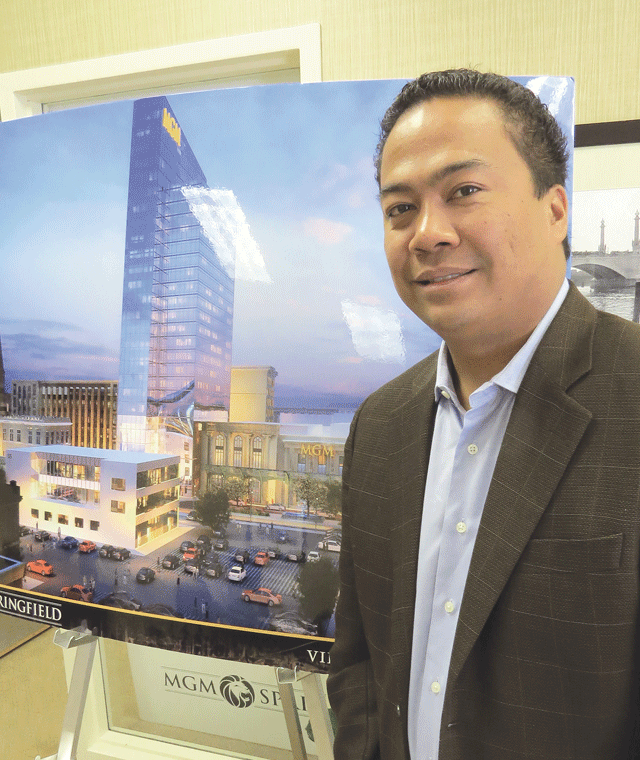
Banking and Financial Services Sections
Recent Data Breaches Should Serve as a Wake-up Call for Businesses

By LARRY SNYDER, Ph.D.

Larry Snyder

Larry Snyder

All organizations, regardless of industry or size, are subject to cybersecurity risks. So if you have a business and you don’t have a cybersecurity plan or cybersecurity business unit, as the famous line from a popular movie states, you should “be afraid … be very afraid.”

Security breaches have an enormous impact on organizations. They can result in loss of investments, legal costs, and an erosion of consumer and investor confidence. One needs to look no further than the recent Target breach to understand how publicized breaches negatively impact the reputation of an organization.

According to IBM’s “2012 Mid-year Trend and Risk Report,” companies are attacked an average of 2 million times a week. The report also indicates a 38% increase in reported incidences of loss, theft, and exposure of personally identifiable information as compared to the previous year.  Keep in mind, this report was issued prior to the third-quarter breaches of retail organizations that resulted in the compromise of more than 100 million records.

Risk Based Security released a report in February 2014 indicating that more than 822 million records were exposed during data breaches in 2013, nearly double the previous high-water mark. That equates to 2.2 million records per day, or 1,560 per minute.

Regulations such as Mass. Gen. Laws § 93H-1 et seq. and 201CMR 17.00 increased administrative responsibilities for understanding and managing cybersecurity risks within organizations.

To build the business case that it is imperative for industries to address cybersecurity concerns, we must first quantify the threat. While the data on security breaches continues to be a bit murky, as there is really no incentive for organizations to fully disclose when and what they have lost, the available data provides a somber view.

The “2013 Cost of Data Breach Study: Global Analysis” released by the Ponemon Institute reveals that, globally, the average cost of a data breach has increased from $130 per record to $136. In this same report, the U.S. has cited an average cost of $188 per record. For context, this means the Target breach cost approximately $20.68 million.

The Computer Security Institute and the FBI conduct an annual survey of computer crime and security. The majority of respondents are organizations with annual revenue over $10 million that allocate some portion of their overall IT budget toward information security. As alarming as the number of reported breach incidents is, what is perhaps more worrisome is the number of organizations that could not determine if they had experienced a data breach. According to the CSI/FBI survey, 9.1% of those surveyed indicated that they did not know if their organization had experienced a security incident in the previous year.

The reaction to recent breaches has led the public and investors to call on industries to develop a more proactive approach to cybersecurity risks. Effective governance principles demand that an organization’s leadership re-evaluate the role cybersecurity has within their organization. No longer can security be viewed as an expense that is implemented as an afterthought or a reactive exercise under the category of ‘the cost of doing business.’ The integration of technology into every aspect of an organization’s daily operation has made cybersecurity controls essential for continued success. In essence, cybersecurity has moved from an expense to a stand-alone business unit. While these units will not produce direct profit for an organization, they add revenue indirectly.

Organizations that effectively protect their proprietary data, including customer information, and can effectively respond to security breaches send a clear message to the public, investors, and regulatory agencies about their attitude toward security, and reap the rewards through increased consumer engagement.

Every level of an industry, including management, staff, vendors, and suppliers, has the responsibility of addressing and responding to cybersecurity risks. As a business unit, cybersecurity personnel are responsible not only for identifying risks, but also for implementing controls for early detection, investigating and mitigating cyberthreats, and taking corrective action to prevent further exploitation.

To accomplish this, cybersecurity departments must address the following essential elements:

• Improve threat detection through the implementation of risk intelligence and forecasting;
• Conduct security data-management analytics;
• Employ organizational risk consultants;
• Develop secure control design and implementation that aligns with business needs; and
• Implement organizational change through information-security awareness and training programs.

The data breaches of 2013 must serve as a wake-up call for business owners, managers, and cybersecurity professionals. If your organization cannot determine whether it has experienced a data breach, if you do not have an effective cybersecurity risk-management program, or if you have not positioned the cybersecurity function in your organization as an essential business unit, you are putting your organization at risk … a risk from which it may not recover.

Larry Snyder, Ph.D is director of the new MS in Cybersecurity Management program at Bay Path College. He has nearly two decades of experience in law enforcement, fraud detection, and auditing, working in this capacity for the U.S. Army and in a variety of industries. He is a pioneer in the field of cybersecurity management education and, prior to joining Bay Path, worked with the State University of New York’s Herkimer County Community College in obtaining national certification for its Cybersecurity program from the Committee on National Security Systems; (413) 565-1294; [email protected]

Departments People on the Move

Springfield Mayor Domenic Sarno announced recently that he has appointed Attorney Mary McNally as the new Executive Director of the Springfield Parking Authority (SPA). “Mary brings a wealth of experience with her from the Hampden County District Attorney’s Office as well as serving as the previous SPA Board Chairwoman, said Sarno. “Attorney McNally has played a pivotal role in the turnaround in the operations of the authority. I look forward to working with her in an increased capacity as we continue to utilize the SPA as an economic-development tool in downtown Springfield.” McNally has most recently served as Chief Operating Officer and Chief Financial Officer in the Hampden District Attorney’s Office under District Attorney Mark Mastroianni. In addition, McNally was appointed in 2010 as Chairwoman of the Springfield Parking Authority by Sarno. During her tenure, she has overseen the refinancing of authority debt and institution of the SPA Capital Improvement Plan and the SPA-funded Downtown Security Plan.  Previously, she operated a Springfield-based law practice for 27 years. “I am pleased to be named the Executive Director of the Springfield Parking Authority,” said McNally. “I look forward to the opportunity to contribute and engage the authority in the growing economic-development renaissance in the city and to serve the residents and businesses of our great city.” Springfield Parking Authority Chairman Al Chwalek said that “Mary, as Chairwoman, has done a great job leading the Parking Authority through the last two transformative years. Now, as the new Executive Director, she is poised to partner the authority with several major projects in the city.” McNally, a resident of Springfield, is a graduate of Western New England School of Law as well as Elms College. Her bar admissions include the state of Massachusetts and the U.S. District Court.
•••••

Daniel Patrick Morrissey

Daniel Patrick Morrissey

The regional law firm Bacon Wilson, P.C. announced that Attorney Daniel Patrick Morrissey has joined its office. He will continue practicing in the areas of civil litigation, personal injury, workers’ compensation and immigration law. He currently serves as an Adjunct Professor of Spanish at Elms College, President of the Forest Park Business Assoc., and Vice Chairman of the Springfield Zoning Board of Appeals. He also is a member of the Kiwanis Club of Springfield and a past board member of the Puerto Rican Cultural Center. He received his law degree from Western New England University School of Law, a master’s degree in Spanish from Middlebury College, and his undergraduate degree from UMass Amherst. Morrissey will be based at the law firm’s Springfield office. With 40 attorneys, Bacon Wilson, P.C. is the largest law firm in Western Mass. Additionally, it boasts 65 paralegals, secretaries, and other support staff to assist with clients’ legal work. The firm’s four offices are located in Springfield, Westfield, Northampton, and Amherst.
•••••
Steve Shaw

Steve Shaw

The Holyoke-based IT networking and consulting firm VertitechIT has named Steve Shaw Vice President. Shaw will head up marketing and communications and assist with business-development efforts for the firm, which has offices in five states. Shaw has spent 30 years in the marketing and communications industries as a television reporter, production-agency founder, and multi-media network executive. “Business IT consulting is often viewed as a commodity,” said VertitechIT CEO Michael Feld. “Steve’s experience as a communicator, entrepreneur, and business executive gives us the opportunity to brand ourselves as a unique player in the IT marketplace.” VertitechIT is a leading provider of IT networking services to the healthcare and business communities throughout the Northeast and across the country. The company recently opened its new national headquarters in Holyoke.
•••••
Paul Mokrzecki

Paul Mokrzecki

Easthampton Savings Bank announced that Paul Mokrzecki has been named Senior Vice President of the ESB Government Banking Division. In that role, Mokrzecki will be responsible for all facets of municipal depository and lending activities. He comes to ESB with a depth of experience in municipal banking and municipal government. Prior to joining ESB, Mokrzecki spent 14 years as Senior Vice President of Government Banking at People’s United Bank, formerly Bank of Western Mass. He built an understanding for municipal banking needs by working as treasurer for the towns of Hadley and Greenfield for a combined 24 years prior to becoming a banker. “We are extremely lucky to have Paul join our team,” said ESB President and CEO Matthew Sosik. “He is highly respected in the municipal community, and he has a deep pool of contacts throughout the cities and towns in Massachusetts. His vast municipal banking experience will elevate our Government Banking division to new heights. Combining Paul’s expertise with ESB’s customer-first philosophy will be an attractive mix to municipalities looking at their banking options.” Mokrzecki has a bachelor’s degree from Syracuse University and an MBA from UMass Amherst. He is a member of the Franklin/Hampshire Collectors and Treasurers Assoc., the Berkshire County Collectors and Treasurers Assoc., and the Worcester County Collectors and Treasurers Assoc. He is a past board member of the Mass. Collectors and Treasurers Assoc. (MCTA). Mokrzecki has served as an instructor at the MCTA annual school for more than 20 years. He is a certified Massachusetts municipal treasurer and a certified Massachusetts municipal collector.
•••••
Mansour Ghalibaf

Mansour Ghalibaf

The National Restaurant Assoc. Educational Foundation recently honored Mansour Ghalibaf, owner of Hotel Northampton, as one of its 2014 Faces of Diversity American Dream Award winners. The honorees were recognized at a gala on April 29, during the National Restaurant Assoc. Public Affairs Conference in Washington, D.C. “The restaurant industry has provided opportunities for millions of people throughout the U.S., and the recipients of the 2014 Faces of Diversity award demonstrate the incredible opportunities they have been able to create as a result of working in the restaurant industry,” said Rob Gifford, executive vice president of strategic operations and philanthropy for the National Restaurant Assoc. and the National Restaurant Assoc. Educational Foundation. “We are proud to recognize the achievements of Mansour. His dedication to the industry and commitment to achieving his dream is truly exceptional.” In 1979, Ghalibaf, an Iranian immigrant, was attending college and working in a restaurant to pay his tuition when he was told he would be deported back to Tehran — at the height of the Iranian Revolution. Along with those closest to him, Ghalibaf endured a tense month under scrutiny from government officials and was on the brink of homelessness before he secured a visa to remain in the U.S. His status no longer in jeopardy, Ghalibaf pursued the American dream with dedication: he completed his college degree, got married, and continued to excel in the hospitality industry. His persistence and passion for the industry allowed him to work his way up from the kitchen to a hotel owner. After serving as general manager of the historic, 106-room Hotel Northampton for 16 years, Ghalibaf purchased the hotel and has since grown sales from $2 million to $7 million. Ghalibaf has been named Restaurateur of the Year by the Massachusetts Restaurant Assoc. and was inducted into the Massachusetts Hospitality Hall of Fame. “It is an incredible honor to receive this award, which celebrates the American dream,” he said. “Rarely do success stories come down to a sole individual, and I am so grateful for the many friends, family, co-workers, and associates — including those in the organizations that nominated and selected me for this distinction — who have been essential to my success. The hospitality industry is one place where the American dream is still within reach. We are without a doubt in the best business in the world.”
•••••
Consolidated Health Plans (CHP) announced that Juan Campbell has joined the company to lead its sales division. In this role, Campbell will be responsible for leading new-business development of student health, special risk, and other consumer products. Campbell brings a wealth of experience in sales, operations, strategic marketing, and business-development strategies to CHP. He has more than 20 years of experience in the health-insurance marketplace serving the needs of commercial clients. He earned a bachelor’s degree from Western New England University and completed the Executive Management Program from Stephen M. Ross School of Business at the University of Michigan. He serves on the board of directors for the Children’s Study Home and the Westmass Area Development Corp., and on the Legislative Steering Committee of the Affiliated Chambers of Commerce of Greater Springfield.
•••••
Dr. John Schreiber has been appointed President of Baystate Medical Practices and chief physician executive of Baystate Health, joining the health system’s senior leadership team. Schreiber comes to Baystate from Tufts Medical Center in Boston, where he served as Chairman of the Department of Pediatrics. He was also chief administrative officer and pediatrician-in-chief of the Floating Hospital for Children, the 100-bed primary affiliate children’s hospital for Tufts University School of Medicine.

Court Dockets Departments

The following is a compilation of recent lawsuits involving area businesses and organizations. These are strictly allegations that have yet to be proven in a court of law. Readers are advised to contact the parties listed, or the court, for more information concerning the individual claims.

CHICOPEE DISTRICT COURT
Richard Della Giustina v. ABM Industries Inc.
Allegation: Negligent maintenance of property causing slip and fall: $26,404.54
Filed: 4/17/14

FRANKLIN SUPERIOR COURT
Adrienne Cremins v. Norfolk & Dedham Group
Allegation: Failure to respond to demand for arbitration: $95,000
Filed: 2/28/14

Bryan  M. Westlake v. John P. Frangie, M.D.
Allegation: Medical malpractice: $28,761.24
Filed: 3/21/14

Marcia Vincent v. Mackin Construction Co. Inc. and ABC Corp.
Allegation: Negligence in snow and ice removal causing injury: $487,500
Filed: 2/25/14

HAMPDEN SUPERIOR COURT
Daniel Watterson, d/b/a DW Plumbing and Heating v. National Contractors, LLC, NAS Surety Group, ALDI Inc.
Allegation: Non-payment for plumbing work and materials: $110,101.63
Filed: 4/2/14

Kenia Davila, as personal representative of the estate of Kelia Davila v. Michael Malloy, William P. Walkowicz, and The Sportman’s Café Inc.
Allegation: Negligent service of alcohol causing wrongful death: $26,000
Filed: 4/3/14

Plasti-Clad Metal Products Inc. v. Renz America Co. Inc.
Allegation: Non-payment of goods sold and delivered: $70,484.97
Filed: 4/2/14

Stack Metallurgical Services Inc. v. Thermal Dynamix Inc.
Allegation: Balance owed on previous judgment: $154,254.32
Filed: 3/31/14

Victor Shibley, Kathleen Sweeney, and Canterbury Construction Inc. v. Southbridge Savings Bank
Allegation: Violation of the Consumer Protection Act: $241,472
Filed: 4/4/14

SPRINGFIELD DISTRICT COURT
BCP Holdings USA Inc. v. Muhammad M. Tajerha d/b/a Mikey’s Pizza and Restaurant
Allegation: Breach of contract: $4,962.14
Filed: 3/18/14

Liberty Mutual Fire Insurance Co. v. Manual Duchi Agialema d/b/a JD Construction:
Allegation: Non-payment on two policies: $19,351.28
Filed: 3/19/14

Plimpton & Hills Corp. v. Patricia A. Flaherty and Keith Cote d/b/a Keith Cote Plumbing and Heating
Allegation: Breach of contract for materials provided: $2,934.94
Filed: 3/24/14

WESTFIELD DISTRICT COURT
New Logic Business Loans Inc. v. Fresco Ristorante and Thomas Smart
Allegation: Breach of contract: $14,592.16
Filed: 3/18/14