Home 2018 (Page 46)
Daily News

WEST SPRINGFIELD — Marty Holmes was recently named top corporate search consultant at Management Search Inc.

Holmes, president of the West Springfield division of the privately held recruiting firm, was recognized with the organization’s prestigious President’s Club Award for sales excellence in 2017. This year also marked Holmes’ 30th anniversary with Management Search Inc.

Throughout his tenure, Holmes has worked to perfect a time-tested recruitment process and, in the process, has established deep roots in the market with a diverse client base in manufacturing and a niche focus within the shooting-sports industry. His hands-on consultative approach, along with his extensive knowledge of the industries he works in, have worked together to build and strengthen his reputation among clients and candidates alike.

Headquartered in West Springfield with an office in Providence, R.I., Management Search Inc. has grown to become one of the largest privately held recruiting firms in New England, boasting 35 years of recruiting experience and 15 established consultants.

Daily News

AGAWAM — The Insurance Center of New England (ICNE) announced the addition of Eastman & Davis Insurance Agency Inc. in West Springfield to its growing company.

“We are thrilled to not only have the Eastman & Davis Insurance clients join our agency, but also to have longtime employee Marilyn Loudon join the ICNE team as a personal lines account manager,” said William Trudeau, president and CEO of ICNE.

Many ICNE clients have been with the agency for generations, Trudeau noted, so he understands what an important role Bill Eastman has played in the lives of his clients through the years. “I feel so honored that Bill trusts the ICNE team to take over the responsibility of caring for his clients.”

Over the past several years, Eastman had been seeking out a business partner to ensure that his business would continue to thrive and that his clientele would be well-taken care of for decades to come. While Eastman & Davis clients may experience a few minor changes in process and procedures, the ultimate goal is to make the transition seamless.

“When Eastman & Davis clients join ICNE, they will quickly learn that we are much more than an insurance agency,” Trudeau said. “We are a local team of insurance professionals who will get to know them personally and will always be there to answer their questions, review their policy, and help them make informed decisions to safeguard their family, home, car, and everything that is important to them.”

As part of the transition, Eastman & Davis’ West Springfield office will be closing. However, for the convenience of clients, Marilyn Loudon will move to ICNE’s main office in Agawam, just five miles down the road from the current West Springfield location.

“I can’t stress enough how happy our entire team is to welcome the Eastman & Davis clients to our agency,” Trudeau said. “We look forward to getting to know them and working together for years to come.”

Daily News

SPRINGFIELD — Mercy Health ACO announced that the Massachusetts Health Policy Commission (HPC) certified it as an accountable-care organization (ACO) in the HPC’s new, first-in-the-nation program. The HPC’s first round of ACO certification includes 17 HPC-certified ACOs and is a significant milestone for Massachusetts, making it the first state to implement statewide, all-payer standards for care delivery.

“We are pleased to take the next step in this important effort to improve care for MassHealth patients and reduce costs for the Commonwealth,” said Mark Fulco, president of Mercy Medical Center.

Mercy has formed an ACO partnership with Boston Medical Center (BMC) Health System, including its affiliate, BMC HealthNet Plan. The Mercy ACO will provide coverage, care, and services to MassHealth enrollees in Western Mass.

The HPC’s ACO certification program is closely aligned with efforts by the Executive Office of Health and Human Services (HHS) and the MassHealth to improve health and reduce healthcare cost growth in the Commonwealth through ACOs. The goal is a healthcare delivery system that delivers coordinated, patient-centered health care that accounts for patients’ behavioral, social, and medical needs.

“The ACO program represents a significant change in the way MassHealth contracts with healthcare organizations throughout the state,” said Massachusetts Secretary for Health and Human Services Marylou Sudders. “The goal of the ACO program is to improve the care coordination and health outcomes for 850,000 MassHealth members, and we are pleased they all met the thorough certification standards.”

For the first year of the program, the HPC defined a set of criteria on which to assess ACOs for certification against that goal. However, unlike other state or federal programs, the HPC’s certification program evaluates ACOs on an all-payer basis, including for their Medicaid, Medicare, and commercially insured patient populations.

The HPC-certified ACOs include a diverse cross section of 17 healthcare organizations from across the Commonwealth. Importantly, the HPC will certify all organizations participating in the MassHealth ACO program.

“The ACO certification program will bring new transparency and information to the public regarding how ACOs are structured and operating today,” said David Seltz, HPC executive director. “The HPC expects to analyze the information received and identify best practices and areas of improvement for payers, policy makers, researchers, providers, and consumers.”

In order to be evaluated for certification, organizations were required to provide information for 15 standards, including patient-centered governance, performance-improvement strategy, experience in quality-based risk contracts, population-health management programs, and ability to coordinate cross-continuum care. Full certification is effective for two years, and organizations with provisional certification must apply for full certification within one year.

“Mercy Medical Center’s new ACO is big step forward for increasing access and affordability in Western Massachusetts,” said state Sen. James Welch. “I am excited to see this new and innovative program come into action and proud that Mercy is helping the Commonwealth carry the torch of healthcare delivery transformation to the benefit of our citizens and as an example to the nation.”

Daily News

HOLYOKE — Carlos Santiago, commissioner of the Massachusetts Department of Higher Education, will be the keynote speaker at an event on Wednesday, Jan. 17, celebrating Holyoke Community College’s (HCC) federal designation as a Hispanic Serving Institution (HSI).

Santiago’s talk, scheduled from 9:10 to 10 a.m., will focus on improving the academic success of Latino students and the importance of this rising demographic in higher education and in Massachusetts. The talk will be followed at 10 a.m. by a faculty and staff panel discussion concentrating on HCC’s future as an HSI.

“Our goal for the day is to develop a common understanding of our Hispanic Serving Institution designation and collectively form a vision of HCC as an effective HSI,” said President Christina Royal.

Hispanic Serving Institution is a federal designation for colleges and universities where more than 25% of the student population is Hispanic. HCC received status as an HSI last year. As an HSI, HCC is eligible for federal grants that can be used to improve services and programs that benefit all students.

Santiago joined the Massachusetts Department of Higher Education in April 2013 as the senior deputy commissioner for Academic Affairs and was appointed commissioner of Higher Education in July 2015. He holds a Ph.D. in economics from Cornell University and brings more than 30 years of experience in public higher education, having served as chancellor of the University of Wisconsin Milwaukee (UWM, Wisconsin’s second-largest research university), provost and chief operating officer at the University at Albany (SUNY), and professor of Economics at UWM and SUNY-Albany.

He is the author or co-author of six books and has published dozens of articles and book reviews, many of which focus on economic development and the changing socioeconomic status of Latinos in the U.S. In 1996 and 2011, Santiago was named one of the 100 most influential Hispanics in the country by Hispanic Business magazine.

Daily News

SPRINGFIELD — The Springfield Central Cultural District, the Springfield Cultural Council, the city of Springfield, and the Mass Cultural Council will announce a new and formal cultural relationship with a compact signing on Tuesday, Jan. 16 at 10:30 a.m. at City Hall, Room 220.

The cultural compact is designed to increase collaboration and partnership. It includes basics, such as regular meetings and communication, but also Springfield-specific goals like integrating public art into the metro center. Springfield is one of six pilot cities for this initiative across the state of Massachusetts, and the first in the state to hold a signing ceremony.

Participants at the ceremony will include Springfield Mayor Domenic Sarno; Anita Walker, executive director, Mass Cultural Council; Arreen Andrew, local cultural council program officer, Mass Cultural Council; Scott Hanson, principal planner, city of Springfield; Andrew Cade, chair, Springfield Cultural Council; Morgan Drewniany, executive director, Springfield Central Cultural District; and Eileen McCaffery, chair, Springfield Central Cultural District.

Daily News

SPRINGFIELD — After an extended national search, James Harnsberger has been named associate vice president for Graduate Education, Grants, and Sponsored Research at Springfield College. President Mary-Beth Cooper and Provost and Vice President for Academic Affairs Martha Potvin recently made the announcement.

Harnsberger will join the college on Feb. 15, and will be responsible for elevating the status of graduate education at Springfield College as well as for increasing the college’s capacity to generate and support externally funded grants and sponsored funding.

“In both of these primary responsibilities, his thoughtful approach, his experiences in supporting students and the work of faculty, and his success in managing large contracts and overseas operations will serve him well,” said Potvin.

A linguist and speech scientist with extensive experience in experimental phonetics, forensic acoustics, and clinical applications, Harnsberger comes to Springfield College from the University of New Haven, having previously overseen the launch of an international branch campus as campus dean. His responsibilities included international grants and contracts, program development, and operations, as well as the inaugural Academic Bridge Program for international students at UNH.

Harnsberger earned his doctorate in linguistics from the University of Michigan, where he conducted research on cross-language variation in the perception of non-native speech sounds. Following a post-doctoral fellowship at Indiana University, he served at the Department of Linguistics at the University of Florida, conducting research on the perception of speaker characteristics such age, gender, emotion, dialect, stress, and deception. His research has been published in numerous academic journals and reported in the popular media, including ABC News Primetime, BBC Radio, and Science News.

He has served as a linguistic consultant in numerous criminal and civil cases in the U.S., as well as government agencies including the Federal Bureau of Investigation, the Defense Intelligence Agency, the Office of the Director of National Intelligence, the Defense Academy for Credibility Assessment, the Senate Select Committee on Intelligence, and the House Armed Services Committee.

Daily News

BOSTON — VNA Care, a subsidiary of Atrius Health serving more than 50,000 patients each year as Massachusetts’ largest nonprofit home-health and hospice provider, recently welcomed Holly Chaffee as president and CEO.

The appointment of Chaffee, approved by the board of directors in December, was the result of a nationwide search. She replaces Mary Ann O’Connor, who is retiring after a 45-year career in the home-care and hospice industry, including the last five years as president and CEO of VNA Care. VNA Care includes VNA Care Network, VNA of Boston, and VNA Hospice and Palliative Care.

“We are delighted to welcome Holly, whose dedication and vision for providing patients with high-quality, compassionate care was instrumental to her selection as our new CEO. We are confident that VNA Care will continue to be a leader in the level of care that we provide to our communities,” said Rita Advani, chair of the board of directors at VNA Care.

A registered nurse with more than 30 years of experience, Chaffee has distinguished herself as an innovator in enhancing the quality of patient care industry-wide. For the past decade, she has been president and CEO of Porchlight VNA/Home Care, a five-star agency serving communities in Western Mass. She was recently recognized as a 2017 Healthcare Hero by BusinessWest and HCN, specifically being named Health/Wellness Administrator of the year. At Porchlight, a freestanding, not-for-profit organization, she oversaw the full rebranding of a 100-plus-year-old community organization, and a merger that allowed Porchlight to grow into new larger markets.

“I have great admiration for the work VNA Care does with Atrius Health to ensure patients receive the patient-centered care they deserve,” said Chaffee. “As healthcare continues to move into home and ambulatory settings, I look forward to collaborating in our collective mission to provide the right care with kindness and compassion to every person we serve.”

Daily News

WARE — To celebrate the holiday season, Country Bank decided to mix things up a bit and have some fun with customers. The Country Bank Honda Pilot was transformed into a ‘Ca$h Cab’ and provided an opportunity for customers and non-customers to take a virtual cab ride with various members from the senior management team. They were asked 10 financial-literacy questions for a chance to win some extra dough.

“This was just a little way for us to show our appreciation to our customers while having some fun and offering financial education. The extra spending money during the holiday season was also very much welcomed by our passengers,” said Shelley Regin, senior vice president of Marketing.

To continue its support of financial education, the bank is launching a new website on Jan. 17 that includes digital financial-literacy modules on a variety of topics, such as savings, retirement, budgeting, investments, mortgages, taxes, insurance, and more. “These modules will provide the knowledge and skills needed to develop stronger financial capability and gain a better understanding of how to use our products and services,” said Jodie Gerulaitis, vice president of Community Relations.

Daily News

NORTHAMPTON — The Northampton branch of Family Legacy Partners, led by Karen Curran and Molly Keegan, announced a company name change to Curran and Keegan Financial. The company’s office remains in Northampton.

This name change allows the company to better reflect a personal promise to help guide clients’ financial futures. Karen Curran and Molly Keegan offer a combined 22 years of service as independent financial advisors, sponsor numerous community events, and serve on several local boards. Keegan is chair of the Hadley Select Board, and Curran sits on the boards of Safe Passage and Cooley Dickinson Hospital.

“We have a strong reputation for personal stewardship, and our new name captures our commitment to our clients,” Curran said.

Additionally, the company is beginning its fourth year by adding a new client-services associate, Kori Ferris. Ferris has 12 years of experience in higher education, and she most recently led the Office of Financial Aid at Weill Cornell Medicine. A resident of Greenfield, she joins the company with a focus on helping clients and advisors during the financial-planning and investment process.

“Kori brings a wealth of experience to our office, and she understands that individuals’ financial circumstances are unique,” Keegan said. “Our clients will benefit from our increased capacity.”

Daily News

GREENFIELD — Greenfield Savings Bank promoted Tara Brewster to vice president of Business Development. Her position includes developing long-term strategies for business development and outreach to perspective customers, including small businesses and individuals for lending and account services. She joined GSB as a Business Development specialist in late 2016.

“Tara’s efforts to expand the bank’s portfolio of small-business customers and individuals have been very successful,” said John Howland, president and CEO of Greenfield Savings Bank. “Her more than 20 years of experience in small-business management has given her great insight into the needs of local businesses.”

In addition to her duties at the bank, Brewster is active in volunteering on the committees and boards of a wide range of community organizations, including Northampton Chamber of Commerce board of directors, Hampshire Regional YMCA board, Franklin Hampshire Regional Employment Board, Downtown Northampton Assoc. board, Northampton Redevelopment Authority committee, North Star Self Directed Learning for Teens development committee, Community Health Center of Franklin County marketing committee, as a Northampton Chamber of Commerce ambassador, and as chair of the Pedalmotion for Locomotion Look Park fund-raising event.

Before joining the Bank, Brewster worked for independent small businesses and multi-million-dollar companies, including seven years as owner of Jackson & Connor in downtown Northampton and in a wide range of management positions including manager, promotions director, buyer, regional sales manager, and East Coast account executive. She is a graduate of Smith College.

Daily News

SPRINGFIELD — The Hampden County Bar Assoc. will hold a Legal Help Hotline in conjunction with Western New England University School of Law on Thursday, Feb. 8, from 4 to 7 p.m. at Western New England University School of Law, 1215 Wilbraham Road, Springfield.

The volunteers will provide legal advice on a variety of topics, including divorce and family law, bankruptcy, business, landlord/tenant, and real estate. Additionally, in light of recent immigration developments, attorneys with immigration-law experience will be available to answer questions. Spanish-speaking attorneys will also be available. Individuals needing advice should call (413) 796-2057 to speak to a volunteer.

Daily News

AMHERST — Theresa Curry has been named executive director of Planned Giving at UMass Amherst. Curry, an attorney, has extensive experience in business and organizational development, nonprofit giving, and gift administration.

“We are delighted that Theresa Curry will be joining UMass Amherst’s development team,” said Vice Chancellor of Development and Alumni Relations Mike Leto. “She brings deep expertise in estate planning to this role, as well as her considerable impact and success in fund-raising for higher education.”

Curry comes to UMass Amherst from the University of New Hampshire Foundation, where she held several senior management positions in gift planning since 2012. Most recently, she served as assistant vice president for Gift Planning and Administration at UNH. She established UNH’s gift-planning program and played a major role in its recent $275 million fund-raising campaign.

Previously, Curry established gift-planning programs as regional director of Philanthropy at the ALS Assoc. and as the capital campaign manager for Merrimack College. She has worked as an employee, consultant, volunteer, and lawyer in gift planning since 1998. She holds a juris doctor degree from the William Mitchell College of Law in Saint Paul, Minn., and a bachelor’s degree in mathematics from the University of Minnesota. She is also a triathlete and distance runner.

Daily News

SPRINGFIELD — Robinson Donovan, P.C. promoted former law clerk Kailee Wilson to the role of associate attorney following her admission to both the Massachusetts and Connecticut bars.

Wilson is a 2017 graduate of the University of Connecticut School of Law. While attending law school, she also interned with the school’s Tax Clinic, gaining skills and insights that have proven invaluable to her current business practice. In addition, she is now a member of the Massachusetts Bar Assoc., the Hampden County Bar Assoc., and the Connecticut Bar Assoc.

“Kailee had a very successful year at Robinson Donovan, P.C., and we are thrilled that she is expanding her role at our firm,” said Partner James Martin. “Kailee has been a real asset to our firm, and we look forward to her having a successful career here.”

Wilson assists clients in the areas of business and corporate counseling, commercial real estate, and estate planning. Outside of work, she channels her passion for advocacy into her role as a volunteer coach with the Special Olympics and in the Alumni in Admissions program for her alma mater, Bates College.

Daily News

AMHERST — Results of a baseline study on gambling behavior in Massachusetts that establishes how people participated — or not — in gambling prior to the opening of any casinos were reported this week to the Massachusetts Gaming Commission (MGC) by epidemiologist Rachel Volberg and colleagues at UMass Amherst’s School of Public Health and Health Sciences. It is the first major cohort study of adult gambling to be carried out in the U.S.

Volberg and colleagues were selected by the MGC in 2013 to conduct a first-of-its-kind, comprehensive, multi-year study on the economic and social impacts of introducing casino gambling in the state. The Social and Economic Impacts of Gambling in Massachusetts (SEIGMA) team is examining an array of social and economic effects.

As part of MGC’s research agenda, the results are from the separate Massachusetts Gambling Impact Cohort study of factors critical to developing strategic and data-driven problem-gambling services. Cohort studies survey the same individuals over time and provide information on how gambling and problem gambling develops and progresses, and how individuals may experience remission.

“This has significant value as it can highlight risk and protective factors important in developing effective prevention, intervention, treatment, and recovery-support services,” Volberg noted.

The report is based on analyses of 3,096 Massachusetts residents who completed the SEIGMA baseline study of self-reported past-year gambling behaviors in wave 1 in 2013-14 and wave 2 in 2015. The researchers observed a statistically significant increase in overall gambling participation as well as in participation in casino gambling and horserace betting within the cohort between wave 1 and wave 2. They also reported a statistically significant increase in the cohort in the average number of gambling formats engaged in over the previous 12 months. However, in all cases this increase was “quite small,” they note, between 2% and 3.2%.

Before beginning this research, Volberg predicted the state’s sweeping research initiative would change the intellectual landscape and knowledge base about gambling, and she said the results released this week support that view. “This tells us new things, but it is nuanced. Based on this new study, researchers will think about gambling behavior in new ways.”

One interesting finding is “the apparent ease with which people move in and out of problem-gambling status within a given year,” the lead author pointed out. “It’s pretty clear that people phase in and out of the problem gambling group. This movement is different than the way problem gambling has been characterized in the past. Until recently, the general orientation has been that disordered gambling is an unremitting chronic condition.”

According to the report, only 49.4% of individuals who were problem or pathological gamblers in wave 1 were in this same category in wave 2, with sizeable numbers transitioning into at-risk gambling and recreational gambling categories. At-risk gamblers were the most unstable members of the cohort, with only 37.5% being in the same category in both waves. Most of them transitioned to recreational gambling, but a significant minority transitioned to become problem or pathological gamblers, the researchers reported.

Added Volberg, “we’ve seen this movement in studies done in other jurisdictions, but this will be news to some researchers who are used to thinking of problem gambling as a progressive and chronic disorder.”

Mark Vander Linden, MGC director of research and responsible gaming, noted that “there is great value for the MGC and our public-health partners in knowing the movement of people into and out of problem gambling because this data has public-health implications for identifying and supporting the spectrum of services that will be most useful in preventing and treating problem gambling.”

An important aspect of all physical and mental disorders is incidence, Volberg said. That is the proportion of a population that newly develops a condition over a specified period of time. The study found problem gambling incidence in Massachusetts, at 2.4%, to be high compared to studies elsewhere. The authors pointed out, however, that those other studies have different ‘gambling landscapes,’ used different measures of problem gambling, and had shorter follow-up periods.

The report noted that the cause of the high incidence rate is unclear given that there was no significant change in the actual availability of legal gambling opportunities in Massachusetts during this time period. The researchers expect the post-casino cohort survey data will shed additional light on the incidence rate in Massachusetts.

In addition to Volberg and colleagues at UMass Amherst, co-investigator Robert Williams of the University of Lethbridge, Alberta, Canada, provided oversight of study design and implementation as well as help with data analysis and reporting. Future analyses will focus on predictors of problem-gambling onset and whether there are gender differences in these predictors, as well as predictors of problem-gambling remission and the extent to which accessing treatment is one of these factors.

Daily News

AMHERST — The Journal of Aging Studies is moving to UMass Amherst from the University of Missouri.

Jaber Gubrium, professor emeritus of Sociology at the University of Missouri, is the editor of the journal. He was recently appointed as an adjunct professor at the College of Nursing at UMass Amherst. Over the course of his long career, Gubrium has been a leading researcher on issues such as institutionalization, dementia, and issues of interpretive practice. His theoretical interests center on links between cultural formations of late life and constructions of identity.

Gubrium originally described the everyday practice of caregiving in nursing homes in the now-classic research monograph Living and Dying at Murray Manor. The pioneering work examined the small- and large-scale social organizations within the nursing home and the patient and staff experience rather attempting to establish a single metric to measure quality of care.

Since then, Gubrium has published Oldtimers and Alzheimer’s: The Descriptive Organization of Senility and Speaking of Life: Horizons of Meaning for Nursing Home Residents, as well as other works.

With the Journal of Aging Studies moving to UMass, College of Nursing Professor Cynthia Jacelon has been named to the editorial board. Jacelon’s area of research and expertise is promoting dignity, self-management of chronic health problems, and independence in older adults.

“We are excited to have the Journal of Aging Studies based here at the College of Nursing,” said Dean Stephen Cavanagh. “Professor Jacelon’s appointment to the editorial board will benefit both the college and the journal. Her research on dignity changed the conversations that are taking place in senior homes across the country.”

Daily News

SPRINGFIELD — Springfield College announced that Brooke Hallowell has been named dean of the School of Health Sciences and Rehabilitation Studies.

As dean, Hallowell will collaborate with leadership of other divisions and units of Springfield College to participate in strategic planning and implementation activities that further the overall mission of the institution. She will oversee academic areas within her school, including physical and occupational therapy, physician assistant, health science, emergency medical services management, communication disorders, and rehabilitation counseling and disability studies. She will be responsible for assurance of quality of programming in line with student needs, institutional mission, and the requirements of applicable accreditation bodies.

According to Provost and Vice President of Academic Affairs Martha Potvin, “Dr. Hallowell will play a pivotal role in working with faculty to advance education across a broad array of health sciences and professions and to extend the college’s impact on global healthcare issues that we face both in our local and regional communities as well as abroad.”

Hallowell has held several academic leadership positions and has a global reputation in advancing research and scholarship and fostering successful interdisciplinary initiatives. Most recently, she served as the founding executive director of the Collaborative on Aging and the coordinator of graduate and undergraduate gerontology certificate programs at Ohio University. She also held several other positions at Ohio University, including associate dean for research and sponsored programs in the College of Health and Human Services; director of the School of Hearing, Speech and Language Sciences; and coordinator of Ph.D. programs for the School of Rehabilitation and Communication Sciences. She also served as director of the School of Languages and Linguistics at the University of Northern California.

Hallowell received a Ph.D in neuropathologies of language and speech from the University of Iowa, a master’s degree in speech language pathology and audiology from Lamar University, and a bachelor’s degree in cognitive science/psycholinguistics from Brown University. She also studied at the Conservatoire National de France in Paris and Rouen.

Daily News

SPRINGFIELD — Western Massachusetts Dress For Success (DFS) will hold a pop-up tag sale featuring new and gently used professional clothing and accessories Friday through Sunday, Jan. 19-21, inside the former Macy’s building at Eastfield Mall. The public is invited to fill a bag for just $25.

Dress for Success Western Massachusetts makes its home at Eastfield Mall, where it provides professional, interview-ready clothing and support for clients entering the job market from a ‘boutique’ in the Hannoush corridor. Proceeds from the tag sale benefit the organization’s career-development programs.

The public is invited to take advantage of the opportunity to do some New Year’s closet cleaning of its own. Western Massachusetts Dress for Success will accept new donations of clothing to be included in the sale.

“It’s because of our corporate partners like Columbia Gas, Cambridge Credit Union, Heath New Health England, and generous individual donors we are able to host pop-up tag sales,” said Dawn Creighton, board president of DFS. “Who knew cleaning a closet could help so many others? Whether you’re a college student with student loans getting ready for your first job, returning to the workforce and need a helping hand, or just want to shop to support DFS, everyone wins.”

For more information about volunteering for the pop-up tag sale or to make a donation, contact Margaret Tantillo at (413) 732-8179 or [email protected].

Daily News

BOSTON — Surging optimism about the state and national economies left Massachusetts employers with their highest level of confidence in 18 years as 2017 drew to a close.

The Associated Industries of Massachusetts (AIM) Business Confidence Index rose one point to 63.6 during December, its highest level since November 2000. The BCI gained 3.2 points during a year in which employer confidence levels remained comfortably within the optimistic range.

Every element of the overall index increased during 2017 except for the Employment Index, which dropped a half-point. Analysts believe low unemployment and demographic shifts are impeding the ability of employers to find the workers they need.

“Massachusetts employers maintained a uniformly positive outlook throughout 2017, and passage of the federal tax bill only added to that optimism,” said Raymond Torto, chair of AIM’s Board of Economic Advisors (BEA) and lecturer at Harvard Graduate School of Design. “At the same time, the 12-month decline in the Employment Index reminds us that the persistent shortage of skilled workers has reached an inflection point for the Massachusetts economy. Massachusetts companies have postponed expansions, declined to bid for contracts, or outsourced work because they simply can’t find people.”

The AIM Index, based on a survey of Massachusetts employers, has appeared monthly since July 1991. It is calculated on a 100-point scale, with 50 as neutral; a reading above 50 is positive, while below 50 is negative. The Index reached its historic high of 68.5 on two occasions in 1997-98, and its all-time low of 33.3 in February 2009. It has remained above 50 since October 2013.

The constituent indicators that make up the overall Business Confidence Index were mostly higher during December. The Massachusetts Index, assessing business conditions within the Commonwealth, surged 2.4 points to 67.6, leaving it 5.8 points better than a year earlier. The U.S. Index of national business conditions continued a yearlong rally by gaining two points to 64.2. December marked the 94th consecutive month in which employers have been more optimistic about the Massachusetts economy than the national economy.

The Current Index, which assesses overall business conditions at the time of the survey, decreased 0.7 points to 62.7, while the Future Index, measuring expectations for six months out, rose 2.7 points to 64.5. The Current Index gained 3.6 points and the Future Index 2.8 points during 2017.

The Company Index, reflecting employer views of their own operations and prospects, declined 0.2 points to 62.1. The Employment Index rose slightly to 56.7, but still ended the year 0.5 points below the 57.2 posted in December 2016.

Manufacturing companies (64.3) continued to be more optimistic than non-manufacturers (62.6). Another unusual result was that employers in Western Mass. (64.6) posted higher confidence readings than those in the eastern portion of the Commonwealth (62.7).

“Employer attitudes largely reflect a national economy that grew at its fastest pace in three years during the third quarter on the strength of business spending on equipment. The headline is that unemployment is down and the financial markets are up,” said Michael Tyler, chief investment officer at Eastern Bank Wealth Management and a BEA member.

AIM President and CEO Richard Lord, also BEA member, said employers received an early Christmas present from a federal tax bill that reduced corporate rates from 35% to 21% and reduced rates for pass-through entities such as subchapter S-corporations as well.

“The tax bill produced short-term benefits, ranging from companies like Comcast and Citizens Financial providing bonuses to employees to the utility Eversource reducing electric rates in Massachusetts,” Lord said. “At the same time, employers are cautious about the effect that other provisions — including limitations on the deduction for state and local taxes — will have on the overall Massachusetts economy.”

Features

Engaging Work

JC Schnabl

JC Schnabl

The UMass Amherst Alumni Assoc. has been in business since 1871. Its informal mission — to engage alums and begin (and continue) a dialogue concerning the importance of giving back to the institution, hasn’t changed over the past 147 years. But like the university itself, the alumni association has been expanding, elevating its game, and developing new strategies for inspiring graduates to invest in their alma mater.

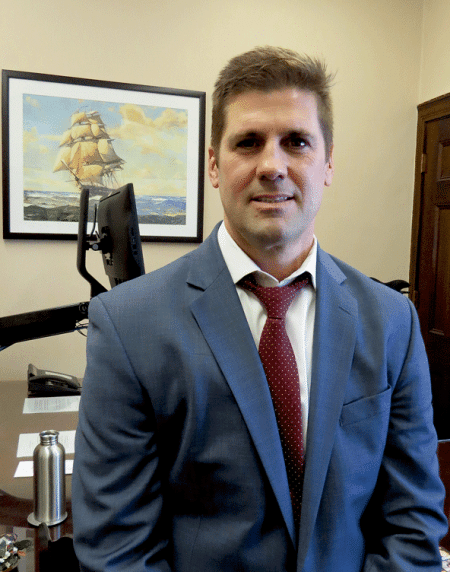
JC Schnabl’s office in Memorial Hall is decorated with something approaching a nautical theme. There are several large framed paintings of sailing ships, including the U.S.S. Constitution.

When asked about it, with the expectation of an acknowledged personal fondness for ships, sailing, or both, Schnabl, assistant vice chancellor of Alumni Relations and executive director of the UMass Amherst Alumni Assoc., said there was some of that. But there was much more to these choices for his walls, he admitted.

Indeed, he was looking for something that said ‘Massachusetts’ or ‘New England’ — sort of … maybe. But he was also looking for something that didn’t just say ‘Massachusetts’ or ‘New England,’ and would appeal to a broader audience.

“I didn’t want to put something up that was Boston-specific,” he explained. “Old Ironsides is kind of a national emblem, and it’s broadly applicable to our alumni audience.”

And in many ways, his job, and his office’s mission, is much the same. There is a local focus to it, obviously, because there are so many graduates of the university living and working in Massachusetts, with the largest concentration (nearly half the total) being inside the Route 128 beltway around Boston. But the reach, and the message, has to be broader, because there are alums — 265,000 of them, according to the latest count — in every state and dozens of countries.

And that message is, in a word, ‘engagement’ with UMass Amherst, with engagement being an immensely broad term that is generally synonymous with ‘involvement,’ which can obviously come in many forms and flavors, said Schnabl.

For These Alums, Engagement Has Become a Passion

Vinnie Daboul remembers how it all started, and he tells the story often, because he says it’s important.

It was back in 1995, when Daboul, now a partner with Sage Benefit Advisers, was working for Phoenix Home Life. He was invited by someone at the Isenberg School of Management, which he attended a decade earlier, to speak to students about his work and his industry. Read More:

Financial support is perhaps the most obvious and important. It is the elephant in the room and the key to almost every one of the university’s ongoing efforts to climb higher in the rankings of the nation’s top institutions, he noted, adding that there is a significant, and in many ways needed, blurring of the lines when it comes to the work done by alumni-relations offices and development offices, as we’ll see later.

But engagement — and involvement — come in many other forms as well, said Schnabl, from support of athletic teams to mentoring of students, soon-to-be-graduates, and alums; from networking to efforts of all kinds to help build the university’s brand.

“We’re the mechanism that the university employs to engage alumni — and students who are going to become alumni  —in the future of the university,” said Schnabl, summing up the overarching mission of his office. “In an environment where universities across the country are trying to turn their alumni associations into a broad fund-raising arm of the university, our chancellor has a belief that our strategy of engagement is equally important.

“We don’t want a scenario where the first time someone hears from the university, we’re asking for money,” he went on, adding, again, that money is vital to the school’s success. “Frequently, it’s ‘how can we help? How can we help with your career goals? How can we reconnect you with the university, a place where you spent four or five years and absolutely loved? How do we engage you with alumni who are doing things you like to do?’”

Put simply, the alumni office wants graduates to become involved in what he called a ‘lifelong relationship’ with the university, and certainly not one that ends when the diploma is received at that huge ceremony in the football stadium.

Schnabl, who came to the university from a similar post at the University of California at Los Angeles (UCLA), said he considered a number of potential landing spots as he commenced a search for jobs on the East Coast in early 2012 to be closer to his daughter as she attended school in North Carolina.

In UMass Amherst, he said, he saw a school on the rise, one that was building new facilities and building momentum at the same time. And he decided he wanted to be part of that.

And since arriving, and partly through his own lobbying efforts, UMass has elevated its game in the broad and ‘quirky’ (Schnabl’s word) world of alumni relations. Indeed, since his arrival, the alumni office has swelled from 16 full-time employees to 25, and has become more aggressive in its efforts to get alums involved in their alma mater.

For this issue, BusinessWest talked at length with Schnabl about this quirky business of alumni relations and how the university is committing more resources, and more attention, to the work of engaging its graduates.

School of Thought

There’s a large, framed map on a wall just outside a suite of offices in Memorial Hall. It details just where the university’s alums reside these days, and it’s colored, with dark red identifying the most heavily populated areas, white indicating the least populated regions, and progressively darker shades of pink showing those in between.

As might be expected, the Northeast, and especially Massachusetts, is dark red, as is much of Florida and some pockets of Arizona, the Carolinas, and California — the popular retirement spots, but also, in the case of the Research Triangle and Silicon Valley, where many graduates are finding jobs. Meanwhile, also as expected, huge swaths of the Midwest and South are white. Not many residents of those states go to UMass, and not many graduates go there to live or work.

Such information is obviously valuable, said Schnabl, but knowing where the graduates are is just a small piece of the puzzle when it comes to getting alums involved or engaged.

Communicating with these individuals is a much bigger piece, as is sending a message that will inspire as much as it keeps the recipient informed.

Other pieces include events such as homecoming and reunions (there’s a large one on campus for each class marking its 50th anniversary, for example), as well as programs to get alums involved in their school, like a job-shadowing initiative in a few weeks that will involve several companies in the Bay State and beyond.

All this and more comes under the purview of the UMass Amherst Alumni Assoc., which operates, as most similar operations do, as a 501(c)(3) nonprofit agency.
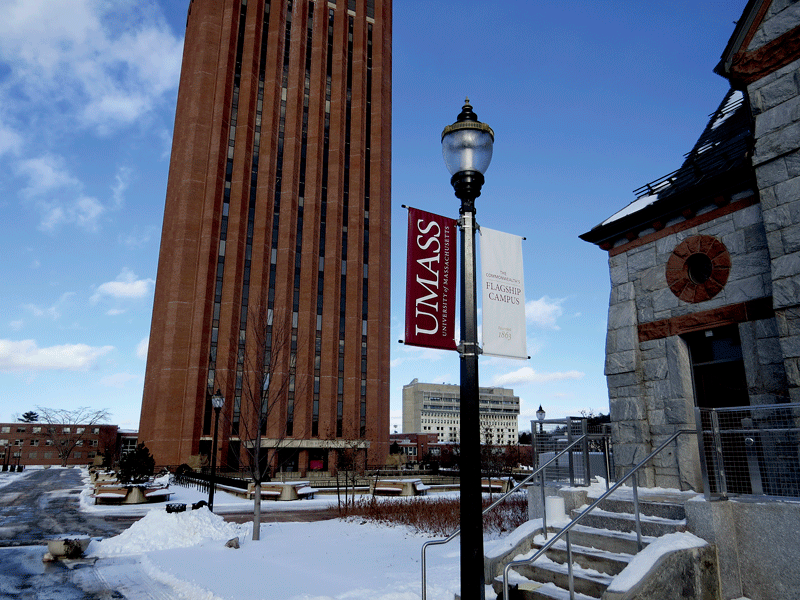
JC Schnabl says the broad mission for the alumni association is to engage alumni — and students who are going to become alumni — in the future of the university.

JC Schnabl says the broad mission for the alumni association is to engage alumni — and students who are going to become alumni — in the future of the university.

Around since 1871, nearly as long as the university, the association was created to engage graduates, said Schnabl, and, as he put it, “begin the dialogue concerning the importance giving back — of both their time and their money, and also being advocates for the university.”

That mission hasn’t changed in 147 years, but the manner in which it is carried out, at UMass and elsewhere, and the vehicles for doing so, including LinkedIn and Facebook, certainly have.

Schnabl has been in the alumni business, if you will, for more than 20 years now (after starting his professional career in law enforcement), and he’s seen a number of changes and emerging trends. Mostly, he’s seen forward-thinking colleges and universities become more serious about this business of alumni relations because of its importance to brand building and development.

So serious that schools, especially large public institutions, will now hire the best applicant they can find to lead such efforts, not the best applicant who is also an alum, as has been the case historically. Schnabl is an example — he did undergraduate work at the University of the Redlands just outside Los Angeles, and earned his MBA at the University of California at Irvine.

He stayed in California, and after working in law enforcement, “stumbled” into alumni relations, as he said most people working in this business do, by taking a job in that office at Long Beach State. He later took the lead job at Stanford.

As noted earlier, the UMass job was one of many he was considering when he decided he wanted to work close, but not too close, to his daughter. And it was one that intrigued him on a number of levels.

“UMass Amherst was poised for great things, and the alumni association was as well,” he said, adding that, when he interviewed for the position, he saw a school with considerable momentum and an alumni office with potential and an administration ready to make a bigger commitment to it.

Grade Expectations

As noted, there are several aspects to the work of all alumni offices, including the one at UMass, ranging from the writing, printing, and dissemination of magazines and newsletters to the staging of homecoming and other gatherings, to efforts to bring alumni from various academic programs, regions, and backgrounds together.

But at its core, the office’s primary focus now, more than ever, is to promote the value of philanthropy and thus increase constituent giving, and also to expand and promote available volunteer opportunities to broaden and diversify alumni support of the school’s students and its initiatives.

In other words, the office works to get people involved and — this is important — keep them involved, with involvement meaning writing checks to the university, but also much more.

When private universities graduate students, that’s not the first those students hear that it’s important to give back to the university. They hear it, starting not on the day they show up, but before they’re even thinking about going to that campus. They’re being indoctrinated into the notion that their support of the institution is going to be a lifelong commitment.”

It’s a process that needs to start early, and there must be constant reinforcement, said Schnabl, who talked about the need to instill what he called a “culture of philanthropy,” and notable progress with that assignment.

“When private universities graduate students, that’s not the first those students hear that it’s important to give back to the university,” he explained. “They hear it, starting not on the day they show up, but before they’re even thinking about going to that campus. They’re being indoctrinated into the notion that their support of the institution is going to be a lifelong commitment.

“Being a large public university that hadn’t really had that as part of our DNA, there was a lot of groundwork to lay,” he went on, adding that considerable work has been done in this regard. He started with a reference to the Commencement Ball.

As that name suggests, this is a gathering that takes place in the weeks leading up to commencement. Over the past several years, the event has seen explosive growth, from 700 attendees at the Student Union to more than 2,500 at a packed Mullins Center.

There is a fund-raising component to the ball, said Schnabl, noting that a portion of the ticket price is a donation to the university, hopefully the first of many.

“That makes them a donor to the university, which means we can communicate to those who participated and explain to them the importance of being a donor to the university,” he noted, “and how that money is going to help do everything from boost the rankings of the university to help other students come here and afford their time at UMass.”

There’s also the award-winning Multicolor Mile Run/Walk. This is an annual event at which participants — there’s a solid mix of students, alumni, faculty, and staff — traverse a one-mile loop through the campus while getting sprayed with liquid paint — hence the name. It’s fun event, but there’s a giving component here as well.

“They pay money to participate, and they take a ball that symbolizes their money and drop it in the bucket where they believe it should most effectively go in support of the institution,” he explained. “It usually winds up in the scholarship bucket.”

Yet, while working to stress the importance of philanthropy and giving back financially, the alumni association has also developed programs to engage graduates in other ways that build the brand.

One is the upcoming job-shadowing program, said Schnabl, adding that this is a new initiative designed to involve graduates in various fields with current students with an eye toward introducing them to potential job opportunities and giving them exposure to various business sectors.

“It’s an opportunity for a student to see what it’s like working for that industry in a way that being on campus doesn’t necessarily show them,” he explained, adding that it’s scheduled for January so that students can visit businesses near their homes while on winter break. “They get a day in the life at a particular business, but they also have exposure to an alum, to a professional field, and to a particular company so they can engage and potentially come through with jobs and internship possibilities.”

Several corporations, including Liberty Mutual, Target, Novartis, Genesis Health Care, the Pyramid Hotel Group, and others, are participating, he said, adding that more than 40 businesses, most of them in the Boston area, are hosting students.

Other initiatives include a mentoring program that also matches alums with current students, as well as affinity groups representing everything from various regions to the LGBT community. There’s also something called the Almuni Advisors Network, an online platform similar to LinkedIn.

“If a student or a young alum, or even an alum in transition, were looking to find out more about an industry or a career, they can tap into this wealth of information from people across the country and in a variety of different industries and set up an appointment to talk with them,” Schnabl explained. “They can take those career discussions and turn them into career opportunities.”

Meanwhile, volunteerism comes in many forms, from those in various industries advising the deans of specific schools to professionals advising individual students.

“Yes, their financial contributions are important, but their advocacy on behalf of the university is as important, if not moreso,” he noted, adding that alumni have been invaluable in communicating the importance of the university to economic development in the Bay State to the Legislature and the public at large.

Bottom Line

When asked how to measure success in his business — a question that’s being asked by many in that sector and in college presidents’ offices as well — Schnabl said there are a number of yardsticks.

They include everything from the number of hits on websites and clicks on specific articles in the magazines to attendance at the Commencement Ball, to the number of companies taking part in the job-shadowing program. The most important, obviously, is the level of donations to the school in question.

Ultimately, though, the greatest measures of success involve what is done with the dollars that are donated — new facilities, new programs, new opportunities for students to attend the university, and an upward trajectory in those all-important rankings of universities and individual schools within them.

Thus, some results are not visible, or measurable, for years.

For now, though, Schnabl believes UMass Amherst is making great strides in this business of alumni relations, and with building those lifelong relationships between graduates and the university that lie at its core.

George O’Brien can be reached at [email protected]

Features

Sidebar

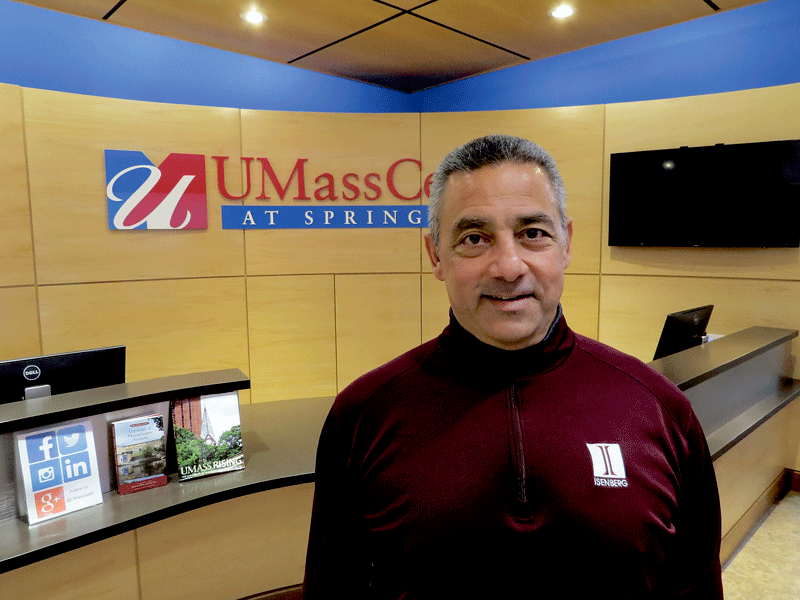
Vinnie Daboul says alums of UMass Amherst should be finding ways to support other alums.

Vinnie Daboul says alums of UMass Amherst should be finding ways to support other alums.

Vinnie Daboul remembers how it all started, and he tells the story often, because he says it’s important.

It was back in 1995, when Daboul, now a partner with Sage Benefit Advisers, was working for Phoenix Home Life. He was invited by someone at the Isenberg School of Management, which he attended a decade earlier, to speak to students about his work and his industry.

“As I was walking out after talking to the students, she thanked me and said, ‘by the way, would you be willing to make a donation?’” he recalled. “At the time … two little kids, a mortgage, two car payments, money was tight, but she made the ask, and I’m like ‘absolutely.’

“That was the first time I committed, and I can tell you, from that day, I’ve been engaged,” he said, summoning a word the UMass Alumni Office has been longing to hear from graduates.

And for Daboul, engagement takes a number of forms, again, like the alumni office would draw it up if it could. There are the financial donations, of course, including a scholarship he endowed several years ago in his grandparents’ name, one intended for Isenberg students from his native Pioneer Valley.

But there are also several forms of mentoring — of Isenberg students, but also those outside the business school — as well as outreach, and efforts to help graduates network, assist one another, and, quite often, do business with one another.

Jim Hunt’s story of engagement followed a similar path in many respects. A principal with Amity Street Dental in Amherst, he was in dental school at Columbia University when he was first asked to donate to his alma mater.

“As a dental student, I’m broke, I’m one of six kids who all went to graduate school, and that spread things pretty thin for my dad,” he recalled, adding that he could really only attend dental school with the help of a sizable scholarship. “Some kid on a cold call asked me to contribute to the alumni association, and I sent in $10. My second year I sent $20, my third year $30, until I got a job, when I gave $1,000.

“I’ve never missed giving in a year since 1978,” he went on, adding that his engagement has taken a number of forms over the years, from helping raise more than $800,000 to endow the track program when it was in danger of being cut (he ran track while he was a student and still holds the 800-meter record 40 years later) to providing mouthguards for a number of the school’s athletic teams on a pro bono basis.

The Jim and Ellen Hunt Hospitality Suite overlooks the end zone at Warren McGuirk Alumni Stadium following contributions to that effort, and there’s a ‘middle distance’ room within the facility for the track team named after one of his former teammates after contributions from Hunt and others helped fund improvements to the track and the team’s locker room, which were completed just over a year ago.

Dr. James Hunt

Dr. James Hunt

The connection you have back with your school is the most enjoyable thing about this. And people give back to something that was important to them.”

“I’m a passionate athletic supporter,” he said, adding that he’s also been a strong booster of the basketball team for more than 20 years.

Summing up all that, he joked that the connections made and kept from such engagement and giving back are far more important than the tax deductions.

“The connection you have back with your school is the most enjoyable thing about this,” he said. “And people give back to something that was important to them.”

Such is the case with Daboul, who graduated from the Isenberg School and is passionate about giving back to it and assisting its graduates.

He’s even created a group of 60 to 70 Isenberg alums from the area who meet every six to eight weeks, by his estimate, to engage and network.

“I’ve got a consistent group of about 20 right now, and we meet four or five times a year,” he said of the group he calls the Isenberg Alumni Network of Western Mass. “It’s just another way to make sure the university and Isenberg stay top of mind for alums.”

Engagement with the university and fellow alums has become a cause, or passion, for Daboul, who said that, overall, graduates of the university don’t network or “take care of each other,” as he put it, as much as alums at other schools, like those in the Ivy League, for example, seem to do.

And that’s something he says needs to change, and he’s doing his part by setting what he believes is a good example of solid, multi-faceted engagement.

“As alums, we should be finding ways to support other alums,” he told BusinessWest. “Whether you’re a chemistry major or an education major or a nursing major, we should be doing a better job of supporting one another — in multiple ways.

“Schools like Harvard and BC … one thing they do a really good job of is talking care of alums,” he went on. “We should be really focused on each other as alumni of the University of Massachusetts at Amherst and the University of Massachusetts period.”

As just one example, he said the gifts he gives benefit clients are Tre Olive gift packs — the East Longmeadow-based purveyor of olive oil is owned by Isenberg graduates.

Daboul said one of the keys to creating these connections and gaining more engagement from alums is strengthening the UMass Amherst brand and creating more pride in that name.

“There are still many people my age — I’m 54 — and older who still think of this as their safety school,” he explained. “In my network of alums, we don’t like that phrase; it’s not a safety school, it’s the University of Massachusetts, and I’m proud of it.”

And by donating to the school in various ways, including financial support, alumni can help the school grow, rise in the national rankings, and, in the process of doing all that, create more pride in the institution.

“I look on what I do as an investment,” he said in summation. “Every time the university gets better, gets stronger, a rating goes up a notch … every time Isenberg moves up, that helps my diploma, it helps my daughter’s diploma, it helps the kids who are graduating this year and next year. It’s not a donation, it’s an investment.”

Hunt agreed, and cited Isenberg as an example.

“Alumni donations to that program are probably the highest,” he said, citing its dramatic climb in the rankings in recent years. “People love to see a program thrive, especially when they give to it, because they think they helped.”

That’s true with the school of management, but with the sports teams he supports as well, said Hunt, who has been putting his money where his mouth is — and where student athletes’ mouths are as well.

— George O’Brien

Community Spotlight Features

Community Spotlight

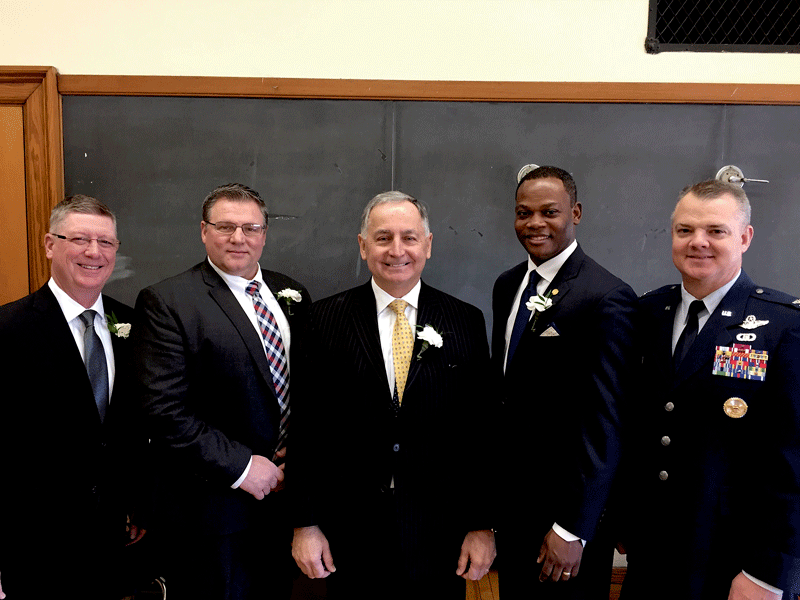
At last week’s inauguration of Chicopee officials

At last week’s inauguration of Chicopee officials, Mayor Richard Kos (center) is flanked by, from left, state Rep. Joseph Wagner, City Council President John Vieu, Elms College President Harry Dumay, and D. Scott Durham, Airlift Wing commander at Westover Air Reserve Base.

Mayor Richard Kos is fond of pointing out that Chicopee is alone among Western Mass. communities in having two exits off the Mass Pike — and now it has a third ‘beacon’ of sorts, as he calls it, with the new Mercedes-Benz dealership lighting the night as it overlooks the Pike at exit 6.

“One of the benefits of Chicopee is its convenience, as well as being a great place to do business,” Kos told BusinessWest. “That’s why Mercedes chose to build in that location. Having two exits on the turnpike is unique in Western Mass., let alone being close to four interstates — 90, 91, 291, and 391. As time goes by, society changes, especially in terms of technology, but being able to get places quickly is always a priority.”

In that vein, the mayor is gratified by a number of businesses choosing to locate or expand in Chicopee, as well as a raft of municipal projects and public-private partnerships that continue to raise the quality of life in this multi-faceted community of more than 55,000 people.

“Last year’s announcements have become this year’s ribbon cuttings, and Mercedes is one of them,” he said. “They’re a beacon advertising quality and prestige for everyone who enters the city off the turnpike or 291. That’s a major investment in the city — $12 million for acquisition, demolition, and construction. And Tru is another $15 million investment in our community.”

That would be Tru by Hilton, another major project, this one bordering the Mass Pike at exit 5. The owners of a Days Inn demolished the outdated hotel on Memorial Drive to make way for the new structure, and the property will include a fast-foot restaurant, a gas station, a coffee shop, and a sit-down restaurant.

“For people coming to Western Mass. from the eastern part of the state, these projects send a nice message,” Kos said — that message being that things are happening in Chicopee. “We’re a community that has always been responsive to businesses, with the conveniences we afford, while still being a very competitive community in terms of electric rates, taxes, and fees.”

Chicopee
at a glance

Year Incorporated: 1848
Population: 55,298
Area: 23.9 square miles
County: Hampden
Residential Tax Rate: $18.31
Commercial Tax Rate: $34.65
Median Household Income: $35,672
Median Family Income: $44,136
Type of Government: Mayor; City Council
Largest Employers: Westover Air Reserve Base; J. Polep Distribution Services; City of Chicopee; Callaway Golf Ball Operations; MicroTek
* Latest information available

Other success stories involve long-time businesses like Callaway Golf, which sits on the Meadow Street property synonymous with Spalding for many decades.

“Callaway not only chose to remain here and expand here, but with their Chrome Soft ball and all their other high-end balls, they’re running a 24-hour, seven-day operation to keep up with demand,” the mayor said. “That’s one of the fastest-growing balls in use on the tour, and we’re proud that it’s made in Chicopee.”

One key, he went on, whether dealing with new businesses or existing ones that want to expand and invest, is streamlining the permitting process.

“We’re trying to be responsive to business needs and timing,” Kos said. “A lot of times, government has a pace that leaves a little bit to be desired, and we want to make sure that doesn’t happen in our city. Chicopee has a history of being extremely business-friendly and responsive. You come in and meet all the boards at once — fire, electric, building, water, all the various departments you need — to have your ideas vetted and see what issues might arise, and to make sure your project goes smoothly. Time is money.”

Downtown Rise Up

At the same time, money is an investment — at least, that’s the way municipal leaders see it as they continue to raise the profile of Chicopee’s downtown. Those investments range from a $2.6 million MassWorks grant to improve water and sewer infrastructure to Mount Holyoke Development’s housing project at Lyman Mills, set to open this spring with 110 market-rate units — specifically, loft-style work/live spaces designed to appeal to young entrepreneurs.

Kos hopes that development and others like it — such as Valley Opportunity Council’s renovation of the former Kendall House into 41 affordable studio apartments — spur further restaurant, bar, and retail development and create a more walkable, active downtown. Community events, such as the city’s holiday tree lighting, Halloween spectacular, and the late-summer Downtown Get Down, just add to that effort.

“We want foot traffic and to get more people down there, which is why we’re investing time and effort to get people to live down there, and make it safer, too,” he added, noting that the City Council recently approved $300,000 to add more cameras downtown and throughout the city to fight and, more importantly, deter crime.

“Our cooperation with the City Council has been remarkable. And the city leaders and the state delegation have worked together to solve problems, come to a consensus, and move forward.”

Meanwhile, at the former Facemate site, David Spada from Lawrence is building a $21 million, 92-room assisted-living facility on a West Main Street parcel across from the Chicopee Falls Post Office, situated off a new road which leads to the RiverMills Senior Center. Ground will be broken this spring.

“So we’re providing opportunities for Millennials to live and work in lofts on one end of the city,” Kos said, “and assisted living on the other.”

Other innovative reuse of property includes a three-megawatt solar farm on a 26-acre site off of Outer Drive and Goodwin Street, near Westover Air Reserve Base. In 2016, the city razed 100 units of military housing units on the site, which had sat unused for two decades and become problematic.

Once a solar farm was approved by neighbors and city leaders, Chicopee was awarded a $1 million MassDevelopment grant to remediate the property, and with money came from the state’s grant program to support the Clean Energy Assessment & Strategic Plan for Massachusetts Military Installations, the housing was finally torn down. Finally, a lease agreement was signed with Chicopee Solar LLC, a subsidiary of ConEdison Development, to build a solar farm.

The city’s investment will be recouped in 10 years through tax revenue and income from the lease agreement, and the government will also benefit because Westover will receive a 5% discount each year on electricity, amounting to $100,000 in annual savings.

“Those properties were deteriorating and vagrant,” Kos told BusinessWest. “This was a win-win for the neighborhood as well as the city.”

Hometown Appeal

Other recent quality-of-life developments in the city include a $225,000 investment in Sarah Jane Park, a grant to the Valley Opportunity Council to support a culinary-arts program and expand nutrition programs in Willimansett, and grants to Porchlight, the Boys & Girls Club, and Head Start to improve infrastructure and programming. For the latter, the city helped leverage more than $600,000 in building improvements to the former Chicopee Falls branch library so Head Start can expand programs for hundreds of children in that neighborhood.

Meanwhile, the city’s public-safety complex recently saw $9 million in improvements, including a new training facility, central dispatch, and locker rooms. “Both chiefs agree that facility will last multiple generations in terms of the improvements made there,” Kos said, adding that other additions include a new ladder truck and an expansion of the police K9 program.

Not all these developments have the splash of a well-lit Mercedes-Benz dealership making a dramatic impression on Mass Pike motorists, but they are all beacons in their own way, testifying to a city on the move, and also a community with plenty of hometown pride.

“We’re the third-largest city west of 495,” the mayor concluded, “but it’s the old Cheers bar mentality — everyone seems to know your name.”

Joseph Bednar can be reached at [email protected]

40 Under 40

Search Party

40under40-logo-2018The start of a new year.

It means many things — from resolutions that will hopefully be kept for at least a few months (or weeks) to football playoffs, to finding a way to somehow get through another January, this time after a brutal December.

But it’s also time for something else — nominating a rising star, or maybe a few, to join what has become one of the most select clubs in the 413, the one comprised of BusinessWest 40 Under Forty honorees.

Yes, nominations are accepted all year, and several dozen have already been received. But most people don’t really get serious about this until the calendar turns to January, or until they see this reminder story that appears annually and the ad it is wrapped around.

So consider yourself reminded.

Fast Facts and Questions

What: 40 Under Forty
When’s the Party? June 21
Where?
The Log Cabin Banquet & Meeting House in Holyoke
When Are Those Nominations Due? Feb. 16
How Do I Nominate Someone? Go HERE
For More Information: Call (413) 781-8600, ext. 100

The nomination deadline is Friday, Feb. 16. No nominations will be accepted after that. From there, well, you know the drill. If you don’t, the nominations go to a team of five judges, who will score them on a number of factors ranging from success in their chosen field to their work within the community. Those scores will then be tabulated, and the 40 highest scorers (with the last few usually decided by a tie-breaking system) will be honored at the annual 40 Under Forty Gala at a packed Log Cabin Banquet & Meeting House on June 21.

So who will be the 40 to hear their names called that night? That, as they say, is up to you. Well, it’s mostly up to you.

That’s because someone can’t join this club if they’re not nominated. And they probably can’t join if their nomination is rushed, lacking in details, doesn’t fully explain why the nominee is worthy of this honor, or any combination of the above.

Indeed, while many individuals are still of the belief that this is a quantity thing — the more nominations, the better — it’s actually more of a quality thing, as in quality of the nomination.

It has been this way right from the beginning. That was back in the late fall of 2006, when the executive team at BusinessWest decided to use what had become a national brand of sorts — 40 Under Forty — to recognize rising stars in the four western counties.

The response was immediate and profound. And over the years, those who have strutted, and danced their way to the stage at the Log Cabin and other venues have represented every sector in business, the nonprofit realm, and public service.

Mayors and city councilors have joined the club, as have doctors and other healthcare professionals. Dozens of banking administrators, lawyers, accountants, and other professionals have made their way to the podium (to music they have chosen), as have a host of entrepreneurs, educators, nonprofit managers, and even one teenager who so impressed the judges with his work within the community (and in high school, we suppose) that he was able to share the stage with individuals already attending 20-year reunions.

The class of 2018 will be announced in these pages in late April, but the hard, important work begins now, with the nominations.

So think about the rising stars you know and work with, and tell the world (or at least our judges) about them.

For more information and to find a nomination form, go HERE.

Now you can get back to those resolutions and trying to stay warm and dry.

Opinion

Editorial

When one thinks of medical school, what follows, generally speaking, are mental images of really thick and intimidating-looking textbooks, students working on cadavers, and really long words that most of us have never heard before.

All of those things are still very large parts of the medical-school equation, but now there are some very different images coming to life thanks to a unique new program in Springfield — the Baystate campus of UMass Medical School .

These images are of students trying to stretch their food dollars at a local store, or visiting the county jail to interview inmates about their health and well-being and the factors contributing to it, or visiting a homeless shelter to talk with those staying there.

All these episodes, if you will, are embodiments of what’s known as PURCH (Population-based Urban and Rural Community Health), the program being administered on the Baystate campus at the Pioneer Life Sciences Institute on Main Street.

Students enrolled at the Worcester campus of UMass Medical spend one day every other week in Springfield. They spend some time in the classroom, but a good deal of it is spent in the field, or those settings described above, to be exact.

This is a different kind of learning experience focused on population health, especially in urban areas, and it is designed for those who might want to work in such settings — and to inspire them to do so.

Population health is a broad term generally used to discuss strategies and programs to help keep a population healthy rather than merely treat individuals when they’re sick. But that’s an oversimplification. Population health puts great emphasis on the so-called social determinants of health, including where people live, how they live, and factors such as poverty, and how they contribute to the health of a community.

And this, indirectly, takes us to that food store in Springfield, where students took $125 in food stamps and essentially tried to make it cover a family for a month — while also trying to keep proper nutrition as the basis for their decisions.

They found out, and rather quickly, just how difficult this assignment was — and is for those who have to do it for real. They found they had to essentially drive right past the fresh fruits and vegetables because they’re too expensive and don’t keep for more than a few days. And instead of turning down the meat aisle to find protein, they instead put eggs and peanut butter (both on sale, as it happened) in the cart.

And the students involved admitted they weren’t even hampered by such-real life factors as screaming children and having to fit everything they were buying into a few bags because they had to walk home or take the bus.

‘Eye-opening’ was the phrase these first-year students used to talk about this experience and others they’ve been part of through PURCH. And collectively, they talked about how such assignments will make them not only better doctors, but advocates for needed changes that will address some of the social determinants of health.

As one of the program’s administrators put it so eloquently, students display genuine curiosity about working actively to be part of the solution.

Already, that curiosity is turning into action, and it seems clear that this pattern will continue through medical school, into residency (wherever that is, hopefully here), and in their practice (wherever that is, hopefully here).

Medical school will always be about thick textbooks, long, hard-to-pronounce words, and work on cadavers. But through PURCH, an exciting, new, and very important dimension has been added.

Better still, it’s happening right here in Springfield.

Opinion

Opinion

By Rick Lord

The first half of the 2017-18 legislative session in Massachusetts was dominated by the issue of healthcare costs and the role employers should play in helping to close a budget gap in the state Medicaid program.

But larger battles await during 2018 as progressive activists seek to place three questions on the Massachusetts election ballot that would together impede economic growth for a generation. The initiatives would impose an 80% surtax on incomes more than $1 million for pass-through businesses, establish a $1.3 billion-per-year paid-leave program, and increase the minimum wage to $15 per hour. The three potential ballot questions would represent an unprecedented potential policy crisis for Massachusetts.

The constitutional tax amendment would raise from 5.1% to 9.1% the levy on income of more than $1 million per year, including income generated by subchapter S-corporations, LLPs, LLCs, partnerships, and other pass-through entities. The $1.9 billion tax increase would be paid by roughly 19,500 filers, 80% of whom are anticipated to file with some business income.

The paid-leave question would mandate 16 weeks of paid family leave and 26 weeks of paid medical leave for employees for a total projected cost of $1.3 billion.

The minimum-wage question would raise the wage from the current $11 per hour in annual $1-per-hour increments starting in 2019 until it reaches $15 an hour in 2022. That amounts to a projected increase of 36%.

Supporters of the paid-leave and minimum-wage questions filed the requisite number of signatures last month to move a step closer to the ballot. Massachusetts lawmakers now have until the end of April to consider and pass the initiatives. Any initiatives that are not adopted must gather and file an additional 10,792 signatures by July 3 to make the 2018 ballot.

The income-surtax constitutional amendment qualified for the ballot in 2016. In October, I joined four other prominent business leaders in filing a suit challenging the validity of the proposal, asserting that the amendment is riddled with constitutional flaws and would make the new tax essentially permanent and unchangeable.

“It is impossible to overstate the potential threat that these three ballot questions pose for Massachusetts employers.  The advocates supporting the questions are well-funded and are prepared to spend millions of dollars to get their message across to voters,” said John Regan, executive vice president of Government Affairs at Associated Industries of Massachusetts.

The ballot battle will take place just as employers begin to comply with the new Massachusetts Pay Equity Law on July 1. The law prohibits employers from discriminating based on gender in the payment of wages and other compensation for ‘comparable’ work. Many employers are already undertaking the internal wage studies that provide a safe harbor from litigation under the statute.

Rick Lord is president and CEO of Associated Industries of Massachusetts.

Banking and Financial Services Sections

Growth Engine

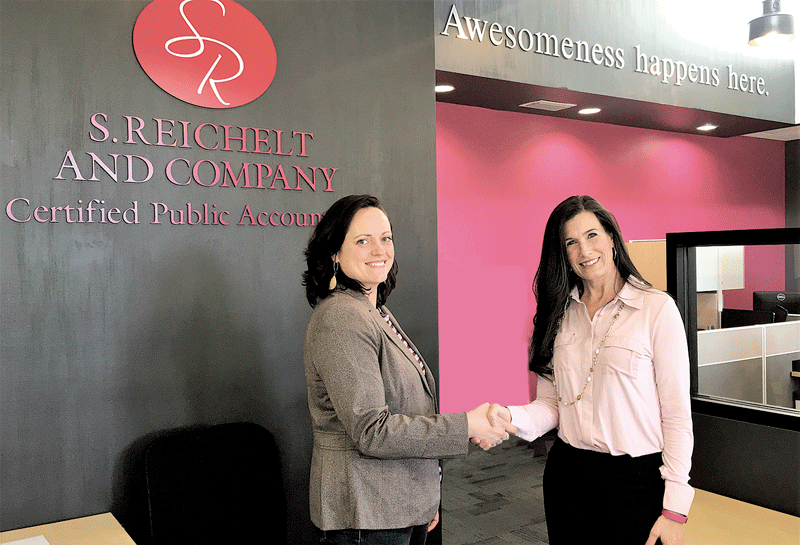
Tracey Gaylord of Granite State Development Corp. (right) with Shannon Reichelt, who used Granite State’s services to finance a new property for her company, S. Reichelt & Co.

Tracey Gaylord of Granite State Development Corp. (right) with Shannon Reichelt, who used Granite State’s services to finance a new property for her company, S. Reichelt & Co.

Certified development companies, or CDCs, are entities that partner with banks to help small businesses secure financing to grow their operations. But in doing so, they’re also growing the economy by promoting economic development, which is, in fact, a key element of their mission. Since its inception in New Hampshire in 1982 — and its subsequent, ever-expanding work across Massachusetts — Granite State Development Corp. has been executing that mission.

Shannon Reichelt recently purchased a building in Holyoke to consolidate her CPA organization, S. Reichelt & Co.

Meanwhile, Ben LaRoche and Jared Martin purchased a property in Lanesboro to house their technology-integration business, Amenitek; Gordon and Patricia Hubbard bought Hidden Valley Campground in Lanesboro and renamed it Mt. Greylock Campsite Park; and Pat Ononibaku purchased the adult day-care operation known as ThayerCare and renamed it Bakucare.

Then there are Anthony Chojnowski, who is building a new structure for his clothing store, Casablanca, in Lenox, and Frank Muytjens and Scott Cole, who are developing the Inn at Kenmore Hall in Richmond, near the New York line.

While those are six very different businesses, the common thread is how they financed their property purchases: through the certified development company (CDC) called Granite State Development Corp. (GSDC).

“We work with businesses looking to either acquire an existing business that has tangible assets, or take a loan on real estate or piece of equipment,” said Tracey Gaylord, Granite State’s vice president and business development officer.

Specifically, Granite State is a nonprofit lender authorized to process and service Small Business Administration (SBA) loans utilizing the 504 lending program (more on that later). It’s the second active certified development company (CDC) in New England and provide financing in the states of Maine, Massachusetts, New Hampshire and Vermont.

“The main goal is to promote economic development and job growth,” Gaylord said. “We help banks do loans they might not be able to do otherwise.”

Those loans are spread among a broad range of sectors, she added. “We do anything from manufacturing companies to wineries to restaurants to healthcare facilities to assisted living to campgrounds. And equipment financing for manufacturing — big machines they might buy every 10 or 15 years — we do a lot with those types of projects as well.”

For this issue’s focus on banking and financial services, Gaylord explained why companies find the 504 loan program — and Granite State’s services — an attractive option when financing a purchase or investing in future growth.

Impressive Growth

GSDC President Alan Abraham created the company in 1982 in Portsmouth, N.H., with a geographic territory initially limited to three counties in that state. In 1986, its territory expanded to include the entire state of New Hampshire, and it has since grown to provide statewide coverage for the four northernmost New England states, including Massachusetts.

Granite State Development is one of the largest CDCs nationwide, ranking fifth in both loan volume and dollars, and has been the most active 504 lender in New England for almost a decade. Since 1990, in cooperation with its bank lending partners, the nonprofit has participated in more than 4,000 transactions worth more than $1.5 billion, helping create more than 20,000 jobs in New England in the process, based on borrower growth stemming from the loans.

Meanwhile, 2017 was a banner year for GSDC in Western Mass., where it has poured increasing resources in recent years, as most of its Bay State projects have historically been farther east.

Those projects fall under the SBA’s 504 loan program, which provides approved small businesses with long-term, fixed-rate financing to acquire assets for expansion or modernization. These 504 loans are made available through CDCs like Granite State. CDCs — there are more than 260 nationwide — are certified and regulated by the SBA, and work with SBA and participating lenders, typically banks, to provide financing to small businesses.

A typical 504 loan is structured in three parts: 50% is a lien from the bank, 40% is a second lien through the CDC, and 10% is a required down payment from the borrower.

This is an important element in the program, Gaylord noted, as many banks require 20%, 25%, even 30% down for certain loans, simply as a matter of policy, “and this actually allows them to do projects people may need.”

At the same time, it’s a win for the borrower, she added, because a bigger down payment may cut into funds they need to get through a lean time. “Maybe it’s a seasonal business, and they need money to get through the winter, to fill that gap.”

The bank sets its own interest rate and term for its 50% share of the loan, she went on. “If they want to do a fixed five-year rate, they can do that. They do not have to match what we do. That’s the benefit for the bank.”

As for GSDC’s portion, it determines terms based on the type of project, she explained. A real-estate project might come with a 20-year term, while 10 years might be more appropriate when purchasing a piece of equipment with a useful life of 10 to 15 years.

“Whatever the type of project, the bank chooses what to do with the other 50%,” Gaylord said. “People say, ‘why would I use this program?’ My quick response is, ‘it’s a low capital investment and a low fixed rate.’”

There are limits to what 504 loans may be used to purchase, however. They are specifically intended for fixed assets and certain soft costs, including the purchase of existing buildings; the purchase of land and land improvements, including grading, street improvements, utilities, parking lots, and landscaping; the construction of new facilities or modernizing, renovating, or converting existing facilities; the purchase of long-term machinery; or the refinancing of debt in connection with an expansion of the business through new or renovated facilities or equipment.

The 504 program cannot be used for working capital or inventory, consolidating or repaying debt, or refinancing, except for projects with an expansion component.

Bigger Picture

At its heart, the 504 lending program and CDCs like Granite State exist not only to help small businesses, but to boost economic development over an entire region. In short, applicants must demonstrate that their purchase or investment will create jobs.

“That’s one of the primary purposes of this,” Gaylord said. “We have to track the number of jobs the business has at the current time and how many jobs they’re predicting they’ll have in the first year and the next 24 months.”

That calculation incorporates job retention as well, she noted. “If they have only two employees but doing the project means they’ll be able to retain those two, that’s fantastic. If they can create more jobs, that’s even better.”

According to the SBA, community-development goals of the 504 loan program include improving, diversifying, or stabilizing the local economy; stimulating other business development; bringing new income into the community; and assisting manufacturing firms and production facilities located in the U.S.

Public-policy goals include revitalizing a business district of a community with a written revitalization or redevelopment plan; expanding exports; expanding small businesses owned and controlled by women, veterans, and minorities; aiding rural development; increasing productivity and competitiveness; modernizing or upgrading facilities to meet health, safety, and environmental requirements; and assisting businesses in, or moving to, areas affected by federal budget reductions, including base closings; reduction of energy consumption by at least 10%.

There are a few environmental goals as well, including increased use of sustainable design, building design that reduces the use of non-renewable resources and minimizes environmental impact; reduction in the use of greenhouse-gas-producing fossil fuels; and production of alternative and renewable forms of energy.

These are worthy goals, obviously, but businesses that qualify for 504 loans are typically more concerned with how the program affects their bottom line.

“We see ebbs and flows, just like conventional banks do, but we’re obviously in a good market right now,” Gaylord said. “This is a good opportunity for people to lock in those loan rates before they start to rise. Now is a really good time.”

There have been many of those good times since Granite State Development Corp. took root in New England 35 years ago, with a mission to help small businesses expand and grow, thereby helping the New England economy.

“It’s a very easy process,” Gaylord told BusinessWest. “I think that the bankers are comfortable with it, and look to us for guidance. We’re bankers and want to work with them.

“People ask, ‘are you competing with banks?’” she went on. “No, we don’t compete with banks, we work with them. We look at banks as our partners. And I get excited when I see the jobs and economic growth. That’s the best part.”

Joseph Bednar can be reached at [email protected]

Banking and Financial Services Sections

Adding Things Up

Nicholas LaPier, CPA

Nicholas LaPier, CPA

By Nicholas LaPier

Ah, tax reform.

As long as the U.S. has had a federal tax, candidates running for office have promised to simplify and make reforms to the tax code. These promises always fall positively on the ears of the electorate, but often end up on the cutting-room floor.

President Trump campaigned that he wanted to reform the tax code, which, in his opinion, would bring back business, and jobs, to America. In Trump’s opinion, reducing the corporate tax rates would entice American businesses to stay here and not move operations and jobs overseas. Trump also believes that reducing personal taxes that individuals pay would translate into enhanced consumer spending, which is an important element of economic growth. Finally, making sweeping reforms to the federal tax code would also simplify it, and allow for many taxpayers to easily understand and file their own taxes.

True, the federal tax code is complicated. It is hard to read and harder to understand. It may even be unfair or inequitable to some. Its many pages of rules, regulations, and interpretations require many taxpayers to hire professionals to assist them in preparing and filing their required annual tax returns. After all, it is a living document more than 100 years in the making.

But what is this they call tax simplification and reform? Is it something governance does to keep busy between the dog days of summer and the winter solstice? Is it an honest intention to create a simpler, fairer system for all of us to understand and employ? Or is it a necessary act to adjust a system of taxation that will boost our economy and create jobs?

I proffer that it is all of that. The Tax Act signed by president Trump on Dec. 22 is the most comprehensive piece of tax legislation enacted in more than 30 years. Almost all of the provisions began last week, on Jan. 1.

Here’s a quick primer.

Corporate Taxation

First, let’s address the reforms and simplification of the federal corporate tax laws.

Although not in its truest form, the new law does create, for the first time, a virtual flat tax. Strange how this nomenclature never got any media attention. After 2017, U.S. corporations will now have a flat 21% corporate tax rate, truly reform, which Washington believed would be commensurate with, or at least fairly attractive compared with, corporate tax rates around the globe. Further, the act eliminates the corporate alternative minimum tax, which goes hand in hand with the concept of a flat corporate tax rate..”

Although not in its truest form, the new law does create, for the first time, a virtual flat tax. Strange how this nomenclature never got any media attention. After 2017, U.S. corporations will now have a flat 21% corporate tax rate, truly reform, which Washington believed would be commensurate with, or at least fairly attractive compared with, corporate tax rates around the globe. Further, the act eliminates the corporate alternative minimum tax, which goes hand in hand with the concept of a flat corporate tax rate.

Other notable changes include expanding the bonus-depreciation rules, which, unlike many other parts of the act, became effective for assets purchased after Sept. 27, 2017.  The act also significantly enhances the amount of depreciation allowed on business vehicles, which, prior to 2018, was limited. An interesting non-publicized change was the full elimination of the business deduction for meals and entertainment, compared to the previously allowed 50% deduction.

All of these changes are, in fact, tax reforms, but not necessarily tax simplification. The actual process of preparing a corporate tax return is still complex, with numerous calculations, add-backs, subtractions, credits, etc. that didn’t go away with the act, as well as other sundry forms that are still required to be attached to a corporate tax return.

Since these new changes all took effect on Jan. 1, the real economic effect won’t be felt for years to come. Some pundits argue that many U.S. corporations don’t pay the maximum rates anyhow, and the reason why jobs were shifted over the borders and overseas was because of business opportunities and the lower cost of wages. Others believe that the tax savings will either transfer to shareholders as additional dividends, or, if corporations hold onto the cash, will increase the market value of their stock.

Washington wants us to believe otherwise, suggesting that overall surplus corporate money (saved vis-a-vis lower taxes) will be spent here on economic development and used to hire more people. This may be closer to the truth when you consider that smaller, closely held, and non-public corporations do not necessarily worry about shareholder value, nor have the benefits of tax credits and creative tax accounting that publicly traded corporations may have.

Personal Income Tax

In regards to personal income taxes, there were numerous changes made, but, in the interest of brevity, I will highlight those with the most impact.

Congress did give all tax filers a year-end gift by reducing the personal income tax rates, and brackets thereon, across the board. As an added bonus, the act made no changes in the tax rates for qualified dividends or long-term capital gains, keeping those lower rates in place.

At first glance, the reduced rates and other sundry changes should have a positive impact on almost everyone.

Except for the income tax-rate reductions, the biggest reform in the new Tax Act is the significant increase in the standard deduction that all filers will get. The act almost doubles the amount of the standard deduction, which will result in many taxpayers no longer itemizing their deductions. Some state senators lobbied heavily against putting a cap of $5,000 ($10,000 for a married couple) on the state and local tax (SALT) deduction, and among others, the National Assoc. of Realtors hit Congress hard against the mortgage-interest cap, and the possible change to the tax exemption on the gain on the sale of a home (which didn’t get changed). Thus, the much-publicized debates on the limits on state and local tax deductions and the mortgage-interest deduction became mostly moot points.

Additionally, filers will no longer be able to deduct unreimbursed employee expenses, which, if in excess of 2% of their adjusted gross income, would have otherwise been allowed for other itemized deductions. These few changes alone result in tax-filing simplification for millions of filers because they may now qualify for the traditional short-tax-form filing. Expect the IRS to amend the filing rules for who qualifies to use the short-form 1040-EZ compared to the long-form 1040.

The act has eliminated the personal exemptions, which in 2017 filers still have a deduction of up to $4,050 per person. To help counter the tax hit for this, the act has doubled the child tax credit from $1,000 to $2,000, and increased the amount that was refundable to a maximum of $1,400. This is a good tax benefit to qualified low-income filers with dependents. The benefit to other filers is an increase in the threshold of adjusted gross income before the child tax credit is eventually phased out entirely. This new limit is at $200,000, compared to $75,000 under prior law; for a married couple, these amounts are now $400,000, compared to $110,000 in 2017.

Aside from the adjustment to the standard deduction and the reduced tax rates, most of the other changes are far from simple, nor do they qualify as tax reform. For example, the act has a complicated formula to calculate how much of the child tax credit can be refundable, with specific criteria including what type of earned income qualifies, family size, and maximum income limits. Also, deductions that are allowed on page one of the long form, called above-the-line deductions, are still voluminous, and tricky.

Alternative minimum tax (AMT) is still in play, albeit with some minor increases to the limits thereto. Finally, if you are a shareholder in a flow-through business like a partnership or S-corporation, how you calculate the 20% deductible portion, combined with rules on limitations on owner wages and business type, is very complex.

In the end, how much each person and family saves as a result of all these reforms will vary, until an actual tax return is prepared for 2018.

Estate Taxation

Included in the Tax Act is the doubling of the estate- and gift-tax exclusion, as well as the generation-skipping tax (GST) exemption. This can also be deemed a year-end gift because, for federal tax purposes, the scope of taxpayers subject to this tax has been significantly reduced. This change alone is pure tax reform.

Affordable Care Act

Call this reform or political posturing (or both); the first major modification of the original Affordable Care Act (ACA) has become law. As part of the Tax Act, filers who do not have health insurance will no longer be assessed the healthcare penalty, otherwise known as the individual shared responsibility requirement, after 2017. Not only will this save some filers money (reform), it will definitely make their tax filing simpler, removing the very difficult-to-prepare Form 8965 from the return.

State Tax

This article has focused on the new federal Tax Act without taking into consideration the possible impact on your own state income tax. For individual filers, unless you live in one of the last seven states that have no income tax (Alaska, Florida, Nevada, South Dakota, Texas, Washington, and Wyoming), the many changes to the federal tax code will most likely have an impact on your own state taxes.

Many states are ‘piggyback’ states, meaning they take your federal adjusted income as a base, then have various add-backs and subtractions, before getting to their own taxable income. For example, Massachusetts never recognized the principles of bonus depreciation, which results in federal-to-state tax differences. As far as the new federal deduction for flow-through income, it will be interesting if any of the states will allow for that; it may already be provided for under existing state law, or it may take specific legislative action to adopt.

Regardless, you should take into consideration how any of the new federal provisions will impact you on your own state tax return. When in doubt, always consult a professional tax advisor.

By the time the ink has dried on this article and published, the new Tax Act will be law, and government lawyers will be putting the finishing touches on the official final regulations. Interpretations and minor fixes will surely follow, well into 2018.

Many of the new tax-law changes will expire after 2025, so expect that the next round of tax simplification and reform will be here before long.  Stay tuned.

Nicholas LaPier, CPA is the principal at Nicholas LaPier CPA PC in West Springfield; (413)732-0200; [email protected]

Education Sections

The New Faces of Medical School

First-year medical students Betsy McGovern

First-year medical students Betsy McGovern

Prithwijit Roychowdhury

Prithwijit Roychowdhury

Kathryn Norman

Kathryn Norman

Colton Conrad

Colton Conrad

Like most first-year students, Kathryn Norman entered medical school in August not knowing exactly what to expect.

But there were certainly some things she never expected.

Like a curriculum that included a visit to the Hampden County jail in Ludlow, where she and fellow classmates talked with inmates about their health and well-being and learned first-hand how social issues and mental-health conditions have impacted their lives and put them on a path to incarceration.

Or a visit to a local food store, where teams were assigned the task of taking $125 in food stamps and buying a month’s worth of food for a single mother with diabetes and her daughter, all while trying to keep proper nutrition as the basis for the spending decisions.

Or a visit from an auto mechanic who would discuss the questions he asks a car owner to diagnose problems, with the goal of driving home the message that a similar methodology — and many of those same questions — would be utilized by a physician seeking to fully diagnose an issue with a patient.

But all this and more has been part of the first five months of experiences at what is known as the University of Massachusetts Medical School – Baystate, the Springfield campus, if you will, of the Worcester-based institution.

“The very first patient that I ever spoke to was someone who was incarcerated,” Norman said of her start in medical school. “And just getting to hear about the challenges these inmates had and bringing together the medical conditions they have, which are pretty complex, and the social conditions they have, that’s very exciting.”

That’s a word used often by the 22 students enrolled at UMass Medical, who spend one day every two weeks in Springfield and, more specifically, at the facility created by Baystate Health at the Pioneer Valley Life Sciences Institute on Main Street. They are there for a class devoted to developing their interviewing skills, something not often thought about when it comes to a medical-school curriculum, but a nonetheless critical part of the equation when it comes to being a good doctor, as Dr. Kevin Hinchey explained.

Dr. Kevin Hinchey

Dr. Kevin Hinchey says the PURCH program puts emphasis on the social determinants of health and prevention, not merely treatment, of illnesses.

He’s chief Education officer and senior associate dean for Education at UMass Medical School — Baystate, and he said that, while students are mastering the art and science of asking questions, they are gaining a unique perspective on the many aspects of population health by hearing, and absorbing, the answers.

Such as those they heard while visiting an area homeless shelter.

“There was a gentleman there who has diabetes; the students were interviewing him, and he said he keeps a candy bar by the side of his bed,” Hinchey recalled. “When they asked him why, he said ‘because it’s nutrition, it has a lot of calories in it, and it doesn’t spoil.’

“This is one of the social determinants of health,” he went on. “We talk about a food desert in downtown Springfield … you can’t get fresh fruits and vegetables, so you get other foods. That conversation becomes important, because later, when you see that same person in your office and his blood sugar is 400, you might say that he needs insulin. But because you saw him there (at the homeless shelter), you say ‘no, he needs a refrigerator.’ It changes your concept of the disease and gives you a real example of people thinking, ‘as a doctor, I’m reacting to things; can’t I get more upstream and do some more prevention?’”

Indeed, through participation in an initiative known as PURCH (Population-based Urban and Rural Community Health), students are getting a different kind of learning experience as they work on their interviewing skills, one that Rebecca Blanchard, assistant dean for Education at UMass Medical School — Baystate, and senior director of Educational Affairs at Baystate Health, summed up by saying that what differentiates it is not what’s being taught, but how and where, and also in the way these experiences motivate students.

And to get that point across, she talked more about that visit to the homeless shelter.

“This is an interviewing class; students are building skills in interviewing — having a conversation to gain information. It’s also a track focused on how population health and disparities intersect in a human way,” she said, adding that, through their various experiences, students move beyond the act of treating sick patients and into the all-important realm of advocacy.

“They come back from these experiences asking questions that are advocacy questions,” she went on. “They ask ‘why?’ and ‘why not?’ and ‘how can we help?’”

For this issue and its focus on the healthcare workforce, BusinessWest visited the Baystate facility and talked with Hinchey, Blanchard, and several students about the unique approach that is PURCH, as well as the many unique learning experiences they’ve already shared.

Body of Evidence

As he talked about the process of applying to medical schools and the factors that weighed on his decision concerning where to go, Colton Conrad, from North Carolina, started by saying he first focused on schools with respectable primary-care rankings and also an emphasis on patient care rather than research.

Through their experiences in the PURCH program, Rebecca Blanchard

Through their experiences in the PURCH program, Rebecca Blanchard says, students training to become doctors also take on the role of advocates.

Those criteria put UMass Medical on his relatively short list, he went on, adding that, while he was applying, he noticed a secondary application “for this thing called PURCH.” Intrigued, he went on the website and did some reading.

Actually, it was only about three paragraphs, but it was more than enough to get his full attention.

“What I gained from those three paragraphs was that this was a branch of UMass Med School that was starting up the year I was starting school to take future physicians out of the classroom, out of a standard hospital setting, and get them involved in the community,” he recalled, “with the goal of better understanding the people and the patients they serve — to understand them on a deeper level than just illnesses.

“And I thought that was really cool,” he went on, adding that this quick synopsis was enough to prompt him to apply. And the visits to Worcester and then Springfield were enough to convince him that his search was pretty much over.

“It felt like … it wasn’t just a place where I wanted to be; the people also wanted me to be there,” he explained. “That was the first time I felt that at a medical school.”

With that, there was considerable nodding of the heads gathered around the conference-room table as BusinessWest spoke with several students enrolled in PURCH.

Collectively, they used that word ‘cool’ several more times as they talked about both those experiences that take place, as that short description on the website noted, outside the classroom and outside the hospital, and also about what it means for their overall medical-school experience.

Norman said PURCH adds what she called “another layer” to her education, an important one not available in the traditional classroom setting.

“Our education has been so much more grounded in actually understanding real people and the real lives they have,” she said. “And these are opportunities that I haven’t seen our classmates in Worcester have.”

Betsy McGovern, from Andover, agreed, and to get her points across, she revisited her experiences at the Ludlow jail, which were memorable on many levels, but especially for the unexpectedly candid conversations between students and inmates.

“Our inmate was talking about his struggles with diabetes and his family history of diabetes, and he mentioned, very briefly, a domestic-violence incident that occurred between his family and his mother,” she recalled, adding that the students involved were at first unsure about whether to probe deeper on that topic, but eventually did, in part because the inmate was able and willing to open up, but also because it was important to do so.

Indeed, there are many contributing factors to one’s health and well-being, McGovern went on, and traumatic experiences such as witnessing domestic violence are certainly one of them. Asking patients about them is difficult and awkward, but it’s as important as asking them about their diabetes. And gaining experience with such hard questions — and the resulting answers — is a critical part of becoming a good interviewer and, more importantly, a competent clinician.

And something else as well — an advocate, said Prithwijit Roychowdhury, another first-year student known to his colleagues longing for something shorter and easier to pronounce as ‘Prith.’

He told BusinessWest that, through their experiences in PURCH, students gain a greater appreciation for those social determinants and thus, perhaps, a better understanding of the importance of prevention, rather than simply treatment of illnesses.

“I think a lot of us are interested in being advocates and policymakers potentially, or even researchers working on policy or how well certain policies are working,” said Roychowdhury, who is from Worcester. “And to that end, getting a diverse exposure from a variety of different groups of people helps to contextualize the things you might want to advocate for.

“And as medical students who are interested in population health, we all know that it’s not purely the encounter with the patient in the examination room that matters,” he went on. “It’s about the broader context: what are the kinds of policies that are causing this particular patient to have a child who gets exposed to lead or arsenic, or are there reasons why a family has a long history of diabetes?”

All these comments help explain why the PURCH curriculum, and this interviewing class, were structured in this way, said Blanchard and Henchey, adding that the goal is to motivate students to look beyond the patient’s condition and to the big picture — the factors that made this condition possible and even inevitable, with an eye toward prevention.

“We’re getting students involved in advocacy and those discussions about what can be done to improve population health early on,” said Blanchard. “There’s genuine curiosity to be actively part of the solution, and it’s quite exciting for all of the faculty to see it from that lens.”

Learning Curves

Conrad told BusinessWest that one of the most important aspects of the road trips taken by the PURCH students is the debriefing — his word — that goes on afterward.

“When we go out as a group for these experiences, we come back and we talk about them,” he explained. “And it’s really interesting to hear everyone’s perspective, because just about everyone in PURCH has different backgrounds, different life stories.”

And these debriefings have become learning experiences in their own right, he went on, using the trips to the homeless shelter and jail (half the class visited each one) as an example.

“We all came back from those trips, and it seemed like everyone had very similar stories even though we were with very different populations,” he explained. “We all found that most of our patients had these pre-existing, oftentimes mental-health conditions that were playing out in the worst ways in every aspect of their lives.

“It’s really easy to look at the prison population or the homeless population and make fairly gross generalizations,” he went on. “But after having our debriefing, it’s a little harder to do that, except to say that a lot of people have underlying issues that are affecting their lives so negatively that they are put in situations where they’re homeless or they’re incarcerated or they are drug addicts. Out of all these experiences, what I’ve gained the most is looking at people beyond what their particular illness is at that moment; whatever they’re presenting with that day isn’t even close to the full story.”

This, in a nutshell, is what PURCH is all about, and Conrad’s comments, and those of his fellow classmates, effectively bring to life that three-paragraph description of the program that drew them in and eventually drew them to Springfield.

There are many social determinants of health, and each one plays a role in what brings a patient to a physician’s office on a given day. Some of the biggest are the many challenges that are part and parcel to living at or below the poverty line, challenges that drive home the point that there are often huge barriers to doing the right thing when it comes to one’s health and well-being.

Which explains why that visit to the grocery store carrying $125 in food stamps was so eye-opening, said Norman, adding that there’s a big difference between reading about such issues in a book or news article and seeing them first-hand.

There were fruits and vegetables at this store, but they were too expensive and they would perish, she noted, adding that those pushing the cart had to steer it up different aisles.

Conrad, who was in the same group, was actually able to bring personal experience to bear.

“My family was on food stamps for a while when I was growing up, and I remember my mom having to make some of those tough decisions,” he recalled. “And it was weird to be in her situation but in a simulation.”

By the time the group arrived at the checkout line, the cart was full of rice, beans, pasta, and other items that were in bulk, inexpensive, and transportable, said Norman, adding that those who participated in the exercise left the store with large doses of frustration.

And that led Roychowdhury back to his thoughts about advocacy.

“We need to think about what we can do about these issues, such as the food choices that might lead to diabetes,” he explained. “Regardless of where we end up … if we end up in a hospital, what can we do to advocate for our board of trustees or our administration to help create and implement programs focused on education regarding diabetes or even creating a diabetes pump clinic?

“These are things already happening at Baystate and are concrete examples we can draw from,” he went on. “They give us a lot of insight into maybe how to implement these in our population health tool kit, not purely as a clinician, but as a population-health advocate.”

Outside the Box

Returning to that visit to the food store one more time, Conrad said it was quite lifelike, but not quite the real thing, and for several reasons.

Indeed, he recalls Roychawdhury, also part of his group, advising that they buy food with a lower glycemic index. “I said, ‘dude, I don’t even know what that means; how are we expecting the average person to make healthy choices for their diabetes based on a glycemic index when I don’t know what that is?’

“Also, we didn’t have a screaming kid in our cart as we doing our shopping, and we were able to take our cars; we didn’t have to take the bus and fit everything for a month into three bags,” he went on, adding that these missing ingredients would have made the assignment that much more difficult, as it was for some people who were tackling that exercise for real on the same day his team was.

The screaming child was missing, but just about everything else was there. It was real, hands-on, outside the box, and certainly outside the classroom.

As noted earlier, Norman and her classmates didn’t know quite what to expect in their first year of medical school. But they were definitely not expecting learning experiences like these.

Experiences that will make them better interviewers — and better doctors.


George O’Brien can be reached at [email protected]

Education Sections

Life’s Work

Lisa Rapp

Lisa Rapp says many biotech students find inspiration in the fact that their work may someday make a difference — for example, in developing a key new drug.

For college students — or career changers — seeking a career path with plenty of opportunity close to home, biotechnology in Massachusetts is certainly enjoying an enviable wave.

For example, drug research and development — one key field in the broad world of biotech — has been surging in Massachusetts for well over a decade, and isn’t slowing down, according to the annual report released in November by the Massachusetts Biotechnology Council, or MassBio.

According to that report, Massachusetts has more jobs classified as biotechnology R&D than any other state (see table below), with 34,366 currently employed — a 40% increase since 2007 — barely edging out California, a state with six times the Bay State’s population, and a well-defined high-tech landscape.

Meanwhile, the total number of biopharma workers in Massachusetts rose by nearly 5% in 2016, to 66,053, a 28% growth rate since 2007, which was the year former Gov. Deval Patrick launched a 10-year, $1 billion life-sciences investment program. More recently, Gov. Charlie Baker renewed the state’s commitment to the industry when he announced a five-year, $500 million ‘life sciences 2.0’ initiative.

stateemploytrendsbiotech0118a

“Massachusetts is historically one of the first states that got into biotechnology, then Deval Patrick made a real financial commitment, and provided funding, to try to keep it here,” said Lisa Rapp, who chairs the associate-degree Biotechnology program at Springfield Technical Community College, adding that Cambridge has long been the key hub, but biotech companies can be found throughout the Commonwealth.

Still, while the industry is growing rapidly, Rapp noted that biotechnology often is not on the radar of people considering their career options. Biotechnology encompasses a broad range of applications that use living organisms such as cells and bacteria to make useful products. Current applications of biotechnology include industrial production of pharmaceuticals such as vaccines and insulin, genetic testing, DNA fingerprinting, and genetic engineering of plants.

“I don’t think many students are aware how many jobs there are in the state. There are more jobs the farther east you go, but there are absolutely jobs here too,” she said, noting that research and development companies tend to cluster closer to Boston, while Western Mass. tends to be stronger with biomanufacturing.

The research and development job gains come as the state’s collective pipeline of drugs is rapidly expanding. According to the MassBio report, companies headquartered in the state have 1,876 drugs in various stages of development, nearly half of which — 912 — are being tested in human trials. That’s a significant increase from last year, when 1,149 drugs were in development, including 455 in human trials. Treatments for cancer, neurological disorders, and infections are among the most popular.

“There are more opportunities now than ever to get good jobs in Massachusetts,” Rapp said. “The state has the highest concentration of biotechnology and pharmaceutical companies in the world.”

“We’re in the middle of a genomic revolution right now, on the cusp of this brave new world,” said Thomas Mennella, associate professor of Biology at Bay Path University, who directs the master’s program in Applied Laboratory Science & Operations, which has become a key graduate degree in the biotech world (more on that later).

“My read on the field is that no one is sure where this is going to go, but everyone believes it’s going somewhere special,” he went on. “This generation now coming out will advance that revolution, and we’re preparing them the best we can to make them as adaptable as possible and follow the flow wherever the field leads.”

Meeting the Need

Since 2012, Rapp said, STCC has received $375,000 in grants to enhance its Biotechnology program, and especially the cutting-edge equipment and supplies on which students learn current techniques in the biotech and pharmaceutical industries.

“Our curriculum is designed to meet the ever-expanding need for trained biotechnology personnel, she added, noting that students who complete the two-year program can apply for jobs in the biopharma industry, or may advance to four-year institutions to pursue higher degrees in biotechnology.

“The career-track associate degree is meant to lead to direct employment in the field, and then we have a transfer track for students looking to transfer to a four-year college and get a bachelor’s degree or additional education,” she told BusinessWest. “It’s about half and half, but the last few years, there has been a little more interest in the transfer pathway.”

Bay Path’s bachelor’s-degree program has evolved over time, Mennella said, first in response to industry talk that students nationally weren’t emerging with high-tech instrumentation skills, and then — when programs morphed to emphasize those skills — that job applicants were highly technically trained, but not thinking scientifically.

“Our degree here is meant to bridge that gap, meet in the middle,” he explaned. “They’re graduating with the best of both worlds.”

But he called the master’s program in Applied Laboratory Science & Operations the “cherry on top of the program,” because it sets up biotech undergrads with the tools they need to manage a lab — from project management to understanding the ethical and legal implications of their work — which, in turn, leads to some of the more lucrative and rewarding areas of their field.

“We’ve packaged four courses together as an online graduate certificate program, so even students who just want to learn how to manage a lab and manage people can take those four online courses as a graduate certificate,” he explained.

The idea, Mennella said, is to make sure graduates are as competitive as they can be, in a field that — like others in Massachusetts, from precision manufacturing to information technology — often has more job opportunities available than qualified candidates. He wants his graduates to demonstrate, within six months to a year, that they can slide into lab-management positions that, in the Bay State, pay a median salary of almost $120,000.

“The state is hungry for highly skilled technicians that can do the day-to-day work to keep the lab running,” he noted. “We want them geared toward the really good technical jobs in this area, but have that second [managerial] purpose in mind. We’re striking both sides of the coin.”

Cool, Fun — and Meaningful

Rapp noted that many students are looking for a challenging role in medical research that doesn’t involve patient contact, and a biotechnology degree is a clear path to such a career.

“Generally, they have some underlying interest in science — they think science is cool and fun, which, of course, it is. And with laboratory jobs, they might have an interest in science and not necessarily in patient care,” she explained. “And they like the hands-on work in a laboratory setting.”

Whether working for pharmaceutical companies, developing and testing new drugs, or for biomanufacturing companies working on medical devices, or even in a forensics lab, opportunities abound, she said.

“I feel like many students want to feel like they’re doing something meaningful here,” Rapp added. “If they’re involved in designing or testing drugs, helping some future patient, I feel that’s a message that reonates with the students — that maybe they’ll be doing a job that helps someone in some way.”

At a recent Biotechnology Career Exploration Luncheon at STCC, professors from area colleges discussed opportunities in the field, and agreed that job reports like the one from MassBio may only scratch the surface when it comes to opportunities in a field that grows more intriguing by the year.

“Biochemistry and molecular-biology principles are critical in a number of growing fields in health and technology,” said Amy Springer, lecturer and chief undergraduate advisor at UMass Amherst. “Having a fundamental knowledge in these topics provides a student with translatable skills suitable for a range of areas, including discovery research, medical diagnostics, treatments and engineering, and environmental science.”

As Mennella said, it’s a brave new world — and a story that’s only beginning to unfold.

Joseph Bednar can be reached at [email protected]
DBA Certificates Departments

The following business certificates and trade names were issued or renewed during the month of December 2017.

AMHERST

Amherst Knights of Columbus #1619
45 Boltwood Walk
William Dion

The English Pub
15E Pleasant St.
Gerald Jolly

Harvest Market
1150 West St.
Peggy Thibbitts

Ichiban Asian Bistro
104 North Pleasant St.
Hangzhang Huang

Leslie Lauf, LICSW
150 Fearing St.
Leslie Lauf

Mixed Nuts Cooperative
893 West St.
Trustees of Hampshire College

Paradise of India
87 Main St.
Tarlochan Singh, Kuldip Khinda

The Prescott Bakery
893 West St.
Trustees of Hampshire College

Rafters Sports Bar & Restaurant
422 Amity St.
Gerald Jolly

Wings over Amherst
181D University Dr.
Harold Tramazzo

BELCHERTOWN

Tom’s Odd Jobs & Snowblowing
11 Laurel Ridge Dr.
Thomas Hresko

CHICOPEE

Lopuk Realty
125 Broadway
Gary Lopuk

TrueHeart Enterprise
234 Exchange St.
Lolitta Trueheart Lowe, Angela Trueheart

EASTHAMPTON

Rail Trail Auto Sales
1 Loomis Way
Kevin Netto, Jovita Netto

Realized Learning
47 Clark St.
Abigail Forcier

EAST LONGMEADOW

Alpha Waves DJs
84 Oakbrook Dr.
Dan Chrisis

Redstone Wealth Management, LLC
264 North Main St.
Anthony Cianflone

Spray Right Foam Insulations
49 Gerrard Ave.
Nathan Abdelmaseh

HADLEY

Dunkin’ Donuts
331 Russell St.
Mason Donuts, LLC

Dunkin’ Donuts
142 Russell St.
Mason Donuts, LLC

Friendly’s
455 Russell St.
Gary Glenn

Hillside Pizza
173 Russell St.
JKBC, LLC

Huaning Services
10 Indian Pipe Dr.
Jianhua Yang

Plainville Farm
135 Mt. Warner Road
Walter Czajkowski

HOLYOKE

K & D Auto Sales
18 Kay Ave.
Alexander Oquendo

Posters
214 Maple St.
Waybe Worsham, Nancy Worsham

TWC Auto Body & Repair
56 Jackson St.
Jamil Roman

LONGMEADOW

Night Owl Knots
38 Chiswick St.
Nicole Loud

Q5 Analytics
573 Wolf Swamp Road
Michelle van Schouwen

LUDLOW

Fresh Cuts By Toni
123 Shawnigan Dr.
Toni Marcus

Roy’s Auto Service
935 Center St.
Roy Cote

NORTHAMPTON

Brightworks Inc.
15 Higgins Way
Douglas McCarroll

Context Capital Asset Management, LLC
123 South St., #2
Melissa Frydlo

Ernie’s Towing
376 Easthampton Road
Frank Fournier III

Finding Earth Works
29 Columbus Ave.
Alexandra Risley

Haven Body Arts
108 Main St.
Penelope Silverstein, Peter Kerantzas

Lean Innovation Institute
9½ Market St.
Paul Silva

More Than Skin Deep
150 Main St.
Diana Cerutti

Richard Huntley & Sons
254 Easthampton Road
Richard Huntley

TommyCar Auto Group
347 King St.
Carla Cosenzi Zayac

Wayside Auto & Truck Sales
376 Easthampton Road
Frank Fournier III

PALMER

Palmer Motorsports Park
58 West Ware Road
Fred Ferguson

Ramadon’s Package Store
2020 Main St.
Charles Ramadon

Sam’s Food
1078 Park St.
Muhammad Javid

Spera Landscaping
64 Commercial St.
Anthony Kinley

Van Zandt Snow Plowing
19 Forest St.
Robert Van Zandt

You R Special
1020 Central St.
Roslyn Banks

SOUTHWICK

Moolicious Farm
258 Feeding Hills Road
Joseph Deedy

Southwick Civic Fund Inc.
258 Feeding Hills Road
Joseph Deedy

Wolfe Path Farm
76 Coes Hill Road
Clifford Wolfe

SPRINGFIELD

Carney Diggs Construction
212 Ambrose St.
Martin Carney Jr.

Chef It Up Catering
57 Macomber Ave.
Carla Edmonds

CM Carpentry and Remodeling
232 Ambrose St.
Chris Monette

Comics and Cards
890 Carew St.
Maeghan Denise

E and Jay Transport
34 Mansfield St.
Elvis Malone

Joseph Mini Mart
125 Dwight St.
Hamidah Imran

Law Offices of Alice E. Kundl
115 State St.
Alice Kundl

Massachusetts Barber Expo
74 Oklahoma St.
Tyrone Miranda

Mi Cultura
304 Worthington St.
Horaida Cardona

Reynoso Construction
92 Grenada Terrace
Florencio Reynoso

Ron DeSellier Electric
97 Goodwin St.
Ronald DeSellier

Rosegold Lavish
145 Marsden St.
Edaysha Garrett

Sam’s Food Store
266 Belmont Ave.
Nasim Khalid

The Sporting Edge Marketing
208 Island Pond Road
Edard Guczek

Tatted Lace Creations
137 Bacon Road
Karen Northwood

Venta Pro, LLC
34 Front St.
Alec Upperton

Yabucoa Used Tire
218 St. James Blvd.
Francisco Ortiz

WEST SPRINGFIELD

Healthtrax Fitness and Wellness
155 Ashley Ave.
Marina Lebo

In and Out Deli Market
205 Elm St.
Goksal Cicek

Lee’s Painting Co.
105 Heywood Ave.
Dwight Lee

Lincare Inc.
53 Capital Dr.
Susan Yanush

Pavel Pavement Maintenance
70 Windsor St.
Michael Crean

Sarah Albert, LICSW
111 Elm St.
Sarah Albert-Perry

Sibley Property Services
101 Sibley Ave.
John Alexander

WILBRAHAM

The Burger Bar
2341 Boston Road, Unit 101
Laurie Bongioni

HobbyCosmo.com
1028 Stony Hill Road
Xuan Le

Inside-Out Home & Garden, LLC
2040 Boston Road, Unit 15
Norman Corigliano

Sugar DL’s Baked Goods
2133 Boston Road, Unit 6B
Berneice Dixon

Departments Incorporations

The following business incorporations were recorded in Hampden, Hampshire, and Franklin counties and are the latest available. They are listed by community.

EAST LONGMEADOW

Fitness Jerks Inc., 45 Baldwin St., East Longmeadow, MA 01028. Michael Zolkiewicz, same. Physical fitness and training.

FL Landscaping Inc., 6 Kensington Ave., East Longmeadow, MA 01028. Luisa Cardaropoli, same. Landscaping services.

LENOX

F17 Lennox Heights Inc., 260 Pittsfield Road, Apt. F17, Lenox, MA 01240. Suraj Sharma, same. Real estate.

LONGMEADOW

Forest Park Sports Inc., 102 Pinewood Dr., Longmeadow, MA 01106. Katharine A. Pacella, same. Non-profit that raises, manages, and distribute funds to support competitive sports.

PITTSFIELD

Egremont PTO Inc., 84 Egremont Ave., Pittsfield MA, 01201. Andrea Wilson, same. Provides a forum for parents, guardians, teachers, and school administration may share ideas and carry out projects for the benefit of the students of Egremont Elementary School.

Express Bus Inc., 10 Wendell Ave., Ext #210, Pittsfield, MA 01201. De Yue Chen, same. Bus tour company.

SPRINGFIELD

El Salto Inc., 1411 Boston Road, Springfield, MA 01119. Jose G Torres, same. Full-service restaurant.

Escuela De Capacitacion Biblica Antioquia, 25 Terrence St., Springfield, MA 01109. Raul Medina, same. Place of worship.

Exterior Remodeling Group Inc., 23 Benham St., Springfield, MA 01109. Eugeniu Ciubotaru, same. Remodeling.

Harnum Construction Inc., 53 Metzger Place, Springfield, MA 01104. William Harnum, same. To operate a construction company.

SUNDERLAND

Gwen D Gannon Inc., 31 Garage Road, Sunderland, MA 01375. Gwen D Gannon, same. Consulting program development and evaluation.

WILBRAHAM

Gardenrus Inc., 7 Evangeline Dr., Wilbraham, MA 01095. Brian Patrick Griffin, same. Online sales.

Briefcase Departments

UMass, Research Partners Aim to Improve Flu-season Forecasts
AMHERST — Research teams, including one led by biostatistician Nicholas Reich at UMass Amherst, are participating in a national influenza-forecasting challenge to try to predict the onset, progress, and peaks of regional flu outbreaks to aid prevention and control. This year, the Reich Lab is leading an effort to improve the forecasting by increasing the collaboration between groups. “Every year, the Centers for Disease Control host a flu-forecasting challenge,” Reich said. “It’s the most organized and public effort at forecasting any infectious disease anywhere in the world. Our lab is now in our third year of participating, and we find that each year we get a little better and learn a bit more. This year, we wanted to take it to the next level, so we worked with other teams year-round to develop a way that our models could work together to make a single best forecast for influenza. This entire effort is public, so anyone can go to the website and see the forecasts.” While this flu season has started earlier than usual in the northeastern and southern regions of the U.S., according to the most recent data, the forecasts are still showing a fair amount of uncertainty about how big a season it will be, Reich said. “The holiday season is a notoriously difficult time to forecast because typically fewer people go to the doctor, and yet everyone is traveling around spreading or being exposed to infections such as flu.” Reich and colleagues at UMass Amherst’s School of Public Health and Health Sciences collaborate with teams at Carnegie Mellon University, Columbia University, and a group at Los Alamos National Laboratory in New Mexico, in a group they have dubbed the FluSight Network. It issues a new flu season forecast every Monday for public-health researchers and practitioners that compares the flu trajectory this year to past years. In a recent publication, Reich and colleagues state that their aim is to “combine forecasting models for seasonal influenza in the U.S. to create a single ensemble forecast. The central question is, can we provide better information to decision makers by combining forecasting models and, specifically, by using past performance of the models to inform the ensemble approach.” Added Reich, “we are working closely with our collaborators at the CDC to determine how to improve the timeliness and relevance of our forecasts.” To prepare for this flu season, he and colleagues spent many hours designing a standard structure that each team needed to use when submitting models. This allowed for comparison of methods over the past seven years of flu data in the U.S. They also conducted a cross-validation study of data from the past seven flu seasons to compare five different methods for combining models into a single ensemble forecast. They found that four of their collaborative ensemble methods had higher average scores than any of the individual models. The team is now submitting forecasts from their best-performing model and are posting them once a week this season to the CDC’s 2017-18 FluSight Challenge. Reich estimates there are about 20 teams this year participating in the CDC challenge nationwide, who produce about 30 different models. Each model forecasts the onset of the flu season, how it will progress over the coming few weeks, when it will peak, and how intense the peak will be compared to other seasons. In a heavy flu season, between 5% and 12% of doctor’s visits are for influenza-like illness, and that number varies regionally in the U.S. This metric is one of the key indicators for the CDC of how bad the flu season is, and it is the measure used in the forecasting challenges. “Certainly for the CDC, there are policy decisions that could be impacted by these forecasts, including the timing of public communication about flu season starting and when to get vaccinated. Models can help with all of that,” Reich said. “Also, hospitals often try to have enhanced precautions in place during a certain peak period for the disease. If you do that too early, or for too long, you run the risk of individuals getting tired of taking the extra time to comply with the policies.” Hospital epidemiologists and others responsible for public-health decisions do not declare the onset of flu season lightly, he noted. In hospitals, flu onset — a technical set of symptoms reported to physicians — triggers many extra time-consuming and costly precautions and procedures such as added gloves, masks, and gowns; donning and doffing time; special decontamination procedures; increased surveillance; and reduced visitor access, for example. There is also healthcare worker fatigue to consider. Hospitals want to be as effective and efficient as possible in their preparations and response to reduce time and money spent and worker burnout. The public-health effort to improve flu season forecasts is relatively recent, Reich said. “There has been tremendous progress in how we think about infectious disease forecasting in just the last five years. If you compare that to something like weather forecasting, which has been going on for decades, we’re in the middle of a long process of learning and improvement. Someday, we might be able to imagine having a flu forecast on our smartphones that tells us, for example, it’s an early season and I’d better get Mom to the clinic to get her vaccination early this year. We’re close, but that’s not here quite yet.”

Massachusetts Adds 6,700 Jobs in November
BOSTON — The state’s total unemployment rate dropped to 3.6% in November, the Executive Office of Labor and Workforce Development announced Thursday. The Bureau of Labor Statistics’ preliminary job estimates indicate Massachusetts added 6,700 jobs in November. Over the month, the private sector added 7,300 jobs as gains occurred in leisure and hospitality; education and health services; construction; professional, scientific, and business services; and manufacturing. The October estimate was revised to a gain of 3,200 jobs. From November 2016 to November 2017, BLS estimates Massachusetts has added 65,200 jobs. The November unemployment rate was five-tenths of a percentage point lower than the national rate of 4.1% reported by the Bureau of Labor Statistics. “Year-to-date the jobs and labor force estimates indicate a strong and stable economy in the Commonwealth. Since December 2016, Massachusetts is estimated to have added 62,200 jobs, 64,300 more residents are participating in the labor force, and the unemployment rate remains low, averaging 3.8%. November also marks the 13th consecutive month of private-sector job growth, with manufacturing adding 1,600 jobs,” Labor and Workforce Development Secretary Rosalin Acosta said. The labor force decreased by 8,200 from 3,656,000 in October, as 4,000 fewer residents were employed and 4,200 fewer residents were unemployed over the month. Over the year, the state’s seasonally adjusted unemployment rate increased five-tenths of a percentage point from 3.1% in November 2016. There were 18,300 more unemployed residents over the year compared to November 2016. The state’s labor-force participation rate — the total number of residents 16 or older who worked or were unemployed and actively sought work in the last four weeks — decreased one-tenth of a percentage point to 65.4% over the month. The labor-force participation rate over the year has increased by 0.7% compared to November 2016. The largest private-sector percentage job gains over the year were in construction; professional, scientific and business services; leisure and hospitality; and other services.

Applications Open for 2018 Local Farmer Awards
AGAWAM — The Harold Grinspoon Charitable Foundation (HGCF), in partnership with Big Y and a sponsorship team, announced the fourth year of the Local Farmer Awards, supporting local farmers in Western Mass. with funds for infrastructure improvements and farm equipment. Launched in 2015, the awards draw attention to the importance of local farmers to the region’s economy and health. “Big Y has been supporting local farmers since we began over 80 years ago,” said Charles D’Amour, Big Y president and COO. “Through our partnership with the Harold Grinspoon Charitable Foundation, we are providing one more way to help the local growers to thrive in our community.” Awards of up to $2,500 will be given to each recipient farmer. The 2017 awards were made to 49 of the 116 applicants. Essential to the program’s success has been the ongoing advice and assistance from the two regional Buy Local farm advocates, Berkshire Grown and Community Involved in Sustaining Agriculture (CISA). “Local family farms are a part of our culture and economy and the reason we call this area home,” said Philip Korman, executive director of CISA. “This unique farm awards program makes it possible for family farms to strengthen that connection in our communities.” Added Barbara Zheutlin, executive director of Berkshire Grown, “we’re thrilled about the continuation of these financial awards for farmers in Western Massachusetts. This helps build the local food economy in our region.” The application is open through Jan. 31, 2018. Interested applicants are encouraged to visit the website for more information: www.farmerawards.org.

DevelopSpringfield Sells 700 State St. to Pride Stores for Redevelopment
SPRINGFIELD — DevelopSpringfield announced the sale of property at the corner of Thompson and State streets to Pride Stores for redevelopment. The site had been identified as a priority for redevelopment in the State Street Corridor Redevelopment Program, a plan focused on the economic revitalization of State Street and adjacent neighborhoods. DevelopSpringfield acquired the former River Inn at 700 State St. in 2013 with adjacent lots on Thompson Street to remove a blight on the neighborhood, promote revitalization, and prepare the site for appropriate commercial redevelopment. The organization performed extensive asbestos remediation, demolished the building, and prepared the site for redevelopment. “We listened closely to the interests of community members, including the Springfield Food Policy Council and the McKnight Neighborhood Council, to identify a developer whose project would meet community needs and be a good neighbor to the many residents near the site,” said Nicholas Fyntrilakis, DevelopSpringfield’s chairman. “Pride’s new store will offer fresh food and produce and address the community’s interests for healthier food options.” Added Springfield Mayor Domenic Sarno, “this is exactly why my administration created this public/private partnership of DevelopSpringfield. This in-question property had been a troublesome area for the neighborhood for many years. I look forward to the redevelopment of this site with a project that will bring jobs, tax revenue, and a quality retail operator who cares about our community.” The sale of the property was complete on Dec. 15. Construction is targeted to begin in the spring. The new store will include a Pride gas station and convenience store and will feature a variety of convenient food items, Pride Café Bakery, local produce, and fresh healthy food offerings. In addition, incubator space will be provided to a local food entrepreneur. “We are excited to bring Pride Markets to this important area of the State Street corridor,” said Bob Bolduc, owner of Pride Stores. “Not only will the store have the amenities our customers traditionally expect, but it will also have fresh local produce available through an innovative collaboration led by local food advocate Liz O’Gilvie, who will coordinate a farmer’s market on the site.”

MassDOT: $1B Invested in Infrastructure in 2017
BOSTON — The Mass. Department of Transportation announced that approximately $1 billion was invested in improving and upgrading roads, bridges, sidewalks, multi-use paths, and intersections across the state in calendar year 2017. This $1 billion in capital investments included repairs and improvements to 386 bridges in 123 communities and improved road conditions in more than 155 cities and towns across Massachusetts. An additional $30 million was programmed through the Complete Streets and Municipal Small Bridge programs in order to support local transportation planning and community bridges not eligible for federal aid. “The Baker-Polito Administration has focused on improving the reliability and resiliency of our transportation infrastructure to ensure that people throughout the Commonwealth are able to drive, walk, bike, or use public transit and reach the places they need to go,” said Transportation Secretary and CEO Stephanie Pollack. “By investing in our roads, bridges, sidewalks, multi-use paths, and intersections, we can provide better options to travelers and allow them to utilize their preferred mode of transportation to reach their jobs, homes, businesses, and places that improve their quality of life.” Among the notable construction project highlights from 2017 are reaching the full beneficial use milestone for the $148 million I-91 viaduct rehabilitation project in Springfield approximately eight months ahead of schedule. The majority of the work has now been completed, and the lanes and ramps on I-91 have reopened.

Company Notebook Departments

AIC Offers Puerto Rico Relief Scholarship
SPRINGFIELD — American International College (AIC) announced the opportunity for college students in Puerto Rico to continue their education at AIC at a greatly reduced cost. Through the Puerto Rico Relief Scholarship, the college anticipates that this temporary program will allow students to continue their studies while Puerto Rico rebuilds its infrastructure following the impact of Hurricane Maria. Students who have been displaced from Puerto Rico are invited to apply to AIC to continue their education for the spring 2018 or fall 2018 semester. Students will be offered a flat tuition rate of $10,000 per year. Individuals in this program will be able to apply for additional federal financial aid, which can assist in covering their remaining balance. The college will guide prospective students through the application and financial-aid process. “American International College was founded in 1885 to educate newcomers to the United States and prepare their children for citizenship and success,” said President Vince Maniaci. “Today, AIC boasts an extremely diverse and vibrant student body with a vision of access and opportunity for all. We are proud to take an active role in the Springfield community, including close ties to our Puerto Rican neighbors. With these things in mind, all of us — faculty, staff, and students alike — are aware of the devastation in Puerto Rico and want to provide assistance.” While some educational and residency restrictions may apply, students interested in learning more are invited to call the AIC admissions office at (413) 205-3700 or e-mail [email protected].

Family Business Center Welcomes PeoplesBank as Strategic Partner
AMHERST — The Family Business Center of Pioneer Valley is a learning organization of more than 60 member companies, providing opportunities for improvement since 1994. An important resource it provides is the wisdom and experience of expert advisors, who are the center’s strategic partners. Beginning in January, the center welcomes PeoplesBank onto its team of experts, joining Meyers Brothers Kalicka, Bacon Wilson, Giombetti Associates, Epstein Financial Services, Charter Oak Financial, the Axia Group, Johnson & Hill Staffing, and BusinessWest magazine. “PeoplesBank is very happy to be a supporter of the great work of the Family Business Center of Pioneer Valley,” said Matthew Bannister, PeoplesBank’s first vice president of Marketing & Innovation. “Family businesses are the lifeblood of our community and our regional economy, and we recognize how valuable the services provided by the center are.”

Baystate Wing Hospital Awards Grants to Local Agencies
PALMER — Baystate Wing Hospital announced an investment of $43,226 in grants to benefit local social service, health, and educational programs to area community-based nonprofit organizations. “These grant investments represent Baystate Wing Hospital’s commitment to support and work with our community partners to focus on public-health-related programs and initiatives that reduce health disparities, promote community wellness, and improve access to care in our region,” said Michael Moran, president and chief administrative officer for Baystate Health’s Eastern Region, which includes Baystate Mary Lane and Baystate Wing Hospital. Programs supported by the hospital’s grant investments include:
• Quaboag Valley Community Development Corp., $30,000 to support the Quaboag Connector, addressing the serious lack of transportation to employment, education, healthcare, workforce training, shopping, and benefit services within and outside the region;
• The Ware High School Fire Science Program led by Ware Fire Department Deputy Chief Edward Wloch, $7,034 toward the goal of improving Emergency Medical Service (EMS) care in the region; and
• Ware River Valley Domestic Violence Task Force, $6,192 to continue improved screening and response to those facing domestic and sexual violence in the Baystate Health Eastern Region.
“Our physicians, nurses, and staff all strive to improve the health of the people we serve through exceptional care and innovative health initiatives,” said Moran. “The Baystate Wing Corporation is proud to partner with area agencies to help us do this important work together to improve the health and well-being of our community.”

PeoplesBank Receives Green-business Award
HOLYOKE — The Sustainable Business Network (SBN) of Massachusetts named PeoplesBank the 2017 Massachusetts Sustainable Business of the Year for mid-sized business in Western Mass. The bank has been a long-time leader in environmental sustainability, having built three LEED-certified offices and financed more than $145 million in wind, hydroelectric, and solar-energy projects. “As the largest mutual bank in the Pioneer Valley, we deliberately invest in environmental sustainability in our communities,” noted Thomas Senecal, president and CEO of PeoplesBank. “That includes large-scale hydroelectric and solar projects, but also grassroots work with mobile farmers markets and local agriculture.” SBN was founded in 1988 as the nation’s first business trade association, with a mission of making business a vehicle for social, environmental, and economic change.

Bay Path Launches MS in Healthcare Management
LONGMEADOW — Healthcare today requires multi-dimensional leaders whose knowledge spans professional leadership, healthcare, science, and information technology. Coupled with the dynamic complexities of the healthcare system, increasing compliance regulations, technical advances, and higher costs, the demand for professionals who have expertise in both healthcare management and organizational leadership is rapidly rising. Medical and health service managers have strong career prospects, with projected employment growth of 17% from 2014 to 2024, much faster than the average for all occupations. To respond to this growing need, Bay Path University has launched a master of science (MS) degree program in Healthcare Management, now enrolling for February 2018. “As with all of our programs, the curriculum for the MS in Healthcare Management supports the candidate in developing his or her skills in decision making, communication and presentations skills, interpersonal relations, and being an agent of change — all of which are needed for key level management positions,” said Liz Fleming, associate provost and dean, School of Education, Human and Health Sciences. “We are proud to add it to our increasing catalog of undergraduate and graduate certificates and degree programs in health-related fields that have been shown to result in immediate job placements upon completion.” Healthcare administrators come from a wide variety of backgrounds. Some may have direct patient-care experience, while others may have specialized in business, administration, public health, or a specific area of healthcare, including human resources. This program is designed for individuals with or without a related undergraduate degree who hope to shape the future of healthcare. Bay Path University’s MS in Healthcare Management, led by Terry DeVito, aims to prepare graduates for leadership roles in both traditional and non-traditional settings and industries including healthcare organizations and facilities, consulting, law, insurance and government agencies, pharmaceutical companies, and healthcare informatics and analytics. The program is designed to address the multi-dimensional complexities facing the 21st-century healthcare industry as it transforms into a business model while maintaining the humanistic needs of patients’ individual needs. The curriculum is structured in a manner that embeds foundational information that prepares candidates for additional credentialing opportunities for professional career advancement. DeVito’s practice as a registered nurse, hospital administrator, and educator bring firsthand knowledge regarding quality in healthcare service delivery and the qualities required in leadership roles. To learn more about this program, visit www.baypath.edu/healthcaremanagement.

O&P Labs Steps Up Again to Fulfill Christmas Wishes
SPRINGFIELD — For many years, Orthotics & Prosthetics Labs Inc. of Springfield has been a Secret Santa to the children and youth of CHD. This year, Maria Burke of O&P Labs visited CHD’s main office in Springfield and left with a handful of ‘wish tags,’ each noting a specific holiday wish, that she took from the giving tree on display in CHD’s reception lobby. Following the company’s tradition, O&P gave their staff time to shop for the gifts together during work hours, then paid for the gifts and returned them to CHD. “We are delighted to again be the Secret Santa for the kids of CHD,” said Maria Burke of O&P Labs. “Every single staff member agrees that this ‘work activity’ is their favorite. We are grateful to CHD for reaching so many in need during this season and throughout the year.” Added Kimberley Lee, vice president of Development for CHD, “all the tags were hung by reception with care, in hopes that O&P Labs soon would be there … and they were there! It’s heartwarming to have O&P Labs return year after year to help make Christmas a happy occasion for children and youth by providing a holiday gift — everything from a teddy bear to a toddler bed. It’s fitting that a company whose business is helping people year-round makes a special effort during the holidays to help those most in need.” O&P Labs provides high-quality, physician-directed orthotic- and prosthetic-related services, including custom-made braces and prosthetic limbs fabricated on site, as well as off-the-shelf braces.

Robinson Donovan, Gray House Partner on Adopt-a-Family Program
SPRINGFIELD — Robinson Donovan, P.C. ‘adopted’ three families as part of the Gray House Adopt-a-Family Christmas program. During the event, the Gray House pairs local businesses with underprivileged families to fulfill Christmas wish lists for their children. “Robinson Donovan takes pride in giving back to our community,” said Nancy Frankel Pelletier, a partner with the firm. “We’ve made a commitment to donate to a charity in the surrounding area every month, and we couldn’t think of a better way to wrap up this amazing year.” Robinson Donovan stepped up this holiday season to join forces with the Gray House to help make Christmas wish lists come true for three families, who would otherwise struggle to put gifts under the Christmas tree. In addition to the Adopt-a-Family Christmas program, the Gray House hosts a general toy drive for children in the community, and with the help of local schools and shelters, it collected toys for an additional 500 children. Throughout the past year, Robinson Donovan provided donations to the following nonprofit organizations benefiting the Pioneer Valley, many of which members of the firm regularly volunteer for, including Providence Ministries Service Network, Friends of the Homeless Inc., the Food Bank of Western Massachusetts, Bay Path University, Cutchins Center for Children, Big Brothers & Big Sisters of Hampden County, Community Legal Aid, Dakin Humane Society, the Gray House, Homework House, the Hampden County Bar Assoc., and Springfield Museums. “Robinson Donovan participates in many philanthropic events throughout the year, and staff consistently donate their time to those in need,” said attorney James Martin. “This is another opportunity where we can give back to those less fortunate. Christmas can be a stressful time for families, and our team strives to help ease the burden.”

Berkshire Bank Awards $14,000 to Jimmy Fund, Dana-Farber
PITTSFIELD — Berkshire Bank, in partnership with New England Sports Network (NESN), has awarded a $14,000 grant to the Jimmy Fund and Dana-Farber Cancer Institute through the Berkshire Bank Exciting Assists Grant Program. Dr. Pasi Janne, program director, Lowe Center for Thoracic Oncology at Dana-Farber Cancer Institute, accepted the contribution from Gary Levante, Berkshire Bank’s assistant vice president of Community Engagement, during NESN’s broadcast of the Boston Bruins hockey game on Dec. 16. The Exciting Assists Grant program runs through March 31, 2018 and raises funds to support three charitable causes. Berkshire Bank’s Foundation provides $100 per hockey assist to the program. An assist is defined as a Boston Bruins player who shoots, passes, or deflects the puck toward a scoring teammate, or touches it in any other way which enables the goal. During the first portion of the season, the Bruins had 140 assists, resulting in a $14,000 grant from the Berkshire Bank Foundation. The Jimmy Fund, the first nonprofit beneficiary of the Exciting Assists Grant program, supports Boston’s Dana-Farber Cancer Institute, raising funds for adult and pediatric cancer care and research to improve the chances of survival for cancer patients around the world. In addition to the Jimmy Fund, two other nonprofit organizations will receive funding during the remainder of the season, including Bridge Over Trouble Waters, which provides life-changing services for homeless and high-risk youth (promotion period: Dec. 16 to Feb. 9); and Boston Cares, which mobilizes and trains individual and corporate volunteers to fill more than 20,000 volunteer spots annually in support of more than 165 Greater Boston schools and nonprofit agencies (promotion period: Feb. 10 to March 31).

AIC Launches Rex’s Pantry to Assist People in Need
SPRINGFIELD — American International College (AIC) recently launched Rex’s Pantry, a food and necessities pantry housed on the AIC campus to assist community members in need. On Dec. 22, the inaugural deliveries took place, with 100 Rex to the Rescue kits going to Friends of the Homeless on Worthington Street. The kits contained an assortment of hats, socks, gloves, and foot and hand warmers. Later, AIC personnel delivered 100 Rex to the Rescue kits to the Springfield Rescue Mission, containing boxed lunches, bottled water, snacks, and non-perishable food items. “This time of year is celebratory for many, but we cannot forget those who are homeless or who struggle with food insecurity on a daily basis. While American International College reaches out to the community in many ways throughout the year, Rex’s Pantry is an opportunity for us to do more to help those in need of assistance,” said Associate Vice President for Auxiliary Services Jeffrey Bednarz. Later that day, AIC staff members stopped by Springfield Fire Department Station 8 and the Springfield Police Department with trays of lasagna in gratitude for first responders’ dedicated service to the college. The donations are a collaborative effort at AIC. Food was prepared by Chartwells Dining Services for Higher Education, a division of Compass – USA Foodservice. C&W Services and G4S, in charge of facilities and campus security, respectively, at the college, donated hats, socks, gloves, and warmers. The AIC Campus Bookstore provided backpacks to hold the contents of the Rex to the Rescue kits. Community members interested in donating non-perishable food items, toiletries, or other necessities to Rex’s Pantry are invited to call (413) 205-3231.

CHD Receives Planning Grant for Opioid Treatment, Recovery
SPRINGFIELD — RIZE Massachusetts, a statewide philanthropic initiative, chose the Center for Human Development (CHD) as one of six organizations throughout the state to receive $50,000 in design grants for its inaugural “Saving Lives, Improving Health: Redesigning Opioid Use Disorder Care” program. CHD was the only organization based in Western Mass. to receive funding. The goal of the grant program is to establish or expand systems of low-threshold, on-demand treatment to prevent death, support long-term recovery, and improve health and quality of life. An estimated 4% of people in Massachusetts have an opioid-use disorder, and 2,107 people died of an overdose last year. The six grant recipients will collaborate with dozens of different agencies and organizations within their communities to provide a more comprehensive system of care that will serve the most vulnerable populations throughout the Commonwealth. “It’s quite clear there is enormous potential and energy in Massachusetts to address the opioid epidemic in a thoughtful, innovative, and evidence-generating manner. This first round of design grant recipients all have proven track records of taking on tough healthcare challenges with creativity, compassion, and rigor,” said RIZE board chair Dr. David Torchiana, president and CEO of Partners HealthCare. The other five grant recipients are the Boston Health Care for the Homeless Program, Brockton Neighborhood Health Center, Cambridge Health Alliance, Community Healthlink in Worcester, and Lynn Community Health Center. The grantees proposed promising approaches to delivering care for people at greatest risk of opioid overdose and addiction, including the use of medication-assisted treatment. “We need a treatment model specifically focused on our rural geography and more resources to fight this crisis in Western Mass. This RIZE grant will provide a critical infusion of funds to the area,” said CHD President and CEO Jim Goodwin. RIZE Executive Director Julie Burns said the organization will evaluate the effectiveness of the design grants using shared measures and data protocols and will fund two-year implementation grants for the programs that demonstrate the greatest potential. Implementation grants will be awarded in June 2018.

Departments People on the Move
Charlotte Hansen

Charlotte Hansen

Charlotte Hansen joined Polish National Credit Union as senior vice president, chief financial officer. Hansen, a certified public accountant, has an extensive financial background and a broad knowledge of community banking gained in her 27 years in the financial-services industry. Her areas of experience include financial and regulatory reporting, budgeting, strategic and capital planning, interest and liquidity risk management, process improvement, credit management, and product profitability and development. Her background includes senior management, CFO, and treasurer experience and responsibilities. She chairs the Financial Institutions Interest Group of the Connecticut Society for CPAs, an organization comprised of professionals in the banking/credit-granting industry. She is also a member of the Financial Managers Society Boston Chapter and a regular attendee of the Massachusetts Bankers Assoc. CFO Forum.

Hansen holds a bachelor’s degree in business administration, accounting from the University of Hartford and an associate degree in accounting from Manchester Community College. An active volunteer, she is treasurer and a board member of Connecticut Farmland Trust, secretary of Stafford Grange No. 1, and a member of the Stafford Family Services advisory board, and serves as treasurer of Down to Earth Community Farm in Stafford, Conn. She is also a member of the Danish Society of Massachusetts. “We are pleased to welcome Charlotte to our management team,” said James Kelly, president and CEO of Polish National Credit Union. “Her professional background, experience, and career accomplishments will be extremely beneficial for our continued success going forward.”

•••••

Nancy Garrabrants

Nancy Garrabrants

The Harvard Pilgrim Health Care Foundation, which serves communities in Connecticut, Maine, Massachusetts, and New Hampshire through programs, grants, and service, announced the appointment of Nancy Garrabrants to its board of directors. Garrabrants is the former associate dean of the Center for Agriculture at UMass Amherst, where she was responsible for the Nutrition Education and 4-H Youth Development programs. She was previously director and assistant dean of the Stockbridge School of Agriculture at UMass. She is an award-winning education professional with 32 years of in-depth expertise in agriculture from the business, academic, and youth-development sectors. “With Nancy’s experience in strategic planning, youth development, and nutrition education, she will bring a fresh perspective to our already robust board, helping us to further define and meet the needs of the communities we serve,” said Eric Schultz, president and CEO of Harvard Pilgrim Health Care and chair of the Harvard Pilgrim Foundation board of directors. Garrabrants holds an associate degree in floriculture from the State University of New York at Cobleskill, and a bachelor’s degree in vocational education and master’s degree in plant and soil sciences, both from UMass.

•••••

PeoplesBank announced the promotions and appointments of several key associates.

Donna Charette was promoted to first vice president, Finance. She previously served as vice president of Finance. She has more than 28 years of banking experience, and earned a Leadership Certificate at the New England School of Banking.

• Christine Phillips was promoted to first vice president, Human Resources. She previously served as vice president, Human Resources. She has more than 15 years of human-resources experience, and earned a bachelor’s degree from UMass Amherst.

• Tammy Bordeaux was promoted to vice president, regional manager. She previously served as assistant vice president, regional manager. She has more than 20 years of banking experience, and earned a bachelor’s degree in business administration from Western New England University and an associate degree in business administration from Springfield Technical Community College.

• Meghan Parnell-Gregoire was promoted to vice president, Business Lending Center manager. She previously served as assistant vice president, Business Lending Center manager. She has more than 15 years of banking experience, and earned an associate degree in mathematics from Holyoke Community College and a bachelor’s degree in business administration from Isenberg School of Management at UMass Amherst.

• Catherine Snow was promoted to vice president, commercial credit officer. She previously served as assistant vice president, commercial credit analyst. She has more than 30 years of banking experience, primarily in credit-related functions, and earned a bachelor’s degree in business management from Westfield State University.

• Paul Hillsburg was appointed assistant vice president, PeoplesWealth Advisory Group. He has more than 30 years of financial, sales, and business-development experience, and earned an associate degree in business management from Springfield Technical Community College. He holds Series 7 and Series 66 licenses.

Xiaolei Hua was promoted to assistant vice president, portfolio manager II. He previously served as assistant vice president, portfolio manager I. He has more than 11 years of banking experience, and earned a bachelor’s degree in business administration and an MBA from Isenberg School of Management at UMass Amherst.

• Matthew Krokov was promoted to assistant vice president, portfolio manager II. He previously served as assistant vice president, portfolio manager I. He has more than eight years of banking experience, and earned an MBA from American International College, a bachelor’s degree in business administration from Westfield State University, and an associate degree in marketing from Holyoke Community College.

• Timothy Wegiel was promoted to assistant vice president, electronic banking officer. He previously served as electronic banking officer. He has more than 12 years of financial-services and banking experience, and earned a bachelor’s degree in business administration from Western New England University.

• Cherlynne Mills was promoted to Business Banking officer. She previously served as assistant vice president, Consumer & Business Banking Center manager at the St. James Avenue office in Springfield, and has more than 30 years of banking experience. She attended Holyoke Community College and Elms College and is presently pursuing a degree at UMass through its University Without Walls program.

• Jeffrey Reinke was appointed to operational risk officer. He has more than 16 years of operations and financial-services experience, and earned a bachelor’s degree in business administration, with a concentration in finance, from Western New England University.

• Victoria Thompson was promoted to internal audit officer. She previously served as internal auditor. She has more than seven years of auditing experience, and earned a master’s degree in accounting and a bachelor’s degree in business administration, with a concentration in accounting, from Isenberg School of Management at UMass Amherst.

•••••

Kimberly Santos joined the Realtor Assoc. of Pioneer Valley (RAPV) as membership and meetings coordinator. She joins the association with several years of managerial experience in customer-success roles and training in operations management at Bay Path University. Santos said she is excited to leverage her experience and commitment to strong customer service to support RAPV members and produce a wide roster of events for members to enjoy. She invites prospective members to reach out to her to learn more about joining the association at [email protected] or (413) 785-1328.
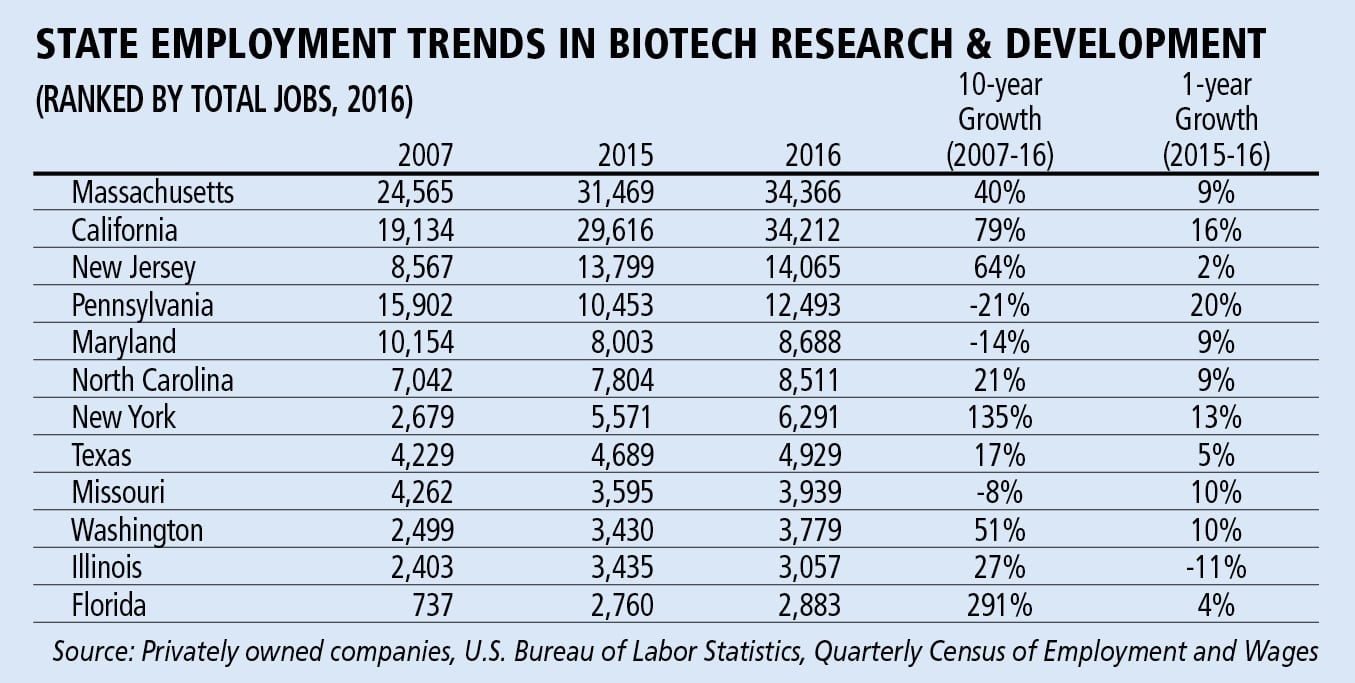
•••••

Springfield Rotarian Paul Lambert received a District Governor’s Citation at the Rotary Club of Springfield’s Dec. 8 meeting. Lambert, a Rotarian since 2008, received the citation for his dedication and hard work as the Rotary liaison and Basketball Hall of Fame representative to the committee for the eighth annual Service Above Self award luncheon. The award honors those in the local community and in the world of basketball who exemplify the Rotary’s motto of ‘service above self.’ “If Rotary founder Paul Harris wanted to put together a Rotary dream team, Paul Lambert would absolutely be on it,” said Lamont Clemons, president of the Rotary Club of Springfield. “He is a hardworking, dedicated, and caring Rotarian.” Lambert is vice president, Enshrinement Services & Community Engagement at the Naismith Memorial Basketball Hall of Fame. He has been with the Hall for 15 years.

Chamber Corners Departments

1BERKSHIRE
www.1berkshire.com
(413) 499-1600

• Jan. 27: BYP Winter Ball, 7-11 p.m., hosted by Country Club of Pittsfield. Let’s take an evening to dress up and enjoy a ball together. It’s an inexpensive way to enjoy an elegant evening with music, heavy hors d’oeuvres, elegance, and an excuse to dress to the nines — and much more — with friends. Cost: $25 for members, $35 for non-members.

GREATER CHICOPEE CHAMBER OF COMMERCE
www.chicopeechamber.org
(413) 594-2101

• Jan. 23: B2B Roundtable, 8-9 a.m., hosted by Polish National Credit Union, 923 Front St., Chicopee. Sponsored by CHH Engraving Inc. An opportunity to connect and increase your contacts, generate leads, and establish relationships with other businesses. Cost: free to chamber members, but limited to one representative per business industry. Call Sarah Williams at (413) 594-2101, ext. 103, for more information or to sign up.

• Jan. 31: ChamberMaster Training, 9-11 a.m., hosted by Hampton Inn Chicopee, 600 Memorial Dr. This is a brief presentation on how to use ChamberMaster for chamber members. This is a great tool for all chamber members for some free advertising. Cost: free to chamber members. Sign up online at chicopeechamber.org/events.

GREATER EASTHAMPTON CHAMBER OF COMMERCE
www.easthamptonchamber.org
(413) 527-9414

• Jan. 18: Celebrate Success Event, 5-8 p.m., hosted by Delaney House, 3 Country Club Road, Holyoke. The evening will celebrate the successes of 2017, share what has been learned along the way, and examine where the chamber is headed in 2018. The event will honor winners of the Business, Business Person, and Innovative Entrepreneur of 2017. In addition, we will reveal winners of the President’s Award and the Ambassador of the Year. We will also celebrate member milestones. For more information, visit www.easthamptonchamber.org, or call the chamber office at (413) 527-9414.

• Feb. 8: Networking by Night, 5-7 p.m., hosted by the Boylston Rooms, 122 Pleasant St., Suite #112, Easthampton. Sponsored by Tanya Costigan Events. This is a great networking opportunity and an opportunity to tour the new Boylston Rooms.

GREATER HOLYOKE CHAMBER OF COMMERCE
www.holyokechamber.com
(413) 534-3376

• Jan. 10: The Chamber Coffee Buzz Morning Networking, 7:30-9 a.m. Check the chamber website for location. The Coffee Buzz is a great way to jump-start your day with an opportunity to meet business and community leaders while enjoying coffee and a light breakfast. Coffee sponsored by Spradley Deluxe Coffee. Cost: free to the business community. Sign up online at holyokechamber.com or call (413) 534-3376.

• Jan. 17: Chamber After Hours, 5-7 p.m., hosted and Sponsored by Applebee’s, 225 Whiting Farms Road (at intersection of Holyoke Mall). Join us for a casual networking experience. Enjoy complimentary appetizers and drink specials. Cost: $10 for members, $15 for non-members. Sign up online at holyokechamber.com.

• Jan. 24: Candidate & Elected Officials Reception, 5-7 p.m., hosted by Gary Rome Hyundai, 150 Whiting Farms Road, Holyoke. Sponsored by bankESB, Dowd Insurance, the Republican, Marcotte Ford, Comcast Business, Holyoke Medical Center, and Ferriter Law. An enjoyable evening where local and state legislators, administrators, and dignitaries are celebrated. Mingle with this year’s candidates and elected officials in a casual setting. Ticket price includes appetizers, food stations, and drinks. Cost: $40. Sign up online at holyokechamber.com.

GREATER NORTHAMPTON CHAMBER OF COMMERCE
www.explorenorthampton.com
(413) 584-1900

• Jan. 10: January Arrive @5, 5-7 p.m., hosted by Hitchcock Center for the Environment, 845 West St., Amherst. Sponsored by PeoplesBank. A networking event. Cost: $10 for members.

• Feb. 7: February Arrive @5, 5-7 p.m., hosted by Christopher Heights, 50 Village Hill Road, Northampton. A networking event. Cost: $10 for members.

• March 7: March Arrive @5, 5-7 p.m., hosted by 50/50 Fitness, 251 Russell St., Hadley. Sponsored by Applied Mortgage, a division of Merrimack Mortgage Co. A networking event. Cost: $10 for members.

GREATER WESTFIELD CHAMBER OF COMMERCE
www.westfieldbiz.org
(413) 568-1618

• Jan. 8: January Mayor’s Coffee Hour, 8-9 a.m., hosted by Western Massachusetts Hospital, 91 East Mountain Road, Westfield. Join us for our monthly Mayor’s Coffee Hour with Westfield Mayor Brian Sullivan. This event is free and open to the public. Call the chamber office at (413) 568-1618 to register for this event so we may give our host a head count.

• Jan. 10: January After 5 Connection, 5-7 p.m., hosted by Armbrook Village, 551 North Road, Westfield. Refreshments will be served. A 50/50 raffle will benefit the chamber scholarship fund. Bring your business cards and make connections. Cost: free for chamber members, $10 for potential members (cash or credit paid at the door). Online registration will be available at www.westfieldbiz.org. For more information, call Pam at the chamber at (413) 568-1618.

SOUTH HADLEY and GRANBY CHAMBER OF COMMERCE
www.shgchamber.com
(413) 532-6451

• Jan. 23: Annual Meeting, 5:30-8:30 p.m., hosted by Willits-Hallowell Center, Mount Holyoke College, 26 Park St., South Hadley. An opportunity for chamber members to socialize with old friends in the business community and make new ones. A cocktail hour will be followed by dinner. The brief meeting will introduce the board of directors, describe the chamber’s various committees and their functions, and open discussion of 2018 calendar/plans/suggestions for the coming year.

SPRINGFIELD REGIONAL CHAMBER
www.springfieldregionalchamber.com
(413) 787-1555

• Jan. 10: Professional Women’s Chamber Luncheon, 11:30 a.m. to 1 p.m., hosted by Carriage House, Storrowton Tavern, 1305 Memorial Ave., West Springfield. Featuring author Dr. Valerie Young on “The Imposter Syndrome.” Sponsored by the Eastern States Exposition. Cost: $35 for members, $40 general admission, $25 for students. To make a reservation, visit www.springfieldregionalchamber.com, e-mail [email protected], or call (413) 755-1310.

• Jan. 11: Lunch ‘n’ Learn, 11:30 a.m. to 1 p.m., hosted by the Colony Club, 1500 Main St., Springfield. Panel discussion, “Workplace Sexual Harassment in the Wake of the Harvey Weinstein Scandal: What Employers Need to Know to Protect Themselves,” presented by Skoler, Abbott & Presser. Cost: $30 for members ($35 at the door), $40 general admission ($45 at the door). To make a reservation, visit www.springfieldregionalchamber.com, e-mail [email protected], or call (413) 755-1310.

• Jan. 23: C-Suite Conversations & Cocktails, 5-7 p.m., hosted by CityStage, One Columbus Center, Springfield. Members-only event. Cost: $25 in advance, $30 at the door. To make a reservation, visit www.springfieldregionalchamber.com, e-mail [email protected], or call (413) 755-1310.

WEST OF THE RIVER CHAMBER OF COMMERCE
www.ourwrc.com
(413) 426-3880

• Jan. 18: Networking Lunch, noon to 1:30 p.m., hosted by Carrabba’s Italian Grill, West Springfield. Only members or guests of members may attend. Enjoy a sit-down lunch while networking with fellow chamber members. Each attendee will get a chance to offer a brief sales pitch. Attendees will order off the menu and pay separately that day. We cannot invoice you for these events. Register online at [email protected].

• Feb. 13: Lunch & Tour at the Bistro LPVEC – West Springfield, noon to 1:30 p.m. Join fellow members and non-members for a networking lunch at the Bistro at Lower Pioneer Valley Educational Collaborative, followed by an informative discussion on the value of gaining skills in the trades industry and how we can promote to fill local jobs. Sponsorships are available for this event. Register online at [email protected].

YOUNG PROFESSIONAL SOCIETY OF GREATER SPRINGFIELD
springfieldyps.com

• Jan. 18: January Third Thursday, 5-7 p.m., hosted by Springfield Country Club, 375 Elm St., West Springfield.

Agenda Departments

Women’s Fund Mentor Match
Jan. 13: January is National Mentoring Month, and the Women’s Fund of Western Massachusetts (WFWM) announced its second annual Mentor Match, a networking event that aims to engage emerging leaders with seasoned professionals. The event will take place from 1 to 3 p.m. at the UMass Center at Springfield, and is open to the public. Featuring Bay Path University Professor Janine Fondon, WFWM board and committee members, participants and alumni of the Women’s Fund’s Leadership Institute for Political and Public Impact (LIPPI), and community members, the Mentor Match is designed to connect members of the Women’s Fund family as mentors and mentees to share resources, experiences, and work together in order to achieve professional and personal goals. All members of the Women’s Fund community are invited to attend. RSVP by Jan. 10 by visiting www.mywomensfund.org/event/mentor-match.

Pet CPR, First Aid Course
Jan. 14, 21: Many people remember learning CPR and basic first aid in health class, but have you thought about taking a course which covers this topic as it relates to your pet? Jim Helems of Pet Tech has made it easier for pet owners to understand first aid with his PetSaver Training class. He travels throughout the Pioneer Valley offering this training, and next month he will offer this course at the Good Dog Spot. Pet Tech’s trainings have helped save the lives of thousands of pets. Participants will receive a certificate upon completion of the one-day course. The cost is $120 and will take place at the Chicopee location (35 C Chicopee St.) on Sunday, Jan. 14 and at the Northampton location (139 King St.) on Sunday, Jan. 21. Interested participants can register by visiting www.gooddogspot.net.

Caregiver Options Workshop
Jan. 17: Linda Manor Assisted Living in Leeds will host a seminar on caring for an aging relative or spouse, featuring expert advice from Sheryl Fappiano, a professional geriatric care manager. The session is scheduled for 5:30 p.m., and will include dinner. To RSVP, call Linda Manor Assisted Living at (413) 588-3301. Fappiano is a licensed social worker specializing in gerontology. She has worked for more than 35 years in a variety of settings all relating to geriatrics. Her team’s specialty is to help seniors age in place, with dignity and peace of mind for the elder and their family. She is affiliated with Elder Care Access, LLC in Florence and owns Golden Moments Adult Day Health Spa in Florence.

Equal Pay Act Roundtable
Jan. 18: The Massachusetts Equal Pay Act has been amended, and new provisions will begin on July 1. Attorney Timothy Netkovick will discuss the new provisions, its impact on employers, and discuss how employers can take advantage of the safe-harbor provisions from 8 to 9 a.m. at Royal, P.C., 270 Pleasant St., Northampton. The amendments present several substantive changes to multiple definitions in the Equal Pay Act, such as employer defenses, comparable work, statute of limitations, and salary-history inquiries. The new provisions provide employers with safe-harbor provisions if the employer takes affirmative steps within the previous three years and prior to the filing of a lawsuit. The cost is $30 per person. Checks may be made payable to Royal, P.C. and mailed to 270 Pleasant Street, Northampton, MA 01060. Advance registration is required, and seating is limited. Contact Heather Loges at [email protected] to register, or if you have any questions about this workshop.
40 Under Forty Nomination Deadline
Feb. 16: BusinessWest magazine will accept nominations for the 40 Under Forty Class of 2017 through the end of the work day (5 p.m.) on Friday, Feb 16. The annual program, now in its 12th year, recognizes rising stars within the Western Mass. community, which includes Berkshire, Franklin, Hampden, and Hampshire counties. This year’s group of 40 will be profiled in the magazine’s April 30 edition, then toasted at the June 21 gala at the Log Cabin Banquet & Meeting House in Holyoke (see below). The nomination form, which can be found HERE, requests basic information and can be supported with other material, such as a résumé, testimonials, and even press clippings highlighting an individual’s achievements in their profession or service to their community.

Difference Makers
March 22: The 10th annual Difference Makers award program, staged by BusinessWest, will be held at the Log Cabin Banquet & Meeting House. The winners will be announced and profiled in the Jan. 22 issue. Difference Makers is a program, launched in 2009, that recognizes groups and individuals that are, as the name suggests, making a difference in this region. Tickets to the event cost $75 per person, with tables of 10 available. To order, call (413) 781-8600, ext. 100 or visit HERE. Sponsors to date include Sunshine Village and Royal, P.C. Sponsorship opportunities are still available by calling (413) 781-8600, ext. 100.

40 Under Forty Gala
June 21: BusinessWest’s 12th annual 40 Under Forty Gala is a celebration of 40 young business and civic leaders in Western Mass. The lavish cocktail party, to be held starting at 5:30 p.m. at the Log Cabin in Holyoke, will feature butlered hors d’oeuvres, food stations, and entertainment — and, of course, the presentation of the class of 2017. Also, the third Continued Excellence Award honoree will be announced. Tickets will go on sale soon at $75 per person (tables of 10 available), and the event tends to sell out quickly. For more information, call (413) 781-8600, ext. 100, or e-mail [email protected].

Court Dockets Departments

The following is a compilation of recent lawsuits involving area businesses and organizations. These are strictly allegations that have yet to be proven in a court of law. Readers are advised to contact the parties listed, or the court, for more information concerning the individual claims.

HAMPDEN DISTRICT COURT
LKQ Corp. v. E & T Auto Body Inc.
Allegation: Money owed for goods sold and delivered: $3,647.50
Filed: 11/20/17

Angel N. Quintana v. Karaaslan Realty, LLC and Pizza Works
Allegation: Negligence, slip and fall causing injury: $6,688.04
Filed: 12/7/17

McCormick-Allum Co. Inc. v. Atlantic Furniture Inc.
Allegation: Money owed for HVAC and gas repair work: $14,891.69
Filed: 12/11/17

HAMPDEN SUPERIOR COURT
John Maloni v. James Garini
Allegation: Breach of contract: $25,000+
Filed: 12/1/17

Raymond Tirrell v. Eastern States Exposition
Allegation: Wage and hour violations, misclassification of employee as part-time and withholding of overtime pay: $100,000
Filed: 12/6/17

Specialty Bolt & Screw Inc. v. Stored Solar J&WE, LLC
Allegation: Money owed for goods sold and delivered: $28,695.06
Filed: 12/6/17

Ellen Zordani v. Centro Enfield, LLC and Global Management Solutions Inc.
Allegation: Slip and fall causing injury: $20,000+
Filed: 12/11/17

HAMPSHIRE DISTRICT COURT
Split Excavating Inc. v. Wildwood Court Management Inc.
Allegation: Failure to pay for plowing services: $11,525
Filed: 12/6/17

Melissa O’Neill v. Full Tilt Auto Body Inc.
Allegation: Unfair and deceptive business practices, conversion of automobile: $15,000
Filed: 12/13/17

HAMPSHIRE SUPERIOR COURT
Donald Kendall v. Home Depot USA Inc. and Electric Eel Manufacturing Co.
Allegation: Product liability, negligence causing injury while using electric-powered plumbing snake: $50,000
Filed: 11/27/17

Richard P. Halgin v. William J. Botempi, DMD, MD and Berkshire Facial Surgery Inc.
Allegation: Dental malpractice
Filed: 12/7/17

Departments Picture This

Email ‘Picture This’ photos with a caption and contact information to [email protected]

Shoot to Win

mercedes_9333mercedes-9217Nathan Vila became a Mercedes owner and overnight sensation with his dramatic shot in the Springfield Thunderbirds’ Shoot to Win contest just before Christmas. He ventured to Chicopee and the Mercedes-Benz of Springfield dealership on Dec. 28 to pick up the keys from owners Peter and Michelle Wirth, and it was quite the media event. Vila, who will ship out soon for Army basic training in Georgia (his mother will drive the car for the time being), is seen (at top) with, from left, Paul Picknelly, one of the Thunderbirds’ owners; Nathan Costa, the team’s president; and the Wirths.



Daily News

SPRINGFIELD — A retirement and elder-care planning seminar will take place on Saturday, Feb. 3. Presenters include David Fedor, certified financial planner, practitioner, and chartered retirement planning counselor from Commonwealth Financial Network; Sharon Connor from Choices Elder Support; Mary-Anne Schelb from JGS Lifecare; Jennifer Kinsman from Acti-Kare; and Lisa Beauvais, estate-planning attorney.

This event will be held from 10 to 11:30 a.m. at the Church in the Acres, 1383 Wilbraham Road, Springfield. Although this event is free and open to the public, seating is limited, so call (413) 726-9044 to RSVP. In case of inclement weather, the event will be held on Feb. 10.

Daily News

SPRINGFIELD — The 78th annual Model Congress at American International College (AIC) will convene on Thursday, Jan. 11. Founded in 1940, AIC’s Model Congress is the longest-running continuous congress of its type in the nation, and one of the college’s oldest campus traditions.

Each year, AIC’s Model Congress brings high schools from throughout New England to campus to write, debate, and pass legislation in a simulated congress. The program is completely student-run from program development, coordination, and hospitality to the organization and facilitation of the legislative sessions. With strong support of faculty and staff, AIC student leaders have kept the program thriving and secured its place as an educational opportunity for high-school students throughout the Northeast for more than seven decades.

The AIC Model Congress is also one of the Commonwealth’s long-standing academic traditions during its rich history. Committee sessions will be held throughout the day on Friday and Saturday, Jan. 12 and 13. The keynote speaker, Holyoke Mayor Alex Morse, will address students on Jan. 12 at 9 a.m. in the Karen Sprague Cultural Arts Center/Griswold Theatre located on the AIC campus.

A Holyoke native, Morse was elected the youngest mayor of Holyoke in November 2011 at age 22. Now 28, he is currently serving his fourth term as mayor, having been re-elected in November.

Morse graduated from Holyoke High School, where he developed his strengths as a leader and devoted his energy to public service. He served as president of the citywide youth commission; founded the high school’s first-ever Gay Straight Alliance; helped with the formation of the annual Pride Prom for gay, bisexual, and transgendered students in the region, and was the student representative on the school committee. Morse attended Brown University, becoming the first in his family to graduate from college. While at Brown, he pursued urban studies and interned for David Cicilline, then the mayor of Providence, R.I., who currently serves in the U.S. House of Representatives.

The AIC Model Congress awards scholarship opportunities to its top delegates. This year’s top delegate will receive the Kathryn Mauke Scholarship, a full four-year tuition scholarship to American International College. Second- and third-place delegates will receive half and quarter four-year scholarships to AIC. All delegates will receive a $1,000 scholarship should they chose to attend the college in the future. In addition, Best Bill, Outstanding Delegation, and School Spirit awards are given to the schools that submit the most outstanding legislation and demonstrate the highest level of participation, enthusiasm, and team spirit.

The 2018 Model Congress has 10 participating schools, including Agawam High School, Chatham Central High School, East Longmeadow High School, East Windsor High School, Minnechaug Regional High School, Pope Francis High School, Poultney High School, SABIS International Charter School, Southwick Regional School, and Wilbraham and Monson Academy.

Daily News

LUDLOW — Packaging prepress provider CSW Inc. announced a strategic re-shaping of company leadership.

Longtime company President Laura Wright has transitioned to a new role as CEO. “My grandfather founded CSW in 1937, and I’m proud to continue moving us forward,” she said. “Although I will continue to actively manage all aspects of the company, I decided to share the day-to-day decision making with someone I trust. This lets me address long-term strategies for company growth.”

That trusted advisor is new company President Scott Ellison, formerly CSW’s vice president of Sales. Ellison brings more than 15 years of executive leadership experience, including five years in the packaging industry, to CSW. He will manage sales, marketing, customer service, operations, IT, and R&D. According to Wright, “Scott comes to us with new ideas developed from both inside and outside our industry, and has already identified and pursued new growth opportunities for CSW.”

Rounding out the organizational shift is former director of Graphics Marek Skrzynski’s new position as technical director. CSW has a long-standing reputation for producing creative solutions to package printing challenges, Wright said. Ellison noted that “Marek has been instrumental to the development of innovations such as WhiteFX ink transfer, X-Color EG separations, and 3D visualization services. This new role allows him to focus on expanding new initiatives such as Web2Plate, an automated prepress workflow for narrow to wide web flexo printers.”

Added Wright, “CSW has thrived for over 80 years, thanks to our ability to creatively adapt to our client’s changing needs. These changes are realigning us once again so we can continue to succeed for another 80 — or longer.”