Home Articles posted by George O'Brien (Page 13)
Community Spotlight Special Coverage

Community Spotlight

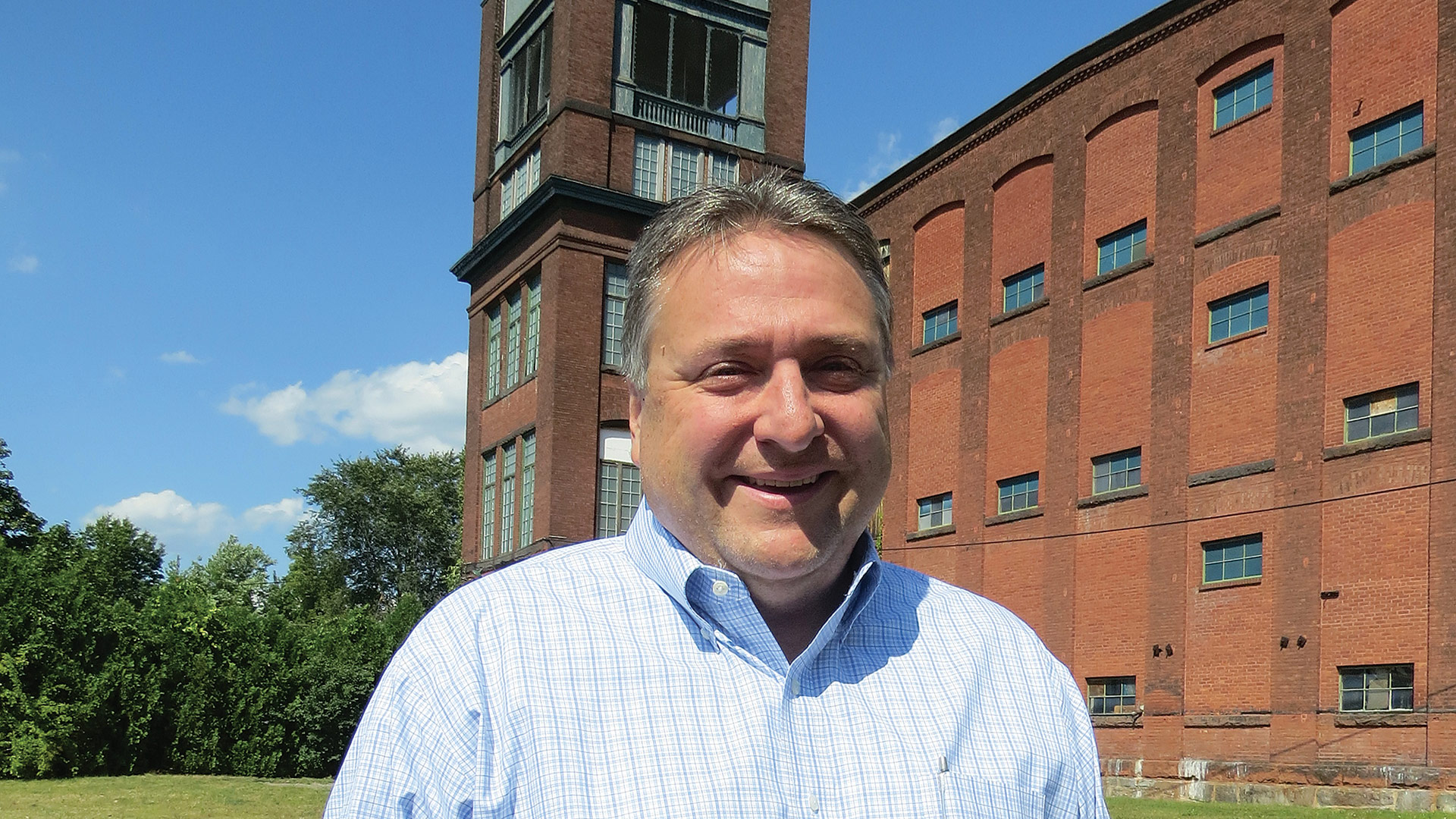
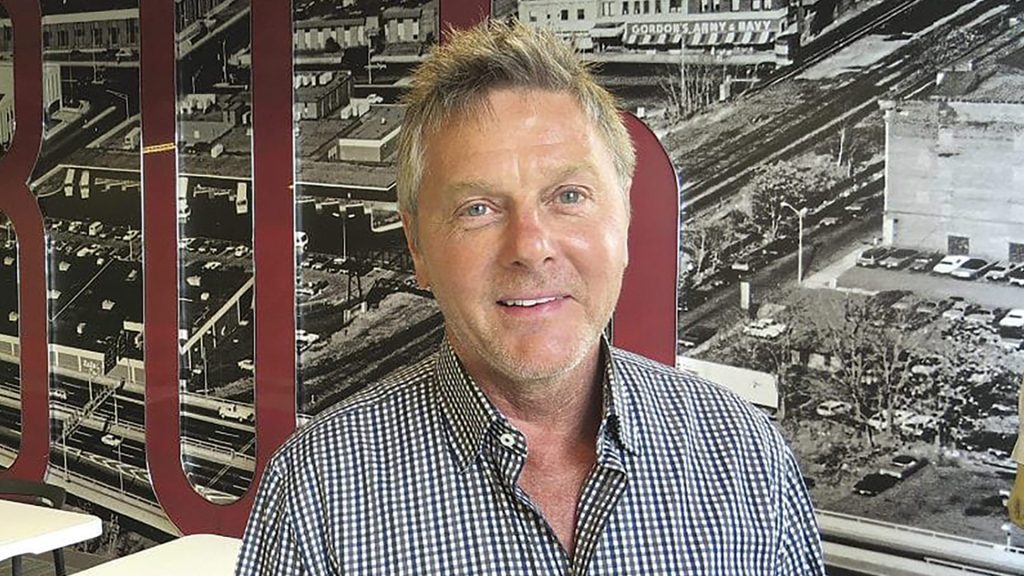
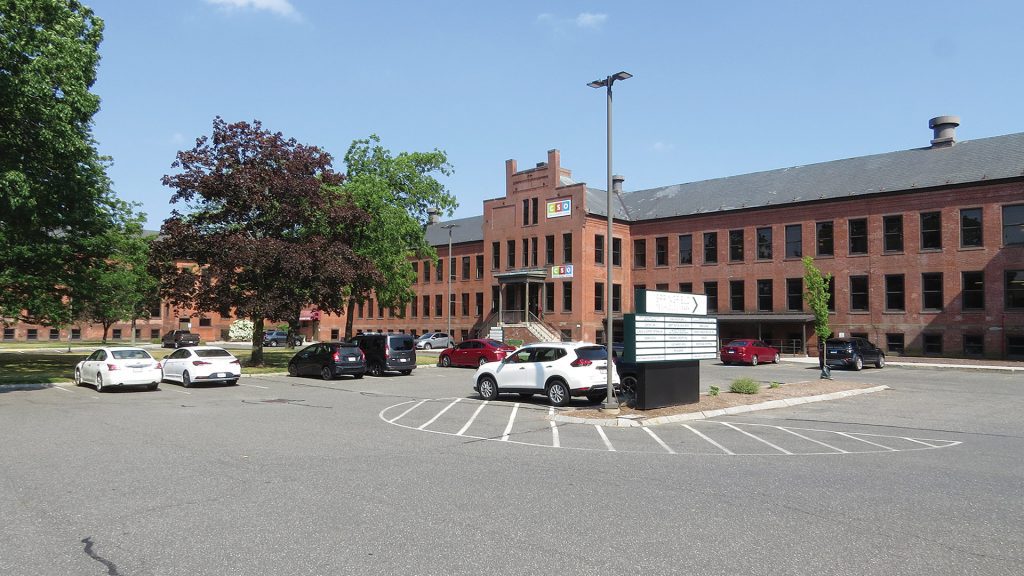
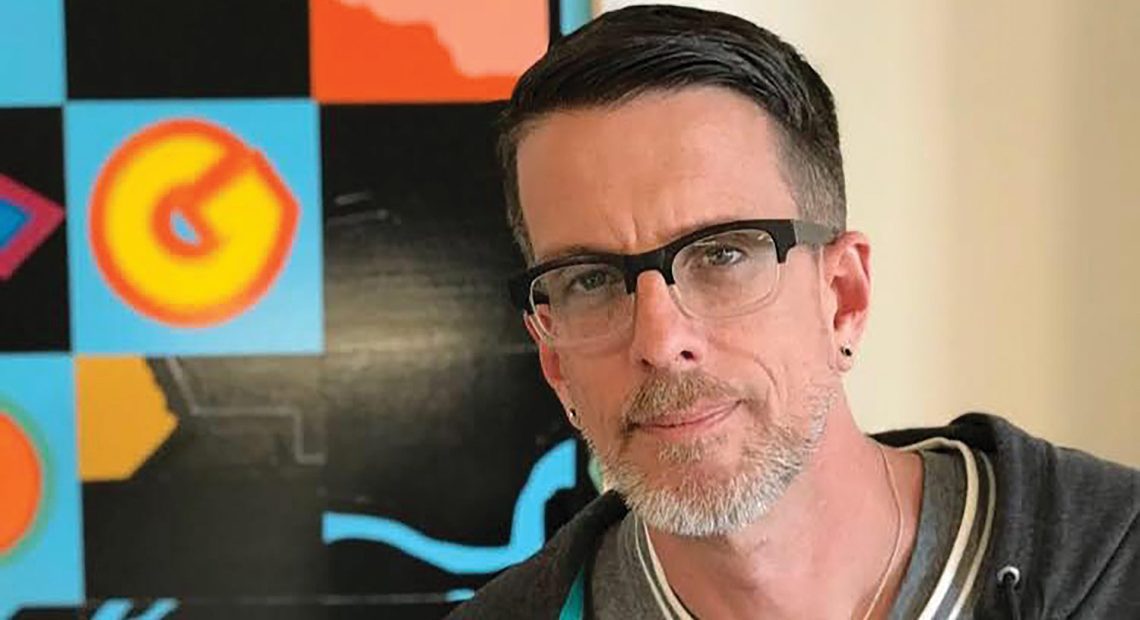
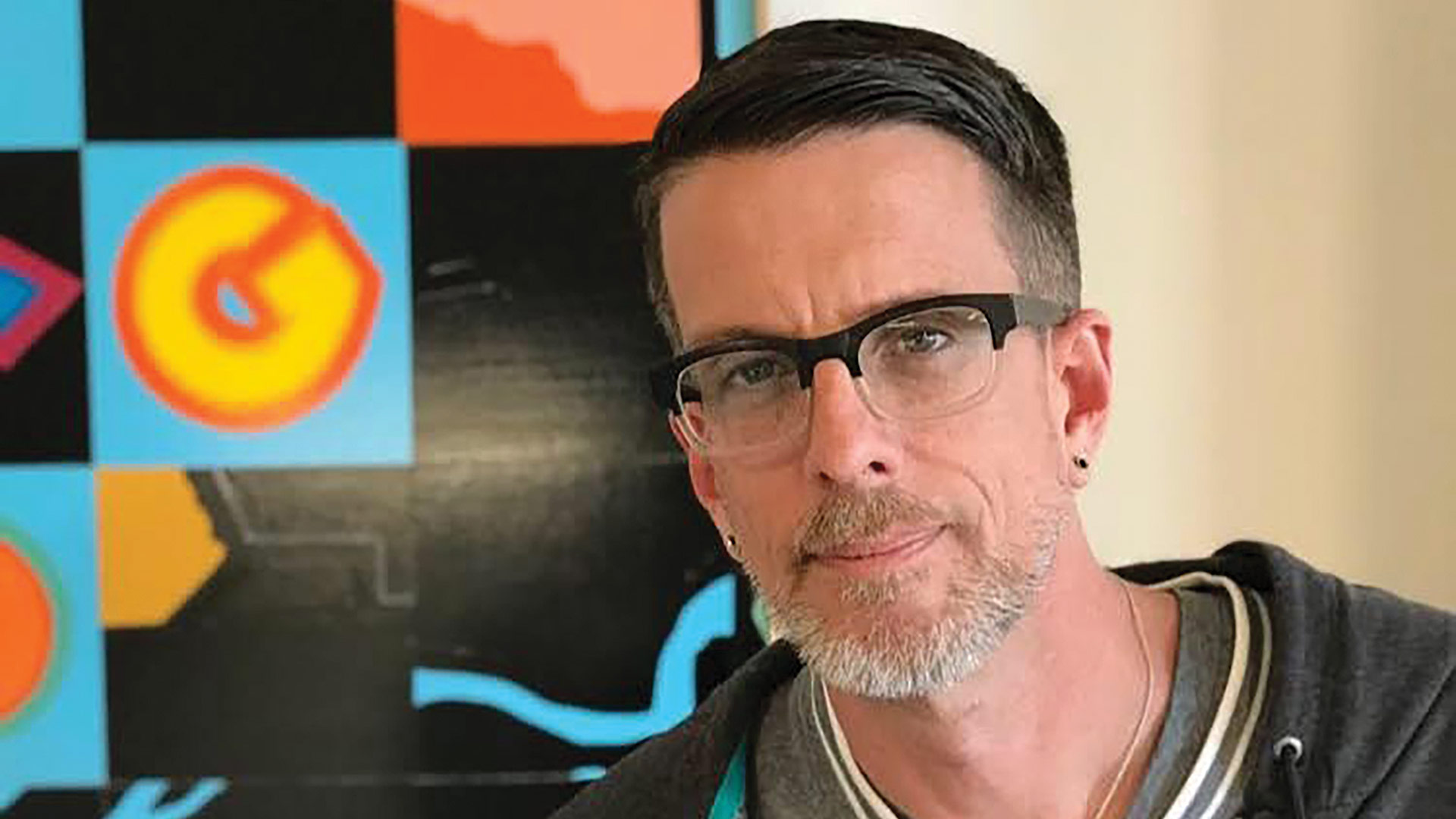
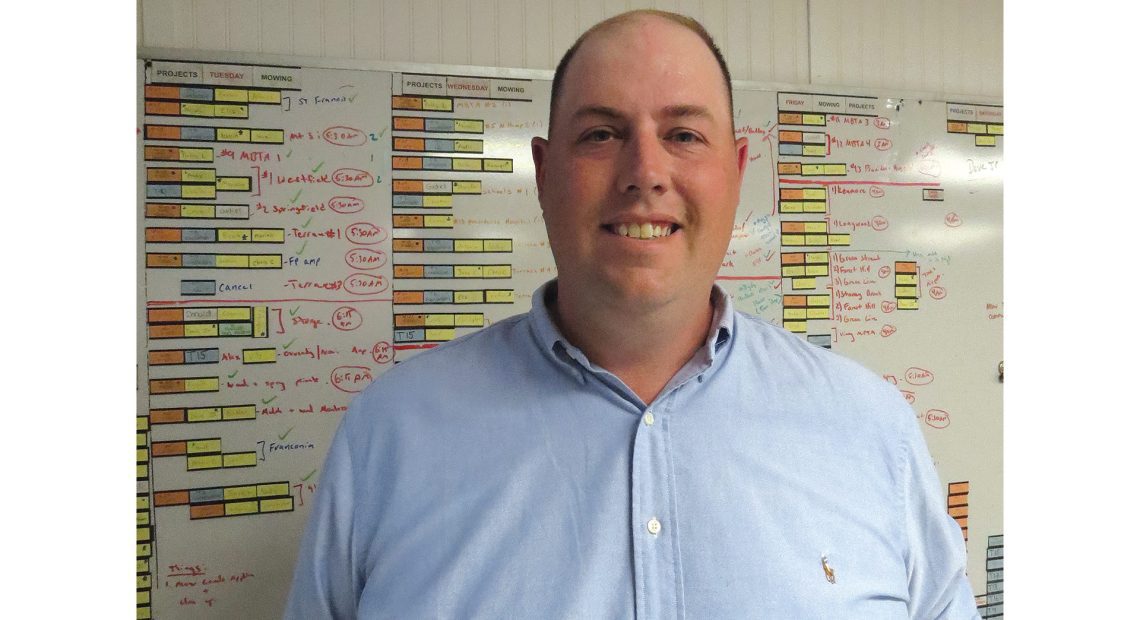
Jeff Daley says the Ludlow Mills project is at an important turning point.

Jeff Daley says the Ludlow Mills project is at an important turning point.

When Westmass Area Development Corp. and its board of directors went all in and acquired the massive and environmentally challenged Ludlow Mills complex in 2011, Jeff Daley said, they did so with the understanding that they were embarking on a long and difficult journey.

But they probably didn’t know how long and just how difficult.

Indeed, the process of transforming the former jute-making complex into a mixed-used property and destination has come complete with a number of challenges, many of them related to simply making various parts of the complex ready for redevelopment, said Daley, the executive director of Westmass since 2019.

But, in many respects, the Ludlow Mills redevelopment initiative has turned a critical corner, he noted, adding that much of the work to ready specific buildings and the property as a whole for development has now been completed, and the focus, increasingly, is on development.

“We’re certainly at a turning point, where we’re focusing our efforts on redevelopment as opposed to staying afloat and cleaning the site — it was a very dirty site back when they first bought it,” he told BusinessWest, referring to asbestos and ground contamination. “And there’s still a lot of cleanup left to do, but the focus is shifting from preserving and investing in the cleaning of the site to continuing that cleaning, which we need to do, but also looking now toward projects that we can invest good dollars in and get good returns from.”

“There’s a sense of place there as you come over the bridge. And we feel that this is an area that’s untapped and could be refreshed a little bit in terms of the roadway infrastructure and facades.”

That is certainly the plan, and the hope, with Building 8, or what many refer to as the ‘clocktower building,’ because it is home to the town’s most recognizable landmark.

With some imaginative financing assistance — Westmass will actually be taking an equity stake in the project — Winn Development will soon proceed with an initiative to transform the property into a 96-unit housing complex with retail on the ground floor.

Meanwhile, a $1 million project to put a new roof on Building 11, the largest structure on the campus, is underway, with the goal of facilitating development of that 480,000-square-foot property into another mix of housing and commercial businesses, and perhaps a parking garage as well.

Also, work is nearly complete on Riverside Drive, a new road that winds along the Chicopee River, which will connect the front of the property to the undeveloped acreage at its eastern end. Another road, hopefully to be funded with a MassWorks grant (word on the application should be received in the fall), will be built into that property, greatly facilitating its development, said Daley, noting there has been a good deal of interest expressed in that property due to a shortage of developable land in the region.

While the Ludlow Mills complex is certainly the dominant business story in Ludlow, there are other developments of note, starting in Town Hall. There, discussions continue about whether and how to change the community’s form of government, said Marc Strange, the recently hired town administrator.

“Officials are considering a mayoral form of government or a town manager/town council format similar to what exists in East Longmeadow,” said Strange, who served previously as director of Planning and Economic Development in Agawam and also as a selectman in Longmeadow, noting that the town has certainly outgrown its current format with five selectmen, a town administrator, and town meeting.

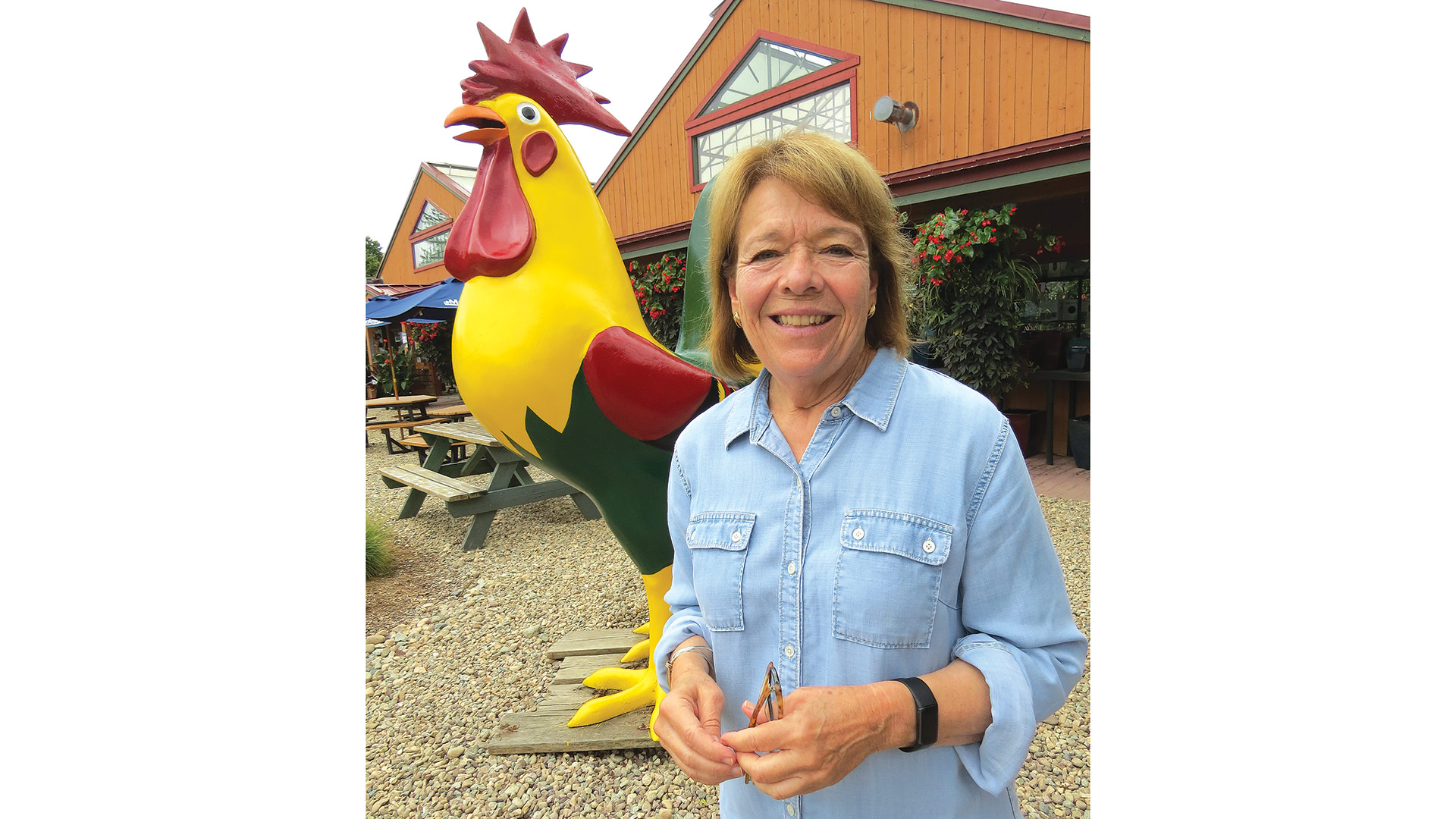
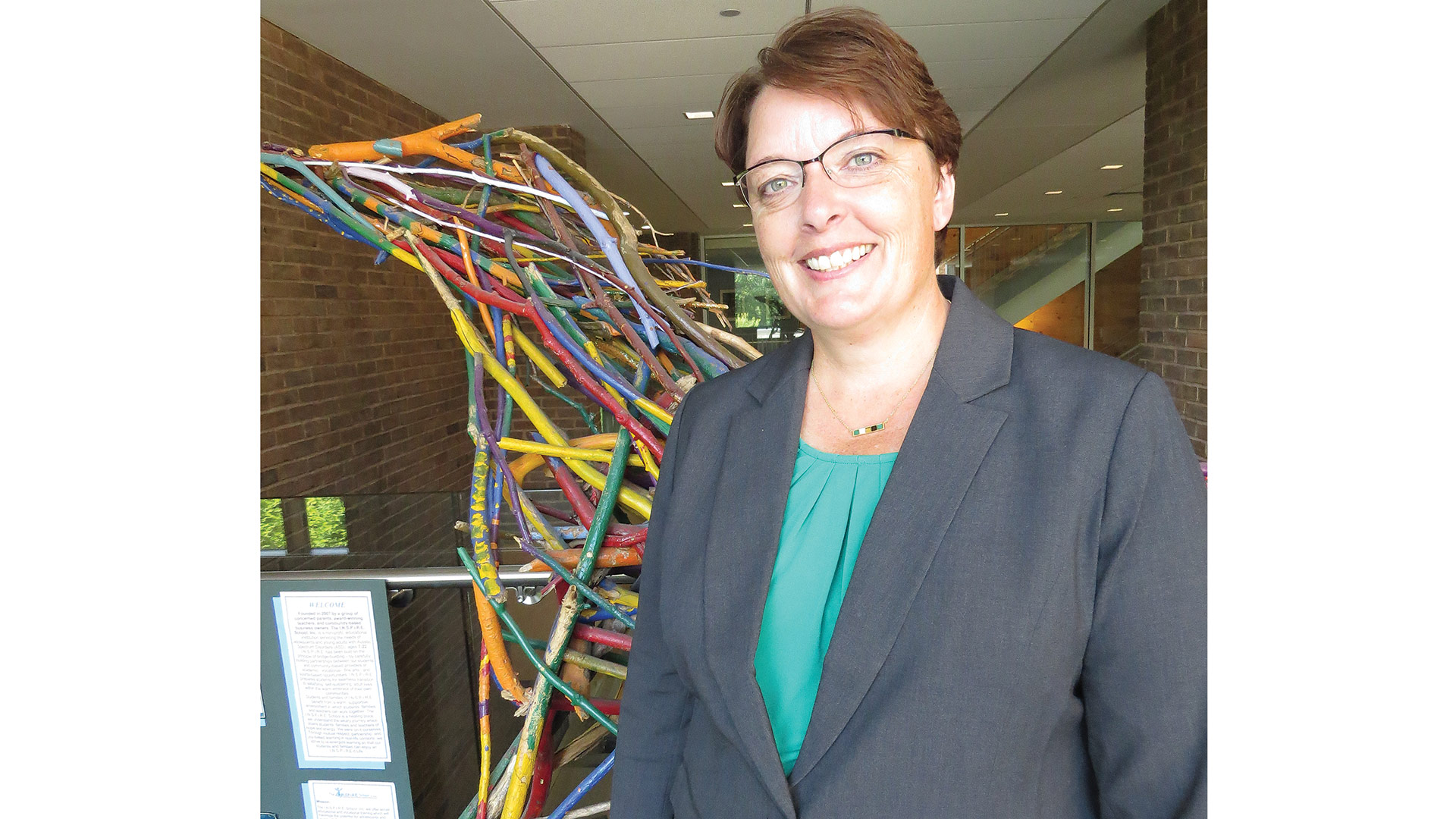
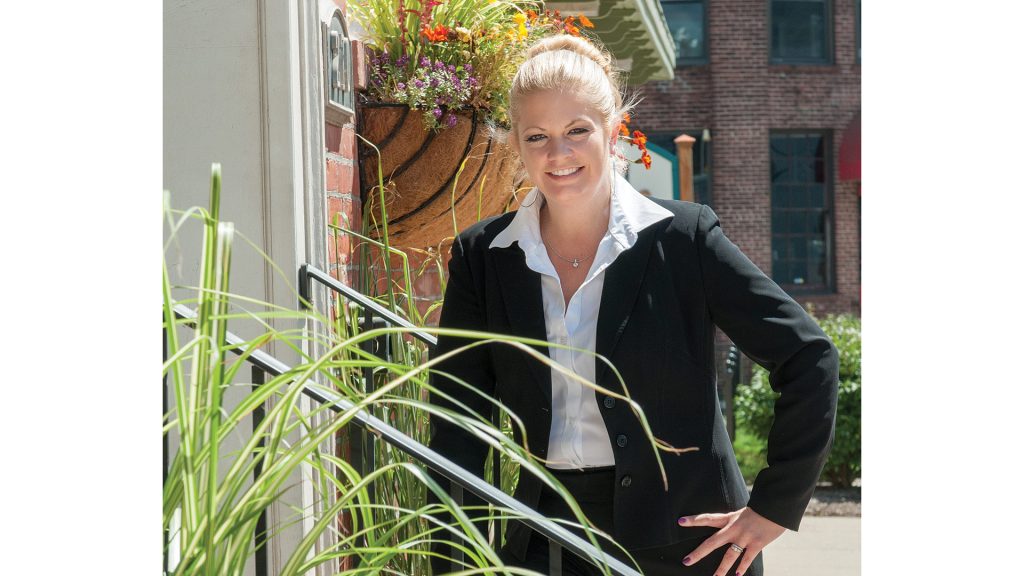
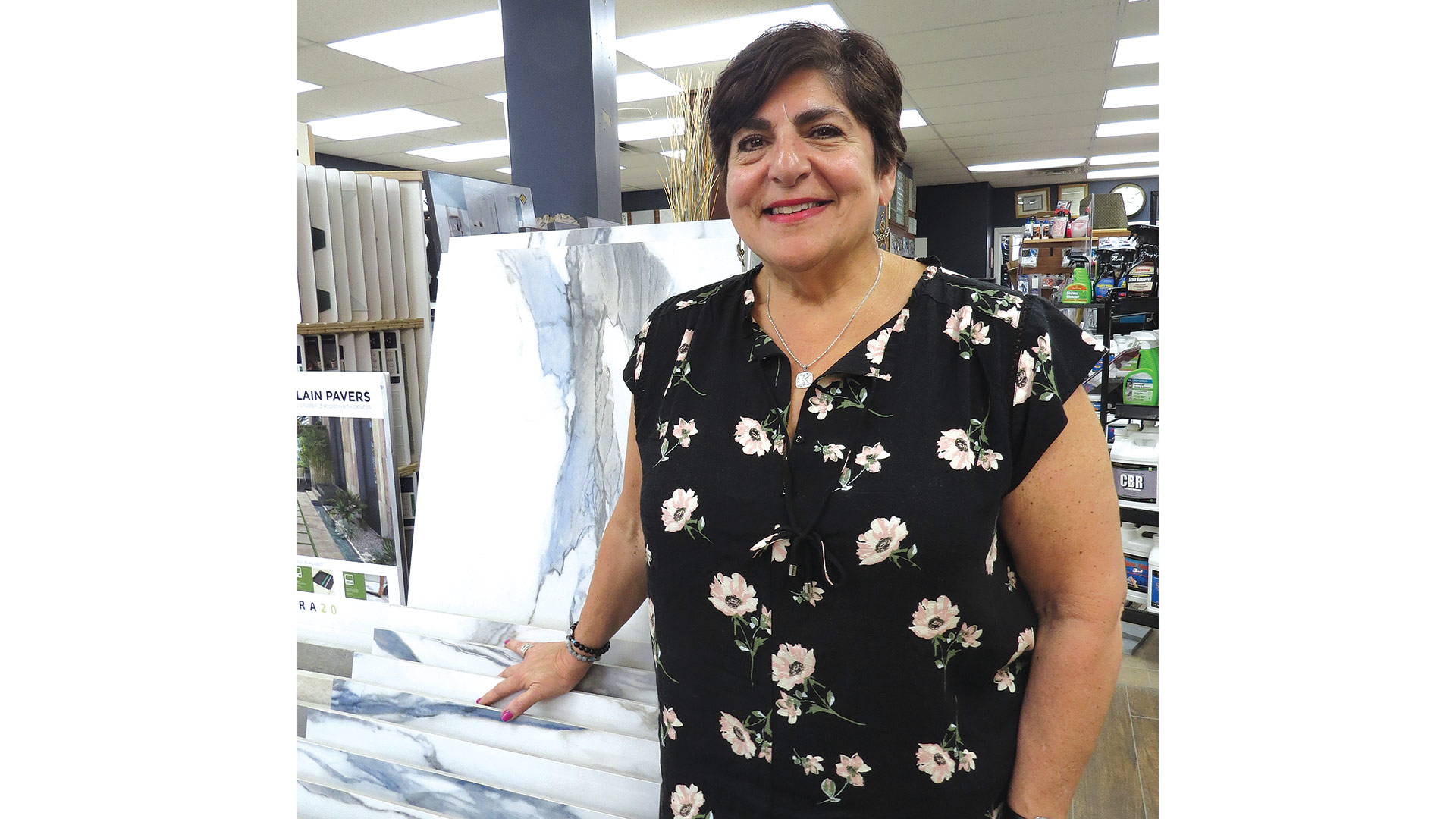
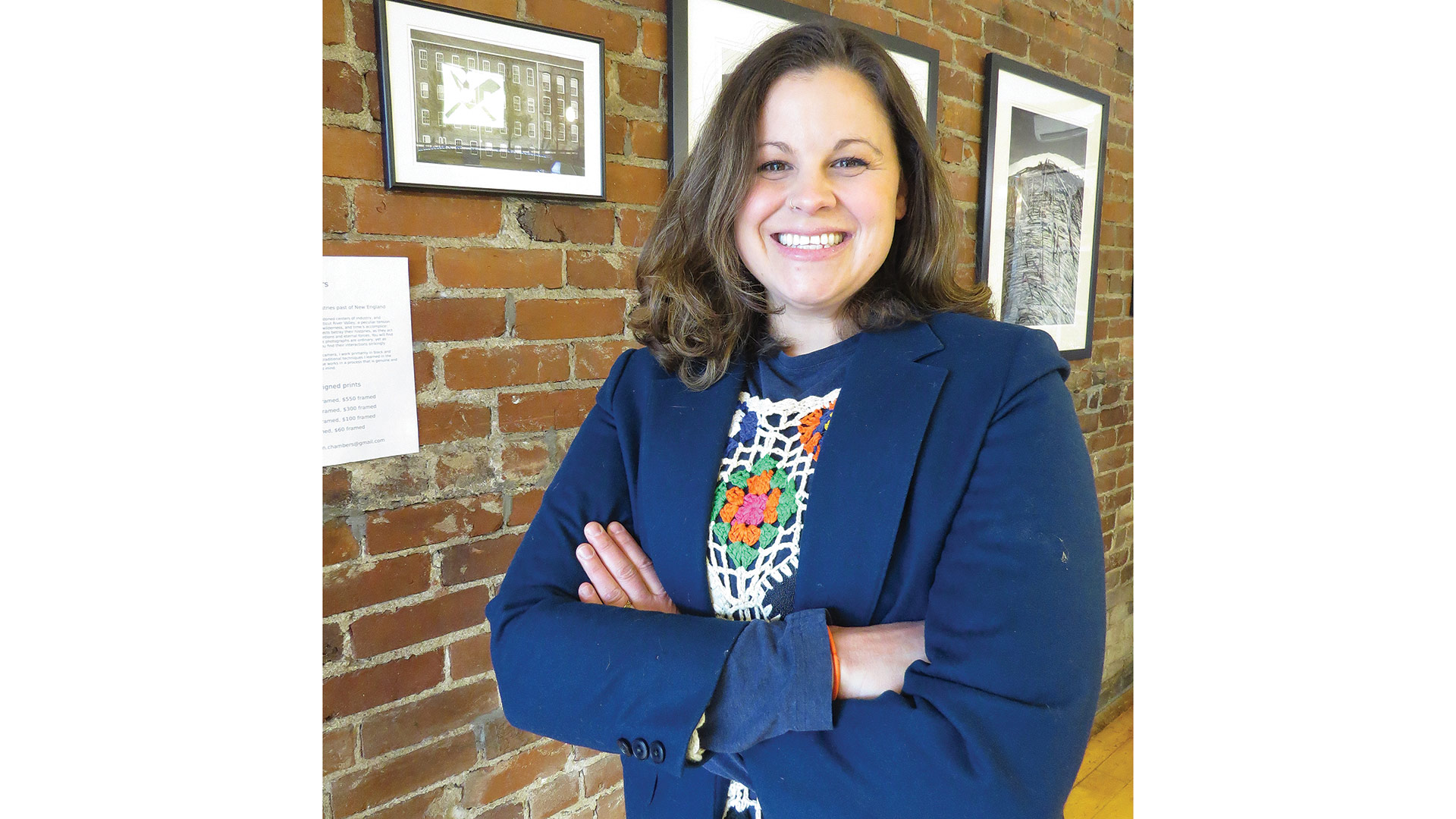
Karen Randall

Karen Randall says the business started by her father 60 years ago, has grown and evolved, just as Ludlow has.

“That’s a pretty big lift, and the town needs to be on board with it,” he explained. “For now, we’re chipping away toward that goal and making small, incremental changes to get everyone working in the same direction.”

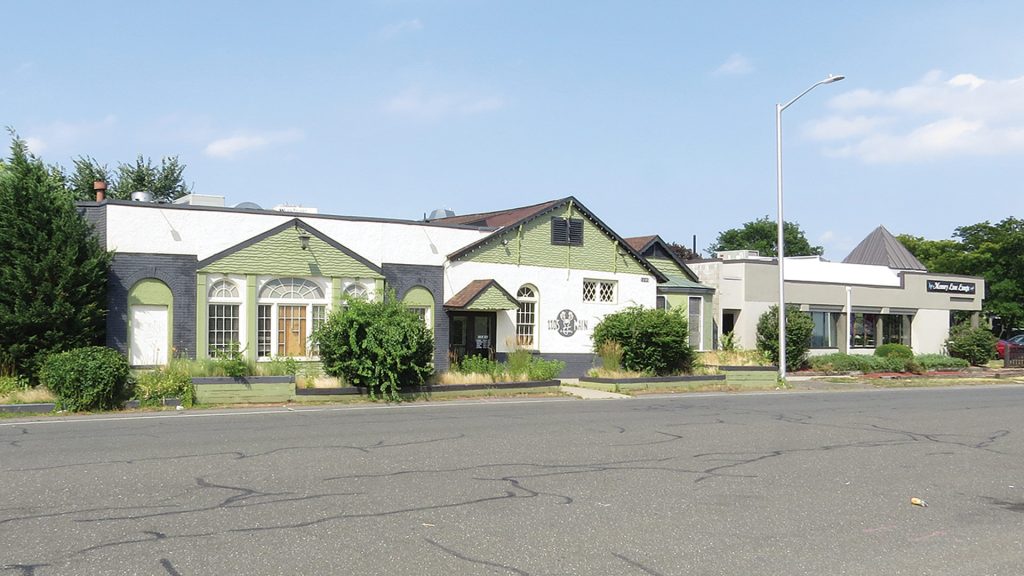
Meanwhile, the community is looking to fund improvements to the downtown area that greets those as they come over the bridge that links the city to Indian Orchard, said Strange, adding that, while Ludlow has a large and diverse business community, it is always looking to build on this base.

“There’s a sense of place there as you come over the bridge,” he said. “And we feel that this is an area that’s untapped and could be refreshed a little bit in terms of the roadway infrastructure and facades.”

For this, the latest installment of its Community Spotlight series, BusinessWest turns its lens on Ludlow, a community that is a developing story in every sense of that phrase.


Growth Patterns

As she talked with BusinessWest outside the main entrance to Randall’s Farm, the business that her father started with what amounted to a vegetable stand, Karen Randall reflected on how much this enterprise — and the town of Ludlow itself — have changed over the past 60 years.

“None of this was here,” she said as she swept her hand in front of her and pointed out the many businesses now located along Center Street. “Ludlow has grown, and we’ve grown with Ludlow.”

Elaborating, she said the town benefits from its location — off turnpike exit 7 and near a number of growing residential communities, including Wilbraham, Granby, Belchertown, and others — and from its own growth; it has seen a number of new residential developments in recent years that have brought many young people to what was an industrial town that grew from the Ludlow Mills complex.

“If we can create some kind of plan for that area, that will be helpful, in terms of letting the development community know that we’re open for business and we’re ready to go if they want to come to Ludlow and put some shovels in the ground.”

Randall’s Farm has certainly benefited from the growth in and around Ludlow, she said, adding that it draws regular, daily traffic from those living in the community, but also steady traffic from those an exit or two down the pike.

“We have customers from within a 20-mile radius,” Randall said, adding that business has been solid this year, and she is expecting the fall, the busiest time for this enterprise, to be very busy as the region continues the two-year-long process of returning to normal from the pandemic and its many side effects.

The pandemic and its aftermath have brought changes at Randall’s — it has discontinued many of its entertainment-related endeavors, including a corn maze and workshops on various subjects — and challenges, including the workforce issues that have impacted businesses in every sector.

Overall, the pandemic has been for Randall’s what it has been for many business ventures, she said — a valuable learning experience.

“COVID taught us a lot of lessons on what works and what doesn’t, and it’s taught us that we can adapt quickly to whatever was coming down the pike,” she explained. “We didn’t miss a beat; we had the same issues that everyone else did — some people may have retired sooner, while others stopped working sooner during the first months of the pandemic, but we persevered, and I think we become stronger because of what we learned.”

Heading into the busy fall season, Randall’s, like other businesses, continues to face workforce challenges — there are some days when it does not have a donut maker, for example — but Randall believes it will be ready. The biggest challenge may be climate, specifically a lack of rain and its still-unknown impact on pumpkins, apples, and other crops grown locally.

“We’re hiring front-line people — we think we have the donut-making issue squared away — and we’re getting ready,” she told BusinessWest. “And we’ll see how this drought effects the season.”

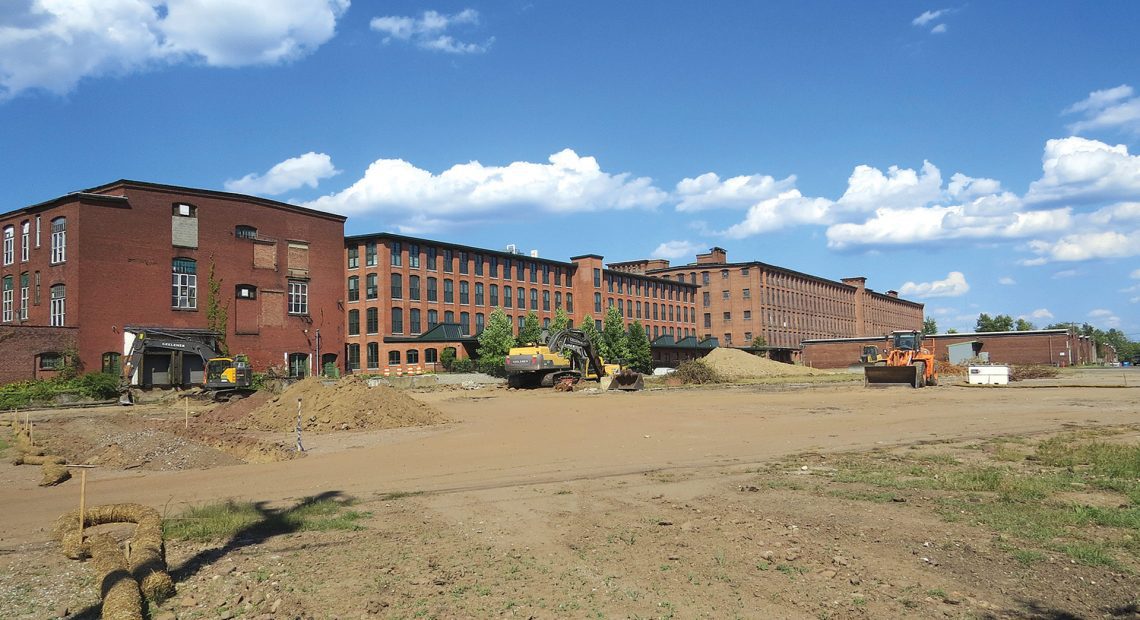
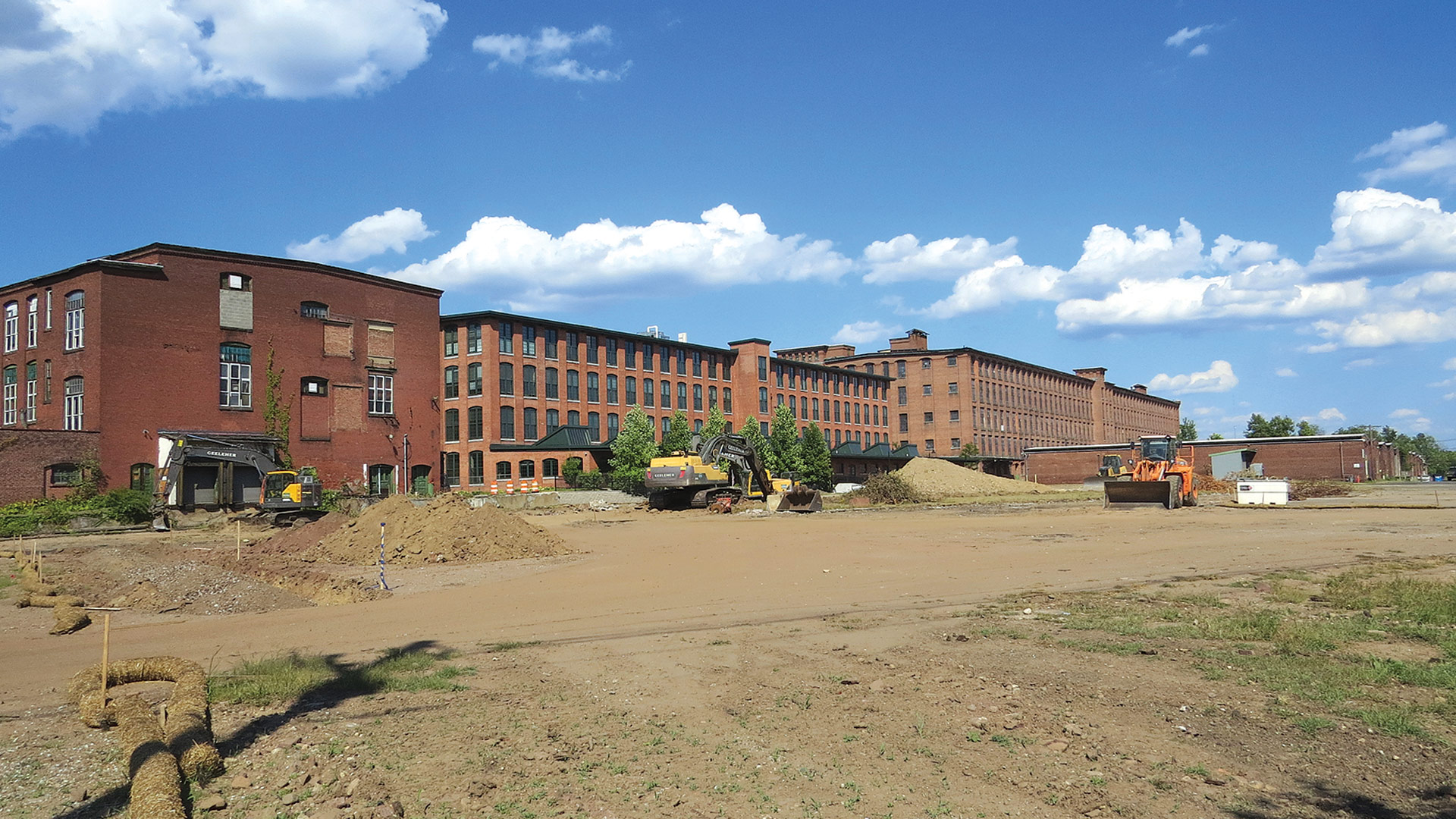
planned redevelopment of Building 8 at the Ludlow Mills

Crews work to create a parking lot for the planned redevelopment of Building 8 at the Ludlow Mills, one of many new developments at the complex.

Overall, Ludlow has a large and diverse business community, said Strange, adding that one of the town’s goals is to improve infrastructure and make the Center Street corridor more attractive and even more of an asset.

Which brings him back to that area, technically the community’s downtown, that greets people coming over the bridge from Indian Orchard. The town will apply for a Community Compact grant to develop a broad economic-development plan that will encompass that area and others in the community.

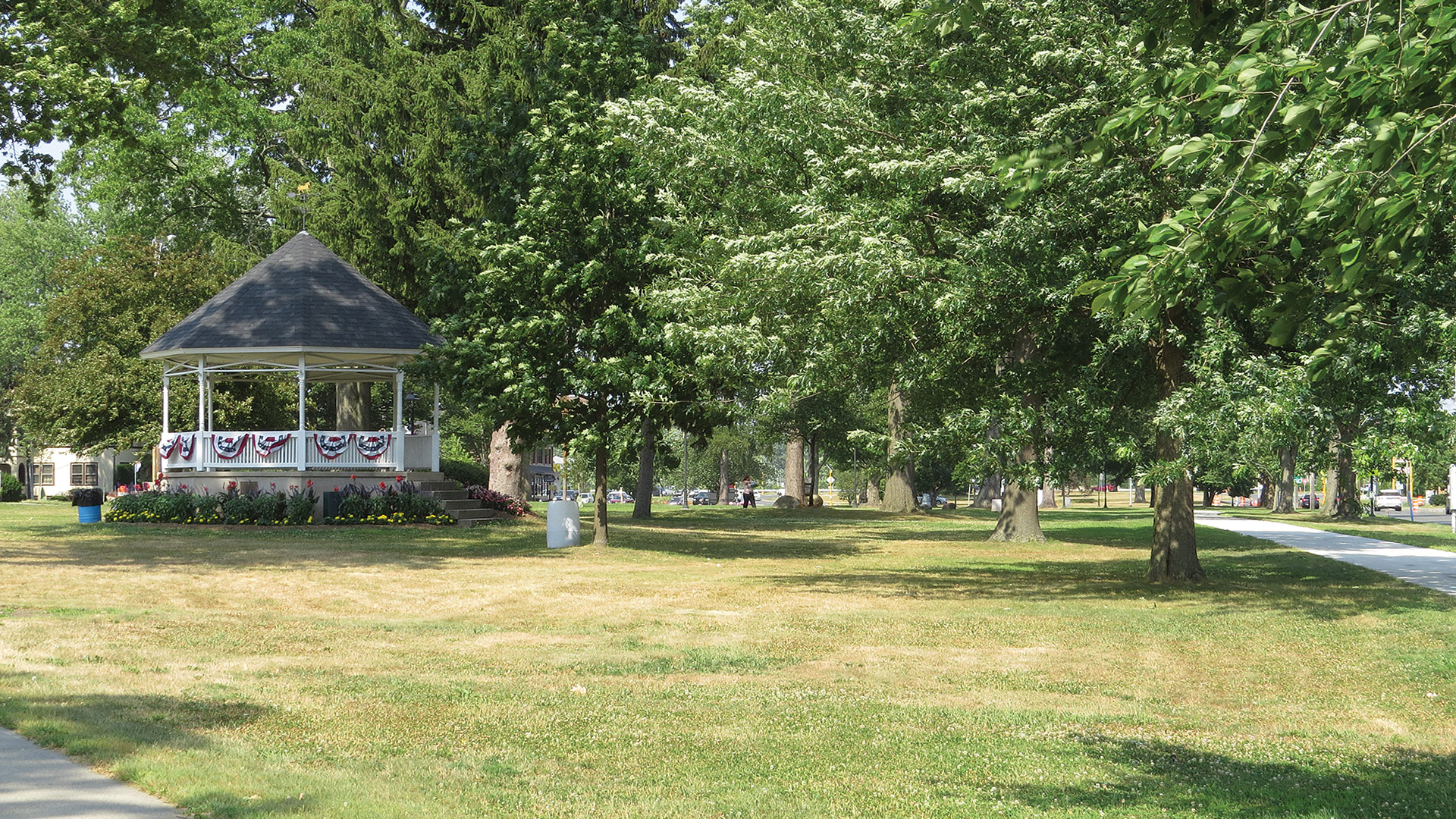
“There’s some successful businesses in there, but we also have some empty storefronts,” he explained. “Our Memorial Park is there, and that’s where we’ll have Celebrate Ludlow. I think there’s a foundation for something special by way of economic development in that corridor.

“If we can create some kind of plan for that area, that will be helpful,” he went on, “in terms of letting the development community know that we’re open for business and we’re ready to go if they want to come to Ludlow and put some shovels in the ground.”


Run of the Mills

There should be some shovels hitting the ground soon at at Ludlow Mills, which has certainly been the focal point of development in Ludlow over the past decade. Indeed, continued progress is being made in what will be at least a 20-year effort to put the various spaces — as well as 40 acres of developable green space — to new and productive use.

Running through recent and upcoming developments, Daley started with Building 8, a long-awaited project that will bring another residential complex to the site after the highly successful renovation of Building 10 into apartments; there is now a lengthy waiting list for units in that property.

Ludlow at a glance

Year Incorporated: 1774
Population: 21,002
Area: 28.2 square miles
County: Hampden
Residential Tax Rate: $19.99
Commercial Tax Rate: $19.99
Median Household Income: $53,244
Median Family Income: $67,797
Type of Government: Town Council, Representative Town Meeting
Largest Employers: Hampden County House of Correction; Encompass Rehabilitation Hospital; Massachusetts Air National Guard; Kleeberg Sheet Metal Inc.
*Latest information available

The plan calls for apartments on the upper floors and a mix of retail on the first floor, Daley explained, adding that a coffee shop or sandwich shop would be an ideal use given the growing numbers of people living and working in the complex or within a few blocks of it. That growing population could inspire other types of retain as well, he added.

“We can’t overlook the fact that, once those apartments are done, there will be 160 units right in that vicinity, with an average of two people per unit. That’s a captured audience of more than 300 people to support small businesses; there might be a doctor’s office or lawyer’s offices, for example.”

To make the project happen in these times of inflation and soaring construction costs — an overall 28% increase in the projected price tag for this initiative — Westmass needed to get creative and take a “sizable equity investment” in the project, Daley said. He didn’t say how sizeable, but he did note that this step was needed to keep this project on track.

“It made the project go, and we really want to see the project go — for the town of Ludlow, for the mills, and, selfishly, we want to see that first floor activated so we can generate some revenues from retail and commercial businesses,” he explained.

As for Building 11, the next major target for redevelopment, a mix of housing and commercial retail would be ideal, he said, adding there will be options when it comes to what type of housing might be seen.

“There’s certainly a need for independent living, there’s a need for care living, dementia living, those types of facilities,” he said. “But also for more market-rate housing.”

Overall, the Ludlow Mills property is well-positioned for development, Daley said, adding that everything in its inventory, from commercial and industrial space to raw land, are in demand.

“We have a lot of interest in not only the land, but everything,” he told BusinessWest. “There’s not a lot of inventory out there — for commercial properties or green space. Our property is flat and mostly dry, so it becomes pretty attractive for development.”

As Daley said, Ludlow Mills has been a longer and more difficult journey than anyone could have anticipated when the property was acquired in 2011, but an important turning point has been reached, and a new chapter in this story is set to unfold.


George O’Brien can be reached at [email protected]
Commercial Real Estate Special Coverage

Urban Pioneers

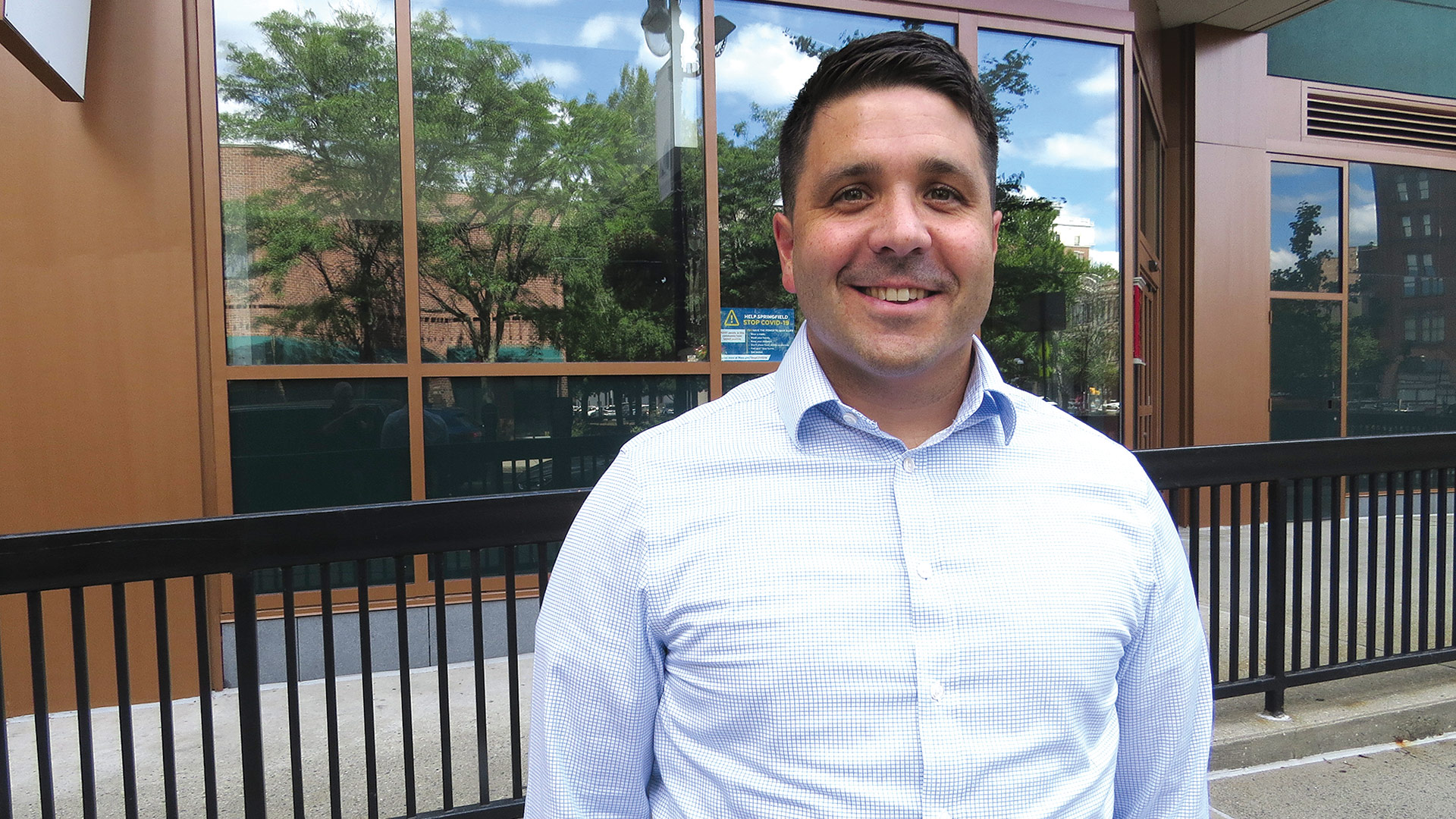
Colin D’Amour says the planned downtown store is unlike anything Big Y has created before

Colin D’Amour says the planned downtown store is unlike anything Big Y has created before and is, in many respects, a pioneering endeavor.


Big Y Foods will soon begin the process of transforming the former CVS location in Tower Square into its latest market. The chain has been operating for nearly 80 years now and has expanded its footprint well beyond its roots at that now-famous intersection in Chicopee where the converging roads formed a ‘Y.’ But this venture is something completely different in terms of scale — and just about everything else.


In many respects, the new store that Big Y is planning for the space in Tower Square formerly occupied by CVS constitutes pioneering — for the company and the city.

Indeed, what is proposed, a scaled-down version of a Big Y supermarket in an urban setting — the heart of downtown Springfield — hasn’t been tried before, as far as anyone knows. And it certainly hasn’t been tried by Big Y, the chain of supermarkets started by brothers Paul and Gerry D’Amour in 1936.

“To the outside observer, they see us operating supermarkets and say, ‘this is just a smaller format,’” said Colin D’Amour, senior director of Big Y Express and point person on this project. “But it’s really a completely new venture for us, everything from distribution to operations to trucking … we’ve never operated a downtown, urban-format market before, so there are a whole lot of unknowns for us.”

So while there is a great deal of anticipation and excitement about the company’s plans — downtown Springfield has been a food desert for decades now, and the need for a supermarket in that area has long been a recognized need — there is also a great deal of uncertainty about just how this will all play out.

So much so that determining just what constitutes ‘success’ at this new and decidedly different location is a difficult assignment.

“We are flying the plane as we build it in many respects,” D’Amour explained. “We know how to operate a supermarket, and we’re constantly tweaking that model, but when we open a new store, we have a very good idea of what success in that store will look like and what we need to do to achieve it. With this model, we’re trying to be a lot more flexible, even from our design standpoint.

“To the outside observer, they see us operating supermarkets and say, ‘this is just a smaller format.’ But it’s really a completely new venture for us, everything from distribution to operations to trucking … we’ve never operated a downtown, urban-format market before, so there are a whole lot of unknowns for us.”

“We don’t fully know what our lunch business is going to be like in the area; we don’t fully know what our after-work, prime-time, rush-on-the-way-home-from-work business is going to be like,” he went on. “We’re trying to build in some flexibility that’s going to allow us to adapt, once we do open, to what the customers’ needs are.”

Overall, this story is an intriguing one on a number of levels. For starters, there is the obvious need for a grocery store being filled. Meanwhile, the recruitment of Big Y marks another imaginative reuse of space in Tower Square by owners Vid Mitta and Dinesh Patel, who previously landed the YMCA of Greater Springfield and White Lion Brewery, among others, as tenants. And this new development was made possible by federal COVID-relief funds, making this is an example of how those monies have been put to work by the city to improve specific neighborhoods, including downtown (more on that later).

For now, the plan is to have the store open by next spring, said D’Amour, adding that there are some challenges to meeting that timeline, including supply-chain issues that make getting needing materials and equipment, like shelving, somewhat of an adventure.

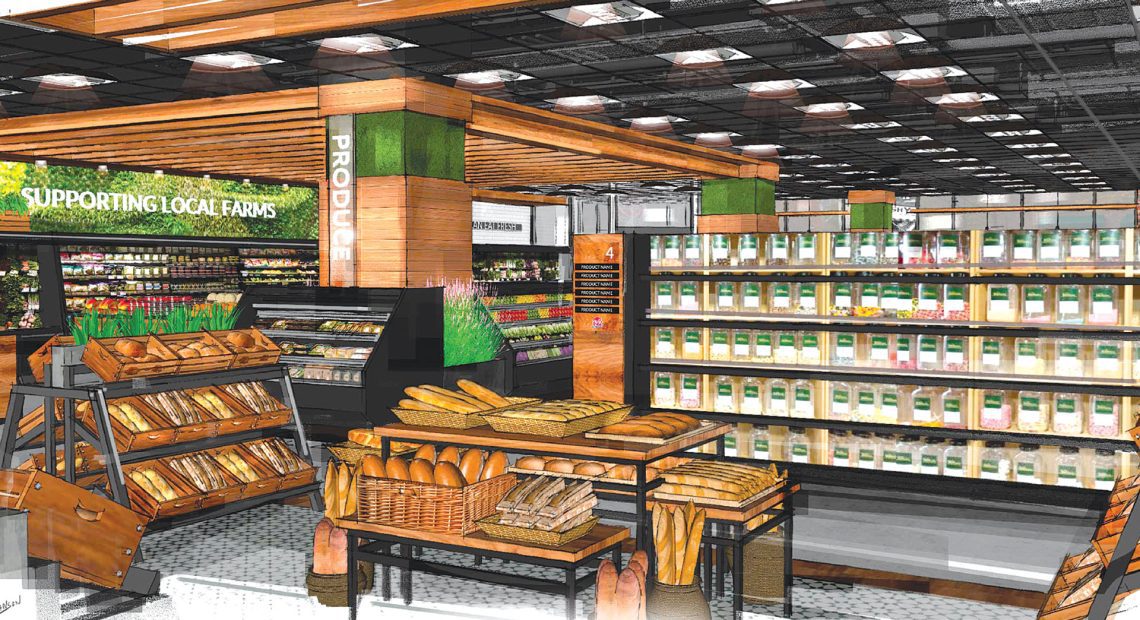
An architect’s rendering of the planned new  Big Y market in Tower Square.

An architect’s rendering of the planned new
Big Y market in Tower Square.

As for the store itself, it will feature most of the same departments as a typical Big Y World Class Market (there will not be a pharmacy), but, obviously, a smaller volume of items.

As for customers, Big Y believes it will draw from several different constituencies, including those living downtown, those working in both Tower Square and other surrounding office buildings, those coming to Tower Square on other business, such as daycare services at the Big Y, and others.

“We think there’s going to be a good mix,” he noted. “Tower Square is a pretty robust facility, and there are a lot of people who work there who may be living in Springfield or commuting from outside the city who may be looking to grab something after work for dinner or grab something to help fill the fridge, and it saves them a trip to a traditional supermarket. There’s also a good number of residents that live right downtown as well. We think there will be a healthy mix.”

For this issue and its focus on commercial real estate, BusinessWest talked at length with D’Amour about how this concept came together and why the initiative represents pioneering on a number of levels.


Location, Location, Location

D’Amour said Big Y has been looking at downtown Springfield with an eye toward possibly opening some type of store there for some time now.

“It’s fair to say that it’s been decades,” he noted, adding quickly that, while the company hasn’t been actively pursuing something all that time, it has long understood that there is both need and opportunity involved with such an undertaking.

“We’ve had a very long, positive relationship with the city of Springfield, being headquartered here, and we’ve got a great relationship with the mayor’s office,” he went on. “So there’s just been a constant dialogue about what opportunities are there.”

“We’ve tried to take little bits of what we like from some different markets out there. But we think downtown Springfield is a bit unique, and we think that we understand the Western Mass. customer and the Springfield customer, and we’re trying to blend our brand with what we’ve seen other folks do in other environments and come up with something we think will work in this setting.”

Matters moved beyond the dialogue stage thanks to a number of puzzle pieces coming together, he went on, noting that the first was the location that became available when CVS vacated its longtime home in Tower Square for a location about a half-mile south on Main Street.

“The new owners of Tower Square came to us with this opportunity — everything just came together at the right time,” said D’Amour, noting that the company not only recognized an opportunity, it was prepared to take full advantage of it. “We were able to pull it together and make it work.”

Prepared, yes, but still moving into what would be uncharted territory for this company — and many supermarket chains, for that matter. Indeed, the location would be in the middle of the city’s downtown, with no on-site parking and certainly no loading dock.

The new market will serve people who work in the office towers

The new market will serve people who work in the office towers, as well as residents who live downtown.

These unknowns, along with uncertainty about just how much traffic this site will generate, made it enough of a risk that the project required an investment from the city, said D’Amour, adding that this investment has come in the form of $1 million in federal COVID CARES Act funding.

“That funding allowed us to answer some of those unknowns,” he said. “It solved some unsolvable challenges around distribution and issues like that, and it allowed us to see a pathway to a financially viable market in this location. I don’t think we would have been able to get there — what with rising construction costs and trying to figure out an entirely new model — without that federal money.”

Elaborating, he said the traditional Big Y model, one seen across this region and now far beyond, into Connecticut, Central Mass., and now Eastern Mass., is the suburban World Class Market, usually in a larger shopping center, with acres of parking; the company just unveiled its latest plans to build a store in Middletown, Conn. The Tower Square store is a much different model, one that, as noted, comes with a large supply of unknowns.

“There’s nothing close to this in terms of the urban setting, and there’s nothing close to this in terms of size,” he said. “This is maybe one-fifth the size of one of our traditional supermarkets. Obviously, all of our stores are unique in size and layout, but this is certainly an outlier.”

Thus, the team at Big Y has looked at models that would be considered similar in other urban markets, including New York and Boston, as well as some smaller cities in upstate New York, he said, adding that the chain is essentially creating its own model with this initiative.

“We’re having supply-chain challenges everywhere, and we’re working through them as best we can, and we think we’re doing a pretty good job with it.”

“We’ve tried to take little bits of what we like from some different markets out there,” he explained. “But we think downtown Springfield is a bit unique, and we think that we understand the Western Mass. customer and the Springfield customer, and we’re trying to blend our brand with what we’ve seen other folks do in other environments and come up with something we think will work in this setting.”

The plan, as noted, is to offer most of what would be found in a traditional Big Y market, he said, adding that patrons can do what he called a “full shop” at the downtown location, with fresh meats, bread, produce, and other items, just not in the variety to be found in the larger-model store.

Work has yet to begin on site, he said, but the plan is to open the store late in the first quarter of next year, and he believes that timetable can be met, despite those aforementioned challenges, including construction lead times and simply getting needed materials and equipment.

“Supply chain continues to be a challenge, both from a construction standpoint as well as from a product standpoint,” D’Amour explained. “But it’s nothing we’re not tackling, like everyone else in this late-pandemic, post-pandemic world, whatever we’re calling it these days. We’re just continuing to try to find innovative ways around it and fill our stores.

“With respect to this Tower Square downtown location, it’s really no different than what we’re tacking in all of our stores,” he went on. “We’re having supply-chain challenges everywhere, and we’re working through them as best we can, and we think we’re doing a pretty good job with it.”


Food for Thought

As D’Amour noted, it is difficult to make projections for the planned new market, and equally difficult to get a firm grasp on just what will constitute success.

But in an area that has been devoid of anything like this for as long as anyone can remember, there are great expectations and high hopes that the new store will be an important addition to the mix in Tower Square and the central business district as a whole.

In short, there is a good deal of anticipation about what’s in store for this location — figuratively, but also quite literally.


George O’Brien can be reached at [email protected]
Community Spotlight Cover Story

Community Spotlight

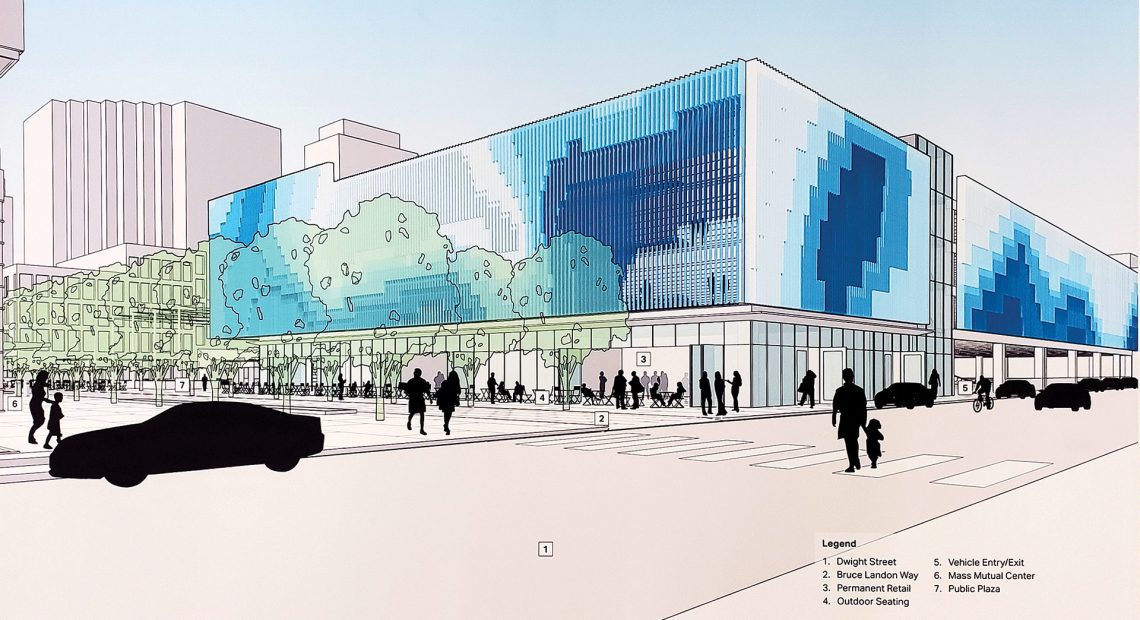
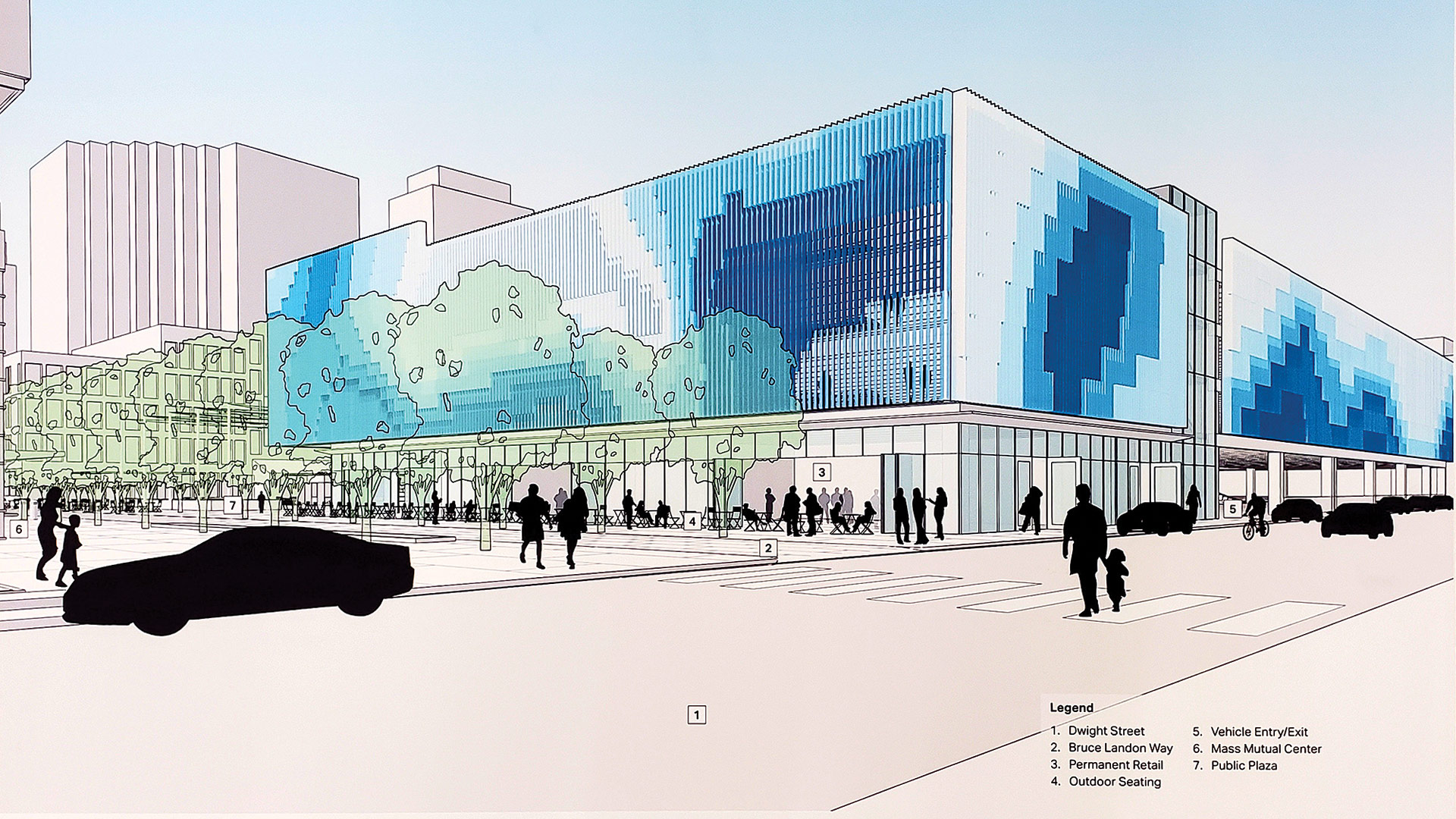
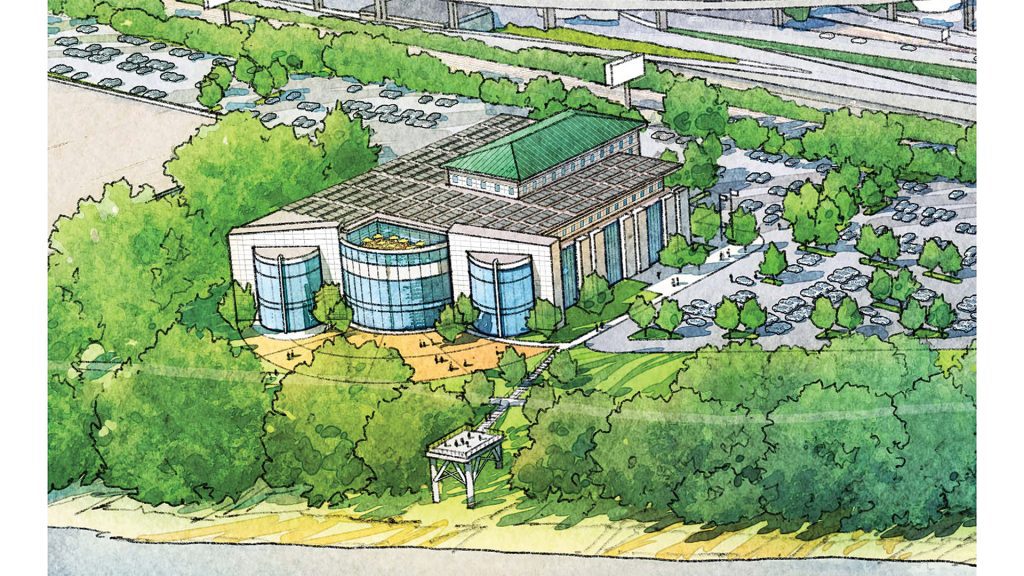
Architect’s rendering of the new parking garage

Architect’s rendering of the new parking garage soon to take shape in the city’s downtown.

‘Good traffic.’

That’s the phrase used by Springfield Mayor Domenic Sarno — who acknowledged that it is somewhat of an oxymoron — to describe traffic that is, well, positive in nature.

This would be traffic generated by vibrancy, by people coming into a city from somewhere else; traffic indicative of progress, as opposed to insufficient infrastructure, poor planning, or both.

Springfield saw quite a bit of this ‘good traffic’ prior to the pandemic, said Sarno, noting that it was generated by concerts at MGM Springfield’s venues, Thunderbirds games, conventions and college graduations at the MassMutual Center, special gatherings like the Winter Weekend staged by the Red Sox in early 2020, or any combination of the above. Sometimes, a random Friday night would be enough to generate such traffic.

And after two years of relative quiet in the wake of the pandemic, the ‘good traffic’ is starting to make a comeback, as is the city as a whole, said Sarno, Springfield’s longest-serving mayor, with 14 years in the corner office, adding that there is promise for a whole lot more in the months and years to come, as pieces to a puzzle come together — or back together, as the case may be.

“Before COVID hit, we had a tremendous amount of momentum going on in Springfield, not just in the downtown, but in all our neighborhoods,” he told BusinessWest. “I think we’re starting to get our mojo back.”

These pieces include everything from a resurgent Thunderbirds squad, which made it all the way the AHL finals after taking a full year off due to COVID, to new housing, including the long-delayed renovation of the former Court Square hotel; from a casino in comeback mode, buoyed by the promise of sports gambling, to the return of the Marriott brand downtown after more than $40 million in renovations to the property in Tower Square; from new restaurants and clubs on Worthington Street to a new parking garage soon to rise where an existing structure is being razed.

“Before COVID hit, we had a tremendous amount of momentum going on in Springfield, not just in the downtown, but in all our neighborhoods. I think we’re starting to get our mojo back.”

The “state-of-the-art and environmentally friendly parking garage,” as Sarno described it, will be part of a larger development in the area around the MassMutual Center, an initiative aimed at bringing people to that site before, during, and perhaps after events (more on that later).

The city still faces a number of stern challenges, many of them COVID-related, said Tim Sheehan, the city’s chief Development officer, citing such matters as the impact of remote work and hybrid schedules on downtown office buildings, an ongoing workforce crisis that has impacted in businesses in all sectors, and the pressing need to redevelop vacant or underutilized properties across Main Street from MGM Springfield.

An architect’s rendering of the planned new entrance at the southwest corner of the MassMutual Center.

An architect’s rendering of the planned new entrance at the southwest corner of the MassMutual Center.

But he, like the mayor, sees progress on many fronts and, overall, a pronounced recovery from a pandemic that hit the city very hard.

“We’re seeing many positive signs that Springfield is making its way back from the pandemic and the many challenges it created,” said Sheehan, who cited, among many yardsticks of momentum, a long line to get a table at Wahlburgers during a recent visit. “And we’re seeing these signs not only in the downtown, but the neighborhoods as well.”

Sarno agreed. He said that, over his lengthy tenure as mayor, the city has coped with a number of challenges and crises, from the June 2011 tornado to the November 2012 natural-gas explosion. But COVID has been different, and it has tested the city and its business community in many different ways.

“It’s been a difficult two years; the pandemic threw everyone a huge curveball,” he explained, adding that city leaders were trying to respond to an unprecedented health crisis while also making good use of state and especially federal money to help small businesses keep the lights on.

“My team has been tested, and, true, it’s been through a lot of disasters before,” he went on. “But this was like shadowboxing — it was surreal.”

COVID isn’t over, and challenges for small businesses remain, but in many respects, the city can get back to business, and it is doing just that.

For this, the latest installment of its Community Spotlight series, BusinessWest takes an in-depth look at Springfield, its ongoing bounce-back from COVID, and, yes, the return of that ‘good traffic.’

State of the City

It was affectionately known as the ‘dog and pony show.’

That’s what some called an annual gathering, orchestrated by the city in conjunction with the Springfield Regional Chamber, at which officials gave what amounted to a progress report on the city, with a large dollar amount attached to all the various economic-development and infrastructure projects — from MGM Springfield to the renovation of Union Station to the reconstruction of the I-91 viaduct — that were in progress or on the drawing board.

The city hasn’t staged one of these sessions in several years, mostly due to COVID, said Sarno, but one is being planned, probably for early next year. And there will be quite a bit to talk about, he went on, hinting at new developments at sites ranging from Union Station to the former Municipal Hospital on State Street, while offering what amounts to a preview of that gathering.

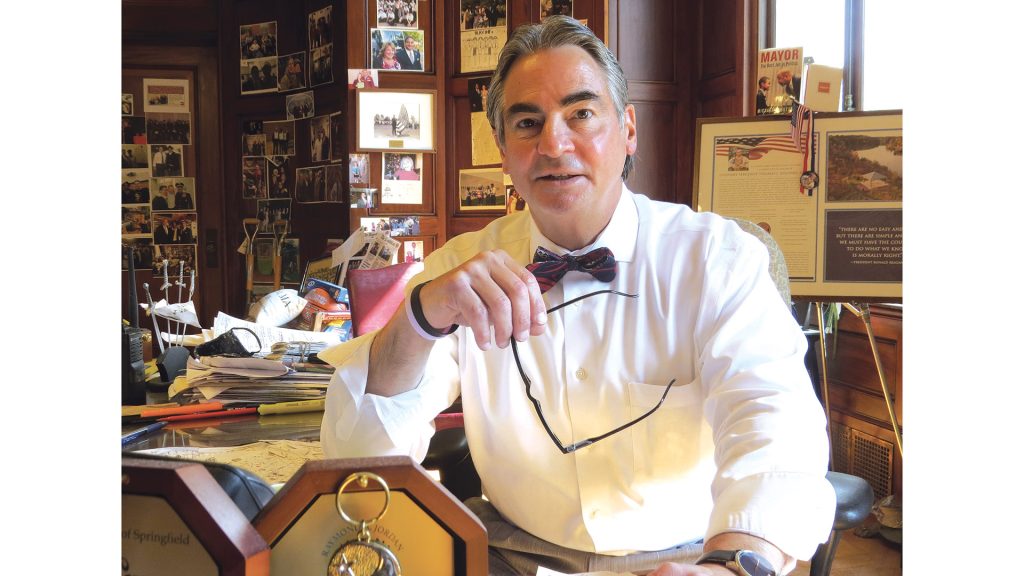
Mayor Domenic Sarno sees progress on many fronts in Springfield after a tumultuous past couple of years.

Mayor Domenic Sarno sees progress on many fronts in Springfield after a tumultuous past couple of years.

And he started with the new, 1,000-space parking garage, which he and Sheehan anticipate will be much more than that.

Indeed, plans for the site include ‘activation’ — that’s a word you hear often when it comes to properties in the downtown — of a surface parking lot next to the present (and future) garage, and, overall, creation of an atmosphere similar, said the mayor, to what is seen at Fenway Park in Boston on game nights.

“Bruce Landon Way will be activated, and many times, it will be shut down,” said Sheehan, adding that the current surface lot, and Bruce Landon Way itself, will become extensions of the MassMutual Center.

“They can have their events literally flowing out to Bruce Landon Way, creating much more activation within the downtown,” he explained. “And it will be utilized for pre- and post-event programming.”

Elaborating, he said the current surface lot will be public space that the Convention Center Authority will lease out for various kinds of functions, bringing more people downtown.

Meanwhile, a new entrance to the MassMutual Center will be added at the corner of State and Main streets, providing the facility with two points of entry and, with this new addition, what the mayor likened to a “Broadway marquee,” a much stronger bridge to MGM Springfield and other businesses south of the arena.

“One of the critical elements of our master plan involves finding ways to activate both of our anchors downtown — MGM Springfield and the convention center itself,” said Sheehan. “And one critical missing piece to that was always the southern entrance to the MassMutual Center, and now, that’s being addressed.”

That new entrance may help spur development of several vacant or underutilized properties across Main Street from the MGM casino, said Sarno, adding that requests for proposals to redevelop these properties, now under city control, will be issued soon.

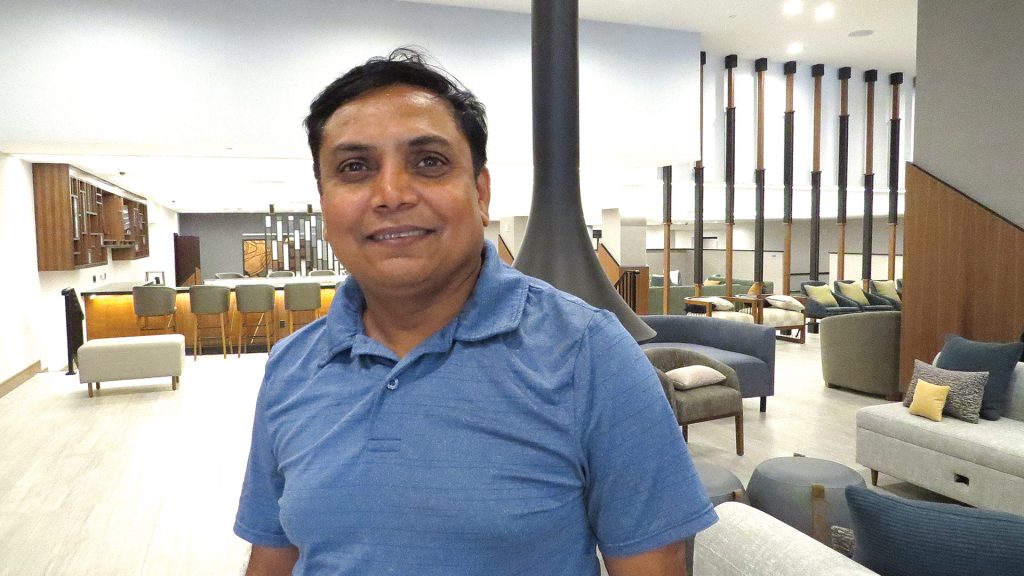
Dinesh Patel, seen here in the lobby of the soon-to-open Marriott

Dinesh Patel, seen here in the lobby of the soon-to-open Marriott in downtown Springfield, says the facility was designed to reflect the history and culture of the city.

These developments, coupled with the ongoing renovation of 31 Elm St., the former Court Square Hotel, into market-rate apartments due to be ready for occupancy in roughly a year, are expected to create more interest in Springfield and its downtown within the development community, said the mayor, noting, again, that needed pieces are coming together.

These pieces include housing, which will create a larger population of people living in the downtown; restaurants and other hospitality-related businesses, a broad category that includes MGM Springfield, restaurants, and the Thunderbirds; and a vibrant business community.

“One of the critical elements of our master plan involves finding ways to activate both of our anchors downtown — MGM Springfield and the convention center itself. And one critical missing piece to that was always the southern entrance to the MassMutual Center, and now, that’s being addressed.”

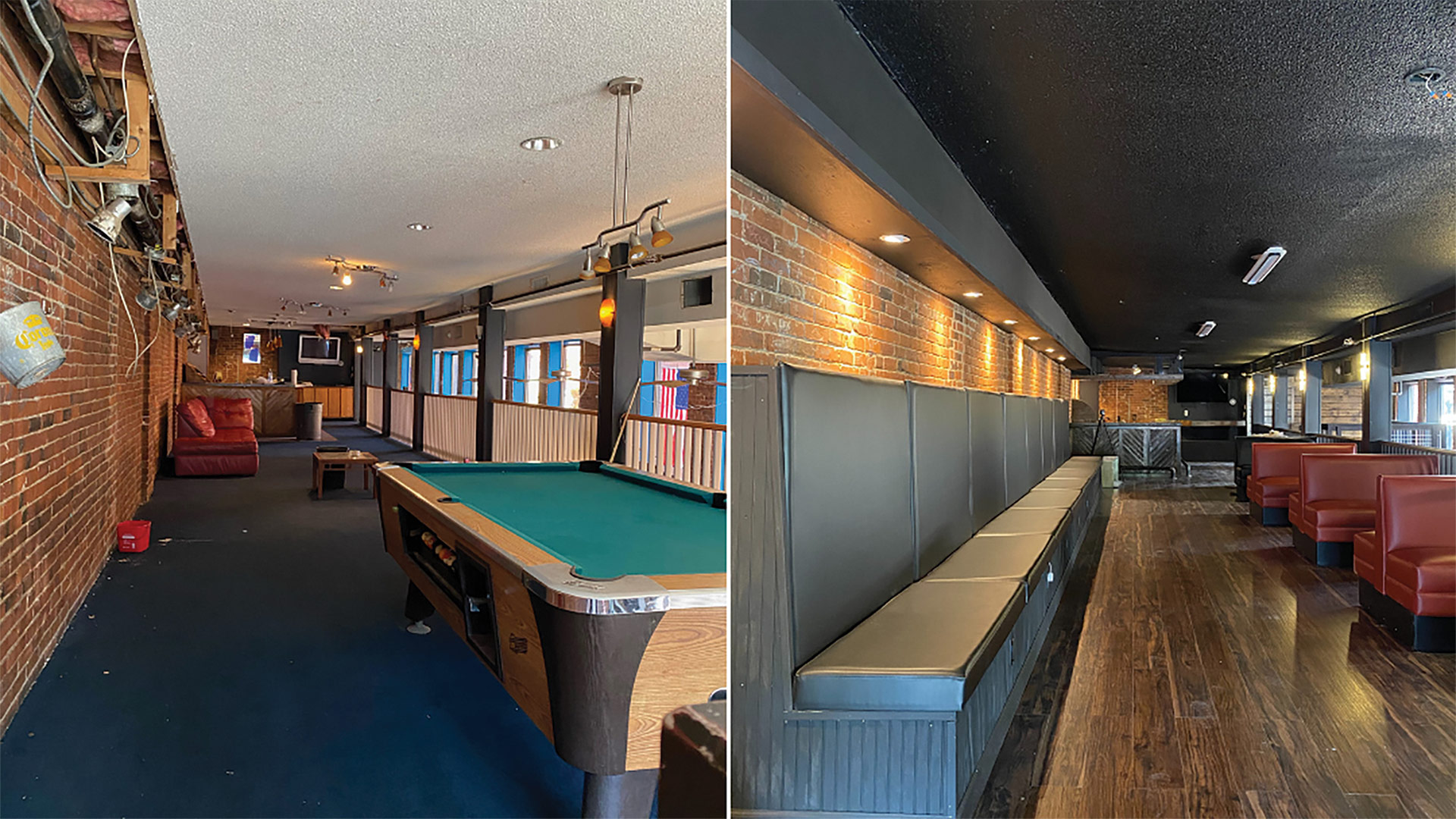
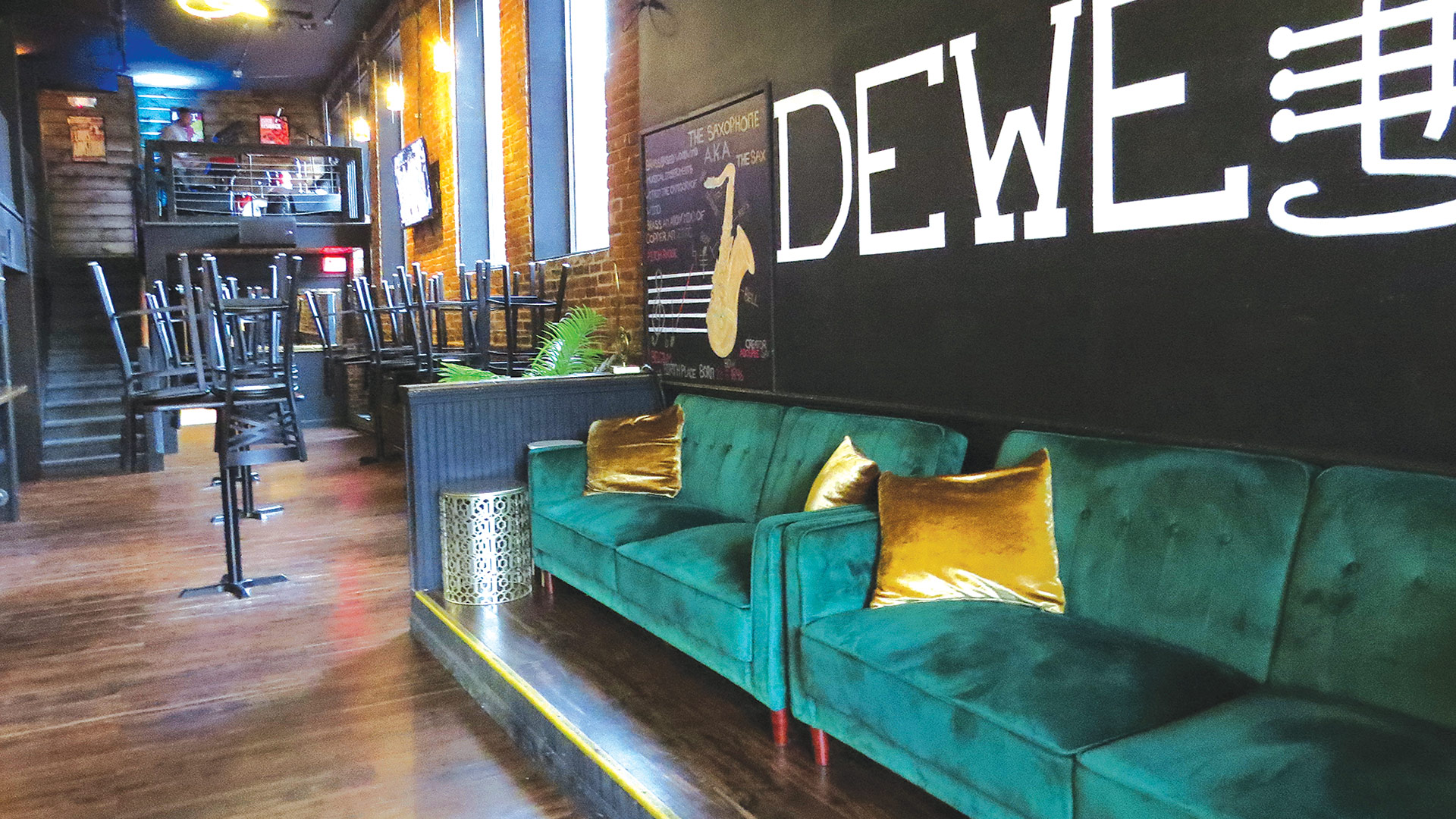
Individual pieces coming into place include not only 31 Elm, but the recently opened housing in the former Willys-Overland building on Chestnut Street; some new restaurants and clubs on and around Worthington Street, including Dewey’s Lounge, the Del Raye, and Jackalope; and the planned new Big Y supermarket, which will address a recognized need in what has long been recognized as a food desert.

Staying Power

Then, there’s Tower Square and the Marriott flag that has been returned to the hotel several years after it was lost.

As he talked with BusinessWest about the two years worth of renovations to that hotel and planned reopening of the facility, Dinesh Patel showed off finishing-touch work in several areas, including the lobby, the fitness center, the pool room, and some of the meeting rooms.

He also opened the door the large ballroom, revealing a training session for dozens of the more than 180 people expected to be hired before the facility opens its doors. Like most of the renovation work itself, conducted at the height of the pandemic and its aftermath amid supply-chain issues and soaring prices for many products and materials, the hiring process has been a stern challenge as qualified help remains in short supply.

But for Patel and partner Mid Vitta, whose work to reclaim the Marriott flag — and reinvent Tower Square — earned them BusinessWest’s Top Entrepreneur award for 2022, it has been what amounts to a labor of love. The two saw an opportunity in the once-thriving but then-challenged retail and office complex in the heart of downtown, and have made the most of it, finding some imaginative reuse of many spaces. These include the recruitment of the YMCA, which has brought its childcare and fitness-center operations, as well as its administrative offices, to Tower Square. It also includes that new and decidedly different kind of Big Y store in space formerly occupied by CVS.

As for the hotel, which will open in time for the induction ceremonies for the Basketball Hall of Fame and the Big E, Patel said the timing is good for the property to come back online.

“Gas prices are coming down, and people are traveling again,” he said. “They want to get out and go places; we see a lot of pent-up demand.”

As he offered a tour of the nearly-ready facility, Patel noted the many nods to Springfield, its history, and its culture, from the basketball-themed art in the fitness center to the wall coverings depicting blueprints of noted inventions that happened in Springfield (from the monkey wrench to rail cars) to the many photographs of ‘old Springfield’ found on the walls of the stairs leading to the meeting facilities on the sixth floor.

“We wanted to tell the story of Springfield,” Patel said. “And we tell that story all through the hotel.”

Increasingly, that story is one of progress and recovery from COVID, not only in the downtown, where much of the interest is focused, but in many other neighborhoods as well, said both Sarno and Sheehan, noting that neighborhood plans have been developed for many different sections of the city that address everything from sidewalks to lighting to beautification, with gathered suggestions then forwarded to an ARPA advisory committee.

Overall, new schools and libraries are being built, infrastructure improvements are being undertaken, and businesses continue to be supported as they face the lingering effects of COVID through initiatives such as the Prime the Pump program, which provided grants of various sizes to businesses in need.

The city has received nearly $124 million in ARPA (American Rescue Plan Act) money to date, and it has distributed more than $50 million, including $4 million dispensed in the seventh round to date, earlier this month. Those funds went to small businesses, new businesses, nonprofits, neighborhoods, housing, capital projects, and direct financial assistance to households and seniors, said Sarno, adding that that the basic strategy has been put that money to use in ways where the impact can be dramatic and immediate.

The renovated outdoor space off the sixth-floor meeting area

The renovated outdoor space off the sixth-floor meeting area is one of the highlights of the soon-to-open Marriott in downtown Springfield.

“The majority of the monies that have been distributed have really helped a lot of minority-owned businesses and women-owned businesses,” he explained. “It’s a very eclectic mix, from mom-and-pop businesses to larger ventures to direct assistance.”

There have been efforts in the broad category of workforce development as well, he went on, adding that businesses of all kinds continue to be impacted by an ultra-tight labor market, just as many are starting to see business pick up again.

Overall, there have been more than 30 meetings conducted with residents and business owners in attendance, said the mayor, adding that these listening sessions were staged to gain direct feedback on how federal COVID relief money can best be spent in Springfield.

Identified needs and challenges range from workforce issues to childcare to transportation, said Sheehan, adding that what has come from these sessions is dialogue, which has often led to action, on how the city can collaborate with other groups and agencies to address these matters. And it has been a very fruitful learning experience.

“It created an opportunity to look at things differently,” he noted. “And I do think it has caused people to look at how we can work collaboratively to solve some pretty significant problems.”

Bottom Line

To motorists who are stuck in it, there is really no such thing as ‘good traffic.’

But while drivers don’t use that phrase, elected officials and economic-development leaders certainly do. As Sarno told BusinessWest, good traffic is a barometer of a city’s vibrancy, a measure of whether, and to what degree, a community has become a destination.

For a long while, Springfield didn’t have much, if any, of this ‘good traffic,’ and then, in the 18 months or so before COVID, it did. The pandemic and its many side effects took much of that traffic away, but there are many signs that it’s back and here to stay.

As the mayor said, the city is starting to get its mojo back. 

George O’Brien can be reached at [email protected]
Features Special Coverage

Pivot Move


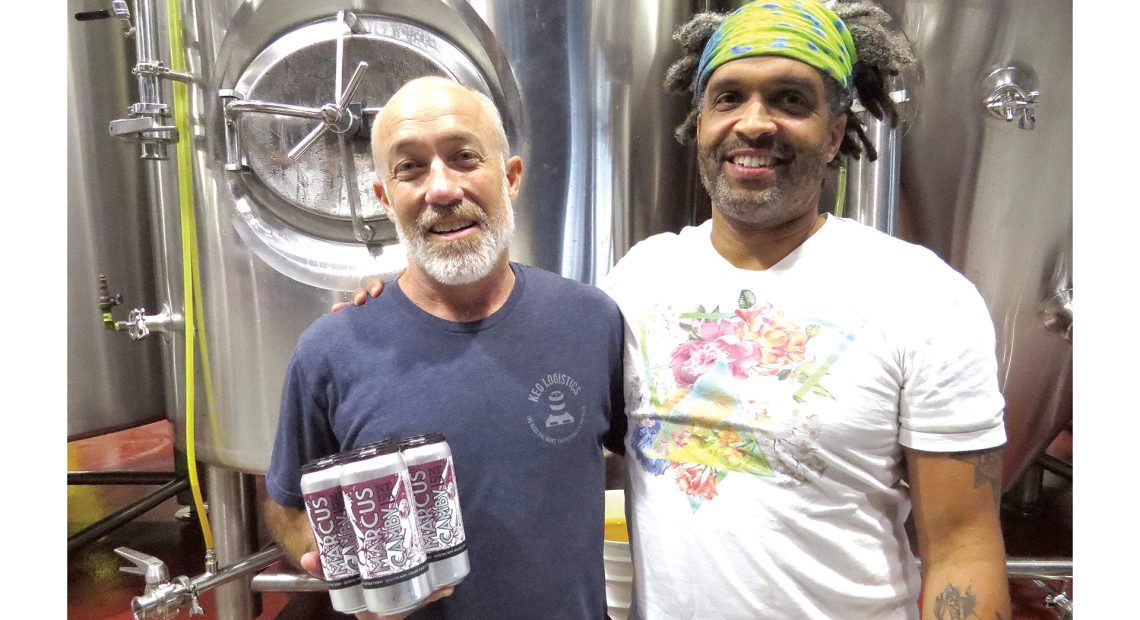
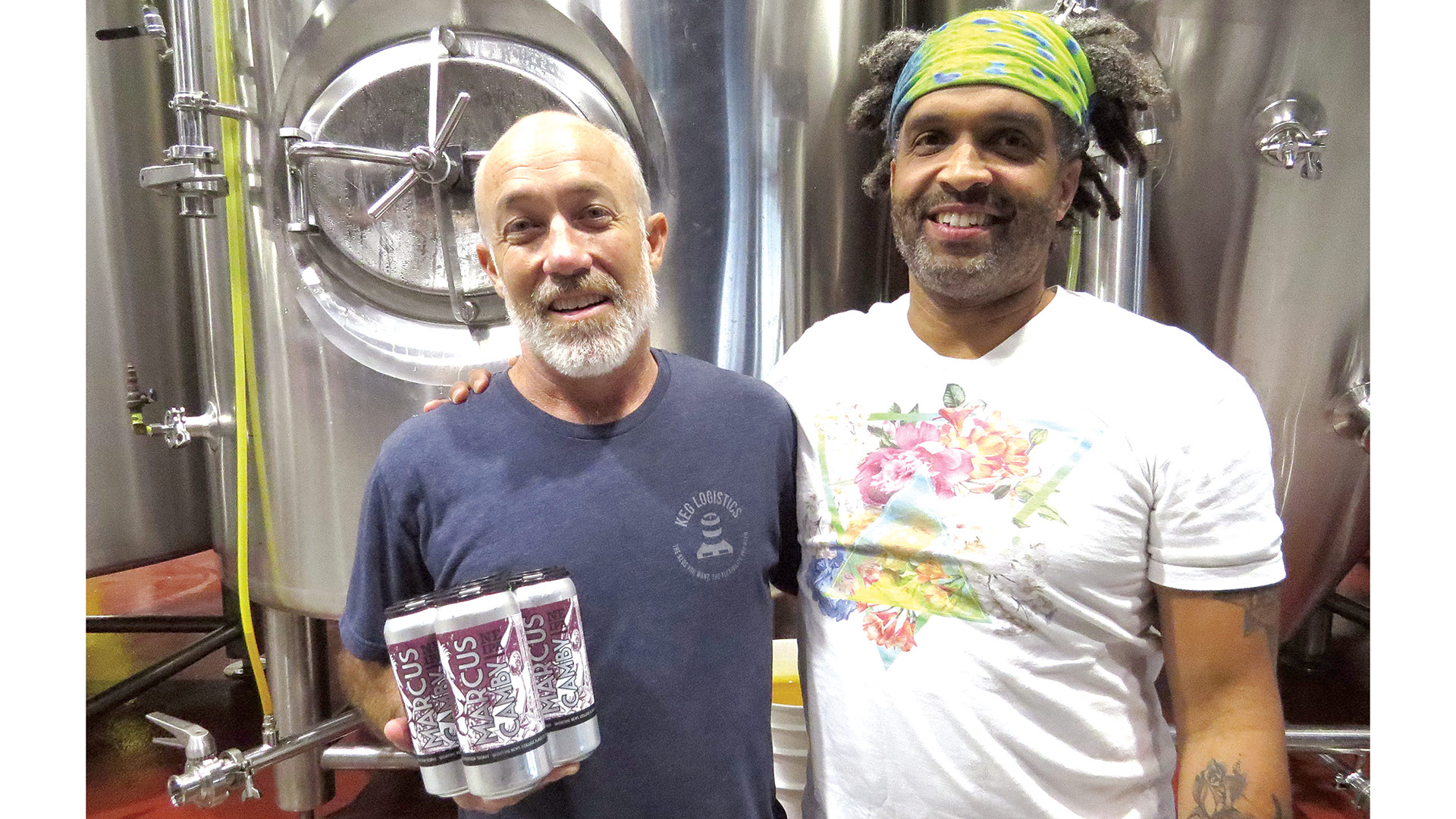
Mike Yates, left, and Ray Berry

Mike Yates, left, and Ray Berry agree that expansion into Amherst is a common-sense move for the company.


When asked how he would eventually become business partners with Marcus Camby, the former UMass and NBA star, Ray Berry, founder of White Lion Brewery, leaned back in his chair as if to indicate it was a bit of a long story.

It starts with Travis Best, another former NBA player who made his first headlines while playing for Springfield’s Central High School. It was Best who put together several annual Basketball Hall of Fame enshrinement weekend events, including a post-induction gathering. Following the opening of White Lion’s downtown Springfield operation just over a year ago, Best was looking to include the company in the festivities — and did.

Indeed, Best and Berry would collaborate with the city on a block party on Bridge Street during enshrinement weekend — the same weekend, it turned out, that UMass Amherst would be honoring Camby, Julius Erving, and John Calipari with statues in their honor on campus. Best and Berry decided to reach out to Camby to see if he wanted to co-host the event in Springfield, which he did.

“Marcus was all in — he was already in town, and he was excited to be part of what we were doing,” Berry recalled. “We shut down Bridge Street, rolled up the garage doors, and had some entertainment; it was our first grand event at our brick-and-mortar spot. At one point, I think we had 700 people between the brewery and the block-party environment. It was a beautiful evening downtown.”

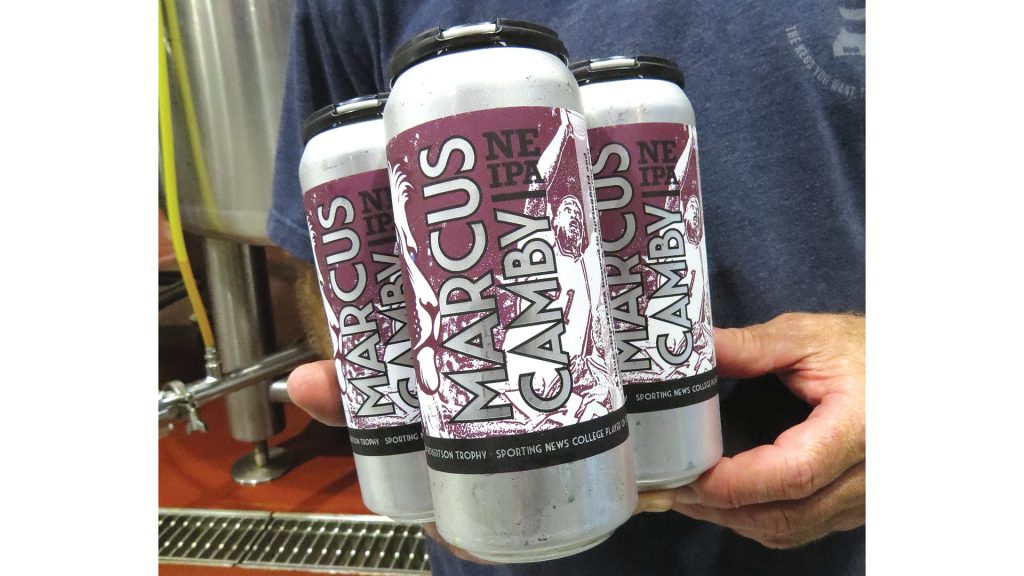
Fast-forwarding a little, Camby became more than a little impressed with the White Lion operation and Berry’s status as one of the very few minority brewery owners in Massachusetts — so much so that he attached his name to an IPA produced by White Lion. And later — we’re moving very quickly now, but will go back and fill in some detail in a bit — when Berry was presented with an opportunity to expand his footprint and bring the White Lion brand to Amherst with a location in the heart of downtown, Camby agreed to come in as a partner.

The venture will be called White Lion Brewing Amherst, and will be based in a location that has been making headlines in recent months — 104 North Pleasant St., home to the recently opened Drake, a live-event venue that is already fulfilling its vast promise as a destination for music lovers from across Western Mass. and far beyond.

The White Lion taproom will be located just below the Drake in space that was formerly the High Horse restaurant and, before that, Amherst Brewing, where Mike Yates served as head brewer — before working behind the bar at High Horse.

He now has that same title at White Lion, so this new venture amounts to going home for him.

And with that perspective, he believes the White Lion brand is in the right place at the right time, and with the right business partner.

“It will feel good to be back there. It’s a great little town — I love Amherst,” Yates told BusinessWest. “I think this is going to be a big hit here. Since Amherst Brewing left downtown, there’s no brewery in the downtown area. This is essentially a tourist town — every year you have a new crop of students coming in and parents looking for a place to go for lunch or dinner, and a brewery is always a good option.

“I think this is going to be a big hit here. Since Amherst Brewing left downtown, there’s no brewery in the downtown area.”

“Combine that with our partnership with Marcus and our establishment’s reputation here in Springfield as a prominent player in the brewing business, and I think it will be a big win,” he went on. “I think they hit a big home run with the Drake — that’s what Amherst sorely needed — and we will be another big piece of the puzzle.”

For this issue, BusinessWest looks at how this new venture came together, and what it means for Amherst — and White Lion.


What’s Brewing?

Berry told BusinessWest that he recently took part in a panel discussion before a convention of craft brewers at the Samuel Adams facility outside Boston.

The subject being addressed by the panel was satellite facilities, and, more specifically, when and under what circumstances they should be considered.

Summing up his remarks, Berry said he told them, “from a business lens, if the situation if right, and you’re not over-leveraging yourself, it could make sense for that brewery’s respective business model.”

That is certainly the case with this new location in Amherst, he said, adding that it makes sense on a number of levels. “Amherst is a great town. It’s a natural fit for White Lion and its progression.”

So much so that the Amherst Business Improvement District and other stakeholders, diligently trying to replace the lost Amherst Brewing operation, initiated talks with Berry back in 2019, by his recollection, about bringing his brand there.

He listened, but back then, he was devoting almost all of his time and energy to opening his brewery and taproom in the former Spaghetti Freddie’s location in Tower Square, a project that would eventually be slowed — as in slowed — by COVID-19 and its profound impact on construction and the larger renovation efforts at Tower Square.

When that location was well on its way, Berry and Amherst officials essentially picked up where they left off.

“They kept in communication — the conversations would come and go,” said Berry, adding that he eventually went to Amherst to look at some spaces there, including the former High Horse/Amherst Brewing location, which was attractive, but far more space than he needed. Consumed with opening his Springfield location, he put the Amherst project, if it could be called that, on pause.

Marcus Camby has already attached his name to an IPA

Marcus Camby has already attached his name to an IPA, and now he will take his involvement with White Lion Brewery to a higher level as a partner in the Amherst venture.

And it stayed there until, by coincidence (again), Camby was back in Amherst for event. While there, he and his business agent were inquiring about the “space across from Antonio’s Pizza” — the Amherst Brewing space.

That conversation started a dialogue between the two about what whether that location was available and what could be done with it, conversations that got more serious over time, prompted more visits to Amherst, and eventually spurred consideration of not the Amherst Brewing site (because it wasn’t exactly available at that time) but one just down the street, owned by the same party.

But then, the space under the Drake did become available, and the parties involved made an important pivot — yes, that’s a basketball term — back to 104 North Pleasant St.

With that backstory now complete, Berry and Yates have their focus on the future, one they believe holds a great deal of promise, because of the community, Amherst, the specific location, and what White Lion can bring to the table.

“From a White Lion lens, this makes total sense, and for a number of reasons,” Berry said. “For starters, the Drake is iconic. What they’re trying to do on that second floor is a game changer for the downtown Amherst community. To be below that music venue has a number of benefits, from a business perspective.”

“To be on the Main Street corridor in downtown Amherst has a number of benefits from a business lens,” he went on, adding that, while Springfield and Amherst are vastly different in terms of size, he sees many similarities in their downtowns and the work done by the two communities’ business improvement districts and efforts to bring more vibrancy to their respective downtowns.

“We see the many benefits that come with being in the heart of downtown Springfield, and we see the benefit of the partnership and the work that our own Business Improvement District does day in and day out, which includes special programming with White Lion,” he went on. “And the leadership at the Amherst BID has a similar fabric relative to their approach with downtown Amherst; they encourage and participate and facilitate and coordinate outdoor programming, special events, and business-improvement initiatives. Based off of what we’ve witnessed and knowing what they’re doing, it made total sense to be right in the heart of downtown Amherst.”

What also made sense, he said, was to meld the White Lion brand with the brand that Camby has developed, especially in the community where he originally made his mark a quarter-century ago.

“Amherst is a great town. It’s a natural fit for White Lion and its progression.”

Berry said preliminary design work is underway, and the Amherst facility should be open for business by the end of December, in time for the winter semester of classes at UMass and other area schools.

The facility will be a taproom, restaurant, outdoor social space, and a small pilot, nano-brew house — the main production will still be in the Springfield location — one that will allow for what Yates called “one-off” experimental ales.

“It will be a smaller scale — probably a three- or five-barrel brew system, which will allow us to spread our creativity wings a little and try some things that we couldn’t afford to do on a large scale like we have here in Springfield,” he explained. “It will be fun; I’m excited. Springfield’s great, and Springfield’s coming along, but it will be great to do a little bit of both.”


Draught Pick

Summing up his thoughts on the two communities where White Lion will have a presence, Berry said Springfield and Amherst have “similar bones.”

By that, he meant they’re trying to achieve the same things in their downtowns — specifically the establishment of an eclectic mix of businesses that complement one another and, together, create a destination.

White Lion has become a key piece of this puzzle in Springfield, and Berry is expecting the same in Amherst, especially with his new business partner attached to the project.

Together, they’ll be making a full-court press in a town where Camby is synonymous with success.


George O’Brien can be reached at [email protected]

Cover Story

High Flight

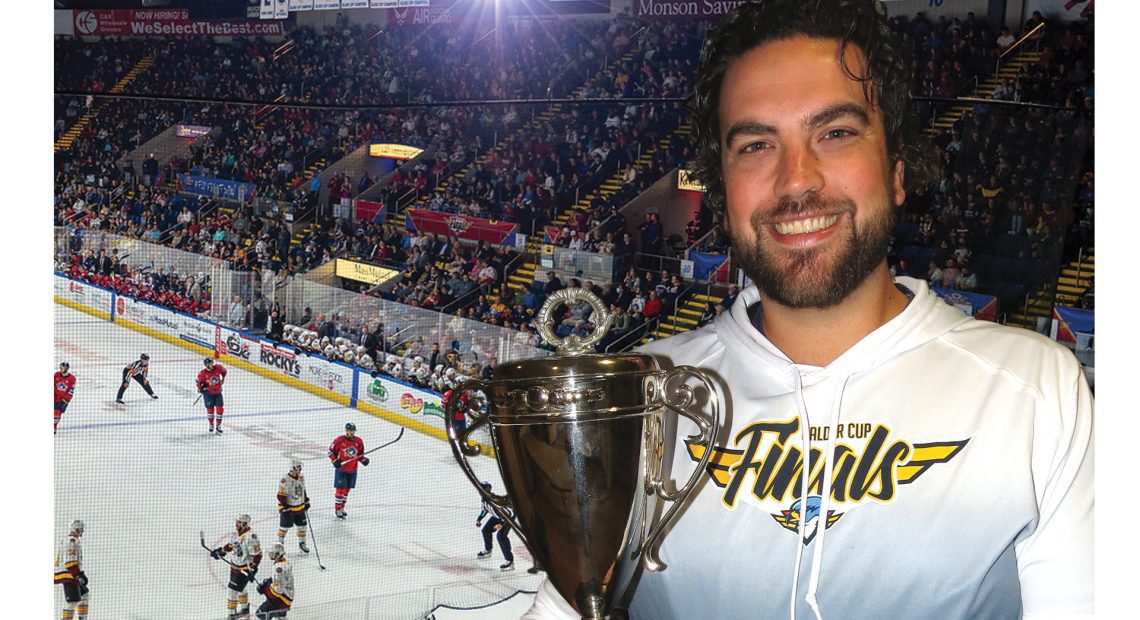
Nate Costa with the AHL’s Eastern Conference Championship trophy

Nate Costa with the AHL’s Eastern Conference Championship trophy and his AHL Finals jersey.

The Springfield Thunderbirds soared to new heights during the 2021-22 season, making the playoffs for the first time in their existence and taking Springfield to the championship round of the playoffs for the first time in three decades. As the franchise enters what will be an abbreviated offseason, it does so with momentum and a championship-caliber team to sell to a more engaged fan base, and management is laser-focused on taking full advantage of this opportunity.

Within the pantheon of ‘good problems to have,’ specifically in the world of professional sports, it doesn’t get much better than this. Although, yes, it does get a little better.

Indeed, after a lengthy playoff run that took the team to within a few wins of a Calder Cup, the Springfield Thunderbirds are looking at a short offseason — as in two full months shorter than the norm.

That’s a problem, said team President Nate Costa, because there’s a lot to do before the 2022-23 season starts, from season-ticket sales to scheduling promotions to lining up special guests and programs. But it’s a good problem, obviously, because of everything that happened during those aforementioned two months and what they mean to this franchise, and this brand, moving forward.

What happened, said Costa, is that the Thunderbirds, the franchise that brought pro hockey back to Springfield in 2016 after a brief time without a team, became “the talk of the town” during that playoff run. Elaborating, he told BusinessWest that the team took a huge leap forward in terms of visibility, prominence, and, yes, relevance. It always had a core of solid fans, but it hadn’t truly arrived. Until this spring.

“It all came to fruition when the playoff run happened,” he told BusinessWest. “All the stuff we thought could happen — that we would be the talk of the town, that we could be the focal point of downtown Springfield … it all came together. And now, it’s about trying to capture some of that momentum and keep things moving.”

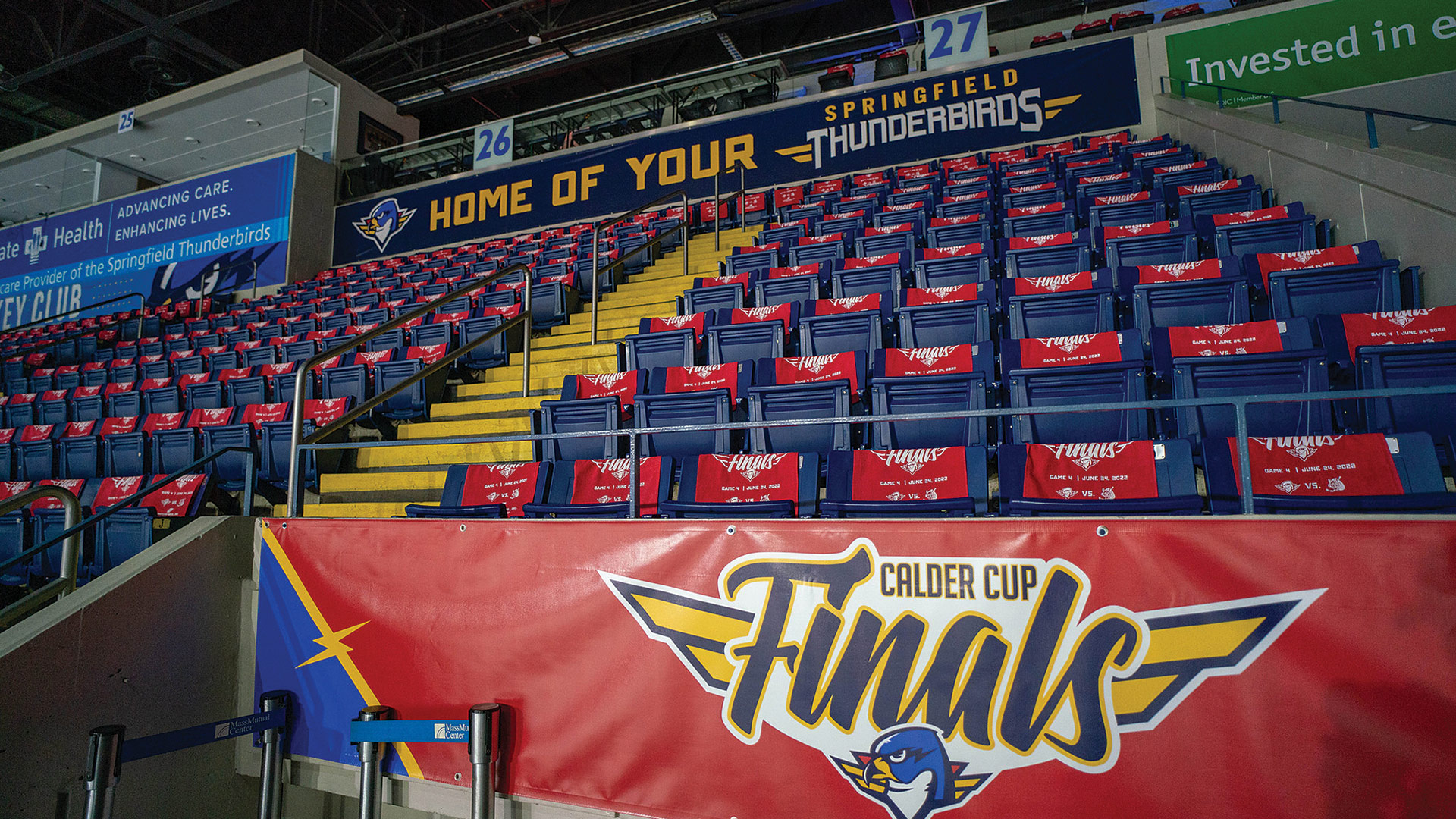
The team took this huge step forward in large part because the team seized a huge opportunity during the playoffs to capitalize on the 11 extra games and the excitement generated with each passing round by promoting the brand in every way imaginable, from ceremonial posters and rally towels handed out at the home games to extensive social-media coverage of the team’s run to the Eastern Conference title and the brink of a Calder Cup.

The challenge — and huge opportunity — moving forward, as Costa said, is to build off this hard-earned momentum, and this is what management will be doing in this abbreviated offseason.

Thunderbirds

The extended playoff run gives the Thunderbirds a short offseason, but in the larger scheme of things, that’s a good problem to have.

“All the positives around the business now, and all the stuff that comes from having a nice run like this is … huge, and it’s something we’ve never had before — we’ve never even made the playoffs before in my time with the Thunderbirds,” he noted. “We’re in a good position to take advantage because we’ve laid a really solid foundation that we can build on.”

Looking back on a memorable season, one that earned the T-Birds Team of the Year honors (the President’s Award) from the AHL, Costa said it happened because many pieces fell in place and because all the various players — from the local ownership group that provided the needed resources to a parent team, the St. Louis Blues, that “understands the value of winning at this level,” as he put it, to the players and management — did their respective jobs.

Overall, he said the deep playoff run was and is validation of everything that management and ownership have done to not only bring hockey back to Springfield but to generate interest in hockey and build a successful brand.

“It all came to fruition when the playoff run happened. All the stuff we thought could happen — that we would be the talk of the town, that we could be the focal point of downtown Springfield … it all came together. And now, it’s about trying to capture some of that momentum and keep things moving.”

“It’s been a huge validation, not only for me personally, but for the owners, who stepped up for the city, made a big investment, and did it the right way,” he said. “To be able to get the Eastern Conference championship and do something that hadn’t been done in 30 years … that’s pretty special.

“Getting to the playoffs is really important to the development of these players; these guys are getting extra games, they’re getting extra high-pressure games … that all means a lot to development,” he added. “The really cool thing is that there is lot of continuity between last year’s team and this year’s team, which is a testament to the Blues — they’re bringing back a lot of guys.”

For this issue, BusinessWest talked with Costa about the season — and postseason — that was, how the team made the most of that unique opportunity, and how it intends to build on all that was gained during the 2022-23 season and beyond.


Banner Year

One of the many items on the to-do list for Costa and his team this offseason is to order a ‘2022 Eastern Conference Champions’ banner to hang in the rafters at the soon-to-be-renamed MassMutual Center.

Costa said research revealed the name of a company in Waltham that makes such banners for a number of professional sports teams, and preliminary talks with that outfit will commence soon.

Thunderbirds fared well

While the playoffs are not a ticket to guaranteed financial success, the Thunderbirds fared well, selling out each of its three games in the Finals.

“We want to do it right — to go the company that does this for everyone,” he said. “I want to get their input — I want to get some direction on how to design this the right way, because it’s going to live in our rafters for a long time.”

Finding a company to make a banner for the rafters was about the last thing on anyone’s mind during a very challenging start to the 2021-22 season, said Costa, adding that this past year was a stern test on many different levels.

For starters, the team was starting up again after deciding not to play during the 2020-21 season, when COVID was at its height and the AHL was playing a shorter schedule with a host of restrictions and, for the most part, no fans. This meant assembling a team of employees (with many returnees from before COVID) and re-engaging with a fan base.

But mostly, it meant dealing with a pandemic that kept coming in waves and was still very much a disruptive force, especially for businesses dependent on bringing large numbers of people together in closed spaces.

“All the positives around the business now, and all the stuff that comes from having a nice run like this is … huge, and it’s something we’ve never had before — we’ve never even made the playoffs before in my time with the Thunderbirds.”

“It’s been a long year,” said Costa, putting heavy emphasis on that word ‘long.’ “We dealt with a lot of ups and downs; there were a lot of challenges. Groups were essentially non-existent because schools weren’t doing anything, and we were living in a real COVID world for half the year. January and February were some dark months where we still wearing masks and there were potential capacity limitations … we were dealing with that all year, and it was a really taxing and challenging environment to work through. It was exhausting.”

While dealing with these challenges, the Thunderbirds, thanks to a solid mix of established veterans and emerging prospects, established themselves as not only a playoff contender (23 of the league’s 31 teams would qualify for postseason play for the 2021-22 season following some changes to the format), but as a frontrunner. Indeed, the team forged its way near the top of the Atlantic Division of the Eastern Conference and stayed there for the bulk of the season.

By the spring, the team’s consistently solid play made a playoff birth likely, and then inevitable, giving Costa and his team a chance to start planning — as much as any organization can plan a playoff run, even with a bye in the first round, which the T-Birds earned by finishing second overall in the Atlantic Division.

Indeed, the playoffs are to be taken one series — and, in many respects, one game — at a time, he said, adding that, while a playoff run can benefit a team’s bottom line, there are many additional expenses, especially travel and logistics, and some challenges when it comes to ticket sales, including the loss of all-important group sales.

playoff experience different

Nate Costa says one of the team’s goals was to make the playoff experience different for the fans and the players, with rally towels and banners like this one.

“Every series is like a mini-season, the way we market it and the way you go through the process, because you don’t know what’s going to happen; it’s all dependent on your performance on the ice. At the beginning of the run, we wanted it to make it feel different and feel separate from the regular season, and so, from a marketing perspective, we put together an entire campaign around the playoffs,” Costa explained, including a hashtag slogan — Fly, Fight, Win! — that was a nod to the Air Force. “It was completely different from what our regular-season marketing campaign was.”


Winning Formula

Such marketing efforts included everything from lawn signs to new signage around the arena to stickers placed in the windows of downtown businesses, as well as that hashtag. They were a necessary expense, but ones with a very uncertain ROI.

“You can do all that planning and do all those things, and then get knocked out in the first round,” Costa explained. “We were really fortunate that we got to go all the way to the end, but every round you have to redo the schedule, get tickets up on sale, set the pricing on tickets, get the tickets sold, getting marketing in place and buying the advertising — and it all happens within a week.”

“The other blessing about going so late into the playoffs is that it’s only three months from the end of our year to the start of the new year. I think there’s still going to be a lot of pent-up excitement, especially with the number of guys we have coming back and the continuity with raising the banner and all that.”

And there are no guarantees that a playoff run will be a financial success, he said, noting that some teams in the playoffs — including the Chicago Wolves, who triumphed over the T-Birds in the Calder Cup Finals in five games — played before crowds that were far from sellouts, and one of the playoff teams from the Western Conference, Stockton, was averaging just over 1,000 per game.

“At this level, though tickets were in demand, you still have to grind, and you still have to have relationships with people in the region to try to move tickets,” Costa said. “And if you’re not prepared to do that at this level, you’re not going to succeed.

“The first two rounds are really challenging, and teams traditionally break even or lose,” he explained. “But you maximize those opportunities to build momentum for future rounds, if you can get there, and that’s what we did.”

Overall, the Thunderbirds did well with playoff ticket sales, he went on, noting that each of the three Finals games hosted in Springfield was a sellout (6,793 seats), and the earlier rounds averaged more than 5,000, with some games coming on weekdays and even Mondays.

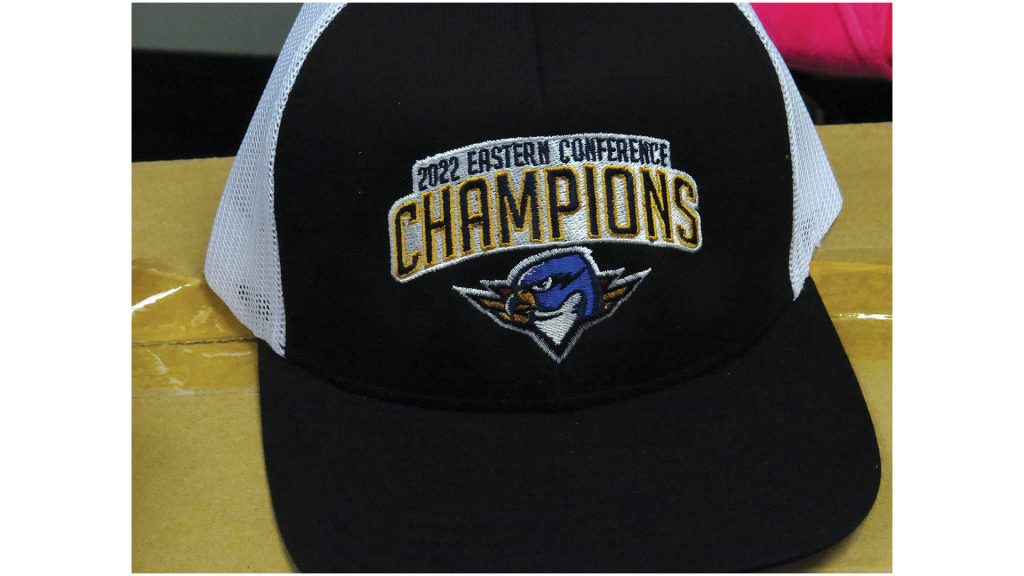
Eastern Conference Champions’ hat.

There are many benefits to an extended playoff run, including merchandise, such as this ‘Eastern Conference Champions’ hat.

But beyond ticket sales, Costa said he saw the playoffs as an opportunity to build the Thunderbirds brand, and he invested heavily in many different initiatives.

For starters, he made sure all three of the team’s media members went to every playoff series to cover the Thunderbirds for social media.

“From the beginning, I wanted to feel like a pro hockey team, and that means getting photography, video, and social media on the road,” he said. “That’s what separates us from a lot of AHL teams; not many teams in this league are willing to invest in this stuff. But I think it’s important for perception of the brand.

“If you can do the little things like that, if you can let the players feel like real pros, then the fans, by extension, the people who are following your brand, can also feel that, and that gives you a lot to sell,” he went on. “The playoffs, to me, was all about maximizing the opportunity.”


Setting Sale

As he talked with BusinessWest, Costa was wearing a ‘Calder Cup Finals’ pullover. At one point in the proceedings, he paused to show off the AHL’s Eastern Conference Championship trophy, named for former AHL President Richard Canning.

These are just a few of the symbolic ways in which he and his team are still living in the moment, if you will.

But in most other ways, the team is putting its deep playoff run behind it and moving onto next season. Indeed, Costa made a point of referring to the 2021-22 campaign as ‘last season,’ and to 2022-23 as ‘this season.’

Which brought him back to the ‘good problem to have’ he mentioned at the top.

“It’s a blessing and a curse,” he said of the shortened offseason, noting that it’s too short for everyone involved — players, many of whom will be back with the team, as well as coaches and administrators.

But from a business perspective, and most all other perspectives, it certainly beats the alternative — another season with no playoffs.

“I’m going to take the playoff run and everything that came with it over a longer offseason,” he said, adding quickly that some, but not all, of the page-turning work that comes after a year’s final game is over had to wait until the playoff run ended.

The mission now is to make up for that lost time, and Costa and his team are now forging ahead with the plans for 2022-23. The schedule has been officially released, which means the team can now start slotting in everything from annual events to who will sing the national anthem at each game.

And, as he mentioned, there is momentum to build on, and it is already showing up in season-ticket sales; by mid-July, the team had more than 1,150 season tickets sold for the coming season, a jump of nearly 100 from last year, with more than 200 still to renew and a projected 80% of those coming back. That means the team is looking at perhaps a 30% increase in season-ticket volume.

And that should be just one area of growth, he said, adding that, overall, a short offseason isn’t beneficial only because of what it means about last season.

“The other blessing about going so late into the playoffs is that it’s only three months from the end of our year to the start of the new year,” Costa explained. “I think there’s still going to be a lot of pent-up excitement, especially with the number of guys we have coming back and the continuity with raising the banner and all that.

“Early on in the year is typically really hard for us,” he went on, adding that the team is competing with pro and college football and other sports as well. “But coming out of this, I think we’re going to have a lot of momentum. We don’t really hit our stride typically on the business side with big crowds until December, when people really start to turn the page and think hockey. This will help us early in the season; we’re going to come out of the gates strong.”

As the team continues its budgeting for the coming year, it will be aggressive as it sets goals for ticket sales and revenue because of last year’s success, Costa said, but it will also look for new areas in which to grow and improve, on both the revenue and expense sides.

“It’s just the maturation of the business,” he explained. “We’re in a healthy place now, and it’s all about how we take advantage of our momentum. When we took this over, it was obviously exciting, but there wasn’t a ton of value built up in the brand, and now we’ve gotten to the point where we have some value built into the brand, and we have to take advantage of that.

“Now, we have a winning team to talk about and a championship-caliber team,” he went on. “And that just adds to everything that we’re doing, and it makes our job easier.”


Soar Subject

Summing up the playoff run that was, from both a personal and professional perspective, Costa said it was, in a word, “special.”

“It was one of the coolest experiences I’ve had in my career,” he said, noting that the team won the Eastern Conference title exactly six years from the day the new franchise was announced. “I’ve been in pro sports for more than 15 years now and had never gotten to that point — it was fulfilling on many levels.

“And that’s one of the things I hammered home with our staff. I said, ‘I know it’s exhausting, and I know we’re working extra games, but this doesn’t happen every year,’” he went on, adding that, when it does happen, a team has to take full advantage of the moment — and the momentum created by that moment.

And he and his team are fully committed to doing just that.


George O’Brien can be reached at [email protected]
Banking and Financial Services Special Coverage

Pedal to the Mettle

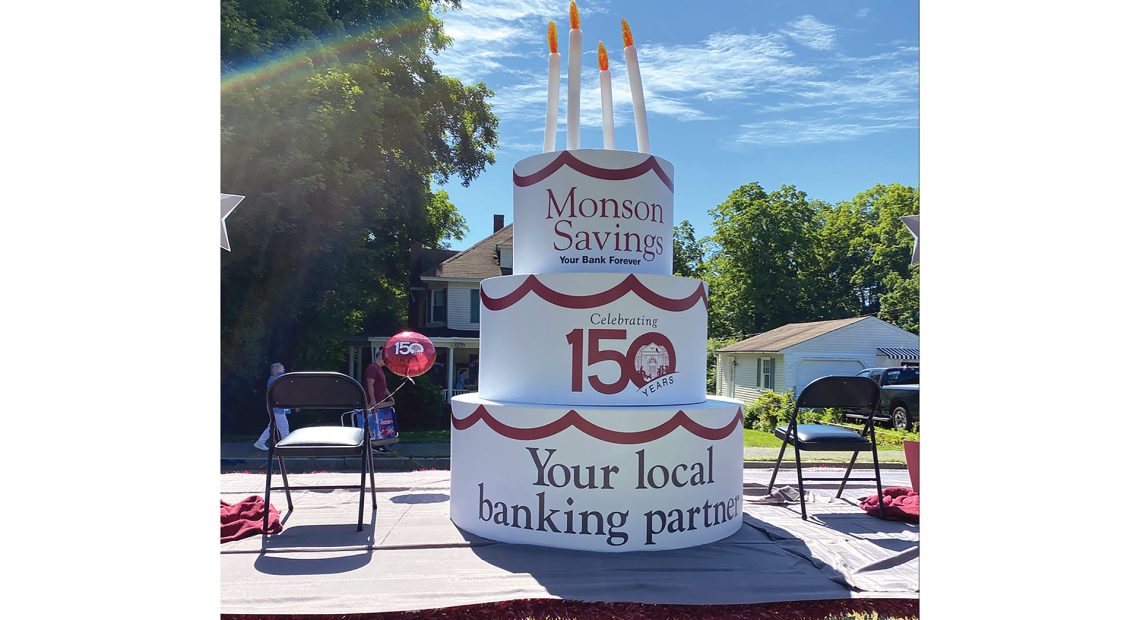
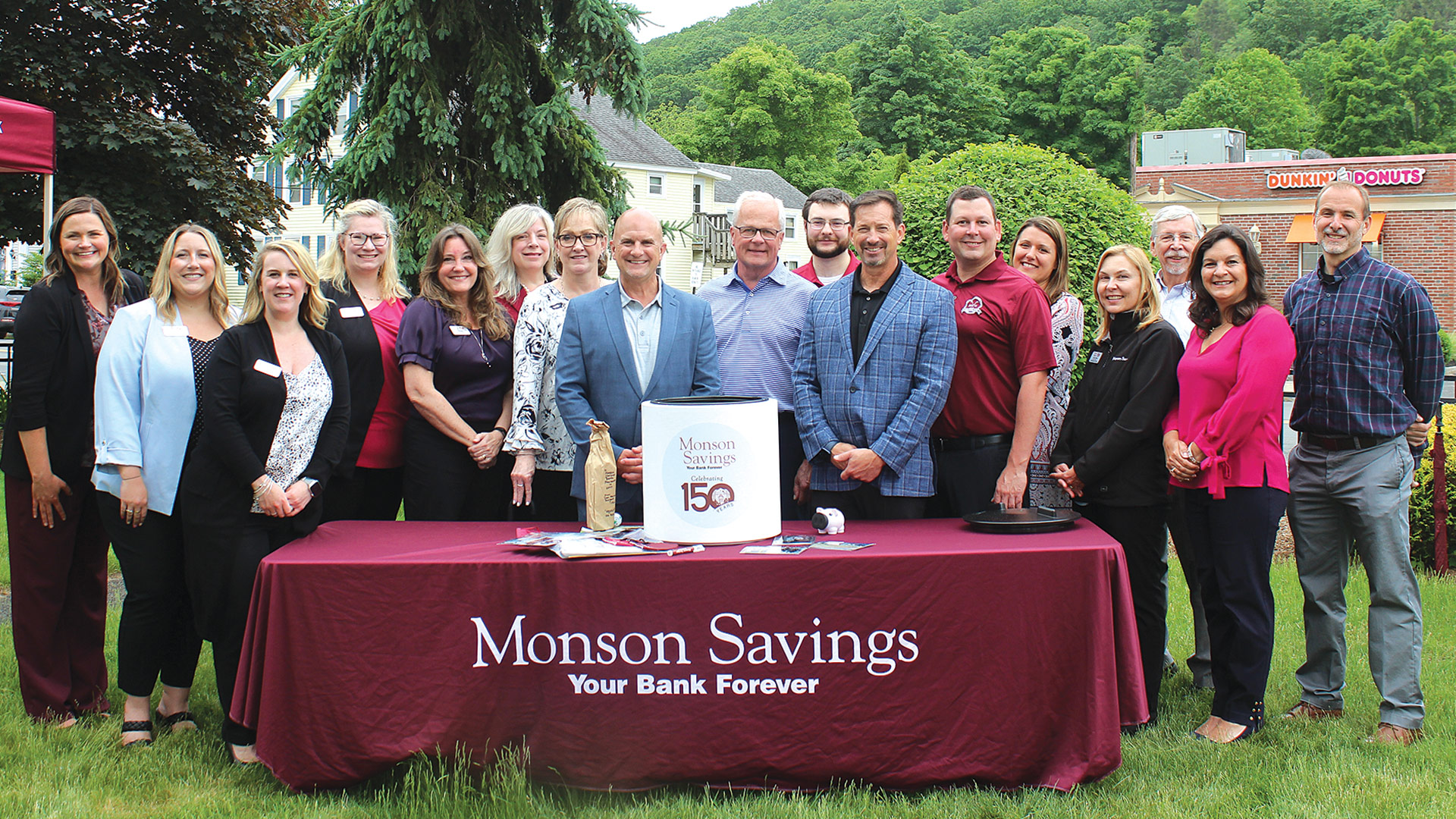
Monson Savings Bank’s birthday celebration

Monson Savings Bank’s birthday celebration

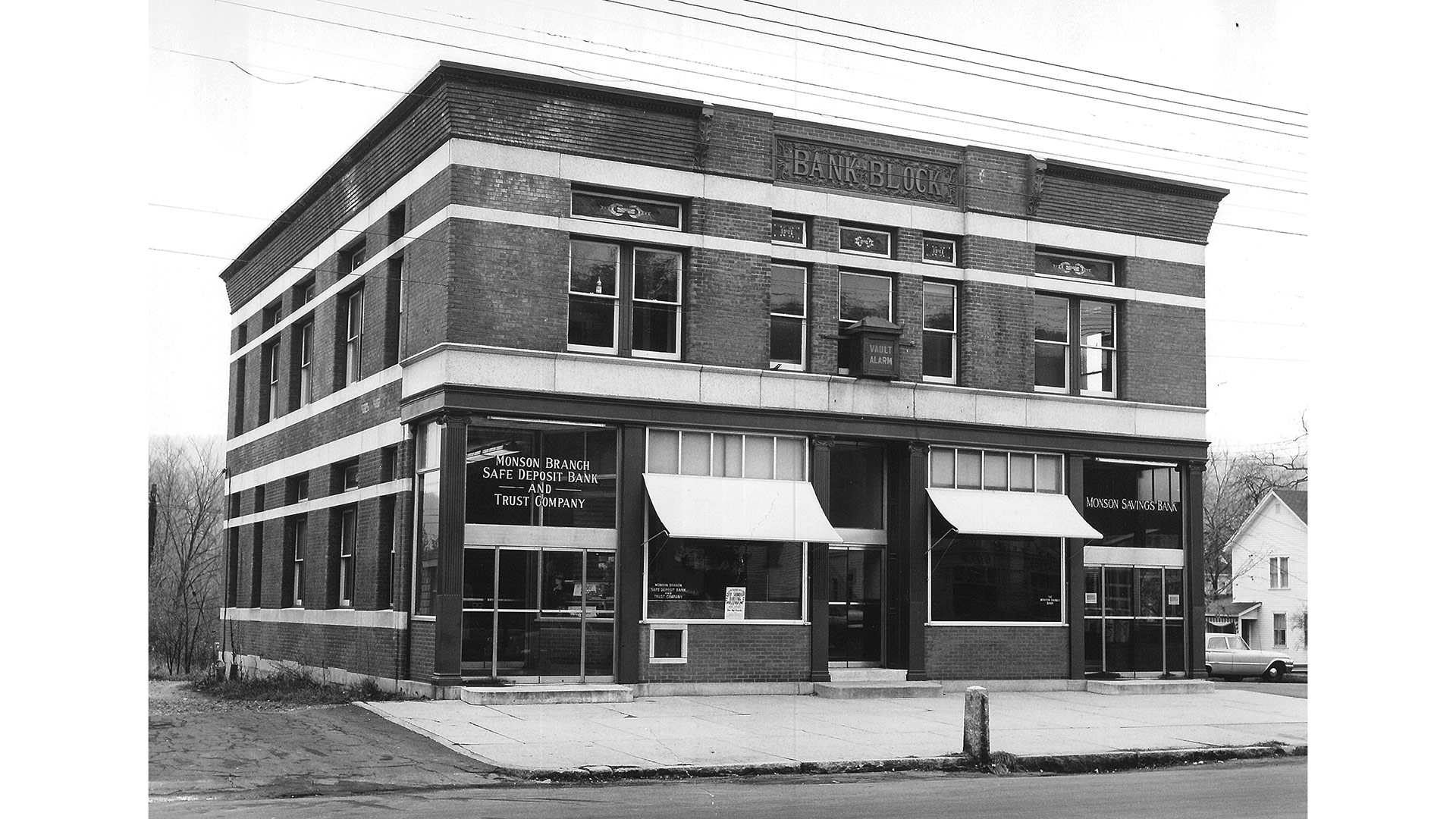
Monson Savings Bank has been commemorating its 150th birthday in many different ways, from a time capsule to assembling and donating $15,000 worth of bicycles to several area charities. Through all these efforts, the bank is celebrating its continuity and its commitment to a community that is now much larger then when it took its first deposit back in 1872.

Dan Moriarty called it a ‘trial run.’

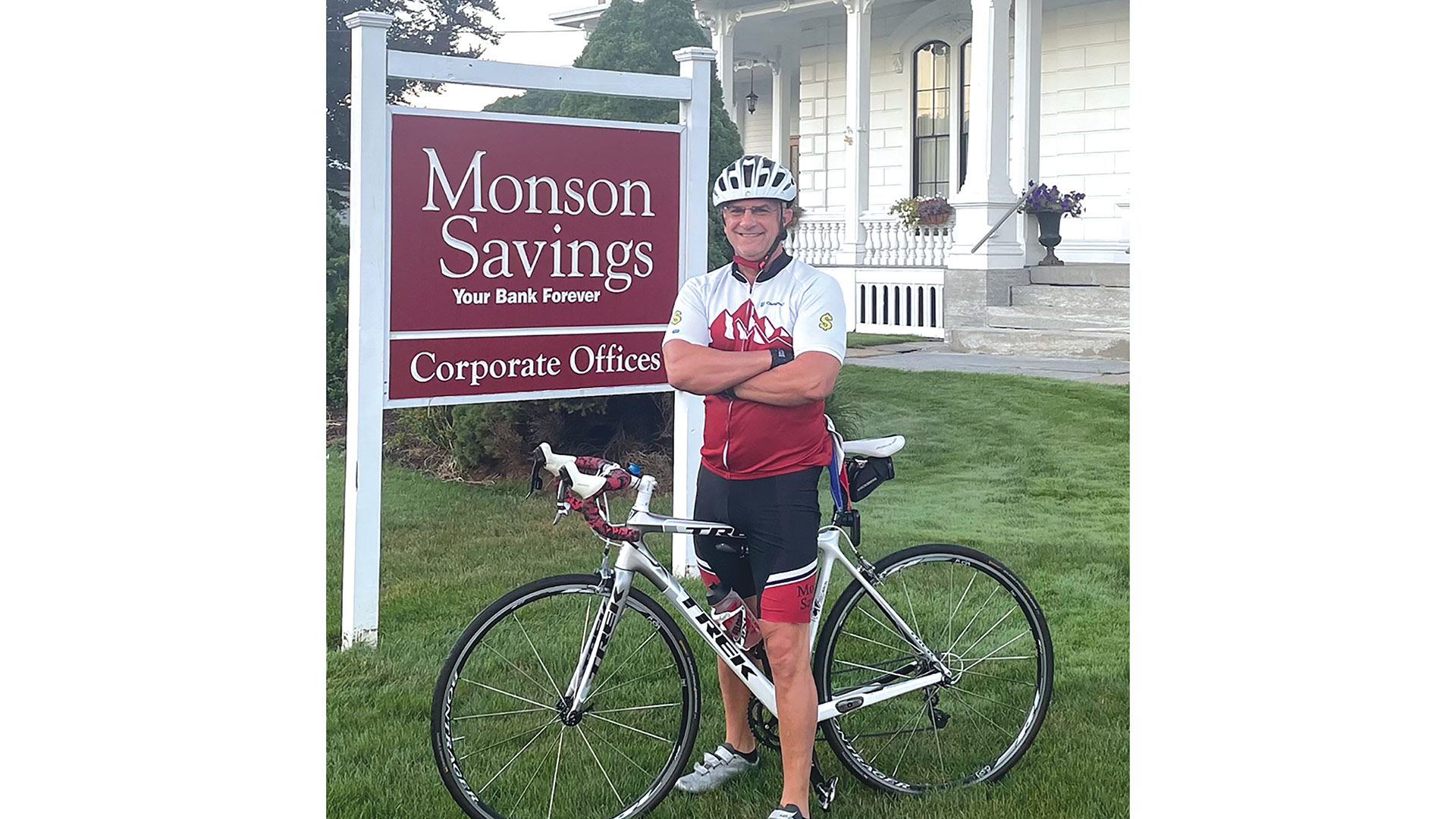
That’s how he referred to his 60-mile bike ride, which he also called the ‘Tour de Branches,’ on July 17, during which he visited all seven Monson Savings Bank (MSB) locations — five branches, the headquarters, and a loan center — on a trek that took him from Monson to East Longmeadow, with stops along the way in Ware, Wilbraham, and Hampden.

Moriarty, the bank’s president and CEO, said this was a tuneup for a ride two and a half times that length, a number that is significant because 150 is also the number of years the bank is celebrating this year, and the ride, still very much in the planning stages, has now become a poignant part of the celebration.

Dan Moriarty’s ‘Tour de Branches’

Dan Moriarty’s ‘Tour de Branches’ helped him prep for a 150-mile ride as part of Monson Savings Bank’s birthday celebration

“My goal is to raise money to give to a local charity … I’m thinking I could ask for per-mile pledges from friends, family, customers, and businesses,” Moriarty told BusinessWest, adding that the charity is still to be determined. “I’m guessing no other bank president belonging to a bank older than 100 years has done this.”

He’s probably on very safe ground with that statement. Not many bank presidents pedal such distances, although he’s certainly comfortable doing so having competed in several Ironman triathlons, where participants cycle 120 miles while also swimming 2.4 miles and running a full 26.2-mile marathon. And, more to his point, there simply aren’t many banks that can boast about being around for 100 years, let alone 150.

And that, more than anything else, is what MSB is celebrating this year, said Mike Rouette, executive vice president and chief operating officer, noting that this longevity, this stability — not only the same bank, but the same name since Ulysses S. Grant was patrolling the White House — is rare in this era of ongoing mergers and acquisitions.

bank employees buried a time capsule

As part of the 150th birthday celebration, bank employees buried a time capsule filled with a number of items reflective of 2022.

It is reflected, he said, in a borrowed slogan that the bank has adopted: ‘Never forget who you are and where you came from; it’s an important part of you that you will find strength and peace from.’

“It’s short, and it’s sweet, and it says a lot about us,” Rouette noted, adding that, while the bank has grown and expanded its presence within the region, it remains loyal to the principles on which it was founded in 1872.

Moriarty agreed.

“I think it takes a strong sense of loyalty to the legacy of the organization to hang on for that long,” he said. “As we know, in this area, some long-lasting institutions decided to go a different route and either merge or combine. It starts with the organization and how it feels the future can be laid out for a bank that’s been around a long time; if they feel they’re not going to make it, they look to a different situation or combination. So far, we’re not committed to looking in a different direction.”

Moving forward, he said the bank “has a lot to talk about” at its upcoming annual meeting and strategic planning sessions in September, from where, when, and how to expand geographically to anticipating where technology is going and how to maximize it to better serve customers.

“We had very big ideas, and I’m happy to say that we made most of them happen — and very successfully.”

“It’s all about delivery systems, customer service, where we’re physically going next, which means market analysis and possible branch expansion,” he explained. “We’re going to do it in a controlled and managed method.”


To a Higher Gear

While Moriarty is, indeed, a veteran of Ironman triathlons, it had been a while, seven years by his estimation, since he had taken part in one of those competitions. Thus, he admits to being a little sore after that 60-mile trial run.

“It was a reality check when I came off the bike that day,” he explained. “I said, ‘whoa … that was 60 miles; I have to do that twice plus another 30 miles.’ This will be a good challenge for me; there was about 3,500 feet of climbing for one loop — that’s like going up half of Mount Washington.”

Monson Savings Ba

Monson Savings Bank has retained its original name and home city for 150 years, a rarity in the banking world.

He’s presently training with long-time friend and Ironman coach Kevin Moloney, who took the 60-mile ride with him. He’s also mapping out a course, one that will essentially take him on the 60-mile loop twice, with an additional loop, totaling 30 miles, tacked on.

As he said, it’s a work in progress when it comes to planning the ride, choosing a beneficiary, and filling in other details. And this ride will, as noted, will be a capstone — along with a formal gala in September to be attended by employees, board members, and plus-ones (total guest list of … you guessed it, 150) — to what has been a full year of activities marking the bank’s milestone.

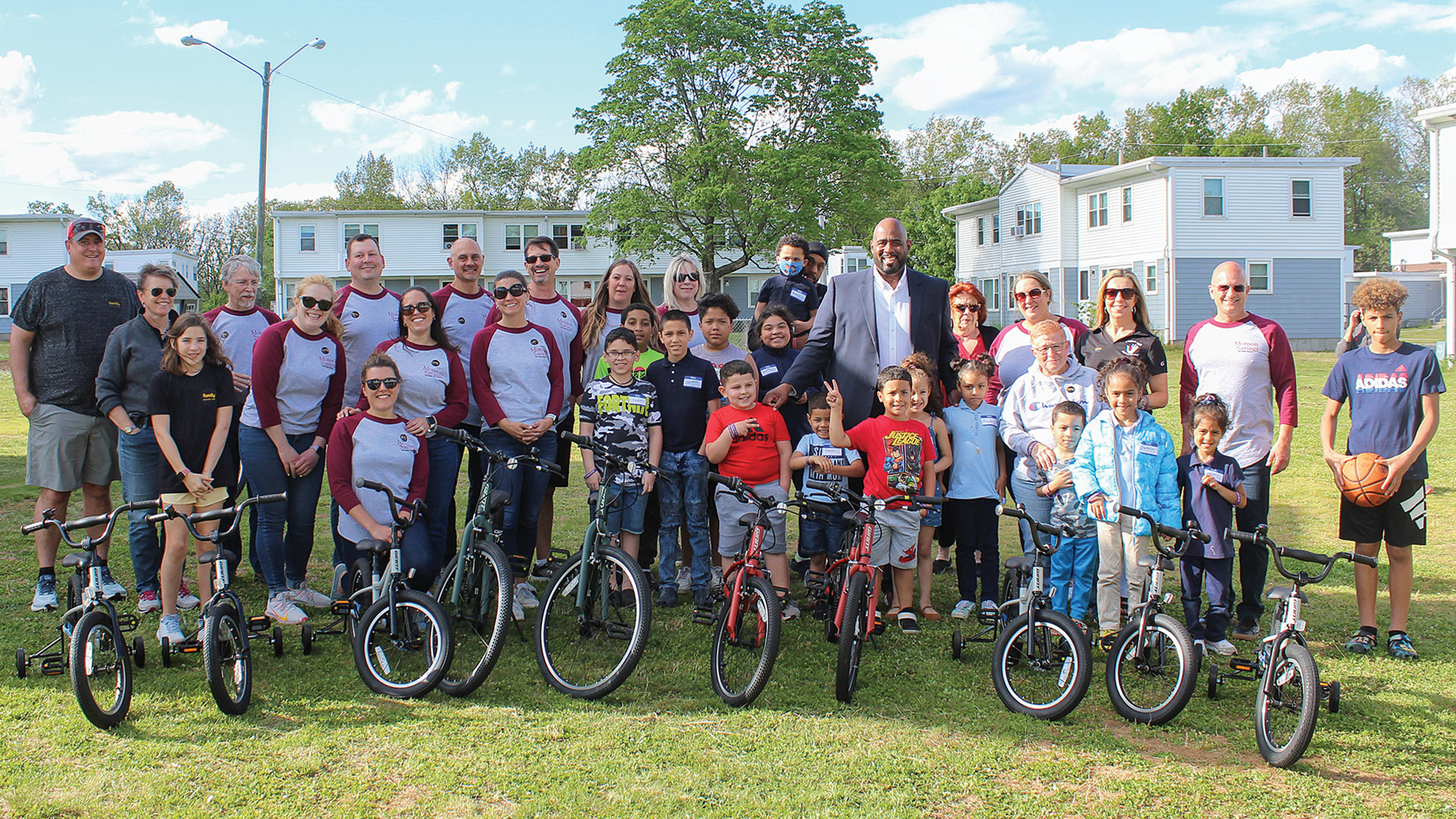
Recapping them, Caitlin O’Connor, vice president and Marketing officer, said there has been a wide variety of events and programs, from the burying of a time capsule to the commissioning of a painting of the bank’s first president, Charles Merrick; from a traveling historical display featuring antique currency to monthly $150 cash prizes; from the placing of a marker where the original bank building stood at the corner of Main and State streets in Monson to several build-a-bike initiatives, whereby bank employees have assembled and donated $15,000 worth of bicycles to several nonprofits in the area, including I Found Light Against All Odds, Educare Springfield, and the South End Community Center.

“We had a ‘Cheers to 150 Years’ event starting on March 19 to really kick things off; that’s was an employee event and the starting point,” O’Connor told BusinessWest. “And from then on, it just grew and took on a life of its own. We had very big ideas, and I’m happy to say that we made most of them happen — and very successfully.”

Collectively, these events and programs have punctuated the bank’s place in the community — literally, as with the marker placed at the original bank location, but also figuratively, as a community bank that is very much involved in the cities and towns where it has locations, and the region as a whole, Rouette noted, adding that the 150th anniversary has been a great vehicle for making introductions, forging new relationships, and reinforcing existing ones.

“What a great way to walk into a nonprofit that you’re hoping to bring into the bank or a commercial or residential customer,” he said of the celebration and everything that it conveys about the bank, its history, its stability, and a future that will look very much like the present and the past.

“It’s an opportunity to give them your story — who you are, what you’re about, and your overall legacy,” he went on. “People want to do business with people that have been around, that are part of the community — not just here today and gone tomorrow, but institutions that are truly the cornerstone, the bedrock of the area.”


The Ride Stuff

That word ‘area’ has taken on new meaning for MSB since its last major anniversary — its 100th, in 1972 — and especially since 1998.

It was during that year that the bank opened its first location outside of Monson, a branch in Hampden. Five years later, a third branch was opened in Wilbraham, and new locations were added in Ware in 2103 and East Longmeadow in 2020. During that same memorable year, MSB’s Loan and Operations Center moved to a state-of-the-art facility in Wilbraham.

‘Build a Bike,’ where employees assemble bikes and donate them to area charities

The 150th celebration has featured a number of programs and events, including ‘Build a Bike,’ where employees assemble bikes and donate them to area charities, in this case, I Found Light Against All Odds.

With these moves, the bank is now serving a much broader area and becoming more involved in the region’s unofficial capital, Springfield, and serving a broader demographic mix of commercial and residential customers, said Dina Merwin, senior vice president and chief risk and senior compliance officer for the bank.

“We’ve well beyond the towns in which we have branches, and so we recognize that we want to reach all potential customers in our market,” she explained. “We recognize also our desire to include financial inclusion in reaching all potential customers in our market, whether that cuts across lines of income levels, race, ethnicity, and any other basis.

“Many of our recent events were focused in the Springfield area,” she went on, “while we continue to support and celebrate all the communities in which we are committed. We also recognize that there have been some demographic shifts in our market area in age and different types of population, so it’s important for us to recognize that and make sure we’re inclusive in all our efforts.”

While the area being served by the bank has changed, the name over the growing number of doors hasn’t, said Moriarty, noting that his institution, unlike many others, has chosen to keep the name of the community where it began as part of the brand, as well as that word ‘Savings.’

“I think the recession will be short and challenging, but I think Monson Savings and other banks are positioned well to weather, manage, and help customers through this period.”

“We’re going against the grain on that in some respects,” he noted. “Mike and I met with the board of directors during a strategic planning session, and we feel that the reputation that the bank has built the past 150 years does mean something, and we believe it’s recognizable in the community. We want to leverage that from a standpoint of legacy — Monson itself, where it all began — and then ‘Savings’ connoting security and trust, even though we feel we are a commercial player in the market.”

Indeed, while celebrating its 150th anniversary in all those ways mentioned above, MSB has also been carrying on with business, said Moriarty, noting that it has been a solid year in many respects, despite a sagging economy, with continued growth in commercial lending and, overall, a $30 million increase in total assets, bringing the bank near the $650 million mark.

“We’re working to strengthen existing relationships while also fostering new ones across the board, from individuals to businesses,” he said. “We’re trying to help them navigate where this challenging environment is going.”

On the commercial-lending side of the ledger, an already competitive landscape has become even more so as rates start to edge up, said Rouette, adding that many businesses are being more cautious amid general uncertainty about where the economy is headed and, overall, a decline in confidence.

“You’re seeing a bit of a slowdown, especially as people hear of the inflationary environment we’re in,” he went on. “People are pushing back potential projects that they have; maybe they were going to start in the third quarter or fourth quarter of this year, and now they’re saying, ‘let’s pump the brakes a little bit and possibly look at next year and see where we land from a rate standpoint and with the economic environment.’

“We had a great first and second quarter,” he went on. “But when you’re out talking to customers, you can hear the apprehension and cautious tone of voice that business owners are using right now.”

Moriarty concurred, and noted that a recession is now more likely than not, in his opinion, and this will add to the many challenges business owners and managers are currently facing.

“I think the recession will be short and challenging,” he said, “but I think Monson Savings and other banks are positioned well to weather, manage, and help customers through this period. And once the Fed gets control of inflation and the employment market evolves a little bit, we’ll see some improvement.”

Looking ahead, and toward creation of a new strategic three-year plan for the bank, Moriarty said a number of topics will be considered, including the need to be more “customer-centric versus product-centric,” as he put it.

“That means that we have to make sure we’re creating frictionless opportunities and delivery systems that make it easy for customers to manage their banking,” he explained. “That includes digital banking; we know we have cutting-edge products now, but we know things are going to change drastically in the next three to five years, so we have to make sure we’re positioned to give those offerings to our customers.

“Artificial intelligence will come more into play in the next three to five years,” he went on. “The usefulness or the quickness with which we can do data analysis of what our customers have and what they need will be important. Customers want to have things at their fingertips; they want to maximize and analyze their financial situation and be able to look forward and make good decisions.”

As for possible geographic expansion, Moriarty said there are many possibilities, and he’s not ready to talk about any of them.

He did say that the consensus among experts in the industry is that the recent pattern of consolidation within the sector will continue, leaving opportunities for smaller, community banks like Monson Savings.

“We feel that we benefit from other mergers and acquisitions because we’ve been around for so long, and we know that where there’s shakeup, there’s also opportunity,” he said. “We’re going to keep an open mind to that.”


Going the Last Mile

Returning to the subject of his planned bike ride, Moriarty joked that now that he’s started to talk about it, he’s pretty much committed to doing it.

He’s training two or three times a week with Moloney and looking at a number of options for which charity or charities (probably the latter) he will be fundraising for.

It’s been a while since he’s taken part in an Ironman competition or even a marathon — he’s run in several of those as well, including Boston a number of times. But he said it’s like … well, riding a bike. Not really, but close.

In any case, like the institution he now leads, he’s proven that he’s in it for the long haul — as in the very long haul: 150 miles for him, 150 years for the bank.

They’ve both put the pedal to the mettle.


George O’Brien can be reached at [email protected]
Education Special Coverage

Grade Expectations

Michelle Schutt says that, while it may seem like Greenfield, Mass. is a long way from Twin Falls, Idaho (3,160 miles, to be exact), it’s really not.

At least when it comes to the issues and challenges facing the institutions that now comprise the top lines on her résumé — College of Southern Idaho (CSI), where she was vice president of Community and Learner Services, and Greenfield Community College (GCC), where she started just a few weeks ago as the school’s 11th president — and their overall missions.

“There are many similarities between these communities,” she explained. “There’s a high number of first-generation college students, people who are hungry for educational opportunities, definite need within the community … they are very much alike, which lends itself to the applicability of what I’ve done in the past and what I hope to do the future. I’m a big believer that education opens doors and changes family trees, and that we can all be educated.”

Schutt comes to GCC with a résumé that includes considerable work in the broad realms of student services and diversity, equity, and inclusion, and she said this will be one of the main focal points at GCC.

“If we’re going to recruit and retain students,” she told BusinessWest, “we’ve got to take into account their entire experience because often, it’s not the academic rigor or even the finances that keep them from succeeding; it’s the social-capital issues of how they’re maneuvering through life.

“COVID definitely exasperated the social needs of our students,” she went on. “But they were always there.”

Regarding diversity, she said this issue is often looked at through the lens of ethnic diversity — and that is certainly part of it. But there are many aspects to this matter, some more visible than others, and they must all be considered at institutions like GCC.

“If we’re going to recruit and retain students, we’ve got to take into account their entire experience because often, it’s not the academic rigor or even the finances that keep them from succeeding; it’s the social-capital issues of how they’re maneuvering through life.”

“It’s a little cliché, but this is a bit of an iceberg topic,” she explained. “There are the physical things that we notice about each other, and then there’s the 90% of the iceberg that’s below the water line; you really need to get to know someone before you can fully understand how they, too, are diverse.”

Schutt told BusinessWest that, after more than 20 years of work in higher-education administration — work that had taken her from St. Cloud, Minn. to Hanover, Ind., Laramie, Wyo., and then Idaho, she considered herself ready to be a college president, and began looking to apply for such positions.

This recognition didn’t come overnight, she said, and it was actually several years after the then-president of CSI asked her to consider that position before she considered herself truly qualified and ready to take the helm at a campus.

She said she looked at a few opportunities that presented themselves — there have been a number of retirements and shifts in leadership in higher education (as in other sectors) over the past few years — but soon focused her attention on GCC.

Schutt said the school — which this year celebrates its 60th anniversary — and its mission, the area it serves, the team in place, and the institution’s prospects for future growth and evolution all appealed to her.

Her immediate goals are to become acquainted with the school, its staff and faculty, as well as Greenfield and the broader area served by the college.

Looking longer-term, she said she wants to properly position GCC for a future where enrollment will be even more of a challenge than it is today, and where students’ ‘needs,’ a broad term to be sure, will only grow.

“Nationally, we’re heading for an enrollment cliff,” she said, adding that 2025 is the year when already-declining numbers are expected to reach a new and more ominous level. “We have to ensure that we’re offering what people need and what people are looking for; we have to take a look at what we’re doing in workforce and in community education and what we’re doing with credit-based courses, and align those with good outcomes.”


Course of Action

As noted, Schutt brings to GCC a résumé dominated by work in student services, with a focus on diversity and inclusion.

At the College of Southern Idaho, where she started in 2015, she held several positions, starting with associate vice president of Student Services, then vice president of that same department, and, starting just last year, vice president of Community and Learner Services.

“If they’re stressed about some sort of insecurity or some issue related to childcare or transportation, it’s really difficult to focus on calculus. That’s where student affairs and student services come in — to educate the entire student.”

She lists a number of accomplishments, including a sharp rise in enrollment for the 2020-21 school year; steady increases in Hispanic student enrollment, from 17.8% in 2015-16 to 26.3% in 2109-20; and improvement in the graduation rate from 20% in 2016 to 34% in 2020.

But she believes many of her most significant gains came in the realm of diversity, equity, and inclusion.

Indeed, Schutt noted that, in helping CSI become a Hispanic Serving Institution (HIS), she recruited and hired bilingual staff members for each area of Student Services, spearheaded CSI’s first HIS Week, lobbied the board of trustees for gender-neutral bathrooms on campus, developed and offered a program called Parent College in both English and Spanish, established the Gay-Straight Alliance student group, and advocated for and hired the school’s first full-time veterans’ coordinator.

Prior to CSI, she served as director of Student Affairs at Penn State University’s campus in Scranton. As a member of the school’s senior administrative leadership team, she was engaged in strategic planning, policy development, and problem solving.

She said that she gravitated toward work in student services (she also teaches) because of its importance to the success of not only students but the institution in question. Summing it up, she said such work falls into the realm of student success and making sure they can get on — and stay on — a path to achieving their goals, whatever they may be.

“It’s about ensuring that their housing and food and social integration and mental health and physical health are all taken into account as it relates to their journey,” she explained, “because all of those things play a factor in their academic success.

“If they’re stressed about some sort of insecurity or some issue related to childcare or transportation, it’s really difficult to focus on calculus,” she went on. “That’s where student affairs and student services come in — to educate the entire student.”

When asked what she liked about this aspect of higher education, she said there are many rewards that come with it, especially those derived from helping students clear some of the many hurdles to success.

“I love that we’re able to help each and every student achieve their goals, and that we are looking at them as individuals, as humans, and not another person in a seat, and that we’re educating the whole person.”

“I love that we’re able to help each and every student achieve their goals, and that we are looking at them as individuals, as humans, and not another person in a seat, and that we’re educating the whole person.”

Looking to take her career in higher education to a higher plane, Schutt looked at several job opportunities, but eventually focused on the presidency at GCC because of what she considered a very solid match.

Compatibility was revealed the initial interview, conducted via Zoom, and then reinforced at a day-long, in-person session, during which she met and took questions from several constituencies, including faculty, staff, students, and other stakeholders.

“There is a shared set of values that focuses on students and recognizes the importance of community integration for a community college,” she said when asked what she came away with from that day’s experiences.

“When I came to campus, it was validating to meet people who truly care about students,” she went on. “And that was conveyed in every group that I met with; that was conveyed by the students — that they felt they were cared for. And those things are really important to me; you can’t make that up. And the end of the day, if you don’t care about students, the students know that.”


School of Thought

As noted, Schutt will bring a deep focus on the importance of equity, diversity, and inclusion to her new role, noting that, while she has always had an appreciation for these matters, it reached a new and much higher level through her experiences teaching English and social justice.

“I was teaching in the evening, when we had the greatest diversity of students,” she explained. “And to understand the general college-student experience was really eye-opening to me and made me a better administrator.

“That’s because, as a vice president, you see the highly successful students, or the students who were in great despair, who may not persist no matter how we helped them,” she went on. “To see the 40-year-old mom coming back to school, the 16-year-old dual-credit student, the student with limited English acquisition, the working dad … all those people coming together in one class really opened my eyes to the immense diversity in who we educate in community college.”

At CSI, Schutt said, it became a priority for the school to become a Hispanic Serving Institution, and the many steps taken to achieve that status became learning experiences on many levels. And, ultimately, they helped enable the school to better serve all its students.

“We worked really hard to make sure we were understanding the Hispanic student experience and that we were ensuring equitable outcomes and inclusionary practices,” she explained. “There were always critics who would say, ‘you’re focused on Hispanic students only.’ Well … no, we were making all our practices and policies better for all of our students.

“We worked very hard to get designation, but along the way, we also worked on broadening our understanding and awareness of all students,” she went on. “I lobbied in front of the board of trustees for more gender-neutral bathrooms and started a food bank and made sure we had a full-time veterans’ coordinator. Those are things that improve opportunities for all our students.

“When we’re taking about equity, we’re making sure that everyone has the same opportunity,” she continued. “But how they get there may look very different, and the inclusion component of it is celebrating those differences, and there’s a lot of work to be done — in the field, in society — and Greenfield isn’t any different.”

Elaborating, she said it’s one of her goals to soon have an administrator focused specifically on diversity, equity, and inclusion, a broad realm that, as she said, goes beyond ethnic diversity and to those matters below the tip of the iceberg.

“DEI here might look at educational attainment, it might look at poverty and wealth inequities, it may include LGBTQ identities — there’s diversity everywhere,” she said. “We can’t say, ‘we all look the same here in Greenfield or in the Pioneer Valley, so there is no diversity.’ Diversity is everywhere; it just may not be as obvious.”


Class Act

Looking ahead, Schutt said she’s looking forward to filling her calendar with meetings with local officials and members of the business community as she works to gain a broader understanding of the community served by the college.

She’s also looking forward to the fall, and a projected increase in enrollment as the school looks to fully recover from the pandemic and its many side effects, as well as the coming year, an important milestone for GCC as it celebrates 60 years of growth and change.

Mostly, though, she’s looking forward to continuing what has become, in many respects, her life’s work in student services and diversity, equity, and inclusion.

As she said, if schools like GCC are to successfully recruit and retain students, they must take into account their entire experience. And this will be the focus of her efforts.


George O’Brien can be reached at [email protected]
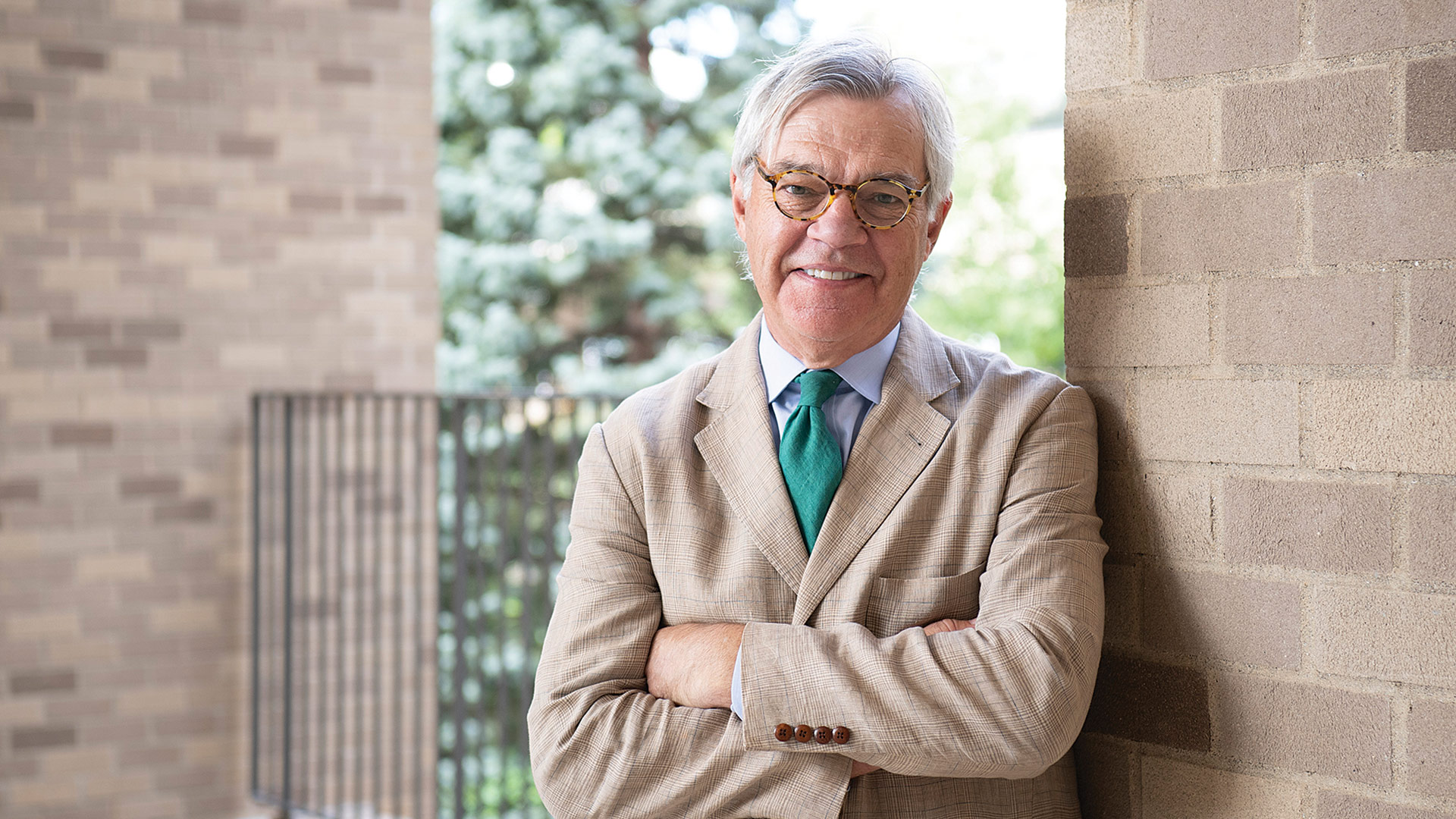
Community Spotlight

Community Spotlight


Mayor William Reichelt

Mayor William Reichelt says West Springfield is making significant progress on many of the goals he set when first elected in 2015.

While the country will be celebrating its 250th birthday in 2026, West Springfield will mark that same milestone two years earlier.

And the planning for what will be a huge party is very much underway, said Mayor William Reichelt, noting that a committee has been put together, chairs of that board have been selected, and a dialogue will soon be launched with town residents to determine how, where, and in what ways they want to observe that birthday.

And while two years will go by quickly, especially with all this planning and execution to handle, this community that operates as a city but still calls itself a town could look much different by the time the big party kicks off.

Several of its major roadways, including Memorial Avenue and sections of Route 5, will be redone or in the process of being redone (hopefully the former, said the mayor as he crossed his fingers — figuratively, anyway) by then. There will be some new businesses on those stretches — Amherst Brewing is moving into the former Hofbrauhaus property, for example — and some of them well before 2024. And there may actually be some cannabis-related ventures in this town that has thus far said ‘no’ to this now-booming industry; a critical City Council vote on the matter took place on July 18, just after this issue of BusinessWest went to press, and Reichelt, who backed a measure to permit the licensing of such establishments, was confident that he had the requisite six votes for passage.

“Once I got into this, there was so much I wanted to do, and I quickly realized that nothing happens fast.”

“We’re in a much different place than we were four years ago, when it was 8-1 [against],” he said, adding that the measure would enable businesses to be located on large stretches of Riverdale Street, the preferred location among those in that industry.

And there is a chance, albeit a slight chance at this point, that the massive power-generating plant near the rotary at the Memorial Bridge may disappear from the landscape it has dominated for decades. Indeed, it has been decommissioned, and its owners are deciding what to do with the property.

“We’re in discussions now about what remediation will look like; I would like to see a clean site so another developer can do something with it, but we’re still in the talking stage,” Reichelt said, adding that the community is looking closely at what happened with a similar but larger property in Salem that is being redeveloped.

The renovated 95 Elm St., now known as Town Commons

The renovated 95 Elm St., now known as Town Commons, features an eclectic mix of businesses and will soon add a restaurant.

But enough about what might and might not happen over the next two years. For now, West Springfield and its mayor are making progress on many of the goals he set down when he was first elected in 2015, including infrastructure, new schools and additions to existing schools, attracting new businesses, and creating what he called a “walkable downtown” with plenty of attractions.

Early on, he said he wanted to create ‘another Northampton.’ “But people have this weird dislike of Northampton, for some reason, so now, we say we want it to be like West Hartford,” Reichelt noted, adding that his community is certainly moving in that direction with initiatives ranging from a walking trail and improved infrastructure along the historic town green to the reinvention of 95 Elm St.

Formerly home to United Bank and still known to many as the ‘United Bank building,’ the three-story office complex is now home to a mix of businesses, and a new restaurant will soon be added to that mix.

For this, the latest installment of its Community Spotlight series, BusinessWest turns its focus on West Springfield and the many forms of progress being seen there.


Party Planning

Returning to the subject of the 250th birthday party, Reichelt said the wheels are in motion for that celebration, and some pieces are starting to fall into place.

That list includes a special commemorative 250th birthday beer to be created by Two Weeks Notice Brewing, which set up shop in West Springfield several years ago and has established a firm presence in the community; no word yet on just what this brew will be or what it will be called.

Meanwhile, old documents and photos are being collected, and a commemorative history — a significant update to one produced for the 200th birthday in 1974 — is being planned, said Reichelt, adding that there is preliminary talk of staging an event similar to the Taste of West Springfield that was put on for many years by the community’s Rotary Club.

“We’re talking about bringing something like that back, maybe with a food truck festival on the common,” he said, reiterating that planning for the 250th is still very much in the early stages.

And while this planning continues, officials are making progress on a number of different fronts in the community, everything from the planning of infrastructure work on Memorial Avenue and Riverdale Street to determining how to spend roughly $8 million in ARPA funds (other infrastructure projects are at the top of that list) to contemplating what might be done if that massive power plant actually comes down.

Reflecting on that list, and his first six and half years in office, Reichelt, now one of the longest-serving mayors in the region, said he’s learned during his tenure that it often (always?) takes a long time to get something done, and, as a result, communities and those who lead them must be patient and perseverant.

“Once I got into this, there was so much I wanted to do, and I quickly realized that nothing happens fast,” he told BusinessWest. “Projects that I started talking about back in 2016 … we’re just starting to get funding for and breaking ground now.”

As an example, he pointed to the last remaining piece, the restaurant at 95 Elm St., something he’s been pursuing for years and an element he believes will be a nice compliment to what already exists on that street — a few restaurants, the Majestic Theatre, and a bagel shop already at 95 Elm — and make the area more of a destination.

Hofbrauhaus

At top, the town common now boasts new walking paths. Above, the former Hofbrauhaus property will become a new site for Amherst Brewing.

It’s also taken some time to make the planned improvements to the green area, which now boasts new traffic lights, improved intersections, and a half-mile loop for walking and other uses, said the mayor, adding that a similar upgrade is planned for Elm Street.

“We want to bring people downtown and have it be a spot where you can walk around, go to the theater, have dinner in a couple of different places … make a night of it,” he said. “We have great commercial corridors on Memorial Avenue and Riverdale, but there’s no real place for people in town to go; to have a walkable downtown would be nice. It’s nice to see come that come to fruition after six years.”

Meanwhile, there are ambitious plans on the table for improving the full length of Memorial Avenue, from the Route 5 rotary to the recently widened Morgan Sullivan Bridge. The $25 million, state-funded project is slated to commence next April, and it will take two years to complete.

Significant work is also planned for Route 5 (Riverdale Street) and specifically the stretch north of I-91, said Reichelt, adding that the broad goal is to redevelop that section of the street, which has always been far less popular with retailers than the stretch south of the highway.

“There’s this perception … businesses have no desire to be north of the I-91 overpass,” he said. “They all want to be between the overpass and East Elm connection, where are no vacancies.”

As for the aforementioned power plant, it is very early in the process of deciding what its fate will be, said Reichelt, adding that, if all goes well, the community could have 10 acres of land right off Route 5 and Memorial Avenue that could be redeveloped for a number of uses. There is a landfill next door, so there are some limitations, he noted, but industrial, commercial, and infrastructure opportunities exist, including a connection to the rotary so that motorists can go both north and south from Agawam Avenue.


What’s Down the Road

But much of the attention is now focused on cannabis-related businesses, that July 18 vote, and what will likely happen if that measure passes.

At present, the only business allowed in West Springfield for cannabis-related ventures is to advertise their products and services on billboards along the highways that run through the community. That will change, of course, if the measure passes, as the mayor predicts it will, and he expects West Side to be an attractive mailing address for such companies.

“We want to bring people downtown and have it be a spot where you can walk around, go to the theater, have dinner in a couple of different places … make a night of it. We have great commercial corridors on Memorial Avenue and Riverdale, but there’s no real place for people in town to go; to have a walkable downtown would be nice. It’s nice to see come that come to fruition after six years.”

Indeed, Reichelt said he no longer uses the phrase ‘crossroads of the region’ to describe his community, preferring ‘retail capital of Western Mass.,’ a nod to the many regional and national retail heavyweights — from Costco to Dick’s Sporting Goods to Home Depot — that have located stores in the community.

The traffic that drew those major retailers should also attract cannabis businesses and especially dispensaries, he added.

Reichelt noted that he believes that there is sufficient momentum to get the measure passed, and there may be more with the recent 3% increase in property taxes, the town’s first in several years. Indeed, he said the tax revenue generated from cannabis-related businesses and its potential to help prevent another such increase in rates may help incentivize the council.

“It’s four years later, and the landscape has really changed,” he said. “You hear a lot of the same legalization arguments that you heard back in 2016, but that argument was settled in 2016 — it’s legal in Massachusetts now. To think that it’s not in town is … not based in reality. There are signs on Riverdale and Westfield Street and Memorial Avenue pointing to the different places you can buy marijuana outside of town; look at the tax money that’s leaving here.”

While the July 18 date was one to circle, there’s another key date fast approaching — Sept. 16. That’s the kickoff to the Big E, which will take another big step this year to returning to normal — as in 2019 conditions.

The fair was canceled in 2020, and while it was staged in 2021, it did not have a full lineup of entertainment, said Eugene Cassidy, president and CEO of the Big E, adding that, for 2022, it will be all systems go.

Much of the entertainment has already been announced, he said, noting that Lynyrd Skynrd will close the fair this year. Meanwhile, there will be a number of new attractions and events — including an opportunity for fair attendees to communicate with those at the International Space Station — and even food items, including noodles, vegan offerings, and full-sized donuts.

Cassidy said advanced ticket sales are running well ahead of the pace for last year, which was a near-record year for the fair, and other strong years. “People don’t even know what what the fair is going to offer, but they’re already supporting it by buying tickets, sometimes nine months in advance of the event,” he told BusinessWest. “And that provides a great deal of emotional support for those of us who run the place because we know that our patrons care about the organization.”

But while projections are certainly good for this year, he will watch closely what happens at several other state and regional fairs set to open in the coming weeks.

Indeed, one wildcard could be gas prices, which, while they’re coming down, remain historically high and could deter some families from driving long distances for entertainment.


Bottom Line

Reflecting on why this city still calls itself a town, Reichelt recalled that the vote to change the charter and convert from town government to city government was close — as in very close.

“They decided when they wrote the town charter to maintain the ‘town’ name to maintain that town feel,” he said, adding that many people have approached him and said ‘Will, it doesn’t feel like a town anymore.’

Such sentiments lead him to believe that maybe, just maybe, by the time West Springfield turns 250, it will not only operate a city government, but call itself a city.

If so, that will be only one of many potentially significant changes that will take place between now and then in a community where there is always movement and the landscape is, well, a work in progress.


George O’Brien can be reached at [email protected]
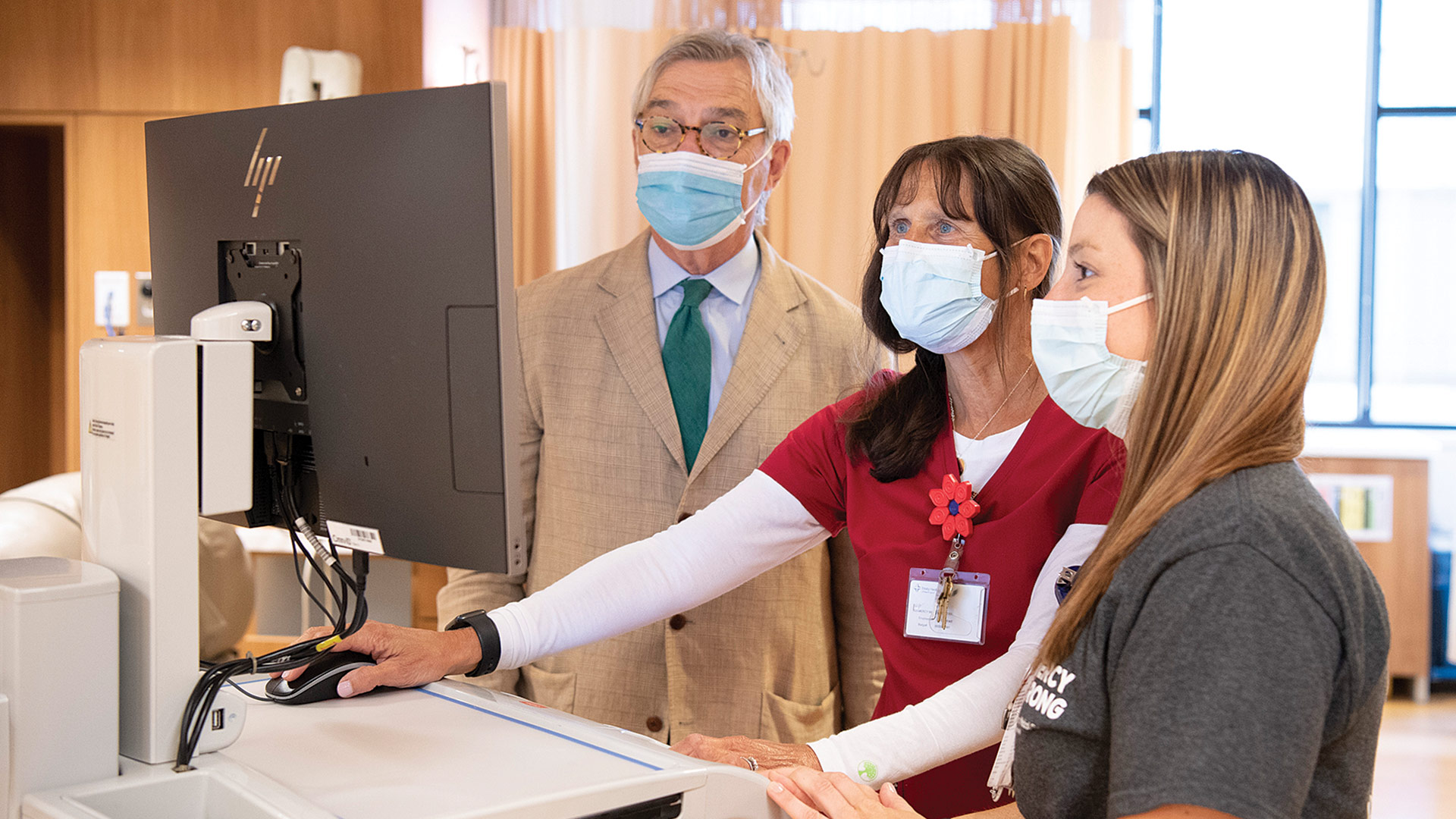
Cover Story

A Developing Story


architect’s rendering

An architect’s rendering of a proposed new courthouse, apartment complex, and marina for Springfield’s riverfront.

As he talked about the many real-estate development projects he’s been involved with over the years and how they’ve come to the drawing board and then off it, Peter Picknelly said simply, “they develop … and then they happen.”

That was a very simple explanation for what is often a very complex process, especially with some of the projects he and his team at the OPAL Real Estate Group have taken on over the years, many of which have involved public-private partnerships and have taken years, if not decades, to become reality.

What he meant was that each project starts with a concept, or a vision — the marriage of a location or an existing building with a new use, or uses, often with higher goals, such as sparking additional development in a given area or neighborhood, or bringing new life to dormant, sometimes historic properties.

This has been the case with many projects in the OPAL portfolio — from the transportation and education center in downtown Holyoke to the conversion of the former Clarke School for the Deaf in Northampton into luxury apartments, to a similar but much more complicated effort to transform the former Court Square Hotel in downtown Springfield into market-rate housing.

Peter Picknelly says Springfield’s riverfront

Peter Picknelly says Springfield’s riverfront, and especially the stretch north of the Memorial Bridge, is an untapped resource and the ideal location for a new courthouse.

And this is the same general formula being applied to the most ambitious project yet undertaken by Picknelly and his team at OPAL Real Estate — the transformation of land on Springfield’s riverfront, north of the Memorial Bridge, into a home for a new Hampden County courthouse and, perhaps, an apartment complex and marina, a concept that comes with a price tag just under $500 million.

Plans for this concept were unveiled at an elaborate press conference last month, with Picknelly and others, including Springfield Mayor Domenic Sarno and Chief Development Officer Tim Sheehan, touting the proposed project as a potential economic catalyst for both the riverfront and Springfield’s North End.

And as a solution to what has become a huge health hazard in Springfield — the Roderick L. Ireland Courthouse, which has been beset with problems ranging from mold and ventilation issues to alarming reports of employees getting sick and in some cases dying of cancers and other diseases linked to environmental concerns.

Indeed, a recent report by the state Trial Court’s Environmental Advisory Committee, made up of courthouse employees, said the courthouse is linked to more than 50 cancer diagnoses and five employees who have died of ALS.

Headlines announcing these reports and the state’s ongoing efforts to clean and perhaps renovate a building that people don’t want to go in — the Hampden Registry of Deeds and the district attorney’s office have relocated staff out of the building — prompted those at OPAL to create that vision that was announced last month, said Picknelly.

“It’s pretty clear to me that there is something wrong, very wrong, with that building,” he said. “There are 25,000 people who have been diagnosed with ALS; five have died in one building! That’s an amazing number. And 60 people have some form of cancer? We need a new courthouse, and anyone who cares about Springfield would have that on their radar.”

But there are very few spots in the city that can accommodate a new courthouse. Picknelly says he has one — or can assemble one.

The land in question has been considered for everything from a casino to a site for a UMass Springfield campus to the possible home for a minor-league baseball stadium. But it remains undeveloped and needs a spark to become a real asset for the city.

The proposed courthouse, a true public-private endeavor, could become that spark, he said, adding that this project, if it comes to fruition — and there are many hurdles to clear, as we’ll see — could lead to additional development along the riverfront and in the North End.

“I think this is an exciting opportunity for our city to expand its downtown area and open up the river, finally, for all sorts of activities,” said Picknelly, who called the Court Square initiative a ‘legacy project,’ and believes the same term could be applied to the courthouse endeavor. “We’ve always thought that our land on the riverfront was underutilized, and that, at some point, it should be developed, and this seemed like a great opportunity, so we’re running with it, and we think it has some legs.”

For this issue, BusinessWest looks at Picknelly’s impressive development track record and how this latest project would become an intriguing next chapter.


Right Place, Right Time

Picknelly said OPAL is an acronym, with those letters starting the names of his four children — Olivia, Peter, Alyssa, and Lauryn.

Over the years, it has become synonymous with large-scale, often difficult projects that often involve public-private partnerships. The Picknelly Adult and Family Education Center on Maple Street in Holyoke, which houses bus services on the ground floor and Holyoke Community College’s Adult Learning Center on the upper floors, is one example, while the Court Square project, which boasts an array of partners, including the state, MGM Springfield, Winn Development, and OPAL itself, is another.

“I think this is an exciting opportunity for our city to expand its downtown area and open up the river, finally, for all sorts of activities. We’ve always thought that our land on the riverfront was underutilized, and that, at some point, it should be developed, and this seemed like a great opportunity, so we’re running with it, and we think it has some legs.”

Picknelly said that he and his team at OPAL look for development opportunities across the region, often responding to requests for proposals for specific buildings and properties, as in Holyoke and Court Square, but often by being proactive, sometimes with property owned by Picknelly or Peter Pan.

Such is the case with the existing Hampden County courthouse and the need to find a solution to the ongoing health problems there.

Picknelly and his team at OPAL first became involved with the goal of perhaps finding a temporary home for the courthouse to be used while the existing property is cleaned and renovated. But amid the headlines about illness and death and the high costs of making the building safe, the thought process shifted to finding a permanent solution in the form of a new home.

“The more you looked into it, the worse it got,” he said. “So we asked, ‘where can you build a new one and keep it in the downtown area?’ Because this is important to Springfield.”

The solution that presented itself is the 14.5-acre parcel on the riverfront owned by Picknelly — as well as an adjoining parcel owned by the Republican Co., which is the planned location of the new courthouse; Picknelly is seeking to purchase that parcel.

The land owned by Picknelly is currently home to Peter Pan’s Coachbuilders repair and maintenance facility as well as a number of billboards, which are generating some revenue from lease deals.

As noted earlier, it has been considered for several different uses, including a baseball park — several different proposals for such a facility have been forwarded over the years. And Picknelly said UMass Amherst considered the site before it eventually located its downtown Springfield campus in Tower Square. It then became part of the parcel pieced together for a proposed Western Mass. casino, which was eventually built in the South End.

While the site has remained mostly idle, it has always had vast potential to bring life and business not only to an attractive stretch of the riverfront, but to the North End of the city, which has Union Station, but has long needed a catalyst that can attract different kinds of development.

A new courthouse could be that catalyst, said Picknelly, adding that, while such facilities are generally not thought of as economic development, they are worthy of that description, and for many reasons.

Start with the number 1,600. That’s how many people typically visit the Roderick L. Ireland Courthouse on a daily basis — or would visit it if they were not afraid to venture inside, said Picknelly, adding that this kind of visitation, which includes those with business in the courts, court employees, jurors, and lawyers, could spawn different types of development, from restaurants to office buildings housing lawyers who want to be close to the courthouse.

“Your development is literally right on the water. Nowhere else in Springfield’s downtown can you have that.”

“I don’t think people realize how much activity a courthouse brings to a community,” he said. “It’s an economic-development driver.”

Ultimately, Picknelly believes the courthouse and apartment complex can do for the riverfront north of Memorial Bridge what the Basketball Hall of Fame complex has done for the area south of the bridge — in short, make it a destination.

“Before the Hall of Fame, there was essentially nothing there,” he said, referring to the collection of industrial properties that stood where the Hall is now. “Now, you have restaurants and vibrancy … the courthouse can do the same for the north side of the riverfront.”

It could potentially do even more, he went on, because on the south side of the bridge operating railroad tracks stand between the Hall of Fame and other businesses and the river itself. That problem doesn’t exist on the north side.

“Your development is literally right on the water,” he noted. “Nowhere else in Springfield’s downtown can you have that.”

While the proposed site — and the project envisioned for it — makes sense on many levels, said Picknelly, a number of pieces need to fall into place, especially at the state level.


Courting Opportunity

At present, the state and its Division of Capital Asset Management (DCAM) is still weighing whether to renovate the existing courthouse or move into a new one; a deep cleaning of the facility is currently underway.

Sarno and Picknelly have both questioned the wisdom of investing what could be hundreds of millions of dollars in a building that has reportedly been linked to serious illness and death.

“We think cleaning it is great, but ultimately, a new courthouse is needed in Springfield,” said Picknelly, adding that there are several options moving forward for the project and this parcel, with the best, in his view, being the property developed by OPAL and then leased by the state.

“It would be much faster if that was the chosen route,” he told BusinessWest. “Just the procurement process for securing the land would take two years; we can have shovels in the ground quickly. Ultimately, we believe the project can be done, start to finish, in four years.

“Right now, they’re talking about cleaning the building and renovating the current building — that will take seven years and probably cost $200 million when you factor in the cleaning of the facility and what they would have to do to move to the courts to a temporary facility for several years. That’s 70% of building new, and even if you do clean it, people are going to be very reluctant to go into it.”

former Court Square Hotel

OPAL Real Estate has become part of a number of ambitious public-private development initiatives, including the ongoing work to transform the former Court Square Hotel into market-rate housing.
Photo by Joe Santa Maria, Kill the Ball Media

Picknelly noted an additional benefit to building new is that Springfield gains an additional development site — the current courthouse location, in the heart of downtown and across State Street from the MGM casino complex.

If the courthouse moves to the riverfront, you then have that property to be developed for some other activity,” he said. “There are all sorts of opportunities; it’s great land that could be developed for other public purposes.”

When asked to give a timeline for the courthouse project, Picknelly said there are many factors that will play into if it happens and when it happens, from whether the current administration wants to address this problem or pass it on the next one, to how quickly DCAM can study and then weigh the costs and benefits of building new versus renovating what currently exists.

But he expects something — he’s not sure what — to happen within the next year, because of the severity of the health concerns in the current courthouse and the need to find a solution.

Much of his development activity over the past few decades falls into that category of ‘finding solutions,’ and this would certainly be another legacy project for the portfolio.

It is a developing story — figuratively, but also quite literally.


George O’Brien can be reached at [email protected]
Commercial Real Estate Special Coverage

Building on a Solid Foundation

Matt Flink was recently named president and CEO of Appleton Corp., the real-estate and property-management arm of the O’Connell Companies. He brings with him considerable experience in this field — and the football field, as a coach. He intends to lean on both as he takes the helm of the company with a solid foundation and opportunities for growth in a number of established niches.

Matt Flink enjoys going to the office every day.

But he especially likes Thursdays. That’s the one day of the week when all employees at the O’Connell Companies are asked to be in the office, with most of them working remotely at least a few of the other four days.

“I love Thursdays — all my friends are there, my colleagues are there — there’s a sense of energy and a liveliness and a vitality that I don’t necessarily get the other days of the week,” he explained, before adding a large-sized ‘but.’

“It’s not about me and what I want, it’s about what’s in the best interest of the company and the best interest our employees,” he went on, adding that remote work is popular, it has become a benefit — and an expectation — at O’Connell, and, as he put it, “the work gets done.”

This same dynamic is playing out in businesses large and small across the region and across the country, and that’s just one of many issues and challenges Flink is facing as he takes the helm at Appleton Corp., the division of Holyoke-based O’Connell Companies that provides property-, facility-, and asset-management services, along with accounting and financial services, to managers and owners of commercial and residential properties across a wide swath of New England.

“We can’t get caught up in old-school thinking that says, ‘it’s always been this way, so it has to continue to be this way.’”

He now presides over a portfolio of managed properties that includes everything from several transportation centers, including Springfield’s Union Station, to the Springfield Technology Park, retail shopping centers, medical offices, and industrial properties. It also includes a number of residential properties, including senior-living facilities.

The broad goal moving forward, said Flink, who was named successor to the now-retired Paul Stelzer last month, is to maintain and grow that portfolio and specific niches within it, such as those transportation centers. There are now several in the portfolio, including 12 in Connecticut, he noted, and the company will aggressively work to build on its track record of success in that realm.

As for the phenomenon of remote work and what it means to office properties here and elsewhere, Flink said property owners and managers, including Appleton, must be imaginative and open to alternative uses for those facilities, because he just doesn’t see things going back to the way they were.

“We can’t get caught up in old-school thinking that says, ‘it’s always been this way, so it has to continue to be this way,’” using that phrase to describe both the office setting and remote work, and how property owners should be looking to fill their spaces.

Flink brings more than 30 years of experience to his new role, a diverse résumé that includes work in Illinois, Colorado, Florida, and 10 years with O’Connell, during which he has served in various roles, including director of Capital Project Management.


He intends to tap that reservoir of experience, which includes work in construction, real-estate development, property management, and sales and leasing, while leading O’Connell to what he expects will be continued growth in an evolving, highly competitive marketplace that is acting and reacting in response to a number of forces, everything from shifting dynamics in the workplace to a still-changing retail landscape to the aging of the population and the need for more senior housing.

He also intends to borrow from his experience coaching youth football, especially when it comes to management and helping team members “understand that they’re probably even better than they think they are,” as he put it (more on that later).

“This opportunity with O’Connell gives me an opportunity to bring all that experience to bear in one location and participate in leading not only what we do Appleton, but in the larger effort that we make with our parent company, the O’Connell Corp.,” he said. “To me, it’s the most logical place for me to land at this point in my career.”


Space Exploration

The Appleton Corp. is approaching its 50th birthday, said Flink, noting that it was launched in 1974 by the O’Connell Companies, a Holyoke fixture for more than 140 years now. The larger corporation also includes Daniel O’Connell’s Sons, a large regional general contractor; Western Builders; the O’Connell Development Group; and New England Fertilizer Co.

Appleton is the property- and facility-management company in what Flink called a “vertically integrated stack.” Appleton manages commercial properties, industrial buildings, warehouses, educational facilities, and multi-family housing properties, including many that are subsidized, especially to senior populations, although some are market-rate.

“We manage properties that we own,” he explained. “But we also manage a lot of properties for third parties that own buildings; we do a lot of management of facilities owned by government entities, such as the technology park and the rail stations.”

It’s a diverse portfolio, as he noted, and it includes everything from an Amazon ‘last-mile’ facility in Holyoke to a biotech research facility on the campus of Worcester Polytechnic Institute. There are some established niches the company has developed, he said, adding that senior housing has long been one of them.

“The things that I learned about coaching my players transfer so wonderfully to our life at the office. I learned that I can’t coach every player, and every employee, the same way; people respond to different types of motivation, different types of stimulation.”

Meanwhile, transportation-facility management has become another niche, he said, adding that there are unique qualities to managing such properties, including the “interface between the public and private,” as he called it.

“Springfield’s Union Station is a perfect example; you have users of the bus facilities here — the PVTA, Peter Pan, Greyhound — and you also have Amtrak and CT Rail bringing people in on the tracks overhead, and all the people using those facilities circulating throughout the concourse,” he explained. “At the same time, you have several businesses that function there, so you have private folks parking in the garage, walking through the concourse, grabbing something at Dunkin’ Donuts, and then going upstairs.

Springfield’s Union Station.

Matt Flink says Appleton has developed a solid niche managing transportation centers, including Springfield’s Union Station.

“Maintaining safe conditions, clean conditions, secure conditions, is an important element in managing those types of facilities,” he went on. “For us, it is a niche market, and one we will continue to pursue.”

Moving forward, and from a strategic perspective, Appleton is focused on two key areas — business development and continuous improvement of the service provided to customers.

Overall, Flink said he has inherited a strong foundation and healthy portfolio from Stelzer, so he doesn’t have to reinvent the wheel, just maintain and build what is in place, with a focus on people and giving them the tools they need to succeed.

“It comes down to keeping our current portfolio stabilized, looking for continuous process improvements along the way, making better use of technology to better serve our customers, and making better use of technology so we ourselves can become more efficient,” he said. “And, at the same time, continuing other lines of our business and, as with those transportation facilities, looking outside of our traditional windows of opportunity. I think we’re well-positioned and well-placed to do that kind of work.”

the Springfield Technology Park.

The Appleton portfolio includes a diverse mix of properties, including the Springfield Technology Park.

As he goes about all this, he will call on not only previous work experience — and there is plenty of that — but also time spent coaching, especially football, at both the youth and high-school levels.

“The things that I learned about coaching my players transfer so wonderfully to our life at the office,” he said, by way of explaining how his work on the sidelines has shaped his management style. “I learned that I can’t coach every player, and every employee, the same way; people respond to different types of motivation, different types of stimulation.

“Some just need me to sit and listen to them and hear them and not even comment much, but just know that I’m hearing them,” he went on. “Some want a really deep and intense dialogue and to take a deep dive into the issues, and want me to act as a sounding board and really spend time devoted to solving problems or envisioning problems and coming up with mitigation strategies. As much as anything, I’ll be a coach trying to help each of our employees find a better version of themselves every day, with the goal of being a little better today than I was yesterday. And tomorrow, I really hope I’m better than I am today.”


Changing Dynamics

Returning to the subject of the office market and what will happen moving forward, Flink said there are many unknowns when it comes to this issue, and it will certainly take some time for the market to fully shake out.

By that, he meant everything from whether office workers will return and when — some are back, but across the country, many are not back or are working in hybrid arrangements — to how properties might be repurposed if they are not used for offices moving forward.

It’s a complex matter, he said, using the O’Connell family of companies as an example of how businesses managed to get work done, and done well, during the pandemic with almost all employees working remotely.

“For 475 days, plus or minus a day or two, we were essentially shut down in our corporate offices with just a few of us there,” he recalled. “What we learned in that period of time is that we can do that very successfully. We can allow people to work at home, we can give them the time they need to attend to things in the middle of the day, but all of us got our work done; we paid bills on time, we responded to requests for proposals on time … we did everything we needed to.

“Our experience in that space is similar to what we’re seeing around the country in that space,” he went on. “The pandemic forced people to rethink how they deliver their work product, what vehicle they use to deliver their work product; at the same time, there began to be a demand, a desire, to stay home once the pandemic eased up and people could return to their office space.”

This concept of remote work has turned into a benefit, he told BusinessWest, much like a 401(k), a vacation, or health insurance. And there is an expectation for it among job seekers and existing employees alike.

These factors have collectively reduced the demand for office space, he went on, adding that there are a few cases within the Appleton portfolio where tenants, specifically large call centers, have contracted substantially.

In one case, space was successfully backfilled, largely with government entities, Flink noted, adding that this may prove to a blueprint for many properties moving forward.

“Repurposing some of those commercial spaces for other user groups is going to be important,” he said. “Going forward, owners and managers of commercial real estate, at least for the short term, and maybe for the long term, depending on how the market responds to this concept of remote work, are going to be clever in how they look at various user groups.”

Imaginative reuse has been the watchword in retail for some time, he went on, noting that, as more shopping is done online, there has been less need for bricks-and-mortar facilities. Larger properties such as indoor malls and strip malls have adjusted by repurposing space for bowling alleys, laser tag, trampoline facilities, and more. Meanwhile, the cannabis industry has had a profound impact on the commercial real-estate landscape, absorbing large amounts of different kinds of spaces, from old mills in Holyoke and Easthampton to storefronts in many communities to a portion of the Springfield Newspapers building.

“Whether it’s that [cannabis] or seeking government entities where you may have looked to place a private tenant before, all this speaks to the need to be clever and really think outside the box and be open to other possibilities in that commercial marketplace,” said Flink, noting that the tech park at STCC is an example of this dynamic. A large call center has moved out, but over the next few years, he expects those spaces to fill back to something close to pre-pandemic levels.


Goal to Go

Getting back to football coaching and how it influences how he manages people, Flink summoned that often-used saying — among coaches and business owners alike — about people needing to give 110%.

“You don’t have to be a math major to know that this is literally impossible — you can’t give more than 100%,” he told BusinessWest. “What it comes down to, whether you’re coaching young athletes or spending time with senior-level executives on our staff, is redefining for people what their true capacity is. Very rarely do we operate at our true capacity; we’re blocked at times by our own negativity or the negative thinking of others. But we’re all capable of being more than we think we are, and helping people to understand where their 100% exists, and how they can live in a world that touches on that more often, is something that I’m passionate about.”

That’s one of many passions, and lessons, from past experiences that Flink will bring to his challenge, one that, as he said, is the logical place for him to be.


George O’Brien can be reached at [email protected]
Cannabis

The State of the Industry

Michael Kusek

Michael Kusek says the cannabis industry is in what he calls “a first bout of growing pains.”

“Our first bout of growing pains.”

That’s the phrase Michael Kusek summoned after being asked to describe the state of the cannabis industry in the Bay State more than five and a half years after its start.

“We’re still very much in the early stages of this industry,” said Kusek, who launched the quarterly publication A Different Leaf, with the subtitle ‘A Journal of Cannabis Culture’ to essentially chronicle this business and tell the many stories that define it. “It took over a year to sell the first billion-dollars-worth of cannabis, and then it took eight months to sell the second billion. Those billions are going to come faster; the market isn’t shrinking, it’s just being spread out over more locations.”

Elaborating, he said the numbers of dispensaries and other kinds of businesses is growing rapidly and profoundly, and soon — how soon remains to be seen — there will come an answer to the question ‘how many of these is too many?’

“Competition has come to the market — quickly,” he explained. “In some places, dispensaries that were the only game in town — those that had first-mover advantage — are no longer the only game in town. That has come quickly as the Cannabis Control Commission has become faster and more efficient at licensing businesses.”

Meanwhile, there will soon be more competition from other states, including New York and New Jersey, which will likely have their first dispensaries by the end of this year, developments that will certainly impact regions like the Berkshires. And there will be companies based in other parts of the country that will want to enter this state and likely partner with existing ventures to do so, he said, adding that all these factors go into that phrase ‘growing pains.’

Overall, the state’s cannabis business continues to grow, evolve, and influence the regional economy in many different ways, said Kusek, listing everything from the profound impact on commercial real estate, with dozens of formerly vacant or underutilized properties finding new life as homes to different kinds of cannabis businesses, to the introduction of new kinds of ventures, such as home delivery (see related story, page 20) and social-consumption sites, to the infusion of tax revenue from these various ventures.

And the stories in the latest edition of the publication — the Spring 2022 ‘Cannabis and Culture’ issue — speak to all this. They punctuate how the industry is evolving and influencing the region, and how there are many subplots to the larger story. Indeed, there’s a piece about how the cannabis industry can help cities and towns like Holyoke revitalize their economy. There’s another piece, in the ‘how-to section’ where experts talk about communicating with children about cannabis use. And then, there’s a story about entrepreneurs Phillipe and Ashlan Cousteau about their new line of “ocean-infused” cannabis products.

The past several issues and the one coming next provide more insight: winter 2021 was the ‘medical issue,’ while fall 2021 was the ‘annual’ (the third) ‘Edibles Issue.’ The summer issue, meanwhile will be the first devoted to ‘cannabis travel and tourism,’ said Kusek, noting that he’s always wanted to do one of these, but couldn’t until COVID subsided sufficiently.

“This is the first summer we thought we could do travel and tourism,” he said, adding that the issue will include pieces on traveling with cannabis — what’s legal and what isn’t, according to the Transportation Safety Administration; cannabis spas; and a broad piece on just what is cannabis tourism.

“There’s two ways of looking at it,” he explained. “People are going to destinations where there is cannabis, and that’s why they’re going there, places like Jamaica, where they may be able to visit a cannabis farm. Or, if people are traveling in California, they may want to visit dispensaries — like a brewery tour; cannabis becomes the destination.”

While cannabis is certainly changing the local and national landscape — literally and also figuratively — the overarching questions are: ‘what’s next?’ and ‘how big can this industry become?’

In a candid interview, Kusek, whose magazine is now national in scope but still pays close attention to what’s happening in this region and the Commonwealth as a whole, provided some perspective on the state of this emerging sector and what we can expect in the months and years to come.


Where There’s Smoke …

Kusek said there has been considerable change in the landscape since the cannabis industry was born in 2016, and also since BusinessWest last spoke with him, just as he was launching A Different Leaf in the summer of 2019.

Perhaps the biggest change, and this has led to more competition, has been quicker action on the part of the CCC when it comes to issuing licenses.

“Early on, the commission was taking their first tentative steps toward licensing, and licensed very slowly, from 2018 on,” he explained. “They were not licensing dozens a week; it was in the single digits. And that created some tension within the pool of people waiting for licenses, and there were many kinds of businesses within that pool of applicants — locally grown companies, businesses coming into Massachusetts from other states — MSOs (multi-state operators), and a pool of applicants under the social-equity provisions of the law.
“The state was not speedy in granting licenses, and you had a fair number of businesses who burned through their capital waiting for licenses. It’s not like opening a restaurant, where you find a space, and you rent it, and you go to the town and you get your food permits and then you acquire a liquor license; it could take a while, but it’s not that long a process,” he went on. “With cannabis, early on, you had people who had to rent a storefront, because you needed a license to get the host-community agreement with your town. There are people I talked with who had their host-community agreements and had rented a building, and they never opened their doors til three years later.”

He said there are more than a few examples of entrepreneurs who burned through their money, with an emphasis on their money, because one cannot get bank financing for such businesses, because cannabis is still illegal federally. But the situation is improving, he noted, and this is leading to more ventures opening their doors, thus changing the competitive landscape, at least in some communities.

Indeed, there are several cities and towns where cannabis has a huge presence and large impact on the local economy — Holyoke, Northampton, and Easthampton are on that list — and others where it has little if any, such as West Springfield, where a moratorium on such businesses still exists. Many lie somewhere in the middle, he said, adding that their status depends largely on how ‘friendly’ these communities are to the industry.

The varying degrees of friendliness leave entrepreneurs with some choices, said Kusek, adding that they may choose to wage a more difficult campaign to locate in a community where there are few such businesses, or choose to join the growing number of players in communities like Northampton.

“Do you try your luck with the city of Springfield and burn through all of your money on rent, or do you go to Northampton, where you can get a host-community agreement and hopefully get through the state process much quicker, and at least get your doors open?” Kusek asked rhetorically. “You may not make a dollar, but you might make 50 cents.”

Another interesting dynamic was the state’s willingness to grant licenses to dispensaries, but not to the cultivators that would provide product to those facilities, said Kusek, adding that over the past few years, it has essentially caught up, meaning that there is now both more competition and more product.

“In the fall and winter of 2021, I had more than a half-dozen phone calls from people asking me if I knew where they could buy flower — if I knew anyone who had cannabis flower to sell wholesale,” he explained. “I don’t grow cannabis, I don’t sell cannabis, I write about cannabis. But the marketplace was so tight, and people were having such a hard time finding product, they were calling people like me looking for product. That has stopped happening.”

And that is just one of the many developments contributing to the growth and evolution of the industry, adding that as the sector emerges here, takes root in other states, and becomes more national in scope and reach, there will be many fronts to watch.

These include the ongoing debate about whether to make cannabis legal on a federal basis, what Kusek calls “the next big shoe to drop,” because of the huge implications of such a development — on everything from inter-state commerce to use of the banking system and all those ramifications — should it come to pass and how it might come to pass.

“There are lots of competing and complementary interests helping to develop legislation, and there are advocates for smaller businesses who don’t want this legislation to be dominated by MSOs or Big Tobacco, or InBev, or whoever else wants to get into the cannabis industry when it becomes federally legal,” he explained, adding that it will be a very complicated process to take the regulations put in place by the three dozen or so states that have legalized medical or adult-use cannabis, and overlay that with federal policy. “They don’t want the federal regulations to squash small business, and they don’t want federal regulations to squash social-equity provisions at the state level.”

Overall, he said this White House has not made legalizing cannabis a priority, and he does not expect that to change anytime soon, although he certainly leaves the door open to that eventuality.


Joint Ventures

In the meantime, the local landscape continues to change, with new businesses, new business types, such as delivery and social-consumption sites (which Kusek predicts will be the next ‘big thing’), brands developing their identities, businesses identifying customers, and much more.

Kusek said these are all contributing to growing pains, which, overall, are a good thing to have. They convey that a sector is expanding and evolving, so much so that the growth and evolution are creating issues, and, in his case, things to write about it.

There will be no shortage of such things for the foreseeable future, which is good for Kusek, and very good for an industry that is, in most all ways, very much in its infancy.

Health Care

A Tradition of Caring Lives On

Gov. Charlie Baker, Sarah Yee

Gov. Charlie Baker, Sarah Yee, center, and Mercy Medical Center President Deborah Bitsoli at last month’s announcement of plans for the Andy Yee Palliative Care Unit.

Sarah Yee recalls that, during her husband’s final stay at Mercy Medical Center before he succumbed to cancer — a week in the intensive care unit in late May 2021 — there was some subtle “bending of the rules,” as she called it.

Most of it involved visitation, and, more specifically, the number of people who could visit and the hours when people could drop in, she noted. But there was more to it, especially efforts to make his room more like home, she said, adding that steps involved everything from the music playing — Earth Wind & Fire — to the Disney movies he would watch with family members, to pictures of family and friends that were brought in and placed around the room.

Summing it all up, Yee said that it wasn’t long before she called for an ambulance to bring Andy to Mercy for that final stay, that she decided that she didn’t want him to die at home.

Andy Yee was a successful entrepreneur

Andy Yee was a successful entrepreneur known for his passion for giving back. The palliative care unit is a continuation of that legacy.

“We love our house and the memories that we made here … but I didn’t want these to be our last memories of him,” she said, adding quickly that she did want him to die in a setting that was as close to home as she and family members could make it.

And the desire to enable others to enjoy that same home-like setting has prompted members of the Yee family, working in concert with those at Mercy Medical Center, to conceptualize the Andy Yee Palliative Care Unit, which is slated to open its doors before the end of this year.

Eight rooms are planned in space on the fifth floor of the hospital that had been a med-surg unit. Plans call for those private rooms, family respite places, private meeting rooms, and an outdoor terrace.

“This will be a specialized unit with specialized care,” said Deborah Bitsoli, president of Mercy Medical Center. “The rooms will have a particular color scheme, there will be a garden for the families, there will be particular types of furniture so the patients can stay overnight, and we will also outfit the rooms so some of the hospital equipment is behind walls, so that the environment would almost be like a home setting.

“The ICU is very institutional-looking,” she went on. “These rooms will not be institutional-looking; they’re going to look like a family room; this will be a very unique model for Springfield.”

The center will take the name of a man known for his many business accomplishments — he was a serial entrepreneur known in recent years for partnering with Peter Picknelly and others to save the Student Prince restaurant and then the landmark White Hut eatery — but also for his philanthropy.

At an elaborate press conference to announce the creation of the palliative care unit, staged last month in Mercy’s courtyard, several speakers, including Gov. Charlie Baker and Lt. Gov. Karyn Polito, both of whom became friends with Yee in recent years, talked about how the facility would not only meet a need, but speak — and in dramatic fashion — to Yee’s passion for giving back.

Indeed, before talking about the new unit, what it would offer, and what it would mean for patients and their families, Bitsoli set the tone by first turning back the clock to the early weeks of the pandemic, when Yee arranged to bring a Peter Pan bus full of food for staff at the hospital.

“There was another time when I called Andy and said, ‘I need your help,’ and he immediately said ‘what can I do?’” she recalled. “I said ‘it’s been a tough day for the staff; I need 1,000 roast-beef sandwiches. He said ‘when?’ I said ‘tomorrow.’ He said ‘I’ll get them there.’ And he did get them there.”

This desire to give back to those at the hospital and to support employees continued until that last stay in the ICU, said Bitsoli, noting that before he fell gravely ill, Andy Yee and officials at Mercy were planning a large, thank-you-to-staff celebration that would take place in that same courtyard as the press conference. That celebration never happened, but the spirit that spawned it would inspire something with more-lasting impact on the hospital and the patients it will serve.

Indeed, in the latter stages of her husband’s battle against cancer, Sarah Yee said she had many conversations with Andy’s oncologist, Dr. Philip Glynn, Bitsoli, and others about how donations in Andy’s name to Mercy Medical Center might best be used. There was talk of funding additional infusion rooms, she said, referring to facilities where infusion therapy is administered to cancer patients.

But officials at Mercy identified a greater need — one for palliative care facilities that would cater to critically ill patients who are mostly at the end of their lives.

Such facilities are not common, said Bitsoli, noting that fewer than 20% of hospitals offer palliative care.

“There are not many units like this; it really takes a combination of a vision and particular type of expertise,” she noted, adding that the unit will be overseen by Glynn and Dr. Laurie Loiacono, chief of Critical Care at Mercy. “It also takes a particular type of administration that feels committed to providing that type of experience for patients and families. It’s a particular unit that is resourced and outfitted in a very unique way, and you have to be behind that vision — and we’re all behind that vision.

“As the population ages, there is considerable focus on palliative medicine, which focuses on how someone passes in a dignified way, in a setting where they are surrounded by loved ones and in a supportive manner,” she went on. “There is a level of expertise and specialty around that, and Dr. Glynn has that type of expertise.”

Those at Mercy have been involved with the project for several months now, said Bitsoli, adding that there have been meetings with architects and room designers to finalize color schemes and other aspects of overall design. A committee has been meeting every week to get updates and keep the project on track for a fall ribbon-cutting.

Tim Stanton, vice president of Philanthropy for Trinity Health of New England, Mercy’s parent company, agreed, and noted that there is clear need for such a facility in this region.

“Sometimes, a family may feel it is desirable to have the patient come home during those last days,” said Stanton. “But oftentimes, it’s not practical or logical. So we want to create an environment here that replicates many of the comforts of home.”

Stanton said Mercy has embarked on what he expects will be a six-month campaign to raise money to help defray the cost of the new unit, which he projects will cost between $500,000 and $1 million in its initial stage.

Those wishing to donate may do so by visiting https://give.mercycares.com/andy-yee-palliative-care-unit

Cover Story

A New Challenge

Diana Szynal

Diana Szynal

Diana Szynal recently made a successful transition from public service — she was a selectman in Hatfield and then a legislative aide — to running the Franklin County Chamber of Commerce. Now, she’s making another transition, to leadership of the Springfield Regional Chamber. While Greater Springfield is a much larger area, she said the challenges facing businesses, and the basic mission of the chamber, are the same as they are in Franklin County, and she’s ready to put her experience to work in her new setting.

Diana Szynal says that within minutes of the announcement that she had been named the new president of the Springfield Regional Chamber of Commerce going out last spring, her phone started ringing and pinging.

There were calls and texts from area business leaders, government officials, and directors of area economic development agencies wanting to meet and talk.

“The calls started coming, and I’m still getting them,” said Szynal (pronounced Zy-nal), adding that her appointment book is quickly filling up for the next several weeks.

Those appointments are part of what she describes as a broad learning process as she takes the reins at the Springfield chamber, succeeding Nancy Creed, who has stepped down officially after several years at the helm, but is assisting in the transition.

Indeed, while Szynal, who most recently served as director of the Franklin County Chamber of Commerce and before that served as a legislative aide to the late state Rep. Peter Kocot, is certainly familiar with Springfield and Hampden County in general, she admits that there will be a ‘getting acquainted’ period awaiting her as she assumes the leadership position at the Springfield Regional Chamber.

“I know that I don’t know everything about Springfield,” Szynal, who started her new job July 5, told BusinessWest. “But I do know that I’ve had dozens of local businesses and community leaders offer to help me with that; Springfield is the economic engine of Western Massachusetts, and we need to make sure that we’re at the forefront, always at the cutting edge, of what’s happening, business-wise and legislatively.”

“The pandemic really did shine a spotlight on how critical it is to be part of that larger group and have that support and have that information that was so important.”

While scheduling meetings with those who are now calling and texting her, Szynal is also putting together a to-do list, one that includes a return of the chamber’s popular Super 60 program this fall — nominations are currently being accepted for that honor — as well as a resumption of the chamber’s ambassadors program (put on the shelf due to COVID), and, further down the line, planning of the first in-person Outlook lunch since the start of the pandemic in March of 2020.

Also on the list is creation of a new strategic plan — the last one was undertaken before the pandemic — and continuing and building upon Creed’s strong track record for not only keeping members well-informed, but making sure their voices are heard on Beacon Hill and Capitol Hill.

“Nancy was, and still is a great voice for this region,” said Szynal. “We need to continue to make sure that our voice is heard, and the way you do that is by engaging the legislators and forming good relationships with stage agencies. The legislative piece is really important, and that’s where the Springfield Regional Chamber has a leg up, because it spends so much time making sure that it has put together a solid legislative agenda that supports what businesses need and makes sure that the voice at this end of the state is heard.”

Overall, Szynal takes the reins at an intriguing time for this chamber, and chambers in general.

Indeed, she said that the pandemic provided an opportunity for chambers to show their true value to members — and potential members — when it comes to not only providing needed information (although there was plenty of that) but for being a true resource for, and advocate for, the business community.

“I think there was a real affirmation of the value of chamber membership, particularly during the pandemic,” she said. “In Franklin County, when we went into the shut-down and my phone was ringing, it was non-members who were reaching out. Members of chambers were getting a lot of information during that tumultuous time on matters such as the Payroll Protection Program, who qualified, and how the loans were processed.”

This ability to step up and elevate their game, if you will, resulted in chambers being able to retain members and actually add new ones at a time of real challenge for businesses of all sizes and in every business sector, she went on, adding that both the Franklin County chamber and the Springfield Regional chamber have posted solid numbers the past few years, better than those from before the pandemic.

Moving forward, she said she plans to build off this momentum — and that’s what she prefers to call it — while also strengthening existing relationships with both other chambers and other economic-development-related agencies.

For this issue, BusinessWest talked with Szynal about her new appointment, the state of the Springfield Regional chamber, and the prospects for all chambers in the post-pandemic world.


Getting Down to Business

Recalling her shift from public service — she was a selectman in Hatfield and then in county government before joining Kocot as an aide — to running a chamber of commerce, Szynal said it was a relatively smooth, almost seamless transition. That’s because the work is similar in many respects, she noted, adding that in both arenas, there are large amounts of listening and advocacy involved.

Elaborating, she said that in her municipal roles, she got to work with many area economic-development-related agencies, such as the regional employment boards (now MassHire agencies), the Economic Development Council of Western Mass., and others. She was able to take those relationships, as well as her understanding of the state Legislature and relationships she forged there, to her work with the Franklin County chamber.

“It was while I was working for representative Kocot that I really cut my teeth on learning about workforce development, economic development, the importance of community organizations and nonprofits, and the importance of public-private partnerships,” she explained. “And how all of that fits into economic development.

region’s voice

Diana Szynal says one of her priorities moving forward is making sure this region’s voice is heard on Beacon Hill and Capitol Hill.

“I was also able to develop at that time really important relationships with key stakeholders throughout the region,” she went on. “So when Rep. Kocot passed away, I went to the Franklin County chamber, and all of those relationships and learning experiences were invaluable in helping me execute the mission there.”

Szynal is expecting a similarly smooth transition as she moves from the Franklin County chamber to the one in Springfield, because, while the two regions are certainly different when it comes to population, the chambers are of similar size, membership-wise. Meanwhile, most all of the issues and challenges within the business communities are the same, and so is the basic mission of the organizations — to serve members and advocate on their behalf.

“The main focus of a chamber is communication, relationships, and business support,” said Szynal. “Each chamber is a little different, but most focus on the same things. Through events we facilitate networking and collaboration among members, and we give businesses some visibility through our membership directory, our website, member spotlights, all of those things. The business-to-business relationships, business-to-community relationships, those are things that most chambers focus on, although each chamber adds their own flavor.”

In Springfield, the size and makeup of the chamber reflects the diversity of the city and its recent upward trajectory, said Szynal, noting that, despite the pandemic and its impact on every sector of the economy, Springfield is in a growth mode and seeing vitality in most aspects of its economy.

“Springfield has so much going for it — there’s been so much revitalization in the area,” she said. “The sectors of healthcare and education, tourism and hospitality, manufacturing … all of those things are so vital and so critical here. I’m really looking forward to diving in and learning all that I don’t know and putting some fresh eyes on the chamber and the region.”

As noted earlier, she arrives at an intriguing time for this chamber, and all chambers. While most have become smaller staff-wise — several, including the Springfield Regional Chamber, are essentially one-person operations — there is a new vibrancy for many due to the relevancy gained during the pandemic.

“There is a lot of opportunity here. I have a lot on my to-do list, but I can’t wait to dive in.”

“The pandemic really did shine a spotlight on how critical it is to be part of that larger group and have that support and have that information that was so important,” Szynal told BusinessWest, adding that the challenge, and opportunity, moving forward is to hammer home the importance of chambers during what could be called more-normal, but still quite challenging times.

Indeed, Szynal said businesses large and small are still being impacted by a number of issues, many of them COVID after-effects including supply-chain issues, soaring prices, the early signs of recession, and, especially, a workforce crisis that doesn’t seem to be getting any better.

“Look at the challenges businesses are facing today that they didn’t have to before — supply chain issues, fuel prices are going to be crushing to some businesses, workforce issues, childcare, and more,” she said, adding that in such times, being part of an organization like the chamber, which can make its voice heard in Boston and Washington can be beneficial to businesses of all sizes.

Speaking of more normal, Szynal said the chamber will be turning back the clock to 2019 with regard to its events and many of its programs. On the events side of the ledger, the agency has started to stage in-person gatherings again — the annual meeting at the Springfield Sheraton drew more than 250 guests — and one of its largest annual get-togethers is back on the docket for the fall.

This is the program known as Super 60, a compilation of the region’s most successful companies based on performance in two categories — Total Revenue and Revenue Growth. One of the chamber’s most important revenue generators, Super 60 was put on ice in 2020 and 2021 because of the pandemic, and Szynal believes the lengthy pause will generate some interest in the popular program, slated for Oct. 28 at the MassMutual Center.

The same could be said for the chamber’s annual Outlook lunch, the region’s largest gathering of area business leaders. It has been staged remotely the past two years, and Szynal is looking forward to that tradition, and many other annual gatherings, returning to an in-person format.

“Outlook, the Beacon Hill and Washington summits, the Government Reception, the Mayors Forum … it’s so important to get back to doing those again because they provide information and offer opportunities for businesses to be together,” she explained. “I’m looking forward to being back full steam.”

While planning those events, she has many other items on her to-do list, starting with those meetings with area civic, business, and economic development leaders.

And there will also be work to create a new strategic plan for the institution.

“The last one was done three years ago, so it would be time to do another one anyway,” she noted. “But with everything that’s happened in the last two and a half years, it’s a really good time to evaluate the mission of the chamber and how we’re meeting that mission.”


The Bottom Line

From a personal perspective, Szynal said she chooses to look at the next stop on her career path as an opportunity and not necessarily as a challenge.

It will be an opportunity to continue the kind of work she has been doing for the past several years in several different capacities.

“I really love connecting with people, learning about their business, and learning about their business needs,” she explained. “I love that aspect of any job, that’s why I loved working with Peter Kocot, because I did so much constituent work; this is what I’m looking forward to.
“There is a lot of opportunity here,” she went on. “I have a lot on my to-do list, but I can’t wait to dive in.”


George O’Brien can be reached at [email protected]
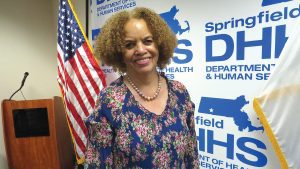
Special Coverage Women in Businesss

The Right Ingredients

The staff at the Ekus Group

The staff at the Ekus Group in the reference library that Lisa Ekus has built over the past 40 years.

The Hatfield-based Ekus Group describes itself as a ‘full-service culinary agency.’ This is a unique niche obviously, one that has been successfully cultivated over the past 40 years, during which time the name Ekus, like the names of many of the authors the company represents, has become known across the country and around the world. Summing up the broad range of services, partners Lisa and Sally Ekus (mother and daughter) say they “bring chefs out from behind the stove.”

If one wanted to gain a full appreciation for how the company started by Lisa Ekus back in 1982 has grown, evolved, and emerged over the past 40 years, maybe the place to start is in what she calls her reference library.

It has become the centerpiece — although there are several of those — of the 250-year-old renovated farmhouse in Hatfield she calls home. She started with a small collection gathered in high school and college, and has grown it to 7,000 volumes, with more added seemingly every week; there’s a pile of books outside her office for reading and possible addition to the collection.

There are works of fiction placed in one small section, but the rest — much like Ekus’s career, and that of her daughter, Sally Ekus, now a partner in this venture — are devoted to food and cooking. The volumes are carefully cataloged and arranged by various subjects, meaning everything from food types to geographic regions, authors to individual countries; she recently added two volumes on Polish cuisine.

“There were agencies that did book PR. But we really honed in on chefs, cookbooks, food companies, and understanding the evolution and growth of what was happening on a very vast global stage.”

The library, like her work to create what have come to be known as ‘culinary celebrities,’ is a passion.

“It’s all organized physically, it goes around the globe by country, and then it goes through our country by region,” she told BusinessWest. “And there’s specialty, single subjects — soup, health and diet, wine … you name it. I’ve read maybe 75% of them and I’ve touched them all in some way.”

When asked what makes a book worthy of placement in the library, Sally answered for her mother. “It has to be … unique.”

That’s a word that could, and should, also be applied to this business, formerly known as the Lisa Ekus Group, but changed recently to reflect Sally’s more prominent role. Indeed, there are few companies like this anywhere, and probably only one in a rural setting like Hatfield. And while the library does a good job of conveying its growth and presence, it doesn’t … well, tell the full story — pun very much intended.

To fully understand, we need to visit other rooms of the house, which is adjacent to the company’s offices and plays a huge role in day-to-day activity.

Like the dining room and its massive table. Here, Lisa Ekus has hosted literally thousands of people for dinner over the years, including culinary celebrities such as Julia Child, Emeril Lagasse, and countless others.

Sally Ekus, left, with her mother and business partner, Lisa Ekus.

Sally Ekus, left, with her mother and business partner, Lisa Ekus.

Or the nearby kitchen, which doubles as a TV studio where many of these same chefs have mastered the fine art of cooking for a television audience, a business niche that the Ekus Group has cultivated over the years.

Or the large side porch that Ekus added on the property several years ago. Here, she does more entertaining with those who have become celebrities and those who want to gain that status.

Or the Airbnb that she recently opened with the appropriate name Cooks Chateau. As the pandemic has eased and leisure and business travel have returned, she has booked the space for the next several months, and projects that it will eventually become a solid profit center.

Together, these spaces in the Ekus home speak to a hugely successful business, one that continues to add new lines to its recipe for success, such as a virtual “How to Write a Cookbook” course that Sally considers a logical extension of what the company has done for the past four decades (more on it later).

Looking ahead, Sally said the company will continue to evolve and grow, but likely remain a boutique, as in “small” agency that can provide personalized service to its many kinds of clients.

“It’s not ‘here’s a book — let’s sell it. We want to identify the unique selling points and where in the marketplace this might fit; how can we help an author and a publisher articulate what the primary focus and goal of this particular book is. That’s what we do.”

“We have a desire to grow intentionally in a way that continues to support the work that our current team loves to do and also potentially bringing in a handful of new talent to grow things like our agent-representation program and our talent representation, and also continue to buildout our workshops and culinary expertise,” she said.

For this issue and its focus on women in business, we talked with Lisa and Sally Ekus about the first 40 years at this unique business and what may come next. Putting it in perspective, Lisa stated the obvious:

“We have so much fun with what we do; it’s one of the best industries to be in.”


Course of Action

For Sally Ekus, the phrase ‘growing up in the business,’ has perhaps more meaning than it does for most second-generation business owners and managers.

Indeed, since the Ekus home was — and is — also the office, but also the place where countless celebrities and celebrities in waiting came to meet with Lisa Ekus, cook, dine, and chat after meals with her, and Sally was part of all that; she literally grew up in the business — and around people like Julia Child.

And while she fondly remembers what she calls “the good old days,” she came of age, and became part of the business, as the scene was changing, with developments such as blog-to-book deals, online recipes, the rise of self-publishing, and much more.

From left, Lisa Ekus, Julia Child, and Irena Chalmers

From left, Lisa Ekus, Julia Child, and Irena Chalmers, a noted author and food commentator at one of many gatherings in the backyard of the company’s home in Hatfield.

Today, the company still celebrates the old while embracing the new, and Sally and Lisa are planning the next courses, if you will, for this venture, while continuing to provide the services that have made this company so successful over the past four decades. Summing them up, Lisa said she, Sally, and the assembled team “bring people out from behind the stove.”

By that, she means that the company helps those with culinary skills cultivate a brand while also helping them develop expertise in other areas required to become a true culinary celebrity — everything from writing a cookbook and getting it published, to learning how to cook for a television audience, to effective self-promotion.

While there have been cookbooks for perhaps a century now, there wasn’t, until recently, a focus on the chefs, the authors of these cookbooks, said Sally, noting that the Ekus Group devotes its energies to putting them front and center, and making them, as much as their recipes, the stars of the show.

It’s a package of services that, together, make the company unique and has enabled it to assemble a client list that is a veritable who’s who in the culinary world, with luminaries such as Haile Thomas, Toni Tipton-Martin, Davis Olson, and many others.

Turning back the clock 40 years, Lisa Ekus said she started her company to fill a need for a business that focused on book PR. She moved to the valley from New York City and brought with her an extensive portfolio of connections and experience.

“I developed the business because of, and through, my connections in New York publishing,” she explained. “So, I had a great base upon which to draw clients and get recommendations.”

In essence, she was doing remote work before anyone knew what remote work was, she went on, adding that she loved the lifestyle in Western Mass. and was committed to building a business here and traveling back to Gotham — or anywhere else she needed to go — when needed.

Over the next several years, the company would develop a culinary niche and become, in her estimation, the first and only culinary PR book agency in the country.

“There were agencies that did book PR,” she went on. “But we really honed in on chefs, cookbooks, food companies, and understanding the evolution and growth of what was happening on a very vast global stage. Our niche was putting it forward in book form.

“We worked to put our authors and their expertise out there through the covers of their books,” she went on. “No one had really focused on the personalities, the experts within the categories they wrote about — like Rose Levy Beranbaum and desserts; she wrote The Cake Bible, or Lynn Rosseto Kasper, who founded and was the host of Splendid Table for decades; she was an expert on the Emelia-Romagna section of Italy.

“Books were just put out there,” she continued. “And we really brought the expertise forward on a national level. And I really love personally to understand where someone comes from and what they write about. It’s not simply another book about cookies or Italy or wherever; it’s understanding and taking a deep dive into food.”


Stirring Things Up

While the Ekus Group remains grounded in the principles and services on which it was founded, it has certainly evolved over the years and changed as the times have.

The biggest change has simply been the emergence of food and cooking, said Lisa, noting that, 40 years ago, there were very few celebrity chefs, no television networks devoted to the subject, exponentially fewer cookbooks being written annually, few who knew what veganism was, and far fewer people who would say they are really into the culinary arts.

Starting in the early 90s, things started to change, she recalled, and today the landscape is much different.

“We’re willing to, and want to, explore food origins,” Lisa explained. “We want to say, ‘I’m going to cook an entire Korean meal this weekend, and I’m going to buy authentic ingredients and I’m going to make it from scratch. People have taken up cooking and food as a major hobby, and it’s a huge sector economically in the country.”

Elaborating, she said the food business has transformed itself into the food businesses — hundreds of different types, from importers to retailers to specialty food purveyors.

The Ekus Group has positioned itself to thrive in this environment, said the two partners, through the cookbook, but also a hard focus on serving those who want to be players in this movement, if it can still be called that, be they book writers, bloggers, podcast hosts, or simply those who want to take their culinary skills to another plane.

Ekus’s home

Top, the kitchen in Lisa Ekus’s home doubles as a studio for training chefs om how to cook before a TV audience. Above, one of the rooms in the Cooks Chateau.

Elaborating, Sally said the company is working with several hundred clients a year and perhaps a few dozen at any given time on specific book projects. Overall, the work involves building their brand, she said, and taking them beyond their first book, although they certainly help many get started.

“Oftentimes, it’s not just one book or the first book, although we love that it starts there,” she explained. “It’s the second, the third, fourth, fifth, and beyond; we help them build their brand through their publishing career.”

Lisa agreed, and said the company helps those at various stages of the book-writing process, from developing a concept, to finding a publisher, to shooting a photo for the cover.

The broad goal is to ‘position’ the book, she went on, adding the Ekus Group specializes in this value-added service.

“It’s not ‘here’s a book — let’s sell it,’” she told BusinessWest. “We want to identify the unique selling points and where in the marketplace this might fit; how can we help an author and a publisher articulate what the primary focus and goal of this particular book is. That’s what we do.”

Moving forward, the company is always looking for different ways to share its expertise in this large and growing market, she went on, adding that this mindset has led to new and different initiatives, such as the online How to Write a Cookbook course.

There are many such courses on the Internet, said Sally, but few if any that bring the Ekus Group’s level of expertise and understanding of what makes a book successful at a time when shelves are crammed with new titles, and more are written every week.

“I realized that we were getting the same questions about publishing, and cookbook publishing in particular, over and over again, whether they’re from our clients, the consults that we do, or just general curiosity in this industry,” she explained. “So a few years ago, I thought ‘how can we extend a core value of ours, which is to be a resource in this industry?’ And I put together this course, which is an extension of our expertise.”

Elaborating, she said it helps answer questions about self-publishing versus traditional publishing, how to stand out, the role of agents, and much more.

Thus far, the course, which features more than 20 “exclusive, insider tips” from Sally Ekus, has drawn considerable interest, said the partners, adding that it complements other services, such as training in culinary media, which ranges from cooking on TV or before a live audience, to conducting a radio interview. Cooking is one skill, said Sally, but media appearances are another … kettle of fish.

“There are a lot of people who say ‘I’m a food expert,’ or ‘I want to be famous and cook and talk on television,’” she said. “But there’s a very specific skill and personality that needs to be cultivated and trained, so we developed this program, which is the first of its type in this space.”

Over the past 40 years or so, hundreds, including celebrities like Lagasse, known for his mastery of Creole and Cajun cuisine, have had such training in that kitchen in the Ekus home.

As noted, countless cooking celebrities have come to Hatfield over the years, and now more are making the trek with the new Airbnb, which, as its name indicates, has a culinary focus.

“People can visit us, whether they’re a client or not, and be inspired, write, cook, visit the library, and more,” said Sally, adding that as more people become more comfortable with travelling, she expects that the space will become popular with those looking for a quiet spot to create — whether it’s with a laptap or on a stove.


Food for Thought

Summing up 40 years in business and the mindset that drives the Ekus Group, Lisa said, “some people eat to live; we live to eat and to celebrate the writers, the authors, the cooks who are doing it so brilliantly.”

And by celebrating them, it is helping them navigate the path to becoming celebrities — on one level or another.

This business is, like those books on the reference library shelves, unique. And as the business marks 40 years, those rooms in the Ekus home show just how far it has come and where it can still go.


George O’Brien can be reached at [email protected]
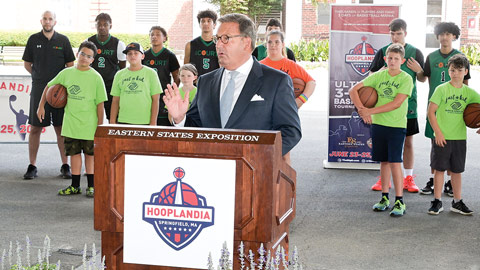
Cannabis Special Coverage

Delivering on Business Promise

partners in Budzee.

From left, Kevin Perrier, Volkan Polatol, and Erza Parzybok, partners in Budzee.

Volkan Polatol didn’t actually speak the words, but he strongly implied them: ‘If this was easy, then everyone would do it. Or at least try.’

The ‘it,’ in this case, is delivery of cannabis products — Amazon-style. Polatol, teaming with Kevin Perrier and Ezra Parzybok in a venture called Budzee, has created such a service, believed to be one of the very few in this region, and the country, for that matter.

As the partners talked about their business, they addressed that logical question about why they are the first and why there are not more ventures addressing what appears to be a logical need within the marketplace.

And the simple answer is that this isn’t as easy as it looks. And it doesn’t even look easy.

Indeed, there are complex licensing issues to overcome, software programs to develop, logistics, myriad expenses — from buying dedicated, unmarked vehicles to outfitting them with special equipment, to staffing each vehicle with two people (one of many requirements to be followed). And now, gas costs more than $5 a gallon.

“All of this is incredibly expensive, and it’s very difficult; we had to create the model,” said Polatol, who summed it all up by saying that a roadmap had to be in place for such a unique venture.

Parzybok agreed, and elaborated — on the many challenges facing this venture and all businesses in the cannabis sector.

“There’s a strain put on these businesses when the state invents all these rules that make it difficult to run a smooth, profitable business,” he explained. “The rules for cannabis are more strict than for pharmacies that sell opioids; they’re more strict than those for the delivery trucks that deliver alcohol. All that costs money.”

The partners who created Budzee, all veterans of this industry in one capacity or another, have chosen to take on all these challenges — they opened their doors this past spring. And that’s because, despite all these hurdles and expenses, they see real need for what they’re doing. They also see a path to profitability — not right away, but certainly some day, and perhaps soon as word of their venture grows and more people decide that it’s easier to have cannabis products delivered to their door than it is to travel to an area dispensary.

“There are people who can’t drive to a dispensary,” said Polatol. “Meanwhile, even though cannabis is legal in this state, there is still a stigma out there; some people don’t want to be seen in dispensaries. There’s still a great many people who want to be home, and they like the convenience of things being delivered to them.”

“There’s a strain put on these businesses when the state invents all these rules that make it difficult to run a smooth, profitable business. The rules for cannabis are more strict than for pharmacies that sell opioids; they’re more strict than those for the delivery trucks that deliver alcohol. All that costs money.”

And that brings the partners, who have invested more than $1.2 million to move Budzee off the drawing board, to the major challenge that remains for them — educating the public about this service and the convenience it brings.

“There’s considerable work to do to educate the public about this,” said Polatol, adding these efforts are ongoing. “Once we get established, people will understand; there are so many non-cannabis models out there — from Domino’s Pizza to Amazon. Once they understand it, it clicks. To get it out there, though, will require marketing, marketing, and more marketing.”

Parzybok agreed, and said that in time, consumers will come to understand, appreciate, and embrace the convenience just as they have in many other industries where home delivery has become an important part of the business model.

“It’s a new industry, so you assume that most licensed categories are going to be profitable,” he said. “You can look at the numbers for retail establishments or see the lines coming out the door when retail was opening, so you just assume that people will also embrace delivery. But when Amazon first came out, people were like ‘why should I buy something on the Internet when I can just go get it at the grocery store?’ But now they realize that they never have to bring it in from their car again.”

ideally situated off I-91

Budzee’s location in Easthampton is ideally situated off I-91

Getting the word out, and creating a comfort level with home delivery of cannabis products is essential, because with this model — where Budzee is charging the same price for products as one would pay if they went to a dispensary (there is a $100 minimum) — relies on volume. And creating it will be the primary assignment moving forward.

“It’s all about scaling up,” said Polatol, adding the goal is to eventually serve the entire state and build a large portfolio of new and repeat clients.

For this issue and its focus on the region’s emerging cannabis industry, BusinessWest talked with the partners at Budzee about the venture, what it took to get it off the ground, and how they anticipate that it will continue to gain altitude in the months and years to come.


Creating a Buzz

As they offered BusinessWest a quick tour of their facilities — dominated by signs that read ‘authorized personnel only’ or ‘Do Not Enter — Limited Access Area’ — on just about every door — the partners stopped in the large vault area where the various cannabis products are stored and then gathered for delivery.

There are literally hundreds of different products on the shelves — a selection larger than what is to be found at most dispensaries, said Polatol — with names ranging from Rootbeer Float to Blue Sunshine; Purple Pineapple Express to Sundae Driver.

Putting such a portfolio of products together has actually been one of the easier aspects of this enterprise, they noted, adding quickly that just about everything else — from the software to the business model; from the licensing to the logistics — is difficult and, in many ways, pioneering.

Turning back the clock roughly two years, Polatol said the three partners came together behind the idea that the region needed a service that would ‘bring cannabis to your house like a pizza,” as he put it, and conviction that this team had the expertise, determination, and patience (a key ingredient to be sure) to make this happen.

There were some courier-like businesses working on a DoorDash model, said Polatol, but the concept they had, for a warehouse, Amazon-like model, was totally unique for this region, and the country, as far as they knew.

The vault at Budzee

The vault at Budzee holds a wide variety of products for delivery to customers.

The partners already knew each other well. Polatol and Perrier are the owners of the dispensaries Dreamer Cannabis in Southampton, and Honey in Northampton, and Parzybok served as a licensing consultant on those ventures. United in their vision for this new kind of business, what they put together a checklist of everything that was needed, and then a roadmap for taking the concept from the drawing board to the marketplace.

The first item on the list was a license, which was somewhat problematic, because the state was, and still is, awarding cannabis-delivery licenses exclusively to those who qualify for the state’s social equity program — meaning they were previously harmed by the nation’s war on drugs.

Enter Parzybok, who was arrested in 2015 after federal agents raided his home in Northampton and eventually seized dozens of marijuana plants; he received probation for the offenses.

The license-application process was lengthy and complex, mostly because of the new ground being broken, but also because the Cannabis Control Commission has historically been methodical when issuing licenses, said Perrier, adding that this bridge would eventually be crossed.

The partners also needed a location, and realized that they actually had one in property that Perrier owned in Easthampton that was ideally situated less than a minute from an exit onto I-91, positioning the company to deliver to the four counties of Western Mass. and beyond.

They also needed software for taking orders, vehicles, specialized equipment, drivers (a challenge when all companies are looking for help), and a system for safely getting products into those vehicles and then into the hands of customers.

All those hurdles were cleared early this year, and the company commenced deliveries in early April.

Most of these have been in and around Springfield, but there have been some farther east; the territory attached to the license is essentially everything west of Worcester. And the two-person teams (one drives, the other brings the items to the door) are delivering the full spectrum of products, from flowers to edibles to accessories.

Deliveries come on three levels: ‘express’ (within two hours, but usually less than that); ‘same day,’ where the customer picks a time slot, and ‘scheduled,’ where the customer picks the day and time.

Thus far, business has been good, but the venture is still very much in the ramping-up phase as awareness of the service builds, the public becomes more comfortable with the notion of having cannabis delivered to their doorstep, and it understands (at least with this company) that delivery is not more expensive than going to the dispensary.

And there are obstacles to building this awareness, they said, adding that state and federal laws limit where and how such a venture can advertise its products and services. For example, cannabis companies can only advertise on vehicles that can prove that 85% of their audience is 21 or older, said Perrier. Meanwhile, because cannabis is still illegal federally, such platforms as Google, Instagram, and Facebook “won’t take our money,” he noted, adding that television stations will not take it, either. They can’t even advertise on the vehicles delivering the products — those must be unmarked for, presumably, security reasons; this is a cash-only business.

“You’re really handicapped in how you can advertise,” said Polatol, adding that the company is using some billboards and a digital campaign to draw people to the Budzee website. But that’s just half the battle. Once there, consumers need to become comfortable with the products and procedures, and place orders.

Despite these challenges, the partners believe they have the right concept at the right time, and as awareness and comfortability grow, they will achieve the volume they need to be profitable.

“Once Budzee becomes known as a household delivery option for cannabis, things will snowball and we’ll get bigger numbers,” said Polatol. “And we’re seeing that right now; the numbers are going up every week, and we’re getting a lot of regulars.

“There are some people who can’t leave their house for health reasons, and they’re ordering from us three times a week,” he went on. “They love it, and it’s rewarding for us; it’s a model that’s working.”

At present, the company is making maybe 20 to 30 deliveries a day on average, he said, with the goal being to take that number past 100. Other goals are to go statewide (more licenses will be needed for that) and then perhaps to other states, he told BusinessWest.


Budding Proposition

None of that will be easy, of course. But as these partners have shown, they are willing to assume challenges and clear some high hurdles to get where they want to be.

And right now, they are where they want to be — the first to be out the door (and to your door) with delivery of cannabis products.

They know that it will take some time to scale up, as Polatol noted, and reach the volume level they need to be successful, but they believe they have a model that works and a foundation to build on.


George O’Brien can be reached at [email protected]
Construction Cover Story

History in the Remaking

Dave Fontaine Jr.

Dave Fontaine Jr.

Crews working on the $64 million initiative to transform the former Court Square Hotel in downtown Springfield into market-rate housing say the project takes them back in time. Actually, it takes them to several different periods of time — from the property’s days as prominent hotel to more recent days, when it hosted a popular tavern and several other businesses. While doing this time-traveling, these same crews are living in the present and confronting a number of challenges as they usher in the next chapter in this property’s intriguing history.

Dave Fontaine Jr. calls it a “cool memento.” Actually, it’s turned out to be more than that.

He was referring to a bid package submitted by his firm, Fontaine Bros. Inc., for redevelopment of the former Court Square Hotel in the heart of downtown Springfield. The date on the three-ring binder, crammed with interior and exterior photographs and other materials, is 2000.

And that wasn’t the first — or only — time the company had submitted a bid on a project to transform the property, now vacant for more than 25 years, for a different use — endeavors that never saw the light of day for one reason for another.

There have been so many in fact, that Fontaine, vice president of the company started by his great-grandfather and his brother, had some humorous material for use when he was asked to say a few words at one of the many ceremonies to mark milestones for the project that actually made it off the drawing board — a $64 million initiative to convert the property into 71 units of market-rate housing.

“I joked that I believe I’m the third generation of Fontaines to bid on the project,” he told BusinessWest, adding that both his father, Dave Sr., and grandfather, Lester, were involved with similar proposals. “We’ve been pricing it over decades, with at least a dozen iterations and many different planned uses.”

More than a quarter century after the first such bid, Fontaine is finally at work in Court Square, with one of its banners hanging on the front of the property. It’s an intriguing project, said Fontaine, one of many the company has handled that falls in the broad category of historical restoration. Others include the transformation of Classical High School into condominiums, Berkshire Hall at the Berkshire School in Sheffield, the public libraries in Holyoke and Shrewsbury, and even the conversion of 95 State St., visible out the windows of the Court Square property, into the home of MGM’s headquarters in Springfield.

Work at Court Square began early this year, he said, noting that the first phase involved weatherizing the property and making it structurally sound, significant steps for a building that was, in his words, in “terrible shape” when crews arrived and set up shop.

One of the original staircases at the Court Square Hotel.

One of the original staircases at the Court Square Hotel.

Actually it was in terrible shape in 2000, as photos in that bid package reveal, he said, adding that conditions only worsened over the past two decades as the elements took their toll on the structure.

“It had been vacant for 20 or 30 years,” he explained. “When we got there, the envelope needed work — and there are still areas where water gets into the building when the weather is poor — and historically there has been no heat in the building in the winter. The building was really on its last legs.”

Repairing and renovating what Mother Nature has damaged is just one of many challenges on this project, said Fontaine, noting that, like all construction projects undertaken at this time, this one has had to contend with everything from supply-chain issues to often dramatic increases in the prices of materials and labor.

“I joked that I believe I’m the third generation of Fontaines to bid on the project. We’ve been pricing it over decades, with at least a dozen iterations and many different planned uses.”

So much so that the Springfield City Council approved an 11th-hour request for $6.5 million in emergency funding to handle cost overruns for the project which came to fruition through a public-private partnership that includes a number of players, from the state, to Wynn Development and Opal Development, to MGM Springfield.

Another challenge is implied in that phrase ‘historical renovation.’ Indeed, the property, which dates to the 1890s, is on several lists of historic properties, said Karl Beaumier, on-site superintendent for the project, adding that, in many respects, crews from Fontaine are dismantling what was in place in the old hotel rooms and other spaces, storing those pieces, and putting them back after mechanicals, equipment, and appliances are installed and finishing work is completed. Everything that goes into the renovated structure, including new windows (600 of them) must be reviewed by the National Park Service.

“We salvaged a tremendous amount of the wainscoting on the corridors — some of it was left here, some of it came off and it’s going back on,” said Beaumier. “All of the doors were salvaged, the door frames, the door cases, the window cases on all the exterior windows, the baseboard, the chair rail, the crown molding — all of that stuff got saved; there are 10 40-foot conex boxes (shipping containers) completely full of salvaged woodwork that has to go back in the building.

“It’s been carefully removed, catalogued, and stored,” he went on. “It will all go back as part of the historical renovation.”

For this issue and its focus on construction, BusinessWest took a hard-hat tour of the property, and talked with Fontaine and Beaumier about the massive undertaking and the steps still to come.


Past Due

As they started their tour on the ground floor of the property, most recently home to several storefronts and eventually to be the site of a restaurant, Beaumier and Fontaine said that for the on-site crews, going to work each day also means going back in time.

Or to several different times, to be more precise.

view out one of the windows on the sixth floor

This view out one of the windows on the sixth floor explains why there has always been interest in converting the property for residential use.

Indeed, on the ground floor, the areas housing the storefronts bear evidence of their former uses, especially the space that was home to the tavern known as the Bar Association, a name chosen to reference the many clients from the legal community, many with offices within a block or so from the courthouse just south of the Court Square property.

“It was like things were stuck in time from the late ’80s,” said Fontaine, noting such items as the stained-glass window in the Bar Association and a door that still had the ‘R’ from owner Tony Ravossa’s name. “It’s cool seeing the old storefronts.”

From the ground floor, Beaumier took BusinessWest to the basement, where collected water provided evidence of still-ongoing work to shore up the property, and then to the second floor, where the next use of the property is starting to come into focus.

There, and on the remaining floors, long rows of what used to be hotel rooms —most all of them with doors to the rooms on either side — have been essentially gutted, with the masonry walls that divided them (see photo, page 30) taken down and the groundwork laid for what will become one- and two-bedroom apartments. In one hallway, rows of shower units were waiting for eventual installation.

While the property will have a completely different use than it did a century ago, it will look, in almost all respects, as it did back then, Beaumier explained.

“When we’re done, and we look down this corridor, it’s supposed to look just like it did in 1900,” he told BusinessWest as he gestured down the narrow hallway of the wing of the property that runs north-south toward State Street. “All these doors that went into the individual hotel rooms … we’ve opened up the spaces, so there will probably be two dummy doors for each unit; the doors that we took off have to get pinned back in the wall so that when you look down this corridor, it looks the same as it did historically; every third door will actually open into a unit, the rest will be dummy doors.”

Elaborating, he said that the actual walls to the units were pushed back a foot from where they stood originally, because the original corridor is too narrow for a wheel chair to turn in, an example of how some adjustments have to be made to enable a century-old building to comply with modern building codes and state and federal regulations.

The tour then provided more glimpses into the past as it went to and then down one of the original staircases to what was the lobby area of the former hotel, complete with the remains of a revolving door, marble-covered walls, and a ceiling, now in an advanced state of decay, that will be restored.

“Right now, we’re getting the building structurally back to where it needs to be so we can do the mechanicals and other systems,” said Fontaine adding that the initial phases of this project have involved demolition, structural work, and salvaging a number of features. When these have been completed, crews will move onto installation of those mechanical systems, replacing hundreds of windows, building out the individual apartments, and putting the salvaged items back in.

When the tour reached the sixth floor, Beaumier pointed out one of the north-facing windows to dramatic views of Court Square (see photo, page 26), looks that help explain why there has always been interest in redeveloping the property for housing, and why there has been a high level of interest in this project.

As they walked and pointed out specific areas of note in the sprawling property, Fontaine and Beaumier talked about everything from the significance of the project to Springfield and its central business district to the many challenges involved with undertaking a project like this at this time of soaring prices, supply-chain issues, and a workforce crisis that has affected all sectors of the economy including construction.

Photo by Joe Santa Maria, Kill the Ball Media

Work to convert the property into a mix of residential and retail spaces is expected to be completed in the early fall of 2023. Photo by Joe Santa Maria, Kill the Ball Media

Fontaine, whose family has developed or redeveloped many properties downtown, from the aforementioned State Street project to the expansion of what is now known as the MassMutual Center, to the creation of MarketPlace, said the Court Square is an important next step in the revitalization of that area.

“That downtown area means a lot to us, we’ve handled a lot of projects in that area,” he said. “I grew up in this area, we’ll stay in this area; I want my daughters to be able to stay around here and work and live here if they choose to, and I this is a big step toward making downtown attractive to working professionals and people who want to be downown.”

As for the many challenges that come with building at this time, Fontaine said there have been some adjustments to make.

That includes the emergency funding from the City Council, he said, adding that the amount allocated should cover the escalating cost of the project. But it also includes longer lead times for items and, in some cases, having to use different products or materials because the lead times are too long.

“As with every construction project going on right now, there have been a lot of items with long lead times — significantly longer than normal,” he explained. “We’ve been working through that with the designers to use some products that do what we need them to do, but also get here within the lead times. With the mechanical systems, one of the manufacturers that was specified for the unit heaters had a 52-week lead time; we found something we could get in the time frame in which we needed them.”


Finishing Work

The elaborate project is expected to be completed in the early fall of 2023, said Fontaine.

There will certainly be an elaborate ribbon-cutting ceremony at that time, one that will close the book on the long, often-frustrating efforts to create a new life for the historic property, and usher in the next chapter.

Fontaine can also close the book — figuratively but also quite literally — on more than 25 years of bidding on projects to transform the property.

That binder from 2000 is, as Fontaine said, a cool memento, but it’s also a symbol of this property and how long its fate has been a critical issue in Springfield.


George O’Brien can be reached at [email protected]
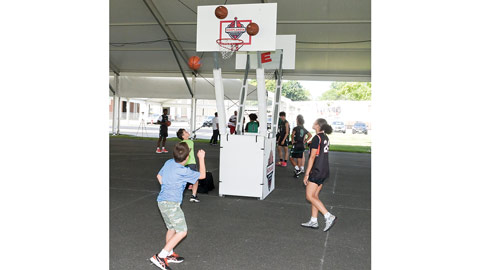
Features Special Coverage

Uplifting Spirits

For most in this region, the war in Ukraine is something to read about or see on the nightly news. For Paul Kozub, founder and president of V-One Vodka, who operates a distillery in Poland just a few hours from the border with Ukraine, the war hits much closer to home — figuratively, if not literally. He made a trip to Poland and then the border in March, and he’ll be going back in July, bringing cash for refugees and other types of support.

Paul Kozub says he’d like to forget some of the things he saw and heard while on his trip to Poland and its border with Ukraine in March, just days after the fighting began there. After all, he was seeing people in extreme distress — women and children, mostly, who were leaving their home country, sometimes with just on their clothes on their back, not knowing if they would ever be returning.

But these words and images, and there are many of them, are burned into his memory, he said, and they make him even more committed to doing what he can to help refugees who have made their way to Poland, where Kozub, founder and owner of V-One Vodka, owns a distillery.

“What I saw and what I experienced was mind-blowing, especially in 2022,” he recalled, adding that he wound up making three trips to the border in March, with each visit lasting seven or eight hours. “We saw the buses on the highway filled with women and children — martial law was declared in Ukraine, so no men under the age of 60 were allowed to leave the country. So you just saw women and children leaving, fleeing in buses on the highway — bus after bus after bus full of people.

“On the border, there were tents set up for food and a kind of transition spot,” he went on. “But you’d see women 70-or 80-years-old crossing with bags, and young women with strollers and children just walking over the border.”

Kozub told BusinessWest that he felt compelled to travel to Poland in March. He wanted to visit the distillery, located in the town of Lublin, something he’s done every few months over the past several years, although far less frequently since 2020 due to COVID, but also to support refugees if he could.

He left with several thousand dollars in cash, most of it in $100 bills, that he distributed to several different individuals and families knowing that the way exchange rates were moving, U.S. currency would buy much more than the Polish dollar. He made a few trips to the border, which is about a 90-minute drive from the distillery, and in doing helped bring the war to this country through a few interviews with a Boston television station that picked up his story and talked with him from his hotel room and at the border.

“I never thought I’d be a war correspondent, but there I was talking about what I saw and what I experienced,” he said. “To me there’s no more clear example of good versus evil, a country that’s invaded for no clear reason.”

Today, Kozub is planning a return visit to Poland and his distillery with his family — his wife and four children. He’s not sure if he will make it to the border, but does plan to visit some refugee centers and try to reconnect with several of the people he met three months ago.

He plans to visit the Help the Ukranian Children Foundation in Zyrzyn, Poland, which he is supporting through a special label for his vodka, one with the blue and yellow of the Ukranian flag; $2 from the sale of each bottle going to support refugees.

Paul Kozub displays one of the new-edition bottles bearing the color of the Ukranian flag

Paul Kozub displays one of the new-edition bottles bearing the color of the Ukranian flag. He is donating $2 from each bottle to help refugees.

For this issue, BusinessWest talked with Kozub about how the war in Ukraine — and the plight of those who have fled that country for Poland — have become personal for him, and how he continues to find ways to not only support those individuals and families, but also shed needed light on their situation.


Proof Positive

As noted earlier, Kozub has many indelible memories from his March visit, one that brought the war in Ukraine and its profound impact on its people, home in ways that can’t be appreciated by simply tuning into CNN.

He used the word ‘surreal’ more than a few times to describe what he saw, especially during those visits to the border.
“Poland was normal for the most part — there were a lot of Ukrainain flags,” he recalled, “But as we were driving toward the border, and as we got to within 10 miles of the border, there was nobody … no cars going in our direction; instead, we saw all the buses going in the other direction.

“What I saw and what I experienced was mind-blowing, especially in 2022.”

“That was the first time we got a little anxious,” he went on. “Once we got to the border, we befriended a few Polish police men and women who started telling us the stories they were hearing.”

One memory stands out for him. It involves giving a ride to a young girl and her parents to the city in Poland where he was staying.

“We didn’t notice until they got out that they had nothing,” he recalled. “No bags, no nothing, just the clothes on their backs. The way the man was dressed — he had a nice watch, nice clothes on, nice shoes — you could see that they just left so quickly they didn’t have time to pack a bag. Seeing stuff that like really hit home.

Kozub said he left for Poland with the expectation that he would bring a few thousand dollars to the border, maybe visit once and try to help people as they were coming into Poland during the first days of the war. But those expectations were altered by what he encountered, and also by contributions sent to him in advance of his trip, including $4,000 from his commercial lender, PeoplesBank — the most that can be sent via VENMO.

Paul Kozub, seen here with police officers at the border

Paul Kozub, seen here with police officers at the border, will be returning to Poland next month.

“That contribution really helped — while I was there, I was able to buy so much more,” he recalled, noting that he was able to buy a washer and dryer for an apartment building now housing 80 women and children, and also bring more needed food and water to the border.

He recalled one instance where he tried to help a woman with four young children.

“All these people didn’t want to accept money from me at first,” he recalled. “But I said ‘you have to — that’s why I traveled all this way.’

“That was back when there were tens of thousands of people coming over every day — that’s when most of the need was going on,” he recalled, adding that the sights from those days remain with him even though the scene has changed, as have the needs of the refugees that have made their way to Poland.

While what he saw was disturbing on many levels, so too was what he heard from some of those he encountered, he said, noting that he has come to understand the Polish language, which is very similar to what is spoken in Ukraine.

“As we were driving toward the border, and as we got to within 10 miles of the border, there was nobody … no cars going in our direction; instead, we saw all the buses going in the other direction.”

“We could understand most of what they were saying,” he noted. “We would see the cars of people driving into Poland, and they would have pieces of paper in the window with ‘ditya,’ which is ‘child’ in Russian written on them. We were hearing stories that the Russians were shooting at them; they were bombing these lines of cars as they were leaving.

“The stories of atrocities that we’re now hearing every day … I was hearing them in the beginning,” he went on. “It is so unbelievable that this is going on today; it’s very heartbreaking, and you just don’t want to believe that it’s true.”

While there are still some people leaving Ukraine for Poland, much of the activity is now moving in the other direction, with many returning to the country they fled. Still there are millions still in Poland forging a new life for themselves there, a challenge made simpler by the Polish government’s decision to change its law and allow people from the Ukraine (which is not part of the European Union) to come into that country and work and start businesses.

“In some of the major cities, like Warsaw and Krakow, they’ve seen a 30% to 40% increase in population,” said Kozub, adding that refugees are finding housing in the homes of Polish residents, in churches, camps, and other sites.

Paul Kozub says his trip to the border in March was surreal

Paul Kozub says his trip to the border in March was surreal in many respects and included work as a “war correspondent.”

As for his planned July trip back to Poland, Kozub said he plans to reconnect with some of the individuals and families he met at the start of this conflict, including a young man who renovated a 20-unit apartment building in Zyrzyn that is now home to 80 women and children.

“We’re continuing to raise money for them, so I’ll bring some money for that charity,” he said, adding that he also plans to visit — and bring some money to — an orphanage located near the distillery, one that he has been supporting for several years now, which is now housing orphans from Ukraine.

To further assist refugees, and, specifically, Ukranian Children Foundation, Kozub has created a special label for his original V-One vodka, a project that was fast-tracked, with the label being finalized in just a few months, rather than the full year that it normally takes.

It was undertaken as Kozub was introducing another new flavor — Double Espresso — to his growing portfolio, one that is ever-changing and expanding to keep pace in the ultra-competitive vodka market.

The March trip to the distillery was undertaken to finalize the recipe for that new flavor, he said, adding that the overall process has been slowed by supply-chain issues and huge increases in shipping costs and other expenses — challenges that are making it much more difficult to do business in this industry.

Despite these challenges, Kozub wanted to introduce his new label, a project that was conceived just before his March visit, with the expectation that there would be long-term needs among the refugees.

“It takes about a year to get things done, between the approvals and the printing time, and other issues, but we were able to get it done in three weeks,” he said, adding that the son of one of his employees at the distillery drove 10 hours each way to pick up the labels, which were affixed to 3,000 bottles overnight, in time to get on a container ship.

The special edition bottles should arrive by mid-summer, he said, and he expects them to be sold out by August.


His Best Shot

Like most everyone taking in what’s happening in Ukraine — from a few feet from the border or 4,500 miles away — Kozub has no idea when this conflict will end or how it will end.

What he does know is that there are many people still in need. They are an ocean and then a continent away from V-One’s headquarters in Hadley, but only 100 miles or so from where his vodka is made.

Since setting up shop in Poland, he has been active in that ‘community’ and a source of support for orphans and others in need. The landscape there has changed dramatically over the past three months, and Kozub has responded accordingly. As he said, it’s personal for him.


George O’Brien can be reached at [email protected]
Daily News

SPRINGFIELD — The Springfield Symphony Orchestra (SSO) has announced a 2022-23 season that will include six classical performances and two “pops” concerts.

The first concert in the new season will be presented on Saturday, October 22 featuring world-renowned conductor JoAnn Falletta, music director of the Buffalo Philharmonic Orchestra.

“We are extremely pleased to announce this compelling and dynamic season that will include a remarkable series of conductors who we know will bring joy and beautiful music to concert lovers with a combination of six classical concerts and two pops concerts,” said Interim SSO Director Paul Lambert. “We are pleased and excited by the talent and diversity of these conductors including two female conductors as part of the coming season – a first for the SSO.

“We are announcing this concert season at a time when we continue to be without a labor agreement with the musicians’ union,” he went on. “We want to be clear that we remain hopeful for a new agreement and look forward to working together to present this concert season. This concert season will showcase the extraordinary talent of the SSO musicians under the direction of a talented collection of guest conductors.

“We are looking forward to collaborating on these and future concerts with the musicians of the SSO family as we present our first full season coming out of the pandemic,” he continued. “We are thrilled to be re-engaging our patrons and believe we have a compelling lineup of classical and pops music that will attract new audiences into Symphony Hall.”

Two of the guest conductors that will be coming to Symphony Hall in the coming season, Falletta and Theodore Kuchar, have been included in the group of the 10 best living conductors in the world, according to David Hurwitz, a music critic and executive editor of ClassicsToday.com, the first and only classical music daily.

The six classical concerts included in the concert schedule are:

  • Oct. 22, conducted by JoAnn Falletta, featuring Zoltan Kodaly’s Dances of Galanta, Edward Elgar’s Cello Concerto with guest cellist Joshua Roman, and Antonín Dvořák’s Symphony No. 7, considered by many musicologists to be his best symphony;
  • Nov. 5, The Sound of Silence, conducted by Tania Miller, former Music Director of the Victoria (Canada) Symphony Orchestra, featuring “Messenger,” a work by Ukrainian composer Valentin Silvestrov, Wolfgang Amadeus Mozart’s Symphony No. 36  (Linz), and Johannes Brahms; Symphony No. 3, from which Dvořák derived the inspiration for his 7th Symphony;
  • Jan. 14, 2023 Martin Luther King Jr. Celebration with African American guest conductor Kevin Scott, featuring the music of African-American composers, including Florence Price’s Piano Concerto in D minor performed by Artina McCain, and William Grant Still’s Symphony No. 4, the Autochthonous;
  • March 11, a program conducted by Mark Russell Smith featuring the work of female composersJoan Tower in her Fanfare #1 for the Unknown Woman, and Louise Farrenc in her Symphony No. 3; The program concludes with the powerful Piano Concerto #2 of Sergei Prokofiev, performed by Wei Luo;
  • April 15, Asian-American conductor Tian Hui Ng, Music Director of the Pioneer Valley Symphony Orchestra, will conduct a program featuring Benjamin Britten’s Four Sea Interludes, Sergei Rachmaninoff’s Piano Concerto, No. 2, an epic work of Romanticism, performed by Jiayan Sun, and Edward Elgar’s Enigma Variations; 
  • May 13, conductor Theodore Kuchar, Artistic Director and Principal Conductor of the Lviv (Ukraine) National Symphony Orchestra, will lead a program featuring Dvorak’s Carnival Overture, Thomas de Hartmann’s Cello Concerto with guest cellist Matt Haimovitz, and Jean Sibelius’s dramatic and ever popular Symphony No.2.

The first pops concert in the concert schedule is “Holiday Pops” on Dec. 3, 2022 with conductor William Waldrop featuring guest soprano Camille Zamora and the Springfield Symphony Chorus. The program will include some old and some new versions of holiday favorites.

On Feb. 25, 2023 Byron Stripling, who also will perform on trumpet and vocals, will lead the second pops concert, celebrating Mardi Gras. He is a Springfield favorite, and is now the principal Pops conductor of the Pittsburgh Symphony Orchestra.

Banking and Financial Services Special Coverage

Landmark Decision

Country Bank

Country Bank

The property on Main Street

The property on Main Street has always played an important role in the economic vibrancy of the town, and this is expected to continue with its new function as a police station.

Country Bank recently introduced a new marketing slogan — ‘Made to Make a Difference.’ There have been myriad examples of that mindset over the bank’s 172-year history, but perhaps none bigger than the recent announcement that the bank would gift its former headquarters property on Main Street, valued at more than $3 million, to the town, with the intention of it becoming the site of a new police station and perhaps home to other town offices.


Paul Scully says that, over the past few years, or since Country Bank started ramping up discussions about what to do with its vacant former headquarters building on Main Street in Ware, there had been talks with various real estate developers about the property.

But they didn’t go very far, said Scully, the bank’s president, noting that those making inquiries were “more speculators than investors,” as he put it.

“And we didn’t want to sell it on a speculative basis and then not have it maintained,” he explained. “Or have someone say ‘we bought this with the intention of having some office move in but it never came to fruition’ and now the property is abandoned.

“Yes, we were approached by some people,” he went on. “But we really weren’t interested. We really were driven by a desire to use this property to make a difference for the town; that was our guiding compass.”

With that, Scully poignantly described the mindset that ultimately led to the announcement on June 1 that the bank was donating the property at 75-79 Main St. to the town with the intention of it becoming the site of its new police station and perhaps other municipal uses.

Elaborating, he said there were multiple objectives in mind as the bank considered what to do with the property that had been its home until it moved its headquarters into renovated mill space on South Street in 2005.

These included a desire to help the police department find larger, better quarters — something it desperately needs — while also “energizing Main Street,” as Scully put it, noting that the town’s central business district has been hit hard by COVID and other factors and needs a spark. He believes that having the police department and perhaps some other town offices in that complex will provide one.

The decision to gift the property to the town comes, coincidentally, as the bank introduced a marketing tagline: ‘Made to Make a Difference.’

This tagline evolved from a series of focus groups with customers, team members, board members, and non-customers who had gathered to discuss their experiences with the bank and their knowledge of its impact on the people and communities it serves, said Scully, adding that the donation of the Main Street building is the latest example of this mindset at work.

“Yes, we were approached by some people. But we really weren’t interested. We really were driven by a desire to use this property to make a difference for the town; that was our guiding compass.”

“It’s what we’ve been doing for 172 years — we’re made to make a difference; make a difference in your loan, make a difference in the community, make a difference in your financial planning,” he said, adding that this mission has been carried out in countless ways over the years, including a recent project in Worcester to build 55 beds for children in conjunction with the Mass. Coalition for the Homeless, at which the new slogan was formally introduced to the bank’s staff.

“That was the first time they’d heard the slogan, and in the previous two hours, they had just made a difference in a child’s life, someone who did have a bed of their own,” he explained, adding that the donation of the Main Street property adds a new and an intriguing chapter to that long-running story of giving back.


Building Momentum

As he talked about the decision to gift the property to the community, a donation he described as rare for a private institution, Scully first set the stage in an effort to explain how this came about, why it makes sense for the town, and how it meets the bank’s ongoing commitment to the community embedded in its new marketing slogan.

He started by discussing Main Street and, more specifically, what was largely missing from it — vitality, or energy. Elaborating, he said that many retail businesses had moved over the past several years from Main Street to the new commercial hub on Route 32, near a Wal-mart. And in recent years, several fires, including one at the bank’s Main Street property, prompted more moves by businesses. Meanwhile, COVID and lengthy and very involved reconstruction of Main Street brought additional challenges to that part of downtown.

These forces coincided with Main Street property going quiet, as a result of the pandemic and forces resulting from it.

That property, valued at approximately $3 million, includes the former banking office located on the corner of Main and Bank Street along with the E2E building located at 79 Main St., the rear parking lot and bunker style garage, and rooftop parking situated behind the 65-71 Main Street location that was also donated by Country Bank to the Quaboag Valley Community Development Corporation back in 2016.

Country Bank president Paul Scully

Country Bank president Paul Scully

It has been vacant since the start of the pandemic, when the bank closed its branch there due to staff and customer safety concerns.

“Not maintaining a presence on Main Street was a tough decision that required months of consideration while assessing how this location might be best utilized to support the community,” said Scully. “The effects of the pandemic combined with a significant decrease in customer foot traffic over the years and a shift in banking habits to more customers adopting electronic delivery channels were all a considerable part of the decision. It is a massive building to be sitting empty. The decision to donate the building became evident as we weighed the usage of this location and discussed the opportunities it could provide to the town.”

Elaborating, Scully said that while there have been ongoing discussions about the fate of the building over the years, they took on new urgency with the pandemic and the bank’s decision not to have on presence on Main Street.

However, that urgency coincided with the large-scale construction work undertaken on Main Street, he went on, adding that nothing could really be done while that work was going on.

“Over the past year, and with more earnest, we’ve been saying ‘let’s figure out what we can do with this building a make a difference,” said Scully. “And it somewhat coincided with hearing about the need for a new police station.”

The pricetag for such a facility was pegged at $7 million to $9 million, he said, adding that a new station is clearly needed, with the department having outgrown its current quarters, the town’s former post office.

By gifting the town its former headquarters, the bank can help save the town much of that expense — it will still need to renovate the property for that new use, said Scully — while also helping to bring some new life to a downtown that is poised for a resurgence given the recent roadwork and an easing of the pandemic.

“We knew that now that the roads had been repaved and new sidewalks installed, there was more of an opportunity for a resurgence on Main Street than there had been during that construction process,” said Scully. “And we didn’t want to circumvent that by having someone buy the building who wasn’t going to be able to maintain it or have the financial resources to take care of it.

“We wanted it to be right formula for the town and for the other merchants on Main Street to allow them to get some foot traffic back,” he went on, adding that a police station, and other town offices that might eventually move into that space, will help accomplish many of those goals.

Although there is no specific timeline for the transfer of ownership, which needs approval from the town at a scheduled town meeting, the bank intends to work on a smooth transition with all parties involved and expects the transfer of the location to happen in 2023, said Scully.


The Bottom Line

Reflecting on the long history of the Main Street property, Scully said it has housed different banks, including Country, the Ware Trust Company, and Ware Savings, since before World War I.

It has long played a role in the economic vibrancy of the town, he said, adding that even though its function will change, it will continue to do so. This was that guiding compass the bank used as it went about determining a new use for the property.

“We look at this as a great investment in community — this is what community banking is all about,” he said. “We say that we exist for our customers, our community, and our staff, and this really is the community basis of it. We’re really excited that we can help make a difference downtown and help make a difference to the taxpayers.

“We met internally as a board and a senior management team, and our driving focus was to what’s right for the town,” Scully explained. “We’ve been in town since 1850, and we believed we’ve made a difference over all those years and wanted to continue making a difference.

Education Special Coverage

Marking a Milestone

The original home to HCC

The original home to HCC, the former Holyoke High School

The campus today

The campus, and its renovated campus center, today

Holyoke Community College, the state’s first community college, is marking its 75th anniversary this year. This has been a time to reflect on how the school has evolved to meet the changing needs of those living and working in the communities it serves, while remaining loyal to the mission with which it was founded — to open doors to opportunity.


It’s called the Itsy Bitsy Child Watch Center.

And the name says it all — if you know about this kind of facility. It’s not a daycare center — there’s already one of those on the Holyoke Community College campus. And it’s not an early education facility — the college has no intention of getting into that business, according to its president, Christina Royal.

Instead, it’s a … child-watch center, a place where students can bring young children for a few minutes or a few hours, while they’re attending classes, taking part in meetings, or perhaps huddling with advisors.

“In daycare, you drop your child off in the morning and you pick it up at the end of the day; it’s generally for full-time working parents,” she explained. “In a child-watch program, you’re dropping the child off for a short-term period that is very specific; you’re coming, you’re taking a class, you need to put your child in a child-watch program for that 50 minutes or an hour and a half that you’re in class.”

The presence of the Itsy Bitzy Child Watch Center is just one example of the profound level of change that has come to the institution now known as Holyoke Community College. There are many others, including the name over the door — the school was originally called the Holyoke Graduate School (a night program), and was later renamed Holyoke Junior College, before becoming HCC in 1964 — as well as the setting. Indeed, the college was originally located in the former Holyoke High School, which was totally destroyed by fire in 1968, to be replaced by the current campus, carved out of a dairy farm, which opened in 1974.

“We were birthed to create opportunities for working adults to be able to get a quality education, and that’s really important still today. Education is accessible to all — that’s the most important piece about community colleges; access is a tenet of a community-college education.”

But for perhaps the most dramatic change we need to juxtapose the picture of the first graduating class in 1948 with some statistics that Royal keeps at the ready, specifically those noting that more than half of the current students are women, and that during the most recent semester, 41 different countries were represented by the study body, and 33 different languages might be heard on the campus.

The first graduating class

The first graduating class (1948) was much smaller, and far less diverse, than the classes today.

But while celebrating all that has changed over the past 75 years, the institution is also marking what hasn’t. And there is quite a bit in that category as well.

Christina Royal, the college’s fourth president

Christina Royal, the college’s fourth president

Indeed, HCC has, seemingly from the beginning, been a place to start for those seeking a college education, but not a final destination, said Royal, noting that many have transferred to four-year schools to obtain bachelor’s degrees and then graduate degrees.

It’s also been a place for those for whom college is certainly not a foregone conclusion.,

“We were birthed to create opportunities for working adults to be able to get a quality education, and that’s really important still today,” said Royal. “Education is accessible to all — that’s the most important piece about community colleges; access is a tenet of a community-college education.

“No matter who you are, or where you’re at in your career, there is a place for you at HCC,” she went on. “This creates doors that open for many students, and it’s also why, when you look at our alumni, we talk about HCC being a family affair; we have many alums who say that either their parents had come here or their siblings or their cousins come here.” because you see many generations of students that continue to come back and have the next generation supported at HCC.”

Meanwhile, the school has always been known for the high levels of support given to its students, many of them being the first in their families to attend college. In 1946, and the years that followed, many of these students were men who had served in World War II and were attending college on the G.I. Bill.

Fire destroyed the college in 1968

Fire destroyed the college in 1968, leaving some to ponder whether HCC had a future.

Today, as noted, more than half are women and far more than half are non-white. Many arrive with specific needs — ranging from food insecurity to transportation to a child-watch facility — and HCC, while helping them earn a degree or certificate, has been steadfast in its efforts to address those needs and “meet students where they are,” as Royal likes to say.

Moving forward, the school is marking its first 75 years with a variety of ceremonies, a commitment to continue its tradition of being accessible, and a refreshed strategic plan, one that has put additional emphasis on academic success and meeting student needs.

“It’s important that we provide equitable opportunities and that there is an equitable chance of success no matter who walks through the door.”

For this issue and its focus on education, BusinessWest talked at length with Royal about where HCC has been, where it is today, and where it would like to be in the years to come.


School of Thought

As she talked with BusinessWest late last month, Royal was planning for, and very much looking forward to, commencement ceremonies at the MassMutual Center on June 4.

This would be the first in-person ceremony in three years, and members of the classes of 2020 and 2021 were invited to join this year’s graduates in the proceedings. Royal; said several dozen members of those earlier classes accepted the invitation to march.

The new Center for Health Education and Simulation

The new Center for Health Education and Simulation on Jarvis Avenue is one of many recent additions to the HCC landscape in recent years.

“We’ve heard from some members of those classes that they desire to have that traditional pomp-and-circumstance experience,” said Royal, noting that, beyond the canceled in-person commencement ceremonies, the pandemic has tested HCC in myriad other ways, from enrollment to helping students secure access to the Internet.

“We were impacted as intensely as everyone else in the world,” said Royal, adding that this has been a test that has left the school stronger and more resilient, in her estimation.

And looking back on HCC’s 75 years of service to the region, the pandemic is certainly not the first, or only, time the school has faced adversity of the highest order — and persevered.

Indeed, the fire of 1968, which broke out on Jan. 4, just before final exams, left the school shaken to its foundation — quite literally, with some wondering if it even had a future.

“Culturally, we have fewer students who start, finish their education, and then focus on work for the rest of their career.”

“Springfield Technical Community College had just opened,” said Royal, only the fourth president in the school’s history. “And there was a lot of conversation about whether we needed another community college in this region — and if so, do we want to build it in Holyoke? It was amazing that while all this debate and discussion was going on, we inherited the land from the Sheehan family, what was the Sheehan Dairy Farm, and be able to rebuild the college in a place that allowed us to continue to expand and grow to what you see today.”

And since opening its facility off Homestead Avenue in 1974, the college has certainly grown within that space, adding several new facilities, including the Bartley Center for Athletics and Education, the Kittredge Center for Business and Workforce Development, a new health sciences facility, and a renovated campus center. It has also returned to its roots with facilities in downtown Holyoke, including the HCC MGM Culinary Arts Center in the Cubit Building on Race Street, and the Picknelly Adult and Family Education Center.

Meanwhile, it has become far more diverse, said Royal, adding that, overall HCC has changed and evolved as the region, its host city, the local business community, and society in general have.

The Kittredge Center

The Kittredge Center for Business and Workforce Development is another of the many recent additions to the HCC campus.

“We are a reflection of the community,” Royal explained, adding that the Itsy Bitsy Child Watch Center is just one example of this phenomenon.

“When you look at the history of our communities and when you think about how these communities have changed, then we’ve had to grow and change with them to keep up with the changing demographics of our region — both in growth in numbers and in terms of the ‘who’ that we’re serving; we really serve a lot of student populations.”

Elaborating, she said that today, as always, the focus is on inclusion, empowering students, and creating an environment in which they can not only attend school, but achieve success, however they wish to define it.

“We’re really focused on equity,” Royal explained. “It’s important that we provide equitable opportunities and that there is an equitable chance of success no matter who walks through the door. And the data shows us that our BIPOC (Black, Indigenous, people of Color) students are not succeeding at the same rate as our white students.

“So our equity initiatives look to be able to provide the additional support and services so we can bring those numbers into alignment,” she went on, adding that, overall the school has become far more data-driven as it works to understand the changing demographics of those it serves — and usethat data to determine how it pivots and changes to better serve students and other constituencies.

Summing it all up, Royal said, “We have a reputation of being a place to come, to start your education at an affordable rate, with high-quality faculty, strong academic rigor, plenty of support services, and to set students up to transfer to any of the prestigious four-year institutions in our area or beyond.”


Course of Action

Looking at HCC today, and what she projects for tomorrow, Royal said the process of evolution at the school is ongoing. And that’s because change is a constant — change within the communities being served, change in the business community and the workplace, and change when it comes to the needs of the students coming to the Homestead Avenue campus.

The pandemic accelerated this process of change in some respects, said Royal, and it also brought a greater need for reflection on just what students need — and how those needs can be met.

Returning to the subject of the new child-watch center, she said it’s a reflection of how the school has been focusing on the basic needs of students and taking direct steps to address them, work that was part of the latest strategic plan, which was completed in 2017.

“We want to be a college of academic rigor, known for helping students overcome barriers to success,” she explained, adding that when discussions were launched on this matter, there were four barriers that were initially defined — food, housing, transportation, and childcare — with area focal points, such as digital literacy, mental health, and others, identified

Each has been addressed in various ways, she said, citing initiatives ranging from a program to house students in dorms at Westfield State University (which not only provides housing but provides exposure to potential next step in the higher education journey), to another program that provides 3,000 bus passes to students to help them get to and from the campus.

Childcare has taken longer to address, she went on, adding that collected data clearly showed the need for a facility where students could place children while they were attending class or accessing services at the college. With $100,000 in support from the state, HCC was able to become the second community college in the state (Norther Essex is the other) to offer child-watch services.

While addressing these needs, HCC is also focused on the changing world of work, what it will look like in the years and decades to come, and how to prepare students for that world.

“Our focus is on having students create life-long relationships with the college,” she explained. “Culturally, we have fewer students who start, finish their education, and then focus on work for the rest of their career. Now, the world of work has shifted, the future of work has changed a lot, and we know that people make job changes much more rapidly than they did in past decades, and so therefore, there’s a different interconnection and relationship between education and workforce.

“It’s not linear anymore,” she went on. “It’s integrated, and it changes depending on how a student’s path changes in life, how many career changes they make; they’ll come back and retool through short-term training or perhaps another degree, and then they make their way into a new career field.”


Class Act

Summing up both the first 75 years and what comes next, Royal said that while there has been tremendous change since HCC was founded, and there is much more to come, there is a constant:

“We believe in transforming communities through education; that is at the core of what we do,” she told BusinessWest. “We believe there are a lot of different ways that people can find their path and contribute to our local economy.”

Helping individuals forge a path is what this institution has been about since it was called the Holyoke Graduate School. And that is what is being celebrated in this milestone year. u


George O’Brien can be reached at
[email protected]
Special Coverage Women in Businesss

Growing Desire


Tina D’Agostino

Tina D’Agostino

For many, the pandemic was a time for introspection, for thinking about what’s important in life, for finding what makes one happy. It was that way for Tina D’Agostino, who, after landing in the corporate world following two decades of work at CityStage, decided she wanted to “pursue a career I could love again.” That pursuit led to Blooms Flower Truck and Studio, a business that brings a passion for flowers and some entrepreneurial fire together in the same mobile venture.


Tina D’Agostino says she’s always been entrepreneurial, and has long had a desire to start a venture of her own. Until very recently, though, the timing just wasn’t right.

By that she meant that she was either busy raising children and working part time, a period much earlier in her career, or working full time, as in very full time, promoting and staging events for CityStage with Springfield Performing Arts Development Corp., until 2018.

“I think that fire, and that interest, was always there,” she said. “But life did not allow me to test those waters and jump in.”

And when it did allow her to jump in and eventually launch Blooms Flower Truck and Studio, the timing could hardly be considered ideal. Indeed, she opened the doors to the truck in the middle of the pandemic, when operating any business was a stern challenge.

In some important ways, however, the pandemic inspired this entrepreneurial gambit, she said, adding that, for her (and many others) that challenging, unprecedented period brought with it time, and reason, for introspection and a focus on what’s important.

And for her, this meant finding work that … well, isn’t really work. Flowers are more of a passion, she said, and working for herself brings rewards on many different levels.

“COVID forced a lot of people to focus on what motivates them and interests them and makes them happy,” she told BusinessWest. “That’s what happened to me, anyway. That, coupled with losing some friends and some family members and realizing that life sometimes is a lot shorter than it should be, I really just wanted to focus on pursuing a career that I could love again.”

In this case, it meant taking a life-long love of flowers and gardening and coming up with something different, specifically a flower truck — a tricked-out Mercedes Sprinter van to be more precise. It’s not a delivery van, but rather a flower shop on wheels, one that she takes to various locations, like the Longmeadow Shops, to sell flowers but also to stage workshops and other programs.

She opened on Mother’s Day — one of those big days for florists — in 2021, and officially opened her studio in the Mill at Crane Pond in Westfield last November. Just over a year in, she described what’s transpired thus far as a rewarding learning experience, one that has yielded all the emotions encountered by entrepreneurs and the normal amounts of highs, lows, doubts, convictions, and nights where she could have done with more sleep.

“It’s certainly stressful figuring out where the next check is coming from and how I’m going to make the next payment on the van,” she continued. “But it’s worth it; at the end of every day, I’m glad I made this move.”

“COVID forced a lot of people to focus on what motivates them and interests them and makes them happy. That’s what happened to me, anyway. That, coupled with losing some friends and some family members and realizing that life sometimes is a lot shorter than it should be, I really just wanted to focus on pursuing a career that I could love again.”

Overall, she has perservered and put down some solid roots in a highly competitive industry. And she has her business on a track to continued growth and new opportunities, while successfully returning to where she was — a place where she loves coming to work every day.

For this issue and its focus on women in business, we talked with D’Agostino about her still relatively new venture, where she wants to take it, and how she intends to get there.


Stem Class

D’Agostino calls this the fourth chapter in her career. The first three included an intriguing mix of career stops, all of which in some ways helped her prepare for this latest act.

During that first chapter, she worked for a direct-mail company, a treadmill manufacturer, and an elementary school, when her children were very young. After she divorced, she needed full-time employment with benefits, and found it at CityStage, where she would climb the ladder, advancing from director of marketing to general manager to executive director, the post she was in when the city announced it was closing the nonprofit agency in 2018.

From there, she worked at Mercy Medical Center in the office of Philanthropy, and, later took a community-engagement role with Health New England just days before the pandemic arrived in Western Mass.

“I was at Health New England for four days before we were sent home to work because of COVID, so the community engagement part of that never took off,” she noted, adding that she worked at the company into January of this year as she gradually transitioned out of that phase of her career and into this one.

“I realized that, after enjoying a pretty robust career in a nonprofit in a very unique industry, the entertainment industry, it was hard to make that shift to the corporate environment,” she explained. “I think that this, coupled with COVID, promoted me to pivot to this business and become an entrepreneur. To go to a job every day sent me into a bit of a depression.”

Her chosen field, pun intended, is a hobby and passion that goes back to when she was a child.

“My grandmother had the greenest of all thumbs,” she explained. “She was a gardener and had tons of flowers outside and inside; actually, both sets of grandparents had vegetable gardens. We grew up gardening and paying attention to flowers — when I was a kid, it was big outing to go to Stanley Park and look at the roses, and we used to go to flower shows with my mom and my aunts when I was a kid, so I’ve always been around flowers.

“My father died when I was very young, and after he died, my mom went to work part time in a flower shop, so I had that exposure,” she went on. “It’s always been an interest of mine, and I’ve always arranged my own flowers.”

But making flowers a business is challenging in the current marketplace, she told BusinessWest, adding that there are still plenty of traditional flower shops in the region and supermarkets in nearly every area community with huge floral departments.

Upon surveying this scene, she decided she needed something decidedly different, and by that she meant the experience of choosing and buying flowers. And she decided that a mobile model would set Blooms apart and provide that unique experience.

“Blooms has evolved, and it’s still evolving. I’m rewriting the business plan regularly.”

“It’s kind of like a food truck, but with flowers,” she said, adding that she does pop-ups at the Longmeadow Shops and other locations such as wineries and breweries, and will also appear at events like charity golf tournaments. She has also made appearances at businesses — the Big E was one of them — that are showing appreciation to employees by giving them flowers.

Her first real challenge, and maybe the biggest in her estimation, was simply finding a van in which to operate — a difficult task when inventory is short and prices have skyrocketed.

“When I was looking last year, there were zero; there was nothing out there for a few months,” she recalled, adding that at one point she was in line to get a used model but eventually scored a new one and in less time than she anticipated.

Last November, she went next level and opened the studio at the Mill at Crane Pond in space by the loading dock that was formerly occupied by a machine shop. There, she sees some foot traffic for flowers and also conducts some workshops.

Moving forward, she is shaping and reshaping the business model and working to create enough revenue streams to see the business through the months that don’t have those busy flower days, like Mother’s Day, Valentine’s Day, Easter, and even Thanksgiving, which was more lucrative than she imagined it would be.

Such streams include everything from event planning, something she has done for years, and providing flowers for such gatherings, to an array of gifts she sells at the studio — most of which are intended for marrying couples — to work helping area residents with their home gardens.

“Blooms has evolved, and it’s still evolving,” she explained. “I’m rewriting the business plan regularly; some things have worked, and some things haven’t. The latest incarnation is to focus on as much events business as possible, and try to book as many large events, such as weddings and corporate gatherings, as possible.”

Elaborating, she said she wants to create more added value at such events by providing take-away gifts such as bouquets, or staging workshops for attendees on making arrangements, an interactive experience she calls a “Blooms bar.”


Plant Manager

All this is part of an entrepreneurial experience that is, in many ways, what she expected. But in other ways, it’s been much more than she could have imagined.

“I knew it was going to be a lot of work, but it is a lot more work than thought it was going to be because I’m just one person,” she explained. “I have friends and family that help when I need it for larger events, but for the day to day, I’m handling all of it — managing the books, the buying, the marketing, the social media, and the delivery; it’s much more than I thought.

“I do have to remember that it’s good to put things down and put things away,” she went on. “I really have to focus on staying organized, planning my time, and budgeting my time so that it’s not completely taking over. But that’s also the blessing of being an entrepreneur, because you can make your own schedule.”

Overall, the highs and lows, up and downs, have certainly been palatable, because D’Agostino is in a place she wants to be, figuratively, but also quite literally.

“There aren’t really any bad days, but at the end of the worst day, I look next to me, and I’m delivering, or surrounded by, or working with, all this beauty, and that’s really important to me.”


George O’Brien can be reached at [email protected]
Alumni Achievement Award

Founder/CEO, the Royal Law Firm

Amy Royal

Amy Royal

Amy Royal is a big believer in that old adage — the one about how if you want something done, give that task to a busy person.

“I’ve seen that happen so much over the course of my career,” she told BusinessWest. “Those busy people — they just make it happen. They’ll return things very quickly; they get things done, and done right.”

For quite some time now, Royal, founder and CEO of the Springfield-based Royal Law Firm, has been the very definition of that proverbial busy person — and that’s probably why people keep asking her to do things, with ‘people’ meaning everything from legal clients to area nonprofits to those running the Springfield Ballers (more on them later).

Indeed, Royal is busy with all kinds of things these days, and the sum of this work inside and outside the office (and on her new office) certainly helps to explain why she is a finalist for the Alumni Achievement Award in 2022.

Let’s start with the office. Back in 2009, when Royal was honored as a member of the third 40 Under Forty class, she was busy putting the law firm she established on a path to consistent, diverse growth. To say that she has succeeded with that assignment would be an understatement.

Indeed, the firm has grown in size — it now boasts a team of 11 — while also greatly expanding its book of business, its geographic footprint, and its service areas.

When the firm was launched, it was focused exclusively on representing employers in labor and employment law matters. It still does a lot of that, but it has pushed into other areas of the law, as Royal explained.

“It was a long time coming before I decided to expand beyond that; we still only represent organizations, but now we do it in other practice areas beyond where we started,” she explained. “I’m representing Merck Corp. in federal court here in a products-liability claim; my litigation has expanded beyond labor and employment law to commercial litigation generally.”

Merck is just one of many national and international clients in the firm’s portfolio. Others include Google, Dick’s Sporting Goods, Macy’s, Panasonic Corp. of North America, and KeyBank.

As for geographic expansion, the firm now has satellite offices in Hartford, Providence, and Bennington, Vt. (the latest facility to open), and Royal has ambitious plans to soon be in all six New England states.

And her entrepreneurial exploits extend beyond her law firm. Indeed, she has been involved in many other business ventures, including the purchase and subsequent expansion of West Side Metal Door Corp., a distributor and fabricator of metal doors and frames. There have been several real estate development projects, the latest being her purchase of the historic Alexander House, just down the street from the federal courthouse.

Royal is in the process of restoring the 6,000-square-foot home, built in 1811, and relocating the law firm’s headquarters there.

Meanwhile, Royal has long been busy outside the office, donating her time and talents to several nonprofits, especially the Center for Human Development. She has served on its board for more than 14 years, and is currently its president. She has also served on other boards, including serving as president of United Way of Hampshire County.

She has also coached many youth sports, from basketball to baseball, and created the 501c3 corporation for the Springfield Ballers, a nonprofit providing opportunities to young people in athletic programs. She serves as clerk of the Ballers board, and has been involved in writing grants to attain the funds to create more opportunities for more young people.

“We serve more than 400 kids in the Greater Springfield area in sports like basketball, both boys and girls, lacrosse, golf, and others,” Royal explained, adding that the initiative started as a girls’ basketball league and has expanded and evolved “massively from there.”

This is a volunteer operation, she went on, where those involved often wear many hats, as she does. She was asked to coach this year, as she has many times in the past, but had to decline — for a good reason.

“This is probably my older son’s last season in AAU, so I really want to watch him play basketball,” she said, adding that this is one example of how she works to balance the many priorities in her life.

When asked where she finds the time for all that she does and is asked to do, Royal said she makes it, because each aspect of her life is important to her — her family, her law career, and her many commitments to this region, which is her life-long home.

“I grew up here, and I care about the community and see that as something that is really important,” she said. “It’s something that both my parents were involved in; they made it a priority, and I’m simply following their example.”

In doing so, she has certainly become one of those busy people from that old adage that others entrust with important tasks — and a finalist for the Alumni Achievement Award.


George O’Brien

Alumni Achievement Award

President and Co-founder of the Gleason Johndrow Companies

Anthony Gleason II

Anthony Gleason II


You might call it the ‘snowball effect.’

That’s one poetic way to describe what has happened since Anthony Gleason started his own landscaping business when he was 16, and especially since he was honored as a member of the Forty Under 40 Class of 2010.

Things have… well, snowballed. And in all kinds of ways.

The landscaping company he started with a $1,500 pickup truck and a lawnmower has grown into one of the largest snow-removal contractors in the country — the 32nd largest to be exact, at least according to the latest rankings in Snow Magazine, with more than $10 million in revenues in 2021. It now boasts a number of large contracts including the city of Springfield (250 locations), UMass Amherst and its 157 parking lots of various shapes and sizes, Western New England University, and many others, and has extended its geographic reach well beyond Western Mass.

“We’re servicing the entire state of Massachusetts — we’ll go out to Worcester and Boston — and go south into Hartford,” he told BusinessWest. “We just keep trying to grow wherever we can with the kind of work that makes sense.”

Meanwhile, the real estate portfolios of the many companies he’s now involved with continue to grow. The combined portfolio now boasts properties valued at more than $25 million, he said, and it includes office, industrial, self-storage, and other properties.

“We’re servicing the entire state of Massachusetts — we’ll go out to Worcester and Boston — and go south into Hartford. We just keep trying to grow wherever we can with the kind of work that makes sense.”

And Gleason’s involvement in the community — both on a personal and company-wide scale — continues to snowball as well, especially in Springfield. Indeed, both Gleason personally and Gleason Johndrow Landscaping have become huge supporters of the Spirit of Springfield, as both a sponsor and with in-kind donations, as we’ll see, but his work to give back extends well beyond the SOS to several other causes and organizations.

To sum it all up, Gleason, 36, who was also a finalist for the AAA award in 2019, travels back in time to when he was just getting started with that pick up truck while still in high school.

“I started with a few accounts … and I just went after it,” he said, adding that this is the mindset that has propelled his landscaping company — and many other business interests — forward, making it a force not only within its highly competitive industry, but within the community as well.

As he talked about his landscaping company and its status among the largest and most successful in the country, Gleason said it is well-positioned within that competitive market. It is large enough — with 150 employees and more than 75 vehicles — to handle the needs of large-scale clients like the city of Springfield and UMass Amherst, but also nimble enough to handle assignments of any size.

“Snow services is our largest offering and it’s what I think sets us apart,” he explained. “I do believe we’re really good at it, and we’re well-equipped. We’re going to continue to grow, but we’re going to try to do it modestly and do it the right way, with the accounts that make sense for our business model.”

With all this success in business comes a responsibility to give back, said Gleason, and he does this in many ways, perhaps most notably, and visibly, with the Spirit of Springfield and its many endeavors.

Since 2015, Gleason Johndrow Landscaping has been heavily involved with the SOS’s annual pancake breakfast, touted as the largest in the world. A team of 20 from the company provides help with logistics and operations — everything from loading batter onto a refrigerated truck to dispensing supplies to three cooking tents and 10 beverage stations.

Starting that same year, the company has been a sponsor of Bright Nights at Forest Park’s ‘Happy Holidays Springfield’ display. In 2017, the company was the lead sponsor, and Gleason the co-chair, of the City of Bright Nights Ball, the SOS’s largest annual fundraiser. In the years that have followed, it has supported the gala as a Golden Circle Sponsor.

But, as noted earlier, Gleason and the company have given back in many other ways as well. Examples include the donation of labor and resources to Southampton’s Norris Elementary School playground project, support for the Gunnery Sergeant Thomas J. Sullivan Park in Springfield, and ongoing support to a host of agencies, including Empty Arms Bereavement, the Mayflower Marathon, Springfield Cultural Council, Susan G. Komen Foundation, and many others.

While doing all this, Gleason has become an inspiration, role-model, and cheerleader of sorts for employees and others in the community, said Judy Matt, president of the Spirit of Springfield, who is one of many who nominated Gleason for the AAA award.

“He continues to inspire others by meeting with employees, colleagues, and friends to assist them with personal financial management, budgeting, and retirement investments,” she wrote. “He has encouraged employees to purchase homes or multi-family buildings, and often has helped them reach their goals of home ownership. He is always willing to donate his time and knowledge and to share his story of success so that others can achieve even greater accomplishments; this has been one of his main objectives throughout his career.”

You might say this objective is just part of the snow-ball effect, a success story that has many chapters still to be written.


George O’Brien

Alumni Achievement Award

Associate Professor of Accounting and Finances, Director of the MBA Program, Elms College

Amanda Garcia

Amanda Garcia

Amanda Garcia has some simple advice for those she counsels in the Entrepreneurship program at Elms College — and pretty much everyone else she mentors at one level or another.

“I tell them not to be afraid to fail, and that you can learn from failure,” Garcia, now a repeat finalist for the Alumni Achievement Award, told BusinessWest. “A lot of times as an entrepreneur, whatever you start with is not what you end up with. So I encourage the students to understand that failure is OK — just learn from the failure and figure out what you can do better next time.”

And this is advice that extends to all those in business, she went on, not simply those who happen to own the business.

“If you’re too afraid to fail at something, you’ll never take the risk to start something new,” she explained. “A new program, a new initiative … any of that is a risk, because you’re putting your name on it, and sometimes things don’t go well.”

Suffice it to say that Garcia practices what she preaches, and that simple philosophy helps explain why she is again a finalist for the AAA award. Indeed, she has demonstrated several times that she is not afraid to fail, taking on new career challenges, new initiatives in the realm of higher education, and even her own entrepreneurial venture, an accounting firm that bears her name.

Most all of that has occurred since she was honored as a member of the 40 Under Forty Class of 2010. At that time, she was vice president of Operations for Junior Achievement of Western MA. And while she’s still heavily involved in JA, as we’ll see later, she has shifted her career path from the nonprofit realm to higher education.

“If you’re too afraid to fail at something, you’ll never take the risk to start something new. A new program, a new initiative … any of that is a risk, because you’re putting your name on it, and sometimes things don’t go well.”

At Elms College, where she started as lecturer in Accounting, she is currently an associate professor of Accounting and Finances and interim director of the MBA program, which she co-founded in 2012. Since then, she’s helped grow that program to include graduate degrees in several areas, including Accounting, Financial Planning, Healthcare Leadership, Management, and many others.

Meanwhile, Garcia helped launch the Entrepreneurship program at the school, and currently oversees that initiative and is co-director of the First-year Seminar and Innovation Challenge for students in that program.

Explaining that initiative, she said it is aptly named — students are placed into teams that are challenged with conceptualizing a product and service and pitching it in a competition that earns the winners some capital to take their venture forward.

“Students learn about design thinking, they learn how to pitch, they learn about innovation and how to tackle big problems that seem to have no answer,” she explained, adding that as an advisor and leader of the program, she also teaches them how to work in teams and be a good team member.

As for those big problems with no answers, she said that over the years, teams have addressed some of them with imagination, determination, and solutions in various phases of development.

“Last year’s winner pitched a roommate-matching app where the students would design the surveys to determine what is important to them in a roommate,” she explained, noting the importance of such a service. “A bad roommate is the number-one reason for a student leaving college or not living on campus.”

As for her own entrepreneurial venture, Amanda Garcia, LLC, launched in 2008, she has grown it from a sole proprietorship to three employees. It specializes in small business, rental properties, and tax planning for individuals with investments.

While the many aspects of her work keep her busy, she makes time for giving back to the community, especially Junior Achievement.

Indeed, she still has strong ties to the organization, serving as its accountant, co-chair of its annual golf tournament, a JA volunteer, and chair of the JA EnTEENpreneur Challenge, where, again, she is helping young people develop ideas and begin the process of transforming them into businesses.

Summing up all that she does, as a college professor, an accountant, and as a JA volunteer, Garcia said she is educating people and helping them succeed, as she has, in business and in life. It’s a role she takes very seriously, said Jennifer Connolly, president of Junior Achievement of Western MA, who nominated Garcia for the AAA award.

“Over the years, Amanda has helped dozens of area students and their families navigate applying for college, and then mentored those students through their college years,” she said. “She maintains close contact with many of her students after graduation, mentoring them as they navigate the world of work. She gives of herself, her time, and her money to support many organizations in the area.”

Overall, Garcia doesn’t have much direct experience with failure, so she can’t exactly speak from experience there. But she has considerable experience when it comes to overcoming fear of failure and accepting new challenges — on the job, with her business, and with everything that life can throw at someone.

Helping people overcome that fear and reach higher is just one of the ways she is making an impact in the region. And it’s just one of many reasons why she is a finalist for the Alumni Achievement Award.


George O’Brien


Cover Story

Study in Determination

Hubert Benitez

Hubert Benitez

Hubert Benitez is a dentist by trade. He got into that field because he wanted to serve people — and because he wanted to make a difference. He eventually left dentistry for academia because … well, he still wanted to serve people and make a difference, but in an even more profound way, by creating pathways to higher education. This focus has become a passion, one that he brings to his new role as president of American International College.

At the recent commencement ceremonies for American International College, Hubert Benitez, DDS, the school’s president, was at the podium, handing out diplomas, and offering traditional greetings to the graduates — something along the lines of ‘congratulations, and good luck.’

And in what would have to be considered an unusual twist, many of them said the same thing back to him.

Indeed, Benitez had been on the job for only about a month before taking the stage at those ceremonies at the MassMutual Center — and delivering the commencement address while he was at it. Most all of the students accepting their diplomas knew that, and wanted to offer some words of encouragement.

“You don’t learn about an institution until you’ve talked to its people.”

Taking the helm just a few weeks before the end of a spring semester is highly unusual in higher education — most new presidents would prefer to start during the summer, when things are slower and they have time to ramp up, or at the start of a new school year. Benitez said he was given those options, but was also asked to consider starting in April by Board of Directors Chairman Frank Colaccino, a member of AIC’s Class of 1973 and member of the search committee that ultimately offered Benitez the job.

And he said he jumped at the opportunity, essentially because he couldn’t wait to get started with the next chapter in both his intriguing professional career — and in the history of the school, which first welcomed students in 1885.

“That is a non-traditional start date,” he acknowledged. “Because it’s a transitional phase — we’re closing, and also starting a new academic year. In retrospect, I think it’s been beneficial to start when I did, because I had the opportunity to work with my colleagues during a very stressful time — an academic year is ending, we’re close to commencement, we’re close to ending the fiscal year, and now we’re preparing the budget to present to the Board of Directors for approval.

the AIC campus

Hubert Benitez says his first visit to the AIC campus left him convinced that he wanted to be the school’s next president.

“It’s almost unheard of to start at that time, but I wanted to take up the challenge,” he went on. “And, more importantly, my colleagues were willing to welcome a new president in that time of flux.”

Benitez was anxious to start, and before that, he was anxious to apply, because in every way he can imagine, the school’s mission and its ongoing focus on first-generation students and those who may need a second chance to further their education reflects his own resume and his own focus within higher education.

He said that, throughout its history, AIC has created opportunities for many individuals and he wants to continue and build on this mission, making the school ever-more diverse and responsive to the challenges facing both traditional and non-traditional students.

He brings to that assignment an intriguing resume. Indeed, those letters after his name, DDS, indicate that he is a dentist by trade. He had a practice for more than 14 years, but eventually decided he couldn’t see himself “taking care of toothache for the rest of my life.”

Instead, he opted to change course and pursue a career in higher education, or “the academy,” as he called it, because it met a life-long desire to serve others while presenting many different opportunities to grow as an individual and lead others.

“I always saw my colleagues in higher education as individuals who were trying to find new directions, trying to research, trying to find new directions for healthcare for education … and that was something that was intriguing to me,” he said.

In his most recent position, Benitez served as vice president for Strategic Initiatives and Academic Innovation, and as acting chief inclusion officer at Rockhurst University (RU) in Kansas City, MO. Prior to Rockhurst, Benitez served as president and chief executive officer for Saint Luke’s College of Health Sciences for almost five years, where he provided visionary and strategic leadership that included merging the school in Rockhurst (more on that later).

Hubert Benitez, right, was offering congratulations

While Hubert Benitez, right, was offering congratulations to students at commencement, they were offering it right back to him.

In his short but busy time at AIC, he has been “learning and doing,” as he put it and starting the hard work of creating an envisioning plan for the college, an effort involving many individuals and constituencies.

“Many people ask me, ‘what is your vision?’ he said. “I have a vision of what AIC will be, but the vision of AIC will be a shared vision, a vision created by faculty, staff, administrators, because I want to make sure everyone owns that vision.”


Something to Sink His Teeth Into

Benitez told BusinessWest that while he was at Rockhurst University, he was encouraged by recruiting firms to apply for various positions, most of them presidencies, across the broad spectrum of higher education. The presidency of AIC was not one of them.

“No one invited me to apply to AIC; I chose AIC, and I was hoping that AIC would choose me,” he said, adding that there were many things about the small, urban school that intrigued him, starting with the three words over the school’s banner: Access, Opportunity, and Diversity.

“When I see an institution that focuses on providing access to demographics of students, providing opportunities to students who haven’t been successful a first time, or a second time, and maybe this is their last opportunity, and when I see an institution that is working on maximizing the diversity of the future workforce … that is absolutely true to who I am, not only as a person, but as a professional.”

Elaborating, he said that the mission of AIC is true to his heart and a reflection of what he has devoted his career to in recent years. To understand those sentiments, we turn the clock back to his decision to transition from dentistry to higher education.

That transition occurred as he was pursuing a post-doctoral fellowship, when Benitez met a fellow DDS who became a mentor and eventually convinced him that his future shouldn’t be in dentistry.

“I believe in the value of mentorship, not only because it helps people move forward with their professional aspirations, but because mentors find in you what you may not have found in yourself,” he explained. “He saw in me a skill set, a desire for professional growth, a desire to work in higher education … he once told me ‘I don’t think you should stay in dental schools — I see you as a holistic administrator.”

This same mentor advised him that he would need a Ph.D., or another one, to be exact, this one in higher education administration, which he earned at Saint Louis University’s College of Education and Public Service.

He then “went through the academic ranks,” as he put in, serving in a number of capacities, including adjunct faculty, full-time faculty, program director, assistant dean, dean, provost, and chief academic officer, before becoming president and CEO of Saint Luke’s College of Health Sciences.

There, as noted earlier, he helped orchestrate a merger with Rockhurst, a union that was different from many of this type because Saint Luke’s was successful at the time, not struggling as many schools are when they look to merge with a larger institution.

“This was the case of two very strong academic institutions, financially healthy academic institutions, coming together with a common vision,” he explained. “Our merger became an example of how two strong institutions can come together, as opposed to traditional mergers, where one institution has troubles and the other one does not, and I was proud to be part of that process.”

As noted, he would go on to vice president for Strategic Initiatives and Academic Innovation, and as acting chief inclusion officer at Rockhurst.

He was in that role, when, without the encouragement of any recruiters, he applied for the position of president at AIC, earned the opportunity to interview for it, and eventually visited the campus in January. It made quite a first impression, as he recalled.

“Sometimes when you visit a campus, and I’ve had the privilege of visiting many, you get a feeling, or you get what I call a vibe when you visit an academic institution,” he said. “My wife and I left this college and we looked at each other, and we knew it felt right.”

During that visit, he said he met with a number of faculty, staff, and students, who collectively presented a picture of what they were looking for in the school’s next president.

“My focus has always been on creating opportunities for access, for diversity, for equity, for inclusion.”

He summed it all up this way: “They said they were looking for someone who could help them and help this institution become prominent in the community while continuing to serve that demographic of student, and continue to provide that access,” he recalled. “If you hear that, and I look back at my story, you can’t be more mission-aligned and vision-aligned; it’s an alignment of the mission to who I am.”


Course of Action

Getting back to his unusual start date, Benitez said it has been beneficial in a number of ways, especially in the manner in which it has enabled him to get a head start on his work, and do a lot of that ‘learning and doing’ he mentioned.

The ‘doing’ part concerns everything from commencement to putting the budget together for the new year, he said, adding that the ‘learning’ takes many forms and is ongoing.

For starters, it involves meeting with every employee on the payroll, he said, adding that this is what he did when he was president of Saint Luke’s College of Health Sciences, an exercise that became a tremendous learning experience.

“First and foremost, I need to know my colleagues’ aspirations — what are their needs?” he explained. “I always say that people come first, and if I can learn to understand each and every person’s personal and professional aspirations, I can serve them better. You don’t learn about an institution until you’ve talked to its people.”

Benitez said he’s already met with senior staff and many groups of employees, and has a schedule packed with one-on-one interviews for the next few months.

He’s also meeting with students, taking in events, meeting with the faculty senate and individual faculty members, all in an effort to learn more about the school, where its stakeholders want to take it, and how it will get there.

“But while learning, we’re also doing,” he said, adding that he and team members have been preparing for both the new school year and the first “envisioning exercise,” as he called it.

“We’re already gathering a group of faculty, staff, and administrators in a room and start to envision what the future of AIC is going to look like,” he said.

“There has to be ownership of the vision, “he went on. “It’s not ‘here’s the president’s vision and others will execute it’ — in my mind, that will never work; it will never have ownership. People need to feel that they belong and that they have a sense of ownership.”

As for his own vision for the school, Benitez said he wants an AIC that is heavily involved in the community and responsive to the constantly changing needs of its students, the community, and area businesses.

“It’s not ‘what can the community do for AIC?’ On the contrary; it’s ‘what can AIC do for the community?’” he explained. “I see an AIC that is vibrant, that creates an environment where, when I walk through the corridors of this institution, it feels like home for all. I should be able to walk the campus and say ‘do you feel at home here?’ If I hear everyone saying ‘yes,’ I think we’re doing our job.”

While working on the visioning process, and as part it, Benitez said he will continue and hopefully broaden AIC’s mission of providing access and opportunities, work that has become the focal point of his own career in higher education.

“My focus has always been on creating opportunities for access, for diversity, for equity, for inclusion,” he told BusinessWest. “It’s been on working with minority populations and creating pathways into higher education for demographics of students where higher education is not always seen as a viable option.

“Some of my colleagues will say ‘it makes sense to you — you come from a Latino background, a demographic group under-represented not only in the health professions but in education in general,’” he said. “And I say ‘yes, it does make sense to me, but it’s the right thing to do.’ And that’s why I’ve devoted the majority of my career to that work of creating transitions, pathways, and pipelines for students from under-represented backgrounds to arrive in higher education, earn a degree, and obtain a better way of living for themselves.”


Grade Expectations

Benitez said he shook more than 600 hands during those commencement exercises earlier this month, which he described as a humbling experience in many respects.

Most humbling were those wishes for good luck from the students, he said, adding that they certainly resonated with him.

He understands there are many challenges facing the school, from the uncertainties stemming from the pandemic, to ongoing enrollment issues stemming from smaller high school graduating classes and a host of other issues, to that ongoing task of creating more pathways to higher education.

He not only understands them, he embraces them and wants to tackle them head on. That’s why he took this job, and that’s why he took that early start. There’s plenty of work to do, and he wanted to get right to it.


George O’Brien can be reached at [email protected]
Features Special Coverage

A Complicated Picture

John Regan says that, in many respects, it is difficult to reconcile the numbers from the latest Business Confidence Index (BCI) released by Associated Industries of Mass. (AIM) with recent headlines and the many strong headwinds facing business owners and managers today.

Indeed, the monthly confidence index continued an upward trend since the start of the year, rising to 58.1, a gain of 0.9 points, putting the index “comfortably within optimistic territory,” according to AIM, which Regan serves as president.

That optimism, though, comes as inflation remains at nearly historic levels, gas prices continue their upward climb, a stubborn workforce crisis continues, supply-chain issues persist, and the stock market is down double digits (almost 20%, in fact) from the start of the year. That’s why Regan acknowledges that the BCI’s trajectory seems illogical, if not contradictory to what’s happening.

“It’s hard to reconcile, but people feel confident,” he said. “And the Business Confidence Index is important because if you’re confident, you’re more willing to make investments in equipment, people, facilities, and new products.”

And a closer look at the landscape might reveal that there are, in fact, reasons for such optimism, he said, starting with a simple comparison to where things were two years ago — and even four months ago — with regard to the pandemic and its many side effects.

John Regan

John Regan

“Massachusetts is on track to end this fiscal year with more than $6 billion in the rainy day fund — it’s just incredible revenue performance.”

And then, there’s those soaring state revenues. The Department of Revenue took in more than $2 billion above what was expected in April, giving Gov. Charlie Baker cause to press his case for the Legislature to take up his proposals to provide roughly $700 million in tax relief to residents.

“Massachusetts is on track to end this fiscal year with more than $6 billion in the rainy day fund — it’s just incredible revenue performance,” he said. “If you match business confidence with the state’s own revenue performance, clearly positive things are happening.”

Overall, there are several factors, competing numbers, and varying opinions relative to just what is causing this record inflation that make it difficult to speculate about what will happen short- and long-term and whether the country is heading for a recession, as many are now projecting. GDP declined by 1.4% in the first quarter, and many economists are projecting that this trend will continue in Q2. And the matter is complicated further by the Fed’s ongoing efforts to slow the pace of inflation by raising interest rates — an aggressive strategy that is fueling speculation about a recession.

As Bob Nakosteen, a semi-retired professor of Economics at the Isenberg School of Management at UMass Amherst surveys the scene, he said it is largely without precedent, thus making analysis, let alone predictions, difficult.

“We live in complicated times,” he said, with a large dose of understatement in his voice. “It’s a complicated picture, more complicated than I’ve ever seen it.”

Brian Canina, executive vice president, CFO and treasurer at Holyoke-based PeoplesBank, agreed.

“This is a very unusual period of time,” he told BusinessWest. “Because there are so many different things going on, between supply chain issues driving costs up, the cost of gas being driven up by government regulation … it’s really hard to pinpoint whether it’s true economic growth that’s driving inflation or if it’s purely government-driven. So it’s hard to say exactly what’s going on.”

And even harder to project what will happen. Nakosteen does not anticipate continued decline in GDP for the second quarter, which, if it did happen, would be the technical definition of recession. But he’s not projecting strong growth, either.

Brian Canina

Brian Canina

“This is a very unusual period of time. Because there are so many different things going on, between supply chain issues driving costs up, the cost of gas being driven up by government regulation … it’s really hard to pinpoint whether it’s true economic growth that’s driving inflation or if it’s purely government-driven. So it’s hard to say exactly what’s going on.”

“My prediction is we’ll see growth in the second quarter,” he said. “Not robust growth, maybe 1% or 1.5%, but I don’t think you’ll see GDP decline again.”

Meanwhile, Regan said economists with AIM are projecting that recession is “more likely than not, but it won’t be a terribly long recession.”

For this issue, BusinessWest talked with these experts and asked them to slice through the complex confluence of issues and try to anticipate what will happen with the economy in the coming months and quarters.


On-the-money Analysis

It was the late U.S. Sen. John McCain who, in 2015, described Russia as “a gas station masquerading as a country.” Paying homage to that quote, Nakosteen, echoing others, said Russia is a “a gas station with an army.”

That classification, and the acknowledgment that Russia, and Ukraine, both export large amounts of wheat and fertilizer, speaks volumes about just one of the many forces — most of them unpredictable in nature — that are impacting the national and global economic scene. And they’re also making it difficult to determine what will happen in Q2, Q3, and well beyond, said Nakosteen, who, like Regan, said that despite those aforementioned headwinds, there are many positive signs when it comes to the economy.

Bob Nakosteen

“The job market is strong, retail sales are good … so the economy is actually pretty strong, and the Fed thinks it’s too strong.”

“The GDP decline in both the state and the nation was almost more a technical issue, because all the numbers that went into it, except those regarding inventory, were strong,” he explained. “The job market is strong, retail sales are good … so the economy is actually pretty strong, and the Fed thinks it’s too strong.”

Which prompted two interest-rate hikes this year, including a half-point increase late last month, designed to slow the economy. But with those rate hikes comes talk of inflation, said Nakosteen, adding that, historically, one has led to the other.

These factors add up to a lot of watching and analyzing for people like Canina, who said there is a lot to digest, including current loan activity, or the lack thereof, as well as inflation and the dreaded inverted yield curve — a successful predictor of many recent recessions — and the impact of rising interest rates on consumer spending as the cost of borrowing increases.

Starting with a look at loan activity, he said it has slowed markedly in recent months, with most all refinancing of home mortgages complete and commercial loans in the post-PPP era being relatively stagnant.

“For what should be a very robust economic environment, we’re not seeing the equivalent loan opportunities on either the commercial or residential side,” he said, adding that the rising interest rates, coupled with low inventory and soaring prices, are certainly impacting the latter. “We’re not seeing a lot of loan demand; we’re doing what we can to find it, but it’s challenging for us right now.”

And this lack of loan activity will certainly have an impact on interest paid on deposits, he said, noting that while one might assume that these rates will rise naturally as the Fed increases interest rates, they won’t if loan activity remains stagnant.

“We’re coming off a time when banks have a ton of cash because of all the government stimulus that’s been flooded into the market,” he explained. “So they have a ton of cash on their balance sheet and not a lot of loan demand, so it’s going to be very difficult for them to pay higher rates on deposits unless they can turn that cash into loans.”

And the loan market is just one of the many things to watch moving forward, he went on, adding that the sluggishness in that area is a symptom (one of many) that the inflation being witnessed is a product of government policy and other factors — supply chain issues, workforce shortages and resulting higher wages among them — rather than the economy being hot and in need of being cooled down.

“I don’t think gas prices or the cost of groceries are really being impacted by consumer spending,” he said. “I think those things have been impacted by government regulation, supply chain, and cost of wages — grocery stores paying $17 an hour for kids to bag groceries because they can’t hire people at lower wages because there’s no one to hire.”

“It’s all been reactionary to the pandemic — everything right now seems to be incredibly artificial,” he went on, adding that, for this reason, the Fed’s interest-rate hikes might provide a real, unfiltered look at what’s happening with the economy. “We have artificially driven rates on the short term, and the Fed also manipulating rates on the long end with their bond purchases. If they can start shrinking their balance sheet, and raising interest rates on the low end can normalize the yield curve, and then get out of the markets, then we can see what’s really going on.”

Still another thing to watch is how quickly and profoundly interest rates are increased, he said, adding that, in the past, when rates rise quickly and in large doses, the Fed has had to back off and reverse course in an effort to pick up a slowing economy.

Nakosteen agreed, and noted that there are many factors that go into inflation, some of which are likely to be impacted by rising interest rates — such as the spending spawned by government-awarded money in the wake of the pandemic — and some not.

“It’s a complicated picture,” he said. “And inflation is more complicated than I’ve ever seen it.”

Looking back to see if there was a time to compare all this to, Nakosteen said there were many similar attempts to slow the economy, but perhaps none at a time when there were so many issues clouding the picture.

“It’s a bizarre mixture of factors,” he said. “There’s COVID, the war in Ukraine, the aftermath of all the stimulus … it’s a strange mix.”

And despite this mix of factors, or headwinds, business owners are generally upbeat, as indicated in the upward movement of the BCI, which Regan explained this way:

“When things are going badly, the BCI usually predicts that. Despite all the negative stock market activity and the presence of significant inflation pressures, along with continuing supply chain issues and the challenge of securing a workforce, the index is in significantly positive territory.

“When you look at the BCI and some of the other things that are happening, it’s hard to reconcile, other than to say that the people who are responding to the survey feel very confident about how they are doing and how they perceive conditions for their own operation,” he went on, adding that the next reporting of the BCI will be watched with great interest.


The Bottom Line

Looking again at the complicated picture that is the national economy, Nakosteen said that, historically, efforts by the Fed to slow inflation by raising interest rates usually take six months or more to reveal their true efficacy.

But in this case, such initiatives have been designed to speed that process, he said, adding that he’s not at all sure whether they actually succeed in doing that — or whether they will succeed at all, given the many question marks concerning the nature of this historic inflation.

Overall, the always complicated task of projecting what will happen with the economy has become that much more difficult. In other words, stay tuned.


George O’Brien can be reached at [email protected]
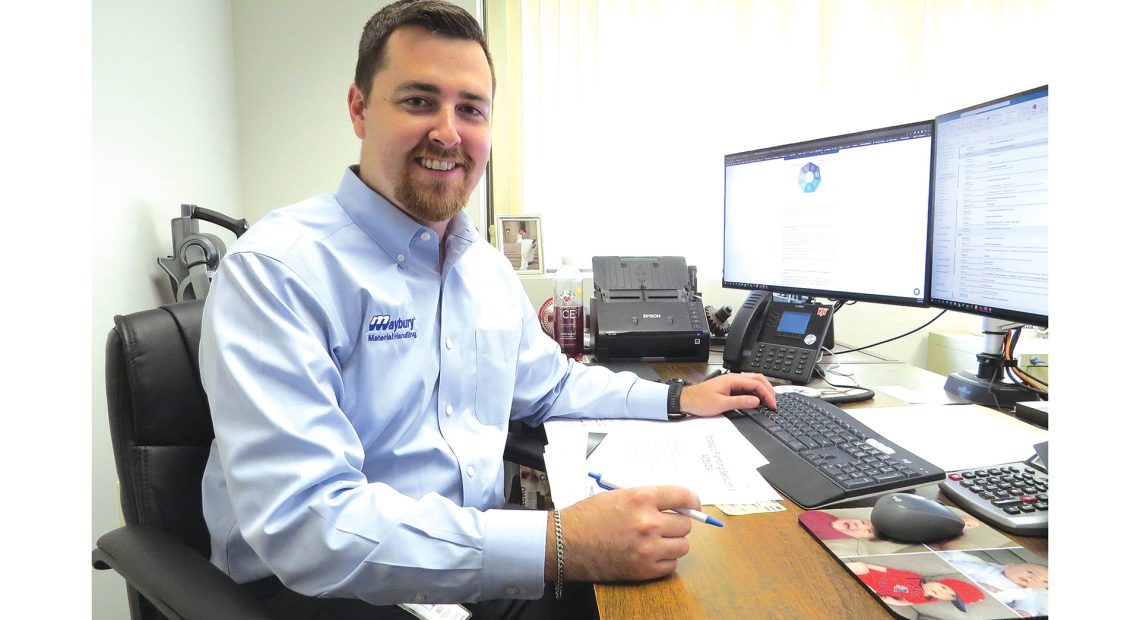
Home Improvement

Cover Story

Karen Belezarian-Tesini

Karen Belezarian-Tesini says the mood in the ‘coverings’ industry is one of cautious optimism.

Karen Belezarian-Tesini recently returned from Coverings 2022, the largest trade show for the ceramic tile industry in North America.

The four-day event was staged at the Las Vegas Convention Center roughly a month ago, and while there was a good crowd, things weren’t quite back to what they were in 2019, attendance-wise and otherwise, observed Belezarian-Tesini, who has been to quite of few of these as manager of Best Tile’s Springfield location on Belmont Avenue.

Summing up the show, she said that, as always, there were hundreds of thousands of square feet of new products on display, and an opportunity for her and other attendees to get a clear understanding of the latest trends and innovations — which include everything from tile products that “look like wallpaper,” as she put it, to ever-larger sizes of tile for walls and floors — up to 60 inches by 120 inches in some cases, to growing options in porcelain, marble, and glass mosaic products.

“When I started in this business. 8-by-8 was the nominal size, then it was 12-by-12, then 12-by-24,” she explained. “Now, we’re looking at 24-by-24 and 24-by-48; that’s what’s in demand now; it’s not a need, it’s a want, and there’s a lot of want.”

As for the mood at the show … Belezarian-Tesini, described it as one of caution laced with large doses of optimism. The caution part is understandable, she said, given the stories dominating the news lately, everything from runaway inflation and its impact on prices to ongoing supply chain issues; from war in Ukraine to recent talk about the possibility of recession. And then, there’s the stock market and its precipitous decline. In short, there are many colliding factors that may certainly impact large purchases.

“People are cautiously upbeat,” she said. Everyone was so concerned and consumed with COVID — it’s all anyone talked about,” she said. “Then, the economy started to crazy and inflation started to go crazy — so there is caution about what all this means.”

“Overall, 2020 was up and down, but 2021 … was very, very busy. From Jan. 2 on, people were just constantly coming in and calling because they were remodeling. They were stuck at home looking at their four walls. It started picking up in the fall of 2020, and then in 2021, we did crazy business — it was fantastic.”

The accompanying optimism results from ongoing and very upbeat patterns (that’s an industry term) of business, she went on, adding that while the first quarter or two of the pandemic was slow for the broad coverings sector, as both consumers and those in the industry figured things out and waited for some dust to settle, by that fall, things were ‘crazy,’ as she put it. And in many respects, they still are.

“We’re still incredibly busy — things haven’t really slowed down at all,” she told BusinessWest, adding that, despite some gathering clouds, there is general optimism that things will stay this way.

Indeed, the trends, and the mood, on display at the Coverings show in Las Vegas, pretty much echo what Belezarian-Tesini can see and hear at the Belmont Street facility, where the pace of business has been steady since the fall of 2020, when many of those who were essentially trapped at home and not entirely happy with what they were looking at decided to do something about it.

These solid times blend with host of challenges that range from longer wait times for some products to back-ups in the warehouse as ordered products sit and wait as customers wait for other needed items before they proceed with remodeling projects.

Members of the team at Best Tile

Members of the team at Best Tile; from left, Erika Andreson, Ariel Tatsch, Karen Belezarian-Tesini, Alyssa Belanger, and Sarah Rietberg.

“We have some purchase orders that we placed in November, and we still haven’t seen them,” she explained. “But what we have, we have plenty of.”

For this issue and its focus on landscaping and home improvement, BusinessWest talked with Belezarian-Tesini about what she saw in Vegas, what she can see in her own showroom, and what she foresees short and long term.


Off-the-wall Comments

The Best Tile location in Springfield is a place where the past, present, and future come together. Sort of. Certainly the past and the present.

This is where Harry Marcus, who, with his wife, Mollie, sold tile out of the back of a car at one point, planted the roots that would eventually grow into a business — known originally as Marcus Tile and eventually as Best Tile — with 28 locations across the Northeast and beyond.

As for the present, this is where those current trends are playing out, and where Belezarian-Tesini and her team are trying to contend with steady demand and those aforementioned challenges mentioned. And as for the future … well, it may not be at this location.

Indeed, Belezarian-Tesini said there has been an ongoing search for a new facility for nearly five years now. It has taken her and other team members across the region and especially to higher-traffic areas, including Riverdale Street in West Springfield and Memorial Avenue in Chicopee.

There have been some “near misses,” as she termed them, especially on Riverdale Street, but a new location has proven elusive. The search continues, because a larger, more modern facility is needed, she said.

Meanwhile, there is also some succession planning going on, said Belezarian-Tesini, adding that she and several other branch managers are approaching retirement, and this proactive, forward-thinking company wants to be ready for that day.

Getting back to the present, and the recent past, Belezarian-Tesini said these are intriguing times for this business and this industry.

Turning the clock back to the start of the pandemic, she said the business managed to stay open, but with some huge adjustments when it came to how business was done.

“We were open, but in the early days, the door was locked,” she explained. “We did everything virtually. Customers would either call in or email; we would gather samples that they saw on our website, we’d put them in a bag, we’d put them outside the front door, the customers would pick up the samples, they’d call in their orders, they’d return their samples back at the door, we’d disinfect everything and put them away, and then we’d start all over.”

Elaborating, she said that because of the reports that COVID could live on surfaces, every piece of tile in the showroom had to be disinfected regularly, at a time when disinfectant was hard to come by. Overall it was a trying time, but unlike many retailers, the company made it through without layoffs and without losing any employees.

“It was crazy,” she went on, adding that by that fall, there would be a different kind of crazy as homeowners, many of them with money to spend because they weren’t spending it on vacations or much of anything else, looked to make some improvements.

“Overall, 2020 was up and down, but 2021 … was very, very busy,” she recalled. “From Jan. 2 on, people were just constantly coming in and calling because they were remodeling. They were stuck at home looking at their four walls. It started picking up in the fall of 2020, and then in 2021, we did crazy business — it was fantastic.”

And, for most part, things have not slowed down to any large degree, she went on, adding that the only thing that has slowed down is the pace of products being shipped from the warehouse to customers, who can’t proceed with a remodeling project until they have everything they need.

“So many of the jobs that we have tile for are sitting in our warehouse, because the customer can’t get the refrigerator or the faucet or tun or the sink or the toilet,” she explained, adding that, overall, this is not a bad problem to have. “The jobs are taking an inordinate amount of time; for a while, it was lumber it was the issue, now it’s things like backer board or the foam board being used for walls now that are on back order. Or, when we get 600 to 700 sheets of it, and within a week, it’s gone — sold out. It’s crazy … we can’t keep up. No one can keep up.”

Because the company is a direct importer, it has not been as hard hit by supply chain issues as some of the smaller companies and stores, she went on, but all players in this industry are being impacted to some extent, whether it’s with delays or the spiraling cost of shipping containers.

“So many of the jobs that we have tile for are sitting in our warehouse, because the customer can’t get the refrigerator or the faucet or tun or the sink or the toilet. The jobs are taking an inordinate amount of time.”

“The cost of shipping has gone through the roof,” she said, uttering each one of those words slowly for emphasis. “What used to cost $4,000 or $5,000 now costs $20,000 to $25,000; it’s crazy.”

Thus far, the company has managed to mostly absorb these increases without passing them on the customer, she said, noting that there has been one increase, while other companies have had several.


Flooring Their Customers

As she offered a quick tour of the showroom, Belezarian-Tesini pointed to some of those newer, wall-paper-like patterns, different options in marble and porcelain, and two of those 60-by-120 tile panels that are now in demand — far more on the West Coast than they are here.

‘There are only a few companies around here that could even install something like this,” she told BusinessWest, adding that this may likely change because this is the direction this industry is moving in — or one of them anyway.

For 66 years, Best Tile, and Marcus Tile before that, has been at the forefront of such innovations and trends, she said, adding that this is one pattern that won’t ever change.

As for the rest of them, the company will continue to evolve as it has for the past seven decades and continue to have customers needs … covered.


George O’Brien can be reached at [email protected]
Health Care

Seizing the Moment

Dr. Ira Helfand

Dr. Ira Helfand says the war in Ukraine presents an opportunity to gain real progress in ongoing efforts to ban the use of nuclear weapons.

Dr. Ira Helfand notes that, since Russia became the second nation to produce nuclear weapons in the late 1940s, the threat of a global nuclear conflict has always been real.

To most, though, it has never really seemed real, except for the duration of the Cold War, which officially ended more than 30 years ago, and especially that two-week crack in time in 1962 that came to be known as the Cuban Missile Crisis, said Helfand, noting that for many, that event is only something to be read about, not something they lived through.

But the events in Ukraine are changing this narrative, and in a profound — and urgent — way, said Helfand, a retired emergency room physician at Mercy Medical Center and co-chair of the Physicians for Social Responsibility’s Nuclear Weapons Abolition Committee, a name that clearly speaks to its mission.

He told BusinessWest that recent events — not just those in Ukraine but also those in North Korea, as well — have made the threat of nuclear war as real as ever. And while this is certainly a scary time because of these threats, it might also be considered a time of opportunity when it comes to the Nuclear Weapons Abolition Committee and its stated mission.

“If there is to be any good that comes out of this terrible disaster in Ukraine, perhaps it will be an understanding of the need around the world to eliminate nuclear weapons,” he said. “Which will lead to effective political action to achieve that.”

In recent months, Helfand, who has, over the years, spoken to groups ranging from local Rotary clubs to special sessions of the United Nations General Assembly on the subject of preventing nuclear war, has been ramping up such efforts — through speaking engagements, op-ed pieces, and interviews with media out like this one — and using current events to bring more attention to a 75-year-old issue.

“If there is to be any good that comes out of this terrible disaster in Ukraine, perhaps it will be an understanding of the need around the world to eliminate nuclear weapons.”

The initiative is called the ‘Back from the Brink Campaign,’ which is based on the nuclear-freeze campaign of the 1980s, which brought about an end to the Cold War arms race, he said. Except this time, the goal is to get rid of the weapons altogether.

Those behind the effort are “organizing around a simple platform, a simple statement of what U.S. nuclear policy ought to be — a key part of which is a call for the United States to begin now to negotiate with the other eight nuclear-armed countries for a verifiable, enforceable, mutual timetable to eliminate nuclear weapons,” he said. “This is not unilateral disarmament, it’s a call for the United States to lead the negotiations to achieve universal disarmament.”

Organizers have brought resolutions embodying this platform to cities and towns, civic organizations, and faith organizations across the country, he went on, adding that more than 60 municipalities, including Springfield, Worcester, Boston, and others in Massachusetts have signed the statement, as well as several state legislatures.

The goal is to gain a national consensus on the matter, said Helfand, adding that he senses momentum in the ongoing efforts to ban nuclear weapons and the potential for much more.

“The current war in Ukraine is putting this issue before people again in a way that will lead to a good outcome,” he noted. “This issue is back where it ought to have been all this time — on the table and on the public agenda. We’ve been trying to use this occasion to educate people about the danger.”

For this issue, BusinessWest talked at length with Helfand about Back from the Brink and ongoing efforts to prevent a nuclear war by banning such weapons. He expressed the hope that current events may just provide inspiration to bring change on a truly global scale.


Understanding the Consequences

Helfand, who has published studies on the medical consequences of nuclear war in the New England Journal of Medicine, the British Medical Journal, the World Medical Journal, and other publications, said one challenge to banning nuclear weapons is a lack of clear understanding among many people about just what a nuclear conflict would be like.

Indeed, he told BusinessWest that many still think in terms of 1945 and the weapons used then when they contemplate nuclear war.

So, he isn’t at all shy about painting what he said is a much more accurate picture, and he did so for BusinessWest.

“If the United States and Russia go to war today, it’s not going to be one relatively small bomb used on one or two cities, as was the case in 1945; it’s going to be many bombs used against many cities, and these bombs will be 10 to 50 times more powerful than the one that destroyed Hiroshima,” he said. “If that were happen, within a thousandth of a second, a fireball would form reaching out two miles in every direction, four miles across. Within this entire area, everything would be vaporized — buildings, trees, people … the upper level of the Earth itself would disappear.

“To a distance of four miles in every direction, the explosion would generate winds of 600 miles per hour,” he went on. “Mechanical forces of that nature destroy anything that human beings can build. To a distance of six miles in every direction, the heat would be so great that automobiles would melt, and to a distance of 16 miles in every direction, the heat would still be so intense that everything flammable would burn — paper, cloth, wood, gasoline, heating oil, plastic … it would all ignite. There would be hundreds of thousands of fires, which over the next half hour, would coalesce into a giant firestorm 32 miles across, covering more than 800 square miles. Within this entire area, the temperature would rise to 1,400 degrees Fahrenheit, all the oxygen would be consumed, and every living thing would die.

“In the case of Boston, we’re talking about 3 million to 5 million people, depending on the time of day,” he continued. “In the case of New York, 12 million to 15 million people, and if we have a major war with Russia, that’s what’s going to happen to every major city in both countries. In addition, the entire economic infrastructure of the country would be destroyed; we would see 200 million to 400 million dead in the first afternoon, but those who survived would be living in an environment with no electric grid, no healthcare system, no internet, no food-distribution system — none of the things we rely on to survive.”

Beyond all of this, there would be enormous effects on climate, he said, noting that perhaps 150 million tons of soot would be deposited into the atmosphere, blocking out the sun, and dropping temperatures across the planet an average of 18 degrees Fahrenheit “which is much colder than the coldest moment of the last ice age.”

Preventing such a calamity has long been the goal of Physicians for Social Responsibility, a national organization of physicians, other health professionals, and others who are concerned about the medical consequences of nuclear war. Started in 1978, the organization has a stated mission to educate the public and decision makers about those medical consequences, “in the hope that a better-educated public and a better-educated body of decision-makers would make smarter decisions about nuclear weapons than they have been making, unfortunately,” said Helfand.

The group is part of an organization called the International Federation for the Prevention of Nuclear War (IFPNW), which has affiliates in 55 countries. In 1997, the IFPNW started a global campaign to abolish nuclear weapons, which, in collaboration with some state governments, led to the adoption at the United Nations in 2017 of the Treaty on the Prohibition of Nuclear Weapons, which entered into force in January 2021.


Marshalling Forces

In recent months, the IFPNW has been increasingly active in pushing toward its goal of bringing an end to nuclear weapons, and as noted earlier, it is using the crush of current events to state its case and bring the issue to the fore — or back to the fore.

“For the past 30 years, since the end of the Cold War, the biggest obstacle we’ve faced in doing our work has been the fact that people had thought the nuclear danger had gone away,” Helfand explained. “Back in the ’80s, everyone understood that nuclear war was a real threat; people were concerned about it, and they took political action to try to end the Cold War, work that was ultimately successful. But when the Cold War ended, everyone assumed that the danger had passed, and they stopped paying attention to the issue.

“If the United States and Russia go to war today, it’s not going to be one relatively small bomb used on one or two cities, as was the case in 1945; it’s going to be many bombs used against many cities, and these bombs will be 10 to 50 times more powerful than the one that destroyed Hiroshima.”

“That has changed dramatically in the past few months since Putin invaded Ukraine and issued a series of very explicit nuclear threats,” he went on. “Which, by the way, were responded to by NATO with equally inappropriate nuclear threats.”

Elaborating, Helfand said the current events in Ukraine bring new meaning to sentiments expressed in a quote he attributed to Robert McNamara, U.S. Defense secretary during the Vietnam War.

“He said, famously, ‘we lucked out — it was only luck that prevented nuclear war,’” noted Helfand, adding that have been countless times over the past 77 years when the world almost experienced nuclear war, but didn’t, for reasons that have little to do with the conventional wisdom regarding these weapons.

“There has been this myth, with enormous power attached to it, that nuclear weapons are so terrible that they will deter their own use — no one will ever make the mistake of using them,” he explained. “We know that over the decades, that has not been true.”

Elaborating, he said that over the years, the United States has threatened to use nuclear weapons repeatedly, in many circumstances involving countries that did not have nuclear weapons, and Russia has as well. And beyond these threats, there has always been the threat of something happening by accident.

“There have been many, many occasions when we have come within minutes of nuclear war because one side or the other received a false alert and believed they were under attack by the other side,” he explained. “On many of these occasions, we came within minutes of all-out nuclear war because of a computer glitch or some similar technical mistake.”

Given the immense amount of tension in the world now, another glitch of this kind may well lead to calamity, he said, bringing even more urgency to the matter of banning such weapons.

That course is the only logical choice for the planet, said Helfand, adding that the alternative, staying the current course, is not sound thinking.

“Our current policy — maintaining these enormous arsenals with the expectation that they will never be used — is nothing more than the hope for continued good luck,” he told BusinessWest. “And this is a fairly insane basis for national security policy. We need to plan for the future based on reality, not hopes and prayers.


Looming Questions

Returning to that question about whether he’s sensing any momentum on the IPPNW’s broad mission to prevent nuclear war by eliminating such weapons, Helfand said there are a few narratives that could flow from the present situation.

“Those who build nuclear weapons will argue that we need to have more of them — that argument will gain some traction,” he said. “They’ll say ‘the Russians are really bad — we need to be even stronger, as if the 6,000 nuclear weapons we already have are not enough to do what anyone could possibly want to do with them.

“But there will be another narrative as well,” he went on. “As happened after the Cuban Missile Crisis, when both Kennedy and Khrushchev recoiled in horror from what they had almost done, people around the world are going to look at this moment and say, ‘this was a world-wide near-death experience; we cannot keep rolling the dice and hoping that we’re going to be luck every time — we have to get rid of the weapons.’”

That’s why he looks on this very scary time in the history of the world as something else — an opportunity.

Cover Story

Passing it On

Kasey Corsello

Kasey Corsello, a certified coach and co-owner of the Corsello Butcheria in Easthampton.

There are many components to the region’s entrepreneurship ecosystem, perhaps none more important than the small army of mentors who are passing on what they know to a growing number of people looking to work for themselves instead of someone else. They impart to these entrepreneurs everything from the importance of understanding a spreadsheet to the notion that failure is … well, not unexpected and something to be learned from.

When asked what she tries to impart to entrepreneurs as a mentor, or do for them as she counsels them, Kasey Corsello summed it all up by saying that she tries to “normalize the emotional experience of it all, so they don’t feel like there’s something wrong with them.”

Anyone who has ever owned a business or tried to launch one — or mentored anyone who has, for that matter — knows exactly what she’s talking about.

“It is scary to be in the face of uncertainty, so I help them access their own inner resources, their own wisdom of lift experience to be able to make sound decisions,” said Corsello, a certified coach, co-owner, with her husband, of the Corsello Butcheria in Easthampton, and mentor with participants in EforAll Holyoke’s accelerator programs. “I help pull out their confidence and get them thinking that they can do this.”

With that, she described one of the many ways that mentors work with their clients and, while doing so, contribute in powerful ways to the vibrancy of the region’s business community.

Indeed, there are many components to the entrepreneurship ecosystem in Western Mass., and one of the most important is the small army of mentors who pass on what they know and provide much-needed sets of eyes and ears (especially ears) to those looking to start or grow a business.

And for this issue and its focus on entrepreneurship, BusinessWest talked with several of them.

Individually, and collectively, they spoke of the various kinds of rewards — and there are many of them — that go with mentoring, and about the various ways they try to counsel those on the other side of the desk, or the telephone, as the case may be.

This counsel can be technical in nature, such as how to read a spreadsheet and understand the numbers of business.

“I tell them that numbers really matter — get to know the numbers,” said Bellamy Schmidt, a retired executive who worked for many years at General Electric before moving to Wall Street and the giant investment firms JP Morgan and Goldman Sachs and then Holyoke City Hall, where he served as auditor. “As much as people may find the numbers uncomfortable, they basically tell the story of a business.”

In other cases, it’s practical advice, everything from understanding one’s audience and meeting its needs, to the importance of networking and relationship-building.

“I tell them that networking is the key to building relationships,” said Yadira Pacheco, who owns a real estate agency and is a mentor in EforAll’s Spanish program, EparaTodos. “I tell them to network every chance they get; it doesn’t matter if it’s linked directly to their type of business — they’re going to find somebody who knows somebody who knows somebody who’s going to connect with them because of what they do.”

Yadira Pacheco

Yadira Pacheco says she tells entrepreneurs to network every chance they get, because relationship-building is one of the keys to success.

And then, there’s advice, or counseling, that falls more in the category of psychology, if that’s even the right term, that Corsello referred to.

“I tell them not to be afraid of failing — and for obvious reasons,” said Bill Cole, owner of Tiger Web Designs and a serial entrepreneur himself. “The bottom line is this … if you interview all the super successful people in this world, you’ll find that a common thread is that they failed miserably many times before they got to be successful. And there’s a reason for that; some things you must learn the hard way in order to learn them well.”

How well someone copes with failure, and, overall, how well one can learn from it, will play a larger role in one’s ultimate success in business than any given product or service, said Cole, who told BusinessWest that he focuses on helping those that he mentors become good entrepreneurs much more than he counsels them on any specific idea they may have to change the world as we know it.


Getting the Idea

As he talked about his mentoring work, Cole said he “got the bug,” eight to 10 years ago.

That bug, as he called it, is a desire to give back to what is, by all accounts, a growing number of people who would rather work for themselves than for someone else. Or at least try to do just that.

What all who try find out is that this isn’t easy, and if it were, everyone would do it. The fact that not everyone does, speaks to just how hard this is, meaning every aspect of entrepreneurship, from conceptualizing ideas to bringing them to market, to coping with the known — things like competition and the laws of supply and demand — to dealing with the unknown and sometimes what can’t possibly be foreseen … like a global pandemic.

Bill Cole

Bill Cole

“I tell them not to be afraid of failing — and for obvious reasons. The bottom line is this … if you interview all the super successful people in this world, you’ll find that a common thread is that they failed miserably many times before they got to be successful. And there’s a reason for that; some things you must learn the hard way in order to learn them well.”

Overall, entrepreneurship is daunting, said those we spoke with, adding that it’s important to assist those who don’t know what they don’t know with the many important aspects of starting and then running a business, while also helping them deal with the roller-coaster ride that is entrepreneurship and all that comes with it.

“I force them to realize that they’re not alone, that they can rely on their mentors to help them,” said Schmidt. “That creates a sense of comfort; it’s not me against the world — I’ve got people who have my back.”

This ‘having one’s back’ aspect of mentoring is as important as any practical advice on a product or marketing, or reading a balance sheet, said those we spoke with, adding that they want to help people learn about themselves as much as they do about business.

“There’s a lot to learn, and when we’re in a space of learning, self-doubt comes in,” said Corsello. “And that creates an emotional response — ‘I can’t do it,’ or ‘I’m overwhelmed.’ There are some people who have a mindset for entrepreneurship and it’s very easy for them — they’re not afraid to fail, they’re not afraid to take risks; their natural strengths are geared toward entrepreneurship.

“There are others who have a hard time with uncertainty, who have a hard time taking risks, who have a hard time failing,” she went on. “I work with people to break down the steps and celebrate each and every small thing.”

There are many of these small things that are involved with starting a business and taking it to the next level — whatever that might be, said those we spoke with, adding that, overall, they work with their mentees to keep their eye on both the big picture and all the little things that contribute to a business being successful.

And while doing so, as Corsello noted, they try to make these entrepreneurs feel comfortable in their own skin. This in a nutshell, is what she strives to do as a mentor to entrepreneurs, a new role she accepted recently as part of the program known as Blueprint Easthampton, which she helped launch.

She said mentoring is like coaching, in that she’s helping build the confidence needed to get where they desire to go.

“I get to see people in their full light, essentially, and fully believe in them when they can’t believe in themselves,” she explained. “They’re realizing their vision and their dream, and they’re learning about themselves and gaining the tools they need to be resilient.”

Bellamy Schmidt

“I force them to realize that they’re not alone, that they can rely on their mentors to help them. That creates a sense of comfort; it’s not me against the world — I’ve got people who have my back.”

Elaborating, she said that entrepreneurship can be as isolating as it is challenging, and, as Schmidt said, these business owners need to know that they’re not alone. And beyond that, they need to understand that what they’re experiencing — the fears, the self-doubts, the seemingly endless hits to their self-confidence, are not unique.

“They need to understand that they’re not the only ones struggling with this,” she went on. “And that’s why I say that I normalize their experience.”


Rewards Program

Over the past decade or so, Cole has been a mentor for several of the agencies that are now part of the region’s entrepreneurship ecosystem, including VVM, EforAll, SCORE, the Small Business Administration, and others. He’s worked with startups, mom-and-pop businesses, and some looking to get to the next level, and, because of his background, he’s often asked for advice on creating a website.

But his broad advice to entrepreneurs comes in many flavors, including that aforementioned counsel on failure, why it should be expected, why it’s normal, and, most importantly, why it shouldn’t bring an end to one’s dreams of owning their own business.

Overall, he said he advises those he mentors to work smart — and not just hard, although that is critically important as well.

“There’s a combination of working hard and working smart that has to happen,” he explained. “You can’t just work hard, you have to be smart, too. And ‘smart’ just means paying attention to what’s going on around you.

“We tend to have tunnel vision on what we’re trying to do — whatever that may be,” he went on. “If it’s a product, you may have tunnel vision on the product itself, when you have to think about things like how are you going to go to market with that product, or organize the business itself — how many people need to be hired, how much is it going to cost? There’s a difference between having a product idea and a business, and the difference is that most people have ideas that are expensive hobbies when it’s all said and done — it’s not really a business.”

Schmidt agreed, and said he stresses the importance of understanding who one’s customers are and what need is being met by their product or service.

“I try to force them to think about what it is the customer really wants,” said Schmidt. “Because often, a businessperson will want to do something that they want to do, and it might not be what the customer wants; if you have a business, it’s all about the customer, it’s not about you.”

Miguel Rivera, co-owner, with his wife, of Rewarding Insurance Agency in Holyoke, and another mentor in the EparaTodos program, concurred.

“Many people don’t have a target market,” he explained. “You ask them who their target market is, and they say ‘everyone.’ Then I try to teach them that their clients are not ‘everyone’; they must identify who their target market is so they can do the right marketing.”

When asked what they enjoy about mentoring, all those we spoke with said there are many kinds of rewards.

One obvious one is the satisfaction that comes from helping someone or some group take an idea and turn it into something successful.

“The first day I went to work after college, my new boss said to me something along the lines of … ‘the most important thing I get out of my job is a sense of accomplishment from helping move young people along in their careers and watching them grow,’” Schmidt recalled. “As naive as I was, I thought that was kind of a ridiculous answer. But as I matured, I realized how right he was; there’s a tremendous sense of accomplishment when you see someone develop that you have helped.”

Rivera agreed. “I’m glad to see business owners doing their ribbon cuttings and grand openings — that’s what I enjoy the most,” he said. “And many of my clients are still in business — they’re doing well, and I take pride in that.”

Said Cole, “I love it when someone is successful and I had something to do with it — it’s a wonderful feeling. But I don’t mind being there when someone is struggling, either; I’ve been there, so I know.”

Pacheco has been there as well, and so she knows first-hand how daunting entrepreneurship is. And that’s why she mentors others.

“When I was starting my business, it was very difficult, because I didn’t have the support, the guidance, or a blueprint — anything,” she recalled. “So, I was literally thrown into it and had to figure it out for myself. And that’s one of the reasons why I help others. I know how difficult and stressful it can be when you’re trying to grow a business.”


The Bottom Line

Beyond that, though, mentors say that they inevitably learn from those they are mentoring, and this helps them become both better business owners — and better mentors.

“I’ve learned a tremendous number of things that I never would have learned otherwise,” said Cole. “The reality is I’m smarter for it and I have a lot more experience from it than I ever would have had if I just done my own little thing.

Pacheco agreed.

“You always learn something from each participant,” she told BusinessWest. “Everyone has a story; everyone’s background is different. In the process of me helping others, they are also helping me; it’s a learning experience on both sides.”

Such sentiments explain why mentoring is so rewarding — and why it’s so important, for all those involved.


George O’Brien can be reached at [email protected]
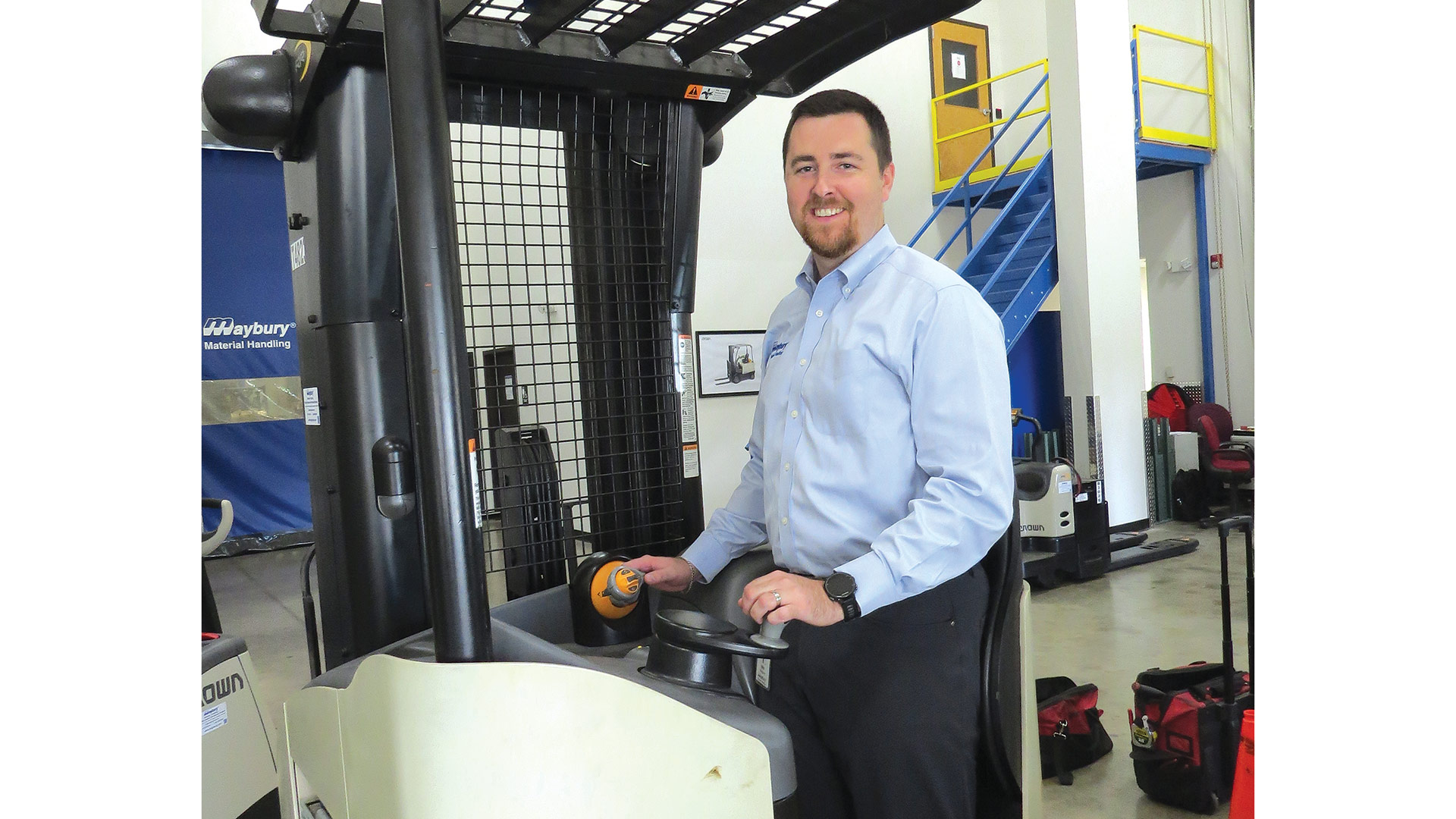
Restaurants Special Coverage

Chain of Events

Craig Erlich

Craig Erlich says the mission at Friendly’s is to create positive experiences — and lasting memories.

Craig Erlich can trace his relationship with Friendly’s back to his fifth birthday party at one of the chain’s restaurants.

“I have pictures of me with my life-size balloon,” he told BusinessWest, adding that, over the decades, this relationship has certainly taken many different forms — from customer, to franchisee, to his current role as president and CEO, in which he has the responsibility of, well … creating memories like that of his fifth birthday for future generations of customers.

In other words, Erlich is the latest executive to take on the job of resuscitating a brand that has fallen on some hard times in recent years, as evidenced by the sale price of the Friendly’s chain, then in bankruptcy, to Amici Partners and its affiliate company, Brix Holdings LLC: $1.9 million.

Erlich, president and CEO of Friendly’s, understood that the Friendly’s chain had shrunk dramatically over the years and was struggling to compete with the large number of competitors in the fast-casual family restaurant category, a situation only made worse by the pandemic. But he ultimately saw promise, and a challenge he was willing to take on.

“When the opportunity came around — and the pandemic presented a lot of opportunities for reshuffling of leadership of brands — we were really passionate about Friendly’s and what could happen with this brand,” he said. “When you finally have your chance to put your hands on the steering wheel and go from backseat driver to being the driver … we were really excited about the opportunity.”

Elaborating, he said that he and his partners already had some plans for Friendly’s in mind when they acquired it in December, 2020, and now, some of those plans are coming to fruition.

That includes the new-look of the Friendly’s that recently opened on East Main Street in Westfield. It’s called the Friendly’s Café, and the model is a reflection of the changes in dining habits that have taken place over the past two years, especially when it comes to take out and delivery.

The new model will feature both, as well as on-site dining, with customers ordering food at a counter or at a table using QR technology. There’s also a traditional ice cream fountain area, providing an ice cream parlor feel.

While the concept is quite different from what Friendly’s customers are used to, the goal is to maintain the chain’s overall look and feel — and its capacity for creating lasting moments … like Erlich’s fifth birthday party.

“With Friendly’s, everyone talks about the experience — they talk about memories,” said Erlich. “We wanted to maintain that quality. When you’re restoring an old home, you want to make sure to keep the bones and the structure there, and just enhance the features. That’s the approach we took with this brand, especially the Friendly’s Café.

“We knew it was going to be a bit of a different kind of experience for the customers,” he went on. “But when you think about how people dine today, whether it’s QR technology, off-premise dining, curb-side delivery … we knew there was an opportunity for that.”

“When you finally have your chance to put your hands on the steering wheel and go from backseat driver to being the driver … we were really excited about the opportunity.”

Meanwhile, other changes have been introduced, especially on the menu, which now includes a number of new items, including a variety of appetizers and salads, and offerings like the Doritos Cool Ranch chopped cheeseburger. The goal is to create an appealing mix of new options and old favorites, he told BusinessWest, adding “the menu feels much more balanced than it did before.”

Flashing back to late 2020, as he and his partners were doing their due diligence on Friendly’s as they explored acquisition, Erlich said this research revealed a chain facing many challenges and restaurants in need of repair and revitalization, a situation exacerbated by the pandemic in many respects. But ultimately, what they saw was opportunity.

“The pandemic forced a lot of companies to focus on just keeping the lights on,” he told BusinessWest. “We knew there was going to be a significant amount of repairs and maintenance needed for these buildings; just the equipment in the kitchens alone was in the millions of dollars.

The Friendly’s Café in Westfield

The Friendly’s Café in Westfield opened earlier this year to positive reviews from customers.

“But we saw a big opportunity,” he went on. “And 2021 was really focused on building the infrastructure and putting some technologies and new ideas in place that would build a foundation for what we’re about to do this year.”

Which brings us back to the Friendly’s Café, which opened at the end of February to solid feedback from customers, said Erlich, who acknowledged that while it’s early in the game, the new location is thus far exceeding expectations.

“Customers have been very complimentary, and it has performed very well; we’ve seen a lot of repeat customers, and that’s the true test,” he said, adding that the company is scouting locations for similar facilities.

The location in Westfield is a free-standing building in a shopping plaza, and that is the preferred model, said Erlich, adding that the company is also looking at expanding its drive-through presence at existing restaurants.

“We think there’s a big opportunity there,” he said. “We have about a half-dozen drive-throughs connected to our traditional restaurants; it’s all about the convenience, and we feel that this model is really convenient for the customer.”

Overall, the company is not looking to replace its traditional restaurants with the new model but rather use the café model as a vehicle for growth, bringing Friendly’s to different communities, including some where a Friendly’s location has closed.

“When you’re restoring an old home, you want to make sure to keep the bones and the structure there, and just enhance the features. That’s the approach we took with this brand, especially the Friendly’s Café.”

“I’m looking at some locations on Long Island and across the Northeast — Connecticut, Massachusetts, and other states,” said Erlich. “We’re looking for the right locations; we don’t want to expand too quickly and dilute the quality of the location. I think that happens often — some of the brands will get excited about one success story and then they’ll launch others and they think it will be the same in any location. We’re being very careful to be sure that the locations that we pick have similar demographics and traffic counts, and that we feel good about the potential.”

He said there are many communities in the Northeast that had a Friendly’s location and would like to see that brand back, with many long-time customers lobbying through social media and other platforms for a return

“We’re using that as some of our intelligence to start focusing on some areas,” he said, adding that finding suitable sites is an art and a science, with many factors coming into play, from demographics to the prevalence of other restaurants.

Indeed, competition, in the form of a critical mass of dining options is often desirable, he said, noting the Friendly’s Café in Westfield sits between a new KFC and a McDonald’s in the same shopping plaza. Those are fast-food chains in a different category than Friendly’s, he explained, but they still constitute choices, which in turn generate traffic to a given area.

Looking at what’s happening within the industry, Erlich noted that off-premise dining now accounts for roughly half of all sales volume within the industry, a pattern that has held up even as the pandemic has eased in recent months, an indication that this is more than a passing fancy.

The new café model enables the chain to take advantage of this phenomenon while also catering to those who prefer the traditional sit-down restaurant — albeit with some new technology for ordering and delivery.

“You can focus on two different experiences for the guest,” Erlich explained. “Whether it’s making sure that the person bringing the food home is getting a good, quality meal and also that they’re getting a good experience when they’re in the restaurant. It just adds a new dimension that a lot of brands are focusing on, and I know that we are.”

Looking ahead, and projecting where he wants Friendly’s to be in five years, Erlich said the broad goal since the acquisition has been to stabilize the brand and then commence building that foundation for the future that he spoke of. And this has been accomplished, through the introduction of the café concept, the new menu items, and some more aggressive marketing that was launched this month.

“I would like to see the brand grow, and I think the café model will give us the ability to do that,” he said in conclusion. “There’s a lot of excitement, and it’s my job to keep that excitement going and channel it in the right direction. Everyone is rooting for us, from customers to the team members to the franchisees. Everyone has great memories of Friendly’s, and we want to provide great new memories.”

Features Special Coverage

And All That Jazz

Kenny Lumpkin

Kenny Lumpkin doesn’t like to use that word ‘club’ when it comes to his establishment on Worthington Street, Dewey’s Jazz Lounge. He prefers ‘restaurant, bar, and music venue,’ which really says it all. Those are his passions — in life and now in business. A year after opening, he’s off to a solid start and now looking to make an even greater impact on Springfield’s dining and entertainment scene.

Kenny Lumpkin is the true definition of serial entrepreneur.

Since as long as he can remember, he’s wanted to be in business for himself — and he’s put his name and talents behind many different types of ventures.

One was called Room by Room, an app he developed with a friend that he described as “applying Uber to the cleaning industry — an on-demand way to get your house cleaned.” He eventually sold that venture, took the capital, and segued into real estate, flipping houses, and wholesaling. And while doing that, he also got into consulting, specifically with businesses in the hospitality sector looking for help with marketing, and later, biotech and pharmaceutical consulting, working for a few different firms.

But his real passions — yes, we need the plural here — are music, food, and beverage.

And he and business partner Mark Markarian have brought them all together in an intriguing new venture in the heart of Springfield’s entertainment district, or what many are now calling the Dining District.

“I said to her ‘give me the landlord’s number,’ because this fit the vision; I saw the mezzanine, I saw the elevated stage … I saw some incredible potential.”

It’s called Dewey’s Lounge, with that name chosen to honor Lumpkin’s cousin Dwight ‘Dewey’ Jarrett, who passed away in 2014. It’s been called a club by many, but Lumpkin doesn’t necessarily like that term attached to his establishment. He prefers ‘restaurant, bar, and music venue,’ with ‘restaurant coming first for a reason.

Opened almost a year ago, Dewey’s was obviously conceived and launched before and then during the pandemic, although Lumpkin admits that he’s been working on bringing this concept from the drawing board to reality for many years now. And since it is a product of the pandemic, the business plan for Dewey’s has been revised … well, Lumpkin doesn’t know how many times.

“Maybe 15 or 20 times — I’ve lost track,” he said, adding that many things have changed since the original plans were put down, including (and especially) the location.

Indeed, the original site was on Main Street, the former JT’s tavern. Lumpkin and Markarian had signed a letter of intent and were primed to get started when COVID arrived in March of 2020. The partners quickly put those plans on the shelf for what would be more than a year, but in many respects, the pandemic was somewhat of a blessing.

“I look back on it now, and while it was frustrating in the moment, it was extremely beneficial,” he recalled. “It allowed us to really dig deeper, develop the plan in more detail, and look at other locations.”

But what really hasn’t changed is the broad concept and the desire — make that the mission — to make this all happen in Springfield, where Lumpkin was born and spent his early years.

And over its first 11 or so months in operation, Dewey’s is off to what Lumpkin called a solid start that has been better than expected, especially while dealing with COVID, two different surges, mask mandates, and the corresponding changes in attitude about going out and being in a crowded place.

Deweys Bar

Dewey’s was conceived as a place where food, beverage, and music would come together in a powerful way.

“We’ve seen two dips and two spikes,” he explained, adding that he and Markarian understood the risks of moving ahead with their venture when they eventually did — December of 2020 — but decided these were risks worth taking. “There was really no good time to do it. We took that risk, and, in looking at the cycle of it, understood that we were going to come out of this eventually.”

The goal moving forward is to continue to build on the solid foundation that has been created, he told BusinessWest, while also advancing plans for another new business in the downtown — a sports bar on Dwight Street (more on that later).

For this issue, BusinessWest talked at length with Lumpkin about a host of topics — Dewey’s, the joys (and perils) of entrepreneurship, downtown Springfield and its comeback from COVID, and much more.


Sound Investment

Lumpkin told BusinessWest that the chosen location for Dewey’s came about more or less by accident.

As he tells the story, he was helping his sister prepare for the grand opening of her venture, called Ethnic Study, a co-working space and café in a property on Worthington Street, in late summer of 2020, when she asked him to move some paint and other materials to the other side of the divided first floor.

What he found on the other side was what was left (not much, as he recalled) of the former Fat Cat lounge, which had closed years earlier.

As he looked around, Lumpkin concluded that he had found what he was looking for. Sort of.

“I have always said that music, food, and drinks are the one thing that can really unite anybody and everybody. That was my hypothesis before we opened, and seeing it come to fruition has been quite amazing.”

It wasn’t what he could see that intrigued him — although that, too. But rather, it was what he could imagine. And that was the restaurant, bar, and music venue that he had always dreamed of.

“I said to her ‘give me the landlord’s number,’ because this fit the vision; I saw the mezzanine, I saw the elevated stage … I saw some incredible potential,” he said, adding that he signed a lease late that fall and commenced transforming the location in December.

Dewey’s has attracted entertainers

Since it opened, Dewey’s has attracted entertainers from across the region — and across the country.

There was a good deal of work to be done, including the replacement of the bar and moving it from the center of the first floor to one side, new shelving, a new bar and seating on that mezzanine level, and more, and it was completed over the next six months or so, with Dewey’s opening in June 2021.

Before getting more into this intriguing addition to the downtown Springfield landscape and how it came about, we first need to explain how Lumpkin made his way back to the City of Homes and made his dream reality.

We pick up the story at Emmanuel College in Boston, where Lumpkin was studying business management, with a focus on marketing, and working as a barback at a local restaurant. Later, he worked as a server at Joe’s American Bar & Grill on Newbury Street, and then as a server and bartender at the Envoy Hotel in Boston’s Seaport.

While working these jobs, he developed that Room by Room app mentioned earlier, then segued into real estate, and then into various forms of consulting. The money was good and the work was rewarding in many ways.

“But … I wasn’t passionate about it,” Lumpkin recalled. “And what I realized I was passionate about was people, and music — I’m really passionate about music. I love to eat, and I love a good cocktail.

“And that’s where this business idea began to develop, because I really do enjoy connecting with people,” he went on. “And I’ve been the friend who said, ‘everyone come to my house — I’ll cook, let’s drink, let’s hang out all night.’”

So he set out to create a business where he would be the host and people could eat and drink, and also listen to live music.

As noted earlier, the plans for what would become Dewey’s started jelling months before anyone had ever heard the word COVID, and would certainly be impacted by the pandemic in many respects. But while there have been some ups and downs that have coincided with surges and subsequent drops in cases, the venture has come together as things were originally envisioned.

Before and after photographs

Before and after photographs show the dramatic transformation of the former Fat Cat lounge into Dewey’s.

He acknowledged that being a business owner, especially in the hospitality industry, is difficult, and that’s without a global pandemic being thrown in for good measure. But he enjoys the challenges, and even used the word “fun” when talking about how to plan and execute during COVID.

“We would all prefer boring,” he explained. “But challenges like the ones we’ve seen keep you intrigued, keep you interested, and keep you creative. And if you get to the core of what an entrepreneur is, it’s someone who is creative, who can find new ways to problem-solve, and find ways to increase volume or throw out new dishes or cocktails; it keeps it fresh and it keeps it new.”


Achievements of Note

It helps to have something new, different, and intriguing, and Dewey’s has those ingredients.

Specifically, this is an appealing mix of food, signature drinks, and music, a combination that has had many guests thinking they’re somewhere other than downtown Springfield when they walk in the door, said Lumpkin, adding that this was the idea when he conceptualized Dewey’s.

And, as noted, he emphasizes that it is a restaurant first, with offerings ranging from Cajun shrimp pasta to baked mac & cheese to fried catfish and grits.

But craft cocktails are an important part of the mix — figuratively but also quite literally — as well, he said, adding that Dewey’s is considered the only craft cocktail bar in downtown Springfield.

“All of our syrups, all of our juices — all of the ingredients that go into our drinks — we make in-house,” he explained. “Everything but the spirit is house; we probably squeeze a couple thousand limes a week.”

The signature cocktails vary with the month and the season, he said, adding that current, spring offerings include ‘Georgia on My Mind,’ a mix of whiskey, iced tea, lemonade, and peach syrup; ‘Louis’ Lemonade,’ which features gin, lemon juice, and lavender simple syrup; and ‘Billie’s Holliday,’ featuring vodka, limoncello, and house-made grenadine, topped with prosecco.

As for the music, when asked how and where he finds performers, Lumpkin said that, in many cases, they find him — because they’re looking for intriguing new places to play.

“You’d be surprised by all the talent that’s here in Western Mass. and Connecticut, and Boston as well,” he told BusinessWest. “The most consistent bookings we receive are within a 100-mile radius; however, we’ve had bands come in from New Orleans, Georgia, D.C., Sacramento … we’ve had bands come in from across the country, but the majority are local.”

Dewey’s is currently booked through July, and it boasts live music five nights a week, he said, adding that each night has a different theme, with vocalists or “a vocal-like instrument” on Wednesdays, with a “throw-back R&B” on Thursday. Friday night is more of a “funky, groovy night,” as he put it, with Saturday devoted to straight-up jazz and Sunday and its brunch reserved for classical or a “more groovy type of band.”

It is the combination of all of the above that has enabled Dewey’s to get off to a good start and attract visitors from across this region and well beyond it, said Lumpkin, noting that he carefully tracks such information and notes that through aggressive, targeted marketing and people simply Googling ‘live music,’ or ‘craft cocktails,’ Dewey’s has drawn patrons from Vermont, New York, and many from Connecticut, New Hampshire and the Boston area, in addition to communities across this area.

Dewey’s a destination.

The combination of food, drink, and music has made Dewey’s a destination.

“I have always said that music, food, and drinks are the one thing that can really unite anybody and everybody,” he noted. “That was my hypothesis before we opened, and seeing it come to fruition has been quite amazing.”

Elaborating, he said Dewey’s has been able to attract a clientele that is diverse in every sense of that word, which is unusual in hospitality — and especially in this region.

“We’re in a community where you don’t really see all demographics in one establishment simultaneously,” he explained. “What surprised me … actually, it didn’t surprise me, because I expected it, and what has made me really happy is to see the eclectic group of people that Dewey’s has attracted.

“You see a range of age, gender, nationality, and ethnicity here every single night,” he went on. “People come in and say ‘I don’t think I’m in Springfield; this has a bigger-city vibe, because you’re seeing so much diversity in one room.’”

Moving forward, Lumpkin wants to build on this momentum, obviously, while also embarking on another venture, that sports bar on Dwight Street.

He is targeting a late-summer opening for that facility, and believes there is ample room in the marketplace for such a facility and also ample motivation for him to fill what he sees as an unmet need.

“There’s no sports bar in the area, and any restaurateur understands that sports bars also produce the best margins when it comes to this industry,” he explained, adding that, overall, he is a firm believer in amassing an abundance of hospitality options and, while doing so, creating a true destination in a city or, in this case, a dining district.

“It sounds crazy to say, but there’s almost no such thing as competition in this industry,” he told BusinessWest. “Patrons don’t go to one establishment; they typically at least go to two. They’ll say ‘let’s grab a drink here, a bite here, and dessert here’ or ‘a bite here, a drink there, and let’s get catch a show.’ People get to two or three places a night, and so the pie grows.”


Just Desserts

As he talked with BusinessWest, Lumpkin noted that plans are coming into place for what promises to be an exciting one-year anniversary for Dewey’s.

Indeed, he has a star-studded entertainment lineup coming together, with musicians from New Orleans, Boston, New York, California, and this area as well, signed up to perform.

“It’s going to be quite the party,” he said, adding that there is much to celebrate — with this new venue and what is transpiring along Worthington and elsewhere downtown.

It’s taken a few years, but Lumpkin’s dream has become reality in Springfield. It’s a place where his passions come together under one roof, and where a diverse mix of clients has come together as well.

It hasn’t all gone as planned, but in most all respects, it has gone better than planned.


George O’Brien can be reached at [email protected]
40 Under 40 Class of 2022

Community Development Director, Town of West Springfield; Age 25

Stephanie Welch has her own working definition of the phrase that now appears on her business card (or one of them, anyway): community development.

“To me, it means removing equity barriers for those around you,” she told BusinessWest, adding that she goes about this assignment in a number of ways through her role with the town of West Springfield, everything from help administering a down-payment assistance program to those looking to buy a home to work assisting the local food pantry in securing a much-needed new home.

And this same basic goal also defines her work outside of her day job as a consultant and as a controller for a local manufacturer.

“Everyone I work with is tied to the same goal,” she said. “All the organizations, from West Springfield to the private companies I work with — they’re trying to remove equity barriers for people.”

Prior to the pandemic, Welch was working as a project manager for a large consulting firm that specialized in work with small- to medium-sized businesses when she decided she wanted to make a career shift. She saw the position of community developer in West Springfield as a natural fit and a logical move.
“A lot of it is administering grant funding, but it’s also basic accounting and budgeting and doing strategic planning,” she explained. “And I thought, ‘I can do this.’” City officials thought the same thing, and she started just after the pandemic hit.

Since arriving, she’s been involved in the multi-phase renovation of the West Springfield Boys & Girls Club, which she calls her “pride and joy,” as well as a number of paving projects, job-training initiatives for non-English-speaking residents (there are many in this community), and that aforementioned down-payment assistance project, administered in conjunction with Way Finders, which is helping many city residents become homeowners.

“Many people will say, ‘I can afford the mortgage, but I can just never get caught up to make the down payment,” she explained, adding that the program provides $5,000 to those who quality to get them over that hump.

That’s just one example of barrier removal, she said, reiterating that her work outside of Town Hall usually takes a similar course. Indeed, she serves as controller to the Coating House, a manufacturer working to bring more women into that industry.

Outside of her many kinds of work, Welch skis, hikes, and hangs out with her rescue dog, Whiskey.


— George O’Brien

40 Under 40 Class of 2022

Marketing & Recruiting Manager, Meyers Brothers Kalicka, P.C.; Age 38

Choreography is the art of planning and arranging movements, as in a ballet or musical, so they come together in a cohesive and powerful way.

Sarah Rose Stack handles choreography in what would be considered the traditional sense — leading recent productions for the Opera House Players in Enfield and Little Theater of Manchester that include Shrek, Something Rotten, Legally Blonde: the Musical, and her latest, In the Heights.

But her multi-faceted work as marketing manager for the Holyoke-based accounting firm Meyers Brothers Kalicka, her day job, would also be considered choreography. There, she handles the firm’s marketing, digital presence, community outreach, public relations, business development, and communications, and brings all that together in many powerful ways that are yielding results on several different levels.

These include everything from a new, responsive website that has spawned a more than 200% increase in active users to a social-media strategy that has generated a nearly 900% increase in impressions and a 530% increase in engagements, to new diversity, equity, and inclusion initiatives. She also co-leads and champions the firm’s community-outreach program, coordinating drives, awareness campaigns, and service for a wide range of organizations.

Looking at the many sides of her life, Stack said they complement one another and ultimately make her better at each one.

“My formal training in music and dance has made me really good at my job in communications because music and dance is the ultimate expression of feeling,” she said. “And I really believe my career landed where it is because of that training … it’s the weird secret sauce in my background.”

Perhaps the most difficult assignment for Stack when it comes to choreography is her own schedule. Indeed, the retired professional dancer for the Boston Cannons of Major League Lacrosse currently teaches multiple styles of dance at Nutmegs Dance and Theatre Company (while also managing the studio’s website). She’s also a seasonal choreographer for the Opera House Players; marketing co-chair for the Massachusetts Society of CPAs; contributing writer for publications ranging from BusinessWest to UFO Magazine; frequent public speaker on topics ranging from business development to marketing; active volunteer for several nonprofits, including Boston Children’s Hospital and the Boston Cannons Foundation; and devoted mother of two boys.

On top of all that, she’s pursuing a master’s degree in communications online at Johns Hopkins University.

Asked where she finds the time, she said she makes it, because all of those aspects of her life are important to her and contribute to who she is.


— George O’Brien

40 Under 40 Class of 2022

Assistant District Attorney, Northwestern District Attorney’s Office; Age 34

Veronice Santana keeps a busy schedule.

As an assistant district attorney in the Northwestern District Attorney’s Office, she’s handling a full load of cases. She’s also an adjunct professor at both Bay Path University, where she earned a bachelor’s degree in criminal justice, and Western New England University School of Law, where she earned her juris doctor. She’s also active in the community, as we’ll see.

But she makes sure to reserve time to mentor those involved with Girls Inc. of the Valley and provide support to high-school girls preparing for college, especially those thinking about careers in law. This mentoring takes many forms and includes simply being a role model and showing them that no career, including the path she took, is beyond their reach if they work hard.

“I’m one of very few women of color in my profession, and so one of the things I enjoy doing is being a representative of the legal field and showing young women, young people of color, that this is something they can also achieve,” she said. “You can’t be what you can’t see.”

What those girls see when Santana is in the room is a rising star in the Northwestern District Attorney’s Office, one who was the first in her family to attend college, and someone who was firm of the belief that she would become a defense attorney until her last semester in law school, when a judge told her she could become more of a change agent, and impact more lives, as a prosecutor, especially in the Northwestern DA’s office.

She has come to believe those words, and in her role as assistant DA, she stresses that not all crimes need to be prosecuted and not all offenders need to be incarcerated.

“There are a lot of reasons why people commit crimes,” she told BusinessWest. Sometimes, they just need substance-abuse or mental-health treatment. I very quickly learned that this office is focused on alternatives to incarceration, restorative justice, rehabilitation, and treatment. And this is what I believe in.”

As noted, Santana, who recently rescued a dog which is now the “light of her life,” is active in the community. In addition to her work with Girls Inc., she’s a member of Zonta International and also serves as a member of Bay Path University’s paralegal advisory committee and as a board member of the WNE Law Alumni Assoc. She’s also on the Puerto Rican Parade committee.


— George O’Brien

40 Under 40 Class of 2022

Director of Behavioral Health, Trinity Health Of New England; Age 36

Dr. Edna Rodriguez says there are few, if any, silver linings attached to the COVID-19 pandemic, especially when it comes to healthcare and those who provide it.

But if there is one, she believes it is the way the pandemic has brought much-needed attention to the broad subject of behavioral health, attention that may bring some positive results in the years and decades to come.

“The past 24 months have shone a bright spotlight on a problem that was already there,” she explained. “We already had issues with access to care; we already had issues with people contemplating whether to seek behavioral-health services because of stigma and fears of how the system can play out for them.

“COVID has given a different level of importance to behavioral health,” she went on. “I’m hearing more senators, more legislators talking about behavioral health and budgeting for behavioral health … in a way, this crisis has humanized behavioral health.”

Rodriguez should know. She’s spent her professional career working in behavioral health, starting at the Gandara Center in 2013, after earning her doctorate in clinical psychology in Puerto Rico. There, she worked with the Latinx population in Springfield’s North End. She joined the staff of the former Providence Hospital (then an affiliate of Mercy Medical Center) in 2016, and was named to several leadership positions, serving as clinical supervisor of the Clinical Stabilization Unit, director of Clinical Programming and Social Work, and director of the Clinical Assessment Center and Ambulatory programs. She was named to her current position, in which she also directs Brightside for Families and Children, in 2021.

In that position, she oversees collaborations with Behavioral Health Network for crisis management in Mercy’s Emergency Department, manages psychiatric and addiction consultation teams, and ensures that resources are utilized effectively to treat patients and help them transfer to appropriate levels of care.

She also manages grants received by Mercy to help improve and expand access to care for those struggling with a substance-abuse disorder, and also oversees the overall operations of Brightside for Families and Children, an outpatient service offering counseling and family-support programs.

Rodriguez, a mother of two, is also active in the community, serving as a member of the Western Mass. Area Board for the Department of Mental Health; as a parent member of the Diversity, Equity, and Inclusion Committee for East Longmeadow Public Schools; and as a leadership member of the Hampden County Addiction Taskforce.


— George O’Brien

40 Under 40 Class of 2022

Medicaid Program Manager, Health New England; Age 29

Preeti Nakrani described it as a classic case of being in the right place at the right time. That would be an understatement.

She was talking about her internship at Baystate Health while she was working toward her master’s degree in Public Health at UMass Amherst. At the time, Baystate was getting ready to roll out its BeHealthy Partnership ACO (accountable-care organization), and as an intern, Nakrani was heavily involved with many aspects of that initiative.

So much so that the health system hired her as program manager for the ACO upon graduation. She provided daily management and support of the program, including establishing programmatic goals, care management for inpatient and outpatient workflows, tracking performance, and generating reports.

“I don’t think a lot of people get lucky enough to manage this type of an innovative model right out of grad school,” she said. “I see it as a blessing.”

Today, she handles many of those same responsibilities in a different setting and with a different title — as Medicaid Program manager for Health New England, an affiliate of Baystate Health.

Providing a quick job description, she said, “I’m essentially trying to help patients get the right care at the right time and try to help them use appropriate care settings and support them through whatever social, medical, and behavioral-health concerns they may have. The intention is that this [ACO] model will help people through a population-health approach and control some costs in our Medicaid line of business.”
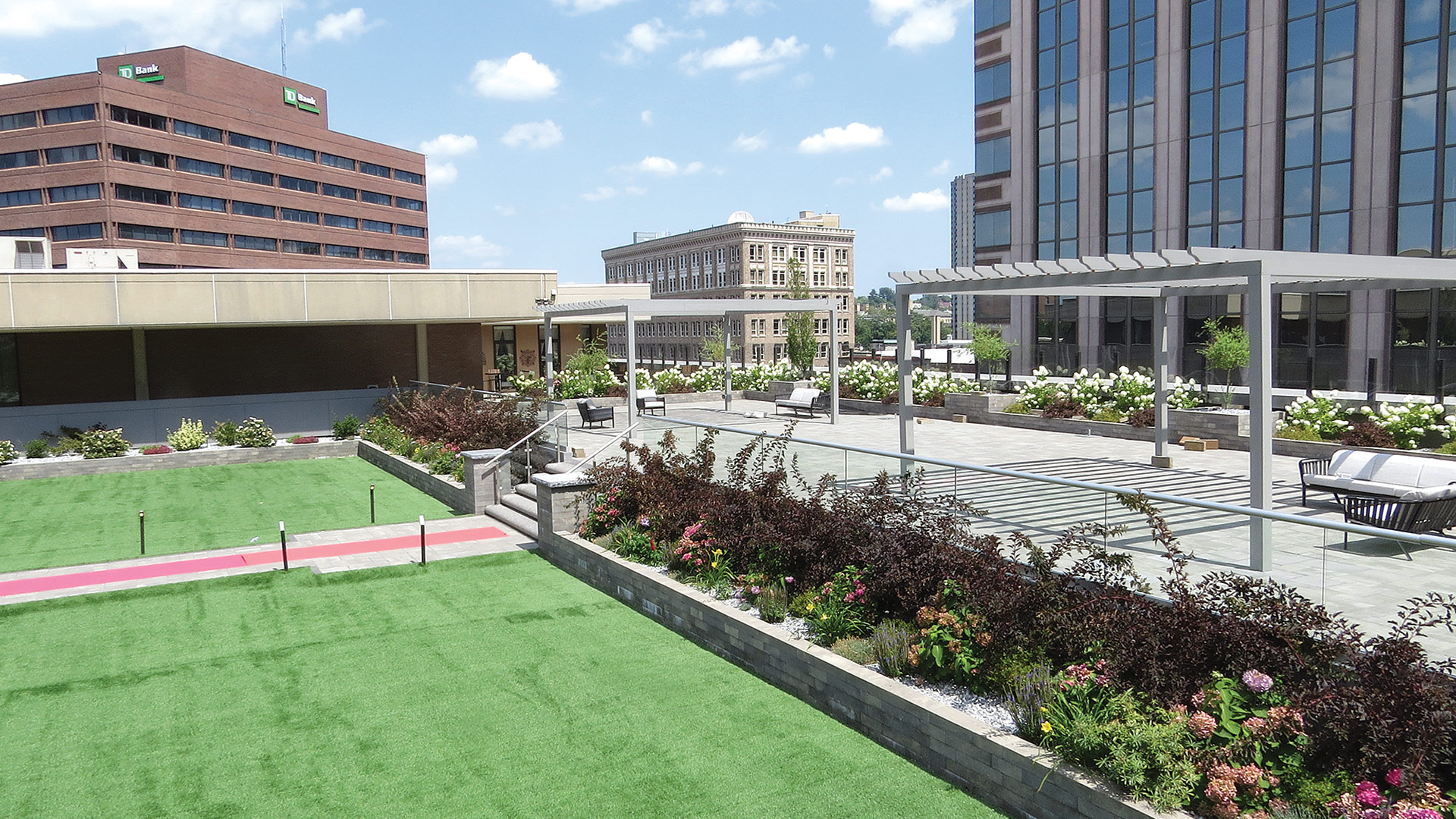
Nakrani, who earned her bachelor’s degree in health policy analysis from Brandeis University, said she always wanted to work in healthcare — and especially in the public-health realm, where, as she put it, she could look at healthcare not from an individual perspective, but from a population perspective, and help underserved individuals. And she has essentially made this her career.

It’s a career marked by thoughtful and innovative approaches to the task of bringing down the cost of healthcare by focusing on improving the overall health of the region. And it’s a career that’s really just getting started.

Within the community, Nakrani is involved with a number of initiatives that are in line with her passion for healthcare and public health. She has been a facilitator of the ACO Patient and Family Advisory Council, a facilitator of Baystate Community Faculty meetings, an advisor for Baystate’s PURCH (Population-based Urban and Rural Community Health) program, and a volunteer for Baystate Health’s ‘poverty simulations.’


— George O’Brien

40 Under 40 Class of 2022

Executive Director, EforAll Holyoke/EparaTodos; Holyoke City Councilor; Age 32

Tessa Murphy-Romboletti says she was just 8 years old when she had her first experience with effecting change in Holyoke.
Telling the story, she said she had a real affection for Friendly’s ice-cream treats. To get to the Friendly’s, she had to cross busy Route 5, which wasn’t a problem until a certain traffic light stopped working as it should.

Missing her ice cream compelled her to ask her grandfather what could be done to get the light fixed, and upon being told that she should call the mayor’s office … she did just that. And her phone call promoted some action.
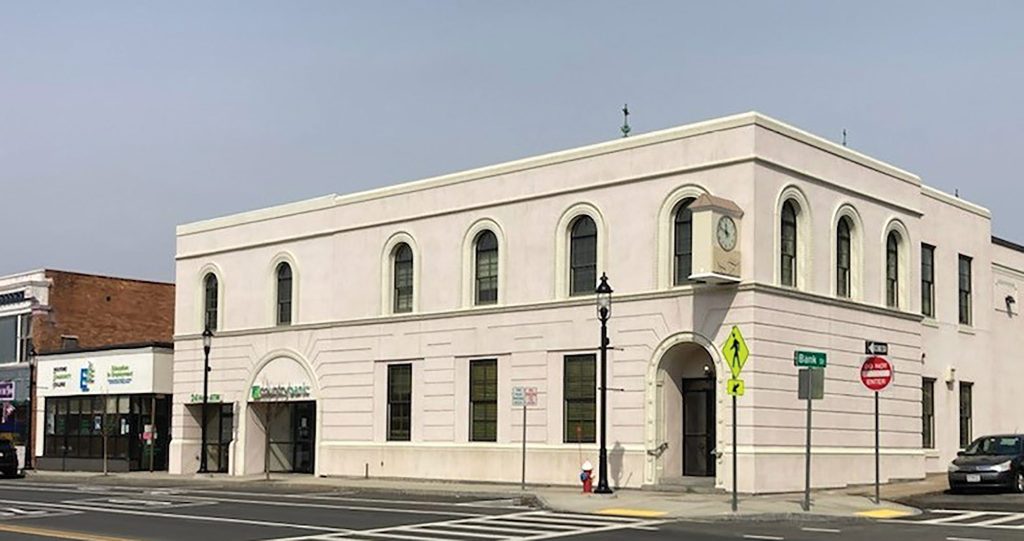
And it did more than that. Much more. It empowered her, and, in many ways, it put her on a path to occupying an at-large seat on her hometown’s City Council; she won election last fall.

“From that traffic-light experience, I was like, ‘what else can I fix?’” she recalled, adding that she quickly moved on to the vacant field across from her house. When a candidate for City Council knocked on the door, she informed him that she would like to see it turned into a park. It took a while, but that’s just what that space became.

“I always had a deep love for local government, and I’ve always cared about improving my neighborhood,” said Murphy-Romboletti, adding that this passion eventually led to taking an internship with then-mayor Mike Sullivan while she was in college, which led to a job in the mayor’s office and, later, another job with the Planning and Economic Development department.

Her love of Holyoke and desire to build its business community took a different path when, in 2016, she became director of SPARK, a nonprofit that was part of the region’s entrepreneurship ecosystem, and merged it into EforAll, now a national organization.
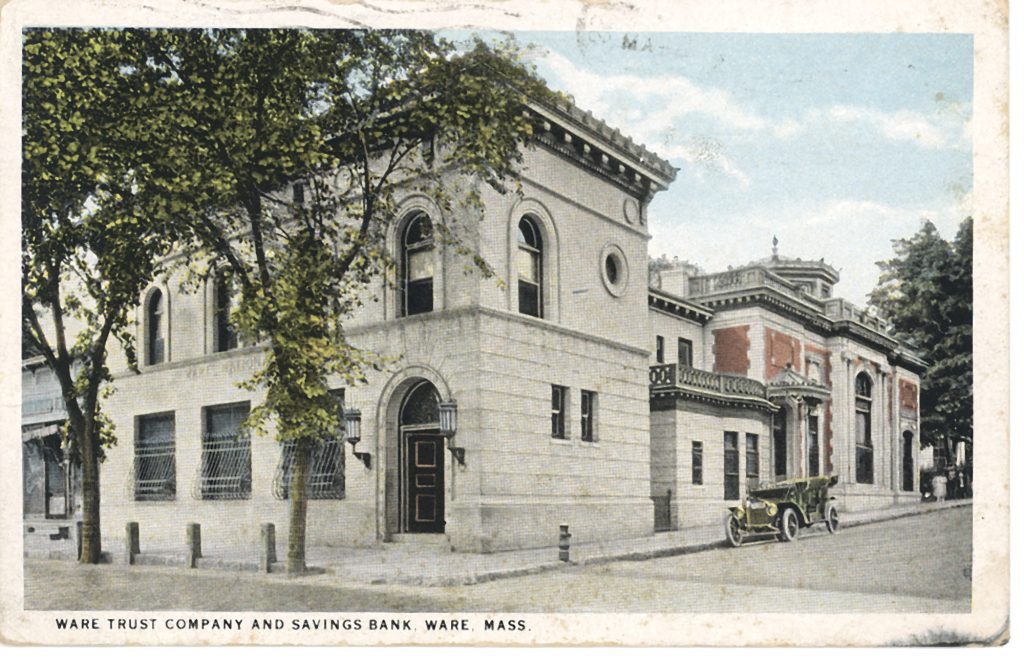
In just over five years, she’s helped more than 50 businesses launch and expanded EforAll Holyoke with a program in Spanish, EparaTodos. Her work to build EforAll earned the organization recognition as one of BusinessWest’s Difference Makers in 2021.
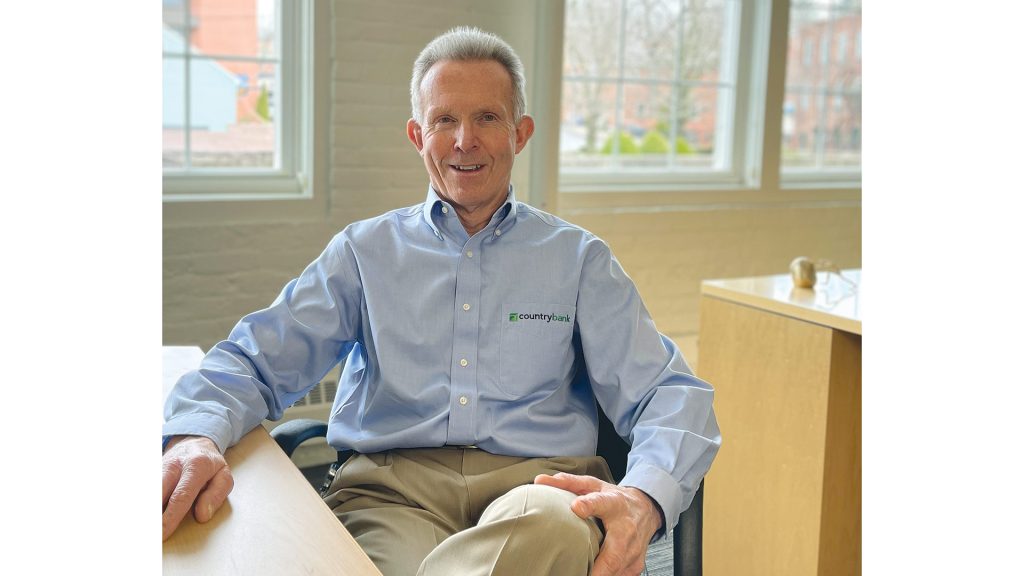
But her passion for Holyoke runs even deeper. Indeed, for many years now, she has been a member of the Holyoke St. Patrick’s Day Parade Committee, and has served as chair of MassHire Holyoke.

Two dozen years after getting that traffic light working, she’s still looking for things to fix, and for ways to make her city a better place to live, work, and operate a business.


— George O’Brien

40 Under 40 Class of 2022

Executive Director of Diversity and Inclusion, Isenberg School of Management at UMass Amherst; Age 29

When asked why there are now so many colleges, municipalities, and businesses that employ administrators focused on diversity, equity, and inclusion (DEI), Alaina Macaulay gave a quick but direct answer.

“To be quite honest, many of the ways in which society operates are designed to promote some and exclude others,” she explained. “We need these positions so that we have advocacy for people, but then we’re also dismantling systems that have been oppressive and have kept people out.”

And among area DEI professionals, Macaulay has become a true leader. Formerly the director of DEI at Elms College, she has served for three years now as executive director of Diversity and Inclusion at the Isenberg School of Management at UMass Amherst, and is the first person to hold that title.

A graduate of Western Illinois University, where she earned both bachelor’s and master’s degrees while playing on the volleyball team, Macaulay said each day is different, which is what she likes most about her work. But overall, she works with the Admissions team on encouraging ways to attract and connect with students from all backgrounds “so they see Isenberg is a destination that they want to be a part of and that they feel they can belong in.”

For students already enrolled, she works on programming and creating curriculum that centers the experiences of students that have historically come from the most marginalized backgrounds.

“I advise student groups; work with students, faculty, and staff closely on DEI initiatives; and I also help with training to make sure we’re all operating from an inclusive and equitable practice,” she explained.

Since arriving at Isenberg, Macaulay has many accomplishments and new initiatives to her credit, including:

• Creating and chairing Isenberg’s diversity, equity, and inclusion committee;

• Launching Isenberg’s first Diversity and Inclusion Education Week;

• Creation of Isenberg’s “Many Minds” workshop series dedicated to discussions on diversity, equity, inclusion, and belonging; and

• Building and maintaining relationships with K-12 organizations to create a pipeline of students from the most marginalized backgrounds.

In addition to her work at Isenberg, Macaulay is also very involved in the community. She serves on the board of the Young Professional Society of Greater Springfield and the Chester Theater. She’s also an active volunteer with Sisters of St. Joseph, specifically serving on its peace and justice committee, which is committed to centering racial justice and equity in the congregation.


— George O’Brien

40 Under 40 Class of 2022

Co-owner, Kelley and Katzer Real Estate, LLC; Age 38

Joe Kelley says it all started with a hard read of Donald Trump’s The Art of the Deal while on a family trip to West Palm Beach when he was in high school.

“My mother was always looking for something to light my fire,” he recalled. “So she got me that book; I read it cover to cover.”

Actually, that book only solidified plans he’d mapped out years earlier — plans to get into real estate, to own his own business, and to make some significant deals of his own.

At age 38, Kelley can say that pretty much every one of those goals has not only been met, but exceeded. He got into real estate soon after graduating from college, and before he was 30 he had launched his own real-estate company. A few years later, he partnered with Christine Katzer to create Kelley and Katzer Real Estate, LLC, a firm that has grown to two offices (in West Springfield and Feeding Hills), 10 agents, two administrators, and $52 million in sales in 2020.

As for deals … Kelley has been managing partner in several investment firms that oversee residential and business rental properties, new construction of residential homes, and renovation and resale of homes. Recent development initiatives have included everything from residential subdivisions — Angelica Estates in Westfield and Somerset Heights in West Springfield — to a medical office facility in what was a Knights of Columbus hall in Palmer.

But the success story Kelley is authoring himself includes much more than achievements in business.

Inspired by his parents and their strong track record of giving back, Kelley has been very involved in the community, supporting everything from the West Springfield Boys & Girls Club to Rays of Hope; from the Sister Caritas Cancer Center to local Little League teams.

Maybe the best example of his commitment to helping others, though, was an initiative he and the team at Kelley and Katzer launched during the height of the pandemic called Friends Helping Friends in the Community, created to assist struggling residents and businesses alike. Businesses were asked to partner with Kelley and Katzer and sponsor a restaurant that would supply bag lunches to the Parish Cupboard to give out.

When not working or helping in the community, Kelley said he’s spending time with his family — his wife Keri and sons Teddy (2) and Harrison (11 months). They enjoy going on walks and playing in the backyard.


— George O’Brien

40 Under 40 Class of 2022

Owner, Sweet Lucy’s Bakeshop; Age 39

Lucy Damkoehler has always blended (that’s an industry term) her passion for baking with a desire to give back to the community.

But during the pandemic, these twin forces came together as never before, and in a very powerful way.

The program was called Take & Bake Meals. It started small, right after the lockdown in mid-March 2020, with Damkoehler, chef and owner of the suddenly sidelined Sweet Lucy’s Bakeshop in Bernardston, making six chicken pot pies with the belief that elderly individuals and families coping with COVID could use them. Suffice it to say, she was right.

“I had these pies … I said, ‘I’m going to put this on Facebook, and maybe one or two people will want one.’ Within a half-hour, every one of them was sold, and I had 10 more people calling for them,” she said, adding that the pot pies, mac-and-cheese dinners, and other offerings would be dropped off on neighbors’ doorsteps, sent off to colleges, and brought to others in need of quick, nutritious meals. At the height of the program, she was making 50 to 60 meals a day.

And while Take & Bake Meals certainly helped those in the community, it gave a new and improved lease on life to Sweet Lucy’s Bakeshop as well. Indeed, the pot pies have now become a staple for the business, and they have introduced it to new audiences that have become steady clients, enabling Damkoehler to add employees and grow her venture.

Take & Bake helps explain why Damkoehler is a 40 Under Forty honoree, but there is so much more to the story. She started baking at a very young age and took her first job at a bakery in Deerfield. She earned an associate of occupational studies degree at New England Culinary Institute, then moved to New York to work under Claudia Fleming at the Gramercy Tavern. She eventually settled in Washington and spent the next 12 years building her reputation as an industry leader.

Desiring to return home — and fulfill her dream of opening her own business, she launched Sweet Lucy’s Bakeshop. In addition to those pot pies, it specializes in croissants, muffins, scones, cookies, and more.

As noted, Damkoehler is also active in the community, serving on the board of trustees for the Cushman Library in Bernardson. She’s also involved with the Franklin County Chamber of Commerce, Franklin County Community Meals, and Empty Arms Bereavement Support.


— George O’Brien