Home Articles posted by George O'Brien (Page 12)
Features Special Coverage

Going the Extra Mile

AST

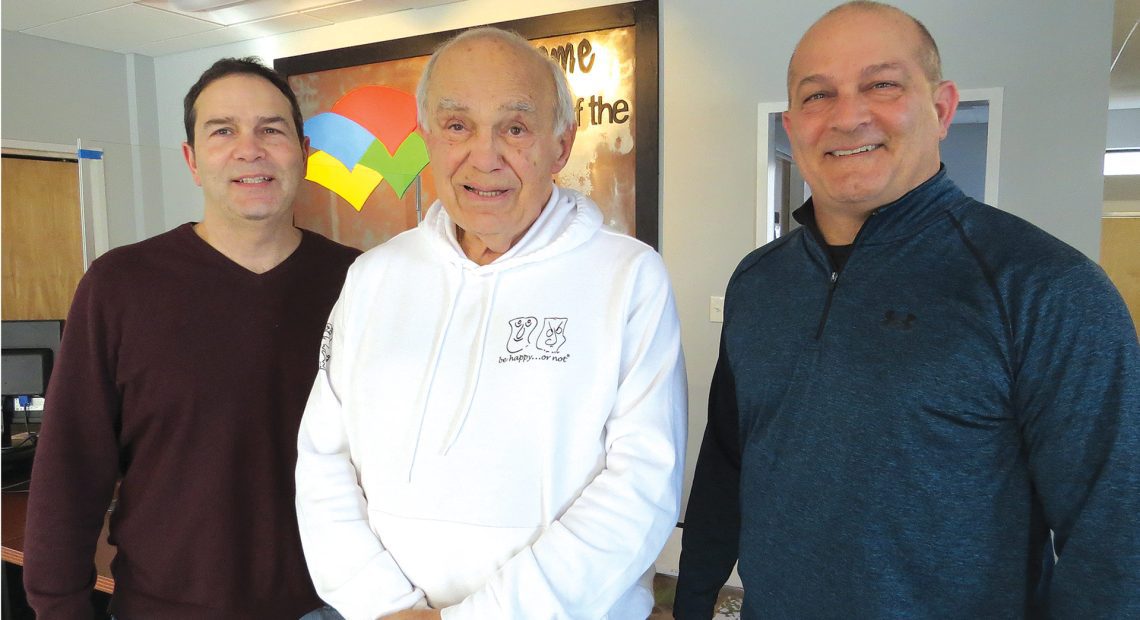
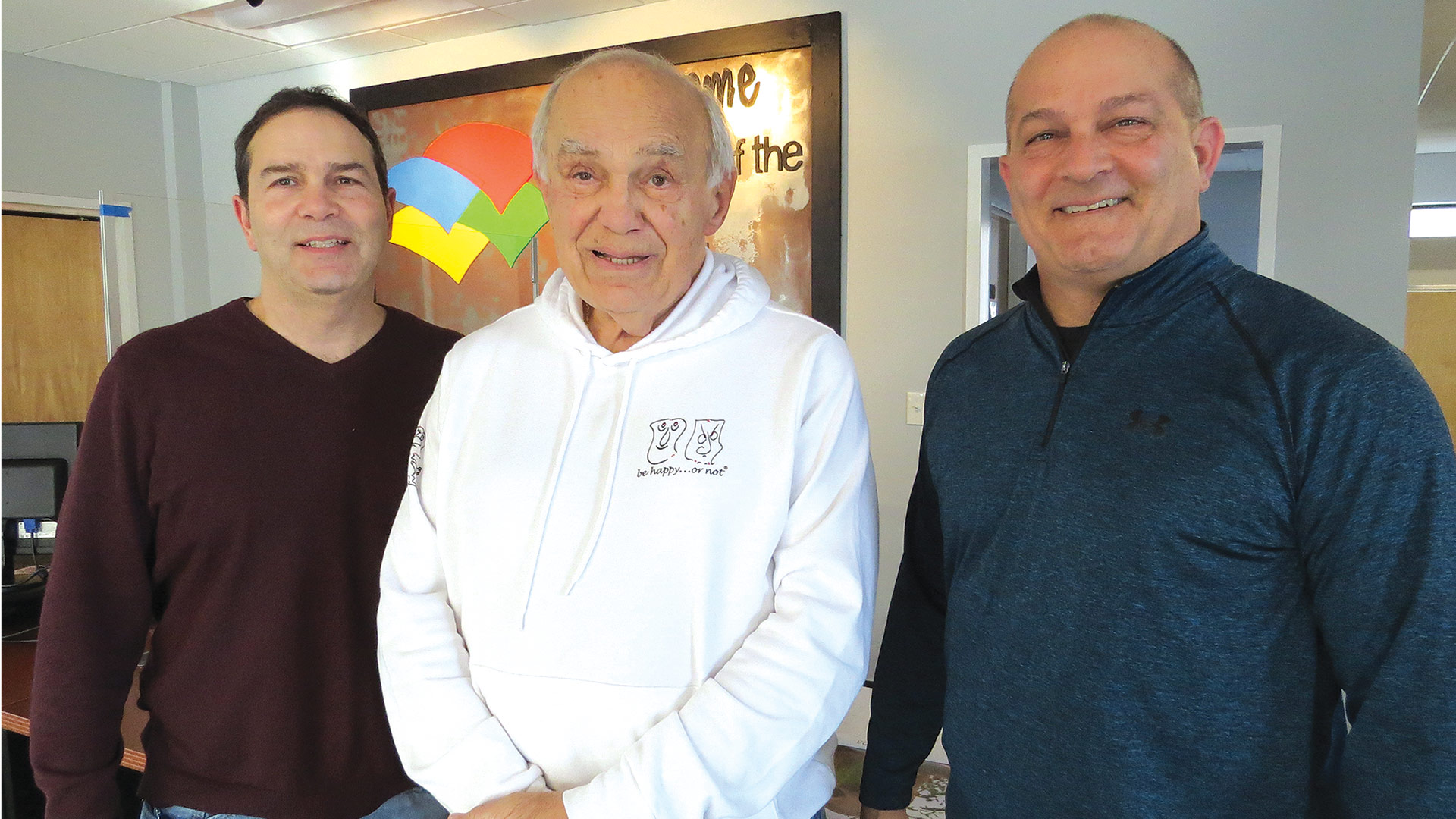
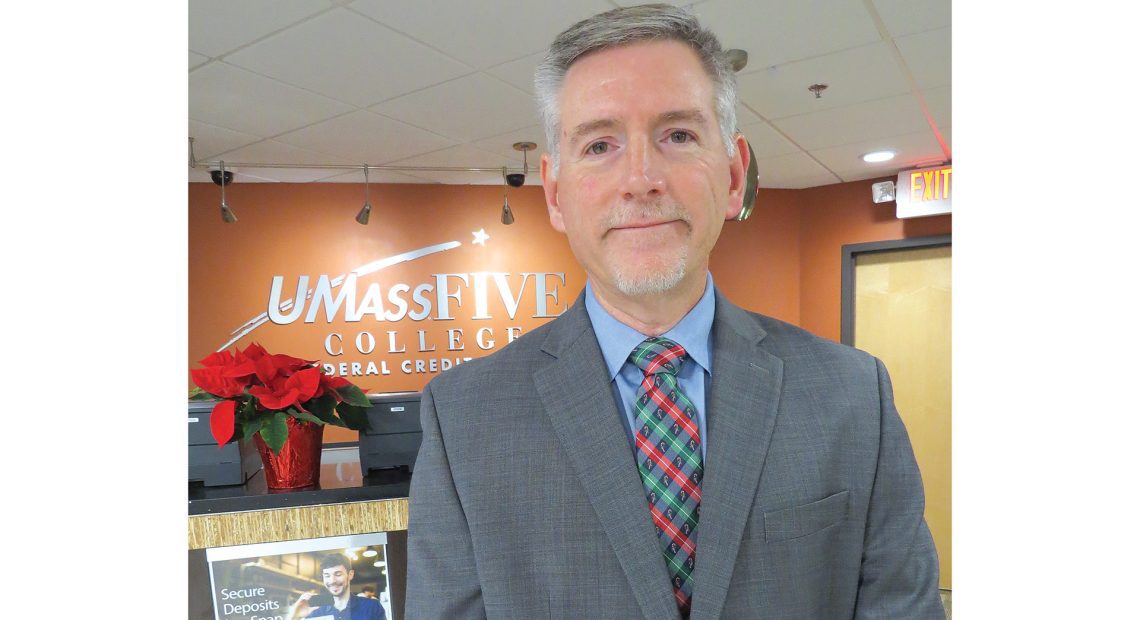
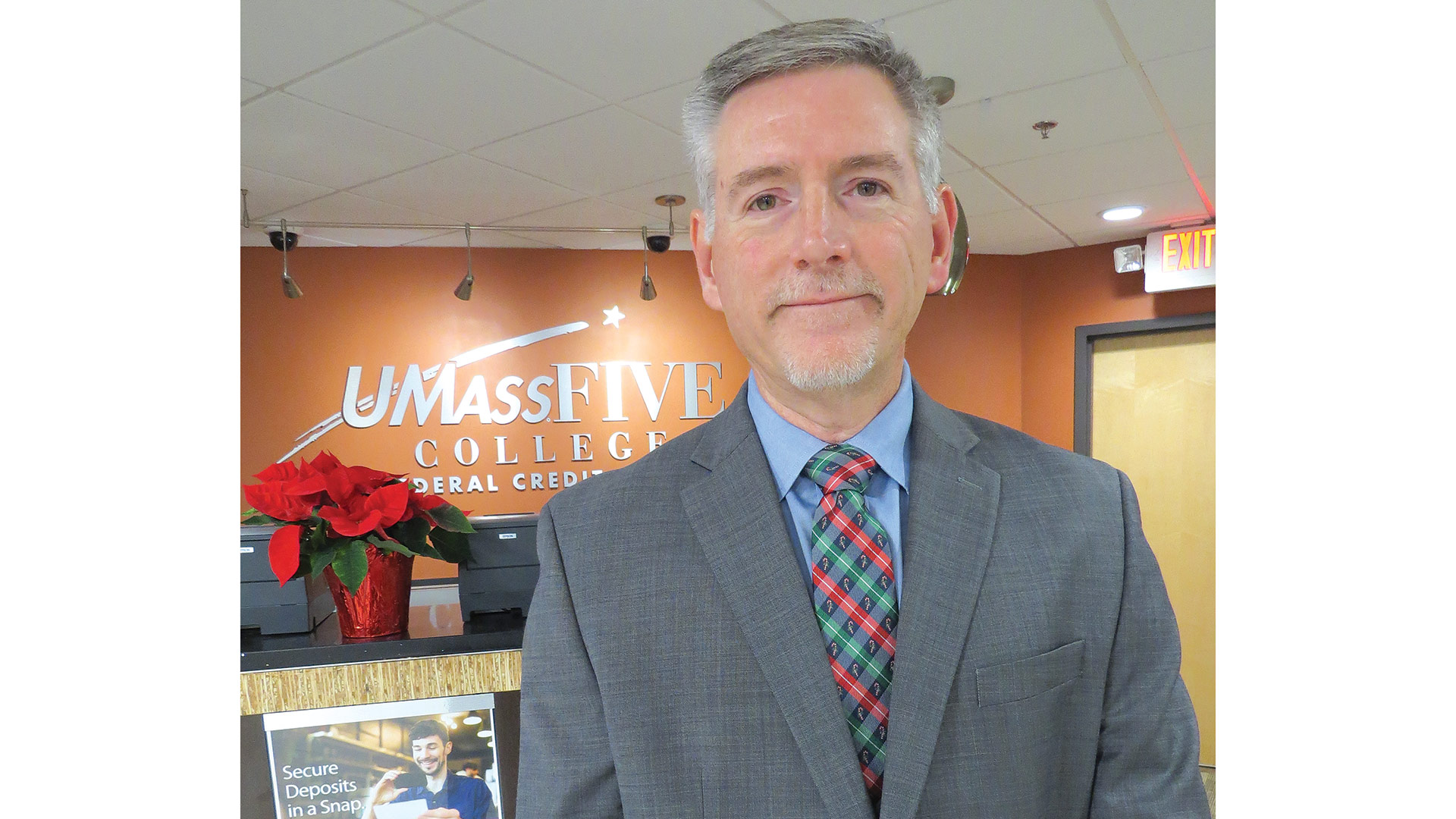
AST President Billy Kingston, center, with his sons, Chris, left, vice president of International Services, and Tim, vice president of Domestic Services.

Billy Kingston says the global shipping business has historically been an ultra-challenging, often-misunderstood sector of the economy, one defined by heavy competition, demanding customers, unseen twists and turns, and a landscape that can, and does, change quickly and often.

And that was before COVID and the manner in which it eventually turned the supply chain on its ear, inflation, the war in Ukraine, higher tariffs on many goods, a workforce crisis, soaring fuel prices, remote work, and everything else that has happened over the past few years.

Summing it all up, Kingston, president of All States Transport, better known as AST, said this has certainly been a tumultuous and very difficult time for this industry, one that AST has withstood because of all it can bring to the table, especially (in his case) a half-century of experience, but also a deep, talented core of employees, connections around the globe, and, most importantly, a commitment to delivering for customers and going the extra mile.

Those are both industry terms, sort of, but they help explain why AST, a domestic freight broker and international freight forwarder, terms that are self-explanatory, is able to stand out in a sea of competitors, both domestically and globally, in a business where firms are tasked with getting things from here to there — or there to here — in a timely fashion.

Elaborating, he said the keys to success for any company in this business are flexibility, the ability to move quickly and effectively, establishing trust with customers, and amassing a track record for success in delivering for clients, in every sense of that phrase.

“We arrange for transportation of goods to and from our customers anywhere in the world,” said Kingston, offering a simple explanation for work that is anything but simple. “The domestic side of the business is how we started way back, and that side of it is very active. The international side has been growing over the years and doing well; we move freight internationally by land and water.”

“We have so many great customers … if you’re upfront with them, they’re going to be upfront with you. That way, you can work through things, because transportation is nothing if not problems that have to be worked through.”

“It’s a rugged business with real issues, and we live them,” continued Kingston, who leads a staff of 20 along with his sons, Chris, vice president of International Services, and Tim, vice president of Domestic Services. “Through all of the ups and downs of the economy, fuel issues, and supply-chain woes over the past few years, it has just been very challenging.

“For us as a company, it has been our best period of time, business-wise,” he went on. “But it’s also been the most difficult to operate in.”

In a wide-ranging interview, the Kingstons pulled back the curtain on an industry that few outside really know, one that is settling back into something approaching what was happening before the pandemic, although no one came close to using the word ‘normal.’

To put things in perspective, Billy Kingston said that, before the pandemic, the cost for a shipping container coming in from China was $4,000 to $5,000. At the height of the pandemic, that cost had soared to $25,000 to $30,000.

“The spike was just amazing, and at that price, you were bidding, and hoping, to be able to get a container, and then hoping to get a spot on a ship to come this way,” he said, adding that the impact of the many issues within the shipping industry on inflation and the general economy cannot be understated.


Train of Thought

As he talked about the global shipping business, Chris noted that, like other sectors of the economy, this one has a language all its own, with an alphabet soup of acronyms.

These include TL (truckload), LTL (less than truckload), DAP (delivered at place), DPU (delivered at place unloaded), and myriad others.

Learning this language and helping clients understand it is just one of the many nuances of the global shipping business, said Billy, who got his start in it back in the mid-’70s, working in sales for several different national trucking companies as well as an international freight forwarder.

After working in the business for many years, he decided he knew it well enough, and had enough solid connections, to strike out on his own. He started All States Transport in the basement of his home in the Forest Park section of Springfield in 1985.

The global shipping industry is highly competitive and ever-changing, and the pandemic only added several additional layers of challenge.

For the first year or so, it was a one-person operation that eventually moved into a small office in Market Square in downtown Springfield, adding employees as it continued to grow and expand its portfolio of clients, many of which have stayed with the company through its history.

The company had a few different homes — as well as its own small trucking company, which it operated out of property on Avocado Street in Springfield for several years — before settling into its current location on East Columbus Avenue, the former home to the Leonard Gallery and Sam’s Glass.

For the past 15 years, AST has also operated a small office in Miami. At one time, it also housed a trucking operation there, but that, like the one in Springfield, became difficult to manage. So, in both locations, the company has returned to its roots — and its routes — as a freight broker and forwarder.

“When the pandemic hit, because there was so much uncertainty in the general economy, you saw companies all over the world closing down and canceling orders that had been in place for a long time.”

As he explained the operation, Billy said that, in a nutshell, AST goes about finding global shipping solutions for its many kinds of clients, most of them manufacturers. About 80% of the company customers are based in Western and Central Mass., Northern Connecticut, and Rhode Island, he said, with the rest spread out over the country.

As a broker, AST will work with a client to secure the shipping of goods to or from their business. To do so, it works with trucking outfits across the region and around the country, as well as rail-service providers and sea and air carriers. What separates the many (as in thousands) of competitors in this field is their ability to make and maintain connections with carriers, know and understand the market, move quickly (many clients want same-day service), and deliver on both price and quality of service.

And all this requires an experienced, talented workforce. “You need a staff that is familiar with the marketplace and has all the tools and technology they need to succeed,” Billy explained. “It’s a fast-moving, time-sensitive, rate-conscious industry — that’s what it’s about.

“We have other customers that we’ve done business with for years and years … they don’t ask us for rate on every load,” he went on. “In many cases, we have the ability with those customers to move up or down as we need to, to service their needs and ours. And that only comes from years of good faith and years of trust, built up between us and our customers because they know that if we need to add extra dollars to a rate, there’s a good reason for that. They also know that if we can reduce that rate, we’re going to do that, and we do this as often as we can.”

Beyond rates, successful freight brokers and forwarders need to have a thorough understanding of the players in the shipping field, where they operate, and how, said Tim Kingston, adding that AST works with trucking companies across the country.

“And we need to, because trucking companies, by their nature, and by their history, generally service certain sections of the country,” he explained. “Some will go anywhere, but a lot of them carve out a part of the country that they want to service for their business needs. You learn those, and when you have freight moving to South Carolina, you know where to start.”

Chris agreed, and said one constant for the company through the years has been to apply an established set of values and principles and to effectively partner with clients and communicate with them — another must in this business.

“It’s a super-competitive, time-sensitive, money-sensitive industry that changes on a dime in many cases. You need to have a staff that’s dedicated; you need to have a staff that’s used to hearing the word ‘no,’ because they hear it a lot.”

“If you have good news for a customer, give them good news; if you have bad news, something’s gone wrong, let them know early, communicate that, and try to work through problems,” he said. “We have so many great customers … if you’re upfront with them, they’re going to be upfront with you. That way, you can work through things, because transportation is nothing if not problems that have to be worked through.

“Sure, 60% of your loads are going to go without a hitch,” he went on. “The other 40% … that’s where the real work is, so we try to apply the same values across all our different sectors.”


Plane Speaking

This combination of experience, built-up trust, and ability to adjust to rapidly — and often profoundly — changing conditions, has enabled AST to not only thrive for the past four decades, but also persevere through this recent, and ongoing, period of heavy turbulence.

Indeed, as noted earlier, this challenging business has become more so — make that even more so — over the past several years with the profound changes to the landscape brought on by the pandemic.

At the top of this list were supply-chain issues that could only be described as historic, said all three Kingstons, noting that the industry was seeing explosive surges in prices for shipping containers and backups at ports around the globe. It didn’t happen overnight, but almost.

Billy explained how it all happened. “When the pandemic hit, because there was so much uncertainty in the general economy, you saw companies all over the world closing down and canceling orders that had been in place for a long time,” he said. “Manufacturers then began cutting back, as well as transportation companies — steamship lines parked vessels all over the world because the demand wasn’t there. No one had an idea when it was going to come back, and that really kicked off the fluctuation in the supply chain.”

Chris agreed, and noted that, three or four months into the pandemic, an array of colliding forces made the situation much worse.

“A lot of people were at home, and they weren’t doing the things they always did in terms of discretionary income,” he explained. “People were at home, and they bought many more things than they normally buy. And then, you had the stimulus programs, which gave people more spending money. Then … you had a lot less international shipping capacity, but a giant surge in demand. Meanwhile, you had empty containers in the wrong places that took forever to get repositioned.

All this created a messed-up supply-and-demand curve, which would have resulted in a container coming in from China for $25,000, just for the cost of the container, never mind the tariff,” he went on. “It created a lopsided supply-and-demand curve, which pushed prices out of sight.”

This phenomenon, which has eased considerably in recent months but is still an issue, is just one of many that has contributed to this being what is considered the most volatile period ever for an industry known for volatility.

On top of everything else, the global shipping industry, like virtually every other sector, has been impacted by an ongoing workforce crisis, Billy said, adding, again, that success in this business is directly related to the quality and consistency of the people doing the work.

“It’s a super-competitive, time-sensitive, money-sensitive industry that changes on a dime in many cases,” he told BusinessWest. “You need to have a staff that’s dedicated; you need to have a staff that’s used to hearing the word ‘no,’ because they hear it a lot; you need to have a staff that understands customer needs and understands which customers can be a little more flexible and more reasonable at times, and which customers can’t be because of the nature of their business. They need to be thick-skinned because it’s not always pretty.”

Indeed, many in this business, including AST, are looking for help right now, he went on, adding that, over the past several years, and essentially from the beginning, AST has made itself into what he considers a good place to work — and grow.

“In this environment, especially, we take care of our staff in every possible way,” he said. “We have some benefits that are quite outstanding, especially for a company our size, and we’re proud of that. As a result, generally, our people are with us for a very long time; very few people leave, and we’re proud of that, too.”

Elaborating, he said that, because of tight deadlines and the need to deliver, there is pressure on employees, something the company’s managers work to alleviate as best they can.

“We have some fun every day — at different times, you never know when it’s going to happen,” he went on. “And there are days when the fun doesn’t come very quickly or very often because you’re right to the wall, morning ’til night. But we try to lighten things up when we can and in whatever way we can.”

Commercial Real Estate Special Coverage

Building the Portfolio


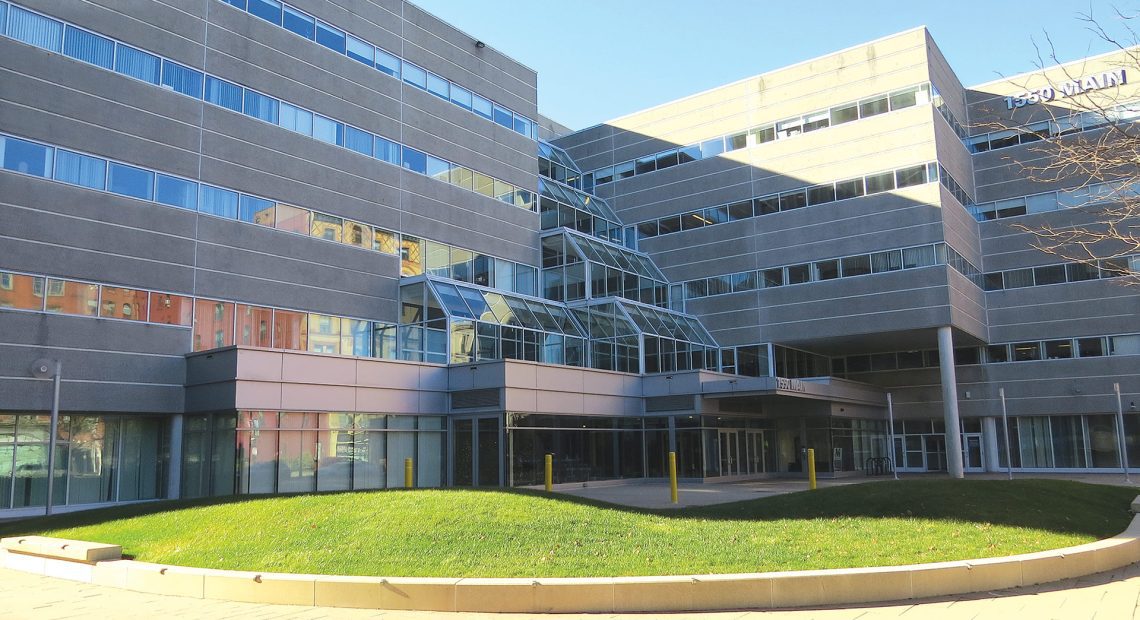
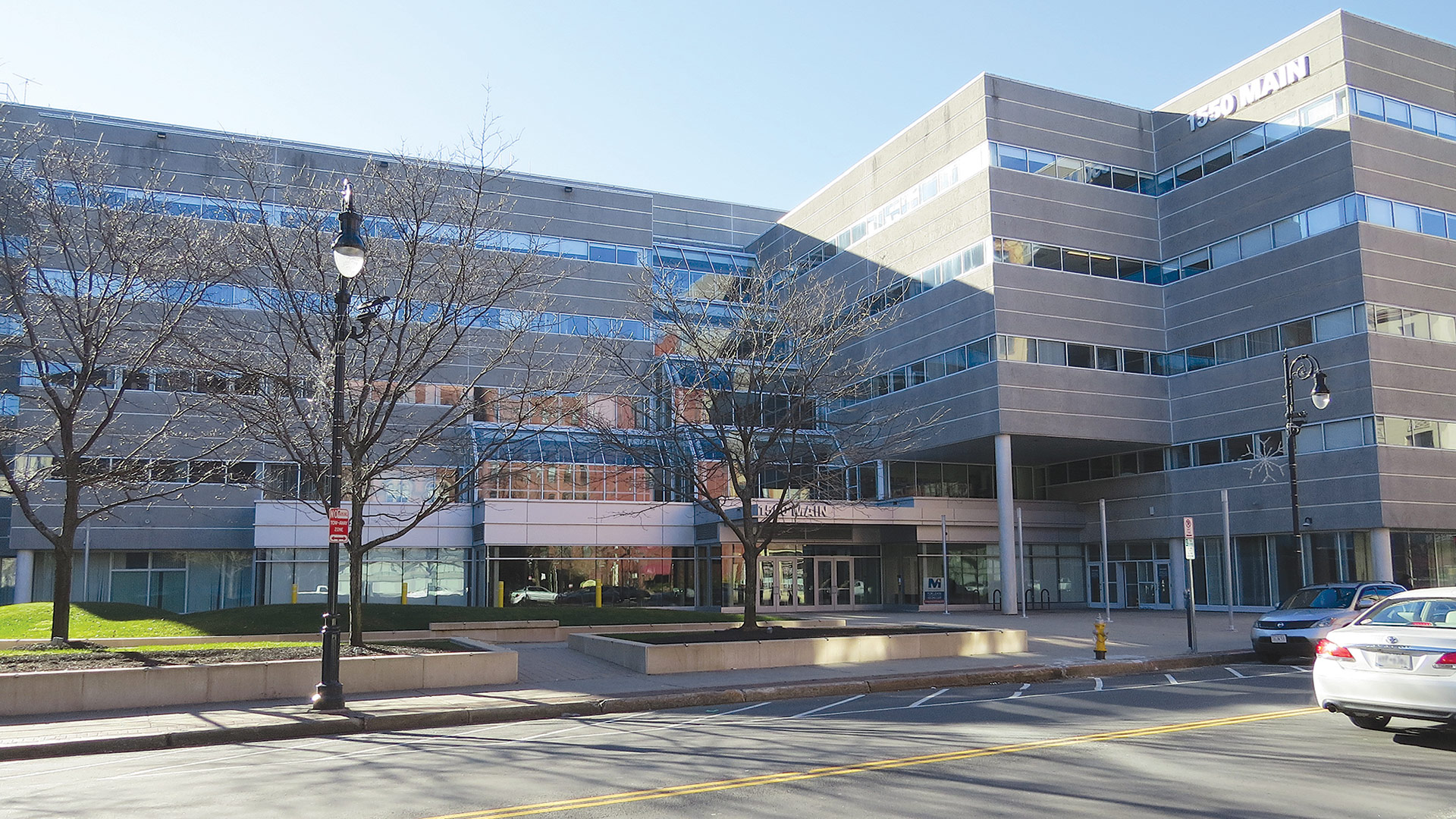
Vid Mitta acknowledged that the emergence of remote work and its impact — still to be determined in many respects — on the region’s inventory of office space was certainly a consideration when he and business partner Dinesh Patel were deciding whether to submit a proposal for the purchase of the 1550 Main building in downtown Springfield.

But ultimately, this was just one of many considerations, he told BusinessWest, adding that the others — as well as his firm belief that business owners and managers will always see value in having people working together in one place — convinced the two serial entrepreneurs to move forward and answer the request for proposals sent by the property’s now-former owner, MassDevelopment, early last year.

Mitta and Patel eventually prevailed in the bidding to acquire the property — formerly occupied by the U.S. Federal Court and currently home to tenants ranging from Baystate Health to the Springfield School Department — for $6 million.

As he talked about its prospects for the future, Mitta focused on those other considerations that played into this decision, especially that age-old axiom when it comes to commercial real estate — location, location, location. Beyond that, though, the current tenant mix, the timeline on current leases, and the good overall condition of the building also played a factor in generating a green light.

“These properties are connected, and they are the two best buildings in Springfield’s downtown for class-A space.”

“Remote work is the main thing that comes to anyone’s mind when we talk about office spaces today,” he acknowledged. “But look at the location — this is what we were looking at, as well as the maintenance and good condition of the property. These factors led us to see this as a good investment. When vacancies arise, people have choices, and they’re going to move into the best building possible.”

Thus, another chapter has begun in what would have to be called a developing story, in every sense of that phrase. That would be the expanding portfolio of properties now owned by Mitta and Patel, either individually or collectively.

That list includes Tower Square and its recently renovated hotel, which has re-earned the Marriot flag, as well as several other hotels, 99 Restaurant & Pub locations, a Walgreens, three McDonald’s franchises, adult day-care facilities, early-education facilities, and more. These collective investments and entrepreneurial gambits earned Patel and Mitta BusinessWest’s Top Entrepreneur award just a year ago.

Mitta told BusinessWest that 1550 Main St. was a common-sense addition to the portfolio, one that gives the partners a property that is essentially full (97% occupancy), with a stable tenant base that also includes the Internal Revenue Service, U.S. Immigration and Customs Enforcement, regional offices for U.S. Sens. Elizabeth Warren and Ed Markey, the law firm Alekman DiTusa, and an attractive, well-maintained property in the heart of the central business district.

“These properties are connected, and they are the two best buildings in Springfield’s downtown for class-A space,” he said of 1550 Main and Tower Square. “With these properties, we’ll be well-positioned to attract new tenants looking for quality space.”

The property that has come to be known as 1550 Main was acquired by MassDevelopment from the federal government in 2009. At that time, it was roughly 70% occupied, said a spokesperson for MassDevelopment, adding that, after achieving all its stated goals for the property, the agency decided to put the property up for sale through a disposition process to allow it to refocus its efforts on other projects.

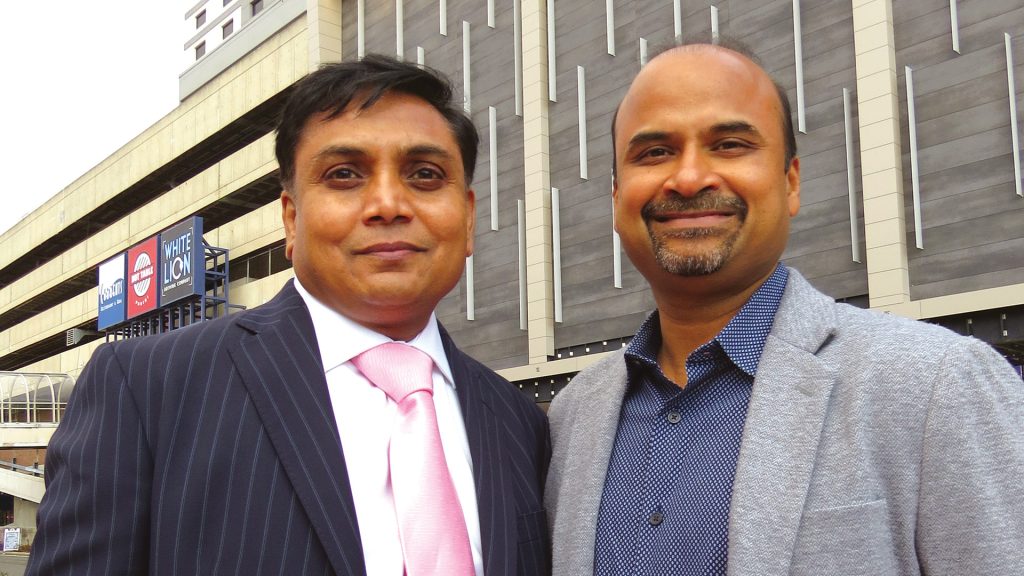
Dinesh Patel, left, and Vid Mitta

Dinesh Patel, left, and Vid Mitta, who together orchestrated a stunning turnaround at Tower Square, believe 1550 Main St. is a logical addition to their growing portfolio of commercial real-estate properties.

That includes an initiative in Greenfield, where MassDevelopment is partnering with the city and the Community Builders in the acquisition and redevelopment of the former Wilson’s Department Store property in the heart of the community’s downtown. The redevelopment will create roughly 65 mixed-income rental units and reactivate prominent first-floor and basement retail spaces through the relocation and expansion of Franklin Community Co-ops’s Greenfield store, Green Fields Market.

Referencing 1550 Main, MassDevelopment President and CEO Dan Rivera said, “working with tenants, partners, and the city of Springfield over the years allowed us to cultivate this property to its best and highest use. This type of focused teamwork is how long-lasting redevelopment takes root. It is what makes converting an old federal courthouse into a stunning multi-tenant office building possible.”

The property went on the market in the spring of 2022, and the request for proposals issued by MassDevelopment attracted a number of bids.

Moving forward, Mitta said several of the leases of current tenants will be expiring over the next several years. He expressed optimism for renewals, but also for new tenants looking to take advantage of the property’s location and other amenities.

“Tenancy is not a permanent thing — tenants come and go; we know that,” he said. “Some leases are going to expire over the next few years, but we know how to market, and we have a very strong team here.”

“Even those working at home still go to the office — businesses prefer the hybrid model. They need a place where people can collaborate, meet, greet, that kind of thing. That need is still there, and I don’t know if it will ever go.”

Elaborating, he said this team is hoping to attract some current occupants of class-B space to properties that are not much more expensive but bring a number of amenities that class-B properties do not, including parking garages, lighting safety, and that aforementioned location in the heart of downtown.

The property at 1550 Main differs from its neighbor, Tower Square, to which it is connected by a skybridge, in many respects, said Mitta. He noted that Tower Square required significant investment and “re-imagining,” a word he and Patel use often, such as with new tenants that include the YMCA of Greater Springfield. The newer 1550 Main will not require much of either, he said, which is another of those considerations that prompted interest in the building.

As for the trend toward remote work and hybrid work schedules, Mitta acknowledged that there is likely permanence attached to these trends, but, ultimately, he anticipates that there will still be strong demand for office space, especially in the class-A category.

“Even those working at home still go to the office — businesses prefer the hybrid model,” he explained. “They need a place where people can collaborate, meet, greet, that kind of thing. That need is still there, and I don’t know if it will ever go.”

For evidence of this, Mitta points to Tower Square, where he acknowledged that the number of people in the office tower on any given day may be lower than it was prior to the pandemic. But overall, space needs have not changed to a great degree, and new leases continue to be signed.

“Overall, rent is a comparatively small item on the P&L statement,” he said, adding that, for this reason, he has seen few if any tenants at Tower Square downsizing.

Features Special Coverage

Udderly Innovative

[email protected]

David Barstow and Denise Barstow Manz

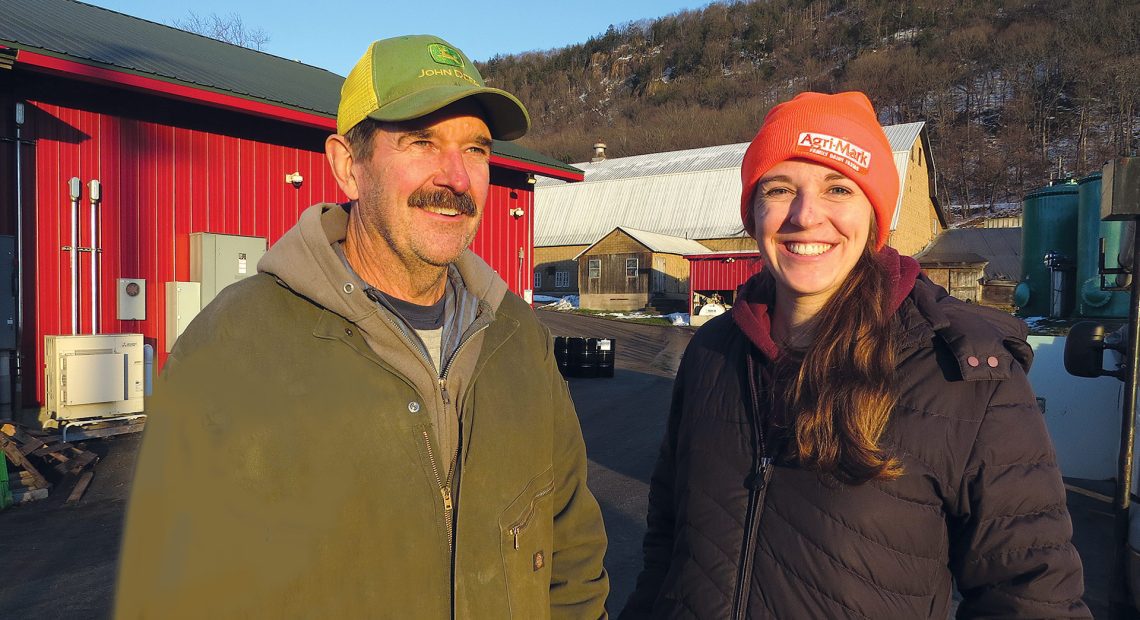
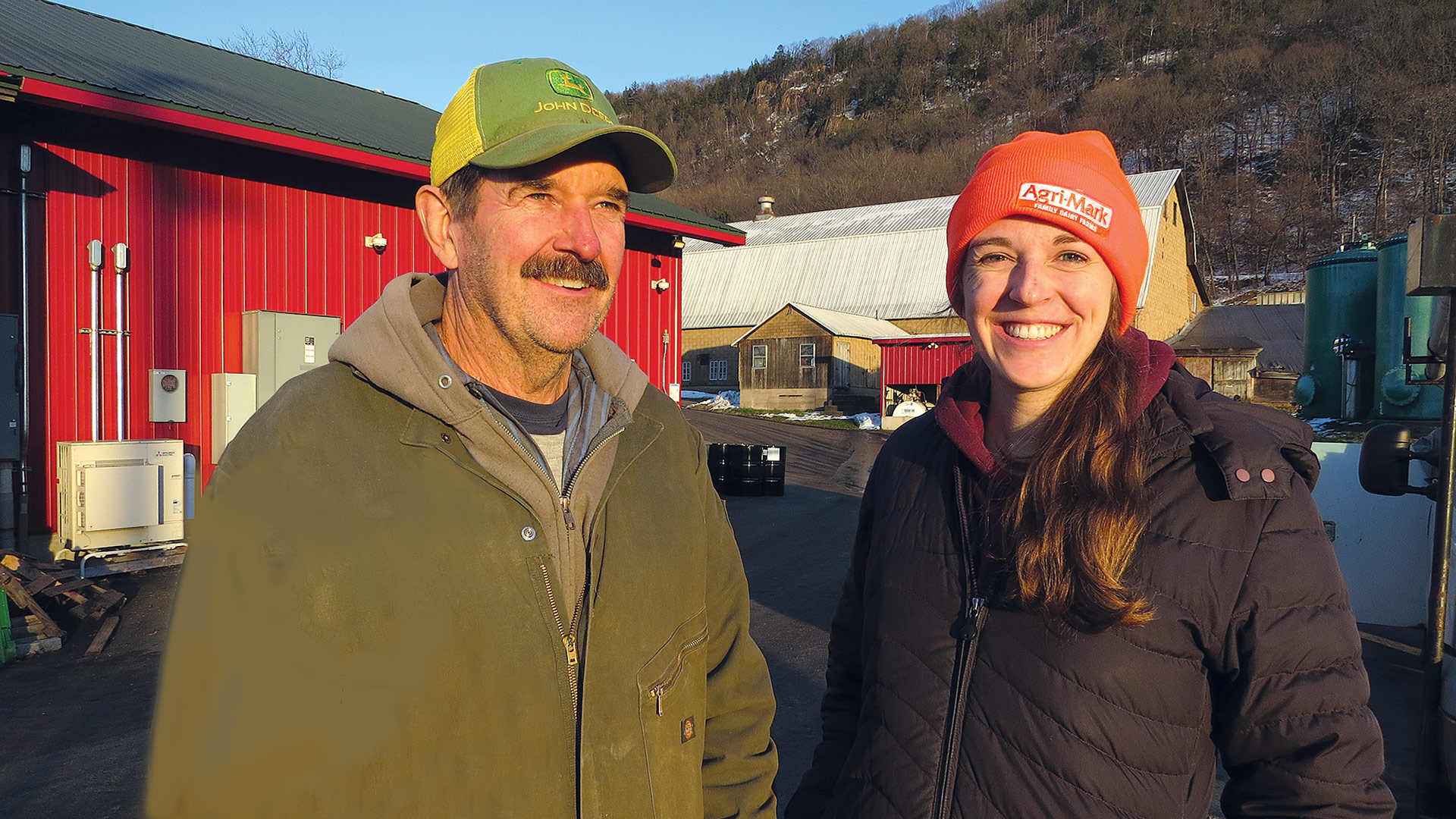
David Barstow and Denise Barstow Manz are part of the sixth and seventh generations now carrying on traditions — and creating new ones — at the family farm in Hadley.
Staff Photo

While she grew up on her family’s dairy farm in Hadley and enjoyed that lifestyle, Denise Barstow Manz had no intention of making the 200-year-old operation a career.

“The farm was a place that was fun, and I had a really good time playing with my cousins, being around large animals, and being around nature — it was an amazing way to grow up,” she recalled. “And then, as I got older and I started to see the numbers and realized that the farm was a lot of hard work and not an easy path to wealth, I thought that maybe I should go and do something else.”

She attended the University of New Hampshire — in part because of its renowned dairy program, although she chose a different major — and would later move west and work for the National Park Service, with stints at Yellowstone and Glacier National Park in Montana. And it was while on these assignments that she began to rethink what she would do with her life — and why.

“It finally hit me when I was in Glacier,” she said. “I was a trail guide, and I saw these people donating money to preserve these places. And I thought, ‘if everyone’s giving to places like this, who’s taking care of the places we come from?’ I thought about who was taking care of the place I came from that has been in my family for more than 200 years — and I wanted to be part of that story.”

And with that decision, Barstow Manz would also become part — and she stressed that word part early and quite often, because this is truly a family affair — of one the region’s more intriguing business stories: Barstow’s Longview Farm.

“This is a good place to raise a family in a multi-generational business — everyone can see how life works; the goal has always been to leave something for the next generation.”

It’s a story that includes most of the elements shaping the growth, evolution, and resilience of the local economy today. That list includes entrepreneurship, innovation, technology, clean energy, tourism and hospitality, and sustainable agriculture.

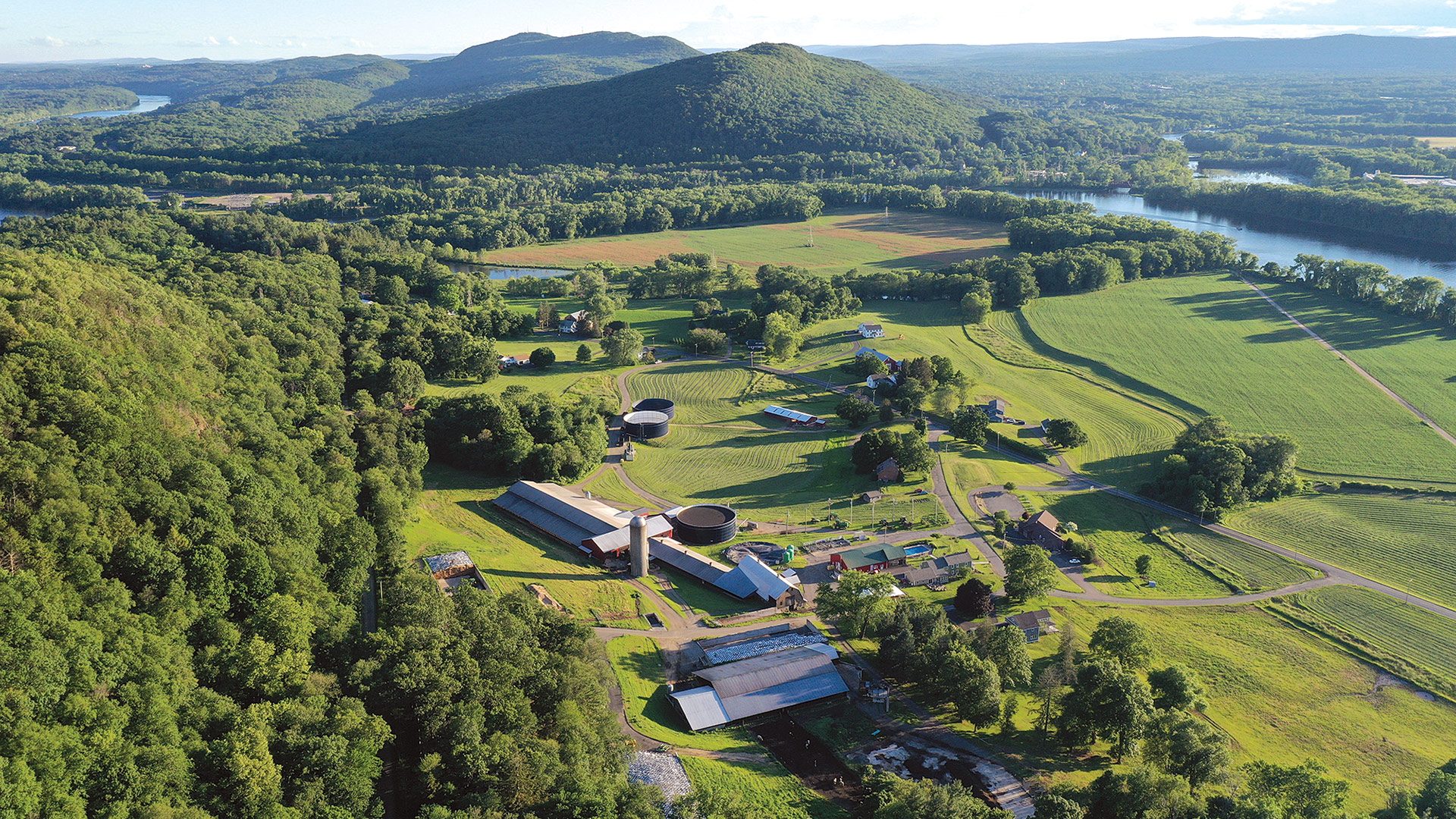
They all come together in an impossibly beautiful, picture-postcard setting, the historic Hockanum Village, framed by the Connecticut River and the Holyoke Range, scenery that belies the myriad and ever-more severe challenges facing dairy farmers — and all those in agriculture — today.

It was these challenges — and especially very trying times roughly two decades ago that prompted the sixth and seventh generations of the Barstow family to take the motto that has defined this business — ‘looking forward since 1806’ — to new dimensions.

Barstow’s Longview Farm since 1806.

Evolution and diversification have been hallmarks of Barstow’s Longview Farm since 1806.

Indeed, a family that has always embraced change and diversification (much more on that later) has taken some dramatic new turns in recent years, first with Barstow’s Dairy Store and Bakery, and later, through a partnership with Vanguard Renewables to build one of the first farm-powered anaerobic digesters in New England. Meanwhile, the 450-acre dairy farm produces 19,000 pounds of milk daily and is a member of the Cabot Creamery/Agri-Mark Cooperative; almost all of the farm’s milk is supplied to the Cabot/Agri-Mark facility in West Springfield and is made into Cabot butter and other products.

The anaerobic digester (AD), installed in 2013 and expanded in 2016, converts cow manure — the herd at the farm produces some 9,000 tons of it annually — and food waste into electricity, heat, and fertilizer.

It has become an important revenue source for the farm, but it also makes a statement about what the sixth and seventh generations of this family — and those that came before them — stand for.

“The AD speaks to what we believe in as a family — that we need to lower our carbon footprint and play a role in mitigating climate change,” Barstow Manz said, adding that, for this family, sustainability comes in many forms and means many things, including work to ensure that this business will be there for the next generations.

Her father, David Barstow, director of special projects at the farm, agreed. He said that, while many things have changed at this location — in general, but especially during his lifetime — what hasn’t changed is that concept of preserving, and persevering, for those who will continue the tradition.

“My father and grandfather used to talk about working with horses,” he said, adding that change and advancement are constants on the farm; the key is to embrace that change and be at the forefront of it. “This is a good place to raise a family in a multi-generational business — everyone can see how life works; the goal has always been to leave something for the next generation.”

“We got together as a family and decided that we needed to either diversify or get out of farming completely.”

All of the various components of Barstow’s Longview Farm make for an intriguing tour — one that usually includes lunch on site — and Denise and other family members offer many of them, all year long. More than that, these elements collaborate to create an inspiring new chapter to a story that began when Thomas Jefferson was patrolling the White House — and even a century before that, as we’ll see.


Herd It Through the Grapevine

They call it Pasture Day, and it is celebrated the first Saturday in May.

As that name suggests, this is the day when the cows, which have spent the winter in barns, get to head back into the pasture. It’s the unofficial start of spring, and a community event — many visitors, including several families living in the area, will come out, watch the heifers celebrate their first taste of fresh grass, enjoy live music, and have some ice cream.

An aerial view of Barstow’s Longview Farm

An aerial view of Barstow’s Longview Farm in the historic Hockanum Village.

“People kick up their heels and have a good time; they sit on the hill and watch,” said Barstow Manz, who doesn’t have a formal title, but serves as the farm’s marketing director. She also handles the farm tours, manages the dairy store and bakery, handles outreach, and acts as the main grant writer. She used to feed the calves, but the farm now has an automated calf feeder, one of many examples of innovation at this institution.

She said Pasture Day is just one of the many traditions that have lived on at this property since Septimus Barstow, originally from Wethersfield, Conn., acquired the property on the bank of the Connecticut River that was first farmed at least 100 years earlier by the Lyman family.

Originally a crop farm that focused on asparagus, as many farms in Hadley did, as well as squash, corn, tobacco, and other staples, the Barstow’s operation eventually evolved into a dairy farm after the advent of refrigeration, which provided an avenue for selling milk wholesale.

By the 1930s, dairy was the primary focus at the farm, she went on, adding that, with a herd of 300 cows, this is small to mid-sized operation, one that is dwarfed by huge operations in this country and overseas.

It’s one of a dwindling number of dairy farms both in Massachusetts and across the U.S., she said, citing statistics showing that this country loses five dairy farms every day.

“And when you lose those farms, you’re losing a lot,” she went on. “You’re obviously losing food and food security for that community. But you’re also losing open space, which is good for wildlife habitat, groundwater, climate resilience, and food security. And you’re losing that heritage and that connection to your past.”

The reason for such attrition is simple. This is a very difficult business to be in, she said, adding that the federal government controls milk prices, and margins have historically been paper-thin.

“Even though it’s very perishable, milk is marketed on a global scale, so we’re competing against New Zealand, we’re competing against California … and it’s kind of a broken system,” Barstow Manz explained. “The only real way for dairy farmers to make more money is to make more milk, which doesn’t always line up with demand. And we have no control over the price of the product we produce.”

There are only 115 dairy farms left in the Bay State, and there probably wouldn’t be any were it not for the Massachusetts Dairy Tax Credit, which enables them to remain competitive, she said, adding that there are six operations in Hadley alone, a concentration that testifies to the quality of the soil in that region.

In the early years of this century, the milk market essentially collapsed, primarily because of oversupply, she said, calling this a scary time for the Barstow farm and all the others in this market.

David Barstow

David Barstow says his family lives by the farm’s motto, ‘looking forward since 1806.’

“The milk market crashed like no one had ever seen or felt before in this country; we were getting $12 per hundred pounds of milk, when our break-even was $22,” she explained, adding that it was a critical time in the history of the farm, or another critical time, to be more precise.

“We got together as a family and decided that we needed to either diversify or get out of farming completely,” she recalled. “And that’s when we started talking about how we wanted to diversify and who we wanted to include. And we knew that we wanted to be thoughtful of what the next generation was interested in doing and what our strengths are.”


A Process of Evolution

Over the next several years, diversification would come in several forms, starting with the dairy store and bakery in 2008, an operation inspired in many ways by Denise’s cousin, Shannon Barstow, who does most of the baking. It’s an operation that would transform the farm into a true destination.

“We’re always trying to be mindful and committed to what’s going to be best for our herd, and also for our land, our workforce, our community, and our food system.”

“We understood that people were going to have to drive here if we were going to get the support and the revenue we needed,” she recalled. “So we did lunch, and we started probably too big for our britches. But we’ve definitely settled into who were are, and we have a really supportive community.”

The dairy-store operation and bakery offers both breakfast and lunch as well as a number of prepared foods — and ice cream. The bakery serves up pies, cupcakes, brownies, turnovers, croissants, scones, muffins, breads, and much more. The facility handles private functions, porch parties, and catering. Meanwhile, visitors can buy Barstow’s beef — everything from tenderloin steaks to ground beef — on site. There’s even a drive-thru for those who want or need to grab and go.

The facility draws visitors from around the corner, but also from across the state and beyond, said Barstow Manz, adding that it has become a real destination and a way to take the Barstow name and products well beyond Hadley.

“Most of our regulars are from Hadley and South Hadley,” she explained. “But we have people who come to us from Eastern Mass. because they love our beef, and from the Berkshires because they love our pies; we draw from all over.

Shannon Barstow

Shannon Barstow does most of the baking at the dairy store and bakery, which opened in 2008.

“We opened this place to save the family farm, and it’s had so many other amazing qualities to it that we didn’t really expect,” she told BusinessWest. “It’s become this time capsule for all these family recipes — most of the stuff that’s in the dairy case is Grandma [Marjorie] Barstow’s recipes. And it’s also a neighborhood gathering space — it’s a space where people can work close to home and also be part of a family farm and a local economy on a small scale.”

Indeed, the dairy story and bakery now employs 15 people and has provided many area young people with their first jobs.

The anaerobic-digestion system, launched at a cost of roughly $6 million, is not a supplier of jobs, but it is, as noted earlier, a supplier of electricity, heat, fertilizer — and also pride for a family that has, through its long history, been innovative.

The conversations about installing such a facility began around the same time the family was opening the dairy store and bakery, she said, adding that the system is another important step toward diversification.

Explaining how it works, she said the system takes the energy potential (methane) out of cow manure and food waste and converts it into enough electricity to power 1,600 homes. The food waste comes from local food producers, including Cabot/Agri-Mark, Whole Foods, the Coca-Cola plant in Northampton, and local restaurants.

The food waste and cow manure, both treated and in liquid form, are put into the digester, which Barstow Manz equated to a large stomach, with the gas from the ‘digestion’ process rising to the top of the nine-story facility. That collected gas combusts in an engine and turns a generator, thus creating electricity.

Heat, one of the byproducts of this process, is used to heat that system, provide hot water in the barns, and heat the eight homes on the property, she went on.

“It’s pretty cool that the system has lessened our reliance on fossil fuels as a business, but also on a personal level in our own homes — we don’t have to pay for oil anymore,” she noted. “We’re also getting a chemical-free fertilizer; that’s because most of what we put in we get back; we just need the gas.”

Like the dairy store and bakery, the AD, the second such system in the state and one of the first in the nation, is a reliable revenue stream at a time when such sources of income are needed in the wake of those razor-thin margins in dairy farming, she said, adding that it became reality through partnerships, such as the one with Vanguard Renewables, and grants from several entities, including the Natural Resource Conservation Service, the U.S. Department of Agriculture, the Massachusetts Department of Agricultural Resources, the Center for EcoTechnology, and other entities.


A Butter Alternative

Looking ahead, Barstow Manz said she and others working at the farm have a simple mission — to live up to their motto and continue looking forward.

“We’re always trying to be mindful and committed to what’s going to be best for our herd, and also for our land, our workforce, our community, and our food system,” she said. “Among the dairy farms I’m aware of, we’re been pretty open to accepting new technology and trying new things. We’re always reading and learning and talking to our vets and to our soil agronomists about what we can be doing better.

“I also think it’s cool that the sixth generation has always been focused on the seventh,” she went on, “and the four of us that work here are constantly thinking about what we’re going to leave our kids — what’s in it for the eighth generation.”

If history is any guide, it will be something that can grow and thrive and be sustainable — in every way imaginable.

Economic Outlook

Reasons for Optimism — and Concern

[email protected]


Chris Geehern says there’s been a slight but significant uptick in the Business Confidence Index issued each month by Associated Industries of Massachusetts (AIM).

That increase is one of the many reasons why he and others are … wait for it … cautiously optimistic as the calendar turns to 2023. That phrase has been put to heavy use in recent years and recent months, especially with so much uncertainty regarding the economy due to forces ranging from COVID to inflation to an ongoing workforce crisis.

“If the workforce grows 1.5% and the number of jobs grows by 21% or 22%, as they’re projecting, we have a problem — a big problem.”

Chris Geehern

Chris Geehern

But as the state and region put 2022 in the rear view and focus on a year with even more uncertainty, there are some reasons for optimism, said Geehern, executive vice president of AIM, and that is reflected in the numbers he’s seeing.

“Our members seem pretty confident about the prospects for their own companies,” he said. “And they are reasonably confident about the state and national economies. There are certainly lingering concerns about interest rates and about whether there will be a soft landing or not. But, by and large, we’re finding that Massachusetts companies are resilient, and they seem to be navigating this kind of economic cycle pretty well right now.”

Elaborating, he said unemployment remains comparatively low, and the state’s economy grew in the third quarter, albeit slowly, after two quarters of negative growth — another positive sign. “So, by and large, employers don’t seem to be deeply concerned by the short-term economic cycle.”

Bob Nakosteen, a semi-retired Economics professor at UMass Amherst, agreed. He told BusinessWest that, in addition to growing optimism, inflation is starting to cool, a sign that the Fed’s decision to aggressively raise interest rates may — that’s may — be working. It could also be a harbinger of lower rate hikes in the future, which would certainly help business owners and consumers alike.

“And I think inflation is already a lot lower than is being reported,” said Nakosteen. “The month-to-month figures are pretty low … I think inflation is going to drop, maybe not dramatically, but considerably in the next few reporting periods.”

Elaborating, he said ‘dramatically’ would be a drop to the 2% target set by the Fed (at its height, inflation was closer to 8%), while ‘considerably’ would be to the 3% to 4% range, which is what he expects.

“And if that’s the case, then the Fed is going to ease off on interest rates,” he said, adding that such actions should bolster the stock market and the economy as a whole as the dramatic increases in the cost of borrowing start to ease.

Meanwhile, there are other signs that the picture is improving and the odds for recession in 2023 are moving lower, said Nakosteen, adding that the labor market remains quite strong, and the Atlanta Federal Reserve’s projections for GDP in the fourth quarter are for 3.2% growth — this on top of what has been a strong Christmas season for retailers.

“The signals just aren’t there for a serious recession — or even for a recession at all.”

Bob Nakosteen

Bob Nakosteen

“I think that economic growth is going to slow down, and if we do get into a recession, it will be a mild one,” he said, adding quickly that his track record with projections is decent but not spectacular. “What continues to amaze me is the strength of the labor market; unemployment is still at or just over 3% both nationally and in this state, and in Western Mass. as well. “The signals just aren’t there for a serious recession — or even for a recession at all.”

But while there is cause for some optimism, there are many concerns as well, especially when it comes to the workforce.

Indeed, in 2022, it became obvious to most in business that the problems seen in 2021 when it came to companies being able to fill positions with qualified help were certainly not temporary in nature. They persisted into 2022, and in some cases were exacerbated.

Now, there is what Geehern, summing up the thoughts of AIM’s members, called “deep concern” about what has become a workforce crisis in this state.

“‘I can’t find the people I need to make my business grow’ has become part of the vernacular in this state,” he said, noting that, as part of the Business Confidence Index survey, AIM asks an open-ended question, along the lines of ‘what are you worried about?’

And, increasingly, owners of businesses large and small are worried about workforce.

“I would say that 75% to 80% of the responses to that question every month have to do with talent acquisition, talent retention, and the availability of workers,” he said. “And the concern is that this isn’t the function of an economic cycle; it’s really a deep, structural inflection point for the Massachusetts economy.”

As he explained why, Geehern cited some rather alarming statistics from the Massachusetts Department of Economic Research, which projects that the number of jobs in Massachusetts will grow by 22% between now and 2030. Meanwhile, projections from various economists indicate that the state’s workforce will grow 1.5% by 2030.

“If the workforce grows 1.5% and the number of jobs grows by 21% or 22%, as they’re projecting, we have a problem — a big problem,” Geehern said. “This was going on anyway — it’s partially a function of demographics — but it’s been exacerbated by the newfound independence that remote work has given to employees.”

Given this unsettling math, Geerhern said there are things the state and individual employers must do to make themselves more attractive — not just to businesses, but to workers on all levels.

“Traditionally, we’ve focused on what creates the environment where businesses can start and grow in Massachusetts, and we’re still committed to that,” he said. “But at the same time, we also recognize that you have to create a quality of life that makes people — workers — want to live here in Massachusetts. And that means looking at the cost of living.

“Massachusetts ranks number one in terms of childcare costs, we have the second-highest housing costs, and the fourth-worst traffic congestion — I don’t know how they measure that, but they do,” he went on. “What we’re looking at is a significant outmigration of people from Massachusetts to other areas of the country; a Massachusetts Taxpayers Association report showed that, over the past three decades, there’s been an outmigration of 750,000 people from Massachusetts, and that trend has actually accelerated post-pandemic.”

In some cases, people are leaving the state for lower-cost areas, but keeping their jobs here, a byproduct of the remote-work phenomenon. Moving forward, Geehern said in conclusion, the state has to make itself an attractive place to do business and to live and work — because failure to do so will worsen an already-difficult situation and made it even harder for business owners to sleep at night.


Economic Outlook

Selling Points

[email protected]


As he surveys the scene in Western Mass., especially the ongoing focus on encouraging entrepreneurship and helping startups get to the next level, Charlie D’Amour says he can see some parallels to when his father, Gerry, and uncle, Paul, were getting started in Chicopee nearly 80 years ago with a venture that would eventually become known as Big Y.

But this current surge in entrepreneurship is different in some respects from than the one in the mid-’30s, he told BusinessWest, adding that it is deeper and more diverse. And it holds enormous promise for the future of the region in terms of job creation and the vibrancy of individual communities.

“I continue to be impressed by the fact that we have a diverse and growing class of new entrepreneurs,” D’Amour noted. “Through the commitment of the EDC, the commitment of other organizations, and the commitment of anchor institutions in the area, if we can continue to grow, develop, nurture, and encourage these entrepreneurs, it’s only going to put us in a great position.

“That’s part of what gives me some optimism for the economy of our region — to see this growth in entrepreneurship,” he went on. “This is an interesting group of young entrepreneurs, and it’s a diverse group, and that speaks to where our future is going to be.”

Entrepreneurship and the prospects for more of it comprise one of many subjects touched on by D’Amour and other representatives of the Western Massachusetts Economic Development Council (EDC) during a wide-ranging discussion of the issues facing the region as the calendar turns to 2023.

“I continue to be impressed by the fact that we have a diverse and growing class of new entrepreneurs. Through the commitment of the EDC, the commitment of other organizations, and the commitment of anchor institutions in the area, if we can continue to grow, develop, nurture, and encourage these entrepreneurs, it’s only going to put us in a great position.”

Charlie D’Amour

Charlie D’Amour

D’Amour is a long-time member of the EDC and member of its executive committee. Others joining the discussion were Rick Sullivan, president and CEO of the EDC; Tricia Canavan, CEO of Tech Foundry and current EDC board chair, and relatively new board member Cesar Ruiz, president and CEO of Golden Years Home Care Services.

Together, they addressed subjects ranging from workforce issues to marketing of the region to the prospects for bringing more jobs to the area.

Overall, as the new year begins, those we spoke with are optimistic about the region and its fortunes, but there are reasons for concern, especially when it comes to workforce (more on that later), an issue touched on by many in this special Economic Outlook section.

“I’ve seen some real opportunities with some investments that I do believe will be coming with the new governor’s administration in terms of broadband and internet access,” Sullivan said. “There is a digital divide, in our urban communities but also in our rural communities, and I think there’s a real opportunity there with a significant investment by the state and federal government to make those final connections and finally bring high-speed broadband to people’s homes and businesses; that’s a real opportunity for us.

“And I also some see some significant investment in the field of cybersecurity, which is an industry that, unfortunately, is probably here for the long run, and we need to be doing a lot of work every single day to stay ahead of the bad guys,” he went on. “With Springfield already being designated as one of the centers of the statewide system … that’s a real opportunity for us in terms of both workforce and working with our municipalities and particularly with our higher-ed institutions, so I’m very optimistic about the opportunities that are going to present themselves for this region in 2023.”

D’Amour agreed.

“The good news is that the economy of Western Massachusetts, with its diversity and whatnot, has proven to be somewhat resilient, from what I’ve seen,” he noted. “Though I anticipate a downturn in the economy, a slowing of the economy, I do expect that we’ll be able to weather it fairly well.”

“We’re all experiencing challenges in hiring — we can’t hire fast enough; we can’t hire quality enough within our workforce. Hiring is certainly going to be a barometer for how successful we’re going to be with expanding our business.”

Cesar Ruiz

Cesar Ruiz

Canavan concurred, noting that the many lessons learned during the pandemic will serve to make the region’s economy and individual businesses stronger and more resilient.

“The silver lining of the pandemic has been some lessons learned,” she said. “I’ve seen people start to integrate these lessons into their businesses and organizations and into their collaboration in the community. I’m really excited about progress on diversity, equity, and inclusion efforts; digital equity and access; and additional community alignment. I think we’ve learned the importance of working together. I’m optimistic about Western Mass. — we are going to be resilient, and we’re going to recover from the pandemic, even if there are some additional bumps coming our way.”


Working Things Out

One of those bumps is likely to be a continuation of very challenging times when it comes to workforce and companies attracting — and then retaining — the talent they need to grow and prosper. Those we spoke with said this is easily the biggest challenge moving forward and perhaps the most difficult problem to solve.

Ruiz, whose industry, home care, has been particularly hard hit by the workforce crisis, said workforce issues are more than an annoyance — they are hindering the growth and progress of companies, including his own.

“In Massachusetts, we have roughly two open jobs for every candidate that’s in the market. This is a great time for people who may not have been able to access those jobs previously to get training, to get education, and to seize those opportunities.”

Tricia Canavan

Tricia Canavan

“We’re all experiencing challenges in hiring — we can’t hire fast enough; we can’t hire quality enough within our workforce,” he noted. “Hiring is certainly going to be a barometer for how successful we’re going to be with expanding our business.”

He said individual sectors and specific businesses are, out of necessity, forced to be creative when it comes to putting more talent into the pipeline. Golden Years, for example, is collaborating with area colleges to help ready them for careers in healthcare.

Still, the problem is acute, and he’s talking with U.S. Rep. Richard Neal and others about ways to bring more people from other parts of the world into this country to work.

“Using foreign workers is nothing new — our resort areas bring them in by the hundreds,” Ruiz noted. “They come here for a six-month period, and there are certain obligations as an employer that we have to meet to tap that source. But we have to come with creative ways to tap these resources.”

Canavan concurred, and noted that the current workforce challenge presents a huge opportunity to engage those who are currently not engaged in education or work.

“That’s one of the big opportunities for us at this moment in time,” she said. “In Massachusetts, we have roughly two open jobs for every candidate that’s in the market. This is a great time for people who may not have been able to access those jobs previously to get training, to get education, and to seize those opportunities.”

“Our population has basically been flat, and in some areas, it’s declining. If we’re going to be vibrant, there has to be some growth; you need to grow to survive.”

Rick Sullivan

Rick Sullivan

D’Amour agreed, and said his company has been creative and also diligent in addressing the problem.

“Our staffing has improved — it’s much better than it was a year ago or a year and a half ago,” he noted. “But part of it is because we worked at it — we’ve addressed it proactively. We didn’t just put a sign in the window saying ‘now hiring.’ We’ve been a little bit more deliberate, a little bit more strategic, and a little bit more focused about it, and those are the kinds of things that we’re going to need moving forward.”

Elaborating, he said workforce issues require both creativity and a lengthy time horizon, meaning measures that will fill the pipeline with workers for the long term. And the focus needs to be on education.

“From early education to higher education, we need to make sure that we’re bringing our kids and our young people along so that they can be the workforce of the future,” he told BusinessWest. “If we don’t have that, we can’t do a lot of the things that we aspire to. We need to reach into these various communities and make sure that young people have the skills they’re going to need to be successful; that’s where our workforce is going to come from, and those are the kinds of things we have to do.

“I know that’s an area of focus for the EDC, and I know it’s an area of focus for the anchor institutions and many individual companies,” he went on. “We’re not going to get there in a year, but we need to start now; it’s probably a little bit overdue.”


Being Positive

As noted earlier, those we spoke with could find plenty of reasons for optimism concerning 2023 and beyond in this region. Collectively, they mentioned everything from the Victory Theatre project in Holyoke (Ruiz is among the many involved in that effort) to the growing number, and diversity, of new businesses being started in this region, especially within the Hispanic and African-American communities; from the strong education and healthcare sectors to the quality of life here and the opportunities presented by remote work for people to live in this region and work wherever they desire.

Meanwhile, those we spoke with said there are real opportunities to grow certain business sectors in this region — from cybersecurity to clean energy to water technology — with the area’s higher-education institutions taking lead roles in each one.

Sullivan said another often-overlooked or forgotten sector showing promise is manufacturing, what he called the “invisible backbone” of the region’s economy.

“Most of our manufacturers were classified as essential employers during the pandemic, so they were able to continue operating,” he noted. “They proved to be really flexible and able to pivot, in some cases even manufacturing PPE and other products that were not part of their portfolio before COVID. That flexibility, if you will, served them well, and now they’re well-poised for growth, and you’re starting to see them make significant investments.

“Whether it’s Advance Manufacturing, Boulevard Machine, or Advance Welding in Springfield, they’re making investment in their own facilities and their own people, and they’re creating jobs — and jobs that will exist well into the future because of the work they’re doing and the contractors that they have, whether it’s the Department of Defense or the Department of Transportation or healthcare,” he went on. “And these manufacturers have recognized that, while this region may not be the cheapest in terms of power or the cheapest in terms of taxation, we are the best when it comes to workforce.”

D’Amour agreed, and said another aspect of the local economy that is often overlooked is agriculture.

“We’re the garden of New England here in Connecticut River Valley, and there are a lot of young farmers in this region that are doing great stuff,” he said. “Agriculture and food products are an important part of our economy, and it adds to the diversity of the economy in our region. Having fields and orchards is also why many people like to live here; it leads to the whole genus of our community and what makes Western Mass. so special.”

Another priority for the region, Sullivan said, is to better leverage its many assets in higher education.

“Many of the other parts of the country, and even the eastern end of this state, really market the presence of higher ed,” he said. “And we have world-class institutions here; whether it’s the flagship campus for UMass or Smith or Mount Holyoke or Bay Path, the cohort of higher education we have here is really significant. And when we talk about workforce, the students that are sitting in the classrooms at the Elms and AIC and the other institutions are the workforce that everyone is looking for, and I really believe that economic vitality and higher ed are entwined tighter than they ever have been before.”


Work to Be Done

While there are reasons for optimism, there are also some concerns and priorities for the months and years to come, said those we spoke with.

Sullivan noted, for example, that the region — known in the banking sector and many others as a ‘no-growth’ area — certainly needs a growth strategy.

“Our population has basically been flat, and in some areas, it’s declining,” he told BusinessWest. “If we’re going to be vibrant, there has to be some growth; you need to grow to survive. We can absolutely sell our cost of living and quality of life here, but we need to have the housing for people to move into, and they need to be able to work from home or do their coursework from home, which means, again, that we have to make that investment in broadband and the internet across our region so we can take advantage of that opportunity.

“When people discuss work/life balance and what they want for their families, this lands in a sweet spot for us,” he went on. “That’s who we are; we can sell work/life balance and quality of life, as long as we have all the components. They’re not all going to happen in a month or a year, but there needs to a positive trajectory on all of those things.”

D’Amour agreed, noting that the region has a number of sellable assets, from location to transportation infrastructure to relatively inexpensive (and often green) power, as well as higher education. One priority moving forward is to more aggressively sell these assets and market the region.

“Our challenge has always been telling our story,” he said. “We have not participated as fully as we could have or should have in the economic boom that Eastern Mass. has had. How do we get some of the business community in Eastern Mass. to focus on us instead of going to Southern New Hampshire, or Rhode Island, or wherever?”

Canavan agreed. “We are, in some ways, our own worst enemy when it comes to not telling our story — or appreciating where we live,” she said. “And we do have a lot of assets here, starting with diversity; we’re very lucky to have people from all over the world here, people with different perspectives — that is a real asset. I also think we’re small enough to be agile and to pilot things … we’re like the scrappy player who can try new things, and that’s very exciting.”

Lastly, Sullivan said he is hopeful, and confident, that the state’s new governor, Maura Healey, will not just “talk about how we care about Western Mass.,” but make some significant investments in the region.

“And I think you’ll see them, whether it’s vocational education or community colleges, or broadband or cyber or clean energy,” he said. “I think that there’s an opportunity to make very strategic, intentional investments in Western Massachusetts that will allow it to grow.”

Construction Cover Story

Building Momentum


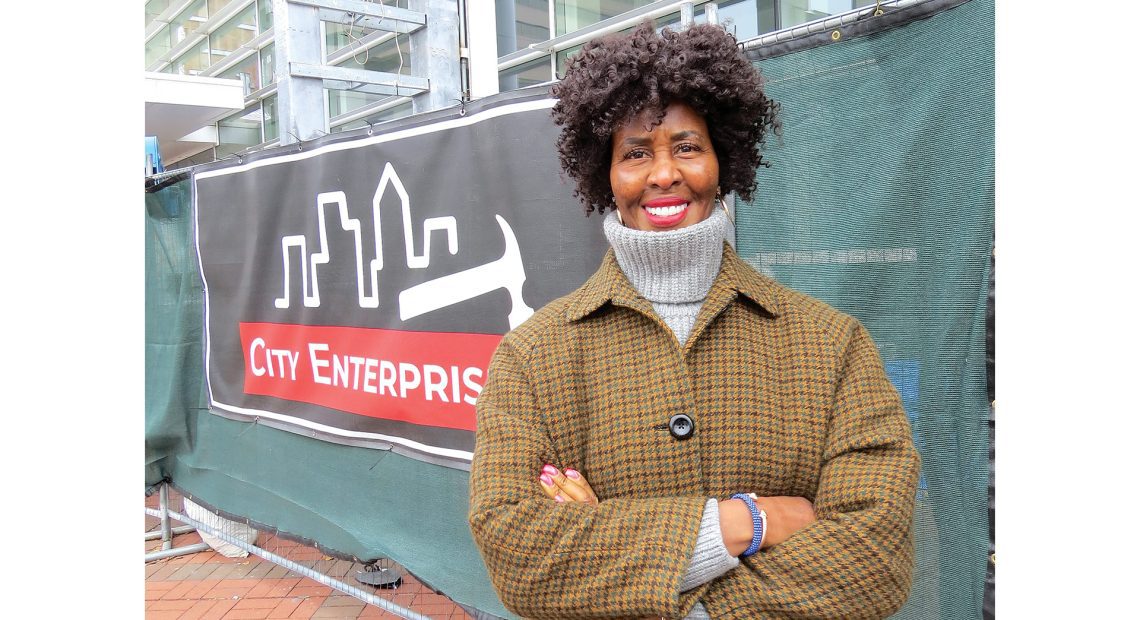
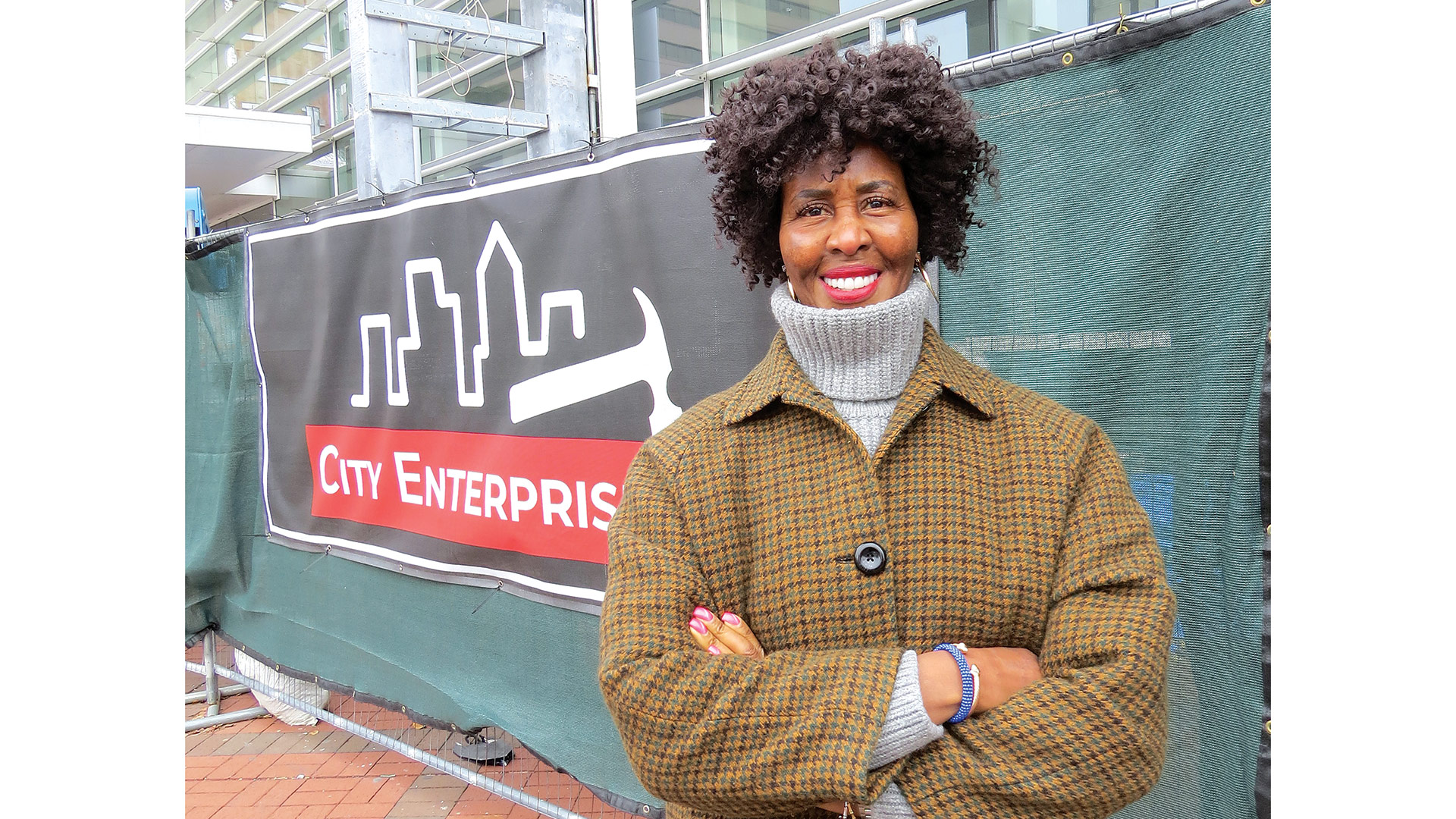
Wonderlyn Murphy

Wonderlyn Murphy


Wonderlyn Murphy has some ambitious plans for City Enterprise, the construction company she started nearly two decades ago.

She wants to take it to $150 million in annual revenue — roughly six times the current level. She wants to expand geographically and open new locations, perhaps one in Florida and another in Maine or New Hampshire. She wants to build a new headquarters facility in this region because the company has clearly outgrown its current home on Berkshire Avenue in Springfield. She wants to add more staff, and she wants to broaden the portfolio with larger projects, likely through partnerships with larger construction firms.

Yes, there is a lot on her ‘want’ list. But she believes it’s all realistic, and, more importantly, she has a blueprint for getting there.

“We’re in a transition period now where I’m growing the company,” she said. “And I have some very aggressive goals for the next five years. I want to be a $150 million company, and we get there by scaling, we get there by duplication, we get there through collaboration and partnerships, we get there by building the employees based on our core values, get there through outside-the-box thinking and vision, more than just focusing on getting the next job.”

Getting where she wants to go will certainly be a challenge, but Murphy has already clearly shown that she has the ability to set goals and then reach them through hard work, determination, and overcoming obstacles in her path.

“We’re in a transition period now where I’m growing the company. And I have some very aggressive goals for the next five years. We get there through collaboration and partnerships, we get there by building the employees based on our core values, get there through outside-the-box thinking and vision, more than just focusing on getting the next job.”

Indeed, she has taken City Enterprise from a small, one-person venture that started with Murphy designing, building, and flipping homes to a multi-dimensional company with 14 employees that has secured work with clients ranging from UMass Amherst to the U.S. Park Service; from the General Services Administration to the U.S. Coast Guard.

She’s done all this by making connections, forging relationships, and, yes, taking full advantage of City Enterprise’s status as a woman- and minority-owned business.

Such status has certainly opened some doors, but Murphy has had the entrepreneurial drive, and that determination, to march through those doors and, as noted, put down some ambitious plans for what comes next.

Today, Murphy told BusinessWest, thanks to some new staff additions, and especially the addition of Vice President of Operations Charles Young, she is able to spend more time on the business, rather than in it.

And with that fundamental change, she believes she is putting the pieces in place for a story of change, growth, and taking her company to places that she probably couldn’t have imagined 20 years ago.

But then again, she probably could.


Building a Foundation

As noted earlier, City Enterprise has been a work in progress, or a dream in progress, for Murphy for nearly two decades now, or not long after she graduated from Wentworth Institute of Technology in Boston with a degree in architectural design technology.

At first, it was a part-time pursuit, something she did after working the overnight shift (midnight to 8 a.m.) as a correctional officer with the Hampden County Sheriff’s Office at the Western Massachusetts Correctional Alcohol Center on Howard Street, since torn down to make way for MGM Springfield. That work was a learning experience on many levels, she said, and one that has helped in her current roles as employer and entrepreneur.

“It was a very interesting experience, to say the least,” she told BusinessWest. “I got to know the population and came to understand what it really meant to be a corrections officer; there’s much more to it than slamming cell doors, even though there were no cell doors there. The population came from varied backgrounds, and to navigate all of that took a certain amount of finesse.”

Abatement work at the former Court Square Hotel

Abatement work at the former Court Square Hotel in downtown Springfield is one of many municipal projects awarded to City Enterprise.

While working in corrections on Howard Street, she designed, built, and sold a few houses, including her first such endeavor, a home on Eastland Street, just a stone’s throw from City Enterprise’s current home on Berkshire Avenue. Later, she designed and built a two-home development on Parkerview Street in Springfield and handled a few renovations and additions as well.

It was difficult to manage both sides of her work life, but she managed.

“I would get out of work at 8, and I would go straight to my job sites and my projects, because I was the only one doing it at the time,” she recalled. “So I had to line up my subcontractors; I had to be on site and make sure everyone was there. I had to schedule everything … and time is always of the essence in real estate, because you want to hit the market at the right time.”

This was the start of City Enterprise, she said, adding that, as she continued to operate her venture out of her basement and create the first of what would be several business plans for its future, Murphy applied for status under what is known as 8A under the Small Business Administration, a program created to help firms owned and controlled by socially and economically disadvantaged individuals.

Applying for such status is a difficult and lengthy proposition, she said, adding that it eventually took her three years to gain that designation. At first, she was turned down, in large part, she believes, because she was still working in corrections at the time and thus — to those reviewing her application, at least — she was not fully committed to her business venture.

After waiting a year — and after leaving the Sheriff’s Department in 2012 and making City Enterprise a full-time pursuit — she applied again, and this time was granted 8A status. And during that year, she was making connections and building relationships with agencies ranging from the General Services Administration to the Army Corps of Engineers to the U.S. Navy.

“I was letting these people know that I was coming — I was developing relationships even before I was admitted into the program,” she said. “Because I knew the 8A was more government-contract-driven, I sought out those agencies.

“I was confident because I made the necessary sacrifices to make that happen,” she said. “I knew there were things I had to do to get past that first rejection, and I did them. I took full advantage of that year.”

The 8A designation certainly opened some doors, as noted earlier, especially at government-owned and operated facilities, such as Westover Air Reserve Base, where she earned first commercial contract — renovation work in the bowling alley on the base.

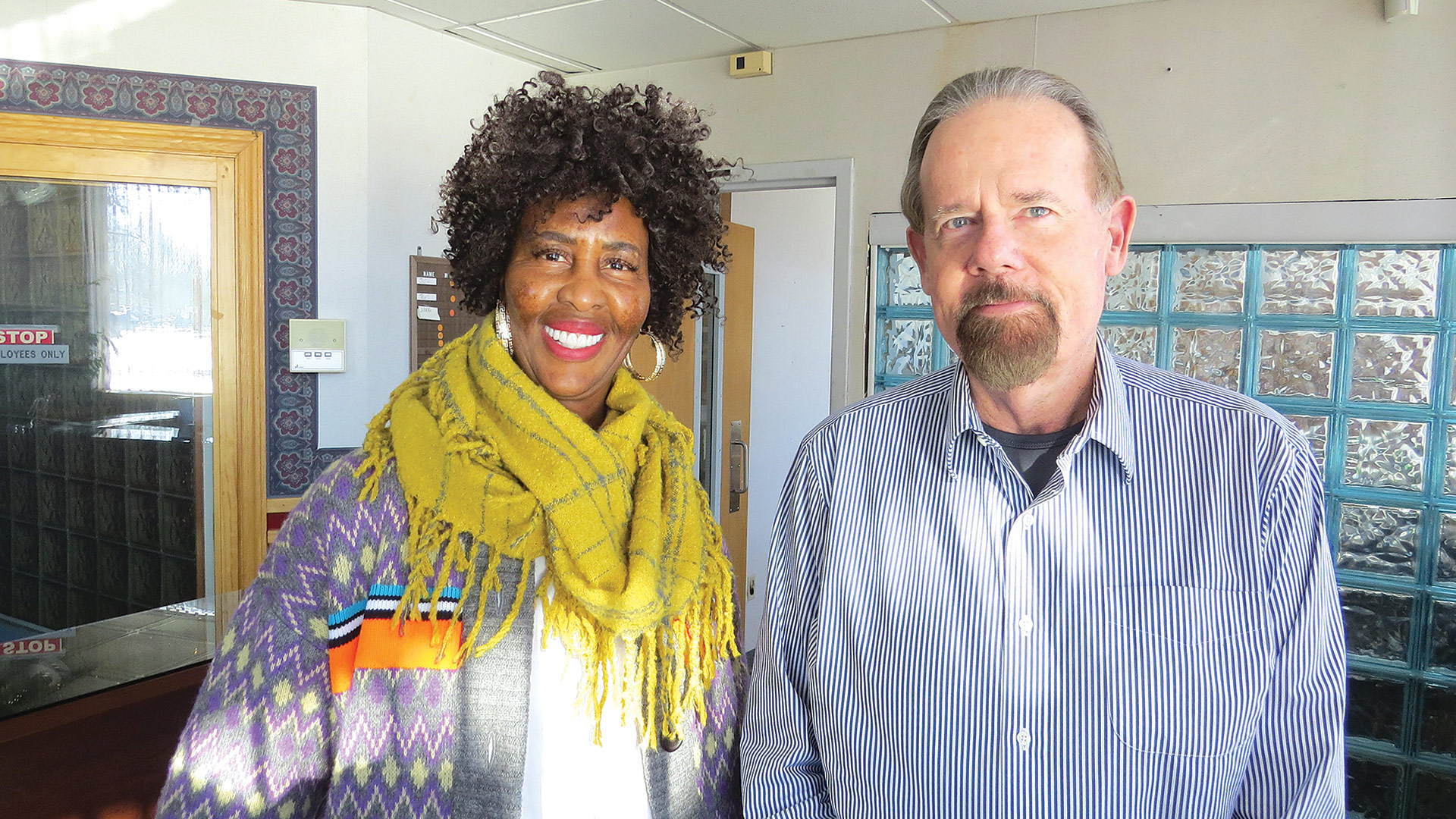
Wonderlyn Murphy, seen here with recently hired Vice President of Operations Charles Young

Wonderlyn Murphy, seen here with recently hired Vice President of Operations Charles Young, is setting some ambitious goals for City Enterprise.

This was another important learning experience, she said, adding that she initially hired the wrong type of flooring company to work on the bowling lanes, but later secured the right subcontractor, a company in Ohio, and finished the project in good order.

“It was a very difficult entry into the commercial space, but we got through it, and it was a great learning experience,” she said, adding that the company would go on to secure projects with a number of government entities in the ensuing years.


Drafting a Plan

That list includes the city of Springfield, which hired the firm to handle the abatement of the historic former Court Square Hotel, which is being converted into market-rate apartments; the National Park Service, which hired City Enterprise to undertake restoration of the porch of the commanding officer’s quarters at the Springfield Armory; UMass Amherst, which has contracted with the company on a number of projects, from renovations of the Rand Theater to envelope repairs at several of the dorms; UMass Medical School, which hired the company to do skylight replacement; the U.S. Coast Guard, which used the company for repairs and renovations to its small-arms range; and countless others.

Current projects include installation of a new marquee sign at the MassMutual Center, work at the Beals Library in Winchendon, and construction of a new amphitheater, also in Winchendon. The company has also submitted a proposal for the Old State House in Boston, what would be its most significant project to date, and is awaiting word on that bid application.

The growing list of clients, the wide range of work undertaken for them, and the growing staff at the company, now numbering 14, including an estimating staff, project managers, an accounting department, and that aforementioned vice president of Operations, shows how far this company has come since Murphy started building houses.

More intriguing, though, is where she wants to take it moving forward.

Indeed, as she mentioned at the top, City Enterprise is in a transition stage in its development, and the broad plan is to essentially scale the operation — in many different ways.

One of them is geographic reach. She said she would like to have a location in South Florida, and perhaps another in northern New England to better serve potential clients in that market. She is also looking at growing through acquisition as well.

“Time is always of the essence in real estate, because you want to hit the market at the right time.”

Meanwhile, as noted earlier, she is settling into … not a new role, necessarily, but a different set of responsibilities as the company makes this transition. Indeed, instead of handling many of the day-to-day matters, which will now be handled by Young, she will be even more focused on the proverbial big picture and goal setting.

“I’m not as involved with the day-to-day as I was a year ago because I have brought on a vice president of Operations,” she said. “But I am very involved with executing my vision and getting my team aligned with the vision, and getting the right people to go with me to that number I just mentioned — $150 million — which is probably the most important part.”

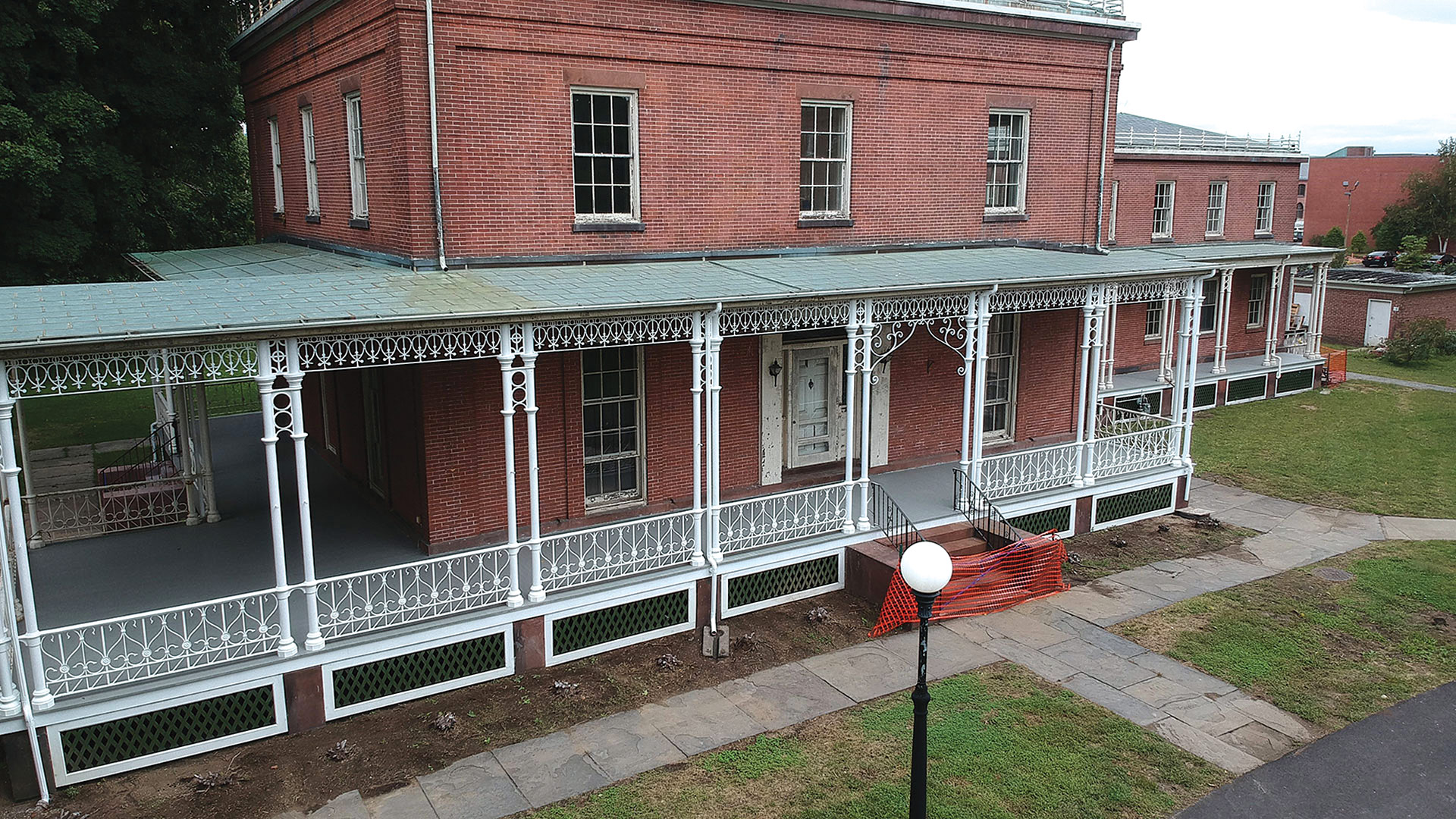
the porch at the commanding officer’s quarters at the Springfield Armory.

City Enterprise has tackled a number of assignments involving government agencies, including work to restore the porch at the commanding officer’s quarters at the Springfield Armory.

Elaborating, the company’s broad portfolio of projects — meaning the depth and diversity of the client base and the wide variety of work — is indicative of “where we’re going and who we are,” Murphy said, adding that the focus moving forward is simply on controlled growth and doing what’s necessary to meet those lofty goals.

A new headquarters building is a key part of that equation, she said, adding that she has plans on paper for a new building and a site in mind. Further diversification of the portfolio of clients is another key goal, she said, adding that the company is working to add more colleges and universities, government agencies, municipalities, and healthcare facilities, among others, to that already significant list.

Continued relationship building and potential collaborations with larger construction companies on larger projects is another part of that equation, she said, adding that the company’s status as a woman-owned and minority-owned company could be a huge asset in such collaborative efforts.


Bottom Line

Such conversations are ongoing, Murphy said, adding that, as she moves away from the day-to-day of running City Enterprise and more into the broad task of marketing the company and being its “face,” her job description falls into the category of making and building connections.

“It’s a very ambitious place I’m going to,” she said in conclusion, adding that she is putting the pieces in place for something special. The foundation has been built, and she is now ready to build upon it — and in dramatic fashion. u


George O’Brien can be reached at
[email protected]

Features Special Coverage

Here Are the Stories That Impacted Western Mass. in 2022

By George O’Brien and Joseph Bednar


Cannabis Sector Continues to Grow

How many dispensaries is too many? Cities like Northampton, Holyoke, and Easthampton that have embraced the cannabis industry are demonstrating that many such businesses can thrive together, while generating healthy tax revenues for the municipality itself. However, the recent closure of the Source — the state’s first adult-use dispensary to close since shops began opening in 2018 — poses new questions on the competition front.

There’s no doubt cannabis has been a success in Massachusetts, with recreational sales approaching $4 billion since legalization. But one big question is what form the industry will eventually take — with some predicting eventual consolidation by bigger entities alongside a robust population of boutique sellers — and how the state will continue to protect opportunities for smaller players, especially minorities.

The latter prospect was strengthened by a law passed in August aimed at giving minority cannabis entrepreneurs easier access into the industry, and also paving the way for municipalities to allow marijuana cafés. The bill also better regulates host community agreements, creates a state-run loan fund for minority entrepreneurs, lowers taxes for marijuana businesses, and makes it easier to expunge records for old marijuana offenses.

In short, this story is still evolving in intriguing ways.


Companies Grapple with Workforce Challenges

The pandemic temporarily dislodged millions of people from their jobs, and when companies started rehiring again, they found it was much more difficult to recruit and retain employees, particularly in lower-paying industries like hospitality, but it was a trend that stretched across all fields, from healthcare to construction to … well, you name it.

At issue has been three intersecting trends: the Great Resignation of older workers, many of whom moved up their retirement timeline in the wake of the pandemic’s economic upheaval; a movement among Gen-Zers and younger Millennials, particularly in service industries, to re-evaluate their worth and push for higher wages and more flexibility; and ‘quiet quitting,’ defined as doing the bare minimum to fulfill one’s job, which, of course, cuts into a company’s productivity.

There are no easy answers to combat these trends, and companies struggling with workforce shortages must grapple with what they mean in the longer term. Workers no doubt have leverage right now like they haven’t had in recent memory, and they’re wielding it, to significant — and, in many cases, still-undetermined — effect.


An architect’s rendering of a renovated Victory Theatre

An architect’s rendering of a renovated Victory Theatre

Victory Theatre Project Gains Momentum

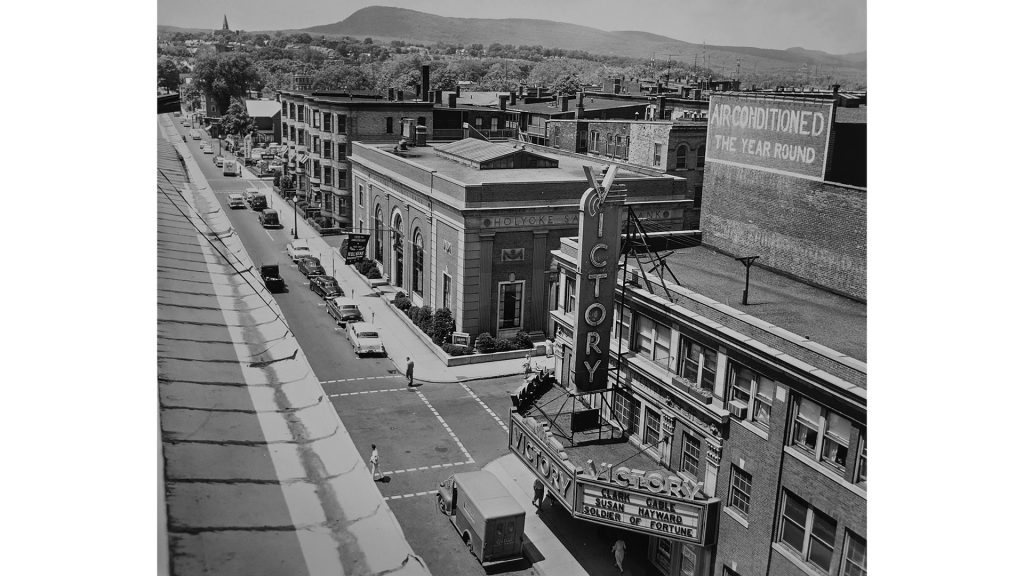
Holyoke officials and groups involved with the arts have been engaged in efforts to try to revitalize the historic Victory Theatre for more than 40 years now. And while this initiative still has a ways to go before it can cross the goal line, some significant progress was seen this past year.

It came in several forms, but especially the earmarking of ARPA funding to renovate the theater, which opened in the 1920s and last showed a movie in 1979. The ARPA funding is expected to help close the gap between the funds that have been raised for the initiative and the total needed — roughly $60 million.

Momentum can also be seen in a firm commitment on the part of Joshua Garcia, the city’s first Hispanic mayor, who sees the project as an important catalyst for bringing new businesses to downtown Holyoke and another key ingredient in the larger formula for revitalizing the Paper City.


The Marriott Flag Returns to Downtown Springfield

It took more than three years, and there were a number of challenges to overcome along the way, but the Marriott flag is now flying again over the hotel in the Tower Square complex. The massive renovation — or “re-imagining” — of the space, as it’s been called, earned Tower Square owners Dinesh Patel and Vid Mitta BusinessWest’s Top Entrepreneur honor for 2022.

But the undertaking has done more than that. It has helped transform the property into one of the best hotels west of Boston, and it has become a stunning addition to a Tower Square complex that has been reinvented as well, with intriguing additions ranging from the Boys & Girls Club of Greater Springfield to White Lion Brewery to a scaled-down version of a Big Y supermarket soon to emerge in space formerly occupied by CVS.

The new Marriott staged a truly grand opening in November, an event that was a big day not just for Patel and Mitta, but for the entire city.


Remote Work Is Here to Stay

This past year was one in which the region’s business community was to return to normal in most all respects after two painful years of COVID. But there was one realm where it didn’t — and that was by choice.

Indeed, remote work continued to be part of the landscape in 2022, but this time there was an air of permanence to the concept, not merely a temporary response to COVID. In interviews for stories written over the course of the year, owners of businesses large and small said remote work and hybrid work schedules have become the new norm. They have become a benefit of sorts for valued workers and have become an effective means for attracting and recruiting talent, as well as for as widening the net for job applicants well beyond the 413 area.

The full impact of remote work on the commercial real-estate market and small businesses that rely on workers being in their offices — restaurants and bars, for example — has yet to be fully and accurately measured, but it appears that this fundamental change in how people work is here to stay.


East-west Rail Chugs Forward

East-west rail service between Pittsfield and Boston is still far from reality, and plenty can still happen to derail the decades-long dream of so many legislators, businesses, municipalities, and other rail advocates. But 2022 marked the strongest progress toward that goal yet, with $275 million allocated toward the project in August as part of the state’s $11 billion infrastructure bill — a good start, but only a start.

A high-speed rail connection between the Hub and Western Mass. is about more than convenience; it’s about expanded opportunity — both for workers who can earn Boston wages while enjoying a decidedly non-Boston cost of living, and also for employers who can cast a wider net for talent — not to mention easier access to recreational and regional resources, as well as reduced traffic and emissions.

“We have the money, the support, and I have secured the commitment from both the outgoing Baker-Polito administration and the incoming Healey-Driscoll administration to keep this train literally and metaphorically moving forward,” U.S. Rep. Richard Neal said earlier this month. “This is an opportunity that will not avail itself again, and now is the time to move on an east-west rail project that will be transformative for all of Massachusetts.”


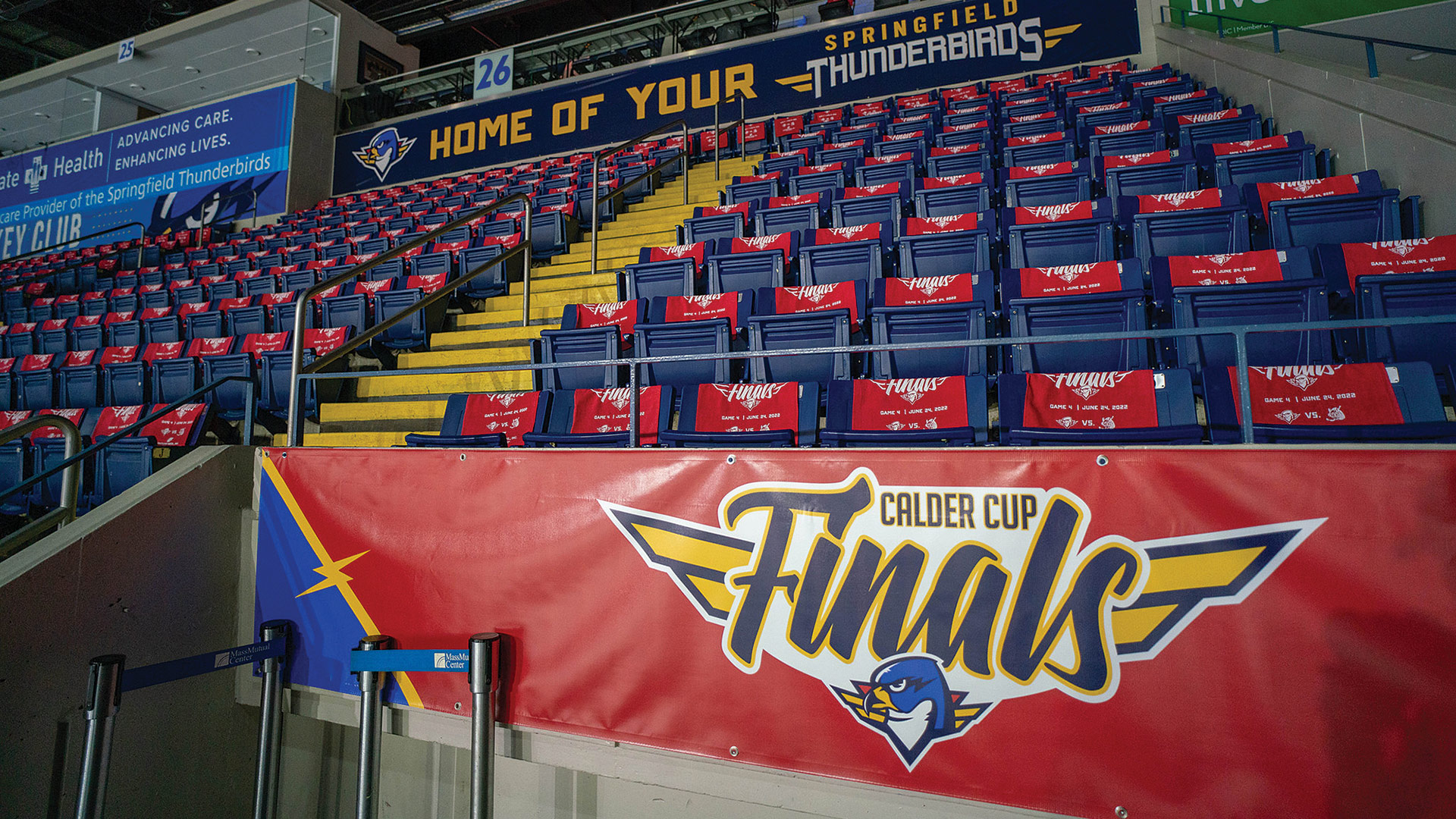
The T-Birds came up a few wins shy of an AHL championship

The T-Birds came up a few wins shy of an AHL championship, but their playoff run was a huge win for the team and the region.

Springfield Thunderbirds Reach AHL Finals

The Springfield Thunderbirds eventually wound up a few wins shy of a Calder Cup this past spring. But their dramatic run to the finals was a huge win for the team, the city, and the region.

Indeed, the race for the cup captured the attention of the entire area, with fans old and new turning out at the MassMutual Center, tuning in on social media, and talking about the team at the water cooler — or the weekly Zoom meeting.

The team, which eventually lost in the finals to the Chicago Wolves, created a great deal of momentum with its playoff run, as well as a surge in season-ticket sales. While not all deep playoff runs are financial success stories, this was one, said the team’s president, Nate Costa. It was also validation for him and for the ownership group that stepped up and brought hockey back to Springfield when the Falcons departed for Arizona.

There’s now an Eastern Conference Championship banner hanging in the MassMutual Center, and even more of a connection between the region and its pro hockey team.


Holyoke St. Patrick’s Day Parade Returns

After a long, as in very long, two-year absence, the Holyoke St. Patrick’s Day Parade and road race returned in full force in March. The twin events have always been part of the fabric of the region and a huge contributor to the Greater Holyoke economy, and that became clear in interviews with parade organizers, city officials, and individual business owners in the weeks leading up to the parade for a story in BusinessWest that carried the headline: “The Return of a Tradition: For Holyoke, the Parade Brings Business — and a Sense of Normalcy.”

Business owners told BusinessWest that the parade and race account for large amounts of annual revenues, and that losing the events for two years due to COVID was devastating. But beyond business and vibrancy, something else went missing for those two years. Marc Joyce, president of the parade for the past three years, put it all in perspective.

“It’s in the mindset and emotions of people who have grown up here,” he said. “It’s a homecoming; people come back to the city, and you see people you haven’t seen since perhaps last year. It’s a wonderful, family-oriented event.”


The LEDC has a unique model

The LEDC has a unique model featuring coaches on matters ranging from accounting to mental health.

Latino EDC Opens Its Doors

The Latino Economic Development Corp. opened its doors to considerable fanfare in September, and with good reason. The agency, called the Latino EDC, or LEDC, has a broad mission and a unique business model, one aimed at helping businesses, especially Latino-owned businesses, open their doors and keep them open.

The LEDC, located on Fort Street in Springfield, is a place where more than two dozen coaches, experts in many aspects of business, will make themselves available to business owners and share what they know. Executive Director Andrew Meledez says the agency will focus on what he calls the three ‘Cs’ of helping business owners get where they want to go — coaching, capital, and connections. Overall, its goal is to turn employees into employers, and the agency is already capturing the attention of economic-development leaders in this region — and well beyond.


New College Presidents Take the Reins

College and university presidents are in many ways key regional voices, shaping public perspectives on issues through programs and initiatives they spearhead. And in 2022, that exclusive pool of influencers saw some significant ripples.

In April, Hubert Benitez, vice president for Strategic Initiatives and Academic Innovation and acting chief Inclusion officer at Rockhurst University, took the reins at American International College, replacing Vince Maniaci, who had been president there for 17 years.

Then Michelle Schutt, previously vice president of Community and Learner Services at the College of Southern Idaho, began her tenure as president of Greenfield Community College in July, replacing Richard Hopper, who had been interim president since the summer of 2021.

Also in July, Smith College announced that Sarah Willie-LeBreton, provost and dean of faculty at Swarthmore College, will replace Kathleen McCartney, who has served as president since 2013, starting in July 2023.

Finally, in June, UMass Amherst Chancellor Kumble Subbaswamy announced he will retire in June 2023 after serving in that role since 2012, and the following month, Christina Royal, president of Holyoke Community College since 2017, announced she will retire in July 2023; searches are on to replace both.


new parking-garage facility at the MassMutual Center.

An architect’s rendering of the new parking-garage facility at the MassMutual Center.

Civic Center Parking Garage Comes Down — Finally

After years of talking about and working with state leaders to assemble the financing to build a replacement, the city tore down the crumbling Civic Center Parking Garage this fall. As the demolition crews began their work, workers in downtown office buildings paused to watch.

It wasn’t a landmark that was coming down, but rather a decaying structure that had become a symbol of all that Springfield was trying to put behind it — the hard economic times, aging infrastructure, and a downtown of another era.

While the long-awaited demise of the parking garage was news, the more exciting news is what’s going up in its place — a new, state-of-the-art, environmentally friendly, 1,000-space facility, and activation of abutting property, acquired by the city, that will enable Springfield to create an atmosphere that officials say will be similar to the scene at Fenway Park on game nights.


transformation of the old Court Square Hotel

The transformation of the old Court Square Hotel is a long time coming.

Court Square Transformation Project Proceeds

When Dave Fontaine Jr. talks about work to renovate the former Court Square Hotel into market-rate apartments being a “generational project,’” he means it. Indeed, when he talked with BusinessWest about the initiative this past summer, he said he believes his father and grandfather were both involved in bids on projects to transform the property going back more than 30 years.

It’s taken decades of effort, but the transformation of the property is now well under way. The project is expected to not only bring new life to that historic property — in the form of 71 units of housing as well as retail on the ground floor — but also create more vibrancy in the city’s downtown and possibly be a catalyst for new hospitality and service-sector businesses.

The Court Square project is a true public-partnership, with funding support from several parties, including Winn Development, Opal Development, the state, the city, and MGM Springfield. And it will make sure that an important part of the city’s past is now a vital cog in its future.


Navigating Challenges in Auto Sales

This past year was another wild ride, if that’s the right term, for the region’s auto dealers. Indeed, the trends that emerged in 2020 and 2021 — from historically low levels of inventory to sky-high prices and low inventory of used cars — continued in 2022.

Matters improved to some degree for area dealers, but there were still many challenges to face — and still a number of used cars taking up space on the showroom floors.

But perhaps the biggest news in 2002 involved electric vehicles, with many dealers reporting huge increases in the sales of such models. There are several reasons why, but simple math is perhaps the biggest, with drivers of electric vehicles — after the initial investment, anyway — spending far less to get from here to there than those with gas-powered cars, trucks, and SUVs.

That trend is expected to continue into next year, say area dealers, as more makers introduce electric-vehicle lines.


Live Music Scene Expands

When the Drake opened in downtown Amherst in April, it became the town’s first-ever dedicated music venue, hosting everything from jazz and rock to funk and world music. And it opened at a time when demand for live music in the region is on the rise, and an increasing number of spaces are meeting the need.

With Eric Suher’s Iron Horse Music Hall, Pearl Street Nightclub, and Mountain Park shuttered to concerts these days and the Calvin Theatre hosting a bare trickle of tribute bands, others have picked up the slack.

They include not just the Drake, but Race Street Live, which hosts national touring acts in the Gateway City Arts complex in Holyoke; Hawks & Reed Performing Arts Center in downtown Greenfield, which schedules a robust slate of events across four spaces; MASS MoCA, which hosts concerts inside the museum and festivals outside it; Bombyx Center for Arts & Equity in Florence, which opened in October 2021 in a converted 1861 church; and many more.

It’s clear that people are enjoying live music again, and a new generation of venues — and some venerable ones as well — are stepping up to meet that need.


Moving On from COVID

President Biden declared COVID over in September. With a winter setting in in which doctors are warning of a ‘tripledemic’ of flu, RSV, and COVID, that’s … well, not quite the truth, not with about 350 people still dying from COVID each day in the U.S., about 85% of them unvaccinated.

What is true is that, even as some people are still overcoming COVID, just about everyone is over it — and especially over the disruptions the pandemic caused to the global economy.

Still, moving on is easier said than done, as is shifting back to something resembling business as usual pre-2020. Construction firms still face challenges with scheduling and cost, knowing that the supply chain can be wildly inconsistent. Families still struggle with inflation, and are getting hit hard by the tonic being poured on it: higher interest rates for loans. As noted earlier, real-estate owners wonder whether a slowed market will remain so as tenants decide they need less space for a workforce that has gone largely remote and may remain so.

In short, moving on from COVID is a slow process, and its effects will continue to reverberate, no matter how much anyone — even the president — wishes it would just go away.


George O’Brien can be reached at [email protected]

Joseph Bednar can be reached at [email protected]


Business of Aging Special Coverage

Wait of the World

Mark Auerbach says he’s ‘going public’ with his quest for a new kidney

Mark Auerbach says he’s ‘going public’ with his quest for a new kidney to help raise awareness about the importance of organ donations and perhaps shorten the time on the waiting list for some of those in need.

Mark Auerbach says he had started down the stairs in his home in Longmeadow that night in 2019 when he tripped over an untied shoelace and started falling. He recalls knocking a bannister out of the railing and slamming through his front door.

As a result of the fall, he broke his femur and his hand, eventually spending more than three months in inpatient rehabilitation. But the fall did something else. It “fatally injured” one of his kidneys, as he put it, accelerating a process of deterioration that had begun years earlier when he was diagnosed with diabetes.

“In 2019, my kidney doctor said, ‘you are heading for the need for a transplant, and you’re in stage 4; eventually, you’ll be in stage 5, and you’ll need one,” he recalled, adding that stage 5 essentially arrived in the spring of 2021.

Soon thereafter, Auerbach, a veteran arts reporter, owner of a public-relations firm that bears his name, and current ArtsBeat reporter for Pioneer Valley Radio, joined the lengthy list of people in this country on a waiting list for a donated kidney.

How lengthy? Well, he was accepted into a donor program at Massachusetts General Hospital and is now one of roughly 1,400 patients in a queue waiting for the proverbial ‘right donor.’ Nationwide, there are approximately 100,000 people on such lists.

“I didn’t really want to go public — you sacrifice your personal privacy when you put it out there. So I was really hesitant. But from a public-relations standpoint, I realized that if I didn’t tell my story, I couldn’t expect someone else to do it.”

While waiting for a kidney, many on those lists choose to be proactive and not simply wait. Some buy billboards stating their case, while others take out ads in newspapers and use social-media channels to encourage people to come forward and donate — not just for them, but for the myriad others waiting for a truly life-changing gift.

Auerbach is one of them. He said he has “gone public” — but in a quiet way, with personal appeals; regular postings on Facebook, LinkedIn, and Twitter; and interviews like this one and another on his ArtsBeat show with guest (and longtime friend) Patrick Berry, host of WWLP’s Mass Appeal — in his quest to find a donor for himself, but also to raise awareness about the urgent need for organs and to spur action.

“I didn’t really want to go public — you sacrifice your personal privacy when you put it out there,” he told BusinesWest. “So I was really hesitant. But from a public-relations standpoint, I realized that if I didn’t tell my story, I couldn’t expect someone else to do it.”

He started with letters to family members, close friends, and clients alerting them to his situation and framing it in the larger context mentioned earlier — that he is one of 100,000 people waiting for a kidney and ‘here are the things you can do to help me.’ That list included everything from becoming an organ donor on one’s driver’s license to learning how to donate, to perhaps giving specifically to him.

Dr. Ken McPartland

Dr. Ken McPartland says there is a huge need for living donations of kidneys.

Such proactive steps are becoming increasingly necessary, said Dr. Ken McPartland, medical director of the Transplant Division at Baystate Medical Center, who told BusinesWest that the number of people on waiting lists is growing, the waits are often becoming longer, and the situation has been made worse, at least temporarily, by the pandemic, which prompted many potential living donors to remain on the sidelines out of caution.

“If someone has a living donor, they can get a transplant pretty much right away, which is usually within a few months,” said McPartland, part of a team that handles 50 kidney transplants a year at Baystate on average. “But if they don’t, they sometimes have to wait five to seven years to get a transplant.”

Of the 41,000 kidney transplants performed last year in this country, he noted, only 6,500 involved living donors — the rest of the organs were from those who were deceased, and the waits for those can be very long.

“There’s a huge need for more living donations,” he explained. “We know that people can donate a kidney and do very well and live a normal life. There is a risk, but the risks are is really low, and this is the biggest opportunity for improving not just the number of transplants, but the quality of transplants; we’d be able to help more people earlier in the process.”

“If someone has a living donor, they can get a transplant pretty much right away, which is usually within a few months. But if they don’t, they sometimes have to wait five to seven years to get a transplant.”

Dr. Leo Riella, medical director of Kidney Transplantation at Mass General Brigham, agreed. He said the numbers — specifically those related to the number of transplants performed each year at his hospital and the number of people on the waiting list (170 and 1,400, respectively) — help tell the story of the importance of encouraging donations.

“That number of those waiting is growing by roughly 10% a year,” he noted, adding that there is a huge backlog of cases. And as people wait longer, their odds for achieving quality of life grow longer.


Organ Players

Auerbach quipped that it was easier for him to get into Mass General’s kidney-donation program than it was to get into the drama program at Yale.

He was exaggerating, obviously, but only to a degree. And the logistics of getting into a program constitute only one of the many challenges facing those who need a kidney — or any other organ.

For many, including Auerbach, there is the emotional trauma that comes with the news that they are essentially on a clock — they have so much time (in his case, 18 months to three years) to secure a donor before they will have to go on dialysis, or worse.

“That was a punch to the gut,” he told Berry on his radio program. “And I felt very alone at the time. My family, my partner, everybody was like, ‘that’s too bad — we’re here for you.’ But that’s not necessarily what I needed at the time. The only way for me to move forward was to take charge of my own life and to do my own planning.

“I thought, ‘worst-case scenario, if 18 months to three years is reality, you better have a will, you better have a way to transition out of your business, the people who work for you and depend on you — you better plan for that,’” he went on. “The other things is, do you want to be hooked up to a machine, or do you want quality of life? And I chose the good quality of life. But … my life will be expanded, knock on wood, if a donor comes through.”

And then, there is just the waiting, and not knowing if the phone is going to eventually ring with a caller delivering the news that a kidney has been found.

Unfortunately, as the population ages and with the numbers of donated kidneys — both from living donors and those who have died — being relatively stagnant, the number of people living in limbo (that’s the kindest word to use) is only increasing, said McPartland, noting that there are generally between 150 and 175 on the waiting list at Baystate Health at any given time.

Dr. Leo Riella

Dr. Leo Riella

“That number of those waiting is growing by roughly 10% a year.”

As noted earlier, those without living donors may stay on the list five years or longer waiting for a kidney to be donated, he went on, adding that, for some, especially older patients, their condition may deteriorate while they are waiting — to the point where they become too sick to qualify for a transplant.

For quality-of-life reasons, someone needing a kidney will certainly fare much better if they can receive that organ before they need dialysis, McPartland added. “The way to really help patients is to get a transplant before they ever start dialysis. The patients do better, they live longer, and the kidneys work better and for longer.”

Riella agreed, noting that, in many cases, kidney disease, which he called a “silent disease” because those suffering from it generally do not experience pain or discomfort, isn’t detected until late in life — in many cases, too late, as their disease has progressed to the point where they cannot move up a waiting list in sufficient time to ultimately improve their quality of life through a transplant.

This is why early detection is important, he said, adding that blood tests can reveal if and to what degree the kidneys are in decline.

Overall, the average wait time for a kidney is six years, said Riella, adding that this number has only increased in recent years, and for several reasons, especially the aging of the population. “The gap in the number of kidneys available and the number that is needed is huge.”

Like other hospitals that perform kidney-transplant surgery, Baystate and Mass General are very active in efforts to help encourage people to donate organs, and also in helping those on lists to get kidneys through various means, including matching programs.

For example, if someone on a list finds a willing donor, but that kidney is not compatible, that kidney can be exchanged for one that is compatible through a voucher program, enabling people to move up on a waiting list.

It is for these reasons that Auerbach chose to go public despite his many reservations about doing so.

“I thought, ‘I’ll become the poster child for organ donations. Hopefully, I’ll get one, or at least the list will get whittled down, and I’ll move up the list faster. I’ll be the spokesperson for those 100,000 people.’ That was my motivation.”

While many fully understand the urgent need for kidneys and other organs, he explained, his story and that of others in similar situations must be told to reinforce the message and add a very needed personal touch.

Both McPartland and Riella agreed. They noted that, while much of the discussion about organ donations is focused on numbers — everything from how many individuals are on lists to how long their waits are — behind the statistics are real people, like Auerbach, facing quality-of-life, if not life-and-death, issues.


Bottom Line

Auerbach told BusinessWest that he tries not to think about the informal ‘clock’ he’s on — one doctor told him 18 months to three years, while another told him five years before he would need dialysis — and often wishes he was not given such estimates.

And he’s not alone in that sentiment. Such clocks, while helpful in the planning process, only increase the anxiety and make the waiting all the more tortuous, he noted.

“I’m trying to take it day-by-day and be optimistic,” he said. “To have a clock ticking as I’m watching and waiting would drive me crazy.”

The only thing that can shorten such waits is for more donors to come forward, said all those we spoke with, adding that this why stories like Auerbach’s need to be told. And why people need to listen — and respond.


It takes only five minutes to sign up to be an organ donor at www.organdonor.gov/sign-up. To learn more about becoming a living kidney donor, call Baystate Medical Center’s Transplant Program at (413) 794-2321, option 2, and speak with the living donor coordinator, or visit the Baystate Transplant website at baystatehealth.org/transplant for a confidential screening process.

Cover Story Women in Businesss

Grass-roots Effort


‘Buy Weed from Women.’

That’s what is printed on the back of the coat

Meg Sanders

Meg Sanders

was wearing as she led BusinessWest on a tour of Canna Provisions’ Holyoke dispensary recently.

Those words cover a lot of ground. They’re a request, as well as a statement. They’re also an operating philosophy. And in some respects, they constitute hope for what people will be able to do more easily in the future.

Indeed, buying weed from women — as in women who own or co-own the dispensary in question — is not something easily done. The startup and operating costs for such an operation are extremely high and, for many people — and most women — simply prohibitive. And once one is in, it’s a challenge to stay in.

Sanders, CEO of Canna Provisions, is one of the rare exceptions.

She shifted her career from compliance in financial services to compliance in cannabis while living in Colorado at the time the industry was simply exploding and turning into what she called ‘the wild west.’ She is now a prominent player in the not-so-wild but very intriguing Western Mass. market, overseeing, with her partner, Erik Williams, two dispensaries (the other is in Lee) and a cultivation facility in Sheffield.

Moving forward, she envisions one more dispensary in Western Mass. — she and Williams are looking at several options for acquisition — and the buildout of another manufacturing facility in Lee. And from a bigger-picture perspective, Sanders is looking to hone a business model that will create more profitability in an industry where only a third of all busnesses are profitable.

“ I still believe the best thing in cannabis still has not been invented. We find new cannabinoids every single day; there are new ways to consume this product, new delivery methods, new formulations. Those are all really important parts of where this industry is going. Science is in it, and I am psyched to see the products we come up with to help people.”

When asked about what separates those who are profitable from those who are not, Sanders said it comes down to being smart — with everything from which products (and how much inventory) are carried to the training and development of employees.

“We invest in humans, and we train them,” she said, adding that people are the biggest and most important investment for a company in this sector.

It’s an investment she takes very seriously, and it’s one of the many reasons why she believes Canna Provisions is successful and on the cutting edge when it comes to everything from how products are displayed and sold in the dispensary to how employees are trained, groomed for advancement, and ultimately retained (more on all that later).

“I’m really proud of it — I think it’s the coolest dispensary in America,” she said of the Holyoke facility as she led the tour. “And I’ve been into a lot of them.”

Canna Provision’s dispensary in Holyoke

Meg Sanders says Canna Provision’s dispensary in Holyoke has been designed to resemble an art gallery — and even features works from local artists.

And as she surveys the scene, at that Holyoke location and within the broad cannabis industry, Sanders, who has been quoted in publications ranging from the Wall Street Journal to Northeast Leaf, sees a number of converging forces and trends, but especially innovation, the sector’s deep impact on the local economy and the local landscape, cannabis playing a growing role in the health and wellness of people of all ages, and the promise of much more of all of that in the future.

“Cannabis is a giant vote for freedom — it’s a giant vote for ‘you know what’s best for your body; it’s not the government’s job to tell you what to put in it, on it, any of that,’” she said. “From everyone that I know that uses cannabis, customers I talk to every day, their life is better. A recent study showed that 60% of Millennials use cannabis for wellness, and when you ask them to define ‘wellness,’ it was stress, relaxation, sleep, and anxiety. The fact that people look at cannabis as wellness is huge.

“And I still believe the best thing in cannabis still has not been invented,” she went on. “We find new cannabinoids every single day; there are new ways to consume this product, new delivery methods, new formulations. Those are all really important parts of where this industry is going. Science is in it, and I am psyched to see the products we come up with to help people.”

The wording on the back of Meg Sanders’ jacket

The wording on the back of Meg Sanders’ jacket is both a request and a bit of hope for what people will be able to do more easily in the future.

For this issue, BusinessWest talked at length with Sanders about her business, her industry, the words printed on the back of her jacket, and what she expects to come next with all of the above.


Joint Ventures

That aforementioned tour of Canna Provisions came the Wednesday before Thanksgiving. It was late morning, just before noon, and the traffic in the store was still relatively light, with a handful of customers exploring the myriad product options or talking to customer-service providers, both behind the counter and on the floor.

But Sanders was expecting a huge day because cannabis, in her estimation, is becoming a growing part of Thanksgiving, especially to contend with the week’s large doses of stress.

“People will be in to get their coping mechanisms and their celebratory pieces so they can deal with Uncle Bob, who might be talking politics at the Thanksgiving table,” she explained. “We all have families, and they’re all very interesting and come with a lot of stuff; this is one way to cope, and it’s not new.”

Meanwhile, she was expecting even bigger crowds for the upcoming Black Friday and the holiday season in general. And such expectations, born from experience in both Colorado and this market, are evidence of the growing influence of cannabis — on the economy and in people’s lives.

Turning back the clock nearly 15 years, Sanders, as noted earlier, was working for a small financial-services company handling a few dozen traders when she approached a friend who was getting in on the ground floor of the exploding cannabis scene in the Centennial State and asked if he could find a place for her.

“I had definitely hit a glass ceiling — there was nowhere else to go and no more money to be made there,” she recalled. “That was happening at the exact same time as this brand-new industry was starting to explode; I reached out to my friend who was creating this cannabis business and said, ‘I’d love to help you guys; what can I do?’

“It took a while for us to find the right place, but I went basically from compliance in the financial industry to compliance in cannabis, and that’s how I got started,” she went on, adding that she became increasingly more involved and eventually become CEO.

Sanders would eventually exit that company — primarily because its board wanted to focus solely on Colorado, while she had larger aspirations for the venture — and work, along with Williams, as a consultant to states, municipalities, and individual businesses as they entered the cannabis business.

“We were helping companies and state regulatory bodies and local governments come up with ordinances that made sense, regulatory frameworks that made sense, and helping people get licensed all over, from Florida to Illinois to Nevada — everywhere,” she recalled. “And then, Massachusetts legalization happened, and we were intrigued by the model in that it wasn’t going to be this massive gaming of the system in a limited-license structure, where if you know the governor, or have the right lobbyist, or if you make donations to the right legislators, you get a license.”

Sanders and Williams eventually consulted for a venture called Canna Provisions and were invited to become part of its operations team. They became CEO and COO, respectively, and guided the company as it gained just the second license issued by the state for a standalone dispensary in Lee, right behind Caroline’s Cannabis in Uxbridge — where she bought her jacket from owner Caroline Frankel. The Holyoke facility, located on Dwight Street in a former paper mill, opened in July 2020, at the height of the pandemic.

In her role, Sanders is involved in all aspects of the business, obviously, but devotes much of her time to staff development and that broad term ‘culture.’

‘At Canna Provisions, we really believe that we’re not just growing plants and growing a business, we’re growing humans,” she explained, adding that the company invests considerable amounts of time, money, and energy to train and develop employees, and then give them opportunities to do different things and advance within the company.

Canna Provisions invests heavily in employee training and development

Meg Sanders says Canna Provisions invests heavily in employee training and development — and the customer experience.

She said she’s currently serving as a facilitator and working with a group of seven employees at the company on a course of leadership training.

“I’m reinforcing my skills by teaching them their skills in hopes of growing humans to become better leaders, which creates happier employees,” she told BusinessWest, adding that most all of these employees have experience in business and customer service but are new to this industry.

“We work really hard to train employees, we spend a lot of money training them, and it’s ongoing,” she went on. “We’ve been told multiple times by people from this industry, and also not from this industry, that they’ve never been to a company that invests so much in training, and they appreciate it.”


Down to an Art

While Sanders is certainly well-known within the industry and probably recognized by many she encounters (especially when she shows her ID), she still calls what she does ‘secret shopping.’

These are regular visits to dispensaries across this region and beyond, during which she is always looking at the product mix, the presentation, the staff, and how they interact with customers — all with an eye toward making her own operations better and her own employees ever more responsive to what clients want and need.

“I shop everybody — everybody,” she said, “so that we’re more accurate in our differentiation. I’m able to see what competitors around us are doing, and I can say, ‘that’s one business model — it’s not a bad business model, it’s just not my business model.’”

“We’ve been told multiple times by people from this industry, and also not from this industry, that they’ve never been to a company that invests so much in training, and they appreciate it.”

These secret shopping excursions are just a small part of a broad operating formula aimed at continuous improvement, setting the bar higher, and then clearing that bar.

Sanders believes Canna Provisions does all this in all aspects of its business — from product selection to presentation, but especially with how those on the floor and behind the counter interact with and effectively serve customers, some of whom may suffer from what she called “dispensary phobia,” and a fear of going inside.

And this is a product of all that intensive — and expansive — training that Sanders talked about earlier.

“People have to be on point because your customers expect a certain level of service — they have to know the products,” she said. “It’s training and role playing and practicing and coaching on the floor — teaching them to be more aware of the people who are in front of them.

“This is not a cheap spend, “she went on. “Our average ticket here in Holyoke is close to 100 bucks a pop. When I’m spending $100 or $200 at a location, I do have a bit of expectation to be treated well.”

Overall, she likened the cannabis-buying experience, at least at her dispensaries, to jewelry shopping in many respects, from the high cost of the products to the way that many customers need guidance, or education, on what they’re buying.

Overall, Sanders believes she and Williams have created a different kind of cannabis experience in their locations. The one in Holyoke resembles an art gallery in the way products are displayed, and there are even works of art on the wall. Meanwhile, it pays homage to the property’s roots as a paper mill by putting some of the equipment and office furniture to work in displays.


Impact Statement

As she talked about the broad influence that cannabis has had on the local landscape, and will continue to have moving forward, Sanders again flashed back to the early days in Colorado, which came in 2009, the middle of what became known as the Great Recession.

“They just ran with cannabis, and it was crazy,” she said of the rapid growth of the industry and its impact on real estate, cities, towns, and individual neighborhoods. “And this started right after that massive crash and its impact on real estate and mortgages … it was a nightmare. But in Colorado, the opposite happened because all these growers, all of these dispensaries, ended up leasing more than 1 million square feet of warehouse space that had been off the tax rolls for years, just in Denver.

“So, it immediately just infused the city with vibrancy, and it happened all over,” she went on. “It was just one of those interesting economic moments where Colorado did not feel that economic downturn, the bottom dropping out, nearly as much as other states; it was fascinating. And then we kept adding all these jobs, and we kept adding jobs, and building, and then science was involved; the industry just came a long way really fast.”

It continues to grow and evolve, and now, much of what was seen in Colorado is being experienced in other states and other region, including Western Mass., she said, adding that cannabis is having a profound impact on communities like Holyoke and Lee, where she has chosen to put down roots, especially the former.

Indeed, this was a city that rolled out the red carpet for this industry, with its former mayor, Alex Morse, jokingly — although it was no joke — wishing it to become known as Rolling Paper City, a twist on its original nickname, Paper City.

Few actually call it that, but Sanders said there is no disputing the profound impact that cannabis has had in this city, where hundreds of thousands of square feet of unused or underused former mill space has been converted into dispensaries and cultivating facilities.

“Bringing more people to Holyoke is the goal for all of us,” she said. “And I think Holyoke and its bones often get overlooked; I’m so excited that there’s a new art gallery opening on High Street, that there’s several restaurants that we frequent and another new restaurant going in across the way. We have Gateway City Arts, which does concerts all the time. So, there’s momentum, and we’re hoping to be a part of that and help a city that’s been struggling for a long time.

“Together, we’re all going to make Holyoke a better place, with more jobs, more places to live, more restaurants to go to, more shopping, art,” she went on. “I absolutely love this town, and that’s why we came here and spent $1 million to open this dispensary.”

Looking ahead, Sanders wants to see a day when more women can become business owners in this sector.

“It’s very much a closed door, and the numbers are actually going down, which is unfortunate,” she said, noting, again, the sky-high costs of opening and then operating a business in this sector, and the challenge to turn a profit when 70 cents of every dollar earned is returned to the government in taxes.

“Through initiatives at the state level and maybe even at the federal level with safe banking and other things they’re talking about, we need to give minorities and women an opportunity to win alongside all the rich, white money,” she told BusinessWest. “As a female leader in this space, I am super proud to be in this space as a leader and an owner, and I would say it’s one of my biggest motivators to talk about this and do something about it.”


George O’Brien can be reached at [email protected]

Banking and Financial Services Special Coverage

Points of Interest

Rich Kump, president and CEO of UMassFive Federal Credit Union.

Rich Kump, president and CEO of UMassFive Federal Credit Union.

Richard Kump says he’s disappointed by — but quite philosophical about — recent statistics showing that credit unions are not faring as well as they have historically when it comes to customer satisfaction.

“For just about our entire existence, credit unions have always outperformed banks, particularly the big banks, but just a few years ago, credit unions dipped in our satisfaction rating compared to particularly the national and multi-regional banks,” he said, adding that there’s an obvious reason why.

“It used to be that satisfaction was coming into the branch, being met with a smiling face that was empathetic and there to help — that in-face, smiling employee,” he explained. “Now, satisfaction is defined a little differently; it’s defined by speed: ‘how quickly can I accomplish this?’ The Bank of Americas, the Wells Fargos … their ease of use has surpassed that of credit unions and small community banks.”

Getting up to speed — figuratively but also quite literally — is one of the broad strategic objectives identified by Kump, president and CEO of UMassFive College Federal Credit Union, and other members of the leadership team at this 55-year-old institution.

Others include everything from territorial expansion — Springfield and Westfield are among the areas at or near the top of a list of potential landing spots — to continued growth of an already dynamic niche in lending for solar-energy installations; from the building of a new and more highly visible branch in Hadley and consolidation of other facilities into the headquarters building in that town to the possible creation of an insurance agency to be operated by the credit union.

“Most of our members have Amazon — with one click, you can purchase something. And that’s what they expect from us, being able to accomplish whatever their need is quickly and without friction.”

In a wide-ranging interview, Kump, a 20-year veteran at UMassFive who took the helm in 2019, touched on these and many other points. Overall, he said the institution, which now boasts more than $625 million in assets, is in what he called a controlled growth mode, anxious to take advantage of opportunities that have arisen in recent years, including ongoing consolidation in the banking industry, advancing digital technology, and changing needs among customers — on both the consumer and commercial sides of the ledger.

Such opportunities enabled UMassFive to essentially triple the projected profits for what was expected to be a lackluster 2022, he explained, and these same forces, in addition to those aforementioned goals for expansion, are providing reasons for optimism as the calendar turns to 2023.


Developing a Game Plan

Kump, who grew up in New York, has been a lifelong, and extremely avid, Yankees fan.

The wall across from the desk in his office tells the story.

There, one will find a framed picture of Bucky Dent’s famous (infamous to Red Sox fans) home run in that one-game playoff back in 1978. It’s signed by both Dent and the Red Sox pitcher who threw the pitch, Mike Torrez, and Kump notes with regret that the signatures are fading.

As is the autograph of Don Larsen on a framed photo from his historic perfect game in the 1956 World Series against the Brooklyn Dodgers that sits just below the Dent picture. There’s other Yankee memorabilia on his wall, including a group of perhaps the four greatest players from that franchise — Babe Ruth, Lou Gehrig, Joe DiMaggio, and Mickey Mantle.

While the Yankees have always been a passion for Kump, or a “great failing,” as he called it, credit unions have essentially been his career. Prior to arriving at UMassFive, he worked at St. Mary’s Bank in Manchester, N.H. — founded in 1909, before such institutions were called credit unions — and, later, Cathedral Credit Union in Manchester.

UMassFive has developed a strong niche in the financing of solar-installation projects.

UMassFive has developed a strong niche in the financing of solar-installation projects.

With that background, he’s well-versed in what credit unions have been historically, and what has long differentiated them from banks, especially the larger ones — a high-touch operating philosophy and a strong focus on customer service.

These days, though, Kump is more focused on what credit unions can be — and must be — to continue to thrive and grow in a changing financial-services landscape.

And here, as noted, speed is an important part of the equation.

“While overall satisfaction with any local institution is high, this is a world of digital transformation and how quickly you can get your organization to deliver what the consumer is expecting,” he explained. “Most of our members have Amazon — with one click, you can purchase something. And that’s what they expect from us, being able to accomplish whatever their need is quickly and without friction.

“And that has been our focus on improving the member relationship,” he went on, adding that UMassFive is responding with online appointments, online loan applications that are simpler and what he described as ‘frictionless,’ the ability to join the credit union digitally — “that’s our primary branch; that’s how we serve” — fraud-prevention efforts, and other measures.

“We want to make the processes as simple and easy as they can be because that’s what the consumer is demanding today,” he explained, adding that this mindset will be applied to every aspect of the business, from credit cards to those loan applications.

And while improving its speed and ability to serve customers in the manner they are now demanding, UMassFive is moving forward aggressively on a number of other fronts, said Kump, including territorial expansion, new branches, and better, more effective use of its facilities.

Several of these goals are coming together in the planned move of the flagship branch inside the headquarters building off Route 9 in Hadley to a new building to be constructed just down the road at the border between Hadley and Amherst on the site of an auto-parts store.

The move will give UMassFive much greater visibility, said Kump — the current headquarters building is a few hundred yards from the street and behind other buildings — and it will also enable the credit union to consolidate spaces and ultimately save money.

“Branches are now less a transaction center and more of an advisory center. The things people want to come in for are lending — we do a ton digitally, but for loans, people still like to come in, especially on the commercial side — as well as investments and wealth management. Those are things people like to do in person.”

Elaborating, he noted that the credit union outgrew its headquarters building, which opened in 2001, several years ago, and has been leasing additional space in Hadley for its operations center, an expensive undertaking that ultimately led to the development of plans to build a new and much larger headquarters.

By moving the flagship branch to another location on Route 9, the credit union can now scrap those plans in favor of a far-less-expensive option: a new branch building. He added quickly that this new plan wouldn’t be possible if not the arrival of remote work forced by the pandemic.

“What we learned during COVID is that we don’t need to have everyone on-site,” he explained. “Other than our retail staff, we probably have 80% of employees on some type of telecommuting status, either hybrid or fully remote. With that, coupled with the move of our flagship branch and opening up that space, we’ll be able to bring the employees from our operations center over here and not have to lease space. And we’ll have the staff on site all under one roof and not have to worry about building a new headquarters building.”


Branching Out

Beyond Hadley, UMassFive is looking to add some new branches in the coming years and expand its footprint across this region, said Kump, adding that the leadership team has identified several different potential target areas.

At the top of the list is Springfield. UMassFive has one location in the city, in the rehabilitation facility at Mercy Medical Center, a branch that counts both medical-center employees and area residents as members. To attract more members, additional sites are being eyed, he said, adding that the Sixteen Acres neighborhood is a preferred landing spot.

Meanwhile, credit-union leaders are also taking a hard look at Westfield, a large community that boasts a state university and thus resembles, to some extent, the Five College area that UMassFive has long called home.

“Many of the demographics are similar to who we serve best,” he said of the Whip City and the surrounding area. “So that is a logical place for us to go.”

While expansion and additional branches are in the business plan, UMassFive will look for measured, controlled growth, Kump said. “At $625 million in assets, we’re not at a size where we can put up a branch every year. Break-evens on branches seem to be running seven or eight years now, so we need to careful with our expansion.”

Meanwhile, any new branches will be smaller in size than what has been built historically, simply because fewer customers come to such facilities and technology, such as ITMs, has changed how service is provided, and thus they require smaller staffs, said Kump, adding that the nature of the business conducted inside is changing as well.

“Branches are now less a transaction center and more of an advisory center,” he explained. “The things people want to come in for are lending — we do a ton digitally, but for loans, people still like to come in, especially on the commercial side — as well as investments and wealth management. Those are things people like to do in person.”

Another strategic objective at UMassFive is growing the commercial side of the ledger, said Kump, adding that, over the past decade or so, the credit union has built what he called a “commercial infrastructure” of products and services. With that infrastructure now in place, the credit union will work to build its portfolio of clients, he said, adding that there are new products planned as well, as well as a commercial credit card.

“For the first 50 years of our existence, it was consumers only — individuals and their families,” he told BusinessWest. “And what we found is that some of those consumers also own businesses, and in the past, we had to turn that business away. A number of years ago, we committed to the local business community, and we want to grow that side of the business.”

One segment of the commercial market that UMassFive is dominating — basically because few other institutions have considered it worthy — is solar energy.

Indeed, since 2017, the credit union has written more than $100 million in loans for residential solar projects, said Kump, adding that it has partnered with the Clean Energy Center to connect low-income households with solar air-source heat pumps.

“It’s a huge niche, and it’s mostly ignored by other financial institutions — when it comes to the true residential solar loan, I know of just one other institution in Western Mass. that offers it,” Kump explained, adding that the biggest reason why is that such offerings amount to unsecured loans, and few banks and credit unions have an appetite for such lending.

UMassFive has the expertise — its chief commercial officer is certified in commercial solar lending — and a track record of success in this realm that it’s looking to build upon.

“We find that they perform as well as equity loans,” he said, adding that, while the market for such loans has softened recently because the tax credits for such installations have diminished, their eligibility requirements have expanded to include nonprofit institutions such as churches, as well as municipalities.

“We were an early adopter, we understand the industry, we know how it works, we support that industry, and it’s a big piece of who we are,” he said, adding that the clean-energy portfolio extends beyond solar and into energy-efficiency projects, both residential and commercial, such as those administered by Mass Save.


Bottom Line

As he surveys the banking and financial-services landscape, Kump sees plenty of challenges ahead — from projections of a further slowing of the economy to rising interest rates in the housing market and growing competition for customers in this sector.

But he also sees opportunities for institutions that have the ability to adapt and respond to changing customer needs in a proactive, forward-thinking manner.

That has been the MO at UMassFive for more than a half-century now, and it is the pattern that will continue into the future.


George O’Brien can be reached at [email protected]

Features

Cooling Agent

Jim Young

Jim Young says the first steps in defeating burnout are admitting there’s a problem and seeking help.

“I had a major problem, and I needed a solution. Fast. So I decided to use the best strategy I had: outworking the problem on my own until either it was resolved or I collapsed. It was an easy choice, really. Up until this point, I had a 100 percent success rate in winning those battles. Besides, failure wasn’t an option. I’m a man. We don’t fail, and we don’t need help.

This time I was different. I knew that because of the carpeting.

Until that point in my life, I had never spent time inspecting the nuances of the flooring of my tiny, two-bedroom condo. But there I was, planted face down in the middle of my living room floor, drenched in sweat, tears streaking down my face, anguished groans occasionally escaping my writhing body. The abrasiveness of the matted Berber carpet felt harsh on my nose, forehead, and cheeks. Its aroma, stale and slightly chemical in nature, reeked of atrophy. It was not a pretty scene.

As I lay there uncontrollably sobbing, shaking from waves of stress pulsing through my depleted body, it was clear that I wasn’t OK.”

That’s a very powerful, and poignant, passage from the introduction to Jim Young’s recently released book, titled Expansive Intimacy: How “Tough Guys” Defeat Burnout.

Young, a Northampton-based coach who calls himself the “Centered Coach,” and before that an IT executive, has become an expert on the subject at hand — burnout — and defeating it. He’s been there and done that, as we can discern from his introduction, in which he talks about an assignment to revive a major client’s IT system, one that, coupled with other factors ranging from his grandmother lying on her deathbed to being six months into divorce, sent him nosediving into that aforementioned Berber carpet.

He’s also helped others defeat burnout, but only after they managed to find the strength to do what most men strenuously resist doing — first admitting that they need help, and then getting that help.

“I often describe myself as a men’s and organizational burnout coach,” he told BusinessWest. “Because that’s who keeps finding me; that’s the work I’m most compelled to do, to help men deal with this condition we call burnout.”

“The term has gained a lot of buzz over the past few years — the pandemic has pulled the curtains back on this topic, which has really been there for a long time. I think we conflate it oftentimes with being tired or exhausted. People say, ‘I’m burned out today’ … it’s a bigger issue than that.”

In a wide-ranging conversation about his book and the broad subject of burnout, Young said this term gets thrown out almost daily in the workplace, usually with little regard for its true meaning and symptoms.

Indeed, burnout is, in most respects, a technical term. It doesn’t mean tired, or exhausted, or exasperated, he said, adding that there are several symptoms, and also what he called the “burnout spectrum” in which individuals experience some but perhaps not all of these symptoms.

Expansive Intimacy

“The term has gained a lot of buzz over the past few years — the pandemic has pulled the curtains back on this topic, which has really been there for a long time,” he explained. “I think we conflate it oftentimes with being tired or exhausted. People say, ‘I’m burned out today’ … it’s a bigger issue than that.

“The World Health Organization finally, in 2019, recognized that burnout was a workplace condition of unmanaged stress with three components,” he went on. “Exhaustion, for sure, whether we’re physically, mentally, or emotionally exhausted, but also cynicism and a lack of effectiveness; we don’t feel like we can get things done anymore, and we can start taking a cynical approach that things are never going to get better — a mentality of ‘it is what it is.’ A true case of burnout involves all three of those symptoms, and there are people all across the burnout spectrum who might be dealing with one or two of those symptoms, but not all three.”

With that broad definition, and that list of symptoms, which a great many individuals in business can relate to, how does one go about defeating burnout and put it behind them?

It starts, as Young said, with admitting that there is a problem, something he finally did, and then doing something about it rather than trying (almost always unsuccessfully) to tough it out, which is what ‘tough’ guys usually try to do.

For this issue, BusinessWest talked with Young about burnout, his new book, and that concept of expansive intimacy, which, in his view, is the only way to get at the root of this problem.


When the Heat Is On

When asked how people know, or should know, if they are burned out, Young said that he — and probably many others — don’t actually know in the moment.

“I lived on the burnout spectrum for five to seven years, and I floated through different aspects of it,” he explained. “I didn’t know it when I was in it until I looked back at it and remember not wanting to get out of bed and go to work in the morning. I felt like I was moving in wet cement as I was trying to get things done.

“To me, a lot of it is the felt sense of it, but also, how are people around me responding to me?” he went on. “And if I could be honest with myself, I would ask people, ‘hey, was I difficult to be around? Was I less effective than I was before? Did I come across as someone who never had something positive to say?’ We’re feeling like we’re not getting things done that we’re capable of. That’s the best answer for me when it comes to knowing when we’re burned out. There are assessments we can take, but I always come back to how we’re feeling and getting some perspective from other people on how I am compared to when I’m at my best.”

Elaborating, Young said people and can and often do have bad days, bad weeks, and bad months. But burnout is longer-term. It’s a persistent feeling of simply not feeling like yourself, accompanied by some physical symptoms.

“There’s a ton of practical advice that you can Google; it will talk about exercise, it will talk about diet, it will talk about shifting your work schedule and maybe even changing jobs. Those are all valid things to do; however, they’re just putting Band-Aids on symptoms. They’re not actually getting to the root cause.”

These can include indigestion, lower back pain, and other ailments that cannot be easily explained, he said, adding that these problems equate to stress building up in the body — stress that, if not relieved, will lead to deeper issues.

It’s incumbent upon individuals, and especially men, because often, they don’t listen to what their body is telling them, Young went on, adding that, if they listen hard enough — and he eventually did — they will come to understand that the problem might be burnout.

And this brings us to the next step in this assignment — deciding what to do about it, be it taking time off, finding a new job or career, seeking counseling or coaching, or some mix of the above.

“And that often depends on how crispy you are,” said Young. “Some people, when they’ve had an extreme case of burnout, really need to decompress; I’ve dealt with people who have had to take long-term leave and just not do anything for a while, but that’s not something that a lot of people can do.

“For me, when I started looking at how I defeated burnout and what I wanted to share with others, there’s a ton of practical advice that you can Google; it will talk about exercise, it will talk about diet, it will talk about shifting your work schedule and maybe even changing jobs. Those are all valid things to do; however, they’re just putting Band-Aids on symptoms. They’re not actually getting to the root cause.”

Elaborating, he said the biggest problem he had with burnout — and the problem that most people have — is the isolation and the feeling that he had to deal with it alone.

“When I pulled back all he covers, when I rewound the story, I realized that the thing that got me out of burnout was to stop isolating myself and create intimate connections in all areas of my life so I always had a place to go when my stress was built up,” he told BusinessWest, adding that this is a difficult assignment for many men.

How do they get over that hurdle?

“I think the answer to that is to look at our shame, which is not a word that guys want to talk about, but it’s there,” said Young, who related his own experiences to drive home that point. “If the reason I got into burnout was because I kept comparing myself to the men around me, to my peers, to the people who were a few steps ahead of me on the path, and feeling that I don’t measure up, then I have to double down; I have to outwork everyone. I definitely can’t ask for help; I can’t reveal any of that to anyone because then I’m going to really hear it from the guys. And that’s not OK.

“So I suffered in silence and tried to tough it out,” he went on. “The problem is, the hole kept getting deeper, and so, when I wrote the book, I knew I wanted to write about burnout, because it was a horrible experience for me, but I also knew I wanted to write about intimacy and intimate connections in every area of my life, which was actually the real antidote that got to the root cause. But I didn’t realize that I was going to see shame come up so prominently; as I interviewed dozens of men about it, I got the same story — the fear of being called out by other guys because we’re not man enough to deal with our business and we got burned out is a huge obstacle.”


Bottom Line

Clearing this obstacle is difficult, Young said in conclusion, but it is the first big step toward defeating burnout and moving on from it.

It’s the first step toward picking oneself up off the floor — figuratively, or, as we saw in Young’s own case, and probably many others, quite literally.


George O’Brien can be reached at [email protected]

Commercial Real Estate

Making Some Noise

Jeremy Casey, managing partner of SR Commercial Realty

Jeremy Casey, managing partner of SR Commercial Realty

Jeremy Casey had decided it was time to move on from the banking business.

He had already been with several area institutions, working in commercial lending and, to a large degree, commercial real estate, and was seeing the industry change — and consolidate — around him.

He was with Chicopee Savings Bank and doing well there, but could see the handwriting on the wall in the form of a seemingly inevitable merger with Westfield Bank, one of his former employers.

“I didn’t want to be one of those people who jumped from bank to bank and to higher positions in those banks and then to another bank,” he said, adding that he had decided it was time to think about a change.

It would come first with some entrepreneurial undertakings, including an ill-fated venture called Name Net Worth, an app that would essentially measure what he called the ‘ripple effect’ from networking encounters. When that initiative failed, he took a big leap into commercial real estate and a managing-partner position with Springfield-based SR Commercial Realty, a company soon to mark five years in business.

It’s a growing, evolving venture that is making some noise in the market — figuratively but also quite literally. Indeed, Casey said that one trait that separates this company from other players in the market is its progressive and aggressive — some would say loud — marketing of properties.

“We’re noisy — you can’t get away from us,” he explained with a laugh, noting that the company has used large signs (the largest allowed by local ordinances), drone footage, videos, and other methods for bringing attention to properties in the portfolio, which is dominated mostly by industrial properties, retail, and land for development.

Many companies are using some of these tactics now, but Casey says SR Commercial Realty was breaking ground with such methods several years ago.

“Some brokers were actually mocking us at the time, but now, it’s the standard five years later,” he said, adding quickly that ‘noisy’ marketing is only one of three pillars that shape the company’s operating style. The others are communication and responsiveness, traits that have helped SR consistently build on its portfolio and add properties ranging from Thornes Market in Northampton to the former Channing Beete complex in Deerfield, sold to Treehouse Brewery; from the former Berkshire Industries property in Westfield to several properties in downtown Springfield and also downtown Hartford.

“Commercial real estate has been the same forever, but it will change, whether people like it or not. Technology will pay a huge role, and that gives us a good competitive advantage, because we’ve already been using it.”

Each of these properties is in some way unique, and they have been handled differently, he said, adding that this is one of the linchpins of the company’s operating philosophy.

“In commercial real estate, no building is the same, and no buyer is the same,” adding that this reality separates this sector from residential real estate to a large degree. “Residential is so black and white; with commercial, there’s very black and white and so much gray.”

Moving forward, Casey said the goal is to obviously continue to build the portfolio and expand the company’s reach — it has already added properties in the Boston area and on Cape Cod — while also being on the cutting edge of changes coming to the industry, not just in how properties are marketed, but to how business is done in general.

These are changes he believes are needed — and also inevitable.

“The industry needs to be disrupted,” he said. “Commercial real estate has been the same forever, but it will change, whether people like it or not. Technology will pay a huge role, and that gives us a good competitive advantage, because we’ve already been using it.”

For this issue and its focus on commercial real estate, BusinessWest talked at length with Casey, one of its 40 Under Forty honorees from his days in banking, about SR Commercial Realty and where he hopes to take this company in the years to come.


Building Momentum

The wall behind the desk in Casey’s office features a treatment depicting several of the landmark buildings in downtown Springfield — Tower Square, Monarch Place, the Colonial Block, the Campanielle, among others.

It’s one of the countless touches in the Willow State Building (so-called because it sits at the corner of Willow and State streets in downtown Springfield), which he co-owns with a few partners, that he did himself.

In fact, the partners did just about everything themselves, he went on, pointing to everything from the red, black, gray, and a little bit of green paint used on the walls in the SR Commercial Realty offices to the bathroom fixtures in all the suites; from the exterior façade (more black) to build-out for several new tenants, which range from Suit Up Springfield to HomeCare Hands to a new restaurant in the early stages of construction.

“We’ve put thousands of hours into this property — we’ve been working on it for three years straight,” he said, adding that he and his partners have succeeded in creating what he called a “community.”

Willow State Building

Renovating and securing new tenants for the Willow State Building has been one of Jeremy Casey’s passions. Growing SR Commercial Realty and expanding its portfolio and geographic reach has been another.

The Willow State Building has been a passion for Casey since he and his partners acquired it just prior to the start of the pandemic — or, more accurately, one of his passions, with SR Commercial Realty being the other.

Both have been works in progress and studies in entrepreneurship, resourcefulness, and well, different ways of doing things.

In many respects, anyway.

Indeed, Casey said the fundamentals of the commercial real-estate business, mostly the same as they are in banking, have not changed and won’t change.

Both sectors are grounded in relationship building and responding to the needs of customers, he explained, noting that he has taken these principles from his time in banking to this next chapter in his career.

This chapter started just after the demise of Name Net Worth, a very difficult time in Casey’s life, one when he looked inward and decided to move forward rather than look back or dwell on the present.

“I could have sat there and pouted and gone ‘poor me’ … it was a tough time, I had a newborn baby, we just bought a house, and we were gutting the house and redoing it, and I had no job, nothing,” he recalled, adding that he called his eventual business partner, who already had a small commercial real-estate business, and proposed a new venture.

“I linked up with him, and we took the same methodologies we used in the startup world and took them to commercial real estate,” he explained. “Specifically, that means listening to customers, not just coming up with what we think, but listening to where the pain points are in the industry.

“And, candidly, there were a lot of them,” he went on, adding that the company was founded with that focus on marketing, communication, and responsiveness.

With marketing, as he said earlier, the goal was to push the envelope and look for new, different, and more effective ways to do things.

“The way things were marketed before, you put a sign up, and you put the property on LoopNet or maybe that book you see in the convenience store,” he explained. “No one was using social media, no one was using video, no one was using professional photography.”

Partnering with Seven Roads Media (so named because it was based in East Longmeadow, where seven roads come together at that famous rotary), which is now a tenant in the Willow State Building, SR Commercial Realty worked to take commercial real-estate marketing to the proverbial next level with video and other strategies, including large signs.

“The largest sign we did was nine by 18 feet, and we did two of them — they were so large, they needed wind slits,” said Casey, referring to a property in Middletown, Conn. “We’ve painted buildings to bring attention to them … we try to get as much exposure as possible.”

This is what Casey meant by ‘noisy,’ which he believes is just one of the company’s attributes as it works to expand its portfolio and grow market share.

Others include the staff itself. It is young, with the average age of the brokers being in the 30s, and diverse, with brokers coming from different backgrounds in business, he said, adding that these various attributes are beneficial in this market and many others where demographics are changing.

“Not one person in this company had commercial real-estate brokerage experience prior to joining,” he said, adding that the different work experiences have brought fresh perspectives on how to do things.

Also beneficial, he said, is the high level of involvement, and communication, with clients, that has been the company’s MO.

“A broker is, by definition, someone who introduces two parties to consumate a relationship of a deal,” Casey explained. “But we’re very involved … the staff that we have here act like paralegals, so our deals don’t fall apart. We like to say that we provide a hands-on, white-glove experience with transaction coordination and transaction management; we work with clients so they truly get the experience they want.”


Signs of the Times

Like the lobbies of most all commercial-real estate firms, the one at SR boasts photos of properties it handles or has handled.

Casey pointed to framed aerial images of Thornes Marketplace, a section of downtown Hartford, and the Channing Beete property in Deerfield, before it was transformed by Treehouse.

The goal moving forward, obviously, is to build on this collection and fill more walls with pictures.

This can be done by focusing on the proverbial big picture, he went on, referring, again, to the company’s focus on listening to customers, hearing what they’re saying, and responding accordingly.

By continuing to do that, this growing company can make even more noise in this highly competitive industry.


George O’Brien can be reached at [email protected]

Cover Story

Building a Foundation


As he talked about the foundation he created with some of the proceeds from the sale of Pride Stations and Stores — the business he started more than 40 years ago — and the many difficult societal problems it will address, Bob Bolduc summoned an often-paraphrased quote from John F. Kennedy.

It went this way:

“The great French Marshal Lyautey once asked his gardener to plant a tree. The gardener objected that the tree was slow-growing and wouldn’t reach maturity for 100 years. The Marshal replied, ‘in that case, there is no time to lose — plant it this afternoon!’”

Bolduc recalled the story to drive home the point that the country, and Kennedy’s administration, faced some stubborn, deep-rooted problems, and because they would take a long time to resolve, no time should be wasted in addressing them.

Bolduc, the hugely successful entrepreneur also known for his high level of involvement in the community, and especially Springfield, struck those same tones while talking about the Hope for Youth & Families Foundation, launched earlier this year, and its broad mission.

“Helping youth and families achieve sustainability is the ultimate goal, and that’s not going to happen overnight,” he told BusinessWest. “It starts with the youth, and it’s going to take time to get them from pre-kindergarten into a career. So we’re looking at a long-range plan.

“And along the way, a lot of things have to be done right,” he went on. “So it’s absolutely a long-term, major project.”

Even before Bolduc launched the Hope for Youth & Families Foundation, back when he was planting the seeds and talking in broad strokes about its mission and how it would be carried out, he stressed repeatedly that this endeavor was not about writing checks — although it would undoubtedly write some.

“Helping youth and families achieve sustainability is the ultimate goal, and that’s not going to happen overnight.”

Instead, it was about creating a foundation that would be — and he would use these three words early and often — a convener, a facilitator, and a catalyst.

Shannon Mumblo, who became executive director of the foundation — and its first employee — just a few months ago, agreed.

She said the foundation’s mission statement — “to work within under-resourced communities, create alliances, and find solutions in all aspects necessary to help youth and families achieve sustainability” — speaks to the work it will carry out and how it will go about this work.

Indeed, as they talked about the new foundation and how it will go about its work, both Bolduc and Mumblo noted there are many other foundations, individual agencies, and major institutions already doing good work in this region. The goal moving forward is not to duplicate such work, but build on it, forge new alliances, and create more momentum with the many issues involved with creating sustainability.

And the foundation has already launched several new initiatives, everything from a Trauma Institute — born from the knowledge that trauma is one of the lead social determinants of health and a key contributor to many challenges facing youth and families — to an ‘Inspirational Speaker Series’ at which students will learn about career opportunities in various fields.

The Trauma Institute, which will provide training and consultative services to area agencies and nonprofits serving youth and families, is an early example of those at the new foundation listening to others and responding to identified needs.

Shannon Mumblo

Shannon Mumblo says the Hope for Youth and Families Foundation will, through its Trauma Institute, put a focus on providing trauma-informed services and training.

“We’re not here to replicate anything that’s already being done — we’re here to add value, and to meet needs where they arise,” Mumblo said. “We heard there was a need for something like this, and it has been very well-received within the community.”

For this issue, one that includes its annual Giving Guide, BusinessWest talked with the team at the Hope for Youth & Families Foundation about its broad mission and the long, challenging, and rewarding work that lies ahead.


Listening and Learning

There’s a box of tissues on the conference-room table at the foundation’s new office in Springfield.

It was added several months ago, and it’s now a permanent feature, said Bolduc, adding that many of the topics discussed — and stories heard — at the table have prompted those assembled to reach for the tissue box.

This process of listening is a big part of the early work being done at the foundation, said those we spoke with, adding that all those involved are still in the process of learning, identifying issues and ways in which the foundation can become involved, and then developing strategies for this involvement.

Summing it up, Bolduc and Mumblo called it the “Sustainability Challenge,” noting that it has both foundational building blocks — funding, alliances both local and national, data collection, and tracking of progress are just some of them — and a number of initiatives and programs ranging from foster care and supportive housing to summer camps, mentoring and tutoring programs, and scholarships.

The foundation’s work on the Sustainability Challenge is still very much in its infancy stage, said Bolduc, adding that, while he has been talking about his new foundation for the better part of a year now, the sale of the Pride chain was quite complicated, and it took several months to “unravel a lot of complicated issues,” as he put it.

Mumblo, the foundation’s first employee, did not come on board until July, he said, adding that this hire was an important initial step.

For Mumblo, the offer from Bolduc to lead the foundation, extended about a year ago, came somewhat out of the blue. When Bolduc called, she was serving as executive director of Christina’s House in Springfield, a nonprofit focused on providing transitional housing for women and their children, work that earned her status as one of BusinessWest’s Women of Impact for 2021. And she was quite happy in that work.

“I thought Christina’s House was going to the place where I retired eventually,” she said, adding she asked for time to think about this opportunity, and was given it. Her career plans changed when she learned more about the new foundation and the initial roadmap for how it would carry out its mission.

“Bob’s vision and values in the world really aligned with mine,” she noted. “And the bottom line for me was that it was not about handing out checks; it was about doing work — not just talking, but being immersed in the community and listening to what the community really needed and then building the foundation around that need. That’s what brought me here.”

She’s now leading a foundation that has that broad mission statement — and was inspired by all that Bolduc saw, heard, and learned about area communities and specific neighborhoods, and the many kinds of challenges they are facing.

“Because, over my career, I’ve had stores in all the different neighborhoods, I’ve had the opportunity to get to know the populations in these neighborhoods, and I saw the need in the inner cities to help youth and families,” he explained. “When our family decided to start a foundation, we made that our mission — to work with youth and families in the inner cities.

“We had to define the problem and set goals,” he went on, adding that this work is in many ways being shaped by some interviews with 15-year-old girls conducted several years ago.

“When sustainability becomes the goal, we then need to look at what we have to do to make this happen. And we found that we just have to roll up our sleeves and get to work — in all the ways.”

“We asked them what they wanted to do when they grew up,” he recalled. “And when the question came, ‘do you think you’ll go to college?’ every one of them said, categorically, ‘no, I could never go to college.’

“That became one of the points in our mission, and that is to help youth to be sustainable and find a job,” he went on. “It doesn’t necessarily have to be college, but to have a better life, be sustainable, stay in the city — which is a great city — and to ultimately give back, like we want to do.”

Sustainability is the identified goal, or mission. Attaining it is, of course, a challenge, and it has been for decades, he continued, referencing JFK’s famous quote and the need to plant the tree and get started.

“When sustainability becomes the goal, we then need to look at what we have to do to make this happen,” Bolduc told BusinessWest. “And we found that we just have to roll up our sleeves and get to work — in all the ways.”


Addressing Needs

This ‘getting to work’ has taken many forms thus far, but much of it has involved meeting with the many agencies working on issues involving sustainability, listening to what they have to say, and thinking about ways to partner with them.

“Over the past few months, we’ve been meeting with every agency and nonprofit that fits into this plan — and we have a few more to go,” Bolduc said. “And we’re finding great people and great programs already in place; unfortunately, we’re finding some silos, and lots of problems. But those problems … we’re calling those opportunities to improve.”

And while listening and learning, those at the foundation have already launched several new initiatives aimed at addressing the needs conveyed to them.

One of these steps is creation of the Trauma Institute, which has its own mission statement — “to provide trauma-informed and responsive support services to youth and families and those who work with them in under-resourced communities.”

And it carries out that mission in many ways, including training and consultation focused on serving youth and families and those who work with them in under-resourced communities, partnerships, and policy and advocacy.

“We’re focused on helping to create pathways to graduation and then on to careers or college. We’re starting young and getting students involved in their education, wanting to go to school, and wanting to further their education or career goals.”

“There is a lot of work being done in mental health, specifically in trauma, but there are gaps because the need is so great and there aren’t enough resources to meet the need in the community,” said Mumblo, noting that she became well aware of these needs and gaps while leading Christina’s House and convinced Bolduc that work to address trauma needed to be a primary focal point of the Hope for Youth & Families Foundation.

“In my previous work with mothers and their children, I came to understand that their trauma is great, and it has many levels and many layers,” she explained. “You can teach life skills and provide a lot of education to help move someone from a point of homelessness or near-homelessness into independent living and stability and success. But until you really reach the root of the issue — which, for me, I saw time and time again, was the trauma that they had experienced and the severing of trust on so many levels and inability to feel loved — until that work really began to happen, the process to change had started, but there was only so much change that was going to happen until you peeled away the layers of that trauma, built that trust, and provided a loving and safe environment.”

Elaborating, she said the need for trauma-informed support and services extends to individuals in the community, obviously, but also to those working in the agencies that provide such services.

“There are many organizations who are serving youth and families in this area and doing a tremendous amount of work,” she said. “But the vicarious trauma that comes from that as providers is great, and a lot of times we’re not great at taking care of ourselves.”

Overall, the foundation’s work with trauma is in its early, formative stages, said Mumblo, adding this is true of other initiatives as well, including the Inspired Speaker Series, which kicked off recently with an event at Springfield Symphony Hall, where students from several area high schools had the opportunity to hear about careers in the military.

Future gatherings, and there will be many of them, will focus on different career paths, said Mumblo, including STEM, healthcare, law and government, law enforcement, and business. The broad goal is to introduce students to careers, inform them of what it takes to forge a career in these fields, and help put them on a path that will take them where they want to go.

There are several initiatives, most all of them still in the formative stages, that fall into this broad realm, said Alison Schoen, director of Administration for the foundation, listing mentoring and tutoring services, as well as after-school and summer programs, as other examples.

“We’re focused on helping to create pathways to graduation and then on to careers or college,” she said. “We’re starting young and getting students involved in their education, wanting to go to school, and wanting to further their education or career goals. We’re working with local organizations that already have established mentoring and tutoring programs and helping to create ties that will bind them and enable them to learn from one another.”

This is just one example, said Bolduc, of those guiding principles he mentioned for this foundation — to be a convener, a facilitator, and a catalyst for positive change.


Bottom Line

Such change, as noted earlier, will not come quickly or easily.

That’s why, like that gardener mentioned at the top, those at the Hope for Youth and Families Foundation aren’t wasting any time planting that tree — or, in this case, trees.

The problems related to sustainability are deep-rooted, and addressing them will involve time, patience, persistence, imagination, and more.

Bolduc had those qualities in mind when he began the next chapter of what has been a remarkable career in business and in giving back to the community.

He knew that they would be needed to build a foundation — figuratively, but also quite literally.


George O’Brien can be reached at [email protected]

Community Spotlight

Community Spotlight

Pittsfield Mayor Linda Tyer

Pittsfield Mayor Linda Tyer says the city has made great strides when it comes to growing and diversifying an economy once dominated by GE.

It’s called ‘Site 9.’

This is a 16-acre parcel within the William Stanley Business Park, created at the site of the massive General Electric transformer manufacturing complex in Pittsfield, which closed nearly 30 years ago.

The site has been available for development for more than two decades now, said Linda Tyer, Pittsfield’s mayor for the past seven years, but there have been no takers because, in a word, this site is ‘intimidating.’

“Every time we host a business and we identify this as a potential location, they look at it, and they’re instantly intimidated because of the condition that’s in,” she explained. “It’s a big scar in the heart of our community that’s a remnant of our past. People have looked at it, and they’ve just said, ‘I can’t envision my business here.’”

Gov. Charlie Baker was in the city a few weeks ago to hand-deliver a $3 million check that might change this equation. The money will go toward infrastructure work, putting new roads in, greening the space, and other measures that will make this parcel more shovel-ready and, ultimately, a part of this city’s future, not merely its past.

“If we don’t get any interest for the next 10 years, at least it’s not this giant wound in the heart of our city,” Tyer went on, adding she is expecting plenty of interest in the years to come.

Site 9 is where we begin our look at Pittsfield, the latest installment of BusinessWest’s Community Spotlight series. This is a city that has been trying to move beyond its past, and the dominating influence of GE on just about every facet of everyday life, since the company left. And in many ways, it has been making great progress.

Its economy is far more diverse and far less dependent on one company or one sector, said Tyer, adding that this was quite necessary given the devastation and outmigration that occurred when GE pulled up stakes. Today, the city boasts a few large employers — such as Berkshire Health Systems and General Dynamics — but the economy is dominated by small businesses across several sectors including manufacturing, IT, healthcare, and especially tourism, hospitality, and the arts.

Those latter categories now provide a good number of jobs and have contributed to a rebirth of North Street, the main thoroughfare in the city, after it was decimated by GE’s departure, said Jonathan Butler, president and CEO of 1Berkshire, a county-wide organization focused on economic development and promotion of the region.

“The Pittsfield of 2022 is a completely different city than it was 20 years ago,” he said, adding that a strong focus on the arts and hospitality has changed the narrative in this community.

The pandemic obviously took a heavy toll on these businesses and the overall vibrancy of Pittsfield, said Butler, but it has managed to come almost all the way back this year, with the arts venues rebounding and hospitality venues back to something approaching normal.

James Galli, general manager of the Hotel on North, so named because it is on North Street, agreed. He said the hotel is on pace to have its best year since opening in 2015, and the mix of guests that it attracts provides some good insight into Pittsfield and what now drives its economy.

“The Pittsfield of 2022 is a completely different city than it was 20 years ago.”

“We get a lot of travelers coming in from Boston and New York to go to Barrington Stage and the Colonial Theatre,” he said, citing two of the main cultural draws in the city. “We get a lot of millennials coming in for hiking and the beauty of the area, some business travelers coming in for General Dynamics and some of the area businesses in town — and it’s a good mix. We are the center of the Berkshires, so we get people staying with us for two, three, four days at a time; they’ll go down to South County or up to North County or into the Pioneer Valley, but they’ll stay with us because we’re very central and they can do a lot more if they stay with us.”

In some ways, the pandemic has actually benefited the Berkshires and especially its largest city, said those we spoke with, noting that the remote-work phenomenon has made it possible for those working for businesses in New York, Boston, and other expensive metropolitan areas to do so from virtually anywhere.

And with its high quality of life and (comparatively) low real-estate prices and overall cost of living, Pittsfield has become an attractive alternative, said Tyer, noting that the city is in the midst of a housing boom that has slowed only slightly even in the wake of rising interest rates and persistently high prices.


The Next Chapter

It’s called the ‘Library Suite.’

This is the largest suite among the 45 guest rooms at Hotel on North, and easily the most talked about. That’s because, as that name suggests, it’s decorated with books — some 5,000 of them by Galli’s count.

“There’s a moveable ladder, and … it looks like a library,” he told BusinessWest. “There’s everything from full sets of encyclopedias to children’s books, the Harry Potter collection; we’ve found them at tag sales over the years and made it into a unique, different type of room. It speaks for itself.”

Jonathan Butler

Jonathan Butler

“Pittsfield has benefited from planting its flag in the cultural and arts scene in the Berkshires; that’s a huge part of our growing economy and has been for the past 10 to 15 years.”

The library suite, which boasts about 850 square feet and goes for as much as $700 a night, depending on the season, has been occupied most every night over the past several months, said Galli, noting, again, that visitors of all kinds are coming back to Pittsfield, and to this hotel, which was created out of two historic buildings on North Street.

Business started to pick back up in June 2021 as the state essentially reopened, he said, and momentum continued to build into this year, which has yielded better numbers than the years just prior to the pandemic.

He attributes this to many factors, including some pent-up demand for travel and vacations as well as the unique nature of the hotel, which has several different kinds of rooms, each of them is unique.

“A lot of people are looking for a hotel that’s a little different — a boutique or independent hotel,” he said. “There’s a clientele that goes for the branded properties, but the people who stay with us are looking for that unique experience when they walk in the door.”

But Galli also credits Pittsfield’s resurgence in recent years, especially its cultural attractions and other quality-of-life attributes, making the city a destination for people of all ages.

Hotel on North is part of a new look and feel on North Street, said Butler, noting that the well-documented vibrancy of the GE chapter in the city’s history was followed by the dark and dismal time that he grew up in: “North Street was not a place to be in the ’90s.” The vibrancy has returned in the form of cultural attractions and new restaurants and bars.

“Pittsfield has benefited from planting its flag in the cultural and arts scene in the Berkshires; that’s a huge part of our growing economy and has been for the past 10 to 15 years,” he told BusinessWest. “You have investments like Berkshire Theatre Group with their theater in downtown Pittsfield, and Barrington Stage Company, which has become a major anchor, as well as a number of smaller cultural offerings and pop-ups and galleries in downtown Pittsfield.

“And this has been further bolstered by the emergence, over the past eight to 10 years, of a vibrant food scene — an exciting, trending type of food environment,” he went on, citing establishments, new and old, like Methuselah Bar and Lounge, Berkshire Palate (located in Hotel on North), Pancho’s Mexican Resaurant, Trattoria Rustica, Flat Burger Society, Patrick’s Pub, and Otto’s Kitchen & Comfort.

“There’s some finer dining options — downtown Pittsfield’s a great place to go host some clients if you’re a business or to have a good date night as a couple or a fancy night out with friends,” Butler explained. “But there’s also a lot of great casual offerings in downtown Pittsfield; there’s some great pubs, some great cocktail lounges. There’s also a lot of immigrant-owned businesses in downtown Pittsfield, which adds to the diversity and provides a more rich experience.”


At Home with the Idea

This diversification and strengthening of the city’s economy has become the main economic-development strategy for Tyer since she became mayor.

“I have some family history with General Electric — my great-grandparents were part of the GE economy,” she told BusinessWest. “And when I became mayor, I felt strongly that the economy cannot be dependent on one sector; my priority has been that we have diversity in the economy, and that includes everything from the travel, tourism, and hospitality sector to the cultural economy, and it also includes manufacturing and science and technology.”

To attract businesses across all these sectors, and to help existing companies expand, the city has created what Tyer calls its ‘red-carpet team,’ a name that hints strongly at its mission.

Pittsfield at a glance

Year Incorporated: 1761
Population: 43,927
Area: 42.5 square miles
County: Berkshire
Residential Tax Rate: $18.56
Commercial Tax Rate: $39.90
Median Household Income: $35,655
Median family Income: $46,228
Type of Government: Mayor, City Council
Largest Employers: Berkshire Health Systems; General Dynamics; Petricca Industries Inc.; SABIC Innovative Plastics; Berkshire Bank
* Latest information available

“We want to make sure that businesses that are here now, that are homegrown and might want to expand into a new market, expand their facilities, or grow their employment base, have the same level of support from the city of Pittsfield as we would give to a new business that wanted to start up in the city,” she explained. “We’ve been successful at balancing that approach.”

The red-carpet team consists of a number of city department leaders who work collectively to help counsel and guide a new or existing business toward fulfillment of whatever goal they might have. This integrated process enables a CEO to have one meeting, rather than several, said Tyer, adding that having everyone seated around one table enables the city to be more responsive and move more quickly.

And, overall, there have been a number of interested parties, she said, noting that the Berkshires, and Pittsfield, has a lot to offer employers, including quality of life and lower cost of living, as well as a population that is stabilizing, rather than declining, as it had been for decades.

“We have great neighborhoods, we’re still affordable, and we have beautiful outdoor recreation,” she said. “The combination of all of that is the magic that Pittsfield has going into the future.”

Much of this magic became even more forceful during the pandemic, said those we spoke with, noting that, while most hospitality-related businesses had to shut down for an extended period, the Pittsfield area’s outdoor recreation and quality of life came more into focus for many looking to escape what COVID brought with it.

The hiking trails became even more popular, and the Berkshires — and its largest city — became an attractive alternative for those looking to escape larger cities, their congestion, and their higher costs.

“Our housing market has been on fire,” said Tyer, noting that many professionals from Boston, New York, and other major cities have moved to the Berkshires. “And I think it speaks to this phenomenon that people can be employed by a Boston firm but work from home here in Pittsfield and have all the amenities and quality of life of a small city in a beautiful region of the state.”

The housing market shows no signs of slowing, said those we spoke with, despite rising prices and, more recently, soaring interest rates as a result of Fed action to stem the tide of inflation.

“There’s still this competition, these bidding wars, for homes,” Tyer said. “And the seller is still selling; the market hasn’t really slowed down.”

This phenomenon has led to an increase in the value of homes across the city, she went on, adding that this brings benefits on many levels — everything from the city’s bond rating to its tax rate. It also creates some problems for first-time homebuyers and those looking to trade up, and rising prices within the rental market as well, creating shortages of what would be considered affordable housing.

But in the larger scheme of things, these would be considered some of those proverbial good problems to have, said the mayor, especially in a city that had seen so much hardship over the previous 30 years.


The General Idea

The sports teams at Pittsfield High School are still nicknamed the Generals, said Tyer, adding that this just one of the myriad ways to measure the influence that GE had in this city for the better part of a century.

But while the city can still pay homage to its past in this and other ways, it has managed to move past it in almost all others.

Yes, Site 9 and many other parcels that were part of the massive complex remain undeveloped, but overall, Pittsfield and its economy have moved on. It took some time, as it does when a city loses an employer of such magnitude, but the city’s economy, like North Street itself, has been reinvented, and vibrancy has returned.

“We’ve overcome that group depression that we all suffered, and I think there’s a lot of excitement around the art and culture economy; the small-business, science, and technology economy; and some long-standing businesses that have grown since my time in public service,” she told BusinessWest. “I think we’ve overcome the ‘we’re a dying community because we lost GE’ sentiment, and I think we’re a growing, emerging community.”


George O’Brien can be reached at [email protected]

Architecture

Blueprinting a Succession Plan

new leadership team at Dietz & Co.

From left, the new leadership team at Dietz & Co.: Kevin Riordan, Tina Gloster, Jason Newman, and Lee Morrissette.

As he talked about the transition in ownership, and leadership, taking place at Springfield-based Dietz & Co. Architects, Jason Newman used the phrase ‘ease-in, ease-out mentality’ to describe the process.

By that he meant that Kerry Dietz, founder of the firm and its principal, has been easing out of the many responsibilities involved with leading this company of nearly 30 employees and its many projects, while a team of four leaders — architects (and principals) Jason Newman, Lee Morrissette, and Kevin Riordan, and CFO Tina Gloster — have been easing into them.

That’s a simple yet efficient way of describing what’s been happening at the Dietz firm for roughly the past two years now as it transitions from a single owner to one with an employee stock-ownership plan, or ESOP, which is a form of employee benefit plan, similar in many ways to a profit-sharing plan.

“Kerry didn’t want to just hand us the keys and walk away, and we didn’t want her to do that either,” said Newman, who studied under her while earning his degree in architecture at UMass Amherst. “We’ve been in our new roles and taking on new responsibilities as principals in the firm, but we also have the comfort, and benefit, of Kerry being here on a limited basis to help guide us and mentor us and still bring all the positive energy she brings to the office, which will sorely be missed when she finally steps away.”

And with Dietz, who is now working just a day or two a week, set to fully retire at the end of this year, the transition process is now pretty much complete, said Newman, adding quickly that those involved are still easing in or out in many respects, but settling into their new roles.

For Dietz, that means the next stage of her life after a more than 40-year career in architecture that saw her make her mark not only in her field, but in the city of Springfield, where she moved her firm into the renovated Union Station; and in the community, where she has been active and philanthropic, and made sure her company and its employees were as well. For this strong combination of business success and involvement in the community, Dietz became a member of BusinessWest’s inaugural Women of Impact class in 2017.

For those succeeding her in leadership positions, it’s a time to write the next chapter for a company that has changed the landscape in the region, literally, designing buildings across many different sectors, from housing to education; office to gaming (it designed many of the spaces at MGM Springfield).


Transparent Approach

As they start writing those new chapters, those we spoke with said the ESOP model, one in which ownership of the firm is essentially shared by all employees, will work well at Dietz, and for a number of reasons.

“It’s a very interesting way to look at a business, especially in the design industry, where so much of what we do is teamwork,” said Newman, adding that the ESOP model dovetails nicely with the company’s operating structure in ways that were not really anticipated, or fully understood, when the concept was first proposed in late 2020.

“The ultimate authority at the company is the employee. If we’re not running the company in a way that is benefiting, or for the benefit of, the employees, then we’re not doing our jobs.”

Another factor is the high level of transparency that has defined Kerry Dietz’s management style and now characterizes the company, said Morrissette, an experienced architect who came to Dietz in 2019 after working at firms in the Boston area.

“One of the things that is most remarkable to me, coming from other firms in the Boston area and elsewhere before that, is the level of business transparency that the Dietz company has offered from the very first meeting I came into,” he explained. “The quarterly performance of the company and our business initiatives are clear to all the employees, and we have an open-book policy when it comes to everything but salaries, and that’s very uncommon in our industry.

“There has been a very consistent approach to sharing the business of architecture with the entire staff,” he went on. “It’s an education for everyone; it was for me when I first came here — I learned a lot about the business of architecture, and it’s made it a lot easier to do this transition, because we were included the whole time so we could take on more and more understanding and more and more responsibility.”

Riordan, who has been with Dietz for nearly 20 years, agreed.

“Kerry was one person running the firm, and that was a huge responsibility, with a lot of tasks and pieces attached to that,” he said. “It’s been really great to see everyone step into those roles in their own way and actually make a better process for running the firm, because there’s no one person trying to manage it all, plus run projects. There are four of us that are actually taking on the tasks and developing our own initiatives for how we make those tasks better.”

Still, there has been a sharp learning curve with this transition, said Newman, adding that it’s still ongoing.

“It’s definitely a completely different way to run a business,” he said. “Many of the aspects of being an ESOP are quite positive; we have a lot more opportunities for our employees to engage and reap the benefits of being a company owner, from the financial side as well as the cultural side. It’s not one person at the top who has full authority on decision making and the strategic direction of the company.”

Elaborating, he said that, in addition to the four in the four leadership positions, there is also a board of directors charged, in essence, with making sure the company is being run fairly and that all voices are heard.

“The ultimate authority at the company is the employee,” Newman went on. “If we’re not running the company in a way that is benefiting, or for the benefit of, the employees, then we’re not doing our jobs.”

With the transition in leadership, the three principals have taken on new responsibilities. Morrissette said he will be working on marketing, alongside Marketing Coordinator Ashley Solomon, while also directing the many housing projects the firm takes on, as well as municipal projects. Meanwhile, Newman said he will be working closely with Gloster and focusing on the business side of the company — “talking with our lawyers, corporate governance, contracts, insurance, all this stuff you love to do as an architect.”

Riordan, meanwhile, said he will be focused on “quality control” and developing systems to enable the firm to operate better and more efficiently, adding that all three principals will be involved in several aspects of management, including the recruitment and hiring of talent and building the book of business.


Branching Out

Moving forward, those we spoke with expect some changes at Dietz. One of them involves a broadening of the firm’s reach and getting closer to clients — quite literally, said Morrissette, adding that, with the firm doing consistently larger amounts of work in the Boston area, it will open an office in that city in the near future.

With the pandemic and the manner in which it allowed firms to connect with and work for clients remotely, he explained, the firm has taken on more projects outside the 413 and in areas like Boston, a trend that will continue into the future.

“We’re reaching out, geographically, more than we have in the past, and that’s very exciting,” he said. “This [remote] interaction is something we’re getting very comfortable and familiar with, and it has allowed us to reach much farther than we have before … that’s a big step forward, and it’s something we definitely gained from the pandemic.”

What won’t change, though, is the high level of commitment to the community, and giving back, that Kerry Dietz made part of its fabric of doing business.

“We have a long and strong history in affordable housing and in serving the organizations and the nonprofits that serve our communities,” Newman said. “And our passion to continue to fill that role has not wavered in the slightest. When Kerry was running the company herself, she had a very generous charitable-giving strategy, which we have looked at, revisited, and ramped up.

“We pride ourselves on being an architecture firm that supports the people who support us,” he went on. “And that won’t change.”


George O’Brien can be reached at [email protected]

Cover Story

The Next Stage

Donald Sanders, executive artistic director of MIFA Victory Theatre

Donald Sanders, executive artistic director of MIFA Victory Theatre

When asked how many tours he’s given of the Victory Theatre in Holyoke, the landmark that went dark in 1979, Donald Sanders gave a hearty laugh — something he does often — and just shook his head. That was his way of saying ‘more than I could count.’

Those tours have been given to elected officials, economic-development leaders, city department heads, arts groups, members of the media … you name it. They’ve all been in for a look at this piece of history that a city, and a region, have been desperate to renovate and make a part of the future, not merely the past.

And while the tours given today are essentially the same as those given years or even decades ago — they go everywhere from the front lobby to the mezzanine to the stage area — there is a new sense of urgency, optimism, and, yes, momentum — with these visits, said Sanders, executive artistic director of MIFA Victory Theatre, which has been at the forefront of efforts to restore the theater for the past 20 years.

Indeed, over the past several months, there has been a new tone to the discussions about restoring the 1,600-seat facility back to a Broadway-style theater. Specifically, there is a growing sense, after more than 40 years of talk, that this project is real.

“It’s more than just arts and culture; it’s really about impact to community and the secondary impact it offers.”

“I’ve always been optimistic that this could happen, but now, there is greater reason for optimism,” said Sanders, noting that MIFA (the Massachusetts International Festival of the Arts) acquired the Victory Theatre from the city in 2009 and has been committed to its revival since because it region’s best option for bringing large Broadway shows back to the Pioneer Valley. “There is a greater sense of momentum now than perhaps ever before.”

Several factors have contributed to this momentum — everything from a visit to the theater by gubernatorial candidate Maura Healey back in late June to a recent bus trip to Schenectady, N.Y. to take in the restoration of the Proctors arts complex, a project that is similar in many ways to the Victory initiative, to progress with the closing of a persistent funding gap thanks to federal ARPA money.

renovated Victory Theatre.

An architect’s rendering of a renovated Victory Theatre.

Some of that money has been aside for “transformative projects” in communities, said Sanders, adding that he and others have long been making the case that a restored Victory Theatre hosting Broadway shows and other large events can and will have a transformative effect on the local economy.

But there are other factors as well, said Susan Palmer, a principal with the Palmer Westport Group, which focuses on strengthening and developing fundraising and leadership capacity of theaters across the country.

She has consulted on a number of projects aimed at bringing formerly dark theaters back to useful life, and she credits the leadership in Holyoke, and especially Joshua Garcia, the city’s first Puerto Rican mayor, with injecting some needed energy and confidence in the Victory Theatre project.

“He has been fearless; he has been relentless,” said Palmer, who was a theater producer at Barrington Stage in Pittsfield and also worked at Jacob’s Pillow, the Colonial Theater, and the Berkshire Theatre Festival before launching her consulting firm in 2005. “He has a three-legged stool of priorities for the city; he wants to increase and improve the housing stock, he wants to improve educational outcomes, and he wants Holyoke to be the center of economic revitalization in that area, and he feels putting the Victory Theatre back in service is a key to that.”

Garcia, who has put together a strike force (led by his wife, Stephanie) to keep the focus on the project and raise funds within the community for the efforts, said the theater project is, indeed, a key element in efforts to revitalize the city and its downtown and bring new businesses and vibrancy to the community.

The theater has been closed since before he was born, but its importance to the city, from a cultural, economic-development, and pride standpoint, is certainly not lost on him, and he believes the remaining hurdles to restoration of the Victory can be cleared.

“This project is in the ninth inning, as I like to say, and we have a short window to close the funding gap,” Garcia said. “The gap is $15 million to $20 million, but a very clear and doable path has been identified.”

He said the trip to Schenectady, during which participants got to take in a performance of Aladdin, showed not only what can be done to restore a landmark, but what doing so means for the community.

children watch a movie at the Victory Theatre in the ’70s

At top, children watch a movie at the Victory Theatre in the ’70s. Above, a view of Suffolk Street and the theater from 1955.

“It was such an eye-opening experience to know what Schenectady has been able to accomplish with their community,” he said. “It’s more than just arts and culture; it’s really about impact to community and the secondary impact it offers; their story felt very similar to ours.”

For this issue, BusinessWest takes an in-depth look at the Victory Theatre project and at how those involved believe that now, more than 40 years after the last movie was shown there, there is sufficient funding, and momentum, to get this initiative over the goal line.


Marquee Moments

Palmer told BusinessWest that she has been involved with several theater-restoration projects, including the Colonial Theatre in Pittsfield, a project credited with helping to revitalize a city that had been devastated by the loss of its largest employer, General Electric.

While all of these initiatives differed in some ways, there was a common denominator: time.

Indeed, almost all of these projects took several decades to complete, she said, adding this is an element that is often overlooked in some communities undertaking such initiatives, including Holyoke.

“They all take a long time,” she said. “But the people who are working in these individual communities are only working on their project; they don’t realize that they’re in a pool of companions who have experienced the same thing.

“I worked on one in Ohio, the Woodward Opera House, that took 33 years. So there are two generations of people who have been involved with that. I was brought in in the last three years, and I would talk to people who would say, ‘my parents were working on this back when I was in grade school.’”

“I worked on one in Ohio, the Woodward Opera House, that took 33 years,” she went on. “So there are two generations of people who have been involved with that. I was brought in in the last three years, and I would talk to people who would say, ‘my parents were working on this back when I was in grade school.’”

There are at least two generations of Holyoke residents who have been hearing about, and been part of, efforts to restore the Victory Theatre.

Time has mostly stood still for the landmark since its last showing of the Clint Eastwood comedy Every Way Which Way but Loose in 1979. As one enters the theater, there are some remnants from that final showing, including a few old popcorn tubs, still to be seen.

Movie showings were the last chapter for the Victory, which was commissioned by leading industrialists in the city, including silk-factory owner William Skinner, in 1918, said Sanders, adding that it was intended to be the largest, grandest theater in a thriving city that already boasted many of them.

Turning back the clock a century or so, Sanders said Holyoke had several theaters in its downtown area, as well as a 3,000-seat opera house that stood where a parking garage now exists across from City Hall. The theaters included the Strand, the Majestic, the Suffolk, and the Bijou.

The site selected for the Victory Theatre, a name chosen to commemorate the Allies’ victory in World War I, was adjacent to the Holyoke House, then the finest hotel in the city, said Sanders, adding that this was a pattern followed by many cities at that time.

The Victory Theatre closed in 1979

The Victory Theatre closed in 1979 and hasn’t seen much light since then.

The Victory was what’s known as a ‘legitimate house,’ said Sanders, meaning that it had the finest of accommodations and was the therefore the preferred theater of choice for many performers of that era.

“That terminology means it hosted the highest level of shows and was a theater that was the best-equipped, had the best dressing rooms, etc., etc.,” he said, adding that Holyoke didn’t have a ‘legit house,’ and its leaders were determined to build one.

Fast-forwarding through the history of the Victory, Sanders said its fortunes mirrored those of the city. As the paper and textile mills that enabled Holyoke to boast one of the highest per-capita income rates in the country a century ago began to move south and then eventually offshore, the theater and the area around it started to decline, and the Victory eventually became a movie house.

As the trend in movie theaters shifted to smaller facilities in large complexes with multiple screens, its fortunes faded further until it ultimately closed. After it was taken for non-payment of taxes in the early ’80s, there were various efforts to restore the landmark, said Sanders, adding that, in all cases, the money needed — $9 million maybe 30 years ago and then progressively higher figures as the scope of the work increased — could not be raised.

In 2005, an item came before the Holyoke City Council to raze the Victory Theatre, he said, adding that he lobbied that group to stay the execution, arguing that such a vital landmark — and potential economic-development engine — should not be lost to the past.

The council listened, he said, and the Victory lived to fight another day.

To the casual observer, meaning those who haven’t been in for a tour, the facility seems frozen in time and unchanged. But that’s not the case, said Sanders, noting that a number if improvements have been undertaken over the years to ready the theater for restoration.

Steps have included asbestos removal, installing a new roof, converting the gas utility to electric (a project still underway), restoration of historic murals located near the stage, replacing non-compliant window coverings with new polycarbonate clear coverings, and other initiatives that together total nearly $5 million.

Overall, the structure is very sound, noted Sanders, adding that no expense was spared in building it.


Victory Is in Sight

To bring a project like the Victory Theatre to a successful result, a number of elements have to come together, Palmer said. These include leadership, a commitment from the community, funding, of course, and sometimes a little luck.

In the case of the Victory, the luck, if one chooses to call it that, comes in the form of ARPA money in the wake of the pandemic, funds that are expected to close most, but not all, of a $5 million to $6 million gap between the $58 million needed for the project and what has been raised through various means, including historic tax credits and new market tax credits; private, individual, corporate, and foundation donations; and public grants.

“ARPA money is what helped this project turn the corner,” Palmer explained, adding that the federal government has released $350 billion in funds to individual cities and states, and those working on the Victory Theatre project are currently working with several lobbyists to position this initiative for a $12 million ARPA allocation.

“It hasn’t happened yet … it’s coming in dribs and drabs, pieces here, pieces there,” she said, adding that the ARPA funds will constitute roughly half of what still needs to be raised for the project.

The rest will be raised locally, she said, adding that $7.5 million has been pledged, and there are plans for a community effort with a goal of raising $2 million.

Local fundraising will include mostly smaller donations, Palmer said, but that grassroots effort, which will involve phone calls, knocking on doors, letter-writing campaigns, and fundraisers and friendraisers of all kinds, will bring area residents and businesses into the fight to restore the theater, and it will send a strong message to elected leaders about the importance of the initiative — to the city and region as a whole.

Mayor Garcia agreed, and noted again the importance of the project, not just from the standpoint of the arts, as significant as that is, but to the proverbial big picture in Holyoke and the region.

“The Victory Theatre checks off a lot of boxes,” he said. “When we think of what we’re trying to do in our city, in our downtown, in terms of tourism and economic development, this is just another piece of the greater economic system puzzle that we’re trying to solve here.”

Elaborating, he said the theater cannot exist in a vacuum, and there must be an infrastructure of supporting businesses — restaurants, bars, and other hospitality-related ventures — to make a revitalized Victory Theatre succeed.

Palmer concurred, and to explain, she did some math.

“When the theater opens, it’s going to be substantial — there are 1,600 seats in there,” she said. “The average occupancy, or utilization, rate of any nonprofit regional theater on any given night is 65%, so there will be 1,100 people bopping around that neighborhood several times a week. Right now, there aren’t many things to do, and certainly not enough to accommodate 1,100 people.

“So, there’s a parallel effort we’re working on to make sure, when the theater opens its doors, that the ancillary economic benefit will be ready to go,” she went on, adding that city officials and the strike force are working to help make sure that there is an infrastructure in place to support the theater.

Meanwhile, work continues to build on the current momentum and convince the public that there is a path to getting this done, said Aaron Vega, Holyoke’s Planning director, adding that more than 40 years of waiting for action on the property has created some stubborn skepticism that still must be overcome.

“It does take a long time for these projects to happen, and there has been work done,” he said. “Unfortunately, it’s not visible from the outside; people drive by and say, ‘it looks the same as it did 10 years ago or 20 years ago.’ Overall, we need to reinstill some energy and some trust that this project is real.”

The bus trip to Schenectady and the Proctors arts complex was part of this larger effort, said Vega, noting that Schenectady and Holyoke are very similar in that they were both devastated by the loss of large employers (in the former’s case, it was General Electric). And their respective restoration projects are similar as well in that they involved long periods of time and a deep commitment from the community.

“One of the reasons we took that trip is to have people be able to come back and tell the story of what a theater like this could do for Holyoke, obviously, but also the entire region,” he said, adding that these discussions are now being had, generating what he and others expect will be more momentum.

And momentum not just for theater, he said, but what can come because of such a facility.

“I’m hoping that people can see the spinoff,” he explained. “The new restaurants, the buildings that were unoccupied being reoccupied — that’s the thing we want to see, the spinoff and the ripple effect; that’s what is going to affect everyone, not just those who will go to the theater.”


Bottom Line

Returning to the subject of those tours he has given — and will continue to give — Sanders said they do more then enlighten. They also educate and inspire those who take them.

In most all ways, they are better than a marketing brochure, better than talking to someone about the history and importance of this landmark.

“It’s our biggest selling point; it’s much better than me saying, ‘we have the last Broadway house in the region,’” he noted. “People walk through the door, they see 800 seats and the stage … and they realize what a treasure this is.”

It’s been 43 years since this treasure was anything more than a piece of history, but if all goes well — and things are tending in that direction — it will soon be an important piece of the future.


George O’Brien can be reached at [email protected]

Shop Local Special Coverage

Local Call

Michelle Wirth, left, with Lexi Walters Wright

Michelle Wirth, left, with Lexi Walters Wright, owner of High Five Books, one of the many area companies now showcased on the Feel Good Shop Local platform.

If anyone needed any proof concerning the importance of buying local to the regional economy, Michelle Wirth said, it came during the pandemic.

As consumers were forced to shop from their computers, except for what they could find at the supermarket or the big-box stores allowed to stay open, they resorted to Amazon and, for the most part, the national brands with which they were familiar.

As a result, a good number of smaller retailers were just not able to carry on and had to close their doors, putting some people out of work as they did so. Many of those storefronts are still vacant, impacting vibrancy on Main Street — and many other streets as well. Meanwhile, the jobs created by those stores, and the local spending generated by them — on everything from marketing to signs; electricity to office supplies — have been lost.

“During COVID, all of us were relying on online shopping more than ever before — we were relying on Instacart or some of the big names, Amazon, Nordstrom’s, L.L. Bean, Walmart … and when we could finally raise our heads and we were comfortable leaving our houses and driving around the neighborhood, I noticed that a lot of the stores that I had frequented prior to COVID were closed or closing,” said Wirth, who said this harsh reality was one of many factors that led her to launch Feel Good Shop Local, or FGSL, as it’s called, an online e-commerce platform that makes it easier for area residents and businesses to find local retailers, and much easier to do business with them.

In a word, the site — feelgoodshoplocal.com — ‘connects’ consumers with local retailers, said Wirth, adding that these connections benefit consumers, retailers, and communities alike.

“The vitality of our local communities is important. How do you ensure the vitality of our local communities? By supporting our local neighbors, the local stores, things that are happening in our backyard.”

There are now more than 20 businesses on the site, including Lenny Underwood’s Upscale Socks; High Five Books in Florence; Hallie’s Comet Fine Jewelry; Feather & Bloom, a florist, plant, and gift shop in Suffield, Conn.; Relax.Rinse.Repeat, a Westfield-based provider of organic health and beauty products; and many others. Upon visiting a participating shop, one can learn about it, see products, read reviews, and — this is the ultimate goal — place orders (more on all this later).

The Feel Good Shop Local site is one of the listings in our annual Buy Local Holiday Gift Guide, which includes a lengthy list of gift suggestions and places to find them starting on page XX. Wirth and others we spoke with said that the holidays are a good time — although any time is a good time — to remind people of the importance of shopping locally for all those reasons mentioned above.

In many ways, that message is resonating, said Hannah Rechtschaffen, director of Placemaking at the Mill District in North Amherst, a mixed-use community that now features more than 130 housing units and an eclectic array of small shops. She noted that shopping with local retailers has become a priority for some, and even a political statement for others.

show off some of the many items at the store.

From left, Shauna Wallace, interim manager of the Mill District General Store; Hannah Rechtschaffen, director of Placemaking for the Mill District; and Tim O’Brien, senior Communications director for WD Cowls Inc., show off some of the many items at the store.

“People really find that, for them, shopping locally is meaningful beyond just the fact that it’s nice to go in and touch something and connect with someone,” she said. “They also feel a point of pride shopping locally, giving a gift that has a story they heard right from the artist that made it.

“It becomes this sense that people are part of the recovery,” Rechtschaffen went on. “And I think that this is both real and important. At places like this, people are able to come out and shop and meet the store owner, meet the people working there, meet people making things … it’s just a nicer experience and gives everyone a sense of recovery and reclaiming things.”

Melissa Peavay, marketing manager for Grove Real Estate, owner of the Longmeadow Shops, agreed. She said shopping local has, indeed, become a priority for many consumers, especially after the lessons — and the casualties — of the pandemic.

But she noted that ‘shopping local’ is a broad term. It means buying from local vendors, obviously, she said, but it also means buying from a local outlet of a national chain, one that is providing jobs and contributing to the vibrancy of a downtown, a mall, a shopping plaza (like the Longmeadow Shops), or a community.

“Shopping with people who own their own business and live locally is wildly important,” she said. “But it’s very important to come out and shop local, even if it’s a national chain; it’s local people who work at these stores.”


The Going Rate

There are two bathrooms in the General Store at the Mill District. One, very popular with children, features a jungle motif. The other one? Well, it features one-way glass on the entire wall facing the parking lot. Those using it can see out, but no one can see in.

“People really find that, for them, shopping locally is meaningful beyond just the fact that it’s nice to go in and touch something and connect with someone. They also feel a point of pride shopping locally, giving a gift that has a story they heard right from the artist that made it. It becomes this sense that people are part of the recovery.”

“Still, it can a little disconcerting or unnerving at first, but overall, it’s different, and it’s fun,” said Shauna Wallace, interim manager of the store, adding that the bathroom, said to be one of just a handful in the country with such one-way glass (the others are in tourist spots), has become a talking point. There’s even a sign on the property directing visitors to it that says “you have to go!”

While people might use this bathroom while visiting the store, and others at the Mill District, it is not the reason they go there, said Rechtschaffen, adding that their primary motivation is to find a unique mix of stores and shop locally. And the General Store provides maybe the best example of this.

It features thousands of different items, almost all of them from local vendors and artists: hand-made quilts from Night Sky Quilts in Amherst, maple syrup from Boyden Bothers Maple Syrup in Conway, dog treats from Berkshire Dog in Lanesboro, reclaimed cutting boards from Firefly Hollow in Leverett, local sauces and grocery items from the Kitchen Garden Farm in Sunderland … the list goes on.

Melissa Peavay

Melissa Peavay says the pandemic helped motivate many consumers to shop local.

As noted earlier, the General Store is just one of many small, locally owned shops in the Mill District. Others include the Closet, which offers vintage and ‘new to you’ clothing; Graze Craze, which offers customizable charcuterie boards and catering; the Lift Salon; Provisions, the Mill District Local Art Gallery; and many others. Collectively, they provide opportunities for people to find what they’re looking for, locate some unique gifts, and shop local in one spot.

It was this same objective that motivated Wirth to create the Feel Good Shop Local platform, which was sparked by the reality that local artists and retailers are simply not as visible as they would like to be.

“One of the reasons some people don’t shop local is because it’s hard — it’s time-consuming, especially if you’re a newcomer to the area, to find these places,” she said. “If you Google items, they don’t show up; if you Google ‘black sweater near me,’ you get the big-box stores, not the local stores. It’s a connection issue.”

Feel Good Shop Local was created to forge connections and enable people to shop at those stores when it’s convenient for them.

“As a mother of four, I’m shopping early in the morning and late at night, and, unfortunately, our local stores are not open at those hours,” Wirth said, adding that many people are similarly constrained by time.

But convenience is only part of the equation. The platform, which was launched during the Big E and is focused largely on gift giving, enables people to shop by recipient (everything from family members to pets; from teachers to co-workers), price, occasion, interest (from travel to wellness to pets — again), and values, everything from women-owned to BIPOC to ‘sustainable practices.’

Wirth considers the platform a classic win-win, or win-win-win, because it benefits consumers, local shops and artists, and communities across the region.

“The vitality of our local communities is important,” she said. “How do you ensure the vitality of our local communities? By supporting our local neighbors, the local stores, things that are happening in our backyard.”

As noted, 25 stores now participate on the platform, with another 25 or 30 in the pipeline, and as the holidays approach, Wirth expects interest in the site to rise. Participating businesses pay a 15% commission on each sale to FGSH, a lower rate than most other sites of this type.

The Mill District General Store is one of those businesses. Click on that site, and one can find a few dozen different items with the store’s own label, including spicy pickles, cracked peppercorn dressing, jams, salsa, and ‘Moonshine Barbecue Sauce.’

Wirth said the platform is essentially just getting started and is still “learning and growing.” She expects that as word of mouth spreads about its ability to make connections and generate sales, it will draw more local shops and artisans.

“The intention behind this is to create community — a community of sellers and a community of like-minded shoppers that are supporting these sellers in a way that is convenient for everyone.”

Meanwhile, with the holidays just a few weeks away, anticipation is building for the season, which is increasingly clouded by questions about the economy, recession, inflation, and the impact of all that on spending.

Amid these concerns, there is, as noted earlier, growing encouragement of efforts to shop local and support businesses looking to make a full recovery from the pandemic.

Peavay said 2020 and 2021 were very difficult times for most all retailers, and some, as Wirth noted, were not able to successfully pivot and navigate their way through the whitewater.

The Longmeadow Shops saw a few casualties, she said, adding quickly that these vacancies have been filled, and the outdoor shopping plaza is now fully leased.

It features several locally owned stores, including Caren & Company, a clothing store; In Chic Shoenique, a merger of two stores, In Chic and Shoenique; Batch Ice Cream; Delaney’s Market; Max Burger; Posto; and the Shot Shop, a salon and spa.

In addition, it features a number of national chains, from J.Crew to Ann Taylor to the Gap, that provide jobs and contribute to the overall vibrancy of the complex and the town itself.

“If people don’t come out and stroll our sidewalks and shop in our stores, those national chains will leave,” Peavay said. “And then, people are disappointed; you always hear after someone closes, ‘I loved that store … why did it close?’ It’s super important to shop locally owned stores and to shop local, at the Longmeadow Shops or any shopping center, if you find that shopping center convenient.”


Bottom Line

There’s a ticker of sorts on the Feel Good Shop Local Site. It keeps a running track of the money spent at participating businesses through the site, under the header ‘Money Invested in the Local Economy.’

At present, that number is still in the five digits as the site continues to build visibility and a presence across the region. In time, it will go much higher, said Wirth, adding that, beyond this number, the site is creating those all-important connections that make it much easier for consumers to shop local first.

When they do, it is truly a win-win-win scenario.


George O’Brien can be reached at [email protected]

Features Special Coverage

Group Created to Stem the Brain Drain Remains Loyal to Its Roots

YPS leaders past and present
YPS leaders past and present, from left: Michael Kusek, Kathleen Plante, Ryan McCollum, Kara Bombard, Heather Clark, and Tyler Hadley.

The Young Professional Society of Greater Springfield is celebrating its 15th anniversary this year. That’s not a big number, but for a ‘young’ organization, in every sense of that word, it is a significant milestone. What is being celebrated is ongoing work to carry out a mission to bring young people together, to get them involved, to help shape them into leaders, and, while they’re at it, motivate them to stay in the 413. Much has changed over those 15 years, but that important mission hasn’t.

Fifteen years.

Depending on how old you are, it’s either a long time or … a really long time.

To those who were involved in the creation of the Young Professional Society of Greater Springfield (YPS), it certainly seems like the latter. The city and the region have changed considerably since 2007, and their lives have as well. Most are in different jobs than they were back then, and if they were in business for themselves, their venture is probably exponentially larger and more diverse.

Meanwhile, technology and social media have advanced in ways that probably could not have been imagined back then — early meetings were all planned by email, word got out through Evite, and organizers had real rolodexes, for example — and the physical landscape has been altered; many of the venues that hosted those early gatherings of this group, from the Keg Room and Cobalt to the Skyplex nightclub and Sam’s at the Basketball Hall of Fame, have been relegated to memories.

But through all that change — and, yes, there has been a lot of it — the core mission, YPS’s reason for being, is still the same. It is a vehicle for bringing ‘young’ — and that’s young in quotation marks — people together to network, do business with one another, learn, grow, get involved, consider the problems of the region and the world, and maybe discuss some ideas for solving a few.

“It was always hard to get a lot of young people in a room. Everyone was asking, ‘how are they finding their community?’”

While doing all that, it has made the phrase ‘Third Thursday,’ the traditional gathering night, part of the local lexicon, a tradition that has endured.

The motto back then was ‘live, work, play, and stay,’ with the last word perhaps being the most critical, said Mike Kusek, noting that it was added to convey the importance of keeping young talent graduating from area colleges and universities in this region and minimizing the brain drain that was considered a major problem for the region.

“It was always hard to get a lot of young people in a room,” he said of those days. “Everyone was asking, ‘how are they finding their community?’”

Kusek is one of those founding members, if you will, who has seen his life and career change considerably since 2007. Back then, he was handling marketing for the Valley Advocate. Today, he is the founder and publisher of Different Leaf, a publication dedicated to all things cannabis, especially the growing industry within Massachusetts and across the country (talk about a major change in the local landscape!).

Mayor Domenic Sarno, right, was among the attendees at one of the early YPS gatherings.

He is one of several founders, as well as some current officers of YPS, who gathered for a roundtable to talk about YPS as it marks 15 years, a milestone that provided a time for reflection on how it got started, what has been accomplished, how the group has evolved, and what might come next.

As to that last question … a 15th-anniversary party is part of the answer. Those at the table agreed that one is certainly needed, and a format and date will come later.

As to those other questions … those at the table agreed that YPS has succeeded with its original mission, but it has also expanded it to include education — through initiatives like its early CEO Roundtables, where members could ask questions of leading area executives — and also involvement (YPS helped spawn the Onboard event aimed at recruiting young people, women, and diverse populations to serve on the boards of area nonprofits), charity, and even politics by encouraging members to register to vote (as part of the national Rock the Vote movement) and staging ‘meet-the-candidates’ gatherings.

The process of evolution continues, and it was accelerated in many ways by the pandemic, said Heather Clark, event manager for Baystate Children’s Hospital and the Baystate Health Foundation, the current president of YPS, noting that the group managed its way through that difficult time by bringing people together through Zoom meetings and finding new and different ways to connect young people and channel their collective energy.

“The pandemic made us look at how we do events and how we meet people differently,” she explained, adding that, now that COVID is essentially over, the challenge, and opportunity, moving forward is to determine what the future will look like in terms of where and how members will connect — with each other and the community. “We’re still trying to figure out what that looks like.”

“The pandemic made us look at how we do events and how we meet people differently.”

Tyler Hadley, director of Marketing for DDS Acoustical Specialties LLC in Westfield, and current co-vice president of the board, agreed.

“We’re trying to meet people where they’re at,” he explained. “Fifteen years ago, young people wanted to get out and do something; now, young professionals may just want to go on a website and look through a business directory. There’s always a place for the in-person gatherings, but we have to look at what else people are looking for.”

For this issue, BusinessWest talked with several current and past leaders of YPS about this organization’s place in the region and within its business community, and about how the process of evolution will continue.

Young Ideas

As they talked about that first, very memorable gathering of YPS back in 2007, those founders (we won’t call them old-timers) we spoke with could remember many things, but especially the lines formed outside the Keg Room on Main Street, the huge crowds that gathered inside, the surprise with those numbers (especially on the part of some chamber and economic-development leaders who had expressed doubts about such an initiative), and the satisfaction that came with those numbers and how they validated the concept.

“We put the word out, there were lines down the street … the place was packed,” said Kathleen Plante, who was handling membership and events for what was then the Affiliated Chambers of Commerce of Greater Springfield and is now an advertising consultant for BusinessWest. “The leaders of the chamber and EDC [Western Massachusetts Economic Development Council] were shocked by the size of the turnout.”

Those founders just couldn’t remember the date of that memorable gathering.

From the beginning, one of the stated goals of YPS has been to give young people a place to gather and connect with one another.

Most recalled that it was warm. Most thought it had to be early fall, while others were convinced it was late summer. But a quick check of some early news stories on their phones revealed that the first meeting was in July.

Still, while the actual date is not etched into those founders’ minds, the motivation behind creation of the group certainly was.

Indeed, many can come from other markets — Plante from Seattle, and Ryan McCollum from Boston, where he worked at the State House, for example — where such groups were commonplace. With one voice, they were asking two questions: ‘why don’t we have a group like that?’ and ‘why don’t we start one?’

“I was working for Dave Panagore, then the chief Economic Development officer in Springfield, after coming back from Boston and working in the state Senate — and there were a bunch of young professional groups out there that I was a part of,” McCollum, now a political consultant and lobbyist, recalled. “I asked him almost in passing, ‘why we didn’t have anything like this,’ and he said, ‘why don’t you call down to the chamber and the EDC and find out?”

Plante recalled that there were already many discussions going on about a group for young professionals, and a core group of business and nonprofit leaders — including herself, Kusek, Tricia Canavan with the Springfield Public Forum, Michelle Sade with United Personnel Services, Maria Burke with the Springfield Symphony Orchestra, Alyssa Carvallo with the EDC, and Taryn Markham Siciliano at the Affiliated Chambers of Commerce — took the ball, ran with it, and started planning what would the first Third Thursday, even though that name would come later.

From the start, the idea was to bring young people together, on the theory that doing so would, first and foremost, give such people something fun to do with people their own age — or close to their own age. And in the early days, that’s mostly what it was, with gatherings that certainly helped many of the bar and club owners that were bringing a new vitality to downtown Springfield.

So much so, in fact, that YPS developed — and had to fight back against — a reputation of being a party group. But it only fought so hard, said Kusek, adding that it was created to give young people a place to go, a reason to want to stay in this market. Social gatherings with adult beverages are part of that equation.

“There’s real value in that,” he said. “There’s all this talk about the brain drain at the colleges … 22-year-olds want to do what 22-year-olds do, and if your city or town doesn’t give that social outlet and opportunities that 20- and 30-somethings want, then you’re never going to retain them for jobs; they didn’t graduate from college to be a drone.”

McCollum agreed. “There was a thirst and desire to do something like that, and a lot of it was social,” he said of the early days, adding the requisite ‘no pun intended.’ “For 15 years, it’s been Third Thursday, and that’s really cool.”

Today … and Tomorrow

From the beginning, the word ‘young’ in Young Professional Society has always been a relative term. While the broad implication is that it is for people under 40, this has never been a benchmark, much less a requirement.

“You can be young of age, you can be starting a career, you can be 40 years or older starting a new career,” Hadley said. “There’s lots of ways to be ‘young.’”

And YPS has celebrated all of them through a progress of birth, growth, evolution, and diversification, said Plante, adding that one of the early steps was to create a path toward sustainability.

This was accomplished by establishing a board of directors and officers and generating revenue through membership, which comes on several tiers, from ‘partner business membership’ to nonprofit and student membership, as well as sponsorships, events (beyond Third Thursday, such as the annual golf tournament and dodgeball tournament), some bylaws, and endeavors such as the CEO Luncheons.

By giving YPS that needed structure, the organization was able to move past that ‘party group’ reputation, to some extent, and become a stronger force within the local business community.

Today, the attendance at Third Thursday events is a fraction of what it was in the beginning, say the current board leaders. (The after-party at BusinessWest’s 40 Under Forty gala in June was a notable exception.)

There are many reasons for this, but among the clearest is the fact that there are now several organizations devoted to young professionals. Indeed, each county now has its own, and some businesses, including MassMutual, have their own groups, which have the same basic mission — to bring young people together to connect.

Meanwhile, the pandemic forced groups like YPS, which currently boasts roughly 140 members, to come together in different ways, including Zoom, and now, hybrid formats have become the most popular option, and for a reason — they make it easier and more convenient for people to take part.

But Third Thursday lives on, and at a wide variety of venues across the region, including the Boathouse in South Hadley, the Student Prince in downtown Springfield, the Town Tap in Agawam, Hardwick Winery, and even a local Fred Astaire Dance Studio.

“They gave everyone a quick, 30-minute group dance lesson; it was a lot of fun,” said Hadley, adding, as others did, that with COVID receding into the past tense, there is more of a willingness on the part of many people to get out and attend events again.

Events like a membership drive at Paper City Bar and Grille in Holyoke, staged in conjunction with the Advertising Club of Western Massachusetts, that drew more than 170 people, said Clark. “I think that event really showed that people want to get back out,” she noted, adding that Third Thursdays remain just part of the equation.

Indeed, YPS carries out its mission the same way it has since the beginning, by bringing people together and getting them involved. There is camaraderie, learning — a series of Leadership Luncheons continues — and team building, through events such as an annual ‘golf escape,’ as it’s called, and an adult field day — the modern-day dodgeball tournament — which is just what it sounds like, a series of team field events that test “speed, wits, and strength (minimal).”

“The winning team gets to choose a charity of their choice for a donation,” said Clark, adding that the event drew 20 teams in its first year and has grown consistently in recent years. Meanwhile, the annual golf tournament continues to thrive as well.

Moving forward, YPS will continue to survey its members and the community at large to determine what they want and need from a young-professionals group, said Hadley, adding that, through such research, the group can continue to provide value to the many constituents it serves, including the region’s business community.

“We would love more data so we can go back to businesses and explain why this is valuable,” he told BusinessWest, adding that, since the beginning, providing value to those involved has been part of the mission.

Bottom Line

Over the past 15 years, YPS has helped spawn several business partnerships, some new ventures among members, some personal relationships, and even a marriage or two.

Mostly, though, it has succeeded in doing what it was created to do: bring young people together, get them involved and keep them involved, keep them in this region, and, overall, more effectively harness the energy and talents of those young people to make this a better place to live and work — and play and stay.

Fifteen years later, this is certainly something to celebrate — and there will eventually be a party. More importantly, there will be more chapters written in this unfolding story — a success story on many different levels.

George O’Brien can be reached at [email protected]

Women of Impact 2022

Principal, Kuhn Riddle Architects

She’s Created a Blueprint for Being an Effective Leader

Aelan Tierney

Aelan Tierney was recalling her search for an internship opportunity while in high school.

This was before the internet, so she used something quite foreign to people of that age today — the phone book. Starting in the A’s, she came to ‘Advertising,’ thought about it for a minute or two, and then continued turning pages until arriving at ‘Architecture,’ and decided that this was a profession she needed to explore.

When asked why she moved down the book from advertising, she said simply, “it was interesting, but it wasn’t three-dimensional.”

Architecture is, and that’s just one of the many things she likes about what eventually became her chosen field.

“Architecture impacts every aspect of our life, whether it’s your home, school, or place of work,” she told BusinessWest. “The experiences you have are shaped by the spaces that you’re in; if you’re in a good space, you do and feel good, and if you’re in a bad space, it can make your life difficult. I like how architecture makes an impact on people.”

As it turns out, that high-school internship spawned more than an interest in architecture. It started Tierney down a truly impactful career path, as an employer (she’s president of the Amherst-based firm Kuhn Riddle), as someone active her in profession and trying to diversify its ranks (much more on that later), and as someone active in her community, as a member of the board of the Amherst Area Chamber of Commerce, for example, and also as chair of the Northampton Central Business Architecture Committee.

“Architecture impacts every aspect of our life, whether it’s your home, school, or place of work. The experiences you have are shaped by the spaces that you’re in; if you’re in a good space, you do and feel good, and if you’re in a bad space, it can make your life difficult. I like how architecture makes an impact on people.”

One internship didn’t inspire all that, obviously. What has is an ongoing desire to get involved (she’s a former Peace Corps volunteer), inspire and mentor others, and, yes, impact everyday lives through her work in architecture.

In all aspects of her life, Tierney would be considered a leader, and to her, that means someone who possesses many skills, but excels at listening and responding to what is heard. This is true when it comes to the relationship between an architect and a client, in the workplace, and in life in general.

“Listening and hearing what people are saying is really important,” she said. “We all come from very different life experiences that shape who we are and how we see and understand the world. Strong leaders try to best understand the goals and aspirations of the people they are leading.

“I think strong leaders also know how to bring the best people to them and then bring out the best in them,” she went on. “They learn the strengths of the people on their team, and they cultivate and support the growth of those strengths while also figuring out how to help them strengthen their weaknesses.”

Aelan Tierney says the past few years brought challenges
Aelan Tierney says the past few years brought challenges the industry hadn’t seen before, but Kuhn Riddle was able to ride out the storm.

Tierney certainly fits these descriptions, and her strong leadership skills and ability to change the landscape, in all kinds of ways, makes her a Woman of Impact.

New Dimensions of Leadership

Architecture is one of those fields that is most impacted by the ups and downs in the economy, especially those downs.

And those in this profession feel the impact usually before most others.

Indeed, as the economy starts to decline, or even before that as storm clouds start to gather, building projects large and small are often put on hold or scrapped altogether. Tierney has seen the phone stop ringing, or ringing as often, several times in her career, especially during the Great Recession of 2009, when most building ground to a halt.

Still, the pandemic that started in March 2020, was something altogether different, unlike anything she or anyone else in this profession had seen before.

“Listening and hearing what people are saying is really important. We all come from very different life experiences that shape who we are and how we see and understand the world. Strong leaders try to best understand the goals and aspirations of the people they are leading.”

“It was scary,” she recalled, noting that many of the public institutions Kuhn Riddle has worked for, and it’s a long list, simply shut down and shelved most all construction and renovation work. “We actually started talking about … ‘well, what happens if we have to close the firm?’”

The firm didn’t close, obviously, and it was Tierney’s work with her partners and others at the company to diversify its portfolio — as well as those leadership skills she described earlier — that enabled it to ride out this and other storms.

“During the pandemic, I learned that leaders have to think quickly on their feet; they have to gather as much information as possible about things they never thought they would be dealing with,” she said. “They need to communicate clearly and frequently in an ever-changing and rapidly changing crisis. They need to make tough decisions, and hopefully keep the business and all of the staff afloat.”

Tierney said everything she experienced prior to the pandemic helped prepare her for that moment — as much as anyone could have been prepared. And to understand, we need to go back to that internship. Actually, our story goes back further, to Tierney’s childhood, when she spent considerable time in her father’s woodworking school for fine furniture and watching him craft pieces to meet a client’s specific needs. It was through such experiences that she developed an interest in architecture.

“I thought it was fascinating to take something from paper and transform it into an object,” she said, adding that this interest eventually led her to Carnegie Mellon University in Pittsburgh, where she majored in architecture and minored in architecture history.

She graduated during one of those aforementioned downturns in the economy, the lengthy recession of the early ’90s. Unable to find work, she joined the Peace Corps as a community-development volunteer and was assigned to work in Guinea in West Africa — a learning experience on many levels, and one in which she put her education to good use.

“I was a health and community-development volunteer, and I renovated an old warehouse building into a workshop for a women’s cooperative,” she recalled. “It was amazing job to have to have as young woman in a developing country.”

She started her career in architecture at Dietz & Co. Architects in Springfield, led by Kerry Dietz, a member of BusinessWest’s inaugural class of Women of Impact, whom Tierney described as a great mentor. She then joined Kuhn Riddle in 2005 and became president and majority owner in 2016.

As an architect, she works on projects across a broad spectrum, including residential, commercial, education, and nonprofits. Her portfolio includes a number of intriguing projects, including the renovation of Easthampton’s historic Town Hall, the Gaylord Mansion historic renovation at Elms College, the new Girls Inc. of the Valley headquarters and program center in Holyoke, the Olympia Oaks affordable-housing project in Amherst, the Kringle Candle Farm Table restaurant in Bernardston, and many others. While the projects vary in size and scope, a common thread is the partnership between the client, architect, and builder that makes a dream become reality.

The new Girls Inc. headquarters in Holyoke
The new Girls Inc. headquarters in Holyoke is one of many projects in the diverse portfolio compiled by Kuhn Riddle and its president, Aelan Tierney.

“As an architect, I strive to listen to my clients to learn about what types of spaces would make their lives better, and then, hopefully, we create those spaces together,” she said. “My greatest satisfaction is facilitating the collaboration between the client, design professionals, and builders to realize a client’s vision.”

In her current role, she balances her design work with her leadership responsibilities, which include setting a tone, leading by example, and creating an effective culture for the firm.

“As president of Kuhn Riddle, I strive to make our work environment as supportive as possible for our staff,” she explained. “We love what we do, but we also have lives and families outside of work, and it is important to me that everyone here has a work/life balance. I believe that people will give their best when they feel that they are being given the best possible support and appreciation.”

For Tierney, balance means time with family, but also for giving back to the community. She has been a member of the Amherst Area Chamber board for several years now, and is currently a member of its diversity task force. Formerly, she served on the board of the Enchanted Circle Theatre.

As noted earlier, she is chair of the Northampton Central Business Architecture Committee, and also vice chair of the Massachusetts Board of Registration of Architects, as well as a member of the diversity committee of the National Council of Architecture Registration Boards.

“ It was an anti-beauty pageant, because it wasn’t about looks. It was all about owning who you are, being who you are, doing some community service, sharing whatever talent you have … they didn’t have to show up and look a certain way.”

In recent years, bringing diversity to the profession, one historically dominated by white males, has become one of her priorities. She noted that, while there are more non-whites, and many more women, in architecture schools than when she was at Carnegie Mellon, they are not becoming licensed architects at the same rates.

“Diversity is important to me, not only as a woman, but as the mother of a biracial child,” she explained. “I recognize that this profession is lacking diversity, and I believe that architecture is better when all the voices are represented in the design process.”

To create a more diverse mix of voices, Kuhn Riddle now funds a scholarship for UMass Amherst’s Summer Design Academy for high-school students, specifically targeting women and people of color.

“If you get kids interested in high school, maybe they’ll go to college,” she explained, adding that several area firms now contribute to that scholarship, one of many steps she believes will eventually change the face of the profession, literally and figuratively.

Progress — by Design

As she talked with BusinessWest about her life and career, Tierney presented a small card, a marketing piece used by the firm.

On one side is a brief history of Kuhn Riddle, a quick summation of its specialties and client base, and even mention of its own headquarters, an open-design studio with no private offices to promote communication and “cross-fertilization of ideas.”

On the other side, in gray, is a map of Amherst, with properties designed by Kuhn Riddle (either new construction or renovations) in yellow.

“That’s a lot of yellow,” said Tierney as she referenced the card, noting projects in every corner of the community.

Indeed, the firm has certainly changed the landscape in Amherst over the past 32 years, enhancing, improving, supporting, and in some cases changing lives through ‘good architecture.’

Tierney has been changing lives herself, going all the way back to her Peace Corps days, as an architect, an activist, and, most of all, a leader. All of that makes her a true Woman of Impact.

George O’Brien can be reached at [email protected]

Women of Impact 2022

Executive Director, Nuestras Raíces

This Leader Helps Others Achieve a Sense of Belonging

Hilda Roqué

Hilda Roqué was 14 when she and other members of her family arrived in Holyoke from her native Puerto Rico.

It was February, she recalled, noting that the extreme climate change from the tropical Caribbean provided a constant reminder that she was a long — as in long — way from home.

And, unfortunately, weather was far from the only such painful reminder. Language was a considerable barrier, she said, and there were myriad cultural differences as well. Overall, she did not feel included.

“I had no sense of belonging when I came here; when you come from a different country, it’s always difficult, especially when you’re trying to find your own identity,” she told BusinessWest, adding quickly that she worked hard to overcome what would be considered stern challenges to lead the Spanish newspaper at Holyoke High School and become the first recipient of its Latino Leadership honor, a poignant sign of what was come.

Indeed, fast-forwarding to today — we’ll go back and fill in some gaps later — Roqué has become a leader in this community on many levels.

She is the executive director of Nuestras Raíces, a Holyoke-based nonprofit with a broad mission that involves connecting people with the land through agriculture programs, empowering communities, and advocating for food justice.

While doing all that through a process of growth, evolution, and essentially breaking agriculture into two words — agri and culture — the team at Nuestras Raíces, and especially Roqué, have made it part of the mission to make sure that current and future generations of people coming to Holyoke from Puerto Rico and elsewhere don’t have to feel as far away from home as she did all those years ago.

“I had no sense of belonging when I came here; when you come from a different country, it’s always difficult, especially when you’re trying to find your own identity.”

Indeed, they strive to make them feel at home in as many ways as they can.

“It was always my dream to make it easier to transition,” she said. “I went through a lot of bullying and a lot of racism … there were so many barriers, including language, that I didn’t want people to feel like I felt when I came here.

“That’s why I fought so much, and why I’m still fighting, for that to happen,” she went on. “Equality — that’s something that this organization stands for. We are all worthy of eating healthy, we should all be eating healthy, there shouldn’t be so much discrimination when it comes to food; we all have the same rights. This is something that is also my passion; we should live in better places, and we should aim for the stars like everyone else.”

Roqué, who first came to Nuestras Raíces as a volunteer more than 30 years ago and took on several different roles before being named executive director in 2011, is a Woman of Impact for many reasons, starting with what she has done with this nonprofit.

Working with others, she has taken the mission in many different directions, from incubating new businesses to providing an education in financial literacy, to taking an annual harvest festival to new heights as a tradition and celebration of many different cultures.

Nuestras Raíces
Nuestras Raíces translates as ‘our roots,’ and the agency, led by Hilda Roqué, connects people with their roots in many different ways.

“People from Puerto Rico thought they were in Puerto Rico; people from Colombia thought they were in Colombia; people from the Dominican Republic thought they were in the Dominican Republic,” she said of that event. “That’s what we celebrate when we separate the word ‘agriculture’ — because it is a great part of what this organization wants to pass on to the next generation, not only safe and sustainable practices in agriculture, but also the love for their culture.”

For Roqué, this is not a job, but a passion, and she sees the agency’s programs as a powerful force for change and empowerment within the community.

“It’s very rewarding when you see that we’re trying to help the environment, that we’re providing socioeconomic opportunities for people in this community so they can live a dignified life, when we can actually have people in the community graduate from our programs and they become business owners,” she said, adding that, while she has seen a great deal of progress made, there is still much work to be done.

But she is also being honored for her mentoring of young people and especially girls, her commitment to improving quality of life for those she touches, and for her various efforts to make all those in Holyoke, but especially those who come from other countries, as she did, feel included, not excluded.

All this clearly explains why she is a Woman of Impact.

Food for Thought

Nuestras Raíces translates neatly into ‘Our Roots.’

It’s a fitting name, and a play on words, obviously. Those two short words hit on both sides of the organization’s mission succinctly and effectively. The agency encourages people to put roots in the ground, both literally and figuratively, while connecting them with their roots.

The agency was born in 1992 by a group of community members in South Holyoke who had the goal, the dream, of developing a greenhouse in downtown Holyoke. The founding members were migrating farmers from Puerto Rico with a strong agricultural background who found themselves in a city with no opportunities to practice what they knew.

“I love teaching kids that there’s a future and that the future holds something good if you actually grasp opportunities and grow as a community.”

Eventually, these community leaders located an abandoned lot in South Holyoke, one full of trash, needles, and criminal activity, and came together to clean the lot, which would become the first community garden, sparking the growth of urban agriculture in Holyoke under the umbrella of Nuestras Raíces.

Today, the agency coordinates and maintains a network of 14 community gardens, including the gardens of the Holyoke Educational System and community partners, and also operates a 30-acre farm, called La Finca, that focuses on urban agriculture, economic development, and creating change in food systems.

Those gardens, and the farm, grow a wide range of crops native to Puerto to Rico, from several different types of peppers to lettuce; from garlic to peas. These are just some of the items made available at a mobile farmers market — a refurbished school bus — created as a grassroots response to address health issues and food access by providing access to produce grown at local farms in neighborhoods across the city, many of which would be considered food deserts.

“To see the foods that we used to grow in our backyards in Puerto Rico be actually grown here … there are no words to really explain the feeling that you get when you get reconnected to your roots,” Roqué told BusinessWest. “And that’s why I feel so passionate and I love this organization so much.”

She joined it as an office manager and developed into a program developer and program manager, and eventually worked her way up to executive director. It’s a broad role with a number of responsibilities, both within the offices on Main Street and across the community, that she summed up this way:

“I don’t sit behind my desk — I go out there,” she said. “I hear; I listen to people. Nuestras Raíces provides programming that is a response to the needs that we hear from constituents. We ask and respond in ways that reflect our mission, which is to connect the agriculture and the socioeconomics and the food-justice piece of it and tie it together in ways that bring opportunities to this community.”

Indeed, over the years, the mission at Nuestras Raíces has been broadened into the realms of education and economic development.

For example, the agency has created what it calls the Holyoke Food and Agriculture Innovation Center (HFAIC), which serves as a food hub for Holyoke in the form of a center of food production, innovation, and education. The agency boasts two industrial kitchens and leases those spaces to community food entrepreneurs.

It also hosts a seven-week educational program focused on providing financial and business-management assistance to community entrepreneurs based in Holyoke, Chicopee, Springfield, and other area communities. It offers bilingual lessons covering a wide range of topics including business and property insurance, permitting, bookkeeping, investing, marketing, business planning, and many others.

Beyond these offerings, Roqué and her team strive to help others understand the opportunities and open doors that are available to them through hard work, education, and perseverance.

“I love teaching kids that there’s a future and that the future holds something good if you actually grasp opportunities and grow as a community,” she explained. “If you hold each other’s hand — and that’s what we do here with our businesses and our program participants; we hold their hand — you can help them navigate their way and feel included.”

As the leader of Nuestras Raíces, as a leader in the community, and as a mentor to young people, Roqué says she tries to “teach by example,” as she put it, especially when it comes to treating all people with the respect and dignity they deserve.

“I don’t do unto others as was done unto me,” she said. “I see everyone, and when I see them, I don’t see color or race — I see people as human beings, and I try to instill that in the younger generations; I tell them to pass on the love, not the hate, and treat others the way you would like to be treated.

“I try to be an example to others, especially women, who feel that maybe they didn’t have value or are not being heard,” she went on. “That’s what I’m trying to do with my voice; I’m trying to be someone in this community who is respectable and who respects, and who likes to be heard.”

When asked to assess what has changed and improved since she arrived and the work still to be done, Roqué said there has been considerable progress, and she points to City Hall as just one example. There, Joshua Garcia, the city’s first Puerto Rican mayor, sits in the corner office.

“For a lot of years, Holyoke did not reflect the community that lives here,” she said. “Things have been getting progressively better, but there is still a lot more to do when it comes to navigating through systemic challenges. There’s still work to be done and a lot of effort needed to come together as one community.”

Bottom Line

Roqué will certainly be putting in that effort.

As she has said, and others have said of her, the work she does at Nuestras Raíces is not really work. It is, indeed a passion.

Specifically, a passion to serve, to educate, to inspire, to create opportunities, and to change lives. She does all of that, and that’s why she’s always been a leader and a Woman of Impact.

George O’Brien can be reached at [email protected]

Women of Impact 2022

President, J.L. Raymaakers & Sons Inc.

She’s Spent a Lifetime Paving the Way for Others

Laurie Raymaakers
Photo by Leah Martin Photography

The company was called SealMaster.

That name was chosen because it specialized in seal-coating driveways and crack filling, said Laurie Raymaakers, who started it with her husband, John, after work they were doing in property management dried up amid the banking crisis and deep recession of the late ’80s and they needed to find something — anything — to generate revenue and help provide for a growing family.

She joked — only it wasn’t really a joke — that they should have called it ‘We Can Do That,’ because while they seal-coated a lot of driveways across Western Mass., they quickly picked up other skills and took on other assignments related to driveways, landscaping, and small-scale construction.

In many ways, ‘we can do that’ describes not only the company the Raymaakers partners created, but the mindset that has driven them, and especially Laurie, over the past 40 years or so. It sums up her approach to business and life itself — always learning, always evolving, always doing whatever it takes to make ends meet, first and foremost, but also create opportunities and grow a company.

“That was the attitude that I had, that John had, and we’ve instilled it in everyone around us,” she explained. “It’s ‘I can do that’ — you can always learn, you can research, you can read … you can evolve and adjust and do what it takes.”

And she has. Over the course of those four decades, she’s worked two and sometimes three jobs at a time — everything from shifts as a police dispatcher to plowing snow to working at the local Boys & Girls Club — to help support the family and enable their Westfield-based business, now known as J.L. Raymaakers & Sons Inc., to gain a foothold and eventually thrive.

This is a story of perseverance, determination, imagination, and, well … ‘we can do that.’

Laurie Raymaakers and her husband, John
Laurie Raymaakers and her husband, John, have persevered through a number of challenges to lead their company to continued growth.

Laurie Raymaakers is a Woman of Impact for many reasons, but especially the manner in which she has become a role model and mentor to others, especially women in the construction trades and other male-dominated sectors.

She can remember the early days, showing up with her sister-in-law to seal-coat driveways and finding homeowners, men and women, being indifferent about women showing up to do the work. In more recent years, she can remember being the only woman in construction-management meetings and having the others look at her as if she was there to take minutes or pour coffee. Through the course of her career, she’s been asked more times than she could remember if she worked for her husband, not with him in a leadership role.

One can only overcome such actions and sentiments by proving they are good at what they do, exhibiting large amounts of confidence, and believing in themselves, she said.

And she has always been that person.

Today, the company she leads as president is handling projects with budgets in the millions of dollars. It specializes in excavation and site work, water- and sewer-line installation, snow removal, and more.

Meanwhile, she has been involved in her community in quiet ways, be it lifelong support of the Boys & Girls Club or encouraging those in local trade schools, especially Westfield Technical Academy, that there are real opportunities in the trades, and that they should not be overlooked as one considers career options.

All along the way, Raymaakers has been convincing others that there is nothing beyond their reach if they are willing to work hard for it, make the needed sacrifices, and, as Bill Belichick might put it — ‘do your job.’

She knows, because she’s been there and done that. The sum of her life and work, as well as that ‘we can do that’ attitude and her ability to instill it in others, explains why she is a Woman of Impact.

Sealing the Deal

As she talked about the early days of SealMaster, Raymaakers got up from her desk and retrieved a photo. Actually, it was one of those wooden frames, partitioned off to hold several different photos of various sizes and shapes.

Some of the larger images were of a huge house in Longmeadow, the owner of which commissioned the biggest project the company had taken on to that time, a long, curving driveway. But there were other shots of her moving five-gallon buckets of sealer into position.

“That was the attitude that I had, that John had, and we’ve instilled it in everyone around us. It’s ‘I can do that’ — you can always learn, you can research, you can read … you can evolve and adjust and do what it takes.”

Raymaakers has kept those photos all these years because they serve to remind her of where and how things started — and of how far she and John, and now their two sons, have come since. It’s an inspiring story in many ways, and it serves as a reminder — not that anyone who has ever started and grown a business needs one — that nothing about having your name over the door (literally or figuratively) is easy, and that success only comes to those who have what it takes to ride out the hard days and find ways to create better days.

Our story really begins with Raymaakers, soon after relocating to Westfield from Hardwick when she was 24, taking a job with the Westfield Boys & Girls Club in the early ’80s.

“I knew I wanted to do something that made a difference somehow,” she recalled, adding that she started working at the club part-time, and later, after some grant funding was secured for the facility, was assigned to be program director at a satellite office in a large apartment complex called Powdermill Village.

“It was a great experience … I met some wonderful kids that have turned into great adults,” she told BusinessWest. “And what we did was needed. The kids that lived there needed a place to go after school to empower them, tell them they could make a difference, and just let them be themselves. It was a really good program, and I was there for six years.”

Looking back, she said her work went beyond the day-to-day programming and into the realm of mentoring and helping those young people overcome a difficult childhood.

“I can remember saying to them, ‘you can do it, you can do it — you can do anything you want to do,’” she recalled, adding that she stayed in touch with many of them, standing up for one at her wedding and becoming a godmother to one of her children.

Laurie Raymaakers has become a role model
Laurie Raymaakers has become a role model to others, especially women in the construction trades and other male-dominated sectors.

Her time at Powdermill was life-changing in many other respects. It was there she met John Raymaakers, who worked in maintenance at the facility, and “fell in love, got married, and all that goofy stuff.”

‘Goofy stuff,’ in this case, is decades of working together to forge some dreams and make them come true.

After a brief and unfulfilling time in Oklahoma, where John took a job, they returned to Westfield and started working for a property-management company, handling apartment complexes in several area communities, and later opened their own company. As noted earlier, with the sharp downturn in the economy, their portfolio diminished in dramatic fashion.

“We lost 70% of our business in six months,” she said, adding that they soon began looking for something else to do, settled on sealing driveways, and started SealMaster with some grit and an old Chevy pickup.

“I had to put a quart of oil in it every day to drive it down the road,” she said with a hearty laugh, noting that, while there were many tough times, especially when John was severely burned while on a job and out of action for a lengthy period of recovery, the company persevered.

She remembers preparing for the annual home show and sitting at the kitchen table with her children folding marketing pieces that she would load into the family station wagon and put in newspaper boxes across the region.

But John’s accident came at a time when the couple had allowed their health insurance to expire. It was a scary time, and one that convinced her that she needed to take a job that offered health insurance.

“This was a case of ‘when one door closes, another opens,’” she said, adding that the former director of the Westfield Boys & Girls Club, whom she worked with and for, had taken the same position in Springfield, and he hired her to manage three satellite offices — and provide more mentoring and counseling to young people.

“These were rough neighborhoods; there were a lot of gangs,” she recalled. “And I tried to convince them that they didn’t have to do it this way, with the street life, the gangs — I said, ‘you have opportunities out there. You don’t have to be a follower; you can be a leader.’”

She worked at the club from 2 to 10, which gave her the opportunity to work at SealMaster before that, she said, adding that, over the years, she would work several different jobs to help make ends meet.

In 1998, she and John started J.L. Raymaakers, specializing in paving and site work, crack-filling at places like the Holyoke Mall, snowplowing, and more, a venture that has grown over the years to now boast 41 employees. The ‘& Sons’ part of the title came later, as sons John and Joshua, who first started helping out when they were 12, officially joined the company.

While the company has enjoyed steady growth over the years, success has not come easily, and Raymaakers remembers many years when she — and John — would work at least two jobs.

“I worked at the Westfield Police Department for five years, 4 to midnight, as a police dispatcher,” she recalled. “It was exhausting; I’d get up at 6 in the morning and get the kids off to school, and then I’d do company work, and then I’d have to go to work again.

“At night, the boys used to plow,” she went on. “And then they’d come to the police station at night and switch vehicles with me; I would go out and plow all night, and they’d take my car home.”

When asked what she does day in and day out at J.L. Raymaakers, she laughed, as if to indicate that there is little she doesn’t do. The list includes project management, estimating, marketing, and many other assignments.

Summing up what it’s been like for her — and for all business owners, for that matter — she put things in perspective in poignant fashion.

“It’s been a challenge … it’s been a struggle … it’s been rewarding … it’s been frightening,” she said. “But there’s nothing else I’d rather do. Growth doesn’t come easy — it comes at a cost; you have to be willing to pay that cost.”

Concrete Example

Raymaakers recalls a time she visited a job site about eight years ago, with the intention of getting her hands dirty — literally.

“I went to pick up a wheelbarrow of asphalt to patch, just ’cause I wanted to, and I couldn’t pick it up,” she said with exasperation in her voice all these years later. “I was so ticked off … I’m like, ‘I’m out of shape!’”

It was one of the few times over the past four decades when she couldn’t say ‘I can do that.’

Because she was able to say it all those other times, she’s been not only a force in the workplace — whatever that might be — but a force in the lives of those around her, a true Woman of Impact.

George O’Brien can be reached at [email protected]

Women of Impact 2022

Director, Rachel’s Table

She’s Choreographed a Broader, More Holistic Mission at This Critical Nonprofit

Photo by Leah Martin Photography

Jodi Falk knows what it’s like to be like food-insecure.

For a brief time, she received assistance from the program known as WIC (Women, Infants, and Children). It’s not something she can easily talk about — and, in fact, it was something she couldn’t talk about until very recently, mostly because of the stigma attached to being in the program.

She recalled that time for BusinessWest, however, because, by doing so, she believes she’s helping to address that stigma, while also putting into perspective the feelings of those that she and the organization she leads, Rachel’s Table, serve day in and day out.

“Those were the days when it wasn’t a card you can give to a cashier or put in a machine, but checks to hand to a person who made sure that what you purchased was on their list — and this could take a while, which was embarrassing,” she recalled. “I used to look around the store to see if I knew anyone, and if I did, I would wait until I was sure they had left the store before going to the register.”

Elaborating, she said she is still embarrassed to talk about those experiences, but admits that they made her aware, and understanding, of what others may be going through when they are on government assistance. And she believes her story has given her some perspective that each individual needs to be treated with “dignity and care.”

In short, those experiences have helped in her role as director of Rachel’s Table, a program of the Jewish Federation of Western Massachusetts, and they are not the only chapter from her past that she says has earned that distinction.

Indeed, Falk spent many years professionally as a dancer, choreographer, and teacher, both here and abroad. And while her work administering Rachel’s Table might seem worlds removed from those vocations, the skill sets, and her many experiences in those roles, dovetail nicely with her current assignment. In many ways, they inspired it.

“For several of those years, besides working in the professional arts world, I also taught and choreographed in the community dance and arts world, where I worked with various populations, such as young teen moms or young women who were incarcerated and in treatment centers, elders in nursing homes, people in recovery, families in foster-care communities, and more,” she explained.

“I focused on art making as a means of making voices heard and bodies seen that aren’t always heard and seen. I became more interested in the lives of those with whom I was dancing, in their nourishment, and when Rachel’s Table had an opening for a director, I felt that I could serve more people with nourishment from a literal as well as figurative perspective.”

“We live in a world where we sometimes we don’t see the ‘other,’ if you will. How do we learn to live to live together in a much bigger society, a much broader world? We don’t know each other’s story until we really know each other’s story.”

With that, she referenced not only why she took on this new career challenge, but how dance and choreography have made her a better administrator and problem solver. And, in some ways, they help explain why she is a Woman of Impact.

To gain more perspective on why Falk has earned this honor, we need to look at all that she has accomplished since taking the helm at Rachel’s Table in 2019. In short, she has taken the agency “to a new level of food rescue for our very needy community,” said Judy Yaffe, vice president of the advisory board for Rachel’s Table, in nominating Falk as a Woman of Impact.

And she has done this through many new initiatives, including:

• A broadening of the agency’s reach; in the past, it has served only Hampden County, but has expanded into Hampshire and Franklin counties;

• A new program called Growing Gardens, an offshoot of the agency’s gleaning program, whereby constituents focus on growing and harvesting their own food;

• A new partnership with the Food Bank of Western Massachusetts to pick up food from Big Y stores and other large donors;

• A new, fully refrigerated van that will enable the agency to deliver larger quantities of food throughout the year;

• Steps that have enabled Rachel’s Table to rescue 50% more healthy produce, meat, milk, and prepared foods for the more than 50 agencies it serves;

• Upgrades to the volunteer-management program; and

• A significant increase in the number of grants received by the agency, and in the amounts of those grants, as well as a surge in the number of donors to the program.

In short, Falk has been instrumental in essentially expanding the mission and taking it in new directions, while also modernizing the agency, making it more efficient, and, yes, guiding it through a pandemic that brought challenges that could not have been imagined.

As we examine all this in greater detail, it will become abundantly clear why she’s been named a Woman of Impact for 2022.

Growing Passion

As noted earlier, Falk brings a diverse résumé to the table.

She has a bachelor’s degree from Brown and master of fine arts and Ph.D. degrees from Temple University, and she has put them to work in several different capacities.

Most recently, she served as founding director of the dance program at the Pioneer Valley Performing Arts Charter School in South Hadley, where she created nationally recognized dance programs for more than 400 students, produced more than 15 original and critically acclaimed concerts, and oversaw a national touring company. Prior to that, she was program director of the Trinity Lasban Conseratoire of Music and Dance in London. There, she directed and developed a program in choreography and community-engaged arts-education outreach for the institution, among a host of other duties.

Earlier, Falk served as chair of SEPAC (Special Education Parent Advisory Councils for the Greenfield Public School District and Franklin County Region), a family-advocacy organization that provides resources, support, and advice on policy for families of children with special needs. Before that, the was coordinator of Community Engagement for the Five College Consortium in Amherst.

As she mentioned, these various assignments, which provided in experience in everything from teaching and mentoring to grant writing and new program creation, helped prepare her for, and in many ways inspire her interest in, the position at Rachel’s Table. It also provided perspective on the need to fully understand the plight and the challenges of others in order to effectively serve them.

“We live in a world where we sometimes we don’t see the ‘other,’ if you will,” she explained. “How do we learn to live to live together in a much bigger society, a much broader world? We don’t know each other’s story until we really know each other’s story.”

As she goes about her work, she doesn’t talk much about her experiences with WIC, for many reasons. Stigma is one of them, but a bigger reason is that she received assistance for only a short time and moved on from her food insecurity. Her story, she said, doesn’t really reflect the true hardships of those in need.

A gleaning program is one of many new initiatives launched by Jodi Falk
A gleaning program is one of many new initiatives launched by Jodi Falk since she took the helm at Rachel’s Table in 2019.

It is those individuals’ stories that should be told, she said, and their needs that should be addressed.

And this is what she’s been doing since she took the helm at Rachel’s Table, an organization now celebrating its 30th anniversary. Over that time, and especially in recent years, it has evolved and become much more of a holistic agency while still “nourishing people with dignity,” as Falk likes to say.

It carries out its broad mission of battling food insecurity and not only distributing food but first rescuing much of it from restaurants, supermarkets, and other venues in a number of ways and through several different initiatives, including:

• A gleaning program, known as Bea’s Harvest, that works with young people and school groups to engage them in the service of collecting excess produce and donating it to agencies that serve the hungry and homeless in Western Mass.;

• Growing Gardens, which provides the Pioneer Valley with direct access to healthy foods by helping local organizations build gardens to grow culturally appropriate food;

• Bountiful Bowls, a gala staged every two years to raise funds for the agency;

• Outrun Hunger, a biennial 5K run/walk and one-mile fun walk that raises funds to “fill the bowls of those in need”;

• A Hunger Awareness Arts Fest, at which issues of local hunger were highlighted by music and dance performances and art exhibits; and

• A Teen Board, which, partially sponsored by a grant from the Harold Grinspoon Foundation, aims to alleviate childhood hunger and educate their peers about local hunger and poverty issues, and then involve them in being part of the solution.

While overseeing all of this, Falk guided the agency through the pandemic while also blueprinting the agency’s response to it, a response that included raising more than $95,000 for food in the agency’s Healthy Community Emergency Fund; purchasing and delivering more than 5,000 pounds of meat and potatoes, 3,000 pounds of fluid milk, and much more; participating with a network of partners in the USDA Farmers to Families Food Box program, delivering, at times, more than 140,000 pounds of food a month to families in need; and creating and funding a program to give lunches to first responders in all three counties.

Falk brings to all her work that perspective from being on WIC for a short time, but, far more importantly, decades of experience in leadership, inspiring those she works with to be creative, entrepreneurial, and innovative, and forging the partnerships that are critical to a nonprofit being able to not only carry out its mission, but take it in new and different directions, as Rachel’s Table has.

And she brings even greater emphasis to keeping in mind, always, the ideas, thoughts, and feelings of those most affected by food insecurity.

“This model, which we’ve had for 30 years, helps the planet — food doesn’t go into a landfill; it gets delivered to agencies that support people who are in need,” she explained. “And at the same time, I wanted to make sure that we address, more directly, some of the problems that cause food insecurity.”

She’s done that through initiatives such as the Growing Gardens program, which helps any of those agencies that want to grow their own food in collaboration with those they serve.

“Young kids from Christina’s House are getting their hands dirty in the garden, and they’re making their own salads,” she said, citing the example of the Springfield-based nonprofit that provides services to women and their children who are homeless or at risk of homelessness (and whose leader, Shannon Mumblo, was named a Woman of Impact in 2021).

“To me, that’s a bigger story than how many thousands of pounds of food we can deliver,” Falk said, “because it means there is a dignified approach to food choice, a dignified approach to having a choice about what you want to plant and grow, and we’re helping to teach people — or learn with people, because I think we all teach each other — how to make our own food and not wait for a handout.”

Food for Thought

‘Learning with people.’ That’s something that Falk has been doing throughout her career — and, really, her whole life.

It’s a pattern that has continued at Rachel’s Table, an model that has enabled the agency to expand, evolve, rescue more food, deliver more food, grow food, and, in sum, be much more responsive to agencies serving those in need.

It has enabled Rachel’s Table to do something else as well — to hear those it serves and understand their story and their needs.

That’s what Falk has brought to Rachel’s Table. And her accomplishments, not only there but at other institutions where she has enabled voices to be heard, certainly make her a Woman of Impact.

George O’Brien can be reached at [email protected]

Women of Impact 2022

For Nearly a Century, She’s Been Fighting for Good Causes

Photo by Leah Martin Photography

Sister Mary Caritas, SP has always remembered something that one of the doctors, a cardiologist, at Mercy Hospital told her while she was doing duty on one of the floors as a nursing student more than 75 years ago now.

“He told me, ‘little nurse … when we’re born, we’re born with a certain amount of energy; at the rate you’re going, you’re going to be dead by 40.’”

Turns out, he was wrong. Big time. And an entire region can be very glad that he was.

Sister Caritas was obviously born with more energy to expend than the rest of us, and she’s still proving that at age 99. She’s spent her whole life proving it, in ways large and small, highly visible or seen by only a few.

Space does not permit us to get into all that Sister Caritas has done during her remarkable life and career, at least in any detail. Hitting the highlights, she has been a hospital administrator — she was president of Mercy Hospital for 16 years, and before that was administrator at St. Luke’s Hospital and associate director of Berkshire Medical Center. She’s also been very active with the Sisters of Providence and its broad mission, serving as president from 1960 to 1977, as vice president from 2009 to 2013 and from 2016 until today, and in other roles as well; she is now the oldest member of that order.

She has also been very active in healthcare, serving on the boards of the Sisters of Providence Health System, Trinity Health Of New England, Catholic Health East, the Massachusetts Hospital Assoc., the American Hospital Assoc., Partners for a Healthier Community, Cancer House of Hope, the New England Conference of the Catholic Health Assoc., and perhaps two dozen other local, state, regional, and national institutions and organizations.

And she’s been active in the community, serving in capacities ranging from corporator of the former Community Savings Bank to trustee of the board of the Massachusetts Easter Seals Society, to chairperson (quite famously, by the way) of the Task Force on Bondi’s Island in the mid-’90s.

But it’s not the lines on the résumé — no matter how many there are, and yes, there are a lot them — that explain why Sister Caritas is a Woman of Impact. It’s what you can read between those lines.

It’s the story of an extraordinary individual driven at a young age to learn, teach, serve the community and especially those who are less fortunate, and simply make this region, and the world, a better place.

She has, in fact, said ‘no’ to a few people who have asked her to take on an assignment because there are only so many hours in the day — she tried to turn down the Bondi’s Island Task Force, for example, but those asking wouldn’t take ‘no’ for an answer. But almost always, she said ‘yes.’

And she became known not merely for serving, but for fighting, doggedly, for what she thought was right and just and needed at the time, whether it was a cancer-treatment facility at Mercy Hospital, fairer Medicare reimbursement rates, or, yes, a solution to the odor problems at Bondi’s Island.

Sister Mary Caritas, seen here when she was president of Mercy Hospital
Sister Mary Caritas, seen here when she was president of Mercy Hospital, has been a leader in the community and an inspiration to generations of area decision makers.
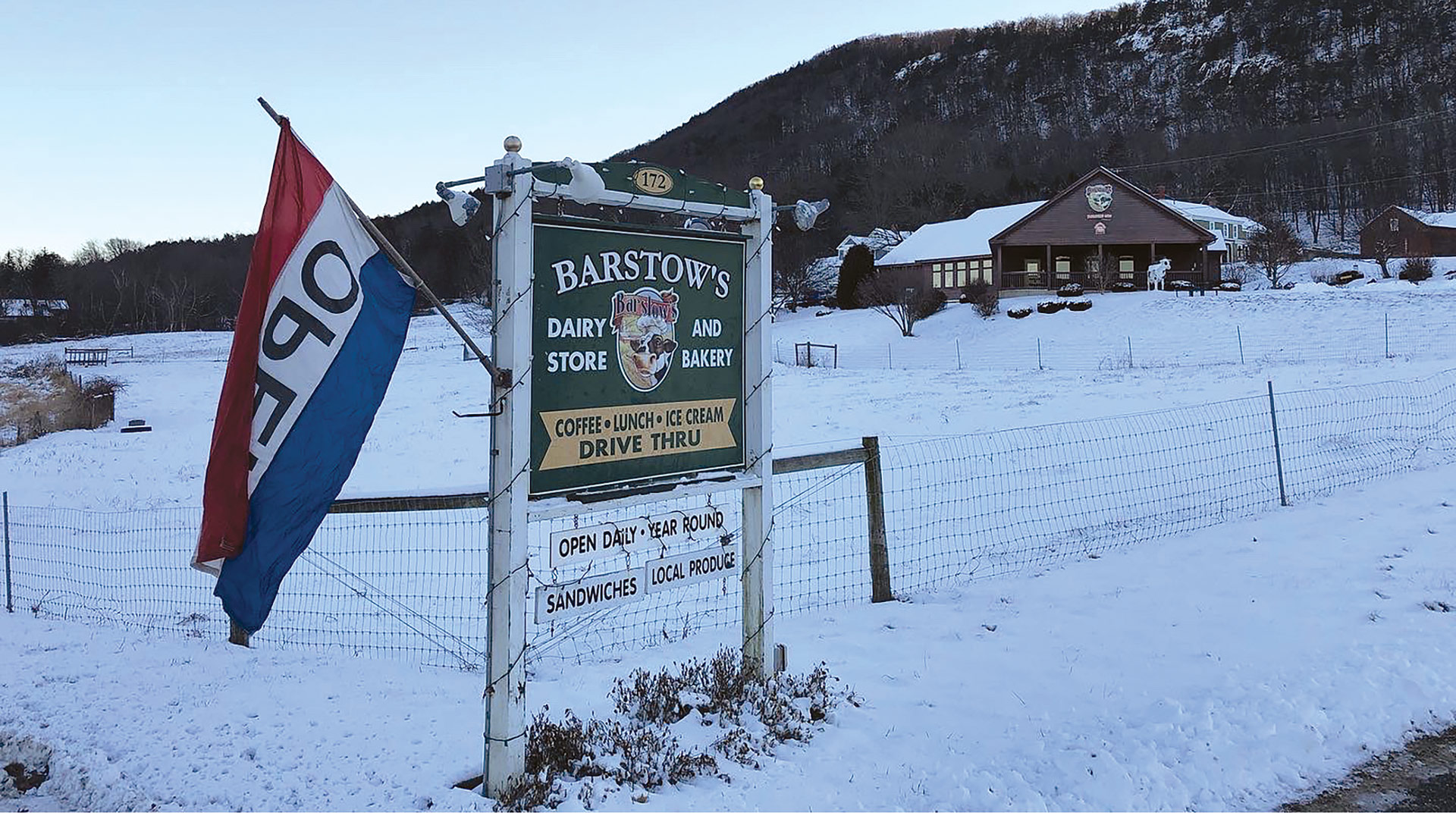
As one might expect with someone who started working professionally in the mid-’40s, talk of her accomplishments obviously involves the past tense. But she remains a Woman of Impact for the way she counsels, mentors, and inspires others, especially women, in leadership roles today. She didn’t officially coin the phrase ‘no margin, no mission,’ but many area nonprofit managers will attribute those words to her as they strive to live by them.

Meanwhile, her life and career has been marked by being thrust into a series of new and daunting challenges, many of which she considered herself quite unprepared for. She’s proven that, with hard work, energy, and a focus on the best outcome for all, one can thrive despite adversity.

“Every role I’ve had, despite the challenges, was the happiest time of my life,” she told BusinessWest, adding that she made the most of every situation and turned them all into invaluable learning experiences. “Every day is a present, and if I haven’t learned something new in a day, then it wasn’t a good day.”

Energy. Yes, Sister Caritas still has large amounts of that commodity. She doesn’t play golf as much as she used to, not because she has slowed down, but because most of those she played with over the years have slowed down. She drives, and she sets a good pace when walking the halls of Providence Place.

She doesn’t have the same level of energy she did 40 years ago or when she was a nursing student, but she’s still very much involved — and clearly a Woman of Impact.

Small Wonder

Those who know Sister Caritas, who came to be known as ‘little sister’ to some because of her small stature, would say it’s not what she does — whether it’s in healthcare, the community, or with the Sisters of Providence — that makes her a true leader, still, at age 99.

Rather, it’s how she goes about … well, whatever it is she is doing. One hears the word ‘determined’ early and quite often when people describe her, and that word fits. So does ‘relentless.’ And ‘unstoppable’ works as well.

Those adjectives certainly apply to her lengthy battle to win approval from the Massachusetts Department of Public Health for a cobalt unit for cancer treatment at Mercy Hospital. She first filed an application in 1978, and it was denied. Applications could only be filed biannually, so she tried again in 1980. And in 1982. And in 1984. And in 1986 … you get the picture.

“There was nothing wrong with the applications, it was just that the Department of Public Health deemed it was not needed,” she said. “But I thought otherwise.”

“He told me, ‘little nurse … when we’re born, we’re born with a certain amount of energy; at the rate you’re going, you’re going to be dead by 40.’”

So she kept on filing applications until finally, in 1993, after she had given notice to the board at Mercy that she would be retiring, the state said ‘yes.’

There are many examples of such determination and perseverance from her lengthy career. Before getting to some, for those who don’t know the Sister Caritas story — and most do — we’ll recap quickly.

Mary Geary was born in Springfield and attended schools in the city. Her parents thought it would be good for her to pursue a career as a secretary, and for a short while, she did, at Commerce High School.

“I was in the secretarial program, learning shorthand and all that … and I was flunking; I hated it every single minute of it,” she recalled, noting that her life changed when she met a girl training to become a nurse at Providence Hospital in Holyoke.

“That absolutely turned my life around,” she told BusinessWest. “I knew … I was so incredibly inspired that I went from Commerce over to Tech [Technical High School], took all my sciences, and eventually went to nursing school.”

Fast-forwarding through the next half-century or so, Geary joined the Sisters of Providence and was sent to St. Vincent’s Hospital in Worcester as a nurse. But upon making her final vows after her fifth year, in 1949, she was sent to Mercy Hospital in Springfield, a move she was thrilled with until she found out that, instead of nursing, she would focus on dietary services, a decision made by the reverend mother.

After receiving a master’s degree in nutrition education at Tufts University and undertaking a dietetic internship at the Francis Stern Food Clinic at the New England Medical Center in Boston, she was assigned to be administrative dietitian at Providence Hospital in Holyoke, an assignment she enjoyed for seven years.

She then got another call from the Mother House, this one to inform her that she was being named administrator at St. Luke’s Hospital.

When she replied that she didn’t know anything about hospital administration, her superior responded with a simple ‘you’ll learn,’ which she did.

After St. Luke’s and Pittsfield General merged in 1969 to become Berkshire Medical Center, Sister Caritas served briefly as associate director of that facility — briefly because she was chosen to lead the Sisters of Providence and take the title superior general, a title that intimidated her about as much as the long list of responsibilities that came with it.

“I was totally unprepared for this,” she said, adding that, as she did with other stops during her career, she learned by doing.

And that ‘doing’ included work to create a new Mercy Hospital, a facility that would replace a structure built by the Sisters of Providence in 1896; it opened its doors in 1974. Sister Caritas would be named president of the hospital three years later, and would serve in that role until 1993.

Highlights during her tenure, and there were many, include an in-hospital surgery center; an eye center; an intensivist program; one of the nation’s first hospitalist programs; creation of the Weldon Center for Rehabilitation, the Family Life Center, the Healthcare for the Homeless initiative; and much more.

Sister Act

As noted earlier, it’s not the lines on the résumé that explain why Sister Caritas is a Woman of Impact, but the determination she showed when there was a fight to be waged, whether it was for the cobalt unit, to solve the odor problems at Bondi’s Island, or to gain needed adjustment in the Medicaid Area Wage Index.

That last fight was one that took her from Springfield to Washington, D.C. with several stops in between. If there’s an episode from her career that best sums up her persistence — her willingness to fight for something important — it is this one. It’s a story she enjoys telling, and she did so again for BusinessWest.

“The change in the rate meant that Mercy Hospital was going to lose $6 million that year, and $6 million then is like $30 million now,” she said, noting that all the other community hospitals in the area, and there were many more at the time, were looking at similar losses. “So I became very involved because I was so upset with what they were doing.”

That is an understatement.

“Richie Neal was a very young congressman at the time,” she said, noting that he secured a revision in the rate on the House side of the budget. “I thought my friend Mr. Kennedy [U.S. Sen. Edward Kennedy] had put it in on the Senate side, it had gone to vote, and it was now in conference.

Sister Mary Caritas says “every day is a present, and if I haven’t learned something new in a day, then it wasn’t a good day.”

“We learned that it was in conference and that it had not made its way into the budget,” she went on. “So I was panicked; I called all the other hospital administrators and said, ‘we’ve got to go to Washington; I can’t afford to lose $6 million this year — Mercy will go out of business. They all they felt the same way, but none of them wanted to go to Washington, so I went on my own; I went for all of us.”

Here’s where an already revealing story becomes even more so. She first went to see Neal, who told her that a revision was, indeed, included in the House side of the budget. The problem, he said, was in the Senate.

“So I marched across the Capitol to the Senate side, and Kennedy wasn’t there,” she said. “They told me that he may not be back that day, and I told them, ‘you better plan on me staying here all night; I’m not leaving here. I’m a constituent, I have a right to see my senator, and I will not leave this office until I see him.

“They kept trying to placate me, offering me cookies and tea, and I just kept saying, ‘no, I’m not leaving until I see my senator,’” she went on. “I waited, and waited, and waited, until finally, about 4 in the afternoon, he shows up.

“He tells me it’s in conference, and I said, ‘I know; that’s why I’m here,’” she continued, adding an exclamation point through inflection on her voice. “He said, ‘who do you know on the conference committee?’ I poked him on the chest and said, ‘it’s not who I know, it’s who you know.’”

Sensing that the battle might be lost if she had to rely on the senator, Sister Caritas went to work. She went to the nearest pay phone (this is the early ’90s, remember) and instructed her administrative assistant to call the other area community hospital presidents and have them in her office the following morning. Before that, though, she called the Mercy Hospital print shop and had it print 6,000 postcards that would eventually be sent by area constituents to legislators imploring action on the Medicare issue.

While Kennedy would call Sister Caritas after the vote to revise the wage index a few days later, she believes it was those postcards that turned the tide. And those involved would say that it was Sister Caritas herself who really drove that outcome — again, just one of many examples of her fighting spirit.

Century Unlimited

The last page of Sister Caritas’s résumé has the single word ‘Honors’ at the top. And there is a long list that follows, including honorary degrees from several area colleges, a William Pynchon Award, a Paul Harris Fellowship from the Springfield Rotary Club, a Lifetime Achievement Award from the Girl Scouts of Pioneer Valley, and a Woman of Achievement Award from the YWCA — a few of them, in fact.

She’s also won several from BusinessWest and its sister publication, the Healthcare News, including Business Person of the Year in 1992, Difference Maker (awarded to the Sisters of Providence) in 2014, and Healthcare Hero (in the Lifetime Achievement category) in 2018.

And because of all that she did earn these honors, she now has one more line to add to that page: Woman of Impact.

George O’Brien can be reached at [email protected]

Women of Impact Women of Impact 2022

Program Officer, Mass Humanities

This Writer, Coach, Mentor, Educator, and Motivator is a True Renaissance Woman

Photo by Leah Martin Photography

When asked about her day job, Latoya Bosworth said she actually has quite a few of them.

She’s the program officer for Mass Humanities’ Reading Frederick Douglass Together program. She’s also an adjunct professor at Springfield College’s School of Professional & Continuing Studies. She coaches professionals and especially women. She mentors young people. She’s a writer. She’s a mother and a grandmother. She motivates others to get a mammogram to protect their breast health.

Ok, that last one’s not a day job, but it’s something she takes very seriously, having seen the disease take lives in her family and making a decision to undergo a prophylactic double mastectomy.

Summing up all that and much, much more, Bosworth likes to say that she “helps others transcend limits and transform lives.”

And she does this in many ways, but especially by setting a tone, leading by example, helping individuals discover who they are, and inspiring others to set a higher bar for themselves and then clear that bar.

Jean Canosa Albano, assistant director for Public Services for the Springfield City Library and one of BusinessWest’s first Women of Impact back in 2018, who nominated Bosworth for this award, has come to know her through some of her many initiatives, including an open-mic poetry series for young teen girls at the library. Those experiences made an impression.

“I think of Latoya as a Renaissance woman,” said Canosa Albano, noting that the many accolades, avocations, and interests on Bosworth’s résumé reflect a wide range of interests and expertise. “That phrase also evokes for me that period of history when writing, ideas, discovery, and exploration flourished, centering on humans and humanity.

“Latoya has a tremendous impact on people, especially women and girls in so many ways,” she went on. “Through writing, spoken word, and coaching, she shares her journey. She has motivated many people to get a mammogram to protect their breast health. She has inspired at least five women to go to college, heading to Bay Path University for master’s degrees.”

As she goes about her coaching, mentoring, and even her teaching, Bosworth focuses on an acronym she created: HERS — short for health, empowerment, resilience, and self-worth. These are the qualities she preaches and that she helps others find. Her efforts over the years have earned her a number of honors, from BusinessWest’s 40 Under Forty award in 2016 to inclusion in the 2015 100 Women of Color cohort, to the 2014 Eyes of Courage Award for empowering women and girls.

Bosworth spends considerable time and energy helping others, especially younger women and women of color, create and build confidence, with the accent on ‘helping others’ because this is something they ultimately have to do themselves.

“Latoya has a tremendous impact on people, especially women and girls in so many ways.”

“It starts with learning who you are, because you can’t show up and be who you are if you don’t know who you are,” she explained. “And learning how to be authentic — when we show up to our authentic selves, we give people the freedom to do that, and with that freedom comes that confidence.”

When mentoring young women and girls, Bosworth tells them to essentially follow her lead and “pour into themselves.”

“By that, I mean taking time with yourself to figure out who you are, because there are so many outside influences and people telling you what you should be doing, people telling you what it means to be successful, what it means to be beautiful, all of these things,” she explained. “You have to pour into yourself and figure out what’s important to you, what your values are, and how to turn off the noise.”

‘Renaissance woman.’ That’s an apt description of Latoya Bosworth. As we’ll discover, so too is ‘Woman of Impact.’

Impact Statement

“What to the Slave Is the Fourth of July?”

That’s the name attached to an iconic Independence Day speech delivered by the American abolitionist Frederick Douglass, during which he answers that question by saying ‘…a day that reveals to him, more than all the other days of the year, the gross injustice and cruelty to which he is the constant victim.”

As program officer for this Mass Humanities initiative, Bosworth schedules public readings of that speech at gatherings of all sizes and many different places.

“And they’re followed by discussions on equity and race and what that speech means today, as an American,” she told BusinessWest. “Sometimes, it’s just children; other times, it’s multi-generational, multi-racial … and it’s all over the state of Massachusetts, so it’s looks different in different communities. Sometimes it’s a small organization; other times, it’s a larger event with hundreds of people at a public square.”

Arranging such readings is just one of many assignments that add up to a very full plate for Bosworth, who also goes by ‘Doc Boz’ to some — a nod to her doctorate in human services she earned at Capella University and the nickname given her grandfather (Bozzie) — and also ‘Brenda’s Child,’ a pen name, if that’s even the right term, she uses to honor her mother, Brenda Kay Swinton, who died from breast cancer at age 23 when Latoya was only 4.

By whatever name she goes by, she keeps her days full. As noted, she’s an adjunct professor at Springfield College, teaching courses ranging from “Race, Culture & Religion” to “Contemporary Issues in Education” to “Communication Skills.”

She also has her own business as a workshop facilitator and ‘speaker/life coach.’ She told BusinessWest that she specializes in “confidence, purpose, and joy,” and facilitates writing and empowerment and educational workshops for women, youth, and youth workers for organizations, schools, and professionals. She also creates and hosts empowerment events under that acronym HERS.

Much of what Bosworth does when coaching is focused on that intangible — and precious commodity — known as confidence. And when asked how she helps individuals, and especially women, find it and build more of it, she said she does this in several ways.

“What I find is that, when people have issues with goal setting or trying to change their lives, a lot of it comes down to some of the things they’ve internalized — from society, from family — that they need to unlearn and reprogram so they can develop that confidence that they need to take the risk,” she explained, “and know that, if they take the risk, it’s going to be OK, no matter what; even if doesn’t work out, there’s going to be something they can learn from and grow from.”

BusinessWest honored Latoya Bosworth as part of the 40 Under Forty class of 2016
Long before her Woman of Impact award, BusinessWest honored Latoya Bosworth as part of the 40 Under Forty class of 2016 for her work with young people.

Elaborating, she said she tries to help individuals and groups understand that trying and failing — if that’s what happens — should always be preferable to simply not trying at all.

“What happens if you fail? What does that look like? What does success look like to you? What does failure look like to you? And if you fail, what will happen? These are the questions I want people to think about,” she said. “Sometimes, we get caught up in these thoughts — I call it worst-case-scenario thinking. I want people to tell me what would happen if they fail, and then I ask them, ‘is that really a big deal, or are you overthinking?’

“Most of the time, people come to find out that it’s not that big a deal if something doesn’t work out the way they want it to,” she went on, adding that this helps in that process of transcending limits and helping people transform their own lives.

Taking Control

Another focal point of Bosworth’s life and work to help others is breast cancer, and here, she tells her own story to inspire others do to what they can to understand this disease and protect their own health.

That story involves tragedy and overcoming adversity on many levels. Her mother, as noted, died from breast cancer. Her father, a veteran, was injured in a training exercise and left paralyzed from the waist down. She and her siblings were raised by her maternal grandmother, who died of ovarian cancer.

These tragedies led to a profound awareness of cancer and its ability to take lives and impact many others while doing so, she said, adding that this awareness led to a proactive approach to caring for her health and encouraging others to follow that lead.

“As I grew up, I learned how to do breast self-exams when I was 12 or 13 — it’s something we pay attention to in our family,” she said, adding that, over the years, she has seen multiple family members, on both sides, die from breast cancer and ovarian cancer.

“So I did some genetic testing; I was negative, but there was some sort of variant there,” she went on, adding that she made the decision to have a prophylactic double mastectomy in 2015, and also to have her ovaries removed to prevent ovarian cancer.

“I share that experience with other people because I want them to know that, while this wasn’t easy, there are options,” she said. “I tell people that they need to understand about genetic testing, and also the health disparities and the fact that African-American women are twice as likely to die from breast cancer because it’s more aggressive in us than it is in other people, even though we are less likely to be diagnosed.”

“What I find is that, when people have issues with goal setting or trying to change their lives, a lot of it comes down to some of the things they’ve internalized — from society, from family — that they need to unlearn and reprogram so they can develop that confidence that they need to take the risk.”

Health is the ‘H’ in HERS. The ‘E,’ ‘R,’ and ‘S’ — empowerment, resilience, and self-worth — are just some of other qualities she helps others discover, and build, through her coaching, mentoring, and a nonprofit youth program she created called Keep Youth Dreaming and Striving Inc.

The mentoring started when she taught in the Springfield Public Schools earlier this decade, and has continued ever since, with Bosworth staying in touch with those she first counseled years ago.

“As a teacher, I was just getting involved in my students’ lives and showing up outside of school for things,” she said. “And as they graduated, I would stay in contact with them, attending baby showers, unfortunately some funerals … but really just showing up for them. And on the side, I started an after-school mentoring program, primarily with girls.”

Keep Youth Dreaming & Striving, which caught the attention of BusinessWest’s 40 Under Forty judges and made Bosworth part of the class of 2016, featured a number of initiatives, including a Gifted Diva Showcase, what she calls a “self-esteem exhibition” that followed eight weeks of intensive workshops, trainings, and a discovery process.

“It was an anti-beauty pageant, because it wasn’t about looks,” she explained. “It was all about owning who you are, being who you are, doing some community service, sharing whatever talent you have … they didn’t have to show up and look a certain way.”

Leading by Example

Returning to that phrase ‘Renaissance woman,’ in her nomination of Bosworth, Canosa Albano noted that word comes from the French for ‘rebirth.’

“Her journey epitomizes someone who has faced trauma, great loss, and illness, and has reframed those challenges, learned, and grown from them, ‘rebirthing’ herself as Brenda’s Child and Doc Boz.

Reframing challenges and learning and growing from them — this is what Bosworth helps others do as she enables them to transcend limits and transform their lives.

George O’Brien can be reached at [email protected]

Cover Story

Making Progress

The Latino Economic Development Council recently opened the doors to its new facility on Fort Street in Springfield. More importantly, it is off to a fast and impactful start as it works to open doors — and keep them open — for business owners and entrepreneurs, especially those in the large, and growing, Latino business community. It will offer microgrants and facilities for meetings and co-working opportunities, but most importantly, it will provide much-needed coaching in subjects ranging from finance to human resources to mental wellness.


Executive Director Andrew Melendez

Executive Director Andrew Melendez


Andrew Melendez says he’s led a number of tours of the new Latino Economic Development Council headquarters facility on Fort Street in Springfield. More than he can count, actually.

He said the comments from those taking those tours vary, but there is a common, and very important, theme. Most say they’ve never seen anything quite like it — but wish they had.

Indeed, the Latino EDC, or LEDC, as it’s called, an affiliate of Partners for Community, is different. It is not a chamber of commerce, although it has some of those qualities and it partners with those institutions. It’s not an incubator, but it has some of those qualities, and it partners with those critical components of the entrepreneurship ecosystem as well.

It is a place where more than two dozen coaches, experts in many aspects of business, will make themselves available to business owners — especially those within the large and growing Latino business community, looking to take the next step with their venture, whatever that might be — and share what they know.

The council will also provide microgrants of a few thousand dollars or even less to assist with startup costs, while also providing co-working space and facilities — the PeoplesBank Business Lounge — that the business community can use for meetings and teleconferences.

“The main objective that we have is to help Latino business owners take their business to the next level.”

In short, what the LEDC wants to do is convert employees into employers, spark the growth and development of new businesses, and change the landscape on Main Street — and many other streets — in area communities, said Melendez, director of Operations for the LEDC.

It will do this not necessarily with microgrants — although they can certainly help a microbusiness or startup buy a sign, secure a new piece of equipment, or do some social-media marketing, perhaps — but with a combination of those grants and training programs from those coaches on how to qualify for a business loan, workforce training, mental wellness, and much more.

“We’ll be able to offer ‘Finance 101,’ ‘Accounting 101,’ ‘Building Wealth,’ ‘How to Lead by Example,’ and so on,” said Melendez, adding that the LEDC is partnering with a host of entities and agencies, from the state to the U.S. Small Business Administration in its efforts to build a larger, more sustainable Latino business community.

The facilities at the Latino Economic Development Council include space for meetings and community functions.

The facilities at the Latino Economic Development Council include space for meetings and community functions.

Overall, he said, the agency will focus on what he calls the three ‘Cs’ of helping business owners get to where they want to go: coaching, capital (those microgrants, but also counseling and technical assistance that might help them secure loans from area banks and credit unions), and connections to other business-development and economic-development-related agencies on the local, state, and national levels.

Adriano Vaccaro, CEO of Culture Redesigned, a culture strategist by trade and a workforce training coach for the LEDC, agreed.

“The main objective that we have is to help Latino business owners take their business to the next level,” she told BusinessWest, adding that the agency is putting together a comprehensive catalog of training programs. “And we’re attaching key performance indicators to the coaching sessions, so we can not only provide the skills and fill the gaps, but make sure we’re producing the results that are needed. It’s not just training — it’s training connected to a particular result.”

That’s an important distinction, she said, noting that the coaches are results-oriented and emphasize measuring — and sustaining — those results.

“It doesn’t mean that every business needs everything,” she went on. “We will do a needs assessment and make sure every business gets whatever they need, from where they’re starting their journey with us.”

Melendez concurred. “We want to make sure that, whether it’s a small business making $3 million or a microbusiness making $300,000 or an entrepreneur just starting up, they all have access to the same resources; that’s the fairness,” he said. “In January of 2020, Joe Biden said it’s not fair that some people get to pick up the phone and talk to a lawyer or an HR professional or someone to guide them in a workers’ comp claim, and other people don’t. This is us ensuring that our community — and I want to define our community as this whole community; anyone can come to the LEDC — has access to resources.”

As for the microgrants, made possible by federal ARPA funds awarded to Springfield and funneled to the LEDC, Melendez said there have already been more than 125 applications for such grants, and he expects that number to go much higher in the weeks to come.

BusinessWest recently sat down with Melendez and several of the coaches that are part of the LEDC to get some perspective on how this unique agency will work, how it will address stated goals, and, perhaps most importantly, how it will measure success.

The quick answer, as we’ll see, is that there will be many ways to do just that.


Getting Down to Business

It’s called the ‘imposter syndrome,’ and most business owners and professionals are by now quite familiar with that phrase.

It connotes persistent feelings that one isn’t … well, entirely comfortable in their own skin, professionally, and not fully credentialed, either literally or figuratively, to be worthy of the title on their business card.

Dr. Edna Rodriguez, director of Behavioral Health at Mercy Medical Center, one of the coaches at the LEDC (and one of BusinessWest’s 40 Under Forty honorees for 2022), said that many within the minority community fall victim to imposter syndrome.

“I want to be able to give back when it comes to development of business and entrepreneurship, teaching those basics, and helping people fine-tune their plans and the steps they need to take to become viable businesses in the community.”

“Many doubt if we have the level of skill, the ideas, and the tools … they struggle with confidence and knowing that that they can do and achieve the things they are good at,” she explained. “And that can really create a lot of anxiety and other issues that can definitely impact the mental health of an individual.”

And that’s just one of the matters she addresses with those she counsels as a mental-wellness coach for the LEDC.

“Our culture is beautiful and colorful and very integrated, but with that comes a lot of burden, especially when we’re talking about taking on everything that happens both at work and to home,” she noted. “Often, our Latino folks find a hard time managing stress and taking care of their physical and mental health, especially when they’re in the role of being a business owner.

“So my role is to individually help people understand how they can care for themselves, how they can find balance, and how to communicate their needs in an assertive way to both the people around them and the people who can help them,” she went on. “Sometimes it’s hard to just take that first step and open up and seek help.”

Helping business owners — and, again, especially those within the Latino community — cope with such issues is just one of the many focal points of the LEDC, which grew out of the Massachusetts Latino Chamber of Commerce and continues and expands upon its work, Melendez said.

Latino Economic Development Council

From left, Jose Hernandez, restaurant coach; Deborah Roque, accounting coach; Adriano Vaccaro; workforce training coach; Gilberto Amador, professional-development coach; Jesse Santos, finance and loan coach; Andrew Melendez; and Dr. Edna Rodriguez, mental-wellness coach.

And its model is unique, he went on, both in what it offers and that the services it provides are free.

“We want this to be free to the community, and I’m committed to that,” he said, adding that the LEDC was created to provide critical coaching and insight to business owners and aspiring entrepreneurs who may otherwise not be able to access such expertise.

Which brings him back to those tours he mentioned at the top and the comments from those who take them.

“I’ve taken dozens of people through the doors — people from Boston, Holyoke, Springfield, all over,” he said. “They’ve seen incubators with various businesses … but to walk in, and right where you walk in, there’s a marketing agency; an accountant; a psychologist; a professional-development trainer on safety; a professional-development trainer on diversity, equity, and inclusion; someone who can write a loan for you from beginning to end for free and send it to our partner banks … they haven’t seen that before.”

This is the essence of the LEDC, which Melendez likened to a credit union that doesn’t exclude anyone from membership. And the heart of the agency is its coaches, 28 of them at last count.

People like Rodriguez, the mental-wellness coach; Gilberto Amador, president of the Mass 2 Miami Consultant Group and professional development coach for the LEDC; Deborah Roque, owner of Affordable Accounting Services & Tax Preparation and an accounting coach for the agency; Jose Hernandez, owner of Palete Latin Cuisine in Springfield and the restaurant coach for the LEDC; Carlos DeLeon, a financial advisor with Ameriprise Financial, who provides guidance on personal finance; and Jesse Santos, a business finance and loan coach and officer with Latin Financial.

They and many others offer specific areas of expertise and, more importantly, a willingness to share it, that Amador summed up this way: “we bring something important to the table — experience, drive, and vision. And with the young people today, there’s going to be a generational gap if we don’t bring this information to them.”


Getting a Leg Up

Like Melendez and others we spoke with, Santos said capital is obviously critical to the advancement of any business venture, and is also an area many need help navigating, which is why he is now part of the coaching lineup at the LEDC.

“I’m here to guide those in the Latino community, and others as well, to get alternative funding, equipment financing, lines of credit — just help them get some funding,” he explained. “If the conventional banking system doesn’t help them or the rates are not to their favor or what they consider fair, they can come to me and we can broker it to other banks and other vendors to see what other opportunities we can get them.”

His work is an example of how the LEDC will work to provide guidance where and when it’s needed, and fill in gaps — in service, opportunities, and knowledge. And the coaches gathered around the conference room table at the LEDC said there are many such gaps, especially when it comes to the intricacies of running a business or simply taking an idea and transforming it into a business.

There are the basics — writing a business plan, deciding on a business classification, obtaining a doing-business-as certificate, and more, said Melendez, and coaches can help with all that. But then, there are the day-to-day, year-to-year matters, such as training staff, creating a culture, and handling HR matters. And the LEDC’s coaches can assist in these areas as well.
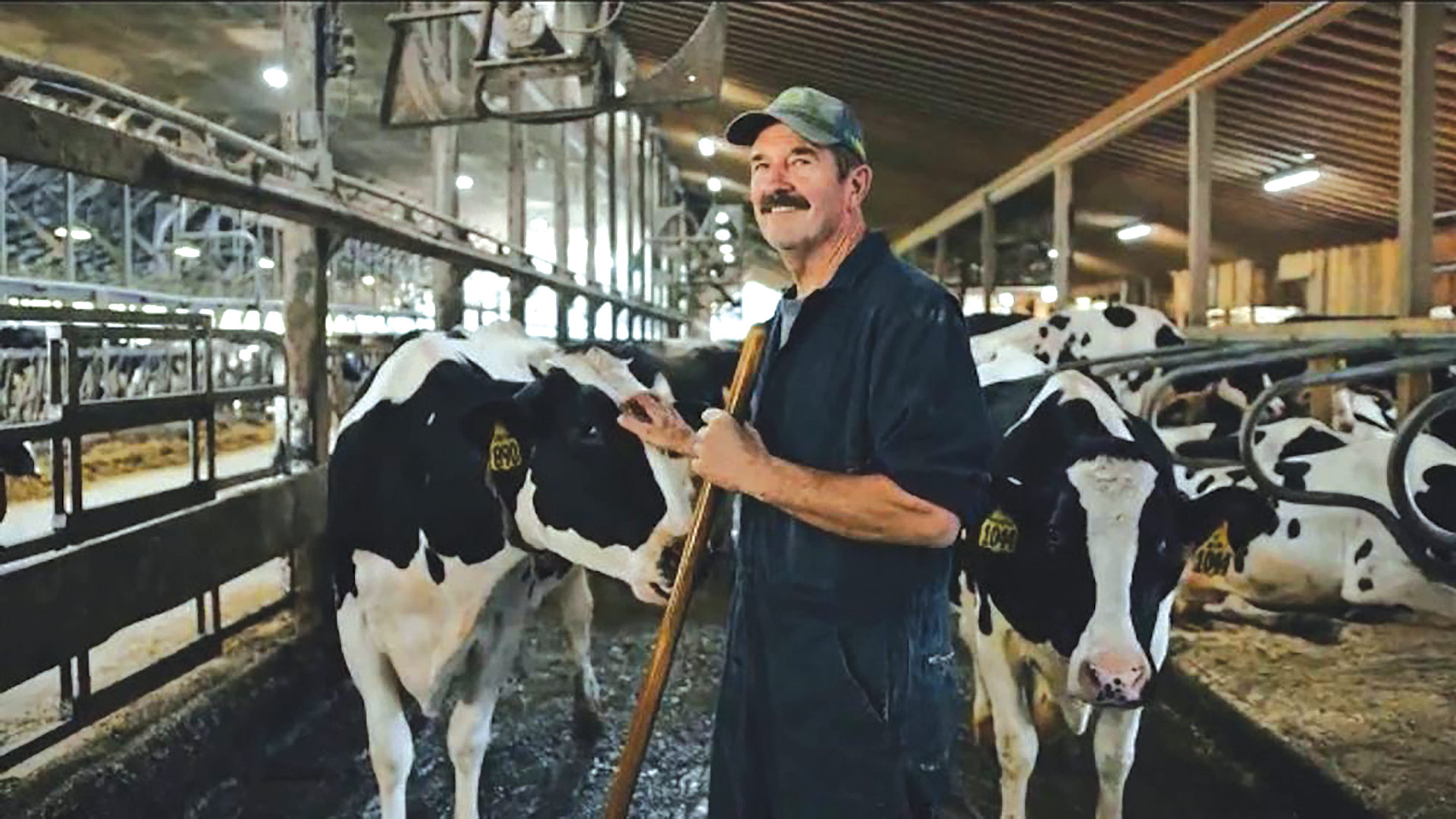
Amador, a serial entrepreneur himself but also an educator, said he’s been working with entrepreneurs for many years now and understands that many need help not only with their business, but with balancing business and life.

“I want to be able to give back when it comes to development of business and entrepreneurship, teaching those basics, and helping people fine-tune their plans and the steps they need to take to become viable businesses in the community,” he told BusinessWest, adding that one of these basics is simple financial literacy.

“A lot of them have ideas for starting a business, but they don’t realize that the financial piece is very important,” he said. “What does your profit-and-loss statement mean? What does you balance sheet mean? What is your cash flow? There are things that many in this [Latino] community don’t understand about business because we’ve been doing it a certain way, and we need to change that thought process. If we learn about investment and if we learn about how numbers work, then that makes it easier.”

While some coaching is broad in scope, it can also be specialized in its nature as well. Such is the case with Hernandez, who brings his experience in owning a restaurant, and in presenting Latin cuisine, to the forefront, and leads by example while also coaching others.
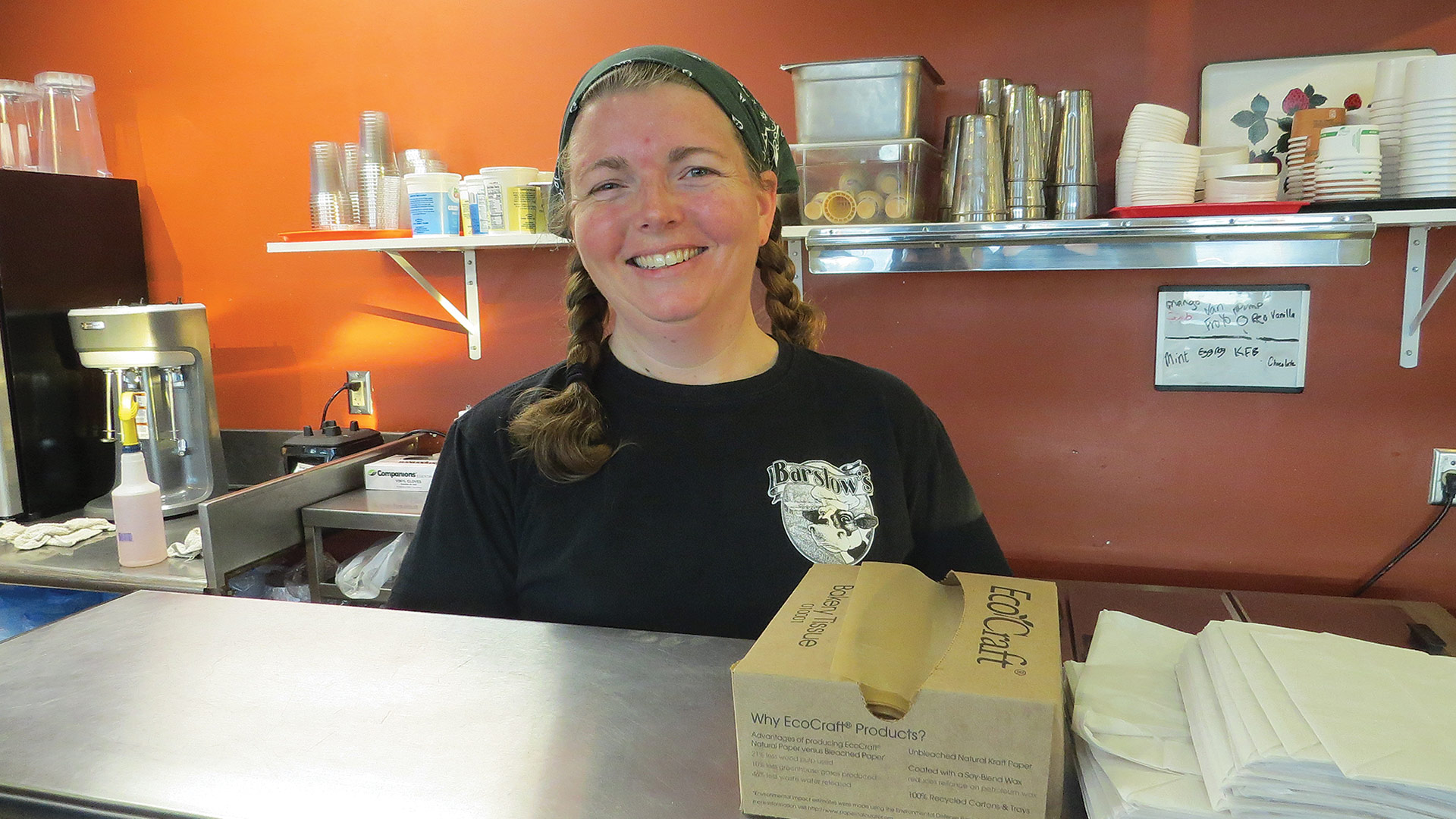
“I brought something different to the table and raised the bar with it,” he said of his eatery, located on Boston Road in Springfield. “A lot of people took notice, and you’re beginning to see where other restaurants are beginning to change the way they present the food, and I’m really happy about that.”

Overall, Amador echoed the thoughts of Melendez and others we spoke with when it came to seeing more individuals within the Latino community, which is entrepreneurial by nature, make the often-challenging leap from being an employee to being an employer.

“If there’s a McDonald’s in the North End of Springfield, I want to see a Latino owner of that McDonald’s,” he said. “I don’t want to hear people say, ‘let’s go to McDonald’s’ — I want to hear them say, ‘I want to own a McDonald’s.’”

Such sentiments, and such goals, are what prompted PeoplesBank to want to become involved with the LEDC, said Matt Bannister, the institution’s senior vice president of Marketing and Corporate Responsibility, adding that the bank became sold on the concept and its place in the region’s entrepreneurship ecosystem.

“Other groups have a mentor of two that can help you,” he said. “But they have specialists in whatever your issue is, and I think that’s a smart business model; it’s not one generalist who may or may not have experience with what you’re trying to do — they have a whole team of people, and it’s right in downtown Springfield.”

The bank’s participation started with the business lounge that now bears its name, he went on, adding that involvement may go to a higher level, perhaps by matching, or partially matching, the microgrants awarded to businesses by the LEDC.


Connecting the Dots

Summing up what the LEDC is and want he expects it will become in the months and years to come, Melendez said the agency strives to build individuals into “leaders, business owners, and change makers.”

That’s a tall task, he went on, but the ingredients are there for the agency to become transformative when it comes to the Latino business community and the overall economic landscape in Western Mass.

That’s why those who take the tour say they’ve never seen anything quite like it — and why they wish they had. u

 

George O’Brien can be reached at
[email protected]

Banking and Financial Services Special Coverage

Century Unlimited


President and CEO Glenn Welch (center) with some of his team.

President and CEO Glenn Welch (center) with some of his team.

When asked what might come next for Freedom Credit Union, Glenn Welch said simply, “we’re going to continue doing what we’ve been doing for the past 100 years.”

By that he meant … well, a whole lot of things, from continued growth and innovation to embracing new technology; from growing the base of customers to extending the institution’s geographic reach; from finding new ways to serve members to giving back to the community.

There will be more of all of that, said Welch, president and CEO of Freedom, who offered what amounted to a ‘state of the credit union’ report for BusinessWest on the occasion of its 100th birthday.

The milestone (July 22 was the official birthday) has been marked in various ways — from a 100-day summer food drive that raised $4,100 for the Food Bank of Western Massachusetts and collected 930 pounds of food for the Gray House, to a week of ice cream at all the branches in late July for members and employees; from raffles and giveaways for members to specials on loans and CDs.

“It’s a big milestone these days for a financial institution to be around that long,” Welch said. “So we wanted to celebrate with the community.”

Mostly, though, the institution has been quietly continuing those patterns of behavior listed above, he added, noting that he and his team are being both innovative and entrepreneurial as they go about writing the next chapter in a history that began with an institution known as the Western Massachusetts Telephone Workers Credit Union, formed when Warren Harding was patrolling the White House.

“It’s a big milestone these days for a financial institution to be around that long. So we wanted to celebrate with the community.”

Listing examples of both, he said Freedom will soon be introducing its first interactive teller machine (ITM) as well as credit cards and a new debit-card product. Meanwhile, it is continuing and broadening its push into Connecticut with the opening of a loan-production office on Elm Street in Enfield. Also, the credit union, which now boasts roughly $650 million in assets, more than 32,000 members, and 10 branches across Western Mass., has been making some inroads to service companies in the broad and ever-expanding cannabis industry in Western Mass., while continuing to aggressively pursue more business on the commercial-lending side of the ledger.

With the cannabis sector, the credit union recently started providing deposit and cash-management services for businesses in different kinds of businesses, said Welch, adding that this could become a vehicle for growth at Freedom.

“We have several clients that have signed on with us and we have a pretty good backlog of businesses that are looking to come on board with us,” Welch said, noting that the credit union is working with its regulator to make sure it is complying with guidelines for doing business with those in this sector.

It is certainly not the only institution looking to garner cannabis customers, he went on, adding that, as competition mounts, Freedom will work to remain competitive and secure market share in a sector where new businesses open every month, if not every week.

Cannabis was recently made legal for recreational use in the Nutmeg State, he went on, adding that this could be another avenue for growth in that market. “We think we’re in a good position with our expansion into that market.”

Overall, Freedom is still finding its footing in Connecticut, he said, adding that, over the next few years, it will explore opportunities to branch out south of the border, literally and figuratively.

Glenn Welch

Glenn Welch says the basic strategy at Freedom is “to keep doing what we’ve been doing for the past 100 years.”

“We’re going to explore our options in Connecticut as we get a foothold there,” he explained. “There could be a possibility of branching down there; we signed a two-year lease in Enfield, and we want to explore the market with the loan production first; we thought that was a good way to get a good foothold.”

For this issue and its focus on banking and financial services, BusinessWest talked at length with Welch about the first 100 years for Freedom Credit Union, and what is on tap for this Western Mass. institution.


Answering the Call

Tracing the history of the credit union, Welch said it started in a small office in the telephone-company building on Worthington Street, serving only employees of that large and fast-growing industry.

In 1978, the institution relocated to a new home on Main Street in Springfield’s North End, which still serves as its headquarters today. In 1987, the Western Massachusetts Telephone Workers Credit Union merged with Monarch Credit Union. As demand for the benefits of a credit union grew, the institution applied for a community charter. In January 2001, membership eligibility was expanded to include anyone who lived or worked in Hampden, Hampshire, Franklin, or Berkshire county, and in early 2020, further expansion of membership eligibility included Hartford and Tolland counties in Connecticut.

In 2004, the institution merged with FHBT Credit Union, and the name of the larger entity became Freedom Credit Union. And with that new name came geographic expansion, with new branches in Chicopee, Northampton, and, later, Turners Falls, Greenfield, Feeding Hills, Easthampton, the Sixteen Acres neighborhood in Springfield, Ludlow, West Springfield (after a merger with West Springfield Credit Union in 2019), and then Connecticut.

Throughout its history, Freedom has consistently sought out new opportunities to expand and bring its products, services, and mission to new zip codes, said Welch, while also looking for new and better ways to serve its members, said Welch, adding that these trends continue today.

Especially with its push into Connecticut, but also with its work to attract residents and businesses in its service area that are looking for options in the wake of a seemingly endless string of bank mergers, the latest being M&T’s absorption of People’s United Bank.

“We’re going to explore our options in Connecticut as we get a foothold there.”

Connecticut has become the next frontier for many banks and credit unions based in Western Mass., and so it is with Freedom, said Welch, adding that the new office in Enfield, which opened earlier this month, will include both a commercial-lending officer and a mortgage originator.

“We had a lot of people in Connecticut who wanted to bank with us, so that’s why we expanded our charter in 2020,” he said, adding that COVID obviously slowed the pace of progress into that state, but with the pandemic easing in most all respects, the credit union is expecting to see growth in the numbers of members from across the border.

Meanwhile, Freedom will continue and escalate what has been an aggressive push into the commercial-lending market on both sides of the border, another initiative that has been slowed somewhat by COVID.

“We’re trying to expand on the commercial side, but obviously not ignoring consumers,” he told BusinessWest. “We did hire a new hire lender for the Connecticut market; we believe there is a lot of opportunity there — on both the commercial and consumer side.”

Overall, the credit union began its push into the commercial market roughly seven years ago, he said, adding that it has been making good inroads since, with two lenders in this market and now the one in Connecticut.

Its legal lending limit is $7 million, with a large sweet spot of $2 million to $5 million, Welch explained, adding that this range leaves plenty of growth potential in a region dominated, on both sides of the border, by small businesses.

“We have a very experienced lending team — we’ve been in the market in a long time,” he said, adding that Freedom will be rolling out some new products in the next few months that will make it easier for companies to obtain small-business loans.

“We’ve partnered with a credit-union service organization with an online app where people can go, and they will make the credit decision for us, based on our guidelines in place,” he explained. “That’s how we hope to help the small businesses in the area.”

Another new service soon to be unveiled by Freedom will enable area retailers to offer financing for purchase of their products through the credit union, an initiative that he believes will help small businesses while also creating potential new members for the credit union on the consumer side.

The credit union’s headquarters have been located on Main Street in Springfield since 1978 — before it was called Freedom.

The credit union’s headquarters have been located on Main Street in Springfield since 1978 — before it was called Freedom.

Overall, growth in membership has been steady, at perhaps 1% a year on average, which is typical of credit unions in this market, he said, adding that Freedom is trying to capitalize on the ongoing consolidation of the banking market and mergers like the one involving M&T and People’s United, which, by most accounts, did not go smoothly.

“I think that’s our biggest opportunity, especially in Connecticut, with M&T and People’s United being such big players in that market,” he said, adding that the credit union is conducting some marketing targeting customers of those institutions.

Meanwhile, as noted earlier, the credit union will soon roll out its own credit card as well as a new debit-card product, its first ITM, and other products and services aimed at making banking easier and more convenient for members.
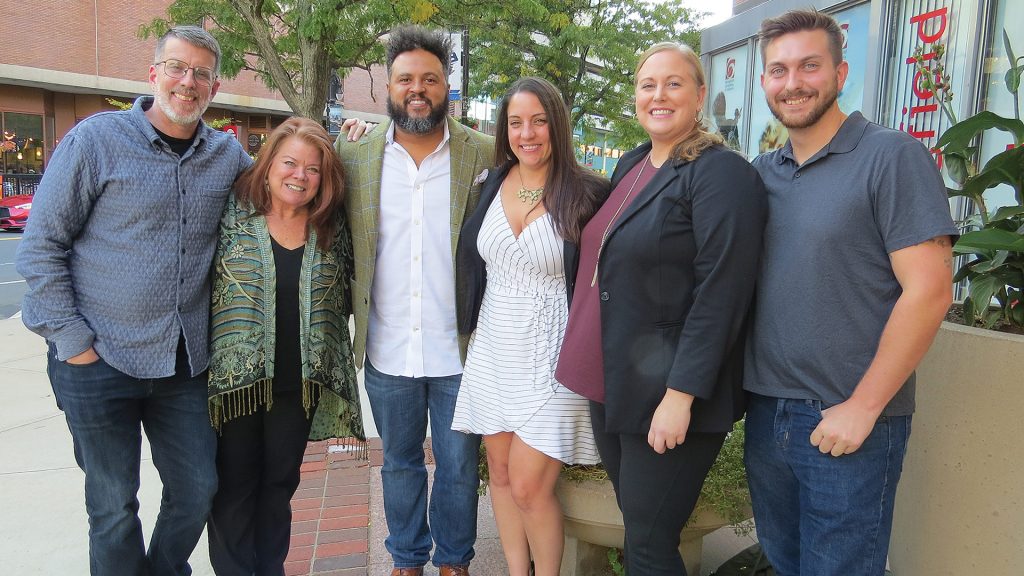
“We just keep automating things as we try to make it easier for our members to do business with us,” Welch explained. “A lot of things are being done online, and I think we have very competitive products for that; if people want to apply for loans or open accounts, they can do it on their own time, but certainly we have the branch system in place to support them when they need help.”


By All Accounts

Looking at the business plan for the next several years, Welch said Freedom is looking at a number of growth opportunities — in Massachusetts, Connecticut, within the cannabis industry, in commercial lending, and with several new consumer products.

It is moving on several different fronts at once, with the goal of expanding its membership base, providing new and better products and services, and taking its mission in new directions.

These initiatives are new in some respects, but overall, they’re simply a continuation of what the institution now known as Freedom has been doing for a century.


George O’Brien can be reached at [email protected]

Education Special Coverage

Learning Experiences

Spearheading the Haiti Nursing Continuing Education Program are Elms College officials

Spearheading the Haiti Nursing Continuing Education Program are Elms College officials, from left, Anne Mistivar, project faculty coordinator and cultural consultant; President Harry Dumay; Maryann Matrow, director of School of Nursing Operations; and Deanna Nunes, assistant clinical professor and associate dean of the School of Nursing.


Harry Dumay says the initial talks began more than four years ago.

They involved nurse educators in Haiti and leaders at Elms College, including Dumay, who is from Haiti, and they centered around how Elms, which has a strong Nursing program, might be able to partner with those in Haiti to continue the education of nurses in a broad effort to improve health outcomes in that country through nurse-faculty development.

Through a $750,000 grant from the W.K. Kellogg Foundation, a partnership between Elms and the Episcopal University of Haiti School of Nursing (EUH) was created that brings together nurse faculty from across Haiti and uses a ‘train-the-trainer’ approach to instruct the faculty with leading-edge nursing skills.

To date, more than 47 nurses in two cohorts from all provinces of Haiti have gone through the program — there was an elaborate graduation ceremony in May for both groups — and a third cohort has begun, with a fourth and perhaps more planned, thanks to a second grant from the Kellogg Foundation for $1.1 million.

That is the short, as in very short, version of a truly compelling story.

“The Elms program was very helpful because in Haiti they don’t have this type of training for nurses. They have nurses that are in different specialties and in different roles, and they find themselves teaching, but they’ve never been taught how to teach, so this program is very important because they are learning how to be an instructor.”

The longer version involves how all this has been accomplished during a time of global pandemic and an earthquake, a severe hurricane, and extreme political upheaval and general unrest in Haiti, including the assassination of the country’s president, Jovenel Moise, more than a year ago.

In short, very little about this initiative has been easy, but those involved — here and in Haiti — have persevered because the stakes are high and need to train nurse faculty is great, said Dumay.

Elaborating, he noted that the original model for this program called for in-person learning, with educators from Elms flying to Haiti once a month to lead classes.

Those plans were eventually scrapped because of the pandemic and other factors, including safety issues, in favor of a remote-learning model that came with its own set of challenges, especially the securing of needed equipment (tablets, hotspots, and even solar chargers in case power was lost) and getting them in the hands of the students who would use it.

In May, the first two cohorts of nurse educators in the Haiti Nursing Continuing Education Program attended their graduation ceremony in Haiti. With the graduates in the front row are, from left, Anne Mistivar, project faculty coordinator and cultural consultant for the program; Hilda Alcindor, project co-director from the Episcopalian University School of Nursing in Haiti; Harry Dumay, president of Elms College; Joyce Hampton, associate vice president of Strategic Initiatives and dean of the School of Arts, Sciences and Professional Programs at Elms; and Bapthol Joseph, project co-manager from the Episcopalian University School of Nursing in Haiti.

And these issues were compounded by other challenges, including those aforementioned natural disasters and the general upheaval in the country. Some students had to stay at their workplaces to take part in the classes because the WiFi was better there; meanwhile, class times were shifted so that students wouldn’t be traveling after dark to take them because of the increased risk to their own safety.

But, as noted, all those involved have pushed through these challenges because of the importance of this training. Indeed, most healthcare in Haiti is provided by nurses, not doctors, so the need to train nurse educators and thereby heighten the skills of those providing care is paramount.

People like Lousemie Duvernat, a nurse who was part of the second cohort that went through the Elms program. Via Zoom and through an interpreter — Anne Mistivar, project faculty coordinator and cultural consultant for what has come to be known as the Haiti Nursing Continuing Education Program — Duvernat said the program, and, specifically, its ‘train-the-trainer’ approach, has made her a better nurse, not to mention a better educator.

“The Elms program was very helpful because in Haiti they don’t have this type of training for nurses,” she explained. “They have nurses that are in different specialties and in different roles, and they find themselves teaching, but they’ve never been taught how to teach, so this program is very important because they are learning how to be an instructor.

“This, in essence, has helped them to understand the students, how to deliver the message, how to present, and how to evaluate the students and make them better educators,” she went on, adding that she would like to see the program continue because they simply don’t have anything like the ‘train-the-trainer’ approach in Haiti.

Such sentiments clearly explain why this initiative was undertaken and why it has persevered through so many extreme challenges, said Deana Nunes, associate dean of the School of Nursing and assistant clinical professor at Elms and nurse educator and course faculty for the Haiti Nursing Continuing Education Program, adding that the results thus far have been encouraging on many levels, but especially in what she called the “thirst for learning” she has seen from the nurses from Haiti who have been involved with the program.

For this issue and its focus on healthcare education, BusinessWest takes an in-depth look at this inspiring program, its goals, and the many ways in which success is being measured.


Course of Action

Duvernat — again, through her interpreter, Mistivar, who is also from Haiti — told BusinessWest that, since she was a child, she harbored dreams of becoming a doctor. In Haiti, though, the road to that profession is long and difficult, and she eventually set her sights on becoming a nurse, a vocation that, as noted, brings even more responsibilities than it does in this country.

But, and also since childhood, she has wanted to be an educator. And these twin passions, coupled with her desire to help others, have now come together as she advances her career as a nurse educator, with the goal to one day earn a doctorate — a path that has been accelerated and helped in many ways by the Haiti Nursing Continuing Education Program and its heavy emphasis on those words ‘continuing education.’

This is what all those involved with the initiative had in mind, said Dumay, noting that the program was born out of need, one that he was quite familiar with, and a desire among those at the college to meet that need.

“Elms College has a great School of Nursing and a strong reputation in the area for preparing great nurses and healthcare professionals in general,” he said. “But Elms College has also had a desire, and some efforts, in reaching outside Chicopee, outside Massachusetts; some of our students have gone to Jamaica for clinical programs, and we’ve had conversations with our partners in Japan around global health initiatives.
“I’ve also had interactions and collaborations with those in higher education in Haiti, and I’ve also had interactions and collaborations with the Kellogg Foundation,” he continued, while explaining the genesis of the initiative in that country. “And I know that one of the strong desires of the Kellogg Foundation has been to support the reinforcement of human resources for health in Haiti, particularly around the support of maternal and child healthcare.”

Looking at those synergistic aspirations and competencies, it was natural to propose to the Kellogg Foundation to help Elms in efforts to reinforce nursing education in Haiti, he continued, adding that the pieces eventually fell into place for what would become the Haiti Nursing Continuing Education Program, for which Elms would partner with the Episcopal University of Haiti and its school of Nursing.

That was back in early 2019, said Dumay, adding that there were visits to Haiti by officials at Elms and those with the Kellogg Foundation to explore the facilities of the Episcopal University of Haiti’s School of Nursing and meet with officials there to brainstorm about how the initiative could take shape.

Eventually, continuing education for nurse educators became the focus, he went on, adding that a ‘train-the-trainer’ model was identified as the most effective course of action — figuratively but also quite literally.

“We know that a lot of the nurse educators in Haiti are at varying degrees of preparation, and we heard from our partners from the healthcare system in Haiti that the nurses that are coming out of the various schools of nursing in that country have varying degrees of preparation as well,” Dumay explained. “So helping to reinforce the capacity, the level, and the preparation of nurse educators in Haiti so that they, in turn, can teach the nurses who are on the front lines became the concept that we created.”

Lousemie Duvernat shares the stage with Elms College President Harry Dumay

Lousemie Duvernat, a graduate of the second cohort of nurse educators, shares the stage with Elms College President Harry Dumay at the recent graduation ceremonies.

With a $750,000 grant from the Kellogg Foundation, plans were put in place for two cohorts of 24 faculty members from approved nursing schools across Haiti to take part in this ‘train-the-trainer’ program, he noted, adding that the original plan was for in-person classes at the Episcopal University of Haiti — specifically a “very intense” once-a month model.

Obviously, this plan had to change, because of COVID but also other factors, including the growing danger of traveling from one province to another in Haiti, said Dumay, noting that the program was halted at one point as plans were developed for an online format. This was a challenging adjustment because of the need to provide the nurse educators with needed equipment in the form of laptops and hotspots — and then actually getting this equipment into their hands, an assignment fraught with challenge on many levels, from the transportation and safety issues to the pandemic itself.

“We worked with and leveraged the network of the telephone company in Haiti, which has stores throughout the country,” he said. “We worked with them to coordinate the distribution of the technology to individuals all across Haiti; it was a logistical feat to be able to have all of the students have access to that material so they could complete the program.”

Overall, said Mistivar, the move to a remote format provided other learning opportunities.

“Not only did they learn about nursing, but also about technology,” she told BusinessWest, adding that the students were nurses representing all 10 provinces in Haiti. Some were already nurse educators, and many were working in various hospitals. Some had bachelor’s degrees, while others had a master’s.

The common denominator was that they wanted to take their education, and their ability to train others, to a higher level.


School of Thought

Nunes told BusinessWest that the shift to remote learning in Haiti was similar to what was happening at Elms College and other schools in this country during the pandemic. But there were many subtle, and not so subtle, nuances and adjustments that had to be made.

“Each week, on Wednesday afternoons, we met with the students via Zoom,” she explained. “We had to adjust our course time because, once darkness comes, it becomes much more dangerous. It became an example of the ways we had to work with our students to make sure we were not only providing them with a great education, but also keeping them safe.”

Overall, the nurse educators displayed great resilience, she went on, and a strong desire to learn, despite the many challenges they are facing in their daily lives, because they understood its importance to them becoming better educators and nurses — and perhaps advancing in their careers.
This resilience, desire to learn, dedication to helping others, and the knowledge and experience they already brought to the table certainly made an impression on those at Elms.
“Speaking with them, it was just fascinating to learn the way Haitian medicine and nursing care is delivered, and the amount of experience these nurses have is incredible,” Nunes told BusinessWest. “For me, as an educator, I feel I learned so much from them in addition to what they learned from us.”
As she talked about what was taught, and how, Nunes said there was prepared curriculum, obviously, but those leading the courses would often take their cues from the students, the nurse educators.

“One of the courses I taught was ‘Health Assessment,’ and in the beginning, we asked them, ‘what do you want?’ she recalled. “One of the things they identified was maternal health, but one of the things that surprised me was that they wanted to know more about how to use a stethoscope because, in Haiti, they said, the physicians do that.

“But they wanted to become more competent as nurses and develop that skill, so we were able to provide resources online, such as videos that demonstrated the sounds they’d hear and where to listen, things like that. In the development of our curriculum, we wanted to integrate knowledge in addition to keeping the focus on how to teach this knowledge.”

This same approach is being used with the third cohort of nursing educators, which just began its course work several weeks ago. This latest chapter in the story has provided more insight into the many challenges to be overcome, and more lessons in perseverance, said Maryann Matrow, director of the School of Nursing Operations at Elms and project co-manager for the Haiti Nursing Continuing Education Program.

She noted, for example, that some students were held up on the road as they traveled to the kickoff for the third cohort, but eventually made it there safely. She also noted some the difficulties in getting new models of laptops to the students that will be using them.

“Once we found and ordered it, things began to get more difficult in terms of travel and delivery,” she said. “As for the kickoff ceremony … to be able to get the people there was trying.”

Despite all this, the attrition rates for the first two cohorts were extremely low, only a few students, said Matrow, adding that she attributes this to everything from that thirst for knowledge that all those involved recognized to the strong support system involving those in both Haiti and Chicopee that has helped students make it to the finish line.

For Duvernat, the challenges involved in taking part in this program went beyond transportation, navigating around extreme weather, and coping with crime. She also had a baby during the course and was working full-time as well, adding up to a juggling act and very stern test that she and others have passed.

“Life in Haiti is very stressful,” she said through Mistivar. “Every day, people have to deal with that stress, which makes them resilient and able to adapt. I was motivated to continue to attend the class because it was something that was very important to me. I tried to focus on the experience because I did not want to miss the opportunity.”


Bottom Line

While there are many words and phrases that can be used the describe the Haiti Nursing Continuing Education Program, including all those in its title, ‘opportunity’ probably sums it up the best.

For those in Haiti, it is an opportunity to continue their education and, as Duvernat said, learn how to become better teachers. Meanwhile, for Elms College, it is a chance to extend its reach and its ability to make a difference in the lives of others, well beyond Chicopee and Western Mass.

In short, it has become a learning experience on many levels and for all those involved. It is a compelling story that hopefully has many new chapters still to be written.

Insurance Special Coverage

Putting a Premium on Measured Growth

Current and future leaders at the Dowd Agencies

Current and future leaders at the Dowd Agencies, from left: Evan Dowd, account executive; John Dowd Jr., president and CEO; Dave Griffin Jr., senior vice president; and Jack Dowd, vice president of Personal Lines.

There’s a framed picture of downtown Holyoke on one wall of the conference room at the Dowd Agencies — downtown Holyoke circa 1870.

The view is looking west along Dwight Street by the first-level canal. City Hall, prominent in the upper-left corner, looks … exactly as it does today. The other side of Dwight Street, not so much — most of the buildings seen in the image have been gone for decades. For perspective, a horse-drawn carriage is moving east down the hill.

John Dowd Jr. said the picture was owned by a long-time client who offered it to him after Dowd repeatedly raved about it. He accepted the offer and gave the picture a prominent home — across the conference room from another framed photo, this one of the insurance company’s founder, James J. Dowd, who went into business just a few decades after that picture of downtown was taken.

Together, the pictures provide some needed perspective — about time, Holyoke, the company, change, what hasn’t changed — and how they all come together. And the juxtaposition of all this will come into even sharper focus in 2023, when the agency, which Dowd claims is the oldest family-owned insurance agency doing business in the Bay State, celebrates its 125th birthday.

“We want to continue to grow, but want to make sure we’re not growing too quickly; we don’t want to get over our skis, as we like to say.”

There hasn’t been much hard planning about how to mark that milestone, he said, adding that he and others will pick up the pace in the coming months and put together some events and programs, as they did for the company’s centennial in 1998.

“We have a few things we’re planning that are in the works,” he said. “We’re trying to do some things that involve the community; overall, it’s an opportunity for us to say ‘thank you’ to the community for supporting us for 125 years and through five generations. That’s an important ‘thank you,’ and we’re thinking long and hard about what we’re going to do.”

In the meantime, the company is taking steps to ensure that it can continue its long history as an independent agency, said Dowd, noting, for example, the latest in a series of recent acquisitions that provide needed size and flexibility at a time of continued consolidation in the insurance industry.

Just last month, the firm acquired the Ideal Insurance Agency in Ludlow, which, like many smaller, family-owned agencies in the area, became available for one of many reasons, ranging from COVID-19 to lack of a clear succession plan to the inability to effectively compete in a market increasingly dominated by larger firms.

photo of downtown Holyoke, circa 1870

This photo of downtown Holyoke, circa 1870, has earned a spot on the wall in the conference room at the Dowd Agencies.

This was the third such acquisition over the past two years, coming after Dowd bought the J. Raymond Lussier agency in West Springfield and the Wilcox agency in Westfield and Feeding Hills. This expansion has given the agency much greater size, and in insurance, as in banking and most all other sectors, size matters, and it bring benefits.

“The advantages come with volume with carriers,” Dowd explained, noting that the firm is roughly 30% larger than it was a few years ago, and almost double the size it was a decade ago. “The more volume you have, the better compensation you negotiate, as well as profit sharing, services, and other perks. We’ve been able to achieve some of that volume leverage through aggregation with other agencies and through M&A.”

Moving forward, the agency will continue to look for opportunities for growth organically, and also through additional acquisitions, said Dowd, adding that it approaches this assignment with an eye toward smart growth and not taking on too much too quickly.

“We want to continue to grow, but want to make sure we’re not growing too quickly; we don’t want to get over our skis, as we like to say,” he noted, borrowing a phrase used often in business to connote getting ahead of oneself with a specific strategic initiative. “A healthy company grows organically and also through M&A. With the M&A, it has to be measured growth, but organic growth is essential — that’s boots on the ground, bringing in new clients, retaining your current clients; that’s good, healthy growth, augmented by acquisition, which comes with debt, which obviously has to measured and balanced.”

Meanwhile, there are other matters to consider, said Dowd, including succession planning for this agency, something that is obviously taken seriously at a company that has been around this long, covets its independence, and wants things to stay that way.

For this issue and its focus on insurance, BusinessWest talked with Dowd about … well, everything conveyed by those two photos in the conference room.


Cover Story

Dowd told BusinessWest that the phone calls come maybe once a week, or five or six times a month on average.

They’re from representatives of private-equity firms who want to know if Dowd Insurance might be for sale, and, if so, under what circumstances. He tells them ‘no,’ and in a polite way — at least the first time they inquire.

“I’ll usually have one conversation with them and let them know that we’re not interested in selling and are happy to stay the way we are. And then when they call the next month with the same question, my patience starts to wane, and I start to wonder about how obligated I am to answer every email and every phone call, especially when I’ve already talked to them and told them my plan.”

“They are relentless,” said Dowd of those on the other end of the phone. “I’ll usually have one conversation with them and let them know that we’re not interested in selling and are happy to stay the way we are. And then when they call the next month with the same question, my patience starts to wane, and I start to wonder about how obligated I am to answer every email and every phone call, especially when I’ve already talked to them and told them my plan.”

These days, there are even more people calling and asking about the agency, he noted, and that’s because of those acquisitions over the past few years and the scale they generate.

It’s a somewhat minor annoyance, and at the same time a reminder of the agency’s track record for success, he said, adding, again, that he is polite, but only to a point.

Dowd has other matters to occupy his time, he noted, adding that, overall, the firm is still trying to make its way all the way back to where it was before the start of the pandemic, especially with “behind-the-scenes” work, as he called it, when it comes to quality, efficiency, and serving clients.

“We have a quality team that evaluates what we do and how we do it,” he explained. “They would get suggestions every month from anyone on the staff — ‘here’s an area that I think we can look at and get better at’ — and the quality team would research and come to us with suggestions for developing a plan. That’s an example of an area where we lost some momentum.”

Some momentum was also lost when it came to connecting with potential new customers, he went on, adding that this put far greater emphasis on growth through acquisition, which is exactly what the company did.

“From a revenue standpoint, we were flatlining — if we held onto everything,” he explained. “And we didn’t hang onto everything because businesses were closing. It was a scary time because there was so much uncertainty. But then came the M&A opportunity, and we looked at it and said, ‘this is not a great time to be taking on some debt, but we think this is prudent.”

John Dowd Jr., seen here next to a photo of the company’s founder, Joseph Dowd

John Dowd Jr., seen here next to a photo of the company’s founder, James J. Dowd, says the Dowd Agencies targets controlled, ‘smart’ growth, both organically and through acquisition.

Elaborating, he said the agencies that came into consideration were good fits, culturally and otherwise, and under normal circumstances, they would be consider logical acquisitions. The circumstances weren’t normal, but the times dictated some aggressive action.

“Sometimes you’ve got to stick your chin out there and, when opportunity knocks, take advantage of the opportunity,” he said, adding that this is just what the firm has done.

In doing so, it has put itself in and new different position — an independent agency of considerable size — and it is determined to sell both of those qualities.

“We’re a good-sized agency, certainly in Western Mass., and the only one of our size that is still independently owned — not owned by one of the big guys,” he said. “We like that distinction, and we use it to our advantage. We’re totally local — not only do we live and participate in our community here, we’re also locally owned, and profits go right back here in to Western Mass., and not Chicago or anywhere else.”

But with that independent status comes the challenge to compete with those often much larger concerns, Dowd explained, adding that this challenge, as in banking and other sectors, is very real and becoming more stern with each passing year.

“We’re at a point now where getting to the next level requires a higher level of sophistication in just about every area,” he said. “Obviously, technology is huge because it creates the efficiencies we need. Meanwhile, the labor market is extremely difficult and challenging right now.

“The investment in technology and the way we staff ourselves, the levels of management … all of these important areas have to be looked at and adjusted accordingly,” he went on. “You can’t keep doing things the way you were when you were half the size. You have to be forward-thinking in this business; you have to be looking ahead and be prepared for what may come, and you know the unexpected will happen. You have to be nimble enough to be able to adjust.”


Prudent Policy

As he looks forward, Dowd sees the agency doing what it has been doing all along and especially over the past decade or so — seeking to grow organically, but also looking for opportunities to grow through acquisition and expand geographically.

The agency currently has nine locations, all in Western Mass., but it is exploring options well beyond this area code, he noted.

“We’ve looked at Northern Connecticut, we’ve looked at acquisitions in Vermont and New Hampshire, and we’ve also looked at Eastern Mass., toward Worcester, working our way in that direction,” he said, adding that, while the agency serves clients in those areas and others, including Boston and New Jersey, it does not have a physical presence in those locations, but could attain some if the conditions are right.

“In our business, it’s about where your network of contacts takes you and what your appetite for challenge is,” he told BusinessWest. “Do you want to do what it takes to be regional and available and able to support services? You just have to be realistic that you can do what you say you can do.

“We’re careful and selective with regard to companies where there’s some distance,” he went on. “But we’re looking at some relationships in New York right now where we could possibly have an ofice and be able to operate similarly, but on a smaller scale, to what we’re doing here.”

Overall, there are a number of ways to get to the proverbial next level in terms of size and revenues, he went on, adding that, while remaining independent is the preferred route, the agency will consider all its options. “We’re evaluating what steps we need to take in order to continue to grow and build the company.”

Returning to those phone calls he gets from the private-equity firms, Dowd noted, again, that he doesn’t take many of those calls anymore.

“I feel bad about that, but not too bad,” he explained. “I get a lot of messages — they call and they say they’re from such and such firm, and he’s calling again; I talked to him a year or two ago and told him I’ll call if anything changes.”

Nothing has really changed, at least on that front, he went on, adding that there has certainly been change with regard to the company’s size, reach, and position among area agencies.

Over the course of 124 years, many things have changed, but the most important ingredient hasn’t — this is still an independent, family-owned agency.

And as it prepares to mark another important milestone, that’s a quality worth celebrating.


George O’Brien can be reached at [email protected]

Special Coverage Technology

A New Gig

SHELD General Manager Sean Fitzgerald

SHELD General Manager Sean Fitzgerald

‘Ahead of schedule and under budget.’

Those are the words that any business owner or board of directors would love to hear regarding a specific project or undertaking. They are not heard often, to be sure, and they are being heard even less frequently, if at all, in these days of soaring inflation, supply-chain issues, and a workforce crisis.

But that phrase can certainly be applied to the ongoing work of the South Hadley Electric Light Department (SHELD) to provide commercial and residential customers in that community with fiber internet service, a project that had the additional challenge of being launched only months before the pandemic arrived in Western Mass.

“In the last financial report we gave to the board, we were under budget and ahead of the construction schedule,” said Sean Fitzgerald, SHELD’s general manager, noting that roughly 75% of the town now has fiber service, with the rest to be built out by July 2024.

The fiber program, which had been known as Fibersonic, has been rebranded as Fiberspring to avoid any potential problems with another internet provider using ‘sonic’ in its name, said Fitzgerald (more on this new name later). It now boasts more than 1,600 customers, including residents, businesses, municipal entities, public schools, and the majority of town departments, and to say the initiative has been successful and is turning some heads would be an understatement.

Indeed, the early success in South Hadley has led to new agreements to provide internet service to nearby towns Leverett and Shutesbury, and inquiries from, and preliminary talks with, other communities, said Fitzgerald, adding that SHELD’s board of directors must now decide just how entrepreneurial it wants to be with this product.

Indeed, the Fibersonic program, similar in many ways to a fiber initiative launched by Westfield Gas & Electric — which Fitzgerald was part of — was initiated with the simple goal of providing better, more reliable service to South Hadley residents and businesses. But its pattern of success, the new contracts with Leverett and Shutesbury, and the potential to add more small towns and even larger communities (there have been talks with Easthampton) have the potential to turn this into a dynamic new profit center for SHELD.

“Customers are streaming more; they’re going into Best Buy, they’re buying a TV that is all streaming,. And with the internet of things, with everything from doorbells to vacuum cleaners connected to the internet, people are increasingly concerned about bandwidth and performance.”

“Originally, the vision from the board was not to expand; it was to improve quality of life for residents of South Hadley — that was the initial plan,” Fitzgerald said. “But in doing that, other towns became aware of us being an option; we did it very well, and we did it to what I would call the gold-standard level, so these expansion opportunities have fallen into our lap.”

SHELD has scheduled a strategic planning event for October, at which discussions will be had about where the utility can go from here with its fiber endeavor and whether further expansion should be pursued.

“That’s a discussion point that the board and I will have to have — how aggressive should we be as a municipal light plant in going after expansion of fiber?” he said, noting that, with scale, the utility can ultimately reduce the cost of the service it provides. “And these are questions we don’t have full answers to yet.”

For this issue and its focus on technology, BusinessWest talked with Fitzgerald about what is now officially known as Fiberspring (the recently detailed trucks with the brand can be seen on the roads), and what the next chapters in this intriguing story might be.


A New Gig

‘Big Gig.’ ‘Fiber Galaxy.’ ‘Gazoo.’

Yes, Gazoo, the extraterrestrial character from the old Flintstones cartoon show.

These are just some of the dozens of names Fitzgerald and his team at SHELD considered as they went about rebranding Fibersonic in conjunction with Darby O’Brien Advertising, the South Hadley-based firm that has developed a strong reputation for helping businesses and nonprofits with such endeavors.

As they talked about the process, Fitzgerald and O’Brien said potential new names would be tossed around, with their merits and shortcomings weighed, before most all of them would have to be discarded because they had been completely, or partially, trademarked by someone else. Such is the growth of this sector of the economy, where the word ‘fiber’ has been attached to just about every conceivable noun.

one of utility’s trucks with the new brand, Fiberspring

General Manager Sean Fitzgerald shows off one of utility’s trucks with the new brand, Fiberspring.

Oddly, and both O’Brien and Fitzgerald thought it was odd, and that’s why they made very sure that Fiberspring was not trademarked. That’s the colorful brand name — literally and figuratively — now, or soon to be, seen on trucks, business cards, letterhead, and everything else.

By whatever name it goes, South Hadley’s new telecom business has become an intriguing success story, one that begins with SHELD’s hiring of Fitzgerald in 2017 with the intent of launching a business division to bring fiber to the home. As noted, Fitzgerald had been working for Westfield G&E and had developed the business component for that municipal utility’s Whip City Fiber project.

What eventually emerged in South Hadley was a $17.4 million initiative, said Fitzgerald, with roughly $15 million going toward fiber construction, with the other $2.4 million in funding needed for advanced meter infrastructure, or AMI. It was financed mostly through a $12 million bond secured through the Massachusetts Municipal Wholesale Electric Co. at a favorable 2.7% rate.

As he assembled a team to take this new business division, named Fibersonic, off the drawing board and make it reality, Fitzgerald borrowed from the successful Whip City model in many respects.

These include everything from ordering materials well in advance — a strategy that has brought dividends in these times of supply-chain issues and soaring prices — to the concept of ‘fiberhoods’ — bringing fiber to a community neighborhood by neighborhood.

As he gestured to a map of the town on a large screen in the SHELD conference room, Fitzgerald noted that there are many fiberhoods in South Hadley now, with those currently without fiber to be completed by 2024.

As neighborhoods become fiberhoods, the ‘take rate,’ as it’s called, a statistic that tracks how many households are signing up for the service, is roughly 43%, a good number that grows higher as more residents add the gig-speed service and word of mouth spreads about its speed and reliability.

And as more and more household devices and appliances are driven by the internet — everything from lighting to security to thermostats — demand for fast, reliable service grows.

“Customers are streaming more; they’re going into Best Buy, they’re buying a TV that is all streaming,” he noted. “And with the internet of things, with everything from doorbells to vacuum cleaners connected to the internet, people are increasingly concerned about bandwidth and performance.”

As for ordering materials ahead of schedule, that has been one of the keys, along with a solid team, effective buildout strategy, and staying under budget and ahead of schedule, Fitzgerald said.

“We proactively ordered our equipment and materials in advance, before we knew COVID was coming,” he explained. “I learned that in Westfield, and it was a great strategy.”

As South Hadley adds more fiberhoods, it’s becoming apparent that SHELD’s fiber-service initiative could expand well beyond the borders of that town.

Indeed, just as Whip City Fiber has moved beyond Westfield and into the surrounding hilltowns, Fiberspring is now expanding into other communities.

Shutesbury, northeast of South Hadley, was the first town to enter into a contract with the company, and Leverett, which borders Shutesbury, followed soon after. Those two communities, which both had existing networks in place, will bring another 3,000 customers into the fold.

After that … Fitzgerald said there is potential to expand the footprint in several directions.

“We could go pretty much anywhere in this region,” he told BusinessWest. “The key is the truck rolls — if you have to roll a truck to a customer, you need to be able to reach that customer in a reasonable period of time. If a town in New Hampshire or Maine wanted to hire us, we could do it, but we would probably have to put a satellite building there or a small hub or hire technicians that live in that area.

“Just as Westfield is now serving a number of hilltowns, we can now do the same,” he went on, adding that Fiberspring is now competing with Westfield and other providers. “These towns chose us because of our team and our ability to serve them.”

Moving forward, Fitzgerald said there will be several factors that will determine if, when, and to what degree Fiberspring expands.

“First and foremost, we don’t want to negatively impact the service that we provide to South Hadley — those customers are priority one,” he explained. “Second, we want to make sure we have enough resources to adequately perform any of those contracts. And third, does it make sense for our customers? The whole reason we’re doing this is to reduce the cost to the South Hadley customers and at the same time provide a good service to Shutesbury. But ultimately, we need to show cost savings for South Hadley customers, who are our owner, which we will do with these contracts.”


Speed Thrills

Summing up where the telecom business now known as Fiberspring is, and where it could be a few years or a decade down the road, Fitzgerald said everything is happening faster than he or the SHELD board anticipated.

That statement goes for everything from the buildout in South Hadley — again, it’s ahead of schedule — to the expansion of the business into neighboring communities.

That’s a good problem to have — if it’s even a problem — and a business story that bears watching in the months and years to come.

In other words, this new gig — as in gig — has vast potential to be a huge player in this market.


George O’Brien can be reached at [email protected]

Features Special Coverage

School of Thought

Rachel Romano

Rachel Romano, founder and executive director of Veritas Preparatory Charter School, shows off one of the classrooms in the recently opened high school.

Rachel Romano says she started Veritas Prep Charter School after becoming frustrated as a middle-school teacher in Springfield with just how ill-prepared students were to succeed — at the next level in their education, and in general.

She called it “unfinished learning,” and it was occurring at many levels, especially with reading.

“They really hadn’t made that shift from learning how to read to reading to learn, which should happen around third or fourth grade,” she explained. “But if it hasn’t happened and they come into the middle school, most middle schools are not designed to keep teaching that, so students really fall behind. When your foundation is weak, there is nothing to build on.”

It was with a desire to provide middle-school students with a better, stronger foundation so they would not fall behind that Romano started Veritas Prep Charter School, opening the doors in a former nursing home on Pine Street nearly a decade ago. And almost from the day it opened, parents and students alike were asking, ‘when are we going to start a high school?’

It took several years, considerable planning, the transformation of what was manufacturing space on Carando Drive, and many other pieces to fall into place, but that high school opened its doors late last month.

As Romano, an educator but also a true entrepreneur (and BusinessWest 40 Under Forty honoree in 2013), put it, in some ways, the new Veritas facility is high school reimagined. This is a career-focused, early-college model designed, like the middle school, to enable students to succeed at the next level — whatever that might be.

“To get two years of college under their belt while still in high school … it just compresses their timeframe to earn a degree.”

For many, it will be college, she said, but higher education is not the goal of every child.

“But every kid should have the choice,” she said. “And if they’re prepared for college … then they have options open to them; the doors are not closed to them.”

The early-college model is just what it sounds like, she noted, adding that students can take college courses while in high school and could even have an associate degree upon graduation.

Having a track record of success in college even before walking across the stage to pick up their high-school diploma instills confidence in students and a mindset that they can accomplish anything they might dream, she said, adding that this model also brings great advantages when it comes to the overall cost of a college education.

“To get two years of college under their belt while still in high school … it just compresses their timeframe to earn a degree,” she explained. “That can be a huge help when they decide to go and get their degree.”

For this issue, BusinessWest talked with Romano about the new high school, but also the broader mission to provide students with that stronger foundation and the tools to build upon it.


Grade Expectations

As she offered BusinessWest a tour of the new high school, Romano started in the gym.

The gym is an important part of this equation, she said, noting that the middle school doesn’t have one, and students, parents, and others involved in the design process of the high school identified it as priority.

The gym thus represents an example of how a vision became reality, one that officially started with 90 students (many of them being graduates of the Veritas middle school), teachers, and staff gathering on opening day in late August.

The student demographic at the high school essentially mirrors the grade 5-8 enrollment, said Romano, adding that 70% are Latinx and another 20% are Black. Meanwhile, 83% have what she called ‘high needs,’ and 77% are economically challenged.

The plan is to add a grade a year and build enrollment to roughly 400 students by 2025, she said, adding that for Veritas to realize that size and scope (800 students across nine grades) is something she could not have imagined when she first started conceptualizing this concept.

Indeed, to appreciate where Veritas Prep is now, we need to go back to the beginning, and that’s where we find Romano, a frustrated middle-school teacher, looking to find something better for the city and its young students.

Actually, the story starts in New York, where Romano was working in advertising sales in 2001, and the terrorist attacks on 9/11, which essentially left her homeless and heading back to Western Mass. and her parents’ home in South Hadley. She took a job substitute teaching to essentially get out of the house — “my mom kept nagging me about what I was going to do next” — and wound up loving the work.

She applied for a full-time teaching job in Springfield for the following year and wound up at Duggan Middle School, where she worked for six years and experienced what could be called a stern reality check.

“I didn’t have traditional training as an educator, so I came in with the expectations that had been set for me as public-school student myself,” she explained. “And I sort of believed that education was the great equalizer; everyone got a public education, and if you worked hard enough, you could go on to college and do whatever you wanted.

“And when I began teaching in Springfield, I realized that this just wasn’t true for everyone,” she went on. “My eyes were really opened to the inequity that exists in our public education system.”

What stood out to her — and eventually compelled her to start a new charter school — were the expectations for students and the system’s inability to prepare students for success.

“The expectations for students in Springfield were not that high,” she told BusinessWest, adding that this is how and when the seeds were planted for a new charter school.

“I didn’t have traditional training as an educator, so I came in with the expectations that had been set for me as public-school student myself. And I sort of believed that education was the great equalizer; everyone got a public education, and if you worked hard enough, you could go on to college and do whatever you wanted.”

She started by looking at urban settings with similar demographics but different results when it came to student performance and success.

“We went to New Haven and Boston, where we found schools serving similar populations of students and getting very different results,” she said. “These kids were outperforming their neighboring wealthy districts, like kids in East Boston outperforming kids in Wellesley, and we saw the same in New Haven, and we went and looked at those schools and said, ‘wow, what are they doing?’ They were charter schools.”

The schools were different in some ways, but a common denominator was a needed level of autonomy to “actually respond to the needs of the kids in front of them and create the kind of school and systems that could generate different results.”

Fast-forwarding significantly — getting a charter school off the ground is a lengthy, complicated ordeal — Romano set about creating Veritas, a middle school that would “reset the bar,” as she put it, one that borrowed (‘stole’ was the word she used) best practices from high-achieving schools, set high standards for its students, and prepared them for high school.

And, as noted earlier, it wasn’t long before parents and students alike were asking if the same model could be used to create a high school, questions that grew louder as the first classes of Veritas students were graduating and moving on to the city’s schools.

The cafeteria in the new high school

The cafeteria in the new high school is one of the many aspects of the facility that are state-of-the-art.

Eventually, the chorus became too loud to ignore, she went on, adding that she went to the Veritas board of trustees with the concept of a high school, and the ambitious concept was greeted with enthusiasm.

A request for expansion was submitted to the state Department of Education in 2019, and, upon approval, what became a two-year planning process commenced. With that time, a design team comprised of former students (those now in high school or their first year of college), current students, families, teachers, staff members, representatives of area colleges, and community partners put together for a blueprint for a high school.


Course of Action

And by blueprint, she meant not just the actual design of the school — and its gym. Rather, she meant a plan for helping to make sure that graduates of the school would not have doors closed to them.

“We looked at different models, and we looked into what was happening — where is the innovation in high schools now,” she said, putting the accent on ‘we.’ “We focused on what we could do better and what we could do that was different.”

And the chosen model was early college, or EC, as it’s called, she said, adding that it is a somewhat unique model for this region.

“There’s not a lot of it in happening in Massachusetts,” Romano went on. “There’s a lot of talk now in the Legislature and the Department of Education about early college, but there are some great examples in other states.”

Elaborating, she said this is certainly not a new concept — many area school districts have dual enrollment, with students talking college courses while in high school. But this model is different in that it’s “wall to wall” early college and not merely for exceptional students in accelerated programs, as it is in many schools.

“Every student will be able to earn 12 college credits — it’s not for a subset, but for everyone,” she said, adding that, while some might earn as few as 12 credits, some may actually garner two full years of college credits while at Veritas.

“They can literally walk across the stage with a high-school diploma, and an associate degree awarded by Springfield Technical Community College,” she said, adding that STCC and Worcester State University have both signed on partners in the initiative.

“The cool thing about this model is that it really just breaks down the barrier that it’s really tough for a first-generation college student to access college,” she told BusinessWest. “So our kids will actually have a college transcript; they’ll have a track record of success in college when they graduate.”

And, as she noted, having that head start brings advantages on many levels, from a student’s confidence level to the cost of a college education.

“For some of our kids, they may go straight to college, while others will have to go to work, and they’re going to have to finish college at night and on weekends,” she explained. “This just gives them such a leg up because they’re halfway done — they’ve already got it, they’re on a roll, they’ve built some momentum.”

Building needed momentum was just one of the goals for Romano, the Veritas board, and other supporters as they went about conceptualizing the new high school. The overall mission is to eliminate barriers to success, open doors, and provide that leg up that she talked about, and it shows enormous promise for doing all that.

Returning to that question of why and how a high school came to be reality, she said that she and others at the middle school simply didn’t want to let go of their students.

“Many of our students come in not loving school, for whatever reason,” she explained. “School and learning hasn’t been an experience they’ve really enjoyed and felt that they’re really good at; we’ve kind of turned that around for them in the middle grades. By eighth grade, they’re really invested in their education.”

And now, they can continue investing at another important level.


George O’Brien can be reached at [email protected]

Commercial Real Estate Special Coverage

A Landmark Decision

The historic Alexander House

The historic Alexander House

Amy Royal first started taking notice of the Alexander House in Springfield when she was a high-school student at nearby MacDuffie, and soon became taken in by its beauty, 200 years of history, and place in the city. Later, she started viewing the property in a different light — as a potential home for her growing law firm. Earlier this year, that dream came true.

Amy Royal says she’s long had an affection for the historic Alexander House in Springfield.

She first took hard notice of it when she was in high school at MacDuffie, located a mile or so away from the home’s former location on State Street. Back then, she recalled, it was a beautiful home with a lot of history, and she’s always had a fondness for structures that fit that description and now lives in a home that is nearly 250 years old.

Later, after beginning her career as an employment-law attorney and eventually starting her own firm, she started looking at the 6,000-square-foot home, built in 1811, in a much different light — as a place to locate her business.

Amy Royal, seen at the grand staircase of the historic Alexander House, has long had her eye on the landmark as a home for her business.

“I’ve always really, really loved the building,” she told BusinessWest. “Everything about it — the design, its place in the city’s history … it’s magnificent.”

These thoughts only intensified after the Alexander House was moved from its long-time location around the corner to Eliot Street to make way for the new federal courthouse in Springfield that eventually opened its doors in late 2008. Royal had business in the courthouse, and eventually found parking a few hundred yards down Eliot Street, necessitating a walk past the Alexander House.

“At that point in time, it was beautiful, but you could tell that it needed a lot of help — even though it had been moved by the federal government, it needed a lot of love,” she recalled. “I remember thinking ‘I wish I could buy that building; I wonder if that building is for sale?’”

Today, Royal is living the dream, literally — the one about moving her growing business, the Royal Law Firm, into the Alexander House’s 14 rooms, and the basement as well.

She’s needed a new home almost from the day she moved into her now-former home, leased space in the large office building at 819 Worcester St. in Indian Orchard. She looked at both options, leasing and owning, and decided that the latter made far more sense.

But owning the Alexander House? Like she said, this was a long-held dream come true.

“I’ve always really, really loved the building. Everything about it — the design, its place in the city’s history … it’s magnificent.”

For this issue and its focus on commercial real estate, BusinessWest talked with Royal about how her affection for this historic home became a quest — and eventually a dream realized. We also got a tour, one that quickly revealed why this landmark has been a career-long pursuit for Royal.


At Home with the Idea

Royal said she’s looking forward to being able to walk to the federal courthouse when she has business there, especially when she considers the large amounts of paperwork she traditionally brings with her when she’s in court.

Which … isn’t very often at all, she told BusinessWest.

One of the 14 rooms at the Alexander House

One of the 14 rooms at the Alexander House has become home to the Royal Law Firm’s main conference room.

“We’re civil litigators … if I don’t see the inside of a courthouse in a year, that’s not unusual,” she said, adding that location, location, location, the driving force in many decisions concerning real estate, was only a minor factor in this case. It was the property that drove this decision.

Since launching her own law firm, Royal has had lengthy drives to that federal courthouse. After starting in a small office on Center Street in Northampton, she relocated to larger quarters on Pleasant Street, and remained there until moving her headquarters office — she has satellite locations in several other cities — to a suite of offices in the building on Worcester Street in March 2020, just after the pandemic found its way to Western Mass.

She wasn’t expecting to be looking for a new home so quickly, but rapid growth — traditionally put in the ‘good problem to have’ category, although it does present challenges — made a change necessary.

“I knew we were outgrowing our space where we were — I just didn’t expect to outgrow it as quickly as we did,” she explained. “I just casually started looking for something.”

In a nice twist of fate, this casual search coincided with the Alexander House being put on the market in June 2021, signaling the start of a new chapter for a home that had seen plenty of history and had become historic in its own right.

Designed by the prominent architect Asher Benjamin and built by noted builder Simon Sanborn, the Greek revival home draws its name from its fourth owner, Henry Alexander Jr., a mayor of Springfield who acquired the property in 1958. But it has another, less-known known name, the Miss Amy House, derived from Alexander’s daughter, Amy, who lived in the house for many years and was quite active in the community on a number of philanthropic fronts.

Rooms at the Alexander House have been converted into a small conference room and lawyers’ offices.

The home has had a relatively small number of owners over the years, said Royal, who has come to know the history of the property — she learned in high school that one of the dorms there was designed to reflect the Alexander House — and is always seeking to learn more about it.

When a search was commenced for a home for a new federal courthouse at the start of this century, those involved, and especially U.S. Rep. Richard Neal, became determined to find a location on State Street, long the cultural and historic thoroughfare in the city and home to several schools, churches, and government buildings.

The property on which the Alexander House stood became the preferred location, and to make it happen, a short but complicated — because of the size, age, and condition of the home — move had to undertaken, one that was well-chronicled and captured the attention of the city.

After the move, the home became to several small businesses, including an architect and an attorney, but much of it was unoccupied. As noted, it came on the market in the summer of 2021, and soon after, Royal commenced her pursuit of the home.

Because of that aforementioned move, the home now has a new foundation, one of many features that caught her eye when she toured the property after it went on the market.

“The foundation they put in is incredible — there must be 10-foot ceilings there,” she told BusinessWest, adding that her firm will use that space as a filing center but may eventually build it out.

“I’ve always really, really loved the building. Everything about it — the design, its place in the city’s history … it’s magnificent.”

But there was so much more, obviously.

“I thought it was magnificent — the spiral staircase alone just stood out to me,” she recalled. “But every facet of the architecture — the crown molding, the ornate craftsmanship in all of the trim work, the grand ceilings, the chandeliers, the fireplaces … to me, it just spoke of having a law-firm practice inside; it’s a magnificent place to have a law firm.”

Royal said she heard anecdotally that there were a number of other suitors for the Alexander House when it came on the market. She believes she prevailed because her passion for the property quickly became evident, and she convinced then-owner Thomas Schoeper that she would be a good custodian of the landmark.

“He really wanted someone who would be a good steward of the property and really cared about its history and character and the integrity of the building itself,” she noted. “I spent a lot of time talking with him about all that.”

Royal closed in February of this year and has spent the past several months giving the property that ‘love’ she said it needed. Improvements have included a new HVAC system, an alarm system, remodeling the kitchen, installing IT wiring throughout, and painting many of the rooms, she said, noting that the property is subject to historic covenants and monitored by Historic New England, and also subject to an annual inspection and historic preservation.

The firm moved in a few weeks ago and is still settling in, Royal said, adding that, with a property of this vintage, there will always be work to do.

“That’s going to be a never-ending project,” she said. “That’s the way it is with historic buildings.”

Meanwhile, her new mailing address is everything she hoped it could be and would be when she first started thinking about it as a future home all those years ago.

“Everyone here just loves it — it’s a great place to work,” she said.


Right Place, Right Time

Noting the continued growth of her law firm, Royal was asked if the Alexander House provides the requisite space for additional team members.

She said it did, but in a more emphatic voice, she noted that she would not be moving again — soon or probably ever.

“We may grow in other regions — that’s the plan — but this will be our headquarters building,” she said. “This is home.”


George O’Brien can be reached at [email protected]

Healthcare Heroes

This Critical Team Provides Hope — and a Roadmap to Recovery

Team members of the Addiction Consult Service

Team members of the Addiction Consult Service at Holyoke Medical Center, from left: Eddie Rodriguez, John Martinez, Lauren Carpenter, Maria Quinn, Kelly Jean Deming, Em Moulton, and Jose Ramos.


Patrick Hamel remained calm and collected as he chronicled his quarter-century-long battle against addiction.

In telling that story, he recalled more relapses than he could count; how he lost jobs, alienated family and friends, and had run-ins with the law (including some B&Es to support his drug and alcohol use); getting thrown out of the house by his wife on a few occasions; the awkwardness of having his daughter visit him in a halfway house; and even that night a little more than two years ago when he decided that enough was enough and tried to end his life.

He didn’t become emotional — though he did have to stop and collect himself a few times — until he started talking about the Addiction Consult Service (ACS), or the Recovery Support Team, as members call it, at Holyoke Medical Center’s Comprehensive Care Center (CCC) and, especially, Maria Quinn, the charismatic psychiatric mental-health nurse practitioner and leader of that unit.

That’s because Quinn, those who work with her, and those to whom she has referred Hamel have enabled him to move beyond all that has happened to him and now lead a much better life.

“She just listened, and we came up with a plan. She got me hooked up with an amazing therapist. We saw each other every week — she was there for me; she was my support.”

“She is so amazing; she’s like my knight in shining armor,” said Hamel, who would then concisely and effectively sum up what Quinn and other members of this team do. “She just listened, and we came up with a plan. She got me hooked up with an amazing therapist. We saw each other every week — she was there for me; she was my support.

“Mind you, I’ve been in other types of medical treatment facilities and other programs,” he went on. “And I always felt like I was a number, or I was there to meet a quota; it was just a job. You can see with Maria that it’s not just a job; it’s something she’s passionate about.”

Patrick Hamel

Patrick Hamel says those at the Addiction Consult Service listened and helped him come up with a game plan for recovery.

Hamel didn’t nominate the ACS for the Healthcare Heroes award, but his words, and the emotion attached to them, help explain why this special unit is being honored this year in the Community Health category.

In short, there are now hundreds, if not thousands, of people, who would say the same things if they were asked — about not just what the ACS does, but how it goes about its difficult and critically important work.

“We’re essentially ever-present — we like to make jokes that we stalk our patients while they’re here, even if we’re not fully involved,” she explained, adding that this is her way of saying that Recovery Support Team members make sure that those patients with addiction issues, either from the Emergency Department or inpatient units at the hospital — many of whom don’t have anyone to visit them while they are in the hospital, for many of the reasons Hamel listed above — have someone to talk to. And, far more importantly, someone to listen, someone who can help them determine what comes next for them, whatever that might be, including ongoing support at the CCC.

“That connection needs to happen so that people can stay and continue to get the treatment that they need,” said Quinn, adding that one of the goals of the program is to build trust among those touched by the ACS, because such trust has often been missing, and it is a key ingredient in their success.

“Historically, people with addiction haven’t been treated well in the healthcare system, so there’s a lot of mistrust, and we see that,” she noted. “We talk about it often and sense that the wall may be coming down and people are starting to bloom because we see our patients become a little more trusting.”

“One thing I’ve learned in this process is that everyone’s recovery is different. You have to listen to the patient to understand what they’re looking for in their recovery. By listening to them, I’ll know what kind of direction I can give them.”

Lauren Carpenter, a certified addictions nurse, agreed. When asked how she got into this specific line of work and what she likes about her work with this constituency, she said simply, “being able to help and care for people who aren’t used to being helped and cared for — building that connection and that rapport and making sure they know there is someone there who cares.”

The ACS is comprised of a nurse practitioner, a certified addictions nurse, a recovery-support coordinator, and recovery coaches. And, as noted, it is a collaborative effort, involving partners such as Tapestry Health, the Gándara Center (which employs the recovery coaches), River Valley Counseling Center, Hope for Holyoke, and the Holyoke Health Center. Together, these agencies are working to reduce opioid overdoses and help people like Hamel find a path to a better life.

The positive results of their efforts can be seen — and heard — with people like Patrick Hamel and countless others like him.


The Power of Hope

John Martinez’s battle against addiction was and is very similar to Hamel’s.

He described several stints of incarceration, homelessness, and, by his count, four suicide attempts.

He’s been sober now for 13 years and has spent the last several as a certified recovery coach, helping others find the strength and conviction to change their lives, as well as needed referrals and direction. The process starts simply with providing hope that life can get better, he said, adding that this isn’t all that coaches provide, but it may well be the most important thing.

“I remember being hopeless — I know what that’s like,” he recalled. “One thing I’ve learned in this process is that everyone’s recovery is different. You have to listen to the patient to understand what they’re looking for in their recovery. By listening to them, I’ll know what kind of direction I can give them.”

Recovery coach John Martinez

Recovery coach John Martinez says that, among other things, he provides those he counsels with the hope that life can get better.

As noted, recovery coaches are part of the team at the Comprehensive Care Center, and part of a broad, collaborative effort that has come together at a critical time for the Greater Holyoke area.

Indeed, while much of the focus the past few years has been on the pandemic, and understandably so, addiction has only become a bigger, more dangerous, and more deadly problem for the region.

The number of opioid-related overdose deaths increased 9% in Massachusetts in 2021 over 2020. Meanwhile, there are significant disparities in overdose rates, particularly among Black and Latino individuals in Massachusetts; from 2019 to 2020, there was a 70% increase in overdose deaths among Black/non-Hispanic individuals and a 10% increase in Hispanic/Latinx individuals. From 2020 to 2021, there was a 6% decrease in Black/non-Hispanic deaths and an increase of more than 7% for Hispanic/Latinx individuals, according to the Massachusetts Department of Public Health.

Steadily rising numbers over the past several years prompted the HEALing Communities Study, whereby scientists from the nation’s leading health agencies and four major academic institutions are partnering with communities in four states, including Massachusetts, to test a set of interventions designed to reduce overdose deaths by 40% over three years in participating communities.

Through a grant awarded to Boston Medical Center, a collaborative was created involving several agencies in Greater Holyoke, with Quinn taking the lead as the appointed addiction expert for the Holyoke community. The goal is to address opioid use, with a specific focus on overdoses, she said, adding that the linchpin of the initiative was creation of the ACS and the CCC.

“Prior to that, it was just me trying to do it all — start people on medication, get referrals out, try to make appointments, trying to get people to stay here [the hospital] — and it was challenging.”

“Our goal is not to cure them; our goal is to treat them with dignity and respect, and that includes treating their withdrawal. It includes giving education and resources. Some people decide that they no longer want to use and want to work toward abstaining and not using, and some don’t.”

With the grant funds, Quinn was able to hire Carpenter as well as a recovery-support coordinator and other team members.

Together, they have put together a system to “find patients,” said Quinn, noting that, before creation of the ACS, many would essentially fall through the cracks.

“Lauren became really good at figuring out which patients we should look at, and we started finding our patients and going to them, often intervening even before a consult was sent,” she told BusinessWest. “And that’s important because people would be leaving the hospital; if you were using opioids or were addicted to opioids, in particular, and didn’t get that, you would feel really, really sick, and if your withdrawal wasn’t being treated, you would probably be leaving.

“So we’d introduce ourselves and let people know why were there,” she went on, adding that, by and large, patients were not used to such a “proactive and impactive” approach to their care, and would have questions about what they could do for them.

What they can do is listen and begin a discussion about what happens next, said Carpenter, who walked through what might be a typical case.

“Someone will come into the ED, and I’ll get notified that this person is there and that they are in withdrawal,” she explained. “At that point, I will meet with the person, gather a history, assess their withdrawal, and then I’ll get Maria involved. I’ll talk with the ED provider, Maria, the addiction consult … Maria will meet with the patient, give recommendations, and order appropriate medications to treat their withdrawal. And when someone is actually on the med floor, we’d start the discussion of ‘what do you want to do from here?’”

As Quinn noted, the course varies with the patient. Often, those at the ACS will connect them to opioid-treatment programs, including two in Holyoke, if they are not already in a program, or connect them with a recovery coach while they are in the hospital.

“Not everyone’s goal is abstinence,” she said. “Our goal is not to cure them; our goal is to treat them with dignity and respect, and that includes treating their withdrawal. It includes giving education and resources. Some people decide that they no longer want to use and want to work toward abstaining and not using, and some don’t.”

When asked how those at the ACS measure success, Quinn said it depends on what how the patient would define that term.

“For some people, having air in their lungs is successful,” she told BusinessWest. “Anyone who leaves here feeling that they’ve been treated well … that’s a big success for me.”


Impact Statement

As he talked about Quinn and those she works beside at the CCC, Hamel stressed the present tense.

He is still working with these individuals at the CCC, and they are still making a huge impact on his recovery. He’s not sure they, and especially Quinn, understand just how much of an impact. So, he made it clear.

“I wouldn’t be where I am without them,” he said, adding that these individuals are more than healthcare providers, but are, in many respects, friends and even family.

“They want to make a difference — it’s not just about an f-ing paycheck,” he said in conclusion. “That’s where I get a little passionate and emotional; two years ago, I wanted to kill myself, and now…”

He didn’t finish the sentence, but didn’t really have to. The pause explained not only the journey from where he was to where he is now, but why the Addiction Consult Service is truly a Healthcare Hero.


George O’Brien can be reached at [email protected]

Healthcare Heroes

Chief and Physician, Baystate Noble Hospital Emergency Department

He Has Devoted His Career to Improving the Community’s ‘Safety Net’ Net’

Leah Martin Photography

Dr. Sundeep Shukla, or ‘Sunny,’ as most everyone calls him, has always felt at home in the emergency room, and he has never really wanted to work anywhere else.

There is a fast pace and decidedly unpredictable nature to the work, he told BusinessWest, noting that each day, and each hour, are different from the one before and the one after. But there are many more reasons why he has chosen to spend his career in this setting, the most important being the ER’s important role, both to the hospital in question and to the community it serves.

“The emergency room is the safety net for all patients,” Shukla explained. “Many patients do not have access to healthcare; we feel that the ER can provide care to anyone who walks through the door, regardless of whether you have insurance, regardless of your background; we’ll see anyone who walks through our doors, and I’m proud to say that.”

But Shukla has done more than work in the ER. Indeed, throughout his career he has devoted time and energy to bringing new efficiencies, better ways of serving patients, and, yes, better ways of doing business to the ER, especially in his current role as chief of the Emergency Department at Baystate Noble Hospital in Westfield.

And he brings what would be considered a somewhat unique background to this assignment. In addition to his undergraduate degree from the University of Missouri and his medical degree from Manpial University in Karnatka, India, Shukla also earned an MBA, with an emphasis in medical management, from UMass Amherst in 2017.

He has used all these degrees, as well as his hands-on experience in the ER, to help improve service, efficiency, and quality, and reduce wait times and what are known as ‘walkouts’ — people who come to the ER but leave before being seen, for whatever reason.

“Having earned that MBA, I was able to reconfigure how I look at things in my brain. Before, it was all medicine-related, but by doing the MBA, I was able to focus on flow and how we could improve certain processes to make an impact on the total visit.”

“Having earned that MBA, I was able to reconfigure how I look at things in my brain,” he told BusnessWest. “Before, it was all medicine-related, but by doing the MBA, I was able to focus on flow and how we could improve certain processes to make an impact on the total visit.

“At Baystate Noble, we do small thinks like put a greeter in the waiting room so when patients come in there’s someone they can talk to, someone they ask questions to; they round, they give patients blankets or small things just to make them feel appreciated,” he went on. “We also strive to push our nurses and docs to really bring patients in when they come into the ER; they don’t sit very long in the waiting room.”

As a result of such initiatives, Noble’s ER has made great strides during Shukla’s tenure. The unit has dramatically increased patient-satisfaction scores, for example, while also gaining certification as a geriatric ED, well-suited to serve the needs of older patients in the community.

The sum of these efforts has earned Shukla the Healthcare Heroes award in the highly competitive category known as Emerging Leader. And he is worthy of that designation, not only for his work in the ER, but also at Baystate Health (he is on the system’s board of directors), in the community (he sits on the nonprofit People’s Institute and also coaches youth soccer and baseball), and even on the ice.

Indeed, Shukla is one of the team physicians for the Springfield Thunderbirds, and was with the team through its exciting run to the Calder Cup finals last season.

He described that work as fun and rewarding — adjectives he would apply to every aspect of his work in medicine and administration.


Degrees of Improvement

Shukla was born in England and came to this country with his family in 1980. Early on, he said, his father, a professor of Pharmacology at the University of Missouri, and mother, a school teacher, impressed upon him the importance of not only education, but service to the community.

He achieved both while serving as a volunteer at the University of Missouri Hospital and Clinics while in junior high school, work he described as a learning experience on many levels.

“During the summer, I went there every Tuesday and Wednesday and spent eight hours each day volunteering in different parts of the hospital,” he recalled. “It was then that I realized that this was my true calling because I really wanted to help people and really wanted to make a difference.”

After graduating from medical school, he became a resident at Baystate Medical Center with a focus initially on general surgery. But at the advice of some friends who implored him to consider emergency medicine because he seemed a natural for that kind of work, his career outlook began to shift.

Dr. Sundeep Shukla, seen here with his son, Deven

Dr. Sundeep Shukla, seen here with his son, Deven, is one of the team physicians for the Springfield Thunderbirds, one of the many ways he is involved in the community.

“I did some shadowing, I did some shifts in the ER, and eventually I went through the process of applying to be an ER resident,” he said, adding that he quickly fell in love with that setting — again, not just because of the fast pace and each-day-is-different aspect of the work.

“Not everyone has access to healthcare, and I’m a big proponent of health equity because I feel everyone should have the same access to healthcare as your next-door neighbor,” said Shukla, who, before coming to Noble, served as associate medical director in the Emergency Department at Baystate Franklin Medical Center. “When patients some come to my ER, I treat them with respect, I treat them exactly how I’d want to treat my family members, and I try to everything I can to make sure their health is better when they leave the ER.”

Elaborating, he said many people are coming to the ER on the worst day of their life, whether they’re having a stroke, a heart attack, or other medical problem, and it is the job of the ER doctor to “step up and help those patients.”

“It’s our goal to help lift them up and help them feel better,” he went on. “And in terms of mindset, you have to be able to function on the go and multi-task many different things, because there so many problems that are detail-oriented: the lab or CT scan, whether you have to stitch someone up, give different medications … there are all these processes you have to follow, and with every visit, there’s quality involved, and you have to meet certain metrics.”

Despite the fast pace and the constant flow of new patients, Shukla said he makes it a priority to truly connect with his patients.

“I always try to make a connection with my patients because, if I’m able to make that connection, whether it’s with a sports team that they like or a restaurant that they enjoy or some type of hobby they like, I feel like we can relate much better, and they can trust me. They just met me just a few minutes ago, so it’s really important that I build a trust and a relationship with them so that when I give them advice or we have what’s called ‘shared decision making,’ we can come with a good plan together. That’s why I’ll always spend the extra minute just to know them a little better.”

“They just met me just a few minutes ago, so it’s really important that I build a trust and a relationship with them so that when I give them advice or we have what’s called ‘shared decision making,’ we can come with a good plan together. That’s why I’ll always spend the extra minute just to know them a little better.”

Shukla currently works at all the hospitals in the Baystate system — Baystate Medical Center, Baystate Wing, and Baystate Noble — and became chief of the ER at Noble in March 2020, just as the pandemic was reaching Western Mass.

In each setting, and especially at Noble, he has been consumed with not only treating patients and making those important connections, but improving the overall experience.

“We try to look at the entire process — from when a patient walks into the waiting room all the way to when they go home,” he explained, adding that little things, such as having a greeter in the ER and having nurses, doctors, and other care providers working collaboratively so that patients don’t have to repeat their history and answer the same questions over and over again, often add up to big improvements in service, patient-satisfaction ratings, and statistics such as those concerning walkouts.

“The most dreaded word that most people see in emergency medicine is walkouts, which is basically a person who registered but wasn’t actually seen,” Shukla said. “That’s a problem throughout the United States, so we work really hard in the Baystate Health system to bring those numbers down. Even one patient walking out troubles us.”

Meanwhile, throughout his career, and even more so during COVID, he has put considerable emphasis on outreach and educating the community, with the goal of helping people make better, smarter choices about their health and well-being.

Indeed, he’s a frequent guest on area radio stations and has penned articles for several media outlets, all with the goal of creating a better-informed community.

“If people are educated, they can take care if their health better,” he said, adding that such efforts took on greater importance during the height of the pandemic, when the public had more questions — and needed more answers — and trust was a huge factor.

“We had a lot of COVID issues to contend with, but we also had to build up trust in the community,” he said, “because a lot of people were concerned about the ways people were contracting COVID, how they would protect themselves, the vaccines … there were many thongs we had to educate people on, and we did a lot of outreach for that.”


ERing on the Side of Caution

Overall, Shukla, as chief of the ER, assumes a role that blends medicine with administration, and, with his background and MBA training, he can bring a unique perspective to the table.

“Not many physicians go back and get a degree like an MBA; most of us go to school for a very long time as physicians, so not a lot of us go back,” he explained, adding that he enjoys both sides of the equation — business and especially medicine.

“It’s important for me to be well-rounded and understand how things are run,” he said, adding that he took a marketing class in 10th grade and since then has always been fascinated by business and management. “I really enjoy business, and so there’s the budget/financial aspect that I really like in administration, because I feel I can look at spreadsheets and Excel sheets in a different way than I did a few years ago before I earned my MBA.

“I understand the budget and the finances a lot more than I used to,” he went on, “and also how I can cut costs and improve efficiency in the ER, whether it’s flow in the ER or how I can reduce the cost of staffing or increase staffing to help show a return on investment.”

Going all the way back to when he was volunteering at the University of Missouri Hospital as a junior-high student, Sunny Shulka has known that he was destined to be in a profession — and a place — where he could help people.

That profession turned out to be healthcare, and the place is the ER, or the safety net, as he called it, which is now more his home.

For his efforts to continually improve that safety net, make it stronger, more welcoming, more comfortable, and better able to serve all those who come through its doors, Shukla is certainly an emerging leader, and truly a Healthcare Hero.


George O’Brien can be reached at [email protected]

Healthcare Heroes

Chief Operating Officer, MiraVista Behavioral Health Center

This COO Empowers Team Members and Leads by Example

Leah Martin Photography


Mark Paglia was a wrestler at Cathedral High School and later at American International College.

He said the great thing about wrestling is there is “no one-size-fits-all method that leads to success.” But there are several qualities, traits, and habits that wrestlers possess. “They trust themselves and count on their teams to train together to get better. They aren’t afraid to try new things. They are disciplined, grateful, focused, detailed-oriented, and able to adjust.”

These are qualities, Paglia told BusinessWest, that positioned him well for his current role as chief operating officer at MiraVista Behavioral Health Center, and the myriad challenges that have come with that assignment.

While working for Mercy Medical Center and its parent company, Trinity Health Of New England, Paglia served in several different roles, including executive director of Behavioral Health. He would sum up his tenure this way:

“I became the ‘project guy,’ the ‘turn-around guy,’ where I would be asked to go into departments or services that were really struggling both from a regulatory side or the financial side and turn them around,’” he said.

He was given a number of difficult assignments in that vein, such as leading efforts which led to the successful redesign of the methadone maintenance treatment program, resulting in two-year licensure with the Department of Public Health; leading efforts to open the new Clinical Stabilization Services unit; stabilizing redesign throughput for behavioral-health patients in Mercy’s emergency room; and leading the Outpatient department from a state of uncertainty to being fully licensed and financially viable. Ultimately, he was charged with winding down behavioral-health services at Providence Behavioral Health Hospital when Trinity Health Of New England made the difficult decision to close them in 2020.

As noted, these experiences, including his wrestling prowess, helped steel him for what has been his most stern career challenge, but also the most rewarding one: opening a new behavioral-health hospital, MiraVista, at the Providence Hospital site in April 2021 — in very little time, in the middle of a pandemic, in the midst of a nationwide nursing shortage and general workforce crisis, and at a time when the need for behavioral-health services was soaring due to COVID and the many ways it impacted people of all ages.

“I really find myself leading from behind, where I screen, recruit, and hire exceptional people, identify what the goals of the organization are, invite the individuals to participate, and identify what their passions are — what they believe in — and then empower them to go.”

But his efforts to open MiraVista’s doors under such difficult circumstances and then put it on a path to accreditation and expansion of both inpatient and outpatient services only partly explains why Paglia has been chosen as a Healthcare Hero for 2022 in the Health/Wellness Administrator category.

Another key consideration is the manner in which he manages — and has managed throughout his career.

He calls it ‘invitational leadership,’ which, as that name suggests, aims to ‘invite’ employees and all other stakeholders to succeed. It involves sending positive messages to people, making them feel valued, able, responsible, and worthwhile.

“I identify goals for the organization and goals for the various departments, and then invite the individuals responsible for that work to participate and own the work,” he said while explaining what this practice means to him. “Through that, I really find myself leading from behind, where I screen, recruit, and hire exceptional people, identify what the goals of the organization are, invite the individuals to participate, and identify what their passions are — what they believe in — and then empower them to go.”

Summarizing thoughts expressed by team members at MiraVista, Erin Daley, chief Nursing officer and herself a Healthcare Hero in the Emerging Leader category in 2017, wrote in her nomination of Paglia:

“His impact is garnered through his compassionate and inclusive leadership of clinical and operations teams; we find Mark, more often than not, behind the scenes working with the team and individual staff members to make them as effective and productive as they can be. Universally, team members remarked that Mark inspires them to do their best work for patients and for each other because he makes them feel their contribution is valued and an essential part of the process. Simply put, he listens. He engages people and integrates ideas, and this is what distinguishes him as a hero; his impact has longevity and grows exponentially through others.”

Such sentiments explain why Paglia will be taking the stage at the Log Cabin on Oct. 27 to be recognized as a Healthcare Hero. More importantly, they explain why he has emerged as a true leader within this region’s healthcare sector.


Taking the Lead

Paglia took what would be considered a non-traditional path to his current post with MiraVista.

Indeed, after earning a degree in business management at AIC, he went to work for a flat-glass manufacturing company. Along the way, he was asked to coach wrestling at Minnechaug High School, a role that made him realize how much he liked working with young people and helping them develop.

Mark Paglia, seen here with several team members at MiraVista Behavioral Health Center, practices what is known as the ‘invitational’ style of management.

Mark Paglia, seen here with several team members at MiraVista Behavioral Health Center, practices what is known as the ‘invitational’ style of management.

That experience inspired him to go back to school to earn a teaching degree. He would eventually land a job in Connecticut working in a day-treatment program for youth with behavioral-health issues.

“I was really drawn to the kids, but I felt like I didn’t have enough time with them in the school setting,” he told BusinessWest, adding that these sentiments led to another rather sharp turn on the career path, this one taking him to a job as director of the Adolescent and Family Services Department at the Gándara Center’s main office in Springfield.

“I think that’s where I found my passion for caring for those who are in need,” he explained. “And that’s where I started to understand business management and performance management, and that’s where I learned the invitational model of empowering people; that was the foundation for my career.”

Fast-forwarding somewhat, Paglia said he spent nine years at Gándara before becoming program director for the Brightside Treatment Center, part of the Sisters of Providence Health System, in 2009, and later became director of Outpatient Services – Behavioral Health at Providence Behavioral Health Hospital, and then executive director of Behavioral Health for Mercy Medical Center and its affiliates, including Providence Behavioral Health Hospital, Brightside, and behavioral-health services on the Mercy campus.

“I’m blessed to work with some of the most passionate, committed, extraordinary leaders … it’s a joy to come to work every day.”

While he was in that role, Trinity Health Of New England made the difficult decision to close Providence Behavioral Health Hospital in early 2021, leaving a huge void in services available to the public.

Seeking to fill that void, Health Partners of New England acquired the property with GFI Partners with the intention of bringing back inpatient psychiatric services and a compliment of substance-use programming. And it turned to Paglia to get that difficult job done.

Recalling those days and, ultimately, the reopening of that facility, Paglia said the sum of his previous experiences certainly helped him overcome a number of hurdles, adding that he was essentially starting up a new business, starting with the hiring of staff.

The first priority was the methadone clinic, which served 600 patients and needed to remain open, and did, with the transition from Trinity Health Of New England to MiraVista, sister facility to TaraVista Behavioral Health Center in Devens, taking place at midnight on April 20. What followed was a ramping up to open an adult inpatient psychiatric unit, he went on, adding that this was achieved 10 days after the acquisition, with a second unit added in June, followed by a detox unit and then an adolescent inpatient psychiatric unit, a clinical stabilization service unit, and other substance-use addiction services.

From left, Mark Paglia with Erin Daley, chief Nursing officer; Erica Trudell, director of Nursing for Inpatient Behavioral Health Services & Education; and Alicia Morel, Talent Acquisition specialist.

Overall, MiraVista has expanded inpatient bed capacity from 36 at opening to 101 today. This includes 50 acute-care psychiatric beds in separate units for adults and adolescents, 30 detoxification beds in its acute-treatment unit for substance-use disorders, and 21 beds in post-detoxification for individuals transitioning to outpatient care. And it is staffing up for the opening of another unit, a substance-use program. Meanwhile, planning and preparation continue for the opening of what Paglia called the most challenging unit — a child psychiatric facility — with an anticipated opening date of February 2023.

Overall, MiraVista has gone from one employee, Paglia, to roughly 350 team members in just over 16 months — again, in the middle of a pandemic and a workforce crisis. In a word, he described this as an “extraordinary” accomplishment, adding that “we are midway through our journey to hire the very best staff to reach an expected 650 employees.”

Equally impressive, he said, is the number of visits from the Joint Commission on Healthcare Accreditation that the facility and its team have endured on its way to accreditation.

“Typically, an organization has one visit every three years for their accreditation,” he explained. “Because we had different lines in different units open at different times, we had four surprise Joint Commission visits where they did a complete audit and survey, and I’m incredibly proud that we passed all four with deeemed status, which gives us the opportunity to qualify for our CMS-contracted services with Medicare and Medicaid, which is a difficult achievement. To do all that in one year is pretty extraordinary.”

“I picked up quickly a long time ago that when someone is passionate about what they’re doing, they have their own internal motivation to be successful.”

He credits all that MiraVista has achieved to date to the team of leaders he has assembled.

“I attribute a lot of it to the leaders that we were able to bring in to create the foundation for this organization,” he told BusinessWest. “I’m blessed to work with some of the most passionate, committed, extraordinary leaders … it’s a joy to come to work every day.”


Shared Mindset

One of the goals of invitational management is to make all members of a team feel the same way, Paglia explained, adding that he strives to accomplish such sentiment through active listening, getting employees involved, inspiring them to assume a sense of ownership in the operation, and making sure those in every position know they have an active role in the success of the company.

MiraVista Behavioral Health Center

MiraVista Behavioral Health Center is appropriately lit up for September, which is Recovery Month.

“I picked up quickly a long time ago that when someone is passionate about what they’re doing, they have their own internal motivation to be successful,” he said, adding that one of the goals for him and other leaders is to match this passion with career opportunities that will enable those individuals — and the company — to grow.

While doing all that, he also likes to bring fun into the equation. In fact, it’s a big part of the success formula.

“We plan for fun,” he said, adding that an ‘engagement committee’ he established has launched several initiatives that team members can take part in together, from a Halloween party to a recent barbecue and cornhole tournament; from an ice-cream social to fitness challenges.

The cornhole event and ‘mismatch day,’ where employees wear outfits that do not match, don’t explain why Paglia is an effective leader — or a Healthcare Hero for 2022 in the Administrator category.

But they are part of the explanation.

There are, in fact, many parts to this equation, but the result is an engaging administrator who has taken the lead at MiraVista — in every sense of that phrase.


George O’Brien can be reached at [email protected]

Healthcare Heroes

Director of Medical Oncology, Sister Mary Caritas Cancer Center, Mercy Medical Center

This Physician Provides a Needed Blend of Science and Humanity

Leah Martin Photography


On one wall of Dr. Philip Glynn’s office at the Sister Mary Caritas Cancer Center, sharing space with some diplomas and a few other photographs, is a framed, signed picture of Glynn standing beside Dr. Siddhartha Mukherjee, author of the Pulitzer Prize-winning The Emperor of All Maladies: A Biography of Cancer.

Glynn was instrumental in bringing Mukherjee to Springfield several years ago for a talk at CityStage, and prevailed upon the author, and fellow oncologist, for a photo that would become a treasured keepsake.

As he talked with BusinessWest about his career and being chosen as the Healthcare Hero for 2022 in the Patient/Resident/Client Care Provider category, Glynn gestured toward the photo — but really Mukherjee and his widely acclaimed book — on several occasions.

He did so to indicate everything from his great fondness for the book and general agreement its author on the progress made to date to the promise of great advancements in the future, to the fact that cancer, treating patients diagnosed with it, and providing them and their families with an all-important support system has in many ways defined his life and career.

Indeed, for more than 35 years now, Glynn has been at the forefront of cancer treatment in this region, touching the lives of several generations of area residents, and in many different ways — but mostly by providing quality of life, however it is to be defined by each patient, a subject we’ll return to later.

“It’s such a challenging balance — the human side and the science side. We are all disciplined to make sure that we stay abreast of the science side — that’s our fundamental responsibility, and it all starts with knowledge; there’s no substitute for that. How you integrate that into what patients need on a daily basis … that’s the art of it.”

While he is being honored as a Healthcare Hero in the Provider category, Glynn could be a recipient in almost every one of the others, with the notable exception of Emerging Leader, which would have been an apt description a few decades ago.

He has been an effective administrator and leader, having been instrumental in creating a comprehensive oncology program at Mercy that rivals anything that can be found in much larger cities such as Boston and New York.

Meanwhile, he has been innovative on many fronts, from the telehealth program he piloted in 2017 that allows Mercy cancer patients to get a second opinion on treatment from physicians at the Dana-Farber Cancer Institute in Boston, to his leadership role in creation of a new palliative-care unit that at Mercy that take the name of one of Glynn’s patients, the late restaurateur and serial entrepreneur Andy Yee.

He would certainly draw consideration in the Community Health and Collaboration categories for his work in this region to not only treat cancer but work in concert with others to diagnose and prevent it. And the sum of his many accomplishments would make him worthy of the Lifetime Achievement honor.

Dr. Philip Glynn, seen here with Oncology Nurse Manager Cynthia Leonard

Dr. Philip Glynn, seen here with Oncology Nurse Manager Cynthia Leonard (left) and Stephanie Palange, RN, has spent his career guiding patients and their families through their cancer ‘journeys.’

But he is being honored in the Provider category because this is what Glynn, who is certified in medical oncology, palliative care and hospice, and internal medicine is perhaps most noted for — being a provider, of not only direct care, but also information, guidance, and, on many occasions, inspiration to fight the most difficult fight of one’s life.

He is described as a fierce advocate for his patients and a great listener who enables patients and their family members to be heard. Glynn said that what begins when individuals hear that they have cancer is a journey, one that often tests them in ways they could not have foreseen or imagined, and he is there with them for every step of that journey.

Overall, he described oncology as an intricate, all-important blend of science and humanity.

“It’s such a challenging balance — the human side and the science side,” he said. “We are all disciplined to make sure that we stay abreast of the science side — that’s our fundamental responsibility, and it all starts with knowledge; there’s no substitute for that. How you integrate that into what patients need on a daily basis … that’s the art of it.

“The other thing that’s really important is that you don’t give treatment for hope. You give treatment to help people live longer and better.”

“And that’s where the greatest satisfaction comes in,” he continued. “When you sit down with someone and say, ‘here’s what we’ve got, here’s the science that will take care of this disease, here’s the limits of the science for this disease’ — that communication with the patient, with the family, brings you to the point where they’re comfortable with the plan of action.”

Making patients and families comfortable, in every sense of that term, is why Glynn is certainly worthy to be called a Healthcare Hero.


A Compelling Story

As he offered BusinessWest a tour of the Caritas Center, Glynn talked with recognizable pride in his voice about what has been accomplished at that facility.

Formerly a provider of radiation treatment, it is now a true cancer center, he said, noting that it now includes a large treatment space with more than 30 infusion bays, an oncology pharmacy, laboratory space, and other facilities. Overall, the center provides care that may include cancer surgery, chemotherapy, radiation therapy, and clinical trials that provide patients with access to new treatments.

In many respects, the expansion and evolution of the cancer center is the culmination of a career spent in oncology, one that was inspired by many factors and several role models.

Early on, however, Glynn wasn’t sure if he was a good enough student or if he would work hard enough to pursue a career a health career.

Two summers working as an orderly at an Appalachian hospital in West Virginia while he was attending Boston College eventually convinced him that he did.

“The second summer I was there, I was hooked. I said, ‘this is what I want to do,’” he recalled. “It was a great experience; it all become something that I wanted to be part of.”

Glynn earned a degree in psychology at BC, attended Columbia University for pre-med, and earned his medical degree in Italy after failing to gain admission to schools in this country (and learning Italian). After residency at St. Raphael Hospital in New Haven, he completed a medical oncology fellowship at Baystate Medical Center.

Initially, he had visions of becoming a primary-care physician in a rural setting, but during residency, several role models in oncology steered him toward that specialty. He went into private practice, first in Agawam and then Springfield, while also serving as director of Medical Oncology at Noble Hospital and the Noble VNA and Hospice Service.

In 2012, he joined Mercy Medical Center and the Sister Caritas Cancer Center as director of Medical Oncology. In that role, he wears many hats and is responsible for all aspects of the program, including cancer prevention, screening, diagnosis, state-of-the-art treatment and services, counseling, and rehabilitation. He also assists with the implementation of new initiatives, such as cancer survivorship, navigation, community outreach, and clinical research and clinical-trial participation.

He is also a provider, seeing 20 patients a day on average and guiding them through their own individual journey that generally begins with three basic questions regarding their cancer: ‘what is it?’ ‘how much is there?’ and ‘what are you going to do about it?’”

Obviously, the answer to that last question has changed most profoundly over the course of his career.

“I couldn’t have imagined it when I started; it’s changed that much,” Glynn said, gesturing toward the picture on the wall and how Mukherjee had carefully and effectively chronicled the advancements. “Seventy years ago, we did gruesome surgery, and then we had gruesome surgery with radiation, and then you added in chemotherapy. But now we’ve learned about cell biology and what drives cancer cells, so we look at genes, potential immunotherapy, a host of options; it’s absolutely exceptional.”

His ultimate goal is to bring to each patient an improved quality of life, which, as noted, varies with each case.

“If you come in, an oncologist sits down, describes to you what you have, and says, ‘this is not a curable disease; this is lung cancer that has spread to the bone,’ or ‘this is colorectal cancer that has gone to multiple different organs; you do not have a curable disease. Then, what becomes critically important is to give a treatment that is going to ideally shrink the tumor and help someone live longer and better,” he explained. “You need to avoid treatments that are going to make the treatment worse than the disease. Someone may come in with bad disease, but they’re not terribly symptomatic with it … you don’t want to give them a treatment that’s going to be terribly debilitating if you can’t give them some kind of promise that they’re going to live longer from it.

“On the other hand, if you take the other end of the spectrum, the 22-year-old kid with an advanced testicular cancer … that kind can be cured,” he went on. “You have the conversation with him and say, ‘look, the next several months are going to be hell, but you’re going to get through it, and you’re walking away. That quality of life is a quality of life you’re giving a promise to — ‘you’re going to be OK,’ as opposed to the quality of life of ‘this isn’t curable, but we’re going to make sure you’re as comfortable as you possibly can be.

“The other thing that’s really important is that you don’t give treatment for hope,” Glynn continued. “You give treatment to help people live longer and better.” All this brings him back to that integration of humanity and science that he spoke of earlier, a balance, he said, which is at the very heart of effective oncology care.

There are many aspects to this equation, he added, with one of the most important, and sometimes the challenging, being communication and providing information.

“And there are times when it gets really hard,” he explained. “We live in a world that’s packed with information. Some of it’s good, and some of it’s not so good. Patients come in with very unrealistic expectations, and that becomes a very challenging conversation.”

For that reason, he brings patients to his office, positions them in front of his computer, and directs them to websites he considers reliable, with much of the rest he described as ‘storytelling.’

He said patients — and, often, family members — want and need to know about everything from prognosis to the toxicity of treatments; from their therapeutic options to recovery time and what recovery will be like.

“But it’s also important to let them know that we’re going to have a support system there for them,” he explained. “There is going to be a doctor available 24/7.”

Throughout his career, Glynn has been that doctor, there for early-morning and late-night phone calls to make sure patients are heard, and staying with them often well beyond the end of treatment, regardless of outcome.


The Plot Thickens

Returning once again to the photo on wall, Glynn said he believes the best message of that book is the promise of the future.

“He [Mukherjee] says that we probably won’t cure cancer, and I find that sensible,” Glynn noted. “After all, we don’t cure diabetes, we don’t cure heart disease, and we won’t cure cancer.”

But there will be new advancements, new and better ways of screening, preventing, and treating the emperor of all maladies, he said, adding that, while his career is winding toward its conclusion, the oncologists who follow him will have new, previously unimagined tools with which to carry on the fight.

And they can certainly draw inspiration from him.

Glynn may not have written the definitive biography of cancer, but he has authored a remarkable career, one marked by treating patients with respect and dignity, handling the heavy burden of their care with grace and humility, and providing that critical blend of science and humanity.

And that makes him more of than worthy of the title Healthcare Hero.


George O’Brien can be reached at [email protected]

Healthcare Heroes

Health and Human Services Commissioner, City of Springfield

Public Health Has Become Her Life’s Work

Leah Martin Photography

When then-Mayor Michael Albano invited her to take on the considerable challenge of directing Springfield’s Health Department and Human Services Department as one entity and oversee that consolidation effort, Helen Caulton-Harris was caught somewhat off guard.

She didn’t know Albano, was not active in his campaign for the corner office, and was not expecting any invitations to join his administration.

So when the request came, she had to think about it for a while, but eventually said ‘yes.’ But certainly not with the expectation that 26 years and two mayors (including the current office holder, Domenic Sarno, who has had the job for 14 years) later, she would still have that title on her business card.

“I certainly didn’t see this as something that I would be doing two and half decades later,” she said, adding that she has stayed in this post for several reasons, but especially because she loves not only the work, but also her ability to make a real difference in the community, and also because there is still considerable work to do.

And there are always new and different challenges to meet, not the least of which is the COVID-19 pandemic, which has tested Caulton-Harris and her department in every way imaginable. It has also been a learning experience on many different levels, as we’ll see, and one that has provided some valuable lessons on how things can be done better and more efficiently.

“The way in which our public-health community has shifted because of the pandemic is that we’ve learned to work together,” she told BusinessWest. “We understood that we had to collaborate and coordinate, and that we must share information. We’re no longer working exclusively in silos; we are working across the public-health venue.

“The way in which our public-health community has shifted because of the pandemic is that we’ve learned to work together.”

“Every two weeks, we have a session with all of our partners to talk about our outreach, lessons learned, and best practices,” she went on. “So those things are part of what has happened as far as COVID-19 is concerned — our communication strategies have become more concrete.”

Caulton-Harris is the 2022 Healthcare Hero in the prestigious Lifetime Achievement category, and she has truly accomplished quite a bit in her career, especially this current chapter.

Overall, she has been an advocate, a true believer in the power of information — she preaches education — and a leader who has taken problems head on and achieved notable progress in areas ranging from teen pregnancy to infant mortality; from care for the homeless population to policies limiting smoking in public places; from substance-use disorders to violence prevention.

There are always new challenges, she said, adding that, today, there are many that she and her department are addressing as the landscape continues to change and evolve.

“Today, we’re dealing with the legalization of marijuana; cannabis is legal, but we still need to educate people about it,” she noted. “Also, gaming and problem gambling. We also have an opioid crisis, which is different than other substance-abuse matters because of fentanyl and the cheap way in which individuals are getting their products and how it escalates and has such an impact on our young people and our communities as well.”

Helen Caulton-Harris has tackled many different public-health issues

Helen Caulton-Harris has tackled many different public-health issues over the years, from teen pregnancy and infant mortality to violence, drugs, and HIV/AIDS. Leah Martin Photography

While there have been many accomplishments during her lengthy career, she considers the biggest to be the merger of the Health and Human Services departments into one entity.

“They should not be seen as separate — they flow together,” she said with clear conviction in her voice. “I describe public health as a social-justice movement rooted in science. And Human Services really is about social justice.”

For all that she has accomplished during her life and career, and for the manner in which she has worked to improve the health and well-being of all those living, working, and doing business in the City of Homes, Caulton-Harris is a true Healthcare Hero.


A Life’s Work

When asked if she misses the regular weekly press briefings that came to symbolize the early months of the pandemic, Caulton-Harris flashed a wide smile and said simply, “not really.”

Those briefings, which also featured Sarno; Dr. Mark Keroack, president and CEO of Baystate Health; and Dr. Robert Roose, chief administrative officer at Mercy Medical Center, were conducted to keep city residents informed about was happening and what to possibly expect next, and provide up-to-date statistics concerning cases, hospitalizations, deaths, and more.

She doesn’t miss them because they came to symbolize the very worst days of the pandemic in a city that was hit very hard by COVID. But also because, while Caulton-Harris, as noted, preaches the importance of information and education and still makes regular appearances on TV, she prefers not to be in front of the camera. Instead, she would rather be working behind the scenes, advocating of behalf of area residents and providing a voice for those who struggle to make to make their voice heard.

It has been that way since her early days in the broad realm of healthcare, working with women on the issue of reproductive health, a subject which has, to a large degree, come full circle with the recent Supreme Court vote to overturn Roe v. Wade (more on that later).

“I would talk to them about the choices as far as pregnancy, whether that was to continue the pregnancy, terminate, or adopt,” she said. “So very early on in my career, I became an advocate.”

Later, while working at what is now the Mason Square Neighborhood Health Center, she was influenced by several role models, especially African-American nurses, who showed her that there were career paths for young people like her.

“I got an opportunity to see what the possibilities were for my own career,” she said. “There were individuals from my community who were making a difference in the lives of others.”

“I did not believe it was going to go on for two and half years — we’re still dealing with the pandemic today. Early on, we thought it might be a month or two, but it continues to be a pervasive virus that we’re dealing with.”

In 1994, Caulton-Harris would become executive director of the Area Health Education Center at Springfield Technical Community College, one of six such facilities in the Commonwealth, a role that enabled her to work with young people who were interested in careers in healthcare.

“I got to mentor and nurture them in a way that was very special to me,” she said, adding that, while she was in that post, she was approached by Albano about being the first commissioner of the Department of Health and Human Services.

Recalling that conversation she had with the mayor about this opportunity that doubled as a stern challenge, she said it focused on why the departments should be merged and how that should be undertaken, but also how such a merger could help address the emerging health issues of that day.

And there were many of them, she recalled, citing a sky-high teen-pregnancy rate, an equally alarming infant-mortality rate, HIV/AIDS, violence, and drugs, among others.

And it was that conversation that prompted her to leave what was a good position and step into one that would be challenging on many levels but also one that would enable her to impact lives and make a difference in the community.

“I was not quite clear on the politics of the position,” she admitted. “For me, I filtered it with the fact that I really can make a difference in the city by putting policies in place that would stay as a foundation moving forward.”

And that is exactly what she has done.


Learning Experiences

While tackling the many challenges that impact health, Caulton-Harris and other city leaders were confronted by the pandemic, which in some ways defines her career, but also sums up her straight-on approach to issues affecting the public.

“The pandemic was something that I was not prepared for and could not have foreseen as something that I would have to deal with,” she told BusinessWest. “I don’t think anyone thought we’d be dealing with a pandemic like we did in 1918, but here we are, 100 years later, dealing with a global pandemic that was devastating the world.

“Very early on, it was clear that this was devastating — our hospitals were overrun with COVID patients; our community was devastated. The Black and Brown communities in the city of Springfield probably got hit the hardest in terms of livelihood and being able to work, so we knew that staying home from some jobs simply wasn’t an option for some people. So it was all-consuming; I lived COVID-19 education every day, and I continue to do that.”

The seriousness of the virus was one issue, Caulton-Harris went on, adding that the degree of difficulty in coping with the situation was compounded by information from state and federal agencies that was often lacking, inconsistent, and at times quite confusing.

“In the early part of the pandemic, we were told that masks were not necessary, and then we were told we needed to mask up,” she recalled. “We did not have vaccines, so education and working with the public became critical. It was my lived public-health experience that enabled me to take on the pandemic. I did not believe it was going to go on for two and half years — we’re still dealing with the pandemic today. Early on, we thought it might be a month or two, but it continues to be a pervasive virus that we’re dealing with.”

As she noted, the COVID experience, if you will, has generated improvement in how those involved in matters of public health communicate, collaborate, and work together to serve the community.

As an example, she cited the work of a collective that came to be known as the ‘VAX FORCE.’

“This was a combination of physicians, community members, researchers … there were 15 individuals who were appointed by Mayor Sarno to be part of this VAX FORCE,” she recalled. “We met to put strategies in place to be able to work with the public, and that manifested itself in vaccination clinics that we had in the North End, the South End, Mason Square, Indian Orchard, and other neighborhoods. We were very intentional about the fact that we had to meet people where they were, and we used all of the expertise of the individuals on the VAX FORCE to come up with a strategy to market and make sure we were hitting all the various communities that we needed to hit.

“That, to me, was a very important strategy, and one that we put together in a way that was different than what we would have done had we not experienced the pandemic,” she went on, adding that this will be the blueprint for how to do things moving forward.


The Next Chapter

When asked what might come next for her as she nears retirement age, Caulton-Harris opted to borrow some words used recently by tennis star Serena Williams, who eschewed the term ‘retirement,’ and instead said that she will be ‘transitioning,’ or ‘evolving.’

Caulton-Harris said she will likely be doing some of the same, noting she is working on a book, a personal history of sorts, that she started maybe a decade ago.

“It’s going to be about the journey that I’ve had, from the public-health perspective, but also the personal side,” she said. “I think it’s important to be able to talk about the experiences and let people know the human side of who we are.”

Some would say she’s already written the book, the one about how to be a true leader in public health and make a difference in the community. The one about how to be a Healthcare Hero.


George O’Brien can be reached at [email protected]

Sports & Leisure

Stressing the Fundamentals

Gene Cassidy, president and CEO of the Big E,

Gene Cassidy, president and CEO of the Big E, announces plans for Hooplandia at a press conference staged last month.

Mark Rivers acknowledged that a lot of things have changed since he and officials at the Big E and the Naismith Memorial Basketball of Fame first announced that the region would host a giant three-on-three basketball tournament to be called Hooplandia.

Indeed, that announcement came late in 2019, just a few months before the arrival of COVID-19, which would eventually cancel large-scale events of all kinds and put plans for Hooplandia on ice — for 2020, 2021, and then 2022.

But what hasn’t changed, said Rivers, a marketing and programming consultant to the Eastern States Exposition who has also worked with the Hall of Fame on tournaments, is that what he calls the ‘fundamentals’ are still in place.

“Fundamentally, and probably most importantly, the idea going in, even in 2019, was to create an event that would be around for 40 years or more, just like in Spokane. So if you’re looking at creating an event that’s a 40-year event, it doesn’t get stale after a few years — it’s still a grand idea and still a great proposition for the region.”

“Three-on-three basketball is still very, very popular, and Springfield is the birthplace of basketball,” he told BusinessWest, as he explained, succinctly and effectively, why those who conceived Hooplandia are still bullish on this concept and are proceeding with a tournament set for late June 2023.

If anything, conditions are even better, he said, noting that three-on-three basketball has only become more popular as a sport — and a competition (more on that later).

John Doleva, president and CEO of the Hall of Fame, agreed, noting that, while it might have been easy to walk away from the event given all the challenges and uncertainty moving forward, the vast potential of the concept led them to stay the course.

The cover of the March 2, 2020 edition of BusinessWest

The cover of the March 2, 2020 edition of BusinessWest announced Hooplandia. That was just a few weeks before the pandemic shut down the state and put Hooplandia on ice for what will be three years.

“Everyone stayed with it, and that’s very encouraging,” he said. “To have all those entities — the Big E, the city of West Springfield, Mark Rivers — step up and be as committed, if not more, after a couple of years is a very positive thing.

“Everything is lined up for a great event,” he went on. “It just took a little longer to get there.”

In fact, it will be roughly four years from the date it was first conceptualized until the whistle that starts the first game on June 23, 2023. But everyone involved is sure it will be worth the wait.

Turning back the clock, Rivers said planning for Hooplandia began in early 2019. Inspired by a huge tournament in Spokane, Wash. called Hooptown USA that brings tens of thousands of people to that city every June, Rivers conceived of a concept that would unite the Big E and the Hall of Fame in an endeavor that would capitalize on the soaring popularity of three-on-three basketball and bring the game to the area where the sport was invented.

The March 2, 2020 issue of BusinessWest featured Doleva and Eugene Cassidy, president and CEO of the Big E, standing on either side of a poster promoting Hooplandia. The headline read: “Nothing but Net: Hooplandia Has the Makings of a Legacy Event.”

Just a few weeks later, the state was in lockdown. A few months later, it was clear to everyone that there would be no Hooplandia in 2020. And as the pandemic persisted and subsequent surges continued to hit the nation and the region, the tournament was scrapped for 2021 as well.

And while the situation improved somewhat that year — enough for the Big E to make a much-anticipated comeback after being idled for 2020 — there were too many uncertainties and not enough time to put a tournament in place for 2022, Rivers said.

Young players get a taste for 3-on-3 basketball

Young players get a taste for 3-on-3 basketball at the press conference announcing the Hooplandia event set for June, 2023.

“We thought we could do it in 2021, but there was still a lot of overhang related to crowd gathering and big events,” he said. “And with Hooplandia, you need almost a year’s run-up, because you open up registration six months prior and mobilize your whole organization, and we couldn’t predict what June 2021 was going to look like. Then, we get into 2021, and we just didn’t have enough time to get it organized for ’22; and once you commit, you commit, and we were fearful about putting a lot of time and resources into this and having to pull the plug again.”

But through all of that, no one involved in Hooplandia had any thoughts of giving up on this concept.

That’s because of those fundamentals, he went on, adding that what was true in those early days of 2020 remains true today — Hooplandia does have the makings of a legacy event.

“Fundamentally, and probably most importantly, the idea going in, even in 2019, was to create an event that would be around for 40 years or more, just like in Spokane,” Rivers explained. “So if you’re looking at creating an event that’s a 40-year event, it doesn’t get stale after a few years — it’s still a grand idea and still a great proposition for the region. It’s not like three-on-three basketball went away or Springfield is no longer the birthplace of the game. Those things didn’t change.”

Essentially, organizers are picking up where they left off, said Cassidy, with expectations that the 2023 event will draw 1,000 or more teams (4,000 players) across a number of categories — from youths to veterans; from those in wheelchairs to what would be considered professionals in this sport — and that it will grow over time to draw several thousand teams and someday rival Spokane’s event in terms of size and prestige.

“Spokane is the benchmark because that is an economic driver — it’s an annual event that brings tens of millions of dollars to the local economy. To bring in 1,500 teams and grow that every year to 10,000, that’s a big initiative, but it’s not an unrealistic goal.”

The original plan was to mobilize the grounds of the Eastern States, play a handful of games at the Hall of Fame, have both organizations work together on marketing and promoting the event, and conduct some outreach to basketball organizations and teams throughout the Northeast, Rivers said. And, by and large, that is still the plan.

If anything, he went on, three-on-three basketball is probably even more popular than it was when Hooplandia was first conceived.

“It’s now an Olympic sport, it’s now an international sport with national teams representing their countries in international play, and there’s more and more tournaments around the country that are focusing on this caliber of basketball,” he explained. “So it’s become a little more common, and I think we have a great opportunity to be a leader in that segment.”

Doleva agreed.

“No one has stepped back from that, and I guess that’s the big thing,” he said. “No one has said, ‘let’s do this on a 25% scale.’ It’s all hands on deck.”

Elaborating, he said local organizers have Spokane as a target, with a goal of seeing Hooplandia approach and even exceed that scale when it comes to everything from the number of participating teams to the impact on the local economy.

“Spokane is the benchmark because that is an economic driver — it’s an annual event that brings tens of millions of dollars to the local economy,” Doleva told BusinessWest. “To bring in 1,500 teams and grow that every year to 10,000, that’s a big initiative, but it’s not an unrealistic goal.”

Hooplandia will actually be staged the same weekend as the festival in Spokane, but organizers don’t see it as competition for that event.

“We’re 3,000 miles away,” Doleva said. “We see this an opportunity for people from the Midwest east to come to Springfield and play in a tournament where they might not have gone all the way to the West Coast — and you have the allure of the Hall of Fame.”

These are more of the fundamentals that prompted organizers to take Hooplandia from the drawing board to reality more than three years ago. And they are the fundamentals that have prompted them to stay the course — and stay on course — through more whitewater than anyone could have imagined in early March 2020.

As Cassidy told BusinessWest and all those assembled at a recent press conference to announce the new date for the tournament, “it’s game on for 2023!”


George O’Brien can be reached at [email protected]

Cover Story Sports & Leisure

Looking Sharp

Anneliese Townsend

Anneliese Townsend


“Never attempt to catch an axe.”

That’s one of a handful of rules printed above the targets in each of the 12 lanes at the Agawam Axe House. And while that’s just good common sense, said Anneliese Townsend, founder and co-owner of this intriguing business, this reminder is there for a reason.

“You would think that would be pretty obvious, but, in fact, it’s a natural instinct to put your foot out and try to stop something coming at you, so we have to remind people that it’s an axe,” she told BusinessWest, adding that, since she opened the doors in January 2018, no one has tried to catch an axe.

But many have tried to throw one.

Indeed, this unique enterprise, said to be the first of its kind in New England, the only one in Western Mass., and one of just six currently operating in the state, has seen, well, a sharp rise in interest since it opened, and the numbers — of both participants and revenue — continue to grow.

The venue has welcomed a wide range of constituencies, from companies large and small that are looking for a new and different kind of team-building exercise (a large contingent from LEGO was in recently) to birthday, bachelor, bachelorette, and divorce parties (axe throwing has become popular among women, as we’ll see); from leagues that compete weekly to individuals, many of them professionals, who are looking to blow off a little steam and rid themselves of some stress.

There are many days when Townsend will see all of the above.

“It’s absolutely massive, and it’s getting bigger every day,” she said of the sport of axe throwing, which she was introduced to while on a trip to Montreal with her boyfriend (and now business partner), Bob Manning.

“We Googled ‘things to do in Montreal,’” she recalled, “and the second and fourth items that came up were both axe throwing, and I thought that it was the best thing I’d ever heard of.”

the Burn Battle

The Agawam Axe House hosts a number of leagues and fund-raising events, such as the Burn Battle, which raises money for the American Cancer Society. Participants in last year’s ‘battle’ are seen here. The 2022 edition is set for Oct. 2.

They went to such a facility, but because they were with Manning’s children, they could not partake — it was an over-18 activity, and for obvious reasons. But Townsend was certainly intrigued, and upon returning to Western Mass., she did another Google search, this one to find axe-throwing venues near Agawam.

The closest one she found was in New Jersey. Instead of driving there, this entrepreneur — she’s been involved with an ice-cream shop and some other ventures in this community — eventually decided to open her own facility.

“We Googled ‘things to do in Montreal,’ and the second and fourth items that came up were both axe throwing, and I thought that it was the best thing I’d ever heard of.”

And from the day it opened, it’s been a hit. Or, as participants in this activity might say in this sport, it has stuck.

Business is brisk, and as the sport gets more exposure — from ESPN 8 or from the many who have already tried it — Townsend expects it will only continue to grow in popularity.

When people try it, they find that it’s not nearly as hard as it might look, and it has become a proven stress reliever — at a time when many are having issues with stress, for one reason or another.

“We have a lot of doctors from Noble Hospital [in Westfield] who come in,” she said. “They’re the most stressed people out there.”

This writer tried it, and, after a few throws to get a feel for it and stop trying to ‘flick the axe,’ as Townsend put it, managed to stick a few. Hundreds of other people have done the same, and that’s why Agawam Axe House is more than on target with its business projections.

For this issues and its focus on sports and leisure, BusinessWest talked with Townsend about the sport — and business — of axe throwing, and why she believes this is anything but a fad.


Gaining an Edge

When asked about axe throwing, or hatchet throwing, which is a more accurate description of the implement being used, as a leisure activity, Townsend described it as “a Canadian thing,” meaning that is where it started and is perhaps most popular.

She said urban axe throwing became a sport — and a business — in 2007 with the opening of Backyard Axe Throwing, or BATL, founded by Matt Wilson. It has grown from there, and there are now hundreds of venues across Canada, the U.S., Australia, Europe, and elsewhere, with more opening their doors every year.

Indeed, Townsend, a native of Australia whose parents still live there, said she keeps urging them to open an axe-throwing business in Sidney. They haven’t, but others have, much to her consternation.

Members of one of the leagues throwing at the Agawam Axe House

Members of one of the leagues throwing at the Agawam Axe House show off their axes, and their enthusiasm for the increasingly popular sport.

There are now actually two bodies governing the sport and promoting it on a global scale — the International Axe Throwing Federation (IATF), which the Agawam Axe House operates under, and the World Axe Throwing League (WATL).

Overall, the sport is catching on at many levels, everything from tournaments, including the U.S. Open, staged by the WATL — which took place in July in Minneapolis, with the finals airing on ESPN — and the International Axe Throwing Championship, which took place in June, to amateurs picking up the sport in places like the Agawam Axe House.

As for the business of axe throwing … getting off the ground was relatively easy, said Townsend, explaining that she acquired the location, secured the necessary permits (a liquor license was sought initially but not granted), and found insurance — a necessary but expensive item in this business sector, to be sure — through a company in Chicago that specializes in writing policies for axe-throwing establishments.

And, as noted, things got off to a fast start, and the company quickly built up some momentum.

But COVID brought things to a screeching halt in the spring of 2020, as it prompted the closing of all indoor sports facilities, said Townsend, adding that she and Manning eventually gained permission from the town to operate a few lanes outdoors, enabling the business to survive until restrictions were fully lifted in the spring of 2021.

Since then, business has been steady, with healthy amounts of new and repeat business, with both being vital to the success of any sports-related business.

Visitors to the Axe House, which now also boasts ‘foot bowling’ — bowling with a football — can use ‘house’ axes or bring their own, although it must meet certain specifications, especially with the size of the head and the material for the handle; it must be wood to control the amount of bounceback.

Many who partake, especially those in leagues, do own their own axes, which typically run for $80 to $90 — much more than a hatchet off the shelf at a hardware store would cost — and some go for as much as $200 to $300, with customized handles.

“That’s part of the fun; you come in thinking, ‘I’m never going to be able to do this,’ and you stick it, and the elation is … well, that’s what it’s all about. That’s why it’s so addictive.”

But otherwise, the sport is very affordable, with lanes renting for $25 per hour, per person.

Townsend said axe throwing is growing in popularity for a number of reasons, starting with the fact that it really is much easier than people think and doesn’t take any real strength, agility, or athletic ability in order to excel. It’s been called the ‘great equalizer’ by one facility owner interviewed by USA Today. And Townsend agreed with that assessment.

“The reason many people don’t try it is because they assume you have to be strong, you have to be able to throw it fast, you have to have some throwing ability,” she said. “It’s a lot easier than one could imagine; people come in every day and say, ‘I’ll never be able to do it,’ and four or five throws later, they’re sticking it.

“It’s all about where you stand — I can make anyone stick it,” she went on, adding that instruction for first-timers is part of the package. “And that’s part of the fun; you come in thinking, ‘I’m never going to be able to do this,’ and you stick it, and the elation is … well, that’s what it’s all about. That’s why it’s so addictive.”

What’s more, you can do this yourself or in groups of all kinds — leagues, a gathering of co-workers, those bachelor, bachelorette, and divorce parties (Townsend had two of them scheduled for the approaching weekend when she talked with BusinessWest), and fundraising events.

These include the upcoming Burn Battle, the second annual women’s tournament, slated for Oct. 2, that will raise funds for the American Cancer Society.

“Girls from all over New England and far away as New Jersey and Philadelphia come and throw and compete,” she said, adding that one of the bigger surprises thus far is how popular the Axe House, and the sport, has become with women. She estimates that perhaps 65% of customers are women. She’s not exactly sure why, although she has some theories.

“I think many women know that this is women-owned; the assumption, when you hear ‘axe throwing,’ is that it’s going to be a gentleman teaching you how to throw axes. I think that women find out it’s me, because I’ve been on the radio a few times, they’re much more comfortable coming in and trying it out,” she said. “Also, it’s an outlet — for everybody, not just women.”

Looking ahead, Townsend said there are no immediate plans to add additional locations or expand beyond Agawam. The immediate focus is on growing the business there and continuing to build the customer base by promoting the sport in any way she can.


All You Could Axe For

As for some of those other posted rules, they include “never run with an axe,” “no trick shots,” and “do not hold the axe by the blade.”

There is another rule — participants must wear close-toed shoes (again, for obvious reasons). Some show up not aware of this stipulation, said Townsend, adding that the Axe House has shoes (Crocs, actually) for rent.

“We call them shoes of shame, for obvious reasons — you weren’t smart enough to wear close-toed shoes throwing sharp objects,” she joked, adding that fewer people have to rent them these days, yet another sign that people are becoming aware of this activity and what it’s all about.

Suffice it to say this business venture is paying off, and that participants are not only sticking it, but sticking with it.


George O’Brien can be reached at [email protected]

Features Special Coverage

Meetings of the Minds

Korey Bell says Vistage has acted like a board of directors

Korey Bell says Vistage has acted like a board of directors for small companies who don’t have such a body, and has helped with some important issues.


Korey Bell had an issue.

It hasn’t been entirely resolved, but he’s making some real progress, thanks to some other business owners he was able to bounce things off.

The issue concerns pricing of the services provided by his company, Westside Finishing, which, despite that name, is based in Holyoke (yes, it started in West Springfield). More specifically, Bell noted that he held the line on prices, despite inflation and soaring costs of labor, material, and just about everything else, while almost all his competitors had raised theirs. He had questions about what to do and when, but needed a sounding board, like a board of directors.

And he had one in the form of a group of area business owners and managers — many of them in various stages of leadership transitions — called Vistage. This is a global entity with chapters across the country that total more than 23,000 members. The group now serving Western and Central Mass., led by business consultant Ravi Kulkarni, is in its infancy stages, having been formed in the spring.

Bell, the second-generation CEO who took over Westside Finishing from his father a few years ago, was one of the group’s first members. He credits the others in the room with being good listeners, solid providers of advice, and, perhaps most importantly, peers who will hold him accountable when he decides to move forward with something.

“We all do things differently, and that’s a refreshing perspective,” he said. “I may be thinking of attacking a problem one way, but at the meeting, some of the other members are able to ask the questions to get you looking at the problem in a different light. You might come into a meeting with a plan, and by the time you leave, you might have turned that plan on its head, but you’re more comfortable with the plan you came up with with the group then you were with your own.”

“You might come into a meeting with a plan, and by the time you leave, you might have turned that plan on its head, but you’re more comfortable with the plan you came up with with the group then you were with your own.”

Will Maybury, chief financial officer at East Longmeadow-based Maybury Material Handling, agreed. Maybury, son of company president and CEO John Maybury, is poised to take the helm at the company in a few years (there is no firm timetable) and he joined Vistage to help prepare him for that moment and learn from those who already have the title he aspires to.

“Where I saw the biggest value for myself is the growth opportunity the group provided me as someone coming into the CEO position,” Maybury said. “I’m able to surround myself with people who have been in the role and get an outside perspective, while also giving myself some personal growth and networking to help me transition into the role.”

Steve Graham, owner of Toner Plastics in East Longmeadow has been a Vistage member for more than a decade now. He’s not a member of the local group — instead he travels to Boston for meetings there — but is a firm believer of the organization’s power to bring minds together to address common problems and issues, and often help create answers.

“You have an opportunity to speak with other people who are in similar positions of leadership at their companies — entrepreneurs, owners, executives,” he said. “And having an advisory board of sorts, or a board of directors, which is what Vistage boils down to for many of us, is extremely valuable.

William Maybury, now in the process of succession planning

William Maybury, now in the process of succession planning

“You sometimes get reinforcement of an idea that you’ve been thinking about, and it’s just enough to push you over the edge to pull the trigger,” Graham went on. “And sometimes … you get a different view of the problem or the issues that you’re seeking to solve, and it pushes you in another direction; it’s extremely motivating for me.”

For this issue, BusinessWest talked with members of the local Vistage group about what they gain from participation, and how the monthly meetings have helped them become better leaders at a time when managing a business, large or small, has become ever-more challenging.


That’s the Idea

As he talked about his group and how and why it was formed, Kulkarni told BusinessWest that there was a clear need for such an entity in Western Mass., where there are few groups of this type focused on bringing young CEOs from diverse industries together around a conference room table.

Those that do exist are mostly regional, with Boston being the closest meeting place, and have requirements for membership that ultimately exclude many of the small businesses in this region. Vistage requires companies to have at least 25 employees and annual revenues of at least $5 million, which brings more area businesses into the mix, he said.

As for how it works, Kulkarni said it’s rather simple — when you put a dozen or so high-performing business executives in a room, these meetings of the minds have enormous potential for creating not only meaningful dialogue about the issues of the day — and there are many of them — but give and take that leads to problem-solving.

“You sometimes get reinforcement of an idea that you’ve been thinking about, and it’s just enough to push you over the edge to pull the trigger. And sometimes … you get a different view of the problem or the issues that you’re seeking to solve, and it pushes you in another direction; it’s extremely motivating for me.”

Elaborating, he said the hallmark of Vistage groups is something called ‘issue processing,’ a structured, thorough approach to helping members think through the dynamics of a challenge.

“It forces you to push beyond your assumptions and get to the real issues,” Kulkarni explained. “That’s critical to understanding and evaluating your options before making a decision and taking action.”

Such was the case with Bell and his issue with pricing and whether to increase his, which we’ll return to later. As he talked about it, Bell said that while Westside Finishing, a powder-coating operation that handles products ranging from cabinets to hand-dryers, has grown exponentially since his father started it as a one-person show and now boasts 65 employees, it is still, in most all respects, a small company.
“We’re not to the size where I would have a formal board of directors that I, as the president or CEO could lean on, bounce ideas off of, or help me with strategizing and planning for the future growth and development of our business,” he explained. “The members of Vistage are all people who have similar, high-level experience in running and managing a business, but at the same time, they have different backgrounds, very similar to what you would find on a board of directors.”

While Vistage is open to business owners and managers at all stages of their careers, Kulkarni said it is especially beneficial to those going through transition, be it in leadership or ownership.

Such was the case with Dave Boisselle, senior vice president of Operations for J. Polep in Chicopee, which has gone from being family owned to being owned by a large conglomerate, National Convenience Distributors. It’s not a small change, he told BusinessWest.

“When you’re sitting in the room and you’re talking corporate, it’s much different from family,” he said. “Family is family; everyone knows what they have to do, and they can talk to each other a certain way. Corporate is all professional, so you choose your words wisely and explain things in much more detail. It’s a much different structure.”

As for his transition to leadership of his company and how Vistage will ease that process, Maybury said he intends to be a sponge and “soak up as much as he can” at the monthly meetings with the goal of being more ready to take the helm. He said he benefits from being in a room where people at different points in their careers and different business situations, can thus provide different perspectives.

“Some people in our group are getting to the end of their careers and want to pass on some knowledge,” he explained. “I’m at the beginning, and some are in the middle; everyone is different, and that brings a lot of perspective to the table.”

Overall, Vistage provides value to members by bringing leaders of diverse businesses who are facing common issues and challenges together in a room to share what are usually different thoughts and approaches to those matters.

Ravi Kulkarni

Ravi Kulkarni says the Vistage group he leads is diverse and looking to add new members from different sectors of the economy.

“People do things differently in their businesses — they have different ideas,” said Graham. “They may have different ways of financing their business that you haven’t considered, for example, and you make some friends.”

Ryan Clutterbuck, president of Pace Engineering Recruiters in Quincy, which specializes in finding artificial intelligence, robotics, autonomous vehicle and high-performance and quantum-computing engineers, and another member of the local Vistage group, agreed.

“It’s beneficial to have a group of people that you can share ideas within a safe environment, where they’re willing to give you direct feedback,” he told BusinessWest. “You can’t always run your ideas by people below you, so you need a group of peers who can give you honest and direct feedback, and that’s what I get out of Vistage.”

Such feedback is what Bell sought, and received, when he brought his ‘issue’ to the group a few months ago.

“This year has been the busiest year in company history — we’ve set four sales records from January up until now,” he said while setting the stage for the discussion that ensued. “The issue brought to the group was ‘I’m busier than I’ve ever been, my margins are pretty good, but I feel that I may be leaving something on the table … because a lot of competitors had gone up 10-fold from what I’d done as far as price increases since COVID started.’

“I wanted to make sure I was charging a fair-market price for the service that I’m offering and make sure I’m not leaving a lot of meat on the bone,” he went on, adding, without going into much detail about his actual plans, that members of the group were able to help him answer those critical questions and others that were brought to the table.

“You can’t always run your ideas by people below you, so you need a group of peers who can give you honest and direct feedback, and that’s what I get out of Vistage.”

This is the essence of issue-processing, said Kulkarni, adding that members ask clarifying questions and, by meeting’s end, have the member in question much closer to moving beyond asking questions and acting. And once this action is taken, these same group members will follow up and hold the members accountable for the actions taken, again, similar to the way a larger company’s board of directors would.

Boisselle agreed.

“When it comes to issue-processing, first members listen and then they ask questions and ultimately give suggestions,” he said. “And you start changing your perspective on how you’re going to do things; asking the questions gets you to start thinking, then the advice comes, and then you connect everything together and decide how to move forward.”

Clutterbuck brought his own issue — one of scalability and the personal mindset to accompany such possible growth — to the group and came away with the feedback he was seeking.

“I’d gone through the roller-coaster of ‘are you building to scale or are you building to get to a certain level and then sustain?’” he said. “So, I brought an issue to the table that was related to more my personal mindset of what should I be doing from a target standpoint and a growth standpoint that’s going to beneficial for both the company and the family and making sure I’m not burning out on either end.

“It certainly helped me reset and get back to the original plan that I had developed for the business and the direction I wanted to go in,” he went on as he recalled this issue-procession session. “It was a good conversation to have, because there’s no one else I can have it with.”


Meeting Expectations

Moving forward, Kulkarni said his immediate goal is to recruit more members — “we’re looking for those who are hungry, humble, and smart” — and bring the number of business leaders in the room closer to 12, the desired sweet spot.

Doing so will bring more voices to that table and more processing of critical issues facing area business owners and managers.

These company leaders do not have their own board of directors, but they can share one. And this is the essence of Vistage, summed up effectively and concisely by Clutterbuck.

“They say it’s lonely at the top; I don’t necessarily agree with that, but you don’t have a lot of sounding boards,” he said. “It’s not like you can bring these conversations to your employees or people within your organization because they’re deeply personal. This is a good group of people to have real conversations with.”


George O’Brien can be reached at [email protected]

Special Coverage Women in Businesss

Getting Employees in the Game


Linda Dulye

Linda Dulye

Linda Dulye calls them ‘spectators.’

That’s the term she uses to describe employees who, well, are not in the game, as they say in the sports universe. Instead, they’re watching it from the sidelines. They’re not engaged, and they are not part of the solution, said Dulye, the former journalist turned corporate communications specialist and change-management agent turned entrepreneur who started Dulye & Co. in 1998 to help leaders and their organizations cultivate magnetic cultures where people want to stay and grow.

The Pittsfield-based company, which counts Lockheed Martin, General Dynamics, Cigna, and other global companies on its client list, helps guide these firms to achieve a ‘spectator-free’ workplace through meaningful connections, open communications, and mutual respect.

“If you’re paying people to show up, put a badge on, and complain all day, all they are … are spectators,” she explained. “And spectators don’t add depth. If you’re going to just leave them on the benches watching, that’s a bad business strategy. Your goal is to be spectator-free, have them down on the field helping you move forward and score.”

Such sentiments have always been important to the success of any organization, large or small, she told BusinessWest, but they are even more critical in this time of profound change in the work environment brought on by the pandemic and related forces.

“This has been the most dramatic change I’ve ever experienced in my consulting career,” Dulye said, adding that, at this critical time, communication and engagement have never been more important, but they have also never been as challenging.

Overall, she said companies large and small have historically waited until a time of profound change, or crisis, before addressing issues such as culture, communication, and engagement. Her simple message is not to wait.

“Let’s not wait for a crisis,” she said. “Let’s be pre-emptive; let’s realize that everything in building a spectator-free workplace is a great business strategy, not just when something catastrophic has happened.”

While helping companies become more connected and engaged — two words she used very early and quite often as she talked about her work — Dulye has also committed herself to helping the next generation of leaders thrive in an ever-changing work environment.

“If you’re paying people to show up, put a badge on, and complain all day, all they are … are spectators. And spectators don’t add depth. If you’re going to just leave them on the benches watching, that’s a bad business strategy. Your goal is to be spectator-free, have them down on the field helping you move forward and score.”

Indeed, she created the Dulye Leadership Experience (DLE), which offers year-round developmental and networking programs (such as an upcoming program on cryptocurrency) and, especially, an intense two-day retreat that, after two years of being a virtual event, will again be in-person in early November.

Applications are currently being accepted for the conference, and 45 individuals from different business sectors will eventually be chosen to attend the retreat, which “is a not a conference,” she said with considerable emphasis in her voice. Instead, it is more of an immersion, where young people hear from experts, who stay for the entire weekend, on various subjects with the goal of improving vital skills and stimulating networks for career and life success. The accent, as it with Dulye’s business-consulting work, is on collaboration and connections.

The DLE is a nonprofit endeavor funded by Dulye, who said she created it because there has always been a strong need for such programming, and that need has also been magnified given the changing landscape in business.

“I invest quite a bit in this because I believe in philanthropy,” she said. “And I believe in helping others see — and seize — their best.”

For this issue and its focus on women in business, we talked at length with Dulye about entrepreneurship, the leadership experience she created, changing dynamics in the workplace, and, especially, about how she helps companies convert employees from spectators into engaged team players.


Dulye Ink.

Looking back on her life and career, Dulye said she had several important role models and mentors, starting with her parents, who were both entrepreneurs.

Her father ran a chain of small newspapers in New York’s Lower Hudson Valley, while her mother started a commercial printing business, a field that was totally dominated by men at the time.

“When you grow up in family business, or businesses, you learn every facet of a business,” she said. “You also learn that you get paid last, and you learn that employees are what enable you to go to college — my parents’ employees enabled me to go to college — and you learn that every single person is vital; it doesn’t matter what their title is.

Linda Dulye says the Dulye Leadership Conference has evolved over the years

Linda Dulye says the Dulye Leadership Conference has evolved over the years, but its mission remains unchanged — to help young people gain the skills and confidence needed to thrive in an ever-changing workplace.

“I got my hands dirty, and I got humbled by both my parents,” she went on. “I never had cushy jobs, and I had to earn my promotions; I never wanted to be the kid that was the boss’s kid. I learned how to love work, and that’s important; I love what I do, and my parents loved what they did.”

Growing up, she worked in both businesses, starting with her mother’s shop when she was 8. By age 13, she was writing obituaries for her father’s papers “back when writers wrote the obituaries, not the funeral homes,” before moving on to the police beat and other assignments.

Meanwhile, her mother’s entrepreneurial spirit and willingness to go where women traditionally didn’t go, job-wise, certainly inspired her throughout her career.

“My mother was a novelty — there weren’t a lot of women business owners at that time, and I learned a lot from her,” she recalled. “Most of the industries I was in were male-dominated, and I learned how to express my views in a confident way and how to form relationships with people who were going to be very judgmental of me, because I’m the token female out there, so I have to prove myself a little bit more.”

But there was something else she took from her mother that stayed with her through all her various career stops and especially when she went into business for herself.

“She could look at a cloudy sky and always find that patch of blue,” Dulye said. “And it was finding that patch of blue every day — in your work, in your life — that stuck with me. Sitting in rooms where people would ask me when I was going to be serving the coffee, even though I was part of the leadership team at the table, was pretty typical — but I always looked for that patch of blue.”

Dulye didn’t want to go back to either of her parents’ businesses after graduating from Syracuse University, so she went to work for a daily newspaper in suburban Philadelphia called the Bulletin. Her real ambition, she told BusinessWest, was to be a sports journalist, but at the time, the field was mostly closed to women, so she stayed on the news side, while maintaining a love of sports that can be seen in the terminology she uses and references to getting employees into the game and off the bench.

Fast-forwarding a little, Dulye, seeking a better-paying profession, eventually segued into corporate communications, starting at Drew University while earning her master’s degree. With a desire to work for large corporations, she went to work for GE in Pittsfield and later New Jersey and Pennsylvania.

She joined the company in the late ’80s, at a time of dramatic downsizing, a period that provided several critical learning experiences she would apply later in her career.

“There’s was lots of learning about culture, about people, about effective leadership, about communication — you were communicating some of the toughest messages ever,” she recalled, adding that she worked for tough bosses, including Jack Welch, who were “ahead of their time in many respects.”

As GE was in the process of selling its aerospace division, she moved onto Duracell, then Allied Signal and Public Service Electric and Gas.

She made a number of job changes at a time unlike today, when such movement is expected and even appreciated by many of those doing the hiring, because she wanted to be in different environments, experience different organizations, and learn from different leaders.

“I wanted to experience different cultures and leadership styles and get smart in different industries,” she said. “Even though I knew family business, I wanted to learn global business.”

Eventually, after growing tired of lengthy daily commutes to work, she decided to go into business for herself, essentially to pass on to business leaders what she had learned while working for her parents, but also while working in corporate America.

“I knew what companies needed most,” she explained. “They needed people to help their leaders connect with the front-line folks, to help explain change, to help get people motivated, to move forward with goals. With all the work I had done, I wanted to focus on leadership communication and employee engagement.”


Connecting the Dots

As she talked about her business and the value it provides to clients, Dulye focused on that word ‘engagement,’ its importance in the workplace, getting people to be part of the team in question, and having them help leadership run the business.

Which brings her back to the importance of having a spectator-free work environment, which businesses appreciate, even if they know they need help to achieve such an environment.

The key, she said, is to give employees the opportunity to get on the playing field.

“My mother was a novelty — there weren’t a lot of women business owners at that time, and I learned a lot from her. Most of the industries I was in were male-dominated, and I learned how to express my views in a confident way and how to form relationships with people who were going to be very judgmental of me, because I’m the token female out there, so I have to prove myself a little bit more.”

“Which means you have to share information, you have to be open to their ideas, and you have to involve them in making decisions on how the business needs to move forward,” she explained. “Otherwise, you’re going to have spectators; that means really stopping, listening, and having conversations, not presentations.

“Presentations do not build relationships; conversations build relationships,” she went on. “That’s what leaders, more than ever, need to do. “Leaders say, ‘I don’t have time’ — and I understand, time management is a massive challenge. However, if you don’t have time to help your people understand what’s going on and why and you think it can be done better, then you’re losing out on the greatest resource you have to help you improve as a business — and as a leader.”

Finding time and becoming spectator-free is obviously challenging, said Dulye, adding that it almost always requires adjustments in culture and leadership dynamics, with a hard focus on upgrading people skills, processes, and practices that ultimately create what she calls a “connected organization.”

Providing critical help with this complex assignment through tools such as its Engagement through Action Planning Process has enabled Dulye & Co. to grow and consistently add new clients over the years, she went on, adding that there have been times — the Great Recession of 2008 was one of them, and the early months of the pandemic was another — when even the largest corporations cut back on consultants.

And it was during what became a very slow period for the company in the fall of 2008, when the company lost 80% of its work, when Dulye found a patch of blue and conceived of what would become the Dulye Leadership Experience.

“In my consulting work, I was noticing that the new grads coming into the businesses really weren’t prepared to integrate well,” she recalled. “They were very smart in their technical majors, but they’d gone from a bubble of being able to pick their friends, being able to hang around a lot of people their own age, and being able to know when there was a test because they would get a syllabus and knew what to read, to showing up and not knowing anyone, and being in a hodgepodge, diverse team that they didn’t pick, with people having all kinds of issues going on that are very different generationally. They need to form relationships and strong communication bonds, and they need to know how to sell themselves and their ideas.”

The DLE, originally established in partnership with Syracuse University, was created as a philanthropic, nonprofit organization to help undergraduates cope with all that and successfully transition to the workplace.

But like any successful business, it has responded to change and evolved over the years.

Indeed, when Dulye moved to Western Mass. in 2017 to re-establish her home and business, programming shifted to attract, develop, and retain young professionals in the Berkshires. And with the pandemic and the dramatic changes it has brought to the workplace, the DLE shifted again, to virtual programming that escalated in frequency and variety and succeeded in attracting a more diverse professional network that now stretches from coast to coast and beyond, she told BusinessWest.

“We started moving and creating new programming every single week to connect people, which means connecting people from all over,” she explained, adding that an alumni group was established, and programs like a ‘breakfast club’ and chat initiatives were created to involve more individuals at a time when technology allowed that to happen.

The DLE soon added workshops on a variety of topics, from public speaking to time management, to provide more and different learning experiences, most of them inspired by polling and questions like ‘what are you struggling with?’

This shift can be seen in the latest offering, an ownership workshop titled “Demystifying Cryptocurrency,” slated for Sept. 20. The one-hour, virtual conversation will feature nationally recognized experts Paul Farella and Alexandra Renders of Berkshire-based Willow Investments, who will discuss, among other things, what blockchains are and how they work, the impact this technology can have on business and society, and the risks and opportunity that exist in this realm.

This workshop is an example of how the DLE works to educate and inform, while helping emerging leaders succeed in a business world where change is the only constant, Dulye said.

As for the upcoming annual retreat, it is, as she noted earlier, an immersion in every sense of the word.

“It’s three days in the Berkshires — you stay at this compound; you don’t come and go like at a conference where you go to a 9 o’clock session and then hit Starbucks at 10 and go back at 11,” she explained. “Once you come in on Friday night, you can’t leave until Sunday, at all, and you need to stay fully engaged with everyone there.”

There’s that word, engaged, again.

Summing up the retreat, Dulye said the goal, the mission, is to get participants to “learn like mad and get out of their comfort zones,” and it has been this way since she first launched the initiative in 2008.


Bottom Line

Flashing back a half-century or so, Dulye remembers when her mother took what was a huge risk at that time and invested heavily in a Goss Community press to take her commercial printing enterprise to the next level.

“People would come into her business from all over the world to look at this press,” she recalled. “I have no idea how much she probably put on the line from our family finances and going into debt — although my father had to sign for everything, because women couldn’t do that then. That, I remember, was groundbreaking.

“And I wanted to experience a lot of groundbreaking events in business,” she went on, adding that she certainly has. But, more than experience them, she’s been part of them, through her work as a consultant, but also through creation of the Dulye Leadership Experience.

In both realms, she’s focused on facilitating success in a changing workplace and, as she said repeatedly, helping business leaders create a place where there are no spectators.


George O’Brien can be reached at [email protected]