Home Articles posted by George O'Brien (Page 5)
Community Spotlight Special Coverage

Community Spotlight

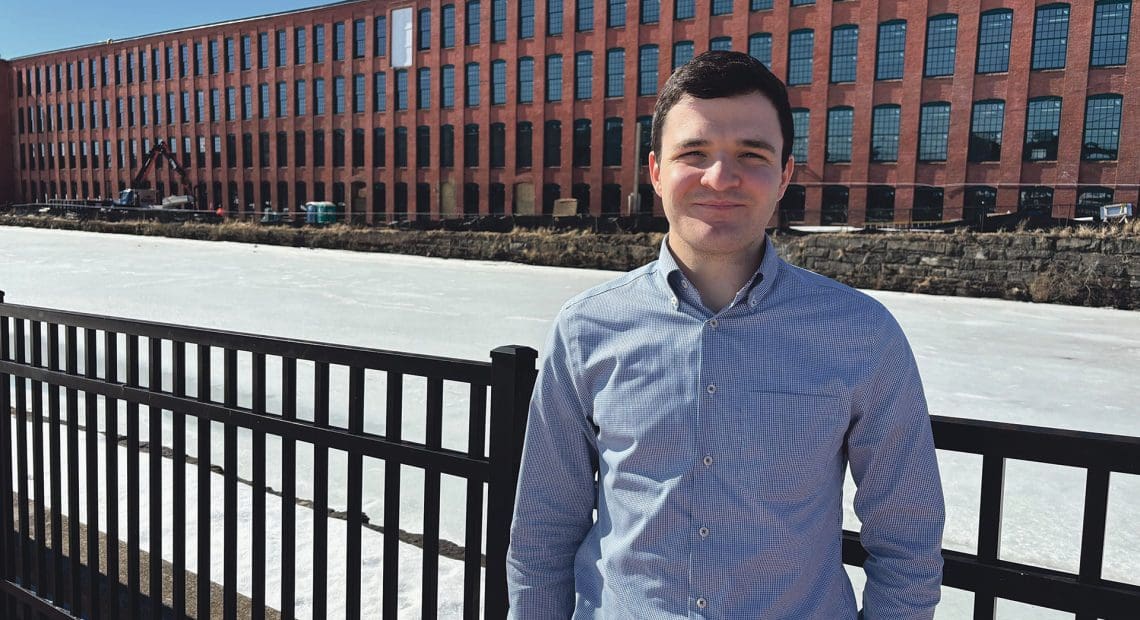
Hagop Toghramadjian stands outside phase one of the Residences on Appleton, which features 88 units of mixed-income housing.

Hagop Toghramadjian stands outside phase one of the Residences on Appleton, which features 88 units of mixed-income housing.

Aaron Vega calls them ‘meet and greets.’

And they are, well … just what that name suggests. They’re meetings between city officials and small-business owners, many of them representing ventures in the emerging ‘climate tech’ sector who have heard about Holyoke and the companies that now call it home, and want to hear more with an eye toward following them.

“They’re hearing about Clean Crop, they’re hearing about Sublime Systems, they’re hearing about Simple Pack, and they want to know what’s going on,” said Vega, director of the city’s Office of Planning and Economic Development, referring to three cutting-edge businesses we’ll get to back to later that are either already in Holyoke or advancing plans to locate there.

As city leaders listen to these business owners, a common thread — and a real challenge for the community — emerges.

“The biggest challenge for these companies that want to come to Holyoke as they move from their startup space is that there’s no built, ready space for them,” Vega noted. “There’s no white-box office space to move into. These guys don’t want to get involved in a rehab project; they want to be able to move in and get to work.”

“The biggest challenge for these companies that want to come to Holyoke as they move from their startup space is that there’s no built, ready space for them. There’s no white-box office space to move into. These guys don’t want to get involved in a rehab project; they want to be able to move in and get to work.”

Holyoke’s meet and greets and other aspects of its efforts to bring more small businesses to this former manufacturing hub — and early-stage efforts to create more spaces for them to move into — are just a few of the many converging storylines in Holyoke.

Others include:

• New housing projects, including a WinnDevelopment initiative at the former Farr Alpaca Co. complex — a $60 million endeavor that will create 88 units of mixed-income housing for adults 55 and over in phase 1 and another 70 in phase 2, while preserving a huge piece of the city’s past — and another project at Open Square that will create 80 units of market-rate housing;

• A cannabis cluster in flux: Holyoke welcomed the cannabis industry with open arms, and for a time, it looked like a large cluster of different businesses, from growers to dispensaries, would settle there. Some have, but as the sector faces growing pains and overall contraction, the city faces challenges, including businesses that are fighting to survive and one large grow facility, Trulieve, that has closed, with its huge plant sitting idle;

• New businesses and greater energy downtown. The city continues to ride a wave of entrepreneurship that has generated several new restaurants and storefronts in and around High Street, Vega said, adding that the new housing units coming online should generate more new-business activity;

• Those aforementioned companies in the green-energy and climate-tech sectors, headlined by Sublime Systems, which will manufacture environmentally friendly concrete at a plant on Water Street;

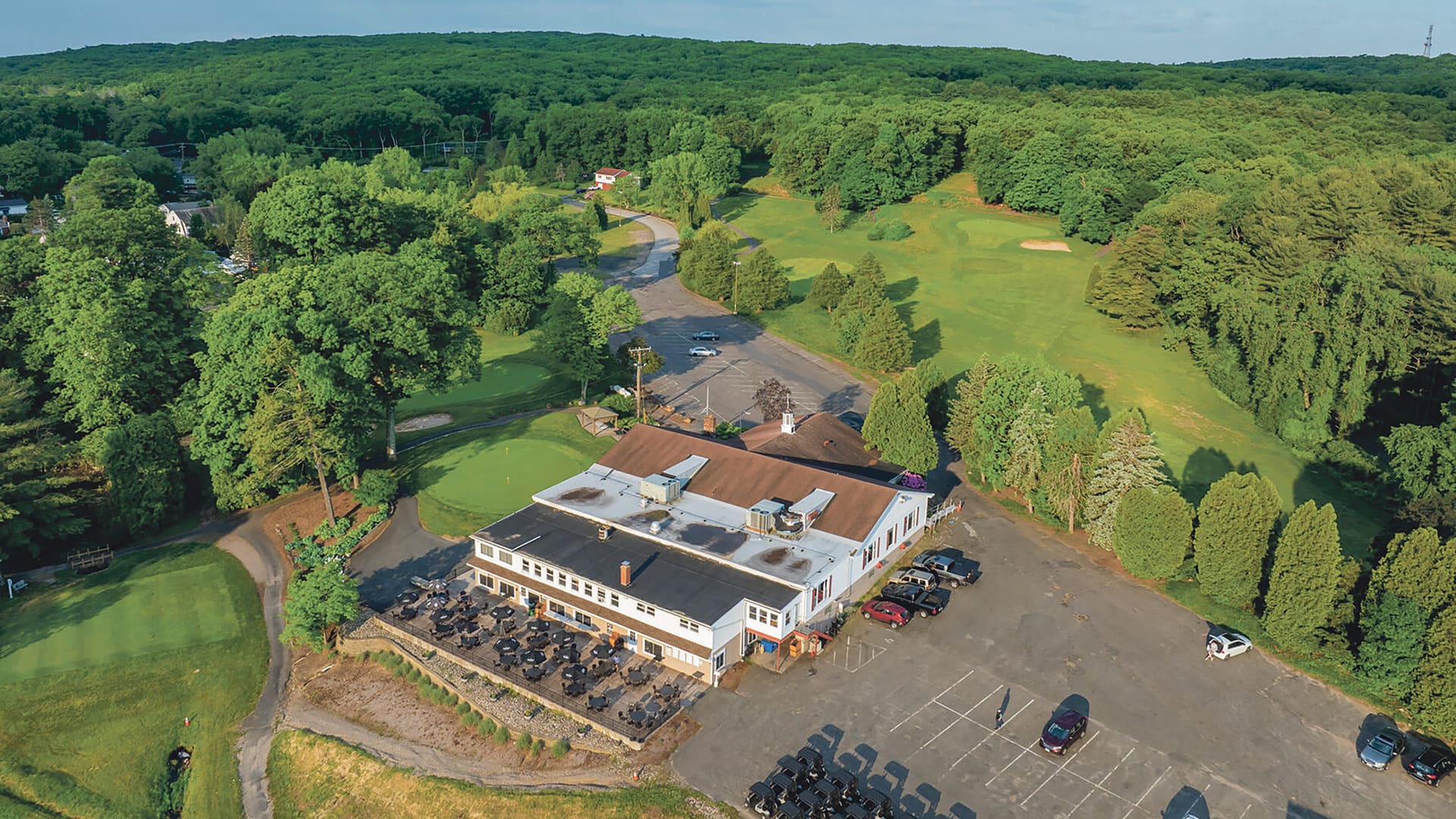
• A sports complex that is still in its early stages, with a site identified on Whiting Farms Road and other properties being assembled, as well as new ownership of Wyckoff Country Club (see related story on page 31).

• A reinvigorated Holyoke Community College, which has received a huge boost from MassEducate, the state’s free community-college program, and is making adjustments in the wake of a 24% rise in enrollment over the past two years;

• A new strategic plan for the city now being prepared, which is expected to help create a road map for continued progress in a city that has seen momentum on several fronts in recent years; and

• Existing businesses and traditions, especially the upcoming Holyoke St. Patrick’s Day Parade and Road Race.

Slicing through all that, Mayor Joshua Garcia, the Holyoke native now in his fourth year in the corner office, said the city is achieving progress with many goals and on several fronts, but there is still considerable work to do and projects to bring to the goal line.

These include everything from the sports complex to renovation of the historic Victory Theatre, a project now 40 years in the making. Those behind the effort are still struggling to close a significant gap between the funding that’s been raised and what will be needed to revitalize the landmark.

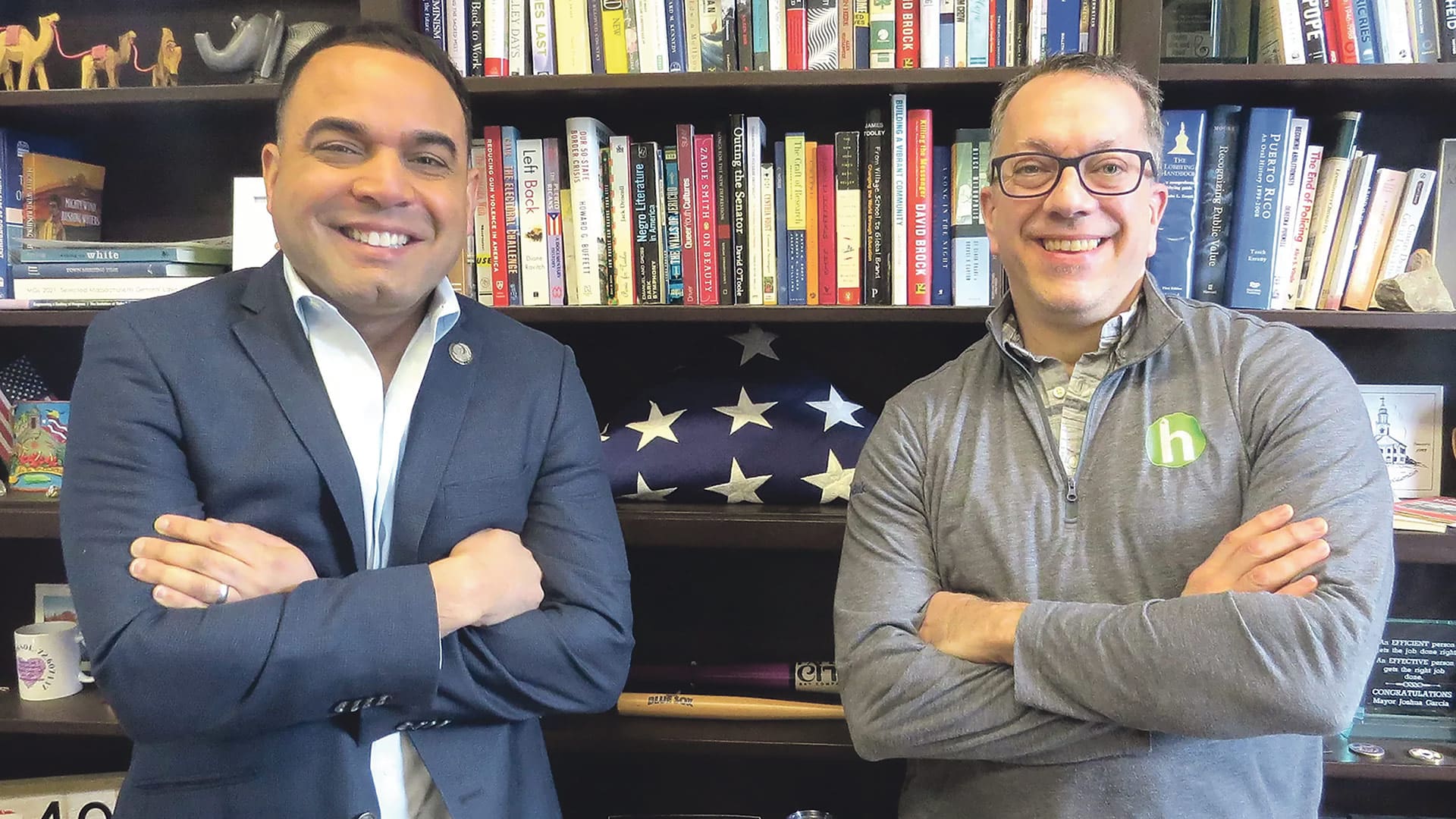
Mayor Joshua Garcia, left, and Aaron Vega

Mayor Joshua Garcia, left, and Aaron Vega say Holyoke continues to pursue — and add — new businesses in the broad realm of climate tech.

Garcia described economic development in the city as an ecosystem, one including manufacturing, small — and often very small — businesses, hospitality, the arts, food, and sports.

“The question is, how can we get all the boats to rise together so we’re establishing sustainability in our city?” he asked, adding that the answer to that question is the ongoing priority of his administration.


Not Your Run-of-the-mill Project

“Daunting.”

That’s the word Hagop Toghramadjian, a project director and development counsel with Boston-based WinnDevelopment, settled on as he was asked to describe the ongoing work at Appleton Street at the former Farr Alpaca complex.

Elaborating, he said he considers the project, called the Residences on Appleton, now far more than a decade in the making, to be the most challenging building-conversion initiative that WinnDevelopment has undertaken. And that’s saying something.

Indeed, the company has taken on many complex projects locally, including 31 Elm St. (Court Square) in Springfield and several buildings in the Ludlow Mills complex, and in numerous other communities as well.

But this conversion of the 125-year-old former mill complex into housing is on another level, said Toghramadjian as he talked with BusinessWest in the kitchen of one of the nearly finished units. He noted that there are several reasons why — from the extremely poor condition of the mill to the need to assemble property for parking and a three-story amenities building, to simply securing access to a building bordered on one side by a canal and the other by the Pioneer Valley Railroad.

As with all projects of this nature, there was also the challenge of pulling together the requisite pots of money, which, in this case, included everything from state and federal historic tax credits to state and federal low-income housing funds.

“We want to keep these small businesses local; we want to keep them here and give them an opportunity to grow their business.”

“Where we’re standing now … there was thin air, the floor had rotted through, the roof had rotted through — only the brick walls were still standing,” he said. “It was very dark, the air quality was bad … you would never dream that this could become comfortable, beautiful housing.”

But the various groups involved have persevered because this project is as important as it is difficult, he noted.

“Given its location and given how blighted it was, it cast a shadow on the whole downtown — it was a top priority for the city,” said Toghramadjian, noting that the site sits between Main and High streets, the city’s two main commercial districts, and directly across from Holyoke Heritage State Park and the Massachusetts Green High Performance Computing Center. “Because of that, they’ve been really good partners, and that’s why Winn came to Holyoke and made this investment here — it’s because the city knew what it took to make this kind of project happen.”

Jim Lavelle

Jim Lavelle

“We’ve been trying to promote not only the lower utility rates here, but the clean energy that customers can promote with their products and hopefully help with sales.”

As phase 1 continues, with leasing to commence and tenants due to start moving in this fall, Toghramadjian and others we talked with said that, while these 88 units will make a welcome addition to the landscape and help spur economic development in the area, they represent a drop in the bucket when it comes to the city’s overall housing needs.

Indeed, Garcia said a recent report put that need at roughly 1,600 units of new housing over the next 20 years across the broad spectrum of income levels, which is another key element in the equation because different types of housing, including market-rate and homeownership, enables residents to stay in the city as their financial situation improves.

“The Appleton Street project doesn’t address the magnitude of the problem, but we’re chipping away at it,” said the mayor, noting that there may be as many as 600 units already in the pipeline.

That includes phase 2 of the Appleton Street initiative, he said, noting that WinnDevelopment is currently assembling the required pots of money for that initiative, as well as the market-rate units planned for Open Square and other ongoing housing initiatives.

There are several smaller housing initiatives taking place, said Vega, including many involving the upper floors of properties along High Street, projects that provide a few or a few dozen units, all of which help meet growing need.

The problem, he went on, is the immense competition for limited state and federal support for such initiatives, with seemingly every community in the Commonwealth in need of housing.

“All the developers are going for the same pots of money, whether they’re in Holyoke, Springfield, Chicopee, or West Springfield,” he said, adding that, in this environment, having a solid mix of projects, large and small, in the pipeline is a must.


Current Events

As noted earlier, there are several projects in various stages of development in Hoyoke, and many converging storylines.

One of the most intriguing involves new-business development, especially in green energy and related sectors, where a cluster is emerging as companies eye Holyoke for location, available and relatively inexpensive real estate, and, especially, its lower-cost, clean electricity, said Jim Lavelle, general manager of Holyoke Gas & Electric (HG&E), which provides that energy.

“We’ve been trying to promote not only the lower utility rates here, but the clean energy that customers can promote with their products and hopefully help with sales,” said Lavelle, adding that Sublime Systems is just one of many businesses, large and small, that have chosen Holyoke for that reason, among others.

As an example, he cited Simple Pack, a company now located in Open Square that manufactures green food packaging to restaurants, schools, hospital cafeterias, and food distributors. Being able to say such products are produced with clean energy, in this case hydropower, is important to the company’s mission and a strong selling point with its clients, he said.

There are several similar examples, said Lavelle, who will gain a different title in a few days — grand marshal of Holyoke’s annual St. Patrick’s Day Parade.

While his father served in that role decades ago, Lavelle never expected to wear that hat himself because, while he’s long been somewhat involved in the parade, he has never served on its committee.

He considers the honor a nod to HG&E’s important role in the city, and is enthusiastic about fulfilling the many duties of grand marshal, including attendance at myriad events and, in accordance with tradition, responsibility for parade-day weather.

“I have a much greater appreciation for the effort that goes into all these different events that the parade committee puts on,” he said. “And I have a much greater appreciation for how strong a regional collaboration exists between the different communities’ parade committees and other civic organizations and the sponsors; they really work hand-in-hand on all these different events that happen across Western Mass.”

Putting his HG&E hat back on, figuratively if not literally, Lavelle said Sublime Systems, which he believes should be ready to starting building its facility later this year or early next, will soon become the utility’s largest customer, with 10 to 12 megawatts of demand. That’s a huge draw, but one it can easily absorb thanks to transmission-system upgrades, he went on, adding that the HG&E has the capacity to attract several more large users and dozens of smaller ones.

Attracting these businesses is one of many priorities for the city, said Vega, noting that there have been a steady volume of meet-and-greets in recent years, and more are on the schedule.

Many of these sessions involve early-stage companies, many of them in green-energy or green-manufacturing ventures, he said, adding that, in addition to city officials, the leaders of companies like Clean Crop, which uses electricity to revolutionize food safety, are often in the room to discuss Holyoke and its many selling points.

“If they’re a little further along and they have specific questions, we’ll bring in Holyoke Gas & Electric to talk about the energy portfolio they can provide,” the mayor went on. “We’re on people’s radar — we just need to put the package together to bring them in.”

Holyoke at a Glance

Year Incorporated: 1786
Population: 38,247
Area: 22.8 square miles
County: Hampden
Residential Tax Rate: $17.46
Commercial Tax Rate: $38.54
Median Household Income: $37,954
Median Family Income: $46,940
Type of Government: Mayor, City Council
Largest Employers: Holyoke Medical Center, Holyoke Community College, ISO New England Inc., PeoplesBank, Universal Plastics, Marox Corp.
* Latest information available

Which brings him back to that ongoing challenge of offering them spaces that are ready to move into. There aren’t many of them in the city, but he’s in discussions with some building owners about possibly partnering with the city to develop co-work, start-up, or innovation space.

“That’s a direction we want to go in,” he told BusinessWest. “We want to keep these small businesses local; we want to keep them here and give them an opportunity to grow their business.”


Bottom Line

As for businesses already growing in Holyoke, there are many in the cannabis sector, which, while it is experiencing strong growing pains, remains a force in Holyoke, Garcia said.

He noted that social consumption, or so-called cannabis cafés, constitutes the next frontier for this industry — the Cannabis Control Commission is taking up regulatory reforms on such facilities — and for some establishments in Holyoke, it could be a real lifeline in this time of growing challenge.

“In Holyoke, we want to be among the first communities to adapt and implement that opportunity for on-site consumption,” he said, likening these establishments to bars and restaurants in the sense of attracting people to the community. “If we can bring people into our city to spend money, that’s a plus.”

With cannabis, as with many of the other storylines unfolding in Holyoke, Garcia said he remains a “glass-full leader.”

That means he’s optimistic, but also realistic. It means he understands that, while much has been accomplished, there’s still much to do, and on many fronts.

It means he’s more bullish on his hometown than ever.

Home Improvement Special Coverage

All Under One Roof (Actually, Two)

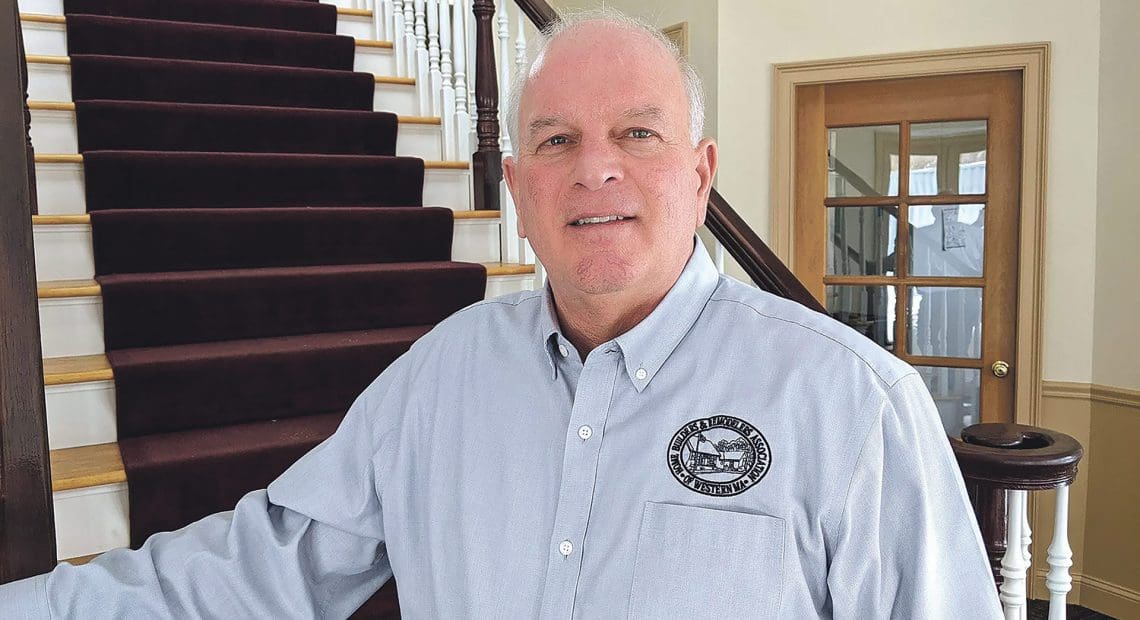
Andy Crane says the home show thrives

Andy Crane says the home show thrives, even in the internet age, because home-improvement business owners need to stay visible and put work into the pipeline.

Andy Crane acknowledged that many contractors and home-improvement companies are busy these days, thanks to a combination of factors, from people staying in their homes — due to higher interest rates and a shortage of inventory — to finding enough help to get jobs done.

They’re so busy that some — but certainly not all — are booking jobs several months out and even into next year, in some cases.

But even in this climate, where some contractors can’t touch new business for a few more quarters, it’s important to stay in front of consumers and continue to put business into the pipeline, said Crane, president of the Home Builders and Remodelers Assoc. of Western Massachusetts (HBRAWM).

And that’s why he’s not only expecting a sellout of booth space when it comes to this year’s Original Western Mass Home & Garden Show, taking place March 27-30 at the Eastern States Exposition — the 70th edition of this spring tradition — but also why the show is expanding into a second building this year, one dedicated almost exclusively to the ‘garden’ aspect of the event.

And with that move, the show is turning back the clock in some respects.

“Back in the day, we had two buildings, and a few years, we had three buildings,” Crane told BusinessWest. “This year, we’re going to have at least two and an outdoor area.”

The second building, known as the A Barn, will be geared toward yard equipment and accessories, plantings, and landscapes, with some details still to be finalized, he said, adding that this has been an element missing since COVID.

But getting back to his thoughts about contractors and why they want to be at this show, Crane said many aren’t coming to the Big E grounds looking for work — they already have enough. Instead, they want to make connections and enable consumers to at least get the process started.

“It gets the juices flowing — you might get some ideas and talk to some people,” he said. “Let’s say they can’t do it for a while … if you don’t get that process moving along, you’ll never get it done.”

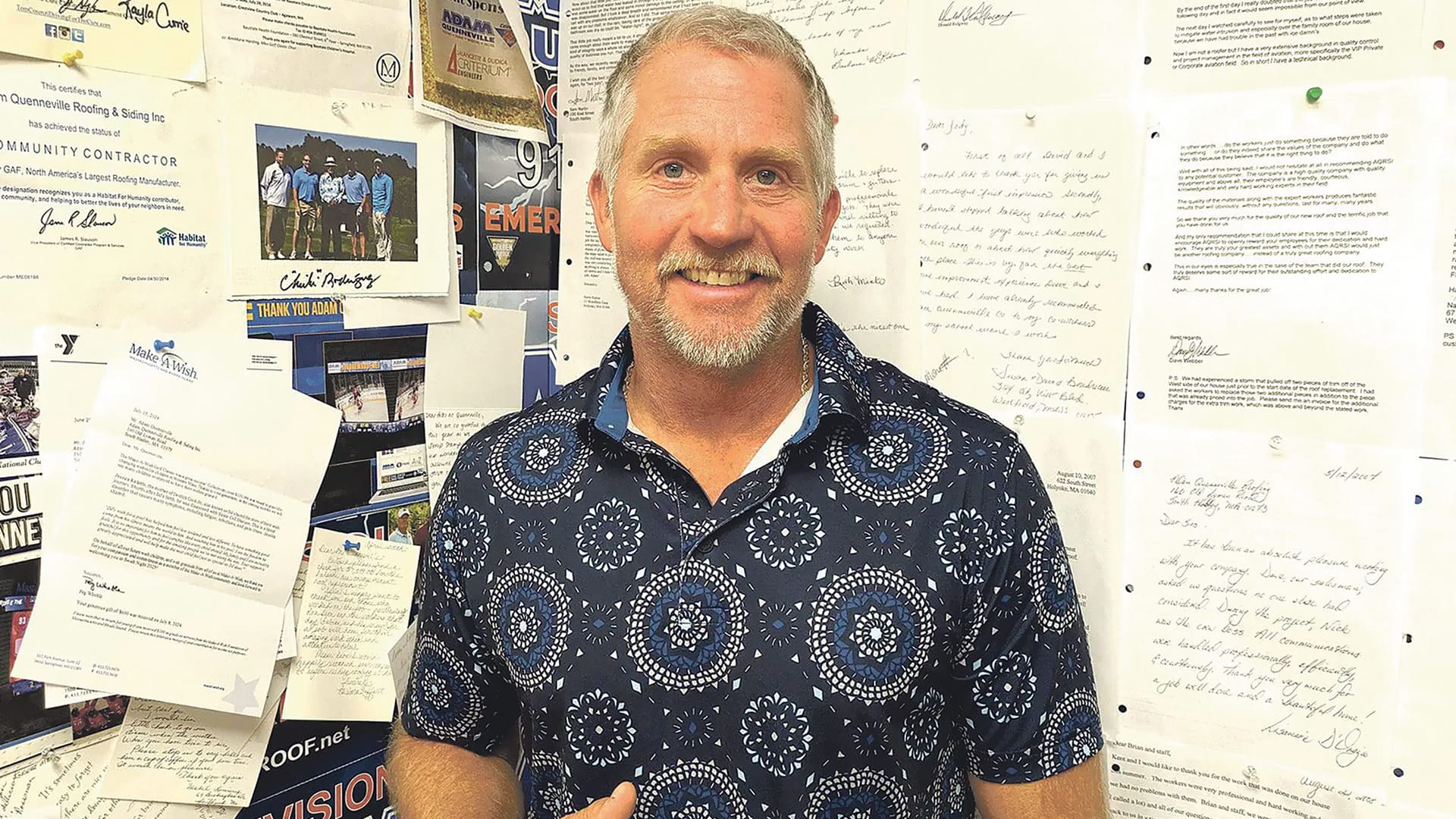
Adam Quenneville, president of Adam Quenneville Roofing & Siding, agreed. His company has been part of the home show for roughly 25 years, and he comes back each year to help make sure the phones keep ringing.

“I would think that people still enjoy touching and feeling products and getting a sense for what they think that person is like. You can’t get that off a laptop; you just can’t.”

This is a quieter time of the year — although roof crews can work pretty much year-round — and a good time to make connections and add projects for the rest of the year, he said.

“It’s great to get out and see potential customers, and it’s an opportunity to get leads, give estimates, and secure business. A lot of people are going there because they have a home improvement in mind, and it’s nice to be able to let them see us in person, talk to us, get information, and go from there.”

With that, Quenneville spoke for every vendor at the show, including the ones who sell beer nuts and pickles, most of whom are focused not on making sales that day, but on the ‘go from there’ part of the equation.

It’s why the show has thrived for 70 years, and why the 2025 edition is shaping up as another opportunity to build back from the tumultuous COVID years and continue to grow.


Through the Roof

Crane said the home show, which annually attracts between 12,000 and 15,000 visitors and, recently, about 300 to 400 vendors, will be marking 70 years in some subtle ways, with additional giveaways and other promotions.

But mostly, this show will be like the 69 that have come before it, in that it presents an opportunity for the public to gather, see what’s new (or not so new, but still important), talk with experts, maybe finalize some plans for what they want to do, and put a face and business card with a person and company they’ve seen on the internet or heard about from neighbors, friends, or relatives.

Adam Quenneville says he’s been coming back to the home show for 25 years

Adam Quenneville says he’s been coming back to the home show for 25 years because it provides valuable exposure and leads for new projects.
Staff Photo

It’s been this way since the mid-’50s — except that part about the internet, said Crane, adding that, before social media and before consumers could click on websites, contractors had to get out in front of people. The home show was created to give members of the HBRAWM an opportunity to show what they do, how they do it, and, yes, how much it will cost.

And while consumers can learn much about a product or contractor by visiting a website, and still more by following up with friends and neighbors who placed a specific contractor’s sign on their lawn, there is still much to be gained from seeing these professionals in person, Crane said.

“I would think that people still enjoy touching and feeling products and getting a sense for what they think that person is like. You can’t get that off a laptop; you just can’t. “If it’s a zero-turn mower, would you rather sit on one than look at a picture?” he asked rhetorically. “How about picnic tables and high-top tables … you might as well get the exact one you want and the exact color. As for sheds, isn’t it better to stand in the shed rather than look at a picture of one? You can visualize where your mower is going to go and where your pool equipment is going to go or the pellets for your wood stove. That’s what the show brings that computers don’t bring.”

It still does that, but it has become much more, he went on, adding that the event has become a rite of spring for many, and a social gathering for some, with friends and neighbors often gathering at the show and then going elsewhere for dinner.

“The show is still a great place to talk, shop, and get ideas about your home, your property, some of the things that people like to do in their homes,” he said, adding that, while some things have changed since Dwight Eisenhower was patrolling the White House, the best things about the home show are what hasn’t changed.

For 2025, there will be more of the same, said Crane, with the emphasis on more, especially when it comes to space for visitors to roam and take in the many exhibitors, who cross every spectrum of home and garden improvement, from who can do the work to how to pay for it.

Indeed, there will be several banking and finance institutions on hand, he noted, adding that the categories for vendors runs the alphabetical gamut, from air filtration to women’s clothing, with more than eight dozen in between, everything from awnings and canopies to foundation repair; kitchens and baths (huge items of interest) to mosquito protection; sheds and gazebos to wells and pumps.

It will all be under … well, two large roofs in 2025, said Crane, adding, again, that a second building is something the public has asked for, and something that’s needed to properly showcase vendors and products.

Fast Facts:

What: The 70th edition of the Original Western Mass Home & Garden Show
Where: Eastern States Exposition
When: March 27-30
Show Producer: Home Builders & Remodelers Assoc. of Western Massachusetts
Admission: General admission: $10; with coupon: $7; children under 12: free
For More Information: Call (413) 733-3126

As noted, the A Barn will focus on lawn and garden equipment, furniture, and accessories, everything from mowers and snow throwers to chairs, tables, firepits, and fountains — items that couldn’t be displayed as effectively in years past due to a lack of space.


Starting the Conversation

While the additional space provides room for more vendors and a chance to spread out, it also further activates the outdoor spaces at the Big E, said Crane, adding that there will now be traffic between the buildings — and opportunities to capture the attention of that traffic.

Over the years, those staffing the Adam Quenneville booth have succeeded in gaining the attention of visitors, said the company’s owner, adding that it has generated a steady flow of leads — and eventually customers.

“If I have to guess, I’d say we get about 100 opportunities,” he said, meaning actual estimates for potential customers. “We’ll probably give 90 people prices and secure about 50% of that — 45 to 50 jobs.”

That more than justifies the cost of the booth, he said, adding that the show has been one of the more successful methods of getting right in front of the public, telling the company’s story, and keeping the pipeline of work flowing.

Nick Riley, president of Chicopee-based N. Riley Construction, agreed. His firm specializes in home remodeling and new construction, and he’s been a regular participant at the show for the past 20 years because of the opportunities it provides to be visible, talk to people directly, and hand out business cards.

“We do really well at the home show, and that’s why we keep coming back,” he said, adding that he doesn’t take leads directly at the show, but instead instructs visitors to call and make appointments — and many of them do. “It’s about more than the eventual leads … it’s about getting in front of people, seeing them in person, and saying hello.”

Hundreds of other home and garden professionals can say the same thing, and they have — some of them for a half-century or more.

They keep coming back because the Western Mass Home & Garden Show has long been a spring tradition, a social event for some, a chance to gather ideas for most, and an opportunity, for those on the vendor list, to get down to business.

Community Spotlight Special Coverage

Community Spotlight

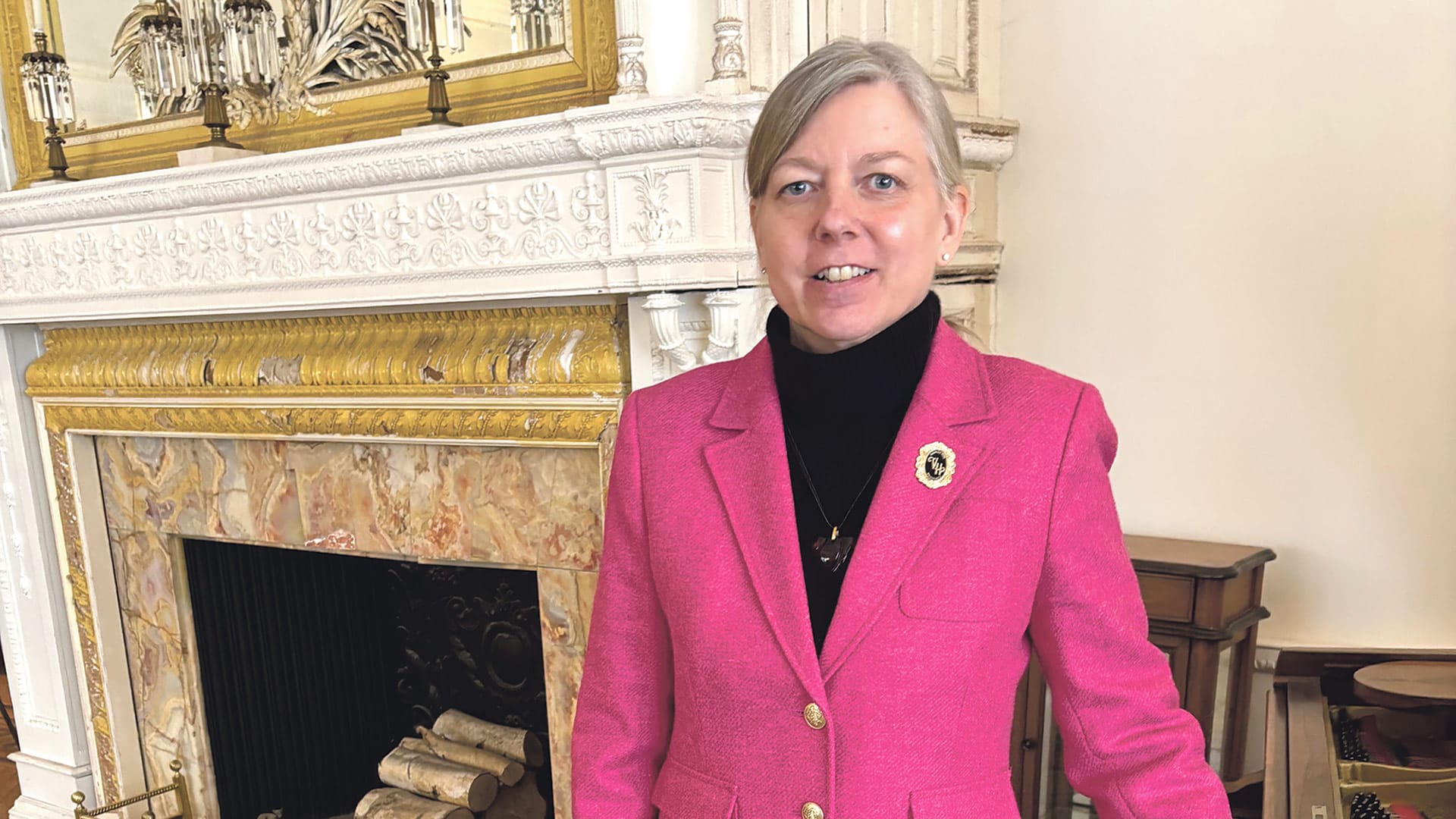
Wendy Healey

Wendy Healey

When it comes to the subject of ghosts at Ventfort Hall, Wendy Healey is … well, decidedly “neutral.”

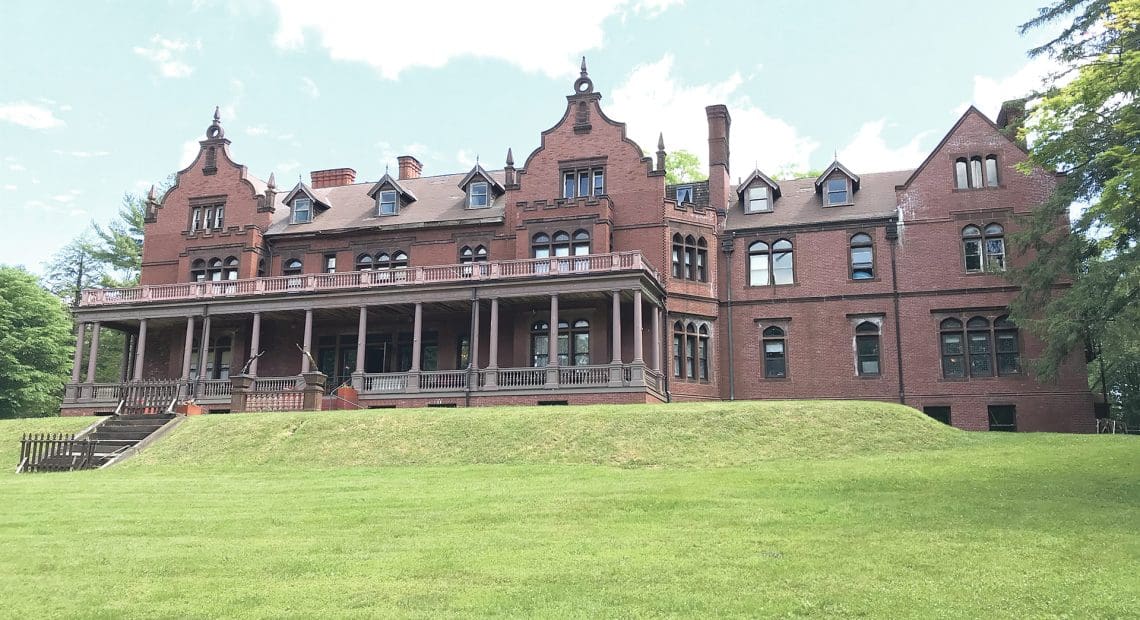
Roughly translated, that means that she’s never seen or otherwise encountered one. But she acknowledges that other people have experienced “something,” and she further acknowledges that ghosts are just one of the many intriguing storylines involving the cottage built by Sarah Spencer Morgan, J.P. Morgan’s sister, and her husband (and seventh cousin), George Hale Morgan, in 1893, and now home to the Gilded Age museum.

“We have what I would call friendly spirits in this house,” said Healey, the facility’s executive director, as she talked with BusinessWest in the billiard room, to which male guests would retire for cigars and brandy after one of the lavish dinners hosted by the Morgans.

The far bigger story, and the one she’d certainly prefer to talk about, is the comprehensive restoration of the landmark, now the site of a wide array of events, from weddings and teas to concerts and ghost tours. It has been ongoing for decades now, and at least another 20 years of work lies ahead, according to the most recent master plan.

“We are a restoration in progress — we are far from done,” said Healey, who assumed her role at the landmark two years ago. “We have millions and millions of dollars of work ahead of us.”

Ventfort Hall is a “restoration in progress.”

Ventfort Hall is a “restoration in progress.”

Ventfort Hall, its restorations and its ghosts, comprise one of the many storylines in Lenox, which has become a tourist destination and center of arts, culture, and healthcare, with many of the destinations located on the grounds of other Gilded Age cottages.

That list includes Tanglewood, summer home to the Boston Pops; Shakespeare & Company; the Mount, Edith Wharton’s home; and the resort spas Canyon Ranch and Miraval.

It is winter, which means most of these facilities are planning for the busier seasons to come, but some are busy year-round.

At Shakespeare & Company, an intriguing slate of shows is taking shape, said Jaclyn Stevenson, director of Marketing and Communications, noting that performances of Macbeth (with an all-female cast and a comedic touch) start in March, with most other shows taking place in the summer.

They will include a “Shakespeare Cabaret,” performances of Romeo and Juliet and The Taming of the Shrew, as well as August Wilson’s The Piano Lesson, with a few other performances still to be finalized.

“We have what I would call friendly spirits in this house.”

Equally busy these days is Gilbert Santana, general manager at the Miraval resort spa, which features the mansion known as Wyndhurst as its centerpiece. He the facility, which has been under the Miraval name since the fall of 2020, the height of COVID, has been improving overall visitation each year since, with that trend expected to continue in 2025.

Continually growing confidence among the guest population, which now includes virtually all age groups, is a big reason, he said, noting that there are now frequent bookings six months or more out, unusual in the spa universe. Meanwhile, new initiatives, such as so-called Family Connect weeks, where children can join their parents at the spa, have also helped.

The most recent Family Connect week came during the recent February school vacation week, said Santana, adding that it piggybacked a strong Valentine’s weekend to get this year off to a strong start.

“We wanted young people to start their well-being journey early, and it’s made an incredible impact; we’ve doubled the amount of guests this go-around than we had last year,” he said of the program, adding that Miraval is a true four-season resort spa that boasts more than 180 different kinds of programs — from meditation to a ropes course to yoga — and at all levels, beginner to expert.

A scene from The Comedy of Errors, performed in 2024 at Shakespeare & Company. (Photo courtesy of Katie McKellick)

A scene from The Comedy of Errors, performed in 2024 at Shakespeare & Company.
(Photo courtesy of Katie McKellick)

For this latest installment of its Community Spotlight series, we focus on Lenox and all that it has to offer.


In the Right Spirit

“This house was built for big parties.”

With that, Healey summed up the design philosophy behind the Elizabethan-style Ventfort Hall, as well as one of the enduring characteristics of the Gilded Age — large, lengthy gatherings.

Indeed, when guests came to a party at this home on Walker Street, they didn’t stay for a few hours and reach for their coats. Instead, they stayed for several days in one of the 14 guest rooms, said Healey, noting that, sadly, Sarah Morgan didn’t get to host many of these soirees: she died in 1896, only three years after Ventfort Hall was completed.

Slicing through the next 129 years in a concise yet effective manor, Healey said there was a succession of owners — and uses.

After being a private residence for a few decades, it later served as everything from a dormitory for Tanglewood students to a summer hotel known as Festival House; from a ballet camp to the home of Bible Speaks, a religious community that used the mansion for housing.

During this last chapter, the home fell into a serious state of disrepair, and was eventually slated for demolition for the construction of a nursing home.

“It was in such bad condition … no one wanted it, no one wanted to do anything with it, and it was, in the opinion of this developer, worth more flattened and to build a nursing home than to try to save it,” said Healey. “In the dining room, you could see daylight — you could see down to the basement, and you could see up through the roof.”

But in 1997, it was purchased by the Ventfort Hall Assoc., formed by Lenox residents dedicated to its restoration, which began soon thereafter.

Indeed, the building took a star turn in the movie The Cider House Rules, filmed in 1998, serving as the orphanage known as St. Cloud’s — its exterior, anyway (the interior shots were filmed at Northampton State Hospital), with its weathered condition being just what the film’s producers were looking for.

Gilbert Santana says Miraval celebrates its ability to promote wellness during all four seasons, and in many different ways.

Gilbert Santana says Miraval celebrates its ability to promote wellness during all four seasons, and in many different ways.

The movie — and there would be others to follow — provided both capital and momentum, said Healey, adding that restoration has a been a slow, very expensive undertaking over the past 28 years, with perhaps that many more still to come as the association works to ensure that the home will remain part of the fabric of Lenox for decades to come.

Phase 1A of a master plan launched in 2016 has been completed, said Healey, noting that it addressed critical building envelope and life-safety issues. Phase 1B is now underway, focusing on restoring the exterior masonry and roofing to ensure the long-term stability of the mansion.

One focal point of recent efforts has been shoring up of the east-end wall as well as the rebuilding and restoration of the mansion’s four chimneys, said Healey, noting that three have been painstakingly restored, and the fourth will be addressed this spring.

And in the years to come, many of the rooms on the upper floors, the massive basement, the carriage house, and other areas will be restored. That work, projected to cost more than $20 million, is to be funded through a combination of revenue from events, admission to the museum, and other programs, as well as donations and grants from organizations including the Massachusetts Cultural Council Facilities Fund, the Town of Lenox Community Preservation Committee, and others.

Lenox at a Glance

Year Incorporated: 1767
Population: 5,095
Area: 21.7 square miles
County: Berkshire
Residential Tax Rate: $9.05
Commercial Tax Rate: $13.18
Median Household Income: $85,581
Median Family Income: $111,413
Type of Government: Select Board, Open Town Meeting
Largest Employers: Canyon Ranch, Miraval, Boston Symphony Orchestra, Kimball Farms
* Latest information available

While the restoration work continues, the mansion hosts a growing number of events each year, welcoming guests who wouldn’t have been on the invite lists for the Gilded Age parties, said Healey, adding that there are several weddings each year, as well as concerts, tea-and-talks, a spring fashion fundraiser called Berkshique, and more.

There are also very popular ghost tours, at least once a month, led by Robert Oakes, author of Ghosts of the Berkshires. He provides a full tour of the house, by flashlight, while also relating both its history and the tales of those who say they’ve encountered a spirit on the property. And he’s heard many, from staff members and guests alike, Healey said.


Frame of Mind

It’s called ‘mindful golf.’

It’s … well, let’s call it golf with the edge taken off.

“We have a golf pro who walks you through the process of how you think when you swing and your intentions behind playing golf, which many times are jaded around winning and doing better,” Santana explained. “This helps you understand the purpose of playing your sport; it’s very well-defined and built around the person playing.”

Actually, the team at Miraval could put that word ‘mindful’ in front of almost everything they do, and that’s a long list, from activities such as kayaking and cross-country skiing to the weddings it hosts to the overall spa experience, which guests enjoy on visits lasting a day or several weeks.

Summing it all up, Santana said it’s about meeting people where they are.

Miraval, which also has resorts in Arizona and Texas, is coming up on five years in the Berkshires, although Santana said it’s more like three, with the first two greatly disrupted by COVID.

He said Miraval is continually looking at ways to bring wellness to more people across a wider age group. A good example is the two annual Family Connect weeks, which the facility test-drove last year to solid reviews that translated into bigger numbers this winter.

“We’re the only Miraval that does a Family Connection week where we allow kids to join their parents and other family members and experience it at a very young age,” he told BusinessWest. “One thing we do is make sure that everything we do has an educational purpose. Everything is defined here on growing your mindset — not necessarily redefining you, but giving an understanding of something that’s more than recreational.”

Education is a huge part of the mission at Shakespeare and Company as well, said Stevenson, adding that, in addition to the performances slated each year, the institution also schedules several actor-training programs as well as initiatives for young people and professional-development workshops.

These include Shakespeare in the Courts, a program staged in conjunction with the Berkshire Juvenile Court system, whereby adolescent offenders work with Shakespeare and Company artists and participate in classes, rehearsals, and performances of scenes from the Bard’s plays. During the six-week project, participants explore Shakespeare’s text and prepare their own performance pieces as part of their term of probation.

There’s also “Riotous Youth,” one-, two-, and three-week summer theater programs that introduce students (ages 7 to 17) to Shakespeare’s language, stories, characters, and themes using imaginative and playful methods.

As for actor-training programs, they take place in the spring and summer and are geared for those with different experience levels, from the novice to mid-career professionals, said Stevenson, adding that there are also several in-person workshops and online classes and workshops focused on everything from wit to movement and dance to public speaking.

Stevenson said Shakespeare and Company enjoyed a solid 2024, actually exceeding overall projections, continuing, as other venues in this community have, to build back from the COVID years, which took a serious toll on Lenox.

“We’re still working our way back a little bit, but we’ve come a long way,” she said of the COVID recovery. “It feels more in the rear-view mirror than ever before.”

Class of 2025

President and CEO, Monson Savings Bank

He’s Always Put the Emphasis on Team — and Teamwork


Dan Moriarty will be the first to acknowledge that he goes heavy on the sports terms and comparisons between the athletic field and the workplace, especially when it comes to the power of teamwork.

Make that really heavy.

But it’s understandable, and for many reasons.

Moriarty was a star athlete at Monson High School and later at Providence College, excelling at soccer. And he remains an athlete; he’s competed in several marathons and half-Ironmans (including the one in this region), as well as a full Ironman, which involves a 2.4-mile open-water swim, a 112-mile bike ride, and a 26.2-mile run (a full marathon). A few years back, he bicycled some 60 miles between Monson Savings Bank’s seven locations, a trek he called the ‘Tour de Branches.’

In the small-world department, he and Mike Rouette, executive vice president and chief operating officer at MSB, were teammates on the Monson High soccer team. In fact, they both scored goals in a 2-1 win over Monument Mountain in a 1984 game that propelled the team to the regional finals.

So, Moriarty certainly comes from a sports background.

And with that experience, he knows the full value of teamwork and understands that it’s more than a catchphrase managers will use to get employees to pull in the same direction.

Indeed, Moriarty stresses that, whether on the athletic field or in the workplace, individuals can excel and score goals (either figuratively or literally), but teams win games and accomplish great things together.

“Mike and I will sometimes maybe overuse the analogies from sports, but the best teams are the ones that have the best teamwork, and not necessarily the best players,” he said, adding that this the mindset he works to instill from the top, while also acknowledging that he has some pretty good players.

In keeping with this mindset, when called to inform him that he had been named a Difference Maker for 2025, he said simply, “I’m honored, but I’d rather give it to the team here.”

It is this ability to promote teamwork, while fostering a philosophy of giving back and getting involved, that makes Moriarty worthy of this award.

“Dan exemplifies a culture of support and community giving,” said Dodie Carpentier, first vice president and Human Resources officer at MSB, who nominated Moriarty for the Difference Makers award. “Leading a community-focused bank, he has overseen contributions of approximately $230,000 to local nonprofits this year, with bank staff collectively volunteering around 1,700 hours of their time. Over the past five years, MSB has supported 420 organizations, donating more than $1 million, and collectively volunteering more than 10,500 hours of time.

“Dan himself sets a powerful example, dedicating approximately 200 hours annually to nonprofit work, embodying the bank’s commitment to community involvement,” she went on. “As a member of the bank’s community outreach and community reinvestment committees, he actively fosters initiatives that align with the needs of the local community, encouraging his team to engage deeply and give back. His leadership reflects a genuine dedication to building stronger, more supportive communities.”

Claire Clini, owner of Professional Paralegal Services and a long-time MSB board member, and, before that, a corporator, agreed.

“Mike and I will sometimes maybe overuse the analogies from sports, but the best teams are the ones that have the best teamwork, and not necessarily the best players.”

“He’s a caring, compassionate individual, and he’s perhaps not the stodgy model of a bank president of years ago,” she explained. “He’s very transparent with the board and other employees relative to discussing his ideas, and certainly with the board, he encourages conversation relative to the strategy and the broad mission of serving the local community and the customers. I find that open communication to be refreshing, interesting, and very positive given what’s going on in the world today.

Mike Rouette, left, Dan Moriarty

Like his former Monson High soccer teammate (and now colleague at Monson Savings Bank) Mike Rouette, left, Dan Moriarty says he understands, and preaches, the importance of teamwork.
Photo by Bob Zemba, Simple Truth Imaging

“He’s always willing to give his time and his talent with a lot of local organizations, including several nonprofits,” she went on. “And I think that’s a quality to be admired by others.”

These comments explain why Moriarty will invariably use ‘we’ instead of ‘I’ when talking about anything at the bank, why he’s looked upon as a mentor and role model, and why he’s a true Difference Maker.


Goal Oriented

You might say that sports — and community involvement — run in the family.

Indeed, the soccer field at Monson High, home to the Mustangs, is named in honor of Moriarty’s grandfather, Robert.

“He was a great educator and coach in Monson; he started sports in Monson, so he was well-respected in a small community,” he said. “He was a coach from the ’20s to the ’60s, and he was an inspiration because he gave everyone an opportunity to succeed, and with the students and athletes who needed help, he would spend more time with them; he was their first real mentor.”

Moriarty said he has tried to follow his grandfather’s — and parents’ — lead throughout his professional career, which started at the accounting firm Coopers & Lybrand, now PWC, where he stayed a few years before coming to a realization.

“You have to let your team know that, even though there are people in positions that may have more responsibility, it’s still a team effort — no one’s better than anyone else here at the bank.”

“I felt like public accounting just wasn’t my style because you’d just go into a company for two or three weeks and do audit and consulting work with them, and then you would move on,” he explained. “You never really had a chance to help contribute to the business.”

His career took him to a few private companies, including Aetna and what was Rehab West, now HealthSouth, and then Unicare.

“But I kept feeling the same thing — that I wasn’t contributing to the overall success of an organization,” he went on, adding that, when he saw that Monson Savings Bank was looking for an account manager, he saw an opportunity to change that equation.

Unfortunately, he didn’t get the job. Fortunately, the woman who did — who, coincidentally, worked with him at Unicare — became frustrated as the bank went through a conversion and decided to leave, letting Moriarty know the job was open again.

“I told her, ‘it doesn’t sound like a great role if you’re leaving.’ But it was my hometown, so I decided to take a chance,” he recalled.

Over the years, he moved up in the ranks, with titles ranging from controller to senior vice president and chief financial officer, and eventually, president in 2020, followed by president and CEO in 2021.

As he discussed how he manages, Moriarty described himself as a servant leader.

At Monson Savings Bank, Dan Moriarty has fostered a culture of teamwork and giving back

At Monson Savings Bank, Dan Moriarty has fostered a culture of teamwork and giving back.

“I’ll do anything from the menial task of cleaning the vestibule, blowing out leaves, to leading the executives on complex situations, loan opportunities, and market-expansion opportunities,” he said, adding that, in all cases, he tries to lead by example and set a tone.

Elaborating, he said he sets this tone by being transparent and empathetic while also helping employees with the challenging assignment of balancing work and life.

“I try to set reasonable goals and expectations, but also let them know that I support them in any way I can, without getting in their way of accomplishing what they want to do,” he said, crediting his wife with reminding him, early and often, that he needs to listen and be open to new ideas.

“And that’s an enjoyable part of my job,” he went on. “I work with tremendously intelligent people who have great ideas, which makes it a really good team environment here.”


He Knows the Score

Throughout his tenure, Moriarty has stressed community involvement, said those who know him, and he has set the tone personally.

Indeed, he has been involved with many nonprofits, causes, institutions, and industry groups. The long list includes his church, St. Patrick’s in Monson, and the Monson Free Library. It also includes several nonprofits, including Link to Libraries (LTL), I Found Light Against All Odds, and the Community Foundation of Western Massachusetts, as well as Baystate Wing Hospital, the East of the River Five Town Chamber of Commerce, the Western Massachusetts Economic Development Council, and the Massachusetts Bankers Assoc. He was also recently asked to be on the board of the Healing Racism Institute of Pioneer Valley.

As he talked about them, he used ‘I’ and ‘we’ interchangeably, meaning there is often not a distinction between himself and the bank. That’s especially true with nonprofits such as LTL and I Found Light, where he plays a role himself, but the bank supports those causes as a company.

Moriarty said he says yes to requests to get involved whenever he can, and often, these yeses involve organizations focused on food insecurity, education and literacy, financial literacy, healthcare, and more.

And while giving back and fostering a culture where others do as well, he is always working to take the good players he has at the bank and create an ever-better, ever-stronger team.

When asked how he does that, he said there are many things that go into that assignment.

“You have to let your team know that, even though there are people in positions that may have more responsibility, it’s still a team effort — no one’s better than anyone else here at the bank,” he explained. “And you must stress that we all celebrate when we achieve things, but we all have to take responsibility for our actions and show appreciation, the best that we can, to the organization and the employees.

“You can’t have silos in your organization, where one department thinks it’s better than another department,” he went on. “You remove one department in the organization, and the organization is going to be weak.”

He put an exclamation point on his comments about teamwork and teammates by saying, “it’s a team effort. I couldn’t achieve any of this without the incredible team at Monson Savings Bank. Their unwavering dedication inspires me to strive for excellence. It’s their deep commitment to our communities and customers that keeps me focused and driven.”

When asked what he thinks about biking 56 miles, running 13 miles, and swimming just over a mile (a half-Ironman), Moriarty said his mind will wander in several directions.

“I think about a lot of things — family, friends, business — but then, when you get toward the end, it’s a soul-searching experience; you’re pretty close to God at that point.”

He also thinks about how to be a better manager and leader, and often comes back to his wife’s reminders about communicating and, especially, being a good listener.

He’s already good at that, but he’s committed to becoming better, which makes him a good teammate — yes, there’s that word again. And it’s just one of the things that makes him a Difference Maker.

Class of 2025

President and CEO, Naismith Memorial Basketball Hall of Fame

He’s Led the Shrine Through Crisis and onto Stable Footing

John Doleva knows a little something about recognition programs.

Indeed, he’s president and CEO of the Naismith Memorial Basketball Hall of Fame, which, in addition to being a sports museum, annually inducts a handful of individuals and groups, across all levels of the game, into the shrine.

In fact, he’s the one who gets to call these people and let them know they’ve reached the pinnacle of this sport.

So when he was called to inform him that he was named a Difference Maker for 2025, the shoe was on the other foot, and he was both humbled and a little … well, reluctant.

“Why me? I’m just doing my job,” he asked.

Maybe. But this job, which he’s held since 2001, has been far more challenging — and even more rewarding — than he could possibly have imagined when he took it.

The rewards have come from overcoming those challenges, most of them financial in nature, and taking the Hall from a position where it didn’t know every two weeks if it could make payroll or if it would have to file for bankruptcy, or if it might be moved to another city, to where it is now: financially stable and with a secure future. In Springfield.

And most would say he isn’t just doing his job — he’s also been active in his community, especially regarding youth sports, childhood literacy, and other initiatives.

Jerry Colangelo, the former owner of the Phoenix Suns, long-time Hall of Fame board of governors member, and its current chair, has seen the transformative change at the shrine and credits Doleva with being the right leader at the right time.

“He’s always talked about how important the Hall of Fame is to the city of Springfield and the great interest he’s had, and the Hall has had, in promoting the city,” Colangelo told BusinessWest. “When you look at the progress the Hall of Fame has made, I give a great deal of credit to John Doleva. He’s been a great leader, and I think he’s a very valuable asset for the city of Springfield. The Hall of Fame is in the best financial condition it’s ever been in, by far, and the future looks great.”

Frank Colaccino, another long-time board member, agreed. “John doesn’t waver — he’s a hard-working guy; he doesn’t give up,” he said. “He’s one of the key reasons this organization is where it is today. John is the engine that makes it go.”

Looking back, Doleva told BusinessWest that it was never his intention to stay at the Hall long enough to have people describe him in such terms. Indeed, he said his plan was to stay a few years and then return to the sporting-goods world from which he came.

What kept him from going back, what kept him at the Hall, was the enormity of the challenge and opportunity to lead the shrine through it.

“When you look at the progress the Hall of Fame has made, I give a great deal of credit to John Doleva. He’s been a great leader, and I think he’s a very valuable asset for the city of Springfield.”

“I wouldn’t call it a thrill, but it was the thrill of managing something that that was seemingly impossible,” he said. “It was a like a firefight; you get into it, and you’re making progress — you can feel it, you can see it. It took a long time, and there were a couple of stumbles like the 2008 recession. But I enjoyed seeing the Hall reposition itself — that was exciting to me.”

Over the past 20 years or so, the Hall has gone from $14 million in debt to a $4 million endowment. Doleva acknowledges both that the latter is certainly not enough, and one of his goals is to greatly grow that number, and that the turnaround at the Hall was not the work of one man.

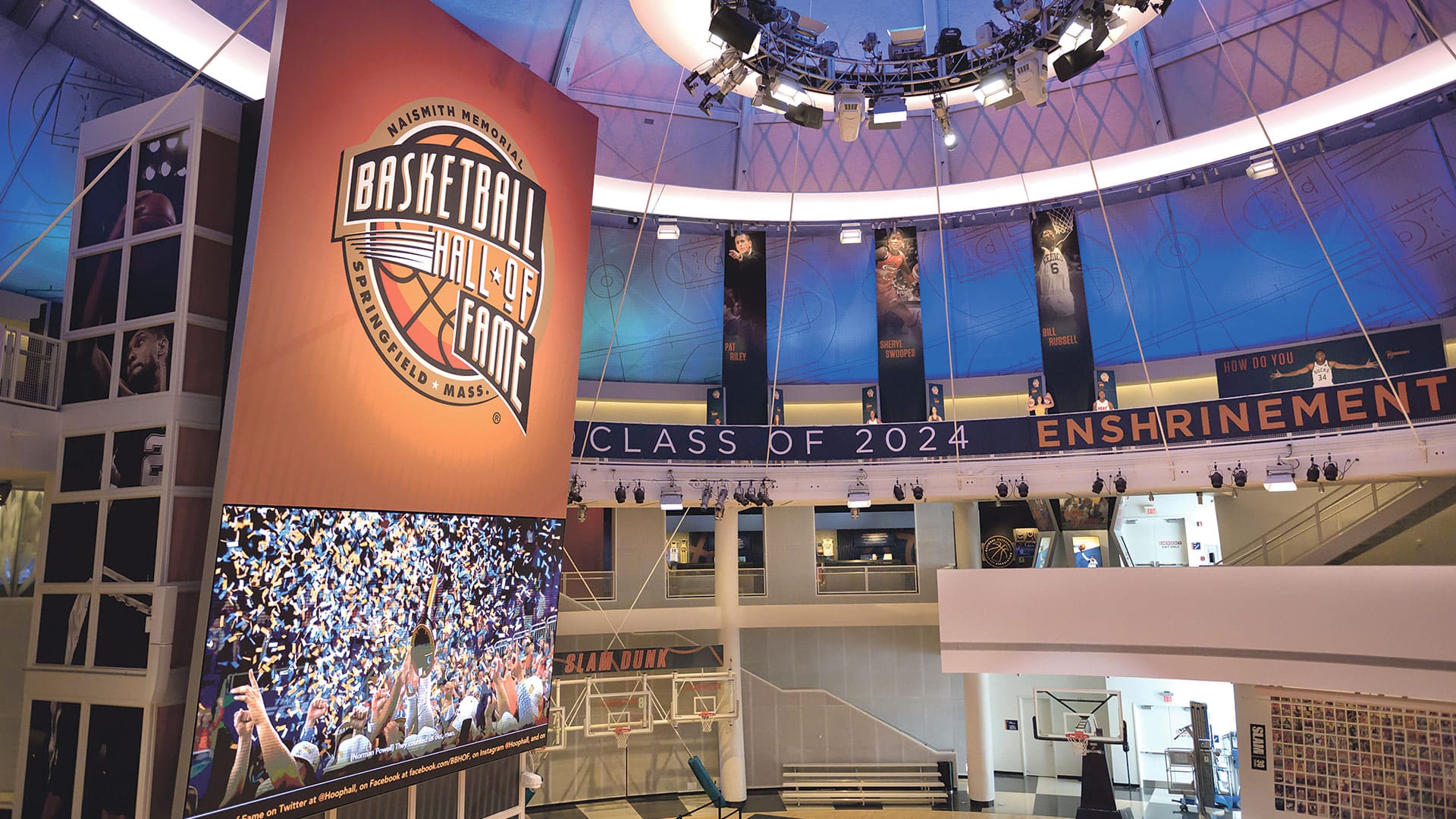
John Doleva says the successful capital campaign accompanying a recent renovation of the Hall exemplifies its stronger financial footing and status within the basketball community.

John Doleva says the successful capital campaign accompanying a recent renovation of the Hall exemplifies its stronger financial footing and status within the basketball community.
Photo by Bob Zemba, Simple Truth Imaging

But those who know him say it’s Doleva’s leadership and ability to build vital relationships that were weak or non-existent that made it possible.

And that’s one of many reasons why he’s a true Difference Maker.


Not a Slam Dunk

As noted earlier, Dovela came from the sporting-goods world, specifically Spalding, then based in Chicopee at the site of what is now a Callaway golf-ball manufacturing plant.

He was 25 when he joined the company as assistant product manager in the early ’80s, eventually rising to vice president and general manager of the company’s Sporting Goods Group. He said his years working for President George Dickerman, noted for being a tough, demanding manager, were difficult, but ultimately invaluable learning experiences.

“Those first few years, I went through the wringer with him … there were lots of times when I said, ‘this is crazy, I’m going to quit, I’m going to quit, I’m going to quit,’” he recalled. “But the lightbulb went off one day that what he was doing was preparing those who wanted to be prepared to be really good managers.

“You were always ready with your numbers, for instance, and you had two or three options for every question you anticipated him asking,” he went on. “And I think that really helped me with my business thinking.”

Doleva said those years at Spalding under Dickerman certainly helped steel him for what was to come at the Hall, which he joined in 1999 as vice president of Marketing, with the encouragement of Dickerman, one of the many leaders forced out when Spalding was acquired by KKR in 1996. (Doleva took a package from Spalding and worked briefly for a technology company in the Berkshires before coming to the Hall.)

Just a few years later, when then-president Don Gibson left, Doleva was placed in the role of chief operating officer, and a year later, he was named president and CEO and thrust into what could only be called a crisis.

“Those first few years, I went through the wringer with him … there were lots of times when I said, ‘this is crazy, I’m going to quit, I’m going to quit, I’m going to quit. But the lightbulb went off one day that what he was doing was preparing those who wanted to be prepared to be really good managers.”

Indeed, the new Hall of Fame on the city’s riverfront was opening after a failed capital campaign and amid $14 million in debt that suffocated the institution.

Colangelo remembers Doleva calling him at the height of this crisis in 2002, asking for advice, and soliciting his help. Colangelo responded by pledging financial support and telling other NBA owners — “I didn’t ask them, I told them” — to support the cause as well.

The money raised by the NBA provided vital breathing room, but the crisis was far from over, and huge amounts of debt remained. The firefight, as Doleva described it earlier, would continue for years.

Describing how he and his team were able to steer the Hall out of serious debt, onto stable financial footing, and raise more than $30 million during a recent capital campaign to renovate the shrine, he said it’s been about building relationships — with the NBA, the NCAA, high-school basketball, other bodies, and especially the hall of famers themselves.

“When I first came to the Hall, we’d have enshrinement, and we’d invite existing hall of famers back, but we wouldn’t pay for their flights, we wouldn’t pay for their hotel, we wouldn’t pay for their ticket to enshrinement,” he explained. “And the return was very low; I remember one year we had five hall of famers return and a class of three. It wasn’t a very crowded room.

John Doleva, left, with former UMass coach John Calipari

John Doleva, left, with former UMass coach John Calipari at his induction ceremony, has led the Hall through times of both growth and extreme challenge.

“The first thing I said when I took over — and this is when we had all that debt and no money — is that ‘we have got to offer to pay for hall of famers to come back, with a guest; we’re going to pay for their airfare, we’re going to pay for their hotel and their ground transportation … we’re going to treat them like hall of famers. And we’re going to bet that this will pay off in the future because they will get more involved.’”

And they have, with 58 hall of famers coming to Springfield for enshrinement ceremonies last fall, joining the 13 being inducted. Meanwhile, these inductees have become foot soldiers, as Doleva called them, acting as ambassadors for the Hall and taking part in its many events around the country.


Nothing but Net

This brings Doleva back to something he said earlier about seeing the Hall reposition itself over the years “from a place that had a lack of knowledge and lack of respect from the basketball community to something that was meaningful and respected and, in fact, revered.

“We’ve changed the minds of a lot of people in basketball about what the Hall is, what it represents, and what kind of quality image it has in the game,” he went on, adding that this work never stops.

While repositioning the Hall, Doleva has also become quite involved in the Western Mass. community. He’s active with the Greater Springfield Convention and Visitors Bureau, and also with efforts to create the annual Hoophall Classic, one of the nation’s largest and most prestigious high-school basketball tournaments, and Hooplandia, the annual 3-on-3 basketball tourney staged at the Big E, with select division championship games at the Hall.

Meanwhile, he has also been involved with the nonprofit Link to Libraries (LTL) — as a reader, program sponsor, and youth mentor — as well as the Greater Springfield YMCA, Springfield College, the Red Cross of Pioneer Valley, the Springfield Rescue Mission homeless shelter, and other area agencies.

“John is a dynamic, hardworking, caring, and humble man. He excels in many things, including his work at the Hall of Fame, but more importantly, he excels at being a truly wonderful and generous human being,” wrote Susan Jaye Kaplan, co-founder of LTL, as she nominated Doleva for the Difference Makers award. “He goes the extra mile each day, and not just in his work-related duties. He cares greatly for his Western Mass. community, and it is evident on a daily basis.”

Getting back to his role as the one who calls inductees with the good news, Doleva said that’s a bittersweet day — because he’s also the one who calls those who came up short in the annual voting.

And there are sometimes tears from those in both camps, he said, adding that this makes the day somewhat difficult.

As for the phone call he received from BusinessWest … there were repeated attempts to minimize his contributions to the Hall, the game, the city of Springfield, and this region by simply saying, “I’m just doing my job.”

But Doleva has been doing much more than that. He’s been a real leader and a true Difference Maker.

Class of 2025

CEO, DESCO Service

She Thrives by Bringing People Together to Cultivate Community


Early in life, and then as she started her career, Andrea Bordenca had no real desire to work within, let alone manage, the business started by her father, DESCO, a healthcare emergency field-service response organization.

“I said, ‘it’s your thing, dad, but I don’t know if it’s my thing,’” she recalled, adding that she did work for the company in various capacities in her youth, but began working professionally as a technical writer and later handled marketing for her husband, an artist specializing in murals.

But things changed when her father got sick with kidney cancer.

“I thought it was something I needed to do to help my parents … and I eventually fell in love with it,” said Bordenca, who joined her mother, a nurse practitioner, in managing the venture, taking the role of president. Over the past 20 years, Bordenca, now CEO and chairperson, has expanded its services from laboratories to hospitals, surgery centers, clinics, restaurants, and hotels, taking sales from $4 million to $10 million while greatly improving profitability as well.

But her success in growing the company and taking it the next level is not why she has been named a Difference Maker for 2025, although it’s certainly part of her inspiring story.

Instead, it’s what she’s done at the space that … well, also serves as DESCO’s headquarters, at 200 Venture Way in Hadley.

There, she has created what she calls the Venture Way Collaborative, with the emphasis on the last word in that title. There, she brings together diverse voices and provides both the physical space and positive environment for people to grow and achieve something she never felt growing up — a sense of belonging.

“I thrive when people of all ages, races, and genders are in dialogue together,” said Bordenca, a self-described entrepreneur, executive coach, and youth and adult leadership educator. “And I believe that the only way toward systemic change is by bringing all community stakeholders together to create change together.

“In my leadership and coaching, I work with people to develop a grounded and powerful presence rooted in what drives them,” she went on. “This starts with creating awareness of how people see themselves. That awareness then creates choice to move differently in the world. The root of all these conversations is care. What are we taking care of? What needs more care? A common missing piece in the leaders, parents, and kids I work with is ourselves.”

She does this at Venture Way Collaborative, which she described as far more than space that can be rented for events, team-building exercises, community gatherings, nonprofit fundraisers, and yoga classes — although it is that, too.

“We don’t just rent space; we form relationships,” she told BusinessWest, adding that the collaborative is a “space for community members to work, learn, and explore creative solutions together.”

It is home to DESCO, which now boasts more than 60 employees and serves businesses across the country, but also Generative Leadership Consulting, which she serves as managing partner, as well as Lead Yourself Youth and the Women’s Collaborative, two initiatives she founded to enable those constituencies to address issues and challenges together and collaboratively.

Ira Bryck, the former director of the family business center at UMass Amherst, and a Difference Maker himself in 2020, first met Bordenca as she came to the center to navigate the many complex issues that confront those in family businesses.

In nominating her for this award, he said she helps individuals, and especially young people, become the best versions of themselves.

“When I would try my best, I wasn’t as good as my peers or my sister, so I developed this narrative that I was stupid because I didn’t do well in school, and I would try my hardest.”

“Her leadership methodology combines neurolinguistics, mindfulness, emotional literacy, and somatics, and this comprehensive approach facilitates the embodiment of leadership rather than passive learning,” he wrote. “She focuses on developing awareness and creating choices for people to move differently in the world, with care at the root of all conversations.

“On top of all these ventures and accomplishments, she is a wholesome, kind, generous, curious, inspired person, who loves nothing more than to make the universe a better place to live,” Bryck went on, adding that the sum of her accomplishments and attributes certainly makes her a Difference Maker.


Life Lessons

Before talking about what she’s created with the Venture Way Collaborative, Bordenca first talked about her own life, her own struggles to try to fit in, and her inability to see her own worth, because the two are related.

She grew up in Medfield, an affluent community in Eastern Mass., and struggled, as she put it, to feel like she belonged.

“I wasn’t a great student, and my older sister was,” she recalled. “And even though I looked like everyone else — it was a white-dominant town — I really struggled in school, and I was seen as disruptive.

“When I would try my best, I wasn’t as good as my peers or my sister, so I developed this narrative that I was stupid because I didn’t do well in school, and I would try my hardest. And as a defense mechanism, I ended up skipping school, got into drugs, and was just disruptive to get the acceptance of my peers. I recognize that now as an adult, but didn’t know it at the time.”

Andrea Bordenca says her many programs are designed to give people something she didn’t have growing up — a sense of belonging

Andrea Bordenca says her many programs are designed to give people something she didn’t have growing up — a sense of belonging.
Photo by Bob Zemba, Simple Truth Imaging

A psychological determination would reveal that she had four learning disorders, including ADHD, and this helped her overcome feelings of being “stupid,” as she put it, although she struggled with various medications prescribed for her.

She credits her husband with helping her understand that “there was nothing crazy about me — I just didn’t fit into the box I was supposed to be fitting into in the town that we were in.

“That gave me some hope,” she went on, adding that she eventually took herself off those medications and “found what it was that gave me a sense of belonging.” And, in the simplest of terms, the Venture Way Collaborative was created to help others do the same.

She broke ground for the collaborative in 1999, just a few months before the pandemic arrived. COVID initially kept the facility from doing what it was designed to do — bring people together, in person — but Bordenca carried on through Zoom, and admits that her timing was actually good because she could not have afforded to build the facility amid the soaring construction costs that arrived post-pandemic.

As she mentioned earlier, it is physical space where people can meet, but it’s much more than that.

“It’s a physical space that manifests a place where I want to feel good, and where I want others, when they come in, to say, ‘this is good; I feel welcome.’ There are high ceilings, there’s expansiveness, there are bold colors — there are a lot of touches I curate so people feel like this is home,” she said. “I want it to be expansive and creative.”

That’s especially true of a large, 1,000-square-foot space that is called, among other things, the ‘classroom,’ or the ‘studio,’ depending on who’s using it.

“It has no furniture in it in, so there’s room to move around,” she said. “Everything I do has a component of awareness of the body and the nervous system, so I want to make sure that, when I’m doing leadership training, people can feel their bodies and are aware of their movement because that’s not something we’re taught to be aware of.”

The space now hosts groups ranging from the Queer Valley Library to the Women’s Fund of Western Massachusetts; from the Zonta Club of Quaboag Valley to Faces of Medicine, which shares the journeys, successes, and struggles of Black female physicians.


Building Emotional Resilience

Beyond her work at DESCO and as a landlord at 200 Venture Way, Bordenca is also a coach, working with both adults and young people. As part of these efforts, she created Lead Yourself Youth and the Women’s Collaborative to bring people together and create dialogue.

The former is not an official nonprofit, but rather an informal entity that provides professional development. Bordenca has worked with groups ranging from Girl Scouts to students and educators at the MacDuffie School in Granby and the Hadley school system, and focuses on normalizing different emotions, ranging from anxiety to frustration, using hands-on activities like juggling and sewing.

“A lot of it is helping people build that emotional resilience through these safe spaces of practice and simulation,” she said, adding that she does the same with women, a discussion that will take her to … golf.

“I talk to women professionals who say, ‘I golf, and I hate golfing,’” she explained, adding that she once put herself in that category. “And I say, ‘why do you golf, then?’ And they say, ‘that’s where the decisions are made.’

“I’ll say, ‘if this isn’t your thing, what is something that you can create that might attract some golfers and maybe non-golfers that are also influencers, decision makers, people that you’re trying to close deals with?’” she went on. “‘Can you create another event, like a hike or even a trip to an amusement park?’”

That’s just one example of how she encourages people to help cultivate communities by being creative and focused on knocking down walls instead of doors.

Overall, Bordenca said her broad focus is on helping individuals of all ages, genders, and life paths find common ground and that sense of belonging that eluded her in her youth.

“If people don’t have the people around them that have the same value system, they’re not going to get very far because they’re just going to have people tell them they’re wrong or ‘that’s the wrong way,’ which was a lot of my childhood,” she explained. “The work that I do with other children and also educators and other organizations is … ‘hey, there’s no right or wrong way; it’s just based on values and your compass.’

“If you work in an organization, if you live in a community, if you’re part of a family whose value systems are different, who are the people that you can find that share your values so you don’t feel crazy, isolated, alone, or so you don’t have to compete or fight so hard? It doesn’t have to be that way.

“As social animals, we need other people,” she continued. “And just because of the way we’re taught and we learn, I think it’s really difficult, especially post-COVID with all the social and emotional issues that children and people are having, especially Gen Z, to know how important it is, and how possible it is, to find the people who are just like you.”

Helping individuals do that — helping people find that sense of belonging — is just one of many reasons why Bordenca is truly a Difference Maker.

Class of 2025

Executive Director, Providence Ministries

She Hears the Cries of the Poor and Speaks Up for Them

They called it ‘Fashion for Compassion.’

This was a fundraiser staged by Holyoke-based Providence Ministries for the Needy (PMN). Area ‘celebrities’ would stroll down a runway modeling clothes from area stores, with proceeds from ticket sales benefiting the nonprofit, which provides services ranging from a soup kitchen to sober homes for men.

Jennie Adamczyk was working for Ross Insurance, handling sales and marketing, and, through her work to bolster the agency’s social-media profile, she had reached that ‘celebrity’ status and was asked, along with her boss at Ross, to become one of the models.

So she did, sporting some offerings from Old Navy, and, in the process, getting to know some of the leaders at PMN and learning much more about its multi-faceted mission. She became intrigued, and soon she would get far more involved.

Fast-forwarding quite a bit (we’ll go back in more detail later), she became its executive director five years ago and commenced what could be called a turnaround for the agency, greatly improving morale among staff members, creating an even sharper focus on its mission, and nurturing a culture of caring.

“I’ve always tried to lead by example here — ‘this is how I want you talk to people, this is how I want you to engage with people.’ Everyone gets treated with dignity and respect,” said Adamczyk, who firmly believes that she and her staff members embody the spirit of Sr. Margaret McCleary, SP, founder of PMN, an agency affiliated with and sponsored by the Sisters of Providence.

“We model ourselves after Sister Margaret: if you see a need, you meet that need to the best of your ability,” she said. “And there’s no judgment. It’s not our job to decide if someone is worthy of help; that’s not what we do. We make sure that they’re fed, their stomachs are full, and we send them on their way. That is the attitude we take across all our programs, and it comes from her.”

We talked with Sr. Margaret, who described Adamczyk as the right person in the right place at the right time.

“She’s a wonderful administrator, but more than that, she has a courageous spirit,” she said. “This is needed when advocating for the least among us. Jennie hears the cries of the poor and speaks up for them and embraces them always with respect and dignity.”

Sr. Mary Caritas, SP, who served on the board of PMN for many years before recently stepping aside, agreed.

“She was never trained for the job she’s in, but she’s a natural. She took over at a time when we needed a real turnaround, and I’m very proud of the way she’s done that. She came into her own very quickly, and she’s just a natural leader,” she said, citing, as one example, how Adamczyk stepped forward when the city of Holyoke needed a pop-up warming shelter and converted the chapel in the former convent that serves as home to many PMN programs for that purpose.

“She takes people off the street like that when it’s cold, and there’s discipline, there’s love, and respect, but people have to abide by the rules,” Sr. Caritas went on. “And, for the most part, people do that willingly because there’s so much love and concern for who they are.”

“We model ourselves after Sister Margaret: if you see a need, you meet that need to the best of your ability. And there’s no judgment. It’s not our job to decide if someone is worthy of help; that’s not what we do.”

Adamczyk described her work as “challenging, exhausting, and fulfilling,” essentially because of the constituencies being served and the circumstances under which they come to Providence Ministries for help.

“You’re working in an environment where you never, ever see anyone at their best,” she explained. “People are coming in, and they’re depressed, they’re hungry, they’re financially crippled, they have an abuse history … the list goes on and on.

“No one’s at their best, and that takes a toll,” she went on. “But if we can instill a little bit of hope, a little bit of joy into the people we serve, then it’s all worth it.”

This is the attitude she brings to her work, the attitude she has instilled in her staff, the attitude that permeates this agency. And for making it so prevalent, so ingrained in the fabric of PMN, Adamczyk is truly a Difference Maker.


A Perfect Match

As she talked about her not-so-subtle career change, going from insurance sales and marketing to being the program manager at Providence Ministries for the Needy, Adamczyk said that, on many levels, and to most people, it didn’t make a whole lot of sense.

Jennie Adamczyk says she patterns her approach to managing Providence Ministries after its founder, Sr. Margaret McCleary (right).

Jennie Adamczyk says she patterns her approach to managing Providence Ministries after its founder, Sr. Margaret McCleary (right).

Indeed, this was a lateral move. The salary wasn’t any higher, and the benefits were no better. But deep down, she knew this move was one she needed to make, personally and professionally.

“It felt right, like I was supposed to be here,” she told BusinessWest. “It felt like home — this is where I’m supposed to be — and that this mission is what I’m supposed to be doing. There was an overwhelming sense of peace being here; I felt that this is where God wanted me to be.”

Flashing back to her participation in Fashion for Compassion, Adamczyk said that, soon thereafter, the director at Providence Ministries asked her to join the agency’s fundraising committee, which she did, helping to create an enduring fundraiser called Retro Game Night, at which participants take part in old classics like the Match Game, Password, Name That Tune, and others.

Success in that realm led that same executive director to ask Adamczyk to become program director of PMN, an agency she knew about but had never visited. In fact, she practically had to ask for directions because she hadn’t been to that section of Holyoke, even though she lived in the city.

She was soon promoted to associate director when the director went out on maternity leave. And when that individual left, she became interim director, and then director when the candidate initially awarded that position did not pan out.

“She’s a wonderful administrator, but more than that, she has a courageous spirit. This is needed when advocating for the least among us. Jennie hears the cries of the poor and speaks up for them and embraces them always with respect and dignity.”

Today, Adamczyk leads the many programs at PMN, which fall into two categories — life-preserving and life-changing. The former includes Kate’s Kitchen, which served 74,000 people last year, and has seen demand of its services rise amid inflation and other economic woes; Margaret’s Pantry, which distributed 2.7 million pounds of food last year and has likewise seen demand for its services soar; St. Jude’s Clothing Center; and foodWorks@Kate’s Kitchen, a culinary training program that offers unemployed and underemployed individuals job training in the culinary field.

Meanwhile, the latter includes three sober houses for men, Loreto House, Broderick House, and McCleary Manor.

In addition, there is that pop-up warming shelter, a unique facility to say the least, and one of many programs in the former convent, which now, thanks to Adamczyk, also houses the agency’s administrative offices — before, they were at McCleary Manor, behind Providence Hospital — a move that speaks to her approach to this agency and its mission.

“When I first came here, I requested that my office be down here, because how can you run the programs if you’re not where the programs are?” she said, adding that all staff is at the Hamilton Street facility, and board meetings are staged there as well.


Warming to Her Caring Approach

Administering the agency’s programs is what Adamczyk does for a living. How she and her staff administer them is what makes her a Difference Maker.

As she talked about the ‘how’ element to her work, she started by saying, “I’m not corporate,” and returned to her thoughts about her approach and guiding philosophy, echoing that of Sr. Margaret McCleary.

“I tend to act when there’s a need, much like Sr. Margaret would have,” she said, adding that she doesn’t always follow all the policies and procedures when adding or amending a program. “That’s sometimes difficult to do in this kind of world; sometimes you just need to act and make a decision.”

Jennie Adamczyk with staff members

Jennie Adamczyk with staff members, from left: Michael Clark, facilities manager; Stephanie Trombley, marketing coordinator; and Axel Fontanez, housing manager.
Photo by Bob Zemba, Simple Truth Imaging

Such was the case when she decided that Kate’s Kitchen would serve dinner in addition to lunch — because the need was (and is) there, and so was the infrastructure.

“We were already serving lunch, we had the staff … it just seemed like a no-brainer to open the doors for dinner as well,” she said, adding that this mindset guides her in everything she does, and in every program within PMN.

The pop-up warming shelter — open when the temperature dips below 10 degrees or the wind chill falls below zero, and with a capacity for 25 beds and more if need arises, which it often does — is another example.

It’s not your typical shelter in most respects — everything from allowing married couples to stay together to providing hot showers; from making popcorn and hot chocolate for the guests and popping in a movie to providing fresh clothes and food.

“Our job with the pop-up shelter is not to rehabilitate anyone,” Adamczyk explained. “A lot of them are coming in and using; they will actively detox with us through the evening, but they’d rather be sick than be out in the cold.

“We had a mother and her autistic son stay with us this last stretch of open nights,” she went on. “They came to us in the morning and said, ‘we want to thank you for opening because we would have died in our tent last night, it was so cold; I’m afraid we wouldn’t have woken up.’

As for the movies, they’re part of larger efforts to provide those who need the shelter “a moment of feeling normal; it doesn’t feel like they’re not seen,” she explained.

“I’ve never myself experienced that, but I can only imagine that walking through a day and feeling as if no one sees you — and if they do, it’s a negative connotation — would be pretty heavy,” she continued. “So we try to be as loving and positive as we can those shelter nights.”

Meanwhile, operation and staffing of this shelter speaks to the way Adamczyk has improved morale at PMN and created a culture of not only giving back, but going perhaps above and beyond. Indeed, there isn’t a separate staff for the shelter, she explained, adding that regular staff who volunteer to work there do so knowing they go straight from that detail to their regular job.

“I have many staff that are going to work overnight and still have their day job in the morning,” she said. “They are giving of their time, energy, and resources to meet the needs of these people. They say they do it because I do it.”


Bottom Line

Adamczyk likes to say she’s a Protestant living in a Catholic world.

She recalled that, when she reminded of Sr. Caritas of this, she jokingly responded, “well, everyone is flawed in some way.”

She certainly doesn’t consider it a flaw that, on occasion, she may not follow all the rules or procedures when adding a program or a service. Like Sr. Margaret, when Adamczyk sees a need, she tries to meet it.

That makes her the right manager for PMN — and also a Difference Maker.

Community Spotlight

Community Spotlight

From left, Lee Pouliot, Krista Benoit, Brett Brown, and Bob Alger stand in the main entrance to the former main library in Chicopee, now undergoing historic rehabilitation for use as a community hub.

From left, Lee Pouliot, Krista Benoit, Brett Brown, and Bob Alger stand in the main entrance to the former main library in Chicopee, now undergoing historic rehabilitation for use as a community hub.


‘Historic rehabilitation.’

That’s the phrase Lee Pouliot and others used to describe work at Chicopee’s historic City Hall and the neighboring, long-closed main library.

In doing so, they made the distinction between this type of work and historic restoration.

Indeed, the latter returns something to what it once was at a specific point, said Pouliot, director of the city’s Planning Department, adding that this will not be the case with either building.

Indeed, the library, closed since 2004, when a new facility was built, will be renovated for use as a community hub, home for a farmer’s market, and meeting space, said Pouliot, while phase 2 of a project at City Hall and its annex will involve an office-by-office renovation of spaces to suit current needs and technology and make the best use of those spaces.

“One purpose of the project is to right-size some of the office spaces; we have some offices that have too many people crammed into too small a space,” he explained. “Another priority is building security. In working with all the department heads, we identified the offices that get the most visitation on a daily basis and tried to relocate them to the lower floors of the building, so we didn’t have the public accessing areas that they don’t need to.”

The City Hall project, which has been ongoing for a decade, has been slowed by the pandemic, but also a lengthy — as in more than three years — design phase that required large amounts of data collection from city department heads and employees about space requirements and specific needs.

Historic rehabilitation of the two downtown landmarks, work that has been ongoing through four mayoral administrations, is just one of the storylines involving Chicopee, the region’s second-largest city.

“One purpose of the project is to right-size some of the office spaces; we have some offices that have too many people crammed into too small a space.”

Others include everything from ongoing efforts to repurpose several old mills and create sorely needed new housing — projects that dovetail nicely, as we’ll see — to efforts at Elms College to cope with the many issues and challenges in higher education today, especially the so-called demographic cliff, a sharp decline in the number of the number of 18-year-olds entering college. But there are others as well, including the soaring cost of higher education and the need to help students and their parents meet it, as well as free community college, which is both a challenge and an opportunity.

The college is taking steps to help bring that cost down and afford more opportunities for a college education through initiatives such as the recently announced Elms Promise, a financial-aid program designed to provide full tuition coverage for students from families earning less than $85,000 annually.

“The cost of a college education has been on the increase, and families’ income has not increased as fast as the rise in tuition,” Elms College President Harry Dumay said in explaining the genesis of the program, adding that, since its inception, the school has placed an emphasis on being affordable for all types of students.

For this, the latest installment of its Community Spotlight series, we take an in-depth look at Chicopee and how it is building momentum — in all kinds of ways.


History in the Remaking

As they talked with BusinessWest in the former City Council meeting chambers on the fourth floor of City Hall, Pouliot; Krista Benoit, a project manager for Northampton-based D.A. Sullivan & Sons; and Bob Alger, senior project manager for NV5, a Hadley-based engineering firm, noted that the renovation of City Hall, opened in 1871, has been a decade-long project that essentially began when two panes of stained glass fell out of the rose window at the front of the building.

Phase 2 of the ambitious City Hall project will follow recent work like this renovated auditorium.

Phase 2 of the ambitious City Hall project will follow recent work like this renovated auditorium.

Then-Mayor Richard Kos asked Pouliot to undertake an emergency stabilization and historic-structure analysis to determine if there were physical deficiencies in the building’s structure. Dietz & Company Architects of Springfield was hired to work on both, and the firm determined that there were a number of significant deficiencies that needed to be addressed in both City Hall and the annex.

Emergency stabilization work included everything from the removal of stones from the clocktower amid fear of them falling to removal of the stained glass throughout the building for protection, Alger said.

Following these initiatives, funding was secured for phase 1 of historic rehabilitation work, which entailed work on the building envelope and the HVAC systems, he went on, adding that this included roof replacement, stone and masonry repair, brick repair, replacement of all the windows in both buildings, and a stunning renovation of the auditorium, a $17 million endeavor overall.

Phase 2, a $16 million project, will involve a three-year schedule of moving through the building, renovating and rightsizing offices, said Benoit, who first became involved in the project while working as a designer for Dietz and Company, and is now on the construction side with D.A. Sullivan, which also handled phase 1.

She noted that D.A. Sullivan has a strong track of work for area municipalities and in the areas of historic restoration and rehabilitation.

“We’ve been around for so long now, 1897, we’re now renovating many of the projects we actually built,” she said, adding that the Chicopee projects involve buildings on the National Register of Historic Places.

Pouliot noted that the contractors will hopscotch through the buildings, renovating a few offices at a time.

“We’re taking two to three office spaces offline at any given time, relocating staff to vacant office space, remodeling those offices, and moving staff back in,” he explained, adding that several departments will be moved to different floors or different areas that better suit their needs and those of the public.

These will be gut remodels, he went on, adding that it will take three to eight months to ready each space for its new occupant.

As for the library, Pouliot said there have been several requests for proposals issued for the city’s old library, and, over the years, a few intriguing uses have been proposed.

There was talk of a brewery that never really got off the ground, he said, adding that the concept that gained the most traction — but not enough to become reality — was to make the landmark home to the largest private collection of Franklin D. Roosevelt memorabilia, some 10,000 pieces, once housed in Worcester. There was even talk of the possible creation of a Roosevelt Study Institute and a collaboration between the museum and Elms College.

The ‘community hub’ concept was ultimately deemed the alternative that made the most sense, said Pouliot, adding that it transforms the library into a different kind of community resource, one that will hopefully bring more people and vibrancy to the Market Square area.


Grade Expectations

While the city works to rehabilitate its landmarks, one of its leading institutions, Elms College, is trying to build a more secure future by taking a proactive approach to the many challenges facing higher ed today, especially smaller, private institutions.

“There’s never a moment to rest,” said Dumay of this challenging time, describing Elms as being “healthy, not wealthy.”

By that, he meant that the school has a small endowment — $12 million, although it’s much larger than it was even a few years ago — but it remains in solid fiscal heath, thanks to steady enrollment in many of its divisions. These including transfers, continuing education, and graduate programs, making up for a decline in enrollment among high-school graduates, something being seen across this region and across the country, a situation exacerbated by what Dumay (and many others) have called the “less than adequate rollout” of Free Application for Federal Student Aid, or FAFSA.

“We had a really good year of students transferring to Elms College, a good year for students completing their degrees through our continuing-education program, and a good year of graduate students,” he explained. ‘Overall, we took in around the usual number of 500 students that we traditionally take in for all categories, despite the fact that, with our first-time freshmen, we didn’t reach the target that we were looking for.”

In this environment, schools need to be aggressive in telling their stories, stress their strengths and values — and the value they provide — and be responsive to those challenged by the high cost of a college education, he said, adding that the Elms Promise was created to help empower those students least likely to afford higher education, and it underscores the school’s affordability.

Chicopee at a Glance

Year Incorporated: 1848
Population: 55,560
Area: 23.9 square miles
County: Hampden
Residential Tax Rate: $15.16
Commercial Tax Rate: $32.62
Median Household Income: $35,672
Median Family Income: $44,136
Type of Government: Mayor; City Council
Largest Employers: Westover Air Reserve Base; J. Polep Distribution Services; Callaway Golf Ball Operations; Dielectrics; MicroTek
* Latest information available

“Having this Elms Promise out there clearly and crisply conveys to students and their families that an Elms College education can be as within their reach as some of the other alternatives available to them,” he explained, adding that this includes MassEducate, the state’s free community-college initiative, which, as noted earlier, is both another challenge and a great opportunity down the road.

“I’ll always be in favor of any initiative that makes college accessible for students,” said Dumay, a first-generation college graduate himself. “And we already know that this has increased enrollment at community colleges significantly, in this area and beyond. And because of the articulation agreements we have with all the area community colleges, and because many of the community-college students transfer to us, we’re expecting the number of students that will transfer to us to increase, and we see that as an opportunity down the road.”


Developing Stories

While Elms copes with its challenges, the city continues its work to put some of its former mills back to productive use while also addressing an urgent need for more housing.

Pouliot said the owners of the last remaining building in the Facemate manufacturing complex, the so-called Baskin parcel, are finalizing the securing of resources from the Commonwealth, and a groundbreaking is expected in the near future on 105 units of housing.

Meanwhile, a developer has been recommended for the four remaining buildings within the massive Uniroyal tire-manufacturing complex, the redevelopment of which has been a more-than-40-year saga, said Pouliot, adding that a mixed-use development that includes housing is being eyed.

These projects are moving slowly, he noted, because of the high cost of rehabilitating former mills of this kind into housing and other uses, as well as the time-consuming process of securing the various forms of financing, often including historic tax credits, needed to make such endeavors viable.

“Slow but steady wins the game when it comes to mill conversion,” he told BusinessWest, adding that the Uniroyal project will most likely develop in phases over several years.

In the case of another huge old mill, Cabotville Industrial Park, formerly home to dozens of various-sized businesses but now mostly vacant, progress has come very slowly, and its fate remains a large question mark.

“There have been a number of owners that have suggested a significant redevelopment project there,” Pouliot said, adding that such talks have been going on for more than 20 years now. “We’ve been stuck in this current round with the current owner, Silverbrick, for two or three years. But it’s a viable project for the right developer with the right experience.”

Housing remains a critical need in the city, he noted, adding that, in addition to the Facemate property and its 105 units, other, smaller projects are advancing, including plans to develop the site of a former Masonic lodge on East Street and the conversion of the former Belcher Elementary School into 24 apartments.

Melissa Breor, executive director of the Chicopee Chamber of Commerce, said redevelopment of Cabotville and other large mills, as well as the smaller projects in and around the downtown area, form one of the keys to continued growth and greater vibrancy in the central business district, which has seen many new businesses open in recent years amid of a spurt of entrepreneurship, which continues today.

She cited the planned redevelopment of a large Victorian home on Grove Street in Chicopee Falls into a mix of housing on the upper floors and a possible wine bar on the first, being undertaken by the owner of nearby Falls Pizza, as an example of this entrepreneurship and the importance of new housing.

“In terms of economic development and workforce development, housing is at the center of all that,” she said. “We have some great developments that are in process and at various stages, and with those housing developments, people are going to need services and places to go. To have a business owner have that vision is really exciting.

“Investments like the one at Falls Pizza show great vision,” she went on, adding that new housing, in general, spurs new business development, which is good news for a city with a rich past and a promising future.


Construction

Chairman of the Boards

Joe Marois, left, and Carl Mercieri.

Joe Marois, left, and Carl Mercieri.


When asked why he left work as an insurance adjuster to start his own construction business, Joe Marois gave an answer as direct as it was insightful.

“It was a conscious decision to do something on my own so I wouldn’t have anyone to blame if I was a failure,” he told BusinessWest. “In the corporate world … I played that game for a while, but I wasn’t going to try to rely on someone when I was older, waiting for that promotion; I couldn’t deal with that.”

A half-century of change and economic ups and downs later, ‘failure’ is certainly not a word that comes to mind when assessing not only Marois Construction, but also his other ventures, the Orion Farm equestrian centers — there are two, one in South Hadley and the other in Wellington, Fla. — and what could be called his commercial real-estate subsidiary as a self-storage business. Indeed, they are all success stories.

And now, 52 years after he got his start in his mother’s garage, Marois will be spending maybe a little more time with those latter two ventures.

Indeed, he is passing the torch of management at Marois Construction to Carl Mercieri, a 35-year employee of the company who, like Marois, got his start as a field carpenter and then worked his way up to estimating and eventually project management.

Mercieri will take the title of president, while Marois will serve as chairman of the board. Together, they plan to continue following the blueprint drafted in 1972, one of seizing opportunities as they emerge and following what has become the company’s marketing tagline: “Building What Others Envision.”

They also plan to continue a course of expansion and diversity, one that has seen the company take on more public-sector work and broaden its geographic reach up and down the I-91 corridor, into Berkshire County and beyond.

“It’s simple … we want to keep growing and building on what we’ve been able to accomplish,” said Mercieri, adding that, aside from some titles and responsibilities, little else will change at this company that can borrow a term from the horse farm and say it has a great track record.


Building on the Foundation

Marois, who copied Morse code while serving in the Air Force in Alaska before landing work as an insurance adjuster, said he started his construction venture with a tool belt and a used Royal typewriter to type invoices.

He also had the requisite entrepreneurial energy, that aforementioned desire to control his own fate, and confidence in his own abilities born from experience — as well as lessons and encouragement from mentors.

“I always had a proclivity for carpentry,” he explained. “I worked in high school for some contractors, framing houses and so forth. I liked it, and I had some good mentors in those days; they recognized that I had some ability, and they took the time to teach me stuff.”

“It was a conscious decision to do something on my own so I wouldn’t have anyone to blame if I was a failure. In the corporate world … I played that game for a while, but I wasn’t going to try to rely on someone when I was older, waiting for that promotion; I couldn’t deal with that.”

Marois also had a few contacts, and one of them helped him land a job rehabbing the lower floors of a block of buildings in Holyoke into apartments.

“I did the drawings at my house on the kitchen table,” he said, adding that the project eventually led to others in the Paper City, and soon he had a foundation on which to build his company.

Over the years, the firm has handled a good mix of public and private work, with clients ranging from most of the area’s colleges and universities to municipalities (public-safety facilities are one of the firm’s niches) to several area banks and other businesses.

Recent projects have included everything from extensive renovation of a former computer-assembly facility into the new home of Veritas Preparatory Charter School to an emergency-systems upgrade at the John Adams high-rise dorm at UMass Amherst; from a LEED-rated PeoplesBank branch in Northampton to conversion of the former HUB Insurance building in Agawam into a new public-safety facility.

Such diversity, crucial to success in this sector, is what has developed over the years, said Mercieri, who, as noted, also started out as a carpenter.

“I was a millwright, and I worked at a mill; a friend of mine’s father was a VP at this company, and he got me a job,” he recalled. “I was young, so I was the guy carrying everyone’s tools, and I worked for plumbers, electricians, masons … I learned all the different trades. I spent 10 years there earning my ribbons, and then I went out on my own and did residential work for four or five years before landing here.

“Going back to my millwright days, that was quite the experience, learning all those different trades,” he went on. “I go to a job site, and I see electricians and plumbers … I’m no expert at it, but we can speak the same language.”

“I was young, so I was the guy carrying everyone’s tools, and I worked for plumbers, electricians, masons … I learned all the different trades.”

Building on the company’s portfolio of diverse projects and keeping a steady flow of projects in the pipeline are the primary goals as Mercieri and Marois complete this transition of leadership, something that has been in the works for several years now.

“Succession planning is important, and it’s unique to each company that does it,” Marois said. “It’s been a smooth, amicable process on our side … it was just about the bells and whistles.”

What emerged is a plan whereby Mercieri will manage the construction company and Marois will maintain ownership of — and remain active in — the various businesses under what could be called the Marois umbrella.

That includes a portfolio of commercial real-estate properties, as well as Orion Farms North and South, with the former sitting on 40 rolling acres in South Hadley, an old dairy farm that Marois acquired decades ago, and the latter an equestrian facility in Wellington, Fla., where Evans trains during the cold months and competes at the Winter Equestrian Festival.

“I wasn’t sure what I was going to do with it, but the more I got into it, the more I fell in love with the prospect of having some type of farm there,” he said, noting that the acreage is now home to a multi-faceted business. He and partner Linda Evans, an accomplished rider and trainer who has competed in shows resulting in many national champions, have a riding school catering to beginners and experts alike, with a stable of 40 horses (Warmblood show jumpers for the most part), as well as boarding and other services.

Like the construction company, the horse farms are a labor of love for Marois, who grew up near the South Hadley farm and developed a passion for riding himself, although he’s mostly retired from that activity.


Bottom Line

He has no plans to retire from his various businesses, though.

He joked that the announced transition plans are designed to “let people know that they don’t have to call me; they can call Carl — although they can call me if they want.

“And I can focus on getting old,” he continued with a laugh, adding quickly that his focus will actually be on his businesses, people, horses, and the continuation of what he started 52 years ago.

That would be a success story on every level imaginable.

Cover Story

Entrepreneurial Drive

Jessika Rozki

Jessika Rozki


If Jessika Rozki has any regrets — and she doesn’t have many — the big one would be that she doesn’t get to drive much anymore.

She still fills on occasion if one of her regular drivers is out, but most all of her time is spent at her desk at the Agawam home of Rozki Rides.

There where she needs to be as she plans and executes a growth strategy for this venture she launched in 2019. But she says she would much rather be behind the wheel, with children in the seats behind her.

“It’s way more fun to drive than being in here — I love children’s transportation,” said Rozki, who spent 13 years as a school-bus driver in Chicopee and thus speaks from experience.

She eventually left that job because she could no longer bring her daughter along on her route, and spent some time as a stay-at-home mom thinking about what could, and should, come next.

The eventual answer to that question has become one of this region’s more intriguing stories of … well, let’s call it entrepreneurial drive. It’s become a model, if you will, for how someone can take an idea — and then take full advantage of the vast resources within the area’s entrepreneurial ecosystem — and transform it into a thriving business and employer.

It’s called Rozki Rides.

It started as what she called an “Uber-like” service by which Rozki would take children to school, afterschool activities, and other functions and gatherings. And it has evolved into a multi-faceted transportation company, one with seven school buses and six vans, used to take young people (200 a day, on average) to a wide array of destinations, from area schools to summer camps to birthday-party gathering sites.

“Every free resource that’s out here for entrepreneurship … I made sure I signed up and took classes. I didn’t take any shortcuts; I just wanted to learn and take advantage of every resource that was out here. I didn’t take no for an answer.”

It’s a been a labor of love and, yes, quite a ride for Rozki, who, as noted, has utilized an array of resources within the entrepreneurial ecosystem for everything from counseling to financing (more on that later).

“Every free resource that’s out here for entrepreneurship … I made sure I signed up and took classes,” she said. “I didn’t take any shortcuts; I just wanted to learn and take advantage of every resource that was out here. I didn’t take no for an answer.”

And she’s now encouraging others to do the same, as a mentor and a frequent speaker at events staged by agencies within the ecosystem — from EforAll to Valley Venture Mentors to Interise to the Latino Economic Development Council — and beyond, including the Black Economic Council of Massachusetts (BECMA).

When asked what she tells those in her audiences, Rozki said she stresses perseverance — and not giving up when the going gets tough, which it inevitably will.

Here, again, she speaks from experience.

Jessika Rozki with her son, Romelo, and dog, Selene, at what has become a true family business.

Jessika Rozki with her son, Romelo, and dog, Selene

“In the beginning, there were a lot of tears and a lot of quitting,” she said of the roller-coaster dips that came with getting started. “I used to quit every week; it was very challenging in the beginning, but I loved it so much that I didn’t want to give up.”

She never did, and now she has a family business — two of her sons work with and for her, and her young daughter, now 7, comes to the office when she’s not in school — that continues to grow and add employees as well as new chapters to an already-inspiring story.


To a Higher Gear

‘Sunshine.’

That’s the name Rozki gave to the first school bus she bought. She paid $3,500 for the vehicle, which had a lot of years and miles on it — she doesn’t know exactly how many of each.

Sunshine, acquired to take children to and from an area summer camp, is still in service, though rarely used. The fleet, if you will, now includes several buses bought new, at $125,000 each. They all have names, as do the vans — names like Faith, Abundancia (‘abundance’ in Spanish), and Snow White (an older bus painted white).

The variety of names and the price tags on the newer buses speak to how this business has grown and evolved from quite humble beginnings.

As noted earlier, Rozki was driving a school bus in Chicopee and, well … enjoying the ride, as she put it.

“It was great pay, mommy hours … I loved every minute of it,” she said, adding that her sister drove a school bus before her and encouraged her to join the ranks. When her daughter was born, Rozki took some time off, and when the bus company informed her she couldn’t take her daughter on her route, she decided it was time to do something else.

“In the beginning, there were a lot of tears and a lot of quitting. I used to quit every week; it was very challenging in the beginning, but I loved it so much that I didn’t want to give up.”

Just what, she wasn’t sure.

“I asked God for direction and started praying about it,” she said, adding that, with that direction, she decided to take her passion for driving and transporting children and make it into a business.

The Uber-style venture filled a need, she said, adding that many working parents needed help getting children to and from school, afterschool activities, to their grandmother’s house, or to other places and functions.

“There was a lot of demand for this kind of service, but it’s a very hard market to get into because transporting children … there’s a higher risk, there’s higher liability,” she said, adding that there was an involved ramp-up to getting started, including attainment of several certifications.

She started with a 2006 Honda Odyssey minivan (that is still in service) and the requisite ambition. But she knew she needed more, so she quickly sought out many of the resources within the region’s entrepreneurial ecosystem, starting with EforAll Holyoke, now EforAll Pioneer Valley.

Jessika Rozki with some of her model school buses.

Jessika Rozki with some of her model school buses.

She would also take part in programs put on by Valley Venture Mentors, the Massachusetts Small Business Development Center Network, Interise, and others, while being mentored by several successful Black business owners, including Mychal Connolly, a serial entrepreneur and owner of Stand Out Truck. And with that support, she has grown the business, pivoted to providing services to agencies and school systems in addition to parents, and broadened her reach to communities in the Berkshires.

Samalid Hogan, CEO and principal consultant for Greylock Management Consulting and former director of the Massachusetts Small Business Development Center’s Western Mass. office, is another of her mentors.

She described Rozki as having a real thirst for learning and someone determined to do what was needed to get her business off on the ground and on the right track.

“She was very motivated and tenacious in pursuit of this business,” Hogan said. “She’s very dedicated to improving her knowledge on how to run her business, and it’s great to see, several years later, that she’s at the point where she’s looking to grow even more.”


Route Causes

There have been many ups and downs along the way, most notably the pandemic, which closed schools for a large portion of 2020. But Rozki is now on what she considers solid footing, or pavement, with plans to serve more communities, perhaps expand into other states, and move into a larger facility with room for a bigger fleet of vehicles; at present, her buses are housed on a lot in Springfield.

“I love Western Mass., and I want to be in every city in our area,” she told BusinessWest. “I’d love to be in every state, God willing; there’s a lot of potential for growth, but I have to make sure I build a solid team and am able to grow effectively. I don’t want to grow for the sake of growth; I want to have quality transportation. That’s the most important thing to me — quality and safety.”

While growing her company, Rozki is also a frequent speaker at events hosted by agencies promoting entrepreneurship and supporting entrepreneurs, and her message resonates on many levels.

Indeed, she is the first in her family to start a business, and she started from the ground up, with an idea, an apparent need, and a little capital.

And, like all entrepreneurs, she’s found that the road to success has many curves — and a number of potholes.

“It’s amazing to work for yourself, but it’s hard,” she said. “Whoever says it’s easy isn’t telling the truth. But I knew there was a need, so I keep following my heart and my passion.”

“I tell them that they don’t need to come from a wealthy family — you can start with little or nothing and get to something big. And I talk about persevering through the ups and downs.”

This is the advice she passes on to others who are pursuing their own dreams in keynote addresses for several agencies, from Common Capital to EforAll; from BECMA to the Pioneer Valley Conference for Women.

Her overriding message is one of empowerment.

“I tell them that they don’t need to come from a wealthy family — you can start with little or nothing and get to something big,” she said. “And I talk about persevering through the ups and downs.”

Rozki’s office features a small collection of model school buses. She found one in Puerto Rico while visiting there with friends and has added more of the years.

That collection mirrors the business itself in many ways, especially in the way it has grown and reflects her passion for what she does.

With the real school buses in the parking lot, she intends to keep growing the fleet and thus extending this company’s reach. Like all that has come before it, this growth won’t come easily, but Rozki has the requisite drive, determination, and willingness to reach out to those who help and mentor her.

She’s not exactly in the driver’s seat — literally or figuratively — but she is on the road to success.


Construction Manufacturing Special Coverage

An Industry Leader — Hands Down

Bill Gagnon stands near one of the living walls

Bill Gagnon stands near one of the living walls in the environmentally friendly, and worker-friendly, addition to the company’s plant in East Longmeadow.


“David vs. Goliath.”

That was how Bill Gagnon chose to describe the ongoing fight between the still-emerging high-speed hand-dryer industry and the huge paper industry for the right to put their products in restrooms across the county and the around the globe.

It’s always been an uphill battle, said Gagnon, executive vice president and chief operating officer at East Longmeadow-based Excel Dryer, noting that the paper industry has spared no expense, and no energy, in its quest to portray hand dryers as unhygienic — essentially blowing germs around the bathroom and on one’s hands.

But through a series of commissioned studies and diligent work to educate consumers, the high-speed hand-dryer sector was making some real progress on the battlefront. That was, until … the pandemic.

Indeed, COVID hit many industries hard, and in different ways, from restaurants that saw business come to a virtual standstill to event venues that could no longer book gatherings. But COVID threw a huge wrench into the hand-dryer sector, Gagnon explained, resulting in several years of turmoil from which it is still emerging.

“I lost 10 years of my life those three years,” he said of the period from early 2020 to early 2023, when the dust started to settle somewhat.

And now, COVID may wind up being … not a blessing, but a benefit for this sector thanks to all the work done to promote the health of these products, to bring industry players together as they had never been before, and to weather a huge storm.

“We basically wanted to create a model for other people who are designing commercial spaces on how to achieve a sustainable and healthy workplace that could be both LEED- and WELL-certified.”

“I believe the pandemic, while it took the legs out from under us, will be a giant springboard for our entire industry globally and drive our success in the future,” he said, “because people realized there was so much conspiracy and snake oil and BS during the pandemic — knee-jerk reactions with nothing backed by science.”

Recovery from the havoc wreaked by COVID and its aftereffects — including the skyrocketing cost of new construction, which stalled or scrapped the building of many new facilities into which Excel products could be placed — is one of many storylines involving this company, which burst onto the scene nearly a quarter-century ago with the XLERATOR, a hand dryer that would do what its predecessors couldn’t: thoroughly dry one’s hands.

Others include everything from donating mobile hand dryers to relief sites in Turkey, where survivors are rebuilding from an earthquake 18 months ago, to an addition to the plant in East Longmeadow that is environmentally friendly and worker-friendly as well, featuring everything from ‘living walls’ to carpets made from used fishing nets to lights that follow the natural circadian rhythm of humans.

A mobile XLERATOR hand-dryer station in a Turkish container shelter community following the deadly earthquake in 2023.Photo courtesy of Excel Dryer

A mobile XLERATOR hand-dryer station in a Turkish container shelter community following the deadly earthquake in 2023.
Photo courtesy of Excel Dryer

“We basically wanted to create a model for other people who are designing commercial spaces on how to achieve a sustainable and healthy workplace that could be both LEED- and WELL-certified,” said Gagnon, referring to the Leadership in Energy and Environmental Design designation and a standard for delivering more thoughtful and intentional spaces that enhance human health and well-being, respectively.

“We’ve won a dozen awards on the design of this space in architecture magazines,” he went on, adding that more important than these accolades is the manner in which the space creates an attractive, healthy space in which to work.

Meanwhile, efforts to bring high-speed hand dryers into more restrooms continues, he said, adding that, in this country, hand dryers are included in only 10% to 15% of new construction. That’s an improvement over the 5% rate years ago, but there is still considerable room for improvement, which is another area of focus moving forward.

And one potential strong avenue for growth, said Gagnon, is hybrid systems make use of Excel’s sink systems — integrated products whereby users can wash their hands and dry them at the same sink — along with paper towels.

“That’s the best of both worlds; it doesn’t have to be one or the other — it can be both,” he told BusinessWest. “You put the dryer next to the faucet for hand drying, and if people need paper for anything else or just to dry their hands, it’s there.”

Such hybrid systems could be a viable alternative for the architects and business owners still favoring paper, he said, citing the case of the USDA headquarters in Washington, a 1 million-square-foot building where bathrooms with two sinks and two towel dispensers were switched to two sinks, one towel dispenser, and one high-speed hand dryer.

“Every single thing in this office I picked myself with the architect, and it has a story behind it. Whether it helps with health and wellness or it uses recycled materials, everything here helps in some way.”

“They ran the stats, and it led to one fewer full dumpster load of waste per week,” he noted. “That equated to a $30,000-a-year savings in waste alone, just from the dumpster fees, not even looking at the cost of buying, shipping, and installing paper towels, and this is something we’re educating architects on.”

For this issue and its focus on manufacturing and construction, we talked with Gagnon about the XLERATOR and its continued evolution, as well as the Excel company, how far it’s come over the past 25 years or so, and where the growth potential lies as David continues to battle Goliath.


Air Apparent

Turning block the clock to January 2020, Gagnon recalled watching the news on television, having his eyes diverted to a crawler at the bottom of the screen, and seeing some reference to a coronavirus in China.

He couldn’t have imagined what was to come, but he already knew that this was real trouble for his company and his sector.

And he was right.

Excel Dryer’s leaders aimed to make the recent office renovation both energy-efficient and human-centric.Photo courtesy of Excel Dryer

Excel Dryer’s leaders aimed to make the recent office renovation both energy-efficient and human-centric.
Photo courtesy of Excel Dryer

With the world soon laser-focused on controlling the spread of germs, the high-speed hand dryer was soon to come under more scrutiny than ever, with orders for the products slowing and long-time clients asking questions about just how safe they were to use.

“The pandemic was a gift that fell right into the paper industry’s lap,” Gagnon explained. “They’d been saying that hand dryers blow bacteria and germs all over the air, and here comes an airborne virus. There couldn’t be anything worse to happen to the high-speed hand-dryer industry; it bubbled that stuff back up, and we were in crisis mode during the pandemic.”

One low point, and there were many, came early on during the pandemic, when Denver International Airport, one of the largest and most modern in the country, placed stickers on its XLERATORs stating, “for your safety, these hand dryers have been turned off.”

“Think about all the traffic going in and seeing our product tied to coronavirus and that it wasn’t safe to use,” he said. “That was a killer.”

Meanwhile, the Centers for Disease Control, in its many messages urging people to wash their hands — and showing them how best to do so — featured paper towels as the drying method.

“Only in one place on one page did it say that you use either towels or a hand dryer — and I thought to myself, ‘we need to update this,’” said Gagnon, noting that he didn’t really know where to begin or whom to call to achieve change at Denver’s airport, the CDC’s public-service messages, and other fronts in this battle, but he went to work rallying the players in the industry and devising a strategy for digging out.

He commissioned a study on the company’s recently introduced HEPA filters and their ability to filter viruses — not knowing what the results would be. That study, which involved 3 million viruses going through the dryer to see what would come out the other end, revealed a striking 99.99% filtration of viruses.

“I said, ‘that’s great news — we have to market the heck out of this,’” he recalled. “That gave me something to work with, and I ended up reaching out to everyone that I knew in my network asking for help to get to the CDC and get this information to the right people.”

“Every single thing in this office I picked myself with the architect, and it has a story behind it. Whether it helps with health and wellness or it uses recycled materials, everything here helps in some way.”

In fact, he called this his new mission.

“I talked to a business coach of mine, and he connected me to someone who used to work for the government in the state of Massachusetts who knew a lobbyist who could help get you to D.C. and places — we had never used a lobbyist before,” he said. “And this is the short version of that story; I’m calling everybody and looking at everything to find some path. And I found a path.”

Indeed, eventually the stickers came off the dryers in Denver, he said, and, through the lobbyist, Gagnon was able connect with then-Vice President Mike Pence’s COVID team, which helped set up a call with the coronavirus team at the CDC it was working with.

“We found a way in, and by the end of the year, the CDC had updated all its hand-washing pages and its main images to show a paper towel and a hand dryer, and that was a huge win for us,” he said, adding that these developments helped save the business, although it was still a very challenging time.

“Every sale became harder, and every single person we talked to … we had to address the health issue,” he went on, adding that these ultra-trying times have ultimately helped put the product, and the company, in what could be called a better place — and give the hand-dryer industry a louder voice.


Net Results

While helping to create this better place and louder voice, the team at Excel has been making advances on other fronts as well, including the expansion of the plant on Chestnut Street in East Longmeadow.

This expansion became a labor of love for Gagnon, who, as noted earlier, wanted to create a model for other businesses to follow. And he spared little expense in doing so.

He said the various design elements were spurred by statistics showing that people spend 80% to 90% of their time indoors, putting an exclamation point on the need to improve what’s known as indoor environmental quality, or IEQ.

Excel produced custom XLERATOR hand dryers featuring designs by art students.Photo courtesy of Excel Dryer

Excel produced custom XLERATOR hand dryers featuring designs by art students.
Photo courtesy of Excel Dryer

“Every single thing in this office I picked myself with the architect, and it has a story behind it. Whether it helps with health and wellness or it uses recycled materials, everything here helps in some way,” he said, pointing to the carpet in the conference room as just one example.

“It’s made, 100%, from used fishing nets in third-world countries,” he explained. “They would either get thrown away, or they would just leave them in the water, which is really bad for the ecosystem; it’s bad for those nets to stay in the water.”

The carpeting, walls, lights, windows, and more all contribute to improved IEQ and provide a space people want to work in, he added. “I tasked the interior designer … I said from the beginning, ‘we are going to tell a story with this space, and we’re going to show people how to create the most beautiful, sustainable, and healthiest office space possible.’”

The space, which is outfitted with Excel products, also serves as a marketing vehicle, he said, adding that this helped justify the price tag.

Asked to look ahead to 2025, Gagnon started by saying that 2024 was a somewhat slow year as large corporations and small businesses alike waited to see what would happen with interest rates, inflation, the overall economy, and the presidential election. But he is already seeing signs that 2025 will be a much better year.

“It’s going to bounce back, and it’s going to bounce back fast — we’re starting to see it already,” he said, noting that Walmart has committed $5.5 billion to upgrades in Mexico and $8 billion to upgrades in the U.S. and Canada, with bathrooms bring a primary focus. And he expects other chains to follow suit as construction costs stabilize and even come down slightly, a new administration takes over in Washington, and there is ever-more focus put on the cleanliness of facilities, and especially restrooms.

If this bounceback comes as he expects, that will be yet another positive development for a company that has consistently broken new ground in this emerging sector and emerged as one of its clear leaders — hands down.


Cover Story Top Entrepreneur

John and Chris DeVoie Build a Brand — and a Following

John (left) and Chris DeVoie

John (left) and Chris DeVoie
Photo by Bob Zemba, Simple Truth Imaging

It has established residency in one corner of the conference room at the Hot Table offices on the 23rd floor at Tower Square in downtown Springfield.

And the plaster statue of the character Captain Jack Sparrow from the Pirates of the Caribbean movies — salvaged from a closed seafood restaurant in the Plaza at Buckland Hills in Manchester, Conn., where it greeted visitors at the front door — speaks volumes about the Hot Table chain of panini restaurants and the entrepreneurs who have grown it to 13 locations. And counting.

It speaks to how far the chain, launched in the Breckwood Shoppes in Springfield in 2007, now reaches — south and east of Hartford — but also to how the chain has been able to capitalize on some real-estate opportunities, in this case that failed restaurant, to expand its reach. But mostly, it speaks to how founders and brothers John and Chris DeVoie like to collect memorabilia and, well … also have a good time.

“It was a seafood place with a kind of a pirate theme,” John explained. “The place was emptied out, we went in, demoed it, and that was left over, and we decided to take it and put it in our office. It makes a great conversation piece.

“It scared the cleaning people when we first brought it up here,” he went on, noting that the cigar-store-Indian-like artifact wears a nametag — Rich — for Rich Calcasola, a partner in the Hot Table venture based in North Carolina, so that he can have a physical presence in Springfield.

Other examples of memorabilia include a framed copy of the blueprint, if you can call it that, for the first Hot Table restaurant at the Breckwood Shoppes, now hanging in the sitting area of the Hot Table’s suite of offices at Tower Square, affectionately dubbed ‘Club 23.’ It’s just one sheet of paper, compared to the dozens of pages for some of the latest standalone locations in Chicopee and Westfield. And also the glowing red ‘Hot Table’ ordering kiosk, which sits in another corner of the conference room.

“We were doing great, and then the music just stopped. That was a scary time — we had an 80% drop in revenue from one week to the next. And that was before anyone was talking about PPP or a bailout. We were thinking … do we have a company.”

Other examples of fun include the vintage arcade game installed in Club 23, a nod to the games the DeVoies played in the ’80s — and how they still like playing them — as well as their increasingly famous billboard featuring a cheese-steak panini and the words ‘Bite Me.’

These various items speak to a business, a brand, and an entrepreneurial gambit that continues to grow, evolve, and become an ever-bigger part of the regional landscape, both literally and figuratively.

John (left) and Chris DeVoie with ‘Rich,’

John (left) and Chris DeVoie with ‘Rich,’ some memorabilia from a closed seafood restaurant in Manchester, Conn. that became the latest location for Hot Table.

And one that has earned its founders BusinessWest’s coveted Top Entrepreneur award for 2024.

First presented in 1996, the award pays homage to this region’s strong tradition of entrepreneurship and those that are continuing that legacy. Recipients have ranged from vodka-label founder Paul Kozub to former Springfield Technical Community College President Andrew Scibelli; from the Balise family of auto dealers to the D’Amour family still operating Big Y.

The story of the DeVoies and Hot Table echo some of the region’s better narratives of entrepreneurship, especially that of Curtis and Prestley Blake, founders of the Friendly’s chain of restaurants.

Not in size, certainly — Friendly’s grew to hundreds of locations in its heyday — but in how two brothers took a chance and created both a concept and a following, overcoming some growing pains and extreme adversity, especially during the pandemic, in the process.

“We were doing great, and then the music just stopped. That was a scary time — we had an 80% drop in revenue from one week to the next,” John said, recalling the early days of the pandemic. “And that was before anyone was talking about PPP or a bailout. We were thinking … do we have a company?”

As for size … well, with interest rates high and construction costs still soaring, continued expansion of Hot Table has become a difficult proposition. But the brothers DeVoie continue to look for opportunities and say there are likely to be some, especially with the attrition rate with restaurants in today’s changing, ultra-competitive market, and less sticker shock when it comes to real-estate prices in general.

Beyond expansion, the two like to focus on other aspects of this growing venture, from brand building to getting involved in the many communities where they now have a presence, to the opportunities, and mentoring, they provide to young people.

“We have a lot of success stories … people starting with pressing paninis and advancing to general manager and even regional manager,” Chris said. “Eight of our general managers are homegrown, and we’re very proud of that.”

There is much to be proud of with this growing business — especially the entrepreneurial spirit that launched it and has taken it to the next level.


Chain of Events

By now, most people in this region know at least some elements of the Hot Table story, such as its origins in the Breckwood Shoppes, just a few doors down from Sophia’s Pizza, where both John and Chris worked as delivery drivers while attending Western New England University just across the street.

“That’s how we got our start in the restaurant business,” said John with a laugh, noting that the experience did provide some valuable insight into the industry.

Many folks have also heard how the two, while both working in corporate sales for day jobs, blueprinted their venture in 2007 with an initial focus on coffee and an eventual shift to a design-your-own-panini format after John’s sister and brother-in-law saw such a setup on a cruise ship.

Or how they were turned down for financing by a slew of area lenders before finally securing a loan from Nuvo Bank, a startup in its own right.

Or how they made Tower Square their second location after essentially getting an offer they couldn’t refuse from then-owner MassMutual, and have been there ever since.

Chris (left) and John DeVoie at the company’s Chicopee location

Chris (left) and John DeVoie at the company’s Chicopee location, one of many new stores to open over the past several years.
Photo by Bob Zemba, Simple Truth Imaging

Or how they managed to survive the pandemic in large part because they were already developing an app that would enable people to order online and pick up at the store.

Or how they’ve expanded both within this region — with stores now in Chicopee, Westfield, Hadley, and West Springfield — and well beyond, going as far east as Route 495 in Massachusetts, and deep into Connecticut, with locations in Enfield, Manchester, Glastonbury, and West Hartford.

These are all elements to a compelling story, one that blends opportunity with vision, persistence, and creativity.

And, obviously, some entrepreneurial spirit, something the brothers say runs in the family — their mother, Lois, owned and operated the House of Flowers in East Longmeadow for nearly 40 years. With that background and degrees in business from Western New England in their portfolios, the two brothers developed “an itch to do something,” as John put it, while also working their day jobs.

This itch coincided with the return of John’s brother-in-law, veteran restaurateur Don Watroba, to this region. Watroba had owned and operated several eateries in the area, including Admiral DW’s, Captain DW’s, the Goldmine, and DT Smith’s, before selling them in the early ’90s, moving out west, and returning to this region when his father became ill.

“He was looking for an opportunity also, and we had this itch, so we teamed up with Don, who had some restaurant experience,” John explained, adding that they considered a seafood restaurant and other options before settling on sandwiches and coffee, and especially the latter.

“With John and I being on the road in sales — we were in a lot of different markets in the Northeast — we saw the rise of the café, the fast casuals,” Chris said. “And the coffee aspect was a big part of it.”

The other big part of it, the panini aspect of the venture, traces back to that cruise taken by John’s sister and brother-in-law, and with that concept, the Hot Table picture began to come into focus.


Entrepreneurial Flavor

Fast-forwarding a little, the two partners first made the significant leap from one location to two with the opening of the store in Tower Square, formerly home to Gus & Paul’s and, before that, coincidentally, a Friendly’s location.

“To do two locations,” Chris recalled, “that’s when you said, ‘whoa, we’re running a business, and it’s scalable — we can do this in two places, where we never thought that was possible. We’ve created something that people enjoy and desire. That’s great; it’s very fulfilling.’”

“To do two locations, that’s when you said, ‘whoa, we’re running a business, and it’s scalable — we can do this in two places, where we never thought that was possible. We’ve created something that people enjoy and desire. That’s great; it’s very fulfilling.’”

After that, they continued a pattern of expansion that took them across this region and then well beyond, to communities and locations that made sense: Enfield, Hadley, Marlborough, the Trolley Yard in Worcester, Corbin’s Corner in West Hartford, the jughandle off the turnpike exit in Westfield, Memorial Avenue in Chicopee, and space that was part of Table & Vine in West Springfield.

While adding new locations, the DeVoies and third partner Rich Calcasola have been building a brand, and using many vehicles, including social media and billboards, to do so.

While adding new locations, the DeVoies and third partner Rich Calcasola have been building a brand, and using many vehicles, including social media and billboards, to do so.

Several locations marked milestones, if you will. Enfield, which became a real confidence builder, marked the first time the Hot Table brand was taken to an area loaded with fast-casual competition, such as Panera Bread, Five Guys, and others. Chicopee was the first standalone, new-construction site. Marlborough marked the first venture to the eastern part of the state, and Worcester marked the next major population center.

Calcasola joined the business as a third partner in 2013, just as Watroba was essentially moving on to something else, and Chris gave up his day job and made Hot Table his sole focus in 2018. And over the years, the venture has become a true family affair, with Chris’s wife, Cara, now serving as HR director, and several members of the second generation taking jobs during school vacations and the summer.

The past few years have been extremely busy, with the opening of five new restaurants in 19 months — Westfield, Chicopee, West Springfield, and Franklin, as well as Manchester, Conn., a time that has been followed by a period of absorbing such rapid and profound growth.

“It’s like snake eating a rabbit — it takes time to digest all that,” said John, adding that the cost of each buildout grew higher as inflation climbed. And while those costs have stabilized somewhat, they remain high, making additional expansion a trickier proposition.

“We decided to pump the brakes and evaluate what we were doing because the return on investment was a different proposition,” he explained. “Something that cost $450,000 in 2022 is all of a sudden costing $800,000 in 2024.”

While hitting pause in many respects, the partners continue to search for opportunities for continued expansion, while also looking at the menu in an effort to identify ways to provide more value to consumers and create efficiencies.

“We always want to be nimble — the market changes quickly; that’s one of the things COVID taught us. We always have our eyes open and our ears to the ground, watch what’s happening in other cities and with trends, and not chase every shiny object, especially when it comes to the menu. Do what you do, and do it well.”

“We always want to be nimble — the market changes quickly; that’s one of the things COVID taught us,” Chris said. “We always have our eyes open and our ears to the ground, watch what’s happening in other cities and with trends, and not chase every shiny object, especially when it comes to the menu. Do what you do, and do it well.”

As for eventual expansion, John said the company will look to progress farther south in Connecticut, toward New Haven, along the Route 495 belt (going further east will likely be cost-prohibitive, and labor is in short supply, he noted), and perhaps into Rhode Island — the store in Franklin is near the border. As for the long term, Hot Table could eventually become more of a regional and then national chain, but the company would need to partner with an entity with expertise in capital to take that step.

“We’re going to continue to do what we do — look for good real estate,” said John, adding that franchising, which has been considered, is not in the cards at the moment.

“Getting into franchising is stepping out of the restaurant business — selling and supporting franchises is a completely different company,” he went on. “That’s not something we’re looking to do right now.”


Food for Thought

Beyond adding more restaurants — and collecting memorabilia — John and Chris say they’re hard at work building a brand and creating a culture, complementary assignments that have many aspects to them.

As for brand building, billboards — including ‘Bite Me,’ described by at least one friend as “slightly inappropriate” — are just a small part of the equation, as is a strong social-media presence.

Bigger parts include involvement in the community while also getting the Hot Table name out there. Examples include everything from a partnership with the Springfield Thunderbirds, which includes an animated panini race between periods, to providing meals to the Franklin High School football team; from support of the Hooplandia 3-on-3 basketball tournament at the Big E to setting aside a portion of sales on given days to support area food pantries.

An employee at the Chicopee location presses a panini

An employee at the Chicopee location presses a panini, a concept that has done well in several different markets where the chain now has a presence.
Photo by Bob Zemba, Simple Truth Imaging

Such efforts provide exposure and let people know this is a local, family-owned company, said John, adding quickly that many still believe this is a national chain and the brothers are merely franchisees.

As for culture, Hot Table is establishing itself as a good place to work, where young people (and that’s the bulk of the workforce) can find not only a first job — and many have — but also a real opportunity to grow and develop leadership skills. Indeed, Chris noted that several men and women have worked their way up from the panini line to management positions, progression that he’s proud of.

“They’ve grown with Hot Table — we’ve given them an opportunity to grow from making paninis to a supervisor to assistant manager to general manager,” he explained. “And we’ve had an opportunity to mold them in a way where they have an influence and help us create a culture of good service.

“Sometimes, you get people who have been in the restaurant business for a long, long time, they become hardened to the industry, and with that sometimes come mistakes,” he went on, adding that the ability to teach and mentor new talent is valuable. “And they bring a certain energy level — a newness.”

Jeff Sullivan, president of Springfield-based New Valley Bank — who, as a lender with the institution known then as United Bank, was among those who turned down the DeVoies as they sought financing for the Breckwood location — said the two have succeeded with their niche in large part because of their ability to listen to various constituencies, especially customers, and respond to what they hear.

“They’re very dedicated to continuously improving their business,” Sullivan said. “They are humble in the way they study their business processes and try to listen to the customer, adapting constantly based on the feedback they get from their customer base.

“I think of them as one of those companies that are setting a high bar for service and teaching very valuable lessons to young people, giving them the skills that they can use their whole lives,” he added.

That’s just one aspect of this intriguing success story, one that certainly builds on the region’s strong tradition of entrepreneurship.

Previous Top Entrepreneurs

• 2023: The Food Bank of Western Massachusetts
• 2022: Benson Hyde and Bruce McAmis, co-owners of Provisions
• 2021: Dinesh Patel and Vid Mitta, owners of Tower Square in Springfield
• 2020: Golden Years Homecare Services
• 2019: Cinda Jones, president of W.D. Cowls Inc.
• 2018: Antonacci Family, owners of USA Hauling, GreatHorse, and Sonny’s Place

• 2017: Owners and managers of the Springfield Thunderbirds
• 2016: Paul Kozub, founder and president of V-One Vodka
• 2015: The D’Amour Family, founders of Big Y
• 2014: Delcie Bean, president of Paragus Strategic IT
• 2013: Tim Van Epps, president and CEO of Sandri LLC
• 2012: Rick Crews and Jim Brennan, franchisees of Doctors Express

• 2011: Heriberto Flores, director of the New England Farm Workers’ Council and Partners for Community
• 2010: Bob Bolduc, founder and CEO of Pride
• 2009: Holyoke Gas & Electric
• 2008: Arlene Kelly and Kim Sanborn, founders of Human Resource Solutions and Convergent Solutions Inc.
• 2007: John Maybury, president of Maybury Material Handling

• 2006: Rocco, Jim, and Jayson Falcone, principals of Rocky’s Hardware Stores and Falcone Retail Properties
• 2005: James (Jeb) Balise, president of Balise Motor Sales
• 2004: Craig Melin, president and CEO of Cooley Dickinson Hospital
• 2003: Tony Dolphin, president of Springboard Technologies
• 2002: Timm Tobin, president of Tobin Systems Inc.
• 2001: Dan Kelley, president of Equal Access Partners
• 2000: Jim Ross, Doug Brown, and Richard DiGeronimo, principals of Concourse Communications
• 1999: Andrew Scibelli, president of Springfield Technical Community College
• 1998: Eric Suher, president of E.S. Sports
• 1997: Peter Rosskothen and Larry Perreault, co-owners of the Log Cabin Banquet and Meeting House
• 1996: David Epstein, president and co-founder of JavaNet and the JavaNet Café


Features Special Coverage

Hammer Down

Bart Raser looks over the Carr Hardware location on North Street in Pittsfield.

Bart Raser looks over the Carr Hardware location on North Street in Pittsfield.

While he admits to practically growing up at the Carr Hardware store in Pittsfield, working beside his father, Marshall, during the summer and school vacations, Bart Raser says he had no real interest in living in the Berkshires or making the family business a career.

That all changed when, while he was working in Boston and studying for his MBA, his father became ill with cancer. Raser came home — meaning to the store on North Street — for what he thought might be several months.

“Instead, I kind of fell in love with it and never left,” he said. “It’s a good business. It’s been fun … and it’s still fun. It’s great when you can wake up and love what you do every day.”

Indeed, working beside his father, who was very active in the business until recently (and until he was in his mid-90s), Raser has helped write the latest chapters in an intriguing story that began almost a century ago when Sam Carr put his name over a hardware store that would soon become, and always has been, an institution as much as a place to buy paint, nails, and, more recently, a leaf blower.

An institution that has not only been part of the fabric of the community — in Pittsfield and now several other cities and towns where it has locations — but a force in those communities, with Raser and many of his employees getting involved on many different levels.

“If it wasn’t for our community, we wouldn’t be here, so we support a ton of organizations, we encourage our people to get involved, and we supply our people with the time, and the money if it’s needed, to get involved.”

“It’s a big part of our culture — we’re a community business,” he said. “If it wasn’t for our community, we wouldn’t be here, so we support a ton of organizations, we encourage our people to get involved, and we supply our people with the time, and the money if it’s needed, to get involved.”

As for the business itself, it has evolved and expanded its reach — moving into equipment rentals and a strong online component, and adding stores across Berkshire County and then beyond, with a location in Avon, Conn.

And there are certainly opportunities for more of this expansion, said Raser, especially as Baby Boomers move into retirement and look to sell some of the remaining small, independent stores still to be found in the region.

Bart Raser and his father, Marshall

Bart Raser and his father, Marshall, have grown Carr Hardware to a six-location chain (and counting) over the past 30 years.

“The challenge in our industry is there’s a lot of folks who own hardware stores who are late in their careers, and their kids have no interest in working the kind of hours that are required in retail today,” he explained. “And the business is not easy — it’s capital-intensive, the margins are tight, the competition is tough … you have to work hard.

“So there are plenty of opportunities today, and there are probably more coming,” he went on, adding that plenty of people are looking for such opportunities. “There are a lot of folks who want to buy these stores.”

With that, Raser — who now has his own children working summers and vacations doing everything from making deliveries to assembling grills — effectively summed up the state of this industry as well as the challenges and opportunities facing this nearly century-old business. For this issue, BusinessWest talked at length with him about all that and much more.


A Lightbulb Went Off

As he walked through the Pittsfield store with BusinessWest, Raser passed a row of snow throwers, an item that was in short supply and very hard to get at the height of the pandemic, but not so much the past few years.

“We have plenty of them … it hasn’t really snowed in two years,” he said with a voice that blended frustration with hard reality and an inability to do anything about it. “Let’s hope that changes this winter.”

Weather is just one of the myriad issues and challenges confronting those in the hardware business, a sector that, like many others in retail, has undergone tremendous change over the past few decades, in everything from the scope and nature of the competition — Sam Carr didn’t have Home Depot, Walmart, or Tractor Supply to contend with — to how business is done and what is sold or rented, from baby chicks in the spring to bounce houses.

“There’s all kinds of competition, and that competition has changed over the years,” he explained. “When I first came back, Sears was the big competitor, and that’s certainly evolved. Meanwhile, online is a huge competitor, Home Depot, Walmart, local chains — Rocky’s and Aubuchon — and the independents; there are several of them in the Berkshires.”

Like all Pittsfield-based businesses, this one had to cope with the downsizing of GE in the early ’90s and the huge impact it had, and still has, on the city’s central business district. And, like all retail businesses, this one faces the challenge of finding enough talent for its stores.

“The challenge in our industry is there’s a lot of folks who own hardware stores who are late in their careers, and their kids have no interest in working the kind of hours that are required in retail today.”

Before getting to all that, let’s go back to the beginning.

Calvin Coolidge was patrolling the White House when Sam Carr, a North Adams native who was working for someone else in the hardware sector, decided to go into business for himself. He started in a storefront just a few blocks down North Street, and eventually moved his venture into what had been a Sears Roebuck location, and before that a car dealership, at 547 North St., and the Carr name has been over the door ever since.

In 1962, Marshall Raser, who was already in the hardware business in Quincy with his brothers, met Sam Carr and decided to expand, if you will, into the Berkshires.

“My dad bought Carr Hardware, his brothers stayed in Quincy, and he ran Carr Hardware; together, they were all partners,” Raser noted, adding that the expansion into other Berkshire-area communities began in the ’80s with locations in Lee and Great Barrington. Eventually, what would become a chain had a presence in North Adams as well, before the venture moved into other area markets.

Including Avon in 2019, a Connecticut expansion that certainly wasn’t planned.

“I went in to buy their fixtures, and I walked out with the keys,” he said, referring to a store that was closing its doors, only to open again with a new name over the door. The search for fixtures was prompted by Carr’s purchase of an independent store in Longmeadow and the need to relocate it to make way for a Big Y expansion, a move that brought the chain to Enfield, Conn., a store that would close after seven years of operation.


Nailing It Down

As he talked about the company’s past expansion efforts — and also what might happen in the future — Raser referenced the attrition rate in this business, which has grown steadily higher over the years, even within his own family; indeed, in addition to the Enfield store, which suffered from a poor location, a store in Great Barrington operated by his cousins eventually failed, to be replaced by one opened by Bart and Marshall Raser.

employees take part in downtown Pittsfield’s annual spring cleanup

As part of Carr Hardware’s long tradition of being involved in the community, employees take part in downtown Pittsfield’s annual spring cleanup.

To survive and thrive these days, hardware ventures need several key ingredients, he said, starting with size. Indeed, chains have an enormous advantage over single, standalone stores when it comes to buying power and economies of scale, Raser said, adding that this is one reason why he is continually looking for expansion opportunities.

Meanwhile, a diverse portfolio of products and services is another must, he noted, adding that the company’s equipment- and event-rental business is a good example of such diversity.

“Rental is an important part of our business now,” he said. “If you had told my dad or Sam Carr that we would be renting bounce houses and cotton-candy machines, they’d think we were crazy, but it’s a great part of our business.”

The same can be said for small-engine repair and even the sale of chickens, which started in three of the stores several years ago and remains brisk.

Meanwhile, a large, effective online presence is also a must, and Carr has achieved that as well.

“It’s such a small part of our total volume, but it’s such a fast-growing piece; it grew by more than 100%,” he explained, adding that, while there’s a large volume of returns, consumers are becoming ever-more comfortable with buying hardware online.

Still, when it comes to most projects and products, consumers still need advice, which is why in-store service from qualified experts is another key to success, and Carr features that as well.

As for size, as he noted earlier, Raser said he’s continually looking for growth opportunities, but they have to make sense, and he isn’t looking to grow just for the sake of growth.

“I’ve walked away from far more than I’ve bought,” he said of stores that come on the market, adding that everything has to be right with an acquisition candidate, from the location to the condition of the store to the price, obviously.

“In many cases, people value their business for more than it’s really worth; with these small businesses, there are emotional connections, and they’re multi-generational,” he noted. “We have a lot of things we look at when considering an acquisition, and the biggest is culture, but the metrics have to make sense as well.

“We’re willing to go where there’s opportunity,” he went on, when asked where the company might go next. “But ideally, we would like to fill in the map; it would be great to have something between Great Barrington and Avon.”

Meanwhile, in the communities where it already has a presence, the company makes getting involved a huge part of its culture.

As Raser noted earlier, this is a top-down proposition. He has served, and continues to serve, on a number of different boards, and the company not only encourages employees at all levels to get involved, it gives them the wherewithal — the time off and whatever else they need — to do so.

“If they’re passionate about being a volunteer firefighter, or they want to coach a soccer team, or get involved in Little League, whatever their passion is, we really encourage them to do that,” he told BusinessWest. “And we’re happy to help them support the organization — that’s our starting point.”

It’s just one of many traditions, carried on for almost 100 years now, that promise to continue for decades to come.


Commercial Real Estate Special Coverage

There’s a Place for Cautious Optimism

Evan Plotkin stands in the space at 1350 Main

Evan Plotkin stands in the space at 1350 Main now occupied by Tech Foundry, one of many new tenants in the downtown Springfield office tower.

Evan Plotkin has been in the business for more than 40 years now, but he can’t recall a time when he’s filled this much office space (150,000 or so square feet, by his estimate) in such a short time — roughly three years.

The president and CEO of Springfield-based NAI Plotkin has been helped in some ways in his efforts to fill empty spaces at 1350 Main St. in the city’s downtown, from state agencies needing new space to a high school seeking an imaginative new home.

But in other ways, he’s created his own luck by being proactive, proposing outside-the-box uses for traditional office and retail space, like a wellness center on the ground floor and a fitness center, and creating an environment that businesses want to be in.

“We’re creating an experience here,” he said. “The tenant is an emphasis for us, and it is throughout the commercial real-estate market. If you want to get the workforce to come back to the office, you have to create a different kind of experience.”

Plotkin’s success at 1350 Main has been somewhat of an outlier in the commercial real-estate sector, with most others describing 2024 as a mostly slower time and a transitional year, if you will, with many business owners and investors playing wait and see when it came to both the election and the interest-rate environment.

But with the election decided and the likelihood of at least slightly lower interest rates, investors are looking to get back in the game, said Demetrios Panteleakis, a principal with the Springfield-based Macmillan Group.

“My prediction for the next 18 months is that investors are going to come off the sidelines. With optimism comes real-estate investors looking for opportunities, and they create a great deal of volume. I’m starting to get the calls back from my usual clients asking me if I see any opportunities out there.”

“My prediction for the next 18 months is that investors are going to come off the sidelines,” he noted. “With optimism comes real-estate investors looking for opportunities, and they create a great deal of volume. I’m starting to get the calls back from my usual clients asking me if I see any opportunities out there.”

Meanwhile, there is optimism on perhaps the largest issue hanging over this sector — the future of remote work, hybrid schedules, and the impact they will have on individual buildings, downtowns, and communities.

Indeed, many of those we spoke with see the tide turning on remote work, pointing to major employers such as Amazon, Pratt & Whitney, and even the federal government ordering people back to the office — or moving in that direction — as evidence.

“A year ago, I predicted there would be a gradual return of people to the office, and we saw a lot of that in 2024,” said Jack Dill, a principal with Springfield-based Colebrook Realty Services, adding that this movement, if it can be called that, made this past year better than many in the industry expected it would be. It also gave brokers, real-estate management companies, and investors some confidence regarding the office market.

“Overall, we saw a pretty normal year — whatever normal is,” Dill went on, adding that, to him, that means pre-pandemic. “It was a year of a gratifying amount of activity; going into both 2023 and 2024, people were waiting for the recession to hit, and, gratefully, the economy seems to have achieved a soft landing.”

Demetrios Panteleakis

Demetrios Panteleakis says 2024 was a transition year, but expects 2025 to be better, especially as investors come off the sidelines.

Bill Low, president of Longmeadow-based L&P Commercial, agreed. He described 2024 as a “funny year,” one in which a white-hot market for industrial properties cooled substantially, but the office market picked up. “And I think that’s going to continue in 2025; it’s not going to be hugely robust, but it should continue to pick up.”

Meanwhile, there are other reasons for optimism among those in this sector, from progress on what could be the largest development deal this region, or this state, has ever seen — a data-center complex in Westfield (more on that later) — to retiring Baby Boomers putting their businesses, and their real estate, on the market.


Space Exploration

Recapping his success in filling a number of vacant spaces at 1350 Main, Plotkin said there were several factors contributing to those lease deals.

Circumstance was part of it, he noted, adding that Discovery Polytech Early College High School’s quest for a new home in the downtown area eventually prompted discussions that led to an outside-the-box reimagining of the top two floors in the building, once home to BankBoston’s regional headquarters, and a quick — as in 90 days — conversion of that space in time for the start of the school year.

Another factor has been businesses and nonprofits becoming frustrated with other property owners in the downtown and seeking what amounts to higher ground.

“Some properties are losing tenants to 1350; we’re building a better mousetrap,” Plotkin said. “It’s not the kind of growth I like to see in downtown, a kind of musical chairs with tenants, but we’re doing things here that are pretty aggressive, and it’s paying off.”

“It was a year of a gratifying amount of activity; going into both 2023 and 2024, people were waiting for the recession to hit, and, gratefully, the economy seems to have achieved a soft landing.”

Indeed, most of the success at 1350 stems from an effort to be creative and find, in many instances, non-traditional uses for traditional office and retail space. That was the case with the high school, and also with the Shops at 1350 Main, a collection of Hispanic-owned startups now occupying a large block of former retail space in the tower.

And while he’s proud of what’s been accomplished at his office tower, Plotkin said there is much work still be done within the city’s central business district, where he estimates there is at least 500,000 square feet of vacant space, much of it class B or C.

Finding creative reuse for this space is paramount, he noted, adding that housing has emerged as both a need and a possible solution — though it’s not suitable for many office structures — to the glut of space.

That has certainly been the case in Amherst, said Barry Roberts, a developer, property owner, and president of the Roberts Group. He noted that several projects in various stages of development, including his work to redevelop the former Hastings building on South Pleasant Street and the property behind it, involve housing components.

Bill Low

Bill Low says he’s seen an uptick in investor activity, but potential buyers remain cautious, especially amid uncertainty about the future of the office.

Another, much larger project is planned for the former Rafters sports bar property at the corner of University Drive and Amity Street, which will be transformed into 85 units of housing in two five-story buildings, as well as retail and office space.

Roberts believes this will barely make a dent in the town’s overall need for new housing of all kinds, but it’s a start.


Back to Normal?

Looking ahead to 2025 and beyond, those we spoke with there are many reasons for optimism — as well as progress on some important development projects.

At the top of that list is a major project near Barnes Airport in Westfield, which received a much-needed boost late last year when the state Legislature approved a measure that exempts data centers from the state’s sales and use tax.

The measure clears the last of many roadblocks to a development projected to cost more than $3 billion at full buildout — making it one of the largest private-sector projects of any type in the state — and involve major tech players like Microsoft, Amazon, and Alphabet in their never-ending quest for more computing power.

“In a normal environment, this project would have moved much more rapidly. This has now gone on for five years, we got hit by COVID … it’s been arduous to say the least. At times, people’s patience has dwindled — it’s been like herding kittens,” said Panteleakis, citing hurdles ranging from needed tax incentives to environmental issues to a power-purchase agreement.

All systems appear go to finalize the purchase of 10 parcels by the developer, Servistar Realties, he went on, adding that ground could be broken later this year on a project that could lead to other, similar developments in the years to come, especially in communities, like Westfield, served by municipal utilities.

Meanwhile, another project, one that has been much longer in the development stages, took a possible step forward in 2024. Indeed, the Paramount Theater and adjoining Massasoit Hotel in Springfield were acquired by Sacdev Real Estate Development of Suffield, Conn. at a highly anticipated auction last fall, said Low, adding that the acquisition could lead to progress at properties that have been vacant or underutilized for decades.

Overall, those we spoke with are looking at 2025 with optimism born from several factors, from confidence generated by the election results to slightly lower interest rates; from retiring Boomers selling their businesses (and real estate coming on the market) to what appears to be a surging retail sector.

Indeed, Ken Vincunas, president of Agawam-based Development Associates, recently returned from the International Council of Shopping Centers conference in New York, which was humming with activity among mall owners, prospective tenants, brokers, and more.

“They all say that market is on fire,” he told BusinessWest, adding quickly that the descriptive phrase doesn’t fully apply to this region, but he is optimistic, especially as he goes about trying to develop a retail center the company owns in East Granby, Conn., not far from Bradley International Airport.

However, while retail may be on fire — at least in other markets — but other sectors of the market are still struggling, and for different reasons, said Vincunas, noting that the industrial market is being hurt by a lack of inventory, and the office market is still trying to fully recover from COVID and remote work.

Still, more frequent headlines about major corporations ordering their employees back to work for at least three or four days a week are generating momentum. Dill believes the office market may never return to what it was pre-pandemic, but the pendulum is clearly swinging back in that direction.

“After a couple of years on the Zoom and Teams screen, I think a lot of folks are pleased to be back in the office,” he said, noting that this sentiment is reflected in lease renewals and the amount of space leased.

At 1441 Main St., the TD Bank Building, which Colebrook manages and Dill co-owns, several government agencies renewed leases, and some took additional space, while Balise Motor Sales moved its corporate headquarters to the third floor of the building, all of which not only fills square footage, but brings more vibrancy to the downtown.

As for investor activity, Low said his firm has also seen an uptick in that realm, although he noted that, given some lingering uncertainty about the future of the office, many are being more cautious than in years past.

“It’s harder to sell an empty building; people don’t take the same risks they did years ago,” he noted, speaking for everyone in this business, adding that, if interest rates continue to creep down, that will certainly help.

That ‘if,’ and many others, continue to put the caution in cautious optimism — but to those with a stake in this sector, it sure beats pessimism.


Features

The Ride Stuff

Peter Carmichael says Six Flags is more than an major employer

Peter Carmichael says Six Flags is more than an major employer — it’s a source of all-important first jobs as well as leadership opportunities for young people.

While the park’s gates are officially closed this time of year, this is actually considered busy season at Six Flags New England.

It’s just a different kind of busy, said Peter Carmichael, president of the amusement park in Agawam, adding that this is the season for getting the various rides and attractions ready for the official busy season, which starts in early April, around school-break time, and kicks into a higher gear on Memorial Day.

“Every year, we inspect and refresh the entire park,” he explained. “This is when we do all of our annual maintenance and checkups on all our rides and attractions to make sure they’re ready to go in the spring.”

And this offseason, during which the venue formerly known Riverside Park will mark 25 years as part of the Six Flags brand, things are even busier than what would be considered usual, with the park now in the final stages of work on its first new roller coaster in nearly a decade.

It’s called Quantum Accelerator, billed as ‘New England’s first straddle coaster,’ whereby, as that name suggests, riders sit on top of the seat, rather than inside, providing a different sensation and increased thrill, Carmichael said.

The ride, which features two launches and speeds up to 45 mph, will officially launch in late spring, he said, adding that, after his engineers, he expects to take one of the first rides on the new attraction.

In addition to the new coaster, the park is undertaking what Carmichael calls the largest investment in food services in the park’s history — a renovation of the Riverboat Café in the center of the park that will provide everything from additional capacity to new menu items.

“We have dozens, probably hundreds, of leadership opportunities, between teen leads and supervisors and coordinators that are asked to step up, lead our teams, and enhance the guest experience. It’s a great development opportunity for the individual.”

Overall, he said his work comes down to continuing traditions — not just rides, amusements, food, and adding new roller coasters, but also providing first jobs to hundreds of young people each year — the park employs roughly 3,000 seasonal workers each year — as well as leadership opportunities for younger people, experience in fields ranging from accounting to healthcare to culinary arts, and chances to advance within this industry, as he did, as we’ll see.

“What we’re really most proud of is that we tend to be, for many, their first real leadership opportunity,” he said. “We have dozens, probably hundreds, of leadership opportunities, between teen leads and supervisors and coordinators that are asked to step up, lead our teams, and enhance the guest experience. It’s a great development opportunity for the individual.”

For this issue, BusinessWest talked with Carmichael, a self-described “rides guy,” about the offseason, the 2025 season to come, the new coaster, and what it all means to one of the region’s hospitality-sector institutions.


Speed Thrills

Carmichael told BusinessWest that he’s always been fascinated by amusement parks and the theme-park world, and it has played a huge part in his life, starting when he met his future wife while they were both operating a roller coaster called the Jack Rabbit at his hometown’s amusement park in Pennsylvania.

When he was a student at Penn State working toward a degree in commercial tourism, he sent dozens of letters to amusement and theme parks seeking internships. The park that had just been rebranded Six Flags New England was among the few that called back. Carmichael came north, and his internship, as such opportunities very often do, became a career.

An architect’s rendering of the Quantum Accelerator

An architect’s rendering of the Quantum Accelerator, now in the final construction phases at Six Flags.

“I’d always known, my whole life, that I wanted to work in the theme-park industry,” he said, adding that he got his start as opening supervisor for the Superman: Ride of Steel roller coaster, opened in 2000, which he joked was the most difficult assignment he’s had in his career.

There have been several since he first arrived in Agawam, mostly on the operations side. He eventually earned the title director of Operations in 2008, and stayed in that job for several years before leaving to become park president of Six Flags St. Louis in 2016.

He stayed in that post for two years before getting an opportunity to “come home,” as he put it, and become president of Six Flags New England.

Since taking the helm, he has led the park through the challenging COVID period and its aftermath, and now the latest course of expansion, especially a new roller coaster, giving the park 12 in its portfolio, including the wooden Thunderbolt, opened in 1941 and now one of the oldest rides within the Six Flags family of parks.

Carmichael described it as much more than a blast from the past.

“We proudly reinvest in the Thunderbolt every year — it’s one of the best rides in the region and a point of pride for us,” he explained. “There’s a certain crew and a certain amount of hard work that goes into making sure that you have a good, smooth, fun, and enjoyable ride experience on a wooden coaster, and our team of carpenters treats that like their baby.”

“We proudly reinvest in the Thunderbolt every year — it’s one of the best rides in the region and a point of pride for us.”

As for the new Quantum Accelerator coaster, it is being constructed in an area of the park known as Crack Axle Canyon, on the site of the former Goliath coaster.

A significant investment — Carmichael was not at liberty to get into specifics — the new coaster gives the park its first entry into the emerging straddle-coaster bracket, its first new coaster since the Joker opened in the Gotham City section of the park in 2017, and its 12th coaster overall.

Others include the Wicked Cyclone, originally the wooden Cyclone, which was reconstructed and retracked with steel in 2015; Pandemonium, opened in 2005; Batman: the Dark Knight, unveiled in 2002; Flashback, Catwoman’s Whip, and Superman, all opened in 2000; and Riddler’s Revenge, formerly the Mind Eraser, which dates back to 1997.

Carmichael said the Quantum Accelerator, which has been in the planning stages for several years now, is a good complement to the other coasters and rides in the park, and is seen as a family attraction. And, just as with the premieres of other coasters on that list above, the introduction of the Quantum Accelerator is expected to pique the interest of roller-coaster enthusiasts, generate new visitation, and create some strong word-of-mouth enthusiasm.

“Roller coasters are really one of the cornerstones of our investment strategy,” he explained. “That’s because they can be anchor rides; they are the type of rides that are repeater rides, ones that our guests will be wowed by, they’ll be amused by, they’ll tell all their friends and family, ‘you’ve got to come ride this.’ And there was no better example of that than when we opened the Superman ride in 2000.”


Bottom Line

While the park supplies experiences and lasting memories for guests, it provides the same for its employees, said Carmichael, noting that most of them are young, many of them are in their first job, and many others are certainly in their first position of leadership. In each case, work at Six Flags is a learning experience, and one they’ll remember, he noted.

“Because I’ve been at the park so long, I can’t tell you how many times I’ve bumped into former supervisors, team leaders, and team members on the midway, and they always seem to have a similar narrative,” he told BusinessWest. “They say, ‘oh my gosh, that was the best time, we had so much fun back in those days.’ I’m really proud to continue the legacy of leadership development that we’ve been able to provide over the last quarter-century.”

That’s just one of the traditions that will continue in 2025 at a regional attraction that has always had the ride stuff.


Cover Story

Uncertainty, Guarded Optimism Abound as the Calendar Turns


Before talking about 2025 and what might happen this year, Carol Campbell first wanted to talk about 2024 — and 2023.

The latter was a very solid year for her business, Chicopee Industrial Contractors, which specializes in rigging and machinery installation, and also for the manufacturers on its client list. The former? Not so much.

“Almost immediately after the first quarter, we really experienced a lot of peaks and valleys, and I think it was the uncertainty of the election and the uncertainty of the world,” she said. “I talked to people in our industry, and they were all the same — whether union or non-union, it was just … people were afraid to spend money. They were afraid to borrow money, and they were afraid to spend money.”

But after the election — and Campbell doesn’t think it has much to do with who won — things got better, and orders started coming in. “There was no more uncertainty,” she explained, adding quickly that such sentiment applies strictly to the presidential race.

“There’s a lot of uncertainty about what Trump’s really going to do, and any prognostication about the economy is contingent on what Trump does.”

Indeed, there is a great deal of uncertainty about matters impacting Campbell’s sector — everything from a possible dockworkers’ strike, which would keep the machines CIC installs from entering the country, to tariffs, which would impact the cost of those machines and the parts for them — and most other sectors as well.

“There’s a lot of uncertainty about what Trump’s really going to do, and any prognostication about the economy is contingent on what Trump does,” said Bob Nakosteen, semi-retired professor of Economics at UMass Amherst, referring to the president-elect’s return to the White House and unending speculation about what his administration will be doing regarding everything from tariffs to immigration to taxes on tips and Social Security — and what the impact will be on everything from the workforce to interest rates and inflation to the federal deficit.

Carol Campbell

Carol Campbell says the uncertainty of the election has passed, but there is now uncertainty about what comes next.

Beyond the general uncertainty about the economy, inflation, and the Trump administration, there is general optimism regarding the local scene, as captured in thoughts on the coming year from more than two dozen area business leaders starting on page 7.

Rick Sullivan, president and CEO of the Western Massachusetts Economic Development Council, said the state’s economic-development bond bill contains earmarks that represent large, and unprecedented, opportunities for development of new sectors, specifically food science, cybersecurity, and quantum computing in this region.

“When you put these things together, I think it’s the single biggest investment, specifically in the Western Mass. economy, maybe ever, but certainly in the past few decades,” he said. “The governor, the lieutenant governor, and the secretary of Economic Development are committed to making potentially transformative investments in Western Mass. and our economy.”

Meanwhile, Andrew Melendez, founder and director of the Latino Economic Development Corp., said one of the better stories locally has been the continued surge in new businesses launched by women, Blacks, and Hispanics in the region’s gateway cities.

He cited the Shops at 1350 Main in Springfield — a collection of nine Hispanic-owned businesses in former office space in that tower — as an example of this growth, and also of what area communities should try to emulate.

While new businesses are opening in area communities, many entrepreneurs looking to launch or get to the next level are facing the challenge of finding a storefront, Melendez said, with too many landlords holding out for national chains or opting to keep space vacant rather than compromise on rent and give a fledgling enterprise a place to start, at an amount that won’t handicap them.

“Inflation is at 2.7% and trending upwards. If they do more rate cuts, they’re fearful that inflation will creep back in, so I don’t think we’re going to see the rate cuts we thought we were going to get.”

“There’s a new dynamic with new entrepreneurs trying to come into the market, and landlords that are just getting what they believe they can get for their square footage,” he explained. “What we need are people willing to come together and negotiate.”

For BusinessWest’s annual Economic Outlook, we talked with business and economic-development leaders about these issues and the many others that will shape 2025 — and beyond.


Matters of Interest

Adding to the speculation — and anxiety — about what might come in 2025 was the Federal Reserve’s recent decision to package its 25-basis-point cut in interest rates last month with indications that it will only cut rates twice in 2025, down from four in its previous forecast.

Tom Senecal, CEO and chairman at Holyoke-based PeoplesBank, had read about projections for fewer cuts before the strong hints from the Fed, and said they speak loudly to the fact that the fight to lower inflation is far from over.

“Inflation is at 2.7% and trending upwards,” he noted. “If they do more rate cuts, they’re fearful that inflation will creep back in, so I don’t think we’re going to see the rate cuts we thought we were going to get.”

A slower pace of rate cuts, or even rate increases, which some economists project might actually happen if inflation climbs higher and the Fed sees the need to step in, would not be good news for banks, Senecal said, noting, as others in the industry have, that 2024 was a year of reckoning, when higher rates on deposits, coupled with loans locked in at lower rates, squeezed margins to uncomfortable levels.

Compounding matters further is that there is now a deposit crunch, Senecal added, noting that, while deposit rates soared during the pandemic when people were spending less, they’ve been dwindling as customers battle the higher costs of … just about everything. Now, as always, banks need deposits to fuel loans, and there’s a pitched battle for them.

“With no deposit growth, banks are getting squeezed in their ability to lend, which ultimately impacts economic growth,” he said, adding that factors such as these should fuel more M&A activity, such as the announced ‘merger of equals’ between Berkshire Hills Bancorp and Brookline Bancorp (see story on page 28).

“Scale and efficiency are huge these days because of where interest rates are,” he explained. “Margins are extremely tight, costs are extremely high, and banks are starting to realize that, to compete, you have to have scale.”

Andrew Melendez

Andrew Melendez says entrepreneurship is key to filling vacant storefronts — and creating more vibrancy — in the region’s gateway cities.

Despite the many challenges facing banks and the general uncertainty regarding the economy, Senecal said he’s cautiously optimistic, a sentiment shared by Campbell, who said there are caveats to this optimism. The possible dockworkers’ strike would be the most immediate, and tariffs would be the largest.

“I don’t see any good coming from tariffs — it’s simple math,” she said. “If the parts are coming from China and there’s a huge tariff on those parts, I don’t see how that can help manufacturers — or us.”

Overall, Nakosteen said, the Biden administration is handing the Trump administration a relatively sound economy, one with low unemployment, relatively low inflation, and modest but persistent growth. It’s strong enough that the Fed is worried that it might have to slow it down again.

What happens with the economy over the next several quarters depends on those factors listed above, he said, adding that large-scale deportations, as promised by Trump, could hurt several sectors from a workforce perspective, including agriculture, construction, and hospitality.

Meanwhile, Trump vows to continue tax cuts and eliminate taxes on Social Security, tips, and overtime work, will certainly raise the deficit and may trigger higher inflation.

“If all the policies he’s talked about are implemented, the national debt is going to really increase,” Nakosteen said. “At some point, that will really affect bond markets, interest rates may increase, and you might even see inflation go back up just because of that.

“At the moment, if the status quo was maintained … the economy is strong, and there’s no indication it’s going to weaken,” he went on, adding that, given the strong talk leading up to November, the status quo is unlikely.


Growth Engines

As for regional economic development, Sullivan offered many reasons for optimism, with many of them contained in those earmarks within the state’s economic-development bond bill.

“There’s an exciting one for $30 million around food science, leveraging the leadership at UMass Amherst and the great work they’re doing there,” he said. “There’s $40 million identified for Greater Springfield around quantum computing, quantum manufacturing, leveraging the Massachusetts Green High Performance Computing Center in Holyoke, and there’s an additional commitment by the Commonwealth in cybersecurity, which is going to continue to grow.

“These are all important sectors — they’re important today, and they’re going to be more important tomorrow and for the next generation,” he went on, adding that growth of these sectors means new, important, good-paying jobs for the region, some of which will not require a college degree.”

On the minus side, workforce issues continue to nag businesses across virtually all sectors, an ongoing challenge that has many concerned.

“We’re just not getting people walking through the doors, young or old, who want to work defined hours,” Campbell told BusinessWest. “And when we talk with people in our industry, they say the same thing — the biggest concern is workforce, and I don’t see anything out there to indicate that things are going to change any time soon.”

Melendez, meanwhile, said there are new businesses being opened in the downtowns of the region’s many gateway cities, including Springfield, Holyoke, Chicopee, Westfield, and Pittsfield, but there would be more of them, and these communities would certainly benefit if more landlords were willing to negotiate and structure rental agreements to give entrepreneurs time — and terms — to get some roots down.

He cited the example of Las Cangiris, a new Latin restaurant in downtown Springfield, in the location of the short-lived Crazy Crab eatery, which managed to negotiate a favorable lease that will give it a better chance at survival.

“There has to be a balance within area communities — we have to figure out how we can fill these empty storefronts,” he said, adding that doing so benefits not only individual entrepreneurs, but also central business districts across the region.

Unfortunately, he went on, too many landlords are content to “wait for Superman,” as he put it, meaning a national chain willing to pay a high rate, or let a property sit vacant and take the losses to help reduce their tax burden.

Melendez pointed to ongoing discussions among Boston city councilors about a tax on long-vacant property in an effort to stimulate movement and fill empty storefronts. He said this region may not need to go there, necessarily, but it does need a concerted effort to put this real estate to productive use.
“Everyone has to play ball together,” he said. “We’ve been filling storefronts across Western Mass., and people are people successful, but they’re one-offs; what we need to start doing is filling city blocks and city districts to make a true impact.”

Community Spotlight Special Coverage

Community Spotlight

A architect’s rendering of the planned new Agawam High School.

A architect’s rendering of the planned new Agawam
High School.

Chris Johnson called it “an easy fix.”

He was referring to his decision early in 2024 to put things back the way they were in City Hall — quite literally — the last time he occupied the corner office, some 24 years earlier.

Indeed, the three-office mayor’s suite in City Hall had been reconfigured in the intervening years, with the smallest space, which had been Johnson’s office, made into a closet; the middle space, which had been a conference room, devoted to staff; and the largest space, which had been home to the two-person staff, converted to accommodate the mayor’s office and a conference-room table.

Not long after returning to office, Johnson reshuffled the deck, claiming that the old arrangement made far more sense.

Other business hasn’t been resolved quite so easily, but Johnson has achieved progress on several fronts — especially with the building of a new high school, a project that has been discussed for decades and was resolved in resounding fashion at a special election last June, with roughly 70% of residents approving a three-stage project with a price tag of $226 million.

Johnson, who served three two-year terms in the mid- to late ’90s, and, more recently, served several terms on the City Council, sought a return to the corner office in the fall of 2023, in large part to resolve the issue of a new high school. He considers the new building (and a small saved portion of the old building) to be the best option for this community of almost 29,000.

“For the voters, it came down to this: do you want to make a significant investment and renovate what we have, or spend a few extra dollars and build a new high school?” said Johnson, in reference to what will be, by far, the largest capital-improvement project in the history of Agawam. “The right decision, from an education standpoint, but also a business and financial standpoint, was to invest in a new building that has a useful life of 50-plus years instead of major renovations in what we have that would have a useful life of probably 20 to 30 years.”

“The right decision, from an education standpoint, but also a business and financial standpoint, was to invest in a new building that has a useful life of 50-plus years instead of major renovations in what we have that would have a useful life of probably 20 to 30 years.”

The high-school vote is easily the biggest storyline in this community, but there are others, including ongoing work to transform the old HUB Insurance building on Suffield Street into the city’s new police headquarters, an intriguing conversion project that should be wrapped up next spring. There’s also the ongoing saga of the former Games and Lanes property on Walnut Street Extension — a new use for that parcel remains elusive years after the eyesore was torn down — as well as the need for new housing of all kinds, but especially the affordable variety.

There are some new businesses, including a Starbucks just over the Morgan-Sullivan Bridge from West Springfield that opened roughly a year ago, and some emerging ventures, including an urgent-care facility in a building now under construction just behind Starbucks.

As for existing businesses, the landscape is dominated — figuratively but also literally — by Six Flags New England, the giant amusement park near the Connecticut border that is not only the city’s largest employer, but a good corporate citizen, the mayor said.

The park, now 25 years under the Six Flags brand, is adding a new roller coaster and undertaking other significant expansion and improvement efforts, said Park President Peter Carmichael (see related story on page XX).

For this latest installment of its Community Spotlight series, BusinessWest turns its focus on Agawam, where momentum is building — in every sense of that phrase.


Early Returns

The framed newspaper front pages on one wall of Johnson’s office speak to how much has changed over the past 24 years — journalistically, and in some other ways as well.

The large headlines trumpet three of his five election victories, starting in 1989. The masthead at the top of each declares that this is the Agawam/West Springfield edition of the Union News. The Springfield newspaper is now called the Republican, and there is no longer an Agawam/West Springfield edition. Meanwhile, the large headlines from the ’90s were all about Johnson because West Springfield didn’t have a mayor in those days.

But while many things have changed in a quarter-century, in Agawam, many of the issues are the same, and Johnson has been dealing with them consistently because he served on the City Council for 12 years in the interim.

Mayor Chris Johnson

Mayor Chris Johnson says resolution of the high-school issue was one of the prime motivators for his return to the corner office.

At the top of that list is the high school, he said, noting that the original building, opened in 1995, has been renovated and expanded several times over the years, with the result being a sprawling, one-story complex that was in need of another facelift — or replacement.

Johnson has long been a strong advocate of the latter, and efforts to inform the public of the available options dominated his first several months back in the mayor’s office.

“I can’t even count how many presentations I made,” he said. “I pretty much said, ‘anytime, anywhere that anyone wants one, I’ll go’ — and I did a lot of them, while also putting together educational videos to put on the town’s website and social media. My goal was to make sure people had the information they needed to make an educated decision.”

“Whether it be aging roadways or storm-drainage issues, most of our infrastructure dates back 50, 60, 70-plus years.”

Dave Fontaine Jr., CEO of Springfield-based Fontaine Bros., the general contractor awarded the project, said it is unique in that it has three phases — new construction of a ‘community wing’ on fields adjacent to the current high school; an academic wing, which will involve demolition of much of the existing high school (some will be saved) and new construction; and additional demolition as well as conversion of some of the existing high school into an early-childhood center.

The building will also use geothermal wells for heating and cooling, said Fontaine, adding that the technology is becoming more common, but still fairly rare in school buildings. It will also have sloping metal roofs, which are more durable than flat roofs and will have a longer lifespan, he said, adding that they provide an intriguing architectural element.

Johnson said ground should be broken this spring, with work on phase 1 to be completed by the end of 2026, phase 2 by the fall of 2028, and phase 3 in 2029.

Fontaine will be building the new Agawam High School at the same time it constructs a new high school in East Longmeadow, a project roughly six months further along. That will be challenging in some ways, but the company traditionally has at least two large-scale school projects occurring simultaneously.

Meanwhile, another intriguing project, this one now well underway, is the conversion of the former HUB Insurance building (before that, it was the Oaks banquet facility) into the new police headquarters.

It’s unique, said Carl Mercieri, executive vice president with Marois Construction, the contractor handling the project, because most new public-safety facilities are built from the ground up.

Agawam at a glance

Year Incorporated: 1855
Population: 28,692
Area: 24.2 square miles
County: Hampden
Residential Tax Rate: $14.54
Commercial Tax Rate: $27.54
Median Household Income: $49,390
Family Household Income: $59,088
Type of government: Mayor; City Council
Largest Employers: OMG Inc., Agawam Public Schools, Six Flags New England
* Latest information available

Because the town was able to acquire the property at an attractive price, converting it for this use emerged as the most common-sense option, he went on, adding that transforming a large (36,000 square feet) office building into a public-safety facility has required complete interior gutting and creation of a wide range of new spaces, from offices to a dispatch room to six holding cells. Meanwhile, a large sallyport had to be added to the rear of the building.

“There are several different areas to create — a detective area, a sergeant’s area, a patrolman’s area, an armory, and the holding cells,” said Mercieri, adding that the completion date for the project, like the final price tag (around $9 million), is a moving target, but work is expected to be wrapped up by late spring.


Forward Progress

Between the new high-school project (the town’s share of that initiative is roughly $120 million) and the new public-safety complex, the town will have little to spend on other large-scale capital projects for some time, said Johnson, adding quickly that this can’t stop the community from planning.

And he summed up what’s next on the proverbial to-do list with a single word: ‘infrastructure.’

“Whether it be aging roadways or storm-drainage issues, most of our infrastructure dates back 50, 60, 70-plus years,” he explained. “But we need to come up with a plan, and then match a funding mechanism to a plan to be able to move forward so that we’re not faced with dealing with crisis situations.”

Coming up with these plans — while also building the new school — will be the next challenges for Johnson in what can be called a second tour of duty in the corner office.

Or corner offices, to be more precise.

He’s put things back the way they were before in that suite, but for other, much larger issues, there is no going back — just moving forward. In the larger scheme of things, that is the plan.

Community Spotlight

Community Spotlight

Karia Youngblood says Mount Holyoke College’s $175 million geothermal project is a bold move for the institution.

Karia Youngblood says Mount Holyoke College’s $175 million geothermal project is a bold move for the institution.

At its core, Mount Holyoke College’s $175 million geothermal energy initiative is an infrastructure project.

But, by design (in most cases, anyway), it has become much more than that.

Indeed, the massive undertaking, soon to enter its third phase, has become a living laboratory for many students, engaging them in learning opportunities involving everything from geology (during test-well drilling) to sustainable landscaping to humanities.

Meanwhile, the project has provided a captivating glimpse into the college’s past, with excavation work uncovering part of the foundation of the college’s original structure, the Seminary Building, which dates back to 1837, a find that provides some poignant symmetry, said Karia Youngblood, associate vice president of Facilities Management at Mount Holyoke.

“I worked with our archivist, and we overlaid the footprint of the Seminary Building and determined that foundation was actually the corner of the original boiler room of that building, which also explains why we found some fire bricks in that area,” she explained. “It felt like a really sweet, full-circle moment.”

Such symmetry is one intriguing aspect of this closely watched project, which is just one of many storylines unfolding in South Hadley.

“With our 19 units historically at 100% occupancy, with minimal opportunity to reside here due to lack of turnover, we believe the best way to sustain long-term success is to open the door to more housing.”

Others, said Town Administrator Lisa Wong, include everything from progress toward building a new elementary school to work toward development of a strategic plan for the town’s municipal golf course, to planned infrastructure work — and economic-development initiatives — in the community’s historic Falls section, which includes Town Hall.

“We’re hoping to raise some money and do some projects in that area, which is along the river,” she explained. “There are some businesses there, but we’re looking to attract more.”

As for established businesses that call South Hadley home, many can be found in the Village Commons, a setting unlike anything else in Western Mass. — a collection of buildings that has won awards for its design and is known for constant change, but also, in some ways, remarkable stability.

The Village Commons

The Village Commons has historically had a high occupancy rate for its retail and office space, and there’s a lengthy waiting list for its residential units.

Indeed, many of the commercial tenants have had this mailing address for decades, said Jeff Labrecque, chief operating officer of Center Redevelopment Corp., which manages the Commons for its owner, Mount Holyoke College, noting that the same is true for those occupying the 19 coveted residential units as well.

“We have one woman who has lived here for 36 years,” said Labrecque, noting that there is a waiting list for the units, one that people stay on for several years, on average, before there is a vacancy.

This lengthy waiting list helps explain why the Village Commons is actively looking to expand and add additional residential units, Labrecque told BusinessWest, adding that South Hadley, like most area cities and towns, has a critical need for housing, especially of the affordable variety.

“I’m an alum of the college, and the day the board approved this project, I felt so much pride in my institution that they had the courage to take such a bold step to preserve the environment, to preserve the legacy of Mount Holyoke.”

“We’re continuing to focus on residential expansion opportunities,” he said. “With our 19 units historically at 100% occupancy, with minimal opportunity to reside here due to lack of turnover, we believe the best way to sustain long-term success is to open the door to more housing.”

Meanwhile, one of the long-time commercial tenants in the Village Commons, the Bean Restaurant Group, founded by the Yee family, has continually expanded its presence within the complex. Three of the group’s 13 restaurants — Johnny’s Bar & Grill, IYA Sushi and Noodle Kitchen, and Johnny’s Tap Room, a banquet and events facility — are located within the Commons.

Overall, the group continues to grow in size, with the most recent addition being the Crush Wine Bar in West Hartford, Conn. but also in prestige, recently garnering the 2024 Restaurant of the Year Award from the Retailers Assoc. of Mass. (RAM), recognizing the company’s longstanding dedication to hospitality excellence, culinary creativity, and community engagement.

“It’s a feather in the cap, not for the Yee family, but really for our teams in every restaurant, because they’re the ones that build the relationships,” said Edison Yee, son of Johnny Yee, who laid the cornerstone for what would become a chain with the opening of the famed Hu Ke Lau in Chicopee. “They’re the ones table-touching every day, and they continue to bring that culture that my father instilled in all of us to our restaurants every day.”


Things Are Heating Up

Numbers certainly help tell the story of Mount Holyoke’s geothermal system. And there are quite a few of them.

When completed, there will be 26 miles of geothermal piping to be installed under the campus. The project also entails the drilling of 230 bores, each of them 600 feet deep, that will heat and cool 43 buildings covering 1.6 million square feet of real estate.

The most important numbers, though, are 2037 and 100% carbon neutrality. The former is a date, the college’s 200th birthday, and the latter is a goal to be reached by that date, a goal that in many ways inspired the geothermal project, said Youngblood, adding that this goal coincided with another one — to replace a 100-year-old, highly inefficient steam-distribution system.

Members of the second and third generations of the extended Yee family

Members of the second and third generations of the extended Yee family now managing the Bean Restaurant Group: from left, Matt Yee, Nathan Yee, Sonny Wae, Bonnie Wae, Emma Yee, Nick Yee, and Edison Yee.

Tracing the genesis and progression of the project, Youngblood, an alum who has been working in her current position for three years, said the college made a climate commitment in 2016, and in 2018 a sustainability task force was formed to look at how the college could reduce its carbon emissions.

That group’s work soon focused on the school’s fossil-fuel-powered heating plant and five large steam boilers, which produced 80% of those emissions. And it led to an energy master plan that looked at a handful of different technologies and was guided by several criteria, including cost, greenhouse-gas reduction, and technology that was both adaptable and able to offer engagement opportunities for on-campus researchers and students.

These and other guidelines were met by geothermal heat-exchange technology, she went on, adding that Mount Holyoke took inspiration — and some lessons — from a similar project at Carleton College in Minnesota, and commenced work in 2022.

“This is a bold step for the college,” Youngblood said as she put the many aspects of this initiative into perspective. “I’m an alum of the college, and the day the board approved this project, I felt so much pride in my institution that they had the courage to take such a bold step to preserve the environment, to preserve the legacy of Mount Holyoke. We’re a small liberal-arts college in Western Massachusetts, and many of our peers with larger endowments have yet to take such a step.”

As Wong noted, the geothermal project is one of many developing stories in South Hadley. Others include early-stage work to replace Mosher Elementary School; recent improvements to Buttery Brook Park, including wildly popular pickleball courts; the launching of an affordable housing trust to address that pressing issue; creation of a Human Services department; gaining designation from the state as a green community; and planned infrastructure work on Main Street.

Meanwhile, the town is also launching a strategic plan for its municipal golf course. Conceived in the late ’90s, when golf was enjoying a Tiger Woods-inspired boom, the course, called the Ledges, struggled for many years, but has fared better recently as golf has enjoyed another surge, this one fueled in part by the pandemic.

“The course is operating in the black, but it’s not covering all the debt right now,” said Wong, noting that the debt incurred to build the course and clubhouse will be paid off in four years, and the town wants a plan in place for maximizing that asset. A major focus will be on open space for the public, such as accessible walking trails.


It Takes a Village

While Labrecque takes the title COO of Center Redevelopment Corp., he likes to refer himself as an ‘innkeeper.’

In fact, at least one tenant calls him that, he said, adding that the hospitality-toned title is a better reflection of what he does day in and day out — and also what the Village Commons was designed to be and has certainly become.

“When you’re managing more than 70 tenants, and most of them are mom-and-pops, you really have to take on the innkeeper mentality, almost as if you’re running a bed and breakfast,” he explained. “And it’s always hands-on, very different from a commercial mall environment.”

As noted earlier, the Commons is noted for both its stability — some tenants go back to the very beginning in 1987, and many have called the complex home for 30 years or more — but also for the change that comes to any facility that is home to retail and office tenants.

That stability is marked by 100% occupancy on the retail and hospitality side of the equation, and 92% on the office side, which is strong compared to many office facilities in the post-pandemic, remote-work era, but still down from the Commons’ history of full occupancy, Labrecque noted.

“Hybrid work schedules continue to impact the office market, therefore creating an abundance of nationwide vacancies, leading to a heated and competitive leasing environment,” he said, adding that, while, these and other headwinds continue to present challenges to the Commons, the facility continues to more than hold its own.

Recent additions include Kiao Wan Thai restaurant, which opened its doors in October, and Eliza Moser Fine Art. Moser is an internationally trained oil painter, art instructor, and gallerist, and her facility hosts a broad range of weekly classes, paint nights, and one-day workshops that are routinely sold out.

Meanwhile, established tenants cover many sectors and include Odyssey Bookshop, Darby O’Brien Advertising, HUB International, Ochoa Day Spa, and Tower Theaters, which, like most cinema operations, is still in recovery mode from the pandemic, but making strides and continuing to be a destination that brings people to the Commons and its many restaurants.

“When you’re managing more than 70 tenants, and most of them are mom-and-pops, you really have to take on the innkeeper mentality, almost as if you’re running a bed and breakfast.”

Looking forward, the Commons is looking to advance what would be its first real expansion in more than 30 years, said Labrecque, adding that this expansion will come on the residential side, and with the twin motivations of meeting the town’s glaring need for more housing, while also providing more revenue with which to meet the growing costs of maintaining a complex now approaching its 40th birthday.

Additional residential units would constitute phase 3 of the Commons project, and it has been talked about for at least 20 years, he noted, adding that efforts have been slowed by the Great Recession, the pandemic, and other forces, but he expects some movement on this front within the next year.


Next on the Menu

Meanwhile, the Bean Group works to balance its ongoing efforts to expand with the day-to-day work of managing and operating 13 restaurants — and, during September, three more operations at the Big E.

It’s a complicated balancing act, said Nate Yee, a member of the third generation of the family now managing the group.

“We put a lot on our managers; we have a great amount of trust in them,” he told BusinessWest. “It comes with a lot of communication and checkpoints — that’s really how we do it. What sets us apart is that family touch where we’re in the units; we try our best to get to every restaurant at least once every week. It doesn’t always happen, and we rely on our managers.”

While the group is spread out across Western Mass. and now into the Hartford area, roughly half its restaurants are in South Hadley. In addition to those at the Commons, there are also the Halfway House Lounge, Johnny’s Roadside (a diner focusing on breakfast and lunch), and the Boathouse, located on the Connecticut River.

The 13 restaurants in the group run the gamut, from sushi to cheeseburgers and milkshakes at the two White Hut locations, and this diversity certainly makes it interesting, said Nick Yee, another of Johnny’s sons, noting that, beyond the wide variety of restaurants, the group is also coping with changes in eating habits, including a tendency among the younger generations to eat earlier and get home earlier.

“In South Hadley, our busiest time starts at 5, and it goes until 8,” he noted, adding that only a few years ago, peak time was closer to 7. “In South Hadley, we used to be open until midnight; now, we’ve cut that down to 9:30, 10.”

As for opportunities for expansion, there are many of them, said Nick, noting that “every restaurant is for sale, really.”

Nate agreed, adding that the group looks at many factors when it explores opportunities — from the lease conditions to parking; from the talent pool to the condition of the building in question — but, ultimately, it comes down to leadership and whether it would make a good fit with the group’s culture.

Maintaining that culture is job one, they agreed, adding that doing so contributes to awards like the one from RAM, but mostly leads to continued growth and success for a group that started nearly 60 years ago and is still thriving, especially in this town that’s progressing right along with it.


Cover Story

Driving Force

Alex Balise, left, and Jeb Balise with Dawn DiStefano, president and CEO of Square One

Alex Balise, left, and Jeb Balise with Dawn DiStefano, president and CEO of Square One, at the site of the agency’s new home.


Jeb Balise says he’s always called Springfield’s South End home.

He never lived in the neighborhood that straddles the Connecticut River and bumps up against the central business district, but, in many respects, he grew up there.

Indeed, that’s where his father and grandfather operated a Chevy dealership, and where he spent countless hours, starting in the early ’60s, when he was just in grade school, learning every aspect of the car business while also getting to know that neighborhood and the people championing it.

People like Leo Florian, president of the South End Citizens Council, and before him, and then alongside him, his aunt and mother.

“From my earliest days, I learned from them the importance of the South End and the community,” he recalled. “They were always supportive … they didn’t always agree or approve or endorse what we wanted to do, but they worked with me to find solutions.”

Today, Balise Motor Sales has dealerships across Western Mass., and also the Cape and Rhode Island. But in most all respects, the South End is still home. It’s there where the Balise company has made huge investments and built a campus that includes Hyundai and Mazda dealerships, a used-car store, a collision center, a car wash … and a laundromat. And there’s more to come, with the demolition of the Enterprise car-rental building and development of that site.

“From my earliest days, I learned from them the importance of the South End and the community.”

As for the laundromat, which we’ll get back to later, it was prompted largely by Florian, said Balise, who reminded him that, in addition to creating businesses and large parking lots, the Balise company needed to do something for the people of the South End.

Not that he really needed any reminding; Jeb Balise and the Balise company have long sought to step up and be counted in the South End, which explains that campus and that laundromat, and also why the South End Citizens Council currently resides in the former Baer Auto facility on Main Street (acquired by the Balise company) for monthly rent that doesn’t cover the electric bill, let alone the taxes paid on the property.

And it explains two recent decisions that will not only support childcare and family-services provider Square One, but also the South End neighborhood.

The first was a $1 million donation to the capital campaign to build Square One’s new facility near the site of its old home, damaged by the 2011 tornado and eventually razed. The second was the purchase of the property at 935 Main St., in front of the building now under construction, for $2 million, and the gifting of it to Square One, an acquisition that provides much-needed room for Square One while also solving what was becoming a problem.

“It was remarkable; this was a life-altering decision. I don’t think this would have happened, I believe, without that swift, remarkable gift, that gave everyone the feeling, ‘now we’re going to cross the finish line with this,’” Dawn DiStefano, president and CEO of Square One said of the $1 million gift, adding that the acquisition of 935 Main St. is equally life-altering, and, together, the gifts represent big steps forward for the agency, but also the South End community.

Balise agreed. “We decided that this would be good for the South End, tremendous for Square One, and good for South End citizens. We thought, ‘if we’re ever going to do something that’s a positive legacy and would make a difference, this was it.’”

From left, Jeb Balise, Alex Balise, Kris Allard, Dawn DiStefano, Leo Florian, and Police Commissioner Lawrence Akers.

From left, Jeb Balise, Alex Balise, Kris Allard, Dawn DiStefano, Leo Florian, and Police Commissioner Lawrence Akers.

This is an inspiring story with many themes, but mostly, it’s about a company, a nonprofit, and people like Florian, all with very deep roots in the South End (Square One has been there since 1883), who came together to make something groundbreaking happen, while also creating more momentum in an area, referred to by many as the gateway to the city, that has seen more than $1 billion in investments since the tornado tore through it, and is making tremendous strides.


Answering the Calls

DiStefano was on vacation when she got the phone call from Alex Balise almost a year ago — or what those at Square One generally refer to as the first phone call.

Balise, director of Marketing for the Balise Auto Group, and a Square One board member, wanted to know if DiStefano and Kris Allard, vice president of Development and Communication at Square One, could meet, and she suggested the following day.

Allard was also out of town, but she and DiStefano started thinking seriously about getting flights back into Springfield because there was some urgency attached to this meeting.

Indeed, while Square One was working to secure financing from PeoplesBank to construct its new home in the South End, a consultant working for the agency strongly suggested an additional $1 million in pledges to a capital campaign for the project would add strength to the loan application, as well as an application for New Markets Tax Credits.

The meeting with Alex Balise and her father, Jeb, eventually scheduled for a few days later, would be to discuss what the company might be able to donate toward that figure.

This aerial photo shows the extent of the Balise campus in Springfield’s South End.

This aerial photo shows the extent of the Balise campus in Springfield’s South End.

As they walked the five blocks to Jeb Balise’s office at 1441 Main St., Allard and DiStefano discussed what might be an appropriate ask. They thought about $100,000 — or perhaps $200,000.

Maybe a day later, Allard got another phone call from Alex detailing a commitment for $1 million.

“Kris made her repeat it because she didn’t believe what she was hearing,” DiStefano said. “And then we both couldn’t speak because we were crying so hard.”

Alex called the gift a “needed boost” to give Square One some important breathing room.

“I thought this was important and that we needed to step up,” she said, adding that this was an easy sell to her father and a gift designed to inspire other groups and individuals to step up as well.

And with that gift, DiStefano said, important pieces to a project, then a dozen years in the making, quickly fell into place.

“This was one of those turning points for the project,” she said. “PeoplesBank quickly signed a $6 million construction loan with a bond from MassDevelopment; by July, we signed all the closing documents for $15.5 million.”

But, as was noted earlier, there was to be still another unforgettable phone call from Alex Balise.

This map shows the location of Square One’s current home and its new home, now under construction.
Google Maps

This one, which came several weeks ago, involved the property adjacent to Square One’s old home, directly in front of where the new one is being built. Square One had been trying to buy it for years, but the price tag was prohibitive.

Vacant since the tornado and approaching eyesore status, if not already there, the property, known to those at Square One simply as the ‘brick building,’ was becoming a problem for those at Square One. Its owners were proposing a mixed-use plan for the future, one involving retail of some kind on the first floor and apartments on the second floor.

Florian, also a member of Springfield’s Planning Board, said the plans presented to that body by the building’s owner were permitted by the zoning of that area, and thus, the board would have a difficult time rejecting them. Still, he and many others were uneasy about this planned mix of retail and residential just a few hundred feet from a childcare facility.

And Florian communicated those concerns to, among others, Jeb Balise, who soon became committed to doing something about this situation.

Fast-forward to that second phone call. Alex and Jeb wanted another meeting with DiStefano and Allard. And as the two again walked together down Main Street, they speculated as to what this was about.

A few hours later, they had a commitment from Balise to buy the brick building for $2 million and gift it to Square One on the condition that they share it with the South End Citizens Council (the Baer Auto site is in poor condition and will soon have to come down). Jeb calls it a win-win-win — for Square One, the council, and the South End.


Coming Clean

As he talked about the Balise company’s commitment to the South End, as well as his unique relationship — and friendship — with Jeb Balise, Florian started by telling the story of how the South End Citizens Council secured its current home in the former Baer Auto facility, a large, glass-fronted building on Main Street.

The agency was headquartered in a tiny office across the street from the Baer facility, but it was essentially being evicted to make way for a thrift store, and Florian started poking around for new space.

Jeb showed him space in what was known as the Saw Center, a building eventually torn down to make room for the laundromat, and Florian was intrigued.

“But then he made the mistake of bringing me into Baer Auto — he said, ‘we just bought this,’” Florian noted. “We’re walking through, and I said, ‘now this is nice — with all these windows, you can see everything.’

“So he said, ‘what are you thinking — do you want me to break this up, and you can take a piece?’” Florian went on. “And I said, ‘no, actually, I think we need it all.’ He goes, ‘are you serious? I didn’t know neighborhood councils had that kind of money,’ because he had already offered it to people who wanted to rent it at crazy rent.’

“So Jeb said, ‘what are you thinking?’” he recalled. “I said, ‘I’ll tell you what … across the street, we pay $500 a month, and at the end of the year, we always run out of money and have a fundraiser — so I can comfortably offer you $400 a month, and we’ll take it off your hands.’ He first said, ‘are you crazy?’ and then said he wanted to think about it for a while. I think it was the next day, he was driving down my street; he rolled down his window and said, ‘let’s do the deal.’”

Before doing that, Balise talked at length at how Florian, and his mother and aunt before him, had always fought for the South End and never stopped looking for ways to improve that small, mostly low-income, but very proud neighborhood.

“I said, ‘I’ll tell you what … across the street, we pay $500 a month, and at the end of the year, we always run out of money and have a fundraiser — so I can comfortably offer you $400 a month, and we’ll take it off your hands.’”

And also about how he wanted to recognize those efforts by giving back himself, and as a company. “Leo has been a steadfast champion of the South End,” Balise said. “And if he’s Batman, I’m Robin.”

As things turned out, the laundromat — much-needed in this neighborhood where there is still comparatively little home ownership — and the sentiment that led to it became a motivating force.

“As you get older, you become more focused on the things that really matter,” Balise said. “And I would say that Leo inspired me a little bit to look at things and how we can focus on making them better.”

As it turned out, that deal for space for the South End Citizens Council was a precursor to something certain to be far more impactful.

Indeed, as he talked about what the new Square One, and especially the renovations to the brick building, might mean for the South End, Springfield Police Commissioner Lawrence Akers referred to what is generally known as the ‘broken windows’ theory.

“It goes back to the ’80s and ’90s, when people would look at property like that brick building; they would see it sitting there over a period of time, and they would look to see what would happen because it appeared unkept, so they would break one window,” he said, adding that this one broken window would lead to more “because no one really cared.”

The purchase of the property and the plans to renovate it show that someone cares, Akers said, noting that this is just the latest of many signs of progress in that neighborhood.

“The South End is a pretty good place to live now,” he added, noting that there is a trickle-down effect going on that has changed the look and feel of that area, and recent investments, including those at Square One, and the stability they bring to that part of the neighborhood will likely inspire more.


A Neighborhood on the Rise

There has already been a great deal of momentum seen in the South End over the past decade or so, said Springfield Mayor Domenic Sarno, noting that the linchpin, obviously, has been the $950 million MGM complex, which has made the South End a destination for many.

But there has been much more, he said, listing everything from the new condos on the site of the former Gemini plant, bringing more homeownership and all that comes with it to the area, to a renovated and re-energized Basketball Hall of Fame; from the arrival of national and regional chains like CVS, Wahlburgers, and Panera Bread to a host of small, local businesses.

And there is more on the way, including the much-anticipated reimagining of the Clocktower Building and nearby Colonial Block into mixed-used projects and the redevelopment of property at the corner of State and Main streets once occupied by MGM.

“There’s a lot of good things going on there, from new housing and new businesses to the expansion of existing businesses,” the mayor said. “That’s the entryway to the city, and there are many positive things happening, including what’s happening at Square One.”

Jeb Balise agreed.

“The South End has been on the rise — we’ve been part of a renaissance,” he said. “Getting Panera Bread, the expansion of AC Produce … there have been a lot of good cleanups that have made the South End more attractive and given it a much better feel. I feel like the South End is really on the upswing.”

DiStefano also agreed, noting that the new Square One building and renovation of the brick building will continue and perhaps accelerate this forward progress.

“At every step in this process, everyone has met this project with excitement, because who isn’t excited about a new building?” she asked rhetorically. “But there’s a level of rippling positivity — the noise of children re-entering that space is infectious. And from a public-safety perspective, activity is always better; there’s nothing but negativity when you have an open lot like that.”

Added Florio, “the tornado was the turning point for the South End. A lot of businesses thought that was it for the neighborhood, and some residents were looking to move out. But I met with the mayor, and he said to me, ‘we’re not giving up on the neighborhood; we’ll work together, and we’ll take care of this.

“We actually moved a couple of projects forward just to show people we weren’t going anywhere,” he went on, adding that MGM and several other projects have breathed new life into that historic area. “We’ve had millions of dollars invested in this small neighborhood over the past 10 years … and now we have developers that are listening to us and saying, ‘I’d like this whole block here — let’s tear down and rebuild.’”

Indeed, in the neighborhood Jeb Balise and Square One have always called home, more businesses and residents are now saying the same thing.


A New Chapter in the Square One Story

Balise Motor Sales’ purchase of the property in front of Square One’s new home, now under construction, presents both a huge opportunity and stern challenge for the agency.

The opportunity comes in the form of much-needed space; indeed, demand for Square One’s family-support services has grown to the point where the agency will have outgrown its new, 26,000-square-foot home before opening its doors.

The challenge comes with the significant buildout needed to accommodate both Square One’s wraparound services and the South End Citizens Council, which will also be housed in the 23,000-square-foot building at 935 Main St., and the price tag attached to it — roughly $4.7 million.

Kris Allard, vice president of Development and Communication at Square One, said the project has been jumpstarted by a $100,000 pledge from the property’s now-previous owner, Zee Raiz, as well as a $700,000 commitment from the city.

Additional donations are being sought toward the project, she said, noting that this initiative is essentially being rolled into a broader capital campaign for the new Square One, which has succeeded in raising $13 million to date.

The project to build out 935 State St. will come in phases, said Allard, noting that phase 1 will involve the first floor, which will house some Square One facilities, as well as the South End Citizens Council. Phases 2 and 3 will involve the second and third floors, respectively.

Alex Balise, director of Marketing for the Balise Auto Group, said the company’s decision to purchase the property at 935 State St., as well as commit an additional $1 million to the new Square One, were made in part to help inspire other donations to an initiative she believes will benefit not only Square One, but the South End neighborhood as well.

“This is an investment in the South End community, one we believe is a difference maker,” she said. “And we hope that it inspires others to support Square One and the South End.”

For more information on the project and the “Back to Square One” campaign, visit startsatsquareone.org or email Allard at [email protected].

Commercial Real Estate Special Coverage

Hour Town

The Clock Tower complex in Pittsfield

The Clock Tower complex in Pittsfield

Sally Tiska Rice says she grew up in Pittsfield. As a child, and up through her high-school years until the plant started slowing down, she recalls going with her mother to visit aunts and other relatives working at the Sheaffer-Eaton paper mill in town. Later, as she entered the world of work herself, she became a hand-boarding artist working at Crane & Co. in Dalton (noted for making currency), painting stationery.

These chapters in her life help explain why she feels right at home as she continues writing the current chapter, as one of the so-called Clock Tower Artists, a diverse group of artists now renting lofts in part of the Sheafer-Eaton complex, renamed the Clock Tower Business Center because clocks were once made on that site.

“Immediately when I walked into the building, it reminded me of the place I worked at for my career,” said Tiska Rice, who specializes in portraits of homes, people, and pets. “The buildings were very similar — the big windows; the historic, brick New England mill … the whole structure just brought back a lot of memories.”

Beyond the memories, it offered her a north-facing window, what’s known as ‘north light’ — that’s important for artists because they don’t have to cope with the effects of the sun moving through the studio at different angles during the day — and the ability to be part of a community of artists.

“Immediately when I walked into the building, it reminded me of the place I worked at for my career.”

These artists, roughly 20 of them, are just some of the many tenants, large and small — including the Berkshire Eagle, which once owned the whole complex — that now have a South Church Street mailing address. Together, they help make the transformation of the Shaffer-Eaton complex a unique success story, one authored by North Adams-based Scarafoni Associates/CT Management Group, which acquired part of the complex in 2006 and the remainder in 2016. It has reshaped the property into a thriving mixed-use facility featuring residential units, a wide range of commercial tenants, those aforementioned artists, the Eagle and its massive printing presses, and more.

Dave Carver, a principal with CT Management Group/Scarafoni Associates

Dave Carver, a principal with CT Management Group/Scarafoni Associates

This is a story of imagination and especially perseverance, said Dave Carver, a partner with Scarafoni Associates/CT Management Group. He noted that the group has had to overcome the departure of major tenant Wayfair (much more on that later), the loss of Berkshire Medical Center offices, and the downsizing of the Eagle, while also enduring the pandemic and its impact on the office market and other stern challenges to lease out almost all the space in the complex.

“We got creative, we worked hard, we knocked on a lot of doors,” said Carver as he talked to BusinessWest in one of the conference rooms once used by Wayfair, now shared by several smaller tenants on one floor in a modified co-work arrangement that is just one of the successful components of this endeavor.

For this issue and its focus on commercial real estate, BusinessWest talked at length with Carver, Tiska Rice, and others about the transformation of the former Sheaffer-Eaton property into one of the more successful mill-conversion undertakings in this region, and how the evolution of this historic complex continues.


Success Stories

Tracing the history of the property, Carver said it dates back to the 1880s, when the Connecticut-based Terry Clock Co. was purchased by a group of investors from Pittsfield who brought the operation to that city and built a three-story building on Church Street.

Sally Tiska Rice, one of the Clock Tower Artists.

Sally Tiska Rice, one of the Clock Tower Artists.

The company’s tenure there was short-lived — it failed in the early 1890s — and the property was eventually sold to Arthur Eaton, who moved a paper mill there, later to be known as the Sheaffer-Eaton mill after a merger with Sheaffer Pen. In the late 1980s, the property was sold to the owners of the Berkshire Eagle, which were looking for a new home for the then-thriving daily paper.

The Eagle’s owners undertook a massive renovation of the main building on the property and leased out large sections of it, said Carver, noting that the recession of the mid-’90s hit the Eagle hard, and its operation, and the mill complex it called home, were sold to Media News Group, which eventually put portions of the property on the market.

“Because they had been struggling for so long, there was a lot to do. And we still have a lot to do; it never ends.”

This included roughly 100,000 square feet in some of the smaller buildings, including the original Terry Clock building, which were acquired by Scarafoni Associates/CT Management Group in 2006, and soon transformed into Clock Tower Condominiums.

In 2016, as Media News Group’s struggles escalated and it looked to jettison the remaining 200,000 square feet in the complex, Scarafoni/CT Management stepped in and acquired it, commencing a comprehensive initiative to modernize, retenant, and reimagine the property, which was maybe 50% occupied at the time, said Carver, adding that, over the past eight years, the property has certainly evolved and developed a unique look and feel.

The Clock Tower complex, where clocks and then paper were made, brings the past, present, and future together in an historic setting.

The Clock Tower complex, where clocks and then paper were made, brings the past, present, and future together in an historic setting.

“Because they had been struggling for so long, there was a lot to do,” he told BusinessWest. “And we still have a lot to do; it never ends.”

By that, he meant both upkeep buildings more than a century old, but also the many challenges confronting all those owning, managing, and leasing out office space today.

As an example of all of the above, he referenced what could be called the ‘Wayfair chapter’ of this story.

It started when the owners of the Boston-based home-furnishings company, who are from Pittsfield, commenced a search in 2019 for space in which to create a call center in the western part of the state.

That search focused on Pittsfield, said Carver, noting that several sites were considered before the company eventually zeroed in on the South Church Street property and 35,000 square feet in one of the buildings in the complex.

“We rolled up our sleeves and went to work — we immediately started knocking on doors and networking.”

Negotiations continued for roughly a year, he noted, adding that the company eventually came to terms that included a five-year lease, shorter than is common is such deals, but a needed concession given the size of the company’s investment and “City Hall encouraging us to make the deal.” A rapid buildout followed, the company started moving in that October, and it was ramping up to 200 jobs when the pandemic hit.

“And then, everything shut down, and that was for at least a year, and it could have been two,” Carver said, adding that, when the company finally decided to start bringing employees back, it struggled mightily to do so.

“A lot of employees had drifted away to other jobs, they were experimenting with a work-at-home model, and ultimately that went out, so they decided to close the facility,” he explained, adding that Wayfair opted out of its lease roughly a year ago, leaving a 35,000-square-foot hole at a challenging time for all commercial-property owners.


Art of the Deal

What happened next, Carter said, was that “we rolled up our sleeves and went to work — we immediately started knocking on doors and networking.”

And this hard work has paid off. Elder Services of Berkshire County, marking its 50th anniversary, moved into 19,000 square feet over the first two floors of the building previously occupied by Wayfair, while the third floor, with roughly 15,000 square feet, features smaller tenants with a shared common area; only a few spaces remain to be leased.

Wayfair’s departure has been one of the many challenges overcome by the Clock Tower complex’s owners and managers.

Wayfair’s departure has been one of the many challenges overcome by the Clock Tower complex’s owners and managers.

Tenants include Janney Montgomery Scott, a regional financial-services firm that desired a presence in Western Mass.; Teton Management, a real-estate management company; Keiter Builders, a general contractor based in Northampton that also sought a Berkshires location; Insights in Automation; Annie Schwartz Nutrition; and MassHire Berkshire Workforce. Together, they share what amounts to co-working space.

“We decided to leave the kitchen area Wayfair created and the open area,” Carver said. “So even though everyone has their own, independent space, it’s a modified co-working area.”

Its creation is one of the success stories at this historic property. The Clock Tower Artists, located on the third floor of the business center, comprise another.

The collective, or community, now includes more than 20 artists that work in various disciplines and often participate in open-studio events and community arts initiatives.

Tenants include Shanny Porras, a visual sound artist who translates music into abstract paintings; Caroline Kennedy, an abstract artist; Deborah Carter, a multi-media artist who creates upcycled, wearable art; Stefanie Webber, an action-based artist who specializes in dance, movement, and performance; Bruce Laird, a contemporary artist who creates pieces using acrylic, mixed media, and collage; and Linda Petrocine, who specializes in the ancient art of painting using hot wax on wooden panels.

Collectively, these artists bring vibrancy, energy, and people to the Clock Tower complex, said Carver, adding that there is room for more, and he expects the group to grow in the years to come.

Tiska Rice said she was among the first artists to visit and then sign on at the mill. She and others were impressed with everything from the parking to the open common area on the artists’ floor, which doubles as an art gallery; from the large windows, views, and north light to the elevator (Tiska Rice is disabled).

Tiska Rice was also impressed with what Carver and his team were doing with the mill, blending history with imaginative ideas, such as the artists’ floor. And she’s equally impressed with the community of artists that has emerged.

“It’s great to be with all these talented artists — it’s very encouraging,” she told BusinessWest. “Some people will refer to having the notorious artist’s block where you’ve finished your last project and you don’t know where to go from there. There’s so much encouragement here; everyone works with their own style, but it seems like everyone has a way to complement each other and bring out the best in each other.

“An artist’s world has also been described as a very lonely place,” she went on. “We’re a whole group of individuals that come together as a community.”

This community of artists is just one of many reasons why the Clock Tower complex has become a timeless mixed-use masterpiece, one that brings the past, present, and even the future together in stunning fashion.

Community Spotlight

Community Spotlight


Ralph Santaniello, right, with executive chef and co-owner (and brother-in-law) Michael Presnal

Ralph Santaniello, right, with executive chef and co-owner (and brother-in-law) Michael Presnal at the recently opened Lola’s at the Longmeadow Shops.

Ralph Santaniello was gushing about the Longmeadow Shops as the location for a restaurant — specifically the one operated by his family, Posto, which features Italian cuisine.

“It’s just ideal,” he said, listing everything from location — it’s in Longmeadow, but just a stone’s throw from East Longmeadow, Enfield, Springfield, and other communities — to its many shops, which draw people for an extended stay that could include a meal; from the strong support for local businesses from the Longmeadow community to the growing number of restaurants in or near the shops, creating a dining destination of sorts.

“It’s becoming a little like West Hartford or Northampton years ago,” said Santaniello, noting that this combination of factors led his family to double down, if you will, and convert the former Umi’s Asian restaurant (and, before that, a Friendly’s) at the shops into Lola’s, described as a ‘coastal Mexican’ restaurant.

“Mexican is now the most popular food behind Italian food in this country,” Santaniello said. “And we’re taking a different look at Mexican food; for years, it was what Mexican-American food was; now, you’re getting more authentic Mexican food from different parts of Mexico.”

Lola’s adds this authentic Mexican eatery to a growing, diverse roster of restaurants in town that also includes Posto, Max Burger, and Delaney’s Market, all in the shops, as well as the Meeting House, featuring ‘creative New American’; Royal Spice, an Indian restaurant; and a Jersey Mike’s, all in the plaza across Williams Street from the Longmeadow Shops, and Fletcher’s barbeque restaurant on Longmeadow Street.

This steady progress toward becoming a dining destination is one of many storylines in this residential community of roughly 16,000 people.

Another is the relatively new ownership at the Longmeadow Shops. It was acquired roughly a year ago by Regency Properties, which saw a unique asset — what Jack deVilliers, managing director of the company’s Northeast region, called “the heart and soul of the community.”

“This has the DNA that we really like — it’s a community shopping center,” he said, noting that the shops, fully leased for as long as anyone can remember, is a gathering spot, not just for Longmeadow residents, but those in neighboring communities as well. “This property checks all the boxes — location, tenant mix, access, visibility, parking; it’s all there.”

On the municipal side, the town is making progress with plans to consolidate its two middle schools and construct a new facility at the site of one of them, Williams Middle School, Town Manager Lyn Simmons said. This is a $150 million project, according to the latest estimates, expected to open its doors in the fall of 2028 if all goes according to schedule.

Meanwhile, plans are moving forward for work at a major intersection, and for improvements at one of the municipal parks, projects that will now be coordinated by employees working at a new complex of town offices in the former Greenwood Park Elementary School.

“This has the DNA that we really like — it’s a community shopping center.”

That move leaves the former offices, in the Community House on Longmeadow Street, available for reuse, said Simmons, adding that the town will be commissioning a study to determine the best uses of not only the Community House, but Town Hall, located next door, and Old Town Hall, located about a half-mile down Longmeadow Street.

On the business side, all eyes are on the former First Church of Christ Scientist property on Williams Street, just east of the Longmeadow Shops. The property, unused for several years now, has been acquired by the Springfield-based Colvest Group. While no specific plans have been announced, Colvest has said the planned development, to be called Towne Shoppes of Longmeadow, will include retail (high-end shops) and one or more restaurants to complement the town’s growing mix.

Jack deVilliers

Jack deVilliers says the Longmeadow Shops checks all the boxes for him, from location and tenant mix to access, visibility, and parking.

deVilliers said the development, which has been several years in the making, will in many ways be an extension of the shops, one that will complement that complex and make it even more of a magnet for diners and shoppers.

“This will only strengthen the gravitational pull of that area,” he said, adding that Regency is already working with Colvest on upgrades to access where the properties join.

Meanwhile, three years after fire destroyed the Maple Shopping Center at the corner of Maple and Shaker roads near the Enfield line, the shell of a new plaza has been constructed, said Simmons, adding that its owners have not announced any tenants to date.

She noted that both commercial projects are important developments for the town, which has very few developable parcels — meaning few opportunities for business growth.

For this latest installment of its Community Profile series, BusinessWest takes an in-depth look at Longmeadow and the many developing stories there.


Food for Thought

As he talked with BusinessWest at a table in Lola’s, Santaniello said there is a considerable amount of dining history at that site.

Indeed, for several decades, this was a flagship location for Friendly’s, the chain started by Longmeadow Shops developer S. Prestley Blake and his brother Curtis.

Later, it was Umi’s, which essentially “papered over and bricked over” the Friendly’s as it installed its own look.

“This certainly provides an opportunity for development, job creation, and new growth, which is not something we see very often, especially to the extent we can see from this parcel.”

“As we dug through, we saw different iterations of Friendly’s, including a fireplace,” said Santaniello, adding that his family essentially took the storefront down to the studs in creating Lola’s, which opened in March and is off to a solid start.

“We had a great launch, and we’ve settled in,” he noted. “Everyone rushes in to try a place at first — every night is like Saturday night when you first open up. That tapers off eventually, and then you build it back up, and that’s where we are now.”

This success has not come at the expense of Posto, or probably any of the other restaurants in town, he said, adding that the emergence of a “restaurant community,” as he put it, helps bring more people from across the region to the town.

Longmeadow at a glance

Year Incorporated: 1783
Population: 15,853
Area: 9.7 square miles
County: Hampden
Residential Tax Rate: $20.68
Commercial Tax Rate: $20.68
Median Household Income: $109,586
Median Family Income: $115,578
Type of Government: Open Town Meeting; Town Manager; Board of Selectmen
Largest Employers: Bay Path University; JGS Lifecare; Glenmeadow
* Latest information available

Meanwhile, for the family, which is selling the third restaurant it owns, the Federal in Agawam, Lola gives them two operations about 250 yards apart, which brings several advantages, as well as lots of steps for Santaniello, who will go back and forth between the two spots at least a few times each day.

He passes an eclectic mix of shops and eateries, one that is historically stable, a retail property where vacancies — and pending vacancies — are filled quickly.

Such is the case with one storefront, soon to be available as its owners retire, that will be filled by Warby Parker, the manufacturer and retailer of eyeglasses, contact lenses, and other products.

“When you look at the lifestyle centers that Warby Parker has been going into … they saw this, loved the community-center aspect of this, and jumped on it,” said deVilliers, adding that the location is slated to open in the summer of 2025.

Meanwhile, Longmeadow’s stable of restaurants should have at least one addition with the development of the neighboring church property, said Simmons, adding that the project is an important development for the town, which has little in the way of developable land or property.

“We have very few parcels that can be redeveloped,” she noted, adding that a measure was passed at the Nov. 12 town meeting to update the town’s zoning map to reflect an article passed at an earlier town meeting to change the zoning of the property from residential to business. “This certainly provides an opportunity for development, job creation, and new growth, which is not something we see very often, especially to the extent we can see from this parcel.”


Developing Stories

As for the Maple Road plaza, known to most locals as the Armata’s Plaza, for the supermarket that was located there, the shell of a new facility has been constructed, as well as a new parking lot, said Simmons, adding that the owners have not provided information on potential new tenants, which will not include Armata’s.

As these commercial developments unfold, there are several municipal projects advancing as well, starting with the new middle school.

The town’s two middle schools, Williams and Glenbrook, are aging structures, opened in the ’60s, noted Simmons, adding that the trend in communities of this size is toward one middle school, which in this case would be built on the athletic fields adjacent to Williams, with the existing structure then demolished.

“Our population at each school is about 330 students, so when we consolidate, we’ll have 660 at one site, which is the standard model used in many districts across the state,” she explained, adding that the town will gain efficiencies, and certainly reduce costs, by operating and maintaining one school instead of two.

The project has received approval from the state and is the queue for funding, said Simmons, noting that a town-meeting vote will take place in the fall of 2025.

Meanwhile, the consolidation of the middle schools would give the town an opportunity for redevelopment of the Glenbrook site, said Corrin Meise-Munns, assistant town manager and director of Planning & Community Development, adding that talks about what to do with that property are still in the very early stages.

Other municipal projects include a state Land and Water Conservation Fund grant, the first one the town has received in 30 years, to be used for renovations of the playground at Bliss Park.

The project comes with a $1.6 million price tag, with the grant covering just over half that total. The work involves replacing the playground, benches, and picnic tables and making them all ADA-accessible. The work complements significant investments in the park’s pool, including upgrades to the pump room, said Simmons, adding that the next phase of that initiative is a liner.

The town has also received its first-ever MassWorks grant, $285,000 to design improvements to the intersection of Williams Street, Redfern Drive, and Frank Smith Road, site of the church adjacent to the Longmeadow Shops that is slated for redevelopment.

“It’s a heavily trafficked area, and there have been discussions for some time about the need for pedestrian, bicycle, and vehicular improvements, and this will fund that design work,” Simmons said, adding that the town will look for additional grant monies to help pay for the recommended improvements.

Cover Story

Brewing with a Purpose

Sarah Real and Mike Dell’Aquila

Sarah Real and Mike Dell’Aquila


Sarah Real and Mike Dell’Aquila spent a lot of time in their cold Brooklyn condo during the pandemic thinking about what they wanted to do for the next chapter in their lives — a “second act,” as they called it — and where they wanted to do it.

At the time, they both had corporate jobs, Real as a consumer insights and media research expert, and Dell’Aquila as a creative marketer and fiction writer. But starting in the early 2000s, when they were students at Penn State, both of them, and especially Real, developed a real passion for craft beer that led to home brewing — and thoughts of making beer their next career.

By the way, the condo was cold because the gas had been turned off due to a code violation, one that forced that home brewing to be conducted on a hot plate, a reality that would eventually inspire the name for the venture they would undertake in downtown Pittsfield.

It was there, after much introspection — and research, which revealed, among other things, that there were very few breweries in that area — they decided to embark on a mission to create not just a brewery, but one with a purpose.

A multi-faceted purpose.

“I began thinking, does the world really need another brewery? How are you going to differentiate yourself?” Real recalled. “I don’t want to brew beer just to brew beer. I want it to have purpose. I want it to be interesting. I want to push boundaries.”

In many respects, they’re doing all that, while also playing a lead role in the ongoing reimagining and revitalization of downtown Pittsfield, a central business district that was, as everyone knows, decimated by the loss of General Electric roughly 35 years ago now, and has been reborn as a center for the arts, culture, fine dining, and, now, a craft brewery that is, indeed, making an impact on many levels.

“I think we’re starting to leave behind that novelty act of … ‘it’s a Mexican-American woman making that beer,’ to the fact that Sarah’s just a brewer who makes good beer. We’ve gotten over that hump.”

Start with the fact that it’s one of the very few Latina-led breweries in the country. Fewer than 1% of American craft breweries are owned by women of color, a statistic that has led many visiting the School Street home of Hot Plate, a sporting-goods store a few decades ago, to conclude that Dell’Aquila is the genius behind such offerings as Rockin’ the Gold Tooth, Agent Cooper, Countess of Flanders, and the ever-popular Capable of Anything, a chamomile blonde ale that has become quite popular with women.

He is proud — and quick — to correct them.

“It’s been fun to be a gender-inverted team in that way and play with people’s expectations,” Dell’Aquila said. “People will come in with assumptions about who does what; very often I have to make the joke that Sarah does the hard work, and I’m just the pretty face, and that always gets a laugh.”

But as the Hot Plate story becomes more known, and as its beers rack up more accolades — its Italian Pilsner and Belgian Golden Strong ale were recently recognized, for example — fewer people need to be corrected, and the brewery has in many ways moved past the gender prejudices and the ethnicity stats.

Sarah Real and Mike Dell’Aquila say there’s a story behind each one of their beers.

Sarah Real and Mike Dell’Aquila say there’s a story behind each one of their beers.

“You can use some level of differentiation by who made it and what they look like, but if the beer’s not good, it’s not going to work,” Dell’Aquila said. “I think we’re starting to leave behind that novelty act of … ‘it’s a Mexican-American woman making that beer,’ to the fact that Sarah’s just a brewer who makes good beer. We’ve gotten over that hump.”

In the meantime, Hot Plate has made inroads with other aspects of its overall mission to push boundaries and make an impact. This includes work in the community, specifically support of neighbors and mission-aligned organizations, as well as intentionality and acting as good social and environmental stewards through responsible sourcing, usage, and disposal.

In the community, the brewery has partnered with an interfaith group on a fundraiser helping local families pay for heating oil — an initiative inspired in part by nights in that cold Brooklyn condo, which raised $13,000 that went to more than 200 households.

Hot Plate has also been involved with many of the initiatives to bring more people, and vibrancy, to downtown Pittsfield, including the taking of a lead role in the return of First Fridays, street festivals focused on the arts and dining.

Meanwhile, Hot Plate has put a special emphasis on locally sourced ingredients, said Real, noting that both its hops and malt are from Massachusetts producers, and such buying brings attention to the expensive, and not-so-eco-friendly, supply chain within the brewing industry.

Add it all up, and Hot Plate has earned a designation you don’t hear often in association with a brewery: change agent.


Lager Than Life

Returning to Brooklyn for a minute … it was there that Real and Dell’Aquila were witness to the transformation of that borough into a sought-after zip code and one of the hottest real-estate markets in the country.

And it was there they saw the broad impact that breweries, restaurants, and other hospitality- and culture-related ventures could have on the revitalization of neighborhoods.

“We had seen how an underutilized area could suddenly come back to life through interesting shops, stores, and retail places, but also bars, restaurants, and breweries as well,” said Dell’Aquila, adding that a desire to make such an impact — somewhere — was one of the things they talked about while cooking dinner, and brewing beer, on a hot plate.

They were inspired by what they saw in Brooklyn, but quickly ruled out the borough because of the high cost of setting up shop there. They explored the Catskills region of New York, but after several visits to the Berkshires, they settled on Pittsfield because of the population of that city and also the relative dearth of breweries. Thus, they became part of an entrepreneurial exodus of sorts to the Berkshires during and just after the pandemic, bringing their corporate jobs with them, but immediately setting about starting that aforementioned second act.

They were able to sell their condo as it was at market value — testimony to that hot housing market — and relocate in the summer of 2021. After a thorough search for a location, they settled on the School Street site, which lacks parking, but is otherwise well-situated, and opened their doors in early 2023.

“We wanted a model where we’re supporting our community, but also have a foot in a much larger sandbox. We can help show that you can build a mission-driven brewery that is trying to attack the problems of sustainability, conservation, and a lack of representation among marginalized communities.”

Since then, the venture has consistently added new beers to the portfolio, evolved and expanded offerings — including the addition of coffee, tea, and pastries to appeal to non-drinkers and draw traffic more hours of the day — and address all aspects of its broad mission.

Indeed, as noted earlier, they didn’t come to Pittsfield just to open a brewery, but to create a venture that would be impactful on many levels and in many ways.

“We wanted a model where we’re supporting our community, but also have a foot in a much larger sandbox,” Dell’Aquila said. “We can help show that you can build a mission-driven brewery that is trying to attack the problems of sustainability, conservation, and a lack of representation among marginalized communities, and really combat the notion that this is an either/or proposition — you can either be mission-driven or you can make a good product that is successful in the craft-beer world. To me, that’s a false dichotomy; you can do both.”

And they are, as evidenced by the growing list of accolades they’ve earned.

Indeed, Hot Plate has been recognized as everything from one of the “Best 19 New Breweries in 2023” by VinePair magazine, to one of the “Places to Check Out If You Have 36 Hours in Berkshire County” by the New York Times. Meanwhile, the brewery was selected as one of the Imbibe 75 by that publication in early 2023, a compilation that features “individuals, organizations, and businesses that are dedicated to creating a more positive, sustainable, inclusive, and equitable drinks world.”

It has also won a Silver Impact Award from MassEcon for making an investment in one of the Commonwealth’s gateway cities, and it’s been recognized by Berkshire Pride and the National Alliance on Mental Illness for its work in the community.

The Hot Plate location on School Street in downtown Pittsfield has become a gathering place for everything from concerts to trivia to meetings of the Silent Book Club.

The Hot Plate location on School Street in downtown Pittsfield has become a gathering place for everything from concerts to trivia to meetings of the Silent Book Club.

Meanwhile, the brewery has become a gathering spot in downtown Pittsfield and a big part of the revitalization efforts there. Hot Plate has brought a variety of different bands to the site — Dispatch played there before a performance at Tanglewood, for example — while also hosting food trucks, trivia and open-mic nights, tarot readings, and meetings of the Pittsfield chapter of the Silent Book Club, which gathers members in public at bars, cafés, bookstores, libraries, and online to read in quiet camaraderie.

All these honors and efforts to activate its space speak to that change-agent quality that Real and Dell’Aquila emphasized.


Draught Choice

That phrase certainly applies to what they call their Community Line, which features collaborations with a rotating list of mission-aligned nonprofit organizations and raises money for a variety of causes. Proceeds from these collaborative beers go directly to the charitable organizations with whom they are partnering.

“We know that one of the things that makes beer special is its ability to bring people together,” Real said. “With our Community Line, we really believe that we can show that craft beer can also be a force for good.”

Such is the case with the partnership with the interfaith community to help families in Pittsfield pay for heating oil.

“When we found out about this program, it really home because we lived without heat for a few winters,” said Dell’Aquila, adding that Hot Plate has a beer on tap called Kardia, a habanero chocolate stout; $1 for every pint sold, as well as proceeds from each four-pack sold, are donated to the program.

“This year, our goal is $20,000, which will meet the needs of the entire community,” he told BusinessWest, noting that, in Greek, Kardia translates into ‘heart and hearth.’ “It’s a recipe that’s based on Mexican hot chocolate, so it’s a nod to Sarah’s ancestry; it’s a fundraising beer, so you’re drinking for good, so to speak; and it’s helping households in the community directly. So it’s a way to bring all those multiple layers of impact full circle.”

“I’ve tried to partner with a lot of local people, or more craft maltsters, if you will, where I can go to the farm to get their grain and meet that farmer. It’s pricier, so there’s a balance between going to big grain as opposed to Valley Malt in Hadley, which is one of our providers.”

Hot Plate is also a force for good when it comes to sourcing of its ingredients, with a hard focus on buying local when possible, both to support local businesses and make their own supply chain more eco-friendly.

“I’ve tried to partner with a lot of local people, or more craft maltsters, if you will, where I can go to the farm to get their grain and meet that farmer,” Real said. “It’s pricier, so there’s a balance between going to big grain as opposed to Valley Malt in Hadley, which is one of our providers.

“You can’t have a fully local beer because Valley Malt, unfortunately, cannot sustain every brewery in Western Mass.,” she went on. “So there has to be a balance, and it’s important to understand how we partner with them, and what are the best recipes for partnering with them.”

“A lot of the sexy new hops are coming from New Zealand,” she went on. “And I just think about how fresh that is when they’re making that plane ride — that huge carbon footprint, just to go down the drain.”

Other initiatives in this broad realm include recipes that don’t require large amounts of hops, which cannot be reused, thus reducing waste, as well as ‘dry hopping,’ the use of dried, pelletized hops in New England IPAs and other offerings, further reducing waste.

Also, in addition to having local farmers pick up spent grain, which would otherwise go in the trash, Hot Plate has experimented with drying out spent grain, milling it down into flour, and making products such as dog treats.

Real and Dell’Aquila will use their own taproom, as well as social-media channels, to educate the public about the importance of conservation, buying local when possible, and the fact that it takes four square feet of grain to make one pint of beer.

That’s just one example of how they’re not just brewing, but brewing with a purpose, and a strong desire to be what few brewers can become: change agents.

Autos Special Coverage

Drive Time

Ben Sullivan, seen here with a Honda Prologue

Ben Sullivan, seen here with a Honda Prologue, says sales of all-electric vehicles, as well as hybrids and plug-in hybrids, have been rising as consumers become more familiar with them.


‘Almost normal.’

Those are the two words that Ben Sullivan, chief operating officer for Balise Motor Sales, used to describe 2024 when it comes to just about every aspect of the auto-sales industry.

After four years of relative turmoil generated by COVID and its aftereffects, things were back to normal — almost, said Sullivan. To get his point across, he referenced the southernmost end of the huge parking lot for Balise’s Chevy/GMC dealership on West Columbus Avenue in Springfield.

Even 18 months ago, it was so barren, several people asked Sullivan if Balise had sold the lot. Now, it is heavily populated with cars — especially the commercial vehicles that were visible several years ago but were simply not available due to supply-chain issues in the wake of COVID.

That’s the case in every one of the many dealerships Balise has in Western Mass., the Cape, and Rhode Island, said Sullivan, noting that, when it comes to inventory levels, things are almost back to what was seen pre-pandemic.

“Until this year, there were cars coming in and cars going out, but there was zero stock to walk in and say, ‘I want to take something home today,’” he told BusinessWest. “We’re not back to totally normal levels now, but it’s getting a lot closer to what people would say is normal.”

Carla Cosenzi, president of TommyCar Auto Group, which boasts Nissan, Volkswagen, Hyundai, Volvo, and Genesis stores, agreed. In fact, she said that, in some cases, inventories even exceed pre-pandemic levels.

“Until this year, there were cars coming in and cars going out, but there was zero stock to walk in and say, ‘I want to take something home today. We’re not back to totally normal levels now, but it’s getting a lot closer to what people would say is normal.”

Which helps explain some of the aggressive incentives being offered by some of those brands, including 0% financing on a Nissan Rogue and a $79-a-month lease deal on a Hyundai IONIQ 5 EV. And they help explain why, on the Monday of Thanksgiving week, normally a traditionally slower time, the TommyCar dealerships were “swamped.”

“I think they’re trying to build demand for the increased production,” Cosenzi said of the manufacturers, adding that these incentives were one of the key contributors to a very solid year.

Sullivan agreed that 2024 was a good year saleswise — better than most in the industry, and he puts himself in that category, were projecting roughly a year ago.

At Balise, sales were up roughly 10% (most years, 3% to 5% is the average), a performance he attributes to lingering pent-up demand from the COVID years and availability of most models and most trims, including the lower-priced options on cars and SUVs that manufacturers pushed to the sidelines in favor of the higher-priced trims during COVID.

“This year was the first time that you started to get what people would consider to be real availability back,” he said.

Mike Filomeno, left, and Mike Marcotte

Mike Filomeno, left, and Mike Marcotte show off a Mustang Mach-E, one of the many EVs now sold by Ford.

Mike Marcotte, president of Marcotte Ford in Holyoke, said his dealership has also recorded a nearly 10% increase in overall revenue in 2024, which he attributed to those same factors, particularly availability — on both the consumer and commercial sides of the ledger — with December, traditionally a big month, especially on the commercial side, still to go.

“Ford has put some great incentives out there to end the year out,” he said, adding that these cover everything from pickups to EVs that come with free chargers. “It’s been a good year, and we’re expecting to end it in strong fashion.”

Cosenzi said final numbers are obviously not in yet, but she is projecting 8% growth for 2024, and something along those same lines for 2025.

While things are returning to normal on most fronts, on the electric vehicle and hybrid segment, there isn’t really a ‘normal,’ because this is an emerging market, one that is building some momentum, although there are now real question marks about the future of the EV consumer tax credit.

“You’re seeing a big increase in customer demand for hybrids and plug-in hybrids,” said Sullivan, adding that many see them as an alternative to — or a bridge to — EVs, which are enjoying gradual growth in sales amid more options and better incentives, for the moment, anyway. “People might be scared to get into an electric, but they’re saying, ‘what can I do?’

“This hybrid technology has been out there for some time, it’s performing very well quality- and reliability-wise, and people are a lot more comfortable getting into these vehicles,” he went on. “The percentage of sales of hybrids versus non-hybrids continues to grow.”


To a Higher Gear

To get his points across regarding availability, getting back to normal, and even the EV and hybrid markets, Sullivan referenced Balise’s Honda dealership on Riverdale Road in West Springfield.

“During COVID and the post-COVID era, it was not unusual for us to finish the month with maybe 16 vehicles for sale,” he told BusinessWest. “Now that they’re starting to build more Hondas, I think we’ll finish this month [November] — and we had a very good month — with 80 to 100 to choose from if someone wanted to walk in and take one today.

“You went through three years of expecting to have to put a deposit down on something that was inbound on a ship, a train, or a truck,” he went on. “And now, you’re getting to the point where there’s a good chance you can find what you’re looking for available — not the same levels as before COVID, but at a level where the customer probably wouldn’t notice the difference.”

Elaborating, Sullivan said normal stocking levels would be 30 to 45 days of inventory, or maybe 140 cars in the case of this Honda dealership. At present, as noted, there are maybe 100, and they cover all trim levels.

“You went through three years of expecting to have to put a deposit down on something that was inbound on a ship, a train, or a truc. And now, you’re getting to the point where there’s a good chance you can find what you’re looking for available.”

It’s pretty much the same across the spectrum, he said, adding that inventory levels vary with the dealership, but most are working their way back to ‘normal.’

Improved availability is one of the key reasons why 2024 was a better year than most were expecting, said those we spoke with, noting that there is still a large amount of pent-up demand — and, now, many options for meeting that demand.

Indeed, during COVID and its immediate aftermath, manufacturers, hit with massive supply-chain issues, focused mostly on higher-end vehicles, driving up the average cost of a new car to levels many consumers were not willing to pay, said Cosenzi, adding that lots are now close to full with models across all trim levels, which has certainly helped drive sales.

“It was very hard to find middle and lower trim levels during that time,” she explained. “Now that things are opening back up again, it’s a lot easier to find a selection of low, middle, and high-end options of the same model. Buyers have more options than they’ve had in years.”

Meanwhile, other contributing factors include comparatively low unemployment, relatively strong consumer confidence, and those incentives from the manufacturers, Cosenzi said. “We’ve seen the manufacturers get more and more aggressive. Right now, we have 0% for 60 months — Nissan has it on its Rogue, which is a prime model, Volkswagen has it … 0% is back. Meanwhile, the Hyundai Tucson has 1.9%; those are examples of how aggressive the incentives are.”

Marcotte agreed, noting that these incentives come in many forms, including the Ford Power Promise, whereby those buying or leasing an EV become eligible for a complimentary home charger and standard installation.


Picking up Speed

With improved availability and overall sales up 10%, the question then becomes, ‘what are people buying?’

Some of everything is the obvious answer, but especially SUVs and crossovers — in part because there are simply fewer cars to buy — as well as trucks, EVs, and hybrids, said those we spoke with.

And commercial vehicles as well, noted Sullivan, adding that year end is traditionally a busy time for such sales as contractors and others look to take advantage of Section 179 tax deductions. But until recently, they simply weren’t available.

“We’re finally at the point where we can take care of those customers, and that’s making them happy, and it makes us happy,” said Sullivan, noting that the southern end of the crowded parking lot at the Chevy/GMC store reflects this reality. “The past several years, in many cases, people just said, ‘we’ll wait until next year.’ It was a very difficult time getting commercial vehicles.”

Mike Filomeno, Sales manager at Marcotte Ford, agreed, noting that truck sales, on both the commercial and consumer sides, remain solid as inventories grow. He cited, as one example, Ford’s Maverick, a small pickup with prices starting at $27,000.

“It comes in a hybrid and all-wheel drive, so it’s pretty popular; that’s a great price point,” he said, adding that Ford’s lineup of larger trucks is also performing well.

And used-car sales are also solid, said Filomeno, noting that inventories have improved somewhat, prices have returned to something approaching normal, and, as a result of both factors, sales are up, contributing to the dealership’s growth this year.

As for SUVs, they continue to dominate the market, with most manufacturers cutting back to one or two car models. Ford, for example, has just one, the Mustang.

But Sullivan said those in the industry are starting to see some movement among the younger generations toward cars.

“It’s too early to see if it’s a trend or just data, but there is some indication that the young people, the Millennials, don’t want to be in SUVs like their parents were,” he noted. “And you’re starting to see a lot of young people migrate into the sedan market.”

If that movement accelerates, then manufacturers may need to rethink their lineups and add more sedans, he went on. For now, the focus remains on SUVs. And larger numbers of these are coming in the hybrid, plug-in hybrid, and EV varieties, said those we spoke with, adding that sales of those vehicles are up across the board.

EVs still comprise only around 6% of all sales, said Sullivan, adding that the numbers continue to gradually improve as the options increase and consumers become more familiar with them.

To that point, he said Balise recently brought each of the 23 EVs sold across its stable of dealerships to an event at the Palmer Motor Sports Park, where consumers could get acquainted with the various vehicles — and drive them on a racetrack. More than 100 consumers turned out, and most all of them came away impressed with what they saw and experienced.

“I did not speak to one of them who didn’t say, ‘now that I’ve driven one, I believe it’s the car for me,’” he recalled, adding that familiarity breeds comfort.

Marcotte agreed, noting that Ford’s lineup of EVs includes everything from the Mustang Mach-E to the F-150 Lightning pickup to an E-Transit cargo van, and that, increasingly, consumers are becoming more comfortable with such vehicles.

Cosenzi concurred, noting that the Hyundai store put more than 30 people in the IONIQ 5 this month, thanks to the $79-a-month, 13-month lease deal. She said the outlook for continued improvement is generally positive, but much depends on whether the incoming Trump administration makes good on plans to kill the $7,500 consumer tax credit for EV purchases as part of broader tax-reform legislation.

“There’s a lot of speculation about what might happen with those incentives,” she said, adding that, at more than $10,000 in many cases, they certainly help some consumers get over the hump and into an EV.


Healthcare News Special Coverage

Beyond the Status Quo

Baystate Health is undergoing some pain now, including the loss of many leadership positions, but plans to be on solid financial footing by the end of 2025.

Baystate Health is undergoing some pain now, including the loss of many leadership positions, but plans to be on solid financial footing by the end of 2025.


Spiros Hatiras was looking for some wood to knock on.

The president and CEO of Holyoke Medical Center (HMC) had just told BusinessWest that his hospital had a solid year in 2024 and made progress with many of the challenges facing all providers, and he was generally optimistic about the immediate future.

“Knock on wood,” he added quickly, noting that he and others in this sector are always wary of the unforeseen — like a global pandemic, for example, or the extreme workforce challenges that came in its wake, or a cyber attack … or any changes to Section 340B of the Public Health Service Act, which requires pharmaceutical manufacturers participating in Medicaid to sell outpatient drugs at discounted prices to hospitals that serve many uninsured and low-income patients.

“That’s a program that’s a lifeline for hospitals, and it constantly gets attacked, usually by pharmaceutical companies who want to do away with it because they have to discount drugs at a very high rate,” said Hatiras, who, like and others we spoke with, is not expecting any real changes to the 340B program, but acknowledged they could happen. In the meantime, they stressed that, while the unforeseen is always concerning, the many challenges that are in plain sight are certainly daunting enough.

Indeed, ‘relentless’ was the word Dr. Robert Roose, president of Mercy Medical Center, used to describe these ongoing headwinds, which include everything from spiraling costs and inflation to persistently inadequate reimbursements from payers, especially those of the public variety; from continuing workforce challenges to access and capacity issues.

And then, there is the overriding issue driving all those listed above — caring for a population that is older and sicker than what has been seen historically.

Dr. Robert Roose

Dr. Robert Roose

“The challenges in healthcare over the past five years have shifted, but they have not let up. And they ultimately result in financial challenges that are stressing the ways in which we collectively provide access to care in our communities.”

“The challenges in healthcare over the past five years have shifted, but they have not let up,” Roose said. “And they ultimately result in financial challenges that are stressing the ways in which we collectively provide access to care in our communities.”

The many hardships facing hospitals large and small have been effectively encapsulated in recent headlines involving the Baystate Health system, which includes four hospitals.

The system went public recently to detail recent struggles — including $300 million in operating losses over the past few years — and its response.

That includes the sale of its lab (which helped stem the flow of red ink for the fiscal year that ended Sept. 30), the pending sale of Health New England, and, most recently, the announced elimination of 130 administrative positions.

Those steps are part of what Baystate’s new president and CEO, Peter Banko, called a “transformation plan, one that calls for making hard decisions, relieving cost pressures, some cuts, but also investments in the years to come and greater financial stability.

“Next year at this time, we’ll be talking about being in a growth mode,” he added. “Not contracting, not selling things, but investing $1.2 billion over the next six years.”

There has been a good deal of red ink within the industry — 75% of Bay State hospitals will lose money in 2024, according to the Massachusetts Hospital Assoc. — but Hatiras said HMC has been able to stay in the black, in part through help from the Commonwealth, which has been very supportive of its hospitals, but also by managing carefully.

“We don’t have a lot to fall back on, so we’re careful,” he noted. “We also try to think outside the box and be smart about the risks we take.”

As they looked ahead to 2025 and beyond, those we spoke with made heavy use of that phrase ‘guarded optimism’ when it comes to improvement of the overall bottom line as well as issues such as the workforce. But they also spoke of the need for real change when it comes to how people are cared for.

Peter Banko

Peter Banko

“We need to develop more personalized care. One-size-fits-all doesn’t work; someone who’s 85 needs different care than someone’s who’s 65 or 55 or 25. I’ve been in this industry for 40 years; we’ve never personalized care or personalized care models to each person — it’s ‘here’s our model, and you’re going to fit into it.’”

“We need to develop more personalized care,” Banko said. “One-size-fits-all doesn’t work; someone who’s 85 needs different care than someone’s who’s 65 or 55 or 25. I’ve been in this industry for 40 years; we’ve never personalized care or personalized care models to each person — it’s ‘here’s our model, and you’re going to fit into it.’”

For this issue’s look at the healthcare outlook for 2025, we talked with these hospital leaders about what’s happening today, and what needs to happen for tomorrow.


Age-old Problems

Nov. 2 at 4 a.m.

That’s when Mercy Medical Center flipped the switch, if you will, and converted to the Epic EHR electronic health records system. The conversion comes at a price tag “in the eight figures,” over the next several years, and has been, in general, both all-consuming and quite necessary, Roose said.

“This has been a journey for us for several years that intensified over the past year — it’s a transformational moment,” he explained, adding that the system will greatly improve coordination of care. “It’s been incredible investment in terms of time — tens of thousands of hours — and money.”

Conversion to systems like Epic, taking place across the country, comprise just one of the many challenges — and huge expenses — facing all healthcare systems today.

And those challenges have been, as Roose said, relentless — both since the start of COVID and, on many fronts, since well before that.

One of the larger issues facing all providers today is simply caring for a population that is older — the oldest Baby Boomers are approaching 80, and there are a lot of them — and, for reasons both known and unknown, sicker.

“There’s been a spike in things, which everyone is still trying to explain,” Hatiras said. “We’ve seen a spike in cancers, a spike in heart conditions, spikes in cardiovascular and stroke … people are very, very sick, sicker than in years prior.

Spiros Hatiras

Spiros Hatiras

“There’s been a spike in things, which everyone is still trying to explain. We’ve seen a spike in cancers, a spike in heart conditions, spikes in cardiovascular and stroke … people are very, very sick, sicker than in years prior.”

“People are still trying to figure out why this is happening,” he said, not wanting to speculate himself but while also listing theories ranging from long COVID to vaccines to people putting off needed care during the pandemic.

“The bottom line is, we’re a lot busier,” he went on, adding that this phrase applies to many constituencies, including employees. Indeed, the hospital, which is self-insured, has seen claims for such conditions as cancers, cardiac disease, and stroke up 30% to 40%, spikes that are certainly not normal.

Banko noted that, in many respects, what hospitals are seeing relates to demographics — a large percentage of the population reaching its 60s and 70s at the same time more people are living well into their 80s, 90s, and beyond — and the resulting consequences. Meanwhile, in Western Mass., there is virtually no growth among younger people, leaving an older, sicker population to care for.

“We look at our growth over the next five to 10 years … there’s a little in the 25-to-44 age range, the 45-64 range is declining, the zero to 25 is declining. The most rapid increase in our population here in Western Mass. and the Northeast is the 65 and older, and the largest increase is 75 and over.

“What that means is more complex care and more chronic conditions; today, we’re at 70% Medicare, and that’s only to increase moving forward,” he went on, adding that these statistics explain why hospitals in this region are under more financial stress than those in growth areas such as the Southwest and Southeast.

“People are living longer, and when they live longer, there are chronic conditions,” Banko continued. “Decisions made in your 30s, 40s, and 50s show up in your 70s and 80s … you’re probably going to experience cancer, and you may experience heart disease or stroke, and you may need a hip replacement or spine surgery.”


Work in Progress

This surge in business presents a host of challenges, including crowded emergency departments, with backlogs of people getting into beds, and then backlogs when those people are ready for discharge because there is a lack of beds in nursing homes and other facilities.

“We have access issues,” Banko said. “It’s hard to access primary care and specialists, we don’t have physicians and workforce to care for the needs of the community, we don’t have enough beds … we don’t have enough capacity.”

These capacity issues are compounded by financial struggles, which make it more difficult to make needed investments in facilities and personnel, he went on, adding that a big part of Baystate’s transformation plan is to invest and expand so that more people can be treated in this market and fewer people will have to go to Boston or other markets for care.

Looking ahead, he said 2025 and the years to follow will be “tough but invigorating.”

And these challenges come amid workforce issues, amplified by those aforementioned demographics — Boomer doctors, nurses, and other professionals are retiring — and the unprecedented levels of stress generated by the pandemic, which prompted some to leave healthcare for other sectors or retire early.

Those we spoke with said there has been some easing on the workforce front, especially as hospitals offer incentives to nurses and other professionals, as well as more flexibility with hours and work/life balance. But the challenge persists.

One of the reasons why is capacity, said Hatiras, noting that incentive programs, which all area hospitals have now implemented, mostly result in professionals moving from one hospital or system to another, with no general improvement in numbers across the sector.

“I wish that, rather than us trying to attract staff that works somewhere else — when we hire someone, that leaves a hole somewhere else — we could find some way to grow the pie rather than share it differently,” he said. “But if you’re a small player like us, in order to survive, you have to have staff. Unfortunately, the game we have to play is to make this place as attractive as possible to attract people here, even if it’s from other institutions, which I’d rather not do, but, unfortunately, I have to.”

To attract these professionals, HMC and other providers are focusing on culture, while also creating more flexibility with schedules, something that is in demand, especially from younger generations of workers.

“We find more people who don’t want to work weekends, or they don’t want to work nights,” said Hatiras, adding that someone has to work those shifts, and the challenge is to incentivize people to want to.

Roose agreed, noting that, through some creative initiatives involving schedules, compensation, and overall culture, Mercy Medical Center has recorded a 33% reduction in turnover rates over the past nine months.


Bottom Line

As they looked ahead, those we spoke with again referenced the unforeseen, which is always a concern in this sector — again, because the ongoing issues are stern enough.

Hatiras said that, in addition to ongoing attacks by Big Pharma on Section 340B, there is some concern about planned cuts to the amount of support given to disproportionate-share hospitals, as contained in the Affordable Care Act.

Those cuts, included in the landmark legislation on the assumption that more people would have health insurance and that the need for additional support would be reduced, have not been implemented, he told BusinessWest, adding that the program expires Jan. 1, and there are questions about whether this lame-duck Congress will continue to kick that can down the road.

“If those cuts go into effect, it’s a lot of money — in Massachusetts, I think it’s $600 million, maybe $800 million,” he said, adding that hospitals like HMC will certainly be impacted.

Banko isn’t predicting any cuts to 340B or Medicaid’s Disproportionate Share Hospital program, adding that reductions to either would be devastating to the state’s hospitals and, therefore, unlikely.

As for the longer term, he noted that the demographics he cited earlier will continue to challenge hospitals and healthcare systems in this region, underscoring the need for real change in how care is provided.

“How we get paid versus how we provide care are two different things,” he said. “We’re going to have to figure out new care models with physicians, advanced practice providers, how we provide nursing, more virtual care, more outpatient care. Compared to other parts of the country, we don’t have a lot of ambulatory outpatient access points, so not a lot of imaging centers, surgery centers, or urgent care.

“So now, we’re stuck going to the big-box hospital,” Banko went on. “So we have to find ways to offload care to community settings, less costly settings, and starting to develop personalized care.”

Roose agreed. He called this an inflection point for the sector, one that requires a call to action and a transformation in how care is provided, with more intervention earlier that may prevent real problems later.

“Personally and professionally,” he said, “I see a real calling to try move upstream and intervene earlier — not only with individual improvements through lifestyle changes that can attend to the factors that can contribute to chronic disease, be that movement, appropriate nutrition, or good sleep, but also thinking more systemically about how we support the decisions and the resources within the community to lead people toward better health, better wellness.”


Community Spotlight

Community Spotlight

James Donahue says visitation at Old Sturbridge Village has nearly returned to pre-pandemic levels.

James Donahue says visitation at Old Sturbridge Village has nearly returned to pre-pandemic levels.

‘Converge.’

That’s the word you hear probably most often when people talk about Sturbridge. And with good reason.

That’s what families, wedding guests, members of trade associations, tourists, and other constituencies do. They converge here because … well, it’s easy to, given that this community of almost 10,000 residents is located at the intersection of I-84, the Mass Pike, and Route 20; sits just a short distance from Worcester Municipal Airport; and is not far from both Worcester and Springfield.

“Sturbridge has an amazing location — it’s right in the heart of Massachuetts,” said Monique Joseph, president and CEO of Discover Central Massachusetts, the regional tourism bureau for a 35-community area that includes Sturbridge. “It’s a very popular location for the meeting planner or the event planner, and for bus tours, and for weddings.”

But this convergence quality, if you will, is just part of the story in Sturbridge. Another part — and it’s related, and a reason why people meet here — is everything they can do after they converge.

They can take in some history — at Old Sturbridge Village (OSV), which recreates life in rural New England in the early 19th century, but also the historic town common and other spots. They can hike — there are dozens of miles of trails in this rural community, as we’ll see. They can shop and enjoy fine dining, craft beer, and some locally distilled spirits. They can camp, bicycle, and kayak. They can buy antiques — Brimfield is one town over. They can even do some axe throwing (although that’s mostly a ‘locals’ thing), and soon, they’ll be able to take in a movie with new ownership of an eight-screen complex at the Center at Hobbs Brook set to open later this year.

“It’s called Sturbridge Luxury Cinemas, a dine-in theater with luxury seating,” said Alexandra McNitt, executive director of the Chamber of Central Mass South, which includes 12 communities, including Sturbridge. She said the theater complex comprises one of several new businesses, including some retail, that will provide still more for visitors to do.

There wasn’t much converging — or much of anything listed above — during the pandemic, so Sturbridge suffered as much as any community in this region during the pandemic, losing several hospitality-related businesses, including the movie complex and the Stageloft Repertory Theater, while countless others experienced severe setbacks. But the town has made what most would say is an almost full recovery from COVID and the workforce challenges that followed, said Mike Harrington, a principal at the Publick House, an historic inn and restaurant known for its history, holiday-season activities, and even the occasional rumored ghost sighting.

“Our rooms business has been very good, up 6% from last year,” he said. “We see a lot more activity on weekends with people stopping through Sturbridge on their way to Maine, New Hampshire, or Vermont — they stay overnight — and we’re seeing corporate business come back, which is very helpful. We’re on a good path.”

James Donahue, president and CEO of OSV, agreed, noting that, while school field trips, a significant portion of total visitation, have not fully come back to pre-pandemic levels (transportation costs are certainly a factor), overall numbers are approaching those posted in 2019 and before, despite ever-growing competition for the time — and spending dollars — of families.

“Our rooms business has been very good, up 6% from last year. We see a lot more activity on weekends with people stopping through Sturbridge on their way to Maine, New Hampshire, or Vermont — they stay overnight — and we’re seeing corporate business come back, which is very helpful. We’re on a good path.”

“Technology plays a much bigger role in what people are doing now, and there continue to be more demands on families; the station-wagon trip isn’t as common as it was when I was growing up,” he said, adding that, despite these headwinds, ‘the Village,’ as it’s called, continues to draw visitors from across the region — and across the country.”

For this latest installment of our Community Spotlight series, we turn the lens on Sturbridge, where there’s a whole lot of converging going on.


Walking the Walk

McNitt told BusinessWest she recently welcomed an addition to the family, a new puppy.

Among other things, this canine companion has provided her with a greater (let’s say even greater) appreciation of the trail network in this community.

“The Sturbridge Trails Committee has created some really vast, fun, passive-recreation networks,” she said. “And they’ve made them accessible.”

Monique Joseph says Sturbridge’s location at the crossroads of New England makes it the ideal spot

Monique Joseph says Sturbridge’s location at the crossroads of New England makes it the ideal spot for weddings, association meetings, family reunions, and other types of gatherings.

There are more than 50 miles of trails in Sturbridge. They include the Grand Trunk Trail, also known as Titanic Railroad, because it follows the path of an old railroad bed, a project that was abandoned after its founder perished on the ill-fated ocean liner.

There’s also the Burgess Discovery Trail, located on the grounds of Burgess Elementary School, a short, family-friendly walk that offers many opportunities to interact with nature, including a wetland bog bridge, glacial boulders, and local wildlife; as well as the Tantiusques Reservation, where hikers can see remnants of New England’s first mining operation, a graphite mine operated by the native Nipmuc tribe and local English colonists until it was abandoned in the late 1800s.

The walking and biking trails, which often combine nature and history, are just one of the many converging (there’s that word again) stories in Sturbridge, where the phrase ‘something for everyone’ is certainly not hyberpole, Joseph said.

“It’s a charming town that strikes the perfect balance; it’s rich in history, and it’s modern-day fun, so it is a wonderful location to attract families,” she noted. “Whether you’re looking for history or outdoor activities, or you just want great food, Sturbridge has it all.”

One of the main attractions, of course, is OSV, the largest outdoor history museum in the Northeast, which includes more than 40 structures, everything from several houses and a law office to a bank and a blacksmith shop.

Donahue told BusinessWest that the Village had to close for several months at the height of the pandemic, a scary time during which gifts from donors helped the facility keep its employees, many of them with unusual skills, on the payroll.

“It’s a charming town that strikes the perfect balance; it’s rich in history, and it’s modern-day fun, so it is a wonderful location to attract families.”

“My fear was that, if I have to lay people off and I lose a blacksmith or a tinsmith or someone who’s an expert in textiles … those are difficult skills to find in the marketplace,” he said. “So the key, to me, was keeping everyone whole until we opened again.”

OSV has certainly been helped by the fact that it is mostly an outdoor museum, and over the past few years, it has seen overall attendance rise steadily — it was up 8% for the fiscal year that just ended in September — and approach the 250,000 mark that was the annual average pre-pandemic.

More recently, it’s been aided by several months of cooperative weather — a streak that has continued into November.

Sturbridge at a glance

Year Incorporated: 1738
Population: 9,867
Area: 39.0 square miles
County: Worcester
Residential Tax Rate: $16.49
Commercial Tax Rate: $16.49
Median Household Income: $56,519
Family Household Income: $64,455
Type of government: Town Administrator, Open Town Meeting
Largest Employers: OFS Optics, Old Sturbridge Village, Arland Tool & Manufacturing Inc., Sturbridge Host Hotel & Conference Center
* Latest information available

“I wrote a quick update to our board recently talking about the success of October, and one of the members said, ‘you’re doing a great job.’ I said, ‘it wasn’t me — it was Mother Nature all the way,” said Donahue, who is now gearing up for the holidays, perhaps the busiest time of year at OSV. Indeed, Christmas by Candlelight at the Village begins the day after Thanksgiving and includes decorations in all the houses, special food, bonfires, carolers, and, a new addition this year — a show in the museum’s theater on the history of Christmas carols called “Upon a Midnight Clear.”


If the Spirit Moves You

In addition to history, Sturbridge has a large and diverse hospitality sector that boasts several restaurants, lodging facilities, wedding venues, breweries, and a recent addition, Deep Roots Distillery, which is now also home to Into the Grain Axe Throwing.

Keith Devarenne, co-owner of both ventures, said the distillery, like many other recent entrepreneurial ventures, came about as a result of some soul searching during the pandemic.

“I retired from the Department of Corrections in Connecticut in 2020, and my wife started working at home,” he recalled. “She said, ‘we should open a distillery.’ I said, ‘you’re crazy.’ She told our other partner that, and he said ‘you’re crazy,’ too.”

They would put down the idea, but also research it — and that research told them there weren’t many distilleries in the area, which posed a business opportunity.

Michael Harrington, left, seen here with Michael Glick

Michael Harrington, left, seen here with Michael Glick, general manager of the Publick House, says 2024 has been a solid year for the Sturbridge landmark, marked by an increase in business gatherings.

They seized it, moving from home experimentation to buying an old cotton mill, where they now produce a wide variety of rums, vodkas, whiskeys, and liqueurs.

“The hardest thing was making the jump to doing this professionally and opening the doors,” he said, adding that the venue draws visitors from across this region and well beyond, including many stopping at Tree House Brewing Co. in neighboring Charlton.

The axe-throwing facility, which opened in May 2023, came about through a desire to provide something else for locals — and maybe some visitors — to do, said Devarenne, adding that a portion of the old mill behind the distillery’s tasting room was renovated for that purpose, and they made a fairly modest investment in axes, targets, and the lanes that keep participants safe.

As in the few other locations where such facilities have been created, axe throwing is catching on in Sturbridge, said Devarenne, noting that groups will often come in after dinner at one of the local restaurants (including the one at the distillery), on weekend afternoons, or for the league on Thursday nights.

“We’re very weather-dependent — if it’s rainy on Friday and Saturday, we’re usually very busy,” he said. “So far, so good; people are coming in and giving it a try.”

While axe throwing is new to Sturbridge, the Publick House is quite old, dating back to 1771, when it was a stagecoach stop. Harrington’s family acquired the property in 2003 and has made significant investments in new rooms and renovations to existing facilities.

The complex is one of several lodging destinations that play host to a wide range of different events, from business and trade-association meetings to family gatherings to weddings, which are a huge business in this community — again, partly because of its location in the middle of the state and the middle of New England, right off major highways.

Each of those segments is solid, if not booming, said Harrington, noting that the facility is on pace to handle 153 weddings this year, which is about average, although it has done as many as 180.

Meanwhile, corporate business is coming back, to about 70% of what it was before the pandemic, he added, noting that, after years of meeting by Zoom, business groups and associations are meeting in person again, and taking advantage of Sturbridge’s central location — which remains, as always, an ideal place to converge.

Banking and Financial Services Special Coverage

Turning the Corner

Jeff Sullivan says the ‘drill’ is now part of doing business — an important part, and an expensive part.

He was referring to a recent exercise at Springfield-based New Valley Bank, in which a cyber attack was carried out and the staff’s response was chronicled, scored, and evaluated.

“You come in the morning and your screen is black — what do you do now?” said Sullivan, president and CEO of the institution. “Then someone gets an email, and it’s says, ‘pay X amount of ransom by the end of the day.’ What do you do? They test your preparedness for things that can happen.”

This simulated cyber attack is one of many aspects of disaster planning at the bank — there’s another drill where there’s a tripledemic and no employees can come to work — and at all banks, large and small. It represents aspects of a “brave new world,” as Sullivan called it, and one of many ongoing challenges and expenses for financial-services institutions.

And there are many others. They include:

• Continually growing competition, both from non-bank financial institutions (NBFIs) and players within the industry, including regional and national powers such as JPMorganChase, which has opened 75 branches in Massachusetts, including several in the 413 in an aggressive bid for market share;

Jeff Sullivan

Jeff Sullivan

“You come in the morning and your screen is black — what do you do now? Then someone gets an email, and it’s says, ‘pay X amount of ransom by the end of the day.’ What do you do? They test your preparedness for things that can happen.”

• The many aspects of technology, including the need to keep up with the larger players with deeper pockets while also correctly gauging what customers want and not investing for the sake of investing;

• Artificial intelligence, specifically the need to understand this emerging technology and then deploy it in ways that improve the customer experience and overall efficiency while maximizing the time of human talent;

• Margin compression, a function of rapidly rising interest rates and corresponding huge increases in the cost of deposits in 2023 and early 2024. Interest rates are coming down, and the situation is easing, but there will be a lag;

• A still-sluggish housing market marked by fewer sales because people don’t want to trade a lower-rate mortgage for a much higher one, and a virtually nonexistent refi market; and

• The ongoing need to grow, and the question of how to accomplish this given all of the above.

These issues and others were addressed by several area banking leaders as BusinessWest asked them to put 2024 in perspective and speculate on what they expect to happen over the next several quarters.

“The rate increases by the Fed really hammered bank margins and, therefore, bank profitability; it was a tough grind in 2024,” said Matt Sosik, president and CEO of bankESB, who described this year as one in which the price was paid for 500 basis points worth of interest-rate increases that started early in 2023. “Most banks are just now starting to turn the corner.”

Most area banks were fortunate to have their balance sheets structured in a way that allowed them to be resilient and absorb the blows, and even record decent, if less-profitable, years in 2024, but the rate hikes still took a toll, Sosik went on, adding that, as rates come down (the Fed approved another drop earlier this month), margins will start to improve. But there will be a lag, just as there was when rates started climbing.

Matt Sosik

Matt Sosik

“The rate increases by the Fed really hammered bank margins and, therefore, bank profitability; it was a tough grind in 2024. Most banks are just now starting to turn the corner.”

As for technology, it remains the quintessential combination of challenge and opportunity for banks. The opportunity comes in the form of improved service to customers and thus the ability to retain and perhaps grow market share. The challenge comes with keeping up, the cost of keeping up, not paying for something customers don’t want, and keeping customer information safe.

“You don’t want to be chasing shiny objects or next greatest thing,” said Matt Garrity, president and CEO of Florence Bank. “You really want to be rooted in understanding what it is your client wants from you and that you’re delivering the best possible product, the best possible service, to address what they’re after.”


By All Accounts

As he told BusinessWest that “banks have hit bottom,” Sosik acknowledged this might not be the best way to describe the current state of the industry.

But it works.

“We’ve seen the bottom, and we’re on the upswing,” he said, adding that, as interest rates come down and pressure on margins eases, banks should see some improvement on the bottom line. “There will be positive earnings impacts in the fourth quarter and into 2025, and slow movement back toward more normal margins.”

Matt Garrity

Matt Garrity

“You don’t want to be chasing shiny objects or next greatest thing. You really want to be rooted in understanding what it is your client wants from you and that you’re delivering the best possible product, the best possible service, to address what they’re after.”

Overall, while 2024 was, indeed, a grind, most area institutions fared comparatively well because they took a conservative approach, although performance, meaning profitability, was off from previous years due to the margin squeeze resulting from a slow, persistent, 550-basis-point increase in interest rates over roughly a year, which was largely unprecedented, by most accounts.

As a result, most institutions in this region were simply less profitable than usual, said Sosik, noting that 2025 should see the pendulum continue its swing back to where bottom lines were a few years ago.

Sullivan agreed, and projected improvement on everything from margins to the yield curve, although it may come at a slower pace than the industry would want.

“The bond market has sensed inflation being persistent, and it shows by the long-term rates running back up over the past two months,” he noted. “That is actually normalizing the yield curve; an investor should get paid more for locking her money up for a longer time period.

“The inverted yield curve that we’ve had the past two years [short-term rates higher than long-term] is really bad for community banks, so this change back to a normal yield curve is welcomed,” he added. “We’ll see about whether the Fed cuts interest rates a lot next year; there is now talk that the short-term rate reductions will be slower, but Trump will want them to be faster to juice the economy.”

But there are several caveats that make it difficult to project how pronounced a bounceback will be seen over the next few quarters. Indeed, while there is general agreement on perhaps another 100 basis points worth of rate cuts in the year to come, there is less consensus on the prospects for a recession or what will happen with inflation.

Dave Glidden

Dave Glidden

“As rates decline and the pressure relieves a little on margins, banks, if they’re smart, will stay laser-focused on the cost of funding and their deposit mix.”

Indeed, Glenn Welch, president and CEO of Freedom Credit Union, said the kinds of tariffs on foreign products trumpeted by President-elect Trump could cause inflation to spike — and have other repercussions.

“If those tariffs are put in place, we’re going to see higher inflation, and then the Fed won’t be able to drop interest rates as quickly as many are projecting,” he noted.

Meanwhile, although interest rates are expected to continue their downward trend, there will be a lag when it comes to the overall impact on deposit rates, especially with banks hard-focused on protecting their deposit bases.

“The competition for deposits will continue through the balance of this year and into 2025,” said Dave Glidden, president and CEO of Middletown, Conn.-based Liberty Bank, which has expanded its footprint into Western Mass. “Each bank will have to make their own decisions based on their deposit composition and cost of funding overall, but I expect that the rates on deposits won’t come down as fast as the Fed drops interest rates because deposits are the lifeblood of banks. As rates decline and the pressure relieves a little on margins, banks, if they’re smart, will stay laser-focused on the cost of funding and their deposit mix.”


Points of Interest

Glidden didn’t really want to speculate too much on Chase Bank’s strategy of adding new branches; like others, he preferred to talk about his own institution.

But he said the Jamie Dimon-led institution’s aggressive push is yet another indication that competition continues to increase — and come from seemingly everywhere.

That includes NBFIs, also known as NBFCs (non-bank financial companies), such as investment banks, hedge funds, private equity funds, private mortgage lenders, and other players. And it includes area banks and credit unions that are continually expanding their footprints — in this region, this state, and into neighboring Connecticut. It even includes the federal government. “People can get better rates on T-bills than they can get in the banks,” Sullivan said.

Dan Moriarty

Dan Moriarty

“Organic growth is becoming tougher and tougher. But as the bigger banks get bigger, we feel we can provide services and faster response times for small to mid-size companies. That’s our niche, and that’s what we’ll continue to focus on, but it’s getting tougher.”

As for Chase’s move, Glidden said there is lot of science and analytics behind it, and the bank, which he called the “900-pound gorilla,” is already making a dent when it comes to market share. “Branches are very expensive, and they’re always going to be a critical part of a bank’s distribution network, but you don’t build branches today haphazardly. Jamie Dimon hasn’t called me to let me know what he’s doing, but he puts a lot of science behind it.”

And this heightened competition from Chase and elsewhere comes as banks face the many challenges detailed above — at a time when they need to continuing growing in the wake of the many rising costs they’re facing and the need for economies of scale.

In this environment, the community banks that dominate this region need to focus on blocking and tackling, said those we spoke with, meaning an emphasis on what they do right, specifically a generally higher brand of personalized service.

“Organic growth is becoming tougher and tougher,” said Dan Moriarty, president and CEO of Monson Savings Bank. “But as the bigger banks get bigger, we feel we can provide services and faster response times for small to mid-size companies. That’s our niche, and that’s what we’ll continue to focus on, but it’s getting tougher.

“We’re trying to go against the super bigs and sell our services and our reputation,” he went on, adding that Monson Savings picked up some market share when a Citizens Bank branch closed.

Garrity concurred. He noted that, while mergers and acquisitions will continue — and perhaps pick up as the skies clear — the cleaner path is organic growth, and that comes through customer service, new branches when and where they are appropriate, and keeping pace with the larger institutions on technology.

Sullivan agreed, noting the sizable investments New Valley is making both in cybersecurity and new online banking products.

“We have to stay relevant with the big players, we’ve got to have the same sort of offerings that they have, and, in some cases, we have to be even better,” he said, adding that keeping up is a big part of doing business in this environment.


Technically Speaking

As he talked about technology, Sosik spoke for all those we interviewed when he said customer expectations are high — as in sky-high.

“When customers use technology, they want it to work. When you turned on your laptop this morning and the wheels spun a little bit or it took longer to load your email, you said, ‘what’s going on here?’” he told BusinessWest. “So the expectations are really high, and the margin for error is really thin; you have to have near-perfect execution.”

Couple high expectations with the equally high cost of technology, security, and compliance, and banks and credit unions are under enormous pressure to get it right.

“Twenty years ago, it was basically bad loans that could kill a bank,” Glidden said. They would kill a bank over time, and you could kind of see it coming. Today, with technology, a privacy breach, a cyberattack, ransomware … those things can change the fate or status of a bank in seconds.

“That’s why I call that side of technology ‘table stakes,’” he went on. “You have to invest, and invest heavily.”

By that he meant investments in new technology aimed at improving customer service, in training and drills like simulated cyberattacks, and in AI, which amounts to a new frontier for financial-services institutions, and another area where they need to get it right.

Welch said Freedom has recently deployed AI in its call center, a strategy with many goals.

“We’re rolling it out slowly, and we rolled out the first part over the past few weeks; it’s answering the phone and transferring people to where they want to go,” he explained. “Shortly, customers will be able to get balances and do transactions like transferring money between accounts.

“The whole idea is to free up the call-center people to deal with more complicated financial issues that customers have when they call in, rather than ‘what’s my balance?’ and ‘transfer $1,000 to this account,’” he went on, adding that maybe 25% to 40% of the calls to the center can be handled by AI.

Other area institutions are in similar early-stage rollout phases, but most are still doing research and deciding how to best implement the emerging technology.

Moriarty, like others we spoke with, said his bank is looking at AI not to replace face-to-face interactions and decision making, but instead to help make decisions faster.

And like other institutions we spoke with, Monson will measure twice and cut once when it comes to all aspects of AI, especially when it comes to security.

“Confidentiality is a critical component of a bank’s reputation,” he told BusinessWest. “If banks start using this too quickly, they could run into a situation where information might be out in the open or in the cloud somewhere. So we’re going to be very prudent about when and how we use AI to give information.”

Garrity agreed. “We want to integrate AI in our business, but it’s going to be a longer process overall to make sure that we understand what the risk components are,” he said. “We want to look at how we can use those tools to make our team members more efficient in serving our customer. It’s a tool to use, and a not a replacement of that team member.”

And it’s just one more challenge — and opportunity — banks face as they turn the corner from a tough 2024 into an uncertain 2025.

Community Spotlight

Community Spotlight

Mayor Peter Marchetti says several projects in various stages of development should help ease a critical housing shortage in Pittsfield.

Mayor Peter Marchetti says several projects in various stages of development should help ease a critical housing shortage in Pittsfield.

Starting early in his career in financial services at Pittsfield Cooperative Bank, Peter Marchetti, like many of his colleagues, made it a point to get involved in the community.

He donated time and energy to everything from the United Way to youth bowling; from Pittsfield Community Television to the Pittsfield Parade Committee.

But starting in the late ’90s, he took that involvement to a higher plane, running, successfully, for a seat on the City Council. In 2011, he sought to take things to a still higher level, running for mayor, only to lose a very tight race. After a hiatus from elected office, he returned to the City Council, and in 2023 launched another bid for the corner office, this one successful.

When asked why, he indicated that there was still much work to be done as this city of roughly 44,000, the largest in the Berkshires, continues its transition from being, in essence, a company town — in this case General Electric — to a city with a far more diverse economy, and one that has moved on from GE in every way, including a reimagining of the huge, mostly undeveloped tract that was its massive transformer-manufacturing complex.

“I saw our city at a crossroads, where we have the opportunity to reinvent ourselves; there are many people who still look at us as the old GE manufacturing community. I think we have some opportunities to turn the corner, and I wanted to lead that turnaround,” said Marchetti, who retired from Pittsfield Co-op as senior vice president of Retail Banking Operations. Ten months into his first four-year term, he can cite progress on several fronts.

These include the William Stanley Business Park, created at the GE site, where work is set to commence on a 20,000-square-foot facility that will provide room to grow for many of the startups that now call the Berkshire Innovation Center home.

And also the city’s downtown, still evolving from the GE days, where new businesses have landed and much-needed housing initiatives are taking shape (more on these later).

Beyond Marchetti’s first year in office and his emerging agenda, there are plenty of other developing stories in Pittsfield, many of them taking place downtown, where several issues and trends are colliding, and where that ongoing process of evolution continues.

The expansive downtown area, while now home to several new business and with a falling vacancy rate, continues to experience fallout from the emergence of remote work and a broad decline in daily foot traffic, which is impacting many hospitality and service-oriented businesses.

“Downtown has shifted away from some of our larger companies that would have people here during the day and out for lunch, grabbing coffee, or going out to a bar after work. Now that they’re remote, we’re definitely in need of people downtown regularly. The addition of housing in our downtown will make that difference.”

This decline has been one of the driving forces in the return of First Fridays at Five and other events geared toward generating additional foot traffic, while also helping to inspire efforts to redevelop some downtown properties into housing, which is in short supply and thus a negative force in economic development and business growth.

Indeed, like other communities facing this challenge, Pittsfield is looking at ways to convert office and retail spaces into housing — opportunities that will help meet the need for housing while also bringing back some of the vibrancy lost to remote work.

The return of First Fridays at Five

The return of First Fridays at Five has helped bring more foot traffic to downtown Pittsfield.
Photo by Autumn Phoenix Photography

“Downtown has shifted away from some of our larger companies that would have people here during the day and out for lunch, grabbing coffee, or going out to a bar after work. Now that they’re remote, we’re definitely in need of people downtown regularly,” said Rebecca Brien, managing director of Downtown Pittsfield Inc. (DPI). “The addition of housing in our downtown will make that difference.”

Jonathan Butler, president and CEO of 1Berkshire, the county-wide economic-development agency, agreed.

“I think it’s naive to think that everyone is going to go back to 9-to-5 at the office,” he said. “So what we’re doing throughout the Berkshires, with downtown Pittsfield being a centerpiece of this, is looking at the housing crisis, how we can get more housing built, and looking at some of this commercial space in our downtown.”

For the latest installment in its Community Spotlight series, BusinessWest turns its lens on Pittsfield, a city that continues to move on from its GE-dominated past and put the focus squarely on the present and future.


Progress Report

Marchetti grew up in Pittsfield, and, like everyone his age who did, he has fond memories of life in the city when GE was bustling and employing north of 10,000 people, most of whom would be spending their paychecks in a thriving downtown dominated by all kinds of retail, including several large department stores.

Like his immediate predecessors in the mayor’s office, Marchetti stresses a need not to look back, but to instead continue turning the pages on an ongoing evolution.

“People can’t find quality housing in the rental market that is desirable enough for them to stay here. Or, when you’re recruiting and looking to bring transplants to the region, they’re not able to buy a home at a price point that’s realistic, or find quality rental housing that meets their expectations. That’s a huge issue for us.”

He noted progress in many corners of the city, including the former GE site. Once a huge and imposing mass of concrete, the site is being made less intimidating and more ready for redevelopment, one parcel at a time.

Indeed, the parcel known as site 9, has been “completely rehabilitated,” said Marchetti, meaning there has been landscaping and other improvements designed to make it shovel-ready. Meanwhile, $500,000 in grant funding has been received to do the same for sites 7 and 8.

Plans are also moving forward for the construction of a new facility near the innovation center, one that will accelerate new-business development in the park, he noted.

“We have several businesses that have started in the innovation center, and they’re running out of space at that location. This is their opportunity to expand and allow space to be cleared up for additional incubator companies.”

Meanwhile, there has been progress on the housing front, the mayor said, noting that, like most Berkshires communities, Pittsfield is suffering from a shortage of housing, especially of the affordable variety, which is making it increasingly difficult for many to live — or stay — in the city, while also impacting businesses already facing challenges with building and maintaining a workforce.

First Fridays at Five is just one of many initiatives undertaken by Downtown Pittsfield Inc.

Rebecca Brien says the return of First Fridays at Five is just one of many initiatives undertaken by Downtown Pittsfield Inc. to bring foot traffic, and vibrancy, to the downtown area.
Photo by Autumn Phoenix Photography

Within the downtown, there are two projects in early-stage development. One involves conversion of the Wright Building on North Street and an adjacent shoe store, formerly home to a candlepin bowling alley and several offices and shops, into roughly 30 units of affordable housing. The other involves redevelopment of the White Terrace apartments, which will bring another 25 to 30 units online.

Meanwhile, two transitional housing projects are slated to be underway in the coming months, and plans are being forwarded for conversion of a former elementary school into housing, said Marchetti, who said projects currently in the pipeline will add another 100 units, but the city needs another 250 to 300 units, minimum, to meet the growing need.

“The hardest part of bringing new housing online is the millions of dollars it costs to redevelop these properties,” he said, adding that the price tag for the Wright Building project exceeds $17 million.

Butler concurred, but noted that housing is critical to Pittsfield’s ongoing efforts to reinvent itself and sustain the businesses that now call it home.

“Housing is the issue contributing to the workforce problems facing employers today,” he explained. “People can’t find quality housing in the rental market that is desirable enough for them to stay here. Or, when you’re recruiting and looking to bring transplants to the region, they’re not able to buy a home at a price point that’s realistic, or find quality rental housing that meets their expectations. That’s a huge issue for us.”


Downtown Developments

Additional housing is expected to bring more vibrancy and new opportunities to the downtown area, said Brien, noting that there are already several initiatives in various stages of development to bring more foot traffic to the area.

One has been the return of First Fridays at Five, which is an amalgam of the former Third Thursday and First Friday Artswalk events, aimed at bringing back what Brien called a “street-festival vibe.”

Pittsfield at a glance

Year Incorporated: 1761
Population: 43,927
Area: 42.5 square miles
County: Berkshire
Residential Tax Rate: $18.45
Commercial Tax Rate: $39.61
Median Household Income: $35,655
Median family Income: $46,228
Type of Government: Mayor, City Council
Largest Employers: Berkshire Health Systems; General Dynamics; Petricca Industries Inc.; SABIC Innovative Plastics; Berkshire Bank
* Latest information available

“We started small,” she said, referring to what was essentially a one-block initiative that started in May and featured everything from musical performers to a small-vendors market; from a beer garden hosted to Hot Plate Brewing to restaurants with on-street dining.

In September, the concept grew with something called Taste of Pittsfield, which featured additional music, dancing, art, food trucks, and activities stretched over another block, from Park Square to Columbus Avenue.

That larger footprint will be used next year, said Brien, adding that the goal moving forward is to continue to add new draws, such as a car show, to bring individuals and families into the downtown and let them experience all that is happening there.

And there is quite a bit in that category, she told BusinessWest, adding that downtown continues to change, evolve, and present a solid mix of anchors (the Colonial Theater and Barrington Stage Co.), long-time businesses such as Carr Hardware and Museum Outlets, and new or relatively new additions, such as Hot Plate; Thistle and Thorn, a gift shop; Witch Slapped, a “haven for all things metaphysical and mystical”; and the Plant Connector, which has a mission “to connect people to the joy of plants and foster a thriving green community.”

Meanwhile, the roster of restaurants continues to grow and evolve, she went on, listing a new steakhouse in Hotel on North; BB’s Hot Spot at the Lantern Bar, a Jamaican restaurant on North Street; and Marie’s North Street Eatery and Gallery, a contemporary deli located in the historic Shipton Building.

This mix is succeeding in making downtown more of a destination for locals and tourists alike, Brien said, adding that one challenge moving forward is to grow a steady pace of foot traffic that extends well beyond First Fridays and other event days.

Another challenge is sustainability, she went on, adding that DPI has created educational opportunities for business owners with the goal of helping them work on, though not necessarily in, their businesses to help ensure continued success.

“Stability is something we need to be focused on, with both existing businesses and the businesses that are coming in,” she explained. “We had a grant opportunity for some of our existing businesses this past summer that enabled them to work with a consultant on such things as marketing and workflow and accounting systems. And next year, we’ll be offering some co-op marketing dollars. We’re great at telling people downtown that we’re here, but we need to make that sure that word is getting out beyond us.

“And in January, we’ll be offering seminars on things like how to read a P&L sheet and how to use Facebook,” she went on, adding that DPI is committed to providing members with educational opportunities to help ensure that they thrive.

That’s just one of many examples of how leadership in this community, on many different levels, is indeed focused on the future and not on the past.


Features Special Coverage

Digging Out

Baystate Health

Peter Banko says he wasn’t necessarily looking for a turn-around job when he was exploring options for his next career opportunity, but he found one as the new president and CEO at Baystate Health.

Still, he was quick to note that, these days, there are very few CEO opportunities at large hospitals and health systems that do not involve turn-around efforts.

The one at Baystate certainly does, as was made clear in a press release of sorts — it was more of a statement, actually — issued by the institution early this month. It detailed everything from $300 million in operating losses over the past few years to a Leapfrog Safety Grade of ‘D’; from erosion on the balance sheet (particularly days of cash on hand, which declined from 180 days in FY 2020 to 109 by early October) to the launch of a 24-month ‘focused transformation’ to improve core operations (acute care, ambulatory, and physician enterprise) by more than $225 million.

The statement was issued in an effort to be transparent about the system’s current fiscal situation and the plan in place to return it to sound financial health, and also prepare the ground for steps that may come next, including workforce reductions, said Banko, who arrived in Springfield in June, fully aware of exactly what he was getting himself into.

He elaborated on its various points in a recent round of interviews with media outlets from across the state, including one with BusinessWest, during which he noted that Baystate is suffering from the same affliction as most all other healthcare providers in these post-pandemic years — a situation where revenues are simply not keeping pace with expenses — and will have to make some hard decisions, and many of them, to get back on track.

“We have a clear path, and we’re working on implementing it; it’s a two-year plan to improve our core operations by more than $225 million.”

“We have a clear path, and we’re working on implementing it; it’s a two-year plan to improve our core operations by more than $225 million,” said Banko, noting that the basic playbook in this case, as it does with any struggling business in any sector, calls for growing revenues and reducing expenses, efforts carried out simultaneously.

“We’re leaving no stone unturned,” he went on, noting that the system has already taken several steps, including the termination of its defined-benefit pension plan, sale of its laboratory to Labcorp, and the pending sale of Health New England to Point32Health, a move that will “remove a distraction we don’t need right now” more than it will help the bottom line, he noted.

In the growing-revenues category, he said the system is engaging in a strategic-planning process, one involving the entire organization and community, and one that will define where the system wants to grow. Elaborating, he explained that the system is working on revenue-cycle management, especially billing-and-collection operation, “to make sure we’re collecting every dollar, no more, no less.”

Meanwhile, the system is also working on improving access to physicians as well as the larger issue of throughput — in the operating room, endoscopy, heart and vascular, and more.

On the expense side, the system is looking to reduce corporate overhead, “things that don’t touch the bedside,” he said. “We’re looking at external spends — supplies, pharmacy, the must-haves versus nice-to-haves, what pens and paper we’re using.”

But obviously, the largest item on the expense side is workforce, Banko went on, adding that reductions are all but inevitable, although he could not say where they will come or how many.

Peter Banko

Peter Banko says he arrived at Baystate fully understanding the challenges facing the health system.

“We’re still working on the plans and execution, and we will be transparent as we make those changes, both externally and internally,” he said, adding that the system will start with reducing corporate overhead and improving billing and collections.

As he goes about leading this ‘transformation,’ a word he used instead of ‘turnaround’ to describe what’s taking place, Banko said he will call on his considerable experience with such efforts (more on that later).

Ultimately, he is confident that Baystate can and will pull out of this dive and return to something approaching profitability.

“I have complete confidence in where we’re headed,” he said. “Everyone knows where we need to go; we’re aligned about where we want to go. Everything here is fixable, and there’s a great path forward to be able to invest $1.2 billion over the next six years and get into the fun stuff.”

For this issue, BusinessWest talked at length with Banko about how Baystate Health arrived at this moment, but mostly about what happens now — especially those hard decisions, the turning over of all those stones, and everything else needed to move the system into recovery.

“The light at the end of the tunnel can’t be another train coming — it has to be something better.”

While doing so, he provided some insight into the challenges facing virtually every healthcare system in the region — and the country, for that matter.


Numbers Game

As noted earlier, Banko knew exactly what he was facing when he agreed to succeed Dr. Mark Keroack as president and CEO at Baystate Health.

“The board was very transparent, and there have been no surprises,” he said, joking that, while there was a very short honeymoon period as he transitioned into the job, it is long over, and the hard work of returning the system, which includes four area hospitals — Baystate Medical Center, Baystate Noble Hospital, Baystate Wing Hospital, and Baystate Franklin Medical Center — to sound financial health is well underway.

Similar work is taking place almost everywhere in healthcare, especially across the Commonwealth, he said, noting that a recent Massachusetts Hospital Assoc. report noted that, in 2023, 75% of the hospitals in the state lost money, with some losing at a more dramatic rate than Baystate, while most others lost less.

“The American Hospital Association reported that, over the past few years, inflation grew by 12.5%, so let’s say it’s 6.25% per year,” he said, while explaining how Baystate arrived at this moment. “Our revenue at Baystate over the past 10 years has grown 5.3%, and there’s the issue: our expenses have been growing faster than our revenue.

“We have an aging population, so more than 70% of our patient base is Medicare and Medicaid, and we know neither of those cover their costs,” Banko went on. “So we rely on the other 30% to cover the cost of Medicare and Medicaid. We’ve lost commercial market share and key services to Boston and Hartford, including cancer, heart and vascular, and to a lesser extent orthopedics, neurosurgery, and gastroenterology. So all the key procedural areas that are profitable for us … we’ve lost some business to elsewhere, and for a variety of reasons.”

Listing some of them, he mentioned access to physicians — “if you call us and it’s a month and you call someone in Boston and it’s ‘we’ll see you next week,’ you’re going to go to the place that will see you next week, if you have the ability to get there” — as well as a lack of awareness within this region of the talent and services available at Baystate.

This loss of revenue, compounded by rising expenses, has had far-reaching ramifications, he said, adding that it limited the system’s ability to reinvest back into itself and the community, while also stunting its ability to grow and impacting the balance sheet.

The plan to stem this tide is fundamental, Banko said, adding that it involves both growing revenue and reducing expenses, and, ultimately, growing revenues faster than expenses.

“That means we have to start growing revenue 6% to 8% a year, and we’ve got to transform our cost structure to get below that,” he said. “We’re still early on, so the more we get on the revenue side, it takes some of the pressure off on the cost side, but we’re still early in the process.”

He said Baystate is not interested in cutting back on operations or discontinuing services, in large part because it is a safety-net hospital, and many of those services are not available elsewhere.


Bottom Line

As the system goes about putting a plan in place and then implementing it, it will use some consultants, while also drawing on some of the lessons generated by providers who have managed to recover financially from the pandemic quicker than most others.

There are only a handful of those, Banko said, stressing, again, that most systems — in this region, across New England, and across the country — are fighting the same battle, although Baystate has a deeper hole from which to dig out.

“We got hit harder — our fall, post-pandemic, was further than most systems, and our recovery has been slower,” he noted, adding that those that recovered faster made the hard decisions earlier.

As noted earlier, Banko has considerable experience with turn-around projects. He’s confronted them at several of his earlier career stops, including Centura Health in Colorado, and others as a turn-around specialist in New Jersey, Tennessee, Texas, Pennsylvania, and elsewhere.

As he looked around his office at the system’s corporate headquarters on Chestnut Street, Banko said that, somewhere, there’s a book on turn-arounds he read earlier in his career.

He doesn’t have to reread it because he’s lived through many of them now, and also because it isn’t exactly rocket science. It’s about fundamentals, execution, and “not relying on luck,” he noted. “For me, what’s more important than what you do is how you do it.”

Elaborating, he said one key is maintaining morale and getting buy-in on the strategic plan that is developed. This comes through transparency and focusing on the endgame. He noted that the poor Leapfrog score was a “gut punch” for the system, one that doesn’t reflect the work being done and the quality of talent within the Baystate family of hospitals.

“Still, it’s a grade, and it’s how we’re being graded; I said we’re going to be an ‘A’ organization — everyone wants to work for an ‘A,’ said Banko, who said he also serves as ‘chief culture officer’ for Baystate Health, and in that role it’s his job to set a tone and generate optimism for the system moving forward.

“The light at the end of the tunnel can’t be another train coming — it has to be something better,” he noted. “We’ve got a really nice picture of being able to grow the organization and invest a significant amount of money over the next six years if and when we do the plan.

“We don’t have to sell to someone, we don’t have to turn over the keys, we’re not in the same situation as Steward,” he said, referencing the Texas-based health system that filed for bankruptcy in May and has closed several hospitals, including two facilities in the Bay State. “We have a clear path, and if we execute on the path, we’re going to be healthy and growing and thriving for the next 140 years.”

Education Special Coverage

Accelerating the Process

While UMass Amherst Chancellor Javier Reyes is thoroughly engrossed in the university’s ongoing $600 million fundraising campaign, the most ambitious in the school’s history, he admits to allowing himself to occasionally think about the next campaign and the bold, round-number goal that might be attached to it.

“I’m not sure, but most of the flagships, after having a $600 million or so campaign … they’ll go after $1 billion, and I see no reason why we shouldn’t set that goal given where we are and the stature we have,” Reyes told BusinessWest. “We’re developing a stronger foundation, a stronger philanthropic arm of the university, and I have no doubt that we’re building such a strong foundation that the next one will get us to those levels.”

But enough about the next campaign and that statement goal.

The current initiative, called “Accelerate: The Campaign for UMass Amherst,” is still in its middle stages, with much work still to be done. To date, more than $452 million has been raised from nearly 100,000 donors, with several “transformative” gifts that are helping the school make major strides with the campaign’s three major commitments: revolutionizing access to higher education; growing investment in cutting-edge research, teaching, and creative endeavors; and magnifying the university’s impact on the common good” (more on these later).

Overall, the campaign is aptly named, said Reyes, adding that, through the campaign and the funds it will raise, the institution will work toward accelerating a wave of momentum that has seen the university and individual schools and programs, such as the Isenberg School of Management, rise in the U.S. News & World Report rankings and increasingly become a school of choice.

“I’m not sure, but most of the flagships, after having a $600 million or so campaign … they’ll go after $1 billion, and I see no reason why we shouldn’t set that goal given where we are and the stature we have.”

Its $600 million goal makes a statement in its own right, he said, noting that this number speaks to not only how high the state’s flagship public university has risen, but also to its plans to continue on that trajectory at a time when many institutions are struggling.

And while the goal of the campaign is to raise money — for individual schools, programs, capital projects, and initiatives, as well as an endowment currently at roughly $600 million, well below other major state universities — in the course of doing so, many other goals are met, said Reyes and UMass Amherst Foundation President Arwen Duffy. At the top of this list is the opportunity to tell the university’s story to those who might not know all the recent chapters, and connecting — or reconnecting — with members of many different constituencies, including alumni, parents, foundations, the business community, and others.

Javier Reyes

Javier Reyes says the campaign is an opportunity to achieve a new level of fundraising — and a new way of connecting with alumni.

“It’s not a one-time buildup; it’s getting to a new level of philanthropy, a new level of fundraising efforts, a new level of connecting with your alumni,” Reyes said. “If you can continue gathering and really nurturing those relationships for the future, it sets the stage for future contributions.

“You also try to make sure that this is a way to bring to light great things happening at the university that many may not have noticed yet,” he went on. “When you look at your extensive alumni network, you’re able to show programs that have had tremendous success in the past years and leverage that for the future.”

Duffy agreed. “We’re trying to stay close to alumni and present opportunities for them to engage,” she noted. “And often, that engagement sparks a desire to give back in other ways. When people know what we’re up to, when they see the work that we’re doing, that often inspires investment.

“The goals set forth for this campaign are ambitious,” she went on. “But the collective power of our community makes them achievable. Alumni cherish their ties to the university, carry that pride with them, and bring inspiring energy to serving as ambassadors for UMass Amherst.”


On-the-Money Analysis

As she talked about the “Accelerate” campaign, its goals, the money raised to date, and the work still to be done to reach its lofty goal, Duffy drew an autumn analogy.

“It’s apple season right now,” she said. “And after you pick all the apples you can reach from the ground, you’ve got to figure out how to climb higher into the tree. It’s the same with a campaign like this one. The people that we already know and have relationships with, we’re talking to — we know where they are. As you work through all those known friends, you’ve got to figure out what’s higher up in the tree.”

And in the process of getting higher into the tree, the university will do more of that connecting and reconnecting mentioned earlier, and “inviting people in,” said Duffy, adding that this is one of the more intriguing, and beneficial, aspects of a campaign like this one — as is the ability to tell the university’s story to a wide range of audiences.

“When you look at this campaign, it gives you that kind of notoriety and the ability to project to the nation and the world where you are. Some of your alumni that may not already be connected will be found, will be connected, through these efforts, so with the next campaign, you will have a stronger network, a stronger base from which you can continue to nurture and build relationships.”

Reyes agreed. “When you look at this campaign, it gives you that kind of notoriety and the ability to project to the nation and the world where you are,” he said. “Some of your alumni that may not already be connected will be found, will be connected, through these efforts, so with the next campaign, you will have a stronger network, a stronger base from which you can continue to nurture and build relationships.”

“Accelerate,” as noted, is the most ambitious fundraising campaign in the school’s 161-year history. The previous campaign, called “UMass Rising,” ran from 2010 to 2016 and raised $379 million from more than 103,000 donors.

“Accelerate” officially began in 2018, said Duffy, and was really just getting started when the pandemic hit, slowing things somewhat, especially when it comes to the face-to-face discussions that are critical when it comes to securing larger, transformational gifts.

But the campaign has certainly gained some momentum, she noted, adding that it has been helped by the generational transfer of wealth to the Baby Boom generation, a larger and seemingly more energetic alumni base, and the university’s rise in stature and the rankings.

Arwen Duffy

Arwen Duffy says large, transformative gifts create opportunities to connect the university’s philanthropic priorities with the specific interests of donors.

Duffy noted that, while there are several constituencies being approached for support, the alumni base is the largest and, in many ways, the most important.

There are now more than 300,000 alums, she said, and they are scattered across the country and around the world. But there are several dense pockets — Massachusetts, obviously, but also the New York City area, Washington, D.C., the West Coast, and, increasingly “warmer climates.”

Among the foundation’s challenges is finding them, keeping them informed, and engaging them in the university and its future.


Gifts That Keep Giving

As noted earlier, the campaign has three main focal points: improving access to higher education; investments in research, teaching, and creative endeavors; and magnifying impact on the “common good.” And all of these are reflected in transformative gifts from donors. These include:

• A $21.5 million naming gift from the Elaine Nicpon Marieb Charitable Foundation to the College of Nursing, which is supporting student scholarships, an endowed professorship, the work of the Elaine Marieb Center for Nursing and Engineering Innovation, and mentoring and research initiatives that create access and equity for nursing students from a variety of backgrounds;

• A $20 million pledge by Douglas (’71) and Diana Berthiaume to the Isenberg School of Management to create endowed faculty positions, endowed doctoral fellowships, a new behavioral research laboratory, and expanded faculty research at the Berthiaume Center for Entrepreneurship; and

• A $10 million gift from Jerome (’60) and Linda Paros to endow the Paros Center for Atmospheric Research at UMass Amherst, a center of excellence where students and faculty conduct high-impact research projects in atmospheric sciences, distributed geophysical sensing, and hazard warning and mitigation to revolutionize the nation’s ability to forecast, plan for, and respond to climate and weather events.

The Paros Center is an example, said Duffy, of how philanthropy often provides seed money or next-stage funding — situations where donors’ interests and philanthropic priorities converge with the university’s, “and you start to get some really interesting things happening.”

Reyes agreed. “With a campaign like this, you want to elevate the institution to continue to be of national prominence, find the areas in which you already have a certain level of excellence, and strengthen them,” he explained. “When you look at what we’re doing in the College of Engineering, Computer Science, Nursing, Food Science … you find the pillars where you’re already strong and say, ‘we’re going to double down on those.’ And we need resources to bring more students into those programs, retain faculty through endowed chairs, or providing support for facilities.”

As for access, that is a huge focal point of this campaign, said Reyes, adding that, at a time when the cost of higher education continues to rise and challenge students and their families, improving access is critically important.

“One of the most important things is finding ways to make higher education affordable,” he noted, adding that, with funds raised from the campaign, the university will focus on all aspects of affordability — not simply tuition, but also the “cost of living,” as he put it, and the costs associated with undertaking an internship, such as travel and, in some cases, living in a different city of country.

Meanwhile, this campaign will place additional emphasis on reinforcing the university as a force in economic development across the state.

“When you think of community engagement, community-engaged research, reaching out to the community and being not only a partner, but a collaborator … it really is a different era for the university,” Reyes said. “And we’re going to start showcasing that as part of this campaign, since some of the resources that we’ll be able to gather from this campaign can help with that community engagement, with that outreach.”


Bottom Line

Overall, “Accelerate” comes at a pivotal moment — for the university, higher education, this region, the country, and the world. It is a critical initiative for an institution that has generated large amounts of momentum and wants to create more.

It was launched with the goal of raising $600 million, but also the larger, even more important goal of taking philanthropy at the state’s flagship university to a new level, one where the goal for the next campaign may, indeed, be $1 billion.

“Campaigns are not just about the dollars today,” Reyes said. “Campaigns are also about building the stature and the connectivity of the university such that, in the future, this support and this engagement with your alumni network and those that have a stake in the university continue to be strengthened, grown, and maintained.”

That’s what “Accelerate” is all about, and thus far, it is certainly living up to that name.

Women of Impact 2024

Partner, Meyers Brothers Kalicka, P.C.

She Emphasizes the Need to ‘Work Hard, Play Hard’

Photo by Focus Ashely Photos

Kristi Reale says it’s an unofficial assignment. In other words, it’s not written or her business card. In addition to serving as a partner with the Holyoke-based accounting firm Meyers Brothers Kalicka (MBK), she’s also in charge of the ‘fun committee’ there.

She even has a ‘fun drawer’ in her credenza, filled with Easter eggs to be hidden around the office at that time of year, golden coins and shamrocks for St. Patrick’s Day, material for the ‘decorate your space for the holidays’ competition, and much more.

Fun is an important part of the equation at this firm, she said, adding that there is stress throughout the year, but especially around the many tax-filing deadlines, such as those in April, September, and October, and fun is needed to help take the edge off.

“It’s a hard job, and you want to make it fun,” she said, adding that she tries to do something fun — like a Belgian waffle bar or hot chocolate bar — every Saturday during spring tax season, when many employees are in and trying to dig out.

But fun is just a part of that equation, as evidenced by the sign on top of that credenza, the one that reads, “Work Hard, Play Hard.” Those are words her father, Bill Hurley, a small-business owner who passed away in February, lived by, and Reale does as well, she said, adding that she stresses both elements — to anyone who will listen, but especially to the young women (and men) she mentors.

“Hard work is important, but you also need to have some fun,” said Reale, who is the proud (sort of) repeat recipient of one of the awards given out at the firm annually, this one to the individual “most likely to have squatted” at MBK, meaning you could find her at her desk at almost any hour.

“It’s not an award you really want to get,” said Reale, who has also been awarded a blanket by her colleagues, in part because she’s always, as in always, cold, but also as a nod to the notion that she sleeps in her office.

Hard work — but not necessarily the kinds of hours needed to win the ‘squatter’ award — is what Reale preaches to young people — as well as the need to balance that hard work with fun, to give back to the community in many different ways, and to mentor others on their way up, just as they were mentored.

She does all this, and that’s why she’s being honored as a Woman of Impact in 2024.

Her office helps tell the story: there’s the fun drawer, that aforementioned sign, photos of family (a nod to work-life balance), her 40 Under Forty plaque from 2009, her diplomas and credentials hanging on the walls, and — on this day, parked in one corner in large bags — 60 pairs of kids’ pajamas she had already purchased for an organization called Jammie Jingles, started by a firm member, which contributes new pajamas to children in need.

But comments from those she works with tell it better.

“She’s devoted 100% to the firm, to her clients, and, more importantly, staff,” fellow Partner Rudy D’Agostino said. “What’s great about Kristi is that she’s a mentor to many of our younger staff; she takes the time out of her busy schedule to meet with them, work with them, mentor them, and help them put a plan together.”

“Hard work is important, but you also need to have some fun.”

Howard Cheney, another partner at the firm, concurred. “Kristi has made, and continues to make, a remarkable impact on individuals, businesses, and organizations in Western Mass. The position she holds is a unique one because her job directly enables others to thrive in their own endeavors. The weight of that responsibility is not lost on her, as she goes above and beyond for her clients.

Kristi Reale, right, with Springfield Thunderbirds mascot Boomer and fellow Meyers Brothers Kalicka Partners (from left) Rudy D’Agostino, Kristina Drzal Hougton, Howard Cheney, and Jim Krupienski on the occasion of the firm’s 75th anniversary in 2023.

“Additionally,” he said, “Kristi serves as a role model to a number of young professionals on our staff, and she works hard as a mentor, helping these young accountants to navigate the road to success, as she experienced it herself.”


Firm Resolve

Reale was a student at Assumption College in Worcester, working toward a degree in accounting, when she decided that real world-world experience would be a good complement to what she was learning in the classroom.

Her advisor agreed, suggesting that she pursue an internship. So she did, with a vigor that would reflect her career to come.

“I opened the phone book, and I called every single accounting firm within driving distance of Assumption,” she said, adding that she scored some interviews, including one at a large regional firm in Worcester.

“When I went to interview with this person, he said, ‘how did you find us?’” she recalled, adding that she told him about opening that phone book and calling every accounting firm in Worcester and asking if they had an internship program. “He called me up and said, ‘Kristi, I’m a Bentley guy, and I had a Bentley student pinned for this internship, but I’m going to give it to you.”

She completed that internship in the spring and started with the firm in the fall, she went on, noting that times were different in the broad world of public accounting then; jobs were much harder to come by, and the competition for them was fierce.

“You went to work, you did your job, you did the best you could every day because, if you didn’t, there was a line of people outside waiting to get your job. It was a tough market,” she said, adding that this environment was fine with her because, from a young age, good working habits were instilled in her by her parents and, later, several mentors.

And she is essentially trying to impress that same message on young people today.

“What’s great about Kristi is that she’s a mentor to many of our younger staff; she takes the time out of her busy schedule to meet with them, work with them, mentor them, and help them put a plan together.”

Tracing Reale’s career, she stayed with the firm in Worcester for a few years before tiring of the commute from and a perceived lack of opportunities to advance. So she went to work at a smaller firm but was again stymied by a lack of opportunities, feeling “disposable,” as she put it. Frustrated, she decided in early 2001 that she was done with public accounting.

But she still needed to work, so she called her sister-in-law, an employee at Meyers Brothers, and asked if the firm needed any tax-season help. It did, and she came on board with the intention of making this a very temporary assignment and finding something else to do for a career.

Instead, she saw women in management roles, became inspired, and stuck around, passed the CPA exam, and plowed ahead.

“I knew no one was going to outwork me, and I was just going to do it,” said Reale, who eventually became the second woman to become a partner at the firm (her colleague, Kris Houghton, was the first).

As a partner and CPA, she works hard on behalf of her clients, but also on behalf of those she works with, setting an example and also acting as a mentor — to young people in general, but especially women.

Kristi Reale, right, and Chelsea Russell, manager/CPA at Meyers Brothers Kalicka, display some of the many items collected during a supply drive to benefit the residents of Ruth’s House in Longmeadow.

“What I’m trying to encourage is for this next generation of women to be strong and financially independent, and to succeed. The glass ceiling’s already been broken; why not go for the moon?” she said, adding that most of her mentorship activity is informal, and she works hard to make herself accessible, with some colleagues calling her at 10 p.m. or later.


She Gives of Herself

There is no managing partner at MBK; the six partners essentially split up the workload. Reale’s areas of emphasis include IT and administration.

But, as noted earlier, she’s also in charge of bringing some fun to the firm’s 80 or so employees. That’s a broad assignment that includes everything from activities around various holidays to celebrations when those tax-filing deadlines have passed, to random pranks and other efforts to coax smiles and relieve all that stress.

It’s an assignment she takes … well, seriously.

But in addition to her work with clients and her ‘work’ to supply fun, she is also very involved in the community — and in many different capacities.

She has sat on different nonprofit boards in the past and remains involved with the board at the Advertising Club of Western Massachusetts. She has also been involved at various levels with Habitat for Humanity, Trees of Hope Supporting Ronald McDonald House, Unify Against Bullying, and Dress for Success.

Meanwhile, the firm supports several different nonprofits and individual programs, with initiatives revolving on a monthly basis, and Reale makes a point of stepping up for each one.

Such as with those kids’ pajamas she started buying, with an emphasis on starting.

“I’m at 60, but I could be at 100 soon. This is fun; I enjoy this,” she said, adding that she does most of this kind of giving — including the purchase of pairs of Air Jordans for two teen boys in a family the firm adopted last holiday season — on a low-profile basis. (Since the firm went ‘casual’ at the height of COVID, she often wears Jordans herself; she says it gives her some street cred with the younger employees in the office.)

Overall, Reale is a giving person with an incredibly strong work ethic … and a great sense of humor, a blend of traits exemplified by her donation of a kidney to her husband 18 years ago, and the ultimate timing of that donation.

“I was tested and passed all the testing in late 2005, during the beginning of tax season,” she recalled. “I was cleared to be a donor in March of 2006, and they had an opening, but I told him I had to wait until the end of tax season. I said, ‘you waited like eight years … what’s a few more weeks?’”

All this explains why Reale is a Woman of Impact and why D’Agostino, who knew her father well, says he would undoubtedly be very proud of all she has accomplished and the manner in which she has, indeed, become a role model to so many.

Women of Impact 2024

Chief of Creative Strategy and Development, MiraVista Behavioral Health Center

Her Career Is a ‘Narrative of Commitment, Innovation, and Compassion’

Photo by Focus Ashely Photos

Photo by Focus Ashely Photos

She called it the “Mom Squad.”

This was a group of mothers recruited by Kim Lee or community service at nonprofits and even a few Springfield city departments. Beyond the good work they were doing, these women were using that community service as a way to earn a voucher for childcare that would enable them to address that challenge and eventually go back to school or join the workforce.

Lee — then working as vice president of Advancement for the child- and family-services provider Square One, previously known as Springfield Day Nursery — read the fine print on the literature pertaining to childcare vouchers, noticed the section on community service, and then did what she’s done throughout her career: she went to work helping those were less fortunate and needed a leg up.

Whatever that might be.

“There are so many women who might not be working, might not be employed, or in school, but they want to be, but there is the major barrier, oftentimes, of childcare for their kids,” she said. “The idea was to use what was available to us in order to help these women get the childcare they needed. Meanwhile, through their volunteerism, they were able to gain skills they could put on a résumé.”

There are plenty of other examples of how, throughout Lee’s career, she has gone well above and beyond her official job description to help others while also advancing the mission of the nonprofit in question.

At the Basketball Hall of Fame, where she worked early in her career, she played a pivotal role in curating the “Freedom to Play” exhibit, a landmark project that not only celebrated the pivotal contributions of African-Americans to the sport of basketball, but also served as a platform for discussing the broader themes of racial equity and inclusion within sports and society at large.

Meanwhile, at the Mental Health Assoc. (MHA), she helped secure the donation of a patio set for a residential program for teens, an initiative that was about much more than outdoor furniture.

“It was not about the table and four chairs and the umbrella,” she said. “It was really about giving young people that place, that space, that medium to just enjoy their time together outside.”

At MHA and now at her current employer, MiraVista Behavioral Health Center, Lee has been an advocate for those with mental-health and substance issues, and a facilitator, if you will, for bringing many individuals into programs of care.

“Each professional opportunity I’ve had has afforded me the chance to reflect my personal values and what I deem to be extremely important, which is to make a difference in the community,” she said in summing up what could be called her life’s work. “I’ve always strived to reach individuals who need support and access to services, and harness the energy and resources of an organization to make an impact.”

“I’ve always strived to reach individuals who need support and access to services, and harness the energy and resources of an organization to make an impact.”

But to understand her commitment to empowering the most vulnerable in society, one needs to go back to when she was only in grade school.

Indeed, at age 10, she organized a carnival for the Jerry Lewis Muscular Dystrophy Assoc. Telethon, raising significant funds and awareness of muscular dystrophy.

“This early venture into community service was a precursor to a lifetime of advocacy and engagement, setting the stage for her lifelong commitment to harnessing collective energy for the greater good,” wrote Darby O’Brien, president of Darby O’Brien Advertising, in his nomination of Lee for the Woman of Impact Award. “Throughout her career, Kim has spearheaded numerous outreach programs aimed at extending healthcare and support services beyond traditional settings, directly reaching those in urgent need.”

Kim Lee with Springfield Thunderbirds President Nate Costa and some teddy bears donated to the Center for Human Development’s youth-serving programs by the team through its teddy-bear drive.

Kim Lee with Springfield Thunderbirds President Nate Costa and some teddy bears donated to the Center for Human Development’s youth-serving programs by the team through its teddy-bear drive.

O’Brien, who has worked with Lee on initiatives throughout her career, including the rebranding of Springfield Day Nursery to Square One, said her career is “a profound narrative of commitment, innovation, and compassion.

“From her early days organizing community events to her impactful work in healthcare and advocacy, she has consistently demonstrated what it means to be a leader who not only dreams of a better world, but takes tangible steps to create it,” he went on. “Kim’s enduring impact on individuals, families, and communities, coupled with her pioneering contributions to healthcare and social justice, make her an exemplary candidate for the Woman of Impact award.”


She’s a Shoe In

When Lee first applied for work at the United Way of Pioneer Valley after graduating from Westfield State University, she received a polite rejection in the mail.

Never one to give up easily on anything, she wrote back and included with the missive a man’s shoe.

“I told him I was just looking to get my foot in the door,” said Lee, referring to then-United Way Director Ty Joubert, who was so impressed with her creativity and determination that he put her on the payroll.

“This early venture into community service was a precursor to a lifetime of advocacy and engagement, setting the stage for her lifelong commitment to harnessing collective energy for the greater good.”

So began an impressive career in the broad realm of marketing, public relations, and development, one where creativity has been just one character trait she has brought to her work, in ways that have benefited not merely her employers, but the community at large.

After several years with the United Way, she was recruited (as she was with all subsequent positions) to the Basketball Hall of Fame, where she served as vice president of Marketing for three years before starting a lengthy stint with what was known then as Springfield Day Nursery.

As noted earlier, she was part of the team that rebranded the agency, but also one of the key players to lead the organization back from a series of unforeseen setbacks, including the 2011 tornado that destroyed its headquarters on Main Street in Springfield, and the 2012 gas explosion that rendered one of its facilities unusable.

In 2015, Lee was recruited to the Center for Human Development, where she served as vice president of Development and Marketing. There, among other things, she negotiated a strategic partnership with the Springfield Thunderbirds and also created and managed the Through Her Eyes Girls Conference. Designed for educators, social workers, and mentors with the goal of improving the lives of at-risk girls and young women, the conference drew 500 attendees annually and featured 21 workshops run by notable professionals.

Kim Lee, center, with groundskeepers at the Country Club of Wilbraham, whom she successfully recruited to collect winter coats for children.

Kim Lee, center, with groundskeepers at the Country Club of Wilbraham, whom she successfully recruited to collect winter coats for children.

In 2018, she moved to Springfield-based MHA, where, as vice president of Development and Branding, her list of accomplishments included the launch of the You Matter Award program to highlight employees and members of the community committed to making a difference in the lives of others.

Then, in 2022, she was recruited to MiraVista, where, as chief of Creative Strategy and Development, she has helped forge partnerships and strategic collaborations to drive new business, while also propelling enrollment in substance-use recovery programming among providers throughout the region.

All of which makes clear that, at each career stop, Lee has leveraged the opportunity given her and, as O’Brien put it, committed to “harnessing collective energy for the greater good.”

As she did with the Freedom to Play exhibit at the Hall of Fame.

“It was the first exhibit of its kind, and I did it with some phenomenal people in the African-American community,” she recalled. “It gave me a real sense of accomplishment to take that vision that we all collectively had, bring it to reality, and really celebrate those significant contributions.

“That was a great example of harnessing an organization and being able to use that as a platform in order to make an impact,” she went on. “When you think about it, Freedom to Play … yeah, it was about basketball, but it was really about giving voice to a whole demographic, to a whole community of individuals who had not really had a chance to tell their story in that way.”


A Drive to Meet Needs

There have been many other examples, of course, including that table and chairs for the residential program operated by MHA, one of myriad instances where Lee has been able to find things for the nonprofits she’s worked for through outreach, relationship building, and communicating need.

At MHA, she became so good at this that she was labeled a ‘waterfinder,’ meaning that, if something was needed by a group, be it winter coats or backpacks or presents around Christmas, she would go out into the community and find it — often from some outside-the-box sources.

Such was the case when she reached out to the course superintendent at the Country Club of Wilbraham with a request for winter coats.

“From her early days organizing community events to her impactful work in healthcare and advocacy, she has consistently demonstrated what it means to be a leader who not only dreams of a better world, but takes tangible steps to create it.”

I asked if they had any interest in doing a coat drive, and they sure did,” she recalled. “I knew they spent a lot of time outdoors, and I thought that perhaps they had some coats that had been gently worn, or perhaps they’d have some interest in supporting the folks at MHA — and they ended up producing bags of beautiful coats.”

At MiraVista, Lee hasn’t been called upon as much to find things, but she has been effective at linking individuals to needed services.

“I spend a lot of time in the community,” she told BusinessWest. “I’ve had the opportunity to just set up tables in local parks and meet individuals where they are in terms of wanting to address their substance-use addiction.

“It’s extremely rewarding when you meet an individual and they’re ready to step on that pathway to recovery,” she went on. “They say they’re going to come in to MiraVista the next day, and I’ll say, ‘when you get here, let me know that you’re here.’ And, sure enough, they come through the front door and they ask for me; it’s extremely satisfying.”

And it’s just one of many examples of why Lee is a Woman of Impact.

Throughout her career, she’s always done her job, but she has also gone well beyond the job and into the realm of community leader.

“Her leadership style is characterized by empathy, inclusivity, and a steadfast commitment to justice and equity,” O’Brien said in his nomination, noting that it has been this way since she got her foot in the door — or that man’s shoe, to be more precise — all those years ago.

Women of Impact 2024

President, Friends of Cooley Dickinson

She Has Long Understood the Importance of Getting Involved

Photo by Focus Ashely Photos

Photo by Focus Ashely Photos


JoAnne Finck grew up in Holyoke in what she described as “modest” surroundings. Her parents, from a young age, impressed upon her the importance of appreciating what one has and assisting those in need.

“They always taught me the value of helping,” she recalled. “One of the things that was really important was that my mother and father would always say, ‘there’s someone who has it worse, so what can you do to help?’”

All through her life, she’s been asking that question — and answering it proactively.

Indeed, throughout a career that has taken her from banking to a leadership role with an insurance company co-owned by her husband, Roger, to serving Friends of Cooley Dickinson (currently as its president), she has always gotten involved, and she has always worked to build a stronger community.

“My goal in life was to always to make a difference — in the community, and in someone’s life,” she said. “And if you can make the change for one person, then you’ve succeeded.”

She’s done just that while serving in volunteer leadership roles for local organizations ranging from the United Way of Hampshire and Franklin Counties to the UMass Fine Arts Center; from Pioneer Valley Symphony to the Greater Northampton Chamber of Commerce.

And she has especially done that in her role with Friends of Cooley Dickinson, where she has energized the organization and infused it with new members, while also leading several fundraising campaigns for CDH, now part of Mass General Brigham.

Finck chaired the Building Our Future Campaign, a comprehensive campaign that raised funds for the Mass General Cancer Center at Cooley Dickinson Hospital. She also volunteered on the Caring for the Future Campaign and was pivotal in raising funds for the Kittredge Surgery Center and an addition to the North Building.

The goal for the Building Our Future Campaign was $8.2 million, but $11.4 million was raised, in part due to Finck’s persistence, drive, and ability to communicate the importance of a strong CDH, and a modern, state-of-the-art cancer center, to Northampton and the communities that surround it.

“As a campaign volunteer, she stands out because of her unwavering enthusiasm and commitment; her grace, dedication to community, and persistency were paramount to our success,” wrote Christina Trinchero, Communications director for CDH, in nominating Finck as a Woman of Impact.

As she talked about raising money, be it for a college, a nonprofit, the United Way, or CDH — and she’s done it for all of the above — Finck said it is both art and science, and there is a key ingredient to success.

“One of the things that was really important was that my mother and father would always say, ‘there’s someone who has it worse, so what can you do to help?’”

“No one likes to ask for money, but if you believe in something, that makes it much easier,” she explained. “I don’t take every single cause — I look to how you can make a difference, how we can make a change, and if I believe in something, I will be very passionate, and I ask.”

“The hospital is a core supporter of the area; we are so lucky to have a world-class community hospital here,” she went on, adding that the merger with Mass General has taken the level of care and access to resources, specialists, and options to a new and much higher level. “Cooley will always be special to me in regards to being there for family and friends and giving our community world-class care within a community-hospital environment. Cooley makes a difference in the lives of its patients.”

She obviously knows a little about making a difference, and has essentially spent a lifetime doing what her parents impressed upon her that she needed to do — make full use of her time and talents to help others.

“Because of her expansive commitment to organizations across our community, JoAnne has made a lasting impact in a variety of areas ranging from education and healthcare to fine arts and social services,” said Trinchero, speaking for countless others when she said Finck is certainly a Woman of Impact.


Collecting Experience

Soon after graduating from Marymount College in Tarrytown, N.Y. and working briefly as a “grunt” on Wall Street, Finck returned to this region — and a tough job market — and eventually found work at Shawmut Bank in Greenfield, in its collection department.

She had a number of responsibilities, including being part of two-person teams that would repossess cars from owners who had fallen behind on their payments. And in the recession years of the early ’80s, there were plenty of cars to repossess.

JoAnne Finck and her husband, Roger, have long been strong supporters of Cooley Dickinson Hospital.

JoAnne Finck and her husband, Roger, have long been strong supporters of Cooley Dickinson Hospital.

It was not glamorous work, obviously, and not something she recalls with any fondness, but it was a learning experience on many levels, and it reinforced an already-strong desire to help others.

“I got that delinquent rate from over 10% to 0.5% in less than a year,” she recalled. “And I learned that I was very good at working with people and helping them. I would try to work with them and say, ‘this is what you need to do … communicate with me, and we’ll get you on the right path.’”

She would move on the loan office, and as her banking career progressed, her desire to get involved in the community grew. She ran the Sustaining Campaign for Youth for the local YMCA in 1982, a successful initiative that would inspire involvement with the United Way of Franklin County.

“It helped children, it helped people of need, and, being the treasurer, I knew that the money raised stayed in the community, so I got very vested in the United Way,” she said, adding that she volunteered on its board for more than 20 years (including as treasurer and chair), ran leadership giving, and chaired its campaign in 1999.

“I was very vested in the United Way because I saw how it helped so many people,” she told BusinessWest. “We would have people speak to us, people who were homeless, people who had drug issues, and they talked about how this one place, the United Way, helped them. It was so impactful — for me, it was easy to raise the money. I hate asking people, but this was making a difference in people’s lives.”

“As a campaign volunteer, she stands out because of her unwavering enthusiasm and commitment; her grace, dedication to community, and persistency were paramount to our success.”

Finck also handled major gifts for Lilly Library in Florence before getting heavily involved with another institution in that area — CDH. Or more involved, to be more precise.

In the late ’80s, she would take part in phone-a-thons for the hospital’s annual giving campaigns before taking on a larger role with several of its fundraising drives, including the comprehensive Building Our Future campaign as well as the initiative for the cancer center, which started in 2008 and took eight years, largely because the hospital was in the process of being merged into a larger, still-undetermined healthcare group.

Later, she would get involved with Friends of Cooley Dickinson (formerly the hospital auxiliary), which this year is celebrating its 120th anniversary.

The group runs the hospital’s coffee and gift shops, conducts events, places art throughout the hospital (which can be purchased, with some of the proceeds going to Friends), and stages several fundraising events, including an annual Trees of Love event in the Healing Garden and an arts-and-crafts auction.

It has grown and gained new energy under Finck, who was recruited to be its president, as Trinchero explained in her nomination.

“She blends a respect for traditions and history of the auxiliary with a dynamic ability to manage change,” she wrote, “thus keeping long-standing auxilians and volunteers involved, while recruiting new members to reinvigorate the group.”


A ‘Giving’ Person

Finck’s passion for supporting CDH is in many ways personal.

JoAnne Finck has been instrumental in many of the fundraising campaigns that have reshaped Cooley Dickinson Hospital.

JoAnne Finck has been instrumental in many of the fundraising campaigns that have reshaped Cooley Dickinson Hospital.

To explain, she turned back the clock 20 years to when she arrived home at 2 a.m. after attending an insurance event.

“All the lights were on in the house,” she said. “My husband … I thought he was having a heart attack. He was pale; he was sweating. He said, ‘I sat up, I walked, and something was definitely wrong.’”

She took him to the ER at CDH, where X-rays were taken.

“You know it’s bad when they call you back right away,” she said, adding that tests revealed a huge mass in his chest, which turned out to be the largest bronchogenic cyst that anyone involved with removing it had ever seen. Finck said those at CDH (this was pre-merger days) fast-tracked her husband to Beth Israel Hospital and its head thoracic surgeon.

“We were just average people coming in with a problem,” she said, adding that, around that time, she was doing what she called minor fundraising for the hospital. She was good friends with Mike Kittredge, the founder of Yankee Candle, who passed away several years ago, who offered to make some phone calls on her behalf. She said that wouldn’t be necessary.

“The hospital took us under their wing, shipped us to Boston, and got it squared away. He had a six-month recovery, but he’s 100%,” she went on. “We were no one special, and that’s the point — they treat everyone like that.”

Repeat evidence to this effect has inspired Finck as she has taken on the lead in fundraising campaigns and her work with Friends, both of which she finds rewarding and fulfilling.

Especially the fundraising.

As she mentioned earlier, it isn’t easy asking for money — for anything and at any time — but when the cause is good, the assignment is easier. And when it comes to the campaigns at CDH and their purposes — from the cancer center to the ER to the childbirth center — the impact on the community is enormous.

Getting back to the art and science of making the ask, and getting individuals and institutions to commit, she said it comes down to being honest, persistent, and, above all, a true believer in the cause.
“When taking on a project, you must believe in the project and then research its impact to people and the community,” she explained. “Timing is essential for the ask, as is listening to the people you are talking to. After the ask … follow up, and then even more follow-up is mandatory, but the most important part is a ‘thank you’ — regardless of the outcome.”

Finck has become quite proficient at all of this, and that’s just one of many reasons why she’s a Woman of Impact.

Uncategorized

Co-founder, Women’s Fund of Western Massachusetts; Former Director, Massachusetts Small Business Development Center’s Regional Office

Now Retired, She’s Still Making a Deep Impact on the Region

Photo by Leah Martin Photography

Photo by Leah Martin Photography

Dianne Fuller Doherty considers herself perhaps this region’s biggest cheerleader.

Indeed, while technically a transplant (although she earned a bachelor’s degree at Mount Holyoke College), she is forever extolling the 413’s virtues and promoting it as a place to live, work, and put down seeds for a business.

But ‘cheerleader’ doesn’t begin to explain why she’s been chosen as a Woman of Impact for 2024. This is not a knock on cheerleaders, but they essentially stand on the sidelines and cheer those in the game — and Fuller Doherty has never been one to stand on the sidelines.

She’s always been involved, and on many different levels — from being a business owner to becoming a co-founder of the Women’s Fund of Western Massachusetts; from leading one of the key engines in the region’s entrepreneurial ecosystem, the Massachusetts Small Business Development Center’s regional office, to serving on the boards of several area institutions and nonprofits; from serving as a mentor to countless small-business owners, especially women, to acting as a role model — to her own children and many of those she mentors.

Her contributions of time, energy, and talent have been spread across a wide spectrum, but there has always been a special emphasis on the broad realm of education due to its obvious impact on the future of the region.

“If we don’t have strong educational institutions, we don’t have a future, and one of my big beliefs is helping the public schools of Springfield — because that is central to the success of our region.”

“Paul and I made a commitment to education, starting with our own schools and now some of the local schools, which we believe in, because they’re central to the future of Western Mass.,” she said, referencing her husband, who passed away several years ago and was equally involved in the community. “If we don’t have strong educational institutions, we don’t have a future, and one of my big beliefs is helping the public schools of Springfield — because that is central to the success of our region.”

The founders of the Women’s Fund of Western Massachusetts

The founders of the Women’s Fund of Western Massachusetts were honored at an event in 2019. From left: Donna Haghighat, Dianne Fuller Doherty, Martha Richards, Kristi Nelson, Mimi Goldberg (accepting for late founder Sally Livingston), and Haydee Lamberty-Rodrigues.

Beyond education, Fuller Doherty has been, or still is, involved with agencies and institutions ranging from the Community Foundation of Western Massachusetts to Tech Foundry; from the World Affairs Council to the Springfield Public Forum. At each one, she has left others impressed with her desire to dig deep and work hard to advance their missions.

“Dianne Fuller Doherty is a role model for what it means to be dedicated to community,” wrote Megan Burke, president and CEO of the Community Foundation, in nominating her for the Woman of Impact award. “In her life’s work and volunteer activities, she embodies the spirit of wanting to make her home (Western Mass.) a better place for all who live in it.

“Now that she is retired, she continues to work full-time to connect community members and lift the efforts that will move our region forward,” Burke went on. “While she is inclusive in her efforts to lift up the community, she is especially dedicated to developing and supporting women and women’s leadership. She keeps her ear to the ground to know where she might be needed, who might need a hand up, or where a connection might need to be made.”

“While she is inclusive in her efforts to lift up the community, she is especially dedicated to developing and supporting women and women’s leadership. She keeps her ear to the ground to know where she might be needed, who might need a hand up, or where a connection might need to be made.”

Making connections, providing a hand up, or often just listening and providing sage advice … these are just some of the many reasons why Fuller Doherty is a Woman of Impact.


Answering the Call

When she was called by BusinessWest in January 2020 to let her know she was being honored as one of its Difference Makers that year, Fuller Doherty had to be talked into it.

Indeed, she argued at length that there were others more worthy, and that she had already won enough awards — which, well, she has, including the William Pynchon Community Service Award, the 2016 Unsung Heroine of Massachusetts Award, and the 2004 Girl Scouts of Pioneer Valley Woman of Distinction Award.

She eventually acquiesced and was honored with several others at a COVID-era ceremony before a crowd that could not exceed 25 people (you remember those days).

This time around, she offered less resistance (although there was some) because of the nature of the award and its mission to honor women. The issue this time was finding room in her schedule for an interview, between a trip to Iceland and events on her schedule ranging from a World Affairs Council lunch to a gathering at Tech Foundry to the ribbon cutting for the new Kevin S. Delbridge Welcome Center at Western New England University.

This crowded schedule speaks volumes about how Fuller Doherty likes to keep busy, but not just busy; she wants to get involved and use her experience and insight to help others and assist institutions as they carry out their various missions.

It’s been this way since she settled in Western Mass. with her late husband, Paul, a lawyer who already had roots here. She quickly put down some of her own, getting involved with institutions including the Springfield Regional Chamber, YMCA, Glenmeadow, the World Affairs Council, Bay Path University, and the National Conference for Community and Justice.

Doherty Fuller Doherty calls herself a cheerleader for the region, but throughout her career, she has rarely been on the sidelines.Photo by Focus Ashely Photos

Doherty Fuller Doherty calls herself a cheerleader for the region, but throughout her career, she has rarely been on the sidelines.
Photo by Focus Ashely Photos

Seeking to be a role model for her daughters, she returned to school to earn an MBA at Western New England, then went looking for a career. After working briefly as a volunteer with the grants manager for the city of Springfield, she took a job with a marketing agency in Hartford and then became part of an initiative called Downtown Marketing to promote Springfield’s Central Business District.

“It was sponsored by MassMutual, Steiger’s, and SIS,” she recalled, “and it was focused on promoting the city and bringing people downtown because, then, as now, we have a lot invested in bricks and mortar downtown, but not a lot invested in changing attitudes about downtown, and it was necessary.”

Later, with partner Marsha Tzoumas, she started a marketing firm that would find a home in Springfield’s downtown and thrive for several years before it failed to survive the recession of the early ’90s.

Looking for a different career turn, she eventually won the job leading the regional office of the Massachusetts Small Business Development Center, where she specialized in providing the honest feedback and tough love that entrepreneurs need as they strive to take concepts off the drawing board or to the next level.

Her initial plan was to be in that job for just a few years, but she stayed for more than 20, helping countless individuals across Western Mass. — and, while doing that, gaining an even deeper appreciation for this region and its many different assets.

“I loved it because I spent half my time working one-on-one with small businesses and helping mostly early-stage startup companies, which is great, because they’re energetic, they’re hardworking, they’re idealistic, and they care,” she said. “The other half was economic development for the region, and I totally believe in the region; we are a regional economy.”


Giving Voice to Others — and Using Hers

One of Fuller Doherty’s many contributions to this region, and an example of her lifelong focus on women and helping them succeed in work and in life, was her involvement in the creation of the Women’s Fund of Western Massachusetts.

This is an agency that is, well, a lot like her. It supports women, it educates them, it mentors them, and it promotes them.

Scanning the horizon, Fuller Doherty noted that, while there is some work to be done when it comes to women advancing and breaking through whatever glass ceilings remain — she said the corporate boardroom is one of them — she’s proud of what has been accomplished.

“The Women’s Fund has played a small role in elevating the voices of women,” she said. “I’ve watched the boards — not just the nonprofit boards, which have always done their part for women, but some of the for-profit boards as well — recognize the value and importance of having women on them. That in itself — just having women’s voices heard — is so important. I truly feel that, if women had been more involved in national and global issues, we would not be in the state we’re in globally.

“Women are good listeners, and we need to have their voices heard,” she went on. “And I’m so happy to say they are being heard, but there is still room for growth.”

While Fuller Doherty has always been involved, and has always had an impact, she has also never been shy about using her own voice and expressing opinions on a wide range of topics.

“I totally believe in the region; we are a regional economy.”

On UMass Amherst, another institution she strongly supports, she told BusinessWest, “there is so much potential for that university, and I’ve watched it go, particularly the Isenberg School of Management, from here to here,” she said, moving her hand from her knee to over her head. “And there is so much more growth potential.”

On the merits of exercise and staying active, especially for people her age (which she did not reveal), she said, “I gave myself a gift … I don’t know how long ago, maybe 30 or 40 years ago, of an hour of exercise a day, and I’ve really lived up to it. I’ll bet I haven’t missed 10 days over that whole time.”

That activity has included yoga, Pilates, skiing, walking, running, biking, swimming, and more. “I swim in the summer,” she said. “I’m going to have to start doing it year-round because it’s such good exercise, but I don’t like it; I’m not a good swimmer.”

Then, of course, she has opinions on this region. And here, again, she doesn’t mince words.

“I think it’s a fabulous place to live, a fabulous place to raise a family … we’re so ideally located geographically, and I don’t think we’ve ever maximized that,” she said. “I think that is still to come, and it will come. We have so many cultural advantages that most small cities don’t have, we have so many educational advantages … the sky is the limit for this region.”

As we said at the top, Fuller Doherty is certainly a cheerleader for this region. But she is much more than that. She’s a leader who makes sure her voice is heard, while also making sure other women’s voices are heard.

In short, she’s a Woman of Impact.

Community Spotlight

Community Spotlight

Laurie Lammare

Laurie Lammare says the reopening of North Adams Regional Hospital will bring convenience to local residents.

For Laurie Lammare, the reopening of North Adams Regional Hospital (NARH) is a story that touches her professionally and personally.

Professionally … she is now system vice president and COO of NARH, now part of Berkshire Health Systems, moving from an administrative role at BHS to leading the 130-year-old hospital through the next chapter in its intriguing history.

And personally … well, she was born at NARH, her children were born there, and she fully understands the importance of this institution, on many different levels, to the North County communities it serves.

“Being able to offer such services to so many people was exciting work,” said Lammare, a North Adams native, of the long road to reopening the hospital and restoring inpatient service, noting that it was a crushing blow to the community when NARH was closed by its previous owner in 2014 after years of financial struggles and bankruptcies.

Its reopening in March, a decade to the day after it closed as an acute-care hospital, and its subsequent designation as a Critical Access Hospital (CAH) in July, brings new levels of convenience and accessibility to care for people who previously had to travel to Pittsfield for such care — or to visit those who were receiving care.

The reopening of NARH is one of the better stories involving this community of roughly 13,000 people, the second-largest in Berkshire County. But there are others, many of them involving the other major institution in the city — Massachusetts College of Liberal Arts (MCLA).

Indeed, the school, formerly known as North Adams State College, recently earned the sixth spot on U.S. News & World Report’s list of Top Public Liberal Arts Schools in the nation, after earning the seventh spot for the previous three years. The college’s continued commitment to affordable education and economic prosperity is reflected in additional 2025 U.S. News rankings: the fifth-highest performer on social mobility for liberal-arts colleges in Massachusetts and second-highest performer on social mobility for public liberal-arts colleges in the country (more on what that means later).

“Part of re-establishing the inpatient beds at North Adams was really a strategic step in expanding access and reducing the healthcare barriers that the community may have found in traveling down to Pittsfield.”

“It’s always nice to go up, in this case, from 7 to 6,” MCLA President James Birge said of the public liberal-arts ranking, which puts MCLA just behind the service academies and a few other schools. “But the more compelling information is that this is the 10th consecutive year we’ve been in the top 10 nationally, and we’re really proud of that.”

Meanwhile, MCLA continues to add new programs. In 2022, it was radiological technology, and in 2023, it was nursing. This year, it’s a music, industry & production major that drew 60 applications.

James Birge

James Birge says MCLA’s rise in the rankings speaks to its broad mission and its success in carrying it out.

This new program will help students contribute to a changing economy in the Berkshires and North Adams, one that has shifted from manufacturing to the arts, and is perhaps best captured by the conversion of the former Sprague Electric complex into MASSMoCA, the largest modern-art museum in the world.

For this, the latest installment of its Community Spotlight series, BusinessWest takes an in-depth look at North Adams and the many forms of progress there.


Turning Back the Clock

Tracing the history of North Adams Regional Hospital, Michael Leary, director of Media Relations for BHS, said its creation was inspired by a horrific rail accident in 1886 — roughly a decade after the opening of the Hoosac Tunnel — known locally as the train wreck at Bardswell Ferry.

The Eastern Express, traveling east toward Greenfield, came off its rails and plunged down a rocky embankment to the Deerfield River, south of Bardswell Ferry. Ten people were killed, and another 31 injured.

“North Adams was a pretty significant city in Massachusetts at that time, but it didn’t have a hospital,” Leary said. “As a result of that catastrophe, some community members got together and formed what came to be known as North Adams Regional Hospital.”

NARH operated for more than 100 years, under an organization known as Northern Berkshire Health Systems, but by the start of this century, it was struggling mightily, he explained.

“They ran into significant reimbursement and financial issues and could not sustain the hospital. They declared bankruptcy at least twice, maybe three times, in the 2000s, and when push came to shove, they could no longer make a go of it. Cash flow had significantly decreased, they were unable to pay their vendors, and they declared bankruptcy in 2014 a final time and closed just days later.”

“We went from a long weekend to 10 days where we helped students adjust to college life — with coursework, social adjustments, connecting to other people on campus who are first-year students.”

State officials and the Department of Public Health asked BHS to step in and at least reopen emergency services, Leary said, adding that the system did this and subsequently purchased the property through bankruptcy proceedings, naming it the North Adams Campus of Berkshire Medical Center and opening several outpatient services there, including imaging, wound care, surgical services, laboratory services, and orthopedics.

In 2023, following changes in the law regarding eligibility for CAH designation — which is granted by the federal government and limited to small, rural facilities that meet certain criteria to qualify for federal support in maintaining services that would otherwise not be financially and/or operationally viable — such status was attained, and BHS moved to reopen the facility under its original name, North Adams Regional Hospital.

The importance of the hospital to the region was summed up by U.S. Rep. Richard Neal in comments made at the ribbon-cutting ceremony for the reopened NARH.

“Throughout my career in public life, I have stood by the notion that legislation changes lives. Today’s announcement is a living example of that belief, as the reopening of North Adams Regional Hospital will have a profound impact on communities throughout North County for years to come,” Neal said. “There are stark inequities in rural and underserved communities as it relates to our nation’s health system. That is why I have long advocated for changes that will address health equity and allow everyone to have a fair and just opportunity to achieve their highest level of health, regardless of who they are or where they live.”

Lammare, who had been with BHS in various capacities for 34 years before being chosen to lead NARH, concurred.

North Adams Regional Hospital reopened in March

North Adams Regional Hospital reopened in March a decade to the day after closing as an acute-care hospital in 2014.

“Part of re-establishing the inpatient beds at North Adams was really a strategic step in expanding access and reducing the healthcare barriers that the community may have found in traveling down to Pittsfield — and to better serve the Berkshire County community members in a coordinated effort through the larger healthcare system,” she said, adding that the hospital reopened with 18 beds and can expand to 25 given guidelines regulating CAHs. The current census is only about five patients a day, but that number is expected to rise with the start of flu season.


School of Thought

Birge told BusinessWest that the latest U.S. News & World Report rankings help convey MCLA’s broad mission — and its success in carrying it out, especially over the past several years.

North Adams at a glance

Year Incorporated: 1878
Population: 12,961
Area: 20.6 square miles
County: Berkshire
Residential Tax Rate: $17.14
Commercial Tax Rate: $36.34
Median Household Income: $35,020
Family Household Income: $57,522
Type of government: Mayor; City Council
Largest Employers: BFAIR Inc.; Massachusetts College of Liberal Arts; North Adams Regional Hospital
* Latest information available

Indeed, in addition to providing a quality liberal-arts education, the school has also been a prime mover in that category known as social mobility; the college has been acknowledged on the list of national liberal-arts colleges for social mobility since that ranking was established in 2019.

Specifically, social mobility measures how well institutions graduate students who receive federal Pell Grants, typically awarded to students whose families make less than $50,000, said Birge, noting that most Pell Grant money goes to families with income below $20,000. More than 41% of MCLA undergraduate students receive Pell Grants, and 49% are the first in their families to go to college. Overall, 95% of MCLA students receive some kind of financial aid.

Beyond these rankings, MCLA is seeing other forms of momentum despite slower enrollment this fall, in part due to well-documented problems with federal financial-aid applications, but also due to MassEducate, the state’s free community-college program, which has resulted in fewer transfers to MCLA and other state colleges and universities. (For the long term, Birge noted, free community college will benefit such schools because it will put more students in the transfer pipeline.)

This momentum includes the highest retention rates in more than a decade, which has made up for some of the first-year students the college lost for those reasons stated above. This improvement in retention came about due to some new initiatives at the school, starting with a transition from a traditional first-year student orientation to a 10-day onboarding process.

“We went from a long weekend to 10 days where we helped students adjust to college life — with coursework, social adjustments, connecting to other people on campus who are first-year students,” Birge noted. “Additionally, we invested in more academic advisors on campus a year ago, and as a result, not only did students have a major advisor among their faculty, they had a success coach who walked them through things throughout the year, like how to deal with homesickness, adjusting to college, and time-management skills. In addition to academic advising, they also had personal-life advising.”

The reopening of NARH is also a benefit for MCLA because students in its health programs can now do clinicals at that facility rather than driving to Pittsfield, said Birge, adding that the school also partners, on many levels, with MASSMoCA, where a number of students find internships or employment.

And then, there’s the new major in music, industry & production, which Birge said has “struck a chord” locally.

“The Berkshires have kind of a music vibe,” he explained. “There’s Tanglewood; there’s a world-class recording studio just down the street, Studio 9 at Porches Inn; and we have some faculty members that excel at music theory and performance, and they put together this neat little program.”

It’s one of many developments of note — both literally and figuratively — in this community that continues the process of transitioning and evolving.

Construction Special Coverage

Cooling Trend

Dave Fontaine

Dave Fontaine at the site of the new Peck Middle School in Holyoke.


Bill Jodice has lived through several economic cycles since he and a few partners bought the engineering and construction firm started by his father in 1964.

And he was quick to note that this current downturn, if it can even be called that, pales in comparison to the Great Recession of 2008, the post-9/11 slump, and even the prolonged recession of the early to mid-’90s, times when the phone seemingly stopped ringing.

Still, it’s been ringing a little less often (in a figurative sense) over the past several months, said Jodice, president of Bloomfield, Conn.-based PDS Engineering & Construction, noting that, while his firm is still quite busy, things are slowing down somewhat, a result of some clients hitting the pause button starting a little over a year ago, waiting for interest rates to come down, the presidential race to be decided, or both.

“We’ve heard some people say it all depends on what happens with the election and who’s managing the finances of the country when it comes to whether they move forward with a project,” he said. “If Trump gets in, they’re going to absolutely move ahead; if Kamala gets in, they’re maybe not going to do it, or at least give it some second thoughts. Some people get nervous around elections, and we hear about it.”

Scott Keiter, president of West Springfield-based Keiter Corp., reports a slowing of many segments within this sector, especially new residential construction, one of his firm’s specialties.

“We’ve seen a lot of deals and projects that were planned with lower interest rates — those in the 2021, 2022 range — in mind that have hit some roadblocks as the interest rates have been rising, borrowing costs have been going up, and the math starts to get difficult.”

He noted that his firm has been averaging five to 10 new homes a year over the past several years, and is certainly on the low end of that range this year, primarily because of higher interest rates and comparatively attractive prices for homes on the market.

“The combination of higher interest rates and well-priced options for people to move to has definitely hit home,” said Keiter, adding that his firm is still busy with work in several areas, from projects for colleges and nonprofits to home renovations, and enjoying the benefits of a diverse portfolio.

Welcome Center at Western New England University

The interior of the new Welcome Center at Western New England University, one of the many institutional projects in the Keiter Corp. portfolio.

John and Josh Raymaaker, co-owners, with their parents, of Westfield-based J.L. Raymaakers and Sons Inc., agreed. John noted that the number of invitations to bid on projects (especially on the private side) started trending downward several months ago and remains well below the pace of a few years ago.

“They’ve slowed from maybe 10 to 15 a month to eight to 10 a month — it’s not drastic, but it’s definitely noticeable,” he said, adding that the public side of the ledger, which comprises 75% of the firm’s portfolio, remains solid and seemingly unfazed by recent events.

Bill Jodice

Bill Jodice

“We’ve heard some people say it all depends on what happens with the election and who’s managing the finances of the country when it comes to whether they move forward with a project.”

Dave Fontaine, CEO of Springfield-based Fontaine Bros., noted that, generally speaking, the broad construction sector is somewhat of a lagging indicator, meaning decisions to pause or discontinue projects often don’t impact contractors until months later, meaning most firms still have projects on the books.

“We’ve seen a lot of deals and projects that were planned with lower interest rates — those in the 2021, 2022 range — in mind that have hit some roadblocks as the interest rates have been rising, borrowing costs have been going up, and the math starts to get difficult,” he said, noting that most of the hesitancy has been on the private-sector side. “We’ve seen some projects that have been put on hold and others that have been canceled.”

Meanwhile, this slowdown has manifested itself in several different ways, said Fontaine, noting everything from a general cooling of construction material costs from their peak highs (although labor costs continue climbing) to subcontractors, which were booked solid during COVID and the following years, being “hungrier” and more available (more on that later).

But, as noted, this sector remains quite busy, and most players, meaning general contractors, architects, and engineers, have plenty of work on the books now — and, for the most part, for the start of next year as well.

Michael (left) and Brian Sweitzer

Michael (left) and Brian Sweitzer at the site of the new Embr cannabis retail facility on Boston Road in Springfield.

“The money is still flowing, and we anticipate that it will continue to flow,” said Curtis Edgin, a principal with the Chicopee-based architecture firm Caolo & Bieniek Associates, which counts both public and private projects on the books, everything from an elementary school in Westfield to a new Rocky’s hardware store in South Hadley.

“It seems that people are somewhat apprehensive right now, but we’re still busy and hope to still be busy a year from now,” said Edgin, who was one of many to use the phrase ‘cautiously optimistic’ to describe the outlook for the foreseeable future.


Busy Signals

Jodice calls it a “wave.”

He was referring to the explosion of new car-wash centers in Connecticut, a development that has certainly benefited his firm.

“It’s moving across the state,” he said of this wave, mostly involving facilities that offer monthly wash passes that provide benefits to consumers (if they use them) and guaranteed income to those building these facilities.

Curtis Edgin

Curtis Edgin

“It seems that people are somewhat apprehensive right now, but we’re still busy and hope to still be busy a year from now.”

Beyond the car-wash wave, PDS is also benefiting from what Jodice called an ongoing “arms race” in the auto business whereby makers — Ford and Chevrolet are among the latest — are continuously refreshing dealerships to lure customers to showrooms and service bays, as well as an ongoing self-storage boom and Connecticut’s dire need to rehabilitate some aging prisons.

All of the above have brought new projects to the PDS portfolio in recent months, he said, noting that it includes several car washes for a chain called Russell Speeder’s; new dealerships or renovations for Executive Kia in Wallingford, New Country Porsche in Greenwich, and Curran Volkswagen in Stratford; and work at a prison in Cheshire.

But there has been a discernable slowing across the board, particularly in some sectors, including the defense industry (PDS has done work for several of the smaller companies that supply large defense contractors like GE and Pratt & Whitney), which he finds puzzling given the wars in Ukraine and the Middle East.

A new self-storage facility in East Longmeadow

A new self-storage facility in East Longmeadow is one of many recent projects in the PDS Engineering & Construction portfolio.

Overall, rising interest rates have prompted some commercial and residential clients to hit pause, or at least think about whether to pause, said those we spoke with. They noted that, while interest rates are still historically low, they are certainly much higher than they’ve been over the past five or six years.

And with the Fed’s move to finally lower rates by half a percentage point last month, there is the possibility, if not the expectation, that they will go lower in either the fourth quarter of this year or the first quarter of next year.

Pat and Craig Sweitzer, the husband-and-wife owners of Monson-based Sweitzer Construction, said they’ve already seen one client benefit from waiting until this fall to build rather than early this year, as originally scheduled, and they believe there is a lot of that going on.

“That’s the first time I’ve ever heard someone say they were happy there were delays,” said Craig, noting that many clients did their original pro formas based on 3% interest rates, and with rates at or around 7%, profit margins are smaller, breeding hesitancy.

Still, like the others we spoke with, the Sweitzers, who share management responsibilities with sons Brian and Michael, are busy, having just wrapped up a new cannabis retail facility called Embr on the large, long-vacant site of the former Russell’s restaurant on Boston Road in Springfield.

The firm specializes in medical facilities, especially dental offices, but has taken on several projects in the cannabis realm over the past several years, said Pat, adding that, at this time, or any time, for that matter, diversity is an important asset.

Josh Raymaaker agreed, noting that his family’s firm remains busy with both private and especially public projects. The list for the former includes a new Dunkin’ Donuts in Easthampton, a new hangar at Barnes Airport, and construction of a new headquarters for the Raymaakers firm on Falcon Drive in Westfield.

On the public side, the firm has several projects in progress, including new sewer lines in Suffield, Conn., pump-station rehabs in Great Barrington, bridge projects in Braintree and Alford, and a new hangar for C5s at Westover Air Reserve Base in Chicopee.

“The combination of interest rates and the costs of construction have definitely affected which version of the project our clients are able to proceed with; in order for them to make their numbers work, they are having to make some concessions.”

Keiter said that, while things are slower, his firm is busy on several fronts, from a move to a new headquarters building in West Springfield to projects across several realms.

Indeed, he said residential renovation work remains vibrant, despite the higher interest rates, while the firm is also handling projects for several colleges and universities, as well as nonprofits, including Girls Inc. of the Valley, which is moving onto the latest phase of renovations to its new home in the former Daniel O’Connell’s Sons headquarters in Holyoke.

“We continue to work with our nonprofit partners — we’re still seeing a good pipeline there — and with the private sector as well,” he said. “But the combination of interest rates and the costs of construction have definitely affected which version of the project our clients are able to proceed with; in order for them to make their numbers work, they are having to make some concessions.”

Elaborating, Keiter said that, while prices for materials and labor are still comparatively high, they are lower than what has been seen since the pandemic. The same is true for availability.

“Our benchmark is … screwy,” he told BusinessWest. “When you say materials availability is better, it’s in reference to a time when it was abnormally askew.”


Moving Forward

Fontaine noted that, while he can certainly understand why some businesses institutions — and homeowners — would put projects on hold until interest rates come down, there are definitely advantages to going forward now as opposed to waiting.

At the top of that list is a cooling of construction prices and better availability of materials, which are already impacting some of the projects the firm is handling, including the new East Longmeadow High School, the new Peck Middle School in Holyoke, and work at Deerfield Academy and the College of the Holy Cross.

“Just the fact that the costs have steadied and that there is increased predictability of costs is starting to be a good thing again for the market; we’re even starting to see some isolated decreases in costs,” he said, adding that these developments could and should incentivize action now, rather than waiting.

“If you can get a lower construction cost, that’s a finite figure for a project,” Fontaine noted. “People always have the option to refinance later if rates come down, but you only have one chance at lower construction costs, and that’s why this might be a good time to build.”

Keiter wouldn’t go that far, noting that no one really knows what tomorrow will bring.

“It’s always a good time to build — it just has to work for you,” he said, adding that, for some clients across different segments of this sector, it’s more difficult to make things work.

And that’s why there is anxiety and some hesitancy among those considering residential and commercial building projects.

Still, as Jodice noted at the top, while this is a slowdown, it doesn’t compare with the far more serious cycles that have visited this sector. And that’s certainly something to build on.

Healthcare News Special Coverage

Pink Power

From left, Kathy Tobin, Lucy Giuggio-Carvalho, Dr. Grace Makari-Judson, and Michelle Graci.

From left, Kathy Tobin, Lucy Giuggio-Carvalho, Dr. Grace Makari-Judson, and Michelle Graci.


Kathy Tobin calls it a “big pink hug.”

That’s one of the many colorful ways she and others referred to Rays of Hope, the comprehensive program to support those with breast cancer and raise money for research, services, and grants, culminating in the annual walk and run that will take place on Sunday, Oct. 27.

To Tobin, director of Annual Events and Giving for the Baystate Health Foundation, that hug conveys that Rays of Hope (ROH) is more than a series of fundraisers, more than a gathering, more than the Walk & Run Toward the Cure of Breast Cancer, which has, to date, raised more than $17.2 million and become a time when a community of survivors, family, and friends gathers, reunites, walks, and inspires others in this fight.

It’s a support network, if you will, for those fighting breast cancer and who have survived it.

“The walk is an event, but what has happened is that this has become a year-round organization of support,” she explained. “It’s about executing support services and being there for people who call us on our phone lines; they’ve just been diagnosed, and they don’t know what to do. Or it’s someone who doesn’t have the money for a breast prosthetic; can we help them? We support, through our grant program, other organizations that are in the trenches with survivors.

“We’re like a network that works year-round. We want to surround people with a diagnosis with what they need.”

“We’re like a network that works year-round,” she went on, adding that this what she and others mean when they say ‘big pink hug.’ “We want to surround people with a diagnosis with what they need.”

Dr. Grace Makari-Judson, co-director of the Rays of Hope Center for Breast Cancer Research, agreed, noting that there have been significant advancements in breast-cancer diagnosis, treatment, and delivery of services over the past 30 years, with Rays of Hope’s fundraising efforts helping to make many of them possible, especially a far more integrated delivery of care.

Lucy Giuggio-Carvalho (left) and Kathy Tobin at the first Rays of Hope walk in 1994.

Lucy Giuggio-Carvalho (left) and Kathy Tobin at the first Rays of Hope walk in 1994.

“Before 1994, care was very much linear,” she explained. “A patient would have her mammogram and biopsy, and the mammogram was often in a hospital, beside people getting imaging for other illnesses, not for health management. Meanwhile, the biopsies were often done as surgical biopsies in the operating room, as opposed to outpatient biopsies that we do today. And if there was a new diagnosis of breast cancer, the surgeon would do their breast surgery in a complete vacuum, a complete void — just doing their thing.

“And after the surgery, they would send the patient to the medical oncologist, who would do their thing if they needed chemotherapy or hormone treatments,” Makari-Judson went on. “And when they were done with that, they would go next to the radiation oncologist, who would do their thing. It was very linear — and that was not optimal.”

Since its inception 30 years ago, Rays of Hope has been supporting individuals in their breast-cancer fights by walking with them on their cancer journey, literally, but also figuratively. Through the Baystate Health Breast Network, ROH supports research at the Rays of Hope Center for Breast Cancer Research; provides funding for state-of-the-art equipment, breast-health programs, and outreach and education throughout Baystate Health; supports patients and survivors; and provides grants for complementary therapies and cancer programs to community partners across the region.

All this is what Lucy Giuggio-Carvalho, a breast-cancer survivor, had in mind when she conceived the Rays of Hope walk back in 1994. Well, sort of.

Back then, she just wanted to do something to help those facing what she faced, and provide the kind of love and support she felt when faced with her own diagnosis.

She told BusinessWest she was thinking big back then, but couldn’t have imagined just how broad and impactful her concept would become.

“I wanted it to be an event from day one, but I never thought it would just go on and on, get bigger and bigger, and survive,” she told BusinessWest, noting, like Tobin, that it has become more than an event; it has become a powerful force for those battling the disease and looking for many different forms of support.

“There was no breast center at that time. You had to figure out who to see and what to do next. I already had a medical background, but I found it extremely difficult because you’re dealing with all the emotional aspects of having breast cancer.”

Three decades later, there is now also a Rays of Hope Endowment within the Baystate Health Foundation, through which the community can designate gifts that will perpetually support the mission.

For this issue and its focus on cancer care, we take an in-depth look at this big pink hug; how it has grown, evolved, and widened its impact; and where it can go from here.


Walking the Walk

“In 1993, I was 38 years old and diagnosed with stage-1 breast cancer. I felt overwhelmed, alone, and lost about how to proceed with treatment and life during and after breast cancer. I was on an emotional rollercoaster with many ups and downs. My family and friends came together to support me, and I realized the incredible power of love and support when facing breast cancer.”

That’s one of the many powerful passages in a message Giuggio-Carvalho wrote for the fall 2023 issue of Supporting Hope, a newsletter of the Baystate Health Foundation on the 30th anniversary of the walk and run.

Looking back — and ahead — she and others we spoke with said ROH continues to meet its mission and help ensure that no one facing breast cancer has to feel alone, overwhelmed, or lost. There will always be an emotional roller-coaster ride with ups and downs, but ROH can make that ride more manageable.

Looking back, Giuggio-Carvalho, who was named a Difference Maker by BusinessWest in 2011 for her efforts to launch Rays of Hope, said she started the program to help provide the region with all that was missing when she (an oncology nurse at the time) was diagnosed with breast cancer.

Walkers gather at Temple Beth-El before one of the past Rays of Hope events.

Walkers gather at Temple Beth-El before one of the past Rays of Hope events.

“There was no breast center at that time,” she noted. “You had to figure out who to see and what to do next. I already had a medical background, but I found it extremely difficult because you’re dealing with all the emotional aspects of having breast cancer.

“That, in itself, is one of the more remarkable things that Rays of Hope has brought,” she went on. “We have a team; we have a breast center where people can go. That was lacking at the time, and that’s what precipitated my idea to start a walk and raise money — I was in Boston and went to a breast center, where all the people met together and I was able to hear everyone’s opinion at the same time. I said, ‘this is what we need,’ and now we have it.”

Tobin agreed. “The way we took care of breast cancer was on the cusp of changing — Rays of Hope made it happen faster.”

Makari-Judson concurred, noting that perhaps the biggest, most-needed change was a shift toward a more team-based, integrated model for delivery of care.

“Today, we have a multi-disciplinary team; people communicate, and it’s very integrated, so that people get not only the best care, but the best care in the right sequence,” she explained, adding that the Baystate Health Breast Network was created to look at guidelines and ensure that people were being treated in a guideline-based, consensus-based approach.

There have been many other advances over the past 30 years, she said, adding that, prior to 1994, there were limited support services, limited educational materials, and no survivorship clinics or programs. ROH has helped make them all available, as well as other products and technology needed to provide comprehensive care.

“When we hear that budgets are tight and there isn’t money for something, that’s when we step in,” Tobin said. “Or if there’s something we can’t afford that capital year, we can sometimes provide the funding so we get it a little faster and we keep this region ahead of the curve.”


Steps in the Right Direction

Rays of Hope has been able to support services, research, and developments such as a tissue registry, as well as providing grants through fundraising that has also evolved over the years, adding events and programs such as Pink in the Rink, established by the Springfield Thunderbirds and staged each March.

As for the walk and run itself, it has continued to grow and evolve, said Michelle Graci, manager of Events for the Baystate Health Foundation, noting that COVID forced the actual event (but not the fundraising) to pause for two years, with turnout slowly building back to what it was pre-pandemic.

Last year, more than 20,000 people turned out, with the event raising more than $500,000, she said, noting, as others did, that the walk owes its success to the manner in which organizers listen to participants, adjust, and keep the event fresh and different, while also maintaining elements that have become synonymous with its mission.

These include a survivors’ photo, one that gets bigger each year, as well as a moment to reflect on those who have lost their battles to breast cancer. Overall, said all those we spoke with, the walk is intended to be a celebration — of survivors, the progress made in diagnosing and treating the disease, and the fighting spirit of those battling the disease and their many supporters.

“We celebrate life — this is not a downer,” said Tobin, noting that the gathering of walkers and runners in the parking lot of Temple Beth El in Springfield has become a tradition, an opportunity to renew acquaintances, swap stories, and show that there is strength in numbers.

Graci agreed. “Everyone just crowds into that parking lot, and there’s a lot of love, a lot of laughter, hugging, tears — happy tears, sad tears. It’s just a lot of giving, as Kathy said, a giant pink hug.”

And while the event continues to grow in size and impact each year, organizers have long understood the need to make sure the work of Rays of Hope continues for decades to come — and ensure that it will through the creation of an endowment, through the Baystate Health Foundation, to coincide with ROH’s 30th anniversary.

“This is now a place where people can put their money, and those who understand the importance of long-term planning will get that, and this endowment will only continue to grow,” Tobin said. “Based on the support we’ve received over the past 30 years, I’m confident that this fund will grow proportionately now that it’s in place.”

Overall, Rays of Hope has provided ample proof that a small group of people can accomplish big things and make a huge impact when they work together, Giuggio-Carvalho said.

And this, as much as anything else, is what is being celebrated each October as thousands of people gather to walk and run.

Community Spotlight

Community Spotlight

Mike and Barbara Trombley returned to Wilbraham for its quality of life — and to be the succession plan for the financial-services firm started by Mike’s father.

Mike and Barbara Trombley returned to Wilbraham for its quality of life — and to be the succession plan for the financial-services firm started by Mike’s father.

Like many young people who grow up in Western Mass., Mike Trombley left this region to start his professional career and then returned because of the quality of life it affords.

His story, and his career, have not been like most others, though.

Indeed, Trombley, who excelled on the baseball diamond at Minnechaug Regional High School in Wilbraham, would go on to play to play at Duke and be drafted by the Minnesota Twins.

Mostly a relief pitcher — with a career record of 37-47 and a high of 24 saves in 1995 — he played for the Twins, Orioles, and, briefly, the Dodgers until 2002. Living in Florida with his wife, Barbara, and three children after his playing days were over, he dabbled in real estate and managed to survive relatively unscathed when the market collapsed.

By 2009, the Trombleys decided that Florida wasn’t really for them, so they relocated to Wilbraham to live and essentially become the succession plan for Mike’s father, Ray Trombley, who founded the financial-services firm Trombley Associates in 1965.

The Wilbraham Mike returned to was and is very much like the one he left, meaning it has maintained its small-town charm and rural character — there are more than 20 farms within the community.

But there have been some significant changes, including the mailing address for the Trombley firm — Post Office Park on Route 20, a business park that includes the Scantic Valley YMCA, a post office (hence the name), and dozens of businesses — as well as many new businesses along that thoroughfare. There have also been some changes on Main Street and just off it, including the town’s new senior center, which was a dozen years in the making, and a new mixed-use development that includes several apartments, a brewery, a restaurant, and a wine-and-cheese shop.

This combination of small-time charm and an eclectic business community makes Wilbraham an attractive community, one where residents sometimes take all they have for granted but shouldn’t, Mike said.

“This is the quintessential New England town; any time anyone would go down Main Street and see Wilbraham & Monson Academy and the Village Store … it’s just a picturesque postcard driving through town.”

“It’s very interesting seeing Wilbraham as an adult. I grew up in this town, then left to go to go to college and play baseball; we were away a long time and came back. To see it as an adult … Barbara said to me, and it’s true, ‘Wilbraham is a charming town.’

“I’m a big fan of New England,” he went on. “And this is the quintessential New England town; any time anyone would go down Main Street and see Wilbraham & Monson Academy and the Village Store … it’s just a picturesque postcard driving through town, especially at this time of year, and I appreciate it much more as an adult.”

This is the message the town’s Economic Development Committee is trying to put out — or, at least, part of the message.

Indeed, the commission has ramped up efforts to let it be known that this community of almost 15,000 people is open for business and has plenty to offer those who wish to set up shop here.

That list includes a single tax rate, one lower for businesses than neighboring Springfield (and some other communities, for that matter); busy Route 20, which is already home to dozens of businesses, with room for many more; access to other neighboring communities; proximity to what will be a totally reimagined Eastfield Mall; that aforementioned quality of life; and, coming sometime soon, a town-owned fiber network that will bring faster and more reliable service to residents and businesses alike.

“We have many attractive selling points here in Wilbraham,” said Mike Mazzuca, chair of the Economic Development Committee. “And we’re going to work harder to make sure businesses are aware of all that we have to offer.”

For this, the latest installment of its Community Spotlight series, BusinessWest takes an in-depth look at Wilbraham and its ongoing, and quite successful, efforts to balance its rural character with needed business growth.


Getting Down to Business

Brady Suomala is a senior at Minnechaug High, captain of the soccer team, and … an intern with the East of the River Five Town Chamber of Commerce, which counts Wilbraham among the five communities it serves.

Since coming aboard just after school started, Suomala, who is focusing his internship on marketing and graphics, has been visiting many businesses in town with chamber Executive Director Grace Barone. He’s been talking with their graphics and marketing people about their work and possible career paths, while also, in some cases, gauging their marketing needs and whether the chamber might be of any assistance.

He’s stopped by a few banks, and recently visited with Sandy Polom, owner of the Scented Garden Gift Shoppe, located in the Wilbraham Shops on Route 20, who is coming up on her five-year anniversary of buying the business and is planning a celebration.

Brady Suomala

As an intern with the ERC5 Chamber of Commerce, high-school senior Brady Suomala is gaining unique insight into Wibraham’s business community.

Suomala’s work to date relates the importance of internships like his to introducing young people to the world of work, while also introducing them to businesses and possible careers. It also helps tell the story of Wilbraham’s business community, which, as noted, is both diverse — with a blend of local companies and regional and even national chains (like Home Depot) — and deep, with many businesses, like Trombley Associates, the Scented Garden, Rice’s Fruit Farm, and many others having well-established roots.

Indeed, the Scented Garden has been a mainstay in the community, and region, for more than 30 years now.

“We reached out to businesses at the mall and were successful in bringing a few here.”

Polom, who had been in medical and pharmaceutical sales for 26 years, was looking for a change, and less travel, and bought the business five years ago.

That was just a few months before COVID, which wound up essentially shutting her down for three and half months.

“That was a little scary, to say the least,” she said, adding that the pause, while unwelcome, gave her an opportunity to refresh the store and make some needed changes. Upon reopening, she has been continuously buoyed by local support — a running theme among business owners in town — but also shoppers from neighboring communities and those passing through along Route 20 or stopping in to other businesses in the shops.

They’re drawn to her mix of gift items, from women’s and children’s clothing to jewelry to home items, with a focus on products made in this country.

As for Trombley Associates, it has been a nice, but not easy, transition for Mike and a solid second career, one where Barbara, a CPA by trade, is his business partner.

Barbara, a frequent contributor of articles to BusinessWest on the many aspects of financial planning, handles the tax side of the business, but also shares the financial-planning work with Mike.

Wilbraham at a glance

Year Incorporated: 1763
Population: 14,613
Area: 22.4 square miles
County: Hampden
Residential Tax Rate: $18.50
Commercial Tax Rate: $18.50
Median Household Income: $65,014
Median Family Income: $73,825
Type of government: Board of Selectmen, Open Town Meeting
Largest Employers: Baystate Wing Wilbraham Medical Center; Friendly Ice Cream Corp.; Big Y; Home Depot; Wilbraham & Monson Academy
*Latest information available

Together, they have grown the client portfolio and, overall, continued a business that traces it roots back 60 years.

“I think my father would be very proud that we’ve carried the torch and, hopefully, made it better in his eyes,” Mike said.

The broad goal for the town’s Economic Development Committee is to help write more success stories like these in Wilbraham, said Mazzuca, adding that the mixed-use project on Main Street, which now includes several apartments, Pafumi’s on Main restaurant, the Guilty Grape wine-and-cheese store, and Scantic River Brewery, has generated momentum in efforts to bring more businesses, and vibrancy, to what would be considered the community’s downtown, the Main Street area.

Meanwhile, Wilbraham has become more focused on promoting itself and its assets and attracting more businesses. The town was successful is recruiting two of the former tenants of the Eastfield Mall — the Mall Barber and School of Fish, an aquarium store — for some of the reasons stated earlier, such as location and proximity to Route 20.

“We reached out to businesses at the mall and were successful in bringing a few here,” said Mazzuca, “because this is a great place to do business.”

Jeff Smith, vice chair of the Economic Development Committee and a small-business owner himself, agreed. He said the town’s single tax rate has incentivized Home Depot and other businesses to locate in town, and there are many other assets as well.

“We have a lot of open space — the trail systems are extensive, and we have two fantastic farms that put on all kinds of activities in the fall,” he explained. “There’s also water, sewer, access to Route 20, and a very business-friendly town government.”

As for the planned new Eastfield Mall … there are still many questions to be answered on that project, but if it is redeveloped as planned, with a mix of local and national stores and restaurant chains, it should bring more traffic through and into Wilbraham.

“If the stores that are proposed to go up do go up, that will draw more people into the area,” Mazzuca said. “For people going to the Eastfield Mall, when it’s time to go to a restaurant, you’ll have more people coming to Wilbraham. We have fantastic restaurants here, and in addition, some of our niche shops are spectacular.”


Bottom Line

Returning to those thoughts he had about how he appreciates Wilbraham even more now than when he was growing up there, Mike Trombley said that, overall, little has changed beyond that appreciation level.

“There’s no way you can avoid progress, which is a good thing, but the town has kept its home-town feel, which is good, too,” he said, noting, as others did, that this community has much to offer — to residents, yes, but also to those who want to get down to business here.


Modern Office Special Coverage

View to the Future?

From left, Declan O’Connor, Kelley Gangi, and Evan Plotkin in a classroom in the new Discovery High School.

From left, Declan O’Connor, Kelley Gangi, and Evan Plotkin in a classroom in the new Discovery High School.

Bob Bolduc remembers getting the call from Bill Low, a commercial real-estate broker based in Springfield.

Low was working with Bolduc on finding a new home for Discovery Polytech Early College High School, then located in cramped quarters within Chestnut Middle School, and he had an intriguing suggestion.

When Low explained that the space in question was the top two floors of 1350 Main St. in the heart of downtown Springfield, former home to BankBoston’s regional headquarters, Bolduc, former owner of the Pride chain of stores and gas stations who created the Hope for Youth and Families Foundation with proceeds from the sale of that chain, thought that concept had promise, but it was outside the box. As in way outside the box.

He recalls phoning Matt Brunell, co-executive director of the Springfield Empowerment Zone, which Discovery High is part of, and saying, “this is crazy … but we should at least give it a look.”

“Our school is a STEM high school — we’re an early-college high school, but we’re also a STEM school. Most of our kids are going to work in companies that look like our school. I had the amazing opportunity to work with a team and an architect to design a space that looks like a tech company.”

They did, and that was the official start to a journey that ended on Aug. 28, when the 250 students at Discovery High turned out around 7 a.m. for a different kind of first day at a different kind of school.

One with lots of windows and penthouse (literally) views of the city, the Connecticut River, neighboring communities, and much more. One where students take an elevator to get to class, and might share one with a lawyer, accountant, or nonprofit manager — or maybe one of each. One where they take a PVTA bus, not a yellow school bus, to school. One where the cafeteria looks like your typical school cafeteria … except it’s 17 floors up and has seats that face windows that provide those views.

That aforementioned journey came complete with a whole host of challenges, a super-tight deadline (the first day of school can’t be moved), and the chance to do something really special, said Evan Plotkin, president of NAI Plotkin and co-owner of 1350 Main. He told BusinessWest that bringing a high school, especially this one, where students start taking college courses as freshmen, to downtown Springfield, presents intriguing opportunities for the students, faculty, the businesses in the building — and other buildings downtown — and the city itself.

These opportunities include student internships at downtown businesses, being next door (again, literally) to the Springfield Symphony Orchestra and a block or two from the Quadrangle and its many learning opportunities, and just being part of the dynamic in the city’s central business district.

Add them all up, said Declan O’Connor, principal of the school, and what emerges is an opportunity for students to attend school at a place that looks and feels like the world of work — where they will hopefully be in a half-dozen years or so.

The classrooms at the new Discovery High

The classrooms at the new Discovery High have glass at the front and back and were designed to resemble workspaces at tech companies.

“This was about identity building,” he explained. “Our school is a STEM high school — we’re an early-college high school, but we’re also a STEM school. Most of our kids are going to work in companies that look like our school. I had the amazing opportunity to work with a team and an architect to design a space that looks like a tech company.”

Meanwhile, the relocation of Discovery High to a downtown office tower might become a model for what other cities can do with office space that isn’t needed anymore and is too difficult (and too expensive) to convert into housing, said Plotkin, adding that, for cities and towns, it might prove cheaper to lease space in buildings like his than build and maintain schools.

“The more we looked at the program, and the more we looked at what we think students are really going to need to succeed in life — not only these early-college credits they’re earning, but also work-based learning — we realized that the best place for a school was going to one where students were going to get ease of access to work-based learning opportunities and see themselves as part of the industry and commerce of the city of Springfield.”

“It’s cheaper to buy milk than own cows, as my father used to say,” he noted, adding that this project should generate discussion on the subject.

For this issue and its focus on commercial real estate, we take an in-depth look at how this project came together and what it means for the many stakeholders involved.


School Daze

Ninety days.

That’s roughly how long Plotkin and the architects and general contractors he assigned to the project had to convert the office space on the 16th and 17th floors after all the involved parties — and there were many of them — had given their respective green lights to Discovery High’s relocation to 1350 Main.

Plotkin recalls being nervous as the days seemingly flew by in August. But those involved got it all done.

And what they created is, as O’Connor said, a high school that not only helps prepare people for the world of work, but looks like the world of work.

Specifically, the classrooms look more like very large private offices, complete with glass at the front and back. There’s a grand staircase that connects the two floors and looks like it belongs in an elaborate corporate headquarters — and it did.

Then there’s the cafeteria, created in a space that was once home to rows of cubicles. As noted earlier, it looks like a traditional school cafeteria — but not really.

All this is what Low, Plotkin, Bolduc, Brunell, O’Connor, and others were able to picture back in the spring. Sort of.

Indeed, it would take a while for the picture to start to come together. Meanwhile, there were questions to be answered, said O’Connor, involving everything from security to how to get 250 students to school in elevators over a short time span.

The staircase linking the two floors at Discovery High looks like it belongs in a corporate headquarters — and it did.

The staircase linking the two floors at Discovery High looks like it belongs in a corporate headquarters — and it did.

One by one, these challenges were worked out, said those we spoke with, and now that the proverbial dust has settled — although this is still all very new — they can stop and reflect on what they and the students have here: an ideal setting for a still-young (this is only its fourth year) institution described by Brunell as a “wall-to-wall early-college” model, one where students can graduate from high school with enough credits for an associate degree.

The school had been located in Chestnut Middle School from the beginning, and, almost from the start, it had been looking for its next home, because that one wasn’t working, for many reasons. Cramped quarters was one of them, but high-school students being on a middle-school campus was the bigger one.

“The real innovation here was the city as a campus. The location here, more than any other, provided students with this very unique opportunity to have access to all the assets in the city.”

As the search commenced two and a half years ago, and especially over the past year or so as Bolduc and his foundation became involved in the project, the goal was always to think outside the box, said Brunell, meaning the consideration non-traditional spaces.

“The more we looked at the program, and the more we looked at what we think students are really going to need to succeed in life — not only these early-college credits they’re earning, but also work-based learning — we realized that the best place for a school was going to one where students were going to get ease of access to work-based learning opportunities and see themselves as part of the industry and commerce of the city of Springfield,” he explained.

Matt Brunell in the cafeteria in the new Discovery High School.

Matt Brunell in the cafeteria in the new Discovery High School.

A few different sites were looked at — within the downtown but also in commercial spaces near some of the college campuses where students attend classes. But after the initial visit, 1350 Main St. emerged as a “dream location,” one that married easy access to the school’s college partners with a space that could be tailored to Discovery’s programs and provide proximity to, and connections with, downtown businesses and cultural institutions.

“The real innovation here was the city as a campus,” said Kelly Gangi, chief of School Innovation for Discovery High. “The location here, more than any other, provided students with this very unique opportunity to have access to all the assets in the city.”


Setting the Stage

BusinessWest visited Discovery High mid-morning on a Thursday, which meant it was relatively quiet.

The sophomores, juniors, and the first batch of seniors — as well as some freshmen — were attending early-college classes at several different schools, including Springfield Technical Community College, Western New England University, and Quinsigamond Community College in Worcester. Most of the students who weren’t on the road were in class.

But it was still easy to see the many opportunities this site affords those attending the school. The accommodations, as noted, are both modern and different in that they look and feel more like class-A office space (which, again, this was) than a traditional school.

There’s also the opportunity to be more independent than in a traditional school setting — from taking a PVTA bus to being out in the downtown.

“The other day, Kelly and I were coming back from Starbucks and encountered some students walking in the other direction,” O’Connor recalled. “I said ‘where are you going?’ They said, ‘we’re going to Big Y … we have 12 minutes before school starts.’”

Such episodes help explain why the site offers much more than views out its many windows, said those we spoke with, noting that being downtown provides students with a chance to see and be part of their city in a way that simply wasn’t possible in their corner of Chestnut Middle School. And also a chance to maybe … well, gain some maturity in the process.

“One might think that students can’t handle a school that’s all glass — that they might be goofy with each other and be distracted by one another,” O’Connor said. “They’ve just settled into it because this whole experience is trusting them, as young adults, to exist in a space that they absolutely belong in.

“They’re learning how to move through the building, get on elevators and interact with adult professionals, ride the elevator up and enter a space and move through that space in ways that they are trusted to handle,” he went on. “It’s very much like working in a company, and I think that’s going to translate.”

And while this new downtown location is pioneering from an education perspective, the same is true when it comes to adoptive reuse of class-A office space, said Plotkin, noting that he hasn’t seen or heard of many — or even any — conversions like this one.

As he said, Discovery High might in time become a model for other cities with large portfolios of vacant office space in the wake of the remote-work surge — and there are many of them.

Plotkin said he’s thinking about writing an article for the New England Real Estate Journal on Discovery High landing in 1350 Main. In the meantime, a different kind of story is being written at the new Discovery High.

A story of innovation, outside-the-box thinking, teamwork, partnerships, and reaching higher. That’s what it took to get this done, and those are some of the things students are learning about in their unique new home.


Cover Story

Down to a Science

Mike Garjian

Mike Garjian

Mike Garjian likes the symmetry.

Indeed, standing in front of a massive manufacturing space in downtown Holyoke, complete with overhead cranes, where waterwheels, used to generate hydropower, were assembled more than a century ago, he envisions that same space soon being used to produce equipment he has invented that will reduce the amount of carbon dioxide going into the atmosphere.

“A century later, a different kind of green energy,” he said as he talked about the CarbonStar Catalytic Pyrolysis System and what it might mean for a planet that is heating up, he and many climate experts say, due to rising amounts of CO2 in the atmosphere.

CarbonStar is a company that Garjian, a serial inventor and entrepreneur, and his wife, Irene, created. And catalytic pyrolysis is the process by which biomass (wood chips, seaweed, and canola meal) is converted — through thermal decomposition under oxygen-limited conditions — into what’s known as biochar and other byproducts, such as wood vinegar, a liquid fertilizer.

Gargian calls biochar “almost a miracle substance,” one that can be used for everything for reviving depleted soil to acting as an additive in concrete to reduce the massive CO2 emissions from the production of that product.

In simple terms, Garjian’s system takes a tree that is dead or dying — as well as the biomass lying on forest floors — and essentially interrupts that part of the carbon cycle whereby the tree or biomass decomposes into CO2 or methane. And it creates a use for the biomass that has sat on forest floors, fueling fires from California to Canada to Australia.

All this is, as Garjian said, a different kind of green energy being produced at this same location on Main Street.

“The process of biomass decomposing and returning to CO2 in the atmosphere … that contributes 17 times more CO2 than all human activity combined annually.”

But there is much more to like beyond this symmetry. There is the environmental impact, driven home by numbers that Gargian uses to get his points across.

“The process of biomass decomposing and returning to CO2 in the atmosphere … that contributes 17 times more CO2 than all human activity combined annually,” he explained. “There it is, sitting on the sides of roads, spewing CO2 and methane. That’s the material that we’d like to get, chip it into smaller pieces, and run it through the system.”

Mike Garjian calls biochar “almost a miracle substance.”

Mike Garjian calls biochar “almost a miracle substance.”

There are also the business implications. Indeed, that space Garjian was standing in is intended for the production of catalytic pyrolysis systems, and he can envision that space being transformed for that purpose within the next few years.

And then, there are the jobs, involving everything from the production of these systems to the prospect of people being hired to remove the biomass from forest floors — “just 100 feet off the highway,” as Garjian noted — to feed those systems.

Overall, there are many potential wins from this, the latest venture for Garjian, who has nearly a dozen patents to his name and has developed products ranging from flat light sources (tubeless neon) to alternative fuels — specifically running diesel vehicles on waste vegetable oil — to conversion of waste agricultural products into pellets for wood stoves and then cat litter.

For this issue, we take an in-depth look at his latest project and its far-ranging potential — for the region and the planet.


Burning Issue

As he walked around the prototype catalytic vacuum pyrolysis system in the middle of the 7,000-square-foot space he’s now leasing, Garjian explained how it works while also giving a brief history of how, and why, it was developed.

He noted that while the environmentally friendly cat litter he produced sold well, that wasn’t exactly what he wanted to do with his time and energy. So, as a side venture, he got interested in pyrolysis and set out to develop a workable system.

After getting involved with a few different partners, he took the technology he helped develop and, with Irene, created CarbonStar to design, patent, and license the current mobile system now siting in that Holyoke manufacturing building.

Garjian and some investors subsequently formed E3 LLC to build the current system and act as the exclusive licensee to operate and manufacture systems in the New England region.

As for how it works, he said it’s rather simple — the system utilizes a computer-controlled vacuum tube to heat biomass, extracting moisture and leaving behind biochar, without combustion.

“We’re taking woodchips, any plant matter — it could be paper or cardboard — but mostly wood chips from lumber mills that would normally go to waste, and we introduce it into a vacuum tube, with a catalyst,” he explained. “That vacuum tube is heated — it’s computer-controlled — and with that catalytic action, we break down the long-chain hydrocarbons in the wood.

“The way the natural carbon cycle works is … the plant or tree absorbs CO2 from the atmosphere, gives off oxygen, and keeps that carbon to build its own physical structure — a tree is 40% to 50% carbon, depending on the species,” he went on. “That’s how the tree sequesters carbon from the atmosphere. When the tree dies, it decomposes, and all of that carbon is released back into the atmosphere as CO2. Or, if the tree falls in the water or lies on its side where there’s no oxygen involved, it becomes methane.”

As noted, this natural carbon cycle puts a large amount of CO2 back into the atmosphere, he continued, adding that these amounts have been compounded by taking oil out of the ground and burning it, the growing use of other fossil fuels, and the large numbers of fires that have been destroying forests at alarming rates; last year’s forest fires in Canada emitted more than 1 billion tons of CO2 between May and June alone.

“When the tree dies, it decomposes, and all of that carbon is released back into the atmosphere as CO2. Or, if the tree falls in the water or lies on its side where there’s no oxygen involved, it becomes methane.”

“By the time they burned out in November, months later, they had put more CO2 into the atmosphere than 138 countries,” Garjian noted, adding that such fires will continue in the years to come.

All this explains why the levels of CO2 in the atmosphere have been growing at alarming levels, and what those rising levels mean.

“It’s pretty much agreed to now by most scientists now that the level of CO2 in the atmosphere increases the temperature of the planet because CO2 holds more heat,” he explained. “Right now, we’re higher than we’ve been in hundreds of thousands of years. Prior to the Industrial Revolution, it was 250 parts per million in the atmosphere; 350 is kind of an agreed-upon upper limit. We’re now at 420.

“And the level of increase per year is increasing,” he went on. “It’s going in the opposite direction we want it to.”

All this also explains why Elon Musk created the $100 million XPrize for Carbon Removal, which Garjian sought a share of with his catalytic vacuum pyrolysis system, which he describes as one of the most carbon-negative processes in the world, meaning it sequesters CO2 from the atmosphere permanently.

CarbonStar didn’t win a cash prize — only four teams will, and these will be announced next spring — but the company was recognized in the official top 100 list; it officially placed 80th out of 1,400 entries, and in the top 28 among land-based systems.


It Comes Naturally

But there may be some even more important prizes in store for this company.

Indeed, Garjian and his team have made some improvements to the prototype, which is the next generation of a system he helped develop several years ago, and have started running it with wood chips supplied by a lumber yard in Westfield, with the goal of eventually running it 24/7, maybe 300 days a year.

Mike Garjian, standing in the large manufacturing space where water wheels were once assembled

Mike Garjian, standing in the large manufacturing space where water wheels were once assembled, says it will eventually be used to manufacture catalytic pyrolysis systems.

“Over the past three years, since we turned it on the first time, we’ve made some improvements in it, improved its throughput, and achieved better control over some areas,” he explained, adding that, while working on the systems, those involved also secured the space in Holyoke and moved in last year.

The system, which sequesters 367 tons of CO2 for every 67 tons it emits, will, as noted, produce biochar and several other products, including heavy and light bio-oils, which can be used as heating oil or refined to produce aviation and automotive fuels, as well as wood vinegar, which can be used as fertilizer.

“When we go in with a ton of wood, we’re going to get 520 pounds of biochar, which is 85% to 90% pure carbon, as well as 100 gallons of liquids, a combination of liquid fertilizer and bio-oils, and we’re going to get 75,000 cubic feet of a gas that we can use to generate electricity to run the system,” he explained, noting the highly sustainable character of this system.

As for biochar, as he scooped out a large handful of the substance, which he called “solid carbon,” Garjian said it has a number of practical uses.

“When I first began to produce it and sell it in 2006 — Irene and I were the first ones ever to sell biochar online — we were selling it as an additive for agricultural land. It improves the quality of the soil; it will replenish and bring life back to depleted soils,” he told BusinessWest, adding that it can also be an additive in the production of cement, and he is in preliminary talks with Sublime Systems, which will build a plant in Holyoke to produce environmentally friendly cement, about partnering with that venture.

While operating the system in Holyoke, the company plans to move into production of such systems in the adjoining manufacturing space, said Garjian, adding that needed capital to do so could be secured from any of several sources, including major corporations such as Microsoft and the federal government, which is pouring billions of dollars into carbon-removal technologies.

The systems themselves are mobile and able to operate in remote areas, he noted.

“Theoretically, when you have one these machines and you get it started with a small generator, it will begin to produce its own power to run itself, and provide electricity as well. So you can put them is small villages in isolated places, third-world countries, or places like Puerto Rico after Hurricane Maria; they didn’t have electricity for six months in the middle of the island.”

Manufacturing these systems will obviously lead to the creation of jobs for Holyoke and the region, he said, adding that, overall, jobs can be created on many levels, including the removal of biomass from forest floors and even spaces just off country roads, as he noted earlier.

These jobs, not to mention the myriad benefits for the environment, are just some of the many things, beyond mere symmetry, to like about this intriguing new business venture.


Features Special Coverage

Hire Purpose

Peter Farkas

Peter Farkas

Peter Farkas can give you the textbook definition of workforce development, at least as he understands it.

“Workforce development is economic development,” said Farkas, who was named president and CEO of the MassHire Hampden County Workforce Board in March, succeeding long-time president David Cruise. “Workforce development is addressing the needs of employers by reskilling and upskilling the labor force to meet industry needs. It’s ongoing, and it’s very fluid.”

To him, though, workforce development is defined by, made possible by, and is a function of … partnerships.

In fact, forging and strengthening partnerships is the unofficial job description for his position with the workforce board, the latest stop in a career that, as we’ll see, has been entirely in the broad realm of workforce development in different regions of the Bay State, from the Berkshires to Middlesex County to Boston, and in different capacities, including executive director of the MassHire Greater Lowell Workforce Board.

His latest assignment brings him to Hampden County, a region that includes several gateway cities — Chicopee, Holyoke, Westfield, and, of course, Springfield. These former manufacturing hubs have been reinventing themselves over the past several decades, and, like other Gateway Cities across the state, have their challenges when it comes to workforce.

Specifically, companies across virtually every sector are struggling to find enough qualified help. At the same time, there are significant numbers of unemployed and underemployed individuals who need the skills — often, basic skills — to succeed in the workplace.

With these challenges in mind, MassHire focuses on current needs, while anticipating future needs and taking steps to create a solid pipeline of workers.

“From the workforce-board perspective, we’re demand-driven and industry-led,” Farkas explained. “What are the needs from our industries? What are our employers’ needs? Currently, what jobs are they having trouble filling, but also short- and long-term, where are the areas they need to be invested in?”

Farkas comes to MassHire at an intriguing time. The workplace is changing, thanks largely to COVID and the seismic shifts it brought about in how people work and where. There is still a workforce crisis, if you will, with many sectors struggling mightily to find enough qualified talent. Baby Boomers continue to retire in huge numbers, impacting all sectors, but some, including healthcare and manufacturing, more than others.

“From the workforce-board perspective, we’re demand-driven and industry-led.”

In this environment, the workforce board is working on several fronts involving recruitment, retention, and enabling employees to advance within a business or sector, he said, adding that one of these initiatives involves internships, which not only introduce people to jobs and individual businesses, but start them down the path toward a potential career.

He said the Hampden County Workforce Board is one of the leading participants in the state’s Registered Apprenticeship program, an employer-driven model that combines on-the-job mentoring with job-related instruction.

“This an area I would like to see us continuing growing in,” he told BusinessWest. “We’re doing a lot of registered apprenticeships, which are helping employers address a few areas of need — filling their current job openings, but also investing in current employees and upskilling them for retention purposes.”

Internships are just one piece of a much larger puzzle, he went on, adding that he made this work his career because of the many kinds of rewards it brings. “A lot of what we do can be life-changing. Taking someone who’s unemployed and putting them in a career where they have room to grow and they can support their families … that’s rewarding.”

Peter Farkas says workforce development essentially comes down to one word: partnerships.

Peter Farkas says workforce development essentially comes down to one word: partnerships.

For this issue, we talked at length with Farkas about his latest career challenge, workforce development and what defines it, and his goals and objectives for fulfilling this agency’s important mission.


Forging a Career

As noted earlier, Farkas has spent pretty much his entire career in workforce development.

A graduate of UMass Amherst who later earned an MBA at Suffolk University’s Sawyer Business School, he started his career at Middlesex Community College, serving as Youth Services director, as well as overseeing programs at one-stop career centers serving 20 communities and also managing and coordinating several state- and federally funded grants and initiatives.

In 2014, he became associate director of the Metro North Regional Employment Board. During his tenure there, he chaired the youth committee of the Massachusetts Workforce Professional Assoc. and also secured a three-year, $500,000 grant with the U.S. Department of Commerce by partnering with the city of Somerville and Greentown Labs to connect hardware startups and advanced manufacturers in Northeast Mass.

In 2017, he took the helm at the MassHire Greater Lowell Workforce Board. Lowell is another of those gateway cities, and during his tenure there, punctuated by the pandemic, he secured a three-year, $2.4 million National Health Dislocated Worker grant from the U.S. Department of Labor to address workforce-development issues impacted by the opioid crisis. He also developed strategic relationships with several community stakeholders, including adult basic education providers, Middlesex Community College, UMass Lowell, and various state agencies.

In 2022, Farkas returned to higher education (and where he grew up), but remained focused on workforce development, serving as associate director of Workforce Development & Community Education at Berkshire Community College. There, among things, he oversaw a $735,000 grant to train a diverse talent population for in-demand occupations in the Berkshires.

When Cruise announced his plans to retire late last year, Farkas, who said he “missed the workforce-board/MassHire world,” saw an opportunity to take his career in a different direction, and in a different corner of the state.

“We’re disappointed we didn’t get the grant, but I think — correct that, I know — the region is better-situated now to proceed with applications for larger grants.”

“I wasn’t really looking for a change, but I knew here in Hampden County that the board itself was very strong in terms of the team staff-wise, but also the board of directors,” he explained. “And there were a lot of solid partnerships in place. I was looking forward to joining a great board that is well-regarded across the Commonwealth.”

At MassHire, he manages a budget of between $12 million and $15 million; oversees the region’s two one-stop career centers, in Holyoke and Springfield; and administers publicly funded worker-training and job-placement programs in the county’s 23 cities and towns.

But mostly, this job comes down to developing and nurturing strategic alliances and partnerships with internal and external stakeholders, he said, noting that these include educational institutions; community-based organizations; and federal, state, and municipal government agencies — everything from the U.S. Department of Labor to the state Department of Higher Education.

The career centers are the public-facing entities within the state’s 16 MassHire workforce boards, most of them covering regions rather than counties, Farkas noted, adding that they stage job fairs, stage résumé-writing workshops, and conduct training programs. His work, and that of most team members, is more behind-the-scenes in nature, involving everything from writing grant applications to meeting with other stakeholders to forge strategies for dealing with the region’s workforce issues.


Work in Progress

Since arriving in March, Farkas has been spending some of his time meeting with stakeholders, such as employers and the region’s colleges and universities, and coming to understand the wants, needs, challenges, and opportunities that exist.

He said the unemployment rate in the county remains comparatively low, and employers are still struggling to fill positions. Those remaining on the sidelines when it comes to the workforce are those who lack necessary skills and/or face other challenges, such as transportation, he went on, adding that many employers are just looking to get people in the door and then provide them with the skills they need.

“They’re saying, ‘give me someone who will show up on time, knows how to talk to their co-workers, is a team player, and dresses appropriately, and we’ll help build up their technical skills,’” he said, adding that some struggle simply to find people who can clear this low bar.

Overall, as he surveys the scene in Hampden County, Farkas sees several sectors being impacted by the changes and trends dominating the workplace.

Manufacturing, specifically precision manufacturing, is one of them, he said, noting that this sector is being especially impacted by the so-called silver tsunami, the retirement of the Baby Boom generation, and is thus one of the areas of focus when it comes to educating people, especially young people, about this industry and then putting them on a course to enter it.

“How do we get more people interested in manufacturing, whether it’s young people, current job seekers, or career changers?” he asked, adding that one of the assignments for his team is to create answers to that question.

Meanwhile, healthcare, the region’s largest employer, is another sector facing challenges, and one where the focus must be on both today and tomorrow.

“We have to build awareness of the various career paths in healthcare and let young people know that there are a lot of occupations within this industry,” he said, adding that such work is ongoing and being undertaken by the Healthcare Workforce Partnership of Western Massachusetts, led by one of BusinessWest’s Healthcare Heroes for 2024, Peta-Gaye Johnson (see story on page H20).

Internships are an important part of the equation, but so are efforts to introduce people to careers in these sectors at a young age — middle school and even earlier.

Funding is the key to these and other programs, he said, adding that the workforce board collaborates with its many types of partners in applications for both state and federal grants, many of them focused on young people, unemployed and underemployed individuals, but also incumbent workers needing more skills to advance within a company.

The workforce board was the lead applicant for a $20 million grant from the U.S. Economic Development Administration, Farkas noted, adding that there were several partners in the bid — from Baystate Health to Way Finders — known as the Springfield-Holyoke Recompete Plan.

The alliance became a finalist but did not ultimately receive the grant, which would have gone to “connect historically marginalized communities in Springfield and Holyoke to good jobs,” Farkas said, but the experience gained through that process, which brought several different parties together behind the initiative, will benefit the region moving forward.

“That process of bringing together all those various stakeholders has been beneficial to continue growing partnerships and relationships, which is very important for my role,” he added. “We’re disappointed we didn’t get the grant, but I think — correct that, I know — the region is better-situated now to proceed with applications for larger grants.”

As he said earlier, workforce development is all about partnerships — and workforce development is economic development, and that’s why it’s so important, and so rewarding.