Home Archive by category Sections (Page 32)

Sections

Cannabis

A Front-row Seat

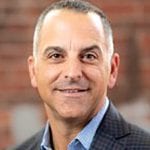
Bruce Stebbins remembers the time during his tenure on the Massachusetts Gaming Commission when that body was essentially subleasing some of its space on Federal Street in Boston to the recently formed Cannabis Control Commission (CCC), charged with overseeing an industry then — and in most all ways still — in its infancy.

While the two entities had separate quarters, the commissions and their staffs would cross paths often, he said, adding that there were lively discussions and some sharing of ideas between the two very different worlds.

“I was regularly running into my counterparts on their commission and staff while waiting for the elevator,” he recalled. “We actually had a lot of staff from our team having a lot of conversations with staff from their team, in part out of convenience — they were on the same floor. There was a lot of information going back and forth on the staff level … and it was the introduction of that new industry that was really exciting for me.”

Little could he have known at that time, but Stebbins, a former Western Mass. resident known to many in this region for his work with a host of economic-development-related agencies, would soon be on the front lines of that new industry.

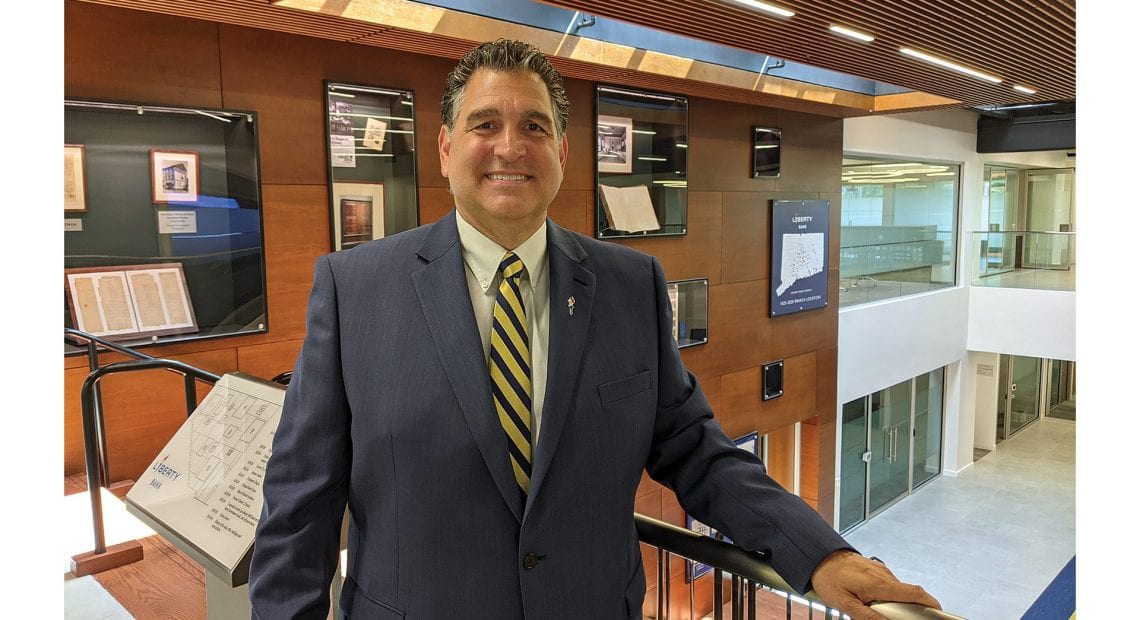
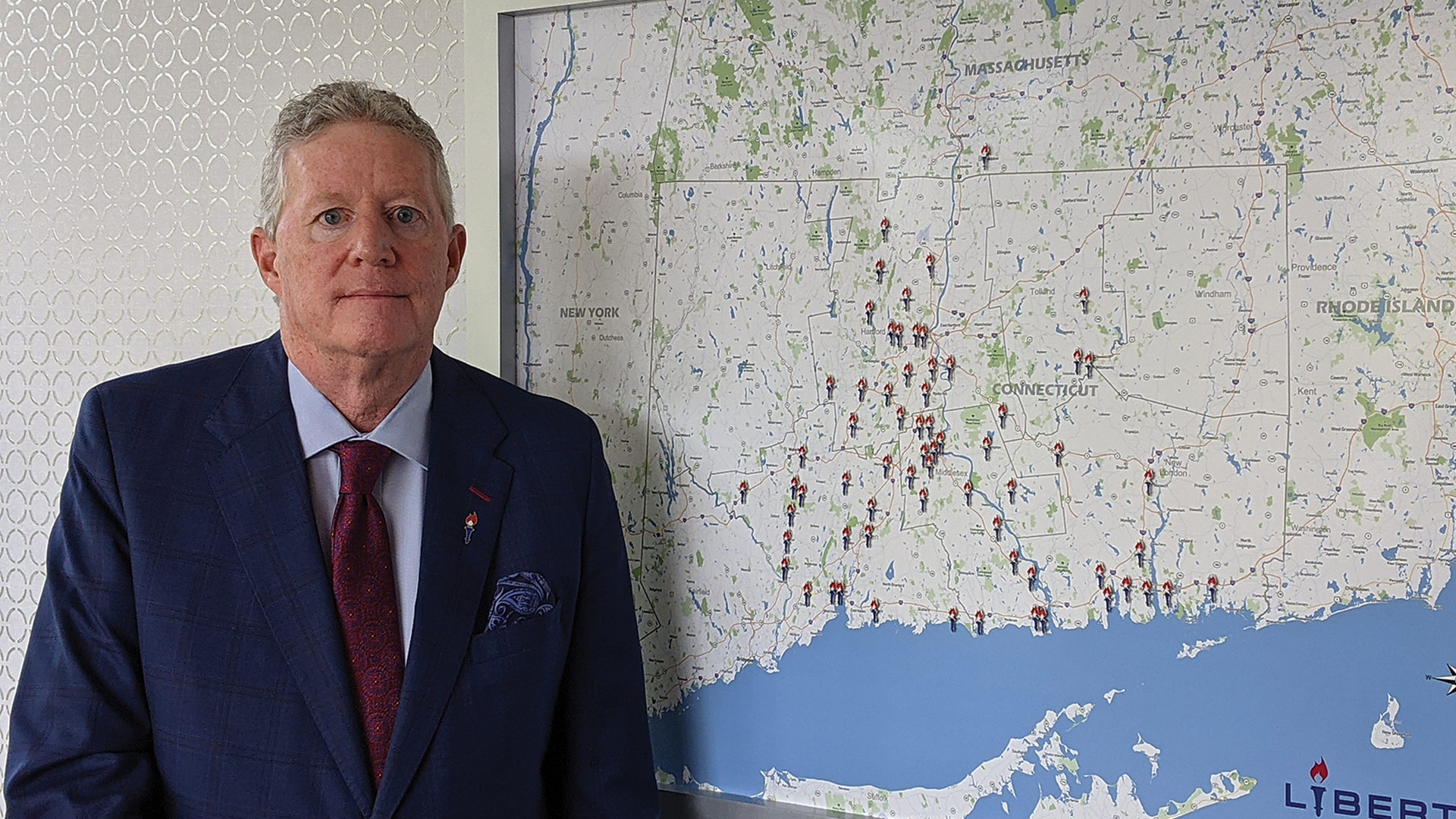
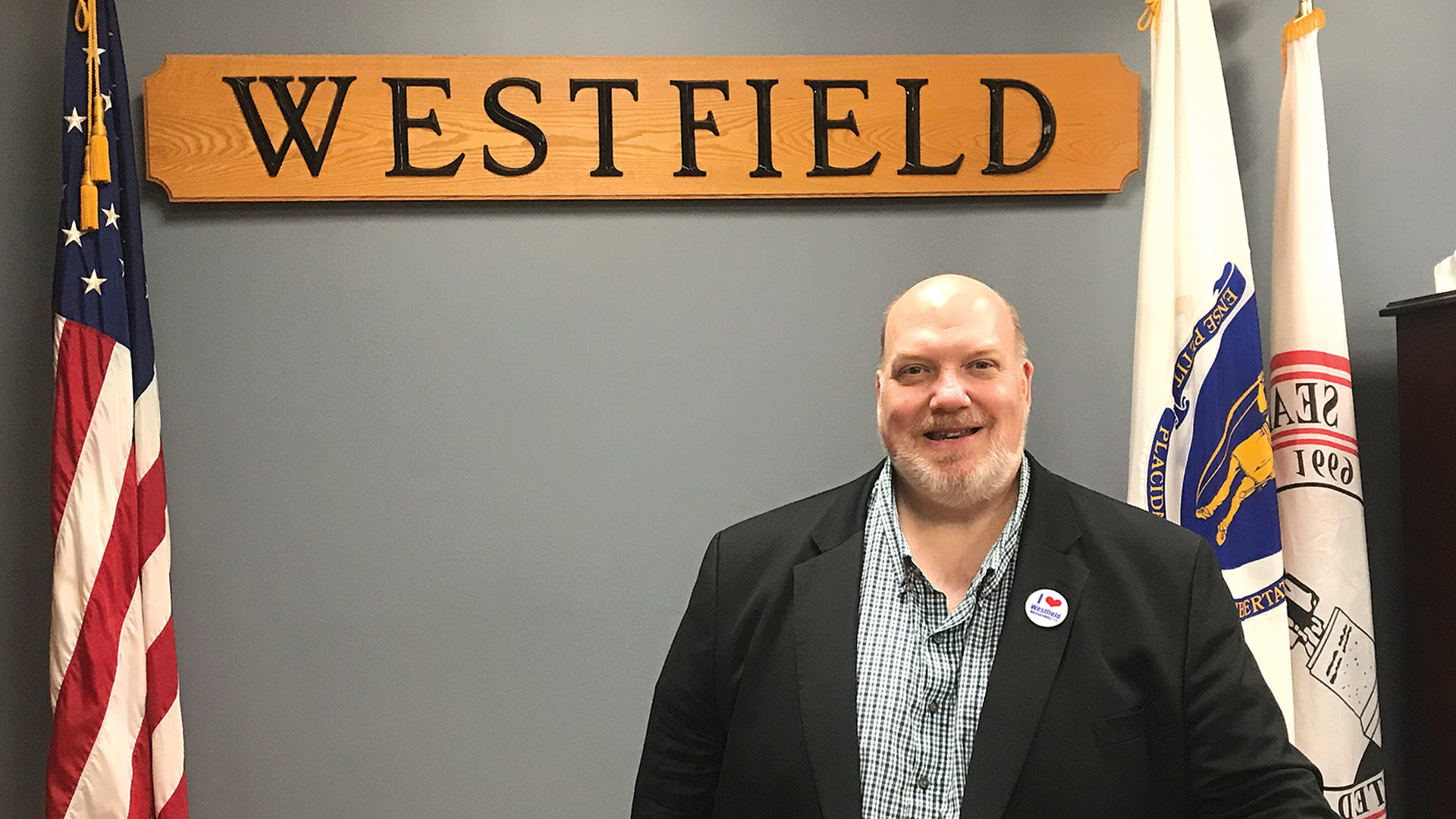
Bruce Stebbins

Bruce Stebbins

“We have 267 cannabis establishments open in Massachusetts, most of them on the retail side. Unlike gaming, which had a limited number of licenses, there are no limits on the number of cannabis licenses; it’s an interesting structure because there’s been an effort to create opportunities for a local entrepreneur as well as larger operators who have significant experience in other states.”

Indeed, he would eventually trade his seat on the gaming board for one on the Cannabis Control Commission. And that puts him in a unique position.

Indeed, he’s able to talk firsthand (as no one else can, because no one else has sat on both commissions) about these two huge additions to the state’s landscape — and its business community. And he did just that in a lengthy interview with BusinessWest, during which he did a little comparing and contrasting of the two industries. But mostly he talked about his latest assignment, how it came about, and what he projects for a cannabis industry that is already having a profound impact on the state — nearly $2 billion in sales since the first retail establishments opened in 2018 — and, especially, individual cities and towns.

He said the industries are similar in that they are bringing millions of dollars in tax revenue to the state and adding thousands of jobs as well, but also different in some ways. There are only three casinos, obviously, while there are now nearly 300 cannabis-related operations doing business in the state. The casinos are owned and operated by huge international corporations, while the cannabis ventures come in all sizes, from huge, multi-state operations to smaller entrepreneurial enterprises.

And while the resort casinos have changed the landscape in Springfield, Everett, and Plainfield, the cannabis industry is reshaping dozens of smaller communities and bringing new life to idle real estate across the state (more on that later).

Named to the board in January, Stebbins said he’s still learning about the burgeoning cannabis industry in Massachusetts, and there is much to learn.

His education involves venturing out and seeing various operations in person, he said, and also listening to a large and intriguing mix of activists, stakeholders, physicians, parents, and those who have been in the industry, including some who have come to Massachusetts from other states that had legalized cannabis earlier, such as Colorado and Washington.

Overall, while it’s difficult to say how large and impactful the cannabis industry can become in the Bay State, he said there are essentially “no limits” on either the number of licenses or the bearing of this sector on the economy or individual cities and towns.

“We have 267 cannabis establishments open in Massachusetts, most of them on the retail side,” he noted. “Unlike gaming, which had a limited number of licenses, there are no limits on the number of cannabis licenses; it’s an interesting structure because there’s been an effort to create opportunities for a local entrepreneur as well as larger operators who have significant experience in other states.”

For this issue and its focus on the cannabis industry, BusinessWest talked with Stebbins about what he can see from his front-row seat, what he’s learning, and what he projects for an industry that is off to a fast start and shows no signs of slowing down.


On a Roll

When asked about how he wound up trading his seat on one commission for the other, Stebbins started by talking about the positions that became available on the CCC and his decision to apply for one of them.

Key to that decision is the why. As with the Gaming Commission, he was drawn to this board — and the cannabis industry — because of its broad implications for economic development within the Commonwealth.

“Part of my passion has been fueled by the opportunity to work with this new industry coming into Massachusetts,” he noted. “Similar to my interest in the gaming work that I did, I was looking for the economic-development aspects of this [cannabis] industry, whether it’s investment, jobs, small-business opportunity … I certainly saw that both gaming and the introduction of the cannabis industry was going to offer those opportunities. That’s where my passion lay with gaming, and it’s where it lies with cannabis as well.”

Surveying the scene in the Commonwealth, he said cannabis has come a long way in a short time in Massachusetts.

“I was impressed with the work of the commission and the staff … from the time the ballot question passed to the statute to opening the first retail, it was about two years; that’s very aggressive,” he said, adding that the industry is still ascending, with no real indication of just how high it can go.

“Right now, a big part of the agenda of our meetings is looking at renewals, final licenses for applicants, and also a healthy number of provisional-license applications that are coming through the door,” he said. “There doesn’t seem to be a slowing down of activity when it comes to people pursuing a license and people taking the final steps to opening their doors.”

Elaborating, he said there are a number of ways to measure the impact of this industry, with the number of licenses and the volume of sales being only a few of them.

Others include the positive impact on the real-estate market, with cannabis operations bringing a number of idle or underutilized properties — from retail storefronts to former paper and textile mills — back to productive life, with the promise of more at venues that include the massive former JCPenney property at the Eastfield Mall.

“Being from Western Mass., being from Springfield, and knowing Holyoke, I think one of the obvious returns has been investment in brick and mortar, whether it’s been an old mill building as a cultivation-and-grow facility to some of the new retail facilities that you see popping up,” Stebbins said. “There have been many healthy examples of how this has led to increased investment in communities that might have been struggling with underutilized properties that weren’t helping out the tax rolls.”

He cited examples of such dynamic reuse in Holyoke, Sturbridge, Southbridge, and several other communities, while noting that behind each of those walls are jobs that didn’t exist three years ago.

One of the industry’s best qualities, he went on, is the opportunities it offers to different constituencies, when it comes to both jobs and entrepreneurship — within the industry and supporting it as well.

“The cannabis statute obviously wanted to a heavy emphasis on hiring those who were disproportionately impacted by the war on drugs,” he explained. “We are in the middle of our application phase for our social-equity program, which gives individuals from those neighborhoods an opportunity to explore being an entrepreneur in this industry, looking at a management track, looking at an entry-level job track, as well as ancillary business; maybe you don’t want to actually be a cannabis retailer, but you might be an electrician, and what job opportunities and business opportunities are out there because of this industry?”

Stebbins acknowledged there are certainly some barriers to entering this industry, especially when it comes to capital and access to it, and he lauded the CCC and the Legislature for efforts to create loan funds — some of them from revenues generated by the industry — and other programs to ease access and remove some of those barriers.

“Some great work has been done, and we’re not taking our eye off the focus of making sure those opportunities are available for social-equity applicants,” he said.

These qualities separate the cannabis industry from gaming in some respects, he went on, adding that, while both have created jobs, the cannabis sector has created more opportunities in more regions and in more cities and towns — and also more types of opportunities.

“Cannabis has created a wide variety of jobs — testing jobs, cultivation jobs, retail jobs, product-manufacturing jobs,” he said. “And there’s also the fact that the industry has the ability to take root across the Commonwealth and not just in specific regions or specific, identified communities.”


Joint Ventures

Reflecting on the past several years, Stebbins said he’s had a remarkable opportunity — one that has placed him on the front lines in the development and maturation of not just one new industry within the Commonwealth, but two of them.

It’s been a rewarding experience — and a learning experience — on many levels, he said, adding quickly that he has a great deal of energy and passion when it comes to finding solutions and helping new businesses grow, reach their full potential, and be successful.

That’s true of both sectors, but especially his latest assignment — a cannabis sector that has certainly taken root, both literally and figuratively, but will inevitably suffer growing pains. u


George O’Brien can be reached at [email protected]

Accounting and Tax Planning Special Coverage

Doing the Math


Joe Bova compared the past 18 months in the accounting profession

Joe Bova compared the past 18 months in the accounting profession to “trying to sail a ship while you’re building that ship.”

For accountants, the past 18 months have been a time of change, challenge, and adapting to everything from new ways of doing business to new responsibilities with clients to ever-changing tax laws. Looking forward, they note that many of these changes are permanent in nature.

It’s been called the ‘never-ending tax season.’

That’s just one of the many colorful ways those in the accounting sector have chosen to describe the past 18 months or so, a time of change, challenge, learning, and adapting — for them and for their clients.

Indeed, this time of COVID-19 has been marked by everything from changing tax laws to fluid filing deadlines; from new responsibilities, such as helping clients handle PPP and SBA loan paperwork, to changes when it comes to where and how work gets done; from a greater reliance on technology to the acceleration of a shift in accounting toward a more advisory role as opposed to merely adding up numbers.

Summing it all up, Joseph Bova, CPA, CVA, CGMA, a partner with Northampton-based Bova Harrington & Associates, said navigating all this has been “like trying to sail a ship while you’re building the ship.”

Nick Lapier, CPA, a partner with West Springfield-based LaPier Dillon, used phraseology from sports (sort of), but more from politics.

“It’s very hard for us to focus on our work when the government kept moving the goalposts.”

“It’s very hard for us to focus on our work when the government kept moving the goalposts,” he said, referring to the many changes in tax laws — some coming in the middle of tax season — and moving of filing deadlines. “For some people who filed their tax returns early, we then found ourselves amending those returns because they changed some of the rules. And some we didn’t file because we hoped they would change the rules.

“The end zone kept moving,” he went on. “We’d be on the 10-yard line, work really hard, and still be on the 10-yard line. There are 50 sovereign states that have the right to tax, so if you have clients filing tax returns in multiple states, each state was also possibly changing their laws and moving the goalposts.”

As the calendar turns to August, those we spoke with said this has been a time for many at area firms to catch their breath and take some of the vacation days they didn’t take last year or earlier this year. It’s also a time to reflect on what has transpired and what likely lies ahead in terms of the lessons learned and which of the changes seen over the past year and half are more permanent than temporary in nature.

Nick Lapier

Nick Lapier says a taxing period for all accountants was exacerbated by the federal and state governments constantly “moving the goalposts.”

Julie Quink, CPA, CFE, managing partner of West Springfield-based Burkhart Pizzanelli, P.C., said her firm, like most others, is not simply turning back the clock to late 2019 when it comes to returning to something approaching normal, especially when it comes to how and where business is conducted. She said most employees have returned to the office, but moving forward, there will be even more flexibility when it comes to schedules and working remotely because of what’s been learned over the past 18 months.

“We’re not going to dial back to everyone needing to be here those static hours of 8:30 to 5,” she noted. “I’m a glass-half-full person, and if there is a positive from the past 16 or 17 months that we’ve been dealing with, it’s taught us that we need to be more flexible, more mobile, and more adaptable — and understand that people don’t have to be actually sitting in their offices to get their job done.”

Meanwhile, Lapier told BusinessWest that many accountants, himself included, spent far less time meeting face-to-face with clients in 2020 and early 2021, and he expects that trend to continue.

“This current generation lives in the digital world; they don’t need to see people — they transact their personal and their business life electronically,” he explained. “What has changed because of COVID is that all the prior generations have adopted that same mentality — not 100%, but a heck of a lot more than before the pandemic.”

Howard Cheney, CPA, MST, a partner at Holyoke-based Meyers Brothers Kalicka, P.C. and director of the firm’s Audit and Accounting Services, agreed, while noting, as others did, that the pandemic in many ways accelerated a trend within the industry toward accountants shifting to roles that are more advisory in nature, with a greater focus on the future than the numbers from the past quarter or two.

“I’m a glass-half-full person, and if there is a positive from the past 16 or 17 months that we’ve been dealing with, it’s taught us that we need to be more flexible, more mobile, and more adaptable — and understand that people don’t have to be actually sitting in their offices to get their job done.”

“Accounting has for many years been an historical-look-back kind of thing,” said Cheney, part of an executive committee now managing the firm. “With the speed that people can now get data, they don’t need us to tell them about what happened six months ago; they need us to tell them what’s going to happen six months from now and help them interpret that.”

For this issue and its focus on accounting and tax planning, BusinessWest talked with several CPAs about the never-ending tax season, which still hasn’t ended — many are still dealing with a large number of extensions, many of them resulting from changing tax laws — and what will come next in a sector that has been taxed (yes, that’s an industry term) by this pandemic, and in all kinds of ways.


A Taxing Time

Chris Nadeau, CMA, CPA, CVA said he spent most of the past April — the height of tax season — in Florida. And hardly any of his clients knew he was working and handling their needs from more than 1,000 miles away.

Julie Quink

Among the many lessons learned from COVID, Julie Quink says, is the need for more flexibility in when and where people work.

“No one would have known unless I told them,” said Nadeau, a director with Hartford-based Whittlesey, which has offices locally in Holyoke, adding that he would never have considered such a working arrangement prior to the pandemic, but COVID provided ample proof that a CPA doesn’t have to share an area with a client to get the work done.

This anecdote speaks volumes about just how profoundly the landscape has changed in the accounting and tax-planning world over the past year and a half. There have been a number of seismic shifts, and where people work is just one of them, said Nadeau, who has come to his office on Bobala Road in Holyoke only a few times since St. Patrick’s Day of 2020 and was in on this day only to meet with BusinessWest.

Others we spoke with told of similar learning experiences during what has been a year and a half of acting and reacting to everything that has been thrown at them since those days in mid-March of last year when everyone — well, almost everyone — packed up and went home for what they thought would be a few weeks.

As everyone knows, that certainly wasn’t the case, and thus accountants, like all those in business, had to adjust to a new playing field, finding new and sometimes better ways to do things and communicate with clients and fellow team members alike.

“We had to reinvent our processes — how we communicated with the team and how we shared information back and forth, especially when working remotely,” said Lapier of those early days, noting that a three-month extension of the traditional April 15 filing deadline helped spread the work out and was a saving grace.

Bova agreed, noting that his firm of nine employees adjusted to the new landscape out of necessity, with investments in technology, a move to a paperless work process, Zoom meetings between employees and with clients, visits by appointment only, and other steps.

Moving forward, many of these new ways of doing things will continue, with perhaps the biggest being where people work. Indeed, most of the firms we spoke with said some variation of hybrid schedules will become the norm for at least some employees .

“In the future, there will be more hybrid work models, where people work in the office, but they do some work at home — I can see some real potential for that,” said Bova, adding that not all workers have returned to the office, and he’s not sure when they will. “We’re going to explore our options with this; there’s no need to deal with it in the summer — it will be more of a fall issue.”

Howard Cheney says the pandemic

Howard Cheney says the pandemic may have accelerated, or amplified, a shift within accounting to an advisory role, with more emphasis on the future than the past.

Cheney agreed. “We’ve been really flexible as a business with not requiring people to come back just yet,” he said, adding that most at the company have returned to their offices in the PeoplesBank building, but some are still working remotely. “The likelihood is that some kind of hybrid work schedule will be the future for our business.”

Whittlesey recently adopted a hybrid work policy, one that enables people to work “from wherever they will be most efficient,” said Nadeau, adding that most are finding it more efficient to work remotely, and they will continue to do so in the future.

“Some people are not coming in at all, and some are coming in a day or two a week,” he explained. “It’s ‘work where you need to for that day.’ Some employees have actually moved away to another state during COVID, so you could definitely call them ‘remote.’ And it’s been pretty seamless — and flawless.”

And this shift brings a number of benefits for the company, including a possible reduction of its physical footprint, he said, adding that it is likely that the firm will be able to downsize in Holyoke. “At some point down the road, we’ll see what kind of space we’ll need.”

It also means more and better opportunities to recruit top talent to the company because such employees will be able to work from anywhere, including another state, as Nadeau did earlier this year.

“It’s incredibly challenging to recruit people — I think there are fewer accounting students graduating now, and a lot of the people who do graduate end up going to Boston or New York to work for the Big Four firms,” he explained. “So having a remote-work or hybrid-work policy is an added benefit that we can offer, and one that firms are probably going to have to offer if they want to attract top talent.”

As for interaction and communication with clients, while all those we spoke with said face-to-face is still the preferred option, COVID has shown that Zoom and even the telephone work well — and, as with working arrangements, when it comes to interacting with clients, flexibility is the new watchword.

“As we’re talking with our clients, we’re seeing a combination of the two, in-person meetings and those by Zoom and phone — some want meetings in person, and other times, a Zoom meeting or phone call is sufficient,” said Nadeau, noting, as others did, a significant time savings from not physically traveling to see clients, so those at the firm are able to do more with the hours in the day.

Cheney agreed, to some extent, but noted there will always be plenty of room for, and need for, in-person service to clients.

“You don’t want to lose sight of that personal-touch aspect,” he told BusinessWest. “You don’t want to do everything remotely — I don’t think clients want to do everything remotely. But they’re OK with some level [of remote interaction] because we’ve gotten used to it, and they see the efficiency, too.”


Crunching the Numbers

As he tried to put all the changes to tax laws — and changes to the changes — into perspective, Joe Bova recalled the communication he received from the U.S. Small Business Administration concerning PPP loans that came with the header “Interim Final Rules.”

This oxymoron was just one of many challenging measures and changes that CPAs had to make sense of over the past 18 months, a time that Bova described as “a shooting gallery.”

“What’s been different during these past two seasons is that tax-law changes have been happening during tax season,” he told BusinessWest. “And when the PPP loans first came out … the SBA and the Treasury were updating their websites almost daily, and there was a lot of ambiguity in the definitions. We [accountants] were kind of on the front lines because people were calling us, even the banks.

“We all had the same information, which wasn’t clear, so people were calling us to help them interpret these changes,” he went on. “You were in the water on the boat, but you were still building the boat.”

In addition to coping with new legislation and changing rules, there was simply more work to do, said those we spoke with.

“Our workload has gone up probably a good 20% without adding a single client,” said Lapier, listing PPP applications, forgiveness, and audit work, as well as helping companies with SBA loans and the unemployment-tax credit as just some of the additional assignments.

Indeed, on top of all that, there was simply more consulting work to do as companies, especially smaller ones, leaned on their accountants as perhaps never before to help them make what were often very difficult decisions during truly unprecedented times.

Now, with the pandemic easing in some respects, the nature of some of this advisory work is changing, said Quink, noting that many business owners are now able to focus more on the future instead of being consumed by the present.

“We’re seeing a lot of clients that are buying and selling businesses, which is a good sign,” she noted. “And overall, people are starting to think forward now; they were in survival mode for a period of time, and now they’re starting to think forward from a business perspective.”

And there is a lot to think about, she went on, noting that what she and others at her firm are advising clients on is how to adapt to change and navigate challenge — such as a global pandemic.

“We’re talking to our clients that we see as potentially at risk because they don’t have the ability to adapt or they’re not identifying how to adapt,” she explained. “We know that things can change in the blink of an eye; we’ve seen a client, a third-generation business, close because it wasn’t able to look forward and move in a way that still made them competitive. You can’t rest on what you have — you have to be always looking forward, and that’s a hard thing for some of our more mature clients and businesses who have done things they’ve always done, and it’s worked.”

This additional advisory work, as Cheney noted earlier, is merely an acceleration of a trend that has been ongoing for many years now when it comes to clients and what they want and need from their accounting firm, with the accent on the future and how to be prepared for it.

Quink agreed that this shift, if that’s the proper term, has been ongoing for some time now as technology has enabled clients of all kinds to access data more quickly and more easily than ever before.

“We see robots in all aspects of life, and our profession is going to go that way as well,” she explained. “We’re using technology to do the things we’ve always done by hand; we’re now going to have programs that run that data for us. What we’re seeing and what we’re preparing people in our profession for is a shift to more of an advisory-slash-consulting role.”


Bottom Line

For several years now, Quink told BusinessWest, Burkhart Pizzanelli has closed its doors on Fridays. Historically, those Fridays between Memorial Day and Labor Day have served as comp time for those who logged considerable overtime during tax time, and it’s been a time to recharge the batteries.

This year, staff members have needed those Fridays off more than ever, she said, adding that, for many reasons — from all the additional work detailed above to the vacations that haven’t been taken over the past 18 months — there have been many signs of fatigue.

It’s certainly understandable. Indeed, while every business sector has been impacted by COVID, those in accounting were affected in different ways, with more work to do, different work to take on, and learning curves when it came to new and different ways of doing business.

They don’t call it the ‘never-ending tax season’ for nothing. It’s far from over, but in many ways, things are … well, less taxing.


George O’Brien can be reached at [email protected]

Modern Office Special Coverage

Getting Up Off the Floor

For those in the office furniture and design sector, the past 18 months have been a long and extremely challenging stretch. Looking ahead, while the pandemic has eased to some extent, new challenges and question marks loom. The questions concern everything from how many people will return to the office to whether they will have their own space if and when they return. And the challenges involve everything from long wait times for ordered products to the specter of skyrocketing prices and the impact they will have on business.

Mark Proshan says a combination of factors

Mark Proshan says a combination of factors makes it difficult to project what will come next for this industry.

Mark Proshan says the e-mail found its way into his inbox earlier that morning. It was short and to the point, but it clearly articulated one of the many challenges still facing those in the office furniture and design business.

“‘I’m in the process of closing my office and moving employees to fully remote work,’” wrote the business owner and client that Proshan, president of the West Springfield-based Lexington Group, opted not to name. “‘I have a lot of office furniture I’m looking to sell.”

As he commented on what he was reading, Proshan started with that last bit of news. He said there are a number of business owners and managers looking to unload unneeded office furniture these days. They should know first that there is already a glut, and, second, that the price they have in the back of their mind is not likely to be the price they’re going to get for what they’re looking to sell. “With the massive amounts of furniture now on the market, selling furniture isn’t something that’s going to realize an amazing return on the investment.”

But that’s just a small part of the story now unfolding, said Proshan, noting that, while this particular business owner knows just what he’s doing with his office, many do not.

Indeed, a full 18 months after the term ‘COVID’ entered the lexicon, there is a great deal of uncertainty regarding what will happen at many offices, colleges, hospitals, and other kinds of businesses moving forward. Proshan has his theories, and we’ll get to some of them later, but he and others believe there will certainly be some downsizing, some hybrid work schedules for many employees, and more of the outright closures and conversion to remote working described in that e-mail.

But at the same time, some businesses and institutions that are waking up (for lack of a better phrase) from COVID are ready to advance plans for new furniture and accommodations.

And they are running into strong headwinds in the form of supply shortages, long wait times for desired items, and, almost certainly, higher prices in a nod to the laws of supply and demand — and the skyrocketing cost of shipping items from abroad.

“We can’t get the products out of where we need to get them from,” said Fran Arnold, owner of Holyoke-based Conklin Office Furniture, which, in addition to selling new and used furniture, manufactures its own lines of products overseas and remanufactures used furniture here. “Every manufacturer in the country is seeing huge delays when it comes to delivering furniture.

At Conklin Office, co-owned by Fran and Rosemary Arnold

At Conklin Office, co-owned by Fran and Rosemary Arnold, new challenges include supply-chain issues, soaring shipping costs, and long wait times for ordered products.

“On the import side, we’re running with massive delays in shipping and huge increases in the cost of shipping,” he went on, with some noticeable exasperation in his voice. “Our shipping costs have gone from $3,500 to $5,000 per container all the way to $23,500 per container. That’s a massive increase for freight; it’s now costing us more money to get the stuff here than to manufacture it over there.”

Proshan agreed.

“Because most of the manufacturers have employee shortages and raw-goods shortages, everyone’s lead times have been drastically pushed out,” he noted. “You try to stock up on what you think might make the most sense for when the floodgates open, but you just don’t know, and it’s going to be a difficult situation when people want products from you and manufacturers aren’t able to deliver them to you until much later than your customer is hoping to receive them.”

Overall, while the worst of the storm might be past for those in this sector — that’s might — there is still considerable cloudiness and general uncertainty about the forecast, and challenges ranging from those inventory issues to simply finding people to drive delivery trucks, to a huge merger in the industry between manufacturers Herman Miller and Knoll, which only leads to more question marks.

Indeed, what happens next is anyone’s guess, as BusinessWest learned as it talked with Proshan and Arnold about has transpired and what is likely on the horizon.


Measures on the Table

As he walked and talked with BusinessWest in his huge showroom, Proshan noted that he’s selling a number of items to be used by people working at home, especially chairs — “they want good seating, but they don’t want to spend a lot for it” — and sit/stand desks, because they’re smaller and also because many people want the option of sitting or standing.

Meanwhile, he said he’s also been selling more large conference-room tables — those for 12 to 20 people — than would be considered normal.

When asked why, he gave a quick and definitive “I don’t know, exactly, but we are,” before joking that companies might need bigger tables for all those meetings that will decide what they’re going to do next.

Overall, this interest in large conference-room tables and the possible reasons behind it comprise just one of the many unknowns for this industry. What is known is that the past 18 months have been an extremely difficult time, and the challenges are far from over.

They may just be different challenges.

“Every manufacturer in the country is seeing huge delays when it comes to delivering furniture.”

Looking back, Arnold said Conklin, like all businesses in this sector, saw business evaporate early on during the pandemic as businesses shut down and then hunkered down, with buying new or used office furniture, or redesigning their space, the last thing on their minds.

“We were flying just before COVID, and then we just hit a wall,” he explained, adding that, through a number of efficiency and austerity measures — including a four-day work week for all employees — the company managed to slash expenses to an extent that it was nearly as profitable in 2020 as it was in 2019.

Elaborating, he said that, in hindsight, the timing could not have been better for the company to consolidate operations and move into new facilities on Appleton Street in Holyoke in late 2019.

“We’re able to do more with fewer people,” he explained. “We’re much better organized, and we’re not so spread out. We’re much more efficient.”

Now, as it emerges from those very difficult times, there are new and different challenges to face, including supply-chain issues and a lack of inventory, just as some larger corporations are in a “panic mode,” a phrase he used a few times, to move on from the pandemic themselves.

“These corporations are working our sales teams to the limit,” he explained. “They want numbers, they want to know when things can be delivered … and a lot of the news we have to give them is not good; prices are going up, and deliveries are being postponed.”

Overall, Arnold said, inflation and the skyrocketing cost of shipping product are just starting to impact prices within the industry.

“We’ve just had our first price increase on our imported products; we just couldn’t hold it where it was any longer,” he explained, adding that, as the cost of shipping continues to escalate, more price hikes are likely. “It’s been quite an experience, and I don’t know how it will all play out; it’s a perfect storm that’s developing, and where it will go, I don’t know.”


Looking ahead and projecting what might come next, Proshan said this assignment is difficult because many companies are still very much trying to decide what they’re going to do.

“At the moment, business leaders are trying to figure out what their employees want, and employees are trying to figure out what their employers are going to be expecting,” he explained. “With all of that taking place, not a whole lot has happened yet. People have been talking about business getting back up to speed in the spring, and then the fall, which is not here yet, and then, the first of the year. We still have those mileage markers out there in front of us, so there’s a whole lot more that’s unknown than known.”

Proshan theorizes that many companies will create more space for each employee in efforts to create safer environments, and that, in all likelihood, there will be fewer people working in the office and more in remote settings.

“Every time you have a space that was occupied by three people, that had three work environments, they might cut that back to two to create a bigger gap between people,” he explained. “So now you have a work environment that’s going to be for sale or is going to become surplus; that’s one of the things we’re seeing.

“It’s going to be a difficult situation when people want products from you and manufacturers aren’t able to deliver them to you until much later than your customer is hoping to receive them.”

“And I think that when it gets sorted out as to who’s going back and who’s not, and how often they’re going back,” he went on, “I think a lot of personal space is going to disappear. If you work at home, you’re going to have your own workspace; when you go to the office, you may or may not have your own workspace. It may be a space that’s occupied by someone else on the days you’re not there.”


Bottom Line

Proshan, who does a good bit of sailing when he’s not working, made a number of comparisons between what’s happening in his industry and what transpires on the water.

Specifically, he talked about wind.

“You can’t see wind,” he told BusinessWest. “What people experience as wind is what they see as the result of wind and its impact on objects. When you see wind blowing through the trees, you don’t see the wind, you see the result of the wind. When you’re on a boat and there’s no wind, if you look at the water and see it start to ripple, you know that wind is approaching you, and it can either knock you over or make you go faster, or help you determine which direction to go in.

“It’s almost as if we’re sailing,” he said of the current conditions in his business, “and not able to see the wind in the trees.”

That was Proshan’s way of saying that an industry that has been blown about for the past 18 months, and not in a good way, is still very much in the dark about what will happen next.

The mission, he said, is to be as prepared as possible, even with all those unknowns.

“If you don’t pay attention to the possibilities,” he said in conclusion, “you’re going to be too late.”


George O’Brien can be reached at [email protected]

Law Special Coverage

Firm Commitment

Peter Shrair

Peter Shrair says the two firms saw “some real synergies” when they started talking.

Springfield-based Cooley Shrair and Hartford-based Halloran Sage have a lot in common, including histories that span more than 75 years and a focus on the broad needs of business clients. But their philosophies and cultures also have a lot in common, as their leaders discovered during discussions that led to Cooley Shrair joining the Halloran Sage family last month. The result, they hope, will be more inclusive service to clients, as well as a more attractive landing spot for the young talent all law firms need to grow.

When asked what Halloran Sage and Cooley Shrair bring to each other’s table, David Shrair had to think back only 15 minutes.

“We’ve got a new, West Hartford-based client who called me and said, ‘I tried to trademark a logo myself, and I got lost. Can you help us?’” said Shrair, a partner at his namesake Springfield firm, which recently joined the much larger, Hartford-based Halloran Sage law group.

“We normally would have referred him to a firm we did business with in Hartford, who did all our intellectual-property work,” Shrair continued. “But I got on the computer and sent out a blast e-mail to partners and counsel at Halloran Sage. Within three minutes, I got one name from five different partners. I’ve connected that partner, he’s got the logo, and we’re working on it.”

In other words, by joining forces with 86-year-old Halloran Sage, an 80-attorney practice whose law expertise in the realm known as transactional business runs deeper in some areas than Cooley Shrair’s, the firm can keep its clients in house for a much wider range of matters, instead of farming them out, he noted.

“We can keep an eye on the case and make sure it’s being handled properly, which is very difficult to do when you’re sending it out to somebody else, and you have no idea whether your client is being taken care of,” said Peter Shrair, another partner with the firm. “If we’re looking at the client’s interest first, then the client gets a much better product.”

That’s one of the ideas behind what both firms aren’t calling a merger or an acquisition, but a joining together of the two entities under the Halloran Sage umbrella.

“We started talking, and we saw some synergies between what we do and what they do. And I had a thought that one plus one could equal three, with a really good group of smart people working together.”

Peter said he started talking informally to Bill McGrath, a partner at Halloran Sage, about such a relationship last year.

“Another lawyer in their office, Sue Scibilia, and I were talking about something else. She said to me, ‘you really should meet Bill McGrath. He’s a good business person and one of the smartest lawyers I’ve ever known.’ And I consider Sue to be one of the smartest lawyers I’ve ever known. So, we started talking, and we saw some synergies between what we do and what they do. And I had a thought that one plus one could equal three, with a really good group of smart people working together.”

Casey O’Connell, another partner at Halloran Sage, agreed.

“This has always been a Connecticut-based firm with a regional focus,” he told BusinessWest. “We’re always looking to find ways to better serve our clients and to provide the best possible legal services that we as a legal firm can provide. So we’re always on the lookout to have talented attorneys with complementary practices and similar philosophies to join our firm.”

David Shrair says the combined firm will be able to keep more clients completely in-house.

David Shrair says the combined firm will be able to keep more clients completely in-house.

After informal discussions turned more specific over several months, he went on, “there were some meetings among people with the firms, and it was determined it would really be a great fit and a way for us to collectively be bigger than we both were separately and, most importantly, to provide additional resources to our client base and Cooley Shrair’s client base to better serve our clients.”

For this issue’s focus on law, BusinessWest sat down with O’Connell and the two Shrairs to talk about why this relationship makes sense, and why both firms feel they — and their business clients — are better off because of it.


One-stop Shop

Business clients, after all, are at the heart of both firms’ work. Besides a shared focus on transactional law, which incorporates activities like contracts, finance, construction and real estate, risk management, restructuring and bankruptcies, board governance, intellectual property, and a host of others, Halloran Sage also boasts broad expertise in business litigation.

“That’s a service that we had not been offering for a number of years,” Peter Shrair said. “Even when we offered it, it clearly wasn’t with that depth of people. We had one or two, maybe at one point three people doing litigation, but they might have 30. And depending on the size and complexity of the matter, they have the skill, knowledge base, and depth of people to handle it.”

The firms are similar in other ways — for instance, both have a large banking practice, representing different banks, “so there’s a synergy right there,” David added.

“We collaborate very well across practices,” O’Connell said, “and that is one way where the firms can mutually help each other, with the Cooley Shrair folks bringing a wealth of transactional and business banking knowledge that really strengthens our practice areas. But we also have a very robust litigation practice.

“I would say Halloran is a full-service firm, and our litigation portion of the firm is very large and robust — we’re one of the biggest firms that focuses on litigation in Connecticut,” he went on. “And one of the reasons we have such a long history in Connecticut is our ability to provide clients with essentially one-stop shopping.”

Joining a Connecticut-based firm — Halloran Sage has five offices in the Nutmeg State — also makes sense in that three of Cooley Shrair’s attorneys were already admitted to the Connecticut bar, and the firm has worked with many clients from across the border.

This isn’t the first time Halloran Sage has taken on an established group of attorneys all at once, but most of its growth over the years has been organic, O’Connell said. For instance, it launched a New Haven office with two attorneys in 2012, and has since grown that site to 12 attorneys.

“It was a big success story to build and maintain a presence in that part of the state,” he noted. “We have an office Washington, D.C., but [Springfield] is our first office outside Connecticut with a large presence. This really broadens our reach to become not just a Connecticut firm, but a Southern New England firm.”

Client relationships won’t be disrupted, Peter Shrair said, but may shift over time.

Casey O’Connell

Casey O’Connell

“We collaborate very well across practices, and that is one way where the firms can mutually help each other, with the Cooley Shrair folks bringing a wealth of transactional and business banking knowledge that really strengthens our practice areas.”

“If it’s a more natural fit for someone from Hartford to handle something, they’ll handle it,” he explained, noting, as an example, a litigation case that came in just that morning and was referred to attorneys in Hartford. “We’re looking for whatever is best for the client — if a client can be handled better out of New Haven, we want to handle that out of New Haven. If it can be handled better in Springfield, presumably we’ll handle it in Springfield. “Really, it deals with whose practice area it fits best in.”


Business as Usual, Sort Of

For two firms that deal heavily with business clients — at a time when the business world has been rocked by COVID-19 — the past 18 months have gone surprisingly well, Peter noted.

“At least as far as my practice goes, there was very little change,” he said. “In fact, with the advent of Zoom and Microsoft Teams and everything else, it was probably easier because you could get different people online together quickly and have a discussion.”

David Shrair was stranded in Florida in March 2020 when the economy first began to shut down — so his firm shipped him a computer and double-screen monitor.

“I closed one of my largest transactions in years from Florida; I did Planning Board meetings from Florida, just like I was sitting in Springfield or wherever; it mattered not,” he recalled. “It’s interesting — with the shutdown and all the issues that went with it, most of our business clients continued very much along the same vein. They had their own internal problems, but the sales and acquisitions and all that still continued to go on. We have been extremely busy.”

After an initial slowing of work in the pipeline last spring, Halloran Sage’s team adjusted quickly to the pandemic as well, O’Connell said, and business has been strong from the second half of 2020 to the present. The transactional work has been more robust than litigation because court activity slowed to a crawl last year, but overall, business has been brisk, and the firm is on a growth trajectory.

“We’re always looking for new opportunities and ways to serve our clients. That includes having new attorneys come in with different specialties or outlooks or just to grow our bench and have more resources to grow our client base,” he went on. “We’re always looking to figure out how we can modify our firm or business to better serve our clients. That’s what the current combination of Cooley Shrair and Halloran Sage is all about, and certainly where Halloran wants to continue to go, to make sure we’re staying ahead of the curve and in the best position to serve our clients.”

The broader geographic reach will also benefit the combined firm in attracting talent, as attorneys will be able to access opportunities across Connecticut as well as into Massachusetts, and move around as their life circumstances change, Peter Shrair said. And David noted that being part of a much larger organization broadens the partnership track, which can also be a draw for young attorneys to settle in this region.

But in the end, O’Connell said, what the discussions really came down to was a perceived alignment in the firms’ client-first philosophies.

“We went through some internal discussions, not really to create a new philosophy, but to figure out a way to better articulate our firm’s philosophy, and we have determined that our firm’s philosophy is ‘client, firm, self,’ in that order,” he said. “In talking to the Cooley Shrair folks, we found there was a great alignment with how they deliver service, and our philosophies really align, so seemed like a natural fit when we pursued it.”

Peter Shrair agreed. “For 75-plus years, that has always been our mantra — our response time and our response to clients’ needs.”


Joseph Bednar can be reached at [email protected]
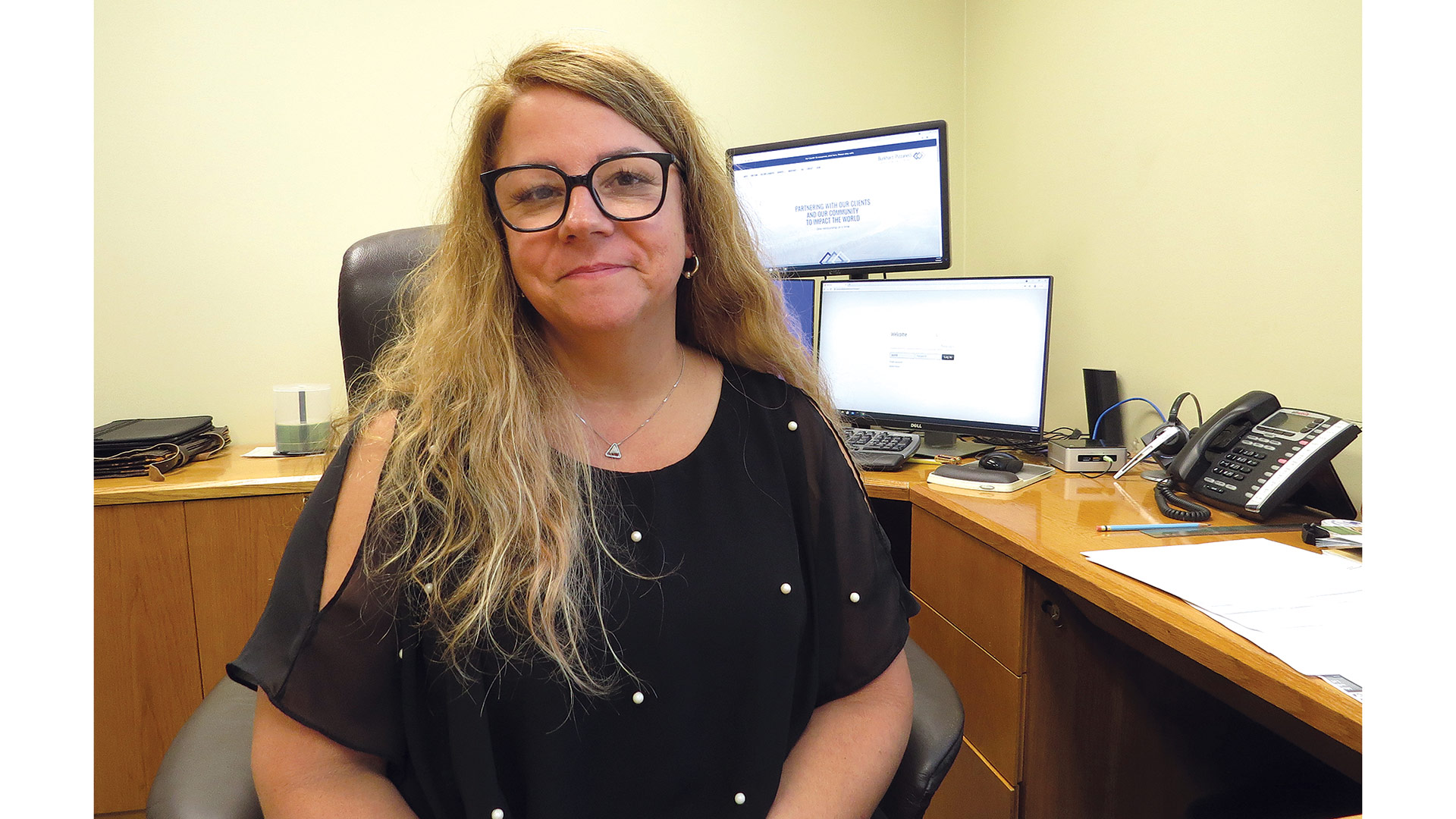


Special Coverage Technology

Strong Signals

By Mark Morris

When the pandemic arrived early last year and many companies adjusted to remote work for their staff, it was IT professionals who got everyone up and running from their homes.

Now, as the world begins to move away from the pandemic and companies begin bringing employees back to the office, the demand to hire IT pros is even higher than it was before COVID-19 emerged. And that poses challenges for employers.

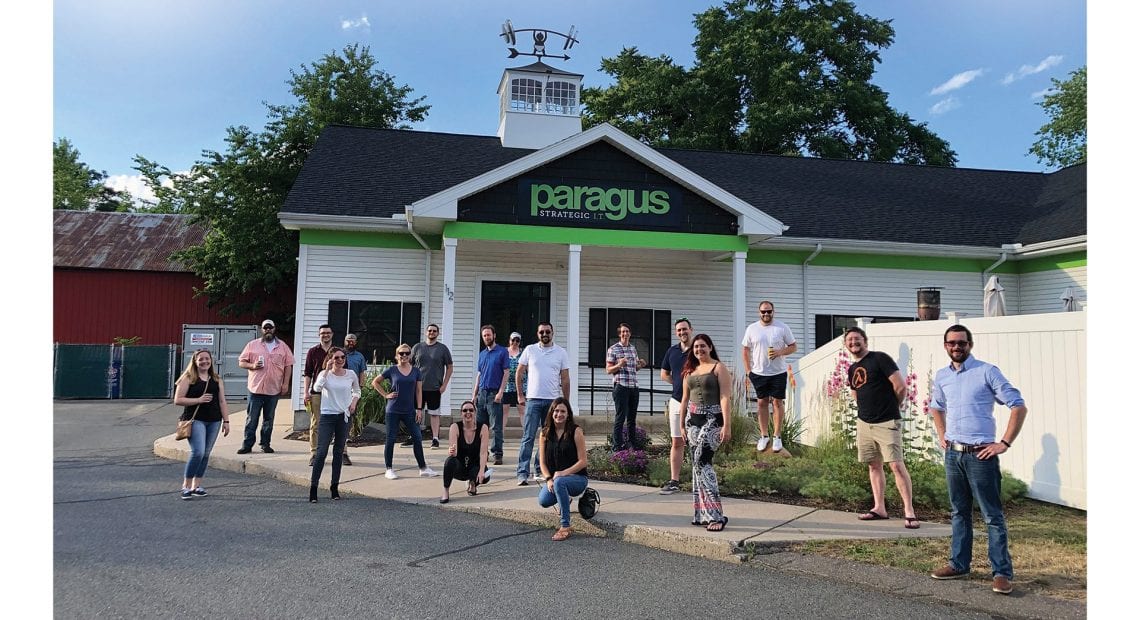
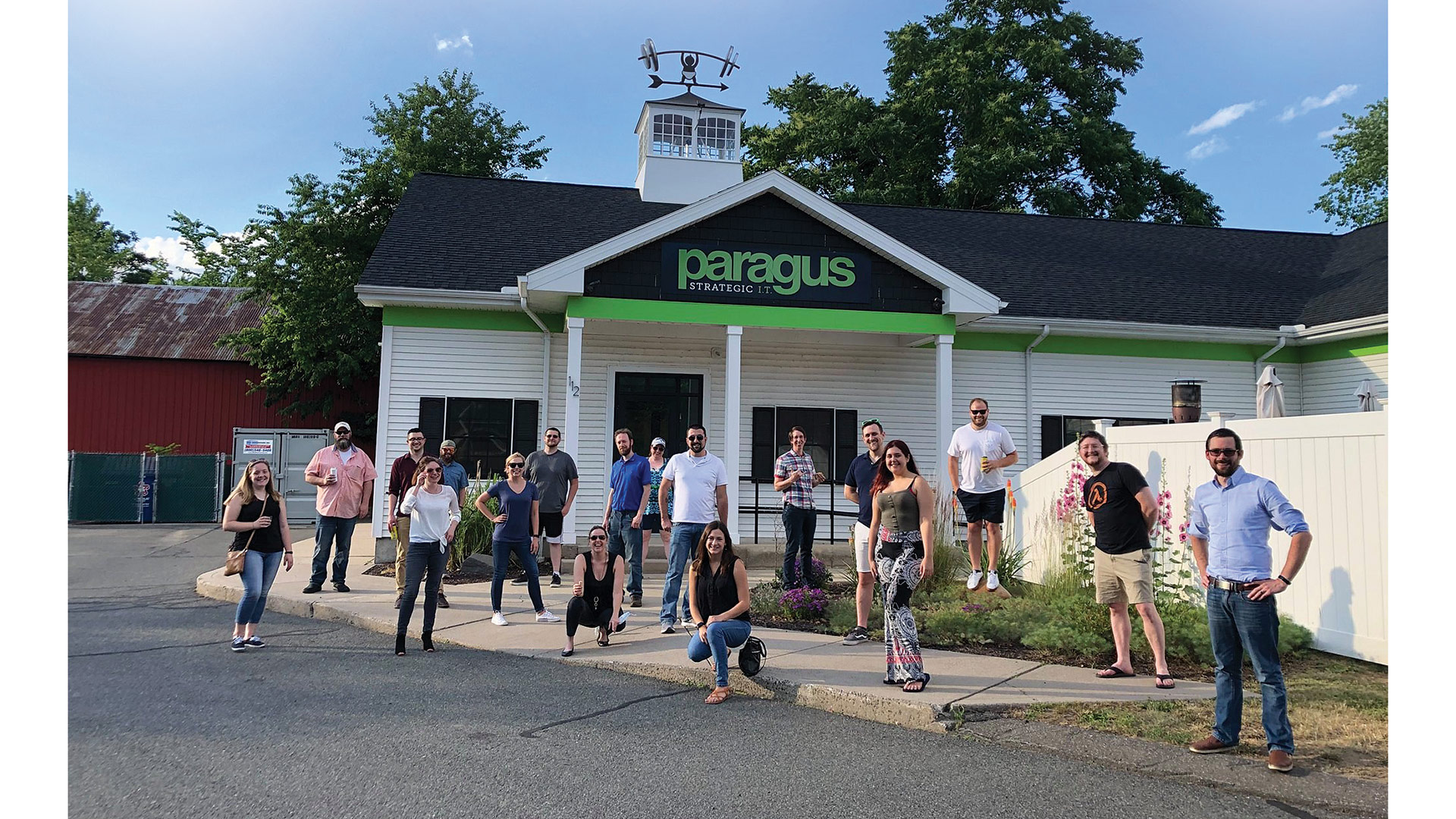
In a normal year, said Delcie Bean, CEO of Paragus Strategic IT, the company sees about 10% turnover of people leaving and new staff being hired. During the pandemic, there was no turnover, as every one of the 50 Paragus employees stayed in their job.

In the last four months, however, as the economy has improved and COVID restrictions have eased, Bean has seen a “tremendous transition” among the IT labor force.

“Many of those who are leaving are pursuing remote-work opportunities that didn’t exist before the pandemic,” he said. “Most of these companies are not local and would never have interviewed or offered jobs to these workers in the past.”

Bean cited a number of reasons for the high demand for IT talent. During the pandemic, nearly every company increased their use and dependence on technology, which requires more people to keep systems up and running. As the economy improves, companies are pursuing more projects and thus increasing their need for IT talent. The pandemic also made it acceptable to hire people who work only remotely, creating even more opportunities for IT pros.

“With the increased dependence on technology, an improved economy, and the ability to work remotely, we’re seeing employers do things they would not have done before,” he said.

Joel Mollison, president of Northeast IT Systems, noted that, unlike others in IT support, his 18-person company does not have high worker turnover. He credits that to attracting IT staff who enjoy working with Northeast’s varied client list, which covers sectors from insurance and healthcare to manufacturing, municipalities, and even cannabis.

“Many of those who are leaving are pursuing remote-work opportunities that didn’t exist before the pandemic. Most of these companies are not local and would never have interviewed or offered jobs to these workers in the past.”

One notable challenge to retaining his workforce involves companies such as banks, manufacturers, and other industries that are looking to bring their IT support in-house, he said. “As a service provider in Western Mass., we’re competing against much larger institutions in the region who can pay IT professionals more.”

As security issues receive prominent news coverage, companies worry more about ransomware attacks and similar threats. Mollison believes this is part of the reason firms are increasingly looking for in-house IT staff.

“The larger the business, the more complex their systems are, and the more they need IT professionals to manage them,” he explained.

Bean agreed that IT security issues have increased the pressure for companies to be proactive in preventing major disruptions, pointing out that much of the job growth is the result of companies expanding their internal IT staff both regionally and on a national level.

Delcie Bean says an IT workforce that was remarkably stable in 2020 has entered a time of “tremendous transition.”

Delcie Bean says an IT workforce that was remarkably stable in 2020 has entered a time of “tremendous transition.”

“All these companies are doing this because the growing economy gives them a little more money and it can be a luxury to have your IT support in-house.”

Jeremiah Beaudry, owner of Bloo Solutions, agrees, but believes that, after companies build up their internal IT staffing, they usually return to outsourcing with an external service provider once they realize that internal IT is less cost-effective.

“Instead of paying full-time employees to show up every day, companies can hire an IT firm that knows all the technical details and address specific problems when they arise,” Beaudry said. “It would be similar to bringing a plumber on staff. Why would you do that?”

In fact, he predicts that the hiring surge for internal IT will shake out to one or two positions to oversee the main systems augmented by an outside IT service provider.

Bean said it’s common for companies to have an internal person handling technology issues as well as an outside IT service company. “Our biggest source of new business right now involves partnering with internal IT departments to round out what they are doing and give them supplemental assistance.”


Here and There

Like many industries right now, technology is grappling with a job market that significantly favors job seekers. Bean told the story of an employee who had previously worked in the defense-contracting industry 10 years ago.

“Because this employee’s name was still in the defense system, a contractor called him to make a job offer, sight unseen and without an interview,” he said. “They literally e-mailed him an electronic salary offer without meeting him, and it was for $35,000 more than he was making here.”

A company located in a large metro area interested in hiring remote workers will offer salaries that are competitive in their market. This can often lead to small-market workers getting big-city paydays.

“If you’re at home and take five minutes between tasks to turn around to pet your dog or do the dishes real quick, that time becomes meaningful and helpful in your life.”

“Usually, when someone makes a salary that’s attractive in Boston, it comes with the high cost of living in the metro Boston area,” Bean said. “When someone with a Western Mass. cost of living makes that same amount, they can see a 30% net increase in their salary.”

Indeed, more companies than ever are embracing remote or hybrid workforces (see related story on page 25). That means IT service providers face the same dilemma confronting many of their clients: continue to work from home or go back to the office.

Mollison tells a slightly different story. Before COVID, he said, Northeast IT was outgrowing its space in Westfield, so he suggested that staff work remotely as a short-term solution. He was surprised when almost no one wanted to work from home.

“Nearly everyone wanted to work in the office,” he recalled. “We have a kind of think-tank environment where our staff enjoy working on problems together.”

However, the pandemic forced nearly everyone to work from home for the last 16 months, a situation Mollison called stressful because many felt less connected to their co-workers. He added that a change in venue is coming. “We purchased a building in West Springfield and will be moving in at the end of August. We’ll have plenty of space to bring everyone back with social distancing; our people are really looking forward to returning.”

At Paragus, employees have been ramping up their return to the office by coming in one day a week in June, two days a week in July, and three days a week starting in August. Bean said he won’t require more than three days a week in the office, but felt that some time in the office was important.

“We have intentionally designed our office to promote collaboration,” he said. “We don’t have walls or offices, so people can listen to each other and overhear what’s going on. You can replicate some of that online, but it’s not the same as hearing what’s going on around you.”

At Bloo Solutions, Beaudry has allowed his four full-time and several part-time employees to stay remote except for occasional trips to the office or when visiting a client’s location. Collaborative messaging tools like Slack and Microsoft Teams allow him and his staff to stay in touch with each other and stay on top of client concerns.

Jeremiah Beaudry says even companies that have built up internal IT

Jeremiah Beaudry says even companies that have built up internal IT staffing often come to see the value in outsourcing that work.

“We have channels dedicated to each client so any one of us can jump in and take care of any concerns,” he said. “Because we all have access to these messages, the same information is available to all of us without being next to each other.”

Whenever possible, Beaudry makes working from home an option for his staff.

“If you’re at home and take five minutes between tasks to turn around to pet your dog or do the dishes real quick, that time becomes meaningful and helpful in your life,” he said. “When you are in the office and not near anything you need to do, that same five minutes is wasted.”

Therefore, as long as his staff are productive, he doesn’t care if they work from home or at the office.

Another reason Bean cited for having people in the office at least some of the time is to help with their professional development and to identify when a staff member might need help. He worries that IT professionals who have chosen full-time remote work won’t have the same chance to grow or develop their careers.

“They will probably be fine doing the job they were hired for, but they will be relatively unengaged and potentially stagnant,” he said. “I don’t see how they can grow or develop much in an environment where they never see their co-workers or be around other people.”

Mollison credits his low staff turnover to seeking out people who like variety in their work and have an interest in personal and professional growth.

“Because IT folks tend to be introverts, we try to help them grow personally so they can become more comfortable working with clients and developing relationships with them,” he said.

While finding people in Western Mass. with technical skills isn’t so tough, Beaudry makes his hiring decisions based on a candidate’s emotional intelligence.

“I’ve learned over time that clients would rather feel good about a conversation they had rather than having an expert solve the problem who makes them feel bad about themselves,” he said.


Change Can Be Good

Another reason the demand for IT professionals is increasing has to do with the growing economy. Bean said the sales pipeline for new projects has never been fuller. “In terms of new business, we’re booking clients out to October because we only book so much at a time.”

In addition to hiring temporary contract workers, he has found another way to make up worker shortages: acquisitions. Paragus recently acquired one IT-support company in Worcester and is looking at two other acquisitions.

“In the past, the goal of an acquisition was to acquire clients and market,” he said. “Now it’s about acquiring talent.”

Would Bean like to see less disruption in the labor force? Sure. He also understands that this time of transition is part of the bigger picture.

“Everybody is moving around, so we’re on the receiving end of this as well,” he told BusinessWest. “The good news is we haven’t seen a shortage of any new résumés coming in.”

While it’s tempting to dwell on the employees leaving, however, Bean has gained some perspective.

“After some reflection,” he said, “we realized that a lot of the innovation and fresh approaches we get are driven by new people coming in with new ideas.”

Community Spotlight

Community Spotlight

By Mark Morris

Mark Pruhenski says Great Barrington

Mark Pruhenski says Great Barrington has seen an influx of new residents during the pandemic.


On a summer Friday night in Great Barrington, Mark Pruhenski simply enjoyed the sight of dozens of diners eating outside and the sound of musicians playing from various spots around downtown.

Town manager since 2019, Pruhenski said Great Barrington is fortunate to have weathered the pandemic well. He gave much of the credit to a task force formed early on that included town staff and a strong network of partners, including Fairview Hospital, local food banks, and others who lent support.

With its location in the Berkshires, Great Barrington has long been a popular spot for second homes. During the pandemic, many people relocated to their second homes to get away from populated metro areas and work remotely. As time went on, many decided to make Great Barrington their permanent home.

“Along with those who moved into their second homes, we had hundreds of new residents move to the area,” Pruhenski said. “Folks who enjoyed visiting the Berkshires for culture and entertainment were now permanently moving here.”

Betsy Andrus, executive director of the Southern Berkshire Chamber of Commerce, noted that, even at the height of the pandemic, when restaurants and cultural venues were closed, people were still looking for a place to rent or buy. She believes the consistently low COVID-19 infection rates were a strong part of the town’s appeal.

“Along with those who moved into their second homes, we had hundreds of new residents move to the area. Folks who enjoyed visiting the Berkshires for culture and entertainment were now permanently moving here.”

“People from larger metro areas came to Great Barrington in droves,” Andrus said. “You could not keep a house on the market, with some sales happening in only a few hours. Others took a virtual tour and bought sight unseen.”

While admitting it’s difficult to find positives from a worldwide pandemic, Andrus said one benefit was forcing businesses in town to change the way they had been operating.

“I think we were kind of stagnant before,” she said. “Then, suddenly, our businesses had to put a lot of energy into how they could reinvent themselves.”

In addition to sit-down restaurants figuring out how to become takeout places, Andrus pointed to Robin’s Candy Shop, which could no longer allow customers to serve themselves in the shop.

“They moved the store around overnight, so now the staff gets you everything you want,” she said. “Then Robin’s quickly switched over to online sales, which is no small feat, either.”

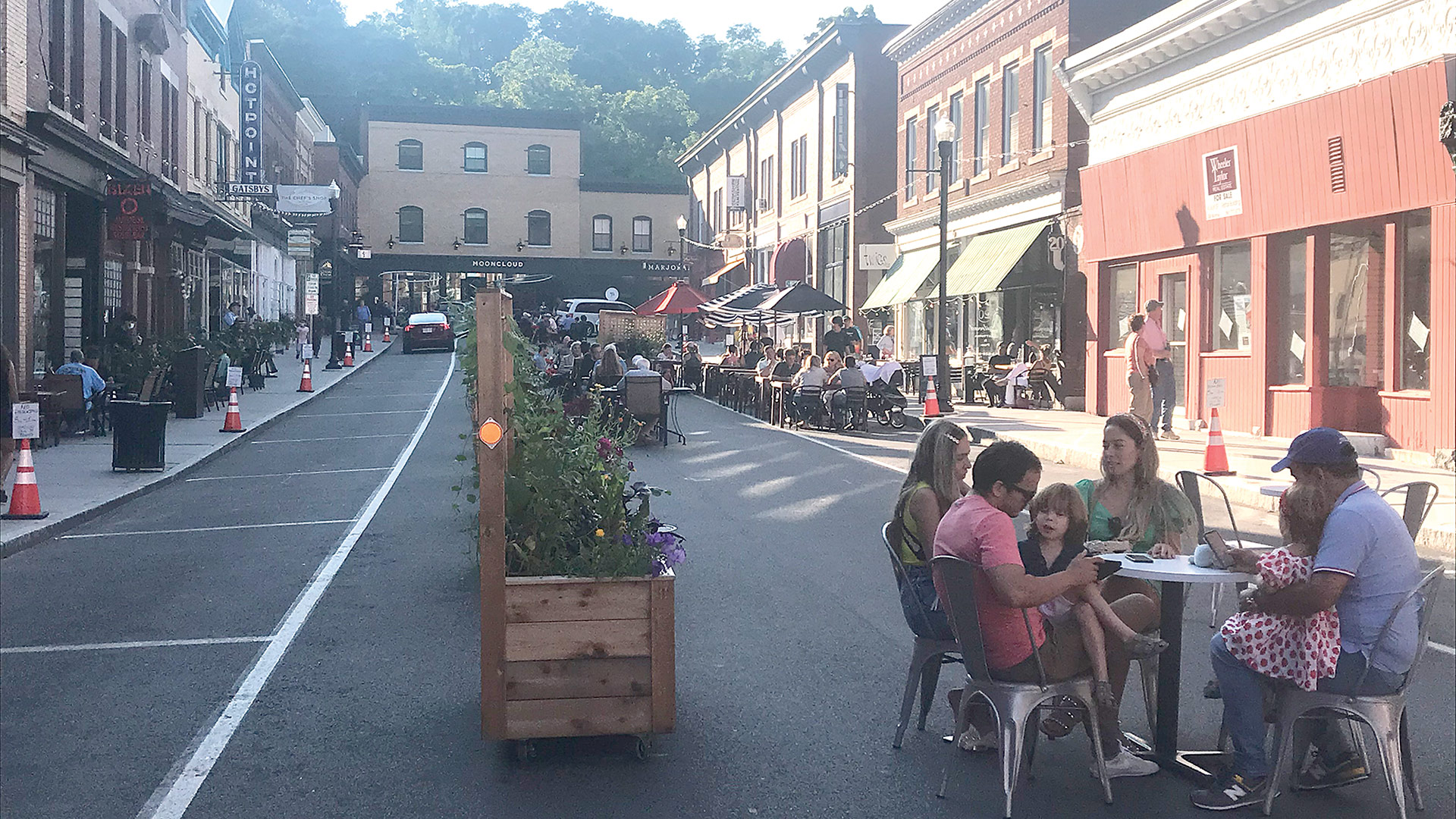
Great Barrington used its Shared Streets grant

Great Barrington used its Shared Streets grant to develop an outdoor dining area on Railroad Street.

While Great Barrington saw some stores permanently shutter their businesses during the pandemic, Andrus said COVID was not usually the main reason for closing. In some cases, the businesses that did not survive the pandemic were struggling before COVID hit. For others, the pandemic provided the opportunity for owners to change professions or retire.

“We had a huge movement of stores that was similar to musical chairs,” she said. “When a business would close and make their space available, multiple people were trying to sign up for it.”


Filling the Gaps

Like musical chairs, there are no empty spaces now in downtown Great Barrington. As a lifelong resident, Andrus said she’s never seen so much activity.

“In some ways, this big shift is the best thing that could have happened,” she noted. “The stores have all settled in to the right locations for what they are selling, and it has really changed the atmosphere in town.”

With retail storefronts full, the second- and third-story office spaces are also reaching full occupancy. Pruhenski hopes the current boom can address a long-term concern in town.

“We’ve always anticipated that Great Barrington would see a population decline over the next decade and beyond,” he said. “It would be great to see the influx of new residents flatten or even reverse that decline.”

While many town halls closed during the pandemic and conducted business remotely, Pruhenski said Great Barrington Town Hall closed only twice, for a month each time. Otherwise, he and his staff came in every day to keep several town projects moving forward.

In 2019, the state Department of Transportation had closed the Division Street bridge. Right now, the project is in the permitting and design phase for a new bridge, which is scheduled to open next summer.

“Everyone was forced to jump out of their comfort zone, and I believe that made us all better for it.”

“Division Street is an important bridge because it links the east side of town to the west,” Pruhenski said. “It’s a shortcut everyone in town likes to use.”

In the northern part of Great Barrington, a private water company serves the village of Housatonic that has been struggling with insufficient water pressure. While Great Barrington doesn’t regulate or own the system, the town is involved to make sure residents there receive clean water and to make sure there is plenty of pressure for firefighters when they need it. Pruhenski said he and the Select Board are looking at several options, including a merger with the town’s water system.

“We were working on this during the pandemic because it has an impact on so many residents,” he noted.

After a transportation service for seniors abruptly closed, town officials took the lead to quickly revive the regional van service that now provides transportation to elderly and disabled residents in Great Barrington and five neighboring towns.

Meanwhile, in the spring of 2020, the town launched a project to paint the downtown crosswalks as a way to recognize diversity in town. Pruhenski said the reaction by residents was more encouraging than he could have expected.

“We just did our little project, and the timing happened to be perfect that the rainbow was being used as a symbol of hope at the height of the pandemic,” he recalled. “After we painted our first crosswalks, people were encouraged to come outside to see them and take pictures with them. It’s been a fun project that’s made everyone happy.”

For 2021, the town added more rainbow crosswalks, and now the entire downtown corridor has replaced its white crosswalks with rainbows.

“People from other communities are calling us because they want rainbow crosswalks in their town,” Pruhenski said. “They are asking us how we did it and where we bought the paint. This project has been so rewarding during such a challenging time.”

For several years, Great Barrington has been pursuing projects to encourage environmental sustainability. One big step was to ban plastic water bottles in town. In return, the town has built three public water stations to make up for the bottle ban.

Another sustainability effort involves the Housatonic Community Center, a popular gym built shortly after World War II. Pruhenski said the center is used a great deal in the winter, so the town has bulked up on insulation and added LED lighting. He hopes to see big savings in energy use and operating costs for the facility.

Great Barrington also has the distinction of hosting the first retail cannabis store in Berkshire County. Theory Wellness opened January 2019 and is now one of four cannabis establishments in town. Pruhenski said sales at all four stores have been strong, and they have returned some welcome revenue to the town.

Great Barrington at a glance

Year Incorporated: 1761
Population: 7,104
Area: 45.8 square miles
County: Berkshire
Residential Tax Rate: $15.99
Commercial Tax Rate: $15.99
Median Household Income: $95,490
Median Family Income: $103,135
Type of Government: Open Town Meeting
Largest Employers: Fairview Hospital; Iredale Mineral Cosmetics; Kutscher’s Sports Academy; Prairie Whale
* Latest information available

“For fiscal year 2022, we were able to use $3.5 million in cannabis revenue to offset taxes,” he noted. “Capital budget items, like new police cruisers that we normally have to borrow for, were paid for in cash thanks to the cannabis revenues.”

The town also collects 3% from cannabis stores to mitigate the negative effects of cannabis on the community. After awarding $185,000 in fiscal 2021, Pruhenski said the town will be awarding $350,000 in fiscal 2022 to five social agencies in the form of community-impact grants.

Andrus agreed that cannabis has had an overall positive impact on Great Barrington.

“Despite all the traffic cannabis brings to town, I’m surprised at how unintrusive it has been,” she said. “For people with health issues, cannabis allows them to live with much less pain.”


Hit the Road

When Massachusetts launched the Shared Streets and Spaces Grant Program in June 2020, it was immediately popular across the state. Pruhenski called the program a “silver lining” resulting from the dark cloud of COVID. Great Barrington used its Shared Streets grant to develop an outdoor dining area on Railroad Street to support several restaurants located there. Every Friday and Saturday night in the summer, two-thirds of the street is dedicated to outdoor dining. Pruhenski enjoys seeing Railroad Street turn into a café each weekend.

“When we started this in 2020, vaccines were not yet available, and the only way to dine out was to eat outside,” he said. “Restaurants nearby also use their outdoor space, so it creates a lively downtown experience.”

Andrus said outdoor dining on Railroad Street was a huge effort that was well worth it. “It works great, and people love it. The restaurants want to see this keep going, so they are all taking part.” The town also participates in an effort called Berkshire Busk, in which a dozen entertainers perform at different spots around downtown Great Barrington during the outdoor dining season.

Andrus said the town’s response the to pandemic reminds her of the expression, “don’t waste a good crisis.”

“Everyone was forced to jump out of their comfort zone, and I believe that made us all better for it,” she added. “Because we were all kind of stagnant before the pandemic, it made us try something different.”

Pruhenski would be the first to say that Great Barrington is moving in a positive direction as more people move in, and many are locating their businesses here, too.

“School enrollments are increasing, and Main Street is busier than it’s ever been,” he said. “It’s a really exciting time for the town.”

Accounting and Tax Planning

Where There’s Smoke…

By Kristina Drzal Houghton, CPA, MST


Kristina Drzal Houghton

Kristina Drzal Houghton

The production and distribution of cannabis, once known to many only as marijuana, is the newest and most variegated industry in America. Some would even say it is one of the toughest industries in America in which to do business. This article will discuss a few unique challenges from a financial perspective faced by the industry.

The first complexity starts with the difference between cannabis and CBD. When you look at a cannabis plant and a hemp plant side by side, the plants themselves look identical to an untrained eye, making it a bit challenging to identify, as the real difference lies in the chemistry of the plants.

CBD can be extracted from hemp or marijuana. Hemp plants are cannabis plants that contain less than 0.3% THC (the compound that creates the ‘high’ sensation), while marijuana plants are cannabis plants that contain higher concentrations of THC. This article will refer to all products containing more than 0.3% THC as cannabis, while products with less will be referred to as CBD.

So, basically, the only difference from a scientific standpoint is the level of one chemical. However, things are much more complex from a legal and tax perspective. Under the 2018 Farm Bill, CBD and hemp are now legal, and not on the schedule I list of controlled narcotics right up there with heroin and LSD. In 2016, Massachusetts passed a law making all cannabis legal, and all but five other states have passed laws making it either fully legalized, decriminalized, or medically authorized. While cannabis is federally illegal, the Internal Revenue Service is perfectly willing to collect taxes on companies that handle the product.

Federal tax law is very punitive on the cannabis industry. Internal Revenue Code Section 280E is a very short part of the tax code (just one sentence) and states:

“No deduction or credit shall be allowed for any amount paid or incurred during the taxable year in carrying on any trade or business if such trade or business (or the activities which comprise such trade or business) consists of trafficking in controlled substances (within the meaning of schedule I and II of the Controlled Substances Act) which is prohibited by federal law or the law of any state in which such trade or business is conducted.”

Under 280E, you’re not allowed any deductions or credits on your return, but you can deduct the cost of goods sold, as that is part of the definition of taxable income. A cannabis farm will only be allowed to allocate various costs, direct and indirect, into cost of goods sold and inventory. Section 280E will affect only cannabis entities. CBD companies, since they are legal, are allowed all normal business deductions and credits available to other non-cannabis companies. This provides many more opportunities to reduce taxable income to a hemp/CBD company.

It is not only the federal tax difference which significantly attributes to the disproportionate cost of cannabis versus CBD. Due to discrepancies between state and federal law, legal cannabis businesses are forced to operate almost entirely in cash, with very little access to financial services, since most banks are federally insured and therefore unable to establish accounts for this federally illegal business. This leaves thousands of dollars stored in backroom safes and transported in shoeboxes and backpacks, creating a prime target for crime. Another banking challenge that cannabis businesses regularly face is exorbitant monthly account fees, or banks that take a percentage of each deposit.

The industry faces many other challenges as well. For example, most states have a mandated ‘seed to sale’ software-tracking system that must be used and accurate (daily), and must be reconciled with POS (point of sale) systems and accounting systems. Additionally, because this is a new industry, many of the tools other industries use are simply not readily available, including a cannabis-tailored chart of accounts, QB POS systems, reliable inventory software, and common merchant service platforms.

There is an opportunity for dispensaries to separate some revenue streams outside of the cannabis division, meaning normal business deductions are allowed for the non-cannabis division. These might include clothing, paraphernalia, coffee, CBD, and other goods. While this is good news for the industry, it only creates even more complexities when allocating selling and administrative expenses.

A recent report from the U.S. Treasury inspector general for Tax Administration recommends increased audits by the IRS of cannabis businesses to identify potential non-filers and returns that are not 280E-compliant. For this as well as the above reasons, cannabis businesses need to find an accounting firm that really knows what it’s doing. The cannabis accountant has to not only understand Section 280E, but also know how to treat a business that deals strictly (and necessarily) in cash. Many cannabis companies have bad books because their bookkeepers do not understand the special accounting and therefore didn’t properly categorize expenses. It can be time-consuming to fix them.

So, while the many layers of regulatory control and reporting may be of utmost importance to those operating in the cannabis industry, overlooking the complexities in the finance area of the business can lead to the proverbial perfect storm — or the business going up in smoke.


Kristina Drzal Houghton, CPA, MST is a partner at the Holyoke-based accounting firm Meyers Brothers Kalicka, P.C.

Modern Office

Best of Both Worlds

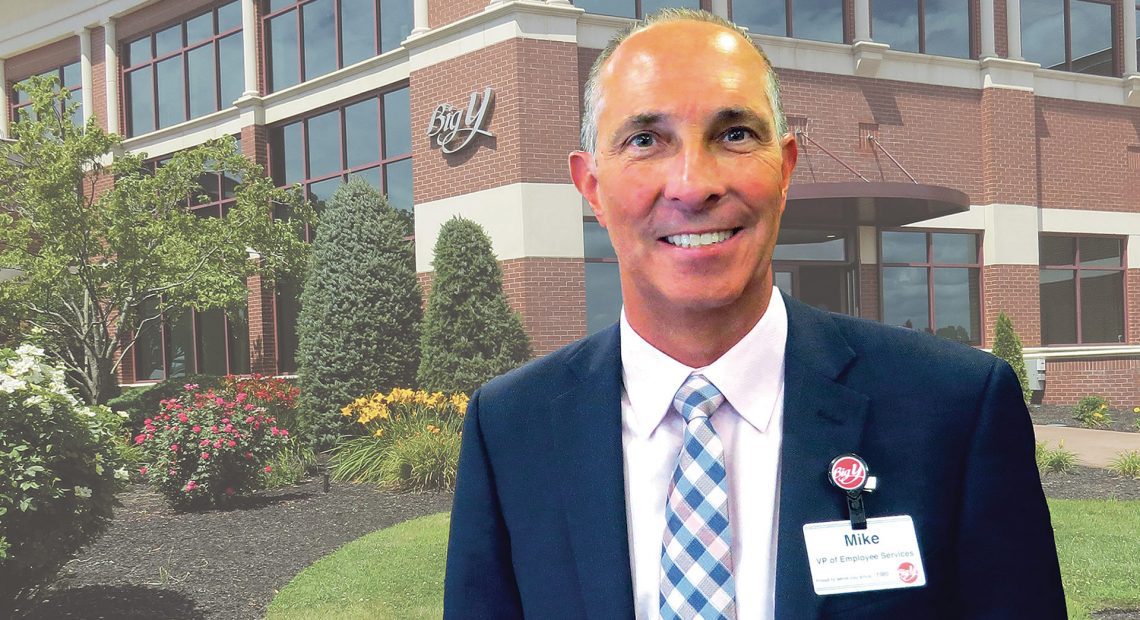
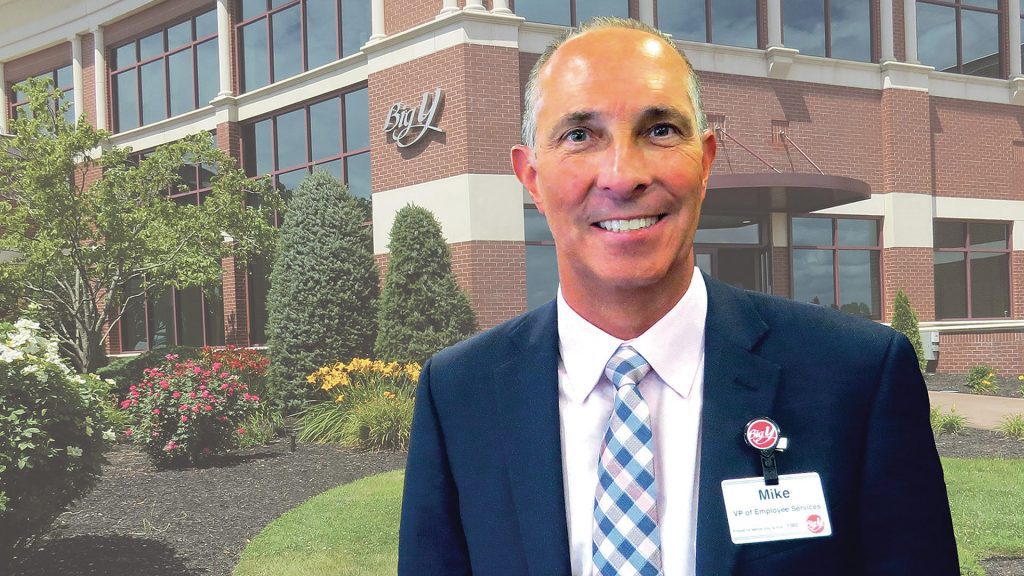
Michael Galat says Big Y is scheduling employees in a way that balances the company’s needs with their own.

Michael Galat says Big Y is scheduling employees in a way that balances the company’s needs with their own.

Looking over the past year and a half, Lisa Verville isn’t surprised the O’Connell Companies operated smoothly with the vast majority of its team working from home.

“People have stepped up, they did what they needed to do, and work got done,” said Verville, director of Human Resources for the large family of businesses that includes Daniel O’Connell’s Sons, O’Connell Development Group, Appleton Corp., and New England Fertilizer Corp.

“Now, the technical piece of it — if this happened 20 years ago, I can’t imagine it would have worked as well as it did. We didn’t have Zoom back then,” she added. “But we have a very dedicated team. I’m not surprised it worked well.”

Which is why remote work will continue at O’Connell — to a point. Starting last month, employees were required to work on site at least three days a week, and more if they want to.

“We miss everybody,” Verville said. “We have a great culture, and we don’t want to lose that culture. If people are 100% remote, I think there’s a risk of losing that — do people feel connected to their organization if they’re not here, cooperating and collaborating with their team?”

At the same time, “we know we have to balance that with what’s going on with our workers. We want our employees to be happy and feeling as though there’s a balance. That’s our goal.”

Welcome to the new, hybrid workplace, which looks to be a dominant model for employers across myriad industries, at least for the near future.

“People tell us they can do both,” Verville said. “I think it works, and allows for that work-life balance. I think people appreciate the flexibility.”

Big Y has been operating on a hybrid model for its support-center workers since early in the pandemic, said Michael Galat, vice president of Employee Services. And that will continue.

“Obviously, our stores are open nights and weekends, and our goal, as always, is to make sure we’re taking care of our store employees and our customers at all times,” he said. “Business needs may be different for different positions. It’s finding the right balance — making sure we’re taking care of customers but also allowing our people the autonomy to work from home.”

That’s the thinking at MassMutual as well, said Sue Cicco, head of Human Resources and Employee Experience. The company’s return-to-office approach will balance flexibility with in-person collaboration, with most employees transitioning to a hybrid model, working some days in the office and some days remotely.

Ross Giombetti

Ross Giombetti

“I could see a lot of businesses and leaders getting impatient and frustrated; they want the old way to come back and expect everything to be great. But that’s not how it works.”

“We will also continue to support fully remote and fully in-office arrangements where it makes sense,” she added. “Importantly, this approach is designed to incorporate employee flexibility, so it will look different across the company, depending on role, function, and business needs.”

With most employees working 100% remotely during the COVID-19 pandemic, she explained, “we learned that we can successfully operate in a virtual work environment. That said, we also think there’s value in teams meeting in person to spur creativity, social connection, and collaboration.”

The goal now is to build on the work-life flexibility MassMutual has offered for years, while taking into account employees’ feedback from recent engagement and surveys.

“Similar to how we approach many new situations,” Cicco said, “we’ll assess and evolve our approach as we learn more about what works best for our customers, employees, and company.”


Culture of Caring

Ross Giombetti, president of Giombetti Associates — a leadership institute that helps businesses acquire and develop top talent — said the vast majority of his clients are currently maintaining a hybrid model and anticipate sticking with it for at least a while.

“I think most companies realized that, contrary to the initial concerns they may have had, a lot of people were very productive during the pandemic, working remotely, and it actually went a lot better than they thought,” he told BusinessWest. “So a lot of organizations realized that’s here to stay, at least for the foreseeable future.”

At the same time, he added, employers are finding resistance to bringing workers back full-time because remote work has become a habit.

“If you think about how habits are formed and what makes humans comfortable with something, it takes a full 90 days for a new norm or new habit to become part of our routine. Take mask wearing — I would bet most of us took about 90 days to get comfortable and used to wearing a mask.”

Well, many employees stayed home more than five times that long, so the habit has become deeply ingrained, becoming the new norm. Giombetti also noted that many employees told to return to the office, at least part of the time, may be uncomfortable doing so, still fearful of gathering in groups.

Sue Cicco

Sue Cicco

“By making sure our employees have the flexibility to take care of their families, we set off a virtuous cycle where our people are taken care of, and in turn they can take care of their communities, and that extends to how we can take care of our customers.”

In other words, working at home is a hard habit to break, for many reasons. That’s why most businesses are looking at hybrid scheduling as an acceptable option.

“I could see a lot of businesses and leaders getting impatient and frustrated; they want the old way to come back and expect everything to be great,” he said. “But that’s not how it works. A lot of the advice I’m giving people is to be patient with the process, be patient with people returning to work, whether hybrid or fully. When people are back around large groups of people, there will probably be some nervousness, and we need to be understanding of that.”

At Giombetti’s own company in Wilbraham, Fridays are remote days for everyone, and employees can request to work at home any other day they feel they’ll get more done there, with fewer distractions.

“If our team needs that, I encourage it. That’s how we operate,” he said. “I think many organizations understand it’s better to measure results, attitude, and performance than where they’re doing the work from.”

Galat said Big Y’s leadership learned many lessons over the past 17 months.

“One is that we can still be very productive while employees are working from home — there’s an increase in employee productivity when employees are happy. We’ve always considered ourselves a culture of caring, and this [remote work] has helped people balance their personal needs, whether it’s child care, elder care, whatever.

“I also think a big part of productivity is flexibility,” he went on. “Some may log on earlier in the morning, or at times work later at night.”

While working from home saves on travel time and can boost productivity in other ways, he admitted that it’s important that colleagues come in a few days a week to make sure they’re not missing out on the collaborative components of their jobs. Therefore, managers are expected to work on site at least three days a week, and everyone else at least two.

“Again, it depends on the business needs. That’s a very important component of it,” Galat said. “There may be weeks they have to come in every day, and there may be weeks they can work more from home. Each area supervisor works with them to find that balance based on the business needs and what’s going on in their personal life.”

Workers appreciate that kind of consideration, Cicco added. “By making sure our employees have the flexibility to take care of their families, we set off a virtuous cycle where our people are taken care of, and in turn they can take care of their communities, and that extends to how we can take care of our customers.”


Culture of Collaboration

That said, companies see value in making sure their workforce is physically present, at least part of the time,

“We think there’s value in both in-person collaboration and the flexibility created by working remotely,” Cicco said, adding that most MassMutual employees responding to surveys or other outreach preferred the hybrid option.

“We’ve learned that, while we appreciate the increased flexibility of remote work, we also miss the value we get from face-to-face meetings, impromptu conversations, collaboration across work groups, and what we learn when we’re together,” she went on. “Not to mention the social aspects — having lunch, bumping into friends around the building, and catching up over a cup of coffee.”

In addition, “we believe the connection that comes with being face-to-face brings energy, encourages innovative thinking, accelerates learning, and strengthens relationships and community,” Cicco noted. “With this in mind, we will encourage work groups to come together regularly, for the benefit of their work and their team.”

Giombetti said most of his clients offering hybrid work stress the need to be physically present at times — brainstorming and working through critical issues at a staff meeting, for instance. “Some things are best done in a room with other people. And most clients have found their employees are totally comfortable with that.”

The other challenge for companies has to do with culture, camaraderie, and the kind of collaboration that can’t be easily achieved over Zoom.

“A lot of organizations are training specifically on that topic,” he said. “While you’re honoring the flexibility of your teammates and employees, it’s important to make sure you can maintain that great culture you’ve built.”

Galat agreed, noting that, while Zoom and similar tools have their place and have been an important piece of keeping staff connected, some collaborations are more effective in person.

“We’re big on culture here — that’s a very, very important part of it. When you don’t see people at least part of the time, it’s hard to strengthen those relationships. It’s all about relationship building, and that goes back to who we are as an organization, caring about employees. Yes, we’re allowing them to work from home, but building relationships with people over the years when we don’t see them some of the time, that’s difficult.”

At the same time, Big Y has prepared a series of best practices for employees working remotely, including the need to take regular breaks. “Productivity is important getting the job done,” Galat said, “but we also want to make sure people are taking some time away as well.”

Giombetti said remote work has allowed some bad habits to creep back in, including a tendency to multi-task to the detriment of the main task.

“If you’re in the office, in the conference room, having a meeting, most of us know it would be foolish to pick up the phone when someone is talking to us because that’s just rude,” he explained, noting that it happens much more often during a Slack, Teams, or Zoom meeting. “Unfortunately, the last year and a half maybe caused us to retrench a little bit, and the amount of multi-tasking has increased. We have to guard against that.”


Unexpected Absence

Verville remembers the week in March 2020 when O’Connell’s Holyoke headquarters emptied for what most employees thought would be a temporary detour home.

“People did what they needed to do. There was a real commitment there,” she said. “But I personally didn’t think it would last this long. I think most people left the office and said, ‘see you in a couple weeks.’ No one thought it would be this long. And I missed everyone, so it’s great to get back to some sense of normalcy, if you will.”

That new norm seems to be an understanding among employers that their workers value flexibility, but also that the workplace culture will suffer without some face-to-face collaboration.

“It’s a hard balance,” Giombetti said, “but I think organizations that are intentional about it do it best; that’s the recipe for success.”

It could also be a recipe to attract talent at a time when many companies are struggling with hiring and retention, as many potential workers would be more amenable to a hybrid schedule than five days a week away from home.

“It’s about being able to attract and retain the top talent and finding that balance between supporting the stores — providing the tools to get their jobs done — and being accessible so that people say, ‘hey, I can work at home, and they care about me — I can take care of my family’s needs as well,’” Galat said. “It’s all about the workplace culture, and work-life balance is part of it. We want the best of both worlds.”


Joseph Bednar can be reached at [email protected]

Technology

Life on the Cutting Edge

An on-the-go society demands on-the-go technology, and today’s array of high-tech devices — available at all price points — offer users new ways to make their home lives more efficient, manage their work, boost their health, and, well, just have fun in more eye-popping, ear-tickling ways than ever. In its annual look at some of the hottest tech items available, BusinessWest dives into what the tech press is saying about some of 2021’s buzziest items.


When compared to many of the other cool tech gadgets on this list, the Amazon Smart Plug ($25) “might seem underwhelming, but you might be impressed with how much you like this smart-home accessory once you start using it,” according to spy.com. “Head out on vacation and can’t remember if you left a fan or window AC unit running? If it’s plugged into this, you can simply open up your Alexa app and cut off the power. Have a lamp that you love, but it doesn’t work with a smart bulb? Use one of these to make a dumb lamp very, very smart. On top of all that, Alexa has some impressive power-monitoring tools, so that if you have more than one of these around your home, you can figure out which appliances and electronics around the house are costing you the most money, and you can adjust your usage behavior accordingly.”


Meanwhile, the same site says the Anker Nebula Solar Portable Projector ($520) won’t replace a fancy, 65-inch, 4K HDR TV, “but for those moments when you’re really craving that movie-theater experience at home … you’ll understand why this made our list of cool tech gadgets.” The projector boasts easy setup, too. “Barely bigger than a book, you can point it at a wall and have it projecting a 120-inch, 1080p version of your favorite Netflix movie without needing to configure the picture settings or find a power outlet.”


Speaking of projectors, the BenQ X1300i 4LED Gaming Projector ($1,299) is being marketed as the first true gaming projector that’s optimized for the PS5 or Xbox Series X. “The 3,000-lumen projector will play 1080p content — so not true 4K content — at extremely low latency, which is needed for competitive gamers,” according to gearpatrol.com. “Additionally, it has built-in speakers and an Android TV operating system, so it functions as any traditional smart TV — but it can create up to a 150-inch screen.”


Taking tech outdoors is the DJI Mavic Air 2 Drone ($799), which menshealth.com touts for its massive optical sensor, means “the 48-megapixel photos pop and the hyperlap video is 8K — smart futureproofing for when your TV plays catchup. The next-gen obstacle-avoidance sensors, combined with the 34-minutes-long flight time, mean you spend more time shooting killer video and less time dodging trees and buildings.”


Smart wallets offer a convenient way to store and transport cash and credit cards while protecting against loss or theft. The Ekster Parliament Smart Wallet ($89) is a smart bifold wallet with RFID coating (to protect against identity theft) and a patented mechanism that ejects cards from its aluminum storage pocket with the press of a button. It has space for at least 10 cards, as well as a strap for carrying cash and receipts, according to bestproducts.com. “Ekster has crafted the wallet from high-quality leather that comes in a multitude of colors. An optional Bluetooth tracker for the wallet is also available. This ultra-thin gadget has a maximum range of 200 feet, and it is powered by light, so it never needs a battery.”


In the smartwatch category, the Fossil Gen 5 LTE ($349) is the company’s first product in the cellular wearables market, crn.com notes. “The Fossil Gen 5 LTE Touchscreen leverages LTE connectivity from Verizon, the Qualcomm Snapdragon Wear 3100 platform, and Google’s Wear OS to let users make calls and do texting without a mobile phone.” Fossil also makes what bestproducts.com calls the best hybrid smartwatch, the Fossil Latitude HR Hybrid Smartwatch ($195), “a feature-packed hybrid smartwatch with a built-in, always-on display and a heart-rate sensor. We like that, instead of looking like a tech product, it resembles a classic chronograph timepiece with mechanical hands and a three-button layout. The Latitude HR can effortlessly deliver notifications from your phone and keep tabs on your activities.”


“We don’t know who will be more excited about the Furbo Dog Camera ($169), you or your pet,” popsugar.com notes. “You can monitor them through your phone, send them treats when you’re away, and so much more.” The 1080p, full-HD camera and night vision allows users to livestream video to monitor their pet on their phone with a 160-degree wide-angle view, day and night. A sensor also sends push notifications to a smartphone when it detects barking. Users can even toss treats to their dog via the free Furbo iOS/Android app. Set-up is easy — just plug it in to a power outlet using its USB cord, download the Furbo app, and connect to home WiFi.


“As one of the first companies to make artificial intelligence and voice-recognition technology available to the average person, spy.com notes, “Google is still the top dog when it comes to voice assistants and smart-home platforms. And perhaps its most radical move was the Google Nest Mini ($35), a small and cheap speaker that is fully imbued with the powers to command your smart home. Once you get used to the particular ways of interacting with a voice assistant, it’s rare when you have to raise your voice or repeat yourself to get the Nest Mini to understand you, even when you’re on the other side of the room, half-asleep at 1 a.m., telling it to turn off the lights, shut off the TV, and lock the doors.”


Tired of housework? “If you’re a fan of the iRobot vacuum, then you’ll want to give the iRobot Braava Jet 240 Robot Mop ($180) a try,” popsugar.com asserts. “It will clean your floors when you’re not around, so you have nothing to worry about later.” The device claims to offer precision jet spray and a vibrating cleaning to tackle dirt and stains, and gets into hard-to-reach places, including under and around toilets, into corners, below cabinets, and under and around furniture and other objects, using an efficient, systematic cleaning pattern. It also mops and sweeps finished hard floors, including hardwood, tile, and stone, and it’s ideal for kitchens and bathrooms.


Smart glasses are a thing these days, too. Jlab Audio recently introduced its new Jlab JBuds Frames ($49), a device that discretely attaches to a user’s glasses to provide wireless stereo audio on the go. “The JBuds Frames consist of two independently operating Bluetooth wireless audio devices, which include 16mm drivers that produce sound that can only be heard by the wearer, not by others,” according to crn.com. “In addition, the device can easily be detached and mounted on other frames when needed.”


For a next-level experience in eyewear, “virtual reality might be taking its time to have its ‘iPhone moment,’ but it is still very much the next big thing when it comes to the coolest tech gadgets,” spy.com notes, “and there is not a single VR device that flashes that promise more than the Oculus Quest 2 ($349).” Without the need for a powerful computer or special equipment, users can simply strap the Quest 2 to their head, pick up the controllers, and move freely in VR space thanks to its inside-out technology, which uses cameras on the outside of the headset to track movement. “In a time where we don’t have many places to escape to, the Oculus Quest 2 offers up an infinite number of destinations … even if they’re only virtual.”


Another way to escape into another world — albeit one requiring more effort — is the Peloton Bike+ (from $2,495). “Peloton’s updated bike boasts a lustrous, 24-inch-wide screen and a game-changing multi-grip handlebar that lets you always find comfortable position,” menshealth.com notes. “And the best feature just may be auto-follow, which automatically shifts the resistance when the instructor calls for it. Translation: no escape from tough workouts.”


Speaking of devices with health benefits, the Polar Verity Sense optical heart monitor ($90) can be worn on the arm or temple (for swimming). “It’s designed for people who don’t necessarily wear a wrist-bound fitness tracker or smartwatch, or are doing an exercise that isn’t very friendly to wrist jewelry, like martial arts, swimming, dancing or boxing,” gearpatrol.com notes. “It’s a nifty accessory for people who use Polar Flow, Polar’s free fitness and training app, or wear one of the company’s smartwatches.”


Meanwhile, gearpatrol.com is also high on the Ring Video Doorbell Pro 2 ($250), the next-generation version of its well-reviewed video doorbell — and it adds two big upgrades. “First, it adds a new radar sensor that enables new 3D motion detection and bird’s-eye-view features; this allows it to better detect and even create a top-down map of the movement taking place in front of your door. And, secondly, the camera has an improved field of view so that it can capture the delivery person’s entire body — head to toe — when they drop off a package.”


Finally, are you looking for great sound for home entertainment? With Sonos Arc ($799), users can “get immersive audio that can fill an entire house in one slim, sleek, ultra-versatile package,” menshealth.com notes. “A whopping 11 drivers power Sonos’ newest soundbar, fueling a surround-sound experience that delivers in all situations, whether you’re playing Halo or watching Avengers: Endgame.”


Employment Special Coverage

Questions, Questions


At a time when most companies and nonprofit institutions in the region are hiring, or trying to, many area business owners, managers, and HR directors are sitting across the table from job candidates trying to determine if that individual is the proverbial ‘right one.’

Given this climate, BusinessWest asked a number of area business leaders to identify one of their favorite, most effective interview questions. We asked them to explain why they ask that question and what it reveals to them about the candidate.

Suffice it to say, their responses provide some food for thought on a very important part of business.


Sara Rose Stack

Sara Rose Stack

Sara Rose Stack, Marketing & Recruiting Manager, Meyers Brothers Kalicka

The question: “Tell me something that you would do differently than your current boss at your current job.”

I ask this question to learn more about candidate’s awareness of people around them, their creative problem-solving skills, their desire to improve and grow, and their level of tact. A candidate’s answer to this question will reveal a lot about his/her ability to solve problems, but what I am most interested in is how they communicate their proposed solution. The question itself has a somewhat negative connotation because it is asking for the candidate to share something that their boss could do better or differently. My experience has shown that, if someone will bash a supervisor or competitor to you, then they will repeat the behavior to others. Further, anyone that can share suggestions for improvement in a positive way is a great addition to the team. Tact and diplomacy are powerful tools for making improvements, contributing ideas, and working in a team.


Sandra Doran

Sandra Doran

Sandra Doran, President, Bay Path University

The question: A two-parter: “How will this position help you grow your career?” “Tell me about an experience or work project where you had to work across departments to accomplish the goal(s).”


In the first part of the question, I am looking for authenticity of the candidate and the ability to be introspective and share their current strengths as well as their vulnerabilities. As their experience grows, their value as contributors to Bay Path will also increase. The second question provides insights to their capacity to be a team player and team leader within our organization. Today, 40% of Bay Path students are students of color, and we are striving to increase the diversity of our employees. As a result, as the candidate explains the project, I am looking for how they respect and handle other opinions and perspectives, value diversity of thought, and exhibit multi-cultural competencies. Above all, the candidate must be both mission- and student-centered.


Brenda Olesuk

Brenda Olesuk

Brenda Olesuk, President, Graduate Pest Solutions Inc.

The question: “What do you consider to be your professional and personal strengths, and, conversely, what areas do you struggle with or are not interested in doing professionally?”


This is a mainstay question in all of my interviews since it encourages the applicant to be introspective and reflective about themselves — and this tells me a lot about them. Learning what they consider to be their professional strengths and how they’ve applied those strengths often creates context for what they can and will bring to the table in the position they are applying for. Perhaps more important to me is the level of candor with which they communicate areas of struggle or lack of interest and how they have managed this in their career. This question often leads to an additional discussion that unveils the applicant’s openness to coaching and development, which is a trait that is important to me as a leader, manager, and employer.


Ellen Freyman

Ellen Freyman

Ellen Freyman, Esq., Partner, Shatz, Schwartz and Fentin, P.C.

The question: “What would make you satisfied in this job?”


This question lets the applicant know that we care whether our employees are happy working for us, and at the same time, it helps us determine if this applicant will be a good fit. It is also another way of finding out the applicant’s strengths without asking directly, and discloses what part of the job they may not care to do. The answer to this question can reveal why the applicant hasn’t stayed in previous jobs and potentially lead us to rethink some of the things we are doing in our office. The question helps us determine if the applicant understands the position they have applied for and if they have the right skill set. Getting an honest answer to this question helps both the applicant and us know whether hiring this person will be satisfying to both of us.


Carla Cosenzi

Carla Cosenzi

Carla Cosenzi, President, TommyCar Auto Group

The question: “How do you delegate responsibilities to team members?”


I ask this question to potential hiring candidates because most managers fail at delegation. As a good leader, it is their responsibility to be clear about what they are delegating and their expectations. In our company, it is our manager’s responsibility to offer their team the tools they need to succeed by encouraging and supporting the decision-making environment. The effective delegation and empowerment of their employees is essential for their success as a manager. By asking this question, I am able to learn if a potential candidate is able to release control and effectively delegate, empower, and hold accountable their future team members.


Pia Kumar

Pia Kumar

Pia Kumar, Chief Strategy Officer, Universal Plastics

The question: “Why did you leave your last job?” Or, if they are still employed, “Why are you looking to leave this job?”


As an employer, I value continuity and longevity in job history. However, the résumé is just a piece of paper. The interview is the opportunity to either rise above what the piece of paper says or minimize it. How someone discusses a job change tells me whether they are a team player, whether they are growth-mindset-oriented, and what kinds of cultures, people, and attributes they either enjoy or don’t. In short, it is the ‘heart’ (as opposed to the ‘head’) part of the interview, which answers the most important question of all for me — do I want this person on my team?

It is never easy to leave a job, whether you do it on your own terms or have been asked to do so. So, how you answer this question brings up your response to a difficult situation, which may even involve conflict or confrontation. As an employer, I want to know how you handle difficult situations. At Universal Plastics, we believe in giving people chances, lots of them, but it has to start from a place of candor and commitment to our culture and the values we espouse, and this question aims to ascertain exactly that.


Michael Matty

Michael Matty

Michael Matty, President, St. Germain Investments

The question: “What did your parents do?”


I like to ask this because we are all a product of our background, and it is a great opportunity to gain some insight into the person. If, for example, the parents ran their own business, the candidate probably has a good understanding of the needs of a small business and what it takes to make it work. It is also a good opportunity to ask why the candidate doesn’t want to work there. Conversely, the mom may have been stay-at-home, and dad worked in a factory job in a blue-collar role. The candidate may be first-generation college and first-generation in a professional role — sometimes a bit less polished in presentation, but likely with good reason. And if they are smart, energetic, and willing to learn, I’d potentially think they were a good hire. Overall, it’s a good, open-ended question that can lead to some good conversation.


Jane Albert

Jane Albert

Jane Albert, Senior Vice President and Chief Consumer Officer, Baystate Health

The question: “What impact has the pandemic had on you?


This is a newer question I ask because it opens the door to conversation about a current topic of significance with many pathways to get to know the candidate. Asking a broad, open-ended question provides the candidate with a choice to respond with an orientation toward their personal life or their work experiences. like to provide that option to make it most comfortable for the candidate during the interview. This question enables conversation about how they handled changes and challenges related to the pandemic and offers glimpses into how they may handle and adjust to changes within our healthcare environment and their potential new work responsibilities. It also opens the door to learning about the candidate’s priorities, relationships, engagements, and abilities to adapt to change, along with how they handled this in their daily life as well as throughout their work experiences.


Kate Campiti

Kate Campiti

Kate Campiti, Associate Publisher and Sales Manager, BusinessWest

The question: “Have you had experience in the service industry?”


When I interview for sales, I look for — and ask about — experience in the service industry. If the candidate has it, I ask how they’ve handled a tough customer or table and how they turned it around or were able to shake it off to continue successfully serving the rest of the shift. If candidates can wait tables or bartend successfully, it shows they have what it takes to think on their feet, appeal to customers, and provide high-level service to earn tips. It also shows they are driven by both money and customer service, which bodes well for a sales position with BusinessWest. For other positions, I typically ask what motivates them, what they do to unwind, if they have tactics for stress relief inside and outside the office, and what they think their best assets and weaknesses are and what they think their current or previous employers would say.

Business of Aging Special Coverage

House Calls

While the pandemic may have challenged the home-care industry, it certainly didn’t suppress the need for such services. In fact, demographic trends in the U.S. — where about 10,000 Baby Boomers reach age 65 every day — speak to continued, and growing, demand for care services delivered in the home. That means opportunities both for agencies who specialize in this field and job seekers looking for a rewarding role and steady work.

Michele Anstett says business was like “falling off a cliff” when COVID hit, but client volume has returned to normal.

Michele Anstett says business was like “falling off a cliff” when COVID hit, but client volume has returned to normal.

By Mark Morris

In early 2020, Michele Anstett, president and owner of Visiting Angels in West Springfield, was pleased because her business was doing well. As a provider of senior home care, she managed 80 caregivers for 50 clients.

“We were going along just fine,” she said. “And when COVID hit, it was like falling off a cliff.”

The business model for companies like Visiting Angels involves interacting with people in their homes, so when early mandates encouraged people to keep away from anyone outside their immediate ‘bubble,’ it hit the industry hard.

Even though caregivers were designated as essential workers, Anstett saw her numbers shrink to 39 caregivers who were now responsible for only 19 clients. In order for her business to survive, she continued to provide services for her clients who needed personal-care services around the clock and for those who had no family members in the area.

“Where possible, we asked family members to step in to help out,” she told BusinessWest. “At the beginning of the pandemic, there was less risk to everyone when a family member could be involved with their loved one’s care.”

Anstett also incorporated a detailed checklist of risk factors for each caregiver to review to prevent COVID-19 from spreading to them or their clients.

“I thought patients weren’t following up because of a language barrier. As it turns out, they weren’t responding because they didn’t understand the severity of the situation.”

“We talked with caregivers about the people in their circle,” Anstett said. “It was similar to contact tracing, but we did it beforehand, so people would understand what they had to consider to protect themselves, their families, and their clients.”

A Better Life Homecare in Springfield runs two home-care programs. In one, it provides personal-care services such as helping seniors with grooming, cooking, laundry, and more. The other program provides low-income patients with medical care in the home, such as skilled nursing services, occupational therapy, and physical therapy.

On the medical side of the business, licensed practical nurses (LPNs) handle many of the home visits, while certified nursing assistants (CNAs) and patient care assistants (PCAs) are the main frontline workers on the personal-care side. A Better Life also employs case workers to supervise PCAs and CNAs and to set up other resources a patient may need, such as Meals on Wheels and support groups.

When COVID hit, said Claudia Lora, community outreach director for A Better Life, she and her staff made patient communication a top priority.

Claudia Lora

Claudia Lora says communication with clients was key to navigating the pandemic.

“We implemented daily phone calls to our patients that also served as wellness check-ins,” she recalled. Because a majority of the company’s clients are Spanish speakers, A Better Life employs many bilingual staff. At the beginning of their outreach efforts, Lora became concerned when some patients didn’t seem to follow up and respond to communications.

“I thought patients weren’t following up because of a language barrier,” she said. “As it turns out, they weren’t responding because they didn’t understand the severity of the situation.”

On the other hand, she said some patients temporarily stopped their home-care service out of concern about interacting with anyone in person. The system of daily phone calls helped address patient concerns and keep them current on their treatments. In addition, patients received whimsical postcards to lift their spirits and care packages of hygiene products and food staples.

“The pandemic opened our eyes in different ways,” Lora said. “It made us aware that we needed a system of daily phone calls in both programs, which we will continue even after the pandemic is no longer a concern.”


Growing Need

The lessons home-care agencies learned from the pandemic — some of which, as noted, will lead to changes in how care is provided — come at a time when the need for home-based services is only increasing.

That growing need is due in part to people living longer, of course. According to government data, once a couple with average health reaches age 65, there is a 50% chance one of them will live to age 93, and a 25% chance one of them will see age 97. With the increased longevity, there is also a greater chance these seniors will need some type of assistance with daily chores or treating a malady.

Receiving care at home, with an average cost nationally of $3,800 per month, is less expensive than moving into a nursing home (approximately $7,000 per month), and nearly everyone would rather stay in their home. When seniors need assistance, Anstett said, they often rely on family members out of fear of having an outside person come into their home.

Now that concerns about COVID are easing, she reports that people are increasingly more willing to have someone come in to their home to help, but there are still some who resist. “I wish they could understand we are not there to take away their independence, but to give them more independence.”

Lora said some of her patients were reluctant to allow people to come into their homes until they considered the alternatives.

“The only other option for people receiving medical care would have been checking into a skilled-nursing facility or a nursing home,” she noted. “I knew that was the last place they wanted to go.”

She added that the extensive news coverage of high rates of COVID in nursing homes and the high case rate locally at the Holyoke Soldiers Home convinced most people that care at home was a wise choice.

Anstett and Lora both pointed out that their companies always make sure anyone providing home care wears appropriate personal protective equipment and follows the latest guidelines for preventing the spread of COVID. Anstett said she encourages her caregivers to get vaccinated, but doesn’t force the issue because she recognizes some people have health issues.

“However,” she added, “I make it clear to the unvaccinated folks that the pool of clients willing to see a caregiver who is not vaccinated is fairly small.”

While the pandemic may have slowed down business in the short term, demographic trends still remain strong for the years ahead. According to U.S. Census Bureau data, about 10,000 people reach age 65 every day. This trend is expected to continue until 2030, when all living Baby Boomers will be at least 65 years old.


Looking Ahead

Fifteen months after the chaotic early days of the pandemic and with many people now vaccinated, Lora said A Better Life is busier today than before the pandemic.

“In the last six months, admissions have increased by around 50%,” she noted. “That’s more than I have seen in the past three years; it’s been insane.”

She added that her company is now short-staffed because of the rapid growth it is seeing and has been offering incentives to try to bring more CNAs and PCAs on board.

Anstett said her client numbers and caregiver numbers are back to where they were before the pandemic and noted that she has not had any problem filling open positions.

“I just cut 80 paychecks, and we are anticipating even more growth,” she said, adding that her secret to hiring is treating caregivers with respect and encouraging them to grow in their careers. “I stay in touch with every one of our caregivers. They’re the reason I’m working, so I treat them with the utmost respect.”

While many professions look to push out older workers, Anstett said she appreciates more seasoned workers and looks forward to hiring them. “Caregiving is an opportunity to keep working for those who want to, and we welcome their experience.”

Pointing out that she hired another case manager last week, Lora added that, while her organization is expanding, it has not forgotten its mission.

“Even with our growth,” she said, “we see our patients as part of a family and a community, not just a number.”

Franklin County Special Coverage

All Aboard

The Greenfield Amtrak stop

The Greenfield Amtrak stop will be busier this month with the restoration of Vermonter service and a second Valley Flyer train. Photo courtesy of Trains In The Valley

While a proposed east-west rail line between Pittsfield and Boston has gotten most of the train-related press recently, another proposal, to incorporate passenger rail service on existing freight lines between North Adams and Boston, has gained considerable momentum, with a comprehensive, 18-month study on the issue set to launch. Not only would it return a service that thrived decades ago, proponents say, but expanded rail in the so-called Northern Tier Corridor could prove to be a huge economic boost to Franklin County — and the families who live there.


State Sen. Jo Comerford has spoken with plenty of people who remember taking a train from Greenfield to North Station in Boston to catch Bill Russell’s Celtics.

They stepped on at 2:55 p.m. — one of as many as 12 boardings on any given weekday — and the train was already half-full after stops in Troy, N.Y., North Adams, and Shelburne Falls. Then they’d arrive at North Station at 5:15, “and you’d still have time for dinner before the game started,” Comerford said. “That was our reality in Franklin County in the 1950s.”

She shared those words last week at a virtual community meeting to discuss a comprehensive study, soon to get underway, of passenger rail service along the Northern Tier Corridor, a route from North Adams to Boston via Greenfield, Fitchburg, and other stops.

Ben Heckscher would love to see expanded train service in Western Mass.; as the co-creator of the advocacy organization Trains In The Valley, he’s a strong proponent of existing lines like Amtrak’s Vermonter and Valley Flyer, north-south lines that stop in Greenfield, as well as more ambitious proposals for east-west rail, connecting Pittsfield and Boston along the southern half of the state and North Adams and Boston up north.

Like Comerford, he drew on the sports world as he spoke to BusinessWest, noting that travelers at Union Station in Springfield can order up a ticket that takes them, with a couple of transfers, right to the gates of Yankee Stadium in the Bronx. “But there’s no button to push for the Red Sox,” Heckscher said. “It seems funny — we’re in Western Mass., and you can take a train to see the Yankees, but you can’t get to Fenway.”

But sporting events aren’t highest on his list of rail benefits. Those spots are dedicated to the positive environmental impact of keeping cars off the road, mobility for people who don’t own cars or can’t drive, and the overall economic impact of trains on communities and the people who live and work in them.

People want to access rail for all kinds of reasons, Heckscher said, from commuting to work to enjoying leisure time in places like New York, Philadelphia, and Washington without having to deal with navigating an unfamiliar city and paying for parking. Then there are medical appointments — many families living in Western Mass. have to get to Boston hospitals regularly, and don’t want to deal with the Mass Pike or Route 2 to get there.

“People are just really tired of driving Route 2 to Boston, especially at night or in the winter, and they want another way back and forth,” he said. “So they’re going to do a really robust study, and we’ll see what comes of that.”

In addition, as the average age of the population ticks upward, many older people might want to travel but be loath to drive long distances. In fact, that kind of travel is increasingly appealing to all age groups, Heckscher added. “You can ride the train, open your computer, take a nap. You can’t do that operating a car — at least not yet. So, rail definitely has the potential to become even more important.”

State Rep. Natalie Blais agrees. “We know the residents of Central and Western Mass. are hungry for expanded rail service. That is clear,” she said at last week’s virtual meeting. “We are hungry for rail because we know these connections can positively impact our communities with the possibilities for jobs, expansion of tourism, and the real revitalization of local economies.”

Ben Heckscher

Ben Heckscher

“People are just really tired of driving Route 2 to Boston, especially at night or in the winter, and they want another way back and forth.”

Makaela Niles, project manager for the Northern Tier study at the Massachusetts Department of Transportation, said the 18-month study will evaluate the viability and potential benefits of rail service between North Adams, Greenfield, and Boston.

The process will document past efforts, incorporate market analysis (of demographics, land use, and current and future predicted travel needs), explore costs and alternatives, and recommend next steps. Public participation will be critical, through roughly seven public meetings, most of them with a yet-to-be-established working group and a few focused on input from the public. A website will also be created to track the study’s progress.

“We know it’s critical that we have stakeholders buying in,” said Maureen Mullaney, a program manager with the Franklin Regional Council of Governments. “We look forward to having a very robust, inclusive participation process.”


Making Connections

Comerford has proposed rail service along Route 2 as a means for people living in the western counties along the corridor to more easily travel to the Greater Boston region, and a means for people living in the Boston area to more easily access destinations in Berkshire, Franklin, and Worcester counties. In addition to direct service along the Northern Tier, the service could provide connecting service via Greenfield to southern New Hampshire and Vermont.

The service would operate over two segments of an existing rail corridor. The first segment, between North Adams and Fitchburg, is owned by Pan Am Southern LLC. The second segment, between Fitchburg and Boston North Station, is owned by the Massachusetts Bay Transportation Authority (MBTA). Any new service would be designed so that it does not negatively impact the existing MBTA Fitchburg Line commuter rail service or the existing freight rail service along the entire corridor.

State Sen. Jamie Eldridge asked Niles at last week’s meeting about potential tension between freight and passenger interests and whether commuter times will be thrown off by the needs of freight carriers.

“We’ll be looking at how those two intersect and make sure any additional service that could occur along the corridor doesn’t impact with freight or current commuter operations along the corridor,” Niles responded. “We’ll look at how all the services communicate and work together.”

Other potential study topics range from development of multi-modal connections with local bus routes and other services to an extension of passenger rail service past North Adams into Adams and even as far as Albany, although that would take coordination with officials in New York.

“My hope is that these communities would suddenly become destination spots for a whole new market of people looking to live in Western Massachusetts and work in Boston.”

Comerford first introduced the bill creating the study back in January 2019, and an amendment funding it was included in the state’s 2020 budget, but the COVID-19 pandemic delayed the start of the study until now.

And it’s not a moment too soon, she recently said on the Train Time podcast presented by Barrington Institute, noting that rail service brings benefits ranging from climate effects to economic development to impact on individual families who want to live in Franklin County but work in Boston (see related story on page 39).

With average salaries lower than those available in Boston often making it difficult to settle in Franklin County, availability of rail affects people’s job prospects and quality of life, she noted.

“My hope is that these communities would suddenly become destination spots for a whole new market of people looking to live in Western Massachusetts and work in Boston,” Comerford said, noting that, longer-term, she hopes to see greater business development in Western Mass. due to expanded rail, as businesses that need access to Boston, Hartford, and New York could set up shop here and access those cities without having to deal with traffic.

The bottom line, she said, is that it’s environmentally important to get cars off the road, but there are currently too many gaps in public transportation to make that a reality.

“There was a time when you could work in Boston and live in Franklin County,” she said. “I’ve heard story after story about what life was like up until about the late ’60s. It changed abruptly for them.

“When I was elected, one of the first things I researched was passenger rail along Route 2,” she went on. “I thought, ‘we have to explore starting this again. This is really important.’”


Chugging Along

Of course, east-west rail is only part of the story right now in Western Mass. Running north-south between New Haven and Greenfield are Amtrak’s Valley Flyer and Vermonter lines.

On July 26, Amtrak will restore a second train to its daily Valley Flyer service 16 months after cutting a train due to COVID-19. Southbound trains will depart Greenfield at 5:45 a.m. and 7:35 a.m., and northbound trains will return to the station at 10:23 p.m. and 12:38 a.m.

The Vermonter will return to service in Massachusetts on July 19. A long-distance train originating in Washington, D.C., it has gone no further north than New Haven since March 2020, also due to the pandemic. Amtrak is also reopening three other trains which offer service between New Haven and Springfield.

According to Amtrak, ridership on the Valley Flyer fell by more than half at the Holyoke, Northampton, and Greenfield stations in 2020, but the company is optimistic it will return to past numbers. That’s critical, since the Flyer is part of a DOT and Amtrak pilot program, which means its funding depends on its ridership. The Pioneer Valley Planning Commission (PVPC) will launch an advertising campaign this fall in an effort to boost interest in the service.

“The pandemic really tanked ridership — all forms of public transportation, actually,” said Heckscher, noting that most travelers felt much safer in their cars last year than among groups of people. “But since the vaccine came out, there’s been a comeback in ridership in the Valley Flyer service.”

MJ Adams, Greenfield’s director of Community and Economic Development, said the city has been waiting a long time for the Valley Flyer, “and we don’t want to be just a pilot.”

She feels the city, and the region, will benefit from a perception that people can get anywhere from the Greenfield area, and they may be more willing to move there while continuing to work in the city. Many of those are people who grew up in Franklin County and have a connection to it but still want to feel like they can easily get to work far away or enjoy a day trip without the hassle of traffic or parking.

There’s an economic-development factor related to tourism as well, Adams said. “People in New York City, Hartford, or New Haven can spend the day up here in the country — it’s not just us going down to New York, but people from New York who get on a train, enjoy a nice stay in rural Massachusetts, have a blast, and get back on the train to go home. It’s a two-way street.”

A recent report commissioned by Connecticut’s Capitol Region Council of Governments (CRCOG), in consultation with the PVPC, reinforced the idea of rail as an economic driver, finding a nearly 10-to-1 return on investments in passenger rail between New Haven and Worcester via the Hartford-Springfield metro area.

“In so many ways, the findings of this study confirm what we have seen with our own eyes for decades here in the Valley — regions connected by rail to the major economic hubs of Boston and New York City are thriving, while underserved communities like ours have lagged behind,” PVPC Executive Director Kimberly Robinson said. “We now know what the lack of rail has cost us economically, and this trend cannot continue further into the 21st century.”

Though she was speaking mainly of proposed routes along the state’s southern corridor, Heckscher believes in the economic benefits — and other benefits — of numerous projects being discussed across Massachusetts, including along Route 2.

“With rail, everyone has the ability to travel long distances,” he said — and the impact, while still uncertain in the details, could prove too promising to ignore.

Joseph Bednar can be reached at [email protected]

Employment

Get the Vaccine or Get Fired?

By John S. Gannon, Esq. and Meaghan E. Murphy, Esq.


To mandate the COVID vaccine, or not to mandate?

John S. Gannon, Esq

John S. Gannon, Esq.

Meaghan E. Murphy, Esq

Meaghan E. Murphy, Esq.

That is the question on the minds of employers across the globe. As employment lawyers, we have been asked that question countless times by clients (and friends). Until about a month ago, all we could do was provide our best guess based on guidance and legal decisions related to other vaccines, like the flu shot. However, on May 28, the U.S. Equal Employment Opportunity Commission (EEOC) provided some comprehensive COVID-19 guidance that addresses this topic head-on.

The EEOC is the federal agency that enforces anti-discrimination laws applicable to workplaces. The news is good for Massachusetts employers considering a mandatory vaccine program. Some of the key takeaways for employers are described below.


Mandatory Vaccinations

The EEOC guidance declares in no uncertain terms that an employer can lawfully require employees to obtain a COVID-19 vaccination as a condition of returning to the workplace. Such a practice would not run afoul of the Americans with Disabilities Act (ADA) or the Genetic Information Non-discrimination Act (GINA). There is one big catch: an employer mandating vaccines must reasonably accommodate employees who are unable or unwilling to get vaccinated because of a disability or sincerely held religious belief.

These employees might need to be excepted from the vaccine mandate if other safety measures can keep them and others safe. The EEOC provided examples of such accommodations, including requiring an employee to continue to wear a mask and socially distance while in the workplace, limiting contact with other employees and non-employees, providing a modified shift, permitting continued telework if feasible, conducting periodic COVID testing, or reassigning the employee to a vacant position in a different workplace.

Notably, employers should not assume that an employee does not require an accommodation relating to COVID simply because the employee is fully vaccinated. The guidance provides that an employer may need to accommodate an employee who is fully vaccinated for COVID if there is a continuing concern for heightened risk of severe illness from a COVID infection.

For an employee who is unwilling to obtain the vaccination because of a sincerely held religious belief under Title VII, employers should presume that the request is legitimate. The EEOC does make clear, however, that if an employee requests a religious accommodation, and an employer is aware of facts that provide an objective basis for questioning either the religious nature or the sincerity of a particular belief, practice, or observance, the employer would be justified in requesting additional supporting information.

Employers presented with this issue should proceed with caution, as the EEOC will take a narrow view of such circumstances. Employers are required to engage in a similar ‘interactive process’ with employees who have sincere religious objections to vaccination and provide an accommodation that allows the employee to return to work where doing so does not present an undue hardship.


Vaccination Incentives

An employer may lawfully provide an incentive to its employees to obtain COVID-19 vaccination outside the workplace so long as the incentive is not so substantial as to be coercive. Unfortunately, the EEOC did not give any examples of what incentives would be considered ‘so substantial as to be coercive’ and also failed to clarify whether and to what extent an employer must provide a vaccine incentive to employees who are unable to obtain a vaccination due to a medical or religious-based reason.


Confidentiality

An employer’s request for self-disclosure of vaccination status, or for documentation or other confirmation that an employee has received a vaccination from a third party (such as a pharmacy or personal physician), is not a medical examination or a disability-related inquiry. As a result, employers may lawfully request this information without implicating the ADA or GINA.

With that said, employers should restrict access to vaccine-related information, apply safeguards similar to those applied to other types of sensitive personal information, and obtain appropriate consent from employees before disclosing vaccine-related information to third parties.


Legal Actions

To date, there has been one reported case dealing with mandatory vaccines in the workplace. Similar to the EEOC guidance, the case supports an employer’s right to mandate COVID vaccines.

In April, the Houston Methodist Hospital System in Texas issued a directive requiring that all employees be fully vaccinated by June 7 or they would be placed on a two-week suspension. Employees who were not vaccinated by the end of the suspension period would be terminated.

In late May 2021, more than 100 employees who were not vaccinated, and apparently did not qualify for a disability or religious exemption, filed a lawsuit against the hospital raising a number of claims, including wrongful termination. The judge dismissed the lawsuit entirely. In his written decision, the judge expressed his dismay with the plaintiffs for equating the threat of termination for refusing to get the COVID vaccination to the forced medical experimentation in concentration camps during the Holocaust, calling the comparison “reprehensible.”

Addressing an argument that the vaccine mandate was contrary to public policy, the judge wrote that the vaccine requirement “is consistent with public policy. The Supreme Court has held that (a) involuntary quarantine for contagious diseases and (b) state-imposed requirements of mandatory vaccination do not violate due process.”


Bottom Line

While this EEOC guidance and recent decision may seem like a big victory for mandatory COVID vaccines in the workplace, Massachusetts employers should be cautious in relying on them too heavily. The Commonwealth has its own anti-discrimination and public-policy laws, so it’s difficult to predict how this might play out in a state court or administrative proceeding.

In other words, while the decision is encouraging for Massachusetts employers who want to require vaccines, it is important to check in with experienced labor and employment counsel before implementing a mandatory vaccine program.


John Gannon and Meaghan Murphy are attorneys at the firm Skoler, Abbott & Presser, P.C., in Springfield; (413) 737-4753; [email protected]; [email protected]

Employment

Breaking Down the Trickier Aspects of Massachusetts Laws

By Ludwell Chase and Amy B. Royal, Esq.

State and federal laws pertaining to minimum wage, tips, overtime, and employing minors are complicated. As a result, these are areas where mistakes are often made.

Ludwell Chase

Ludwell Chase

Amy B. Royal, Esq

Amy B. Royal, Esq

Employers, however, cannot afford these errors because the consequences of not complying with these laws can be very costly. In fact, in Massachusetts, there are mandatory treble (triple) damages for violations of wage-and-hour laws relating to minimum wage, tips, and overtime. This means that, if an employer is found in violation of state law, at a minimum, for every dollar an employer does not pay in accordance with wage-and-hour laws, that employer will have to pay three times that amount.

Under Massachusetts and federal law, employers are allowed to pay employees who receive tips an hourly wage that is lower than the minimum wage. This works by allowing employers to take a ‘tip credit’ for a certain amount in tips that the employee earns. The employee must not make less than minimum wage when their tips and hourly wage are combined. Under the federal law, the Federal Labor Standards Act, all hourly workers must be paid the federal minimum wage of $7.25. Tipped workers may be directly paid $2.13 per hour if their tips and hourly wage combined are at least equal to the minimum wage. In other words, employers can claim a ‘tip credit’ of $5.12 per hour.

The U.S. Department of Labor (DOL) recently released new proposed regulations for tipped workers that reinstate the 80/20 rule. This rule limits the amount of time tipped workers can spend performing activities that are related to tip-generating duties, while their employers can still claim the tip credit. Tipped workers must spend at least 80% of their time performing directly tip-generating activities, such as serving customers, and no more than 20% of their time performing not directly tip-generating activities, such as setting tables. This rule was previously in effect but was replaced by DOL guidance in 2018.

The 2018 guidance provided that employers could claim the tip credit if non-tipped duties were performed at the same time as tipped duties, or if the non-tipped duties were performed for a reasonable time before or after tipped duties. This new proposal returns to the 80/20 rule. In addition, the new proposal specifies that, if an employee performs non-tipped activities for 30 minutes in a row, the employer cannot pay the employee the lower tipped hourly wage for that time.

For employers with tipped workers that are subject to federal wage-and-hour law, this proposal is a good reminder that they need to pay attention to these potential changes and their effects on how they compensate employees.


Caution on the Menu

Massachusetts has its own complex laws relating to tips, minimum wage, and overtime. As a result, these are areas where it is easy for employers to make mistakes. Therefore, employers need to pay special attention to ensure they are complying with both state and federal laws. As of Jan. 1, 2021, the minimum wage in Massachusetts is $13.50 per hour. Massachusetts is incrementally increasing the minimum wage in order to reach a $15 minimum wage by 2023. For now, employers may pay workers who make at least $20 a month in tips a tipped hourly wage of $5.55 and take a tip credit of up to $7.95 per hour, for a combined minimum wage of $13.50.

The Massachusetts Tip Law mandates that all tips must be given to employees whose work directly generates tips, and that employers and managers may not keep any portion of their employees’ tips. The law applies to three categories of employees: waitstaff employees, service bartenders, and service employees. Waitstaff employees include waiters, waitresses, busboys, and counter staff who serve beverages or food directly to patrons or clear tables, and do not have any managerial responsibilities. Service bartenders prepare beverages to be served by another employee. Service employees include any other staff providing service directly to customers who customarily receive tips but have no managerial responsibilities. For the purposes of this law, managerial responsibilities are duties such as making or influencing employment decisions, scheduling shifts or work hours of employees, and supervising employees.

Massachusetts law allows for ‘tip-pooling’ arrangements. This means all or a portion of tips earned by waitstaff employees are pooled together and then distributed among those employees. Employers must be cautious when administering a tip pool and ensure that only waitstaff, service bartenders, and service employees are being paid from the pool. This means managers and back-of-house employees like cooks and dishwashers cannot share in tips. Even employees with limited managerial roles who also directly serve patrons are not considered waitstaff employees on days when they perform managerial duties.

When employees do not receive enough in tips to make up the difference between the tipped hourly wage and the minimum wage, employers must pay the difference. Employers are required to calculate tipped employees’ wages at the end of each shift, rather than at the end of the pay period. This requires employers to keep track of how much workers receive in tips for each shift. This may also require employers to pay their tipped employees additional amounts in order to compensate for slow shifts.

Under Massachusetts law, certain businesses, including restaurants, are exempt from paying employees overtime; however, they may not be exempt under federal law. If subject to federal law, employees working in restaurants must be paid one and one-half times the minimum wage (not one and one-half times $5.55 per hour) for all hours worked in excess of 40 hours per week.

Under the Massachusetts Tip Law, if a restaurant includes a service charge, which serves as the functional equivalent of an automatic tip or gratuity, all the proceeds from that service charge must be paid only to waitstaff employees, service employees, or bartenders as a tip. Employers may, however, charge a ‘house fee’ or an ‘administrative fee,’ which they may use or distribute at their discretion, but only if it is clearly stated to customers that the fee is not a tip, gratuity, or service charge for tipped employees. Thus, any fees not intended as gratuities and not paid solely to tipped employees should not be labeled as a service charge.


Food for Thought

These complexities are especially important to Massachusetts employers, given that the consequences of failing to comply with wage-and-hour laws can be costly, and the penalty is the same regardless of whether the employer violated the law willfully or by mistake.

Considering the consequences of violations, businesses with tipped employees should regularly consult with their employment counsel to review their practices and policies to ensure compliance with state and federal law.


Ludwell Chase and Amy B. Royal work at the Royal Law Firm LLP, a woman-owned, boutique, corporate law firm; (413) 586-2288; [email protected]

Employment

Leaving — No Doubt

Peter Rosskothen admits to not knowing there is a statistic called the ‘quit rate.’

But he could certainly relate when told that this stat — a measure of how many people in the workforce quit their jobs in a given month — is historically high (2.5% in May, down from a record 2.8% in April, according to the Bureau of Labor Statistics) and also when told the reasons why.

Rosskothen, owner and operator of the Delaney House restaurant, the Log Cabin Banquet & Meeting House, and several other businesses, told BusinessWest he cannot recall a time (and he’s been in business for nearly 40 years) when it’s been more difficult to hire, and especially retain, people, particularly in the restaurant and banquet business.

He cited a host of reasons, starting with the fact that, during the pandemic, many of the workers in that field couldn’t keep working within it because businesses had to close their doors — for a few months or, in some cases, forever. So they found something else, and now, they don’t want to go back.

Meanwhile, with everyone fighting hard for good help, many companies are paying more — enough to turn heads in many cases and prompt people to leave for what appear to be greener pastures. With that, Rosskothen related the story of how he lost one of his managers to a competitor, one that was offering considerably more than this individual was making.

Sara Pileski

Sara Pileski

“When the pandemic hit, many people had a lot of time to think — they were in quarantine, some were furloughed or laid off — and they took this time to assess what was important to them: flexibility, compensation, career advancement, and whether their own values line up with those of the company they work with.”

“I had to decide if I wanted to match, and ultimately decided that I wouldn’t,” he said, adding that he opted to hire someone at roughly the same rate he was paying and absorb the other costs attended with doing so, such as training. And everyone he knows in this sector is facing the same kinds of hard decisions — on a regular basis.

Leaving for a higher salary is just one of the reasons why the nation’s quit rate is so high, said Sara Pileski, a regional vice president for Robert Half International, a national staffing business with a local office in Springfield.

She said many individuals stayed with their jobs through the pandemic because of the security they provided at a time when unemployment was soaring. Now that the worst is over, many are looking around and, in many cases, deciding it’s time to move on — for any number of reasons, ranging from a fondness for remote work and a preference to keep toiling that way when the boss is ordering them back to the office, to a desire for a different culture.

“Some people are looking to obtain a salary boost, and others are looking for greater career-advancement opportunities,” Pileski told BusinessWest. “When the pandemic hit, many people had a lot of time to think — they were in quarantine, some were furloughed or laid off — and they took this time to assess what was important to them: flexibility, compensation, career advancement, and whether their own values line up with those of the company they work with.

“During COVID, people re-evaluated what they are looking for in their careers,” she went on. “And a lot it has to do with flexibility. People, and businesses, have learned that people can be successful working remotely, so many individuals have been looking for fully remote roles, and a big piece of that is Millennials.”

Elizabeth Wise, president of the Employers Assoc. of the NorthEast, concurred, and said members are telling her that employees are leaving their jobs for a host of reasons, ranging from retirement, or, in many cases, early retirement, to those higher salaries that are now available as companies desperate for good help ante up. Like Pileski, she said many employees used the pandemic to take stock of their situation, with a good number not only finding something, or some things, lacking, but also discovering a newfound determination not to settle for what they had.

“Members are seeing more quits, more people leaving, than they would certainly like to see,” she said. “And it comes down to employees taking a step back, looking and things, and saying, ‘I’ve enjoyed my time with this company, I’ve done this, and I like this, and all of this is great, but I don’t know where things are going to go, and I don’t know what’s going to happen. I’ve always wanted to try this new field or this new area, or making this kind of change, and now is the time to do it because there are job offers out there, and the pay I’m going to get for making the change is better than it’s ever been. So I’m going to put my toe in the water.’”

Peter Rosskothen

Peter Rosskothen

“Everyone is in the same boat — they’re fighting for people, but paying them more. And then you get into the conversation … is it worth ‘this much’ to keep this person? Before COVID, you would almost always say ‘no.’ But I don’t think you can think that way anymore.”

For this issue and its focus on employment, BusinessWest looks at why so many people are putting their toes in the water and leaving their jobs, and also at what employers are doing, or should be doing, in response to this challenging trend.


Resigned to the Situation

Pileski stated the obvious when she told BusinessWest that this is a candidate-driven market. How long it will stay that way is anyone’s guess, but for now, job seekers are in the proverbial driver’s seat.

That’s because there were more than 9 million job openings nationwide at the end of May, and also because, well, people are still quitting a near-record rate, creating more jobs to fill.

“The ball is in the candidate’s court,” said Pileski, adding that her company has been flooded with orders from clients looking to fill positions, and there is a dearth of candidates to fill them. And those who are looking can pick and choose and go to the highest bidder, if you will. “When we call individuals on opportunities, whether it’s contract or permanent, they have multiple offers on the table, where in the past, we may have been their only resource or their only offer. Now, they’re seeing three, four, or five offers because the ball is in their court and they have the upper hand because the talent market is so low right now.”

This environment is certainly contributing to the higher quit rate, she went on, because there are myriad places for people who aren’t entirely happy to go, and, in many cases, more attractive employment packages to be found.

“Whether people are actively looking or not … they’re definitely thinking about it,” she told BusinessWest, adding that she believes the quit rate will remain higher than normal (which is just south of 2% historically) and speculates that it might not have actually peaked yet.

These sentiments were put into perspective locally — and, more specifically, across the hospitality sector — by Rosskothen, who used some words and numbers to paint a picture about how dire the hiring scene has become.

First, some numbers. He estimates that he’ll need maybe 350 employees at his various facilities to handle the peak of the season, to arrive in just a few weeks. He’s at 270 now, and really has doubts about whether he can hit his number.

“I’ve got a little bit of forgiveness in July because it’s busy, but we’re not crazy yet,” he said. “But it’s coming — it’s coming fast.”

He further estimates that his overall payroll is running about 10% higher than last year (or the last normal year), when a 2.5% to 3% increase (reflecting raises of that amount given to most employees) would be the average.

“The biggest challenge for us in this industry is that, to attract and keep people, we’re paying a lot more money than we were two years ago — a lot more,” he said. “For example, for a line cook, I used to be able to keep them happy at the $16- to $17-an-hour rate; now, I can’t get a line cook for less than $20 or $22 an hour now, because if I don’t pay them that, they’re going to go right down the street and find a job that pays them that.

“Everyone is in the same boat — they’re fighting for people, but paying them more,” he went on. “And then you get into the conversation … is it worth ‘this much’ to keep this person? Before COVID, you would almost always say ‘no.’ But I don’t think you can think that way anymore.”

Elaborating, he said that, in this climate, retention is extremely challenging. He estimates he can only retain maybe 30% of those he hires, where historically, the number is more like 60% to 70%.

Speaking in general terms, Wise told BusinessWest this problem extends across the board, to all sectors. “It’s an equal-opportunity quit rate,” she said, adding that departures are being seen in healthcare, higher education, hospitality, and other areas of the economy.

Some of those leaving are retiring, she noted, adding that the pandemic convinced many that it was time to leave the workforce, at least on a full-time basis. For others, there might be burnout, she went on, noting that, during the pandemic, many employees actually worked longer hours and skipped vacations, while dealing with stress on a number of fronts. With something approaching ‘normal’ returning, some are seeking out opportunities to take some stress out of their lives.

Whatever the reason, people are quitting in higher numbers, and employers must respond proactively, both Wise and Pileski said. And raising wages is just part of the equation. In some cases, they may need to be more flexible when it comes to where people work and when, although Wise does not believe that’s a huge issue in the 413.

As for wages, she said they are “starting to come up in Western Massachusetts,” with the pace and rate of climb determined by how competitive things are getting in a specific sector and how desperate employers are feeling.


Bottom Line

Adding more perspective, Rosskothen said things are certainly desperate within his sector.

“Everyone I talk to is dealing with this right now — everyone,” he noted, adding that he has seen and heard about companies offering bonuses to start and bonuses to stay a certain number of months.

He’s opting to give the bonuses to existing employees who refer people who are eventually hired. And overall, he and his managers are working harder at recognizing and rewarding long-time employees.

“I have a really hard time giving an incentive to a new employee to start with us,” he said. “I’d rather give an incentive to an old employee for being loyal.”

That’s just one way employers are coping with a quit rate — and all that comes with it — that just won’t quit.


George O’Brien can be reached at [email protected]

Franklin County

Small-city Living

Greenfield’s strides in municipal broadband

MJ Adams says Greenfield’s strides in municipal broadband will boost its potential for remote workers.

At a recent briefing about potential east-west passenger rail service through Greenfield, state Sen. Adam Hinds talked about how infrastructure investments — not just in rail, but in broadband access and other realms — feels like a “build it and they will come” moment.

“We’re keenly aware we are in a critical transition, a moment of uncertainty, and it feels like we’re at a time when people are making choices about the potential to live in a region like this, or stay in a region like this, based on infrastructure development,” Hinds said, noting that ridership trends on current north-south rail would likely shift as other types of infrastructure, especially digital, come online.

“Our answer to a major disruption in our society and our Commonwealth is a major investment to make the entire community stronger, that can allow anyone to work anywhere in the world,” he added. “We need to be getting it right as we think about recovering strongly.”

MJ Adams, Greenfield’s director of Community Development, said the city has already made strides in that all-important digital realm — strides that could help position the city as a destination for people who want to keep their jobs in larger cities, but work remotely while living in a place with rural appeal, small-city amenities, and, in their mind, better quality of life.

“We felt that, not just for residents but the business community here, we needed our own municipal broadband. We didn’t realize how important that was until everyone was on Zoom.”

She was speaking of Greenfield Community Energy and Technology (GCET), Greenfield’s municipal broadband provider, which was created several years ago to meet a growing need.

“For people who require better high-speed connection, they can actually do that here now,” Adams said. “When Greenfield started building out its broadband infrastructure, that was prompted by experiences years ago, when companies turned down locating here because the internet was not very strong.

“So the city decided not to wait anymore and made a pretty big investment on the city side, making the decision that we’re not going to wait for a Comcast to come in and provide service; we felt that, not just for residents but the business community here, we needed our own municipal broadband,” she added. “We didn’t realize how important that was until everyone was on Zoom.”

John Lunt, general manager of GCET, agreed. In a Greenfield Recorder article in December, he touted GCET’s response to the pandemic — efforts that included no-charge connections for students attending school remotely — but said the utility’s role goes far beyond that.

Danielle Letourneau calls Greenfield “a small city with big-city amenities.”

Danielle Letourneau calls Greenfield “a small city with big-city amenities.”

“Revenues tend to stay local, and municipal broadband providers have become economic-development assets to their towns,” he wrote. “Reliable service, better pricing and customer service, local development, and control of critical infrastructure — this is what a municipal provider offers.”

Danielle Letourneau, Greenfield Mayor Roxann Wedegartner’s chief of staff, told BusinessWest that the city had the foresight to establish this service well before the pandemic made it more critical. But now, it plays a role in attracting new residents and businesses that are navigating a new world when it comes to how, and where, employees want to work.

“We’ve set ourselves up well,” Letourneau said. “We are a small city with big-city amenities. But we do have a rural feel. We even have several co-working spaces; we’re recognized already for that kind of thing as a way to attract people who want to move here.”

All these amenities open the city up for new arrivals, as well as people who grew up here and want to return and raise their own families here, especially those who can take advantage of new opportunities in remote work.

“Even before COVID hit, we looked at ourselves as being a pretty attractive city,” Adams said, and building out high-speed broadband was one way to build on that. “We were seeing ourselves as well-positioned for people who wanted a small-city feel but still wanted proximity to big cities. And we were planning it before COVID arrived.”

Then the pandemic accelerated the remote-work trend, which dovetailed well with what the city was doing, she went on. “Businesses are trying to understand how to make it work, but employees are also figuring out how it works for them. Here, they have an attractive way of life as they try to work remotely, farther afield from higher-priced communities in New England.”


Living Room

Chris Campany, executive director of the Windham Regional Commission in Vermont, told the participants in the passenger-rail meeting that “we’re seeing an odd inversion in Southeast Vermont where people are finding employment here but, because of our extreme housing scarcity, are living in Western Mass. There’s going to be a lag in the data availability, but it’s increasingly feeling like the exurban growth in the I-91 corridor has accelerated.”

He doesn’t know if that emigration will continue, but he also doubts families who have moved to Western Mass. or Southern Vermont for work or other reasons will want to uproot again after the pandemic, so there may be some staying power to these trends.

“We were seeing ourselves as well-positioned for people who wanted a small-city feel but still wanted proximity to big cities. And we were planning it before COVID arrived.”

Indeed, the real-estate market in Western Mass. has been booming, with the latest monthly report from the Realtor Assoc. of Pioneer Valley showing sales volume up 20.7% across Hampden, Hampshire, and Franklin counties from June 2020 to June 2020, and the median price up 20.4%.

But while Franklin County’s median price is up 23%, its sales actually fell by 10%, reflecting, perhaps, the shortage of homes to meet demand, which is, obviously, hiking those prices. In fact, current inventory of homes for sale in Franklin County is down 52.9% from a year ago.

Adams said Greenfield officials recognize the need for more housing, especially market-rate housing in the downtown area, noting that upper-level residential development would create mixed-use vibrancy downtown.

Understand how critical downtown is to the city’s future, municipal officials were getting ready to update the downtown revitalization plan well before the pandemic, identifying what the strengths and challenges were in the corridor, she explained. “We want to develop in a way that’s thoughtful and local and makes sense for the business community.”

Greenfield was also among the Massachusetts communities that received local Rapid Recovery Plan funding. “That helps us identify actionable plans we can put in place fairly quickly to ramp up the business community,” Adams said. “It means taking a look at both the public and private realms and the business mix and who needs to be at the table to make a comprehensive plan to breathe life back into our downtown.”

It’s a downtown, she said, that already offered entertainment in venues like Hawks and Reed Performing Arts Center and had been talking about creating outdoor dining before the pandemic accelerated that process.

“From talking to people, the draw downtown is really experience-based now versus when we were younger, and it was a place to buy goods and services,” Letourneau said. “People come here to eat out, for world-class music venues, arts, great antique shops, stuff you can’t find anywhere else. I think it’s experiential, and it’s a good feel for downtown.”

The question now is, will the city put all those pieces together, plus the draw of well-established municipal broadband, plus possibly expanded passenger rail, and become a destination of choice for an increasingly remote workforce?

“This is our opportunity now,” Adams said. “People are reassessing where they want to be and what they want to work, and they should take a look at Greenfield.”


Joseph Bednar can be reached at [email protected]

Banking and Financial Services Special Coverage

Stating Its Case

Tony Liberopoulos

Tony Liberopoulos says Liberty Bank might be new to Western Mass., but its lenders are anything but.

Dave Glidden is no stranger to the Western Mass. banking community, and neither is the lending team he’s assembled to grow Liberty Bank — the Connecticut-based institution he currently serves as president and CEO — within this region. Liberty’s leaders believe those community ties — some of the Western Mass. team’s lenders have worked in this market for three decades — will prove fruitful at a time when customers are looking for experience and stability.

Liberty Bank is the oldest currently operating bank in Connecticut. But Dave Glidden prefers not to think in terms of state lines.

“We’ve been in Connecticut a long time, and very recently we’ve crossed the border into Western Mass.,” said Glidden, the bank’s president and CEO and a familiar figure to the Pioneer Valley’s banking community from his years as regional president at TD Bank.

The reasons for the northward push, he said, seemed obvious.

“When I looked at this opportunity and took the job, one of the things I talked about with the board and my teammates was that, when you think about it, there are so many similarities between Connecticut and the Greater Springfield market, economically and culturally; people work back and forth across the border.

“So, really, if you stop looking at state boundaries for a second, we really lend in that I-91 corridor, New Haven on up through Middletown, through Hartford, and now into Greater Springfield,” he went on. “There are many similarities in industries and types of businesses, and we know a lot of the borrowers, the centers of influence, the CPA firms, the legal firms … and we know many of the businesses.”

“Liberty Bank is new to Western Mass., but our team is not new to Western Mass.”

That’s because Glidden and Liberty’s Western Mass. team — Chief Credit Officer Dan Flynn; lenders Tony Liberopoulos, Jeff Sattler, Rick Rabideau, and Gene Rondeau; and Sue Fearn, who specializes in cash management — have roughly 160 years of combined experience working in banking in Western Mass.

“Liberty Bank is new to Western Mass., but our team is not new to Western Mass.,” Liberopoulos said. “We’ve got one of the most experienced teams in Western Mass., even though we’re the rookie bank in this area.”

With the ability to assemble a team with that depth of experience in the market, Glidden said, expansion into this region — lending activity began last year, and a commercial loan-production office is opening this month in East Longmeadow — just made sense.

“Obviously, this commercial loan production under Tony’s leadership is the first foray over the border,” Glidden said, “and we’re continually evaluating and looking at retail branch sites and how we’ll build out the franchise over the course of the next couple of years in support of the commercial-lending activities that really started about a year or so ago.”

With more than $7 billion in assets but strong ties to its local communities, Glidden said Liberty is the kind of stable institution that appeals to customers in Western Mass., especially at a time when mergers and acquisitions (M&A) continue to shake up the landscape.

“With everything that’s going on in all the banking markets, there’s a lot of disruption with M&A, and it’s projected there will be a lot more M&A industry-wide,” he noted. “So, as a bank with our size and history, and the teams we have, we’re in a unique position where we can kind of out-local national banks and out-national local banks and be that entity in the middle that can deliver services and make decisions in a very local fashion, but has the scale and the size to grow with borrowers, usually past where a lot of the other community banks are restricted due to their size.”

Dave Glidden with a map of Liberty’s locations

Dave Glidden with a map of Liberty’s locations, most of which are concentrated along, or not far from, the I-91 corridor.

While commercial lending is the main focus right now, Glidden said, he sees Liberty eventually expanding its presence to offer that type of appeal to retail customers as well. “When a bank gets acquired, customers often say, ‘my bank’s changing, my banking relationship is changing — maybe now is the time I should have the conversation with someone else.”

It’s a sense that was only supercharged by the pandemic, a time when online retailers thrived and changed people’s expectations about service delivery.

“We have to continue to deliver the right type of distribution system for our customers if we expect to gain market share and capture those who get disrupted due to M&A activity, or whatever other market event might happen,” Glidden told BusinessWest.

“There are great banks in Western Mass., super people, experienced bankers, but there’s going to continue to be disruption — everywhere, not just in Western Mass.,” he went on. “And we think, with our balance sheet and existing franchise and the investments we’ve been making, which have been significant over the past few years, to really up our digital offerings across the board, we’re in a great position to enter a great market that means a lot to the executive leadership here at Liberty Bank.”


Lending Support

Since launching activity in Greater Springfield, Liberopoulos and the rest of the lending team have assembled a broad variety of clients. “It’s across the board,” he said. “We’ll do loans up to $50 million for the right client, or even higher than that. We’re primarily looking at small to medium-sized businesses. We’ll look at investment real-estate deals, and we’ll look at any privately held business, if it’s the right size for us.”

Like the Greater Hartford market in which Liberty has recently expanded its presence, Glidden doesn’t see loans in a vacuum, but rather takes a big-picture look at how each loan-funded project or expansion impacts economic development in an entire region.

“It’s important, when you’re a community bank and you go into a market, that you have a strategy to align with and understand what’s going on in those markets. Who are the key economic-development companies, the drivers? Who are the key not-for-profits that we can align ourselves with and support? Because when we invest in the communities we do business in, it’s not only the right thing to do, it’s smart business.”

As it eyes growth across its footprint, including expansion of retail, investment, and other services in Western Mass., Liberty is making another kind of investment, Glidden said: in its digital channels.

“Banking customers’ habits are changing rapidly. They were changing rapidly before the pandemic,” he said. “But, obviously, the pandemic forced people to adopt online channels that, before, they wouldn’t have felt comfortable with, or didn’t think they needed — but it became a need during the pandemic.”

Part of the bank’s strategy for this region includes what shape the physical footprint will take to support the services Liberty wants to provide, he noted — but that strategy must roll out in tandem with the digital one.

Tony Liberopoulos (left) and Dave Glidden

Tony Liberopoulos (left) and Dave Glidden say there’s a space in Western Mass. for a bank of Liberty’s size and local focus.

“Branches are changing, and customers’ habits are changing — they’re using them less, but that doesn’t mean they’re not still important,” Glidden said, noting that part of what he called his “aspirational three-year plan” has involved bolstering digital assets, so customers can choose how to interact with the bank.

“It’s not up to us to choose how customers do business with us. It’s for them to choose, and it’s incumbent on us to make sure we have all those channels there. Branches are one of them, as are online, digital, and live chat.”

As he noted earlier, Amazon and other online entities, particularly during the pandemic, have altered people’s expectations when it comes to retail, and banks are, indeed, a retail business — so a bank’s digital channels need to live up to those heightened expectations.

The pandemic impacted Liberty’s Western Mass. plans in another way, Liberopoulos said: by giving it an opportunity to stay aggressive when not every bank did.

“It was an interesting time. We came to work every day, took our precautions, properly distanced, wore our masks,” he said, noting that clients still wanted to meet, some in person, some by phone or Zoom, whatever made them most comfortable. And those meetings were often productive.

“We were firm believers that COVID was going to end, so we’d look at their financial performance prior to COVID,” Liberopoulos said. “We knew 2020 and 2021 were going to be difficult, but if they were strong in ’17, ’18, and ’19 — and if their interim results look good in ’21 now that we’re getting past vaccinations — we were very eager to win that business.

“When some other banks were uncomfortable lending because of the numbers they saw for 2020, we were not,” he went on. “We understood it’s about the owners of the business, the history of the business, and we were all convinced, here at Liberty Bank, that we could see the light at the end of the tunnel and we would find the right clients to work with.”

Glidden said he was “never prouder to be a banker” than he was in 2020.

“I never want to go through it again, of course, but what the banking industry did with the Paycheck Protection Program and the SBA lending as part of the CARES Act, that was a huge challenge for the banking industry.”

He praised not only his own team, but his colleagues at other banks for working non-stop in those chaotic early days of PPP last spring, and kept working to get customers the help they needed.

“I could see it was a very unique, maybe the most unique, time in my career,” he said. “I really felt an obligation as a banker, that we’re the only way this money is getting out there in this once-in-a-lifetime — knock on wood — pandemic.”


Community Ties

Getting back to the consolidation landscape, Liberopoulos said acquisitions can often distance a bank’s philanthropic arm from the communities in which is does business, but Liberty continues to be focused on those activities.

“The bank is very sensitive to the fact that we’re seeing consolidations, so we’re seeing less money being given to non-for-profits in the community, and one of our chief slogans now is ‘be community kind.’ We want to give back to the community where we work, where we lend, and where we live. And we’ve done that already,” he said, citing donations to Ronald McDonald House, and the Boys & Girls Club as recent examples.

“It’s certainly been part of Liberty Bank’s DNA and corporate culture,” Glidden agreed, noting that the bank’s foundation, which he also serves as president and CEO, gives away around $1.5 million per year, and the bank itself contributes in the seven-figure range as well.

“And our commitments are growing,” he added. “As a community bank, you have a responsibility and obligation to give back; all of us truly believe that. That’s why we’re here. We walk the talk. We give back to our communities. It’s what community banks should do. We’re mutual, we’re private, we’re owned by our customers, so you have to give back to those communities.”

Which is even more important in an era of M&A activity.

“I just think, given the disruption and consolidation in the market, that we’re a bank that’s still local and makes decisions locally. We give back to our communities; we put our money where our mouth is.”

As one of the largest PPP lenders in Connecticut, Liberty also felt a responsibility to support community members who weren’t customers, which is why it serviced PPP loans for such individuals. In some cases, that opened the door to a new relationship opportunity.

In the end, Liberty grew during the pandemic — by about $1.2 billion during 2020, in fact. Some of that was PPP activity, Glidden noted, but about two-thirds sprung from new market share and new customers.

“We continue to feel optimistic — 196 years is pretty old, but I feel more optimistic about the next 196 years than I was pre-pandemic, and I was pretty optimistic pre-pandemic.”

Liberopoulos is optimistic, too. “We’re new to the market, but we’re not new to banking. We’ve got an experienced, well-known team, and we make local decisions with quick turnaround time. We’ll make loan decisions on the spot, in front of a client, when we meet with them. That’s the kind of bank I’m happy to say I work for.”

And it’s the sort of bank that shouldn’t be constrained by state lines, Glidden added.

“Liberty Bank is coming to Western Mass. to be a business partner with the community. We’re not coming there just to make loans and take deposits. This is the first stake in the ground, so to speak, but I think everyone will see and feel our commitment to Western Mass. as we build out our franchise there.”


Joseph Bednar can be reached at [email protected]
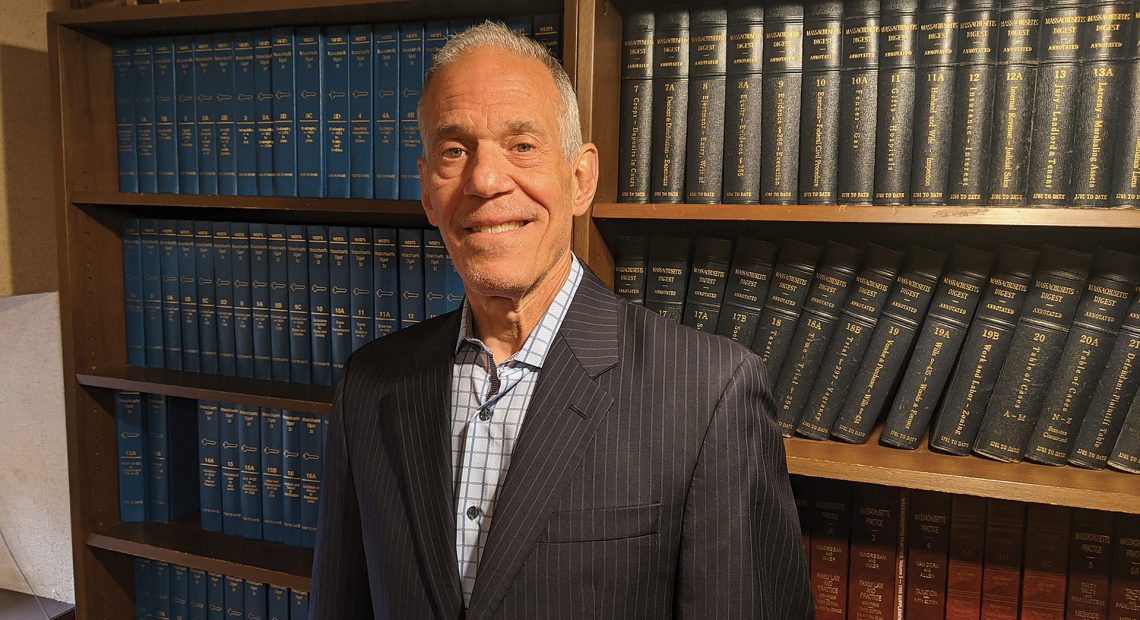
Education Special Coverage

Challenge Accepted

Linda Thompson, the 21st president of Westfield State University.

Linda Thompson had never applied for a college presidency position before a recruiter called and invited her to pursue that post at Westfield State University. She listened, and agreed it was time to take a 40-year-career in healthcare, public policy, and healthcare education to a new and much higher plane. She becomes WSU’s 21st president at a challenging time, especially as schools large and small return to something approaching normal after 16 months of life in a pandemic. But with her diverse background, she believes she’s ready for that challenge.


Linda Thompson remembers not only the call from the headhunter, made to gauge her interest in applying for the president’s position at Westfield State University, but the words of encouragement that accompanied it.

“She said, ‘Linda, I think you’re ready to think about being a president,’” said Thompson, who at the time was dean of the College of Nursing and Health Sciences at UMass Boston and hadn’t pursued a president’s position before. “She said, ‘you’re a dean now … look at the work deans do; they raise money, they create new programs, they create partnerships, they work with the board. The things you do as a dean are the things you’ll do as a president.”

More important than the recruiter thinking she was ready for the post at WSU, Thompson knew she was ready, even if she needed a little convincing.

“I thought I had the right background at this point in time to make a difference at this specific university,” she said, adding that it’s much more than the 35 years in higher education in various positions within nursing and health-sciences programs that gave her the confidence to enter and then prevail in the nationwide search for the school’s 21st president. It was also experience in public policy, working with a host of elected leaders to address a wide range of health and public-safety issues and, essentially, problem-solve.

“Education, to me, is a ticket out of poverty; it’s a ticket for creating wonderful solutions for society and for people.”

“Most of my career, I’ve worked with children and youth, trying to develop programs and policies to promote healthy outcomes for children, youth, and families,” she explained. “I started out, like most people in nursing, in a hospital and moved to community and public-health work. I really became interested in high-risk children just based on my work in public health, seeing how children who grew up in poverty, children who grew up in less-than-fortunate environments, were impacted by those circumstances.”

She points to her own family as an example, and noted that her two older sisters both died young, one from a gunshot wound at age 21 and the other from complications from diabetes during her second pregnancy as a teen.

“I always thought that the reason I thrived was education,” she told BusinessWest. “Education, to me, is a ticket out of poverty; it’s a ticket for creating wonderful solutions for society and for people. I’ve been blessed; I’ve not only had the opportunity to work as a nurse, I’ve also had the opportunity to work to develop programs for children who were in the justice system, people who were in state custody. I did work all over the country looking at ways we can promote good outcomes for people who had the misfortune to be engaged in the criminal-justice system.

Linda Thompson says Westfield State University learned a number of lessons during the pandemic

Linda Thompson says Westfield State University learned a number of lessons during the pandemic, and it will apply them as the school, its students, faculty, and staff return to something approaching normal this fall.

“I worked for the governor of Maryland for five years and developed programs and policies for children and youth statewide,” she went on. “We looked at how we could develop inter-disciplinary or trans-disciplinary programs, starting with education, all the way to how we need to work with housing and economic development to create good outcomes for families and for children.”

Thompson arrives at the rural WSU campus at an intriguing time for all those in higher education. Smaller high-school graduating classes have contributed to enrollment challenges at many institutions, and even some closures of smaller schools, and the soaring cost of a college education has brought ever-more attention to the value of such an education and how schools provide it.

Meanwhile, institutions will be returning to something approaching normal this fall after enduring two and a half semesters of life in a global pandemic, an experience that tested all schools in every way imaginable and also provided learning experiences and opportunities to do things in a different, and sometimes better, way.

Thompson acknowledged these developments and said they will be among the challenges and opportunities awaiting her as she takes the helm at the 182-year-old institution, founded by Horace Mann, whose pioneering efforts in education — and inclusion — are certainly a source of inspiration for her.

“He wanted to look at how education is important to a new society — a society that was going to be self-governed and where people needed to understand how to engage in civil society. I was very intrigued with this history, the inclusive nature of his approach to higher education, and how he looked back at some of the historical development of what I will call democracies in ancient Greece and the importance of an educated community to support democracies and health societies.”

For this issue and its focus on education, BusinessWest talked at length with Thompson about Horace Mann, the challenges facing those in higher education, and why she believes WSU is well-positioned to meet them head-on.


Grade Expectations

As noted earlier, Thompson brings a diverse portfolio of experience to her latest challenge.

Our story begins in 1979, when she began her career as a clinical nurse specialist in the Obstetrics and Gynecology Department at Henry Ford Hospital in Detroit. Soon thereafter, she would begin interspersing jobs in education with those in the public sector.

Linda Thompson says the timing was right for her to pursue a college presidency, and Westfield State University was the ideal fit.

Linda Thompson says the timing was right for her to pursue a college presidency, and Westfield State University was the ideal fit.

In 1987, she became assistant dean at the School of Nursing at Coppin State College in Baltimore, and two years later took a job as director of the Office of Occupational Medicine and Safety in Baltimore. In 1993, she joined the school of Nursing at the University of Maryland, where she would hold a variety of positions between 1993 and 2003, with a four-year diversion in the middle to serve as special secretary for Children, Youth & Families in the Maryland Governor’s Office.

In 2003, she became dean of Nursing at Oakland University in Troy, Mich., and later returned to the East Coast, where she would join the staff at North Carolina A&T State University, first as provost and vice chancellor for Academic Affairs, then as associate vice chancellor for Outreach, Professional Development & Distance Education.

“I see myself as a servant leader, a person who tries to see how I can help another person maximize their opportunity to dig deep inside themselves, and identify their strengths and bring those strengths out.”

In 2013, she became dean of the College of Nursing and Health Sciences and a professor of Nursing at West Chester University in Pennsylvania, and in 2017, she came to UMass Boston, serving as dean of the College of Nursing and Health Services.

Slicing through all that, she said she’s had decades of experience working collaboratively with others to achieve progress in areas ranging from student success to diversity with staff and faculty; from forging partnerships with private-sector institutions to creating strategic plans; from creating new academic programs to securing new philanthropic revenue streams for faculty research.

And she intends to tap into all that experience as she leads WSU out of the pandemic and into the next chapter in its history.

As she does so, she intends to lean heavily on Horace Mann, considered by many to be the father of public education, for both inspiration and direction. In many respects, they share common viewpoints about the importance of education and inclusion.

“This whole idea of looking at healthy communities and using education to strengthen communities resonated with me,” Thompson explained. “And it resonated with me given some of the things we’re starting to see with our divided country; how do we get people educated so that they’re able to know how to be critical thinkers, how to separate fact from fiction, and how to begin looking at the importance of creating communities where everyone is healthy? To me, healthy is more than physical health — it’s emotional and social and environmental, this whole way that we look at values that really enable people to thrive and survive in society.”

Looking forward, she said she has many goals and ambitions for the school, with greater diversity and inclusion at the top of the list. She pointed to UMass Boston, which she described as one of the most diverse schools in the country, as both a model and a true reflection of the demographic changes that have taken place in the U.S.

“Those diverse populations are the future of higher education in this country,” she told BusinessWest. “We are becoming a majority minority population, and there are opportunities to reach out to communities of color and stress the importance of education to be part of a lifestyle where we’re constantly looking at ways to engage with people and give them tools to thrive.”


Course of Action

Thompson arrived at the WSU campus at the start of this month. She will use the two months before the fall semester begins to make connections — both on campus and within the community.

She said the calendar was quickly filling up with appointments with area civic, business, and education leaders, at which she will gauge needs, come to fully understand how the university partners with others to meet those needs, and discuss ways to broaden WSU’s impact and become even more of a difference maker in the community.
The discussions with business leaders will focus on the needs of the workforce and how to make graduates more workforce-ready, she said, adding that the school has been a reliable supplier of qualified workers to sectors ranging from education to healthcare to criminal justice.

Meanwhile, the meetings with those in education focus on widening and strengthening a pipeline of students through K-12 and into higher education, and also on finding paths for those who can’t, for various reasons, take such a direct path.

“For those who are not able to go to college right after high school, how do make it easy for these adults to come back to school?” she asked, adding that she will work with others to answer that question.

And some of the answers may have been found during the pandemic, she went on, noting that, out of necessity, educators used technology to find new and different ways to teach and engage students. And this imagination and persistence — not to mention the direct lessons learned about how to do things, especially with regard to remote learning — will carry on into this fall, when the campus returns to ‘normal’ and well beyond.

“For us, moving forward, I’ll think we’ll never go back to the way we educated people before,” she told BusinessWest, “because people have learned to do this work in a different kind of way, and the public has learned that this is an option moving forward to give people an opportunity to return to college.”

When asked about what she brings to her latest challenge, Thompson reiterated that it’s more than her work in higher education, as significant as that is. It’s also her work in public policy, and, more specifically, working in partnership with others to address global issues.

She counts among her mentors David Mathews, former president of the University of Alabama and secretary of Health, Education, and Welfare under President Ford. She worked with him when he was leading the Kettering Foundation.

“I spent time with him learning about the way he approached leadership and the way he approached democracy,” she noted. “I’ve been a dean, and I’ve had experience as a provost; overall, I believe I have the right set of skills to use the lessons I’ve learned to help develop the next set of community leaders in all fields.

“We need to look at a way that we can create curriculum and graduate people who are innovative, who are critical thinkers, who know how to research on their own, who know to look at problems and how to work in teams with other people in order to create solutions,” she went on. “These are things I’ve learned in my life, and those are things I want to impart to the students who come to this campus.”

As for her leadership style, Thompson described it this way: “I look at creating a vision and an idea and working with and through people — people who are above me, people who work alongside me, people who are younger — and learning from people at all levels and ages and stages of their development.

“I tend to see myself as someone who is transformational,” she went on. “I see myself as a servant leader, a person who tries to see how I can help another person maximize their opportunity to dig deep inside themselves, and identify their strengths and bring those strengths out.”


George O’Brien can be reached at [email protected]
Special Coverage Women in Businesss

Crafting Connections

Hannah Rechtschaffen, director of placemaking for the Mill District and manager of Hannah’s Local Art Gallery.

Hannah Rechtschaffen, director of placemaking for the Mill District and manager of Hannah’s Local Art Gallery.

When Hannah Rechtschaffen set about to open an art gallery in Amherst’s Mill District, she didn’t envision a static space; instead, her goal was to develop a vibrant, eclectic, multi-media gallery that not only focused on local artists, but forged connections between them and the public through workshops, classes, events, and even the everyday conversations that bring to life the stories and history behind each artist and each piece. A couple weeks after the gallery’s opening, she’s optimistic those creative collisions are already happening.


Anika Lopes’ roots in Amherst go back six generations, so the town is special to her. But as a milliner — an artist who designs and creates hats — she has made her name in galleries and boutiques in much larger cities, especially New York.

Now, as the highlighted artist for the recent grand opening of Hannah’s Local Art Gallery in Amherst’s Mill District, she feels like she’s come full circle.

“This is the first time I’ve shown in Amherst,” she told BusinessWest. “I never thought I would be showing here, and it’s been wonderful how it’s been received — and it’s a way to give back to the community and encourage artists, especially local artists, that there is a scene and a space for everything.”

“I never thought I would be showing here, and it’s been wonderful how it’s been received — and it’s a way to give back to the community and encourage artists, especially local artists, that there is a scene and a space for everything.”

The Hannah in the gallery name is Hannah Rechtschaffen, director of placemaking at the Mill District, who launched a gallery after Cinda Jones, the ninth-generation owner of the property, asked her to. But Rechtschaffen infused that task with her own vision for an eclectic, multi-media collection of rotating artists (21 are on display now, hailing from 13 different towns, with some being replaced every quarter), but also a space-rental model that continually reinvests in bringing more exposure to the artists (more on that in a bit).

“Every three months, some of the artists will turn over, so there will always be something fresh, and there will also be some carryover,” she said. “I want people to feel good knowing they’ll come back in here and see new stuff. That’s a really crucial part.”

Also rotating will be the front window space, with which the gallery will highlight a certain artist. For the opening weeks, that’s Lopes, who was on hand to celebrate the gallery’s opening on June 19.

Anika Lopes with the front-window display of her millinery art.

Anika Lopes with the front-window display of her millinery art.

“In conjunction with Juneteenth, we wanted to make sure we were highlighting a local artist of color, and Anika’s work with the hats … gives us an opportunity to kind of push the boundary a little bit on what art is,” Rechtschaffen said of the front window space. “We can also have historic installations there, or we can do installations of artists who aren’t local, but maybe they’re doing work you can’t find locally, and we want to highlight it.”

History is important to Lopes, whose display at the gallery includes not only her hats, but original hat blocks created by one of first black men to have a millinery factory in the garment district of New York City — which she uses to hand-block her hat designs, which she then hand-sews.

“There’s a lot of history here, and it’s been amazing to merge this [artwork] with Amherst history as part of the Juneteenth celebration,” Lopes said. “It was just a wonderful opportunity to celebrate Amherst and what’s going on here at the Mill District, which was, in itself, such a pleasant surprise to see and experience. It’s an inspiration for where Amherst can go.”

As for the rental model, Rechtschaffen charges $20 per linear foot per month for wall space, which gives the artist use of the entire wall, floor to ceiling. She also takes a 20% commission on any art sales, all of which cycles back into the gallery for marketing, events, classes, and anything that brings more people in to see the work.

“Right from the start, they felt they were buying into something that was bigger than just their small space. It’s the connection, it’s the lifeline, it’s learning new things that are going to enhance their business.”

“That’s the idea — the commission isn’t just flying out of the artist’s pocket; it’s going right back into running the engine of the business side,” she said, noting that she modeled it after Woolworth Walk, a much larger gallery in Asheville, N.C., which features 230 booths in a former Woolworth’s store.

“In charging a little bit of rent, you create this ownership that artists have of the space. I want to overhear an artist say, ‘oh, I want to show you my gallery.’ I know that I’m doing it right when they have that connection to it,” she explained.

“I wasn’t sure it would translate, and especially coming out of COVID, I felt so self-conscious about putting the model out there, to charge them money up front, even if it was a low rent,” she went on. “I’m an artist; I know how hard it is. But no one batted a eye. Right from the start, they felt they were buying into something that was bigger than just their small space. It’s the connection, it’s the lifeline, it’s learning new things that are going to enhance their business.”


Art of the Matter

One of Rechtschaffen’s goals was to highlight a wide variety of art, and she’s done that, with the first 21 exhibitors — all but a couple of them women — working in media ranging from paint to felt to polymer clay. True to its name, the gallery aims to draw from local artists, meaning those living within a one-hour radius.

“We want to connect anyone coming to the Mill District with the wealth of art and artists in the area because it’s crazy how many artists are living right around here,” she said.

In addition, “it was really important to me to have both emerging and established artists sharing the space. For some of these people, it’s their full-time job, they’re artists, it’s what they do. And for some people, it’s very much on the side of what they do; maybe they want to make it a larger part of their livelihood, or maybe they’re retired and they’re just doing it because it’s a passion.”

Showing those works side by side forges connections between artists and their various media — and so does a large gathering table toward the front of the gallery, which will host classes, workshops, and “conversations” between artists and the public.

Ruth Levine says Hannah’s Local Art Gallery gave her a chance to move her jewelry from her garage into public view.

Ruth Levine says Hannah’s Local Art Gallery gave her a chance to move her jewelry from her garage into public view.

Rechtschaffen related a conversation with one of the exhibitors, Maxine Oland, a well-known local artist who operates an Etsy page.

“I was like, ‘oh, would you be open to teaching a class called Should I Bother Having an Etsy Page?’” she recalled. “Because it’s a lot of work, and you’ve got to keep it up, and there’s a cost involved. I get artists all the time saying, ‘should I bother? Is it worth it?’ What better way to have that conversation than with an artist who’s going to be honest and say, ‘well, for me it’s been worth it, and I sell X amount a month, and here’s the process.’

“So those kinds of classes and pop-up conversations can happen with emerging and established artists, and those who don’t consider themselves artists, coming and listening and learning from each other,” she went on.

Lopes sees great value in the gallery’s focus on connection, calling it a “lifeline for artists.”

“As I’ve been able to see the space and the artists coming in here, especially at this time, where people are coming out of COVID, where everyone in the arts has been affected, it’s really a place that has inspired artists,” she said. “I think it’s building confidence within artists and giving people hope.”

Rechtschaffen said the Mill District itself is intended to be a place that tells a story and builds community, which is why Jones felt an art gallery would be a strong component to begin with.

“Every artist in here has a story behind why they make the art they make, why it’s important to them,” Rechtschaffen told BusinessWest. “I can point to any one of them and tell you the backstory, and it just adds to why someone would connect with a piece and then decide to take it home.”

Stories like Susan Roylance, a longtime woodworker who, one day, carved a face and wasn’t sure what to do with it. She put it aside, but then got inspired by it, and started working in both wood and felt to sculpt whimsical characters. “I feel like every one of those sculptures is a children’s book waiting to happen,” Rechtschaffen said.

Or Dana Volungis, who worked for 24 years for Yankee Candle, got laid off during the pandemic, and started painting … only 10 months ago; her oceanside landscapes and other work belie that short gestation period. “Ten months!” Rechtschaffen said. “I didn’t even realize that when she submitted her application.”

Or Ruth Levine, who makes metal clay jewelry, but set it aside for a time to focus on being a parent and grandparent. “Now here she is,” Rechtschaffen said. “She was so empowered when she was setting her space up, saying, ‘I remember how this feels; this is great.’ She said to me, ‘if you hadn’t opened this gallery, this stuff would still be in my garage.’ I said, ‘you just validated everything for me, because I’m so glad this is not in your garage.’”

Visitors to the gallery, then, aren’t just seeing art, Lopes said. They’re connecting with history — the history of the area and the people who create art here — and maybe take a piece of that history home.


Animal Attraction

To add a bit of childlike fun to the gallery, Rechtschaffen commissioned Ivy Mabius, a close friend of Jones and a mural artist, to create a jungle-themed bathroom, complete with large, colorfully painted sculptures of an elephant and a giraffe. “Already, kids who see it don’t want to leave. It’s such an attraction. Kids — and adults — are going to want to come and use the bathroom.”

The general store that adjoins the gallery also features a unique bathroom — this one with one-sided glass, so users have a full view of the sidewalk and parking lot outside. But eclectic bathrooms aren’t the only connection between the two spaces. Rechtschaffen can see a time when artists who have displayed in the gallery find a space in the store to sell their crafts.

Ivy Mabius designed a whimsical, jungle-themed bathroom at the gallery.

Ivy Mabius designed a whimsical, jungle-themed bathroom at the gallery.

Again, it comes back to making connections and offering a wide range of exposure to local art. The front table can also be used as a co-working space, or just a spot to hang out, she added.

“This is really meant to be something people can access all the time, however they need to. The goal is for people to see great art and great work,” she went on, noting that a master cabinet maker from Cowls Building Supply built all the gallery’s walls, shelving, and fixtures on wheels, so the configuration of the gallery can be changed. Artists who want to apply to rent space may do so at bit.ly/HannahsGalleryApplication.

Rechtschaffen also envisions sharing art outside the gallery at pop-up displays, art fairs, holiday events, and other gatherings — again, with the goal of connecting local art to as many people as possible. And they’re hungry for it, she added, like one woman who came to the gallery opening and said it was her first social event in a long time.

“She was like, ‘I’m good, I’m good; this is helping.’ It’s not just about getting people back out there; for business owners and people creating these events, we have a responsibility — if we’re inviting someone into a space, we need to be mindful of what that space feels like, that it feels comfortable. I take that very seriously, creating a space like this where people can come enjoy themselves.”

As people emerge from COVID isolation, Lopes said, one positive is that many have learned a lot about themselves, and that’s especially true for artists, who can now move forward with new understanding and new vulnerability — and a new audience at the Mill District.

“We are into telling stories and making sure people get to see art,” Rechtschaffen said, “but also learn something about their community.”


Joseph Bednar can be reached at [email protected]m

Special Coverage Sports & Leisure

Play Time

Sarah Blais says it’s good to hear activity again at Spare Time Bowling.

Sarah Blais says it’s good to hear activity again at Spare Time Bowling.

Among the industries battered by the pandemic and the ensuing economic shutdown, indoor recreation centers — from bowling alleys to trampoline rooms to roller rinks — took a massive hit last year, forced to close for longer than most other businesses and then tasked with navigating a very gradual ramp-up to normal operations. Now, a month after the final restrictions were lifted, the owners and managers of these businesses are grateful to be fully open, with a renewed understanding of the value of play in people’s lives.

By Mark Morris

After a successful 2019, Jeff Bujak looked forward to 2020 as a chance to further grow Prodigy Mini Golf and Game Room in Easthampton. Then the pandemic hit.

“In the beginning, we were told to shut down for 15 days, and I said, ‘OK, let’s do it,’” Bujak recalled. When two weeks stretched to four months, however, he became worried about his business surviving.

He wasn’t alone. Every business that offers indoor entertainment was affected by the lengthier-than-expected, state-mandated shutdown to control the spread of coronavirus. Rob Doty, managing partner at Bounce! Trampoline Sports in Springfield, said his doors remained closed just two weeks short of a full year.

“At that time, there was huge fear about going near anyone and staying away from enclosed environments. I was concerned that people might stay afraid forever and not come back.”

“We had just installed a laser-tag arena,” Doty said. “We were getting it up and running for the season when we had to shut down.”

Like Bounce!, Interskate 91 North closed the roller-skating rink at Hampshire Mall in March 2020 but was allowed to reopen in October. Management held off opening until after Thanksgiving, but then had to shut down again when COVID-19 infection rates began to climb.

“To follow the guidelines, we stayed closed for a few more months and opened again in late March,” said Sarah O’Brien, sessions manager.

Meanwhile, Sarah Blais, general manager of Spare Time Bowling in Northampton, said her facility remained closed until late July 2020, and then, by mandate, could only operate at 25% capacity.

Jeff Bujack

Jeff Bujack is happy that customers can once again access his collection of vintage video games at Prodigy.

“We spaced everyone out by using every other lane,” she said. “It was slow in the beginning, and we didn’t even hit our 25% capacity numbers.”

Once the calendar turned to 2021, Blais said business began to pick up, and Spare Time began to reach its limited capacity. As more employees returned, she held an orientation for them on how to operate during a pandemic that’s not yet over.

“In short, it involved much more work than usual, and my team was all in for it,” she said. Much of the extra work concerned lots of sanitizing, including every bowling ball in the place.”

While extra cleaning was part of the mandate to reopen, all the managers BusinessWest spoke with agreed that the emphasis on cleaning went a long way toward helping customers feel safe.

“For the most part, we were doing our normal cleaning, but we did it more often,” O’Brien said. “People loved seeing us constantly cleaning.”

Doty concurred. “Now that hyper-cleaning has become second nature, I don’t see us changing things,” he said, adding that his crews use a fogger/mister to clean the trampoline courts as well as additional handheld sprayers to clean other areas.

“It was awesome when we reopened because my bosses and co-workers are like a second family to me.”

It’s yet another step in emerging from what has been a challenging 16 months, to say the least. But with the state lifting all pandemic restrictions on gathering sizes and mask wearing at the end of May, this is also an optimistic time for these facilities that are eagerly welcoming back families grateful for something to do.


Leveling Down

Prodigy doesn’t easily fit into a business category because it offers its customers the chance to play mini-golf, vintage video games, and even board games. Located in the Eastworks mill complex, Prodigy occupies 8,000 square feet, with 14-foot high ceilings, industrial fans, and windows that open to the outside.

While disappointed that his business was considered an arcade by state standards, Bujak was able to open last summer because indoor mini-golf courses were allowed to operate. He could not offer play on the video games, however, due to limits on arcades.

Rob Doty is expecting a big rebound at Bounce! Trampoline Sports.

Rob Doty is expecting a big rebound at Bounce! Trampoline Sports.

While nearly breaking even during the during the warm months, by November, the losses began to pile up, and Bujak was desperate.

“At that time, there was huge fear about going near anyone and staying away from enclosed environments,” he recalled. “I was concerned that people might stay afraid forever and not come back.”

With plenty of spacing and cleaning protocols in place, he reached out to his social-media followers to at least try the new layout and give their feedback. He said his spacious location eased concerns about social distancing and air flow.

“There was a community of people who said, ‘you can’t close, I need this place. The pandemic proved that it’s not just about me, it’s about hundreds of people who use Prodigy as a place to get away and play the games they can’t play anywhere else.”

“Gradually, friends, family, and our regular customers came in,” Bujak said. By January, business had returned, and February was the most successful month in Prodigy’s history.

“I don’t know if all these efforts with masks, distancing, and cleaning actually made people more safe,” he said. “It was more important that people felt safe in the environment and felt good about their choice to come in.”

As to why February was a banner month for Prodigy, Bujak said people had begun to figure out they could go out as long as they wore masks and distanced. People were also becoming more hopeful as access to vaccines received news coverage. “Most people were not ready for a concert or bar atmosphere, so this was a good middle ground of being social but still low-key.”

The disco lights are on again at Interskate 91, and Sarah O’Brien is expecting the crowds to return.

The disco lights are on again at Interskate 91, and Sarah O’Brien is expecting the crowds to return.

Blais credits a simpler rationale. “I think everybody just met their quota of staying at home,” she said with a laugh.

For the better part of a year during which Interskate 91 opened and closed a couple times, O’Brien found herself sidelined, without work, for the first time since she was 14 years old.

“I was home for nearly a year, and I missed not being here,” she said. “It was awesome when we reopened because my bosses and co-workers are like a second family to me.”

At the height of the pandemic when nearly everyone was advised to stay home, many used their time to clean out garages and basements to get rid of things that were no longer useful. Bujak benefited greatly from the COVID cleanout as many people donated old video-game consoles, video games, and board games to him.

“I might have doubled my amount of games just from people cleaning out their basements,” he said.

While most managers said they used the closed time to deep-clean their locations, O’Brien said Interskate 91 installed a new carpet and created a dedicated area where food is sold and eaten. “In the past, we let people eat anywhere. By keeping it all in one area, we can offer more food choices than we did before.”

As of May 29, people who had been vaccinated no longer had to wear masks in retail settings, and bounce houses, roller rinks, bowling alleys, and similar businesses could once again operate at full capacity.

“On the first weekend where people didn’t have to wear masks, we had lots of families and kids come in,” O’Brien recalled. “ Our regulars were so excited that we were open again.”

Blais admits seeing the return of people bowling was an emotional experience. “It’s very nice to hear bowling balls hitting the pins again.”

Doty is looking forward to finally getting use out of the laser-tag room. “Now that we’re fully open, we’re getting the word out about our laser tag and our expanded arcade,” he said, adding that he’s also looking forward to booking birthday parties and other group events.

To recognize the challenging 16 months everyone has gone through, Spare Time has begun offering weekly Service Industry Nights to workers in the restaurant industry.

“I’ve been talking with the restaurants in town, and we offer them free bowling from 9 to 11 p.m., and they have the place to themselves,” Blais said. “We are extending our service nights to our police and fire departments as well.”


Replay Value

Bujak said the experience of the past 15 months has made him a different person. At the start of the pandemic, he saw himself as an individual business owner who worried about losing his dream. He didn’t realize that Prodigy was bigger than just him.

“There was a community of people who said, ‘you can’t close, I need this place,’” he told BusinessWest. “The pandemic proved that it’s not just about me, it’s about hundreds of people who use Prodigy as a place to get away and play the games they can’t play anywhere else.”

Now that he can operate at full capacity, Bujak is grateful his business has survived and he can once again take care of his regular customers and introduce Prodigy to new ones.

“Here we are,” he said, “back to normal-ish.”

Community Spotlight

Community Spotlight

By Mark Morris

Mayor Nicole LaChapelle

Mayor Nicole LaChapelle says she is concerned about the deeper effects of COVID, and is thus stressing the importance of public health.


While grateful that Easthampton is reaching the other side of COVID-19, Mayor Nicole LaChapelle understands there is still plenty of work ahead.

Even though her city came through the pandemic in better shape than many communities, she has prioritized building up the Public Health department to help the city move forward.

“We’re looking at public health as a part of public safety,” LaChapelle said. To that end, the mayor hopes to add more clinical staff to the department as well as encourage other city departments to collaborate with Public Health.

“I’m concerned about the deeper effects of COVID, from people who had COVID and survived to the mental-health aspects of it on so many people,” she went on. “In Easthampton, we need to support those with medical needs as well as mental-health needs.”

There may be some help on the way. Recently, the Center for Human Development (CHD) purchased the former Manchester Hardware store on Union Street. While CHD currently has a small presence in Easthampton, moving to the nearly 18,000-square-foot building will allow it to expand its services.

Right now, plans include outpatient mental-health counseling services for all ages and primary medical care at the site. LaChapelle said CHD could go a long way to filling the gaps in behavioral-health services in the city.

“CHD has been a good partner, and they are listening to the needs of our community members,” she said. “I feel good about what they will bring to Easthampton.”

After 125 years in business, Manchester Hardware closed its doors late last year. Owner Carol Perman had tried to sell the business to a regional hardware chain, but when that and several other possible suitors didn’t pan out, she decided to retire and just sell the building.

Some in Easthampton were critical of LaChapelle for not trying harder to locate a for-profit business at the Manchester property. Yet, “Easthampton has historically had community-based services downtown. This is not a new placement of services,” she said, noting that Manchester Hardware’s location on a public bus route helps it fit in with City Hall, the Council on Aging, and Veterans’ Services, which are all located downtown.

“As businesses reopen and start to come back, we as a city want to help them readjust to be successful for the long term.”

While there have been calls to model Northampton by pursuing a robust Main Street business district, LaChapelle said she would be negligent as mayor to try to imitate other communities and ignore her own city’s strengths. “Having centrally located services for our residents is a real strength of Easthampton, and we need to pursue those things we do well.”

The mayor’s emphasis on public health is about bringing the entire community back, she noted, especially businesses in Easthampton. “As businesses reopen and start to come back, we as a city want to help them readjust to be successful for the long term.”


Back on Track

Since the beginning of the pandemic, the Greater Easthampton Chamber of Commerce has also worked closely with businesses to get them back on track.

“Even as COVID nears its end, business owners are trying to get their sea legs back,” said Moe Belliveau, the chamber’s executive director.

For the past 15 months, the chamber has shifted its role to become a central information resource in helping local businesses identify and apply for financial assistance during COVID.

“We sifted through all the extraneous information that comes with forms that apply to many situations,” Belliveau said. “Our members knew they could rely on us to get the right information and avoid the firehose effect of too many forms.”

In addition to securing federal grants, the chamber partnered with the city on a state economic-development project that enabled 31 businesses in Easthampton to each receive $1,500 grants.

Belliveau is currently working with the city planner on a COVID-recovery strategic plan. “There are still unknowns as we come out of COVID, so we’re trying to keep communication pathways open so we can make adjustments when necessary,” she said. “The chamber’s mission in this becomes to remain agile so we can provide help where needed and respond to opportunities when we see them.”

Like many communities, Easthampton businesses are having trouble filling open jobs. LaChapelle hopes to address this by possibly using state and federal money to subsidize local businesses so they can pay higher wages to get people back to work.

River Valley Co-op, a full-service supermarket

The opening of the River Valley Co-op, a full-service supermarket, is one of many intriguing developments in Easthampton.

The opening of the River Valley Co-op, a full-service supermarket with an emphasis on local and organically grown foods, is bringing lots of excitement to Easthampton. With its grand opening in July, River Valley will offer a 22,000-square-foot market to Easthampton employing 83 unionized workers with hopes of growing that number. By installing solar canopies in the parking lot and solar collectors on the roof, it produces enough power to offset the energy required to run the market, making it a net-zero building.

LaChapelle said River Valley is already inspiring the city to pursue its own energy-saving projects. “We’ll be putting solar canopies in the parking lot and on the roof of City Hall, as well as behind the Public Safety department. It won’t bring us to net zero, but it’s a good start.”

Easthampton at a glance

Year Incorporated: 1785
Population: 16,059
Area: 13.6 square miles
County: Hampshire
Residential Tax Rate: $17.46
Commercial Tax Rate: $17.46
Median Household Income: $45,185
Median Family Income: $54,312
Type of Government: Mayor, City Council
Largest Employers: Berry Plastics Corp., INSA, Williston Northampton School, National Nonwovens Co.
* Latest information available

Mountain View School, which will serve students from pre-kindergarten through grade 8, is nearing completion and expects to welcome middle-schoolers in January 2022, after the holiday break. LaChapelle said the plan is to move some of the younger grades into the new school next spring, and by fall 2022, all grades will be attending Mountain View.

“A couple years ago, we discussed the fear of moving young children during the school year and how disorienting that might be,” the mayor noted. “Since COVID and all the adjustments students have had to make, we no longer see that as an issue.”

Once all the students move to the new school, Easthampton will try to sell the Maple, Center, and Pepin school buildings, all of which are more than 100 years old. LaChapelle hopes to see those buildings developed into affordable housing, and the city is marketing all three schools as one project to make it more attractive to developers.

“There are still unknowns as we come out of COVID, so we’re trying to keep communication pathways open so we can make adjustments when necessary.”

“If we converted just one of these schools for affordable housing, it would be tough because it may result in only 12 units,” LaChapelle said, adding that several developers are considering the three schools as one package, and she remains optimistic that a deal might soon be in the works.

At one time, Easthampton was known for its mills. Long after they were shut down and no longer viable, the mill buildings are now a way to address economic development and to make more housing available. One Ferry Street is a project that is renovating old mill buildings into mixed-use properties featuring condominium and rental housing, as well as office space. One building, 3 Ferry, is already open, and several businesses are currently leasing space there. The next two buildings slated for renovation sit behind it and present a sort of before-and-after contrast to illustrate the potential at the site. Once complete, those two buildings, both much larger than 3 Ferry, will add more than 100 new housing units to Easthampton.

While many businesses either slowed down or shut down during the pandemic, the four cannabis dispensaries located in Easthampton continued to generate income for the city. LaChapelle is hoping to use some of that revenue for a clean-buildings initiative. With several buildings in need of new HVAC systems and some state money available, she sees this as an opportunity to invest in public infrastructure that will benefit the city well into the future.

“It’s a big step, and, where appropriate, we could offset some of the one-time expenses with our cannabis revenues,” she added.


Change Agents

Belliveau said one of the strengths of Easthampton is an eclectic entrepreneurial base. Last year, the National League of Cities selected Easthampton as part of its City Innovation Ecosystem program designed to drive entrepreneurship and innovation. The city’s effort, titled Blueprint Easthampton, currently features an online resource navigator to connect entrepreneurs with everyone from suppliers to counselors to help advance their enterprises.

The Massachusetts LGBT Chamber of Commerce and the Assoc. of Black Business & Professionals are also working with Blueprint Easthampton, which puts a focus on informal entrepreneurs who might not qualify for traditional grants, LaChapelle said, adding that she’s most excited about the coaching aspect of the program.

“[JPMorgan Chase CEO] Jamie Dimon has executive coaches — why not someone who’s making a product for sale on Etsy?” she said. Through coaching, entrepreneurs can learn how to take advantage of the many resources that are available.

“We’re seeing all kinds of people, including single parents and people of color, who are all trying to figure out how to grow,” the mayor said. “We’re giving them technical support, executive coaching, and, at the end of the program, a gift of capital to help them get ready for the next step in their venture. We just ask they register as a business in Easthampton.”

Through all its challenges, LaChapelle remains optimistic about Easthampton because she feels there is a real dialogue between the city and its residents.

“In Easthampton, you can get involved in your government and make a difference,” she said, crediting, as an example, efforts by volunteer groups who worked with the city to create open public spaces.

“Easthampton has really embraced change and the ability to evolve and grow,” Belliveau added. “In general, I’ve found people are excited about the positivity and potential that comes with change, even when it’s scary.”

Banking and Financial Services

Brokerage App Is a Dangerous Culmination of Intersecting Trends

By Jeff Liguori


It was supposed to democratize Wall Street — yet another DIY trend, this time with your hard-earned money.

Robinhood is a popular brokerage application that allows subscribers to open an account with as little as $1, charges nothing for commissions, and allows users to buy fractional shares of stock. Backed by venture capital and slated to go public with an estimated $30 billion valuation, the company has enjoyed meteoric growth with an estimated 13 million users, 50% of whom use the mobile app daily, often multiple times, and 90% of whom use it on a weekly basis. The overwhelming majority of its user base belongs to the millennial demographic.

Robinhood achieved what it set out to do, but at what cost?

I’ve worked in the investment field since 1994 and have managed assets for clients since 2006. I’m also an entrepreneur, so I appreciate disruptive technology amid a changing business landscape. Robinhood, however, is the dangerous culmination of intersecting trends that have harmed investors and, according to financial regulators, may have contributed to a death by suicide.

Jeff Liquori

Jeff Liguori

“Robinhood is not the Home Depot of investing. Do-it-yourself portfolio management has been around since the advent of E-Trade in the mid-’90s. That company disrupted the brokerage industry and forced commissions at most every other firm lower in order to compete for customers.”

The basic business model for financial advisory or money management is that the client pays a percentage of his or her account balance as an annual fee, generally around 1%. To be clear, Robinhood is a brokerage; the firm does not use discretion to manage a client account or offer advisory services. Many brokerage firms have morphed into advisors and now focus more on money management as trading commissions have trended to zero. Overall, this trend has been a positive for individual investors and has improved access to many financial solutions — mutual funds, exchange-traded funds, or individual stocks — as well as financial research and news.

Robinhood is not the Home Depot of investing. Do-it-yourself portfolio management has been around since the advent of E-Trade in the mid-’90s. That company disrupted the brokerage industry and forced commissions at most every other firm lower in order to compete for customers. Just as E-Trade blazed a path for lower commissions, Schwab, Fidelity, and TD Ameritrade slashed commissions to zero in 2019 in response to Robinhood taking market share.

But growth has consequences. Robinhood was at the center of some incredibly volatile trading in a handful of individual stocks. You may have heard of GameStop (GME). The Robinhooders gathered virtually in chat rooms, most notably on a platform called Reddit, and decided as a community which stock they wanted to manipulate. It was no small feat. From Jan. 18 to Jan. 28 of this year, the price of GME went from about $18 to a high of $478, an increase of more than 2,600%. The Robinhood crowd is believed to be the main catalyst for this action. The day GME hit $478, it also went down to $112 before finally closing around $193.

In the month of January, 1.26 billion shares of stock changed hands in GME, almost 15 times the average monthly volume. Robinhood eventually cut off any trading in GME shares on Jan. 28, as well as trading in several other stocks with a similar backstory. Imagine being a small investor, buying GME shares at, say, $250 on Jan. 27, watching your investment nearly double the next day, but not being able to trade and exit your position profitably.

As previously stated, the Robinhood story is the intersection of several trends: fiercely independent millennials, ‘killer app’ technology, and the rewards reaped from the instantaneous decision making of like-minded people, all backed by institutions awash in venture capital, looking for the next big idea. I cringe at the thought that Robinhood may compete with what firms like mine provide for clients, namely deep expertise, sound financial advice, and disciplined investing backed by serious research.

FINRA, a regulatory agency that oversees brokerage firms, recently fined Robinhood $57 million and ordered $13 million in restitution to customers. It is the largest fine ever imposed by that regulator. In the press release, FINRA even referenced the suicide of a 20-year-old trader who panicked when his Robinhood app may have incorrectly displayed a massive $730,000 loss and received only a generic autoreply when he e-mailed Robinhood customer service three times seeking help.

Robinhood the idea is a good one. Robinhood the company has a lot more growing pains on the horizon, which likely won’t prevent the founders from becoming fabulously rich. And I have no problem with wealthy entrepreneurs, who typically risk everything for a single idea. Time and again, however, the investment profession is plagued with these stories in which investors are persuaded to pursue the next big thing. I think FINRA’s message is a powerful one. Now, if someone would just listen.


Jeff Liguori is the co-founder and chief Investment officer of Napatree Capital, an investment boutique with offices in Longmeadow as well as Providence and Westerly, R.I.; (401) 437-4730.


Banking and Financial Services

Strike Against Hunger

Andrew Morehouse thanks Country Bank

A surprised Andrew Morehouse thanks Country Bank for the $500,000 donation to the Food Bank of Western Massachusetts.

Paul Scully says he wants to “throw hunger a curveball.”

And to the leaders of two Massachusetts food banks, it was a welcome pitch indeed.

At its annual meeting on June 21, Country Bank unveiled its most recent — and largest — donation targeting the persistent issue of food insecurity in the Bay State, surprising Andrew Morehouse, executive director of the Food Bank of Western Massachusetts, and Jean McMurray, executive director of the Worcester Food Bank, with two $500,000 checks, one for each organization.

“With everything we’re hearing these days about the shortage of food and the high expense of food … the need is real out there,” Scully said during the announcement event. “It’s really exciting for us and an honor to announce we’re kicking off a million-dollar pledge to throw hunger a curveball, and we are presenting a $500,000 check to both Jean and Andrew for your organizations.”

It’s just the latest, and largest, in a remarkable show of support from banks across the region in the fight against food insecurity, which spiked during the COVID-19 pandemic and continues to be a persistent problem. Most banks in Western Mass. have ramped up their contributions to area food banks and food pantries, often significantly.

“As a community partner, we care deeply about the sustainability of our communities and the people who live in them,” Scully added, noting that this $1 million pledge reflects an recognition of the burdens many have experienced throughout this past year.

“I’m in awe of Country Bank’s generosity and so impressed by their commitment to the community, whether it be Worcester County or the four counties of Western Massachusetts.”

Newly appointed Country Bank board members Elizabeth Cohen-Rappaport, Richard Maynard, Ross Dik, and Stacey Luster presented the checks to Morehouse and McMurray at the annual meeting.

“I’m in awe of Country Bank’s generosity and so impressed by their commitment to the community, whether it be Worcester County or the four counties of Western Massachusetts,” a visibly surprised Morehouse said. “This demonstrates that Country Bank is for real, and they practice what they preach.”

McMurray was equally touched. “This was totally unexpected, but, when I think about it, Worcester, and Worcester County, is the best place to live, to work, and to give back, and we are going to put this tremendous gift from Country Bank to work so none of our neighbors has to go hungry.”

The Food Bank of Western Massachusetts relies on donations from individuals, businesses, foundations, civic organizations, faith-based groups, schools, and government to fulfill its expanding mission. With the help of that support, it provided the equivalent of 12.3 million meals in in the fiscal year that ended Sept. 30, 2020 — a significant increase from meals provided in previous years, and a pace that continued as the pandemic extended well into 2021.

“Country Bank is always looking at the basic needs of folks in our communities, whether food services, shelter and homelessness, as well as healthcare — those are the primary pillars where the bank tries to make the most of its donations,” said Shelley Regin, the bank’s senior vice president of Marketing.

The support for food banks comes at a critical time, not just in Massachusetts, but nationally. Feeding America estimates that the pandemic caused 13.1 million non-elderly adults to seek free meals or free groceries for the first time.

“The pandemic forced businesses and workers to make tough decisions,” said Ash Slupski, the organization’s website marketing manager. “To prevent the spread of coronavirus, many businesses were forced to close or lay off employees. This is especially true for people employed in restaurants, hotels, other service industries, and small businesses.”

Meanwhile, the needs of remote learning, especially for young children, forced many working parents to temporarily leave their jobs to be home, if they couldn’t work remotely themselves. And many faced reduced hours and paychecks when they did return to work, Slupski noted. “All these changes impact people’s ability to provide for their families now and plan for the future.”

To meet the growing need locally, the Food Bank of Western Massachusetts recently revealed plans for a new distribution center and headquarters, which will be located on the corner of Carew and East Main streets in Chicopee. Construction on the new headquarters, which will be larger and more sustainably build than the current location in Hatfield, is expected to begin next spring.

Regin noted that, in 2020, Country Bank’s philanthropy exceeded $1 million by supporting 450 nonprofits throughout the region, mainly focused on helping food pantries, homeless shelters, COVID-19 relief services, veterans, and other programs that supported the everyday needs of the people in its communities.

“Country Bank really wants to make sure we’re supporting all our communities,” which extend geographically from Springfield to Worcester, she noted. “It starts with Paul, and we all follow his lead in looking for ways the bank can make a difference. We support many charities, as many banks do, but it starts with Paul; he’s a great leader in that way, and we’re all on board.”


—Joseph Bednar

Education

Maintaining Momentum

Anne Massey

Anne Massey says that early on, she told faculty and staff at Isenberg that the pandemic was not to be looked at as “a short-term problem we’re just trying to solve.” Instead, it has been a learning experience on many levels.


When Anne Massey arrived at the Isenberg School of Management at UMass Amherst in the late summer of 2019, she came with a lengthy set of plans, goals, and ambitions for an institution that was steadily moving up in the ranks of the nation’s business schools and determined to further enhance its reputation.

The overarching plan was to decide what was being done right, what could be done better, and how the school could continue and even accelerate its ascendency with those rankings.

Massey was already making considerable headway with such initiatives when COVID-19 arrived just eight months later and turned normalcy on its ear. But she was determined not to let the pandemic create a loss of focus or momentum.

And almost 16 months after students went home for a spring break from which they would not return, she can say with a great deal of confidence that she has succeeded with that broad mission.

In fact, the pandemic may in some ways have even created more momentum for Isenberg, which is now the top-ranked public business school in the Northeast.

Indeed, those at the school have used the past 15 months as a valuable learning experience, said Massey, who was most recently the chair of the Wisconsin School of Business. She stressed repeatedly that this was a time, as challenging as it was, not to simply get through or survive, and as a homework assignment for her staff, she strongly recommended Ryan Holiday’s book The Obstacle Is the Way — The Timeless Art of Turning Trials Into Triumph.

“I said early on that we’re not going to be looking at this pandemic, and all the things that it wrought for us in terms of remote teaching, remote learning, and remote work, as a short-term problem that we’re just trying to solve,” she explained. “I said that we’re going to learn things, and we’re going to carry them over to when we came back and be better than we were in March of 2020.”

She believes the school will be better because of how it has learned to use technology to do things differently and in some ways better than before, but also because of the many experiences working together as a team to address challenges and find solutions.

“I said early on that we’re not going to be looking at this pandemic, and all the things that it wrought for us in terms of remote teaching, remote learning, and remote work, as a short-term problem that we’re just trying to solve. I said that we’re going to learn things, and we’re going to carry them over to when we came back and be better than we were in March of 2020.”

Moving forward, Massey said those at Isenberg, whether they’ve read Holiday’s book or not, are responding well to the notion of looking at obstacles as opportunities and not letting challenges, even global pandemics, stand in the way of achieving goals and improving continuously.

As she noted, this mindset will serve the institution well in the future as it and all of its many competitors prepare to return to normal, but not a world exactly like the one that existed 16 months ago.

“It was also obvious to me in March and April of 2020 that everyone was going to be forced to be remote, at least for some period of time,” she said. “We’d been in the online space for 20 years, so we were ahead of the game. But now, suddenly, everyone was going to be playing the game. They weren’t all going to be good at it; some of them still aren’t good at it, but think they are.

“But now, there are going to be more people joining this competitive space,” she went on. “And some of them have more resources than we do. So we needed to say, ‘we’re just going to keep plowing forward. We need to be better than they were because that’s the only way we’re going to maintain our competitive position.”

For this issue and its focus on education, BusinessWest talked at length with Massey about her challenging and, in many ways, intriguing first two years at the helm at Isenberg, and especially about how the school will take the experiences from the pandemic and use them to make the school, as she said, better than it was before anyone heard of COVID-19.


Getting Down to Business

The lawn signs were first introduced a year or so ago.

They say ‘Destination Isenberg,’ and were intended to be placed on the front lawns of the homes of students bound for the school — enrollment in which is increasingly becoming a point of pride.

While those first signs to be issued were technically accurate, many of the students didn’t have the Amherst campus as their actual destination because of COVID, said Massey, adding that that the latest signs — they’re at the printer now and will be distributed soon — speak the full truth: students will be back in the fall.

There will be a party in August to welcome them to campus, and planning continues for an orientation that will feature programs and events not only for freshmen but also the sophomores who couldn’t enjoy such an experience last fall because of the pandemic. As part of those celebrations, there will be recognition of the national-champion UMass hockey team, which included 15 players who are enrolled at Isenberg.

The students will be coming back to the ultra-modern, $62 million Isenberg Innovation Hub, which opened in January 2019 and sat mostly quiet for the bulk of the pandemic. They’ll be coming back to a school now ranked 53rd in the country by U.S. News & World Report when it comes to undergraduate programs (34th among public schools).

The ‘Destination Isenberg’ signs soon to grace lawns

The ‘Destination Isenberg’ signs soon to grace lawns across the country will have real meaning this year, with the school back to fully in-person learning this fall.

They’ll be returning to a school where enrollment continues to grow even as competition increases and high-school graduating classes shrink. “We have the largest incoming class ever,” Massey said. “We have more than we probably should have, but we’ll deal with it.”

But they won’t be returning to the same school. Indeed, as she noted, they’ll be coming back to, or joining, an Isenberg that used the pandemic as a learning laboratory of sorts, one that will stand the school in good stead as it continues its quest for continuous improvement and movement up the rankings in an even more competitive environment.

She said this work actually started before the pandemic, soon after she arrived on the campus. She started with a survey that went out to faculty and staff that included three key questions:

• ‘What unexploited opportunities do you see for Isenberg?’

• ‘What’s standing in our way of those opportunities?’ and

• ‘Given what you know, what do you think Anne Masse should focus on for the next year?’

She received a 95% response rate to that survey, and the answers provided considerable fodder for discussion at what would eventually be more than 30 meetings with various groups within the school, including faculty and staff.

She then developed five key priorities for maintaining and enhancing the school’s reputation for excellence and went “on the road,” as she put it, visiting alumni in Boston, New York, San Francisco, and other cities. These visits continued until the pandemic arrived, she said, adding that, while the road trips have to come to a halt, the work of developing these priorities, identifying areas in which the school needs to invest, and shaping all this into a strategic plan have continued unabated.

Getting back to the pandemic, Massey actually had considerable experience on her résumé in the realm of research regarding virtual teams and how they function. And that work came in handy during the pandemic, especially as it related to communication, coordination, and relationships among individuals in those teams.

“We have the tools and technology that support communication and that support collaboration and coordination of our work,” she explained. “But the relationship building and maintaining relationships is something that people often don’t pay attention to. They get wrapped up in the work, and not the nature of the team and the relationships amongst the team members.”

Flashing back to March 2020, when students, faculty, and staff were sent home for spring break, Massey said she knew they wouldn’t be coming back anytime soon and that all operations, from teaching to recruiting to development, would have to go remote.

“I knew that we had the tools, but what we really needed to focus on were the connections,” she told BusinessWest, adding that she soon launched what became knowns as the Dean’s Briefing, which, as that name suggests, was a briefing sent out to faculty and staff almost weekly.

“Sometimes it was a pat on the back, sometimes it was ‘I know how hard it is,’ sometimes it was personal, sometimes it was about what was going on at the university and what we thought the summer was going to look like and what the fall would look like; it was always about trying to keep people in the loop,” she said, adding that she encouraged the associate deans, the department, and others to do the same with their own group. “They needed to maintain communication that was positive and supportive.”


Driving Forces

At the same time, Massey emphasized the importance of the faculty engaging with students and helping them through a difficult and unprecedented time.

Because not all faculty members had taught online, or certainly to that extent, the school named five Isenberg teaching fellows, all of them experts in remote learning, who are assigned to one or a few departments and a cohort of faculty.

“They took the ball and ran with it,” Massey said, adding quickly that she wasn’t sure at first how this initiative would go over. “They had workshops, they had brown-bag lunches, they used Zoom, they coached people, they surfaced new best practices, they shared ideas … they even wrote a few research papers that have been published. They were phenomenal.”

Lessons learned from the pandemic and these teaching fellows will carry over into ‘normal’ times, she said, adding that she’s expecting to get back on the road in the fall and continue to push the five priorities for the school as it works to sustain and enhance its overall reputation for excellence, a key driver of those all-important rankings.

“They’re all about reputation in various ways,” Massey said of the rankings, of which there are many across several categories, from undergraduate offerings to part-time MBA programs. “The question that I asked over a year ago, and that I always ask, is ‘how might we sustain or advance our reputation for excellence in all we do? And excellence in terms of students and our quality of students, the quality of our faculty and their research, the placement of our students, what the recruiters think, and companies once students are working for them and they’re out a few years. Do they deliver the goods? All of that.”

Listing those priorities, which all intersect, she started with attracting exceptional students, which means more than those with the top GPAs. It also means achieving diversity and attracting students with a commitment to their communities, she said, adding that another priority is sustaining faculty excellence, especially at a time when business schools, and higher education in general, is facing what Massey described as a “looming retirement problem.”

“It’s becoming more and more difficult to attract and retain faculty; we’re not producing Ph.D.s at the rate that we probably need to,” she explained. “So I’m always thinking about how we can make this a good place for prospective faculty, and then, when we get them, how do we keep them? And how do we support them in their research efforts, and how do we support them becoming better teachers?”

Another priority is what Massey called “enabling career success,” which involves both current students and alumni, many of whom were impacted by the pandemic and the toll it took on employers in many sectors. To address this matter, she created an Office of Career Success and integrated the Chase Career Center with the school’s Business and Professional Communications faculty in an effort to expand services to alumni as well as current students.

Still other priorities include “creating global citizens and inclusive leaders” and “inspiring innovation in teaching and learning,” Massey said, adding that she wants Isenberg to be a significant player in business education, especially when it comes to advances in teaching and the use of emerging technology.

“How do we use 3D? What about augmented reality?” she asked, adding that these are just some of the questions she and others at the school are addressing. “One of our initiatives when it comes to inspiring innovation in teaching and learning is the creation of a ‘technology sandbox,’ a dedicated space where new and emerging technologies will be available for our faculty to play with and our staff to play with — because you can’t provide support for something if you don’t know how to use it — and for our students to play with.”


Positive Signs

Getting back to those lawn signs, Massey, who has one in her yard (her son attends the school), said they’re great exposure for Isenberg, especially outside of Massachusetts, where the name is somewhat less-known, but becoming better-known.

“It’s good to have them all over the country, and the students love them,” she said, adding that these are literal signs of growth and progress at Isenberg, but there are many others, from the record class for the fall of 2020 to its longstanding home at to the top of the rankings of public business schools in the Northeast — it’s been there since 2015.

There were signs of progress during the pandemic as well, she said, even if they’re harder to see. The school was determined not to lose momentum during that challenging time and to turn that obstacle into an opportunity.

Time will tell just how successful that mission was, but Massey already considers it a triumph for all those at the school.


George O’Brien can be reached at [email protected]

Women in Businesss

Shoebox Greetings

Suzanne Murphy has put UTCA on a path to continued growth and influence — in this region and well beyond.

As she looked back on 30 years in business — and a very different kind of business, to be sure — Suzanne Murphy retold a story she’s recounted probably hundreds of times.

It concerns the conversation one of her clients had with the firm it was leaving to start doing business with Murphy’s Unemployment Tax Control Associates (UTCA) — as related by that client.

“He said, ‘I just got off the phone with our current vendor, and I told them I was moving my business to your company — and they laughed and said, ‘that’s a little shoebox out in Western Mass.,’’” Murphy recalled, adding that the implication was clear — that those in this region are not on the cutting edge in this realm. “He then said, ‘I was sure to tell them that this was one highly organized, very effective shoebox, and that’s where I was taking my business. And I also told them to think about those kinds of comments and how they land out in Western Mass.’”

Murphy said those remarks, which date back to the early days of her venture, and especially those referring to the size of her company and its mailing address, have stuck with her all these years, especially as she continues to add clients — and employees — from across the country.

Indeed, no one is laughing at this not-so-little shoebox anymore — although UTCA is still rather small when compared to some of the giants that also handle unemployment matters for businesses, although they do it as one of myriad services rather than focusing energies on that one area (we’ll get to all that later). In fact, UTCA has emerged as a regional and national leader in this realm.

“From all we’ve heard, the governor and the Legislature have no intention of revisiting this matter, and I think that’s very shortsighted.”

And most of the reason why is its founder, a thoughtful, enterprising entrepreneur who sat down with BusinessWest recently to talk about everything from her business and how it has evolved to the future of work and where it’s conducted in the wake of the pandemic, to the state’s recent decision not to use some of the $5 billion in federal stimulus money coming its way to help businesses absorb the massive unemployment-insurance costs facing them.

That controversy over the so-called solvency assessment has certainly put Murphy and her company’s work under a much brighter light. Indeed, while she’s been very successful at what she does, companies don’t need UTCA’s services until they need them — and over the years, it has operated in relative anonymity, if that’s the right word.

But the recent debate over the solvency assessment and state’s decision to not use stimulus funds, and instead stretch the payments out over the next 20 years, has brought Murphy and her firm to settings ranging from an East of the River Five Town Chamber of Commerce (ERC5) webinar to BusinessWest’s podcast.

It’s a subject she’s passionate about, and she believes the state’s decision will have some long-term ramifications.

“I think it’s ill-advised, and I think it will put the state at a competitive disadvantage,” she said, noting that many bordering states and others as well are friendlier from an unemployment-tax standpoint. “From all we’ve heard, the governor and the Legislature have no intention of revisiting this matter, and I think that’s very shortsighted.”

As for where people work, Murphy said the pandemic has shown her — and it should have shown every employer — that workers don’t need to be in the office to be effective, and they don’t even have to be in Massachusetts, which is good for employers, but potentially not so good for the Bay State, especially given its recent stance on unemployment costs and the manner in which other states have become much more business-friendly in that regard.


Taxing Situation

As she talked with BusinessWest, Murphy was preparing for what she expects to be — and really hopes will be — the last move her company makes. Or, at least, the last move she will make.

Indeed, as she walked amid furniture and boxes with sticky notes on them to tell the movers where to put them, she said she was trading space at 1350 Main St. in downtown Springfield for a building she purchased in West Springfield, one more suited to the hybrid/remote work model the company has adopted, and one that will even let employees work outdoors of they so choose.

“We want to make it a modern, fun place to work,” she explained, adding that the company should be moved in by mid-July.

The move is the latest of several, an indication of how UTCA has grown over the years, not only in size, but in stature within the realm of unemployment and, as the name on the letterhead says, unemployment tax control.

Murphy was handling such work for a larger firm, one that is no longer in business, when she decided it was time to go into business for herself — with a different business model.

That model was to take a handful of clients that were encouraging her to strike out on her own and start a business in Western Mass. and launch a venture focused entirely on helping companies manage and reduce their unemployment costs.

“I was toying with the idea of doing something, but I was still unclear on whether this was the path I wanted to take,” she recalled, adding that she credits those clients with being persistent and convincing her to take the plunge.

Starting with just herself and a single employee, she he took that small but reliable block of clients and continually built upon that base, primarily by differentiating herself from the larger competitors — “huge data warehouses,” as she described them — such as Equifax and Experian, for which unemployment services are part of a one-stop-shop model and, typically, a loss leader.

The differentiation, in addition to focusing solely on unemployment-tax matters, comes in the company’s proactive, rather than reactive, approach to serving clients, said Murphy, adding that, in this industry, it is generally understood that, in order to protect an organization from unwarranted claim costs, the most effective measures an employer can implement must occur before the employee has separated.

“ I feel the market needs a reliable, responsible, client-focused broker in the industry, and I’m going to keep slugging as long as I can.”

Elaborating, she said UTCA helps companies identify and target cost drivers, and then works with them to develop solutions for reducing them, an MO that has resonated with a wide range of clients.

The firm now boasts 20 employees, including Murphy’s daughter, Meghan Avery, senior vice president; and son, Evan Murphy, director of client development, as well as a number of independent contractors who handle hearings in a number of different states.

Getting back to those giants in the industry, Murphy said trying to compete with them, at least with regard to price, is extremely difficult, and this is why so many smaller players have not been able to stay in business over the years. She’s determined not to join the growing list of casualties.

“I would not do that my clients; I feel the market needs a reliable, responsible, client-focused broker in the industry, and I’m going to keep slugging as long as I can,” she said, adding that she laments the loss of many smaller players.

“I’d welcome more privately held, small or medium-sized competitors from the perspective that they be expected to be more focused on results, unable to confuse the marketplace with a very diluted spectrum of services or a blitz of advertising,” she explained. “It’s said that iron sharpens iron, and I think there’s a lot of truth to that. There’s plenty of business to go around and no shortage of complexity or issues employers must contend with in our space.”


Market Forces

There has certainly been enough business in recent months, as companies of all sizes have been forced to contend with the huge bill that has come due in the wake of huge numbers of people going on unemployment due to the pandemic and the deep toll it took on businesses across virtually every sector.

Indeed, Murphy described that period as by far the busiest of her career, dominated by helping clients handle both legitimate and fraudulent claims — and there were large numbers of both.

And then came what most would describe as a controversy regarding the solvency assessment and the decision of the governor and the Legislature about how to address it.

From her position on the front lines of this battle, Murphy heard directly from a number of small and mid-sized business owners facing huge assessments, often through no fault of their own, at a time when many were still struggling to fully dig their way out from the pandemic. Thus, she became highly visible, and highly vocal, in efforts to convince the Legislature to use money from the American Rescue Plan to offset those costs to businesses. Despite those efforts, Gov. Charlie Baker and the Legislature have instead opted to spread out the payments — an estimated $7 billion in total — over 20 years, a decision that disappoints her on many levels.

“There need to be discussions about tax equity and tax justice. The larger corporations are not going to feel this as much. But the smaller and medium-sized businesses are going to be far more disadvantaged; it’s going to impact them detrimentally. There’s no upside to how this was managed.”

“The governor and the Legislature believe the fix has been provided and nothing more needs to be done,” she said. “And that could not be further from the sentiments that we are experiencing on the ground, from our clients, and even those who aren’t clients — people who have reached out to us because they know of our role on this issue.

“There need to be discussions about tax equity and tax justice,” she went on. “The larger corporations are not going to feel this as much. But the smaller and medium-sized businesses are going to be far more disadvantaged; it’s going to impact them detrimentally. There’s no upside to how this was managed.”

As noted earlier, this controversy has put UTCA, and especially Murphy, under a brighter spotlight. For her, it’s a different role, one she’s accepted enthusiastically because of what’s at stake and because of the way her clients — and, as she said, non-clients, too — are now in the line of fire.

“It has morphed into more of an activist role, especially with our work with the ERC5,” she noted, adding that such involvement is important in that it helps bring the perspective of the small-business owner — often lost on those in power, in her view — into the forefront.

But the pandemic has done more than bring unprecedented levels of business — and visibility — to the company. Indeed, Murphy said it has also provided lessons in how work can be done, and where.

Elaborating, she said her company, like many others, has adapted a hybrid/remote model of work, with many employees working from home. But because of the technology available, home doesn’t have to be in the 413, or even in Massachusetts. And as employers look at whom they might hire and where they live, unemployment-tax rates and policies will likely play an increasingly significant factor in those decisions.

“Massachusetts will have to compete with every other state now — and there are 21 other states that have chosen to use federal stimulus funds to offset their losses on their unemployment trust funds,” she explained. “Massachusetts has used zero dollars for that purpose, and has chosen to strap employers with a 20-year assessment.

“We have two positions to fill,” she went on. “And now, we can interview and hire people from Michigan or Texas or California, and those will be the jurisdictional states for unemployment. As more employers with remote workforces become aware of this, they may be more prone to hire people from states where the unemployment-tax burden is much less.”

This changing playing field allows UTCA, and all companies, for that matter, to cast a wider net, said Murphy, and attract talent that was formerly out of reach because of geography.

“We used to talk about getting people from the eastern part of the state to relocate to Western Mass., and that was a difficult task,” she told BusinessWest. “All that has shifted; we can now focus on recruiting directly in the market where our competitor is — or wherever we want to be. We can do our homework and attract people within our industry who have niche experience and knowledge, or we can attract others who are in a demographic we want to focus on to make our company more diverse, as well as productive. And I would be surprised if businesses do not see the opportunity there to have a very robust workforce that will give them a competitive advantage.

Doing her homework and staying on the cutting edge of trends and new developments in business has enabled Murphy to take that ‘small shoebox’ referenced by that jilted competitor all those years ago and turn it into a much bigger shoebox — and, more importantly, one of the region’s more intriguing business success stories.


George O’Brien can be reached at [email protected]

Insurance Special Coverage

Give and Take

With five generations in today’s workforce, employee benefits are no one-size-fits-all proposition — yet, they remain a key issue for employers looking to attract and retain a skilled workforce. Striking a balance between what employees want and what the business can afford is certainly a challenge — but the flexibility and options available to employers these days makes the task a little easier to navigate.

By Mark Morris

Between demographic changes in the workforce and the impact of the pandemic, employers face multiple challenges these days in offering health insurance and other benefits to their workers.

In the U.S., 49% of people receive health-insurance coverage through their employer. According to the Kaiser Family Foundation, that percentage represents approximately 156 million Americans. Many of those workers also receive coverage for dental care and disability, as well as access to a retirement plan as part of a complete benefits package.

And, despite the increasing costs of health insurance, employers are not cutting back on this essential coverage, said Peter Miller, partner with Millbrook Benefits and Insurance Services in Springfield.

“They are trying to strike a balance between offering a benefits package that is attractive to new hires, while also trying to control costs and keep the business running,” he noted.

Traditional benefits, such as healthcare coverage and retirement plans, have always been important to employees. According to Patrick Leary, vice president of Work Benefits Research at LIMRA in Windsor, Conn., traditional benefits make up the core of an employer’s value proposition to employees.

In putting together a benefits package, an employer decides whether a particular offering will be paid 100% by the employer, or use a cost-sharing approach in which employees contribute as well. A third option, known as a voluntary benefit, is completely paid for by the employee.

LIMRA provides research for the insurance and financial-services industry. One significant trend Leary has studied is the expanding demographics of the workplace.

“There are now five generations in the labor force,” he said. “The oldest workers are staying longer, while Gen Z is just beginning to enter the workforce.”

Each generation has different benefit needs, and they are all looking to their employer to address them. Voluntary benefits are one way for an employer to accommodate different needs among a diverse employee population.

Peter Miller

Peter Miller

“They are trying to strike a balance between offering a benefits package that is attractive to new hires, while also trying to control costs and keep the business running.”

“A company can offer a broad-based plan where some benefits appeal to younger workers and some to older,” Leary said. “Because they are voluntary benefits, the employer can address the various needs of their employees without increasing their costs.”

He emphasized the importance of employers working with a benefits consultant to find the right mix. “Part of the process involves the employer understanding their current employees and the types of workers they plan to recruit for the future.”

Employers typically add benefits to make their companies more attractive to the specific types of workers they seek. For example, Miller has been discussing benefit packages with a tech company looking to attract engineering graduates from prominent colleges. While traditional benefits are important, flexible work arrangements and college debt-repayment programs also have a strong appeal to this group.

“It’s important for employers to think outside the box to make themselves more attractive to the people they’re trying to hire,” he said.

College debt repayment offered as a formal benefit is relatively new, but it’s quickly becoming a popular benefit as more graduates enter the workforce saddled with large debt obligations.

Meredith Wise, president of the Employers Assoc. of the NorthEast, said employers are using different tactics to help new employees manage their student-loan debt. Some employers offer a hiring bonus so new employees can pay off a chunk of their student loan.

Another approach allows employees to pay down their debt and contribute to their retirement savings at the same time. Based on his conversations with employers, Leary said the 401(k)/student-loan payment approach strongly resonates with young employees.

“The amount the employee pays each month toward their debt is matched up to 5% by the employer in a 401(k) plan,” Wise said. “This is helpful to young workers who would not normally be thinking about their retirement savings because they are saddled with debt.”


What COVID Wrought

There’s nothing quite like a worldwide pandemic to remind everyone of the importance of having healthcare coverage. After 14 months of operating during the pandemic, the benefits professionals BusinessWest spoke with cited two notable trends: an increase in telehealth offerings and usage, as well as an increased demand for mental-health services.

“There’s definitely been an increase in utilization for traditional medicine and mental health,” Miller said.

Wise agreed. “Employers are looking at the mental-health benefits covered under their policies and, in many cases, are augmenting those benefits with employee-assistance programs,” she noted.

A survey released in March by America’s Health Insurance Plans reported that 56% of employees said their telehealth and mental-health services are more valuable now than they were a year ago, before COVID-19.”

Offering wellness programs as a benefit is another trend that has gained popularity in the last several years. “Employers are adding or increasing benefits around wellness, nutrition, stress management, and other areas,” Wise said.

In addition to health wellness, Leary said employers are increasingly offering financial wellness programs as a benefit.

Patrick Leary

Patrick Leary

“Some older employees might be sandwiched between taking care of their children and their parents at the same time, while others are looking at their planning needs for retirement.”

“If an employee is stressed out about their personal finances, it affects their productivity at work,” he said, pointing out that financial wellness is a benefit that can help employees at every stage of their careers by providing guidance tailored to their individual needs.

“It’s a chance to help younger employees get off to a good start and to check in with older Millennials, now approaching their 40s, about retirement planning and the telehealth benefit they can access,” Leary explained. “Some older employees might be sandwiched between taking care of their children and their parents at the same time, while others are looking at their planning needs for retirement.”

Because employees have so many different needs, communication around benefit offerings becomes essential. As COVID disrupted so many other norms, it also caused significant changes in benefit communications. But in this particular case, Miller said, the change was an improvement.

For years, the model for enrolling employees into a company’s benefit plan involved on-site meetings and speaking directly with as many employees as possible to make sure all their questions and concerns were addressed. Miller said the strong in-person presence continued even after the actual enrollments were done online.

“We’re doing many of our open-enrollment meetings now on Zoom,” he said. “One advantage is that you can gather employees no matter where they are for the live presentation, and they can ask questions, either by shouting them out or using the chat box.”

For employees who may be on vacation or traveling, the Zoom meeting is recorded and uploaded to a video-sharing platform like YouTube.

“Lots of people want to discuss their benefit options with their spouse,” Miller said. “Now they can, because everyone can access the presentation whenever they want.”

Miller said the video gives employers a tool they can use for the entire plan year. “When a new hire comes in, they can be directed to the link and listen in on the entire employee-benefit presentation. The video approach was one of the few positive developments that resulted from adjusting to COVID concerns.”

Sometimes, a new employee benefit can emerge from a catastrophe. At the onset of COVID, Leary said, employers were frantically setting people up at home just to keep their businesses in operation.

“Several months later, they began seeing the benefits of having people work from home,” Leary said. “While many are discussing a hybrid approach, where employees split their time between the office and home, working from home to some degree is now undeniable.”

Because his business lends itself to working remotely, Miller said his employees definitely perceive it as a benefit.

“If you asked me last February if working from home would be feasible, I would have said ‘no way,’” he noted. “But it not only works, it works very well.”


Help Wanted

These days, employers need every benefit they can offer when recruiting new employees. Despite businesses itching to expand, Miller said, employers face new challenges in doing so. “I’ve been doing this nearly 30 years, and I don’t ever remember so many different employers saying they can’t get good people.”

Local employers he’s speaking with are increasingly hiring workers from other states to meet their needs.

“My clients are looking for health plans that are more robust and have a national presence,” Miller said. “I’m hearing that from employers right here in Western Mass.”

For many, traditional benefits remain important, but they make up only a part of the employment experience. Leary said the move to remote work means employers and benefit consultants need to think in new ways to communicate benefits and enroll employees in a new hybrid environment.

“You can make the argument that flexible work schedules and the ability to work autonomously without having a manager look over your shoulder are also benefits that go beyond traditional health, dental, and disability plans,” Miller said.

It’s a trend to keep an eye on — one of many employers need to consider as they determine which benefits will attract and retain employees in a changing economy — while making sense for the company’s bottom line.

Accounting and Tax Planning Special Coverage

Selling Online?

In the early days of e-commerce, states attempted to get out-of-state companies to collect sales tax on transactions into the state — without success. Enter the Supreme Court, which issued a landmark decision that physical presence is no longer needed, and if a company’s activity has substantial ‘economic nexus’ with a state, it can be required to collect sales tax. That means online businesses of all kinds may have tax exposure they’re not even aware of.

By Kristina Drzal Houghton, CPA, MST


The shutdown of stores and malls during COVID-19 fueled the already-prospering world of internet shopping. Many businesses were forced into direct-to-consumer marketing on their own webpages or using e-commerce online marketplace companies such as Wayfair, Amazon, and Etsy, just to name a few.

So, why is this important to you? Well, if you are one of those businesses who started selling direct to consumers on your website or if you turned a previous hobby into a business venture that markets using an online marketplace that does not collect sales tax for you, you might have a significant tax exposure you’re not even aware of.

In the 1980s and 1990s, states attempted to get companies to collect sales tax on transactions into the state. These companies were predominantly located out of state and were making sales via mail or telephone calls. The companies were not collecting sales tax on the transactions.

The states were less than pleased. One state, North Dakota, passed a law requiring any company engaging in ‘regular or systematic’ solicitation in the state to become registered for and collect sales tax. In 1992, the U.S. Supreme Court held that a company needed to have a physical presence (employees, property, or offices) in a state before the state could require the company to collect sales tax. This landmark case was Quill Corp. v. North Dakota.

Quill made sales-tax compliance easy for companies: if a company was physically present in a state, it had to collect sales tax for that state. If the company was not physically present in a state, it did not have to collect sales tax, although it was inevitable that there would be some controversy about when companies were ‘present.’

Seeing revenues were on the decline, states began adjusting their tax laws or regulations. One by one, states devised new requirements to make companies collect sales tax. States enacted various laws or promulgated regulations to creatively find nexus, such as Massachusetts, which taxed sales based on an electronic ‘cookie’ on a computer, and New York, which developed so-called click-through nexus, taxing internet sales that were derived from clicking through advertisements on websites.

South Dakota was one state that enacted an economic nexus law. The South Dakota law says that if a seller makes $100,000 of sales into the state or has 200 or more sales transactions into the state in a calendar year, the seller must collect sales tax. The law did not impose sales taxes retroactively; it law was designed to provoke litigation and for the issue it raised to reach the U.S. Supreme Court as quickly as possible. South Dakota pursued four large companies it knew would meet its threshold. Three of those companies sued: Newegg, Overstock.com, and Wayfair.

The case became known as South Dakota v. Wayfair Inc. After rocketing the case through state courts and losing, South Dakota took its arguments to the U.S. Supreme Court and won. Now, physical presence is no longer needed; if a company’s activity has substantial nexus with a state, the state can require the company to collect sales tax on sales into the state.

“If you are one of those businesses who started selling direct to consumers on your website or if you turned a previous hobby into a business venture that markets using an online marketplace that does not collect sales tax for you, you might have a significant tax exposure you’re not even aware of.”

Almost all states with economic nexus allow an exception for small remote sellers, which is determined by a remote seller’s sales and/or transactions in the state (the economic-nexus threshold).

Any remote seller whose sales into the state meet or exceed a state’s economic-nexus threshold must register with that state’s tax authority, collect and remit sales tax, validate exempt transactions, and file sales-tax returns as required by law. Remote sellers whose sales and/or transactions in a state are under the state’s threshold don’t need to register; however, they do need to monitor their sales into the state, so they know if they develop economic nexus.

Unfortunately, state economic-nexus thresholds vary widely. This seriously complicates nexus determinations.

In a post-Wayfair sales-tax world, how are states enforcing the new economic-nexus rules and identifying companies that fall within them? Given the budget shortfalls due to COVID-19, states are identifying new ways to increase their revenue, and what better way than enforcing the Wayfair economic-nexus rules as they relate to sales-tax obligations?

Accordingly, states have taken a broader perspective on enforcing economic-nexus rules on various sellers (including internet retailers) by creating new registration and collection tools for all registered sellers. Under this new nexus standard, it is important to note that, if states find that the taxpayer purposefully did not comply with state law, then the departments of revenue (DORs) can not only require that the taxpayer pay back sales tax, but also assert that it is liable for penalties as well as interest.


Since the Decision

In the nearly three years since the Supreme Court in Wayfair upheld South Dakota’s economic-nexus law, overruling the court’s physical-presence precedents, states have faced challenges enforcing this new nexus standard on remote internet sellers, given that traditional audit approaches leverage information that is geared toward identifying sellers with some physical identity or connection within the state.

For example, if employees work in the state, the entity is required to file payroll taxes, or if the entity owns real property, then DORs can obtain real property and tax records to help validate sales tax compliance or identify potential audit targets. Economic nexus, however, provides fewer avenues for states to prove that an entity should collect sales tax in comparison to traditional physical-presence standards, where data is more readily available.

On the other hand, some states are taking an aggressive approach in seeking out taxpayers for compliance with the new nexus rules. For example, DORs are sending out more nexus questionnaires to various companies to, for all intents and purposes, scare them into compliance. Companies should take great care in responding to these questionnaires because states can use this information to force reporting for sales tax and other areas of taxation. To find targets, state auditors have been known to visit an e-commerce site and place an order to see if the seller charges sales tax. If no tax is charged, a questionnaire is then mailed to the seller.

Auditors can also check on companies that advertise heavily in their state or have achieved some level of public notoriety. States will also continue to look for sellers that may have established facilities in their state to make sales or store inventory. A facility or in-state inventory constitutes old-school physical presence and can be the basis of an audit stretching back to well before economic-nexus standards came into existence.

Some states are now ostensibly working to make sales-tax compliance and collection easier for taxpayers. Some examples include websites that allow users to manually calculate sales tax based on address, or an application programming interface (such as California’s) that can be integrated into retailers’ online order forms to determine the appropriate rate and taxing location in real time.

A majority of states now have such a lookup tool in one form or another. Arkansas has a tool for searching by ZIP code or address. The state of Washington’s lookup tool incorporates a state map, allows searching by geographical coordinates, and calculates the tax for any given taxable amount of sale. Colorado’s site incorporates a clickable map and provides a breakdown of tax-rate components.

Companies should be aware of and monitor their physical and economic presence nexus on a quarterly basis. Also, companies should defend against and challenge state assertions concerning sales-tax nexus rules, as well as petition Congress for clearer and more equitable nexus guidelines, especially during these times of financial upheaval caused by COVID-19. If organizations decide to register to collect sales tax in a state, they should take advantage of any benefits and tools the state is providing.

A company will be in a better position to manage its sales-tax collection responsibilities for a state if it determines whether it has physical or economic nexus before it receives a notice, letter, or nexus questionnaire from the state DOR.


Kris Houghton is a partner and executive committee member at Holyoke-based accounting firm Meyers Brothers Kalicka, P.C.; (413) 536-8510.

Special Coverage Work/Life Balance

Blurred Lines

During the pandemic, work arrangements were, in some ways, clearer than they are now — in short, remote work was the norm. Now, however, businesses and their employees are grappling with balancing company needs and culture with workers’ desire to maintain flexibility regarding when and where they get their jobs done. At the center of all of this is the amorphous, yet critically important, concept of work-life balance — and how, in some ways, remote work has made it even more challenging to achieve.

The employees at Paragus IT

The employees at Paragus IT have been returning to the office — but will be allowed to keep working at home some days.


Getting work done during the pandemic was … messy, Delcie Bean said. But it got done.

“In the heat of the pandemic, we had to have maximum flexibility and understood that everyone was doing their absolute best to get done what needed to get done and make sure the clients were taken care of,” the CEO of Paragus IT told BusinessWest. “It was going to be messy, but we had to get through it.”

Emerging from COVID-19, then, has been a time for employers to assess what happened and what they learned about the many different ways people can get their work done — and still have time for themselves.

“What did we lose having everyone remote, and what did we gain?” Bean said. “We realized it was some of both columns A and B — there were certainly some benefits and some risks.

“Really, we found it’s very employee-specific,” he went on. “Some employees really need the structure of the office — they get up, commute, work in the office, commute, relax at home. That’s what helps them separate work from life. Others were really flourishing with a blend, doing work from home; they were good at setting up boundaries and not having their work bleed into their life.”

Despite the evidence showing that many workers flourish at home — achieving work-life balance by establishing firm boundaries — that blurring of lines between work time and family time is a concern, according to area company leaders we spoke with. The result, oddly enough, can be even less balance than before.

“With more people working from home and having increased autonomy over their work schedule, it becomes more challenging to differentiate between work time and personal time,” said Patricia Coughlin, Human Resources director at Wellfleet in Springfield.

In Bean’s case, the post-pandemic strategy that developed was to require employees to work in the Hadley office at least three days — a gradual shift, actually, beginning with one day in June, two days in July, and three days starting in August. Anyone who wants to be on site every day is welcome to do so.

Patricia Coughlin

Patricia Coughlin

“With more people working from home and having increased autonomy over their work schedule, it becomes more challenging to differentiate between work time and personal time.”

“There are certain things that are lost when you’re 100% remote,” he said, giving examples like mentoring new employees and collaborative projects. “But if remote is working for you, we don’t want to stop you.”

He understands that some people need to be in the office to function because they have too many distractions at home.

“It depends on their personality. My home is not a distraction at all — once the kids are in school, my home is quiet, with nothing to distract me,” he said, adding, however, that there’s also nothing there to energize him.

“I need energy from other people to function at my best. We all work a little differently, process things a little differently. A lot of flexibility is good, as long as that flexibility works for both the employees and the company — but working at home can lead to issues with work-life balance if the work never goes away.”

Amy Roberts, chief Human Resources officer at PeoplesBank in Holyoke, said the bank’s leaders learned the organization can be effective while incorporating different types of work arrangements.

“When the pandemic hit and we had to move to a remote workforce for much of our corporate team, there was no question that our associates were dedicated and would get the job done,” she noted. “We had concerns about remote work as it relates to data security, customer impact, and overall engagement of our workforce. But we saw pretty quickly that we were able to operate, meet the needs of our customers, and keep our team engaged.”

For that reason, the bank is now working to establish a hybrid model for many roles and will continue to evaluate increased flexibility for team members. “We may also consider fully remote roles, but at this time those will be very limited.”

Amy Roberts says PeoplesBank wants to develop strategies with its employees to avoid overly blurring the lines between work and family time, especially when working at home.

Amy Roberts says PeoplesBank wants to develop strategies with its employees to avoid overly blurring the lines between work and family time, especially when working at home.

Like Bean, she noted that collaboration can suffer when people are not physically working together. “It’s such a big part of our day to day that we have to ensure people can easily get things done and make decisions as a team from anywhere. We feel this is an important aspect of any sustainable hybrid work model.”

Coughlin agreed that the pandemic made Wellfleet’s leaders more aware of the different ways people not only work well, but collaborate with their peers and find satisfaction in their work. As a result, the company plans to offer hybrid work arrangements and telework options as part of its model going forward.

“We learned from our employees that there is no one-size-fits-all methodology in creating an effective work environment,” she noted. “Throughout the pandemic, it became apparent that the ‘typical’ work arrangement may not be effective for all people.”

She added that this flexible approach is an attractive model that will allow Wellfleet to expand its talent pool while improving overall job satisfaction and increasing opportunities for growth and effectiveness. Again, however, the key is communication and setting boundaries.

“Supervisors and employees should set clear expectations of work schedules, availability, and when responses to e-mails are expected,” she said. “Maintaining this communication reduces the likelihood that employees feel the need to be available while on their personal time.”


Unhealthy Relationship

That latter concern is one employment experts across the country have been pondering. Constance Grady, a staff writer for Vox, recently penned an article titled “How Capitalism and the Pandemic Destroyed our Work-life Balance,” arguing that, in a precarious, COVID-disrupted economy, workers became even more attached to their work, in often-unhealthy ways.

“Those of us who were lucky enough to have jobs we could do from home brought our work into our living rooms, our kitchens, our bedrooms,” she wrote. “We pivoted. We shared strategies for how to be productive and overcome the stress of trying to work during a global health emergency. We challenged ourselves to meet and even exceed our pre-pandemic goals, against unfavorable odds. Despite everything, we prioritized work.”

But treating work as a sacred object has consequences, Grady argues. “We have treated work as something to be taken home and cherished. Work is our lover. And this year, we took it to bed.”

Bean understands that risk. “We’ve always strongly encouraged employees to have work-life balance as much as possible and encouraged people to unplug at the end of the day and not resume work until they’re back in the office again,” he said. “That worked much better in the pre-pandemic world, where there were cleaner lines between work and home.”

Paragus has long offered employees ‘discretionary time’ for personal obligations and appointments, which they can make up later. “We try to give employees freedom to schedule their work around what works for both them and the company.”

But over the past year, those lines blurred, with more people shifting their schedules or even working sporadically, a couple hours on and a couple off — especially when they were helping their homebound kids navigate the world of remote learning.

Hopefully, a return to something approaching normal, even if it does include some remote work, will sharpen those lines a bit. What helps, Bean said, is making firm decisions on what the home is actually for, especially at night.

“I’m very strict. When I get home, the phone goes on the counter and stays there until I go to bed. It’s rare for me to check e-mail at home, and it’s rare for me to work weekends. I try my best to model that you don’t need to work all night and on weekends to keep up; you can do your job during your work hours, then be with your family. You need that balance, and your family needs you there.”

Beyond that, he added, employees need to decompress from work in order to be productive the next day. “You need that separation time to process. You’re never able to let it sink in and reflect when you’re just going, going, going.”

Roberts agreed. “We are concerned about the blurring of lines with people who are working at home,” she said. “We are looking at this issue to determine if there are other ways we can ensure this balance with our plan for long-term workplace flexibility.”

Ideas include encouraging employees to work in a dedicated space, and at the end of the work day, leaving that room behind and closing the door — in other words, stick to the set work schedule.

“Obviously, if a customer issue occurs at the end of our day, we aren’t walking away, but in most cases we have seen that people have done a good job maintaining their normal work hours from any location — home or office.”

Understanding employee needs helps them to create balance while meeting the company’s needs, Coughlin added.

“When people have the flexibility to manage their schedule — for example, to attend a personal appointment and make up time later in the day — that can have a really positive impact on productivity. And everyone’s different; some people are more productive early in the morning, some are more productive in the evening, and others work best within a very set schedule.”

From a company perspective, she went on, it’s important to establish general standards that allow all employees the opportunity to achieve a healthy work-life balance — and it’s important to engage with employees to better identify what is meaningful to them.

“Work-life balance, and what that means, can really vary from person to person,” she noted. “One employee might be driven by the satisfaction in completing a task, while another takes satisfaction from counting hours ‘clocked in.’”


Creating a Culture

The bottom line, Coughlin said, is that Wellfleet’s people are fundamental in creating its culture, so it’s important to engage with them, through various platforms, to identify and implement ways to support a healthy work-life balance.

To that end, it offers education and trainings to improve work efficiencies, as well as communication regarding company benefits workers can utilize for personal purposes. Supervisors also work closely with employees to coach skills like prioritizing tasks, setting realistic goals, and time management.

“Wellfleet believes a healthy work-life balance fosters a culture in which employees are able to perform their job duties in a productive manner,” she added. “Good balance and increased flexibility in the workplace can help prevent burnout, reduce stress, and promote overall wellness.”

The company also offers employees the flexibility to adjust their work schedules to attend appointments and encourages them to use paid time off for their personal well-being, Coughlin said. “We saw the need to internally emphasize this message throughout the pandemic, although the ways we promoted this adapted to the circumstances.”

Wellfleet isn’t the only company re-emphasizing the need for workers to take time off, even if they’re not taking as many week-long vacations as before. HR Daily Advisor recently published a story on work-life balance that included input from several employers across the U.S. noting that employees have been de-emphasizing long vacations in favor of three-day weekends, staycations, and mental-health days off — as well as taking less time off overall.

“We have always focused on promoting a healthy work-life balance, and I don’t think remote work will change the way that we encourage our team to pay attention to this balance,” Roberts said. “Some of the ways that we promote this balance is our official work week being 38 hours, generous time-off plans, and fun team events and activities throughout the year. Our managers also do a good job of making sure they balance their expectations to ensure that a healthy work-life balance is a real thing.”

At the same time, Bean said, workers at any number of companies may have begun seeing those remote and flexible work models of the past 16 months as a permanent aspect of work-life balance — or, at least, they hope so. That could cause tension down the line, as employers, already struggling to retain talent in many industries, may have to negotiate such arrangements moving forward.

“However, another part of me knows behaviors and habits don’t change easily,” he added. “We, as a country, have 200 years of working 8 to 5 and going home. I don’t know if the pandemic was long enough to permanently break this muscle memory.”

If he’s right, companies adopting hybrid models now may eventually shift back to the typical, on-site work schedule of the past.

“Maybe people will work from home more than before,” he said. “But I don’t think this was that disruptive that we’ll fundamentally change the way we do work. It comes down to a lot of factors.”

Those factors range from employee desires to company needs and what type of culture an employer wants to promote. And the day might come when the current job surplus lessens and employers feel they have more leverage.

“How comfortable are you with making a decision, if an employer tells you to come back to the office or find new employment?” Bean said. “We’ll see how those things play out, and we’ll find out if the changes are temporary or long-term — and, if they’re long-term, how impactful they’ll be.”

Until then, employees will continue to get their work done in whatever way their company allows — and, hopefully, not take it to bed.


Joseph Bednar can be reached at [email protected]

Community Spotlight Special Coverage

Community Spotlight

By Mark Morris

The final phase of the Columbia Greenway Rail Trail in Westfield should be complete this fall.

The final phase of the Columbia Greenway Rail Trail in Westfield should be complete this fall.

For Donald Humason, the phones ringing at Westfield City Hall is a sure sign the pandemic is nearing its end.

While recognizing that some people suffered devastating personal and economic loss, Humason remains grateful that, on the whole, Westfield came through the last 14 months better than expected. He credits the team at City Hall for working tirelessly with state officials to secure grants for Westfield agencies and businesses.

“At our weekly department meetings, I would always ask if we were prepared for the eventual end of the pandemic, so we would be ready when the phones start ringing again,” the mayor said. “Thanks to everyone’s efforts, I feel we are ready.”

Because construction crews continued working through the pandemic, Westfield saw progress on several infrastructure projects. In April, the main structure was installed for the Greenway Rail Trail bridge that crosses Main Street. As the trail continues through Westfield, it will be an elevated path with exit ramps that drop down to local neighborhoods and businesses. Humason expects the final phase of the trail to be complete this fall.

“This last section of the trail is taking longer because there are several overpass bridges which are more complicated to build than the pathway itself,” he said.

Meanwhile, Westfield-Barnes Regional Airport recently broke ground for a $4.7 million taxiway project that will benefit both military and civilian air traffic. Another improvement at Barnes involves a private company looking to build three new aircraft hangars, Humason noted.

“These are not the sexy projects, but they need to get done so we can keep everything working.”

Massachusetts state and federal legislators are currently on a campaign to bring the next generation F-35 fighter jets to the Air National Guard’s 104th Fighter Wing at Barnes.

Humason said he appreciates having a fleet of F-15 fighter jets based at Barnes, but it’s worth pursuing the newer jets, too. “We are competing with several states in the Northeast to get the F-35s. We’ve modernized the base, and we’re ready to accommodate them if we are chosen.”

On the other side of the city, work has begun to replace Cowles Bridge on Route 202 that connects Westfield to Southwick. This state project marks one of the last bridges in Westfield that hasn’t yet been updated. Because the city is situated between several rivers, Humason said, Westfield is like an island in some ways because many entries into town involve crossing a bridge. He predicts Cowles Bridge will be completed in about two years.

“While it’s not a big bridge, it carries every important infrastructure in the city, so that makes it a more complex project because several utilities have to be involved in moving the structures under the bridge,” he explained.

Other projects, such as pump stations and sewer replacements, are also in the works. While these projects are not as high-profile as bridges and bike paths, they are essential, the mayor said. “These are not the sexy projects, but they need to get done so we can keep everything working.”

Meanwhile, infrastructure work of a different kind — expansion of Whip City Fiber, a division of Westfield Gas & Electric — continues to build momentum and become an increasingly powerful force in efforts to attract and retain businesses (and residents) in Westfield and several surrounding communities.

Tom Flaherty, general manager of the G&E, told BusinessWest there are now just under 11,000 subscribers in Westfield and 19 surrounding hilltowns, with the goal, one he considers very attainable, of reaching 15,000 within the next three years.

The high-speed internet, as well as low-cost, reliable electric service from the municipal utility, have become strong selling points for the city, said Flaherty, noting that businesses looking to relocate or expand put such services at or near the top of their list of considerations for such initiatives.

“The reliability of our electric and natural-gas infrastructures and the lower cost in comparison with other utilities — we’re more than 40% cheaper — are a huge consideration when people are coming out this way looking for houses,” he explained. “Whip City Fiber is a significant selling point when people are relocating and when businesses are relocating.”

As an example, he cited Myers Infosystems, which recently relocated from Northampton into the site of the former Piccolo’s restaurant on Elm Street, and cited energy costs and high-speed internet as key considerations in that decision.


Survive and Thrive

Eric Oulette, executive director of the Greater Westfield Chamber of Commerce, said many of the businesses in Westfield were able to stay open last year because they quickly adapted once the pandemic hit. In particular, he pointed to the adjustment restaurants made last June when they were able to offer outdoor dining.

“They figured it out and made outdoor dining another feature they could offer,” Oulette said. “It was successful and allowed them to keep their doors open.”

With only a few chain restaurants in the city, Oulette said local restaurants are able to promote their individual personalities and offer many different experiences. That environment also encourages other types of small businesses to locate in Westfield.

Mayor Donald Humason

Mayor Donald Humason said the city was successful meeting the needs of residents, students, and seniors during the pandemic, and will now put more focus on business needs.

Humason told the story of three new businesses that opened in April on School Street. Hilltown Chic (small gifts, candles, etc.), Be Bella Boutique (clothing), and Boho Hair Studio are all women-owned businesses. The owners got together and decided to hold their grand openings on the same day.

“We went right down the street and cut the ribbon in front of each shop,” Humason said. “It felt like a street carnival, and the businesses all received extra publicity for it.”

Speaking of new businesses, Westfield has granted four licenses for cannabis dispensaries. Only one, Cannabis Connection, is currently open, with the others at various stages of getting ready to open.

“We are still early in the process with cannabis in Westfield, so, from a revenue perspective, we consider these eggs we have not yet put in our basket,” Humason said.

As businesses pick up their activity, he added, they will need more workers — and, like everywhere else, Westfield has far more job openings than candidates.

In May, Mestek joined with the chamber and about a dozen other businesses and held a job fair in the field across from Mestek, with each exhibitor setting up a tent to speak with interested job seekers.

“We are still early in the process with cannabis in Westfield, so, from a revenue perspective, we consider these eggs we have not yet put in our basket.”

The idea for the job fair started with Peter Letendre, plant manager at Mestek, which manufactures HVAC equipment and performs metal fabrication for other industries. The company had recently acquired its main competitor and was relocating the operation from Long Island to Westfield, bringing 60 to 70 new manufacturing positions along with the move. Traditional recruiting wasn’t working to fill those jobs, so Letendre had to look at other ways to find people.

“I’m on the board at the chamber and began talking with other members about holding a job fair,” he said. “That way, we could all help each other by attracting candidates for our respective companies.”

In addition to Mestek, exhibitors included Six Flags of New England, C&S Wholesale Grocers, Northwestern Mutual, and several others. A few weeks after the job fair, Letendre reported that Mestek had hired about 15 employees, with another 10 in the process of coming on board.

Many of the positions offered by the job-fair exhibitors offered starting pay that was higher than minimum wage. For instance, Letendre said, the entry-level starting rate at Mestek is $15.50 an hour, and after 90 days, if the employee performs well and demonstrates good attendance, the pay increases to $16. As they acquire more skills, their wage can rapidly increase from there.

From working with sheet metal to assembling HVAC units and warehouse work, Letendre said Mestek offers lots of opportunity for growth. “You can start off in manufacturing, then keep improving your skills and build a solid career here.”

Plans are underway for a second job fair at the end of the summer. While many would-be job seekers are currently receiving supplemental unemployment benefits, that program ends in September, Oulette noted. “Right now, there are lots of companies looking to hire above minimum wage, so my one message to job seekers is, don’t wait until the fall when the unemployment benefits end, because there will be much more competition.”

While he is the new executive director of the chamber, Oulette is no stranger to Westfield. He worked with the Boy Scouts of America Western Massachusetts Council for five years and was president of the Rotary Club of Westfield in 2019 and 2020. He accepted a director of Development position for the Boy Scouts in 2020 that had him spending several days a week in New Hampshire. When the pandemic kept him at home, he wanted to stay in Western Mass. and accepted the chamber position in April.

While new to chamber leadership, Eric Oulette

While new to chamber leadership, Eric Oulette is no stranger to civic life in Westfield, including service with the Boy Scouts and the Rotary.

Oulette is the first to admit he had to “fill some big shoes” following Kate Phelon, who retired in September after 12 years leading the chamber. He appreciates how welcoming everyone has been as he transitions into the new post.

“It’s just like starting any new job where information is coming at you like you’re drinking from a firehose,” he said with a laugh.


Back to Business

Flaherty, like Oulette, is optimistic about the city’s prospects for continued residential and commercial growth, noting that it has a number of strong selling points, including location, strong schools and neighborhoods, and, as mentioned earlier, lower-cost energy and an expanding fiber-optic network.

And this expansion may soon take Whip City Fiber well beyond the city’s borders, he said, adding that the utility is in discussions with West Springfield about a pilot program to bring high-speed internet service to areas of that city as it advances plans to build a town-owned internet utility in partnership with Westfield G&E.

“We’re looking at four potential pilot areas that would be installed over the next year while the city goes through the process for the community to become a municipal light plant, or MLP,” he explained, adding that expansion into the neighboring city could eventually bring another 13,000 subscribers to the service.

Meanwhile, there are preliminary talks about taking the service to other communities as well, Flaherty said.

“There’s a good level of trust concerning our product and our capabilities — we have all the infrastructure, we have the billing system, we have the customer in place, we have the utility capabilities, the bucket trucks, and the line personnel,” he noted, adding that the company is well-positioned for continued growth.

As is Westfield itself. Oulette and Humason are grateful the city was not forced to confront big job losses or high numbers of business closings. Despite the pandemic, the mayor noted, Westfield kept moving forward.

“While our schools faced issues of whether they were going to hold classes remotely or in-person, we still continued with education,” he said. “We were still able to serve our senior citizens even though we couldn’t meet at the Council on Aging. We were also able to keep our infrastructure projects moving despite the pandemic.”

Humason added that, because Westfield has taken care of residents, schools, and seniors, he now looks forward to giving more attention to expanding businesses in the city. “I’ve said this since the day I was sworn into office: Westfield is open for business.”

Insurance

Cover Story

From left, Bob Borawski, Dave Malek, and Mark Rosa, the leadership team at Borawski Insurance.

From left, Bob Borawski, Dave Malek, and Mark Rosa, the leadership team at Borawski Insurance.

As he talked about insurance, and also about the agency started by his grandfather almost 91 years ago, Bob Borawski drew a number of analogies to the banking industry.

Specifically, he referenced an ongoing pattern of mergers, acquisitions, and overall consolidation that has left fewer players, and far fewer smaller, independent agencies.

In banking, said Borawski, who has been on the board at Florence Bank for many years now, this activity has created opportunities for those players with a track record of strong customer service and the ability to fill a void left by those agencies swallowed up by larger interests with fewer ties to — and employees living in — the 413. At the same time, while rates and prices are always important in banking, relationships are more important.

And, by and large, it’s the same in insurance, Borawski said.

“Anyone can give a rate that’s a half or five-eighths of a percentage point less,” he said in reference to banks. “But beyond the rate, you want to have a good relationship with your client. Like an independent bank, we have a focus on being independent — we’ve chosen not to be gobbled up by one of the larger players because we think independence is important. We still think people appreciate being local.”

Dave Malek, vice president of the company, who came aboard nearly 30 years ago, agreed.

“It really is all about relationships,” he noted. “And I think that is what gets lost when you get swallowed up by a larger conglomerate.”

In essence, Borawski said, he, Malek, and the other 15 employees at this company launched at the height of the Great Depression in 1930, are continuing a pattern of personalized customer service and relationship building that was started by his grandfather, Alexander Borawski, and continued by his father, Robert.

“These days, people are always saying, ‘we can save you…,’ ‘we can save you…,’ ‘we can save you…’ — and that’s great until something goes wrong and all that savings took coverages away and didn’t provide what you should have had.”

And this pattern has served the company well, especially when it comes to commercial lines, where the Borawski company has built a large and diverse portfolio that continues to grow.

Indeed, at present, commercial accounts comprise roughly 75% of the book of business, said Malek, adding that the portfolio includes everything from manufacturers to auto dealers; nonprofits to general contractors.

And this commercial business has spawned growth in numerous areas, especially employee benefits but also personal lines, said Borawski, adding that the ability to provide a wide range of products and services to customers has been a formula for growth going back nine decades, but especially in the past 30 years as the company has sharpened its focus on its commercial portfolio.

The first and second generations of leadership at Borawski Insurance: Alexander Borawski, left, and Robert Borawski.

The first and second generations of leadership at Borawski Insurance: Alexander Borawski, left, and Robert Borawski.

Overall, this agency has been conducting business in much the same way it has since the doors opened, even if COVID-19 forced some changes when it came to where employees were working and how work was done.

Moving forward, the business plan calls for simply “more of the same,” said Borawski, adding that the company intends to take full advantage of the trend toward consolidation within the industry and continue its focus on relationship building.

“You’re either moving forward or moving backward, and our plan is to continue to grow our way — organically,” he said, adding that he believes the company is certainly well-positioned to achieve that goal.

For this issue and its focus on insurance, BusinessWest talked with several team members at Borawski to get a full understanding of not only where it’s been, but where it wants to go and how it intends to get there.


Independent Thinking

Borawski told BusinessWest that, upon graduating from Stonehill College in 1980, he had no plans to join the family business. Instead, he went to work for then-emerging office-supply company W.B. Mason as a salesperson.

“There were probably 35 people there at the time; I really liked it and had no intention of leaving,” he said, adding that his career took a critical turn a few years later when, while he was home for Thanksgiving, his father, who joined the agency in the early ’60s, commenced a discussion on succession.

“He said, ‘what am I going to do with this business?’ and we continued to talk,” Borawski recalled, adding that, soon thereafter, he came back home to join the company as a salesperson; eventually, he would succeed his father as president in 1992.

By then, he was also working to take a friendship on the golf course with Malek to a much different level. The two were members at what was Hickory Ridge Country Club in Amherst (the club closed a few years ago), and while talking golf and shop — Malek had been in the insurance business for roughly a decade by then — a discussion commenced about Malek coming to the Borawski agency and “helping build something,” Bob said.

That something was the aforementioned commercial-lines division that has grown so dramatically over time.

“We made a lot of cold calls over those years,” said Borawski, adding that, in addition to that time-honored strategy, the business has benefited tremendously from referrals that have led to new customers of all sizes in both the commercial- and personal-lines sides of the business.

Overall, the company has decided to grow organically, not through acquisition, as many others have. Again, as in banking, growing organically means, to a large extent, taking customers from other players, something that’s accomplished through hard work, a strong track record, a deep portfolio of products and services, relationships with carriers (Borawski works with more than 30 of them), and — here comes that phrase again — relationship building.

“Business just doesn’t fly in the door — you’ve got to go find it,” he explained. “You have to hunt it and track it.”

That’s because the competition, as in banking, is fierce. To stand out, an agency has to possess those qualities listed above, said all those we spoke with, and especially a desire to work with clients to find solutions for them, not just get a signature at the bottom of a policy — or series of policies.

“One of the things that we try to do differently is evaluate someone’s insurance program, and not just from the perspective of price,” Malek said. “It’s important to understand what their needs are and what we’re trying to provide for them, rather than just focus on the bottom-line price, because, in most cases, that doesn’t end up working out.

“Insurance is an intangible. You can’t touch or feel it until you need it. And we try to get people to understand just that — that everything is great until something goes wrong. And when it goes wrong, you need to know that you’re going to be put back to where you were prior to that.”

“You get what you pay for, and we work to get people to pay for the right coverage,” he went on. “These days, people are always saying, ‘we can save you…,’ ‘we can save you…,’ ‘we can save you…’ — and that’s great until something goes wrong and all that savings took coverages away and didn’t provide what you should have had. No one goes to the cheapest doctor for a reason.”

Mark Rosa, senior account executive, agreed, and noted that he and others in similar positions at the company strive to be advisors, not merely salespeople.

“It’s not just a game of show and tell and salesmanship — we want to advise as well,” he noted, adding that business owners who are experts at whatever business sector they have chosen are not necessarily — and not likely to be — experts on the many different insurance and employee-benefit products available today and which ones might be best for their company.

This desire to advise is another strong attribute that has served the company well during this time of consolidation within the industry, said Rosa, adding that, with those mergers and acquisitions, a personal brand of service is generally lost, creating opportunity for those who can still provide it.

“From a new-business standpoint, many people have made up their mind that they want to go somewhere else,” he explained. “It doesn’t take much for a client to figure out that things won’t be the same as they used to be. They figure that out pretty quickly, and that’s when the phone starts to ring.”


Bottom Line

While there are certainly many direct comparisons between banking and insurance, there are some important differences as well, Malek explained.

“Insurance is an intangible,” he noted. “You can’t touch or feel it until you need it. And we try to get people to understand just that — that everything is great until something goes wrong. And when it goes wrong, you need to know that you’re going to be put back to where you were prior to that.

“One of the things that we pride ourselves on is that we’re able to give people that sense of comfort to understand that their business is going to run just as if nothing happened,” he went on, adding that not all agencies can successfully provide this level of comfort.

Those that can think independently — in every sense of that phrase — can do it better than others. And that’s what has allowed this company to thrive for almost a century now, and prompt it to look toward the future with no plans to change how it does business.


George O’Brien can be reached at [email protected]

Accounting and Tax Planning

Death and Taxes

By Jim Moran, CPA


On April 28, the Biden administration released its FY 2022 revenue proposals. Along with raising the corporate tax rate to 28% and the top individual rate to 39.6%, widespread changes have been proposed to the capital gains tax rate and estate tax.

Under current federal law, upon death, property passes to a beneficiary at fair market value, with a few exceptions. This means the beneficiary’s basis generally becomes the value of the property at the decedent’s date of death, also referred to as ‘step-up in basis.’ For gifts made during a donor’s lifetime, the donee receives the donor’s basis in the property. This means the donee’s basis remains the same as the donor’s basis, generally original cost plus any improvements. No taxable gain or loss occurs upon the transfer of the property. Gain or loss is realized only when the property is eventually sold.

Under the Biden administration’s proposal, transfers of appreciated property upon death, or by gift, may result in the realization of capital gain to the donor or decedent at the time of the transfer. This means tax may be triggered at the date of the transfer regardless of whether the property is subsequently sold. This would be accomplished by eliminating the step-up in basis upon death of a decedent and requiring a tax be paid on a portion of the value of a gift made.

Fortunately, the Biden proposal would allow a $1 million per-person exclusion from recognition of unrealized capital gains on property either transferred by gift or held at death. The per-person exclusion would be indexed for inflation after 2022 and would be portable to the decedent’s surviving spouse under the same rules that apply to portability for estate- and gift-tax purposes (making the exclusion effectively $2 million per married couple). It is important to note, however, in the case of gifts, the donee’s basis in property received by gift during the donor’s life would be the donor’s basis in that property at the time of the gift to the extent that the unrealized gain on that property counted against the donor’s $1 million exclusion from recognition.

“Under the Biden administration’s proposal, transfers of appreciated property upon death, or by gift, may result in the realization of capital gain to the donor or decedent at the time of the transfer. This means tax may be triggered at the date of the transfer regardless of whether the property is subsequently sold.”

Tangible personal property (other than collectibles) would also be excluded from the triggering of gain. The exclusion under current law for certain small-business stock would remain, and the $250,000 per-person exclusion under current law for capital gain on a principal residence would apply to all residences currently allowed under IRC Section 121 and would be portable to the decedent’s surviving spouse, making the exclusion effectively $500,000 per couple.

The Biden proposal allows for some exempt transferees. Property transferred by a decedent to a charity would be exempt. Transfers by a decedent to a U.S. spouse would be at be the carryover basis of the decedent, and capital gain would not be recognized by the surviving spouse until the surviving spouse disposes of the asset or dies.

In addition to transfers upon death or gift to an individual, transfers of appreciated property into, or distributed in kind from, trusts (other than revocable grantor trusts) and partnerships may be treated as recognition events for the donor or donor’s estate. Valuation is another important concern in regard to a partial interest. The transfer of a partial interest would be at the ‘proportional share.’ Valuation discounts for minority interests will not apply.

Under Biden’s proposal, the donor would report any deemed recognition events on the donor’s gift-tax return. A decedent would report any capital gains on an estate-tax return or, potentially, a separate capital-gains return. A decedent would be able to offset capital gains against any unused capital-loss carry-forwards and up to $3,000 of ordinary income on their final individual income-tax returns. Any capital-gains taxes deemed realized at death would be deductible on the decedent’s federal estate-tax return if required.

The proposal would be effective for gains on property transferred by gift and on property owned at death by decedents dying after Dec. 31, 2021.

With a 50/50 partisan split in the U.S. Senate, it is currently unclear what the final proposal will end up being. Now is the time to start thinking about the how the proposed changes will affect you. Make an appointment with your tax or financial-planning professional to discuss what steps you should consider taking. You may need to be willing to act quickly should these proposals become reality.


Jim Moran, CPA, MST is a manager with Melanson CPAs, focusing on commercial services and tax planning, compliance, and preparation.

Special Coverage Work/Life Balance

Avoiding the Pitfalls

Tim Netkovick calls it the “kicker” in the law — and it’s a kick that could bruise an unsuspecting employer.

The law in question is the state’s new Paid Family and Medical Leave (PFML) law, portions of which went into effect on Jan. 1, with others to follow on July 1. The law essentially makes Massachusetts the most generous state in the country when it comes to allowing workers to take leave for medical and family-care reasons.

And employers need to be careful how they respond to claims, said Netkovick, an attorney with the Royal Law Firm in Springfield.

“If somebody has utilized PFML, there is what I call a kicker in that statute that says, if there’s any adverse action taken against the employee within a certain period of time, then it’s presumed to be in retaliation,” he told BusinessWest.

Indeed, if an employee challenges an employer’s actions following leave taken under the PFML law, the burden is on the company to prove there was some justifiable reason for taking the adverse action that had nothing to do with the leave request.

“The law does have a very strong anti-retaliation provision baked in. Often, these types of laws do have an anti-retaliation provision, but this one is a little unique,” said John Gannon, an attorney with Skoler, Abbott & Presser in Springfield.

“If an employer does take some kind of negative action against the employee — termination, suspension, demotion, even a negative performance review — within six months of the last day they took leave, there is a presumption that the employer retaliated,” he explained. “The employer can rebut that presumption, showing the motive for the decision is not linked in any way to paid family or medical leave use, but it does open the door to more potential litigation in this area.”

It’s a challenge to prove the action was justifiable, though not impossible, Netkovick said. Still, it’s not a headache employers really want to deal with.

“That’s a challenge we’ve seen come up a few times, where there were issues with the employment relationship before that, and then, all of a sudden, someone goes out on PFML leave,” he said. “There’s not really a lot of guidance on that yet. It might be assumed to be in retaliation, but if you can show something concrete that has happened, hopefully you can get someone to agree with you in the court system. You have to make sure you have your documents in order.”

The PFML law runs concurrently with other applicable state and federal leave laws, such as the federal Family and Medical Leave Act (FMLA) and the Massachusetts Parental Leave Act. Similar to the federal FMLA, a Massachusetts employee who returns to work after taking leave under PFML law must be returned to same or similar position as he or she had prior to their leave.

The new law requires employers to provide eligible employees up to 26 total weeks of leave in a benefit year. Currently, employees may be entitled to up to 20 weeks of paid leave to manage their own serious health condition, and may also receive up to 12 weeks of paid leave to bond with a child who is newly born, adopted, or placed in foster care, and up to 26 weeks to care for a family member in the Armed Forces.

On July 1, employees will also be able to receive up to 12 weeks to care for a family member — the employee’s spouse, domestic partner, child, parent, sibling, grandparent, parent of a spouse, or parent of a domestic partner — with a serious health condition.

“There’s a department called the Department of Family and Medical Leave that oversees this whole program, and approves and denies claims,” Gannon said. “They’ve done a pretty effective job of getting the word out there about this program, particularly back in 2020 and early 2021 when it was going live. I remember seeing radio ads, print advertising, a lot of online ads as well.”

As a result, employees tended to know about it, and many held off on, say, elective surgery or put off parental leave for a newborn until after Jan. 1, so they could access the full benefits of the new law, he noted. “We did see a spike [in taking leave] in January and February, and we anticipate we’ll see another spike in July or August of this year when the family-leave components go live, and employees can take leave to care for family members with serious health conditions.”


A Rising Need

Patrick Leary, vice president of Work Benefits Research at LIMRA in Windsor, Conn., noted that interest in PFML started to rise several years ago, but has accelerated in recent years, especialy last year.

“More people became caregivers for their parents or other family members affected by COVID,” Leary said. “On top of that, parents took leave to care for their children when remote learning kept them at home.”

Peter Miller, a partner with Millbrook Benefits and Insurance Services in Springfield, added that Massachusetts’ PFML law offers benefits similar to a short-term disability benefit, but won’t replace the need for employers to provide short-term disability insurance.

Leave under the PFML program applies to most W-2 employees in Massachusetts, regardless of whether they are full-time, part-time, or seasonal. Unlike the federal FMLA, the Massachusetts PFML law says an employee is not required to work for a minimum length of time in order to be eligible for leave. However, an employee must meet minimum-threshold earning requirements in order to be eligible for leave under the law.

Notice requirements for the new law work both ways; employers must provide written notice of the PFML program to all employees within 30 days of the employee’s start date, while employees must inform their employers of their need to take leave under the law at least 30 days before the start of the leave, and before filing an application for leave with the state. Where reasons beyond an employee’s control prevent them from giving such advance notice, they must inform their employer as soon as is practical.

Employers don’t have to offer their workers the state benefit; they can opt out of it and apply for an exemption from paying PFML contributions, but only if they purchase a private plan with benefits that are as generous as the state’s plan, and which provide the same job protections, including the anti-retaliation provisions.

“You have two options — you can deal with the state Department of Family Leave they set up, or you can have your own third-party administrator,” Netkovick said. “The private plan has to be set up to match the state plan. There’s no requirement it has to be better, but it has to at least match with the state plan.”

One reason a company might do so is because a third-policy benefits administrator offered that service, and the employer may prefer communicating with that entity over dealing with the state.

Gannon agreed. “One of the perceived advantages to going with private plans is that you do have a little more control over the administration of the plan,” he said, noting that it can be frustrating when the state gets it wrong — for instance, if an employee has been granted 22 weeks of leave rather than 20 because of an administrative error, to cite a hypothetical example.

“There’s nothing you can do to reverse that, which is frustrating for employers,” he told BusinessWest. “With private plans, at least in theory, you can reach out to the plan administrator and ask, ‘why did you approve this for 22 weeks as opposed to 20?’ With the state, it’s more challenging to do that.”

One thing is clear — in allowing employees to take amounts of leave not typical across the country, the state is layering on an additional staffing challenge at a time when companies in myriad industries are already challenged by worker shortages.

“If the state department or your third-party administrator makes the determination this person qualifies under PFML, then there’s really not much you can do,” Netkovick said. “I know that’s created staffing issues for a couple of our clients, but they’ve been able to work that out. If there’s some kind of mandated ratio, I could see that becoming an issue — you might have to hire people on a temporary basis.”

Gannon agreed it can be a hurdle, particularly since employees are eligible for leave starting from day one on the job.

“It has been a challenge from a staffing perspective, especially these days,” he said. “Staffing would be a challenge without all these job-protected forms of leave, and now we have PFML, too.”


Know the Facts

One key requirement of the PFML law is that employers need to put it in writing for their workforce.

“It doesn’t have to be in the handbook, but it has to be in writing, advising people of their rights under PFML and the qualifications,” Netkovick said, adding that some companies have made it a part of the handbook because they were revising that manual anyway. “But others have made it as a standalone policy that everyone has to sign off on.”

Gannon has also seen employers approach the communication question in different ways. “We’ve had clients doing a complete update of their handbook, not just to make sure they’re compliant with this law, but to determine whether other policies need to be changed,” he said, such as call-out procedures that give an employer enough time to manage absences from a staffing perspective.

Of course, those written policies need to make clear the anti-retaliation elements of the law, too. If an employee files a lawsuit against an employer for violation of the PFML law and the employer is found to be in violation, numerous remedies are available to the employee, including reinstatement to the same or similar position, three times the lost wages and benefits, and even the employee’s attorney’s fees.

That’s why training managers and supervisors on all aspects of the law is especially important, Gannon said. “They’re the ones who may not realize how strong the anti-retaliation provisions are. Depending on the size of the business, an employer may rely on managers and supervisors, and if they unknowingly retaliate against someone, it could be a problem for the entire organization. It’s important for those in supervisory or managerial roles to understand the law and how strong those anti-retaliation provisions are.”

Netkovick agreed, adding that yearly trainings on all aspects of workplace law, including Paid Family and Medical Leave, is a good idea.

“Companies need to be aware of that retaliation provision — I think that’s the key,” he said. “It’s worthwhile to keep that in mind at the beginning, so you know what the lay of the land is in case something comes up after the fact.”


Joseph Bednar can be reached at [email protected]
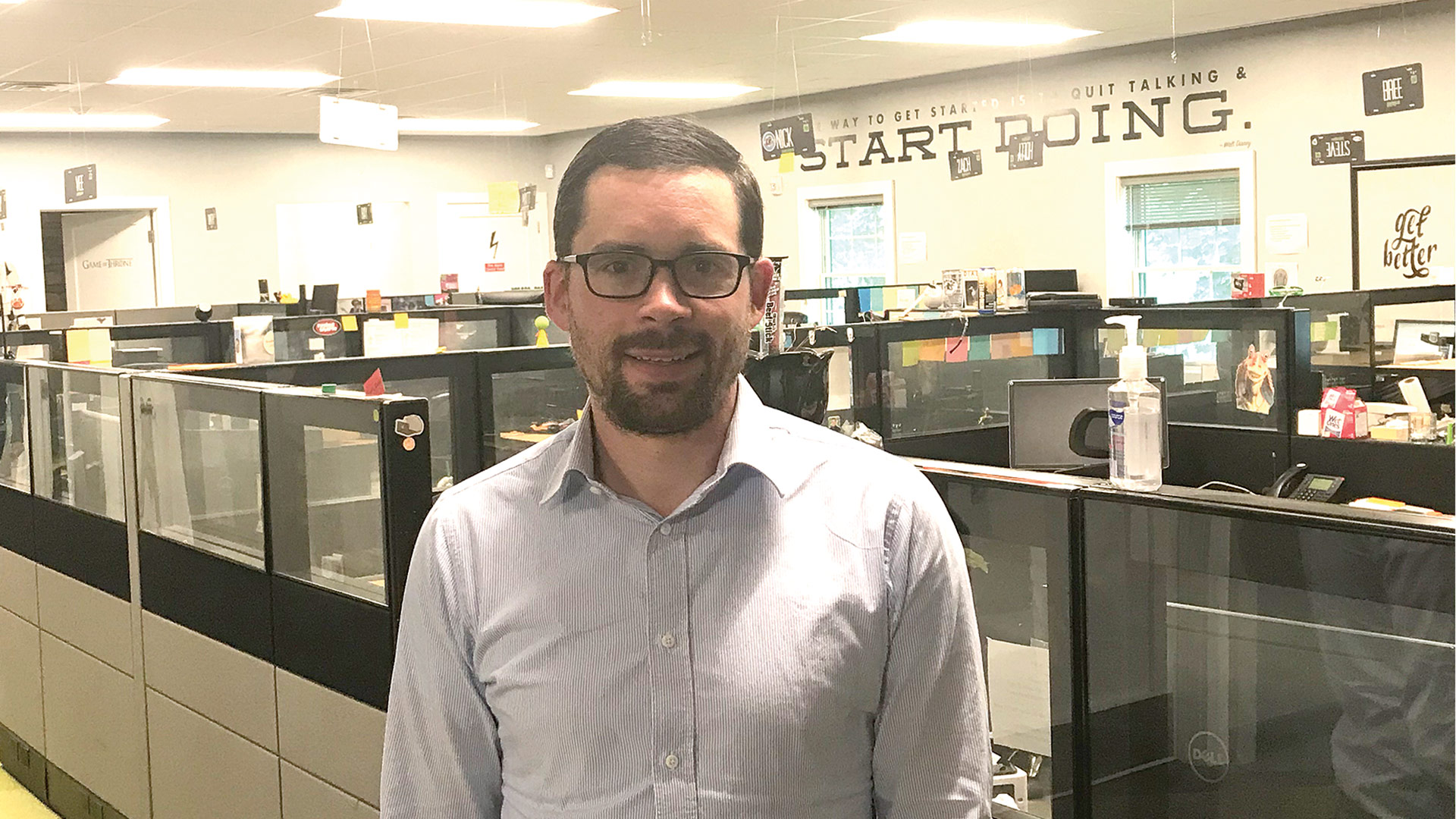
Construction Special Coverage

Framing the Issue

Few industries have been immune to the supply shortages and rising costs that have plagued the world economy over the past few months, but construction is especially vulnerable, relying heavily on materials — most notably lumber and steel, but dozens more as well — riddled by soaring prices. The good news is that demand for work is high, but many still worry about the long-term implications of a cost problem with no end in sight.


By Mark Morris

Early in 2020, several lumber mills and steel plants expected demand for their products to take a nosedive once the pandemic hit, so they slowed down or closed some of their operating plants. Instead, after only a brief hiatus in March, home and commercial construction resumed — and then significantly increased.

For Bob Boilard, vice president of Boilard Lumber, the decreased supply of lumber and growing demand have created multiple challenges. Orders for lumber that once took a week for delivery now have vague timetables and constantly changing prices.

“Pricing right now is set at the time of shipment, so we don’t know exactly what it’s going to cost us until it’s on the back of a truck,” Boilard said.

Because lumber prices change so often, Boilard and dealers like him study the commodity market every day to make sure they stay current. At press time, an eight-foot 2-by-4, used primarily to frame houses and certain commercial buildings, had increased to $11, up from $4 several months ago, a price hike of 175%.

Nick Riley

Nick Riley says shortages are nothing new in construction, but so many types of materials being in short supply at one time is very uncommon.

Construction professionals have called this an unprecedented time. Price hikes and shortages of certain building materials are nothing new to the construction industry, but no one has seen inflation and scarcity of so many supplies that go into building a house or a business.

BusinessWest spoke with several construction managers who said we are currently in a perfect storm of greatly increased demand, COVID-related manufacturing slowdowns, and, literally, storms.

For instance, back in February, ice storms knocked out the power grid in Texas, shutting down several resin plants there and in neighboring Louisiana for several weeks. The resins from these plants are used in a broad range of building products, from adhesives to make plywood to the plastic that insulates electric cables. The resins are also used in many paints and primers.

“This is the first time I’ve seen drastic increases and shortages affect this many products. In the past, we’ve seen oil prices drive up the cost of roofing shingles, but never across the board with nearly every building material.”

Dan Bradbury, director of Sales and Marketing for Associated Builders, said the commodity price he follows closely is cold rolled steel. Most of the structures his company builds are pre-engineered metal buildings for commercial and industrial use.

“Cold rolled steel prices have increased 225% since last August,” Bradbury said. Due to shortages in getting the steel, he tells customers the building they order today will be delivered in about 20 weeks. Before COVID-19, that same project would take 10 to 12 weeks.

Increases and shortages don’t end with commodities, but also affect other materials involved in construction. Craig Sweitzer, co-owner of Sweitzer Construction, said an electrical contractor told him about the price instability of a heavy-duty cable used in commercial applications.

“His supplier would only hold the price for one day,” Sweitzer said. “Usually, our material prices are good for 15 days, so we’re not used to seeing this.”

What makes this time different is the broad array of materials impacted, said Nick Riley, owner of N. Riley Construction.

The price of a basic 2-by-4 has risen by 175% in recent months.

The price of a basic 2-by-4 has risen by 175% in recent months.

“This is the first time I’ve seen drastic increases and shortages affect this many products,” he noted. “In the past, we’ve seen oil prices drive up the cost of roofing shingles, but never across the board with nearly every building material.”

As someone who builds medical and dental offices, Sweitzer uses steel studs in place of 2-by-4 wood studs for interior wall partitions. At one time, the two products were close in price. While prices for both have increased, a steel stud is now far less expensive than wood.

“While the price of a steel stud has increased about 30%, it’s well below the double and triple price hikes we’ve seen with wood,” he said, adding that he’s also experienced shortages in random materials such as joint compound to finish walls, acoustical insulation, and interior doors. “There’s a particular style of door we use that once took a week to get. Now it can take eight weeks, and the price has increased.”


Steady On

Despite shortages and price hikes, the construction managers we spoke with are all grateful to have plenty of work scheduled.

“I’m fortunate to be busy, and at the same time, it’s incredibly stressful to keep everyone happy and meet deadlines,” Riley said. “It’s a crazy time right now.”

To manage some of that craziness, he has invested in a new tool, a CRM (customer relationship management) system.

“Through our system, we can keep everyone on the same page, and it allows customers to check in on their project,” Riley said. “By staying in closer contact with our customers, they’ll know immediately about any issues that might slow down a project.”

Managing expectations becomes essential when prices and timelines are uncertain. When someone wants a fast turnaround on a project, Bradbury gives them straight talk. “We’re honest and upfront with our customers as to what’s realistic,” he said.

Some customers have chosen to delay their projects, anticipating that prices may come down. Bradbury said that may work for some, but when a company needs a building to grow their business, they can’t always wait it out.

“My advice is to build it sooner rather than later because we are more likely to see further price increases,” he said. “Also, with lead times so long, the sooner you get in the queue for your project, the better off you’ll be.”

Beyond materials, shortages have also extended to the human element. Riley said finding laborers for home building has always been challenging, and the increased demand for new homes only exacerbates an already-tough situation.

One of the thorniest challenges to solving supply shortages, Boilard noted, involves finding truckers to move the goods. “You can’t get drivers to get behind the wheel of a tractor-trailer. There are lots of trucking jobs open right now, but few people to fill them.”

Construction workers were deemed essential during the pandemic, so their time off the job was brief. Bradbury said the short shutdown allowed his company to retain most of its workers. “Some of our subcontractors have felt labor shortages, but we are grateful that has not had a significant impact on our business.”

When COVID first hit, Sweitzer gave all his employees a raise to make sure they were compensated well enough to stay with his company. “We’ve been lucky because we have an extremely good and loyal crew. I’ve found that good labor is worth the investment.”


Looking Ahead

Predictions on when prices and supplies might stabilize is anyone’s guess. Boilard explained that his company determines its lumber-buying needs early in the year, which these days is a real challenge. If a dealer stocks up heavily now only to see prices eventually crash, they are stuck with expensive inventory in a market that no longer supports those higher prices.

This building under construction shows how much cold rolled steel Associated Builders uses in a project.

This building under construction shows how much cold rolled steel Associated Builders uses in a project.

“It’s not a fun time because we have to do a balancing act of meeting our customers’ needs without having too much inventory on hand,” he said.

Riley has seen conflicting predictions about lumber prices dropping either at the end of 2021 or sometime in 2022. He’s seen lumber and electrical wire come down before, but he’s more concerned about other materials that go into building a house.

“In my years in business, when windows, siding, and roofing shingles increase in price, I’ve never seen them come back down,” he said. “I think increases like that are here to stay.”

Bradbury said he can’t predict what will happen in his industry, but he hopes to see the supply of steel catch up to demand by the end of this year. “My best guess is supply will get better and lead times will improve before we see prices start to stabilize.”

Sweitzer noted that he has a degree in management, while his two sons have degrees in economics and business administration, so they often discuss what may lie ahead. And their conversations have been optimistic.

“Markets always find some level of equilibrium, and I believe that will happen in this market,” he said. “Market equilibrium may take a temporary vacation, but it has always returned, and I think it will again.”

Health Care Special Coverage

An Anxious Transition

While the economic reopening is being called the ‘new normal,’ things aren’t back to normal, really — at least not by pre-pandemic standards. With COVID-19 still lingering, developments like the loosing of mask and gathering rules and a growing call for employees to return to the office have only ratcheted up the stress and anxiety among a broad swath of the population. In other words, for many, returning to the world as they knew it will be a gradual process.

By Mark Morris

In these unique times when COVID-19 is still active but in decline, we all have lots of questions about how to navigate daily life.

For example, if you have been vaccinated, should you continue to wear a mask? Why does the CDC say you can go without a mask, yet many public places still require one?
Should we still socially distance and sanitize in certain situations?

And, importantly, how much anxiety are such questions causing these days?

Answers can come from many places. Lauren Favorite, assistant program director with Behavioral Health Network, noted that, while information can be good, an overload of messages from different sources results in confusion.

“When we are bombarded with a plethora of information, it’s difficult for people to make a singular choice that will be the right one for them,” Favorite said. “Too much conflicting information can create anxiety.”

“Because so many people are not sure what to do, they will hold on to behaviors even when they no longer serve their intended purpose.”

BusinessWest spoke with several behavioral-health professionals who said much of the stress people are feeling right now is rooted in their concerns about how safe it is to go back into the world. Despite the May 29 reopening of Massachusetts, allowing everything from restaurants to sports arenas to fully welcome the public, Alane Burgess, clinic director for MHA’s BestLife program, said many people still do not feel safe going to the supermarket.

Alane Burgess

Alane Burgess says it’s always easier to learn how to be afraid than to unlearn that mindset.

“It’s always easier to learn how to be afraid than it is to be unafraid,” Burgess said. “Even when we’re told everything is OK, people still have questions.” As COVID-19 is a relatively new virus and scientists are still learning about it, continued concerns about personal safety are not surprising.

A recent research article looked at the trauma experienced by refugees after they emerged from a war-torn country. Favorite said their experience serves as a metaphor for these times.

“In the war zone, they had to develop certain habits and routines as a way to survive,” she said. “Once they escaped and reached a safe place, they held on to those behaviors because they didn’t know how else to act.”

All behaviors have a motivation, she continued, and the ones we followed to stay safe during the pandemic served us well. As we move beyond the pandemic, however, it’s time to examine if those behaviors are still serving us.

“Because so many people are not sure what to do, they will hold on to behaviors even when they no longer serve their intended purpose,” Favorite said. “I think many people will be in a sort of in-between place until we start to see a critical mass of vaccinations.”


Baby Steps

For many, entering back into the world needs to be a gradual process. Kathryn Mulcahy, clinic director for Outpatient Behavioral Health Services at the Center for Human Development, encourages her clients to start small.

“Instead of trying to do everything at once, I remind people it’s OK to take baby steps,” Mulcahy said. “You might not be ready to go out to the movies, but you can start getting back into the world by taking a walk in your neighborhood.”

As an incentive to go out again, Burgess advises her clients to make a bucket list of activities they are excited about doing again. “Making a list reminds people of what brought them joy before COVID and can help motivate them to get back to doing those things again.”

lauren favorite

Lauren Favorite

“I think many people will be in a sort of in-between place until we start to see a critical mass of vaccinations.”

COVID also had a significant impact on the nature of work. Depending on the occupation, some people reported to work every day during the pandemic, while others followed a more hybrid approach of working at home some days and at the office other days. A third group has been working from home since last March.

Employers have begun asking Joy Brock, director of the CONCERN Employee Assistance Program, how to proceed as we move toward the end of the COVID era.

“Companies are struggling with how to translate all the different mandates,” Brock said. “They are having as much anxiety as their employees.”

According to the Massachusetts Attorney General’s Fair Labor Division, employers are allowed to ask if an employee has been vaccinated. In some cases, they can require vaccination in order to report to work. Exceptions are allowed for those protected by legal rights, such as individuals who have disabilities or those with sincerely held religious beliefs.

Brock said even those distinctions beg more questions. “What if I’m vaccinated, but the person next to me isn’t? How is that going to work with masks, social distancing, and other considerations?”

When there is no clear-cut direction, individuals usually figure out how to keep themselves safe. Brock said even modest steps to take control over one’s health can help reduce anxiety. “If that means you are the only one in the office wearing a mask, that’s perfectly fine.”

Finding a comfort level at work and in the world ultimately depends on the individual. Burgess emphasized that everyone is on their own journey, and it’s OK to move at a different pace than others.

“I advise people to be patient with themselves and not make any self-judgments just because their comfort level is different than their friends or co-workers,” she said.

One clear demand Brock has heard from workers involves flexibility in work schedules.

“For the most part, people have enjoyed working from home because it makes child care easier to manage, they have been able to match or exceed their productivity, and many report lower stress levels,” she said.

With that in mind, many employers are looking at a hybrid model and trying to figure out the right mix between working at the office and from home.

Kathryn Mulcahy

Kathryn Mulcahy

“Instead of trying to do everything at once, I remind people it’s OK to take baby steps. You might not be ready to go out to the movies, but you can start getting back into the world by taking a walk in your neighborhood.”

A return to the office also means remembering how to be a colleague. Even if co-workers talk remotely every day, Mulcahy said people can get out of the habit of face-to-face conversations.

“As silly as it sounds, practicing an in-person conversation with someone outside your bubble is one more way to prevent that overwhelming feeling of being thrown back into the workplace,” she explained.

Beyond water-cooler discussions, Burgess said a successful transition back to the office also requires companies to be tuned in to the apprehensions their employees may have. “It will be important for people to have an open dialogue with their employers about any anxieties or concerns they may be feeling.”

Added Favorite, “as a supervisor in the workplace, I’m having conversations with my staff to assuage their fears about coming back on site.”


Talk About It

One key to putting COVID behind us is recognizing what everyone has gone through since last March.

“For the past 14 months, we’ve lived in a world full of trauma,” Burgess said. “The idea that we can suddenly go back to the way everything was is an impossible task.”

Mulcahy said she has heard from people who are embarrassed because they feel stressed and anxious about returning to a more normal life.

“They feel like they should be happy and excited that people are vaccinated, but instead they just feel worried,” she noted. “I want people to know they are not alone and they can reach out for help to navigate these feelings; that’s why we’re here.”

Burgess also pointed out that life was different during the pandemic, and we should accept that we are not the same people we were before.

“Our life has changed, and we have changed in some of the ways we think, how we feel, and what feels safe,” she said. “It’s important to respect who we are today because that, too, is part of the process in getting back into the world.”

When everyone was forced to suddenly deal with a pandemic, it created anxiety for many. Now, as the pandemic (hopefully) nears its end, that creates anxiety, too. Those who spoke with BusinessWest agree that talking about this stress, and letting people know their feelings are valid, will go a long way to easing everyone’s anxiety.

After all, Favorite said, “we’re still learning how to be in a world where we don’t have to worry all the time.”

Innovation and Startups Special Coverage

Moving Pictures


John Hazen stands beside displays

John Hazen stands beside displays of just a fraction of the products created at his company using holographic technology.

Hazen Paper, a third-generation family business that’s approaching a century in operation in the Holyoke mill district, has never stood still, expanding its operation over the years into facets like foil laminating, specialty coating, and rotary embossing. But its emergence over the past 15 years as an internationally celebrated producer of holographic printed products may be its most profound shift. Its entry into this niche was a calculated risk, the company’s co-owner said, but one that gradually paid off in a striking way.


John Hazen figured there was some risk in purchasing his first holographic printer back in 2005. But, as the third-generation co-owner of Hazen Paper Co. in Holyoke, he also saw the potential.

“I always say I was like Jack and the beanstalk,” he told BusinessWest. “Dad sent me out with a bag of beans — ‘grow the business, son!’ — and I bought this crazy thing called a holoprinter.”

But he was determined to build Hazen’s footprint in the world of holographic printing, and plenty of other technology at the company sprung from that first investment.

The results? Well, the numerous awards that pour in every year testify to the company’s success. Like a 2021 Product Excellence Award from the Assoc. of International Metallizers, Coaters and Laminators (AIMCAL), for a holographic consumer package.

“To magnify visual effect on a very small carton,” the press release for the award reads, “Hazen micro-embossed specially coated polyester film with ‘Mercury,’ a unique overall holographic pattern, then metallized the film and laminated it to a solid bleached sulfate board before registered sheeting. The film lamination delivers mirror-like brightness and a liquid-flash effect of full-spectrum color, as well as durable performance for clean scoring and folding.”

“I always say I was like Jack and the beanstalk. Dad sent me out with a bag of beans — ‘grow the business, son!’ — and I bought this crazy thing called a holoprinter.”

Most of those words won’t register with the average consumer. But the effect of the packaging certainly does. “This package really stood out,” one judge said. “The embossed areas are like a hallmark and impart a feeling of luxury.”

It’s the latest in a string of AIMCAL awards for Hazen, which also earned the association’s Product of the Year honors in 2018, 2019, and 2020. The latest was for a transfer-metallized carton, featuring custom holography, created for Nordic Premium Beverages’ Arctic Blue Gin, a project made with Hazen Envirofoil, which uses less than 1% of the aluminum of traditional foil laminate — one way the company continues to stress sustainability, which is being increasingly demanded by clients.

The carton for Arctic Blue Gin, made using Hazen Envirofoil

The carton for Arctic Blue Gin, made using Hazen Envirofoil, earned Product of the Year honors in 2020 from the Assoc. of International Metallizers, Coaters and Laminators (AIMCAL).

In fact, it’s understanding customer needs that led Hazen to step into the world of holography with two emphatic feet in the first place. “In many ways, it’s requests from the customers, information coming in from the market — trying to identify opportunity.”

For background, he explained that the holographic industry saw significant consolidation between 2000 and 2004. In the late ’90s, holographic manufacturers were mostly small mom-and-pop shops, but that changed when larger players started buying them out. One of the catalysts was … well, toothpaste.

“When Colgate came out with a line of holographic packaging on their toothpaste … in the world of holography, the world of consumer packaging, that was a major event,” Hazen said. “They gained market share against Crest, and that’s what it’s all about. If they can pick up 1%, it’s massive. Once Colgate truly validated the use of holography, things got pretty exciting.”

Another growth area was DVD packaging — in fact, Hazen would go on to create holographic images for the DVD boxes for numerous major films, including for the likes of Pixar and Marvel. But its entry into that niche came in 2004, when it created the DVD packaging for the TV show Quantum Leap, which involved a custom hologram.

By that time, however, some of the small holographers Hazen used in the ’90s had been bought up, so it turned to one of the big conglomerates, Illinois Tool Works, or ITW, which had bought up several of the small, boutique holographers.

“We had to work with ITW, but we didn’t feel like they were using their power very well,” Hazen recalled. “We got the job done, and it won an award — and the feedback we were getting from studios and box makers was that this could be big.”

So, seeing the expanding opportunities in front of him, Hazen started creating an in-house holographic division.

Around 2005, “one of the companies that got acquired got busted into pieces, and we were able to start reassembling the pieces of the broken puzzle,” he recalled. “We set up our holographic lab, bought the holoprinter technology, hired some castoffs from the consolidation era, and set up a holographic lab in the basement. Since then, we’ve been able to expand.”


Shining Examples

Holography isn’t particularly new in the corporate world, Hazen said, noting its use on the dove image on Visa cards.

“That’s a hologram. They’ve had that on the Visa card for 40 years. A lot of times, holography is used as a branding feature, but also as a security feature. It authenticates, makes it hard to counterfeit. It’s done with money as well. That’s security holography, and it tends to be small.

“The holography we do for decorative packaging and some branding is larger format,” he went on. “We’re producing holographic plates as big as 60 inches by 60 inches. It’s not security holography and tends to be lower-resolution. But it is very unique; it’s hard, if not impossible, to replicate. And from a graphic point of view, it gives the graphic artist a mechanism for providing backlighting, for creating movement, for creating a 3D kind of effect.”

Hazen also uses a digital process — several different ones, actually, as opposed to Visa. “The Visa dove is analog — they created the model of a dove, set up lasers around a room, and got light to refract and bounce back.”

“We got the job done, and it won an award — and the feedback we were getting from studios and box makers was that this could be big.”

These days, Hazen Paper’s holography can be seen in hundreds of applications worldwide, from product packaging to the program covers for annual events like the Basketball Hall of Fame enshrinement (since 2013) and the Super Bowl (since 2004, although not in 2021, since there were questions early on about the game’s scheduling during COVID-19, and the design process has to start many months in advance).

Hazen showed off a copy of the 2020 hoops-hall enshrinement program, the class that includes the likes of Kobe Bryant, Tim Duncan, and Kevin Garnett. It showcases 3D imagery of the Hall of Fame’s iconic dome and spire and its panoramic interior, juxtaposed with a collage of the year’s inductees in action. The back cover is a holographic treatment of Mohegan Sun in Connecticut, where the enshrinement ceremony was held. Again, it used the sustainable Envirofoil process.

Hazen has created over the past two decades

Top: the holographic Kat Von D Metal Crush limited-edition powder highlighter carton won AIMCAL’s Product of the Year honors in 2018. Above: one of the many DVD packages Hazen has created over the past two decades.

Hazen has also added to its trophy shelf multiple times in the past year, including a Next Century Award from Associated Industries of Massachusetts, which recognizes employers, individuals, and community organizers that have made unique contributions to the economy and residents of Massachusetts. The company employs 200 people and participates in an internship program with Western New England University that helps engineering students gain experience.

“We create opportunities for young people to learn about the industry in general and our operation in particular — and expand our future talent pool,” Hazen said when the award was announced.

And back in December, the International Hologram Manufacturers Assoc. (IHMA) named Hazen Paper’s 2020 holographic calendar Best Applied Decorative/Packaging Product at its Excellence in Holography Awards.

Featuring a fire-breathing dragon with three-dimensional scales, the oversized calendar utilized an array of innovative holographic techniques to create a decorative design the IHMA called “outstanding.” These holographic designs included gray-motion for the sky background, color-motion for the dragon, and two-channel color-motion lenses and fire-motion lenses to animate the flames.

And the company continues to innovate. For example, it announced back in August it had created an innovative, two-sided promotion to demonstrate cutting-edge holographic technologies. The Hazen team designed the artwork on both sides to showcase specific visual effects with nano-holography that delivers an even more dramatic three-dimensional effect.

Perhaps the most unusual aspect of the promotion is that it is two-sided custom holography, transfer-metallized on both sides. “It hasn’t been done before,” Hazen said last summer. “The ability to transfer-metallize a lightweight stock on two sides with custom holography opens up the potential for use in many applications where consumer impact is key. It’s very exciting.”


Changing Times

Clearly, Hazen Paper has come a long way from its origins in 1925, when Hazen’s grandfather, also named John, launched the enterprise as a decorative paper converter and embosser. His younger brother, Ted, joined Hazen in 1928 to help manage the growing company, which grew rapidly in the 1930s and expanded into printing and foil laminating by the 1940s.

Ted’s son, Bob, joined the company in 1957, and John’s son, Tom, signed on in 1960, and the second generation expanded the company numerous times over the next three decades, as Hazen Paper became known worldwide for specializing in foil and film lamination, gravure printing, specialty coating, and rotary embossing. Hazen products became widely used in luxury packaging, lottery and other security tickets, tags and labels, cards and cover stocks, as well as photo and fine-art mounting.

The third-generation owners, John and Robert Hazen, joined the company at the start of the 1990s, and have continued to grow the enterprise and expand its capabilities, with a special emphasis on coating, metallizing, and — of course — holographic technology.

In 2005, Hazen Paper set up its holographic origination lab and design studio in Holyoke, and has since developed thousands of unique holographic designs and holds several patents on the processes it has developed. Shortly after, the company launched a holographic embossing and metallizing operation a mile away on Main Street.

“They always say it’s dangerous to go outside your traditional business model, outside your wheelhouse,” John Hazen said of those early days in this new niche, and particularly that plant. “We came in way over budget, at least six months behind, but that plant came to life right at the end of 2008.”

That’s right — at the beginning of a crippling recession.

“When you think about what was going on in the world, the first half of 2009 was really a scary time,” he said. “Fortunately, the business came back in the summer of 2009, and everything started to fall into place.

“Everyone’s system for making holography is different — they’re similar, but they’re different — but the one thing we knew was our system worked,” he went on. “But we went through some rough years from 2010 to 2016. We definitely overextended ourselves to get into the holographic business, and part of that overextension was the impact of the 2009 recession.”

In 2006, Hazen set up its first satellite plant in Indiana, a lamination and sheeting operation that ultimately operated 24/7, with more than 50 full-time employees. In 2016, however, it sold the plant as a strategic move away from commodity-type foil laminations to increase focus on growth opportunities in holography and specialty paper products in Holyoke.

Broadly speaking, packaging remains the broadest category of holographic work nationally, with designs seen on everything from boxes of golf balls and toothpaste to liquor packages. But the sky is the limit, Hazen said, and new uses emerge all the time — justifying that initial investment more than 15 years ago.

“It really was a startup, a technology startup in an older company. And ultimately, we really reinvented Hazen Paper,” he told BusinessWest. “The holographic technology ended up feeding the old business. So it’s like we installed a new heart in an old body.”

Not a bad return on that bag of beans.


Joseph Bednar can be reached at [email protected]
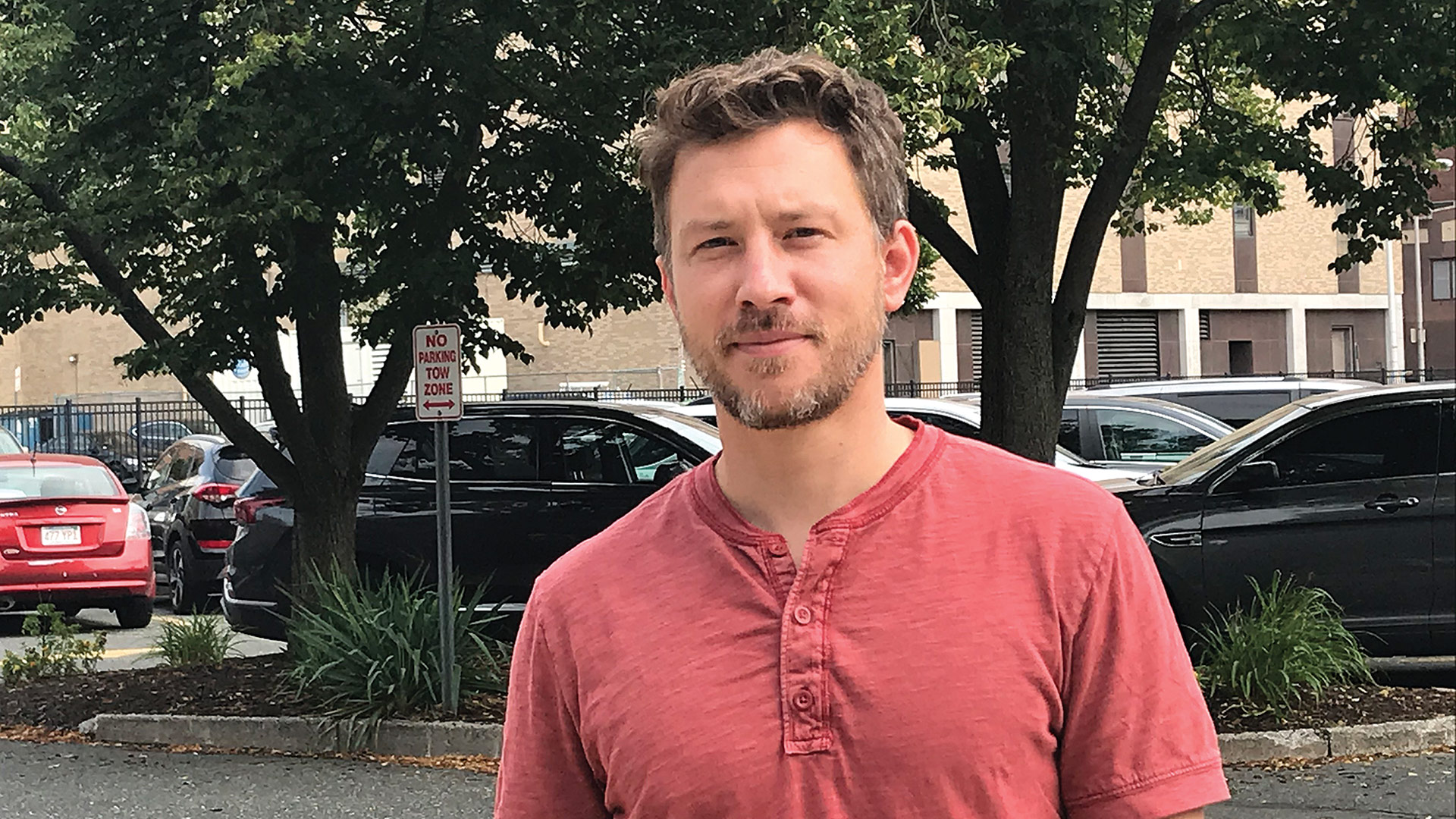
Community Spotlight

Community Spotlight

By Mark Morris

Michelle Theroux

Michelle Theroux says businesses in town, including her own, Berkshire Hills Music Academy, are anxious to ramp up operations as the economy reopens.


For Mike Sullivan, the past 15 months have been a learning experience on many levels.

As town administrator in South Hadley, Sullivan has learned just how essential online payment systems and Zoom meetings have become for residents who need to do business with the town.

“As we make more access points available to the public, we’ve seen participation in government increase,” Sullivan said, adding that, while many people are looking forward to meeting in person again, Zoom is also here to stay.

The pandemic also taught him about the efficiencies of running Town Hall. By limiting in-person visits to appointment only, staff have been able to more efficiently get business done. Going forward, he looks to follow a model other towns have adopted of limiting hours or closing to the public one day a week.

“There are multiple ways to take care of business,” Sullivan said. “I appreciate that some people have complicated business they need to conduct in person, and we will accommodate them. When residents use online platforms or even ‘snail mail’ instead of visiting Town Hall, it saves money for the town and for everyone’s individual taxes.”

Sullivan made plenty of adjustments to keep South Hadley moving forward during the pandemic. Attendees to last year’s town meeting, for example, never left their cars.

“People tuned into the discussion over their car radios, just like an old drive-in movie,” he said. A similar drive-in town meeting is planned for this year, but there will also be a seating area for those who feel safe enough to leave their cars. “We’re looking forward to getting back to some semblance of normalcy.”

Michelle Theroux, president of the South Hadley and Granby Chamber of Commerce, said one indication of a return to normalcy is the “we’re hiring” signs around town. She acknowledges there are many factors why people are not immediately returning to work, but even with recruitment issues, the signs represent a positive step.

“The good news is that people are looking to hire, and they are in a position to bring people back into the workforce,” she said.

As the end of the pandemic nears, Theroux credits the South Hadley community for its support of small business. From restaurant takeout orders to holiday shopping, it was local people who provided enough support so that no chamber-member businesses permanently closed due to the pandemic.

“Certainly, many downsized and did what they had to do to survive,” she said. “It’s a real credit to community support because small business is such an important part of South Hadley.”

Because small business is such an essential part of South Hadley, banks in town worked with the chamber to secure Paycheck Protection Program funds for businesses in town. In addition, the chamber recently partnered with the Northampton chamber and the Massachusetts Office of Travel & Tourism to secure $20,000 in state grants.

“The good news is that people are looking to hire, and they are in a position to bring people back into the workforce.”

The chamber also spread the word among its members on how they could help each other, as well as support businesses that are not necessarily top of mind.

“If you look at the South Hadley Commons, we all think of the great restaurants there,” Theroux said. “The Commons also has a movie theater and a number of small boutiques that offer unique and personalized items you can’t find at a big-box store.”


Forward Momentum

One key project that kept going during the pandemic involves the Woodlawn Shopping Plaza. At one time the site of a Big Y supermarket, the parcel now features various retail stores anchored by Rocky’s Hardware. The site has been approved for a 60-unit, mixed-income apartment complex that will occupy three acres in the back of the parcel.

“Way Finders of Springfield is running the housing-complex project, and they are waiting for federal funding to come through before they break ground,” Sullivan said.

Theroux is excited about the project because it provides a glimpse at the future of development.

“At Woodlawn, you have a multi-use site with different types of businesses and living options all in one central location,” she said, while predicting that the entire area surrounding Woodlawn will see a revitalization over the next several years. As one example, Northampton Cooperative Bank and PeoplesBank have recently opened branches in or near the Woodlawn Plaza.

Sullivan also pointed with pride to the new senior center on Dayton Street, which is scheduled to open June 30.

“We were able to successfully build the senior center during the pandemic, and the costs were below the estimated bids,” he said. “Even with increases in some of the materials, we will still come in nearly $700,000 under the original estimate.”

South Hadley at a Glance

Year Incorporated: 1775
Population: 17,791
Area: 18.4 square miles
County: Hampshire
Residential and commercial tax rate: $19.46 (Fire District 1); $19.80 (Fire District 2)
Median Household Income: $46,678
Median Family Income: $58,693
Type of government: Town meeting
Largest Employers: Mount Holyoke College; the Loomis Communities; Coveris Advanced Coatings; Big Y
* Latest information available

Six years ago, Mohawk Paper opened a plant in South Hadley to great fanfare and optimism for a long relationship with the community. Last year, in pursuit of more favorable taxes and incentives, the company closed its operations in South Hadley and moved to Ohio.

As tough as it was to see Mohawk pack up and leave, Sullivan noted that E Ink, the company located across Gaylord Street from the former Mohawk plant, has good news moving forward. “E Ink is planning to double in size because they have a new product line coming out.”

E Ink makes the agent used in tablets like the Amazon Kindle, which allows an electronic page to read like a physical book. In addition to tablets, E Ink screens are used in a variety of applications ranging from signage at MBTA stations and international airports to retail price signs.

On top of contributing as a successful company, Sullivan noted that E Ink is a strong supporter of community projects and events in South Hadley.

Meanwhile, the Ledges Golf Club, owned by the town and a financial drag for many years, is on its way to performing at par. At the beginning of the pandemic last year, golf courses across the state were mandated to stay closed for several weeks. Sullivan called the lost months a “kick in the shins” because, once it opened, the Ledges did brisk business all season and came close to hitting a break-even point.

“This year, we made $200,000 in revenue in just March and April,” Sullivan said. “By the end of the fiscal year next June, we think the Ledges will break even.”

In addition to her duties as chamber president, Theroux’s full time job is executive director of Berkshire Hills Music Academy (BHMA), a music-infused program that helps young adults with special needs to expand their social, vocational, and life skills. Before the pandemic, BHMA employed just over 100 people. Though it normally offers both residential and day programs, state mandates forced BHMA to quickly shift to remote classes for its day students. After furloughs and layoffs due to the new mandates, 64 staff remain.

“Our current state is a hybrid model where we have about 40% of our day students back on campus, with the rest joining us by remote,” Theroux said. “Once we can fully reopen, we’d like to staff up to where we were before the pandemic.”

Looking ahead to the fall, she wasn’t sure what to expect for new enrollments, but was pleasantly surprised to see strong numbers for BHMA’s incoming class.

“Once their loved one is vaccinated, many families are all in on our program, and that’s a huge positive for us,” Theroux said. “Three months ago, I would not have been as confident about what next year would look like.”


Back to School

After more than a year of remote learning, Mount Holyoke College students have begun to return to campus. While remote learning is still available, many have indicated they plan to return to campus in the fall.

“The presence of Mount Holyoke students back on campus will provide a real boost to South Hadley feeling normal again,” Theroux said.

Sullivan is on the move, too. After a long career of public service, he has announced he will retire in June. Looking back, he points to a number of projects he’s helped shepherd to success. One area of particular pride is the progress South Hadley has made in hiring a more diverse workforce. As an example, he mentioned Police Chief Jennifer Gundersen, who recently joined South Hadley’s force after several years in Amherst.

“Certainly, many downsized and did what they had to do to survive. It’s a real credit to community support because small business is such an important part of South Hadley.”

Sullivan in only one of South Hadley’s leaders who are moving on. Planning Director Richard Harris is also retiring, and the superintendent of schools left in December to pursue another professional path.

While grateful for their service to the town, Theroux sees this as a time for South Hadley to bring new faces into leadership roles.

“As we emerge from the pandemic, I’m optimistic about the future and a new era of leadership for our town,” she said, adding that she looks forward to people once again enjoying all that South Hadley has to offer.

Construction

Air Apparent

Scott Cernak’s expertise and development of the residential division at M.J. Moran

Scott Cernak’s expertise and development of the residential division at M.J. Moran are serving him well today as the head of his own venture.

Never underestimate the influence of a teacher.

Or, in Scott Cernak’s case, two of them, who taught plumbing when he was a student at Smith Vocational & Agricultural High School, and proved engaging enough in the subject to capture his attention.

“I wasn’t sure which trade I wanted to take,” he said. “The plumbing teachers there were really good — I never thought I would have chosen plumbing, but I ended up liking it quite a bit.”

He likes the trajectory of his career as well. Today, Cernak is the owner of a company — Western Mass Heating, Cooling & Plumbing — that recently spun off M.J. Moran Inc., the only company he’d ever worked for, and where he latched on as an intern early in his junior year at Smith.

“I started on my 16th birthday and started liking it more and more,” he recalled. “I got into more and more things; I started doing sprinkler fitting, all kinds of pipe fitting, welding and plumbing and HVAC.”

“It was a really good, mutually beneficial decision to have us part ways and for me to buy the division.”

All of that appealed to him, but he was especially interested in the residential division, which hadn’t been a significant part of Moran’s business, but which he and two other employees started growing steadily. “At this point, I was in my early 20s and running a lot of large residential and small commercial jobs, new-construction service calls — anything from packing a faucet to doing a whole new house and everything in between.”

His success in that division led to a promotion to general manager of the company in 2016, and something bigger four years later. “I got the opportunity to buy the division that I helped build,” he told BusinessWest, “and here we are.”

The reason for the spinoff company is that Jim Moran, who launched his enterprise 42 years ago, is heading — slowly — toward retirement, Cernak explained.

“He’ll never fully retire, but he wanted to take a little off his plate right now. His sons, Chad and Kyle, who run the commercial-industrial division, don’t have any interest in the residential divison — they relied on me for that anyway — so it just made sense for Jim and myself and our departments.

“It was a really good, mutually beneficial decision to have us part ways and for me to buy the division; it worked really well for them, and it’s worked really well for us,” he went on. “We still communicate frequently, and we still collaborate; I hire them as a sub when we need extra manpower, or they hire us as a sub on some jobs. So it works out pretty well.”

Roughly eight months into his new enterprise, Cernak said his work is well-balanced, split fairly evenly between service work, major renovations for general contractors, and installing and replacing heating and cooling systems. “It’s a pretty good mix, and some of that is commercial, too — service work and small installation work.”

Western Mass Heating, Cooling & Plumbing is more departmentalized than most similar firms, he added, with a full service department.

“Most companies around us don’t have a service department; they just throw in a service call here and there. We actually have a service department that’s dedicated to service work, then we have a new-construction installation department that’s dedicated to the bigger work. That works well for our dispatching and keeping things organized and keeping the right guys on the right jobs. It’s one reason we’re able to stay efficient and continue to grow.”


Into the Pipeline

What first drew Cernak into the plumbing field at Smith Voke was, simply, realizing for the first time the breadth of what tradespeople in that field do.

“As a teenager, I didn’t realize that plumbing was more than just cleaning a drain or fixing a toilet. A lot of people — not just young teenagers — think plumbing is just fixing plumbing; they think it’s just dirty work. But I got to see a different side of it — learning how the pipefitting works, doing some welding and some soldering.”

“Even before 2020, new houses were getting a lot tighter, and indoor air quality was becoming a much higher priority for people.”

He also quickly learned, by researching the field, that it’s a trade with stability and good job security. “It’s one of the higher-paid trades, so there were a lot of factors. But before that, it had never clicked to me that, hey, plumbers actually install the plumbing in a new house, too, not just fix the plumbing in an old house.”

The science of plumbing hasn’t changed much during his career, but HVAC is a different story.

“Indoor air quality has been a big factor,” he said. “Coronavirus certainly helped with that — or hurt with that, however you want to put it. But coronavirus certainly put a new spin on it. But even before 2020, new houses were getting a lot tighter, and indoor air quality was becoming a much higher priority for people, so we sell a lot of products that help with filtration and literally zap bacteria and viruses out of the air; there are all kinds of air-cleaning products that we’re selling as part of our systems, part of our installations, part of our services. It’s not the core of our business, but it certainly is a pretty big part of our business.”

Businesses in Massachusetts took the lead on emphasizing air-quality measures indoors, much of it driven by regulations. But in the era of COVID-19, people increasingly demand high-tech air-purifying systems in their homes.

“We’d never had people asking for indoor air-quality measures — or very rarely; maybe 1% of people would ask for something like that back before coronavirus. And now, probably close to 20% to 30% ask for it specifically.”

Scott Cernak said his company is growing and hiring

Scott Cernak said his company is growing and hiring, even though his industry is challenged by a slow pipeline of young talent entering the field.

Clearly, there will always be a market for plumbing and HVAC work — as Cernak said, this is a stable field — and he can see his fledgling company growing, but one challenge will be attracting talent as it does. Right now, nationwide, roughly three workers are aging out and retiring from these disciplines for every two young people who come in.

“And out of those two, probably only one to one and a half are going to make it past five years,” he went on. “So there’s a big-time shortage, and it’s going to get worse and worse.”

As one way to counter that trend, “I have longer-term goals of creating more education within our company,” he explained. “I’d like to bring a sheet-metal school in house, not necessarily from us, but probably third-party, using our facility; that’s going to help attract some people.”

Meanwhile, “we have ads out on different internet platforms, and we’re trying to recruit internally too. Everyone who works with us knows we’re looking for at least one or two more service techs on top of other positions as well. We have been hiring — four people in the past month and a half — so we’re definitely growing, and we’re on a trajectory of more growth as well.”


Investments in the Future

One key to achieving that growth, Cernak said, is not being afraid to invest in the kinds of things that will attract top talent.

“I’ve got an eye for talent — and I’m not afraid to hire the best and pay for the best, that’s for sure,” he told BusinessWest. “I provide the best tools, the best training, we have new, well-equipped trucks, and we’re working on getting even more trucks. So all our people have the right tools, the right trucks, and the right infrastructure to do their jobs.”

In addition, “I’ve invested heavily into software and IT systems to organize how we do our work and how we bill for our work and how we store data and how we access data, which is a huge part of the industry that people generally overlook,” he went on. “We’re not fumbling through file cabinets to find the customer’s history. With a couple clicks, we’re there. Same thing with our guys in the field — they have access via tablet or smartphone to access any of our customers’ history. When a customer calls, we know what they have already, and we know the right tech to send to the right job.”

What it adds up to is efficiency, which both employees and customers appreciate, Cernak said. “We’re very good in the service department, dispatching, getting people there. We have quite a backlog sometimes, but we’re also very good at prioritizing emergencies.”

Creating efficient systems and investing in better resources may not bring an immediate payback, he added, but he’s looking long-term — at the kind of success his mentor, Jim Moran, enjoyed for more than four decades. It’s why, when he saw an opportunity to build upon his experience and set out on his own, he took it.

“Sometimes,” he said, “you’ve got to go with your gut and know what’s right and do it.”


Joseph Bednar can be reached at [email protected]
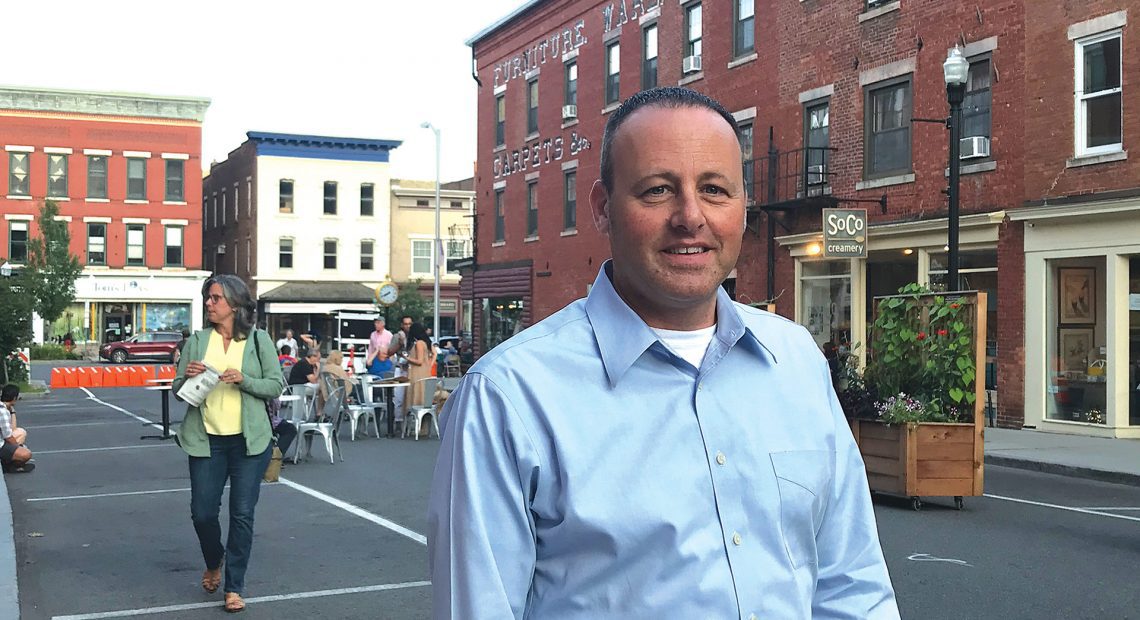
Construction

Soaring Again


MassDevelopment has provided an $800,000 loan to Eagle Mill Redevelopment, LLC, which is using the proceeds to redevelop the former Eagle Mill and surrounding parcels in Lee into a mixed-use complex featuring 128 residential housing units and 14,000 square feet of retail and office space.

The developer used loan proceeds and additional financing from Adams Community Bank to buy 10 adjacent properties that will be combined and subdivided into six separate parcels for future redevelopment. Construction on the project, which is expected to cost approximately $55 million, is slated to begin in the fourth quarter of 2021, with its first phase completed within 14 to 18 months.

“A priority of the Baker-Polito administration is to breathe life back into underutilized factory and mill buildings that were once integral to the Commonwealth’s industrial success,” said Housing and Economic Development Secretary Mike Kennealy, who serves as chair of MassDevelopment’s board of directors. “These properties are uniquely situated for redevelopment into mixed-use communities that accelerate economic growth and expand housing opportunities, and we were proud to deliver a $4.9 million MassWorks award to facilitate needed infrastructure work at Eagle Mill. MassDevelopment’s contribution of loan financing advances the transformation of the site and complements the other state, local, and private investments.”

“Bringing additional housing, businesses, and jobs back to Eagle Mill, a defining site in Lee’s industrial history, will be an important part of the community’s next chapter.”

Built in 1808, Eagle Mill is located along the Housatonic River in Lee. In the later part of that century, Lee was the national leader in papermaking and home to 25 paper mills. As operations dwindled, Eagle Mill closed in 2008 — resulting in the loss of 165 factory jobs — and has remained vacant since. The town received a $4.9 million MassWorks Infrastructure Program grant in 2018 to upgrade the water main in the town and install 9,000 linear feet of new water main to the development site, allowing the Eagle Mill project to move forward. The project is also supported with both state and federal historic tax credits.

“Bringing additional housing, businesses, and jobs back to Eagle Mill, a defining site in Lee’s industrial history, will be an important part of the community’s next chapter,” MassDevelopment President and CEO Dan Rivera said. “MassDevelopment is proud to be a financial partner in Eagle Mill Redevelopment, LLC’s plans to unlock the economic potential of this property.”

Jeffrey Cohen, the lead developer in the Eagle Mill redevelopment, has been involved in the project since 2012. He has done similar, large-scale historic restoration and redevelopment projects in Washington, D.C.; Portland, Maine; and St. Paul, Minn. DEW Construction, another partner and the project’s general contractor, brings similar experience and expertise to the effort, with projects of more than $150 million each year.

“It is incredibly fortunate that MassDevelopment has so many tools by which they are able to enhance the likelihood of our project’s success,” Cohen said. “They provide financing for predevelopment, amongst other things, which is otherwise so difficult to obtain, making their support invaluable to our project. The essential turning point that will lead to the project’s ultimate success was, and is, the approval by then-Secretary [Jay] Ash and MassWorks of the $4.9 million grant to the town of Lee, enabling the replacement of the water line to the mill, without which we would not have been able to move forward.”

MassDevelopment, the state’s finance and development agency, works with businesses, nonprofits, banks, and communities to stimulate economic growth across the Commonwealth. During FY 2020, MassDevelopment financed or managed 341 projects generating investment of more than $2.69 billion in the Massachusetts economy. These projects are estimated to create or support 10,871 jobs and build or preserve 1,787 housing units.

Health Care

Disrupting the Cycle


The past year has been a difficult one in many ways, Dr. Alisha Moreland-Capula said.

“It’s been a tough time with COVID. We’ve had a lot of uncertainly, a lot of loss, and we’ve also had a rise in racial tension and a disruption in the relationship between law enforcement and the community,” the psychiatrist and author of Training for Change noted.

But when addressing an issue like urban violence, what many people — even those working to solve the problem — often don’t understand is the impact of fear. Not occasional fear, but long-term, lived-in fear.

“If you can imagine a life that is completely consumed and shaped by fear, then it is not absolutely outside the realm of possibility to understand how toxic that can be on someone’s life,” Moreland-Capula said.

The occasion for her words was the keynote address of a virtual forum last month hosted by Roca, an organization that aims to disrupt incarceration, poverty, and racism by engaging young adults, police, and systems that impact urban violence.

Fear can be a positive, she noted, when it heightens one’s senses in order to escape a dangerous situation or seek help.

However, “being afraid is meaningful until it’s not,” she said — when it’s a constant presence in a young person’s life, due to stressors like racism, poverty, and violence. That’s why Roca aims to tackle the issue of violence by addressing the causes of other traumas first — engaging not only with young people, but with the systems that impact them, from education to law enforcement to child welfare.

Gov. Charlie Baker

Gov. Charlie Baker

“Roca has been a relentless force in disrupting incarceration, poverty, and racism by engaging young adults, law enforcement, and systems at the center of urban violence and relationships to address trauma, find hope, and drive change.”

“We know from brain science that the external environment around us impacts who we are and who we become,” Moreland-Capula explained. “What Roca says is that we have to work with those environments, change the systems, and help to change the trajectory of the young adults we seek to serve.”

Mike Davis, vice president of Public Safety and chief of Police at Northeastern University, as well as a Roca board member, understands that concept.

“We have before us a moral imperative to be better as individuals and collective members of society,” he told forum attendees, adding that, too often, people lose hope because change hasn’t happened fast enough or, worse, believe working for change is someone else’s responsibility.

“Both of these thoughts are not only wrong, but but if they serve as the guidance for our behavior, they will guarantee failure,” Davis went on. “Substantive change is everyone’s responsibility, without exception. What needs to animate our actions now is a sense of urgency based on a vision for what is possible.”

Roca has such a vision, he explained, based on the premise that all people have intrinsic value and potential to contribute something unique to their society — and has not only helped steered young people away from prison and toward better outcomes, but also worked with police to see their roles differently.

“The loss of life to homicide or prison not only not only impacts that individual, that community, or that city, it impacts all of our society,” Davis said. “Loss of life is loss of possibility.”

In a brief address to the forum, Massachusetts Gov. Charlie Baker noted that “Roca has been a relentless force in disrupting incarceration, poverty, and racism by engaging young adults, law enforcement, and systems at the center of urban violence and relationships to address trauma, find hope, and drive change. I’ve seen firsthand that Roca and its programming works.”


Fear Factors

Fortunately, Moreland-Capula said, Roca has been ahead of the curve in paying attention to the relationship between root traumas and their societal impact.

“They understand that, for whole communities to heal, for people to heal, there has to be keen attention paid to specific things like community violence, like trauma.”

Some of the chronic fear she mentioned earlier stems from a lack of basic needs, from food and water to shelter, safety, even love and belonging. By helping young people access education and employment, those cycles can be broken as well, she noted. “We know there are complex and structural challenges that require a complex and structural approach.”

Molly Baldwin, Roca’s founder and CEO, said the proliferation of drugs, violence, and guns in communities requires innovative approaches.

“Our old methods won’t work. Incarceration is expensive and a failure. Jobs and GED programs are not enough, and even the most credible messenger cannot convince a young person to do differently if that young person is living in a state of fight or flight and cannot access the thinking part of their brain for healthy decision making,” she said. “If we don’t address the impact of lived trauma, we can’t hope for healing and change.”

That philosophy is behind the recent establishment of the Roca Impact Institute, which works with communities and institutions that have a clear commitment to addressing violence by working with young people who are at the center of local incidents and trends.

Molly Baldwin

Molly Baldwin

“Even the most credible messenger cannot convince a young person to do differently if that young person is living in a state of fight or flight and cannot access the thinking part of their brain for healthy decision making.”

Unlike a typical training approach, the Roca Impact Institute is an intensive coaching approach that works with police departments, criminal-justice agencies, and community-based programs in sustained, collaborative partnerships over a 12- to 24-month period. Experienced Roca leaders engage these partners to learn new, trauma-informed strategies and apply them in their local context.

The idea, Baldwin said, is to change together. “If we hope for change for young people, we must change, too.”

At the virtual forum, Baldwin presented Roca’s James E. Mahoney Award to Peter Forbes, commissioner of the Massachusetts Department of Youth Services (DYS), which has implented some of the concepts Roca promotes. Back in the 1990s, he noted, juvenile justice was in a different place, using terms like ‘predator’ and ‘offender,’ and concepts like boot camps and scared-straight programs.

But those thing didn’t work, he said, instead generating poor outcomes for individuals and communities. “Since that time, our work at DYS has evolved. We’ve embraced the principle that young people can make positive change in their lives, that we as an agency can be part of that change, and that our investment in youth development actually contributes to community safety.”

He cited national studies demonstrating that therapeutic approaches to justice-involved youth drive lower recidivism than punishment strategies. “If we run a coercive system, we actually run the risk of young people being worse off for their contact with the system.”

It starts, Forbes said, with meeting young people where they are. “People who work with adolescents see disrespect, non-responsiveness, impulsivity, defiance — behaviors that are typical of adolescents. Those are not descriptors of juvenile delinquency; that’s typical adolescent behavior. So it’s really important, as adults working with young people, that we respond to the behavior, but not overreact.”


New Beginnings

The event featured a brief address by former U.S. Rep. Gabby Giffords, who has been an ardent gun-control advocate following her assassination attempt in 2011. Her message struck a different, more activist tone than the rest of the program.

“These are scary times — racism, sexism, lies, coronavirus. It’s time to stand up for what’s right. It’s time for courage,” she said. “We must do something to stop gun violence and protect our children, our future … to make our country a safer place, a better place.”

It will be a better place, Baldwin said, through the kind of relationship building, mutual understanding, and personal accountability that lie at the heart of Roca.

“We are humbled and honored to work with the young people at the center of urban violence — those who are traumatized, full of distrust, and trapped in a cycle of violence and poverty that traditional youth programs alone can’t break,” she said. “Today is a celebration of those who make this work possible, from young people to Roca teams and our partners committed to sparking new thinking about working with young people who are traumatized and stuck.”

Getting unstuck is a decision, she noted, offering a George Bernard Shaw quote: “Progress is impossible without change, and those who cannot change their minds cannot change anything.”

Roca is doing its part to create change, Baldwin said, but it can’t achieve its goals alone. “There is an opportunity for all of us to begin again.”


Joseph Bednar can be reached at [email protected]
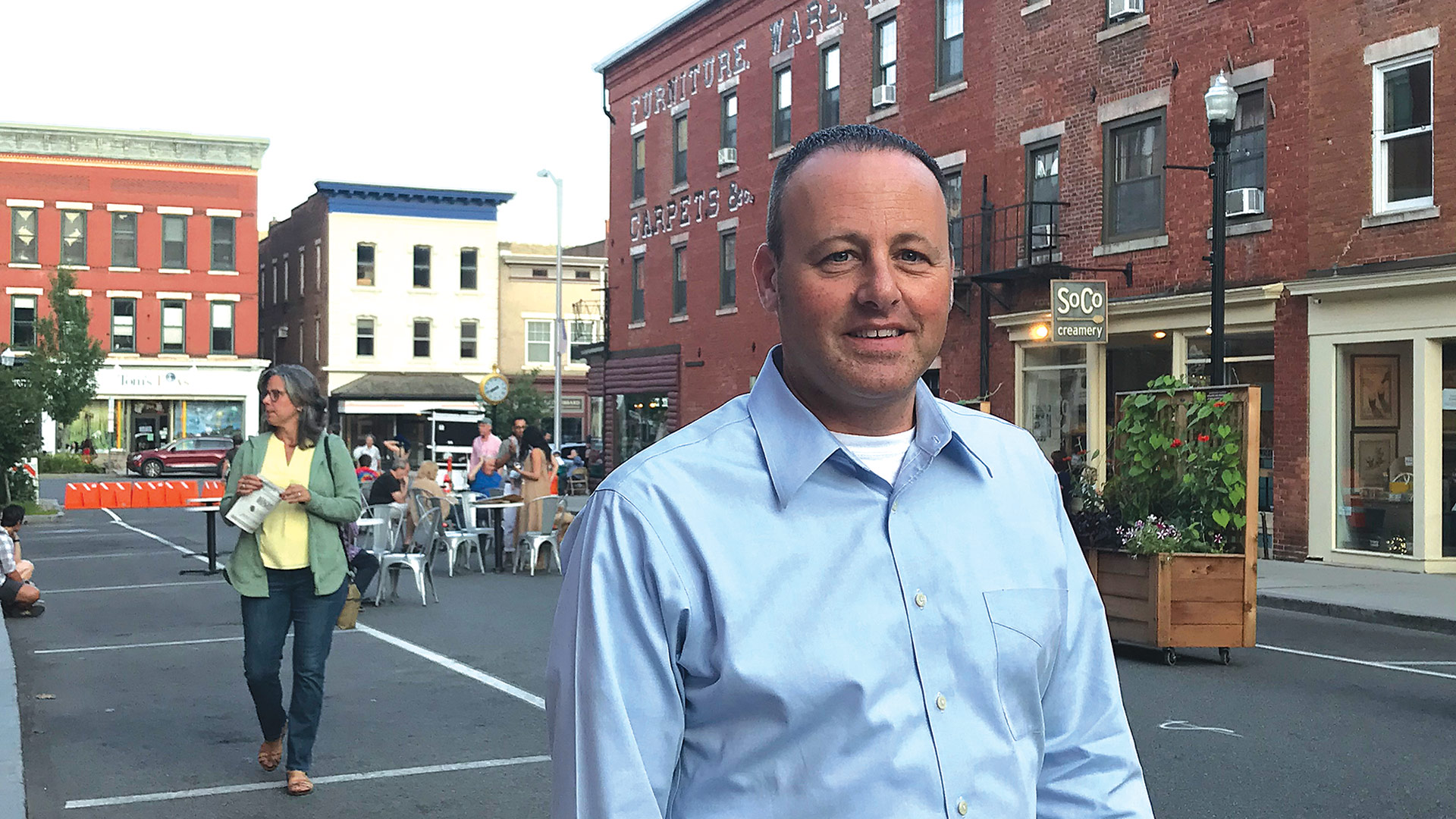
Innovation and Startups

Breaking Down the Silos

Barbara Casey

Barbara Casey says Pixel Health’s companies understand the technology underpinning healthcare, but spend more time on people and processes.


For Pixel Health, 2020 was a year of growth — double-digit sales growth, in fact, and a 30% staff increase despite the impact of COVID-19 on the healthcare industry.

Or, perhaps — at least in part — because of the pandemic’s effect.

That’s because information-technology (IT) needs shifted dramatically during the pandemic, and health systems had a lot to sort through.

“There were a ton of digital-health startups funded in 2020,” said Barbara Casey, chief revenue officer at Holyoke-based Pixel Health, which comprises five separate but interconnected companies that assist health organizations in myriad ways. In fact, she noted, investment dollars in digital-health startups doubled last year, from $7 billion in 2019 to $14 billion in 2020.

“Digital health in general had a tremendous boom in 2020, which is good — and, in some ways, not so good,” Casey told BusinessWest. “It creates more noise in the market. If we can learn more about what our clients’ requirements are and what they want the experience to be like for stakeholders, we can help them sort through those vendors and see which ones match their requirements.

“There’s a ton of choice — that’s why we exist,” she went on. “There’s so much variability, so many ways you can do it. I think working with an organization like us, with as much depth and breadth as we have, is helpful to clients in finding a streamlined path to the end result.”

Pixel Health companies, which assist hospitals and health systems in creating IT infrastructure, improving operational processes, developing software, and facilitating financial efficiencies, has dramatically expanded its national client base since the pandemic began.

“Now we’re coordinating beyond the IT department, coordinating with the clinical side of healthcare, and that opens up a whole different range of consulting services we offer to healthcare providers.”

“While most healthcare-consulting groups specialize in either strategic planning or technical execution, Pixel Health companies do both,” company founder Michael Feld said.

In its marketing, Pixel Health claims its companies can “make healthcare better for patients, providers, and administrators alike by facilitating the use of technology, simplifying the process of using it, and overcoming the cultural and organizational constraints hindering its adoption. We help make the delivery of care better.”

President Brad Mondschein noted that the network’s first two companies, VertitechIT and baytechIT, “were really about how to coordinate the IT buildout and the provision of IT services to healthcare providers, and make those healthcare providers aware of what needs to be communicated internally and, frankly, even externally about their capabilities.”

With three other companies — Nectar Strategic Consulting, akiro, and Liberty Fox Technologies — now in the fold, “we’ve stepped beyond that — now we’re coordinating beyond the IT department, coordinating with the clinical side of healthcare, and that opens up a whole different range of consulting services we offer to healthcare providers,” he continued. “It’s also helped healthcare providers ensure that their IT services are focused so the clinical staff are getting what they need out of IT.”


A Quick Breakdown

The five Pixel Health companies are interconnected in some ways, but each brings unique atttributes to the table.

VertitechIT’s goal is to drive IT transformation for health systems. Its executive and clinical consultants, architects, and engineers design and implement IT roadmaps in line with the strategic plans of client organizations.

VertitechIT also touts its ability to implement transformational changes for clients at virtually no net new capital expense. As one example, a $2.5 billion health system constructed a three-site, software-defined data center and saved $8 million over previous designs with little to no impact on its budget. Senior consultants also took on interim leadership roles, working to transform the institution’s siloed work culture as well.

Brad Mondschein

Brad Mondschein says Pixel Health’s “secret sauce” is being able to bring many different areas of expertise to bear to meet a healthcare client’s needs.

Meanwhile, baytechIT is a managed service provider (MSP) and value-added reseller — one of the only health-centric MSPs in the country, in fact. The company operates a call center staffed by healthcare analysts, adept at meeting the unique and often time-critical needs of the clinical environment.

Nectar specializes in applying technology to serve the quadruple aim of healthcare delivery: delivering the right care at the right time, at the right cost, and improving the clinical experience in the process. It offers a boutique consulting environment, offering a unique perspective on unifying technology and driving healthcare transformation to achieve clinical objectives.

“Nectar is about the digital-health experiences of consumers, patients, families, but also clinicians, nurses, doctors, and other professionals,” Casey said. “There should be ease of use and frictionless quality with how those experiences happen for all those different stakeholders. That’s where Nectar comes in — we do know a lot about the underpinnings of technology, but we spend more time on people and processes.”

Next, akiro tackles the needs of healthcare from the revenue cycle and financial management to government-program assistance and complex merger-and-acquisition support. “They really focus on the business side of healthcare,” Mondschein said, “and they’re helping healthcare providers manage their mergers and acquisitions.”

“I don’t want to say we’re the only company that does it this way, but we think what we do is very unique.”

Finally, Liberty Fox, the only Pixel Health company acquired by the network and not developed inside it, takes a boutique design approach to software development, touting itself as a one-stop shop for all things technology and providing software solutions and recommendations that improve clients’ business.

“They can create software from scratch, write apps, but also do integrations between each system,” Casey said. “They make sure the integration that needs to happen on the patient-clinician side is seamless and makes sense.”

Some clients take advantage of the services of multiple Pixel Health companies, Casey said. “For example, Behavioral Health Network is an organization where baytech is helping them with delivery of IT services, Vertitech is also helping them with several things, and Nectar is working with them on telehealth strategy and implementation. So, several entities are all working in that organization.”

The model is an attractive one for clients, Mondschein said.

“I don’t want to say we’re the only company that does it this way, but we think what we do is very unique. There are MSPs out there that do some of these individual things, but don’t combine it the way we do it. Our secret sauce is our ability to take the different expertise we have in each of our subsidiaries and bring all of them to bear on an issue or a problem or project that a client might need.

“One thing that’s really important to remember is, at the same time we’re providing services, the goal is to make healthcare a better experience for patients and clinicians,” he added. “That’s our mission.”


Growth Potential

It’s a mission that has led to considerable growth, Mondschein said.

“Internally, we’re looking at how we can expand the services we’re offering while attracting really good employees and really good technicians as well. The large majority of our staff work in Western Mass. and provide services in Western Mass. We certainly have a national presence, but Western Mass. is still our headquarters, and we still have a great affiliation with the practices here in Western Mass. and with Baystate.”

As noted earlier, the pandemic didn’t slow the pace of growth.

“We were fairly lucky — we were well-prepared for the remote working environment because we do so much work around the country, not just in Western Mass.,” Mondschein explained. “Much of our staff was already remote; we were able to collaborate remotely prior to the pandemic.”

What became evident during the pandemic is that improvements in healthcare technology are allowing remote collaborations to work even better than they did prior to the pandemic, and that’s good news for providers.

“For our clients, the need for the telehealth strategies accelerated significantly, and the ability to go mobile and have the mobility pieces in place significantly increased,” he told BusinessWest. “Certainly, telehealth is going to be here a long time, so patients been very fortunate as well, because not everyone has access to healthcare, and telehealth can give people access they didn’t have before.”

And the increasing presence of IT in healthcare — not just in telehealth, but in any number of applications — has positioned Pixel Health well to help organizations turn all that ‘noise,’ as Casey put it, into solutions that work for everyone.

“We have the ability to translate among those different domains,” she said. “A lot of our clients have been operating within a lot of silos — operations does this, clinical does this, IT, marketing, strategy, all these pieces. Especially in digital strategy, they often don’t have the staff that can translate among all those different components. We’re able to translate and accelerate that implementation.

“That’s hard, and there aren’t a lot of other firms out there doing that,” she added. “It’s something that really differentiates us.”


Joseph Bednar can be reached at [email protected]