Home Archive by category Sections (Page 38)

Sections

Features

Meeting Community Needs Has Become Even More Critical During a Difficult Year

Ronn Johnson has spent a lifetime improving the neighborhood of his youth — and impacting lives far beyond it.
(Photo by Leah Martin Photography)

When times got tougher for struggling families back in March, they appreciated any resources they could access, from emergency food supplies to educational assistance to … lotion?

“With children being home every day, parents were super stressed, and they needed a way to manage it all,” said Ronn Johnson, president and CEO of Martin Luther King Jr. Family Services Inc. in Springfield.

“We said, ‘let’s deliver pampering products to these women — lotions, bath oils, shower gels, facial scrubs — things they can use to pamper themselves with on occasion, once the children are down,” he told BusinessWest earlier this month. “With the response we got, it was like we’d given them a pot of gold — they said, ‘these are things I’ve never been able to get for myself.’”

Those items were complemented by deliveries of hard-to-find cleaning supplies and paper products. But they certainly didn’t replace the bread-and-butter services of the organization, from educational resources to healthy-food access.

The pandemic, in fact, only laid bare a growing need for such services — and new ways of delivering them.

“It was a tremendous challenge to pivot on a dime. We’ve had to restructure ourselves from being an after-school resource to being a remote-learning center,” Johnson said, noting that the organization serves many economically disadvantaged families that need extracurricular support and don’t want to have to choose between their kids and making a living. “Work is important to them, but their child’s education is also important. We’re one of the resources in the community trying to be responsive to the needs of children.”

The center has also expanded its emergency-food program, serving up to 400 people weekly. Even so, pantry volunteers weren’t seeing some of the faces they expected to see — mainly older people — and learned these regulars were staying at home because of fears for their health.

So Johnson talked to community partners, in particular Baystate Health, which helped procure a cargo van to deliver food to homes. The volunteer-driven delivery program began with about 10 recipients and now visits some 65 elderly, sick, and shut-in individuals every week.

Johnson’s work with MLK Family Services — the latest stop in a career dedicated to his community — is one reason he was chosen as a Difference Maker, along with his work with the Brianna Fund, named for his daughter, which has raised more than $750,000 over 22 years and helped 50 children with physical limitations access tools to improve their lives.

But he stresses that he can’t do his job alone. To serve 750 different people each week with after-school programs, college courses, family support, public-health outreach, sports programs, cultural activities, and more — with only about $1.6 million in annual funding — he relies not only on his team, but more than 100 volunteers.

They worked together to open summer camp this year, he noted. “That was well-thought-out; we assured we had all the safe distancing and PPE, and we made it work, with no incidents of the virus spreading. It was a real benefit to both children and their parents, to provide meaningful activities for them eight hours a day.”

Community members stepped up this spring and summer in other ways as well. For example, a woman came by in late March to donate a new laptop to the center, along with funds to distribute items like coloring books, flash cards, notebooks, crayons, and markers so kids could occupy themselves when holing up at home became the new normal.

Johnson also credited the Community Foundation of Western Massachusetts for its financial support of the center, as well as donations that came in after Common Wealth Murals and Art for the Soul Gallery drew attention to the center in June with a mural, called “Say Their Names,” honoring individuals killed by police violence.

He’s equally gratified that people are talking.

“It’s been heartwarming and affirming that our white neighbors and other community members have extended their support to us, not only financially, but they’re looking to be engaged in conversations,” he said. “So many families from the suburbs and the hilltowns came to Mason Square to show their children this mural.”

It’s a conversation being held back on the national level by leaders who refuse to engage in these issues and create positive momentum, he added. Yet, he’s encouraged by young people of all races who are energized by fighting for social justice.

“That is very encouraging,” he said. “We need to build bridges to understanding and have it happen in a more global way than just these pockets of support.”

In the meantime, he’ll keep building bridges locally, and making a difference for families whose needs go much deeper than lotion.

But a little pampering never hurt.

—Joseph Bednar

Coronavirus Features Special Coverage

Plane Speaking

Travelers at Bradley

Travelers at Bradley (and there are fewer of them) will find a number of new protocols, from mandatory face coverings to more frequent cleaning and sanitizing.

Bradley International Airport has a contract with a medical laboratory willing to conduct COVID-19 testing for arriving passengers.

Kevin Dillon, executive director of the Connecticut Airport Authority (CAA), which manages the airport in Windsor Locks, Conn., thinks that would be an ideal way for healthy travelers to avoid a mandatory 14-day quarantine instituted by Gov. Ned Lamont in July.

But state leaders turned that option down.

“We have a lab that’s willing to start testing here, yet we can’t convince the Department of Public Health to allow that to occur. It makes no sense,” Dillon said. “Because what’s impacting us now is the travel advisory that’s been put in place here in Connecticut.”

According to the policy, both tourists visiting from other states and Connecticut residents returning from vacations in COVID-infested areas are required to fill out a travel advisory form and indicate where they will self-quarantine. Failure to do so incurs a $1,000 fine.

“Unfortunately, the airlines are reacting to the travel advisory by pulling flights out of the airport,” Dillon explained. “As you can imagine, it’s very, very difficult for someone to take a week vacation and then, when they come back, have to take a two-week quarantine. The same goes for business travel — people aren’t going away for two days when they have to quarantine for 14. That’s had a pretty chilling effect on our level of recovery.”

It’s a recovery — if one can call it that — from the most dramatic loss of business airports across the country have ever experienced, the post-9/11 period included. In April, passenger volume at Bradley was down 98% compared to the same period last year. The airport has recovered some of its volume, but a typical day is still some 70% to 75% below 2019 numbers. And the state of Connecticut is doing the airport no favors with one of the most rigid travelers’ advisories in the nation.

Kevin Dillon

Kevin Dillon

“Airports are competing for some very limited airline assets, aircraft and flights, so we want to present a market that’s viable. This travel advisory really starts to skew how some carriers look at Connecticut and Bradley Airport and this region.”

“I’m not questioning the medical necessity of a travel advisory — I’m not qualified to question that, and I take folks at their word that it’s is a necessary thing,” Dillon told BusinessWest. “What we have asked for here is a testing option. If you get a negative COVID test, you should be able to avoid a 14-day quarantine period. Massachusetts is doing that.”

He has other questions — including why it’s OK to cross the border for a funeral, but not a business meeting — and they all come, he said, from a place of common sense. “We’re not questioning the travel advisory, but I do think testing here at Bradley would make all the sense in the world.”

If the impact of discouraging interstate travel was a short-term thing, it would be less frustrating, but Dillon is looking far beyond 2020, when airlines will emerge from the pandemic as much smaller companies, with fewer planes to spread around the nation’s airports, and some tough decisions to make about where to put them.

“They’re really having a struggle,” he said, with some airlines saying they don’t expect to return to normal operations until 2023 or 2024. “There are going to be winners and losers coming out of this.”

This is true, he said, not only of airlines, but of airports.

“Airports are competing for some very limited airline assets, aircraft and flights, so we want to present a market that’s viable,” Dillon explained. “This travel advisory really starts to skew how some carriers look at Connecticut and Bradley Airport and this region. It’s a concern of ours not only for today but as we look to the future — what damage we’re doing to our relationships to airlines as well as their view of this market.”

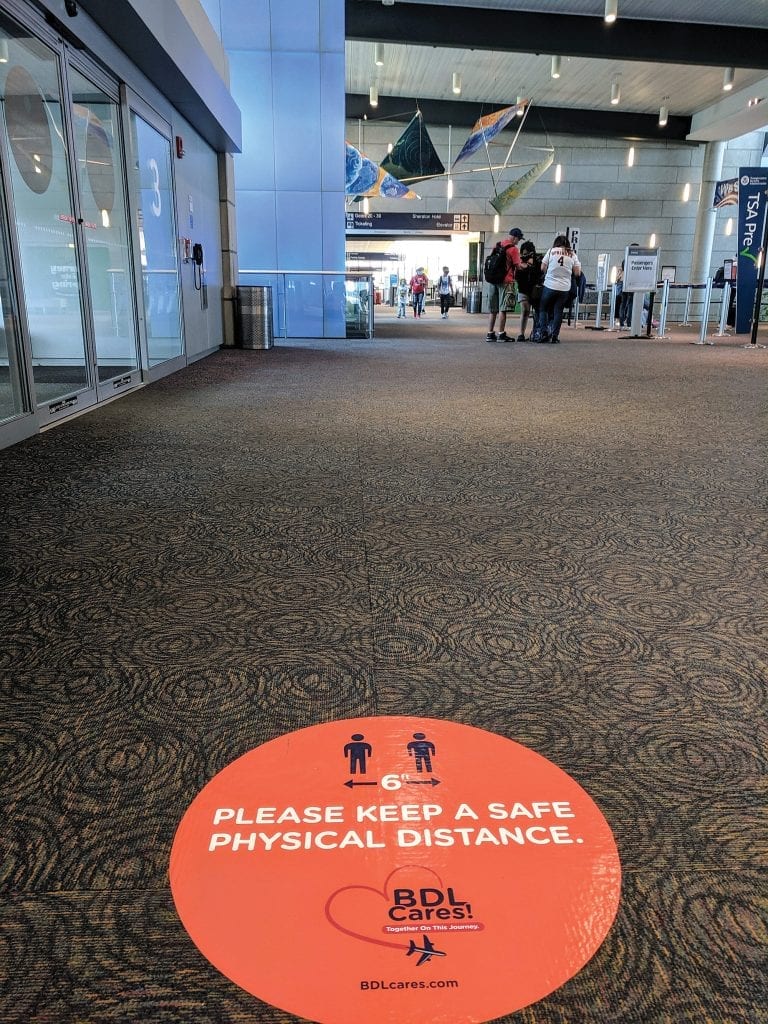
Physical distancing

Physical distancing is easier when terminals are less crowded, as they are now.

For this issue’s focus on transportation, BusinessWest spoke with Dillon about how Bradley is navigating an unprecedented business challenge, and why it’s important to keep investing in the future, because the future is where this story really gets interesting.

Shifting on the Fly

Even before COVID-19 was a thing, Dillon often spoke about how Bradley was constantly competing on two levels: with Logan and the New York airports for passengers, and with every airport in the country for those precious aircraft assets. On thar front, Connecticut’s mandatory quarantine isn’t helping.

“Airlines have to be in locations like Boston and New York simply because of the population and business volume. But airlines have alternatives in terms of not having to serve Bradley and still serving a good portion of this market area,” he explained. “I don’t think it would serve the area really well without us, but an airline trying to skinny down as a result of cost-cutting measures could very well look at it that way.”

The more pressing issue in 2020 has been plummeting demand, of course. “If we don’t have passengers coming through the airport, airlines cut back, we don’t get airline fees, and no one’s here utilizing concessions, parking, renting cars, all the businesses here. When your business is off 75% to 80%, you have a corresponding drop in revenue. It’s a difficult balancing act.”

Dillon said Bradley was fortunate to receive some financial assistance from the CARES Act, which allocated $10 billion to airports across the country. Based on the allocation formula, Bradley received $28 million, which sounds like a lot of money, he went on, but to put it in perspective, that covers about three months of operating expenses and debt service. And the pandemic-related travel slowdown is now well into its sixth month.

“We are fortunate that, as an airport authority, we did create what I consider some healthy reserves, and we will rely on those reserves to some extent, but it wouldn’t be prudent to exhaust our reserves,” he said, noting that they impact bond ratings, among other things.

Bradley did institute a hiring freeze, not replacing most employees who chose to retire this year, and has cut department budgets by 10% to 20%. The CAA is also looking at further measures, including a voluntary severance program.

“It is a goal of ours to try to prevent involuntary severances,” Dillon said. “We don’t want to get to a place where we’re talking about layoffs. For now, that’s off the table. We tried to make a commitment to the employee base — first and foremost, to protect their health, and second, to protect their paycheck. As you can imagine, it’s a challenge.”

About $20 million in capital projects are on hold as well, but some are moving on, including an airport-wide restroom-renovation project that should be complete by October, and features a largely touchless experience with sinks, soap dispensers, hand dryers, and more. These features were planned well in advance of the pandemic, but Dillon said travelers will appreciate them more now.

“People want a safe, healthy, clean environment, and we try to deliver that the best we can,” he noted. “Folks think differently about hygiene in public places now; they have different expectations.”

Other protocols in place at Bradley include the expected: mandatory face coverings, more frequent cleaning and sanitization efforts at high-touchpoint areas, plenty of hand-sanitizer stations, signage detailing physical distancing rules, and plexiglass shields in high-passenger-interaction areas.

Some airlines have committed to limited capacity on planes as well, Dillon said, citing Southwest and Delta as two examples. And the airport is developing touchless kiosks where travelers don’t have to interact with an agent or touch the screen to activate the ticketing process.

Bradley’s restrooms

A major renovation of Bradley’s restrooms, including many touchless features to discourage the spread of germs, began well before the pandemic.

“The key for us is to keep differentiating ourselves from our larger competitors,” he told BusinessWest. “We want people to understand that Bradley is going above and beyond in terms of sanitizing and cleaning the facilities. And Bradley might represent a better option because it’s less congested. We’re going to keep highlighting to the traveling public why Bradley is a better alternative.”

View from the Ground

Again, however, all these efforts are blunted by the fact that considerably fewer people are traveling, and Connecticut is making it difficult to do so.

Airlines are struggling too, Dillon said, sending 135-passenger planes into the sky with only 25. And, like airports, they’re all having internal discussions about the future. Bradley’s five-year contract with carriers expired in June, and with no airlines in a position to sign another five-year deal, they opted for one-year extensions.

But even had longer-term contracts been in place, he explained, “I think a lot of people don’t understand how an airline agreement works. It doesn’t necessarily guarantee you full revenue coming in, because airlines pay revenue in large measure based on landing fees. Airlines can have a presence and pay rent for space, but they’re not required to operate a certain number of flights. If you have carriers cut operations in half, the landing fees we get are then cut in half from that carrier.”

As a difficult, uncertain year continues to unspool, there are a few bright spots, especially progress on a $210 million ground transportation center — expected to be fully operational in late 2021 — that will house car-rental services, expand public parking, and incorporate public-transit connections.

“All that money had been bonded prior to the pandemic, so we’re committed to the project,” Dillon said. “It will really transform the look of the airport and our operations. People who haven’t been to the airport recently will be surprised by the magnitude of the project and how it’s transforming the space out there.”

In addition, cargo business at Bradley has remained consistently strong. “I believe one factor is that people are staying home and doing a lot of online ordering, so we’re seeing small-package delivery — UPS, Fedex, and Amazon — all increase at the airport,” he noted. “Unfortunately, the revenue profile of cargo is much different than passenger traffic, as the bulk of the revenue at any airport comes from the passenger side of the house. But I appreciate that cargo is doing well right now.”

After all, in a year of startling setbacks, any good news is welcome. But what airports need now is clarity — and for people to get back on planes.

“It’s going to be a challenge,” he said. “I’m convinced that, by working smart and having employees work smart, we’ll be able to get through this. But it will be a balancing act for a while.”

Joseph Bednar can be reached at [email protected]

Banking and Financial Services Coronavirus Special Coverage

Uncharted Waters

Michael Tucker

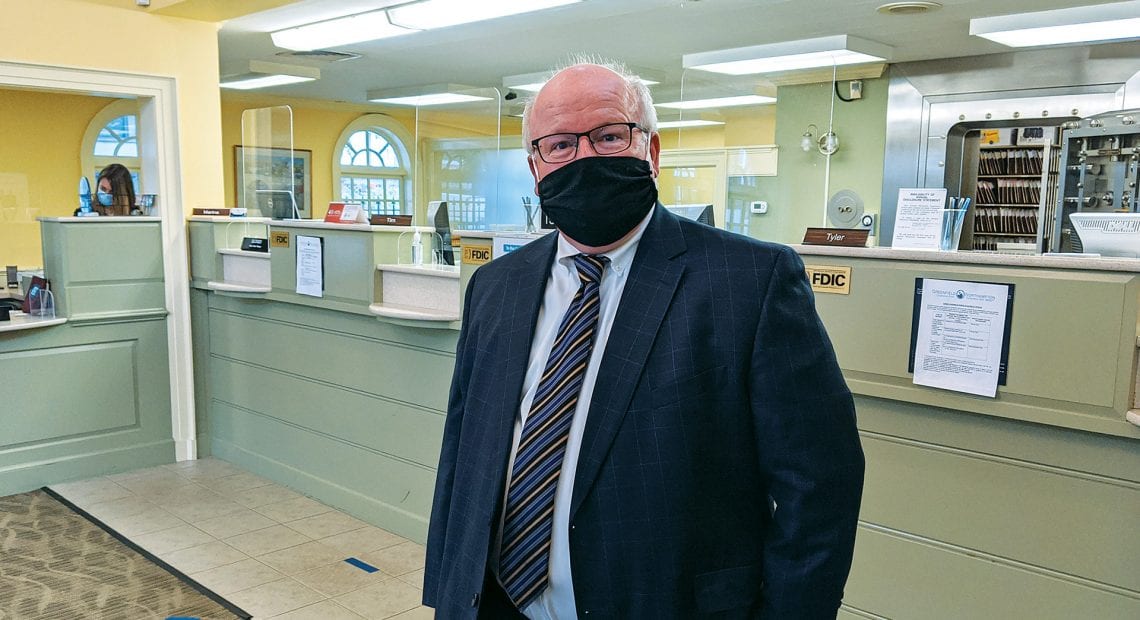
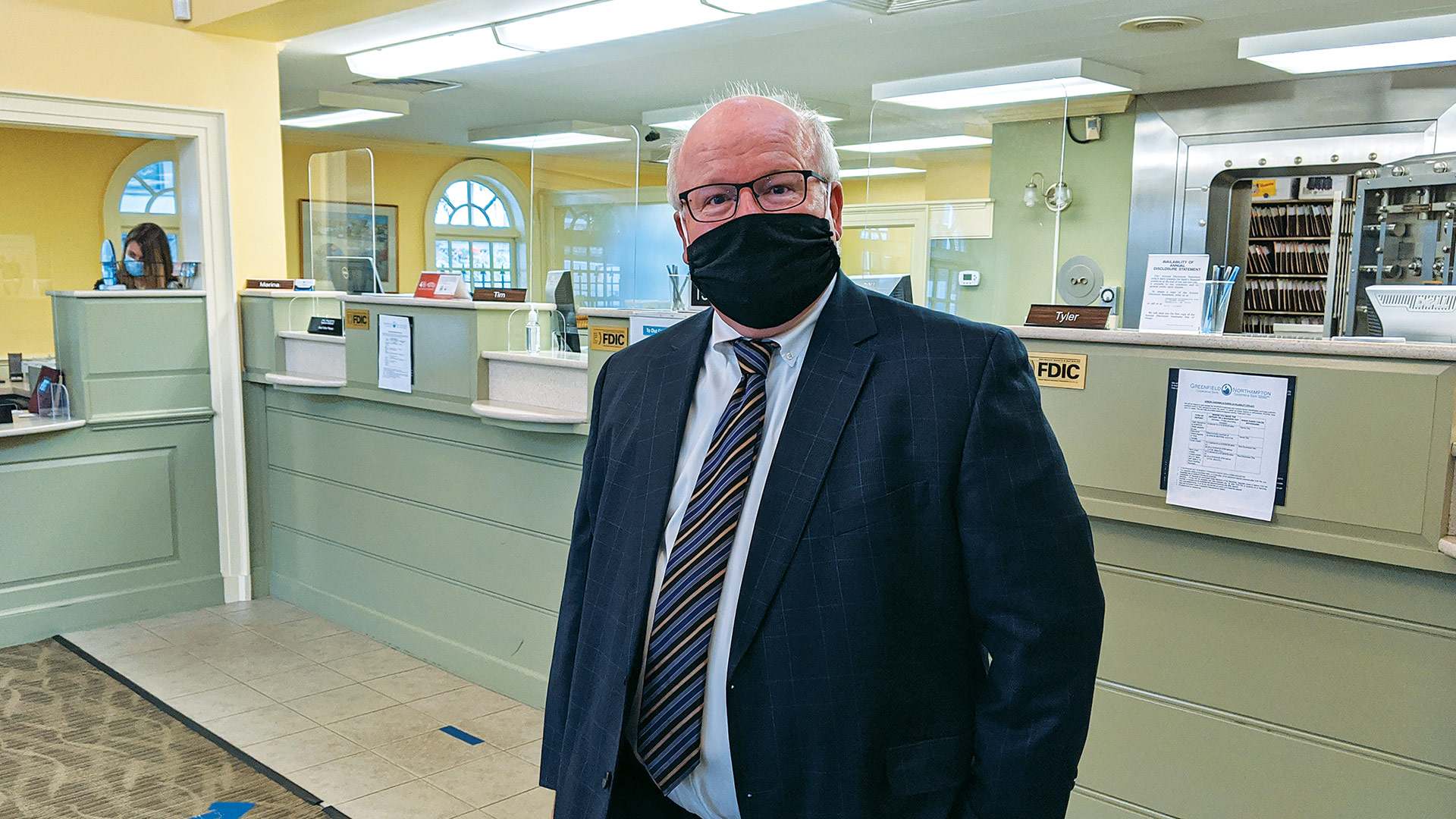
Michael Tucker, president of Greenfield Cooperative Bank.

It’s safe to say 2020 has been an unpredictable year, testing the ability of all businesses to be nimble. Matt Sosik thinks banks are passing that test.

“Community banks may seem like they’re a staid industry, but we’re actually very accustomed to change, and sometimes a fast pace to that change,” said Sosik, president of bankESB. “So we’re used to it. It’s not always visible from the outside, but culturally, we were very well-positioned to deal with the pandemic.

“The unique thing was that it just seemed to happen so fast. It was zero to 60, and you can’t always move at that pace,” he added, noting that bankESB is part of a family of three different banks with almost 500 employees. “But we pivoted as fast as we could.”

Part of that was recognizing that many customers were suddenly in turbid financial waters, and needed help. So, early in the pandemic, all banks were doing what they could to help them, whether that meant deferring mortgage loans for a few months or guiding businesses through the hastily assembled Paycheck Protection Program, or PPP.

“We had a customer-centric focus, which meant helping people navigate payment-related financial issues — at least the financial issues in their lives that could impact their ability to pay us. We did modifications for a lot of folks; we could foresee this was going to be a problematic situation for them. We got out front of it early and tried to alleviate that one piece of stress at a time when so many aspects of life were stressful. We did millions-of-dollars-worth of modifications for customers in the Pioneer Valley.”

Business customers, especially ones forced by a state mandate to shut their doors, were facing similarly dire issues, Sosik said. “We were also doing PPP by the truckload. It was uniquely challenging for us because it all happened at once.”

Such efforts have impacted banks’ bottom line, said Michael Tucker, president of Greenfield Cooperative Bank (GCB), noting that about 15% of mortgage and commercial loan customers took advantage of deferral programs, resulting in an impact of $900,000 from an accounting perspective.

“Everyone else seemed to be in good shape — but that doesn’t mean it’s going to stay that way,” he told BusinessWest. “I don’t see this totally ending until there’s some sort of treatment or vaccine that’s really effective. That being said, things are slowly reopening, and Massachusetts has done a pretty good job keeping infections down.”

And community banks were an important part of that, he said, noting that those loan deferrals, plus costs related to the shutdown and investments in safety protocols in order to reopen, have contributed to GCB being about $1.5 million behind where it would normally be.

“Community banks may seem like they’re a staid industry, but we’re actually very accustomed to change, and sometimes a fast pace to that change. So we’re used to it.”

“It’s going to be a profitable year, but a lot leaner. It’s going to be a challenge,” Tucker went on. “What worries me is what hasn’t risen to the top. We did the payment holiday, but now that the unemployment supplement is gone, and companies rightsize — a lot of them were paying people but couldn’t keep it up forever — I think, until we have a vaccine, we’re looking at a very difficult 2020 and 2021. We’ll be solid; we’ve put a lot of reserves aside, but it’s going to be a challenge.”

Loan Stars

There are some positive signs in the economy, said Jeff Sullivan, president of New Valley Bank, which launched in Springfield last year. He participates in a group of bank CEOs, and on their last group call a couple weeks ago, most said they were pleasantly surprised that, at least on the commercial-loan side, customers who had deferred loan payments had largely returned to their normal payment schedule.

He noted that bank stocks have been “beat up,” as the analyst community didn’t like the idea of deferring principal and interest. “But the overall, totally unscientific trend I’ve seen is that people are pleasantly surprised with how businesses are coming back.

“From our standpoint, we see a lot of growth; businesses are making plans again,” he went on, conceding that New Valley doesn’t yet have a huge portfolio to manage.

Meanwhile, the housing market and stock market are doing better than anyone expected three months ago, he noted, which contributes to an overall mix message when GDP was down 30% in the second quarter and unemployment rose to 16%. “These are troubling numbers, and from a community-bank perspective, we hope it doesn’t turn into a haves-and-have-nots recovery, where the rich get richer and more people get left behind.”

Tucker said demand for loan deferrals has been way down, and banks are now pivoting to help businesses with the forgiveness-application phase of the PPP.

“We did about $18 million worth of PPP, which for us was a lot because most of our loans were under $250,000,” he said, noting that GSB handled about 280 such loans. “It was about a year’s worth of work in a month. Like a lot of banks, our staff was working nights and weekends.”

Sosik added that the waters surrounding the PPP forgiveness phase are still a but murkey and could use some clarity from Congress so the forgiveness path can be clearer. “If people are unclear about forgiveness, they don’t want to spend the money, so it doesn’t get out into the economy.”

At the same time, he added, banks are also being cautious when it comes to growth plans.

“It’s a time to be careful, but at the same time it’s been a very successful year,” he told BusinessWest. “We’ve grown a lot this year, but we’re obviously looking forward, expecting continued economic challenges, and our job is to be here for many years. There are times to push hard and run fast, and times to slow that down and be cautious.”

Still, banking leaders are pleased to have made the investments they did in online and remote banking models, Tucker noted, while holding up his smartphone. “Our fastest-growing branch is this. That’s a reality.”

“Banks caused the 2008 recession. Banks were weakened and in a penalty box and reviled by the mainstream for several years afterward. The big difference now is, this recession was not caused by banks.”

But while the number of GCB customers using remote banking is 25% higher than before COVID-19, branches still serve a critical purpose, he added. “We’ve seen a lot of people realize we are invaluable to them. When they had problems with their mortgage, they can deal with one person and not get shuffled through a lot of bureaucracy. That’s a plus.”

While branches are still necessary, he went on, they’re different than they used to be; the recently opened South Hadley branch is 1,800 square feet, less than half the space the bank used to set aside for new branches. But he doesn’t foresee any closures, aside from two Amherst branches, about a mile apart, that recently consolidated into one.

“Some banks are using this time as a trigger to say, ‘OK, we’re going to close these branches,’” Tucker added. “We’ve chosen not to do that because there’s enough disruption for customers as it is.”

Sosik noted that bankESB has invested a lot of money in the remote infrastructure and platform. “The technology works seamlessly, and the adoption was good. We were looking for a catalyst we could use to push it and have customers really start enjoying the technological advances. We didn’t expect it to come from a pandemic; we didn’t want it to come from a pandemic. But the pandemic absolutely pushed people to use it.”

That said, “we totally believe in the branch part of the overall delivery system, and we’re still investing in branches,” including one recently opened in Amherst. “But they’re much different than the ones we built a decade ago, or even five years ago. There’s still a need for a branch; customers still want that. Even if they don’t need to be there, they still like that someone they know and trust can work with them when they need it.”

Here for the Long Haul

Whatever the model, the presidents BusinessWest spoke with all believe in the work community banks have done and continue to do during a very difficult year for so many.

“We believe in it,” Sosik said. “Everyone who works for a community bank does it because we love that part of it. If you look at any successful New England town, you’re going to find a locally managed, if not locally owned, community-type bank at its economic center”

While banks still grapple with the impact of not only loan deferrals but ultra-low interest rates, they’re still in strong shape, he added.

Sullivan agreed. “Banks caused the 2008 recession. Banks were weakened and in a penalty box and reviled by the mainstream for several years afterward. The big difference now is, this recession was not caused by banks. Banks are healthy and have lots of capital. And hopefully we can turn the page soon and get back to normal lending.”

Tucker doesn’t know what shape the recovery will take — a U, a V, or the one he feels is most likely, resembling the Nike ‘swoosh’ logo, with a long, gradual ascent to normalcy.

“But we’ll do fine, and we are doing fine,” he said. “There’s just a lot of pressure on the margin with rates as low as they are and all the unknown with COVID.

“I’m very optimistic, though,” he added. “Businesses are doing OK. Yeah, a lot of them are struggling, but we see a lot of small businesses trying their damnedest. And we’re trying to support those businesses. We’re here, and we’re going to be here.”

Joseph Bednar can be reached at [email protected]

Community Spotlight Special Coverage

Community Spotlight

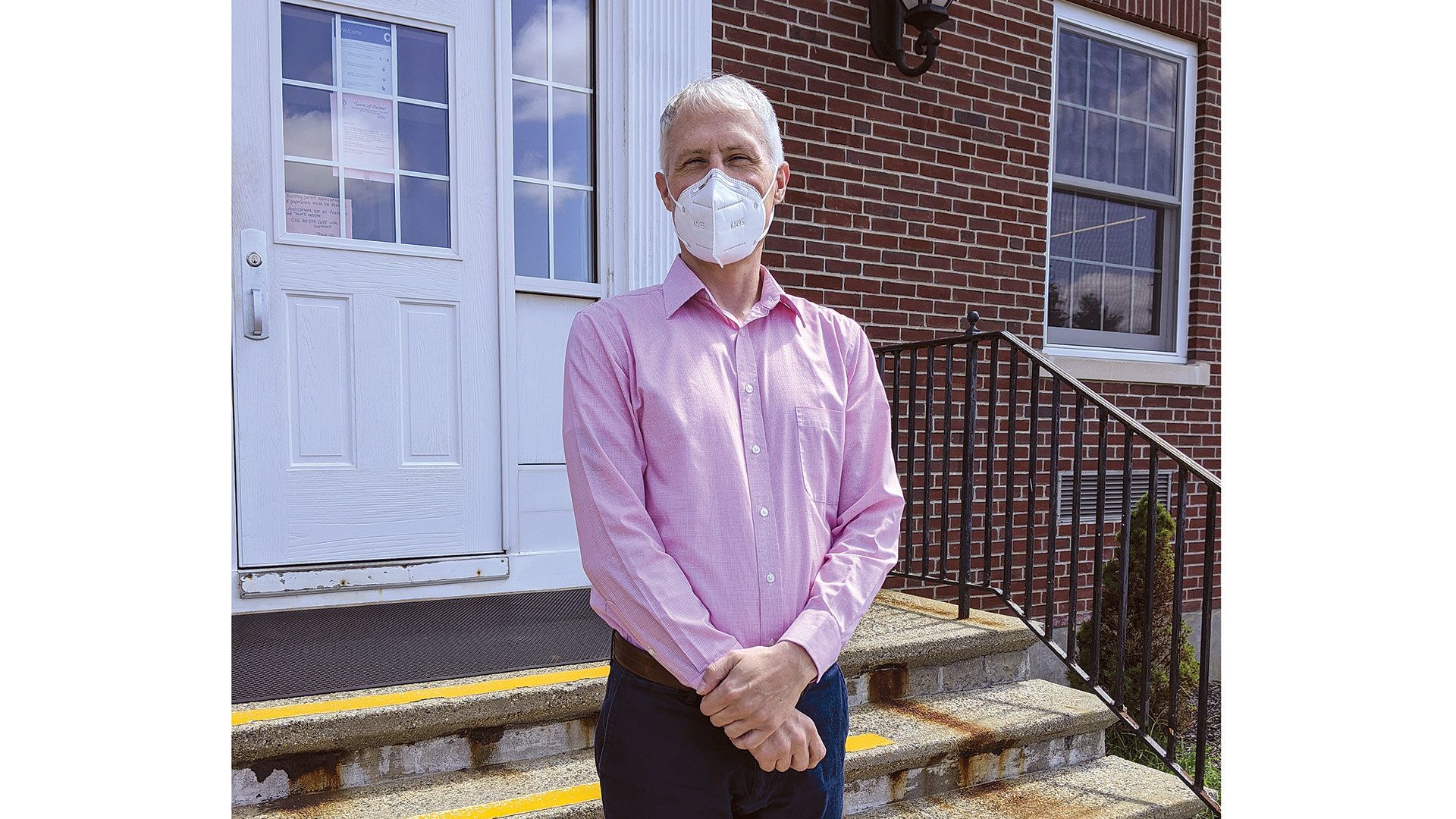
Ryan McNutt

Ryan McNutt says a burgeoning cannabis sector is just one of many positive developments in Palmer.

If there’s one thing capitalism doesn’t like, Ryan McNutt says, it’s uncertainty. And COVID-19 has certainly injected plenty of that into the regional and national economic picture.

But unlike more densely populated areas like Boston, where the death toll — and accompanying anxiety — are higher, leading to a slower return to acitity, Palmer has seen only seven coronavirus-related deaths. Even now, only nine people are under some sort of quarantine order, following a long stretch of no cases at all.

How much Palmer’s low case count has affected business activity is hard to tell, said McNutt, who became town manager last year. But there’s reason for cautious optimism.

“I’m encouraged that our busiest department right now is our Building Department; in fact, I’m going to add another building inspector,” he told BusinessWest. “And some other Western Mass. communities are seeing that as well.”

Local projects run the gamut from a bar on Main Street being converted to a pizza restaurant to Adaptas Solutions adding a building to its complex in the Palmer Industrial Park.

“It’s a growing business — even in this pandemic, people are still adding jobs, adding capacity, adding new product lines,” said McNutt, noting that Sanderson MacLeod, which specializes in manufacturing twisted wire brushes, has grown recently by shifting to new product lines, some of them medical, during the pandemic. “Capitalism is creative destruction. People are going to enter new markets, or enter existing markets where others couldn’t fill those markets, and Palmer will benefit from that.”

The cannabis sector certainly shows no signs of slowdown, with four businesses — Altitude Organic and Heka Health on the retail side and and MINT Cultivation Facilities and the WingWell Group on the cultivation side — getting ready to open in the coming months.

“I’m encouraged that our busiest department right now is our Building Department; in fact, I’m going to add another building inspector.”

“This will be an amazing amount of unrestricted local revenue,” McNutt said, though he was quick to add that most neighboring states still haven’t legalized cannabis. “Once those states or the federal government legalize, there will be diminishing returns. We’re seeing hundreds of thousands of dollars coming in from other states.”

That said, he expects the industry to be a net positive for Palmer’s tax base for a long time to come, even if it’s hard to predict the exact impact. “There’s obviously a floor of cannabis users, but what is the ceiling?”

It’s a question he can apply to many types of economic development, including a long-talked-about rail line that could eventually be a game changer for this community of just over 13,000 residents.

Focused Approach

When McNutt, the former city manager of Claremont, N.H., took over in Palmer last July, economic development was a key focus from the start.

“Economic development is important, making sure we grow the tax base and make it sustainable for the people who live here but also create opportunities to attract new people coming in,” he said. “We can do that to some degree ourselves, and then there are macro things happening, like the east-west rail line. Some days I’m more confident that will come in, some other days I’m less confident. I try to stay on the optimistic side of it.”

Palmer at a Glance

Year Incorporated: 1775
Population: 13,050
Area: 32 square miles
County: Hampden
Tax Rate, residential and commercial: Palmer, $22.80; Three Rivers, $23.42; Bondsville, $23.89; Thorndike, $24.16
Median Household Income: $41,443
Median Family Income: $49,358
Type of government: Town Manager; Town Council
Largest Employers: Baystate Wing Hospital; Sanderson MacLeod Inc., Camp Ramah of New England; Big Y World Class Market
* Latest information available

That said, “if our folks at the federal level are really looking at this country, starting to talk more and more about having a national infrastructure package, then I think the east-west rail line is more promising, because it will take federal money; it will take being a component of a larger national infrastructure package to make it doable. But that east-west rail line would be so transformative for the Commonwealth of Massachusetts.”

In recent years, the Palmer Town Council established a citizens’ advisory committee and contracted with the UMass Center for Economic Development to study the merits of an east-west passenger rail stop in Palmer. The town’s position, roughly central to Springfield and Worcester, and also at the center of a market that extends north to UMass Amherst and the Five Colleges and south to the University of Connecticut, makes it a point of connection in many directions that would benefit from expanded rail service.

In addition, McNutt noted, Palmer has a workforce of close to 8,000 people, and 85% of them work outside of Palmer, mostly in Worcester but more than 100 in Pittsfield. A rail line would ease the commute for many, while individuals who want to work in the Boston area, where housing prices can be exorbitant, could instead choose to live in towns along the rail line, like Palmer.

“There are a lot of good opportunities that make Palmer an attractive community, as long as we market ourselves correctly,” he told BusinessWest. “We’re making sure we’re doing everything we can so when a national infrastructure package gets introduced, we will be shovel-ready.

Speaking of infrastructure, Palmer boasts nine bridges that span four rivers, all built around 80 years ago with a life expectancy of about 50 years, he said. The cost to repair them is about $3 million per bridge, on average, and with the entire municipal budget, including schools, around $40 million, “it’s not like we have the internal capacity to just fix those bridges.”

The town submitted a $7.5 million grant application to the federal BUILD program last year to repair a couple of those bridges, competing with $10 billion worth of applications — across all 50 states — for about $900 million in funding. Despite those odds, Palmer made it to the final round of consideration before being dropped, and McNutt said the region’s federal lawmakers encouraged him to reapply this year. He’s cautiously optimistic the news will be better this time around.

“I think both Democrats and Republicans agree we’ve let huge swaths of this country fall apart since the end of World War II. Bridges, ports, airports … we’ve got to get on top of this. Everyone understands the deficiency across the country is bipartisan. The amount of jobs that could will be created would keep people working for the 20 years fixing the stuff we’ve let go for 70 years. And borrowing money has never been cheaper.”

Bang for the Buck

McNutt said he’s always thinking in terms of economic development, and its importance in communities with tax-rate increases constrained by Proposition 2½.

“I’m conservative when it comes to taxpayer resources,” he said. “I grew up in Massachusetts, and I know the strain Proposition 2½ places upon communities and municipalities, considering the rising fixed expenditures and costs we face, especially on the school side. And at the same time, I really believe that taxpayers pay a lot of money. I’m very keen on making sure people get value for that taxpayer dollar, so we’re always looking for grants and efficiencies in doing business, to be able to control those costs.”

For that reason, he went on, it’s important for towns of Palmer’s size and demographics to attract an influx of younger residents, and expanded rail could help boost that effort.

“Everybody who’s aging and on a fixed income, they really have a limited runway in what the property taxes can get to,” he noted. “That’s something that’s always my first focus — what is the tax base, what is the tax rate, and what is the economic capacity to pay it? How quickly do we need to find new revenue to support municipal operations without having everything fall on the backs of the retiree who’s lived in Palmer their whole life, and not necessarily getting new revenue themselves?”

Fortunately, even during a pandemic, growth is possible — and, in many cases, happening — and the promise of east-west rail service only boosts McNutt’s sense of what’s possible. While his confidence on that front may waver, depending on the day, his belief in Palmer’s potential — and its ability to weather the current storm — certainly does not.

Joseph Bednar can be reached at [email protected]

Features Special Coverage

On the Right Track

Jeremy Levine

Jeremy Levine says Pioneer Valley Railroad and Railroad Distribution Services have a unique business model that has led to decades of success and steady growth.

When it comes to moving freight, Jeremy Levine says, many business owners believe it comes down to a choice between rail — if it’s available — or trucks.

But in many cases, he believes, the best answer might be rail and trucks.

And this is the answer that has enabled Westfield-based sister businesses Pioneer Valley Railroad (PVRR) and its wholly owned subsidiary Railroad Distribution Services (RDS) — both Pinsly Railroad companies — to thrive for the past 35 years and remain on a steady growth trajectory.

“Railroads and trucking … they have their lobbyists in D.C. on opposite sides of the aisle trying to argue against one another,” said Levine, who is awaiting new business cards that will identify him as the company’s business-development coordinator. “But the truth is, for a short-line railroad like us, we use trucking all the time — we’re sending out hundreds of trucks a year to do the last-mile transit for our customers, either here in Westfield or all across the Northeast.”

As a short-line railroad, PVRR, as it’s known to many in this area, moves on 17 miles of operable track running north from Westfield, said Levine, the fourth-generation administrator of the company started by his great-grandfather, Samuel Pinsly. There is a branch running roughly four miles in Westfield and another branch running 13 miles into Holyoke.

The company interchanges with two class-1 railroads — Norfolk Southern and CSX — and takes freight that last mile, as Levine put it, referring to the last leg of a journey that might begin several states away or even on the other end of the country.

“The number you’ll hear is that four trucks equals one rail car. So if you looking to ship a distance or something that’s very heavy, that’s where we provide economies of scale.”

“If you want to get lumber from Louisiana, a large class-1 railroad such as CSX will bring that up, interchange with us at our yard in Westfield, and we’ll take it the last mile or miles to our customers, if they’re located directly on our line,” he explained, adding that, for customers not on the line — those without a rail siding — RDS will take it the last leg by truck via two warehouses it operates in Westfield.

And in some cases, that last leg might be dozens or even hundreds of miles, he noted, adding that rail is a less expensive, more effective way to move material, and RDS enables customers to take advantage of it, at least for part of the journey.

“The number you’ll hear is that four trucks equals one rail car’s worth of capacity,” he explained. “So if you looking to ship a distance or something that’s very heavy, that’s where we provide economies of scale.”

This has been a successful business model since 1982, and the company continues to look for growth opportunities in this region, he noted, adding that such growth can come organically, from more existing companies using this unique model, or from new companies moving into the region to take advantage of its many amenities — including infrastructure. And Pinsley Railroad owns several tracts of land along its tracks that are suitable for development, he noted.

For this issue and its focus on transportation, BusinessWest takes an in-depth look at PVRR and RDS, and how those letters can add up to growth potential — for the company and the region itself.

Train of Thought

Levine told BusinessWest that, while he didn’t work at what he called the “family business” in his youth, he was around it at times, well aware of it, and always intrigued by it.

“When my grandmother was running the business, that’s when they moved the headquarters from Boston to Westfield,” said Levine, who grew up in nearby Granby. “You grow up going to the rail yard, and you’re around these people; you’re definitely going to be inclined to the business.”

But he didn’t take a direct route, as they might say in this industry, to PVRR’s headquarters on Lockhouse Road. Indeed, after graduating from George Washington University in 2015, he stayed in D.C. and worked on Capitol Hill, specifically on transportation policy. He later moved to the private sector and worked at a firm advocating for railroads.

Eventually, he decided he wanted to be a part of the family’s business and relocated to Western Mass. “It’s been quite a ride,” he said while borrowing more language from the industry, noting that he started at PVRR and RDS roughly a year ago.

He came to a company that had a small, steady, and diverse group of rail customers, some that receive thousands of rail cars of material a year and others merely a handful of cars, and more than three dozen RDS customers.

He said his new job description is essentially to generate new business, and he believes there is enormous potential to do just that — again, because of the unique business model these companies have developed and the benefits that rail (or a combination of rail and trucks known as ‘transloading’) brings to potential customers.

As Levine talked about the sister companies and how they operate together, one could hear the drone of forklifts operating in the warehouse outside his office, which led to an explanation of how it all works.

“We have some rail cars here this morning,” he explained. “They got dropped off by CSX late last night; early morning, or 3 a.m. crew [at PVRR] dropped them off here. The crews have been unloading them, staging them, and placing them outbound on trucks to head off to our various customers.”

There are other operations like this, or somewhat like this, in the Northeast, he explained, but what sets this operation apart, beyond the interchange with the two class-1 railroads, is the fact that the company owns both its railroad and distribution services.

“There are companies like our Railroad Distribution Services that are directly on CSX’s line,” he noted. “But the difference there is they don’t control the trains; I can pick up the phone and call the train operator and ask him when he’s going to be here with my rail cars, and with that comes a lot of security that your stuff is not going to backlogged or jammed up and that your deliveries are going to come on time.”

It is this security — and these benefits — that Levine is selling to potential customers. And as he goes about that task, he has the Pinsly team, if you will, focused solely on the Westfield operation and its future. Indeed, the company, which operated short-line railroads in Florida and Arkansas, has divested itself of those operations, with PVRR and RDS being the only holdings in the portfolio.

“What that has allowed us to do is reinvest and recalibrate,” he explained. “We had a very large team throughout the years and a lot of focus on Florida, where we had 250 miles of track; we can now take that talent and focus on our operations here.

“My go-to line is that ‘even you don’t have rail siding, that doesn’t mean you can’t benefit from railroading,’” he continued, adding that he can back up those words with numbers, and he intends to use them to build the company’s portfolio of customers.

PVRR owns a 1930s-era passenger rail car that it calls the ‘dinner train.’ As that name suggests, it’s used for fundraising events, a customer-appreciation gathering, and even as a means to transport Santa Claus to Holyoke Heritage State Park for annual festivities there.

It hasn’t been out of the yard much in the era of COVID-19, but U.S. Rep. Richard Neal recently used it as a backdrop for an event, said Levine, adding that the dinner train has become a highly visible part of this company for decades now.

But the bottom line — in virtually every respect — is that PVRR and RDS are about getting freight, not people, from one place to another.

It’s a moving story, and one that could well add a number of new chapters in the years to come as the company tries to get customers on the right track when it comes to freight — literally and figuratively.

George O’Brien can be reached at [email protected]

Banking and Financial Services Coronavirus

Volume Business

By Mark Morris

When COVID-19 made its arrival in Western Mass., it was mid-March, just weeks before the start of the traditional home-selling season. Area mortgage professionals didn’t know what to expect when the pandemic hit, but they certainly weren’t projecting a solid year.

Soon, though, they had to adjust those expectations and projections.

Indeed, a combination of factors, from historically low interest rates to high demand and low inventories, have made this a much busier, much better year than most residential lenders and home sellers could have hoped for back in the dark days of March.

Indeed, instead of completely canceling the spring home-buying market, the pandemic merely postponed it, said James Sherbo, senior vice president of Consumer Lending with Holyoke-based PeoplesBank.

“We’ve been very busy because the activity we would have normally seen in April or May, we saw in June, July, and August,” he told BusinessWest.

Jeffrey Smith, vice president and chief Lending officer with Freedom Credit Union, concurred, noting that any debilitating effects on the housing market from the pandemic have been more than offset by lower interest rates. The rates were already fairly low — in the 3.25% to 3.5% range — before the pandemic, he said, but now consumers can now get a 30-year fixed-rate mortgage for well under 3%.

James Sherbo

James Sherbo

“We’ve been very busy because the activity we would have normally seen in April or May, we saw in June, July, and August.”

“This is probably the best real-estate market I’ve seen in years,” Smith said. “When the pandemic first hit, I thought it was going to be just the opposite.”

Meanwhile, many mortgage holders are taking advantage of these lower rates to refinance, and this high volume of refis, as they’re called, is keeping most all lending institutions busy.

“It’s crazy … we’ve seen an 80% volume increase in our overall business compared to last year,” Smith noted. “And we certainly did not expect that.”

Tami Gunsch, senior executive vice president and director of Relationship Banking at Berkshire Bank, agreed. She said the bank is pleased with the Mortgage Division’s performance, “especially during these unprecedented times of COVID-19.”

For this issue and its focus on banking and financial services, BusinessWest takes an in-depth look at the housing market and the various, and powerful, forces that are driving it.

Rooms for Improvement

Flashing back to mid-March, Sherbo said his department was mostly focused on where (and how) team members would work, and keeping employees and customers safe.

“We just tried to prepare as best as we could to keep our team safe and our customers safe,” Sherbo said. “When COVID-19 first hit, everybody wondered what would happen; nobody had a crystal ball.”

Indeed, no one could have foreseen how the drop in interest rates — one of many steps taken to stimulate the economy — and other factors would collaborate to stimulate virtually all aspects of the housing market and create a unique set of circumstances.

Home sales are strong, again, because of low interest rates even though fewer homes are for sale, said Sherbo, adding that he can’t recall a time when both conditions have happened at the same time.

Jeffrey Smith

“This is probably the best real-estate market I’ve seen in years. When the pandemic first hit, I thought it was going to be just the opposite.”

“I’ve seen rates this low before, but I’m not sure we’ve seen this lack of supply in quite a while,” he said, adding that it’s no surprise that many people do not want to move or sell during the pandemic, so the supply of homes for sale is limited. That creates an environment where many purchase offers are coming in higher than the asking price.

“New listings are selling very quickly,” noted Smith, adding that nearly all the houses offered for sale in early July were sold by early August.

In addition to people moving out of the city and into the suburbs to take advantage of low interest rates, Smith said the demand for second homes is exploding.

“In the last three to six months, prices have increased by 20% or more in areas like Cape Cod or Maine,” he noted. “Second homes are a hot market right now, and because there is a limited supply, properties are on the market for only a short time before they are sold.”

Then, there’s the refi market.

Gunsch said that, in addition to strong new-mortgage activity, Berkshire Bank is doing a high-volume business in refinances.

“Refis account for 52% of our closed-loan production through July,” she said, “while in the prior year, during the same period, they accounted for 35% of the closed loan volume.”

Smith added that, thanks to the robust business Freedom is doing with loan refinancing, he does not anticipate the lack of housing supply to limit the institution’s growth potential this year.

Strong housing-sales activity is even more impressive considering how the entire home-buying process had to quickly change when COVID-19 hit.

The notion of a real-estate agent walking potential buyers through a house for sale sounds almost quaint these days, as virtual tours have replaced showings, and drive-by looks at a house have become the norm.

“People are buying homes based on what they see online,” said Smith. “Many people are not even going out to the house to see it. In some cases, particularly for second homes, they are buying them sight unseen.”

Before COVID-19 struck, Smith said Freedom had limited online mortgage-application capabilities, but the virus forced the institution to quickly go all in.

“Luckily, we had the technology to be able to make a fast adjustment to online only, so we were kind of ready for it,” he told BusinessWest.

PeoplesBank launched its paperless mortgage-application system in October 2019 after two years of refining it. When COVID-19 arrived and disrupted so much of daily life, Sherbo said having a touchless system already up and running made it easier to maintain business levels.

“Our customers don’t have to meet or sign anything in person,” Sherbo explained. “The entire application process can be done online or over the phone. We were ready for this, which was great.”

Gunsch said Berkshire also uses an online application process. When an appraisal of the property is needed, only the exterior is appraised to reduce physical contact.

“Loan closings are still done in-person with everyone wearing masks and following social distancing guidelines,” she added.

Critical Deferrals

A serious concern at the beginning of the pandemic was the potential for mortgage delinquencies to spike due to homeowners affected by financial and health issues. In April, Gov. Charlie Baker signed into law a moratorium on evictions and foreclosures on consumers through March 2021.

Meanwhile, those who are struggling with COVID-related issues are encouraged to contact their mortgage holder to defer payments. The law makes it clear that, by deferring, consumers merely extend the length of the mortgage without taking a hit on their credit rating.

All the mortgage professionals BusinessWest spoke with said the deferral program has worked to keep delinquencies down and allow people to stay in their homes.

“We have a strong team in place to assist our borrowers with loan deferrals and ensure they understand their options to defer payment during this time,” said Gunsch.

Smith said that roughly 5% of Freedom mortgage holders have taken advantage of the deferral program. “We’re actually seeing our delinquencies at very low levels, lower than they’ve been in years.”

Smith added that most of the deferral requests occurred in April and May. With each passing month, the number of new deferrals continues to decline.

“The deferral program is working the way it was intended,” Sherbo added. “It’s giving people the chance to maintain their own stability and credit.”

As for inventories, even that picture may improve soon. A recent report from the U.S. Census Bureau and Housing and Urban Development (HUD) showed new housing construction starts are up more than 23.4% in July 2020 compared to July 2019. The national figure closely mirrors the Northeast, which saw a similar increase of 23.3%.

Locally, Sherbo said new home starts are relatively flat, but if interest rates continue at record lows, that would encourage more new construction in Western Mass.

Just as no one had a crystal ball back in March, none of the mortgage professionals we spoke with can really say what will happen six months or a year from now. That’s the nature of this pandemic — a high level of unpredictability.

For now, the housing market is booming at a time when few thought it would. This is good news for banks and credit unions — and for the customers they serve.

And it’s certainly one of the more intriguing stories in a year with seemingly no end of them.

Banking and Financial Services

Course of Action

By Gabriel J. Jacobson and Ian Coddington

In addition to the obvious financial benefit to the employee, employer-funded advanced education can carry financial and soft benefits for employers, employees, and colleagues alike.

These benefits extend beyond the person who is pursuing advanced education, as this article explains.

More Accessible to Working Professionals

As access to online education grows, the number of professionals seeking to advance their education also increases. In 2017, one in six students enrolled entirely online, and one in three enrolled in at least one online course.

With the advent of the COVID-19 pandemic, schools around the country shut down their physical locations, and students were forced to move to online learning. Now that most students have taken some form of online classes, it is likely that many will choose to continue this method of learning.

Gabriel Jacobson

Gabriel Jacobson

Ian Coddington

Ian Coddington

Advanced education has become more attractive to employees and employers because it is a more accessible option for working professionals. One tax associate at Meyers Brothers Kalicka recently took advantage of the opportunity to pursue an advanced degree while continuing to work full-time. He enrolled at the Isenberg School of Management at UMass Amherst to gain a BBA in accounting and decided to remain online rather than go in-person.

Prior to making this choice, he worked full-time for a few years before deciding he wanted to earn his business degree. He enrolled in a la carte online classes immediately to accelerate his degree track before he was officially admitted. Once he was accepted into Isenberg, he decided to remain online so he could continue working a full-time internship at Meyers Brothers Kalicka, which ultimately led to him being offered an associate position at the firm.

He attributes the combination of full-time school and full-time work to his success, claiming that experiencing real-world situations reminiscent of the subject matter of his classes helped cement key concepts related to his profession. He graduated with more than a year of real-world professional experience under his belt.

The heart of online school is the flexible pace; students choose any quantity of classes each semester, meaning they could offload during busy season and upload during the slow season. Some employers allocate otherwise-unassigned slow-season hours to degree-earning coursework.

“Employers can sponsor employees with funds for academic training to build job-related skills. They may provide up to $5,250 in employer education-assistance benefits for undergraduate or graduate courses tax-free each year.”

With the increase in availability of online education due to the pandemic, companies can leverage this opportunity to attract talent earlier to both their and the student’s benefit.

Tax Incentives for Employers

Employers can sponsor employees with funds for academic training to build job-related skills. They may provide up to $5,250 in employer education-assistance benefits for undergraduate or graduate courses tax-free each year. To receive the benefit, the funds must pay for tuition, fees, books, supplies, and/or equipment. As an added bonus, these funds qualify for a business deduction and are not required to pay FICA or FUTA payroll taxes.

However, the education must be legally required for the employee to maintain their current position, or it must improve or maintain skills required for the position. One of these two stipulations must be met to satisfy the tax-free treatment.

There are limits, as these benefits are for employees only, and not for spouses or dependents. Also, there is no choosing between the education benefit and a cash payment to the employee. Employers should provide these rules and others as a written notice to employees interested in receiving the benefit.

Organizational and Culture Benefits

Outside of the financial benefits, there are workplace benefits to supporting student employees. Collaborative teams are a mainstay of most successful businesses. These teams often group employees with differing niches and experience levels, so they translate directly to supporting newer employees’ development through mentorship.

Mentorship relationships can help maintain accountability and time management for online student professionals. They can also serve as sounding boards for in-class work and discussion that reflect areas of interest to the student employee.

For example, the previously mentioned associate nurtured a mentorship relationship with his manager by discussing his primary interests and questions from his corporate tax class. Outside the mentor relationship, he found solidarity and motivation with peers at his level as many completed online master’s programs to advance their careers.

These relationships foster vibrant cultures of positive reinforcement toward educational goals within firms all over the country. Further, this culture can extend beyond the classroom and cultivate a collaborative and supportive work environment.

The human-capital, financial, and cultural benefits of incentivizing employees’ advanced education through online learning cannot be overlooked in today’s business climate. With the tools highlighted above, companies should take advantage of this opportunity.

Gabriel J. Jacobson and Ian Coddington are associates at Holyoke-based accounting firm Meyers Brothers Kalicka, P.C.; (413) 536-8510.

Company Milestones

Company Milestones

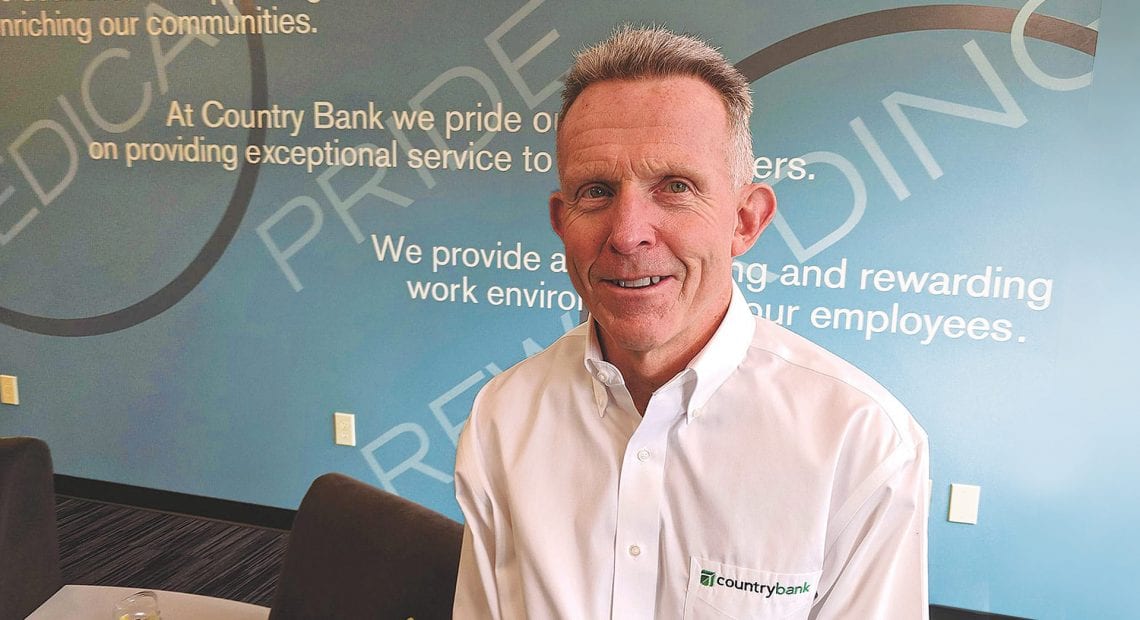
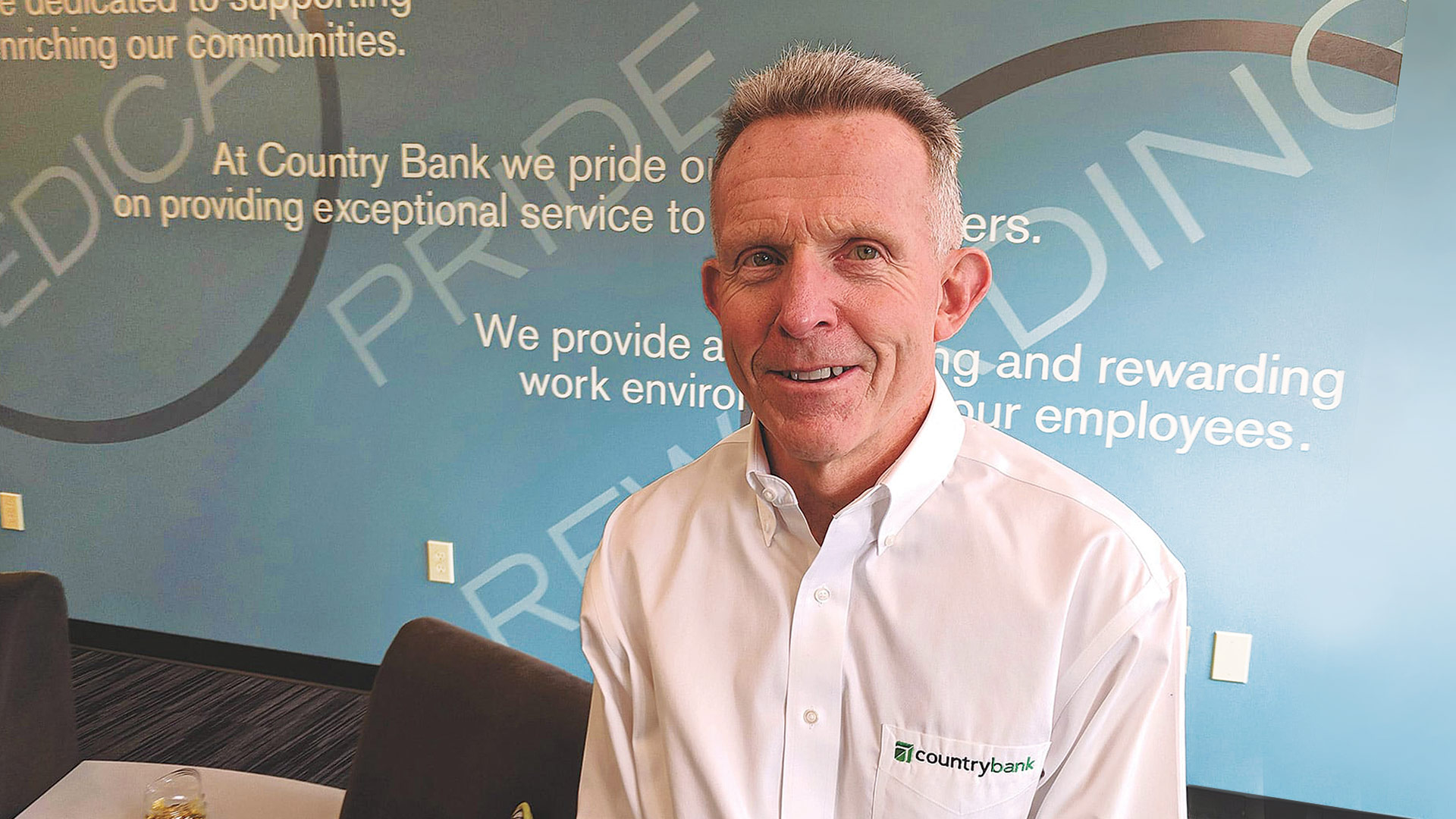
Paul Scully, president of Country Bank

Paul Scully, president of Country Bank

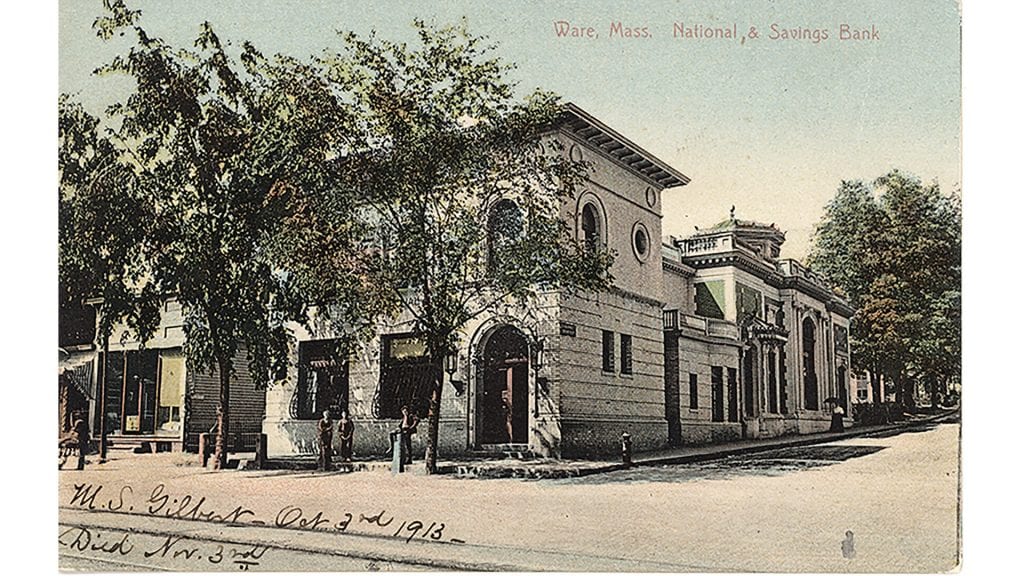
It was March 1850. Millard Fillmore was still working through his first 100 days in office as the thirteenth President of the United States — although no one was probably counting the days back then. In six months, California joined the Union as its 31st state, taking the country from coast to coast and Ware Savings Bank was incorporated under the laws of the Commonwealth of Massachusetts. Thus, the first chapter in the 170-year history of Country Bank was written.

There have been a number of important chapters written since — including the incorporation of Palmer Savings Bank in 1870 and the merger of those two institutions in 1981 to form Country Bank for Savings (later shortened to simply Country Bank). Paul Scully, the bank’s current president, noted that many things have changed at this institution over those 170 years, everything from its footprint — it now stretches from Ludlow to Worcester, with 14 branches and 23 ATM/ITM locations — to how people do their banking.

Company:
Country Bank
www.countrybank.com
800-322-8233
Home Base:
Ware, Mass.
Founded:
1850
President:
Paul Scully
Company Snapshot:
A community bank with 14 locations

What’s more significant to him — and all members of the Country Bank team — is what hasn’t changed in that time. Specifically, it’s a commitment to the customers, communities, and staff that sets this institution apart. In short, what hasn’t changed is that this is still a community bank in every sense of that phrase. “What we are celebrating is the bank’s support for those who have been right there with us along the way,” stated Scully. “And we’re celebrating our independence in being a mutual savings bank, and one of the most highly capitalized banks in the Commonwealth.”

This rich history of support prompted the bank to assume a leadership role during times of crisis — and there have been many over the past 170 years, perhaps none more significant than the COVID-19 pandemic.

Over the past several months, the bank has stepped up to assist its commercial and consumer customers impacted by the virus and resulting economic downturn. “Every customer matters, regardless of their deposit balance, and we’re here to help them achieve their dreams or navigate through rough waters.” None have been rougher than those generated by the pandemic, he noted, adding that the bank has written 475 Payment Protection Plan (PPP) loans in amounts ranging from $1,500 to $2 million and helped many commercial and mortgage borrowers. “It’s the premise of why community banking and Country Bank exist,” he went on. “Since the start of the pandemic, the bank has donated over $450,000 to COVID-related relief efforts along with an additional $400,000 to other local non-profits. For the past one hundred and seventy years, the bank’s operated with the belief that healthy communities thrive; recognizing that it has not only an opportunity but a responsibility to support its communities at varying levels.”

A RICH HISTORY

There have been many milestones for Country Bank since 1850, and dates to remember:

July 1869: The Committee of Investment voted that the bank loan to the town of Ware in the amount of $70,000 was to be used in the building of the Ware River Railroad;

• 1920: The service of school savings accounts was inaugurated to help establish a habit of thrift among young savers;

• 1945: The first home loan to a veteran of World War II was made under the G.I. Bill of Rights;

• 1982: The first ATM was installed;

• 2017: The Boston Business Journal first recognized the bank for its charitable donations; and

• 2019: Country Bank became a founding member of the Worcester WooSox.

These milestones collectively speak to the notion of what a community bank is — or should be — and that legacy is being celebrated as this institution turns 170. “Behind the individual milestones is a consistent pattern of service to the community,” Scully said.

A LEGACY OF CARING

When asked how the bank would mark its 170th birthday, Scully said there would be “subtle” celebrations. “We’re not big on tooting our own horn on things,” he noted, adding that there would be themed events in the fall celebrating its 170th birthday and the staff and customers who have been a part of the bank’s legacy. Rather than celebrate with lots of hoopla, the bank is far more focused on continuing — and building upon — its strong track record. “It’s a significant milestone that you can’t take lightly,” he said. “For all of us who are associated with the organization, we are given the challenge — and opportunity — to maintain a legacy: a legacy of supporting those in need and helping customers achieve their financial goals and dreams, whatever they may be. And that’s what is being celebrated as this institution turns 170.”

Coronavirus Manufacturing Special Coverage

Making Do

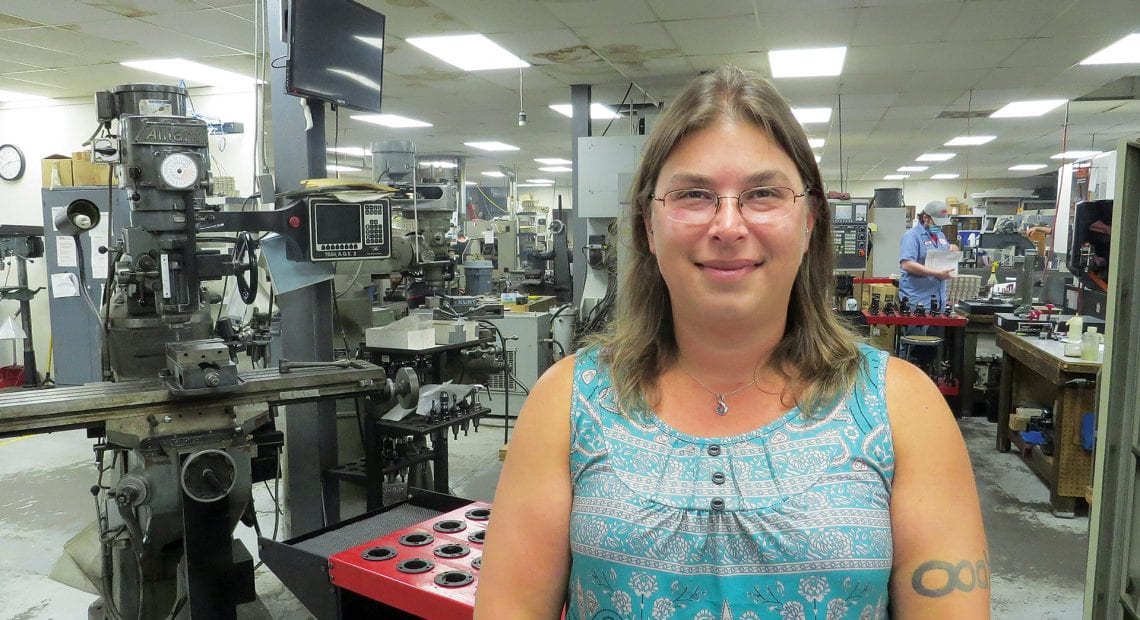
Kristin Carlson

Kristin Carlson says the pandemic has actually helped business at Peerless Precision, especially when it comes to making parts for defense and law-enforcement-related products.

Mark Borsari says he hasn’t been on a plane since a vacation in early March.

By his reckoning, that’s by far the longest stretch he can remember when he hasn’t been flying somewhere, especially in his role as president of Palmer-based Sanderson MacLeod, a maker of fine wire brushes for everything from makeup kits to gun cleaning.

The six months on the ground has been a time of reflection — and even humor.

“I’m sure my wife’s probably thinking I should be on a plane more,” said Borsari with a laugh, adding that he’s not at all sure when he actually will.

But being effectively grounded from air travel is just one of the many ways COVID-19 has shaken things up for manufacturers, and, in the larger scheme of things, perhaps one of the least consequential given the way Zoom has become the preferred method for communicating with clients and employees alike.

Indeed, the pandemic has prompted everything from weeks-long shutdowns to scrambling for needed parts; from strategies for keeping employees safe to the need to manufacture different products — often PPE — to keep workers busy because demand for the products that were being produced has slowed or stopped.

Much has hinged on the word ‘essential’ — a status bestowed on many manufacturers in the 413, an area with a large number of shops making parts for aerospace, defense, or the broad healthcare sector.

Sanderson MacLeod makes products for all those fields, said Borsari, noting that, after a short but still tension-filled time of uncertainty regarding the company’s status, it was declared essential. The same with Westfield-based Peerless Precision, a company that makes, among other things, products used in the cryogenic cooling systems for thermal imaging, night vision, and infrared cameras — items that are actually in greater demand because of all the tension in the world at the moment.
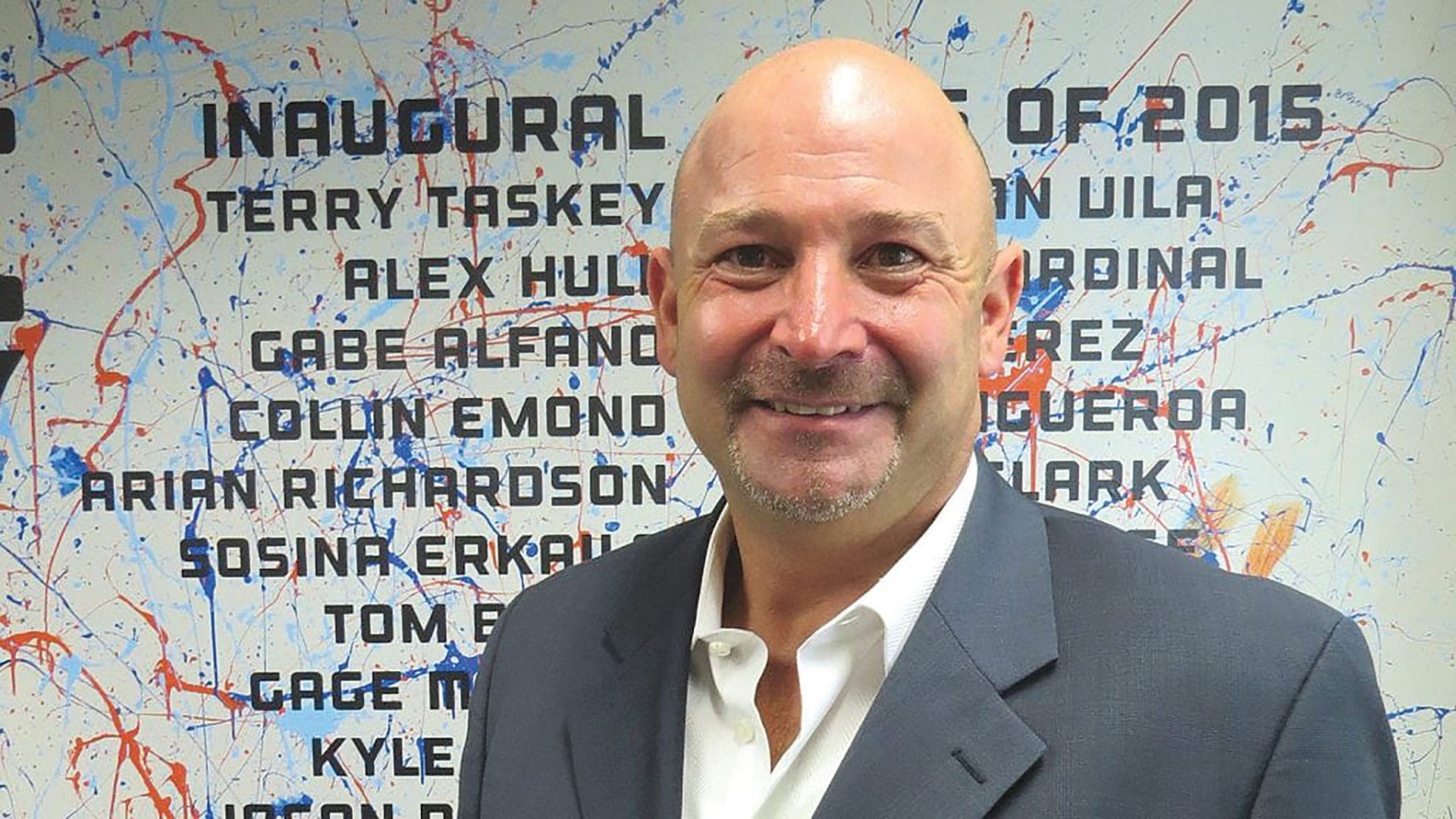
Mark Borsari

Mark Borsari says being deemed ‘essential’ certainly helps, but there is too much uncertainty with this pandemic for any company to feel secure about the future.

“Any time there’s any trouble going on in the world and more money is being put into the defense budget, we benefit from that,” said Kristin Carlson, the company’s president. “We’re getting new engine parts, new fuel-injection parts … things we’ve never made before. Any time there’s unrest in our country or anywhere in the world, the Defense Department spends more money.”

But not all area manufacturers have been so fortunate. Indeed, while golf balls are important to many, they are not ‘essential’ in the eyes of the state’s governor, so the Callaway plant in Chicopee was shut down as it was heading into its busiest time of the year — the start of the golf season in the Northeast and other colder climes. And shutting down a plant that size, which was running three shifts six days a week, is a complicated undertaking, said Vince Simonds, the company’s director of Global Golf Ball Operations.

“It’s difficult to shut it down so abruptly and then wind it back up again,” he said, noting that the massive plant was shut down from March 25 until May 18, when the first phase of the state’s reopening plan went into effect. “But overall, we’ve done very well.”

Fortunately, the company has been helped by something that could not have been foreseen in those dark days of March — a surge in popularity in the game of golf resulting from the fact that it is one of the few sports people can play while also socially distancing themselves from others.

“It’s difficult to shut it down so abruptly and then wind it back up again. But overall, we’ve done very well.”

This surge now has the company running three shifts seven days a week, said Simonds, adding that Callaway is now struggling to meet global demand, especially for its lower-priced, entry-level products (more on that later).

But even for those companies that were not shut down, have not seen shrinking demand for the products they make, or been helped by the rush to take up golf, the pandemic has led to a time of challenge, uncertainty, and questions about what will, and won’t, come next. And this is a difficult climate to operate in, said Borsari, who tried to put things in perspective for BusinessWest.

“The biggest challenge is that there is no playbook for what we’re dealing with,” he explained. “This thing has come through and almost indiscriminately picked out specific companies and industries and devastated them and left others somewhat unscathed. It depends on who their market is, where they are on the supply chain, who their vendors are, who their customers are … there are so many variables.

“Normally, when you run into these challenges in business, you can at least do some research or talk to some people who have been through it before to get a gauge for what was successful,” he went on. “With this, there is none of that.”

Parts of the Whole

Flashing back to early March, Carlson noted that, at least in one respect, the company was ready for what was coming.

“We had just put in a very large order for toilet paper and other supplies from Staples,” she recalled, adding that, soon thereafter, such essentials were certainly hard to come by. “I was telling everyone that I had something like 180 single rolls of toilet paper … so if you guys can’t find any, we’ll sell it to you for cost.”

But beyond that, there was little way to anticipate, let alone prepare for, the pandemic and the many ways it was going to change the landscape for all businesses, and especially manufacturers. And for many, there was uncertainty about whether the doors would remain open as the state began to shut down businesses to help slow the spread of the virus.

Fortunately, for many, this uncertainty was short-lived.
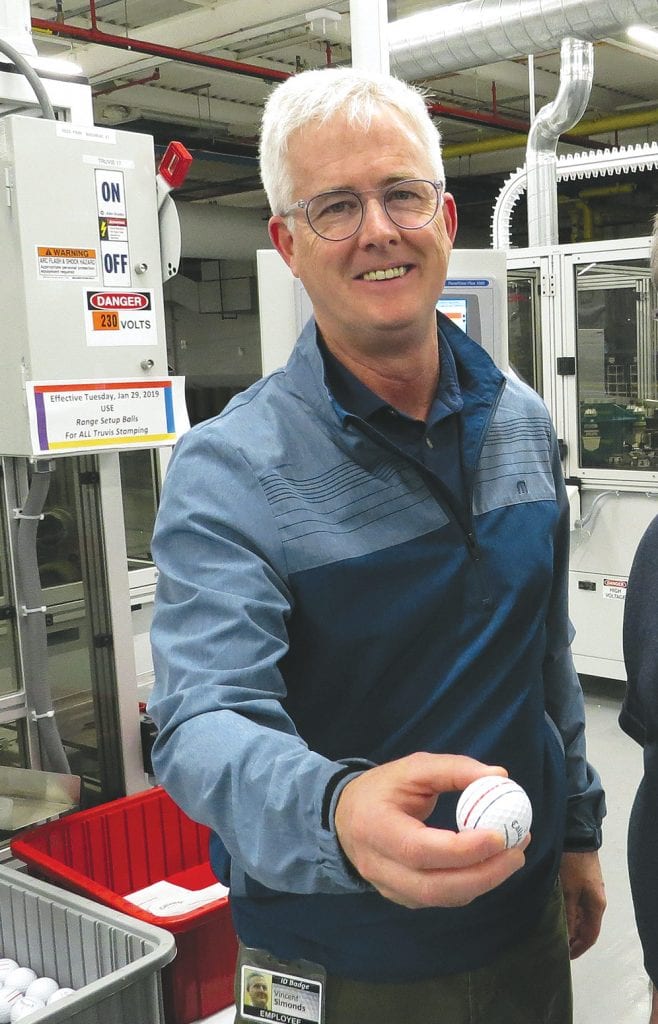
Vince Simonds

Vince Simonds says a pandemic-related surge in the game of golf has helped take the sting out of being shut down for two months this past spring, Callaway’s busiest time for making golf balls.

“We’re the largest medical and surgical manufacturer in the country, and we also do a lot of work for government agencies and the military with gun-cleaning products,” said Borsari, adding that Sanderson MacLeod was able to get the green light from the state and the town of Palmer to remain open for business.

“Getting deemed essential was important for us,” he recalled. “One of the concerns for the people was whether they’d have a job; they were seeing all these companies shut down around them, and that was the biggest concern they had from the beginning — whether we would be allowed to stay open.”

The company has been fortunate in other ways as well, he said, noting it had undertaken catastrophic planning and redundant sourcing before the pandemic, so there were few if any supply-chain issues once COVID struck. And its supply needs are relatively simple.

“Some of these companies are putting together computers with 4,000 parts,” he explained. “We’re really working with wire fiber and attachment components; it’s not nearly a deep a supply issue as other companies had.”

Meanwhile, demand for many of the products made by the company, especially those in the gun-cleaning realm, has actually grown, again because of the growing levels of turmoil in the world.

“One of the concerns for the people was whether they’d have a job; they were seeing all these companies shut down around them.”

Carlson sounded similar tones, noting that, in many respects, the pandemic hasn’t impacted the overall bottom line; in fact, it has helped generate more business with some clients.

It didn’t look that way back in the spring, when the state’s shutdown, which most thought would last a few weeks, instead stretched to nearly two months. “At that point,” she said, “I was pretty confident that 2020 was going to be a bust.”

Instead, it’s shaping up to be better than last year — which was quite solid.

“We’re not just steady, we’re busy, and we’re getting busier,” she told BusinessWest, adding that the company had a record July, usually one of its slower months. “A lot of that’s on the defense, not aerospace, side, but also our defense aerospace has picked up a lot as well.”

But in addition to creating more work, the pandemic has also changed how work is carried out, creating a number of challenges for those managing plants, especially early on in the pandemic, when there was little guidance on how to keep workers safe — and also little hand sanitizer to be found.

“We had to get people to understand that they can’t stand shoulder to shoulder with one another — you have to maintain that six feet,” Carlson said. “I had put limits on the number of people who could be in rooms with closed doors; we’d take turns disinfecting the entire shop. In the morning, one guy does the shop floor, at lunchtime, another one does it, and at the end of the day, they do it again.”

Simonds agreed, and noted that, by strictly enforcing the rules and following the protocols, the plant has seen no cases, and no interruptions, since reopening.

“We’re sticking to the CDC protocols, and it’s worked for us,” he said. “Everyone is temperature-screened; everyone wears a mask at all times; we’re restricting meeting rooms based on square footage and number of people in the rooms; no employee gatherings beyond the number cited by the state; anyone who goes on vacation and travels outside of Massachusetts to a restricted area has to follow protocols coming back in.

“One of the challenges was just getting used to things,” he went on. “Wearing a mask, especially in the summertime, is difficult, but people have been great, and we’re all used to it now; it’s just a matter of practice.”

Round Numbers

For Simonds and his team, the state-ordered shutdown came, as noted earlier, during the busiest time of the year for the facility, which has enjoyed a resurgence over the past few years as Callaway has made huge strides in gaining market share within the golf-ball industry.

And turning everything off is, as he said, a somewhat complicated undertaking.

“For any machines that have materials in them, they have to be purged properly,” he explained. “We need to take all the raw materials that are sensitive to environmental conditions and put them in environmentally controlled areas. We need to take care of WIP — work in process — and try to process as much as possible so we don’t have time-sensitive WIP sitting on the production floor.

“It’s a matter of systematically shutting down operations so we don’t have inventory sitting in the wrong places,” he went on, adding that the process was made more complicated by the fact that no one really knew for how long the plant would be dark.

Meanwhile, on the personnel side, most all employees were furloughed — and nearly all of them came back, he went on, adding that the operation slowly wound back up, but since then, activity has sped up dramatically, with many of those employees securing large amounts of overtime.

“We’ve gone from zero to 100 as quickly as we could. Once the golf courses started opening up, the demand for product was almost unprecedented — there was so much golf being played,” Simonds said, adding that courses in most all states were open several weeks before the plant was reopened — if they had closed at all. “And the golf business has remained pretty strong; we’re chasing demand.”

The same is true at Peerless and Sanderson MacLeod, where, in addition to meeting orders, the plants are coping with new ways of communicating, meeting as teams, and planning, as much as possible, for what might come next.

And also learning and growing from the shared experience of not only coping with a pandemic and all the challenges it has brought, but in some cases thriving.

Indeed, Carlson said the past several months have brought a close workforce even closer together as they contend with the protocols, the surge in business, and a shared desire to be prepared for the worst-case scenario while hoping for something much better.

Borsari agreed, and said some of the real ‘opportunities,’ a word he’s hesitant to use in this climate, come in the broad area of relationship building when it comes to both clients and the team at Sanderson-MacLeod.

“It’s been a unique opportunity to connect with our client base in a way we haven’t done before,” he told BusinessWest. “It’s all about collaboratively figuring out the best way to keep both companies open; we’re really had a lot of good relationships become even better because we realize how dependent we are on one another.

“And as an organization, finding our way through this together has made us stronger,” he went on. “We’ve done everything we can as a company to make this a place of normalcy. Everything else around them was going crazy, and one of the key points we made in March was to do everything we can to follow the mandates and make sure our people are safe, but we also want to make sure to maintain normalcy as much as we can.”

Up Off the Floor

Looking ahead, Carlson said her company has taken what steps it can to be prepared for what might come next.

Yes, that means stocking up on toilet paper, hand sanitizer, and other pandemic-related needs that were in such short supply when the first wave hit six months ago.

“I’m ready for us to keep moving the way we’re moving,” she explained. “Even if we did walk back any of the phases of the reopening or went back into a shutdown, we’d still be open and still going at the pace we’re going, and perhaps be even busier; we’re prepared.”

But, as Borsari noted, even for manufacturers in the coveted ‘essential’ category, there is too much uncertainty to ever be comfortable, or fully prepared.

“Nothing is stable,” he said. “Just because we’re essential doesn’t mean anything’s safe or easy; so much is dependent on the attitude of the state, or the people who decide to come to work or not come into work, tariff measures, travel bans … all of these could have an impact.”

Such is life in a sector that, like most others, has seen COVID-19 change almost everything and create conditions that are anything but business as usual.

George O’Brien can be reached at [email protected]

Law Special Coverage

Red Ink

Steve Weiss

Steve Weiss says he’s getting a steady volume of calls from business owners with questions about bankruptcy or liquidation.

Steve Weiss says the wave of bankruptcies that he and others in his line of work are expecting certainly hasn’t reached shore yet, to use a phrase appropriate for this time of year.

“But you can definitely see it building out there — it’s coming; you can see it rolling in,” said Weiss, who specializes in bankruptcies and workouts for the Springfield-based law firm Shatz, Schwartz & Fentin.

This wave is comprised of both corporate and consumer (personal) bankruptcies, and it will be large and hit with considerable force, he went on, adding that a number of factors are colliding that will make it so.

On the corporate side, while many companies have been able to hang on and survive the pandemic to date, they have done so thanks largely to government stimulus initiatives that are due to be exhausted soon, leaving business owners and managers wondering how they will pay people and all their bills. And on the consumer side … it’s a very similar story.

Indeed, unemployment benefits and stimulus checks have helped many make ends meet, but those checks are projected to end soon for large numbers of people, if they haven’t ended already.

“My phone is starting to ring more with business owners who are either unsure how they’re going to make it, or are sure they can’t — the virus has just clobbered their business,” said Weiss, who said his next phone call after the one with BusinessWest was with a business owner looking to talk about bankruptcy or perhaps liquidation.

“My phone is starting to ring more with business owners who are either unsure how they’re going to make it, or are sure they can’t.”

Such calls are starting to come in with increasing frequency, said Mike Katz, a partner with the Springfield-based firm Bacon Wilson and one of the region’s pre-eminent bankruptcy specialists. He used a different, though similar, metaphor to describe what’s coming.

“I think the dam is about to break — we’re on the cusp of a tsunami of bankruptcies,” he said. “It hasn’t happened yet, but it’s going to happen.”

There have already been many, especially on the corporate side, he went on, noting that many large and famous names, many from the retail sector, have filed for Chapter 11 protection. That list, which continues to grow, includes Lord & Taylor, J. Crew, Brooks Brothers, Gold’s Gym, Neiman Marcus, JCPenney, Hertz, 24-Hour Fitness, Chuck E. Cheese, California Pizza Kitchen, and Men’s Wearhouse.

Those names reveal the types of businesses that are most in jeopardy, Katz continued, adding that, locally, many small businesses in the hospitality, retail, and fitness realms — but many other sectors as well — face severe challenges as they try to survive the pandemic.

For some in this category, an emerging option is what’s being called the ‘fast-pass’ small-business bankruptcy process, otherwise known as Subchapter V of Chapter 11 of the Bankruptcy Code. This new subsection, which became effective in February, is not a response to COVID-19, but certainly seems to be tailor-made for the economic crisis the pandemic has created.

Mike Katz

Mike Katz is expecting a “tsunami” of bankruptcy filings. What he doesn’t know is when this wave will hit.

That’s because, as the name suggests, it is a faster, less expensive Chapter 11 reorganization path, designed specifically for much smaller businesses than those that seek the Chapter 11 route. To be eligible for Subchapter V, an entity or an individual must be engaged in commercial activity, and its total debts — secured and unsecured — must be less than $7.5 million, a new number (the old one was $2.725 million) resulting from provisions of the COVID-inspired CARES Act. At least half of those debts must come from business activity.

Katz and others we spoke with said the fast-pass option holds potential for some businesses, but there are challenges within its many provisions, including the need to come up with a reorganization plan within 90 days of the filing. Such plans may be difficult to develop given how difficult it is to see even a few weeks down the road, let alone several months, because of the pandemic.

“The one downside is you file your bankruptcy papers, and you’re required, within 90 days, to put a plan in place,” said Mark Cress, a bankruptcy specialist with the Springfield-based firm Bulkley Richardson. “That’s a short window, and a lot of small businesses are barely holding their own.”

For this issue and its focus on law, BusinessWest talked with these bankruptcy lawyers about what they can already see coming. They can’t predict when this particular surge will begin, but they say it’s almost unavoidable.

Chapter and Verse

While Katz and Weiss were crafting analogies to waves and tsunamis, Cress wanted to draw parallels to the Great Depression.

Indeed, he told BusinessWest that the current conditions rival, and in some cases (such as the quarterly decline in GPD) actually exceed those of the Great Depression that started roughly 90 years ago.

“This is worse than the Great Depression in a lot of ways,” he said. “The dip in the economy — it dropped by a third — was something we’ve never seen before. And but for the way the Fed has handled this, it would be devastating; those multi-trillion-dollar programs … they’re the only thing that’s sustaining us. Without that, the whole house of cards would collapse.”

To further state his case — that’s an industry term — Cress pointed to numbers contained in an analysis authored by Morning Consult economist John Leer, who noted that, without additional funding, millions of unemployed Americans are at risk of financial insolvency by the end of this month.

“The personal finances of workers who have been laid off or placed on temporary leave since the onset of the pandemic deteriorated in July,” Leer wrote. “The July survey found that 29% of unemployed and furloughed workers lacked adequate savings to pay for their basic living expenses for the month, up 16% in June. This monthly change contrasts with June, when the finances of laid-off and furloughed workers improved. At that point in time, many renters and homeowners took advantage of the rent-deferral and mortgage-forbearance options included in the CARES Act, thereby driving down their monthly expenses.”

Mark Cress

Mark Cress says the new ‘fast-pass’ bankruptcy process may be a viable option for some, but the process doesn’t leave business owners much time to create a reorganization plan.

Cress backed up that commentary with some other, very sobering numbers regarding renters.

“One-third of all renters weren’t able to make their July rent,” he noted. “And more than 60% were concerned they won’t make August. So you can imagine the ripple effects this will have … many small-time landlords, with one or two tenants, may not be able to pay their mortgage.

“And you if get enough defaulted mortgages … then banks start to pull in their horns, and all of a sudden the credit markets freeze up, and you have a real disaster,” he went on, drawing analogies, again, to what happened nine decades ago.

Looking at these statistics and possible scenarios, it’s easy to see why bankruptcy lawyers are expecting a wave, or tsunami, of personal bankruptcies to hit this area — and the nation as a whole — soon, with ‘soon’ being a relative term.

“Some people are getting unemployment benefits, but it looks like that’s ending,” said Weiss. “There’s a foreclosure and eviction moratorium that’s ending in October, and there are already people living on credit cards and exhausting their savings just trying to get through this — and it’s going to be a while before jobs come back.

“So it’s a matter of sooner than later,” he went on. “And bankruptcy is something of a trailing indicator; it takes people a while to get the point where they need to file for bankruptcy — the credit-card bills don’t become unmanageable until several months go by.”

By the Numbers

But the wave will almost certainly involve corporate bankruptcies as well, said those we spoke with, noting that many businesses have struggled to merely survive the past five months. And with the state already pumping the brakes on its reopening plan as reported cases increase, and ever more uncertainty about the future, survival is becoming more of a question mark for many businesses.

That’s especially true within the restaurant sector, said those we spoke with, noting that, while many have been able to reopen, their revenues are still a fraction of what they were pre-COVID. And with fall and then winter coming — meaning far fewer opportunities to serve outdoors — some in this sector are wondering if, and for how long, they can hang on.

“I think the dam is about to break — we’re on the cusp of a tsunami of bankruptcies. It hasn’t happened yet, but it’s going to happen.”

“I’ve been contacted by a number of restaurants, in particular, over the past few months,” said Katz, adding that there have been inquiries from those in other sectors as well. “Some of these have managed to hold on, some have closed some locations while keeping others open … but the number of people I’ve talked to just today tells me that the dam is just teetering, and I think there’s going to be unprecedented times in the bankruptcy field.”

This speculation leads him back to the new fast-pass small-business bankruptcy process, and questions about just how many businesses may try to take advantage of this emerging option, and whether they can be successful with such bids.

“I think a lot of businesses will try doing this because you have a 90-day maximum to get in and get out — that’s how fast this Chapter 11 is going to go,” he explained. “And the whole thing is predicated upon the fact that you only have to propose a plan that provides more to the creditors than they would receive in a liquidation, with no voting.

“Under the current Chapter 11 process, there’s a whole voting process, where you have to get two-thirds of the dollar amount and a majority of the number of creditors to vote in favor of it,” he went on. “But with this process, there’s no voting — it’s a much more streamlined process, and it’s far less expensive.”

With the new ceiling of $7.5 million, many more businesses are now eligible to take this route. But that same 90-day in-and-out period, while attractive in one respect, is daunting when it comes to actually putting a reorganization plan in place.

“I’ve talked with a number of people about it because people are still trying to figure how it works — there isn’t a lot of legal guidance or precedence,” said Cress. “But having to put a plan together in 90 days is going to be very difficult for many small businesses. If you don’t have any profits or any cash and you’re living hand to mouth, it really places an undue burden on you to figure it all out and get creditor sign-off in 90 days.”

Katz agreed. “Most traditional Chapter 11 cases are multi-year, and reorganization is based in projections,” he told BusinessWest. “How do you project when this COVID situation is going to change? If you’re a restaurant, how can you project when people are going to come back to your restaurant and you can go back to something approaching capacity?”

The Bottom Line Is the Bottom Line

Those lawyers we spoke with all expressed a desire not to sound like an alarmist.

But as they talked about what they’re seeing, reading, and hearing on the phone calls they’ve already taken, they admit it’s difficult not to take that tone.

“For many businesses, it’s a matter of survival at this point,” said Cress, noting that survival is becoming more difficult in some sectors with each passing month. “It’s becoming apparent that the recovery is not going to happen as quickly as some had originally hoped, and the effect is going to be much deeper and longer-lasting than people are even letting on.”

And one seemingly unavoidable consequence of all this is bankruptcies, on both the corporate and consumer sides of the ledger.

As Weiss said, the wave hasn’t crashed ashore yet, but if you look — and you don’t have to look hard — you can see it building.

George O’Brien can be reached at [email protected]

Community Spotlight

Community Spotlight

By Mark Morris

Despite what she described as “shifting sands and shifting times,” Easthampton Mayor Nicole LaChapelle believes her city is more than holding its own in the face of COVID-19.

By that, she meant this community of roughly 16,000 people is moving ahead with a number of municipal projects and economic-development initiatives. And it is also undertaking several efforts, often in cooperation with other entities — such as the Greater Easthampton Chamber of Commerce — to help its business community, and especially the very small businesses that dominate the landscape, weather this intense storm.

“We’re focused on a good, basic plan that addresses infrastructure and quality of life for everyone in our city,” she said, as she addressed the former — and the latter as well.

In that first category, she listed everything from a $100 million school-building project to a $45 million mixed-use development, called One Ferry, that involves renovating old mill buildings and reworking the infrastructure in the Ferry Street area.

“Easthampton’s grit and resilience has gotten us through things like this in the past, and it’s getting us through these scary times. It’s not graceful, but we’ll still be standing at the end.”

And in the second category, she mentioned several initiatives, from small-business grants to a community-block-grant program designed to help microbusinesses, to efforts to help renters. Indeed, the city has put aside $300,000 in relief for renters; the relief begins in the fall and is meant to keep an important source of affordable housing in place.

“If you start losing renters, many of the owners will have to sell because they’ll have trouble paying their mortgages,” the mayor said, adding that there are many ripple effects from the pandemic, and the city’s strategy is to keep the ripples from gaining size and strength.

Overall, LaChapelle acknowledged that COVID-19 is forcing businesses, families, and institutions to make pivotal changes during very uncertain times, but she remains an optimist.

“Easthampton’s grit and resilience has gotten us through things like this in the past, and it’s getting us through these scary times,” she noted. “It’s not graceful, but we’ll still be standing at the end.”

Progress Report

Like other mayors BusinessWest has spoken with in recent weeks, LaChapelle said COVID-19 has certainly impacted businesses in every sector, changed daily life in innumerable ways, and even altered how city government carries out its business.

But in many respects, it hasn’t slowed the pace of progress in the city — at least when it comes to a number of important municipal and development projects, including the aforementioned school project.

Mo Belliveau

Mo Belliveau

“It’s one place where anyone who wants to do business in Easthampton can go to learn about what resources are available to them.”

The as-yet-unnamed school, located on Park Street, is an example of several elements of the city’s plan coming together. The new building will house students from pre-K through grade 8, replacing three older elementary schools in Easthampton. New road infrastructure is planned in front of the building as well, with the addition of a roundabout intersection.

LaChapelle noted that the $100 million project is slightly ahead of schedule and should be completed by late 2021 or early 2022. The roundabout will be completed this month.

Meanwhile, other projects are taking shape or getting ready to move off the drawing board. One involves River Valley Co-op, the Northampton-based food cooperative, which is currently building a 23,000-square-foot market in Easthampton on the site of the former Cernak Oldsmobile Pontiac dealership. The co-op is scheduled to open by spring or summer of next year.

Once complete, the mayor explained, River Valley will employ 60 full-time union workers with the potential to expand to nearly 100 workers in the next two years. Road improvements that will benefit the new co-op include a dedicated turning lane into the market and straightening the road in front.

“This is an area along Route 10 that has been a traffic pain point for economic development,” she said. “While it’s a $400,000 project, we expect the return to far exceed those dollars.”

Another project in the works is One Ferry, an initiative expected to bring new residents, new businesses, and more vibrancy to the city.

“In the next 18 to 24 months, this project will add quality apartments, condominiums, and office space,” LaChapelle said, adding that public infrastructure to support this project includes a roundabout that connects a residential area, the industrial park, and the mill district of Easthampton. The first building in the project, recently completed, provides space for two businesses and two apartments.

“Right now, this project is providing jobs and vitality for the area, and that will only increase,” she noted. “One Ferry is huge for our future.”

Dave Delvecchio

Dave Delvecchio

“While many restaurants in the city were affected by the virus, they’ve adapted well by doing things they didn’t do before, like offering takeout options. It’s remarkable that they’ve been able to continue to offer a service to the community, but in a different way.”

Another bright note for the future involves Adhesive Applications, which makes adhesive tapes for use in more than a dozen industries. The longtime Easthampton manufacturer is planning a 40,000- to 50,000-square-foot addition to the company, the mayor said.

The chamber and the mayor’s office are also working together on Blueprint Easthampton, a resource map designed for entrepreneurs and business people.

“It’s one place where anyone who wants to do business in Easthampton can go to learn about what resources are available to them,” said Mo Belliveau, executive director of the chamber.

According to a news release on Blueprint Easthampton, the mapping initiative will improve access to available business tools and strengthen the links between the city and the business community.

New Normal

While work continues on these projects, efforts continue to assist those businesses impacted by the pandemic. And the Greater Easthampton Chamber has played a large role in such efforts.

Prior to the pandemic, Belliveau had begun shifting the emphasis at the agency away from events and more on education and discussion-type programming. After organizing and scheduling programs for the year, stay-at-home orders went into effect in March and wiped out all those plans.

“Like so many small businesses, we at the chamber had to pivot along with our partners and find new ways to provide meaningful value to our community,” Belliveau said, adding that many of these new ways involve providing information — and other forms of support — to businesses during the pandemic.

Indeed, Easthampton received a $30,000 grant from the state attorney general’s office designed to help small businesses pay for COVID-19-related expenses and allow them to continue their operations. LaChapelle invited the chamber to be the administrator of what became the Greater Easthampton Sustaining Small Business Grant (SSBG) program. Applicants could request up to $1,500 and use the grant for buying PPE, paying their rent, or purchasing supplies needed to comply with state guidelines on reopening.

A total of 31 businesses qualified for the grants, which were to be awarded on a first-come, first-served basis. Fortunately, all 31 applicants received grant money totaling more than $43,000, thanks to donations from Easthampton-businesses Applied Mortgage, which kicked in an additional $10,000, and Suite 3, which covered the remainder of the funding requests.

“My goal going forward is to find other businesses that are able to contribute to this effort so we can do another round of funding,” Belliveau said. “The need is great, and the money from this first effort went fast.”

In addition, Easthampton and six surrounding communities recently became eligible for a $900,000 Community Development Block Grant to help microbusinesses get through the pandemic. Businesses with five or fewer employees can apply for up to $10,000 in grant money. Easthampton was the lead community in applying for the block grant.

“We have many innovative small businesses in Easthampton who still can’t reopen,” LaChapelle said. “This grant program is designed to help them stay afloat.”

Dave DelVecchio is president of Suite3, a company that provides IT services for businesses of all sizes. While most of his customer base is in Western Mass., Suite3 also has clients internationally and in several U.S. states.

As an IT service provider, DelVecchio measures success by “ticket requests,” an indication that a customer needs support. When COVID-19 started taking its toll and many businesses were shut down in March and April, ticket requests were at their lowest point. Since then, Suite3’s business has come back to pre-pandemic levels.

As a past president and current treasurer of the chamber, DelVecchio was concerned about the impact COVID-19 was having on the business community, and especially its growing portfolio of restaurants.

“While many restaurants in the city were affected by the virus, they’ve adapted well by doing things they didn’t do before, like offering takeout options,” he said. “It’s remarkable that they’ve been able to continue to offer a service to the community, but in a different way.”

He added that Easthampton has a good number of other businesses affected by COVID-19 that did not receive as much attention as the restaurants.

“Businesses such as travel agencies and professions that require personal interaction, like chiropractors and massage therapists, were also affected by the virus,” he said, noting that the SSBG and Community Development Block Grant can make a real difference for such businesses.

Coming Together

DelVecchio credits Belliveau with changing the focus of the chamber to more education without losing its important role as a provider of networking opportunities. Part of the changing organization involved moving from an annual fee model to monthly dues. While that can be a risky move, DelVecchio noted there was almost no attrition in membership.

“We are grateful that we continue to get support from the business community and they see value in the chamber,” he said, “especially at a time when expenses are being put under greater scrutiny.”

This support is another indication of how the community, which had been thriving before the pandemic, has come together to cope with a crisis that has provided a real test — or another real test — for residents and businesses alike.

As the mayor noted earlier, Easthampton’s grit and resilience has helped it survive a number of economic downturns and other challenges in the past. And those qualities will see it through this one as well.

Features

What’s New?

By Isaac C. Fleisher

It’s that time of year again. On July 20, the Cannabis Control Commission (CCC) revealed the latest round of proposed revisions to its regulations. Following a period of public comment and review, the CCC is scheduled to take a final vote on these revisions on Sept. 4.

Last year’s round of revisions made waves with two new categories of licenses (social consumption and home delivery), but this year’s revisions are more focused on the owners behind the licenses. This is not too surprising because the demographics of license ownership has become a heavily debated (and litigated) topic.

When the CCC crafted its initial regulations (way back in the halcyon days of 2018), it included provisions intended to diversify the industry, such as a fast track to licensing for economic-empowerment (EE) applicants, as well as fee waivers, training, and technical assistance for social-equity (SE) applicants. Even the new license types that were created under last year’s revisions to the regulations are initially reserved for EE and SE applicants. However, as small startups slam into the economic realities of the cannabis industry, it has revealed a tension between the need for capital and the need for equity.

The CCC’s latest round of draft revisions would require economic-empowerment applicants to satisfy at least one of the criteria related to ‘majority equity ownership’ and then report any changes of ownership and control when renewing their license. EE status is revoked if fewer than 51% of the owners meet the EE criteria. Similarly, the draft revisions specify that the various fee waivers and discounts available to SE applicants only apply to licensees with at least 51% SE ownership.

Last year’s round of revisions made waves with two new categories of licenses (social consumption and home delivery), but this year’s revisions are more focused on the owners behind the licenses.

These changes would help prevent EE and SE certification from being turned into a commodity that could be purchased by investors that were never the intended beneficiaries. However, it would also further trap EE and SE applicants in the catch-22 of needing to raise millions in investment without giving up equity to investors that don’t satisfy the EE or SE criteria.

The draft revisions also seek to tighten the definition of what constitutes ‘control’ over a cannabis business. This is significant because Massachusetts prohibits any entity from controlling more than three licenses of any type. This restriction is a substantial departure from the trend in most other states that have legalized a recreational cannabis industry, and it has become a thorn in the side for cannabis investors trying to build a diverse portfolio, as well as for large, multi-state cannabis companies that rely on economies of scale. As a result, more than a few savvy investors and entrepreneurs have utilized creative corporate structures in an attempt to circumvent the limitations on control.

In 2019, the CCC made substantial updates to its definition of control, making it clear that it was serious about enforcing the three-license cap. The current draft revisions further expand the definition of control by establishing a precise dollar amount for the types of contracts that would be evidence of control; clarifying that anybody with the power to appoint 50% of the company’s board is in control of that company, whether the board members are called directors, managers, or anything else; and, in a possible sign of the times, establishing that a person appointed as a receiver for the licensee is in a position of control.

Additionally, the revisions would redefine the threshold for when control over a parent company constitutes control over the subsidiary. In the current regulations, anybody “with a controlling interest in” the parent company is considered to have control over the subsidiary, but the revised draft would change this to anybody “having control over” the parent company. This subtle change is potentially significant, as the “controlling interest” language has generally been interpreted to relate only to an actual equity interest, while the meaning of “having control” could include people with substantial decision-making authority, even if they are not actually a majority owner. These changes may not be nearly as substantial as the 2019 overhaul of the definition of control, but the fact that the CCC felt that additional changes were necessary at all is a sign that attempts to circumvent the license cap are still happening.

One prosed change that seems to cut against the trend of tightening restrictions on ownership is the revision to the craft marijuana cooperative license, which would actually loosen the requirement that a member of the cooperative filed a profit or loss from farming in the last five years (i.e. they’re a farmer). If accepted, the revisions would allow a cooperative to satisfy this requirement by merely leasing land from such a person. There are plenty of good reasons for this change, but ultimately it likely arises from the CCC’s recognition that the requirements for a craft cannabis cooperative are so burdensome and idiosyncratic that only three applications have been submitted for this license type, and of those, only one has even received a provisional license.

With nearly 550 applications receiving provisional or final licenses, and only 122 currently authorized to commence operations (and a shameful dearth of racial or economic diversity among these licensees), it is becoming clear there is a financial bottleneck in the licensing process. Most commercial financial institutions still won’t go anywhere near the cannabis industry, and cannabis entrepreneurs must therefore rely on venture-capital financing. The result has been an increase in the number of provisional licenses being ‘flipped’ as small startups are forced to sell out to simply cover their growing debt.

This trend toward market consolidation has put the CCC’s equity provisions and ownership limitations under tremendous strain. The draft revisions address that strain by attempting to close potential loopholes in the restriction. These changes would certainly help align the letter of the law with the spirit of the law, but ultimately, they do not address the actual root of the problem.

In order to build a cannabis industry that is stable, sustainable, and diverse, much more needs to be done to lower the economic barrier of entry, such as establishing a state lending program to provide SE and EE applicants with access to financing, or even just simplifying the licensing process so that applicants aren’t forced to submit hundreds of pages of plans, policies, and procedures, only to wait over a year just to obtain a provisional license. But those changes may need to wait for 2021.

Attorney Isaac C. Fleisher is an associate with Bacon Wilson, P.C., where his practice is focused on business and corporate law, with particular emphasis on the rapidly expanding cannabis industry. An accomplished transactional attorney, he has broad experience in all aspects of business representation in legal matters ranging from mergers and acquisitions to business formation and financing; (413) 781-0560; [email protected]

Features

An Uphill Battle

By Mary Bonzagni

Federal trademark registration is viewed as an attractive form of property-rights protection for most industries. The benefits of such a registration are numerous.

A federal trademark registration serves to recast what would normally be localized common-law trademark rights into nationwide trademark rights. It provides the owner with the right to use the ® designation, to enforce the owner’s rights in federal court, and to file the trademark registration with U.S. Customs to block infringing imports. A federal registration also provides a basis for registering the trademark in foreign countries and jurisdictions.

Unfortunately, members of the cannabis industry have faced an uphill battle when trying to protect their brands on the federal level.

This article will focus on strategies for protecting trademarks used on CBD products, which may be grouped into two categories: marijuana-derived CBD products and hemp-derived CBD products.

Mary Bonzagni

Mary Bonzagni

“Unfortunately, members of the cannabis industry have faced an uphill battle when trying to protect their brands on the federal level.”

Marijuana is still treated as a controlled substance and is illegal under the Controlled Substances Act (CSA), regardless of its legality under certain state laws. As such, trademarks for marijuana-derived CBD products cannot be federally registered. The U.S. Patent and Trademark Office (USPTO) has issued trademarks for goods and services that are indirectly related to marijuana, but the closer the description of goods and services is to the sale or distribution of marijuana, the less likely it is that the UPSTO will allow the application.

Hemp was previously regulated as an illegal substance under the CSA. It was removed as an illegal substance under the Agricultural Improvement Act of 2018, also known as the Farm Act, which federally legalized hemp and hemp-derived products that contain no more than 0.3% THC (by dry weight). The 2018 Farm Act legalized CBD derived from hemp not from marijuana, so, at least for now, the federal government will view the source of the CBD as decisive in determining its legality under federal law.

To recap, marijuana-derived CBD products are illegal under federal law, and, thus, trademarks for such products cannot be federally registered. On the other hand, products infused with CBD derived from hemp, which have a low-THC content, are now legal under federal law, and the trademarks under which they are used are capable of federal registration. Being capable of federal registration, however, does not guarantee registration.

The U.S. Patent and Trademark Office’s current policy is to refuse trademarks for foods, beverages, dietary supplements, and pet treats containing hemp-derived CBD that have not been approved by the Food and Drug Administration (FDA). These goods raise lawful-use issues under the Federal Food Drug and Cosmetic Act (FDCA). Trademarks for the following goods, however, can be federally registered:

• Hemp-derived CBD products that are not consumed (e.g. salves, ointments, and skin oils) which contain less than 0.3% THC on a dry-weight basis; and

• ‘Generally recognized as safe’ (GRAS) products (e.g. hulled hemp seeds, hemp seed protein powder, and hemp seed oil). On Dec. 20, 2018, the same day the 2018 Farm Act took effect, the FDA approved the sale of hulled hemp seeds, hemp seed protein powder, and hemp seed oil, and the use of these products in human food. Therefore, trademarks for these hemp products are eligible for federal registration at the USPTO.

In addition, trademarks for hemp advocacy groups and trade associations, and for services such as consulting and advertising services and the like, can also be federally registered. It is legal for advocacy groups and trade associations to educate the public and advocate for changes in hemp and marijuana laws. Thus, the USPTO is willing to issue trademarks to those groups and to others providing services to the legal hemp industry.

Let’s assume for purposes of this article that your trademark is being used on goods that do not fall within one of the above categories, and thus your trademark cannot be federally registered. Here are some options for proceeding.

Federal Registration for Permissible Ancillary Products and/or Services

The first area to explore is whether you also sell goods or offer services that fall outside the restrictions of the CSA or FDCA. For example, do you sell goods without CBD as an ingredient, or provide a website featuring blogs and publications (e.g. articles, brochures, etc.) advocating for changes in hemp and marijuana laws, which constitute lawful goods or services? By obtaining a federal trademark registration in relation to any such lawful goods and services you provide (i.e. registering around the edges of the CSA or FDCA), you may still be able to protect your brand.

Alternatives to Federal Registration

Whether or not you pursue federal registration, you should also consider proceeding within the common-law and state-law frameworks so that you can protect your mark within your geographical trading area. You may also consider copyright protection to protect your logo or design trademark.

Common-law Trademark Rights

By using your trademark in commerce on select goods and services, you will develop common-law rights in that mark. Common-law rights are based solely on use of the mark in commerce within a particular geographic area. Your common-law rights may be used to stop infringers.

State Registrations

Another option to consider is seeking one or more state registrations for your trademark in states that recognize the legality of your goods or services. While state registrations confer the benefits of registration only within the boundaries of that state, registering on the state level can be an effective way to protect your mark and to prevent third parties from using the same or confusingly similar mark on the same or similar goods or services in that state.

Copyright Registrations

Copyright protection may constitute an alternative route to protecting your logos or design trademarks, provided they contain original authorship and are not just familiar shapes, symbols, or designs. Copyright is a form of protection provided under U.S. law to ‘original works of authorship,’ once fixed in a tangible form. A copyright registration establishes a public record of a copyright claim as well as offering several other statutory advantages.

In Conclusion

CBD-based businesses should start using their trademarks on their goods and services as soon as possible in order to establish common-law trademark rights, seek federal registration for trademark uses that are legal under the CSA and do not raise lawful-use issues under the FDCA, seek state registrations in states where trademark use occurs and where cannabis use is legal, and seek copyright registrations for eligible logo and design trademarks.

Please contact us for further information or to set up an initial consultation. We look forward to assisting you in protecting your valuable IP.Please contact us for further information or to set up an initial consultation. We look forward to assisting you in protecting your valuable IP.Please contact us for further information or to set up an initial consultation. We look forward to assisting you in protecting your valuable IP.

Mary Bonzagni is the IP partner with the Springfield-based law firm Bulkley Richardson; (413) 272-6200.

Coronavirus Manufacturing

Current Events

Tony Contrino

Tony Contrino says his utility’s extensive practice with preparing for weather events has certainly helped in its efforts to cope with the pandemic.


Tony Contrino says Westfield Gas & Electric, like all utilities, has considerable practice watching storms develop, getting ready for possible damage, and, as the old saying goes, hoping for the best but preparing for the worst.

The COVID-19 pandemic has been like that — sort of, said Contrino, general manager of Westfield G&E. It could be seen coming, and there were certainly efforts to prepare for it. But the pandemic is, in most all ways, not like weather events like Tropical Storm Isaias, which barreled through Western Mass. earlier this month, leaving sometimes days-long power outages up and down the Valley and creating huge headaches for utilities — and the customers they serve.

Indeed, those storms come and go, the damage is repaired, and life goes — until the next storm. This crisis is different, not only in its duration, but in its far-reaching effects — everything from a significant drop in electricity use (7% to 10% are the most often-given estimates), and its impact on the bottom line, to an equally sharp rise in delinquent payments, which also affects the bottom line, to changes in how work is carried out — right down to putting one person in each truck, rather than two.

But as with those weather events, area energy providers are working their way through this crisis, adapting and pivoting, as businesses in all sectors have, and encountering challenges and opportunities — again, like most all other businesses have. But, unlike many businesses, they’re providing a vital service, and thus they’re being diligent about working with, and communicating with, those they serve.

“It’s certainly a different, and very challenging, time — for us, but also for all our customers,” said Contrino. “We’ve made a real effort to communicate through all this, not only with employees but customers as well. We’re trying to keep people aware of what’s going on and what our plans are, and try to give them some assurance that we want to work with them.”

Craig Hallstrom, Eversource’s president of Regional Electric Operations for Massachusetts and Connecticut, agreed. He said the investor-owned utility has been working to keep the power on — yes, Isaias has certainly impacted those efforts — while keeping employees and customers safe.

“It’s been a very different year for us and for all utilities,” he told BusinessWest. “We have half our workforce working at home, and people have been very creative and able to adapt to their work at home. We’ve been able to work differently to do the things we need to get done. Everyone’s working differently — we’ve learned how to use videoconferencing very well — and, for the most part, we’re getting our work done.”

Craig Hallstrom

Craig Hallstrom

“It’s been a very different year for us and for all utilities.”

While making adjustments within their own operations, the utilities we spoke with said they’re working with clients, both commercial and residential, to help during this time of crisis.

Jim Lavelle, general manager of Holyoke Gas & Electric, observed that, while his utility is facing declines in revenue and sharp rises in delinquent payments — further impacting cash flow — these problems often pale in comparison to what customers are facing.

“If we were looking at our losses in isolation, we would be very alarmed, and we are concerned about the numbers,” he noted. “But when we look at the impact to the overall economy and what many of our customers are going through … we’ll figure out a way to manage and get through this.”

For this issue and our ongoing coverage of the COVID-19 crisis, BusinessWest shines a light, pun intended, on how the pandemic has impacted those in the energy business — and how they are responding.

Hitting the Switch

As he talked with BusinessWest, Contrino was just returning from a vacation — only he didn’t get as much relaxation time as he planned, or hoped. Isaias saw to that.

“I was very involved in the storm activity — I just took care of it all remotely,” he said nearly a week after the storm came through, leaving tens of thousands across the region without power for long stretches and “hitting Westfield hard,” as he put it.

That phrase is appropriate for the pandemic as well, obviously, and it applies to every community across the region. Indeed, large numbers of businesses, including some large users of electricity, such as colleges and universities and some manufacturing facilities, but mostly smaller ventures in the hospitality and service sectors, have been shut down for long stretches. And some, like the colleges, are, for the most part, still closed.

Jim Lavelle says Holyoke G&E

Jim Lavelle says Holyoke G&E was thinking about consolidating some facilities, but COVID-19 and a need to socially distance has prompted a re-evaluation of those plans.

Meanwhile, many businesses that are open are struggling and finding it difficult to pay all the bills, including the one from the utility company. And many individuals working for these businesses — or not, as the case may be — are in the same boat, with matters likely to get worse before they get any better (see related story on page 53).

All this has presented a number of challenges for utilities, who are responding, as all businesses are, with use of reserves, belt tightening, and sometimes delaying planned expenditures when possible.

While estimates on the decline in power usage vary — Lavelle also put it at roughly 10% — and the overall drop in demand has been mitigated to some degree by a very hot summer that has commanded more use of air conditioners, said Hallstrom, the bite is significant.

“Over the course of a year, a 10% reduction would mean an impact to us in the vicinity of $4 million to $5 million — and that’s a big number,” Contrino noted. “We’re cutting back, we’re not doing some of the work we would typically be doing, and we’re trying to control expenses as best we can and work our way through this.

“We anticipate that we’re going to be hit on the receivables side, and we’re planning for that,” he went on. “We’ve got funds in place to help us with that, and we’re thinking long-term — I don’t think this is going to end that quickly; I’m sure it’s going to extend into next year to some degree.”

Lavelle agreed, noting that, while Holyoke G&E is looking at a similar hit, it has been helped by some new businesses coming online, including a few involved in cannabis cultivation, which are typically large users of power.

“We’re seeing a few of those businesses start to ramp up, and that will offset some of the COVID impact,” he explained. “But the COVID impact is about 10% overall.”

And while that is, as Contrino said, a big number, it pales in comparison to what businesses across a number of sectors are facing, said Lavelle, adding that it’s important to keep things in perspective.

“We can’t compare to what some of the businesses and some of our residential customers are dealing with,” he went on. “Many of our business customers have shut down for months, and that’s been one of the frustrating things about this pandemic — seeing the customers we’ve worked with and that have worked so hard to build up their businesses go through this type of economic challenge.”

To help these businesses — and residential customers as well — Holyoke G&E, like other utilities, has been working with customers to help them through the crisis.

“Many of our business customers have shut down for months, and that’s been one of the frustrating things about this pandemic — seeing the customers we’ve worked with and that have worked so hard to build up their businesses go through this type of economic challenge.”

There is a moratorium on shutoffs for late payments — the governor put one in place for investor-owned utilities, and municipally owned operations have followed suit — and Holyoke G&E is working with individual customers to create payment plans, said Lavelle, adding that, overall, the utility has seen a 25% rise, roughly $1 million to date, in delinquent payments.

Like Contrino, Lavelle said his utility is handling the decline in revenue through reserves and some reductions in expenses, many of which are coming naturally as a result of the pandemic, such as those involving travel, training (some programs cannot be carried out remotely), and other areas.

Lines of Communication

While coping with the pandemic’s impact to their customers, and the bottom line, area utilities have, like other businesses, been forced to adjust and change how they do things.

This means everything from having some employees who can work remotely do just that, to putting one person in each service truck, instead of two; from closing offices, thereby compelling customers to pay online, to taking steps to make sure those in the pivotal control rooms are at minimal risk of exposure to the virus.

Overall, the goal, said those we spoke with, has been to keep people apart as much possible in order to keep operations moving as efficiently as possible. In fact, Holyoke G&E was thinking about consolidating some of its operations prior to the pandemic, and now, it is certainly rethinking that strategy.

“For a fairly small utility, we have several different buildings, and we had been looking at a consolidation plan,” Lavelle said. “But the distance between facilities and the number of facilities has actually helped us comply with social distancing and other recommendations associated with good COVID hygiene. So we’re revising that whole consolidation plan at present.”

Contrino said his utility’s experience in preparing for weather events like Isaias has been beneficial as it continually adjusts to life during the pandemic.

“We’ve had quite a bit of experience working through numerous storms and large-scale electric outages in the past, and have conducted various emergency-response drills over the years,” he explained. “So we were somewhat prepared to take action — although the duration of this pandemic is something we’ve never experienced before.”

Elaborating, he recalled that, as it became clear the pandemic was coming and there would be a significant impact, the Westfield G&E implemented an emergency-management plan, designated a COVID-compliance officer, and formed an incident-response team of key management personnel — a team that continues to meet regularly to discuss what’s happening and what is likely to happen in the weeks and months to come, although looking far down the road is extremely difficult.

“During this pandemic, we’re always concerned about the health and safety of our employees, our customers, and the general public,” Contrino told BusinessWest. “Although we have essential services to provide, we want to keep everyone safe; we have that balancing act going on — while we’re trying to provide our services, we’re also going to keep everyone healthy.”

Hallstrom concurred, also using the phrase ‘balancing act’ to describe how Eversource is working to keep the power flowing while keeping employees and customers safe.

He said roughly half the utility’s 8,000 employees‚ including those in finance, HR, accounting, and other business functions, have been working at home the past 20 weeks or so. Most of ‘his’ 2,800 employees, those who work to directly provide power and maintain service, have been coming to the office — in whatever shape it takes — every day.

Keeping these individuals safe has become a top priority.

“We’ve implanted many safety protocols — we promote face masks and washing hands, and instead of crews going out two per truck, we’ve had them going out one per truck,” he explained. “We’ve actually bought trucks and taken vehicles out of retirement to increase our fleet so that people can go out by themselves in a vehicle.”

Precautions also extend to service in individual homes and businesses — crews will go in only after ensuring there are no COVID-related issues at the address in question — and to the control centers, which are vital to managing the electric system.

“Day to day, we have a sufficient number of people to manage these facilities, but one of the fears from the pandemic is that if someone got sick and they passed it to fellow employees, that might quickly impact our people and make it so we couldn’t operate that system,” Hallstrom explained. “Those people are highly trained, and in the case of transmission, they’re certified, so that was a big concern.”

While some utilities had control-room personnel quarantine and stay in what amounts to a bubble, he noted, Eversource, which has several smaller control rooms, has been able to spread out its people so there are fewer individuals in a given control room, while some of these facilities were set aside as ‘sterile environments’ that employees not infected with the virus could be moved to in order to keep the system running properly.

Meanwhile, like banks, utilities have had to close their doors to their main offices, which have traditionally seen large amounts of traffic involving customers paying their bills or conducting other business. This business has now shifted online in many cases, said Lavelle, and for some customers, it’s been a big change.

“Being shut down has really impacted how we conduct business,” he explained. “We’ve had online services for some time, so a lot of it has been training customers how to pay online or sign up for a new account online; we’ve seen an uptick of more than 200% in online transactions.

“It’s been pretty seamless,” he went on. “There’s been a little bit of hand holding with some customers, but other than that, it’s gone quite well.”

Watt’s Next

Drawing one more analogy to Isaias — and all the other storms his utility has confronted over the years — Contrino said that, when it came to the pandemic, Westfield G&E prepared for the worst.

And this is the mindset that will continue as the crisis plays itself out, with certainly more questions about what’s on the horizon than answers.

“It’s been a difficult time for everybody,” he told BusinessWest. “However, we’ve put a lot of thought and effort into working through this and moving forward in a disciplined and measured manner.”

With that, he spoke for all the utilities that have been working to keep the power on — tropical storms and all — during a crisis that is testing them in every way and on every level.

George O’Brien can be reached at [email protected]

Coronavirus Law

A Stern Test

By Marylou Fabbo

With schools reopening, parents and employers will be in a difficult boat together as they attempt to juggle parenting with personal and professional responsibilities.

Parents are understandably anxious about how they will meet their obligations to both their children and their employers. Several school districts have announced hybrid returns with students alternating between attending school and remote learning. Some jobs just can’t be done from home, and some parents who would otherwise be able to work at home will be needed to help their children with remote learning (or breaking up arguments).

To make matters worse, schools that are already back in session have shown us that, despite precautions that are being taken, school-based COVID-19 outbreaks are a real concern.

Employment-law Compliance

There is no question that many parents will be working from home in some capacity once the school year starts. Businesses should keep in mind that laws that are applicable in the workplace don’t go out the door simply because the workplace has moved to an employee’s home.

Marylou Fabbo

Marylou Fabbo

“Does workers’ compensation insurance apply when an employee trips over a toy during the workday and fractures her ankle?”

For instance, Massachusetts employers must continue to make sure their employees take their 30-minute meal break and keep records of all hours worked, which may not look like the normal 9-to-5 workday. State and federal laws that require employers to provide a reasonable accommodation to disabled employees in the workplace apply to remote employees as well.

To meet these requirements, employers may need to do things such as make adjustments to equipment or the manner in which work is completed. Notices that must be posted in the workplace should be electronically distributed or mailed to an employee.

Still, there are many unanswered questions, and businesses are advised to consult with legal counsel before taking any risky actions. For example, employers are required to reimburse employees for required business-related expenses, but what does that mean when employees use their own laptops and internet for at-home work?

Does workers’ compensation insurance apply when an employee trips over a toy during the workday and fractures her ankle? How does an employer prevent and address sexual harassment in the remote workplace? Is it discriminatory to distribute extra or different tasks that can’t be done at home to older employees who no longer have kids at home? All these issues should be discussed with your employment-law advisors.

Job-protected, Paid Time Off

Not all employees will be able to work when their children are taking classes from home. Employers should be prepared to work with a reduced staff for the foreseeable future. Federal laws will provide many parents with job-protected time off when school is closed, which includes situations where some or all instruction is being provided through distance learning.

The Families First Coronavirus Response Act (FFCRA) generally requires employers to provide paid time off to employees who cannot work (or telework) because their child’s school is closed. However, it’s not enough that a child is attending class remotely. The parent must be needed to care for the child, and the child must be under 14 absent special circumstances.

Still, the FFCRA does not cover all employees or all employers. Employers with 500 or more employees are not covered by the law, while small employers and healthcare providers may be exempt from certain requirements. Also, employees who have been employed for less than a month are only eligible for a maximum of two weeks of ‘emergency sick’ leave, while employees who have been employed for at least 30 days may be able to take up to an additional 12 weeks of expanded family and medical leave (EFML), including on an intermittent basis, assuming that the leave hasn’t already been taken for other permissible purposes.

Eligible employees can earn up to $200 per day when taking childcare EFML, subject to certain maximum dollar amounts. Lawmakers in several states, including Massachusetts, are considering legislation that would fill the gaps in the FFCRA’s paid-leave provisions, and several states have already extended virus-specific paid leave. Employers whose employees aren’t eligible for protected leave will have to decide whether to allow job-protected leave or lay off or otherwise separate with the employee.

School-related Exposure

Unpredictable, illness-related absences can pose another challenge for employers and employees. Children may be exposed at school and bring the virus home.

Employees may be needed to care for their children who are ill and may even test positive themselves. The FFCRA provides up to two weeks paid time off for COVID-related illnesses. The Massachusetts paid-sick-leave statute and the FMLA may also provide employees with paid time off. Employees may also be able to take protected time off (or time at home) as a reasonable accommodation for the employee’s own disability that makes it risky for the employee to go into the office.

Plan Ahead

There’s never been a return to school quite like 2020. The only certainty is that employers could not possibly plan for all potential scenarios. Businesses should make sure they have effective remote-work policies, practices, and procedures in place, be prepared to operate with fewer employees on an intermittent and possibly long-term basis, and designate one or more people within the organization to whom management and employees can direct their questions.

Marylou Fabbo is a partner with Springfield-based Skoler, Abbott & Presser, P.C., a law firm that exclusively practices labor and employment law. She specializes in employment litigation, immigration, wage-and-hour compliance, and leaves of absence. She devotes much of her practice to defending employers in state and federal courts and administrative agencies. She also regularly assists her clients with day-to-day employment issues, including disciplinary matters, leave management, and compliance; (413) 737-4753 ; [email protected]

Senior Planning

Follow These Five Steps When It’s Time to Talk About Care

Whether your loved one needs full-time care or you’re just beginning to anticipate a need, here’s a series of steps you’ll need to take, with some thoughts on each from leading voices in the field. Just take it one step at a time.

1. Start the Conversation

“Talking with your parents about their future will not be a one‐time conversation, but an ongoing process,” says Catherine Hodder, author of Estate Planning for the Sandwich Generation: How to Help Your Parents and Protect Your Kids. “You must be patient and willing to wait until your parents feel comfortable. They will need to be ready to talk with you or to make certain decisions about their future. The hardest part will be for them to admit they need help and that you will be taking on more responsibility for them. Understand they still see you as their child who they should be helping, not the other way around. Try to feel out the right times to talk about healthcare concerns and when to talk about finances. Depending on your parents’ personalities, one may be an easier conversation than the other.”

2. Consider How Much You Can Take On

“For many, our responsibilities extend beyond the needs of our aging parents and carry over to our own families,” says Amy Osmond Cook, author of Things to Discuss with Aging Parents Before Becoming Their Caregiver. “Those obligations don’t end when a parent needs extra care. By discussing a schedule with your loved one, you can establish a balance between his needs and the needs of your family. For example, you may have a nurse stay in the home on certain days with an understanding you will take your aging parent to all of the doctor’s appointments. A routine can provide comfort to your loved one because he will know when to expect you or other helpers when care is needed.”

3. Build a Team and Make a Plan

“Family meetings are a way for siblings, parents, and other concerned relatives or friends to try to clarify the situation, work out conflicts, and set up a care plan that, ideally, all can agree upon,” says  Bonnie Lawrence, author of A Sibling’s Guide to Caring for Aging Parents. “If the meeting is likely to be contentious, or if you want an experienced, objective voice to guide it, involve a facilitator such as a social worker, counselor, geriatric care manager, or trusted outside party who will ensure that all participants have a chance to be heard. You may need more than one meeting.”

4. Discuss How You Will Pay for Care

“What is the truth about your parent’s situation — finances, health, and what they want for care?” asks Catherine Flax, author of Aging Parents and Money: Difficult Conversations That Need to Be Had. “The reality is that, when it comes to finances, most people (parents and their children) are largely in the dark. What are the rules around Social Security? How much do they currently spend on healthcare, and how do Medicare and insurance supplements work? What is the optimal, tax-efficient draw-down schedule for their retirement assets — and how far will these assets take them? Do they have other assets that they could manage to their advantage (like a home that could be downsized) to give them a higher quality of life, and would they want that?”

5. Make the Transition — and Follow Up

“Once your mother selects a place and settles in, visit frequently — by whatever means possible,” says Kerry Patterson, author of Preparing for a Crucial Conversation with an Aging Parent. “Check to see what is working and what isn’t. Where possible, make further changes to match her needs to the facility. Finally, live up to the promise you made to yourself. You meant it when you decided that you wanted what’s best for your mom/dad or loved one. Whether this turns out to be true depends a great deal on how often you make contact with him/her once she’s/he’s found a new place to live.”

Senior Planning

Start the Conversation

From the AARP FOUNDATION

The reality is that some conversations are just plain difficult — even with the people to whom you feel the closest. When preparing to discuss a difficult topic like senior care needs, it helps to follow the ground rules below to ensure that everyone’s feelings are respected and viewpoints are heard. To help make the conversation as productive and positive as possible:

1. Try not to approach the conversation with preconceived ideas about what your loved ones might say or how they might react. “Dad, I just wanted to have a talk about what you want. Let’s just start with what is important to you.”

2. Approach the conversation with an attitude of listening, not telling. “Dad, have you thought about what you want to do if you needed more help?” — as opposed to “we really need to talk about a plan if you get sick.”

3. Make references to yourself and your own thoughts about what you want for the future. Let them know they are not alone, that everyone will have to make these decisions. “Look, I know this isn’t fun to think about or talk about, but I really want to know what’s important to you. I’m going to do the same thing for myself.”

4. Be very straightforward with the facts. Do not hide negative information, but also be sure to acknowledge and build on family strengths. “As time goes on, it might be difficult to stay in this house because of all the stairs, but you have other options. Let’s talk about what those might be.”

5. Phrase your concerns as questions, letting your loved ones draw conclusions and make the choices. “Mom, do you think you might want a hand with some of the housekeeping or shopping?”

6. Give your loved ones room to get angry or upset, but address these feelings calmly. “I understand all this is really hard to talk about. It is upsetting for me, too. But it’s important for all of us to discuss.”

7. Leave the conversation open. It’s okay to continue the conversation at another time. “Dad, it’s OK if we talk about this more later. I just wanted you to start thinking about how you would handle some of these things.”

8. Make sure everyone is heard — especially those family members who might be afraid to tell you what they think. “Susan, I know this is really hard for you. What do you think about what we are suggesting?”

9. End the conversation on a positive note. “This is a hard conversation for both of us, but I really appreciate you having it.”

10. Plan something relaxing or fun after the conversation to remind everyone why you enjoy being a family. Go out to dinner, attend services together, or watch a favorite TV program.

These are just a few suggestions of things you, your loved ones, and other family members can do to unwind after a difficult conversation.

Senior Planning

Having the Talk

From VISITING ANGELS

Here are sample conversation starters and strategies to introduce home-care services to your loved one. Each scenario is a catalyst to take action and start talking. Prior to talking, prepare and arrange with a reliable friend or your spouse to take part in the plan.

SCENARIO: Your loved one mentions plans to drive to the grocery store. He’s shown signs of unsafe driving (getting lost or confused or unexplained dents on the car). Coordinate with a trusted neighbor, friend, or spouse to serve as a driver for one trip. 

SAY: “I see you’re planning to go to the grocery store.  I think it would be a great idea to ride with [the neighbor/friend/spouse] next time or even hire a professional who can take you where you need to go. You could tell her exactly where you want to go, and she’ll get you there. You’d be in control.”

SCENARIO: You noticed your mom or dad isn’t eating.  

SAY: “I don’t have the time to stay and cook tonight, but [neighbor/friend/spouse] loves to cook, and said she would love to cook with you tomorrow night, and she won’t have to leave early. Then you won’t have to worry about making dinner, and the family will feel good knowing someone’s with you to help you out in the kitchen. You can tell them what you’d like to eat, and you’ll be in total control. Let’s at least try it and talk about it afterward to see if it’s an arrangement you’d like.”

SCENARIO: Your loved one forgets to take her medicine repeatedly. (Alert the doctor first.)

SAY: “I’m worried that you forgot to take your medicine again. I spoke with your doctor, and he’s especially concerned about missing doses. He suggested we find a way prevent it from happening. I thought a professional caregiver would be really helpful. Let’s at least give it a try and see how you like it. Then we can talk about it and see if it’s something you want going forward.”

SCENARIO: Your elderly loved one is struggling to get dressed, whether it’s a fall or a misbuttoned shirt. You’ve realized they need help in the bedroom to get dressed.

SAY: “I’ve noticed you’re wearing the same clothes again. What if we got you a helper for the mornings — someone who can stop by and help get you ready for the day? She could even do a load of laundry or two; that’s completely on your terms. Think of how nice it’ll be knowing there’s one less thing you have to do. Mind if we give this a try?”

SCENARIO: You notice a high pile of dishes in the kitchen sink. 

SAY: “I know you care about keeping your place clean and tidy. But your dishes have piled up again, and the kitchen’s getting dirty. I’ll help you get those done, but what if we explored getting someone in here to keep the dishes done and the place clean? We’d love to take that off your plate, and then everyone can feel good knowing your house is clean and the way you like it. Let’s at least give it a try and go from there.”

Senior Planning

Understand the Difference, and Seek Help If It’s Needed

By Beth Cardillo

As Baby Boomers are getting older and representing the largest age group, the questions concerning dementia, as opposed to normal aging, continue to crop up in medical offices.

In the Greater Springfield area, 16.9% of residents over age 65 are living with a diagnosis of Alzheimer’s disease or other related dementia. The national average is 13.6%.

Someone develops Alzheimer’s disease every 68 seconds, with 5 million Americans affected, and the number expected to increase to 20 million by 2050.

Given these numbers, it’s understandable when loved ones become concerned when they notice a family member having memory issues. It’s also understandable when people start to wonder themselves if they a problem. So how does one know if it’s dementia or simply normal aging?

“Someone develops Alzheimer’s disease every 68 seconds, with 5 million Americans affected, and the number expected to increase to 20 million by 2050.”

Let’s discuss normal aging first, so you can have a sigh of relief. We all have occasional word-finding difficulties, but you can come up with the word given a bit of time. Not remembering someone’s name if you don’t see them often, or see them out of context, is normal. That is something we all do. Misplacing an item, but having the ability to retrace your steps and locate the item, is also normal. How many times do we all walk into a room and not remember why, then walk out and immediately remember, ‘oh yeah, I was getting the book I left on the couch’?

Rest assured, these are all normal signs of aging. Have any of you purchased ‘the tile’ so you can keep track of your keys, work keys, iPad, and whatever else you need? It can even help you find where you parked your car, which is extremely helpful in New York City, where there’s alternate parking every day.

What isn’t normal is having new problems finding words when speaking or writing (more than being on the tip of your tongue) and you just can’t bring them up. Or forgetting things more often, such as appointments, events, and your way around familiar places. Perhaps you can’t remember or keep up with conversations, books, movies, or newspapers. Are you stopping in the middle of the conversation because you can’t remember what was just said, or the thread of the conversation?

Also, are decisions harder to make? Is your judgment a bit skewed? Are friends and families asking if you are OK? Are you showing up to people’s homes or appointments on the wrong date? Is your mood and behavior a bit unstable or unpredictable? Are you withdrawing from social activities because you don’t want people to notice that you are having difficulty, but instead they notice you aren’t showing up?

These are symptoms of mild cognitive impairment, a precursor to a full dementia diagnosis.

There are more than 100 types of dementia. People are very reluctant to use the ‘A’ word. They quickly point out it’s not Alzheimer’s or they have just “a little bit of dementia.” The reality is that Alzheimer’s disease accounts for approximately 75% of all dementias. It could be vascular dementia, frontotemporal lobe dementia, Parkinson’s disease, or the 97 other types, and often they are concurrent. If you feel like this could be you, contact a neurologist, or a neuropsychologist, or the Alzheimer’s Assoc. at (413) 787-1113.

Today, there is no cure, but there are medications that can slow down the progression of the disease. Diet, exercise, genetics, and co-morbidities all play a part in the diagnosis, and it is said that those physiological changes could be forming in the brain 10 to 20 years before the actual symptoms start to show. There is no shame in asking for help if you feel you may have increased symptoms or you suspect them in a loved one.

On a side note, worth mentioning is that COVID-19 has wreaked havoc with the senior population, and the virus could be a new type of dementia. It has many side effects consistent with dementia if the virus has traveled to the brain. People are experiencing physiological and neurological changes within the brain, causing confusion, seizures, emotional dysregulation, and strokes that are having long-term effects.

Beth Cardillo, M.Ed., LSW, CDP is a licensed social worker, certified dementia practitioner, and executive director of Armbrook Village, and has worked in the dementia field for more than 20 years. Previous to working with dementia, she opened the nation’s first state-funded traumatic brain injury program in Westfield. She was named Western New England Social Worker of the Year in 2016, and was the 2019 Friends of the Alzheimer’s Assoc. Honoree of the Year; [email protected]; www.armbrookvillage.com

Senior Planning

How Will You Know If Your Older Parents Need Help?

By Brenda Labbe

Many experience aging as a joyful time in their life, filled with retirement, travel, and spending more time with family. But for some, aging represents a series of losses — loss of employment, health and energy, friends, mobility, and independence.

As such, it is not uncommon for older adults to resist reaching out for help. To help start the conversation, we have listed some common signs that might indicate your loved one may need some extra support.

“Stacks of unopened mail, late-payment notices, unfilled prescriptions, and the lack of general upkeep of the house can all be signs that your loved one may need someone to assist with bill paying or homemaking.”

1. Neglecting household responsibilities. Stacks of unopened mail, late-payment notices, unfilled prescriptions, and the lack of general upkeep of the house can all be signs that your loved one may need someone to assist with bill paying or homemaking. Lack of interest in eating or preparing nutritious food and/or lack of food in the home can be a sign that they may need help with grocery shopping or meal prep.

2. Frequent falls. If your loved one experiences frequent falls or you have observed new bruises on their face or body, chances are they should be evaluated by their physician for illness, dehydration, or infections, or X-rayed for fractures. Other items that can increase the risk for falls include the lack of proper medication management and the lack of proper safety equipment in the home. You may want to consider having a safety evaluation of the home to look for any other factors that may be contributing to their falls.

3. Unsafe driving. As our bodies slow down in the aging process, so too will our reflexes, which can make driving even more difficult. Observe your loved one’s car for new scrapes, scratches, dings, or missing mirrors. Avoiding driving or not being able to tolerate any changes in directions may indicate some cognitive changes which signal that now might be the time to consider transportation assistance.

4. Listen for clues in conversation. Many seniors will state they do not want to burden their busy adult children with requests for help. They describe feeling foolish for not being able to keep up with cleaning, medications, or repairs. However, if you listen closely, you may hear repeated areas of concern. Your loved one’s close friends or neighbors may also have input to offer, if asked in confidence.

Finally, consider the old adage “it is all in how you wrap the gift.” In this case, the gift is the offer of help and support. Try asking the question in a manner that is non-threatening and neutral. For example: “gosh, I would be so overwhelmed if I got all this mail — how about I help you go through it?”

Unfortunately, many people will experience a traumatic event before realizing that they need assistance. One way to help better prepare for any emergencies is to monitor your loved one’s physical and mental abilities and start researching care options before you need them. Greater Springfield Senior Services is your local resource to find help, support, and care for your loved one.

Call our office Monday through Friday, 8 a.m. to 5 p.m., and ask to speak with one of our highly trained information and referral specialists to find out more. Knowledge is power, and we are here to help.

Brenda Labbe is the caregiver specialist at Greater Springfield Senior Services and specializes in assisting caregivers in accessing respite and support services for their loved ones.

Senior Planning

It’s Important to Understand Your Alternatives

By Eric Aasheim

Moving from home to a senior-living community is one of the most consequential decisions elder loved ones may be faced with in their lifetimes.

The move is usually permanent; is unfortunately often made in crisis mode or under duress, and involves a host of emotional and psychological implications around declining physical capabilities, perceived loss of independence, and financial worry.

“Moving from home to a senior-living community is one of the most consequential decisions elder loved ones may be faced with in their lifetimes.”

Knowing the answers to these commonly asked questions will help seniors and their adult children plan ahead and ultimately put themselves in a position to make thoughtful and informed decisions about the most appropriate living and care options for their needs.

What is the difference between independent living, assisted living, memory care, and skilled nursing?

Independent living (IL) is intended for seniors who do not need assistance or supervision with independent activities of daily living (IADLs) like showering, dressing, toileting, eating, or transferring (mobility, bed to standing, sitting to standing, etc.).

Most IL communities provide apartments with full kitchens, and the monthly fee includes one main meal per day in the dining room. Independent living in Western Mass. ranges from $2,000 to $5,000 per month.

Assisted living (AL) communities are appropriate for seniors who require some level of assistance with two or more IADLs and help with medication management; apartments are typically equipped with a kitchenette only because the monthly fee includes three restaurant-style meals per day. Assisted living in Western Mass. ranges from $4,000 to $9,000 per month.

Memory care (MC) is intended for individuals who have dementia, Alzheimer’s, or other neurogenerative diseases and require an intensive or specialized program of care and supervision. Memory-care communities are secure settings with passcode entrances and enclosed outdoor spaces to keep residents on site, and can be stand-alone facilities or a separate wing or ‘neighborhood’ within a traditional assisted-living community. Memory-care communities most often provide private studio or shared companion suites for their residents. Memory care in Western Mass. ranges from $3,500 (companion suites) to $11,000 per month.

Skilled-nursing facilities (SNFs) are licensed healthcare residences for individuals who require a higher level of medical care than can be provided in an AL setting. Skilled-nursing staffs consisting of RNs, LPNs and CNAs (certified nursing assistants) provide 24-hour medical attention for their long-term and short-term rehabilitation residents. While private rooms are available in many SNFs, shared living arrangements with two or three residents to a hospital-style room are much more common. Skilled-nursing facilities in Western Mass. range from $250 to more than $500 per day.

Can I receive care at home rather than moving to a senior-living community?

Absolutely. There are any number of quality home-care companies that can provide a wide range of custodial and healthcare services in the comfort of your own home. Home care is often referred to as non-skilled care (grooming, dressing, bathing, cleaning, and other everyday tasks) and home health care as skilled care (skilled nursing and therapy).

Seniors who are largely independent but can benefit from limited home care or home-healthcare services may choose to continue living in their homes as long as these services help them do so safely. Unless you hire a full-time live-in, skilled and non-skilled care are typically provided for only a few hours per day a few days per week, meaning family members often are called upon to supplement the home-care schedule on their own.

Seniors who are at risk for (or have experienced) frequent falls or who require consistent overnight supervision or assistance may find that moving to an assisted-living community provides them with a more secure living environment.

The choice between home care and senior living is highly personal and almost always comes down to a question of safety, location, the desire and need for socialization, and finances.

What is a continuing-care retirement community (CCRC), and what are the benefits compared to other senior-living communities?

Continuing-care retirement communities (CCRCs) are senior-living communities that offer a complete continuum of care (IL, AL, MC, and SNF), usually on a single campus. The primary benefit of a CCRC is that you can stay in the same community and never have to move, even as your care requirements change as you age. CCRCs (also referred to as life-plan communities) do typically require a substantial up-front community fee that can range from $10,000 to $300,000 or more depending on the community, the structure of the life-care plan, and the size and type of apartment.

Many CCRCs offer declining, refundable options that can return 70% to 90% of the up-front community fee to the resident when he or she moves, or to her estate when the resident passes away. CCRCs do still charge monthly fees, but they are often lower and increase less from one level of care to the next than traditional senior-living communities. CCRCs also offer a potential tax-deduction benefit that many non-CCRCs do not provide.

Will my health insurance cover the cost of assisted living or memory care? What if I am eligible for Medicaid?

Medicare and private insurance plans do not cover the cost of assisted living or memory care. Medicare will cover short-term and intermittent home care or rehabilitation stays in a SNF following hospitalization, but will not pay for either long-term. Seniors generally must pay for assisted living, memory care, and home care privately unless they have long-term-care insurance with benefits specifically designed to cover these services.

Qualifying veterans and their spouses may be eligible for the aid and attendance benefit from the VA to help pay for the cost of assisted living, memory care, home care, and skilled-nursing facilities.

Some, but not most, assisted-living and memory-care communities do participate in programs administered by Medicare and Medicaid that are designed for low-income seniors who could otherwise not afford senior-living communities.

Medicaid does cover the cost of long-term care in Medicaid-certified skilled-nursing facilities and home healthcare services for recipients who would qualify for nursing-home care.

What other senior-living and care options are there?

• Residential care facilities (also called rest homes) provide meals, housing, supervision, and care for seniors who need assistance with activities of daily living but don’t yet require skilled nursing care.

• Congregate housing is a shared-living environment that combines housing, meals, and other services for seniors but does not provide 24-hour care or supervision. Public congregate housing is administered by municipal housing authorities and is partially subsidized by the state and federal government.

• Adult foster care is an alternative to residential care and matches seniors who can no longer live on their own with individuals or families who provide room, board, and personal care in their homes.

• Respite care is short-term care and supervision provided for seniors at home or in assisted-living or skilled-nursing facilities to provide family members who need some time off from their caregiver duties.

• Adult day health programs (also called adult day care) provide a wide array of community-based services for seniors during the day (skilled nursing, supervision, direct care, nutrition and dietary services, and therapeutic, social, and recreational activities) so that family members can work or attend to other responsibilities.

• Hospice care is available for individuals with life-threatening illnesses or a life expectancy of six months or less and can be provided in the home, in assisted-living or skilled-nursing facilities, in the hospital, or in specialized hospice facilities. When curative treatment is no longer an option, hospice professionals work to make a patient’s life as dignified and comfortable as possible and provide critical emotional and spiritual support services to the patient and family members.

How have senior-living and care options been impacted by COVID-19?

In short, the impact has been profound, and the ‘new normal’ is taking shape as we speak. Most home-care providers and senior-living communities have resumed services to current and new clients at some level. However, the provision of these services is governed by strict protocols to protect the health and safety of residents, staff, and family members.

For instance, many assisted-living communities are not currently offering in-person tours and assessments and instead facilitating these interactions virtually. Since most senior-living communities are observing social-distancing guidelines, new residents must quarantine for 14 days after move-in, and residents are dining in their apartments rather than in the community dining room. Social activities and outings have largely been modified or canceled, and visits from family members have been curtailed for the time being.

Eric Aasheim is a certified senior advisor and owner of Oasis Senior Living of Western Massachusetts. He assists seniors and family members through the entire process of transitioning from home to senior-living communities in Hampden, Hampshire, and Berkshire counties and surrounding areas.

Senior Planning

Some Questions and Answers About Home-care Services

By Tania Spear

What is home care?

Home-care services are delivered to clients wherever they call home. There is a wide variety of assistance available, including everything from occasional help with housekeeping, meal preparation, companionship, and errands to skilled services such as nursing, physical therapy, occupational therapy, speech therapy, and hospice care. The goal is to support clients who prefer to remain at home, but need care that cannot easily or effectively be provided by family or friends.

Who provides home care?

Home-care services can be provided by an agency or an individual. Support can be provided from one hour to up to 24 hours a day, 365 days per year. There are many reputable agencies in the area. Your physician, area Council on Aging, hospital-discharge planner, or geriatric-care manager will be able to refer you to a home-care provider most appropriate to assist you.

“The goal is to support clients who prefer to remain at home, but need care that cannot easily or effectively be provided by family or friends.”

How do I pay for home-care services?

Government and private insurance may pay for services under specific circumstances such as after a recent hospitalization when skilled nursing or therapy services are needed. Ongoing assistance with activities of daily living (bathing, dressing, feeding, etc.) and housekeeping are generally not covered by insurance and are often private pay. It would be best to contact your provider for more information.

Are there benefits to using an agency?

While you may pay more using an agency caregiver, there are some advantages. An agency will offer pre-screening of workers, liability protection, workers’ compensation, and backup care in the event a particular caregiver isn’t available. An agency handles scheduling, payroll, and taxes, resulting in less paperwork.

How do I evaluate a home-care agency?

You will want to know if the agency works with you to develop a written plan of care and/or service contract and, if so, how often it is updated. How does the agency screen and evaluate employees? Are caregivers and supervisors available 24/7/365? How does the agency resolve concerns or complaints? Can the agency provide a list of local references?

What about COVID-19?

While accepting help at home from an agency may cause some fear during the pandemic, there are some things to consider that may help make you feel more confident in your decision to refuse or accept care as well as minimize risks. First, you want to assess the need for care. For many, care is essential, and refusing assistance in not an option. If you’ve determined help is necessary, check with the agency to determine what infection-control protocols are in place and if the agency has enough personal protective equipment (PPE) available. In addition to following CDC guidelines, you may want significant details related to how the agency is protecting staff and clients.

Are there any other things I should consider before receiving home care?

If a client or family hasn’t ever had help at home in the past, it can create some distress. The loss of independence and privacy can be factors. Oftentimes, if a competent caregiver with the right skills is placed, even the most seemingly resistant client may begin to look forward to the caregiver visits. Establishing expectations based on an appropriate plan of care and a goal for each visit is important for both the client and caregiver. With the right blend of care and compassion, a bit of support can make a world of difference in allowing someone who wishes to remain home to stay safe and healthy.

Tania Spear, MSN, MBA, RN is the owner and administrator of Silver Linings Home Care, LLC. She is a registered nurse and an Elms College graduate with a master of science degree in nursing and health services management and an MBA in healthcare leadership; (413) 363-2575; [email protected]

Senior Planning

Eight Tips for Medication Management for Seniors

By Kara James

In general, as we age, our need for a variety of medications increases. This includes everything from prescriptions to over-the-counter medications, as well as vitamins and supplements.

Unfortunately, as the number of remedies we take increases, so too does the difficulty in managing them, which can lead to problems such as potential interactions and missed doses. Here are eight tips to help properly manage medications.

1. Check for interactions. Talk to your pharmacist and let them know about all the medications you are taking, including natural remedies and over-the-counter products. Your pharmacist can let you know in advance about any potential for interactions that could have serious health consequences.

“As the number of remedies we take increases, so too does the difficulty in managing them, which can lead to problems such as potential interactions and missed doses.”

2. Make a written schedule. It’s important to take medications as prescribed so they work effectively. Write down which medications you need to take, and at what time of day (morning, noon, evening, or bedtime). Be sure to include any important reminders, such as if you are supposed to take a medication with food or on an empty stomach. Keep this schedule in a visible place. Use an alarm to set reminders, if necessary, to stay on schedule.

3. Pre-sort medications weekly. A pill organizer makes it easy for you to see what medications you need to take and when, and also lets you easily see if you already took a dose so you don’t accidentally take it twice. Our MediBubble medication-management system does this for you with monthly pill-pack organizers.

4. Create a comprehensive list. Make a list of all your medications and supplements and keep it on your phone or in your wallet for easy reference. Include the medication name, dosage, frequency, and purpose.

5. Store medications appropriately. Many people store their medications in the bathroom; heat and humidity can cause medications to degrade. They should be kept in a cool, dark place, out of the reach of children.

6. Ensure accessibility. Some seniors struggle with opening child-proof bottles, so make sure you can actually access the medications you need to take. If you must put them in another container, make sure the container is labeled with the medication name, dosage, and other instructions.

7. Understand side effects. Make sure you understand the potential side effects of medications you take, and be sure to let your provider know if you experience any that are serious. They can often provide advice or change the medication or dosage to minimize issues. You can also talk to your pharmacist with questions and concerns about side effects.

8. Plan ahead for refills. Make sure you order refills well in advance to avoid missed doses. Some pharmacies now offer medication-management programs allowing for routine refilling of your prescriptions, and will notify you when your refill is ready. n

Kara James, Ph.D. is pharmacy manager and co-owner of Louis & Clark Pharmacy in Springfield.

Senior Planning

Many Options Are Available for Seniors and Their Families

From the NATIONAL INSTITUTE ON AGING

Many older adults and caregivers worry about the cost of medical care. These expenses can use up a significant part of monthly income, even for families who thought they had saved enough.

How people pay for long-term care — whether delivered at home or in a hospital, assisted-living facility, or skilled-nursing facility — depends on their financial situation and the kinds of services they use. Often, they rely on a variety of payment sources, including personal funds, government programs, and private financing options.

Out of Pocket

At first, many older adults pay for care in part with their own money. They may use personal savings, a pension or other retirement fund, income from stocks and bonds, or proceeds from the sale of a home.

“How people pay for long-term care — whether delivered at home or in a hospital, assisted-living facility, or skilled-nursing facility — depends on their financial situation and the kinds of services they use.”

Professional care given in assisted-living facilities and continuing-care retirement communities is almost always paid for out of pocket, though Medicaid may pay some costs for people who meet financial and health requirements.

Medicare

Medicare is a federal government health-insurance program that pays some medical costs for people age 65 and older, and for all people with late-stage kidney failure. It also pays some medical costs for those who have gotten Social Security Disability Income (discussed later) for 24 months. It does not cover ongoing personal care at home, assisted living, or long-term care.

Medicaid

Some people may qualify for Medicaid, a combined federal and state program for low-income people and families. This program covers the costs of medical care and some types of long-term care for people who have limited income and meet other eligibility requirements.

Program of All-Inclusive Care for the Elderly (PACE)

PACE is a Medicare program that provides care and services to people who otherwise would need care in a nursing home. PACE covers medical, social-service, and long-term-care costs for frail people. It may pay for some or all of the long-term-care needs of a person with Alzheimer’s disease. PACE permits most people who qualify to continue living at home instead of moving to a long-term care facility. There may be a monthly charge.

State Health Insurance Assistance Program (SHIP)

SHIP, the State Health Insurance Assistance Program, is a national program offered in each state that provides counseling and assistance to people and their families on Medicare, Medicaid, and Medicare supplemental insurance (Medigap) matters.

Department of Veterans Affairs

The U.S. Department of Veterans Affairs (VA) may provide long-term care or at-home care for some veterans. If your family member or relative is eligible for veterans’ benefits, check with the VA or get in touch with the VA medical center nearest you. There could be a waiting list for VA nursing homes.

Social Security Disability Income (SSDI)

This type of Social Security is for people younger than age 65 who are disabled according to the Social Security Administration’s definition. For a person to qualify for Social Security Disability Income, he or she must be able to show that the person is unable to work, the condition will last at least a year, and the condition is expected to result in death. Social Security has ‘compassionate allowances’ to help people with Alzheimer’s disease, other dementias, and certain other serious medical conditions get disability benefits more quickly.

Private Financing Options for Long-term Care

In addition to personal and government funds, there are several private payment options, including long-term-care insurance (see story on this page), reverse mortgages, certain life-insurance policies, annuities, and trusts. Which option is best for a person depends on many factors, including the person’s age, health status, personal finances, and risk of needing care.

Reverse Mortgages for Seniors

A reverse mortgage is a special type of home loan that lets a homeowner convert part of the ownership value in his or her home into cash. Unlike a traditional home loan, no repayment is required until the borrower sells the home, no longer uses it as a main residence, or dies.

There are no income or medical requirements to get a reverse mortgage, but you must be age 62 or older. The loan amount is tax-free and can be used for any expense, including long-term care. However, if you have an existing mortgage or other debt against your home, you must use the funds to pay off those debts first.

Trusts

A trust is a legal entity that allows a person to transfer assets to another person, called the trustee. Once the trust is established, the trustee manages and controls the assets for the person or another beneficiary. You may choose to use a trust to provide flexible control of assets for an older adult or a person with a disability, which could include yourself or your spouse. Two types of trusts can help pay for long-term-care services: charitable remainder trusts and Medicaid disability trusts.

Life-Insurance Policies for Long-term Care

Some life insurance policies can help pay for long-term care. Some policies offer a combination product of both life insurance and long-term-care insurance.

Policies with an ‘accelerated death benefit’ provide tax-free cash advances while you are still alive. The advance is subtracted from the amount your beneficiaries will receive when you die.

You can get an accelerated death benefit if you live permanently in a nursing home, need long-term care for an extended time, are terminally ill, or have a life-threatening diagnosis such as AIDS. Check your life-insurance policy to see exactly what it covers.

You may be able to raise cash by selling your life-insurance policy for its current value. This option, known as a ‘life settlement,’ is usually available only to people age 70 and older. The proceeds are taxable and can be used for any reason, including paying for long-term care.

A similar arrangement, called a ‘viatical settlement,’ allows a terminally ill person to sell his or her life-insurance policy to an insurance company for a percentage of the death benefit on the policy. This option is typically used by people who are expected to live two years or less. A viatical settlement provides immediate cash, but it can be hard to get.

Using Annuities to Pay for Long-term Care

You may choose to enter into an annuity contract with an insurance company to help pay for long-term-care services. In exchange for a single payment or a series of payments, the insurance company will send you an annuity, which is a series of regular payments over a specified period of time. There are two types of annuities: immediate annuities and deferred long-term-care annuities.

Senior Planning

Five Things to Know About Long-term-care Insurance

By ELLEN STARK for the AARP BULLETIN

By the time you reach 65, chances are about 50/50 that you’ll require paid long-term care (LTC) someday. If you pay out of pocket, you’ll spend $140,000 on average. Yet you probably haven’t planned for that financial risk. Only 7.2 million or so Americans have LTC insurance, which covers many of the costs of a nursing home, assisted living, or in-home care — expenses that aren’t covered by Medicare.

“Long-term care is the unsolved problem for so many people,” said Christine Benz, director of Personal Finance at Morningstar, an investment research firm in Chicago. Here’s what you need to know about long-term-care insurance today.

1. Traditional policies have fewer fans. For years, long-term-care insurance entailed paying an annual premium in return for financial assistance if you ever needed help with day-to-day activities such as bathing, dressing, and eating meals. Typical terms today include a daily benefit for nursing-home coverage, a waiting period of about three months before insurance kicks in, and a maximum of three years’ worth of coverage.

“This is a classic story of market failure. No one wants to buy insurance, and no one wants to sell it.”

But these stand-alone LTC policies have had a troubled history of premium spikes and insurer losses, thanks in part to faulty forecasts by insurers of the amount of care they’d be on the hook for. Sales have fallen sharply. While more than 100 insurers sold policies in the 1990s, now fewer than 15 do. “This is a classic story of market failure,” said Howard Gleckman, a senior fellow at the Urban Institute, a nonpartisan think tank in Washington, and the author of Caring for Our Parents. “No one wants to buy insurance, and no one wants to sell it.”

2. You might not need insurance  …  but you need a plan. Premiums for LTC policies average $2,700 a year, according to the industry research firm LifePlans. That puts the coverage out of reach for many Americans. (One bright spot for spouses: discounts for couples are common —  typically 30% off the price of policies bought separately.)

If your assets are few, you may eventually be able to cover LTC costs via Medicaid, available only if you’re impoverished; if you have lots of money saved, you likely can pay for future care out of pocket. But weigh factors other than cash: do you have home equity you could tap? Nearby children who can be counted on to pitch in? Or do you have a family history of dementia that puts you at higher risk of needing care?

3. There’s a new insurance in town. As traditional LTC insurance sputters, another policy is taking off: whole life insurance that you can draw from for long-term care. Unlike the older variety of LTC insurance, these ‘hybrid’ policies will return money to your heirs even if you don’t end up needing long-term care. You don’t run traditional policies’ risk of a rate hike because you lock in your premium up front. If you’re older or have health problems, you may be more likely to qualify.

4. But old-school policies are cheaper. If all you want is cost-effective coverage — even if that means nothing back if you never need help — traditional LTC insurance has the edge. “Hybrid policies are usually two to three times more expensive than traditional insurance for the same long-term care benefits,” said Scott Olson, an insurance agent and co-owner of LTCShop.com in Camano Island, Wash. With hybrids, you’re paying extra just for the guarantee of getting money back.

A hybrid policy may make the most sense if your alternative is to use your savings, or if you have another whole-life policy with a large cash value.

5. Speed and smart shopping pay off. If you want insurance, start looking in your 50s or early 60s, before premiums rise sharply or worsening health rules out robust coverage. “Every year you delay, it will be more expensive,” Olson said. Initial premiums at age 65, for example, are 8% to 10% higher than those for new customers who are 64.

As for where to shop, seek out an independent agent who sells policies from multiple companies rather than a single insurer. For extra expertise and a wider choice of policies, Olson suggests looking for agents able to sell what are known as long-term-care partnership policies — part of a national program that has continuing-education requirements for insurance professionals.

Ellen Stark, a former deputy editor of Money, has written about personal finance for more than 20 years.

Senior Planning

Consider These Important Estate-planning Documents

By KEN COUGHLIN

Making sure you have the right estate-planning documents is one of the simplest ways to have a positive impact on your family’s future. Proper planning ensures that your wishes will be followed and that your family will have less to worry about after you are gone.

Estate planning does not need to be difficult; a few documents can make a big difference. Here are the five legal documents, in order of priority, that everyone should have in place:

1. Durable Power of Attorney. This appoints one or more people to act for you on financial and legal matters in the event of your incapacity. Without it, if you become disabled or even unable to manage your affairs for a period of time, your finances could become disordered and your bills not paid, and this would create a greater burden on your family. They might have to go to court to seek the appointment of a conservator, which takes time and money, all of which can be avoided through a simple document.

“Estate planning does not need to be difficult; a few documents can make a big difference.”

2. Healthcare Proxy and Medical Directive. Similar to a durable power of attorney, a healthcare proxy appoints an agent to make healthcare decisions for you when you can’t do so for yourself, whether permanently or temporarily. Again, without this document in place, your family members might be forced to go to court to be appointed guardian. Include a medical directive to guide your agent in making decisions that best match your wishes.

3. HIPAA Release. While the healthcare proxy authorizes your agent to act for you on health care matters, you may appoint only one person at a time. It may be important for all of your family members to be able to communicate with healthcare providers. A broad HIPAA release — named for the Health Insurance Portability and Accountability Act of 1996 — will permit medical personnel to share information with anyone and everyone you name, not limiting this function to your healthcare agent.

4. Will. Your will says who will get your property after your death. However, it’s increasingly irrelevant for this purpose, as most property passes outside of probate through joint ownership, beneficiary designations, and trusts. Yet, your will is still important for two other reasons. First, if you have minor children, it permits you to name their guardians in the event you are not there to continue your parental role. Second, it allows you to pick your personal representative (also called an executor or executrix) to take care of everything having to do with your estate, including distributing your possessions, paying your final bills, filing your final tax return, and closing out your accounts. It’s best that you choose who serves in this role.

5. Revocable Trust. A revocable trust is icing on the cake and becomes more important the older you get. It permits the person or people you name to manage your financial affairs for you as well as avoid probate. You can name one or more people to serve as co-trustee with you so that you can work together on your finances. This allows them to seamlessly take over in the event of your incapacity. Revocable trusts are not as simple as the prior four documents because there are many options for how they can be structured and what happens with your property after your death. Drafting a trust is more complicated, but also more nuanced, giving you more say about what happens to your assets.

Unless your situation is complicated, these documents are straightforward, and the process to create them is not difficult. By drafting an estate plan, you can save your family a great deal of strife, difficulty, and cost at an already-tough time.

Ken Coughlin is editorial director of ElderLawAnswers.

Senior Planning

These regional and statewide nonprofits can help families make decisions and access resources related to elder-care planning.

AARP Massachusetts
1 Beacon St., #2301, Boston, MA 02108
(866) 448-3621
states.aarp.org/region/massachusetts
Administrator: Mike Festa
Services: AARP is a nonprofit, nonpartisan, social-welfare organization with a membership of nearly 38 million that advocates for the issues that matter to families, such as healthcare, employment and income security, and protection from financial abuse

The Conversation Project and the Institute for Healthcare Improvement
53 State St., 19th Floor
Boston, MA 02109
(617) 301-4800
www.theconversationproject.org
Administrator: Kate DeBartolo
Services: The Conversation Project is dedicated to helping people talk about their wishes for end-of-life care; its team includes five seasoned law, journalism, and media professionals who are working pro bono alongside professional staff from the Instititute for Healthcare Improvement

Elder Services of Berkshire County Inc.
877 South St., Suite 4E, Pittsfield, MA 01201
(413) 499-0524
www.esbci.org
Administrator: Christopher McLaughlin
Services: Identifies and addresses priority needs of Berkshire County seniors; services include information and referral, care management, respite care, homemaker and home health assistance, healthy-aging programs, and MassHealth nursing home pre-screening; agency also offers housing options, adult family care, group adult foster care, long-term-care ombudsman, and money management, and oversees the Senior Community Service Aide Employment Program

Greater Springfield Senior Services Inc.
66 Industry Ave., Suite 9
Springfield, MA 01104
(413) 781-8800
www.gsssi.org
Administrator: Jill Keough
Services: Private, nonprofit organization dedicated to maintaining quality of life for older adults, caregivers, and people with disabilities, through programs and services that foster independence, dignity, safety, and peace of mind; services include case management, home care, home-delivered meals, senior community dining, money management, congregate housing, and adult day care

Highland Valley Elder Services
320 Riverside Dr., Florence, MA 01062
(413) 586-2000
www.highlandvalley.org
Administrator: Allan Ouimet
Services: Services include care management, information/referral services, family caregiver program, personal emergency-response service, protective services, home-health services, chore services, nursing-home ombudsman services, adult day programs, elder-care advice, bill-payer services, options counseling, respite services, representative payee services, local dining centers, personal-care and homemaker services, and home-delivered meals

LifePath
101 Munson St., Suite 201
Greenfield, MA 01301
(413) 773-5555
www.lifepathma.org
Administrator: Barbara Bodzin
Services: LifePath, formerly Franklin County Home Care Corp., an area agency on aging, is a private, nonprofit corporation that develops, provides, and coordinates a range of services to support the independent living of elders and people with disabilities with a goal of independence; it also supports caregivers, including grandparents raising grandchildren

Massachusetts Assoc. of Older Americans
19 Temple Place, Boston, MA 02111
(617) 426-0804
www.maoamass.org
Administrator: Chet Jakubiak
Services: Aims to improve the economic security of older Massachusetts residents through research and advocacy on policies that may reduce risk and hardship; fights against the dual stigma of being old and mentally ill, to preserve Medicare and Social Security, to ensure access to community-based long-term care, and to obtain mental healthcare for elders suffering from depression and other brain disorders; organizes regular conferences on important issues throughout the state and collaborates with councils on aging to hold training sessions for senior advocates

Massachusetts Executive Office of Elder Affairs
1 Ashburton Place, Unit 517
Boston, MA 02108
(617) 727-7750
www.mass.gov/elders
Administrator: Elizabeth Chen
Services: Connects seniors and families with a range of services, including senior centers, councils on aging, nutrition programs such as Meals on Wheels, exercise, health coaching, and more; supports older adults who may be somewhat frail through programs in nursing homes, such as the ombudsman program, volunteers who visit residents, and quality-improvement initiatives in nursing homes and assisted-living facilities; caregiver programs offer support to people with mild Alzheimer’s disease or those caring for someone with more advanced Alzheimer’s

Massachusetts Senior Legal Helpline
99 Chauncy St., Unit 400, Boston, MA 02111
(800) 342-5297
www.vlpnet.org
Administrator: Joanna Allison
Services: The Helpline is a project of the Volunteer Lawyers Project of Boston that provides free legal information and referral services to Massachusetts residents age 60 and older; the Helpline is open Monday through Friday, 9 a.m. to noon

MassOptions
(844) 422-6277
www.massoptions.org
Administrator: Marylou Sudders
Services: A service of the Massachusetts Executive Office of Health and Human Services, MassOptions connects elders, individuals with disabilities, and their caregivers with agencies and organizations that can best meet their needs; staff can also assist with determining eligibility for and applying to MassHealth

VA Central and Western Massachusetts Healthcare System
421 North Main St., Leeds, MA 01053
(413) 584-4040
www.centralwesternmass.va.gov.
Administrator: Andrew McMahon (interim)
Services: Provides primary, specialty, and mental-health care, including psychiatric, substance-abuse, and PTSD services, to a veteran population in Central and Western Massachusetts of more than 120,000 men and women

WestMass ElderCare Inc.
4 Valley Mill Road, Holyoke, MA 01040
(413) 538-9020
www.wmeldercare.org
Administrator: Roseann Martoccia
Services: Provides an array of in-home and community services to support independent living; interdisciplinary team approach to person-centered care; information, referrals, and options counseling as well as volunteer opportunities available; primary service area includes Holyoke, Chicopee, Granby, South Hadley, Belchertown, Ludlow, and Ware, as well as other surrounding communities

Senior Planning

Five Steps to Take When Your Parents Need Assisted Living

By MERRITT WHITLEY

Many families look to assisted-living facilities to provide essential care and peace of mind when it comes to their aging parents. Finding the best senior-living community means matching your parents’ needs, lifestyle, and budget with communities in their desired area. The process is easiest and most successful when you ask the right questions, prepare, and have open conversations with your family.

If you’ve noticed signs your parents need help, it may be time to look for assisted-living options. Follow these six steps to find the right senior-living facility for your parents.

Determine Cost and Payment Options

Decide what your family can afford on a monthly basis, and look for assisted-living communities that fit your budget. Some people have savings or long-term-care insurance to help fund senior living, while tthers need to be creative. You may consider options such as Social Security, VA benefits, cashing out a life-insurance policy, selling a home, or reverse mortgage to help pay for care.

Have a Conversation with Your Aging Parents

You can do much of the legwork for your parents, but have regular discussions with them about their desires and preferences. When you have a list of options ready, talk to them about communities you think are a good fit and why you like them. The more your parents know and are involved, the smoother their transition to senior living will be.

Visit or Virtually Tour a Community

No amount of time spent viewing brochures, floor plans, photos, or reviews can substitute for an in-person visit to or virtual tour of an assisted-living community. Visit at least three communities for comparison. Schedule visits for you and your parent, and try to tour during mealtimes. This allows you to interact with staff and residents, and sample the food. Overall, you’ll get a good feel for the environment and culture of the community.

Consult a Variety of Sources

You can always bounce ideas off of a senior-living advisor during the decision-making process. When making a decision, talk to those in the know to learn as much as you can. Read reviews of senior communities on senioradvisor.com to help you make an informed and confident decision. Check the background of an assisted-living community you’re considering with the state licensing agency tasked with monitoring facilities.

Prepare for the Transition

Do not delay the move — it’s risky to procrastinate, especially when a parent needs care. Delays can lead to avoidable accidents and medical problems. When preparing for a move, it’s important to:

• Consolidate possessions. Is your loved one downsizing? Can you help them sell or donate any items?

• Plan and coordinate the move. Are you hiring a company or helping on your own? Set up a schedule and plan to ensure the move goes smoothly to alleviate stress.

• Gather and manage legal documents. Locate medical documents, tax returns, or any important information your parents may need. Make sure they’re in a safe place so they don’t get lost or misplaced during the move.

Bottom Line

Whether your parents are choosing the community themselves, or you’re helping decide for a parent, the above steps should help ensure everyone in your family feels good about the assisted-living facility selection. When possible, have conversations with your parents, discuss the pros and cons of each option, and try to come to a consensus together.

Merritt Whitely is an editor at A Place for Mom.

Senior Planning

It’s Not About Giving Up, but About Quality of Life

From the AMERICAN ACADEMY OF HOSPICE AND PALLIATIVE MEDICINE

There may come a time when efforts to cure or slow an illness are not working and may be more harmful than helpful. If that time comes, you should know there’s a type of palliative care — called hospice — that can help ensure your final months of life are as good and fulfilling as they can be for you and your loved ones.

Hospice is not about giving up. It’s about giving you comfort, control, dignity, and quality of life.

Insurers, Medicare, and Medicaid will generally provide coverage for hospice care if your doctors determine you likely have six months (a year in some cases) or less to live if your illness follows its normal course.

“Requesting hospice care is a personal decision, but it’s important to understand that, at a certain point, doing ‘everything possible’ may no longer be helping you. Sometimes the burdens of a treatment outweigh the benefits.”

So, how do you know when it’s time for hospice care? Requesting hospice care is a personal decision, but it’s important to understand that, at a certain point, doing ‘everything possible’ may no longer be helping you. Sometimes the burdens of a treatment outweigh the benefits. For instance, treatment might give you another month of life but make you feel too ill to enjoy that time. Palliative doctors can help you assess the advantages and disadvantages of specific treatments.

Unfortunately, most people don’t receive hospice care until the final weeks or even days of life, possibly missing out on months of quality time. This may be out of fear that choosing hospice means losing out on a chance for a cure. Sometimes doctors fear their patients will feel abandoned if they suggest hospice.

Hospice care can help you continue treatments that are maintaining or improving your quality of life. If your illness improves, you can leave hospice care at any time and return if and when you choose to.

The following are some signs that you may experience better quality of life with hospice care:

• You’ve made several trips to the emergency room, and your condition has been stabilized, but your illness continues to progress.

• You’ve been admitted to the hospital several times within the last year with the same symptoms.

• You wish to remain at home, rather than spend time in the hospital.

• You are no longer receiving treatments to cure your disease.

Hospice care can free you up to ensure a time of personal growth and that you get the most you can out of your time left, allowing you to reflect on your life; heal emotional wounds and reconnect with a loved one with whom you have been estranged; visit favorite places or those with special meaning, such as a school, house, or location with a beautiful view you’ve always loved; put your financial affairs in order; create a legacy, such as a journal, artwork, or a videotaped message; or simply be with the people you love and who love you.

There are other benefits of hospice care, too:

• Hospice care allows you to remain and receive medical care in your own home, if desired and possible.

• It prevents or reduces trips to the emergency room for aggressive care that you might not want. Although you still might go to the hospital for tests or treatments, hospice allows you and your loved ones to remain in control of your care.

• Members of the hospice team can clean, cook, or do other chores, giving your loved ones a chance to run errands, go out to dinner, take a walk, or nap.

• Hospice programs offer bereavement counseling for your loved ones, often for up to a year.

Hospice care may not be appropriate if you are seeking treatments intended to cure your illness. Whether receiving hospice or palliative care, you should make a plan to live well so that your wishes for care and living are known.

Senior Planning

It’s Important to Act Based on Facts, Not What You Think You Know

By Gina M. Barry

In the realm of estate planning, the following myths are rampant. You may have heard them, or even believe them, yourself.

As it is not possible to make proper decisions with incorrect information, it is important to dispel these myths.

Myth 1: “If I need to go into a nursing home, Medicare will pay for my care.”

This myth may very well be perpetuated by the fact that ‘Medicare’ sounds very much like ‘Medicaid,’ which does pay benefits for nursing-home care for qualified applicants. Medicare Part A will pay for medically necessary inpatient care in a skilled-nursing facility, but only following a three-day hospital admission.

Gina M. Barry

Gina M. Barry

“The best estate-planning legal advice comes from a qualified estate-planning attorney, who will explain the options that best suit your unique situation and help you choose the best option for you based on correct information.”

In this case, Medicare will pay for up to 100 days of skilled-nursing care or rehabilitation services. The actual length of benefits could be much shorter than 100 days if those services are no longer required.

When Medicare benefits are available due to a qualifying hospital admission, Medicare pays 100% of the cost for the first 20 days, but only 80% of the cost for the next 80 days. Most Medicare recipients also have Medigap insurance, which will pay the balance not covered by Medicare. When Medicare benefits are exhausted, an alternative payment source is needed to pay for ongoing nursing-home care.

This alternative source could be long-term-care insurance benefits, private payment from income and assets, and/or Medicaid. For qualifying individuals, benefits from the Veterans Administration may also be available.

Myth 2: “I can give away assets and then obtain Medicaid benefits to pay for my nursing-home care.”

When faced with a nursing-home bill of approximately $13,000 per month, many people seek Medicaid benefits to pay for this care. In order to obtain Medicaid benefits, an asset limit must be met; therefore, assets valued above this amount must be reduced to the asset limit before benefits will be paid.

To reach this asset limit, most hope to give away excess assets, usually to their children. The Medicaid program imposes a penalty when any assets are given away within five years of the application for benefits, except in very specific circumstances. This penalty results in the applicant being unable to obtain Medicaid benefits for at least five years after such a gift is made.

There are planning options available at the time of a nursing-home admission, but in most cases, gifting will not be one of those options. Gifting options can exist if undertaken five years prior to nursing-home admission or earlier.

Myth 3: “I can give away $10,000 to as many people as I want each year, but if I give more, then I have to pay gift tax.”

This myth emanates from the federal gift-tax system. There is currently no gift tax in Massachusetts. In 2020, you may give up to $15,000 to as many people as you want without having to file a federal gift-tax return. The amount that can be gifted is stated incorrectly in the myth, as most people remain unaware of the ongoing increases in the allowable gift amount, which is known as the annual gift-tax exclusion. Also, in 2020, even if a gift-tax return must be filed because more than $15,000 is given to one person in one year, the giver of the gift will not pay any gift tax until they have gifted more than $11.58 million during their lifetime.

All gifts made that exceed the annual gift-tax exclusion will reduce the estate-tax exclusion available at the death of the giver of the gift. Thus, if you have $115,000, and you give all of it away in one year to one person, then you will need to file a federal gift-tax return. You will not owe any gift tax because the gift itself does not exceed the lifetime threshold, but when you die, the amount of assets you would have been allowed to pass without paying estate tax will be reduced by $100,000 (the amount of the gift that exceeded the annual exclusion amount).

Myth 4: “When I die, if I have a valid will, my estate does not have to go through probate.”

The assets in your probate estate are those that, when you pass away, are held in your name alone and do not have a designated beneficiary. Whether probate is needed is not based upon whether you have a will; rather, it is based upon how your assets are owned when you die. If you leave probate assets, then in order for your will to ‘speak,’ a probate estate must be opened. To avoid probate, you would need to have all assets held jointly or in a trust or with a designated beneficiary.

Although the above myths remain popular, they are not accurate. The best estate-planning legal advice comes from a qualified estate-planning attorney, who will explain the options that best suit your unique situation and help you choose the best option for you based on correct information.

Gina M. Barry is a partner with the regional law firm Bacon Wilson, P.C. She is a member of the National Assoc. of Elder Law Attorneys, the Estate Planning Council, and the Western Massachusetts Elder Care Professionals Assoc. She concentrates her practice in the areas of estate and asset protection planning, probate administration and litigation, guardianships, conservatorships, and residential real estate; (413) 781-0560; [email protected]

Senior Planning

It’s Helpful … Like Driving with Google Maps

By Liz Sillin

It is a product of the COVID-19 era, but we have found that many people are thinking about wills and other estate-planning issues this year. The truth is that people of all ages should be thinking about a will, and not just during a pandemic.

What is a will, and why would you want one?

A ‘last will and testament’ is a document that spells out who it is that you would like to receive certain assets of yours — your ‘probate assets’ — at your death. In it, you name a ‘personal representative’ (formerly known as an executor/executrix) who oversees the directives in your will.

If you have minor children, you name a guardian and conservator for them. A will is a formal document, signed in front of two disinterested witnesses and a notary who attest to your apparent soundness of mind and that you appear to be over the age of 18 and signing willingly.

It’s a little like having Google Maps for those you leave behind — it lays out where you want your assets to go and how to get there. You can say who you want to receive specific assets, be it your mother’s wedding ring or your house, and you can direct assets to family, friends, and charities in whatever proportions you wish.

“It’s a little like having Google Maps for those you leave behind — it lays out where you want your assets to go and how to get there.”

If you die without a will, state law takes over. The state has tried to determine what most people would want in the absence of a will, but it is not nuanced. For example, if you are married and all your children are from that marriage, state law presumes that you want all your probate assets to go to your spouse — no direct gifts to your children, no charitable gifts, no gifts to friends. By contrast, if you are married and have children from a prior marriage, then state law presumes that the first $100,000 of your probate assets should go to your surviving spouse, and the rest of the probate assets are split 50/50 between the spouse and the children of the prior marriage.

State law cannot know that you have a disabled child who needs a special-needs trust or a house that you really want your surviving spouse to have. State law also sets forth who has priority to serve as your personal representative if you don’t have a will.

We should pause to talk about ‘probate assets.’ These are assets that you own in your own name — not jointly with someone else and not owned in a trust — and assets as to which you have not made a beneficiary designation or a pay-on-death payee. You own a house in your own name — it’s a probate asset. You own a house jointly with your spouse — it transfers to the spouse by operation of law at your death and is not a probate asset. If you have a retirement asset, such as a 401(k) or an IRA, or a life-insurance policy on which you have filled out a form designating a beneficiary, the asset passes to that beneficiary at your death and is not a probate asset.

If you make a will and in it you say your life insurance proceeds go to Joe, but your life-insurance beneficiary designation form says they go to Jane, the proceeds go to Jane. It is important to understand that the will only deals with your probate assets.

Why is a will helpful?

• It is easier to sell real estate from your probate estate if you have a will.

• You may not want your assets to go the way that state law directs. In Google Maps talk, state law provides directions to Boston, and you are thinking more about Alaska, with stops in Ohio and California along the way…

• You may not want the person state law prescribes as your ‘driver’ (the personal representative); perhaps you love your spouse dearly, but your sister is much more organized and would be much better at following directions.

• You want to name your neighbors to serve as guardians for your children if your spouse is unable to do so, because it is important that they stay in the neighborhood and stay in their current schools through high school.

• It provides certainty among those you leave behind that the map you have drawn is going to direct your heirs to where you want your assets to go, with the driver you have selected. It provides you, as well as your family, with certainty. And certainty, in this COVID-19 era, is a very nice thing.

Liz Sillin is an estate-planning specialist with the law firm Bulkley Richardson; (413) 272-6200.

Coronavirus Cover Story Modern Office

The Future of Work

Michael Galat

Michael Galat, vice president of Employee Services at Big Y.

When businesses sent employees home in mid-March, many thought it would be for just a few weeks. Instead, as the pandemic lingered, weeks stretched into months, and now, even as companies are allowed to bring their teams back on site, many have not. The reason? Employers say it makes little sense to risk their people’s health if they can do their job just as well at home. But … if they can work effectively at home, why bring them back at all? That’s a conversation many companies are having as they ponder the future of the workplace in the COVID-19 era.

Big Y Foods is one of the region’s largest companies, with more than 11,000 employees throughout Massachusetts and Connecticut. It has also been an essential business throughout the pandemic, so it never shut down.

Many of its employees — those who stock shelves, prepare food, work the cashier lines, and do any number of other tasks — must do their jobs on site, in a specific location. But at Big Y’s 300-employee-strong customer-support center in Springfield, which supports those frontline workers, that wasn’t necessarily the case.

“About 80% of them started working from home once COVID-19 started gaining traction,” said Michael Galat, vice president of Employee Services at Big Y. That shift meant setting everyone up with the right equipment if they didn’t have it at home, and also putting together a best-practices guide for working remotely. “Whether people are working remotely or not, they need to have access and be available to support those locations.”

The lesson learned over four months? They did their jobs just fine. And until COVID-19 begins to subside in earnest, Big Y is taking its time bringing employees — at least the ones who don’t have to work in the stores — back to their pre-pandemic workspaces.

“We’re definitely taking our time. We’re at about 30% in the support center now,” Galat said. “Obviously this is peak vacation time, but we are slowly, and I mean slowly, reintegrating people in the support center.”

PeoplesBank is learning similar lessons about what employees can accomplish at home, said Amy Roberts, chief Human Resources officer.

“There’s always a concern, when you don’t have someone on site, because you can’t see what they’re doing. Are they working?” she said. “But we haven’t really missed a beat in terms of productivity levels. Some people like working from home — it works for them — while some people prefer working in the office, and they can’t wait to come back. But for overall productivity and meeting the needs of customers, we haven’t had any concerns.”

Roberts doesn’t see a day, post-pandemic, when the majority of bank employees are still working at home. But functioning so well over the past few months has at least gotten HR leaders talking.

“Is this something we can do on a more permanent basis? We’re still trying to figure out the right blend. But there seems to be some opportunity for flexible work options, and I think we’re going to do that in the future.”

“Is this something we can do on a more permanent basis? We’re still trying to figure out the right blend,” she told BusinessWest. “But there seems to be some opportunity for flexible work options, and I think we’re going to do that in the future.”

Patrick Leary has had those conversations, too. As a partner with MP CPAs, he understands that much of his business is face to face with clients. “But I don’t think we’ll go back to 100% on site.”

Elaborating, he explained that “the model of having everyone show up at 9 o’clock and work all day until 5, then go home, I think it’s really been proven that it doesn’t need to be that way. Yes, we need to have people available, and we can’t have somebody that decides, ‘I want to enjoy my day, so I’ll start the workday at 5 p.m. and work till 1 a.m.’ — although some of the 20-somethings might like that; me, I need to be in bed by 9.”

But while it’s true that employees need to be available to field phone calls and take appointments during core work hours, he went on, it may not be necessary to have everyone working in the same place at the same time.

“I think our ideas about what is a regular workplace have completely changed,” Leary went on, and it wasn’t sending everyone home in March that shifted those ideas; it was how long the stay-at-home trend has lasted.

Amy Roberts says PeoplesBank

Amy Roberts says PeoplesBank has to balance the benefits of working at home with the interactive employee culture it has cultivated.

“If everyone went home, and two weeks later they were back in the office, we wouldn’t be having this conversation,” he noted. “But we’ve proven in four months that people can work at home, work efficiently at home, and accept working at home.”

These three companies — a supermarket chain, a bank, and an accounting firm — all have totally different business models and customer needs, yet they’re all saying the same thing when it comes to the workplace of the future, and specifically whether remote work is here to stay: nothing is set in stone, but it’s a conversation worth having.

Shifting on the Fly

Shifting to remote appointments back in March was a smooth process, Leary said, partly because all the clients were working remotely, too.

“That part of it was not overly challenging,” he added. “And we had stress-tested our internal systems about a month earlier as good practice, just to see how we were doing. We did some modifications, so system-wide, we were in good shape. We had been using voice over internet for the phones, so when someone called at the office, it could ring at the house. So we were good there.”

The company did need to work through some quality-control issues, however, especially since the team was being physically separated during the heart of tax-preparation season.

“That, to me, was the biggest challenge,” he said. “Most people are accustomed to doing that in face-to-face settings, but we did it with everyone at home. We developed some protocols for how that would work.”

The firm created a schedule for individuals to come to the office to pick up packages, scan documents, and send them to the right people.

“The model of having everyone show up at 9 o’clock and work all day until 5, then go home, I think it’s really been proven that it doesn’t need to be that way.”

“Then there was the whole PPP thing, working with virtually all our business clients, showing them how to apply for it, and making sure they knew they rules, which were evolving almost daily,” Leary recalled. “We had a core group staying really closely involved and on top of the regulations, and we did a couple of webinars for clients.”

Then there was COVID-19 itself. “We were helping clients through their issues with business being called off — what do they do for cash flow?” he went on. “But the biggest challenge for me was that it all occurred during our busiest time.”

Banking customers were dealing with some of the same issues, as well as their usual needs, and PeoplesBank leaders were quick to make sure employees were set up to work at home.

“In a matter of two weeks, we assigned something like 150 Chromebooks and issued VPN access to all office items,” Roberts said, noting that about 170 people who work in the office were sent home to work. Some, who could not get the access they needed for whatever reason, were paid until the issues were resolved, and they began working from home as well.

These days, the main office is about 25% occupied, with most still working totally from home and others coming into the office one or two days a week. Like Leary, Roberts said discussions have already taken place regarding what the past four months mean for the future of remote work.

“There are definitely limitations, if we’re going to pursue it is a work type,” she said. “We’re going to need technology that ensures full access and takes care of the little things you experience when you’re at home instead of the office, like system slowdowns and delays.”

In short, if PeoplesBank is going to expand remote work in perpetuity — and not just because a pandemic has forced much of the work world home — it needs to the same experience from a work standpoint. “We’ve highlighted things that can be better. But for the most part, it’s been pretty seamless.”

Leary said the current situation has opened his eyes to internet infrastructure needs in the community, especially in places like the hilltowns, which can run into slow speeds and spotty cell service. “If this becomes the new norm, we can’t have someone working in their house who can’t connect to the outside world efficiently.”

Remote Learning

For a company like Big Y — which, between its supermarkets, convenience stores, and gas stations, is a 24/7 operation — flexible work options on the customer-support side make sense, Galat said.

“We’re able to give flexibility to that employee who may have childcare issues, or is caring for an elderly parent, and it allows us to support our stores while minimizing the amount of people who come in here,” he said, which remains an issue with the pandemic still a threat. “So having flexibility of schedule helps their personal lives and also our workplace.”

Patrick Leary

Patrick Leary says a shift to more permanent work-at-home options will require an investment in technology.

Claire D’Amour-Daley, the chain’s vice president of Corporate Communications, agreed. “Some have even felt more productive at home than here. It will certainly be part of the workplace of the future.”

She was especially impressed that the company was able to shift how it did business — not just moving some employees home, but taking steps to protect the ones in the stores — essentially on the fly.

“We’re used to working quickly, but not that quickly,” she said. “The stores were slammed the first few weeks, and this added yet another element of urgency. But we never stopped; we quickly pivoted to serve our stores and our customers in an unprecedented manner.”

“We made it work, and we needed to,” Galat added. “We needed to stay connected more than ever during this time.”

That said, “there are more discussions to be had,” he continued. “Absolutely, some lessons were learned — we’re able to support our locations — but when you look at the company-culture part of it, you lose that social aspect.”

To counter that, remote employees have been conferencing over Zoom three or four times a week, in some departments every day. Meanwhile, they’ve been issued guidance for working efficiently at home, from creating a comfortable, ergonomically correct work area to setting aside time for mind-clearing breaks.

“Eighty to 85% of the feedback has been positive,” Galat said. “People have been able to get their products done. Some have missed the social element, but for others, there’s value in the time saved not commuting in traffic.”

PeoplesBank has long promoted an interactive, employee-centric culture, and that has to be considered when pondering the future of the workplace.

“We rely on that interaction and engagement you get by being in the office together as a group,” Roberts said.

“Making sure we can continue that interactive part of our culture is something I’m really focused on right now. That’s a tricky one. If you have a completely remote workforce, you lose some of those engagement opportunities, and you have to shift some of the ways you engage. We’re not going to let that stop us from pursuing flexibility, but we have to consider the great culture that we have.”

Home or Away?

While employee culture and technology requirements are certainly legitimate topics of discussion, none of the professionals who spoke with BusinessWest expressed much concern about employee accountability and efficiency — “our concerns about people not doing their work dissipated pretty quickly,” D’Amour-Daley said — meaning remote workers may indeed have a broader role in the future.

“It’s been interesting to say the least,” Leary said. “I’ve fallen into a pretty good routine from day one. I’ve tried to make it a regular day: shower, get dressed — not in a suit, but not pajamas — and sit down at my computer. It makes for a more normal routine than saying, ‘I’ll get to work when I get to it.’ And I think most people would feel the same.”

Expanded use of remote work would also open up opportunities for both companies and employees, especially those who want to live in, say, Boston or New York City, he noted. Those individuals could expand their job-search horizons, while Western Mass. could become a more attractive place for businesses to set down roots, taking advantage of the region’s relatively low lease rates while hiring from afar.

All these opportunities can only open up if remote work proves a viable option. And companies of all types are starting to think it is.

“I haven’t had a single client call and say, ‘hey, I was talking to Sally, and I heard a dog barking in the background; it was really distracting,’” Leary said. “I actually think the idea of working from home is good for people. In that time they’d be commuting, maybe they’re exercising or spending more time with their family.

“People do miss the social interaction,” he was quick to add. “Maybe they live alone, or it’s just them and their significant other in the office.”

But the employees of MP CPAs who are back in the office — about half the team — are there by choice, he said, with others choosing to remain at home.

Because it works. And employers like things that work. So, in this era of Zoom and home offices and (sometimes) pajamas, they’re paying attention.

Joseph Bednar can be reached at [email protected]
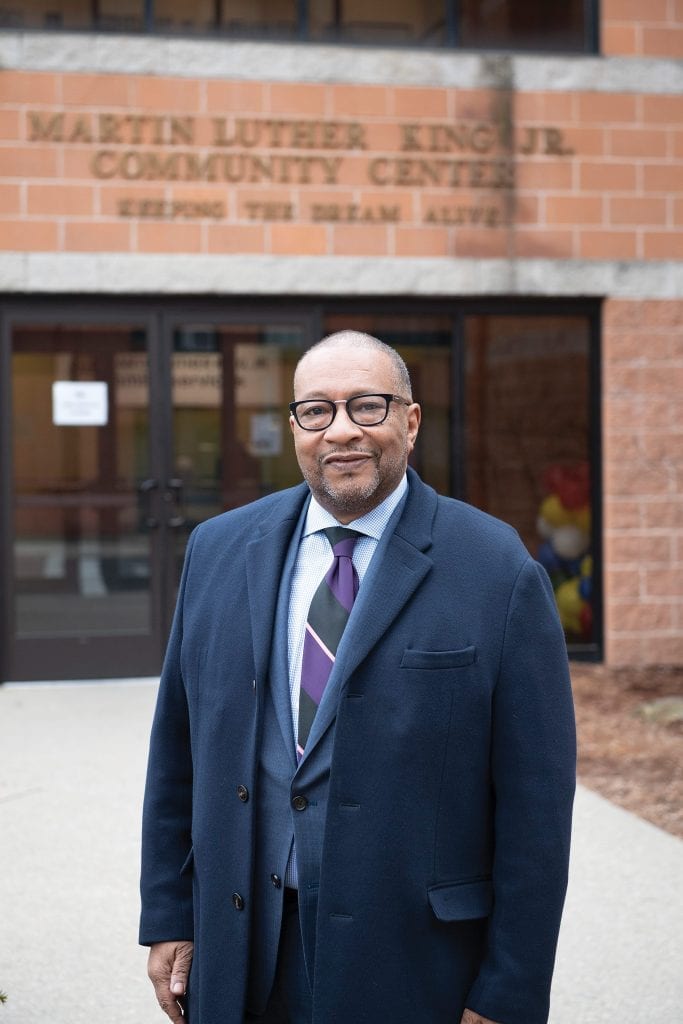
Features Special Coverage

Mission: Accepted

Paul Belsito

Paul Belsito

Paul Belsito admits he’s struggling somewhat with Zoom and conference calls — not the technology, but the nature of those forms of communication.

He’s a people person, and he likes meeting them face to face — and not on screen or over the phone.

“I enjoy going to events and networking — that’s how I meet people,” he said, noting that there haven’t been any opportunities like that since he’s arrived, and he’s looking to the day when they return. “Zoom is OK, and I’m getting good at it, but it’s not the same.”

But it is reality in the summer of 2020, and this is how Belsito, chosen late this spring to fill the rather large shoes of Mary Walachy as executive director of the Irene E. and George A. Davis Foundation, has been going about what will remain his primary assignment for the foreseeable future.

And that is to ‘meet’ as many people as possible and come to fully understand the many issues and challenges facing the Western Mass. community.

“This is a world built on relationships, and you have to understand people’s perspectives and listen actively so you can help build on the foundation that’s been laid,” he explained, adding that, since arriving in early June, he’s been doing a lot of listening, with the intention of acting — and collaborating with others — on what he’s hearing.

It’s an assignment he accepts with considerable enthusiasm, and one to which he brings an intriguing background, blending work in financial services, government (he was district director for state Sen. Edward Augustus), higher education (he was executive assistant to the president at Assumption College in Worcester, his alma mater), and philanthropy; most recently he served as president of the Hanover Insurance Group Foundation in Worcester and assistant vice president for Community Relations.

And he intends to draw on all that experience in a role that involves everything from community outreach to regional problem solving, but mostly comes down to what Belsito calls “impact philanthropy.”

“A lot of my work has been grounded in community work,” he said, using that phrase to describe many of his career stops. “Getting involved and influencing has always been part of my DNA, and it’s generational in many ways — my family was very involved in the community in Worcester.”

This devotion to community work, as well as an opportunity to continue and build on Davis Foundation initiatives in literacy, early-childhood education, improving the Springfield Public Schools, and other endeavors, drew him to the Davis Foundation, created by George Davis, founder of American Saw & Manufacturing, and his wife Irene, and the opportunity to succeed Walachy, whose work he has admired from Worcester.

“The work that Davis has done in literacy and specifically early education is well-known throughout the Commonwealth,” he noted. “I had known them from that lens of an active member in a peer community trying to work on the same issues; Mary is a household name in the early-education space throughout the Commonwealth, and her name is often brought up as someone to model in her guidance on how to pull these programs together.”

Coming to Springfield from Worcester, Belsito said there are many similarities between the state’s second- and third-largest cities (with Worcester being the former), and common challenges. These include everything from education to economic development and job creation. But they are different and unique communities with their own “personalities,” as he called them.

“This is a world built on relationships, and you have to understand people’s perspectives and listen actively so you can help build on the foundation that’s been laid.”

“Worcester and Springfield are not the same, although they do have similar traits,” he noted. “It’s my job to listen and maybe take some of my experiences from Worcester and share those with folks in Springfield. Maybe one in 20 will catch and improve the lives of children and families.”

Meanwhile, recent events have brought other priorities to the fore, including the plight of the region’s nonprofits, many of which have been severely impacted by the pandemic from the standpoints of revenue and sustainability, and the broad issue of racial justice, which the foundation has helped address through creation of the Healing Racism Institute, now a separate 501(c)(3), but still very much affiliated with the Davis Foundation.

Educare Springfield

Paul Belsito says his primary goal is to build on the foundation created by the Davis Foundation with initiatives such as Educare Springfield, a unique early-education facility that opened its doors last fall.

And these emerging issues are dominating many of those discussions he’s been having as he goes about listening and building relationships.

For this issue, BusinessWest talked at length with Belsito about his new role, but especially about the challenges facing Springfield, the region, and its large core of nonprofits — all of which have looked to the Davis Foundation over the years for not simply financial support, but also direction and leadership.

Moving forward, he said the foundation will be continuing in those roles and constantly looking for new ways in which to make an impact and move the needle.

Background: Check

Tracing the steps that brought him to the Davis Foundation’s suite of offices in Monarch Place, Belsito said his professional career started at Flagship Bank and Trust Co. in Worcester, where he served as a trust administrator, working with families to help manage their assets and trusts.

While in that role, he started doing volunteer work within the community, and before long, his career aspirations changed.

“All of a sudden, everything flipped, and the volunteer work became a career,” he told BusinessWest, adding that, in 2005, he started working for Augustus, now the city manager in Worcester. After a stint as a private consultant, he became executive assistant to the president at Assumption, which was, in many ways, a continuation of the work he did at the State House.

“I worked for a state senator who was very driven by policy, not politics,” he explained. “His mindset was, while we were in that building, how could we improve the lives of people not only in that district, but across the Commonwealth? The policy piece was very important to me, and it carried over to the higher-education piece.”

From Assumption, he went to Hanover Insurance, which, like MassMutual in this market, has historically been deeply involved in the community, often serving as a “catalyst for change,” as he put it.

He started in community relations and eventually became president of the Hanover Insurance Group Foundation.

“As we began to pivot on how to not only make the company a world-class company but also the city in which it was headquartered, I did a lot of work with the Worcester Public Schools, with the Hanover Theater, and various organizations within the community that really helped to round out the experience for children and families so that they would be successful out in the community,” he said, noting that perhaps the most significant initiative launched by the Hanover Foundation is the Advancement Via Individualized Determination (AVID) college-readiness program in the Worcester Public Schools.

“It was an honor to work for a company that was so committed to impact philanthropy,” he went on, “which is trying to move the needle and have outcomes and data that support the investment that you’re making.”

Slicing through his job description at Davis, he said it’s to generate this type of needle-moving philanthropy — or more of it, because the foundation has been involved in a number of potentially game-changing initiatives, including Cherish Every Child, a nationally recognized Reading Success by 4th Grade program, the advocacy group Springfield Business Leaders for Education, and, most recently, the effort to establish the innovative Educare Springfield early-education center, which opened last fall near the campus of Springfield College.

“One of the things that struck me about the Davis family was the humility with which they do their work. They want to be sure they’re supporting things that generate outcomes and improve the quality of education and quality of life for children and families in the region.”

The desire to continue such initiatives and create more of them brought Belsito to Springfield (via Zoom) to interview for the Davis job, a job posting that came about as he was looking for a new challenge after spending a short stint working for the city of Worcester on its COVID-19 response.

“I had known of Davis for a long time — and we actually used Davis and the work that Springfield was doing as one of the models as we were developing a reading-for-success program what would work best for our community.”

Forward Thinking

Looking ahead, Belsito said that, as the Davis Foundation continues its mission of service to the community, the specific direction of its initiatives will be determined by recognized needs within area cities and towns.

But he’s certain that education and a hard focus on young people will be at the heart of those discussions.

“One of the things that struck me about the Davis family was the humility with which they do their work,” he explained. “They want to be sure they’re supporting things that generate outcomes and improve the quality of education and quality of life for children and families in the region.

“And if you look at the legacy of the family, that’s been a consistent theme,” he went on. “And as we look to the next phase of where the Davis family’s impact will be, I believe that it will consistently be in education and literacy, but we also have a new generation of family members who are getting more active within the community, so how do we integrate some of their perspectives in making sure that we have a consistent, shared goal of improving the lives of children and families in Hampden County?”

Beyond this shared goal, there are new and emerging needs within the community, he said, noting, as one example, the mounting challenges facing the region’s large core of nonprofit organizations, many of which were struggling with finances before COVID-19.

“Many nonprofits are in a vulnerable state from a financial perspective,” he noted. “And this experience from the past few months has only exacerbated that. So we want to look at how Davis and organizations like the Community Foundation of Western Mass. can come together to help ensure that the mission-driven organizations that are needed for the community to be successful can thrive and be able to provide the services they need.

“Even from the start of my interview process at Davis to today, a lot has changed,” Belsito went on, referring not only to the pandemic and its repercussions, but also George Floyd’s death and the resulting focus on racial justice. “Perspectives have changed, and priorities have changed, and so we need to convene people at the local level and ask, ‘what does this community need to be successful?’”

What hasn’t changed are the many social determinants of health — from housing and transportation to food insecurity and job losses — that are impacting quality of life in the region, he continued, adding that COVID-19 has helped shine a light on inequities in the system and the need to initiate steps to address them.

And when it comes to such efforts and other initiatives, the key is listening to members of the community and creating a dialogue about to address these problems, he said, adding that the Davis Foundation has historically been a leader in such discussions, and it will continue to play that role into the future.

“I’m a believer that, when you pull people together, there’s usually a solution that can be found,” he said, using that phrase to refer to everything from the sustainability of nonprofits to improving public education.

‘Meeting’ the Challenge

Left with what he says is little choice, Belsito has become quite savvy with Zoom and other virtual methods for meeting and getting to know people.

It’s not as he would want it, but it is indeed reality. And so are the many challenges confronting Springfield and the region, many of them amplified or accelerated by a pandemic that has been relentless.

Belsito said his first assignment is to understand what makes Springfield Springfield, and it is ongoing. From there, his job is to pull people together — something the Davis Foundation has always been good at it — and, when possible, move the needle.

He’s made it a career to take on such work, and he’s more than excited about what the next chapter might bring.

George O’Brien can be reached at [email protected]
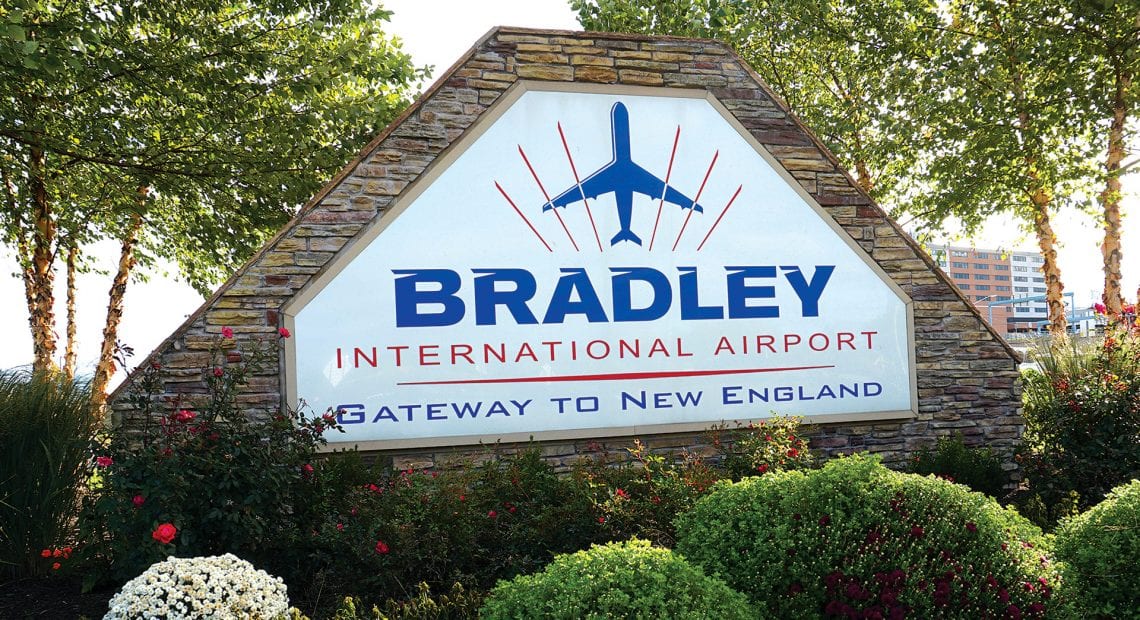
Accounting and Tax Planning Special Coverage

By All Accounts

By Jim Moran CPA, MST

Jim Moran CPA, MST

Jim Moran CPA, MST

The Coronavirus Aid, Relief, and Economic Security (CARES) Act has provided taxpayers affected by COVID-19 with some relief in the area of retirement-plan distributions and loans.

A coronavirus-related distribution is allowed by a qualified individual from an eligible retirement plan made from Jan. 1, 2020 to December 31, 2020, up to an aggregate amount of $100,000. A qualified individual must meet one of these criteria:

• Diagnosed with the virus SARS-CoV-2 or with the coronavirus disease 2019 (COVID-19) by a test approved by the Centers of Disease Control and Prevention (CDC);

• Spouse or dependent is diagnosed with SARS-CoV-2 or COVID-19 by a test approved by the CDC;

• Experienced adverse financial consequences as a result of being quarantined, furloughed, laid off, having work hours reduced, or being unable to work due to lack of childcare due to SARS-CoV-2 or COVID-19; or

• Experienced adverse financial consequences as a result of closing or reducing hours of a business that is owned or operated by the individual due to the SARS-CoV-2 or COVID-19.

An ‘eligible retirement plan’ is defined as the type of plan that is eligible to accept tax-free rollovers. It includes 401(k) plans, 403(b) plans, governmental 457 plans, and IRAs (including SEP-IRAs and SIMPLE-IRAs). It does not include non-governmental 457(b) plans. The $100,000 withdrawal limit applies in aggregate to all plans maintained by the taxpayers.

For individuals who are under age 59½, the act waives the 10% early-withdrawal penalty tax. Although the 10% penalty will be waived, any potential income taxes associated with the retirement plan or IRA withdrawal will still be assessed. The act also suspends the 20% tax-withholding requirements that may apply to an early distribution from a 401(k) or other workplace retirement plan.

“Your tax liability owed to the IRS at the end of the year may be higher than expected if you choose not to withhold the suggested 20%.”

Just keep in mind, your tax liability owed to the IRS at the end of the year may be higher than expected if you choose not to withhold the suggested 20%.

When it comes to paying the resulting tax liability incurred due to the coronavirus-related distributions, the CARES Act allows you a couple of options: spread the taxes owed over three years, or pay the taxes owed on your 2020 tax return if your income (and, thus, your tax rate) is much lower in that year.

Taxpayers may also repay the coronavirus-related distributions to an eligible retirement plan as long as the repayment is done within three years after the date the distribution was received. If the taxpayer does repay the coronavirus-related distribution in the three-year time period, it will be treated as a direct trustee-to-trustee transfer so there will be no federal tax on the distribution. This may mean an amended return will have to be filed to claim a refund attributable to the tax that was paid on the distribution amount that was included in income for those tax years.

Retirement-plan Loans

Loans from eligible retirement plans up to $100,000 to a qualified individual are available for any loans taken out during the six-month period from March 27, 2020 to Sept. 23, 2020. This is up from the previously allowed amount of $50,000.

Participants must repay standard retirement-account loans within five years. The CARES Act allows borrowers to forgo repayment during 2020. The five-year repayment clock begins in 2021. The loan will, however, continue to accrue interest during 2020.

If you have an existing loan outstanding from a qualified individual plan on or after March 27, 2020, and any repayment on the loan is due from March 27, 2020 to Dec. 31, 2020, the due date for any loan repayments are delayed for up to one year.

Employers may amend their plans for the above hardship provisions to apply no later than the last day of the plan year that begins on or after Jan. 1, 2022 (Dec. 31, 2022 for a calendar-year-end plan). An additional two-year window is allowed for governmental plans; however, IRS Notice 2020-51 clarifies that employers can choose whether to implement these coronavirus-related distribution and loan rules, and notes that qualified individuals can claim the tax benefits of coronavirus-related distribution rules even if plan provisions are not yet amended.

Administrators can rely on an individual’s certification that the individual is a qualified individual (and provides a sample certification), but also notes that an individual must actually be a qualified individual in order to obtain favorable tax treatment. IRS Notice 2020-50 provides employers a safe-harbor procedure for implementing the suspension of loan repayments otherwise due through the end of 2020, but notes there may be other reasonable ways to administer these rules.

Please note that the loan provisions apply only to qualified plans such as 401(k), 403(b), and governmental 457 plans; loans may not be taken from IRAs.

Each retirement plan’s rules and requirements supersede the CARES Act. In addition, it is important to remember that not all retirement-plan sponsors allow loans. Before taking out any loan, it is important to check that your employer’s plan adopts these provisions.

Suspension of RMDs

The CARES Act has suspended required minimum distributions (RMDs) for 2020. Individuals over age 70½ (for those born prior to July 1, 1949) or 72 (for those born after July 1, 1949) were required to take a minimum distribution from their tax-deferred retirement accounts.

Most non-spousal heirs who inherited tax-deferred accounts were also required to take an annual RMD. Under the CARES Act, RMDs from qualified employer retirement plans such as 401(k), 403(b), and 457 plans, will be waived. Even those individuals not affected by the coronavirus can waive the RMDs.

For individuals who have already taken their 2020 RMD, the CARES Act allows you to put it back into your retirement account. IRS Notice 2020-51 qualifies the distribution as an eligible rollover distribution if repaid in full by Aug. 31, 2020.

Jim Moran is a tax manager at Melanson, advising clients on individual and corporate tax matters; [email protected]

Special Coverage Technology

Taking the Long View

The idea of doctors and patients communicating across a distance, via a video connection, is not a new one, Carl Cameron notes. But COVID-19 “opened the floodgates” to making it a reality for millions.

“The barriers that have always been there for telemedicine are, one, you had to be able to see the patient, and two, the reimbursement around it. But with COVID, all that got waived,” said Cameron, chief operating officer at Holyoke Medical Center (HMC). “And the governor came out and said, ‘look, for televisits and the phone, video, however you can get the visit done, and we expect the payers to pay for it like it’s an in-person visit.’”

So health organizations started doing just that. “We started with basic things like getting some iPads, getting some physician PCs set up, and then it was, ‘OK, what are we going to use for an application?’” Cameron said, noting that they started with a mixture of FaceTime, Google Meet, and a product known as Doximity.

“A lot of doctors are familiar with that; it meets all the security requirements of HIPAA in terms of being a secure channel,” he explained. “You basically send a link to the patient, and they just click it, and it creates the connection with the doc. It even uses a virtual telephone number for the doc, so it doesn’t have to be their actual cell phone. It’s a very easy process.”

Among the physicians pleased with the expansion of telehealth is Dr. Kartik Viswanathan of Holyoke Internal Medicine.

“Before the pandemic happened, we were seeing close to zero televisits. During the pandemic, we started doing televisits to reduce the number of people coming in. Infection was rampant, and at that time, we didn’t want people in the waiting rooms, and when seeing patients, we needed to be completely in PPE and masks.”

“The barriers that have always been there for telemedicine are, one, you had to be able to see the patient, and two, the reimbursement around it. But with COVID, all that got waived.”

So government did the right thing, he added, freeing up telehealth to be billed like a regular office visit. “Remarkably, it was very popular with patients. They loved it,” he said, noting that patients appreciated not having to drive to the office, and if a doctor was running late, it was OK, since they were at home. “They weren’t upset if they were 15 or 20 minutes behind.”

Cameron agreed. “We were using it wherever possible and where the government would allow us to get paid for it. Obviously, with COVID, nobody wanted to leave their house — as a country, we didn’t have a good understanding of how the disease spread; everyone was saying shelter in place, so people didn’t really want to go out.

As a result, practices saw significant dips in volume, he went on. “But as we put the telemedicine in place, I was eventually able to bring us up to just below pre-COVID numbers for office visits. We still had some patients, depending on the acuity, who needed to be seen in the office or the ER, but we were doing 75% to 80% of our visits via telemedicine.”

Viswanathan said having the distance alternative reduced anxiety in patients during a generally anxious time. “They were happy to see us. Even with COVID testing, people had so many questions, and just the fact they could speak with us, communicate with us, really relieved a lot of the anxiety for them.”

Carl Cameron

Carl Cameron says the technology needed for effective telehealth exists, and so does patient demand.

And now, with medical practices largely back open, albeit under strict safety protocols? “Televisits are here to stay,” he told BusinessWest. “As a provider, I find it convenient, and the patient finds it convenient. I think it will still be 20% to 30% of daily visits even after the pandemic is over.”

Pros and Cons

Viswanathan conceded that televisits aren’t the same as in-person visits, in a number of key ways.

“The challenges come when we don’t know the patients from before — when it’s a new patient we’ve never seen before. There’s a little discomfort level that I haven’t seen him. But for established patients and managing chronic illnesses, it’s just great,” he said.

“It can’t replace all office visits because we really need to see some patients — there are subtle signs we tend to miss if we’re seeing only through a camera. There are procedures we can’t do on a television. If they have a rash, that is not well-examined on television. Those are some challenges.”

Medical organizations have brought up technology access gaps as well, particularly among certain demographic groups. Health Affairs, an online publication of Project HOPE, recently reported that more than one in three U.S. households headed by a person age 65 or older do not have a desktop or a laptop, and more than half do not have a smartphone. While family members or caregivers can help, one in five Americans older than age 50 suffer from social isolation.

Access to technology is also a barrier in other ages and minority groups. Children in low-income households are much less likely to have a computer at home than their wealthier classmates. More than 30% of Hispanic or black children do not have a computer at home, as compared to 14% of white children.

“We evolved from doing it very quickly and responding to the pandemic — how do we keep our patients safe and get them the best care possible? — to asking, what does this look like going forward?”

Even on the provider side, organizations have work to do to fit telehealth seamlessly into traditional practices, Cameron said.

“We need to continue to beef up the infrastructure so that it allows for effective management of both televisits and in-person visits, so that the physician can be flexible,” he explained. “They can take a laptop, go into a room, do a normal visit with a person, do their documentation, and then, for televisits, go slide it into a docking station where they have two monitors up; they’ve got the documentation and can see the patient at the same time, right in front of them.”

Like other trends that evolved on the fly during the pandemic, like remote work (see story on page 22), telehealth may have served its purpose well during these chaotic months, but to make it a permanent fixture will require planning.

“We evolved from doing it very quickly and responding to the pandemic — how do we keep our patients safe and get them the best care possible? — to asking, what does this look like going forward? With the efficiency and effectiveness I saw with our practices, this is absolutely a tool we can continue to develop.”

One of the evolutions in Cameron’s organization may be a move toward expanding the use of Doximity, perhaps in conjunction with the Meditech web portal, where parients can schedule a telehealth visit on the latter, and the link is sent via Doximity.

“It’s not like the technology isn’t there, and it’s going to continue to evolve and move forward,” he went on. “But what’s made it a reality is now, you can get paid for it, and there’s some funding out there to beef up the infrastructure.”

Peace of Mind

While primary care and certain specialties are making strong use of telemedicine, behavioral health has been a particularly fertile field. The Mental Health Assoc. (MHA) began using its own platform, called TeleWell, through its BestLife Emotional Health and Wellness Center in January, just before COVID-19 arrived in the U.S.

Through TeleWell, clients could connect remotely with a clinician, recovery coach, or prescriber for varying times and frequencies.

“The response from the community has been positive, with many individuals requesting the ability to continue receiving services utilizing TeleWell in the future,” said Sara Kendall, vice president of Clinical Operations.

“The flexibility of MHA’s TeleWell best matches the ability of individuals to receive services, while also in a location of their choice, in which they are comfortable,” she added, noting that client feedback suggests a growing role for this model in the future. “The adaptive world of today has been a benefit to the critical to needs of tomorrow.”

MHA recently announced $13,333 in grant funding provided by Baystate Noble Hospital to advance Well Aware, an information and education initiative that aims to raise awareness of the availability of telehealth services to help people dealing with the challenges of opioid and substance use disorders in the Greater Westfield area.

“The ability to connect via TeleWell can be of critical importance for people who cannot partake of services in person due to the COVID-19 crisis, a lack of transportation, or concern about the stigma often associated with seeking help,” said Kimberley Lee, vice president of Resource Development and Branding for MHA, adding that TeleWell can be an important bridge to enable people to receive the care they need from the safety of their own homes, and that, for people with opioid and substance-use disorders who either wish to enter into recovery or are already in recovery, being able to keep regular appointments with a counselor is critical for them to achieve success in staying sober.

“This is especially important during the unprecedented COVID-19 pandemic, which has upended our society and created a new normal of social distancing,” said Ron Bryant, president of Baystate Noble Hospital. “This practice has resulted in large numbers of people who feel isolated from their families, their circle of friends, and their normal life’s routine. This in turn can result in anxiety, depression, loneliness, and an overwhelming sense of fear and uncertainty, all of which can be addressed through behavioral-health services.”

It’s not just behavioral-health professionals saying telehealth offers an easier and less anxiety-ridden experience, one that makes it more likely patients will keep their appointments. Cameron reports the same trend at Holyoke Medical Center’s practices.

“One thing we found was our no-show rates dropped dramatically,” he said. “It’s pretty easy for the patient. They’re notified at home, and all they have to do is connect. They don’t have to go anywhere.”

As offices reopened to the public, he continued, “we’re probably a mix now of 60% in office, 40% telemedicine. So it’s shifted a little bit, but our goal is to continue to push it as a tool for the providers because, in certain cases, it’s more efficient and effective. It’s actually quicker for the patient and provider.”

Cameron doesn’t expect demand to be an issue, especially as more patients try out a remote visit, he said, noting that a couple of family members recently scheduled televisits and were surprised how easy and effective a visit could be without having to go to the office.

“There’s a push by the state and the feds to keep this in place as a tool to connect with patients. There’s been a push to extend it, make it permanent as a way to get paid, and at the full rate of an office visit. There are definitely enough patients out there who want this.”

Generation Gap

Viswanathan agrees that patients have adapted to the technology. Even older patients, who might not be comfortable with technology, have responded positively when a family member or visiting nurse has shown them how to access it. “When they see the benefits and ease of using it, their acceptance just shoots up.”

Most physicians like having the option as well, Cameron said, noting its potential in on-call situations, when a doctor can send a patient a link and get connected quickly.

“It’s a great tool that gives us much more flexibility. So I don’t see this going away,” he told BusinessWest.

As COVID-19 cases subside, some practices are going back to seeing most patients in person, he noted, but HMC continues to reinforce the use of telehealth. “This is a tool we want to use for the right visits. We want to make sure we give the option to patients. And, as we beef up the technology around it, docs like it.”

One reason, Viswanathan said, is it opens up a practice’s business to patients who may live farther away than they’d like to drive on a regular basis. He also foresees a day when community centers are equipped with telehealth ‘booths’ where patients can transmit their information and be connected to a doctor.

“It will never replace a visit,” he added, “but I think there’s going to be so much innovation around this.”

Part of Cameron’s job will be to continue to educate providers on how telehealth can be an effective tool.

“We still have older docs not accustomed to using all the technology. Back in ’07, EMR was a challenge. Now we’re asking them to do person-to-person visits via telephone or video,” he said. “So I think we’re still early in the process, but I’ve seen tremendous benefit to this that I don’t think is going to go away. And our plan here is to continue to educate, build the technology around it, and make it easier and more efficient for our providers and the whole system.” u

Joseph Bednar can be reached at [email protected]
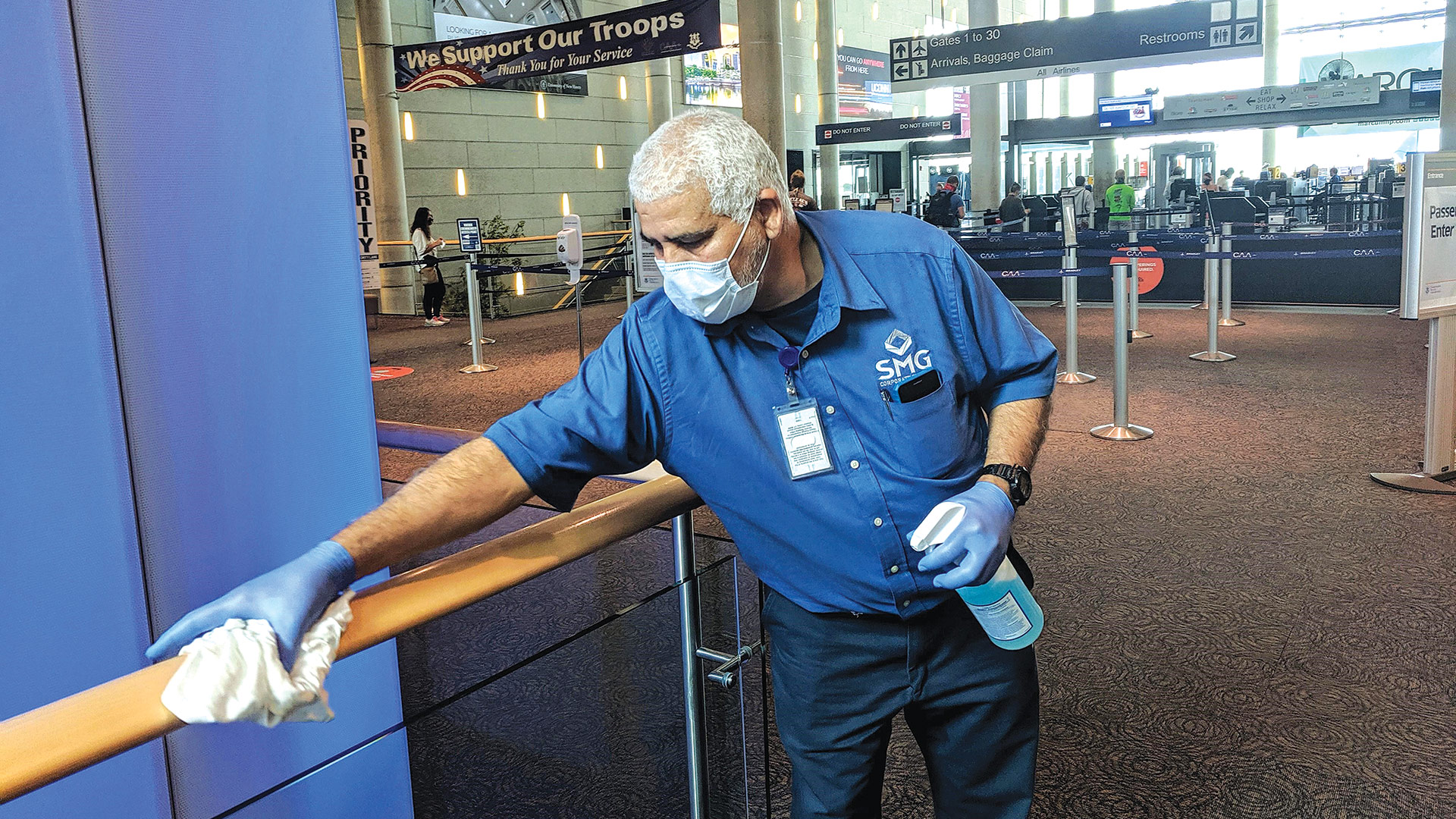
Community Spotlight

Community Spotlight

Mayor John Vieau

Mayor John Vieau says COVID-19 has put a damper on many of his plans for Chicopee, but he remains optimistic about the city and its future.

John Vieau wasn’t exactly planning on running for mayor last summer.

That’s because he was reasonably sure that incumbent and two-time Mayor Richard Kos would be seeking another two-year term — and Kos eventually did take out papers for re-election. And when Kos ultimately decided in February 2019 to return to his law practice instead of the corner office, Vieau, a Willimansett native and long-time alderman from Ward 3, didn’t exactly jump into the race.

Indeed, he had to think long and hard about this decision, especially the prospect of leaving a well-paying job with the Commonwealth — specifically, the Massachusetts Department of Transportation (MassDOT) — and take a pay cut to serve as mayor.

“I’m not a gambler,” said Vieau with a laugh, adding that he ultimately decided to run for mayor — and prevail over a crowded field — but take a leave of absence from his job with MassDOT so he can ultimately return when he’s finished with City Hall.

That careful due diligence notwithstanding, being mayor has been a long-time goal, if not a dream job, for Vieau, who said he fully understood everything that came with the territory … except maybe a global pandemic.

COVID-19 has changed virtually every aspect of municipal management — from greeting guests at City Hall (elbow bumps instead of handshakes) to making a budget — and made just about every facet of economic development, from maintaining the momentum that was building downtown to beginning the next stage in the life of the massive Cabotville Industrial Park, that much more difficult.

“It’s put a lot of things on pause,” said Vieau, who put the accent on ‘lot,’ noting that the pandemic has impacted municipalities as hard as it has hit specific economic sectors and individual businesses. It has affected how city business is conducted, sharply reduced revenues, and, as noted, put a number of projects on ice.

“We put guidelines in place that were more strict than what the governor rolled out initially with regard to stores. And other states, and businesses like Walmart, were adopting our rules, our guidance, and our procedures. We acted swiftly, and we saved lives.”

“All the ideas and things that were happening are sitting on the back burner as we combat this time of uncertainty and crisis,” he said while summing things up succinctly, before amending to say ‘most all’ the ideas and projects.

Indeed, there are some things happening, from a new Florence Bank branch at the site of the old Hu Ke Lau on Memorial Avenue to a new restaurant, Jaad, located downtown. But, as he said, the pandemic has certainly slowed the pace of progress at a time when he thought the downtown, and the city as a whole, were seeing a renaissance of sorts.

But Vieau, while not exactly welcoming the challenge of COVID-19, is embracing it to some extent and looking upon it as a stern test of his management and leadership capabilities — a trial by extreme fire, if you will.

He noted that he took his first full weekend off since March early last month, and said it felt good to get some rest. But he fully understands that the future is a very large question mark, and the pandemic certainly isn’t done making life difficult for the residents and leaders of the region’s second-largest city.

“We have to remain diligent,” he said, echoing the governor when it comes to the pandemic and how the city, the state, and the country, are far from out of the woods. “We have to do everything we can to keep this under control.”

For this, the latest installment if its Community Spotlight series, BusinessWest talked at length with the city’s relatively new mayor about life in the age of COVID-19 and how he’s trying to see his community through to the other side of this crisis.

Numbers Game

At one point in his talk with BusinessWest, Vieau paused and reached for some papers on his desk — the latest reports on the state of the pandemic in his city.

He didn’t have to consult the paperwork to know the numbers — he had already pretty much committed them to memory — but he did so to show just how much data he and others in municipal management have to keep track of, and just how committed he is to understanding everything he can about the spread of the virus on any given day — or moment, for that matter.

“I look at the numbers every day,” he said. “Unfortunately, we’ve had 10 deaths in the city, people with underlying conditions, ages 58 to 100. We have, today, 41 open cases of COVID-19, 399 people who have recovered, and we have 45 people in the N/A group, meaning they’re probably residents of the city that are now in assisted living, some form of nursing home, or other facility that’s not in Chicopee.”

This attention to detail is just part of managing the pandemic, or managing during the pandemic, to be more precise, he said, adding that he has a 10 a.m. conference call with his ‘COVID team’ every day, and these calls have led to some aggressive and ultimately effective efforts to slow the spread of the virus.

Indeed, Chicopee was among the first, and most vigilant, cities when it came to requiring masks in stores and other public places and putting other measures in place to slow the spread of the virus.

“We put guidelines in place that were more strict than what the governor rolled out initially with regard to stores,” he noted. “And other states, and businesses like Walmart, were adopting our rules, our guidance, and our procedures. We acted swiftly, and we saved lives.”

Redevelopment of the massive former Cabotville Industrial Park

Redevelopment of the massive former Cabotville Industrial Park into apartments is one of many projects in Chicopee now clouded by question marks as a result of the pandemic.

This is not exactly what Vieau signed on for when he took out papers for mayor last winter, soon after Kos opted not to seek re-election. What he did sign up for was a chance to take what has become a career of service to the city to a higher level.

That career started with a stint on the Planning Board — he was appointed by Kos during his first stint as mayor — and went to a different plane when he was talked into running for the open Ward 3 seat on the Board of Aldermen 16 years ago, not long after he took a job at MassDOT handling eminent-domain work.

“I saw this an opportunity to get more involved,” he told BusinessWest. “This was the area where I grew up; to have a chance to represent it as an alderman was one of the most rewarding experiences of my life.”

Vieau spent the last four of those 16 years as president of the board, and was content to go on representing his ward until Kos decided not to seek another term. Vieau said he received calls from the media within an hour of Kos’s announcement asking if he was going to run, and his quick answer was ‘no,’ for those reasons stated earlier. But after talking with family, friends, constituents, and his employer, and after learning he could take a leave of absence, he ultimately decided to run.

There were many planks to his campaign, from public safety to downtown revitalization to new-business development, and the pandemic has certainly made it more difficult to address any of them.

“Everything I ran on, all the ideas and things that we were hopeful to accomplish here in the city of Chicopee, have been put on hold as we get through this,” he said. “Instead, we’ve been focused on keeping people safe, first and foremost, and how you’re going to handle the budget gaps. It’s not something I’m unfamiliar with — I’ve been involved in the approval of 16 mayor’s budgets — but this is different.”

Elaborating, he said his administration has devoted considerable time and energy to assisting the small businesses that have been impacted by the pandemic — and there have been many of them.

For example, $150,000 in Community Development Block Grant monies were directed toward impacted businesses early on in the pandemic, said the mayor, and later, an additional CDBG grant of $706,000 was received and will be used to “turn the lights back on,” as the mayor put it, at businesses that have been forced to close in the wake of the crisis.

Holding Patterns

One of Vieau’s stated goals for his first term as mayor was to build on the recognizable progress registered in the central business district, where, through initiatives such as regular Friday-night ‘Lights On’ programs and other initiatives, downtown businesses were put in the spotlight, and area residents responded by turning out in large numbers.

The pandemic, which has hit hospitality-related businesses and retail especially hard, took a good amount of wind out of those sails, said the mayor.

“Things were progressively looking better for the future of our downtown — for reviving it. We want to continue these efforts — we just need to get through this period of uncertainty. We’re excited about what can happen, and I think everyone is.”

“We had the Cultural Council firing on all cylinders — we were going to have this amazing, new, energetic downtown that everyone would want to come to,” he said. “We were having Lights On events on Friday nights and had food trucks … all these fun things were happening, and … COVID-19 just put the brakes on it all.”

The hope is that businesses downtown can weather what could be a lengthy storm and emerge stronger on the other side, said Vieau, adding that, if they can, some building blocks can be put into place that might bring additional vibrancy to that once-thriving area.

These building blocks include the Mass Development-funded Transformational Development Initiative (TDI) grant that brought a TDI fellow, Andrea Moson, to the city for a two-year assignment to be dominated by downtown-revitalization efforts, a C3 Policing program aimed at making the area more safe and improving the overall perception of the downtown, and development projects, such as two planned housing initiatives downtown.

One involves the former Cabotville Industrial Park, where 234 units of one-bedroom and efficiency units of affordable housing comprise the first phase of that massive project, and the other involves an additional 100 units at Lyman Mills.

Chicopee at a Glance

Year Incorporated: 1848
Population: 55,298
Area: 23.9 square miles
County: Hampden
Residential Tax Rate: $17.46
Commercial Tax Rate: $33.93
Median Household Income: $35,672
Median Family Income: $44,136
Type of Government: Mayor; City Council
Largest Employers: Westover Air Reserve Base; J. Polep Distribution Services; Callaway Golf Ball Operations; Dielectrics; MicroTek

* Latest information available

These projects, which the mayor expects to proceed, are considered critical to the revitalization of the downtown area because of the vibrancy and foot traffic they will potentially create.

“We’re looking at young professionals and empty-nesters moving into these units,” he noted. “That influx of people will need goods and services.”

As for the TDI grant, it will be used to help new businesses locate in the downtown, fund tenant improvements, and, in general, bring more vibrancy to the area. Earlier this year, grant monies were funneled in $5,000 amounts to businesses impacted by the pandemic to help them through those perilous first several weeks.

“Things were progressively looking better for the future of our downtown — for reviving it,” he continued. “We want to continue these efforts — we just need to get through this period of uncertainty. We’re excited about what can happen, and I think everyone is.”

While most projects are being talked about in the future tense, some developments are already taking place downtown, said the mayor, noting the arrival of Jaad, a Jamaican restaurant; the pending relocation of the Koffee Kup bakery from the Springfield Plaza to East Main Street in Chicopee, and ongoing work to restore and modernize perhaps the city’s most recognizable landmark, City Hall.

Phase 1 of that project, which involves restoration of the auditorium, is ongoing, said the mayor, adding that this $16 million initiative also includes new windows, roof work, and other work to the shell of the historic structure. Phase 2, which is on hold, will involve interior renovations, modernizing the structure, and making it what Vieau called “active-shooter safe.”

Managing the Situation

As noted earlier, Vieau was happy to finally to get a full weekend off — not that mayors actually get weekends off, given the many events they must attend and functions they carry out.

But the weekends from March through early July were filled with more than ribbon cuttings, dinners, and school graduations. There was hard work to do to manage the pandemic and help control the many forms of damage it has caused.

This wasn’t exactly what he signed up for, and it has put a real damper on many of his plans for his first term. But COVID-19 is reality, and seeing his city through the crisis has become Vieau’s primary job responsibility. There’s no manual to turn to, but he feels he has the experience to lead in these times of crisis.

After all, he has made public service a second career.

George O’Brien can be reached at [email protected]
Technology

From a Distance

By Sean Hogan

Hogan

Sean Hogan

COVID-19 has changed the way we all do business. The remote workforce, which was embraced by a few, is now the new norm and embraced by almost all businesses. The question lingers, though: will this revert when there is a vaccine and we go back to the normal, non-pandemic lifestyle?

Many believe that remote workforce is here to stay, and these numbers seem to be growing with each week and month. But to do that, we need to understand how to manage our remote workforce and embrace technology to support our staff.

To do this effectively, managers need to manage the technology, the people, and the culture. Let’s take them in order.

Managing Technology

Our company, Hogan Technology, has sold and configured videoconferencing and collaboration systems for 25 years. We would set up conference rooms with audio and video so clients could establish videoconferences with employees and customers.

In the past, we saw most of this technology gather dust; at first, a client would embrace video collaboration, but it would quickly be disregarded. The older video and collaboration technology platforms were clumsy and difficult to navigate. Staff would quickly give up trying to learn how to use the tech.

Today’s collaboration tools are extremely easy to use, especially for the younger generation that grew up on smartphones. COVID-19 has promoted the skyrocking popularity of services like Zoom and Microsoft Teams. These tools can be used to enhance your company communications and productivity, but we need to know how to use these tools.

Hogan has had remote employees for more than seven years; the challenge has been including those employees in the day-to-day interaction at the office. Pre-COVID, we rarely had video meetings; now, we meet several times a day via video to collaborate and share data.

“Many of my clients have been quickly thrust into the remote workforce with little or no experience with online collaboration. They have quickly learned how to host and manage online collaboration.”

Meanwhile, many of my clients have been quickly thrust into the remote workforce with little or no experience with online collaboration. They have quickly learned how to host and manage online collaboration. Hogan has adopted a platform for the security and simplicity of the service. We host several Hogan Teams meetings per week. We have fixed meetings and ad hoc meetings. Our fixed meetings are administered by our staff; we create the team, invite the necessary personnel, and share all pertinent data to the Teams site for ease of retrieval. Teams has a smartphone app, desktop app, and browser login.

We have noticed that our video meetings are more focused than our traditional conference room meetings, our data is consolidated, and our agendas are clear.

I must admit that, at first, I was resistant to host sales and client meetings through video collaboration. It took some time and some failures — I completely failed on my first large Zoom conference, but eventually, I embraced the meetings. Throughout the pandemic, all introductory sales meetings have been on Teams, and to my shock they have gone well. We print fewer documents, we save on travel expense, and we can host more meetings per day than before. If we are looking for bright spots during this COVID-19 madness, then this would be one.

Oddly enough, because meetings are so easy, we tend to meet more and share more. We understand that the end game is improving communications; whenever we have a management meeting, we are stressing the need to communicate better, internally and externally. COVID has forced us to communicate better, faster, and more efficiently.

Managing People

We have had many clients request analytics or reports so they can better track the performance of remote employees. There are several ways to track productivity, such as call-volume reports, CRM usage reports, presence activity reports, internet-usage reports, and so on. Personally, I manage my staff to their individual goals; if I have an employee who is exceeding his or her goals, then I don’t need to be very granular with activity reporting. I will use their analytics to compare to other personnel; this helps me determine where I need to focus my attention.

It is critical to protect your company’s endpoints no matter where they reside. If an employee uses a business machine at home, that machine needs to have updated anti-virus, malware protection, multi-factor authentication, and end-point detection and response.

Managing the Culture

Culture is a critical piece in all businesses. Corporate culture refers to the beliefs and behaviors that determine how a company’s employees and management interact. Often, corporate culture is implied, not expressly defined, and develops organically over time. It can be a challenge to maintain your culture while working with a remote workforce.

We have found that we need to engage our employees through collaboration. Our meetings are not just management telling staff what needs to be done and how to do it. The meetings must engage all the personnel — they need to be part of the solution, and we as managers need to stop talking and start listening. This helps cement our team culture.

The key is that we listen to everyone, and other businesses should embrace this mindset. You need to sit back and ask, ‘what is our culture?’ ‘Who are we?’ ‘What matters to our clients?’ and ‘How do we support our community?’

It’s critical to know your culture and even more critical to defend your culture. Make sure your team knows what matters.

In this time when more and more people are working remotely, it’s important to manage the technology. But it’s equally important to manage people and culture.

Sean Hogan is president of Hogan Technology; (413) 585-9950.

Modern Office

Small Steps for Big Wins

By Sarah Rose Stack

Sarah Rose Stack

Sarah Rose Stack

Work-life balance in 2020 has been different, to say the least. And many people have unexpectedly found themselves in a new office … at home. This trend does not seem to be going away. In fact, many businesses plan to extend their work-from-home policies through the end of the year and are considering more permanent work-from-home plans.

If you are working from home, the expectation is that you are working from home. However, if you are not accustomed to this new environment, it can be tricky to perform to your fullest potential while also maintaining work-life balance. You and your employees may need to take additional steps to invest in overall well-being in order to remain effective at work.

Here are some things to think about, focusing on healthy mind, body, and spirit.

Mind

Staying focused and on task is key for productivity. Keep your mind clear and focused. To do that:

• Take a Break. Step away from screens occasionally. Don’t forget to give yourself a few minutes throughout the day to recharge in the same way that you would if you were in the office.

• Fully Participate. Nothing will help you enjoy your time off more then a job well done during your time on. Be engaged during meetings. Put your full workday in. Remain committed to your mission and vision while working. Your mind will appreciate the normalcy, you will do better work, and you will find it easier to turn off your work at the end of the day.

• Schedule Tasks, but Set Limits. Stay organized and on task by being clear about how you will spend your time. Schedule appointments with yourself to complete work. Limit tasks based on how much time it would normally take to complete them in the office.

• Set Ground Rules with Your New ‘Colleagues.’ If you are working remotely due to COVID-19, chances are that there are more people hunkered down at home too. To stay productive and avoid frustration, communicate with your family about boundaries so that you minimize interruptions and distractions.

• Set Up Your Home Office. Remember your first day of work, when you brought in a box of favorite things to keep you inspired and productive? Take some time to set up your new dedicated home-office space. Keep your work area organized and separate from your ‘life’ area. Even setting up a simple desk or table in a dedicated space will help you get into work mode when it is time. It can also prevent your work from overrunning your kitchen, living room, bedroom, or all of the above.

Body

Working — and doing everything else — at home can leave us feeling sluggish. Stay energized to feel and do your best.

• Take a Walk. If you’re taking a 10-minute break, don’t waste it scrolling on your phone. Go outside and take a walk. The combination of sunlight, fresh air, change of scenery, and movement can give you an injection of energy to get back at it.

• Stand Up. On a conference call or virtual meeting? Stand up or even walk or pace during the call. The walk can increase your focus, and you can also get some exercise at the same time.

• Try Yoga to Increase Focus. Did you know certain yoga poses may increase focus and concentration? Try yoga in the morning before work, or mid-afternoon to increase your focus and stay active. Poses for focus include tree, eagle, warrior III, half-moon, dancer, extended hand to toe, side plank, crow, and headstand.

• Choose Healthy Snacks and Meals. With a full range of access to unlimited food and snacks, it can be easy to fall off track and overdo it on the junk food. This obviously can lead to fatigue and become problematic if it becomes habitual. Maintaining a healthy diet with good portions will keep you fueled and energized.

• Drink More Water. Keeping hydrated is critical for well-being. Again, with full access to your kitchen, you may be prone to drink more sugary drinks, coffee, or soda than you normally would. Or you may not be taking in as much water as you usually do. Keep a water glass at your desk (but not near electronics) so you can stay hydrated throughout the day.

Spirit

Acknowledge emotions that are coming up as you navigate a new work situation and then take steps to redirect the narrative.

• Practice Gratitude. Showing appreciation can help you feel more positive emotions. Thank your colleagues when they help you with something. Take a moment to be grateful for the opportunity to work from home right now. Studies show that people who feel and express gratitude generally have a greater level of happiness.

• Go Outside. During social distancing, you can still leave your home to go for a walk or simply enjoy a cup of coffee on the porch. Research has shown that going outside can improve your short-term memory, restore mental energy, relieve stress, improve concentration, and increase your creativity.

• Stay Connected to Colleagues. While you can’t swing by a co-worker’s office to chit-chat, you can take a few minutes each day to connect. Whether it’s a private Facebook group, Teams, or group chat, take some time to check in. Talk. Laugh a little. Share photos, comments, and videos. Motivate each other to do great work together. Staying connected keeps us together while we’re apart.

Healthy Perspective

Small actions that are taken consistently can add up to big results. Focus on the three big rocks and the small wins that can be achieved within them to position yourself for a healthy mind, body, and spirit while working from home … and, for that matter, working from anywhere.

As you and your employees navigate this new work-from-home environment, remember that being productive and healthy is good for business and good for people. Many find that, when they have accomplished their goals during the day, they are able to relax and enjoy their time ‘at home.’ On the contrary, if they have been distracted throughout the day, they may find that nagging feeling of work piling up and following them everywhere.

Create a dedicated space, hours, boundaries, and habits to increase effectiveness and maintain a healthy work/life balance while working from home.

Sarah Rose Stack is marketing and recruiting manager with Holyoke-based accounting firm Meyers Brothers Kalicka; (413) 322-3401.