Home Archive by category Sections (Page 39)

Sections

Accounting and Tax Planning

A Primer on RMDs

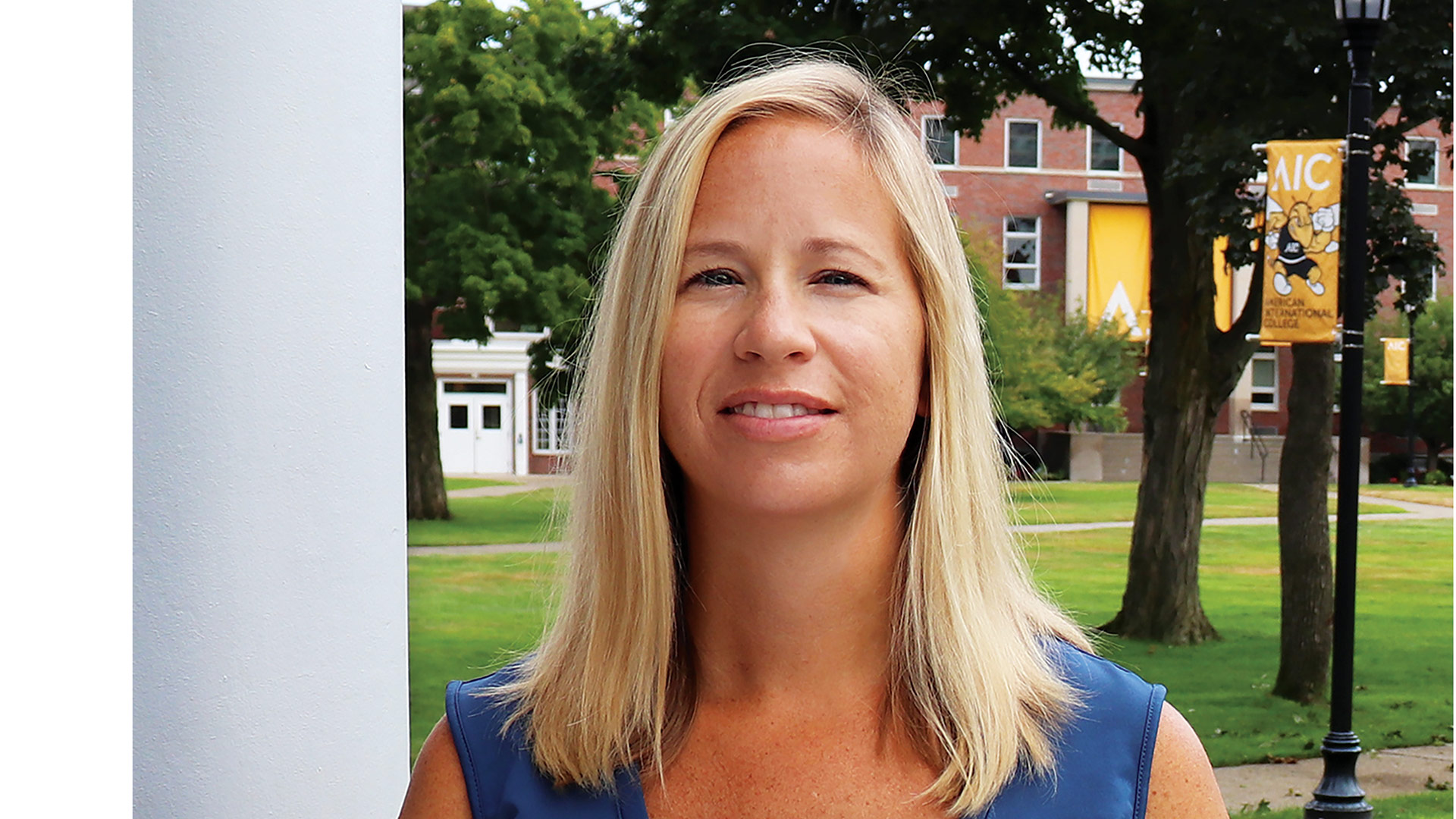
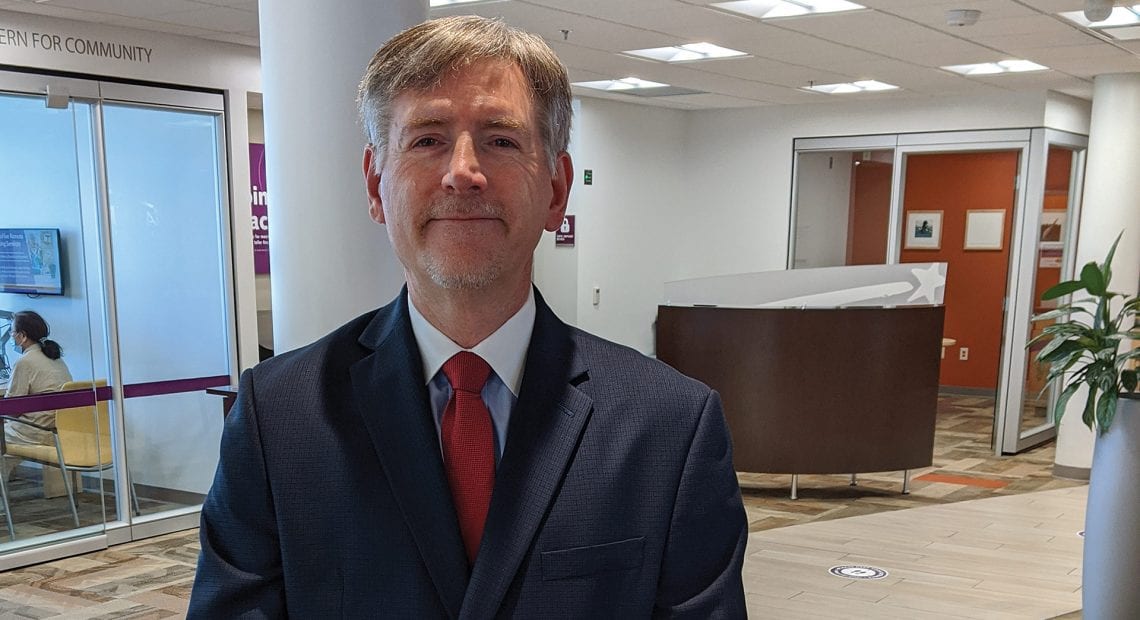
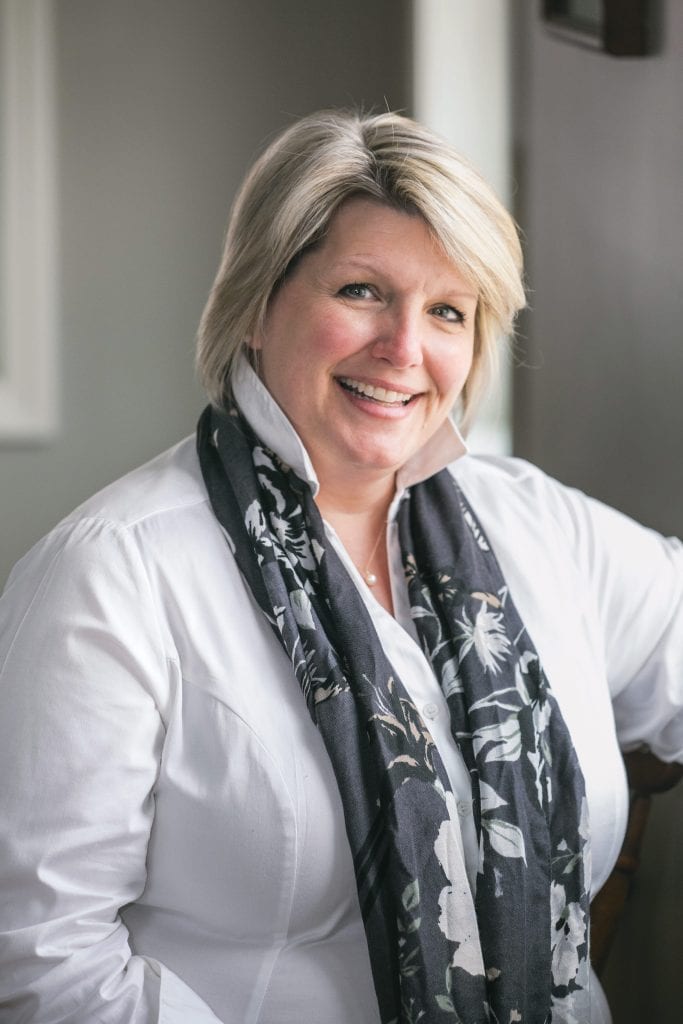
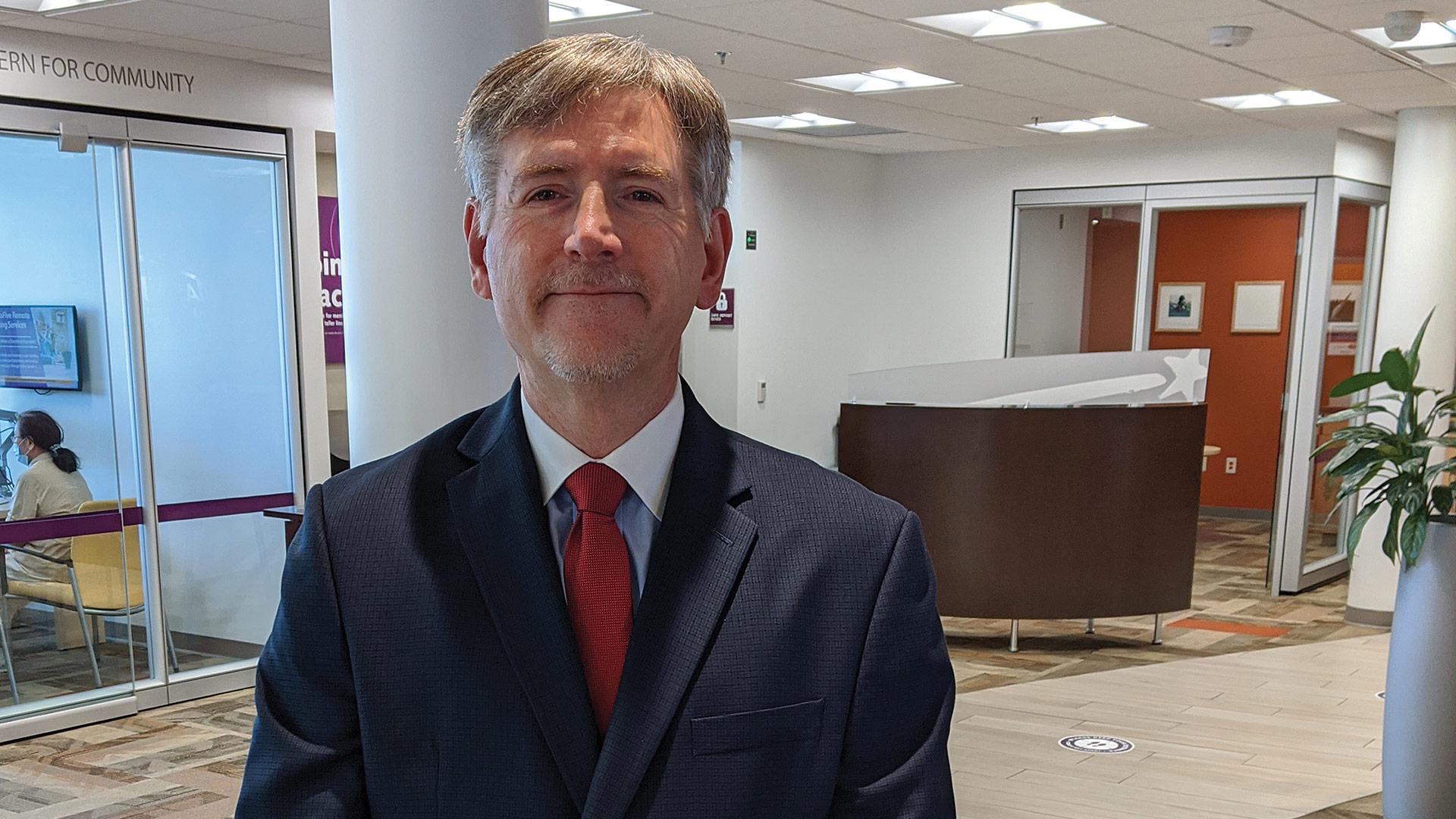
By Bob Suprenant, CPA, MST

Bob Suprenant, CPA, MST

With all that’s happened in the world this year, the SECURE Act, signed into law on Dec. 20, 2019, seems to have been robbed of the celebration it deserves.

Let’s give it its due and weave our way through the 2020 rules for what are known as RMDs.

First, what is an RMD, or required minimum distribution? It’s the minimum amount you must take out of your retirement plan — 401(k), IRA, 403(b), etc. — once you reach a certain age. The theory is that the amount in your retirement plan will be liquidated as you age.

To calculate the RMD, as a general rule, you divide the balance in your account at the end of the previous year — for this year, it would be Dec. 31, 2019 — by the distribution period found in the Uniform Lifetime Table. These tables currently run through age 115. Seriously.

Who Must Take an RMD?

This is where we blow the party horns and throw the confetti. These rules changed on Dec. 20, 2019. If you reached age 70½ in 2019, you were required to take your first distribution by April 1, 2020. If you reach age 70½ in 2020, you are not required to take your first distribution until April 1, 2022.

At the risk of putting a wet blanket on the fun, if you do not take the full amount of your RMD and/or you do not take it by the applicable deadline, there is a penalty. The penalty is an additional tax of 50% of the deficiency. The additional tax can be waived if due to reasonable error and you take steps to remedy the shortfall.

Did COVID-19 Change This?

Yes, the CARES Act, which was signed into law on March 27, 2020, included provisions that waived the requirement for RMDs in 2020. This also happened in 2009 when the stock market crashed. In 2020, RMDs are not required. The RMD waiver also applies to inherited IRAs.

It keeps getting better. On June 23, 2020, the IRS released Notice 2020-51, which allows those who have taken an RMD in 2020, but wish they hadn’t, to return the money to the retirement plan by Aug. 31.

There is a bit of a catch here, though. Most who take RMDs have federal and state tax withholdings on their distributions. Under this relief, the entire distribution must be returned to the retirement plan, not the distribution net of taxes.

By way of example, if you have a gross RMD of $20,000 and there is $3,000 in federal and state withholding, your net distribution is $17,000. To have none of your RMD taxed, the $20,000 must be returned to the retirement plan by Aug. 31. If you return only $17,000, you will be taxed on a $3,000 distribution.

Do I Take an RMD In 2020?

I know I don’t need to take an RMD in 2020, but should I? The answer is … it depends. And you should consult your tax advisor. Ask this individual to run projections to see what the best amount is for you to take as a distribution. For married joint filers, the 12% federal tax bracket includes taxable income up to $79,000. For amounts over $79,000, the tax bracket is at least 22%, a full 10% increase.

For many of my clients, I try to take full advantage of the lower tax bracket and get their incomes as close to the $79,000 as possible. Other clients, who use their retirement-plan distributions to make their charitable contributions (a very wise idea as you will generally save state taxes in addition to possibly saving federal taxes), should probably take a retirement-plan distribution in 2020.

Those who are aged may also want to take a distribution. Under the inherited IRA rules, your IRA beneficiaries will be required to take distributions, so consider their tax rates compared with yours.

As always, in the tax code, there are exceptions to exceptions, and this brief summary is only the cocktail hour. Be aware that you are not required to take an RMD for 2020. If you have taken an RMD, you can return it by Aug. 31. Do some tax planning to determine the best amount for your 2020 retirement-plan distribution.

Bob Suprenant, CPA, MST is a director of Special Tax Services at MP CPAs in Springfield. His focus is working with closely held businesses and their owners and identifying and implementing sophisticated corporate and business tax-planning strategies.

Cover Story Education

Entrance Exam

Come back to campus, or don’t — either way, you’ll learn.

Just don’t expect campus life to be anything like you’re used to.

That’s essentially the message from UMass Amherst, by far the region’s largest of roughly 20 colleges and universities grappling with how to welcome students back to campus this fall — or setting them up for online instruction, as the case may be. Or, in some cases, both.

“We heard loud and clear from our student body that, even if they’re taking courses remotely, they would really like to be on campus or around campus,” Chancellor Kumble Subbaswamy said during a recent conference call discussing the university’s fall plans.

In a nutshell, the vast majority of students will not be required to return to Amherst, with most courses offered remotely. But they may return — for residence-hall life and in-person instruction — if they’d like.

“Our communication will be very explicit about what the campus might look like and what our expectations are, and what we will hold all of our students responsible for,” he continued. “With all of that knowledge, if they still want to come to campus and live in campus housing, they’re most welcome to. And whether they come back to campus or not, we will really provide a rich and rewarding academic experience with not only remote courses but also advising and lots of peer-to-peer interactions and faculty-to-student interactions and so forth.”

In other words, Subbaswamy noted, “we’re prepared to serve our community to the best possible extent in terms of providing all the college experience can under these different circumstances because of the pandemic. That’s the bottom line.”

Bryan Gross says WNEU’s mission prioritizes on-campus education

Bryan Gross says WNEU’s mission prioritizes on-campus education, but the university is ready to pivot if the pandemic worsens.

That said, life in the residence halls will be altered to include pedestrian-flow guidelines, restrictions on group gatherings, and limited face-to-face contact. No guests will be allowed in residence halls, at least at first. Most student services will be offered remotely. The Recreation Center will be open — with limits and restrictions placed on activities.

In short, things have changed since COVID-19 arrived in Massachusetts. Leaders at the region’s higher-education institutions have been meeting since … well, pretty much since they sent students home in mid-March, to hash out what classrooms and the campus experience will look like come late August, when the fall semester begins for most.

“We need to make sure we’re providing them with some sense of security, and do everything that we can to make this experience one where they are able to continue their studies and get to graduation.”

None of the schools’ plans are exactly the same, with some emphasizing on-campus instruction, some — including most of the community colleges — opting for an online-heavy approach, and others landing somewhere in between, with students choosing between in-person, online, and hybrid programs (see box on page 19).

Western New England University, touting its ample space and small classes, has decided to conduct the vast majority of classes fully on-campus this fall, while a small number of courses will be delivered in a hybrid or online format.

“We keep coming back to discussions regarding our mission, which is to provide a highly personalized educational experience inside and outside class,” said Bryan Gross, vice president for Enrollment Management and Marketing. “For the faculty and staff working on this plan, any time we get stuck on details, we come back to that mission.”

Students will be required to wear a mask or face shield, practice social distancing, and maintain a high standard of hygiene. In addition, plexiglass barriers will be installed throughout campus, including classrooms. Most buildings will be one-directional to minimize hallway contact, buildings will be cleaned more frequently, and residence halls will be limited to single and double rooming options, among other measures.

Walter Breau

Walter Breau

“We learned a lot in the spring when we had to go online — we understand what we did well and what we can do better. If a second surge happens and everyone decides to move online, the Elms flex model allows that to happen.”

“We watch the news every day,” Gross told BusinessWest. “Things are constantly changing in terms of safety, and we have to follow state and federal regulations, but based on the information we currently have, we feel confident our plan is doable — that it meets our values and protects the health and safety of students. But if things change, we also have to be open and honest, and we are willing and able to change.”

That’s why WNEU, like many colleges and universities, has actually been planning for three different scenarios — most students on campus, online learning, and a hybrid of the two.

“The majority of our families are ready for their children to be on campus and have the campus experience,” he added, “They trust our Health Services and know, if it’s ever not safe to be here, we’re going to make the right decision in the best interest of our students.”

That’s the COVID-19 world colleges and universities must grapple with — with every day bringing changing news and more moving targets. As enrollment planning goes, it’s unprecedented, at least within living memory. And students aren’t the only ones who will be learning something.

Course Corrections

At Elms College, classes will be taught this fall in a hybrid, flexible model that gives students the option of attending sessions in the classroom, online, or both. Students can move between the options based on their personal preferences, while international and non-local students will be able to continue their coursework from afar.

“We know some students are high-risk or living with someone high-risk and don’t feel comfortable being in a classroom, but we also know students want an in-person experience,” said Walter Breau, vice president of Academic Affairs. “So they can choose when to be in the classroom.”

The usual mix of masks, distancing, and plexiglass will be in play, and on-campus students will be expected to monitor and record any COVID-like symptoms they might have. As is the case at other campuses welcoming students this fall, any positive symptoms must be reported to the Health Center for consultation, and the college will have a separate living space for any student in need of quarantine.

Fall 2020 Plans … for Now

Leaders at 20 area colleges and universities continue to discuss plans for how academic programs will be delivered fall. Those plans might change, and even schools planning on a mostly on-campus experience will likely offer some programs remotely. Here are the latest plans, grouped by categories that may not capture all the nuances of each plan; readers are encouraged to visit the schools’ specific websites for more information.

• All courses delivered online, but students have option of attending in person: UMass Amherst.

• All online, with students in some programs (such as healthcare and culinary arts) on campus part of the time: Asnuntuck Community College, Cambridge College, Greenfield Community College, Holyoke Community College, Springfield Technical Community College.

• Blend of on-campus, online, and hybrid instruction: Bay Path University, Berkshire Community College, Elms College, Mount Holyoke College, Springfield College, Westfield State University, Williams College. American International College is discussing this model as well.

• Blend of on-campus and online instruction with students on campus for either fall or spring: Amherst College, Smith College.

• Mostly on-campus instruction: Bard’s College at Simon’s Rock, Massachusetts College of Liberal Arts, Hampshire College, Western New England University.

“Safety is our number-one priority,” Breau told BusinessWest. “We know students want to come back. How to keep them safe while doing that has been the prime goal of reopening. Our task force made sure safety was always number one on the list.”

To that end, students will need to review safety-training materials when they return to campus. “It’s going to be a team-based effort. It’s not just administrators, faculty, and staff, but students have to be a part of the process as well. We’ll certainly rely on them to help us stay safe.”

There’s a safety net built into the ‘HyFlex’ model as well, Breau noted, in that it wouldn’t be difficult to transfer all learning online if the region’s infection rates soar.

“We learned a lot in the spring when we had to go online — we understand what we did well and what we can do better. If a second surge happens and everyone decides to move online, the Elms flex model allows that to happen; it’s built into the syllabus and the way instructors plan the courses.”

American International College is also seriously considering a HyFlex model, and plans to announce its detailed fall strategy by the end of July, said Nicolle Cestero, chief of staff, senior vice president for Human Relations, and Title IX coordinator. She said a group of campus leaders has been meeting for several months and are doing all they can to give students an on-campus option.

With more than half of its undergraduate student body first-generation college students and more than 50% also Pell Grant-eligible — meaning they come from low-income families — AIC doesn’t want to add additional challenges to their lives, she noted.

“We need to make sure we’re providing them with some sense of security, and do everything that we can to make this experience one where they are able to continue their studies and get to graduation,” Cestero said, noting that the HyFlex option is an ideal model in that it allows students to access their education in a way that best serves their needs in this most difficult year.

Plus, there’s value in the on-campus experience that can’t be replicated remotely, she added. “Maybe your roommate becomes your best friend for life. Or you’re participating in a conversation that you never would have participated in — on race or gender or power and privilege, or whatever it is — and you don’t necessarily get to do that if you’re not on campus. You develop so much in these years — it’s your first time away from home, and you’re teaching yourself how to do things, how to manage your own time and finances, all that stuff.”

In a letter to the Springfield College family, President Mary-Beth Cooper detailed a blend of in-person, remote, and hybrid instruction, with all learning moving online after Thanksgiving. But she emphasized that new safety measures — from masks and distancing to a contact-tracing program and isolation spaces — are key to making the plan work.

“Successfully remaining on campus throughout the fall semester will depend on the degree to which we, as a community, work together to reduce the possibility of the virus appearing on campus and, if it does, responding quickly to limit its spread,” she explained.

Brandi Hephner LeBlanc, vice chancellor for Student Affairs at UMass Amherst, noted that the university will distribute a student agreement that details the testing and symptom self-monitoring they’re asked to do, as well as the need to carry hand sanitizer and face coverings when moving about, among other safety measures.

“We’re really asking them to be a responsible community member, first and foremost, and to be a part of the bystander intervention,” she said. “When you see someone without a mask, remind them.”

And if students don’t comply?

“There is going to be what I would term an escalation of intervention,” she explained. “We’ll have public-health ambassadors on campus that will help remind folks, and there will be a lot of communication to find out if there’s a problem. This is not going to be an immediate referral to the Conduct Office, unless it’s something so egregious that that’s necessary. But this is something that takes a lot of reminding to manage the behavior. And we’re prepared to do that.”

Catalog of Options

A few institutions across the region have emphasized the value of returning as much activity to campus as possible. Massachusetts College of Liberal Arts President James Birge cited recent survey data collected from 10,000 high-school and college students; 78% of respondents find the experience of in-class learning this fall appealing, while one-third would transfer out of their institution if the college shifted to online course delivery.

Nicolle Cestero

Nicolle Cestero says the value of the campus experience shouldn’t be minimized, but a hybrid flex model might be the smartest way to go this fall.

“We know the residential and in-person class experience is important to our students, students at state universities across the Commonwealth, and nationally,” Birge said, which is why MCLA is moving ahead with an ambitious on-campus approach. “Although returning to campus this fall presents some risk, we will work to make the campus experience as safe as possible for everyone. Of course, this means we will have to significantly shift our way of learning, teaching, and working.”

Other campuses, like Amherst College and Smith College, are looking at having roughly half the students on campus for the fall, to better achieve physical distancing, with the ones sent home for remote learning having on-campus priority for the spring.

“We know that any scenario short of bringing everyone to campus will be bitterly disappointing to those who will have to wait until the spring,” Amherst College President Biddy Martin wrote in a letter to students and families. “With this structure, we can provide the opportunity for every student who wishes to be on campus to spend at least one semester here and, if things go well, both semesters for a large number of those students.”

Meanwhile, Springfield Technical Community College is among a handful of area institutions — several community colleges among them — to continue with an online model this fall, though some programs in STCC’s School of Health and Patient Simulation will include low-density, on-campus labs adhering to social-distancing, PPE, and sanitizing protocols.

“STCC has no intention of becoming a fully online institution,” said Geraldine de Berly, vice president of Academic Affairs. “The pivot to online is driven by a health pandemic. COVID-19 has forced the college to adjust, and we do hope in the future to return to the robust utilization of campus facilities.”

In some instances, STCC will use synchronous teaching strategies, with students gathering at a specific time through videoconferencing. But most of the classes will be taught using an asynchronous approach, which gives students flexibility to set their own hours to complete their studies and assignments.

“Many of our students have childcare obligations, work commitments, and a host of other complicated circumstances,” President John Cook said. “We know that our students benefit from having flexibility in their classwork, and online is yet another way STCC lives its mission of ensuring access to higher education.”

Flexibility, in many ways, has become a key word in the region’s higher-education sector, which suddenly offers a wide array of learning models heading into perhaps the most unusual fall semester for American students in generations.

What these schools have in common is an emphasis on safety, and on making sure students know their own responsibilities in keeping COVID-19 infections low — and keeping the campus experience alive, in whatever curtailed form it might take.

WNEU’s Gross is confident it’s a message they will understand.

“You’re not doing it for yourself, but for other people. And that’s such a positive message we can send,” he told BusinessWest. “That’s why human beings are on this earth, to care for one another and take actions that help the community. We hope that value is something that’s embraced by our students. It’s an amazing opportunity to learn and grow and take actions to help others.”

Joseph Bednar can be reached at [email protected]

Health Care Special Coverage

Critical Condition

Guy DiStefano

Guy DiStefano says the non-urgent procedures that were shut down in March typically support the rest of what hospitals do, leading to major revenue shortfalls this spring.

Back in March, when COVID-19 was just starting to crest, hospitals took steps to brace for a potential surge of patients. But while COVID-19 surged, revenues slowed to a trickle.

“Early on, we realized we needed to build capacity for a surge of patients so we didn’t get overwhelmed like they did in New York City, so we shut things down early in March — which blew a hole in everybody’s finances,” said Mark Keroack, president and CEO of Baystate Health. “We’ve been gradually returning to prior operations. We always remained open, of course, but it was only a week or two ago that we resumed more elective kinds of cases.”

Many hospitals are doing the same, but the overall losses to the state’s hospital industry are, as Keroack put it, “staggering” — expected to total between $5 billion and $6 billion by the end of the fiscal year on Sept. 30. “It’s a big stress test, if you will, for hospitals. And some have been hit more than others.”

All area hospitals have taken a financial blow.

“This has been very challenging, with the reduction in services,” said Guy DiStefano, vice president of Finance at Mercy Medical Center. “All our outpatient services — what are termed non-urgent cases, which usually help feed and support what a hospital does in its normal, day-to-day business — has been shorted, leaving us with a great revenue shortfall.”

At the same time, he added, “we still have all our expenses in place, just like any other business. Look at restaurants — the doors were closed, but they still had rent, utilities, all the other expenses, and the employees.”

Through May, Mercy saw a $25 million reduction in revenues due to pandemic-related reductions in services — and plummeting volume in the ER, a development that surprised hospital officials nationwide. At Mercy, daily Emergency Department cases dropped from a typical average of between 225 and 250 to around 100 to 120.

“Those slowly crept back up — we’re at 150 to 180 on a daily basis, so we’re not at full capacity, and there’s a lot of pent-up demand. Our business is coming back, but we lost a lot of revenues.”

“All our outpatient services — what are termed non-urgent cases, which usually help feed and support what a hospital does in its normal, day-to-day business — has been shorted, leaving us with a great revenue shortfall.”

Joanne Marqusee, president and CEO of Cooley Dickinson Hospital, said the hit has been significant. Through May, the facility recorded a loss of $18 million, partly due to COVID-related costs, but mostly because of lost volume. That number would be worse if not for $5.5 million in federal support.

“But that in no way covers our losses,” she added, noting that Cooley Dickinson Health Care could see a revenue shortfall of well above $30 million for the fiscal year ending on Sept. 30.

“We’re now planning for a fiscal-year 2021 budget and considering a number of measures to mitigate some of this — things like hiring freezes and reducing a lot of discretionary expenses. Everywhere we can hold off on spending, we have,” she went on, noting that service hours could be temporarily curtailed in some services, while employees making more than $26.50 per hour will forgo raises for the time being.

While that move shaves some costs while protecting lower-paid employees, it doesn’t make nearly enough of a dent, Marqusee noted. “So we’re looking at ways to further reduce expenses. But the work we’re doing already will certainly have an impact.”

DiStefano said Mercy has also had to take steps like furloughs and reducing hours to mitigate the losses. “We did everything we could to help employees keep their benefits in place. But employees are the number-one cost of a typical hospital — about 50% to 60% of the cost structure.”

Holyoke Medical Center has been losing roughly $6.5 million per month since services were curtailed back in March, President and CEO Spiros Hatiras said. But the community hospital did take some steps early on to gird against the damage.

“We were probably the first hospital in the area to furlough folks; we didn’t hold off because we saw it was absolutely important to be financially viable because we don’t have a parent company to spot us money,” he told BusinessWest, adding that many furloughed employees took advantage of the $600 federal boost in unemployment and wound up bringing in more than they did while working.

Joanne Marqusee says she hopes patient volume returns

Joanne Marqusee says she hopes patient volume returns not because of the revenue issue, but because patients shouldn’t forgo necessary care.

“That helped reduce expenses significantly,” he added, noting that almost 170 of 250 furloughed employees were back at the start of July, with another 80 to 90 expecting to return at month’s end. “Then MassHealth stepped in and allocated $11.8 million over four months to cover some of the losses, and we got a one-time payment from the feds of about $3 million. Add it all up, and through May, our losses were roughly $3 million — not insignificant, but we were able to survive it.”

Dollars and Sense

Baystate is surviving, too, Keroack said, emphasizing the importance the health system has not only on its 12,000 employees, but on the region, where it has an annual economic impact of some $4.2 billion.

When the fiscal year ends on Sept. 30, he expects Baystate to have lost about $160 million in revenues due to volume losses, but the system was able to secure about $75 million in federal relief and another $23 million state aid.

“The rest of that will likely be covered by reserves,” he added, noting that Baystate is fortunate to have both reserve funds and a broad service model.

“The smaller hospitals that have cash-flow problems got hit very hard because they didn’t have much in the way of reserves, but the other group is bigger hospitals that are highly specialized, like Mass General, where their revenues really depend on that elective surgical volume. Hospitals that are jacks of all trades and have good size, like Baystate, were hit less hard. Not to say it was pleasant what we’ve been through.”

Calling a $160 million revenue loss a ‘less hard’ hit may speak in some ways to the financial clout of the healthcare industry as a whole; it’s certainly one of the Commonwealth’s key economic drivers. And as patient volume continues to ramp back up, hospitals will be on safer ground when it comes to budgeting.

“At Baystate Medical Center, we’re at 80% to 90% capacity, so I would say people are mostly back.” Keroack said, noting that, while patients are returning gradually for routine care and procedures, current volume is still affected by social-distancing and sanitization measures that have slowed the pace of treatment. “In the community hospitals, they’re a bit further behind — more like 60% of former volume.

“In the long run, the question is, will volumes be permanently depressed?” he went on. “We’ve tried to convince people you really don’t want to put off stuff you know is worthwhile — you don’t want to ignore symptoms that might be serious. We have seen a number of people lately whose illness is much more serious than it would have been in pre-COVID days.”

Cooley Dickinson Hospital’s Emergency Department has seen a 100% increase from its COVID lows, during the height of the pandemic locally, when it was handling 35 to 45 patients per day. Now, ED providers are seeing 70 to 80 patients per day, which is still about 20% below the organization’s typical ED volume.

“We are seeing people with chronic illness who have waited too long to seek medical attention and are sick,” Emergency Department Nurse Director Sara McKeown said. “We have also seen an uptick in people seeking mental healthcare; patients presenting with substance-use issues and trauma are also increasing.”

Patient volume is bouncing back at Holyoke Medical Center and its community-based practices, but ED visits still lag, Hatiras said. “Anecdotally, we’ve heard of people putting off heart conditions and other things, and that can lead to bad outcomes. People shouldn’t stay home with serious conditions.”

That said, “I don’t blame the government for being overly cautious with closing down elective surgeries,” he added, noting that the elimination of many procedures over the past two months was, more than anything else, about preserving beds to treat an unpredictable pandemic.

“We’re now planning for a fiscal-year 2021 budget and considering a number of measures to mitigate some of this — things like hiring freezes and reducing a lot of discretionary expenses. Everywhere we can hold off on spending, we have.”

Now that the infection rate is being effectively controlled, he explained, hospitals are trying to communicate the message that they are safe places to visit — with plenty of strict protocols in place, from masking to social distancing to constant sanitizing — for patients who need to be seen.

DiStefano said the challenge has been ramping services back up — and bringing back furloughed workers — to match what is proving to be pent-up demand, but in a measured way. “It’s a delicate balance — how do we do this to best serve the community?”

It’s a long road back from the volume lows of the spring, when physician revenue dropped by 50. They’re now back around 65%, and inpatient beds are at about 80% of capacity. But people with serious health concerns should not put off care, he stressed, especially since the hospital has been diligent about infection protocols and keeping COVID-suspected patients separated from the rest.

“We take great pains to keep this environment safe,” he said. “The message to the community is, ‘if you are hurt, if you have a condition, this is a safe place to come.’” It helps, he added, to be affiliated with a larger system, Trinity Health, and while Mercy has rarely seen the kind of financial deficit it faced this spring, its leaders are still doing what they can to meet community health needs.

“We are the fabric of the community; there are no concerns about Mercy’s future,” DiStefano told BusinessWest. “We are going to be here for many years to come. Fortunately, we have the backing of a larger organization, and that helps a lot.”

Distance Learning

If there is an upside to navigating the pandemic, he said it might be the growing importance of telehealth, which became not just a convenient tool for providers and patients over the past few months, but a critical one — and one that seems to be on track to be covered by insurance payers in the future much more consistently than before.

“This has become more of a platform that allows us to reach out to patients,” said DiStefano, whose background in telemedicine goes back to the 1990s. “I hope it’s a bigger part of healthcare going forward. Obviously, you have to do some testing in the office, but you can do preliminary or follow-up appointments with telehealth, and that reduces the volume of patients in the waiting room and the physical office, which allows us to have a much cleaner, COVID-free environment to keep those people safe.”

In short, it’s a way to boost volume — and revenues — while making patients who do go to the hospital feel more secure.

Hatiras agreed. “We had to switch on the fly to do more telehealth, but what we saw was care being delivered even more efficiently,” he said. “We saw no-show rates completely drop. So it’s an effective way to provide care, and there will certainly be more pressure on insurers to reimburse appropriately for telehealth.”

Indeed, Marqusee added, “what has been stopping us from doing more telehealth has been reimbursement; I hope we never go back to the days when we were so underpaid for telehealth. It has been a terrific model.”

In the meantime, she sees volume slowly returning to Cooley Dickinson — perhaps reaching 90% of a typical season come October. “But the reason we welcome those numbers is because people need to get care — it’s not because we need the volume. We know from national studies and anecdotally that people have been afraid, and they’re forgoing care, and that can really have health impacts for people.”

That’s why her facility, like the others BusinessWest spoke with, is not only maintaining strict protocols around infection control, but is communicating what it’s doing with the community.

“People have to believe that and feel confident. It’s really important that people don’t stay home in pain with issues that will just get worse. People aren’t coming with heart attacks, or appendicitis, or they power through a head injury, and it turns out they had a brain bleed. People need to come for care, and they should know this is a place they can come and feel comfortable.”

Not so comfortable, however, that they neglect the behaviors that have reduced infection rates in Western Mass. and allowed hospitals to increase their non-COVID-19 services.

“We’re in a good place; there isn’t a high level of COVID in our community. But that can change quickly,” Marqusee said. “I want people to always remember the reason we have low levels of COVID is because of the efforts everyone is making to social distance, wear masks, and practice hand hygiene. We shouldn’t take the reopening as a sign they we don’t need to do those things, but to do it even more. That allows us to provide needed care to all our communities.”

Keroack says he expects some patients to enthusiastically return to care providers, while others will be stragglers who need more convincing — while others will continue to embrace telehealth as the best option.

“We may not return to our former volumes until we have a vaccine and everyone feels totally comfortable,” he told BusinessWest. “I think it’s going to be a process.”

Joseph Bednar can be reached at [email protected]

Community Spotlight

Community Spotlight

By Mark Morris

While communities nationwide continue to grapple with what he calls the “grumpy cloud” of COVID-19, Westfield Mayor Donald Humason is looking to project a little sunshine.

“A lot of it has to do with the attitude in Westfield,” the mayor said. “We’re optimistic, and we want people to come to our community because it’s a great place to live, work, go to school, and run a business.” 

Kate Phelon, executive director of the Greater Westfield Chamber of Commerce, agreed, and wants everyone to know Westfield is open for business.

Kate Phelon

Kate Phelon says the Greater Westfield Chamber remains strong and active, and has even welcomed some new members.

While the chamber remains strong with more than 5,000 members, two new businesses have recently joined. Play Now, a new toy store on Silver Street, and Results in Wellness, a health and wellness clinic on Springfield Road, were both planning ribbon-cutting ceremonies at press time. Also scheduled to open is a Five Below store, where everything is priced between $1 and $5.

“New business openings are a great thing to see, especially during these times that are so challenging for everybody,” Phelon said.

After many months of not being able to hold any chamber events, she’s also excited about hosting the annual chamber golf tournament, scheduled for Aug. 31 at East Mountain Country Club. “We will, of course, be following all the guidelines for masks and distancing. It certainly helps that this is an outdoor event.”

Speaking of outdoor events, the Westfield Starfires began their Futures Collegiate Baseball League season on July 8. The team modified Bullens Field to provide a safe experience for fans and staff by following state guidelines for COVID-19 safety. Phelon attended as part of a contingent of chamber members and reported that fans simply wore their masks and were able to enjoy refreshments at properly distanced picnic tables.

“We’re optimistic, and we want people to come to our community because it’s a great place to live, work, go to school, and run a business.”

Considering what’s already been lost in this unprecedented year, the shout of ‘play ball!’ was certainly welcome — and city and chamber officials hope it heralds the start of a back half of 2020 that’s far more promising than the first half.

Full Power

While it was uncertain if the Starfires would be able to play this season, the crew at Westfield Gas & Electric never stopped.

General Manager Anthony Contrino said his crews have consistently provided essential services for customers of the municipal utility. After a crash course on handling COVID-19 in the workplace that kept people safe and followed state guidelines, G & E crews have handled only emergency situations for the last several months. More recently, the utility has been able to handle non-emergency work like in-home gas and electric installations.

Contrino said the many disaster-recovery drills he and his colleagues have done in the past helped prepare them well for COVID-19.

“We’ve had a lot of remote-workforce capabilities in place, but they’ve never been tested to this degree,” he said, calling it a “blessing in disguise” as the last several months confirmed that the processes they had set up work when they are most needed.

Administrative staff returned to their offices at the end of June after the building was reconfigured with the latest pandemic protocols in place.

“I commend my co-workers, who have done a very good job during this time for their service to the city and all of our customers,” Contrino said, adding that Westfield G & E received the Reliable Public Power Provider Award for excellence in operating efficiently, reliably, and safely.

Westfield

Westfield Mayor Don Humason says he has heard from business, both downtown and elsewhere, looking to expand once they feel they can.

Whip City Fiber, a separate business that provides fiber-optic internet service, is also run by Westfield G & E. Contrino said 70% of Westfield now has access to the utility’s fiber-optic network. “In 2020, we have continued to add customers to areas that have access to fiber optics in their neighborhood.”

The plan going forward is to expand the network to the remaining 30% of the city. “Customer demand will determine where we build out the remainder of the network,” he noted.

In addition to serving Westfield, Whip City Fiber is working with 19 towns in Western Mass. to establish their internet service, Contrino added. “We are working in places like the hilltowns that were underserved with internet service, so they are appreciative that we can help them get up and running.”

Once established, customers in the hilltowns will have access to gigabit service, or 1,000 megabits coming into their homes. By installing fiber optics, Contrino said, these towns are “future-proofing” their internet systems. “We already had the competencies in place to build fiber-optic networks, so by expanding our services to other towns, we become more cost-effective for Westfield residents.”

Getting Around

On the recreation front, the Greenway Rail Trail, an elevated bike path, is expanding across the city. By the end of next year, bike paths and five bridges will be added to the trail.

“The completion of the bike trail will be a real economic driver for Westfield,” Humason said. “I think it will attract cyclists from other parts of the country, as well as the state.”

Phelon added that serious cyclists will be able to ride continuously from Westfield to New Haven, Conn., and the trail is a valuable asset for casual cyclists as well.

“Bike riders will now have a way to quickly get across town because the trail goes through the center of Westfield,” she noted. “Because it’s elevated and above all the traffic, they will be able to go from one end of town to the other, complete with off-ramps into different neighborhoods.” 

“New business openings are a great thing to see, especially during these times that are so challenging for everybody.”

The mayor is hopeful that enterprising businesses will locate near the bike trail to serve the bikers, walkers, and others who use it.

“The bike trail fits in nicely with the flavor of old Westfield and our history of industry and agriculture,” he said. “Even if you’re not interested in all that, it’s an easy way to get across town.”

Humason said he’s pleased to see that a number of road improvements over the years now connect the downtown area from the south side of the city all the way to the Mass Pike exit.

The latest road project near completion involves widening and adding sidewalks along Western Avenue. The project also improves traffic flow with turning lanes into Westfield State University, as well as pull-off areas for PVTA buses.

“Western Avenue is one of the longest streets in the city, and it deserved to get this treatment,” the mayor said, adding that certain parts of the road also have traffic islands to separate the east and west lanes. “It’s an easier road to drive now, and it looks really nice.” 

The mayor said the city completed a similar project on East Mountain Road, another long street. “If we continually work on the longer streets and keep them in good order when we have the revenue, we can work on the smaller streets in the neighborhoods and the downtown corridor, so we can keep the city in good shape.” 

Future projects coming to Westfield include a new entry gate to the military side of Barnes Airport to service the both the Army Aviation facility and the Air National Guard base. The new entrance will allow the base to modernize function and security for everyone entering the base.

A public park is also planned just outside the gate that will feature one of the F-15 fighter jets that flew over New York City on 9/11. A plaque to tell the story of the jet’s mission on Sept. 11, 2001 will also be part of the display.

Moving On

Also in the near future, Phelon will be retiring from the Greater Westfield Chamber. Before she leaves on Sept. 25, her plan is to work with the new executive director to ensure continuity in the many chamber projects.

“I want to make sure the next director understands our community, as well as our members, and can work with our public and private partners at the local and state level,” she said.

Despite the tough economic times of the last six months, prospects for Westfield look strong, she told BusinessWest, adding that she’s encouraged by the fact that no businesses have decided to not reopen. Meanwhile, Contrino said his crews have not been asked to shut off any business customers because they are permanently closing. Humason said he’s heard only from businesses looking forward to expanding once they can.

“Like many towns, we’re going through the COVID economy, but that’s not going to last forever,” the mayor said. “We’ll be ready to grow when the restraints have finally been taken off because the people in Westfield have put a lot of time, attention, and money into its city and its downtown.”

Education

‘This Is Our Moment’

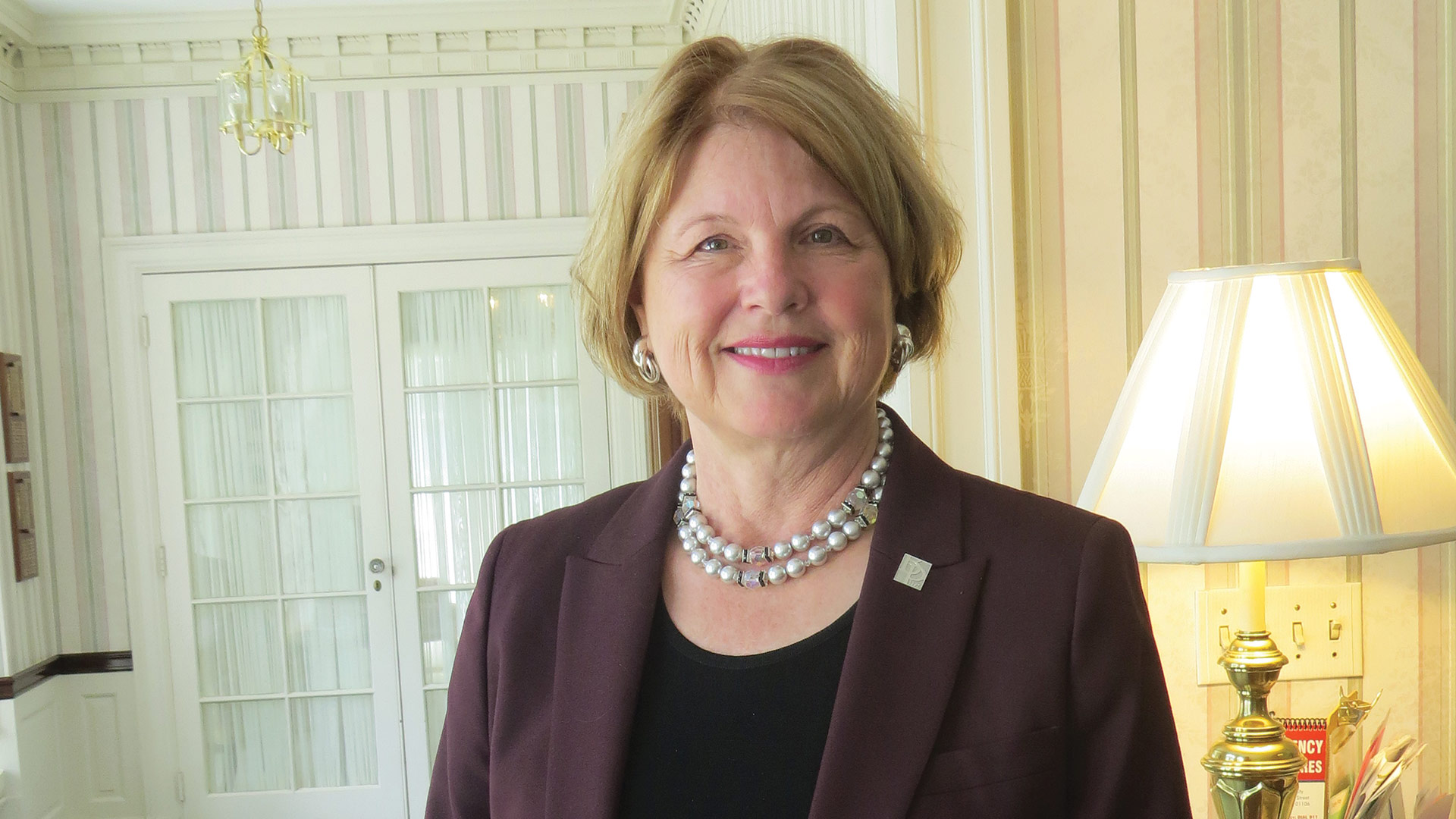
Sandra Doran

While the pandemic presents a number of challenges, Sandra Doran says, it might also create opportunities for Bay Path University.

Sandra Doran says her family has long been attracted to careers in education and the law.

One great-grandfather traveled from New York to Colorado and set up the first one-room schoolhouse in that state, she noted, while her grandfather was superintendent of a school district in New York City, and her mother was a music teacher. And her other great-grandfather was a bankruptcy lawyer, kept especially busy during the Great Depression.

So it’s logical she would take one of those career paths. Actually, she took both.

Indeed, after serving as chief legal officer for Shaw’s supermarkets, she later served as vice president, general counsel, and chief of staff at Lesley University in Cambridge. And it was that position that eventually inspired a full shift to higher education — although she always calls on her legal background — and put her on a path to … Bay Path University and its president’s office.

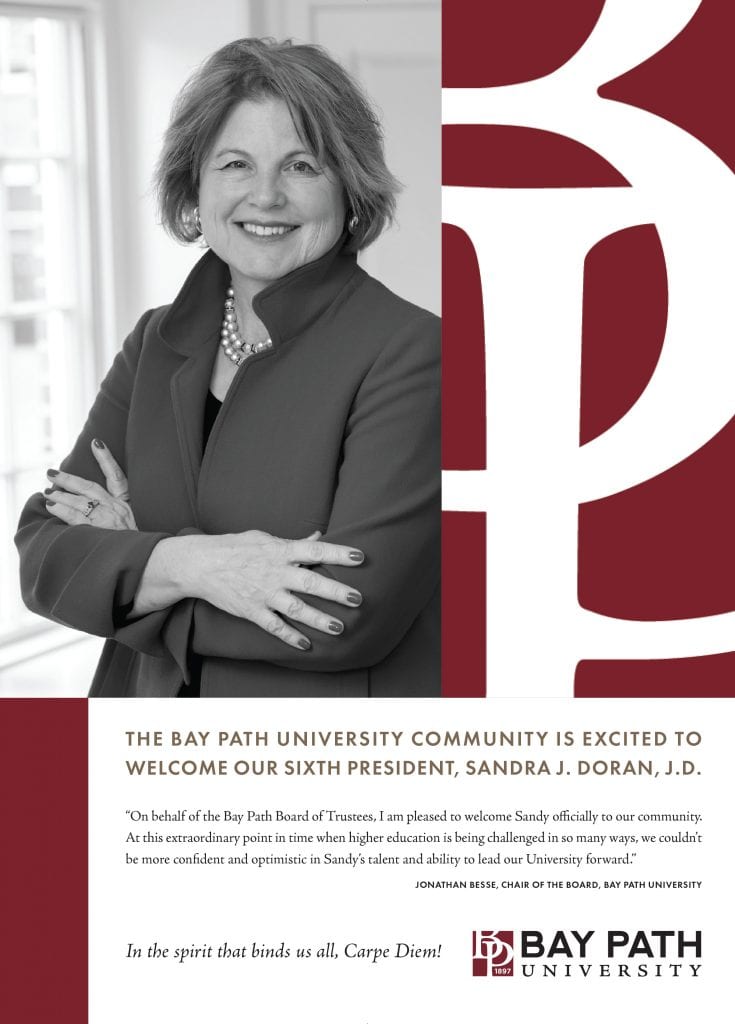
“At Lesley, I came to realize that higher education was my passion, and my calling,” said Doran, who’s been handed the attractive, but perhaps also daunting, assignment of succeeding Carol Leary and building on the strong foundation she built during a 25-year tenure that saw the college become a university and expand in every way imaginable.

She arrives at Bay Path at a critical juncture, when several powerful forces are colliding — stern challenges in higher education that started emerging years ago; the COVID-19 pandemic, which is exacerbating those challenges and creating new ones; a financial crisis; and a nationwide focus on racial justice.

“This is a historical leadership opportunity for all of us — how we lead through the months and years ahead is really going to define what kind of community we are, how resilient we are, and now adaptive and nimble we are.”

This collision of crises, as Doran called them, presents a real test — actually, several of them — but also opportunities for the school, and higher education in general.

“This is a historical leadership opportunity for all of us — how we lead through the months and years ahead is really going to define what kind of community we are, how resilient we are, and now adaptive and nimble we are,” said Doran, adding that she believes Bay Path is well-positioned to be a leader during this time of crisis, introspection, and profound change, and that she is looking forward to the challenge of helping it play that role.

As she talked with BusinessWest at a small table positioned on the lawn behind the college’s administration building, Deepwood Hall — a nod to social distancing and keeping safe during the pandemic — Doran talked about the college’s plans for reopening this fall. It will embrace what many are calling a hybrid model blending online and in-person classes, with far more of the former. The plan, overall, is to “de-densify the campus,” as she put it, with a limited number of students living on campus, all in single rooms.

But mostly, she talked about this convergence of crises and how, rather than be a roadblock or even a speed bump, it could serve to accelerate the process of Bay Path’s emergence as a leader not simply in remote learning — only she doesn’t call it that; she prefers ‘technology-assisted learning’ — but in guiding students to fulfillment of their goals and ultimate success in the workplace. And also accelerating the process of creating systemic change in how higher education carries out its mission.

For the school, this opportunity to further cement its reputation as a pioneer and frontrunner in remote learning has been confirmed by the large number of colleges and universities calling to seek assistance as they establish or build their own programs (more on that later).

And for higher education, the pandemic presents a unique if not entirely welcome (at some schools) opportunity to rethink and perhaps reinvent many aspects of a college education and put more (and much-needed) emphasis on cost, access, and pathways to success in the workplace, and less on the on-campus experience (more on that later as well).

For all of this, Bay Path is well-positioned, if not uniquely positioned, to grasp these opportunities.

“This is our moment at Bay Path,” she said with noticeable energy in her voice, “because we’ve always been that place where students come to further their career ideals, and we’re going to continue to provide that opportunity.”

For this issue and its focus on education, BusinessWest talked at length with Doran about what she ultimately called “an exciting moment in time,” and all the reasons that make it so.

School of Thought

When asked what appealed to her about Bay Path and its presidency, Doran said, in essence, that there was little, if anything, that didn’t appeal to her.

Indeed, she said the once-struggling two-year college that was resurrected and then taken to dizzying new heights during Leary’s tenure represents an opportunity that brings together her collective passions and many of the initiatives that have marked the latter stages of her career.

These include women’s education, technology and technology-assisted learning, entrepreneurship, and innovation.

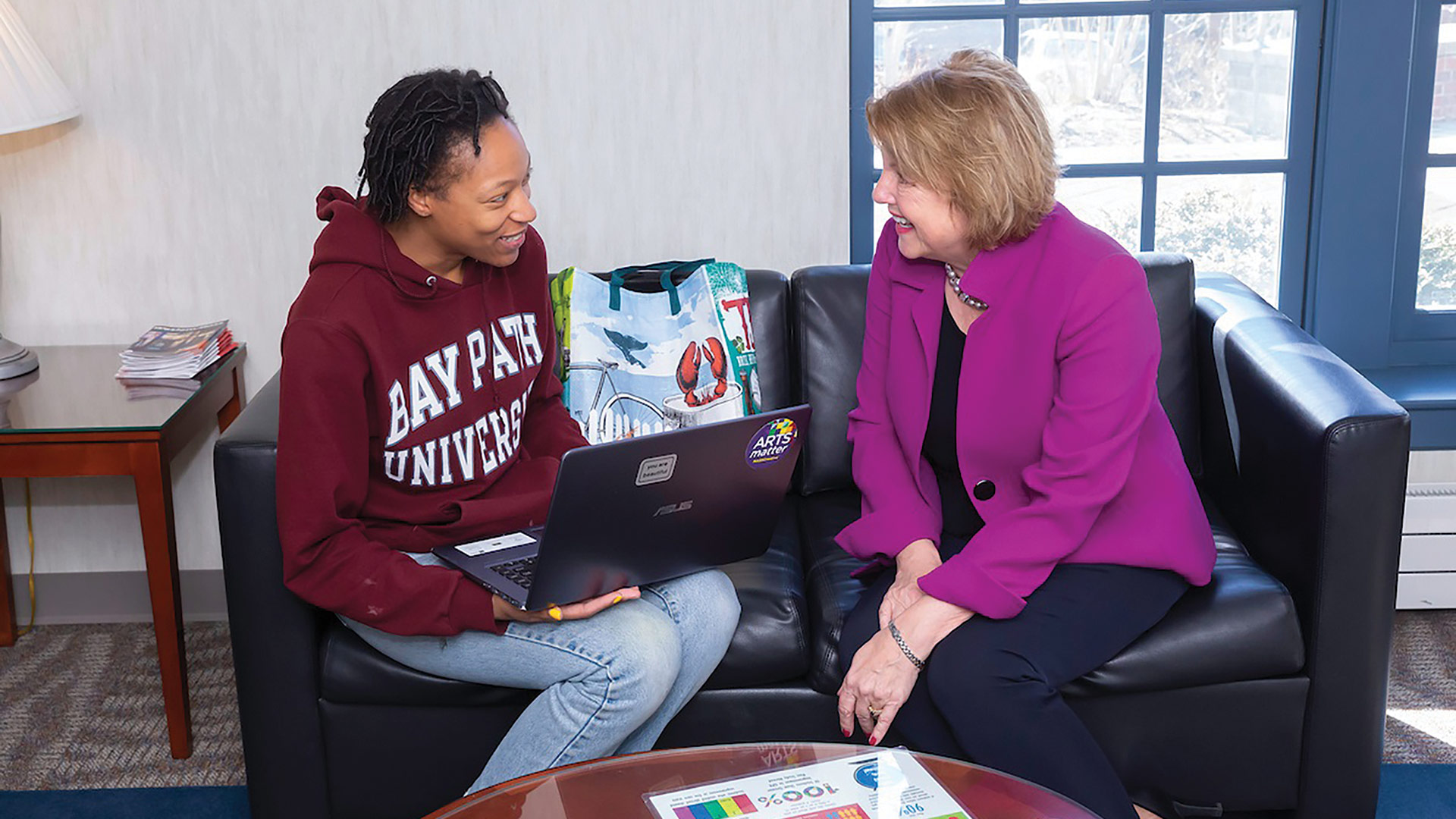
Sandra Doran, seen here with a student

Sandra Doran, seen here with a student on Feb. 27, the day she was introduced to the campus community, embraces the challenge of building on the foundation built by her predecessor, Carol Leary.

“This opportunity is a perfect fit and really the culmination of all my professional work,” she explained. “I’ve had the opportunity to lead a women’s college, so I understand the value of a women’s education. But another part of my background involves adaptive learning and the power of online education to really bring out the best of everyone in terms of mastering the subject matter and ensuring that everyone has a voice. I’ve also led a software company and been an entrepreneur. This opportunity brings all that together, and that’s why it’s a perfect fit.”

A quick recap of her career to date will explain why she said that.

We start at Shaw’s, where Doran, in addition to her work as general counsel, oversaw the company’s portfolio of mergers and acquisitions, which included the acquisition of Star Market Inc.

Later, at Lesley, which she also served as general counsel, she came to that realization that higher education was a passion, one that led her to pursue and then garner the role of president of American College of Education, an online doctoral institution serving more than 3,500 students.

From there, while serving as an entrepreneur in residence at Stevens Institute of Technology in Hoboken, N.J., she served as the CEO of Castle Point Learning Systems, a Stevens Institute-supported educational technology startup that had developed an instructional framework for calculus, enabling students and teachers to develop a more robust foundation for higher-level mathematics.

Concurrently, she took a position as National Policy director for the New England Board of Higher Education, where, among other responsibilities, she created and implemented an innovative initiative for multi-state collaboration to increase educational attainment and access for students through online, hybrid, and distance education.

Her career then took another intriguing turn when she was appointed president of Salem Academy and College in North Carolina, the country’s oldest women’s college, founded in 1772. There, she put the school on firm financial footing, developed a strategic plan, and initiated several new programs, including an entrepreneurial makerspace in downtown Winston-Salem where students could work directly with the city’s innovation ecosystem.

As noted earlier, while education has become her career, she calls on her background in law on an almost daily basis, and finds that the two professions coexist effectively.

“One of the great roles of lawyers is to educate,” she explained. “It’s to educate clients, to educate themselves, to mediate, to bring people together, to critically analyze the data and synthesize the data, and communicate. Lawyers are problem solvers, except for the high-profile ones, which are litigators; most lawyers are solving problems.”

When a search firm called last year to gauge her interest in the Bay Path position, she responded enthusiastically, and for the reasons — and passions — mentioned earlier.

“I was familiar with the pioneering aspects of Bay Path — it was one of the first institutions to immerse themselves in the online education experience and understand what that could provide for our students,” she explained, adding, again, that she viewed this opportunity as the culmination of all the career work that had come before it.

Many schools don’t have an online presence at all, and so imagine their consternation when faced with this pandemic. It’s interesting that other liberal-arts colleges are reaching out to us and looking to us as being able to provide that kind of education.”

Since arriving on campus late last month, Doran, while working with staff on the reopening plan, has also been trying to meet with local leaders and the campus community alike — in COVID-mandated ways, especially phone calls and Zoom meetings.

It’s not the same as meeting people in person, but it’s been effective in that she’s getting to know and better understand the community the school serves. And this work continues with an initiative she calls “Let’s Come Together: Virtual Conversations with President Doran.”

“I’m eager to get to know my colleagues, and they’re eager to get to know me,” she said. “So these are conversations we’re conducting virtually, almost one a day — so faculty and staff have an opportunity to sit and talk and learn about each other. It’s a great opportunity for me to learn about our staff and faculty and what excites them about Bay Path, and, frankly, to learn about areas of strength and areas we need to improve.”

Course of Action

Doran was introduced to the Bay Path community on Feb. 27, just before the school sent its students home for the semester and essentially closed the campus. By the time of that announcement, it was already becoming clear that the approaching pandemic could alter the calendar and impact lives — but no one could really have predicted just how profoundly the landscape would change or how schools would be challenged by the virus.

As the story on page 17 reveals, schools have been spending the past several weeks carefully putting together reopening plans for the fall that incorporate a host of different strategies.

For Bay Path, the assignment, while not easy by any stretch, was made less complicated by what could be called the school’s head start when it came to online programs. Its first fully online graduate program was the MS in Nonprofit Management & Philanthropy, launched in 2007, followed by other online graduate programs for men and women and the fully online bachelor’s-degree program offered by the American Women’s College.

Bay Path’s plan, blueprinted with the help of a 75-member task force, calls for essentially cutting the number of students living on campus by half — down to roughly 200 — and conducting most courses, except those with some lab component, online. It’s a plan the school feels comfortable with because so many of its students were already learning remotely.

“It’s an environment where we’re making decisions with imperfect information — our environment is changing on a weekly basis, if not on a daily basis,” Doran noted. “So we’re going to be ready to pivot if we need to, but we feel strongly that we’ve got the right plan in place.”

This head start with remote learning has certainly caught the attention of others in academia, she added, noting those phone calls and e-mails seeking Bay Path’s assistance with online programming and inquiring about potential partnership opportunities.

“We’ve had several schools reach out to us to ask if they can enroll their students in our courses or think about ways we can partner,” she told BusinessWest, noting that inquiries are coming from institutions across the country. “Many schools don’t have an online presence at all, and so imagine their consternation when faced with this pandemic. It’s interesting that other liberal-arts colleges are reaching out to us and looking to us as being able to provide that kind of education.

“They want to learn from what we’ve learned,” she went on. “So it’s exciting to be in that position of being able to share what we know, what we’ve learned about how to provide the best opportunities for students.”

And these phone calls represent just one of the opportunities, a strange word to use in this climate, to arise from the pandemic, said Doran, adding that she chooses to look upon them in that light.

“We have an opportunity to rethink how we meet the needs of students whose ideals and thoughts around higher education are changing in the midst of everything that we’re dealing with,” she said. “So, just as the pandemic is impacting every single person in terms of how they think about their own career and their own lives, our students are doing the same thing.”

Elaborating, she noted that fewer than 20% of those attending college today are having what would be called a traditional college experience, meaning a four-year school and living on campus.

“The other 80% attend a very different — and have a very different — college experience,” she went on. “And one’s not better than the other, but I think there’s a new reality that higher education is embracing that’s focusing on the academic part of the experience, the part of the experience that enables students to have productive careers and move forward with their life goals and their life dreams.

“And that’s what Bay Path has always been — our mission is rooted in this idea that we want to provide career paths,” she continued, noting, again, that the school is well-positioned to embrace this new reality, as she called it, and this is reflected in enrollment numbers for the fall, which are quite solid at a time when many schools are struggling.

“We have — and this is another strength of Bay Path — a very diverse set of students,” she said. “We have students who are only online students, so they were never contemplating coming to campus, so we feel secure in those enrollments; we have graduate students, many of whom are online, so we feel secure in those enrollments; and our undergraduate enrollment is up for this fall in terms of deposits and commitments. We’re feeling very confident, and we’ve had a good response to our plan.”

Overall, the school is on solid financial ground, Doran said, and in a good position to withstand the challenges created by the pandemic.

“The finances around higher education are always challenging,” she explained. “The pandemic has certainly raised another level of gauze around all this, because it’s hard to see through and see what the next steps are. But we have a number of task forces looking at the long-term aspects, and, overall, we see some opportunities.”

Bottom Line

Looking ahead … well, Doran acknowledged it’s difficult to look very far ahead in the era of COVID-19.

Her immediate goals are to continue building on the foundation that Leary has built and develop new growth opportunities for a school that has come a long way in the past quarter-century.

And rather than somehow slow or stifle those efforts, this convergence of crises that greeted her upon her arrival may, as she said, actually serve to accelerate that process.

As she noted, “this is our moment.”

George O’Brien can be reached at [email protected]

Health Care

Improved State

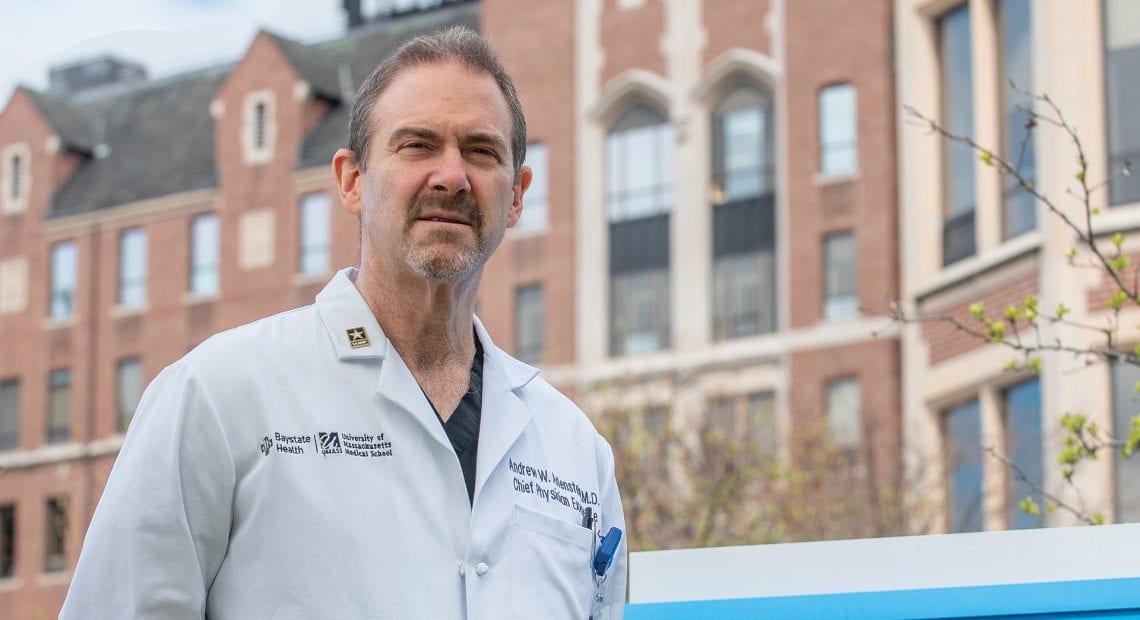
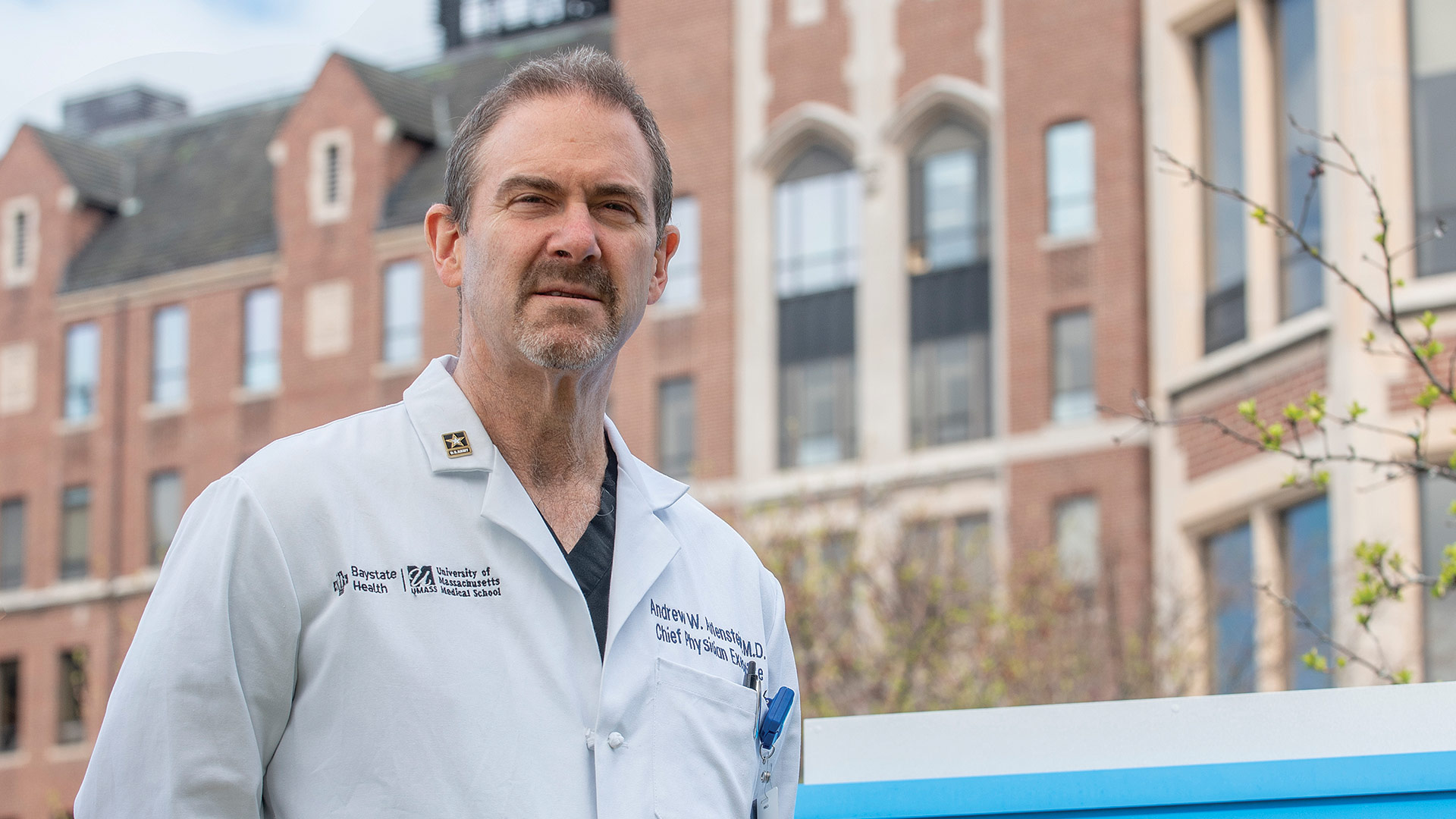
Dr. Andrew Artenstein

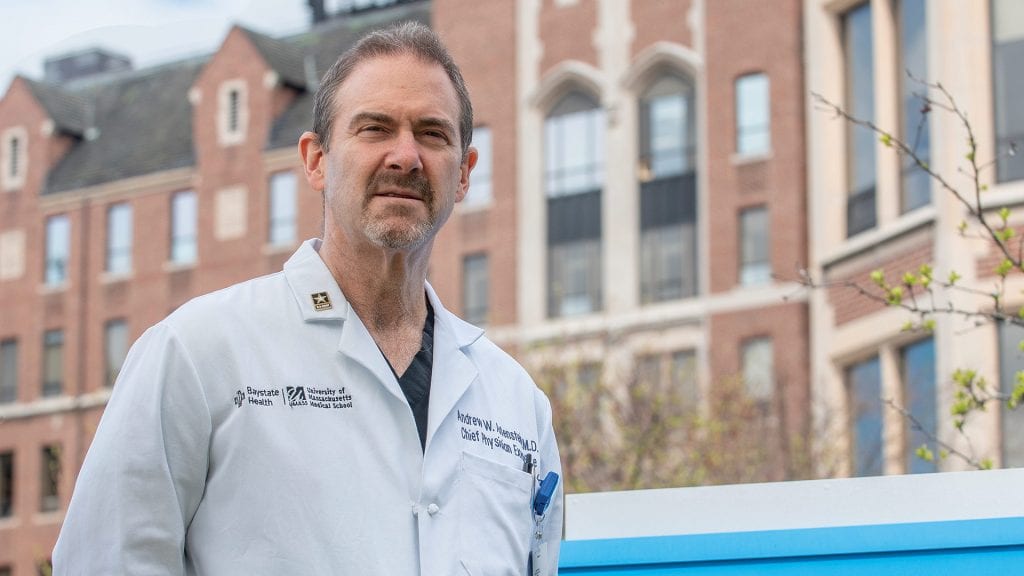
Dr. Andrew Artenstein says the state’s slow, cautious reopening has effectively blocked some of the paths COVID-19 might take, thus slowing transmission of the disease.

In many respects, Dr. Andy Artenstein says, the COVID-19 virus acts like water in the home in that, if there are leaks, it can go where you don’t necessarily want it to go and cause major problems.

“Water will always find a path,” Artenstein, chief physician executive and chief academic officer at Baystate Health, told BusinessWest. “But if you block off all the paths, you have a chance; it’s the same with the virus.”

With that, he worked to explain why it is that Massachusetts, more than most of the other 50 states at this particular moment in time, is seeing the number of hospitalizations and deaths stemming from the virus decline sharply. In short, and in his view, the residents of the Commonwealth are essentially, and somewhat effectively, blocking off the paths the virus might take.

“We live in a society where there’s free mobility — that’s one of the things we love about our society. But it’s also one of the things that puts us at risk when there’s a transmissible agent rooted in this society,” he explained. “And this one is clearly here; it’s clearly transmitted in our community. It has not gone away; it’s just that, if viruses don’t get transmitted from person to person … if the virus has nowhere to go, it puts a wall from that root of transmission. You start to block off transmission paths.”

This was Artenstein’s way of explaining why, as one looks at a map of the country charting cases, hospitalizations, and deaths from the pandemic, Massachusetts is colored or tan or pink, while so many other states, especially in the South and Southwest, are dark shades of red, indicating they are hot spots.

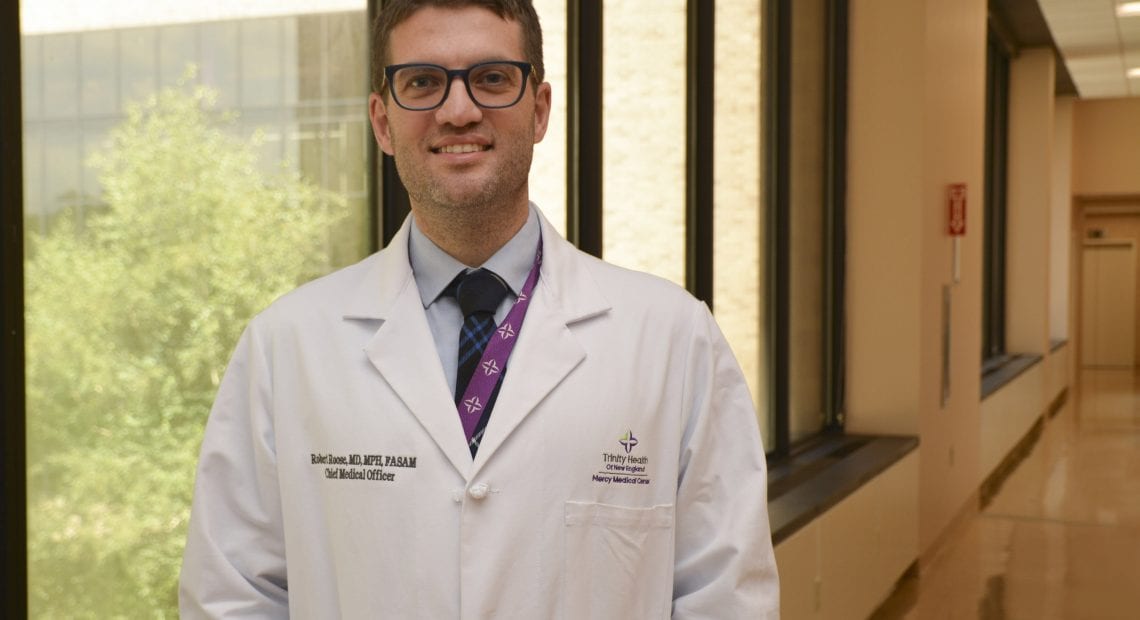
Robert Roose, chief medical officer at Mercy Medical Center, gave essentially the same account.

“Massachusetts, along with a few of the other states here in New England, like Connecticut, New Hampshire, and a few others, seem to be solid, if not shining, examples of how a state encompassing multiple different communities can effectively slow down the rate of transmission of the coronavirus,” he said. “More than 40 other states are seeing significant increases in numbers of new infections, while here, over the past several weeks, we have not seen that increase; rather, we’ve seen a plateauing at a very low level.”

“Massachusetts and other states now doing well have been cautious in giving guidance to residents about limitations on travel and quarantining of individuals who have come from other states where there are increasing numbers of infections.”

He punctuated those comments with some statistics from his facility. Indeed, he noted that hospitalizations stemming from COVID-19, which numbered in the 50s daily on average in April, the height of the surge in this region, were down in the 20s in May, then the single digits in June. Starting in early July, there were several days when there were no hospitalizations.

Clearly, the state is doing something right, or several things right, when it comes to blocking paths for the virus, and we’ll get to those. But this begs a number of questions — especially, ‘is this sustainable?’

The quick answer, said Roose and Artenstein, is ‘yes.’ But there are a number of caveats, especially as more segments of the economy reopen in more cities, including Boston, and as the new school year is poised to begin. In their view, the Commonwealth has acted prudently in not opening too much of the economy too quickly. Staying that course is essential, they said, adding that it appears the state is committed to the slow, steady, and safe method.

Meanwhile, travel is another key factor in this equation, both people from this state traveling to others and people from other states coming here — actions that create paths for the virus, rather than block them.

“Massachusetts and other states now doing well have been cautious in giving guidance to residents about limitations on travel and quarantining of individuals who have come from other states where there are increasing numbers of infections,” Roose said. “To me, that is likely to be the most significant factor going forward, because of the rates of infection in other parts of the country; interstate travel represents one of our most significant risks in terms of keeping our rates of transmission is this local community low.”

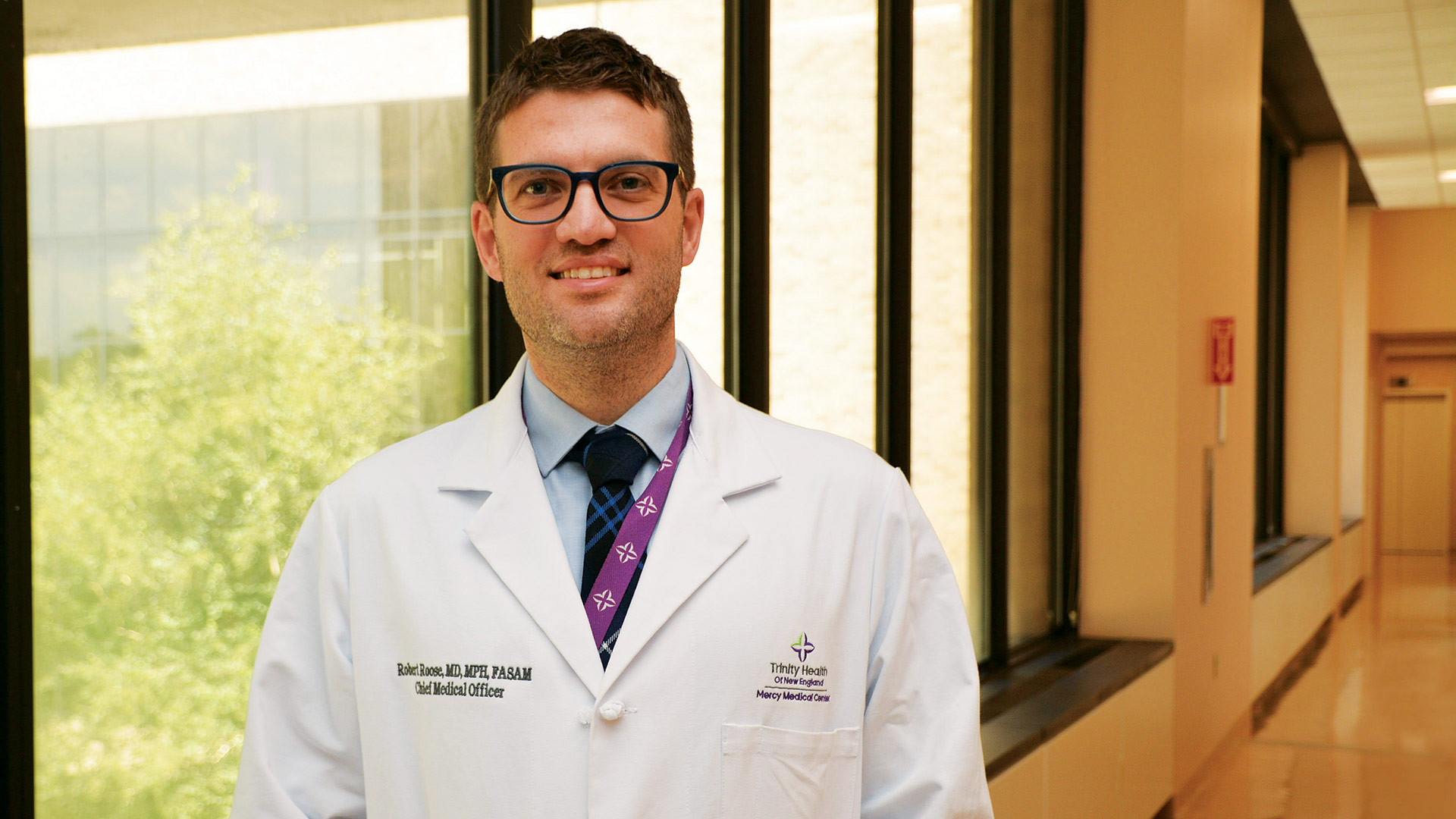
Dr. Robert Roose

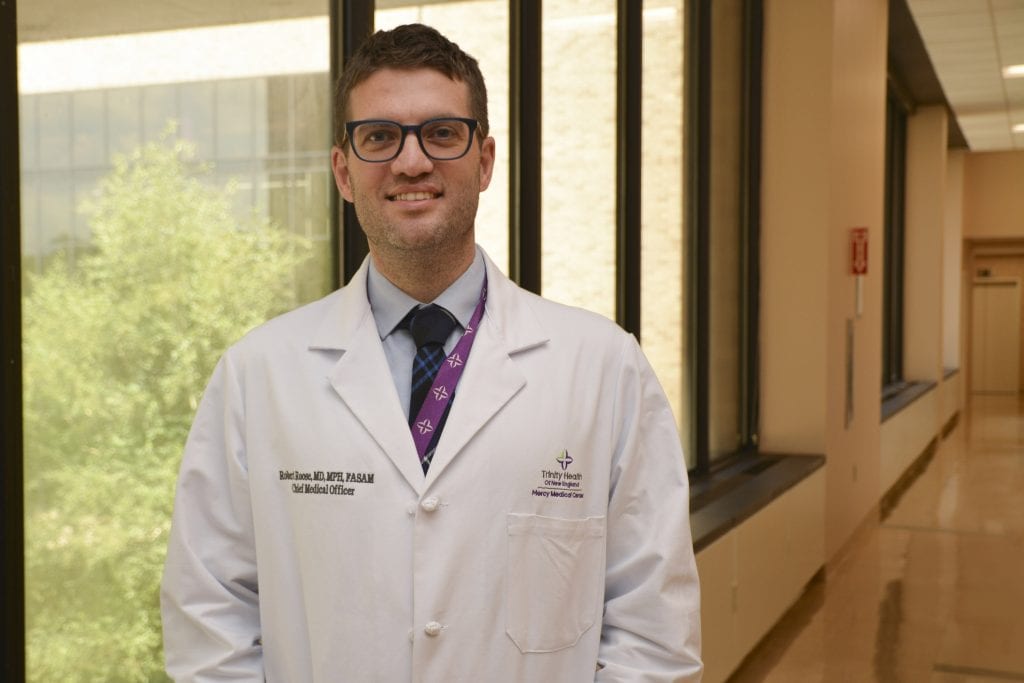
Dr. Robert Roose says caution regarding travel will be one of many factors that will determine if the Bay State can continue its pattern of falling hospitalizations as a result of the pandemic.

But the biggest factor might be fatigue.

“It’s exhausting — for all of us; I’m not just talking about the healthcare side, I’m talking about life,” said Artenstein. “There are certain things that you just miss having as social human beings. But the longer you can sort of wait this out and stretch this out, the better off we’ll be.”

In other words, people can’t relax or think for a moment that maybe it’s time to start talking about the pandemic in the past tense.

As they talked about the state’s current status as a … let’s call it a cold spot for the virus, both Roose and Artenstein praised the Commonwealth’s approach to reopening, which has been described by both those supporting and criticizing it as slow and careful.

Pain Threshold

Artenstein had another word for it.

“It’s painful, because we all want to get back to a sense of normalcy,” he explained. “It’s exhausting that you can’t do what you like to do the way you used to do it, and eventually we will be able to. But this approach has paid dividends; you get used to a little bit of a new normal, but you also know that you’re moving toward something.”

Roose agreed.

“What I think Gov. Baker and the Executive Office of Health and Human Services have done very well is be cautious, rely very clearly and directly on the key data points, and move slowly but consistently through a phased reopening,” he explained. “In other states, governors had moved much more quickly, and we’re seeing the effects of that now; in many states, they’re seeing such significant increases that they’re moving backward and rolling back some aspects of their reopenings.

“It’s not to say that this same type of thing couldn’t happen here,” he added quickly. “But relying consistently on key data and reinforcing consistently the important public-health and safety strategies that we know are effective in reducing transmission — that has not wavered, and I think that has sent a very consistent and strong message to residents to continue to wear masks, be cautious with increasing your social circle, practice hand hygiene, and quarantine when you’re sick.”

As a result of the slow reopening plan and diligence with things like mask wearing, contact tracing, social distancing, and testing, the Commonwealth has effectively moved past the first wave of the pandemic — while other states have clearly not, said those we spoke with. It is now in what Artenstein called a “window,” where, he said, residents must be diligent about not backsliding when it comes to mask wearing, hand washing, keeping one’s distance, and other preventive measures, while also preparing for the second wave that most say is almost certain to come in the fall or winter.

“That’s just historically what pandemics do,” he explained. “They don’t all do that, but statistics will tell you that there will be at least a second wave if not more waves.”

What will those waves be like? It’s difficult to say at this point, said Roose and Artenstein, adding that a number of factors will dictate the level of infections and how well the healthcare community can respond to the next surge.

But in the meantime, and while still in this window, the state’s residents and business owners alike must continue to stay the course, the experts said.

“We still could do better in terms of how often people wear masks in pubic and follow the public-health recommendations,” said Roose, adding that state leadership must continue to reinforce those messages. “We know that when we give those recommendations and that guidance and it’s clear and connected to science, it helps, and it’s certainly important to be consistent about it, or people will have less inclination to follow them.”

Meanwhile, as the state proceeds with phase 3 of its reopening plan and eyes phase 4, testing will be another critical key to closing off paths the virus might take.

“I believe strongly that adequate capacity and widespread testing are critical for us to continue to move forward into phase 4 and into a state where the community is engaging as fully as it can,” Roose said. “That allows us to ensure that, if we do identify infections, we can mitigate the spread; widespread testing is really critical, and we’re not yet where we need to be, as state and as a country. We still could be doing more, and I think the ways we do testing will continue to get easier and more readily available, and that will help quite a bit.”

Artenstein agreed, but quickly noted that all the steps people have been taking — and hopefully will continue to take — only serve to slow or inhibit the spread of the virus. The virus is still there, and it will remain there until a vaccine is developed.

“You can temporarily shut down or limit transmission,” he said, “and then you have the chance for other things to kick in, such as therapies and better approaches to diagnosis and treatment. Those things take time, but they can get a chance to take root once you’ve already established those public-health principles.

“It’s pretty obvious that limiting public gatherings and staying the course has helped,” he went on, returning to the thought that, however painful and exhausting the last few months have been, the strategy moving forward for the state and all its residents has to be to continue to wait it out and, as he said, “stretch it out.”

Bottom Line

Turning the clock back 100 years, to the so-called Spanish flu, Artenstein said the second wave of that pandemic was more severe than the first in many parts of the country simply because communities eased off on restrictions and returned to what life was like before it struck.

“A lot has changed in 100 years — science, technology, people, etc.,” he told BusinessWest. “But one thing that hasn’t changed that much, in my opinion, is behavior. We may be able to further mitigate any future surge, just as we mitigated this surge, by adhering to public-health guidelines. If we can keep that up, and then get some help with testing, better contract tracing, better therapies, which will happen, and maybe a vaccine…”

He didn’t completely finish the thought and instead stressed that this ‘if’ is a very large one, and there are really no certainties when it comes to this strategy.

But the very best strategy at the moment, he stressed, is to string this out and close off those pathways the virus can take.

George O’Brien can be reached at [email protected]

Sections Special Coverage

Reopen for Business

Cindy Olivio recalls the day in mid-March she and her colleagues left MGM Springfield after the governor announced that the state’s casinos would have to close as part of a general shutdown of non-essential businesses. At the time, she really thought it would be for just two weeks.

“That’s how people were talking — that’s what we all thought,” she recalled, noting that, by April, she was taking things week to week. And when the governor’s phased reopening plan was finally announced in mid-May, she fully understood that it would be early summer at the earliest before she was back at the casino — specifically, its South End Market, which she serves as assistant general manager.

“It was a long time to be out, and it’s good to be back,” she told BusinessWest Monday, as the casino reopened to the general public following a soft opening a few nights earlier.

With that, she spoke for most everyone on the floor that day, guests and employees alike.

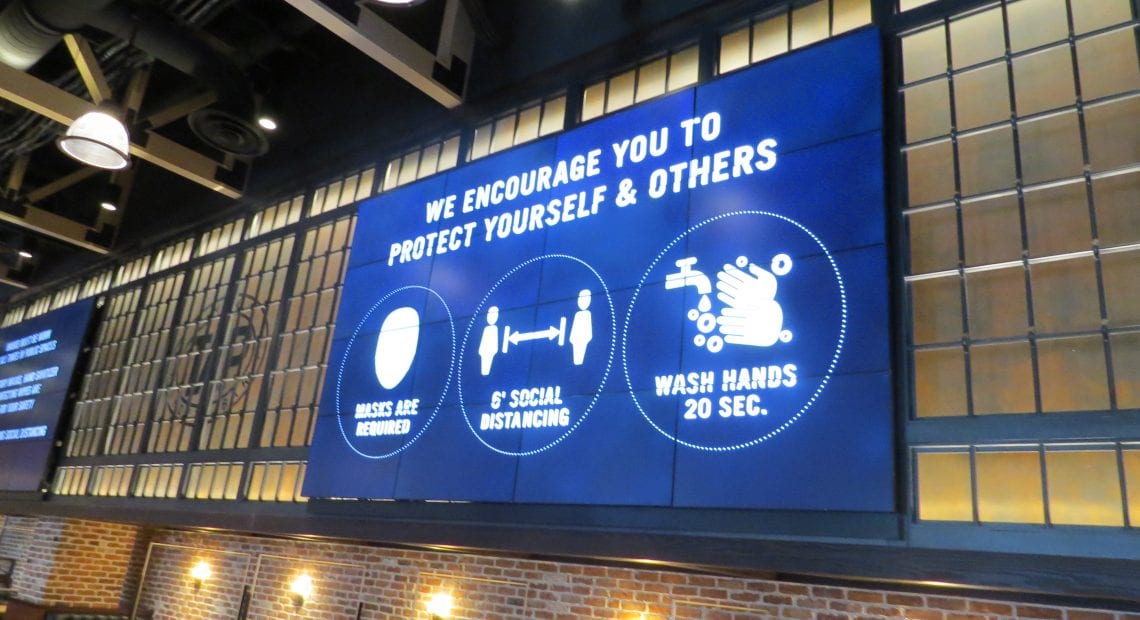
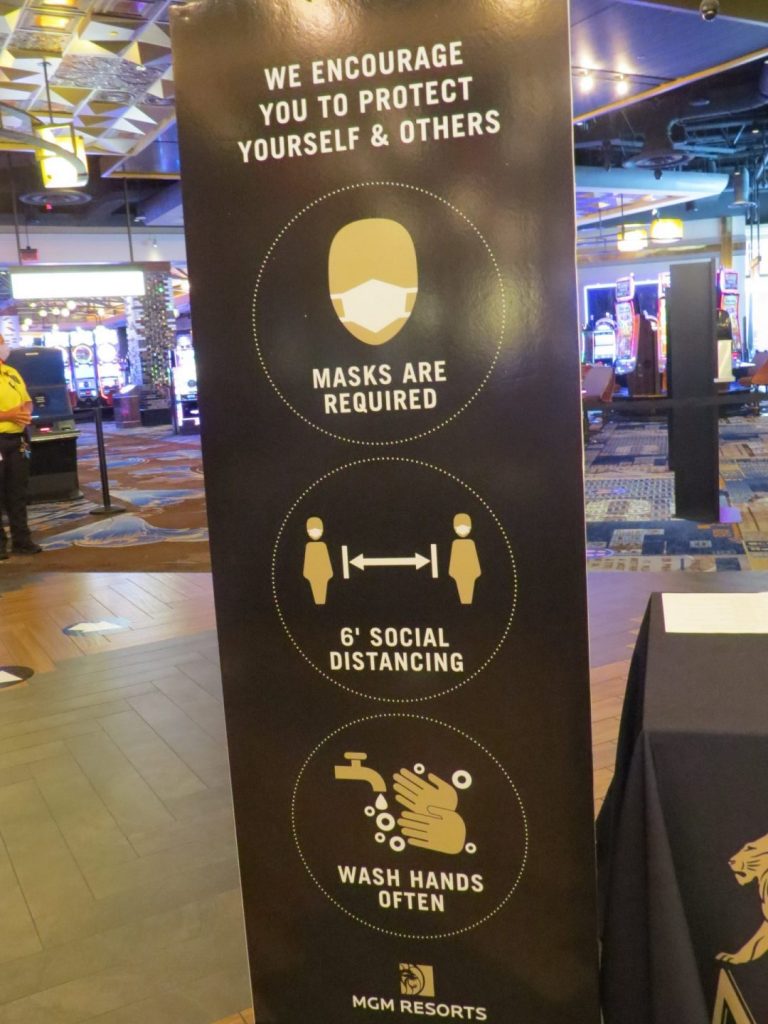
It was a long time to be out, and while the casino looks very much the same as it did when it went dark back in March, there have been a number of significant changes, from plexiglass partitions on some of the games to signs on the floors and walls alerting people to stay six feet apart.

And they were on full display Monday as the media was given the opportunity to talk with some employees, and also some guests.

People like Darlene Lajeuneffe of Chicopee, who was there with her husband and other family members celebrating the couple’s 46th wedding anniversary. She was marking the occasion with a glass of champagne and some time on one her favorite slot machines.

“It was hard — we love it here,” she said of the nearly four-month shutdown of MGM Springfield, which she frequents maybe once a month, along with Mohegan Sun; she’s never been fond of Foxwoods. She told BusinessWest she was getting used to some of the new rules and protocols, especially distancing guidelines that generally prohibit people from sitting next to one another, which presented a dilemma.

Indeed, Lajeuneffe learned there was an area where family members could in fact sit together, but it did not include her favorite slot machine. So, faced with a choice, she was leaning strongly toward that machine and keeping family as least close by.

Such adjustments are part of the reopening, said Seth Stratton, MGM Springfield’s vice president and general counsel, who told BusinessWest on Monday that, so far, guests are noting the new rules, and adhering to them.

“We’re pleased with how willing customers are to understand and comply with the new measures,” he said. “There was some concern initially around the enforcement of mandatory facemasks when the discussion first came up several weeks ago. But things have evolved since, and customers are very willing to wear them. We’ve had virtually no enforcement issues with mask wearing.”

Stratton told BusinessWest that the company’s management team put a thoughtful plan in place for the reopening. First, there would be a soft opening, the weekend of July 11 and 12, to help ready staff for the full reopening on the 13th. And by staging that reopening on a Monday, this gave the staff several days to ramp up for the weekend, which has historically been the casino’s busiest time.

“The strategy we followed was to have a staggered opening so that, over the weekend, which might otherwise be a busy period, we had our invited guests so we could ramp up from Friday through Sunday, gradually increasing the capacity, and then open to the public on a Monday,” he explained. “That gave us the ability to stagger the opening and get folks back and employees back and get them comfortable in the new environment so that, by Friday or Saturday, our busiest period, everyone will have a week under their belt of the new policies and procedures.”

The casino reopened at one-third capacity, one of the stipulations set by the Masachusetts Gaming Commission, and while that number is limiting in many respects when it comes to revenue, it will help ensure the safety of guests and employees, which is the top priority at the moment, Stratton explained.

“It’s all about showing we can do this safely and responsibly,” he said. “We don’t want huge crowds right now; as we ramp up and as we get these protocols into place, we feel that, if the customers see it’s not that crowded, they will feel more comfortable and be more willing to return.”

—George O’Brien

Coronavirus Sections Special Coverage

Improved State

By George O’Brien

In many respects, Dr. Andrew Artenstein says, the COVID-19 virus acts like water in the home in that, if there are leaks, it can go where you don’t necessarily want it to go and cause major problems.

Dr. Andrew Artenstein

Dr. Andrew Artenstein

“Water will always find a path,” Artenstein, chief physician executive and chief academic officer at Baystate Health, told BusinessWest. “But if you block off all the paths, you have a chance; it’s the same with the virus.”

With that, he worked to explain why it is that Massachusetts, more than most of the other 50 states at this particular moment in time, is seeing the number of hospitalizations and deaths stemming from the virus decline sharply. In short, and in his view, the residents of the Commonwealth are essentially, and somewhat effectively, blocking off the paths the virus might take.

“We live in a society where there’s free mobility — that’s one of the things we love about our society. But it’s also one of the things that puts us at risk when there’s a transmissible agent rooted in this society,” he explained. “And this one is clearly here; it’s clearly transmitted in our community. It has not gone away; it’s just that, if viruses don’t get transmitted from person to person … if the virus has nowhere to go, it puts a wall from that root of transmission. You start to block off transmission paths.”

This was Artenstein’s way of explaining why, as one looks at a map of the country charting cases, hospitalizations, and deaths from the pandemic, Massachusetts is colored or tan or pink, while so many other states, especially in the South and Southwest, are dark shades of red, indicating they are hot spots.

Dr. Robert Roose

Robert Roose, chief medical officer at Mercy Medical Center, gave essentially the same account.

“Massachusetts, along with a few of the other states here in New England, like Connecticut, New Hampshire, and a few others, seem to be solid, if nt shining, examples of how a state encompassing multiple different communities can effectively slow down the rate of transmission of the coronavirus,” he said. “More than 40 other states are seeing significant increases in numbers of new infections, while here, over the past several weeks, we have not seen that increase; rather, we’ve seen a plateauing at a very low level.”

He punctuated those comments with some statistics from his facility. Indeed, he noted that hospitalizations stemming from COVID-19, which numbered in the 50s daily on average in April, the height of the surge in this region, were down in the 20s in May, then the single digits in June. Starting in early July, there were several days when there were no hospitalizations.

Clearly, the state is doing something right, or several things right, when it comes to blocking paths for the virus, and we’ll get to those. But this begs a number of questions — especially, ‘is this sustainable?’

The quick answer, said Roose and Artenstein, is ‘yes.’ But there are a number of caveats, especially as more segments of the economy reopen in more cities, including Boston, and as the new school year is poised to begin. In their view, the Commonwealth has acted prudently in not opening too much of the economy too quickly. Staying that course is essential, they said, adding that it appears the state is committed to the slow, steady, and safe method.

Meanwhile, travel is another key factor in this equation, both people from this state traveling to others and people from other states coming here — actions that create paths for the virus, rather than block them.

“Massachusetts and other states now doing well have been cautious in giving guidance to residents about limitations on travel and quarantining of individuals who have come from other states where there are increasing numbers of infections,” Roose said. “To me, that is likely to be the most significant factor going forward, because of the rates of infection in other parts of the country; interstate travel represents one of our most significant risks in terms of keeping our rates of transmission is this local community low.”

But the biggest factor might be fatigue.

“It’s exhausting — for all of us; I’m not just talking about the healthcare side, I’m talking about life,” said Artenstein. “There are certain things that you just miss having as social human beings. But the longer you can sort of wait this out and stretch this out, the better off we’ll be.”

In other words, people can’t relax or think for a moment that maybe it’s time to start talking about the pandemic in the past tense.

As they talked about the state’s current status as a … let’s call it a cold spot for the virus, both Roose and Artenstein praised the Commonwealth’s approach to reopening, which has been described by both those supporting and criticizing it as slow and careful.

Pain Threshold

Artenstein had another word for it.

“It’s painful, because we all want to get back to a sense of normalcy,” he explained. “It’s exhausting that you can’t do what you like to do the way you used to do it, and eventually we will be able to. But this approach has paid dividends; you get used to a little bit of a new normal, but you also know that you’re moving toward something.”

Roose agreed.

“What I think Gov. Baker and the Executive Office of Health and Human Services have done very well is be cautious, rely very clearly and directly on the key data points, and move slowly but consistently through a phased reopening,” he explained. “In other states, governors had moved much more quickly, and we’re seeing the effects of that now; in many states, they’re seeing such significant increases that they’re moving backward and rolling back some aspects of their reopenings.

“It’s not to say that this same type of thing couldn’t happen here,” he added quickly. “But relying consistently on key data and reinforcing consistently the important public-health and safety strategies that we know are effective in reducing transmission — that has not wavered, and I think that has sent a very consistent and strong message to residents to continue to wear masks, be cautious with increasing your social circle, practice hand hygiene, and quarantine when you’re sick.”

As a result of the slow reopening plan and diligence with things like mask wearing, contact tracing, social distancing, and testing, the Commonwealth has effectively moved past the first wave of the pandemic — while other states have clearly not, said those we spoke with. It is now in what Artenstein called a “window,” where, he said, residents must be diligent about not backsliding when it comes to mask wearing, hand washing, keeping one’s distance, and other preventive measures, while also preparing for the second wave that most say is almost certain to come in the fall or winter.

“That’s just historically what pandemics do,” he explained. “They don’t all do that, but statistics will tell you that there will be at least a second wave if not more waves.”

What will those waves be like? It’s difficult to say at this point, said Roose and Artenstein, adding that a number of factors will dictate the level of infections and how well the healthcare community can respond to the next surge.

But in the meantime, and while still in this window, the state’s residents and business owners alike must continue to stay the course, the experts said.

“We still could do better in terms of how often people wear masks in pubic and follow the public-health recommendations,” said Roose, adding that state leadership must continue to reinforce those messages. “We know that when we give those recommendations and that guidance and it’s clear and connected to science, it helps, and it’s certainly important to be consistent about it, or people will have less inclination to follow them.”

Meanwhile, as the state proceeds with phase 3 of its reopening plan and eyes phase 4, testing will be another critical key to closing off paths the virus might take.

“I believe strongly that adequate capacity and widespread testing are critical for us to continue to move forward into phase 4 and into a state where the community is engaging as fully as it can,” Roose said. “That allows us to ensure that, if we do identify infections, we can mitigate the spread; widespread testing is really critical, and we’re not yet where we need to be, as state and as a country. We still could be doing more, and I think the ways we do testing will continue to get easier and more readily available, and that will help quite a bit.”

Artenstein agreed, but quickly noted that all the steps people have been taking — and hopefully will continue to take — only serve to slow or inhibit the spread of the virus. The virus is still there, and it will remain there until a vaccine is developed.

“You can temporarily shut down or limit transmission,” he said, “and then you have the chance for other things to kick in, such as therapies and better approaches to diagnosis and treatment. Those things take time, but they can get a chance to take root once you’ve already established those public-health principles.

“It’s pretty obvious that limiting public gatherings and staying the course has helped,” he went on, returning to the thought that, however painful and exhausting the last few months have been, the strategy moving forward for the state and all its residents has to be to continue to wait it out and, as he said, “stretch it out.”

Bottom Line

Turning the clock back 100 years, to the so-called Spanish flu, Artenstein said the second wave of that pandemic was more severe than the first in many parts of the country simply because communities eased off on restrictions and returned to what life was like before it struck.

“A lot has changed in 100 years — science, technology, people, etc.,” he told BusinessWest. “But one thing that hasn’t changed that much, in my opinion, is behavior. We may be able to further mitigate any future surge, just as we mitigated this surge, by adhering to public-health guidelines. If we can keep that up, and then get some help with testing, better contract tracing, better therapies, which will happen, and maybe a vaccine…”

He didn’t completely finish the thought and instead stressed that this ‘if’ is a very large one, and there are really no certainties when it comes to this strategy.

But the very best strategy at the moment, he stressed, is to string this out and close off those pathways the virus can take.

George O’Brien can be reached at [email protected]

Sections Special Coverage

If you read between the lines when scanning or listening to the comments made by MGM Springfield officials in the run-up to the reopening of the facility today, it’s easy to see they have some real concerns about whether the restrictions they’ve been placed under will enable them to succeed.

“We’re excited to be here in this moment,” Chris Kelley, president and chief operating officer, told members of the press being given a tour of the pandemic-adjusted facilities last week. “We have significant occupancy constraints that the business will be opening with, but we approach this moment with gratitude for the opportunity to serve our guests and this community again.”

We’re not sure how much gratitude, but we are sure these occupancy constraints and other restrictions, put in place to keep guests and employees safe, are going to present stern challenges for the casino operators.

Roughly two-thirds of the slot machines will be disabled in the name of social distancing; many table games, including roulette, craps, and poker, will be shut down; capacity in the restaurants will also be limited, again in a nod to social distancing; the bars will be closed, and drinking will be limited to those playing the games that are still open; and large gatherings, such as concerts and shows, are still prohibited.

Add it all up, and then add in the cost of retrofitting the casino for play in the middle of a pandemic, and it’s fair to wonder whether opening is even a sound business decision given the high overhead at such facilities. That question remains to be answered.

What isn’t in doubt, though, is whether the city and the region need this facility open for business. To that question, we give a resounding ‘yes.’

Indeed, the tourism industry has been absolutely battered by the pandemic, perhaps harder than any other sector. Hotels, restaurants, bus companies, tourist attractions, and other businesses have been crippled by this. And the announcement that there will be no Big E this fall dealt that sector another huge blow.

We’re not sure how much reopening MGM Springfield will help those businesses — many visitors to the casino don’t make any other stops before or after they do their gambling — but any help would certainly be appreciated.

There’s also the support the casino provides to other businesses, especially its vendors. We’ve written much over the past few years about how important MGM’s business is to these vendors — from the sign makers to the dry cleaners — and the trickle-down, while limited in some respects, is very real.

Then there’s the psychological factor. Much of Main Street in Springfield was shut down by the pandemic, from shops to restaurants to businesses in the office towers. It’s starting to come back somewhat, with outdoor restaurants on Fort Street, Worthington Street, and around One Financial Plaza, and the office towers slowly (as in slowly) but surely coming back to life.

MGM is another, very important piece of the puzzle. With the casino again welcoming guests, Springfield, and the region, will seem all the more open for business after a dreadful spring.

We’re under no delusions here. Reopening MGM is not going to dramatically alter the fate of many of the businesses that have been decimated by the pandemic. But it might provide a spark — another spark, to be more precise — as the region tries to fight its way out of a disaster unlike anything it’s ever seen.

MGM’s managers are certainly not thrilled with the hand they’ve been dealt, as they say in this business, but perhaps they can do something with it — show they can operate safely while eventually building their capacity back up. In the meantime, the city and the region get another boost when they so badly need one.

Cover Story Women in Businesss

In the Right Mold

Pia Kumar

Pia Kumar, ‘chief strategy officer’ at Universal Plastics.

Back in mid-March, Pia Kumar recalls, at the height of the first wave of the COVID-19 pandemic, there was a good deal of absenteeism at the five plants within the Universal Plastics fold — maybe 40% by her estimate, a number that spoke volumes about the high levels of fear and anxiety within the workforce.

So Kumar, who co-owns the Universal family of businesses with her husband, Jay, and has the title ‘Chief Strategy Officer’ printed on her business card, did what she says comes naturally to her.

She got on the phone.

“I called every single employee that was not here and talked to them about their concerns,” she told BusinessWest, noting that this was maybe 200 people across the five facilities. “In some cases, I talked to their wives, their husbands, their children; I wanted to understand what we could do together as a business to make sure they could come back in and do the essential work we were doing.

“We make the diagnostic machines used to test for COVID, so we needed to come back in and get working, but we needed to keep people safe,” she went on. “There was a lot of uncertainty, and we needed to establish trust.”

The company earned it by taking painstaking steps to comply with work regulations put in place in four different states — everything from masks and face shields to social-distancing measures and temperature checks, with most ideas coming from employees. And in a matter of a few short weeks, absenteeism all but disappeared.

“It’s strange — in some ways, I feel more connected to people these days. I think it’s because there’s been so much uncertainty and so many questions. There’s so many things we don’t know; it’s almost as if it [the pandemic] has given us a way to come together closer and talk about things more openly.”

Kumar’s phone calls, and those subsequent actions taken by the company, provide some valuable insight into not only her management style — although it certainly does that — but also into her approach to business and her specific, and very broad, role with the company.

Indeed, while she’s certainly involved with strategy, as that business card would indicate, and she is involved in virtually every aspect of the business, she’s predominantly focused on people and their well-being. And that goes for the community, as well as the Universal ‘family.’

This is evidenced by something she calls ‘office hours.’ These are the twice-monthly Zoom meetings she conducts with employees at each plant to help them feel more connected at a time when traveling to those plants is far more difficult and, well, people need a connection.

And she’s finding that, while Zoom is certainly a different experience than the in-person office hours she had been conducting until the pandemic (more on those later), they’re in some ways more effective.

“It’s strange — in some ways, I feel more connected to people these days,” she noted. “I think it’s because there’s been so much uncertainty and so many questions. There’s so many things we don’t know; it’s almost as if it [the pandemic] has given us a way to come together closer and talk about things more openly.”

It’s also on display in a number of programs and initiatives she’s helped introduce at the company that are designed to help individuals overcome barriers to employment and success in the workplace — and in life itself.

“We have someone in our HR department whose whole job is to make sure that we make people successful outside of work, so that they can be successful at work.” she said of efforts to help employees with everything from attaining a driver’s license to securing day-care services.

Pia Kumar shows off some of the company’s new face shields

Pia Kumar shows off some of the company’s new face shields with ‘skirts,’ one of many new products it has developed in the wake of the pandemic.

As for her own efforts in the realm of work-life balance, she said, simply, “I work at it.”

By that, she meant that she finds time for work, family, and to be alone for a few moments each day, early in the morning — time she spends meditating and planning, for the most part.

“I need to get my planning done to feel prepared for my day,” she explained. “I do a 10-minute meditation, then I spend 30 minutes planning, and then I take my dog for a walk; it works for me.”

For this issue and its focus on women in business, we talked at length with Kumar about her work with her husband to grow and expand Universal. But mostly, the talk was about people and helping them handle all that work and life can throw at them — even a global pandemic.

Clear Intentions

As she talked with BusinessWest in the company’s recently opened corporate offices, located next door to the Holyoke plant on Whiting Farms Road, Kumar showed off a display of one of the latest additions to the company’s portfolio of products.

These are face shields — which the company started making a few months ago to help meet demand for personal protective equipment within the region — that feature what she called ‘skirts.’

Designed specifically for teachers, these customized products allow for open communication without muffling the voice or hiding expressions — things masks can’t do — while providing more protection than a common face shield.

“You can wear it all day — you’re fully covered, you’re fully sealed,” she said while demonstrating the product, noting there are several styles, including models invoking Halloween and Christmas, and another promoting breast-cancer awareness. Response has been good, she noted, and there are ongoing discussions about perhaps making such shields for children.

These PPE products are part of the company’s pivoting efforts during the pandemic, she explained — a way to assist the community and especially the healthcare and education sectors while also keeping employees working at a time when many traditional customers, including those in aerospace and medical-device manufacturing, have scaled back as a result of the pandemic.

And such efforts are among the current focal points for the Kumars, who acquired Universal Plastics roughly eight years ago — she dates the transaction to the birth of their first child — from long-time owner Joe Peters. Flashing back to that purchase, Pia said the couple, who met while they were both working in finance in New York after graduating from college, were looking for a challenge they could undertake together.

“We had always had this dream to someday own and run a small business together,” she said. “We just liked the idea of building something, we liked the idea of having autonomy, we liked the idea of taking something, growing it, and making it our life’s work.”

Pia Kumar, seen here reading to children at the Morgan School in Holyoke

Pia Kumar, seen here reading to children at the Morgan School in Holyoke as part of the company’s Link to Libraries sponsorship, says her discussions with employees have helped her understand the many barriers that people face when it comes to succeeding in the workplace.

And that’s exactly what has happened with Universal, a company launched by Joe Peters’ father in Chicopee and eventually moved to Holyoke.

Indeed, the Kumars have added four other companies over the past several years, with the goal of attracting different types of customers and doing more for them. Expansion efforts started with the acquisition of a competitor, Mayfield Plastics in Sutton (since renamed Universal), an operation similar to the one in Holyoke.

“We offer a product called custom thermoforming,” she said of the Holyoke facility. “It’s good for small volumes, but as some customers ramped up, we would lose those customers. Then we started thinking about how we could keep that customer for a longer life cycle, and we started looking at injection molders.”

This led to the acquisition of Sajar Plastics in Middlefield, Ohio in 2018, and the subsequent addition of a blow-molding facility in Pennsylvania that had a strong focus on medical-equipment manufacturing — steps that have greatly diversified the corporation and opened the door to new types of opportunities.

While Pia is certainly involved with all aspects of the company, especially short- and long-term strategy, she told BusinessWest that people are her main focus, and it’s a role she believes she’s well-suited for.

“I try to spend a lot of time with employees; it’s part of what my focus is with the company,” she explained. “I like to really get out there and talk to people and really understand what our people are saying and thinking, and what their fears are.”

She traditionally did this through those aforementioned office hours — the in-person variety, especially in Holyoke, where she would walk the floor every day and talk with people. With the other plants, she would make a point of getting out to each at least once a month.

But COVID-19 changed all that, as it has many other aspects of this business — from the products being made, like those face shields with skirts and plastic dividers for automobiles (similar to those found in cabs), to the precautions being taken to keep employees safe.

Shaping Core Values

What hasn’t changed, especially during these trying times, is the company’s — and especially Pia’s — efforts to help employees overcome those barriers she mentioned.

And there are many of them, she went on, adding that a good percentage of the company’s employees are single mothers, who faced a number of hurdles before the pandemic and now face even more. She came to understand these hurdles over time, she said, and it was a real learning experience.

“Before we came here, we lived in New York City, we worked in finance, we worked in venture capital,” Kumar explained. “We were doing things with a group of people who had a lot of opportunities; they went to certain schools and had the right types of jobs and the right kind of résumés. Coming here and working in manufacturing gave me an understanding of the barriers that people face that I never had.

“I was in many ways taking for granted things like childcare and transportation and having access to affordable education,” she went on. “These are really, really good people who want to come in every day and do a really good job, but these are real barriers that they face. It’s not a question of how motivated they are or how ambitious they are — there are just structural barriers that people face that I became attuned to when I talked to my employees.”

“We had always had this dream to someday own and run a small business together. We just liked the idea of building something, we liked the idea of having autonomy, we liked the idea of taking something, growing it, and making it our life’s work.”

This understanding of the issues has translated into policies regarding attendance and other matters that Kumar considers worker-friendly.

Elaborating, she said the company has explored such things as ride-sharing and on-site day care and have encountered significant barriers to success. What has worked, she noted, is talking with people to understand their specific situations, and then making accommodations when and where they are practical.

“Our single mothers are some of our best workers,” she told BusinessWest. “And understanding that and working with that population to make sure that they have the tools they need to be set up for success became personally important to me.”

It was through her work with employees to understand and then help remove barriers that led to her involvement with a number of area nonprofits and institutions.

That list includes Link to Libraries, the nonprofit that fills school library shelves and encourages reading by placing area community leaders in the classroom to read — Universal Plastics sponsors the Morgan School in Holyoke, which many of the company’s employees attended — as well as the Women’s Fund of Western Massachusetts, Bay Path University, and Springfield Technical Community College, which she serves as a foundation board member.

She’s become so enamored with STCC manufacturing graduates that she has a standing rule with her operations manager: “if someone comes to us from STCC, you have to give me a reason not to hire them, because they’re all people who have pulled themselves up by their bootstraps, and they just need an opportunity. And that’s the kind of company we are; that’s the kind of company we need to be. We need to be the kind of company that gives people a chance, and we need to do it over and over again.”

As for her own professional development, Kumar said she doesn’t have a coach, per se, although her husband might count as one. But she does read quite a bit on the subject.

Pia Kumar, seen here with coworkers at the company’s Holyoke plant

Pia Kumar, seen here with coworkers at the company’s Holyoke plant, says that, while she’s focused on all aspects of the business, connecting with employees and helping them address challenges has become her primary focus.

What she does have are mentors. She listed Susan Jaye Kaplan, founder of Link to Libraries, and Dianne Fuller Doherty, retired business owner and director of the Massachusetts Small Business Development Center’s Springfield office — both winners of BusinessWest’s Difference Makers award.

“I’m not afraid to ask for help; I’m not afraid to admit I don’t know something,” she said, adding that she believes good managers share these traits. “Feedback is a gift, and I firmly believe, if you don’t want to know the answer, then don’t ask the question. But if you ask the question, you need to be able to stomach the answer.”

When asked about how she approaches the broad assignment of achieving work-life balance, she said simply, “I work at it.”

“These are really, really good people who want to come in every day and do a really good job, but these are real barriers that they face. It’s not a question of how motivated they are or how ambitious they are — there are just structural barriers that people face that I became attuned to when I talked to my employees.”

“I spend a lot of time planning, I delegate a lot, and I am very comfortable with having a list of things I wanted to get to but didn’t at the end of the day,” she explained. “There are days when the company is the most important thing — when COVID first happened, we needed to make our employees safe. And then, there are other times when it’s more important that we’re there for our children. My mother is having surgery next week, so that will be the focus then.

“I feel very lucky that I have a supportive partner who helps me manage all these things,” she went on. “But we also have a really great team. We’re not the experts — we didn’t come in with a deep background in manufacturing, and that’s why we keep people from our acquired businesses. Our job is to take all the information and provide the right vision.”

Parts of the Whole

Summing up her approach to her broad role at Universal Plastics, Kumar said, “my biggest failure as a leader is when someone can’t tell me what they really think; if they can’t tell me what they really think, we have a problem.

“I encourage people debating and saying ‘no, this is how we should be doing it,’” she went on. “And when there is that open communication, there’s trust, and that allows me to do more, and the more we can grow as a business.”

Open communication. Trust. Helping employees overcome barriers. These are the keys to success at this company — and any company, said Kumar, stressing, again, that four-word phrase she used in connection with all these matters: ‘we work at it.’

George O’Brien can be reached at [email protected]

Banking and Financial Services Special Coverage

Pandemic Lessons

Rich Kump

Rich Kump says the pandemic has forced people who had been reluctant to bank remotely to give it a shot.

It’s the wave of the future, Rich Kump said — and the COVID-19 pandemic simply cast that wave in sharper relief.

“We’ve had a goal of moving routine transactions out of the branch,” the president of UMassFive College Federal Credit Union told BusinessWest. “We’ve been educating our members for three years, trying to move them out of the branch, and there’s still a percentage of America who just likes to everything in person. You need to take a thoughtful approach; you can’t force people into it … although COVID did that, to some extent.”

A widely held vision of the bank (or credit union) branch of the future — one shared, to some degree, by other local banking leaders we spoke with — does indeed promote robust online and mobile tools for routine business like deposits and withdrawals, leaving less traffic in branches, but a greater percentage of that traffic given over to more complex or consultative matters.

“We’ve had a goal of moving routine transactions out of the branch.”

And many people who have long resisted online banking are singing a different tune, said Paul Scully, president of Country Bank.

“Customers, just because of the nature of the pandemic, with people staying at home, started exploring technology,” he noted. “An amazing number of people are using technology who, for a number of years, fought it.”

In most cases, it’s just a matter of breaking old habits, Scully said — “and old habits are comfortable habits. But I think people are becoming better acclimated to technology and getting over their fears. There are still people who think, ‘I have to go into the bank to make that transaction because what if the money doesn’t get there?’ But as an industry and as a bank, we’ve been able to alleviate the concerns some people have.”

Florence Bank President Kevin Day agreed.

“Banking in general is going to change. The stuff you need to do is the same, but how you’re going to do it will change,” he said, noting that lobby traffic has been declining for years, and what was already a high adoption rate of mobile tools only accelerated over the past three months as banks closed lobbies to most routine business. “People are starting to realize it’s probably more secure, so they’re getting more comfortable. It’s also way more convenient.”

And gaining momentum in these shuttered times.

“Customers realized they really can do all their banking online,” Scully said. “We’re no different than Macy’s or Amazon. You realize you can sit down with your laptop or phone and purchase something from a retail outlet, and you can also do your banking that way. People are becoming more comfortable with it — so we need to keep upgrading and enhancing it.”

That’s not all they’re doing. Banks and credit unions, despite a much higher reliance on drive-up lanes and mobile platforms lately, never really closed during the pandemic, and while they continued to serve customers — in some cases, helping them navigate sudden financial hardships — they were also learning lessons and conducting internal conversations about where the industry is heading and what the bank of the future should look like.

Some were discussions that had begun years ago but, again, were suddenly cast in sharp relief as the wave known as COVID-19 came crashing down.

Staying Connected

People have been starved for human contact, Kump said. He knows that from UMassFive’s call center, as calls over the past three months are 25% longer, on average, than last year.

“A lot of it is, people just want to talk,” he noted. “Yes, they call for a reason, but then they want to talk. It’s a bit of a community.”

Bolstering the call center was one of the success stories of late March, which he recalls as a tough time.

“I don’t think anyone was ultimately prepared for this; we were scambling,” he said, explaining that many retail personnel in the branches began covering the phones, often from home. “Within two weeks, 70% of our staff was working from home. That’s when the chaos evolved into routine.”

Like the other institutions we spoke with, UMassFive didn’t close completely, staying open by appointment for services that couldn’t be done remotely, from notary signings to certain loan closings to instant-issue debit cards. The week Kump spoke with BusinessWest, the credit union was operating a soft opening of sorts before announcing a shift to walk-in business.

“Financial wellness isn’t just for people with means; it’s everybody, from somebody with an entry-level job to someone doing college planning or estate planning.”

Day recalls a similar experience.

“In that first week, everything was shutting down, and people were saying, ‘you’re a bank. You can’t shut down,’” he said. But Florence transitioned to drive-up service where possible while witnessing an expansion of remote banking — as well as phone-call volume that was up 100% early on.

“We helped a lot of people transition to mobile and computer options. People have used the drive-ups. We opened the lobbies for people who needed to do something in person. We went out to cars in some cases,” he recalled. “You couldn’t come and go as you wanted, but we never really closed. If you called and the only way to do something was in person, we did it in person.”
Kevin Day

Kevin Day says shifting most employees to remote work was one of the smoother transitions necessitated by COVID-19.

Still, the sudden, in many ways forced expansion of remote banking is just an extension of where the industry was already headed, Day explained. “We had already seen trends toward online, mobile, people doing much more on their computers and phones. The pandemic just really accelerated that.”

Scully said the transition to employees working remotely was one of the easier shifts.

“It wasn’t that difficult for us. We had all the technology in place that allowed us to immediately have all our non-branch staff working remotely, literally overnight. So that fell into place nicely for us; we didn’t miss a beat. Business was never impacted.”

For example, he said Country processed about 450 Paycheck Protection Program (PPP) loans remotely, while Zoom calls and Webex meetings became the order of the day. It has worked so well, in fact, that non-branch employees will continue to work from home until Aug. 31, even as branches begin opening up this week, which is a boon for parents still uneasy about — or unable to access — camps and day-care services.

“We closed a day or two before other banks, just recognizing what was happening, and moved people to drive-up or leveraging technology,” he said, noting that lines were sometimes long, but customers were able to access the services they needed, in some cases using interactive teller machines (ITMs) at two locations.

“We’ve walked a lot of people through the technology, and the customer care center reached out directly to help them. We had curbside service at some locations, and we also used that as an opportunity to talk about technology.”

Branch of the Future

All this enhanced technology goes hand in hand with what many banking leaders say is an evolving role for branches.

Branches are certainly needed, said Jeff Sullivan, president of New Valley Bank, which is opening a new branch on the ground floor of Monarch Place in downtown Springfield this summer. Like every other area bank branch, it will stress pandemic safety, with a mask requirement, six-foot distancing, and glass partitions between customers and employees.

But it will also reflect a move toward a role for branches that emphasizes financial wellness and consultative services more than routine business.

“That’s going to be the bigger component of what a community bank does — trying to help people navigate a lot of things,” he explained, before adding that there will be plenty to navigate in the coming year, when more customers than usual will be struggling to achieve stability. “Financial wellness isn’t just for people with means; it’s everybody, from somebody with an entry-level job to someone doing college planning or estate planning.”

The bank of the future will put greater emphasis on this consultative role, through personal interaction that can’t occur online.

Paul Scully

Paul Scully

“Customers, just because of the nature of the pandemic, with people staying at home, started exploring technology. An amazing number of people are using technology who, for a number of years, fought it.”

“Obviously, if it was just about technology, the big-city, money-center banks could meet the needs of every single person,” Sullivan said. “If you don’t have the technology, you’re going to fall behind, but the extra, community-focused efforts are what’s really going to make an impact.”

Kump said UMassFive has eliminated tellers — or, more accurately, it has eliminated branch employees who handle only that role. Instead, employees are trained to be “universal agents,” able to tackle multiple roles, from traditional teller business to loans and other matters.

To achieve that, the credit union has tripled its training budget over the past few years, seeking to identify not only financial skills, but empathetic personalities with a real desire to help people.

“The face of banking is changing permanently. Branches in the future won’t be as critical, with fewer transactions coming in. But they will always be needed for key parts of financial life,” he explained, citing anything from home and auto loans to opening memberships to simply seeking financial advice.

“We won’t need the huge teller line anymore. We won’t need as many branches, and the services we’re providing in the branches are changing, he added, noting that customers are also discovering they can conduct routine business face to face — sort of — through ITMs. “Someone could be at the Northampton drive-thru, talking to someone working from home in Belchertown.”

That raises the question of how many workers need to be on the premises, both while COVID-19 is still a threat and afterward, considering how effectively operations have continued during the pandemic.

Jeff Sullivan

Jeff Sullivan

“Obviously, if it was just about technology, the big-city, money-center banks could meet the needs of every single person. If you don’t have the technology, you’re going to fall behind, but the extra, community-focused efforts are what’s really going to make an impact.”

“From a back-office standpoint, about half are working remotely,” Day said. “Can they continue to do that long-term? Yes, but there’s still the human element, and people can feel isolated. Feeling part of a team is important to some people, while some people are loners. But technology is certainly giving us some options.”

And the bank, which recently broke ground on its third Hampden County branch, this one in Chicopee, has certainly been discussing those options.

“More transactions are going online, but when you want to talk to a person to problem solve, especially with more complex transactions, that can certainly be done over the phone — and has been during the pandemic — but the way we’ve designed our branch of the future, there’s more consulting. If you want to come in and consult, we’ll talk to you — a lot. So frontline people will still need to be there to handle questions and solve problems.”

Getting Through the Pain

In fact, banks and credit unions never stopped solving problems over the past few months. Scully said Country, like other banks, was able to accommodate deferrals of loan payments for individuals who has been furloughed or were generally dealing with greater financial stress.

“I felt like this was a watershed moment,” Day added, noting that more than 200 mortgage borrowers and 200 commercial borrowers took advantage of three-, six, or 12-month deferrals, the latter being the most popular option. “Having been through downturns in my career, I knew that we needed to give people some time. People are resilient, businesses are resilient, but they needed some time. So we worked with residential and business customers on deferred payments.”

Kump said UMassFive issued forebearance on nearly 1,000 loans for people who were “furloughed or just worred,” as well as launching a small-loan program for those who just needed a little cash. “If you were furloughed, that didn’t change the decision to make a loan for you.”

That was in addition to PPP loans, which the credit union approved for members and non-members in the community alike, 96% of those loans issued to employers of five workers or fewer. It also looked for other ways to support community needs, such as donations to food banks and organizations like Community Involved in Sustaining Agriculture, as well as donating meals to first responders.

Although those needs still exist, banks and credit unions are beginning to get back to normal operations, expanding branch operations under enhanced safety protocols — “it’s a great time to be in the plexiglass business,” Scully said — while considering the lessons learned during the months when most business was conducted remotely.

“Was there frustration at first? Absolutely,” he added. “At first, people were like, ‘what do you mean, a bank is closed?’ But as every industry started to close and people started working remotely, people began to understand.”

After all, a bank that saw a fire ravage its headquarters in 2008 and a tornado rumble through its home region in 2011 has no problem posting social-distancing reminders and directional arrows and getting back to branch business. “This is bigger than a tornado,” Scully said. “The lesson we’ve learned is to always be prepared and remain nimble.”

Even as it moved from a soft-opening week to broader branch service — where walk-in traffic is allowed but appointments are still advised to reduce the wait — Kump marveled at how the credit union’s members have adjusted to remote business. Especially new members, 90% of whom have been joining online, compared to 40% to 50% in a typical year.

“There’s a percentage of customers who will still be reluctant to walk into a business,” he added. “We’re seeing that with restaurants opening and people still not coming.”

It helps, of course, that many have discovered the power of digital banking.

“For a lot of folks, it’s generational; they’ve been intimidated by technology, of depositing a check with a picture on their phone,” Kump continued. “Now they’ve been forced to do it, and they’re asking, ‘why was I taking time out of my day to run over to the credit union to get cash or transfer money? I don’t have to do that.’”

Day also expects people to keep using those tools, but for those ready to return to the branch, even for matters as basic as depositing a check, they’ll do so protected by masks, shields, and any number of other precautions. “The pandemic isn’t over, and people are still going to get sick. We want to keep people safe.”

Bottom Line

Usually, when BusinessWest talks to local banks and credit unions, it’s about their own business outlook for the year ahead, but this is not a typical year, and talk of asset growth and loan portfolios has been pushed aside to some degree by the need to simply stay afloat — and keep customers afloat, as well.

“The outlook is generally positive, but it will not be without pain,” Day said, speaking for both Florence Bank and its customers. “We know it will get better. It’s just a matter of when.”

Joseph Bednar can be reached at [email protected]

Community Spotlight Franklin County Special Coverage

Waiting Game

Scenes like this one are nowhere to be found right now at Historic Deerfield

Scenes like this one are nowhere to be found right now at Historic Deerfield, which is developing plans for a September opening.

Magic Wings is a year-round operation, Kathy Fiore said — even when its doors are shut.

“This is different from a clothing store,” said Fiore, who co-owns the butterfly conservatory in Deerfield with her brother. “When we closed our doors, we still needed to have staff here, because we have to take care of whatever is happening. Butterflies are laying eggs every day. Caterpillars are hatching out every day. We need to feed and care for the lizards, tortoises, birds, fish … all sorts of animals have to be taken care of.”

And that means expenses that don’t disappear when no visitors show up — which they haven’t since the facility closed to the public in mid-March, part of a state-mandated economic shutdown in response to COVID-19.

“We kind of saw it coming, and then it just happened,” she said of the closure. “As owners of the business, we’ve tried to remain positive and upbeat and assure our staff, assure our customers.”

As for when Magic Wings will be allowed to reopen, phase 3 looks most likely, which means very soon. But the state’s guidance is only one consideration. The other is keeping visitors safe and helping prevent a viral flareup in a region that has effectively depressed infection rates, as opposed to states like Florida and Texas that were more lax about regulating crowds — and have seen cases spike in recent weeks.

“When we closed our doors, we still needed to have staff here, because we have to take care of whatever is happening. Butterflies are laying eggs every day. Caterpillars are hatching out every day. We need to feed and care for the lizards, tortoises, birds, fish … all sorts of animals have to be taken care of.”

“My brother and are watching how things are going,” Fiore said. “We’re certainly watching other businesses open back up, but we’re also hearing about the resurgence in certain places, about people getting together and going right back to a situation we don’t want to be in.”

Historic Deerfield, which shuttered its buildings to the public a few weeks before the start of its 2020 season, doesn’t expect to reopen most of them until September.

“We had a lot of different challenges and things to figure out,” said Laurie Nivison, director of Marketing, explaining why the organization’s leadership isn’t rushing back before they feel it’s safe. “Just thinking ahead to when it might be possible to open again, we decided to move some bigger things to the fall. The fall season is always a big time for us. That’s when people start thinking they want to come to Deerfield, so we said, ‘let’s look at opening around Labor Day weekend.’”

Losing an entire spring and most of summer is a considerable financial hit, of course, and the center was forced to lay off dozens of staff. But at the same time, it has looked to stay relevant and connected to the community in several ways, including putting a series of ‘Maker Monday’ workshops online, taking a virtual approach to teaching people how to stencil, make their own paper, or building a decoupage box, to name a few recent examples.

Meanwhile, museum curators have been sharing plenty of interesting artifacts from the collection online, while the director of historic preservation recently took people on a virtual tour of the attic of one of the historic houses.

“People never have the opportunity to do that, so that was great,” Nivison said. “We’ve become really creative trying to think of what we can do to bring Historic Deerfield to people when they can’t come here. Being closed down, we still want to have people engaged.”

Many Franklin County attractions, especially of the outdoor variety — such as Zoar Outdoor and Berkshire East in Charlemont, where people can engage in ziplining, biking, kayaking, and other outdoor activities — are already open. But indoor attractions face different challenges and are on a different reopening pace, due to both state guidelines and their own sense of caution.

But a wider reopening is the goal, as area tourism officials consider the region a connected ecosystem of activity that draws visitors to take in multiple sites, not just one. In short, the more attractions are open, the more each will benefit.

Kathy Fiore says Magic Wings won’t reopen

Because it’s an indoor attraction, Kathy Fiore says Magic Wings won’t reopen until she’s confident visitors will be safe.

“We’re talking a lot about how we can convince visitors to come back when the time is right because there’s so much outdoor fun you can have here,” said Diana Szynal, executive director of the Franklin County Chamber of Commerce. “We have hiking, cycling, fly fishing, regular fishing, walking trails — there’s so much opportunity for things to do here that are perfectly safe and healthy.”

Safety First

Szynal was just scratching the surface when she spoke to BusinessWest. From retail destinations like Yankee Candle Village to museums, golf courses, wineries, and covered bridges, it’s a region that has plenty to offer, and attractions like Magic Wings and Historic Deerfield certainly sense anticipation among fans and potential visitors when they connect with the community on social media.

But they also don’t want to jump the gun and see the region turn into another Houston.

“It’s been a little unnerving, but from the beginning, my brother and I didn’t want to reopen until we feel it’s safe, even if the government lifts the regulations for businesses like Magic Wings. We don’t mind waiting it out a little bit to make sure everything is safe,” Fiore said.

“We normally can take in a lot of people, but we’re different because we’re an indoor facility,” she added, noting that Magic Wings will follow the state’s guidelines for social distancing, masks, and crowd count, while considering options like visiting by appointment as well. “We’re trying to think of all the different things we can do to make sure people are really safe but still have a pleasant experience.”

It helped, she said, that the conservatory procured a Paycheck Protection Program loan to keep its staff paid, and now that reopening approaches, she’s hoping to get everyone back on the regular payroll. “We’re responsible for the livelihood of a lot of people.”

But the shutdown also posed an opportunity, she added. “It’s beautiful here — it’s in pristine shape, because we were able to do some cleanup things, different projects, that we don’t have the opportunity to do when we’re open every single day. We hope to welcome people back to a nice, fresh environment that’s better than they remember.”

While the museum houses of Historic Deerfield remain closed for now, the organization got a boost from the reopening of Deerfield Inn and Champney’s Restaurant & Tavern. The week she spoke with BusinessWest, Nivison said the restaurant already had more than 100 reservations lined up for the following week.

Those facilities will benefit from September’s museum reopening, but this fall may still look a little different than most, as tours may be limited — or be smaller, self-guided experiences — while outdoor tours may be expanded. Demonstrations of trades like blacksmithing may be moved outdoors, while the annual Revolutionary muster event, typically held on Patriots’ Day in April, will likely happen this fall as well.

“We’ve become really creative trying to think of what we can do to bring Historic Deerfield to people when they can’t come here. Being closed down, we still want to have people engaged.”

“We want to be able to give a good experience to folks and really take advantage of all the outdoor things they can do,” Nivison said. “There are a lot of things we can do.”

One thing people aren’t doing as much as they normally would is getting married — with crowded destination receptions, anyway. Because Magic Wings is a popular spot for weddings and receptions, that was another significant revenue loss this spring and summer, Fiore said.

“Couples had to shift everything, and a couple bumped their weddings into 2021. One couple canceled altogether,” she told BusinessWest, noting that weddings already have a lot of moving parts, and couples are simply unsure right now how many guests they’ll be allowed to include until the state offers more guidance.

All Aflutter

That said, Fiore has been buoyed by the number of people calling since the closure. In addition to its social-media presence, Magic Wings also recently ran a television commercial featuring soothing sights and sounds inside the conservatory — to put a smile on viewers’ faces more than anything.

“It was an opportunity for people to take a deep breath,” she said. “We’re all in the same boat, we’re all experiencing something totally new, and we’re all concerned and feeling anxious about what’s going to happen — what’s safe and what’s not.

“People love butterflies, and they do come see us from all around,” she added. “But they also want to know it’s not going to be a huge health hazard, and that’s what we’re working toward.”

Szynal understands the concerns, too.

“People are taking this seriously,” she said. “I see the masks. When people are out on errands, walking through stores, they’re giving each other space. As long as this behavior continues, people will feel better moving around a bit more” — and that includes visiting Franklin County attractions.

“I feel people respect this virus and respect each other,” she concluded. “So far, they’re taking the steps they need to keep Massachusetts on the right track.”

Joseph Bednar can be reached at [email protected]

Franklin County Special Coverage

View from Main Street

Diana Szynal

While economic activity is still slow, Diana Szynal says, she senses a resilient spirit in Franklin County.

Diana Szynal is encouraged by what she sees on Main Street in Greenfield as restaurants and retail continue to emerge from months of closed doors.

“I certainly see people making the changes they need to make,” she said, referring to Gov. Charlie Baker’s guidance for how — and at what capacity — to open businesses safely. “We’ve seen these business making the effort to reopen and get their staffs back to work and welcome back their customers.”

But no one is fooling themselves into believing everyone is ready to go out again, said Szynal, executive director of the Franklin County Chamber of Commerce.

“Certainly it seems like businesses are open — like restaurants with outdoor seating or limited indoor seating — and I think there are people really wanting to get out there, but some people aren’t ready yet,” she told BusinessWest.

“Realistically, things have slowed down, but I feel a very resilient spirit here,” she continued. “People in Franklin County are tough. And you see that not only in Greenfield’s downtown, but the area as a whole — downtown Deerfield, downtown Shelburne … I think you’re going to see them bounce back for sure.”

What will make the difference, she and other economic leaders increasingly say, is consumer confidence, which is being driven right now almost exclusively by health concerns — and that’s a good thing, considering that Massachusetts is one of the few states in the U.S. consistently reducing instances of COVID-19.

“For the typical consumer, making decisions about going out for the day or just going to a restaurant or retail shop, creating confidence is the key,” Szynal said. “And focusing on those [infection] numbers is really critical. That’s really how we’ll build confidence. Some people will take a little longer than others because they have different health concerns. But I think, if we can stay the course, we’ll be heading in the right direction economically as well as from a public-health standpoint.”

Associated Industries of Massachusetts (AIM) polls its 3,500 members each month to produce a Business Confidence Index that was firmly entrenched in positive territory for years — until it suffered the largest one-time decline in its history a couple months ago. However, it began to rebound slightly last month as Baker announced the four-phase process for re-opening the state economy under strict workplace-safety guidelines, and in the report due this week, it’s expected to creep up again amid positive news regarding infection rates.

“What makes this whole situation unique — and a little bit mystifying for employers — is that the economic situation is still being driven by a public-health situation,” said Chris Geehern, AIM’s executive vice president of Public Affairs and Communications. “Typically in an economic downturn, business people know exactly what to do. Now, it’s wholly dependent on what the daily numbers are from the state and nationally. I think that’s been a big challenge.”

“Certainly it seems like businesses are open — like restaurants with outdoor seating or limited indoor seating — and I think there are people really wanting to get out there, but some people aren’t ready yet.”

That said, he told BusinessWest, “our members have been satisfied with the state process. It has certainly been a challenge to meet all the requirements, but for most employers, the big issue isn’t what the government tells you to do, but what you know you have to do to ensure that employees, vendors, and customers feel comfortable coming in. It’s going to be a slow recovery whether the government requires these steps or not because people won’t come to your restaurant if you haven’t taken the appropriate safety steps.”

Growing Optimism

Employers hope a timely return to business will allow them to re-hire some of the 1.2 million Massachusetts residents who have filed for unemployment since the onset of the pandemic.

“From a broad perspective, I’m not getting a super pessimistic view from anyone I’ve spoken to,” Szynal said. “Certain people are concerned — they’ve had to make some changes, and they’ve had some struggles. People don’t expect those struggles to end instantly. But people are pretty optimistic for the long term.”

Again, that likely depends in part on the public-health data remaining on a positive track.

“Employers are encouraged that Massachusetts has been able to moderate the number of new COVID-19 cases. We have said all along that the current economic crisis is being driven by the public-health crisis, and that’s what we see here,” Raymond Torto, chair of AIM’s Board of Economic Advisors, noted in the latest business-confidence report.

Chris Geehern

Chris Geehern

“Typically in an economic downturn, business people know exactly what to do. Now, it’s wholly dependent on what the daily numbers are from the state and nationally. I think that’s been a big challenge.”

AIM President and CEO John Regan added that Baker’s deliberate, four-phase plan has so far been an effective way to reopen the state economy in a safe and efficient manner.

“We realize that every employer in Massachusetts would love to hear that they can reopen immediately. But we also acknowledge that a phased reopening balances the need to restart the economy with the need to manage a public-health crisis that continues to claim many lives a day in Massachusetts,” Regan said, adding that employers, “will in many cases need to reconfigure workplaces for social distancing and determine how to implement other safety measures, such as the wearing of protective equipment, continuing work-from-home policies, and ensuring the health of workers and customers.”

While AIM employers have been satisfied with the pace of the rollout, Geehern told BusinessWest, there was some frustration early on, particularly in the retail, restaurant, leisure, and hospitality sectors, which weren’t included in phase 1. “Some thought we should be moving faster. To be honest, I think the events going on down south persuaded most people that slow and safe is still the best way to do all this.”

He conceded that many AIM members are manufacturers, and they were able to return to work in phase 1 — and many were deemed essential workers from the start and never shut down operations. That partly explains why their business confidence has been slightly higher than non-manufacturers.

“They were, in fact, dealing with issues of workplace safety right along — processes like how to create six-feet separation, sanitize common areas, and monitor the health of people coming in,” he said. “This is something they’ve had a lot of experience with. For our group of manufacturers, it’s been a fairly smooth process.”

All Eyes on the Numbers

That said, Geehern noted that if COVID-19 cases began spiking and the governor paused or slowed the reopening, business confidence would clearly suffer.

“It’s still volatile and changeable, but I think it’s fair to say companies in general are satisfied with the pace of the rollout. Believe me, every employer in Massachusetts wishes Governor Baker could wave a magic wand and everything would go back to the way it was, but everyone knows that’s not the case.”

“The numbers are fairly optimistic, and I think the most important thing right now is confidence. That’s what’s going to help those businesses bounce back.”

How schools handle students’ return this fall — and what that does to the child-care picture — is a factor as well, he said. “There are a bunch of different elements to the whole picture. They’ll all eventually become clear.”

Part of that clarity is the sad reality that some businesses will be left behind. According to one AIM survey, slightly more than half of companies that furloughed employees will want them all to return when they’re able to bring them back, but some said they won’t be taking any of them back, because they’re planning on going out of business or running a skeleton staff for a while.

“It’s going to be a slow recovery, but our members still think the fundamentals of the economy that existed in February still exist, and I think that’s going to help us,” he noted, adding, however, that leisure and hospitality, as well as mom-and-pop shops of all kinds — two types of businesses that are important to the Franklin County economy — are especially vulnerable right now.

Knowing all of this — the tentatively good health news and the more uncertain economic outlook — Szynal chooses to take the glass-half-full view.

“The numbers are fairly optimistic, and I think the most important thing right now is confidence,” she said. “That’s what’s going to help those businesses bounce back.”

Joseph Bednar can be reached at [email protected]

Banking and Financial Services

More Relief from the CARES Act

By Lisa White

On March 27, the Coronavirus Aid, Relief, and Economic Security (CARES) Act was signed into law. Since its inception, much of the focus has been on the establishment of additional funding sources, such as the Paycheck Protection Program (PPP), or on the creation of new tax credits, such as the Employee Retention Credit.

However, the act also made some significant revisions to existing tax law to provide additional relief to affected businesses. This article takes a closer look at two of these provisions and delves into how the related benefits associated with the changes might be derived.

Technical Correction for Qualified Improvement Property

The Protecting Americans from Tax Hikes (PATH) Act of 2015 created a new category of asset called ‘qualified improvement property’ or QIP. This term referred to any improvement to an interior portion of non-residential real property, but excluded expenditures for elevators or escalators, enlargements, and interior structural components. Although this category of asset technically had a 39-year cost-recovery period, it was specifically identified as being eligible for bonus depreciation.

When the Tax Cuts and Jobs Act (TCJA) was signed into law at the end of 2017, the intention was to assign a shorter, 15-year recovery life to qualified improvement property, thus ensuring its eligibility for the enhanced 100% bonus depreciation provision also included in the TCJA. Unfortunately, the necessary wording was not included in the final bill, resulting in qualified improvement property retaining its 39-year cost-recovery period, but excluding it from being eligible for bonus depreciation.

Lisa White

Lisa White

“With proper planning and timely tax-advisor consultation, realizing additional relief during these unprecedented times can be achieved.”

Not only did the CARES Act include the technical correction necessary for QIP to have its originally intended 15-year cost-recovery period, but the correction was directed to apply retroactively to all eligible assets placed in service after Dec. 31, 2017.

Then, in mid-April, the IRS provided guidance on how to capture this additional benefit from the change in the depreciable life and the possible eligibility for bonus depreciation. Primarily, the two methods are to either file amended returns for the impacted year(s) or to file a Change in Accounting Method (Form 3115), which allows a ‘catch-up’ for the differences in the recovery periods and applicable depreciation methods.

Here’s an example: A business holds commercial rental property and operates on a Dec. 31 year-end. On July 15, 2018, the business incurred expenses of $150,000 in costs that meet the QIP definition. Assume Section 179 expense was not taken. Due to the technical error in the law, only $1,763 of depreciation expense was allowed in 2018, and $3,846 of depreciation expense would be allowed in 2019. With the technical correction, bonus depreciation can now be taken on the entire amount of the qualified improvement property even though it was placed in service in 2018:

• If the 2019 tax return has already been filed, an amended return should be filed for both the 2018 and 2019 tax years. Taxable income in 2018 will be reduced by the additional $148,237 ($150,000 – $1,763) of accelerated depreciation expense, and taxable income in 2019 will be increased by the removal of the $3,846 of depreciation expense originally recognized.

• If the 2019 tax return has not yet been filed, filing a Form 3115 might provide the easier option. Instead of filing two years of returns, only the 2019 tax return is filed, and the $148,237 of additional accelerated depreciation expense not captured in 2018 is included in the 2019 tax return as a section 481(a) adjustment.

It is important to note that there are certain circumstances where either an amended return or an administrative adjustment request (AAR) must be filed. It is important to consult with your tax advisor to determine the best course of action.

Changes to the Business Interest Limitation

Although most of the provisions enacted as part of the TCJA were intended to be favorable to taxpayers, some new components had the opposite effect. One of these was the revision and expansion of the business-interest-limitation rules. If subject to the new rules, the regulation essentially limited the amount of business interest expense to 30% of taxable income adjusted for, among other things, depreciation.

The interest expense in excess of this 30% threshold would not be deductible in the current year but would instead be carried forward to the following tax years.

The TCJA also included an option for certain businesses to elect out of having this regulation apply. Instead, these businesses that met the definition of a ‘real property trade or business’ could make an irrevocable election to realize a longer recovery period for the cost of real property and to forego any bonus depreciation that would otherwise be allowed on that real property.

Prior to the retroactive change under the CARES Act, the differences in the recovery periods were not substantial, and none of the real property was eligible for bonus depreciation. However, with the CARES Act’s retroactive fix to qualified improvement property, that property is now eligible for bonus depreciation. The loss of being able to take that accelerated depreciation, in addition to another CARES Act provision increasing the limitation threshold from 30% to 50% (for all businesses except partnerships) for 2019 and 2020, might now result in the impact of the irrevocable election having an undue, unfavorable result.

To provide relief to those businesses that made the irrevocable election and that could now benefit from the shorter recovery period, and the applicable depreciation methods, the IRS has issued guidance that provides for the irrevocable election to be rescinded for tax years 2018 or 2019. This is accomplished by filing an amended return for the year the election was made. If 2018 was the election year, and 2019 has already been filed, 2019 must be amended as well to reflect any changes to taxable income resulting from withdrawing the election.

So, What Now?

The CARES Act provides several relief provisions, including a number that can be realized through proper tax planning. Owners of non-residential (i.e. commercial) real property should review any expenditures that were capitalized in 2018 and 2019 to see if any of these costs can be realized now under the new qualified improvement property measures.

Also, it would be prudent to review any elections made during those tax years that might need to be revisited to make sure those elections still result in the most favorable tax position.

As with most things related to the tax code, the final answer is usually complex and nuanced and somewhere in the grey. But with proper planning and timely tax-advisor consultation, realizing additional relief during these unprecedented times can be achieved.

Lisa White, CPA is a tax manager at Holyoke-based accounting firm Meyers Brothers Kalicka, P.C.; (413) 536-8510.

Women in Businesss

Critical Tools

As women continue to experience the devastating impact of unemployment due to COVID-19, representing close to 60% of all lost jobs this spring, the food-service, hospitality, retail, and travel industries have been some of the hardest hit.

Further delivering on its mission of empowering women, at a time when many are forced to reimagine their lives, Bay Path University is offering a free three-credit online undergraduate college course in August. The course, “Fundamentals of Digital Literacy,” will help women expand their digital technology skill set and be better prepared for the workforce of the future. The course is offered through The American Women’s College, Bay Path University’s fully online division designed to fit busy women’s lives.

“We hope this free course inspires women to look to a better future through education at a time when they are experiencing such uncertainty,” said Carol Leary before her recent retirement as Bay Path president. “This is our way to offer women an opportunity to discover the benefits of online learning. We have deep experience serving women in a proven college format resulting in a graduation rate that is 20% higher than other adult-serving online programs.”

“Fundamentals of Digital Literacy” is a six-week, three-credit course in which students will examine best practices for utilizing social-media and digital-communication tools in the workplace. In addition, they will learn practical skills for a digital world and gain an increasing awareness of the risks of digital communication essential in all fields. By mastering the fundamentals of computing technology and demonstrating digital literacy, women who complete the course will have developed the computer skills needed to thrive in a 21st-century workforce that is continually changing.

“We hope this free course inspires women to look to a better future through education at a time when they are experiencing such uncertainty. This is our way to offer women an opportunity to discover the benefits of online learning. We have deep experience serving women in a proven college format resulting in a graduation rate that is 20% higher than other adult-serving online programs.”

Leaders in the Women in Travel and Hospitality and Women in Retail Leadership Circle organizations are sharing this free course opportunity with impacted employees impacted. The course offering is not exclusive to these groups, however, and any woman in sectors affected by COVID-19 are welcome to enroll.

“At a time when the retail industry has been dramatically impacted, it is refreshing to see Bay Path University, an institution dedicated to advancing the lives of women, provide an opportunity for women in our industry to gain a valuable skillset and college credits,” said Melissa Campanelli and Jen DiPasquale, co-founders of the Women in Retail Leadership Circle.

Unlike other online degree programs, students enrolled in classes through the American Women’s College at Bay Path University are able to get immediate feedback on individual academic performance. They also get the support they need to excel in the program, such as coaching, counseling, virtual learning communities, and social networking. The courses are designed to help provide the flexibility women need to engage in their studies, while still balancing their daily lives, jobs, and families.

As a result of the innovative approach to learning offered through the American Women’s College, women successfully earn degrees at higher rates than national averages, the institution notes. The model has been widely recognized by industry experts, the federal government, and granting agencies since its inception in 2013. Most recently, the American Women’s College was awarded a $1.6 million grant from the Strada Education Network to use its unique model to close the digital-literacy gap for women.

Enrollment in this six-week, three-credit course is subject to availability. This offer is intended for women who are first-time attendees of Bay Path University. Active Bay Path University students and those enrolled within the past year are not eligible for this offer.

Any student enrolled in this course who wishes to officially enroll into a certificate or degree program at the American Women’s College or Bay Path University must submit the appropriate application for admission and be accepted according to standard admissions guidelines. 

To register for the course, visit bpu.tfaforms.net/41. The registration deadline is July 20, and enrollees will have course access on July 27. For more information, visit www.baypath.edu/baypathworks.

Events Features

Meet the Judges

With nominations now closed for BusinessWest’s Alumni Achievement Award, it now falls to three judges — Vince Jackson, Keith Ledoux, and Cheri Mills — to study the entries and determine the sixth annual winner.

The award, sponsored by Health New England, was launched in 2015 as the Continued Excellence Award, an offshoot of BusinessWest’s 40 Under Forty program, which recognizes young professionals for their career accomplishments and civic involvement. Rebranded this year as the Alumni Achievement Award, it is presented annually to one former 40 Under Forty honoree who, in the eyes of the judges, has most impressively continued and built upon the track record of accomplishment that earned them 40 Under Forty status. The award will be presented at this year’s 40 Under Forty Gala. The date and location of the event are still to be determined due to reopening guidelines.

For each application, the judges have been asked to consider how the candidate has built upon his or her success in business or service to a nonprofit; built upon his or her record of service within the community; become even more of a leader in Western Mass.; contributed to efforts to make this region an attractive place to live, work, and do business; and inspired others through his or her work.

The judges will first narrow a broad field of nominees to five candidates, who will be informed that they are finalists for the coveted honor — an accomplishment in itself. They will then choose a winner, the identity of whom will not be known to anyone but the judges until the night of the event.

Past winners include: 2019: Cinda Jones, president, W.D. Cowls Inc. (40 Under Forty class of 2007); 2018: Samalid Hogan, regional director, Massachusetts Small Business Development Center (class of 2013); 2017: Scott Foster, attorney, Bulkley Richardson (class of 2011), and Nicole Griffin, owner, ManeHire (class of 2014); 2016: Dr. Jonathan Bayuk, president, Allergy & Immunology Associates of New England (class of 2008); 2015: Delcie Bean, president, Paragus Strategic IT (class of 2008).

The judges are:

Vincent Jackson

Vincent Jackson

Vincent Jackson is executive director of the Greater Northampton Chamber of Commerce, a role he took on last year. He is also the founder and CEO of the consulting company Marketing Moves, which provides companies — from Fortune 500 corporations to small businesses — with strategic and innovative marketing support. Before founding the company in 2000, Jackson worked for a decade as a senior product manager at PepsiCo, two years as an assistant product manager at Kraft Foods, and three years as a senior systems analyst at Procter & Gamble Company.

Keith Ledoux

Keith Ledoux

Keith Ledoux is vice president of Sales, Marketing and Business Development at Health New England. He has more than 25 years of experience in the insurance industry and has a background in sales, healthcare information technology, and strategy development. Prior to joining HNE in 2019, he served as senior advisor and board member for MiHealth in Medway. He began his career at Tufts Health Plan in Waltham, where he rose to become regional sales manager, and also held senior leadership positions at Fallon Health in Worcester and Minuteman Health and Constitution Health, both in Boston.

Cheri Mills

Cheri Mills

Cheri Mills is a business banking officer with PeoplesBank, and has worked in banking for 32 years. She began her career in 1988 as a mail runner, working up to banking center manager in 1997, and eventually discovered a love of business banking. She takes pride in assisting business owners with achieving financials goals. She is currently the president of the Rotary Club of Chicopee, treasurer of Junior Achievement of Western Massachusetts, and a board member with the Minority Business Council in Springfield.


Law

A Landmark Ruling

By Amelia J. Holstrom, Esq. and Erica E. Flores, Esq.

Amelia J. Holstrom, Esq.

Amelia J. Holstrom, Esq.

Erica E. Flores

Erica E. Flores

Businesses in Massachusetts have to comply with both state and federal anti-discrimination laws that prohibit discrimination in employment based on what are referred to as protected characteristics. Some examples that people commonly think of are sex, age, and religion, but there are many more.

Massachusetts’ anti-discrimination laws have prohibited employment discrimination on the basis of sexual orientation since 1990 and gender identity and expression since 2012. However, many other states either don’t have employment-discrimination laws at all or don’t include sexual orientation or gender identity as protected characteristics under the laws they do have. So what about the federal law?

Title VII of the Civil Rights Acts of 1964 prohibits discrimination in employment based on specified protected classes. That statute, however, does not list sexual orientation or gender identity in its list of protected characteristics. Although Title VII prohibits discrimination on the basis of ‘sex,’ because it did not expressly list sexual orientation and gender identity as protected classes, federal courts had been left to grapple with whether discrimination on the basis of either of those characteristics is prohibited as a form of sex discrimination under Title VII. That is, until the Supreme Court of the U.S. issued its ruling in Bostock v. Clayton County, Georgia on June 15, 2020.

In a landmark ruling, the Supreme Court held that Title VII of the Civil Rights Act of 1964 prohibits discrimination based on sexual orientation and gender identity. The court’s decision resolved three separate but similar cases pending before the Supreme Court: Bostock v. Clayton County, Georgia; Altitude Express Inc. v. Zarda; and R.G. & G.R. Harris Funeral Homes Inc. v. EEOC.

Each of the three cases began the same way: Gerald Bostock worked for Clayton County, Ga. and was terminated for conduct “unbecoming” of a county employee when he began to participate in a gay softball league. Donald Zarda worked as a skydiving instructor at Altitude Express in New York. After mentioning that he was gay, he was terminated just days later after several years of successful employment. Aimee Stephens worked at R.G. & G.R. Harris Funeral Homes in Garden City, Mich. When hired, Stephens presented as a male. After five years of employment, she informed her employer that, after she returned from an upcoming vacation, she planned to “live and work full-time as a woman.” She was fired before she even left.

Bostock, Zarda, and Stephens each filed a lawsuit against their employer alleging that they were discriminated against on the basis of their sex in violation of Title VII. Bostock’s case was dismissed by the Eleventh Circuit Court of Appeals, which held that sexual-orientation discrimination is not a form of sex discrimination under Title VII. Zarda and Stephens’ cases had a different outcome. The Second and Sixth Circuit Courts of Appeals found that discrimination based on sexual orientation and gender identity, respectively, are prohibited under Title VII as forms of discrimination based on sex.

“An employer has two employees — one female and one male — both of whom are attracted to men. If the employer fires the male employee because he is attracted to men, the employer discriminates against him for traits or actions it tolerates in his female colleague.”

The Supreme Court of the U.S. agreed to review all three decisions to resolve the issue that had divided the lower courts: whether discrimination on the basis of sexual orientation and/or gender identity is prohibited under Title VII as a form of discrimination based on sex. The Supreme Court answered in the affirmative.

In the 6-3 majority opinion, which was authored by Justice Neil Gorsuch, the court focused on the ordinary meaning of the language used by Congress in Title VII at the time the law was passed back in 1964. Specifically, Title VII states that it is “unlawful … for an employer to fail or refuse to hire or to discharge any individual, or otherwise to discriminate against any individual with respect to his compensation, terms, conditions, or privileges of employment, because of such individual’s … sex.” The court noted that, in 1964, ‘sex’ was defined as one’s “status as either male or female [as] determined by reproductive biology; that the statute uses the term ‘because of’ that status to define when an action is discriminatory; and that it focuses on discrimination against an individual, not a group.

Based on this language, the court found that, under the plain meaning of Title VII, “an individual’s homosexuality or transgender status is not relevant to employment decisions … because it is impossible to discriminate against a person for being homosexual or transgender without discriminating against that individual based on sex.” The court went on to explain its reasoning using two examples:

• An employer has two employees — one female and one male — both of whom are attracted to men. If the employer fires the male employee because he is attracted to men, the employer discriminates against him for traits or actions it tolerates in his female colleague. Accordingly, he was singled out based on his sex, and his sex is the reason for the discharge.

• An employer employs a transgender employee who was identified as a male at birth but who now identifies as a female. If the employer continued to employ someone who identified as female at birth but terminated the individual who identified as male at birth, the employer intentionally penalizes a person identified as male at birth for traits or actions that it tolerates in an employee identified as female at birth.

The court agreed that sexual orientation and gender identity are, in fact, distinct concepts from sex. However, the court determined that “discrimination based on homosexuality or transgender status necessarily entails discrimination based on sex; the first cannot happen without the second.”

With this landmark decision, every employer that is covered by Title VII anywhere in the country will now be subject to the same prohibitions that have protected LGBTQ+ employees in Massachusetts for the last eight years, and will be subject to civil penalties and civil liability under Title VII for discriminating against employees on the basis of their sexual orientation or gender identity. This includes every private employer and every state or local government agency that has 15 or more employees.

Amelia J. Holstrom and Erica E. Flores are attorneys at the firm Skoler, Abbott & Presser, P.C., in Springfield; (413) 737-4753; [email protected]; [email protected]

Insurance Special Coverage

Sticker Shock

Business-interruption insurance should be a simple idea to explain. But in the era of COVID-19, it has become a thorny topic.

“It is coverage that most businesses have as part of their insurance program; basically, it’s one of the key components to an insurance portfolio for a business,” said John Dowd Jr., president and CEO of the Dowd Agencies. “A covered loss is defined as physical damage to your property or on your property.”

He noted, as one example, a fire that causes a shutdown until repairs are made, with the insurance payout allowing the business owner to pay rent, taxes, and in some cases wages and benefits. “It also covers loss of property, which is a very important coverage.”

But not every event is covered, he noted, and that’s the rub lately among business owners who would like business-interruption insurance to cover losses from the pandemic-related economic shutdown — and lawmakers in several states, including Massachusetts, are pushing to enshrine such losses in the coverage.

“Obviously COVID isn’t covered — the loss that triggers business interruption has to be the result of physical damage to the property,” Dowd reiterated. “The problem with COVID is that’s not physical damage; it’s a virus. It’s specifically excluded, like other transmittable diseases. The way it’s worded, it’s not a coverage situation. As a matter of fact, the insurance industry cannot cover something like that because they can’t estimate the catastrophic potential of such a situation.”

That didn’t stop 39 Massachusetts legislators from co-sponsoring a bill earlier this spring titled “An Act Concerning Business Interruption Insurance,” calling for business-interruption coverage for losses due to “directly or indirectly resulting from the global pandemic known as COVID-19, including all mutated forms of the COVID-19 virus.”

Moreover, the bill asserts, “no insurer in the Commonwealth may deny a claim for the loss of use and occupancy and business interruption on account of COVID-19 being a virus (even if the relevant insurance policy excludes losses resulting from viruses), or there being no physical damage to the property of the insured or to any other relevant property.”

The legislation applies to policies issued to businesses with 150 or fewer full-time employees, and insurance companies can apply to the commissioner of the Division of Insurance for relief and reimbursement of amounts paid on claims through a fund created by the act, subject to eligibility and reimbursement procedures to be established by the commissioner.

John Dowd Jr.

John Dowd Jr.

“The way it’s worded, it’s not a coverage situation. As a matter of fact, the insurance industry cannot cover something like that because they can’t estimate the catastrophic potential of such a situation.”

Such relief would be needed, as Dowd demonstrated with a little math. He noted that, if business-interruption insurance was triggered by COVID-19 for all businesses with fewer than 100 employees, the cost would be between $280 billion and $350 billion — per month. “Our collective surplus of all insurance companies is somewhere between $800 billion and $900 billion. In three months, the industry would be insolvent.”

Having said that, he noted that pandemic coverage is already available — a development that emerged over the past decade following SARS and other global threats. For example, the organization that operates the Wimbledon tennis tournament bought such a policy, which costs more than $1 million a year, but when this year’s event was canceled, the policy paid out $15 million.

Impossible Costs

State legislation is a different matter, of course, aiming to reshape the very nature of business-interruption insurance. New Jersey lawmakers proposed and defeated such a bill this spring, “presumably because they looked into the potential insolvency of insurance carriers,” Dowd said. “And if people can’t buy insurance, what happens to our economy?”

Carl Bloomfield, managing director at the Graham Co., a Philadelphia-based insurance brokerage, recently told Insurance Business America that, while more than a half-dozen states that have proposed this type of legislation, he doesn’t expect the bills to pass.

“Doing it through state legislation would be very detrimental to the country on a go-forward basis from the aspect of overturning centuries of contract law,” he noted. “If you start upsetting the precedent of contract law that’s been established for centuries, that creates a very dangerous environment for all businesses because there’ll be no certainty around something that’s in the contract today, but could be overturned in court.”

If the Massachusetts bill becomes law, constitutional challenges are certain, writes Owen Gallagher, publisher of Agency Checklists, a news source for the Massachusetts insurance industry.

“Carriers would basically take the claims, get documentation that there was actually loss of income or profit, determine if there are covered claims or not, and then the federal government would pay the bill.”

The rewriting of existing insurance contracts, as proposed by this legislation, he notes, would raise constitutional questions under the U.S. Constitution’s contract clause.

“As members of a regulated industry, insurance companies have not fared well in contesting state legislative or regulatory action claiming a constitutional violation of the contracts clause. The United States Supreme Court has upheld laws impairing contracts based on a state promoting public welfare. However, this legislation may be one of the very few laws that fails that minimal test based on its blatant revision of existing insurance contracts for a limited class of insureds.”

The second constitutional challenge arises under the Constitution’s takings clause, which states that private property cannot be taken for public use without just compensation.

“Insurers have had some success contesting laws where a state’s regulatory mandates go too far and amount to a confiscation of property,” Gallagher notes. “In this case, the proposed law creates new obligations that take money from insurance companies and transfers it to small businesses that have suffered economic loss because of state action. It is difficult to see how these insurers would not have had their property taken for a public purpose in violation of the Constitution.”

Dowd sees the U.S. government eventually negotiating a coverage cap for pandemic events much like it did with terrorism in the years following 9/11. “The insurance industry is saying, ‘OK, in the future, we’re willing to participate, but we need a cap, like $250 million, which is the most the insurance industry can absorb for a pandemic, and everything over that, the federal government has to pay.’

“So they’re in the throes of negotiating that,” he said, adding that carrier involvement would likely be voluntary. “That makes sense, as a lot of the smaller mutual insurance companies don’t have nearly the surplus that the Travelers and Liberty Mutuals have. But a lot has to be sorted out.”

A Better Plan?

Dowd, who serves on the board of the Massachusetts Assoc. of Insurance Agents, said that organization backs an idea that would cast insurers in more of a support role to the government on pandemic claims as they relate to business interruption.

“Carriers would basically take the claims, get documentation that there was actually loss of income or profit, determine if there are covered claims or not, and then the federal government would pay the bill,” he explained. “We think that’s a good idea, rather than throw out stimulus money to companies that may not need it, that may not experience a loss of income. Instead, we’d have people file, have their experience validated, and get paid based on need — not an assumption that every small business needs it.”

Such a plan is being considered in the fifth stimulus bill being kicked around in Congress, he added, which makes more sense than forcing insurers to cover for losses they never considered.

“We just don’t have the financial wherewithal to pay that financial bill. We’d be out of business,” Dowd said. “But if we can offer services at an agency level and carrier level, review the claims, and validate the claims, we think that has some merit.”

Joseph Bednar can be reached at [email protected]

Accounting and Tax Planning Special Coverage

This Tax-relief Provision of the CARES Act Brings Advantages to Employers

By Carolyn Bourgoin, CPA

Businesses that either repaid in a timely fashion or did not receive a loan pursuant to the Paycheck Protection Program (PPP) should explore their eligibility for the new Employee Retention Credit, one of the tax-relief provisions of the CARES Act passed on March 27.

Like the PPP loan program, the Employee Retention Credit (ERC) is aimed at encouraging eligible employers to continue to pay employees during these difficult times. Qualifying businesses are allowed a refundable tax credit against employment taxes equal to 50% of qualified wages (not to exceed $10,000 in wages per employee).

Let’s take a look at who is eligible and how to determine the credit.

Who Is an Eligible Employer?

All private-sector employers, regardless of size, that carry on a trade or business during calendar year 2020, including tax-exempt organizations, are eligible employers for purposes of claiming the ERC. This is the case as long as the employer did not receive, or repaid by the safe-harbor deadline, a PPP loan. The IRS has clarified that self-employed individuals are not eligible to claim the ERC against their own self-employment taxes, nor are household employers able to claim the credit with respect to their household employees.

Carolyn Bourgoin

Carolyn Bourgoin

First Step: Determine Eligible Quarters to Claim the Credit

Eligible businesses can claim a credit equal to 50% of qualified wages paid between March 12 and Dec. 31, 2020 for any calendar quarter of 2020 where:

• An eligible employer’s business was either fully or partially suspended due to orders from the federal government, or a state government having jurisdiction over the employer limiting commerce, travel, or group meetings due to COVID-19; or

• There is a significant decline in gross receipts. Such a decline occurs when an employer’s gross receipts fall below 50% of what they were for the same calendar quarter in 2019. An employer with gross receipts meeting the 50% drop will continue to qualify thereafter until its gross receipts exceed 80% of its gross receipts for the same quarter in 2019. Exceeding the 80% makes the employer ineligible for the credit for the following calendar quarter.

This is an either/or test, so if a business fails to meet one criteria, it can look to the other in order to qualify. An essential business that chooses to either partially or fully suspend its operations will not qualify for the ERC under the first test, as the government did not mandate the shutdown. It can, however, check to see if it meets the significant decline in gross receipts for any calendar quarter of 2020 that would allow it to potentially claim the ERC.

The gross-receipts test does not require that a business establish a cause for the drop in gross receipts, just that the percentage drop be met.

Second Step: How Many Employees?

Determining the wages that qualify for the ERC depends in part on whether an employer’s average number of full-time-equivalent employees (FTEs) exceeded 100 in 2019. An eligible employer with more than 100 FTEs in 2019 may only count the wages it paid to employees between March 12, 2020 and prior to Jan. 1, 2021 for the time an employee did not provide services during a calendar quarter due to the employer’s operations being shut down by government order or due to a significant decline in the employer’s gross receipts (as defined previously).

“All private-sector employers, regardless of size, that carry on a trade or business during calendar year 2020, including tax-exempt organizations, are eligible employers for purposes of claiming the ERC.”

In addition, an employer of more than 100 FTEs may not count as qualifying wages any increase in the amount of wages it may have opted to pay employees during the time that the employees are not providing services (there is a 30-day lookback period prior to commencement of the business suspension or significant decline in gross receipts to make this determination).

In contrast, qualified wages of an employer that averaged 100 or fewer FTEs in 2019 include wages paid to any employee during any period in the calendar quarter where the employer meets one of the tests in step one. So even wages paid to employees who worked during the economic downturn may qualify for the credit.

Due to the potential difference in qualifying wages, it is important to properly calculate an employer’s ‘full-time’ employees for 2019. For purposes of the ERC, an employee is considered a full-time employee equivalent if he or she worked an average of at least 30 hours per week for any calendar month or 130 hours of service for the month. Businesses that were in operation for all of 2019 then take the sum of the number of FTEs for each month and divide by 12 to determine the number of full-time employee equivalents. Guidance has been issued by the IRS on this calculation for new businesses as well as those that were only in business for a portion of 2019.

Third Step: Calculate the Credit Based on Qualifying Wages

As mentioned earlier, the Employee Retention Credit is equal to 50% of qualifying wages paid after March 12, 2020 and before Jan. 1, 2021, not to exceed $10,000 in total per employee for all calendar quarters. The maximum credit for any one employee is therefore $5,000.

Wages that qualify toward the $10,000-per-employee cap can include a reasonable allocation of qualified healthcare costs. This includes an allocation of the employer portion of health-plan costs as well as the cost paid by an employee with pre-tax salary-reduction contributions. Employer contributions to health savings accounts or Archer Medical Savings Accounts are not considered qualified health-plan expenses for purposes of the ERC.

Qualifying wages do not include:

• Wages paid for qualified family leave or sick leave under the Family First Coronavirus Relief Act due to the potential payroll tax credit;

• Severance payments to terminated employees;

• Accrued sick time, vacation time, or other personal-leave wages paid in 2020 by an employer with more than 100 FTEs;

• Amounts paid to an employee that are exempt from Social Security and Medicare taxes (for example, wages paid to statutory non-employees such as licensed real-estate agents); or

• Wages paid to an employee who is related to the employer (definition of ‘related’ varies depending on whether the employer is a corporation, a non-corporate entity, or an estate or trust).

Eligible employers who averaged more than 100 FTEs in 2019 will then be potentially further limited to the qualifying wages paid to employees who were not providing services during an eligible calendar quarter.

How to Claim the ERC

An eligible business can claim the Employee Retention Credit by reducing its federal employment-tax deposit (without penalty) in any qualifying calendar quarter by the amount of its anticipated employee retention credit. By not having to remit the federal employment-tax deposits, an eligible business has the ability to use these funds to pay wages or other expenses. In its FAQs, the IRS clarified that an employer should factor in the deferral of its share of Social Security tax under the CARES Act prior to determining the amount of employment-tax deposits that it may retain in anticipation of the ERC. The retained employment taxes are accounted for when the Form 941, Employer’s Quarterly Federal Tax Return, is later filed for the quarter.

If the ERC for a particular quarter exceeds the payroll-tax deposits for that period, a business can either wait to file Form 941 to claim the refund, or it can file the new Form 7200, Advance Payment of Employer Credits Due to COVID-19, prior to filing Form 941 to receive a quicker refund.

If an employer later determines in 2021 that they had a significant decline in receipts that occurred in a calendar quarter of 2020 where they would have been eligible for the ERC, the employer can claim the credit by filing a Form 941-X in 2021.

Additional Rules

For purposes of determining eligibility for the credit as well as calculating the credit, certain employers must be aggregated and treated as a single employer.

Also, as a result of claiming the Employee Retention Credit, a qualifying business must reduce its wage/health-insurance deduction on its federal income-tax return by the amount of the credit.

In summary, the Employee Retention Credit is one of several tax-relief options provided by the CARES Act. As it is a refundable credit against federal employment taxes, it is advantageous to all employers, even those who will not have taxable income in 2020. Employers who did not receive PPP funding should check to see if they meet the eligibility requirements and take advantage of this opportunity.

Please note that, at the time this article was written, Congress was considering additional relief provisions that may or may not have impact on the information provided here. u

Carolyn Bourgoin, CPA is a senior manager at Holyoke-based accounting firm Meyers Brothers Kalicka, P.C.; [email protected]

Accounting and Tax Planning

Fight Back with Diligence, Communication, Monitoring, Education

By Julie Quink, CPA, CFE

Julie Quink

Julie Quink

In recent months, business owners have been faced with difficult business decisions and worries surrounding the financial and safety impacts of the COVID-19 pandemic, including the temporary closure of non-essential businesses, layoffs and the health of their workforce, remote work, and financial stability (short- and long-term) for their business.

In short, they have had much on their minds to stay operational on a day-to-day basis or in planning for reopening. And with that, businesses are prime targets for fraud schemes.

As professionals who counsel clients on best practices relative to fraud prevention and detection techniques, we unfortunately are not immune to fraud attempts as well. The filing of fraudulent unemployment claims is a scheme for which we have recent personal experience. The importance of internal controls — and making sure that appropriate controls are in place in a remote environment, with possibly leaner staff levels — should be heightened and reinforced.

Fraudulent Unemployment Claims

The filing of fraudulent unemployment claims has been one of the newest waves of fraud surrounding employees. These claims certainly have an impact for the individual for whom a claim is filed, but also have further-reaching implications for the victimized business as well.

In these schemes, an unemployment claim is filed using an employee’s identifying information, including Social Security number and address. Unfortunately, if you have ever been a victim of a data breach, you can feel confident that your personal information has been bought and sold many times since that initial breach.

Since these claims can be filed electronically, an online account is created by the fraudster for the individual. In that online setup and given that unemployment payments can be electronically paid, the fraudster sets up his or her own personal account as the receiver of the unemployment funds.

“The filing of fraudulent unemployment claims has been one of the newest waves of fraud surrounding employees. These claims certainly have an impact for the individual for whom a claim is filed, but also have further-reaching implications for the victimized business as well.”

In most cases, the first notification that an unemployment claim has been filed is a notice of monetary determination received by the individual via mail at their home address from the appropriate unemployment agency for the state that the claim has been filed with. By then, the claim has already made its way to the unemployment agency for approval and has gone through its system for approvals. In these pandemic times, the unemployment agencies have increased the speed at which claims are processed to get monies in the hands of legitimate claimants, but in the process have allowed fraudulent claims to begin to enter the process more rapidly.

So, you might wonder how this impacts a business if the claim is fraudulently claimed against an individual. Again, with some personal firm experience in tow, we can say that these claims are making it to determination status at the business level.

Even though the claim is fraudulent and, in some cases, the employee is gainfully employed at the business, the claim makes its way to the employer’s unemployment business account. Hopefully, affected individuals have been notified through some means that the claim has been filed. However, employers should not bank on that as a first means of notification of the fraud.

Perhaps employers are monitoring their unemployment accounts with their respective states more frequently because they may have laid off employees, but for those employers who still have their workforce intact, the need to monitor may not be top priority.

Impact of the Scheme

The impact on an employer of a fraudulently filed unemployment scheme targeting one of its employees is not completely known at this time because the scheme is just evolving. However, we do know this scheme merits notification to employees of the scam and increased monitoring of claims — both legitimate and false — by the company, all during a time when financial and human capital resources are stretched.

The scheme could cause employer unemployment contributions going forward to be inflated because of the false claims. For nonprofit organizations, which typically pay for unemployment costs because claims are presented against their employer account, this scheme could have significant financial implications.

For the individual, the false claim, if allowed to move through the system, shows they have received unemployment funds. This has several potential negative effects, including the ability to apply for unemployment in the future, the compromise of personal information, and the potential tax ramifications in the form of taxable unemployment benefits even though the monies were not actually received.

Detection and Prevention Techniques

Internal controls surrounding the human resources and payroll area should be heightened and monitored to encompass more frequent reviews of unemployment claims.

Communication with employees about the unemployment scam and the importance of forwarding any suspicious correspondence received by the employer is key. The employee may be the first line of defense.

Also, working in a remote environment should give business owners cause to pause and re-evaluate systems in place, including data security and privacy. It is unclear how these fraudsters may be obtaining information, but it is critical to be diligent and reinforce the need for heightened awareness relative to e-mail exchanges, websites visited, and data that is accessible.

Diligence, communication, monitoring, and education are important for business owners to prevent and detect fraud. Diligence in ensuring appropriate systems are in place, continued open and deep lines of communication with team members, monitoring relative to the effectiveness of systems, and educating team members on the changing schemes and the importance of their role are effective first steps.

Julie Quink is managing principal with West Springfield-based accounting firm Burkhart Pizanelli; (413) 734-9040.

Accounting and Tax Planning

Changes in Benefit Plans

By Melissa English

Melissa English

Melissa English

Audits of employee-benefit plans continue to evolve, and the pace of this evolution is unpredictable.

Areas such as technology and skills continue to grow, as well as industry standards. Now, throw COVID-19 into the mix, and we have to adjust not only to new ways of having these plans audited, but to additional standards that come into play with it.

The Auditing Standards Board has recently been issuing new standards. These standards go hand-in-hand with changes in technology and skills. These standards will improve the provisions of plans, affect the audits of plans, and address risk assessment and quality control. Auditors, as well as plan sponsors and administrators, should understand what these changes are and how they will affect retirement plans.

So what are some of the changes we can expect to see in the near future?

• Accounting Standards Updates (ASU) 2018-09 and 2018-13, which improve the standards on valuation of investments that use net-asset value as a practical expedient and improvements to fair-value disclosures. These both will be effective for years beginning after Dec. 15, 2019; and

• Statement on Auditing Standards (SAS) 134-141, with the biggest impact on limited-scope audits, which will now be called ERISA Section 103(a)(3)(c) audits. These standards will also affect the form and content of engagement letters, auditors’ opinions, and representation letters. The Statement on Auditing Standards was previously effective for years beginning after Dec. 15, 2020 but, due to COVID-19, has been moved, and is effective for years beginning after Dec. 15, 2021.

“Now, throw COVID-19 into the mix, and we have to adjust not only to new ways of having these plans audited, but to additional standards that come into play with it.”

In addition to these new standards, new acts recently came into law:

• The Bipartisan Budget Act of 2018, which was signed into law on Feb. 9, 2018. This act made changes in regulations for hardship distributions;

• The SECURE Act which became law on Dec. 20, 2019. This act will make it easier for small businesses to set up safe-harbor plans, allow part-time employees to participate in retirement plans, push back the age limit for required minimum distributions from 70 1/2 to 72, allow 401(k) plans to offer annuities, and change distribution rules for beneficiaries. This act also added new provisions for qualified automatic contribution arrangements (QACAs), birth and adoption distributions, and in-service distributions for defined benefit plans; and

• The CARES Act, which was signed into law on March 27, 2020 and acts as an aid and relief initiative from the impact of the COVID-19 pandemic. This act allows participants who are in retirement plans the option of taking distributions and/or loan withdrawals early without penalties during certain time periods for qualified individuals.

Lastly, there are constant discussions on cybersecurity. Cybercrime is one of the greatest threats to every company. Some questions to consider: does your company have a cybersecurity policy in place? Do you have insurance for cybersecurity? What is management’s role on cyber risk management? Do you offer trainings on how to handle cybercrime for both your IT department and all employees of the company? Cyberattacks are a normal part of daily business, but they can be significantly reduced if companies understand the risk, offer adequate resources and trainings, and maintain effective monitoring.

These changes affect most defined-contribution and defined-benefit plans. Plan sponsors should be evaluating these changes and the impact they have on retirement plans.

Some of these changes are optional, some are required, and some require amendments to plan documents. Plan sponsors should be discussing these changes as soon as possible with their third-party administrators and auditors. Remember, it’s the fiduciary’s responsibility to run the plan in the sole interest of its participants and beneficiaries, and to do this in accordance with all industry rules, regulations, and updated standards.

Melissa English is an audit manager at MP P.C. in its Springfield location. She specializes in employee benefit-plan work, such as audits; researching plan issues; compliance regulations, including voluntary plan corrections and self-corrections; and DOL and IRS audit examinations; (413) 739-1800.

Modern Office Special Coverage

The Shape of Things to Come

Mark Proshan says predicting what’s coming next in his business — office furniture and design — has always been a difficult assignment.

But now … it’s even more of a complicated guessing game.

Indeed, in a sector where the landscape can change quickly and profoundly, and for a number of reasons — from a declining economy to changing tastes — the pandemic has produced an even greater sense of uncertainty about what lies around the bend, said Proshan, president of West Springfield-based Lexington Group.

“For the first time ever, I don’t even pretend to be smart enough to see what’s coming down the road,” he told BusinessWest, noting that this applies to both the short and long term. “We don’t know when bigger places of business will open back up, what their attitude is going to be toward spending money, and what things will look like down the road.”

Tyler Arnold, a principal with Holyoke-based Conklin Office, who spoke with BusinessWest from the company’s office in Northern New Jersey, agreed. He noted there are many variables that will affect decision making at individual companies when it comes to if and when employees return to work, how many return, and how much space they’ll take up when they do return.

“The number-one priority for people right now is to bring back fewer people, spread things out … and then see what happens,” he explained. “They might look at their footprint and say ‘we’ve got 1,000 employees, and we’re occupying 100,000 square feet.’ They may decide to only bring back 500 employees — but does that mean they need 50,000 square feet or 75,000 square feet? I think there will be a lot of that going on.”

But there are some things that are known. It seems certain that the collaborative, open spaces that companies have developed over the past several years will change — perhaps significantly.

Arnold said the old 10-by-10 private offices that dominated the business landscape years ago and are still favored by some banks and law firms won’t make an immediate comeback — they’re very expensive and still somewhat impractical. But there will certainly be a move to create more privacy and shield employees from one another and the public.

Mark Proshan sits at benching sporting a higher divider

Mark Proshan sits at benching sporting a higher divider than models popular just a few months ago. He says these units are among the items now in demand as businesses work to increase privacy in the workplace.

This has been made apparent by the number of calls both companies are taking from business owners and managers looking to adjust their spaces for a pandemic.

That’s especially true in New York City, said Arnold, where many financial-services companies and corporate headquarters had moved to benching to place as many people in as small an area as possible. Now, many of those benches are being outfitted with dividers, or higher dividers, as the case may be.

“Right now, the immediate demand is for adding privacy screens, be that acrylic material or fabric,” Arnold told BusinessWest. “So much that has been built out over the past 10 years has an open plan, open feel to it. What’s the easiest, quickest, least costly way to give people a sense of detachment from the person sitting next to them? It’s some kind of privacy screen.”

“A lot of people are continuing to stay home, and I’m not sure if that will continue to be the case.”

Proshan agreed. “We do have inquiries from people as to how to modify their spaces to make them more private, making walls higher, making plexiglass partitions and glass partitions, where possible,” he noted. “Meanwhile, a lot of people are continuing to stay home, and I’m not sure if that will continue to be the case. If it is the case, the need for higher-end furniture will likely not go hand in hand with staying at home; it may well be the Staples of the world and the Costcos of the world that will be selling those items because people might be paying for it out of their own pocket.”

As for companies bringing people back, the plan of action for many companies is not to put anyone immediately next to or across from someone else, even if there is a screen, said Arnold, adding that many businesses are ramping up slowly and in waves. How big the waves will get remains to seen.

Actually, that’s just one of many things that remain to be seen, as we’ll see as BusinessWest talks with these experts about how the pandemic might reshape the modern office as we know it.

Space Exploration

As he talked with BusinessWest about the physical changes that will come to the modern office in the wake of COVID-19, Proshan said it would probably be easier to do a little show and tell.

With that, he walked to the front lobby of the company’s spacious headquarters on Union Street. There, two workstations are outfitted with what would have to be called pandemic-era features.

Before discussing them, though, Proshan reached for his phone and scrolled to images of what used to be there, because this is where the discussion had to start (see photos, page 24). Before, there were fairly low structures that were wide open. They’ve been replaced by units of similar height topped by plexiglass panels on two sides, with narrow openings in front to keep those behind them safe.

“This is the kind of thing we’ll be seeing — this is the direction we’re going in,” said Proshan, adding that, for the foreseeable future, the focus will be on privacy and keeping people safe. Collaboration? Well, not so much.

Tyler Arnold

Tyler Arnold

“People will see where the economy goes; they’ll want to see how it comes back before they make any big decisions.”

At least not as much face-to-face collaboration, he went on, as he took BusinessWest on a walk to the showroom, where he sat down at benching that sports those higher walls that can’t be seen over and are designed with privacy and protection in mind.

While orders for such products come in, the larger questions looming over the industry concern the longer term. But while contemplating the future, those we spoke with are also coping with the present, which is challenging on many levels.

Indeed, Proshan said a number of projects that were in the pipeline have been paused as companies and institutions try to absorb what has happened and what it all means moving forward. He mentioned a $1.2 million library project at one of the area colleges and several other initiatives that have been put on hold because the plans that were blueprinted months ago may no longer be viable in the COVID-19 world.

“When you think about what may change when people go into a public space like that, you can certainly understand how and why these institutions might want to pause,” he said. “We have lots of repurchased and paid-for inventory that, because the colleges and universities are shut down, we can’t even get in to deliver this product.

“And the policy for a lot of these places is that they can’t pay for product until it’s delivered and installed,” he went on. “But, unfortunately, my manufacturers insist on getting paid once the product is received by me — so you can see the dilemma when you’re talking about a large volume of merchandise.”

There are other challenges to contend with as well, such as reopening their own offices, which were ‘essential’ in some cases — Lexington earned that designation in West Springfield because it delivers to healthcare providers — and also dealing with various employment issues, and trying to serve customers in remote fashion, a somewhat difficult task when many consumers like to see, touch, and kick the tires on the products they’re contemplating.

Arnold, like Proshan, said the phones essentially stopped ringing during the month of March. Then commenced a period of speculation and webinars about when offices would reopen and how. And then, things got busy again as companies started gathering information and proposals for those protective shields and dividers for benches, with a decent percentage of those proposals turning into orders.

The new workstations

The new workstations in the lobby at Lexington Group contrast sharply with what existed before, and speak volumes about current efforts to keep workers and visitors safe and increase privacy.

What concerns Arnold at this point is what happens when this ‘bubble,’ as he called it, is over and companies, now getting comfortable as employees slowly return to the office, contemplate their future needs, and their footprint.

Indeed, his company is currently working on projects involving leases that were signed months ago. The question is, will new leases be signed?

“I think that, when we get to the middle of the summer, there will be a pretty good slowdown at that point,” he said. “People will see where the economy goes; they’ll want to see how it comes back before they make any big decisions.”

There are already strong signs that some companies will not go back to their former offices, and if they do, they’ll probably do it gradually, with many seeking smaller footprints for fewer employees, which means less office furniture to be sold, said those we spoke with.

Arnold said he’s seeing a lot of this in New York, which is still very much in lockdown mode.

“Initially, people couldn’t wait to get back to work,” he noted. “But at this point, many corporations are taking their time and making decisions. The mentality is that, ‘we’re turning a profit, everyone’s working remotely, everybody’s safe; until we’re really comfortable that we can put them in an environment where we can minimize risk and people can focus on what they do, we’re in no rush to return to the office.’”

Mass transit certainly plays a big role in what’s happening — or not — with people returning to the workplace, he went on, adding quickly that, in many markets, and with businesses across many sectors, the question concerning such returns is increasingly ‘if,’ not ‘when,’ and also ‘how many will return?’

Whether this changes or not in the short or long term is yet another of those questions that are difficult to answer at this juncture.

Again, about the only thing that’s relatively certain is that the past will become prologue when it comes to privacy and how the office might look and feel moving forward.

“Ten years ago, everyone had tall walls, lots of privacy — people had their own space,” said Proshan. “‘Collaboration’ became the buzzword the last few years, and the walls came down, and shared space became the big thing. And while I think people will still have the need to collaborate, I think they’re going to be doing it in a much more enclosed environment.”

Bottom Line

Returning to the place where they started this discussion, Proshan and Arnold said that, while some things are known at this juncture, many more are not. And speculation might not be a fruitful exercise at this point.

“I don’t think there are whole lot of crystal-ball gazers who really know what’s going to shake out from all this,” Proshan said. “No one really knows.”

Arnold concurred. While the focus for now is on privacy and spreading people out, he noted, the landscape may be altered again. “All this can change on a dime if there’s good news about a vaccine or something like that. For now, everyone’s planning like this a year or so off.”

A year seems a long way off in a business where predicting the future is difficult — and has now become much more so.

George O’Brien can be reached at [email protected]

Construction Special Coverage

Constructing a New Way Forward

By Mark Morris

Essential.

Brightwood-Lincoln Elementary School

Brightwood-Lincoln Elementary School is an $82 million project currently being built by Daniel O’Connell’s Sons.

That one word made all the difference for the construction industry as most sectors of the economy shut down, except for a handful deemed ‘essential’ by the state, construction among them, and thus able to continue working.

But to do that work, they had to quickly adjust to a new reality, as construction managers adopted new guidelines and procedures to prevent workers from catching the virus on the job site.

“At that time, building the project became secondary,” said Joe Imelio, project executive for Daniel O’Connell’s Sons. “The first item on our list was the health and well-being of everyone on the job.”

On March 25, Gov. Charlie Baker issued an order outlining COVID-19 guidelines and procedures for donstruction sites. In addition to reinforcing CDC guidelines on frequent handwashing, wearing face masks, and maintaining social distancing, the guidelines detailed specific procedures for construction sites.

In addition to providing workers with personal protective equipment (PPE) such as face masks and face shields when social distancing is impossible, the mandate also imposed a “100% glove policy” while on the job site.

Another guideline emphasized zero tolerance for sick workers on the job. The guidelines stated in all caps: “IF YOU ARE SICK, STAY HOME!” Every day, each person reporting to work is expected to self-certify their health status by completing a brief questionnaire to confirm they are healthy enough to work for that day. If the construction work is inside, known as a “closed building envelope,” a medical professional must take everyone’s temperature before they can enter the building.

BusinessWest spoke with several construction managers about the adjustments they have made to maintain a safe environment for workers and keep their projects moving.

David Fontaine Jr., vice president of Fontaine Brothers, said he began preparing pandemic protocols in February, before the guidelines were established, to make sure his company could continue to operate safely.

Joe Imelio

Joe Imelio

“At that time, building the project became secondary. The first item on our list was the health and well-being of everyone on the job.”

“In our industry, many of the products in the supply chain come from overseas, so we saw ripples of this a little earlier than others,” he noted.

In early February, Nate Clinard, vice president of safety for Daniel O’Connell’s Sons, began purchasing more PPE than the normal stock, as well as hand sanitizer and disposable rags and towels. He also tried to buy hand-washing stations for outdoor job sites, which were selling fast.

“Because they were difficult to get from vendors and suppliers, we built our own portable wash stations,” he said.

But, despite the hurdles, at least firms were working, and continue to work, although the long-term economic impact from the pandemic and the shutdown — and what that means for the volume of projects contractors will compete for down the line — remains to be seen.

Starts and Stops

Within some niches, the pandemic offered opportunity. For example, in mid-March, as much of the state began shutting down, the Massachusetts Department of Transportation (DOT) accelerated its scheduled projects for the roadwork season that was about to begin in a few weeks.

Janet Callahan, president of Palmer Paving, which has many DOT contracts, said her crews would normally work on large road projects at night when traffic is lighter. As stay-at-home orders resulted in empty roads across the state, the DOT allowed paving crews to switch to daytime construction.

“For the same number of hours, we are able to work safer and more efficiently,” Callahan said. “You just get more done in daylight.” She noted that daytime paving is a big reason DOT projects across the state are 25% ahead of schedule.

Other construction managers saw several projects delayed at the outset of the coronavirus. Stephen Killian, director of New England Operations for Barr and Barr, said a number of his company’s projects were pushed back by as much as 12 weeks.

“Our people worked on the jobs as best as they could remotely, but if you can’t put it in the ground, you’re not moving the project forward.”

Killian added that, even when projects begin again, it’s not as simple as bringing all the workers back and resuming the job. Among the governor’s guidelines is a mandate that construction managers devote one day as a “safety stand down” to make sure everyone understands the new protocols. Combined with CDC guidelines restricting meetings of no more than 10 people, restarting a job can become a logistical challenge.

David Fontaine Jr.

David Fontaine Jr.

“In our industry, many of the products in the supply chain come from overseas, so we saw ripples of this a little earlier than others.”

“If you have 130 people on a job site, the ramp-up is slow because everyone needs to have the stand-down meeting to understand their responsibilities,” Killian said. “Doing that for all 130 workers in one day isn’t possible now because you can’t meet in groups larger than 10 people.”

One concern cited by several managers involves the uncertainty and anxiety about a virus that everyone is still trying to understand.

“Everyone seems rattled, and tempers are shorter because people constantly feel under pressure,” said John Rahkonen, owner of Northern Construction Services.

Callahan agreed. “Managing people’s anxiety and insecurity is something we work on every day, even before workers start their shifts.”

To try to ease some of the anxiety, Clinard and his staff made themselves available at all the company’s job sites to answer questions and listen to concerns.

“Early on, a lot of people just needed to talk,” he said. “We were there to help educate and provide an ear for them.”

As the owner of his company, Rahkonen said he feels a real responsibility to his employees. He described the decision to continue working during the pandemic as a scary one.

“There were a lot of people who thought we should shut down, but I don’t think that would have been beneficial to the families of our workers,” he said. “So far, knock on wood, we’ve been right.”

Trial and Error

As might be expected, suddenly adapting to new protocols is a process of trial and error. Killian noted a problem with getting accurate temperature readings back in March when it was still cold outside. “People were running temperatures of about 86 to 90 degrees because they were walking to the site after they parked their cars.”

To get more accurate readings, Killian said they changed the protocol to a drive-up system where everyone’s temperature is taken while still in their vehicles.

On face masks, Killian said his safety director found a contradiction in the state regulations. Guidelines for the construction industry say masks must be worn when social distancing is not possible. The regulation that covers all businesses, however, says face coverings must be worn by all workers. While Killian supports wearing masks near other workers, requiring masks at all times may cause problems. He’s concerned about worker fatigue and potential health issues on those summer days when 90-degree temperatures are common.

“We have to be mindful that the average age of the tradesmen and construction workforce is over 45 years old,” he said, adding that he has reached out to state officials seeking clarification on the requirement.

Palmer Paving crews

As more people stayed home and off the roads, Palmer Paving crews switched to daytime work.

Clinard said his job sites are using technology to make the daily self-certifying questionnaire work better. By assigning a QR code to each project, workers simply hold their phone cameras to the code to launch the questionnaire. Once completed, the information is loaded to a master document for that project.

“This gives us a real-time read of who’s on site and that they are healthy,” Clinard said.
“If any responses to the questionnaire suggest issues with that person’s health, they are not allowed on the job site that day.”

Requiring people who aren’t feeling well to stay home contributes to what Imelio called a “culture change in the construction industry,” adding that, “for many of the workers, if they stay home when they’re sick, they don’t get paid.”

On the flip side, Killian said many healthy workers who would normally be on the job are instead filing for unemployment out of a concern they may bring the virus home. “Unfortunately, that affects the daily number of men and women on site. Even the union halls are having a difficult time getting additional staff.”

Several managers addressed the real costs that come with COVID-19 mandates that didn’t exist a few months ago. Fontaine said his company’s staff is able to address many of the requirements but not all of them.

“There are definitely additional costs associated with COVID, such as the increase in labor to sanitize the site and bringing in medical professionals for temperature screening,” he noted.

Killian said building owners have agreed to pay for many of these extra costs, but they’re not happy about it because it’s an added expense they could not have anticipated when budgeting the project.

Factoring in all the added expense from the COVID-19 protocols creates another challenge when bidding on future projects as well. “If you bid on a job and put the cost of all the mandates in your bid, you may not be competitive,” Killian said.

In recent meetings on future projects, Imelio said he was asked about the impact of COVID-19 going forward. “It’s like asking, ‘what do you think interest rates will be in a year?’”

Fontaine’s company is currently building South High Community School, a $200 million project he described as the largest public project in the history of Worcester. He’s concerned that projects like these, which depend on tax revenue from state and federal sources, will be hit hard in the future. In the past, the company has adjusted by taking on more private construction when public projects slow down.

“The biggest question for us is how will COVID affect the 2021 and 2022 workload,” Fontaine said. “We may have to refocus our project mix for a couple years if we go through another significant downturn.”

Hit the Road

If nothing else, Callahan said, the pandemic is a reminder of the important role infrastructure plays in the region’s safety and economy. “Essential service providers such as hospital workers, firefighters, power-company crews, and delivery people all depend on our road system to get to their jobs and to help people.”

Despite the extra steps to start each day, all the managers said they are adapting to the new requirements. The trick now is to stay diligent.

“Our processes are in place, and they work well for the personal protection of all our employees,” Imelio said. “It’s different than the old way of doing business, but we’re making progress.”

“Managing people’s anxiety and insecurity is something we work on every day, even before workers start their shifts.”

Even though their work is outdoors, Callahan said it’s important for her crews to remain diligent. “It would take only one person to affect the jobs of 25 people, and that’s only one crew. We’ve made it clear to our staff, there is no relief from these guidelines.”

Strict compliance is worth it, she went on, because it gives her company the opportunity to repair roads for the DOT and municipalities around the state.

“We are so grateful to be working and employing people,” she said. “We are not part of the 41 million people who have suffered a job loss during the pandemic.”

Fontaine said his workers have had a great attitude during a time of difficult adjustments.

“Being in an essential industry, you know it’s important to be cognizant of your safety and the safety of those around you,” he told BusinessWest, “and you know it’s important to keep moving forward.”

Cybersecurity Special Coverage

Risk and Reward

If the COVID-19 pandemic has taught businesses anything, it’s that employees, in many cases, can do their jobs from home — which can, in theory, lead to cost savings. But also expenses — the type of expense that, if ignored, can lead to much bigger losses.

We’re talking about data security. And what remote workers need depends, in many cases, on how long they plan on staying home, said Sean Hogan, president and CEO of Hogan Communications in Easthampton.

“We have some clients investing in the home office and planning on shrinking their bricks and mortar, so they’re going to save money on bricks and mortar or the lease,” he told BusinessWest. “But then they have to invest in bandwidth and security for the remote office. It’s a huge issue.”

And a sometimes messy one. In a shared workplace, Hogan noted, “you might have great security, firewalls, routers, you have security installed, you make sure all the security is updated, you constantly have the latest patches and revisions.”

But working from home poses all kinds of issues with the unknown, the most pressing being, what programs are running on home devices, whether those devices are loaded with viruses, and whether they can infect the company’s servers when they connect remotely.

“We’re trying to control security at someone’s own bandwidth at the house, where three, four, or five people may be trying to jump on at the same time,” he added. “It’s not shaped at all; it doesn’t prioritize any applications or traffic. Now, there are ways to do that — we can install SD-WAN software that allows us to monitor the connection and prioritize traffic like Zoom, Microsoft Teams, or GoToMeeting. That way, you don’t have everyone breaking up and having issues.”

Sean Hogan

Sean Hogan

“We have some clients investing in the home office and planning on shrinking their bricks and mortar, so they’re going to save money on bricks and mortar or the lease. But then they have to invest in bandwidth and security for the remote office. It’s a huge issue.”

But that doesn’t solve the issues of security holes in the home wi-fi — which have weaker protocols, allowing hackers easier access to the network’s traffic — as well as the human element that makes workers vulnerable to phishing scams, which are the top cause of data breaches, and insecure passwords, which allow hackers easy access to multiple accounts in a short period of time.

“The Internet has become the Wild West over the last 10 years,” said Jeremiah Beaudry, president of Bloo Solutions in Chicopee, starting with scam e-mails — from phishing attacks to realistic-looking but nefarious sites that try to wrench passwords and data from users and install malware on their computers.

“I get e-mails from clients three or four times a day — it used to be once or twice a week — saying things like, ‘I got this e-mail asking me to wire money to a client,’” he noted. “You can’t stop people from pretending to be someone else, and the language is getting more and more clever.”

That combination of possibly flawed technology and human errors make the home office a particular concern in the world of cybersecurity.

“Nobody has the exact answers right now for how to make the most secure connection at a remote office,” Hogan said, adding that going to the cloud has been an effective measure for many businesses, while others have taken the more drastic step of setting up physical firewalls at remote sites for key employees — say, for the CEO or CFO. “We’ll lock them down if they’re actually connecting to files and servers that are really confidential.”

Possible solutions are plenty, he said — but it all begins with knowing exactly what equipment remote employees are dealing with, and what threats they pose.

Viral Spread

COVID-19 isn’t the only fast-spreading infection going around, Hogan said. In fact, “45% of home computers are infected with malware. That’s an eye opener for many people. It’s a huge issue, and removing it is a huge challenge.”

One problem is the human element — specifically, how users invite threats in by not recognizing them when they pop up. Take the broad realm of phishing — the setting in which people receive such pitches can actually make a difference in how they respond, Beaudry said.

“It’s harder to sift through it when working from home; it’s not natural. You’re out of your element when you’re sitting at our desk in your pajamas, as opposed to being in your office at work. You may not be reading your e-mail as carefully as you normally would. You may not be on alert.”

A big piece of the puzzle is end-user awareness, he said. “You want to have your employees educated about what’s out there, so they know how to spot forgeries.”

Alex Willis, BlackBerry’s vice president of Sales Engineering and ISV Partners, recently told Forbes that companies trust their employees to do the right thing, and workers are generally honest, but trust can be a dangerous thing.

“The problem with just trusting people is that employees don’t always do this on purpose,” Willis said. “Sometimes, it’s just purely unintentional. They are working on a home machine that’s riddled with malware. They need access to corporate data. For instance, if the company issues a slow laptop to an employee and the employee has to get their job done, they are going to use their home computer that is faster to do the job. In that scenario, the home computer might not be as secure.”

Jeremiah Beaudry

Jeremiah Beaudry says home networks aren’t typically built to run as efficiently — or safely — as those in a workplace.

Again, it’s that issue of the unknown, Beaudry told BusinessWest. “You don’t know what they have going on with their home networks. We didn’t set up the home connection, we don’t know what they have, and everyone has different people on it. Some are borrowing it from their apartment complex or sharing it with the neighbors, and they expect the internet to work perfectly. It’s not going to.”

In an office, on the other hand, everyone is using the same network, running at the same speed, with the same level of security and firewall protection. “Then, when they go home, there are so many variables.”

The best-case scenario is to give employer-owned devices to employees so they can remotely manage information.

“You can put antivirus on an employer-owned device; when they’re using their own devices, you don’t know what they’re doing to protect it,” Beaudry added. “And if the employee is laid off or fired, you would have the ability to control any employer-owned data.”

At the very least, he said, companies should encrypt the traffic between their network and individual users’ home computers.

“We put monitoring agents on remote clients that monitor for any viruses or malware and will update their antivirus and malware protection in some cases,” Hogan added.

Vigilant Approach

None of this completely addresses the speed and efficiency issues of home devices. “Usually, in a home office, they pay for their own bandwidth, and the business can’t say, ‘we don’t want your kid playing Fortnite,’” Hogan said. “That’s the challenge.”

“I get e-mails from clients three or four times a day — it used to be once or twice a week — saying things like, ‘I got this e-mail asking me to wire money to a client.’ You can’t stop people from pretending to be someone else, and the language is getting more and more clever.”

“Some clients will pay for a second, business-only connection for remote workers, he added. “But that’s pretty extreme; not many are doing that.”

More popular — and effective — is the move to a virtual environment. Working in the cloud, he noted, means not worrying about the hub-and-spoke relationship between physical servers and computers that’s the biggest weak point for security. “Most of my clients have eliminated that weakness.”

For some clients, the cybersecurity issue is especially critical — take medical businesses, for whom privacy is paramount in the HIPAA era. “That changes the game completely,” Hogan said, noting that one resource for companies handling sensitive data is a SOC, or security operations center.

“Clients who really value security can sign up with a SOC team that responds in case of a breach,” he explained. “It’s a lot of monitoring, detecting, and responding.”

Delcie Bean, CEO of Paragus IT, said any investment in platform migration and remote work has to be accompanied by investment in strong security tools — and education.

“The legacy tools and technologies used to secure networks for the past 10 years need not apply for this next wave of mobile workers,” he told BusinessWest. “Security of the future will be a lot more about multi-factor authentication, deep encryption, and will involve a lot more end-user training as well as testing than the command-and-control style approach of the past.”

Hogan agreed. “Password management is so massive,” he said, noting that people resist simple protections like multi-factor authentication, or even just using complicated passwords, or different passwords for different sites.

“We are also dark-web monitoring pretty consistently,” he added. “The dark web has been on fire lately — a lot of breaches.” Once data fall into those hands, the damage is done, he added, “but the important thing is to know what got breached, and if you can tell what credentials are out there, so you can change them.”

The bottom line, Beaudry said, is to make sure employees use unique passwords and encrypt connections remotely, and not using tools that are potentially vulnerable.

“And there’s a long list of tools known to be exploited by hackers, so it’s good to check with an IT professional before using any remote desktop method,” he added. “Some methods require you to open firewall ports that can leave you vulnerable to ransomware and all sorts of awful data breaches. The main thing is to make sure your firewall is locked down and no unnecessary ports are open, and you have backups of all data.”

That’s a lot to consider when moving into an era of expanded remote work — some of which comes at a cost. But the cost of ignoring it is much higher.

Joseph Bednar can be reached at [email protected]

Modern Office Special Coverage

Views from a Distance

In the middle of March, employees of companies across Massachusetts — and many other regions of the U.S. — suddenly began working at home. In some cases, it was a matter of setting up a team of four or five people in their home offices.

Then there’s MassMutual, which suddenly had to do that for 7,500 employees.

“We communicated the transition on a Thursday, and by Monday, we had gone from about 20% of our workforce being remote to more than 95%,” said Susan Cicco, MassMutual’s head of Human Resources & Employee Experience. “On top of the need for that speed and agility, this particular situation created unique challenges in that employees are working remotely while, in many cases, fulfilling many additional roles — as employees, caregivers, and even teachers.”

But the experiment — if one can call it that, since the government was forcing the company’s hand — has been largely successful, to the point where, with the COVID-19 pandemic still a threat, MassMutual has told its employees to keep working remotely, at least into September.

“We decided to share with employees that we would start returning to the office no earlier than the beginning of September as we continue to focus on their health and safety, as well as allow them to be able to plan family and life commitments amidst continued uncertainty around things like childcare and camps,” Cicco told BusinessWest. “I’m not sure anything particularly equates for the scale and magnitude of this crisis. That said, we relied on and built upon our strong cultural foundation and focus on flexibility, balance, and well-being.”

“This particular situation created unique challenges in that employees are working remotely while, in many cases, fulfilling many additional roles — as employees, caregivers, and even teachers.”

Which brings up a question many companies of all sizes are likely asking — once the pandemic is in the rear-view mirror, what have we learned about the potential of remote work in the future? And how many employees do we really need under one roof?

“I am sure that just about every business is going to be impacted both positively and negatively by this COVID-19 pandemic,” said Delcie Bean, CEO of Paragus IT. “My sincere hope is that the negative impacts are short-term and the positive impacts are long-term. In terms of those positive impacts, I think the most obvious is that many businesses learned that is it possible to conduct business remotely.”

Elaborating, he noted, “I know many companies that, ahead of the pandemic, said it wouldn’t work for them, but when push came to shove and they were forced into it, they found that it actually did work better than they could have imagined. That said, I know many businesses are finding that their technology is not well-suited for a predominately remote workforce, and therefore if they wish to make those changes permanent, they will need to make further investments in their technology platforms.”

The big takeaway, however, is that it’s possible, and the technology Bean mentions is widely available. But other questions need to be answered as well.

Lives in the Balance

One deals, quite simply, with employees’ mindset, Cicco said.

“Our colleagues have been amazingly resilient and committed through all this, and a major focus has been on ensuring we are keeping a pulse on employee well-being — physical and emotional — to provide the relevant support and resources,” she noted. “We’ve also been working to communicate continuously as things evolved — both when we had answers and, as importantly, when we didn’t.”

They learned that employees’ biggest stressor was the ability to effectively balance their work and personal lives, whether that’s caring for elderly loved ones, helping children with school, or taking time for themselves while still maintaining work commitments.

Susan Cicco

Susan Cicco says the biggest stressor for those working from home has been balancing their work and their personal lives, whether that’s caring for an elderly loved one or helping children with school.

In response, the company rolled out additional tools and resources for employees. In addition to existing benefits, time off, and leave policies, employees could access up to 80 hours of additional paid time off related to COVID-19.

“This time is not limited to those who are sick or taking care of kids or loved ones, although those circumstances apply,” Cicco said. “The intent is really to help everyone work through personal challenges that come up in dealing with the pandemic.”

To promote wellness in the home, MassMutual launched online fitness classes, webinars dedicated to dealing with stress, meditation programs, as well as virtual yoga, stretch breaks, and more.

It also expanded its Employee Assistance Program, which offers free sessions with counselors to help people through a range of needs, from managing anxiety and stress to juggling the demands of parenting, to grieving the passing of a loved one. 

“And, working with our eight Business Resource Groups, we’ve continued our commitment to diversity and inclusion,” Cicco continued, “providing a safe space for employees to share what’s on their minds and connect through online conversations on how different segments of society are impacted by the pandemic.”

If companies decide they can manage employees’ needs remotely and see no reduction in efficiency, they might indeed move in that direction permanently, at least for some workers, Bean said.

“The impact of this, or the ripple effect, is what is most interesting,” he told BusinessWest. “In talking to clients, peers, and friends, I know companies that will forever reduce their physical office space — focusing more on meeting rooms and less on offices, with the philosophy that the office is somewhere we come to collaborate or meet up, but when we are working independently, we do so from home. Changes like that will have all kinds of effects on traffic, real estate, even the carbon footprint of an organization.”

However, at the same time, businesses are starting to realize that the technology required to make this work, and to make it work securely, is different than the tech they have been investing in for the past 10 years, he explained.

“Platforms like Microsoft 365 become essential, but not just for e-mail; it is my opinion that, during this pandemic, while we were all running around applying for PPP loans and trying to learn Zoom, somewhere over in a corner, the concept of having a file server died a quick and quiet death,” he explained. “Businesses will need to move to platforms that are much more device-agnostic, where control, management, and data are decentralized and largely migrated to the cloud, and where collaboration is dramatically enhanced through tools like Microsoft Teams.”

Expanding those tools will need to be accompanied by enhanced cybersecurity at home, Bean added.

Best of Both Worlds

Taking the broad view, Bean said the potential clearly exists for more remote work and home-based employees.

“In the end, everything that is going to happen was going to happen anyway,” he noted. “However, five years was just shaved off of the schedule that was otherwise going to play out, dramatically accelerating that process.”

After all, he added, the core value of technology today is that it moves quickly — often before people are ready.

“It’s hard for anyone to truly know the future when still in the midst of something unprecedented like this,” Cicco added. “I have no doubt that this forced work-from-home experience has validated the potential of flexibility and how productive an organization can be working remotely, while, at the same time, reinforcing the importance of people coming together in the same space to achieve common goals.”

So maybe there’s room for both models.

“I am certain the learnings from all this will undoubtedly move us forward in providing the best of both worlds,” she said, “supporting employees working from home when it makes sense for them and their work, along with continuing to foster the right work environment that safely draws people together to collaborate and innovate.”

Joseph Bednar can be reached at [email protected]

Law Special Coverage

COVID Lawsuits

By John Gannon, Esq.

Businesses across the globe are in the midst of planning, preparing, and executing their reopening strategies. While this news is encouraging, employers face novel and complicated legal questions about their potential liability to employees who either get sick at work or cannot return due to medical or childcare-related reasons.

Searching for answers, businesses leaders are confronted with an array of local, state, federal, and industry-specific protocols for operating safely. Charting a course in the face of this uncertainty is no small task. Unfortunately, one thing remains clear: there will be a wave of lawsuits triggered by the difficult business decisions made during this challenging time.

The COVID-19 crisis will send shockwaves through the courts and fair-employment agencies (such as the Equal Employment Opportunity Commission and the Massachusetts Commission Against Discrimination) for years to come. Senate Majority Leader Mitch McConnell remarked that an “epidemic” of these lawsuits will lead to “a trial-lawyer bonanza.” While likely overstated, the concern for employers should be real. Numerous COVID-19-related lawsuits have been filed, with many more on the way. Here are a sampling of those legal theories, with prevention tips and tactics at the end.

Negligence and/or Wrongful Death

One of the scariest claims for businesses will be negligence and wrongful-death lawsuits. In short, these actions may be lodged by employees (and even customers) who are harmed by COVID-19 because the employer failed to keep the work environment safe.

How might this look? Imagine that employees in a manufacturing plant return to work as the business reopens (or perhaps they have been working all along if the workers are deemed ‘essential’). Joe, who works on the factory floor in close proximity with others, tests positive for COVID-19. Mike, who works near Joe, also tests positive. Mike in turn infects members of his household, including an aging, immune-compromised parent. Can any of them sue the business?

John S. Gannon

John S. Gannon

“Our workers’ compensation system typically prevents employees from suing their employers for injuries that result from working. Instead of suing, employees with occupational injuries get paid through workers’ comp. But is a COVID-19 infection ‘occupational?’”

Our workers’ compensation system typically prevents employees from suing their employers for injuries that result from working. Instead of suing, employees with occupational injuries get paid through workers’ comp. But is a COVID-19 infection ‘occupational?’ Proving the root cause of a COVID infection is very difficult, as the virus spreads easily and can be contracted nearly anywhere.

In the above example, would Joe have a workers’ comp claim? Probably not, unless he can show others he was working in close proximity with someone who had the virus before him. What about Mike? He has a better claim, but still no sure thing. And certainly the family member would not be filing a comp claim. Instead, a negligence or wrongful-death suit might follow.

Recently, the relative of a retail-store employee in Illinois who died from COVID-19 sued the retailer for negligence and wrongful death. The lawsuit claims that the employee contracted COVID-19 in the store, and the business did not do enough to protect employees from the virus. All businesses that are open or reopening should have this case on their radar.

FFCRA Violations

By now, everyone should know that the Families First Coronavirus Response Act (FFCRA) allows employees to take paid leave for a number of COVID-19-related reasons, including the need to care for children who are unable to go to school or daycare. Employees who are denied FFCRA rights or retaliated against for taking FFCRA leave can sue you in court. Successful employees may be entitled to reinstatement, lost wages, attorney’s fees, and double damages.

The first FFCRA-related lawsuit was filed last month. In the case, a female employee (and single mom) claimed she was fired because she requested FFCRA leave due to her son’s school closing. The employee allegedly discussed her need for leave to care for her son, and was told that the FFCRA was not meant to be “a hammer to force management into making decisions which may not be in the interest of the company or yourself.” She was fired a few days later and then filed what might be the first FFCRA lawsuit. Many more are certain to follow.

Discriminatory Layoffs

At the time of this article, the unemployment rate in the U.S. stands at almost 15%, and more than 30 million Americans have filed for unemployment since mid-March. Each layoff decision comes with the risk that someone will claim the reason they were selected was discriminatory.

Suppose Jane, who is 60, gets laid off, while many younger workers were retained for employment. Jane may claim that the reason was at least partially motivated by her age. If she was right, it would be would be textbook age discrimination.

Whistleblower/Retaliation Lawsuits

Employees who raise complaints or concerns about workplace safety are protected against retaliation by the Occupational Safety and Health Act. Similarly, Massachusetts has a law that protects healthcare workers who complain about practices that pose a risk to public health. We expect an increase in these lawsuits during this pandemic.

Prevention Strategies

These novel COVID-19-related lawsuits generally fall into one of two buckets: claims related to worker health and safety, and discriminatory or retaliatory adverse employment actions.

To protect against the first batch, businesses need to rigorously follow federal, state, and local guidance on maintaining a safe workplace. Agencies like the Centers for Disease Control and Prevention, the Occupational Safety and Health Administration, and the Equal Employment Opportunity Commission have issued guidance on topics like maintaining safe business operations, temperature checks for employees, and personal protective equipment. Check with your risk-management advisors to see if they have developed checklists or other tools you can use to aid in your business reopening.

Avoiding the second type of lawsuit (discrimination, retaliation, etc.) involves the same tried and true principles that were critical before COVID-19. Make sure you have reasonable, business-based justifications for your decisions that are not motivated by characteristics like race, age, gender, or use of FFCRA leave. These business-based reasons should be well-documented and understandable to laypeople, who may be reviewing your justification in a jury room. Finally, when in doubt, consult with your labor and employment-law specialists.

John Gannon is a partner with Springfield-based Skoler, Abbott & Presser. He specializes in employment law and regularly counsels employers on compliance with state and federal laws, including the Americans with Disabilities Act, the Fair Labor Standards Act, and the Occupational Health and Safety Act. He is a frequent speaker on employment-related legal topics for a wide variety of associations and organizations; [email protected]

Law Special Coverage

Calling Back Workers

By Mary Jo Kennedy, Esq. and Sarah Willey, Esq.

Mary Jo Kennedy

Mary Jo Kennedy

Sarah Willey

Sarah Willey

As businesses prepare for reopening, many employers are summoning laid-off and furloughed employees and notifying employees who have been working remotely to return to the physical workplace.

Some employers are anticipating that their reopening may be a gradual process. Employers may do a ‘soft reopening’ in order to test workplace-safety measures such as social distancing. Some businesses may find, as a result of new safety procedures, that their workplace no longer requires certain positions. As a result, employers may not need the same number of employees or positions they had back in early March.

However, recalling only a portion of a workforce does have its own risks. Employers should carefully consider who and how many workers to recall and when to have them return.

Once notified, workers’ responses to the callback may vary. Some employees will welcome the return to work as a sign that things are returning to ‘normal,’ while others may have mixed feelings as they may want or need to stay home until the pandemic is over. Employers must consider how to best respond to workers’ requests.

How do you select which employees to call back when calling back fewer than all?

First, identify the types of positions and the number of employees needed for each position to be recalled. There may be certain skill sets or knowledge base needed in order to ramp up business after the shutdown.

“If they have medical concerns regarding returning to work, they should discuss those concerns with their supervisor or human-resources team and encourage them to stay home or arrange an alternate work assignment.”

Second, businesses should consider any policy or past practice regarding recalling employees as there may be a legitimate business reason for not following them. Employers should evaluate their business rationale for the selection process and document the criteria used for selecting one employee over another. Selection criteria may appear neutral on the surface, but the effect of its application may inadvertently result in the elimination of all or a majority of a group of employees in a class protected under discrimination laws. As a result, selection criteria may need to be reconsidered in order to avoid possible discrimination claims.

Can you decide not to recall employees because of a concern regarding their health?

Employers may have a genuine concern that a group of employees may be susceptible to greater harm if infected with COVID-19. For example, an employer may be concerned about possible exposure to COVID-19 of an older employee, employees with known medical conditions, or a pregnant employee. Any selection decision based on a person’s age, perceived disability, or pregnancy will expose the employer to discrimination claims.

Employers should not take a paternalistic view of deciding what is best for its employees. Rather, an employer should let employees know that, if they have medical concerns regarding returning to work, they should discuss those concerns with their supervisor or human-resources team and encourage them to stay home or arrange an alternate work assignment.

What if you laid off some and furloughed other employees?

Employers should consider calling back furloughed employees before rehiring laid-off employees. Employers may have given furloughed employees written assurances that they would be called back and may have retained them on health insurance, indicators that the employer intended to have the furloughed employees return to work.

How do you communicate the call back?

Employers should communicate the offer to return to work in writing. The communication should detail the start date, full-time or part-time status, position, hours, work schedules, wages, location, and conditions of the job.

What if a business calls back laid-off or furloughed employees and the response is that an employee has found other employment?

If an employer is told that a laid-off or furloughed employee is not returning to work because the individual has found employment elsewhere, the employer should document the reason for not returning and then move to the next employee on the recall list. If your business participated in the Paycheck Protection Program, documenting the reason for the refusal is critical in order to meet the loan-forgiveness requirements.

Also, if accrued but unused vacation time has not previously been paid, it should be paid out to the employee immediately, and if the employee was on the employer’s health insurance, a COBRA notice should be sent to the employee.

What if a business calls back a laid-off or furloughed employee who is unable to return to work because of a lack of childcare?

With schools and daycare facilities currently closed, employees with school-aged children may not have childcare options. Under the CARES Act, individuals who are unable to work (including telework) and are the primary caregiver for a child whose school or childcare facility is closed or whose childcare provider is unavailable due to COVID-19 can receive Pandemic Unemployment Assistance.

In addition, the employee may be eligible for paid extended family and medical leave under the Families First Coronavirus Response Act (FFCRA), under which eligible employees who are unable to work at their normal worksite or by means of telework are entitled to 12 weeks of paid extended family and medical leave (at two-thirds of their regular rate of pay) to care for a child whose school or place of care is closed (or childcare provider is unavailable) due to COVID-19-related reasons.

The FFCRA provides eligibility for paid extended family and medical leave to an employee who was laid off or otherwise terminated by the employer on or after March 1, 2020 and rehired or otherwise re-employed by the employer on or before Dec. 31, 2020, provided that the employee had been on the employer’s payroll for 30 or more of the 60 calendar days prior to the date the employee was laid off or otherwise terminated.

What if an employee has been working remotely during the shutdown and is unable to physically return to the worksite because of a lack of childcare?

While many remote employees have been able to work effectively at home during the forced shutdown, other remote employees may have struggled due their type of work not being conducive to telework. An employer may have valid concerns about an employee’s telework performance, such as the quality and quantity of the work, and should address with remote employees any performance issues.

An employer should discuss with an employee the possibility of flexible or reduced hours in a physical workplace or a modified remote-work schedule. If these options are not viable, an employee unable to return to their normal worksite may be eligible for unemployment.

What if an employee who has a medical condition increasing their risk of harm if exposed to COVID-19 wants to continue working remotely?

Addressing this issue requires consideration of federal and state reasonable-accommodation laws. If the medical diagnosis constitutes a disability under state or federal disability laws, the employee may be entitled to a reasonable accommodation. Given these unprecedented times, an employer may treat a medical condition that puts an individual at an increased risk of harm if exposed to COVID-19 as a disability. The employer should also explore with the employee other possible accommodations in addition to working remotely.

What if an employee can work but has a medical condition, adding increased risk of harm if exposed to COVID-19, but the employee’s job duties cannot be done remotely?

Dealing with employees whose work cannot be done remotely but are at an increased risk of harm if exposed to COVID-19 has unique concerns, and each situation should be considered on a case-by-case basis. If the employee was advised by a healthcare provider to self-quarantine due to concerns related to COVID-19 and the employer is subject to the FFCRA, the employee may be eligible for 80 hours of paid sick leave under FFCRA.

However, in this scenario, the FFCRA requires that the employee be “particularly vulnerable to COVID-19” and that following the advice of a healthcare provider to self-quarantine prevents the employee from being able to work, either at the employee’s workplace or by telework. Employers should obtain appropriate medical documentation substantiating the reasons for the self-quarantine.

In addition, if the medical diagnosis constitutes a serious medical condition or a disability, the employee may be entitled to either an unpaid leave of absence under the Family Medical Leave Act (if the employer has 50 or more employees and as such is a FMLA-covered employer) or a leave of absence as a reasonable accommodation for the disability.

What if an employee wants to continue to work remotely because the employee has an immediate family member who has a medical condition that puts that family member at increased risk of harm if exposed to COVID-19?

An eligible employee of a FMLA-covered employer can take a leave of absence to care for a family member with a serious medical condition. But if the family member does not need the employee’s care, the requirements for FMLA leave would not be met.

Under the American with Disabilities Act, employers are required to provide qualified disabled employees with a reasonable accommodation. When leave and accommodation laws do not apply, employees may ask employers to apply common decency to the situation and let them return to the physical workplace at a later time.

These are challenging issues for employers, who must balance the need to protect employees from COVID-19 with the need to maintain a workforce to keep the business open.

Employers should be cautious when navigating the various leave and disability laws in order to avoid lawsuits. Before denying employees’ leaves or other reasonable-accommodation requests, employers should engage with employees in order to assess the validity and reasonableness of the requests and should document the steps taken.

Mary Jo Kennedy is a partner and chair of the employment group at Bulkley Richardson, and Sarah Willey is counsel and member of the employment group at Bulkley Richardson.

Features

Into the Breach

Debbie Bitsoli

Debbie Bitsoli says her learning curve has been altered by COVID-19, but she’s made the most of the opportunity.

Debbie Bitsoli understood she was taking on a huge challenge when she accepted the role of president and CEO of Mercy Medical Center and its affiliates late last fall.

But she certainly wasn’t expecting anything quite like this.

Indeed, the first six months of her tenure have been dominated not only by a global pandemic that has tested hospitals, and especially smaller community hospitals, in every way imaginable, but also a painful and controversial decision to close inpatient beds at Providence Behavioral Hospital, one of Mercy’s affiliates (more on that later).

Overall, it has been a pressure-packed, greatly accelerated learning experience on innumerable levels, one that has left her knowing more about herself, and also about Mercy and its team; Trinity Health Of New England, the parent to Mercy Medical Center; and the community the hospital serves.

“This has given me the opportunity to learn more about the culture here at Mercy and its history,” she noted. “It’s allowed me to cherish that history more as I’ve understood it, and all the years the hospital has stood on these grounds. It’s been a different type of learning experience because I’ve had to do a lot of it virtually, but I’ve made the most of it.”

The pandemic arrived in this region just a few months after Bitsoli did, and, as noted, it has impacted the hospital and its staff on a number of levels — everything from combating shortages of personal protective equipment to the strain of treating those with the virus, to the financial trauma resulting from the inability to perform elective surgery and a sharp decline in emergency-room visits due to the public’s fear of contracting the virus.

“This has given me the opportunity to learn more about the culture here at Mercy and its history.”

All hospital administrators have been facing the same potent mix of challenges, but for Bitsoli, who came to Mercy from Morton Hospital in Taunton in early December, the pandemic has greatly accelerated but also profoundly changed the process of putting her stamp on the 147-year-old institution.

And it has left her calling on experience — and experiences — going all the way back to when she worked in the dietary department at a hospital, delivering meals to patients — a job her mother, an emergency room nurse, helped her land.

“My mother set an extremely high bar,” Bitsoli told BusinessWest. “And when she got me my first job, she said two things to me — first, ‘when you bring that tray in to that patient, you’re to think about the person in front of you, not yourself.’ And, second, ‘don’t embarrass me.’ I don’t think I ever have.

“The 12 years I spent on the front lines — in dietary, housekeeping, and ultimately in the intensive care unit by the bedside with the nurses — really helped to prepare for what it’s like in direct clinical care,” she went on. “It has provided me the empathy, respect, and admiration for the front-end work that all the caregivers — the nurses, the doctors, and all the medical staff and colleagues — contribute. I had that as background, which I think equips me very well for the future.”

While the first six months of her tenure have been difficult, Bitsoli said there have been some silver linings, if one chooses to call them that. She said the pandemic has enabled her to work with her team and her board on a level — and under circumstances — that could not have been anticipated when she arrived. Meanwhile, the crisis has enabled her to see first-hand — and in many different ways — the importance of Mercy within the community and the strong level of support the institution enjoys.

“The outpouring from the community, and the love, respect, and admiration that they feel for Mercy Medical Center, has been … I can’t describe in words how much it resonates for me and how much it means for the front-end staff,” she said. “All those contributions we received, and the prayers, respect, and recognition, have meant the world to people here and allowed them to move forward knowing they’re contributing significantly.”

For this issue, BusinessWest talked at length with Bitsoli about her brief but already memorable tenure at Mercy, and how this stern challenge has tested her and the medical center — and will keep doing so for months, if not years, to come.

Background — Check

Bitsoli brings a deep portfolio of experience in healthcare management to her role at Mercy — and the current crisis — with all of it coming in the Bay State.

As noted earlier, she came to the Springfield campus after a four-year stint as president of the 110-bed Morton Hospital. Prior to that, she served as chief operating officer and vice president of Saint Vincent Hospital in Worcester, a position she took after serving for three years as COO of MetroWest Medical Center in Framingham. Previously, she served as associate COO, chief administrative officer, and chief financial officer at Cambridge Health Alliance; administrator of Internal Medicine at Harvard Vanguard Medical Associates; and audit manager and project manager at Harvard Pilgrim Health Care.

She said she was drawn to the leadership post at Mercy by a number of factors, including the hospital’s somewhat unique mission as a Catholic hospital, its strong reputation for quality and caring, and its status as part of the larger Trinity Health Of New England system.

She took over a hospital that reported a $12.6 million loss for the 2018 fiscal year and had made a number of staff reductions and other cutbacks in the months prior to her arrival.

“The 12 years I spent on the front lines — in dietary, housekeeping, and ultimately in the intensive care unit by the bedside with the nurses — really helped to prepare for what it’s like in direct clinical care.”

But such challenges were common to most all smaller hospitals in Massachusetts and New England, and Bitsoli said this was part of the landscape when it comes to hospital administration in this era. And so was dealing with crises, she said, adding that she’s helped lead institutions through recessions, the fallout from 9/11, and even other epidemics, such as SARS.

But this pandemic? That’s another story, and it has changed that landscape quickly and profoundly. Indeed, in addition to treating those with the virus and safeguarding staff and the community from it, Mercy, like all hospitals, has been hit hard by the inability to perform elective surgeries and sharply declining revenues from declining visitation in the ER — conditions that have forced hospitals to trim staff and implement pay cuts, even to doctors.

To guide the hospital through the crisis and its many impact points, Bitsoli said she and the management team have been focused on three things — planning, preparing, and anticipating — to the extent that they are all possible with this fast-moving pandemic.

“We have twice-daily meetings with the executive team seven days a week, so we can plan and adjust accordingly based on what’s occurring,” she noted, adding that, in recent weeks, patient volumes related to COVID-19 have declined. “The key for me was planning, preparing, and anticipating as this unfolded so that we could make sure we had our structures and designs in place to keep our patients safe.”

Meanwhile, the decision to close the 74 inpatient beds — the pediatric, geriatric, and adult units — at Providence has brought its own set of challenges. Deemed necessary because of a lack of permanent psychiatrists, the planned closure of the units, with the intention of patients seeking care at other Trinity Health facilities in Connecticut, has been criticized not only for the level of inconvenience it imposes on area residents, but also for its timing.

Indeed, the pandemic has generated a sharp rise in the need for behavioral-health services as residents cope with everything from isolation-related issues to depression and other conditions related to job loss and financial pressures, promoting even greater need for beds at Providence.

But Bitsoli said that, for several reasons, and especially the lack of psychiatrists, the hospital cannot continue to operate those beds.

“It’s been a difficult but necessary decision in light of the fact that you need physicians to take care of the patients,” she explained, adding that the services are slated to be discontinued on June 30, although the state Department of Public Health has asked for a more detailed plan on how and where people can get help before it can approve the closure plan.

Vision Statement

When asked specifically about what is involved with leading a hospital through a crisis like the COVID-19 pandemic and difficult transitions like that at Providence, Bitsoli paused for a moment as if to convey that there is a lot that goes into that equation.

She mentioned everything from leading by example, something she strives to do every day, to communicating effectively with constituents ranging from patients and staff to the community to state and federal lawmakers about the many forms of help hospitals will need to weather this storm.

When Bistosli, a CPA, was working toward her MBA at Babson College in Wellesley, she did a considerable amount of reading on the subject of leadership, and is putting what she learned from that time — as well as at all the other stops on her résumé — into practice now.

“I read historical books about great leaders like George Washington and Abraham Lincoln, and I think that’s the learning there,” she noted. “One key element of leadership for me is trust and really making sure that the people who are on the direct team know that my vision for leadership is that we’re all in a boat together and we’re all united in that boat moving downstream, with the goal of looking at our workday to provide the maximum impact to patient safety and the colleagues we work with and for.

“For me, leadership is about trust and the ability to have a relationship with people to allow them to do the best work possible,” she went on. “To learn, to adapt, and to sometimes make mistakes, which is OK, because you learn from them. At the end of the day, you mature as a business owner and as a professional, and to me, that’s what leadership is all about.”

She said another key element to providing effective leadership — during a pandemic or any other time — is to inspire team members to reach a level they may have thought was beyond their reach, and then give them the support and the tools needed to get there.

“I want people to really aspire to greatness because, through my career, I’ve seen great, great people who didn’t know that they could get there, but with a little prodding and trust and a comfort zone, they’re able to rise above what they thought they were capable of,” she told BusinessWest. “They got there through a little support, mentorship, and really nudging — and that’s a the sign of a great leader; you invest in people, you mentor people, and you prod them because you know they can get to another level of performance.”

Moving forward during this pandemic, Bitsoli said Mercy, and all hospitals, for that matter, are summoning the same two-word phrase being used by every other business sector to describe the present and the near future: ‘new normal.’

Indeed, as COVID-19 cases decline — Mercy recently closed two of its COVID units — and the state slowly begins the process of reopening the economy, hospitals are, like all other businesses, looking to get back to what was normal.

But that won’t happen for some time, she said, adding that there are several factors that will determine when and if that state can be reached, including everything from possible new surges of the virus to the public’s appetite for returning to places like emergency rooms and doctor’s offices and fully addressing their health issues.

And, again, as at other businesses, the day to-day will certainly be different in this new normal.

“For Mercy and all the other hospitals nationally, there is going to have to be more state and federal funding allotted,” she said, referring to the fiscal challenges created by the pandemic. “It’s going to take a long time for hospitals to be able to open their doors as they did six months ago or even four months; it’s going to be a while.”

Elaborating, she said that so much depends on both the state’s reopening strategy and the ability of individual hospitals to convince the public it is safe to seek care at such institutions. The plan, released on May 18, allows hospitals that can meet specific capacity criteria and public-health and safety standards to resume a limited set of in-person services. These include high-priority preventive services, including pediatric care, immunizations, and chronic-disease care for high-risk patients, and urgent procedures that cannot be delivered remotely and would lead to high risk or significant worsening of the patient’s condition if deferred.

“Hospitals have to demonstrate to the public that they have sufficient areas that are COVID-free, which Mercy does,” she noted, “and demonstrate to the public through word of mouth that people are coming back, they’re seeing the signage, they’re seeing the care, they’re seeing that we’re going to great lengths to ensure that the public is safe and we’re screening at the door, handing out masks, and taking temperatures.

“It’s going to take the public seeing that continued structure in place to demonstrate that acute-care hospitals are safe for them to come back to,” she went on, adding that it’s difficult at this time to say when that day will come.

She said she couldn’t properly quantify the economic impact at this point, noting that April’s numbers are still being analyzed. What she does know, though, is that all hospitals are in the same boat, and that Mercy is fortunate to be part of the larger Trinity system. “The hospitals that are in the smaller systems that don’t have the leverage and the scale — they’re in a different bucket than a hospital that is based with a system nationally.”

Bottom Line

When asked when things might start to get better for hospitals, Bitsoli said matters are complicated by uncertainty about when elective surgeries may begin again and how a second wave of COVID-19 cases might impact that equation.

“There are criteria being established at the state level for when people can start to do more elective surgeries, and the key driver to that is your intensive-care unit and your number of staffed beds,” she explained. “As we look at the data, we do expect that there will be a second wave, so as they’re discussing opening up the doors to hospitals for elective surgeries, they are factoring in that second wave, which they think will be in the fall.

“Once the state establishes the criteria and we can start to do more procedures based on Governor Baker’s recommendations, we’re going to have a better sense of what the future projections are going to look like,” she went on.

At this time, it’s difficult to make projections about the future because there are simply too many unknowns. For Bitsoli, the plan is to continue planning, preparing, and anticipating, and to lead by example as Mercy confronts novel challenges on an unprecedented scale.

She has several decades of experience to call on, right down to the words of advice her mother gave her about how to focus on the patient when she was bringing in that tray of food.

And, like her mother, she sets a high bar, one that will be needed during this time of challenge and the ongoing work of meeting it head on.

George O’Brien can be reached at [email protected]
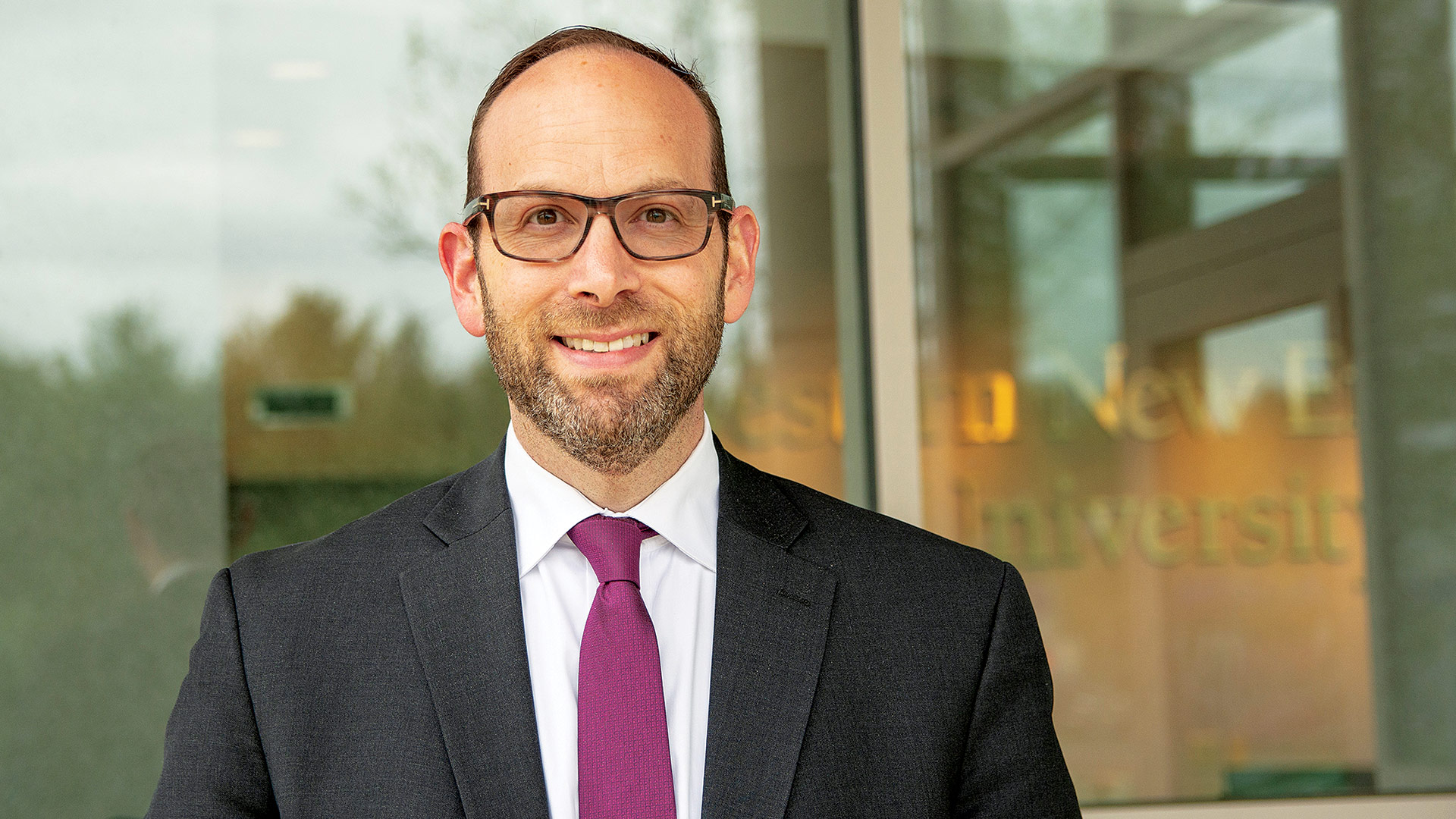
Coronavirus Features

The Questions Keep Coming

The Paycheck Protection Program (PPP) was created by the CARES Act to provide forgivable loans to eligible small businesses to keep American workers on the payroll during the COVID-19 pandemic. The SBA recently provided updates to its PPP guidance and also released the form application for PPP loan forgiveness, which will help small businesses seek forgiveness at the conclusion of the eight-week covered period, which begins with the disbursement of their loans.

Here are five common questions area attorneys have been hearing from business owners concerned about how PPP funds may be used in order to be forgiven.

Where can I spend my PPP loan in order for it to be forgiven?

“You’ve got to use 75% of what was loaned for payroll purposes,” said Kathryn Crouss, shareholder with Bacon Wilson. “Obviously, that’s salaries and wages, but other money employers spend on payroll costs count as well — vacation pay, parental or family leave, paid sick leave, or if there’s an employer match for plan premiums. So the definition of ‘payroll costs’ is relatively broad.

“The remaining money can be spent on other approved expenses — keeping the lights on or mortgage or rent or utility bills, those sorts of things,” she added. “Assuming you can prove to the government that you have spent 75% of the loan on qualified payroll expenses and the remaining portion on other qualifying expenses, then the loan should be forgiven and becomes a grant rather than a loan.”

In addition, she added, “if an employer brings an employee back on and that employee used to make, say, $3,000 a month, if they pay them less, they have to be within 75% to be forgiven. That’s not true for head count — they still have to have the same number of employees; not necessarily the same people, but the same head count.”

How do you measure whether an employee’s salary or wages were reduced by more than 25%?

“This may be the area that was causing the most angst among business owners, since it seemed mathematically impossible to not have reduced compensation by at least 25% if you were comparing compensation in the first quarter of 2020 — 13 weeks — to the covered period of eight weeks,” said Scott Foster, partner with Bulkley Richardson. “Fortunately, the SBA has opted to focus only on either the annualized salary for exempt employees, or the average hourly wage for non-exempt employees. Also, with respect to the salaried employees making more than $100,000 per year during the first quarter, as long as the annualized salary remains above $100,000 during the covered period, then any reduction in salary is not considered a reduction under this test.”

What about employees that were furloughed or laid off, but now refuse to return to work?

“For any employee the business has offered to re-employ in writing, and the employee (for whatever reason) refuses to accept re-employment, this will not reduce the loan-forgiveness amount,” Foster said.

Amy Royal, CEO of Royal, P.C., noted that she’s had many questions of this type. “They’re asking, ‘if I want to make sure I get loan forgiveness, how do I address a situation where I’ve offered to bring people back and they’ve said, thanks but no thanks?’ Obviously, those people have their own unemployment issues because if they’ve been offered a job and continue to take unemployment benefits, that could, in certain circumstances, be fraudulent.”

As for the employer, “if you make a good-faith offer to rehire someone with PPP money, make sure that offer is in writing,” she added. “If the employee rejects the offer, make sure you, as a business, have documented that. It will help you when you apply for loan forgiveness. That issue has been a real concern.”

Crouss agreed, noting that some employees may have legitimate reservations about returning to work — for instance, because they have a 95-year-old parent and don’t want to infect them.

“Make sure that conversation is in writing,” she said. “If they say they can’t return, get that response in writing as well, save that correspondence, and put those documents in their personnel file. Where we’re heading is, the head-count piece may be forgiven if they have that kind of documentation.”

Interestingly, Foster noted, “the application states that any employee fired for cause during the covered period does not reduce the borrower’s loan forgiveness. Oddly, this could mean that an employee that was fired for cause prior to the covered period would still count as a missing FTE during the covered period.”

My employees have nothing to do until my business is allowed to reopen and ramps back up. What if I want to save the PPP funds for after the eight-week period?

For example, Royal said, “if you’re a restaurant, you’re not open now. Maybe, if you’re lucky, you’re doing takeout, but the bulk of your business is full service. So the timing has presented issues because they can’t be fully ramped up now, but they’ve got to avail themselves of the funds right now before they run out.”

Businesses may absolutely hang onto the money and use it beyond the eight-week window, she explained — but they will have to pay it back over two years with 1% interest.

“That’s a very attractive loan,” Crouss noted. “Many businesses are making that decision — which is a perfectly sound decision. This only goes for eight weeks, and when you get that amount of money, it should cover your payroll for eight weeks, but what happens if the world hasn’t righted itself? So maybe it makes sense to save it for a rainy day and think of it as a loan and not a forgivable grant.”

Do I have to claim the PPP loan as income?

“The good news is, the IRS has spoken and said no,” Royal said. However, expenses paid for with PPP funds are also not deductible. “That makes sense — you can’t double dip. The way I conceptualize this is, it didn’t happen. We’re going to pretend this period didn’t happen for tax purposes.”

—Joseph Bednar

Features

Closing the Digital Divide

By Mark Morris

When schools closed across Massachusetts due to coronavirus, it revealed a digital-learning divide between low-income students and their higher-income peers. The gap is driven in large part by a lack of internet access and proper devices.

“There was an expectation that, with the schools closed, kids would resume their classwork online, but that can only happen if they have the proper technology and internet service,” said Eileen Cavanaugh, president and CEO of the Boys & Girls Club of Greater Holyoke (HBGC).

Cavanaugh applied for and received a grant for $35,000 from the Waldron Charitable Fund to provide Chrome tablets and internet access to nearly 100 families in Holyoke.

Working with Holyoke Public Schools to identify the families with the greatest need for technology access, club staff began reaching out to those households.

Eileen Cavanaugh

Eileen Cavanaugh

“There was an expectation that, with the schools closed, kids would resume their classwork online, but that can only happen if they have the proper technology and internet service.”

What they found was that many depended on their phones as their only technology and did not own a laptop or tablet computer. Cavanaugh pointed out that phones are not very effective when used for online learning platforms. Even families that owned a tablet or laptop usually had to share it among as many as four school-age children.

“Four kids from one family can’t access the online platforms at the same time using one device, so we were able to supplement those families with additional equipment,” she noted.

Access to reliable internet service is just as important as having the proper device. The HBGC is working with Mobile Citizen to provide secure, high-speed access to internet hotspots in Holyoke for one year.

“Even if students return to the classroom in the coming months, these kids are trying to catch up, so by extending the internet access for a full year, they can take advantage of online educational opportunities,” Cavanaugh said.

A recent study reinforces this point. Curriculum Associates of North Billerica makes distance-learning software for school systems in all 50 states. When schools closed in Massachusetts, they researched the usage patterns of iReady, the company’s digital-learning tool, which was originally designed for the classroom but is now used a great deal in distance learning.

They found that, when learning first moved from the classroom to the home, use of the program dropped significantly in the first week as fewer than half the students who used the software in the classroom used it at home. After five weeks, once students and teachers were able to settle into new routines, the usage rates increased to 81%.

A closer look at the data revealed a digital divide in which students who live in low-income zip codes had a larger initial decrease in using the digital-learning tool followed by a lower recovery percentage five weeks later than students in higher-income zip codes.

On the other hand, once low-income students could access it, they spent more time with the online-learning program than their higher-income peers.

Supplemental Efforts

Cavanaugh pointed out that the HBGC effort supplements the nearly 1,000 tablets and access to Comcast internet hotspots that the Holyoke Public Schools provided to families. She credits Superintendent Stephen Zrike for anticipating that access to digital learning would be a struggle for many families in the city.

In addition to providing devices and hotspots, Cavanaugh said HBGC is also offering technical assistance. “In our conversations with parents, we learned some are not tech-savvy and may need some support, so we’ve made our technology director available for any kind of technical assistance they might need.”

The grant HBGC received was part of a $1 million series of ‘rapid-response grants’ from the Waldron Charitable Fund to assist children affected by school closings due to the COVID-19 crisis. The fund is co-managed by Rob Waldron, CEO of Curriculum Associates, and his wife, Jennifer Waldron, and administered by the Boston Foundation, an organization that does not usually fund efforts in Western Mass.

“This is the first time we’ve been eligible for this type of funding,” Cavanaugh said. “We are grateful for the fast turnaround of our request and the recognition that the need is across the state.”

To date, HBGC staff have distributed nearly 75 tablets. Despite the challenges of social distancing, Cavanaugh said they are able to provide families with tablets and instructions for the device, as well as how to access the internet and tech support. The response has been very positive.

“Our families have been incredibly appreciative,” she said. “They’ve told us about their past frustrations of trying to access the public-school platform by phone and how grateful they are now for our support.”

Coronavirus Features

Unwanted Break in the Action

By Mark Morris

Thunderbirds

Nate Costa says the Thunderbirds were on track for their most successful season when it ended prematurely.

When discussing the impact COVID-19 has had on the AHL’s Springfield Thunderbirds, team president Nathan Costa doesn’t mince words.

“There’s no way to sugarcoat this — it’s a challenge, and it stinks,” he said, noting that, with seven games remaining in the regular season, the Thunderbirds were close to making the playoffs when the American Hockey League (AHL) suspended play on March 12, then formally canceled the remainder of the season on May 11.

“I’ve been in the pro-sports world for more than 10 years, and none of us have ever seen anything like this,” he told BusinessWest, using that phrase to talk about everything from the sudden end to the 2019-20 season to the prospects for the season tentatively scheduled to start in just four short months.

And those sentiments were echoed by executives with teams in another sport — baseball.

Indeed, in Holyoke, the Valley Blue Sox will not be playing in 2020 as its league, the New England Collegiate Baseball League (NECBL), announced on May 1 it would cancel the entire season.

Chris Thompson

Chris Thompson hopes the Starfires are able to take the field at all this summer.

Meanwhile, the Futures Collegiate Baseball League (FCBL) has not yet canceled its season, but it has pushed back opening day from May 27 to an as-yet-undetermined date, which affects the Westfield Starfires, a team in only its second year of existence.

Chris Thompson, owner of the Starfires, said the student athletes on his roster have already missed the spring college season because the NCAA canceled it due to the coronavirus. He remains hopeful there will be some opportunity for his team to play ball this summer, adding that this will happen only if the health and safety of the players, fans, and staff at the ballpark can be assured.

“From our perspective, we won’t play until it’s safe to do so, but we won’t cancel until we’re told we have to,” Thompson said. “There’s no blueprint for this.”

Taking a Timeout

With that last statement, Thompson, who once worked as an executive with the Thunderbirds, spoke for everyone involved in professional sports. There is no blueprint for how to proceed, but teams can try to plan for the short and long term and adjust for what will certainly be a new normal.

Costa said his team and the AHL are having discussions about what the experience will look like for fans at the MassMutual Center, and other buildings in the league, if and when play returns.

He pointed out that the NHL and the NBA may be able to play in empty arenas because of lucrative TV contracts that provide a great deal of income to the teams, but playing with no fans is just not just not feasible for the AHL because so much of its revenue is from ticket sales, concessions, and other in-arena activity.

“As a league, we cannot play without people in the stands,” said Costa. “It’s pretty much impossible to generate any type of revenue, yet we would have the same amount of expense.”

“As a league, we cannot play without people in the stands. It’s pretty much impossible to generate any type of revenue, yet we would have the same amount of expense.”

Before the season was cancelled, Costa was pleased with the momentum the Thunderbirds had been building in their four years as a franchise. Through 31 home games this season, the team had nine sellouts and anticipated at least three more for their remaining games. By contrast, last year they had nine sellouts in their entire 38-game home schedule. He also cited a promotion that received national attention when the team rebranded for one game as the Springfield Ice-o-topes, in a nod to The Simpsons.

With the beginning of a new hockey season four months away, Costa said the AHL has an opportunity to see how other professional leagues handle reopening for games and get a feel for what might work, or not work, as the case may be.

“The NFL will start its season before us,” he noted, “and that will be a real barometer in terms of social distancing at stadiums and what the experience might look like for people going to games.”

He added that state officials and MassMutual Center staff continue to look at ways to make the environment safe for everyone who enters the building. The AHL is also looking at contingencies such as delaying the start of the season to December or January.

“There’s nothing stopping us from pushing back the start and then playing a little longer next year,” Costa said, “especially if it gives us a chance to get a full season in.”

Costa has good reason to be optimistic for a full season next year as it marks the fifth anniversary of the Thunderbirds and begins a new affiliation with the Stanley Cup champion St. Louis Blues. “We’re already deep into planning what the fifth anniversary season is going to look like, and we’re excited about what the future will bring.”

Thompson had similar thoughts on the Starfires and what lies ahead for that team.

While the FCBL has been working on a plan for social distancing at the ballpark — in this case Bullens Field in Westfield — Thompson said working through an unprecedented challenge like this generates more questions than answers. How teams manage ballpark seating and concession operations are just two of the areas where he has concerns. It even affects travel, as the teams play games in three New England states.

“We usually travel on one coach bus,” he explained. “We can’t afford to have fewer people on two buses; it would double our transportation expense.”

Even if summer baseball happens this year, Thompson said coronavirus has already wrecked a special dynamic in the league. Starfire players often come to Westfield from different parts of the country and stay with local host families for the summer.

“Sometimes a family has an 8-year old Little Leaguer in the house who then has a college roommate for the summer, or we have empty nesters who are looking to host a player or two,” Thompson said. “Host families are one of the great things about summer baseball.”

Now, of course, the model of families hosting players is on hold until next year at the earliest.

Rather, Thompson is now looking to have more players from the eastern part of Massachusetts and the Hartford area of Connecticut so they could commute to games in Westfield.

With the Starfires in a holding pattern, it’s doubtful they will get to play their full 56-game schedule. During this time, Thompson has been reaching out to his corporate sponsors to keep them engaged.

“We’re looking at different ways to use our social-media platforms to get our fans involved and to give our corporate sponsors exposure,” he said.

Finding a Winning Formula

The Thunderbirds are also using social media to extend the reach of their sponsors. Costa said one effective technique has been running ‘rewinds’ of notable games from this season on Facebook. In some cases, the potential audience for sponsors can be larger than in-arena exposure.

“Our Facebook presence has grown to more than 22,000 followers, and on Instagram we have 15,000 followers, giving us a core audience of nearly 40,000 eyeballs,” Costa said, adding that many sponsors have already assured him they will be back next year.

When play was suspended, he placed a high priority on reaching out to season-ticket holders about the seven games they would be missing this year. The team provided options such as a refund for the remaining games, or a credit that would apply to tickets for next season. Costa and his staff also offered a third option.

“We’re setting aside some funds to provide tickets to frontline workers next season at no charge and to recognize all their efforts,” Costa said noting that nearly 25% of the season-ticket holders chose that option.

In a similar move, Valley Blue Sox General Manager Kate Avard said the team had planned to dedicate its opening day in 2021 to “honor and support community organizations and first responders who are currently on the front lines of combating COVID-19.”

As the area’s pro sports teams search for some answers concerning the future, they acknowledge they are hard to come by, noting that perhaps the only certainty is no shortage of uncertainty.

But guarded optimism still prevails.

“We have great community partners who want us to succeed for a long time,” said Thompson, speaking, again, for all those in his profession. “Setbacks like this make us more resilient.”

Law

That Is the Question, and Here Are Some Answers

By Valerie Vignaux, Esq.

Valerie Vignaux

Please allow me to interrupt your quarantine gratitude journaling and victory gardening to demystify a topic apt for these unfortunate times: probate.

I have found in my legal practice that most consider probate to be a dirty word. I have also found widespread misunderstanding of what that dirty word really means. What better time than during a pandemic to learn about the legal process surrounding death?

What, then, is probate? It is a process to appoint someone to be in charge of your probate assets after you die, and to distribute those assets according to your wishes. You ask, one eyebrow raised, “what are probate assets?” Excellent question — I can tell that you are a close listener.

Probate assets are property (such as real estate, bank accounts, cars, investment accounts, and retirement funds) that you own in your name alone at your death. These assets do not have a joint owner (like a joint bank account you might have with a spouse). These assets do not have a designated beneficiary (like on an IRA or a life-insurance policy that lists a child as beneficiary). In order for anyone to be able to access these assets after your death — to pay bills, to make distributions to loved ones — the assets must go through the probate process.

“I have a will!” you proclaim with confidence, “so there won’t be any probate.” But you are wrong, my friend. It is not the existence of a will that prevents probate; it is the absence of probate assets that prevents probate. It is how you own something that dictates whether that process must be undertaken, not whether you have a will.

“Then I shall tear up my will!” you cry out. Please, no. Your will makes this process easier, in part, by telling the court whom you want to be in charge of those assets. In the old days, when we shook hands with gusto and gathered at bars to buy overpriced cocktails, we called this person the executor or executrix. Today — really, since 2012 — the personal representative fills this role. Same job, different name.

“What, then, is probate? It is a process to appoint someone to be in charge of your probate assets after you die, and to distribute those assets according to your wishes.”

Your will also informs the Probate Court who will get your probate assets. Additionally, if appropriate, your will names your desired guardian of your children, in the event you die leaving minors behind. (Please wash your hands and stop touching your face.)

“Probate is the fourth circle of hell,” you sigh with resignation, “and I will take great pains to avoid it.” Here’s the dirty word bit, and what so many believe: probate is complicated, takes forever, and costs tons of money. This is not, however, necessarily true, and it is often not true at all. Of course, it depends upon the nature of your assets — perhaps you own many properties in different states, or a family business. Probate’s difficulty depends, too, upon your family circumstances — maybe you don’t have highly valued assets, but your children do not get along and there is a high likelihood of challenge over your collection of red hawk tail feathers.

For most people, probate is simply a process with clearly defined steps and a timeline. Getting help from an attorney can make the process even easier.

You now know, because you’re a quick study, two ways to avoid probate (add a joint owner, designate a beneficiary). But here’s something radical to consider: you might not want to avoid it. There are situations in which it makes good sense to force your assets (some or all) through the probate process. Your will can serve as a master plan for what happens to all you leave behind. That document allows you to spread your wealth (whether millions in cash or a trunkful of hand-sewn face masks) among all of your loved ones equally, or unequally. Your will can even create a trust that can hold assets for minors, those with poor spending habits, or a disabled family member.

If you name your children as beneficiaries of your life-insurance policy and die while they are still minors, a conservator will need to be appointed to receive, hold, and manage those funds for the benefit of your children — kids can’t just inherit money. The conservatorship process, another Probate Court endeavor, also takes time and money — often more than probate itself.

If you instead name your estate as beneficiary of your life insurance (“such madness!” you gasp, but bear with me), those funds will be handled according to the master plan — your will. You can avoid the necessity of a conservatorship by directing those funds into a custodial account at a bank, or by including a trust in your will that will hold the money for the benefit of your children. This is just one example of many.

I work with clients regularly to avoid probate and still achieve their desired goals. But sometimes I recommend that they embrace the process because it makes the most sense for their situation. Probate doesn’t have to be a dirty word. Working with an estate-planning attorney, and perhaps a financial advisor, you may find this is true for you. It’s important that everyone have a plan in place, but let’s all try to stay alive for a good, long while.

Valerie Vignaux is an attorney with Bacon Wilson, P.C., and a member of the firm’s estate-planning and elder-law team. She assists clients with all manner of estate planning and administration, including probate, and provides representation for guardianship and conservatorship matters. She received the Partner in Care award from Linda Manor in 2017, and served on the board of directors for Highland Valley Elder Services; (413) 584-1287; [email protected]

Special Coverage Technology

Drying Times

Excel Dryer

U.S. Rep. Richard Neal (second from left) gets a factory tour with Excel Dryer’s Denis Gagnon, Nancy Gagnon, and Bill Gagnon.

When it comes to the XLERATOR, his company’s signature hand dryer, filtration is nothing new, Bill Gagnon said.

“We’ve had an optional HEPA filtration system in it for years,” said Gagnon, vice president of Excel Dryer in East Longmeadow. “The typical HEPA filtration test you do is performed with bacteria, and it’s to particle sizes of .3 microns or larger. That’s standard in the industry. We’ve done that test; we already had it.”

But coronavirus isn’t bacterial, as its name makes clear. And its typical particle size is around 120 nanometers, or 0.12 microns — much smaller than the bacterial particles the filter had already been tested for.

“When we heard about coronavirus, we wanted to get ahead of this and wanted to test our product and its effectiveness against viruses, so we sent our product to our testing laboratory partner in Minnesota and said we want to do a virus-specific test,” Gagnon explained, adding that the lab put some 380 million virus particles through the system, “and basically zero came out the other end.”

Well, not exactly zero, but pretty darn close; the dryer’s filter lets through about one in 100,000 particles.

“This test shows our HEPA filtration system can filter [the virus] out of the airstream and gives the public assurance that it’s safe to use hand dryers — because it is,” Gagnon told BusinessWest. “Hand dryers are a hygienic way to dry your hands. This was something we wanted to test for — something we thought was important.”

Xlerator

One of the mobile units being delivered to the front lines of the COVID-19 fight.

On May 6, Excel Dryer hosted U.S. Rep. Richard Neal and local media to tour the company’s manufacturing facility and tout the XLERATOR’s virus-filtration capabilities — and an ongoing donation of 100 units, with HEPA filtration systems, to first responders and COVID-19 testing sites across the state.

“Talk about innovation and creativity — they established it,” Neal said of Gagnon and his father, Excel President Denis Gagnon, who invented the popular XLERATOR. “These are 52 domestic manufacturing jobs to compete with supply chains all over the world. If we’ve learned one lesson from a pandemic, it’s that relying on other parts of the world for our products and supplies is not a great idea.”

Neal and his aide, William Tranghese, were involved in early discussions establishing Excel Dryer as an essential manufacturer in Massachusetts, making hand dryers that play a critical role in achieving proper hand hygiene. After all, thoroughly washing and completely drying hands are listed as the top defense against the spread of germs — including the novel coronavirus, which causes COVID-19 — by both the World Health Organization and the Centers for Disease Control and Prevention.

“Proper hand hygiene isn’t just washing your hands, it’s completely drying your hands,” Denis Gagnon said following the factory tour. “When we originally added the HEPA filter as an option to the XLERATOR, we tested for bacteria. Because of the COVID outbreak, we retested the HEPA filter for its ability to filter viruses, and it literally filters 99.999% of viruses. So I think there’s going to be healthy demand for HEPA-filter XLERATORs going forward.”

Bending the Curve

Neal — who, like the Gagnons, Excel’s employees, and guests, wore a face mask during his visit to the plant — touted hand washing as well, and said it’s among the now-common practices, including social distancing, that are flattening the viral curve in Massachusetts.

“The CDC and the WHO have all talked about the notion of hand hygiene, how important it is. I think we’ve seen in Massachusetts the curve beginning to bend,” the congressman noted. “The stabilization — and a little bit of a decline — have had much to do with, I think, adhering to the recommendations of professional health people.”

He particularly praised Dr. Anthony Fauci, director of the National Institute of Allergy and Infectious Diseases, as “the most reliable voice in America” on coronavirus and related matters. “Whenever I’ve received an invitation over these years in Washington to an event where he was the speaker, I went to hear what he had to say.”

As for the COVID-19 progression, “there is some good news, but there is a ways to go,” Neal went on. “Hot spots seem to be declining in the larger urban areas, but they seem to be moving to new places. So while we have better news in Boston, New York, and even here in Western Massachusetts, other areas of the country are likely to go through the outbreak that we’ve all witnessed here.”

And if Excel can play a part in slowing the spread, all the better, Denis Gagnon said.

“We very much pride ourselves on making our product here in the United States,” he noted. “It didn’t take the inconvenience of disrupted supply chains to bring it back. We never wanted it to leave in the first place. As far as being a good corporate citizen, it’s in our blood. We’re happy to help in any way we can. This was kind of an impromptu solution, and I think it’s going to help on the front lines.”

Indeed, the 100 donated units are already being shipped out, Bill Gagnon said, to police and fire facilities, testing sites, and places like the first-responder recovery center being operated by the Hampden County Sheriff’s Office.

“If they test positive, they don’t want to bring it home, so they get quality food and bedding and a place to get healthy and stay away from their families,” he explained. “We’re donating units there. We’re just trying to find out where they’ll make the biggest impact.”

While the HEPA filters on the dryers are not new, the mobile units are. They came out of a conversation the Gagnons had with Neal and his staff about whether Excel’s work is considered essential.

“In that conversation, I was talking about getting mobile units out to the front lines,” Bill said, explaining that the company’s stainless-steel supplier had built a wall to show off the product in a trade show booth. “They said, ‘we can re-engineer that to be mobile, and we can get this thing out in the field.’ Two days later, the prototype was created, and they drove it up here and dropped it off — it was amazing. Two weeks later, we had the first units being used out in the field.

“So it was an amazing new product innovation,” he continued, “and we were working with the congressman’s office and just trying to figure out, how can we help? How can we get this virus-filtering hand-hygiene solution into these facilities? And now it’s here, and there’s a lot of interest in it, and we think it can make a big difference.”

“When we heard about coronavirus, we wanted to get ahead of this and wanted to test our product and its effectiveness against viruses, so we sent our product to our testing laboratory partner in Minnesota and said we want to do a virus-specific test.”

After all, he explained, while experts like the CDC and Fauci tout proper hand hygiene as the best defense against the spread of germs, it’s important to not forget the role of complete drying as well.

“Everyone talks about washing your hands for 20 seconds, but nobody talks about drying your hands,” Bill said. “You have to completely dry them. Wet hands are 1,000 times more susceptible to pick up or transfer germs. Drying hands is critical.”

Essentially Speaking

So are Excel’s operations, even in the midst of an economic shutdown, he added.

“We were in the same situation of a lot of other small businesses; when the federal guidelines came out and it was up to the states to put out their guidances, there were a lot of general categories” for what constitutes an essential service during the pandemic, he explained.

Excel seemed to fit multiple categories, Bill told BusinessWest; not only is hygiene important during a viral outbreak, but the company has contracts with the federal government to supply its product, which can boost a company’s chances to be deemed essential.

“There’s critical manufacturing, but for us, we’re such a niche market, no one calls out hand dryers specifically,” he went on. “But we felt like we fit under multiple categories, and that’s why we reached out to Congressman Neal’s office. We wanted to do everything we could to make sure we we’re doing the right thing, and they helped us with that. And when the state of Massachusetts put out their second round, a revision to the essential-services list, hygiene actually had its own category … and we’re certainly a critical part of that. So, yes, absolutely, we’re essential.”

And part of a mobile hand-drying solution that promises to reduce the spread of infection, Neal said. “There are simple things we can do in life to get through this, and they are going to be very important to us going forward.”

Joseph Bednar can be reached at [email protected]
Business of Aging

Team Approach

By Mark Morris

the Bioness L200

This device, the Bioness L200, helps patients recovering from a brain injury to re-establish the use of their arms and hands.

In the U.S., 2.5 million adults and children sustain a traumatic brain injury (TBI) every year.

The Brain Injury Assoc. of America (BIAA) reports that more than 2 million of those injuries are treated in emergency departments, while approximately 50,000 result in death. Nearly 280,000 are admitted to hospitals, after which patients transition to inpatient rehabilitation, where the goal is to get back to their maximum level of function and independence.

But what’s involved in that rehabilitation process for brain injuries? It depends on the patient.

“Many people associate traumatic brain injuries with a younger population because they tend to engage in riskier behaviors. Older people who hit their heads from slips, trips, and falls are also susceptible to TBIs,” said Jennifer Blake, an occupational therapist with the inpatient program at Weldon Rehabilitation Hospital, adding, however, that anyone at any age can sustain a brain injury.

The Centers for Disease Control and Prevention (CDC) defines TBI as a “disruption in the normal function of the brain that can be caused by a bump, blow, or jolt to the head, or penetrating head injury.“

Traumatic brain injuries are evaluated on a spectrum, said Blake, noting that someone who experiences a concussion, also known as ‘mild traumatic brain injury,’ can usually return to normal with just limited therapy. On the other hand, people with moderate to severe brain injuries require medical care and more comprehensive inpatient rehabilitation. Often these patients need some level of supervision after discharge.

On occasion, someone may have a head injury and not immediately recognize it. For example, if a person is in a car accident and has a broken leg, that might get the primary treatment focus, Blake explained. Even after a CT scan, the brain injury may not initially show up. “It’s only after further investigation, when the person is having trouble concentrating or paying attention, that they discover the brain injury.”

“When they see their arm move and their hand open and close, it boosts their confidence and makes them feel more hopeful; you can see it in their faces.”

Because our brains are essential to all our physical and mental functions, therapists have found that taking a multi-disciplinary approach yields the best results in helping people recover from a brain injury. A team of physical therapists, occupational therapists, and speech pathologists, supported by 24/7 care by medical staff such as nurses, doctors, and pharmacists, make sure all the patient’s needs are addressed.

“We meet once a week to make sure we are all on the same page,” said Julie Bugeau, an occupational therapist for Encompass Health Rehabilitation Hospital of Western Massachusetts. “We have an open discussion to determine where the patient is in terms of therapy and function. We also ask questions outside of the therapy, such as, ‘how are they medically?’ ‘Are they eating well?’ We try to look at all the factors that can affect their rehab.”

What’s the Plan?

Blake said most admissions in the inpatient setting last only two weeks, so working as a team helps them determine the patient’s eventual discharge plan.

“By working together in an interdisciplinary team, we can figure out what’s working, what’s not, and make changes along the way.”

Blake said an individualized plan for rehabilitation is developed by therapists who work with patients in three key areas:

• The physical therapist studies a patient’s mobility: for example, how well they can get from one place to another, their balance, and how well their motor skills can function;

• The occupational therapist helps patients with self-care skills, such as eating, getting dressed, bathing, as well as tasks like cooking, cleaning, and managing medications; and

• The speech and language pathologist addresses higher levels of cognition, such as memory, attention, concentration, problem solving, and decision making. Sometimes the pathologist works with patients whose brain injury causes dysfunction in producing or understanding language.

Advancing technology offers therapists tools to aid in rehabilitation that were not available years ago. Bugeau discussed how devices such as the Bioness L300 and H200 help brain-injury patients regain the use of their legs and arms. The L300 attaches to the leg and, through electrical stimulation, can aid a person’s ability to walk.

“The idea is that, with repetition, those leg muscles will be able to move properly without the external stimulus,” she explained.

Meanwhile, the H200 helps re-establish the movement of arms and the grasping action of hands. Bugeau said using these devices results in positive responses from her patients.

help brain-injury patients

The Bioness L300 is used to help brain-injury patients regain their ability to walk through electrical stimulation.

“We’ll have patients who say, ‘my arm doesn’t work — I have a dead arm,’” she noted. “Then, when they see their arm move and their hand open and close, it boosts their confidence and makes them feel more hopeful; you can see it in their faces.”

By employing the different therapies, Bugeau went on, the hope is to maximize the patient’s abilities. But, she added, “while the therapy is important, rest is also an important part of the recovery.”

While many patients transition directly from inpatient to outpatient care, Bugeau said Encompass also offers a home-care component for those who are not yet ready to make the move.

“We will help patients settle into their home and continue training with them and their families to make sure they are safe and getting stronger,” she said. “It’s an option we recommend until the patient is ready to move into outpatient treatment.”

Blake added that the outpatient phase of care at Weldon involves working closely with families during outpatient therapy to help them manage that part of the process.

“Let’s say a patient is receiving all three therapies in an outpatient setting,” she explained. “We will try to schedule all of them on the same day to make it a little less overwhelming for the caretaker.”

Blake said it’s important for the injured person and their support group to understand that, when a person suffers a brain injury, it can be a difficult adjustment for everyone involved.

“You can’t see the residual impairments from a brain injury,” she said. “The person might experience a personality change, or a once-independent person may now need lots of assistance with daily life.”

That’s why Bugeau’s staff involves the patient’s family in training and education early in the process. She said the classes help the family understand how their loved one’s brain injury is progressing and how to properly handle behaviors that are out of the norm.

“We make sure to screen every patient with a brain injury for depression because it is a such a common symptom associated with brain injuries.”

Steady Improvement

While plenty of information and support are available for families, Bugeau said the trick is not to overdo it.

“We create a folder with specific, individualized information that is appropriate to the patient’s injury. We don’t want to overwhelm the family, but we want to make sure they have the information they need.”

Blake and Bugeau encourage families dealing with a brain-injured loved one to take advantage of the support groups available at their respective organizations. Weldon offers a faith-based group as well. Both therapists also cited the Brain Injury Assoc. of Massachusetts as a solid resource for families.

In all cases, the goal is helping patients with a brain injury get back to a maximum level of function and independence.

“It’s hard to say how much time each person needs,” Blake said. “And while things can change quickly or gradually, people do improve and get better.”

Business of Aging

Joint Effort

By Mark Morris

Brianna Butcher

Brianna Butcher says her main priority is to help the patient gain back their range of motion, and “to turn that new joint back into a normal joint.”

In daily life, it’s easy to ignore the important role our knees, hips, and shoulders play in walking, performing simple activities, and helping us get around in the world.

Most people notice these essential joints only when they are in pain. As we age, the onset of arthritis can bring excruciating pain even to the most basic tasks such as climbing stairs and walking.

If medication and physical therapy do not provide relief, then doctors will recommend joint-replacement surgery.

Considered a safe and highly effective surgery, more than 600,000 knee replacements and more than 300,000 total hip replacements are performed each year in the U.S., according to the Agency for Healthcare Research and Quality. The surgery involves replacing an arthritic or damaged joint with a prosthetic made of metal, plastic, or ceramic to replicate the movement of the joint.

Once the surgery is done, then the real work begins, said John Jury, head physical therapist at Weldon Rehabilitation Hospital, noting that “a successful outcome depends on how much effort the patient puts into their rehabilitation.”

The vast majority of patients Jury works with have had total knee or hip replacements, while those with partial knee and shoulder replacements comprise a smaller number. Candidates for joint-replacement surgery tend to be age 50 and up.

“It’s prudent to wait as long as possible to do the surgery so they only have to have it once in their lives,” he said, noting that, if someone in their 40s had a joint replaced, it could wear out in their 90s and when they may not be a good candidate for surgery.

Physical therapy begins on “post-operative day zero,” which means only a few hours after the surgery takes place. Jury said therapy on the same day is especially common for knee replacements. The main goal of this initial session is to initiate moving, standing, and weight bearing, typically with the help of a walker.

“Over the next couple of days in the hospital, we will continue to work with patients on their flexibility with the joint, range of motion, strengthening exercises, and mobility to help get them home,” Jury said.

Some medical centers around the country send knee-replacement-surgery patients home the same day as the procedure. In Western Mass., Jury said, most patients with a total knee replacement are discharged within a day or two, while hip-replacement patients may be hospitalized for up to three days. Both operations are followed up with two weeks of home therapy.

“It’s prudent to wait as long as possible to do the surgery so they only have to have it once in their lives.”

Rehab treatment differs for knees and hips. Jury explained that patients with a hip replacement don’t usually require outpatient therapy after their sessions at home. Knee-replacement patients, however, are almost always scheduled for outpatient therapy.

Moving Experiences

And it’s during outpatient therapy that people like Brianna Butcher, physical therapist and supervisor for Select Physical Therapy, take over joint-replacement rehabilitation.

“Our main priority is to help the person gain back their range of motion and their gait mechanics, which is especially important for knees and hips,” she said. “We’re really trying to turn that new joint back into a normal joint.”

In addition to traditional techniques, therapists are finding new ways to help people get back to day-to-day life with the help of technology. Butcher said one effective tool she has used is called an AlterG. She described it as an anti-gravitational treadmill that uses inflated air to support the body during therapy.

“For people who are tentative about putting weight on their joint, this is a good way to help them get back to normal walking,” she said.

Also finding their way into physical therapy are phone apps. A patient recently asked Jury if there was a way to measure his knee’s range of motion from home.

“We found a couple of apps you can download to your phone that will measure range of motion,” he said. “A family member has to hold the phone next to the patient’s knee, and their movement can be recorded.”

Tele-rehab is another development that is showing promise in several studies here and abroad. Jury said the idea is to share a video of rehab exercises with the patient and follow up by phone, FaceTime, or another video app. The studies compare tele-rehab with the gold standard of care, which is outpatient therapy after a knee replacement.

“They are finding that patients can achieve similar outcomes to outpatient,” he noted, “and they are reporting higher satisfaction scores because they don’t have to get out of the house to drive to a clinic.”

Butcher said her patients are usually driven to physical therapy by someone because they are still taking pain medication and cannot yet drive.

Once the patient arrives, she often observes their sense of fear about starting the therapy.

“For some, this is their first time seeing a physical therapist, and the process can be painful, especially for knees,” she said. “We try to work within that threshold to help the patient make progress while being mindful of the pain, which can be difficult for some.”

On occasion, patients who already have a replacement joint on one side of their body will need a second one, such as the opposite knee or opposite side of the hip.

Butcher said that, in her experience, at least one of those joints proves difficult and painful for the patient during physical therapy.

“The body always responds a little differently from left to right,” she said. “If, for example, therapy on the left hip went great, the right hip just doesn’t want to cooperate.”

In Butcher’s view, therapists often get a bad rap because of a false perception that they somehow enjoy putting people through pain.

“Our ultimate goal is to help patients get back to a better place than before their operation,” she said. “We’re on their side.”

Jury pointed out that therapists are a valuable resource in terms of guiding the patient on what to do, but it’s also up to the patient to follow through. “It’s not an easy rehab, but you’re only going to get out of it what you put into it.”

For those who make the effort, the results can be life-changing. The American Academy of Orthopaedic Surgeons uses the term “second firsts” to describe the experience when patients can once again enjoy things like hiking and other activities that were not possible before their surgery.

For many patients, Jury noted, their biggest revelation is the ability to move around in the world again without a walker or a cane.

“They are happy to be able to return to a certain normalcy of activity,” he said. “Of all the patients I’ve talked to, none of them have said they wished they waited longer for the surgery.”

Bottom Line

Butcher talked about a recent success story in which the patient had undergone a total replacement surgery in his left knee before working with her.

“All he wanted to do was to get back into bowling again, and he’s throwing harder now than before his operation,” she said.

After living with pain for many years, people who have joint-replacement surgery and follow through on their physical-therapy program can often succeed to a point that Butcher describes as almost like having a new life again.

And this new life is the result of successful teamwork — with the patient being a big part of that team.

Daily News Sections Special Coverage

Serving Up Some Good News

Those hungry for some good news in the midst of the COVID-19 pandemic — and that’s just about everyone — received some Thursday with the announcement that the iconic White Hut, a Memorial Avenue landmark since 1939, will reopen under new ownership.

Those owners, Peter Picknelly, chairman and CEO of Peter Pan Bus Lines, and Andy Yee, president of the Bean Group of restaurants, told BusinessWest they plan to start with a food truck slated to open on or soon after May 18 — the new date for possibly restarting the state’s economy — and eventually reopen the small but historic  restaurant, with a target date of July 1.

When it does reopen, it will have a slightly different look (see renderings below). Picknelly described the subtle but important changes this way: “it will be the exact same food in a nicer, cleaner, more modern environment.”

Picknelly and Yee, who, along with partners Michael and Kevin Vann, succeeded in rescuing another iconic restaurant, the Student Prince, in 2014, initially announced plans to do the same with the White Hut back in February, when the popular eatery abruptly closed. The pandemic slowed those plans — while also devastating both Peter Pan and the Bean Group (both large businesses have had to lay off or furlough hundreds of employees) — but they didn’t derail them.



That’s because the partners are committed to rescuing the landmark, said Picknelly, and they obviously see this as a sound business proposition.

“As with the Student Prince, we view the White Hut as an integral part of our community — it’s part of this region’s DNA,” he told BusinessWest, repeating an opinion he first expressed back in February. “Generations of the same family have gone there, just like with the Student Prince. It’s an iconic location in our area, and we wanted to save it for generations to come.

“Also, we’re bullish that business is going to come back,” he went on, “and we’re going to make the White Hut bigger and better than ever.”

As construction commences on the exterior and interior of the actual restaurant, the food truck will begin operating the week of May 18, said Yee, noting that restaurants can operate takeout and delivery business at present, and West Springfield, among other communities, is allowing food trucks to operate.

The truck will be open at least five days a week, serving lunch from 11 a.m. to 4 p.m., said Picknelly. By July 1, the restaurant should be open, he went on, adding that planned renovations will allow for more efficient use of existing space and provide more elbow room for patrons.

“There was a fair amount of dead space in there,” Yee explained. “We looked at it and said, ‘we can open this up and make it much more roomy,’ so we’re doing that.”

West Springfield officials have also given permission for a walk-up takeout window, which, in addition to the traditional fare served up at the White Hut — cheeseburgers with fried onions — will offer ice cream, an addition with considerable promise, said Yee.

When the restaurant does reopen, long-time manager Artie White and most all of the staff working there when the restaurant closed will return, Yee noted. “They’ll be providing the same food and same banter — that’s part of the experience — in a more modern, more efficient White Hut.”

Overall, the partners believe they have all the ingredients — from the name and location to the menu and their own track record for success with restaurants across the region — to script a real success story on Memorial Avenue.

“We’ve done a financial model, and we think, with our buying power and Andy’s family’s experience in running all kinds of restaurants, that we can make a go of it,” Picknelly said. “If the community supports us, then we’ll be successful, and we think they will; as with the Student Prince, you don’t really know what you’ve got until you lose it.”

—George O’Brien

Coronavirus Sections Special Coverage

Seeking Forgiveness with Little Guidance

By Scott Foster

The Paycheck Protection Program (PPP), part of the CARES Act, was launched just over a month ago to much fanfare and promise, but has been bogged down since with technical malfunctions, overwhelmed bankers, political missteps, and incomplete guidance from the U.S. Small Business Administration (SBA). Current guidance on the forgiveness of these loans is scant, additional guidance has been recently posted, and more is expected in the near future. The SBA’s FAQs for PPP have been updated several times a week since they were originally published on April 3, reflecting the current thinking of the SBA in interpreting the CARES Act.

Many businesses have already received their PPP loan proceeds and are wondering: how should I use these funds? How do I document that use? Will all of my PPP loan be forgiven? Unfortunately, until the SBA issues complete guidance — or Congress amends the CARES Act, which is quite likely — we are all in a bit of limbo, but let’s start with what we know today.

What is the covered period? The eight-week period starts on the day your PPP loan was disbursed/funded. Therefore, if your loan was funded on April 15, your covered period should be from April 15 to June 9. Only expenses that are related to the covered period are potentially forgivable.

What expenses are forgivable? First category: payroll expenses, including health insurance and retirement expenses, subject to a cap of $100,000 per year for salary per person. This translates into a $15,384 cap on forgivable compensation. Self-employment income is included in payroll expenses, but the amount that can be forgiven is 8/52nd of that individual’s self-employment income for 2019. Second category: rent (or interest payments on your mortgage) and utilities. But the forgivable amounts in this category cannot exceed 25% of the total amount to be forgiven (said another way, these expenses cannot be greater than one-third of your payroll expenses). Therefore, incurring payroll expenses during the covered period is critical to receiving any loan forgiveness.

If I have $100,000 in forgivable expenses, but I have fewer employees on payroll, does that matter? Yes. The CARES Act provides that any forgiveness is reduced proportionately to the extent your full-time equivalent employees (FTEs) during the covered period are fewer than the FTEs your business had either at the start of 2020 or early 2019. However, the CARES Act also provides that, if you rehire any employee laid off between Feb. 15 and April 26 by June 30, that employee then counts as a FTE during the covered period (but this won’t increase the amount of your potential forgiveness, since the forgiveness is based on your actual payroll expenses in the covered period).

I laid off several employees, but now that I have the PPP loan, I’m ready to hire them back. However, they are making more on unemployment (with the $600-per-week temporary federal bonus) than I can pay them. Now what? There are a bunch of interrelated issues here, but the bottom line is this: as long as you offer the employee their job back, then they should no longer qualify for unemployment, and the SBA has indicated that, if the employee doesn’t return after you offer them their old job, that won’t count against you for the FTE test. This is one issue that members of Congress have cited in a push to amend the CARES Act to extend the covered period for certain impacted businesses, so there is a chance we will see an amendment that would, for example, extend the covered period to 16 weeks.

What documentation will I need to provide to get forgiveness? At a minimum, you can expect to need to provide the same information you provided to obtain the loan: payroll records (ideally a report from your payroll provider), proof of rent payments, utility bills, and a copy of your lease. You will also need to document the number of FTEs you have during the covered period and compare that to the number of FTEs that you had in either the 2019 or 2020 testing period.

Should I put the PPP loan proceeds in a separate account? Ideally, yes. This is a recommended best practice. You will need to show that you used these funds for their intended use. If the funds are co-mingled with other funds, that might make it more difficult to demonstrate how the PPP funds were used.

We are an essential business and have not felt any significant negative effects yet. Can we still use the PPP loan funds? This is one of the murkiest areas, and we need further guidance from the SBA, especially in light of recent unhelpful comments from U.S. Sen. Ron Johnson and Treasury Secretary Steven Mnuchin. On one hand, every business is America is facing some degree of uncertainty, even if you are up and running. What happens if one of your employees get sick? Or if a major customer shuts down? Or a supplier is unable to meet your needs? On the other hand, if you truly are not feeling any impact, then was the certification you made on the application (“current economic uncertainty makes this loan request necessary to support the ongoing operations”) really accurate?

We are recommending that you document the uncertainty your business is facing, even if the uncertainty never comes to pass, along with any steps you are taking and costs you are incurring to mitigate the risks. For example, did you increase pay to your employees during the state of emergency? Have costs associated with cleaning or sanitizing your facility increased? You may also want to document what you would have done had the PPP loan not been available. For example, would you have reduced hours or furloughed employees in anticipation of decreased income?

My business is currently closed due to the governor’s order. What should I do? The only way to have any portion of your loan forgiven is to spend the proceeds on payroll. You either need to try to hire back your employees (maybe to only lay them off again at the end of the covered period) or pay back the unforgiven portion of the loan (which is accruing interest at the rate of 1% on any amount not forgiven). Currently, there is no way to use the PPP loan proceeds after the covered period and have those expenses forgiven.

Scott Foster is a partner at Bulkley Richardson.