Home Posts tagged Education (Page 10)
Daily News

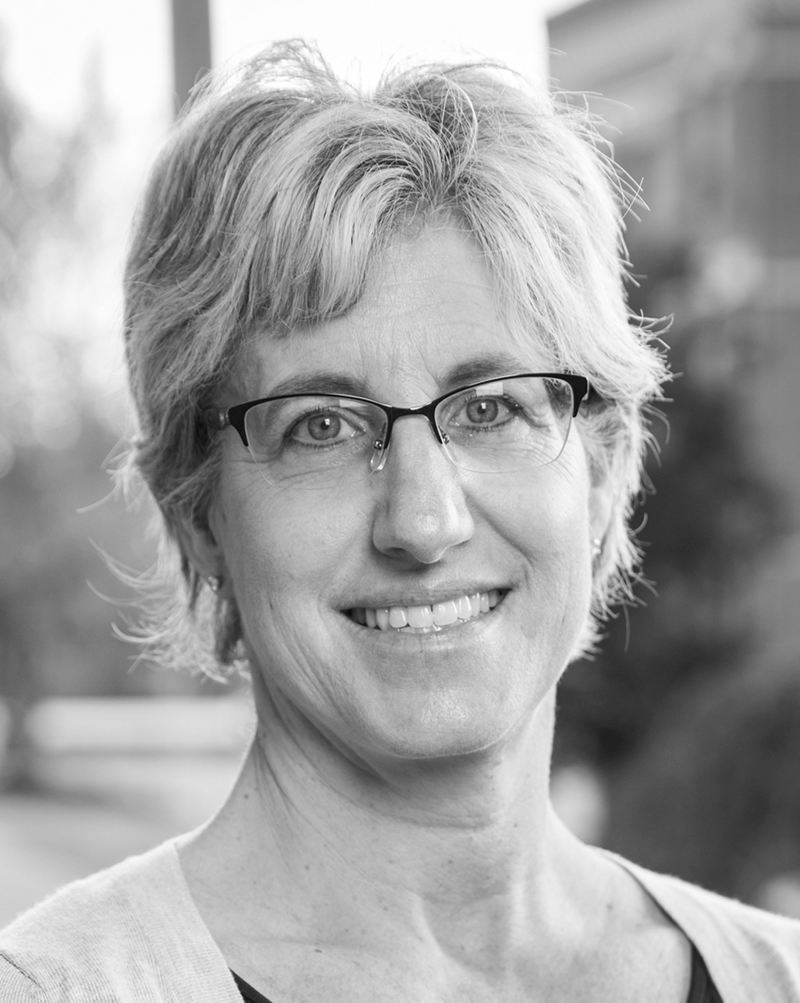
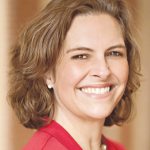
EAST LONGMEADOW — Edward Zemba, president of Unify Against Bullying, has announced that Christine Maiwald of Agawam has been named executive director of the nonprofit agency.

Maiwald, who assumes the position immediately, had been a member of the Unify Board of Directors for the past two years.
“Chris brought a tremendous amount of passion, energy and heart to Unify the first day she became involved,” said Zemba. “To have her fill the position of executive director represents a transformative step forward for our young and ambitious organization. With Chris at the forefront of Unify, our potential to make a difference in the lives of local children and schools is truly unlimited.”

In her previous position as corporate administrator for Renaissance Advisory Services, LLC, of Ludlow, Maiwald was an integral part of the firm and was responsible for the day-to-day operations, accounts payable, event planning and corporate branding.

Maiwald says her passion to fight against bullying and her love for community led her to step away from her responsibilities at Renaissance Advisory Services to pursue the next chapter in her life and career.

“I’m passionate about educating children and adults about the devastating effects bullying can have; bullying is not confined to school or to social media. It exists in the home and workplace, too,” said Maiwald. “In just three short years, Unify Against Bullying has been able to raise enough funds to award grants to 15 individuals and organizations whose mission it is to spread the anti-bullying message through education, acts of kindness, support and awareness.”Maiwald and her husband, Werner, were chosen by the Greater Chicopee Chamber of Commerce as the 2017 “Citizens of the Year” for their philanthropic work. She sits on the Board of the East of the River 5 Town Chamber,  is a member of the Greater Westfield, Springfield Regional, West of the River and Massachusetts Chambers of Commerce. She was also, until recently, an Ambassador for Dress for Success. 

In addition, Maiwald volunteers for Revitalize CDC, The Galaxy Community Council, Wicked in Pink, the Brightside Toy Drive, and the Friends of Wilbraham Senior Center Fashion Show

She previously served as a member of the Sisters of Providence Elder Life program and “Catch the Spirit” committee and Baystate VNA Hospice.

Daily News

SPRINGFIELD — The Springfield Regional Chamber will present its first Business@Breakfast of the 2017-2018 season on Sept. 6, 7:15-9 a.m. at the Springfield Sheraton. Pam Victor, president and Head of Happiness at Happier Valley Comedy, will be the keynote speaker. The breakfast is sponsored by series sponsor, United Personnel Services and Coffee Bar sponsor, FIT Staffing.

“Two Magic Words for Stimulating Innovation” is the title of Victor’s presentation. These words, says Victor, can transform innovation in business. At the breakfast, she will share how improv can increase beneficial risk-taking, creativity, and brainstorming in any business. In a hands-on talk and a fun, interactive experience, she will provide attendees with practical skills to stimulate innovation through laughter.

Victor runs the Through Laughter program for professional development and a multi-level improv comedy school, as well as producing regular improve shows in Western Massachusetts.

She is the author of Baj and the Word Launcher: A Space-Aged Asperger Adventure in Communication and, along with legendary improvisers TJ Jagodowski and Dave Pasquesi, co-author of “Improvisation at the Speed of Life: The TJ & Dave Book.” A graduate of Smith College with a Master’s in Education from Iona College, Pam has received improv training from iO Theater (Chicago), Annoyance Theatre (Chicago), ImprovBoston, and from Second City teachers.

Business@Breakfast is a monthly series which pays tribute to individuals, businesses and organizations for major contributions to civic and economic growth and for actions which reflect honor on the region.

Tickets are $25 for Springfield Regional Chamber members in advance ($30 at the door) and $35 for general admission in advance ($40 at the door). Reservations are suggested and can be made online at www.springfield regionalchamber.com or by contacting Jessica Hill at [email protected]. Sponsorship opportunities are also available. Contact Hill at (413) 755-1310 for information

Building Permits Departments

The following building permits were issued during the month of August 2017.

AGAWAM

West Springfield Fosh & Game Club Inc.
329 Garden St.
$19,215 — Roofing

AMHERST

Amherst-South Pleasant, LLC
55 South Pleasant St.
$25,000 — New hair salon

LIJJM, LLC
18 Main St.
$1,600 — Replace four windows

National Yiddish Book Center Inc.
1021 West St.
$14,585 — Replace front exterior double doors

EASTHAMPTON

Eastworks, LLP
116 Pleasant St.
$94,500 — Interior renovation for Joe’s Gym

Williston Northampton School
37 Park St.
$47,000 — Demolition of four structures: houses at 196 Main St., 200 Main St., and 206 Main St., and garage at 37 Park St.

Williston Northampton School
9 Railroad St.
$5,000 — Remove and replace egress doors

EAST LONGMEADOW

St. Paul’s Church
235 Dwight Road
$20,000 — Roofing

GREENFIELD

Four Rivers Educational Foundation
248 Colrain Road
$6,829 — Replace five windows and block off exterior door

St. James Episcopal Church
73 Federal St.
$182,275 — Replace wall finish in rooms 1-7, bathrooms, and hallway; replace existing lift with new lift; expand existing bathrooms to comply with handicap regulations

LONGMEADOW

Interfaith Homes of Longmeadow
114 Emerson Road
$2,100 — Repair two areas of roofing

Longmeadow Cemetery Assoc.
34 Williams St.
$4,477 — Remove and replace shed

Mario Davis Magnani
791 Maple Road
$10,000 — Add partition walls for interior remodel

NORTHAMPTON

94 Industrial Drive, LLC
94 Industrial Dr.
$27,000 — Roofing

94 Industrial Drive, LLC
94 Industrial Dr.
$29,500 — Install truck ramp with retaining wall and install new overhead door

100 Main St. Florence, LLC
100 Main St.
$75,000 — Interior renovations for new law office

American Benefits Group
320 Riverside Dr.
$38,000 — Remove partitions to install cubicles

City of Northampton
170 Glendale Road
$19,000 — Replace antennas and add radio heads at leachate treatment facility

Continental Cablevision of Western New England Inc.
790 Florence Road
$90,000 — Add ground equipment, cables, and three antennas to existing guyed tower

Coolidge Northampton, LLC
249 King St.
$14,650 — Remove non-load-bearing walls, construct non-load-bearing walls

Emerald City Partners
17 New South St.
$44,980 — Frame interior walls, install doors, install trim

Gandara Mental Health Center Inc.
18 Summer St.
$38,443 — Strip and shingle roof and repair chimney

McDonald’s Corp.
221 King St.
$395,000 — Update building exterior, remove building arcades, configure drive-thru for side-by-side layout, remodel interior including dining and restrooms, new roof, ADA updates

Pioneer Contractors
32 Masonic St.
$82,000 — Replace windows

Smith College
123 Elm St.
$25,000 — AT&T to remove and replace three antennas and related accessories

Smith College
102 Lower College Lane
$70,500 — Convert decommissioned stairs to former balcony into storage space

Smith College
186 Elm St.
$550,000 — Remodel space for first-floor laundry, bathroom, kitchenette, and lounge area

Thornes Marketplace, LLC
150 Main St.
$25,000 — Renovate and improve facade on Suite 170, replace five windows, and relocate partition wall

Unique Lodging, LLC
74 Bridge St.
$241,500 — Add three-season room, deck, and elevator

PALMER

B.C. Palmer Green, LLC
1 Beacon Dr.
$20,000 — Remove old salt shed, replace with new wood-frame structure

Camp Ramah of New England
39 Bennett St.
$1,250 — Construct seven sheds off seven bunks for water heaters

MPact
1659 North Main St.
$31,500 — Roofing

Neal Inc.
4279 Church St.
$11,700 — Demolish older Junction building

St. Joe’s Club
18-20 Commercial St.
$29,000 — Roofing

SPRINGFIELD

American International College
1020 State St.
$5 million — Renovation and expansion of existing single-story structure, plus addition, to convert into a two-story exercise science educational facility

Baystate Health
759 Chestnut St.
$49,500 — Construct call center

Bridge Hillman, LLC
293 Bridge St.
$70,000 — Renovate office on second floor

Davenport Advisors, LLC and Albany Rd. St. James Ave., LLC
1250 St. James Ave.
$492,402.32 — Commercial office build-out, including new windows and exterior doors

HRES Main Street, LLC
2594 Main St.
$680,000 — Construct building for Family Dollar store

Leo Handford
855 Berkshire Ave.
$1,800 — Cut opening in concrete wall of masonic temple and install glass

Love Nails Inc.
1349 Allen St.
$120,000 — Demolition and build-out for nail salon

Mark E. Salomone
175 State St.
$147,000 — Renovate third-floor offices

Primera Iglesia Cristiana Misionera
25 Terrence St.
$3,500 — Cut opening in back wall and install double doors

Springfield Redevelopment Authority
55 Frank B. Murray St.
$8,000 — Remove walls for Peter Pan ticket counter at Union Station

Sprint
1300 Boston Road
$180,000 — New tenant finishes, new plumbing and fixtures, new interior walls, new rooftop units for mechanical, ductwork, and electrical

WARE

56 Pulaski, LLC
56 Pulaski St.
$100,000 — Interior walls, insulation, drop ceiling

WESTFIELD

Reed Hall Holding, LLC
29 School St.
$80,000 — Alterations to second floor

WEST SPRINGFIELD

Eastern States Exposition
1305 Memorial Ave.
$10,000 — Verizon Wireless to place track for Big E event

Lower Pioneer Valley Career and Technical Education Center
174 Brush Hill Ave.
$135,740 — Reconfigure layout of machine shop at Career TEC, construct demising wall, plumbing and electric

WILBRAHAM

Town of Wilbraham
678 Main St.
$15,000 — Construct pavilion

Wing Memorial Hospital Corp.
2377 Boston Road, Suite 101
$13,500 — Renovate existing space into two offices and conference room

Company Notebook Departments

UMass Amherst Tops in Campus Dining for Second Straight Year

AMHERST — The food in the UMass Amherst dining halls is so good that the Princeton Review came back for another helping, choosing the school as the national leader in collegiate dining in the U.S. for a second straight year. The announcement further cements UMass Dining’s reputation for serving up healthy, sustainable, and delicious food prepared by award-winning chefs, said Ken Toong, executive director of Auxiliary Enterprises at UMass Amherst. The rankings are based on surveys of 137,000 students at the schools in the guide. UMass Dining is the largest college dining-services operation in the country, serving 45,000 meals daily, or 5.5 million meals per year. Since 1999, overall participation the university’s meal plan has more than doubled from 8,300 participants to more than 19,200. A self-operated program committed to providing a variety of healthy world cuisines using the most sustainable ingredients, UMass Dining incorporates recipes from accomplished chefs and nutritionists as well as principles from the Culinary Institute of America and Harvard School of Public Health to its cycle menu.

Regnaleb Offers Sales Training for Digital Age

WESTHAMPTON — Regnaleb Enterprises, a sales and marketing consulting firm, announced it is offering high-caliber sales-management and growth strategies to small and mid-size companies throughout Western and Central Mass. The organization is led by Art Belanger, an experienced sales and marketing professional with more than 30 years in the industry. The Regnaleb process utilizes the salesQB program to conduct a complete audit of an organization’s current sales and marketing process. The results are used to benchmark performance and identify areas for growth and improvement. Following the audit, business leaders will be taken through an in-depth report that will pinpoint methods for increased efficiency throughout the entire sales process, from lead generation and management tactics to the use of digital technologies like CRM, software programs, and social media. A successful salesforce is empowered, efficient, and informed, Belanger said, adding that Regnaleb Enterprises will offer a custom road map to improve communications, management, customer service, and sales techniques to drive increased performance.

Talbots to Return to Longmeadow Shops

LONGMEADOW — Grove Property Fund and Talbots announced that the women’s-apparel retail store will be returning to Longmeadow Shops this fall. The announcement is the latest from the Longmeadow Shops, which recently expanded its retail footprint by 20%, attracting new tenants Verizon Wireless and J.Crew Mercantile while allowing CVS Pharmacy to move to a larger retail space with a pharmacy drive-thru. Talbots operated at the Longmeadow Shops from 2001 to 2013. The new store will utilize 5,334 square feet of retail space, the majority of the space previously occupied by CVS Pharmacy.

HCC Gateway to College Earns National Honors

HOLYOKE — For the second year in a row, the Gateway to College program at Holyoke Community College has received national recognition for exemplary performance. The Gateway to College National Network, based in Portland, Ore., honored HCC with its 2017 Gateway Program Excellence Award at a conference in Providence, R.I. last month. Gateway is a second-chance, dual-enrollment program for students who have either left high school or are at risk for dropping out. Gateway students take college classes and earn college credits while also working toward their high-school diplomas. The 2017 award recognizes Gateway programs that exceeded all four of the network’s performance benchmarks for the 2015-16 academic year: first-term GPA, one-year persistence, two-year persistence, and three-year graduation rate. Since its founding in 2008, HCC’s Gateway to College program has helped 251 students earn their high-school diplomas while also getting an early start on college. More than half have continued on to college, and so far 30 have earned their associate degrees from HCC, and six have earned bachelor’s degrees.

Austen Riggs Recognized as a ‘Best Hospital’

STOCKBRIDGE — Austen Riggs Center has been recognized as a “Best Hospital” for 2017-18 by U.S. News & World Report, ranking ninth in psychiatry nationwide. Noteworthy among the top group of psychiatry honorees for its small size and integrated approach, Austen Riggs Center is a therapeutic community, open psychiatric hospital, and center for education and research, promoting resilience and self-direction in adults with complex psychiatric problems.

PeoplesBank Among Top Charitable Contributors

HOLYOKE — The Boston Business Journal announced the region’s top corporate charitable contributors, and for the 10th year in a row, PeoplesBank is among the companies included on the list. The region’s top charitable companies, which in many instances include the companies’ corporate foundations, will be honored at the magazine’s 12th annual Corporate Citizenship Awards on Thursday, Sept. 7 at Fenway Park in Boston. The list is composed of companies that gave at least $100,000 to Massachusetts-based charities in 2016.

PV Squared Named Among Top 500 Solar Contractors

GREENFIELD — Solar Power World, the leading publication covering solar technology and development, published its annual Top Solar Contractors list in July. PV Squared, a local solar-installation company and worker-owned cooperative, was listed prominently among other top solar contractors and developers across the country. PV Squared is a local leader in the field of solar design, installation, and maintenance. A worker-owned cooperative, the company has provided renewable-energy solutions to a range of clients, including business owners, commercial property owners, farmers, and homeowners since 2002. PV Squared currently employs 42 people, 19 of whom are co-owners of the business. In 2016, it completed 188 projects in the Pioneer Valley and surrounding areas, installing 2.5 MW of solar power. It is also a certified B Corporation, demonstrating its commitment to a triple-bottom-line business model. It is currently involved in Franklin County’s first Habitat for Humanity project in five years and will be contributing a solar array to the construction of an energy-efficient home in Greenfield. Additionally, it is also exploring opportunities to partner with the Franklin County Technical School to mentor young people through a solar installation process. The donation of this solar array will not only eliminate upfront costs for the future homeowner, but will also help strengthen the local community.

Agenda Departments

Western Mass. Employment Collaborative Job Fair

Aug. 22: The Western Mass. Employment Collaborative (a service of Riverside Community Care) and Holyoke Community College are partnering for a Job Fair from 10 a.m to noon at Holyoke Community College’s Kittredge Center, Room 303. The purpose of the event is for businesses to meet qualified candidates for their hiring needs and for job seekers to have multiple opportunities to speak to employers and partner agencies and to interview for competitive employment. Western Mass. Employment Collaborative (WMEC) partners are all working toward a common goal: to increase employment opportunities for individuals with disabilities. WMEC works across all disabilities and represents hundreds of job seekers who have the skills, commitment, and desire to enter the workforce and contribute positively to a local employer. By attending this job fair, employers will discover this is a largely untapped pool of qualified job candidates and learn how to work with the vibrant partnership between service providers, government agencies, and workforce-development entities that WMEC facilitates. The job fair will serve as both as a recruitment venue and a valuable experience for job seekers as they prepare to enter the workforce. Job developers and coaches will work with their job seekers around readiness skills and how to interact with employers. Students from the college will have an opportunity to be a part of this diverse and inclusive environment and see what employers from Western Mass. have to offer. Contact Pam Mendes at [email protected] or (617) 360-1646 with questions.

Springfield Jam Fest

Sept. 9: The Springfield Business Improvement District will present the first annual Springfield Jam Festival in downtown Springfield from noon to 11 p.m. at Court Square. Multiple stages will feature dozens of local artists performing throughout the entire day, playing everything from rock and country to blues, reggae, and more. Area vendors will sell a large variety of food and beverages. Sponsorship agreement goals have been reached to put on the festival, and all additional funds raised by the event will go to the National Alliance on Mental Illness (NAMI) of Western Massachusetts, which is dedicated to improving the lives of individuals and families affected by mental illness through support, education, and advocacy. One in four people in the U.S. has a mental-health condition, and as an affiliate of the nation’s largest grass-roots mental-health organization, NAMI-Western Massachusetts advocates for access to services, treatment, support, and research and is steadfast in its commitment to raising awareness and building a community of hope for all those in need. For more information on the Springfield Jam Festival, visit springfielddowntown.com/springfield-jam-fest.

Family Improv Class

Sept. 10 to Oct. 15: Local improv company Happier Valley Comedy announced a new addition to its Comedy School lineup of classes for the fall. Family Improv is a six-week class held on Sunday afternoons beginning in September and is open to any child-and-adult combo. Family Improv gives families the opportunity to laugh with a loved one and bond over fun improvisation games and exercises. The Family Improv curriculum is guided by the principles of acceptance, mindfulness, quieting judgment of self and others, and strengthening communication, all while having a blast playing together. Family Improv will complement Happier Valley Comedy’s monthly Happier FAMILY Comedy Show, a high-energy, interactive event designed especially for families and kids ages 5-12. Registration for Family Improv is available on the Happier Valley Comedy website (www.happiervalley.com), with weekly classes to be held Sept. 10 through Oct. 15 on Sundays from 1 to 2:30 p.m. Family Improv will be taught by Kate Jopson, a graduate of the Happier Valley Comedy’s Zen of Improv classes and a Happier FAMILY Comedy Show cast member. Every child who is registered in the class receives a free ticket to the comedy show.

Patent and Trademark Educational Event

Sept. 14: The South Hadley Library and the South Hadley & Granby Chamber of Commerce announced a free business educational event for the business community and the public from 4 to 6 p.m. at the South Hadley Library, located at 2 Canal St. The event, designed for entrepreneurs and businesses, is a joint collaboration between the library and the chamber. The speaker, Paulina Borrego, is a science and engineering librarian at UMass Amherst. Soon after becoming a librarian in 2007, she took on the role of the Patent & Trademark Resource Center (PTRC) librarian in 2009. She is trained by the U.S. Patent & Trademark Office to educate patrons about patents and trademarks, the application process, and how to conduct an effective and thorough search. She works in the UMass Amherst Science & Engineering Library, which is open to the public. For more information on the program, visit the South Hadley Library’s website at www.shadleylib.org or the chamber website at www.shgchamber.com.

Free Legal Help Hotline

Sept. 21: The Hampden County Bar Assoc. will offer a free Legal Help Hotline in conjunction with Western New England University School of Law from 4 to 7 p.m. at the law school, 1215 Wilbraham Road, Springfield. Individuals needing advice should call (413) 796-2057 to speak to a volunteer. Volunteers will provide legal advice on a variety of topics, including divorce and family law, bankruptcy, business, landlord/tenant matters, and real estate. Additionally, in light of recent immigration developments, attorneys with immigration-law experience will also be available to answer questions. Spanish-speaking attorneys will be available.

Healthcare Heroes

Oct. 19: BusinessWest and the Healthcare News will present the inaugural Healthcare Heroes Awards at the Starting Gate at GreatHorse in Hampden. This new recognition program was created by the twin publications to recognize outstanding achievement across the region’s broad and diverse healthcare sector. Nominations were accepted in a number of categories, including ‘Patient/Resident/Client Care Provider,’ ‘Innovation in Health/Wellness,’ ‘Community Health,’ ‘Lifetime Achievement,’ and many others. A panel of judges determined the winners, who will be profiled in the Sept. 4 issue of BusinessWest and the September issue of HCN. American International College and Trinity Health are the presenting sponsors of Healthcare Heroes. Additional sponsors are Bay Path University, Baystate Health, Cooley Dickinson Health Care, Elms College, and Renew.Calm. Tickets to the event are $85 each, with tables available for purchase. For more information or to order tickets, call (413) 781-8600.

Business & Innovation Expo of Western Mass.

Nov. 2: Comcast Business will present the Business & Innovation Expo of Western Mass. at the MassMutual Center in downtown Springfield, produced by BusinessWest and the Healthcare News. The seventh annual business-to-business show will feature more than 150 exhibitor booths, educational seminars, breakfast and lunch programs, and a day-capping Expo Social. Current sponsors include Comcast Business (presenting sponsor), Johnson & Hill Staffing Services and Wild Apple Design Group (executive sponsors), Inspired Marketing (show partner), MGM Springfield (corporate sponsor), Isenberg School of Management at UMass Amherst (education sponsor), Xfinity (social sponsor), and the Better Business Bureau (contributing sponsor). Additional sponsorship opportunities are available. Exhibitor spaces are also available; booth prices start at $800. For more information on sponsorships or booth purchase, call (413) 781-8600, ext. 100.

Daily News Sections

GLASTONBURY, Conn. — After introducing its innovative homeownership and financial education program in the Connecticut and Massachusetts markets 24 months ago, United Bank reported that it enrolled 92 participants in its PATH Plus program over the past two years, graduating several participants who have achieved their dream of owning a home or are currently seeking homeownership.
PATH Plus is structured to provide three keys to homeownership — education, savings and mortgage benefits — to low-to-moderate income individuals and families eligible to participate in this program. Program participants must be recommended through United Bank-certified nonprofit organizations in Massachusetts and Connecticut.
As of this month, 92 individuals from Connecticut and Massachusetts have participated in the program, 36 are currently enrolled in the program, 34 have graduated, and 11 of them are new homeowners. Other program graduates are in the process of identifying homeownership opportunities. And the bank’s Foundations donated at total of $31,500 to nonprofits who have successfully referred and enrolled program participants.
In Massachusetts — specifically the Springfield and Worcester regions — 52 individuals have participated, 28 have graduated from the program and four have closed on a new home. In Connecticut, the program has achieved similar success – 60 individuals participated in the program, 16 have graduated, and seven of them have purchased a new home.
This learn-and-save program provides free financial education on home buying and money management; helps participants open a United Bank savings account and make regular contributions to the account; and rewards participants who complete the comprehensive 12-month program with the opportunity to get a United Bank mortgage, including 100% mortgage financing with no private mortgage insurance (PMI) and a closing cost credit up to a maximum of $1,200. The bank accepts participants on a rolling acceptance with classes held once per month with a maximum class size of 12 families or individuals.
“In just 24 months PATH Plus has turned the dream of owning a home into a reality for individuals and families who might otherwise never have had the chance. It’s made a significant impact in Connecticut and Massachusetts and we want to make sure other nonprofits and qualified candidates can take advantage of the same opportunity,” said William H.W. Crawford, IV, chief executive officer of United Bank and United Financial Bancorp, Inc. “And based on the program’s results so far and the positive endorsement we’ve heard about PATH Plus over the past two years, we are confident it’s changing lives in the communities we serve.”
For more information on the program, visit https://www.bankatunited.com/Landing/PATH-Plus.

Daily News Sections

SPRINGFIELD — Former state Rep. Benjamin Swan has been named the recipient of the 26th annual Ubora Award conferred by the African Hall Subcommittee of the Springfield Science Museum.

In Swahili, Ubora means “excellence.”

Swan was nominated by Denise Jordan and Fred Allen Swan.

As a civil rights activist, Ben Swan was the Western Mass. coordinator for the monumental 1963 March for Jobs and Freedom, and he is recognized as the preeminent leader of the 1960s civil rights movement in the City of Springfield, and he served as president of the Greater Springfield branch of the NAACP.

For 24 years, Swan served as state representative for the 11th Hampden District, retiring this past January. As a community leader, Swan helped launch a number of community-based organizations such as Northern Education Service and the former Springfield Action Commission. Swan provided moral, legislative, and financial leadership and support to the Springfield Schools, community-based organizations, minority veterans groups, substance abuse treatment, cultural festivals, the Springfield Arts Council, Springfield Technical Community College, and the UMass Downtown Center.

As an artist and the creator of the long-standing “Black Love Experience” radio program, Swan provides community updates in educational and cultural activities and shares inspirational black classical music.

Swan graduated from the former Springfield Technical High School. He received his bachelor of arts degree from the Fashion Design Institute and his master in education from the University of Massachusetts. Swan completed advanced graduate work at UMass, and received an honorary doctorate from Westfield State University. He has received many awards and recognitions, including the 1990 “Eye on the Prize” Award.

Opinion

Editorial

Back at the start of this century, BusinessWest awarded its coveted Top Entrepreneur Award, established just a few years earlier, to Andrew Scibelli, then president of Springfield Technical Community College.

The choice, while heralded by some, drew some rather cynical e-mails and phone calls from observers who really couldn’t understand how an educator — and a state employee, no less — could win an award for entrepreneurship.

Such thinking, while in some ways understandable, is nonetheless narrow and shortsighted. In fact, this region’s colleges and universities have provided some of the best examples of entrepreneurial thinking over the past few decades — and they keep coming.

So much so that when the decision makers at BusinessWest gather to discuss potential honorees for the Top Entrepreneur Award, several from the ranks of higher education typically come under consideration.

Bay Path University’s new doctorate program in Occupational Therapy (see story, page 27), the school’s first, is only the latest of dozens of entrepreneurial endeavors launched by the school since Carol Leary became president in 1994 — including, ironically enough, an MBA program in Entrepreneurial Thinking & Innovative Practices — and Bay Path is just one of many schools to embrace an entrepreneurial mindset.

Indeed, other examples abound, from UMass Amherst’s opening of a campus in downtown Springfield to American International College’s introduction of new programs and aggressive pursuit of students not only across this country but in other countries; from Westfield State University’s large investment in a school-operated dining service (inspired by UMass Amherst’s hugely successful program) to Western New England University’s new Pharmacy program; from Elms College’s aggressive investments in new programs (which have brought it back from fiscal distress) to new campus-center projects at STCC and Holyoke Community College.

The list goes on, and on, and on.

But let’s back up a minute and put all this in perspective.

First, what does it mean to be entrepreneurial? It means moving a business or organization forward by recognizing opportunities and seizing them effectively. Some would call it calculated risk-taking, and that description works as well.

Successful entrepreneurs know that, no matter what field they’re in, be it manufacturing, healthcare, or financial services, they can’t stand still, expecting to do things as they’ve always done them, and hope to succeed.

It’s the same in higher education. These institutions can’t stand still, especially at a time of immense change — including smaller high-school graduating classes — and competition.

Back in 2000, Scibelli was honored for many initiatives, but especially his work to create partnerships with a host of major corporations that created learning (and job) opportunities for students, and also for his work to convert the former Digital Equipment Corp. complex located across from the STCC campus into a technology park that has brought hundreds of jobs to this area.

Today, schools are being entrepreneurial in a host of ways, all designed to create opportunities for those schools (meaning much-needed revenue) but also deliver all-important value to those that are meeting the high cost of a college education today.

The cynics would say it’s easy to be entrepreneurial when you’re spending the taxpayers’ money — which is what the presidents of the public colleges and universities are doing, in essence — or when you have huge endowments to draw from as you consider building new science buildings and dormitories.

But our public schools are not well-supported by this state, and, by and large, the private schools are not sitting on Harvard-like endowments. The investments they’ve made have definitely been calculated risks, but risks nonetheless.

Standing still was not, and is not, an option.

And there are lessons here — both literally and figuratively — to be learned and embraced by all area business owners.

Opinion

Opinion

 By Katie Holahan

“Blueprint for the Next Century,” a long-term economic plan for Massachusetts prepared by Associated Industries of Massachusetts (AIM), identifies the shortage of qualified workers as the central impediment to the future of the Bay State economy. Worker shortage cross almost every industry, from manufacturers in the Pioneer Valley to software companies in Boston’s Innovation District to research and engineering firms on the North Shore.

The 4,000 member employers of AIM believe there are three key steps to addressing the problem:

• Identify opportunities to restructure state workforce-training programs to anticipate both near- and long-term workforce growth;

• Diversify the types of relevant training and education available to students statewide; and

• Allow the public education system the flexibility and adaptability to respond to the needs of the local and regional workforce, so graduates enjoy greater economic opportunity.

Two bills recently released from the state Legislature’s Joint Committee on Labor and Workforce Development will help Massachusetts achieve the first goal.

The bills, Senate 2109 and House 3804, filed by the late Sen. Ken Donnelly and Rep. Kenneth Gordon, respectively, would allow a transfer of up to $1.1 million, or 5%, of funds from the Workforce Training Fund to the Workforce Competitiveness Trust Fund to be used for sector-based job training for non-incumbent workers. The Workforce Training Fund generates revenues via employer assessments, and is normally used to improve the skills of workers who are already on the job.

AIM advocated successfully for a pay-for-performance funding structure in the proposed grant program. Half of the grant funds in the program will be tied to job placement and retention outcomes. The money won’t be released until workers are trained and in their new, full-time jobs for two months. Such discipline and measurement will allow the state to connect the available workforce with employers so that all regions and industries have similar opportunities for success.

Training both incumbent workers and new workers will create the type of flexibility needed to respond to a changing economy while meeting clear job-growth objectives.  As the Commonwealth works to modernize and streamline its workforce-development system, AIM will continue to advocate for such requirements in any similar pieces of workforce legislation.

The creation of a job and a person’s ability to do that job weave together every important aspect of social and economic stability: the desire for a better life, the ability to support a family, the confidence to start a business, and the need to support efficient government management of services like education, healthcare, and public safety.

Katie Holahan is vice president of Associated Industries of Massachusetts. This article first appeared on the AIM blog.

Back to School Sections

If at First You Don’t Succeed ….

By Kathleen Mellen

gradgroupcapsThose managing the University Without Walls program at UMass Amherst are big believers in the phrase ‘giving credit where it’s due.’ Indeed, UWW awards college credits for experience garnered in the workplace, enabling non-traditional students to gain the degrees needed to advance their careers.

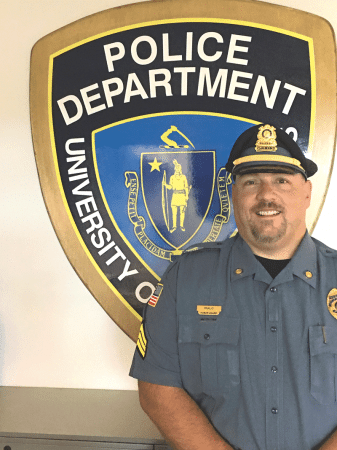
By his own account, Matthew Malo wasn’t much of a high-school student. But when he graduated in 1992 from Hampshire Regional High School, he set off for college anyway.

Big mistake.

Malo, 43, who is now a sergeant in the police department at UMass Amherst, said he matriculated at the Stockbridge School at UMass back then, thinking he would study landscaping. But, once there, he floundered.

“It wasn’t what I thought it would be. It was a lot of designing and art, and I’m not an artist or a designer,” said the Southampton resident in a recent interview at the UMass police station. “I wanted to be the guy who was out there doing it — not in a classroom.”

He left the program after just one semester.

The next year, at the urging of his parents, he tried college again — this time enrolling at Holyoke Community College. That didn’t go any better.

“It was like high school, one year later,” he said. “A lot of my friends were there, and if I had a class I didn’t like, and a bunch of my friends were hanging out in the cafeteria, guess where I was?”

Strike two. But, as the saying goes, third time’s the charm.

Matthew Malo

Matthew Malo says he’s “kicking butt” in UWW after two unsuccessful attempts at a more traditional college experience.

In 2006, Malo’s father suggested his son look into UMass Amherst’s University Without Walls, a bachelor’s-degree-completion program for non-traditional students, many of whom, like Malo, have abandoned earlier efforts at college. By that time, Malo had been working for some time as a UMass police officer, had gone through the Western Massachusetts Regional Municipal Police Academy, and had even successfully completed a few courses in criminal justice at Greenfield Community College.

“I finally found something I liked,” Malo said.

So, he decided to give it the old college try — one more time. Today, Malo is a student at UWW, where’s he’s studying criminal justice — and, as he puts it, “kicking butt.” He expects to graduate in spring 2019.

UWW, established in 1971, is one of the oldest adult bachelor’s-degree-completion programs in the country. Its specialized services include flexibility in scheduling, options to accelerate the degree process, and the opportunity to receive college credit for work or life experience, including service in the military.

“We believe learning doesn’t have to take place in the classroom, so we take into account the experience they have — the training and learning they’ve had through a variety of experiences,” said UWW’s director, Ingrid Bracey. “We meet students where they are, and the students are amazed at the amount of learning they actually have. The best part of being at UWW is seeing that light go on.”

Degrees of Progress

In winter 2016, Malo met with an advisor at UWW, who explained that the program would allow him to design a major based on his personal interests, and could offer up to 75 transfer credits from previous college courses, no matter how long ago they were taken.

He also discovered that, upon the completion of an in-depth, written portfolio that explored his experiential learning, he would be eligible to receive up to 30 college credits for the work, and living, he’d already done.

Perhaps most important, he said, was that course delivery through UWW is available fully online. (Traditional classes are also available, as are classes that blend online and classroom learning.) That, he said, has been crucial to his success in the program.

“My biggest concern about going back to college was scheduling,” said Malo, who has two school-aged children and works part-time for a small-town police department, in addition to his full-time duties as a UMass cop. “When the adviser said I could do all my classwork online, on my own time, I thought, ‘they really get it. They understand what’s going on with people like me.’”

He’s not alone: online classes are a rising trend across the country. According to a 2014 report from the Babson Survey Research Group, 33% of college students in the U.S. are enrolled in at least one online course, and the rate of online course enrollment continues to far exceed the overall rate of college enrollment.

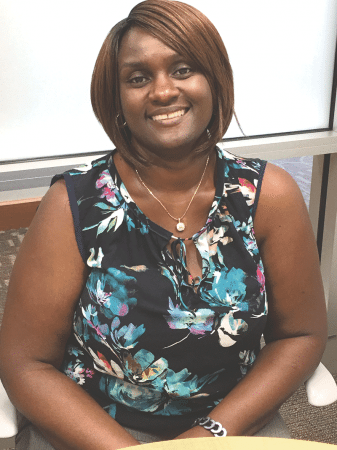
Judith Odindo’s path to UWW could not have been more different from Malo’s.

A native of Kenya, Odindo, 38, had come to the U.S. in 2001 to study as an international student at Montclair State University in New Jersey. She already had some college under her belt in Kenya, and was looking forward to her year of study abroad.

But then her mother, who was paying her tuition, fell ill back home, and Odindo’s financial support evaporated. So, after a single semester, she was forced to drop out. And because her family was struggling to make ends meet, she knew it would be a burden to them if she returned home.

That left Odindo stranded in a foreign country, on a student’s visa, but with no way to continue her schooling. She was heartbroken.

Nevertheless, she decided to stick it out in the U.S., which required changing her visa status to allow her to work — not an easy process, she said. Through a series of circumstances, and a move from New Jersey to Springfield, Odindo was able to find work with the Mass. Department of Developmental Services, but it was always her intention to return to college — someday, somehow.

Eventually, she began to take classes as a part-time student at Springfield Technical Community College, but, because of her schedule as a supervisor in a residential home in Springfield, it was a slow process, with no discernable end in sight.

Then, one day, she came across a flyer about UWW. She sent an e-mail inquiry to the program and described her predicament. The response was quick, and hopeful.

Judith Odindo

Judith Odindo says UWW fit her life and work responsibilities in a way other programs did not, allowing her to earn an elusive degree.

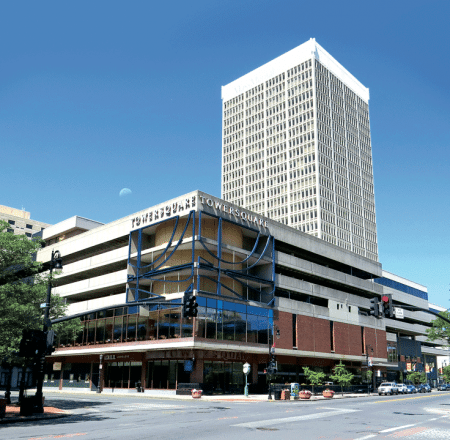
“They told me I would be a perfect fit for the program,” Odindo said in an interview at the UMass Center in Tower Square in Springfield. She learned she could transfer her credits from Montclair and STCC, and would likely receive additional credits for her work and life experience. “I said, ‘wow. It fits my life and my work schedule. This could be a way for me to finish my degree.’”

So she signed on, and two years later, in May, she received a bachelor’s degree, with a focus in business studies. Fortunately, her mother has since recovered, and now lives in Springfield as well.

“From a tough time, great things happened,” Odindo said.

Courses of Action

UWW is an academic major at UMass, with 12 full-time faculty and nine full-time administrative staff members, all with expertise in teaching and advising adult students. Students take core UWW departmental courses and then build their degree concentrations by taking courses throughout the university.

More than 4,000 adults have received bachelor’s degrees from the program since it’s inception more than 45 years ago, including NBA legend Julius Erving (Dr. J) and Monster.com founder Jeff Taylor. It enrolls about 1,000 to 1,200 students per semester and enjoys a 65% to 75% graduation rate, significantly higher than the rate of 35% to 40% seen in most degree-completion programs, Bracey said. And a significant number go on to receive higher degrees.

“The number-one thing they want is for you to succeed,” Odindo said.

Elizabeth Brinkerhoff knows from experience just how life-altering a degree from UWW can be. Brinkerhoff, 66, who lives in Shutesbury, is a 1981 graduate of the program, and also worked for many years as a faculty member and advisor in the program, retiring two years ago. She credits her time as a student there with providing the boost she needed to build a career.

Brinkerhoff says she followed four years as “half-assed high-school student” with a “lackadaisical stint” at GCC. “I was floundering,” she said. “I really had no idea what I wanted to do.”

So she dropped out, joined the workforce, moved around a bit, and finally landed back in Western Mass., where she found a job working with alternative-education programs for grades K-12. Then, in 1978, a friend encouraged her to look into the UWW.

Brinkerhoff’s employer at the time supported the idea and allowed her to adjust her work schedule to accommodate classes. (Unlike today’s students, who overwhelmingly choose to take online classes, students in Brinkerhoff’s day had to report to brick-and-mortar classrooms.) She enrolled in spring 1978, and went on to receive a master’s degree from Suffolk University in Boston and, later, a doctorate from the UMass School of Education.

She had planned to become a high-school guidance counselor, but once she started classes at UWW, it didn’t take long for her to adjust her career goals.

“I realized there were a whole lot of people, like me, who were coming back to school, so I stayed in higher education, and with adult learners,” she said.

It’s a trend that has continued: with the demand for college-educated employees steadily increasing, the Executive Office of Labor and Workforce Development has projected that 60% of workers in Massachusetts, and 40% nationally, will need to have an associate’s degree or higher to be competitive in the job market. And that’s sending older Americans back to college.

Today, three-quarters of U.S. undergraduate students are now considered ‘non-traditional,’ according to the National Center for Education Statistics, which has estimated that enrollment of 25- to 34-year-olds in undergraduate degree programs will increase 28% by 2019, while enrollment of students over 35 will go up 22%. That means that adult-learning, post-secondary models, like UWW, are likely to play an increasingly important role in preparing students for today’s workforce.

Indeed, thanks to her UWW education, Odindo says, she’s now eligible to apply for certain advancements in her workplace, and also plans to attend law school. And the UWW experience certainly set Brinkerhoff on her way to a long and successful career.

“The faculty and the students at University Without Walls are part of a learning culture — that thing that happens when people’s minds are at work. It taught me how to learn and how to think, and it helped define my career,” she said. “Then, knowing the program as well as I did, I could help students understand just what was possible there.”

Grade Expectations

As for Malo, he says he hopes his bachelor’s degree will make him “a little more marketable” for advancement on the police force, but that’s not why he’s attending UWW.

“It’s always bugged me that I never finished — there’s always been that weight on my shoulders,” he said. Plus, he added, he’s doing it for his children — Jonathan, 14, and Savanna, 10. “I want my kids to see me finish my degree. They’ll know if I can do it, they can do it, too.”

Thanks to UWW, a lot more people have been able to ‘do it.’

Back to School Sections

To a Higher Degree

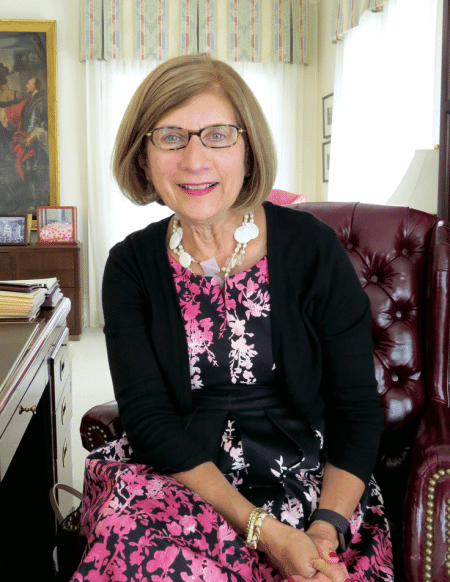
Carol Leary

Carol Leary says Bay Path University’s first doctorate continues the school’s long history of being innovative.

It’s been well-documented that Bay Path University President Carol Leary would prefer to interview every candidate for every position being filled at the 120-year-old institution.

There’s a reason for that — actually, several of them. For starters, she understands that people are the key to any organization’s success, and she wants to be part of the process of putting this team together.

Beyond that, though, Leary has told BusinessWest on more than a few occasions that she’s looking for certain things when she’s sitting across the desk or table from a job candidate. Beyond the obvious skill sets required of those in specific positions, she’s also looking for those who are energetic, innovative, and entrepreneurial.

Those qualities, usually detectable through certain questions she opted not to share, are largely responsible for the meteoric rise in size and prominence of Bay Path since Leary arrived at the Longmeadow campus in 1994. Indeed, individuals with these traits have driven growth that has manifested itself in everything from continued success and expansion of the Women’s Professional Leadership Conference to a host of new programs of study, such as a degree offering in cybersecurity; from creation of the American Women’s College, which offers a broad range of programs online and in the classroom, to the significant name change at the school, swapping the word ‘college’ for ‘university.’

And now, there is another milestone directly attributable to innovation and entrepreneurship — the university’s first doctoral degree offering, in occupational therapy.

Set to launch this fall — an open house for the program was staged late last week — this fully online offering, like many that have been developed over the course of the school’s history, was created in direct response to need within the community, said Leary.

“Since 1897, Bay Path has been a very innovative institution because it has always educated for the workforce,” she explained. “And that history is part of our DNA.”

Tracing some of that history, specifically the chapter that pertains to this latest milestone, Leary noted that, when she arrived at the school in 1994, it had just opened the box on a two-year program in occupational therapy to meet growing demand for such professionals. Just a few years later, as needs within that realm of healthcare changed, the program moved to the baccalaureate (four-year) level. And less than a decade later, the school added a master’s-level program, again to adjust to changing societal needs. And in a decade, that program has grown from 18 students to 136.

But as the population continues to age and the need for not only OT therapists but the individuals who will train the next generation of specialists grows, Bay Bath administrators knew the school needed to respond accordingly. That response is a doctoral program.

And while the new program is important for area communities and the individuals who have chosen OT as a career, it is also a step forward for the university, or another step forward, to be more precise.

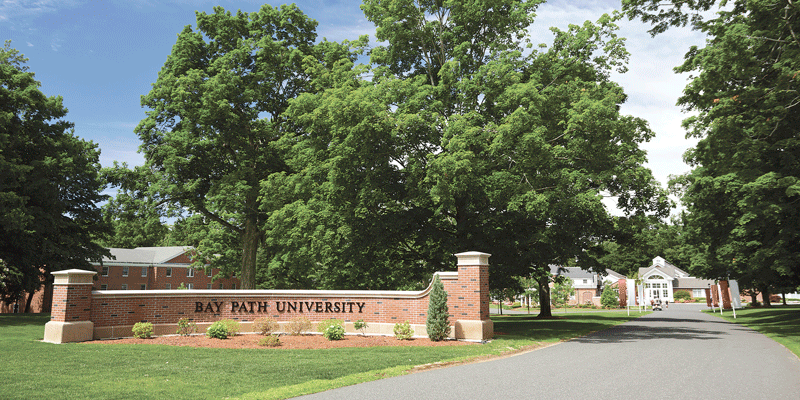
Bay Path

The occupational therapy doctorate is another in a long list of milestones at Bay Path, which became a university earlier this decade.

“When you think about how far we’ve come, from Bay Path Institute (the name on the school in its early years) to becoming a university and now offering a doctorate in 2017, I’m very proud of our faculty,” she said. “This is an important milestone for us.”

And while she wasn’t ready to offer any details on what might come next, Leary made it clear that Bay Path’s first doctoral program certainly won’t be its only one for very long.

When you think about how far we’ve come, from Bay Path Institute (the name on the school in its early years) to becoming a university and now offering a doctorate in 2017, I’m very proud of our faculty. This is an important milestone for us.”

“We believe this is just the beginning,” she said. “And we already have things in the queue for our next doctorate; they’re in our vision.”

School of Thought

With that remark, Leary helped explain that a doctoral program doesn’t come about overnight. They are generally two or three or years in the making, with approval needed from the Board of Higher Education, she noted, and they result from a hard mix of strategic planning, listening to and consulting with the business community, and calculated risk taking.

In other words, they stem from a culture of entrepreneurship, which is one of the things Leary has put in place over her 23 years at the helm.

And one of the tenets of entrepreneurship, she said, is the ability to anticipate need and then meet it, and this is definitely the case with the new doctoral program in occupational therapy.

The need, in this case, is not only for more occupational therapists — a given as the population ages and people live longer — but also better-trained specialists within that field.

“In physical therapy, if you are now to be hired as a new college graduate, you need a doctorate,” Leary explained. “And the field of OT may go there by 2025 — it may become a profession that will go to a doctoral level as a requirement.”

In the meantime, there is greater need for individuals to train the occupational therapists who will provide care in the years and decades to come, she went on, adding that such educators will need a doctorate.

“We did this because it’s a natural progression for us,” said Leary. “But we primarily did it because the need for professors in the field to teach the future occupational therapists is great; this is probably one of the most critical shortages in our country. Having the doctorally prepared, post-professional OT is going to be a very good place for Bay Path to focus.”

But while being entrepreneurial in this endeavor to create its first doctorate, Bay Path is also being innovative, especially with the fully online nature of the program, said Leary, adding that this format was chosen and designed to make the offering accessible to those looking to advance their career, and may be particularly appealing to those in mid-career and raising a family.

And this thought brings her to one of those individuals she insisted on interviewing during the process of hiring someone to lead the program — Julie Watson, Ph.D., MHS, OTR/L, who eventually won the job.

Watson, who maintains ongoing clinical experience at Brooks Rehabilitation and Therapeutic Learning Center in St. Augustine, Fla., said the online format will be a critical component in the success of the program moving forward.

“Having experienced pursuing an advanced degree as a working parent, I understand just how important the online program design is for those living very busy lives, looking to improve their skills, and advance in the field of occupational therapy,” she said.

As for what might come next, Leary was understandably shy when it came to conjecture about what the next doctorate degrees (and master’s degrees, for that matter) might be. But there was certainty in her voice when she said there would be others.

“There are at least two others that I know our provost is looking at,” she explained. “Our provost is very forward-thinking, very creative, and with her faculty, they look two to five years out, and that’s how far out we’re looking, not just with doctorates, but other master’s degrees that we think are going to be absolutely critical.”

An Aggressive Course

There’s a sitting room off the main entrance at Deep Wood Hall, the main administration building at Bay Path. And on the coffee table in that sitting room is a collection of brochures highlighting a host of the school’s programs.

The marketing taglines are aimed at individuals thinking about their careers and what it might take to advance them. “Prepare to Take the Next Step” reads the brochure promoting the master of science degree in higher education administration. “There Is Work to Be Done’ is the headline on the promotional material for a host of graduate programs for business professionals.

While probably intended as such, those marketing lines also speak to the mindset of administrators and educators at the university. They know there’s work to be done, and, because they’re innovative and entrepreneurial, they’re prepared to take the next step — as is the institution they work for.

This explains why there have been so many milestones for this school over the past few decades, and why there is little, if any, doubt that there are many more to come.

George O’Brien can be reached at [email protected]

Construction Sections

On the Rise

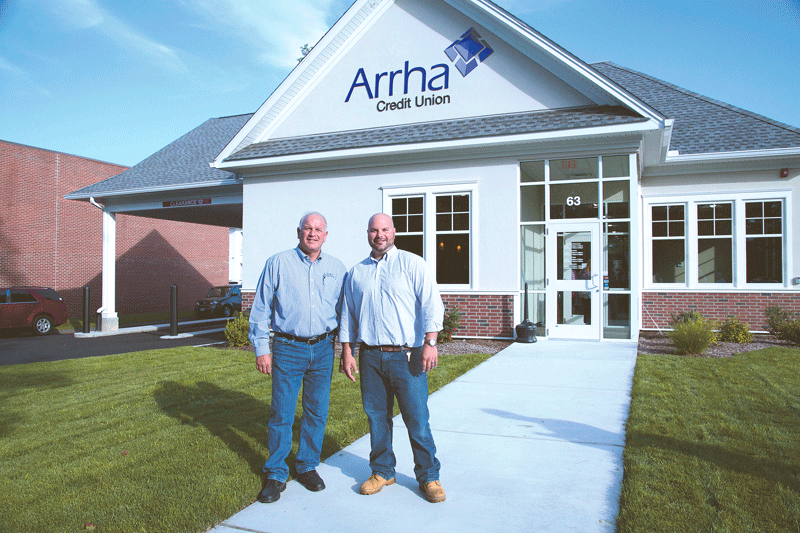
Andy (left) and A.J. Crane

Andy (left) and A.J. Crane stand before a recent project, Arrha Credit Union’s new West Springfield branch.

When BusinessWest sat down in 2008 with the principals at A. Crane Construction, company founder Andrew Crane noted a motto he adhered to, reflecting the scope of projects his firm was willing to take on: “picnic tables or bridges — it doesn’t matter.”

“Well, we finally did a bridge,” his son, A.J. Crane, happily told BusinessWest recently, showing off some pictures of a small span over a culvert, connecting the former Chap de Laine’s Furniture site in South Hadley — incidentally, one of Crane’s first clients almost three decades ago — to Newton Street.

It’s just one example, said the younger Crane — who runs the company alongside his father — of how A. Crane has expanded its scope over the past decade, assembling a broader book of business in the commercial-building world and branching out into new realms.

“We’ve opened divisions in property management, condominium management, and we’re running more crews over the past four or five years,” he told BusinessWest. “We’ve taken on many more commercial jobs — larger-scale commercial work. We now have the office staff and field crews to handle those types of jobs.”

For example, the company is in the process of completing a remodel of the Sunshine Village offices in Chicopee; other recent projects range from Arrha Credit Union’s new West Springfield branch to a Dairy Queen renovation; from a new office for Ameriprise Financial in South Hadley to a major renovation for Oasis Shower Doors, as well as ongoing work for Ondrick Natural Earth and AM Lithography.

“My dad’s skill set was more residential,” Crane said. “I went to school to do different types of things; I have a degree in civil engineering. We’ve tailored our system and processes in the office to accommodate larger jobs, dealing with architects and engineers — that’s right in our wheelhouse.”

As it approaches its 30th anniversary next year, the firm has come a long way since its humble beginnings in Chicopee in 1988, when it relied mainly on word of mouth, reputation, and loyalty — and that willingness to tackle any type and size of job — to build a healthy clientele.

From the Ground Up

Andrew Crane started in the construction world working for Daniel O’Connell, and from there spent eight years with a family business that built post-and-beam homes before striking out on his own.

For the better part of two decades, he conducted business out of a house in Chicopee, doing jobs only for people he knew personally. A little over a decade ago, he moved to Grattan Street, but has outgrown that space as well and has begun looking for a larger headquarters in the same city.

In a fiercely competitive industry, the father-and-son principals say they have avoided the low-bid trap by cultivating a reputation for attentive service and quality control — and a stable of loyal clients — allowing them to earn realistic profits and grow the business without cutting corners.

A. Crane Construction recently tackled a major renovation form Oasis Shower Doors.

A. Crane Construction recently tackled a major renovation from Oasis Shower Doors.

No contractor was unscathed by the Great Recession, which impacted construction, particularly residential work, as hard as any industry. But A.J. Crane said the firm’s reputation and relationships kept it afloat.

“Residential construction took a huge hit,” he said. “But we were always busy because our crews are talented, and we’ve taken the same personal approach, whether dealing with homeowners or private, family-owned businesses. We’ll never give up residential — we’re building a 3,600-square-foot house in Longmeadow right now — because that’s where our roots are.”

We want to work for people who have privately owned, family-owned businesses and plan on being here for generations, which means they have buildings and facilities that will be here for generations, and would rather not build them more than once.”

While seeking a diverse roster of work to keep crews busy, Crane says the company’s relationship-based style of doing business is especially appreciated by local clients, as opposed to national chains.

“We want to work for people who have privately owned, family-owned businesses and plan on being here for generations,” he said, “which means they have buildings and facilities that will be here for generations, and would rather not build them more than once.”

Design preferences are constantly changing, he added, not only in elements like a home’s floors, cabinetry, and trimwork, but in commercial building as well. For instance, EIFS, short for exterior insulation and finish system — a stucco-like, insulated, water-resistant finished surface, is becoming more popular. “We just put a bunch of it on AM Lithography. It’s a great-looking project, and improves the insulation value.”

Indeed, quality and sustainability are important to the Cranes; Andrew has been heavily involved with the Home Builders & Remodelers Assoc. of Mass., including a stint as president, during which time he advocated at the state level for continuing-education requirements for construction supervisors, as well as more stringent building codes requirements aimed at weeding out small, renegade contractors who use shoddy materials or fail to secure proper insurance.

The rise of ‘green’ construction brings its own set of high standards, and A. Crane has done plenty of that type of work as well.

“The codes are stringent now, not just HVAC and insulation, but occupancy-sensing lighting in office buildings, no more switches, things like that,” A.J. said. “It makes it more complicated to build, more complicated to fix or make repairs, and they drive the cost up.”

New Territory

Through the years, A. Crane has seen a roughly even split between homebuilding and commercial work, but its experience with multi-family residential work — for instance, it recently won a contract from a condominium association to build 60 decks — was one of the factors in the firm’s move into property and condominium management.

“We were asked to work for a local association down the street in Chicopee, then asked by another one in South Hadley,” A.J. Crane said. “We manage the finances, insurance, snowplowing — we don’t necessarily do it in-house, but we execute what the board of trustees decides, and make recommendations. We’re certified to do it, and we manage about 200 units now.”

The service is a valuable one for smaller companies — say, with a footprint of 6,000 to 7,000 square feet — that don’t have their own maintenance department, and don’t do much long-term facilities planning.

“Take a dental office. What does that guy know about buildings? But if you have 10 years left on the roof, and it’ll cost $12,000 to replace, you should start planning for that now. Or maybe there’s a $30,000 siding job coming up five years from now. Or you want to get on a maintenance schedule for HVAC and irrigation. You go to work every day, and you don’t want to think about that.”

A. Crane employs 11 people full-time, but on any given day, there may be 65 in the field, he noted. In addition, the firm supports and sponsors dozens of area organizations, from Sunshine Village to local high schools to the Springfield Thunderbirds. Andrew continues to pursue state-level advocacy with organizations like the Massachusetts Convention Center Authority and the Home Builders & Remodelers Assoc. of Massachusetts, while A.J. serves on the boards of the Western Mass. chapter of the American Red Cross, the Chicopee Chamber of Commerce, the Westmass Area Development Corp., and several other entities.

In that latter role, he has seen interest rise the Chicopee River Business Park, “and that’s great for economic development,” he told BusinessWest. “Everyone knows we need business to drive housing, and housing drives the economy.”

A. Crane Construction plans to be around well past its 30th anniversary, building many of those homes and businesses so crucial to a growing Pioneer Valley.

Joseph Bednar can be reached at [email protected]

Daily News

SPRINGFIELD — Valley Venture Mentors announced that it has graduated 14 startups from its inaugural Collegiate Accelerator Program.

After nine weeks of intensive training, $20,000 in cash prizes were distributed to the entrepreneurs by accredited investors. Additionally, a $5,000 award was given to the startup that showed the most grit.

Here is a rundown of the teams and the prize distribution:

  • The Travel Unicorn, the LGBTQ+ travel guide that works to connect travelers to safe destinations based on their recommendations: $6,000, plus the $5,000 Grit Award for outstanding work and commitment;
  • lymph + honey, which provides access to healthful, wholesome, and sustainable natural hair and body care products, no matter who or where you are: $6,000;
  • Vidvision, which helps marketers convert their video viewers into customers: $2,700;
  • Zirui, offering innovative and stylish solutions for traveling with beauty and care products: $2,700;
  • Mt. Mitho, bringing flavors from the highest peak on Earth: $1,350;
  • redflowers, an online, media platform that fosters community and dismantles societal stereotypes surrounding black identities and black women: $700;
  • STEAMporio, training the makers of tomorrow by creating a passion for learning: $700;
  • Boman, where a shipping container + agricultural system equals a turn-key platform for growing any crop, anytime, anywhere. Safely;
  • El Cherufe Chile Paste, an artisanal chile paste that offers a new flavor experience to lovers of spicy heat;
  • INDI10.com,where you bid to wear it first;
  • Lighthouse, a guiding light to help students with projects, no matter the size!
  • Shesabelle Chandeliears, helping those with limited earring options experience the full range of expression earrings have to offer;
  • Studio 26, a promotional service that provides underground musicians in Massachusetts with tools and resources to help them expand/build their brand; and
  • The Black Enterprise Business Resource Center, which cultivates the empowerment, and collaboration of black entrepreneurs in the Western Mass. area through quality business education and business services.
Daily News

AGAWAM — The West of the River Chamber of Commerce hosted its 14th annual scholarship golf tournament at Crestview Country Club in Agawam on Aug. 14.

During the tournament’s reception and dinner, the West of the River Chamber of Commerce and the West of the River Chamber Foundation awarded scholarships to one student each from Agawam High School, West Springfield High School, and Lower Pioneer Valley Education Collaborative.

Daily News

BOSTON — The Baker-Polito administration released an update of its Chapter 55 report, providing residents, policy makers, and public officials new information on the sweep of the opioid epidemic in Massachusetts.

The Chapter 55 report was released for the first time in the fall of 2016 and is the only report in the nation to analyze more than 20 data sets from across state government and present new estimates of the percentage of Massachusetts residents with an opioid use disorder. The Baker-Polito Administration has doubled state spending on addiction and has used data from the Chapter 55 reports to direct its efforts to support communities and residents hardest hit by the epidemic.

“The Chapter 55 report is a helpful tool for us to continue learning more about the many factors fueling the opioid epidemic,” said Gov. Charlie Baker. “Massachusetts has led the way implementing first in the nation laws on prescription limits and mandating prescriber education, and our administration is committed to using this type of data to target our resources in the most effective and efficient way to respond to this crisis and support those communities and residents that are most severely impacted by it.”

The 100-page analysis reviews data trends from 2011 to 2015 and provides an overview of residents at greatest risk of both fatal and non-fatal opioid overdoses. It also provides estimates and details risks associated with non-fatal opioid overdoses, and examines how continued use of prescription opioids is associated with opioid-related deaths.

“Chapter 55 has allowed for a more complete picture of the epidemic here in the Commonwealth,” said Secretary of Health and Human Services Marylou Sudders. “Understanding all of the contours of this complex public-health crisis gives us the context and information we need to adjust and refine our efforts to target resources and prioritize our interventions.”

Among the report’s key findings:

• In 2015, it was estimated that more than 4% of Massachusetts residents age 11 and older had opioid-use disorder (by comparison, 8% of Massachusetts residents are diagnosed with diabetes);

• Non-fatal overdoses between 2001 and 2015 increased approximately 200%, and the total number of non-fatal overdoses during that time exceeded 65,000;

• Compared to the general population, those who received three months of prescribed opioids in 2011 were four times as likely to die from opioid-related causes within one year, and 30 times more likely to die of an opioid-related overdose within five years; and

• Not since the HIV/AIDS epidemic in the 1980s and 1990s has Massachusetts seen such a sharp increase in a single category of deaths.

“This report underscores the importance of pulling together many sources of information that we were unable to link prior to the enactment of the Chapter 55 law,” said Public Health Commissioner Dr. Monica Bharel. “This has added to our awareness of where the burden of the epidemic falls the hardest. That knowledge is crucial because only by knowing where the needs exist can we address them most effectively.”

Among residents with increased risk of both non-fatal and fatal opioid-related overdoses, the report found that:

• The risk of opioid-related overdose death for people who have experienced homelessness is up to 30 times higher than it is for the rest of the population;

• In 2015, nearly 50% of all deaths among those released from incarceration were opioid-related;

• The risk of a fatal opioid-related overdose is six times higher for a person diagnosed with a serious mental illness and three times higher for those diagnosed with depression; and

• 82% of mothers who overdosed during pregnancy or within the first year post-partum had a diagnosis of depression.

Daily News

MONSON — Terry Poloski of Monson Savings Bank was recognized recently by the Warren Group, publisher of Banker & Tradesman magazine, in its its annual report of the top mortgage originators in Massachusetts. Poloski was named one of the top five mortgage loan originators in Western Mass. for the second straight year.

“What makes Terry a successful originator is she goes above and beyond to make sure her clients know what to expect and are comfortable with the entire loan process. She encourages people to ask questions and has 100% timely follow-through. She also realizes she works in an ever-changing field, and it requires extra time and continued education in order to be the best resource for her clients,” said Nancy Dahlen, senior vice president, residential lending and servicing officer, CRA and fair lending officer at Monson Savings Bank.

Added Poloski, “this job has a lot of facets to it, and you need to be extremely knowledgeable and an effective communicator. I am literally helping people to make one of the most important life purchases, and clients need to trust I will make that go as smooth as possible. This is made so much easier by the tremendous support I receive from my colleagues at Monson Savings Bank.”

Poloski has been with Monson Savings Bank as a mortgage originator for the past five years. She has over 38 years in the banking industry, is a member of the RAPV Affiliate Group, and participates in BNI.

Daily News

SPRINGFIELD — Dakin Humane Society will partner with WWLP-22 News to host NBCUniversal-owned television stations’ third annual Clear the Shelters nationwide pet adoption drive on Saturday, Aug. 19. On this day, Dakin will offer 50% off normal adoption fees for small animals and select adult cats as part of the nationwide Clear the Shelters initiative that helps families find and adopt pets found in shelters across America.

Small animals at Dakin include rabbits, birds, ferrets, guinea pigs, hamsters, gerbils, chinchillas, mice, rats, and birds, based on availability. A full, up-to-the-minute listing of adoptable animals is available at www.dakinhumane.org. Dakin’s Springfield Adoption & Education Center will be open 12:30 to 5:30 p.m. that day, while its Leverett Adoption Center will be open 12:30 to 4:30 p.m.

“Clear the Shelters is a terrific program that raises awareness about the importance of pet adoption,” said Dakin Executive Director Carmine DiCenso. “It also helps with the overcrowding issues that adoption centers typically experience in the summer months because of spring and summer litters being born.”

The program was expanded nationally in 2015, when more than 25,000 pets were adopted. The following year, more than 50,000 found homes, totaling more than 70,000 animals adopted through Clear the Shelters.

Daily News

EAST LONGMEADOW — Facial Cosmetic & Maxillofacial Surgery, P.C. announced that Max Kernizan, DMD has joined its oral-surgery practice.

Richard Fraziero, the practice’s owner, said Kernizan “is bringing to Western Mass. the excellent surgical skills that our patients have come to expect from our surgeons at FCMS. He will be performing full-scope OMF [oral and maxillofacial] surgery in our surgical office, as well as at Baystate Medical Center. We are very excited to have Max join the Valley’s premier OMFS practice.”

Kernizan completed his undergraduate education at Philadelphia University, graduating magna cum laude, and earned his dental degree at Temple University in Philadelphia. While in dental school, he achieved the Oral Surgery Scholarship award and served as vice president of the Anesthesiology Honor Society. Following dental school, he completed his specialty training in oral and maxillofacial surgery as chief resident at Yale New Haven Hospital in New Haven, Conn. He will begin treating patients at 382 North Main Street, East Longmeadow, in September.

“I am thankful to have been given the opportunity to be a member of the Facial Cosmetic and Maxillofacial Surgery, P.C. team,” Kernizan said. “I am looking forward to working with surrounding colleagues in Western Massachusetts while providing great care to the surrounding community.”

Kernizan is trained in the full scope of oral and maxillofacial surgery. His primary clinical interests include orthognathic/corrective jaw surgery, wisdom teeth removal with sedation, dentoalveolar surgery, dental implants, and repair of traumatic facial injuries. He maintains certifications in BLS, ACLS, PALS; currently has affiliations with the American College of Oral and Maxillofacial Surgery and the American Assoc. of Cosmetic Surgery; and is an AO CranioMaxillofacial affiliate.

To schedule an appointment with Kernizan, at (413) 525-0100. He will also be offering same-day emergency appointments based on the direction of the patient’s general dentists; area dentists may press option 1 to be directed to a front-desk coordinator who will accommodate the patient.

Daily News

STOCKBRIDGE — Austen Riggs Center has been recognized as a “Best Hospital” for 2017-18 by U.S. News & World Report, ranking ninth in psychiatry nationwide. Noteworthy among the top group of psychiatry honorees for its small size and integrated approach, Austen Riggs Center is a therapeutic community, open psychiatric hospital, and center for education and research, promoting resilience and self-direction in adults with complex psychiatric problems.

“Being recognized as a top-10 ‘Best Hospital in Psychiatry’ again this year is a great honor, and a tribute to our unique treatment program and to the excellence and dedication of our staff,” said Austen Riggs Center Medical Director and CEO Dr. Andrew Gerber. “We are proud to be included among the nation’s top hospitals in psychiatry.”

Added Ben Harder, managing editor and chief of Health Analysis at U.S. News, “for nearly three decades, we’ve strived to make hospital quality more transparent to healthcare consumers nationwide. By providing the most comprehensive data available, we hope to give patients the information they need to find the best care across a range of specialties.”

For the 2017-18 “Best Hospitals” rankings, U.S. News evaluated more than 4,500 medical centers nationwide in 25 specialties, procedures, and conditions. In the 16 specialty areas, 152 hospitals were ranked in at least one specialty. In rankings by state and metro area, U.S. News recognized hospitals as high-performing across multiple areas of care.

Daily News

SPRINGFIELD — American International College (AIC) will host an information session for doctoral low residency programs on Saturday, Aug. 26 beginning at 11 a.m. in the Dining Commons on the AIC campus located at 1000 State St. in Springfield. Participants will have an opportunity to sit in on AIC’s low residency weekend to see what it is like to be a doctoral candidate in this program. Lunch will be provided.

The information session is for working professionals and is designed to give prospective students access to all the information they need while providing an opportunity to meet faculty, staff, and other students in order to gain insight into AIC’s low residency doctoral program.

Low residency doctor of education programs at AIC are non-traditional doctoral programs for practitioners in education, educational leadership, counseling, and supervisory roles who already hold an accredited master’s degree in education, educational administration, psychology, counseling, or a closely aligned field.

“Low residency programs are full-time but with flexible program delivery that allows students to balance work and life while achieving academic goals,” said Nicholas Young, dean for Low Residency Programs. “Classes are delivered in a low residency format where students attend five weekend residencies per year. During residencies, students meet with their faculty and peers on the AIC campus to attend workshops, hear guest lectures, meet face to face with their mentors, and share ideas among peers. When not in residency, students are engaged in a mentoring relationship with an assigned faculty member who will guide the students’ program of study in a variety of interactive formats.”

To register, call the AIC dean of Graduate Admissions at (413) 205-3700, or visit www.aic.edu for more information. Due to space considerations, registration is limited to 20 students for this information session.

Departments People on the Move
Dr. Jennifer Mark

Dr. Jennifer Mark

Spiros Hatiras, president and CEO of Holyoke Medical Center and Valley Health Systems, announced the promotion of Dr. Jennifer Mark to chief medical officer at Holyoke Medical Center. “Dr. Mark is a highly skilled physician with a proven track record and expertise in leading a team to success. Her focus on patient satisfaction, in conjunction with high-quality care and open communication style, will continue to be an asset to HMC as she enters this new role,” said Hatiras. “Dr. Mark’s knowledge of the culture within the organization will continue to be appreciated and allow for a smooth transition to this position.” Added Mark, “I really like the fact that Holyoke Medical Center is very focused on patient-centered care in terms of our overall strategy and how we make improvements in safety and quality. The administration is aligned with providers and other caregivers, all of whom want what’s best for our patients.” Mark, whose extensive background includes both primary and emergency care, has been with HMC since 2008, serving for the past five years as Emergency Department (ED) medical director. During that time, patient satisfaction has increased by 85% for overall care in the ED, and the length of stay for discharged patients has decreased by about 30 minutes. These changes have been made despite increasing patient volumes and severe space constraints, which should improve in the new ED that opened earlier this month. “It is a beautiful new facility that will be wonderful for our patients,” Mark said. As director, Mark worked closely with the ED nurse manager to direct operations of the facility that treats over 44,000 patients per year, with oversight of 14 doctors and 12 mid-level providers. She also went through intensive communication training and then helped teach those skills to her team in the ED in order to raise patient satisfaction. Previously, Mark, who graduated from Yale University School of Medicine, served in various emergency and adult-medicine physician roles throughout Massachusetts. She was also a founding partner of a private Emergency Department physician group where she served as assistant medical director for five years.

•••••

Michael Oleksak

Michael Oleksak

Westfield Bank announced that Michael Oleksak has joined the bank as vice president, commercial loan pfficer. Oleksak brings more than a decade of banking experience to his new role. He previously served as assistant vice president, business banker at United Bank, where he was responsible for managing and developing small-business customer accounts and establishing new customer relationships. Oleksak is a graduate of Southern New Hampshire University, where he earned a master’s degree in business administration. He also completed LEAD NY, a leadership program through Cornell University. He currently serves on the board of the West Springfield Boys and Girls Club, and was previously on the boards of the Cooperative Development Institute and the Charlene Ann Foundation. “I’m pleased to welcome Michael Oleksak to the Westfield Bank team,” said James Hagan, president and CEO of Westfield Bank. “Over his career he’s demonstrated real skill at serving the needs of local businesses by understanding what makes them unique in order to help them realize their potential, and by relating to every customer as an individual person. He knows that better banking for local businesses requires outstanding communication, responsiveness, and the imagination to seek out opportunities for our customers.”

•••••

Calvin Hill

Calvin Hill

Springfield College announced that Calvin Hill, vice president for Inclusion and Community Engagement, is one of 24 senior-level administrators in higher education nationwide selected by the Council of Independent Colleges (CIC) to participate in the 2017-18 Executive Leadership Academy. Individuals chosen for the year-long program are vice presidents or cabinet officers in higher education who aspire to the presidency of an independent college or university. Starting this week, Hill will participate in two seminars in Washington, DC; the opening seminar will take place July 20-22, and the closing seminar will be held June 18-20, 2018. He will also engage in readings, webinars, and a mentoring program. In addition, he will develop and follow an experiential learning plan focused on specific areas of presidential responsibility. “Competition for the available places in the program was intense,” said CIC President Richard Ekman. “The review committee found the nomination materials to be most impressive. They (and I) believe that Dr. Hill has the potential for highly effective leadership as a college or university president.” In July 2015, Hill joined Springfield College as the vice president for Inclusion and Community Engagement. His responsibilities include promoting diversity and inclusion among all constituents of the college, and connecting and promoting the college’s resources to area communities. Hill arrived at Springfield College with more than 20 years of experience in higher education. Prior to his time in Springfield, he served as the university Diversity and Inclusion officer for the University of St. Thomas in St. Paul, Minn. Prior to that, he developed strong ties to higher education in Massachusetts working as assistant to the president and director of the Office of Diversity, Inclusion, and Equal Opportunity at Worcester State University. He also has served as associate provost and chief Diversity officer for MGH Institute of Health Professions in Boston and assistant dean and director of Diversity Programs at Worcester Polytechnic Institute. Hill is a consultant on diversity issues and presents nationally on issues of inclusion, where he focuses primarily on providing equal access to educational opportunities for underrepresented populations. Fifty-nine percent of participants in the first Executive Leadership Academy cohort (2009-10) have since advanced in the higher-education ranks, and 24% of participants in a recent cohort (2015-16) have already moved up in the ranks. “These indicators suggest that CIC is helping to meet the leadership needs of higher education by offering highly effective leadership development programs for modest fees to member institutions,” Ekman said.

•••••

John Henderson

John Henderson

The Employers Assoc. of the NorthEast (EANE) announced that John Henderson has joined the EANE team as director of Learning & Development, effective June 2017. John will lead a team to design, customize, and schedule the diverse array of more than 500 substantive training programs presented by EANE each year for members and non-members. Henderson brings more than 25 years of experience working for associations and nonprofits, much of it from a global, cutting-edge perspective. Most recently, was vice president of Industry Relations and Strategy for Fixation Marketing in Bethesda, Md. For more than seven years, he was vice president for Education, Training and Professional Development for the Alexandria, Va.-based International Assoc. of Amusement Parks and Attractions, the world’s largest amusement-industry trade association, representing more than 4,000 member facilities in 93 countries. In this position, he worked with the education committee to develop and launch a three-tiered, individual global certification program and continuously increased attendance at expo-education sessions. He also led the efforts of a task force to completely redesign the Institute for Executive Education. As an accomplished member-association executive, Henderson provides EANE with a proven track record of successful strategic planning and tactical leadership. His background in education and training includes a specific focus on communications skills. He has a bachelor’s degree in political science from Kent State University and a master’s degree in educational leadership from the University of Pennsylvania. He is a member of the International Assoc. of Exhibitions and Events and a past member of the American Society of Association Executives.

•••••

Christina Royal

Christina Royal

Holyoke Community College President Christina Royal has been appointed to the board of directors of the United Way of Pioneer Valley and the American Assoc. of Community Colleges’ Commission on College Readiness. Her appointment to the United Way board was unanimously approved at the regional nonprofit’s 95th-anniversary celebration and annual meeting on May 31. She began her three-year term on July 1. Her one-year appointment to the Commission on College Readiness also began July 1. The AACC, which is based in Washington D.C., is the principal advocacy group for community colleges in the U.S. Its Commission on College Readiness advises the AACC board and staff on matters related to preparing students for college-level academic work.

•••••

On the heels of a recent $1 million kitchen renovation, the Red Lion Inn recently welcomed new management and culinary talent with two strategic hires: Director of Food & Beverage Fabien Riviere and Sous Chef Jim Corcoran. Both will work with Vice President of Culinary Development Brian Alberg to continue to evolve the inn’s commitment to local sourcing and service excellence. “The continued success of the Main Street Hospitality Catering, with projects like Seeds Market Café at Hancock Shaker Village, calls for bringing in additional expertise,” said Sarah Eustis, CEO of Main Street Hospitality Group. “Fabien and Jim will help strengthen the Red Lion Inn, our culinary hub, and continue to heighten our quality, hospitality, and service.” With more than 20 years of restaurant-management experience, Riviere joins the Red Lion Inn from Studio Restaurant at the Montage Hotel in Laguna Beach, Calif. This marks his return to the Red Lion Inn, where he was sommelier from 2003 to 2005. Working stateside and abroad, Riviere’s résumé includes Felix Restaurant at the Peninsula Hotel in Hong Kong, Mix Restaurant by Alain Ducasse, and Restaurant Aureole at the Mandalay Bay Resort & Casino in Las Vegas, Nev. In his new role as Director of Food & Beverage, Riviere will manage all aspects of food and beverage operations, as well as the supervision and direction of all restaurant staff, among other responsibilities. Corcoran joins the Red Lion Inn culinary team from Allium Restaurant + Bar in Great Barrington, where his seasonal menus reflected his passion for locally grown ingredients and the diversity of his background. Corcoran has worked at restaurants throughout New York, including Manhattan’s Delmonico’s Restaurant, Brinkley’s Broome Street, Angolo SoHo, and April Bloomfield’s Breslin, before becoming lead chef of Allium Restaurant + Bar.

Agenda Departments

Scramble Golf Tournament

Aug. 12: I Found Light Against All Odds will present its first annual Scramble Golf Tournament scholarship fund-raiser. The festivities will include golf, food, raffles, and more. The tournament will take place at Veterans Memorial Golf Course, with tee times starting at 11 am. Tournament admission fee is $100 per player, with the top three teams awarded first-, second-, and third-place prizes. Players can register by visiting www.eventbrite.com/e/scholarship-fundraiser-scramble-golf-tournament-registration-35572044944. All money raised from this tournament will go toward awarding scholarships for the 2017-18 school year. The recipients will be formerly at-risk high-school seniors from local high schools, who have overcome the darkness in their lives, now finding the light in education and headed to college.

Summer Music Festival

Sept. 9: The first annual Springfield Jam Fest in downtown Springfield will feature dozens of local artists performing on two separate stages throughout the entire day from all genres of music, including rock, country, blues, reggae, and more. The festival will take place at Court Square from noon to 11 p.m., and will feature local food and beverage options in addition to the music. Proceeds raised by the concert will go to the National Alliance on Mental Illness of Western Mass., which is dedicated to improving the lives of individuals and families affected by mental illness through support, education, and advocacy.

Walk for Love

Sept. 9: Are you ready to walk for love? Join the fun at Shriners Hospitals for Children – Springfield on Saturday, Sept. 9th for the eighth annual Walk for Love Walkathon and Barbecue. The Walkathon begins at the hospital and continues through Van Horn Park and back to the hospital for a barbecue. It is an easy, three-mile walk and will be held rain or shine. Registration begins at 9 a.m., followed by the walk at 10 a.m., and the barbecue and entertainment from 11 a.m. to 1:30 p.m. The $25 cost ($5 for children 10 and under, and $40 for families) includes walk registration and T-shirt (to be given on a first-come, first-served basis, while supplies last). Free parking is available at the Boys and Girls Club located directly across from the hospital on Carew Street. To sign up online, visit www.walkforlove.org. For more information, contact Lee Roberts at (413) 755-2307 or [email protected].

Healthcare Heroes

Oct. 19: BusinessWest and the Healthcare News will present the inaugural Healthcare Heroes Awards at the Starting Gate at GreatHorse in Hampden. This new recognition program was created by the twin publications to recognize outstanding achievement across the region’s broad and diverse healthcare sector. Nominations were accepted in a number of categories, including ‘Patient/Resident/Client Care Provider,’ ‘Innovation in Health/Wellness,’ ‘Community Health,’ ‘Lifetime Achievement,’ and many others. A panel of judges determined the winners, who will be profiled in the Sept. 4 issue of BusinessWest and the September issue of HCN. American International College and Trinity Health are the presenting sponsors of Healthcare Heroes. Additional sponsors are Bay Path University, Baystate Health, Elms College, and Renew.Calm. Tickets to the event are $85 each, with tables available for purchase. For more information or to order tickets, call (413) 781-8600.

Out of the Darkness Walk

Oct. 21: Suicide is the 10th-leading cause of death in the U.S., yet suicide is preventable. The Western Mass. Chapter of the American Foundation for Suicide Prevention (AFSP) announced that its flagship event, the Greater Springfield Out of the Darkness Walk to Fight Suicide, has a new home, School Street Park in Agawam. Roughly 1,000 people from throughout the Greater Springfield Area are expected to participate in this annual event at its new location starting at 10 a.m. This fund-raising walk supports the American Foundation for Suicide Prevention’s local and national education and advocacy programs and its bold goal to reduce the annual rate of suicide by 20% by 2025. “We walk to raise awareness about this important health issue. Suicide touches one in five American families. We hope that by walking, we save lives and bring hope to those affected by suicide,” said Heather White, area director for AFSP in Western Mass. “School Street Park is the perfect location for this event, as the outdoor space will accommodate not only more walkers, but more community partners and vendors focused on suicide prevention. Elements like the covered pavilion for registration and stage for opening ceremonies makes the logistics of the day easier for the volunteers, while special touches like the park’s Garden of Angels and expanded space for activities of hope and healing will make the event more impactful and meaningful for the walkers.” The Greater Springfield Out of the Darkness Walk is one of more than 375 Out of the Darkness community walks being held nationwide this year. The walks are expected to unite more than 250,000 walkers and raise millions of dollars for suicide-prevention efforts. With this walk last year, the Greater Springfield community raised almost $60,0000 for suicide awareness and prevention initiatives, and had nearly 800 participants. “These walks are about turning hope into action,” said AFSP CEO Robert Gebbia. “Suicide is a serious problem, but it’s a problem we can solve. The research has shown us how to fight suicide, and if we keep up the fight, the science is only going to get better, our culture will get smarter about mental health, and we’ll be able to save more people from dying from depression and other mental-health conditions.” Planning committees for the 2017 Greater Springfield Out of the Darkness Walk are meeting now. If you would like to help organize this inspiring charitable event, sponsor the walk, or have a booth on site, contact Heather White at [email protected] for more information. To join the fight against suicide, register to walk at School Street Park in Agawam on Oct. 21 by visiting www.afsp.org/greaterspringfieldma.

Business & Innovation Expo of Western Mass.

Nov. 2: Comcast Business will present the Business & Innovation Expo of Western Mass. at the MassMutual Center in downtown Springfield, produced by BusinessWest and the Healthcare News. The seventh annual business-to-business show will feature more than 150 exhibitor booths, educational seminars, breakfast and lunch programs, and a day-capping Expo Social. Current sponsors include Comcast Business (presenting sponsor), Johnson & Hill Staffing Services and Wild Apple Design Group (executive sponsors), Inspired Marketing (show partner), MGM Springfield (corporate sponsor), Isenberg School of Management at UMass Amherst (education sponsor), Xfinity (social sponsor), Elms College (information booth sponsor), and the Better Business Bureau (contributing sponsor). Additional sponsorship opportunities are available. Exhibitor spaces are also available; booth prices start at $800. For more information on sponsorships or booth purchase, call (413) 781-8600, ext. 100.

Daily News

CHICOPEE — Elms College has continued to grow its MBA program and add new concentrations, with its flexible/hybrid education model allowing students a way to connect and interact with classmates and professors.

To explain all this and more, Elms will host an information session on Tuesday, Sept. 12 at 5:30 p.m. in the MBA Office on the third floor of Berchmans Hall. The session will bring together a panel of Elms College MBA graduates from a mix of concentrations and career paths including healthcare, accounting, and management.

“By adding the panel, a person considering graduate education can hear about the experience first-hand and learn how it has affected the graduate’s career and growth,” said Nancy Davis, Elms College MBA, Business Development. “Being able to recognize and evaluate what a MBA can do for you is an extremely important part of the decision-making process.”

The Elms College MBA Program has concentrations in financial planning, accounting, healthcare leadership, entrepreneurship, healthcare innovation, and management. To register for the information session, visit www.elms.edu/mbainfo or contact Davis at [email protected] or (413) 265-2239.

Features

A New Experiment

umasslifesciencelabsPeter Reinhart, director of the Institute for Applied Life Sciences at UMass Amherst, said there’s a tendency in academia to think of private industry as the enemy. As one of the nation’s foremost public research institutions, however, UMass has become increasingly engaged with industry, most recently through an expansion of the institute’s core facilities with high-tech equipment that companies can use to help bring ideas to market. It’s a true win-win, UMass officials say, and an example of how public-private partnerships are changing the face of higher education.

UMass Amherst may be renowned for cutting-edge scientific research, but when it comes from turning published papers into public benefits, the transition hasn’t always been smooth.

“What we don’t do well is move the results of our research into society,” said Jim Capistran, executive director of the UMass Innovation Institute. “We’re not good at that. We’re not out there working with industry.”

That’s changing, though, as some 120 representatives from advanced and precision manufacturing firms, research and development companies, commercial lenders, and community colleges learned during a recent visit to UMass Amherst’s Institute for Applied Life Sciences (IALS, pronounced aisles) to learn about how its newly opened core facilities can help them boost the state’s manufacturing economy.

We want all the precision manufacturers and related industry in the state to know that we are open for business.”

“Now, we have this pathway to commercialization, to take our research and work with industries of all sizes,” Capistran told BusinessWest. “We now have this vehicle to bring research to fruition and make an impact on society.”

Located inside the IALS building, these core facilities — now numbering 30 — and their high-tech equipment are available not only to UMass researchers, but to companies that want to rent the space and equipment.

Peter Reinhart

Peter Reinhart says the core facilities at IALS can help UMass researchers turn academic papers into public benefit, while helping companies solve problems for customers.

The four newly opened core facilities offer additive manufacturing, 3D metal and plastic printing, roll-to-roll manufacturing, device characterization, materials testing, modeling, simulation, computer-assisted design, and other analytical core research facilities that will be available for advanced manufacturers to test designs and prototypes, for example, that could lead to a new product, land a new customer, or add jobs, Capistran explained.

“We want all the precision manufacturers and related industry in the state to know that we are open for business,” he told the visitors. “Today, they can see for themselves what we have to offer.”

Among Capistran’s roles is serving a point of contact for university engagement with industry, which has become an increasing priority over the past decade, he told BusinessWest.

“All these companies have this big research institution in their backyard, but they don’t use it,” he noted, ticking off reasons why they should. “They have their limitations; they can’t buy the latest and greatest tools, and they don’t have the people to use them. As we’re getting to know these companies, they’re finding we’re approachable; we’re not mad scientists running around an ivory tower. They can come here for help with introducing them to new technologies and new ways to approach solutions.”

Manufacturers are listening; among the attendees at the open house were product designers, research engineers, and others from not only large firms such as Raytheon, Pratt & Whitney, Saint-Gobain, General Dynamics, and General Electric, but scores of smaller, local precision- and advanced-manufacturing firms.

Chancellor Kumble Subbaswamy expressed to them his commitment to partnering to with industry to support their growth, asserting that, “when Massachusetts manufacturers are successful, the whole state benefits.”

At the same time, the benefits to UMass researchers are obvious, said Peter Reinhart, IALS director. “They’re thinking, ‘I can get more than a great paper out of this.’ They may not have thought that before, but this campus is becoming more industry-friendly. They’re not the enemy. They can help us.”

Next Big Thing

IALS was created in 2013 with $150 million in capital funding from the Massachusetts Life Sciences Center (MLSC) and the university itself. Its mission is to accelerate life-science research and advance collaboration with industry to effectively shorten the gap between scientific innovation and technological advancement.

Reinhart, a veteran biopharmaceutical executive and researcher, said the institute achieves this goal through three translational centers: the Models to Medicine Center, which harnesses campus research strengths in life science; the Center for Bioactive Delivery, which seeks to discover new paradigms for the discovery of optimized delivery vehicles for drugs; and the Center for Personalized Health Monitoring, which aims to accelerate the development and commercialization of low-cost, wearable, wireless sensor systems for health and biometric monitoring.

The goal, Reinhart said, is to realize a broad range of societal benefits that are practical and accessible for the average person.

We’re generating next-generation drug delivery, so the drug itself has the ability to target the inflamed cells. For instance, instead of the drug sloshing all throughout the body, it can target just the cell types in the body that need medicine, which keeps the concentration at the target site high and low elsewhere.”

“We don’t want to develop the next $1,000 or $2,000 home-monitoring device,” he explained, “but the next $20 device that sticks on the skin and measures information about your individual, personal trajectory.”

Meanwhile, in the Center for Bioactive Delivery, “we’re generating next-generation drug delivery, so the drug itself has the ability to target the inflamed cells,” he told BusinessWest. “For instance, instead of the drug sloshing all throughout the body, it can target just the cell types in the body that need medicine, which keeps the concentration at the target site high and low elsewhere.”

In short, IALS wants to create connections between research and the marketplace, and the new core facilities that focus on high-tech manufacturing will be a key step in that process.

Kristen Carlson, president of Peerless Precision Inc. of Westfield and president of the Western Mass. chapter of the National Tooling and Machining Assoc., told open-house attendees that more than 200 precision-manufacturing firms operate in the state’s four western counties, supplying many thousands of high-quality precision parts each year to the aircraft, aerospace, medical-device, fine-finishing, and robotics industries, among others.

Jim Capistran

Jim Capistran says UMass researchers aren’t “mad scientists running around an ivory tower,” but a practical resource manufacturers can tap into.

Increasingly, this requires sophisticated design and small-batch production of customized components made on extremely high-tech equipment. Among many other services, the IALS core facilities will assist in design and testing to such standards, she added. “I cannot stress enough how beneficial it is to have such innovation centers available to us. I am thrilled to see UMass expand the resources available to us.”

Matthew Koons of Boyd Technologies in Lee said customers approach advanced manufacturers with ideas, many of which require testing and experimentation. “This kind of facility allows us to expand our ability to translate ideas into a product, and more quickly, so we don’t have to reinvent the wheel. Anything that speeds the process and allows more rapid innovation is very valuable.”

Oh-Hun Kwon, director of external relations for Saint-Gobain’s Northboro R&D Center, added that the international firm, which specializes in construction and high-performance materials, appreciates the access to new talent it finds in Amherst. “We’ve enjoyed a long-term relationship with UMass for almost 10 years now,” he noted. “We find the faculty and facilities are top-notch, and we find them a powerful partner in meeting many technical challenges.”

Getting on the Same Page

The very existence of IALS owes a lot to the concept of partnerships. Its creation was funded by $95 million from the Massachusetts Life Sciences Center, a quasi-public agency that oversees a $1 billion investment made by the Deval Patrick administration in 2007. UMass kicked in another $55 million to IALS for a total seed funding of $150 million.

“We call it the ‘triple P’ — public-private partnerships,” Capistran told BusinessWest. “We’ve been doing this in Massachusetts for a number of years, and more and more, other states are doing it as well.” For instance, he noted, the state of New York has poured billions into the SUNY Binghamton area in an effort to create another Silicon Valley, while Ohio has invested heavily in the Edison Project. And those are just two examples.

“I think we’re doing it a little bit better here,” he went on. “The state doesn’t put as much money into it because it’s a public-private partnership. The governor has said, ‘I put up money, but you put up money, too; it’s not a free ride.’ I think that’s a good idea.”

But the effort takes more than just funding; it requires an aggressive outreach to the business world.

“I think we’re doing a good job,” Capistran said. “We could do better, and I think people are realizing that we have to engage different partners early, making sure everyone is on the same page, and everyone’s interests are heard.”

Equally important, Reinhart said, is making it easy for industry partners to collaborate.

Western Mass. is much more affordable, and quality of life here is really nice, so we’re doing a lot to get more businesses to spin out from these collaborations and get them to put down roots in Western Mass.”

“We have made the process of getting access to our core facilities as easy as we can,” he told BusinessWest. “We can turn contracts around in a matter of days, not months. We’re geared toward providing access to equipment and faculty expertise in a very streamlined, fast way.”

For companies, IALS provides a key resource and equipment they might not be able to afford on their own — and it could make a difference whether they invest in Western Mass. or go elsewhere. After all, lab space in Cambridge can cost four times as much as in Amherst.

“Western Mass. is much more affordable, and quality of life here is really nice, so we’re doing a lot to get more businesses to spin out from these collaborations and get them to put down roots in Western Mass.,” Capistran explained.

He added that the university also coordinates with other innovation centers, such as the Berkshire Innovation Center in Pittsfield and the Connecticut Center for Advanced Technology in Enfield, to make sure UMass is investing in complementary equipment to what’s already available. It has also connected with vocational schools to introduce students to the latest technological advances and prime the pump of interest in advanced manufacturing.

“Whether it’s from their parents or guidance counselors, some have the perception of manufacturing as a dirty, grease-under-the-fingernails trade. It’s not like that; all these shops now computerized, high-tech, clean, and pay good money. We want to help clarify perceptions.”

Into the Future

As to what the next core facilities might be at IALS, well, it can be tough to predict years ahead.

“Ten years ago, you didn’t even hear about 3D printing,” Capistran said. “What’s going to happen 10 years from now? Technology you haven’t even heard of yet.”

As challenges go, it’s an exciting one, and he’s looking forward to seeing more breakthroughs on the UMass campus turn into real-world products, and more companies helping clients with solutions using technology they normally wouldn’t be able to access.

“Like many universities, the way we worked with industry was broken,” he said. “But we fixed that.”

Joseph Bednar can be reached at [email protected]

Cover Story Sections Tourism & Hospitality

Art of the Deal

By Kathleen Mellen

Crowds at Paradise City Arts Festival

Crowds at Paradise City Arts Festival

Linda and Geoffrey Post

Linda and Geoffrey Post say the festival’s early success snowballed and took on a life of its own.

It’s tough to make a living as an artist, and no one knows that better than Linda and Geoffrey Post, who made a go of it for 20 years, much of it on the art-show circuit, before deciding, in 1994, to switch gears. That’s when they founded the Paradise City Arts Festival.

Geoffrey Post, a fiber artist, and Linda Post, a painter, say they took an enormous leap of faith when they started the festival at the Three County Fairgrounds in Northampton. They gathered work from fellow artists, put notices in local newspapers, and set up in the Fair’s largest building, the Arena, whose lopsided dirt floor was better designed to show horses, pigs, and sheep than sculpture, ceramics, and fine jewelry.

And they wondered if anyone would come.

Well, people did. Now, 22 years later, the festival is one of the premier such events in the nation, with 250 artists and craftspeople and some 10,000 customers flocking to the site twice a year, in May and October, to immerse themselves in works by some of the nation’s finest craft makers and independent artists, along with a sculpture garden, fund-raisers for local charities, and a wide array of victuals from local restaurants — all to the accompaniment of lively jazz melodies.

Visitors to the award-winning festival have come from all 50 states, and five continents, to partake of what Boston Magazine calls “a unique visual arts institution.”

How it all came to be this institution, and how it continues to grow and prosper, is an intriguing story, one in which the Posts and a number of other players have remained focused on the big picture — figuratively, and quite literally.

Brush with Fame

The very first thing the Posts had to do, back in 1995, was to establish a working relationship with the fair, which was established in 1817 for the purpose of promoting agriculture, agricultural education, and agricultural science in the Commonwealth — a far cry from what the Posts were proposing.

Even with the fair’s blessing, which they received, there was much to be done before a single artist could set up — including making significant investments in the site so it could support such a venture. First up was the installation of an electrical system big enough to power the festival. Plus, they added, when it rained, the whole place, which sits in a floodplain, turned to mud, so they had to fix that.

“It was really an experience trying to transform that space,” Linda Post said. “It took a lot of time, effort, money, planning, faith, and hope.”

But, once they got started, things began to cook.

“In ’95, we were successful enough so that we could have a ’96, and ’96 was a little better than ’95,” Geoffrey said. Then, in 1997, things really took off, when they attracted the attention of the New York Times and the Boston Globe, which wrote features about the event.

“Things just exploded. It was one of those Woodstock-type scenarios, where they’re backed up on Route 91, all the way to Hartford,” Post said. “After that, it kind of had a life of its own.”

Terry Evans

Terry Evans

That success signaled to the city and the fairgrounds that there might be uses for the site other than traditional agricultural events. In 2010, a committee was formed, which included representatives of the fair, the city, and the festival, to consider improvements to the site, with an eye toward expanding its use as a year-round venue for events like the Paradise City Arts Festival. A consulting firm was hired to analyze potential economic gains of an upgrade to the fairgrounds, and the results were impressive: it was projected that such a shift would add 500 jobs and result in an economic output of nearly $63 million, up from $25.9 million.

That got the ball rolling. A $42 million expansion was planned for the 55-acre site, which would include two phases: first, the demolition of old stables and the construction of three new horse barns, and, second, the construction of an 80,000-square-foot exhibition hall, as well improvements to the stormwater drainage, roads, and sidewalks.

Phase one was completed in 2011, when the fair was awarded $4 million by the state to build the new barns and to improve drainage on the site. But then, things stalled, and plans for the exhibition hall were put on hold, says the fair’s general manager, Bruce Shallcross, especially in light of a changed local market, including the addition of a new casino in Springfield and a still-recovering economy.

“We’re not sure, now, that we can support an 80,000-square-foot hall, but the Redevelopment Committee is still looking at alternatives,” he said.

All the while, the festival has stepped up, Shallcross told BusinessWest, sharing expenses for infrastructure improvement, including paving part of the grounds to deal with the mud problem.

Nnamdi Okonkwo

Nnamdi Okonkwo

“They’ve been very good partners over the years,” he said. “They are our anchor event in the spring and the fall, and we have an excellent working relationship with them.”

The Posts also say they have a good relationship with the city of Northampton, and while there’s no official, fiscal partnership, they do enjoy a symbiotic relationship. For example, it is common for the city’s mayor to write a welcome letter for the festival’s catalogue, and the Posts hire police and fire details for security and traffic control. They also bring tens of thousands of patrons from around the region, and across the country, to Northampton.

Indeed, a marketing survey the festival requisitioned about 10 years ago showed that some 70% of the people who attend the show come from outside the Pioneer Valley.

“The restaurants are full, the hotels are full. We think it’s good for the fairgrounds, good for the festival, and good for Northampton,” Shallcross said.

In a gesture of thanks for the city’s support, the Posts offer the Greater Northampton Chamber of Commerce space at the festival each year, where they can promote the city, its restaurants, events, and tourist attractions. That’s a boon for Northampton and the chamber, says its executive director, Suzanne Beck.

“The festival draws thousands of people to Northampton, and once they’re here, people are naturally curious about the area,” Beck said. “By having a pop-up visitor center at the festival, we can share everything about cultural events, dining offerings —what to see and do in the area — and fulfill that curiosity.

In a Different Mold

Fast-forward to 2017.

Not content to rest on their laurels, in May, the Posts decided to “redo everything.” They moved out the 23-year-old Arena building into the three relatively new barns, which are better equipped to house artists’ display booths — although they are still mainly intended for agricultural use.

“At least they have concrete floors,” Linda Post said.

The festival also utilizes more of the surrounding, outdoor areas, for its sculpture promenade, a dining tent, and entertainment.

It’s a move that has paid off.

“Whenever you make a big change like that, it makes you nervous, but we got great feedback from the exhibitors and the customers,” Linda Post said. “People stayed longer, and they really enjoyed the new layout.”

After more than two decades, the Posts say, they have to work diligently to keep the festival fresh. Each year, they combine new artists with the old, always with an eye toward curating an event that includes different price points and aesthetics, and new trends.

“If we don’t get fresh new artists to every show, it gets stale,” Geoffrey Post said.

Turns out, that’s not a problem: Far more artists and craftspeople apply to the festival than the Posts can accept.

“Every year, we’re getting new generations of artists and new generations of patrons,” he noted. “It has a life of its own.”

Looking to the future, the Posts say, they are finding ways to use the Internet to their advantage. They recently developed the Paradise City Membership Program, a partnership which allows artists to market their work year-round, through the festival’s website.

They produce a glossy magazine that gets mailed out to 60,000 households, and they are developing email newsletters and other promotions that go out to patrons on their email list, which is more than 40,000 strong.

Finally, while they don’t have a Paradise City Arts Festival app, they’ve made sure their website is optimized for cellphone use.

“We’re trying to figure out the right model for using all the new technologies.” Linda Post said.

The next Paradise City Arts Festival in Northampton will be Oct. 7-9, when artists and craftspeople will have on the display, and for sale, a wide variety of mixed-media art, ceramics, furniture, jewelry, photography, works on paper, wearable fiber art, and much more.

As is their tradition, there will be a “show within a show,” which invites participating artists to create work related to a special theme: This year, it’s “Life of the Party.”

And, in keeping with another annual tradition, the Posts will invite participating artists to donate a piece for an auction to raise money for a local non-profit organization. Since 1996, more than $400,000 has been raised in support of such causes as the Cancer Connection, the International Language Institute, and the Breast Form Fund. This year, the money will go to WGBY Public Television for Western New England.

Nice Work, If You Can Get It

As the Posts prepare for the next show in Northampton (they also produce a smaller, sister festival in Marlborough), things are heating up at their offices in Northampton’s Industrial Park.

“People don’t realize how much work goes into the shows; we start preparing months in advance,” Linda Post said. But she doesn’t mind. “Every day, we’re surrounded by all these beautiful objects and creative people. That’s a really good way to have to work.”

If one were to call it work. The Posts prefer to call it their passion.

Law Sections

Courting Change

Eric Gouvin

Eric Gouvin says law students, like the customers of any business, want return on their investment.

Enrollment was already declining at law schools nationwide when the Great Recession hit, drying up the legal job market and driving the applicant count even lower. That forced a mass contraction at institutions across the U.S., including Western New England University School of Law. But its dean says the strategies undertaken to provide more return on investment for students has brought stability, and the future looks brighter than it has in years.

Few law-school leaders are surprised that enrollment is slightly higher nationally than it was a few years ago — if only because it couldn’t get much lower.

In fact, said Eric Gouvin, dean of Western New England University (WNEU) School of Law, 100,600 individuals applied to law schools during the 2003-04 cycle. In 2014-15, the number was 55,700.

That’s a stark decline, but the numbers are starting to tick up — slowly. Still, no one expects them to soar anytime soon, meaning this has become a new normal across the country — with a few exceptions, like Harvard, which will always have its pick of top applicants.

One reason for the enrollment drop was a declining job market for lawyers, one that began before the Great Recession but accelerated quickly after the 2008 financial crisis. By 2012 or 2013, graduates were finding it very difficult to secure positions right out of school.

To be honest, we were probably making too many lawyers for too long. In the good old days, we just kept saying, ‘we’ll take you; we’ll teach you law,’ but there weren’t necessarily enough jobs for those people. Then, in the Great Recession, people were graduating into an economy that was close to failing. Not only were there no jobs, but existing jobs were being eliminated. Those new graduates were devastated.”

“To be honest, we were probably making too many lawyers for too long,” Gouvin said. “In the good old days, we just kept saying, ‘we’ll take you; we’ll teach you law,’ but there weren’t necessarily enough jobs for those people. Then, in the Great Recession, people were graduating into an economy that was close to failing. Not only were there no jobs, but existing jobs were being eliminated. Those new graduates were devastated.”

That job-market crisis has alleviated significantly, if only because fewer students are seeking a career in the legal field, and law schools — again, with a few, high-profile exceptions — have been forced to contract.

“We can engage in magical thinking, wanting to bring back the good old days, or we can be realistic,” Gouvin told BusinessWest. “The market is saying fewer people want to go to law school. If you’re not Harvard or Georgetown, you have to take that reality into account.”

Just before Gouvin became dean in 2013, the school launched a strategic plan to assess its current situation amid the national enrollment crisis, and where it needed to be given that environment. Part of WNEU’s strategy focused on giving students more return on investment, including a tuition freeze, instituted during the 2013-14 school year and extending through 2017-18.

“A lot of our competitors didn’t do that, so we have essentially cut tuition by not raising it,” he said. “We’re 15% to 20% lower than Quinnipiac, Suffolk, and New England Law, so we’re producing on that end of return on investment.”

The school has been generous with scholarships, too, he said, so its $39,400 annual tuition actually translates to an average of $21,000 per student. “That’s is a pretty darn good deal today.”

With the lowered revenues, of course, WNEU had to keep a close eye on expenses, and it was able to shrink staff through retirements, so that the school, staffed for 550 students when Gouvin arrived, is now staffed for 300 — a notable contraction, he said, but typical of what’s happening across the country.

“With some smart planning on the expense side, we figured out how to offer the same programs with fewer people,” Gouvin said. “As the student body contracted, we needed fewer teachers. One concern some alums might have had was replacing tenured faculty with adjuncts, but that’s not true; since I’ve been here, we’ve had 32 adjuncts a year, all teaching upper-level electives. The core programs are taught by full-time, tenured faculty members.”

The school has also tried hard to avoid unnecessary debt to keep overhead down, he added. “There’s a lot of competition out there to build these incredibly beautiful, palatial buildings, but I don’t have that hanging over my head. I have staff and program expenses, but I don’t have huge debt service.”

Still, keeping tuition down by reducing expenses is only one way to provide that much-discussed ROI that today’s law students crave. The other is to give them more of what they need to secure employment, and on that front, WNEU hasn’t let them down.

Case Studies

For instance, the school has added new programs, some of them to attract students who aren’t necessarily looking to pursue a career practicing law. Such initiatives include a master of laws and letters (LLM) degree in estate planning and elder law, introduced in 2004. More recently, the school added a master’s-degree track in the same discipline.

“We identified that need early on, with the population aging, and a lot of wealth still to be transferred from Baby Boomers to their kids,” Gouvin explained. “We’ve been in a good spot with the elder-law and estate-planning programs we’ve offered, and have expanded them.”

Another focus has been on what Gouvin calls student-centered professional education.

“Student-centeredness is in the water here. I think the students care about each other and have the chance to get to know their professors pretty well. They have an incredible support system, very customer-friendly, problem-solving-oriented,” he explained. “I can’t take credit for that; it was already part of the culture. It’s a real selling point for Western New England.”

But he has led efforts to “up our game” in that area, particularly through the use of clinics — in areas such as criminal defense, criminal prosecution, elder law, and immigration (the latter in cooperation with Community Legal Aid), in which students blend classroom instruction with work on real cases, under the guidance of local attorneys.

The newest clinic centers on family-law mediation. “We’re the only school in the Commonwealth working with the family courts. It’s groundbreaking, and we’re quite proud of it.”

In fact, Gouvin said, about 88% of all students get involved in clinics and externships, understanding the value of developing not only real-world legal knowledge, but the soft skills that will make them more employable.

WNEU School of Law

Eric Gouvin says WNEU School of Law has raised its game by adding new programs and clinics aimed at giving students real-world experience.

In making these community connections, Western New England benefits from its position as the only accredited law school in the Commonwealth west of Greater Boston, Gouvin noted. This uniqueness ensures a broad range of opportunities in the form of internships and clerkships.

“That’s one of our strengths; we have many quality placements with federal judges, state courts, law firms, nonprofits. It’s not like we’re competing with six other law schools to get those spots. And it’s the kind of experience employers find valuable and relevant. For a small school, we nail that.”

I’ve got a police officer, an HR person, a computer tech person, an insurance guy who does construction litigation … none of those want to be practicing lawyers, but they see they can be more effective in their roles by knowing more about the law. A lot of people out there realize law is handy, even if they don’t want to be lawyers.”

WNEU School of Law has also expanded its appeal by launching a master’s degree in law for students who have no intention of becoming lawyers, but who take classes alongside juris doctor students to develop an expertise in legal matters to bring to their chosen career, be it accounting, insurance, banking, journalism, fund-raising, or any number of other disciplines.

“I’ve got a police officer, an HR person, a computer tech person, an insurance guy who does construction litigation … none of those want to be practicing lawyers, but they see they can be more effective in their roles by knowing more about the law,” Gouvin said. “A lot of people out there realize law is handy, even if they don’t want to be lawyers.”

Meanwhile, dual-degree programs like WNEU’s JD/MBA aim for the same type of cross-disciplinary expertise. “It’s never just law; it’s always law and something,” he said. “For students to gain knowledge in their fields and marry that with a law degree, I think that can give them a boost.”

After all, he added, “it’s hard to imagine any aspect of human activity that doesn’t have a legal component to it. We’ve never made less law; we’re always making more.”

Making an Appeal

That simple truth will always provide a stream of young people interested in practicing law, even if that stream has weakened in the new millennium.

“The market four years ago was in shambles, and we’re seeing that it has come back — not to where it was prior to the Great Recession, but it’s probably more sustainable now,” Gouvin told BusinessWest. “The good news is that Western New England and just about every other law school have contracted; instead of pumping 200 graduates a year into a market that can’t absorb them, we’re now graduating 100 into a market that can absorb them.”

Academically, the school must be doing something right, he added, noting that, despite a recent preference for applicants with high GPAs over high LSAT scores, WNEU ranks fifth in the state on percent of students passing the bar, behind only Northeastern, Harvard, Boston University, and Boston College. “That’s with students whose LSATs would have predicted they’d have trouble with the bar.”

Furthermore, Gouvin expects graduates’ job prospects — and, as a result, interest in a law degree — to increase as older lawyers, whose assets were battered by the Great Recession and may have postponed retirement because of it, start seriously considering life after law.

“Many waited until housing and the stock market recovered,” he said, “but now, it may be that more folks see their way clear to retiring.”

At the same time, he was quick to add, the industry is changing, and retiring lawyers won’t be replaced by the same number of newcomers. Technology has reduced some of the workload for attorneys, while paraprofessionals are performing many of the duties lawyers handled a generation ago.

“That being said, there should be a net outflow from the profession,” he went on. “The median age of lawyers has been increasing for the past two decades.”

In other words, the future seems bright for WNEU, which started in 1919 as the Springfield branch of Northeastern, holding classes at the YMCA on Chestnut Street.

“Like I tell alums, we’ve been here 100 years, and we’ll be here another 100 years,” he said, and that’s plenty of time to cultivate new relationships between students and the legal community they one day hope to work in.

He cited a survey UCLA conducts each fall with its incoming freshmen, asking them what they want to do with their lives. Since 2000, the percentage saying they wanted to practice law has been on the decline, from 5.2% in 2000 to a recent low of 3.2%. But in the past two years, the number shot back up. It’s just another data point, Gouvin noted, to encourage those, like him, who are invested in the legal profession.

“Again,” he said, “these are hopefully signs not only that people think going to law school is a good idea, but that going to law school actually is a good idea.”

Joseph Bednar can be reached at [email protected]

Health Care Sections

Problematic Projections

opioiddpartEven with media and government now intently aware of the opioid crisis, a recent report still projects that 500,000 people may die from these drugs over the next decade. But the groundwork is being laid, through multi-pronged strategies, to stem the tide of overdoses and deaths. It’s a tall order, those in healthcare say, but they’re hopeful.

The projections are, well, to use a term from this realm in healthcare, quite sobering.

Indeed, a report issued by STAT, a national publication focused on healthcare, medicine, and scientific discovery, noted that a team of experts forecasts that the opioid crisis in this country will get worse before it gets better, and that 500,000 people could die from opioids over the next decade.

Dr. Peter Friedmann

Dr. Peter Friedmann says the culture around opioid use and abuse must change if real progress is to be achieved.

And, unfortunately, that’s not the worst-case scenario.

Those same experts project that the toll could spike to 650,000 over the next decade if potent synthetic opioids like fentanyl and carfentanil continue to spread rapidly and the waits for treatment continue to stretch weeks in hard-hit states.

Most of the forecasts produced by STAT predict the annual death toll will increase by at least 35% between 2015 and 2027. Under the gravest scenarios, it could triple — to more than 93,000 deaths per year.

The report’s alarming projections prompted BusinessWest to reach out to some of those in this region working to stem this tide for input about what will ultimately drive the numbers over the next decade, and what path this crisis will take — toward improvement, or, as those experts quoted in the STAT report suggest, toward even more grave statistics.

There was general agreement that, while there have been some forms of progress with regard to this crisis — in arenas ranging from awareness to treatment — far more profound change will have to come to keep those dire projections from becoming reality. And this change must come in many forms, they said — from reducing the stigma attached to this disease and the proven methods of treating it to curbing the number of opioids prescribed; from allocating far more resources to the fight to compelling more individuals and constituencies to take ownership of the problem.

“The real issue, from my perspective, is that the culture around this disease has been very slow to change,” said Dr. Peter Friedmann, chief research officer and endowed chair for clinical research at Baystate Health, an addiction researcher funded by the National Institute on Drug Abuse, and an addiction-medicine clinician. “There are a lot of people who still view this as a disease that you’re going to cure — you can put someone in the detox for a week or a few weeks, and then you put them in an outpatient program with no medication or anything, and they’ll come, and they’ll be cured.”

Realization that medication-free treatment, or ‘drug-free’ treatment, is not going to stem the tide of overdoses and is, in fact, harming individuals by reducing their tolerance to the drug and leaving them more susceptible to overdose is only one of the factors that go into this needed culture change, said Friedmann, adding that, overall, there is preoccupation (among legislators and others) with creating more ‘beds’ and detoxification, when the focus should be on proven forms of treatment.

Dr. Robert Roose

Dr. Robert Roose says individual states and regions have opportunities to fare better than the projections nationally for opioid deaths.

These include methadone, buprenorphine, and naltrexone, he said, adding that there is also a real stigma about these treatments, which ultimately limits access to them.

But amid all the dire projections, there is some room for optimism, said Dr. Robert Roose, vice president of Behavioral Health for Mercy Medical Center and its affiliates. He noted that the STAT report and others like it are national in scope, and that individual states and regions have opportunities to create their own, more impressive patterns for opioid-related deaths.

And he believes that both Massachusetts and Hampden County could be ahead of the curve in some areas, including opioid prescriptions. He cited statistics showing improvement in total Schedule II prescriptions and individuals receiving prescriptions, both statewide and in Hampden County, thanks in large part to the Massachusetts Prescription Awareness Tool (MassPAT).

decreased-number-of-schedule-ii-opioid-prescriptions

“The hope that I have is that, with some of the strategies that have been implemented in Massachusetts and other states, while we have certainly been hard-hit, we are laying some groundwork to stem the tide and reduce the rate of increase in overdoses in the short term, and in the long term, reduce the rate of overdose deaths,” he said.

Katherine Cook, vice president of Adult Mental Health and Substance Abuse at the Center for Human Development (CHD), agreed, but added that, to achieve progress and a better-case scenario moving forward, cultural changes must take place on many levels, starting with prescription practices and the basic approach to treating illnesses.

“We’re a culture where, for the common cold, for which there is no cure, you can walk into in any drugstore, and there are aisles of remedies,” she said. “That’s how we’re taught to care for ourselves, with a medication.”

There are many components to this opioid fight, said those we spoke with, but overall, the goals are to keep more people from becoming addicted, to treat them properly when they do become addicted, and to provide them with all the tools and resources needed to remain sober.

And these are all very tall orders.

Overall, the experts we spoke with said this country knows what works when it comes to this crisis — everything from stemming the flow of super-deadly synthetic opioids to getting more people access to medications that can reduce cravings — it just needs to do much more of it.

Dose of Reality

As he talked about the opioid crisis and the many projections about what could and probably will be in the decade to come, Friedmann drew many striking comparisons to another crisis that unfolded nearly 40 years ago.

This was the HIV/AIDS epidemic, he told BusinessWest, adding that, during that crisis, as with this one, people were dying, there was a strong stigma attached to the disease (and a reluctance to call it a disease), fear, no shortage of projections about how many people would die in the years to come, and a general reluctance on the part of many parties to take responsibility for what was going on.

“There was a lot of unwillingness on the part of many doctors to deal with those patients,” he said of the HIV/AIDS crisis. “And the notion that it was a disease really only took hold when they identified the retrovirus.”

There is no retrovirus with the opioid crisis, he went on, adding that the stigma attached to this problem persists, and it is only one of the many hurdles to turning the proverbial corner with this epidemic.

Katherine Cook

Katherine Cook says one of the keys to achieving progress with the opioid crisis is removing stigmas and the ‘us and them’ philosophy.

But it is a huge hurdle, said Cook.

“We have come a long way, but there’s still judgment and a devaluing of people, and that’s not just in the U.S.,” she noted. “With substance use, it becomes a moral judgment that people impose on others; we need to show that this isn’t an ‘us and them’ situation — we’re all human.”

Like all those we spoke with, Cook said there are a number of factors that will ultimately determine just which trajectory the graphs charting opioid-related deaths will take in the years to come. These include prevention and treatment efforts, obviously, but also issues such as access to healthcare, employment opportunities, and safe, affordable housing.

“It’s not just mental health and substance abuse,” she told BusinessWest. “It’s all of the social indicators of health, and if we don’t look at that, we’re not going to be able to make a difference.

“And it’s not just treatment beds,” she went on, adding, again that more of those certainly are needed. “It’s also recovery homes, what we used to call ‘halfway houses,’ or ‘three-quarter-way houses’ — ongoing support, and the ability for the community to care compassionately about individuals who are struggling with addiction and making sure those resources are there so people can be successful after treatment or recovery. The ability to maintain recovery will ultimately determine if we see a change and maybe the best-case scenario.”

Rose Evans, vice president of Operations in the Substance Use Division for Springfield-based Behavioral Health Network (BHN), agreed. She arrived at the agency only a few months ago after spending the previous four years working for the Patrick and Baker administrations to address individual and family homelessness.

Rose Evans

Rose Evans says one key to addressing the opioid crisis is removing the silos around programs involved with prevention, treatment, and recovery.

In that role, she saw some of the enormous toll taken by opioid addiction and the many elements to the state’s opioid crisis.

She said BHN has developed a broad portfolio of substance-use programs over the years, including everything from prevention initiatives in area schools to acute treatment services to outpatient recovery programs. In recent years, it has worked diligently to remove silos and integrate such services. And in many ways, she noted, this is what must happen across the broad spectrum of opioid-use prevention and treatment.

“We’ve been mindful of the impacts that substance use and abuse can have on people and not treating it separately from significant mental-health issues,” she explained. “We’re looking at the social determinants in one’s life and treating it in a comprehensive, multi-disciplinary way.

“What we saw in my previous employment was the intersection of opioid use and homelessness,” she went on. “We understand that there’s a relationship and a correlation between one’s use of substances and the impact it can have on employment, education, housing, family life, relationships, and much more.”

Prescription for Progress

Overall, Roose believes the rate of increase in overdose deaths has at least begun to slow in Massachusetts, a dose of positive news he points to as evidence that individual states and regions can defy the most dire projections. And such deaths, while not the only statistic to chart when it comes to this crisis, is easily the most poignant.

“There’s no question that this is about saving people’s lives,” he explained. “And if we can reduce early death related to this disease, we should be doing everything we can to achieve that.”

Friedmann agreed, but noted that opioid-related deaths are, in every respect, like the tip of an iceberg. They are what can be seen, and they are the focus of the front-page newspaper headlines, but there is so much more lying beneath the surface.

Indeed, there are other important elements and forms of data that must be considered when it comes to the broad efforts to stem the powerful opioid tide, he said, and these include the number of people who struggle with opioid-use disorder or addiction and who don’t have access to treatment, as well as the outcomes from treatment.

The healthcare community currently lacks sufficient data in such areas, Friedmann said, adding that better numbers could help in the formation of specific strategies for dealing with the crisis moving forward.

One statistic that he can track is the number of beds, which has increased significantly over the past several years, both statewide and in this region. And the beds have come in several varieties, he noted, including those related to inpatient psychiatric care, detox care, and in-patient stabilization and longer-term transitional support.

“That is definitely providing more access to people who did not have access before,” he said of the increase in beds. “It doesn’t mean that we’ve caught up to the demand by any means, or that there aren’t other areas of the system that need to be increased, but there has definitely been a significant investment on the part of the state to provide more access to care.”

But access is still an issue — waiting lists prevail in this state, and they are considerably longer in harder-hit states such as West Virginia and New Hampshire — as is the matter of providing the right kind of care.

Friedmann said he is currently writing a paper on the broad subject of ‘beds’ in relation to the opioid crisis. The thesis, he told BusinessWest, is that the detoxification system for opioids should be re-engineered, as he put it, with creation of a “system of induction centers,” rather than a system of detoxification centers.

We need to remove from our bodies what we can by way of detox. But then, to send someone back out into the same pasture to eat the same grass is not going to do that individual any good. We need to be able to look at the person holistically to see what they need, and if medication-assisted treatment is what’s going to help them develop the skills to manage in the world and in the environment where they’ve been using, then that’s going to be a lifeline for them.”

“What we should be doing is getting people to get on medication and stay on medication,” he explained, adding, again, that detoxification generally leaves individuals more susceptible to overdose if they relapse, and a huge percentage of such patients eventually do.

Cook agreed. “We need to remove from our bodies what we can by way of detox,” she said. “But then, to send someone back out into the same pasture to eat the same grass is not going to do that individual any good. We need to be able to look at the person holistically to see what they need, and if medication-assisted treatment is what’s going to help them develop the skills to manage in the world and in the environment where they’ve been using, then that’s going to be a lifeline for them.

There are, of course, many other ingredients in a broad formula for progress and creating greener pastures, if you will, said those we spoke with.

They include prevention, safe prescribing, more effective recognition of individuals’ opioid problems, taking immediate steps to curb the availability of fentanyl and carfentanil, and also the development of a qualified workforce to care for those with opioid issues.

The sheer number of hurdles and the complexity of each one combine to create an enormous challenge and, indirectly, those dire predictions moving forward.

“There are so many moving parts when it comes to this disease, and that’s what I find so fascinating about it,” said Friedmann. “And we have to address all of them simultaneously.”

Moving the Needle

Summing up matters succinctly and poignantly, Cook said that, to stem the tide of opioid use and abuse, “we have to keep working hard every day.”

And keep working on a number of fronts all at once, she went on, speaking for all those we interviewed, because there are many layers to this crisis. Only by slicing through all those layers, experts say, can this region and the nation keep the worst-case scenarios from becoming reality.

Friedmann might have said it best when he told BusinessWest, “this is a crisis people talk about, and increasingly we’re seeing some action, but it can’t really come fast enough.”

George O’Brien can be reached at [email protected]

Health Care Sections

A Home for the Dying Finds Life
Ruth Willemain

Ruth Willemain says her decade-long mission to open Harmony House has been a “journey,” during which she’s learned many lessons and met countless wonderful people.

Almost since the day she retired from teaching, Ruth Willemain has been providing hospice care as a volunteer.

And almost from the day she started that second career, she began thinking about ways to provide more and better care to those who don’t have what would be considered a traditional support system as they contend with daunting end-of-life issues and emotions.

It was a poignant, heartfelt plea from one of those who came into her care that, in many respects, turned thought into truly inspirational action.

“This woman said, ‘Ruth, would you please come to my funeral — I don’t want to be alone in the church,’” Willemain recalled, adding that as she pledged to honor that request she understood even more fully that much more was needed for such people than her presence at that service.

So began a decade-long adventure, if you will, that has tested her in more ways than she could have imagined, but also left her fulfilled in ways that few could likely understand.

“It’s been a journey,” said Willemain, using that word for the first of many times. “It’s been 10 long years — I’ve learned many lessons along the way and met many wonderful people.”

This journey is the story of Harmony House, and while getting to here — meaning the grand opening of this unique home — is a great accomplishment in itself, this is really just the first chapter.

Indeed, the small, nondescript, three-bedroom ranch home on Pendleton Avenue in Chicopee is intended to be only a temporary home for Harmony House, with a much larger, six-bedroom dwelling a few miles away eyed as a better, more permanent solution. Meanwhile, opening the home is only the first of many tests; there will be a constant need for volunteers, meals, supplies, and, of course, funding.

But more on all that later.

That ranch house is almost indistinguishable from the dozens of others like it on this quiet street off Memorial Drive — until one ventures inside.

Even then, aside from scattered medical equipment, it looks like a typical home — which is exactly the point. In fact, when this writer referred to it as a ‘facility,’ Willemain recoiled and delivered a rather direct lesson in healthcare terminology — at least her take on it.

“This isn’t a facility — it’s a home,” she said, meaning a home for people who don’t have a home or don’t have anyone who can care for them in their home.

To be more specific, this is what’s known as a ‘social-model hospice home,’ the first in Massachusetts and probably the first in New England. As that name implies, sort of, this is a home essentially operated and funded by the community and staffed entirely by volunteers.

When I walked into that home, I felt like love was in the air — it was something I had never experienced before. Everything told me, ‘this is what you’re supposed to do.’”

Willemain first experienced such a home when she traveled to Cleveland, Ohio years ago for her sister’s birthday, and was asked to pay a visit to an individual in hospice care.

“When I walked into that home, I felt like love was in the air — it was something I had never experienced before,” she explained, adding that it became her mission in life to bring that same feeling to Western Mass.

“Everything told me, ‘this is what you’re supposed to do,’” she said.

As she talked with BusinessWest a few weeks back, Willemain was excitedly looking forward to June 20. This was the day the ceremonial ribbon was to be cut at Harmony House. The mayor had pledged to be there, and so had many area news outlets. There would be a few speeches, and many opportunities to thank what grew into an army of contributors and volunteers that made it all possible. It was to be an important day, to be sure.

But not as important, she noted, as June 26, when the first resident — a woman who had long been on dialysis and decided to end those life-prolonging treatments — would arrive on Pendleton Avenue.

“This is why we’re here — this is what we worked for more than a decade to create,” she noted. “It’s a dream come true.”

For this issue, BusinessWest visited Harmony House and its creator to find out how it came to be, and how there are many chapters still to be written in this remarkable story.

A Dying Wish

As she posed for a few pictures for BusinessWest, Willemain, ever the marketer and fund-raiser as well as the visionary and care provider, quickly added a layer to her outfit — a Harmony House T-shirt, complete with the nonprofit’s very carefully chosen logo.

This would be the trillium flower, and the explanation behind its choice as a symbol for this endeavor goes a long way toward shedding needed light on the home’s mission and how it will go about carrying it out.

Indeed, the three purple petals on the trillium flower represent the three areas of support provided by Harmony House — physical, emotional, and spiritual. And the three sepals represent the three groups of people who will supply that support — hospice teams, support staff, and volunteers.

But to fully explain Harmony House and all that went into its creation, one needs to go well beyond the logo.

For that, we need to turn the clock back to 1999, when Willemain was wrapping up a 45-year career in teaching — one that included stops in New York, Connecticut, and Michigan — at Tatham Elementary School in West Springfield.

“I knew that after teaching I wanted to do something to serve others,” she told BusinessWest, adding that ‘something’ became hospice care, a unique form of healthcare devoted to those who are terminally ill. “I did the training, became a hospice volunteer, and have never been without a patient since.”

As noted earlier, Willemain provided such care for years before embarking on her mission to meet what she saw as an emerging need within this region: to serve those who are — in most ways or all ways — alone as they confront the end of their life.

And there are more individuals in this category than most would think, she said, adding that she knows this from her 16 years of experience as a hospice volunteer.

“Many of the people I cared for didn’t have company,” she noted. “They would say, ‘Ruth, if you didn’t come visit me, I wouldn’t have any company at all.’”

She said this was the case both for people in their homes — if their spouse or other caregiver wasn’t able to care for them — and those in nursing homes.

“For those placed in nursing homes, they were always in a room with a roommate,” she went on. “And there were many times when the roommate would say, ‘no one ever comes to visit me … would you visit me as well?’”

Over the years, Willemain would spend five, six, and sometimes seven days a week visiting those who didn’t have anyone else to visit them. It was immensely rewarding work — “most were just so happy that you found some time to give them some joy” — but also somewhat frustrating.

And such experiences, and especially that woman’s plea to attend her funeral, led Willemain to begin creating that vision for a home that such people could come to.

“This is what broke my heart — I left the nursing home with tears rolling down my cheeks,” she said of that dying woman’s request. “I said, ‘God, we’ve got to do something.’”

As she began her mission to create a home for those in need of such services, Willemain recalls that there were many doubters, those who thought her vision was laudable but the goal was out of reach.
nondescript house on Pendleton Avenue in Chicopee

This nondescript house on Pendleton Avenue in Chicopee is not a ‘facility,’ Ruth Willemain insisted, but a home — and all that term implies.

She listened, but preferred to focus on those who said this would no doubt be challenging, but certainly doable. And they were right.

She started raising money through sales of candy bars and other means, and along the way gathered both supporters and momentum for the social-model hospice home, a concept that certainly needed to be explained because of its uniqueness, even if it isn’t exactly a new concept.

Indeed, as Dr. Karen Wyatt, author of What Really Matters: 7 Lessons for Living from the Stories of the Dying, explains in a recent blog post advocating for this model, it can trace its roots to the AIDS epidemic of the ’80s.

“The first social hospices were created to house AIDS patients as they were nearing end of life and in desperate need of terminal care,” she wrote. “Many of these were literally private residences with multiple bedrooms where a number of patients could be cared for and comforted through the dying process.”

Upon reviewing the current landscape and future issues surrounding end-of-life care, Wyatt noted that the social-model hospice homes may offer solutions to many of the problems she believes lie ahead. They include:

• A shortage of family caregivers: Wyatt noted a study referenced by the AARP Public Policy Institute predicting there will be a severe shortage of family caregivers as the Baby Boom generation ages and faces end of life. While there are currently seven potential caregivers for every patient, the study noted, this ratio is expected to drop to 3 to 1 by 2050.

• A shortage of paid caregivers: Wyatt cited a study published in Health Affairs indicating that at least 2.5 million more long-term-care workers will be needed to look after older Americans by 2030. Social-model hospice homes, she noted, are offering certified training with continuing-education credit for professional caregivers for the terminally ill. These programs will increase the number of workers available to meet the long-term needs of society.

• Need for family respite: Wyatt noted that the Institute of Medicine’s 2014 report “Dying in America” points to a current need for respite and support for family caregivers to help avoid burnout and resulting emergency hospitalizations.

• Cultural barriers to hospice care: Wyatt referenced comments from Dr. Donald Schumacher, president and CEO of the National Hospice and Palliative Care Organization, who stated in a published interview that cultural barriers to hospice care needed to be addressed in the future. These barriers include a lack of cultural diversity in hospice staffs, mistrust of the healthcare system, and worry about insurance coverage and cost of care. The social-model hospice home has the potential to overcome some of these barriers by utilizing volunteers and caregivers from the patient’s own cultural group and neighborhood by functioning largely outside the healthcare system.

• A reduction in Medicare payments for hospice and home care: That Institute of Medicine report mentioned above also indicates that hospice payments from Medicare will be reduced by 11.8% over the next decade, which will likely create financial stress for smaller hospices and lead to decreased access to care.

At Home with the Idea

While Wyatt uses the future tense as she makes her case for the social-model hospice home, Willemain notes that some of these issues are already manifesting themselves.

And in that respect, Harmony House is somewhat ahead of its time, she noted, adding that the home itself, and the model of care to be delivered, have both been designed to maintain a peaceful atmosphere of respect and compassion that honor the dignity of each resident.

This is the essence of hospice care, she went on, adding that this is in many ways an acquired skill, one that involves thoroughly understanding the individual and what they want and need as they confront the end of their life.

“We just want to do whatever they would like us to do for them,” she explained. “For some, it’s simply holding their hand; for others, it’s playing a game with them. It all depends on the individual and what stage they’re at in their lives.”

This is what Willemain wanted to bring to Harmony House, and after years of moving the process forward, she was close to realizing the dream in a large home on View Street in Chicopee. But several legal issues arose concerning that property, which was in foreclosure, she noted, adding that a local family donated the vacant house on Pendleton Avenue to enable Harmony House to open its doors.

That home needed a large amount of work to meet its new purpose, and it received help from a large group of individuals and businesses that handled everything from new wiring to landscaping to the building of a wheelchair ramp.

As Harmony House opens its doors, it is providing what amounts to a home and a surrogate family in the form of trained staff and volunteers who will provide care around the clock.

The home is intended for individuals diagnosed with a terminal illness who have a maximum of three months to live and are under the care of a hospice services provider, which will administer those services at Harmony House instead of a nursing home or other facility.

Care will be delivered by licensed nursing caregivers, food-service personnel, and administrative assistants, but the hallmark of the home will be that around-the-clock volunteer  service.

Each volunteer will work one eight-hour shift a month, meaning there will be a need for more than 90 such individuals, said Willemain, adding that assembling this team of volunteers has been just one of many challenges facing organizers, and the work continues.

It takes many forms, everything from the training of volunteers to recruiting of individuals, families, and restaurateurs to cook meals, to raising the estimated $4,000 a month it will take to pay for a host of expenses, including insurance, utilities, snow plowing, and much more.

To meet these needs, administrators are turning to the community and inviting people to support the home in any way they can. A full wish list of needed items — everything from personal-care items to a small TV for one of the bedrooms — is on the home’s website, for example.

In addition, a meal-a-month program has been launched. It invites churches, families, restaurants, and individuals to follow the lead of Jack Ng, owner of Gnow’s Place in Chicopee, and commit to providing a meal for four to six people each month.

Willemain said the response from the community has been overwhelming, but the need for help will be constant, and will, therefore, pose a stern challenge.

But the need for the Harmony House is real, she said, and she believes the community can and will support the home and its mission.

Final Thoughts

As she talked about Harmony House, the care to be provided there, and her own lengthy career as a hospice volunteer, Willemain said she was probably due for a refresher course in this blend of science, art, and especially compassion.

“So much has changed over the years, including HIPAA and everything else,” she said, adding that she made a point of making sure her training was up to date and up to speed.

What else would one expect from someone who first made hospice care a second career, then made it a passion, and then created and fulfilled a vision to take such care to a new, cutting-edge level?

A level, specifically, where individuals won’t be alone in the church after they die, or — more importantly — during those last few months before they die.

George O’Brien can be reached at [email protected]

Briefcase Departments

Massachusetts Adds 10,000 Jobs in June

BOSTON — The state’s total unemployment rate increased to 4.3% in June from the May rate of 4.2%, the Executive Office of Labor and Workforce Development announced Thursday. The preliminary job estimates from the Bureau of Labor Statistics indicate Massachusetts added 10,000 jobs in June. Over-the-month job gains occurred in education and health services; trade, transportation, and utilities; leisure and hospitality; other services; manufacturing; information; and financial activities. The May estimate was revised to a gain of 2,000 jobs. From June 2016 to June 2017, BLS estimates Massachusetts has added 65,900 jobs. The June state unemployment rate remains lower than the national rate of 4.4% reported by the Bureau of Labor Statistics. The labor force decreased by 2,600 from 3,711,100 in May, as 7,600 fewer residents were employed and 5,100 more residents were unemployed over the month. Over the year, the state’s seasonally adjusted unemployment rate increased six-tenths of a percentage point from 3.7% in June 2016. There were 27,400 more unemployed persons over the year compared to June 2016. The state’s labor-force participation rate — the total number of residents 16 or older who worked or were unemployed and actively sought work in the last four weeks — remained at 66.7% over the month. The labor-force participation rate over the year has increased 1.8% compared to June 2016. The largest private-sector percentage job gains over the year were in education and health services; professional, scientific, and business services; financial activities; and other services. “During the first six months of 2017, Massachusetts has experienced the largest increase in the labor force on record, and the 66.7% labor-force participation rate is now 3.9 points higher than the U.S. rate,” said Labor and Workforce Development Secretary Rosalin Acosta. “These marked labor-force gains should help ease labor-market pressures and are signs of a growing economy in the Commonwealth.”

United Way, Peter Pan Launch Annual Stuff the Bus Program

SPRINGFIELD — United Way of Pioneer Valley and Peter Pan Bus Lines launched the annual Stuff the Bus campaign on July 28. The campaign will collect new school supplies through Aug. 16. The supplies will be distributed in new backpacks to children who are homeless in Chicopee, Holyoke, Springfield, Westfield, West Springfield, and South Hadley. “All children in our community deserve to enter school feeling confident, proud, and equipped to learn. Yet, in our community, hundreds of children are without homes,” said United Way President Jim Ayers. “United Way and our supporters want to ensure that these most vulnerable children return to school with what they need: their own unique backpack, new supplies, and a symbolic message from our community that we care deeply about them and recognize their potential.” Individuals are encouraged to donate the following age-appropriate supplies: number-2 pencils, erasers, binders, paper, crayons, highlighters, pencil boxes, pens, glue sticks, rulers, two-pocket folders, and one-subject notebooks. Through August 16, 2017, donations can be brought to the United Way of Pioneer Valley, 1441 Main St., Suite 147, Springfield (weekdays, 8:30 a.m. to 4:30 p.m.), Western Mass News, 1300 Liberty St., Springfield (weekdays, 9 a.m. to 5 p.m.), Balise Kia, 603 Riverdale St., West Springfield (every day, 11 a.m. to 5 p.m.), or Six Flags New England (Wednesday, Aug. 16 only). Aug. 16 is National Roller Coaster Day. Donors who provide six to 19 items will receive a $20.17 coupon toward main-gate admission at Six Flags New England. Those who provide 20 or more items will receive a free ticket. This event concludes the Stuff the Bus campaign.

Single-family Home Sales Down Slightly in June

SPRINGFIELD — Single-family home sales were down 2.6% in the Pioneer Valley in June compared to the same time last year, while the median price rose 4.8% to $218,000, according to the Realtor Assoc. of Pioneer Valley. In Franklin County, sales were down 1.3%, while the median price rose 16.3% from a year earlier. In Hampden County, sales were up 3.2%, while the median price was up 5.5%. And in Hampshire County, sales fell 15% from June 2016, while the median price was up 6%.

Daily News

AGAWAM — The Springfield Business Improvement District will present the first annual Springfield Jam Festival in downtown Springfield on Saturday, Sept. 9 from noon to 11 p.m. at Court Square. Court Square will host multiple stages, featuring dozens of local artists performing throughout the entire day, playing everything from rock and country to blues, reggae, and more. Area vendors will sell a large variety of food and beverages.

Sponsorship agreement goals have been reached to put on the festival, and all additional funds raised by the event will go to the National Alliance on Mental Illness (NAMI) of Western Massachusetts, which is dedicated to improving the lives of individuals and families affected by mental illness through support, education, and advocacy.

One in four people in the U.S. has a mental-health condition, and as an affiliate of the nation’s largest grass-roots mental-health organization, NAMI-Western Massachusetts advocates for access to services, treatment, support, and research and is steadfast in its commitment to raising awareness and building a community of hope for all those in need.

For more information on the Springfield Jam Festival, visit springfielddowntown.com/springfield-jam-fest.

Daily News

SPRINGFIELD — The Springfield College Athletic Training Program has been granted 10 years of continuing accreditation by the Commission on Accreditation of Athletic Training Education (CAATE). The Springfield College Athletic Training Class of 2017 earned a 100% first-time pass rate on the Board of Certification (BOC) examination.

Accreditation by CAATE is focused on student and program outcomes, including board of certification exam first-time passing rates and student placement in graduate-level programs. Accreditation is important because, in order to be eligible to sit for the board of certification exam for athletic training, a student must graduate from an accredited athletic-training education program.

“The CAATE appreciates the work and dedication required to obtain accreditation,” said CAATE President Mark Merrick. “The CAATE recognizes the faculty, staff, and administrators at Springfield College for their commitment to the advancement of education in athletic training, as well as the program’s dedication to the preparation of qualified athletic-training professionals.”

Springfield College has a long-standing tradition in preparing athletic trainers for successful careers dating back to 1925. As part of this internationally recognized program, students gain the training and experience to help them succeed in the field. Springfield College’s athletic-training tradition includes thousands of graduates employed by professional teams, high schools, and colleges and universities.

Daily News

LONGMEADOW — Bay Path University announced it is launching its first doctoral program this fall, initiating its Occupational Therapy doctorate program.

Since its founding in 1897, Bay Path has evolved into an on-site and online university offering a four-year residential campus for women, the innovative on-ground and online American Women’s College for women seeking an undergraduate degree, and master’s degrees in a variety of disciplines for women and men. The new doctoral program will be available to women and men.

“This is a historic moment for Bay Path University, an institution with over a century of experience in meeting students where they are,” President Carol Leary said. “The launch of the Occupational Therapy doctorate offers yet another avenue where Bay Path is helping to meet workforce demand within the growing field of occupational therapy, while providing our students a career-focused curriculum and pathway in the field. The addition of this doctorate program, fully online and led by Dr. Julie Watson, one of the nation’s experts in the field of education for those in occupational therapy, helps us meet the needs of today’s students in one of the fastest-growing fields within healthcare.”

According to Watson, coordinator of the new doctorate program, the all-online format is designed to make the program available and accessible to individuals looking to advance in their career in occupational therapy and may be particularly appealing to those in mid-career and raising a family. “Having experienced pursuing an advanced degree as a working parent, I understand just how important the online program design is for those living very busy lives, looking to improve their skills and advance in the field of occupational therapy,” she noted.

The program will offer career tracks that are relevant and applicable in the industry, including a pathway to occupational-therapy instruction at the college level, where there is a shortage of instructors needed to train the next generation of occupational therapists; occupational-therapy administration; and a career pathway to work in the mental-health field, where there is an increasing need for occupational therapists.

The program, which is being introduced on the 100th year since the establishment of the occupational-therapy profession, offers 12 courses, including “Utilization of Research in Evidence-based Practice,” “Application of Occupational Science,” “Community Practice, Program Development, and Entrepreneurship,” “Bioethics,” “Leadership and Advocacy,” capstone projects, and courses specific to a student’s chosen track. Those interested in enrolling should click here.

Bay Path has educated occupational therapists for more than 20 years, and has 850 alumni in the OT field. In 2015 Bay Path established a campus location in East Longmeadow with its Philip H. Ryan Health Science Center, which is home to the Occupational Therapy graduate program. The 58,000-square-foot facility provides state-of-the-art laboratories, classrooms, and study areas, creating an innovative campus experience for its students.

Daily News

GREENFIELD — Want to work as a certified nursing assistant or home health aide? You can learn about Greenfield Community College’s programs in these fields at an information session on Tuesday, Aug. 1 from 5:30 to 7:30 p.m. at Franklin Community Coop/McCusker’s Market, 3 State St., Shelburne Falls.

GCC’s CNA/HHA programs can be completed for credit or on a non-credit basis. GCC graduates work in long-term-care facilities, home-health agencies, hospitals and rehabilitation programs, adult day programs, assisted-living centers, hospice, and other community health settings.

Scholarships are available, including partial scholarships for students in 10 Western Franklin County towns: Ashfield, Buckland, Charlemont, Colrain, Conway, Hawley, Heath, Monroe, Rowe, and Shelburne.

This West County information session will include information about how to apply for scholarships. Scholarship applications for the fall semester are due Friday, Aug. 11. To apply for a scholarship, visit www.gcc.mass.edu/non-credit/scholarships.

Anyone planning to attend should RSVP online or by calling (413) 775-1672. Those who would like to learn about the CNA/HHA programs but can’t attend the information session should call (413) 775-1672.

“We are holding an information session in Shelburne Falls because we want to make sure that people know about the generous scholarships available to people from these 10 western Franklin County towns,” said Mark Rabinsky, GCC’s director of Workforce Development & Community Education.

The demand for well-trained healthcare paraprofessionals is growing as the Baby Boom generation is aging. Many healthcare providers employ paraprofessionals and offer secure employment options with good benefits, flexible hours, and career-advancement opportunities. CNA/HHAs have the additional satisfaction of making a positive difference in the lives of the individuals for whom they provide care.

“This is a great opportunity for those interested in working in the healthcare field to access training to become a certified nursing assistant or home health aide,” said Catherine Seaver, GCC’s chief Academic and Student Affairs officer. “There is high demand for people ready to work in these roles, and GCC is pleased to offer these credit and non-credit opportunities. Students should also be aware of the financial assistance that is available to help pay tuition and fees. The program provides students with the necessary training to immediately enter the workforce, and it supports our nation’s growing demand for well-trained workers to care of our elderly. It’s a true win-win situation for the community.”

Daily News

AGAWAM — Suicide is the 10th-leading cause of death in the U.S., yet suicide is preventable. The Western Mass. Chapter of the American Foundation for Suicide Prevention (AFSP) announced that its flagship event, the Greater Springfield Out of the Darkness Walk to Fight Suicide, has a new home, School Street Park in Agawam.

Roughly 1,000 people from throughout the Greater Springfield Area are expected to participate in this annual event at its new location on Saturday, Oct. 21 starting at 10 a.m. This fund-raising walk supports the American Foundation for Suicide Prevention’s local and national education and advocacy programs and its bold goal to reduce the annual rate of suicide by 20% by 2025.

“We walk to raise awareness about this important health issue. Suicide touches one in five American families. We hope that by walking, we save lives and bring hope to those affected by suicide,” said Heather White, area director for AFSP in Western Mass. “School Street Park is the perfect location for this event, as the outdoor space will accommodate not only more walkers, but more community partners and vendors focused on suicide prevention. Elements like the covered pavilion for registration and stage for opening ceremonies makes the logistics of the day easier for the volunteers, while special touches like the park’s Garden of Angels and expanded space for activities of hope and healing will make the event more impactful and meaningful for the walkers.”

The Greater Springfield Out of the Darkness Walk is one of more than 375 Out of the Darkness community walks being held nationwide this year. The walks are expected to unite more than 250,000 walkers and raise millions of dollars for suicide-prevention efforts. With this walk last year, the Greater Springfield community raised almost $60,0000 for suicide awareness and prevention initiatives, and had nearly 800 participants.

“These walks are about turning hope into action,” said AFSP CEO Robert Gebbia. “Suicide is a serious problem, but it’s a problem we can solve. The research has shown us how to fight suicide, and if we keep up the fight, the science is only going to get better, our culture will get smarter about mental health, and we’ll be able to save more people from dying from depression and other mental-health conditions.”

Added Agawam Mayor Richard Cohen, “I am happy that the Out of the Darkness Walk has moved its location to the town of Agawam. I welcome and support this event, and I wish the foundation much success in October to raise funds and awareness on this issue. I appreciate the hard work and dedication AFSP does in providing this area with resources to prevent suicide and to save lives.”

Planning committees for the 2017 Greater Springfield Out of the Darkness Walk are meeting now. If you would like to help organize this inspiring charitable event, sponsor the walk, or have a booth on site, contact Heather White at [email protected] for more information.

To join the fight against suicide, register to walk at School Street Park in Agawam on Oct. 21 by visiting www.afsp.org/greaterspringfieldma.

Daily News

CHICOPEE — Elms College Center for Entrepreneurial Leadership announced new bachelor’s degree completion programs that will prepare students for success in the worlds of entrepreneurship, accounting, and management and marketing.

Business has long been an exciting career option. Startups were beginning to resurge in the U.S. in 2015, but the need for more entrepreneurs is vital to economic growth and job creation, according to a Kaufman Foundation survey. A 2014 Forbes survey found that 90% of startups fail, and 42% said the reason they fail is a lack of market need for their products. Elms is looking to make business-degree completion as accessible as possible by building programs that work for adult learners.

Elms College currently offers a healthcare management degree-completion program in partnership with Holyoke Community College (HCC), with classes held online and at HCC. With the addition of the three new programs, Elms provides four business-focused bachelor’s degree completion options designed to be flexible for adult learners, with classes held online and face-to-face on the Elms campus and local community-college campuses. They are:

• Bachelor of arts degree completion in entrepreneurship and management, which provides students with hands-on, real-world experience in creating new ventures and presenting new ideas to the market;

• Bachelor of arts degree completion in accounting, which teaches students how to identify and analyze diverse opportunities while using 21st-century skills and technology in accounting;

• Bachelor of arts degree completion in management and marketing, which gives students a strong foundation in business management and marketing principles; and

• Bachelor of arts degree completion in healthcare management, which prepares students for leadership roles in healthcare administration, a fast-growing field.

Eligible students for Elms degree-completion programs will have earned an associate’s degree from an accredited college, with a minimum GPA of 2.25. These programs, like Elms’ other business programs, are accredited by IACBE, the International Assembly of Collegiate Business Education.

Classes in these programs will begin in the fall 2017 semester. For complete program-delivery options, e-mail [email protected] or visit www.elms.edu/cel.

Daily News

AGAWAM — The Employers Assoc. of the NorthEast (EANE) announced that John Henderson has joined the EANE team as director of Learning & Development, effective June 2017. John will lead a team to design, customize, and schedule the diverse array of more than 500 substantive training programs presented by EANE each year for members and non-members.

Henderson brings more than 25 years of experience working for associations and nonprofits, much of it from a global, cutting-edge perspective. Most recently, was vice president of Industry Relations and Strategy for Fixation Marketing in Bethesda, Md.

For more than seven years, he was vice president for Education, Training and Professional Development for the Alexandria, Va.-based International Assoc. of Amusement Parks and Attractions, the world’s largest amusement-industry trade association, representing more than 4,000 member facilities in 93 countries. In this position, he worked with the education committee to develop and launch a three-tiered, individual global certification program and continuously increased attendance at expo-education sessions. He also led the efforts of a task force to completely redesign the Institute for Executive Education.

As an accomplished member-association executive, Henderson provides EANE with a proven track record of successful strategic planning and tactical leadership. His background in education and training includes a specific focus on communications skills. He has a bachelor’s degree in political science from Kent State University and a master’s degree in educational leadership from the University of Pennsylvania. He is a member of the International Assoc. of Exhibitions and Events and a past member of the American Society of Association Executives.

Briefcase Departments

Confidence Rises in June Among Massachusetts Employers

BOSTON — Massachusetts employer confidence rose for the ninth time in 10 months during June amid optimism about an economy that is finally attracting more people into the workforce. The Associated Industries of Massachusetts (AIM) Business Confidence Index rose one point to 61.8 last month, leaving it 5.7 points higher than a year ago. The Index has gained ground in each of the past two months after slipping in April. The results come a month after state officials reported a long-awaited expansion of the Massachusetts labor market; the labor-force participation rate rose to 66.7% in May, its highest mark since before the Great Recession. “Employer confidence in both the state and national economies remains well above the level we saw a year ago, especially among manufacturers,” said Raymond Torto, chair of AIM’s Board of Economic Advisors (BEA) and lecturer at Harvard Graduate School of Design. “Key Massachusetts indicators such as total jobs, wages, and gross state product far exceed pre-recession levels, and that is outweighing concerns about long-term growth.” The AIM Index, based on a survey of Massachusetts employers, has appeared monthly since July 1991. It is calculated on a 100-point scale, with 50 as neutral; a reading above 50 is positive, while below 50 is negative. The Index reached its historic high of 68.5 on two occasions in 1997-98, and its all-time low of 33.3 in February 2009. The index has remained above 50 since October 2013. The constituent indicators that make up the overall Business Confidence Index were mostly positive during June. The Massachusetts Index, assessing business conditions within the Commonwealth, gained 2.1 points to 64.2, leaving it 5.7 points higher than in June 2016. The U.S. Index of national business conditions rose 2.8 points to 57.4 despite lingering uncertainty about federal economic policy. June marked the 87th consecutive month in which employers have been more optimistic about the Massachusetts economy than the national economy. The Current Index, which assesses overall business conditions at the time of the survey, rose 1.5 points to 61.9, while the Future Index, measuring expectations for six months out, increased 0.4 points to 61.7. The Future Index was 5.1 points higher than a year ago. The Company Index, reflecting overall business conditions, was unchanged for the month at 62.4 and up 4.7 points during the 12-month period. The Employment Index fell 0.4 points to 58.1, while the Sales index rose 0.6 points to 62.6. The AIM survey found that 39% of respondents reported adding staff during the past six months while 18% reduced employment. Expectations for the next six months are stable, with 38% expecting to hire and only 10% downsizing. Alan Clayton-Matthews, a professor in the School of Public Policy and Urban Affairs at Northeastern University, said the supply of workers remains one of the most important factors in the ability of Massachusetts to maintain long-term economic growth. “There is little slack left in the labor market,” he said. “Unemployment rates are back to pre-recession levels, and employment rates are very close to pre-recession levels. The slack that does remain is largely among young workers, those with less than a high-school education, and part-time workers who have been unable to find full-time work, suggesting that many workers lack the skills that employers are seeking.” Overall participation in the labor force nationally has hovered below 63% during the recovery, compared with more than 66% before the recession. Eastern Mass. companies were more confident in June than those in the western portion of the Commonwealth, posting a 61.8 confidence reading in June versus 60.8 for Western Mass. employers. AIM President and CEO Richard Lord, also a BEA member, said employers are increasingly concerned about a passel of potentially expensive and disruptive Beacon Hill proposals, including a surtax on incomes more than $1 million, paid family leave, and an employer assessment to close a budget gap in the MassHealth program. “Massachusetts employers have led what is now one of the longest and most consistent economic recoveries of the past 100 years. Much of that growth reflects the fact that policymakers have refrained from unnecessarily raising business costs and imposing inefficient regulation,” Lord said. “We look forward to working with the Legislature and the Baker administration to ensure that those policies continue.”

Gaming Commission Approves Workforce-development Grants

SPRINGFIELD — Members of the Massachusetts Gaming Commission (MGC) approved close to $600,000 in grants — including two for the city of Springfield — for a workforce-development pilot program designed to fund gaming career pathways for local residents. The Workforce Program is a component of the 2017 Community Mitigation Fund, which was established by the state’s gaming law to help entities offset costs related to the construction and operations of gaming establishments. The Workforce Program was developed to provide interested residents in gaming regions the ability to attain academic and occupational credentials needed to work in the most in-demand occupations related to the gaming industry. Additionally, it was established to assist the unemployed or underemployed to either get their GED or Adult Basic Education, which would position them to get future jobs in the casino industry or training in advance by the backfilling of jobs. The two initiatives in Springfield include:

• $171,833 for a program the Springfield Public Schools is working to establish called Ahead of the Game, which will target low-skill, low-income adults interested in pursuing long-term careers with MGM Springfield; and

• $200,000 for Hampden Prep, an initiative involving Springfield Technical Community College in collaboration with Holyoke Community College to develop and implement an innovative high-school-equivalency and workforce-readiness program.

“Workforce-development programs are a critical component of job creation, economic opportunity, and the Commonwealth’s ability to meet gaming’s burgeoning hiring demand,” said MGC Chairman Steve Crosby. “MGC looks forward to further collaborations as we continue to work together to ensure that we are able to deliver on our legislative mandate to establish a highly skilled and diverse Massachusetts workforce for the state’s new casino industry.”

Single-family Home Sales in Pioneer Valley Down in May

SPRINGFIELD — Single-family home sales were down 6.9% in the Pioneer Valley in May compared to the same time last year, while the median price rose 1.2% to $204,500, according to the Realtor Assoc. of Pioneer Valley. In Franklin County, sales were down 1.7%, while the median price rose 8.2% from a year earlier. In Hampden County, sales were down 7.4%, while the median price was up 1.9%. And in Hampshire County, sales fell 4.2% from May 2016, while the median price was up 2.5%.

Painted Piano Performances Begin in Downtown Springfield

SPRINGFIELD — Residents, employees, and visitors to Springfield have recently been treated to a series of unusual art installations downtown: painted pianos. Three beautified, moralized, upright units were decorated and placed throughout the Springfield Central Cultural District (SCCD) in early June, with the mission to bring music to the people, and people to the streets. The locations are at 1350 Main St., the Shops at Marketplace, and 1550 Main St. Now, professionals will be playing every Wednesday during lunch. “We’ve seen such a diverse crowd interacting with this public art,” said Morgan Drewniany, executive director of the SCCD. “I saw a construction worker on his break playing a beautiful classical piece at 1350, and videos of children delighted by tinkling the keys at 1550, the School Department building. We want to continue this excitement by programming the pianos.” Local professional pianists will be playing on the painted pianos during the 12-1 p.m. lunch hour. Pedestrians are invited to leave their offices to stop by, or simply enjoy the music on their walk. Programming will continue every Wednesday through August, but between performances, the public is still invited to stop by at their leisure. Springfield Mayor Domenic Sarno is scheduled to receive his first piano lesson ever on the unit at 1350 Main Street. “Following the mayor’s excitement for the project, we’re even having a special performance on August 9,” said Drewniany. This programming is made possible by individual and organizational sponsors, including the Doleva family, Lessard Property Management, NAI Plotkin, Rus Peotter, Sarno, Springfield Techinical Community College, and state Sen. James Welch. Funding for the pianos was provided by the Springfield Cultural Council, the Community Music School of Springfield, and ChooseSpringfieldNow.com.

CAA Begins Roadway Reconstruction at Bradley International Airport

WINDSOR LOCKS, Conn. — The Connecticut Airport Authority is beginning the reconstruction and realignment of the main Bradley International Airport entrance roadway at Route 20 and Schoephoester Road. The work will involve the realignment of Schoephoester Road along with a portion of the airport’s lower roadway system, as well as the construction of a modern roundabout. The project will provide a new entrance to the airport from Route 20 and open up a 19-acre site for the future development of Bradley’s ground transportation center. The construction will not interrupt access to the airport from the Route 20 connector. However, there may be slight delays due to the shifting and reduction of lanes. Construction signs and variable message boards are present along the roadway to alert motorists of any changes in traffic patterns. The project will consist of six phases of work and is scheduled to be completed by the fall of 2018. Regular updates will be provided to the public during this time period. “This project begins our preparations for the development of our new, state-of-the-art ground transportation center,” said Kevin Dillon, executive director of the Connecticut Airport Authority. “We anticipate minimal impact to our passengers; however, it is important for them to be aware of the construction.” For more information about this project, visit www.flybdl.org/about/construction.

Departments People on the Move
Harry Dumay

Harry Dumay

Harry Dumay, who boasts a long and distinguished career in higher education, officially took the helm of Elms College as its 11th president on July 1 (see story, page 17). Dumay was chosen after a nationwide search and has served in higher education finance and administration at senior and executive levels for 19 years. He holds a Ph.D. in higher education administration from Boston College, an MBA from Boston University, and a master’s degree in public administration from Framingham State University. “Dr. Dumay is a multi-faceted leader who understands Elms College and the importance of a liberal-arts education based in the Catholic intellectual tradition,” said Cynthia Lyons, chair of the board of trustees. “He has a collaborative style and a demonstrated record of strengthening organizational and academic effectiveness, and he is enthusiastic about the future of Elms College.” Dumay, who hails from Ouanaminthe, Haiti, most recently resided with his family in Framingham and worked as the senior vice president and chief financial officer at St. Anselm College in Manchester, N.H. Before that, he served as chief financial officer and associate dean at Harvard University’s Paulson School of Engineering and Applied Sciences, associate dean at Boston College’s Graduate School of Social Work, and director of finance for Boston University’s School of Engineering. Dumay also served as an adjunct faculty member at Boston College for nine years. Dumay’s inauguration will be held in the fall. The trustees are planning additional autumn events that will allow everyone to meet the new president. He succeeds Mary Reap, who retired June 30 after serving as Elms president for the past eight years.

•••••

Jessie Cooley

Jessie Cooley

Following last month’s retirement of long-time Director Renee Moss, Big Brothers Big Sisters of Hampshire County (BBBSHC) hired Jessie Cooley as its new director. Cooley has worked for 12 years with the BBBS organization, first in Boston and then in Franklin County, where she grew up. Most recently, she worked as the district director for state Rep. Paul Mark. She earned her master’s degree in education at UMass Amherst, and her bachelor’s degree in Spanish and secondary education from Northeastern University. She is a 2013 graduate of the Women’s Fund of Western Massachusetts’ Leadership Institute for Political and Public Impact. “I am truly honored to join the phenomenal staff of this great program, and to work with them and our dedicated advisory board to match more children in Hampshire County with caring ‘bigs,’” said Cooley. “Having been a Big Sister myself, and after working with Big Brothers Big Sisters for more than a decade, I know the powerful, positive impact our mentoring programs have on children, their families, their mentors, and the larger community. I couldn’t be more thrilled to have this opportunity.”

•••••

Keith Rhone

Keith Rhone

Friends of the Homeless, a program of Clinical & Support Options (CSO), recently welcomed Keith Rhone as the new director of Operations, overseeing day-to-day management of the Worthington Street facility. Most recently, Rhone served as assistant director of Safety and Crisis Management with ROCA Inc. of Springfield and established strong connections to community law enforcement and local program providers. He has also served as fiscal director with the Black Chamber of Commerce. Born and raised in Springfield, Rhone earned an associate degree in accounting from Springfield Technical Community College, and his bachelor’s and master’s degrees from American International College.

•••••

Katrina Anop

Katrina Anop

Tabitha Vianna

Tabitha Vianna

Bacon Wilson announced that Katrina Anop and Tabitha Vianna have joined the firm as associate attorneys. Anop is a graduate of the Western New England University School of Law. She is a member of Bacon Wilson’s real estate, family law, probate, employment, and immigration practice groups. Fluent in Spanish, she works primarily from the firm’s Springfield office. Vianna is a cum laude graduate of the Western New England University School of Law. She is a member of Bacon Wilson’s business and corporate practice group, where much of her work is devoted to assisting clients with commercial loan closings. She is licensed to practice in both Massachusetts and Connecticut.

•••••

Barbara Campbell

Barbara Campbell

Michael Tucker, president and CEO of Greenfield Co-operative Bank, announced that Barbara Campbell has been promoted to assistant vice president, Commercial Loans. Campbell has been with the bank since 2010, first as a credit analyst and for the past two years as a commercial loan officer. Prior to joining the institution, she worked at TD Bank, the Bank of Western Massachusetts, and People’s United Bank in various mortgage-lending roles. She is a graduate of Greenfield Community College with a degree in business management.

•••••

Richard Hanchett

Richard Hanchett

Westfield Bank announced that Richard Hanchett has been promoted to senior vice president/Commercial Loan officer. Meanwhile, six other Westfield Bank employees have been promoted to vice president, including Bryan Cowan, Cathy Jocelyn, William Judd, Sarah Medeiros, Kelly Pignatare, and Rick Zabielski.

A 34-year veteran of the local banking industry, Hanchett joined Westfield Bank in 2007 as vice president/Commercial Loan officer. As team leader of the bank’s Commercial Loan Division since 2015, he manages a group of seven lenders in addition to maintaining a large loan portfolio. Prior to joining Westfield Bank, he spent 24 years at the former Westbank, rising through its Commercial Credit Department to senior credit analyst before becoming a Commercial Loan officer in 1986. Civically engaged, Hanchett currently serves on the Springfield Chamber of Commerce legislative steering committee and education & workforce development subcommittee, and is on the board of the Work Opportunity Center in Agawam. He is a graduate of Western New England University.

Bryan Cowan

Bryan Cowan

Cowan, who has been promoted to vice president/Finance, started his career at Westfield Bank in 2001, advancing to accounting associate, then staff accountant by 2005. He was named assistant vice president in 2014 as he developed his skills in financial reporting, forecasting, interest-rate risk, liquidity management, and data analytics. He earned a bachelor’s degree from Westfield State University and an MBA and master’s degree in finance from Northeastern University.

Cathy JocelynJocelyn, now vice president/Marketing manager, joined the bank eight years ago as Online Banking coordinator; shortly after, she moved to the Marketing Department as Marketing coordinator, was promoted to Marketing manager, then assistant vice president/Marketing manager, in which position she holds responsibilities for bank advertising, branding, sponsorships, and charitable giving, among other duties. She has extensive experience in the banking industry, and holds an associate’s degree from Bay Path University.



William Judd

William Judd

Judd, who has been promoted to vice president/Credit Administration, started with the bank as a teller in 1997, moving to the Commercial Loan Group in 2001, becoming Credit Department manager in 2007. In 2012 he was promoted to assistant vice president/Credit Administration; in that role, he has been instrumental in the development of the bank’s commercial-credit underwriting process and in training new credit analysts. He holds a bachelor’s degree in business administration from Westfield State University and an MBA from Northeastern University.

Sarah Medeiros

Sarah Medeiros

Medeiros, now vice president/Commercial Credit, began her banking career in 2011 as a commercial credit analyst at Chicopee Savings Bank, quickly advancing to Credit Department manager, then assistant vice president in 2013. She has been instrumental in the development of a credit-administration structure to support Westfield Bank’s $1.1 billion commercial portfolio. A former CPA with PricewaterhouseCoopers, LLP and director in Risk Management for Forest City Enterprises, she holds a bachelor’s degree in Accounting with a minor in Finance from Providence College.

Kelly Pignatare

Kelly Pignatare

Pignatare, who has been promoted to vice president/regional manager, joined the bank in 2007 following five years of experience in the local banking industry as an online banking and cash-management specialist, branch-administration manager, and business-development officer. At Westfield Bank, she quickly advanced to assistant vice president, Small Business Sales manager, then regional manager and assistant VP, Sales Administration and market analyst. She attended Holyoke Community College.

Rick Zabielski

Rick Zabielski

Zabielski, now vice president/Underwriting and Processing manager, has been with the bank since 1996, holding a number of positions before his most recent role as assistant vice president/Underwriting and Processing manager for Retail Lending; he has experience as a consumer loan underwriter, mortgage originator, and manager of the bank’s loan center. In his new role, he is also responsible for underwriting and processing of residential lending, home-equity, and consumer loans. “I am delighted to announce these well-earned promotions,” said James Hagan, president and CEO of Westfield Bank.

•••••

Aimee Furaha Salmon, Harry Montalvo, and Markus Jones have joined the all-volunteer board of directors for the Northampton-based International Language Institute of Massachusetts (ILI). Salmon, currently a student in Greenfield Community College’s Health Science program, is the former administrator of CAMME DRC, a nonprofit organization that helps youth in the Democratic Republic of Congo (DRC) achieve lives free of exploitation. She is a former ILI student and is now the volunteer leader of the school’s International Club. Salmon has a degree in development management from Institut Superieur d’Informatique de Gestion, DRC. Montalvo, Community Development specialist at bankESB, has an extensive background in the private sector, with emphasis on human resources, safety, and business development. His career includes work in his home country of Puerto Rico and in Western Mass, where he founded the Western Massachusetts Hispanic Chamber of Commerce. Montalvo earned his bachelor’s degree in business administration from the University of Puerto Rico and is certified in readiness training, credit counseling, and computer operations. Jones, philanthropy officer at Baystate Health Foundation, brings more than 10 years of experience in fund-raising and the foundation world to ILI. His commitment to community building includes heading up United Way of South Mississippi rehab/rebuild projects for homes and nonprofit offices along the Mississippi Gulf Coast after Hurricane Katrina. He also provided United Way management support following the Deepwater Horizon oil spill. Jones holds a bachelor’s degree in advertising from the University of Southern Mississippi.

•••••

Beverly Orloski

Beverly Orloski

At the recent 2017 Mid-Year Mortgage Conference, the Warren Group, publisher of Banker & Tradesman magazine, released its annual report of the top mortgage originators in Massachusetts. Beverly Orloski, vice president and mortgage consultant at PeoplesBank, was named as the top loan originator by volume in Western Mass. She was listed as the top loan originator by volume in the market in 2015 and 2016 as well. Orloski has more than 30 years of financial and banking experience. She holds a bachelor’s degree from Elms College and is a graduate of the American Bankers Assoc. Residential and Commercial Lending School. She is a member of the Realtor Assoc. of Pioneer Valley.

•••••

Berkshire Bank announced the promotion of Joseph Marullo to senior vice president, Commercial Relationship manager from his current position of vice president. Marullo will continue to be responsible for growing both commercial and industrial business, as well as commercial real-estate lending. In addition, he will expand relationships with products and services offered through the bank’s other business lines, including cash management, wealth management, insurance, private banking, and retail banking. Marullo has 15 years of banking experience and has been with Berkshire Bank since 2006. Prior to joining the bank, he held the position of commercial credit analyst with TD Bank, where he received formal credit training. “For the past 11 years, Joe has been an integral part of the Pioneer Valley commercial team, making significant contributions to the bank’s growth and success in the local market,” said Jim Hickson, senior vice president, commercial regional president. Marullo holds a bachelor’s degree in finance from Quinnipiac University and an MBA from UMass.

•••••

Tanzania (Tanzi) Cannon-Eckerle

Tanzania (Tanzi) Cannon-Eckerle

Royal, P.C. congratulates Tanzania (Tanzi) Cannon-Eckerle on her honor as one of the Top Women of Law, as published by Massachusetts Lawyers Weekly. The award was presented for her efforts in the diligent practice of law, community involvement, and high ethical standards. Cannon-Ecklerle currently serves as owner, general manager, and general counsel for Brew Practitioners in Florence. She successfully balances this with her role as chief development officer at Royal, P.C. She is the third attorney from the firm to be bestowed this award; previous Royal honorees include Amy Royal (2012) and Rosemary Nevins (2013).

•••••

Alice Ferreira

Alice Ferreira

Webster Bank has named Alice Ferreira as senior vice president of Corporate Communications and Public Affairs. She is responsible for all external and internal communications, public relations, and government affairs for the bank, and will oversee the bank’s community-affairs and philanthropy efforts. She reports to Executive Vice President and Chief Marketing Officer Dawn Morris. Ferreira joins Webster from UnitedHealthcare, where she was vice president, Corporate Communications for its Medicaid Division, overseeing corporate media relations, internal communications, crisis management, and thought-leadership programs. Prior to that, she was director of corporate communications for HealthNet’s $10 billion Northeast Division. Ferreira serves as honorary chair of the Barnum Museum in Bridgeport, Conn., and is a member of the board of directors of the American Red Cross of Connecticut and Rhode Island.

•••••

Webster Bank announced that John Driscoll Jr. has been appointed regional market executive for Webster Private Bank’s Hartford and New Haven offices. Driscoll, senior vice president and senior relationship manager for Webster Private Bank, joined Webster in 2007. In his new role, he expands his responsibilities as the senior representative in the Hartford and New Haven markets for Webster Private Bank’s line of business and leading the Private Bank’s sales team. He will report to Peter Gabriel, senior vice president, head of Private Banking. Driscoll has more than 31 years of experience in investment, financial, estate, and
tax planning, and charitable giving. He is a tax attorney who is a certified
 financial planner, a chartered life underwriter, and a chartered financial consultant. A member of the Connecticut and American Bar Associations, he serves on the executive committees of the Estate and Probate section and of the Sports and Entertainment Law section of the Connecticut Bar Assoc. He holds a bachelor’s degree in economics from the University of Connecticut, a law degree from Penn State’s Dickinson School of Law, and a master of laws degree from Boston University School of Law.

•••••

Comcast announced the appointment of four leaders for the company’s Western New England region, which is headquartered in Berlin, Conn. and includes more than 300 communities in Connecticut, Western Mass., New Hampshire, Vermont, and New York. In the Human Resources department, Judith Rudge was named director of Talent Management, while Taissa Gawronski was named director of Human Resources. In Sales and Marketing, Matt Frascone was named director of Retail Sales, and in the Communications department, Elizabeth Walden was appointed manager of Public Relations. Rudge came to Comcast with more than 12 years of recruiting experience. In her new role, she oversees talent management and recruiting efforts for the company’s Western New England Region, which currently employs more than 1,800 individuals across five states. Prior to joining Comcast, she was the senior manager of talent acquisition at Verizon in Atlanta, where she owned the end-to-end recruitment of information technology, engineering, product, and sales positions for 86 national office locations. She graduated from Dickinson College. Gawronski joined Comcast with 10 years of human-resources experience. In her new role, she is responsible for the human-resources needs of the company’s retail and door-to-door sales channels, as well as those on the Comcast Business team and in Sales and Marketing administration. Before joining Comcast, she was director of Human Resources at C&M Corporate, a custom cable manufacturer in Killingly, Conn., where she evaluated and maintained the company’s organizational design, as well as oversaw its workforce-recruitment and retention efforts. She graduated from Framingham State College. Frascone recently relocated from Comcast’s Greater Chicagor to Comcast’s Western New England region to oversee 10 XFINITY stores and three service centers across Connecticut, Western Mass., and Vermont. He is also responsible for Indirect Sales, which involves Comcast’s partnerships with Walmart, Target, and Best Buy. Previously, he spent the last year as director of Comcast’s flagship XFINITY store in Chicago. He joined Comcast with 20 years of retail experience and, prior to Comcast, was a director for two Apple stores in Atlanta, where he managed a staff of 177 sales associates. He was also a U.S. Navy Reservist. Walden came to Comcast with seven years of public-relations experience. In her new role, she is responsible for helping shape the company’s image with external audiences across the Western New England region. Prior to joining Comcast, she was vice president at Quinn, a lifestyle public-relations firm in New York City, where she oversaw a team of public-relations executives who carried out day-to-day media and operations for a portfolio of 20 business, real-estate, and technology clients, in addition to being responsible for building the firm’s client base and developing strategic public-relations campaigns. She graduated from Clark University in Worcester.

•••••

Eric Lineback recently joined Country Business Inc. (CBI), a regionally based New England business-brokerage and merger-and-acquisition firm. He will be focusing his efforts serving clients in Western Mass. Lineback previously worked as a strategic management consultant with McKinsey & Co. in Chicago on projects for various Fortune 500 companies. He then went on to work as a senior analyst for a mid-size private-investment company in Houston and then Washington, D.C., helping to manage a $500 million diverse portfolio of assorted assets, including several operating companies, real-estate investments, equity buy-out funds, and marketable securities. In the mid-’90s, as the Internet was emerging commercially, he co-founded and managed for almost 20 years a successful boutique Internet design and development firm, helping clients create an engaging online and offline presence. Lineback’s work with CBI enables him to apply his entrepreneurial, investment, and financial-management experience in assisting business owners with their succession plans. “We are excited that Mr. Lineback has joined our firm,” said Philip Steckler, a principal with CBI. “While we have managed the sale of numerous businesses in Western Massachusetts over the years, his focus on that region enables us to enhance our services and broaden our client base.” Since 1976, CBI has managed the sale of more than 1,200 businesses, ranging in price from $500,000 to $30 million. The company has represented businesses across many industries and sectors, including manufacturing, distribution, retail, and hospitality. CBI is an industry leader in successfully completing sales of client businesses. The firm traditionally completes 80% to 90% of the businesses it is retained to sell — far higher than industry norms. “I’m excited to be working with such an established and successful company, one which has had a significant positive impact on the local economy,” Lineback said. “My passion has always been working with entrepreneurs and small-business owners.”

Agenda Departments

Scramble Golf Tournament

Aug. 12: I Found Light Against All Odds will present its first annual Scramble Golf Tournament scholarship fund-raiser. The festivities will include golf, food, raffles, and more. The tournament will take place at Veterans Memorial Golf Course, with tee times starting at 11 am. Tournament admission fee is $100 per player, with the top three teams awarded first-, second-, and third-place prizes. Players can register by visiting www.eventbrite.com/e/scholarship-fundraiser-scramble-golf-tournament-registration-35572044944. All money raised from this tournament will go toward awarding scholarships for the 2017-18 school year. The recipients will be formerly at-risk high-school seniors from local high schools, who have overcome the darkness in their lives, now finding the light in education and headed to college.

Real-estate Sales Licensing Course

Sept. 6 to Oct. 12: Beginning Sept. 6, the Realtor Assoc. of Pioneer Valley will sponsor a 40 hour, 14-class, sales-licensing course to help individuals prepare for the Massachusetts real-estate salesperson license exam. The course will be completed on Oct. 12. Tuition is $359 and includes the book and materials. The course curriculum includes property rights, ownership, condos, land use, contracts, deeds, financing, mortgages, real estate brokerage, appraisal, fair housing, consumer protection, and Massachusetts license law, and more. Classes meet Monday, Wednesday, and Thursday evenings from 6 to 9 p.m. at the association office, 221 Industry Ave., Springfield. For an application, contact Joanne Leblond at (413) 785-1328 or [email protected], or visit www.rapv.com.

Walk for Love

Sept. 9: Shriners Hospitals for Children – Springfield will host the eighth annual Walk for Love Walkathon and Barbecue. The Walkathon begins at the hospital and continues through Van Horn Park and back to the hospital for a barbecue. It is an easy, three-mile walk and will be held rain or shine. Registration begins at 9 a.m., followed by the walk at 10 a.m., and the barbecue and entertainment from 11 a.m. to 1:30 p.m. The $25 cost ($5 for children 10 and under, and $40 for families) includes walk registration and T-shirt (to be given on a first-come, first-served basis, while supplies last). Free parking is available at the Boys and Girls Club located directly across from the hospital on Carew Street. To sign up online, visit www.walkforlove.org. For more information, contact Lee Roberts at (413) 755-2307 or [email protected].

Healthcare Heroes

Oct. 19: BusinessWest and the Healthcare News will present the inaugural Healthcare Heroes Awards at the Starting Gate at GreatHorse in Hampden. This new recognition program was created by the twin publications to recognize outstanding achievement across the region’s broad and diverse healthcare sector. Nominations were accepted in a number of categories, including ‘Patient/Resident/Client Care Provider,’ ‘Innovation in Health/Wellness,’ ‘Community Health,’ ‘Lifetime Achievement,’ and many others, and reviewed by a panel of judges (see story, page 13). American International College and Trinity Health are the presenting sponsors of Healthcare Heroes. Additional sponsors are Bay Path University, Baystate Health, Elms College, and Renew.Calm. Nominations will be reviewed by a panel of judges, and the winners will be profiled in the Sept. 4 issue of BusinessWest and the September issue of HCN and honored at the awards ceremony on Oct. 19. Tickets to the event are $85 each, with tables available for purchase. For more information or to order tickets, call (413) 781-8600.

Business & Innovation Expo of Western Mass.

Nov. 2: Comcast Business will present the Business & Innovation Expo of Western Mass. at the MassMutual Center in downtown Springfield, produced by BusinessWest and the Healthcare News. The seventh annual business-to-business show will feature more than 150 exhibitor booths, educational seminars, breakfast and lunch programs, and a day-capping Expo Social. Current sponsors include Comcast Business (presenting sponsor), Johnson & Hill Staffing and Wild Apple Design Group (executive sponsors), Inspired Marketing (show partner), MGM Springfield (corporate sponsor), Isenberg School of Management at UMass Amherst (education sponsor), Xfinity (social sponsor), and the Better Business Bureau (contributing sponsor). Additional sponsorship opportunities are available. Exhibitor spaces are also available; booth prices start at $800. For more information on sponsorships or booth purchase, call (413) 781-8600, ext. 100.

Cover Story

A Matter of Speculation

towersquaredpartSince it opened nearly a half-century ago, Tower Square has been both a prominent part of the Springfield skyline and a barometer of sorts for the health and vitality of the city and its downtown. And this explains why there is so much anticipation and speculation accompanying the announcement that the property is being put on the market by owner MassMutual. Experts agree that this will be more than a real-estate transaction — it will likely also be a referendum on Springfield and its apparent resurgence.

Ever since the news broke that Tower Square, the downtown Springfield office tower, hotel, and retail complex, would be put on the market by owner MassMutual, there has been seemingly no end to the speculation about this local landmark.

And it has come in many forms, from questions about why the property is on the block — and why now — to conjecture about who might acquire it and at what price, what the new owner might attempt to do with it, and what role the complex might play in a changing City of Homes.

It was that last question that Bob Greeley found the most vexing.

“What will downtown Springfield look like in 10 or 15 years … I couldn’t answer that one, and I don’t think anyone can — the city can go in one of many directions,” said Greeley, president of RJ Greeley Co. in Springfield and a player in the local commercial real-estate market for four decades.

Most of those other questions were a bit easier to handle, for Greeley and others they were put to. Indeed, there seemed to be general consensus that there will be a healthy market for the property — and for a number of reasons, including its location (much more on that later), Springfield’s ongoing resurgence, the opening of MGM Springfield in 15 months or so, and the solid, consistent performance of the complex’s office tower over the past several decades.

It certainly seems like a good time for MassMutual to explore this option. Not only because of all the recent positive activity in the city, but also because of the large number of regional and national investors looking to acquire long-term strategic assets right now.”

There also seemed to be general sentiment that there would be strong diversity among potential buyers, with interested local parties as well as national and international bidders.

“It certainly seems like a good time for MassMutual to explore this option,” said Ken Vincunas, president of Agawam-based Development Associates. “Not only because of all the recent positive activity in the city, but also because of the large number of regional and national investors looking to acquire long-term strategic assets right now.”

As for the role Tower Square will play in the future and the shape that property will take … here there was far less certainty in the experts’ voices and only conjecture — except when the subject of conversation was the approximately 180,000 square feet of retail space in the complex.

Moving forward, and even now, for that matter, said Greeley, the term ‘retail space’ should probably be replaced by the phrase ‘commercial space,’ because retail, at least in the traditional sense of the word, almost certainly won’t be a big part of Tower Square’s future.

Indeed, urban retail centers, or malls, if you will, which is what Tower Square was 40 years ago, are fast becoming a thing of the past, and, in most ways, they conflict strongly with most cities’ strategies for revitalizing their downtown centers, said Evan Plotkin, president of Springfield-based NAI Plotkin, who has spent considerable time and energy studying that subject.

Bob Greeley

Bob Greeley is among those who believe the sale of Tower Square should be an effective barometer for Springfield’s resurgence and its prospects for the future.

“I think downtown malls are inappropriate in this day and age,” he explained. “Urban malls take people off the sidewalk, and that’s not what you want; you want that hustle and bustle of people going up and down streets.”

So what can and should happen at Tower Square in the years to come? Plotkin envisions a future with more of what is there now — meaning educational institutions such as UMass Amherst, which has a considerable presence in the complex with its UMass Center at Springfield, and Cambridge College.

If nothing else, the sale of Tower Square should serve as a fairly intriguing barometer regarding the relative health of the city, its worthiness in the eyes of the development community, and its prospects for the future.

“I’m hoping that there will be a strong market for this property because, if there is, that will be a clear indication of where we think Springfield is and where it’s going,” said Kevin Kennedy, the city’s chief Development officer. “Everyone seems to be in agreement that things are going quite well for us here and our future is pretty good; this sale, or potential sale, will go a long way toward validating all that.”

For this issue, BusinessWest presents a snapshot, or summation, of the conjecture surrounding Tower Square, which will be the biggest commercial real-estate deal (outside of the casino, of course) in nearly a quarter-century, but also much more than that. In many ways, as Kennedy noted, it could be a referendum on Springfield — both its present and future.

Right Place, Right Time?

Plotkin often talks about his grandfather, Samuel D. Plotkin, whose full name was over the company’s door for decades, and the real-estate maps he created for not only Springfield, but a host of other cities as well.

The maps were essentially grids that assigned scores, or values, to blocks and individual properties based on location and other factors.

In Springfield, the block of Main Street between what is now Boland Way (years ago, it was Vernon Street) and Bridge Street, has always been what Samuel Plotkin called a ‘100% property,’ said his grandson.

“My grandfather counted how many people walked by a street corner at 12 noon,” Plotkin explained. “And he had some kind of logarithm or formula, and plotted these numbers on these months. The corner of Main and Boland was called a 100% location, and as you go down the blocks, it was 90%, 80%, or 70%; when you were looking for a site for a business, you always wanted to know the areas that had the heaviest foot traffic.”

Springfield’s resurgence

Area brokers say Springfield’s resurgence, the arrival of MGM in 2018, and the office tower’s historically strong performance should create a solid market for Tower Square.

So historically — and into the future, by most all accounts — Tower Square has that first axiom of commercial real estate — ‘location, location, location’ — well-covered.

But that’s only one of the factors that go into the sentiments of general optimism with regard to the sale of the property, the interest it will generate, the price it will command, and the speculation (there’s that word again) that this will be anything but the fire sale that was the acquisition of Monarch Place by Peter Picknelly in 1994 for $25 million, roughly a quarter of what that complex was built for less than a decade earlier.

Others include the generally high-performing, 370,000-square-foot office tower, said Greeley, adding that location certainly plays a role in that success. And while there is some debate about just how much office space will be needed in the future and where it will be needed, the consensus is that 1500 Main St. will long be a business address in considerable demand.

“The office tower has a low vacancy rate, and it’s almost always been that way,” he noted. “It’s a good location and a good facility.”

Meanwhile, the city’s resurgence and the opening of MGM in the fall of 2018 are forces that are projected to make the Tower Square property — and others, for that matter — more valuable and saleable.

“That property is probably worth more today than it has been for a long time,” said Greeley. “This is a good time to be doing this.”

But the question of what the eventual buyer will do with the balance of the property outside the office tower — meaning the Marriott hotel and the 180,000 square feet of retail space — remains the biggest unknown and a question without an easy answer.

Indeed, while several new tenants, including UMass, Cambridge College, Hot Table, and Valley Venture Mentors (soon to vacate its space and relocate to the Innovation Center) have moved in over the past decade, the vacancy rate in the retail component of the building remains high, so much so that it might become a drag on the property during the sale process, said Plotkin.

“Retail is the piece of Tower Square that has been slow to come back,” said Plotkin, noting that, decades ago — or until the construction of suburban malls like Eastfield and Ingleside, according to many observers — it thrived at that location. “The office tower has always done pretty well, and the hotel has always done pretty well. But you’re saddled with a large amount of retail vacancies; it’s been repurposed, and wisely, with the colleges and a few restaurants, but there are still a lot of vacancies.”

Elaborating, Plotkin and others said the retail scene has changed dramatically over the past several years, with Internet sales taking a huge toll on national chains ranging from Sears to Staples, and also on shopping facilities, including urban and suburban malls.

“Retail has been a struggle across the country,” said Greeley, noting that many suburban malls, including Eastfield, are losing anchors and struggling. “Society is changing, and the boxes of retail are going away — not just downtown, but everywhere.”

Space Exploration

This brings Greeley back to his comment earlier about how the retail space in Tower Square should probably be classified as ‘commercial’ moving forward, a term that has a much broader meaning and one that hints at the wide range of possibilities for that space.

Elaborating, Greeley said that eventual uses for those spaces will still have to be synergistic with the office tower and the hundreds of people working there, a consideration that will in some ways limit what can be done.

“You’re not going to put a Chuck E. Cheese in there,” he said with a laugh, adding that many other forms of entertainment and hospitality, especially those focused on children and families, which are now populating suburban malls, may be similarly inappropriate.

Main Street is going to come back, I think, and the city is poised for a resurgence, but a lot of things have to happen before that can take place. And there’s much more to it than what happens with Tower Square. It has to do with how we think about cities and the automobile.”

Plotkin said some urban malls and properties resembling Tower Square in some ways (it is fairly unique in its overall composition) have been repurposed for housing and other uses, such as higher education, but overall, such assignments require imagination and capital — and in large amounts.

He suggests that more of the “college campus” components, as he called them, might be appropriate and, more importantly, viable.

“Education is one of the directions I would be looking at when it comes to redeveloping the property,” he explained. “It could be a law school, it could be a research facility — there are a number of possibilities.

“We should have something happening there that is going to draw young people to the facility,” he went on, adding that educational facilities could in many ways feed off, and contribute to, the growing entrepreneurial ecosystem in downtown Springfield.

Evan Plotkin

Evan Plotkin says the retail component in Tower Square remains a challenge, and that more education-related facilities may be the most viable option for that space.

Elaborating, he said the Marriott hotel and its 260 rooms could possibly be retrofitted into a dormitory, bringing a residential campus into the realm of possibility and also the prospect of several hundred young people living in the downtown area, which could fuel further growth of hospitality and service-related businesses.

And with the office tower and its broad mix of tenants in sectors ranging from law and marketing to accounting and financial services, there would be ample opportunities for internships and other learning experiences.

“If someone wanted to be right downtown, there are many amenities there,” said Plotkin, in reference to a college or university. “I’ve always looked upon what UMass is doing there as a start. It’s a good start, but it should just be the beginning.”

And from a big-picture perspective, Tower Square will be just one piece of the puzzle, he went on.

“Main Street is going to come back, I think, and the city is poised for a resurgence, but a lot of things have to happen before that can take place,” Plotkin told BusinessWest. “And there’s much more to it than what happens with Tower Square. It has to do with how we think about cities and the automobile.”

Overall, Kennedy said Springfield’s resurgence and a host of additions to the business and cultural landscape — from MGM to CRRC; from a renovated Union Station to the Innovation Center taking shape on Bridge Street — are creating more interest in the City of Homes, and Tower Square could play a role in bringing more businesses here, either through the office tower or its other available spaces.

“I continue to meet with companies that are interested in expanding into Springfield,” he told BusinessWest. “I have my fingers crossed, but I think things are going to work out.”

New Lease on Life?

That last bit of commentary was offered in reference to the city as a whole, but also to the pending sale of Tower Square.

This will be a real-estate transaction, but also much more than that. As Kennedy and others noted, it will be a referendum or bellwether of sorts on Springfield’s ongoing resurgence and prospects for the future.

And it may also be one of the larger determining factors when it comes to what that future might be — for the downtown and the city as a whole.

That’s why all that speculation is going on, and also why this will be a very closely watched real-estate transaction.

George O’Brien can be reached at [email protected]