Home Posts tagged Education (Page 38)
Opinion
Baseball, Youth, and Smokeless Tobacco

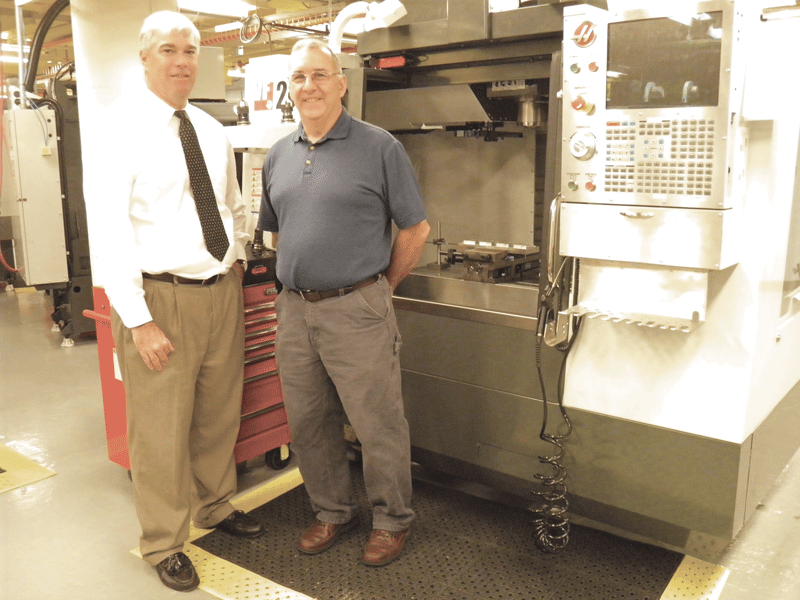
By RICHARD PIETERS, M.D. and ANTHONY GIAMBERARDINO, D.M.D.

The headlines first came with baseball Hall of Famer Tony Gwynn. His all-too-early death at 54 was attributed to the long-term use of smokeless tobacco. Now it’s former Red Sox pitcher Curt Schilling, who revealed on Aug. 20 that he was diagnosed in February with mouth cancer. “I do believe without a doubt, unquestionably,” said Schilling when making his condition public, “that chewing [tobacco] is what gave me cancer … I did it for 30 years. It was an addictive habit.” His physician agreed.

Many of us who grew up with the game are used to seeing players chewing tobacco, but a new generation of children watching in the stands and on television may be seeing smokeless tobacco used for the first time. They are the ones most influenced by what baseball players do both on and off the field. And that behavior by professional athletes can be more powerful in shaping behavior than any advertising campaign by the tobacco industry.

Although cigarette smoking in the U.S. continues to decline, a report from the U.S. Centers for Disease Control and Prevention (CDC) indicates that the use of smokeless tobacco has held steady over the past nine years. CDC says 14.7% of high-school boys, and 8.8% of all high-school students, reported using smokeless products in 2013.

The CDC further states that smokeless tobacco contains 28 carcinogens, which can cause gum disease, stained teeth and tongue, a dulled sense of taste and smell, slow healing after a tooth extraction, and, worst of all, oral cancer.

Smokeless tobacco is not harmless. According to the National Institute on Drug Abuse, it delivers more nicotine than cigarettes and stays in the bloodstream longer. Clearly, tobacco use is both a serious medical problem and an oral-health problem.

In a letter to baseball commissioner Bud Selig following the death of Tony Gwynn, nine leading healthcare organizations, including the American Medical Assoc. and the American Dental Assoc., stated that “use of smokeless tobacco endangers the health of major-league ballplayers. It also sets a terrible example for the millions of young people who watch baseball at the ballpark or on TV and often see players and managers using tobacco.”

Oral cancer continues to be a serious problem in the U.S. More than 30,000 new cases are diagnosed each year, and the five-year survival rate is only around 50%. While a batting average of .500 would be considered outstanding in baseball, 50/50 odds aren’t very good in the game of life.

The connection between oral health and overall health is well-documented. What happens in the mouth can affect the entire body. Physicians are now being trained to examine the mouth and work with dentists to make patients more aware of the importance of oral health as it affects their overall health and well-being.

Programs such as the Mass. Dental Society’s Connect the Dots, in which physicians and dentists work together in the community, and the Mass. Medical Society’s establishment of a Committee on Oral Health mark the beginning of a growing relationship between physicians and dentists to promote oral health in the Commonwealth.

But oral cancer isn’t the only health risk from smokeless tobacco. Users have an increased risk of heart disease, high blood pressure, heart attacks, and strokes. Many health issues are preventable, especially those related to tobacco use. The medical and dental professions can play a key role by providing education and screening for oral cancer.

Major-league baseball players have an important opportunity to contribute to this educational process by aiding in prevention efforts, particularly aimed at impressionable young people. For the past four years, the Mass. Dental Society, in partnership with NESN and the Boston Red Sox, has produced TV campaigns on the dangers of smokeless tobacco.

The Mass. Medical Society and the Mass. Dental Society are committed to reducing tobacco use in all its forms and welcome the continued participation of the Red Sox and all of major-league baseball. In 2014, chewing tobacco continues to be as much a symbol of baseball as the actual action on the field.

For the health of our children, shouldn’t this image of our national pastime now be considered past its time? The cases of Tony Gwynn and Curt Schilling should serve as a warning to us all.


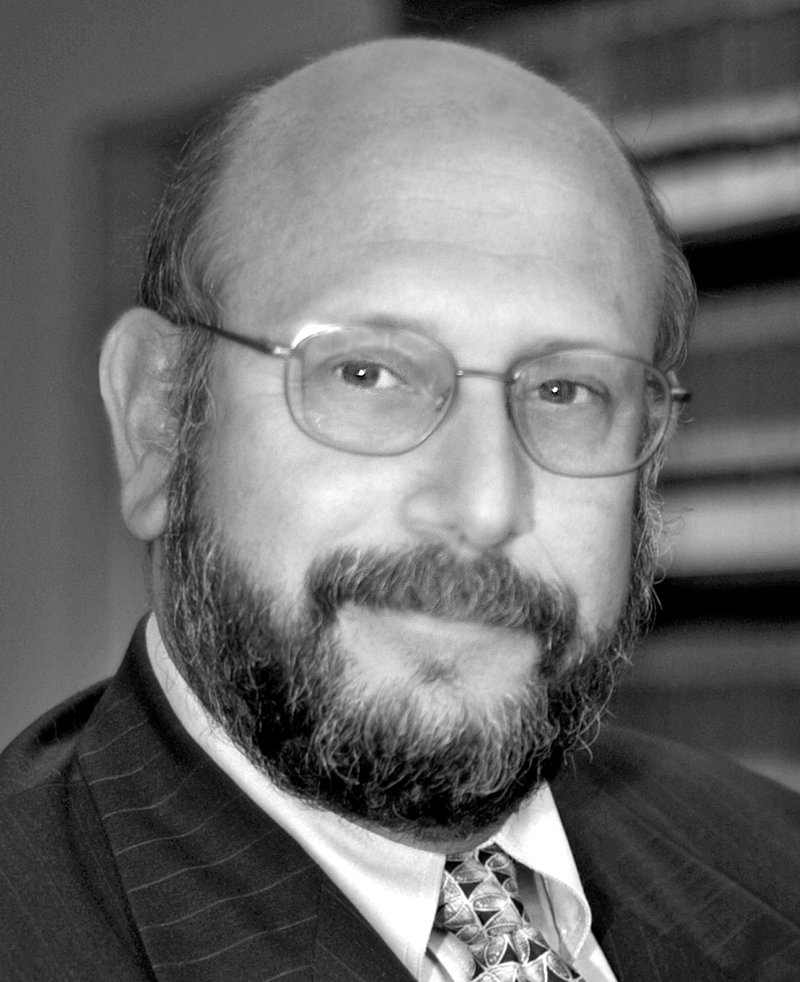
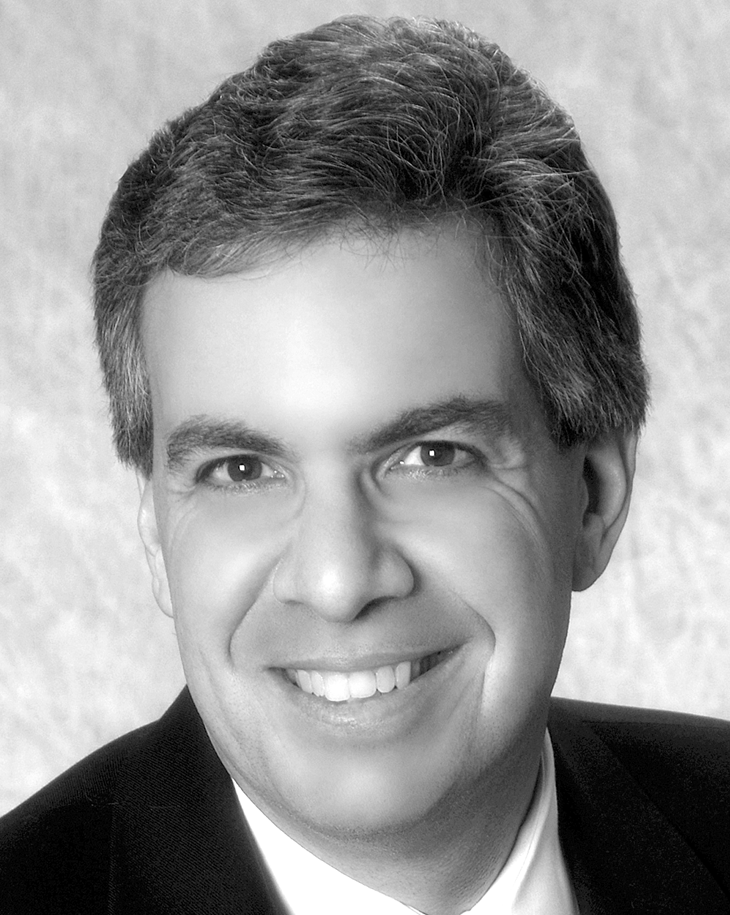
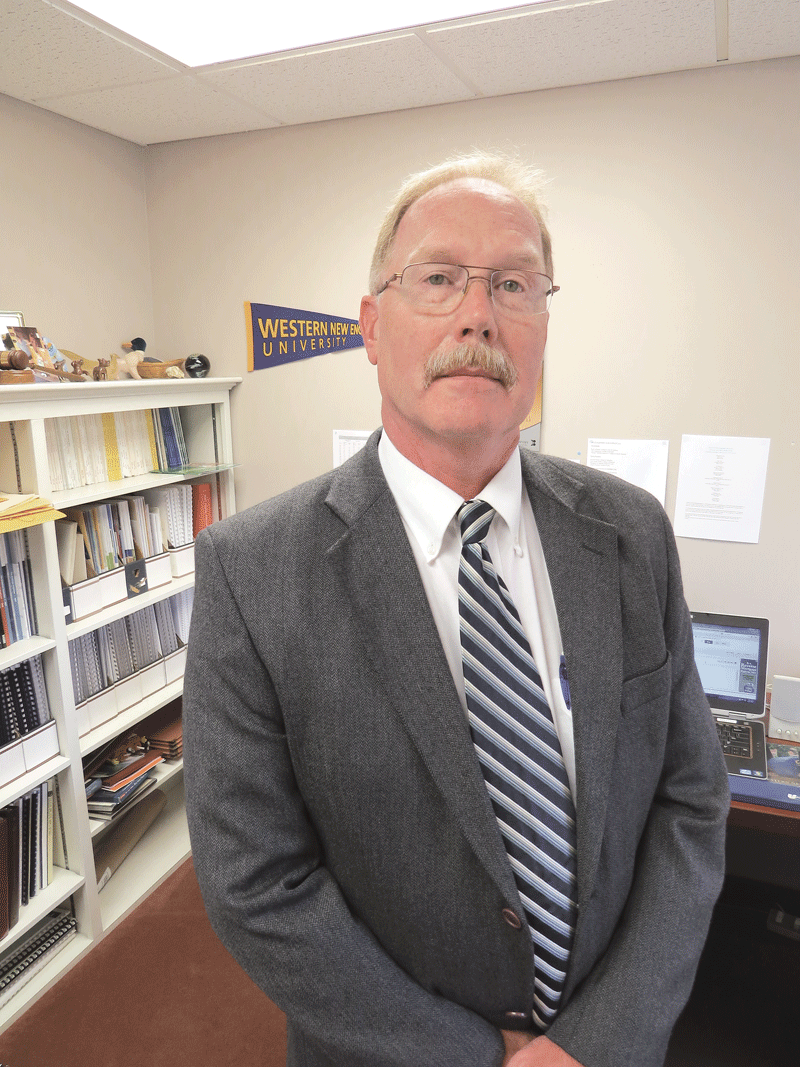
Dr. Richard Pieters, a radiation oncologist at UMass Memorial Medical Center in Worcester, is president of the Mass. Medical Society. Dr. Anthony Giamberardino practices general dentistry in Medford and is president of the Mass. Dental Society.

Construction Sections
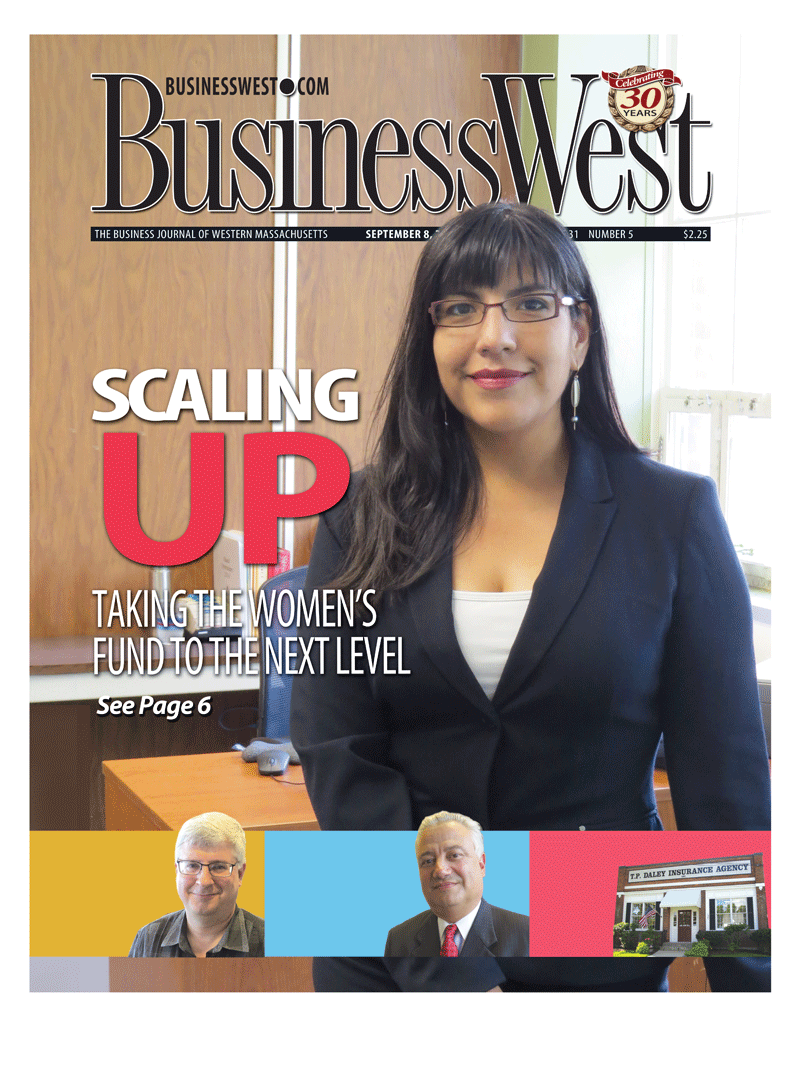
Brian Gibbons Transitions from Military to Successful Building Career

By KEVIN FLANDERS

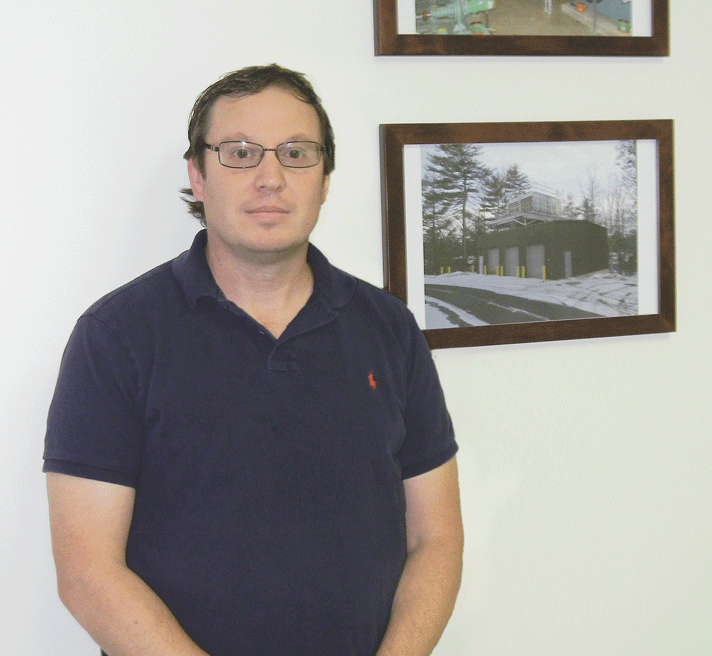
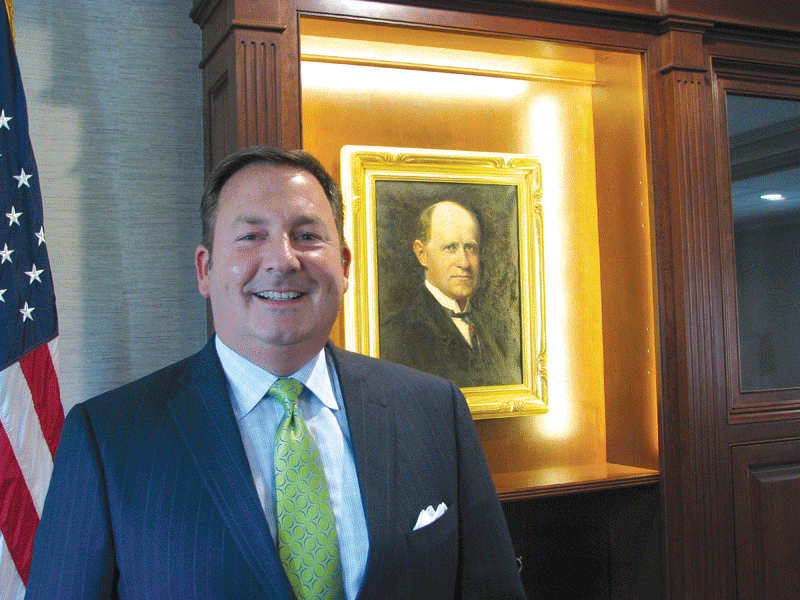
Brian Gibbons

Brian Gibbons is gratified that his growing construction company does plenty of work that benefits fellow veterans.

Brian Gibbons is not your typical entrepreneur, nor did he follow the conventional routes to becoming a business owner. But success, his staff has learned, isn’t contingent upon adhering to a specific formula. It’s all about being creative and making the most of every opportunity.

Gibbons, president of Springfield-based Brican Inc., opened his construction business in 2007 after a 24-year career as a Seabee engineer in the U.S. Navy Reserve. Utilizing the Service-disabled Veteran-owned Business Program of the U.S. Small Business Administration (SBA), he was able to get his business off the ground at a time when the economic climate was about to become much more challenging. Looking back now, he knows he couldn’t have done it without assistance from the program instituted by the SBA in 2003 to help veteran-owned businesses succeed.

“In my case, it [the SBA program] did exactly what it is intended to do,” said Gibbons, who joined the Navy Reserve following his freshman year in college. “I never would have been a business owner without that program.”

Seven years later, Brican is thriving at the corner of State and Dwight streets, specializing in commercial, industrial, and institutional building systems. Its staff of just over 20 is expected to grow, and its project list continues to expand each year. Well-versed in federal contracts, the majority of the company’s projects have been completed for the U.S. Department of Veterans Affairs (VA), with the average job coming in between $2 million and $5 million.

“We have had projects throughout the East, from Ohio up to Maine,” Gibbons said. “We are always checking on different opportunities and bidding them.”

Veterans Helping Veterans

Gibbons, who took an early interest in construction as a teenager cleaning up job sites for his neighbor during high-school summer vacations, never imagined what doors the Navy Reserve would open for him. The experiences accrued during his nearly quarter-century tenure have helped him long after his transition back to civilian life, and he is always eager to take on projects that assist others who served their nation.

As a veteran-owned business, Gibbons isn’t surprised that the VA is Brican’s best client, as the agency routinely sets aside projects to be bid exclusively by small firms led by vets. But for Gibbons, construction for the VA is about far more than erecting structures — it’s about making a difference in the lives of those who served. As such, Gibbons says his most rewarding project to date was the construction of a building for the Northampton VA Medical Center’s acute psychiatric ward. Completed in 2013, the prototype project set new standards for the construction of such facilities, specifically those designed to prevent suicide and injury, with specialists from throughout the nation traveling to Northampton to offer input.

“In the past, they often used many of the techniques you see in prisons, but lately they have realized that the people in these facilities are sick, not prisoners,” Gibbons said. “We approached the job very empathetically. The goal was to help the VA come up with ideas to minimize the dangers to patients and staff. As a veteran, it’s always rewarding to work on projects that help other veterans.”

Brican has also immersed itself in the energy side of construction over the last few years, recently taking on several boiler-plant safety projects. Ground was broken on one such job last month, a combined heat and power plant at a VA-owned facility in Newington, Conn, which Gibbons expects to be finished by the end of next year.

New Growth

While statistics are always valuable, a quick glimpse at the whiteboard in Brican’s conference room sufficiently indicates the direction of the business. Filled from end to end with project information, the board keeps Gibbons’s bustling staff constantly updated on what needs to be done. And they certainly prefer to be busy, especially in an industry that has seen its share of challenges statewide in recent years.

But no matter how one looks at it — project totals, staff size, buildings acquired — Brican is a rapidly expanding company, its reputation building along with its structures. Whenever a project is erased from the whiteboard upon completion, another one quickly replaces it.

Gibbons hopes that his staff, which currently includes about 20 people, will grow to nearly 30 as more work comes in from the private end of the construction spectrum. “Our largest job so far was just under $16 million, and we are definitely looking to increase our work on the private side,” he added.

General contractors go only as far as their staffs take them, though, which is yet another reason for Brican’s success. Gibbons said each of his project managers handles up to three projects at a time — including Gibbons himself, who has focused on everything from management to estimating. He wears many hats as the owner of a small business, but he has also been impressed by his employees’ ability to multitask and split time between multiple projects.

In particular, Gibbons praised engineer Mike Belanger, who brings more than 20 years of experience to Brican, as well as project manager Todd Spooner and his 30-year career in the industry.

But along with more projects comes a need for more employees who can handle an array of assignments, a need Gibbons recognizes. “As we continue to grow, we will probably hire another project manager who can assist with estimating.”

Of course, as a military veteran who takes pride in his years of service and how they helped prepare him for life as a small-business owner, Gibbons is always on the lookout for veterans searching for work. His staff already includes a few vets, and he enjoys providing them with opportunities following their service. As veterans conclude their service in the Middle East, SBA officials have attempted to open as many avenues as possible for job creation and entrepreneurship. One such avenue is the Service-disabled Veteran-owned Business Program that Gibbons qualified for, and now he’s completing the cycle by hiring veterans.

“I try to give as much preference as possible to veterans,” he told BusinessWest. “I am always looking for good people to work here.”

Next-door Options

Brican is also expanding from an acquisition perspective. In March, Gibbons purchased the building adjacent to his State Street office at a tax title auction. He is keeping his options open for the purpose of the 1890s-era building, but he mentioned several possibilities, including using it for additional office space.

“We have done a lot of work to clean it up; it was a real mess before,” he said. “I think it would make a great office for a contractor, and I would love to see it rehabbed. There are a lot of opportunities we are considering right now for the building.”

Gibbons said he likely won’t make a final decision on the building until he learns whether or not the nearby MGM casino project will proceed, a development that would create jobs and drive up demand for rental spaces throughout Springfield and neighboring towns. If the right opportunity were to present itself, a rental or lease situation might prove to be the most beneficial purpose for the building, but no decisions have been made yet.

In addition to the State Street acquisition, Gibbons has a full plate, with 18 active projects and expected staff increases. It’s all part of leading a small business on the rise, a business built by a veteran whose employees and clients are also veterans. But while Brican specializes in federal contracts and institutional construction, what sets it apart from other businesses, he said, is its ability to handle private construction as well.

“We have a great staff,” he said. “Everyone comes from a different background in terms of experiences and education levels, and we work well together as a team.”

Autos Sections
John Robison’s Auto-repair School Helps ‘Different’ Students Succeed

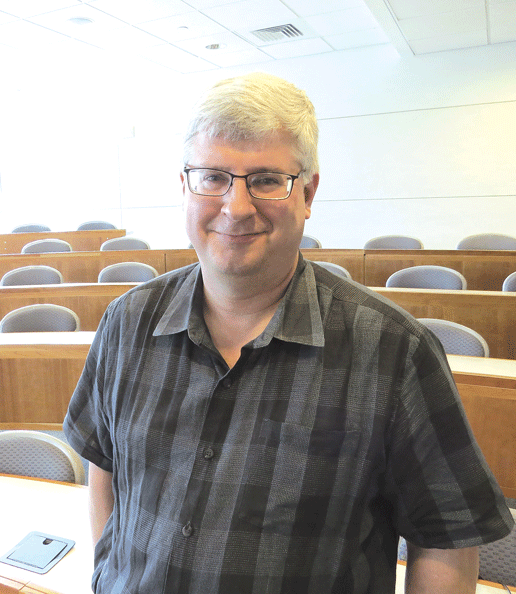
RobisonGrowing up in the 1960s, a victim of abuse at home and an inability to fit in socially at school, John Robison had every reason to worry that he wouldn’t find success in life.

Yet, he did. Diagnosed as an adult with Asperger’s syndrome, which finally began to explain why he was different, Robison is the author of three bestselling books, a former electrical engineer who pioneered several innovations in the world of rock music, and currently the owner of J.E. Robison Service, a sprawling auto-repair and restoration complex on Page Boulevard in Springfield.

And now, by partnering with a special-education high school on the TCS Automotive Program — a vocational training center based at his workplace — he’s helping teenagers with the same challenges he faced gain the skills and confidence they need to succeed in the auto-repair field.

It’s a unique endeavor, but Robison has never been one to do things in the traditional way.

“I was always into cars and electronics,” he said of a set of interests that bordered on obsession in his younger years — a common trait among people with Asperger’s. “When I dropped out of high school, I taught myself about electrical engineering and found success as the American engineer for Pink Floyd. Then, a lot of big bands in the ’70s used our sound equipment. I’m best known for the work we did for KISS, engineering all their special-effects instruments” — such as custom guitars equipped with fiery smoke bombs.

After that, he got a job as an engineering manager in the corporate world, but disliked the experience. “I really didn’t understand the dynamics of the company. I decided, rather than be somewhere I didn’t really know what was going on and didn’t feel I fit in, I’d start a business of my own,” he said.

“The other skill I felt I had was fixing cars,” Robison continued. “But I wanted to fix cars that people cared about, thinking that somebody who’s a real car enthusiast would be interested in dealing with someone like me who had a real love of machinery, and that proved to be correct.”

His business — which specializes in repairs of luxury European models such as Rolls-Royces, Porsches, and Land Rovers — began as a part-time activity in South Hadley 30 years ago, and has since evolved into an extensive restoration and repair complex boasting 30 service bays, making it the largest independent garage complex west of Boston. And, unlike the service facilities of large area auto dealers, he said, he’s eschewed the sales side, which would only distract him from his mission of “fixing things.”

Some things don’t need fixing, of course, and today, thankfully, people tend to be much more aware of children on the autism spectrum, unlike Robison’s parents, who toted him to several mental-health professionals who labeled him lazy, angry, or even socially deviant, and said he might have to be institutionalized if his inappropriate behavior continued.

Just because the medical community and parents understand autism and Asperger’s much better today, however, doesn’t mean their challenges aren’t daunting. But Robison knows they can make their way in the world — after all, he’s exhibit A — and his new training school is demonstrating how.


Doing Things Differently

Robison has gained a much higher profile through his three books: Look Me in the Eye, which chronicles his life growing up; Be Different, which is filled with practical advice for “Aspergians, Misfits, Families and Teachers”; and Raising Cubby, a memoir of his unconventional relationship with his son, who also was born with Asperger’s.

And with that higher profile has come a greater sense of responsibility.

John Robison’s sprawling car-restoration complex

John Robison’s sprawling car-restoration complex in Springfield boasts 30 service bays across a number of buildings, along with space for the training school.

“Ever since my first book, Look Me in the Eye, was published, people have come here to see what we do, and they’ve asked for years about apprenticing autistic family members in the automotive trade,” he explained. “I’ve always tried to do things to help the community. Before I knew about my own autism, I worked with abused kids at places like Brightside and the jail because I grew up in an abusive environment; I would have been a kid taken by Social Services had I grown up today and not in the ’60s. So I’ve always felt an affinity for young people with challenges.”

Learning that autism was the root of his social challenges was a breakthrough, and he’s since considered how he could blend his career with a mission to help kids in similar circumstances. The answer came through a partnership with the Northeast Center for Youth and Families, which maintains a high school in Easthampton for teenagers with developmental challenges.

Specifically, the school, which serves students from all over Western Mass., opened the first high-school program licensed by the Massachusetts Department of Special Education that teaches young people the auto-repair trade in a location where the work actually happens. Students alternate spending a week at the high school, then a week at J.E. Robison, throughout the year.

“As revolutionary as that seems, that’s really how humanity learned all throughout history; they learned trades at the side of a master,” Robison said. “Whether that meant assisting a priest in his duties, clerking for a lawyer, or helping a blacksmith, they learned the trade at the side of a person who did it. We’ve lost sight of that and now teach in a vacuum, in this artificial high-school culture of bullying and things don’t happen in real life. One of our goals is to fundamentally change that.”

Of course, the students still must complete their regular course of high-school study, Robison said as he walked BusinessWest through a small building set aside for the TCS Automotive Program, where students use cutting-edge equipment — much of it donated by Bosch Auto Parts — to work on cars, also mostly donated. In a small classroom, an instructor uses a white board to teach the business side of the auto-repair industry. A full-time special-ed assistant, a school psychologist, and school nurse also staff the program.

“This is the vocational part of the campus. These students will be in academic classes back at the main campus next week, and another shift will be here next week,” Robison explained. “Our students have to meet all the regular Massachusetts requirements for graduation from high school; this is not a program where they learn skills instead of high school — they’re learning a trade in addition to meeting high-school requirements. So it’s a harder program. Interestingly, students in this program are progressing faster than similar students in conventional vocational programs.”

It’s also a more intensive education than a traditional high school, with student-teacher ratios as low as 3-to-1 or even 2-to-1 at times. Robison often takes the students on “rounds” through the facility, much like medical students make the rounds in hospitals. But more often, they’re learning by doing.

It’s not a program for any teenager interested in cars, however. “We are a licensed special-education high school, so you have to have an IEP [individual education plan] in Massachusetts, which qualifies you for special-education services. Parents talk to the school district, talk to our admissions staff, and make sure the students are a fit for our program. We take the people we feel will be successful,” he explained, adding that the program is funded 80% by the state and 20% by each student’s local school district.

“We’re closely overseen by the state,” he added. “In fact, we’re probably more closely supervised than the public schools, which are mostly funded by local tax revenue.”

Available to All

Robison stressed that he wanted to create a program that operates in the public special-ed realm, not a private school.

“It was very important for me to work with public-school students. I didn’t want to create an elite program for wealthy kids; I wanted a program where any kid who needs services, who qualifies, could attend,” he said. “It’s entirely funded by the state Department of Special Education and local school districts. That’s really important. I want to deliver an educational model the public can benefit from, not just those who can afford private-school tuition.”

The school isn’t only for teens on the autism spectrum, however. Massachusetts offers special-education services to children on the basis of problems they have in school, as opposed to a medical diagnosis, he explained. “If you can’t organize yourself to do assignments in class, it might be due to a cognitive challenge, it might be autism, it might be ADHD, they might come from an environment that’s traumatic. Any of these underlying causes might add up to not being able to do tasks in school. We take kids who cannot succeed in a regular school and who are not violent.”

It’s actually discriminatory, he said, to position a school as one that specifically teaches students with autism how to act. “What we can say is, ‘you had a problem in school with completing your assignments; you’ve been sent to the office 10 times for what the teacher described as defiant behavior. You’ve got a problem. We help young people organize their thoughts and help them succeed better. We think we can help you.’ We’re not telling you that you’re marginal, defective, or broken. Whatever the issue, you have these challenges in school, and we have a program we believe can help you.”

Despite the way society has become aware of autism over the past decades, Robison told BusinessWest, stereotypes remain. “But we have a complex where we show our students, and show everyone who supports them, that people who are different can be the stars.

“We are one of the largest service complexes in Massachusetts, and we embrace diversity, and I think many people come to us for that reason,” he continued. “Sure, some people come to us to get their car serviced and know nothing except that we provide service and they want to get their oil changed or their brakes done. But we also have people come in here who want to be associated with people who have a social mission in addition to a commercial mission.”

He’d like to see these students’ interest in cars become not just a mission, but a career opportunity.

“People often have a vision of children who are different and wonder if they can ever grow up and support themselves,” he said. “Our commercial operations here are not subsidized by taxpayers in any way. We are very successful competing in the free market. We have cars here from Montana, Ontario, Virginia, Pennsylvania. Those cars are here because of our reputation, and it started with my fixation on cars and machines, which was characterized as a disability when I was a little boy. We’re kind of the embodiment of the idea that the traits that make a child seem disabled can make a technologist a star.”

If other teenagers in the program find similarly satisfying careers — whether as technicians or working on the retail side of auto repair — then the effort to open TCS will have been well worth it.

“We tell them, ‘this is the stuff you’re going to need to get hired,’” Robison said. “Nobody’s forced to be in this program; they’re here because they want to learn how to do this.

“We have to have teaching strategies to work with autistic people, work with victims of child abuse. But these are also people who just love cars,” he added. “So I see myself in many of these young people, and I’m very proud we’ve been able to make the school come true here.”


Joseph Bednar can be reached at [email protected]

Company Notebook Departments

Holyoke Mall Announces ‘Magical Night of Giving’
HOLYOKE — Holyoke Mall at Ingleside will be hosting its ninth annual “Magical Night of Giving” event to help local nonprofit groups and schools raise funds for their organizations. The event will be held on Sunday, Nov. 23 from 6 to 9:30 p.m., with the orientation and ticket-distribution session held on Wednesday, Sept. 24 at 5:30 p.m. The orientation will be held at Holyoke Mall’s Guest Services Center, located on the lower level in Sears Court. The “Magical Night of Giving” is a simple and effective way for nonprofit groups and schools to raise funds for their organization. Holyoke Mall at Ingleside covers all overhead expenses, and the charity keeps 100% of each $5 admission ticket sold. The event works as follows:
• Holyoke Mall at Ingleside will print admission tickets. These tickets will be available for nonprofit groups to pick up and sell beginning Sept. 24.
• Prior to November’s event, organizations will sell these admission tickets for $5 each and keep all money earned from the sale of these tickets.
• For anyone not purchasing tickets in advance, admission tickets will also be sold the evening of the event at all mall entrances by some of the participating organizations.
• Participating Holyoke Mall at Ingleside retailers will offer special discounts that are exclusive to the “Magical Night of Giving.” The ticket is the only means to receive these special discounts between 6 and 9:30 p.m. on Nov. 23.
• Admission tickets sold also act as a raffle ticket. Prizes will be awarded, including a $1,000 Holyoke Mall gift card. The raffle drawing will begin at 8:30 p.m. the evening of the event.
Said Holyoke Mall General Manager Bill Rogalski, “this event helps to raise approximately $50,000 each year between the various organizations involved. Holyoke Mall is providing the tools for the groups to hold their own fund-raiser. It’s a simple way for nonprofit groups and area schools to raise much-needed funding for their organizations.” To reserve tickets for pickup on Sept. 24, contact Simone Enright at (413) 536-1441 or [email protected] by Friday, Sept. 19. Anyone unable to pick up tickets on Sept. 24 may make arrangements with Enright to pick them up at a later date. Call Holyoke Mall’s Marketing department at (413) 536-1441 with any questions.

Webber & Grinnell Named to Circle of Excellence
NORTHAMPTON — Webber and Grinnell Insurance Agency has been inducted into the Plymouth Rock Assurance and Bunker Hill Insurance 2014 Circle of Excellence, recognizing outstanding professionalism, financial performance, and commitment to customer service by independent insurance agents during 2013. Selected from a pool of more than 400 independent agents across Massachusetts, Webber & Grinnell was one of 25 agents to receive this honor. “The Circle of Excellence is our premiere recognition and rewards program reserved for our top independent agents,” said Chris Olie, president of Plymouth Rock Assurance and chairman of Bunker Hill Insurance.“These agents are key parts of Plymouth Rock and Bunker Hill’s success. They have each worked hard to build their businesses while also providing excellent service and trusting advice to their customers.” Webber & Grinnell is one of the largest insurance agencies in Western Mass. The agency currently serves more than 5,000 automobile and homeowner policyholders, and insures nearly 900 businesses throughout the region. “As an independent agent, our goal is to provide expert service tailored to the specific needs of each client we serve,” said Bill Grinnell, president of Webber & Grinnell. “It’s always rewarding to be recognized for our hard work and dedication, and we’re grateful to receive this honor from Plymouth Rock and Bunker Hill.” Plymouth Rock and Bunker Hill are leading automobile- and home-insurance carriers serving Massachusetts. As a member of the Circle of Excellence, Webber & Grinnell will receive marketing support funds, education and training, and other initiatives designed to promote sustained success. The agency will be honored at a fall retreat.

Freedom Credit Union Touts New Logo, Website
SPRINGFIELD — Freedom Credit Union recently unveiled its updated look with a new logo and a redesigned website. At the same time, the credit union launched its presence on social media with new Facebook and LinkedIn pages. “This rebrand is an effort for us to freshen up our image and present a more contemporary look and design across all parts of the credit union, from our website and in-branch messaging to our advertising and promotional materials,” said Barry Crosby, president and CEO. The new logo incorporates the outline of a bell, which represents the credit union’s founding as the Western Massachusetts Telephone Workers Credit Union in 1922. The new website features a more modern design with enhanced navigation and organization. Most of the information is organized within four areas — personal banking, business banking, member tools, and ‘about us’ — and the new rates page is arranged in tabs so that all credit-union rates can be accessed on one page. “Our new website also makes it very convenient for our members to apply for a mortgage or consumer loan online,” said Jeffrey Smith, Freedom’s vice president and chief lending officer. “Members can even get pre-qualified for a mortgage on our website in just a few minutes.” Members can apply for any type of consumer loan online — mortgages, home-equity loans, auto loans, personal loans, home-improvement loans, education loans, and more. On social media, Freedom has attracted hundreds of ‘likes’ on its Facebook page and numerous followers on its LinkedIn page. To access Freedom’s social-media sites, go to www.freedom.coop and click on the logos at the top of the page. Membership at Freedom is available to include anyone who lives, works, or attends a college or university in Hampden, Hampshire, Franklin, or Berkshire county. The organization boasts nine branches throughout the Pioneer Valley in Ludlow, Chicopee, Feeding Hills, Sixteen Acres, Springfield, Easthampton, Northampton, Greenfield, and Turners Falls. A tenth branch is slated to open in September at the Roger L. Putnam Technical Academy in Springfield.

Bauzá & Associates Joins Worldwide Partners
ENFIELD, Conn. — Worldwide Partners Inc. (WPI) has added another partner to the world’s 8th-largest full-service ad-agency network and the world’s largest network of independent ad agencies, according to Al Moffatt, president and CEO of Worldwide Partners, headquartered in Denver. Bauzá & Associates, headquartered in Enfield, Conn., specializes in multicultural marketing and is headed by principal and CEO Héctor Bauzá. Founded in 2003, the agency became an LLC in Massachusetts in 2005 and has a roster of clients including the Connecticut Housing Finance Authority, Harvard Street Neighborhood Health Center of Dorchester, and the Connecticut Lottery. “What makes us attractive to clients worldwide is that we’re comprised of innovative, progressive agencies across a full range of disciplines and industries,” Moffatt said. “We’re a collaborative, bottom-up network whereby the partner agencies own us rather than us owning them. We provide the resources and the global outreach to help our partners achieve greater profits and revenue while the partner agencies work together to build each other’s business and service clients locally, regionally, and internationally. We’re an efficient, international network that is built to succeed in today’s highly competitive and fragmented marketing environment. Each partner is hand-selected for its progressive and innovative approach. In short, we have the critical mass and skills of the agency conglomerates coupled with the flexibility of the independents. We’re very happy to have Bauzá & Associates join us.” Added Bauzá, “we are honored to be a part of WPI’s tremendously successful network of independent agencies. As a smaller agency, the added muscle from WPI will help to increase the size of the projects Bauzá & Associates will compete for and expand this agency’s reach to regional, national, and global markets.” Worldwide Partners Inc., which celebrated its 75th anniversary in 2013, has more than 20 network-wide regional and international clients, including Wal-Mart Centroamerica, Caterpillar, Saudi Arabian Airlines, Group Santander, MINI, Western Digital, California Tourism, and Novartis.

Dadanco Opens New Facility in Westfield
WESTFIELD — Dadanco, a manufacturer of commercial hydronic-based heating and cooling products, including active chilled beams, induction units, and induction diffusers, announced the grand opening of its Luxton-Reed Center, with an open house to be held on Sept. 12, from 8:30 a.m. to 1 p.m. The Luxton-Reed Center is aptly named after two industry pioneers for heating and cooling technologies: professor Russell Luxton of Australia, the co-founder of Dadanco, and John Reed of Westfield, the founder of several hydronic heating companies, including Sterling Residential & Commercial Hydronics, which are divisions of Mestek Inc., the largest manufacturer of finned-tube baseboard radiation in North America. The Luxton-Reed Center (LRC) is a unique facility focused on research and development and specific high-efficiency equipment testing utilizing a thermal-scenario test chamber which accurately measures air and water flow, temperature, and capacities. The test chamber is highly configurable and can simulate actual real-life application conditions. Alongside the LRC corporate offices are several live-fire training and showcase spaces. Each space meticulously represents an actual real-world installation, including a hotel suite, hospital room, and laboratory. The hotel suite is one of the most technically complex demonstration spaces in the LRC facility, as the room features a thermal wall with glass façade which simulates outside conditions and three different types of hydronic cooling solutions, so guests get to compare and contrast without leaving the room. LRC’s main mechanical room is host to multiple high-efficiency products produced by other Westfield-based Mestek companies, including condensing cast-iron boilers from Advanced Thermal Hydronics, flexible small-duct air distribution, and reverse-cycle chiller systems by SpacePak, direct outside air systems by Applied Air, hydronic fan coils by Airtherm, and integrated control systems by HeatNet. The facility is a fully operational showroom and research center for high-efficiency indoor comfort equipment and integrated control platforms. Every room, including the offices, the classroom/training room, the videoconferencing room, and the kitchen/break room, houses various mediums of high-efficiency air-distribution equipment.

Departments People on the Move

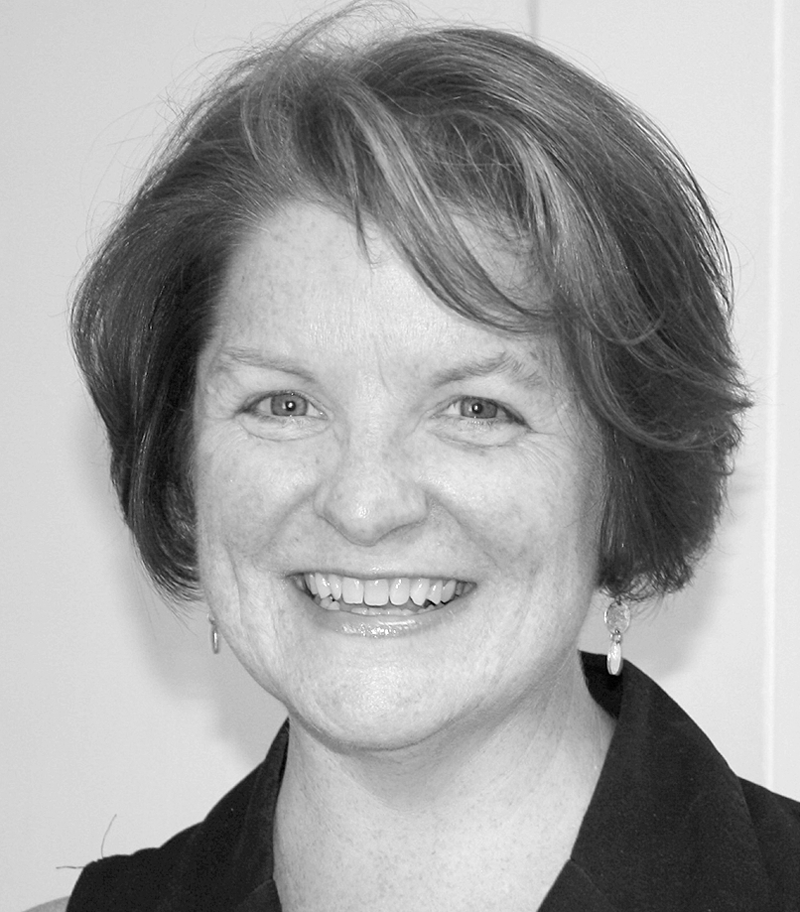
Maria Burke

Maria Burke

JERICHO, the Bureau for Exceptional Children & Adults, has announced the appointment of Maria Burke as Associate Director. JERICHO is well-known for its programs and services, begun by Fr. Robert Wagner and continued by Sr. Joan Magnani, emphasizing inclusion for all people with disabilities in Western Mass. over the past 44 years. “I am delighted that Maria has been named associate director,” said Magnani. “Working with her allows us to move forward with new strategic-planning efforts focused on how we can best serve the families and individuals living with disabilities, as well as the professional agencies and staff who care for these people in Western Mass.” Burke brings expertise in many areas of nonprofit management and a substantial fund-raising history in the region, as well as a strong personal focus on the needs and challenges facing many families and individuals living with disabilities. “I look forward to continuing this important work,” she said, “as well as expanding our reach with new partnerships, training, and networking opportunities to serve the many families who face difficulties and challenges. It will be wonderful to include new people and provide services that make life at least a bit easier for all families and providers serving the disabled.”
•••••
The Professional Women’s Chamber, a division of the Affiliated Chambers of Commerce of Greater Springfield, recently honored Carol Campbell, president of Chicopee Industrial Contractors, as its 2014 Woman of the Year. The annual Woman of the Year Banquet was held at the Castle of Knights in Chicopee. The award is presented to a woman in the Greater Springfield area who exemplifies outstanding leadership, professional accomplishment, and service to the community. The Professional Women’s Chamber promotes the status of women professionals, working to empower career-oriented women through participation in leadership, education, and networking opportunities, and striving to strengthen the positive impact of women in the business community and on the economy.
•••••
Michael Gove

Michael Gove

Attorney Michael Gove, of Gove Law Office LLC in Northampton, recently announced that he has purchased a law practice in Ludlow and will open a second office in that community, his hometown. Gove’s 10-year-old practice concentrates on business and corporate law, real-estate transactions, and estate planning. On Sept. 2, Gove assumed ownership of Thompson & Bell of Ludlow, the business formerly operated by the late James “Jason” Thompson and his associate, Gregory Bell. Bell and Gove will work together to cover the Ludlow and Northampton offices; in addition, the Ludlow office will also handle bankruptcy and personal-injury law. Gove earned his law degree from Boston College School of Law in 2004, after graduating cum laude from UMass Amherst in 2001 with a bachelor’s degree in political science. He is a member of the Massachusetts Bar Assoc., the Hampden County Bar Assoc., the Hampshire County Bar Assoc., the Connecticut Bar Assoc., the Young Professional Society of Greater Springfield, and the Northampton Assoc. of Young Professionals. Gove has also served on many area nonprofit boards and presently serves as a corporator of the Horace Smith Fund, which grants scholarships for Hampden County residents pursuing a college or graduate education. He also volunteers for Cooley Dickinson Hospital and serves on the board of Best Buddies of Western Massachusetts. In 2012 and 2013, Gove was selected as a Massachusetts Rising Star by Super Lawyers, a designation earned by no more than 2.5% of lawyers in Massachusetts. Bell is a 1983 graduate of Western New England College School of Law. He concentrates in residential and commercial real estate, consumer bankruptcy, probate administration, and personal-injury law.
•••••
Dr. Thomas Cleary Sr. was recently recognized as a William McKenna Volunteer Hero by the Mass. Dental Society (MDS), a statewide organization serving nearly 5,000 member dentists. He was acknowledged by his peers for substantial contributions to organized dentistry at both the state and local district levels. Cleary is currently a member of the MDS Council on Dental Care and Benefits, and has served as a volunteer coordinator for the Yankee Dental Congress, New England’s largest dental meeting. Within the Valley District Dental Society, he has been chair of Dental Connections, an educational program for dental auxiliaries; co-chair of the education committee; and a member of the executive committee. He is also past president of the Hampshire Dental Society. Cleary is a graduate of Tufts University School of Dental Medicine (TUSDM). In addition to maintaining a dental practice in Easthampton, he is an assistant professor of operative and prosthetic dentistry at TUSDM. Several years ago, he was a member of a group of TUSDM faculty who went on a fact-finding trip to Cuba, and this summer he took part in a service mission to the Dominican Republic organized by students. He established his general dentistry practice in Easthampton in 1974. His son, Dr. Thomas M. Cleary Jr., joined him in 2008. The Volunteer Hero award is given in memory of the late Dr. William McKenna, who was a driving force behind the development of the Yankee Dental Congress and considered by many to have been a model of volunteerism within the MDS.
•••••
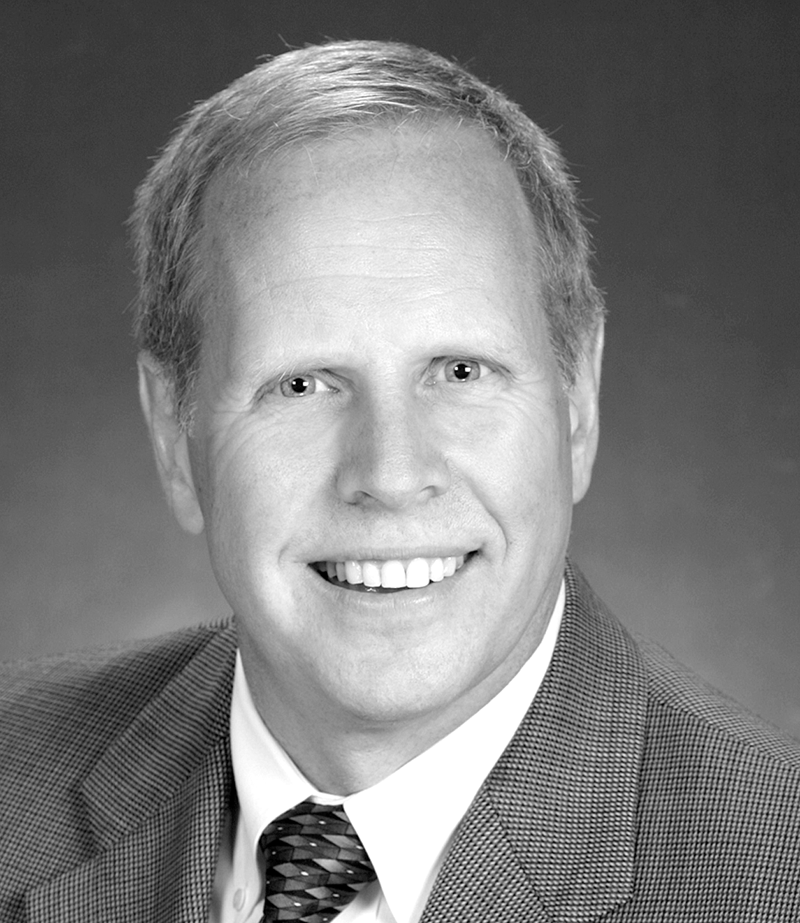
Craig Johnsen

Craig Johnsen

Loomis Communities announced the appointment of Craig Johnsen as Administrator at Loomis Lakeside at Reeds Landing. In this role, Johnsen is responsible for administering and overseeing the day-to-day operation of the retirement community in Springfield, as well as serving as a member of the Loomis Communities Senior Leadership Team. Johnsen is a licensed nursing-home administrator with more than 30 years working with older adults. Prior to joining Loomis Communities, he served as executive director of Eastview at Middlebury in Middlebury, Vt. He holds a bachelor’s degree in long-term-care administration and has completed a graduate fellowship in strategic and financial planning with Leading Age and Strategic Perspectives in Nonprofit Management at Harvard University. Loomis Lakeside at Reeds Landing offers independent-living cottages and apartments, assisted living, skilled nursing care, medical offices, and primary-care physician services, all under one roof.
•••••
Leadership Pioneer Valley (LPV) announced that Dawn Leaks has joined the LPV team in the newly created position of Program Manager. In this role, Leaks will be responsible for managing LPV’s signature 10-month regional leadership development program and helping recruit future participants. Leaks is a certified coach and speaker and adjunct professor of Business at Bay Path University. She joins Leadership Pioneer Valley after nearly five years in communications and development at the American Red Cross Pioneer Valley Chapter. As director of communications, she was responsible for public affairs, media relations, social media, and marketing communications. In previous roles, she worked as recruiter for a mid-size public school system and an account executive for MassLive.com. She is an active member of Delta Sigma Theta Sorority Inc. and has served on several boards of local organizations, including Next Level Development for Women of Color and Dress for Success of Western Mass. She is an active board member at the New England Public Radio Foundation Inc.
•••••
Christopher Marini

Christopher Marini

Meyers Brothers Kalicka, P.C. announced the appointment of Christopher Marini to the board of trustees for the Springfield Symphony Orchestra. In addition to serving on the board, Marini will also be serving on the audience development and education committee. Marini has been an audit associate with the firm for just over one year, specializing in nonprofits and HUD, reviews and compilations, and income-tax returns for individuals, nonprofits, corporations, and partnerships. Before coming to MBK, he worked for two years at a local public accounting firm. Marini earned a BBA from the UMass Amherst Isenberg School of Management and Commonwealth Honors College. He is currently pursuing his MSA at UConn. He is a member of the Beta Gamma Sigma International Business Honor Society and the Massachusetts Society of CPAs.
•••••
The Springfield Falcons
announced that Andy Zilch will join the organization as the team’s play-by-play broadcaster and Manager of Broadcasting. Zilch comes to the Falcons after spending two seasons with the Greenville Road Warriors of the East Coast Hockey League. While being the voice of the team, he also oversaw media relations and served as an account executive. The St. Louis native generated several corporate partnerships and was strongly involved in the community. The majority of his donated time was spent assisting the local children’s hockey program. Prior to his time with the Road Warriors, Zilch served two years in the National Hockey League as a broadcast intern with the St. Louis Blues. He also spent time with the National Football League’s St. Louis Rams on the team’s radio network. A 2009 graduate of Lindenwood University in Missouri, Zilch entered broadcasting as the play-by-play broadcaster for the men’s hockey team on KCLC, the student radio station. He has a bachelor’s degree in mass communications with an emphasis on radio and television.
•••••
Main Street Hospitality Group (MSHG) announced that Adam Brassard has been appointed to the position of Executive Chef of the Williams Inn. His responsibilities include all kitchen operations and menu development. Brassard’s appointment marks his return to the Williams Inn. In 2007, he began his professional culinary career as the Williams Inn sous chef. From there, he joined the Red Lion Inn as sous chef under the leadership of Red Lion Inn Executive Chef and MSHG Vice President of Food and Beverage Operations Brian Alberg. Brassard began his career as an intern in the McCann Technical High School Culinary Arts department and went on to graduate from the Culinary Institute of America in Hyde Park, N.Y., in 2007. Brassard has participated in numerous farm-to-table events and food and wine festivals throughout the Berkshires, Boston, and New York. Brassard also works with the Railroad Street Youth Project, demonstrating culinary techniques to young adults; is on the advisory board of the Culinary Arts department at McCann Technical High School; and takes part in judging projects for Skills USA, a competition among technical high schools. Brassard has cooked at the renowned James Beard House in New York City, working alongside Alberg.

Agenda Departments

Craft Brewer Lecture
Sept. 25: Dan Kenary, co-founder and president of Harpoon Brewery, will speak about the history and success of New England’s largest craft brewery at Old Sturbridge Village (OSV). His appearance is part of the village’s continuing OSV Overseers’ Distinguished Speaker Series. Kenary, a Worcester native, will host a fun-filled evening of beer tasting paired with food samples and will share the story of Harpoon’s success. Doors open at 6 p.m., a cash bar is available, and Kenary’s program will begin at 7 p.m. In his talk, “How Passion, Continuous Improvement, and Grassroots Marketing Have Made Harpoon Brewery the Largest Craft Brewer in New England,” Kenary will recount how Harpoon introduced fresh, local craft beer to Boston in 1986, becoming the first brewery to commercially brew and bottle beer in Boston in more than 25 years. “The big beer companies are like factories. What craft beer has done is to bring some local flavors,” he noted. “I’m bullish on better beer. We don’t believe in making beer we don’t like.” Tickets are $45 per person, $40 for Old Sturbridge Village members. Attendees must be at least 21 years old. Seating is limited, and pre-registration is required. The event is sponsored by Spencer Bank. For more information, visit www.osv.org or call (800) 733-1830. Old Sturbridge Village celebrates New England life in the 1830s and is one of the largest living-history museums in the country. The museum is open daily from 9:30 a.m. to 5 p.m. OSV offers free parking and a free return visit within 10 days. Admission is $24, or $22 for seniors; $8 for children ages 3-17, and free to children 2 and under.

Great River Challenge
Sept. 28: The only town in Massachusetts located on both sides of the fourth-largest river in the U.S., Northfield will be the scene of the first annual Great River Challenge Triathlon. The event will begin at Northfield Mountain Recreation and Environmental Center’s riverfront park and extensive trail system located on Route 63. Classified as a ‘non-traditional’ triathlon because it involves paddling rather than swimming, the Great River Challenge will be the first event of its kind in the Upper Pioneer Valley to use the broad Connecticut River. The Northfield Mountain recreational facility offers a number of advantages for racers and spectators, including a comfortable lodge, convenient parking, and a food-vendor area, amenities that most other race locations lack. The race features a canoe/kayak/SUP leg, a trail run, and an off-road mountain-bike leg on scenic Northfield Mountain. The paddle leg will be a mass start from the center’s riverfront park, paddling out and back and around Captain Kidd’s Island over 5.2 miles. The running leg is a challenging 3.5 miles of single-track trails and groomed trails, followed by a 6.5-mile mountain-bike ride on mixed single-track and open trails. Individuals and two-, three-, and four-person teams are welcome, and there is a junior division. Registrations start at $65 for individuals, with discounts for teams and half price for junior competitors (age 20 and under), plus a small sign-up fee at runsignup.com. Detailed information about the race, pre-registration and on-site registration, and pre-race activities can be found at www.greatriverchallenge.com. Organizer David Thomas — an athlete, coach, and owner of Stellar Kayaks in Northfield — expects 150 racers and 500 spectators at the first of what he hopes will be an annual event. “We are excited to launch this event in Northfield, showcasing the unusual beauty and abundant natural features we have here, from the river to the surrounding mountains,” he said. Proceeds from the event will support Northfield Kiwanis programs for children and needy families and visitor programs produced by the Northfield Area Tourism Assoc.

ACCGS Breakfast
Oct. 1:
Menck Windows Chairman Bodo Liesenfeld will be the keynote speaker at the Affiliated Chambers of Commerce of Greater Springfield’s October Business@Breakfast at 7:15 a.m. at Twin Hills Country Club, 700 Wolf Swamp Road, Longmeadow. The event will be hosted by WGBY Director of Public Affairs Jim Madigan and sponsored by United Personnel. Liesenfeld will present “Looking from the Outside In,” and discuss the benefits and strengths the region has to offer businesses interested in locating and relocating to Western Mass. Menck Windows, a joint venture of Menck USA Inc. and Menck Fenster GmbH, of Hamburg, Germany, a 130-year-old, fourth-generation business that provides custom windows and doors in Europe, the Far East, and the U.S., recently opened the doors to its first U.S. manufacturing operation here in Western Mass. Liesenfeld is managing partner of Liesenfeld International GmbH, a private investment enterprise. For nearly 30 years, he was CEO and chairman of German-based Rohde & Liesenfeld, an international air and sea freight-forwarding group with global presence. He is the honorary representative of the city of Hamburg to the Northeast region of the U.S. and serves as chairman of the German Latin America Business Assoc. Since making his home in Boston in mid-2009, he became a fellow at Harvard’s Weatherhead Center for International Affairs and chairman of the advisory board of the Berklee Global Jazz Institute. He is chairman of the board of the Latin America Business Assoc. and a board member of the Hamburg Chamber of Commerce, among other board positions in the U.S., Germany, and Latin America. Reservations are $20 in advance for ACCGS members ($25 for member walk-in registration) and $30 for general admission. Reservations are suggested and can be made online at www.myonlinechamber.com.

Amherst Area Chamber Annual Awards Dinner
Oct. 2: The Amherst Area Chamber of Commerce announced the upcoming Farm to Table Annual Awards Dinner, to be held Oct. 2 at Hadley Farms Meeting House in Hadley. The dinner, a yearly celebration that is a highlight of area businesses’ community social calendar, is expected to sell out. This year’s award winners reflect a celebration and acknowledgement of a number of community partners and leaders. The “A+” Award Winners include the Rotary Club of Amherst, which will receive the chamber’s Community Service Award, recognizing the many contributions that this group of volunteers has made to the Amherst area, in addition to its work dedicated to the global eradication of polio; Stephanie O’Keeffe, who will receive the chamber’s Legacy Award, a celebration of what this individual has accomplished, specifically in her role on the Amherst Select Board; and Tony Maroulis, former executive director of the organization, who will receive the chamber’s Most Valuable Player award for all of his hard work elevating the chamber’s stature and involvement in the community. “It was a daunting task to sift through the nominations for this year’s batch of award winners, because as there are so many individuals and organizations in this community worthy of recognition,” said Don Courtemanche, Amherst Area Chamber of Commerce executive director. “We feel that the recipients that we have selected represent the best, the brightest, and the most outstanding of the terrific partners that the chamber is fortunate to be associated with.” Tickets for the dinner will be available Sept. 2. Reservations for the dinner or for the program book may be made by contacting the chamber at (413) 253-0700.

Stroke Lecture at CDH
Oct. 2:
Stroke is a major cause of death and disability in the U.S. Stroke occurs when a blood vessel that brings blood and oxygen to the brain gets blocked or ruptures. When this happens, brain cells don’t get the blood they need, and deprived of oxygen, nerve cells can stop working and die within minutes. In “Stroke Prevention and Treatment,” a Cooley Dickinson/Massachusetts General Hospital lecture, stroke neurologist Dr. Scott Silverman will discuss ways to reduce the risk of stroke and how to recognize stroke warning signs. He will also discuss treatments for stroke. Community members are invited to attend the lecture, from 6 to 7 p.m. in the Dakin Conference Room at Cooley Dickinson Hospital. Silverman is an instructor of neurology at Harvard Medical School and an assistant in neurology at Massachusetts General Hospital, where he works on the stroke service. He received his undergraduate degree in neuroscience from Bowdoin College, and received his medical degree and completed his neurology residency at UMass Medical School. He then completed a fellowship in vascular and critical-care neurology at Massachusetts General Hospital and Brigham and Women’s Hospital. Silverman is board-certified in neurology, vascular neurology, and neurocritical care, and is director of Outpatient Stroke Services at Mass General. He has a strong interest in medical education and is currently the director of the Partners Vascular Neurology Fellowship. Silverman’s research and clinical interests are in ischemic stroke, specifically intracranial atherosclerotic disease and stroke in the young. Also participating in the lecture will be Dr. Tor Krogius, an emergency department physician at Cooley Dickinson and medical director of the Cooley Dickinson Hospital Stroke Program, as well as the telemedicine programs for stroke, neurology, and burn. He earned his medical degree at McGill University Faculty of Medicine and completed his internship and residency training at Baystate Medical Center.

BMLH Tag Sale and Electronics Recycling Day
Oct. 17: Recent building renovations and office upgrades at Baystate Mary Lane Hospital have resulted in a quantity of usedchairs, tables, desks, file cabinets, and other office equipment. As a result, a tag sale will be held from 9 a.m. to 2 p.m. in the parking lot near the back of the Medical Office Building, off Marjorie Street. Combined with the tag sale, the hospital will also sponsor a community-wide recycling event. Old and/or non-working electrical devices such as radios, air-conditioning units, toasters, phones, light fixtures, etc. will be collected at no cost,with the exception of TVs and CRTs, for which there will be an $8 fee. The community recycling event will also take place in the parking lot near the back of the Medical Office Building. All items collected will be trucked away to a recycling center shortly after the event. All proceeds will benefit community-benefit programs sponsored by the hospital. For more information, contact Ryan Moore at (413) 967-2140.

Western Mass. Business Expo
Oct. 29: The fourth annual Western Mass. Business Expo will be presented by BusinessWest at the MassMutual Center in Springfield. The event is a business-to-business show featuring more than 150 booths, seminars, breakfast and lunch events, Show Floor Theater presentations, and a day-capping Expo Social. Details about events, programs, and featured speakers will be printed in future issues of BusinessWest. Comcast Business will again be Presenting Sponsor, while the social will be sponsored by Northwestern Mutual and MGM Springfield. Silver Sponsors are Health New England, DIF Design, Johnson & Hill Staffing, and MassMutual Financial Group. Education sponsor is the Isenberg School of Management at UMass Amherst. Additional sponsorship opportunities are available. In 2013, more than 2,200 business professionals attended the expo, and between 2,500 and 3,000 are expected in 2014. For more information on sponsorships or booth purchase, call (413) 781-8600 or visit www.wmbexpo.com.

Daily News

SPRINGFIELD — Kamari Collins was recently appointed to the position of dean of academic advising and student success at Springfield Technical Community College by the STCC board of trustees after serving as the college’s director of academic advising since 2011.

Collins began his employment with the college in 2007 as an academic counselor. Prior to his employment with STCC, he served as the director of youth and education programs at the Urban League of Springfield for several years.

“I’m excited to take on this new role as the dean of academic advising and student success and look forward to continuing to serve our students and the campus community. It’s truly an honor and a privilege to face this new challenge in my career,” said Collins. “I take pride in working with my colleagues to implement college initiatives, programs, and activities that support student success. College can often be difficult to navigate, and it is our goal in the academic advising department to help put students on the right educational path.”

Collins earned both his bachelor’s degree and his master’s degree with a concentration in organizational management and leadership from Springfield College. He was named one of BusinessWest magazine’s 40 Under Forty in 2009 and currently serves as a board member of the Children’s Study Home and Urban League of Springfield Inc. and the Community Foundation of Western Massachusetts education committee.

Daily News

WILBRAHAM — Newly elected Hampden County District Attorney Anthony Gulluni will visit the Wilbraham & Monson Academy campus on Thursday, Sept. 25 and speak during classes and at the weekly all-school meeting at 2:30 p.m.

A 1999 alumnus of the academy, Gulluni was elected the next DA in Hampden County, which is the largest county in Western Mass. The election was held Sept. 9, and he will be sworn in early in January. He earned 44% of the vote in the four-person race and won most of the voting districts in Hampden County, including Wilbraham.

Gulluni started working for long-time Hampden County District Attorney Bill Bennett in 2009. When Mark Mastroianni took over as DA, Gulluni was promoted to assistant DA for the Superior Court, which is the highest trial-court system at the state level. Mastroianni was named a federal judge in June, which created an opening for a new Hampden County DA.

“I’m thankful to Wilbraham & Monson and what it did for me as a young person,” Gulluni said. “It’s a pretty significant part of the foundation. It’s my upbringing and my education that got me to this point, and I’m proud to be an alumnus.”

Daily News

NORTHAMPTON — Webber and Grinnell Insurance Agency has been inducted into the Plymouth Rock Assurance and Bunker Hill Insurance 2014 Circle of Excellence, recognizing outstanding professionalism, financial performance, and commitment to customer service by independent insurance agents during 2013. Selected from a pool of more than 400 independent agents across Massachusetts, Webber & Grinnell was one of 25 agents to receive this honor.

“The Circle of Excellence is our premiere recognition and rewards program reserved for our top independent agents,” said Chris Olie, president of Plymouth Rock Assurance and chairman of Bunker Hill Insurance. “These agents are key parts of Plymouth Rock and Bunker Hill’s success. They have each worked hard to build their businesses while also providing excellent service and trusting advice to their customers.”

Webber & Grinnell is one of the largest insurance agencies in Western Mass. The agency currently serves more than 5,000 automobile and homeowner policyholders, and insures nearly 900 businesses throughout the region. “As an independent agent, our goal is to provide expert service tailored to the specific needs of each client we serve,” said Bill Grinnell, president of Webber & Grinnell. “It’s always rewarding to be recognized for our hard work and dedication, and we’re grateful to receive this honor from Plymouth Rock and Bunker Hill.”

Plymouth Rock and Bunker Hill are leading automobile- and home-insurance carriers serving Massachusetts. As a member of the Circle of Excellence, Webber & Grinnell will receive marketing support funds, education and training, and other initiatives designed to promote sustained success. The agency will be honored at a fall retreat.

For more information about Webber & Grinnell Insurance Agency, visit www.webberandgrinnell.com.

Daily News

LEEDS — The Department of Veterans Affairs (VA) has announced the appointment of John Collins as the new director of VA Central Western Massachusetts Healthcare System in Leeds. Collins will oversee a comprehensive healthcare system classified as a Complexity Level 3 facility that provides care to approximately 25,000 veterans throughout Central and Western Mass., with an operating budget of more than $140 million.

“We are pleased to appoint Mr. Collins as the new director of VA Central Western Massachusetts Healthcare System,” said Dr. Michael Mayo-Smith, Veterans Integrated Service Network (VISN) director. “His sound leadership qualities and proven experience will be valuable assets for the facility, the employees and volunteers, and for the veterans we are honored to serve.”

Collins has more than 30 years of healthcare experience in the U.S. Army, holding progressive leadership positions including chief operating officer, Landstuhl Regional Medical Center, Germany; commander, Winn Army Community Hospital, Fort Stewart, Ga.; brigade commander, 62nd Medical Brigade, Joint Base Lewis-McChord, Wash.; and, most recently, commander, Europe Regional Medical Command, Sembach, Germany.

Collins was awarded a master’s degree in health care administration from Baylor University, a master’s degree in education from the University of Oklahoma, and a master’s degree in national resource management from National Defense University, where he was the distinguished graduate. He is a fellow of the American College of Healthcare Executives (ACHE) and a member of the ACHE Army Regents Advisory Council.

Daily News

HOLYOKE — The March of Dimes Massachusetts Chapter and Holyoke Medical Center (HMC) have announced that Megan Mayo has been named the 2014 Nurse of the Year by the March of Dimes in the category of Labor and Delivery. This is the second consecutive year a Holyoke Medical Center nurse has received this elite distinction. The award was presented during a ceremony in Boston on Sept. 4.

“I was so surprised to win. There were nurses from all over the state,” said Mayo. “I am proud to serve the women and families of my community and honored to be given this award. I have spent my entire nursing career at HMC and can’t imagine being anywhere else.” Mayo will be honored at a reception at Holyoke Medical Center on Thursday, Sept. 25 in the hospital’s main lobby.

The awards program is a statewide event that recognizes exceptional nurses, creates awareness of professional excellence, and promotes the future of the nursing profession, while helping to advance the mission of the March of Dimes. The Nurse of the Year selection committee reviewed applications in the categories of Advanced Practice, Community Health, Public Health, Education, Neonatal, Nurse Researcher, Administration, Pediatric, Family Medicine, Women’s Health, Student Nurse, Maternal/Newborn, Labor and Delivery, and Anti-partum. More than 75 finalists emerged, and 17 were chosen to receive top honors.

Daily News

NORTHAMPTON — Stroke is a major cause of death and disability in the U.S. Stroke occurs when a blood vessel that brings blood and oxygen to the brain gets blocked or ruptures. When this happens, brain cells don’t get the blood they need, and deprived of oxygen, nerve cells can stop working and die within minutes.

In “Stroke Prevention and Treatment,” a Cooley Dickinson/Massachusetts General Hospital lecture, stroke neurologist Dr. Scott Silverman will discuss ways to reduce the risk of stroke and how to recognize stroke warning signs. He will also discuss treatments for stroke. Community members are invited to attend the lecture on Thursday, Oct. 2, from 6 to 7 p.m. in the Dakin Conference Room at Cooley Dickinson Hospital.

Silverman is an instructor of neurology at Harvard Medical School and an assistant in neurology at Massachusetts General Hospital, where he works on the stroke service. He received his undergraduate degree in neuroscience from Bowdoin College, and received his medical degree and completed his neurology residency at UMass Medical School. He then completed a fellowship in vascular and critical-care neurology at Massachusetts General Hospital and Brigham and Women’s Hospital.

Silverman is board-certified in neurology, vascular neurology, and neurocritical care, and is director of Outpatient Stroke Services at Mass General. He has a strong interest in medical education and is currently the director of the Partners Vascular Neurology Fellowship. Silverman’s research and clinical interests are in ischemic stroke, specifically intracranial atherosclerotic disease and stroke in the young.

Also participating in the lecture will be Dr. Tor Krogius, an emergency department physician at Cooley Dickinson and medical director of the Cooley Dickinson Hospital Stroke Program, as well as the telemedicine programs for stroke, neurology, and burn. He earned his medical degree at McGill University Faculty of Medicine and completed his internship and residency training at Baystate Medical Center.

Daily News

HOLYOKE — JERICHO, the Bureau for Exceptional Children & Adults, has announced the appointment of Maria Burke as associate director. JERICHO is well-known for its programs and services, begun by Fr. Robert Wagner and continued by Sr. Joan Magnani, emphasizing inclusion for all people with disabilities in Western Mass. over the past 44 years.

“I am delighted that Maria has been named associate director,” said Magnani. “Working with her allows us to move forward with new strategic-planning efforts focused on how we can best serve the families and individuals living with disabilities, as well as the professional agencies and staff who care for these people in Western Mass.”

Burke brings expertise in many areas of nonprofit management and a substantial fund-raising history in the region, as well as a strong personal focus on the needs and challenges facing many families and individuals living with disabilities.

In the coming years, JERICHO will expand services to parents and family members. It will provide assistance in understanding the services that are available throughout the region and the state, and help connect the private and public sectors, so that all are able to successfully navigate the many stages of life and achieve full integration. JERICHO will continue its mission of breaking down barriers for all. Religious services and education will remain a core provision, and the organization will always welcome people of all faiths and backgrounds.

“This is a very exciting time for JERICHO, having someone with Maria’s leadership qualities to guide JERICHO’s mission and who has vast experiential knowledge to assist all who we serve throughout the region,” said Michael Sullivan, JERICHO board president.

Added Burke, “I look forward to continuing this important work, as well as expanding our reach with new partnerships, training, and networking opportunities to serve the many families who face difficulties and challenges. It will be wonderful to include new people and provide services that make life at least a bit easier for all families and providers serving the disabled.”

Daily News

SPRINGFIELD — The Western Mass. Business Expo continues to add to its extensive roster of speakers and events. The fourth annual event will be held on Oct. 29 at the MassMutual Center.

Gov. Deval Patrick will be the speaker at the ACCGS Breakfast at 7:15 a.m. The Professional Women’s Chamber Luncheon, at 11:30 a.m., will feature Patricia Diaz Dennis, senior vice president at AT&T, member of the MassMutual board of directors, and a past presidential appointee to the Federal Communications Commission. To buy tickets to either event, contact the Affiliated Chambers of Commerce of Greater Springfield at (413) 787-1555.

The Western Mass. Business Expo, presented by BusinessWest, is a business-to-business show held at the MassMutual Center in Springfield, featuring more than 150 booths, seminars, and Show Floor Theater presentations; breakfast and lunch programs; and a day-capping Expo Social. Details about specific events, programs, and featured speakers will be printed in future issues of BusinessWest.

Comcast Business will again be Presenting Sponsor, while the social will be sponsored by Northwestern Mutual and MGM Springfield. Silver Sponsors are Health New England, DIF Design, Johnson & Hill Staffing, and MassMutual Financial Group. Education sponsor is the Isenberg School of Management at UMass Amherst. Additional sponsorship opportunities are available.

In 2013, more than 2,200 business professionals attended the expo, and between 2,500 and 3,000 are expected in 2014. An estimated 65% of attendees hold the title of CEO, CFO, COO, president, vice president, partner, owner, director, or senior manager. For more information on sponsorships or booth purchase, call (413) 781-8600 or visit www.wmbexpo.com.

Daily News

LUDLOW — Attorney Michael Gove, of Gove Law Office LLC in Northampton, recently announced that he has purchased a law practice in Ludlow and will open a second office in that community, his hometown. Gove’s 10-year-old practice concentrates on business and corporate law, real-estate transactions, and estate planning.

On Sept. 2, Gove assumed ownership of Thompson & Bell of Ludlow, the business formerly operated by the late James “Jason” Thompson and his associate, Gregory Bell. Bell and Gove will work together to cover the Ludlow and Northampton offices; in addition, the Ludlow office will also handle bankruptcy and personal-injury law.

Gove grew up in Ludlow and has been friends with Thompson’s son Sean since middle school. After the elder Thompson unexpectedly passed away in April, Gove was invited by the Thompson family to take over the practice.

Gove said he met Jason Thompson when Gove was a student at Ludlow High School in the late 1990s. Thompson was the town moderator at the time, and Gove was an elected representative to Ludlow Town Meeting. Gove later served as chair of the Ludlow Democratic Committee, represented Ludlow at the Pioneer Valley Planning Commission, and chaired the Ludlow Cultural Council. “Jason Thompson was somebody I looked up to as a leader in our community,” he said. “I am honored to be taking over his practice.”

Gove earned his law degree from Boston College School of Law in 2004, after graduating cum laude from UMass Amherst in 2001 with a bachelor’s degree in political science. He is a member of the Massachusetts Bar Assoc., the Hampden County Bar Assoc., the Hampshire County Bar Assoc., the Connecticut Bar Assoc., the Young Professional Society of Greater Springfield, and the Northampton Assoc. of Young Professionals.

Gove has also served on many area nonprofit boards and presently serves as a corporator of the Horace Smith Fund, which grants scholarships for Hampden County residents pursuing a college or graduate education. He also volunteers for Cooley Dickinson Hospital and serves on the board of Best Buddies of Western Massachusetts. In 2012 and 2013, Gove was selected as a Massachusetts Rising Star by Super Lawyers, a designation earned by no more than 2.5% of lawyers in Massachusetts.

Bell is a 1983 graduate of Western New England College School of Law. He concentrates in residential and commercial real estate, consumer bankruptcy, probate administration, and personal-injury law.

For more information, visit www.govelawoffice.com or call Gove at (413) 570-3170 or Bell at (413) 583-5196.

Daily News

EASTHAMPTON — Dr. Thomas Cleary Sr. was recently recognized as a William McKenna Volunteer Hero by the Mass. Dental Society (MDS), a statewide organization serving nearly 5,000 member dentists. He was acknowledged by his peers for substantial contributions to organized dentistry at both the state and local district levels.

Cleary is currently a member of the MDS Council on Dental Care and Benefits, and has served as a volunteer coordinator for the Yankee Dental Congress, New England’s largest dental meeting. Within the Valley District Dental Society, he has been chair of Dental Connections, an educational program for dental auxiliaries; co-chair of the education committee; and a member of the executive committee. He is also past president of the Hampshire Dental Society.

Cleary is a graduate of Tufts University School of Dental Medicine (TUSDM). In addition to maintaining a dental practice in Easthampton, he is an assistant professor of operative and prosthetic dentistry at TUSDM. Several years ago, he was a member of a group of TUSDM faculty who went on a fact-finding trip to Cuba, and this summer he took part in a service mission to the Dominican Republic organized by students. He established his general dentistry practice in Easthampton in 1974. His son, Dr. Thomas M. Cleary Jr., joined him in 2008.

The Volunteer Hero award is given in memory of the late Dr. William McKenna, who was a driving force behind the development of the Yankee Dental Congress and considered by many to have been a model of volunteerism within the MDS.

Accounting and Tax Planning Sections
Making Your Tax Return a Year-round Commitment

By CHRIS MARINI

Tax season can often be a stressful time of year for just about everyone. The key to reducing this stress is keeping records organized and accessible.

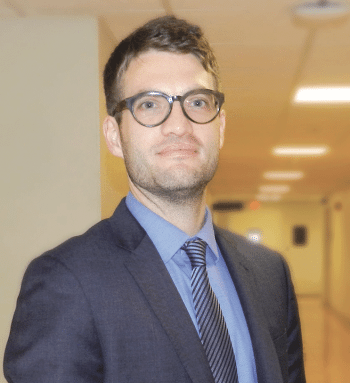
Christopher Marini

Christopher Marini

This will make the preparation process run as smoothly as possible and create a system of backup for the numbers on a return, which is referred to as an audit trail. If your audit trail is accurate and easy to follow, it will help you potentially avoid additional taxes in the event that you are selected for an audit.

By following the eight tips below, your next tax return will be quicker and more accurate than ever before.

1. Keep All Documents Together

By ensuring that all tax-related documents are kept in the same spot, you can eliminate questions such as ‘where did I put that?’ or ‘did I ever receive that?’ This could potentially save hours spent searching a home or, even worse, weeks spent waiting for an additional copy to be mailed to you. Documents received throughout the year may include real-estate and excise-tax bills, medical bills, co-pays, and prescriptions. In addition to those documents, and your own records maintained throughout the year, here is a brief list of the most common forms people receive after year end:

• W2 (wages)
• 1099-MISC (independent contracting)
• 1099-DIV (dividend income)
• 1099-SSA (Social Security proceeds)
• 1098 (home mortgage taxes/interest)
• K1 (partnership income)
• 1099-INT (interest income)
• 1099-B (capital gains)
• 1099-R (retirement distributions)
• 1098-T (higher-education tuition)

2. Stay on Top of Withholdings

If you had a large amount of taxes due in past years, you may find yourself in a similar situation this year. There are several methods available to ensure you withhold enough taxes throughout the year to avoid the burden of having to make a single large payment and incurring any related penalties.

One potential way is to change how much you are withholding from your W2. Your company’s HR department can help you change this on your Form W4. Lower numbers mean more tax is withheld, so if you are claiming a 2 and owe taxes, consider changing to a 1 or 0. Another possible method to help withhold enough is by using estimated tax payments. Estimates are quarterly prepayments of taxes, which are often used by business owners or individuals with a high level of income. Also, remember to inform your tax preparer of any life changes, such as marriage, divorce, birth of a child, or death of a spouse, which can affect how much withholdings are needed.

3. Regularly Update Mileage Logs (Form 4562/2106)

If you own a small business or have unreimbursed mileage expenses from a job, you are able to claim this as a deduction on your return. You can claim this deduction using the standard mileage rate or actual expenses. The key to either method is having supporting documentation to help keep your audit trail accurate.

In order to calculate your deduction properly, it is important to keep detailed records of your mileage. One quick and easy strategy you might try is purchasing a small pocket notebook and keeping it in your center console. Whenever you use your vehicle for a business trip, simply set your odometer and jot down the miles (excluding commuting mileage).

If you forget to set the odometer, Google Maps is always a useful tool. At the end of the year, add up all the trips in the notebook to arrive at your total business mileage. Additionally, remember to keep your receipts for parking and tolls, and add them up at year end as well.

4. Summarize Higher-education Costs (Form 8863)

Each higher-education institution you or your child attends is required to issue a 1099-T; however, there is often additional information to consider that is not included on a 1099-T. This includes amounts paid for books, a well as scholarships and grants received that were not paid directly to the school.

Because it is important to capture all activity, consider making a summary sheet of all education costs and assistance received. Costs should include all amounts from the college bill in addition to textbooks. Remember to keep copies of all book receipts as backup documentation.

5. Keep Track of Fair Rental Days (Schedule E)

If you rent out a vacation home, it is necessary to know how many days it was rented at fair rental value. Your tax preparer will also need to know how many days the home was used by either yourself or any family member.

To do this, try keeping a miniature monthly calendar at home, exclusively for the purpose of keeping track of usage. For any day that it is used personally or by a family member, put a ‘P’on the day for ‘personal.’ For any day that it is rented to someone at fair rental value, put an ‘R’ on that day for ‘rented.’ At the end of the year, go through your calendar and determine the amount of days used personally and rented out.

6. Substantiate Business Revenue and Expenses

For small business owners who file a Schedule C, E, or F, it is important to keep detailed and supported records. Purchasing a computer program, such as QuickBooks, will help you keep better track of business data. To maintain a proper audit trail for your business, be sure to maintain supporting documentation for each transaction you enter into your software.

For the very small businesses, it may not be cost-effective to purchase financial software. If you fall into this category, try keeping a bin at your desk to store copies of each check for revenue and receipts for expenses. Then, on a monthly basis, use a blank spreadsheet or notebook to record all data from the bin. This will be much easier than trying to summarize all 12 months at once. Keep in mind that charge-card statements cannot be used to substantiate deductions; rather, detailed receipts are needed.

7. Keep a Log of Childcare Expenses (Form 2441)

Parents who both have earnings can deduct expenses paid to a childcare provider, which includes day cares, independent sitters, and summer camps. For each expense, keep records of which child the expense relates to. Additionally, you will need to request the EIN or SSN for each provider.

Keep a log of these expenses at home, and update it each time you write a childcare check. To create an even more effective audit trail, include copies of checks paid to each childcare provider or ask them to provide you with a statement of annual amounts paid. At year end, use the log to create a summary sheet, totaling by child and then provider.

8. Maintain Records of Charitable Contributions (Schedule A)

Make your donations with checks or online. The IRS will not allow a deduction for unsupported cash donations. Additionally, remember to take copies of each check or online payment as proof of each payee and amount. At the end of the year, create your summary sheet, breaking down the amounts paid to each organization, with the supporting copies attached behind as additional backup documentation. There are more stringent rules for larger donations, so be sure to consult your tax preparer.

Also, if any benefit is received as a direct result of the contribution, it must be subtracted from the contribution amount. For example, if you donated $1,000 to the Jimmy Fund and received two Red Sox tickets valued at $50 each, you could deduct only $900.

By following whichever of these eight tips apply to you, you will make your next tax return quicker and easier to prepare, and more accurate. Additionally, in the event you are ever audited, you can feel confident in the ability of your backup documentation to uphold the figures presented on your return.

So, this year, challenge yourself to get organized, and make your tax return a year-round commitment.

Chris Marini is an audit and accounting associate with the Holyoke-based public accounting firm Meyers Brothers Kalicka, P.C.; (413) 322-3549; [email protected]

Health Care Sections
Task Force Takes on State’s Daunting Addiction Problem

Dr. Robert Roose

Dr. Robert Roose says Massachusetts residents struggling with opiate addiction are also, in many cases, struggling with long waiting times for treatment.

Tough problems require bold solutions, and opiate addiction has become a tougher problem than ever before in Massachusetts.

Responding to a troubling rise in drug addiction in the Commonwealth over the past decade, Gov. Deval Patrick’s administration convened a task force earlier this year to come up with solutions. The recommendations are plentiful, and time will tell how effective implementation will be.

“I think it’s very appropriate to characterize this as an opiate addiction crisis,” said Dr. Robert Roose, chief medical officer, Addiction Services, for the Sisters of Providence Health System. “Government and media and other parties who have described opiate addiction as an epidemic are making an honest assessment of what this region and others have been dealing with for a number of years. And we have not seen potentially the worst of the consequences of this crisis.”

One problem the task force sought to address was a shortage of treatment options in the Bay State, where an estimated 120,000 people are addicted to opiates, and roughly two deaths every day are attributed to overdoses — while perhaps 100,000 of those people either cannot access limited treatment resources, or are not trying.

“Everyone is trying to keep up with the current demand for treatment,” Roose noted. “I would say, at this point, patients struggling with opiate misuse are also struggling with longer waiting times to get into treatment programs, and that puts people’s lives at risk.”

The task force’s recommendations (more on those later) encompass strategies for expanding treatment access and boosting educational efforts, but also altering how the insurance industry and correctional system handle addiction, among other goals.

The coalition of more than 35 stakeholders — representing municipalities, hospitals, insurers, social services, and other entities — worked with families, the Department of Mental Health, and a host of organizations to develop a set of recommendations designed to improve the Commonwealth’s opiate-abuse prevention and treatment systems, prevent further misuse and addiction, increase the number of people seeking treatment, and support individuals recovering from addiction.

“These actions will help enhance our network of treatment and recovery services to help communities and families struggling with addiction,” Patrick said. “I hope this work results in more families talking openly about issues of addiction in order to spark the process of healing and recovery.”

Roots of a Strategy

What would become known as the state’s Opioid Task Force stemmed from Patrick’s declaration in March of a public-health emergency in regard to opiate addition. The task force, chaired by Cheryl Bartlett, commissioner of the state Department of Public Health (DPH), was charged with developing policy recommendations to strengthen the Commonwealth’s response to this crisis. The task force eventually made recommendations in several categories, including:

• Expanding and streamlining access to services. In order to meet the escalating demand for treatment, ensure a comprehensive continuum of care, and facilitate access to coordinated care, the DPH intends to expand community-based and residential treatment programs for underserved populations, including adolescents, young adults, and families with children.

• Enhancing opiate education. The DPH will launch a statewide awareness campaign for youth and parents to promote more openness and public dialogue about issues of addiction and recovery. The Commonwealth will also work on strategies to enhance education for medical professionals on best practices in identifying and treating individuals struggling with opiate addiction.

• Addressing insurance practices. The DPH and the Division of Insurance, in consultation with the Health Policy Commission, will conduct a comprehensive review of insurance coverage for opiate addiction treatment. The agencies will consult with clinical experts to develop minimum criteria for opiate abuse and addiction treatment services that will be considered medically necessary for all patients. The task force found that gaps in coverage were impacting services for individuals in need.

• Expanding correctional-system treatment. The Commonwealth will work to provide individuals with enhanced support and treatment for drug addiction when they leave correctional facilities and integrate back into society.

• Expanding peer-support networks. The Patrick administration will work with communities to expand peer support networks comprised of individuals in recovery who provide guidance to those navigating pathways out of addiction.

Patrick also met in June with other New England governors at Brandeis University to discuss a regional response to the opiate epidemic.

Roose noted that he worked in addiction treatment in New York City for a couple of years, and he sees parallels with Western Mass. in how addiction isn’t just entrenched in urban areas, like Springfield and Holyoke, but has spread into other communities, which don’t always have the infrastructure to deal with it.

“It was a bold move by the Legislature to create a task force, and they put forth some strong, bold recommendations, which will hopefully make an immediate — but lasting — impact,” he told BusinessWest. “Recovery is a lifelong process, and treating addiction is something done over time. I expect we’ll be dealing with this for many years to come.”

John McGahan, a task-force member and president of the Gavin Foundation in Boston, said the task force’s approach “addresses a public-health crisis without compromising public safety and … supports communities, families, and the people seeking recovery.”

From Drugstore to Street

The education component of the task force’s recommendations is especially important, considering how subtlely many individuals become addicted, as Roose noted.

“There have been different studies that looked into this, and they reinforce what had become a common understanding, which was that a general overprescribing of prescription painkillers, starting in the ’90s, led to a dramatic increase in access to painkillers and opiates. And many people developed physical dependence because of this increased availability. These include young people and teenagers who began experimenting with prescription painkillers.”

John Morello says the roots of the problem run deeper than young people discovering their parents’ painkillers in the medicine cabinet. A Worcester-based actor and writer who performs Dirt, a one-man show about substance abuse and choices, in schools and colleges across the U.S., Morello said a culture that has become more welcoming to the idea of pills as a solution to problems has helped grease the skids toward higher rates of addiction among young people.

“I think one of the biggest things I’ve noticed is how medicated most students are these days, and how it is a direct reflection of the medicating of their parents,” he said. “We have a generation that has been overmedicated by painkillers and anti-depressants, having children and then being told that their kids have ADHD and need to be medicated.

“No matter what school I go to — maybe more, though, in wealthy areas or private schools — I see kids being medicated for academic performance,” he went on. “I don’t know if it’s because parents and communities are buying into this whole idea that ‘our children are falling behind, and we as a nation need to keep up with China and India,’ or maybe it’s just plain fear, or maybe they truly do want what’s best for their kid and are not getting any other answers besides some anecdotal reports on afternoon talk shows and a prescription from the pediatrician.”

The numbers at some schools are startling, said Morello, recalling a relaxed chat he had with about 25 or 30 students after one of his shows. When the subject of prescription drugs came up, more than half the students said they were on some sort of behavioral prescription, and the ones on Ritalin or ADHD medications had bought into the idea that the pills were helping them be successful students.

“So, there is this overarching message that to fix things, we take a pill,” he continued. “Of course, I question the whole premise most of the time because I don’t even think that what they’re ‘fixing’ is even broken half the time.”

Whatever the reasons for increasing numbers of addicts, it’s not hard to understand how a significant number of those people have moved from the medicine cabinet to the street, where a hit of heroin is typically $10, compared to $30 for one dose of Oxycontin, Morello noted.

“We are seeing the effects of young people who tried painkillers, became addicted to them, and transitioned to heroin,” Roose said. “There’s very clear evidence that, as the number of opiate prescriptions increased over the last two decades, so did the number of treatment admissions and the number of opiate-overdose deaths. As the medical community and others recognized this was a problem, the subsequent decrease in prescribing them led many already addicted to switch to heroin, which has always been readily available.”

Added Morello, “what happens when the patient cannot afford the FDA-approved and legalized habit that was created and nurtured in him by prescriptions since childhood? He or she will either break the habit or find a way to feed it that they can afford.”

Bottom Line

The task force’s recommendations are aimed, at least in part, at breaking those habits, but no one is saying it will be easy.

In fact, Roose said some addicts simply aren’t willing to seek help, and perhaps the best way to reach them is through programs that educate people about safer injection practices and overdose prevention.

“Heroin dependence brings additional risks, including complications that arise from injection use, which sometimes lead to more dramatic social and economic consequences for individuals, families, and the community,” he said. “The good news is that we have treatment — treatment that works — for addiction, but we’re behind the 8-ball, coping with the increased demand.”

Bartlett said the task force wants to expand on a strong, if overextended, treatment system in Massachusetts, and to create a national model for recovery. Roose, who works for a health system with a broad range of inpatient and outpatient addiction-treatment services, knows the battle is only beginning.

“Despite increasing capacity over the past year,” he said, “we’re still coping with the same demand the state is experiencing. It’s a problem.”

Joseph Bednar can be reached at [email protected]

Company Notebook Departments

Baystate Announces Leadership Appointments, New Name for Wing
SPRINGFIELD — With the change of Wing Memorial Hospital’s parent company from UMass Memorial Health Care to Baystate Health expected to take place on Sept. 1, Baystate Health announced leadership appointments for its Eastern Region and a new name for the Palmer hospital: Baystate Wing Hospital. As of Sept. 1, Dr. Charles Cavagnaro III, now president and CEO of Wing Memorial Hospital, will be appointed president of Baystate Health’s Eastern Region, which is comprised of Baystate Mary Lane Hospital, Baystate Wing Hospital, and the employed medical practices and medical centers in that region. As he assumes this leadership position, Cavagnaro has appointed Dr. Shafeeq Ahmed chief operating officer of Baystate Health’s Eastern Region. Ahmed will also continue in his role as chief medical officer of Baystate Mary Lane Hospital and Baystate Medical Practices Eastern Region. As president of the region, Cavagnaro will provide strategic, executive, and operational leadership for the two hospitals there, which provide inpatient medical, surgical, gynecological, and behavioral-health services; emergency services; as well as a range of primary-care and other outpatient services for about 80,000 people in that region. He will report to Dennis Chalke, senior vice president of Baystate Health Community Hospitals and senior vice president and chief financial officer of Baystate Health. Cavagnaro has served as president and CEO of Wing Memorial Hospital and Medical Centers for the past 15 years. Before that, he was Wing’s vice president of Medical Affairs. In 2013, he served as interim president of UMass Memorial Medical Center in Worcester. Amid a challenging financial environment, Cavagnaro and his team have led Wing to serve a greater number of patients, add hospital beds, and increase the depth and breadth of services in its health centers and outpatient practices. The hallmark of his leadership is a focus on quality and safety that led to an ‘A’ safety rating for Wing from Leapfrog Group and Top Performer status from the Joint Commission on core accountability measures. Cavagnaro is a board-certified primary-care internist in Belchertown and sees patients on a weekly basis. He is a Six Sigma and Lean Green Belt in healthcare quality-improvement processes. Cavagnar completed his residency in internal medicine at UMass Medical Center and is a graduate of Cornell University Medicine College in New York City. He is a member of the American College of Physician Executives and the American College of Healthcare Executives, and a fellow of the American College of Physicians. He was a founding member of the American Academy of Hospice Physicians, which is now known as the American Academy of Hospice and Palliative Medicine. He has served as a medical examiner for District IV of Hampshire County, and as a member of the board of directors of the Pioneer Valley Chapter of the Red Cross. He presently serves on the American Hospital Assoc. Regional Policy Board for the New England Region. Ahmed was recently named one of ‘100 Hospital and Health System Chief Medical Officers to Know’ by Becker’s Hospital Review. Prior to his arrival at Baystate Mary Lane Hospital, Ahmed had served as president of the medical staff, chief of Ob/Gyn, and a member of the hospital board of directors at the Naval Hospital in Cherry Point in North Carolina. Ahmed is a board-certified obstetrician/gynecologist at Baystate Medical Practices – Mary Lane Ob/Gyn in Ware, and sees patients on a weekly basis.
 Over the next several months, Cavagnaro and Ahmed will be working together as part of a larger, broadly experienced team to develop the integration strategy for Baystate Health’s Eastern Region. The name Baystate Wing Hospital aspires to honor the hospital’s more-than-100-year history, and recognize the vision and contributions of the Wing family and the countless others who have contributed their time, talents, and money to making Wing the strong community health provider it is today, while also celebrating Wing’s new affiliation with Baystate Health.

Springfield College Named College of Distinction
SPRINGFIELD — Springfield College has again been identified as a 2014-15 College of Distinction for providing an innovative, teacher-centered undergraduate education with a strong record of preparing its graduates for real-world success. Colleges of Distinction is a college guide that for the last 15 years has recognized colleges it determines to be the best places to learn, grow, and succeed. The goal of Colleges of Distinction is to provide students, counselors, and parents with information about such schools. Colleges of Distinction describes schools that take a holistic approach to admissions decisions, consistently excel in providing undergraduate education, and have a national reputation. It also gives students, counselors, and parents an unbiased look at the college-admissions process. Colleges of Distinction looks at the myths surrounding college admissions, provides tools for self-assessment, and provides insights from college-admissions professionals, high-school counselors, students, and parents. Founded in 1885, Springfield College is known worldwide for the guiding principles of its Humanics philosophy — educating students in spirit, mind, and body for leadership in service to others. The college offers a range of undergraduate- and graduate-degree programs in the fields of health sciences, human and social services, sport management and movement studies, education, business, and the arts and sciences. It also offers doctoral programs in physical education, physical therapy, and counseling psychology. The college is ranked in the 2014 edition of Best Colleges in the top tier of “Best Regional Universities — North Region” by U.S. News Media Group, and is designated as a premier Leadership Development Center by the YMCA of the USA. More than 5,000 traditional, non-traditional, and international students study at its main campus in Springfield and its School of Human Services campuses across the country.

NBSB Cuts Ribbons in Ware, East Brookfield, and Three Rivers Village
NORTH BROOKFIELD — North Brookfield Savings Bank recently held ribbon-cutting events at its Ware, West Brookfield, and Three Rivers Village of Palmer branches. The events took place following the bank’s merger with FamilyFirst Bank in June. “North Brookfield Savings Bank is honored to be a part of these great communities and hopes to make a positive impact for businesses and individuals for years to come,” said NBSB President and CEO Donna Boulanger. “We look forward to being ‘where it’s at’ for specially tailored financial products and services, the best customer service, community support, and fun community events.” The ribbon cuttings drew current and prospective members of the Massachusetts Legislature. State Rep. Todd Smola attended the event at the Three Rivers Village branch, state Senate candidate Mike Valanzola attended the event at the Ware branch, and state Sen. Stephen Brewer and state Rep. Anne Gobi attended the East Brookfield branch ribbon cutting. In addition to carrying the North Brookfield Savings Bank name, the three new NBSB branches feature state-of-the-art banking for residents and businesses alike, while renovations to the 40-44 Main St., Ware branch will begin shortly to provide more cutting-edge banking services and access to the business bankers at the NBSB Business Center.

Advance Welding Relocates to Springfield
WEST SPRINGFIELD — After more than 36 years of doing business in West Springfield, Advance Welding will relocate to Brookdale Drive in Springfield on Sept. 2. “As our capabilities and customer base continue to grow, this move will improve our ability to process our customers’ work,” said Advance Welding President Christopher Kielb. The company is a provider of metal-joining services to the commercial, marine, nuclear, medical, aerospace, and defense industries. Its operations and management team will remain the same. The new address is 150 Brookdale Dr., and the phone number will remain (413) 734-4544.

Country Bank Contributes $14,500 to Local Schools
WARE — Country Bank surprised 29 local schools that participate in the bank’s Savings Makes Sense School Banking Program with $500 gift cards to Staples. Each school received the donation to help cover the cost of back-to-school supplies. “We know how difficult it is for the schools to have the supplies they need when budgets become tight,” said Jodie Gerulaitis, financial education officer for Country Bank. “They are truly so grateful and appreciative of this gift.” It is reported that teachers annually spend about $250 of their own money to purchase items for their classrooms. Country Bank wanted to help teachers who do so much for their students. Country Bank serves Central and Western Mass. with 15 offices in Ware, Palmer, Brimfield, Belchertown, Ludlow, Wilbraham, Paxton, Charlton, Leicester, and West Brookfield.

PeoplesBank Supports Women Business Owners
HOLYOKE — In support of the growth and success of women business owners, PeoplesBank is partnering with WomenUpFront to host a monthly, ongoing roundtable for women who have ownership and leadership responsibility and want to grow toward $1 million in annual revenue. The WomenUpFront Roundtable provides a learning forum for owners to get out of the weeds of the day-to-day routine and look at their businesses more purposefully and strategically. The objective of the roundtable is to help accelerate women entrepreneurs transition their businesses to the next level and place their companies in a better strategic position to access new opportunities and continue to prosper. The roundtable offers a curriculum designed for the small-business owners and will begin in September. For more information on WomenUpFront and membership criteria, contact Cathy Crosky at [email protected] or (413) 822-1263.

Berkshire Bank Wins Communicator Awards
PITTSFIELD — Berkshire Bank has received two Communicator Awards from the Academy of Interactive and Visual Arts (AIVA). The bank received 2014 Silver Awards of Distinction in two categories, Commercials – Banks and Annual Report – Corporation. Each year, AIVA receives more than 6,000 entries from across the U.S. and around the world, making the Communicator Awards the largest and most competitive awards program honoring creative excellence for communications professionals. Berkshire’s television commercial for banks recognized by the Communicator Awards was its “Life Is Exciting. Let Us Help” spot developed by Berkshire Bank’s marketing department. The bank’s second Silver Award of Distinction from the Communicator Award was for its 2013 annual report. Founded in 1994, the Communicator Awards are judged and overseen by the Academy of Interactive and Visual Arts, an organization of more than 600 leading professionals from various disciplines of the visual arts dedicated to embracing progress and the evolving nature of traditional and interactive media.

Departments People on the Move

Ralph Abbott Jr

Ralph Abbott Jr

John Glenn

John Glenn

Timothy Murphy

Timothy Murphy

Jay Presser

Jay Presser

Skoler, Abbott & Presser, P.C., an employment-law firm serving the Greater Springfield area, announced that four of the firm’s partners — Ralph Abbott Jr., John Glenn, Timothy Murphy, and Jay Presser — were listed in 2015 edition of Best Lawyers in America. In addition, Murphy was named the Best Lawyers 2015 litigation, labor and employment Lawyer of the Year in Springfield. Those honored as Lawyer of the Year have received particularly high ratings in surveys by earning a superior level of respect among their peers for their abilities, professionalism, and integrity. Best Lawyers is based on an exhaustive peer-review survey. More than 52,000 leading attorneys cast more than 5.5 million votes on the legal abilities of other lawyers in their practice areas. Lawyers are not required or allowed to pay a fee to be listed; therefore, inclusion in Best Lawyers is considered a singular honor.
• Abbott has been listed in Best Lawyers in the categories of arbitration; employment law, management; labor law, management; and mediation. He has been a partner at the firm since 1975 and is known throughout the legal community for his work representing management in labor relations and employment-related matters, providing employment-related advice to employers, assisting clients in remaining union-free, and representing employers before the National Labor Relations Board (NLRB). Abbott also has numerous credits as an author, editor, and teacher and a record of civic and community involvement. He has been selected by his peers for inclusion in Best Lawyers every year since 1989.
• Glenn has been listed in Best Lawyers in the categories of arbitration; employment law, management; and labor law, management. He has been a partner of the firm since 1979 and has spent his career representing management in labor relations and employment-related matters. In addition to providing employment-related advice to employers, he assists clients in remaining union-free and represents employers before the NLRB. He has extensive experience negotiating collective-bargaining agreements and representing employers at arbitration hearings and before state and federal agencies. Prior to joining Skoler, Abbott & Presser, Glenn was employed by the NLRB in Cincinnati. He has served as an adjunct professor of Labor Law at Western New England University School of Law and is a member of the American Academy of Hospital Attorneys. He has been selected by his peers for inclusion in Best Lawyers every year since 1995.
• Murphy has been listed in Best Lawyers in the categories of employment law, management; labor law, management; and litigation, labor and employment. He joined Skoler Abbott after serving as general counsel to an area labor union and as an assistant district attorney for the Hampden County District Attorney’s Office. His practice includes labor relations and employment litigation, as well as employment counseling. A native of the Springfield area, Murphy is a graduate of the Western New England University School of Law. He has also taught courses in employment law at WNEU. He is a frequent contributor to business and human-resource publications and a contributing author to the Massachusetts Employment Law Letter. He has been selected by his peers for inclusion in Best Lawyers every year since 2013.
• Presser has been listed in Best Lawyers in the categories of employment law, management; labor law, management; and litigation, labor and employment. He has more than 35 years of experience litigating employment cases and has successfully defended employers in civil actions and jury trials and handled cases in all areas of employment law, including discrimination, sexual harassment, wrongful discharge, wage hour, FMLA, ERISA, and defamation. He has won appeals before the Supreme Judicial Court and the First and Second Circuit Courts of Appeals, and represented employers in hundreds of arbitration cases arising under collective-bargaining agreements. He has been selected by his peers for inclusion in Best Lawyers every year since 1991.
•••••
Robert Belitz

Robert Belitz

Tighe & Bond, a civil and environmental engineering consultant, has appointed Robert Belitz its Chief Financial Officer. In this role, he will direct Tighe & Bond’s financial operations and priorities, as well as contribute to growth strategies consistent with the firm’s continued expansion in the marketplace. Belitz, who will provide financial management from the firm’s Westfield office, is a certified public accountant and executive with more than 25 years of corporate finance and accounting experience in professional services. He previously has served as the chief financial officer, corporate controller, and vice president of Finance for firms such as Malcolm Pirnie, Arcadis U.S., and the Hunter Roberts Construction Group. He also provided senior management for the public accounting firms of Ernst and Young LLP and KPMG LLP in New York. His prior responsibilities have included oversight and management of all financial functions, as well as developing and implementing financial plans and processes to achieve strategic and operational objectives. “Bob’s wealth of experience in our industry, and his proven ability to successfully direct financial operations, is instrumental to Tighe & Bond’s accelerating growth,” said David Pinsky, president and CEO of Tighe & Bond. “We’re thrilled that he has joined us as Tighe & Bond’s first chief financial officer.” Belitz, who earned his bachelor’s degree in accounting from Muhlenberg College, is a member of the New York State Society of CPAs and the Construction Financial Management Assoc. He also has participated in various finance forums with the Environmental Financial Consulting Group, Ernst and Young, the American Council of Engineering Companies, and the Design Finance Officers Group. Founded in 1911, Tighe & Bond is one of the most experienced engineering firms in New England, with offices in Pocasset, Westfield, and Worcester, Mass.; Middletown and Shelton, Conn.; and Portsmouth, N.H. With a team of more than 250 employees, Tighe & Bond provides engineering and environmental services for clients in government, industry, healthcare, education, real-estate, energy, and water/wastewater markets.
•••••
Radius Financial Group Inc., a leading private mortgage lender in New England, has announced the addition of Kate Crogan as a Loan Officer in its West Springfield branch. Crogan brings three years of experience in mortgage lending. Most recently, she was a customer-service representative before being promoted to financial-services representative at TD Bank in Chicopee, where she was responsible for first and second mortgages, insurance, and annuities. She is currently studying business at Western New England University.
•••••
Keith Minoff

Keith Minoff

Keith Minoff was recently selected by his peers for inclusion in Best Lawyers in America 2015 in the fields of commercial litigation and corporate law. Best Lawyers is based on an exhaustive peer-review survey. More than 52,000 leading attorneys cast more than 5.5 million votes on the legal abilities of other lawyers in their practice areas. Minoff specializes in business litigation and employment law. His law office is located in downtown Springfield.
•••••


Paul Fortin

Paul Fortin

Northeast IT Systems Inc. announced the addition of Paul Fortin to its team. Fortin will be joining Joel Mollison and Brian Sullivan as a Desktop Support Specialist. In that role, Fortin is able to implement cloud-based backup systems, reduce downtime of equipment, and increase speed of repairs for clients. With this new addition, Northeast IT Systems will be able to continue its pattern of steady growth and provide solutions to a broad range of clients.
•••••
Brattleboro Retreat President and Chief Executive Officer Dr. Robert Simpson Jr., has been named by Behavioral Healthcare magazine as a 2014 Behavioral Healthcare Champion along with four other leaders in the field of mental health from across the nation. The 2014 champions were selected from outstanding nominees across the country who, according to the magazine, are making a difference in the development, delivery, and effectiveness of mental healthcare services. “True leaders create lasting impact, and our 2014 Behavioral Healthcare Champions all have an eye on the future,” said Julie Miller, editor in chief of Behavioral Healthcare magazine. “Their drive to find new and more effective ways to serve their clients is reflected not just in their own organizations’ success, but also in the progress they’ve witnessed in their communities.” The 2014 Behavioral Healthcare Champions are profiled in the July/August 2014 issue of Behavioral Healthcare magazine and were recognized at a special ceremony during the National Conference on Addiction Disorders (NCAD) and the co-located Behavioral Healthcare Leadership Summit, which was held in St. Louis on Aug. 22-26.  Simpson’s many achievements since becoming the Retreat’s CEO in November 2006 are discussed in-depth in the above-mentioned profile. Among those achievements are a complete revamp of the hospital’s admissions process that replaced a multi-channel system of patient access with a streamlined, single-access point that makes access to the Retreat’s numerous programs easier and more dignified for patients. Under Simpson’s watch, the retreat has successfully launched four specialty clinical services designed to better meet the psychiatric and addiction treatment needs of distinct populations that are typically underserved. They are the Adult Inpatient Program for people who identify as lesbian, gay, bisexual or transgender; the Emerging Adult Inpatient Program for young adults ages 18 to 26; the Uniformed Service Program, a partial-hospital program designed to meet the unique needs of law enforcement, firefighters, corrections officers, military personnel, and first responders suffering from PTSD and other duty-related issues including addiction to alcohol and other drugs, major depression, and domestic violence; and the Mind Body Pain Management Clinic, a treatment alternative for people experiencing chronic pain that utilizes biofeedback, acceptance and commitment therapy (ACT), mindfulness, and mindful movement in place of typical treatments such as medication and surgery.
During Simpson’s tenure, the Retreat has experienced tremendous growth, having increased its number of staffed beds from an average of 50 in 2006 to an average of 122 in 2014. During the same time, the Brattleboro Retreat has doubled its number of employees from approximately 400 to more than 800.

Agenda Departments

Millfest After 5
Sept. 10: Ludlow Mills on State Street in Ludlow will be the site of Millfest, the first After 5 of the chamber season, from 5 p.m. to dusk. The event will be presented by the East of the River Five Town Chamber of Commerce (ERC5), an affiliate of the Affiliated Chambers of Commerce of Greater Springfield (ACCGS), in partnership with the ACCGS. The rain date is Sept. 11. Sponsored by Chicopee Savings Bank and MGM Springfield, Millfest will take place in an outdoor tented environment and will provide attendees the opportunity to network in a casual and informal setting. Attendees will also be able to network with many of the businesses that are based in this unique industrial complex and learn more about the Ludlow Riverwalk. Attendees will enjoy music; complimentary hot dogs, hamburgers, and apple pie; and a cash bar provided by Europa Black Rock Bar & Grill, as well as a display of classic cars, amusements, and a special dedication to the region’s first responders. Reservations are $15 for members and $25 for the general public. Net proceeds benefit the ERC5 Scholarship Fund. Reservations may be made online at www.myonlinechamber.com.

Affordable Care Act Roundtable Seminar
Sept. 11: With changes coming to the Affordable Care Act in 2015, business owners and managers need to ensure that their companies are up to speed on the newest developments, including the employer mandate, which will go into effect next year. Attorney Channez Rogers, an associate with the Northampton-based firm Royal LLP, will lead a roundtable-style seminar where she will provide practical pointers to assist attendees with helping their organizations stay current with the latest Obamacare provisions. Rogers will cover topics such as what to include in a comprehensive package, who is subject to the employer mandate and how to comply, and penalties for non-compliance. The seminar will be staged at Royal LLP’s offices, at 270 Pleasant St. in Northampton, from 8 to 9 a.m. The cost is $30 per person, and advance registration and payment are required. Seating will be limited. Contact Ann-Marie Marcil at (413) 586-2288 or e-mail [email protected] to register or if you have any questions about this seminar.

Amherst Area Chamber Annual Awards Dinner
Oct. 2: The Amherst Area Chamber of Commerce announced the upcoming Farm to Table Annual Awards Dinner, to be held Oct. 2 at Hadley Farms Meeting House in Hadley. The dinner, a yearly celebration that is a highlight of area businesses’ community social calendar, is expected to sell out. This year’s award winners reflect a celebration and acknowledgement of a number of community partners and leaders.  The “A+” Award Winners include the Rotary Club of Amherst, which will receive the chamber’s Community Service Award, recognizing the many contributions that this group of volunteers has made to the Amherst area, in addition to its work dedicated to the global eradication of polio; Stephanie O’Keeffe, who will receive the chamber’s Legacy Award, a celebration of what this individual has accomplished, specifically in her role on the Amherst Select Board; and Tony Maroulis, former executive director of the organization, who will receive the chamber’s Most Valuable Player award for all of his hard work elevating the chamber’s stature and involvement in the community. “It was a daunting task to sift through the nominations for this year’s batch of award winners, because as there are so many individuals and organizations in this community worthy of recognition,” said Don Courtemanche, Amherst Area Chamber of Commerce executive director. “We feel that the recipients that we have selected represent the best, the brightest, and the most outstanding of the terrific partners that the chamber is fortunate to be associated with.” Tickets for the dinner will be available Sept. 2. Reservations for the dinner or for the program book may be made by contacting the chamber at (413) 253-0700.

Western Mass.Business Expo
Oct. 29: BusinessWest will present its fourth annual Western Mass. Business Expo at the MassMutual Center in downtown Springfield. The business-to-business show, which last year drew more than 2,000 visitors, will feature more than 150 booths, seminars, and Show Floor Theater presentations; breakfast and lunch programs; and a day-capping Expo Social. Details about specific events, programs, and featured speakers will be printed in future issues of BusinessWest. Comcast Business will again be Presenting Sponsor, while the social will be sponsored by Northwestern Mutual and MGM Springfield. Silver Sponsors are Health New England, DIF Design, Johnson & Hill Staffing, and MassMutual Financial Group. Education sponsor is the Isenberg School of Management at UMass Amherst. Additional sponsorship opportunities are available. For more information on sponsorships or booth purchase, call (413) 781-8600.

Departments Picture This

Send photos with a caption and contact information to: ‘Picture This’ c/o BusinessWest Magazine, 1441 Main Street, Springfield, MA 01103 or to [email protected]

Cold Cash

Cold2Cold1Cold3The leaders of Berkshire Bank and Hampden Bank recently challenged their employees to take part in the popular ALS Ice Bucket Challenge, which has raised well over $100 million in just a few weeks. Above, the Berkshire Bank Foundation donated $50 for each of the first 50 employees who took part in the challenge and shared their videos on Facebook. More than 50 bank employees completed the challenge within the first three days, and the foundation will make a $2,500 contribution to the ALS Assoc., which provides care services to assist people with ALS and their families through a network of chapters working in communities across the nation, while maintaining a global research program focused on the discovery of treatments and eventually a cure for the disease. Meanwhile, Hampden Bank President Glenn Welch challenged his employees (bottom) to take the challenge and matched the $1,000 donation made by the employee dress-down fund, for a total of $2,000. “I think it’s really great that we were able to do this and get other companies involved to support such a great cause. We at Hampden Bank are always looking for ways to give back,” Welch said.

Block Party

Block2Block1On Aug. 21, Springfield College partnered with the Old Hill and Upper Hill Neighborhood Councils, HAPHousing, and the Partnership for the Renewal of Old Hill in hosting the 11th annual Block Party on the Hill. The event featured live music and free barbeque, along with information about housing, health, education, and community services. Children also enjoyed a bounce house and face painting. Pictured at top, from left, are Block Party Planning Committee members Mattie Lacewell,  Kathy Smith, Springfield College President Mary-Beth Cooper, Sarah Page, Adrienne Osborne, Jill Russell, and Ethel Griffin.

Fore! … a Good Cause

PicThis3The 34th annual Brightside Golf Classic drew 180 golfers to Springfield Country Club in West Springfield and Twin Hills Country Club in Longmeadow. The event raised just over $108,500 to support Brightside for Families and Children in Holyoke, which provides in-home counseling and support to children and their families throughout Western Mass. Pictured, first row, from left: Brightside’s Maria Zygmont; Brightside Golf Classic co-chairs John Kendzierski, Steve Lowell, and William Wagner; and Brightside’s Mark Paglia. Second row, from left: Diane Dukette, vice president of Fund Development, SPHS; Martin Caine; Jeslyn Carr; Brightside Golf Classic co-chair Paul Fritz; Benjamin Coyle; Jay Babcock; and Daniel Moen, president and CEO of the Sisters of Providence Health System.

Daily News

SPRINGFIELD — Freedom Credit Union recently unveiled its updated look with a new logo and a redesigned website. At the same time, the credit union launched its presence on social media with new Facebook and LinkedIn pages.

FreedomLogo_alt6“This rebrand is an effort for us to freshen up our image and present a more contemporary look and design across all parts of the credit union, from our website and in-branch messaging to our advertising and promotional materials,” said Barry Crosby, president and CEO.

The new logo incorporates the outline of a bell, which represents the credit union’s founding as the Western Massachusetts Telephone Workers Credit Union in 1922. The new website features a more modern design with enhanced navigation and organization. Most of the information is organized within four areas — personal banking, business banking, member tools, and ‘about us’ — and the new rates page is arranged in tabs so that all credit-union rates can be accessed on one page.

“Our new website also makes it very convenient for our members to apply for a mortgage or consumer loan online,” said Jeffrey Smith, Freedom’s vice president and chief lending officer. “Members can even get pre-qualified for a mortgage on our website in just a few minutes.” Members can apply for any type of consumer loan online — mortgages, home-equity loans, auto loans, personal loans, home-improvement loans, education loans, and more.

On social media, Freedom has attracted hundreds of ‘likes’ on its Facebook page and numerous followers on its LinkedIn page. To access Freedom’s social-media sites, go to www.freedom.coop and click on the logos at the top of the page.

Membership at Freedom is available to include anyone who lives, works, or attends a college or university in Hampden, Hampshire, Franklin, or Berkshire county. The organization boasts nine branches throughout the Pioneer Valley in Ludlow, Chicopee, Feeding Hills, Sixteen Acres, Springfield, Easthampton, Northampton, Greenfield, and Turners Falls. A tenth branch is slated to open in September at the Roger L. Putnam Technical Academy in Springfield. Freedom offers a complete range of services, including online banking, savings and checking accounts, personal loans, mortgages, business accounts, business loans, and financial services.

Daily News

WEST SPRINGFIELD — The Professional Women’s Chamber, a division of the Affiliated Chambers of Commerce of Greater Springfield, recently honored Carol Campbell, president of Chicopee Industrial Contractors, as its 2014 Woman of the Year.

The annual Woman of the Year Banquet was held at the Castle of Knights in Chicopee. The award is presented to a woman in the Greater Springfield area who exemplifies outstanding leadership, professional accomplishment, and service to the community.

The Professional Women’s Chamber promotes the status of women professionals, working to empower career-oriented women through participation in leadership, education, and networking opportunities, and striving to strengthen the positive impact of women in the business community and on the economy. For more information, visit www.professionalwomenschamber.com.

Cover Story
New Director Wants to Take the Women’s Fund

COVER0914aElizabeth Barajas-Román says there are a number of reasons why she actively pursued the position of CEO for the Women’s Fund of Western Massachusetts (WFWM).

For starters, there was the opportunity to work in an attractive, challenging position much closer to her home in Northampton — she had been “commuting” to the nation’s capital for her work with the Pew Charitable Trusts as a campaign manager. There was also the chance to continue what had become a career in what she calls “high-impact philanthropy” (much more on her working definition of that term later).

But, perhaps most importantly, there was an opportunity to lead an organization that has more than come into its own over the past several years and is now at a truly critical juncture in its history.

It’s one that Barajas-Román summed up with a term generally reserved for startup businesses looking to get to the next stage — ‘scaling up’ — and she used it to describe not only the fund’s grant-writing work, but its strategic initiatives such as LIPPI, the Leadership Institute for Political and Public Impact.

“At the Pew Charitable Trusts, I was working on projects that are really focused in on a two- to three-year timespan, and working with partners to pick issues that were really going to move the needle over that time,” said Barajas-Román, who brings to her new position an intriguing résumé that includes everything from work in philanthropy to a stint as a reporter for the Daily Hampshire Gazette. “When I looked at this opening and what the Women’s Fund was doing and the way it’s doing its grant making, I saw a number of similarities to the work I was doing, and that was very attractive to me.

“A lot of grant making is done through funding one organization or another organization, in a piecemeal fashion, like drops in a bucket,” she went on. “But instead, the Women’s Fund has been interested in saying, in essence, ‘if we dump a whole bucket of water on a problem, how much more can we do?’ And that’s what they’ve shifted into over the past few years.”

As an example, she cited the WFWM’s recent announcement that it will be donating $240,000 over the next three years to intriguing initiatives in the four counties of Western Mass. These efforts will focus on everything from teen pregnancy to foster care; from Hampden County’s Prison Birth Project to something called the Franklin County Women’s GARDEN Project Collaborative.

That’s an acronym for Growing Agricultural Resiliency and Developing Economic Networks, said Barajas-Román, adding that the initiative, designed to break down the isolation that affects low-income women in rural communities by teaching them how to grow their own food and also sell what they produce through a food co-op business, is simply one example of how the mission of the WFWM is evolving.

“It provides a real solution to a problem, in this case a woman transitioning out of domestic violence,” she explained. “She needs skills, meaning leadership skills, access to education, and confidence. I’m really thrilled about it, and it exemplifies what we want to do with our resources.”

WomensFundSignAs she talked about the WFWM (which was named a Difference Maker by BusinessWest in 2012), its current initiatives, and prospects for the future, Barajas-Román made early and frequent use of the words ‘partnership’ and ‘collaboration.’ She said they are the keys to carrying out the agency’s mission to advance social-change philanthropy to create economic and social equality for women and girls in the region — and to improve overall quality of life.

“We’re really looking for people to come together and make an impact together,” she noted, adding that the four recently funded projects, and especially the GARDEN initiative, which includes four community partners, including Greenfield Community College, is a good example of this philosophy.

For this issue, BusinessWest talked at length with Barajas-Román about her latest career challenge, where she wants the Women’s Fund to go, and how she intends to get there.

Background — Check

As she takes on her new responsibilities with the WFWM, Barajas-Román has an array of intriguing career stops from which to draw both experience and perspective.

A native of Lincoln, Neb., she moved to Massachusetts — specifically, Harvard University — for her master’s degree in education. She concentrated on international development policy, and her coursework at the Kennedy School of Government included negotiation, regulatory analysis, and financial and strategic management.

Upon graduation, she took a job as a city planner in Cambridge and, among other initiatives, created girls’ programs that focused on academic, leadership, and social development. She also established partnerships with agencies working with children and youth, and served as a resource for other youth-oriented programs in the Greater Boston area.

From there, she became director of Policy & Operations for the Justice Research Institute in Boston, where, among things, she helped orchestrate a six-figure deficit turnaround, helped acquire several new grants, and prepared grant and performance reports for federal, state, and private agencies.

Desiring to be with her spouse in Western Mass., Barajas-Román’s career took a decidedly different direction in early 2005, when she joined the newsroom at the Daily Hampshire Gazette, covering politics, health, and education. She then shifted gears again, becoming associate director of Hampshire College’s Population and Development Program in 2008. In that capacity, she developed outreach strategies for national and international population-policy projects and co-edited policy publications, including a monthly academic paper series called DifferenTakes.

She then took a job as director of Policy for the National Latina Institute for Reproductive Health in Washington in 2009. There, among a host of other duties, she developed and advanced successful national policy positions on a range of issues involving women, infants and children, immigration, health, and human and civil rights.

At the Pew Charitable Trusts, which she joined in 2012, she managed a portfolio of partner contracts totaling more than $450,000. Her work included writing grant agreements, acknowledgements, and partner work plans.

Summing up all that work experience, Barajas-Román said her previous stops have provided her with a firm understanding of the importance of creating and strengthening partnerships to create positive change in the community, however that term is defined.

She said the role of CEO at the WFWM, which “spoke to me on a number of levels,” will give her an opportunity to generate such partnerships to move that needle on a host of issues involving women and girls.

Though not directly involved with the WFWM while living and working in this region, Barajas-Román said she was well aware of the agency, its mission, and specific initiatives through her circle of friends, and has attended several of its events over the years.

“It was always on my radar,” she noted, adding that, when the CEO’s position became available, she investigated it more and determined it was something she want to be part of.

Impact Statement

As she talked about the Women’s Fund and its mission moving forward, Barajas-Román said the agency is taking its work to the proverbial next level, and has been doing so for some time now.

Elaborating, she said the focus at the WFWM, now 17 years old and with more than $2 million in grants to its credit, is no longer on specific needs — although that’s still part of the equation — but much more on “what it wants the community to look like,” and then taking necessary, and rather involved, steps to make that vision become reality.

And this brings her back to that notion of ‘scaling up’ and the various forms this process will take.

Director Elizabeth Barajas-Román

Director Elizabeth Barajas-Román

She started with LIPPI. Launched five years ago, it has now equipped more than 200 women from across the four western counties to become civic leaders in their communities; to impact policy on the local, state, and national levels; and to seek and retain elected positions, said Barajas-Román, adding that the agency’s goal is to increase both the number of participants and their collective reach and impact.

“We have 200 women who have gone through this program,” she said. “That’s a significant pipeline of women who are poised and trained and ready to mobilize on these issues, and we’re ready to activate them.

“That’s one example of the scaling up that we’re doing,” she went on. “We have a cadre of really strong women leaders that we’ve helped train, and we want to grow those numbers.”

And as a step in that direction, the WFWM is investing an additional $12,000 into the partnerships involved with the latest round of funding, by giving each grantee the opportunity to select two of their staff, constituents, or board members to be participants of LIPPI.

As for its grant-writing efforts, Barajas-Román said the WFWM is now more focused on that aforementioned high-impact philanthropy — the full bucket rather than drops in one — and added that the latest round of funding provides some good examples of this.

“The Women’s Fund is looking at these grants and these different issues, and saying, ‘what are the bold goals we can set for the next three years that will make things different for these people and really make an impact?” she said. “The Women’s Fund is now extremely results-driven, and is well-positioned to deliver those results.”

The GARDEN project is such an initiative, she said, noting that this is a partnership between Greenfield Community College’s Sustainable Agriculture and Green Center for Women in Transition, Seeds for Solidarity, the New England Learning Center for Women in Transition (NELCWIT), and Montague Catholic Social Ministries.

Each organization will recommend women who show potential for success through the project, she said, adding that more than 40 women will participate over the next three years. They will each have the opportunity to take courses at GCC in organic gardening, permaculture landscape installation, food preservation, and farm and food cooperatives.

The Women’s Fund grant will pay for instructor costs, allowing participants to take the course free of charge, and GCC will arrange for instructors to attend a one-time training with NELCWIT and Montague Catholic Social Ministries on how to understand trauma triggers, how to recognize signs of physical and emotional domestic violence, and other factors affecting women in transition.

“This program tackles all the different comprehensive pieces that are involved with helping a woman who is transitioning from a domestic-violence situation,” she explained. “It will give her all the tools she needs to be successful. And it’s a perfect example of the high-impact philanthropy that is our focus.”

On a Grand Scale

One of Barajas-Román’s many priorities moving forward is creation of a new strategic plan for the agency. There is no set timetable for the project — although she did say only that the “time is now” — but what she does know is that the plan will involve all the various types of partners the fund has.

“This isn’t something we’re going to do in any kind of silo,” she explained. “We’re getting a lot of feedback from the community about what they’d like to see from their Women’s Fund over the next three years or five years.

“This idea of community ownership is emerging,” she went on. “This is the community’s fund; that’s the message we’re getting out.”

And it’s a fund set on making an ever-deeper impact, not only on women and girls, but on society in general.

George O’Brien can be reached at [email protected]

Business Management Sections
Alan Robinson’s Second Book on Ideas Shows Organizations How to Get ‘There’

Alan Robinson

Alan Robinson says “The Idea-Driven Organization” is designed to be a road map for companies looking to glean ideas from frontline employees.

When asked what prompted his second book on the broad subject of ideas in the workplace and how to generate them, Alan Robinson said there was something rather obvious missing from the first one, called Ideas Are Free.

Only, it wasn’t obvious to Robinson and co-author Dean Schroeder at the time.

“When we wrote Ideas Are Free, we made the same mistake a lot of writers make,” said Robinson, a professor at the Isenberg School of Management at UMass Amherst. “We went out and we looked at organizations — companies, nonprofits, and government agencies — that were doing the best in the world at this; wherever we found these systems, we went and studied them, and we said, ‘this is how they work; here’s what they look like.’

“Then the book came out, and it went all over the world, and soon we were starting to get inquiries,” he went on, noting that it became a bestseller on Amazon. “People were saying, ‘this is great … but how do we do it?’ It took us maybe a couple of years to realize that it is an entirely different problem to show what it’s like to live in this environment and then to show how to get there from being an average company.”

So, The Idea-Driven Organization: Unlocking the Power in Bottom-Up Ideas was conceived to show how.

Released a few months ago, it provides what Robinson called a road map that companies can follow in their efforts to replicate some of the organizations on the leading edge of what some would call a movement.

Elaborating, he said Ideas Are Free was a comprehensive look at best practices. The sequel, if one can call it that, is all about the journeys that bring companies to that point.

And in the course of chronicling dozens of such journeys, Robinson and Schroeder included lessons that could be taken from three local organizations — Big Y Foods, Health New England, and Springfield Technical Community College, which is, in Robinson’s estimation, one of the few institutions of higher education, if not the only one, that has enjoyed any real success in this realm (more on that later).

Those organizations, like the others cited in the book, have fully grasped what too many companies and their managers still haven’t, said Robinson, and that would be the simple math he calls the ‘80-20 rule,’ meaning that 80% of the overall improvement comes from frontline ideas, and only 20% comes from management-driven initiatives.

“This is the big gorilla in the room, and most organizations just leave it on the table,” he said. “Globalization means that companies have a lot more competition, whether they know it or not, and the Internet means people can find those competitors much more easily and compare. So the pressure on you to perform and to innovate and to get better is higher than it ever was — and, yet, most organizations have very weak cycles of continuous improvement, if they have any at all.”

For this issue and its focus on business management, BusinessWest talked with Robinson about his new book and what it offers to readers, but also about the contributions made by the three area organizations to this so-called road map, and why the author considers them some of the clear leaders in what would have to be called the ideas movement.

The Write Stuff

As he talked about Ideas Are Free, which was released roughly a decade ago, Robinson described it as a labor of love, a work, years in the making, that chronicled what leading-edge companies around the world were doing to generate ideas, review them, and, when appropriate, implement them.

But, as he said, this was a look at best practices.

“There are barriers that organizations have to remove to make their systems work — you don’t just collect ideas; you also fix the policies and the systems, the resource issues, and all the stuff that blocks ideas,” he told BusinessWest. “The process is only 20% of this issue; these obstacles to ideas are something you have to address. But when we were going in and looking at the best in the world, you don’t see those barriers, because they’d already been removed.”

Thus, The Idea-Driven Organization takes the reader back to the barrier-removal process, he went on, and to specific cases, such as one at Big Y that has been oft-cited by Robinson in his many talks on this subject, and has become known simply as the ‘eco bag idea.’

Elaborating, he said a checkout clerk at one of the chain’s stores noted that, often, after he recited the question ‘paper or plastic?’ an embarrassed customer would say that he or she left their eco bags in the car. Therefore, he suggested that signs be put in the parking lot reminding people to remember their eco-bags — a common-sense recommendation that has since been copied by many competitors.

But this sound idea didn’t get put in place for a while, because of some miscommunication and a lack of clarity concerning who was responsible for escalating ideas.

“The store manager was new, and he thought, ‘I don’t have the authority to do this,’” said Robinson, paraphrasing a section from the book called “How Effective Idea Processes Work.” “The idea goes up to the regional manager, who says, ‘it’s the store manager’s authority,’ and doesn’t take any action because he assumes he’s just being informed.”

Fortunately, the company had a policy in place whereby ideas such as this one were red flagged if they were not implemented within a certain period, Robinson went on, adding that, in the course of investigating what went wrong, company executives, including CEO Donald D’Amour, realized that store managers and other executives weren’t being trained properly in what their responsibilities were in such cases.

There are hundreds of other examples of effective obstacle removal in the book, said Robinson, adding that it was designed to help others possibly avoid such barriers to progress.

Overall, the book was undertaken to stress the importance of encouraging, gathering, weighing, and implementing frontline ideas — those that originate with individuals who work in the trenches rather than the corner office — and then provide that road map for putting a system in place.

As for the first part of that equation, the authors sum up neatly why many managers are often blind to frontline ideas — and why, if they want to take their companies forward, they can’t be.

BookJacket“Consider the constant reminders of their superiority that managers are bombarded with in the course of their daily work,” they write. “They wear the suits, they have the private offices, they are the ones chosen for promotion, they are more highly educated and paid significantly more than their subordinates, and everyone defers to them. They are the ones in charge. With all of these signals continually reminding them that they are superior to their employees, it is easy for managers to come to believe that they actually are.”

Robinson told BusinessWest that, among other things, leadership at the three local organizations he cites in The Idea-Driven Organization don’t have that problem, and that’s a big reason why they’ve been so successful.

“One of the messages of our book is that you need to be humble enough to realize that the people who work for you know a lot more than you do, and your job as manager is not to tell them what to do and be the smartest person in the room,” he explained. “Your job is to tap that know-how, and these three companies have done that very well.”

Chapter and Verse

Overall, more than 100 businesses and organizations were cited for their success in The Idea-Driven Organization, and HNE, Big Y, and STCC, all of which have worked extensively with Robinson on their systems, receive prominent mention.

While each was highlighted for different types of obstacle-clearing and pace-setting work, Robinson summed up their contributions to the book — and the ideas movement in general — by telling BusinessWest that each organization highlights the importance of getting a high level of involvement from top management in the creation of an ideas system, implementation, and problem solving.

He started with high praise for STCC and especially its president, Ira Rubenzahl.

“I have my thumb pretty much on what’s going on in this business, and this is the only institution of higher education in the United States that’s doing this,” he said of the 47-year-old college. “They’re the only ones who are actually going out to their frontline people — the registrars, the librarians, and others — and soliciting ideas.

“President Rubenzahl is in higher education, he’s the only one doing this, and higher ed could really benefit from this,” he went on. “Of all the leaders I’ve worked with over the years, he’s put more of his personal self into this than anyone I’ve seen. We did lots of training sessions at STCC, we had lots of meetings, and he sat through every one of them. He really sent a message with that; if you ask him any details about the system, he knows them cold because he’s really engaged in it, and there’s a lesson there for other organizations.”

At Big Y, D’Amour has also taken a leadership role in the ideas process, said Robinson, adding that perhaps his most notable contribution to the process was getting senior management involved early on — especially during a pilot phase involving five of the company’s stores.

“He determined that the executive team would meet every two weeks and review every idea that came up,” Robinson recalled. “The senior team at this 5,000-person company was going to look at every single idea; what that showed them was what kind of things to expect, and the senior management team said, ‘wow, this is really cool. This can really help; we need more of this.’

“The other thing they saw was how these ideas were getting hung up,” he went on, returning to the eco bag. “They said, ‘we have this idea, and it’s a great idea; why isn’t it being implemented?’”

In HNE’s case, Robinson praised now-retired President and CEO Peter Straley for having the foresight to understand years ago that the healthcare industry was heading into uncharted waters, and that his company would have to be imaginative — and nimble — to handle whatever was coming down the road.

“He said, ‘we’re facing Obamacare, we’re also looking at big changes in Medicaid, and no one knows how this is all going to shake out, and the best way to prepare my company is to make it great at improving, great at adapting, and very flexible,’” noted Robinson. “[Straley] knew his company was facing massive change and needed to get better at handling change. That was his rationale, and it was a brilliant piece of leadership.”

The authors praised Straley for his ability to put together a seven-member team to design and oversee an ideas system — one that included the IT director, general counsel, a member of the executive leadership team, several middle managers, and a frontline employee known for proposing improvement ideas — and then provide it with the proper training and the time needed to do its job properly.

“Once the design team is assembled, it must be provided with a thorough education in idea management. Its members will need to have a strong understanding of what high-performing idea processes look like, how they work, and how to address the challenges they will face in creating one,” the authors write. “The initial training can involve classes taught by experts, reading relevant books, and perhaps visits to idea-driven organizations. For the HNE team, the process began with a day of training in idea systems, and then reading and studying two books on managing ideas.

“Once the team began to apply its new knowledge, it began to learn by doing, starting with the assessment of HNE from an ideas perspective,” the authors continue. “As the team members interviewed frontline employees, supervisors, and middle and upper managers, they discovered impediments to the flow of ideas that needed to be addressed. This action learning continued as the team designed their system and rolled it out through their company. In the end, the members of the design team developed considerable expertise in the management of ideas, and HNE went on to successfully implement a high-performing idea system.”

Not the End

Robinson told BusinessWest that he’s already hard at work gathering material for the next book on ideas.

He didn’t say what the specific subject matter would be or when it would be ready to write, but he did note that the ideas movement is still in its relative infancy, and that the process of learning — and teaching others how to do this — is, like the process of soliciting ideas itself, ongoing.

And it seems likely that these Western Mass. companies, and perhaps others, can and will be part of that teaching process.

George O’Brien can be reached at [email protected]

Daily News

HOLYOKE — There are still spots open for a free manufacturing production technician training program that begins Sept. 15.

The 10-week accelerated program is a joint effort between Holyoke Community College and Springfield Technical Community College, with support from the Mass. Community Colleges and Workforce Development Transformation Agenda, which is funded through a $20 million grant from the U.S. Department of Labor, Employment and Training Administration.

The program begins on Sept. 15 and runs Monday through Thursday, from 3:30 p.m. to 8:30 p.m., until Nov. 20. Classes are split between HCC’s Picknelly Adult & Family Education Center, 206 Maple St., Holyoke, and Dean Technical High School, 1045 Main St., Holyoke. Students will spend 160 hours in the classroom learning subjects such as machining, workplace math, measuring, instrumentation, communication, and production. Those who successfully complete the program will receive a certificate as a manufacturing production technician.

To register, contact Paul Sheehan at (413) 755-6504 or [email protected].

Daily News

SPRINGFIELD — Gov. Deval Patrick will be the breakfast speaker at the fourth annual Western Mass. Business Expo on Oct. 29. Tickets for the breakfast will be available through the Affiliated Chambers of Commerce of Greater Springfield. Contact ACCGS at (413) 787-1555 or visit www.myonlinechamber.com for more information.

The Western Mass. Business Expo, presented by BusinessWest, is a business-to-business show held at the MassMutual Center in Springfield, featuring more than 150 booths, seminars, and Show Floor Theater presentations; breakfast and lunch programs; and a day-capping Expo Social. Details about specific events, programs, and featured speakers will be printed in future issues of BusinessWest.

Comcast Business will again be Presenting Sponsor, while the social will be sponsored by Northwestern Mutual and MGM Springfield. Silver Sponsors are Health New England, DIF Design, Johnson & Hill Staffing, and MassMutual Financial Group. Education sponsor is the Isenberg School of Management at UMass Amherst. Additional sponsorship opportunities are available. For more information on sponsorships or booth purchase, call (413) 781-8600.

Daily News

HOLYOKE — Meyers Brothers Kalicka, P.C. announced the appointment of Christopher Marini to the board of trustees for the Springfield Symphony Orchestra. In addition to serving on the board, Marini will also be serving on the audience development and education committee.

“As a practicing accountant and professional music teacher, I am able to bring a unique skill set to the business role I will play on the board of trustees,” said Marini. “I am looking forward to applying my knowledge and abilities in these two diverse fields toward a common goal. During my years teaching, I have come to realize the profound effects that playing an instrument can have on people. I’m excited to be placed in a role that gives me the ability to reach out to the community and spread the gift of music.”

Marini has been an audit associate with the firm for just over one year, specializing in nonprofits and HUD, reviews and compilations, and income-tax returns for individuals, nonprofits, corporations, and partnerships. Before coming to MBK, he worked for two years at a local public accounting firm.

Marini earned a BBA from the UMass Amherst Isenberg School of Management and Commonwealth Honors College. He is currently pursuing his MSA at UConn. He is a member of the Beta Gamma Sigma International Business Honor Society and the Massachusetts Society of CPAs.

Daily News

AMHERST — Hossein Kazemi, professor of Finance at the UMass Amherst’s Isenberg School of Management, has been named the Michael and Cheryl Philipp Distinguished Professor in Finance. The appointment was approved by the UMass board of trustees. The endowed professorship was most recently held by Thomas Schneeweis, who retired in 2013.

In recommending him for the appointment, UMass Amherst Chancellor Kumble Subbaswamy and James Staros, provost and senior vice chancellor for academic affairs, told the trustees that Kazemi has a long and distinguished record in research, service, and teaching.

“It is a great honor to be the second recipient of this chair and to follow in the footsteps of Tom Schneeweis, a highly respected and cited financial economist,” said Kazemi. “Michael and Cheryl have been strong supporters of the Isenberg School and its finance department by endowing this chair as well as providing the initial funding for the Center for International Securities and Derivative Markets (CISDM).” Kazemi thanked his colleagues and Mark Fuller, Isenberg’s dean, for their strong support.

In research, Subbaswamy and Staros note that, beginning in 1988, Kazemi published four papers on asset pricing models using alternative tests in top-tier journals. He did this as a sole author, something observers in the field have called “amazing.” Two of the papers were published in the Journal of Finance, one in the Review of Financial Studies, and one in the Journal of Financial and Quantitative Analysis.

In the early 2000s, when the Isenberg School acquired a large hedge-fund database, Kazemi turned his focus to hedge funds. He is currently the director of the CISDM, and he helped with the acquisition of the Morningstar CISDM Database. Kazemi helped establish the Chartered Alternative Investment Analyst (CAIA) Assoc., which helps promote education in the area of alternative investments and provides professional designation. He is also the editor of the Journal of Alternative Investments and is the founder of Alternative Investments Analyst Review, a practitioner-oriented journal.

Kazemi’s contribution to the establishment and leadership of the CAIA Assoc. is a rare accomplishment in academia, particularly business schools, Subbaswamy and Staros said. It leverages his knowledge in the area of alternative investment to create an organization that is dedicated to the promotion of professional development through continuing education, innovative research, and thoughtful leadership, and is an advocate for high standards of professional ethics.

In addition to his record in research and service, Kazemi has made contributions to the teaching mission at UMass Amherst, Subbaswamy and Staros said. He played an important role in revising the Isenberg School’s doctoral program, helping improve its quality and support of doctoral students and serving as Ph.D. program director from 1998 to 2002. Kazemi served on more than 30 dissertation committees and chaired 18 of them. Many of his former students have gone on to notable positions in academia and industry. Kazemi’s nomination for the appointment was also unanimously supported by four outside reviewers, all holders of endowed positions at comparable universities.

Kazemi joined the univeristy in 1986, was promoted to associate professor with tenure in 1992, and promoted to professor in 2004. He earned his bachelor’s degree in 1977 at the National Iranian Oil Co. College of Accounting & Finance, his master’s degree in 1980 at Eastern Michigan Univeristy, and a doctorate in finance in 1986 at the Univeristy of Michigan.

Daily News

SPRINGFIELD — Dr. Mary-Beth Cooper, president of Springfield College, will address the Springfield Rotary Club’s luncheon meeting on Friday, Sept. 5. Her topic will be “Getting to Know the College and the Community.”

Cooper became the 13th president of Springfield College in August 2013. Choosing to work in education administration because of its vibrant atmosphere, Cooper said the guiding forces in her career have been her passion for learning, her yearning for intellectual stimulation, and her vision for human potential. She firmly believes that education can be the answer to creating a prosperous, successful community of thinkers and doers. In addition to her administrative leadership, she takes seriously her role as a mentor to and advocate for students, women, and athletes. Prior to coming to Springfield College, Cooper served as senior vice president for Student Affairs at Rochester Institute of Technology in New York.

The Springfield Rotary Club meets every Friday at 12:15 p.m. in the MassMutual Room at the Basketball Hall of Fame, West Columbus Avenue, Springfield. The luncheon is $17 per person and is open to the public.
For more information on the Springfield Rotary or becoming a member, contact 
Springfield Club Membership Chair Mike Healy at (860) 796-1435 or visit www.springfieldmarotary.org.

Daily News

WESTFIELD — Tighe & Bond, a civil and environmental engineering consultant, has appointed Robert Belitz its chief financial officer this week. In this role, he will direct Tighe & Bond’s financial operations and priorities, as well as contribute to growth strategies consistent with the firm’s continued expansion in the marketplace.

Belitz, who will provide financial management from the firm’s Westfield office, is a certified public accountant and executive with more than 25 years of corporate finance and accounting experience in professional services. He previously has served as the chief financial officer, corporate controller, and vice president of Finance for firms such as Malcolm Pirnie, Arcadis U.S., and the Hunter Roberts Construction Group. He also provided senior management for the public accounting firms of Ernst and Young LLP and KPMG LLP in New York. His prior responsibilities have included oversight and management of all financial functions, as well as developing and implementing financial plans and processes to achieve strategic and operational objectives.

“Bob’s wealth of experience in our industry, and his proven ability to successfully direct financial operations, is instrumental to Tighe & Bond’s accelerating growth,” said David Pinsky, president and CEO of Tighe & Bond. “We’re thrilled that he has joined us as Tighe & Bond’s first chief financial officer.”

Belitz, who earned his bachelor’s degree in accounting from Muhlenberg College, is a member of the New York State Society of CPAs and the Construction Financial Management Assoc. He also has participated in various finance forums with the Environmental Financial Consulting Group, Ernst and Young, the American Council of Engineering Companies, and the Design Finance Officers Group.

Founded in 1911, Tighe & Bond is one of the most experienced engineering firms in New England, with offices in Pocasset, Westfield, and Worcester, Mass.; Middletown and Shelton, Conn.; and Portsmouth, N.H. With a team of more than 250 employees, Tighe & Bond provides engineering and environmental services for clients in government, industry, healthcare, education, real-estate, energy, and water/wastewater markets.

Agenda Departments

Old Sturbridge Village Family Fun Days
Aug. 31 to Sept. 2: Bring the whole family to Old Sturbridge Village on Labor Day weekend, when the largest outdoor history museum in the Northeast opens its doors to children for free (normally, youth admission is $8). Guests are invited to play baseball the way early New Englanders did, make a craft, join a game of French & English (tug of war), meet the oxen in training, try their hand at marbling paper, see a puppet show, watch a toy fire-balloon flight, visit the Freeman Farm, stop and see craftsmen at work, and much more. In addition, the weekend will feature appearances by Bob Olson, performing 19th-century magic, as well as the Old Sturbridge Village Singers and the Old Sturbridge Village Dancers. Adult admission is $24. For more information, call (800) 733-1830 or visit www.osv.org.

Bay Path College Cybersecurity Summit
Sept. 5: Jennifer Lesser Henley, director of Security Operations for the social-media giant Facebook, will be the keynote speaker at Bay Path University’s second annual Cybersecurity Summit, “Security: Changing the Game,” in the Blake Student Commons. Breakfast begins at 7:30 a.m., with the lecture immediately following at 8 a.m. The conference will address security in the world of social media and how everyone plays a role in keeping people safe and making the Internet a more secure place. The summit is presented by Bay Path’s Master of Science in Cybersecurity Management program, which was launched last October as the first of its kind in New England. The summit is free to attend and open to the public. To attend in person or virtually, register at graduate.baypath.edu. For more information, contact Ann Cantin at [email protected].

Workshop Series on Growing a Business
Sept. 5: The Greater Chicopee Chamber of Commerce, in collaboration with Common Capital Inc., is presenting a six-part workshop series, “Taking Care of Business: How to Develop and Grow Your Business.” Sponsored by Common Capital, this series addresses best practices for all types of businesses. The first session, being staged on Sept. 5, is “From Startup to Finish: Financing Your Business.” This first workshop will be held at the Residence Inn by Marriott Springfield/Chicopee. The other five seminar topics are: “Negotiating and Understanding Leases,” “Human Resources: Best Practices for Small Businesses,” “How to Retain Your Top Talent,” “Is Your Website Working for You?” and “Strategic Networking: Networking to Increase Profitability.” Facilitators for each seminar are experts in their respective fields. The cost is $20 per workshop for chamber members and $30 for non-members, or $120 for all six sessions for chamber members and $150 for all six sessions for non-members, meaning one session is free when signing up for the entire series. Register online at www.chicopeechamber.org under Upcoming Events, or call (413) 594-2101.

ACA Roundtable Seminar
Sept. 11: With changes coming to the Affordable Care Act in 2015, business owners and managers need to ensure that their companies are up to speed on the newest developments, including the employer mandate, which will go into effect next year. Attorney Channez Rogers, an associate with the Northampton-based firm Royal LLP, will lead a roundtable-style seminar where she will provide practical pointers to assist attendees with helping their organizations stay current with the latest Obamacare provisions. Rogers will cover topics such as what to include in a comprehensive package, who is subject to the employer mandate and how to comply, and penalties for non-compliance. The seminar will be staged at Royal LLP’s offices, at 270 Pleasant St. in Northampton, from 8 to 9 a.m. The cost is $30 per person, and advance registration and payment are required. Seating will be limited. Contact Ann-Marie Marcil at (413) 586-2288 or e-mail [email protected] to register or if you have any questions about this seminar.

Western Mass. Business Expo
Oct. 29: BusinessWest will present its fourth annual Western Mass. Business Expo at the MassMutual Center in downtown Springfield. The business-to-business show, which last year drew more than 2,000 visitors, will feature more than 150 booths, seminars, and Show Floor Theater presentations; breakfast and lunch programs; and a day-capping Expo Social. Comcast Business will again be Presenting Sponsor, while the social will be sponsored by Northwestern Mutual and MGM Springfield. Silver Sponsors are Health New England, DIF Design, and Johnson & Hill Staffing. Education sponsor is the Isenberg School of Management at UMass Amherst. Additional sponsorship opportunities are available. For more information on sponsorships or booth purchase, call (413) 781-8600.

Opinion

Education Alone Won’t Save the Economy

By ROBERT KUTTNER

Our economy is now five years into an economic recovery, yet the wages of most Americans are flat. For the entire period between 1979 and 2013, median worker wages rose by just 7.9% while the economy’s growth and productivity rose 64.9%. The top 1% has made off with nearly all of the economy’s gains since 2000.

Is there nothing that can be done to improve this picture? To hear a lot of economists tell the story, the remedy is mostly education. It’s true that better-educated people command higher earnings. But it’s also the case that the relative premium paid to college graduates has been declining in recent years. If everyone in America got a doctorate, the job market would not be transformed. Mainly, we’d have a lot of frustrated, overeducated people.

The current period of widening inequality, after all, is one during which more and more Americans have been going to college. Conversely, the era of broadly distributed prosperity in the three decades after World War II was a time when many in the blue-collar middle class hadn’t graduated from high school.

I’m not disparaging education — it’s good for both the economy and the society to have a well-educated population. But the sources of equality and prosperity mainly lie elsewhere.

Three big things have changed in recent years that better explain why this recovery is accompanied by flat wages.

First, the financial collapse is still exerting a drag on the economy. Until the crash of 2008, ordinary families whose incomes had not kept pace with the cost of living had been borrowing to sustain their consumption. Americans ran up credit-card debts, borrowed to attend college, and above all borrowed against their homes. All of that camouflaged stagnant earnings. But the crash ended the borrowing binge. Without increasing debt (which is the wrong remedy), household purchasing power is too low to stimulate a strong recovery.

Second, corporate America got increasingly into the habit of hiring people on a temporary, part time, or contracted-out basis. Traditional payroll jobs became harder to come by. A small fraction of Americans turned this new insecurity into a plus, becoming entrepreneurs. But for every successful Internet startup and every truly joyous freelancer, there are dozens of people for whom working as a ‘consultant’ is nothing but disguised unemployment.

Third, the sources of labor bargaining, including strong federal labor-market regulation and trade unionism power, have been weakened. In their absence, corporations and investors are able to capture the lion’s share of the economy’s productivity growth.

So, are we just stuck? Do the characteristics of the new economy simply doom us to flat incomes for most people and stratospheric gains for the few? Actually, several things could be done to restore a better distribution of the economy’s productivity growth. But most of them are outside mainstream political debate.

A good historic parallel is the burst of deferred growth that came with World War II. In 1940, unemployment topped 13%, and many economists argued that technology had displaced so many human workers that this was the best the economy could do. But by 1942, unemployment had vanished.

In the intervening two years, workers did not suddenly become smarter, better educated, or more diligent. Rather, the government borrowed money and taxed the wealthy in order to massively invest in fighting World War II. The war, in turn, became the greatest accidental economic stimulus program ever. As a side effect, wartime spending produced scientific breakthroughs and technological gains as well as more purchasing power.

Today, we don’t need another war. But we do need major investment in decaying public infrastructure and in transition to a green, sustainable economy.

The wartime economy propelled America into the post-war boom and laid the groundwork for the post-war middle class. After the war, we doubled down with social investments such as the GI Bill and major infrastructure projects, as well as minimum-wage regulation.

We could do it again. All that stand in our way are a lot of bad economics and a consensus of the elites that cutting deficits and rewarding speculators take precedence over rebuilding the country. The obstacles to restoring prosperity are not economic. They are political.

Robert Kuttner is co-editor of the American Prospect and professor of Social Policy at Brandeis University.

Sections Travel and Tourism

The Big E Continues to Be an Economic Engine

Eastern States Exposition CEO Gene Cassidy and the man who inspires his work, fair founder Joshua Brooks.

Eastern States Exposition CEO Gene Cassidy and the man who inspires his work, fair founder Joshua Brooks.

Joshua L. Brooks was a man who got things done. And Gene Cassidy, CEO of the Eastern States Exposition, doesn’t let anyone forget it, hanging a large portrait of Brooks, the fair’s founder, at the front of the conference room where he meets with his staff.

“Mr. Brooks was concerned about agriculture,” Cassidy told BusinessWest. “He was an industrialist, but he saw that agriculture was losing ground in New England at the turn of the last century, with so much agriculture being produced out of the Midwest and South Central estates. So he established the Eastern States Agricultural and Industrial Exposition.”

Specifically, he got the National Dairy Show to move its annual event from Chicago to West Springfield in 1916, but only after he transformed a bare plot of land into a property where the expo could be staged.
“There’s a great story of how he capitalized the fairgrounds and got people to donate incredible sums of money,” said Cassidy, citing, as an example, the night of Feb. 1, 1914, when a major blizzard hit the Pioneer Valley. A fund-raiser was scheduled for that night, and Noyes Fisk, owner of Fisk Tire Co. in Chicopee — which later became Uniroyal — was given the responsibility of raising $750,000. “Even in that blizzard, with limited attendance, he was able to raise $450,000. That was the initial capital providing resources to build these facilities, including A Barn, B Barn, and C Barn.”

All three of those barns, including several other structures built in the early years of the fair, still stand today, while the fairgrounds has added many others over the years. More importantly, however, the fair — its name eventually shortened to the Eastern States Exposition and known colloquially as the Big E — has built a nearly century-old legacy that’s measured by more than its impressive regional economic impact (more on that later).

“The impact of Eastern States is dramatic, and it’s important to the region,” said Cassidy, who joined the Big E 20 years ago as chief financial officer and took the reins from longtime CEO Wayne McCary. Cassidy’s first two fairs as CEO set records for attendance, but he has been equally successful with another mission: bringing the expo’s history to life, partly by decorating the expo’s offices with dozens of posters, documents, and artifacts from the past 98 years, including more than one celebrating the work of the man he respectfully calls Mr. Brooks.

“Since I became CEO, my goal has been to reconnect and resurrect, if you will, the spirit of our founder, Mr. Brooks,” Cassidy said. “This building was pretty sterile before, but I think the history is important, and it’s important for all of us who work here to be reacquainted with why we’re here — and what, really, is the purpose of the Eastern States Exposition.”

As the 99th edition of the Big E gets set to roll out in two weeks, Cassidy sat down with BusinessWest to answer that question in a number of ways.

Animal Attraction

Although the words ‘agricultural’ and ‘industrial’ are no longer in the fair’s name, Cassidy said, it would be a mistake to underestimate their importance to what the Big E is all about.

“Yes, entertainment drives people’s interest, and we make a big deal about food; that drives people’s interest as well. And certainly the midway is an attraction, so making sure we have a good, clean, safe, attractive midway is key,” he explained. “Behind the scenes, though, we’re engaged in producing an event that serves the agricultural industry and the commodities industry for all of New England. Those are less exciting things for some people, but we get very excited about them.”

He said the fair has become known over the decades as a prime showcase for what he called the “bovine, equine, and swine” categories of livestock shows, as well as for produce and other food products. “If you win a blue ribbon at the Eastern States Exposition, whether it’s for cheese or cattle or goats, whatever it is, that gives you national cachet, national attention. Most fairgoers aren’t cognizant of that, but it’s very important for both the agriculture and industry that drives a large part of the New England economy.”

The fair has always educated people about livestock and agriculture, and Cassidy feels that mission is more important than ever, with so many Americans, particularly of the younger generations, unaware of what goes into putting their food on the table.

“So much time has passed from 1916 to today, and people are so distant from production agriculture. In many cases, animals [at the show] are viewed as if they’re domestic pets and not domestic food products. Youth today have no connection, no understanding of where their food actually comes from,” he said, adding that this disconnect isn’t limited to the agricultural side, and he’d like to see more fair offerings that teach people about food processing as well.

In addition, “it’s a continuing battle with animal-rights organizations,” Cassidy noted. “We get blowback from rogue groups that raise money on the Internet, anonymously, and they influence our programs in a way that’s detrimental to the general public.”

For example, “my office is two miles from the house where I was born and raised,” he continued. “When I was a kid, the Eastern States Exposition had a carcass exhibit, and a butcher butchering beef cattle and explaining the different cuts of beef. People would be mesmerized, and would learn where the loin comes from, the shoulder, and so on. In this day and age in New England, you could never have an exhibition like that, and it’s sad.”

Just like today, fairgoers have long been able to peruse and buy the latest products at the Big E.

Just like today, fairgoers have long been able to peruse and buy the latest products at the Big E.

While maintaining as much of the expo’s agricultural focus as possible, Cassidy said he would like to strengthen the connections the fair has to other notable industries, such as machine tools, using the fair as a platform to grow those businesses and generate jobs as well. He also believes promotion of consumer products still has a place.

“Companies used to use fairs as a means of promoting their new products,” he noted. “With the advent of television, fairs became less attractive for, say, Westinghouse or General Electric to launch their latest washing machine or other product. But we’re working very hard here to create opportunities for companies to re-engage people on the one-to-one level.”

This year’s fair will showcase the Ford Mustang, which made its debut at the New York World’s Fair 50 years ago. The Big E will display one of the Mustangs that was actually on display in New York in 1964, and Sarat Ford has produred a few rare special-edition Mustangs to display as well. “In many ways, we’re celebrating the World’s Fair,” Cassidy said. “It’s a throwback feature, which I’m really excited about.”

Eat, Listen, Love

Cassidy told BusinessWest that he fully understands the fair’s appeal to tradition and nostalgia that repeat visitors enjoy — everything from the livestock shows to the parades and circuses to the state buildings, where the six New England states promote their most popular foods, crafts, and other products. The challenge, of course, is maintaining those traditions while keeping the fair fresh.

Entertainment is a large part of that, and the Big E has long offered free concerts to visitors — this year’s extensive lineup features up-and-comers like The Voice winner Cassadee Pope and veterans like Eddie Money — while mixing in a few bigger-name shows that require an extra admission fee, including Darius Rucker, Little Big Town, and ZZ Top.

“I’ve been trying to get ZZ Top for 10, maybe 15 years, and I finally got them, so I’m very excited,” Cassidy said, adding that financial changes in the entertainment-booking world have made charging for some acts necessary.

“You’ve got to have good entertainment — that’s the thing that puts the buzz in the air. But that’s extremely difficult to do, and every year, it’s harder and harder. When I started here in 1994, we could book the biggest acts in Las Vegas for $40,000 or $50,000, and they would do two shows a day. Now, in the current age, we can’t afford these acts,” he said, noting that booking Reba McEntire in 2011 cost $335,000. “So we’ve been forced to charge now for the biggest acts, and we do our best to find solid acts we can give away.”

He credited John Juliano, the long-time special-events director for the Big E, with always being able to book talent on the rise, from Beyoncé before Destiny’s Child was popular to Hunter Hayes last year to Pope next month.

Still, for many fairgoers, music isn’t the number-one attraction; they’re more interested in finding out how many foods can be successfully deep-fried.

“Talent is such an important way of keeping people interested, but the other way is gastronomically,” Cassidy said of the Big E’s extensive selection of fair food. “I love cheese curds, and this is the only place in the world I get cheese curds. But we also have to continually discover new products and find means by which to bring new products to the fairgoing public.”

After all, the vitality and continuing popularity of the Big E has a direct economic impact on the region. According to a report the Eastern States Exposition produced this year, the 17-day Big E, plus all the other events that take place on the fairgrounds each year — which feature exhibitions for animal lovers, car enthusiasts, gun owners, campers, and dozens of other groups — benefit the region with an annual economic impact of $479 million.

The tax revenues alone include $3 million in income tax, $1.4 million in sales tax, $427,000 in hotel tax, and $3.3 million in food and beverage tax. More significantly, events generate $299 million in gross regional product and account for 3,000 jobs in Hampden County that generate $91.9 million in personal income. The exposition’s impact on the rest of New England and New York include 2,000 jobs generating $134 million in personal income. In all, 2.5 million visitors stop by the fairgrounds each year, well over 1 million for the Big E alone.

“We need all the stakeholders — which include the fair patrons, business leaders from throughout the region, and our own board of trustees — to be able to draw a direct link toward the Eastern States as a mechanism to drive the economy and jobs,” Cassidy said. “The fair has a broad impact on agriculture worldwide, but has its most important role in this region. It plays a very important role in generating business on a grand scale, and that ripples throughout the economy at many different levels.”

Into the Next Century

At one point, Cassidy pulled out an old, worn book filled with stock certificates that Brooks sold to some of Greater Springfield’s most notable citizens in the fair’s early days — then later bought back so that no individual or group could set the event’s agenda.

To continue Brooks’ legacy for the next 100 years, Cassidy knows that the fairgrounds need some attention, starting with those century-old buildings. Renovating the large B Barn, otherwise known as the Coliseum, is a $60 million endeavor, and that’s just one structure. Last year, the fair generated about $5 million in profit — a success, of course, but not the kind of revenue flow needed to sustain multiple improvement projects.

“We need to continue to grow, not just because we’re a 100-year-old facility with a great deal of deferred maintenance, but to re-educate the fair-going public,” he said. “I think we’re the most successful fair in the country; we’re recognized nationally as a best-practices organization. We’re one of the largest fairs, and the largest fair that’s not state-subsidized, which is really remarkable. But we need to put a lot of attention into this 100-year-old plant.”

To do that, Cassidy says it’s crucial to generate regional philanthropy, like Brooks did when he reached out to his wealthy friends to launch the exposition in 1916. “We’re a 501(c)(3) public charity, and financially, we’re a very stable organization, but we need to reinvigorate our stakeholders — not just to sustain ourselves, but we owe it to the region to grow, so the region grows.”

As board treasurer of the Regional Employment Board of Western Mass., Cassidy is keenly aware of the region’s need to retain talent to grow a number of its industries, and he feels like the Big E and its myriad activities can play a role in that, if only by improving quality of life in the Pioneer Valley.

“We have access to the best education in the world, and we’re exporting our graduates. Any company executive who scoffs at that is not being responsible in their duty to grow the economy and make their mark on the general citizenry,” he told BusinessWest. “It’s all about quality of life. My hope is that the Eastern States Exposition adds to quality of life for people in West Springfield and all of Greater Springfield.”

It’s an easy thing to get excited about, Cassidy added. “People pay to get in, and they’re predisposed to happiness. There are very few jobs in the world where the person coming through the gate is coming in to have a good time. You go to the grocery store because you have to, or go to the tire store because you need tires. You don’t have to come to the Big E.

“Our job,” he concluded, “is to deliver a product that makes you want to be here. If we can take our presence here and use it as a multiplier to drive industry in the local economy, we’ve succeeded.”

Joseph Bednar can be reached at [email protected]

Back to School Sections

New Programs Prepare People for Careers in Manufacturing

Several weeks ago, Bob LePage met with a fourth-generation manufacturer who is having problems finding new employees with the right skills to fuel his company’s growth.

“He told me his competitors were also having a difficult time and he gained new customers when another fourth-generation manufacturing company went out of business because they could not find enough talent,” said Springfield Technical Community College’s vice president of Foundation & Workforce Training.

In response to the growing need for skilled workers in the manufacturing sector, STCC launched several new programs this summer and expanded existing programs that provide training and retraining for careers in the field.

Specifically, STCC’s associate-degree program in precision machining doubled in size last September from 40 to 80 students, thanks to a $2 million upgrade of the school’s Smith & Wesson Technology Applications Center. “We have all new CNC machines, computers, high-end computer workstations, and software. We also hired two new faculty members as well as technicians,” said STCC President Ira Rubenzahl, adding that there will be a total of about 250 students in non-credit and for-credit manufacturing-related programs this fall.

From left, West Springfield High School students Lexi Pastore, Jared Schelb, and Chris Brown prepare to make key fobs under the direction of STCC Professor John LaFrancis.

From left, West Springfield High School students Lexi Pastore, Jared Schelb, and Chris Brown prepare to make key fobs under the direction of STCC Professor John LaFrancis.

And on Aug. 28, a class of 15 students who were carefully honed from a field of 60 applicants will graduate from a free, 10-week, intensive accelerated manufacturing technician production program. It was created collaboratively by STCC and Holyoke Community College, with input from more than 50 manufacturers. Participants range from recent high-school graduates to an individual in his 50s returning to the field after years away from the industry.

The accelerated program includes a combination of classroom and hands-on training in machining, and will continue this fall, with a class at STCC’s Smith & Wesson Center and another sponsored by HCC. The latter will consist of evening sessions held at Dean Vocational Technical High School, with hands-on training there and in the Smith & Wesson Center.

“The program provides students with production, foundational machining, and fabrication skills,” said LePage. It includes classes on machinery, instrumentation, LEAN production, blueprint reading, teamwork, and manufacturing math. Students are also given exposure to the industry via speakers and field trips.

When the first class graduates later this month, members will receive certificates of completion, OSHA 10-hour cards, and mechanical-aptitude certificates. Companies have already interviewed them in anticipation of the upcoming commencement, and LePage said starting salaries should between average between $35,000 and $40,000.

The program was funded by the Massachusetts Competitive Partnership, MassMutual, Suffolk Construction, and Smith & Wesson.

LePage said the college has weekly meetings with administrators at Smith & Wesson, who invested more than $200,000 in the center five years ago and continue to support it.
“Our plan is to expand the program; we want to offer it at UMass Amherst and in two other communities in addition to Holyoke,” he explained. “We need to grow capacity so we can meet the volume needs for the region.”

Other measures to fill the gap include an increase in the number of training sessions for employees of manufacturing companies, accomplished through a partnership with the Regional Employment Board of Hampden County (REB). It allows individuals and small groups working in the field to update their skills at the Smith & Wesson Center. Larger manufacturers with six or more employees have the option of sending them to the center or having instructors from the college conduct on-site trainings in their locations.

Credit and certificate programs are also part of the mix, and STCC offers a CNC certificate in design, a CAD-CAM certificate, and an associate’s degree in mechanical engineering technology. Classes are held four nights a week to meet the needs of people already employed who want to step up their careers, as well as those in traditional degree programs.

Early Exposure

STCC and its partners are also looking to the future, and this summer, the REB paid for a group of 10 students from West Springfield High School to attend a new, two-week summer session called “Pathways to Prosperity” at the Smith & Wesson Center.

The teens, who will be entering their sophomore year this fall, were selected by the school and were among a group of 60 students who toured the center in the spring. “The program gave us the opportunity to expose students from a non-vocational high school to manufacturing,” said John LaFrancis, professor of Mechanical Engineering.

The students learned how to design parts using computer software programs, then took the design for a small bottle-style container with four sides to a rapid prototyping machine.

LaFrancis said they worked as a group to decide what to emblazon on two sides of the container, and chose their high-school Terrier logo for one side and put their names and/or a quotation on the other.

“This was an additive process which required them to add material to manufacture their bottles,” said LaFrancis. “Each student got to keep their container, and they will make good holders for pens and pencils.”

The students also chose a design for a brass key fob, and emblazoned ‘STCC’ on one side and their name or something else on the flip side. “The key fob was a subtractive process in which they removed material to reveal their individual designs,” LaFrancis explained. “The program has been a real success, and we would like to hold it again. But we want to expand it to two campuses so we can expose more students to manufacturing.”

STCC and its partners are doing all they can to meet that goal and interest young people in manufacturing. “The program was part of a strategy to build awareness about career opportunities,” LePage said.
Rubenzahl added that exposure to opportunities in manufacturing should start in middle school. “Students can have careers as engineers, run CNC machines, do design work, programming, quality control, or go into sales and marketing,” he noted. “Manufacturing is a hot field for employment in the Pioneer Valley, and, given the economy, it’s important for people to understand this and take advantage of it, because if there are not enough new employees, companies won’t survive.”

One reason for the shortage of skilled workers is the number of Baby Boomers who are retiring. “We believe the region will need 300 to 400 workers in the next few years,” said LePage. “One company that recently partnered with us told me they expect to lose two-thirds of their staff to retirement.”

The need has echoed throughout the Valley, and the new programs have been created through proactive collaborations with the REB, Holyoke Community College, and high schools with vocational technical programs, as well as information elicited from local manufacturers.

“We’ve been working to improve our ability to educate students for the manufacturing sector for 10 years, and people are wowed by what we are doing,” said Rubenzahl. “Manufacturing is the most important sector for revitalization in the Pioneer Valley; the area was a center for manufacturing during the 19th century, and there are many legacy companies, new companies, and a lot of skill in terms of business acumen to build on. An expansion of manufacturing will be the basis for building a robust economy here. Plus, these jobs pay well, and the college wants to provide the education students need to get good-paying positions.”

He added that STCC’s partnerships with manufacturers are growing in number, which heightens the school’s ability to link graduates to jobs while raising awareness about career opportunities through tours and informational sessions.

Solid Foundation

LePage said many people are unaware of the number of small manufacturers in the region who provide specialized products for the medical, auto, and aerospace industries. Pay for entry-level positions averages from $12 to $17 an hour; people with a one-year certificate earn between $40,000 and $50,000, and those with an associate degree gross about $50,000, or $70,000 with overtime.

Bob LePage, left, and John LaFrancis show off one of the new machines in the Smith & Wesson Technology Application Center at STCC.

Bob LePage, left, and John LaFrancis show off one of the new machines in the Smith & Wesson Technology Application Center at STCC.

“Machinists, highly skilled machine operators, and those who support the process are in demand, and we now have training for all three levels,” LePage said.

Although STCC and HCC have created new programs, Rubenzahl said economic-development agencies and department heads need to place more emphasis on manufacturing. “I believe they need to make it an important priority because there is a huge potential future in terms of jobs and industry growth if we can all get on the same page,” he told BusinessWest.

He cited, as one example, the $1.5 billion appropriated by the Legislature to replace rail cars on the Mass. Bay Transit Authority Orange and Red lines, since it has been mandated that they must be manufactured in the state.

“We would like Western Mass. to become so prominent in the manufacturing sector that it would be the logical and most cost-effective place to do this work,” LePage said. “But we need to raise our game to be able to attract that type of business.”

This requires an educated workforce, especially since the manufacturing sector is very dynamic and large capital investments are required for companies to be successful. “We can’t compete with Mexico and India in terms of labor, but we can compete by making high-end devices, which are some of the key products which companies in this region specialize in,” Rubenzahl said, adding that he spoke to a manufacturer who showed him a $1 million machine and said he would be happy to pay someone $50,000 to $60,000 a year to run it.

“Companies have made huge investments in order to be successful, but they need highly educated people,” he went on. “And there are a lot of small, local companies here doing tremendously sophisticated work.”

Future Outlook

LePage argues that long-term planning has been critical in developing the new programs. “No one institution can solve the problem — it takes a collaborative regional approach,” he said. “But we plan to continue to add new components to our program at STCC meet the region’s needs.”

Gary Masciadrelli, chair of the Mechanical Engineering Technology Department, agreed.

“STCC is fully supportive of supplying the manufacturing industry with current and future workers today, evidenced by our programs in the high schools and for adult learners,” he said. “We look forward to continuing them in the future to meet demand.”

Community Spotlight Features

Community Spirit Fuels Growth in Southwick

Russell Fox grew up in Southwick and remembers when it was primarily a farming town. Although that has changed, farming still plays a significant role in the town’s economy, and the close-knit community that developed generations ago continues to be a cornerstone of life there today.

“There’s a community spirit in Southwick that people want to be part of,” said Fox, chairman of the Board of Selectmen. “It is alive and well and is enhanced by the generosity of our residents. We’re also very fortunate to have an extremely active business community that invests time and money in the town, along with many boards and commissions manned by volunteers.”

Karl Stinehart concurred. “People willingly step forward to volunteer to improve the community and help move it forward,” said the town’s chief administrative officer.

A prime example is the town’s new Whalley Park, which exists thanks to the generosity of John Whalley III and Kathy Whalley, who donated a 70-acre parcel to Southwick in honor of their son John Whalley IV, then paid to outfit it.

Russell Fox says residents' willingness to help the town makes Southwick an attractive place to live and work.

Russell Fox says residents’ willingness to help the town makes Southwick an attractive place to live and work.

Fox said the park is in line with the town’s open-space plan and fulfills the need for more playing fields for youth sports, which were sorely needed. “The park also has a beautiful playscape, pavilion, underground irrigation system, and plenty of safe parking,” he told BusinessWest, adding that it will be run by the Parks and Recreation Commission.

It is located on 42 Powder Mill Road, adjacent to the Southwick Recreation Center, which stands as an example of the long history of private investment for public good. The center was formed in the ’60s by a group of farmers and residents, and is still run entirely by volunteers. “The people who created this nonprofit took out mortgages on their homes to raise the money they needed to acquire 24 acres for the center,” Stinehart said.

Today, it hosts sports teams that include soccer, baseball, softball, basketball, and floor hockey, serving hundreds of children and teens each year and boasting one of the best fields for travel soccer in Western Mass. “People love to come to Southwick and play on the field here,” Fox said.

A new, $500,000 animal shelter, called the Polverari/Southwick Animal Control Facility, is also being built, thanks to the generosity of residents Robert and Barbara Polverari, who approached town officials with the idea.

Stinehart said their proposal was timely, because the town had outgrown its old shelter, which was an outdated cinderblock building with electric heat. “It was so small, there was no way to separate different types of animals other than provide them with their own cages. It got to the point where we had to bring in temporary structures to house the kittens and cats,” he said.

The new facility not only fills a need, but also pays tribute to some town residents. For example, the adoption room was named after 22-year-old Haley Tierney, who was killed last year in a motor-vehicle accident, while the outdoor cat field is named for logger Tyler Granfield, who died in 2012 at age 28 while working at a job in East Longmeadow.

Southwick officials said there are many other examples of residents pitching in to address gaps the town cannot afford. For example, last year, when the police department needed bulletproof vests, residents and businesses came forward to pay for them. “And in the past few years, they also paid for two police dogs,” Stinehart said.

The town’s residents also support local businesses, who, in turn, do their share to contribute to the quality of life. “We were the first local community to have flags that welcome people to the town along our business corridor,” Stinehart said, noting that the business community paid for them. “There are also U.S. flags along College Highway that were donated and demonstrate the patriotism of the townspeople.”

Proactive Stance

Signs that greet drivers entering Southwick read, “Recreational Community,” and its attractions include the Congamond Lakes, the 6.3 mile Southwick Rail Trail, three golf courses, and a miniature golf course. “Southwick is also the home of motocross, plus we have two campgrounds and a very active Parks and Recreation Committee,” Fox said. “The town has also invested millions in cleaning up its lakes, and we have rehabilitated our boat ramp.”

The regional school system has expanded in the last two years and now includes Granville, in addition to Southwick and Tolland. The addition of the third town made the school system eligible for state funding not previously available, which prompted major renovations to Woodland Elementary School, Powder Mill Middle School, and the Southwick-Tolland-Granville Regional High School, which are all on one campus on Feeding Hills Road.

Fox said the three-year, $69 million project is nearing completion and includes additions as well as upgrades. “A new science wing and a wing that will become a junior high for seventh- and eighth-graders is being added to the high school,” he said, adding that the middle school currently houses grades 5 through 8.

Other improvements to the schools include new roofs, windows, heating, air conditioning and ventilation systems, and upgrades to make the buildings handicapped-accessible. “What’s unusual about this project is that the state typically only approves renovations to one school at a time, but they approved renovations for all of our three schools simultaneously,” Fox said. “This is a major step for the region, and everything is on schedule, so we are very happy.”

The state will pay for 40% of the work, and the three towns will share the remaining cost. “The voters of Southwick, Tolland, and Granville all approved debt exclusions to make this a reality,” Steinhart said. “They understand it’s important to keep our schools up-to-date so we can equip students with the skill sets they will need to enter the job market.”

A new, rubberized track at the high school is also under construction, thanks to a combination of Community Preservation Act funding and a $500,000 donation from alumnus Steven Nielsen via the Steven and Elizabeth Nielsen Gift Fund.

Nielsen graduated in 1981 and resides in Florida, but continues to support his alma mater. “He funds the Atkinson Scholarship, which is one of the largest scholarships given to a student at the high school each year. Plus, he has anonymously donated computers and school supplies,” Fox said, adding that Nielsen’s philanthropy is an example of the generosity of Southwick’s former and current residents and their dedication to the town.

Moving Forward

Economic growth has also occurred in the business arena. A new funeral home has been approved, Rite Aid expanded, and a CVS was built. “There is also a new Pride gas station, a new dollar store, and several new businesses in our industrial park,” Fox said.

In addition, in an effort to promote local businesses, the town partnered with Agawam to complete an expansion of Route 57, which will also benefit residents who use it to travel back and forth to work.
Other projects include $17 million of sewer infrastructure improvements downtown and around the lakes. Phase 1 was completed a few years ago, and the town is set to embark on Phase 2.

Karl Stinehart says Southwick takes a proactive stance to applying for state and federal money to improve quality of life.

Karl Stinehart says Southwick takes a proactive stance to applying for state and federal money to improve quality of life.

Stinehart explained that part of the motivation for the sewer work comes from the fact that Southwick is growing. Its population has reached about 9,500, and once it exceeds 10,000, it will no longer qualify for federal funding aimed at towns with populations beneath that number. “We want to make sure we don’t lose out on any opportunities to offset future expenses.”

But the small-town community spirit remains strong and is boosted by a number of active civic organizations in town, which include the Rotary and Lions clubs. “The Rotary hosts an Interact Club in the high school and offers internships and job shadowing through their Business Education Alliance program. This things connect people and keep them integrated,” Stinehart said.

Fox agreed. “The Rotary took up a collection this year to pay for the annual fireworks display. They received donations as small as $1 from children and as large as thousands from adults, which says a lot about our community; there is a reason why Southwick is growing, and it’s that people want to live here,” he said, adding the town has seven churches for 9,500 people, which illustrates the diversity of the population.

Seniors are choosing to live in Southwick, too, and several new 55-and-over communities have proved popular. “The American Inn, which offers independent and assisted living, has more than 200 residents who came from towns that include Westfield and Agawam as well as states as far away as New York because they wanted to make Southwick their home,” Fox said.

He has given updates on town government at the inn and said the Board of Selectmen has held meetings there. “Many people who live there are active in the community and we want to reach out and welcome new residents and urge them to become involved. We are a whole community, from young to old.”

To that end, a new, 1,500-square-foot addition was added to the Council on Aging building to accommodate the increase in demand for services and activities for seniors.

There are also two solar projects under development. “They are being done very tastefully; we appreciate alternative energy, but want to keep our rural views and vistas,” Fox said, adding that the farms in existence are very active and profitable.

Bright Future

Many new developments are taking place throughout the town. “We’re very busy and have a lot of positive things going on. We’ve been proactive with our infrastructure as well as improvements to our schools, and our fire station, police station, library, and Town Hall have all been renovated or moved to new buildings,” Fox said. “So I’m optimistic that new businesses will continue to come to Southwick, which will help with our tax rate and make the town an even more desirable place to raise a family.”

However, he reiterated that the strong sense of community will continue to play a major role in Southwick’s development. “The spirit that began when the town was first settled carries down to this day.”

Cover Story

Schools See Value in Swapping ‘School’ for ‘University’
Bay Path President Carol Leary

Bay Path President Carol Leary

Carol Leary was asked about her institution’s decision to call itself a university, rather than a college, and the reasons behind that move. But before going there, she took a few minutes — actually, more than a few — to chronicle and explain the many times over the past 117 years that the name over the school’s front door has changed.

It began as Bay Path Institute, when it was located in downtown Springfield and focused on training men and women for roles in business and accounting, she noted, adding that it became Bay Path Secretarial School in 1945 after it relocated to Longmeadow and focused on training women to become executive secretaries; most of the region’s prominent CEOs had a “Bay Path secretary,” said Leary. In the ’60s, the institution became Bay Path Junior College as it expanded into other areas of study with a liberal-arts base, and then Bay Path College in 1988, when it became a four-year institution.

Those changes were not about semantics, said Leary, the school’s president since 1995, but, rather, reflections about what the school had evolved into.

And that is the case with this latest change in the signage as well.

“A quarter-century later, we’re in a whole different way of educating,” she explained. “We educate on the ground, we educate online, we are educating 12 months of the year, and we’re educating 24/7. That word ‘university’ reflects the complexity of what we have evolved into, what we have become.”

Indeed, the school not only meets the state’s revised requirements for what constitutes a university — graduate programs in four or more distinct fields of study (more on this later) — but, more importantly, it has the look and feel of a university, not merely the accepted definition of one, said Leary.

It has five campuses — the main location in Longmeadow, as well as sites in Springfield, East Longmeadow, Burlington, and Sturbridge-Charlton — and several colleges within the institution itself, including the American Women’s College, featuring online undergraduate degrees, the One-Day-a-Week College, and 19 graduate programs. And it has ambitious plans to soon establish its first doctorate program.

“We are a university,” said Leary. “This represents who we are and how we have evolved and grown; I can’t verify it with numbers, but I believe Bay Path is the fastest-growing women’s college in the country, and the change to ‘university’ reflects all of that.”

It also reflects what could be considered a minor yet intriguing trend in higher education over the past several years. A number of schools across the country and several in the Bay State, including Bentley, Leslie, Western New England College, Massachusetts College of Pharmacy and Health Sciences, and six of the nine state schools, have made a similar change. Others, like Springfield College, have thought about it and decided not to do so, mostly because it considers that word ‘college’ part of its brand and culture. Meanwhile, other schools are still thinking about it.

There are several reasons why schools might make such an adjustment, with perception being at or near the top of the list. In many foreign countries, for example, the word ‘college’ denotes an institution similar to or just above a high school, said Richard Wagner, who researched the matter for Western New England, which he serves as director of Institutional Research & Planning, as part of a strategic planning initiative undertaken in 2008.

He noted that, since WNEC became WNEU in 2011, the number of international students on campus has risen considerably, from 33 in the fall of 2011, the first semester as a university, to 81 just two years later, with more expected next month. There are several factors that may have contributed to this increase, he said, but he has little doubt that the name change has been one of them.

Meanwhile, the word ‘university’ may also help with recruiting in this country, he went on, adding that, with some schools, having ‘college’ in the name can be a competitive disadvantage.

“The word ‘university’ is meant to convey a certain breadth and depth of programs,” he explained. “Legally speaking, it has different meanings in different places; for us, it was a question largely of the fact that we were already structured to be how a university would expect to be structured, and ‘university’ was a better moniker for us and more representative of what we are. The administration here would be firmly convinced that this was a positive move for us to make.”

For this issue and its focus on education, BusinessWest takes an in-depth look at why there are now several universities in Western Mass., and why the change in terminology represents more than a new name and logo on T-shirts for those who have taken this step.

New-school Thinking

Tracing the steps that took Bay Path from a college to a university, Leary said that, while the matter had been discussed rather informally for several years, things started heating up in late 2011 when a graduate of the original Bay Path Institute, then-92-year-old trustee Bernard Mussman, spoke up at one of the panel’s sessions not long before he passed away.

“He raised his hand near the end of the meeting and said, ‘I’ve been on this board for 12 years; we’re now very complex, and we should become a university,’” she recalled. “And everyone sort of just stopped. No one immediately responded to Bernie, but here was a 92-year-old Bay Path Institute alum suggesting that we were a university and no longer a college.”

Nothing really happened with Mussman’s suggestion until roughly a year later, she went on, noting that, as part of something called Planning Vision 2016, the latest in a series of three-year strategic plans undertaken by the school, one of five cross-functional teams comprised of faculty and staff came forward with the recommendation that the school consider becoming a university.

Such a transition was made possible a few years earlier, and not long after the state Legislature voted to change the names of six state colleges, including Westfield State, to universities in a move that reflected what was becoming a nationwide trend. (Three of the schools, Massachusetts College of Liberal Arts in North Adams, Massachusetts Maritime Academy in Buzzards Bay, and Massachusetts College of Art and Design in Boston, chose to maintain the status quo.)

In making the change, the state also lowered the bar when it came to the prerequisites for university status. The old standard was two distinct doctoral programs, while the new measure was four distinct graduate programs, a threshold the state schools easily met.

Fearing that this change might give the state’s many private schools a competitive disadvantage, some of them lobbied — through the Assoc.of Independent Colleges and Universities in Massachusetts (AICUM), which represents 60 private schools in the Commonwealth — for essentially the same privilege.

“Our argument with the Board of Higher Education was that, from a consumer-clarity perspective, the state shouldn’t have a public institution just renamed a ‘university’ by the Legislature, and have a private college that may in fact have many more master’s-degree or graduate-degree offerings be hamstrung by the previous regulations, and they agreed with that,” AICUM President Richard Doherty told BusinessWest. “The argument we made was that, whatever policy the state decided on, it should apply equally to public and private schools.”

Doherty noted, as Wagner did, that there is little, if any, technical difference, definition-wise, between a college and a university, and that many institutions with ‘college’ in their names are, in fact, universities. But he noted that the latter word could easily be perceived as a school with a larger breadth and depth of programs.

Defining Moments

In the wake of the recommendation to at least study the feasibility of becoming a university — one of many action steps in that strategic plan, eventually named “Evolution to Revolution” — Bay Path began an extensive period of research, said Leary, noting that school leaders looked at a number of institutions, especially women’s colleges, that had made the change from ‘college’ to ‘university.’ That list included Chatham University in Pittsburgh and Trinity Washington University in the nation’s capital.

“We looked at why they became a university,” she noted, “and at what they had to do to become a university, because each state is different.”

That research revealed that the change hasn’t negatively impacted the schools, and has probably yielded some benefits, said Leary.

“They said it was very positive,” she noted, “and that it gave them more to talk about internationally because of the word ‘university.’”

Meanwhile, Bay Path officials also listened to their own students, one of whom suggested at an open forum that ‘university’ would carry more weight with potential employers looking at the lines on a résumé.
“I had never thought of that,” Leary went on. “She was defining ‘university’ by the worth of the name, which was interesting, because we were looking at it mostly from the standpoint that we were already operating as a university, and a change would only verify that.”

Despite those positive sentiments, Bay Path alumni and some of those working at the school had some concerns that needed to be addressed, said Leary.

“They didn’t want to lose the personal touch, and we said that would always be a hallmark of Bay Path,” she explained. “They were worried that on the main campus, class sizes would get bigger for traditional students; we said, ‘that can’t happen because we don’t have large classrooms — the largest one seats 60.’ They were worried that we were going to charge so much more, and we told them tuition would remain the same.

“And they were really worried that we were going to go co-ed,” she went on. “But we assured them that we would stay all women.”

The matter eventually went to the board of trustees, which voted to seek approval for the transition to university status from the Mass. Department of Higher Education. The change became official, and Bay Path became the first women’s university in the Commonwealth, on July 1.

When asked how, in five years, the school might be able to quantify the results of the transition, Leary noted that this was a good, if difficult-to-answer, question, adding that it will likely be easier to qualify the benefits.

“I think that, if we have more students from around the country and around the world, we’ll certainly be able to quantify that,” she said. “But will those students be coming just because we’re a university? That might be hard to determine.

“The bottom line is that ‘university’ makes it clearer to us and our prospective students who we are — it just makes more sense,” she went on. “And we’re very proud of who we are.”

Marsha Marotta, interim vice president of Academic Affairs at Westfield State University, echoed those sentiments. She said the term ‘university’ more accurately portrays what the school has become, and it has also helped improve perceptions of the institution, both externally and internally.

“The tangible impacts of the name change were obvious; it reflected our reality in terms of what we already were doing,” she said, listing everything from comprehensive undergraduate programs to graduate and online programs; from high expectations for faculty to research agendas supported by federal and other grants, such as a National Science Foundation grant for innovative approaches to teaching math as part of the liberal arts. “The name ‘university’ also more accurately reflects who we are in a global context, since the international understanding of college equates with a high-school level of education.

“The name change is also about aspirations and identity,” she went on. “The name ‘university’ makes us more mindful of what we do and more accurately captures the way we are — which in turn changes how we think about ourselves. This was an unexpected consequence, and allows us to think more expansively about the institution. Saying it out loud changes how we think about the institution, which becomes a catalyst for new things.”

Name of the Game
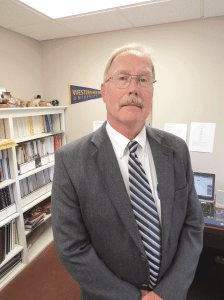
Richard Wagner says the word 'college' can become a competitive disadvantage.

Richard Wagner says the word ‘college’ can become a competitive disadvantage.

Three years after Western New England transitioned to university status, Wagner believes the change has benefited the school, as it has others that may not have the international reputations that have enabled some colleges to go on with that word in their name.

“For us, I think ‘college’ was primarily a disadvantage because it didn’t really convey what the campus represented,” he said. “‘University’ allows us to better represent who we are an as an institution.
“For some schools that have very well-known reputations, like Dartmouth or Boston College, it’s not much of an issue,” he went on. “But for schools that don’t have international name recognition, ‘college’ can be disadvantageous.”

Overall, he considers the change one of many factors that has enabled Western New England to ride out what has been a challenging post-recession period.

“The university status, in association with some of the other things we’ve done over the past few years, such as starting the School of Pharmacy, have allowed us to weather the prolonged recession in a relatively good way,” he explained. “Although we’ve been stressed, like a lot of other tuition-driven institutions, we’ve been able to continue building, adding programs, and so on. I think of it as being one element in our ability to get through some rather difficult times.”

Perhaps the most visible impact has come in the number of foreign students now enrolled at the school. There were only nine international students at WNEC in 2009, he noted, adding that the nearly ten-fold increase still represents a very small portion of the overall student body of roughly 3,800. Still, the surge is significant, and for many reasons.

The first is the cultural diversity gained through having students from around the globe, he told BusinessWest, adding that another is a greater ability to withstand domestic economic downturns, and a third is the fact that foreign students are much more likely to pay full tuition rather than relying on financial aid.

“One of the things about internationalization is that, when things might not necessarily be good economically in the United States, they may be better overseas, and vice versa,” he noted.

Over the past few years, Wagner said, there’s been what he called a “follow-the-leader mentality” when it comes to changing ‘college’ to ‘university,’ with more schools making the change perhaps out of a feeling of necessity.

“I think there’s a certain amount of pressure on some institutions to do it,” he explained, “because it’s been done in so many other places.” But some schools, including Springfield College, apparently aren’t feeling that pressure.

“The leadership at Springfield College has, in the past, considered a name change to a university,” said Steve Roulier, a spokesperson for the school. “But given the reputation of our mission and current academic strengths, we have decided to remain Springfield College. The college consistently ranks in the top tier of the U.S. News “Best Colleges” list as a leader in providing a broad and balanced educational experience. We are proud to be known as Springfield College.”

Sign of the Times

Bay Path has a rather intriguing tradition for the start of the new school year, and its students have to get up pretty early in the morning to take part.

It’s called the Awakening, and it gets underway at 5:30 a.m. Participants light candles and celebrate the school’s history and tradition. They walk together down Longmeadow Street to the school’s circle, where there are a few speeches, followed by breakfast. This year, there will be an additional twist — unveiling new signage that features that word ‘university.’

One could say it’s the start of a new era, said Leary, adding that there is a great deal of excitement accompanying the name change. But in reality, that new era started some time ago.

The word ‘university,’ as she said, only puts an exclamation point on it.

George O’Brien can be reached at [email protected]

Daily News

WARE — Country Bank surprised 29 local schools that participate in the bank’s Savings Makes Sense School Banking Program with $500 gift cards to Staples. Each school received the donation to help cover the cost of back-to-school supplies.

“We know how difficult it is for the schools to have the supplies they need when budgets become tight,” said Jodie Gerulaitis, financial education officer for Country Bank. “They are truly so grateful and appreciative of this gift.” It is reported that teachers annually spend about $250 of their own money to purchase items for their classrooms. Country Bank wanted to help teachers who do so much for their students.

Country Bank serves Central and Western Mass. with 15 offices in Ware, Palmer, Brimfield, Belchertown, Ludlow, Wilbraham, Paxton, Charlton, Leicester, and West Brookfield.

Daily News

SPRINGFIELD — Springfield College has again been identified as a 2014-15 College of Distinction for providing an innovative, teacher-centered undergraduate education with a strong record of preparing its graduates for real-world success.

Colleges of Distinction is a college guide that for the last 15 years has recognized colleges it determines to be the best places to learn, grow, and succeed. The goal of Colleges of Distinction is to provide students, counselors, and parents with information about such schools. Colleges of Distinction describes schools that take a holistic approach to admissions decisions, consistently excel in providing undergraduate education, and have a national reputation.

It also gives students, counselors, and parents an unbiased look at the college-admissions process. Colleges of Distinction looks at the myths surrounding college admissions, provides tools for self-assessment, and provides insights from college-admissions professionals, high-school counselors, students, and parents.

Founded in 1885, Springfield College is known worldwide for the guiding principles of its Humanics philosophy — educating students in spirit, mind, and body for leadership in service to others. The college offers a range of undergraduate- and graduate-degree programs in the fields of health sciences, human and social services, sport management and movement studies, education, business, and the arts and sciences. It also offers doctoral programs in physical education, physical therapy, and counseling psychology.

The college is ranked in the 2014 edition of Best Colleges in the top tier of “Best Regional Universities — North Region” by U.S. News Media Group, and is designated as a premier Leadership Development Center by the YMCA of the USA. More than 5,000 traditional, non-traditional, and international students study at its main campus in Springfield and its School of Human Services campuses across the country.