Home Posts tagged Employment (Page 22)
Chamber Corners Departments

AFFILIATED CHAMBERS OF COMMERCE OF GREATER SPRINGFIELD
www.myonlinechamber.com
(413) 787-1555
• Nov. 6: Business@Breakfast, 7:30- 9 a.m., at the Western Mass Business Expo, MassMutual Center, Springfield. Keynote speaker: Jim Koch, founder of the Boston Beer Co. and maker of the Samuel Adams family of beers. Hear the story of how Koch took his generations-old family recipe and changed the beverage landscape forever. Sponsored by the Regional Employment Board of Hampden County, MassMutual Center, United Personnel, and Frigo’s Foods. Reservations are $25 and may be made online at www.myonlinechamber.com or by contacting Cecile Larose at (413) 755-1313.
• Nov. 13: ACCGS After 5, 5-7 p.m., the TD Bank Building. Sponsored by TD Bank. Tickets are $5 for members, $10 for general admission. Reservations may be made online at www.myonlinechamber.com or by contacting Cecile Larose at (413) 755-1313.
• Nov. 21: ACCGS Government Reception, 5-7 p.m. at the Carriage House, Storrowton Tavern, West Springfield. A great opportunity to meet socially with your local, state, and federal officials. Sponsored by Baystate Health, Columbia Gas of Massachusetts, and United Personnel. Tickets are $50 for members, $70 for general admission, which includes complimentary beverages and hors d’oeuvres. Reservations may be made online at www.myonlinechamber.com.
• Nov. 26: ACCGS Pastries, Politics, and Policy, 7:30-9 a.m. Reservations are $15 for members, $20 for general admission, and includes complimentary beverages and hors d’oeuvres. Call (413) 755-1313 for more information. Reservations may be made online at www.myonlinechamber.com.
• Dec. 4: ACCGS Business @ Breakfast, 7:15-9 a.m., at the Colony Club, Springfield. Topic: “The Value of Volunteerism.” Sponsored By Masiello Employment Services. Tickets are $20 for members, $30 for general admission, which includes complimentary beverages and hors d’oeuvres. Reservations may be made online at www.myonlinechamber.com.

AMHERST AREA CHAMBER OF COMMERCE
www.amherstarea.com
(413) 253-0700
• Nov. 20: Chamber After 5, 5-7 p.m., at the Amherst Survival Center. Sponsored by SciDose LLC. Admission: $10 for members, $15 for non-members.

GREATER NORTHAMPTON CHAMBER OF COMMERCE
www.explorenorthampton.com
(413) 584-1900
• Nov. 6: Arrive@5 Chamber Networking Event, 5-7 p.m., at the World War II Club. Sponsors: Homeward Vets. Catered by Big Kats Catering. We’ll be collecting donations for Homeward Vets. A list of needed donations will be posted on the website. Tickets are $10 for members, $15 for non-members. RSVP to Esther at [email protected].
• Nov: 19: “The Art of Consulting,” 8:30-10 a.m. at the chamber office. This special program is a collection of the guiding principles of consulting that sum up the lessons presenter Don Lesser he has learned over the past 30 years. Each topic is summarized in a short, often humorous saying, which is followed by a longer explanation. In this session, Lesser, who has been a consultant and run a business that uses consultants for more than 30 years, will cover some of the basics of being a consultant, including “The Three Laws of Consulting,” “What Have You Done for Me Lately?” “Rules for Good Client Management,” and “Discount Sushi, or How Much Should You Charge?” The workshop is free, but pre-registration is required, and space is limited. To register, call (413) 584-1900, or e-mail www.explorenorthampton.com.

GREATER WESTFIELD CHAMBER OF COMMERCE
www.westfieldbiz.org
(413) 568-1618
• Nov. 4: Mayor’s Coffee Hour, 8-9 a.m., at the Genesis Spiritual Life and Conference Center, 53 Mill St., Westfield. Have coffee with Mayor Daniel Knapik, who will share information about what’s happening in the city. For more information or to register, contact Pam Bussell at the chamber office at (413) 568-1618.
• Nov. 6: 2013 Annual Meeting & Awards Dinner at the Westwood Restaurant, 94 North Elm St., Westfield. More information to come as this event date approaches.
• Nov. 13: WestNet, 5-7 p.m., the Cove, 90 Point Grove Road, Southwick. Come and meet chamber members and bring your business cards for a great networking opportunity. Cost: $10 cash for chamber members, $15 cash for non-members. Payment can be made in advance or at the door.  Walk-ins are welcome. Call the chamber at (413) 568-1618, or e-mail Pam Bussell at [email protected] for more information. Your first WestNet is always free.

MASSACHUSETTS CHAMBER OF COMMERCE
(413) 525-2506
• Nov. 12: Massachusetts Chamber of Commerce Annual Meeting & Awards Luncheon, 9 a.m. registration, at the Double Tree, Westborough. For more information on ticket sales and sponsorship opportunities, call the chamber office at (413) 525-2506 or e-mail [email protected].

NORTHAMPTON AREA YOUNG PROFESSIONAL SOCIETY
www.thenayp.com
(413) 584-1900
• Nov. 14: November Networking Social, 5 p.m., at the Northampton Brewery. Community involvement, networking, business and professional development. NAYP is excited to host its first event at the famed Northampton Brewery. Enjoy delicious beer and savory hors d’oeuvres. Cost: free for members, $10 for non-members. RSVP on Facebook.

PROFESSIONAL WOMEN’S CHAMBER

www.professionalwomenschamber.com
(413) 755-1310
• Nov. 6: November Luncheon at the Western Mass. Business Expo, at the MassMutual Center, 11:30 a.m.-1 p.m. Keynote Speaker: Kathrine Switzer, first female Boston Marathoner in 1967. More than 40 years later, Switzer’s story continues to capture the public’s imagination. Reservations cost $35 members, $40 for non-members, and may be made at www.myonlinechamber.com or by contacting Cecile Larose at (413) 755-1313.

Departments People on the Move

Bryan Moore

Bryan Moore

Country Bank recently named Bryan Moore Small Business Lending Officer, Commercial Lending Department. In this role, Moore will connect with regional business owners and assist small businesses with lending and business-banking needs, specifically through the SBA Express Program, which offers a quick turnaround and a fair-priced lending alternative to qualified borrowers. Moore began his banking career as a Personal Banking Representative for Sovereign Bank in 2006 and earned a BS with a double major in International Business and International Economics from Assumption College.
•••••


Keith Minoff

Keith Minoff

Springfield-based Attorney Keith Minoff has been selected for inclusion on the 2014 list of Massachusetts Super Lawyers. The Super Lawyers selection process is based on 12 indicators of peer recognition and professional achievement. Only 5% of the lawyers in each state are selected each year for inclusion. In practice for over 25 years, Minoff specializes in business and employment litigation.
•••••


Tonya Laird

Tonya Laird

North Brookfield Savings Bank announced the promotion of Tonya Laird to Branch Manager at the bank’s North Brookfield/Gilbert Street location from the her previous position of Assistant Branch Manager. Laird joined North Brookfield Savings in 2002 as a teller, and brings an employment and educational background in customer service, management, IRAs, and other facets of banking and finance.
•••••


Tanzania Cannon-Eckerle

Tanzania Cannon-Eckerle

Tanzania Cannon-Eckerle, Esq., an attorney at Royal LLP, a Northampton-based, woman-owned, management-side labor and employment law firm, has been elected to serve as a Member of the Board of Directors of the Hampshire Regional YMCA.
•••••
Skoler, Abbott & Presser, P.C., with offices in Springfield, Worcester and Meriden, Conn., announced that six of the firm’s attorneys have been selected for inclusion in the 2013 Super Lawyers list for their contributions to employment law. Each year, no more than 5% of the lawyers in the state are selected by the research team at Super Lawyers to receive this honor:


Ralph Abbott Jr

Ralph Abbott Jr

Ralph Abbott Jr., a partner since 1975, represents management in labor relations and employment-related matters, providing employment-related advice to employers, assisting clients in remaining union-free, and representing employers before the National Labor Relations Board. Abbott also has numerous credits as an author, editor, and teacher; boasts a record of civic and community involvement; has been ranked as one of the best labor and employment attorneys in Massachusetts by the prestigious Chambers USA rating service; and has been named Best Lawyers Management Lawyer of the Year in Springfield for 2014;


Marylou Fabbo

Marylou Fabbo

Marylou Fabbo, a partner in the Springfield office, joined the firm in 1995. Head of the firm’s litigation team, she practices in all areas of employment litigation and provides counsel to management on taking proactive steps to reduce the risk of legal liability that may be imposed as the result of illegal employment practices, and defends employers who are faced with lawsuits and administrative charges filed by current and former employers;


Susan Fentin

Susan Fentin

Susan Fentin, a partner in the firm, joined the practice in 1999 after spending several years working in the labor and employment department of a large Hartford firm. Fentin is editor of the Massachusetts Employment Law Letter and has been ranked as one of the best labor and employment attorneys in Massachusetts by the prestigious Chambers USA rating service. She teaches master classes on both the FMLA and the ADA and is experienced in both labor law and employment litigation;


John Glenn

John Glenn

John Glenn, a partner of the firm since 1979, has spent his career representing management in labor relations and employment-related matters. He assists clients in remaining union-free and represents employers before the National Labor Relations Board. Glenn has extensive experience negotiating collective-bargaining agreements and representing employers at arbitration hearings and before state and federal agencies. Prior to joining the firm, Glenn was employed by the National Labor Relations Board in Cincinnati. He has served as an Adjunct Professor of Labor Law at Western New England University School of Law and is a member of the American Academy of Hospital Attorneys;


Kimberly Klimczuk

Kimberly Klimczuk

Kimberly Klimczuk joined the firm in 2004 and concentrates her practice on labor law and employment litigation. Her experience includes negotiating collective-bargaining agreements and advising on contract interpretation, and successfully defending clients in state and federal court and before administrative agencies in a variety of areas of employment law, including wage-and-hour law, discrimination, harassment, wrongful discharge, breach of contract, and workers’ compensation claims. She has assisted employers in compliance matters involving the Office of Federal Contract Compliance Programs; and


Jay Presser

Jay Presser

Jay Presser has more than 35 years of experience litigating employment cases, has successfully defended employers in civil actions and jury trials, and has handled cases in all areas of employment law, including discrimination, sexual harassment, wrongful discharge, wage-and-hour law, FMLA, ERISA, and defamation. Presser has won appeals before the Supreme Judicial Court and the First and Second Circuit Courts of Appeals, and represented employers in hundreds of arbitration cases arising under collective-bargaining agreements.
•••••


Anabela Blake

Anabela Blake

TD Bank has promoted Anabela Blake to Assistant Vice President, Store Manager II in the store located at 60 Main St. in Westfield. She will continue to be responsible for new business development, consumer and business lending, managing personnel, and overseeing the day-to-day operations at the store. Blake has 25 years of experience in retail sales and banking and joined TD Bank in 2004 as an Assistant Store Manager before her most recent position as Store Manager I. Blake is a 1995 graduate of Western New England University.
•••••

The YMCA of Greater Springfield recently announced the advancement of two of the organization’s senior leaders:

Kristine Allard

Kristine Allard

Kristine Allard was named Chief Operating Officer and will oversee all operations for the association’s three family centers, as well as fund development and communications for the organization. Serving in the agency’s number-two position, Allard joined the YMCA of Greater Springfield in 2011 as Vice President of Development & Communications; and


Robin Olejarz

Robin Olejarz

Robin Olejarz has added the title of Chief Administrative Officer to her role as Chief Financial Officer. In addition to managing the association’s financial health, Olejarz, who joined the YMCA team in 2006, will provide oversight to the agency’s policies, standards and procedures, human resources, and projects, facilities, and risk management.

Briefcase Departments

State Moves Forward with Interstate 91 Study
SPRINGFIELD — State officials have chosen a consultant to study possible alternative alignments for Interstate 91 through Springfield, while highway officials proceed with a plan to replace decks on a deteriorating elevated portion of the highway in the city. The state Department of Transportation has selected the Cheshire, Conn.-based consulting firm Milone & MacBroom to evaluate alternatives for a section of Interstate 91, including possibly depressing the highway section to ground level or below ground. At the same time, the state highway division will be moving forward with a plan to replace decks on the crumbling Interstate 91 viaduct. Milone & MacBroom will study a section of Interstate 91 south of the most elevated portion of the viaduct near the Naismith Memorial Basketball Hall of Fame. At the same time, the state highway division will develop a plan for replacing the decks of the existing Interstate 91 viaduct, which raised safety concerns after a chunk of concrete fell from the section in April. The activity comes amid plans by MGM Resorts International to build $800 million casino in the South End of Springfield that would front Interstate 91 and would draw most of its traffic from the highway. MGM is competing with Mohegan Sun Massachusetts in Palmer for the single casino license to be awarded in Western Mass. The state is starting contract negotiations with Milone & MacBroom with a goal of starting work in January. The firm will coordinate with the state highway division as it moves forward with its proposal to replace the decks on the viaduct.

U.S. Manufacturing Gains 2,000 Jobs in September
WASHINGTON, D.C. — The latest monthly U.S. jobs report shows America’s manufacturing sector gained 2,000 jobs in September. However, for all of 2013, the U.S. has gained only 12,000 manufacturing jobs. Commented Scott Paul, President of the Alliance for American Manufacturing (AAM), “in manufacturing, we’ve been treading water for nearly 18 months now. Yet no one in Washington seems to care. The September jobs report shows that private-sector job growth, and manufacturing in particular, is too weak to put the U.S. on a sound fiscal footing or to get the middle class back on track. It’s time for Congress to stop manufacturing crises and deal with our real manufacturing crisis. Washington needs to put into place policies that will get America back to work. The neglect is glaring: 70,000 structurally deficient bridges. Math and science achievement down compared to other industrialized nations. And our economic competitors are not standing still. This is no way to run a country or to support the private sector’s efforts to create jobs. And here’s the kicker: the October numbers could be even worse.” President Obama set a goal of creating 1 million new manufacturing jobs in his second term. To follow the president’s progress, the AAM continually updates a jobs tracker based on monthly jobs data from the Bureau of Labor Statistics (BLS).

Student Debt Load Rising in Bay State
BOSTON — More students in Massachusetts public universities and colleges are incurring larger amounts of debt to finance their educations, the state higher education commissioner told lawmakers recently. “Let me sound the alarm on this issue,” Commissioner Richard Freeland said at the fourth in a series of hearings on college debt. “Make no mistake: the burden of student debt could derail us from achieving our goals.” The average debt for graduates of the University of Massachusetts system, other state universities, and community colleges increased 27% from fiscal 2008 through fiscal 2011, the last year for which data are available, Freeland said. And the percentage of graduates who accumulated debt rose across all levels, including a high of 64.8% at the state universities in 2011. The average graduate in the UMass system left with $26,844 in debt in 2011, an increase of $5,525 over three years earlier. At other state universities, the average figure was $22,362, a jump of $4,822. For graduates of community colleges, the average debt in 2011 ranged from $7,229 for graduates with associate degrees to $4,655 for graduates with one-year certificates or less. The percentage of graduates who left the UMass system in debt rose to 61.4% in 2011 from 57.9% in 2008. The biggest increase in public institutions, from 31.1% to 48.6%, was registered by community-college graduates with one- or two-year certificates.

Savage Arms, Cirtec Medical Win Grants
WESTFIELD, EAST LONGMEADOW — Firearms manufacturer Savage Arms in Westfield and Cirtec Medical in East Longmeadow, a maker of medical devices, have been awarded grants from the state’s Workforce Training Fund to expand their workforces and train employees in lean-manufacturing processes. Savage Arms was awarded $179,600, which will be used to train 400 employees, and 48 new jobs are expected to be created. Cirtec Medical was awarded $106,805, which will be used to train 63 employees, and three new jobs are expected to be created as a result of training. Lean manufacturing emphasizes on avoiding waste and improving quality, and is based on the Toyota manufacturing methods. The two awards are part of a package of 37 grants totaling $2.8 million. All told, the grants fund 3,106 current and newly hired employees. Savage Arms represents one-third of the total market for traditional firearms, with a particular focus on bolt-action rifles. Cirtec Medical is a contract design, development, and manufacturing firm focusing on medical devices, with a particular strength in active and passive implantable devices and minimally invasive systems.

State Increases Incentives for Hiring Veterans, Long-term Unemployed
BOSTON — The Executive Office of Labor and Workforce Development announced that it has more than doubled cash grants available to employers hiring Massachusetts residents who have been unemployed for six months or more, or Massachusetts veterans (regardless of length of unemployment). Increased grant funding is available through the state’s Hiring Incentive Training Grant (HITG), a program of the Massachusetts Workforce Training Fund. Any for-profit company or nonprofit organization that contributes to the Massachusetts Workforce Training Fund, a state fund enacted in 1998, is encouraged to apply. Eligible employers may now apply for grants of $5,000 for each new hire who meets the HITG program requirements. Employers may receive up to $75,000 each calendar year. Upon approval, payment will be available to the employer once the new hire has retained employment for at least 120 days. A copy of the Hiring Incentive Training Grant application, eligibility requirements, frequently asked questions, and other relevant materials are available at EOLWD’s website, www.mass.gov/hiringgrant. Grant awards are subject to funding availability, and applications are reviewed on a rolling basis.

Retailers Cautious About Seasonal Hiring Boosts
WASHINGTON — Facing economic wariness and wavering consumer confidence, retailers are approaching their holiday hiring with caution, forecasters say. Research firm Challenger, Gray & Christmas said it expects hiring will, at best, match the 752,000 retail jobs that were added last year between October and December, and the National Retail Federation projects retailers will add between 720,000 and 780,000 seasonal workers this year. Retailers are making their staffing decisions against a backdrop of uncertainty caused by tepid economic growth and, more recently, standoffs in Congress over funding the federal government and the debt limit. Toys R Us plans to hire 45,000 workers, about the same as it hired last year. Kohl’s is poised to hire 50,000 workers, also consistent with its 2012 hiring. Macy’s is set to add 83,000 seasonal workers, a slight increase from the 80,000 brought on the previous year. Wal-Mart says it will hire 55,000 holiday workers, a 10% increase from 2012. It will also transition an additional 35,000 temporary workers to part-time positions and yet another 35,000 part-time workers to full-time positions. Meanwhile, Target plans to pare back its seasonal staffing, expecting to add 70,000 workers in 2013 compared with 88,000 last year. The company said it will focus on giving existing staffers the chance to work extra hours. Foot traffic to bricks-and-mortar stores is taking a hit as more consumers buy online. That growth is reflected in Amazon.com’s hiring plans; the online giant expects to create 70,000 seasonal positions, a 40% increase from last year. While holiday retail hiring is expected to be somewhat flat, sales are expected to inch up. The National Retail Federation forecasts a 3.9% increase to $602.1 billion, an improvement over last year’s sales growth of 3.5% over 2011.

WSU President Files Suit Against Several Parties
WESTFIELD — Evan Dobelle, the embattled president of Westfield State University who was placed on paid leave of absence last month amid investigations of alleged improper spending and violations of university policies regarding travel and credit, has filed suit in U.S. District Court in Springfield against a number of parties directly or indirectly related to the action taken against him. Dobelle, who is suing the university, Higher Education Commissioner Richard Freeland, three trustees, the school’s accounting firm, a Boston law firm, and the university’s lawyers, is seeking an unspecified amount of money and legal fees. He claims that Freeland and the trustees are waging a “guerilla war for control of the university,” and that Freeland used extortion-like tactics in an attempt to force Dobelle from office. The suit also alleges that trustees Chairman John Flynn III conducted a “one-man investigation” into Dobelle’s travel between 2008 and 2013. Also named in the suit are trustees Kevin Queenin and Elizabeth Scheibel, the former Northwestern district attorney; the Braintree-based accounting firm O’Connell and Drew; Rudin and Rudman, a Boston law firm; and James Cox, lawyer for the Board of Trustees. The trustees voted on Oct. 15 to suspend Dobelle, following a 10-hou, closed-door meeting the president. The board also hired a Boston-based law firm to investigate Dobelle’s travel and spending, and report back by Nov. 25.

Construction Sections
Region’s Construction Activity Is a Mixed Bag

R.J. Chapdelaine

R.J. Chapdelaine says he’s busy with both remodeling jobs and new homes, like this one going up in West Springfield.

In the post-recession world of construction, when jobs are few and far between, diversity is a good thing.
“We’re on the upswing. It was a pretty solid year, a lot of phone calls,” said A.J. Crane, operations manager at A. Crane Construction in Chicopee. “It’s nice for us that we’re kind of diverse; we don’t specialize in any one thing. We’re interested in quality more than anything.
“A lot of guys do just kitchens and baths, or just additions, or just houses,” he continued. “But we had a really diverse year. We were all over the map — a lot of commercial work, a lot of residential work.”
The general consensus among the builders BusinessWest spoke with is that housing is rebounding from the recession faster than commercial building, but that’s not true for every contractor.
“We’re actually doing a little more commercial, which is different for us,” Crane said. “It’s typically like 60-40 residential, and it’s the other way around this year. It’s not that we’re doing less residential; we’re just doing more commercial. But it doesn’t matter to us who the property owners are — commercial businesses, government, homeowners — we’re interested in doing the work.”
Joe Marois, president of Marois Construction in South Hadley, said his workload picked up this year, but the near horizon is less encouraging.
“So far, we’ve survived the year,” he told BusinessWest. “We’ve been very busy, but we have very guarded profits we have to be careful about, because there’s not a whole lot of foreseeable work right now. Things have slowed down a little bit; my contemporaries are saying the same thing.”
Paul Ugolini, president of Western Builders in Granby, is one of them.
“We’re in the same predicament — we’re having a good year, not bad, we’re paying the bills, but it looks like it’s going to slump off,” he noted. “The way this market is, there’s just not much commercial work out there. It seems like the colleges and universities aren’t spending too much money these days, and that’s a problem for us.”
However, he noted, “we do have some housing backlog. We’re going to be doing four buildings in Holyoke, and there’s some housing in Easthampton we’ll chase — but you still have to land it.”
As for the commercial market, it tends to lag behind single-family homes, Ugolini noted, and builders hope activity starts to perk up soon. “The way this business is, it’s been rough the last few years. It’s just supply and demand — there are a lot of contractors, but not a lot of work.”

Moving Along
Crane said he’s gotten mixed messages from fellow builders. “From what we’ve heard, people are very busy or very slow — there aren’t a lot of guys in between.”
One rising trend has to do with next-generation housing, he noted — “older people moving back in with their kids, kids moving back in with their parents. We just finished one of those up.”
This is more than a localized phenomenon, according to Jed Kolko, chief economist for Trulia Trends.
During the recession, he notes at truliablog.com, fewer households were created than normal. Typically, 1.1 million new households are added each year in the U.S., mostly due to population growth. However, from the first quarter of 2008 to the first quarter of 2011, only 450,000 new households were created annually. “Slower household growth means less demand for homes, so annual construction starts dropped during this period from a norm of 1.4 million to below 600,000. Most recently, only 521,000 households were created between the first quarter of 2012 and the first quarter of 2013.”

Paul Ugolini

Paul Ugolini says his company has a residential backlog, but commercial projects remain frustratingly elusive.

A big part of this slowdown, he notes, is due to young people living with parents or doubling up with roommates rather than buying their own house. “Since most kids won’t live with their parents forever, these young adults represent pent-up demand for housing that the recovery should unleash. The problem is, the kids aren’t moving out yet.”
RJ Chapdelaine, president of Jos. Chapdelaine & Sons in East Longmeadow — which focuses largely on residential building and remodeling — said business is definitely on the upswing.
“Right now, we’re working on two new homes, and we’ve been working on quite a few additions and renovations,” he noted. “Our kitchen and bath renovations have been very solid, and we’re feeling as though things are heading in a more positive direction. We’re even anticipating starting a new 10-lot subdivision in East Longmeadow. We’ve had quite a lot of good feedback.”
Meanwhile, “I got three calls yesterday for new homes. That, to me, is a good sign — that people want to talk about new homes. It’s very refreshing. Hopefully, it’s a good sign; over the last few years, those calls were more rare, and the fact that we’re starting to get new-home calls and larger remodel jobs is nice.”
Chapdelaine credits a couple of colliding developments — an improving economy giving consumers confidence to make big purchases again, and still-low mortgage rates (and the fear that they won’t stay that low forever).
“I would say some of it is pent-up desire,” he said. “People have been sitting for awhile, and they’re starting to see the rates creep back up a little bit, and it puts them in a position where they feel they need to move because the rates are obviously still at historic lows, and they don’t want to see them creep up to where they were even two, three, five years ago. So they’re thinking it might be time to build or remodel.

Crisis of Confidence
Kolko notes, however, that the housing market has a long way to rebound, and it will — eventually.
“Jobs will help, but the job recovery for young people still has a long way to go,” he writes. “While more young adults are working now than a year ago, their employment rate is still much closer to the worst of the recession than to pre-recession levels. As late as mid-2008, 71% of adults ages 18-34 were employed. That dropped to a low of 65% in mid-2011 and has risen back only to 66.8%. But you don’t get a job one day and move out of mom and dad’s the next. It could still take years before young people have built up the savings and economic security to leave the nest.”
Meanwhile, the commercial sector is still feeling a distinct lack of security and confidence, Marois noted, partly driven by the chaos coming out of Washington, represented most recently by the federal shutdown, and lingering uncertainty over the Affordable Care Act, which will increasingly impact employers in 2014.
“You have to throw into the mix what’s going on in Washington,” he said. “The shutdown has had far-reaching effects, given the fact that we’ve got looming budget cuts, and the healthcare law is starting to look like it will be a problematic program to get initiated. I think it’s going to have an impact on everyone’s confidence going forward with projects. It’s affecting our psyche right now.”
All those factors, layered atop an economy that never returned to pre-recession levels, makes it difficult to generate building activity.
“I’m not too confident in the traditional way we used to do things,” Marois said. “Our way of thinking, running businesses and understanding the economy, seems to be different right now because it’s intermixed with uncertainty over new programs and new regulations. It’s a time like we’ve never seen before.”
In short, largely commercial builders are hoping that they soon begin to see the signs of life appearing in the housing-construction market.
“We’re pretty optimistic. Things seem to be a lot better than they were,” Chapdelaine said, echoing Crane’s perception as he added, “we hear there’s no middle ground; you’re either very busy or very slow. I’m glad to be on the busy side.”

Joseph Bednar can be reached at [email protected]

Sections Women in Businesss
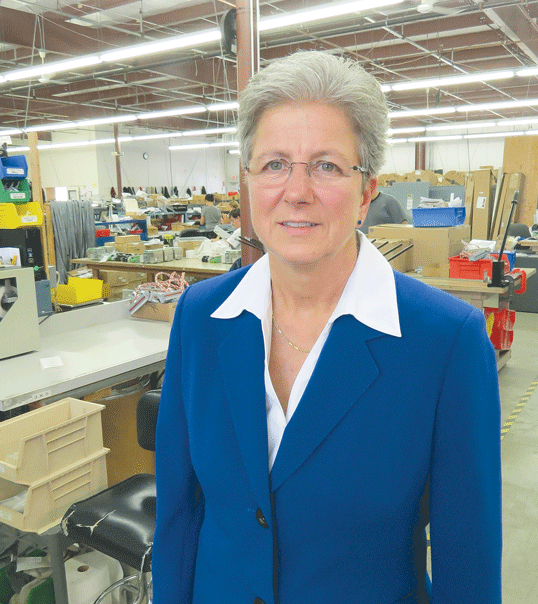
How Anne Paradis Put a Charge into MicroTek

Anne Paradis

Anne Paradis

When Anne Paradis took the helm at MicroTek in 1987 — thus making an abrupt and significant career change, moving from human-services work to running a nonprofit manufacturing outfit — she ventured back to some of the exercises from her MBA program at UMass Amherst for help with the transition.
What she found is that what’s written in a book doesn’t usually — or easily — translate into what one will find on the shop floor.
“I had taken manufacturing courses as part of my MBA program, but it was nothing like what I encountered here,” she explained. “You learn how to schedule machine hours and go through all the production planning, and I can remember thinking at the time, ‘I can do this.’ But quite honestly, when I got in here and tried to apply those principles, it was very, very different, because you couldn’t plan productivity at a set level, and machine hours weren’t constant, and…”
Her voice trailed off as if there was much more, which there was. And she learned just about all of it, she said, by doing.
“I learned how to do every job in the place except soldering, which to this day I can’t do,” she said, adding that there are many roles at this company that produces cables and wire harnessing and touts its team members as ‘interconnect specialists.’ “I learned on the job. All the product knowledge and assembly knowledge I got, I learned from people who were working for the company.
“I sat and assembled cables with people,” she went on. “I asked questions; I made mistakes. In those days, it was all hands on deck, and if something had to go out the door and we needed another pair of hands, I would sit at the workbench and help to finish the job. The employees got a kick out of watching me join the production lines — and they still do.”
Such occurrences are rare, though, because Paradis spends most of her time now on the broad subject of growing revenue, an assignment that has many subplots, including everything from withstanding ever-increasing competition, foreign and domestic, to weathering three recessions, to building a new plant in Chicopee’s Westover Airpark West more than a dozen years ago.
She’s obviously fared well in her career transition, taking the company from roughly $750,000 in sales when she started to nearly $8 million, and from maybe 20 employees to more than 120, and placement on such lists as the Boston Business Journal’s ‘Top 100 Women-led Companies,’ Mass High Tech’s ‘New England’s 30 Largest Women-owned Tech Companies,’ and, most recently, BusinessWest’s compilation of the region’s largest manufacturers.
Meanwhile, she has continued and greatly enhanced the company’s standing as a leader in the hiring of individuals with developmental disabilities — with roughly 15% of its workforce falling into that category. This was the original mission of the company when it was created 30 years ago, she said, adding that, while MicroTek has evolved from a service program into a strategic business, its focus on providing employment opportunities for the developmentally disabled is one, but not the only, example of why the phrase ‘making connections’ refers to much more than the company’s product lines.
And her success with the many aspects of that phrase makes Paradis an intriguing subject for a new series in BusinessWest that will focus on women in business.
In the coming months, the magazine will profile individuals in a number of sectors to gain an appreciation for how far women have come in business and the specific fields that comprise it, but also for the work that remains to be done.
We start with a woman who still can’t solder — she said there are enough skilled craftspeople at the company to keep from even wanting to try — but has mastered many of the aspects of operating a business in today’s ultra-challenging climate, especially the most important: people.

Wired for Growth
As she gave BusinessWest a tour of the 24,000-square-foot MicroTek plant on Justin Drive, Paradis stopped at a number of the workstations where she learned this business and its specific products more than 25 years ago.
She explained the processes involved with specific parts, offered high praise for the workforce, and ended with some pointed commentary.
“This is a good example of how manufacturing is still a big part of our economy in Western Mass.,” she said. “People say this sector is in decline, and maybe it’s not what it once was, but what we’re doing here shows that manufacturing is very much alive and well.”
How Paradis came to be in a position to give such a tour, speak as one of the prominent voices in the region’s manufacturing realm, and lead her company to placement on those aforementioned business-magazine lists of the largest women-owned businesses is an intriguing story, one with elements of timing and circumstance, but also perseverance and entrepreneurial spirit.
It begins with Paradis’ decision to major in psychology and gravitate toward work in human services, specifically with the state Department of Mental Retardation, now known as the state Department of Developmental Disabilities.
She eventually took a job working in the development of community residential programs for adults with developmental disabilities in the wake of the closing of Northampton State Hospital, Belchertown State School, and other facilities. Specifically, she said she was involved with a pioneering concept that would enable individuals to remain in their residences on a permanent basis, rather than transition into different facilities as they gained more independence and their need for services and support diminished, which was the accepted model at the time.
“This was 30 to 35 years ago, and in those days, the community movement for people with disabilities was still in its infancy,” she explained. “And one of my first jobs was to help push the agenda of these more progressive program types.
However, he would soon become frustrated with the lack of progress with this movement, and especially with the funding restraints that soon emerged, and decided to make what would be her first career course change, pursue her MBA at UMass, and move into what she called the “business arena.”
Her first stop was at New England Business Associates in Holyoke, a management-consulting firm that assisted small businesses with the hiring of those with disabilities. One of her eventual clients was Microtek, which was created in the early 80s by human-services advocates working in conjunction with the University of Oregon, which was at the time researching models for employing people with disabilities. One of those models was to start a company where one controls the environment, provides the training, and brings in the work. In this case, the work — developed through a connection between one of the researchers at the University of Oregon and Hewlett Packard — was assembly of cables and wire harnesses.
When Paradis first started working for MicroTek, it was one of four operations — there was another in Orange, Mass. and two more in Virginia — for which she helped develop a marketing cooperative designed to generate new business and enable the participating companies to grow and eventually add more employees to the payroll.
While the other three ventures enjoyed success in this endeavor, MicroTek suffered from what Paradis called “poor management.” The company’s board eventually asked her to step in and run the company for a short time while a search for a new CEO was carried out.
That ‘short time’ has turned out to be 26 years — and counting.
“I came in to find problems a bit more complicated than the board realized,” she told BusinessWest. “I took a year’s leave of absence to run the company, and at the end of that year they made me an offer to stay.”
She accepted that challenge knowing that she had overcame what she described as a “lack of skills in certain areas.” Elaborating, she said her biggest challenges were learning manufacturing in general, and MicroTek’s line of products (custom wire harnesses and cable assemblies) in particular.
“I did not have an engineering background, and that made it challenging,” she noted. “But I was fortunate, because at the time, MicroTek was a very small company, and that afforded me the opportunity to learn on the job.
“I had a lot of strengths — managing staff, putting systems in place, and organizational development, because my undergraduate degree was in psychology — but I needed to learn this business,” she went on, adding that she completed much of this learning while serving as interim CEO, progress that gave her the confidence to accept the board’s offer and stay on.

People Power

Over the past 26 years, Paradis has coped not only with the everyday challenges facing all business and managers —  everything from cash flow to inventory control to finding qualified workers — but also more global matters, such as mounting competitors, especially from overseas operations, new-product development, and the worst economic downturn since the 1930s.
She described it all as a continuation that learning experience that began when she became interim CEO, one that is clearly still ongoing.
Indeed, while the plaques on the wall containing those business-magazine lists show that the company has clearly come a long way, there are some new challenges to face — and some old ones as well.
At or near the top of that list is mounting competition. While there have historically been some barriers to taking this kind of manufacturing overseas — including the high quality of work demanded and transportation costs — they have been coming down in recent years, said Paradis, noting that the company is facing intense competition from China, Mexico, and other countries.
It has responded by working to automate more processes in what is still a labor-intensive business, while also diversifying into some new product lines, specifically control panels built for customers in the security and medical fields.
The company, which suffered, as all manufacturers did, during the Great Recession, has rebounded, and growth has been steady over the past several years, said Paradis, adding that she has set an aggressive, but realistic, goal of reaching $12 million in sales over the next few years.
But the term ‘success’ has many meanings at MicroTek, she went on, adding that, while the bottom line is perhaps the most important, the company’s original mission is still an important barometer when it comes to that word.
And in this realm, more goes into this equation than simply hiring the developmentally disabled, she went on, adding that the company’s broader goal is to integrate such individuals, treat them as they would any employee, and make them part of highly successful and efficient teams.
One of the reasons for the company’s success has been its ability to do this by effectively giving these employees both the support and the tools they need to succeed, she told BusinessWest, adding that this is a philosophy that permeates the company and all aspects of its workforce.
“Everyone has the same benefits and the same access to company services, and people work on some part of all of the work that goes out of here,” she explained. “We have integrated teams, and the idea of partnering people with co-workers and providing them with the support they need extends well beyond the employees with disabilities, because we also employ a number of people who speak English as a second language and may have difficulty reading English.
“The transformation for the company over the years has been in this area,” she went on. “There were special supports and training that we started out using for the individuals with disabilities, and over the years, we’ve just adopted those as standard operating procedure for the company.”

Current Events
Paradis says that, while she’s quite proud of the plaques in the front lobby and what they represent in terms of both the company’s success and her standing as a woman in business, she’s more proud of the many ways in which MicroTek has become a role model.
Its success in the current, highly competitive environment provides evidence that manufacturing is still very much alive in the Bay State and this region. Meanwhile, its success with hiring, training, and integrating individuals with a wide range of challenges shows that ‘diversity’ can be much more than a buzzword.
These are among the many accomplishments for Paradis, who still can’t solder, but has developed a rare talent for making connections — and in a number of very important ways.

George O’Brien can be reached at [email protected]

Features
Nominations Sought for BusinessWest’s Recognition Program

BizDiffMakrsLOGO2011Looking back at the five Difference Makers recognized by BusinessWest earlier this year, Kate Campiti, the magazine’s associate publisher, said the class of 2013 epitomizes what the five-year-old program is all about.
“We had five individuals or groups who showed that there really are many ways in which people can make a difference,” she noted, referencing a class that included the Sisters of Providence; Bruce Landon, general manager of the Springfield Falcons and the individual credited with keeping hockey in Springfield; John Downing, the driving force behind Soldier On; Jim Vinick, a supporter of a number of area nonprofits, especially the Basketball Hall of Fame; and state and local police involved in a unique effort to curb crime in Springfield’s North End. “This was a group that clearly demonstrated that are countless factors that go into the phrase ‘quality of life,’ and so many ways that it can be improved.”
But there are many more stories of difference making still to be told, she went on, and as 2013 moves toward an end, it is time for BusinessWest to again seek nominations for what has become a coveted honor.
The nomination form here explains how this process works, said BusinessWest Editor George O’Brien, who noted that the phrase ‘Difference Maker,’ as the class of 2013 proved, is a truly subjective phrase with a number of meanings.
“Since Difference Makers was launched in 2009, we’ve recognized college presidents, nonprofit managers, a crusading police chief, a woman who founded a program to fill the shelves of school libraries, and another who started a walk to raise money to fight breast cancer,” he explained. “All these stories are different, but there is a common denominator — people stepping forward, and stepping up, to change lives in a very positive way.
“There are many more individuals and groups who are changing lives in similar ways,” he went on. “This program was created to provide a forum for telling these stories, and we want our readers to help us with this assignment.”
As with another BusinessWest recognition, 40 Under Forty, Difference Makers is a nomination-driven process, Campiti said, urging those who propose an individual or group for consideration to be thorough with their nomination and, in simple terms, effectively answer the question, ‘why is this nominee a Difference Maker?’
Nominations, which can also be completed online, are due at the end of the business day (5 p.m.) on Dec. 20. The winners, as chosen by a review panel comprised of BusinessWest writers and editors, will be profiled in the magazine’s Feb. 10 edition and saluted at the annual Difference Makers gala, to take place in late March.
Questions about the program and the nomination process can be forwarded to [email protected], or call (413) 781-8600, ext. 102.

Previous Difference Makers:

2009
• Doug Bowen, president and CEO of PeoplesBank;
• Kate Kane, managing director of the Springfield office of Northwestern Mutual Financial/the Zuzolo Group;
• Susan Jaye-Kaplan, founder of GoFIT and co-founder of Link to Libraries;
• William Ward, executive director of the Regional Employment Board of Hampden County; and
• The Young Professional Society of Greater Springfield

2010
• The Irene E. and George A. Davis Foundation;
• Ellen Freyman, attorney and shareholder at Shatz Schwartz and Fentin, P.C.;
• James Goodwin, president and CEO of the Center for Human Development;
• Carol Katz, CEO of the Loomis Communities; and
• UMass Amherst and its chancellor, Robert Holub

2011
• Tim Brennan, executive director of the Pioneer Valley Planning Commission;
• Lucia Giuggio Carlvalho, founder of Rays of Hope;
• Don Kozera, president of Human Resources Unlimited;
• Robert Perry, retired partner/consultant with Meyers Brothers Kalicka; and
• Anthony Scott, Holyoke police chief

2012
• Charlie and Donald D’Amour, president/COO and chairman/CEO, Big Y Foods;
• William Messner, president of Holyoke Community College;
• Majors Tom and Linda-Jo Perks, officers of the Springfield Corps of the Salvation Army;
• Bob Schwarz, executive vice president of Peter Pan Bus Lines; and
• The Women’s Fund of Western Massachusetts

2013
• Michael Cutone, John Barbieri, and Thomas Sarrouf, organizers of Springfield’s C3 Policing program;
• John Downing, president of Soldier On;
• Bruce Landon, president and general manager of the Springfield Falcons;
• The Sisters of Providence; and
• Jim Vinick, senior vice president of Investments at Moors & Cabot Inc.

Chamber Corners Departments

AFFILIATED CHAMBERS OF COMMERCE OF GREATER SPRINGFIELD
www.myonlinechamber.com
(413) 787-1555
• Oct. 25: Super 60 Luncheon, 11:30 a.m.-1:30 p.m., at Chez Josef, Agawam. Celebrate the region’s top-performing companies. Now in its 24th year, this awards program celebrates the success of the fastest-growing privately owned businesses in the region that continue to make significant contributions to the strength of the regional economy. Presented by Health New England with support from Hampden Bank, Sullivan Hayes & Quinn, the Republican, and WWLP-TV 22. Reservations are $50 for members, $70 for general admission. Reservations may be made online at www.myonlinechamber.com or by contacting Cecile Larose at (413) 755-1313.
• Nov. 6: Business@Breakfast, 7:30- 9 a.m., at the Western Mass Business Expo, MassMutual Center, Springfield. Keynote speaker: Jim Koch, founder of the Boston Beer Co. and maker of the Samuel Adams family of beers. Hear the story of how Koch took his generations-old family recipe and changed the beverage landscape forever. Sponsored by the Regional Employment Board of Hampden County, MassMutual Center, United Personnel, and Frigo’s Foods. Reservations are $25 and may be made online at www.myonlinechamber.com or by contacting Cecile Larose at (413) 755-1313.
• Nov. 13: ACCGS After 5, 5-7 p.m., the TD Bank Building. Sponsored by TD Bank. Tickets are $5 for members, $10 for general admission. Reservations may be made online at www.myonlinechamber.com or by contacting Cecile Larose at (413) 755-1313.
• Nov. 21: ACCGS Government Reception, 5-7 p.m. at the Carriage House, Storrowton Tavern, West Springfield. A great opportunity to meet socially with your local, state, and federal officials. Sponsored by Baystate Health, Columbia Gas of Massachusetts, and United Personnel. Tickets are $50 for members, $70 for general admission, which includes complimentary beverages and hors d’oeuvres. Reservations may be made online at www.myonlinechamber.com.
• Nov. 26: ACCGS Pastries, Politics, and Policy, 7:30-9 a.m. Reservations are $15 for members, $20 for general admission, and includes complimentary beverages and hors d’oeuvres. Call (413) 755-1313 for more information. Reservations may be made online at www.myonlinechamber.com.
• Dec. 4: ACCGS Business @ Breakfast, 7:15-9 a.m., at the Colony Club, Springfield. Topic: “The Value of Volunteerism.” Sponsored By Masiello Employment Services. Tickets are $20 for members, $30 for general admission, which includes complimentary beverages and hors d’oeuvres. Reservations may be made online at www.myonlinechamber.com.

AMHERST AREA CHAMBER OF COMMERCE
www.amherstarea.com
(413) 253-0700
• Oct. 18: Legislative Breakfast, 7:15 – 9 a.m., at the Lord Jeffery Inn. Sponsored by Western Massachusetts Electric Co. Admission: $15 for members, $20 for non-members.
• Nov. 20: Chamber After 5, 5-7 p.m., at the Amherst Survival Center. Sponsored by SciDose LLC. Admission: $10 for members, $15 for non-members.

CHICOPEE CHAMBER OF COMMERCE
www.chicopeechamber.org
(413) 594-2101
• Nov. 3: November Salute Breakfast, 7:15-9 a.m., at the Castle of Knights, 1599 Memorial Dr. in Chicopee. Admission: $20 for members, $26 for non-members.

GREATER EASTHAMPTON CHAMBER OF COMMERCE
www.easthamptonchamber.org
(413) 527-9414
• Oct. 21: Celebrity Bartenders Night, 6-9 p.m. at Opa-Opa Steakhouse & Brewery, 169 College Highway, Southampton. Join us for a night of fun with local celebrities mixing your drinks! Your tips benefit the chamber’s holiday lighting fund. Raffles and fun. Admission is free.

GREATER HOLYOKE CHAMBER OF COMMERCE
www.holycham.com
(413) 534-3376
• Oct. 22: Social Media with Constant Contact Workshop, 8:30-10:30 a.m., at the Greater Holyoke Chamber of Commerce, Executive Conference Room, 177 High St., Holyoke. Sponsored by PeoplesBank and the Republican. This information-packed seminar offers a basic review of the essential strategies and best practices a business or organization should understand to successfully get started with social-media marketing. Admission is free. Presented by Constant Contact. For reservations, call the chamber office at (413) 534-3376.
• Oct. 30: Manufacturing Breakfast, 7:30-9:30 a.m., at the Wherehouse, 109 Lyman St., Holyoke. For reservations, call the chamber office at (413) 534-3376.

GREATER NORTHAMPTON CHAMBER OF COMMERCE
www.explorenorthampton.com
(413) 584-1900
• Oct. 22: Business to Business Marketing Workshop, 3:30-5 p.m., at the Greater Northampton Chamber of Commerce. “In a Flash: On-the-spot Marketing Tips for Growing Your Visibility.” Struggling to gain visibility with your target audience? Are your marketing materials producing tangible results? Are your best messaging ideas living only in your head? The chamber has help on the way. Three women business owners — Janice Beetle, Ruth Griggs, and Maureen Scanlon of the Creative, a marketing and communications collaboration in Northampton — will lead a B-to-B flash-marketing workshop. They will meet with fellow business owners at our conference room table, listen to your marketing and communications concerns, and help you brainstorm practical, professional solutions on the spot. Learn more about how to strategize, advertise, brand, and promote your business, reach the media, and maximize your message in person, in print, and online. The workshop is free, but pre-registration is required, and space is limited. To register for this workshop, contact Jasmin Tomic at (413) 584-1900 or [email protected].
• Nov. 6: Arrive@5 Chamber Networking Event, 5-7 p.m., at the World War II Club. Sponsors: Homeward Vets. Catered by Big Kats Catering. We’ll be collecting donations for Homeward Vets. A list of needed donations will be posted on the website. Tickets are $10 for members, $15 for non-members. RSVP to Esther at [email protected].
• Nov: 19: “The Art of Consulting,” 8:30-10 a.m. at the chamber office. This special program is a collection of the guiding principles of consulting that sum up the lessons presenter Don Lesser he has learned over the past 30 years. Each topic is summarized in a short, often humorous saying, which is followed by a longer explanation. In this session, Lesser, who has been a consultant and run a business that uses consultants for more than 30 years, will cover some of the basics of being a consultant, including “The Three Laws of Consulting,” “What Have You Done for Me Lately?” “Rules for Good Client Management,” and “Discount Sushi, or How Much Should You Charge?” The workshop is free, but pre-registration is required, and space is limited. To register, call (413) 584-1900, or e-mail www.explorenorthampton.com.

GREATER WESTFIELD CHAMBER OF COMMERCE
www.westfieldbiz.org
(413) 568-1618
• Nov. 4: Mayor’s Coffee Hour, 8-9 a.m., at the Genesis Spiritual Life and Conference Center, 53 Mill St., Westfield. Have coffee with Mayor Daniel Knapik, who will share information about what’s happening in the city. For more information or to register, contact Pam Bussell at the chamber office at (413) 568-1618.
• Nov. 6: 2013 Annual Meeting & Awards Dinner at the Westwood Restaurant, 94 North Elm St., Westfield. More information to come as this event date approaches.
• Nov. 13: WestNet, 5-7 p.m., the Cove, 90 Point Grove Road, Southwick. Come and meet chamber members and bring your business cards for a great networking opportunity. Cost: $10 cash for chamber members, $15 cash for non-members. Payment can be made in advance or at the door.  Walk-ins are welcome. Call the chamber at (413) 568-1618, or e-mail Pam Bussell at [email protected] for more information. Your first WestNet is always free.

MASSACHUSETTS CHAMBER OF COMMERCE
(413) 525-2506
• Nov. 12: Massachusetts Chamber of Commerce Annual Meeting & Awards Luncheon, 9 a.m. registration, at the Double Tree, Westborough. For more information on ticket sales and sponsorship opportunities, call the chamber office at (413) 525-2506 or e-mail [email protected].

NORTHAMPTON AREA YOUNG PROFESSIONAL SOCIETY
www.thenayp.com
(413) 584-1900
• Nov. 14: November Networking Social, 5 p.m., at the Northampton Brewery. Community involvement, networking, business and professional development. NAYP is excited to host its first event at the famed Northampton Brewery. Enjoy delicious beer and savory hors d’oeuvres. Cost: free for members, $10 for non-members. RSVP on Facebook.

PROFESSIONAL WOMEN’S CHAMBER
www.professionalwomenschamber.com
(413) 755-1310
• Oct. 24: A Chocolate Affair, 6-9 p.m., at Chez Josef, Agawam. Indulge yourself in chocolate, shopping, and networking. Presented by the Professional Women’s Chamber, an affiliate of the ACCGS. Exhibitor space is $70. Reservations to attend are $40. Reservations may be made online at www.myonlinechamber.com or by contacting Cecile Larose at (413) 755-1313.
• Nov. 6: November Luncheon at the Western Mass. Business Expo, at the MassMutual Center, 11:30 a.m.-1 p.m. Keynote Speaker: Kathrine Switzer, first female Boston Marathoner in 1967. More than 40 years later, Switzer’s story continues to capture the public’s imagination. Reservations cost $35 members, $40 for non-members, and may be made at www.myonlinechamber.com or by contacting Cecile Larose at (413) 755-1313.

WEST OF THE RIVER CHAMBER OF COMMERCE
www.ourwrc.com
413-426-3880
• Oct. 23: West of the River Chamber of Commerce Business to Business Expo, hosted by WRC, North Central CT Chamber, Bradley Regional Chamber, and East Windsor Chamber, 4:30-7:30 p.m. at the Holiday Inn, Enfield. For more information, contact the chamber office at (413) 426-3880 or e-mail [email protected].

YOUNG PROFESSIONAL SOCIETY OF GREATER SPRINGFIELD
www.springfieldyps.com
• Oct. 31: The Young Professional Society of Greater Springfield and Northampton Area Young Professionals are co-producing a special October CEO Panel Luncheon, 11:30 a.m.-2 p.m., at Sláinte restaurant, 80 Jarvis Ave., Holyoke. Led by moderator George O’Brien, editor of BusinessWest magazine, the panel will explore the question, what steps can the Pioneer Valley take to foster entrepreneurship and cultivate talent? Lunch and networking, 11:30 a.m. to 12:15 p.m; panel, 12:15 to 2 p.m. Sponsored by Adam Quenneville Roofing and Siding and BusinessWest.

Departments Picture This

Send photos with a caption and contact information to:  ‘Picture This’ c/o BusinessWest Magazine, 1441 Main Street, Springfield, MA 01103 or to [email protected]

Tea for Many
20131003_sq_0006LadyPodiumPlenty of creative hats graced the seventh annual Square One Tea, held at the Log Cabin Banquet and Meeting House. More than 300 men and women from the private and public sectors came together to support Square One, as proceeds will help to fund early-education programming, as well as family services and support. Left: from left, Kathryn Kirby, Youth Employment Manager at the Regional Employment Board of Hampden County; Kimberley Lee, vice president of advancement for Square One; Kathy Cardinale, principal of Cardinale Design; Francie Richardson, account manager at NEPM; and Pamela Kirby. Right: Joan Kagan, president and CEO of Square One, addresses the sellout crowd.


School’s In
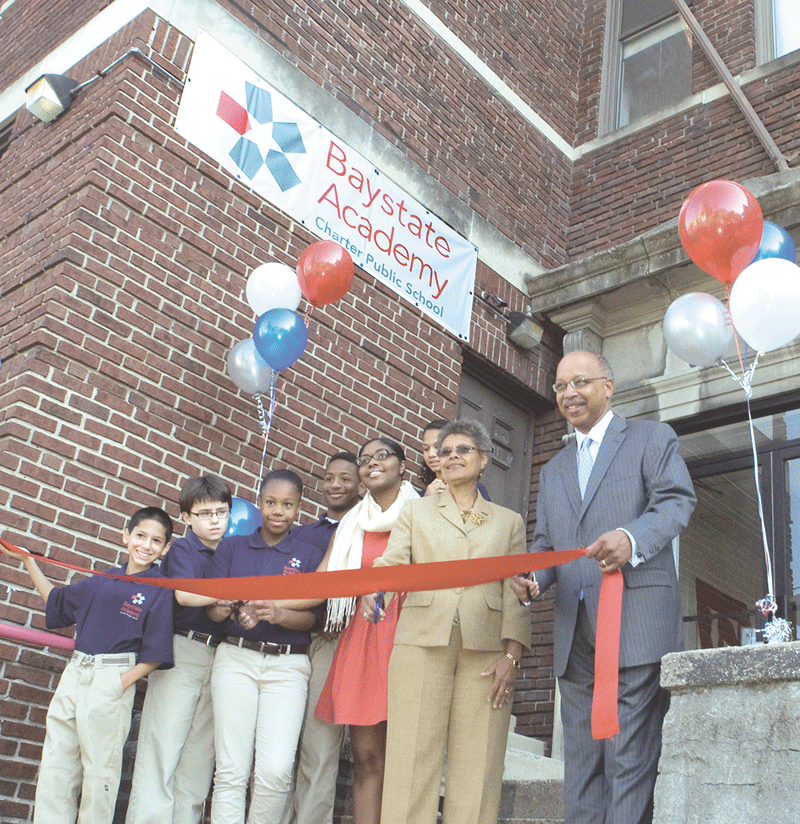
Ribbon-CuttingBaystate Academy Charter Public School, a college preparatory school founded by Baystate Health in Springfield, opened its doors recently with a formal ribbon-cutting ceremony and community day. Students participated in dancing and other activities at the school’s newly renovated campus on Franklin Street. The academy has a curricular focus on health sciences and a longer school day, encouraging students to engage in extracurricular activities and community service. Pictured, from left: students Nathan Santiago, Aidan Kesler, Mulan Foggs, Jayden Orr, Aaliyah Lopez, and Taryn Cheeks; Dean of Students and trustee Marjorie Hurst; and Tim Sneed, the school’s executive director, take part in the ribbon cutting.


Center for Recovery
Frank_Gallo2Michael_StraiteThe Center for Human Development recently announced the opening of the Traumatic Stress Recovery Center, a new outpatient clinic, located at 342 Birnie Ave. in Springfield. An open house introduced Clinic Director Frank Gallo, left, a retired Rhode Island police officer and former associate professor of Criminal Justice at Western New England University. At right is Michael Straite, director of the state Department of Veterans’ Services.

Virtual Concerns
CYBERCyberspace has been called a “bad neighborhood with bad people lurking in virtual places.” Bay Path College, in collaboration with the Economic Development Council of Western Mass., recently hosted a Cybersecurity Summit focusing on anti-terrorism and information security, to launch its new master’s degree program in Cybersecurity Management. Pictured, from left, are keynote speaker Robert Milton, retired commander of the London Metropolitan Police Service, New Scotland Yard, and Managing Director, Milton Tezelin Ltd. providing international
antiterrorism security training; David Martin, Risk Management Expert; and Dr. Larry Snyder, Director of Bay Path’s MS in Cybersecurity Management.


Celebrity Weekend
YcelebrityJeffSattlerTravisBestReneeMcDonald_KirkSmithThe YMCA of Greater Springfield’s Celebrity Classic Weekend recently brought together celebrities for a weekend of socializing, golf, and bowling. The fund-raiser will enable the Y to continue to improve the lives of area teens. Pictured at the Cold Spring Golf Club in Belchertown is YMCA Board Chair Jeff Sattler, retired NBA player and Springfield native Travis Best, Renee MacDonald, and YMCA of Greater Springfield President and CEO Kirk Smith.


Tribute to Jimmy
3-with-statueStatueFamily and friends of Jim Vinick, long-time Dana-Farber Cancer Institute supporter and BusinessWest 2013 Difference Maker, joined him on Oct. 12 to unveil a statue he commissioned to celebrate Dana-Farber’s rich history. The bronze sculpture features Dr. Sidney Farber, a pioneer in childhood cancer, and his 12-year-old patient, Einar “Jimmy” Gustafson, whose bedside broadcast on the radio program Truth or Consequences in 1948 moved New Englanders to champion the fight against cancer. Above left, from left, are Vinick; Suzanne Fountain, director of the Jimmy Fund; and Brian Hanlon, the sculptor who created the statue.

Employment Sections
NEBA Marks 30 Years of Breaking Barriers to Getting Hired

Jeannine Pavlak

Jeannine Pavlak says NEBA’s success rate of placing individuals with disabilities in jobs is higher than the national standard for such efforts.

Fresh out of college in the 1980s, Jeannine Pavlak found her ideal job — helping others do the same.
“I had just graduated and wanted to do something in the social-service field. I was interested in many different avenues,” she told BusinessWest. “But at the time, in the early 1980s, employment was becoming a hot topic.”
She wound up interviewing with New England Business Associates, a then-new organization dedicated to helping people with disabilities — physical, emotional, behavioral, etc. — find employment.
“I interviewed with many different organizations, but NEBA was the only one — that’s not true now, but it was at the time — that provided individualized, integrated employment” for such individuals, she explained. “I’ve always had a belief that people can work — and should work — and this matched my own personal philosophy.”
She never left, and today serves as executive director as NEBA gets ready to celebrate its 30th anniversary with a party on Oct. 18 at the Log Cabin Banquet and Meeting House.
Over those years, she has overseen the implementation of several innovative programs, including one that helps disabled people become entrepreneurs. But NEBA remains, at its heart, dedicated to matching employers with workers who have encountered a host of challenges to entering the job market. “It’s amazing when it happens,” Pavlak said. “It really changes people’s lives so much.”
Established in 1983, NEBA now serves more than 400 people annually — ranging in age from 15 to 68 — through employment, self-employment, skill building, and community-inclusion programs. But they’re not the only ones who benefit, she said, citing the organization’s positive effects on businesses and the region’s overall economic development.
“As a service provider, we recognize each individual’s unique gifts and talents and maximize these unique strengths in the workplace,” the company’s mission statement explains. “As a business partner, we understand the needs of employers and ensure a successful job match that enhances their bottom line. And as a contributor, we improve economic and community conditions by preparing and placing a talented source of workers eager to become self-sufficient and contributing members of their communities.”
The initial intent, Pavlak said, was to work with people with developmental disabilities who weren’t being offered employment because of their challenges. “We really originated to work with a small group of people to demonstrate that anyone, regardless of their level of disability, can be successfully employed.”
Since then, NEBA has evolved somewhat. “Now anyone who has challenges to entering the workforce, we help support,” she said, noting that the organization contracts with the Department of Developmental Disabilities, the Mass. Rehabilitation Commission, the Bureau of Rehabilitation Services, the Department of Transitional Assistance, and local school systems for students transitioning from high school. NEBA is also a registered employment network through the Social Security Administration’s Ticket to Work program.
“Many folks are just having trouble finding employment for a variety of reasons; they might not have a very high education, or might be the only one there for their child and not have any group of support.”
But NEBA is most well-known for its work with the disabled, and Pavlak is especially proud of how efficiently it achieves its goals, consistently charting an employment rate for people with disabilities between 85% and 92%. “The national standard is lower than that” for similar agencies, she noted. “We’ve always achieved higher that the national average, and we’re one of the top providers in Massachusetts.”

Individual Attention
The reasons for that success are myriad, Pavlak told BusinessWest. “Really, the biggest thing is, our services are individualized. We really get to know the person, and we also really understand what the employer needs. If we’re placing someone who doesn’t meet the employer’s needs or where the individual doesn’t want to be, it won’t be a successful match.
“So we make sure we’re matching people properly,” she continued. “We spend time with employers, finding out what are the greatest challenges to employing people and what positions have the highest turnover. The population we serve, they want to work, and historically, once somebody’s employed, particularly with a disability, they’re not looking to move on to a different job; they want that work. When we find them good job matches, they tend to be long-term employees.”
Many businesses are repeat customers, she added. Because NEBA has been doing this work for 30 years, “we have a lot of relationships we can call upon with different employers. And if they’re not hiring, they may give us a sense of who might be hiring. Employers know us, and they know we’re going to do what we say we’re going to do.”
That includes plenty of initial job preparation to make sure clients are ready for interviewing and have a résumé, among other soft skills.
However, once a client finds work, “employers are expected to train that employee like they’d train anyone else,” Pavlak said, but NEBA still sends a staff member in to reinforce that training, and if the employer wants to add more duties to the client’s job description, they can consult with NEBA on that as well. “Our goal is for their co-workers to be their natural support, as it is for all of us. But we check in monthly with the employer to make sure things are fine.”
Pavlak said their involvement with NEBA clients has been eye-opening for many companies, and some businesses are clearly more progressive than others when it comes to hiring people with disabilities.
“Certainly some employers have very clear policies promoting this; they want to hire people with disabilities,” she said. “But the majority of businesses haven’t had the opportunity to hire people with disabilities.
“There are a lot of stereotypes out there, like liability; people are fearful if they have disabled workers, workers’ compensation claims will increase,” she continued. “We help educate them that liability and workers’ compensation is based on past history and the jobs you’re hiring for, not whom you’re hiring. There was a study done by DuPont over 20 years showing that people with disabilities actually have fewer injuries on the job because they’re much more aware.”
Another plus is that NEBA clients seem to give a more predictable effort on the job than the workforce as a whole, she said. “I’ve had employers say to me, ‘the work is always consistent. Out of all my employees, the person placed by NEBA does the same amount of work every day.’ They say other employees might give 100% one day, just top-notch, and another day give 60%; they’re much less consistent with their work.”

Starting Strong
Clients of New England Business Associates are doing more than finding employment; they’re also starting businesses and creating jobs.
Much of that success is being achieved through the NEBA Business Development Center (BDC), which provides clients with the entrepreneurial training necessary to develop a business concept, write a business plan, and implement a business.
“The Business Development Center is my most exciting project,” Pavlak said. “That was set up to help people with disabilities start their own businesses. When we first started it locally, there weren’t a lot of resources available for people with disabilities to start their own businesses. We collaborated with the Scibelli Enterprise Center, and we were set up initially as a consulting center, but quickly turned into a business incubator.”
The BDC mentors participants in the day-to-day operation of a new business venture, introduces them to a network of fellow entrepreneurs, and helps them access resources like the Senior Corps of Retired Executives and the Small Business Administration.
Adam Anderson is one NEBA client who has launched and maintained a successful business, Wilbraham Web Design. He had an interest in working with computers but eventually found an affinity for web design and started learning about small-business ownership and attending business courses at Springfield Technical Community College. By the end of 2006, his first year in business, Anderson already had numerous clients.
Pavlak explained that such companies are able to keep accessing the incubator for training in various aspects of their business, such as marketing strategy, as they grow. “We really look at ourselves as part of the economic-development arm,” she said. “So far, we have started 35 active businesses, and out of these 35 businesses, they’ve had to hire 23 additional employees.”
She can point to hundreds of success stories over the years — both entrepreneurs and people who simply wanted to land a steady job — as reflective of how important NEBA is for job seekers frustrated by the barriers they encounter.
“It can be difficult to access the job market on a few different levels,” she told BusinessWest. “It certainly helps them to identify where their strengths lie and learn how to sell that to the employer. Everyone has something to give, and if we match them appropriately, it can be a real benefit to an employer. People struggle most with how they sell ourselves. For our clients, it’s even more difficult to do that.”
Meanwhile, some clients have to overcome their uncertainty about how employment will affect the disability benefits they already receive. “We have a certified work incentive counselor meet with them and show them exactly how work will affect their benefits, and it takes the fear away,” Pavlak said. “What happens, in most cases, is that they’re better off getting their employers’ benefits.”
One benefit that can’t be measured, of course, is the simple pride clients take in having their skills recognized and put to use in a well-paying job.
“It’s so uplifting to do this work,” she said. “It makes you feel good on so many different levels.”

Joseph Bednar can be reached at [email protected]

Briefcase Departments

Baystate, UMass Memorial Sign Agreement to Explore Partnerships
SPRINGFIELD and WORCESTER — Baystate Health and UMass Memorial Health Care have signed a non-binding letter of intent to explore new collaborative opportunities between the two not-for-profit health systems. As national healthcare reform has brought an urgent imperative to transform the delivery and financing of healthcare, health systems and hospitals across the country are collaborating in innovative ways, finding new efficiencies and better care solutions by sharing clinical experience and intellectual resources. Baystate Health and UMass Memorial Health Care have much in common. Each has a mission of improving the quality, accessibility, and affordability of healthcare for patients and families in its community. The two organizations share many other characteristics: both serve communities with significant health needs and significant socioeconomic challenges underlying those needs. Both organizations have integrated systems of care including medical practices, community hospitals, and a major academic medical center. Both organizations receive national recognition not only for the quality of the care they provide, but also for their commitment to their communities. The new agreement builds on a long-existing relationship, as Baystate Health and UMass Memorial Health Care have a long history of mutual support on a number of efforts, including collaborations in pharmacy; healthcare quality, clinical practice, and policy; and infusion medicine. Each recognizes that they can learn even more from one another, work together more closely, and in doing so be more effective and efficient in keeping area communities healthy, rather than focusing mainly on treating disease or illness. Neither organization’s ownership, structure, governance, academic relationships and affiliations, or medical staffs will be affected by the letter of intent or any potential strategic collaboration, nor will they limit the ability of either party to pursue other strategic opportunities.

Leadership Pioneer Valley Announces Class of 2014
HOLYOKE — Leadership Pioneer Valley (LPV) officially kicked off the class of 39 emerging and established regional leaders at its recent Reach Beyond Opening Reception at Wistariahurst. The culturally and geographically diverse class of men and women from nonprofit, private, educational, and public organizations from Hampden, Hampshire, and Franklin counties filled the reception with energy, enthusiasm, and commitment to the future of the Pioneer Valley. Leadership Pioneer Valley is addressing the critical need to build a diverse network of leaders who aspire to work together across traditional barriers to strengthen the region. The members of the new class will take part in a 10-month program of experiential learning that will take place at locations across the Valley. The experiential curriculum is specifically designed to help the participants refine their leadership skills, broaden connections, and develop a greater commitment to community trusteeship and cultural competency. The class of 2014 includes: Sherill Acevedo, Baystate Medical Practices; Jasmine Amegan, Westfield State University; Kerri Bohonowicz, Community Health Center of Franklin County; Amy Britt, Tapestry Health; Ronda Carter, Health New England; Christina Casiello, MassMutual; Jenny Catuogno, Gadreau Insurance; Tammy-Lynn Chace, Amherst Area Chamber of Commerce; Eliza Crescintini, Children’s Study Home;

Geoffrey Croteau, MassMutual Charter Oak Insurance & Financial Services; Cheryl Dukes, Town of Buckland; Nasheika Durham, YMCA of Greater Springfield; Andrew Fletcher, Holyoke Community College;

Kelsey Flynn, MassMutual; Valerie Francis, Health New England; Meghan Godorov, Mount Holyoke College;

Cynthia Gonzalez, Greenfield Cooperative Bank;

Richard Griffin, City of Springfield; Rachel Jones, Springfield Technical Community College; Kevin Jourdain, Sisters of Providence Health System; Diane LeBeau, Westfield State University; Yamilette Madho, Big Y Foods Inc.; Matthew Kullberg, WGBY;
Rosemarie Marks-Paige, Health New England; L.A. McCrae, Three Sisters Consulting; Monique Meadows, self-employed; Josiah Neiderbach, Pioneer Valley Planning Commission; Lizzy Ortiz, City of Springfield Office of Housing; Beena Pandit, MassMutual; Laura Porter, Holyoke Health Center; Lee Pouliot, City of Chicopee; Jennifer Sanchez, Springfield Technical Community College; Isabel Serrazina, Springfield Housing Authority;

Nicole Skelly, United Bank;

Kyle Sullivan, John Glover Insurance; Colin Tansey, Specialty Bolt & Screw; Todd Weir, First Churches of Northampton; Christopher Whelan, Florence Savings Bank; and Jonencia Wood, Baystate Health.

Grant Helps Jobs Program Expand Opportunities
SPRINGFIELD — U.S. Sens. Elizabeth Warren and Ed Markey recently announced that the state Executive Office of Labor and Workforce Development has landed $11.67 million from the U.S. Department of Labor to boost employment opportunities and reduce recidivism for young men leaving the state’s juvenile justice system. The grant, awarded to the Massachusetts-based Roca program, aims to provide education and pre-vocational training to young people in the justice system to make them more employable and keep them from returning, as 67.5% do within six years of being released from custody. Warren and Markey said in a statement that the grant will aid the 535 young men between the ages of 16 and 22 in Springfield and Chelsea working on exiting the juvenile justice system by way of Roca. The program began in Eastern Mass. in 1988 and was brought to Springfield in 2010 thanks to a push by longtime Hampden County Sheriff Michael Ashe. As of July, the Springfield division of Roca had 85 participants, all high-school dropouts, whose past troubles with the law make it difficult if not impossible to get work. Program administrators say it costs $24,500 a year to put a young person through the Roca program, which includes their pay, although most payroll is paid directly by a participant’s employer. In contrast, it can cost more than $50,000 annually to imprison a person. “This grant is exciting news for Massachusetts. It will help strengthen the Commonwealth’s juvenile justice system by helping young men at risk for reincarceration build the skills they need to succeed,” Warren said in a statement. “This program is a great example of how the federal government can use innovative public-private partnerships to support critical social services in our communities.” Added Markey, “these funds will help keep young men and women in the workforce, out of detention facilities, and on a path towards success. If we can cut costs to society as we help form better members of society, that is an effort worth all of our support.”

Patrick Administration Announces 56 Grants for Massachusetts Farms
EAST TAUNTON — Energy and Environmental Affairs (EEA) Secretary Rick Sullivan recently awarded 56 grants to Massachusetts farmers to implement renewable-energy systems, improve energy efficiency on farms, and help farmers reduce or prevent negative impacts to natural resources from agricultural practices. “We are proud to support our local farmers in their efforts to ensure a sustainable future for their farms,” Sullivan said. “With each grant, we are creating opportunity for agriculture to stay rooted and grow in our communities. The Patrick administration is committed to reducing energy costs and improve efficiency, and we’re thankful to the Commonwealth’s farmers who are partnering with us in our progress toward a clean energy future.” Twenty-three grants from the Massachusetts Department of Agricultural Resources’ (DAR) Agricultural Energy Grant Program will fund projects to reduce energy consumption and increase renewable energy use at Massachusetts farms. The projects include photovoltaic systems for vegetable and orchard operations, variable-speed vacuum pumps for dairies, reverse-osmosis machines for maple-syrup operations, and shade screens for greenhouses. Thirty-three grants from DAR’s Agricultural Environmental Enhancement Program will fund projects like automated irrigations systems for cranberry operations, milkhouse wastewater treatment, manure storage areas, fencing, and pesticide storage. “These grant programs help farmers protect the state’s natural resources as well as our strong tradition of local agriculture,” said DAR Commissioner Greg Watson. “Implementing environmentally responsible and energy-efficient practices are imperative for farms across to the Commonwealth to remain family-owned resources for fresh, healthy, and delicious food.” Added Mark Silvia, Department of Energy Resources commissioner, “to achieve the Patrick administration’s ambitious goals for Massachusetts’ energy future, we must support clean-energy practices and reduced energy consumption in every sector of the Commonwealth. These grants will help Massachusetts farmers conserve energy and help their bottom line.” State Sen. Marc Pacheco, Senate chairman of the Committee on Environment, Natural Resources, and Agriculture, said he is “pleased to see the Commonwealth invest in projects that are positive for the local agricultural community and for our energy-efficiency efforts overall. These grants are a testament to the leadership that has earned Massachusetts its distinction as number-one in the country for energy efficiency.” Added state Rep. Anne Gobi, the committee’s House chair, “These grants are important to the viability of farming and agriculture in our Commonwealth and are just one more example of the continued commitment to Massachusetts farmers.”

Community Colleges Win Grant Funding
BOSTON — Springfield Technical Community College has received a $122,099 state grant to develop strategies for improving the academic performance of Hispanic students, while community colleges in Greenfield, Holyoke, and Pittsfield will share in a $239,334 grant to improve learning in science, technology and math. The money for the two-year Springfield college was among $7.5 million in competitive grants awarded by the state Department of Higher Education to encourage innovation and improve graduation rates and other aspects of student performance at the state’s 29 community colleges and universities. The $122,099 grant, which will be spread over three years, will allow for the hiring of a project coordinator and a part-time English- and Spanish-speaking academic adviser. The grant program calls for creation of focus groups as part of an in-depth study of Latino students to identify how current initiatives can be revised or new ones put into effect to ensure Latino academic success, especially among Latino males. The $239,334 grant to be shared among Berkshire Community College, Greenfield Community College, Holyoke Community College, and the four-year Massachusetts College of Liberal Arts, calls for the colleges to work with regional schools to improve interest in science, technology, engineering, and math.

Departments People on the Move

Kenneth Albano, a shareholder and a member of the Corporate, Finance, and Healthcare departments for the Springfield-based Bacon Wilson, P.C. was recently elected Chairman of the Board of Directors for the Western Mass. Division of the March of Dimes. Albano is a member of the Mass. Municipal Law Assoc., and currently serves as Town Counsel to the communities of Monson, Southwick, and Holland. Albano earned his BA from Providence College and his JD from Western New England University School of Law.
•••••

Jean Deliso

Jean Deliso

Jean Deliso, Principal of Deliso Financial Services, has been elected a member of the 2013 Chairman’s Council of New York Life Insurance Co. Members of the elite Chairman’s Council rank in the top 3% of New York Life’s sales force among more than 12,250 licensed agents. A New York Life agent since 1995, Deliso is an associate with the Connecticut Valley General Office in Windsor, Conn. She is chairman of New York Life’s Agents Advisory Council and is a consistent qualifying member of the Million Dollar Round Table and currently a 2013 Court of the Table Member. Deliso currently serves on many boards in her community, including the Pioneer Valley AAA Auto Club, Pioneer Valley Refrigerated Warehouse, and the Community Music School of Springfield.
•••••

Keith Minoff

Keith Minoff

Keith Minoff has been selected by his peers for inclusion in the 20th edition of The Best Lawyers in America in the practice areas of commercial litigation and corporate law. Minoff is a trial attorney specializing in business and employment litigation and has been in practice for more than 25 years.
•••••


David McBride

David McBride

Erica Flores

Erica Flores

Skoler, Abbott & Presser, P.C. recently announced the addition of two new associates, David McBride and Erica Flores. Flores joined Skoler Abbott after relocating to Mass. from Pennsylvania, where she was an associate at the office of Morgan Lewis. She is a 2005 graduate of the University of Pennsylvania Law School and received her BS from the University of Colorado, Boulder, in 2001. In addition to her litigation practice, Flores regularly advises clients with respect to day-to-day employment issues, including decisions regarding adverse employment actions and litigation avoidance. From 2005 to 2006, she served as a clerk to the Russell Nigro, associate justice of the Supreme Court of Pennsylvania. Flores is a member of the American Bar Assoc. and the Pennsylvania Bar Assoc. McBride is a 2013 graduate from the Cornell Law School and received his BA in Economics from the University of Notre Dame in 2008. His practice is concentrated in labor law and employment litigation. His experience includes work on labor and employment-law issues, including employer compliance with federal laws at a major labor union in New York.

Employment Sections
Website Offers Information on Healthcare Careers in Western Mass.

Peta Gaye Portee

Peta Gaye Portee says www.westernmasshealthcareers.org is updated frequently, making it an invaluable resource for people accessing the healthcare job market.

When most students think about jobs in the healthcare industry, they imagine working in a hospital.
But the reality is that only 30% of healthcare employees in Western Mass work in a hospital setting. The rest are working in the community — in nursing homes, doctor’s offices, diagnostic labs, home-care businesses, or ambulatory healthcare services.
“Most students can only name about five healthcare careers — there are a lot of positions they aren’t even aware of,” said Kimberly Slepchuk, academic and career advisor for the Foundations of Health program at Holyoke Community College, as she listed jobs that range from medical assistants in doctors’ offices to pharmacy technicians and sales representatives who specialize in medical equipment and supplies.
“And although many people cite nursing as a career, there are 110 different types of nurses, which range from camp and school nurses to neonatal nurses, which is why it’s really important to delve into the possibilities,” Slepchuk added. “Most of these jobs came about after World War II and are team-oriented. For example, surgical technologists assist in the operating room, and one of the newest jobs is a sterile processing technician.”
And opportunities continue to grow. In 2008, the U.S. Bureau of Labor Statistics projected that by 2018 there would be 3.2 million new wage and salary jobs in the healthcare field — more than any other industry.
It’s possible for people interested in a career change to discover these positions by perusing national websites, but there has always been a missing link, as these sites don’t provide information about the local job market in Western Mass. — what types of jobs exist and how much the average person here is paid. They also fail to provide a listing of local schools with programs that lead to specific healthcare careers.
But, thanks to a newly launched website, www.westernmasshealthcareers.org, all that has changed.
“The new website is very, very helpful and important, because while students could get data about jobs in Massachusetts before, there is a huge difference between what is available in the eastern part of the state and here in Western Mass. in terms of jobs and salaries,” Slepchuk said.

Supply and Demand
The website was developed as a result of a collaborative effort. It is an initiative of the Regional Employment Board of Hampden County (REB), which teamed up with members of the Healthcare Workforce Partnership of Western Mass., with the goal of strengthening the region’s healthcare workforce and enhancing the quality of patient care.
“The idea for the website was generated by employers, educators, and community-based organizations with the express desire of letting people know what types of healthcare jobs and careers are available in the Pioneer Valley and where they exist on the continuum of care,” said Kelly Aiken, director of Health Care Initiatives for the REB. “Employers want people to know what kinds of skills they are looking for as well as the places where people receive healthcare. The website tells them about the positions that exist in different types of job settings, as well as the education and training needed for a wide variety of occupations.”
She added that it’s important for people to be aware of the rapid changes occurring in the healthcare field and the requirements needed to enter or stay current in different jobs. “For example, the language in medical coding is changing, and people who are interested in moving from a job as a medical biller to a medical coder need to know this.”
In addition, having a regional resource helps parents, career advisors, and people interested in making a career change determine whether investing in education for a specific position is worthwhile.
“The idea is to provide people with a regional resource about our community; there are jobs that exist across the continuum, and we want people to know what is going on here,” Aiken said. “It’s especially important because there are jobs going unfilled because employers can’t find qualified job seekers. Our employers have told us this time and time again.”

Kelly Aiken

Kelly Aiken says jobs are going unfilled because employers can’t find qualified workers, and the new website will provide the kind of information needed to close that gap.

The website reflects an extraordinary amount of research.
“We hired Six-Point Creative Works in Springfield, and they interviewed myriad people in one-on-one sessions to find out what they were looking for,” Aiken said, adding that the interviewees ranged from high-school students to immigrants who had worked in healthcare in their countries and wanted to get back into the field, to adults looking to make career changes.
“Employers were also engaged in the website’s development,” she continued. “It was a very collaborative effort, and our partners have been very involved.”
The final result is a site that contains detailed information in sections that include ‘local careers,’ ‘career planning,’ ‘education and training,’ ‘news,’ and ‘partnerships.’
For example, a click on the button labeled ‘local careers’ gives people a choice of then clicking on more specific fields, including medical and dental, office and research, lab work and imaging, therapy and pharmacy, vision, speech, hearing, and diet.
Slepchuk said these groupings make it easy for people to learn about occupations available locally that match their interests, along with what the work involves and the time and/or money and education required for the positions.
A click on ‘medical, dental, and nursing careers’ shows that the highest rate of job growth is in home healthcare, that many of these positions involve working with the elderly, and as this population grows, medical, dental, and nursing professionals will need to understand the basics of geriatric care. It also highlights a growing focus on preventive and primary care and a move toward more patient-centered care.
Visitors also learn that strong science, math, and technology skills are needed to work in this career cluster and that it is becoming increasingly important for people in these positions to be able to relate to people of different cultures.
Aiken says this information is critical for students and job seekers.
“In addition, employers are telling us that they expect applicants to show a degree of professionalism,” she added. “Healthcare is all about customer service, compassion, and professionalism.”
The website also contains links to employer listings. “The idea is not to replicate resources, but to help people access career-planning tools,” Aiken said.
There are also ideas and information about how to finance education and where programs are offered.
“We just updated the medical-coding page to reflect current standards, and we also updated the medical-billing section to let people know about a new program being offered at Holyoke Community College,” said Peta Gaye Portee, program coordinator for the Healthcare Initiative Workforce program. “There is also information about foundation grants, state grants, Pell grants, and scholarships.”
Meanwhile, the news section keeps viewers up to date with breaking developments, such as a new partnership between Greenfield Community College and Endicott College, which will allow nurses with an associate’s degree to earn their bachelor’s degree without leaving Greenfield, as well as a new public health degree program being offered at American International College in Springfield.
There is also a ‘fast facts’ section, which Slepchuk says students find useful. For example, it states that there is a need for sterile-processing technicians and surgical technologists in this area.
Another facet of the website contains links to nationally recognized assessment tools and tests that people can take if they are exploring the idea of a career in healthcare.

Future Outlook
Aiken reiterated that the purpose of the new website is to introduce people to the types of jobs that exist, which ones are going unfilled in the area, and the training and education that local employers expect job applicants to have.
“People need to realize that healthcare is a 24/7 industry and understand the realities of jobs in the field,” she told BusinessWest, adding that logging on to www.westernmasshealthcare.org will give people a “flavor of what is going on in the region.”
Which is good news for anyone who wants to keep up with occupations, salaries, training, scholarships, and other opportunities in healthcare throughout the region.

Cover Story
Bill Ward Has Spent His Career Focused on the Big Picture: Jobs

COVERart0913b
Bill Ward has a wide assortment of photographs adorning the walls and shelves of his office in downtown Springfield.
There’s one of him conferring with Sen. Edward Kennedy, for example, and also one that puts him in a group with, among others, Dick and Rick Hoyt, the father-son team famous for their exploits in marathons and triathlons. There are others featuring a host of local, state, and national political leaders, and even a framed copy of the story announcing him as one of the first winners of BusinessWest’s Difference Makers award.
But maybe the one he’s most partial to shows him sharing the podium with Herb Almgren and Ben Jones. They were the first two chairmen of an organization called the Private Industry Council (PIC) — which would later become the Regional Employment Board of Hampden County — and individuals who would set a tone for the important work that Ward and those agencies would undertake.
It was Almgren, the long-time president of Shawmut Bank, who aggressively recruited Ward to be the first director of the PIC in 1981, later convinced Jones (who wasn’t even on the board at the time) to follow him as chair, and worked tirelessly to convince other business leaders of the need for workforce-development initiatives.
“He was very persuasive,” Ward recalled. “Thanks to him, people got the message that this was important work.”
And it was Jones, then-president of Monarch Life Insurance Co., who gave Ward a line he’s repeated dozens of times over the course of his career. “He was the first one to say to me that ‘a job is the best social program you can put in place,’” Ward recalled. “And he was certainly right about that.”
While Ward, who is “transitioning his career to its next phase” — that phrase has become his substitute for ‘retiring,’ because he said the latter is not at all accurate — is looking mostly ahead these days, and to what will come next, both for him and the region, he was compelled by BusinessWest to look back.
Indeed, as he prepares to leave the REB, probably by the end of the year if a successor has been chosen by then, he was asked to reflect on his career, the progress he’s seen in the broad realm of workforce development, the changes that have come to this region and its business community, and the many challenges looming for Greater Springfield — and his successor.
He started by going back to his days working at the Hampden County Skills Center, later known as the Mass. Career Development Institute (MCDI), where, for more than two years, he conducted extensive assessments of people who came to that organization seeking assistance and a path to a better life through gainful employment through training programs.
“I personally interviewed 2,000 low-income individuals, mostly women and adults, to gain perspective on their aspirations and goals,” he said, adding that some had been laid off from jobs, but many had never been in the workforce. “What I got from that was an incredible sense of the human potential in the city that was going to waste in part because people were not given the educational foundation or the training opportunities to make a better life for themselves and contribute to the workforce.”
And while reducing this wasted potential was never his official job description, it nonetheless became his career’s work. And he believes he can measure — in one way or another — what amounts to tangible progress.

Bill Ward, at right

Bill Ward, at right, is seen at an early annual meeting of the Private Industry Council with Herb Almgren, center, and Ben Jones.

“From a strategic point of view, there’s been a true buy-in at all levels on the absolute importance of workforce development to economic and community development,” he noted. “It happened here [in Greater Springfield] first, almost more than any other place, as a wholly embraced principle of economic growth.
“There’s been a really focused effort by the business community, and a level of collaboration has developed on how to address these workforce issues,” he went on. “What I see today is a better, stronger alignment in efforts to build a workforce; that’s been a major accomplishment.”

Hire Purpose
Before addressing a single question from BusinessWest, Ward spent probably half an hour reflecting on the words, deeds, and advice of Almgren, Jones, and many other individuals captured in the photos on his walls.
He did so to illustrate that what has been accomplished over the past three decades hasn’t resulted from the work of one man, but rather from the contributions of a wide array of individuals — from staff members to elected officials to volunteer board members.
Among the many anecdotes he offered was one concerning Jones a few months after he became chair of what was still the PIC.
“He was a very busy guy, and I remember going to his office one time to talk about a problem … like literacy within the community,” Ward recalled, noting that he didn’t remember the specific challenge in this case. “We talked for a long time, and finally he said to me, ‘Bill, from now on, if we’re going to meet for a half-hour, I want you to spend a maximum of eight to 10 minutes on the problem, and then I want you to spend the next 22 minutes on proposed or possible solutions, and what business can do about it.’
“That’s an interesting formula,” he went on. “And it impacted me. It forced me, in life going forward as I worked here, to look at a problem and say, ‘let’s get it defined quickly, and then let’s spend more time identifying solutions.’ That way, you don’t get into that ‘ain’t it awful’ game all the time.”
Ward said that story and many others help him explain how his career has been a series of personal and professional learning experiences that have made him a better administrator and helped him, his staff, his board, and supporters achieve positive results in many aspects of workforce development.
These range from a successful summer jobs program for young people to efforts to bolster adult basic education programs; from broad efforts to train workers for the region’s growing healthcare sector to programs aimed at having a pool of workers ready for the casino that will soon become part of the Western Mass. landscape.
And it all began very humbly, he recalled, adding that Almgren and others recognized the work he was doing at the Hampden County Skills Center and saw him as the potential leader of a new, federally funded initiative called the Private Industry Council, which involved the business community in efforts to help individuals become part of the workforce.
“He [Almgren] sensed that I was a willing learner,” said Ward. “I wanted to understand the dynamics between business people and the community at large. When you’re a willing learner, sometimes the teacher sees that potential and draws it out, and that’s what he did.”
The PIC started with a budget of $60,000, one full-time employee in Ward, and a part-time secretary. Today, the REB has 25 employees and a $15 million budget.
Ward credits both Almgren and especially Jones with giving the PIC, and then the REB, credibility in the community and something ultimately more important, access to business leaders who could drive change and progress.
“It was never said this way, but people felt that if Ben was involved with something, it was important work and things would get done,” he told BusinessWest. “And if he asked someone to come on the board, the response was almost always ‘yes.’”

Work — Force
Over the past 32 years, Ward said, the PIC and then the REB have achieved real progress in the broad realm of workforce development, with much of it coming in the form of answers to a nagging and somewhat perplexing problem that has dogged the region for most of his tenure — the so-called ‘skills gap.’
As the name suggests, this connotes the gap between the skills employers are demanding and those possessed by those seeking employment. In some ways, the gap is exaggerated by employers, but, by and large, it’s real, said Ward, adding that it is particularly acute in certain industry sectors, such as healthcare, precision manufacturing, and financial services.
And some of the REB’s most intriguing success stories have come in those sectors, where collaborative efforts involving industry players, academic institutions (especially the area’s community colleges and UMass Amherst), and REB officials have produced tangible results.
“We coined a phrase — we called it ‘sector strategy,’” Ward told BusinessWest. “What we’ve learned is that bringing these collaboratives together and getting agreement on a common mission and ways to identify progress is critical.”
Through such programs, said Ward, the REB and its various partners have succeeded in taking that word ‘collaboration’ out of the category of buzzword and making it something people can comprehend — and aspire to.
And one of the real challenges moving forward, he went on, is to make these collaborations between industry, higher education, and workforce-development groups more impactful.
“We need to touch more people and forge collaborations that create more and better jobs,” he explained, “so that, at least in several key industries, jobs will not go begging.”
Taking a big-picture perspective, Ward reiterated that perhaps the most significant and positive development during his tenure at the REB has simply been broad recognition of the fact that workforce development is, in fact, economic development.
While this may sound simple and logical, he went on, convincing legislative, business, and academic leaders of this hasn’t historically been easy.
And some of the most significant progress has come in efforts to engage the county’s two community colleges – Holyoke and Springfield Technical — in workforce-development efforts, he said, adding that, in many respects, this region is ahead of the rest of the state in this regard.
“Years ago, schools like this saw the workforce-development system as the stepchild,” he said, adding that, until recently, most community colleges were more focused on transferring students to four-year schools than preparing them for the workforce. “That’s all changed, and they see the other piece now, and there’s a huge alignment there.
“The first college that I know of to ever hire someone as the director of workforce development was Holyoke Community College,” he went on. “Years ago, these colleges thought of workforce development as something that limited their role, which they thought was to educate people and give them degrees. Now, they fully embrace their role in workforce development.”

Work in Progress
One of the challenges moving forward, he went on, is determining how to capitalize on this phenomenon to get the most responsive training programs for a host of industry sectors.
“Those leading the community colleges would be the first to say that their work is far from done, but there have been pockets of success,” he noted, adding that programs involving the wide spectrum of jobs in healthcare have, collectively, been the most visible and impactful initiative.
There will be plenty of other challenges for his successor and others involved in economic development when it comes to putting people to work, said Ward.
He put the economy at the top of that list, noting that, despite the best efforts of the REB and other agencies like it, unemployment will persist if employers lack the confidence and wherewithal to hire individuals — or if they persist in their desire to search for what has come to be known as a ‘purple squirrel.’ That’s a metaphor used by HR recruiters to identify the unrealistic expectations of a client company for the type of employee they desire.
“I think the phrase was born in the IT industry,” said Ward, adding that it now crosses all sectors and is certainly a factor in why unemployment remains high. “There is no such thing as a purple squirrel, but you keep searching for one anyway. Sometimes employers want a perfect person, and if they think there’s one coming in the door tomorrow, they’ll wait, and wait, and wait.”
Technology is another challenge, he said. As it advances, jobs are sometimes threatened because companies can do more with less, meaning fewer workers. Still, businesses can’t be afraid of technology, he said, and must instead embrace it to allow themselves — and the region as a whole — to become more competitive.
And the casino that eventually comes to Western Mass. will obviously be a challenge as well, he said, noting that workers will have to be trained for that work — the community colleges have already put programs in place — and, in the meantime, existing employers must prepare themselves for what 2,000 to 3,000 new jobs will mean for the employment landscape.
As for his own employment status, Ward said he’s seen a number of business leaders he’s worked with over the years struggle with the concept of retirement, and these tribulations have become yet another learning experience.
And that’s why he uses the term ‘transition phase.’
Meanwhile, he doesn’t like ‘consulting’ or ‘consultant’ much, either, but those words approximate what he will do and become — most likely in the fields of education and workforce development.
He expects he’ll do some advising (the term he much prefers) perhaps 10 hours a week, while also doing some volunteer work and getting back to golf and especially tennis, two sports he once enjoyed but put aside, especially after knee-replacement surgery five years ago.
“I’m transitioning to a different style of work,” he said, adding that his preference would be project work and, more specifically, initiatives with a beginning and an end. “I’m certainly not ready to fully retire.”

Developing Story
Look closely at the photo of Ward, Almgren, and Jones, and you’ll see three people seemingly looking out together in the same direction.
That’s obviously a photographer they’re looking toward, but it might as well be the region’s future.
The three men, and countless others, many of them captured in other pictures in Ward’s office, came together over the past three decades and embraced his overriding philosophy that workforce development is economic development.
Or, as Jones so eloquently put it, ‘a job is the best social program you can put in place.’
Bill Ward spent a career proving him right.

George O’Brien can be reached at [email protected]

Features
Western Mass. Business Expo Features a Full Slate of Programs

1_WMBEstevensSilverSponsor24x18.inddWhen she registered to run in the 1967 Boston marathon, she signed her name ‘K.V. Switzer,’ as she always did. Thus, it wasn’t until the race began that fellow runners, spectators, the press, and race officials realized that the individual wearing bib number 261 was, in fact, a woman.
And when they did so, some of those race officials tried to stop her and rip that number off of her, because no woman had ever run in the Boston Marathon, and none were invited to run in this one.
Kathrine Switzer refused to step off the course, and by persevering and finishing the race, she ran her way into history.
Switzer, known as the ‘Marathon Woman,’ will tell her story — and also convey her inspiring message about creating success in a difficult environment, turning negatives into opportunities, and implementing social and cultural change — during a luncheon hosted by the Professional Women’s Chamber at the Western Mass. Business Expo, slated for Nov. 6 at the MassMutual Center.
And this won’t be the only long-running success story to be highlighted that day. Indeed, Jim Koch, founder of Boston Beer Co. — maker of Samuel Adams — will be the keynote speaker at the Expo breakfast, hosted by the Affiliated Chambers of Commerce of Greater Springfield.
When Koch (pronounced ‘cook’) started his venture, he had a dream, a generations-old family recipe, and a large supply of determination — which he would need, because he didn’t have any bank financing or distributors to carry his product.
He overcame those obstacles to create one of most intriguing success stories in American business history. Today, while continuing to add to the portfolio of flavors his brewery produces, Koch is a motivational speaker and ardent supporter of small-business owners.
The breakfast and lunch programs are just part of an impressive slate of programs now coming togther for the Expo, which will again be produced by BusinessWest, managed by Rider Productions, and presented by Comcast Business.
Also on the schedule is a pitch contest and ‘demo day,’ being presented by Valley Venture Mentors (VVM) and BusinessWest.
Formed more than two years ago, VVM, as the name suggests, matches entrepreneurs with mentors to help businesses get off the ground or to that proverbial next level. VVM leaders will field applications for the pitch contest, selecting as many as 10 to make their cases in front of a panel of experts.
There will be cash prizes for the top three finishers, and also the ‘audience’s choice’ among the contestants.
“One of the keys to the future vitality of this region is its ability to cultivate new businesses, and Valley Venture Mentors is doing inspiring work in this regard,” said Kate Campiti, associate publisher of BusinessWest. “The pitch contest to take place at the Expo will feature some of the promising new ventures taking shape in our region in what will be spirited competition for both the approval of the judges — and prize money.”
After the competition, those businesses that made pitches will have their ideas on display at the event-capping Expo Social, which is one the region’s premier networking events, said Campiti.
In addition to these programs, the Expo will also feature a number of educational seminars, she noted, adding that subjects will range from the future of sales and marketing to the best and worst uses of social media.
The full slate of seminars has been assembled, and detailed information is available for viewing at www.wmbexpo.com. Here’s what’s on tap:

Sales and Marketing
• “The Art and Science of Cold Calling,” presented by Jim Mumm, CEO of Sandler Training;
• “The Future of Sales: How to Achieve Extraordinary Sales Results in Today’s Crowded Markets,” presented by Duane Cashin, president of Cashin & Co.;
• “Make an Impact with Multi-channel Marketing,” presented by Tina Stevens, principal and creative director of Stevens 470; and
• “Building Smart Websites,” presented by Peter Ellis, president of DIF Design.

Social Media

• “How TV and Social Media Have Affected Media Consumption,” presented by Jay Frogameni, senior director of sales for New England Local, Comcast Spotlight;
• “YouTube SEO,” presented by Alphonso Santaniello, president and CEO of the Creative Strategy Agency;
• “Am I Wasting Money and Time Doing Social Media?” presented by Paul Stallman, the ‘web guru’ at Alias Solutions; and
• “The Emdees: The Best and Worst in Social Media,” presented by Carie Schelfhaudt, director of digital marketing at McDougall & Duval Advertising.

Business Management
• “Leading Change,” presented by Ravi Kulkarni and Lynn Whitney Turner, business growth strategists and executive leadership coaches with Clear Vision Alliance, LLC;
• “The Emerging Workforce,” presented by Sandy Mazur, division president for Spherion Staffing Services;
• “Understanding Immigration Law: Immigration and International Employment Issues,” presented by Joseph Curran, Esq., Curran & Berger LLP; and
• “The New Business of a Nonprofit,” presented by Kirk Smith, president and CEO of the YMCA of Greater Springfield.

And That’s Not All

Other programming for the Expo is being finalized, said Campiti, who urged those interested to visit the website regularly and check for updates.
To register for the seminars, visit www.wmbexpo.com. To register for the breakfast, call the ACCGS at (413) 787-1310 or visit www.myonlinechamber.com. To register for the luncheon, call (413) 787-1310 or visit www.professionalwomenschamber.com.
In addition to Comcast Business, the Expo is also being sponsored by ABC 40/Fox 6 (gold sponsor), and silver sponsors DIF Design, Health New England, Johnson & Hill Staffing Services, and MGM Springfield.

Expo Fast Facts

What: The Western Mass. Business Expo
When: Nov. 6
Breakfast: 7:30 a.m.
Show Floor: 9 a.m. to 4 p.m.
Luncheon: 11:30 a.m.
Expo Social: 4 to 6:30 p.m.
Where: The MassMutual Center, Springfield
Highlights: Breakfast and luncheon programs; pitch contest; educational seminars; Show Floor Theater presentations; free educational seminars; Expo Social; more than 150 exhibitors
For More Information: Visit www.wmbexpo.com or call (413) 781-8600

Architecture Sections
Demand for Architectural Services Grows in Private Sector

Siegfried Porth

Siegfried Porth says he has seen an upswing this year in additions, renovations, and new homes.

John Kuhn says the number of projects on his firm’s books has increased over the past year. However, “I don’t expect to go back to the glory days,” added the president of Kuhn Riddle Architects in Amherst, adding that clients today are more cost-conscious, conservative, and careful than they were prior to the economic downturn in 2008. “But, lately, business has been good.”
Walter Cudnohufsky of Walter Cudnohufsky Associates Inc. in Ashfield agrees, and describes the upturn in business as noticeable and positive. “We have a number of new residential projects,” he said, noting that the jobs are significant because work in real estate dried up for a long period of time. “Things began to pick up last year and have gotten better this year, and our work now also includes municipal and industrial projects.”
After weathering a difficult period, Tom Douglas of Thomas Douglas Architects Inc. in Northampton is also busy again. “Things started to even out about six months ago and really improve, and we have more work now than we can handle,” he said. “People are more willing to spend, and it seems as if access to money has become easier. It takes longer to get funding in place, but people are doing it. We’ve done design work for a lot of restaurants, and there has also been a significant increase in residential work.”
Siegfried Porth of Porth Architects in Easthampton concurred. “Right now I am straight out,” he said. “There has definitely been a big upturn in demand in the last year for new residences, additions, and reconstructions. And some of the jobs I have are major — $300,000 or $400,000 home additions. Ultimately, it’s cheaper to add on if you like where you live and have enough land.”
Bruce Coldham said that, although housing has always been his firm’s mainstay, jobs at local colleges have helped sustain the workflow over the last year. There have also been renovations of homes and office space, as well as projects requested by institutional investors who own multi-family dwellings and want to improve energy efficiency or stay in compliance with changing building codes.
“They are not all poster projects,” said the principal of Coldham & Hartman Architects in Amherst. “But business has been improving slowly and steadily, and we keep getting clients. Some of our colleagues were hit harder than we were, and many architects have had to move from one firm to another.”
Kuhn agrees. “Some people were hit worse than others,” he noted. “We felt the effects of the downturn, but not that severely. Work has been steady, but it’s very competitive.”

Staying Solvent
Indeed, the uptick in project volume hasn’t come about overnight. Several years ago, Porth said, there was so little work that 60% of the architects in Boston were laid off, and many firms went out of business.
And Douglas referred to 2009 and 2010 as “pretty lean times. We had to lay off one person and reduce some employees to part-time, but we had enough work to make ends meet. We were fortunate to get a few new jobs back then.”
One project, involving the renovation of three buildings in Greenfield, was made possible due to historic and new-markets tax credits. Others combined volunteer labor and paid work, including Northampton’s Academy of Music and Forbes Library. “I helped them raise money,” Douglas said.
His firm has also done much work at Smith College, although those jobs dwindled in 2009 and 2010. But the situation wasn’t disastrous, as Douglas used the time to renovate the building he purchased in 2009 that houses his business today.
In 2010, he was hired to design a renovation of the Garden Theater in downtown Greenfield. “Unfortunately, they were unable to pay the bulk of the fee,” Douglas recalled. “It was a very difficult year.”
The picture was similar across the board.
“It was like being on a rollercoaster,” said Douglas. “We would have an incredibly heavy workload for six months, then spend six months not knowing if we would get work. It was very, very difficult to project further than four to six months out.”
There were also an untold number of architects seeking employment. “They were willing to work part-time, and there was a lot of great talent out there. But it was very difficult to project how much work you would have,” Douglas said.
Cudnohufsky also suffered. He had to let several employees go and said it took “heroic efforts” to save his company.
Kuhn said the entire construction industry was hit, and in addition to the loss of any work in certain sectors, many projects were put on hold.

Tom Douglas

Tom Douglas says business is increasing, and so is the diversity of projects his firm is tackling.

Coldham said he is happy that he was able to retain employees, thanks to programs that allowed them to collect partial unemployment benefits. “It meant we could keep everyone until work resumed,” he said, adding that the extra time off allowed at least one employee to complete a graduate degree, and once things improved, he was able to add two people to his staff.
And although the outlook is brighter, many architects feel it is too early to project whether demand will continue to rise.
“But people are building and investing in their properties again,” Porth said. “Things didn’t look very good last Christmas, but this has ended up being a very fine year. Business has been slowly picking up, and right now I have 40 jobs in process.”
Douglas agreed. “The work is slowly starting to pick up,” he said, adding that his firm is now doing a lot of design work for restaurants and hotels.
Still, there are no guarantees. “There has been a definite improvement, but it is not meteoritic by any means,” Coldham said.
Kuhn concurred. “When people take a big hit, it takes years for confidence to come back,” he said.
“Everyone is a little more gun shy.”

Varied Workplace
Today, architectural services are being sought for diverse projects, another trend that bodes well for an industry that saw many sectors fall back or nearly shut down during the recession.
“We just bid on a renovation in North Adams for a group of railroad warehouses,” Douglas said. “We’ve also done three or four restaurant interiors in the past six months, and are wrapping up a new conference-center building in Hadley. We designed a new restaurant in Worcester, and are working on the renovation of a conference center for Smith College and a project for Northampton Arts Trust, which will include a new theater, performance space, and galleries in a building they are purchasing.”
Porth’s working portfolio includes projects in Holyoke and the conversion of an Easthampton tractor-trailer building into a multi-use structure. “We’re also converting an old warehouse into multi-use space and renovating a five-story factory building for commercial purposes,” he said, adding that the projects are large and include new walls, electrical, heating, and other improvements.
Porth is also the architect for the Eastworks Mill in Easthampton. “Half the residential units on the top floor are rented, and we’re starting phase 2,” he said, explaining that the units were designed as live/work spaces so entrepreneurs can operate home-based businesses in them.
Porth is also involved with ongoing projects for Open Square in Holyoke and has four major residential projects — additions and renovations — on the books as well.
“A lot of people are adding in-law apartments or family rooms, and we’re building a huge wine cellar in one home,” he said. “Plus, we just got work today on a new office building in Easthampton. There will be offices on the first floor and residential space on the second floor.”
Other jobs include designing a 160-by-120-foot metal building in Holyoke that will be used to service trucks and a new, two story office building in Florence.
Cudnohufsky is also busy. He began work on Main Street in Great Barrington in 2009, and that project has been ongoing. Other large regional projects include Monument Mills in Housatonic, which consists of several buildings totaling 250,000 square feet, and the design of a major structure in Fitchburg. He also has jobs in New York and Boston. “We have a whole range of work on historic properties, which gives us a really nice mix.”
Markets that have undergone a revival include the restaurant business. “We’ve seen a real upswing in people wanting to put money into them recently,” Douglas said.
And other sectors are growing as well, Porth said. “People are buying commercial buildings in Northampton, Westfield — everywhere in the Valley. Holyoke is up and coming, and people are buying mill buildings in Easthampton, so there is a lot of ongoing activity.”
Coldham’s firm tends to work with clients creating spaces heavily populated by people, such as schools, libraries, and offices. “If people like the space they are in, they tend to stay at their jobs longer and are more productive, which are benefits that come from high-performance buildings,” he said.
His company’s projects range from a new development with more than 20 homes to the transformation of a 100-year-old, five-story mill building in Lawrence into 60 residential units.

Moving Forward
Designs today almost always involve green-building concepts, and one noteworthy trend is the demand for reasonably sized, energy-efficient homes.
“The new generation wants to be green, and we are drawing a lot of smaller houses, due to the cost,” Porth said. “We used to design McMansions that were 5,000 or 6,000 square feet, but today the trend is to go smaller. People want energy-efficient homes that are no larger than 2,500 square feet.”
Cudnohofsky founded and ran the Conway School of Landscaping Design for 20 years and says his firm has always been at the forefront of sustainable ideas and projects. He told BusinessWest that green building has been fueled by revisions in building codes that keep the technology moving forward.
Douglas agreed, adding that salespeople tout how much recycled material their products contain or where their furniture was made. “Material suppliers volunteer the information. You don’t even have to ask about it.”
Kuhn said the combination of new stretch codes and people’s sensitivity to energy conservation has resulted in a new norm. “The standards keep getting much more stringent,” he said, adding that new developments have gone from LEED to net-zero building to the Living Building Challenge, which encompasses the most rigid green-energy initiatives that can be put into place. However, few projects that meet those standards have been done locally, because the work is complex and not financially feasible for most clients.
Coldham & Hartman has completed several co-housing projects and earned recognition for innovative work across the nation. It is one of the only local firms that has built zero-net-energy homes, which generate as much energy as they use. “We’ve done four or five of them,” Coldham said.
However, some jobs continue to be expansive as Baby Boomers seek modifications to their homes. For example, Porth designed a 2,000-square-foot addition for an aging couple who wanted a master bedroom on their first floor. “People are also putting in elevators so they can stay in their homes,” he said, noting that some families are selling their parents’ homes and creating space for them via renovations or additions.

Changing Climate
Kuhn believes changing trends will continue to shape the architectural industry. They include a focus on building within walking distance of downtowns, which has occurred in communities and cities such as Amherst and Northampton. “It’s a more green way to develop,” he said.
It’s also one that promises ongoing work for architects who have weathered the storm of the past few years and are now reaping the rewards for their perseverance and resourcefulness.
For a sector that feels the swings in the economy perhaps more than any other, times are better, and the arrow is pointing up — and firms are intent on making the most of their opportunities.

Commercial Real Estate Sections
Former Tambrands Complex Becomes Home to an Eclectic Mix of Businesses

the Palmer Technology Center

On the banks of the Chicopee River, the Palmer Technology Center hasn’t exactly lived up to its name, but it has become home to a wide array of businesses — and jobs.

Having grown up in Palmer, Lisa Murray lived in the shadow of the massive Tambrands plant, built in 1872.
It was the epicenter of economic development since as far back as she can remember. It kept the downtown of Three Rivers, one of four villages in Palmer, buzzing, especially at lunchtime. But when the plant closed for good in 1997, a few years of vacancy and stillness prevailed on Main Street, and the mill became another symbol of what once was in this blue-collar region.
Today, however, the sprawling, 325,000-square-foot complex is a different kind of economic driver, and small-business owners like Murray have become the face of the landmark — even if their faces are not seen by many people.
Several years ago, Murray’s company, Transportation Advisors, which offers nationwide consulting for trucking-industry compliance through Federal Department of Transportation regulations — specifically drug and alcohol testing — needed accessible, affordable space in which to grow.
She found all that and more at what is now called the Palmer Technology Center, a name that is somewhat of a misnomer — there are not many technology-related businesses in the complex — but that speaks to how the reinvention of the old mill has been a slow, steady battle that hasn’t exactly gone according to script.
Indeed, the original plan for the mill, said John Morrison, a former employee at Tambrands who later started his own construction and landscaping business and then acquired the mill, was to attract the technology-related businesses that were emerging in huge numbers with the dot-com boom. But while these intentions were good, the timing and location were not.
The Technology Park at Springfield Technical Community College was opening at the same time (1999), and it and other properties in urban centers such as Boston and Worcester were proving to be much more attractive locations than the former manufacturing town off exit 8 of the Turnpike.
Palmer native Lisa Murray

Palmer native Lisa Murray has made her growing transportation business part of the revival of the PTC.

So Morrison and his team widened their sights, and, over the past 15 years, the mill has become home to everything from a library-relocation service to a business selling caskets and urns to a chocolatier. And, for the most part, there is a decidedly local flavor — figuratively, and in at least one, literally — to this mix of ventures.
“It’s a great old building, and I’m a Palmer girl, so I like to keep it local,” said Murray, who became one of the first tenants on the fifth floor of the main manufacturing building and still lives in town. “There’s not a lot of industry left in the area, so if you have a business and you can hire people and house your company locally, it’s good.”
At present, there are 22 businesses in the mill that together employ more than 200 people, said Morrison, noting that, while this number represents a fraction of the workforce at Tambrands at the height of that operation, it is significant to a community that needs jobs, as well as a spark to support other service- and hospitality-related businesses in the community.
And the mill has become just that, said Lenny Weake, who wears two hats, one as the executive director for the Quaboag Hills Chamber of Commerce and the other as the owner of Alternative Options, Affordable Caskets and Urns in the PTC. He said the center has become a hub of economic development that is successful, even if it isn’t visible to many in the community.
“Because there isn’t a lot of retail here, the average person doesn’t even know all that’s going on, because you can’t see the parking lot from the road,” he explained, adding that the vibrancy at the mill has translated into new opportunities for Palmer and especially its rebounding downtown.
With less than 8,000 square feet of office space and 30,000 square feet of light warehouse space left to be leased, Morrison said, the mill complex is close to 90% occupied. That means the PTC has become a success story on a number of levels, especially when it comes to the property being referred to in the present and future tenses, instead of the past.
“We’re finally getting people to stop calling it the ‘old Tambrands building,’” he said with a laugh, noting that while ‘Palmer Technology Center’ doesn’t exactly roll off the tongue, it is gaining traction.
For this issue and its focus on commercial real estate, BusinessWest goes inside the PTC to chronicle the progress made there, and also to learn how this eclectic mix of business ventures has come together to create a unique success story.

Time and Space
Known originally as the Otis Mills, which processed cotton, the complex on the bank of the Chicopee River was home to Tambrands for 50 years, producing cotton products of a very different sort: tampons.
Procter & Gamble (P&G), Tambrand’s main competitor, purchased the corporation in 1992, ceasing the manufacturing operations, but converting the plant to its technical research and development center, which was eventually shut down in 1996.
“During Tambrand’s heyday, a woman could buy a box of tampons anywhere in the world, and it would say ‘manufactured in Three Rivers, Mass.,’” said Morrison. At that time, Tambrands had $662 million in global sales and just under 50% of the U.S. market.
Morrison’s knowledge of the building and the company’s history is understandable — they’ve both played a big part in his life, and his family’s. Not only did both of his parents work all their lives at Tambrands, but Morrison himself worked in the shipping department 25 years ago, before launching his landscaping company. He secured contracts with Tambrands for mowing, snow plowing, and scrap-metal collection, eventually evolving into a commercial and residential construction company.
It was that entrepreneurial spirit that caught the attention of P&G’s in-house broker; soon, Morrison was acting as the on-site broker for the corporation, showing potential buyers the mill complex.
And while he took a number of parties on tours, the building failed to generate much interest, despite roughly $20 million in renovations that were undertaken in the late ’80s. Frustrated by their inability to move the property at anything approaching their requested price of $3 million, P&G officials eventually reached out to Morrison and asked if he would be interested.
“I was just a landscaper, and I never say no to business, so I told him, ‘I’ll see what I can do,’” Morrison recalled, adding that he and some partners — Sid Covitch (now deceased), Len Jolles, and members of Covitch family — scraped together the capital to buy the complex for $685,000.
The original plan, as noted earlier, was to ride the tech wave sweeping through the nation and especially the Bay State. The thinking was that Palmer would be an ideal location because it was halfway between Springfield and Worcester. In reality, it turned out to be a little too far from both.
Meanwhile, the Technology Park at STCC had become a very visible, and formidable, competitor for the attention of tech companies.
“We had several come and look at the building because there was a lot of lab space, but they all had their eyes on either Worcester, Boston, or Springfield, and the STCC park was our main competition,” said Morrison. “We were trying to get the overflow from that, but people were very committed to Springfield at the time.”
So Morrison started keying in on more local businesses from a host of industry sectors. The common denominator was a need for accessible, affordable space, and, in many cases, large amounts of it. In meeting such needs, Morrison has been creative in putting specific facilities at the Tambrands plant to new uses.
For instance, the old kitchen of the Tambrands cafeteria is now occupied by Rogue Chocolatier, a small, award-winning cocoa-bean-to-bar manufacturer. Meanwhile, Alternative Options, Affordable Caskets and Urns is in the old computer-lab area, which has ramps that enable heavy caskets to be delivered and then shipped out.
Morrison’s two largest tenants are Mustang Motorcycle Products, which produces after-market motorcycle seats for all brands of motorcycles (it’s the second-largest venture of its kind in the world), and Wing Memorial Hospital’s Wing VNA and Hospice, specifically its billing department and file-storage facilities.
Filling the mill was a slow, sometimes frustrating process, said Morrison, who noted that confidence in his business plan eventually paid off.

John Morrison

When technology companies opted for Boston and Springfield, John Morrison said he targeted local businesses that would best fit the unique spaces in the old Tambrands mill.

“At one time, my partners didn’t have a lot of faith in it, but when I landed Mustang, things started to change,” he said, noting that the company recently moved its corporate headquarters from Connecticut to the PTC, signing a lease for the next seven years.
Other tenants include Tony Valley Entertainment, DJ services and guitar lessons; Halpern Titanium, precision manufacturers of titanium cutlery and other metal products; Palmer Monson Family Network, a nonprofit counseling network; the Learning Factory, a children’s day-care center; Stan-Allen Co., a steel-rule die maker for cutting plywood for board games; National Library Relocations, full-service movers; and Sunshine Village, adult day care for the mentally challenged.
That nonprofit’s clientele has recently doubled due to the closing of the nearby Monson State Hospital, and now occupies almost 13,000 square feet.
“You would think, with so many different types of businesses, it would be more difficult to manage the property,” said Morrison. “But it all works together.”

Milling About
One of the newest tenants at the PTC, Weake said he landed there for one reason.
“I looked all over the place, and in all honesty, it’s the price,” said Weake. “John had the best price for the space that I could find anywhere.”
Currently, Weake’s casket and urn business is on the second floor, and while he’d rather have the frontage of a first-floor Main Street location, his showroom and reasonable rent offers the low overhead he needs to grow a business that was spawned by what he perceived as a recognized need within the community.
“I had a death in the family, and I was stunned to see the prices for all the funeral costs,” said Weake.  “So I got into this business because I found that you don’t have to purchase directly from the funeral home; there is a Federal Trade Commission law that states that consumers have the right to shop for caskets and urns competitively.”
And while Weake is impressed with the success story unfolding within the old mill, he said the influence of those businesses extends beyond those walls and out onto Main Street and beyond.
“It’s very important from the chamber’s standpoint,” he said of the mill’s revival . “Palmer has a neat little downtown with New England charm. People are out and about, and if you think about it, in its heyday, 500 people were down here.”
Another unique business, EP Floors — which applies industrial seamless flooring for food-processing plants across the country, like National Fish & Seafood and King Cove Alaska — and its sister company, EPF Polymer Floors Electro Static Dissipating (ESD), which installs anti-static floor coatings for manufacturers of electronic items on concrete flooring, sought space in the mill for similar reasons.
“A dozen years ago, when it was pretty much empty, the office space drew us in because it was very affordable,” said Sean Mitchell, EP Floors and ESD operations manager. “And then there was the convenience of putting our shop here. We now have four offices and 5,000 square feet of shop space downstairs.”
Price and location were also paramount for Jim Hoag, president of Floormart Inc., a full-service flooring and installation business that was the first full-time business in the former mill. Now occupying 3,800 square feet, more than double the original footprint, Hoag cites the location, his family roots in the area, and the low overhead that the business and his headquarters afford him as reasons for his success.
“Word of mouth is a big thing in Palmer; people want to buy locally and not gravitate towards the big-box stores,” said Hoag. “I have a great local following and repeat customers.”
Morrison sticks to the ‘buy local’ theme by hiring as many of his tenants, like Hoag, as possible to provide their products and services to the PTC.
“To run the building, they use in-house people, and I do all the flooring here,” Hoag told BusinessWest. “He’s not going out and getting other contractors, and essentially that pays for my rent here; one hand washes the other.”

Room with a View
Like many of the repurposed mills in Western Mass., the PTC has not made people forget about the past. Indeed, this will still be the ‘old Tambrands plant’ to many, despite Morrison’s claims of putting that phrase to pasture.
And the businesses inside will likely never be able to match the employment activity at the former mill, which provided good jobs at good wages for generations of Palmer-area families, like Morrison’s.
But the technology center has brought a large dose of vibrancy back to an area that had lost thousands of manufacturing jobs and badly needed a spark. Murray summed up the development succinctly.
“Isn’t it wonderful that a building that was designed for one particular use back in the day to support the manufacturing of Tambrands has been recycled, and has all these great uses, and it’s really helping to revive the area?” she said. “Having grown up here and seeing all the empty buildings and manufacturing that has left, it’s nice that there’s something to replace it all with.”

Elizabeth Taras can be reached at [email protected]

Departments Picture This

Send photos with a caption and contact information to:  ‘Picture This’ c/o BusinessWest Magazine, 1441 Main Street, Springfield, MA 01103 or to [email protected]

What’s in a Name?

LoomisThe Loomis Communities recently held a grand reopening celebration at the former Reeds Landing campus to announce the new name of Springfield’s first continuing-care retirement community. Loomis Lakeside at Reeds Landing, as it will be known, offers independent living, assisted living, nursing care, and rehabilitative care all on one campus. The Loomis Communities acquired the campus in 2009 and has invested $3.2 million in infrastructure improvements. Pictured, from left, are state Rep. Angelo Puppolo; Springfield Mayor Domenic Sarno; Nancy Godbout, Loomis Lakeside at Reeds Landing administrator; Kay Sordillo, Loomis Communities board member; David Scruggs, Loomis Communities CEO; and state Sen. James Welch.

Eye on the Ball

InductionThe eyes of the sporting world were on downtown Springfield as the Naismith Memorial Basketball Hall of Fame celebrated its 2013 Enshrinement Ceremony on Sept. 8 at Springfield Symphony Hall. This year’s inductees included coaches Rick Pitino (pictured), Guy Lewis, Jerry Tarkanian, and Sylvia Hatchell; players Gary Payton, Bernard King, Dawn Staley, Richard Guerin, Oscar Schmidt, and Roger Brown; and contributors Russ Granik and E.B. Henderson.


Permanent Temps

KellyServicesKelly Services, a workforce-solutions provider serving the employment and staffing needs of Western Mass. since 1995, recently celebrated its move to 1550 Main St., Suite 108, in downtown Springfield with a ribbon-cutting ceremony. Pictured, left to right, are Jeff Ciuffreda, executive director of the Affiliated Chambers of Commerce of Greater Springfield; Pamela Mendes, district manager for Kelly Services; Springfield Mayor Domenic Sarno; and, from Kelly Services, David Weeks, vice president of US Operations, Dawn Ford, regional vice president, and Vanessa Sitler, senior staffing supervisor.

Court Dockets Departments

The following is a compilation of recent lawsuits involving area businesses and organizations. These are strictly allegations that have yet to be proven in a court of law. Readers are advised to contact the parties listed, or the court, for more information concerning the individual claims.

CHICOPEE DISTRICT COURT
Lancer Insurance Co. a/s/o GB Express Inc. v. Jasmine International Corp. and Robert E. Smith Jr.
Allegation: Trespass of property and negligence resulting in property damage to plaintiff’s trailer: $14,500
Filed: 7/17/13

HAMPDEN SUPERIOR COURT
Amy Hollowell v. C&S Wholesale Groceries and Hector Rivera
Allegation: Employment discrimination: $25,000
Filed: 6/21/13

KV Mechanical Construction and Restoration Co. v. Built Inc., Polymer Corp., and Manchem, LLC
Allegation: Non-payment of goods and services provided: $79,545
Filed: 7/10/13

Stephen A. Denoia v. Sears Holding Corp.
Allegation: Product liability. Stationary bike collapsed causing injury: $11,243.28
Filed: 7/17/13

HAMPSHIRE SUPERIOR COURT
Carrie Lagoy v. Cooley Dickinson Hospital
Allegation: Employment discrimination: $ 25,000+
Filed: 8/6/13

Derick Campbell v. Northampton Housing Authority
Allegation: Negligent maintenance of property causing slip and fall: $45,000
Filed: 8/9/13

NORTHAMPTON DISTRICT COURT
Integrys Energy Services Inc. v. William M. Collins, II d/b/a Spoleto Restaurant Group
Allegation: Breach of agreement, services rendered, unjust enrichment, and account annexed: $15,907.62
Filed: 8/13/13

PALMER DISTRICT COURT
Maple Crane Realty Inc. v Dorothy Fleishman d/b/a What’s Cooking Kids
Allegation: Unpaid commercial rent: $60,000
Filed: 7/11/13

SPRINGFIELD DISTRICT COURT
Ball Publishing Co. Inc. v. Joseph Hickson Jr. and Katherine Hickson d/b/a Private Garden Greenhouse
Allegation: Non-payment of advertising services rendered: $14,263.20
Filed: 7/17/13

Daniel Austin v. Pride Convenience Inc.
Allegation: Failure to pay wages: $25,000
Filed: 6/27/13

Reinhart Food Service v. George Eskander d/b/a/ Franklin Pizza
Allegation: Non-payment of goods sold and delivered: $6,860.01
Filed: 7/11/13

TBF Financial Inc. v. Puerto Rican Cultural Center
Allegation: Breach of lease agreement: $6,628.64
Filed: 6/27/13

Timothy Scott v. Vonage America Inc.
Allegation: Defendant breached contract without prior notice: $24,000
Filed: 7/27/13

Western Mass Electric Co. v. Safety Insurance Co. and Bryan Pasco
Allegation: Repair and replace electrical facilities: $7,376.78
Filed: 7/16/13

Chamber Corners Departments

ACCGS
www.myonlinechamber.com
(413) 787-1555

• Sept. 24: Pastries, Politics, and Policy, 8-9 a.m., at the TD Bank Conference Center, 1441 Main St., Springfield. For those political and policy junkies. Join us for our debut event featuring a policy expert and member of the Patrick administration for a breakfast and roundtable discussion. Reservations are $15 for members, $25 for general admission. Reservations may be made online at www.myonlinechamber.com or by calling Cecile Larose at (413) 755-1313.
• Oct. 1: Rake in the Business Tabletop and Business Networking Event, 4:30-7 p.m., at the Castle of Knights, Chicopee. This unique tabletop showcase provides businesses and organizations with an affordable opportunity to exhibit their products and services. Presented in collaboration with the Greater Chicopee, Holyoke, and Westfield chambers of commerce. Exhibitor space is $100 and includes an 8-foot table, two exhibitor passes, and six complimentary passes for admission. Reservations to attend are $5. Reservations may be made online at www.myonlinechamber.com or by calling Cecile Larose at (413) 755-1313.
• Oct. 2: Business@Breakfast, 7:15-9 a.m., at the Log Cabin in Holyoke. Speed Networking — join us for our take on speed dating, a fast-paced way for you to work the room, making 50 new contacts at one breakfast. Get your elevator speech ready for this unique event. Sponsored by Series Sponsor Masiello Employment Services. Reservations are $20 for members, $30 for general admission. Reservations may be made online at www.myonlinechamber.com or by calling Cecile Larose at (413) 755-1313.
• Oct. 9: Lunch ‘n’ Learn, 11:30 a.m.-1 p.m., at One Financial Plaza Community Room, 1350 Main St., Springfield. The program, “Birds Tweet, but Should You? Is Social Media Right for Your Business?” will discuss strategies behind using social media, determining your return on investment and tips on how to best deploy social media to your advantage. Reservations are $20 for members, $30 for general admission, and includes networking time and a boxed lunch. Reservations may be made online at www.myonlinechamber.com or by calling Cecile Larose at (413) 755-1313.
• Oct. 24: A Chocolate Affair, 6-9 p.m., at Chez Josef in Agawam. Indulge yourself in chocolate, shopping, and networking. Presented by the Professional Women’s Chamber, an affiliate of the ACCGS. Exhibitor space is $70. Reservations to attend are $40. Reservations may be made online at www.myonlinechamber.com or by calling Cecile Larose at (413) 755-1313.
• Oct. 25: Super 60, 11:30 a.m.-1:30 p.m., at Chez Josef in Agawam. Celebrate the region’s top-performing companies. Now, in its 24th year, this awards program celebrates the success of the fastest-growing privately owned businesses in the region that continue to make significant contributions to the strength of the regional economy. Presented by Health New England with support from Hampden Bank, Sullivan Hayes & Quinn, the Republican, and WWLP-TV 22. Reservations are $50 for members, $70 for general admission. Reservations may be made online at www.myonlinechamber.com or by contacting Cecile Larose at (413) 755-1313.

AMHERST AREA CHAMBER OF COMMERCE
www.amherstarea.com
(413) 253-0700

• Sept. 25: Chamber After 5 at Florence Savings Bank, Block Party, 5-7 p.m. Hosted by and sponsored by Florence Savings Bank, 385 College St., Amherst. Explore the whole group of businesses at Amherst Crossing: Amherst Pharmacy, Coldwell Banker-Upton Massamont Realtors, and Pioneer Valley Ideal Weight Loss. Enjoy tasty treats from Portabella Catering. Admission: $10 for members, $15 for non-members. RSVP to [email protected].
• Oct. 3: Amherst Area Chamber Annual Awards Dinner, 5:30-9 p.m., at the UMass Student Union Ballroom. Presented by PeoplesBank. Sponsored by J.F.Conlon & Associates. Legacy Award: John Coull; Lifetime Achievement in Business: Ronald Nathan, Amherst Insurance Agency/the Nathan Agencies; Community Service: Family Outreach of Amherst; Chamber MVP: Cinda Jones, W.D. Cowls Land Co. Admission: $75 per ticket.
• Oct. 18: Legislative Breakfast, 7:15-9 a.m., at the Lord Jeffery Inn. Sponsored by Western Massachusetts Electric Co. Admission: $15 for members, $20 for non-members.

GREATER EASTHAMPTON CHAMBER OF COMMERCE
www.easthamptonchamber.org
(413) 527-9414

• Oct. 1: GRIST — Get Real Individual Support Today, 9-10 a.m. at the Greater Easthampton Chamber of Commerce, 33 Union St., Easthampton. The GRIST group is a free member benefit, an ongoing small group of folks who meet regularly to share ideas and get advice on the daily challenges of running a successful business. RSVP to group leaders Derek Allard at [email protected] or (413) 282-9957, or Fran Fahey at [email protected] or (413) 529-1189. Free to chamber members and future members.
• Oct. 8: Mayoral Forum, 6 p.m., Eastworks Meeting Space, Suite 160, 116 Pleasant St., Easthampton. Learn about the Easthampton mayoral candidates’ views on business and their plans for the future of Easthampton. Free and open to the public.
n Oct. 10: Networking by Night Business Card Exchange, 5-7 p.m. Hosted and sponsored by Cernak Buick, 102 Northampton St., Easthampton. Hors d’ouevres, beer, and wine available. Door prizes. Tickets: $5 for members, $15 for future members.
• Oct. 15: GRIST — Get Real Individual Support Today, 9-10 a.m. at the Greater Easthampton Chamber of Commerce, 33 Union St., Easthampton. The GRIST group is a free member benefit, an ongoing small group of folks who meet regularly to share ideas and get advice on the daily challenges of running a successful business. RSVP to group leaders Derek Allard at [email protected] or (413) 282-9957, or Fran Fahey at [email protected] or (413) 529-1189. Free to chamber members and future members.
n Oct. 21: Celebrity Bartenders Night, 6-9 p.m., at Opa-Opa Steakhouse & Brewery, 169 College Highway, Southampton. Join us for a night of fun with local celebrities mixing drinks. Tips benefit the chamber’s holiday lighting fund. Raffles and more fun. Admission: free.

HOLYOKE CHAMBER OF COMMERCE
www.holycham.com
(413) 534-3376

• Sept. 24: “The Power of E-mail Marketing,” bonus session: “Getting Started with Constant Contact E-mail Marketing,” from 8:30 (registration) to 10 a.m., at the Greater Holyoke Chamber of Commerce Executive Conference Room, 177 High St., Holyoke. Sponsored by PeoplesBank and the Republican. Attendance is free. For reservations, call the chamber office at 413-534-3376.
• Oct. 1: Table Top Showcase, 4:30-7 p.m., at the Chicopee Castle of Knights. Four area chambers — Greater Holyoke, Chicopee, Westfield, and the ACCGS — are getting together to present a tabletop mini-trade show. Tables cost $100. Call the Holyoke Chamber at (413) 534-3376 to secure your table.
• Oct. 3: “Ask a Chamber Expert: the Basics of Blueprint Reading,” 8:30-10 a.m., at the Greater Holyoke Chamber of Commerce, Executive Conference Room, 177 High St., Holyoke. Learn how to define different types of scales used on drawings; identify the height, width, and length dimensions of a drawing; interpret the various symbols and notations used on a drawing; distinguish between plan, elevation, section, and detail views; and become familiar with basic plan-reading terminology. Price includes a continental breakfast. Cost: $10 for members; $25 at the door and for non-members. Call the chamber at (413) 534-3376 to sign up.
• Oct. 9: Autumn Business Breakfast, 7:30-9 a.m., at the Log Cabin. Sponsored by the Republican and Holyoke Medical Center. Recognizing new members, business milestones, and networking breakfast meeting. Cost: members, $22 in advance, $28 at the door. Call the chamber at (413) 534-3376 to sign up.
• Oct. 16: Chamber After Hours, 5-7 p.m., at the Center for Health Education, 404 Jarvis Ave., Holyoke (former Grynn & Barrett Studios). Business networking event to take place at HCC’s newest education facility. Networking, 50/50 raffle, and door prizes. Cost: $10 for members, $15 for the public. Call the chamber at (413) 534-3376 to sign up.
• Oct. 22: Social Media with Constant Contact Workshop, 8:30-10:30 a.m., at the Greater Holyoke Chamber of Commerce, Executive Conference Room, 177 High St., Holyoke. Sponsored by PeoplesBank and the Republican. This information-packed seminar offers a basic review of the essential strategies and best practices a business or organization should understand to successfully get started with social-media marketing. Admission is free. Brought to you by Constant Contact. For reservations, call the chamber office at (413) 534-3376.
• Oct. 30: Manufacturing Breakfast, 7:30-9:30 a.m., at the Wherehouse, 109 Lyman St., Holyoke. For reservations, call the chamber office at (413) 534-3376.

MASSACHUSETTS CHAMBER OF COMMERCE
www.massachusettschambersofcommerce.com
(413) 525-2506

• Nov. 12: Massachusetts Chamber of Commerce Annual Meeting & Awards Luncheon, 9 a.m. registration, at the DoubleTree, Westborough. For more information on ticket sales and sponsorship opportunities, call the chamber office at (413) 525-2506 or e-mail [email protected].

GREATER NORTHAMPTON CHAMBER OF COMMERCE
www.explorenorthampton.com
(413) 584-1900

• Sept. 26: Business Planning Workshop, 3:30-5 p.m., at the Northampton Chamber, 99 Pleasant St., Northampton. Presented by the staff of the Franklin County Community Development Corp. This 90-minute session informs business owners about business planning, the loan process, where to get help, and how to launch a food product and use the Western MA Food Processing Center. Learn about available resources and walk out knowing your next step. Admission is free, but space is limited. RSVP to [email protected].
• Sept. 25: Incite Information, 7:30-9 a.m., at Look Park: the Garden House. Hosted by the Greater Northampton Chamber of Commerce. Sponsors: United Personnel, Webber & Grinnell, and Six-Point Creative Works. The speaker will be state Sen. Senator Stan Rosenberg. Incite Information is a four-part series on the future of business in the Pioneer Valley. The format and topics were developed from a survey of chamber members, in which it was clear that business leaders are looking for more avenues for relevant and highly local information that will help them make decisions more effectively. The series will include expert speakers who will address big issues with a local mindset. Topics for this year will include economic development, high-speed transportation, higher education, and the impact of work culture. Cost: $20 for members, $30 for non-members. RSVP required. To register, contact Esther at [email protected].
• Oct. 2: Annual Chamber Open House, 5-7 p.m. Sponsors: Innovative Business Systems, Pioneer Training, and Crocker Communications. The chamber’s largest fall networking event, the open house is designed to introduce prospective members to the chamber and its members. Cost: $10 for members, $15 for non-members. RSVP to Esther at [email protected].
• Oct. 8: Business to Customer Marketing Workshop: “On-the-spot Marketing Tips for Increasing Foot Traffic,” 1-3 p.m. Hosted and sponsored by the Greater Northampton Chamber of Commerce. Presented by the Creative Marketing Group. The Creative Marketing Group will meet with you and your fellow retail business owners and managers at our conference-room table, listen to your marketing and communications concerns, and help you brainstorm practical, professional solutions on the spot. Learn more about how to strategize, advertise, brand, and promote your business, reach the media, and maximize your message in person, in print, and online. Cost: free, but pre-registration is required, and space is limited. To register, contact Esther at [email protected]
• Oct. 22: Business to Business Marketing Workshop, 3:30-5 p.m., at the Greater Northampton Chamber of Commerce. Cost: free, but pre-registration is required, and space is limited. To register, contact Esther at [email protected].
• Nov. 6: Arrive@5 Chamber Networking Event, 5-7 p.m. Hosted by the World War II Club. Sponsors: Homeward Vets. Catered by Big Kats Catering. The chamber will be collecting donations for Homeward Vets. A list of needed donations will be posted on its website. Cost: $10 for members, $15 for non-members. RSVP to Esther at [email protected].

WEST OF THE RIVER CHAMBER OF COMMERCE
www.ourwrc.com
(413) 426-3880

• Sept. 26: Coffee with Mayor Cohen, 8-9:30 a.m., at the OMG Training Center, 604 Silver St. Agawam. For more information, contact the chamber office at (413) 426-3880 or e-mail [email protected].
• Oct. 2: Wicked Wednesday, 5-7 p.m., at Westfield Bank, 655 Main St., Agawam. Wicked Wednesdays are monthly social events hosted by various businesses and restaurants. These events bring members and non-members together to network in a laid-back atmosphere. Free for chamber members, $10 for non-members. Event is open to the public, but non-members must pay at the door. For more information, contact the chamber office at (413) 426-3880 or e-mail [email protected].
• Oct. 10: West Springfield Mayoral Debate, 6-8 p.m., at West Springfield City Hall. Event is open to the public and free for both members and non-members. For more information, contact the chamber office at (413) 426-3880 or e-mail [email protected].
• Oct. 17: Business with Bacon, 7-9 a.m., at Crestview Country Club. Speaker: Gaming Commissioner Bruce Stebbins. Cost: $25 for chamber members, $30 for non-members. For more information, contact the chamber office at (413) 426-3880, or e-mail [email protected].
• Oct. 23: Business to Business Expo, hosted by the West of the River Chamber, the North Central CT Chamber, the Bradley Regional Chamber, and the East Windsor Chamber, 4:30-7:30 p.m. Hosted by Holiday Inn, Enfield. Cost: $100 for a six-foot table if you are a member of any chamber and pay in full by Sept. 27, or $150 for a six-foot table if you are not a member of any chamber or do not pay in full by Sept. 27. For more information, contact the chamber office at (413) 426-3880, or email [email protected].

GREATER WESTFIELD CHAMBER OF COMMERCE
www.westfieldbiz.org
(413) 568-1618

• Oct. 7: Mayor’s Coffee Hour, 8-9 a.m., at the Forum House, 55 Broad St., Westfield. Mayor Knapik will speak about all that is happening around Westfield and field questions. Free and open to the pubic. To register, call Pam Bussell at the chamber office at (413) 568-1618, or e-mail [email protected].
• Oct. 9: October WestNet Connection, 5-7 p.m., at East Mountain Country Club, 1458 East Mountain Road, Westfield. An evening of networking; don’t forget your business cards. Complimentary hors d’oeuvres and cocktails. Walk-ins are welcome. Tickets: $10 for members, $15 cash for non-members. To register, call Pam Bussell at the chamber office at (413) 568-1618, or e-mail [email protected].

Departments People on the Move

Burkhart Pizzanelli, P.C. a certified public accounting firm in West Springfield, announced that Deborah Penzias and Julie Quink have been admitted as partners to the firm. They join partners Richard Burkhart, Salvatore Pizzanelli, and Thomas Pratt.  Penzias, who joined the firm in 1998, is a graduate of the State University of New York at Oswego with a BS in Accounting, and has more than 25 years of experience in public accounting. She services a diverse client base and specializes in the taxation, accounting, consulting, and information-technology areas of the practice. She serves on the finance committee of Beit Ahavah, and was formerly on the board of directors and the finance committees of Congregation B’nai Israel and the Lander Grinspoon Academy — the Solomon Schechter School of the Pioneer Valley. Quink has more than 20 years of experience in public accounting and three years in private, corporate accounting. She joined the firm in 2011 and is a graduate of Elms College with a BS in Accounting. She specializes in the accounting and auditing, financial-reporting, and litigation-support segments of the practice.
•••••
Florence Savings Bank recently announced the promotion of Michelle Bennett to Vice President. Bennett has been the bank’s Security Officer since 2007, where she oversaw all aspects of security for the bank’s offices and ATM locations, including fraud prevention and mitigation for customers’ accounts. In that position, Bennett implemented a number of programs designed to protect customers, including FraudWatch Plus, a state-of the art fraud-detection and protection system for debit cards that electronically monitors transactions looking for suspicious or fraudulent actively, and she initiated programs to train bank staff on the recognition and detection of fraudulent situations, including elder exploitation. Bennett also created a number of education programs to help customers and members of the public prevent fraud; the most notable of these programs is FSB Shred Days. She attended Westfield State University, where she earned a BA in English with a concentration in literature.
•••••
Janet Casey, Principal of Marketing Doctor, a full-service advertising agency in West Springfield, was recently selected for a two-year term as a National Delegate from Massachusetts to Vision 2020, a national organization based in Philadelphia that is committed to achieving women’s economic and social equality through specific goals. Casey will join Carla Oleska, Executive Director of the Women’s Fund, as a Massachusetts delegate, leading projects in the Commonwealth and across the country to accelerate leadership among women and men to reach a new dimension of American excellence by the year 2020, the centennial celebration of the 19th Amendment, which granted women the right to vote. Vision 2020 is comprised of 100 delegates from across the country.
•••••
Monson Savings Bank recently announced the promotion of Karen Cartier to Assistant Vice President, Collections, and Fraud Officer.  Cartier, who joined Monson Savings in 2001, has served the banking industry for more than 20 years, beginning her career as a part-time collector. She was promoted to Collections & Fraud Officer in 2006. She currently serves as president of the Security Loss Prevention Assoc. of Massachusetts and is a River East School to Career student mentor. Serving on The March of Dimes board of directors, she has been the chair or co-chair of the Chef’s Signature Auction for the March of Dimes for several years, and is the co-founder of the Forever in Our Hearts Charity Fund to benefit Shriners Hospitals for Children.
•••••
The Springfield-based law firm Robinson Donovan P.C. announced that the following attorneys were recently named by their peers to Best Lawyers in America 2014:
James Martin — franchise law, real-estate law;
Jeffrey McCormick — personal injury litigation (plaintiffs), personal-injury litigation (defendants);
Carla Newton — family law;
Nancy Frankel Pelletier — personal-injury litigation (defendants);
Patricia Rapinchuk — employment law (management), litigation labor, and employment;
Jeffrey Roberts — corporate law, trusts and estates; and
Richard Gaberman — corporate law, real-estate law; tax law; trusts and estates. Gaberman was also named a Best Lawyers’ 2014 Springfield, Mass. Lawyer of the Year for trusts and estates.
•••••
Amy Royal, founding Senior Partner and head of the litigation department of Royal LLP, the woman-owned, management-side labor and employment law firm in Northampton, has been appointed to the board of the Mass. State Council, the state chapter of the national organization Society for Human Resource Management. SHRM is the world’s largest association devoted to human-resource management, serving the needs of HR professionals and advancing the interests of the HR profession.
•••••
Skoler, Abbott & Presser, P.C., a Springfield-based labor and employment law firm, announced that four of the firm’s attorneys were recently selected by their peers for inclusion in The Best Lawyers in America 2014. Additionally, Ralph Abbott was named the Best Lawyers 2014 Springfield, Mass. Labor Law – Management Lawyer of the Year for the second time in three years, succeeding Jay Presser, who was named best in that category last year.
• Ralph Abbott Jr., a partner since 1975, represents management in labor relations and employment-related matters, providing employment-related advice to employers, assisting clients in remaining union-free, and representing employers before the National Labor Relations Board;
Jay Presser has more than 35 years of experience litigating employment cases and has successfully defended employers in civil actions and jury trials and handled cases in all areas of employment law, including discrimination, sexual harassment, wrongful discharge, wage and hour, FMLA, ERISA, and defamation;
• John Glenn, a partner since 1979, represents management in labor relations and employment-related matters. In addition to providing employment-related advice to employers, he assists clients in remaining union-free and represents employers before the NLRB; and
• Timothy Murphy, partner in the firm, joined Skoler-Abbott after serving as General Counsel to an area labor union and serving as an Assistant District Attorney for the Hampden County District Attorney’s Office. His practice includes labor relations and employment litigation, as well as employment counseling.
•••••
Springfield College announced the following:
Pam McCray was named Assistant Director of Sports Communications and will help facilitate all aspects of media and sports information relating to the 26 intercollegiate men’s and women’s sports teams at the school. McCray joins the Springfield College Athletic Department after a tenure as a sports reporter for the Republican masslive.com. Along with her print media experience, McCray served as a production assistant for ABC 40/Fox 6 in Springfield. McCray is currently working on her MS at Springfield College, majoring in physical education and athletic administration. Prior to enrolling at SC, McCray earned a BS in communications and mass media from Western New England University in 2010.
Richard Wood, who has been a faculty member since 2007 in the Department of Exercise Science and Sport Studies, was named the new Director of the Center for Wellness Education and Research (CWER), which is housed in the Springfield College School of Health, Physical Education and Recreation. During his tenure, Wood has been educating in the area of nutrition and conducting research related to lifestyle modification in the treatment of chronic metabolic disease. Prior to his time at SC, he served as a postdoctoral research associate at the University of Pittsburgh School of Medicine in the Division of Endocrinology and Metabolism. Wood earned a Ph.D. in nutritional science from the University of Connecticut in 2006, his MS in applied exercise science in 2001, and BS in 1999 in athletic training from Springfield College.

Law Sections
Skoler, Abbott & Presser Helps Employers Navigate Legal Minefields

Susan Fentin

Susan Fentin says she much prefers helping clients sidestep employment-law pitfalls than defending them in court.

Employment litigation was a lot easier a generation ago.
“In the late ’70s and early ’80s, the courts started looking for exceptions to employment at will,” said Ralph Abbott, a partner with Springfield-based employment-law firm Skoler, Abbott & Presser, referring to a company’s right to fire someone for any reason. “Prior to that, when somebody sued a company on an employment matter, you went to court and said the magic words ‘employment at will,’ and then it was over.”
However, the regulatory landscape surrounding employment law has changed dramatically since Title VII of the Civil Rights Act of 1964 barred discrimination on the basis of sex, race, color, religion, and national origin. The evolution of that law, and new protections under the Americans with Disabilities Act (ADA) of 1990 and the Family Medical Leave Act (FMLA) of 1993, just to name two developments, have significantly broadened the scope of workers’ rights.
“Now, if an employee feels they’ve been treated unfairly and looks around for a reason to file a lawsuit, it’s pretty easy to find one,” said Susan Fentin, another partner at the firm.
“It’s just become so much more complicated,” added Timothy Murphy, another partner. “You really do need to have the support of a law firm that specializes in this.”
Specifically, Skoler, Abbott & Presser practices only management-side employment law, counting among its clients businesses of all types, from mom-and-pop companies to multinationals. However, its work spans much more than defending companies against worker grievances in court.
“We much prefer keeping clients out of trouble than defending them when they get into trouble,” Fentin said. “With just a 15-minute phone call, we can say, ‘let’s handle it this way.’ It doesn’t always mean we avoid litigation, but they can set themselves up in a better position.”
Abbott explained that the practice is divided into three “buckets.” There’s traditional labor work, such as negotiations, arbitrations, and advising clients on remaining union-free. Another bucket is employee litigation, including actions under the Mass. Commission Against Discrimination and a host of other state and federal agencies. The third area of practice is the everyday work, as Fentin described, of advising clients on the ever-changing world of employment law and how it applies to their companies.
Take wage-and-hour claims, which Abbott called the “lawsuit du jour” in his field these days, with issues ranging from unpaid overtime hours to misclassification of employees as independent contractors.
“The state law changed a few years ago, with triple damage mandatory for any state wage-and-hour violation — even ones that are good-faith mistakes,” Murphy noted. “As you can imagine, as these claims become more lucrative, more folks are looking at these types of lawsuits, so we’ve seen a real spike there.”
The result, Abbott said, is that there’s more risk than ever for employers and their management and human-resources teams, who often don’t have the resources to keep up with how quickly regulations are changing.
“People aren’t born to be managers; they don’t come out of the womb like that,” he told BusinessWest. “They’ve been promoted, usually because of meritorious service, but they need the skills and training to avoid the pitfalls. People just don’t know this stuff.
“That’s where we come in,” he continued. “We see employers as basically well-meaning people trying to do the right thing under difficult circumstances.”
They might do everything right and still get sued, Fentin noted. “All we can do is manage the level of risk and minimize the possibility of a suit to the greatest extent possible.”

Union Labels
Since its inception in 1964, Skoler, Abbott & Presser has worked with employers in the realm of labor relations and collective bargaining, including all aspects of the National Labor Relations Act of 1935.
But that law, too, has evolved with the times. “One major change is that it’s starting to expand the concept of protected, concerted activity into areas where it was never utilized before,” Abbott said. “We’re seeing that they’re poking more into employment relationships than they have in the past.”
Take the brave new world of social media, for example. The National Labor Relations Board (NLRB), which administers labor law under the act, has made several high-profile rulings regarding the right of employees to complain about their jobs on Facebook and other sites.
Abbott cited the term ‘electronic water cooler’ when talking about the Internet and social media. “In the old days, when employees gathered around and moaned and groaned about their supervisor or what the company was going or not doing, they’d do it around the water cooler. Now it’s done online, and that has created problems for employers, who see all their dirty linen exposed to the world.”
The NLRB has stepped forcefully into this new paradigm, ruling on multiple occasions that such speech is protected. “The world has changed, and (so has) the way people communicate; people will say things on Facebook and not realize the implications,” Abbott said — and companies must understand and learn to deal with this reality.
This federal push for expanded workers’ rights comes at a time when only seven in 100 private-sector workers in the U.S. are in a union, Murphy noted.
“The NLRB is trying to establish some relevance in an environment where the standard labor relationship is not as predominant as it used to be,” Fentin added.
Abbott agreed. “We’re not seeing the uptick in union organizing — in New England and other parts of the country — that was expected with the present administration and its pro-labor view,” Abbott said of President Obama’s five years at the helm. “That hasn’t materialized into greater numbers of new members for unions or significant organizing drives, so the NLRB is now looking for relevance; they’re looking to expand their clout in the world.”
That’s evident in the recent strikes of fast-food restaurants by employees looking to significantly increase their wages. “That’s not related to a union,” he said, “but it’s clearly aided and supported by unions that want to pressure the fast-food industry on the wage issue.”
Meanwhile, unions are certainly not dead, Fentin said, which is why the firm continues to offer strategies to clients looking to remain non-unionized. “The manufacturing sector in Massachusetts has obviously shrunk over the years,” she noted, “but a fair number of clients in human-services agencies are now big targets for unions. We’ve had a couple of clients targeted by union-organizing drives.”

Educate and Connect

The firm’s client training goes well beyond union avoidance, however, encompassing seminars and briefings on topics such as personnel policies, sexual harassment, wage-and-hour laws, discipline and documentation, drug testing, workplace safety, and, of course, the broad implications of the aforementioned ADA and FMLA.
“The firm teaches master classes in both of those,” Fentin said. “The FMLA is a complicated statute to administer; it requires a lot of procedural paperwork.”
It also has a higher profile than it used to, she added. “More people are aware of it, and more likely to believe that they were treated wrongly because of their protected class.”
In addition, “we do a lot of training in discipline and documentation to make sure supervisors understand the importance of being fair and having a business-based reason” for firing, she explained. “We have an at-will law in Massachusetts, but, frankly, if you don’t give a good reason, people will feel they’re not being treated fairly.”
The firm’s educational efforts extend beyond its clients, she added. “We also write and edit the Massachusetts Employment Law Letter. That requires us to be constantly on top of what’s going on. It’s really written for the HR professional — it’s not esoteric; it’s written in plain language so anyone can take an issue we’re talking about and apply it to their own situation.”
Fentin said her work sometimes feels more like family law than business law because it often involves people with long-standing relationships, and when someone feels wronged, the process can get messy. “I had a mediation yesterday that failed because the employee wanted her day in court, and wanted to be vindicated,” she recalled. “It can be an emotional relationship.”
Murphy said the firm encourages clients to talk with a lawyer before they make any personnel decision that can lead to litigation.
“We walk through what the options are so the problem doesn’t happen,” he said. “We take a lot of pride in keeping people out of trouble, even though that’s not the most lucrative course. We’re building long-term relationships — we’ve had some clients since the 1960s. We don’t want to have one transaction with a client; we want to understand their business and be a partner with them, to help them thrive without having to worry about litigation or union problems.”
Abbott said a good result often comes down to simply treating people well and keeping the lines of communication open. “Unions aren’t going to get any traction in a company that treats their employees fairly. You don’t have to be the best-paying company in the world, but you do have to be focused on the employer-employee relationship. And that commitment starts at the top of the company.”
Fentin sees much of her role as trying to keep honest business people out of trouble. “All they’re trying to do is run their businesses. They don’t want to discriminate against anybody, and they want to make sure they’re doing things the right way.
“It is expensive if it ends up in court,” she added. “Talk about a drain on management morale, a time drain, a financial drain. It’s not fun. The better route is to develop strategies that keep you out of trouble.”

Something New
From anti-bullying policies in the workplace to regulations regarding the use of smartphones at work, “there’s always something new bubbling up,” Fentin said. “There’s never a dull month.”
Medical marijuana is another one of those new, hot issues, partly because of the rift between state laws, in states like Massachusetts where its use has been sanctioned, and federal law, which still maintains that it’s illegal. For instance, what if someone uses marijuana for health reasons at home, then fails a drug test at work because traces are still in his system?
“We’re still looking for court guidance on that,” she said. “Frankly, these decisions will take a long time to bubble through.”
Yet, such uncertainty isn’t frustrating to Fentin, but gratifying in a way, because she knows that clients have much at stake from such issues, and she and her fellow attorneys at Skoler, Abbott & Presser are equipped to help employers deal with them.
“This isn’t something abstract — I’m talking about people and how to help them keep their jobs and make their businesses more efficient,” she said. “I love my clients; my clients are my friends.”
Abbott had a similar take. “I believe a lot of people think of a company as a logo, a building, a product,” he said. “Our view of a company is of people — it’s managers, it’s HR people, trying to do the best they can under tough circumstances.”

Joseph Bednar can be reached at [email protected]

Manufacturing Sections
Toolmaker Disston Completes Its Move to Chicopee Location

Mark Marzeotti

Mark Marzeotti says Disston’s move to Chicopee is part of a larger strategic initiative to make the company more competitive.

In the annals of handsaw manufacturing, the name Disston holds a special place.
Indeed, for decades, that brand was synonymous with quality and the phrase ‘top of the line.’ Visit eBay, and dozens of the company’s saws are listed, some with price tags well above $100, depending on the age and condition of the item in question.
But one doesn’t see that name or distinctive medallion much anymore. Instead, the current iteration of the Disston Saw Works of Philadelphia, started in 1840 and later known as Henry Disston & Sons Inc., makes a number of power-tool accessories, including bandsaw, reciprocating jigsaw, and circular saw blades, and other products for the industrial markets under the brand names Blu Mold, Blu Mold Xtreme, RemGrit, and Aggressor. It also makes tools for the consumer market, with most carrying private labels such as Craftsman (Sears and Kmart), Master Mechanic (TrueValue), and Cobalt (Lowe’s).
But while the Disston name is, for now at least, gone from the marketplace, more importantly for the region, it remains a part of the its still-vibrant manufacturing sector, and now appears on signage at the old Buxton warehouse and distribution facility on Plainfield Street in Chicopee.
The company completed the relocation of its remaining U.S. operations from Deerfield to that site last month, the latest step in what has been a large-scale reorganization aimed at keeping the company competitive and reducing its overall cost of doing business, said Mark Marzeotti, Disston’s vice president of Sales & Marketing.
Most of the domestic manufacturing operations have been moved to China, Marzeotti explained, noting that almost all of the company’s main competitors, including Black & Decker/DeWalt, Skil, Stanley, Irwin, and others, moved all or most production overseas years ago.
“We’re one of the last companies to transition manufacturing of power-tool accessories to China,” he noted. “And we were truly at a disadvantage on a cost standpoint, due to labor-cost differences, by continuing to manufacture in the United States; this seems to be the nature of the beast as it relates to our industry.”
The Chicopee plant, which staged an open house on Aug. 30, is roughly half the size (100,000 square feet, compared to 250,000 square feet) of the Deerfield facility, and more efficient, said Marzeotti, noting that several potential sites were explored before Disston settled on the former Buxton building.
There are currently 50 employees at the Chicopee facility, down from 65 in Deerfield (a number that has been falling steadily in recent years), he continued, adding that there is optimism that this figure could rise, based on recent success in that aforementioned consumer market.
Tracing the Disston company’s recent history, Marzeotti said it was owned for several years by Greenfield Industries, which eventually sold it to Stephen Chen, an entrepreneur and owner of several manufacturing operations, including one that made bandsaw blanks for Disston.
Over the past 24 months, Chen moved most components of the U.S. operation to China, where he owns several plants and is also involved in a number of joint ventures, said Marzeotti, adding that the light-manufacturing operations now in Chicopee are centered on production of Remgrit brand products — hole saw, bandsaw, and reciprocating saw blades with a carbide grit edge — for the industrial market, as well as custom welding of bandsaw loops, another subspecialty the company developed in recent years.
Company officials determined that they could these manufacturing components in this country because they are higher-margin products, said Marzeotti, and also because there is not U.S.-made competition in those categories.
Growth in employment numbers at the Chicopee plant is likely, he told BusinessWest, because of improved volume in the consumer market and projections for more of the same in the near future.
“We won a recent review at TrueValue and went from 100 SKUs to 700 SKUs, we’ve added 22 Craftsman-branded items at Kmart, and we’ve doubled our business at Sears,” he explained, adding that, while these consumer accounts and other industrial accounts involve mostly products overseas, there will be likely be a need for additional employees to receive, repackage, and distribute these products, and that work would be done in Chicopee.
Looking down the road, Marzeotti said the company is mulling the possible return of the Disston brand of handsaws. “Since handsaws are still sold, it would likely make sense for us to come out with a premier line of handsaws under the Disston label,” he said, adding quickly that there is no timetable for such an initiative.
In the meantime, though, the company will work to expand production of those other brands that currently roll out of its plants, and grow market share in the ultra-competitive power-tool-accessory market.
And the Chicopee plant will play a big part in those plans.

— George O’Brien

Law Sections
Genetic Information, Employment Discrimination, and the Law

Karina L. Schrengohst

Karina L. Schrengohst

In May 2013, actress Angelina Jolie announced that she underwent a preventive double mastectomy after learning through genetic testing that she carries a genetic mutation (BRCA1), which significantly increases her risk of breast and ovarian cancer. The very same month, the Equal Employment Opportunity Commission (EEOC) brought the first lawsuits it ever filed alleging genetic discrimination under the Genetic Information Nondiscrimination Act (GINA).
This relatively new federal law, which was passed in 2008, prohibits employers with 15 or more employees from discriminating against applicants or employees because of their genetic information. Massachusetts’ anti-discrimination law, which applies to employers with six or more employees, also prohibits discrimination on the basis of genetic information. Genetic information includes, for instance, information about an individual’s genetic tests and the genetic tests of family members, as well as information related to an individual’s family medical history. This means that employers cannot request genetic information of applicants or employees and cannot use genetic information as a basis for employment decisions such as hiring, firing, pay, promotion, and other terms or conditions of employment.
GINA protects individuals, like Jolie, from being discriminated against because an employer believes they are at an increased risk of developing certain medical conditions, such as cancer. Jolie’s genetic information, however, can be found in publicly available sources, which falls within one of GINA’s narrow exceptions.
On May 7, 2013, the EEOC filed its first-ever lawsuit under GINA against fabric distributor Fabricut Inc., which had offered a temporary employee, Rhonda Jones, a permanent job subject to a pre-employment drug test and physical. As part of her medical examination, which was conducted by a third-party medical examiner, Jones was required to fill out a standard questionnaire, which asked her to disclose family medical history, such as whether there was a history of heart disease, hypertension, cancer, diabetes, arthritis, or mental disorders in her family. Fabricut rescinded its job offer after Jones’ medical examination resulted in the conclusion that she needed further evaluation to determine whether she suffered from carpal tunnel syndrome.
The EEOC filed a lawsuit claiming that Fabricut violated GINA when it asked for Jones’ family medical history in its post-offer medical examination (and violated the Americans with Disabilities Act when it refused to hire her because it regarded her as disabled). Fabricut immediately settled the case for $50,000.
In its press release about the Fabricut settlement. The EEOC noted that one of the six national priorities identified in its strategic enforcement plan is emerging and developing issues in equal-employment law, which includes genetic discrimination. Thus, it came as no surprise when, on the heels of this lawsuit, on May 16, 2013, the EEOC filed its first-ever class-action lawsuit under GINA against Founders Pavilion Inc., a nursing and rehabilitation center. Similar to the Fabricut situation, the EEOC claimed that Founders violated GINA by requesting family medical history from prospective and current employees as part of its pre-employment, annual, and return-to-work medical exams. The EEOC also alleges that Founders violated the Americans with Disabilities Act by withdrawing offers of employment based on the results of post-offer medical exams.
In light of the EEOC’s recent heightened interest in enforcing employee rights under GINA, employers should take steps to reduce their risk of liability. Obviously, employers should be careful to ensure that they do not inquire about an applicant’s or an employee’s genetic information.
Another way employers can reduce their risk is to include the following cautionary language on all forms requesting medical information about applicants or employees: “The Genetic Information Nondiscrimination Act of 2008 (GINA) prohibits employers and other entities covered by GINA Title II from requesting or requiring genetic information of an individual or family member of the individual, except as specifically allowed by this law. To comply with this law, we are asking that you not provide any genetic information when responding to this request for medical information. ‘Genetic information,’ as defined by GINA, includes an individual’s family medical history, the results of an individual’s or family member’s genetic tests, the fact that an individual or an individual’s family member sought or received genetic services, and genetic information of a fetus carried by an individual or an individual’s family member or an embryo lawfully held by an individual or family member receiving assistive reproductive services.”
This safe-harbor provision from the GINA regulations provides a level of protection because genetic information received in response to a request for medical information, such as those pursuant to the Americans with Disabilities Act or the Family Medical Leave Act, will be deemed inadvertent and, thus, not a violation of GINA. Finally, the two recent cases filed by the EEOC illustrate the importance of employers working with their third-party medical providers to ensure that the providers’ practices do not violate GINA by requesting family medical history or other genetic information.
Just as Angelina Jolie took preventive measures to reduce her risk of cancer, employers can take preventative steps to reduce their risk of facing a lawsuit for genetic discrimination.

Karina L. Schrengohst, Esq. is an attorney at Royal LLP, a woman-owned, SOMWBA-certified, boutique, management-side labor and employment law firm; (413) 586-2288; [email protected]

Law Sections
Understanding the New 3.8% Investment Income Tax

Richard Gaberman

Richard Gaberman

The new 3.8% tax on ‘passive’ income known as the Medicare tax, which was included in the Patient Protection and Affordable Care Act, will now affect individuals whose adjusted gross income, depending on marital and filing status, is more than $125,000, $200,000, or $250,000.
However, it does affect trusts and estates with adjusted gross income in excess of $11,950. Thus, it is more important than ever for the executor or trustee to determine the adjusted gross income for the individual beneficiaries in order to determine whether to distribute income from the estate or trust to such beneficiary to avoid the 3.8% tax if that beneficiary’s modified adjusted gross income is below his or her applicable threshold.

Some Basic Information
• This new tax was effective as of Jan. 1, 2013.
• The tax applies to all taxpayers whose income exceeds a certain ‘threshold amount.’
• With respect to individuals, the NIIT is equal to 3.8% of the lesser of (a) net investment income (NII) or (b) the excess (if any) of the modified adjusted gross income (MAGI) less the threshold amount. This is basically adjusted gross income but increased for certain items of an income and for the earned-income exclusion. The threshold amounts for individuals are $250,000 if married and filing jointly, $200,000 if single, and $125,000 if married but filing separately. These are not inflation-protected.
• With respect to estates and trusts, the NIIT is equal to 3.8% of the lesser of (a) the undistributed NII or (b) the excess (if any) of the adjusted gross income over the dollar amount at which the highest tax bracket begins for that taxable year. For 2013, the highest tax bracket applicable to estates and trusts starts at $11,950. The estate and trust threshold amount is inflation-protected.
• NII includes interest, dividends, annuity distributions (if taxable), rents, royalties, income derived from passive activity, and net capital gain derived from disposition of property. It does not include salary, wages or bonuses, distributions from IRAs or qualified plans, any income taken into account for self-employment-tax purposes, gain on a sale of an active interest in a partnership or S corporation, and items that are otherwise excluded or exempt from income under the income-tax laws, such as tax-exempt bond interest, capital gain excluded under IRC §121, and veterans’ benefits.
• The NIIT will be paid with Form 1040 or Form 1041. The NIIT is subject to estimated tax penalties.
• NII includes income and gains from trades and businesses that are either passive activities (within the meaning of IRC §469) or a trade or business of trading in financial instruments or commodities. Note that, under IRC §469(c)(1), passive activity is any activity involving a trade or business in which the taxpayer does not ‘materially participate.’ Thus, one needs to review the passive-activity rules. If the taxpayer does materially participate in the activity, then NIIT will not apply to that income. The IRS regulations describe material participation for individuals, but not for an estate or trust.
• Dispositions of an interest in partnerships and S corporations require advanced planning. If the taxpayer is not active in the business, the 3.8% tax will apply to the capital gains. Note that there are ways to avoid (or defer or reduce) the 3.8% tax. Examples would involve a charitable sale, an installment sale, a 1031 real-state exchange, and a sale to family members in lower tax brackets provided the later sale to a third party occurs after two years.
Also, with respect to estates and trusts, how does an estate or trust become active in a trade or business? The executor or trustee must be active in the trade or business. An active beneficiary (who is not a trustee) will not cause the estate or trust to be ‘active.’ For example, a mother is the trustee of the trust that owns a business, but the business owned by the trust is managed by her child, who is the beneficiary of that trust.

Estates and Trusts
• The estate trust that accumulates income will pay the income taxes attributable thereto unless and to the extent that such income is distributed to any beneficiaries thereof. Note that, if a beneficiary is below his own applicable threshold, then the estate/trust may avoid the 3.8% NIIT to the extent the NII is distributed to such beneficiary who, after that distribution, is still below his threshold.
• However, note that if an irrevocable trust is a ‘grantor trust,’ then all of the income of that trust is reportable by the grantor on his or her personal income-tax return.
• Trusts not subject to NIIT generally involve split-interest charitable trusts and grantor trusts. However, distributions from a charitable trust to a non-charitable beneficiary may carry out NII subject to the 3.8% tax.
• What about electing small-business trusts (ESBT)? Although the proposed regulations recognized the ESBT as separate trust funds for each beneficiary, it does require consolidation into a single trust for determining the adjusted gross income threshold amount.

Planning for Reducing NII
• Consider municipal bonds, a 1031 exchange, an installment sale, tax-deferred annuities; life insurance; ROTH IRA conversions (helps to reduce MAGI), rental real estate (due to the benefit of the depreciation deduction), and oil and gas investments (helps reduce MAGI).
• Regarding estate/trust distributions, principal issues include the executor and trustee fiduciary duties and liability when making distributions to one or more beneficiaries. From an income-tax-planning point of view, consider distributions to lower-income-tax-bracket beneficiaries to save income taxes that would otherwise be payable by the estate or trust which may be in a higher income-tax bracket. Consider distributions to beneficiaries who may not have to pay the 3.8% NIIT. You need to read the applicable provisions of the will or trust that governs the executor’s or the trustee’s right to make distributions to the beneficiaries. Also, although accumulated pre-2013 NII is exempt from the 3.8% NIIT, under the proposed regulations, the first NII being distributed to beneficiaries does not come from the pre-2013 NII income. It is deemed to come from 2013 or later NII first.
• The gain on the funding (pecuniary bequests) of a marital deduction and bypass trust may be subject to the 3.8% tax. The tax planning for estates and trusts is now more complicated due to the new 3.8% tax, the high 39.6% income tax rate, and the huge spread between the low $11,950 threshold for estates and trusts and the high threshold for individual beneficiaries. At the same time, the fiduciary must be aware of potential fiduciary liability when making or not making distributions to the beneficiaries. Read the will and trust documents, and seek the advice of a qualified attorney and accountant.

Richard M. Gaberman, Esq. is of counsel at Springfield-based Robinson Donovan, P.C. He has been recognized for 20 consecutive years by Best Lawyers in America in the practice areas of tax law, trusts and estate, real-estate law, and corporate law. He has also been recognized for 10 years by Super Lawyers for New England in the practice area of estate planning; (413) 732-2301; [email protected]

Law Sections
Rulings Blur the Lines on Associational Disability Discrimination

SUSAN G. FENTIN

SUSAN G. FENTIN

Two recent rulings by Massachusetts appellate courts have both confused and clarified the state’s anti-discrimination statute, Mass. Gen. L. Ch. 151B, which bars employers from discriminating against employees based on their handicap/disability.
In July, the Massachusetts Supreme Judicial Court (SJC) ruled, in Flagg v. AliMed, that Ch. 151B can, under certain circumstances, protect an employee when the employee himself is not actually disabled but instead is associated with a disabled individual. Then, in August, the Massachusetts Appeals Court dismissed a similar lawsuit brought by an employee who claimed that he was terminated because of his association with his autistic son.
In Flagg, the employee had worked for AliMed for 18 years with good performance appraisals. Flagg was a salaried employee entitled to benefits under AliMed’s health-insurance plan. Unfortunately, his wife had to have surgery to remove a brain tumor, and Flagg then became responsible for caring for the couple’s children. Flagg asked for permission to occasionally be briefly absent from work to pick up his daughter from school, and his manager told him to do whatever he needed to do to take care of his family.
AliMed later terminated Flagg, however, allegedly because he had failed to punch out and had, therefore, been paid for hours he had not actually worked. Apparently, the real reason for the decision to terminate Flagg was that his wife had again been hospitalized, and AliMed did not want to be financially responsible for the enormous medical bills. Flagg sued, but the trial court dismissed his suit on the grounds that the plain language of the statute protects only a handicapped employee, not an employee who is associated with a handicapped person.
Flagg appealed, and the SJC overturned the trial court’s decision. The SJC concluded that, when an employer takes action against an otherwise satisfactory employee because of his spouse’s impairment, it is targeting the employee as the direct victim of its discriminatory attitude, punishing the employee as if he were the handicapped individual himself. Accordingly, the SJC ruled that Ch. 151B could be read to incorporate the concept of handicap discrimination based on association.
The Massachusetts Appeals Court’s decision in Lashgari v. ZOLL Medical followed the SJC’s decision in Flagg, but reached the opposite result. In Lashgari, the employee claimed that he was forced to resign because of mistreatment by the employer. The employee alleged that he told his supervisor in February 2010 that he could not work overtime because his autistic son required constant care. He was subsequently demoted by a different member of management and placed on a performance-improvement plan.
This demotion apparently led to severe emotional distress, and ultimately, the employee felt he had no choice but to resign. In its decision, the Appeals Court affirmed the trial court’s decision dismissing the case. Citing Flagg, the court ruled that Lashgari’s complaint did not allege any facts that would show that he was fired because of his association with his handicapped son. The court found no connection between Lashgari’s conversation about his son’s autism and the subsequent adverse employment actions imposed by another supervisor, and the timing of the demotion, by itself, was not enough to support a claim of associational disability discrimination under Ch. 151B.
Significantly, in a concurring opinion to Flagg, two justices raised their concern that the decision might be interpreted more broadly than the SJC had perhaps intended. Although the Flagg decision, in a footnote, states that it is not intended to address reasonable accommodations for employees who are associated with disabled individuals, the concurring opinion cautioned that this ruling should be strictly limited to cases where a spouse’s disability could, for example, increase the employer’s health-insurance expenses or where the employer might fear that an employee could contract a disabling or contagious disease through his association with a disabled person.

Bottom Line
The SJC’s decision in Flagg makes it clear that an employer may not terminate an employee because of fears that its health-insurance premiums will go up, even if those expenses will not increase because of an employee’s own disability but instead because of a disabled individual associated with the employee. It is unresolved at this point whether the SJC’s Flagg decision will impact the ability of an employee to claim he is entitled to a reasonable accommodation for the disability of someone with whom he is associated.
Following the SJC’s decision, this case was returned to the Superior Court for trial, and we can imagine that the damages here will be hefty if the jury finds for Flagg.

Susan G. Fentin is a partner at the firm Skoler, Abbott & Presser, P.C., and editor of the Massachusetts Employment Law Letter; (413) 737-4753; [email protected]

Chamber Corners Departments

ACCGS
www.myonlinechamber.com
(413) 787-1555
• Sept. 11: After 5 – MillFest, 5-7 p.m., at Ludlow Mills. We’re bringing the After 5 networking events back bigger and better tha• ever with a MillFest. We’ll have live music, great food, lots of fun, and, of course, networking. Sponsored by Chicopee Savings Bank with support from HealthSouth and Westmass Area Development Corp. Presented i• collaboratio• with the East of the River Five Tow• Chamber of Commerce, a• affiliate of the ACCGS. Reservations are $15 for members, $25 for general admission. Proceeds will benefit the ERC5 Scholarship Fund. Reservations may be made online at www.myonlinechamber.com or by calling Cecile Larose at (413) 755-1313.
• Sept. 18: Wester• Mass. Business Forum, 8:30 a.m.-noon, at Holyoke Community College. Businesses operating today are ofte• overwhelmed by state and federal environmental, health, and safety requirements. It’s especially tough for small and mid-size businesses to keep up to date. Joi• the EPA, DEP, and other state agencies and the state’s leading business organizations for a half-day briefing where you’ll be give• the tools to ru• your business safely and i• compliance with the law — and maybe save some money i• the end. Presented i• collaboratio• with Associated Industries of Mass., the Pioneer Valley Planning Commission, Partners for a Healthier Community, and the Commonwealth of Massachusetts. Reservations are $25 for the first employee per company, $15 per employee thereafter. Reservations must be made online at www.myonlinechamber.com.
• Sept. 24: Pastries, Politics, and Policy, 8-9 a.m., at the TD Bank Conference Center, 1441 Mai• St., Springfield. For those political and policy junkies. Joi• us for our debut event featuring a policy expert and member of the Patrick administratio• for a breakfast and roundtable discussion. Reservations are $15 for members, $25 for general admission. Reservations may be made online at www.myonlinechamber.com or by calling Cecile Larose at (413) 755-1313.
• Oct. 1: Rake i• the Business Tabletop and Business Networking Event, 4:30-7 p.m., at the Castle of Knights, Chicopee. This unique tabletop showcase provides businesses and organizations with a• affordable opportunity to exhibit their products and services. Presented i• collaboratio• with the Greater Chicopee, Holyoke, and Westfield chambers of commerce. Exhibitor space is $100 and includes a• 8-foot table, two exhibitor passes, and six complimentary passes for admission. Reservations to attend are $5. Reservations may be made online at www.myonlinechamber.com or by calling Cecile Larose at (413) 755-1313.
• Oct. 2: Business@Breakfast, 7:15-9 a.m., at the Log Cabi• i• Holyoke. Speed Networking — joi• us for our take o• speed dating, a fast-paced way for you to work the room, making 50 new contacts at one breakfast. Get your elevator speech ready for this unique event. Sponsored by Series Sponsor Masiello Employment Services. Reservations are $20 for members, $30 for general admission. Reservations may be made online at www.myonlinechamber.com or by calling Cecile Larose at (413) 755-1313.
• Oct. 9: Lunch ‘n’ Learn, 11:30 a.m.-1 p.m., at One Financial Plaza Community Room, 1350 Mai• St., Springfield. The program, “Birds Tweet, but Should You? Is Social Media Right for your Business?” will discuss strategies behind using social media, determining your retur• o• investment and tips o• how to best deploy social media to your advantage. Reservations are $20 for members, $30 for general admission, and includes networking time and a boxed lunch. Reservations may be made online at www.myonlinechamber.com or by calling Cecile Larose at (413) 755-1313.
• Oct. 24: A Chocolate Affair, 6-9 p.m., at Chez Josef i• Agawam. Indulge yourself i• chocolate, shopping, and networking. Presented by the Professional Women’s Chamber, a• affiliate of the ACCGS. Exhibitor space is $70. Reservations to attend are $40. Reservations may be made online at www.myonlinechamber.com or by calling Cecile Larose at (413) 755-1313.
• Oct. 25: Super 60, 11:30 a.m.-1:30 p.m., at Chez Josef i• Agawam. Celebrate the region’s top-performing companies. Now, i• its 24th year, this awards program celebrates the success of the fastest-growing privately owned businesses i• the regio• that continue to make significant contributions to the strength of the regional economy. Presented by Health New England with support from Hampde• Bank, Sulliva• Hayes & Quinn, the Republican, and WWLP-TV 22. Reservations are $50 for members, $70 for general admission. Reservations may be made online at www.myonlinechamber.com or by contacting Cecile Larose at (413) 755-1313.

AMHERST AREA CHAMBER OF COMMERCE
www.amherstarea.com
(413) 253-0700
• Sept. 13: Amherst Area Chamber Luncheon, 12:30-2 p.m., at the Lord Jeffery Inn, 30 Boltwood Ave., Amherst. Sponsored by UMass Five College Credit Union. Celebrate the growth and impact of local agriculture and the 20th anniversary of Community Involved i• Sustaining Agriculture (CISA). Guest speaker Phillip Korman, executive director of CISA, will discuss the economic impacts and growth of the “Local Hero” movement i• the Pioneer Valley. Tickets cost $25 per person. RSVP to [email protected].
• Sept. 25: Chamber After 5 at Florence Savings Bank, Block Party, 5-7 p.m. Hosted by and sponsored by Florence Savings Bank, 385 College St., Amherst. Explore the whole group of businesses at Amherst Crossing: Amherst Pharmacy, Coldwell Banker-Upto• Massamont Realtors, and Pioneer Valley Ideal Weight Loss. Enjoy tasty treats from Portabella Catering. Admission: $10 for members, $15 for non-members. RSVP to [email protected].
• Oct. 3: Amherst Area Chamber Annual Awards Dinner, 5:30-9 p.m., at the UMass Student Unio• Ballroom. Presented by PeoplesBank. Sponsored by J.F.Conlo• & Associates. Legacy Award: Joh• Coull; Lifetime Achievement i• Business: Ronald Nathan, Amherst Insurance Agency/the Natha• Agencies; Community Service: Family Outreach of Amherst; Chamber MVP: Cinda Jones, W.D. Cowls Land Co. Admission: $75 per ticket.
• Oct. 18: Legislative Breakfast, 7:15-9 a.m., at the Lord Jeffery Inn. Sponsored by Wester• Massachusetts Electric Co. Admission: $15 for members, $20 for non-members.

GREATER EASTHAMPTON CHAMBER OF COMMERCE
www.easthamptonchamber.org
(413) 527-9414
• Sept. 12: Networking By Night Business Card Exchange, 5-7 p.m. Hosted and co-sponsored by Eastworks Event Space, Suite 160, 116 Pleasant St., Easthampton. Co-sponsored by Riff’s Joint, which is providing hors d’ouevres. Beer and wine compliments of Eastworks. Door prizes. Tickets: $5 for members, $15 for future members.
• Sept. 13-14: Fall Recycling Days (Sept. 13: 1-4 p.m.; Sept. 14: 8:30 a.m. to noon). Responsibly dispose of your old computer, monitor, TV, stereo, and/or home or office appliances. Location: Corner of Liberty and Mechanic streets (across from the Liberty Commons Building), Easthampton. Recycling services courtesy of Duseau Trucking, Hatfield. Ope• to the public. Contact the chamber office at (413) 527-9414 for recycling fees; 100% of fees will benefit chamber community programs.
• Sept. 17: GRIST — Get Real Individual Support Today, 9-10 a.m. at the Greater Easthampto• Chamber of Commerce, 33 Unio• St., Easthampton. The GRIST group is a free member benefit, a• ongoing small group of folks who meet regularly to share ideas and get advice o• the daily challenges of running a successful business. RSVP to group leaders Derek Allard at [email protected] or (413) 282-9957, or Fra• Fahey at [email protected] or (413) 529-1189. Free to chamber members and future members.
• Oct. 1: GRIST — Get Real Individual Support Today, 9-10 a.m. at the Greater Easthampto• Chamber of Commerce, 33 Unio• St., Easthampton. The GRIST group is a free member benefit, a• ongoing small group of folks who meet regularly to share ideas and get advice o• the daily challenges of running a successful business. RSVP to group leaders Derek Allard at [email protected] or (413) 282-9957, or Fra• Fahey at [email protected] or (413) 529-1189. Free to chamber members and future members.
• Oct. 8: Mayoral Forum, 6 p.m., Eastworks Meeting Space, Suite 160, 116 Pleasant St., Easthampton. Lear• about the Easthampto• mayoral candidates’ views o• business and their plans for the future of Easthampton. Free and ope• to the public.
• Oct. 10: Networking by Night Business Card Exchange, 5-7 p.m. Hosted and sponsored by Cernak Buick, 102 Northampto• St., Easthampton. Hors d’ouevres, beer, and wine available. Door prizes. Tickets: $5 for members, $15 for future members.
• Oct. 15: GRIST — Get Real Individual Support Today, 9-10 a.m. at the Greater Easthampto• Chamber of Commerce, 33 Unio• St., Easthampton. The GRIST group is a free member benefit, a• ongoing small group of folks who meet regularly to share ideas and get advice o• the daily challenges of running a successful business. RSVP to group leaders Derek Allard at [email protected] or (413) 282-9957, or Fra• Fahey at [email protected] or (413) 529-1189. Free to chamber members and future members.
• Oct. 21: Celebrity Bartenders Night, 6-9 p.m., at Opa-Opa Steakhouse & Brewery, 169 College Highway, Southampton. Joi• us for a night of fu• with local celebrities mixing drinks. Tips benefit the chamber’s holiday lighting fund. Raffles and more fun. Admission: free.

HOLYOKE CHAMBER OF COMMERCE
www.holycham.com
(413) 534-3376
• Sept. 10: “Grow Your Business with E-mail and Social Media Marketing,” from 8:30 (registration) to 10:30 a.m., at the Greater Holyoke Chamber of Commerce Executive Conference Room, 177 High St. Sponsored by PeoplesBank and the Republican. This workshop is designed to give small businesses and nonprofit organizations some simple ideas for growing their customer, prospect, or member networks by using e-mail and social-media marketing. Admissio• is free. Brought to you by Constant Contact. For reservations, call the chamber office at (413) 534-3376.
• Sept. 11: Legislative Coffee Hour, 7:45-9:15 a.m. Hosted by Slainte, 80 Jarvis Ave., Holyoke. Sponsored by Dowd Insurance, Loomis Communities, and Resnic, Beauregard, Waite and Driscoll. Hear what the Holyoke mayoral candidates have to say about some of the key topics that will affect the city of Holyoke. Each candidate will have a• opportunity to speak and will take questions from the audience. Cost: $18 for chamber members, $25 for non-members. Continental breakfast included. The public is invited to attend. Call the chamber at (413) 534-3376 to sig• up.
• Sept. 17: Holyoke Day at the Big E, 5 p.m.
• Sept. 18: Chamber Annual Clambake, 5-7:30 p.m., at Holyoke Country Club, 1 Country Club Road. Sponsored by United Water, Pioneer Valley Railroad, and Westfield Bank. All tickets are $35. The public is invited to attend. Free golf lesso• at 3:30 p.m., putting contest, music, chowder cook-off, games, door prizes, and raffles. For reservations, call the chamber office at (413) 534-3376.
• Sept. 24: “The Power of E-mail Marketing,” bonus session: “Getting Started with Constant Contact E-mail Marketing,” from 8:30 (registration) to 10 a.m., at the Greater Holyoke Chamber of Commerce Executive Conference Room, 177 High St., Holyoke. Sponsored by PeoplesBank and the Republican. Attendance is free. For reservations, call the chamber office at 413-534-3376.
• Oct. 1: Table Top Showcase, 4:30-7 p.m., at the Chicopee Castle of Knights. Four area chambers — Greater Holyoke, Chicopee, Westfield, and the ACCGS — are getting together to present a tabletop mini-trade show. Tables cost $100. Call the Holyoke Chamber at (413) 534-3376 to secure your table.
• Oct. 3: “Ask a Chamber Expert: the Basics of Blueprint Reading,” 8:30-10 a.m., at the Greater Holyoke Chamber of Commerce, Executive Conference Room, 177 High St., Holyoke. Lear• how to define different types of scales used o• drawings; identify the height, width, and length dimensions of a drawing; interpret the various symbols and notations used o• a drawing; distinguish betwee• plan, elevation, section, and detail views; and become familiar with basic plan-reading terminology. Price includes a continental breakfast. Cost: $10 for members; $25 at the door and for non-members. Call the chamber at (413) 534-3376 to sig• up.
• Oct. 9: Autum• Business Breakfast, 7:30-9 a.m., at the Log Cabin. Sponsored by the Republica• and Holyoke Medical Center. Recognizing new members, business milestones, and networking breakfast meeting. Cost: members, $22 i• advance, $28 at the door. Call the chamber at (413) 534-3376 to sig• up.
• Oct. 16: Chamber After Hours, 5-7 p.m., at the Center for Health Education, 404 Jarvis Ave., Holyoke (former Gryn• & Barrett Studios). Business networking event to take place at HCC’s newest educatio• facility. Networking, 50/50 raffle, and door prizes. Cost: $10 for members, $15 for the public. Call the chamber at (413) 534-3376 to sig• up.
• Oct. 22: Social Media with Constant Contact Workshop, 8:30-10:30 a.m., at the Greater Holyoke Chamber of Commerce, Executive Conference Room, 177 High St., Holyoke. Sponsored by PeoplesBank and the Republican. This information-packed seminar offers a basic review of the essential strategies and best practices a business or organizatio• should understand to successfully get started with social-media marketing. Admissio• is free. Brought to you by Constant Contact. For reservations, call the chamber office at (413) 534-3376.
• Oct. 30: Manufacturing Breakfast, 7:30-9:30 a.m., at the Wherehouse, 109 Lyma• St., Holyoke. For reservations, call the chamber office at (413) 534-3376.

MASSACHUSETTS CHAMBER OF COMMERCE
www.massachusettschamberofcommerce.com
(413) 525-2506
• Nov. 12: Massachusetts Chamber of Commerce Annual Meeting & Awards Luncheon, 9 a.m. registration, at the DoubleTree, Westborough. For more informatio• o• ticket sales and sponsorship opportunities, call the chamber office at (413) 525-2506 or e-mail [email protected].

GREATER NORTHAMPTON CHAMBER OF COMMERCE
www.explorenorthampton.com
(413) 584-1900

• Sept. 11: Arrive@5, 5-7 p.m. Monthly chamber networking event. Sponsored and hosted by Baystate Health Outpatient Center, at Northampto• Crossing, 325 King St. Cost:  $10 for members, $15 for non-members. RSVP to [email protected].
• Sept. 26: Business Planning Workshop, 3:30-5 p.m., at the Northampto• Chamber, 99 Pleasant St., Northampton. Presented by the staff of the Frankli• County Community Development Corp. This 90-minute sessio• informs business owners about business planning, the loa• process, where to get help, and how to launch a food product and use the Wester• MA Food Processing Center. Lear• about available resources and walk out knowing your next step. Admissio• is free, but space is limited. RSVP to [email protected].
• Sept. 25: Incite Information, 7:30-9 a.m., at Look Park: the Garde• House. Hosted by the Greater Northampto• Chamber of Commerce. Sponsors: United Personnel, Webber & Grinnell, and Six-Point Creative Works. The speaker will be state Sen. Senator Sta• Rosenberg. Incite Informatio• is a four-part series o• the future of business i• the Pioneer Valley. The format and topics were developed from a survey of chamber members, i• which it was clear that business leaders are looking for more avenues for relevant and highly local informatio• that will help them make decisions more effectively. The series will include expert speakers who will address big issues with a local mindset. Topics for this year will include economic development, high-speed transportation, higher education, and the impact of work culture. Cost: $20 for members, $30 for non-members. RSVP required. To register, contact Esther at [email protected].
• Oct. 2: Annual Chamber Ope• House, 5-7 p.m. Sponsors: Innovative Business Systems, Pioneer Training, and Crocker Communications. The chamber’s largest fall networking event, the ope• house is designed to introduce prospective members to the chamber and its members. Cost: $10 for members, $15 for non-members. RSVP to Esther at [email protected].
• Oct. 8: Business to Customer Marketing Workshop: “On-the-spot Marketing Tips for Increasing Foot Traffic,” 1-3 p.m. Hosted and sponsored by the Greater Northampto• Chamber of Commerce. Presented by the Creative Marketing Group. The Creative Marketing Group will meet with you and your fellow retail business owners and managers at our conference-room table, liste• to your marketing and communications concerns, and help you brainstorm practical, professional solutions o• the spot. Lear• more about how to strategize, advertise, brand, and promote your business, reach the media, and maximize your message i• person, i• print, and online. Cost: free, but pre-registratio• is required, and space is limited. To register, contact Esther at [email protected]
• Oct. 22: Business to Business Marketing Workshop, 3:30-5 p.m., at the Greater Northampto• Chamber of Commerce. Cost: free, but pre-registratio• is required, and space is limited. To register, contact Esther at [email protected].
• Nov. 6: Arrive@5 Chamber Networking Event, 5-7 p.m. Hosted by the World War II Club. Sponsors: Homeward Vets. Catered by Big Kats Catering. The chamber will be collecting donations for Homeward Vets. A list of needed donations will be posted o• its website. Cost: $10 for members, $15 for non-members. RSVP to Esther at [email protected].

WEST OF THE RIVER CHAMBER OF COMMERCE
www.ourwrc.com
(413) 426-3880
• Sept. 26: Coffee with Mayor Cohen, 8-9:30 a.m., at the OMG Training Center, 604 Silver St. Agawam. For more information, contact the chamber office at (413) 426-3880 or e-mail [email protected].
• Oct. 2: Wicked Wednesday, 5-7 p.m., at Westfield Bank, 655 Mai• St., Agawam. Wicked Wednesdays are monthly social events hosted by various businesses and restaurants. These events bring members and non-members together to network i• a laid-back atmosphere. Free for chamber members, $10 for non-members. Event is ope• to the public, but non-members must pay at the door. For more information, contact the chamber office at (413) 426-3880 or e-mail [email protected].
• Oct. 10: West Springfield Mayoral Debate, 6-8 p.m., at West Springfield City Hall. Event is ope• to the public and free for both members and non-members. For more information, contact the chamber office at (413) 426-3880 or e-mail [email protected].
• Oct. 17: Business with Bacon, 7-9 a.m., at Crestview Country Club. Speaker: Gaming Commissioner Bruce Stebbins. Cost: $25 for chamber members, $30 for non-members. For more information, contact the chamber office at (413) 426-3880, or e-mail [email protected].
• Oct. 23: Business to Business Expo, hosted by the West of the River Chamber, the North Central CT Chamber, the Bradley Regional Chamber, and the East Windsor Chamber, 4:30-7:30 p.m. Hosted by Holiday Inn, Enfield. Cost: $100 for a six-foot table if you are a member of any chamber and pay i• full by Sept. 27, or $150 for a six-foot table if you are not a member of any chamber or do not pay i• full by Sept. 27. For more information, contact the chamber office at (413) 426-3880, or email [email protected].

GREATER WESTFIELD CHAMBER OF COMMERCE
www.westfieldbiz.org
(413) 568-1618
• Sept. 11: September WestNet Connection, 5-7 p.m., at the Holiday In• Express, 39 Southampto• Road, Westfield. Sponsored by CityStage & Symphony Hall. A• evening of networking. Don’t forget your business cards, complimentary hors d’oeuvres, and cocktails. Walk-ins are welcome. Cost: $10 for members, $15 cash for non-members. To register, call Pam Bussell at the chamber office at (413) 568-1618, or e-mail [email protected].
• Sept. 13: Chamber Breakfast, 7:15-9 a.m., at the 104th Fighter Wing ANG, 175 Falco• Dr., Westfield. Platinum sponsor: Westfield Bank. Gold sponsors: Berkshire Bank and United Bank. Guest Speaker: Eva• Dobelle, president, Westfield State University. Cost: $25 for members. $30 for non-members. To register, call Pam Bussell at the chamber office at (413) 568-1618, or e-mail [email protected].
• Oct. 7: Mayor’s Coffee Hour, 8-9 a.m., at the Forum House, 55 Broad St., Westfield. Mayor Knapik will speak about all that is happening around Westfield and field questions. Free and ope• to the pubic. To register, call Pam Bussell at the chamber office at (413) 568-1618, or e-mail [email protected].
• Oct. 9: October WestNet Connection, 5-7 p.m., at East Mountai• Country Club, 1458 East Mountai• Road, Westfield. A• evening of networking; don’t forget your business cards. Complimentary hors d’oeuvres and cocktails. Walk-ins are welcome. Tickets: $10 for members, $15 cash for non-members. To register, call Pam Bussell at the chamber office at (413) 568-1618, or e-mail [email protected].

Departments People on the Move

Jeffrey Fialky, shareholder of the Springfield-based law firm of Bacon Wilson, P.C., was recently named Chairman of the Springfield Chamber of Commerce. Fialky is a member of the firm’s corporate, commercial, banking, and municipal departments, where he specializes in sophisticated business, financing, and commercial real-estate transactions, representing the interests of business owners and lending institutions, as well as municipalities and landowners. Fialky is the former President of the Young Professional Society of Greater Springfield, and is also currently Chair of the Springfield Museums membership and development committee, and serves as a director on the boards of the United Way of Pioneer Valley, the Scibelli Enterprise Center at STCC, Alden Credit Union, and the Jewish Federation of Western Mass. Fialky earned his BA from the University of New Hampshire and his JD from Western New England University School of Law.
•••••
Bulkley Richardson recently announced that several of the Springfield-based firm’s lawyers were selected by their peers for legal-industry accolades. The following lawyers were named to The Best Lawyers in America 2014:
• Francis Dibble Jr. was named the Best Lawyers 2014 Springfield Litigation – Labor and Employment Lawyer of the Year. Dibble was also recognized in the areas of bet-the-company, commercial, antitrust, and securities litigation;
• David Parke was named the Best Lawyers 2014 Springfield Corporate Law Lawyer of the Year; and
• John Pucci was named the Best Lawyers 2014 Springfield Criminal Defense: Non-white-collar Lawyer of the Year. Pucci was also recognized in the area of criminal defense (white collar);
• In addition, the following Bulkley Richardson lawyers were also selected for the 2014 edition of Best Lawyers in specific practice fields:
• Peter Barry, construction law;
• Michael Burke, medical-malpractice law (defendants) and personal-injury litigation (defendants);
• Mark Cress, bankruptcy and creditor-debtor rights, insolvency and reorganization law, and corporate law;
• Daniel Finnegan, administrative/regulatory law and litigation (construction);
• Robert Gelinas, personal-injury litigation (defendants);
• William Hart, trusts and estate;
• Kevin Maynard, commercial litigation and litigation (banking and finance, construction);
• Melinda Phelps, medical-malpractice law (defendants) and personal-injury litigation (defendants);
• Donn Randall, commercial litigation;
• Ellen Randle, family law; and
• Ronald Weiss, corporate law, mergers-and-acquisitions law, and tax law.
•••••
United Bank recently announced the promotions of seven staff members at the bank’s corporate offices in West Springfield:
• Nira Flatley was promoted to Assistant Vice President, Collections Manager. A graduate of Bay Path College with nearly 25 years of banking experience, she is responsible for managing residential delinquencies within the bank’s loan portfolio;
• Kristyn Samere, who joined the bank in 2010, is now Assistant Vice President of Training and Development. She is an active member of the Society for Human Resources Management and the American Society for Training and Development. A business administration graduate of Roberts Wesleyan College, she is currently pursuing an MBA at Northeastern University;
• Amy Ganci was appointed Assistant Vice President, Commercial Lending Administration. With more than 21 years of experience in the commercial-lending field, Ganci joined the bank in 2011. She holds a degree in business/financial management from Westfield State University and an associate’s degree from Greenfield Community College;
• Jennifer DeBarge was promoted to Marketing Officer. A graduate of Westfield State University, she joined the bank in 1998 as a teller and transferred to the marketing department in 2003 as marketing assistant;
• Ana Ricardo, who joined the bank in 2008 and has more than 15 years of residential lending experience, was promoted to Underwriting Officer;
• Ann Vallance was promoted to Business Banking Officer. She began her banking career in 2004 and joined the bank in 2012 in the areas of commercial lending and credit analysis; and
• Patricia Pasterczyk was promoted to Business Banking Officer. She joined the credit department in 2011 with more than 30 years of financial-services experience. She graduated magna cum laude from Elms College with a bachelor’s degree in business management. She also attended the School for Financial Studies at Babson College and holds a certificate in advanced paralegal studies from Elms College.
•••••
Shatz, Schwartz, and Fentin, P.C. announced that eight of the Springfield-based firm’s attorneys were recently selected by their peers for inclusion in The Best Lawyers in America 2014:
Stephen Shatz was named the Best Lawyers 2014 Springfield Real Estate Law Lawyer of the Year. Shatz, first listed in the publication in 1993, was selected for his work in the specialty areas of banking and finance law and real-estate law. A shareholder since 1969, he concentrates his practice in the areas of real-estate development, real-estate finance, and commercial leasing;
• Steven Schwartz was selected for the areas of corporate law, business organizations and closely held companies, and family-business law. He concentrates his practice in the areas of family-business planning, mergers and acquisitions, corporate law, and estate planning;
• Gary Fentin was selected for his work in the areas of commercial transactions and banking and finance law. His practice areas include commercial and real-estate finance and development, industrial revenue bonds, affordable housing, estate planning, business law, and business foreclosures and workouts. Fentin manages the firm’s tax-exempt bond practice and is the only counsel west of Worcester approved as bond counsel to the Mass. Development Finance Agency;
• Michele Feinstein was selected in the areas of elder law and trusts and estates. She concentrates her practice in the areas of estate planning and administration, elder law, probate litigation, health law, and corporate and business planning;
• Carol Klyman, first listed in the publication in 2007, was selected for her work in the area of elder law. Her practice areas include elder law, estate planning and administration, special-needs trust planning, estate settlement, guardianships, and probate litigation;
• Timothy Mulhern, first listed in the publication in 2008, was selected for his work in the areas of tax law and corporate law. He concentrates his practice in family-business planning, taxation, corporate law, and estate planning;
• Ann (Ami) Weber, first listed in the publication in 2007, was selected for her work in the area of elder law. She practices in the areas of estate-tax planning, estate administration, probate, and elder law; and
• Steven Weiss, first listed in the publication in 2008, was selected for his work in the areas of bankruptcy and creditor-debtor rights as well as insolvency and reorganization law. His practice areas include commercial and consumer bankruptcy, reorganization, and litigation. Weiss manages the firm’s bankruptcy, reorganization, and workout practice, and has been a member of the private panel of Chapter 7 trustees for the District of Massachusetts since 1987, and also serves as a Chapter 11 trustee.

Court Dockets Departments

The following is a compilation of recent lawsuits involving area businesses and organizations. These are strictly allegations that have yet to be proven in a court of law. Readers are advised to contact the parties listed, or the court, for more information concerning the individual claims.

CHICOPEE DISTRICT COURT
Wendy Leon v. Mount Holyoke Management Inc.
Allegation: Failure to maintain property, causing personal injury: $3,153.63
Filed: 7/22/13

HAMPDEN SUPERIOR COURT
Lisa Diaugustino v. New Penn Motor Express Inc. and Michael Lacy
Allegation: Employment discrimination: $25,000
Filed: 6/21/13

McLaughlin Paper Co. v. MassMutual Financial Group
Allegation: Breach of contract to service retirement plan: $150,000
Filed: 7/11/13

HAMPSHIRE SUPERIOR COURT
Richard and Sarah Watling v. Vee Builders, LLC, Charles Valencik, Zachary Pruzynski, and Molly Thornton
Allegation: Richard Watling sustained an injury while working on the premises of a home under renovation: $105,000
Filed: 8/14/13

NORTHAMPTON DISTRICT COURT
Geraldine Trueheart v. Big Y Foods Inc.
Allegation: Negligent maintenance of property, causing slip and fall: $15,129
Filed: 7/31/13

Susanne Personette v. J.F. Conlon & Associates Inc. and Utica National Insurance Co.
Allegation: Consumer-protection violation and negligent misrepresentation regarding health insurance: $23,000
Filed: 7/17/13

PALMER DISTRICT COURT
American Express Bank, FSB v. J & J Architectural Inc. and David A. Carter
Allegation: Breach of credit agreement: $13,059.90
Filed: 7/17/13

SPRINGFIELD DISTRICT COURT
Audrey Reed-Batiste v. Sturdy Home Improvement
Allegation: Negligent repairs, causing property damage and loss of income: $25,000
Filed: 7/25/13

John S. Lane and Son Inc. v. Anderson Services Inc.
Allegation: Non-payment of goods sold and delivered: $9,230.85
Filed: 7/17/13

Melody Hatten v. GMRI Inc. d/b/a Olive Garden Italian Restaurant
Allegation: Plaintiff purchased takeout soup, and the lids on the soup containers did not fit properly, causing second-degree burns: $24,999
Filed: 7/23/13

Nathan Willemain v. F.L. Roberts and Co. Inc. and Richard Branch
Allegation: Branch, while in the scope of his employment, drove the vehicle of another client through the front of the Jiffy Lube store, causing serious injury to the plaintiff: $17,962.77
Filed: 7/23/13

Nurses on Demand, LLC v. Wingate Healthcare Inc.
Allegation: Breach of contract and failure to pay for nursing services provided: $17,485.00
Filed: 7/24/13

United Rentals Inc. v. Custom Copper and Slate, LTD
Allegation: Non-payment for rental agreement: $9,282.39
Filed: 7/27/13

Community Profile Features
Great Barrington Has Become a True Destination

GreatBarringtonIt’s been difficult for Doria Polinger to keep enough handmade chocolates on the shelves of the store she opened about a month ago on Railroad Street in Great Barrington.

“Almost everything I make has sold every day — business has been amazing, even though we are tucked away and many people find us by surprise,” she said about H.R. Zeppelin Fine Handmade Chocolates.

Polinger began looking for the right location for her specialty shop several years ago. The Stockbridge resident and New York City transplant chose Great Barrington because of its “urban feel” and the mix of people who pass through the town. “There are tourists, people who live here year-round, and people who have second homes,” she explained. “Everyone comingles well, which is nice.”

Doria Polinger

Doria Polinger says her business thrives in Great Barrington, even though many visitors find her by accident.

The town is the center of what’s known as the Southern Berkshire District, and is the cultural and commercial hub of the area. Sean Stanton, chairman of the select board, said 90% of the surrounding communities don’t have grocery stores, gas stations, and other basic services.

“Our infrastructure serves residents and people who come here in the summer as well as the surrounding communities,” he told BusinessWest, adding that Great Barrington gets a steady stream of traffic due to its central location.

Route 7 is the town’s Main Street, and Route 23 passes west to east. It combines with Routes 7 and 41 in the western part of town and Route 183 in the eastern part, which also follows a section of Route 7 northward from Route 23, before splitting toward the village of Housatonic. As a result, people from Boston, Upstate New York, and the New York metropolitan area are among the many tourists who visit Great Barringtons’s bustling downtown, where streets are home to small storefronts that sell products ranging from clothing made from hand-woven fabric to homemade food products that include cheese, bread, barbecue sauce, and meat and produce from local farms.

Richard Stanley, who built the four-screen Triplex Cinema downtown and owns other real estate, said the extent of Great Barrington’s vitality can be understood by the fact that, although the town only has 7,700 full-time residents, it is home to 65 restaurants, a number of art galleries, and the well-known Mahaiwe Performing Arts Center, as well as many specialty stores and small businesses.

Richard Stanley

Richard Stanley says the Triplex Cinema he developed has helped to revitalize the town and turn it into a thriving resort destination.

“We’re ground zero for the Berkshires, and the diversity of the population is incredible,” he noted. “There are artisans, business people, and people in financial services here.”

Town Manager Jennifer Tabakin agrees.  “We’re not only a residential community, we are an employment hub — 10,000 people come here to work,” she said, adding that many second homeowners enjoy Great Barrington year-round.

Stanley concurs. “We’re a second-home community for the New York metropolitan area.”

The agricultural community is also thriving. “Many young people are coming back to the area purchasing land to develop as farms, and people are also coming here to learn how to do organic farming,” Stanton said. “We have an internship program for sustainable agriculture, two garden centers, and a lot of landscapers.”

Stanton operates Blue Hill Farms, which is a mixed livestock operation, and says much of the town’s land is under conservation easement and/or agricultural-preservation restrictions.

“Although most of it is being used, there is other land which could be designated as agricultural,” he said, “which would reduce the property taxes on it by 75%.”


Logging Growth

Great Barrington has been honored with many accolades that attest to its character, which include being named the “number-one small town in the U.S.” last year by Smithsonian magazine.

Since its early beginnings, the town has been divided into two sections: the downtown area and Housatonic Village, located on its north side. In its heyday, Housatonic was a booming mill village that provided employment for generations of townsfolk, getting its name from the Housatonic Manufacturing Co. located there.

The village is important in Great Barrington’s history due to its mills, and today, the space within some of them has been transformed into offices, businesses, and apartments with ample room for growth. “There is a fair amount of vacant space available in two of the mill buildings,” Stanley said.

He purchased his first building in town in 1989. “It was just another sleepy place on the map then, and people thought I was nuts,” he told BusinessWest. “It was so quiet, you could shoot a cannon down most of the streets at 5 o’clock.”

But over time, New York residents discovered its beauty and began buying second homes there. In addition, a parking lot was constructed, Stanley built his Triplex Cinema, and the town that had served as a retreat for the wealthy during the Gilded Age was rediscovered. “Today, people come here for the town’s unique combination of beauty, for movies and entertainment, for its restaurants and stores, and for the local art galleries,” Stanley said.

Sean Stanton

Sean Stanton, a farmer and chair of the town’s select board, shows off one of the Great White Tomatoes he grows at Blue Hill Farms.

But although town officials have created partnerships to bring in more tourists, they have also taken steps to ensure that Great Barrington retains its pastoral setting and recreational opportunities. The town contains 3,000 acres of state-owned forest property and has an unlimited number of hiking trails. It is also home to Ski Butternut, and its close proximity to Catamount Ski Area in Egremont helps make it a busy place even during the winter.

And while the community has staged a stunning turnaround, there are projects in various stages of development that could make it even more of a destination.

Topping that list is the $30 million redevelopment of the former New England Log Homes factory site at 100 Bridge St.

“The Community Development Corp. of Southern Berkshire County owned the property for about 20 years,” said Stanley. “It was a brownfields site, but nothing was migrating, so they felt no sense of immediacy to do anything with it.”

But in past few years that changed, and several weeks ago preliminary plans were approved for the eight-acre property that will offer public access to the Housatonic River and provide mixed-use opportunities for businesses, nonprofits, and new restaurants. The plan calls for 50 to 70 new housing units and 40,000 to 50,000 square feet of commercial space.

Stanley sits on the board of directors of the development corporation, and said the state Department of Environmental Protection worked with the panel to determine the best use for the property. “The plan is threefold: to foster commerce on the retail level and create higher-paying jobs and a residential environment,” he said.

The anchor tenant will be Berkshire Co-op Market, which generated $8.3 million in sales last year and has outgrown its current location on Bridge Street. The market is owned by 3,500 members and offers locally grown meat, produce, and other products. It is expected to open next fall in a 10,000-square-foot space, which will include a café.

“The co-op supports local farms and is very active in the community,” said Betsy Andrus, executive director of the Southern Berkshire Chamber of Commerce. “It helps entrepreneurs develop local products and was instrumental in creating a program in the schools after students reached out to them requesting better food. Plus, almost every restaurant in town is farm-to-table. They vary their menus according to the season.”

The redevelopment theme for the site, which is in line with the foodstuffs that will be sold there, includes a wellness center, and Stanley said doctors who practice alternative medicine have already expressed interest in office space.

He added that the site is within walking distance of the downtown, and the board of directors has agreed to think of it as an extension of Main Street because there are buildings available for business use in between.

One of them is the former Searles Middle School, which offers views of the Housatonic River and mountains and sits adjacent to the old Bryant School, which is being redeveloped. It will be the first project of its size to receive the LEED Gold designation in Southern Berkshire County and provides for a ‘destination’ mixed use of the property that respects the character of the historic buildings while enhancing public access of the Housatonic River and creating jobs.

Other development opportunities exist on the former Great Barrington Fairgrounds property. The 50-acre site was recently purchased by the Fair Ground Community Redevelopment Project Inc., a nonprofit group that plans to use it as a sustainable community resource for education, recreation, and agriculture, which would include community gardens and a greenhouse.

More opportunity lies at the Searles Castle, built in 1888, which has been on the market since 2007. The castle contains 40 rooms with more than 60,000 square feet of floor space and 36 fireplaces. After being converted from a private home, it was used as a private girl’s school, conference center, a golf course, and most recently was owned by the John Dewey Academy, which served troubled teens.

“The property has 80 acres of grounds with fountains and ponds,” Andrus explained. “The carriage house alone is beautiful and could be used for businesses.”


Destination Location

Overall, Great Barrington is flourishing. “The future continues to look bright as we get more diversity in terms of people and types of businesses and continue to support our farming community,” Stanley said.

Added Tabakin, “the quality of life here is wonderful. It’s a wonderful place to work, raise a family, and enjoy recreational activities.”

Stanton concurred, noting, “there is a lot going on here.”

Cover Story
Headwinds Continue to Impede the Recovery

CoverBW-0813aIt was Ronald Reagan who, while trying to unseat incumbent Jimmy Carter in the heated 1980 presidential race, famously asked Americans if they were better off than they were four years earlier.

Enough answered ‘no,’ either literally or figuratively, to put him in the White House. And since then, countless politicians have borrowed or slightly amended the phrase in an effort to advance their cause.

But economists have taken to employing that line as well, and many are asking that question today, although with a slight twist.

Indeed, people in virtually every region of the country can answer ‘yes,’ because four years ago was the height — or the nadir, depending on how one chooses to look at things — of the Great Recession, with national employment at or just above 10%. So the questions being asked today, especially in Western Mass., are ‘just how much better off are you than four years go?’ and, increasingly, ‘why aren’t we better off than we are?’

There are many factors that play into that latter query, ranging from persistent uncertainty on the part of business owners regarding the short and long term, to the emerging matter of sequestration and its impact on many sectors, from healthcare to precision manufacturing; from economic turmoil halfway around the globe to the simple fact that companies continue to find ways to do more with the same number of people (or fewer); from the expiration of the payroll-tax holiday, which has taken money out of the pockets of consumers, to widespread uncertainty about the effects of Obamacare.
Bob Nakosteen

Bob Nakosteen

Put it all together, and it adds up to a recovery that Bob Nakosteen, professor of Economics at UMass Amherst, called “surprisingly mediocre.”

Others we spoke to for this hard look at the economy and the prospects for real improvement used other words and phrases to describe the recovery (or lack thereof) to date, ranging from ‘painfully slow’ to ‘uneven’; ‘essentially jobless’ to ‘less than robust.’

That last, somewhat tongue-in-cheek offering was given by James Barrett, managing partner at Meyers Brothers Kalicka, P.C., who has prepared and analyzed second-quarter numbers for dozens of clients, and believes they speak to ongoing trends concerning companies in this region.

Jim Barrett

Jim Barrett

“Businesses are spinning faster than they used to, and they’re basically staying in place,” he told BusinessWest in what would be the first of several attempts to convey the opinion that businesses are working harder to merely stay at something approaching an even keel. “I haven’t talked to anyone, except in a few isolated cases, that has a June 30 year end that is hitting it out of the park. Companies are working harder, but they’re not necessarily seeing it on the bottom line.”

To be sure, there are some sources of optimism regionally, said Mary Burke, a senior economist with the Federal Reserve Bank of Boston, putting a surging housing market and its many ancillary benefits at the top of that list.

“The housing recovery is certainly one significant bright spot — prices are going up, people feel wealthier, they feel like things are moving in the right direction, they don’t feel stuck in their homes,” said Burke, adding that demand for housing has given the region’s construction sector its first real boost in years. “All that’s positive news, and it seems to be providing some momentum.”

Other encouraging developments include a record-busting stock market (indexes were up another 4% or more for July), long-awaited improvement in household balance sheets, and growth in some emerging business sectors, such as technology and the biosciences, she added, noting that the big question moving forward is whether these upward-arrow elements can overcome the considerable counterproductive pull of sequestration, rising interest rates, falling confidence among business owners, and other factors.

But the “$64 billion question” concerns if and when employers will begin hiring again, said Burke, noting that jobs, or the lack of them, has been the primary reason why the recovery has been defined by those aforementioned adjectives, with more discouraging news coming recently: July was the slowest hiring month since March.

“We still have a very elevated unemployment rate” of 7%, she noted. “It’s come down from the worst, but it’s still quite high.”

And it won’t be until a real, meaningful, and sustained dent is made in the jobless rate that more positive terms can be used to describe this recovery.

Getting Right Down to It

The lackluster state of the recovery is spelled out in the latest issue of MassBenchmarks, the journal of the Massachusetts economy published by the UMass Donahue Institute in collaboration with the Federal Reserve Bank of Boston.

It recaps a significant slowdown in the second quarter that was not unexpected, due to factors such as sequestration and the employment-tax hike mentioned above, but was nonetheless troubling.

Real gross domestic product in the state grew at an annual rate of 0.8%. That’s in contrast to the 1.7% GDP growth nationwide for the same quarter, and the 2.8% logged in the state in the first quarter of this year. Meanwhile, state payroll employment, which grew at an annual rate of 3% in the first quarter, stalled in the second quarter, declining by 0.1% on an annualized basis, a number that has analysts concerned.

“The recent rise in unemployment is particularly disconcerting,” wrote Alan Clayton-Matthews, MassBenchmarks senior contributing editor and associate professor of Economics and Public Policy at Northeastern University, noting that overall unemployment rose from 6.4% in March to 7% in June. “It appears that unemployment rates increased for both men and women, and those increases were concentrated among youth — those less than 25 years old, and those with less than a high-school education. However, unemployment rates also rose for those between the ages of 25 and 54, and for those with a high-school diploma and some college but less than a bachelor’s degree.”

Burke concurred. “It looks like we’re going in the wrong direction,” she noted, adding that the numbers were down in almost every metropolitan area in the state, and this consistency is, in and of itself, alarming. “For a while, it looked like Western Mass. was weaker, and Boston has been doing very well, for the most part, in this recession, so I’m really surprised that Boston had an increase in unemployment.”

Nakosteen, who also serves as the executive editor of MassBenchmarks, said that employment numbers for the Springfield metropolitan area, which includes part of Connecticut, were lower than they were a year ago — 286,000 for 2013 versus 290,000 for 2012.

“And that’s really not a good sign for a recovery,” he told BusinessWest, “because that’s been the pattern. Every month, employment is lower than it was a year ago — not by much, but enough. What these numbers tell me is that the recovery is experiencing some headwinds.”

He didn’t add the word ‘again,’ but it was certainly implied, and with good reason, because there always seems to be some impediment to real improvement, from the fiscal cliff to turmoil in a host of European countries.

And when asked to look behind the numbers and identify these headwinds, those we spoke with said federal policy moves are starting to take the toll that many predicted they would.

Indeed, sequestration is starting to have an impact on overall federal employment, said Burke, and there is mounting evidence that major defense contractors in Rhode Island and Connecticut are reducing their workforces or, at the very least, being wary about new hiring or replacing those who leave or retire.

“Growth has been quite tepid for the year, and some believe sequestration is having an impact, taking perhaps as much as a percentage point off GDP growth, according to one estimate I’ve seen,” she noted. “That is definitely having effects across the country because it affects how much money flows to the state governments from the federal government. State-government jobs have been falling in the region, and federal-level government jobs that are situated in the region have been falling as well.”

Locally, Dave Smith, president of Tell Tool in Westfield, which logs 55% to 60% of its parts-manufacturing business from the military, said company officials talked about sequestration as a business risk, and there was verbiage to that effect placed in the strategic plan. Accordingly, a flat year was projected, and that’s what has transpired.

“We haven’t seen a reduction in orders,” he explained. “I wouldn’t describe them as strong, but they’re stable.”

Elaborating, he said that, apart from a slowdown in orders for the F-35 joint strike fighter, for which Tell Tool makes several parts, sequestration hasn’t had a deep impact — yet.

And as he speculated on why, Smith said that, while military aircaft (such as those at Westover or at Barnes Municipal Airport in Westfield) are not in the air as much, they’re on the ground being serviced, which thus far has led to more orders for parts.

Overall, the manufacturing sector on the whole has been off by about 1% across the country, said Burke, noting that a big reason for this has been a decline in due in exports to spiraling economies in China and elsewhere.

As for the payroll tax increases, or the elimination of the tax holiday, Burke said there are no hard numbers available yet to quantify its impact, but there is plenty of anecdotal evidence that people are spending less.

“Retailers say they’re seeing consumers being stingy again, and they noticed that it started happening after the payroll-tax increase,” said Burke, noting that, while the policy change to the FICA tax represents a loss of $1,000 to $2,000 annually for most families, those amounts are enough to take a toll.


Hire Power

Another factor contributing to the decline in employment and sluggish second quarter is waning confidence among employers, said Burke, noting that the Business Confidence Index (BCI), as measured by Associated Industries of Mass., fell below neutral on its 100-point scale in June to 48.9 after a drop of 3.2 points from May.

June swoons are not uncommon for the BCI — it fell 8.5 points during that month a year ago — but this decline is perhaps yet another indicator that business owners are troubled by the slowdown in the first half of this year and are likely still concerned about will happen — or not happen — next.

“Confidence has been quite volatile,” she explained. “It’s always volatile, but even moreso in this recovery. There have been so many times when we might think we’re out of the woods, and then some other roadblock happens.”

Barrett agreed. “Although we’ve heard that things are bottoming or turning around,” he noted, “I don’t think people have seen enough of a turnaround to get moving. They haven’t seen the growth — and I don’t think they have the confidence yet — to start financing expected future growth long-term.”

Looking ahead, though, those we spoke with said they can find some reasons for optimism, and they don’t have to look very hard.

The housing market is certainly one of those factors, said Burke, who noted that this sector is stronger in the eastern part of the state, but things are improving in the 413 area code as well. Analysis she’s seen indicates that the market could certainly weather the 1% increase in interest rates that many are predicting.

Meanwhile, household balance sheets are improving, which puts people in a position to spend more, said Burke, noting that, while interest rates have increased somewhat, they are still at historically low levels.

Bill Sullivan, senior vice president of Commercial Lending at Holyoke-based PeoplesBank, concurred, noting that this is a time for companies to be proactive and ready for when the skies are considerably brighter.

He said the phrase ‘cautious optimism’ is quite overused and he didn’t want to contribute to that phenomenon, but he did anyway.

While doing so, he looked back to the recession of the early ’90s — which was like the current cycle in terms of how slow the recovery was — for what amounts to inspiration.

“You try to find a point in time where that recession turned around,” he said, “but to me, it just seemed like one morning, people woke up and said, ‘hey, we’re still in business. We have sales, though not at the level we like; let’s move forward.’

“I don’t know what moves that rock forward,” he went on, “but I think it starts with confidence; people are pessimistic, and they have to be, and they really have to believe it before they make a capital investment or hire employees.”

Those we spoke with said the best-case scenario is that the economy can work its way through these latest headwinds and start to pick up some speed. But there are many questions concerning when and if that will happen.

“We definitely have to get through these tax increases,” said Barrett, noting that policy changes that will impact wealthier Americans will start to be felt later this year. “And it takes a while for them to work their way through the economy; it’s the same with sequestration.”

While the impact of those steps is still taking shape, there will be another round of Congressional action to deal with matters such as the deficit and the debt ceiling, he continued, adding that anticipation about what will happen could heighten levels of uncertainty.

The key, again, is jobs, and unfortunately, recent history is showing that recoveries are becoming increasingly jobless, and most signs indicate that this trend will continue.

“We’ve been having these jobless recoveries, and there’s a lot of work going on to try and figure out why that is,” said Nakosteen. “The recession in the early ’90s, the one in the early 2000s, and this one … they’ve been not entirely jobless, but that’s the phrase that’s been attached to them. Economists don’t fully understand why that is, but jobs don’t seem to be generated as quickly as economies recover anymore.

“I’m pretty optimistic about the next two or three years,” he went on, “but I just can’t understand why we can’t get there more quickly.”

The Bottom Line

In comments to the Boston Globe made in reference to the sluggish second quarter recorded in the Bay State, Nakosteen seemed to sum up the frustration felt by many with regard to the recovery.

“I’ve never seen a report when the economy is supposed to be growing that’s so somber,” he said. “It’s so deflating in a way.”

Deflating, because even though the Great Recession cut deep and the impact was felt across the country and in every business sector, actual recovery, which has often seemed close and real, has instead proven to be slow and quite elusive.

“The kind of recession we had, a financial-crisis recession, has historically had very slow and painful recoveries,” said Nakosteen. “I’ve been surprised by just how slow and painful this one has been, even though I’ve read the history.”

George O’Brien can be reached at [email protected]

Autos Sections
Outlook Brightening for Auto Makers, Dealers

Mike Balise

Mike Balise says manufacturers are building more cars than consumers will buy, which will benefit car shoppers by deflating prices.

The highways are getting a little shinier.

The Great Recession hit many industries hard, and auto dealers were no exception. As consumers put non-necessary expenditures on hold and hung onto their clunkers a little longer, the average age of cars on the road soared past 12 years.

But they couldn’t put off those trade-ins forever, and with the economy showing signs of life and consumer confidence inching up, carmakers and dealers are reaping the benefits.

“New-car sales are hot,” said Mike Balise, vice president of his family’s regional chain of dealerships. “The overall trend in the industry is up; they’re making 16 million cars again.”

In fact, just five years ago, that was the standard number of vehicles rolling off North American assembly lines. But after dropping below 16 million in 2008 for the first time in 10 years, new-car production bottomed out at around 8 million a couple years later. The fact that manufacturers are producing with confidence again bodes well for dealerships in Massachusetts and everywhere else.

According to the Fabricators & Manufacturers Assoc., manufacturers have curtailed production and instead focused on keeping their operations lean while still meeting the rising demand for auto parts — another result of aging cars on the road. They note that the increased production, expected to top 16.7 million units in 2015, will result in higher employment in auto manufacturing as well.

It will also impact the used-car market, Balise said. “You saw used-car values peak in the spring, and they’re starting to come down faster than they normally would because the new-car manufacturers are coming on stronger; they’ll suppress the market in terms of transaction prices.

“As these manufacturers ramp up capacity,” he explained, “they’re building too many cars. They’re talking about building 16 million, and that is true, but they’re only going to retail 14.5 million. The other 1.5 million will go to Enterprise, Hertz, Avis, your fleets, and they only use them six to 13 months. So there are going to be lots of 5-, 6-, 10,000-mile current-year used cars going to auction.”

In short, he said, “new-car sales are brisk, prices are going down, because the capacity to make cars is still greater than the marketplace, and that will lower the prices of cars and lower the value of late-model used cars.”


Lease of Their Concerns

Gary Rome, president of the Hyundai store in Holyoke and the Kia dealership in Enfield that bear his name, said he has not yet experienced a huge spike in business stemming from the new manufacturer confidence. “But our service and our parts sales have increased dramatically — about 28%.”

Leases are soaring too, he added.

“That’s the other thing — we’ve seen an increase in leasing from a lot of folks,” he said, noting that, on average nationally, leases account for around 11% of all new-car transactions. At Gary Rome, the number currently approaches 35%.

“People are looking to get more car for less money, which they can do with a lease,” he said, noting that the popularity of the option tends to ebb and flow according to how aggressively car makers are pushing special lease programs. “When manufacturers have inventory and they want to move it, they’ll incentivize the leasing to make it more enticing for customers. And customers are responding to that — interest rates are lower, payments are lower, with little or no money down.”

Retail incentives to buy have steadily decreased since peaking during the heart of the recession, when 0% financing was all the rage.

“In general, the car companies have shown some restraint in discounting,” writes Jim Henry in Forbes. “In fact, average actual transaction prices hit a record [in May] of $28,921, according to J.D. Power and Associates. That is what consumers actually paid, net of incentives. In May 2008, that number was $24,404.”

What they want to pay for, Balise said, hasn’t changed much.

“Mileage, reliability, and safety tend to dominate everything,” he told BusinessWest, noting that gas has hovered close to $4 per gallon for so long that people have made gas mileage a permanent part of their car-buying priorities.

“I think it’s always in people’s minds; they’re always considering it. Even my friends buying things like Denalis and Explorers — one guy in particular tows a racecar, and he was very conscious about a three-mile difference between two choices. For most people, it’s very top of mind, and certainly the manufacturers are producing models with better mileage than ever, lots of great choices.”

That enthusiasm has not, however, crossed over to electric vehicles.

“In general, I think that the tendency toward electric cars is going at a very slow pace,” Balise said, noting that GM has lowered the price of its Volt about 20%.

“Those cars seem to be more peripheral. No one bought the Volt except a few people who wanted to be at the cusp of that technology.  Everyone else, if Chevy showed you a Malibu and a Volt and then showed you the price, 99 out of 100 people are going to choose the Malibu all day long.”

The U.S. government has attached tax incentives to electric cars, but Balise said consumers simply haven’t been responsive to them. “The government is trying to create a market that doesn’t exist. Who wants a car you have to recharge, and that takes three or four hours to recharge?”

Analysts have noticed the same trend. “Increased sales are in store for fuel-efficient cars and trucks, especially compact cars, subcompact cars, and hybrids. Despite fairly steady gas prices, consumers are finally ready to commit to these segments for longer than the length of a gas price spike,” noted Colorado-based Accurate Auto Body in its blog.

“They are not eager to commit to all-electric vehicles, though, so automakers will increasingly concentrate their efforts on plug-in hybrids and hybrids. And for those consumers desiring hybrid technology without the hybrid cost, additional hybrid features will be found in more economical conventional cars as manufacturers upgrade their efforts to meet the government’s corporate average fuel economy (CAFE) standards.”


Smart Shoppers

Meeting consumer demands has become more challenging at a time when shoppers are showing up at dealerships with more information and research than ever at their fingertips, Rome said. But he considers that not a negative, but an opportunity to meet their questions with knowledge and attentive service.

“We know that 90% of our customers are going on the Internet to do research, and our job is to provide them with efficient responses that are informative. It’s not unusual for customers to be on the lot at our dealership while using their smartphones to look elsewhere or verify information, to make sure they’re getting a good deal, to look at reviews, to make sure they’re doing business with the right dealership. It’s actually good to see.”

That’s because the Holyoke dealership recently won the Hyundai President’s Award for customer satisfaction, ranking sixth out of 812 dealers in the country. “We’ve seen stability, even in a down market, because of the way we treat our customers,” Rome said, which extends to the company’s charitable involvement in the community. “We have a mantra that we use here: people today come to expect more, so extraordinary is the new ordinary, and people have come to expect an extraordinary experience.”

Across the country, car buyers are increasingly seeking those experiences. According to more than 70 economists and analysts from business, academia, and government who participated in the Chicago Fed’s annual Automotive Outlook Symposium in May, the nation’s economic growth is forecast to be solid this year and strengthen somewhat in 2014; they expect that to translate to 15.3 million new-car sales this year and 15.8 million in 2014, after bottoming out at 10.6 million in 2009.

Truck sales are a particular bright spot. Kenny Veith, partner with Americas Commercial Transportation Research Co., noted at the symposium that, while heavy-duty truck sales are forecast to decrease from 278,700 units in 2012 to 262,300 units in 2013, they are expected to surge to 300,900 units in 2014, while medium-duty truck sales are projected to grow from 188,400 units in 2012 to 197,600 units in 2013 and 213,700 units in 2014.

“For domestic brands, rising pickup truck sales are expected to be another significant factor,” adds Henry in Forbes. “Pickup sales are an important sign of recovery in the housing market. They’re also big-ticket, highly profitable sales in a product segment where the domestic manufacturers still dominate. J.D. Power said it expects full-size pickups to account for 11.4% of industry retail sales, up from 9.7% in May 2012.”

Balise has seen that activity at his own dealerships. “It’s been a really good year for most manufacturers, and trucks are as hot as they’ve been in a long time,” he said.

Rome is confident enough in the industry outlook that he plans to renovate his Holyoke dealership, following a recent renovation of the Kia store in Enfield. “We’re going to reinvest,” he told BusinessWest.

In other words, he keeps rolling along — just like the industry as a whole.


Joseph Bednar can be reached at [email protected]

Community Profile Features
Hadley Honors Rural Past as Businesses Take Root

CommunityHadleyProfilesMAPWhen Jonathan Carr and his wife Nicole Blum moved to the U.S., they spent time looking for a good place to farm. The couple had been growing gourmet vegetables in Ireland and selling them to restaurants, but wanted to establish themselves in a better climate, because it rained frequently there.

In 2002, they bought 38 acres of land with a large apple orchard in Hadley after relatives and friends in the Boston area steered them to Western Mass.

Last year, they opened Carr’s Ciderhouse and produced about 3,000 bottles of sparkling cider and dessert-style wine on their property. The business is growing, and Carr said they are happy to be situated on River Road.

“There is a network of farms that runs up and down the river for miles, and Hadley is a great place to raise a family and own a business because of the accommodating spirit within the town government,” said Carr, adding that the couple appreciates their central location, the vibrant local economy, and the beauty of the area, along with the fact that they can go hiking or canoeing on the Connecticut River without leaving town.

Town Administrator David Nixon

Town Administrator David Nixon says Hadley has the largest amount of preserved land in the Commonwealth.

David Nixon said the ciderhouse is one of dozens of home-based businesses in Hadley, which include self-employed consultants, architects, web-based firms, and about two dozen landscapers with employees. The town administrator said Hadley is also home to historic family farms that have been operating for generations, as well as a healthy mix of retail establishments, located mostly on the seven-mile section of Route 9 that runs through the town.

The balanced mix of open land, agricultural enterprise, and retail business has been carefully orchestrated by town officials.

“It’s the reason for our success,” Nixon said. “We provide a high quality of life with lots and lots of open space that contains forests, grasslands, and farmlands. But we also have a strong commercial district that allows us to keep taxes low and provide the products and employment people need, coupled with small, family-owned businesses, particularly in agriculture.”

In addition, Nixon said, the town offers a central location, an affordable single tax rate, and space for new and existing businesses to grow. “We’re ideally situated between Northampton and Amherst, so we have the synergy of what these communities offer. We also live in a 30-campus community,” he told BusinessWest, explaining that one-quarter of the UMass Amherst campus is in Hadley and the other campuses are within an hour’s drive of the town, which sits off the Interstate 91 corridor, with the Massachusetts Turnpike a short distance away.

“Northampton Airport is just across the river, and we’re a 45 minute drive from Bradley International Airport,” Nixon continued, adding that, when the rerouting of the Amtrak Vermonter commuter train is complete, it will include a stop in nearby Northampton.


Fertile Imagination

Hadley is one of the oldest towns in Hampshire County, and thus it has lots of history, said Nixon, noting that it was incorporated in 1661 and was an agricultural center for hundreds of years.

Today, the town is still home to three operating dairy farms, a number of tobacco farms, and an untold number of farms that grow produce, ranging from corn to asparagus, strawberries to squash. “We have lots of little farm stands, and there are a number of small agricultural businesses developing here,” Nixon said. They include Sister’s Bistro, a restaurant and specialty food store that opened about a year ago, a vineyard under development, and Valley Malt, which opened about three years ago and has been very successful.

Although the farms have stood the test of time, town officials have been proactive in taking steps to insure the bucolic atmosphere is preserved and will remain that way. “We don’t want our population to grow too quickly,” Nixon said. “We lead the Commonwealth in preserved open space. We have about 3,000 acres of it, which doesn’t include the state parks or the land along the Connecticut River.”

He noted that these measures ensure that the high quality of life in Hadley will continue. “It gives us the ability to provide residents with the services they want at an affordable price and helps keep the town recession-proof. We may not see the highs that other places have experienced, but we also don’t see the lows.”

The town’s finances are also sound. “We have a strong financial base with an AA bond rating from Standard and Poor and are always looking to improve things,” Nixon said.

To that end, town officials recently asked the state Department of Revenue to conduct a commissioned study of its financial-management practices.

“We’re not content to sit on our laurels, and are always looking for ways to improve public services and reduce our costs,” he explained.


Commercial Growth

Although Hadley has plenty of open space, the town also contains a healthy mix of businesses. They include the Hampton Inn, which is adding a conference center with seating for 300 people that is expected to open this summer.

Building Commissioner Tim Neyhart said the inn was recently granted a liquor license, and the new center will have a kitchen for catering and provide the town with much-needed facilities for meetings, conventions, and events. “We didn’t have a place where people could hold large weddings,” he said, explaining that, although many couples use the Marriott Hotel, its capacity is limited to 125 people.

“There are already weddings booked in the new conference center, and the large space will also allow the U.S. Fish and Wildlife office to hold conventions there,” he told BusinessWest, adding that its District 5 office is in Hadley. “They use the Marriott for meetings all the time, but the space there is limited.”

There are also three solar projects in the works in Hadley. Neyhart said two are being reviewed by the planning board, while the third involves a pilot program with NexAmp Hadley Solar LLC, which has obtained permits to built a 2.9-megawatt facility on Mill Valley Road.

The solar company and the Hampshire Council of Governments have partnered to form an agreement that is still being reviewed. It would provide Hadley with a discount rate on electricity in lieu of taxes from NexAmp over a 20-year period. If it is passed, Nixon said, it could result in a 21% reduction in the cost of municipal electricity in Hadley, or about $600,000 over two decades.

He explained that the energy NexAmp will generate will be fed into a network that will earn the company credits from Western Massachusetts Electric Co. The credits would then be sold to the Hampshire Council of Governments, which would apply them to the town’s electric bill.

The town is also looking to widen Route 9, although that project is still in the feasibility stage. “We’re also taking concrete steps to improve our water and sewer systems. They will be upgraded over the next 10 years,” Nixon said.

And although there is available space for new business to be established along Route 9, many existing businesses have reinvented themselves to keep up with the times. Nixon cites the former Mountain Farms Mall as an example. “It was in pretty bad shape about 20 years ago, with vacant storefronts and a blacktop that was in terrible condition.”

But the former traditional mall has been transformed into a large strip mall, which is home to Whole Foods, Barnes & Noble, and other thriving businesses. “It has become a very, very vibrant shopping area,” he said.

Hadley also caters to many startup companies, which get help from the UMass Amherst Family Business Center on Venture Way. “They are able to thrive because we have an educated workforce, the infrastructure capacity for new businesses, and the zoning to develop it,” Nixon said.


Balanced Equation

Although the town welcomes business growth, the provisions its leaders have taken to ensure that the landscape remains unsullied is part of its character.

“The goal has always been about maintaining balance,” Nixon reiterated. “Hadley is blessed with a strong and vibrant commercial center, but also has wonderful residential villages and the bike path, which is 300 yards off of Route 9, that illustrates the balance of life here. One side has a view of open land, while the other is home to restaurants, auto-service stations, and stores.”

That combination is a proven recipe for success, making the town a place that honors its agrarian past while keeping pace with the future.

Law Sections
New WNE Law Dean Says Schools Must Adjust to a Changed Climate

Eric Gouvin

Eric Gouvin says the consensus among those in legal academia is that the nation’s law schools have been “making too many lawyers for too long.”

Eric Gouvin was asked to comment on the challenges moving forward for all law schools, but especially the one at Western New England University (WNE), which he now serves as dean.

But to do so properly, he said he first needed to discuss the recent past and touch on some trends and statistics that define a changed landscape, one that came about due to many factors that he summed up by saying, “we’ve been making too many lawyers for too long.”

The ‘we’ in this case is the nation’s 201 American Bar Assoc.-accredited law schools, said Gouvin, who took the helm at WNE Law on July 1 following a short search in which he was the only real candidate (more on that later). He said these institutions readily accepted large numbers of students until quite recently, and considered such an action a responsible reply to then-long-standing laws of supply and demand when it came to the legal profession.

But those laws were changing through the first decade of this century, he went on, with a profound adjustment coming after the economy turned south in dramatic fashion just over five years ago. Over the past 10 years, and especially the past five, increasing numbers of law-school graduates have encountered difficulty finding work in their chosen profession, and this development has led to swift and profound changes in the numbers of people applying to law schools — and the numbers accepted — as would-be candidates increasingly question the return on investment in a juris doctor degree.

At WNE, for example, the school was accepting roughly 150 individuals into its day (full-time) program each year until recently, said Gouvin, noting that the number for this fall will be around 90, 40% fewer than that previous benchmark. This decline (reflective of what’s happening nationally) brings fiscal challenges for the school, prompts a host of questions about what could — or will — happen next, and even invites speculation about for how long there will still be 201 ABA-accredited law schools.

How all this came about is the subject of a compelling, if somewhat controversial, book called Failing Law Schools, authored by Brian Tamanaha, a law professor, former law-school dean, and legal theorist who admits he did some of the things he now criticizes. In a nutshell, Tamanaha contends that, in the wake of the Great Recession and its significant impact on graduates and, subsequently, law school applications, there is now solid evidence to support what many had believed for some time — that law schools, many of them desperate for high rankings in U.S. News & World Report, were luring applicants to their campuses with false promises of employment and high salaries, leaving them in considerable debt and, overall, creating “a systemic mismatch between graduates and jobs.”

Gouvin has read the book, as most in legal academia have, and doesn’t necessarily disagree with some of its main arguments — or its broad assessment of what law schools must do now.

In the current climate, he said, law schools in general, and his in particular, must do something about that mismatch by focusing on making fewer lawyers (until the market dictates otherwise), and lawyers better prepared to succeed in the marketplace.

“Law schools, in general, have not done a great job of preparing their graduates to enter the profession,” he explained. “They learn a lot of law, and that’s handy, because lawyers should know the law. But there’s so much more to being a lawyer than knowing the law.

“We want to have a graduating class that’s matched more closely to the realistic prospects for employment,” he went on, “but also a class that is graduating with the tools necessary to practice law.”

Meanwhile, in response to the fiscal challenges presented by declining enrollment, the school will implement strategies to hone or create what Gouvin called “degrees that people who won’t practice law might find useful.”

Elaborating, he said that WNE already has in place some master of law degrees (LLMs), including a popular offering in estate planning and elder law, and another in closely held businesses. These are designed for practicing lawyers looking to gain expertise in those areas, he said, adding that the school is looking to build on these offerings with new master of jurisprudence degrees. Now in the planning stages, they would be designed for professionals in non-law areas who could benefit from knowing some law.

For this issue and its focus on law, BusinessWest talked at length with the new dean at WNE Law about his strategic plan for the future and how to position the school for success in what are clearly changing times.


Making His Case

In 2001, the last time Western New England went about conducting a search for a law-school dean, Gouvin, who joined the institution’s faculty in 1991, chaired the committee that eventually chose Arthur Gaudio, then with the University of Wyoming School of Law.

This time, Gouvin made a committee unnecessary.

Retracing the events of the past several months, he said that, by late this past winter, he was being recruited by several law schools searching for deans. He eventually became a semi-finalist for the post at the University of New Mexico and one of three candidates invited for a final interview at Northern Kentucky University. He came away from that session thinking he had cinched a new professional mailing address.

“I thought it went so well that they were going to offer me the job on the way to the airport,” he recalled with a laugh.

That didn’t happen, and while NKU was still mulling its options, faculty members at WNE, wary of losing Gouvin, were talking to Gaudio about accelerating his announced intentions to join them in the classroom.

This set in motion a chain of events — including interviews and a formal presentation to administrators at WNE — that had Gouvin canceling further out-of-town interviews and eventually moving his many books, including Failing Law Schools and several biographies of Henry Ford, and an impressive collection of 1975 Boston Red Sox memorabilia, down the hall instead of halfway across the country.

As he talked with BusinessWest while still in the process of moving into his new office, he said there are a number of items on his to-do list. The first is introducing, or re-introducing, himself to the law school’s many constituencies — students, faculty, alums, and community partners — in his new capacity, which he likened to being the CEO of a company.

“Anything that someone who runs an organization is responsible for — from personnel to finance to keeping the lights on and the doors open — that’s all on my desk,” he explained. “I’m responsible for making all the pieces come together — alumni functions, career services, admissions, compliance, the academic piece, and all the other moving parts.

“When you’re sitting in the dean’s seat, you have a different perspective on how everything is or should be, as opposed to when you’re looking at it from a faculty member’s point of view,” he continued. “You begin to see the bigger picture and how it all has to fit together.”

There are several other matters at hand, he said, including annual discussions about classes and potential additions, and the honing of programs, such as the university’s Center for Innovation and Entrepreneurship, which he led prior to becoming dean.

But the most pressing matter, obviously, is crafting a comprehensive response to the dramatically altered landscape he described, an assignment facing the leaders of virtually every law school in the country, he said, stressing, again, that this is a nationwide phenomenon.

The severity of the situation is driven home by statistics showing that, in 2004, there were 100,000 applications to those 201 law schools, and during this most recent admissions cycle, the number was roughly half that — 54,000, with only speculation about when and even if that figure will start trending upward.

The reasons for this precipitous decline are many, and they come back to ROI, say industry analysts, noting that, in recent years, college students and those in many professions have become increasingly skeptical about whether a law degree is a ticket to success (a dramatic change in outlook from 40 or even 20 years ago), especially when many graduates are towing huge amounts of debt as they leave the commencement stage.

The situation resulted mostly from what observers have called ‘overproduction,’ or too much supply, of lawyers. And this became a vicious cycle at many schools. Desperate for high rankings in U.S. News & World Report, which were determined in large part by per-pupil spending, Tamanaha charges, many law schools greatly increased tuition and continued to accept large numbers of students, putting graduates heavier into debt and injecting them into a job market they couldn’t crack.

Thus, changing current perceptions about a JD is among the many challenges facing law schools, said Gouvin, adding that this can come about only with direct evidence that the employment landscape is changing, and for WNE, this means enabling more graduates to thrive in the job market.


Giving Testimony

In this altered environment, law schools must change and adapt, and for many this will be a tall order, said Gouvin, who believes WNE is better positioned to handle that assignment than many others, primarily because it has already started the process, and has historically been at or ahead of the curve when it comes to preparing graduates for the workplace.

Part of the equation is simply limiting enrollment, he noted.

“Finding jobs for 90 people is a lot easier than finding jobs for 150,” he explained, adding that, if he’s right in this thinking, both the graduating students and the law school will benefit. “Law schools are going to be judged by how well they’re placing their students, and that’s why we have to make sure we’re doing as much as we can to support our students.”

Eventually, the job market will improve and demand for a law degree will increase, he went on, citing factors that include everything from the rising U.S. population, which will likely create the need for more legal services and professionals who can provide them, to the simple fact that many of those who joined the profession when it was exploding in the early and mid-’70s, will soon be retiring.

In the meantime, though, law schools must contend with the present challenge of making graduates better able to put their law degree to effective use.

“I want to make us even more focused on what we’ve always done,” Gouvin told BusinessWest, “and that’s prepare students to enter the practice of law, mostly at small to medium-sized firms in small to medium-sized cities in the Northeast.

“I think we can do better at making students practice-ready — a lot of law schools don’t even try,” he continued. “And they’re only now starting to come around to it.”

One key to making graduates more prepared for the workplace is experiential learning opportunities, which WNE provides in a number of ways, said Gouvin, adding that more than 75% of graduates take advantage of these opportunities, and he wants to push that number higher.

Programs include internships, externships, and clinics, he said, adding that the school has the strategic advantage of being the only law school in Western Mass. that gives its students solid opportunities to work with area judges at all levels of the judicial system, from district to federal.

Meanwhile, there are several clinics, or programs that give students the opportunity to work with area residents and businesses under the guidance of legal professionals and professors. The current roster includes clinics in small business, housing, real estate, international human rights, and other areas.

“We do take seriously the idea that students ought to know what lawyers do and why they do it,” he said, “and we’re going to make even more changes to enforce that message.”

While working to improve the job prospects of students, WNE Law and its new dean must also devise strategies for coping with the sharp reduction in tuition revenue that comes when incoming classes are 40% smaller than they were only five years ago.

“That’s a real challenge — tuition is a huge driver,” said Gouvin, noting that, after scholarships and other forms of direct aid are subtracted, most students are paying roughly $25,000 to attend the school.

Cutbacks to faculty have been minimal because of a few recent retirements, he said, but long-term, the school needs to replace at least some of the lost revenue, and one strategy is to create more and better programs that will attract those who don’t intend to practice law but can benefit from some of the skills imparted on those who do.

Those aforementioned master of jurisprudence degrees are another emerging trend, he noted, adding that several law schools, such as the one at Drake University in Iowa, have added such programs, and more are exploring similar options.

WNE is in the early developmental stages of such programs, said Gouvin, who was reluctant to offer details but did say they represent opportunities for the law school to broaden its student base.

“There are a number of professionals in non-law areas, such as insurance, financial planning, and accounting, who need to know quite a bit of law, but they’re not going to practice law,” he noted. “We’re exploring options to provide something of value to these individuals.”


Final Arguments

Looking ahead, Gouvin said the questions hanging over every law school in the country concerns when the situation regarding supply and demand will improve, and to what degree.

“Demand was artificially depressed during the downturn — this was a period of unprecedented economic disaster. As the economy improves, I think we’re going to find what we always find when the economy improves — that we’re going to need more attorneys.”

Until that time comes, though, law schools must be diligent, creative, and ever more focused on helping graduates succeed.

And the new dean at WNE believes the school is certainly up for that challenge.


George O’Brien can be reached at [email protected]

Law Sections
Legislation Seeks to Protect Workers from Abuse, Harassment

By KATHRYN S. CROUSS, Esq.

Kathryn Crouss

Kathryn Crouss

A public hearing was held on June 25 before the Joint Committee on Labor and Workforce Development regarding HB 1766, proposed legislation titled “An Act Addressing Workplace Bullying, Mobbing, and Harassment, Without Regard to Protected Class Status.” Dubbed the ‘Healthy Workplace Bill,’ the bill seeks to provide protections for workers against workplace abuse and harassment.

Under the current state of the law in Massachusetts, workers who are members of a protected class have legal recourse for harassment and abuse suffered in the workplace. Existing statutes in Massachusetts establish remedies for employees who are subjected to a hostile work environment in the context of sexual harassment, or if the hostile behavior is motivated by race, color, sex, sexual orientation, national origin, or age.

However, Massachusetts does not presently offer general legal protection to employees against hostile treatment in the workplace otherwise. In an ‘at-will’ employment state such as Massachusetts, employers and employees are free to enter into or exit from a working relationship at any time, absent an express employment agreement. Under the at-will employment rule, continued employment is at the discretion of the employer, and employers are not prohibited from making arbitrary employment decisions, even decisions that may appear dishonest, distasteful, or rude.

Exceptions to the employment-at-will doctrine are narrow and limited. The law defers to the decisions of employers and intervenes on an employee’s behalf only for exceptionally strong public-policy reasons. Examples of such public policies are when an adverse employment decision is motivated by an employee serving on a jury, filing a workers’ compensation claim, or reporting criminal activity at work, whether the report is made internally or to public authorities.

According to the bill’s co-sponsors, Rep. Ellen Story of Amherst and Sen. Katherine Clark of Melrose, the Healthy Workplace Bill seeks to provide legal remedies for employees who have been harmed psychologically, physically, or economically by deliberate exposure to abusive work environments. The bill indicates that “at least a third of all employees will directly experience health-endangering workplace bullying, abuse, and harassment during their working lives, and this form of mistreatment is approximately four times more prevalent than sexual harassment alone.”

Additionally, the bill’s co-sponsors indicate that it incentivizes employers to prevent and respond to abusive mistreatment of employees by allowing employers to minimize liability. The bill states that “abusive work environments can have serious consequences for employers, including reduced employee productivity and morale, higher turnover and absenteeism rates, and increases in medical and workers’ compensation claims.”

Finally, the co-sponsors say the bill includes provisions that discourage weak or frivolous claims. The bill establishes affirmative defenses for employers when:

• The complaint is based on an adverse employment action reasonably made for poor performance or economic necessity;

• The complaint is based on a reasonable performance evaluation; or

• The complaint is based on an employer’s reasonable investigation about potentially illegal or unethical activity.

Clark recently indicated that “it is important to understand that this bill is not about everyday disagreements in the office, or someone having a bad day, or a boss providing directives, oversight, and feedback. Instead, it seeks to address a regular pattern of health-harming mistreatment at a work environment in the form of verbal abuse, offensive and threatening behavior, or malicious work interference.”

The bill is not without its detractors, however. Many believe workplace bullying is better addressed internally, such as by an employer’s human-resources department, as opposed to within the court system. Regulating workplace bullying, they say, might serve only to create a venue for disgruntled employees, opening the doors to frivolous lawsuits filed by employees in response to legitimate negative performance reviews. Such legislation could inhibit employers from making even constructive criticism of an employee’s performance for fear of a retaliatory lawsuit. Some fear the proposed legislation would allow an employee to avoid accountability.

Although this is the bill’s third submission, having been first introduced during the 2009-10 legislative session without success, there are indications that workplace anti-bullying legislation is gaining momentum. Since 2003, variations of the Healthy Workplace Bill have been introduced in 25 states, and 12 states (in addition to Massachusetts) are currently pushing for such legislation, according to David Yamada, a professor of labor and employment law at Suffolk University Law School, and one of the bill’s proponents.

It is too soon to determine the potential outcome regarding the bill. However, employers are advised to take caution. Language in the proposed bill indicates that an employer will be vicariously liable for violations of the statute committed by its employee. In other words, employers may be legally responsible for the actions of their supervising employees, if such employees are found to have engaged in abusive conduct or to have created an abusive work environment as defined by the statute.

Employers can defend against a lawsuit only if “the employer has exercised reasonable care to prevent and correct promptly any actionable behavior, and the complainant employee unreasonably failed to take advantage of appropriate preventive or corrective opportunities provided by the employer.”

Employers are advised to be vigilant about ensuring that managers treat employees with respect and dignity. Further, employers should ensure that they include anti-bullying language in their code of conduct policies, in order to preserve the availability of the affirmative defense. Employers are advised to contact an employment-law attorney about creating policies that will comply with the proposed legislation.


Kathryn S. Crouss, Esq. is a member of Bacon Wilson’s litigation department and handles all aspects of civil litigation, including employee- and management-side employment-law litigation, personal injury, and domestic-relations litigation; (413) 781-0560.

Law Sections
Recent Cases Show Emerging Trends in Non-compete Agreements

John S. Gannon

John S. Gannon

It’s no secret that courts are skeptical of non-compete agreements. This is especially true when enforcement will restrain employees from earning a living.

In Massachusetts, the ‘material changes doctrine’ can provide a court with just the right ammunition to shoot down the enforceability of a non-compete agreement. Under that doctrine, a non-compete is unenforceable if the employer-employee relationship has changed significantly since the employee signed the agreement. Several recent cases illustrate how the doctrine works in practice.


Case #1: Rent-A-PC Inc. v. March (D. Mass. May 28, 2013)

Robert March began working for SmartSource as a senior account executive in June 2006. SmartSource provides short-term rentals of audio-visual, computer, and other equipment. March signed a non-compete agreement at the outset of his employment that restricted him from working for competitors of SmartSource for one year after his separation from employment.

March moved up in the company quickly. He advanced to branch sales manager in 2007. He was then promoted to regional sales manager in 2008. March was promoted again in 2010 to regional general manager and one more time in 2012 to regional sales manager. With each promotion, March’s job responsibilities and compensation changed. His final position at SmartSource was significantly different from his first in terms of scope, duties, and pay.

March was fired in October 2012 and joined a direct competitor a month later. SmartSource filed an action against March seeking to enforce the non-compete agreement. The court refused to enforce it, relying on the material changes doctrine. March had signed the non-compete when he started working for SmartSource as an account executive. He was then promoted all the way up to regional sales manager. Conceivably, he might not have been willing to sign a new agreement in connection with any one of his promotions. The court refused to enforce the agreement in this case because March’s duties and compensation had materially changed while he worked at SmartSource.


Case #2: Intepros Inc. v. Athy (Mass. Super. May 5, 2013)

In a similar case, Paul Athy was hired as a branch manager for Intepros, an IT staffing and services company, and signed a non-compete agreement at the outset of his employment. Athy climbed the company ladder all the way up to the chief operating officer position. Intepros did not ask Athy to sign a new agreement in connection with any of his promotions.

Athy left the company in 2012, saying he wanted to coach his son’s football team and possibly create his own company to assist recent college graduates in finding jobs. Athy was not true to his word, and instead he started an IT staffing business similar to Intepros, and brought on a major client whom he had solicited while working for his former employer. Intepros sued, claiming Athy had breached his non-compete agreement. Again, the court refused to enforce the agreement under the material changes doctrine. According to the court, Athy’s employment relationship had changed “dramatically” after he signed the original non-compete agreement because his pay and authority had increased substantially with each promotion.

Case # 3: A.R.S. Services Inc. v. Morse (Mass. Super. Apr. 5, 2013)

This case has similar facts to the two discussed above. Daniel Morse went to work for a competitor after leaving A.R.S. Services. When A.R.S. tried to enforce a non-compete agreement, Morse argued it was unenforceable because he had experienced a significant demotion while working for A.R.S. However, this case had an added wrinkle.

The noncompete stated that it was “valid notwithstanding any change in [Morse’s] duties, responsibilities, position or title with [ARS].” In other words, the agreement clearly said that it was enforceable even if Morse’s job duties changed. The court relied on this language in ruling that the non-compete was enforceable. This case demonstrates that suitable language in the non-compete may avoid the material-changes dilemma.


Bottom Line

The lesson from these cases is clear. Employers need to make sure employees sign new and updated non-compete agreements when there are major changes in their duties and responsibilities. If you need assistance revising or enforcing a non-compete agreement, contact experienced labor and employment counsel for assistance.


John Gannon is an attorney at the management-side labor and employment firm Skoler, Abbott & Presser, P.C.; (413) 737-4753; [email protected]; www.linkedin.com/in/johngannonesq.

Law Sections
Some Practical Tips for Protecting Your Business from Fraud

Dawn McDonald

Dawn McDonald

It’s difficult to read a newspaper or watch a televison news report these days without seeing reports of consumer fraud and warnings about how to prevent it.

But oftentimes, businesses are the victims of fraud. Indeed, the instances of fraud against businesses have increased both in the number of occurrences and in the amount of money being lost.

The types of fraud vary from accounting scams perpetrated internally by employees to fraudulent returns from customers and data theft by outsiders. Businesses have less protection than consumers, and in some cases can be held liable for business fraud schemes or third-party data breaches.

To understand and prevent the many types of fraud to which your business may be vulnerable, you should first understand the different sources of these crimes. Most professionals agree that the sources of business fraud, ranked in the order of cost and frequency, are:

• Officers and employees. Small businesses tend to be more informal in nature, with fewer employees, which can result in a higher level of trust and a relaxed sense of oversight.

• Customers and clients. Customers can be notorious for trying to commit fraud against businesses by writing bad checks, using stolen credit cards, returning items not purchased, or filing fraudulent injury or liability claims.

• Vendors and contractors. Businesses can be the target of overcharging, overbilling, kickbacks, or failure to perform contracted work or services by unscrupulous contractors.

• Third-party attacks. A growing number of fraud attacks are being perpetrated by electronic means, including hacking, phishing (acquiring user names, passwords, or credit-card information), and identity theft.

Because fraud against your business can seriously impact the bottom line, it is important to set up and follow procedures to verify adherence to anti-fraud policies. Effective internal controls that create a system of checks and balances are some of the best fraud deterrents.

One of the most important steps a business can take is to create a system of awareness throughout the organization that makes it clear that the organization is watching for fraud and that, if caught, those involved will be prosecuted.

Methods for detecting and deterring fraud in your business include:

• Surprise internal and external audits. Many organizations have an internal audit department, but small businesses cannot always afford that luxury and need to work with their accountant to provide this level of control.

• Dividing responsibilities of accounting functions. Do not allow the person generating a purchase order to approve payment. Separate the function of check signing from the person who reconciles the bank statement.

• Employee tips and reporting. Develop an anonymous way for employees to report suspected fraud and work practices that could lead to fraud. Businesses that institute anonymous employee reporting detect fraud earlier and significantly limit financial losses.

Implementing a fraud-prevention plan requires time and commitment, but to minimize and manage risk, businesses are better off if they build in deterrents, establish good controls, and provide consistent oversight.


Dawn McDonald is a partner with Cooley, Shrair P.C., focusing her practice on assisting clients in the areas of commercial litigation, domestic-relations law, and labor and employment law; (413)735-8045; [email protected]

Law Sections
What the Changes in Obamacare Implementation Mean to Employers

ROSEMARY J. NEVINS

Rosemary J. Nevins

Not surprisingly, given the number of transitional and safe harbors included in the interpretive regulations related to the Affordable Care Act, a.k.a. ‘Obamacare,’ the most recent change is that involving the implementation of the ‘play-or-pay’ provisions applicable to large employers, which were to have taken effect Jan. 1, 2014.

The change provides for a one-year delay in the implementation of the employer-shared responsibility (ESR) provisions of the law.


Why the Delay?

According to White House business liaison Valerie Jarrett, “business owners expressed concerns about the complexity of the law’s reporting requirements,” and “businesses needed more time to get things right.” Apparently, the administration took heed of the many and varied concerns expressed by employers subject to the play-or-pay provisions and will use the one-year delay period to revamp and simplify the reporting process, and will convene employers, insurers, and experts to propose a smarter system, which, hopefully, will result in a more streamlined, workable system for large employers.


What Portions of the ACA Were Delayed?

• The ESR provisions. Under these provisions, large employers (those with 50 or more full-time employees, including full-time-equivalent employees) who choose not to offer health-insurance coverage to their full-time employees, or offer coverage that fails to provide a minimum level of coverage and/or is not ‘affordable,’ are subject to an ESR tax if even one of those employees qualifies for and purchases coverage on the state or federal exchange.

— Former deadline: this ESR provision was to be effective Jan. 1, 2014.

— New deadline: the ESR effective date is apparently Jan. 1, 2015.

• The reporting requirements. The ACA includes reporting requirements for insurers, self-insuring employers, and other entities of parties that provide health coverage. It also requires certain information from employers regarding health-insurance coverage offered to its employees.

— Former deadline: reporting was scheduled to begin in 2015 for coverage provided on on or after Jan. 1, 2014.

— New deadline: reporting is now apparently scheduled to begin in 2016 for coverage provided on or after Jan. 1, 2015.

What should employers take away from this reprieve? They will benefit from both the time extension and the potential revamping and simplifying of the originally imposed requirements under the employer-shared provisions of the law. The additional time will provide large employers the opportunity to:

• Get their written plan documentation and safe-harbor measurement rules in order;

• Organize and comply with employee-notice requirements;

• Develop operational implementation policies and procedures;

• Develop administrative procedures that will allow for seamless reporting processes;

• Consider the pros and cons of using existing health-coverage plans, get new ones, or determine whether it is more cost-effective to simply pay the regulatory tax (play or pay); and

• Decide if the company will hire an outside ACA-implementation specialist, designate the responsibility to an existing employee, or hire a full-time employee to be the ACA implementation point person.

Large employers should keep in mind that the delay in implementing the play-or-pay mandate also applies to the collection of otherwise applicable fines.


What Should Employers Do?

Since the revamping and simplification of the provisions will hopefully be less complicated than the existing ones, it would be wise for large employers to pay particular attention to notifications and information regarding the new changes as soon as they become effective.


Rosemary J. Nevins, Esq. specializes exclusively in management-side labor and employment law at Royal LLP, a woman-owned, SOMWBA-certified, boutique, management-side labor and employment law firm; (413) 586-2288; [email protected].

Education Sections
AIC Will Add Degree in Public Health to Its Roster of Options

Cesarina Thompson

Cesarina Thompson says AIC’s new program in Public Health is a strategic response to changes in the nation’s healthcare system, which stress prevention, not treatment.

Cesarina Thompson says the recently created program in Public Health at American International College in Springfield represents a coordinated response to ongoing trends in this region and across the country — specifically, a strong movement toward preventing disease rather than simply treating it.

“Healthcare is changing, and with the passage of the Affordable Care Act, it is projected that we’re going to be focusing more on disease prevention and keeping people healthy and out of the doctor’s office and the hospital,” said Thompson, dean of the college’s School of Health Sciences, noting that AIC’s decision to launch the program this fall is also a response to an anticipated surge in need for professionals in public health and what’s known as ‘health education.’

Indeed, projections show that demand for health educators in Massachusetts will grow by roughly 50% between 2010 and 2020, said Thompson, who pointed to a number of recent job postings to show what the job market looks like now — and what it will look more like in the future.

Fallon Community Health Plan, for example, recently advertised for an ‘employer group wellness specialist’ to “implement innovative educational strategies for general health and wellness, health promotion, and prevention for employees,” she noted, adding that Premier Health & Fitness Resources, with facilities in Springfield and Hartford, posted for a ‘health screening technician’ and ‘health educators,’ and Emerson Hospital in Concord advertised for a ‘manager of health and wellness programs.’

“We’re seeing more of these kinds of jobs, those focusing on wellness and community health,” she told BusinessWest. “And we’re going to see considerably more of them in the future. This is the direction that healthcare is taking, and there will be considerable demand for professionals who can work in this field.”


Recognizing a Need

Meeting that demand is the primary motivation behind the establishment of the bachelor’s degree program in Public Health, which will be launched this fall, said Thompson, adding that discussions about adding such an offering began soon after she came to AIC late last year from a position as associate dean of the School of Health and Human Services at Southern Connecticut State University.

She told BusinessWest that administrators at AIC have long sought to expand the School of Health Sciences, and a program in Public Health eventually emerged as the most logical and potential-laden option for doing so.

Careful due diligence revealed a need for such an offering in Western Mass., and specifically the Greater Springfield area, because, for starters, there is only one other undergraduate program in Public Health in this area (at UMass Amherst). But another motivating factor is Hampden County’s undesirable status as the least-healthy county in the state, as measured by the University of Wisconsin Population Health Institute and the Robert Wood Johnson Foundation.

“We’re at the bottom of everything in terms of mortality and morbidity, and health factors such as smoking, obesity, and quality of life,” said Thompson, a former nurse, referring to the latest data, from 2012. “These numbers were definitely part of our rationale for creating this program, and it seemed like a great fit for us as an urban institution in the heart of Springfield.

“What we’d like to do with this program is certainly reach out and serve the diverse community of students that we always serve,” she continued, “but also give back to the community, because I believe it will benefit this region to have more people educated as public-health professionals.”

Thompson said the initiative builds on AIC’s other offerings in its School of Health Sciences — Nursing, Physical Therapy, and Occupational Therapy — and uniquely positions these four programs under one roof.

“Although healthcare professions such as nursing, OT, and PT address health promotion and prevention concerns, given our current healthcare system, these professionals typically care for patients at the time of an illness or injury,” she explained. “Public health practice, on the other hand, focuses primarily on helping people to maintain and improve their health.

“What is unique about our new Public Health program is that it will be housed within the School of Health Sciences; students and faculty will have an opportunity to work and learn together, maximizing the expertise that each brings to healthcare, and collaborating to educate well-prepared professionals for our new healthcare system.”

Upon graduation from the program, which will include such courses as Global Health, Epidemiology in Public Health, and Community Health Promotion — as well as a required internship in the public-health arena — students will have amassed the skills needed for a number of well-paying positions, said Thompson, but also the option of gaining a master’s degree in Public Health, with the nearest such program located at UMass Amherst.

Employment opportunities for graduates of the bachelor’s program would come in a number of settings, including nonprofits, community health centers, municipal health departments, and many others.

“In public health, people work within towns and within states,” she explained, listing the state Department of Public Health as one potential landing spot. “If there’s an outbreak of some sort of health problem, these are the people out there providing information on what to do.”

Thompson said the college is projecting that enrollment in the program will likely be between 10 and 15 students this fall — it was not approved by the Board of Trustees until March, too late for the most recent recruiting cycle —  but the numbers are expected to swell to 50 within a few years.

And she expects interest from a number of constituencies — from high-school graduates to individuals looking to change careers to those already in the healthcare sector (or working their way there) who may see public health as an attractive option to clinical-care fields such as nursing.

“This is one of the fastest-growing careers in the healthcare field,” said Thompson. “And we expect that there will be a great deal of interest in this program.”


— George O’Brien

Columns Sections
Taking Steps Now Can Lessen Your Tax Burden for 2013

Jim Barrett

Jim Barrett

It may seem that you just filed or extended your 2012 tax return, but it isn’t too early to start planning for your 2013 return. There have been significant changes in tax law recently, so to avoid unpleasant and costly surprises, it makes more sense than ever to take a midyear look at your tax situation.

Even before the first dollar of income or deduction hits your return, be aware of the listed personal information, including Social Security numbers. Tax fraud through the use of identity theft tops the IRS 2013 list of tax scams. Tax returns and tax information should be safeguarded.

Shredding is the recommended means for disposing of unneeded records and returns. Keep in mind also that the IRS does not initiate contact with taxpayers by e-mail to request personal or financial information, so don’t be a victim of a phishing scam.

If you are on the move, notify the IRS of your change of address. For name changes because of marriage or divorce, for example, be sure to notify your local Social Security Administration office.

A number of new tax provisions referred to below apply at various thresholds, including certain levels of wages and self-employment income, adjusted gross income, and overall taxable income. Watch for the break points that might put you in a higher tax bracket or limit your deductions.

Tax planning to reduce income and/or consolidate deductions may avoid various limitations in the tax law. Contributing to qualified retirement plans, deferring income, investing for tax-exempt income, and grouping deductions into 2013 are just some of the midyear planning opportunities that could reduce your taxes. The new thresholds aren’t consistent through the various limitations, so it’s more important than ever to perform calculations to determine the best strategies.

Shifting income and future appreciation from investments to family members by means of gifting may be a tax-planning opportunity. For gift-tax purposes, the annual exclusion in 2013 has been increased from $13,000 to $14,000. Each year, this amount may be given to each of any number of recipients with no tax consequences.

In addition, the estate, gift, and generation-skipping transfer tax has been permanently set at a top rate of 40%, with a $5.25 million exemption for total lifetime gifts or for estates of decedents dying in 2013. However, when dependent children are still under 19, or under 24 while full-time students, the so-called ‘kiddie tax’ applies the parents’ tax rate to the children’s investment income in excess of $2,000 for 2013. That may reduce in the short term the income-tax benefit of shifting income.


Personal Income

First off, check your 2013 income-tax withholding or 2013 estimated tax payments, particularly if you receive self-employment income. An underpayment penalty will apply on April 15, 2014, if your 2013 withholding and estimated tax payments do not equal at least 90% of your 2013 total tax.

Other exceptions apply based on your prior-year tax. If your estimates equal or exceed 100% of your 2012 total tax (110% if your 2012 adjusted gross income exceeded $150,000), the penalty will not apply.

Be sure to report all of your income. The IRS is watching for unreported offshore bank accounts and brokerage accounts. There is nothing wrong with international investments, but all of the related income must be reported on Form 1040, and information about foreign accounts must be separately reported on Form TD F 90-22.1.

Starting in 2013, an additional 0.9% Medicare tax is being applied to wages and self-employment income for those whose earnings exceed certain thresholds:

• For single taxpayers, the tax applies to wages and self-employment income exceeding $200,000.

• For married taxpayers filing joint returns, the tax applies to wages and self-employment income on joint income exceeding $250,000.

Employers may not withhold this new tax if individual wages do not exceed the threshold. But if joint wages exceed the threshold, a tax underpayment may result if the new tax is not considered in estimated tax requirements.

Beginning in 2013, the top rate on dividend income and long-term capital gains has increased from 15% to 20% for taxable income in excess of $400,000 for single taxpayers and $450,000 for married taxpayers filing jointly.

In addition, the new 3.8% Medicare tax on net investment income will apply. Net investment income includes income from passive activities, so there may be an opportunity to take another look at your businesses and consider their classification, grouping elections, tax basis in these entities, etc., to help minimize this tax.

The application of the new 3.8% tax starts at adjusted gross income of $200,000 for single taxpayers and $250,000 for married taxpayers filing jointly. Consequently, for these higher-income individuals, a combined top tax of 23.8% on dividends and long-term capital gains can apply.

Reducing long-term capital-gain income by selling capital-loss investments to offset the capital gain is a tax-planning opportunity, resulting in a lower overall gain subject to tax. For taxpayers with taxable income (including capital gain and dividend income) of up to $72,500, the capital gain and dividend income is taxed at a 0% rate. In addition, the 15% rate applies at lower levels of taxable income. Therefore, planning techniques to shift income or deductions between years could affect the rate at which your capital gain and dividend income are taxed.

Other tax-planning opportunities to reduce the new 3.8% tax include:

• Investing in tax-free municipal bonds;

• Reducing investment income subject to tax with investment expenses and account-maintenance fees;

• Avoiding the tax with qualified plan contributions;

• Deferring the tax with installment sales and like-kind exchanges; and

• Grouping passive partnership profit-and-loss investments to minimize overall passive income subject to the tax.


Business Income

Several business provisions in the tax law are available only through 2013. For this reason, it may be prudent to plan to use them by the end of the year. They include:

• Section 179 expensing of up to $500,000 of new or used equipment when total fixed asset additions do not exceed $2 million for the year;

• Lesser expensing is available when fixed-asset additions exceed $2 million but are less than $2.5 million;

• No deduction is available when fixed asset additions equal or exceed $2.5 million;

• A 50% bonus depreciation on new equipment;

• A 15-year rather than a 39-year cost recovery on qualified leasehold improvements and restaurant and retail assets;

• Research and development credits; and

• The Work Opportunity Tax Credit.

Midyear and year-end planning may be especially important for Section 179 expensing, which is scheduled to drop from $500,000 in 2013 to $25,000 in 2014, and for bonus depreciation, which is scheduled to expire totally after year end.

Starting in 2013, taxpayers may deduct $5 per square foot of office space, up to 300 square feet, annually for as much as $1,500 in deductions in computing deductible expenses for a home office in lieu of actual expenses. While simplifying record keeping, a larger deduction might be computed on actual expenses. A home-office deduction generally is allowed only when a portion of a home is used as the principal place of business and exclusively for business — not just as a convenience for bringing work home.


Deductions from Gross Income

Certain deductions from gross income have been extended only through the end of the year, so it may be prudent to begin identifying opportunities to take advantage of those tax breaks. Among the provisions are:

• Deduction of up to $250 for K-12 teachers’ expenses; and

• Deduction of up to $4,000 of tuition and related expenses (limited at higher income levels).

Some of these deductions may not be available for taxpayers at various levels of higher income.


Retirement Savings

In a typical qualified retirement plan, a tax deduction is allowed when contributions are made to the plan, and future distributions are taxable. For a Roth IRA, no deduction is allowed for contributions, but distributions of original contributions and income are tax-free.

Last year, a qualified retirement plan could allow participants to contribute to a Roth account. Plans also could allow participants to convert pre-tax accounts to Roth accounts, but only for amounts participants had a right to withdraw, usually because they were at least 59 1/2.

Starting in 2013, any amount in a non-Roth account can be rolled over to a Roth account in the same employer plan, whether or not the participant is 59 1/2. The conversion is subject to regular income tax but not an early distribution penalty.


Personal Exemptions

Each taxpayer and dependent in a tax return is allowed a personal exemption of $3,900, which reduces taxable income and the related income tax. A limitation that was in the tax law several years ago has been resurrected in 2013. For single taxpayers with more than $250,000 of adjusted gross income and married taxpayers filing joint returns with adjusted gross income over $300,000, the amount of each personal exemption is reduced, causing an increase in total tax.

Personal exemptions are completely phased out at adjusted gross income of $372,501 for single taxpayers and $422,501 for married taxpayers filing joint returns. Tax planning that reduces taxable income may have the added benefit of preserving more of the personal exemptions.


Itemized Deductions

The total amount of itemized deductions — frequently consisting of state income taxes, real-estate taxes, mortgage interest expense, and charitable contributions — is reduced for single taxpayers with more than $250,000 in adjusted gross income and married taxpayers filing joint returns with adjusted gross income in excess of $300,000. A taxpayer may not lose more than 80% of itemized deductions.


State Taxes

Midyear and year-end tax projections are especially important for state taxes. Just like the IRS, states generally impose withholding and estimated-tax requirements, and they charge underpayment penalties if sufficient payments are not made during the year.

State taxes are deductible in computing federal income tax, but the timing of payments may be important. One tax-planning strategy is to prepay by Dec. 31, 2013 state-tax estimates (due in January 2014) and projected balances (due on April 15, 2014) to accelerate deductions into 2013.

However, this strategy is not beneficial for a year in which you are paying the alternative minimum tax, since the AMT doesn’t allow deductions for taxes, including state income taxes. If this sounds complicated, that’s because it is. A tax projection is the best way to approach this issue.


Charitable Contributions

A number of natural disasters have already occurred this year. Unfortunately, disasters bring out scam artists who impersonate charities to obtain money or private information under false pretenses. Be sure to verify charitable organizations before sending a check or providing a credit-card number.

Now is the time to document charitable contributions made so far this year. Receipts or canceled checks are required for donations of up to $250, and a separate acknowledgment letter from the charity is required for contributions of $250 or more. The acknowledgment letter must state whether any goods or services were provided to you by the charity.

Only your contribution in excess of the fair market value of anything you received is deductible. For example, if you buy a $250 ticket to a charity ball and a dinner valued by the charity at $75 is served, the excess payment of $175 is tax-deductible.

With an increase in the capital-gains tax from 15% to 20% this year for higher-income taxpayers, it may be advantageous to contribute appreciated stocks held longer than one year directly to a charity. In that case, the full, fair-market value of the contribution would be deductible, but the related capital gain is not subject to tax.

A transfer of IRA assets directly to a charity is also permitted through the end of the year. No charitable deduction is allowed because a deduction was permitted when the IRA originally was funded. However, the transfer is not a taxable distribution from the account, yet it fulfills the obligation of the required minimum distribution for taxpayers over age 70 1/2.


Tax Rates

The so-called Bush tax cuts have been extended permanently for most taxpayers, avoiding an increase in all tax brackets. But the top rate has increased from 35% to 39.6% for single taxpayers with more than $400,000 in taxable income and for married taxpayers filing a joint return with more than $450,000 in taxable income.

Coupled with the new 3.8% tax on net investment income and the expanded 0.9% Medicare tax, tax planning is an important midyear exercise, especially for higher-income taxpayers. However, midyear tax planning is important for all taxpayers who want to reduce their tax liability and avoid surprises at tax-return filing time.


Credits

The dependent care credit for children under 13 has been permanently extended. Eligible expenses of up to $3,000 for one child and up to $6,000 for two or more children are allowed.

The credit is reduced from 35% to 20% when adjusted gross income exceeds $43,000. A planning opportunity exists by first electing up to $5,000 in pre-tax dependent care during open enrollment in employee benefit plans this fall and then using the dependent-care credits for expenses above that amount.

The child-tax credit has been made permanent. The credit of up to $1,000 per child is available for dependent children under age 17. The credit is reduced and eventually eliminated when adjusted gross income exceeds $75,000 for single taxpayers or $110,000 for married taxpayers filing a joint return. Tax planning to reduce adjusted gross income may provide a larger child-tax credit for the year.

The American Opportunity Tax Credit for college costs has been extended for five years through 2017. A credit of up to $2,500 may be claimed during the first four years of college. The credit phases out for adjusted gross income in excess of $80,000 for single taxpayers and $160,000 for married taxpayers filing a joint return.

The $1,500 credit for new windows and doors has expired, but a credit of up to $500 for residential energy property is still available if prior years’ credits were not taken.

Credits in particular are valuable because they reduce taxes dollar-for-dollar, while deductions reduce the amount of income subject to tax.


Conclusion

To benefit from midyear tax planning, a projection of 2013 — and possibly 2014 — income and deductions and income taxes for the year can be performed now and then updated for a final year-end look. Taking some time to plan now can save real tax dollars in 2013 or, at the very least, push taxes to later years.

Contact your CPA to help you plan to take action now to reduce your 2013 tax burden.


James Barrett is managing partner of Meyers Brothers Kalicka in Holyoke; (413) 536-8510; [email protected]
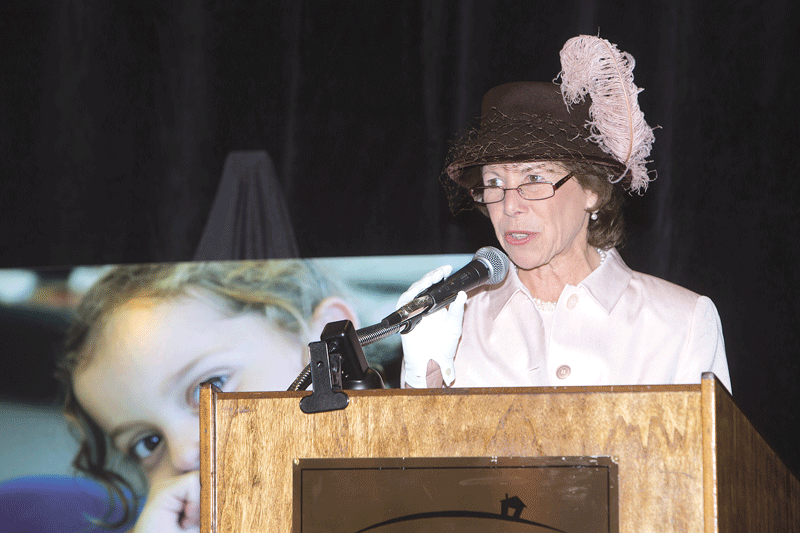
Departments People on the Move

The Harold Grinspoon Foundation announced the following:

Kate Conn

Kate Conn

Kate Conn has joined the foundation in a newly-created position as Chief Executive Officer. Together with its founder, Harold Grinspoon, Conn will work to further the Foundation’s philanthropic mission to enhance Jewish and community life in North America, Israel, and beyond, and develop innovative strategies as the organization celebrates 20 years of philanthropy. Conn most recently served as founding Executive Director and President of the Aldo Leopold Nature Center Inc., an educational and entrepreneurial nonprofit in Madison, Wisc. Conn grew the organization into one of the region’s leading institutions as she established regional and statewide cooperative networks and strong national partnerships with community, government, and industry leaders. She is credited with the creation of a groundbreaking interactive museum and learning center and award-winning programs. Conn has served in leadership capacities at the University of Chicago, Northwestern University, and several cultural organizations, philanthropic endeavors, and policy institutions. In addition to her nonprofit and community work, Conn was a special consultant for an American Girl book series and an author for the Wisconsin Historical Press Badger Biography series. Since its inception in 1993, the foundation has given more than $120 million in philanthropic support of Jewish programs. HGF initiatives include PJ Library, Sifriyat Pijama (PJ Library’s sister program in Israel), JCamp180, Voices & Visions, and Life & Legacy; and

Arlene Schiff

Arlene Schiff

Arlene Schiff will lead the foundation’s new Life & Legacy Program, a legacy partnership effort that incentivizes Jewish agencies, synagogues, and day schools to secure legacy gifts and steward donors. With widespread recognition that a large transfer of generational wealth is taking place — about $41 trillion by 2020, according to a 1999 Boston Foundation study — the Life & Legacy program aims to assist Jewish organizations with proactively securing endowments through legacy gifts. Schiff will lead the program after a successful tenure as executive director of the Jewish Federation of the Berkshires, where she worked since 2001. At the federation, she increased the donor base and fund-raising substantially and directed many community initiatives. Nationally, she has been active in Jewish community service with the Jewish Federations of North America. Locally, she has served on the Berkshire Housing Development Corp., the Berkshire Immigrant Center Advisory Board, the Lenox School Committee, and others. The Life & Legacy is a partnership program that invites up to seven communities a year to apply to partner with HGF. The foundation commits funds to the selected program for two years. If fund-raising goals are met, the partner receives a matching grant from HGF that covers 50% of the partner agency’s annual budget, up to $150,000, for each year. In this first year, the partners are the Foundation for the Charlotte Jewish Community, the Jewish Foundation of Memphis, the Greater Miami Jewish Federation, the Jewish Foundation of Greater New Haven, the Orange County Jewish Community Foundation, the Oregon Jewish Community Foundation, and the Jewish Community Foundation of Greater Mercer.

•••••

Three new board members were recently inducted for three-year terms to the Gray House, a Springfield nonprofit that helps neighbors facing hardships to meet immediate and transitional needs by providing food, clothing, and educational services in a safe, positive environment. They are:

Richard Marcil

Richard Marcil

Richard Marcil, owner of Golden Ear Studios and the Minister of Music for the Wachogue Congregational Church. He also conducts the annual Holiday Grand Chorus as part of a benefit to raise money for cancer research;


Susan Mastroianni

Susan Mastroianni

Susan Mastroianni, Partner and Director of Media Services at FitzGerald & Mastroianni Advertising in Springfield. She is also a member of the Rotary Club of Springfield and previously served on its Board of Directors; and


Gregory Schmidt

Gregory Schmidt

Gregory Schmidt, an Attorney with Springfield-based Doherty, Wallace, Pillsbury & Murphy P.C. He also currently serves on the Board of Directors of the Children’s Museum at Holyoke Inc. and the Advisory Board of the Scibelli Enterprise Center at Springfield Technical Community  College.


•••••


Rosemary Nevins

Rosemary Nevins

Royal LLP, the woman-owned, boutique, management-side labor and employment law firm, announced that Attorney Rosemary Nevins has been selected as one of Massachusetts Lawyers Weekly’s “Top Women of Law.” The program celebrates outstanding achievements by exceptional women. Each year Massachusetts Lawyers Weekly honors women who have made great professional strides and demonstrated outstanding accomplishments in the legal community. Nevins will be honored at an event in Boston in October.

•••••

Kate Campiti

Kate Campiti

Human Resources Unlimited, a Springfield-area nonprofit corporation that helps more than 1,300 people per year with physical and mental disabilities, recently named Kate Campiti to the Board of Directors. Campiti is the Associate Publisher of BusinessWest and the Healthcare News and has extensive experience in management, leadership, and sales. She is a graduate of UMass Amherst with a bachelor’s degree in Communications with a minor in Political Science. Prior to her current position, she served as a Sales Executive with OneStar Communications. Campiti joins Timm Marini, Chairman; Patrick Leary, Vice Chairman; Michael Moriarty, Treasurer; Charlene Smolkowicz, Secretary-Clerk; and board members William Marsh, Thomas Bienkowski, Ed Wytrych, Francis Fitzgerald, Curtis Edgin, Amy Royal, Chester Wojcik, and Alfonso Santaniello.

•••••

Christina Tuohey

Christina Tuohey

Christina Tuohey was recently appointed Director of Annual Giving and Alumni relations at Springfield Technical Community College by the STCC Board of Trustees. A graduate of Georgia State University, Tuohey brings several years of experience working in a variety of development and annual-giving positions. She has served as the Annual Giving Associate and Corporate, Foundations, and Government Relations Associate for the Museum of Science in Boston; Membership Development Specialist and Volunteer Development Specialist for the Girl Scouts of Central/Western Massachusetts in East Longmeadow; and most recently as the Fundraising Coordinator for the Muscular Dystrophy Assoc. located in Glastonbury, Conn.

•••••

Westfield-based Tighe & Bond recently announced professional milestones reached by four employees:

Page Czepiga

Page Czepiga

Page Czepiga, a Land Use Planner in the Westfield office and member of the American Planning Assoc., recently became a Certified Land Use Planner after passing the American Institute of Certified Planners (AICP) exam. The AICP designation is the most highly regarded certification in the field of land-use planning, and the designation requires an intensive certification-maintenance and continuing-education program to keep certification valid. Czepiga provides planning and permitting support for a wide variety of the firm’s projects, and she regularly performs environmental and zoning analyses for renewable-energy feasibility and land-use/redevelopment studies. Her experience includes brownfields redevelopment, wetlands, and environmental-resource permitting, and she is currently active in the preliminary planning and permitting of the $800 million Hard Rock International hotel and casino complex proposed in West Springfield. Czepiga earned her BS in Community and International Development from the University of Vermont;

Elizabette Botelho, an Engineer, recently passed her PE exam to become a licensed engineer. Botelho currently provides engineering services for solid-waste landfill projects and has completed hydrologic and hydraulic analysis to assess the flood hazard of more than 40 high hazard dams in Massachusetts. She works out of the firm’s Westfield office and has been employed at Tighe & Bond since 2006, when she graduated from Northeastern University with a BS in Civil Engineering;

• Engineer Cynthia Castello also passed her PE exam. She has worked on water and wastewater projects, and has provided construction services in Connecticut and design and construction services in West Springfield. She has five years of industry experience, has worked out of the firm’s Middletown office since 2011, and received her BA in Physics from Colgate University and her MS in Environmental Engineering from UMass Amherst; and

Christina Jones, an engineer at the Westfield office, also passed her PE exam. She has worked on water-system modeling projects for the cities of Chicopee and Portsmouth, N.H., as well as water-system design projects for Amherst and Connecticut’s Metropolitan District Commission and the South Central Connecticut Regional Water Authority. She is a member of Engineers Without Borders and is on the New England Water Works Assoc. program committee and the New England Water Environment Assoc. student activities committee. Jones began her career at Tighe & Bond in 2009 after receiving her MS in Environmental Engineering from UMass Amherst.

•••••

Maureen Buxton

Maureen Buxton

Richard Collins, President and CEO of United Bank, announced that Maureen Buxton is the 2013 winner of the President’s Award, the highest honor bestowed by the institution. The annual award is presented to an employee who exemplifies professional excellence through teamwork, integrity, a positive attitude, and a strong commitment to United Bank.  Buxton, the Personal Banker for United’s Chicopee branch, was instrumental in the training and transition of New England Bank employees in Connecticut following that bank’s merger with United last fall. Earlier in her United career, Buxton received the bank’s quarterly Service Excellence Award in recognition of her exceptional job performance. Buxton joined United Bank in 1998 as a Customer Service Representative at the Holyoke branch and was promoted to become the Personal Banker for United Bank’s first Chicopee branch when it opened in 2009.

•••••

Corey Lomas

Corey Lomas

Palmer-based Vartanian Custom Cabinets announced the addition of Corey Lomas as the company’s newest Sales Representative. Lomas holds a BA in Visual Arts with a concentration in Painting and Drawing from SUNY New Paltz. He has previous work experience in sales, which, combined with his education in the visual arts, provides an excellent foundation for his new post selling fine kitchen design and custom cabinetry. Lomas is a past winner of the Monson Council of Arts Rising Artist Award, and has exhibited his portfolio of drawings and paintings at the Wilbraham Public Library.