Home Posts tagged Events (Page 26)
Chamber Corners Departments

ACCGS
www.myonlinechamber.com
(413) 787-1555
 
• Thursdays through March 26: ACCGS Leadership Institute 2015, 1-4 p.m., at the TD Bank Conference Center, 1441 Main St., Springfield, in partnership with Western New England University.
 
• March 11: ACCGS Speed Networking, 3:30-5 p.m., at Frank Webb’s Bath Center, 145 Performance Blvd., Springfield. Network in a fast-paced round-robin format, then stay for the After 5. This event is open only to members. Reservations are $20 for members, $25 at the door. Includes complimentary ticket to After 5. Register online at www.myonlinechamber.com.
 
• March 11: ACCGS After 5, 5-7 p.m., at Frank Webb’s Bath Center, 145 Performance Blvd., Springfield. Reservations are $5 for members, $10 for general admission. Register online at www.myonlinechamber.com.

• March 24: ACCGS Pastries, Politics, and Policy, 8-9 a.m., at the TD Bank Conference Center, 1441 Main St., Springfield. For political and policy junkies. Reservations are $15 for members, $25 for general admission. Register online at www.myonlinechamber.com.
 
AMHERST AREA CHAMBER OF COMMERCE

www.amherstarea.com
(413) 253-0700
 
• March 26: Margarita Madness 2015, 5:30-7:30 p.m., at the Hadley Farms Meeting House, 41 Russell St., Hadley. Taste a variety of margaritas and vote for your favorites. This is a Division One competition between restaurant and business margaritas. Your votes will determine who will take home the coveted trophies. Business margaritas provided by Alden Credit Union, New England Promotional Marketing, Hadley Farms Meeting House, Country Nissan, Lord Jeffery Inn, TD Bank for Big Brothers Big Sisters of Hampshire County, Encharter Insurance, Applewood at Amherst, and many more to come. Restaurant margaritas provided by Bistro 63 at the Monkey Bar, Bread & Butter, Bridgeside Grille, Chandler’s Restaurant, the Pub, Lord Jeffery Inn, Hadley Farms Meeting House, Chez Josef, Johnny’s Tavern, and many more to come. Food provided by Emily’s Gourmet to Go, Something Special Catering, Pallazo Café, Glazed Donut Shop, Pop’s Biscotti, and Johnny’s Tavern. Tickets are $20 in advance and $25 at the door. For more information, contact the chamber at (413) 253-0700.
 
CHICOPEE CHAMBER OF COMMERCE
www.chicopeechamber.org
(413) 594-2101
 
• March 25: 21st Annual Table Top Expo and Business Networking Event, 4:30-7 p.m., at the Log Cabin Banquet and Meeting House, 500 Easthampton Road, Holyoke. Exhibitor cost: $125 for a table. Admission $10 in advance, $15 at the door. To register, contact the chamber at (413) 527-9414.
 
GREATER EASTHAMPTON CHAMBER OF COMMERCE
www.easthamptonchamber.org
(413) 527-9414
 
• March 25: 21st Annual Table Top Expo and Business Networking Event, 4:30-7 p.m., at the Log Cabin Banquet and Meeting House, 500 Easthampton Road, Holyoke. Exhibitor cost: $125 for a table. Admission is $10 in advance, $15 at the door. To register, contact the chamber at (413) 527-9414.
 
GREATER NORTHAMPTON CHAMBER OF COMMERCE
www.explorenorthampton.com
(413) 584-1900
 
• March 13: Microsoft Excel: Tips, Tricks, and Shortcuts, 9-11 a.m., at the chamber office, 99 Pleasant St., Northampton. Learn tips and tricks no one ever teaches you from the trainers at Pioneer Training. This workshop will present our favorite tips, tricks, and shortcuts that we have collected and developed over 15 years of teaching and using Microsoft Excel. Participants are encouraged to bring laptops and follow along with the instructor, but this is not required. Admission: $20 for members, $30 for non-members.
 
• March 17: 35th Annual St. Patrick’s Day Breakfast, 7:30-9 a.m., in the Hotel Northampton Grand Ballroom. Also, Join us at Fitzwilly’s for the annual after-breakfast toast and for the laying of the wreath at the Daley and Halligan memorial stone on the former state hospital grounds. Tickets: $20 per person. Tables of 10 also available.
 
• March 25: 21st Annual Table Top Expo and Business Networking Event, 4:30-7 p.m., at the Log Cabin Banquet and Meeting House, 500 Easthampton Road, Holyoke. Exhibitor cost: $125 for a table. Admission $10 in advance, $15 at the door. To register, contact the chamber at (413) 584-1900.
 
GREATER WESTFIELD CHAMBER OF COMMERCE
www.westfieldbiz.org
(413) 568-1618
 
• March 13: March Breakfast, 7-9 a.m., at Westfield State University, 577 Western Ave., Westfield. Platinum sponsor: Westfield Bank. Gold sponsor: Westfield Gas & Electric. Silver sponsor: FieldEddy Insurance. For more information or to donate a raffle prize, call the Chamber office at (413) 568-1618.
 
• March 18: March After 5 Connection, 5-7 p.m., at Noble Primary Care, 57 Union St., Westfield. Bring your business cards and make connections. Refreshments will be served. Tickets: $10 for members, $15 cash for non-members. To register, call Pam at the Chamber office at (413) 568-1618.
 
PROFESSIONAL WOMEN’S CHAMBER
www.professionalwomenschamber.com
(413) 755-1310
 
• March 18: Professional Women’s Chamber Tabletop Expo/Luncheon,
11:30 a.m.-1 p.m., at Storrowton Tavern, Carriage House, 1305 Memorial Ave., West Springfield. Featuring Tracy Noonan of Wicked Good Cupcakes and contestant on ABC’s Shark Tank. Reservations are $25 for PWC members, $35 for general admission. Register online at www.myonlinechamber.com.
 
YOUNG PROFESSIONAL SOCIETY OF GREATER SPRINGFIERLD
www.springfieldyps.com
 
• March 14: 2015 YP Cup Dodgeball Tournament, at Springfield College, 263 Alden St., Springfield. To register a team (up to eight players, two must be of the opposite sex ) or an individual, visit springfieldyps.com/2015-dodgeball-individual-registration-form. E-mail questions to [email protected]. Reception to follow at Nathan Bill’s Bar & Grill, 110 Pond Road, Springfield.
 
• March 19: March Third Thursday, 5-8 p.m., at the Storrowtown Meeting House and Carriage House, 1305 Memorial Ave., West Springfield. This event is open to everyone. Invite your friends. Food and cash bar. Admission: free for YPS members, $10 for non-members.

Agenda Departments

Speed-networking Event
March 11: Back by popular demand, the Affiliated Chambers of Commerce of Greater Springfield (ACCGS) will hold an afternoon of speed networking on March 11 at Frank Webb’s Bath Center, 145 Performance Blvd., Springfield, followed by an evening of informal networking at its After 5. The combination of events will provide attendees the opportunity to meet new contacts in a formal manner, then continue conversations in an informal and casual setting. The core concept to speed networking is the ‘elevator speech,’ a short summary of an individual, business, organization, product, or service that a person could deliver in the time span of a short elevator ride. Attendees will be divided into groups A and B. Members of each group will be seated across from each other. Each member of Group A will have 60 seconds to give his or her elevator speech to a member of Group B. A bell will ring, signaling the 60-second time is up, and each member of Group B will then get a chance to speak. The facilitator will signal when the 60 seconds are up again, and members of Group A will then move one seat to the right and begin the process again with a new partner. The round-robin format of networking will continue until the event is over. The event begins at 3:30 p.m. with registration and instructions. To accommodate the event, no admittance will be allowed after 3:55 p.m. The event ends at 5 p.m., and the After 5 runs from 5 to 7 p.m. Reservations are $20 in advance, $25 at the door, and only members of the ACCGS, Springfield Chamber of Commerce, or East of the River Five Town Chamber of Commerce are eligible to participate. Reservations include a complimentary ticket to the After 5. Reservations for the After 5 only are $5 for members, $10 for general admission. The After 5 is open to the general public. Reservations may be made online and in advance at www.myonlinechamber.com or by contacting Sarah Mazzaferro at [email protected].

New Lecture Series
March 12: BusinessWest and the Healthcare News are pleased to announce a new lecture series presented by Comcast Business. This series of lectures, panel discussions, and presentations will address timely and important business information, and is an ideal opportunity to meet industry leaders and network with area business professionals. The first event in the series, called “Technology Has the Power to Change Healthcare,” will be hosted by La Quinta Inn & Suites, 100 Congress St., Springfield. Panelists include Neil Kudler, vice president and chief medical information officer for Baystate Health; Michael Feld, CEO of VertitechIT and acting chief technology officer of Baystate Health and Lancaster General Hospital; and Delcie Bean IV, CEO, of Paragus Strategic IT. Registration begins at 7:15 a.m., followed by breakfast and networking at 7:30 a.m. and the panel discussion from 8 to 9 a.m. Admission is free, provided by Comcast Business, but RSVP is required by Thursday, March 5. Sign up online at businesswest.com/lecture-series, or call (413) 781-8600, ext. 10, for more information.

Celebrate Springfield Dinner
March 12: DevelopSpringfield will host its fourth annual dinner event in celebration of Springfield and the many accomplishments the community has achieved over the past year, along with exciting new initiatives underway. The event will take place from 6 to 9 p.m. at the MassMutual Center in Springfield. Festivities will include a reception with live music by the Eric Bascom Trio, auction activities, a cash bar, and hors d’oeuvres, followed by dinner, a brief program, and presentations. Platinum sponsors this year are MassMutual Financial Group, Baystate Health, and Health New England. Many other local businesses and organizations are also supporting the organization’s work as sponsors and participants at the event. DevelopSpringfield will once again present its Partner in Progress Award to recognize the outstanding contributions of three individuals toward revitalization in Springfield. Honorees are selected for their leadership and ability to motivate and inspire others. This year’s honorees are Jerald Griffin, co-founder of Harambee and the Stone Soul Festival; Kevin Kennedy, chief development officer for the city of Springfield; and Evan Plotkin, president and owner of NAI Plotkin. In addition to the program and award presentations, greetings will be provided by Springfield Mayor Domenic Sarno and Jay Ash, newly appointed secretary of the Commonwealth’s Executive Office of Housing and Economic Development. All event proceeds will support DevelopSpringfield’s redevelopment initiatives, projects, and programs. More than 450 attendees — including federal, state, and city officials; leaders from the business and nonprofit communities; and local residents — are expected to come together in support of ongoing efforts to advance development and redevelopment projects, stimulate and support economic growth, and expedite the revitalization process within the city. Registration and sponsorship information is available at www.developspringfield.com or by contacting Paige Thayer at (413) 209-8808 or [email protected]. Tickets cost $75 per person, and RSVP is required by Monday, Feb. 23.

PWC Luncheon
March 18: Tracy Noonan, co-owner of Wicked Good Cupcakes, will keynote the Headline Luncheon of the Affiliated Chambers of Commerce of Greater Springfield’s affiliate, the Professional Women’s Chamber (PWC), from 11:30 a.m. to 1 p.m. at the Carriage House at Storrowton Tavern, 1305 Memorial Ave., West Springfield. Noonan and her daughter, Danielle Vilagie, took their Cohasset-based cupcake baking company national after appearing on the ABC hit show Shark Tank. Wicked Good Cupcakes began when the mother-daughter team took cake-decorating classes as a way to spend quality time together. After posting their work online for friends and family, they found themselves being asked to create cupcakes for various events. The demand for their product became so high that they opened their first retail location in Cohasset in October 2011. As the reputation of their product grew, they found themselves getting hundreds of requests to ship their product across the country. However, they could not find a way to effectively ship cupcakes and have them arrive intact and fresh. That’s when they came up for the idea of a cupcake in a jar. Filling jars with freshly baked layers of cake, frosting, and filling, they were able to create a product that would stay fresh up to 10 days without refrigeration and could be easily shipped. The company’s popularity quickly grew, and, in 2013, Noonan and Vilagie appeared on Shark Tank, striking a deal with Boston-based shark Kevin O’Leary of O’Leary Ventures, and expanding their business by more than 600%, including a new retail location in Faneuil Hall in Boston and expanded facilities to handle online orders. In addition to cupcakes, the company’s product line now also includes gluten-free options, as well as pies, cheesecakes, and brownies in a jar, as well as French macaroons. Advance reservations for the luncheon are suggested and cost $25 for PWC members and $35 for general admission. Register online at www.myonlinechamber.com or by e-mailing [email protected]. PWC members who are season-pass holders must pre-register for the event by emailing [email protected].

‘Acting Skills for Real Life’
March 19 to April 16: The Division of Graduate and Continuing Education at Westfield State University will offer a class called “Acting Skills for Real Life: How to Connect and Communicate” on Thursday nights, March 19 through April 16, from 6 to 8 p.m. Students will learn about basic acting skills and theories, and how they can be applied to everyday situations such as job interviews and social settings, in addition to performances and public speaking. Course content includes vocal, movement, and imagination warmups and theatre games; improvisations around a specific set of circumstances, including real-life situations and role reversal; developing stage presence; and, if the class chooses, rehearsal and class performance of a brief scene or monologue as a rehearsed reading or ‘off book.’ The course will be taught by Nadia Creamer, who has a long career as a performer and a teacher of performing arts. Creamer was co-artistic director of Impulse Theatre and Dance for 28 years in New York, where she received more than 60 grants for her work. She was also a faculty member at New York University, Russell Sage, College of St. Rose, and Columbia-Greene Community College. The cost of this course is $80. Registration will be accepted until the first night of class. For more information and to register, contact Brandon Fredette at (413) 572-8033 or [email protected].

Mini-Medical School
March 19 to May 7: Baystate Medical Center’s Mini-Medical School, which begins its spring session on March 19, will give area residents a reason to come out of hibernation from the long, cold, snowy winter and join others interested in the expanding field of medicine. Mini-Medical School program is an eight-week health education series featuring a different aspect of medicine each week. Classes this spring will include sessions on various medical topics, such as surgery, emergency medicine, anesthesiology, pathology, and several others. Many of the ‘students,’ who often range in age from 20 to 70, participate due to a general interest in medicine and later find that many of the things they learned over the semester are relevant to their own lives. The goal of the program, offered in the hospital’s Chestnut Conference Center, is to help members of the public make more informed decisions about their healthcare while receiving insight on what it is like to be a medical student — minus the tests, interviews, and admission formalities. Each course is taught by medical-center faculty who explain the science of medicine without resorting to complex terms. Baystate Medical Center is the Western Campus of Tufts University School of Medicine and is the region’s only teaching hospital. All classes are held Thursday nights starting at 6 p.m. and run until 8 or 9 p.m., depending on the night’s topic. No basic science knowledge is needed to participate. Each participant is required to attend a minimum of six out of eight classes in order to receive a certificate of completion. Tuition is $95 per person and $80 for Senior Class and Spirit of Women members. Register for the spring semester of Mini-Medical School by calling (800) 377-4325. For more information, visit www.baystatehealth.org/minimed.

Difference Makers
March 19: The sixth annual Difference Makers award program, staged by BusinessWest, will be held at the Log Cabin Banquet & Meeting House. Difference Makers is a program, launched in 2009, that recognizes groups and individuals that are, as the name suggests, making a difference in this region. The class of 2015 — Katelynn’s Ride, MassMutual Financial Services, Judy Matt, Valley Venture Mentors, and the new ownership group of the Student Prince and the Fort — was profiled in the Feb. 9 issue. Tickets cost $60 per person, and reserved tables of 10 are available. To order tickets, call (413) 781-8600, ext. 100, or e-mail [email protected].

Stronger Businesses Program
March 20: The Stronger Businesses Program will take place at the Business Growth Center at Springfield Technology Park. Designed for business owners who are focused on growth and want to take a fresh look at their markets, revenues, and operations, this workshop meets for five mornings over a seven-week period and includes two private technical-assistance sessions, one price for up to three people per company, and peer-mentoring sessions over breakfast. “It is specifically designed not to be Business 101,” said Karen Utgoff, co-founder and facilitator of the program. “The series emphasizes active learning and immediate application of specific tools and techniques to gain fresh perspective and identify opportunities and challenges, with the goal of turning those insights into actionable steps.” Added Laurie Breitner, the program’s other co-founder and facilitator, “we were gratified to learn from participants in earlier sessions that they found the program very useful, and all reported that they had improved their businesses and made well-defined plans for future growth.” The Business Growth Center has again received a grant from the Massachusetts Growth Capital Corp. to support the Stronger Businesses Program. Business owners from underserved communities are particularly encouraged to attend. Additional information about this and other programs is available at www.businessgrowthcenter.org/seminars-workshops or by contacting Mary Marquez, assistant program manager, at [email protected] or (413) 355-5680.

High-speed Rail Discussion

March 24: The Affiliated Chambers of Commerce of Greater Springfield (ACCGS) will present a Pastries, Politics, and Policy program called “Riding the Rails: High-speed Rail Service from Springfield to Boston,” from 8 to 9 a.m. at the TD Bank Conference Center, 1441 Main St., Springfield. State Sen. Eric Lesser and Tim Brennan, executive director of the Pioneer Valley Planning Commission (PVPC), will discuss Lesser’s recently filed feasibility bill requiring the Mass. Department of Transportation to conduct a study on the viability of high-speed rail access between Springfield and Boston. They will also address the need for this service and how it can positively impact Western Mass. economies. While running for Senate, high-speed rail was the top priority in Lesser’s campaign platform, and, since being elected, has worked extensively on this issue. Brennan is an advocate for the high-speed east-west rail and, with the PVPC, is involved heavily in preparation for its possible implementation. The program cost is $15 for chamber members, $25 for general admission. For more information, contact Sarah Mazzaferro at [email protected] or (413) 755-1313.

Not Just Business as Usual
April 30: The Springfield Technical Community College (STCC) Foundation’s Not Just Business as Usual (NJBAU) event is one of the premiere networking events for business leaders in Western Mass. This annual celebration, in its sixth year, is a celebration of innovative thinking which gives participants the opportunity to learn from business experts while raising significant funding for the STCC WORKS scholarship program. The event will be held at the Naismith Memorial Basketball Hall of Fame. A cocktail and networking reception will be held from 5:30 to 7 p.m., with dinner and the keynote speaker, Google Engineering Director Steve Vinter, to follow from 7 to 8:30 p.m. Vinter has overseen the growth of Google’s Cambridge site from 15 software engineers in 2007 to more than 900 today. He is responsible for developing digital-publishing products such as Google eBooks, Google Play Newsstand, and Play for Education, and has over 20 years of industry experience working in the Boston area, focusing on building products and services for hundreds of millions of users of mobile and cloud computing. He also is the co-founder of MassCAN, a partnership of organizations which collaborate to inspire and educate students in Massachusetts to learn computing and prepare them to lead and innovate the future economy, which will be driven by computer technology. This year, NJBAU will feature interactive workstations featuring the STCC Mobile SIM and Engineering program. Tickets and sponsorship opportunities are now available. Tickets are $100 each, and sponsorships begin at $1,500. For additional information or to become a sponsor, contact Christina Tuohey, STCC director of Annual Giving and Alumni Relations, at (413) 755-4475 or [email protected]. To purchase tickets online, visit www.stcc.edu/njbau.

40 Under Forty
June 18: The ninth annual 40 Under Forty award program, staged by BusinessWest, will be held at the Log Cabin Banquet & Meeting House. Details on the event, which honors the region’s most accomplished and civic-minded professionals under age 40, will be published in upcoming issues. The class of 2015 will be revealed and profiled in the April 20 issue.

Daily News

MONSON — Monson Savings Bank has announced the appointment of Charlene Prefontaine as the bank’s newest mortgage loan originator.

Prefontaine is a seasoned professional with more than 30 years of experience in banking and more than 12 years in residential lending. She comes to Monson Savings with a reputation of helping borrowers find the right financing package while providing outstanding service to customers and real-estate professionals alike. She prides herself on helping her customers achieve their dream of owning a home with ease. She is a member of the Realtors Assoc. of Pioneer Valley, BNI, and the Westfield Chamber of Commerce Ambassadors Club and Events Committee.

“We are extremely pleased to have Charlene join us,” said Steve Lowell, president of Monson Savings Bank. “She has a wealth of knowledge and is completely dedicated to customer service, which is certainly the right fit for our team.”

Daily News

CHICOPEE — The Small Plates Chef Fund-raiser to benefit the Gray House has been rescheduled to Monday, March 2. It was originally scheduled for Jan. 26, then Feb. 9, but was postponed both times due to a snowstorm. The Gray House is hoping “the third time is the charm,” said Dena Calvanese, executive director at the Gray House.

Chef Hubert Gottschlicht of the Munich Haus in Chicopee will hold a cooking class and demonstration at the Munich Haus from 6 to 8 p.m. Tickets are $50 and can be purchased through PayPal at bit.ly/1AciOLh. Tickets must be purchased in advance, as seats are limited. Participants can watch the master chef prepare several German delicacies and join in or sit back and enjoy the presentation. A light buffet will be provided in addition to a cash bar.


“This is a great way to enjoy a night out with friends and eat some fabulous food, all while benefiting a good cause,” said Dena Calvanese, executive director of the Gray House. “We’re planning on holding these events on a monthly basis, if possible, with different area restaurants. We held our first Chef Fund-raiser in November with Samuel’s Sports Bar at the Hall of Fame, which sold out quickly.”


The Gray House is a small, neighborhood human-service agency located at 22 Sheldon St. in the North End of Springfield. Its mission is to help neighbors facing hardships to meet their immediate and transitional needs by providing food, clothing, and educational services in a safe, positive environment.
 For more information about the Chef Fundraiser, visit www.facebook.com/thegrayhouseinc or call Calvanese at (413) 734-6696, ext. 100.

Daily News

SPRINGFIELD — Just four days after the birth of their son at Baystate Medical Center, Harold and Kristin Coles learned that Joe had mosaic Down syndrome and a blood disorder called transient myeloproliferative disorder found almost exclusively in newborn babies with Down syndrome. At age 2, Joe was diagnosed with acute myelogenous leukemia, which involved an aggressive treatment plan including chemotherapy lasting 72 consecutive treatments. It was during his care at Baystate Children’s Hospital that his appendix also burst, sending him into emergency surgery.

Joe’s story is just one of many to be heard during the often-emotional annual 94.7 WMAS Radiothon, benefiting Baystate Children’s Hospital, to be broadcast for three days beginning Thursday, March 5, and ending Saturday, March 7. There will also be a live Radiothon remote broadcast indoors at Holyoke Mall at Ingleside on March 7 from 11 a.m. to 1 p.m. During last year’s Radiothon, sponsors and listeners pledged $254,341 in support of local healthcare programs for children at Baystate Children’s Hospital.

“Joe and other children cared for at Baystate Children’s Hospital truly benefit from the generosity of those pledging their support to the only comprehensive children’s hospital in western Massachusetts,” said Jane Albert, vice president of Development, Baystate Health, and executive director of the Baystate Health Foundation.

On-air personalities at 94.7 FM WMAS — led by the Kellogg Krew of Chris, Dina, and Lopez — will again continue this year with their regular radio formats throughout the day, interspersed with live and taped interviews featuring young patients and their families, as well as community donors and staff from Baystate Children’s Hospital. They will be asking listeners to pledge their support by calling in donations to phone banks at the hospital.

Broadcast hours for the Radiothon will be from 6 a.m. to 6 p.m. on Thursday and Friday and from 10 a.m. to 2 p.m. on Saturday. Listeners will have an opportunity during the Radiothon to join the Miracle Maker Club, requiring a pledge of at least $15 per month on a credit card or a one-time donation of $180 or more. When listeners become a member of the club, a toy or game from Hasbro Inc. — the Radiothon’s Miracle Maker sponsor — will be delivered in their name to a young patient in Baystate Children’s Hospital.

Those wanting to become a Change Hero to raise funds for the Radiothon can create their own fund-raising web page by visiting www.baystatehealth.org/radiothon. Change Heroes who turn in their funds by March 31 and raise $100 or more will have an opportunity to win a special prize.

As for how Joe is managing today, some 10 years later, the good news is that he is flourishing. Joe is lovingly referred to as the “mayor of Baystate” and is a fixture at fund-raising events such as the upcoming Radiothon.

Baystate Children’s Hospital is one of 170 fund-raising Children’s Miracle Network Hospitals. All money raised through the Radiothon goes directly to Baystate Children’s Hospital in Springfield, Baystate Mary Lane Hospital in Ware, Baystate Franklin Medical Center in Greenfield, and Baystate Visiting Nurse Assoc. & Hospice to support children’s health programs and services.

The presenting sponsor for this year’s Radiothon is Health New England. The Change Hero program sponsor is Pioneer Valley Credit Union. Giggle Break sponsors are Freedom Credit Union and Gleason Johndrow Landscaping. For more information on the Radiothon, visit www.baystatehealth.org/radiothon or call (413) 794-1486.

Cover Story Sections Technology
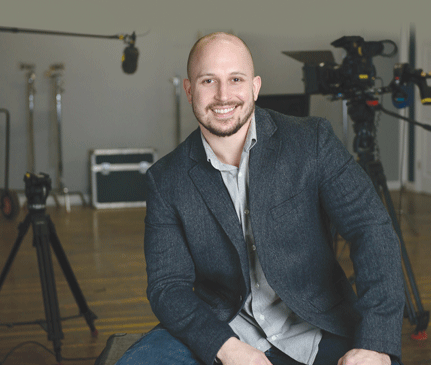
Video Specialist Chris Thibault is Focused on Growth

Teebo-DPartChris Thibault was asked to pinpoint why he believes his work — everything from television commercials to instructional videos on deck screws — stands out in a field crowded with competitors.

He kept coming back to the word ‘edgier,’ as in “some people think my style’s a little edgier than what you would get from a corporate video-production company. When they’re looking for something to connect and be sharable and be cool, for lack of a better word, people come to me.”

When pressed for more specific definitions of what amount to technical terms — ‘edgier’ and ‘cool’ — Thibault, founder and president of Chris Teebo Films (he says that spelling makes his name easier to pronounce and his company easier to find), struggled somewhat, as might be expected, because of the subjective nature of those words.

“Anyone can make a pretty picture,” he told BusinessWest before a lengthy pause as he searched for more words. “I just try to bring my own style into it and not base anything off a template.”

With that, he decided that the best way to get his points across was to play a shorter version of what eventually became a promotional video and television commercial he produced a few years ago for something called the Great Bull Run — a series of events that, as the name suggests, brings the Spanish tradition of running with the bulls to this country.

“I like to take risks — that’s what they teach you in art school starting on day one, to take risks when you can,” he said as he rolled the footage, which showed close, detailed shots of individuals running alongside 1,500-pound bulls, an effect created with several cameras, including one strapped to one of the runners (christeebo.com/portfolio/the-great-bull-run). “You can cover this like a news story, and there’s nothing wrong with news, but we wanted to get right into the mix and capture what this is about. People who run with bulls, or might run with bulls … they want something edgier.”

Teebo’s ability to create that intangible has helped him grow his now-Springfield-based company dramatically in recent years, with a 60% increase in revenues in 2014 alone, and add to his portfolio of work.

For example, it now includes several Big Y commercials featuring New England Patriots nose tackle Vince Wilfork, a promotional video for the Spirit of Springfield’s Bright Nights lighting display (produced for its 20th anniversary), television commercials for political candidates such as recently elected state Sen. Eric Lesser, and much more.

Some of these works are edgier than others — political office seekers, not to mention Big Y, tend to be fairly conservative, while the Bright Nights video was shot from the perspective of a young child and is thus quite compelling — but together, they have helped Thibault meet the ongoing challenges of gaining word-of-mouth referrals and generating business from that marketing tool known as the Internet.

And he hopes an upcoming project — a promotional video of Springfield being financed by its Economic Development Department with the goal of showcasing current initiatives and inspiring more of them — will create more momentum in efforts to build his brand and get involved in Springfield’s comeback.

“I’m really excited about this project,” he said. “I’m going to knock it out of the park with that one.”

Looking ahead, Thibault, as he said, wants to not only help promote Springfield through that video now in the planning stages, but be part of the city’s turnaround. He recently relocated to a office in 1350 Main St., and is conceptualizing plans to develop what he called “shared creative space” in the city.

Such a facility, a large studio, would become workspace for a host of creative professionals, including photographers, videographers, audio engineers, and even musicians, he explained, adding that there are models for such a development in New York and Boston that he hopes to emulate.

In the meantime, his more immediate goals are to expand the portfolio with more ‘edgy’ work, add additional employees, and grow Chris Teebo Films into a regional force within this industry.

For this issue and its emphasis on technology, BusinessWest talked at length with a young business owner focused (there’s another industry term) on creating images that get results, no matter how the client chooses to measure them.

Setting the Stage

Like most individuals in this business, Thibault can trace his interest back to his high-school years. In this case, it was a 10th-grade class in video production at Springfield’s Sci Tech that got him hooked.

“I thought this was the coolest thing ever,” he noted. “It combined all the aspects that I loved. I was always an artistic kid — I would always draw, mess around with music and sound — and I thought video combined all that, so I fell in love with it.”

image from a video

This image from a video produced for the Great Bull Run displays what Chris Thibault calls an “edgier” style that defines much of his work.

Finding ways to express this affection became more difficult when his family moved to West Springfield. The city’s high school didn’t have video production classes, so he created some.

He bought a Sony handycam, began filming the school’s sports teams, and created seasonal highlight videos that garnered both revenue and acclaim.

“They would play them at the year-end banquet, and the video would get a standing ovation,” he recalled. “These weren’t huge events, but everyone would stand up and clap, and that was a great feeling.”

Thibault was accepted at the prestigious School of Visual Arts (SVA) in New York City, starting classes there just a few days before 9/11 — an event, like many others, that produced learning experiences far outside the classroom that have stayed with him to this day.

“New York City is a school unto itself,” he told BusinessWest, adding that, while attending SVA, he lived in Brooklyn Heights, in the shadow of the Brooklyn Bridge, and watched tens of thousands of people stream over than span from lower Manhattan on the morning of the terrorist attacks, most all of them covered in a gray dust.

He didn’t know exactly what was going on, but his artistic tendencies compelled him to buy a small disposable camera and grab a seat on the only operating subway line still bringing people into Manhattan.

“I was probably 15 blocks from the towers,” he recalled, adding that when the American Express building, also known as Three World Trade Center, fell, the ground shook, and he knew something serious was going on. Perhaps the most unforgettable moment, though, involved a news reporter he remembered seeing on television.

“There was a woman coming back with a baby covered in soot, she was walking up the street,” he recalled. “This newswoman started yelling to the cameraman, ‘get her!’ She kicked over a trashcan, the cameraman got on top, filmed her, then jumped off, and the newswoman got the lady on camera to do a story.

“It was just a New York mentality — ‘let’s do it.’ There was no fear,” he went on, adding that this philosophy manifests itself in some of his current work.

But it would be awhile before Thibault could really start expressing himself artistically.

Indeed, he would soon leave SVA, in part for financial reasons — “New York is great, the school was great, but it’s very expensive out there” — but also because he felt a need, and desire, to get working.

That work, however, involved mostly wedding and event videography while he also drove a truck for his father.

“I did cheerleading events, dance competitions, anything like that; anything that had to do with video, I would take the job,” he said, adding that he did so to pay off the camera he purchased and build a name for himself.

“At the end of the day, my heart wasn’t really in it — filming weddings is not my passion,” he went on, adding that, as his skills improved and his reputation grew, he eventually started doing work for commercial clients and never looked back. “It’s tough to break into commercial video when you’re doing events, and at one point, I just said, ‘I’m finished with this,’ and stopped taking down payments for weddings, even though it was tough to do so, because I was trying to build a business.”

Thibault said his big break, if one could call it that, came when he pitched an idea to the owners of the Springfield Armor, the NBA Developmental League team that came to the city in 2009, to do a promotional video and build excitement for the team before it actually arrived in the City of Homes.

“I felt a buzz around Springfield when they were coming in, and I just wanted to do something great for the city as well as the team,” he recalled as he played that video, which showed people of all ages and persuasions playing hoops, a young man dribbling a basketball over the Memorial Bridge, the unveiling of the Armor name and logo, and other scenes designed to build interest in the Armor and the sport. “It was a commercial about the team, but without the team — they weren’t here yet — and it was cool.”

The spot was originally designed for the web, but it was so well-received, it started airing on area TV stations, said Thibault, adding that he was later approached by a marketing firm representing a Developmental League team in Texas to do something similar.

On-the-spot Analysis

With the Armor video and other works now in his portfolio, Thibault had more to show marketing firms and prospective clients, and work started to come his way, as both director and producer of content through Chris Teebo Films and as a freelance director of photography.

Indeed, as the latter, he’s been involved with projects ranging from promotional shoots for office supplies giant Staples and motor oil maker Castrol to part of an episode for TLC network’s Sex Sent Me to the ER, a show that has actors re-enacting real-life accidents that occurred during sex.

“It’s a terrible show … but there was a couple in Connecticut, and they were looking for a studio closer than New York, and the producers out in L.A. hired me for that segment,” said Thibault, adding that it was shot in his studio in the cavernous Cabotville Industrial park in Chicopee.

He rarely does freelance work these days, primarily because Chris Teebo Films has secured enough work to keep him quite busy. And it comes from several sources.

For starters, there’s the commercials he’s shot for Big Y featuring Wilfork, the Springfield-based grocery chain’s main spokesperson. He’s now done five spots spotlighting the 350-pound lineman as pitchman for pizza and sandwiches, including one that aired during the recent Super Bowl.

Chris Thibault

Chris Thibault, seen here on location for a Big Y commercial featuring Vince Wilfork, has gained a number of new clients in recent years.

Thibault has also added a number of other commercial clients in recent years, including political candidates such as Lesser, who captured his seat last fall, and Mike Bissonnette, who served several terms as Chicopee’s mayor, as well as regional companies and nonprofits ranging from Doctor’s Express (a new client) to Spirit of Springfield; from United Way of Pioneer Valley to FastenMaster, a subsidiary of Agawam-based OMG Inc. that specializes in deck and trim screws and other products.

One wouldn’t expect deck screws to be the subject of video productions defined with the word ‘edgier,’ but Thibault said he’s managed to do just that.

To demonstrate, he went back to his computer and called up a video featuring Gary Daley, owner of America’s DeckBuilder, LLC, using FastenMaster products, one of several spots Teebo has produced in a series that has taken him all over the country.

“They’re showcasing pros that use their products, and it’s become a very effective way of promoting the brand,” he said, adding that he also creates “tips and tricks” videos for the company. “I think FastenMaster is brilliant in doing this; they’re creating content for this industry that doesn’t exist, and they’re giving people something to watch and something to aspire to.”

Overall, Thibault said his goal is to produce videos that, like the one for the Great Bull Run, get not only shares and likes on Facebook and YouTube (although those are important), but also results for the client.

In the case of the Great Bull Run, for example, his video was used by organizers of the event when they appeared on Shark Tank, and, Thibault believes, it helped them secure $1.75 million in funding from shark investor Mark Cuban.

“Barbara Corcoran [one of the show’s ‘sharks’] actually said, ‘what a great video’ right on the air, which is cool,” said Thibault, adding that he plans to put that footage and commentary on his revamped website.

To get results, Thibault says he has to trust his instincts, take risks when they’re appropriate (there are many times when they are not), and work with the client without being limited by its imagination.

“I try to create whatever I see in my mind without letting even a client hold me back,” he told BusinessWest. “Because, while I value clients’ opinions — they help me do my job better — sometimes they don’t know exactly what they want, and they’re using some kind of template as a model.”

That’s a Wrap

Looking ahead, Thibault said this industry moves too quickly and unpredictably for five-year plans, so he’s moving in much shorter increments.

His immediate goals are to continue building the portfolio, hiring additional staff (there is currently one full-time employee with others hired on a freelance basis), and advance those aforementioned plans for shared creative space.

“There’s some great creative talent in Western Mass., but people initially think they have to leave and go to New York or Boston to pursue a career,” he said. “My goal is to help keep some of that talent here.”

While doing that, he plans to go on taking risks, producing video with an edge to it, and focusing on the big picture, figuratively and quite literally.

George O’Brien can be reached at [email protected]

Insurance Sections
Insurance Companies Enlist Help from Homeowners to Prevent Losses

CoverageIceDamDPart
When recalling the bizarre weather that descended on Western Mass. in 2011 — tornadoes in June, midsummer flooding, the freak pre-Halloween snowstorm — it’s easy to forget that, even absent all of that, the year would have been a challenging one for home insurers.

The reason? A January and February riddled with ice dams and roof collapses, thanks to snow that seemed to fall every other day for weeks on end, gradually building up the weight on houses and damming under the eaves, causing water to pour into homes.

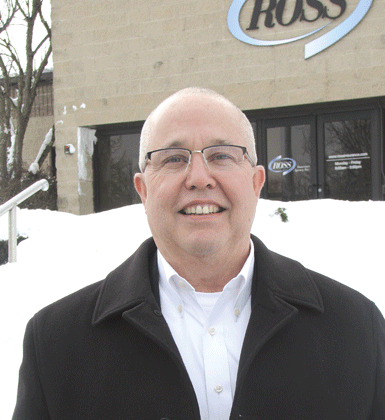
“We paid a lot of claims. That was a big deal,” said Kevin Ross, vice president of Ross Insurance in Holyoke. But while the past few weeks have brought a similar onslaught of snowstorms, he doesn’t expect nearly as many claims this year.

“A lot of people are absolutely more attuned to this; everywhere I go, people are talking about getting a roof rake and cleaning off their roof,” he told BusinessWest. “People are well aware of ice dams and the problems they can cause. I just contacted a roofer to clean off my roof because ice is starting to build up in the gutter. In general, the population understands what can happen, and everyone is cleaning off the roof now.”

It’s a learned behavior being observed across the industry.

“We’ve had a couple of claims come in,” said Corey Murphy, president of First American Insurance in Chicopee. “Fortunately, it’s not as bad as it has been in the past, even with some of these strong storms we’ve had.”

John DiStefano of Preferred Mutual Insurance agreed.

“As I drive around, I see homes where people have used roof rakes to get some snow off around the edges, or they have people going up on the roof shoveling for them. That’s always a proactive approach,” said the personal-lines territory manager for Massachusetts and New Hampshire.

That’s good news for both homeowners and insurers, he said, considering that such events are covered by most basic plans. “Roof collapses and water damage, where water seeps into the home, is covered under most forms. That is a pretty common thing.”

Therefore, it’s good news for insurance companies — which implemented rate increases of 5% to 15% regionally after the 2011’s series of unfortunate events — that customers are increasingly taking matters into their own hands by keeping their roofs and gutters as clear of snow as possible.

But when it comes to winter home hazards, they say, roofs are only part of the picture.

Peak Problems

Typically, Ross said, homeowners facing winter roof damage don’t have to scramble to see if they’re covered.

“The standard policy doesn’t have to change to provide coverage of interior or exterior dmage caused by an ice dam, or even the collapse of a building,” he noted. “However, there are certain exclusions for the collapse of a fence, a patio, a swimming pool — those are not covered. Collapse of foundations or retaining walls, bulkheads, are not covered.”

Kevin Ross

Kevin Ross says homeowners have become more proactive about preventing roof damage during the winter, and insurance companies have become better at educating them.

But once an ice dam is reported, “right away, the insurance company will pay a reasonable amount to remove ice and snow from the roof to prevent further damage,” he explained. “But only once the damage has begun — we’re not going out to clean off everyone’s roof.”

The immediate drama of an ice dam, pouring water into interior spaces, can panic policyholders, Ross added. “They’re wondering, ‘what should I do?’ Call the insurance agent right away; they will only take one deductible until all the snow is gone from roof.”

That could encompass the entire winter, he noted. “Don’t be afraid that a week later you might have more water coming in. It’s considered one event until all the snow is off the roof. So, once it starts, once you notice water inside the house, call your agent right away.”

As for roof-collapse concerns, that’s a tricky area to navigate, because the weight of the snow isn’t always clear from a visual check, forensic meteorologist Steve Wistar noted at accuweather.com.

In the Northeast, he explained, roofs are generally designed to support 30 pounds per square foot, but some are built to support 40, 50, or even 100 pounds per square foot. Further complicating matters, that weight is determined by water content, not merely depth.

Specifically, dry, powdery snow weighs less than wetter snow, and its flaky texture makes it prone to drifting, which is ideal for roofs designed to handle drifting snow. But, over time, snow compacts and settles down, meaning the snow won’t be as deep, but the weight will be the same, Wistar said.

Finally, when temperatures rise and snow becomes rain, the snow already coating rooftops can become saturated with moisture, weighing it down. And even when the snow does begin to melt, it can refreeze around gutters and drains, trapping more melting water on the edges of the roof — which, of course, can cause ice dams.

Columbia Gas of Massachusetts recently issued yet another concern for homeowners regarding rooftop snow accumulation — specifically, a number of incidents involving large icicles and snow accumulation falling from rooftops onto natural-gas meters, causing gas-line ruptures and gas leaks.

The company noted that it’s important that natural-gas meters and exhaust vents for heating equipment and other appliances are free of snow and ice, as gas equipment requires adequate airflow for safe combustion — and proper venting of appliances — to prevent dangerous carbon-monoxide situations.

prevent ice dams

Recent winters in Massachusetts have seen brisk sales of roof rakes as homeowners try to prevent ice dams from forming.

Columbia Gas president Steve Bryant encouraged homeowners to use a broom — not a shovel — to clear ice and snow from gas meters, and to avoid kicking or hitting the gas meter to break away snow and ice.  “Don’t shovel snow up against your meter.  Be careful when using a snow blower or snow plow near your meter. Where possible, have a clear path to your gas meter in the event a technician or emergency responder should require access.”

Cold Snap

When protecting their homes from cold-related damage, Ross said, customers shouldn’t look outside only.

“Losses can occur if you don’t keep adequate heat inside the home,” he noted. “Sometimes, when you leave for a week in Florida, you figure, ‘I’ll just turn my thermostat down and save on energy costs,’ and you come back to find that a pipe froze and burst. That’s something else from a loss-control standpoint. You need to keep adequate heat in home to keep things from freezing. It’s important to maintain the heat at 60, 62 degrees so they don’t have that problem.”

DiStefano agreed. “Do everything you can to maintain temperature,” he told BusinessWest. “Also, if you’re going away, shut off the water. That way, if a pipe breaks, it’s not a major problem. It’s easy to do, but so many people don’t do that.”

Because home insurance covers personal liability in addition to property damage, he also encourages customers to keep sufficient ice melt handy to prevent slips and falls by the mailman, UPS driver, or neighbors.

“The policy does provide personal liability coverage for slip-and-fall types of claims,” Ross added. “The owner of the property has a responsibility to keep their walkways and driveways, safe for pedestrian traffic. That’s definitely another area people really need to be cognizant of right now.”

It’s not like winter necessarily poses more weather-related insurance hazards than the rest of the year; damage from warmer-weather events, like tornadoes and hurricanes, are typically covered, Ross said, although policyholders might want to check on whether they’re in a covered flood zone and, if not, whether they’d like to add that to their plan as well.

But cold-weather threats are typically slower-developing, DiStefano said, giving insurance clients a chance to prevent them with tools as simple as roof rakes and sidewalk salt.

“More and more companies, like Preferred Mutual, have our websites set up with information for the general public to look at,” he said, “and we talk about what to do during the winter months to prevent losses.”

That pleases Ross, who clearly recalls the surge of claims in early 2011, when roof collapses and ice dams caught too many Western Mass. residents off guard.

“It was huge,” he said. “But it’s not going to be quite the same this year from a claim perspective, because people are more proactive; they’ve learned from it. A lot of people are raking the snow off already, getting the snow out of the gutter before the next storm. You have to stay on top of it. It’s a big maintenance issue.”

And one with no end in sight, Bryant added. “With record snowfall over the past month,” he said, “this winter season continues to be a challenge for us all.”

Joseph Bednar can be reached at [email protected]

Commercial Real Estate Sections
Former Auto Dealership Is Transformed into a Unique Retail Facility

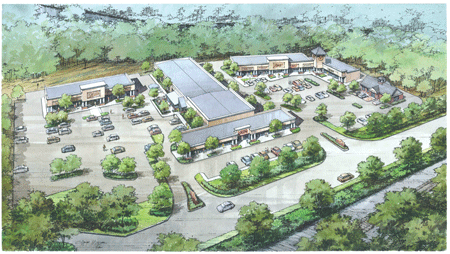
architect’s rendering

This architect’s rendering shows current initiatives as well as future plans for the former Balise Ford dealership on Route 20 in Westfield.

The Balise Ford dealership on Route 20 in Westfield closed its doors in 2007, and as the years went by, it remained vacant, becoming somewhat of an eyesore in the city, visible to everyone traveling along that busy thoroughfare.

But while most saw a troubled property beset with challenges when it comes to reuse, Nabil Hannoush developed a far different view. The Westfield resident, vice president of the Hannoush Jewelers chain and serial entrepreneur, saw it as an ideal location for a retail plaza and home to many separate but nonetheless synergistic businesses that he and his wife, Julie, had created or were planning.

Today, thanks to that vision and a determination to make it reality, the 11-acre property is being transformed into a center that now houses several retail enterprises, many of them health-related, including a restaurant, a baseball-and-softball training center called Extra Innings, and fitness facilities. And there could be many more added in the years to come as the Hannoushes advance plans to expand the plaza through new construction.

“I drove by the property every day for years and always thought it was a great location,” said Nabil, adding that it is positioned at the gateway to the city near the border with West Springfield and is easily accessible.

Talk about the property turned to action last year when the Hannoushes closed on the former dealership. They soon relocated the Extra Innings franchise they had acquired in Agawam into the facility and commenced buildout for an eatery they would call ShortStop Bar & Grill, which opened late last fall. The couple is also renovating space in the building to house Expert Fitness Health Club, which they acquired three years ago and is currently located further west on Route 20, and has plans to move still another business they own, East Longmeadow-based All Team Apparel, onto the site.

The various enterprises will support one another, and in some cases they already are, said Nabil, noting that sports teams and family members coming to watch them train are supporting the restaurant, and those teams will likely patronize All Team Apparel. And this base of retail establishments should attract other businesses to that location for other phases of its development.

Overall, Hannoush envisions five phases, with two, Shortstop and Extra Innings, already completed. Phase 3 is the new Expert Fitness, while phase 4 will involve erecting a new, 6,000-square-foot retail center on the east side of the property, while phase 5 will see another 18,000-square-foot retail facility on the west side of the site, plans that have been approved by the city.

Hannoush hopes phases 4 and 5 will include health- and wellness-related businesses and possibly a bank branch.

For now, though, the Hannoushes are focused on driving business to the existing enterprises and continuing to find imaginative ways to repurpose the space that once housed a showroom, service bays, a parts department, and other features of an automobile dealership.

Indeed, the existing building held some unusual challenges, including a dozen oversized garage doors, built to allow vehicles to enter and exit the auto dealership and repair bays.

Hannoush’s original plans were to gut the interior, remove the doors, and fill in the space. “But one night, I thought, if kept them, we could have an indoor-outdoor facility that would allow people to walk through the building and enjoy the outdoors,” he said. “Teens and young people playing baseball or softball could enjoy the breeze when the doors were open or go outside and play catch or practice.”

Nabil Hannoush, seen here with his daughter, Monica

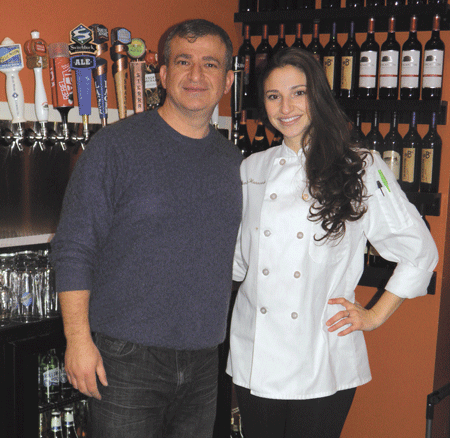
Nabil Hannoush, seen here with his daughter, Monica, the executive chef of ShortStop Bar & Grill, says the facility is not a typical sports bar.

So the garage doors remain, and last summer, parents were able to watch their children practice while they waited outside.

“My hope was to build something that Westfield and Western Mass. can be proud of,” said Hannoush. “But I had to keep thinking outside the box because I wanted to create something that is different.”

Driving Force

Barry Wadsworth, director of operations for the complex and general manager of ShortStop Bar and Grill on the property, said the project is an exciting venture that compelled him to get involved.

The founder of the Holyoke Blue Sox met Hannoush after selling 51% of the team, and was captivated by his plans.

“Nabil’s vision is very exciting because he wants to make this a place the entire community can enjoy,” Wadsworth said, adding that it was the ideal location for the Hannoush family to expand its health-related businesses.

“Expert Fitness has more than 2,500 members; they needed a bigger location, and this building is a perfect fit,” he explained. “It allowed them to consolidate the gym, batting cages, and sporting-goods store associated with Extra Innings into one location.”

The new, 10,000-square-foot Expert Fitness has been under construction for some time on the west side of the building and is expected to open March 1. However, the Cage, a facility housing programs that fall into the category of extreme fitness, is already operational in a different area of the building, and a protein-shake bar is being built outside the indoor entrance to the gym, a few steps away from the entrance to the restaurant.

“The Cage holds hardcore classes that include indoor and outdoor boot camps, spinning, and group fitness,” Hannoush said. “It is one of the first of its kind in the country, and from April to November, we have what we are calling ‘Muscle Beach Westfield,’ a weightlifting station outside.

“It’s something different,” he went on, as he alluded again to his efforts to “think outside the box.”

That phrase can certainly be used in conjunction with ShortStop, which opened Dec. 19. It is technically a sports bar, but one with a decidedly different look and feel.

A fireplace burns brightly as diners relax in a cheerful room with rich, mahogany furniture and three walls of enormous windows. And although 36 flatscreen TVs are placed strategically above the tables in the bar and dining area, Nabil said Julie designed it to be welcoming to women.

“Typical sports bars are not doing well throughout the country because they are not female-friendly; they are often too loud,” Nabil explained, adding that the décor was carefully chosen and the atmosphere is suitable for families. The menu, meanwhile, includes everything from filet mignon to burgers to a wide array of healthy choices, including different types of salads, along with gourmet desserts created by executive chef Monica Hannoush, the owners’ daughter.

The sound of bats striking baseballs and softballs can be heard within ShortStop, at least when the doors are open, because it is separated from Extra Innings by a 2,000-square-foot area known informally as Ball Park Seating.

It contains a 10-by-15-foot flatscreen TV with eight speakers, smaller flatscreens on another walls, and tables that overlook the batting-cage tunnels. Some families choose to eat there and watch their children practice, and it is the setting for live entertainment on Friday nights.

“The area was packed on Super Bowl Sunday,” said Wadsworth. “Groups of 10 and 12 came here to watch the game.”

Barry Wadsworth

Barry Wadsworth says Extra Innings offers a wide array of sporting goods for baseball and softball players.

ShortStop opened with little fanfare, and it has not done any advertising, but word has spread quickly, and business is brisk.

“Parents come here while their children are practicing and have lunch or order food to take home,” said Wadsworth, adding that Extra Innings provides a fairly steady stream of customers, and the new Expert Fitness is expected to do the same. “Many are here so frequently, we know their names.”

The sports bar features a bump-out with an 1,300 additional square feet that was added to the building to create the dining room. Garage doors that remain will open onto the patio, which is surrounded by a wrought-iron fence.

A new, 1,800-square-foot banquet room is also under construction to accommodate requests from teams. One side features the oversized doors, which will allow the room to be opened to the outdoors in the summer.

“We plan to use every inch of the 38,000 square feet in the building and have added an additional 2,500 square feet in the restaurant and patio,” Wadsworth said.

All Team Apparel will soon move into the building, creating more synergy, he noted. “Teams who come here to practice will be able to get shirts and uniforms. This will become almost a one-stop shop for youth leagues due to the sporting-goods shop associated with Extra Innings.”

Gearing Up

One of the primary goals the Hannoushes have set is to have the property become a gathering place for the community, a setting for everything from more big games like the Super Bowl to fund-raising events; from youth birthday parties to summer concerts that can take place on a stage being built in the ShortStop’s patio area.

And Wadsworth believes it can and will become just that.

“I want the community to think of this place first when they are trying to raise money for a good cause; we want to use the facility to help people, and the sheer numbers that drive by on Route 20 are huge,” he said. “Everyone who comes here has a really good time. It’s a lot of fun, and people meet each other when they are using the batting cages or eating in the restaurant. It’s becoming a destination.”

Not many people could have imagined such a fate for the old Ford dealership, but the Hannoushes certainly did.

And their vision has become not only reality, but an inspiration.

Commercial Real Estate Sections
Renovation of Former Federal Building Creates Momentum Downtown

Jonathan Weaver, Zach Greene, and Richard Henderson

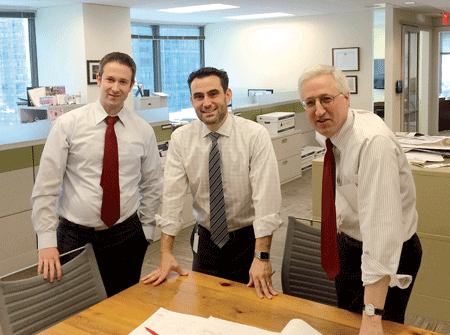
From left, Jonathan Weaver, Zach Greene, and Richard Henderson say the renovation of 1550 Main St. has spurred investment and economic development downtown.

In 2006, prospects for the federal building at 1550 Main St. in Springfield were grim.

A new federal courthouse was under construction on State Street, and many people were afraid that the prominent building in the central business district of the city would become a vacant eyesore after the court and other tenants vacated.

“The market for office space was very weak at the time, and it was feared that the building could become a blank in the downtown fabric,” said Richard Henderson, executive vice president of real estate for MassDevelopment, the state’s finance and development authority, which eventually assumed ownership of the property. “No one in the private sector seemed to have any interest in it, and owners of other buildings thought it should be closed. It was never attractive to begin with and looked worse after jersey barriers were installed in front of the plaza after 9/11. Plus, it was in poor shape, and the bricks on the exterior were falling off.”

Zach Greene agreed, and told BusinessWest the jersey barriers had been painted an unsightly brick orange, and although flower boxes had been stationed on top of them, the effect was far from pleasing.

“The building was not only unattractive, it was uninviting. It had a flimsy canvas awning outside, and when people entered the doors, they were greeted by metal detectors,” said Greene, MassDevelopment’s senior vice president of asset management, adding that, to make matters worse, visitors who parked in the Columbus Center garage behind the building had to walk down Bridge Street in inclement weather to get to the entrance because the back doors were locked for security reasons.

However, at the behest of city leaders, the Urban Land Institute, a national organization that disseminates experts to study challenging real-estate and land issues, sent a panel to Springfield for five days to determine, among other things, the best use of the property.

“They did extensive interviews with city officials, business leaders, and people in the neighborhoods, and concluded the building was key to downtown revitalization and should be made a priority,” said Henderson, noting that it had been built in 1980 and was one of a handful of newer office buildings downtown.

In 2007, MassDevelopment partnered with city administrators and the Finance Control Board, which was running Springfield at the time, and began what would become an $11 million acquisition and renovation of the building’s public spaces, which would take four years to complete.

However, the agency’s first step was to determine how to use it. After homeless and veterans’ groups, who had the first option on the building, failed to express interest, other possibilities were explored.

“We considered moving the police headquarters into it as well as using it as a place for higher education, similar to the new UMass facility that recently opened in Tower Square,” Henderson said.

But after a few years, the city, the Commonwealth, the U.S. General Services Administration (GSA), U.S. Rep. Richard Neal, and Baystate Medical Center put together a plan that included pre-leasing the building to private and public tenants. The Springfield School Department would occupy 56,989 square feet on the first and second floors, Baystate agreed to bring support staff into downtown for the first time and lease the entire fifth floor, and a number of federal agencies would remain in their space on the fourth floor.

“The School Department really needed to move; they didn’t have any air conditioning in their building and were way over capacity,” Henderson said, explaining that the move, which was strongly defended by Mayor Domenic Sarno, incited controversy in the City Council.

1550-main-before

1550 Main St

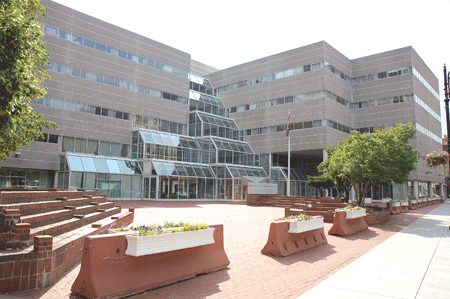
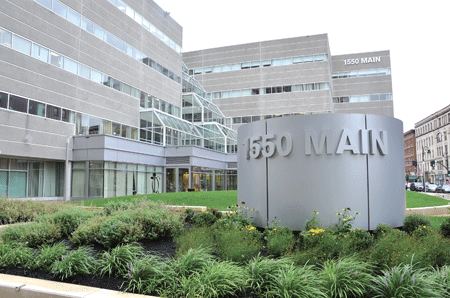
The property at 1550 Main St. before its makeover, left, and after it, right.

But in the end, the commitment by the School Department and Baystate made the project possible, and thanks to help from Neal and Kevin Kennedy, who was a member of his staff at that time, MassDevelopment purchased the building for $2.5 million in September 2009 from the GSA and renamed it “1550 Main.”

Its redevelopment has become a success story on many levels, and, according to some, an inspiration for more initiatives downtown, such as the UMass project.

“After we made our commitment, the Dennis Group purchased and renovated the Fuller Block across the street, and radio station WFCR has moved in,” Henderson said, as he listed a number of new downtown ventures.

“The Morgan Square Apartment block down the street has been acquired by a group from New York and is undergoing a major renovation and will become the Silver Brick Lofts,” he went on. “UMass has a new facility in Tower Square, and new investment is taking place in the surrounding area, with more to come. One thing builds on another, and what could have been a negative or a poorly redeveloped building has led to a lot of positive consequences.”

Complex Undertaking

Renovating 1550 Main was no simple feat, but the School Department did its own work and moved into the space in June 2010, which allowed MassDevelopment to focus on the plaza and exterior of the building.

“We wanted the tenants to be able to use the outside areas, but a large portion of the plaza was over an underground parking deck, which made removing and redoing it very tricky,” Henderson said.

The jersey barriers were removed in the fall of 2009, and high planter walls that blocked views from the street were taken down in the spring of 2010, making way for new landscaping.

Outdated glazed-brick flooring and planters in the atrium were also removed, along with an extra stairway inside the lobby that connected the first and second floors.

“Taking out the stairway allowed us to create a public walkway that people could use to get to CityStage and the parking garage,” Henderson said, noting that a $3 million Growth Districts Initiative Grant, secured with the help of the city, was used to make improvements to the public plaza, building entrance, and atrium.

All of the elevators were also replaced, and although there was not enough money to gut the bathrooms, the tiling was sanded, and new lighting and plumbing fixtures were installed. “We had to do the work in a way that didn’t disturb the tenants who had remained in the building. The Internal Revenue Service office was on the first floor, and we pulled up the entire floor of the lobby while they were working,” Henderson said.

Cosmetic improvements were also made on every floor, including new lighting and paint. “Many of the walls were painted an antiseptic green that had been offset by fluorescent pink lighting, so it really made a difference,” Greene said.

Since the federal offices were on the fourth floor, officials agreed that the metal detectors could be relocated there, which allowed MassDevelopment to install an attractive security desk in the entrance of the building.

“The back doors no longer had to be locked, so people who parked in the garage were able to come directly into the building without going outside,” Greene said. “We also installed a security system to make sure people who rented the space felt comfortable in the building.”

Baystate moved into the renovated space in May 2011, and since that time, the building’s 128,000 square feet of rentable space has been close to capacity, Henderson said. “Baystate has renewed its lease, and at present, the building is 98% occupied.”

Michael Moran, vice president of Clinical, Facility and Guest Services for Baystate Medical Center, said the healthcare provider has enjoyed being part of the redevelopment.

“Baystate Health is fully invested in carrying out its charitable mission of not only supporting the health and well-being of the community, but its economic viability as well,” he explained. “Our commitment to renting space for information-technology staff on the fifth floor of the former federal courthouse building back in 2009 was designed to help spur the city’s economy and brought a further presence for Baystate Health in downtown Springfield.”

Although some of the federal agencies have moved out since that time, new tenants were found to take their place, and the fourth floor is now home to offices for U.S. Sens. Ed Markey and Elizabeth Warren, as well as a law firm that occupies 4,100 square feet. In addition, private tenants have taken advantage of the first-floor space formerly used as military recruiting stations.

Since the time the building reopened, Greene said, it has been a source of pride. “Visitors have said they can’t believe the transformation, and the building has earned a number of awards,” including Outstanding Building of the Year in 2012 and 2013 by the Building Owners and Managers Assoc., and its Middle Atlantic Award Winner in 2013 in the Government Building category. In addition, in April 2013, the building earned the Environmental Protection Agency’s Energy Star Certification.

New Lease on Life

Today, 1550 Main St. hosts a series of lunchtime concerts held outside on the plaza in the spring and summer, and its lobby is used to showcase public and private art exhibits.

The new entrance has become an inviting gateway to the public atrium, which is open to the public and used for a variety of gatherings, including appreciation events held by Springfield School Department.

Overall, the property’s transformation has become one of many positive developments downtown and a gleaming example of a public-private partnership that has created momentum and additional success stories.

“My mother grew up in Springfield, and it’s been rewarding to help bring life back downtown and renew the vitality that existed there years ago,” said Greene. “We are happy to help it get back on track.”

Company Notebook Departments

WSU Advances Presidential Search
WESTFIELD — Upon recommendation of its presidential search committee, the Westfield State University board of trustees has officially ratified Diversified Search of Philadelphia to help manage the search process for the selection of the university’s 20th president. Diversified Search is woman-owned, top-10 executive-search firm with specialties in the areas of education and not-for-profits. Throughout the firm’s 40-year history, Diversified has always sought leaders that have not only strong character and credentials, but also different perspectives and views. The presidential search committee met on Jan. 5 to review proposals and conduct search-firm interviews, and selected Diversified from among four firms who submitted a request for proposal. “Diversified Search was the strongest choice due to its extensive experience in higher education,” said Steven Marcus, co-chair of the search committee. “Diversified will help the search committee, the board of trustees, and the entire Westfield State community develop the values, characteristics, and alignment of purpose needed to conduct a successful search.” With the search firm approved, a timeline will be developed, and meetings with the members of the campus community will be convened to share their opinions on what traits and characteristics the next Westfield State president should possess. Two days of open forums, moderated by Diversified Search, are scheduled for Feb. 11 and Feb. 12. “Developing a timeline and criteria will be critical for this search. We do not want the search to drag on, but we do want to take the time we need to select the very best candidate possible,” said Terrell Hill, co-chair of the presidential search committee.

MassMutual Partners with Colleges on Women in Data Science Program
SPRINGFIELD — In an effort to create a strong pipeline of qualified women professionals in the rapidly growing field of data science and related subjects, MassMutual announced it is partnering with Mount Holyoke College and Smith College to pilot a groundbreaking, higher-education initiative: the MassMutual Women in Data Science program. Aimed at providing a deep undergraduate education in an increasingly in-demand specialty, the partnership furthers MassMutual’s efforts to create and implement a comprehensive data-science curriculum, and underscores the company’s commitment to developing a strong core of data-science capabilities in the Pioneer Valley. The field of data science draws on statistical methods to answer questions in an array of disciplines in the sciences, social sciences, and humanities. Graduates work in fields ranging from medicine and environmental science to actuarial professions and statistics. “This initiative speaks volumes to the importance we place on developing smart, new talent in the emerging field of data science,” said Roger Crandall, chairman, president, and CEO of MassMutual. “MassMutual is proud to partner with these two outstanding colleges to further the advancement of women in this exciting and important discipline.” The $2 million, four-year program, which will begin in the fall of 2015, will be funded exclusively through MassMutual, and will provide Mount Holyoke and Smith with resources to hire five visiting faculty positions, as well as support the development of a data-science-focused curriculum. The faculty would teach in such areas as natural language processing, machine learning, behavioral economics, applied statistics, and various computer science specialties. Additionally, students in either of the two colleges will be able to take courses with any of the associated professors. Instructors at both Mount Holyoke and Smith noted that students at liberal-arts colleges who are pursuing studies and research in fields such as computer science, mathematics, and statistics are increasingly seeking to connect their technical skills directly to real-world challenges and events. “Mount Holyoke College is committed to educating a talented and diverse group of future women leaders, and to innovation in this emerging field, a field that is all about asking the right questions, identifying patterns, generating narratives from those patterns, and responding ethically to the challenges posed by data,” said Sonya Stephens, Mount Holyoke’s vice president for Academic Affairs and dean of Faculty. “This partnership with MassMutual offers a tremendous opportunity to connect liberal learning and the Data Science initiative at the college to opportunities that exist in both the academy and the workforce.” Added Smith College Provost Katherine Rowe, “Smith has long been known for educating women who lead in the science, technology, engineering, and mathematics fields. This collaboration will enable Smith to explore new directions in an emerging discipline where we are seeing increasing excitement among students. It creates opportunities for Smith students and will significantly expand the pool of talented women leaders in this field.”
 
ESB Reports Solid 2014; Assets Now Exceed $1B
EASTHAMPTON — At Easthampton Savings Bank’s recent quarterly meeting, President and CEO Matthew Sosik reported that the bank’s total assets surpassed $1 billion at the end of 2014. Also, Bozena Dabek, senior vice president and CFO, reported that the bank’s assets were up $37 million from a year ago, an increase of 3.7%. “Easthampton Savings Bank continues to be one of the most highly capitalized banks in the area, with a capital ratio of 12.9%,” she added. Dabek noted that total loans increased $47 million over the last quarter and now stand at just over $773 million, and that the bank’s deposit growth was more than $40 million, or 5% from a year ago. Deposits were up $18 million for the quarter, and total deposits are now $869 million, she added. Said Sosik, “2014 was another in a long line of profitable and successful years for the bank. We met and exceeded all of our goals for asset growth and earnings, as well as our goals for charitable giving within the communities we serve. Overall, 2014 was just a great year and was the result of a lot of hard work and dedication from our board and staff.”

Braman Termite and Pest Elimination Turns 125
AGAWAM — Braman Termite and Pest Elimination, a leading provider of pest-management services in Southern New England, is celebrating 125 years in business. The business, originally founded in Boston in 1890, moved its headquarters to Agawam in 1980. “In 1890, pest control was usually done at night or when no one was around,” said Jerry Lazarus, third-generation owner of Braman Termite and Pest Elimination. At the time, pest control was primarily done with kitchen-sink concoctions made with ingredients like arsenic, which has a very distinct and unpleasant smell. “The common view was that, if it didn’t stink, it didn’t work. Nowadays, if it stinks, you have a problem,” said Lazarus. “Pest-control product development has come so far that they can be done in very controlled environments without displacement — we can even treat hospital rooms without moving patients, if needed.” Meanwhile, technology like e-mail, cell phones, bar-code scanning, and global positioning systems have helped Braman continually provide fast, efficient, and customer-centered service. “Technological advancements have been adopted by the pest-management industry to better communicate with customers and create efficiencies to help us be competitive and profitable,” said Lazarus.

Jones Whitsett Architects Awarded GCC Child Care Center Project
GREENFIELD — Greenfield-based Jones Whitsett Architects has been chosen to design Greenfield Community College’s new Child Care Center. The Mass. Division of Capital Asset Management and Maintenance (DCAMM) selected Jones Whitsett to design a state-of-the-art facility that will combine a healthy, creative educational setting with maximum environmental efficiency. Jones Whitsett, led by Principal Architect Margo Jones, is an award-winning architectural practice with three decades of experience providing architectural services on municipal, cultural, and historic-preservation projects. Over the past two decades, school design has become the largest part of Jones Whitsett’s portfolio. The new Child Care Center will be the first on-campus child-care center at GCC since GCC’s Head Start program ended 15 years ago when renovation began on the College’s main building. The new center will be built on the college’s main campus and will serve the families of GCC staff, faculty, and students, as well as families from throughout the community. It will also serve as the ‘lab school’ for students in GCC’s Education programs to do their field work. “The competition for this project was stiff, with many good architects from throughout the state eager to take on the work,” said GCC President Bob Pura. “We are especially pleased that the DCAMM Review Board chose Greenfield-based Jones Whitsett Architects to design GCC’s new Child Care Center. Margo Jones’ understanding of GCC is long-standing. This brings an added dimension and understanding of this community to the design of the center. Knowing that Jones Whitsett is designing the center elevates our excitement about the project. We are hopeful that children, teachers, parents, and GCC’s students will be entering the new Child Care Center by January of 2017.” Responding to DCAMM’s decision, Jones said, “Jones Whitsett Architects is truly thrilled to have been selected as the design firm for this important project. It is a very exciting project, which will utilize many of our strengths and passions — healthy, creative educational environments, cutting-edge sustainable design, participatory and reclamation landscape architecture, and early-childhood design that will be state of the art. Certainly, affordable, high-quality child care for GCC is needed, and will be a huge resource for the college and its community. We are especially honored to be chosen to follow in the footsteps of the previous design team, who, in partnership with GCC and DCAMM, made beautiful improvements to the main building at the campus. We have every confidence we can meet and possibly exceed this very high bar for interactive, accessible architecture.” Reflecting on the need for the Child Care Center, Professor of Education Kate Finnegan noted that, “in order to flourish as younger human beings, children need loving care, food, shelter, heat, clothing, and education. In addition, educational programs like those that will be housed in the new Center offer protection, foster resiliency, and create opportunity.” Working on the Child Care Center design along with Jones Whitsett will be Keith Miller of Miller Design LLC, which has designed more than 100 child-care centers in the U.S. and abroad. “We are excited to be part of the design team with Jones Whitsett Architects,” Miller said. “We look forward to sharing our expertise with the team and community in creating a building that will in turn shape the future of the community through the children, faculty, and students.”

Berkshire Bank Announces $2 Million in Philanthropic Grants
PITTSFIELD — Berkshire Bank Foundation awarded a total of $1,518,133 in grants to nonprofit organizations in Massachusetts, New York, Connecticut, and Vermont during 2014. The grants supported important education and community development initiatives as well as health, human-service, and cultural programs. In addition, Berkshire Bank provided $500,622 in community sponsorships, raising its total contributions in the community to over $2 million. “We are so pleased to continue providing critical funding to hundreds of nonprofit organizations across our footprint,” said Lori Gazzillo, vice president and director of the Berkshire Bank Foundation. “Our 2014 grants have supported programs and projects that are enhancing economic opportunities and improving the quality of life for members of our communities. On behalf of our entire Berkshire Bank team, we are honored to be able to give back in such a significant way.” The bank’s charitable foundation and bank sponsorships fund nonprofit organizations and programs in communities that Berkshire Bank serves. While the foundation’s funding priorities are education and community and economic-development projects, it also supports youth, cultural, and human-service organizations. The bank also maintains an annual scholarship program for high-school seniors, which recently launched for 2015. Meanwhile, recognizing that being a good corporate citizen and community partner is about more than writing a check, Berkshire administers an employee volunteer program called the X-Team, which provides employees with paid time off to volunteer during regular business hours. Through the program, more than 70% of Berkshire Bank’s employees donated in excess of 40,000 hours of service to benefit community organizations across the bank’s footprint. Berkshire Bank’s philanthropic and community volunteerism efforts were honored in 2014 with the Capital Region Community Impact Award, the United Way Agar Volunteerism Award, two New England Financial Marketing Awards, and being named by the Boston Business Journal as one of Massachusetts’ Most Charitable Companies for the second consecutive year. Berkshire Bank accepts requests for financial support at www.berkshirebank.com/giving. All requests must be submitted through the online system in order to be considered. Organizations interested in seeking funding are encouraged to read the foundation’s funding guidelines prior to applying for support. Complete guidelines for those seeking grants or bank community sponsorships are available on the website.

Chamber Corners Departments

ACCGS
www.myonlinechamber.com
(413) 787-1555
 
• Feb. 27: Outlook 2015 Luncheon, 11:30 a.m.-1:30 p.m., at the MassMutual Center, 1277 Main St., Springfield. The guest speaker will be Gov. Charlie Baker. He will be joined in the program by U.S. Rep. Richard Neal, who will remark on events at the federal level. Outlook is the area’s premier legislative event, attracting more than 700 guests. Area elected officials will also be in attendance to participate in this discussion of front-burner issues. Tickets are $50 for ACCGS members and $70 for general admission. Reserved tables of 10 are available. Reservations  are required. Contact Member Services Director Sarah Mazzaferro at [email protected]
 
• March 4: ACCGS Business@Breakfast, 7:15-9 a.m., at Chez Josef, 176 Shoemaker Lane, Agawam. The topic is “Hard Hats Required: The I-91 Viaduct Project.” Learn about the state reconstruction project and its local ancillary impacts, with a panel discussion featuring Al Stegman from the Mass. Department of Transportation, Chris Cignoli from the Springfield Department of Public Works, and Mary McNally from the Springfield Parking Authority. Salutes: TSM Design on its 30th anniversary and Revitalize Community Development Corp. on its new name and expanded services. Sponsored by United Personnel. Reservations are $20 for members in advance, $25 for members at the door, and $30 for general admission. Register online at www.myonlinechamber.com.

• Thursdays through March 26: ACCGS Leadership Institute 2015, 1-4 p.m., at the TD Bank Conference Center, 1441 Main St., Springfield, in partnership with Western New England University.
 
• March 11: ACCGS Speed Networking, 3:30-5 p.m., at Frank Webb’s Bath Center, 145 Performance Blvd., Springfield. Network in a fast-paced round-robin format, then stay for the After 5. This event is open only to members. Reservations are $20 for members, $25 at the door. Includes complimentary ticket to After 5. Register online at www.myonlinechamber.com.
 
• March 11: ACCGS After 5, 5-7 p.m., at Frank Webb’s Bath Center, 145 Performance Blvd., Springfield. Reservations are $5 for members, $10 for general admission. Register online at www.myonlinechamber.com.

• March 24:
ACCGS Pastries, Politics, and Policy, 8-9 a.m., at the TD Bank Conference Center, 1441 Main St., Springfield. For political and policy junkies. Reservations are $15 for members, $25 for general admission. Register online at www.myonlinechamber.com.
 
AMHERST AREA CHAMBER OF COMMERCE
www.amherstarea.com
(413) 253-0700
 
• March 26: Margarita Madness 2015, 5:30-7:30 p.m., at the Hadley Farms Meeting House, 41 Russell St., Hadley. Taste a variety of margaritas and vote for your favorites. This is a Division One competition between restaurant and business margaritas. Your votes will determine who will take home the coveted trophies. Business margaritas provided by Alden Credit Union, New England Promotional Marketing, Hadley Farms Meeting House, Country Nissan, Lord Jeffery Inn, TD Bank for Big Brothers Big Sisters of Hampshire County, Encharter Insurance, Applewood at Amherst, and many more to come. Restaurant margaritas provided by Bistro 63 at the Monkey Bar, Bread & Butter, Bridgeside Grille, Chandler’s Restaurant, the Pub, Lord Jeffery Inn, Hadley Farms Meeting House, Chez Josef, Johnny’s Tavern, and many more to come. Food provided by Emily’s Gourmet to Go, Something Special Catering, Pallazo Café, Glazed Donut Shop, Pop’s Biscotti, and Johnny’s Tavern. Tickets are $20 in advance and $25 at the door. For more information, contact the chamber at (413) 253-0700.
 
CHICOPEE CHAMBER OF COMMERCE
www.chicopeechamber.org
(413) 594-2101
 
• Feb. 25: February Business After Hours, 5-7 p.m., at Elms College, 291 Springfield St., Chicopee. Tickets: $10 for members, $15 for non-members.
 
• March 6: Shining Stars Banquet, 6:30-10 p.m., at the Castle of Knights, 1599 Memorial Dr., Chicopee. Business of the Year: DeJordy, Dugre, Croteau & Company, P.C.; Citizen of the Year: Andy Crane, A. Crane Construction; Chamber Volunteer of the Year: Jason Reed, Boys & Girls Club of Chicopee; Nonprofit Organization of the Year: Elms College. Tribute to Associated Industries of Massachusetts. Tickets: $60 per person.
 
• March 25: 21st Annual Table Top Expo and Business Networking Event, 4:30-7 p.m., at the Log Cabin Banquet and Meeting House, 500 Easthampton Road, Holyoke. Exhibitor cost: $125 for a table. Admission $10 in advance, $15 at the door. To register, contact the chamber at (413) 527-9414.
 
GREATER EASTHAMPTON CHAMBER OF COMMERCE
www.easthamptonchamber.org
(413) 527-9414
 
• March 25: 21st Annual Table Top Expo and Business Networking Event, 4:30-7 p.m., at the Log Cabin Banquet and Meeting House, 500 Easthampton Road, Holyoke. Exhibitor cost: $125 for a table. Admission is $10 in advance, $15 at the door. To register, contact the chamber at (413) 527-9414.
 
GREATER HOLYOKE CHAMBER OF COMMERCE
www.holycham.com
(413) 534-3376
  
• Feb. 24: How to Start and Maintain Your Business/Marketing Your Business, 5:30-7:30 p.m., at the Holyoke Chamber, executive conference room, 177 High St., Holyoke. Series Sponsors: PeoplesBank, Common Capital, Mass Cultural Council/the Artery, in partnership with Holyoke Creative Arts. What you need to know about designing a logo, branding your business, advertising opportunities, social media, and developing a website. Tickets cost $20. Call the Holyoke Chamber at (413) 534-3376 or visit holyokechamber.com to sign up.
 
GREATER NORTHAMPTON CHAMBER OF COMMERCE
www.explorenorthampton.com
(413) 584-1900
 
• Feb. 24: 2015 Table Top Orientation, noon to 1 p.m., at the chamber office, 99 Pleasant St., Northampton. For Table Top participants only. RSVP to (413) 584-1900.
 
• Feb. 26: Starting Your Own Business, 6-9 p.m., at the Business Growth Center, basement level, 1 Federal Street, Building 101, Springfield. Starting a small business requires more knowledge, skills, perseverance, and planning than meets the eye. This three-hour workshop will help you clearly understand the details, challenges, opportunities, and rewards of owning and operating your own business through the real-life experiences of several successful entrepreneurs. This course is a suggested prerequisite for our Business Planning workshop. Tickets cost $25. RSVP to Len Gendron, SCORE Western Massachusetts, at (413) 785-0314, or e-mail contact.[email protected]
 
• March 3: Build Your Marketing Toolkit Seminar, 5:30-8 p.m., at the Business Growth Center, basement level, 1 Federal Street, Building 101, Springfield. Attendees of this presentation will learn what marketing really is (and isn’t), how marketing has changed in ways that benefit small businesses, the importance of setting goals and objectives for their marketing efforts, and the 4 Pillars of Marketing Success, a framework that shows how different marketing activities all fit together, and will help small businesses reflect on their own marketing program. Start to build a foundation of marketing knowledge, from which you can build more effective campaigns to help your business or organization grow. Cost: free. RSVP to Len Gendron, SCORE Western Massachusetts, at (413) 785-0314, or e-mail contact.[email protected].
 
• March 4: Arrive @ 5, 5-7 p.m., at Fitzwilly’s, 23 Main St., Northampton. Arrive when you can, Stay as long as you can. A casual mix and mingle with your colleagues and friends. Sponsored by Thornes Marketplace, Grogan Speer, and ESB Financial Services. Tickets: $10 for members.
 
• March 6: 2015 Annual Meeting, noon to 2 p.m., at Union Station Banquets, 125 Pleasant St., Northampton. A fun meeting with your chamber colleagues. Play Jeopardy; we’ll test your knowledge of our members. A fun wrap-up of 2014 and preview of 2015, honoring our volunteers. Sponsored by PeoplesBank. Tickets: $35 per person for chamber members.
 
• March 13: Microsoft Excel: Tips, Tricks, and Shortcuts, 9-11 a.m., at the chamber office, 99 Pleasant St., Northampton. Learn tips and tricks no one ever teaches you from the trainers at Pioneer Training. This workshop will present our favorite tips, tricks, and shortcuts that we have collected and developed over 15 years of teaching and using Microsoft Excel. Participants are encouraged to bring laptops and follow along with the instructor, but this is not required. Admission: $20 for members, $30 for non-members.
 
• March 17: 35th Annual St. Patrick’s Day Breakfast, 7:30-9 a.m., in the Hotel Northampton Grand Ballroom. Also, Join us at Fitzwilly’s for the annual after-breakfast toast and for the laying of the wreath at the Daley and Halligan memorial stone on the former state hospital grounds. Tickets: $20 per person. Tables of 10 also available.
 
• March 25: 21st Annual Table Top Expo and Business Networking Event, 4:30-7 p.m., at the Log Cabin Banquet and Meeting House, 500 Easthampton Road, Holyoke. Exhibitor cost: $125 for a table. Admission $10 in advance, $15 at the door. To register, contact the chamber at (413) 584-1900.
 
GREATER WESTFIELD CHAMBER OF COMMERCE
www.westfieldbiz.org
(413) 568-1618
 
• March 2: Mayor’s Coffee Hour, 8-9 a.m., at Armbrook Village, 551 North Road, Westfield. Join us for our monthly Mayor’s Coffee Hour with Westfield Mayor Dan Knapik. This event is free and open to the public. Call Pam at the chamber office at (413) 568-1618 to register for this event so we may give our host a head count.
 
• March 13: March Breakfast, 7-9 a.m., at Westfield State University, 577 Western Ave., Westfield. Platinum sponsor: Westfield Bank. Gold sponsor: Westfield Gas & Electric. Silver sponsor: FieldEddy Insurance. For more information or to donate a raffle prize, call the Chamber office at (413) 568-1618.
 
• March 18: March After 5 Connection, 5-7 p.m., at Noble Primary Care, 57 Union St., Westfield. Bring your business cards and make connections. Refreshments will be served. Tickets: $10 for members, $15 cash for non-members. To register, call Pam at the Chamber office at (413) 568-1618.
 
NORTHAMPTON AREA YOUNG PROFESSIONAL SOCIETY
www.thenayp.com
(413) 584-1900
 
• March 7: Full Moon Snowshoeing, 6:30 p.m. Join us for a full-moon snowshoe hike at Hilltop Orchards in Lenox. We will be led on an interactive, 90-minute journey that includes a bonfire, wine tasting, and entertainment. Dress for the weather, and bring a light and some water. The event costs $10 and includes a tasting of six Furnace Brook wines (if you are 21 or over). Bring your own snowshoes or rent them for $15. RSVP by March 1 by joining our Facebook event.
 
PROFESSIONAL WOMEN’S CHAMBER
www.professionalwomenschamber.com
(413) 755-1310
 
• March 18: Professional Women’s Chamber Tabletop Expo/Luncheon,
11:30 a.m.-1 p.m., at Storrowton Tavern, Carriage House, 1305 Memorial Ave., West Springfield. Featuring Tracy Noonan of Wicked Good Cupcakes and contestant on ABC’s Shark Tank. Reservations are $25 for PWC members, $35 for general admission. Register online at www.myonlinechamber.com.

WEST OF THE RIVER CHAMBER OF COMMERCE
www.ourwrc.com
413-426-3880
 
• Feb. 25: Legislative Breakfast, 7-9 a.m., at Storrowton Tavern, 1305 Memorial Ave., West Springfield. The breakfast will feature a panel of various legislators: State Sens. James Welch and Donald Humason, Agawam Richard Cohen, and West Springfield Mayor Edward Sullivan. Tickets: $25 for members, $30 for non-members. For more information on ticket sales, contact the chamber office at (413) 426-3880 or e-mail [email protected].
 
YOUNG PROFESSIONAL SOCIETY OF GREATER SPRINGFIERLD
www.springfieldyps.com
 
• March 14: 2015 YP Cup Dodgeball Tournament, at Springfield College, 263 Alden St., Springfield. To register a team (up to eight players, two must be of the opposite sex ) or an individual, visit springfieldyps.com/2015-dodgeball-individual-registration-form. E-mail questions to [email protected]. Reception to follow at Nathan Bill’s Bar & Grill, 110 Pond Road, Springfield.
 
• March 19: March Third Thursday, 5-8 p.m., at the Storrowtown Meeting House and Carriage House, 1305 Memorial Ave., West Springfield. This event is open to everyone. Invite your friends. Food and cash bar. Admission: free for YPS members, $10 for non-members.

Agenda Departments

ACCGS Outlook 2015
Feb. 27: Massachusetts Gov. Charlie Baker will give his first major address to the Greater Springfield business community at the Affiliated Chambers of Commerce of Greater Springfield’s (ACCGS) Outlook 2015 from 11:30 a.m. to 1:30 p.m. at the MassMutual Center, 1277 Main St., Springfield. Outlook is the area’s largest legislative event, attracting more than 700 guests and presenting expert speakers on local, state, and federal issues. Area elected officials will also be in attendance to participate in this discussion of front-burner issues. The event is presented by Health New England and sponsored by the Eastern States Exposition, MassMutual Financial Group, and United Personnel. Program/reception sponsors include the Sisters of Providence Health System, Comcast, Western Massachusetts Electric Co., and the Republican, with support from Chicopee Savings Bank and BusinessWest. Baker was inaugurated on Jan. 8 as the 72nd governor of the state. Over the course of his career, he has been a highly successful leader of complex organizations in business and in government. As a cabinet secretary under Gov. William Weld and Gov. Paul Cellucci, Baker helped lead efforts to reform and modernize state government. During his time as CEO of Harvard Pilgrim Health Care, Baker turned a company on the brink of bankruptcy into the nation’s highest-ranked healthcare provider for six straight years. As a member of the Weld and Cellucci administrations in the 1990s, Baker helped turn a billion-dollar deficit into a surplus, create a half-million jobs, and enact an ambitious education-reform agenda. First asked to serve as Secretary of Health and Human Services in 1992, Baker led efforts to make Massachusetts’ social-service system more humane, cost-effective, and responsive to the needs of the Commonwealth’s residents. In 1994, Baker was appointed Secretary of Administration and Finance, overseeing a number of cost-saving reforms, modernizing state government, and making it more efficient. Baker will be joined at the Outlook program by U.S. Rep. Richard Neal, who will remark on events at the federal level, including his thoughts on the 114th Congress and the topics that the new Congress may review. “As a senior member of the powerful House Committee on Ways and Means and ranking member of its Select Revenue Measures subcommittee, Congressman Neal serves in a critically important capacity in Washington for our area, our state, and the entire country,” said ACCGS President Jeffrey Ciuffreda. Tickets are $50 for ACCGS members and $70 for general admission. Reserved tables of 10 are available. Reservations must be made by Feb. 20, and may be made online at www.myonlinechamber.com or by contacting Member Services Director Sarah Mazzaferro at [email protected]. No walk-ins will be accepted, and no cancellations will be accepted once the reservation deadline has passed.

PAWSCARS Fund-raiser
Feb. 28: Dakin Humane Society will present a fund-raising event at the MassMutual Center in Springfield that will affectionately spoof Hollywood, the Oscars, and red-carpet fashion. Dubbed “The PAWSCARS & Red Carpet Fashion Parade,” the show will be emceed by Ashley Kohl and Seth Stutman, hosts of Mass Appeal on WWLP-22News. Beginning with a VIP Reception at 6 p.m. and a plated dinner at 7 p.m., the evening will also include a red-carpet fashion parade featuring local people of prominence, accompanied by rescue dogs (among them former Dakin dogs, now adopted). Short videos of animals recreating iconic moments in cinematic history, created by members of the public, will also be screened during the evening. “We’re looking forward to presenting a one-of-a-kind event with the PAWSCARS,” said Dakin Executive Director Leslie Harris. “We’re blending fashion, fun, and film with a healthy dose of humor for an unforgettable night. Plus, as our major fund-raising event of the year, it will be a terrific opportunity for our supporters to come together and enjoy themselves while providing much-needed aid for the many animals in our care.” With a targeted audience of 500, The PAWSCARS is Dakin’s most ambitious fund-raising event in its 45-year history. Tickets for the event are available at www.dakinhumane.org for $125 per person (dinner and show) or $50 (show only). Visit www.dakinhumane.org for more information about the event.

Lecture Series
March 12: BusinessWest and the Healthcare News are pleased to announce a new lecture series presented by Comcast Business. This series of lectures, panel discussions, and presentations will address timely and important business information, and is an ideal opportunity to meet industry leaders and network with area business professionals. The first event in the series, called “Technology Has the Power to Change Healthcare,” will be hosted by La Quinta Inn & Suites, 100 Congress St., Springfield. Panelists include Neil Kudler, vice president and chief medical information officer for Baystate Health; Michael Feld, CEO of VertitechIT and acting chief technology officer of Baystate Health and Lancaster General Hospital; and Delcie Bean IV, CEO, of Paragus Strategic IT. Registration begins at 7:15 a.m., followed by breakfast and networking at 7:30 a.m. and the panel discussion from 8 to 9 a.m. Admission is free, provided by Comcast Business, but RSVP is required by Thursday, March 5. Sign up online at BusinessWest.com/lecture-series, or call (413) 781-8600, ext. 10, for more information.

‘Acting Skills for Real Life’
March 19 to April 16: The Division of Graduate and Continuing Education at Westfield State University will offer a class called “Acting Skills for Real Life: How to Connect and Communicate” on Thursday nights, March 19 through April 16, from 6 to 8 p.m. Students will learn about basic acting skills and theories, and how they can be applied to everyday situations such as job interviews and social settings, in addition to performances and public speaking. Course content includes vocal, movement, and imagination warmups and theatre games; improvisations around a specific set of circumstances, including real-life situations and role reversal; developing stage presence; and, if the class chooses, rehearsal and class performance of a brief scene or monologue as a rehearsed reading or ‘off book.’ The course will be taught by Nadia Creamer, who has a long career as a performer and a teacher of performing arts. Creamer was co-artistic director of Impulse Theatre and Dance for 28 years in New York, where she received more than 60 grants for her work. She was also a faculty member at New York University, Russell Sage, College of St. Rose, and Columbia-Greene Community College. The cost of this course is $80. Registration will be accepted until the first night of class. For more information and to register, contact Brandon Fredette at (413) 572-8033 or [email protected].

Mini-Medical School
March 19 to May 7: Baystate Medical Center’s Mini-Medical School, which begins its spring session on March 19, will give area residents a reason to come out of hibernation from the long, cold, snowy winter and join others interested in the expanding field of medicine. Mini-Medical School program is an eight-week health education series featuring a different aspect of medicine each week. Classes this spring will include sessions on various medical topics, such as surgery, emergency medicine, anesthesiology, pathology, and several others. Many of the ‘students,’ who often range in age from 20 to 70, participate due to a general interest in medicine and later find that many of the things they learned over the semester are relevant to their own lives. The goal of the program, offered in the hospital’s Chestnut Conference Center, is to help members of the public make more informed decisions about their healthcare while receiving insight on what it is like to be a medical student — minus the tests, interviews, and admission formalities. Each course is taught by medical-center faculty who explain the science of medicine without resorting to complex terms. Baystate Medical Center is the Western Campus of Tufts University School of Medicine and is the region’s only teaching hospital. All classes are held Thursday nights starting at 6 p.m. and run until 8 or 9 p.m., depending on the night’s topic. No basic science knowledge is needed to participate. Each participant is required to attend a minimum of six out of eight classes in order to receive a certificate of completion. Among the topics and speakers slated for the spring semester are:
• March 19: “Hey, I Finally Got into Medical School!” with Dr. Michael Rosenblum, director, Internal Medicine Residency Program (includes a general tour of the medical center).
• March 26: “Surgery,” with Dr. Richard Wait, chair, Department of Surgery (includes a tour of the Baystate Simulation Center and the Goldberg Surgical Skills Lab).
• April 2: “Cardiac Surgery,” with Dr. John Rousou, chief, Cardiac Surgery.
• April 9: “Pathology,” with Dr. Richard Friedberg, chair, Department of Pathology (includes a tour of the lab).
• April 16: “Anesthesiology,” with Dr. Michael Bailin, chair, Department of Anesthesiology.
• April 23: “Psychiatry,” with Dr. Benjamin Liptzin, chair, Department of Psychiatry.
• April 30: “Stroke/Rehabilitation,” with Dr. Edward Feldmann, vice president and medical director, Neurosciences & Rehabilitation.
• May 7: “Emergency Medicine,” with Dr. Joseph Schmidt, vice chair and chief, Emergency Medicine (includes a graduation ceremony).
Tuition is $95 per person and $80 for Senior Class and Spirit of Women members. Register for the spring semester of Mini-Medical School by calling (800) 377-4325. For more information, visit www.baystatehealth.org/minimed.

Difference Makers
March 19: The sixth annual Difference Makers award program, staged by BusinessWest, will be held at the Log Cabin Banquet & Meeting House. Difference Makers is a program, launched in 2009, that recognizes groups and individuals that are, as the name suggests, making a difference in this region. The class of 2015Katelynn’s Ride, MassMutual Financial Services, Judy Matt, Valley Venture Mentors, and the new ownership group of the Student Prince and the Fort — was profiled in the Feb. 9 issue. Tickets cost $60 per person, and reserved tables of 10 are available. To order tickets, call (413) 781-8600, ext. 100, or e-mail [email protected].

40 Under Forty
June 18: The ninth annual 40 Under Forty award program, staged by BusinessWest, will be held at the Log Cabin Banquet & Meeting House. Details on the event, which honors the region’s most accomplished and civic-minded professionals under age 40, will be published in upcoming issues. The class of 2015 will be revealed and profiled in the April 20 issue.

Daily News

SPRINGFIELD — Cathedral High School and Holyoke Catholic High School will be merged into a new, regional Catholic High School under a plan announced yesterday by Mitchell Rozanski, bishop of the Diocese of Springfield.

While the site of the merged school has not been determined, Springfield Mayor Domenic Sarno and other Cathedral supporters are still pushing for the school to be rebuilt on the tornado-damaged Surrey Road location where Cathedral had been located.

“No concepts other than a new regional school have been decided,” Rozanski said, noting that Surrey Road is one of several options that will be investigated. The bishop wants the two schools’ students to be merged in a temporary location by the fall of 2016, and for a permanent school to be completed by the fall of 2017, adding that insurance money from the tornado, plus $29 million in Federal Emergency Emergency Management Agency aid, will fund the construction.

“The city of Springfield has supported Cathedral at its temporary home in Wilbraham by providing over $1 million of support in busing as well as assisting with locations for athletic practices and events. We will continue to support Cathedral as long as rebuilding on Surrey Road remains the plan,” Sarno said. “I am hopeful that Bishop Rozanski and the diocese will live up to their commitment made by Bishop [Timothy] McDonnell to rebuild Cathedral, where it belongs, on Surrey Road. The extended Cathedral family and neighborhood deserve nothing less.”

U.S. Rep. Richard Neal agreed, noting in a statement that “my belief that Surrey Road is the best and only location for that facility has not changed. Simply put, when I sought federal assistance from FEMA following the tornado in June 2011, I did so with the understanding that Cathedral High School would be rebuilt on its original site in East Forest Park. That was the purpose of securing public disaster assistance.”

He continued, “it has been nearly four years since the tornado touched down on Surrey Road, and during that time the Cathedral family has been extraordinarily patient and supportive. We have given the diocese space and allowed them to do their due diligence. I don’t think it is unreasonable to suggest that we now deserve answers. The history of Springfield and Cathedral are intertwined, and it is hard to imagine one without the other. That is why I will continue to support the effort to rebuild the regional high school in East Forest Park. In my opinion, it remains the only logical site.”

Since the June 1, 2011, tornado severely damaged Cathedral, its 400 students were relocated to the former Memorial School in Wilbraham, where the diocese has been renting space; enrollment has since declined to just over 200. Meanwhile, Holyoke Catholic was forced to move from its namesake city in 2002 when its building was declared unsafe. After setting up at the former St. Hyacinth College and Seminary in Granby for four years, the school, which has about 250 students, moved into the former Assumption School on Springfield Street in Chicopee, opposite Elms College, in 2006.

Daily News

SPRINGFIELD — The Springfield Technical Community College (STCC) Foundation’s Not Just Business as Usual (NJBAU) event is one of the premiere networking events for business leaders in Western Mass. This annual celebration, in its sixth year, is a celebration of innovative thinking which gives participants the opportunity to learn from business experts while raising significant funding for the STCC WORKS scholarship program.

The event will be held at the Naismith Memorial Basketball Hall of Fame on April 30. A cocktail and networking reception will be held from 5:30 to 7 p.m., with dinner and the keynote speaker, Google Engineering Director Steve Vinter, to follow from 7 to 8:30 p.m.

Vinter has overseen the growth of Google’s Cambridge site from 15 software engineers in 2007 to more than 900 today. He is responsible for developing digital-publishing products such as Google eBooks, Google Play Newsstand, and Play for Education, and has over 20 years of industry experience working in the Boston area, focusing on building products and services for hundreds of millions of users of mobile and cloud computing. He also is the co-founder of MassCAN, a partnership of organizations which collaborate to inspire and educate students in Massachusetts to learn computing and prepare them to lead and innovate the future economy, which will be driven by computer technology.

This year, NJBAU will feature interactive workstations featuring the STCC Mobile SIM and Engineering program. Tickets and sponsorship opportunities are now available. Tickets are $100 each, and sponsorships begin at $1,500. For additional information or to become a sponsor, contact Christina Tuohey, STCC director of Annual Giving and Alumni Relations, at (413) 755-4475 or [email protected]. To purchase tickets online, visit www.stcc.edu/njbau.

Daily News

SPRINGFIELD — Tracy Noonan, co-owner of Wicked Good Cupcakes, will keynote the Headline Luncheon of the Affiliated Chambers of Commerce of Greater Springfield’s affiliate, the Professional Women’s Chamber (PWC), on Wednesday, March 18, from 11:30 a.m. to 1 p.m. at the Carriage House at Storrowton Tavern, 1305 Memorial Ave., West Springfield. Noonan and her daughter, Danielle Vilagie, took their Cohasset-based cupcake baking company national after appearing on the ABC hit show Shark Tank.

Wicked Good Cupcakes began when the mother-daughter team took cake-decorating classes as a way to spend quality time together. After posting their work online for friends and family, they found themselves being asked to create cupcakes for various events. The demand for their product became so high that they opened their first retail location in Cohasset in October 2011.

As the reputation of their product grew, they found themselves getting hundreds of requests to ship their product across the country. However, they could not find a way to effectively ship cupcakes and have them arrive intact and fresh. That’s when they came up for the idea of a cupcake in a jar. Filling jars with freshly baked layers of cake, frosting, and filling, they were able to create a product that would stay fresh up to 10 days without refrigeration and could be easily shipped.

The company’s popularity quickly grew, and, in 2013, Noonan and Vilagie appeared on Shark Tank, striking a deal with Boston-based shark Kevin O’Leary of O’Leary Ventures, and expanding their business by more than 600%, including a new retail location in Faneuil Hall in Boston and expanded facilities to handle online orders. In addition to cupcakes, the company’s product line now also includes gluten-free options, as well as pies, cheesecakes, and brownies in a jar, as well as French macaroons.

Advance reservations for the luncheon are suggested and cost $25 for PWC members and $35 for general admission. Register online at www.myonlinechamber.com or by e-mailing [email protected]. PWC members who are season-pass holders must pre-register for the event by emailing [email protected].

Daily News

SPRINGFIELD — The roots of Baystate Medical Center date back to the formative years of the modern American hospital, when, under the name of Springfield City Hospital in 1873, it was one of only 178 acute-care hospitals in the country. Today, that number has grown to more than 5,000, and along with it can be counted a number of contributions from Baystate Medical Center, which are now considered critical elements of everyday healthcare, including fast-track cardiac surgery and an innovative chronic-care floor.

Now those accomplishments and more are highlighted in a newly published history book, titled Baystate Medical Center. It traces the people, buildings, and events that form the basis of Baystate Medical Center and the important role it has played in the evolution of the healthcare industry from the 19th century through today.

Written by Dr. Thomas L. Higgins, vice chair of the Department of Medicine at Baystate Medical Center, and Linda Baillargeon, manager of the hospital’s Internal Medicine Residency Programs, the book features vintage images and facts that capture bygone times and help bring to life the people, places, and events that defined Baystate Medical Center and the Springfield community.

Published in December by Arcadia Publishing — the leading local history publisher in the U.S., with a catalog of more than 9,000 titles in print — the book is part of its Images of America series. Since its inception in 1993, the series has preserved and shared the history of hundreds of individual communities throughout the country. The Baystate Medical Center history book features more than 200 images, beginning from the late 1800s, gathered from hospital archives at the Lyman and Merrie Wood Museum of Springfield History and at Baystate Medical Center.

“The book was originally envisioned to be only about the Department of Medicine at Baystate. It was going to be a gift that we would give to our medicine residents to remember us by,” said Higgins. “As our research delved deeper into the department and the hospital, we discovered there were so many more stories worth telling, and the book grew in scope.”

He added, “during our research, I was inspired by the philanthropic history behind the establishment of Springfield Hospital, with major donations by Chester and Dorcas Chapin and monies from Daniel and Cynthia Wesson to support both the Hampden Homeopathic and Wesson Maternity hospitals. I was also fascinated with the architectural history of the buildings that make up Baystate, including the fact that the original Springfield Hospital is still standing as part of the medical center.”

Baystate Medical Center was established in 1976 with the merger of the Medical Center of Western Massachusetts and Wesson Memorial Hospital. Baystate’s long history can be traced back to its earliest origins as Springfield City Hospital, which was renamed Springfield Hospital in 1883 and later moved to its current location on Chestnut Street in 1889.

The book, priced at $21.99, is available at the Marketplace at Baystate Medical Center, as well as on amazon.com, or directly from the publisher at www.arcadiapublishing.com. All proceeds will benefit the hospital’s Internal Medicine Residency Education & Research Fund. For more information about Baystate Medical Center, visit baystatehealth.org/bmc.

Daily News

CHICOPEE — The Greater Chicopee Chamber of Commerce will pay tribute to the recipients of the prestigious Shining Stars Awards on Friday, March 6, from 6:30 to 10 p.m. at the Castle of Knights, 1599 Memorial Dr., Chicopee.

Starting, initially, with the Citizen of the Year, the Shining Stars Awards have grown to include Business of the Year and Volunteer of the Year. This year, the chamber has added a new category, Nonprofit Organization of the Year, and is also paying special tribute to Associated Industries of Massachusetts (AIM).

This year’s honorees are:
• Business of the Year: DeJordy, Dugre, Croteau & Co., P.C., a full-service accounting, tax-planning, tax-preparation, and business-advisory CPA firm;
• Citizen of the Year: Andrew Crane of A. Crane Construction;
• Nonprofit Organization of the Year: Elms College;
• Chamber Volunteer of the Year: Jason Reed, Boys & Girls Club of Chicopee; and
• Shining Stars Tribute 2015: Associated Industries of Massachusetts (AIM).

Sponsors for the Shining Stars Gala, thus far, include diamond sponsors Chicopee Savings Bank and Holyoke Medical Center; platinum sponsor PeoplesBank; gold sponsors Polish National Credit Union, Hampton Inn, Dave’s Truck Repair Inc., LaQuinta Inns & Suites, NUVO Bank, and Baystate Restoration Group; and silver sponsors Sidall & Sidall, P.C., and Boys & Girls Club of Chicopee.

To become a sponsor, e-mail event coordinator Lynn Morrissette at [email protected]. For more information or to purchase tickets, call the chamber at (413) 594-2101 or visit www.chicopeechamber.org and click ‘Upcoming Events.’

Daily News

SPRINGFIELD — In an effort to create a strong pipeline of qualified women professionals in the rapidly growing field of data science and related subjects, MassMutual announced it is partnering with Mount Holyoke College and Smith College to pilot a groundbreaking, higher-education initiative: the MassMutual Women in Data Science program.

Aimed at providing a deep undergraduate education in an increasingly in-demand specialty, the partnership furthers MassMutual’s efforts to create and implement a comprehensive data-science curriculum, and underscores the company’s commitment to developing a strong core of data-science capabilities in the Pioneer Valley. The field of data science draws on statistical methods to answer questions in an array of disciplines in the sciences, social sciences, and humanities. Graduates work in fields ranging from medicine and environmental science to actuarial professions and statistics.

“This initiative speaks volumes to the importance we place on developing smart, new talent in the emerging field of data science,” said Roger Crandall, chairman, president, and CEO of MassMutual. “MassMutual is proud to partner with these two outstanding colleges to further the advancement of women in this exciting and important discipline.”

The $2 million, four-year program, which will begin in the fall of 2015, will be funded exclusively through MassMutual, and will provide Mount Holyoke and Smith with resources to hire five visiting faculty positions, as well as support the development of a data-science-focused curriculum. The faculty would teach in such areas as natural language processing, machine learning, behavioral economics, applied statistics, and various computer science specialties. Additionally, students in either of the two colleges will be able to take courses with any of the associated professors.

Instructors at both Mount Holyoke and Smith noted that students at liberal-arts colleges who are pursuing studies and research in fields such as computer science, mathematics, and statistics are increasingly seeking to connect their technical skills directly to real-world challenges and events.

“Mount Holyoke College is committed to educating a talented and diverse group of future women leaders, and to innovation in this emerging field, a field that is all about asking the right questions, identifying patterns, generating narratives from those patterns, and responding ethically to the challenges posed by data,” said Sonya Stephens, Mount Holyoke’s vice president for Academic Affairs and dean of Faculty. “This partnership with MassMutual offers a tremendous opportunity to connect liberal learning and the Data Science initiative at the college to opportunities that exist in both the academy and the workforce.”

Added Smith College Provost Katherine Rowe, “Smith has long been known for educating women who lead in the science, technology, engineering, and mathematics fields. This collaboration will enable Smith to explore new directions in an emerging discipline where we are seeing increasing excitement among students. It creates opportunities for Smith students and will significantly expand the pool of talented women leaders in this field.”

The MassMutual Women in Data Science program follows closely the August 2014 creation of the Amherst-based MassMutual Data Science Development program. The cutting-edge effort furthers the company’s commitment to the advancement of data science, with a particular emphasis on building a critical mass of this talent in the five-college area, which, in addition to Smith and Mount Holyoke, includes Amherst College, Hampshire College, and UMass Amherst.

The current MassMutual data science program looks to hire between five and 10 recent graduates annually from top colleges in the fields of math, computer science, and statistics. Over a three-year period, the new employees are provided a combination of coursework, applied projects within MassMutual, and training, all of which are the equivalent of a post-graduate degree. Professors sponsored as part of the Women in Data Science program will support this program by teaching various related courses to the development group.

“Our long-term goal is to develop a team of data scientists in the region, leveraging the already-strong programs these schools have in place in math, statistics, and computer science,” said Sears Merritt, chief data scientist for MassMutual. “Through our partnership with Mount Holyoke, Smith, and other schools in the region, we are confident that the Pioneer Valley will be a tremendous source of young, talented data scientists.”

Daily News

SPRINGFIELD — Back by popular demand, the Affiliated Chambers of Commerce of Greater Springfield (ACCGS) will hold an afternoon of speed networking on March 11 at Frank Webb’s Bath Center, 145 Performance Blvd., Springfield, followed by an evening of informal networking at its After 5.

The combination of events will provide attendees the opportunity to meet new contacts in a formal manner, then continue conversations in an informal and casual setting. The core concept to speed networking is the ‘elevator speech,’ a short summary of an individual, business, organization, product, or service that a person could deliver in the time span of a short elevator ride.

Attendees will be divided into groups A and B. Members of each group will be seated across from each other. Each member of Group A will have 60 seconds to give his or her elevator speech to a member of Group B. A bell will ring, signaling the 60-second time is up, and each member of Group B will then get a chance to speak. The facilitator will signal when the 60 seconds are up again, and members of Group A will then move one seat to the right and begin the process again with a new partner. The round-robin format of networking will continue until the event is over.

The event begins at 3:30 p.m. with registration and instructions. To accommodate the event, no admittance will be allowed after 3:55 p.m. The event ends at 5 p.m., and the After 5 runs from 5 to 7 p.m.

Reservations are $20 in advance, $25 at the door, and only members of the ACCGS, Springfield Chamber of Commerce, or East of the River Five Town Chamber of Commerce are eligible to participate. Reservations include a complimentary ticket to the After 5. Reservations for the After 5 only are $5 for members, $10 for general admission. The After 5 is open to the general public. Reservations may be made online and in advance at www.myonlinechamber.com or by contacting Sarah Mazzaferro at [email protected].

Daily News

SPRINGFIELD — Massachusetts Gov. Charlie Baker will give his first major address to the Greater Springfield business community at the Affiliated Chambers of Commerce of Greater Springfield’s (ACCGS) Outlook 2015 on Friday, Feb. 27, from 11:30 a.m. to 1:30 p.m. at the MassMutual Center, 1277 Main St., Springfield.

Outlook is the area’s largest legislative event, attracting more than 700 guests and presenting expert speakers on local, state, and federal issues. Area elected officials will also be in attendance to participate in this discussion of front-burner issues.

The event is presented by Health New England and sponsored by the Eastern States Exposition, MassMutual Financial Group, and United Personnel. Program/reception sponsors include the Sisters of Providence Health System, Comcast, Western Massachusetts Electric Co., and the Republican, with support from Chicopee Savings Bank and BusinessWest.

Baker was inaugurated on Jan. 8 as the 72nd governor of the state. Over the course of his career, he has been a highly successful leader of complex organizations in business and in government. As a cabinet secretary under Gov. William Weld and Gov. Paul Cellucci, Baker helped lead efforts to reform and modernize state government. During his time as CEO of Harvard Pilgrim Health Care, Baker turned a company on the brink of bankruptcy into the nation’s highest-ranked healthcare provider for six straight years.

As a member of the Weld and Cellucci administrations in the 1990s, Baker helped turn a billion-dollar deficit into a surplus, create a half-million jobs, and enact an ambitious education-reform agenda. First asked to serve as Secretary of Health and Human Services in 1992, Baker led efforts to make Massachusetts’ social-service system more humane, cost-effective, and responsive to the needs of the Commonwealth’s residents. In 1994, Baker was appointed Secretary of Administration and Finance, overseeing a number of cost-saving reforms, modernizing state government, and making it more efficient.

Baker will be joined at the Outlook program by U.S. Rep. Richard Neal, who will remark on events at the federal level, including his thoughts on the 114th Congress and the topics that the new Congress may review. “As a senior member of the powerful House Committee on Ways and Means and ranking member of its Select Revenue Measures subcommittee, Congressman Neal serves in a critically important capacity in Washington for our area, our state, and the entire country,” said ACCGS President Jeffrey Ciuffreda.

Tickets are $50 for ACCGS members and $70 for general admission. Reserved tables of 10 are available. Reservations must be made by Feb. 20, and may be made online at www.myonlinechamber.com or by contacting Member Services Director Sarah Mazzaferro at [email protected]. No walk-ins will be accepted, and no cancellations will be accepted once the reservation deadline has passed.

Class of 2015 Difference Makers
Rescue of a Springfield Landmark Gave the City a Needed Shot in the Arm

From left, Andy Yee, Mike Vann, and Peter Picknelly

From left, Andy Yee, Mike Vann, and Peter Picknelly, members of the new ownership team at the Student Prince and the Fort.
Photo by Denise Smith Photography


Steve Roberts was recounting some of the hundreds of memories he’s stashed away from nearly a half-century of frequenting Springfield’s iconic Student Prince restaurant, a.k.a. the Fort.

He talked about his favorite items on the menu, some of the traditions, like Game Fest, some of the many special occasions that have taken place there, the countless times he took clients there for lunch and dinner, and … swiping beer glasses.

“As a kid, stealing shells (smaller glasses), mugs, and steins from the Fort was a sport,” he said of the pilferage, adding quickly that he was more than a little embarrassed to admit his actions, which occurred more than four decades ago. But feelings of guilt or remorse have mostly been replaced by a sense of pride from having made good with the Fort’s owner at that time, Rupprecht (Rupert) Scherff.

“I can remember one day when I came in … I was married, I was back in town, I’d been living in my house for a few years, and I said to Rupert, ‘can I buy 24 shells and six steins?’” said Roberts, now the CEO of the third-generation business F.L. Roberts. “And he looked at me and said, ‘you haven’t stolen enough of them?’

“I said to him, ‘Rupert, I’m embarrassed; you tell me how many of those you think I’ve stolen of each,’” he went on. “He gave a number, and I told him to pack up a case of each, subtract from the cases what he thought I’d stolen, add a few more to that total, and bill me for whole cases. And Rupert and I were friends from that moment on.”

These days, Roberts is adding more memories to his huge portfolio, and because he can, Peter Picknelly and Andy Yee, who partnered with Kevin and Michael Vann to create and execute a survival plan for the Student Prince and the Fort, have been chosen by BusinessWest as Difference Makers for 2015.

Some might ask why such an honor would be bestowed on a few businesspeople who stepped in and purchased the landmark when the next generation of the Scherff family declared they could no longer make a go of it. But those who have frequented the establishment and understand its place in the city’s history — and its psyche — see no need to ask.

They know why. Because they, like Roberts, don’t have to stop collecting memories on Fort Street.

By now, most know the gist of this story — how Rudi Scherff, Rupert’s son and co-owner, announced early last summer that the landmark was struggling and would likely close if new ownership could not be secured. And how Roberts convinced the Vanns, who have consulted for a number of restaurant owners, to survey the landscape at the Fort. And how the Vanns saw a business with challenges, but ones that could be overcome. And how they helped facilitate talks and eventually a partnership between Peter Pan Bus Lines CEO Peter Picknelly, who not long after Scherff’s announcement made clear his intent to save the icon, and Yee, whose family owns the Hu Ke Lau in Chicopee and other eateries.

Andy Yee, right, with then Gov.-elect Charlie Baker

Andy Yee, right, with then Gov.-elect Charlie Baker at the well-attended grand reopening of the Student Prince and Fort on Dec. 3.
Photo by Robert Charles Photography

While that story played out, another one emerged. In this one, the city of Springfield, which had been visited by so much bad news in recent years and had lost some of its identity — including some other iconic, family-owned restaurants — over the past few decades, was spared more of the same.

It’s not hyperbole to say that the city itself was lifted by the turn of events.

“For them to step forward was really a huge shot in the arm for the entire city,” said its mayor, Domenic Sarno. “It sent a ripple effect of anticipation and helped spread a can-do attitude here in Springfield. You can’t put a price tag on the morale boost this has given the city.”

The significance of the reopening hit home for Picknelly, and in a poignant way, on Dec. 18 as the Student Prince — and the Picknelly family — continued a long-standing tradition of caroling at the restaurant.

“That would have been my mother-in-law’s 82nd birthday — she passed away more than 10 years ago,” he recalled as he set the stage. “We go every year as a family with my in-laws, and we honor her; that’s the only thing she ever wanted to do for her birthday — have the whole family go out and hear the carolers.

“I was looking around that night … the place is humming, it’s packed, people are smiling, they’re having a great time, families are together,” he went on. “And I’m saying to myself — and I later said to Andy — ‘imagine this not happening in our city.’”

Because of the new ownership team’s decisive action, no one has to engage in that exercise.

It’s Their Bread and Butter

As he talked about his decision to help resuscitate the Student Prince, and all that has happened since, Picknelly stressed repeatedly that he entered this journey knowing little, if anything, about the restaurant business.

Peter Picknelly says he’s proud to be able to continue such long-standing Student Prince traditions such as caroling during the holidays. Photo by Denise Smith Photography

Peter Picknelly says he’s proud to be able to continue such long-standing Student Prince traditions such as caroling during the holidays.
Photo by Denise Smith Photography

Suffice it to say that he’s learning fast — about everything from the wholesale price of veal shank to how many 12-ounce glasses of beer there are in a keg (330 by his count), to Christmas Eve and how a decision to close at 2 p.m. that day was a “critical mistake” that won’t be repeated.

And he’s also learning about just how loyal customers are to the landmark’s many traditions — large and small.

Like the slices of bread that were, for decades, served before lunch or dinner, almost always with pats of butter that were rock hard and therefore impossible to spread. As part of a strategy to implement change where they thought it was needed, Picknelly and Yee eventually replaced the bread with fresh rye rolls brought in daily from a bakery in Boston.

But not for long, as things turned out.

“This just blows my mind,” said Picknelly. “I thought these rolls were awesome — every morning delivered from Boston. But the number-one complaint we received from people … they wanted that old sliced bread back. So we stopped the rolls, and we’ve got the sliced bread. I don’t get it, it blows my mind, but that’s what they want.”

Actually, the partners were able to improve on that tradition, said Yee, by serving it with “whipped, room-temperature butter that’s easily spreadable.”

In a way, that’s what they are doing with many facets of the restaurant — from the décor to the layout of the bar to the menu items. The new owners are making improvements without changing the character of this 80-year-old institution or the tangibles and intangibles that “make the Fort the Fort,” as Yee said.

And many improvements were needed, said Mike Vann, who recalled for BusinessWest the prognosis that he and his father, Kevin, arrived at for the Student Prince after a thorough look at the operation last summer.

“We concluded that the patient needed to be fixed,” he said, adding that its condition was far from critical, but it was worsening. “The revenue, generally speaking, was still very strong, so it was a matter of cost containment and cost management. They were still doing pretty good numbers, but the food costs were high, and the labor costs were high, and when you walked through the building, you could see that it needed some love and attention — it hadn’t had that in a while. From a financial standpoint, these were fixable things.”

The importance of finding someone to provide that love and attention hit home to the Vann family and many others, said Mike, because the city had already seen two of its iconic restaurants — Lido’s (or the Lido, as it was known to many) and Sylvano’s, Italian restaurants located only a few blocks from each other on Worthington Street in the city’s downtown — close their doors.

Both were, like the Student Prince, family-owned Springfield institutions that provided memories for several generations of many families.

“When Lido’s closed, that was huge news,” said Vann. “Our family was there for four generations. For us, having the Lido close was devastating, because that’s where we would go for our family meals. And one of the biggest lessons I’ve learned about the Fort so far is how many families have traditions that revolve around it.

“The Fort was the last iconic restaurant in Springfield,” he went on, adding that, for him, his father, and really all those who were and still are involved in the endeavor to keep it from becoming another statistic, it has been a rewarding experience on many levels.

Salad Days

The story of how Picknelly, the Yee family, and the Vanns came together as the new ownership team has already been told through a number of media outlets and is fast becoming part of Springfield lore.

To recap, Roberts, concerned about the fate of the restaurant he’d been coming to since the ’60s, learned of the seriousness of the situation from Rudi Scherff. He then asked the Vanns, as veteran consultants to restaurateurs, to look at the books, draw up a road map for the future, and explore options for a new ownership team. Meanwhile, Picknelly, who had been coming to the Fort for as long as he could remember with parents, grandparents, and his own children, had let it be known that he would step forward and be part of the effort to revitalize the institution.

But he knew he needed a partner, because, as noted earlier, he knew very little about this business.

Andy Yee, on the other hand, grew up in the industry, learning the ropes from his father, Johnny, who started the Hu Ke Lau in 1965 and eventually opened a number of restaurants around the country. The two came together as a result of what has already become a famous phone call.

“He called up and said, ‘Andy, this is Peter Picknelly … I got your cell phone number from a mutual friend of ours, [state Rep.] Joe Wagner,’” said Yee, noting that he prepared himself for a long conversation. “Within 15 minutes, we knew we had a deal. We didn’t actually have one, but knew there would be one.”

It would take several weeks to hammer out all the details — Picknelly would take a 50% stake in the operation, the Yee family 40%, and the Vanns 10% — but long before the ink on any paperwork was dry, there was anticipation, enthusiasm, and, as Sarno mentioned, a can-do attitude.

It would be needed, because the new owners set an aggressive target date for reopening — the day before Thanksgiving — and were already scaling up plans to give the landmark a new, more modern look, a slightly revamped menu, and a new lease on life.

The festive scene at the restaurant’s grand reopening ceremonies on Dec. 3. Photo by Robert Charles Photography

The festive scene at the restaurant’s grand reopening ceremonies on Dec. 3.
Photo by Robert Charles Photography

Darby O’Brien, whose South Hadley-based advertising agency was hired to handle the marketing for the ‘new’ Student Prince, coordinate its grand-opening ceremonies (which included a visit from the governor-elect), and other duties, believes the enthusiastic response from the public regarding the new ownership team and its plans helped inspire what became a comprehensive makeover.

“I don’t think they were going to spend the kind of dollars they did to bring it back, but the response from people all over the place once they announced this team-up really excited them, and they just pushed it,” he told BusinessWest. “They said, ‘let’s do it now,’ rather than just clean it up, brush it up, and get back in the ring. They said, ‘let’s do this thing right.’

“My biggest concern was about whether they understood the charm, the character, the personality, and the traditions that have been a part of this restaurant for years,” O’Brien went on as he recalled his thoughts as the new owners went about their work. “I knew Peter did, but I wasn’t sure about Andy. I was wondering, ‘where would he take it?’ What really impressed me quickly was the fact that he had this really talented Boston designer who really understood German restaurants and really understood all of the Fort’s personality and character — and enhanced it.”

O’Brien went so far as to draw an intriguing analogy between the Fort and the iconic, 103-year-old home of the Red Sox, which has been renovated and in some ways modernized in recent years, but in ways that haven’t compromised its character.

“I said to those guys in the beginning, ‘you’re like the caretakers of Fenway Park,’” said O’Brien. “[Red Sox owner] John Henry and company understood the character of the place, and they really brought it up to date, but they didn’t jeopardize the place. I think that’s what they’ve done with the Fort — they did a really interesting job with the place.”

Icing on the Cake

The renovated and revitalized Fort has been open only a few months, but all those we spoke with said the new ownership team is off to a fast and solid start.

O’Brien praised its ability to listen to commentary and criticism — and there’s been a lot of both — and respond accordingly and appropriately, as evidenced by the return of not only the sliced bread, but the Fort’s signature ‘boot’ glasses, in a street-legal size.

Roberts, who has frequented the restaurant eight or 10 times since it reopened, by his count, gave it good reviews while noting that there are still some bumps to smoothen out and changes to make — like bringing back lunch specials. Overall, he’s confident that the new owners will make their business venture successful.

Vann, for his part, believes considerable progress has already been made.

“The response thus far has been great — people are in there, they’re coming back, and they’re talking about it,” he said. “It’s definitely relevant; it’s a place that people want to be seen at and want to eat at. From that standpoint, it’s mission accomplished.”

Perhaps, but Picknelly and Yee would probably prefer ‘mission in progress.’

Indeed, they say they’re mulling more changes and additions that fall into that category of improvements that don’t alter the landmark’s overall character.

Plans are being drafted for more and different kinds of entertainment, pig roasts on Fort Street during the warmer months, additional choices during Game Fest, and much more.

And then, there’s the menu, which remains a work in progress, said Yee, adding that the Fort reopened with what he called menu release 1.0, and he’s already working on version 1.2.

“We have a lot of eyes on us on this one, and we continue to work through the steps and measures to get the menu where we want it to be and get everything just right; we’re still fine-tuning,” he said. “The menu is not an exact science; it’s really what the people want, and the Fort is such an institution that people are programmed to enjoy their favorites for a long, long time.

“Like the veal shank,” he went on, referring to a long-time favorite of many. “I’m pulling my hair out trying to source out a veal shank to make it affordable because it’s such a high-price item.”

Picknelly said one overarching goal is to make the Fort, which has traditionally been what he called a ‘holiday restaurant,’ into more of a 12-month venue.

“What we’re trying to do is make the Fort a destination — and not just for Christmas,” he explained. “We’re looking to make this an event place; we want to make the restaurant a Springfield institution year-round.”

While the Fort is off to a good start, all those involved know that a host of challenges await and success is certainly not guaranteed. But already, the new owners are feeling a sense of accomplishment from keeping the landmark open and allowing new memories to be created.

To emphasize that point, Picknelly returned to Dec. 18 and the carolers.

“There are thousands of families that would have lost this tradition if the Fort had closed,” he said. “And no matter what we do going forward, that night made it all worthwhile — for me, anyhow.

“They were singing ‘Silent Night,’ first in German and then in English, and they turned the lights down,” he went on, recalling the most poignant moment from that evening. “They turned the lights back on, and there were people crying in the restaurant. I already knew that this was a good thing to do for the city, but at that moment, I realized just how important it was.”

And so did everyone else.


George O’Brien can be reached at [email protected]

Class of 2015 Difference Makers
City’s Biggest Cheerleader Has Generated Light During Some Dark Times

Photo by Denise Smith Photography

Photo by Denise Smith Photography

It was with a strong dose of pride in her voice that Judy Matt explained that she keeps everything, and never tosses anything.

To prove it, she had a staff member at the Spirit of Springfield (SOS) retrieve an old briefcase from storage in the agency’s office at 1350 Main St.

In it was an eclectic array of items from her years at the helm of something called the Mayor’s Office of Community Affairs, or MOCA, in the mid-’80s, and also from her prior work for the Greater Springfield Convention & Visitors Bureau (GSCVB). They included several program booklets from inaugural ceremonies involving a few mayors, but especially Richard Neal, who served from 1984 to 1989 and recruited Matt to lead MOCA; some marketing materials she created while at the GSCVB that featured the phrase ‘Metro Springfield,’ which she concocted; and a program book from the grand opening of the ‘old’ Basketball Hall of Fame in 1985.

And then, there was a promotional piece called “The Great Trees of Our City,” a pamphlet that highlighted a number of Springfield’s more noted examples of arboreal splendor, from a river birch on the grounds of MassMutual’s headquarters to the famous black walnut on State Street that now stands guard in front of the new federal courthouse.

“Richie Neal liked to build pride in the city — he did a lot of things like that,” Matt said of “The Great Trees.” “He was always looking for ways to showcase the city and make everyone proud.”

Suffice it to say that Matt’s efforts to promote Springfield, engender pride, and create positive vibes in a city that has sorely needed them, have come a long way from that brochure.

A very long way.

Indeed, over the past 30 years or so, first with MOCA and especially with the nonprofit Spirit of Springfield, formed after MOCA’s demise, Matt has spearheaded everything from the Big Balloon Parade down Main Street to what was, for some time, called the ‘World’s Largest Pancake Breakfast’; from First Night festivities to fireworks on the Fourth of July long after the city lacked the ability to pay for them.

And then, there’s the holiday lighting display Bright Nights, which recently celebrated its 20th year. The largest endeavor of its kind in the country, it has put Springfield on the map and found itself within a few lines of the majestic fountains of the Bellagio resort in Las Vegas on many national lists of must-see attractions.

Meanwhile, there have been other special occasions and events for which the city has turned to Matt to play the lead role in both making them happen and making them special. That list includes everything from city birthday celebrations to Larry Bird’s induction into the Basketball Hall of Fame, to the massive — and carefully orchestrated — funeral arrangements for slain Springfield police officer Kevin Ambrose in 2012.

Bright Nights

Bright Nights, which recently celebrated its 20th year, is now a permanent fixture on many national lists of must-see attractions.
Photo Courtesy Spirit of Springfield

But when you talk with those who have worked with Matt on these initiatives and others over the years, they inevitably talk as much about how she carries out her work as they do the volume of work. They use words like ‘energy,’ ‘enthusiasm,’ ‘determination,’ ‘imagination,’ and ‘passion’ (that’s the one you hear most often) to describe her approach to meeting her job description. They also speak to a unique talent for marshaling the forces needed to make all these events happen — from corporate sponsors for Bright Nights to the volunteers holding the ropes on the Cat in the Hat balloon — and an ability to somehow bring needed light during some of the city’s darkest times.

“Judy has been a true champion of Springfield, a real believer, especially during the tough times, when a lot of people were saying, ‘if you’re the last one to leave, turn out the lights,’” said Bill Pepin, president of WWLP Channel 22 and the first president of the Spirit of Springfield board. “She never gave up on Springfield, and has always been of the opinion that, when times are tough, that’s when you need the Spirit of Springfield most. And we’ve had a lot of tough times.”

Jane Albert, current chair, agreed, and noted that putting on a fireworks display or staging a parade may not be saving lives, combatting poverty, or eradicating homelessness, but Matt is improving quality of life, which certainly qualifies her as a Difference Maker.

“Judy makes a difference in the lives of so many people,” Albert told BusinesWest. “She’s passionate about what she does, and she cares deeply about the community. Most cities don’t have a Judy Matt, and Springfield’s very fortunate that it has her.”

Let There Be Light

During a lengthy interview with BusinessWest in the late summer of 1998, Matt told this writer that her job, “pure and simple, is to make the boss look good.”

She summoned those words while talking about a lifelong desire to toil in the background (although that’s impossible to do as director of the SOS) and direct praise to those for whom she worked for a particular event or initiative. And over the years, the word ‘boss’ came to mean many things. Early on, in the days of MOCA, and to a large extent today as well, it means the city’s mayor — even though the Spirit of Springfield is not a city department, a common misperception.

But it also means the members of her board, the corporations and individuals who have donated millions of dollars over the years to make events happen, and even the residents of Springfield and surrounding communities.

And this desire to please so many bosses is what drives Matt to not only produce events, but do them in a big (and, yes, expensive) manner where cutting corners is simply not an option, even if some of those bosses might have suggested (quietly and even loudly) that she might want to consider doing so.

And there’s no better example of all this than Bright Nights.

That story begins in the spring of 1995, when Pat Sullivan, director of Springfield’s Parks and Recreation Department, came into possession of a brochure from the Carpenter Decorating Co., a North Carolina-based business that designed and manufactured holiday lighting displays.

Intrigued by what he saw, Sullivan envisioned Forest Park, one of the largest municipal parks in the country at 735 acres, as a site for such a display. He brought the concept to Matt, who soon took Sullivan’s vision to a much higher level.

Indeed, while early discussions focused on using only the park’s baseball fields for off-the-shelf lighting displays such as Santa Claus throwing snowballs, Matt envisioned using the entire park and creating displays that paid tribute to the city’s history and noted residents such as Theodor Geisel (Dr. Seuss) and Everett Barney, who donated land for Forest Park and invented the first clamp-on ice skate.

Working with John Catenaci, design director for Carpenter Decorating, Matt and Sullivan started advancing a plan for a two-and-a-half-mile-long series of displays that would thread its way through the park. Making this vision reality required clearing a host of hurdles, from logistical matters including wiring the park and digging trenches for that wiring, to the matter of convincing a very skeptical board of directors to go along with the idea, to finding corporate sponsors for the ambitious lighting displays.

The Big Balloon Parade

The Big Balloon Parade has become a Springfield tradition, one of many launched, or continued, by the Spirit of Springfield and its president, Judy Matt.
Photo Courtesy Spirit of Springfield

“When we look back, we often laugh and say, ‘how did we ever get all of that done?’ But if you believe in something, you can accomplish it, and Judy believed in it,” said Sullivan, adding that, by Thanksgiving, a host of displays, from Seuss Land to North Pole Village to Toy Land, were ready for prime time. And Matt had added ‘Wonder Woman’ — a phrase summoned by a city official upon his first look at the completed Bright Nights — to a host of unofficial titles bestowed upon her over the years, including ‘Springfield’s biggest cheerleader,’ ‘Mrs. Springfield,’ and the ‘First Lady of Springfield.’

How she would come to eventually earn such names is an intriguing story. It begins when Matt, living then in Connecticut, followed her husband, somewhat reluctantly, to Western Mass. in 1970 as he took a job here.

As for her own employment situation … well, she actually put an ad in the local paper stating a desire to find a suitable opportunity, as well as her credentials. The former Chicopee Bank and Trust responded and eventually offered her a job heading up its first MasterCard program.

She moved from there to a job leasing space in the recently opened Baystate West (now Tower Square) and was soon promoted to the position of marketing director. Soon after Neal was elected mayor in November 1983, he asked Matt to coordinate his inauguration ceremonies. She remembers being taken aback by that request — “I didn’t really know him that well, and I said, ‘Richie, I don’t know anything about inaugurals’” — but took on the assignment. She impressed him enough that, when Rick Norcross left his position as head of MOCA, Neal recruited her to take the helm. Over the next several years, she handled everything from the city’s 350th birthday festivities in 1986 to the “Great Trees” brochure.

When funding for MOCA was attached to a proposition 2½ override bid that would fail, the office’s doors closed. It wasn’t long, however, before people like Pepin, Mercy Hospital President Sr. Mary Caritas, and Republican Editor Arnie Friedman, among others, concluded that its work must continue, and that the logical choice for an individual to lead such an organization was Matt, who eventually accepted the job.

But to say that the entity that would come to be known as the Spirit of Springfield had humble beginnings would be a huge understatement.

“Attorney Mike Wallace, who was one of the board members, gave me some space in his office at 95 State St.,” Matt recalled. “We had a desk and a phone, and I would spend almost a year just trying to re-establish us.”

In December of 1989, the agency became a nonprofit, 501(c)3 organization and received its first major gift, $20,000, from Tom Burke, president of Burke Beverage, to stage its first event, the Taste of Springfield.

“In was hard to raise money and for people to gain confidence in us in the early years,” Matt noted, adding that the agency managed to gain a firm foothold thanks to early corporate supporters such as Burke, Friendly Ice Cream, Milton Bradley (now Hasbro), and “some of the local banks that aren’t around anymore.”

The rest, as they say, is history in the making.

Some Bright Ideas

While, to many casual observers, the Spirit of Springfield’s work goes on easily and seemingly effortlessly, the reality is much different.

Indeed, funding the various events and initiatives is an ongoing battle, said Matt, adding that even Bright Nights, which many perceive to be a huge money maker, struggles in its mission to both pay for itself and fund other events such as the balloon parade. And a rough winter — like the one experienced in 2013-14, when five nights were lost due to snowstorms — can wreak havoc with the agency’s budget.

“Doing all that she does hasn’t been easy — it hasn’t been easy at all,” said Pepin. “Once in while I’ll run across someone who will say ‘Bright Nights … they’re making a lot of money off that.’ The reality is that they’re not — they’re surviving.

“It’s not like they’re rolling in dough — they’re not holding their board meetings in Tahiti,” he went on. “Funding all these events is a constant struggle.”

And fighting the budget battle is only one challenge that Matt must confront. There is the lingering perception that the agency, its many initiatives, and Matt’s salary are funded by the city, a factual error that can make it difficult to secure funding or support in the court of public opinion.

Meanwhile, Matt has often had to battle red tape and both bureaucratic and fiscal obstacles put in front of her by the communities she’s serving.

“She was doing things for the city when everyone else had essentially given up — she was trying to make things positive for the city,” said Pepin.

“And the city itself hasn’t really gone out of its way to make things easy for her or for organization,” he added. “Here’s an organization that’s trying to do positive things for the residents of Springfield and the surrounding areas, and over the years, they’ve thrown obstacles in her way. Instead of rolling out the red carpet and saying, ‘how can we help you?’ they’ve created issues and obstacles.”

The funeral for slain Springfield police officer Kevin Ambrose

The funeral for slain Springfield police officer Kevin Ambrose was one of many special events that Judy Matt has helped coordinate for Springfield leaders.

In the course of navigating all that, Matt has been driven, said those we spoke with, to create special and lasting memories for area residents, and make things brighter during dark and difficult times. And there have ben many such periods, ranging from city fiscal crises to the events of 9/11 to the tornado that roared through the region on June 1, 2001.

And, again, Bright Nights is a good example.

“Springfield was in a dark and low point at that time,” said Sullivan in reference to the mid-’90s, when the project was conceived and taken from the drawing board to reality. “There was a recession and things happening that you don’t want to happen.

“There wasn’t a good feeling in the city overall — the economy was distressed,” he went on. “And Bright Nights was a catalyst … it helped project that feeling you needed in the city, that Springfield was a place to come and visit, and we should be proud to live in the city. That’s what it meant to me.”

Albert remembers the days after the tornado struck, when there were discussions about whether the city should go forth with the fireworks at a time when so many had seen their lives uprooted. And she remembers Matt not only insisting they that go on, but that they be made special.

“She was so committed to making it incredible for the residents because it was such a low time for the city,” said Albert. “There have been many times when the city was challenged, but the tornado was a very difficult time for the community, and she just said, ‘we have to do this … we have to make this happen for the city, and we have to do a great job.’ And she did.”

Matt’s ability to get things done has prompted several mayors and other administrators to call on her to help with events that are not directly under the purview of the Spirit of Springfield, but nonetheless reflect on the city in many ways.

Albert cited the funeral arrangements for Ambrose as just one example of how Matt can move quickly and decisively and maximize the many strong relationships she’s built over the decades to the betterment of the city.

“There were 1,000 to 1,200 police officers in Court Square for that event,” Albert recalled of the Ambrose proceedings. “She had just a few days to pull that together; she just picked up the phone, called the presidents of large companies in this area, and said, ‘we need some funding to do this,’ ‘this is what we need to do,’ and ‘will you help?’

“I’m not sure if the city went to Judy or if this was Judy’s idea, because she’s always had that sensitivity,” she went on, “and has always wanted to help the city put its best foot forward.”

The Spirit Moved Her

For that interview with BusinessWest back in 1998, Matt summed up her office and her work this way:

“A city isn’t just buildings and streets and bridges. Those things don’t make a city, people do, and part of what makes a community livable is celebrations — they’re a part of us.”

Anyone who has driven through Bright Nights, taken in the fireworks on the Fourth of July, or watched the giant balloons make their way down Main Street would agree.

And for making all these happenings happen and putting smiles of the faces of millions of people, Matt is truly the First Lady of Springfield — and certainly a Difference Maker.

George O’Brien can be reached at [email protected]

Features
Author, Economist Andrew Zimbalist Says Olympics Are a Bad Deal

OlympicsAuthorAndrew Zimbalist shakes his head at the prospect of the Summer Olympics coming to Boston in 2024. While the U.S. Olympic Committee paints a rosy picture of gleaming new construction, increased tourism, and long-term economic growth, Zimbalist argues that Olympic host cities almost never see these benefits.

As one of the world’s foremost sports economists, he should know. In fact, the Smith College professor of Economics recently published a book, Circus Maximus, on this very topic.

“In theory, the Olympics aren’t bad,” Zimbalist told BusinessWest. “In practice, there’s virtually no evidence that the city benefits. There may be some short-term benefit if everything goes well, in terms of volunteerism, pride, and togetherness. People feel good for a couple of months, then that fades away.”

“But,” he continued, “is it worth $5, $10, $15 billion to have that experience? The city ends up getting saddled with debt, and many times saddled with stadiums that are underutilized. Because of the cost to build and maintain them, we call them white elephants. And the presumed benefits of increased tourism, increased trade, and increased foreign investment are now borne out empirically; these things don’t increase over the trajectory they were already on.”

In short, if your city is chosen to host the Olympics, it probably didn’t need an image boost to begin with. And it certainly doesn’t need the debt. For a return of some $5 billion or $6 billion, the cost of staging the Summer Olympics were an estimated $16 billion in Athens in 2004, $40 billion in Beijing in 2008, and nearly $20 billion in London in 2012 — much of this investment tied up in infrastructure projects that may not be useful going forward.

Zimbalist argues that the Olympics are sold to the public as an economic boon when it’s just the opposite, a catalyst for tourism when evidence suggests it’s not.

“Whether it’s congestion, terrorism, or other fears, not one of these things necessarily makes people want to come to your city and trade with your city,” he said. “Even when the Olympics are pulled off well, are there really people around the world who haven’t heard of Boston and say, ‘hey, let’s travel to Boston’? Probably a few. It’s fair to say there are some feel-good benefits, but they’re very evanescent, very ephemeral. And for the economy, the benefits are illusory.”

Frankly, he continued, the Olympics are an opportunity for special interests to line their pockets at the long-term expense of the host city and the public. In a broad, candid interview with BusinessWest, he explained several reasons why the bidding and organizing structure encourages that outcome, and why the system isn’t likely to change anytime soon.

The Price Isn’t Right

If the bidding process were rational, Zimbalist argues, local organizing committees would understand how much their city stands to gain, and then cap their bids below that level.

The problem is that local committees are dominated by private business interests — contractors, construction unions, architects, investment bankers, and lawyers, to name a few — which individually stand to gain from the massive construction required by the International Olympic Committee (IOC).

“Boston 2024 is a committee of private executives, largely from the construction industry. Some other industries are represented as well, but construction benefits more than any other industry,” he explained, adding that the construction contracts to be handed out are essentially “other people’s money.”

“Some of it comes from the Olympic Games, some from taxpayers, some from corporate sponsors, but it’s not their money. And they’re going to get the contracts; why wouldn’t they love the Olympics? They get to do all this massive construction in a relatively short period of time. Meanwhile, a lot of contracts get rushed and get charged higher costs than normal.”

The model suffers from what economists call a “principal/agent problem,” Zimbalist explained. The city (the principal) is not properly represented by the local organizing committee (the agent). So the more extravagant the bid, the more the committee members personally benefit, and they don’t think about (or care about) the public benefit versus the public cost — hence, the massive overbidding.

In his latest book, Andrew Zimbalist

In his latest book, Andrew Zimbalist makes the case that the Olympics saddles host cities with debt while bringing few long-term benefits.

“The most problematic aspect about the structure is that you have one organizer, the International Olympic Committee, that, in essence, auctions the right to host the Olympic Games. You have multiple cities around the world competing against each other and one monopoly seller,” he said.

“That situation almost always ends up with an overzealous overcommitment for extra funding, extravagance, and frills. Imagine six or seven cities all wanting to get this; five cities think it’s worth $4 billion, but one city thinks it’s worth $5 billion. That city is the outlier, the one that can’t agree with everyone else, and they’re the ones that end up winning.”

Will Boston approach its bid differently? Not if it wants to win, Zimbalist said.

“We keep hearing about how frugal and bare-bones Boston is going to be. They’re going to be building, they say, an Olympic stadium with a 60,000-seat capacity that doesn’t have any luxury boxes, club seats, or catering facilities, among other things. And when the games are over, they’ll take it apart.

“Other than the fact that, in my mind, it makes no sense to spend $500 million on a stadium that exists for 17 days,” he continued, “the problem is, Boston’s going to be competing against cities like Paris, Rome, either Berlin or Hamburg, Melbourne, Doha (capital of Qatar), and Johannesburg, and they’re not all going to put forward bare-bones plans. At the end of the day, the IOC will take the plan that most honors them and their traditions, and that’s going to be the most extravagant plan.”

In short, he said, “meeting the committee’s demands for infrastructure and facilities makes it impossible economically to get a reasonable return. That’s the most difficult thing Boston or any other city has to overcome.”

Tourist Trap

But what about the long-term gains a city might realize in increased tourism? It’s an attractive idea, Zimbalist said, but the publicity generated by the Games themselves is not guaranteed to be positive. Just ask the organizers of Olympics plagued by disorganization (London, Sochi), pollution (Beijing), corruption (Salt Lake City, Nagano), or terrorism (Atlanta).

“The publicity you get is not necessarily good publicity,” he went on. “Mexico didn’t get good publicity when they had to kill 2,000 students demonstrating, or when the African-American athletes raised their fists on the medal stands to protest race relations in the States. Munich didn’t get good publicity when 11 Israeli athletes were killed by terrorists. Montreal didn’t get good publicity when budget overruns were nine times over the initial bid price.”

Even during the Games, evidence suggests that the influx of Olympic tourism is offset by locals moving away for three weeks and tourists who would otherwise visit the city staying away as well. “In the short run, a lot of tourists decide they don’t want to deal with the high prices, congestion, and security issues, and tourism goes down in net terms.”

The best way to promote tourism is word of mouth, and that doesn’t translate to the Olympics, he added.

“Normally, when a tourist goes to Boston, he goes home and talks to friends and relatives: ‘Boston was great! We went to the Boston Garden, we saw the U.S.S. Constitution, we visited the Museum of Fine Arts, we heard the symphony’ … on and on. And people say to themselves, ‘hey, I want to go to Boston, too.’ But an Olympic tourist goes home and says, ‘I saw a terrific 50-meter dash, really exciting hurdles, a great relay.’ That’s not going to promote tourism in Boston. You lose the word-of-mouth effect.”

Zimbalist admits there have been exceptions. Barcelona, which staged the Summer Games in 1992, is often held up as a model for the Olympics bringing long-term benefits to the host city.

However, “Barcelona was a complicated story with many elements to it,” he explained. “Barcelona and Catalonia had been neglected regions for many years. When Franco died in 1975, the people of Barcelona said, ‘we’ve got to rebuild our city.’” That effort involved razing a warehouse district that separated downtown from the sea and a series of other development initiatives, all underway long before the Olympic bid.

“When they won the games, they had been building anyway. They started with a vision and an actual plan to change their city, and they folded the Olympics into that,” Zimbalist said. “They reversed the usual order, where there is no coherent plan, and the IOC tells you it needs 33 venues, and you contort your city to fit their plan.

“Barcelona was a gem of a city, largely undiscovered, with spectacular architecture, interesting culture, good climate, and a great location,” he said. “It was a city waiting to happen, and the Olympics gave it the spark.”

The Case for Reform

Boston, Zimbalist argues, does not need that spark, and neither do most countries bidding for the Games. In fact, the money they will spend over decades for that 17-day extravaganza would be better invested in needed infrastructure improvements, reduced rates from the national airline to boost tourism, multiplied trade missions, and a host of other efforts with tangible, long-term benefits.

Barcelona ran up a $6 billion debt to host the 1992 Summer Games, but the resulting image boost and surge in tourism continues to this day. Still, he said, the city is an outlier among all the other recent hosts still saddled with debt and rusting hulks of unused metal that once housed two weeks of sporting events.

Critics have floated ideas to reform the bid system — for example, choose a handful of rotating sites around the globe with permanent venues, which would dramatically reduce infrastructure costs.

“You could do a continental rotation system,” Zimbalist explained. “Every four years, a different continent would be the host, and the continent could choose one venue. It would ensure you wouldn’t have to rebuild the Olympic stadium. I think that makes a lot of sense. But the cities not chosen would say that’s not fair.”

Meanwhile, the IOC is starting to feel the heat for its debt-generating ways in the form of caution from potential host cities, particularly in the lower-profile Winter Games. Cities such as Oslo, Stockholm, Munich, and Davos all bailed out of 2022 bids, leaving only Beijing and Almaty, Kazakhstan currently in the running.

“Both are autocratic countries, and neither is ideal for hosting,” he said. “The extravagance, the gigantism, the grandiosity has gone so far that cities have started becoming leery about bidding.”

Will the International Olympic Committee change its ways? Zimbalist doesn’t think so.

“The IOC is reportedly making the case for other cities to bid,” he said. “They’re trying to gin up interest in the Olympics again so they can resume their traditional competitive bidding and extravagance.”

In other words, business as usual. Boston has been warned.

Joseph Bednar can be reached at [email protected]

Opinion
A Worthy Class of Difference Makers

BusinessWest’s Difference Makers Class of 2015 may be the most compelling to date, and for many reasons.

For starters, many of the honorees might be considered non-traditional by some. There’s a local employer (granted, a Fortune 100 company); a nonprofit that is, by most standards, still just getting started; the director of another nonprofit, tasked with community events such as fireworks displays and parades; the organizers of a bike race that raises funds to battle cancer; and the new ownership team at a landmark Springfield restaurant, one that only reopened its doors 10 weeks ago (see story HERE).

Because these honorees are non-traditional, that might lead to speculation, if not open debate, about whether some — or all — are worthy of that designation Difference Maker. While we acknowledge that some of these selections are certainly different, a very strong case can be made for each. And we’ll make those cases. In no particular order:

MassMutual. There are some, perhaps many, who would say that giving back to the community is what is a Fortune 100 is supposed to do. Perhaps, but not all of them do, and not many do it to the extent that this Springfield-based institution does.

Meanwhile, it’s not merely the level of philanthropy, or community involvement, that sets this company apart, but the nature of that involvement. Its giving is part of a considered strategy to build a stronger community and a capable workforce for the long term — a holistic approach, as one observer called it.

Judy Matt, executive director of the Spirit of Springfield. While some might debate whether someone who organizes a fireworks display should be placed in the same category as an individual devoted to improving childhood literacy, we do not.

They are both making a difference in their own way. Matt, who has been at the forefront of creating, enhancing, and continuing community-focused, family-focused events for more than three decades, deserves a huge amount of credit for improving quality of life here and providing some light in some otherwise very dark times in Springfield’s history. Bright Nights is her best piece of work, but it is a deep — and powerful — portfolio.

Katelynn’s Ride. When BusinessWest launched this recognition program in 2009, one of the goals was to show that you don’t have to change the world — or be a Fortune 100 company, for that matter — to make a difference. You can do that by changing a small part of the world.

And Katelynn’s Ride does just that. The K-Ride, as it’s often called, named in honor of Katelynn Battista, who lost a courageous battle to leukemia at age 11, makes a difference in the lives of cancer patients and their families through donations to Baystate Children’s Hospital and the Jimmy Fund. And, more specifically, it makes a huge difference locally through its support for a new position at Baystate — a liaison of sorts between families of cancer patients and the specialists who provide care. And it’s making a difference simply by bringing together hundreds of people to battle a common — and hated — enemy.

• Valley Venture Mentors. While this nonprofit, economic-development agency is really just getting started, it is already making a difference as it works toward creating what its founders describe, alternately, as an entrepreneurial renaissance and an entrepreneurial ecosystem.

Springfield is light years away from being Silicon Valley or Cambridge, and it will likely never approximate what those communities have done. But at least people can talk in those terms. Years ago, there was no such talk, and VVM has brought about that change.

• The new ownership team at the Student Prince and the Fort. ‘The restaurant has only been open for two and a half months!’ ‘No one’s really sure how it’s going to fare!’ ‘It’s just a restaurant!’ ‘How can these individuals be Difference Makers?’ We acknowledge all these opinions and questions and understand their origins.

But this new ownership team — The Yee family, Peter Picknelly, and Kevin and Michael Vann — are already making a difference by keeping another of Springfield’s institutions from being relegated to the past tense. And they’re making a difference because of the energy they’re creating in Springfield, and for ensuring a better future.

Chamber Corners Departments

ACCGS
www.myonlinechamber.com
(413) 787-1555
 
• Feb. 12-March 26: Leadership Institute 2015, to be staged Thursdays, 1-4:30 p.m., between Feb. 12 and March 26. The opening session will be held at Sheraton Springfield, One Monarch Place, Springfield, and all remaining sessions will be held at TD Bank Conference Center, 1441 Main St., Springfield. In partnership with Western New England University, this seven-week program is designed to teach mid- and upper-level managers the crucial thinking and problem solving skills needed to enable them to be effective leaders in service to the community and in their workplaces and designed to develop high energy and high involvement leadership. Sponsored by MassMutual with scholarship support from the Irene E. and George A. Davis Foundation. For information, contact Kara Cavanaugh at [email protected].

• Feb. 27: Outlook 2015, 11:30 a.m. to 1:30 p.m., MassMutual Center, Springfield. Featuring Gov. Charlie Baker and special guests including U.S. Rep. Richard Neal. Presenting sponsor: Health New England. Platinum sponsors: Eastern States Exposition, United Personnel, MassMutual Financial Group, MGM Springfield. Program/reception sponsors: Comcast, Sisters of Providence Health System, the Republican, Eversource. Gold sponsors: BusinessWest and Chicopee Savings Bank. Tickets are $50 for chamber members, $70 for general admission. Tables of 10 are available. Reservation deadline: Feb. 20. No walk-ins accepted. No cancellations after reservation deadline. Reservations must be made in advance. To register, visit www.myonlinechamber.com or e-mail Sarah Mazzaferro at [email protected].
 
GREATER CHICOPEE CHAMBER OF COMMERCE
www.chicopeechamber.org
(413) 594-2101
 
• Feb. 11: CEO Luncheon, 11:45 a.m. to 1 p.m. Hosted by Collegian Court Restaurant, 89 Park St., Chicopee.
Tickets are $25 members, $30 for non-members.

• Feb. 18: February Salute Breakfast & Annual Meeting, 7:15-9 a.m., at the MassMutual Learning & Conference Center, Chicopee. Tickets are $23 for members, $29 for non-members. 

GREATER EASTHAMPTON CHAMBER OF COMMERCE
www.easthamptonchamber.org
(413) 527-9414
 
• Feb. 9: Getting Down to Business about Business, 8-9 a.m., on the second Monday of each month.  Mayor Karen Cadieux will be hosted by one of Easthampton’s businesses for casual question-and-answer sessions.
 
• Feb. 14: Second annual Easthampton WinterFest, starting at 11 a.m. The Nashawannuck Pond Steering Committee and Greater Easthampton Chamber of Commerce invite you to the second annual Easthampton WinterFest. This community-wide event features family-friendly winter activities held throughout the day, featuring an historical ice harvest on Nashawannuck Pond, horse-drawn wagon rides, snowshoeing, snow sculpture, a chili cook-off, a community bonfire, and much more. There will also be winter-themed indoor activities for all ages. Most events are free or by donation. A lineup of the day’s events will be posted on www.nashawannuckpond.org.
 
GREATER HOLYOKE CHAMBER OF COMMERCE
www.holycham.com
(413) 534-3376
 
• Feb. 18: Chamber After Hours, 5-7 p.m. Business networking event includes complimentary appetizers, 50/50 raffle, and door prizes. Sponsored and hosted by Gary Rome Hyundai, 1000 Main St., Holyoke. Tickets are $10 for members, $15 for the public. Call the chamber at (413) 534-3376 or sign up online at holyokechamber.com.
 
• Feb. 24:
“How to Start and Maintain Your Business: Marketing Your Business,” 5:30-7:30 p.m., at the chamber conference room, 177 High St. This program, the latest in a series, will provide all you need to know about designing a logo, branding your business, advertising opportunities, social media, and developing a website. Tickets are $20. Series sponsors: PeoplesBank, Common Capital, Mass Cultural Council/the Artery in partnership with Holyoke Creative Arts. Call the Holyoke chamber at (413) 534-3376 to sign up or online at holyokechamber.com.

GREATER WESTFIELD CHAMBER OF COMMERCE
www.westfieldbiz.org
(413) 568-1618
  
• Feb. 11: February After 5 Connection, 5-7 p.m., at Betts Piping Supply Co., 14 Coleman Ave., Westfield. For more information, contact the chamber at (413) 568-1618.

PROFESSIONAL WOMEN’S CHAMBER
www.professionalwomenschamber.com
(413) 755-1310
  
• Feb. 10: Ladies Night, 5-7 p.m., at It’s All About Me!, 2 Somers Road, Hampden. Enjoy complimentary wine and refreshments. 
Reservations are complimentary but required. Contact Gwen Burke at (413) 237-8840 or [email protected]. The Professional Women’s Chamber is an affiliate of the Affiliated Chambers of Commerce of Greater Springfield.

WEST OF THE RIVER CHAMBER OF COMMERCE
www.ourwrc.com
(413) 426-3880
 
• Feb. 19: Networking Lunch, noon to 1:30 p.m., at Lattitude, 1338 Memorial Ave., West Springfield. One must be a member or guest of a member to attend. Enjoy a sit-down lunch while networking with fellow chamber members. Each attendee will get a chance to offer a brief sales pitch. The only cost to attend is the cost of your lunch. Attendees will order off the menu and pay separately the day of the event. Please note that we cannot invoice you for these events.
 For more information, contact the chamber office at (413) 426-3880 or e-mail [email protected].

• Feb. 25: Legislative Breakfast, 7-9 a.m., at Storrowton Tavern,  1305 Memorial Ave., West Springfield. The breakfast will feature a panel of various leaders, including state Sen. James Welch, state Sen. Donald Humason, Agawam Mayor Richard Cohen, and West Springfield Mayor Edward Sullivan. Tickets are $25 for members, $30 for non-members. For more information on ticket sales, contact the chamber office at (413) 426-3880 or e-mail [email protected].

Daily News

CHICOPEE — The Small Plates Chef Fund-raiser to benefit the Gray House has been rescheduled to Monday, Feb. 9. It was originally scheduled for Jan. 26 but was postponed due to a snowstorm.


Chef Hubert Gottschlicht of the Munich Haus in Chicopee will hold a cooking class and demonstration at the Munich Haus from 6 to 8 p.m. Tickets are $50 and can be purchased through PayPal at bit.ly/1AciOLh. Tickets must be purchased in advance, as seats are limited.


“This is a great way to enjoy a night out with friends and eat some fabulous food, all while benefiting a good cause,” said Dena Calvanese, executive director of the Gray House. “We’re planning on holding these events on a monthly basis, if possible, with different area restaurants. We held our first Chef Fundraiser in November with Samuel’s Sports Bar at the Hall of Fame, which sold out quickly.”


Participants can watch the master chef prepare several German delicacies and join in or sit back and enjoy the presentation. A light buffet will be provided in addition to a cash bar.


The Gray House is a small, neighborhood human-service agency located at 22 Sheldon St. in the North End of Springfield. Its mission is to help neighbors facing hardships to meet their immediate and transitional needs by providing food, clothing, and educational services in a safe, positive environment.
 For more information about the Chef Fundraiser, visit www.facebook.com/thegrayhouseinc or call Calvanese at (413) 734-6696, ext. 100.

Daily News

SPRINGFIELD — Massachusetts Gov. Charlie Baker will give his first major address to the Greater Springfield business community at the Affiliated Chambers of Commerce of Greater Springfield’s (ACCGS) Outlook 2015 on Friday, Feb. 27, from 11:30 a.m. to 1:30 p.m. at the MassMutual Center, 1277 Main St., Springfield.

Outlook is the area’s largest legislative event, attracting more than 700 guests and presenting expert speakers on local, state, and federal issues. Area elected officials will also be in attendance to participate in this discussion of front-burner issues. The event is presented by Health New England and sponsored by the Eastern States Exposition, MassMutual Financial Group, and United Personnel. Program/reception sponsors include the Sisters of Providence Health System, Comcast, Western Massachusetts Electric Co., and the Republican, with support from Chicopee Savings Bank and BusinessWest.

Baker was inaugurated on Jan. 8 as the 72nd governor of the state. Over the course of his career, he has been a highly successful leader of complex organizations in business and in government. As a cabinet secretary under Gov. William Weld and Gov. Paul Cellucci, Baker helped lead efforts to reform and modernize state government.

During his time as CEO of Harvard Pilgrim Health Care, Baker turned a company on the brink of bankruptcy into the nation’s highest-ranked healthcare provider for six straight years. As a member of the Weld and Cellucci administrations in the 1990s, Baker helped turn a billion-dollar deficit into a surplus, create a half-million jobs, and enact an ambitious education-reform agenda.

First asked to serve as Secretary of Health and Human Services in 1992, Baker led efforts to make Massachusetts’ social-service system more humane, cost-effective, and responsive to the needs of the Commonwealth’s residents. In 1994, Baker was appointed Secretary of Administration and Finance, overseeing a number of cost-saving reforms, modernizing state government, and making it more efficient.

Baker will be joined at the Outlook program by U.S. Rep. Richard Neal, who will remark on events at the federal level, including his thoughts on the 114th Congress and the topics that the new Congress may review.

“As a senior member of the powerful House Committee on Ways and Means and ranking member of its Select Revenue Measures subcommittee, Congressman Neal serves in a critically important capacity in Washington for our area, our state, and the entire country,” said ACCGS President Jeffrey Ciuffreda.

Tickets are $50 for ACCGS members and $70 for general admission. Reserved tables of 10 are available. Reservations must be made by Feb. 20, and may be made online at www.myonlinechamber.com or by contacting Member Services Director Sarah Mazzaferro at [email protected]. No walk-ins will be accepted, and no cancellations will be accepted once the reservation deadline has passed.

Community Spotlight Features
Spirit of Innovation Is Taking Hold in Pittsfield

Mayor Dan Bianchi

Mayor Dan Bianchi says the new Berkshire Innovation Center will be a boon to local businesses and will draw attention to the western part of the state.

The city of Pittsfield has a new project in the planning stages that Mayor Daniel Bianchi calls “amazing.”

It is the Berkshire Innovation Center, which is so innovative that it qualified for funding from a $1 billion investment the Commonwealth is making in projects that further the life sciences.

“We’ve been working with the Massachusetts Life Sciences Center in Boston on this for the last few years,” Bianchi said, adding that when he heard about the state’s plan to invest in the field, he thought about how Pittsfield could become part of it.

His initial idea was to build an incubator that would draw entrepreneurs from the Boston area to Pittsfield, which is home to many small, applied materials and plastics companies that make products such as sutures and suturing equipment.

But when it became clear that this concept was not feasible, a new plan was formulated that led to a $9.7 million capital grant from the Life Sciences Center to build the Innovation Center in the William Stanley Business Park on the grounds of the former General Electric complex that dominated this city’s business community for decades.

The new, non-profit facility will enable shared research between local companies and educational institutions; early-stage production and commercialization of products; and workforce training at the site.

Bianchi said officials toured Rensselaer Poly-technic Institute and Hudson Valley Community College’s new science centers, which have been very successful, to help them formulate the plan.

Local manufacturing companies, including General Dynamics, SABIC and Crane & Co., as well as regional educational institutions such as the State University of New York’s College of Nanoscience, MassMEDIC, the UMass campuses in Amherst and Lowell, Berkshire Community College, McCann Technical School, and Massachusetts College of Liberal Arts have already expressed interest in becoming affiliated with the center. 

“We’ve received more than 20 letters of interest,” said Bianchi, adding that the center will give local companies access to training and advanced technology, including a clean room, 3-D prototype printers, and laboratories with reverse engineering capabilities that will allow them to make new products or improve existing ones. “There are some pretty creative companies in this area, but in order to grow they need this type of facility. A company making complex compounds will be able to work with researchers at UMass Lowell as well as at the Nanotechnology Center in Albany.”

The center will also contain incubator space for entrepreneurs. “It will be unique, and people at the Life Sciences Center are really excited about it,” the mayor said, noting that the facility will be sustainable and generate income through tiered memberships, usage and rental fees on equipment, training, and sponsorships from regional companies.

Ground will be broken this winter, and Bianchi said that if meaningful relationships can be created, it will mean “great things for local companies.”

Meanwhile, other forms of economic development are taking place in this former mill city, everything from new investments in the community’s burgeoning downtown, to more steps to bolster an already thriving creative economy,

For this, the latest chapter in its Community Spotlight series, BusinessWest talked at length with Mayor Bianchi about what’s next for the largest city in Berkshire County.

Downtown Transformation

Among the many new developments in Pittsfield is a boutique hotel taking shape within a building on 273 North St. that dates back to the 19th century. The 68,000-square foot, $14 million project will include 42 unique rooms, three conference areas, an atrium with a skylight, a bar, a revolving door, and a marquee sign with “Hotel” spelled out in lights over the entrance.

“They’re keeping the old windows as well as the 8-by-8 posts in the building, and no two rooms will be the same,” said Bianchi in a voice brimming with anticipation. “It’s very exciting because Berkshire County needs more hotel space, and it will really jazz up this part of North Street. The Crown Plaza and area bed and breakfasts are booked solid all summer, so the owners of the property believe it will be a great destination.”

The popular Spice Dragon Restaurant, which was located in the building, has closed, but a new eatery, which is yet to be determined, will take its place.

“The hotel is only a couple of blocks from the Barrington Stage Company and is right behind City Hall,” Bianchi said, adding that it will be a boon to business travelers as well as tourists.

Other improvements are also being made to North Street via a streetscape plan, and the city was able to procure money from the state much earlier than it planned to complete it.

“The work began about six years ago and we expected it would take two more funding cycles to finish it,” Bianchi said, noting that the first phase of the project ran from the corner of East Housatonic Street to Columbus Avenue and included new lighting, sidewalks, and plantings.

“But we were able to leverage the massive investment made by Berkshire Medical Center and private investors,” he continued, adding that the hospital’s new day-surgery center, parking garage, and wound clinic, combined with the boutique hotel and renovation of the Frank Howard Building (more about that later) played into the equation and convinced state officials to grant the city $4.5 million to complete the streetscape work along an additional three blocks. “We received the money six months ago and we hope the infrastructure improvements will lead to an increase in private investments.”

To that end, work on The First Street Common downtown will also be completed in the spring. “It’s one of our largest urban parks and dates back to the early 19th century,” Bianchi said. “It’s a two-minute walk from City Hall and is very important. It has a new spray park and a performance center, and Shakespeare and Co. will stage events there this year.”

Market-rate housing is being built in the Frank Howard Building as part of an historic redevelopment plan that will convert the underutilized structure into 14 apartments, with 10,000 square feet of storefront retail space on the ground floor.

In addition, the Anota Building will also be converted into 25 units of housing with commercial space on the first floor.

“The work will begin in the spring, which is wonderful, because we can’t seem to keep enough market-rate housing downtown,” Bianchi said. “Eleven new units were completed in the old Notre Dame Elementary School at the end of 2013 and they were immediately rented. Encouraging people to live downtown is part of our master plan, because there are 6,000 jobs in the downtown area. So, our downtown is being completely transformed.”

A complete analysis of every street in Pittsfield was also recently undertaken by the engineering firm Kimley-Horn Associates Inc. “It will help us take a scientific approach on how to expend our limited resources,” Bianchi told BusinessWest as he spoke about how the condition of each roadway, coupled with information on when utility work will be done, will make it possible for officials to prioritize work and avoid resurfacing roads that will be torn up a year later. “The overall condition of our streets is good, but the study is important because streets are something everyone notices, whether they live here or are just driving through the city.”

Planning for the Future

The city is also building a new, comprehensive high school. “It’s in the design stage and will have a huge vocational element,” Bianchi said, adding that when he first became mayor and began talking to small business owners, he was reminded that years ago high school students in the vocational track spent every other week working at local companies, which helped them advance their skills and benefitted local companies.

“The school has had an internship program, but the limited number of hours students spend at local businesses does not give them much exposure to their trade, and provides very little value to companies,” he noted. “So we’re framing a new educational model that will benefit students and our small businesses. There has to be a rigorous academic component to it, but there are waiting lists in the state for vocational schools.”

The goal, he continued, is to create a system that will prepare students who don’t want to pursue higher education to go directly into the workforce after graduation.

Courses of study will range from plastics and applied materials to early childhood education, and since Berkshire Medical Center is a large area employer, Bianchi surmises that students who enroll in the latter field of study may decide to become a nurse or pediatrician.

“Vocational education shouldn’t be a limitation, and the high school has to encompass a lot more than a new building. It has to offer a new model of education,” he said, adding that a program in horticulture could plant seeds of interest in farming, which is a growing venture that is being embraced by young adults in the Pioneer Valley again. “I think we can offer our young people some wonderful opportunities, which will also help small and medium-size companies to grow.”

In addition, Pittsfield is creating a partnership with Berkshire Community College that will allow students to complete courses and earn college credits while they are still in high school.

The mayor told BusinessWest that Pittsfield offers a wonderful quality of life, and the hope is that the Berkshire Innovation Center, new high school, and growth downtown will help attract people to the city and advance economic growth.

“We are too small not to have every move integrated, so every project has to have an economic development connection, whether it is housing, entertainment, educational or a new hotel. But we can offer young people a wonderful middle class life and a nice home can be purchased here for $175,000,” he said.

And with the spirit of innovation and change taking place in the city, Pittsfield’s hopes are likely to become reality.

Pittsfield at a glance

Year Incorporated: 1891
Population: 44,057 (2013)

Area: 42.47 square miles

County: Berkshire

Residential Tax Rate: $17.15
Commercial Tax Rate: $35.17
Median Household Income: $42,114
Family Household Income: $56,896
Type of government: Mayor; City Council
Largest Employers: BHS Management Services Inc.; Berkshire Medical Center; BMC Hillcrest Campus; Sabic Innovative Plastics

* Latest information available

Education Sections
Cultures Connect with a Purpose at International Language Institute

Alexis Johnson

Alexis Johnson says she emphasizes using a new langage immediately and not stressing over every detail.

In 1984, Alexis Johnson was a language teacher without a job. But she didn’t lack for vision or passion.

“Thirty years ago, another teacher, Janice Rogers, and I were working for a school that closed, and we said, ‘what are we going to do now?’” Johnson told BusinessWest.

The answer they settled on was a language school, one that would meet the needs of myriad clientele, from local non-English speakers aiming to improve their workplace communication to student visa holders preparing for college stateside, to Americans skilled in other languages seeking training to become teachers overseas.

“We said, ‘let’s go for it,’” Johnson went on. They expanded a language program Johnson had already begun at Hampshire College and opened the International Language Institute in Northampton in August 1984. “We had both taught for a long time. I’m passionate about teaching — but especially good teaching.”

That drive for excellence has helped her lead the International Language Institute (ILI), now located in Northampton, for three decades. She takes pride in comments like the one she heard after a Spanish class at the South Deerfield offices of Dr. Hauschka Skin Care, which wanted its employees to better communicate with the region’s large Hispanic population.

“I started a Spanish class with Dr. Hauschka,” Johnson said, “and a woman told me, ‘I learned more in the first five minutes than I did in high school.’”

That’s no accident, but a direct result of ILI’s teaching style, which ditches rote memorization for an immersion approach where constantly putting language into practice, student to student, trumps getting every word perfect.

“You’re not memorizing things; you’re not talking about stuff that doesn’t interest you,” she said. “We have wonderfully trained teachers getting people to use the language rather than memorizing it. I want people to have fun; I want to hear laughter coming out of the classes. People are coming here after work, they’re tired, the roads are lousy … at the end of class, we want people saying, ‘what time is it? It’s over?’ We want it to go by quickly because they’re having fun.”

Thirty years have gone by quickly at ILI, but Johnson anticipates no slowdown in the need to communicate across cultures.

Worldly Concerns

Perhaps the most well-known of ILI’s programs is its World Language Program, which teaches a number of languages to students with a variety of goals. Some have a son or daughter marrying someone from another country. Others want to boost their communication skills on the job — or their employees’ skills — in an increasingly multi-cultural world, from the Spanish-language learners at Dr. Hauschka Skin Care to a midwifery practice in Framingham that brought in an ILI instructor to teach Portuguese.

“In our World Language Program, we have taught a lot of Spanish, French, German, Italian, and Portuguese,” Johnson said. “We’ve also taught Swedish, Greek, Japanese, Chinese, Russian, Catalan, and Esperanto. People take classes here, and we can also do these on site.”

Again, she stressed the open, interactive nature of the classes, where students are encouraged to seek connection and broad understanding above nailing the details, which invariably come later.

“We’re passionate about this, and we want people to love it and want them to feel confidence,” she explained. “Are you going to make mistakes? Yes. Is that OK? Of course. We want people to use language, do things with language. We want people to travel if that’s what they want, or get better at their job.”

On the flip side is the Intensive English Program, which offers an immersive education for international students, with 21 hours of instruction weekly.

Chris Elliott

Chris Elliott says many people coming to America to study need a “soft place to land” to acclimate to the language and culture.

“The program has become increasingly academic to meet the needs of aspiring college students — young 20- and 30-somethings who plan to attend American universities, and come here with variying English levels,” said Chris Elliott, the program’s coordinator. “Some are Fulbright scholars with basic English proficiency for college; they just need a soft place to land to acclimate to American culture. Some have English proficiency but don’t know how to write essays. At the other end of the spectrum, some students come in as true beginners. They know this is a long-term plan, and we help them over a year or two to develop their English.”

ILI boasts partnerships with colleges and universities like Bay Path, Elms, Western New England, and Springfield College, added Caroline Gear, the institute’s director. “We help prepare the students so they can transition to life in the university. We are their landing place so they can make a smooth transition and be successful.”

That academic group, with the goal of English proficiency for college, comprises about half the Intensive English Program enrollees, while another 40% or so are career professionals who want to improve their English to advance in their companies, Elliott explained. A third, much smaller group are tourists who want to improve their English for travel.

“What all of these people have in common is, they need to come into a classroom where English is the only language spoken, so they can learn to use it in an effective way.”

Another popular ILI option is the Free Evening English Program, or FEEP, a partially grant-funded initiative that provides free classes for immigrants and refugees. The institute also relies on fund-raising events to support the program (it will be the sole recipient of the silent auction at the Paradise City Arts Festival over Memorial Day weekend), and would like to expand it soon.

ILI also offers a volunteer tutor program that trains English speakers to help students studying English. Other initiatives include private tutorials, workplace training in English and Spanish, and programs in Spanish, French, Italian, and other tongues at area colleges, including Hampshire College and Springfield College. “On other campuses,” Johnson said, “if they don’t have a program, we can help set them up.”

Training the Trainers

The other major component of ILI’s programs is teacher training, specifically the World Learning SIT TESOL Certificate program, which becomes the graduate’s ticket to teaching language, both in the U.S. and internationally.

“The program has people focus on ‘how do I do it, and how can I do it better?’” Johnson said. “It’s a wonderful program. Some people are looking for a new career. Some people got into teaching through the back door and didn’t think they needed training, but realized they did when they came here. It’s an opportunity to reflect and have people observe you, so you can improve.”

Susan Redditt has a doctorate in special education and has been teaching in that field for many years, but began to see a need for more comprehensive language instruction, so she enrolled in the certificate program to broaden her career opportunities.

“As someone who has been teaching a long time, to sit down and think deeply about my teaching … I don’t get that chance often with colleagues,” she told BusinessWest. “I realized, maybe I can do better.”

It helps that Redditt has a passion for helping people communicate across cultures. “Often, language is power. If you don’t have language, then you’re marginalized.”

Johnson, who speaks Spanish, Catalan, and varying degrees of French, Italian, and Esperanto, and has studied Arabic and Chinese — and would like to add other languages to her repertoire — helped initiate several of ILI’s key programs right at the start in 1984, including the Intensive English Program, the World Language Program, and FEEP. Today, the institute boasts 10 full-time employees and between five and 10 part-timers, depending on the month.

“What almost killed us was 9/11,” she said, noting that enrollment in the Intensive English Program, in particular, all but dried up in the months following the terrorist attacks. “People were afraid to come to the United States. A number of language schools closed after that — big ones, too. After that, of course, we were hurting financially. We had debt, and I was using credit cards.”

Thirteen years later, however, “we have no debt. It took a long time. We’re proud of that.”

She also continues to be proud of an interactive, student-to-student approach to language that surprised the Dr. Hauschka employees and continues to impress hundreds of other program enrollees.

“Adults are like kids — we need reinforcement; we need support,” she said. “I’d much rather students learn from each other than from me. When you’re using the language, not seeing it, you train your ear.”

That said, Johnson added, “even though there’s a lot of goofing around here, we take what we do very seriously. We don’t take ourselves seriously, but we take language seriously.”

Joseph Bednar can be reached at [email protected]

Daily News

SPRINGFIELD — The Springfield Technical Community College Diversity Council will welcome Bonnie St. John to the STCC campus on Wednesday, Feb. 4 at 10 a.m. in the gym in Building 2 (Scibelli Hall).

Despite having her right leg amputated at the age of 5, St. John became the first African-American ever to win Olympic or Paralympic medals in ski racing, taking home a silver and two bronze medals in downhill events at the 1984 Paralympics in Innsbruck, Austria.

St. John is also a bestselling author, a highly sought-after keynote speaker, a television and radio personality, a business owner, and a Fortune 500 leadership consultant. She is the author of six books, and her most recent number-one bestseller, How Great Women Lead, is co-authored with her teenage daughter. The STCC event is free and open to the public.

Commercial Real Estate Sections
Eastworks Sets the Standard for Repositioning of Old Mill Properties

By KEVIN FLANDERS
EastworksDPartIt never takes guests very long after passing through Eastworks’s front doors to realize the building hosts an unusually eclectic lineup of tenants — even for a mixed-use facility.

Turn right at the first corridor and you’ll discover a Registry of Motor Vehicles branch. A climb up the stairs to the second floor will position you in the midst of a community of artists and photographers. One floor higher, an array of nonprofit organizations has formed a close-knit micro-community dedicated to improving and enriching lives. And spread out along the first floor are businesses ranging in specialty from fitness to hair care.

It wasn’t always this way.

Nestled on the banks of Lower Mill Pond, the 500,000-square-foot Eastworks building, a converted mill, was once known as West Boylston Textile Company and later served as the headquarters building for Stanhome. But times have changed and so, too, have buildings throughout New England that once brought thousands of jobs during the height of mill and factory operation. In a wave of repurposing projects that marked the early 2000s, many of these buildings have found new life as mixed-use facilities.

And in Western Mass., Eastworks has led the way.

Eastworks’ tenants — from residents of fifth floor loft apartments to artists and artisans creating their latest works — understand that the momentum of one individual is far inferior to the power of teamwork. By working together to organize events and promote each other’s businesses and organizations, the Eastworks community has taken the craft of collaboration to the next level.

Kim Carlino, Eastworks’ marketing and outreach coordinator, said solidarity within the building is one of the major reasons for the success of its tenants. Business owners are focused each day on their own ventures, she said, but also on helping those around them do well.

After all, a flourishing business next door often means more customers dropping in.

“We have a lot of active tenants who want to get involved in different events and support each other,” Carlino said. “Whenever we get those kinds of interactions and guests are coming into the building for events, the tenants feel good about what’s going on. It’s important that they all have a sense that they’re a part of something.”

Eastworks owner Will Bundy

Eastworks owner Will Bundy stands in one of the few undeveloped spaces within Eastworks.

When Eastworks owner Will Bundy bought the property in 1997, he envisioned a dynamic in which tenants, simply by coming to work every day, could benefit from the building’s evolving diversity. And this vision has become reality.

Indeed, the accessibility of shops, restaurants, offices, and open spaces has facilitated a symbiotic environment, with customers for one business or organization frequently shopping elsewhere in the building once their initial plans are complete.

Sometimes this is the result of word of mouth. On other occasions, it’s due to the many events held each week at the building and an increased emphasis Eastworks’ leaders have placed on marketing.

“We’ve been very successful here; the clientele is loyal, and the building has a lot of foot traffic that really helps,” said Erin Killian, a hair stylist at The Lift Salon, one of many first-floor businesses.

A primary reason for the successes at The Lift Salon and other businesses is the bond that has been strengthened between Eastworks and area communities. Carlino, following her hiring in 2014, made significant progress in improving Eastworks’s already solid relationship with Easthampton and surrounding towns. By organizing a unique mix of promotional events and inviting more people into the building, she has allowed tenants to maximize their exposure.

“One of the biggest things we have to offer here is space, and we try to use that space for as many community events as possible,” added Carlino, who also writes a newsletter that helps bring tenants’ accomplishments and services to the forefront. “It’s very powerful to be able to get people to see and feel everything that’s happening. We want to show them what’s going on, not tell them.”

Eastworks recently hosted a well-attended open studio event that featured the work of its artists, in addition to promoting nonprofit organizations and businesses in the building. The staff has also scheduled panel discussions, performances, and a variety of entertainment options that bring tenants and guests together. The weekly Seth Show, for example — featuring comedian Seth Lepore — has quickly escalated in popularity.

“We’ve had some really interesting events happening throughout the building,” said Bundy, who has been impressed by the quantity and quality of recent programs. “The community aspect has really taken off since Kim came on board. When you dedicate space to events, people want to get involved.”

Building Momentum

When a residential or commercial space becomes vacant in the Eastworks building, it doesn’t remain that way for very long.

With more than 100 business and nonprofit tenants currently calling the old mill home, spots in Eastworks’s lineup are in high demand. Even during the stagnating economy of the Great Recession, new tenants were still coming in between 2007-09.

Bundy said the building’s reputation for accommodating a vibrant, inclusive mixed-use community has served it well over the years, especially during economically challenging times. While many similar operations were losing tenants by late 2008, Eastworks operators saw their framework reaffirmed, a community-based model that has proven sustainable.

“During the recession, very few people were looking for spaces, but the people who came didn’t want to be anywhere but here,” Bundy recalled. “That was a huge indicator that we’d established a brand that is viable.”

Carlino added that the consistency of the Eastworks culture has helped attract many tenants, especially those looking to join the ranks of the arts and nonprofit communities. Unlike some mixed-use facilities, where tenants rarely interact and collaborate, Eastworks has become known for fostering a high level of engagement.

“We have a very established presence and reputation. When people come here, they know what to expect,” said Carlino, who likened every tenant to an individual piece of the building that, when put together as a whole system, makes Eastworks an exciting place to live and work.

So what’s it like to make a living at Eastworks? If you were to ask 20 tenants to name their favorite aspect of the experience, you probably wouldn’t get many repeat responses.

CrazyFronts

At top, major upgrades and renovations have taken place on every floor at Eastworks. Above, hairdressers are busy at the Lift Salon.

At top, major upgrades and renovations have taken place on every floor at Eastworks. Above, hairdressers are busy at the Lift Salon.

For Andre Boulay, who co-owns YoYo Expert with his wife Devon on the second floor, event space is one of the best benefits for his business, enabling him to put on several yo-yo contests and connect face-to-face with customers. As a retailer of high-end and professional yo-yos, it’s important for Boulay to have space for his business and also events that demonstrate the products.

Boulay has also taken advantage of opportunities to schedule events that overlap with those of Eastworks’ artists. On such days, the increased volume of guests positively impacts everyone involved.

“We’ve coordinated and run our contests in conjunction with those events a few times to help bring in some extra people,” said Boulay, whose business moved to Eastworks from its previous Amherst office in 2013. “There are lots of opportunities like that to work collectively, and that is definitely an appealing aspect to the Eastworks model.  Being in a building with so many creative professionals means constant inspiration around every corner.”

Meanwhile, thanks to Eastworks, Heather Beck doesn’t have to worry about a long commute to her second job. In fact, the only thing separating her two vocations is a staircase.

When Beck isn’t in the basement making custom jewelry for her clients of Heather Beck Designs, the business owner enjoys a nice change of pace by spending a few days each week bartending at the Hideaway Lounge upstairs.

“It’s a great community of people from all different backgrounds who seem to end up together in this one vast space,” Beck said of Eastworks. “There are many entrepreneurs who are inspiring to me who have space right down the hall from my studio.”

“From the Seth Show,” Beck added, “to dance competitions, yo-yo meet ups, Nerd Nite, local artists’ installations, and showcasing work in the Holiday Pop-up Shop, there’s no shortage of events to attend and feel like you belong.”

As an artist and an entrepreneur, Beck and others agree that Eastworks provides the best of both worlds. From offering feedback or simply friendship, tenants are always supporting each other and pushing their neighbors to keep chasing their dreams.

Many artists at Eastworks also have a passion for sharing and teaching their crafts. In addition to making jewelry, Beck also conducts workshops out of her studio, where she uses the space in a variety of creative ways.

“Having an artist space here is magical,” Beck said. “It has really propelled my business as a jeweler and teacher forward, and I’m always meeting new artists and like-minded people through the connections made here at Eastworks.”

Though Eastworks is known for its team-centered community of tenants and the events that interconnect them, its smaller perks are equally as meaningful for many individuals. Ted Barber, the co-founder of Prosperity Candle, enjoys the ability to bring his dog to work each day — something many members of the Eastworks family are known for, even Bundy, whose four-legged friend often accompanies him from floor to floor.

“I love being in this building,” Barber said. “It has the perfect balance of everything, from full loading dock services to a great restaurant and bar, plus community events every week. And we’re on the south side, so we get spectacular views all year long.”


What’s Next?

Change, it seems, is a relative constant at the former mill, just as the colors of its mountainous vista are always changing by the season. But this time Eastworks’ neighbors are getting in on the changes as well — a collection of buildings that, along with Eastworks, once comprised the thriving Easthampton mill network.

The owners of five surrounding mills recently joined Bundy in a comprehensive renovation project that will increase accessibility and parking for all guests. The back sides of the mills, Bundy said, are in the process of being revamped, in addition to the creation of new parking spaces and paths that will allow for easier travel between buildings.

The project is expected to be finished by the fall of 2016, and, once complete, guests will be able to park and navigate by foot with greater efficiency and safety. Additionally, the project will allow for the nearby bicycle path to be lighted from Ferry Street to Union Street.

“There will be better cohesiveness between all of the mills when this is finished,” explained Bundy, who described the project as helping to give the buildings an enhanced neighborhood feel. “They’ll be far more attractive and easier to access for guests.”

Bundy was impressed by the level of teamwork shown from the mill owners as they progressed through the project. From the selection and hiring of a civil engineer to the grant application process, owners have collaborated to ensure a safer and more convenient experience for their customers.

“We have had a great relationship throughout the project,” Bundy said. “A number of people came together to make this happen.”

The other mills involved in the project are The Paragon, Sulco, Three Kingdoms, Mill180, and The Brickyard.

At Eastworks, meanwhile, plans are also in place to continue improving the building’s interior. There is currently about 20,000 square feet of available space in the building, Bundy said, and the management team intends to use every last inch for a viable purpose. At least some of that space might eventually house future tenants, while the remaining space could be used for additional community events.

“The spaces are very affordable, and our building is run in a thoughtful manner. Management is always on site,” Bundy said.

Regardless of how the space is used, there is no doubt that, once developed, it won’t be vacant for long.

Departments Incorporations

The following business incorporations were recorded in Hampden, Hampshire, and Franklin counties and are the latest available. They are listed by community.

FEEDING HILLS

Stop the Violence 413 Corporation, 775 Springfield St., Apt. 7C, Feeding Hills, MA 01030. Samantha Mastromatteo, same. Non-profit organization established to provide awareness to the excess of violence in our communities through community events and workshops we hold to educate about alternative-dispute resolutions and how to rebel against the normalization of violence.
 
FLORENCE

Pepper’s Place Small Animal Sanctuary Inc., 55 North Louville Road, Florence, MA 01062. Cynthia Louise White, same. The purpose of this organization is to adopt and place small farm animals such as mini horses, mini cows, small pigs, chickens, turkeys, goats, rabbits, and other small animals (excluding cats and dogs) and provide opportunities for individuals and small groups to visit the animals, assist in their care, and learn about the similarities between humans and animals and their innate needs and nature.
 
GREENFIELD

Shree Brahmani Mataji Corp., 256 Federal St., Greenfield, MA 01301. Priyankkumar Patel, 44 Kent Road, Springfield, MA 01129. Pizza restaurant.
 
HADLEY

Purele Salon and Spa Corp., 138 Russell St., Hadley, MA 01035. Purnima Relekar, 75 East St. North, Suffield, CT 06078. Salon and spa.
 
River Valley Machine Inc., 79 River Drive, Hadley, MA 01035. Christopher Whitaker, 733 Graves Road, Conway, MA 01341. Manufacture and distribution of machinery parts, and any other lawful business.
 
HOLYOKE

SJ Senior Housing Inc., 32 Lower Westfield Road, Holyoke, MA 01040. Yitzchok Rokowsky, 274 Ridge Ave., Lakewood, NJ 8701. Purchase, sell own, assign, mortgage, or lease any interest in real estate and personal property, and to construct, maintain, and operate improvements on real estate.
 
NORTH ADAMS

The Hodge Mill House Museum Inc., 120 Mass MOCA Way, North Adams, MA 01247. Alan Horbal, 458 East Main St., North Adams, MA 01247. To create and operate a museum that focuses on local North Adams history, including, without limitation, the operation of a museum that documents the history of the factory worker in North Adams, life and conditions at work and living conditions at home, including the preservation of factory housing, featuring the properties at 196 through 214 Houghton St. in North Adams.
 
NORTHAMPTON

Paradigm Healthcare, P.C., 81 Henshaw Ave., Northampton, MA 01060. Joshua Mintz, same. Practice of medicine.
 
SOUTHWICK

Palace Hair Design of Springfield Inc., 5 Jared Lane, Southwick, MA 01077. Domenico Rega, 60 Bristol Hill, Glenford, NY 12433. Hair salon featuring retail product sales.
 
SPRINGFIELD

Suit Up Springfield Inc., 85 Shady Brook Lane, Springfield, MA 01118. Justin Roberts, same. A community organization focused on guiding the Young Men of Springfield, Mass. on professional attire and becoming professionally minded. Governed by the Board of Mentors, who are leaders from within the community, Suit Up Springfield’s mission strives to build opportunities for the leaders of tomorrow.
 
WESTFIELD

Roar Inc., 1100 East Mountain Road, Westfield, MA 01085. Laurie Raymaakers, 102 Loomis St., Westfield, MA 01085. Leasing of vehicles and machinery.
 
WILLIAMSTOWN

VK Krupa Corporation, 213 Main St., Williamstown, MA 01267. Sonalben Vyas, 16 Siara St., Adams, MA 01220. Ownership and operation of a motel.

Departments People on the Move

William Crawford IV, CEO of United Financial Bancorp Inc. and United Bank of Glastonbury, Conn., announced that United Bank has recruited the following bankers from People’s United Bank to cover the Greater Springfield region:
Dan Flynn, Executive Vice President and Chief Operating Officer for Wholesale Banking. Flynn will report to David Paulson, executive vice president and head of Wholesale Banking. His primary role will be to drive numerous enterprise-wide commercial-banking functions for United’s wholesale-banking team. He will have oversight of United’s Greater Springfield commercial banking operations, as well as management responsibilities for the bank’s shared-national-credit business and all business-banking teams. Most recently, Flynn was senior vice president and market manager at People’s United Bank, primarily for Western Mass., for seven years, where he was responsible for managing and coordinating all aspects of C&I lending activities. In his previous roles at People’s United, he held similar responsibilities for managing and coordinating all aspects of a significant C&I portfolio in the Central Mass., Western Mass., and Vermont markets. Before People’s United acquired Bank of Western Massachusetts, Flynn was executive vice president and senior lender from 1989 to 2009 for the Bank of Western Massachusetts.
Tony Liberopoulos, Senior Vice President and Commercial Banking Regional Executive. Liberopoulos, who will be directly responsible for United Bank’s commercial-banking practice in Greater Springfield, brings 27 years of commercial-banking experience, most recently holding the position of senior vice president and regional manager for People’s United Bank in Springfield. He also spent more than a decade at Fleet Bank and BayBank in various positions, including underwriting, loan resolution, and lending.
Rick Rabideau, Senior Vice President and Commercial Banking Team Leader. Rabideau also comes to United from People’s United Bank, where he most recently served as senior vice president and team leader. He will take on a dual responsibility with United as a commercial banking officer, focusing on developing and growing commercial-banking opportunities as well as a player-coach role in leading and mentoring other teammates on the commercial team. Rabideau’s career in banking started in 1986 with Shawmut Bank, where he was a commercial banker from 1988 to 1996. He then joined First International Bank/UPS Capital, eventually ascending to senior vice president with the key responsibility of managing 10 lenders who made up the Springfield and Hartford market lending units. In 2008, he joined People’s United Bank.
Sheryl McQuade, Senior Vice President and Massachusetts Senior Credit Officer. McQuade has more than 25 years of corporate and commercial banking experience, most recently serving as senior vice president, commercial regional leader for Berkshire Bank, where she was responsible for all commercial teams and production in Connecticut. She worked for Bank of America and predecessor banks in a variety of senior production and credit roles for the business-banking, middle-market, and corporate-banking divisions.
•••••

Nancy Buffone

Nancy Buffone

The Amherst Area Chamber of Commerce announced the election of Nancy Buffone, Executive Director of External Relations and University Events for UMass Amherst, as President of the organization. Buffone assumes leadership of the chamber following the two-year term of Lawrence Archey of Hampshire College. Julie Marcus, principal of New England Environmental, has been elected Vice President of the chamber. The chamber also announced the election of six community leaders to join the chamber’s board of directors:
Robin Brown, Lord Jeffery Inn;
• Sean Cleary, Amherst Copy and Design Works;
• Heidi Flanders, Integrity Development;
• Katelyn Lockhart, Big Brothers Big Sisters of Hampshire County;
• April Williams, J.F. Conlon and Associates; and
• Peter Vickery, Esq., attorney at law.
The chamber also acknowledged those stepping off the board after years of dedicated service to the organization:
Kathryn Grandonico-Chiavaroli, Lincoln Real Estate;
• John Kokoski, Mapleline Farm;
• Reza Rahmani, Moti Restaurant; and
• Meredith Schmidt, UMass Campus Center.

•••••
Christopher Neronha

Christopher Neronha

Christopher Neronha, an attorney with extensive experience in higher education, has been named General Counsel at Springfield College. Neronha will provide legal counsel and guidance to the leadership of the college and will serve as secretary to its board of trustees. He will be a member of the president’s senior leadership team. Neronha has 19 years of experience as an in-house corporate attorney, nine of those as a senior in-house attorney for Roger Williams University in Bristol, R.I., where he previously was employed since 2006, as the associate general counsel and executive director of risk management. Prior to Roger Williams, Neronha was assistant general counsel and assistant secretary at National Life Insurance Co. in Montpelier, Vt., where he provided legal support for all company operations. He is an attorney licensed in the federal and state courts of the Commonwealth of Massachusetts and the states of Connecticut, Rhode Island, and Vermont. A graduate of Providence College with a bachelor’s degree, summa cum laude, in political science, Neronha received a juris doctor, magna cum laude, from the University of Notre Dame Law School.
•••••
FieldEddy Insurance Inc., which recently became a division of HUB International New England, LLC, a leading global insurance broker, has announced several appointments:
Olga Tracy

Olga Tracy

Olga Tracy has rejoined the agency as the newest Personal-lines Account Manager in the Monson office. She will be responsible for educating and ensuring that clients have the proper insurance coverage;
Marylou “Lou” Rosner

Marylou “Lou” Rosner

• In the East Longmeadow office, Karen Britt has accepted a promotion to Middle-market Account Manager, Heather Fleury has been named Small-business Account Manager, and Peggy Grundstrom will be a part of the quality-control team.
The agency also recognized Marylou “Lou” Rosner upon her retirement. She leaves FieldEddy with more than 29 years of devoted customer care.
•••••
Main Street Hospitality Group announced a new addition to its management team, appointing sommelier Dan Thomas to the position of Wine and Bar Director. Main Street Hospitality Group is a hospitality-management company based out of Stockbridge. The group owns and manages the Red Lion Inn in Stockbridge, where Thomas has held the role of sommelier since 2007. Over his seven years at the inn, Thomas has expanded the wine list to include more than 400 selections and 50 half-bottle selections, with a focus on international artisan producers and local and regional wines. The Red Lion Inn was awarded the Wine Spectator Award of Excellence for the 16th consecutive year in 2014. Thomas possesses an extensive knowledge of oenology and has completed the first level of the Court of Master Sommeliers.

Chamber Corners Departments

AFFILIATED CHAMBERS OF COMMERCE OF GREATER SPRINGFIELD
www.myonlinechamber.com
(413) 787-1555
 
• Jan. 28: January 2015 Lunch & Learn, 11:30 a.m. to 1 p.m., at Springfield College (Dodge Room in Flynn Campus Union), 263 Alden St., Springfield. The event topic is “Question 4: Mandated Sick Leave … Now What?” presented by Skoler, Abbott & Presser, P.C. Core concepts discussed include who is eligible and who isn’t, what it means for your workforce, and the subtle nuances of the law. Sponsored by Skoler, Abbott & Presser, P.C. Tickets are $25 for members, $35 general admission. For more information, contact Sarah Mazzaferro at (413) 755-1313.
 
• Feb. 4: Business@Breakfast, 7:15-9 a.m., at Crestview Country Club, 281 Shoemaker Lane, Agawam. Featuring: “You’re a Piece of Work! Celebrate Joy, Passion, and Influence,” presented by Dr. Steve Sobel, humorist and motivational speaker. Saluting: FIT Solutions — 10th anniversary; GZA GeoEnvironmental — 50th anniversary; and Shriners Hospitals for Children — 90th nnniversary. Sponsored by United Personnel. Reservations are $20 for members (in advance, $25 members at the door), $30 general admission. Reservations may be made online at www.myonlinechamber.com.
 
• Feb. 12-March 26: Leadership Institute 2015, to be staged Thursdays, 1-4:30 p.m., between Feb. 12 and March 26. The opening session will be held at Sheraton Springfield, One Monarch Place, Springfield, and all remaining sessions will be held at TD Bank Conference Center, 1441 Main St., Springfield. In partnership with Western New England University, this seven-week program is designed to teach mid- and upper-level managers the crucial thinking and problem solving skills needed to enable them to be effective leaders in service to the community and in their workplaces and designed to develop high energy and high involvement leadership. Sponsored by MassMutual with scholarship support from the Irene E. and George A. Davis Foundation. For information, contact Kara Cavanaugh at [email protected].
 
AMHERST AREA CHAMBER OF COMMERCE
www.amherstarea.com
(413) 253-0700

• Jan. 29: Chamber After 5, 5-8 p.m., at artALIVE, 35 South Pleasant St., Amherst. Ever try a Wine & Paint night? Here’s your chance to do so. Don’t know how to paint? Who cares, neither do we. We’re all on the same level, folks — that’s why we will have an instructor. Admission is $20, and the price includes wine and two and a half hours with a personal instructor.
 
GREATER CHICOPEE CHAMBER OF COMMERCE
www.chicopeechamber.org
(413) 594-2101
 
• Jan. 28: January Business After Hours,  5-7 p.m., at H & R Block, 1475 Memorial Dr., Chicopee. Tickets are $10 for members, $15 for non-members.

• Feb. 11: CEO Luncheon, 11:45 a.m. to 1 p.m. Hosted by Collegian Court Restaurant, 89 Park St., Chicopee.
Tickets are $25 members, $30 for non-members.

• Feb. 18: February Salute Breakfast & Annual Meeting, 7:15-9 a.m., at the MassMutual Learning & Conference Center, Chicopee. Tickets are $23 for members, $29 for non-members.
 
GREATER EASTHAMPTON CHAMBER OF COMMERCE
www.easthamptonchamber.org
(413) 527-9414
 
• Feb. 9: Getting Down to Business about Business, 8-9 a.m., on the second Monday of each month.  Mayor Karen Cadieux will be hosted by one of Easthampton’s businesses for casual question-and-answer sessions.
 
• Feb. 14: Second annual Easthampton WinterFest, starting at 11 a.m. The Nashawannuck Pond Steering Committee and Greater Easthampton Chamber of Commerce invite you to the second annual Easthampton WinterFest. This community-wide event features family-friendly winter activities held throughout the day, featuring an historical ice harvest on Nashawannuck Pond, horse-drawn wagon rides, snowshoeing, snow sculpture, a chili cook-off, a community bonfire, and much more. There will also be winter-themed indoor activities for all ages. Most events are free or by donation. A lineup of the day’s events will be posted on www.nashawannuckpond.org.
 
GREATER HOLYOKE CHAMBER OF COMMERCE
www.holycham.com
(413) 534-3376
 
• Jan. 30: Legislative Coffee Hour, 7:45-9 a.m., at the Summit View Banquet House, 500 Northampton St., Holyoke. Speakers will be state Sen. Donald Humason and state Rep. Aaron Vega. Tickets are $25 for members with reservations, $35 for non-members and at the door. Price includes a continental breakfast.
 
• Feb. 3: “How to Start and Maintain Your Business: Staff – Hiring and Firing,” 5:30-7:30 p.m., at the chamber conference room. This program, the latest in a series, will provide all you need to know about employee handbooks, insurance, performance evaluation, job descriptions, sexual harassment, sensitivity training, and human resources. Tickets are $20. Series sponsors: PeoplesBank, Common Capital, Mass Cultural Council/the Artery in partnership with the Holyoke Creative Arts. Call the chamber at (413) 534-3376 or sign up online at holyokechamber.com.
 
• Feb. 18: Chamber After Hours, 5-7 p.m. Business networking event includes complimentary appetizers, 50/50 raffle, and door prizes. Sponsored and hosted by Gary Rome Hyundai, 1000 Main St., Holyoke. Tickets are $10 for members, $15 for the public. Call the chamber at (413) 534-3376 or sign up online at holyokechamber.com.
 
• Feb. 24: “How to Start and Maintain Your Business: Marketing Your Business,” 5:30-7:30 p.m., at the chamber conference room, 177 High St. This program, the latest in a series, will provide all you need to know about designing a logo, branding your business, advertising opportunities, social media, and developing a website. Tickets are $20. Series sponsors: PeoplesBank, Common Capital, Mass Cultural Council/the Artery in partnership with Holyoke Creative Arts. Call the Holyoke chamber at (413) 534-3376 to sign up or online at holyokechamber.com.
 
GREATER NORTHAMPTON CHAMBER OF COMMERCE
www.explorenorthampton.com
(413) 584-1900

• Jan. 27: New Member Orientation at Northampton Chamber of Commerce, noon to 1 p.m. This is the chance to tell us more about your business and how the chamber can best serve you, meet other new members, and learn how to make to the most of your chamber membership. RSVP to (413) 584-1900 or [email protected]. Cost: free.

• Feb. 6: Google Docs for Nonprofits Workshop, 9-11 a.m., at the chamber office, 99 Pleasant St., Northampton. Presented by Pioneer Training. The class is an introduction to Google Docs and Google Drive, the online storage location for Google Docs. Since this software is available at no cost, many non-profit organizations are using it extensively for collaboration purposes and to supplement or even replace Microsoft Office. In this two-hour workshop, you’ll learn how to set up a local Google Drive folder, which automatically synchronizes with Google Drive on the Web.  You’ll learn to create new documents in the Google Docs format, as well as how to work with Word documents in Google Docs and how to convert Word documents to the Google Docs format. The class will focus on basic v and editing techniques in Google Docs, but will also cover best practices for using Google Docs. Since it is a collaboration tool that lets you share documents in real time with other users, you’ll need to be mindful of issues related to safeguarding confidential data. You’ll learn the difference between viewing and editing, and how to set permission levels for collaborators. You’ll also learn simple tips that will help you avoid accidentally overwriting data or accidentally publishing confidential data. Cost is $20 for members, $30 for non-members. Pre-registration is required; space is limited. To register: visit [email protected].
 
GREATER WESTFIELD CHAMBER OF COMMERCE
www.westfieldbiz.org
(413) 568-1618
  
• Feb. 2: Mayor’s Coffee Hour with Westfield Mayor Dan Knapik, 8-9 a.m., at McDonald’s, 182 North Elm St., Westfield. This event is free and open to the public. Call Pam at the chamber at (413) 568-1618 to register.

• Feb. 11: February After 5 Connection, 5-7 p.m., at Betts Piping Supply Co., 14 Coleman Ave., Westfield. For more information, contact the chamber at (413) 568-1618.

PROFESSIONAL WOMEN’S CHAMBER
www.professionalwomenschamber.com
(413) 755-1310
  
• Feb. 10: Ladies Night, 5-7 p.m., at It’s All About Me!, 2 Somers Road, Hampden. Enjoy complimentary wine and refreshments. 
Reservations are complimentary but required. Contact Gwen Burke at (413) 237-8840 or [email protected]. The Professional Women’s Chamber is an affiliate of the Affiliated Chambers of Commerce of Greater Springfield.

WEST OF THE RIVER CHAMBER OF COMMERCE
www.ourwrc.com
413) 426-3880
 
• Feb. 4: Wicked Wednesday, 5:30-7:30 p.m., at Flowers By Webster 82 Elm St., West Springfield. Wicked Wednesdays are monthly social events hosted by various businesses and restaurants. These events bring members and non-members together to network in a laid-back atmosphere. Free for chamber members, $10 for non-members. Event is open to the public; you must pay at the door if you’re a non-member. For more information, contact the chamber office at (413) 426-3880 or e-mail [email protected].
 
• Feb. 19: Networking Lunch, noon to 1:30 p.m., at Lattitude, 1338 Memorial Ave., West Springfield. One must be a member or guest of a member to attend. Enjoy a sit-down lunch while networking with fellow chamber members. Each attendee will get a chance to offer a brief sales pitch. The only cost to attend is the cost of your lunch. Attendees will order off the menu and pay separately the day of the event. Please note that we cannot invoice you for these events.
 For more information, contact the chamber office at (413) 426-3880 or e-mail [email protected].

• Feb. 25: Legislative Breakfast, 7-9 a.m., at Storrowton Tavern,  1305 Memorial Ave., West Springfield. The breakfast will feature a panel of various leaders, including state Sen. James Welch, state Sen. Donald Humason, Agawam Mayor Richard Cohen, and West Springfield Mayor Edward Sullivan. Tickets are $25 for members, $30 for non-members. For more information on ticket sales, contact the chamber office at (413) 426-3880 or e-mail [email protected].

Daily News

SPRINGFIELD — On Thursday, Feb. 5 from 5 to 8 p.m., the Springfield Museums will present its next Culture & Cocktails event of the season, “Indulgence: An Evening of Wine and Chocolate.” The event will take place at the George Walter Vincent Smith Art Museum, and is sponsored by FieldEddy Inc.

The event has become an annual favorite because the admission includes the chance to taste a variety of wines and enjoy chocolate samples. As an added treat, artist Gloria Garfinkel will be on hand to discuss her exhibit, Origami Interpretations, which is currently on display at the GWV Smith Museum. The exhibit has received positive reviews from the Hartford Courant and the Huffington Post. The Ross Novgrad Jazz Trio will also provide live jazz for the event.

Catering at all eight Culture & Cocktails events this year is by Log Rolling Catering, with hors d’ouevres and other treats at chef-attended stations included with admission. There will also be a cash bar and additional food options available for purchase from the deluxe Log Rolling Food Truck.

Tickets cost $15 for non-members and $5 for members. Due to the popularity of the event in the past, purchasing advance tickets is strongly encouraged. Tickets may be purchased at the Welcome Center or visiting www.springfieldmuseums.org and clicking on the February Culture & Cocktails listing under “Featured Events.” All attendees must be at least 21 years old.

Culture & Cocktails are monthly after-5 events held at one of the four museums on the Quadrangle campus. Each month’s theme is inspired by the Springfield Museums’ extensive collections, special exhibits, and holiday celebrations. The series continues with “Above The Fold: New Expressions in Origami” at the D’Amour Museum of Fine Arts on Thursday, March 5. More event information is available at springfieldmuseums.org and facebook.com/culturecocktails.

Daily News

SPRINGFIELD —Springfield College and the Naismith Memorial Basketball Hall of Fame recently presented the third annual Hoophall Classic Leadership Award to Springfield College sport management students Eric Pouliot and Emily Vance. Springfield College President Mary-Beth Cooper and Naismith Memorial Basketball Hall of Fame President and Chief Executive Officer John Doleva made the formal presentation during the 2015 Spalding Hoophall Classic at Blake Arena. Both Pouliot and Vance served as head supervisors for the 2015 Hoophall Classic, the leading high school basketball tournament in the country showcasing the nation’s top recruits. As part of their responsibilities, Pouliot and Vance created and developed work schedules for more than 75 student event staff workers and more than 30 student liaisons; created and conducted training sessions for volunteers of the event; collaborated with Springfield College Office of Conferences & Special Events, the Naismith Memorial Basketball Hall of Fame, and ESPN to ensure schedules of events; and supervised all event operations during the five-day tournament. Pouliot is a member of the Springfield College Sport Management Club. In 2014, he worked as a supervisor during the Hoophall Classic, helping to direct in-game operations and operational procedures. Along with working toward a degree in sport management, Pouliot also has a double minor in business management and economics. He is a member of the Springfield College Business Club, and also works on the campus as a student assistant for the Springfield College Office of Conferences & Special Events. Currently a dean’s list student, Pouliot continues to volunteer for the Special Olympics assisting basketball teams with scheduling and coaching. Vance is the president of the Springfield College Sport Management Club. She recently served as the club’s director of social media and marketing preparing agendas for all executive board meetings, and ensuring that on-campus events were being promoted using all social media outlets. In 2014, Vance worked as a supervisor for the Hoophall Classic, and served as head supervisor for the Junior Hoophall Classic. Currently a dean’s list student, Vance remains an office assistant in the Sport Management and Recreation Department, assisting faculty members with marketing tools for prospective students. Vance maintains a minor in business management and has volunteered at events for the Special Olympics and the Doug Flutie Foundation. The Hoophall Classic Leadership Award is presented annually to both a male and female junior majoring in sport management who has demonstrated a combination of service to Springfield College, the Hoophall Classic, and who has maintained a successful grade point average. Each recipient is awarded a $2,500 scholarship to be used during their senior year at Springfield College.

Daily News

SPRINGFIELD — On Monday, Jan. 26, Chef Hubert Gottschlicht of the Munich Haus will conduct a cooking class and demonstration to benefit the Gray House. The event will take place at the Munich Haus from 6 to 8 p.m. Tickets cost $50 and can be purchased through PayPal at bit.ly/1AciOLh. Tickets must be purchased in advance, as seats are limited.


“This is a great way to enjoy a night out with friends and eat some fabulous food, all while benefiting a good cause,” said Dena Calvanese, executive director of the Gray House. “We’re planning on holding these events on a monthly basis, if possible, with different area restaurants. We held our first chef fund-raiser in November with Samuel’s Sports Bar at the Hall of Fame, which was a success and sold out quickly.”

Participants can watch the master chef prepare several German delicacies and join in or sit back and enjoy the presentation. A light buffet will be provided in addition to a cash bar.


The Gray House is a small, neighborhood human-service agency located at 22 Sheldon St. in the North End of Springfield. The Gray House mission is to help its neighbors facing hardships to meet their immediate and transitional needs by providing food, clothing, and educational services in a safe, positive environment.
 For more information about the chef fund-raiser, visit www.facebook.com/thegrayhouseinc or call Calvanese at (413) 734-6696, ext. 100.

Features
Tattoo Shops Thrive as Industry Gains Acceptance

Tattoo Afterlife co-owners Timmy Barnes and Matt Olivieri

Tattoo Afterlife co-owners
Timmy Barnes and Matt Olivieri

When Timmy Barnes was busy drawing on his friends in high school, he never considered making a career out of tattoos.

But it wasn’t long before he was making a more permanent impression, tattooing customers out of his basement. Licensed in Massachusetts since 2005, he’s now known widely — internationally, actually — as Timmy B, and co-owns Tattoo Afterlife in Northampton.

“Most people get tattooed for the same reason they buy a certain type of clothing or get plastic surgery: it’s an expression of themselves,” he told BusinessWest. “When you see a tattoo, you instantly know a little more about that person without them having to say anything.”

At the custom shop he opened with business partner Matt Olivieri, customers don’t pick images from a book; the artists who work there, in a converted auto garage on Pleasant Street, are aiming for something more unique.

“You come in and tell us what you like, things about your life that you want to showcase, and we will make you something we feel best represents you,” Barnes said. “This is a shop that people seek out, rather than walk in and wing it.

“A lot of people can mimic what we do, but it’s not the same,” he added. “It’s like a pair of shoes you really like — you’re not going to pay for a knockoff; you’ll pay for the version you really want. There is a difference.”

Olivieri, who also owns a line of organic skin-care products (more on that later), isn’t a tattoo artist himself, but has long loved the craft.

“I’m somebody who gets tattooed because I like the art. Some of mine have personal meaning, but I’d say 80% don’t. I like to get tattooed by friends, people I trust, and I let them run with the art. Then again, some people only want something on their body that has meaning. It’s really all about you and how you want to express yourself.”

Scot Padgett, the resident artist at Living Art Studio on Main Street in Northampton, has been practicing body art for decades, and has seen attitudes toward tattoos shift dramatically over the years.

Scot Padgett

Scot Padgett, whose work is seen here, says custom tattoos have become increasingly popular as clients have become more savvy.

“Make no mistake, there was a lack of social acceptance years ago,” he said. “Today, if you walk down the street here, it’s not unusual to find arm sleeves and body pieces and even people with work on their faces, which a lot of us in the businesses don’t necessarily agree with. There is a level of social acceptance now. For that reason alone, there’s a whole additional clientele who, maybe 20, 25, 30 years ago, wouldn’t have even considered it.

“We used to deal with the 18-to-25, male demographic,” he continued. “Today, the median age is around 40, and 70% female. Before, people were covering stuff up so they wouldn’t give their mother a heart attack; now they’re coming in with mom — or grandma. I definitely think there’s been a lessening of the social stigma.”

Mary Bowen, shop manager of Off the Map Tattoo in Easthampton, sees the same, ever-widening range of customers.

“We have lots of 18-year-olds getting their first tattoos, and 75-year-olds getting their first tattoos … someone working on a full body suit to someone pretty committed to getting just one,” she said.

Bowen recalled a three-generation appointment, where a woman came in with her mother and her 89-year-old grandmother for matching tattoos. “When we say you’re never too old, we mean it literally.”

Padgett welcomes the new openness to tattoos, which first became legal in Massachusetts in 2001. “People ask how long I’ve been doing this, and I say, ‘since before it was cool,’” he said. “When I got into this, you were just as likely to be ostracized by your own family members than by the community at large.”

Moving the Needle

Padgett tattooed in Connecticut for more than a decade before the Bay State came calling in 2001, and he worked with Northampton’s Board of Health on the language regulating tattoo shops, which vary from community to community.

“Unlike many states, there’s no statewide regulation,” he said. “I think there should be a federal mandate that, if it’s legal in one state, it should be nationwide. Not only is that not the case, but our state has put the onus on individual municipalities.”

Like Barnes, he emphasizes custom tattoos, a philosophy that has gained a significant foothold in the industry.

“In the old days, you’d have what was known in the vernacular as ‘flash’ on the walls,” he said, referring to stock art that tattooers would reproduce on clients. “There would be commercially available flash that people would buy and sell and circulate around the industry. When you’d go into a shop, you’d see the same designs hanging on the wall, and typically people would come in and choose from the commercially available product. It was not unusual to see the same eagle or sailing ship on other people — hundreds of people.”

Not only are custom tattoos more gratifying for him, they also allow the customer to fully embrace the experience, which results in fewer regrets.

“You’re less likely to make an error in judgment if you take the time to think about it, make an appointment, show up for the appointment, talk about it, as opposed to walking in off the street on a whim and pointing to a piece of art,” Padgett said, noting that he emphasizes the education and information aspect of his trade. “I’d rather you call me Tuesday and say, ‘I’m not sure about Wednesday’s appointment’ than call me Thursday and say, ‘I’m not sure about Wednesday’s appointment.’”

After all, he added, “it’s not like getting a bad haircut.”

Padgett, a widely recognized artist, recently tattooed a customer from Iceland, and attracts repeat business from far-flung tattoo enthusiasts. “I have clients from all over the place. That’s not a ‘hooray for me’ thing; it’s just that people have a comfort level for certain people. We try to provide an experience. I think that’s what brings a lot of people back.”

Tattoo Afterlife is a much newer presence in Northampton, having opened just five months ago.

“Business has grown every single month,” Olivieri said, adding that the shop will soon offer the services of six artists. The other side of the business is Tranquillity Massage, with two full-time massage therapists offering five types of massage, for customers who want to relax before getting inked. “We try to take care of our clients, make it a whole experience for them. We want them to feel as comfortable as possible while they’re here.”

Tattoo Afterlife has also made connections with local businesses — a hotel, restaurants, a neighboring bar — to offer discounts to customers, especially those traveling to Northampton from far away. And many do — the weekend before speaking with BusinessWest, Barnes tattooed clients from New Jersey and Australia, who had come specifically to seek him out.

“It’s a huge thing, with people from all over the world seeking out their favorite artists and turning appointments into vacations,” Olivieri said. “At the end of the day, it’s permanent, so if you’re going to fly across the world, you might as well check out the scenery and what’s going on locally. We try to be a part of that whole process when people come to town. We want to bring something to the table.

“At the end of the day, this is a service industry,” he added. “We’re all about customer service.”

Global Outlook

Gabriel Ripley, who opened Off the Map nine years ago and has since expanded it to shops in Oregon and Italy, got into the field via a different type of customer service: by using his computer-programming expertise to launch tattoonow.com, which develops and designs websites for tattoo artists. From there, he branched out by opening a tattoo shop, which features seven artists in Easthampton alone.

Mary Bowen

Mary Bowen says today’s tattoo enthusiasts often seek out favorite artists, and appreciate the fact that Off the Map brings in guest artists regularly.

“We’ll also bring in guest artists regularly — from all over the country and overseas as well,” Bowen said. “It’s great for the tattoo artists here because everyone can continue to learn from each other, and it’s great for the clients, who get access to these artists close to home. As custom tattooing is becoming more popular, people are becoming collectors of tattoo artists. The old-school way was to buy from the same person forever; now people seek out a specific style for each tattoo.”

She said the people have myriad rationales for wanting body art. “Oftentimes it’s a celebration, or people get a memorial tattoo to deal with life changes, whether it’s dealing with grief or getting a new job or getting divorced. Everyone has their own personal catalyst.”

Olivieri tells a similar story. “The other day, we had a guy who fought in Vietnam, 60 years old, who had never gotten a tattoo but was intrigued by it. Timmy has tattooed rock stars, medical doctors, and kids who turned 18 and just wanted a tattoo. It used to be that, if your were tattooed, you were looked at as a certain genre of human being, but that has now vanished. It’s now mainstream and socially acceptable to get tattoos, so all those people who were on the fence all those years are making appointments. They know they won’t be frowned upon or looked at differently.”

Bowen agrees. “They might have been thinking about this for years, if not decades. But reality shows have brought tattooing to the forefront, and it’s become more socially acceptable; at this point, it’s almost more unusual to meet someone who doesn’t have a tattoo.”

Still, she added, it’s a decision that shouldn’t be rushed. “It’s important for people to look at websites, do some research, check out the quality of the work, call the studio or stop in. I’ve gotten comments here like, ‘you’re nicer than I expected; you’re not scary at all!’ There’s this old-school perception of bikers in leather and jeans, smoking cigarettes and doing tattoos.”

Though the reality, in most cases, is far more pleasant — and sanitary — “the anxieties about getting a foot in the door are pretty significant for people,” she continued. “It’s a lifelong choice, so we don’t want them to feel pressured.”

That said, “we’re definitely growing. We’ve officially maxed out our space. Most of our artists are booked out weeks, if not months, ahead of time. A lot of times, it’s the guest artists who take walk-ins. We have a large clientele and huge support in the Valley,” Bowen said, citing several best-of citations in Valley Advocate reader polls. “It’s wonderful to hear that positive reinforcement. And we’re certainly not slowing down.”

Piece in the Valley

Olivieri and Barnes opened their first venture on Long Island, but weren’t happy with the lifestyle there, so they opened Tattoo Afterlife in Northampton, not far from Barnes’ hometown of Belchertown, and put the custom nature of the shop’s art front and center.

“You can’t come in here with a photocopy and say, ‘put it on my body,’” Olivieri said. “Every single person here is an artist. Tattooers understand the trade and can take anything and put it on your body, but here, everyone has an art background; they strive to give you something 100% original and custom, one of a kind. They’re trying to create art every single day.”

Olivieri focuses most of his energies on running the business end of the shop and selling products, particularly Redemption Aftercare, an organic, vegan, petroleum-free balm designed to be applied during and after a tattoo. A New Yorker named Bili Vegas created the formula, and he and Olivieri own and market the product. He also sells tattoo and skin-care products from other companies, including Eternal Ink and Stencil Stuff.

Redemption Aftercare, Olivieri said, “is the only balm in the world that’s USDA-certified organic and contains no chemicals and no petroleum — both things that stop the healing process. There’s a huge niche for us, as people are starting to become more aware of what they’re putting in their bodies.”

That’s particularly true in progressive Northampton. “It’s a very liberal town, and it’s open to new ideas,” he said. “And, frankly, there are five colleges with 65,000 students within a 15- to 20-mile radius. With tattooing becoming more popular, kids want to get tattooed, and lot of kids here are well-off. It’s a very good market for what we do.”

Northampton, Barnes added, “has everything you want from a big city, but mom-and-pop versions of it. All the businesses know each other, and all the employees downtown know each other. It’s an easy place to market and cross-promote. Everyone is on each other’s team.”

In that spirit, Barnes wants Tattoo Afterlife to become known for more than body art, as he and Olivieri plan a series of community events and fund-raisers to boost the profile of their craft.

“Tattooing has always had this stigma, but it’s getting harder to stereotype us,” Barnes said. “How can you call us a bunch of gnarly drug addicts and bikers when we’re raising money for children’s charities? I want to take this thing to the next level, to push the boundaries. We’ll always do tattoos, but what else can we do?”

Cost and Effect

Bowen admits that tattoos can be a significant financial investment, but added that enthusiasts are willing to pay the artists they admire. “You have to keep your budget in mind, of course. But the choice shouldn’t be made solely on price; if someone is very inexpensive, there’s probably a good reason why.”

The other big anxiety, beyond price and permanence, is pain.

“Lots of people get nervous about the pain; it’s not a pain-free process,” Bowen said. “A lot of times, people have nerves, but in the end, it’s not nearly as bad as they thought it would be. The mental is often far more significant than the physical pain of it.”

Usually, a glass of water or coffee is enough to calm a new customer’s nerves, Olivieri said, but for others, “we have a good rapport with the bar across the street. If they need a couple of hours to think about it, they can go there and have a drink. There’s no pressure here. Our job is to make the client feel as comfortable as possible.”

That said, “people are more excited than nervous,” he noted. “Timmy has a six-month waiting list, and some customers have been waiting years to see him, so when they get here, it’s like Christmas morning. They say, ‘you don’t know how long I’ve waited,’ and we say, ‘no, we get it.’”

Bowen likes to quote Ripley, her shop’s owner, in explaining that kind of excitement.

“One of the phrases Gabe uses is ‘making the world better, one tattoo at a time.’ We hope, by creating art, we’re positively impacting people’s lives — helping them move their lives in a more positive direction.”

Making art, in other words, that’s much more than skin deep.

Joseph Bednar can be reached at [email protected]

Community Spotlight Features
In Holyoke, Municipal Investments Pay Dividends

Mayor Alex Morse

Mayor Alex Morse says Holyoke has been a leader among area communities in efforts to build a creative-economy sector.

When Alex Morse was elected mayor of Holyoke in 2011, he was determined to revitalize the city and alter the way people thought about it.

“My number-one job was to change the perception that Holyoke’s best days were behind us,” he said.

His efforts have been largely successful, and dedicated planning and teamwork have led to major investments in infrastructure and noteworthy projects.

“Good things have happened in the last year, and there are a lot of shovels in the ground. People can see things moving forward, which is a sign that the economy in Holyoke is getting better, and we will continue to put more shovels in the ground this year,” Morse said. “The city is on a positive trajectory.”

The most significant undertaking is the new, $3.5 million passenger-rail platform being built on Dwight and Main streets. “We broke ground on Dec. 22, and when it is finished in September, it will be the first completed rail platform in Western Mass.,” the mayor said.

The project is a reflection of foresight, because when Morse took office, there were no plans for a commuter-rail stop in Holyoke. “But it was a huge economic-development opportunity, and although there were times when funding was short, we were able to get $4 million in state and federal funds for it through MassWorks grants; it has been paid for without taking any money from local sources,” Morse said, adding that Marcos Marrero, the town’s Planning and Economic Development director, worked closely with the state Department of Transportation, “and we made it a priority project, as it is integral to the revitalization of our downtown.”

In addition, Morse said new businesses have opened and apartments are under construction (more about that later) that will help to reinvigorate the city.

“We see ourselves as part of the Springfield/Hartford metro area, and have a lot of space available that is very affordable. People are recognizing that, and folks from as far away as San Francisco are investing here,” he told BusinessWest, citing the purchase of the Wauregan building on 384 Dwight St., which is co-owned by San Francisco artist Scott Reilly, and adding that Vertitech IT moved its national headquarters to Holyoke last year, and the city helped the company work with Holyoke Community College to find employees.

Expanding the creative-arts community has been a cornerstone of the city’s economic-development strategy, and Morse hired a creative-economy coordinator shortly after he took office. “We’re the first community in the state to have a full-time person dedicated to bolstering the creative economy. It is a job creator that generates a lot of revenue, and we have seen an uptick of artists moving here, and a spike in the development of makers spaces,” he said.

They include Gateway City Arts on 91-114 Race St., which was founded in 2012 by artists Lori Divine and Vitek Kruta with a cash incentive from the city. “The business provides space in which craftspeople work, teach, and hold events. It has become an incubator space for artists,” Morse said.

“People are amazed at the amount of talent we have in Holyoke, and on any given night, you can see cars parked on Race Street for an art gallery, opening show, or performance,” he added. “We’ve taken it very seriously.”

He also pointed to the Brick Co-workshop Co. on Dwight Street as another example of success. Artists representing 10 different trades have made it their home and are helping to promote the city as a center for arts and crafts. Plus, the Holyoke Creative Arts Center, which provides classes at a minimal cost, has plans to move from 400 South Elm St. into the three-story, red-brick Wauregan Building, located in the newly designated Art and Innovation District, later this month.

Time and effort has also been spent to encourage people in the community to open businesses, and Holyoke was one of six cities named as a winner of the Working Cities Challenge. It was sponsored by the Federal Reserve Bank of Boston, which identified 21 working cities whose median income was lower than the state average, then challenged them to create innovative proposals that would help provide employment.

Holyoke’s winning program is called the Stimulating Potential and Accessing Resources or Knowledge Initiative (SPARK). Its goal is to link the Massachusetts Green High Performance Computing Center with the city’s innovation-economy strategy and increase the number of businesses owned by Latinos. The initiative is being led by the city in partnership with the Greater Holyoke Chamber of Commerce, and is supported by other partners in the public, private, and nonprofit realms.

Morse said the idea is to create a pipeline that will help Latinos who are interested in the creative arts see themselves as entrepreneurs and open businesses. “We want to continue to build on our local talent and have hired a director for the program,” he said, adding that the city will receive $250,000 over three years to implement the program.

Plethora of Projects

When a city invests in itself, Morse said, it sends a message that it is willing to partner with businesses to grow the economy.

To that end, Holyoke boasts a new library and senior center, and also kicked off Phase 2 of a $4.3 million Canal Walk project on Race Street over the summer. Phase 1, which runs between Dwight and Appleton streets, is complete, and the second section of the walkway will include a foot bridge over the canal.

“This is just one of the improvements we’ve made to catalyze retail businesses along the canal and make our downtown walkable,” Morse said.

Vibrant metropolises also contain residential living space, he added, noting that the city is making progress on this front as well. A groundbreaking ceremony was held in August for a $20 million project that will transform the former Holyoke Catholic High School into 55 one- and two-bedroom apartments. The city has been working with Denis Walsh, who owns Weld Management, for several years on his vision to create the new residences in the 74,000-square-foot building, which is set on 2.3 acres.

“The prospect of getting more people to live downtown is exciting, and this is a great example of a public/private partnership,” Morse said, noting that the city contributed $750,000 toward the project. He added that a $1.4 million renovation of Veterans Park, which can be seen from the building, was completed last year.

The Holyoke Transportation Center also overlooks the park and contains a café on the first floor operated by the Log Cabin Banquet and Meeting House. Holyoke Community College holds classes in the building, and it is also home to a Head Start program.

“The conversion of Holyoke Catholic High School will complete that block and bring more life to the neighborhood,” Morse said, adding that Walsh is also developing high-end, market-rate apartments on the upper floors of a few other buildings.

One challenge the city faces, however, is a lack of eateries downtown. Attracting restaurateurs has been difficult because liquor licenses have not been available. In order to mitigate the problem, Morse put together a proposal that received approval from the City Council and the state, which will give Holyoke 13 additional liquor licenses.

“The caveat is that they can only be used for full-service restaurants in the downtown urban-renewal district,” the mayor said. “Although a liquor license can go for upwards of $100,000 on the open market, these will only cost $10,000 because they’re being offered as an economic incentive. We plan to hold an event later this month to explain what is involved, and have invited people in town as well as restaurant operators from places that include Worcester, Hartford, Amherst, and Pittsfield.”

Plans have also been made to address the former Parsons Paper Co. site, which has been an eyesore since a fire devastated the property in 2008. Northeast Utilities has provided $250,000 to assess the contamination, demolish what remains of the buildings, and clean up the brownfields, as part of a mitigation agreement connected to a former electric plant near the dam and canal.

When the work is complete, the property will be put on the market, and Morse said a business has already expressed interest in the site.

Meanwhile, Divine and Kruta, who opened Gateway City Arts, also purchased the Steam Building on Race Street last year and are turning it into office space.

“The city and Holyoke Community College recently announced that HCC is moving its entire culinary-hospitality department downtown, and the Steam Building is being considered as one of the potential sites,” Morse said. “We are hoping to pair the college program with a full-service, privately owned restaurant.”

Private-sector growth is also occurring, and Marcotte Ford on Main Street recently broke ground on an $8 million expansion. “We worked hard to keep them here,” Morse said. “They were landlocked, but were able to purchase an old dealership next to them. We’re working to help them get some city land between the properties as well as negotiating a tax incentive.”

Bright Future

Morse said a number of other projects are on the horizon, among them the redevelopment of the old Lynch Middle School.

The project was put out to bid last spring, and the city chose Frontier Development from the firms that responded. It will create 25,000 square feet of retail space in the building with the opportunity for expansion, which will lead to jobs and turn a non-taxpaying property into one that generates taxes, Morse told BusinessWest. “Plus, we think it will bring people to the city, as it’s right off the highway.”

In addition, the recently decommissioned Mt. Tom coal plant will be assessed to determine what it would take to clean it up and reuse the property.

The mayor said the projects that have come to fruition have not happened overnight, and the effort and thought that have gone into them will continue.

“Today,” he concluded, people see Holyoke as a city on the rise.”

Holyoke at a glance

Year Incorporated: 1850
Population: 40,135 (2012)

Area: 22.8 square miles

County: Hampden

Residential Tax Rate: $19.04
Commercial Tax Rate: $39.74
Median Household Income: $33,030
Family Household Income: $36,262
Type of government: Mayor, City Council
Largest Employers: Holyoke Medical Center; Holyoke Public Schools; Holyoke Community College; Amica Mutual Insurance Co.
* Latest information available

Cover Story Sections Top Entrepreneur
Paragus Founder Reflects on Life in the Very Fast Lane
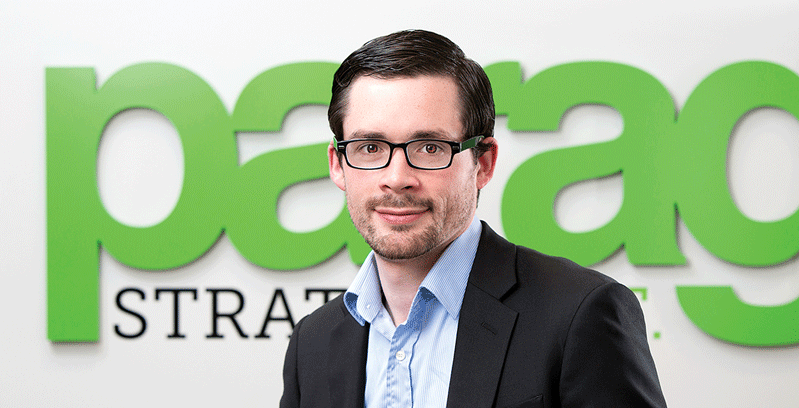
DelcieEntrepreneur2014DPartYou know you’re getting somewhere in life when your first name is all anyone really needs to make an identification.

That was the case with people named Elvis, Ringo, and Tiger (OK, his real name is Eldrick). And, to a lesser extent, it’s working for the 29-year-old that BusinessWest has chosen to be its Top Entrepreneur for 2014 — Delcie Bean.

Or just ‘Delcie,’ because that’s all that’s generally required when he becomes the subject of conversation. That’s true in part because, well, let’s face it, there are not many Delcies out there. But it’s also because Bean, in just a few years, has become a dominant force in the business community — and also with regional initiatives in the broad realm of economic development, education, and even office design.

By now, most everyone knows the story of how he first started selling things, like Creepy Crawlers and Ozark Lollipops, to classmates in the second grade, and started his own computer-repair company at age 14, when he was too young to drive but had no shortage of clients willing to pick him up and drive him to their home or business.

Most also know that he shaped what was named Valley Computer Works and later renamed Paragus Strategic IT (after asparagus — well, sort of) into one of the fastest-growing IT firms in the country, a fixture on Inc. magazine’s lists of the nation’s fastest-growing private companies, now boasting $4.25 million in annual sales.

They also know that he was the driving force behind Tech Foundry, a nonprofit, launched last year and still in the midst of a one-year pilot program, with the goal of training unemployed and high-school-age individuals and matching them with the precise needs of area companies. It’s an undertaking that’s drawn the praise of local and state officials alike for addressing one of the business community’s most perplexing, and persistent, problems — the dreaded skills gap.

Some might also know that Bean is a principal with a second business venture. Called Waterdog, it’s what he called a “tech-distribution company,” which partners with companies that make technology products and helps them find markets for those products. The enterprise, based in downtown Springfield, is closing on a $500,000 angel-investment round involving the Springfield Venture Fund and River Valley Investors, and is expected to add another 10 employees over the next year.

But less is known about what drives Bean and fuels his many passions. During a wide-ranging, quite enlightening interview, it became abundantly clear that Bean is very serious about:

• Entrepreneurship and fostering more of it;
• Careful and precise allocation of what has become a precious commodity — his time;
• A business philosophy that goes way, way beyond simply making money;
• Work-life balance;
• Getting unplugged much more than most could imagine given his success, his line of work, and the age we live in; and
• Playing a very significant role in the revitalization of Springfield and this region as a whole.

In short, his answers to BusinessWest’s many questions were quite revealing, and what emerged from this Q&A was a sentiment that Bean wants to be, and in many respects already is, a leader on several fronts, but especially when it comes to the growth and maturation of this region as a center for innovation, entrepreneurship, and jobs, something it was a century or more ago — and that he believes it can and will be again.

“If I can serve any benefit to inspiring others to get stuff done and to get motivated, then to me, that’s what’s ultimately worth it,” he said. “We have to continue to prove to people that you can do stuff, and that these things are possible. And I think the more people that have that positive spirit and get in the right perspective … that’s what’s going to change the Valley and bring us back to the glory days. Springfield was one of the biggest cities in the Northeast at one point, and there’s no reason why we can’t return to those days, just in a different way.”

In Good Company

As he settled back into one of the comfortable chairs in the conference room at Paragus’ recently opened, ‘outrageous green’-dominated headquarters in Hadley, Bean started the conversation by relating an exercise he recently undertook with some colleagues.

“We started talking about all the things that happened just in 2014,” he explained. “Within about 12 hours, I’d thrown up this website called springfield99.com where we started listing all the things that happened just in Springfield and just in 2014. And it’s amazing just how many things happened in this one year alone, some of which I was part of, some of which I would have loved to have been part of, but all of which I’m just proud to say are going on in the Valley.”
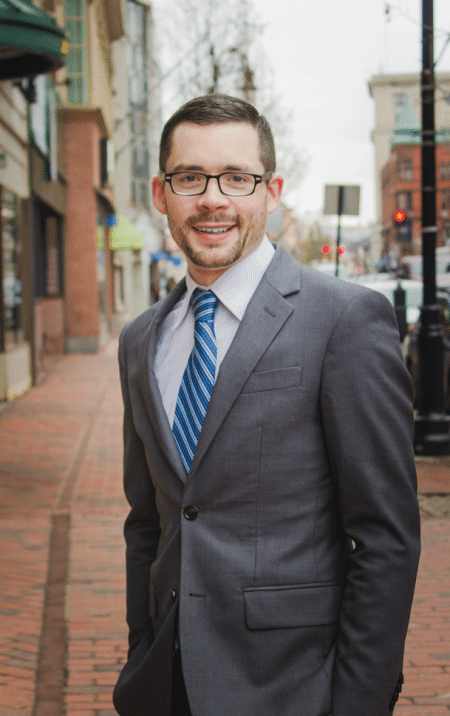
Delcie Bean

Delcie Bean says that a vibrant Springfield “is something I really want to play a role in.”

When asked for a list, he mentioned everything from the formal launching of Tech Foundry to the success enjoyed by Valley Venture Mentors; from TechSpring, the initiative launched by Baystate Health to foster entrepreneurship within the healthcare spectrum to the innovation center being built downtown; from Barbara Walters speaking at Bay Path University’s annual leadership conference to an American Pickers episode taped in the city that involved old Indian motorcycles.

“We got to item 45, and then we remembered that MGM got approval to open a casino,” he went on. “It was so cool to see that there was so much going on that isn’t necessarily in the shadow of the casino; it’s not a footnote to the casino — the casino is just part of this movement that’s going on.”

Before elaborating on the many aspects of that movement, BusinessWest first asked Bean about his various business ventures and what’s likely to happen next.

We started with Paragus, the IT-solutions company that now boasts more than 40 employees. The coming year shapes up to be an intriguing one, with Bean initiating an employee stock-ownership program (ESOP), and the Paragus team eyeing a host of avenues for expansion — in a variety of forms.

BusinessWest: Talk about the ESOP. It’s a big step, and there are risks involved. Why take this step now, and what does it mean for Paragus for the short and long term?

Bean: “In a lot of ways, this transition to an ESOP is a gamble on my part. I’m betting that the company will grow even faster and net even bigger returns in the hands of the employees than it would have if I had continued to remain as 100% owner.

“The employees will own 51% of the company, and I’ll own 49%, and the hope is that, by being owners and thinking and behaving differently, they will drive better results. It has to not only happen, but it has to happen at a multiple big enough to offset the growth I would have gained on my own if I had retained 100% of the shares.”

BusinessWest: How are you preparing your employees for what will be a dramatic shift in their role — and also in their outlook about the company and where it can go?

Bean: “We’ve spent that past 18 months preparing employees for that transition, because it is a big change. I led a class recently called ‘What Does it Mean to be an Owner?’ and we went through the process together of defining what are the characteristics of a truly great owner. I then challenged them to identify one characteristic that they had room to improve upon, and work with me one on one to develop an action plan for how they could make progress on improving on that characteristic.”

BusinessWest: Talk about your own role moving forward. Will it change, and if so, how?

Bean: “One of my goals and objectives is to create businesses that are not dependent upon me. Another way that I define success is getting people to be self-reliant, or empowered, or in a position where they’re not dependent on me. Every day, Paragus is less and less dependent on me personally, and that’s a huge mark of success.

“It means that we have a strong leadership team, it means that we have empowered employees, it means that we have good systems and processes. It means we have a healthy business. It’s great seeding companies and getting them started, but then empowering and finding just the right people, the right mix, and the right plan so they can grow and thrive and succeed on their own.”

BusinessWest: What is your long-term vision for the company, and how does the ESOP affect that? Is this a company that you envision someday being sold to a much larger entity?

Bean: “I decided a few years ago that Paragus was never going to be that company — it was never going to be the company that we grew to sell externally, and the ESOP is putting a nail in that coffin. By making an ESOP, we’re very publically saying, ‘this is a company that’s going to remain here in the Valley, owned by the Valley, and here to support and contribute to the Valley.’

“But that doesn’t mean that they don’t have big, aspirational goals. They want to look at some acquisitions, they want to open up some other offices, they want to expand into some other markets. They want to make this company big, and they want to be the ones who own it and do it. We don’t want to grow it to sell it.”


BusinessWest: Can Paragus meet all those lofty goals you mentioned by remaining a Western Mass. company, or just a Western Mass. company? There are some competitive disadvantages to being in this region, and it can’t be easy to recruit top talent to this region. Will Paragus still be a fixture here in five, 10, or 20 years?

Bean: “I think Paragus can always be here and will always be here. But if Paragus wants to continue to grow at 30% a year, as it has for the past five years, at some point, and probably not too far from now, they’re going to have to expand their market, and that might mean opening up a Paragus in another market. But that won’t mean leaving Western Mass.

“I can’t imagine a future where Paragus abandons Western Mass., but I can imagine a future in which we have a branch anywhere from Denver, Colorado to Hartford, Connecticut. In fact, there has been a lot of talk, probably just because people love the area, about Denver — it’s a really cool city going through some exciting times, and a place where the Paragus team members can see themselves having a lot of fun. There’s been nothing serious, but there has been some talk about how maybe, someday, that would be a cool place to put some new roots.”

Bean says the employee stock-ownership program

Bean says the employee stock-ownership program he’s initiating should enable the company to grow even faster and net bigger returns than if he remained sole owner.

The Future Is Now

BusinessWest: Let’s switch gears and talk about your participation in economic-development-related initiatives and your thoughts on Springfield and the region as a whole. If we were doing this interview 10 or 15 or 20 years from now, what would you like to have said you’d accomplished beyond success with your businesses?


Bean: “Right now, I have become so excited about the prospect of a revitalized, rejuvenated Springfield that I’d like to be able to say that, not only has Springfield accomplished that, but some actions that I took part in contributed.

“What that looks like is so hard to define, but I think it’s one of those things where you know it when you see it, whether it’s the energy or the excitement or the pure quantity of people on the street. But a vibrant Springfield is something I really want to play a role in.”


BusinessWest: You sound quite upbeat about the Valley’s prospects. What is the basis of that optimism?

Bean: “Things are coming together in many ways, especially in Springfield. Through Valley Venture Mentors, the innovation center, the accelerator program, and other initiatives, we’re creating entrepreneurial energy, and the possibilities are very exciting.”


BusinessWest: Beyond Tech Foundry and its mission of helping to create a large, talented workforce, what are some of the other ways you’ve become involved in economic-development efforts?


Bean: “I sit on two EDC [Economic Development Council of Western Mass.] boards, the Entrepre-neurship Committee and the Homefield Advantage Committee, and I really enjoy that work. I also get involved in other ways, such as mentoring entrepreneurs.”


BusinessWest: Mentoring entrepreneurs? Do you do a lot of that?

Bean: “I do, either through a program like Valley Venture Mentors or separately on the side. I also take phone calls … I don’t know how I got signed up for this, but people will come to me and say, ‘hey, I’m thinking of moving to the Springfield area, and someone gave me your name as somebody I should talk to before I move there.’ I’ll give them an idea about jobs and positions and what I think the economic landscape looks like and how awesome and exciting it is to be here right now. Maybe once a week I’ll get a call like that, and it’s great to know that, once a week, someone’s thinking about moving back here.”


BusinessWest: Many economic-development leaders are bullish about improved rail service between Vermont and Southern Connecticut. Do you believe such service can change the equation in this region, and if so, how?

Bean: “The Tofu Curtain drives me crazy, and I’m hopeful that maybe Northampton, Holyoke, and Springfield start working better together. Maybe the ease of getting from one place to another because we don’t have to deal with the car … maybe it makes the communities more connected and work more synergistically.

“That’s my most aspirational hope for this train; we call it ‘the Valley,’ but it’s really two very distinct sections, and you could argue there’s three because of Franklin County. Look at Holyoke and Springfield — it is amazing how little those two cities work together, and they’re so much alike; they’re both Gateway cities within a stone’s throw of each other with similar problems and similar challenges, and they’re not working collaboratively as they should be, and I’m hoping one stop on the rail line changes all that.

“I’d love to see the Valley function as one neighborhood, and if you look at Silicon Valley and so many other parts of the country, they’re the same size as our valley, but we’re so much more insular. And people complain that it takes 20 minutes to get from Northampton to Springfield. Look at Boston — it takes 20 minutes to get anywhere, and they’re doing just fine.

“That’s my hope, that maybe this rail service gives us one less excuse to not do business with each other, or have lunch together, or have meetings together and not fight about whether it’s in Northampton or Springfield.”

BusinessWest: What about the casino? This is not exactly innovation, but it is economic development and jobs. Will this be a positive force in the city and the region?

Bean: “I have very positive feelings about the casino’s impact and what it’s going to do for the city, but I think’s it’s important that it doesn’t define us — and it doesn’t sound like it is. It sounds like we’re defining ourselves.”

Time and Space

BusinessWest: Considering the many types of demands on your time, you have probably become adept at how that resource is allocated. Talk about how you distribute the hours in your day and find time for everything you want to do.

Bean: “It’s definitely challenging. There are a lot of things competing for my time, and I’m one of those people who has a hard time saying no to things I’m passionate about or that I think are good and worthy. But there are plenty of things I do say no to; for example, I’m not an advocate for long meetings where there’s no clear purpose and the dialogue isn’t going to result in any clear action items. I’ve been to more than a few of those, and I’ve learned my lesson; those meetings do have a purpose, just not a purpose that I’m able to contribute much to, so I’ve learned that they’re not a good investment of my time.”


BusinessWest: Talk about those occasions, and those causes, for which saying ‘no’ is not an option.

Bean: “There are three different buckets that I put my time into right now, and maybe one sub-bucket. For starters, there’s Paragus and Waterdog; I work from 6:30 a.m. to 6:30 p.m. most days, and in that 12-hour span, Paragus gets six of those hours, and Waterdog probably gets two of those hours. But what’s nice is that still leaves me with four hours a day, and that’s where I would put my outside interests or economic-development interests, or giving back, or however you want to classify that.

“A big piece of that goes to Tech Foundry, but that still leaves plenty left over to be a speaker at various events, to attend different meetings, to mentor entrepreneurs, to go to city planning meetings, and a lot of other things.”

BusinessWest: Time management is a critical assignment for all business leaders. Talk some more about your approach to it and how you get the most out of each hour in the day.

Bean: “I have a very, very full calendar — every minute is booked between 6:30 a.m. and 6:30 p.m., and two nights a week I work late, and that usually means I have some event I need to attend. That’s where I’m really selective; there are so many great events in the Valley to go to at night, and I only pick two a week. And if I’m going to do a late night, I’ll try to do two or three things that night.

“I live an hour and 15 minutes away in New Hampshire, and a few years ago I hired a driver, so I use my commute time to do all my e-mail so that during the day I don’t even look at my computer — I just go from meeting to meeting as my phone instructs me to, and then I have two hours at the beginning and end of each day to catch up on e-mails, get proposals, or correspond with people.

“Hiring a driver was an economic decision. I ran the math and looked at how productive I could be with an extra two hours a day and what it cost to pay someone for those four hours, and decided it made perfect sense. This gives me a guaranteed two or two and a half hours a day when no one can walk into my office, call me on the phone … it’s just a guaranteed two hours of e-mail and going over proposals.”

Investments in the Valley

BusinessWest: You must get a lot of requests to serve on boards and take part in economic-development-related initiatives. How do you decide where to put your time and energy?

Bean: “We get a lot of those requests, and they all go to Margie, my assistant. She’s gotten to know really well what I’m passionate about, what I’m interested in, and what I’m not, so she will vet them, send me to ones that she thinks are worth me at least looking at, and then I’ll figure out what the commitment is going to be.

“For example, I’ve been very good about not getting on the boards of nonprofits, only because there are so many of them, it would be hard to choose, and I have my own nonprofits for which I’m president of the board, and I don’t want to distract from those energies. But there was an opportunity that came along where an organization is going to be forming a charter school in Springfield, and that organization, Up Academy, has a track record that’s just mind-blowing. It will take over an existing Springfield middle school, serve the same students and use the same money, but run it privately.

“I started hearing about that, and I started researching the track record and learning more about that organization, including the work they did in Lawrence, the work they did in Boston. It was so impressive that I did agree to join their founding board because I feel that education in Springfield has got to be a priority, and what it needs right now are some new, fresh perspectives, some new minds, and some new thoughts. So this was one where I broke my own rule and got involved.”

BusinessWest: You also get a number of requests to speak to different groups and offer keynote addresses at events. First, do you like public speaking — is it something you’ve become good at? And, second, how do you decide which speaking requests to accept?

Bean: “Speaking is always something I’ve enjoyed, and it’s always something I thought came naturally to me. I don’t know; I’ve never sat in the audience, so I don’t know how I come off. But it’s never something that’s made me nervous or uncomfortable.

“And what I really like about public speaking is having the opportunity to use that platform to energize an entire group of people at one time around a thought, an idea, an interest, an excitement level, and really get people to leave that room thinking differently and feeling differently. If I accomplished that, then I’m thrilled.”

BusinessWest: What have been some of your recent assignments, and did you feel you’ve been able to energize the room, as you mentioned?

Bean: “One of the most exciting ones I got to do recently was the Grinspoon Foundation entrepreneurship dinner, where they asked me to be the keynote speaker. What I liked about it was that here were 300 to 400 college kids who had a demonstrated interest in entrepreneurship, and were asking themselves those questions in their heads: ‘can I do this? Is this right for me? How would I even get started? Am I really cut out for this?’ And being able to share my story with those kids and talk to them about my experiences and my perspective on the situation and give them the confidence and encouragement to go off and do it … I certainly left that night feeling energized and excited.

“At least when compared to when I spoke at the Massachusetts Developers Conference. That was certainly fun and exciting, but I don’t think I changed a lot of hearts and minds that day. It will be the same when I speak at a Federal Reserve Bank event in Boston in January. That will certainly be fun, and it will be a great audience, but I don’t think I’ll change a lot of hearts and minds. Hopefully I will, because that’s when I really enjoy it — when I get a bunch of people really excited.”

Managing Expectations

BusinessWest: Let’s talk about your management style, your thoughts on running a business, and your opinions on what makes a true business leader. And maybe the logical place to start is by asking if you’ve had any mentors or any business owners you’ve borrowed from or tried to emulate.


Bean: “I personally like to draw on the best of everybody, so I have a handful of mentors, and there are things about them that I emulate and maybe things about them I’m not so keen on. I try to pull the best characteristics from everyone I know. But if there was one person I had to point to … I really like what [Zappos founder] Tony Hsieh has done, not just with that company, but his philosophy, his mindset, his personality.

“He’s someone who’s really gotten the economic-development bug and is trying to rebuild the entire city of Las Vegas, which was worse off than the city of Springfield was, and turn it into a vibrant, functioning city again. And that’s inspirational, because it’s rare that somebody with that much money, where there’s so little that he’s going to gain from this personally, is so passionate about a city and its revitalization. To see him dedicate his time and energy to that project definitely gives me encouragement to know that’s there’s nothing wrong with not spending all of your time trying to make money.”

BusinessWest: Can you elaborate on that thought, because making money is what has driven most entrepreneurs throughout history.

Bean: “There are some people who go from one enterprise to the next one to the next one, and it’s always about ‘how big can I make the coffers?’ There’s nothing wrong with that — that’s capitalism — but there’s a lot of room for also making sure you understand what makes you happy, what you enjoy, and for me, that’s seeing things happen. And if I can make things happen, even if those things don’t directly correlate back to some financial interest of mine, I get joy from the act of seeing them happen.

“Seeing Tech Foundry launch … maybe it helps Paragus someday with workforce — maybe. But there are many things I could do that are a lot less expensive and a lot less time-consuming, but seeing it happen, seeing those kids show up, seeing the impact on the community, that, to me, totally justifies the time, the money, and everything else.”


BusinessWest: Who else inspires you, enough for you to want to emulate them?

Bean: “There are so many people, it’s hard to narrow it down. I’m certainly inspired by (long pause) even Bill Gates to a certain extent. It’s a tough one — he’s very controversial; there are a lot of things you can say about him. But I’ll say I’m inspired by the fact that, despite all the money he’s made, he’s dedicated so much of his time to giving it away — but not just by writing big, fat checks.

“He’s trying to figure out how to make a meaningful impact on the world, whether it’s through the malaria work they’re doing or … he’s got a project where he’s trying to use spent nuclear rods to create clean electricity. It’s so much easier for him to write a check, but for him, as it is for me — not that I’m comparing myself to Bill Gates — he’s taking his time, his energy, and his passion and using it for more than creating wealth for himself.”


BusinessWest: Anyone in this region who has been a mentor or a source of inspiration?

Bean: “There have been many. The Davis Brothers [John and Steve, former third-generation owners of American Saw, now Lenox] are a good example. Those are guys who don’t have to be here; they can be doing a lot of other things, but they’ve chosen to spend their time, money, and energy impacting the community that they’re in, and in ways that are really inspirational.

“They could be doing financial investing in areas that are probably going to net them better returns, but they’re committed to everything from for-profit investment to not-for-profit investment, but also giving their time. The fact that Steve Davis is chair of the Entrepreneurship Committee, and John Davis has his Springfield Business Leaders for Education, another group I decided to join, shows they’re dedicating more than their time; they’re here every day, they’re giving their money, their effort, and they don’t have to be. And that’s inspiring. Watching them almost makes me feel obligated; if they’re doing it, how could I not do it?”

BusinessWest: You’re 29 years old, but you’ve been the boss your entire life. Most people have the opportunity to learn and grow by watching and drawing out those on the higher rungs on the ladder. You’ve never really had that opportunity; do you feel that maybe you missed out on some learning opportunities?

Bean: “That’s a good question. ‘No’ is the short answer. I had never been taught that who you learn from are the people above you in your own organization, because I’d never been in an organization big enough to do that. I was naive in the sense that I didn’t know that’s how it’s supposed to work.

“So I learned from everybody. I learned from my clients, from my vendors, from my banker, my lawyer, my accountant — I wouldn’t just let them do stuff for me, I’d make them explain it to me; I’d look over my accountant’s shoulder while he’s doing my tax returns and my books, asking him mind-numbingly boring questions, because I really wanted to know, and I needed to see the big picture.
“I learn from my staff, I learn from community leaders, and I read a lot. I’ve learned a lot from the books I’ve read; I can’t understate the amount of knowledge I’ve accumulated from reading some phenomenal business books.”

Hanging in the Balance

BusinessWest: We’ve talked about business, economic development, mentoring, community service … what do you do when you’re not doing any of that?

Bean: “When I’m really not working, I love just being with my family. We moved to New Hampshire because I love the outdoors and I love being in a rural environment. I’ve got two young kids — a 3-year-old and an 18-month-old — and I love just being out with my wife and kids.

Delcie Bean, seen here with his wife, Julia

Delcie Bean, seen here with his wife, Julia, and sons Delcie Bean V (Jack), left, and James, says he values work-life balance and has a strict no-work policy on weekends.

“We live on 16 acres that abut 16,000 acres of state land, and so we just love going on hikes in the woods — endless trails where you can never walk the same path twice. I love that stuff. I love just being at home with my family, just taking it really easy and relaxed.

“One of the reasons I moved up there is I spend so much time around people all day long, so it’s really nice being up somewhere where the only thing you can hear are the birds and the trees; it’s so quiet and peaceful up there.”

BusinessWest: Can you really just put aside the various kinds of work you have like that?

Bean: “I don’t really have much choice. It’s also very unplugged up there — we barely have Internet; I have a crappy DSL connection. Even if I wanted to work. it would be miserable.”

BusinessWest: Somehow, you don’t seem like the type who could be unplugged for very long.

Bean: “You’d be surprised. I work almost a 12-hour day, but then when I do get home, especially on the weekends, I have a very strict no-work policy. That time is for me and for my family. It takes a lot of energy to do what I do, and I need to kind of recharge and regroup, and part of that is being unplugged and not being ‘on.’

“When my wife and I go on vacation, we go to these really, really secluded destinations where we don’t do anything — we’re just vegetables where we just spend time with each other and there’s no other people.”

BusinessWest: Where do you go?

Bean: “My favorite place … there’s this villa in Jamaica on the other side of the island from where everyone else goes, in a tiny little fishing village. We rent it out, and the only people there are a cook, a maid, and a pool guy; those are the only three people you see the entire time you’re there. They make all your meals for you, and you live in this beautiful house with your own private beach and your own swimming pool. You can completely just unplug and relax; there’s no Internet, no TV. I just read and read and read, and enjoy disconnecting.”

BusinessWest: Where else do you go?

Bean: “I make a clear distinction between vacationing and traveling. We try to commit to a system where every other trip we travel — we’ll go to some city and walk around, like we just got back from Quebec City this past summer — and the alternating trip is what I call vacationing, where we don’t do anything.”

BusinessWest: Do you think you have a proper balance between life and work?

Bean: “I do, and that’s because I work hard at it. I decided to hire a driver around the time I had my first kid. It allowed me to get home an hour earlier because I wasn’t staying at work that extra hour doing my e-mail. So, except for those two nights I work late, those other three I make it home in time to put the kids to bed, and that’s important to me.

“And two days a month I go into work late so I can drive my kid to school. I really enjoy it, and it means a lot to him. Finding a balance was tough, and I’m very fortunate that my wife is able to stay home with the kids; that has helped a lot. And my no-work-weekend policy makes a huge difference, because those two days are 100% about being with the kids and the family.

“And that also speaks to my point earlier about how one of my objectives is to create businesses that are not dependent upon me. That gives me the flexibility to go to that Little League game when my kids get a little older, or that school play, and not feel like the whole world revolves around me being at my desk. I don’t want people so dependent on me I’m handcuffed.”

He Gets IT

To say that Bean has been successful in remaining un-handcuffed would be a huge understatement.

By carefully managing time, empowering people, and putting effective systems in place, he’s found the hours, the energy, the will, and the freedom to be a force in the Pioneer Valley on a number of levels.

And at 29, and with a firm commitment to remain at the forefront of efforts to both grow his businesses and be a part of the efforts to revitalize the region economically, he’s certain to be a force for years and decades to come.

Stay tuned.

Previous Top Entrepreneurs

2013: Tim Van Epps, president and CEO of Sandri LLC
2012: Rick Crews and Jim Brennan, franchisees of Doctors Express
2011: Heriberto Flores, director of the New England Farm Workers’ Council and Partners for Community
2010: Bob Bolduc, founder and CEO of Pride
2009: Holyoke Gas & Electric
2008: Arlene Kelly and Kim Sanborn, founders of Human Resource Solutions and Convergent Solutions Inc.
2007: John Maybury, president of Maybury Material Handling
2006: Rocco, Jim, and Jayson Falcone, principals of Rocky’s Hardware Stores and Falcone Retail Properties
2005: James (Jeb) Balise, president of Balise Motor Sales
2004: Craig Melin, then-president and CEO of Cooley Dickinson Hospital
2003: Tony Dolphin, president of Springboard Technologies
2002: Timm Tobin, then-president of Tobin Systems Inc.
2001: Dan Kelley, then-president of Equal Access Partners
2000: Jim Ross, Doug Brown, and Richard DiGeronimo, then-principals of Concourse Communications
1999: Andrew Scibelli, then-president of Springfield Technical Community College
1998: Eric Suher, president of E.S. Sports
1997: Peter Rosskothen and Larry Perreault, then-co-owners of the Log Cabin Banquet and Meeting House
1996: David Epstein, president and co-founder of JavaNet and the JavaNet Café

George O’Brien can be reached at [email protected]