Home Posts tagged Technology (Page 10)
Daily News

SPRINGFIELD — Comcast Business will present “How to Leverage Technology to Do More With Less,” part of the BusinessWest/HCN Lecture Series, on Wednesday, June 15. The event will take place at the Lyman & Merrie Wood Museum of Springfield History, 21 Edward St., Springfield. Registration will begin at 7:15 a.m., followed by breakfast and a panel discussion from 7:30 to 9 a.m.

The panelists — influential minds in the IT field — will discuss issues that every business IT department is being forced to deal with, including rising demands to make changes to existing systems, increasing efficiency and improving security, and how budget restrictions impact IT.

Panelists include Michael Feld, CEO, VertitechIT, and interim CTO, Baystate Health and Lancaster General Hospital; Frank Vincentelli, chief technology officer, Integrated IT Solutions; and Patrick Streck, director, IT Services, Baystate Health / Information & Technology.

Admission is free, but pre-registration is required by June 7. Register online here, or call (413) 781-8600 for more information.

Features

Meetings of  the Minds
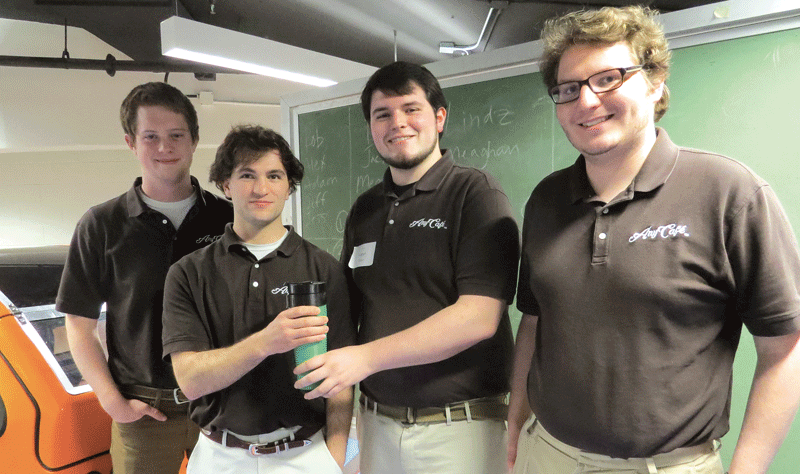
The team at AnyCafé

The team at AnyCafé: from left, Evan Choquette, chief information officer; Logan Carlson, CEO; Chris Urciuoli, president; and Ryan Noon, chief technical officer.

‘Community’ and ‘network.’ Those were the two terms used time and again by members of the second cohort of Valley Venture Mentors’ accelerator program to describe the program — and they speak volumes. While those involved with the 36 ventures are competing against each other for prize money, they are also staring down the same challenges of entrepreneurship, thus making that journey a little less daunting for their colleagues.

Jas Maggu was relating some personal sentiments. But she was also speaking for every member of Valley Venture Mentors’ second accelerator cohort — and also anyone who’s tried to turn an idea into a business.
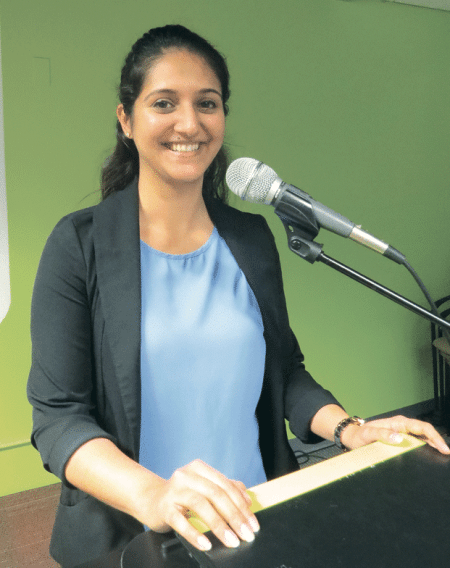
Jas Maggu

Jas Maggu, founder of AuthenFOOD

“As an entrepreneur, it can get really lonely, and you have huge ups and downs,” said Maggu, who has launched a venture called AuthenFOOD, which will bring gourmet, healthy foods right to one’s doorstep. Through her participation in the four-month accelerator program, which wrapped up a week or so ago, she finds she is far less lonely.

And also more enlightened, more confident, better connected, and, in her mind, better able to stare down the many challenges standing between her and success.

She is not alone in these sentiments. Indeed, as BusinessWest talked with several members of the 36-member cohort — some of whom had already given final presentations before their peers, while others were going to have to sleep on it another night and stand at the podium the next day — many common sentiments were expressed.

Individually and collectively, they spoke of camaraderie and shared learning experiences; gaining a firmer grasp of their specific concept, the market for it, and what it will take to advance it; making important connections; and simply being able to share common challenges and emotions that explain what Maggu meant when she spoke of loneliness.

These sentiments came from a diverse audience trying to advance a seriously eclectic mix of business concepts. For example:

• Joe Salvador is on the verge of bringing to the market a new silencer, or noise suppressor, for firearms, a product he believes will resonate with shooters trying to not only improve their accuracy but save their hearing;

• Chris Urciuoli heads a team of fellow Western New England University engineering students trying to seize what they consider a huge opportunity with a product that will enable the user to brew a cup of coffee anytime and anywhere — hence the corporate name AnyCafé. They’ve already heard from the CEO of Keurig, who told them he believes they have the next logical entrepreneurial step in the ongoing saga of the K-Cup;

• Dr. Alex Louizos is a vascular surgeon and co-founder and CEO of Nanotech Galaxy, which is working to produce software that will enable surgeons to operate more efficiently and healthcare providers to reduce their expenses;

• Lora Fischer-DeWitt has developed a line of jewelry called Scout Curated Wears that is already in a number of gift stores in the region, including Cedar Chest in Northampton;

• Angela Lussier has launched a venture called Speaking School for Women, which, as that name suggests, was conceptualized to help women become better public speakers and, overall, more effective communicators;
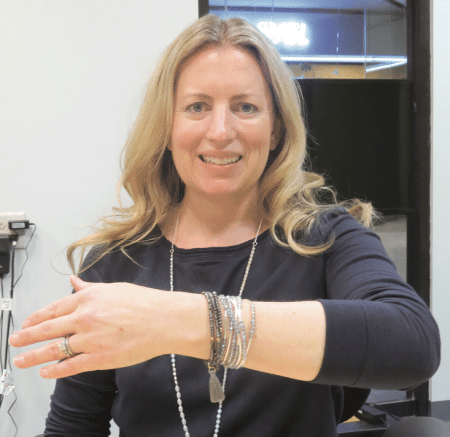
Lora Fischer-DeWitt

Lora Fischer-DeWitt, founder of Scout Curated Wears

• Tom Skypek is co-founder of an online networking tool he bills as a “Match.com for government contracting professionals”; and

• Terra Missildine, already a serial entrepreneur — she has a ‘green’ cleaning company — has launched a family-friendly co-working space called Cultivate. She jokingly notes that she wishes she was in the accelerator before she opened the doors (more on that in a bit), but she nonetheless credits the experience with helping her attain early success.

Vastly different people with a wide range of ideas and a common dream (actually, several of them) — that’s what the cohort is. As for what it’s about … we’ll let the entrepreneurs do the talking.

In the course of doing so, they go a long way toward validating the optimism expressed by those who believe the intense accelerator regimen will help steel its participants for the rigors they will face and create a host of new employers for the region.


2016 VVM Accelerator Finalists (in alphabetical order)

AnyCafé: Developer of hot beverage solutions for the future, including the Travel Brewer
Celia Grace: Fair-trade, ethical wedding dresses that give back and empower women around the world
DaVinci Arms: Designer and manufacturer of firearms suppressors and accessories for mission-critical applications
Homebody Holistics: Maker of all-natural, hand-crafted, herbal cleaning solutions using no harsh chemicals or additives
iRollie: Niche-market phone-case manufacturer and online retailer featuring the rolling tray phone case
Livingua: An app that connects travelers to locals who know the language and culture wherever and whenever they want
Name Net Worth: Connective platform that leverages trusted relationships to measure and strengthen a user’s personal and professional networks
Need/Done Inc.: Instant help for kids at home from people your parent network trusts
Prophit Insight: Software company that helps healthcare providers identify and acquire unique sources of physician referrals
Scout Curated Wears: Designer, curator, and producer of thoughtful women’s accessories
Sumu: Works with property managers and landlords to post fee-free apartments to help users find their next home
Treaty: Nanotechnology company whose flagship product is FogKicker, a biodegradable anti-fog solution made from nanocellulose


Getting Down to Business

“Joe’s the man.”

That opinion was expressed loudly by someone in the conference room at VVM headquarters in Tower Square — exactly whom wasn’t entirely clear to BusinessWest — but there were several heads nodding at the suggestion.

‘Joe’ is the aforementioned Joe Salvador, and the commentary about him was not simply in reference to his suppressor concept — although that’s part of it. It’s clear that, over the past four months, he’s been able to help several of his cohorts, through everything from valuable connections to words of wisdom.

“Joe has put me in touch with someone I’m courting to be an advisor,” said Skypek. “And I know a lot of that has happened across the board; there’s a nice community of people here who are all in this together.”
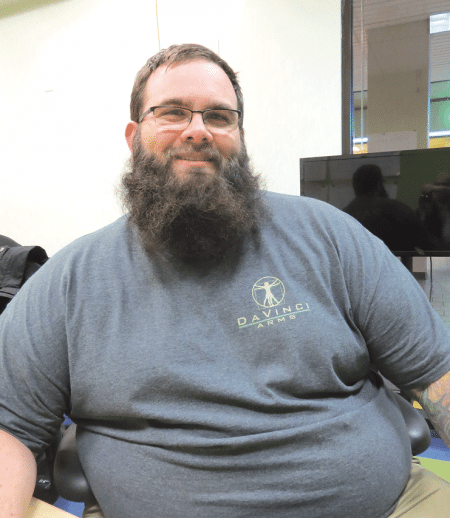
Joe Salvador

Joe Salvador says the accelerator process has helped him better articulate his suppressor concept and identify target audiences.

Such reflections cut right to the chase when it comes to explaining the accelerator and its inherent value — to those taking part and the region as a whole. Indeed, while the 36 participants are competing against each other for bigger shares of the $250,000 in prize money that will be awarded at the Accelerator Awards on May 26 — everyone will get at least $1,000, and the top prize last year was $35,000 — they are, as Skypek said, in this together.

‘This,’ specifically, being the struggle — because that’s exactly what it is — to turn an idea into a viable business. So, in many ways, the accelerator is a type of support network.

The cohort members are in various stages of development — Missildine and Fisher-DeWitt, as mentioned, were already in business, while those at AnyCafé entered the program with simply a concept — but they all have the common goal of accelerating their progression.

The program they were chosen to be part of helps in that regard in several ways, from rugged weekend boot camps focusing on specific aspects of business management to back-and-forth between participants, to interaction with mentors who can help the entrepreneurs with the issues right in front of them while also assisting them with seeing around the corner and anticipating what will come next.

Much of this support could be described as a form of tough love, or challenging the participants, said Missildine, among others, noting that friends and family members, while they mean well, will often tell entrepreneurs what they think they want to hear.

“Here, you’re confronted on your assumptions, and you have to essentially prove things,” she explained. “And that’s important, because as an entrepreneur, you don’t always have someone pushing back on you regarding the assumptions you make about your business.”

Salvador said the various efforts to challenge his team to identify a market for its product and outline a course for moving forward have certainly helped in the progression of DaVinci Arms, which he described as a spinoff from Wilbraham-based FloDesign, which has developed noise-suppression equipment for several applications, including the military.

“When we started this, we had a really strong product that we had developed, but we really didn’t have the business side locked down — you had two engineers running the company,” he explained. “Through VVM, we’ve been able to gain a laser focus on every aspect of what was needed to grow our startup.

“We needed to have our financials really well-addressed, what our customers and market segment were, how we were going to engage that customer segment, what we were looking at for funding, how we were going to raise that funding, and much more,” he went on. “Basically, all the minutiae that builds up the business, that’s what we needed help with: the details of financing, marketing, and sales, all coming together.”
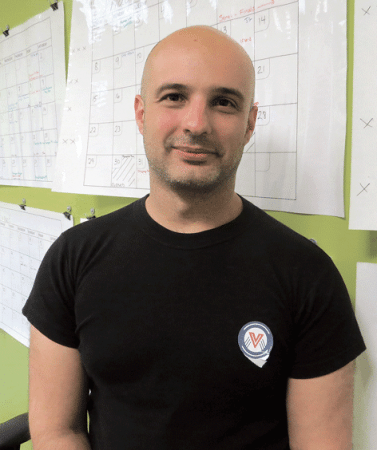
Dr. Alex Louizos

Dr. Alex Louizos credits the accelerator with helping him create more effective presentations for his software concept.

Through all of that, VVM and its accelerator program helped DaVinci hone its presentation and target it to a specific audience, he explained, adding that, before, the team was giving highly technical presentations that effectively went over the collective heads in the audience.

“At the start, I knew that suppressors were selling like crazy, but I didn’t know who they were selling to,” he explained, adding that, through the accelerator experience, the venture has gained key contacts, identified its primary audiences, and drawn a road map for moving forward, starting with product demonstrations and putting the suppressors in the hands of distributors in gun-friendly states like Florida, Texas, and Utah.

Missildine said the accelerator process has also helped her with the audience-identification process and other aspects of her business. She’s grateful for the help, but wishes it had come earlier; if it did, she might have done some things differently.

“I’m a lifelong entrepreneur, and I’m extremely impulsive,” she explained. “I opened the doors to my business in the second month of the accelerator, and already see what I would have done differently if I had gone through the whole experience prior to launch.”

Elaborating, she said she would have shopped, and negotiated, more effectively for a space for the co-working venture — she joked that she has the highest overhead of any venture in the Valley — and she would have expanded her team and not tried to do everything herself.

Through the experience, though, she’s proven what she’s believed all along — that her concept is scalable. And along the way, she’s found “camaraderie and community” on a scale she couldn’t have imagined.

“The accelerator plugs you into so many more resources than the homework that you do,” she explained. “By going through this, I feel that my company’s in a much better place.”

In Good Company

Louizos feels much the same way about his venture, which centers around using artificial intelligence — what he calls “smart software” — that empowers doctors to diagnose patients more quickly and also enables hospitals to analyze data in a way that saves both time and money. He credits the accelerator experience with helping him sharpen his business focus and better articulate complex subject matter.

“When I started the accelerator, I couldn’t describe what I was doing in a way that a 5-year-old would understand,” he noted. “I received lots of critical feedback in a way that helped me explain my idea in a way that makes sense to everyone and also creates some enthusiasm about it.”

Summing up the experience, he said it helped him identify and understand the weakest aspect of his business — because, as the saying goes, it’s only as strong as that point — and improve upon it.

Meanwhile, the team at AnyCafé didn’t exactly have a business when this accelerator session started. Instead, they had a concept, and a bold one at that — to bring to the market a device that would brew a single cup of coffee anywhere the consumer chooses.

The key to this concept — and what has apparently kept others from bringing something like it to store shelves — is battery technology that fuels the heater in the thermos-like device, team members noted, adding that they have perfected this technology and are ready to scale up this operation.

But the science was and is only a part of the equation, as the accelerator experience has shown them.

“We didn’t have much entrepreneurial experience, but we knew we wanted to do this,” said Urciuoli. “Over the past four months, VVM has taught us the way you have to think to succeed as a startup company; they’ve given us the spirit and the knowledge to go out and create our product and a plan to get it to the market and millions of individuals.”

Logan Carlson, another of the AnyCafé partners, agreed, and, echoing Salvador, said the accelerator experience has provided insight not available in the college classroom — especially the engineering classroom.
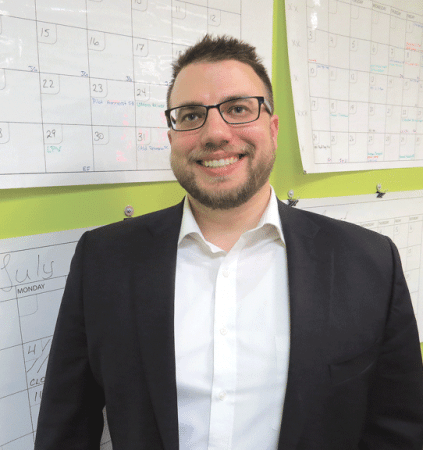
Tom Skypeck

Tom Skypeck was one of many who used the term ‘community’ to describe the 36 accelerator participants.

“It’s been a tremendous teaching experience,” he said. “Our knowledge has increased exponentially, just because of all the amazing people who are here.”

Maggu has been part of this teaching experience from many sides — she was a venture capitalist “in another life,” as she put it, and has been involved with VVM as a mentor. Now in the role of entrepreneur, she understands, even more than she did before, the importance of connections and learning from others going through similar experiences.

The accelerator process has given her both. Indeed, through her involvement with the program and connections made, she’s been able to forge a partnership with Fitness Together, one of several health clubs she works with to help individuals lose weight by eating better.

And she’s also learned by listening to and interacting with the other 35 participants.

“It’s been great to be part of this tremendous community,” she said, “where everyone you know is going through the same phases that you are.”

Like Maggu, Fischer-DeWitt said the prospect of starting a business can be very isolating. She then added another adjective: scary.

Things are somewhat less so than four months ago, she said, making frequent use of the words ‘network’ and ‘community,’ as so many others did, to describe what VVM, and especially the accelerator, creates.

“The connections have been amazing,” she said, adding that her business is growing rapidly — she’s now in 130 stores and has sales representatives in more than 20 states — and her experience in the accelerator will help her manage that growth and continue the expansion process in a smart fashion, literally and also figuratively.

Only the Lonely

The four AnyCafé partners now have matching dark brown golf shirts with their company’s logo. They had them on as they made their final presentation that Friday evening.

But they have much more than this wardrobe option, thanks to the accelerator. They have, as Urciuoli, said, much more of an ability to think as businesspeople, and not simply engineers with an idea.

Their learning curve, similar to that of other participants, but also unique in some ways, is what the creators of the accelerator program had in mind when they conceptualized it.

That, and making entrepreneurship just a little less lonely.

And in that mission, they have succeeded beyond all expectations.

George O’Brien can be reached at [email protected]

Manufacturing Sections

On Schedule

David Cruise

David Cruise says partnerships to raise up a workforce for CRRC MA USA. will benefit the region’s entire manufacturing sector.

When a company from across the globe sets up shop in Springfield, it can’t exactly bring its workforce with it.

“We need 100% new employees,” said Bobby Doyle, senior consultant for CRRC MA USA, the Chinese rail-car manufacturer currently building a $95 million production plant at the former Westinghouse site on Page Boulevard. “We can’t transfer people from China here; it wouldn’t work.”

Among the reasons CRRC — formerly CNR Changchun Railway Vehicles — chose Springfield, however, was optimism that the city and region could supply a workforce to support what will become the company’s North American headquarters. “The capital investment we’re putting in, that’s a big commitment,” he said, “and there’s got to be a long-term labor force.”

That’s why CRRC has forged a number of interlocking partnerships — with the Regional Employment Board (REB) of Hampden County, the local sheet-metal and electrical unions, Roger L. Putnam Vocational Technical Academy, and the engineering departments of area colleges and universities, for starters — to build that workforce.

But local economic-development leaders see potential benefits to these partnerships beyond the CRRC jobs, said David Cruise, the REB’s president and CEO.

“We’ve been working with [Doyle] to identify very specific production positions they will need on the factory floor,” he said. “They’ll need some administrative positions and engineering positions, but at the Regional Employment Board, we’re focusing on how to help them on the factory floor, where the heart of the work is going to get done.”

At the same time, Cruise continued, “we’re also concerned with not just identifying the workforce for CRRC, but with the broader regional metal-fabrication industry as well, hoping other companies benefit from the presence of CRRC in the region. We want to be sure that any sort of workforce training we develop benefits that broader metal-fabrication industry. That’s been our strategy.”

He explained that CRRC could present some spinoff work for other manufacturers and perhaps attract new manufacturing business to the region.

“We certainly want to be a conduit and help with CRRC Massachusetts, but we also shared with them, and they understand the value of, our intent to build training programs and build a delivery system that can respond to all the needs that may develop here in the region.”

Local Flavor

In 2014, CNR Changchun received a $566 million contract to manufacture 284 new subway cars for the Massachusetts Bay Transportation Authority (MBTA — 152  for the Orange Line and 132 for the Red Line.)

Construction at the 40-acre site — including a new, 220,000-square-foot factory building and conversion of the former Westinghouse administration building into CRRC’s administrative, engineering, and research offices — is underway. When it’s fully operational in 2018, the factory will employ 150 production workers with starting salaries of at least $66,000 a year, on top of about 150 construction workers needed to build the new plant. The MBTA cars will be built over a five-year period.

To develop a worker pool with the necessary skills, the REB is working closely with Sheet Metal Workers Local 63 and Electrical Workers Local 7 to develop training programs to be hosted mainly at Putnam after school hours.

“Putnam has some of the latest technology and equipment in the area, and I felt it was really critical to build that relationship between Local 63, Local 7, and Putnam,” Cruise said.

Along with training workers currently in the field for CRRC’s immediate demand, another goal is to attract unemployed and underemployed individuals into the training programs to prepare for a surge in demand as the rail-car plant grows beyond its initial buildout.

“As this facility comes online, the majority of initial-wave workers will be individuals who have experience in sheet-metal and electrical work,” Cruise said. “But as the facility expands and grows, clearly there will be some opportunities for entry-level positions.”

Cruise believes that, indeed, CRRC will be that kind of catalyst.

“We think this assembly facility will lead to the development of contracts with other municipalities and states around the country, with hope that some, if not all, of that work finds its way back to Springfield,” he told BusinessWest. “We’re not building programs just to get to opening day, but that can grow with them — and they can have some assurances that broader training is in place to meet future demand. There will be times when their workforce will be expanding pretty dramatically.”

Doyle agreed. “We’re pursuing two other contracts right now, one in Pennsylvania and one in Los Angeles, and both would be manufactured in Springfield, so Springfield is going to be a very busy location in the next five years,” he said. “We’d like to see the workforce keep doubling if we’re successful.”

Cruise said the after-school programs at Putnam — say, 3 to 9 p.m. — will complement offerings at Local 63’s own training center during the day. “That gives us 12 hours a day, which is exciting for us. It gives us some real bandwidth in terms of not only building great programs, but having some flexibility in scheduling.”

Meanwhile, the REB is working on a similar arrangement with Local 7, developing a curriculum for training programs to meet CRRC’s specific needs. “They’re excited to partner with us. They have a training facility in Chicopee, so we can run the same kind of afternoon program at Putnam, and at the same time utilize Local 7’s training facility during the day should demand dictate.”

The REB will look to competitive state grants to fund these programs. “It’s a challenge to identify funding to do this; unions are not allowed to use their funding for apprenticeship programs.”

That issue aside, Doyle called Putnam a “tremendous resource” and noted that CRRC officials have visited several times already. “We see them as a huge long-term partner.”

Once the initial hiring process is complete, a group of 20 to 30 employees, maybe more, will relocate to China for 10 months to a year to train on light rail cars in that country, learning how to test all the systems in the trains and bringing that technology back to Springfield. A second group of employees will go to China for four months to learn the assembly process. Production of the MBTA cars will begin in Springfield early in 2018.

College Try

CRRC is starting to build other connections as well, working with Western New England University’s College of Engineering to develop talent for the design and research operations at the new plant, and examining similar opportunities with UMass Amherst and Springfield Technical Community College. Meanwhile, FutureWorks, the one-stop career center located in Springfield, will serve as a resource for the hiring process.

“For them to be able to see that these kind of partnerships can be developed quickly — that they’re coordinated, agile, flexible, and can respond to their business demands — to me is adding great value and ensuring this corporation, and the industries that will benefit from it, will have a very bright future, not only here in Massachusetts, but across the country,” Cruise said.

Doyle admitted that, during CRRC’s search for a North American home, Springfield posed some negatives, including one of the highest commercial tax rates in the Commonwealth. But other positive factors outweighed that, including the city’s proximity to two major interstates and a CSX Transportation rail line, and, yes, those aforementioned partnerships, and the enthusiasm of the municipal and economic-development leaders who forged them.

“I’m excited about where we are,” Cruise said. “We’ve worked over time with a lot of different companies and a lot of different partnership arrangements. This is especially exciting because the parties we pulled together do not have an established history of working as partners in this workforce-development space.”

Therefore, he went on, “we are excited about the opportunity this company presents to the city of Springfield and the region and job-creation efforts here in the Valley. Quite honestly, I can’t wait to get started.”

Joseph Bednar can be reached at [email protected]

Departments People on the Move
William Fisher

William Fisher

Springfield College School of Social Work Professor and Director of Field Education William Fisher is the lead author of a recently released report titled “Findings from the 2015 State of Field Education Survey: A Survey of Directors of Field Education on Administrative Models, Staffing, and Resources.” Guided by Fisher’s leadership, this national survey of social-work field directors sought information on a number of important issues related to how field education programs are organized. The research also analyzed who is leading the programs and how the programs respond to unique student needs. Additional in-depth reports based on the findings are planned for the future. The research was conducted with the support of the Council on Social Work Education (CSWE), the accrediting body for social-work programs in the U.S., and the Council on Field Education, which is part of CSWE’s governance and policy-recommending structure. CWSE has designated field education as the ‘signature pedagogy’ of social-work education, meaning that it is through field experiences and practice in the real world, in conjunction with classroom and project-based learning, that students learn to be social-work professionals. Fisher has more than 25 years of experience in the social-work field, with emphasis in mental-health and substance-abuse counseling, community organizing, and community mental-health program development.

•••••

Robinson Donovan, P.C. announced that attorney Kevin Chrisanthopoulos has been appointed to the Hampden County Bar Assoc. board of directors. Founded in the same decade as Robinson Donovan more than 150 years ago, the Hampden County Bar Assoc. represents the interests of lawyers in Hampden County. This volunteer organization of attorneys serves lawyers, the justice system, and the public by providing support, education, and networking opportunities. Its purpose is to maintain the honor of the profession, promote the administration of justice, and encourage overall cooperation and goodwill among the members of the bar. “Kevin is not only an outstanding litigator, but a natural leader,” said attorney Jeffrey McCormick, a senior partner at the firm and past president of both the Hampden County Bar Assoc. and the Massachusetts Bar Assoc. “We’re very proud that he has taken on a leadership role at the Hampden County Bar Association. Kevin’s steadfast commitment to the preservation of justice will make him a valuable addition to the board of directors. He will be carrying on a decades-old tradition at Robinson Donovan of bar-association service.” Chrisanthopoulos exclusively practices litigation. He earned his bachelor’s degree from Western New England University and his juris doctor at Roger Williams University School of Law. He is also very active in his community, serving as an advisor to the board of directors for the Amelia Park Arena and Memorial Garden, past president of the Westfield Youth Hockey Assoc., assistant coach for the St. Mary’s High School hockey team, and a Massachusetts Bar Assoc. mock-trial judge. He is also a member of the Board of Bar Overseers disciplinary hearing committee and has been listed as a Massachusetts Super Lawyer since 2014.

•••••


Shauna Ziemba

Shauna Ziemba

Shauna Ziemba, business manager for McKenna Orthodontics, was recently appointed to the board of directors of New England Dental Office Managers, a study group comprised of dental administrative professionals who meet to learn, network, exchange experiences, share knowledge, discuss challenges, and provide support and encouragement. As a new board member, Ziemba represents the Pioneer Valley Chapter. She has been actively involved in dental-office administration for 17 years, and offers the group proven expertise in office administrative solutions. As business manager of McKenna Orthodontics, she is responsible for handling office procedures and systems of the three office locations in Longmeadow, Feeding Hills, and Chicopee.

•••••

Northeast IT Systems Inc. welcomed Tony Shepard to the team as a Systems Administrator. Shepard found his initial passion with IT and electronics by building his own speaker cabinets. When the car audio craze came along, he designed and built high-end car systems. After that, he focused on computers. His favorite part of the job is the challenge. “There is always something different to do,” he said, “and you learn something new every day.” His certifications include A+ certification, MCP certification, a license to teach in the state of Massachusetts, and certificates in electronic technology. He also has experience as Dell field engineer, IT manager, networking instructor, and systems field engineer.

Departments Picture This

Email ‘Picture This’ photos with a caption and contact information to [email protected]


Time to ‘Thrive’

Thrive_2016_2188

Thrive_2016_1568Thrive_2016_0741

Thrive_2016_1194


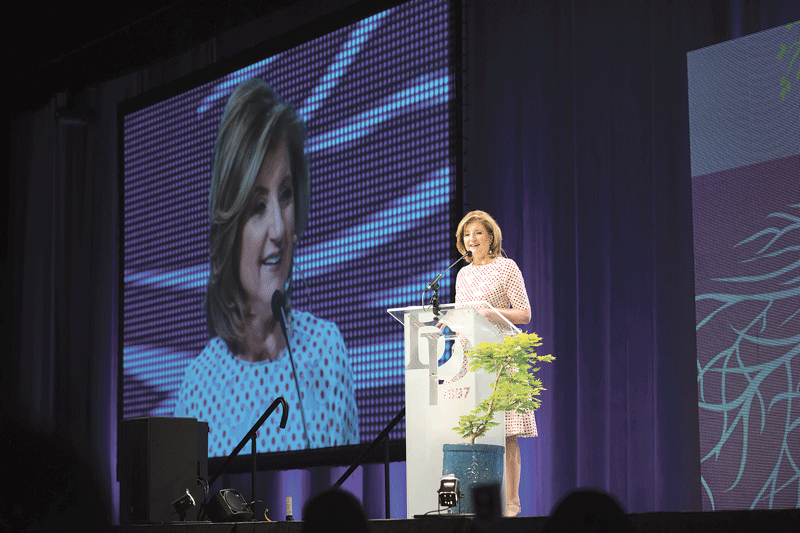
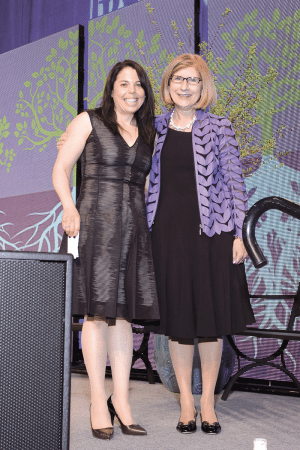
More than 2,000 attendees packed the MassMutual center on April 29 for Bay Path University’s 21st annual Women’s Leadership Conference. The day-long event, themed ‘Thrive,’ featured a number of keynote speakers and informative breakout sessions. From top to bottom: Arianna Huffington, chair, president, and editor-in-chief of the Huffington Post Media Group, delivers the closing keynote address; a packed house listens to one of the breakout sessions; Bay Path President Carol Leary, left, with Robyn Glaser, vice president of the Kraft Group, an inductee into the 21st Century Women Business Leaders Hall of Fame, class of 2016; and Academy Award-winning actress, author, and social activist Marlee Matlin delivers the morning keynote address.


Derby Doings

AM7J5281DerbyDay

AM7J5284-Derby

AM7J5412-Derby

AM7J5289-Derby

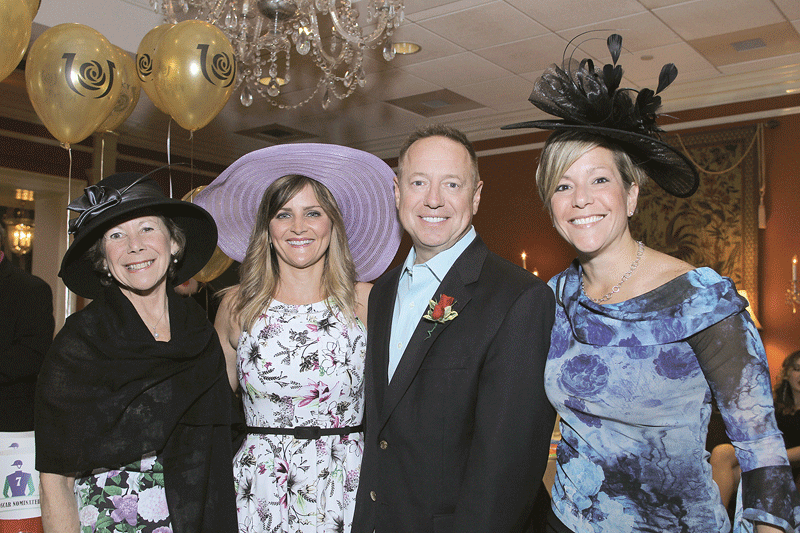
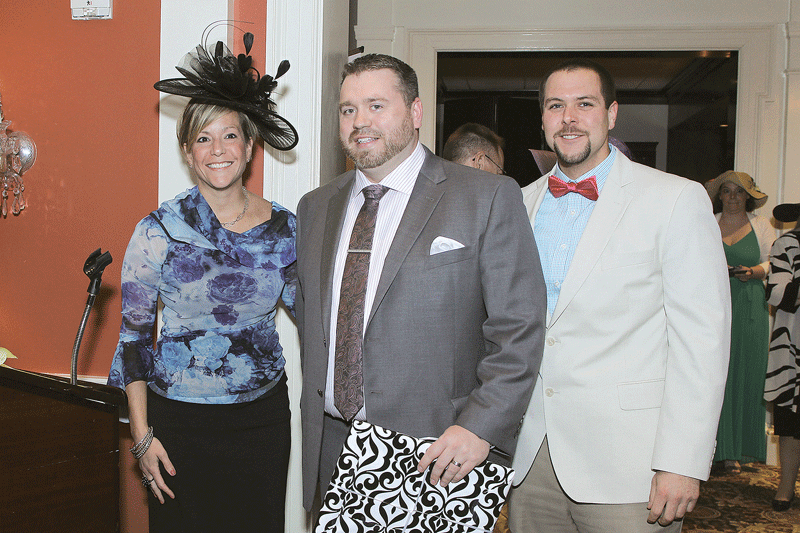
On May 7, Square One staged its annual Kentucky Derby Party, a fund-raising event that brought more than 130 people to the Colony Club. Top to bottom: from left, Joan Kagan, president and CEO of Square One, Maureen and Jules Gaudreau of the Gaudreau Group (presenting sponsor for the event), and Kristine Allard, vice president of Development for Square One; from left, event hosts Jeff and Laura Lomma, with guests Jenna and Chris Papadapolous and Matt Cowles; Allard with event sponsors Joel Mollison and Brian Sullivan of Northeast IT Systems; from left, Patti Vachon, her daughter, Monique Vachon, and WWLP’s Ashley Kohl. Monique Vachon is an educator at Square One and was recently crowned Miss Bay State.


Grinspoon Banquet

GrinspoonExhibitors

ExhibitorHemoFlux

ExhibitorAshleyOlafsen
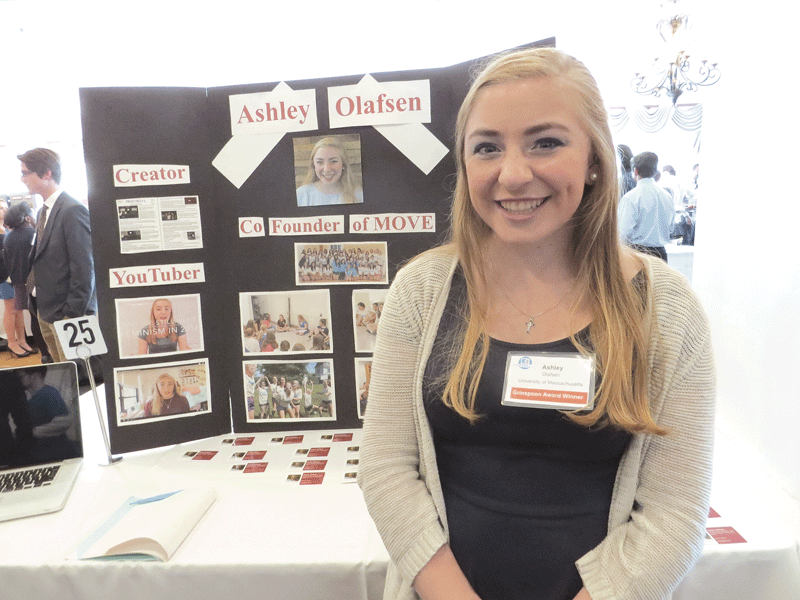
On April 27, more than 500 people gathered at the Log Cabin Banquet & Meeting House in Holyoke for the annual Grinspoon Entrepreneurship Initiative Awards Ceremony & Banquet. The event featured displays from dozens of Grinspoon Entrepreneurial Spirit Award winners, representing 14 area colleges and universities, a pitch contest, and a dinner featuring keynote speaker Brendan Ciecko, founder and CEO of Caseum, a technology startup. From top to bottom: Harold Grinspoon with two of the award winners; Nicolette LaPierre, COO of HemoFlux, a prenatal genetic-testing company; and Ashley Olafson, co-founder of MOVE, a company designed to help young women gain self-confidence and develop positive body image through workshops and summer programs.

Daily News

SPRINGFIELD — Western New England University will confer doctoral, law, pharmacy, and master’s degrees during its 2016 Graduate Commencement Ceremony on Sunday, May 22 at 2 p.m. in the Alumni Healthful Living Center on campus. Degree candidates will receive their diplomas and traditional degree hoods.

Lisa Bachmann, executive vice president and chief merchandising and operating officer for Big Lots Inc., will provide the keynote address to the graduating class. Big Lots is a non-traditional discount retailer operating more than 1,400 stores in 47 states.

Bachmann is a 1983 graduate of Western New England University and received her MBA from the college in 1990. She began her career in accounting and finance at Casual Corner, one of the country’s largest specialty clothing retailers. She rose through the ranks to vice president of Planning and Allocation, overseeing the Casual Corner, August Max, and Petite Sophisticate brands. She later served as a senior vice president for Ames Department Stores.

In 2002, Bachmann accepted a position as senior vice president for Merchandise Planning and Allocation for Big Lots. Her role was later expanded to include responsibility for information technology in all areas of the company, as well as Distribution and Transportation Services.

Today, as chief merchandising and operating officer, she provides the strategic direction for the organization’s merchandising and corporate infrastructure, which includes building the company’s buying organization, improving execution, overseeing operational management, and creating shopping excitement.

Western New England University will provide live streaming video of the commencement ceremonies. The feed will be available at wne.edu/commencement.

Daily News

LONGMEADOW — Bay Path University will hold its 119th commencement on Saturday, May 14, at 3 p.m. at the MassMutual Center in Springfield. More than 730 graduates will receive bachelor’s and master’s degrees, and more than 940 graduates in total will receive degrees, making this the largest graduating class in the university’s history.

Kirk Arnold, CEO of Data Intensity, will be the commencement speaker and honorary degree recipient. As leader of a high-growth, cloud-based services and data-analytics provider, she is a role model for women in the exploding market of data analytics. For more than 35 years, Arnold has been an active member of the technology and business community of Greater Boston. She sits on the boards of digital-marketing service provider Cramer Marketing; EnerNOC, a leading provider of energy-intelligence software; and the Commonwealth Institute. Arnold and Data Intensity were recognized among the Boston Globe’s “Top 100 Women-Led Businesses in Massachusetts” last fall. She was also inducted into Bay Path’s 21st-Century Women Business Leaders Hall of Fame in 2004, its inaugural year.

In addition, Jim Trelease, author of The Read-Aloud Handbook, will be presented with an honorary doctorate of humane letters degree for his accomplishments as an author, educator, and passionate champion of reading aloud to children. Trelease dedicated much of his career to leading seminars and lecturing school groups, parents, teachers, and librarians in all 50 states on the fundamental importance of youthful reading. He was one of the most sought-after speakers on the subject of education in the U.S., a frequent keynote speaker at educational conferences, and is credited with sparking read-aloud movements across the nation. Early in his career, Trelease was also a writer and staff artist for the Springfield Daily News (now known as the Republican).

The commencement is open to the public and is handicap-accessible.

Daily News

WEST SPRINGFIELD — ATC Audio Video Lighting is celebrating its 30th anniversary on Tuesday, May 24 with an anniversary party and sale from 1 to 8 p.m. at 89 Myron St., West Springfield. The event will include food and drink, free giveaways, live music, and factory representatives.

In 1986, the company started in a basement workshop. Due to a lack of space, it moved to its first brick-and-mortar retail location, which was a meager 400 square feet. After moving to three larger locations, ATC now resides in its 8,000-square-foot location on Myron Street.

The company offers professional/commercial audio, video, and lighting installation, integration, design, and sales. ATC’s clients are in a wide range of industries, such as corporate, colleges and universities, public and private schools, government, hospitals, casinos, technology centers, houses of worship, theaters, sport facilities, DJs, musicians, and any organization that utilizes AV technology.

ATC’s Myron St. location also houses one of the only walk-in retail stores of its kind in New England. The retail store offers over-the-counter sales and service of audio, video, and lighting equipment. Another major part of the company’s business is its rental and production inventory, giving the customer the ability to rent anything from simple items like a microphone up to major audio- and video-production equipment and technician services.

“I remember working solo in the first store on White Street in Springfield,” said Tony Caliento, ATC owner and president. “We had 400 square feet, no air conditioning and heat that barely worked, but we didn’t care at the time; we just loved what we were doing. Once we were known to clients, we stocked more equipment, offered more services, and the 400-square-foot space filled quickly.

Reflecting on the company’s growth since then, Caliento added, “our staff enjoys working for ATC and loves what we do for our clients.”

Daily News

SPRINGFIELD — Comcast Business will present “How to Leverage Technology to Do More With Less,” part of the BusinessWest/HCN Lecture Series, on Wednesday, June 15.

The event will take place at the Lyman & Merrie Wood Museum of Springfield History, 21 Edward St., Springfield. Registration will begin at 7:15 a.m., followed by breakfast and a panel discussion from 7:30 to 9 a.m.

The panelists — influential minds in the IT field — will discuss issues that every business IT department is being forced to deal with, including rising demands to make changes to existing systems, increasing efficiency and improving security, and how budget restrictions impact IT.

Panelists include Michael Feld, CEO, VertitechIT, and interim CTO, Baystate Health and Lancaster General Hospital; Frank Vincentelli, chief technology officer, Integrated IT Solutions; and Patrick Streck, director, IT Services, Baystate Health / Information & Technology.

Admission is free, but pre-registration is required by June 7. Register online here, or call (413) 781-8600 for more information.

Banking and Financial Services Sections

Making Their Time Count

Kara Stevens says she likes to keep busy.

That’s good, because attaining that state certainly hasn’t been an issue lately — and it probably won’t be for probably the next 20 or 30 years.

Indeed, as she talked with BusinessWest, Stevens was mentally putting some finishing touches on the final exam she’ll give students in one of the undergraduate accounting classes she teaches at Bay Path University, which she serves as director of Accounting Programs and associate professor. She was also preparing lesson plans for the graduate class she teaches (those students are on a different schedule and won’t see their course work wrap up for another few months).

https://www.mscpaonline.org/news_and_resources/news/964/view

Kara Stevens

Melyssa Brown

Melyssa Brown

Meanwhile, she’s been hard at work on her own studies — she’s pursuing a doctorate in accounting, with the main focus of her research being financial-literacy programs and how to make them more effective. She has a strong base of knowledge with which to start, having worked with Junior Achievement (JA) on that endeavor for some time, and joining the agency’s board last year.

Then there’s her work with the Mass. Society of CPAs — she was named to that board earlier this year, and has been actively involved with its Western Mass. chapter. And she’s the mother of a 4-year-old daughter, and is expecting another child later this year.

As mentioned earlier, it’s a good thing she likes to be busy. And that full slate, crowded as it is with a combination of professional achievements, work in the community, personal and professional development initiatives, and more clearly resonated with the judges selecting the MSCPA’s Women to Watch in the so-called ‘Leaders Category.’

As did Melyssa Brown’s application, which is equally studded with achievements and community work that would make it clear that she also makes full and effective use of the 24 hours in each day.

Indeed, Brown currently serves as senior manager of the Audit and Accounting Department at Holyoke-based Meyers Brothers Kalicka, and recently began serving as a so-called accounting mentor to area startups involved in programming created by Valley Venture Mentors. In that capacity, she’s providing key financial advice — and words of wisdom on many other aspects of running a business — to entrepreneurs at critical stages in the development of their companies.

“Often, I’m helping people at VVM with questions about finance because that’s what I specialize in,” she said about her role as a mentor at the monthly sessions. “But you can help people in all kinds of ways, and it’s been great — I learn as much as they do.”

Brown is also a key contributor to Girls Inc., a Holyoke-based nonprofit that focuses on empowering young girls across the region. An alumna of that organization, her involvement has grown steadily over the years, serving on the executive, finance, and strategic planning committees, and also as treasurer, vice president of the board (her current role), and, perhaps most importantly, as a role model for the girls in the program.

For this issue and its focus on Banking & Financial Services, BusinessWest profiles these two women to watch — who have much in common, right down to their status as BusinessWest 40 Under Forty winners (Brown in 2013, Stevens with the recently named class of 2016) — as a way to shine a spotlight on the emerging talent in this important sector of the local economy.

Contributions That Add Up

At its core, Brown told BusinessWest, Girls Inc. wants those who participate in its programs to be strong, smart, and bold. She believes she possesses all three qualities, and gives the organization ample credit in that regard.

“That’s what they teach, and that really encompasses it all — mind, body, and spirit,” she explained, crediting the organization with helping her develop perhaps the most important trait needed to succeed in business today: confidence.

And now, she’s trying to help the next generation of young women do the same, through a variety of programs, and her participation with the organization is just one of the many professional and community-oriented activities that fills her calendar.

As is the case with Stevens, Brown’s story begins in college (in this case Elms), which she entered not knowing exactly what she wanted to do with her career other than “something in business.” A strong aptitude for math and accounting helped sharpen her focus and put her on a path toward becoming a CPA.

She started at Downey, Sweeny, Fitzgerald & Co. in Springfield, and eventually came to Meyers Brothers Kalicka in 2004, where she soon became the youngest senior manager in the 65-year history of the company.

She said there are many aspects to her work in auditing, and noted that comes down to working with people more than working with numbers. She came back repeatedly to the notion of herself as adviser and problem solver.

“Clients will often run into something and call us and say, ‘how do I handle this?’ or ‘what do I do with this?’” she said, adding that she enjoys helping clients through what can often be a difficult process.

In many ways, that notion of working with others to solve problems also applies to her work with VVM and Girls Inc.

At VVM, she said, entrepreneurs come to the group with imaginative ideas and usually need guidance and direction about how to convert those ideas into successful ventures.

“They have a passion for something, but often don’t know how to turn it into a business — or a viable business,” she said, adding that her work is rewarding on a number of levels.

“I learn so much from it; you surround yourself with other smart people — it’s inspiring,” she told BusinessWest. “It’s a learning experience for me as much as it is for them.”

As for Girls Inc., which is the only board she sits on, Brown says she has a passion for its multi-faceted mission, especially programs aimed at steering women toward careers in the STEM (science, technology, engineering, and math) careers. Actually, she noted, an ‘a’ has in many cases been added to the acronym, which stands for ‘art.’

One program she helped conceptualize is known as Eureka!, which buses cohorts of girls to UMass Amherst for four weeks in the summer, where they receive training in STEM fields from professors at the university.

Teaching Moments

As she talked about the final exam she was readying for her undergraduate students, those taking an intermediate course in accounting, Stevens said it would obviously go heavy on technical material.

“Debits and credits … technical stuff like that,” she explained. “It’s tough; it’s cumulative, so there’s lots to remember. It’s a lot like the financial-accounting part of the CPA exam, which I like to say is a mile long and inch thick, meaning there’s lots and lots and lots of information that adds up.”

It was just that kind of material for which Stevens showed an aptitude — and an affinity — at Springfield Technical Community College a decade and a half ago. She developed so much of each that her indecisiveness about what to major in was over.

Fast-forwarding a little, she majored in accounting at UMass and eventually went to work at Wolf & Co. But her career took a rather unexpected turn when she started doing some adjunct teaching at West State University.

She discovered she enjoyed teaching accounting at least as much as doing it herself, and joined the faculty at Bay Path on a full-time basis. Not long after doing so, she blueprinted the school’s master’s-degree program in accounting, one of many it has added over the past several years.

And while she enjoys her work in the classroom and is proud of how the school’s accounting programs have grown, she’s perhaps most excited about her work in the community, much of which falls into that category of financial literacy, an important focus of JA.

And she’s been able to blend the various aspects of her professional life by getting many of her students at Bay Path involved in the critical work of helping young people understand money and how to better manage it — for a lifetime.

“My students will visit (Springfield’s) Central High, where they’re teaching the first-year students, the freshmen, about financial literacy,” she said, adding that the experience benefits those on both sides of the equation.

She’s become so involved, and so fascinated, by these efforts to promote and create financial literacy — and make them ever-more effective — that she made this the focus of her doctoral work; she’s in year two of a five-year program she actually hopes to complete in four.

“The effort to make this community more financially literate is a real passion of mine,” she told BusinessWest. “Through Junior Achievement and the research I’m doing, I’m trying to help create ways to increase what we’re doing. We need more volunteers —people on the professional level — to be out there educating young people.

“Studies have shown that these efforts help the community as a whole,” she went on. “If you teach the high-school students to be more financially literate, they’re going into their homes and potentially teaching the parents.”

She said one of her specific points of focus moving forward, from a research perspective, is women.

“Research is showing that, overall, girls in high school are just not as confident in being financially literate,” she explained. “But after these programs, we’re seeing a big increase, compared with the males, when it comes to being more comfortable with these topics. Hopefully, the end result will be that, in their adulthood, they’re making smarter financial decisions.”

Beyond the Numbers

Staying busy. That’s just one of the many things Brown and Stevens have in common.

They’re making their time count — in every sense of that word — in ways that are benefiting their employers, their own careers, and, most importantly, the Western Mass. community.

And that’s why they’re not just busy — they’re women to watch. Closely.

George O’Brien can be reached at [email protected]

Banking and Financial Services Sections

Record Retention 101

By Patricia Murphy

Patricia Murphy

Patricia Murphy

All entities produce a variety of records. Maintaining these records is more than a matter of filing away a few important documents. A well-thought-out record-retention plan can benefit your company operationally, protect against litigation, and help ensure compliance with state and federal laws and regulations.

Over the past decade, the amount of electronic information has grown exponentially, and organizations are producing far more content than ever before. A significant amount of electronic data is produced and shared through various forms of unstructured data (e-mails, texts, social media). The ability to easily share information, while efficient, puts multiple copies of important documents in multiple locations. Many organizations don’t have systems in place to deal with this unstructured data, yet are liable for this content.

An effective records-management program will provide employees with the knowledge and tools needed to ensure paper and electronic files are properly managed. Establishing and following a record-retention schedule will go a long way to ensure your company keeps the vital records it needs (and doesn’t).

Tax Records

Although the actual tax returns should be kept permanently (including the cancelled checks from tax payments), the supporting documentation from previous years should be kept until the chance of an audit passes. The IRS generally has three years to examine your return, though the limit increases to six years if the agency believes you underreported income by more than 25%. No limit exists if you failed to file or filed a fraudulent return.

Special attention should be given to records connected to assets (i.e. residences, real estate, equipment, stock, etc.), which need to be kept longer. The tax consequences of a transaction this year, such as a sale of property, may depend upon events that happened years ago. Keep records relating to the property until the above period of limitations expires for the year in which you dispose of the property.

For example, to determine tax consequences of the sale of real estate, you must know your basis (the original cost plus later capital improvements). If you received property in a non-taxable exchange (like-kind exchange), your basis in the new property is the same as the basis of the property you gave up, increased by any additional money paid to acquire the new property.

You must keep the records on the old property, as well as on the new property. If stock is sold, you would need to maintain records of your basis of the stock, which includes your initial investment plus any reinvested dividends.

Accounting Systems

Audit reports and financial statements from accountants, trial balances, general ledgers, journal entries, cash books, charts of accounts, check registers, subsidiary ledgers, and investment sales and purchases should be kept permanently. Other records, such as payable and receivable ledgers, bank reconciliations, bank statements, and cash and charge slips should be retained for seven years.

For certain assets, typically you want to keep all of the statements, invoices, and purchase documents that substantiate cost for six years after the asset is sold. Depreciation schedules and asset-inventory records should be kept permanently.

Corporate Records

Small businesses that have a corporate structure also need to retain certain corporate records. All information for annual reports, articles of incorporation, stock ownership and transfers, bylaws, capital stock certificates, dividend register, cancelled dividend checks, and business licenses and permits should be retained permanently.

Employee Records

Small businesses that employ individuals other than the owner or partners should keep the employee records while the person is still employed with the company. The personnel files can then be disposed of after seven years, beginning after the date of termination. Payroll records should be kept as follows:

• W-2 forms, payroll-tax returns, and retirement-plan agreements — permanently;

• Worker’s compensation benefits, employee withholding exemption certificates, payroll records (after termination) — 10 years;

• Payroll checks, time reports, attendance records, medical/dental benefits, commission reports, accident reports — seven years;

• Employee benefit plans — six years; and

• Contractor information upon completion of contract, and tip substantiation — three years.

Insurance

Occurrence-based policies (which cover claims reported years after the policy expires, as long as the event occurred during the policy period) are essentially active forever and should be kept indefinitely. Property policies/claims-made policies (which cover claims reported only within the policy period) should be kept for six years. Workers’ compensation policies should be kept indefinitely, as claims could take years to develop. Life-insurance policies should be kept permanently.

Legal

Documents such as bills of sales, permits, licenses, contracts, deeds and titles, mortgages, and stock and bond records should be kept permanently, while canceled leases and notes receivable can be kept for 10 years after cancellation.

Document imaging (scanning) allows technology to convert paper documents to electronic images. Document imaging can provide major benefits, including reducing storage space, reducing paper purchased, improved employee productivity, and quick overall access to information.

With the threat of identity theft, it is a good practice to shred all the records you no longer need, especially those with personal information. Shredders are inexpensive in destroying small amounts of information; however, a personal shredding service should be considered with a large volume of shredding.

The suggested retention periods shown above are not offered as a final authority, but as a guide to which to compare your needs. If you have any questions or unusual circumstances, or wish to delve more into industry-specific practices, be sure to consult your CPA, attorney, or other industry professional before destroying any important legal, business, or financial paperwork.

If you have questions regarding electronic files, consider speaking with an IT professional in addition to those resources listed above.

Patricia Murphy is a senior associate at the Holyoke-based public accounting firm Meyers Brothers Kalicka, P.C.; (413) 322-3540; [email protected]

Health Care Sections

A Holistic View of Healthcare

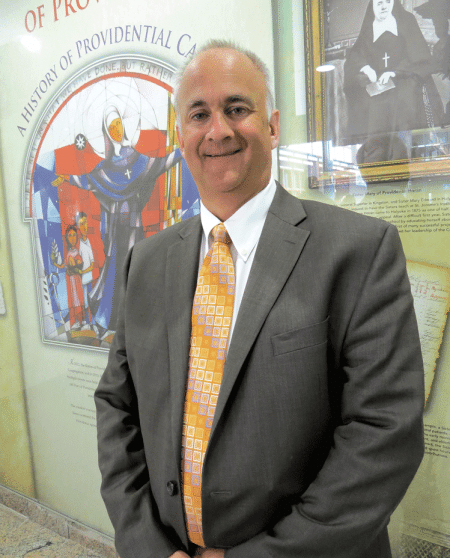
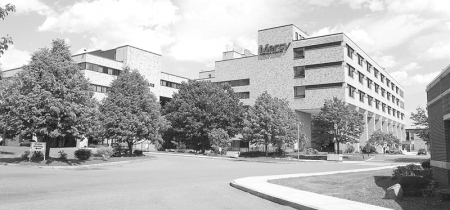
Dr. Scott Wolf takes the reins at Mercy Medical Center and the Sisters of Providence Health System at an exciting time in the system’s history, but also a challenging era in healthcare overall — one in which its leaders must emphasize cost efficiency, yet focus on the patient experience and outcomes more than ever before. The key, he said, is to maintain a holistic, ‘360-degree view’ of a rapidly changing industry.

Dr. Scott Wolf

Dr. Scott Wolf says a background in direct patient care gives a physician leader an important perspective that helps him or her impact the operational aspects of care.

Dr. Scott Wolf says he brings to his job what he refers to as a “360-degree view” of healthcare.

That’s a phrase Wolf, the recently named president of Mercy Medical Center and the Sisters of Providence Health System (SPHS), would use early and often as he talked about his background, which blends direct care to patients — he’s a board-certified internist — as well as time spent working on population-health initiatives, the insurance side of the equation, and several roles within the broad realm of hospital administration.

Which means, he noted, that he can see matters from several different perspectives, including those who provide the care, as well as those who pay for it.

“I think every physician should spend a week in a managed-care office, just to understand what goes on beyond their practice,” he said of his time spent with Aetna as senior medical director of Northeast Patient Management. “It really gives the perspective from the payer.”

That was just one of several efforts he made to not only break down his diverse background in healthcare, but also explain its inherent value.

Here’s another one.

“When you think of how healthcare is transforming, with the growing focus on the patient experience, on outcomes, and as we emerge from a pay-per-service, business-focused approach to healthcare, and we evolve into this population-health era, these are the conditions where a physician-leader can excel,” he said, while explaining why more people with direct patient-care experience are now in senior management positions in healthcare. “Having a background in direct patient care really affords a physician leader the opportunity to have that perspective and be able to impact the operational aspects of care.”

Indeed, that full-circle view he described is enormously helpful, he told BusinessWest, because these are extremely challenging times for all those involved in the delivery of healthcare — a time of immense competition, a broad host of financial challenges, and an intense focus on the patient experience.

“All of my experiences have helped me develop a very 360-degree view of healthcare,” he explained, “and the challenge we face on a daily basis of providing the highest-quality care in a very cost-effective manner, while all the while providing an extraordinary patient experience.”

Wolf has the additional challenge of leading a hospital, and a health system, guided by a mission to deliver care to those who most need it, regardless of the circumstances when it comes to profit and losses.

But that mission is what makes SPHS, part of the larger Trinity Health system, unique and such a pivotal force in the Western Mass. region, he said, adding that working in such an environment is quite satisfying.

“That’s what makes the job so rewarding,” he explained. “Everyone in this organization feels a responsibility to carry on the legacy of the Sisters of Providence. They live out our values — caring for the poor and the most needed — and that’s what really grounds us.”

For this issue, BusinessWest talked at length with Wolf, who succeeded Dan Moen in his twin roles in January, about his new role at Mercy and SPHS, the challenging environment the system faces, and how that 360-degree view should help him as he steers the ship through some fairly treacherous waters.

The Big Picture

Traveling back in time to his days in medical school, Wolf recalled a period when was “teetering” as he pondered which specific path to take with regard to a career in healthcare.

“I was already accepted into a fellowship in pulmonary critical care,” he explained. “But I was developing an affinity for primary care, as opposed to subspecialty medicine, and as I thought about my future, I didn’t want to be restricted to one discipline; I really felt that my passion was in helping and addressing the needs of the whole person.”

Such a philosophy is likely a refection of his background — he’s an osteopathic physician, Wolf noted, adding that, while he’s had several employers during his career and a wide array of titles on his business cards, this desire to tend to the whole person has been what amounts to a constant throughout.

Chronicling those career stops, Wolf started with his stint at Hartford Hospital, where he was chief medical resident, as director of Clinical Operations in Ambulatory Medicine. In that role, for which he wore a number of hats, his accomplishments include development of a strategic plan resulting in the implementation of a primary-care model of healthcare delivery, with outcomes demonstrating improved patient care, increased practice efficiency, and improved patient satisfaction.

And it was during this time that Wolf, and the industry in general, began what has been a gradual shift toward population health, or “pop health,” as he called it. He became involved with research involving populations with asthma and diabetes, and the in the course of doing so was introduced to individuals working for Pfizer Health Solutions Inc., a subsidiary of the pharmaceutical giant, and this eventually led to his first serious career shift.

Indeed, after earning a public health degree in population health, Pfizer presented him with an opportunity to take on a leadership role in the design and implementation of disease-management programs.

“I made a bold move to leave clinical medicine and my comfort zone of dealing with patients and jumped into corporate America,” he explained, adding that his four years at Pfizer provided learning experiences on a number of levels — not to mention travel around the world — through his work as medical director of state initiatives, such as the “Florida: A Healthy State” program, which, over its first four years, improved the health of more than 190,000 Medicaid beneficiaries based on behavioral, clinical, and utilization metrics, while generating savings and investment of $139 million.

By 2004, Wolf was ready to significantly reduce his frequent-flyer miles and make another bold move, this one to yet another branch of healthcare, if you will — the insurance industry.

That aforementioned role as regional medical director with Hartford-based Aetna involved mostly a focus on healthcare-utilization services across the Northeast.

As noted earlier, he experiences in this realm were eye-opening.

“It was an incredibly enlightening experience,” he told BusinessWest. “It gave me insight into the business side of healthcare, from understanding utilization to understanding the many challenges payers face in helping to provide appropriate levels of care but do so in a cost-effective environment.

“When you’re sitting on that [managed care] side, you’re exposed to an incredible amount of waste that is delivered in our system,” Wolf went on. “There’s an extraordinary amount of duplication and superfluous tests that are done.”

Wolf said he considered such insight into that side of the business to be a prerequisite of sorts for effective service in the higher ranks of hospital management, so, three years after arriving at Aetna, he decided to go back to the realm where he was most comfortable and most satisfied.

It took just one visit in early 2010, by his recollection, for him to determine that Mercy Medical Center was where he wanted to continue his career in healthcare in the role of chief medical officer.

“From the minute I walked in the door and experienced my first day visiting with key members of leadership at the time, I knew right away that this was the place for me,” he explained. “The commitment to the mission was palpable. The commitment to each other, and just the reverence that was expressed in the hallways among colleagues and patients, was such that I knew that this was the place I wanted to be.”

Healthy Perspective

As he talked about the changes that have come to the healthcare field in recent years, and especially what would have to be described as an even sharper focus on the patient experience, Wolf summoned a name Millennials would probably have to Google to fully appreciate.

“I go back to the days of Marcus Welby,” he said, referring to the television doctor of the ’70s, “when the patient did whatever they were told, how they were told, and they were never in a position to question. What the doctor said was doctrine.”

Those days are long gone, he told BusinessWest, adding that patients are much better-informed than they were years ago, they’re emboldened to ask questions and challenge what they’re told, and their demands and expectations are much greater because of something else they didn’t have in abundance four decades ago: choice.

Scott Wolf says he welcomes the challenge of leading a hospital and health system guided by a mission to deliver care to those who most need it, regardless of the financial equation.

Scott Wolf says he welcomes the challenge of leading a hospital and health system guided by a mission to deliver care to those who most need it, regardless of the financial equation.

“In this new age of consumerism, the patient is becoming much more cognizant and aware and educated about the care and services they are receiving,” he went on. “And they have much more choice about where they seek care and services. Information is now all over the Internet in a very transparent way, so that patients have the ability to shop, if you will. It’s not that we’ve never paid attention to the patient experience before, it’s just now elevated to the point where the expectations of the patients are much greater.”

This new age of consumerism is just one of many elements in that broad, three-legged challenge he described earlier — providing the highest-quality care in a cost-effective manner, while providing the highest levels of patient satisfaction.

And it’s another example of why that full-circle view of healthcare is so valuable today, he said. “With the focus on the patient experience, it’s hard to be able to understand what that experience is like unless you’ve been in a position to deliver that experience.”

But the patient experience is just part of the equation. That experience must be delivered effectively and in a cost-efficient manner, he noted, adding that the constant and ever-growing challenge is to meet what he called the “triple aim.”

“We’re constantly driven to reduce operational expenses,” he went on. “But at the same time, we’re also challenged to hopefully realize operational revenues so we can reinvest in resources; you need to have a stream so you can reinvest in technology, human resources, capital requirements to maintain facilities, and more. It’s a challenge to keep your costs at a minimum, deliver care as efficiently as possible, and be able to generate a margin so you can keep reinvesting.”

In this environment, hospitals and healthcare systems must be responsive and, in a word, somewhat nimble, he said, adding quickly that they must also have the necessary resources to do all of the above.

Being part of Trinity Health gives the SPHS and Mercy the needed size and flexibility to function efficiently and compete in this changing healthcare landscape, he said, adding that the system has undertaken a number of strategic initiatives in recent months to better position it for growth.

These include everything from an affiliation (now being finalized) with Smilow Cancer Hospital at Yale-New Haven Hospital to the acquisitions of Hampden County Physician Associates and RiverBend Medical Group, the latter of which he described as a “true game changer.”

“This is huge in terms of our strategy to pursue our strategy of true population health,” he explained. “The fact that we’ll be on one common electronic medical record will allow for the seamless transfer of information, and we will be able to assure a seamless transition of care from the inpatient arena to a primary-care provider in our community.

“And this truly allows us an enormous foundation of primary care,” he went on. “And primary is really the core of population health.”

Coming Full Circle

Looking ahead, Wolf said the challenges confronting Mercy, SPHS, and all healthcare providers are only going to grow in severity as the population ages, technology improves, and patients become increasingly demanding.

To succeed, providers must be flexible and able to adapt to changes quickly and effectively, he said, adding that the system is now better-positioned to carry out that multi-faceted assignment.

He said his job description comes down simply to giving all those within the system the means and the tools to carry out their mission. And, as he said many times, having a 360-degree view of healthcare certainly helps with that broad task.

George O’Brien can be reached at [email protected]

Health Care Sections

See Change

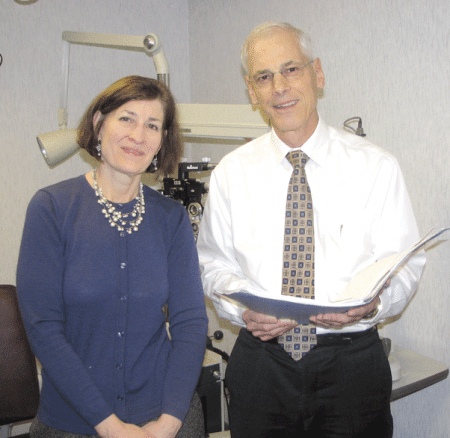
Drs. David Momnie and Camille Guzek-Latka

Drs. David Momnie and Camille Guzek-Latka say scleral lenses are giving hope to a subset of patients who have tried other remedies unsuccessfully.

Since Bradley Sweet was diagnosed with keratotonus, he’s had to choose between poor vision and constant discomfort. Until now.

Keratoconus, also known as ectatic corneal dystrophy, is a progressive, debilitating eye disease in which degenerative thinning results in irregular bulging of the normally spherical cornea, the clear covering in front of the eye. The condition results in grossly distorted vision, causing glare similar to looking through a windshield while driving in a rainstorm without using wipers.

Eyeglasses don’t help with this particular condition, leaving contact lenses as the only non-surgical path to functional vision. Unfortunately, said Dr. David Momnie, Sweet’s eye doctor and owner of Chicopee Eyecare, soft contact lenses have trouble conforming to the irregular cornea, while rigid, gas-permeable lenses that rest on the cornea can cause discomfort to that area.

In Sweet’s case, his corneal lenses fit poorly and ‘rocked’ on the surface, causing moderate pain. “On top of that, there was chafing; he had a scar from it,” said Dr. Camille Guzek-Latka, who has worked with Momnie since 1990.

But the team at Chicopee Eyecare was able to offer something different from most optometrists — scleral lenses, which contact the sclera, or the white part of the eye, and vault the entire cornea. If they fit properly, they offer both improved vision and comfort, Momnie told BusinessWest. For Sweet, they worked — and the rubbing and chafing was a thing of the past.

“No one else around here is fitting these,” Momnie said, adding that he knows of optometrists in Lowell and Boston who fit them.

Another patient came to the practice with similar issues. In 1994, she had undergone radial keratotomy, a procedure that involves making incisions in the cornea, and one that is mostly out of favor in the vision world. In her case, the procedure didn’t heal properly, and she ended up with distorted corneas, which causes blurred vision.

“We tried all kinds of things on her,” said Momnie, including soft lenses, corneal lenses, and hybrid lenses, which are hard in the middle but have a soft edge.

“We never got a good outcome with any of those,” Guzek-Latka said. “She was motivated, too — she would always say, ‘what do you have? What do you have?’”

When he decided to start fitting scleral lenses last year, Momnie called her up. “She’s the first one who came to mind. I said, ‘would you be interested in coming down sometime?’ She said, ‘I’ll be there in 10 minutes.’”

The fact that she finally found relief is immensely gratifying to Momnie and his team. Keratoconus affects somewhere between one in 500 and one in 2,000 people, and for those suffering with it, it can be debilitating.

“They can’t function; a lot of them can’t drive, can’t get licenses, can’t work,” Guzek-Latka said. “I’ve had people crying because they were so happy once they can see. That’s why we do it. To give someone their sight back is the best feeling in the world. People are so appreciative.”

Forward Looking

Chicopee Eyecare has a long history in the region. In 1974, Momnie took the reins of the practice from his father, Dr. Paul Momnie, who opened the office in 1950. After Guzek-Latka came on board in 1990, Dr. Julianne Rapalus, a part-time associate, joined soon after, and the three have been working together to solve vision issues ever since.

Bradley Sweet

Scleral lenses gave Bradley Sweet the ability to see without constant discomfort.

Specialty contact lenses have long been among the practice’s niches, Momnie said. Until about 10 years ago, his team fit infants as young as eight weeks old with special contact lenses after they underwent cataract surgery. Fortunately, today, children born with congenital cataracts are now able to undergo intraocular lens-implantation surgery, eliminating the need for such specialty contacts.

Scleral lenses are a continuation of that mission to provide widely unavailable solutions for specialty eye issues — in this case, keratoconus.

Glasses can’t help because the lenses are too far away from the surface of the cornea to create the smooth, refractive surface necessary to translate the image clearly to the back of the eye and therefore to the brain. And primitive scleral contact lenses were made of low-breathability materials (the same as in Plexiglas, actually), resulting in severe swelling of the cornea.

However, today’s scleral lenses are manufactured with highly oxygen-permeable materials and are a viable treatment for irregular, diseased, or severely dry corneas, Momnie said. “These lenses require an exact alignment as they rest entirely on the damaged cornea. Fortunately, for some people, newer designs and materials have made scleral contact lenses more compatible with the eye and more comfortable to wear.”

Despite these advances, he added, the eye-care community has been slow to embrace these lenses, probably because they require an entirely new fitting philosophy, Momnie noted. “The lenses must be aligned with the exact amount of clearance to achieve adequate comfort and oxygen transmission to the cornea.”

He’s not surprised their use isn’t widespread. “They’re very time-consuming to fit and require a large investment in fitting sets. However, the more we looked into the advances in scleral-lens technology in the last few years, the more we realized this was a service that we needed to offer.”

The only other therapeutic option for improving vision in keratoconus patients is called penetrating keratoplasty, also known as a corneal graft or corneal transplant.

“In some cases, the eyes are too distorted. If it doesn’t work, sometimes the next step is corneal grafts, but these can have inherent problems too,” Guzek-Latka said. Because of the inherent risks and high cost of surgery, this option is typically reserved only for patients who cannot receive treatment from contact lenses.

Also, “while many transplants are successful,” Momnie said, “the eye is permanently weakened, and often a complex contact-lens fitting is still required to restore vision.”

Progressive View

Keratoconus isn’t the only condition that can benefit from scleral lenses. Others include corneal scarring or irregularity due to trauma or prior surgery, as in the case of the patient with a past radial keratotomy; severe ocular surface disease associated with surface defects like erosions and ulcers; and a number of other conditions, including severe dry eye, radiation injury, chemical or thermal injury, or certain congenital disorders.

In the case of keratoconus especially, Momnie said, there are few options beyond scleral lenses.

“Very often, for keratoconus, we are the last stop before the operating table,” he told BusinessWest, noting that some patients’ corneas are too damaged to avoid surgery. “But if we can keep them off the operating table and fit them with one of these, they’re in good shape.”

Only a handful of laboratories in the country manufacture scleral contact lenses, he noted. Often, the fitting requires two or three attempts before a proper fit is achieved. Advanced, computerized instruments like a topographer and an optical coherent tomographer — which maps the corneal irregularity much like a landscape topographic map, but much more precisely — are used to improve the chances of success.

When a patient does find success with scleral lenses and avoids surgery, which is most of the time, it can be life-changing, Guzek-Latka said.

“To be able to get someone to see, these younger guys trying to raise a family … if you can do that for them, that’s the best feeling in the world for me,” she added. “Anybody can give you a pair of glasses, and we love doing that for people. But when you take someone who can’t see, can’t function, and get them back to work and a normal life, when they look at you and say, ‘I can see, I can see,’ that’s what I love.

“We help more than we can’t, and they’re often pretty desperate by the time they see us; they’ve tried everything,” she went on. “So if we get someone like that seeing and doing their thing, that’s priceless. It’s very rewarding.”

Joseph Bednar can be reached at [email protected]
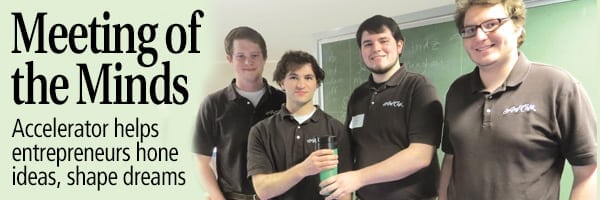
Daily News

SPRINGFIELD — The Springfield Regional Chamber’s May Business@Breakfast on Wednesday, May 4 will feature a panel discussion on the creative economy and honor local businesses and organizations. The event will take place at the Lyman and Merrie Woof Museum of Natural History, 21 Edwards St., Springfield, from 7:15 to 9 a.m.

Panelists include Helena Fruscio, the state’s deputy assistant secretary of Innovation, Entrepreneurship, and Technology; Jeffrey Bianchine; creative economy industries coordinator, city of Holyoke; and Steve Porter, founder of Porterhouse Media. There will be salutes to Glenn Welch, the new CEO and president of Freedom Credit Union; and to Ronald McDonald House of Springfield for its 25th anniversary.

Daily News

WEST SPRINGFIELD — Northeast IT Systems Inc. welcomes Tony Shepard to the team as a systems administrator.

Shepard found his initial passion with IT and electronics by building his own speaker cabinets. When the car audio craze came along, he designed and built high-end car systems. After that, he focused on computers. His favorite part of the job is the challenge. “There is always something different to do,” he said, “and you learn something new every day.”

His certifications include A+ certification, MCP certification, a license to teach in the state of Massachusetts, and certificates in electronic technology. He also has experience as Dell field engineer, IT manager, networking instructor, and systems field engineer.

When Shepard is not working, he enjoys playing drums and percussion and riding his Harley. He is also working on building old ’70s larger-scale models.

Daily News

SPRINGFIELD — M&M Consulting, LLC, a New England-based risk-management advisor to financial institutions, has named J. Jeffrey Sullivan president and CEO. He succeeds Jay Friedland, who founded the company in 1996 and will now serve as chairman of the company.

M&M Consulting’s clients range from one-branch institutions to regional banks covering multiple states. The M&M team includes a wide range of subject-matter experts in strategy, technology, and operations, including attorneys, CPAs, and other certified professionals. The cross-disciplinary M&M model allows financial institutions a more cost-effective, efficient strategy to handle the increasing complexity of regulatory compliance and risk oversight.

“Community financial institutions are the lifeblood of our local economies,” said Sullivan. “As regulations become more complex and burdensome, firms like M&M Consulting can provide meaningful assistance to help these institutions survive and thrive.”

Sullivan was most recently president and COO of United Bank, a $5 billion regional bank based in West Springfield. He oversaw all facets of the bank’s operations, including enterprise risk management, retail banking operations, and the commercial and consumer lending teams. He was chief lending officer at United Bank for nine years, chaired the bank’s Community Reinvestment Act committee, and was a member of the asset and liability management committee. Prior to United, Sullivan worked for 11 years for a Chittenden Corp. subsidiary, the Bank of Western Massachusetts, and for six years in the BayBank system. A lifelong New England resident, he obtained his bachelor’s degree in economics from Amherst College and his MBA from UMass Amherst.

“Jeff’s deep background in community banking blends perfectly with the diverse skill sets of our team and will add tremendous value to the managers and the boards of directors that we serve,” said Friedland. “We understand the challenges and complexities of today’s highly regulated and low-rate environment, and Jeff will lead us in maintaining our balance of technical expertise and knowledge of strategic and operational priorities for our clients.”

Daily News

LONGMEADOW — Kirk Arnold, CEO of Bedford-based Data Intensity, will address Bay Path University’s 2016 graduating class at its 119th commencement on Saturday, May 14 at 3 p.m. at the MassMutual Center in Springfield. More than 700 students will be awarded master’s and bachelor’s degrees.

Arnold will receive an honorary doctorate of humane letters degree for her extraordinary achievements in leadership. As the CEO of Data Intensity, a high-growth provider of cloud-based services and data analytics, she is a role model for women in the exploding market of data analytics. For more than 35 years, Arnold has been an active member of the technology and business community of Greater Boston. She sits on the boards of Cramer Marketing, EnerNOC, and the Commonwealth Institute. Arnold and Data Intensity were recognized among the Boston Globe’s “Top 100 Women-led Businesses in Massachusetts” last fall. She was also inducted into Bay Path’s 21st Century Women Business Leaders Hall of Fame in 2004, its inaugural year.

Jim Trelease, author of The Read-Aloud Handbook, will also be presented with an honorary doctorate of humane letters degree for his accomplishments as an author, educator, and passionate champion of reading aloud to children. Now in its 7th edition, The Read-Aloud Handbook continues to receive national and international acclaim. Trelease dedicated much of his career to leading seminars and lecturing school groups, parents, teachers, and librarians in all 50 states on the fundamental importance of youthful reading. He was one of the most sought-after speakers on the subject of education in the U.S., a frequent keynote speaker at educational conferences, and is credited with sparking read-aloud movements across the nation. Early in his career, Trelease was also a writer and staff artist for the Springfield Daily News (now known as the Republican).

40 Under 40 The Class of 2016

President, Rediker Software Inc.; Age 32

Andrew Anderlonis

Andrew Anderlonis

Andrew Anderlonis spent six years in the U.S. Navy — his obligation in exchange for the scholarship awarded him to attend George Washington University — and admits to occasionally thinking about making the Navy a career.

But he majored in international business and management information systems at GW, and admitted that this was where his passion really lay. And he wound up putting those talents to work in a setting he probably wasn’t thinking about while helping to put the USS George H.W. Bush, a Nimitz-class supercarrier, through its paces several years ago.

That would be Rediker Software, the venture started by the man who would become his father-in-law, Rich Rediker.

Indeed, while the founder is still quite active in the business, which specializes in creation of software programs for school systems, Anderlonis now serves as president, a broad role that involves everything from long-range strategic planning to new-product development, and to finding new and different ways for the company and its employees to make a difference within the community.

“I really act as COO, CTO, and CIO,” he said, using all those letters — the ‘t’ stands for technology, and the ‘i’ for innovation — to convey the message that he does a little bit of everything. (His wife, Amy, serves the company as marketing director.)

And he enjoys all aspects of that job description, particularly the community-involvement element.

Within that realm, he conceptualized the company’s internship program, which gives local high-school and college students the opportunity to develop, launch, and distribute new educational technology products to schools locally. He also launched the company’s volunteer initiative known as Rediker Cares, which gives employees the ability to give back to the local community.

Through that program, Anderlonis has ramped up the company’s already-considerable commitment to Link to Libraries (LTL), which, since its creation nearly a decade ago, has donated more than 500,000 books to area schools and nonprofits.

Rediker has for some time donated space at its Hampden headquarters for LTL’s warehouse, but Anderlonis has become directly involved by joining the agency’s board.

And while he’s serious about all that, he says he’s most passionate about what he calls a “full-time dad.”

“One of the big reasons I left the Navy was that I wanted to be around to see my child grow up and be there for him,” he explained, referring to 2-year-old Tyler.

In short, his life story has already had some intriguing plot twists, but some of the best chapters are still to be written.

— George O’Brien


Photography by Leah Martin Photography

40 Under 40 The Class of 2016

Director, Office of Enterprise Resilience, MassMutual Financial Group; Age 36

Jeffrey Trask

Jeffrey Trask

Jeff Trask was at his home in Springfield when the call came in.

It was an official at the Massachusetts Institute of Technology, which Trask served as emergency management administrator, informing him that campus police officer Sean Collier had been shot and killed as he responded to an incident on campus by a man later identified as one of the Boston Marathon bombers.

Upon hearing the news, Trask, using his phone and computer 100 miles from the MIT campus, helped a team that orchestrated an organized, comprehensive response to the shooting. It included activating the emergency operations center, locking down the campus, conducting emergency notification and communications, and other steps.”

As he talked about it, Trask implied that this was all in a day’s (or week’s) work, only there are not many days or weeks like this.

Which is precisely why companies and municipalities have to be ready for them. And getting and keeping MassMutual ready is what he does most days and weeks as director of the Office of Enterprise Resilience, a position the financial-services company recruited him for in 2015.

“This is about emergency preparedness, business continuity, and disaster recovery,” he said before defining ‘enterprise resilience.’ “We’re looking at ways to ensure that the business can continue operating in light of any technology outage, workplace outage, or even staff outage, like in the case of a pandemic. Our focus is on how to weather the storm.”

Trask has made a career out of helping companies and municipalities do just that, in capacities that have ranged from a stint as senior adviser on emergency management to Chicopee’s mayor, to work on the staff of the Massachusetts Emergency Management Agency (during which he assisted area communities following the 2011 tornado), to his own business venture, Trask Emergency Management.

When not helping clients and employers weather the storm, Trask is active in the community, chairing the board of trustees for Holyoke Catholic High School, which recently merged with Cathedral to become Pope Francis High School. He’s also active with a number of industry associations, as well as his church, St. Stanislaus Basilica.

He’s devoted a good portion of the remaining time to restoring a cardinal-red 1968 Mercury Montego convertible, which he purchased in 2002 and finally put on the road just last year.

So it’s fair to say that, in all aspects of his life, he’s, well, driven.

— George O’Brien


Photography by Leah Martin Photography

40 Under 40 The Class of 2016

GPSTEM Program Director, Springfield Technical Community College; Age 39

Lidya Rivera-Early

Lidya Rivera-Early


There’s a quote from the late Puerto Rican baseball star Roberto Clemente that Lidya Rivera-Early lives by. “Any time you have an opportunity to make a difference in this world and you don’t, then you are wasting your time on Earth.”

It’s sound advice, she says, but Clemente’s words also spur positive memories for her. Rivera-Early moved to Springfield from Puerto Rico as a teenager 25 years ago, and remembers her childhood on the island as one full of music, food, laughter, and trips to baseball games with her family. As such, the ideas of giving back, empowerment of others, and the importance of building relationships are blended together for her, and she champions them each day, both in her position as GPSTEM (Guided Pathways to Success in Science, Technology, Engineering and Mathematics) program director at Springfield Technical Community College and in her personal life.

“What’s most important to me is empowering others,” she said.

She does so in her career by providing people across the city of Springfield — not just at STCC — with the tools they need to “grow and obtain success,” as she puts it. More specifically, that means identifying and creating new, innovative strategies for educational and career development that speak to a diverse community and prepare individuals for today’s workforce.

“We pay close attention to what employers are looking for, and we pass this information on to the community,” she said, noting that she works frequently with career centers in the area such as FutureWorks to reach people outside of the STCC student body. “Anywhere the community has a need, we go.”

In fact, Rivera-Early is often seen all over the city, through her role at STCC, but also as a volunteer with the Gandara Mental Health Center, the Family Resource Center, the Springfield City Council’s ad hoc committee for workforce development, and Let’s Connect, a nonprofit startup initiative, among others.

She’s also joined up with Focus Springfield Community Television to produce a show called Against All Odds, wherein young people in the area gather to talk about the issues they face and how they’ve overcome them.

“I’m very passionate about working with youths to help them find their voices,” she said. “I identify with a lot of their struggles, and helping them grow is extremely important to me.”

Rivera-Early added that she loves what she does in part because it isn’t a “one-size-fits-all” kind of career, unlike her favorite Clemente jersey.

“I found the right path for me,” she said, and there is family, hope, music, and baseball all along the way.

— Jaclyn Stevenson


Photography by Leah Martin Photography

40 Under 40 The Class of 2016

Director of Marketing and Admissions, Conway School of Design; Age 28

Adrian Dahlin

Adrian Dahlin

Adrian Dahlin traces his passion for the environment to a childhood trip to the Cascades with his father. But he said he got into what he called “social entrepreneurship” accidentally.

Specifically, while studying political science and environmental studies at Tufts University in 2011, he received a $29,000 Compton Mentor Fellowship to fund a project of his own design. One aspect of that project was building an online resource that would connect graduates with jobs in the environmental and sustainability sector.

“There weren’t many resources or good career advice for people like me who wanted opportunities to impact people and the planet,” said Dahlin, who attracted additional seed funding from investors the following year to turn the enterprise, called Rising Green, into a startup business, which he ran for two years.

Rising Green helped plenty of job seekers and employers alike, he said, and there’s still a need for it, but in 2013, he shifted gears and became director of marketing and admissions at Conway School of Design, drawn by the graduate school’s mission of training the next generation of landscape designers and urban planners, with an emphasis on sustainable design methods.

“I wear a lot of hats here,” he said. “It’s really motivating to be around students and see them working on projects with real clients in real communities. I see the passion they bring to their work, and I believe in Conway’s applied-education model, teaching a master’s program through real-world projects.”

Dahlin’s passion extends to his own community, Holyoke, where he’s spearheading an entrepreneurship-education program for the city’s SPARK initiative and has served on the Conservation Commission. Last fall, he ran for City Council against a ballot of much more well-known candidates, but garnered broad support across a wide spectrum of sectors, including the business community, civic groups, and racial- and economic-justice activists. Though the effort fell short, he hasn’t ruled out another run someday.

“I have what seems to be an inevitable interest in both politics and entrepreneurship,” Dahlin said. “Some people see those as conflicting things, as business and politics can get messy. But I can’t separate them; for me, they’re two ways of contributing to society, and I bring the same approach to both. It’s all about having a positive impact and bringing modern technology to bear on these things, and doing it all with integrity. I want to help make our community strong.”

— Joseph Bednar


Photography by Leah Martin Photography

40 Under 40 The Class of 2016

CPA, Audit Manager, Moriarty & Primack, P.C.; Age 31

Rebecca Connolly

Rebecca Connolly


There are days when sorting out a problem in a client’s accounting is the best part of Rebecca Connolly’s day. There are others when it’s teaching real-world tactics to college students at her alma mater, Elms College, and still others when it’s building forts of pillows and having a mighty Nerf gun battle with her 4-year-old son, as her 4-month-old looks on with glee. 

It’s a balancing act, she says, but one she’d never trade. 

“I enjoy what I do, and that makes all the difference in the world,” said Connolly, audit manager with Moriarty & Primack in Springfield. But that’s not all there is to the equation: Connolly was one of the youngest people ever promoted to manager within the firm, while at the same time serving as an adjunct professor at Elms.

“I thought I wanted to teach at one time, but I found public accounting, and I love it,” she said. “Now, I love being able to teach what I do and pass on what I’ve learned.”

She also sits on Elms’ Business Department Advisory Committee, helping to guide development of new classroom materials, and volunteers for the college’s STEM (science, technology, engineering, and mathematics education) workshops.

“To me, that is what we should be teaching girls, hands down: there are degrees that lead to STEM professions. I wish someone had brought it up to me even sooner, because I’ve always loved numbers.”

That enthusiasm and mind for numbers serves Connolly well, but also benefits many other aspects of the community. She’s an active civic leader, serving as treasurer for the Springfield Boys and Girls Club’s board of directors, volunteering with Junior Achievement — including as a teacher of JA’s life course “Economics for Success” — and working to promote emerging leaders through her membership with the Mass. Society of CPAs’ Western Mass. chapter.

“I like to be as useful as I can be,” she said. “I like the fun of trying to work out problems, like a puzzle. That’s where my passion is, so I have no problem being on finance committees, giving advice, and helping to find out what it’s going to take to reach certain goals.

“I work with for-profit and nonprofit businesses, both small companies and those with high net worth,” she continued. “So I have a well-rounded view of the business environment, and I can answer a lot of questions.”

And if there are no Nerf wars scheduled, answering that question might even be the best part of Connolly’s day.

— Jaclyn Stevenson


Photography by Leah Martin Photography

40 Under 40 The Class of 2016

Chief Financial Officer, PeoplesBank; Age 38

Brian Canina

Brian Canina

Brian Canina calls himself a “math geek,” which has served him well in both phases of his career.

First, he earned a degree in accounting and worked for Wolf & Co. in Boston, then in Springfield. That firm’s niche is in banking, and he audited banks for a decade before being contacted about an open controller position at PeoplesBank in 2009. Late last year, he was named CFO.

“Essentially, I oversee all the financial aspects of the bank,” he explained. “I manage the loans and deposit balances and financial statements for the bank. We have to make sure we’re lending out at higher rates than we’re taking money in, make sure the bank stays financially healthy. From that standpoint, I manage the bank’s assets and liabilities and also financial reporting.”

In that role, he has increasingly embraced new technology, using sophisticated business-intelligence tools to ensure PeoplesBank remains competitive and responsive to customer needs. “That’s a new undertaking, this concept of big data, where we gather different data sources around the bank and bring it into one large database, then slice and dice and analyze it to get to know our customers better, see which customers are using which products. That’s the wave of the future, and we’re probably one of the first community banks around here using data analysis like that.”

That’s typical for PeoplesBank, which prides itself on staying on the cutting edge in banking. “We’re a smaller community bank, so we’re not going to be the one that comes out with anything first, but we consider ourselves fast followers behind the big banks, and typically first to market in Western Mass. with some of the up-and-coming technologies in banking.”

He says the math geek in him truly enjoys the strategic aspects of his job. “I love digging into numbers to find trends and different things that can give us an advantage.”

The father of two children, Aidan and Addison, with his wife, Sarah, Canina clearly has a heart for kids. So, in his spare time, he helps young people get a leg up in life, from coaching youth sports to his work as a board member for Children’s Study Home in Springfield, which serves young people and families with special needs, including behavioral, psychiatric, and cognitive issues related to experiences they’ve survived.

“It’s a little overwhelming how many different things they do. They’re active in so many different aspects of children’s lives,” he said. “I enjoy being part of that in any way I can. Getting involved in the community and helping children in need is probably one of the best things anyone can do.”

— Joseph Bednar


Photography by Leah Martin Photography

Daily News

LONGMEADOW — van Schouwen Associates, LLC (vSA) announced the addition of Todd Lucht as art director and web developer for its business-to-business marketing team.

Lucht adds extensive graphic and interactive design and creative software engineering to vSA. As the head of creative for Sounds True, a Colorado-based multi-media publisher, Lucht most recently oversaw that firm’s art direction and brand management. Previously, he supervised the art department for mortgage broker Urban Lending Group and worked with Florida-based ad agency Provident Creative.

“Todd’s interactive development and design skills will enhance our programs for our many business-to-business clients,” said Michelle van Schouwen, vSA president. “His experience producing digital assets will appeal to our clients as B2B and launch marketing rapidly continue to expand.”

Lucht has a master’s degree in technology management from the University of Denver and a bachelor’s degree from International Fine Arts College. He has developed asset-management websites and applications, motion graphics, and online catalogs. In addition to his work in the creative and marketing industry, Lucht played professional hockey in Russia for four years.

Daily News

CHICOPEE — Elms College announced the launch of its new Center for Entrepreneurial Leadership (CEL) to expand business-education offerings at the college through a hands-on, real-world approach.

“In this time of a rapidly emerging entrepreneurial society, we need to create a flexible structure to accommodate not only degree work but also certificate programs, workshops, consulting services, and other assistance needed to make sure that entrepreneurs are equipped not only to start a business but, more importantly, to sustain it over time,” said Elms College President Sr. Mary Reap.

The Center for Entrepreneurial Leadership was developed with that goal in mind. Reap and Elms faculty have worked closely with focus groups comprised of area businesses and officials to assess the specific needs of the local business community.

Amanda Garcia, assistant professor of Accounting, was appointed director of the CEL in January. “We have an opportunity to provide hands-on learning experience,” Garcia said. “That was one of the major things that came out of the focus groups: ‘we need it to be real, and we need it to be hands-on.’”

To that end, the CEL will incorporate Lean Launchpad, a startup methodology in which new businesses receive immediate feedback from customers in the marketplace during the business launch.

“We know that the majority of businesses fail in the first five years, and a big cause of that is due to not understanding specific core business concepts or the marketplace needs,” Garcia noted. The Lean Launchpad model allows startup owners to learn as they grow their businesses and react to market demands.

The CEL’s academic offerings will include an interdisciplinary undergraduate minor in entrepreneurship, which will launch this fall. “We also plan to integrate it into an entrepreneurship track in our MBA,” Garcia said, “and we will explore the needs in the marketplace around business-growth strategies and programming related to business growth and mergers and acquisitions.”

The entrepreneurship track will join existing accounting, healthcare leadership, and management tracks in the Elms MBA program.

“Elms College also has a mission to give back to the community,” Garcia said. “We know that economic development and entrepreneurship is a big part of making our community better, so we’re planning to offer workshops and Lean Launchpad boot camps on weekends, to help people flesh out their ideas. We are also planning programming to help them learn what to do once they flesh out those ideas.”

The CEL will also partner with the college’s nursing and science programs.

“I see great opportunity in collaborating with the Elms Center for Entrepreneurial Leadership in the development of an interdisciplinary healthcare leadership program for master’s-prepared and certified nurse practitioners, as well as master’s-prepared clinical nurse leaders who seek the doctor of nursing practice,” said Dr. Kathleen Scoble, dean of the School of Nursing. “We believe that the Lean Launchpad is an excellent methodology, well-matched for nursing and healthcare, and an extraordinary learning opportunity for these advanced nursing students.”

Added Garcia, “for our biomedical technology program, we’re looking to incorporate Lean Launchpad in bringing research to commercialization. It’s one thing to have research, and it’s another thing to commercialize it and make money off of it. The National Science Foundation has partnered with Lean Launchpad on the national level to be the main method of bringing scientific research to the marketplace.”

The college will renovate space this summer to house the CEL, Reap said.

Sections Technology

Easy Access

By JAMES DZIOBEK III and RYAN MARLING


Patients are looking for convenient ways to access healthcare services when they are unable to be physically present for a traditional office exam. Over the past couple of years, some physician practices across the country have started using telemedicine technologies in innovative ways to increase patients’ access to services.

A successfully implemented telemedicine service can increase access to care, and may also improve the operational efficiency of the practice and patient experience. Several factors are contributing to the spread of telemedicine, including a greater demand for convenient healthcare, improved technology to facilitate virtual visits, and the need for a focus on care coordination in many emerging payment models. Telemedicine may serve as a mechanism to help bridge the gap between patient demand and managing population health by providing improved access and convenient care.

While many interesting use cases exist, there have been a number of concerns raised about telemedicine. These include reimbursement, identifying appropriate patients for telemedicine visits, the ease of use of the technology, maintaining continuity of care, and concerns about providing care for patients across state lines. If you are thinking about implementing telemedicine in your practice, here are a few key considerations and best practices:

• Target your patient populations. Consider which patients in your practice may be candidates for use of the technology. Consider the clinical and demographic factors that may make video visits a practical solution.

• Be sure to designate a virtual visit champion. Having a clinical and administrative champion is important in developing your practice’s strategy for telemedicine. Champions would strategize and monitor the processes both administratively and clinically to ensure the healthcare needs of participating patients and physicians are met.

• Ensure a smooth virtual visit. Consider what the process and responsible person will be to ensure that requisite logistics are set up and a test run is completed prior to the virtual visit. Make sure that the patient is able to use the technology and that all systems are working properly in advance.

• Determine how virtual visits are incorporated into physician schedules. Will virtual visits be scheduled during a virtual-visit block, or will they be handled at certain points during the day? Advance consideration in this area may help with enhanced efficiencies for both virtual and in-person encounters.

Although it might not be perfect for all patients, telemedicine could help boost patient satisfaction and allow patients to be seen sooner during some routine follow-up visits. Telemedicine may also help physicians connect to patients in new ways outside of traditional care settings.

James Dziobek III is a research and data analyst at the Mass. Medical Society (MMS). Ryan Marling is an intern, Practice Solutions & Policy Research at the MMS. This article first appeared at massmed.org.

Chamber Corners Departments

AMHERST AREA CHAMBER OF COMMERCE

www.amherstarea.com

(413) 253-0700

• April 7: Amherst Area Chamber Breakfast, 7:15-9 a.m., Courtyard by Marriott, 423 Russell St., Hadley. Guest speakers include Ginny Hamilton, a pain specialist, yoga instructor, and Reiki practitioner with a multi-faceted approach teaching people how to release pain, realize habits causing pain, and revitalize healthy habits for painless living; and Brandon Wawrzonek, a Strides Human Performance Institute coach specializing in holistic fitness, functional movement training, sport performance, and injury prevention for athletes of all ages and abilities. Whether your concern is workplace productivity, athletic performance, or personal comfort, pain prevention strategies are a worthwhile investment. Cost: $15 for members, $20 for non-members. Registration begins at 7:15 a.m.

• April 13: Chamber After 5, 5-7 p.m., Hillside Pizza, 173 Russell St., Hadley. Beer tasting provided by White Lion Brewing Co., the first craft brewery in Springfield. Cost: $10 for members, $15 for non-members.


EAST OF THE RIVER FIVE TOWN CHAMBER OF COMMERCE

www.erc5.com

(413) 575-7230

• April 14: Lunch & Learn, noon to 1:30 p.m., Crestview Country Club, 281 Shoemaker Lane, Agawam. Co-hosted with West of the River Chamber of Commerce. This educational event will teach you how taking advantage of solar energy might save your business money and how to take advantage of available tax credits and incentives. Cost: $35 for both members and non-members. Cost includes buffet lunch.

• April 19: Feast in the East, 5:30-7:30 p.m., Twin Hills Country Club, 700 Wolf Swamp Road, Longmeadow. Come sample dishes from area restaurants and have a chance to vote for the People’s Choice award. There will be ample time to mingle and network in a relaxed atmosphere. Silver spoon sponsor: the Republican. Restaurant sponsors: CMD Technology Group Inc., Freedom Credit Union, the Gaudreau Group, Glenmeadow Retirement Community, JGS Lifecare, Life Care Center of Wilbraham, NUVO, and Robert Charles Photography. Cost: $25 per person.

GREATER CHICOPEE CHAMBER OF COMMERCE

www.chicopeechamber.org
(413) 594-2101

• April 20: April Salute Breakfast, 7:15-9 a.m., La Quinta Inn & Suites, 100 Congress St., Springfield. Cost: $23 for members, $28 for non-members.

• April 21: Mornings with the Mayor, 8-9 a.m., Polish National Credit Union, 46 Main St., Chicopee. Free for all chamber members.

GREATER EASTHAMPTON CHAMBER OF COMMERCE

www.easthamptonchamber.org
(413) 527-9414

• April 29: Legislative Luncheon, noon, Log Cabin, 500 Easthampton Road, Holyoke. The Greater Easthampton and Holyoke chambers are partnering once again on this event; stay tuned for details. For more information, contact the chamber at (413) 527-9414.

GREATER HOLYOKE CHAMBER OF COMMERCE

www.holyokechamber.com

(413) 534-3376

• April 12: Table Top Expo 2016: Let’s Get Down to Business, 4:30-7 p.m., Log Cabin, 500 Easthampton Road, Holyoke. With four area chambers, 180 businesses, and hundreds of visitors, sponsoring the Table Top Expo has consistently been a premier networking and marketing tool for the region’s business community. Another sell-out event is expected. Exhibitor tables are $150 and are exclusive to chamber members. To register or for more information, e-mail [email protected].

GREATER NORTHAMPTON CHAMBER OF COMMERCE

www.explorenorthampton.com

(413) 584-1900

• April 7: Northampton Chamber Monthly Arrive@5, 5-7 p.m., Yankee Candle Village, South Deerfield. Arrive when you can, stay as long as you can. A casual mix and mingle with colleagues and friends. Sponsors: Greenfield Community College Foundation, Freedom Credit Union, and Pioneer Saab Volvo. Cost: $10 for members.

• April 22: Workshop: “Waste Reduction & Energy Efficiency,” 9:30-11 a.m., Center for EcoTechnology, 320 Riverside Dr., Northampton. Waste reduction and energy-efficiency upgrades can save your business money. This workshop will cover incentives, benefits, and options to green your business. Learn from case studies of other local businesses that have started waste-diversion programs or installed energy-efficiency improvements. RSVP required, and space is limited. To register, contact Cate Foley at [email protected] or (413) 586-7350, ext. 240.

GREATER WESTFIELD CHAMBER OF COMMERCE

www.westfieldbiz.org

(413) 568-1618

• April 4: Mayor’s Coffee Hour, 8-9 a.m., Holiday Inn Express, 39 Southampton Road, Westfield. Event is free and open to the public. To register, call the chamber office at (413) 568-1618.

• April 13: After 5 Connection, 5-7 p.m., Betts Plumbing & Heating Supply, 14 Coleman Ave., Westfield. Refreshments will be served. Bring a business card and make connections. Cost: $10 for members, $15 for non-members (cash). To register, call the chamber office at (413) 568-1618.

• April 18: “The Painkiller Epidemic: Legal Implications of Prescription Drug Use in the Workplace,” 8:30-10 a.m., Holiday Inn Express, 39 Southampton Road, Westfield. Prescription drug use in the workplace is on the rise. From an employer’s perspective, employees who are abusing prescription medication tend to be less productive, less reliable, prone to absenteeism, a greater safety risk, and create unnecessary costs, burdens, and liabilities to the company. Royal, P.C. will present an informational seminar that will address some of the most common areas employers express uncertainty and concern about, including maintaining a safe workplace, enforcing drug-free workplace policies and conducting drug testing, and the risk of disability-discrimination claims. Light refreshments will be served. Cost: free for chamber members, $30 for non-members.

• April 26: Sixth annual Southwick Home & Business Show, 4:30-7 p.m., Southwick Town Hall, 454 College Highway. The Greater Westfield Chamber of Commerce is once again partnering with the Southwick Economic Development Commission on this tabletop event to promote Southwick businesses. Cost to display: $25 per business (Southwick businesses only). Registration form and payment due by April 11. The event is free and open to the public. Questions can be e-mailed to [email protected], or leave a message at (413) 304-6100.

PROFESSIONAL WOMEN’S CHAMBER

www.professionalwomenschamber.com

(413) 755-1310

• April 12: Professional Women’s Chamber Ladies Night, 5-7 p.m., Added Attractions, 180 Shaker Road, East Longmeadow. An evening of networking, complimentary wine, and refreshments. Reservations are free but required by e-mailing Debra Chamberland at [email protected].

SPRINGFIELD REGIONAL CHAMBER

www.myonlinechamber.com

(413) 787-1555

• April 6: Business@Breakfast, 7:15-9 a.m., Delaney House, 3 Country Club Road, Holyoke. Featuring the ever-popular Mayor’s Forum with Springfield Mayor Domenic Sarno, Easthampton Mayor Karen Cadieux, and West Springfield Mayor Will Reichelt. A personal and humorous discussion moderated by Western Mass News anchor Dave Madsen. Sponsored by United Personnel and Blue Cross Blue Shield of Massachusetts. Cost: $20 for members in advance ($25 at the door), $30 for general admission. Reservations may be made online at www.springfieldregionalchamber.com.

• April 13: Speed Networking @ Lunch, 11:30 a.m. to 1 p.m., La Quinta Inns and Suites, 100 Congress St., Springfield. Make up to 50 contacts in an hour in this round-robin networking format. Cost: $25 for members, $35 for general admission. Reservations may be made online at www.springfieldregionalchamber.com.

• April 14: Springfield Regional Chamber Leadership Institute Graduation, 6-9 p.m., Sheraton Springfield, One Monarch Place, Springfield. Cost: $40 per person. Reservations may be made online at www.springfieldregionalchamber.com.

• April 27: Beacon Hill Summit, 7 a.m. to 7 p.m., Massachusetts State House. Co-hosted by state Sen. James Welch and state Rep. Angelo Puppolo Jr. Day-long opportunity to meet with members of the Baker-Polito administration and the Massachusetts delegation. Sponsored by Comcast and WWLP-TV 22, presented in partnership with the East of the River Five Town Chamber of Commerce, and supported by the Greater Holyoke Chamber of Commerce. Cost: $180 per person, which includes continental breakfast, transportation, lunch, reception, and all materials. Reservations may be made online at www.springfieldregionalchamber.com.

WEST OF THE RIVER CHAMBER OF COMMERCE

www.ourwrc.com

(413) 426-3880

• April 6: Wicked Wednesday networking event, 5:30-7:30 p.m., Stitches & Ink/From the Red Tees, 128 Myron St., West Springfield. Register online at www.ourwrc.com.

Agenda Departments

‘Poets for Life: Poets Respond to AIDS’

April 9: Patrick Donnelly, 2015-17 poet laureate of Northampton, will host “Poets for Life: Poets Respond to AIDS,” a benefit reading in support of A Positive Place (formerly AIDS Care/Hampshire County), a nonprofit organization providing a wide array of services for people with HIV in Hampshire and surrounding counties. The event will be held at 3 p.m. at the Paradise Room, Conference Center, Smith College, 51 College Lane, Northampton. The Northampton Council for the Arts and the Poetry Center at Smith College are co-sponsors of the benefit. Tickets for the event are $20 and may be purchased online at poetsforlife.brownpapertickets.com, or by phone at (800) 838-3006, ext. 1, or at the door at the event. All proceeds from ticket sales will benefit A Positive Place. Those unable to attend the event can designate a tax-deductible donation through poetsforlife.brownpapertickets.com to make it possible for one of A Positive Place’s clients to attend. “In the 35 years since AIDS began, there has been not only a medical and social-service response to preventing and treating the disease, but there has also been a response from artists of all kinds, mourning the losses and celebrating the victories,” Donnelly said. “Specifically, American poets have created an entire literature of AIDS, leaving for the future an important record of this time.” Poets for Life will feature readings by award-winning poets Eduardo C. Corral, Patrick Donnelly, Michael Klein, and Joan Larkin, who will read not only from their own poetry about the epidemic, but from the work of other notable poets, living and dead. Singer-songwriter Laura Wetzler will also perform. Since 1991, A Positive Place has been providing comprehensive, confidential case management and health-related support services, filling life-saving needs for people living with HIV/AIDS in the county. Anyone living with HIV or AIDS is eligible for services regardless of level of need, health status, or ability to pay. Services are free to people living with HIV.

Not Just Business as Usual

April 14: The Springfield Technical Community College (STCC) Foundation’s Not Just Business as Usual (NJBAU) event, a networking event for business leaders in Western Mass., will be held at the Naismith Memorial Basketball Hall of Fame. The event, now in its seventh year, is a celebration of innovative thinking giving participants the opportunity to learn from business experts while raising significant funding for the STCC WORKS scholarship program. A cocktail and networking reception will be held from 5:30 to 7 p.m., with dinner and keynote speakers to follow from 7 to 8:30 p.m. This year, NJBAU will host a discussion of diversity in the science, technology, engineering, and mathematics (STEM) fields with panelists Emily Reichert, CEO of Greentown Labs; Laurie Leshin, president of Worcester Polytechnic Institute; and Frank Robinson, vice president of Public Health and Community Relations for Baystate Health. Tickets and sponsorship opportunities are now available. Tickets are $175 each, and sponsorships begin at $2,500 for a table for 10. For additional information or to become a sponsor, contact Christina Tuohey, STCC’s director of Annual Giving and Alumni Relations, at (413) 755-4475 or [email protected]. To purchase tickets online, visit www.stcc.edu/njbau.

Spring Fling at Eastworks

April 17: Eastworks on Pleasant Street in Easthampton will play host to a Spring Fling vendor event that will benefit the Easthampton Community Center food pantry. The event will begin at 9 a.m. and conclude at 2 p.m. The public is invited to attend. Participating vendors currently include How-Charming, Magnabilities, Mary Kay, Pampered Chef, Pure Romance, Rodan & Fields, Scentsy, Waldorf Natural Gifts – Hedge Hog Farms, Young Living Essential Oils, and Younique, with more vendors expected to be added. For more information about Spring Fling, e-mail Mary Ann at [email protected].

Spring Sip & Shop

April 28: The Arbors at Chicopee will host a Spring Sip & Shop event in honor of Mother’s Day on Thursday, April 28 from 4 to 8 p.m. at 929 Memorial Dr. More than 15 vendors will gather and display their products for sale. Items include scarves, jewelry, totes, bags, makeup, homemade lotions and soaps, and much more. The event is sponsored by Tastefully Simple, and all proceeds will go toward the Alzheimer’s Assoc. The event will feature a silent auction, raffle, passed hors d’ouvres, and complimentary sangria. The suggested donation upon admission is $5. RSVP by calling Noelle at (413) 593-0088 or e-mailing [email protected]. Walk-ins are welcome.

‘A Night of Laughter’

April 30: Smith & Wesson will host its annual live comedy show, “A Night of Laughter,” to support two local children’s charities, Shriners Hospitals for Children and the Ronald McDonald House. The event will be held at the Cedars Banquet Facility, 419 Island Pond Road in Springfield. The show will feature two comedians, Chris Zito and Tony V. Zito is a mainstay of the Boston comedy scene and made appearances on Comedy Central, USA, A&E, and NESN. He has been heard on New England radio for more than 20 years, and currently “Zito and Kera” can be heard on weekday mornings on Mix 93.1. Tony V started his comedy career in 1982 in Boston. In 1986, he was named “Funniest Person in Massachusetts” by Showtime. He has also appeared on HBO, A&E, Comedy Central, and MTV. His big-screen performances include State and Main, Celtic Pride, Housesitter, One Crazy Summer, and Shakes the Clown. The doors will open at 5:30 p.m., and the comedy will begin at 7:15 p.m. Tickets are $35 per person and include an evening of laughs, hot and cold hors d’oeuvres, cash bar, raffles, and more. Tickets are now available at eventbrite.com. For more information, contact Elaine Stellato at (413) 747-3371 or [email protected].

Walk of Champions

May 1: The community is invited to come together at the Quabbin Reservoir to mark the 11th annual Walk of Champions to benefit the Baystate Regional Cancer Program at Baystate Mary Lane Hospital in Ware. Since its inception, the Walk of Champions has raised more than $662,000. All funds raised remain local to support those cared for in the Baystate Health Eastern Region at Baystate Medical Center’s Mary Lane Satellite Unit and for things such as family-support counseling, educational outreach, pastoral care, medications, state-of-the-art equipment, and the Healing Garden located in the courtyard of the hospital. Pledge forms, fund-raising resources, giving opportunities, and more are available at www.baystatehealth.org/woc for businesses, community organizations, and individuals who wish to participate.

Community Enterprises Anniversary Luncheon

May 12: Richard Venne, president and CEO, invites the public to join Community Enterprises Inc. in celebrating 40 years of empowering individuals with disabilities to live, learn, work, and thrive in the community. A luncheon will be held at the Log Cabin in Holyoke from 11:30 a.m. to 2:30 p.m. Individual tickets are $50 per person, a reserved table for eight is $400, and tickets for clients and staff of Community Enterprise are $30. For more information about tickets, sponsoring the event, or placing an ad in the program, e-mail Krystle Bernier at [email protected] or call (413) 584-1460, ext. 120. Community Enterprises is a human-service organization that provides employment, education, housing supports, and day supports for people with disabilities. Headquartered in Northampton, it maintains 27 service locations in Massachusetts and across the U.S.

‘Maximize Your Website for Business Growth’

May 13, 20, 27: MarketingWorks, a series of educational programs for business owners, marketing professionals, and entrepreneurs hosted by Stevens 470 in Westfield, announced an upcoming program called “Maximize Your Website for Business Growth.” It meets weekly for three Friday mornings, May 13, 20, and 27. Customers, prospects, and associates make an immediate assessment of a business based on the content of its website. Participants in this group program will evaluate their current website and clarify the steps needed to make it the company’s most valuable marketing channel. For program details, visit www.stevens470.com/educational-programs.html or call Tina Stevens at (413) 568-2660.

Youth Mental-health First-aid Training

May 13, 20: Funded by a three-year grant by the Substance Abuse and Mental Health Service Administration (SAMHSA) through the White House’s “Now is The Time” initiative, Clinical & Support Options Inc. is now offering free youth mental-health first-aid trainings to the community. The free, two-day training will be held at CSO’s administrative offices in Northampton; attendance both days is required. Youth mental-health first aid is designed to teach parents, family members, caregivers, teachers, school staff, peers, neighbors, health and human services workers, and other caring citizens how to help an adolescent (age 12-18) who is experiencing a mental health or addiction challenge or is in crisis. The training is primarily designed for adults who regularly interact with young people. The course introduces common mental-health challenges for youth, reviews typical adolescent development, and teaches a five-step action plan for how to help young people in both crisis and non-crisis situations. Topics covered include anxiety, depression, substance use, disorders in which psychosis may occur, disruptive behavior disorders (including ADHD), and eating disorders. Identified on SAMHSA’s National Registry of Evidence-based Programs and Practices, the training helps the public better identify, understand, and respond to signs of mental illnesses. Registration is required; e-mail [email protected] for a registration form. CSO is also available to bring this training on site to local agencies and businesses that wish to have a group of people trained for free. For more information on bringing this training to your agency or business, contact Allison Garriss, director, Business Development and Projects at Clinical & Support Options, at (413) 773-1314, ext. 5502 or [email protected].

40 Under Forty

June 16: The 10th annual 40 Under Forty award program, staged by BusinessWest, will be held at the Log Cabin Banquet & Meeting House in Holyoke, honoring 40 of the region’s rising stars under 40 years old. An independent panel of judges has chosen the winners, and their stories will be told in the April 18 issue. The event is sponsored by Northwestern Mutual and Paragus Strategic IT (presenting sponsors), EMA Dental, Health New England, Isenberg School of Management at UMass Amherst, Moriarty & Primack, United Bank, and YPS of Greater Springfield. More details on the gala will be revealed in upcoming issues.

Opinion

Editorial

In many ways, it’s easy to see why a relationship most often described with the word ‘adversarial’ — and usually with an adverb in front of it for good measure — developed between Holyoke Community College and Springfield Technical Community College.

After all, when the latter was established in the mid-’60s, there were many people, including most everyone associated with HCC, which was established 20 years earlier, who wondered out loud if another community college was needed just seven miles away from HCC.

Actually, they did more than wonder. They answered that question with a definitive ‘no.’

But STCC was created anyway, and it’s fair to say that it began its life with a sizable chip on its shoulder. It had to prove it was not only needed, but that it could deliver a high-quality education and effectively serve the region.

It took a while, but this was accomplished. And during the lengthy tenure of President Andy Scibelli, the school rose to national and even international prominence, especially through the emergence of its technology park.

Through all of that, the adversarial relationship prevailed as the schools competed fiercely for students across a number of common programs, but also for funding, capital projects, and recognition.

To their credit, Ira Rubenzahl, who succeeded Scibelli, and Bill Messner, who followed David Bartley as president of HCC, saw that, while the schools would always compete, and that such a rivalry was good for both schools because it helps promote continuous improvement, the animosity between the institutions was unnecessary and, indeed, counterproductive for the region.

‘Counterproductive’ is a strong word, but it’s applicable here because, while both HCC and STCC are fine schools, there are many things they can do if they work together, but not if they remain islands unto themselves.

The best example of this, of course, is that nagging and ongoing challenge known to all as the skills gap. We’ve said it many times before, but it bears repeating: this is probably the most pressing problem facing the business community at present and the largest single impediment to growth for companies, business sectors, and the region as a whole.

Businesses cannot flourish if they don’t have a reliable pipeline of quality workers. Working independently, neither STCC not HCC could create such pipelines. But by working together collaboratively, they can address the problem much more effectively, and they have, through the TWO (Training & Workforce Options) initiative (see story, page 15). It has assisted a number of individual businesses and sectors through creation of programs to provide individuals with the specific skills needed to meet recognized workforce challenges.

And while both schools and both presidents (each set to retire in a few months) are very proud of the Deval Patrick Award for Workforce Development, awarded by the Boston Foundation, which they won together for TWO, they’re far more proud of the way the program has provided answers for the business community.

There are many other examples of how the schools have worked collaboratively in recent years, and together they make a statement — one powerful enough for us to note that, while Messner and Rubenzahl will be recognized for all they did for their individual schools, they may be best remembered for what they, and their institutions, did together.

Education Sections

Now Friendly Rivals

Bill Messner, right, and Ira Rubenzahl.

Bill Messner, right, and Ira Rubenzahl.

Located just seven miles apart as the crow flies, Holyoke Community College and Springfield Technical Community College have always competed, and in vigorous fashion, for everything from students to press coverage to state funding for capital projects. But when they arrived at their respective campuses in 2004, Presidents Bill Messner and Ira Rubenzahl found the relationship between the schools to be a case not of healthy competition, but unhealthy animosity. So they set about changing that equation. And as both men prepare to retire, they talked about what would have to be considered a stunning new attitude that prevails at both schools.

Neither man recalls which one of them actually picked up the phone and called the other.

What they clearly remember, though, is that a call, the first of many, was made. And, considering all that’s happened since the conversation ended, it could only be described with the adjective ‘historic.’

Ira Rubenzahl and Bill Messner had been at their new positions, as president of Springfield Technical Community College and Holyoke Community College, respectively, for just a few months (Rubenzahl arrived a few weeks earlier) in that summer of 2004. And while they hadn’t learned everything about the challenges that lay ahead, they did know one thing — that the relationship between the two schools, located just seven miles apart, had to change, and soon.

“Let’s just say that the institutions had not been working well together,” said Messner, his tone blending understatement with a dose of sarcasm as he described what he found upon his arrival. “And that was really not productive.”

Added Rubenzahl, “it didn’t take long to figure out that there was this problem. And we basically said, together, ‘we have to stop competing and start working together.’”

Actually, the competition hasn’t stopped, and both presidents agree that it can’t and won’t because, as the old saying goes, it’s good for the parties involved. But the animosity that prevailed a dozen years ago is mostly gone. And it hasn’t been missed.

For evidence of this, Rubenzahl and Messner pointed to a number of initiatives involving everything from workforce development to adult basic education; from legislative get-togethers to initiatives to train workers for MGM’s planned $900 million casino in Springfield’s South End.

They even listed the fact that the two travel together to meetings in Boston and elsewhere, and did so with a note of wonder in their tone that speaks volumes about just how bad things were.

Perhaps the very best piece of evidence, though, is the Deval Patrick Award for Workforce Development, presented by the Boston Foundation, which the schools earned together in 2014 for their collaborative effort known as TWO (Training & Workforce Options); more on that later.

Getting from where relations (if one could call them that) were in 2004 to where they are now didn’t happen overnight and would never be described as easy, both men noted.

“There are areas in which we’re much better off collaborating than we are competing,” said Messner. “But it took us a couple of years to get our arms around what those areas were, and how we could collaborate effectively.”

Also, the mountain to climb in terms of the level of animosity to be overcome was high and steep, said Rubenzahl.

“Bill and I got comfortable very quickly,” he noted. “But it took a while for the troops to line up because it was so inbred.”

Eventually, the troops did fall in line, both men noted, but the movement clearly started at the top.

Which is exactly why BusinessWest met with both presidents in Messner’s office in Frost Hall earlier this month. They’ve both announced that they’re retiring, with Rubenzahl due to exit stage left in June, and Messner a month or two later.

Yes, the presidents who arrived in the Pioneer Valley together will be leaving it together. And they’re leaving behind a track record of collaboration that couldn’t have been imagined a decade and a half ago.

Perhaps the best news is that both believe this pattern of cooperation has become so ingrained — and so welcomed by the schools’ respective boards — that they find it difficult to imagine a scenario in which it won’t continue after they’ve left their respective campuses.

“It will probably change in some ways to reflect the personalities of the two folks who are going to be following us,” said Messner. “But I think it’s grounded enough that it will continue. And my sense is that, if those two folks don’t choose to continue to collaborate, they’ll pay a price of some sort.”

New Course of Action

To put the dramatic change in the relationship between the two colleges in perspective, both Rubenzahl and Messner took a quick trip back to last summer and a press event that was significant on a number of levels.

Gov. Charlie Baker was coming to Western Mass. to deliver good news for both schools: HCC was getting $2.5 million for much-needed renovations of its cramped, antiquated, and leaky campus center, and STCC was getting $3 million for design work on a planned $50 million project to convert the historic structure known as Building 19 — one of the oldest buildings on the Springfield Armory complex later repurposed into the community college — into a new campus center.

He would announce both awards in a single ceremony at HCC, an arrangement STCC quickly signed off on.

“Before we came, they would never have dared to do that,” said Rubenzahl, saying those words slowly for additional emphasis and using the word ‘they’ to mean both the institutions and their presidents. “There would have been huge objections to doing that.”

Messner agreed, and, like his counterpart, treaded lightly, and diplomatically, when asked about the root causes of the sentiments that prevailed when he arrived.

HCC’s Kittredge Center

The opening of HCC’s Kittredge Center is one of the highlights of Bill Messner’s tenure, which was defined by improved relations with STCC.

However, it was well-known across the region, and even across the state, that the leaders’ predecessors — David Bartley, previously speaker of the Massachusetts House, at HCC, and Andy Scibelli, former Springfield city official and nephew of powerful state Rep. Anthony Scibelli, at STCC — didn’t exactly get along and were ferociously competitive, to put it mildly. And their institutions followed their lead — with a passion.

To explain the mood, Rubenzahl recalled some dialogue at a meeting he convened with several senior staff members at STCC not long after arriving.

“Someone referred to the ‘enemy,’” he recalled. “I said, ‘what enemy? Do you mean Holyoke?’ And he said, ‘yes, Holyoke.’ I was really taken aback by that, and said, ‘they’re not the enemy.’”

Rubenzahl believes that aforementioned phone conversation with Messner had already occurred by that point, but the chosen terminology cemented in his mind — actually both men’s minds, because similar language was being used in the campus off Homestead Avenue in Holyoke — that change was necessary.

And it came about, they said, partly due to those changes at the top, but also because it simply made sense.

Indeed, both presidents and their staffs had concluded that, while the schools would go on competing — “like Ford and Chevy do,” said Messner — they could also collaborate in many ways and, while doing so, achieve much more together than they ever could separately.

Examples abound, but TWO is clearly the most visible and perhaps the most impactful.

Messner described it as a “mechanism” for collaboration, the initiative that resulted from that somewhat time-consuming process he described earlier of determining in which realms the schools could collaborate, and how.

As the name suggests, the program involves creation of individually tailored programs to help solve workforce problems, specifically those related to the skills gap that has impacted virtually every sector of the economy.

Since its creation five years ago, TWO has assisted large corporations, small businesses, and broad economic sectors, said Rubenzahl, and it’s an example of something the schools could do with some success independent of one another, but to a much greater level of achievement together.

School of Thought

While TWO is the most visible manifestation of the new climate of cooperation between the two schools, there are many others, said the two presidents — starting with the meeting they were at just before sitting down with BusinessWest.

This was a gathering of state legislators to discuss matters involving public higher education, especially funding for the schools and individual initiatives. Years ago, there would have been two of these sessions, said Rubenzahl, one for HCC and one for STCC, because, well, that’s how it was done. (Actually, Greenfield Community College and Berkshire Community College had their own sessions as well.)

Now, there’s a single gathering — a practice that began the spring after the two presidents arrived — and it involves not only those two schools, but all seven public colleges and universities in Western Mass. Thus, the sessions are usually more productive because there are more people in the room, and far more convenient for legislators.

“I called Bill and said, ‘doesn’t it make sense to just have one?’” Rubenzahl recalled. “And for a lot of reasons; you’re more likely to get more legislators, and you can be more effective if you have several colleges saying the same thing as opposed to each one stating their individual needs.”

The legislative get-together is a simple yet effective example of collaboration, said Messner, adding that many others share its basic reason for being: common sense.

STCC

STCC President Ira Rubenzahl says his campus now looks for ways to collaborate with its competitor in Holyoke.

That list includes everything from faculty-development programs to the joint hiring of a consultant to create so-called wage grids; from adult basic education — something STCC has become more proficient at thanks to assistance from HCC — to the somewhat daunting task of training hundreds, and perhaps thousands, of the individuals MGM will eventually hire.

When looking back at how the current partnership on casino training came about, both presidents said this is another example of something that wouldn’t have materialized 13 years ago because of the animosity between the schools.

“We have this trust … we have this agreement — we don’t do things separately,” said Rubenzahl, adding that, years ago, the two schools probably would have fought tooth and nail for the entire pie. In this new era of cooperation, they agreed to split the pie long before the Gaming Commission determined the winner of the Western Mass. license.

“It wasn’t clear where the casino was going. Was it going to go to Palmer? Was it going to Springfield? Was it going to go to Holyoke?” he recalled. “But before we knew where it was going, we said, ‘an individual campus is not going to get involved in the training; we’re going to do it together.

“It winds up going in Springfield, but instead of fighting over it, we had already lined up our ducks,” he went on. “We had already figured out that, because Holyoke is really strong in culinary arts, if there’s culinary training, they’re going to get it. They can do it; we can’t do it. And we’re going to do some of the IT training, perhaps.”

Whenever there’s a meeting with MGM officials, the schools go together, said Messner, adding that the casino project is a good example of how the schools work together to meet the workforce needs of the five major sectors of the economy — manufacturing, healthcare, technology, hospitality, and financial services — because neither school can do all that alone.

As still another example of something happening now that wouldn’t have happened years ago — this one involving geography, or territory, as much as anything else — Messner cited initiatives blueprinted by Holyoke schools’ receiver  Stephen Zrike for Dean Technical High School.

“He wants two programs connected to college work,” Messner explained. “One is going to be in healthcare, and we’ll do that one, and the other is manufacturing, and we’re going to do that in conjunction with STCC; we’re not going to try to do that alone.”

Added Rubenzahl, “because of this [new relationship], we can do things we couldn’t do otherwise. Before, you couldn’t do that — you couldn’t go into the other college’s hometown and run a public-school program.”

Class Act

As for those shared rides to Boston and other destinations for gatherings of public-school leaders, both men laughed as they talked about how the practice has evolved and how it never would have happened with their predecessors.

“I drive, and he talks,” said Messner, referring to how a typical journey unfolds.

But while they carpool to such meetings, they usually don’t sit together once they arrive — a tradition that is more strategic than any kind of statement about how the schools, and presidents, get along.

“We don’t want to look like a two-headed monster,” said Rubenzahl, adding that the two are usually of a similar mind on most matters and don’t want to appear to be delivering comments in stereo.

Messner agreed. “You can’t cluster your strength all in one part of the room — you have to spread it out.”

In truth, and despite those seating arrangements, the schools have indeed become a two-headed monster — of collaboration.

George O’Brien can be reached at [email protected]

Environment and Engineering Sections

Generation Next

President David Pinsky

President David Pinsky says Tighe & Bond projects run the gamut from wastewater-facility design to coastal engineering; from alternative-energy initiatives to the Westfield River levee trail.

In its first 90-plus years, Tighe & Bond had emerged as a Western Mass. leader in civil engineering, carving out a strong reputation and myriad civil-engineering projects around the region. But over the past decade, the company has embarked on an impressive growth trajectory, adding offices, expanding its services, and adding 100 employees. The current vision, President David Pinsky says, involves staying independent, nimble, sensitive to industry trends, and increasingly driven by a burgeoning youth movement.

With 105 years in business and a workforce of 270, Tighe & Bond boasts numerous employees whose experience stretches back four and five decades. But many more are just beginning their career journey.

It’s a healthy mix, David Pinsky says.

“For the first time, Millennials are the largest generation at Tighe & Bond,” the firm’s president noted. “I think it’s exciting — four generations working together. We’ve got young professionals working with seasoned people, and they’re all learning from each other. We have some wonderful young talent; I’m so excited.”

At the same time, many of the company’s long-time clients are experiencing the same shift, as Baby Boomers begin to retire and Millennials climb the leadership ladder. It’s just one more reminder that nothing stays the same in the world of civil engineering, which is why Tighe & Bond has maintained an ambitious schedule of growth and expansion over the past decade.

“It starts with a vision for the company,” Pinsky said, holding a copy of a strategic plan, titled “Vision 2020,” the latest iteration of an exercise the company conducts every few years. “We sit down and talk and develop a strategic plan, and that starts with a vision of where we want to go. The real challenge is executing that plan.”

The most basic goal, he told BusinessWest, is to remain a privately owned, independent company at a time of great consolidation in the industry, with larger firms constantly acquiring smaller ones.

“We like exactly where we are; it provides some unique opportunities. We’re a regional, northeast firm — no longer just a Western Mass. firm, but not a national firm. We know our place, and it’s a sweet spot for us. We continue to grow, but not for growth’s sake. We want to grow profitably and be better able to serve our clients.”

That growth has been significant in nature; Tighe & Bond saw its workforce increase from 170 to just over 200 from 2006 to 2011, and the past five years have seen an even more dramatic surge, to a current roster of 270 — what Pinsky calls moderate and steady, but not “crazy,” growth, of between 5% and 10% per year. “That’s comfortable for us, and not overwhelming for employees.”

Growth has come in two ways, he added: Geographic expansion and adding new services. For the former, over the past five years, the company has opened up new offices in Portsmouth, N.H. — allowing it to reach customers in that state as well as Northeastern Mass. and Southern Maine, Pinsky said — as well as new branches in Westwood, serving Eastern Mass., and Red Hook, N.Y.


Go HERE for a PDF chart of the region’s engineering firms


The company had already tackled projects in these areas, Pinsky noted, and expanding its footprint simply enabled it to better serve those clients, as well as shift some employees who live in those areas and had been commuting long distances. In the case of Portsmouth, Tighe & Bond acquired an existing firm, doubled its office size, and retained many of its employees and leadership.

Chief Additions

Partly in response to that growth, Tighe & Bond has added two new leadership positions over the past two years, hiring Bill Hardy as chief operating officer and Bob Belitz as chief financial officer. “It’s been great having their experience and work ethic on the team, helping us as we continue to grow,” Pinsky said.

For more than a century, the company lacked those specific roles. Founded in 1911 to consult on broad-based civil-engineering projects, Tighe & Bond eventually came to specialize in environmental engineering, focusing on water, wastewater, solid-waste, and hazardous-waste issues, and now boasts eight offices in Massachusetts, Connecticut, New Hampshire, and New York.

Holyoke’s new treatment facility

Tighe & Bond designed Holyoke’s new treatment facility that disinfects drinking water using ultraviolet light.

The firm’s diversity of expertise, said Pinsky, has been a buffer against economic downturns in any one area. Currently, about 60% of its projects are public contracts with municipalities and state government agencies throughout New England and New York, and 40% is private work for a diverse group of industries, from healthcare to education to utilities.

Meanwhile, Tighe & Bond has significantly ramped up its expertise and focus on MEP (mechanical, electrical, and plumbing) services, Pinsky said, as well as increasing its presence in the realm of coastal engineering.

“That’s a really important service, recognizing that rising tides, storm events, and the effects of climate change can wreak havoc with infrastructure along the coastline, as well as inland near waterways,” he noted, explaining that the company has the expertise to plan and design facilities that are more resilient to events, like Superstorm Sandy in 2012, that threaten public and private infrastructure near coastlines. “It dovetails well with the services we already provide.”

The firm has also expanded its presence in renewable-energy projects over the past decade, Pinsky noted, adding that municipalities and developers in the Northeast are increasingly valuing alternative energy sources, and Tighe & Bond has established itself as an expert in the field, working on numerous photovoltaic, wind, and hydro power projects.

As an example, he said the firm has undertaken a number of solar projects where photovoltaic solar has been placed on capped landfills.

“Since we had expertise on the landfill side and expertise on the solar side, there’s a great synergy there,” he noted. “A lot of those projects are happening here.”

While seeing growth in all its markets, however, Tighe & Bond, like all such firms, has faced an increasingly complex regulatory and permitting landscape, one where environmental concerns once considered minor are now paramount.

“The permitting hurdles for most projects are very significant,” Pinsky said. “But we have experts on staff who are very skilled at navigating their way through the process; that’s absolutely something we bring to our clients. Permits can affect schedule, cost, and project viability to a significant extent, so having that expertise is very helpful.”

One advantage of being such a large, regional company is that employees are often called upon to work with other offices, whether by commuting or videoconferencing, if they bring a specific skill set to a challenging job, he went on. “We’re a very collaborative firm, so projects are done across offices all the time. We don’t consider a project to be a Westfield project or a Portsmouth project; it’s a Tighe & Bond project. We bring in the best talent we have to suit the needs of the client.”

Priming the Pump

Because that talent is critical to a project’s success, Pinsky said, it’s vital that Tighe & Bond retain its key staffers while continually bringing in new blood.

“It’s absolutely a big challenge,” he told BusinessWest. “We talk about the war for talent, and we’re certainly in the middle of that. People have so many opportunities coming out of school, a lot of choices. A lot of companies are looking for people who want to make a difference in engineering and the environment, and we do as well.”

Tighe & Bond now employs more Millennials

Tighe & Bond now employs more Millennials than any other generation, which bodes well for its future.

While engineering programs at colleges and universities are generally drawing attention, competition can be fierce for graduates, he went on, and firms especially value those who have worked in the field between three and 10 years, as they have some experience but also plenty of potential to grow.

“There’s a shortage of them. We certainly do a good job growing them internally, always thinking that a person we’re hiring today, in three years, will be one of those people. We make a lot of training programs, both internal and external, available to employees, and we certainly immerse them in a lot of project work by surrounding them with experienced people they can learn from and be mentored by.”

To be sure, Tighe & Bond employees regularly volunteer in classroom programs to encourage the next generation of scientists and engineers, but it also seeks to be an “employer of choice,” Pinsky said, for college graduates launching their careers.

“People want to work for great firms — they want to go to firms where they can grow and develop their careers, where there are strong core values, and for us, those values include respect, integrity, commitment, excellence, and reliability. They want to know they are contributing to the firm’s overall vision.”

The days of writing a vision plan and stashing it in the CEO’s top drawer are over, he added, noting that Vision 2020 was developed in conjunction with the whole team and distributed to each of them.

One recent change was the dramatic renovation of the firm’s Westfield headquarters, which increased the floor space from 32,000 to 42,000 square feet, accommodating 180 employees in one building instead of 130 in two, and adding more space for collaborative work. The project included ‘green’ elements like LEED-certified carpeting, LED lighting and more natural light, and a stepped-up recycling initiative to reduce waste. Similar expansion projects have been undertaken at the Worcester, Portsmouth, and Middletown, Conn. branches.

“We’ve improved our offices, invested in technology, and, overall, invested in people. That’s extremely important to us. We’ve created an environment where our people love being here,” Pinsky said. “Sometimes little things matter. It’s the culture of the organization — being connected with clients, and everyone in the office knowing they’re appreciated for the time they put in and the good work they do.”

Joseph Bednar can be reached at  [email protected]
Company Notebook Departments

Trinity Health Awards Grant for Mercy Project

SPRINGFIELD — Trinity Health, the parent organization of Mercy Medical Center, has selected Mercy’s new community health project as a recipient of a grant under its Transforming Communities Initiative (TCI), a program that will result in the investment of $80 million in grants, loans, community-match dollars, and services in six communities over the next five years. As one of the six initial grant recipients, Mercy Medical Center will receive up to $500,000 per year to support a collaborative program that will improve health and well-being in the local community. The Springfield-based TCI partnership involves Mercy Medical Center and Live Well Springfield (LWS), a multi-sector, community-based coalition that includes more than 26 organizations working in the city. The program aims to provide services and improve policies that target low-income adults and children disproportionately impacted by health conditions related to poor diet, inactivity, tobacco use, and other social determinants. Specific strategies include enhancing early-education and care sites through nutrition and physical activity, school-nutrition improvements, Complete Streets infrastructure, and tobacco-use prevention. Partners currently include Mercy Medical Center and LWS members Martin Luther King Jr. Center, HAPHousing, Square One, Springfield Food Policy Council, Pioneer Valley Planning Commission, and Partners for a Healthier Community, serving as co-conveners and evaluators. Expected community benefits for the Springfield community include reduced rates of smoking, reduced youth obesity rates, improved access to nutrition and physical activity opportunities, fewer health disparities, and enhanced community wellness and resiliency. “The partnership between Mercy Medical Center and Live Well Springfield is truly a collaborative effort that brings numerous agencies together to improve the health of our community and each person we serve,” said Doreen Fadus, executive director of Community Benefit and Health, Mercy Medical Center. “It also reaffirms our commitment to population health management that calls us to identify specific individuals with particular needs within a given population, and then create care systems that work to improve the care and the health for individuals, particularly those at high risk or with chronic disease.” Mercy Medical Center earned the grant after responding to an RFP that defined appropriate multi-sector partners for these funded community collaborations. Potential partners included community groups, businesses, social-service agencies, schools, and others. The collaboration is expected to leverage system, hospital, and community expertise, funding, and other resources to improve community health. “We are delighted to be providing Mercy Medical Center and Live Well Springfield with this support,” said Dr. Bechara Choucair, senior vice president for Safety and Community Health, Trinity Health. “Mercy Medical Center and Live Well Springfield have a strategic collaboration and shared commitment to improving people’s lives. It’s a great investment.” In addition to the partnership between Mercy Medical Center and Live Well Springfield, Trinity Health has selected community partnerships in New Jersey, Illinois, Maryland, Idaho, and New York for participation in TCI. All of these programs will focus specifically on policy, system, and environmental changes that can directly impact identified areas of high local need and which can reduce tobacco use and obesity, leading drivers of preventable chronic diseases and high healthcare costs in the U.S.

Lee Bank Announces Alliance with St. Germain

LEE — Lee Bank President and CEO Chuck Leach announced that Lee Bank and St. Germain Investment Management have entered into a strategic alliance called October Mountain Financial Advisors, by which St. Germain will provide investment-management and financial-planning services to Berkshire County clients from its new offices in Lee. “Lee Bank is thrilled to offer a Berkshire County-focused wealth-management platform staffed with Berkshire residents who care deeply about their customers and community,” said Leach. “We’re extremely pleased to join forces with St. Germain Investment Management as we embark on this new endeavor. Furthermore, with our recently granted trust powers, we look forward to working closely with attorneys, CPAs, and our clients on trust and estate-planning matters right here in Berkshire County. We have long considered tackling the wealth-management space because it’s a natural extension of what we do extremely well — building strong relationships with our customers and community. It is logical for us to be working with St. Germain given their deep bench of talented investment professionals, most of whom I have worked closely with in the past, and their commitment to remaining independent and committed to our same core values.” Prior to being named president and CEO of Lee Bank last July, Leach served as senior vice president/managing director of wealth management and chief investment officer at Berkshire Bank Wealth Management. Previous positions include vice president/senior portfolio manager at TD Bank Wealth Management Group and vice president of the Gilder Technology Group and the Telecosm Fund. According to Tim Suffish, senior vice president and head of equities at St. Germain Investment Management, “we place the highest value on client relationships and locally made investment decisions, whether it’s a family’s nest egg or a nonprofit’s endowment. We believe that October Mountain Financial Advisors is well-positioned to avoid the conflicts of interest, persistent fee increases, and key person risks inherent with most investment options available today. As a long-time resident of Pittsfield, I’m thrilled to bring our highly qualified team to the Berkshire community.” Along with Suffish, October Mountain Financial Advisors’ principal team includes St. Germain Investment Management’s Michael Matty, president and director; Richard Bleser, vice president, portfolio manager; Matthew Farkas, vice president, portfolio manager; and Thaddeus Welch, portfolio manager. October Mountain Financial Advisors is now open for business at the bank’s branch in Lee and at St. Germain’s offices in Springfield and Hartford, Conn. October Mountain’s permanent headquarters will be located at 103 West Park St., adjacent to Lee Bank, and is slated to open in the spring following renovations to the building.

Waterfront Tavern Re-opens in Holyoke

HOLYOKE — Earlier this month, the Waterfront Tavern held a grand re-opening event at its newly renovated facility on Main Street, featuring Damn Yankee BBQ. Events slated for the restaurant and nightclub include concerts, dancing, and comedy. Private events can be booked in one of the three banquet rooms, with capacities ranging from 50 to 300 people. “Holyoke is a great spot to set up shop. We’re thrilled to be part of such a committed group of impassioned business owners,” owner Don Robert said. “The ease of obtaining the required permits went way above my expectations. This is definitely a business-friendly city.” Robert, one of the partners at the Waterfront Tavern, has been in the restaurant business since he was 14, starting at Lacroix’s, his family-owned business in Willimansett. He is the owner of Maximum Capacity in Chicopee, which he acquired in 2004. Waterfront Tavern’s restaurant partner is Rich Davieau, owner of Damn Yankee BBQ, a full-service barbeque catering company that has been in business, developing its own barbeque rubs and sauces, since 2010.

Taylor Street Dental Offers Free Lunch at Hot Table

SPRINGFIELD — In a new campaign, Taylor Street Dental is offering patients a voucher for a free meal at Hot Table restaurants when they make an appointment. “For a lot of people, it’s hard to make time in their schedule for a dental appointment,” said Dr. David Peck, owner of Taylor Street Dental. “We thought we’d make their lives a little easier, in case they had to skip breakfast or miss their lunch break to come in.” Peck established his practice on Worthington Street 30 years ago. In 2015, he moved to the historic Stacy Building on Taylor Street. He completely refurbished the building with the latest state-of-the-art technology and equipment, in addition to adding new dentists and associates. “John Devoie from Hot Table and I are both committed to investing in Springfield and helping the city thrive,” Peck said. “Their Tower Square location is very popular with downtown businesspeople and local neighborhood folks, the same people who make up a large part of my patient base. This promotion is designed to make everyone happy.” Patients must mention the Hot Table offer while making their appointment in order to claim the gift card when they come in. The gift card has a $20 value.

Big Y Announces Make-A-Wish Promotion

SPRINGFIELD — In honor of its 80th Anniversary, Big Y Foods has partnered with Make-A-Wish Massachusetts and Rhode Island, inviting customers to purchase ‘Wish Stars’ in checkout lines at all 61 Big Y World Class markets, including at 30 stores in Massachusetts. Stars cost $1 each, and customers are welcome to write their name on their star for display in their store. Funds raised through the sale of Wish Stars in Massachusetts throughout March will help grant wishes for children with life-threatening medical conditions throughout the Big Y communities. On Thursday, March 17, Big Y will match all Wish Star purchases and any additional donations up to $8,000.

Columbia Gas Recognizes 75th Anniversary of USO of Pioneer Valley

SPRINGFIELD — Columbia Gas of Massachusetts has supported the USO of Pioneer Valley in its efforts to keep military families together. This year, as the USO celebrates its 75th anniversary, Columbia Gas continues its tradition by gifting the USO $2,500 in support of its programs for 2016. According to the United Service Organizations (USO), America’s 1.3 million active-duty service members receive an estimated annual total of 10 million acts of connection from USO centers, services, and volunteers. The Pioneer Valley USO, located at the Westover Air Reserve Base, is one of those centers that has made a significant difference. “Columbia Gas is proud to support the work of the Pioneer Valley USO, which provides an abundance of services to hundreds of families it serves from all branches of the military. As a company that actively recruits and employs veterans, we feel privileged to work with organizations such as the USO that focus on our military men and women as well as their families,” said Andrea Luppi, manager of Communications and Community Relations. Added Allan Tracy, executive director of the Pioneer Valley USO, said the organization “is extremely thankful for the continued support from Columbia Gas.
This partnership over many years has helped the Pioneer Valley USO continually meet the ever-changing needs of our local military and their families.”

Chamber Corners Departments

AMHERST AREA CHAMBER OF COMMERCE

www.amherstarea.com
(413) 253-0700

• March 31: Margarita Madness, 5:30-7:30 p.m., Hadley Farms Meeting House, 41 Russell St., Hadley. Cost: $20 in advance, $25 at the door. Tickets can be purchased at TD Bank on Triangle Street or Greenfield Savings Bank on University Drive, as well as the chamber office. You must be over age 21 to participate. With questions about participating or sponsoring, call the chamber office at (413) 253-0700.

• April 7: Amherst Area Chamber Breakfast, 7:15-9 a.m., Courtyard by Marriott, 423 Russell St., Hadley. Guest speakers include Ginny Hamilton, a pain specialist, yoga instructor, and Reiki practitioner with a multi-faceted approach teaching people how to release pain, realize habits causing pain, and revitalize healthy habits for painless living; and Brandon Wawrzonek, a Strides Human Performance Institute coach specializing in holistic fitness, functional movement training, sport performance, and injury prevention for athletes of all ages and abilities. Whether your concern is workplace productivity, athletic performance, or personal comfort, pain prevention strategies are a worthwhile investment. Cost: $15 for members, $20 for non-members. Registration begins at 7:15 a.m.

• April 13: Chamber After 5, 5-7 p.m., Hillside Pizza, 173 Russell St., Hadley. Beer tasting provided by White Lion Brewing Co., the first craft brewery in Springfield. Cost: $10 for members, $15 for non-members.

EAST OF THE RIVER FIVE TOWN CHAMBER OF COMMERCE

www.erc5.com
(413) 575-7230

• April 14: Lunch & Learn, noon to 1:30 p.m., Crestview Country Club, 281 Shoemaker Lane, Agawam. Co-hosted with West of the River Chamber of Commerce. This educational event will teach you how taking advantage of solar energy might save your business money and how to take advantage of available tax credits and incentives. Cost: $35 for both members and non-members. Cost includes buffet lunch.

• April 19: Feast in the East, 5:30-7:30 p.m., Twin Hills Country Club, 700 Wolf Swamp Road, Longmeadow. Come sample dishes from area restaurants and have a chance to vote for the People’s Choice award. There will be ample time to mingle and network in a relaxed atmosphere. Silver spoon sponsor: the Republican. Restaurant sponsors: CMD Technology Group Inc., Freedom Credit Union, the Gaudreau Group, Glenmeadow Retirement Community, JGS Lifecare, Life Care Center of Wilbraham, NUVO, and Robert Charles Photography. Cost: $25 per person.


FRANKLIN COUNTY CHAMBER OF COMMERCE

www.franklincc.org
(413) 773-5463

• March 25: March Breakfast Series, Greenfield Community College. Taxpayers, come to breakfast and learn how the state Auditor’s Office attempts to save dollars by investigating fraud and waste in state government. Auditor Suzanne Bump will present a program and explain the value of her office. Sponsored by Freedom Credit Union and Franklin County CDC. Cost: $13 for chamber members prepaid or at the door, $14 for chamber members billed, $16 for general admission.

GREATER CHICOPEE CHAMBER OF COMMERCE

www.chicopeechamber.org
(413) 594-2101

• April 20: April Salute Breakfast, 7:15-9 a.m., La Quinta Inn & Suites, 100 Congress St., Springfield. Cost: $23 for members, $28 for non-members.

• April 21: Mornings with the Mayor, 8-9 a.m., Polish National Credit Union, 46 Main St., Chicopee. Free for all chamber members.


GREATER EASTHAMPTON CHAMBER OF COMMERCE

www.easthamptonchamber.org
(413) 527-9414

• April 29: Legislative Luncheon, noon, Log Cabin, 500 Easthampton Road, Holyoke. The Greater Easthampton and Holyoke chambers are partnering once again on this event; stay tuned for details. For more information, contact the chamber at (413) 527-9414.


GREATER HOLYOKE CHAMBER OF COMMERCE

www.holyokechamber.com
(413) 534-3376

• March 23: Chamber After Hours, 5-7 p.m., hosted and sponsored by Marcotte Ford, 1025 Main St., Holyoke. Food, 50/50 raffle, and door prizes. Cost: $10 for members, $15 for non-members.

• April 12: Table Top Expo 2016: Let’s Get Down to Business, 4:30-7 p.m., Log Cabin, 500 Easthampton Road, Holyoke. With four area chambers, 180 businesses, and hundreds of visitors, sponsoring the Table Top Expo has consistently been a premier networking and marketing tool for the region’s business community. Another sell-out event is expected. Exhibitor tables are $150 and are exclusive to chamber members. To register or for more information, e-mail [email protected].

GREATER NORTHAMPTON CHAMBER OF COMMERCE

www.explorenorthampton.com
(413) 584-1900

• April 7: Northampton Chamber Monthly Arrive@5, 5-7 p.m., Yankee Candle Village, South Deerfield. Arrive when you can, stay as long as you can. A casual mix and mingle with colleagues and friends. Sponsors: Greenfield Community College Foundation, Freedom Credit Union, and Pioneer Saab Volvo. Cost: $10 for members.

• April 22: Workshop: “Waste Reduction & Energy Efficiency,” 9:30-11 a.m., Center for EcoTechnology, 320 Riverside Dr., Northampton. Waste reduction and energy-efficiency upgrades can save your business money. This workshop will cover incentives, benefits, and options to green your business. Learn from case studies of other local businesses that have started waste-diversion programs or installed energy-efficiency improvements. RSVP required, and space is limited. To register, contact Cate Foley at [email protected] or (413) 586-7350, ext. 240.
 

GREATER WESTFIELD CHAMBER OF COMMERCE

www.westfieldbiz.org
(413) 568-1618

• March 21: “Marketing to Millennials” Workshop, 3:30-5 p.m., Holiday Inn Express, 39 Southampton Road, Westfield. Presented by MassLive: Michael Burnham, sales manager; Megan Downey, regional training manager; and Brandon Farrell, account executive. Attendees will learn about how digital targeting works, sponsored content online, YouTube commercials, and social-media marketing. Light refreshments will be served. Cost: free for chamber members, $30 for non-members. To register, call the chamber office at (413) 568-1618

• March 22: Small Business Legal Clinic, noon to 4 p.m., Greater Westfield Chamber of Commerce, 16 North Elm St., Westfield. Sponsored by the Western Mass. regional office of the MSBDC. Free to chamber members only. Seating is limted. To register, call Lynn Shedd at (413) 737-6712, ext. 100.

• March 25: Legislative Luncheon, 11:30 a.m. to 1:30 p.m, Tekoa Country Club, 459 Russell Road, Westfield. Legislators attending include state Sen. Don Humason and state Reps. Nicholas Boldyga, Peter Kocot, William Pignatelli, and John Velis. This event will provide members a great opportunity to bring their business concerns and issues to their state delegation. Gold sponsor: WSBK 89.5 FM at Westfield State University. Small business sponsor: Liptak Emergency Water Removal. Cost: $30 for chamber members, $40 for the general public (paid in advance). Call the chamber office at (413) 568-1618 for more information and to register.

• April 4: Mayor’s Coffee Hour, 8-9 a.m., Holiday Inn Express, 39 Southampton Road, Westfield. Event is free and open to the public. To register, call the chamber office at (413) 568-1618.

• April 13: After 5 Connection, 5-7 p.m., Betts Plumbing & Heating Supply, 14 Coleman Ave., Westfield. Refreshments will be served. Bring a business card and make connections. Cost: $10 for members, $15 for non-members (cash). To register, call the chamber office at (413) 568-1618.

• April 18: “The Painkiller Epidemic: Legal Implications of Prescription Drug Use in the Workplace,” 8:30-10 a.m., Holiday Inn Express, 39 Southampton Road, Westfield. Prescription drug use in the workplace is on the rise. From an employer’s perspective, employees who are abusing prescription medication tend to be less productive, less reliable, prone to absenteeism, a greater safety risk, and create unnecessary costs, burdens, and liabilities to the company. Royal, P.C. will present an informational seminar that will address some of the most common areas employers express uncertainty and concern about, including maintaining a safe workplace, enforcing drug-free workplace policies and conducting drug testing, and the risk of disability-discrimination claims. Light refreshments will be served. Cost: free for chamber members, $30 for non-members.

• April 26: Sixth annual Southwick Home & Business Show, 4:30-7 p.m., Southwick Town Hall, 454 College Highway. The Greater Westfield Chamber of Commerce is once again partnering with the Southwick Economic Development Commission on this tabletop event to promote Southwick businesses. Cost to display: $25 per business (Southwick businesses only). Registration form and payment due by April 11. The event is free and open to the public. Questions can be e-mailed to [email protected], or leave a message at (413) 304-6100.

PROFESSIONAL WOMEN’S CHAMBER

www.professionalwomenschamber.com
(413) 755-1310

• April 12: Professional Women’s Chamber Ladies Night, 5-7 p.m., Added Attractions, 180 Shaker Road, East Longmeadow. An evening of networking, complimentary wine, and refreshments. Reservations are free but required by e-mailing Debra Chamberland at [email protected].

SPRINGFIELD REGIONAL CHAMBER

www.myonlinechamber.com
(413) 787-1555

• March 22: Pastries, Politics, and Policy, 8-9 a.m., TD Bank Conference Center, 1441 Main St., Springfield. Featuring Attorney General Maura Healey. Cost: $15 for members, $25 for general admission. Reservations may be made online at www.springfieldregionalchamber.com.

• April 6: Business@Breakfast, 7:15-9 a.m., Delaney House, 3 Country Club Road, Holyoke. Featuring the ever-popular Mayor’s Forum with Springfield Mayor Domenic Sarno, Easthampton Mayor Karen Cadieux, and West Springfield Mayor Will Reichelt. A personal and humorous discussion moderated by Western Mass News anchor Dave Madsen. Sponsored by United Personnel and Blue Cross Blue Shield of Massachusetts. Cost: $20 for members in advance ($25 at the door), $30 for general admission. Reservations may be made online at www.springfieldregionalchamber.com.

• April 13: Speed Networking @ Lunch, 11:30 a.m. to 1 p.m., La Quinta Inns and Suites, 100 Congress St., Springfield. Make up to 50 contacts in an hour in this round-robin networking format. Cost: $25 for members, $35 for general admission. Reservations may be made online at www.springfieldregionalchamber.com.

• April 14: Springfield Regional Chamber Leadership Institute Graduation, 6-9 p.m., Sheraton Springfield, One Monarch Place, Springfield. Cost: $40 per person. Reservations may be made online at www.springfieldregionalchamber.com.

• April 27: Beacon Hill Summit, 7 a.m. to 7 p.m., Massachusetts State House. Co-hosted by state Sen. James Welch and state Rep. Angelo Puppolo Jr. Day-long opportunity to meet with members of the Baker-Polito administration and the Massachusetts delegation. Sponsored by Comcast and WWLP-TV 22, presented in partnership with the East of the River Five Town Chamber of Commerce, and supported by the Greater Holyoke Chamber of Commerce. Cost: $180 per person, which includes continental breakfast, transportation, lunch, reception, and all materials. Reservations may be made online at www.springfieldregionalchamber.com.

WEST OF THE RIVER CHAMBER OF COMMERCE

www.ourwrc.com
(413) 426-3880

• April 6: Wicked Wednesday networking event, 5:30-7:30 p.m., Stitches & Ink/From the Red Tees, 128 Myron St., West Springfield. Register online at www.ourwrc.com.

Agenda Departments

Outlook 2016

March 29: Gov. Charlie Baker will serve as the keynote speaker at the Springfield Regional Chamber’s Outlook 2016 from 11:30 a.m. to 1:30 p.m. at the MassMutual Center, 1277 Main St., Springfield. He made his first major address to the business community at the chamber’s annual event in 2015. Presented by Health New England, Outlook is the area’s largest legislative event, attracting more than 700 guests and presenting expert speakers on local, state, and federal issues. The event is sponsored by Eastern States Exposition, MassMutual Financial Group, United Personnel, and MGM Springfield; program/reception sponsors Sisters of Providence Health System, Comcast, Eversource, and the Republican; with support from Chicopee Savings Bank and BusinessWest, and presented in in partnership with the East of the River Five Town Chamber of Commerce (ERC5). Baker and Lt. Gov. Karyn Polito have set their sights on addressing some of the Commonwealth’s greatest long-term challenges, including reducing family energy costs and improving the reliability of the energy grid through hydro- and solar-power legislation; lifting the charter-school cap; securing a 50% increase in the Earned Income Tax Credit (EITC); and curbing the opioid epidemic’s grip on Massachusetts families. Baker will be joined in the program by U.S. Rep. Richard Neal, who will remark on events at the federal level, including his insight into activities on Capitol Hill, the presidential race, and front-burner issues facing Congress in the coming months. “As a senior member of the powerful House Committee on Ways and Means and ranking member of its Select Revenue Measures subcommittee, Congressman Neal serves in a critically important capacity in Washington for our area, our state, and the entire country,” said chamber President Jeffrey Ciuffreda. Tickets are $50 for Springfield Regional Chamber members and ERC5 members, and $70 for general admission. Reserved tables of 10 are available. Reservations must be made by Friday, March 18 by visiting www.springfieldregionalchamber.com or e-mailing Sarah Mazzaferro at [email protected]. No walk-ins will be accepted, and no cancellations will be accepted once the reservation deadline has passed.

Difference Makers

March 31: The eighth annual Difference Makers award program, staged by BusinessWest, will be held at the Log Cabin Banquet & Meeting House. Tickets cost $60, and tables of 10 are available. To reserve a spot, call (413) 781-8600, ext. 10, or visit HERE. Difference Makers is a program, launched in 2009, that recognizes groups and individuals that are, as the name suggests, making a difference in this region. This year’s class was profiled in the Jan. 25 issue, and their stories can also be read HERE. They include Hampden County Sheriff Michael J. Ashe Jr.; Mike Balise, Balise Motor Sales, philanthropist (1965-2015); Big Brothers Big Sisters of Hampden, Hampshire, and Franklin counties; Bay Path University President Carol Leary; and John Robison, president, J.E. Robison Service. Difference Makers is sponsored by EMA Dental, First American Insurance Agency, Health New England, Meyers Brothers Kalicka, P.C., Northwestern Mutual, PeoplesBank, Royal LLP, and Sunshine Village.

‘Training for the Digital Marketplace’

April 1, 8, 15: Stevens 470 will host a three-week program called “Training for the Digital Marketplace: Develop Your Online and Offline Marketing Strategies” to show attendees how to maximize their marketing channels. This seminar is for business owners, marketing managers, entrepreneurs, and key marketing staff. As marketing channels continue to evolve, are you using them to maximize your business opportunities? This program covers the latest online and offline marketing channels including brand presentation, websites, SEO, advertising, social media, e-mail, and mobile technologies. During this hands-on program, participants will review their current messaging and marketing channels; learn the latest ways to use both traditional and new media channels; explore social media, online advertising, and search-engine optimization; outline plans for offline and online marketing campaigns; coordinate marketing channels to maximize their effectiveness; and determine methods for evaluating results. Each participant will complete the program by creating a specific plan for their online and offline channels that they can share and put into action with members of their business team. The program meets weekly on three consecutive Friday mornings at Stevens 470 in Westfield. Limited space is available. For details, visit stevens470.com or call (413) 568-2660.

Service of Remembrance

April 3: Baystate Children’s Hospital will hold its annual Service of Remembrance for area families who have experienced the death of a child over the past year. All family member and friends are invited to attend the event, which will be held at 1 p.m. at Baystate Medical Center’s Chestnut Conference Center on 759 Chestnut St., Springfield. It is also open to families with losses prior to 2015. Baystate Children’s Hospital staff will be in attendance at the event to remember and pay tribute to the children and families who were under their care. Families are asked to respond by March 23 with the number of adults and children planning to attend the event, as well as their child’s name, if they would like it to be read aloud during the service. Families with earlier losses are simply asked to call and register. To respond, call Deborah Levine at (413) 794-3283. The special service will include readings, music, and a ceremony of light. Families can share a photograph or other memento of their child on a ‘Table of Memories’ at the event. They may also choose to have their child’s name read aloud during the Memorial Service, regardless of whether they can attend the event. As part of the service, families will be given a piece of fabric which they can personalize in memory of their child before it is added, along with others, to create a memory quilt. The new quilt will be displayed on Oct. 1, along with 17 other quilts created in past years, at Baystate’s annual Memorial Quilt Exhibit.

‘A Night of Passion’ for Link to Libraries

April 5: They’re calling the event “A Night of Passion.” That’s a phrase that applies to both support for efforts to promote childhood literacy and a fondness for a particular food or beverage. These various passions will come together April 5 at the Log Cabin Banquet & Meeting House in Holyoke at Link to Libraries’ biennial fund-raising event. Proceeds from all ticket sales will go to Link to Libraries. More than 500 people are expected to attend the event, which will be a celebration of all that Link to Libraries has accomplished since it was created in 2008 — including the donation of nearly 500,000 books to area schools and organizations — and how it intends to continually expand its mission in the years to come. As for those passions for specific foods and drinks, they will be a focus of the night, provided by a host of area celebrities and business leaders, including Mike Mathis, MGM Springfield president and chief operating officer; Kevin Rhodes, Springfield Symphony Orchestra conductor; Spiros Hatiras, Holyoke Medical Center president and CEO; Delcie Bean IV, CEO of Paragus Strategic IT; Mick Corduff, executive chef and co-owner of the Log Cabin; Amy Royal, founding partner of Royal, P.C., and many more. As for their passions, well, those are carefully guarded secrets at this point. Those who would like to experience these passions and support Link to Libraries — which supplies books to schools and other organizations across Western Mass. and Northern Conn., and promotes read-alouds that put area business and civic leaders in area classrooms — can buy tickets for $40 each by sending checks to: Link to Libraries, Attn. Karen Blinderman, P.O. Box 958, West Springfield, MA 01090. All beverages are included in the ticket price. Food and beverages are donated by the Log Cabin. Sponsors for “A Night of Passion” include lead sponsors Health New England and Rediker Software, and event sponsors Bacon Wilson, Bank of America – U.S. Trust, the Frank Stanley Beveridge Foundation, the Irene E. & George A. Davis Foundation, James Vinick and Moors & Cabot Investments, Monson Savings Bank, PeoplesBank, Peoples United Bank, the Springfield Falcons, and United Bank.

‘Poets for Life: Poets Respond to AIDS’

April 9: Patrick Donnelly, 2015-17 poet laureate of Northampton, will host “Poets for Life: Poets Respond to AIDS,” a benefit reading in support of A Positive Place (formerly AIDS Care/Hampshire County), a nonprofit organization providing a wide array of services for people with HIV in Hampshire and surrounding counties. The event will be held at 3 p.m. at the Paradise Room, Conference Center, Smith College, 51 College Lane, Northampton. The Northampton Council for the Arts and the Poetry Center at Smith College are co-sponsors of the benefit. Tickets for the event are $20 and may be purchased online at poetsforlife.brownpapertickets.com, or by phone at (800) 838-3006, ext. 1, or at the door at the event. All proceeds from ticket sales will benefit A Positive Place. Those unable to attend the event can designate a tax-deductible donation through poetsforlife.brownpapertickets.com to make it possible for one of A Positive Place’s clients to attend. Poets for Life will feature readings by award-winning poets Eduardo C. Corral, Patrick Donnelly, Michael Klein, and Joan Larkin, who will read not only from their own poetry about the epidemic, but from the work of other notable poets, living and dead. Singer-songwriter Laura Wetzler will also perform. Since 1991, A Positive Place has been providing comprehensive, confidential case management and health-related support services, filling life-saving needs for people living with HIV/AIDS in the county. Anyone living with HIV or AIDS is eligible for services regardless of level of need, health status, or ability to pay. Services are free to people living with HIV.

Not Just Business as Usual

April 14: The Springfield Technical Community College (STCC) Foundation’s Not Just Business as Usual (NJBAU) event, a networking event for business leaders in Western Mass., will be held at the Naismith Memorial Basketball Hall of Fame. The event, now in its seventh year, is a celebration of innovative thinking giving participants the opportunity to learn from business experts while raising significant funding for the STCC WORKS scholarship program. A cocktail and networking reception will be held from 5:30 to 7 p.m., with dinner and keynote speakers to follow from 7 to 8:30 p.m. This year, NJBAU will host a discussion of diversity in the science, technology, engineering, and mathematics (STEM) fields with panelists Emily Reichert, CEO of Greentown Labs; Laurie Leshin, president of Worcester Polytechnic Institute; and Frank Robinson, vice president of Public Health and Community Relations for Baystate Health. Tickets and sponsorship opportunities are now available. Tickets are $175 each, and sponsorships begin at $2,500 for a table for 10. For additional information or to become a sponsor, contact Christina Tuohey, STCC’s director of Annual Giving and Alumni Relations, at (413) 755-4475 or [email protected]. To purchase tickets online, visit www.stcc.edu/njbau.


5K Run & Walk for a Noble Cause

April 30: Registration is now open for Baystate Noble Hospital’s 32nd annual 5K Run & Walk for a Noble Cause, being held at Stanley Park in Westfield. The race begins at 9 a.m., with registration from 7:30 to 8:30 a.m. near the Children’s Pavilion. The Baystate Noble 5K is a competitive, 3.1-mile road race through Stanley Park and surrounding areas for all levels of runners, from the novice to the serious athlete. Early registration is encouraged. The registration fee for ages 13-59 is $35 through April 29 (seniors 60 and older are $25). The registration fee for ages 13-59 is $40 on April 30 ($30 for seniors). Children 12 and under participate free when accompanied by a paying adult. T-shirts in various sizes are available to registrants on a first-come, first-served basis while inventory is available. To register online, download registration materials, and read general information, visit baystatenoblehospital.org/5k. Sponsorship and vendor table opportunities are also available. For more information, visit baystatenoblehospital.org/5k or contact the Community Development Office at [email protected] or (413) 568-2811, ext. 5520.
 

Walk of Champions

May 1: The community is invited to come together at the Quabbin Reservoir to mark the 11th annual Walk of Champions to benefit the Baystate Regional Cancer Program at Baystate Mary Lane Hospital in Ware. The walk is a one-mile loop that allows walkers to choose the number of miles they complete among the comfortable walking terrain of the Goodnough Dike. Along the way, walkers will enjoy entertainment and refreshments, along with the peace and beauty of the Quabbin Reservoir. Since its inception, the Walk of Champions has raised more than $662,000. All funds raised remain local to support those cared for in the Baystate Health Eastern Region at Baystate Medical Center’s Mary Lane Satellite Unit and for things such as family-support counseling, educational outreach, pastoral care, medications, state-of-the-art equipment, and the Healing Garden located in the courtyard of the hospital. Overlooking the Healing Garden is the oncology suite, which provides access to comprehensive cancer care, clinical trials, and a multi-disciplinary team approach to cancer care. Pledge forms, fund-raising resources, giving opportunities, and more are available at www.baystatehealth.org/woc for businesses, community organizations, and individuals who wish to participate.


40 Under Forty

June 16: The 10th annual 40 Under Forty award program, staged by BusinessWest, will be held at the Log Cabin Banquet & Meeting House in Holyoke, honoring 40 of the region’s rising stars under 40 years old. An independent panel of judges has chosen the winners, and their stories will be told in the April 18 issue. Tickets — which cost $65 per person, with reserved tables of 10 available — are going very quickly. To order, call (413) 781-8600, ext. 100. The event is sponsored by Northwestern Mutual and Paragus Strategic IT (presenting sponsors), EMA Dental, Health New England, Moriarty & Primack, and United Bank. More details on the gala will be revealed in upcoming issues.

Daily News

GREAT BARRINGTON — Robert Harrison, principal architect and founder of Harrison Design Associates, announced that Mark Eichorn and Robert Viel Jr. have joined the firm as both architectural designers and project managers.

“I am pleased to welcome Mark and Robert to our team. They each bring a wide range of experience in residential and commercial design and detailing,” said Harrison. “In their new positions, they will enhance and carry forward Harrison Design’s tradition of architectural innovation and our singular focus on creating structures that tell a story and that inspire, delight, and surprise our clients.”

Eichorn brings more than 20 years of experience in the design and building industry. His expertise encompasses all phases of work for residential and commercial architectural-design projects, from drafting and code compliance to design and construction administration. His prior experience as an architectural project manager includes eight years with Pamela Sandler AIA in Stockbridge and three years at William Caligari Interiors/Architecture in Great Barrington. He is a 1992 graduate of Vermont Technical College, where he studied architectural and building engineering technology.

Viel joins Harrison Design with more than 19 years of experience in the architectural and interior-design professions. He received his bachelor’s degree in 1999 from the Wentworth Institute of Technology’s School of Architecture in Boston. He most recently served for five years as sole designer/draftsman at Kohl Construction in Hadley, while also managing his own architectural-design studio in Springfield. Prior to that, he was employed for 10 years at Pamela Sandler AIA as senior designer, job captain, and draftsman.

Daily News

MONSON — Monson Savings Bank (MSB) announced that Kevin Hicks has been promoted to vice president, information technology officer, and Dina Merwin has been promoted to vice president, compliance and BSA officer.

Hicks joined MSB in early 2015 as assistant vice president, information technology officer. He has more than 16 years of experience managing a financial-institution IT department. He is responsible for overseeing all aspects of the bank’s technology infrastructure as well as security. He holds a bachelor’s degree in industrial engineering with a minor in psychology from UMass.

Merwin began her career at MSB in June 2013 as a compliance officer and was quickly promoted to assistant vice president, compliance and BSA officer. She has more than 20 years of experience in community banking. She is responsible for coordinating all regulatory changes throughout the bank, improving processes that enhance efficiency and compliance, as well as ensuring adherence to all rules and regulations. She is a graduate of the ABA National School of Banking at Fairfield University.

“We have an incredible team here at Monson Savings,” said Steve Lowell, president of Monson Savings Bank. “I am very pleased to publicly congratulate Kevin and Dina on their well-deserved promotions.”

Daily News

BOSTON — Gov. Charlie Baker recently announced changes to the state’s administration of technology services, establishing the role of executive director of MassIT, the state technology office, and elevating the position to report directly to the governor.

The changes come after an eight-month review of current practices across state government with an immediate focus on improving and upgrading how the Commonwealth’s citizens interact with key state systems over the internet. Mark Nunnelly, current commissioner of the Department of Revenue and special advisor to Baker for technology and innovation competitiveness, will begin as executive director of MassIT on April 4.

“As so much of our lives become increasingly digitized, it is important state government keep up with the daily needs of our constituents,” Baker said. “Information technology is an important priority for this administration, and our ability to provide secure essential services and execute projects in an efficient and fiscally responsible manner is key to a better state government for Massachusetts. This is an important step that not only addresses some of the problems we have, but is an essential way forward to a better future.”

The executive director of MassIT will lead an effort to revamp and improve how end users interact with the Commonwealth, from improving licensing to answering the latest questions on healthcare services, and help filing taxes. He will also focus on procuring services, managing projects using more readily available technology, and streamlining duplicative IT applications currently in place.

Daily News

SPRINGFIELD — Raj Parikh has joined American International College (AIC) as executive vice president for Academic Affairs. Prior to joining AIC, he was professor of Accounting and Finance and dean of the Walker College of Business and Management at Mercyhurst University in Erie, Pa.

Parikh has more than 30 years of experience as an academic executive and five years as a financial executive. Prior to joining AIC, he served as a senior-level administrator at several universities, including Mercyhurst, Southern Oregon University, Delaware State University, Wilmington University Delaware, and St. Bonaventure University. He also served as the commissioner for academic accreditation for the government of the United Arab Emirates. In addition to expanding programs and increasing enrollments, he has led or been actively involved in strategic planning, budgeting, and academic prioritization. He has led accreditation efforts at several institutions.

Parikh co-authored World Accounting, a three-volume treatise on international accounting which is updated semi-annually. He has presented his research in accounting, finance, and organizational leadership at several regional and national conferences, in addition to being an invited guest speaker.

Parikh is passionate about higher education, international education, and improving access to traditional students and working adults. As an academic entrepreneur, he has successfully engaged in a variety of ventures, such as establishing and enhancing branch campuses, increasing enrollments and retention, creating new academic programs, and establishing programs in international locations in partnership with local institutions.

“In coming to AIC, I was intrigued by the opportunity to use my experience as a dean to help the college climb to even higher levels of academic excellence,” he said. “I am sincerely honored to join President [Vincent] Maniaci’s leadership team and look forward to this opportunity to make a difference.”

A graduate of the Indian Institute of Technology, Parikh completed graduate work in chemical engineering. He received a Ph.D. in accounting and finance at the State University of New York at Buffalo. In addition, he is a certified managerial accountant (CMA), a certified financial manager (CFM), and a chartered financial analyst (CFA). For obtaining the highest score in the nation on the CMA examination, he was awarded the Robert Bayer Gold Medal.

Daily News

SPRINGFIELD — In a new campaign, Taylor Street Dental is offering patients a voucher for a free meal at Hot Table restaurants when they make an appointment.

“For a lot of people, it’s hard to make time in their schedule for a dental appointment,” said Dr. David Peck, owner of Taylor Street Dental. “We thought we’d make their lives a little easier, in case they had to skip breakfast or miss their lunch break to come in.”

Peck established his practice on Worthington Street 30 years ago. In 2015, he moved to the historic Stacy Building on Taylor Street. He completely refurbished the building with the latest state-of-the-art technology and equipment, in addition to adding new dentists and associates.

“John Devoie from Hot Table and I are both committed to investing in Springfield and helping the city thrive,” Peck said. “Their Tower Square location is very popular with downtown businesspeople and local neighborhood folks, the same people who make up a large part of my patient base. This promotion is designed to make everyone happy.”

Patients must mention the Hot Table offer while making their appointment in order to claim the gift card when they come in. The gift card has a $20 value and is good at all Hot Table locations.

Daily News

CHICOPEE — J. Polep Distribution Services announced the promotion of Eric Polep to executive vice president and chief operating officer.

Polep has been with the company since 2002, most recently as director of sales. Over the last 14 years, he has worked his way up through the company, working in warehouse-control positions, cutting and stamping cigarettes, warehouse inventory, and as equipment delivery representative, field sales representative, and district manager.

He has also played a key role in building and transforming J. Polep’s technology marketing and sales capabilities, in the process simplifying store managers’ everyday duties.