SPRINGFIELD — Johnson & Hill Staffing Services Inc. recently enhanced its service offerings to include a specialized Accounting & Finance Division. While Johnson & Hill has always placed accounting and finance professionals, this move signals an increased commitment to this area of expertise. The agency sees a growing demand for this skill set and an opportunity to assist clients more proactively.
Tiffany Appleton has been appointed director, Accounting & Finance Division. Boasting more than a decade of recruiting experience in accounting and finance, she will provide direct-hire, contract-to-hire, and contract staffing, assisting clients in filling critical accounting and finance needs within their organizations. Roles range from clerk level up to CFO with a concentration on middle-management positions, including senior accountant, accounting manager, controller, financial analyst, manager of FP&A, internal audit, and public audit and tax. Her staffing experience crosses many industry sectors, spanning manufacturing, technology, nonprofit, professional service, and life science, with companies ranging from startup to publicly traded.
Appleton will focus on developing and nurturing long-term relationships with both clients and job seekers, which are built on mutual trust, sincerity, and confidentiality. She is sought after by clients for her progressive ideas on acquiring talent and consistent ability to deliver quality candidates. Job seekers appreciate her willingness to provide career coaching, interview preparation, and résumé assistance.
Prior to Johnson & Hill, her professional career included serving as client relations director for a large, regional CPA firm and principal and talent advisor for a boutique staffing firm specializing in accounting and finance placement.
Johnson & Hill is an independent, regional, woman-owned staffing service offering temporary, temp-to-hire, and direct-hire employment opportunities, serving Western Mass. and Northern Conn. Johnson & Hill specializes in administrative, accounting, legal, and professional staffing services.
SPRINGFIELD — American International College (AIC) has been named among the top 10 colleges and universities in Massachusetts for starting salaries.
SmartAsset, a financial-technology company that studies and reports on a variety of topics, including home buying, refinancing, retirement, insurance, loans, and colleges, has compiled information on “best-value schools,” including college tuition, student living, and starting salaries.
This study considered starting salary, as well as scholarships and grants, tuition, living costs, and student-retention rate. With those factors calculated, AIC placed 10th for starting salaries of recent graduates, surpassing some big-name schools in the Boston area.
SmartAsset gave 25% weighting to starting salary, tuition, and living costs, and 12.5% weighting to scholarships, grants, and student retention rate to determine a ranking of schools in its analysis. The average starting salary for recent AIC graduates was $54,100, only $100 less than ninth-ranked Tufts University in Medford. Massachusetts Institute of Technology in Cambridge topped the list at $74,900.
WATERTOWN — Three companies from Western Mass. are among the 18 businesses from across the state selected as finalists for the 2016 Team Massachusetts Economic Impact Awards, awarded annually by MassEcon. They are Jarvis Surgical of Westfield, PV Sullivan Supply of Chicopee, and Prolamina of Westfield.
These finalists will present one-minute elevator pitches describing their growth in the Bay State to a panel of judges and business leaders on Sept. 14 at Nutter McClennen & Fish LLP in Boston. Secretary of Housing and Economic Development Jay Ash, will be the featured guest at the event.
The awards celebrate companies that have made an outstanding contribution to the Massachusetts economy. The winners from each of the five regions will be announced in October and recognized at an awards luncheon on Nov. 22 in Boston.
The finalist companies range in size and are drawn from different industries, including manufacturing, biotechnology, medical devices, technology, and education. MassEcon selected the finalists based on their job growth, facility expansion, and investment since Jan. 1, 2015, as well as other criteria, including community involvement. Together, this year’s finalists have added more than 2,000 jobs to the Commonwealth, invested more than $450 million, and expanded their facilities by nearly 1.5 million square feet since January 2015.
Finalists compete on a regional basis, defined as West, Central, Southeast, Northeast, and Greater Boston. From the pool of finalists, a gold, silver, and bronze winner will be selected from each region.
SPRINGFIELD — Congressman Richard E. Neal and Mayor Domenic J. Sarno announced Thursday that the city of Springfield has received a grant from the United States Department of Justice (DOJ) in the amount of $147, 456 to expand communications and technology at the Springfield Police Department, and to increase officer safety and efficiency. The funds were awarded through the Edward Byrne Memorial Justice Assistance Grant (JAG) Program, the primary provider of federal criminal justice assistance to state and local governments. The JAG funds support for a range of program areas, including law enforcement, drug treatment, victim and witness initiatives, and technology improvement programs.
“This important crime-prevention assistance for the city is timely and needed. I have always said the men and women of the Springfield Police Department deserve the appropriate amount of local, state, and federal resources they need to do their jobs effectively. Each day they put their lives at risk to protect families and keep our community safe. With these additional funds, they will be able to continue to do their vital and courageous work on the streets of Springfield. In my opinion, Mayor Sarno and Commissioner Barbieri deserve great credit for their efforts to secure this highly competitive grant,” said Neal.
Said Sarno, “Police Commissioner John Barbieri is always looking to do cutting edge innovative technology initiatives which in turn will continue to enhance the public safety of each and every one of our residents in the City of Springfield. These funds will assist with improving the technology needed to make the Springfield Police Department more efficient and effective in serving the residents of our fine city.”
According to the DOJ, the Edward Byrne Memorial Justice Assistance Grant Program (JAG) allows states and units of local government to prevent and control crime based on their own state and local needs and conditions. Grant funds can used for state and local initiatives , technical assistance, training, personnel, equipment, supplies, contractual support, and information systems for criminal justice, including for any one or more of the following areas:
Law enforcement programs;
Prosecution and court programs;
Prevention and education programs;
Corrections and community corrections programs;
Drug treatment and enforcement programs;
Planning, evaluation, and technology improvement programs; and
Crime victim and witness programs (other than compensation).
The Springfield Police Department will use the award funds to support information technology upgrades and purchase protective equipment. The goals of this project are to increase organizational capacity and communications, and enhance officer safety. The use of this federal assistance meets unfunded needs and expands communications and technology capacity and increases officer safety and efficiency.
Link to Libraries Inc. announced the addition of new members to its executive board:
Gail Baquis is a graduate of the University of Maine with a degree in journalism. She has been a volunteer with Link to Libraries since its inception in 2008 and has been the project director for the LTL Read Aloud programs and the RAP – Reading Any Place for Homeless Youth program.
Tammy Trudeau is a graduate of University of Massachusetts. She has been involved with numerous fund raising events for Link to Libraries and other local organizations.
Kelly Dawson, CPA, Audit Manager for Meyers Brothers Kalicka, P. C. She received her Bachelor of Science in Biology from Massachusetts Institute of Technology. She also holds a Master of Business Administration from the University of Massachusetts. Her professional affiliations include the American Institute of Certified Public Accountants and Massachusetts Society of Certified Public Accountants.
Amy Scott is the founder of the marketing firm Wild Apple Design Group in Wilbraham and is best know for website design success in non-profit, education and for profit sectors. She is a BusinessWest Forty Under 40 Alum.
Laura McCarthy, Attorney is an associate at Bacon Wilson, P. C. where she practices bankruptcy, corporate law, commercial and residential real estate and other transactional matters. She is a graduate of Boston University School of Law.
Dr. Jennifer Stratton has been teaching students from the kindergarten to graduate level for more than 15 years. She is certified as a reading specialist and holds a doctoral degree from AIC in education. In addition to teaching, Jen hosts a blog (JenStratton.com) where she shares the sports stories of athletes who play adaptive sports and authors children’s books about Paralympians.
HOLYOKE — VertitechIT, a nationally known healthcare leader in the design and implementation of hyper-converged network architecture, has promoted Gerry Gosselin to the position of Vice President, Engineering. Having formerly served as the company’s Director of Technical Operations, Gosselin brings with him more than eighteen years of programming and network engineering experience.
“Gerry’s wealth of early experience as a programmer shines through in his infrastructure design skills,” said VertitechIT Chief Operations Officer Gregory Pellerin. “As health system IT departments across the country adopt a software-defined approach to networking and storage, we’re confident that Gerry will further our leadership position in the industry.”
Gosselin will oversee VertitechIT’s team of senior engineers and architects in determining technology, scope, and level of effort for all company projects. He joined the company in 2013 and has developed high-level IT experience in network engineering, monitoring and management, virtualization, system administration, and systems integration.
Blair Winans had forged a successful small business in website development when a larger company from across the state came calling. The acquisition that ensued brought more frustration than growth, and lasted just over a year. But it did generate lessons for Winans and his team, who regrouped in Easthampton, rebranded as Rhyme Digital, and refocused their efforts on not just designing websites, but helping clients understand how to get the biggest marketing bang for their money and time.
Blair Winans’ professional journey has weathered a few bumps. But those bumps have been valuable, he said, by teaching him what he and his Easthampton-based company, Rhyme Digital, do best.
When he launched his website-design firm in 2005, it was known as Winans Creative, and over the next several years, he built up a cadre of loyal clients and a small staff. Things were on the right track — he assumed.
That all changed three years ago, however, when Winans was approached by HB Agency, a much larger marketing firm in Boston, about a possible acquisition. The company lacked digital capabilities and wanted to offer such services to its clients, and they thought the expertise of Winans Creative would fit nicely into their business model. Winans agreed.
“We were excited about it, and a bit nervous,” he said, but he took the leap, acting as vice president of digital marketing in what was essentially HB’s Western Mass. satellite office. “But it brought all sorts of challenges. As a satellite office, it’s tough to merge cultures, which was a tough stumbling block. It also turned out that a lot of our existing clients didn’t fit in with this new company’s business model, and those clients were let go in favor of bigger ones. A lot of us were upset about it; that wasn’t part of the expectation.”
After a year, it was clear that the acquisition wasn’t bearing fruit for either side, and Winans was given the opportunity to take his firm back. And he did, in February 2015, bringing his five employees with him.
“It’s not a scenario where everyone looks back and says, ‘that was a fantastic time,’” he told BusinessWest. “But, in retrospect, we learned who we are and what we’re good at — and what we don’t want to be, which I think was a really helpful part of that process. Thankfully, we came out of it with all the same team; that’s one of the things that really helped us become stronger.”
Click HERE for a list of Web Development Companies in the regions
Taking the company back was also a chance to reassess the company’s direction, he went on. He and his employees wanted to stress the team aspect of the operation, hence the name change to Rhyme Digital. They also sensed increasing opportunity in not only building websites for companies, but teaching them how to turn their online presence into an effective marketing tool with measurable results.
“We were great at building and designing websites, and a lot of times clients think a website is the end-all, be-all,” Winans said. “But a lot of what we do revolves around helping people market themselves and build an online brand presence and sustain that over the long term. That’s where we shifted the focus — not just building these tools, but helping people understand the different pieces to it.”
That’s an issue today, he said, for companies that have websites and receive reports back from digital marketing firms that don’t really tell them anything. Rhyme’s goal is to track and clearly communicate not just a website’s hit count, but where the traffic is coming from, which campaigns potential customers are responding to, and what they’re doing on the website once they’ve arrived.
“We’ve had clients come to us saying, ‘I signed up for this digital marketing package, and I get reports of how many clicks are coming through my website, but not much more than that. Can you help me?’ We sit down and show them what’s happening once people come through. Once you make the connection, you can really put a dollar amount on the traffic coming onto your site.”
In other words, there’s a technical component to setting up a website and its features, but the end result has to bring return on investment, and ways to effectively measure it. “The question a client needs to ask,” he said, “is not ‘can you build me a website,’ but ‘I need my website to do x, y, and z.’ Or, ‘I need my website to be a lead-generating tool.’ We’re going to give you all the data to help your company continually improve what it’s doing online and in all its marketing.”
Come Back Home
After the failed acquisition, Winans said he was gratified — but perhaps not totally surprised — when Rhyme reached out to the clients it been forced to drop and was met warmly.
“The response was fantastic,” he told BusinessWest. “We’re really thankful we have a loyal client base; we’ve been working with some of them for more than 10 years. They see us as a partner and a resource. That always makes us feel good.”
The most successful relationships between Rhyme and its clients are the ones that have grown over time to the point where Winans and his team understand everything about the client and its marketing goals — both in online and traditional advertising.
Blair Winans says constant advances in website coding, graphic design, and marketing strategy lends his work variety and keeps it fun.
Rhyme’s clients run the gamut from manufacturing to retail (both brick and mortar and purely online); from outdoor adventure sports (Zoar Outdoor is one of its longest-running clients) to publishing and nonprofits.
“We end up treating each client as its own specific case. We’re never going to be a one-size-fits-all solution,” Winans explained. “We do a bit of e-commerce development, and no e-commerce store does things the same way another one does; they have very specific differences and needs.”
Rhyme helps its clients consider the many possible facets of an online campaign — banner ads, search-engine optimization, Google AdWords, and, especially, landing pages with optimized content that gets visitors to take action, not just click on through. Then there are newer, cutting-edge tools such as radio-frequency identification and geofencing, which are used to target potential customers by location.
“The possibilities are enormous right now, better than they ever have been before, and we help clients set up these types of campaigns,” Winans said, noting that, for one of his clients, a publisher targeting first-year law students, he used geolocation to focus mobile pitches around college campuses. “One of the best things about digital marketing is that fluidity, and the ability to pivot based on the data that comes in.”
It’s also more cost-effective to test multiple messages digitally before deciding on the best one and launching it through larger, traditional-media campaigns, he went on. “We’re helping people make the most of their budgets, looking at how technology plays a role, and helping them figure out where they should be spending money.”
Websites weren’t Winans’ first career path, or even his second. He enrolled in college looking to be a lawyer, but then switched gears and transferred to the Boston University College of Communication to study advertising, marketing, and public relations. It was a field where he could put his graphic-art skills to good use, doing branding and design for a number of companies.
This was the late ’90s, a time when websites were first coming online, and he had a chance to play around with early marketing models, including working with Dunkin’ Donuts on its first website. “It’s kind of the equivalent to what’s happening now, with all these different technologies, seeing which ones are panning out,” he said. “I learned a lot of different stuff very early on; actually, I taught myself how to do it.”
In addition to leading a team that now numbers seven, Winans characterizes his day-to-day work at Rhyme as half coding, half design, and appreciates the variety offered by both — and the challenge of keeping abreast of the latest developments in the world of dynamic websites.
“For my development team, every week there’s a new platform or technology or script or language they need to be aware of,” he told BusinessWest. “We don’t just want to sell our clients a bunch of tools, but the right set for what they’re trying to do. It puts a lot on our shoulders — but it’s fun. We love learning about different types of technologies and seeing what these capabilities are. It’s an ongoing process.”
What makes it work here is, we’re all interested in the same thing: to make our work the best it can be and push each other — and in the process have fun. In our business, you never know what kind of work you’ll get on any given day. You could be coding something one day, working on the checkout process for an e-commerce site another day.”
But one, he said, made easier by the closeness and longevity of his team. “Everyone here is excited about coming to work every day, excited about who they’re working with and what they’re doing for clients. We’ve been through some ups and downs as a team as part of the whole process, but we’ve built something we feel is more than just a business. That’s important.”
There’s the Rub
That’s not to say website design and marketing it’s sometimes stressful, Winans added, but the team at Rhyme — based out of an airy space in the Eastworks complex — has created an environment where everyone encourages each other and helps each other out, and nobody is afraid to step up and ask for help.
“What makes it work here is, we’re all interested in the same thing: to make our work the best it can be and push each other — and in the process have fun,” he said. “In our business, you never know what kind of work you’ll get on any given day. You could be coding something one day, working on the checkout process for an e-commerce site another day.”
The reward, he went on, is seeing the sites go live.
“There’s a pretty big sense of excitement when we look at all the projects we’ve done and hear the way our clients talk about them, when they come back and tell us, ‘we get nothing but praise for our site now.’ A couple of clients go back 10 years, and they’re on the fourth iteration of their website, and you see the transformation. We have archives of sites we’ve done, and it’s fun to see the progressions in them. When we can help businesses utilize their sites to their fullest capacity, that’s what really makes what we do worthwhile.”
In other words, Rhyme Digital is certainly not going to the dogs — unless you count Winans’ two furry friends, a yellow lab named Butters and a pug named Flora, who join him at work every day. The other employees are encouraged to bring their dogs occasionally as well.
“They provide some comic relief,” he said. “When things get stressful or we’re under a heavy deadline, and Butters is upside-down on the floor, wagging his tail hard, you realize we’re not doing brain surgery. Sure, you’re dealing with deadlines, but there’s always time for a belly rub.”
For someone who’s been coding websites going on two decades and still finds excitement in the details, it’s a healthy perspective.
“You get to learn something new every day here,” he said. “It’s a good spot to be in.”
From Silicon Valley to Madison Avenue, big data has been in the collective conscious of the business community for the better part of the new millennium. At this point, it has been relegated to buzzword status in the minds of many eye-rolling small-business owners. The inability to see how big data can actually make an impact on the bottom line has led many to dismiss it rather than embrace it.
However, big data isn’t a term that deserves the disdain associated with hollow boardroom jargon. It’s time for big data to earn back the reverence it deserves.
Whether by texting our friends, posting a video to Facebook, or buying a product online, we’re all creating tons of data. IBM has noted that 90% of the world’s data was created in just the past two years. IDC predicted that, by 2020, there will be more than 44 zetabytes of data in existence. That number falls into a category alongside ‘infinity’ and other quantities that are large beyond human comprehension.
This data is driving more innovation and ingenuity than at any point in history. Researchers are poised to use big data to enable monumental scientific and technological breakthroughs that will uncover details about pre-human existence and explore the possibilities of artificial intelligence. Projects that have their roots in the scientific community are using an unfathomable amount of data to fundamentally alter the course of humanity and science. Small-business leaders need to take note of the science community’s devotion to big data.
The first and only non-human Jeopardy! contestant exemplifies big data’s crossover from scientific research to truly impactful business application. IBM Watson is a technology platform that uses artificial intelligence to reveal insights from large amounts of unstructured data. Most people think of data in the binary sense, but 80% of all data today is in the form of things like text, sounds, photos, and videos which computers could never easily read. IBM is using Watson to solve that problem and give researchers and businesses the ability to quickly extract insights, patterns, and relationships from this data. Its database consists of more than 200 million pages of documents taking up four terabytes of disk space. At one point, its database was home to a copy of Wikipedia in its entirety.
Watson has mastered big data and the necessary management of that data to search millions of documents to find thousands of possible answers, and redefine our understanding of the possibilities of artificial intelligence. Even if it yielded a couple of goofy incorrect responses on Jeopardy!
One key differentiator between the commercial and scientific approach to big data is that the scientific community has mastered the management of these unfathomably huge databases. But you don’t need to be an enormous enterprise with high-powered server farms and a staff full of STEM PhDs to make data work for you in the digital age. In fact, if you’re a small-business owner, you’ve probably already used the one tool that will help you embrace big data. You probably used it several times today.
Mary Shea, vice president of digital strategy at Springfield marketing agency GCAi, puts it simply: “the most powerful tool available to marketers is right at their fingertips: Google.” All that data that everyone is creating through their online habits is logged, categorized, and made accessible by Google. While it can’t tell you exactly who searched for what, it can aggregate data into highly targeted personas that can give marketers insight into what a specific segment of users tends to search for.
Google allows marketers to reach users based on their inferred interests and demographics. This is helping small businesses refine customer-acquisition strategies, pivot to new product offerings, and gain valuable competitive intelligence. Google even lets marketers advertise directly in its search platform. With all the data it has available, it enables a level of targeting and personalization that no billboard or 30-second TV spot could ever achieve.
It lets marketers and small businesses shift from a ‘spray and pray’ model of traditional advertising to reaching a precise buyer persona in a non-interruptive way that increases the likelihood of them making a purchasing decision. Google uses behavior and search history to categorize users as pet lovers, running enthusiasts, foodies, beach-bound travelers, political junkies, and more. Marketers are then able to use the platform to put the right ads in front of the right audience at the right time.
“While users browse websites, like JCPenney or Porter Airlines, Google stores an advertising cookie on the user’s browser to understand the types of pages that user is visiting,” Shea said. “For example, if a user views a lot of recipe pages or watches cooking videos, Google may put them in the foodie category and show them a more food-related ad.”
Terms like big data are used regularly in the media and in boardrooms, but small-business owners may not have realized how accessible data is and how much value they can extract from it. As more organizations learn to use data, it will be the most valuable currency in the coming years. Big data is truly one of the most significant and dynamic forces shaping the course of science, business, and humanity.
There’s no doubt that overexposure has caused the business world to grow numb to the idea of big data. But make no mistake, while big data as a descriptor is overused, big data as a practice is still vastly underrated by small-business owners and marketers — in other words, those who can benefit from it the most.
As an experienced public-relations professional working with global tech companies, John Costello has helped major brands and ambitious high-growth startups break into new markets worldwide with international launches, local market intelligence, and integrated marketing campaigns. In his current position as account executive at Boston-based Corporate Ink, he drives marketing and PR initiatives for B2B clients in enterprise IT, marketing automation, financial services, and supply-chain management; [email protected]
The following building permits were issued during the month of July 2016.
Agawam
SBA Towers II, LLC
369 Main St.
$15,000 — Swap three existing cell antennas with three newer- technology cell antennas
Amherst
25 Avocado St. LLC
292 College St.
$5376 — Replace doors and patch hole in shop ceiling
Amherst Cinema Arts Center Inc.
28 Amity St., Unit 1H
$137,004 — Install 110 solar panels on roof
Amherst-Presidential Village LLC
950 Pleasant St.
$591,180 — Construct 3,300-square-foot building to service residents
Woodgreen Amherst Limited Partnership
6 University Dr., 109
$3000 — Creating dividing wall, separating an open class space
Ev Realty Trust
11 Amity St.
$225,000 — Renovate former bank space to co-worker office
Hadley
Public Safety Complex
15 East St.
$3,650 — Create walkway in attic to access heating and cooling units
Northampton
293 Northampton Realty LLC, c/o William Lia
263 King St.
$1,060,000 — 6,000-square-foot addition to the existing facility and 1,064 sq. ft. to service drive
Button Street Associates
32 Masonic St.
$3,200 — Replace and fix four windows
City of Northampton, Smith School
Haydenville Road
$70,000 — Construct 36’ x 70’ storage building
Colvest/Northampton LLC
327 King St.
$30,000 — Modify antennas and equipment on existing cell site
Coolidge Park Condos
50 Union St.
$27,226 — Repair stairs on Cherry Street side
Dimension Realty LLC
395 Pleasant St.
$32,548 — Install membrane roof system over existing metal roof
First Congregational Church of Northampton
129 Main St.
$14,400 — Remove and replace pews, carpet, and railings
Raps Real Estate
79 Masonic St.
$496,000 — Renovate existing and add 1,341-square-foot addition
Smith College Office of Treasurer
College Lane
$15,000 — Replace 1,600-square-foot EDPM roofing
Smith College Office of Treasurer
College Lane
$234,500 — Construct new dormer
Springfield
A. Boilard Sons Inc.
210 Verge St.
$26,407 — Partial reroof of warehouse
Baystate Health
257 Marvin St.
$480,000 — Foundation for new CHP Building
Blue Tarp ReDevelopment Inc.
MGM Way
$213,883,377 — Core and shell of hotel and podium type 1A construction
Blue Tarp ReDevelopment Inc.
1214 MGM Way
$2,456,563 — Install underground utilities under hotel and podium slab Type 1A construction
Cellco Partnership d/b/a Verizon Wireless
90 Memorial Drive
$12,322 — Remove nine existing antenna panels and replace with nine updated antenna panels and install 6 remote radio heads, on an existing telecommunications tower
GF Enterprise LLC
456 Sumner Ave
$41,700 — Install new slat walls, canopies, sconce lights. New interior artwork package
Mulberry House Condominium Trust
101 Mulberry St.
$60,000 — Replacement of concrete precast panels (exterior) with EFLS panels to match. Historical Commission has approved.
Paul’s Crane Service
700 Berkshire Ave.
$40,940 — Reroofing
St. George Cathedral
2320 Main St.
$55,000 — Demolish existing bathrooms in basement and put back with new finishes. H/C accessible bathrooms
Sunset Properties LLC
216, 218, and 220 Pearl St.
$400,000 — Demolition of existing five story wooden stairs at buildings 216, 218, 220 and construction of new steel framed stairs with concrete footing foundation system
Trammell Crow Co.
1500 Main St.
$74,500 — Pharmacy remodel
West Springfield
Dr. Frederick Frangie
274 Westfield St.
$78,586 — Replace roof
Medeiros Realty
1111 Elm St.
$121,254 — Reroof A & B roofs front and middle sections
Nutmeg International Trucks
268 Park St.
$2,000 — Remove existing steel structures embedded in concrete floor, patch concrete floor as required
Westfield
T-Mobile Northeast LLC
16 Chestnut St., Suite 420
$15,000 — Addition to existing installation
GREENFIELD — Greenfield Community College announced that Catherine Seaver has been named chief academic and student affairs officer.
“Catherine Seaver is a great fit for GCC,” said college President Bob Pura. “Catherine understands the joy, privilege, and the challenges of teaching and learning at a community college because she attended a community college, she has taught in the classrooms of one, and has worked in leadership positions in a community college. She understands the challenges of working in and running a tech-based business because she has worked in that environment. Catherine fits here because she gets how important relationships and community are to student success, how important the ongoing commitment to betterment and improvement is, and why it is essential that our student outcomes are comprehensive and sustainable. Catherine totally gets the importance of access, excellence, and our mission.”
Seaver holds a bachelor’s degree in applied science: manufacturing engineering technology from Miami University, a master’s degree in computer information systems from the University of Phoenix, and a master’s degree in educational technology from Eastern Connecticut State University. She will complete a PhD in leadership from the University of the Cumberlands in December.
Seaver worked at Manchester Community College from 2002 until this past spring. Her positions included division director for Business, Engineering & Technology; interim associate dean of Student Affairs; and department chair/professor in Engineering & Technology. While in administrative roles, Seaver taught one online or on-campus course each semester as an adjunct professor, including “Introduction to C++ Programming,” “Introduction to 3D AutoCAD,” “Object-Oriented C++ Programming,” and “Introduction to Engineering Analysis.” Prior to working at Manchester Community College, Seaver held systems-engineering, project-management, and technical-instructor positions with Hallmark IT, General Cigar Co., IKON (formerly HBM Technology Group), KTC Software Services, and Carrier Corp.
“GCC’s President Bob Pura and GCC as a whole have a superb reputation throughout Massachusetts, Connecticut, and beyond,” Seaver said. “I’m honored to be able to work here. When I was teaching at Manchester Community College, students would take a few classes at MCC with the intention of transferring to GCC to finish. I am very committed to community colleges. Their smaller classes and teachers focused on teaching instead of research make all the difference in student success.
“I was a finalist for a position at a selective four-year college that admits only 50% of their applicants,” she went on. “Thinking about what happens to the other 50%, I realized how much open access means to me and that I want to focus my career on community colleges. GCC is a great school doing powerful work in the community, and I look forward to being part of what GCC does so well.”
SPRINGFIELD — Tech Foundry is looking for new students who seek a new career in information technology. A free, 14-week program, meeting for 20 hours per week beginning Tuesday, Sept. 6, will focus its teaching skills in four technological areas: networking, data, programming, and troubleshooting.
Taking part in the program involves taking classes at Tech Foundry as well as going on field trips and doing four weeks of internships with area employers. Completing the program will help prepare participants for an entry-level position in IT.
Anyone interested in joining the program should click here and fill out the application.
SPRINGFIELD — Lisa Casasanta has been named vice president of Population Health for Mercy Medical Center and the Sisters of Providence Health System (SPHS). In this role, she is responsible for overseeing and aligning population-health strategies and the associated performance metrics.
Additionally, she develops business plans that support affiliation with community partners; serves as a key partner with affiliated accountable-care organizations and regional leadership in the development of market growth plans; and provides direction, leadership, and management of all population-health strategies, including transition of care, chronic-disease management, and Bundled Payments for Care Improvement (BPCI) programs.
Most recently, Casasanta served as director of Population Health Marketing and Managed Markets Marketing for Boehringer-Ingelheim Pharmaceuticals in Ridgefield, Conn. She has also served as director of the Customer Marketing Group at Pfizer in New York, and as director of Strategic Initiatives at Pfizer Health Solutions in Santa Monica, Calif. and New York.
Casasanta received her bachelor’s degree in medical technology from the University of Connecticut and her master of public health degree from the UConn School of Medicine. She holds a First Line Management certification and a Franklin Covey Microsoft Project certification.
“A proven leader, Lisa understands the importance of high-quality care delivery and appropriate care management for patients across our continuum,” said Dr. Scott Wolf, president of Mercy Medical Center and SPHS. “This ability, coupled with her broad base of experience and knowledge of disease management, make Lisa a great asset to our team at Mercy Medical Center and the entire health system.”
SPRINGFIELD — The Melha Shriners announced that supporter Wendy Hart has once again organized the third annual Clowning Around for Shriners Hospital event, set for Saturday, Aug. 13 from 10 a.m. to 5 p.m.
VFW Post 872, at 151 Point Grove Road in Southwick, will host this family-friendly event. Entertainment will be provided by the Shrine clowns, a traveling arcade, a photo booth, a dunk tank, and a DJ. The event will also feature a vendor fair featuring more than 40 local enterprises.
“I am really excited about the opportunity to raise money for Shriners Hospital, and hope to increase the amount we raised over last year’s total,” Hart said. The event raised $2,000 for the hospital in 2015.
Food and beverages will be for sale at the event. The Melha Shrine Clowns will present a skit show and spend the day mingling with children of all ages. Chris Howe, Shriner and president of the Melha Clowns, noted that “our clowns love days like this because we can help raise money for our hospital while just having lots of fun with all of the families in attendance.”
Shriners Hospitals for Children – Springfield will receive 100% of the proceeds as it attempts to raise $900,000 for state-of-the-art X-ray technology (called EOS) which exposes children to a mere one-ninth of the radiation of traditional X-ray studies.
For more information about the event, contact Hart at (413) 875-5743 or visit the Facebook event page.
Ramon Torrecilha took the helm at Westfield State University in late January. Well before he arrived, he understood that the school and its many constituencies were poised to move forward and get to the next level. Since arriving, he’s only become more convinced that the institution is ready to make a positive leap. The challenge ahead is taking the ambitious goals that the school has put down on paper and making them reality.
Ramon Torrecilha recalls that, maybe 15 months or so ago, he was a candidate for a number of advertised college presidents’ positions in several states.
But upon visiting the Westfield State University campus and talking with members of several constituencies there, he decided to drop out of several of those other searches, including the one taking place at another school in the Bay State. When asked why, he started with a quick answer that required a lengthy explanation.
“It was that kind of institution,” he told BusinessWest, using that phrase to describe what he encountered as a student at Portland (Oregon) State University in the early ’80s. Like other schools at the time, it was suffering budget difficulties and undergoing staff reductions. The faculty that remained were dedicated and singularly focused on student success, he recalled.
“The relationship I was able to develop with faculty allowed me to have a transformative experience at Portland State,” he recalled. “And when I looked around here, I felt that Westfield State was very similar in that regard. You get a strong sense of community here.
“We’re student-centered; our faculty members are committed teachers, stellar researchers, and faculty that cares about student engagement,” he went on, clearly proud to shift the tense of his remarks to the present, and thus use terms like ‘we’ and ‘our.’ “So there was an alignment between myself and the kind of institution I was looking for, and Westfield State University.”
Beyond these characteristics, though, Torrecilha, who knew very little about the school before his first visit and was diligent in his “discovery process,” noted that there was something else about the institution that became apparent — and appealing — to him.
“The sense I got was that the institution was really ready to move forward — it was ready for the next stage,” he said, using a phrase with many applications.
For starters, it meant moving on from the controversy, and statewide negative press, that accompanied the ouster of his predecessor, Evan Dobelle, amid reports of extravagant and reckless spending practices — although Torrecilha believes the school has, by and large, already done that.
“There was an interim president in place [Elizabeth Preston] for two full years, and she did a tremendous job of stabilizing the institution,” he explained. “Westfield State is a very resilient institution; it has what we call good institutional bones. It showed to the higher-education community that it was much, much stronger than a hiccup in leadership.”
But that next stage also refers to a host of other initiatives at this school of roughly 6,000 students, from expanding programs, especially in healthcare, to broadening graduate programs and generating more momentum in regional and statewide efforts to get more people into college and then successfully on to completion of a degree program.
Ramon Torrecilha says he wants to make Westfield and the state university within it true destinations.
A sociologist by trade, Torrecilha will bring to his new position a deep understanding of multiculturalism and the issues confronting different demographic groups, but also his own opinions on how college presidents should approach their work, one forged through roughly a quarter-century in academia.
“When you think about it, presidents don’t run anything — presidents provide a sense of direction, identify priorities for the institution, and provide a vision and a map for how we’re going to get there,” he explained. “But it’s really the faculty and staff that run the place, so understanding how to do this and understanding the organizational psychology of the institution becomes really important in the presidency.”
For this issue and its focus on education, BusinessWest talked at length with Torrecilha about his decision to take his career 3,000 miles to the north and east, and how he intends to lead efforts to draft that road map for taking this 178-year-old institution to the proverbial next stage.
Course of Action
Visitors to the president’s office at WSU — and a host of other spots on campus, for that matter — can pick up some intriguing reading material if they are so inclined.
Indeed, in an effort to fully communicate what he has seen, heard, and learned since arriving on campus in January — and also to set a tone for what he wants to happen next — Torrecilha has printed a compendium that details it all.
It’s called the “President’s First 100 Days Report,” with the working subtitle “Vision for a Model, Comprehensive Public Institution.” And it includes everything from a detailed accounting of the new president’s meetings since he took the helm — 102 with direct reports, 84 with campus constituents, 11 with the Westfield State Foundation, and five at alumni events, for example — to the results of an extensive survey of students, faculty, and staff.
Torrecilha said the purpose of the report was to put down in black and white (and a host of colors as well) the sentiments he expressed about where the school is and where he and those various constituents want it to go, and also state the basic tenets of a new strategic plan for the school.
That plan will have a number of key bullet points, including stated goals common to all of the Commonwealth’s public schools — increasing retention, improving graduation rates, and decreasing the so-called ‘achievement gap’ among state residents of different demographic groups. But there will be some more specific planks as well.
Ramon Torrecilha has been meeting with a host of constituencies since his arrival in January.
These include a broad push to strategically grow graduate programs, which will in turn provide financial and other sources of support for undergraduate programs; better engage alumni, many of whom go on to live and work in the Bay State upon graduation; and strengthening ties to the community, meaning both the host city and the region as a whole.
“Achieving student success does not come from just one mind,” Torrecilha writes in the report. “Currently, we possess the brushstrokes of a vision. But decisions about how we are going to achieve our goals is ongoing. The process is fluid and organic, and relies on collaboration from students, faculty, staff, and other partners.”
Roughly translating this passage, Torrecilha acknowledged that it’s one thing to put goals, aspirations, and visions down on paper. Making them reality is quite another.
“The next fiscal year will bring the hard work of taking ideas on paper and making them happen,” he explained, adding that the overarching goal, or assignment, is to make Westfield and the university there a true destination.
He believes the university’s ready — and he’s ready — to do just that.
And he’ll bring to the task a broad résumé of experience, one that includes everything from experience in the classroom to a host of administrative positions.
Our story starts at Portland State, where Torrecilha majored in sociology and became inspired by a faculty member to get the graduate degrees needed to teach that subject, which he did, with first a master’s at Portland State and then at the University of Wisconsin at Madison, which had one of the nation’s top programs in that field.
Achieving student success does not come from just one mind. Currently, we possess the brushstrokes of a vision. But decisions about how we are going to achieve our goals is ongoing. The process is fluid and organic, and relies on collaboration from students, faculty, staff, and other partners.”
His specific fields of study were demography, poverty, and socioeconomic developments, and this would shape his teaching, starting at Berkeley College in New York, where he taught, among other things, a course titled “Minority Groups.”
In the course of doing so, he essentially refocused it — on sociological concepts, rather than specific demographic groups. He eventually wrote a paper with a graduate student on how to redesign such courses nationally, and it caught the attention of the American Sociological Assoc.
“The next thing I knew, they called me and said, ‘come to Washington and help us think about how to fuse multiculturalism into the curriculum,” he told BusinessWest, adding that this began a stint as director of something called the Minority Fellowship Program and Minority Opportunities Through School Transformation.
From there, he went to the Social Science Research Council in New York, working specifically as director of the Public Policy Research Program on Contemporary Hispanic Issues, before shifting back to higher education and a stint first as director of Multicultural Programs at Mills College and then executive vice president of the Oakland, Calif. School.
He then served as provost and executive vice president at Berkeley College, before returning to Mills College and service in a variety of roles, including interim president. His most recent stop was as provost at California State University, Dominguez Hills.
By 1993, he said, he had made becoming a college president his stated goal, and he spent his career preparing himself for that eventuality.
“In academia, you have to sort of expose yourself to different things and have jobs in the many divisions that form a university,” he explained, “in order for you to harness the know-how and understanding of the different parts of the institution, and the sector.”
Which brings us back to last spring, and his decision to pull out of several presidential searches and focus on WSU.
Degrees of Momentum
Torrecilha said this choice came down to a word many use upon making a career decision of this kind: fit.
“In higher education, the question of fit, both from the standpoint of the candidate and the standpoint of the institution, becomes an important consideration,” he explained, adding that, in all matters that mattered to him, the fit was ideal.
He was looking for a school with a student-centered focus, and the school was looking for someone willing to make a substantial commitment to the school and the host city — and spent a year considering more than 400 candidates to find such an individual.
By commitment, Torrecilha said a stay that would be at least seven or eight years, out of necessity. “It takes that long for someone to really put some strategic initiatives down and then make them happen.”
As he talked about how he intends to go about meeting the goals set down in his first major communiqué to the WSU campus, Torrecilha said he will bring to the task an attitude, or mindset, far different than that of his controversial predecessor.
Summing it up, he said it comes down to putting the school, and especially its students, first — always. This sounds simple and quite obvious, he said, but some college and university presidents tend to forget this basic premise and make it about them.
“I want to serve as the president, but not be the presidency,” he said, choosing those words carefully. “It’s not about me, and as a sociologist I understand the differentiation.
“You bring to the job qualities that allow you to create that road map and enable you to work with members of the community,” he went on. “But you have to be able to put yourself on the side and think institutionally: ‘what’s the best thing for the institution?’ You have to remove personalities from that process.”
This is the approach Torrecilha says he will take to the various initiatives outlined in his “First 100 Days” report. These include efforts to expand and enhance graduate programs, thus making the school more of that destination he described, and for more types of students.
Ramon Torrecilha with the WSU soccer team
This strategic step will also help not only with broadening the school’s reputation — it has been known throughout its history as a teachers’ college, and more recently for criminal justice — but also in withstanding certain demographic shifts (something Torrecilha obviously understands) and especially smaller high-school graduating classes for the foreseeable future.
“Birth rates are declining, and the numbers of traditional college students are going down, and for this reason, most of our growth is going to come at the graduate level,” he said, citing, as one example, a new physician assistant master’s-degree program, the first of its kind for a public school in the state.
But those smaller high-school graduation classes means WSU, like all the other public schools in the Bay State, will have to become more diligent about helping students — traditional and non-traditional alike — enter college and then leave it with a degree.
This challenge explains many of the affiliation agreements between WSU and the area’s community colleges — programs that facilitate moving on to the four-year institution — and also why Torrecilha is a strong supporter of the state’s Commonwealth Commitment program, which incentivizes individuals (through rebates on tuition and fees) to enter a community college, graduate in two and a half years or less, move on to one of the state universities or UMass campuses, and wrap up a baccalaureate degree in no more than four and a half years.
When asked about the challenges WSU would face if a large number of students took the state up on its offer, Torrecilha replied simply, “that would be a really good problem to have.”
Applying Lessons
He was speaking about the state, the business community, and area cities and towns that would benefit from having a better-trained workforce. But he was also speaking about the state’s public schools and especially WSU, which embraces its role in training individuals for a global, technology-driven economy.
This is part of that ‘moving forward’ and ‘moving to the next stage’ vibe, for lack of a better word, that Torrecilha experienced when he first visited the campus on Western Avenue.
That vibe was a big factor in prompting him to take his name out of consideration for other presidents’ jobs and focus his sights on WSU. And it’s one he believes will take the school to the various destinations on the road map he’s helping to create.
There are eight courses in Ramblewild’s aerial adventure park for people to choose from, accommodating beginners to experts.
Few people ever get the opportunity to play high in the treetops.
But at Ramblewild LLC in Lanesborough, children and adults of all ages and abilities can swing through the forest like Tarzan, climb rope ladders, and encounter a series of challenging obstacles as they make their way through a series of 15 platforms connected by bridge elements set 15 to 50 feet high in the treetops.
Program Director and Operations Manager Luke Bloom says Ramblewild’s aerial adventure park is the largest of its kind in North America.
“When we built this, our goal was to reintroduce kids to nature in an exciting way,” he told BusinessWest. “Technology has become an appendage that consumes so much of everyone’s life, and this is the first generation of children who will have to seek out the solitude of nature on their own. We want to get them excited about being stewards of the forest, and they can see the beauty and relaxation it can provide while they’re here; there is so much that can be learned from the forest.”
The focal point of the park is a central platform rising 15 feet from the ground called the Hub, which is the starting point for eight different adventure courses or trails that meander from tree to tree at various heights throughout the forest.
“We have something for everyone,” said Bloom, noting, however, that children must be at least 7 years old and 55 inches tall to enter the park. “We’re set up like a ski area and have two courses for beginners, two for intermediates, two advanced trails, and two for experts.”
They include elements that range from high wires to ziplines, balancing logs, rope ladders, cargo nets, suspended bridges, and more; four of the courses cross a ravine via ziplines that swing people 100 feet above its bottom.
Although the aerial park is decidedly the crown jewel of Ramblewild, it is far more than a place to have fun. Feronia Forests owns the 1,450-acre property, and the company has chosen not to follow the typical approach taken by most foresting companies, which involves evaluating the trees as a commodity and selling their wood for profit.
Bloom says there are no plans to harvest the trees at Ramblewild for the next 30 to 50 years, although some may be taken down to maintain the overall health of the forest. Instead, four avenues are being used to make the land profitable while sustaining its natural beauty.
Some platforms in the treetops are joined together by suspended bridges.
The first avenue is recreation, which is provided at the aerial adventure park and through an extensive network of hiking and snowshoeing nature trails that begin at the lodge and wind their way over Brodie Mountain, showcasing a wide variety of flora and fauna.
The second is education; many schools bring classes to Ramblewild to get hands-on lessons about science and history. Their programs are aligned with national STEM (science, technology, engineering and math) applications as well as the Massachusetts Common Core state standards for grades 3 to 12.
“We like to look at this as one of the largest living laboratories in the Northeast. Most classes are already studying what they come here for, and our programs are custom-designed for each teacher,” Bloom said. A 120-acre sugar forest with 6,000 taps provides the raw material for a commercial maple-syrup business, which is the third avenue of business and economic development, while the fourth is providing jobs and vocational opportunities for people in the area.
“These programs all support each other and make Ramblewild a workable, functional place where we can turn a profit without cutting down trees,” Bloom told BusinessWest, adding that wind turbines at the top of Brodie Mountain are a visible display of the power that can be generated from natural resources and also provide lessons in renewable energy.
Sustainable Projects
The philosophy and concepts employed at Ramblewild were the brainchild of Paolo Cugnasca and his daughter, Valentina Cugnasca, who are the principal investors.
“When Valentina was a student at the University of San Francisco she wrote a doctoral thesis titled ‘Tree Hugging Capitalism,’” Bloom said, explaining that the ideas that make Ramblewild successful stem from her work.
Education is a critical component, and it’s based on silviculture, defined as the art and science of controlling the establishment, growth, composition, health, and quality of forests and woodlands to meet the diverse needs and values of landowners and society on a sustainable basis.
“When school and camp groups come here, we explain how we manage our open space compared to other foresting companies, how we get the most of the forest with the least amount of damage,” Bloom noted.
Classroom lessons typically last six hours. A physics class could study the idea of bodies in motion by using the ziplines, and a fifth-grade teacher could use the course for a geology lesson because glacial scarring can be seen from the top of the mountain. There are also opportunities for natural-history lessons, and Bloom said a high-school English teacher brought a class to Ramblewild to inspire students to write poetry.
“We have a stage in the adventure park and had a high school collaborate with area jazz musicians to conduct free concerts in the forest,” Bloom noted. “The potential here is literally unlimited in terms of applicable lessons, and we make things as easy as possible for teachers.”
For example, a third-grade class might visit Ramblewild during maple-sugaring season and learn how much science is involved in tapping a maple tree, as well as how to care for it and what takes place from the root structure up to the cellular level.
“The students feel the tree, put a tap in it, and are able to taste the sap, which is the tree’s lifeblood,” Bloom said. “It’s like clear water, and we talk about the evaporation process needed to turn it into maple syrup, which many people don’t know about; they think it comes out of the tree as sweetened syrup.
“When we say we’re the largest living laboratory, what we mean is that the forest is a place to hammer home lessons taught inside the classroom,” he continued. “It is infinitely more powerful when you can see something, touch it, smell it, and taste it. Studies have shown that people only retain 10% of what they hear, 50% of what they see, and 90% of what they do, and we operate under that onus: we want people outside seeing, tasting, smelling, and feeling the forest.”
Ramblewild sells light, medium, and dark maple syrup, and this year it began working with Hillrock Distillery in New York to produce maple-bourbon syrup.
Bloom explained that Hillrock is one of few in the country that produces whiskey from farm to bottle on the premises. It ages its whiskey in white oak barrels to turn it into bourbon, and Ramblewild purchases the used barrels, fills them with maple syrup, and ages it for 14 weeks before filtering it into bottles.
A group of campers from Smith College recently visited Ramblewild, and after learning about its full forestry program, they went for a hike in the sugar bush and were taught about that operation.
Berkshire Wind Co-op’s wind power project on top of Brodie Mountain, which consists of 13 wind turbines located on Ramblewild propery, is another place where students of all ages can experience nature in a unique way.
“We take them to a place where they can stand underneath a 320-foot tall wind turbine and talk about how it works and how kinetic energy is turned into electric energy, which is then returned to the grid for use by the consumer,” Bloom said. “It’s one thing to learn about it from a book and another to stand beneath one of these giants and see it firsthand. It’s pretty incredible.”
Classes have lunch at Ramblewild, and afternoons are spent at the aerial adventure park, playing in the treetops.
There is also a nonprofit division of the corporation called Feronia Forward whose sole purpose is to provide funding to allow more schools and students to participate in Ramblewild’s programs.
“A percentage of the price of every bottle of maple syrup we sell goes into the fund. The proceeds are often matched by investors, and over the last two years we have given more than $100,000 to school groups,” Bloom noted.
Dedicated Mission
It took four years for Ramblewild to become operational: three to procure the land and obtain the necessary permits, and a year to build the aerial adventure park.
“We’re in our third season and expect to make a profit this year. We stay very busy from June until after Columbus Day and expect to get about 20,000 visitors this year,” Bloom said.
The operation has five full-time employees but adds up to 40 additional staff during their busy season, which fulfills the goal of providing vocational opportunities for people living within a 100-mile radius.
In addition, every product used at Ramblewild comes from local businesses, including the raw materials needed to create the buildings and the aerial adventure park.
Ramblewild has been named a ‘B corporation’ for the past four years, which is an elite recognition given to companies that use business for the higher purpose of solving society’s most challenging problems. Only a handful of firms have earned the environmental distinction, as the standards are very stringent.
“Our ultimate goal is to be a place where families, teachers, and anyone interested in the forest can come, a place where they can disconnect from technology and reconnect with family and friends in an effort to educate the next generation about stewardship of the forest,” Bloom said. “We want them to claim responsibility for the environment, as if they don’t, no one else will. It’s our sole purpose, and we are proud of what we have created.”
That would be another world, high in the treetops and on top of Brodie Mountain, where it’s easy to forget the pressures of the modern world and find the extraordinary peace that nature can provide.
Email ‘Picture This’ photos with a caption and contact information to [email protected]
Banking on Cancer Care
Calling it an “important project for the local community,” bankESB recently donated $75,000 to Transforming Cancer Care – the Capital Campaign for the Sister Caritas Cancer Center. The gift will support the recently completed $15 million dollar expansion of the Cancer Center that added 26,000 square feet of clinical space on two floors. “The Sister Caritas Cancer Center has a strong reputation for providing high-quality cancer care with a compassionate touch,” said Matthew Sosik, president and CEO of bankESB. The recent expansion of the center brings radiation-oncology and medical-oncology services together under one roof, creates the ability to conduct 30,000 treatments per year, increases patient privacy, and provides added convenience for patients undergoing treatment. Dr. Scott Wolf, president of Mercy Medical Center and the Sisters of Providence Health System, called bankESB “a longtime supporter of Mercy Medical Center and our efforts to meet the healthcare needs of the local community. We are grateful for this generous contribution that underscores the vital role of the cancer center as one element of our mission to serve as a transforming, healing presence.” Pictured, from left, are Sr. Mary Caritas; Thomas Brown, executive vice president, Retail Banking, bankESB; Sosik; and Dr. Philip Glynn, director of Oncology, Sister Caritas Cancer Center.
Teeing Up for Kids
Shriners Hospitals for Children – Springfield was recently honored by Big Y Foods Inc. as a beneficiary of the 35th annual Paul & Gerald D’Amour Memorial Charity Golf Outing. Over the past 35 years, this event has raised more than $2 million for local charities. Wayne Walsilefsky (right), store director, and Barbara Lavoine (left), employee services representative of the St. James Avenue Big Y store, presented Lee Kirk (center), hospital administrator, with a check for $10,000, to be directed to the hospital’s EOS imaging campaign. EOS imaging is a safer alternative to traditional X-ray technology, using 91% less radiation. “Congratulations on the great work of your organization in meeting the needs of our community,” said Clare D’Amour-Daley, vice president of Corporate Communications at Big Y. “We look forward to supporting your efforts.”
Star-spangled Summer
New Jersey native Jeremy Antivo barely had his diploma in hand from American International College (AIC) when he began an internship with Spirit of Springfield. Producing numerous major events throughout the year with a full-time staff of only four people, President Judy Matt believes in giving interns significant responsibility and a lot of opportunity. Matt tapped Antivo to work closely with Social Media Coordinator Bridget Delaney to broaden Spirit of Springfield’s social-media presence in an effort to reach younger audiences. Immediately after graduation, Antivo was thrown right in to the Spirit of Springfield Golf Classic held at Franconia Golf Course followed by the Star Spangled Springfield event at Riverfront Park on July 4. “He’s learned by osmosis what it takes to put on these events,” Matt said. She also asked Antivo to share his social-media expertise and ideas for event marketing with the organization’s board members at a recent meeting. “Jeremy was able to explain social-media strategy exceptionally well. His knowledge of the product and confidence in his presentation gave him the ability to impart information in an understandable manner to our board members.” Antivo added, “I’m learning about how great these opportunities are as well as learning how social media impacts marketing and advertising.”
LENOX — Christopher Buono has joined Anteris Solutions Inc. as chief information officer. As CIO, he joins the executive team and also helps clients navigate the critical process of aligning technology decisions with organizational goals by identifying current needs while targeting a vision for the future.
Buono has worked in the information-technology field for more than 20 years, including 12 years in leadership roles. He holds a bachelor’s degree in management information systems from the University at Albany Business School and attended the MBA program at Rensselaer Polytechnic Institute’s Lally School of Management. He holds numerous legacy technical certifications, including Microsoft Certified Systems Engineer, Certified Novell Engineer, Certified Information Systems Security Professional, and Cisco Certified Network Administration. He serves on the board of directors for WAM Theatre.
“We are thrilled Chris agreed to join our team,” Anteris CEO Tobias Casey said. “His experience with and enthusiasm for technology will equip Anteris to better serve both our own and our customers’ strategic needs.”
Anteris Solutions was founded in 2002 to serve a variety of nationwide businesses by providing them complete IT solutions, including strategic planning, proactive management, security and hardware monitoring, and ensuring software and regulation compliance.
SPRINGFIELD — The Springfield College board of trustees recently announced its 2016-17 board elections during its annual meeting on the campus.
Gregory Toczydlowski has been re-elected as board chair. He is the executive vice president and president of small commercial and business insurance technology and operations for the Travelers Companies Inc. He earned a bachelor’s degree in business management from Springfield College in 1989, and has been on the college’s board of trustees since 2011.
James Ross III has also been re-elected as vice chair of the board. Ross is principal officer of the Hollenbach Group, LLC, of Springfield, and has been a trustee at the college since 2012.
The following individuals have been re-elected to serve a three-year term on the Springfield College board of trustees:
• Denise Alleyne, former vice president for student services at Pine Manor College in Chestnut Hills. She earned a bachelor’s degree from Springfield College in 1973 and a graduate degree in 1974.
• Douglass Coupe, retired vice president of State Street Global Investor Services of Boston. He has been a trustee for more than 20 years, serving as chair from 2011 to 2015. He earned a bachelor’s degree, master’s degree, and certificate of advanced studies at Springfield College, and an honorary doctor of humanics degree from the college in 2016.
• Charisse Duroure, spa director of G-Spa at Foxwoods Resort and G. Group Consulting of Mashantucket, Conn. She earned a bachelor’s degree from Springfield College in 1980.
• Harold Smith, retired president, CEO, and CIO of the YMCA Retirement Fund. He has served on the board since 1984, and has chaired the investment committee. He received an honorary doctor of humanics degree from the college in 1998.
New to the board of trustees will be:
• Kurt Aschermann, a marketing and resource development professional who operates a nonprofit consulting practice called Ka6consulting. Previously, he was the president and chief operating officer of Charity Partners LLC, and senior vice president of Resource Development and Marketing for Boys & Girls Clubs of America. He is a 1971 graduate of Springfield College.
• Suzanne Robotti, former owner and publisher of Baby Publishing LLC, and the founder and president of Medshadow Foundation, an independent nonprofit website that gathers useful information on medicine side effects. She is the co-founder of the Family Advisory Council at Springfield College. She earned a bachelor’s degree in communications from the University of Maryland.
• Cheryl Suzio, elected as a trustee ex officio per her role as president of the alumni council at the college. Suzio is a 1977 graduate of Springfield College.
• Troy Ward, elected as student trustee. He is a business management major entering his senior year this fall.
• Donavin Andrews, student trustee-elect. She is an athletic training major entering her junior year in the fall.
HOLYOKE — SPARK Holyoke, a program of the Greater Holyoke Chamber of Commerce Centennial Foundation, announced its third community-based crowd-funding event, Holyoke Soup, scheduled to take place on Wednesday, Aug. 3 from 5 to 8:30 p.m. at the Waterfront Tavern, 920 Main Street, Holyoke.
Holyoke Soup is a dinner celebrating and supporting creative projects in Holyoke. For $5, attendees receive soup, salad, and bread while listening to presentations ranging from business ideas, art, urban agriculture, social justice, social entrepreneurs, education, technology, and much more. A new element has been added to this Holyoke Soup. Several local entrepreneurs who have completed the SPARK Holyoke entrepreneurship program will be showcasing their businesses beginning at 5 p.m.
Immediately following the SPARK Holyoke presentations, the Holyoke Soup presentations will begin. Each presenter has four minutes to share their idea and answer four questions from the audience. This is a great opportunity to meet local entrepreneurs, have a bite to eat, network, and vote on the project that would be most beneficial to the city of Holyoke. At the end of the night, the ballots are counted, and the winner goes home with all the money raised to help fund their project. Winners come back to a future Holyoke Soup dinner to report on their project’s progress.
There is no admission charge to the event, but a minimum $5 donation is requested. All proceeds go to the presenter who receives the most votes. Anyone interested in presenting an idea at Holyoke Soup may apply at www.holyokesoup.com. Call Jona Ruiz at SPARK Holyoke at (413) 534-3376 with any questions.
CROMWELL, Conn. — Local organizations banded together to support STEM education in Connecticut while making a positive difference in the community. The ACT Group, Mystic Aquarium, and Mystic Middle School, with assistance from 3D Systems, designed and produced an orthopedic boot for Purps, an African penguin and life-long resident of the aquarium.
In 2011, Purps was left with a non-functional flexor tendon following an altercation with another penguin on exhibit. Since then, she has been wearing a traditional hand-casted boot to support her injury. While the traditional boot adequately immobilized, supported, and protected her injury, it posed some concerns for the veterinarian staff at the aquarium. The moldable plastic material it was made of deteriorated quickly, forcing the veterinarian staff to reproduce the boot frequently, a very time-intensive process.
The collaboration between local organizations began when Sue Prince, library media specialist at Mystic Middle School, started an innovation lab with the goal of introducing students to 3D technology. She applied for and won a grant from the Stonington Education Fund and used the funds to purchase a 3D printer for the lab.
Prince worked in conjunction with Kelly Matis, a member of Stonington Education Fund’s community board and director of Education and Conservation at Mystic Aquarium. Matis, aware of the diverse applications of 3D technology, shared the need for a new orthopedic boot for Purps with Prince. Eager to help and put the 3D printer to use for a great cause, Prince contacted the ACT Group to inquire about assistance with computer-aided design (CAD) and 3D scanning.
Nick Gondek, ACT Group’s director of Additive Manufacturing, led his team in demonstrating state-of-the-art 3D technology to Prince and her students. These demonstrations gave the students of Mystic Middle School invaluable hands-on experience using technology from 3D Systems and allowed the ACT Group to provide technical expertise through the course of the project. The ACT Group’s assistance was a crucial part of the successful design of Purps’s boot, ultimately completed by the students of Mystic Middle School.
“It was so rewarding to teach the students how end-to-end manufacturing solutions by 3D Systems work,” noted Gondek. “Helping to stimulate creative thinking through the use of 3D technology is a way for us to pay it forward at the ACT Group,” he concluded.
“It’s been truly amazing to be able to work with the middle-school students, the ACT Group, and their 3D technology, as well as veterinarian staff here at the aquarium,” Matis said, “and to use this 3D technology to benefit the health of one of our endangered species.”
Impressed by the dedication and eagerness of the students, the ACT Group hopes this project inspires other educators to infuse 3D-printing technology within their STEM curricula to inspire future innovators.
BOSTON — In the latest display of its R&D firepower, the University of Massachusetts vaulted to 30th globally in the Top 100 Worldwide Universities Granted U.S. Patents in 2015.
Winning a record 62 U.S. patents arising out of faculty inventions, UMass placed third in Massachusetts and New England and was tied for 24th place among American universities.
“Our faculty continues to shine with cutting-edge research and innovation that places us in the top tier of universities in the world. They lead us to new frontiers of human understanding, and their work opens the door to a more prosperous economic future,” President Marty Meehan said. “We’re proud of this accomplishment because today’s patent is tomorrow’s job-creating startup technology company.”
The patents awarded are based on UMass research in areas as diverse as gene silencing, high-technology textiles, polymers, and nanotechnology, according to Abigail Barrow, interim executive director of the university’s Office of Technology Commercialization and Ventures.
The 62 patents represent a 55% increase over the 40 awarded to UMass in the previous year and is the highest number issued in a single calendar year since UMass began its technology-transfer program in 1995, she added. UMass is also a national leader among universities in licensing income earned on its patented inventions.
“Congratulations to the University of Massachusetts for making the Top 100 again this year and for an impressive increase,” said Paul Sanberg, president of the National Academy of Inventors, which produces the rankings along with the Intellectual Property Owners Assoc.
One of the UMass patents relates to Geckskin, a super-strong adhesive discovered at UMass Amherst that can be used multiple times without losing effectiveness.
This year’s top 10 ranked universities worldwide were: the University of California system, Massachusetts Institute of Technology, Stanford University, the University of Texas, Tsinghua University (China), California Institute of Technology, Wisconsin Alumni Research Foundation, Johns Hopkins University, Columbia University, and University of Michigan. The rankings are calculated using data from the U.S. Patent and Trademark Office.
UMass is on pace to match or modestly exceed its record 62 patents in the next report, Barrow said. “Our impressive patent numbers reflect the rapid growth and influence of UMass’ research enterprise and the discovery going on at all of our campuses.”
UMass shares the number-30 spot with the University of Utah Research Foundation and the Research Foundation of the State University of New York.
The National Academy of Inventors is a nonprofit organization of U.S. and international universities and governmental and nonprofit research institutions with more than 3,000 members. The Intellectual Property Owners Assoc. is a trade association of owners of patents, trademarks, copyrights, and trade secrets. This is the fourth year they have collaborated to issue the rankings report.
It’s one of those headlines that would probably get lost amid others on the business pages of the newspaper, or even this publication — about mergers, acquisitions, new CEOs, the market’s seemingly endless ups and downs, and even the price of gasoline.
But it shouldn’t.
‘Baker-Polito Administration Awards $8.5 Million in Workforce Training Grants’ doesn’t seem like big news, and to most, it probably isn’t. But in many ways, it’s huge news for this state and the individual companies that make up its diverse, technology-driven, and talent-dependent economy.
In other words, this is money well-spent. Make that very well-spent.
To explain, let’s look beyond the headline.
That $8.5 million, awarded a few weeks ago, will go to dozens of companies of all sizes. Locally, the list includes everything from small technology companies, like Westfield-based EpiCenter, to giant retailers, like Big Y Foods, to mid-sized service providers, like East Longmeadow-based Tiger Press.
These companies may be different in many respects, but they share a few distinct qualities: they’re smart, because they realize the inherent value of training employees in an age when technology continues to advance and new and better methods for doing business emerge, and they look upon training as an investment, not an expense item to be avoided or put off until when the skies are bluer. And they’re resourceful, because they applied for grants made available through the state’s Workforce Training Fund to help make that wise and usually sizable investment in training more palatable and stretch further.
A program of the Executive Office of Labor and Workforce Development, the training program provides grants up to $250,000 to companies of any size to pay for workforce training over a two-year period. Grants are awarded to projects that will upgrade workers’ skills, increase productivity, and enhance the competitiveness of Bay State businesses. Grants are matched dollar for dollar by the award recipients.
The grants are used to not only train existing employees, but bring on additional workers and thus fuel additional growth for the participating companies.
At Sound Seal Inc. in Agawam, for example, $168,000 will be awarded to train 59 workers, with an expectation that six jobs will be added by 2018. At Valley Steel Stamp in Greenfield, $123,120 was awarded to train 27 workers, with that same number expected to be added by 2018. At Tapestry Health in Florence, $58,585 was awarded to train 90 workers. Monson Savings Bank was awarded $58,675 to train 167 workers, with two additional jobs expected by 2018. The list goes on.
Beyond the numbers, what’s important to note is what they mean — that hundreds of additional workers will be better-equipped to handle the increasingly challenging jobs of today’s technology-fueled economy, and more businesses, including manufacturers, will be better able to compete with companies around the globe.
As we’ve said on many occasions, the biggest challenge facing area businesses isn’t interest rates or consumer confidence or the price of oil — it’s the skills gap that is pervading each and every sector of the economy, and the ensuing, and ongoing, need for talented workers.
As mentioned at the top, ‘Baker-Polito Administration Awards $8.5 Million in Workforce Training Grants’ is not a grabber when it comes to business-story headlines. But it should be.
It should grab the attention of everyone who does business in the Commonwealth — and wants to do it better.
Tom Senecal takes the helm at PeoplesBank at an intriguing time for the institution — and the industry. Competition is keen, and efforts to achieve growth are challenged by thin margins and stagnant, historically low interest rates. The bank has made a commitment to continue this fight as a mutual institution, a strategy Senecal believes will continue to bring a host of inherent advantages.
Tom Senecal called it “going from the back room to the front lines.”
That’s how he chose to describe his decision in 2001 to leave his position as controller at Holyoke-based PeoplesBank and join the commercial-lending team led at that time by future President and CEO Doug Bowen.
Looking back on that not-so-subtle and fairly unusual career move, Senecal said that, at that juncture, he understood it was a necessary move if he was to achieve what was an already-emerging goal — to move higher up the ladder in banking administration, and perhaps to the top rung.
“I knew, career-wise, that if I wanted to be … well, where I am today, I needed more exposure and experience than just an accounting background,” he explained, noting that Bowen’s career trajectory has become common in the industry today. “So I made a conscious decision to change careers and move to the front line of servicing customers.
“This was outside my comfort zone — I was 41 years old, moving from an accounting environment to a sales environment,” he went on. “But I knew I needed that experience.”
What Senecal — who was named president last August after prevailing in a search for Bowen’s successor a few months after he made his retirement plans known — didn’t know in 2001 but does know now, is that, while leaving the back room improved his chances to advance in this industry, working in both settings will better enable him to handle that position’s varied job description.
“My experiences, both on the financial side and in lending, brought something different to the table, and that’s important given the current banking environment,” he explained. “Both jobs enabled me to see how the bank operates, but from different perspectives.”
Senecal takes the helm at PeoplesBank at an intriguing time for both that institution and the banking industry as a whole. Indeed, he officially takes both the president and CEO titles (Bowen maintained the latter until late June) just as the bank, probably not coincidentally, announced it was taking its commitment to being a mutual bank to a higher level.
Specifically, the institution changed its bylaws in a way that will make any future conversion to a stockholder-owned company exceedingly more difficult. Before, a vote to take such a step would require a simple majority of votes among corporators to move in that direction; now, it will take a super-majority, or 75% (much more on all this later).
As for the industry in general, a trend toward consolidation and gaining all-important size and economies of scale continues unabated, with the recently announced merger of Westfield Bank and Chicopee Savings Bank being the latest in a lengthy string of such moves.
Senecal acknowledged the benefits of size in this era of rising regulatory costs and razor-thin margins, but said PeoplesBank will continue to address those challenges as a mutual institution, and with an operating strategy forged by his immediate predecessors and honed by Bowen during his 10-year tenure.
Tenets include everything from calculated territorial expansion, including a strong push into Springfield, to permanent residency on the cutting edge of new banking technology and an emerging niche in lending to ‘green’ business ventures.
Describing what might come next, Senecal started by implying strongly that there won’t be any attempts to fix anything that isn’t broken (and that’s most things). Getting slightly more specific, he said the bank will continue its efforts to grow the only way a bank can grow in this region and this banking environment — by gaining additional market share.
And this brings him back to mutuality and a commitment to retain that operating structure. As a mutual institution, the bank is not beholden to stockholders, he explained, and in this case, the word ‘local’ doesn’t refer to where commercial lenders live and play golf, but rather to where decisions are made.
“We believe that local decisions really do mean something,” he noted. “There aren’t many mutuals left, and that means people don’t feel comfortable that the decisions are being made in Western Massachusetts. I think that’s a big advantage for us.”
For this issue and its focus on banking and financial services, BusinessWest talked at length with Senecal about his career in banking, his attainment of that goal he set long ago, and what to expect — or not expect, as the case may be — from PeoplesBank moving forward.
Matters of Note
Summing up the progressive Doug Bowen administration at the 131-year-old institution, Senecal said his predecessor “set the bar very high.”
As he spoke those words, he was referring to awards and honors, specifically to the bank’s regular appearance on a host of regional and statewide ‘best-of’ lists. They include everything from the Boston Globe’s compilation of the best places to work in the Bay State to Boston Business Journal’s list of the top corporate charitable contributors, to MassLive’s Readers Raves.
Meanwhile, Bowen himself was honored in 2009 as one of BusinessWest’s first Difference Makers, and in 2011 as a Globe 100 Innovator for, essentially, creating an environment that fostered and facilitated all of the above.
But that reference to setting the bar high actually referred to much more than placement on lists and plaques for the front lobby. It was also a reference to overall growth (the bank crashed through the $2 billion barrier in total assets during Bowen’s tenure), territorial expansion in the form of six new branches, a ‘green’ philosophy (three of those branches are LEED-certified), innovation (the institution has created a Customer Innovation Lab and hired a so-called ‘data scientist’), and the bank’s strong commitment to mutuality and the many competitive advantages it brings.
Senecal will work to keep the bar where it is and hopefully raise it even higher, and he’ll bring to this task that aforementioned blend of experience in the back room and on the front lines.
A Coast Guard veteran, Senecal eventually decided the military would not become a career, and went back to school, earning a degree in business at the Isenberg School of Management at UMass Amherst.
Tom Senecal, seen with other members of the PeoplesBank team, says the bank’s commitment to remain a mutual institution makes a strong statement.
He started his career in the financial-services sector with the Big 4 firm KPMG, as a senior manager and CPA. In that capacity, he provided organizational leadership and technical consulting expertise in the areas of auditing, accounting, tax compliance, and financial reporting for small to mid-sized banks in Massachusetts and Connecticut. One of the clients in his portfolio was PeoplesBank, which eventually recruited him to the role of controller.
As mentioned earlier, he drifted far out of his comfort zone a few years later and joined the commercial-lending team, where he remained until 2004, when he accepted an offer to join Florence Savings Bank as CFO and treasurer.
He returned to Holyoke in 2008 when Bowen, who took the helm at PeoplesBank a year earlier, encouraged him to take that same role with his bank.
“I looked upon coming back here as an opportunity,” he explained. “PeoplesBank is a larger, broader-reaching bank geographically that had a lot of opportunities for growth because of its name recognition and the marketability of PeoplesBank. Having had some conversations about the future with people here, I decided to come back.”
The search for Bowen’s successor, which began in the summer of 2015, eventually focused on two internal candidates, and Senecal prevailed.
Making a Statement
Since taking over as president of the bank, Senecal has put himself even closer to the front line — actually, right on it.
Indeed, he’s spent some time behind teller windows at several of the branches, getting an up-close look at what happens there, while also taking the opportunity to speak with some customers directly.
“I don’t think one of those branches is going to invite me back to scan checks, because I wasn’t very good at it — I think I kept the staff an extra hour,” he joked, adding quickly that those experiences were nonetheless fruitful and somewhat eye-opening. “As much as I can laugh about it now, that’s an example of understanding what the front line is really like.”
Beyond this time in the field, Senecal said he’s spent his first several months as president working toward that vote on mutuality and also developing a new four-year strategic plan. Dubbed Vision 2020, it will be presented to the board of directors in September.
When asked what’s in it, Senecal offered only generalities, and said it focuses on every aspect of the banking operation, including retail and commercial products and services, cash management, retail delivery channels, digital delivery channels, and more.
“We’re strategizing and looking at best-in-class products and services to compete with the larger institutions,” he explained. “Remaining as a mutual enables us to do that; we don’t have to worry about the next quarter’s earnings — we can make investments in these technologies and people and not worry about it. We’re in it for the long term.”
Elaborating, he said the bank changed two bylaws that will make converting to a public company far less likely. The first is the new requirement of a super-majority. The second is a so-called ‘protective self-enrichment clause,’ which prevents any director or senior manager from financially benefiting if that 75% vote from the corporators is actually obtained.
“Management and directors cannot participate in any initial public offering,” he explained. “This takes away all the financial incentive to convert; it requires senior management to focus on the long term and growing responsibly.”
Commenting on the decision to change the bylaws regarding mutuality, Senecal said he’s not sure such a step was necessary given that the bank hasn’t shown any interest in moving toward converting to stock ownership. But the vote does make a statement, and an important one, he went on, in terms of its commitment to the community.
“It was an opportunity to commit the institution and send a message to the community about who we are,” he explained. “I think it’s hard to deliver that message because most people don’t understand what mutuality is and how it affects them.
“Having been the CFO of two banks and having talked to other banks, I’ve gotten a real sense for what community banks do for our communities,” he explained. “You can talk to the big banks and the public banks, and they’ll tell you they’re committed and they’re creating foundations, but take a look at what they contribute to the community compared to what the mutual banks contribute, and you’ll see a huge difference.
“The public doesn’t see that,” he went on. “But on the inside, we see that.”
On-the-money Analysis
Still, despite the apparent advantages of mutuality, it does bring some competitive challenges, especially when it comes to size and its benefits, and capital (which ultimately determines how much a bank can lend) and how to attain it.
“Size is not overrated,” Senecal said, adding that it is the best method for coping with costs that continue to rise (compliance costs have nearly tripled for PeoplesBank over the past three years, from $1 million to $2.5 million, for example), while banks cannot recover them by adjusting rates for loans and deposits.
As for raising capital, public banks do so through stock offerings, he noted, while for mutual banks, the only source of capital is earnings, which are elusive in this era of those rising operating costs and in a region generally defined by the compound modifier ‘no-growth.’
But Senecal said there is room for growth in market share, and, as an example, he pointed to the residential mortgage market.
“We were a top-four mortgage lender in Hampden and Hampshire counties last year,” he explained. “There were probably 190 originators in our market, and we had 4% of that market. To me, there’s a lot of market share that can be acquired — and in many ways beyond bricks and mortar.”
This was a reference to emerging technology in the financial world and digital ways of doing business, a realm the bank has been on the leading edge of for years, Senecal noted — a trend he expects to continue.
Meanwhile, there is also room for growth in commercial lending, he said, adding quickly that the market remains highly competitive, despite the fact that the spate of mergers and acquisitions has actually created fewer players.
“There may be fewer banks, but there aren’t fewer lenders — this remains a very competitive environment fueled by historically low rates,” he explained, adding that area institutions are raising the already-high stakes by recruiting not simply individual lenders, but entire teams of lenders.
“I think the public institutions are feeling that they can steal market share by acquiring a group of commercial lenders,” he explained, adding that PeoplesBank has a different strategy, one focused on creating and maintaining relationships through stability.
“We’ve had very little turnover in our commercial lending area,” he explained, “and that has definitely helped us grow that part of our business.”
As for the overall growth strategy, Senecal said PeoplesBank has historically done it organically (it has never acquired another institution), and this trend will continue.
“When I arrived in 1995, this bank had $450 million in assets; today, we’re just about $2.1 billion,” he explained. “We did that through organic growth — putting branches in, increasing our loans, increasing our deposit base. We will continue to focus on that same strategy, although it’s definitely challenging.”
A Strong Bottom Line
When asked to compare and contrast work in the back room and on the front lines, Senecal said there are basic and very important differences.
“Having worked in the finance area, I’d say it’s very easy to make decisions looking at numbers and not understanding the customer impact,” he explained. “When you get to the front lines, you realize those decisions impact your customers, and they become more difficult.”
As he noted earlier, working in both environments will benefit him immensely as he goes about trying to move an already-lofty bar still higher.
He said he’s ready for the many challenges facing the banking industry today, and so is the institution he now leads.
In other words, the feeling is mutual — in all kinds of ways.
John Howland, far right, with team members (from left) Mark Grumoli, commercial loan officer, Denise Coyle, chief operating officer, and Tom Meshako, treasurer and chief financial officer.
Blocking and tackling.
Those are the fundamentals of winning football at any level, or so most coaches would say. But John Howland uses that phrase often as he talks about banking.
He uses it, as those on the gridiron do, in reference to maintaining a keen focus on the basics, the things one has to do right in order to achieve success. And in the case of financial institutions, that list includes some things that most would consider obvious — everything from good customer service to attractive products and services; from having competitive rates on those products to giving back within the community.
But there are also many items that fall into the category of ‘fundamentals’ that are perhaps less obvious, said Howland, president and CEO of Greenfield Savings Bank, a position he took roughly 16 months ago.
In that category would fall such things as imaginative new products, such as GSB’s ‘express business loan,’ a name that pretty much says it all (more on that later), as well as efforts to stay on the cutting edge of technology. Also fitting that description is the bank’s recent hosting of a meeting of the Franklin County Young Professionals Assoc. and other efforts to help foster leadership, as well as a somewhat related philosophy, said Denise Coyne, GSB’s executive vice president and COO, one centered on the notion that taking care of employees is as important as taking care of customers.
Then, there was the recent Asparagus Festival in Hadley, the town famous for its production of that vegetable. GSB was a sponsor of that event, said Howland, noting this alone constitutes blocking and tackling by supporting a local tradition and helping it continue. But the bank went further, renting additional space beyond that traditionally given to sponsors and awarding some of it to commercial customers who could benefit from the exposure and foot traffic.
“They were able to show their goods and gain awareness,” said Coyne. “It was a great opportunity for them, and for us as well, to show we’re working with businesses like that.
“We continue to do the blocking and tackling of banking — looking at updating technology, continually refining the offerings we have for our customers, and facilitating and expediting the interaction between the customer and the bank,” he added in an effort to sum things up. “We’re committed to organic growth through customer demand — it’s as simple as that.”
But there’s nothing inherently simple about executing all of that, and for this issue and its focus on banking and financial services, BusinessWest talked with several leaders at GSB about how it’s accomplished by a focus on fundamentals — and the expansion of that term as it applies to banking.
Sticking with the Game Plan
As he talked about his first 16 months at the helm and the bank’s broad strategic plan moving forward, Howland interspersed those thoughts with observations — and commentary — about the bank’s hometown of Greenfield.
Where once its economy was in many ways dominated by large manufacturers that employed hundreds who filled the downtown’s restaurants and lunch counters, it is now characterized by smaller businesses, many of them in an emerging ‘green’ energy sector as well as the centuries-old and still-stable agricultural sector.
“Going back 40 or 50 years, there might have been 30 or 40 fairly good-sized companies headquartered here,” he explained. “Most of those have consolidated and been rolled up into large, national organizations.
“What we see now is the next generation coming through,” he went on. “And this is in many areas — food service, manufacturing, green energy. We now have a large number of small companies that make product here and ship it elsewhere; we’ve created a new economy.”
In many respects, GSB is well-suited to meeting the needs of this changing business landscape, he said, adding that very large manufacturers would likely do business with a considerably larger institution. Meanwhile, the bank’s lending sweet spot and small-business focus positions it to serve these emerging ventures.
“We have an opportunity to fuel some of this growth,” he explained. “We can be the institution that can lend to these people when they need a piece of equipment or buy a piece of land. We can be there to assist them.”
That’s just one of many reasons why Howland and his team are optimistic about the prospects for the future — when it comes to the community and the bank. Both are at intriguing junctures in their history.
When he talked with BusinessWest soon after his arrival early last year, Howland, who came to Greenfield from First Bank of Greenwich, described the institution, and the cities and towns it served, with terms like ‘stability,’ ‘continuity,’ and ‘community-centered flavor,’ and what he’s seen and heard since has only reinforced those sentiments.
“This is a wonderful area, not just Greenfield but all of Franklin County,” he said, noting that he and his family have relocated there. “It’s an incredibly close-knit community, and one of the things I really like about this area is that multiple generations can live together; I’ve lived in areas where we have more transient populations where people come and people go. But in this part of the state, it’s not unusual to see parents and children living next door to each other. And that makes for a very special community.”
Later in that discussion with BusinessWest early last year, Howland said the bank was well-positioned for continued stability and growth because of its firm roots in the community, expanding commercial-loan portfolio, and presence in a region that was not as heavily banked — or ‘overbanked,’ as many would say — as other areas in Western Mass.
And, again, his experiences to date have only added figurative exclamation points to all of the above.
For these reasons, Howland said GSB doesn’t have to become preoccupied with gaining size and scale — as so many other institutions across the region have, as witnessed by the spate of mergers and acquisitions and rash of new branch openings — and remains focused on growing organically.
“Growth through acquisition is not really our strategy,” he continued. “We would consider an acquisition if we felt that it made sense, but we really are focused on enhancing our position within the markets that we serve and complementing the services we provide to our customers to expand our relationships with them.”
Gaining Ground
Overall, GSB is focused mostly on maintaining the status quo and growing market share across the spectrum of product lines — through more of that blocking and tackling.
“Our strategy is pretty straightforward, and there’s no magic to it, really; it’s about providing the best service we can provide for customers, and attracting both loans and deposits,” he explained. “There are no silver bullets, and no rabbits you can pull out of a hat.”
But there is plenty of room for innovation and creativity, he went on, pointing to products like the express business loan. Through the program, said Mark Grumoli, senior vice president and commercial loan officer, businesses can get up to $100,000, sometimes in 24 or 48 hours.
Products like this one have enabled the bank to maintain strong market share in Franklin County but also move well beyond ‘dabbling’ in neighboring Hampshire County and especially Northampton, a term he said he would apply a decade ago.
“Over the past eight years, much of the loan growth, especially on the commercial side, has come in Hampshire County,” he said, adding that this has been achieved through a combination of awareness, direct presence (new branches in Amherst and Northampton), and a relationship-driven focus.
There’s also — and this is quite timely — ‘Buy in July,’ a program the bank has staged for a quarter-century now that encourages homebuyers to step up during what is a traditionally the busiest time for that market through incentives such as a 25-year, biweekly product that is fairly unique.
“It’s programs like this that really help the mortgage department,” said Coyne, adding that, for the past 14 years, the bank has been the top residential lender in Franklin County and has registered 38% growth in that realm within neighboring Hampshire County. “It’s because of programs like this that really help borrowers out.”
But this business of blocking and tackling goes beyond products and services, said those we spoke with, a philosophy that brings Howland back to that meeting of the young professionals and, more importantly, a commitment that goes beyond making the lobby available for a meeting.
“We believe that this group is very important to the future of Franklin County,” he explained. “A lot of the outlying areas in the state, those outside the urban areas, are suffering from an aging population; in Amherst, the fastest-growing segment of the population is 80- to 90-year-olds.
“So we’re trying to support, in any we can, the environment for younger people in Franklin County,” he went on. “And we’re doing the same in Hampshire County. This is the kind of basic stuff a community bank needs to do. I’m not expecting any transactions out of this; it’s about building community and making the community stronger.”
Scoring Points
As he continued to talk about continuity and a desire to continue doing what the bank has always done, Howland pointed to the name over the door and on the stationery as perhaps the most visible example.
Indeed, at a time when almost every other institution has dropped the word ‘savings’ for one reason or another, GSB has no plans to follow suit.
“We were Greenfield Savings Bank then, and we’re Greenfield Savings Bank now,” he said, adding that this consistency has a lot to do with history, tradition, pride, and mission.
But also, it’s not really something that needs to be done to propel the bank forward and generate growth.
That assignment comes down to blocking and tackling — and the bank has no intention of losing its focus on those fundamentals.
Dr. Christopher Keroack, like so many who grew up in the Northeast, recalls a childhood visit to Riverside Park in Agawam, now known as Six Flags New England. Back then, at the center of the grounds was a crowded area known as the International Plaza, connecting the north and south sides of the amusement park.
He was 7 years old on this particular visit, and his mother told him to hold her hand while crossing the plaza, so he did — he thought. “The density of the crowd resembled a New York nightclub, but I struggled through it and emerged holding my mother’s hand — only, when I looked up, I was shocked to find the hand wasn’t hers.”
He describes the feeling — still resonant decades later — of being lost and frightened, and his decision to go to the park’s magic show, a location he and his mother both knew well. He sat down in the front row and cried as the show began, but the plan worked — his mother intuitively found him there a short time later, and all was right with the world again.
Keroack, director of Pioneer Valley Weight and Wellness Center in Springfield, tells this story at the start of his new book, Changing Directions: Navigating the Path to Optimal Health and Balanced Living, and retold it recently while sitting down with BusinessWest. The point is that being lost as a child is an alarming experience, and returning to a place of safety and familiarity is a hallmark of finding one’s way again.
“Part of me believes this is what has happened in the medical field,” he told BusinessWest. “Once compassionate healers, our field has transitioned into protocols, ICD-10 code diagnoses, prior-approval paperwork, and endless uses of drugs.”
As a result, Keroack — and many of his colleagues, he believes — long for a return to the “golden years” of medicine, when one-to-one relationships with patients were richer, and when doctors were committed to healing and compassionate caring, not a sea of protocols and quick-fix prescriptions. “I believe,” he said, “that we can return to those days.”
His book, published earlier this year, is a primer on the philosophy of ‘functional medicine,’ which is, at its core, a blending of the ancient arts of medicine, including Eastern medicine, and the modern approaches of scientific, Western medicine. Having studied both, Keroack has crafted a practice in the Valley that incorporates elements of these two worlds and demonstrates to patients why they should — and do — work in tandem.
“It just fits into everything all physicians originally wanted to believe in,” he said. “We went into medicine for the purpose of helping and healing people.” The book — which he calls “a field guide to navigate the confusion of healthy living” — is an effort to help people understand these concepts and put them into practice.
He likens functional medicine to a tree. The roots of the tree — unseen but taking up as much space underground as the branches do above — are what nourish the tree, not the leaves. The leaves may show the outward signs of disease, but the deeper problems originate in the roots. “Functional medicine,” he notes, “sees the roots and knows that, by nourishing the roots, the leaves will grow.”
Another metaphor, he said, sees the body’s systems as a flowing stream, one in which pollutants and chemicals from a factory upstream are contaminating the water, creating imbalance and toxicity. The ‘downstream’ approach of Western medicine is to put a water filter on the kitchen faucet — but what about the water in the dishwasher, shower, and washing machine? Ideally, the correct approach would be to remove or divert the pollutants and chemicals at the source. That, in a nutshell, is functional medicine.
At the Core
The core of this philosophy revolves around what Keroack calls the “fab five” — food, movement, stress, sleep, and relationships — and the way they intertwine to impact one’s overall wellness.
“If we ate the correct food, stayed up on hydration, went to bed on time, had our debts paid, had harmony in our marriages, and got out of the chair and moved around, we would be radically healthier. But we don’t do these things, because we rely on pills, potions, and lotions.”
One barrier, he said, is that Western physicians are trained in pharmacology and diagnosis codes, so they get locked into that pathway. “But I get to have real conversations with people about these foundational factors, and then they get better.”
Keroack is board-certified in internal medicine and bariatric (weight-management) medicine, and originally built his practice around weight loss, moving gradually into a broader wellness focus, where patients lose weight as just one benefit of a total lifestyle shift. But in addition to his formal training, he has certifications from the Institute of Functional Medicine and the Cenegenics Education and Research Foundation for Age Management Medicine.
Beyond the ‘fab five,’ each personalized health and wellness plan takes into account five foundational imbalances: nutrition, metabolism, inflammation, detoxification, and oxidation. Together, he calls them the ‘star of wellness,’ noting that “all five aspects of your health are equally important. A problem in any one leads to imbalance with the others.”
According to the Institute of Functional Medicine, “functional medicine addresses the underlying causes of disease, using a systems-oriented approach and engaging both person and practitioner in a therapeutic partnership. … By shifting the traditional disease-centered focus of medical practice to a more person-centered approach, functional medicine addresses the whole person, not just an isolated set of symptoms.”
That’s why it’s important to spend time with patients, he explained, understanding their histories and considering the interactions of their genetic, environmental, and lifestyle factors that can influence chronic disease — in a way that goes far beyond mere diagnostic codes.
At the root of functional medicine, the book notes, is the idea that the body, given the right balance of food, movement, stress, sleep, and relationships, will take care of itself.
“It’s not that complicated, but it does require discipline and planning,” he told BusinessWest. “At the same time, you can find the necessary components at the supermarket, in the backyard, and in the bedroom.”
That’s not to say medications and technology don’t play a role in modern healthcare; they certainly do. The key word is balance — and it’s safe to say many doctors lean much further in the opposite direction, putting far less emphasis on elements like food, stress, and positive relationships than they do on a prescription.
“The Western-medicine approach to illness looks at things from the bottom up — once we get sick, we can do something about it,” he went on. “Functional medicine looks at things from the top down — what can we do not only to avoid getting sick, but to optimize your health? I’d like to think most people want that. Rather than just not having diabetes, they want to be in the best health of their lives.”
Keroack claims that most people eating correctly — say, a Mediterranean diet with plenty of fruits and vegetables from all the color groups — are getting the vitamins and minerals they need from their food, but dietary supplements are often helpful. But the average consumer gets overwhelmed going into stores that sell supplements because no one has explained what will work best for them.
“I had an elite hockey player in the other day. He wanted to take some performance-enhancing supplements, but the ones he was using were all turmeric and ginger, which are anti-inflammatories, which are fine afterward, but they don’t enhance performance; he needed carnitine and taurine. Somebody sold him the wrong thing, based on the chemistry of these botanicals. Just like I can’t play hockey at his level, he’s trusting people to give him the right stuff.”
Another patient, diagnosed with yeast overgrowth, was taking a supplement better suited for liver cleansing before Keroack steered her differently.
“She had spent her hard-earned money on something intended for something else,” he said. “If you pick the wrong things, spend your money, and get frustrated, you think, ‘that’s one more provider that has not helped me.’”
Guiding Hand
Keroack, on the other hand, wants to teach patients how to maintain their own health so they’re not as reliant on medications and other trappings of modern medicine.
“In Western medicine, we talk about diet and exercise, but we don’t explain how,” he told BusinessWest. “Studies show they have more impact on diabetes than medicine, but we don’t educate people — really educate them — in diet and exercise at all.”
The bottom line, he went on, is that the simple tenets of functional medicine can seem, frankly, too good to be true to a generation raised on pharmaceutical marketing. “But if you change your food, change your movement patterns, change your stress levels, you’ll get better. And it’s logical and intuitive that you would.”
Keroack’s father was an emergency-room physician decades ago, using much more primitive technology than doctors have available to them today — and he wouldn’t recommend a return to that. But why, he asks, not marry today’s capabilities with the sensibilities of yesteryear, a practice of medicine based on communication, understanding, and the doctor-patient relationship?
“I’m shooting to return to the golden age of medicine, just not using old-school technologies,” he explained. “I understand that technology has changed, but I’d like to see our policies and protocols match the information that’s available. There is legitimacy to the colors in fruits and vegetables, the inflammatory effects of gluten and dairy, the chemical effects of pesticides and herbicides and pollutants. There’s real science behind that. We don’t have to stop at lowering calories and walking 10,000 steps.”
In the end, when he thinks of how Western medicine has evolved, he returns to that story of a 7-year-old at Riverside losing — and then finding — his way.
“We think we’re holding on to a hand we trust, only to go through the journey and find it’s not what it was,” he said. “We’ve been disheartened, disillusioned. Patients are constantly telling me, ‘doctors have no time to spend with me and listen; all they have is pills.’”
Through his practice — and, now, his book — Keroack is doing his part to change that paradigm.
PITTSFIELD — Berkshire Bank recently selected 30 high-school seniors to receive a total of $45,000 in scholarships through its Berkshire Bank Foundation Scholarship Awards program. Each of the recipients will receive $1,500.
A team of 200 Berkshire Bank employee volunteers reviewed nearly 300 applications to select the winners. The winners all reside in the regions served by Berkshire Bank, including communities in Massachusetts, New York, Connecticut, and Vermont.
This year’s Pioneer Valley recipients include Stephanie Garner, Cathedral High School; Joseph Gardner, Chicopee High School; Joanna Arkoette, Gateway Regional High School; Rachel Pierce, Hampshire Regional High School; Aleeza Suarez Amador, High School of Commerce; Isaais Bermudez, Putnam Vocational Technical Academy; Kamal Watt, Springfield Central High School; and Tymra Garcia, Springfield High School of Science and Technology.
The scholarship awards recognize students who have exemplified community service through their volunteer efforts, been successful academically, and have a financial need. The program highlights the foundation’s support for education and the bank’s commitment to promote volunteerism in the community.
“We are proud to grant these scholarships to so many high-school seniors that share in our passion and commitment to give back to the community,” said Lori Gazzillo, vice president and director of Berkshire Bank Foundation. “With the increasing cost and importance of a college education, we want to do our part to help deserving students achieve their dreams.”
Now that all the mortarboards have been flipped in the air, college graduates are assessing their career prospects. Amid all the noise surrounding their choices, at least one trend is very clear: Much of the opportunity in the innovation economy goes to the mathematically inclined — research scientists, data analysts, and robotics engineers, to name a few. We just can’t get enough of them.
But let me suggest another high-demand, math-centric occupation that may surprise you: Accounting. It is, in fact, one of the hottest fields for young graduates in the Commonwealth. Why accountants? You can’t have an innovation economy, or anything resembling a healthy economy, without them. Accountants set up the financial controls and systems that help companies prosper. And they are in the middle of the new economy, by, for example, auditing companies for acquisition and providing the financial data for initial public offerings, among many other critical services.
In short, as Massachusetts grows, so does its accounting sector. And as we look to create more pathways for less-advantaged students to join the STEM (science, technology, engineering, and math) economy, accounting holds the potential to be a bridge to have them play a role in the innovation that’s driving Massachusetts’ growth.
Attractive Numbers
This year, many accounting graduates are quickly walking into jobs that pay $53,000. Colleges are seeing placement rates for grads of well over 90% — it’s a whopping 97% at UMass Amherst three months after graduation. And demand will increase as the retirement wave that is expected to drain many sectors also hits accounting. In fact, it’s estimated that 75% of certified public accounts, or CPAs, will retire in the next 15 years.
Despite the strong demand, and its clear-math orientation, accounting has not yet found a place in the roster of STEM occupations considered by students. That’s an avoidable loss for many young students who struggle imagining themselves in a research lab or calculating the algorithms in a computer-science class, but love numbers all the same.
We are going to need many new accountants over the next 10 years, an occupation that not only pays well, but also often leads to additional opportunities and greater earning potential. As Massachusetts business and government leaders look to connect students with the many possibilities in STEM careers, accounting should be part of the mix. Given the clear demand, an advanced-placement course in accounting deserves a place in the high-school curriculum.
As we consider addressing growing income inequality, we need to capture the imagination of students to see themselves in various fields well before they reach college. Here’s the conundrum: even though our fourth- and eighth-grade student test scores, including math, are the highest in the nation, the income gap in Massachusetts is the widest in the country.
As STEM-related occupations account for a larger percentage of the Massachusetts workforce, we risk letting the gap widen, leaving too many kids behind. Accounting beckons as a great opportunity to open more doors for students who come from disadvantaged backgrounds.
Accounting also holds potential to diversify math-oriented fields, which tend to be predominately white and male. That is why we at the Massachusetts Society of Certified Public Accountants hold workshops, focusing on diversity recruiting.
We are also working with the Massachusetts STEM Advisory Council to integrate accounting into their efforts to expand STEM opportunities, specifically through the Early College High School Program.
The society is hopeful the Massachusetts House and Senate will prioritize funding streams for these important programs in the FY17 budget to start building the pipeline of talent. Recognizing accounting as one of many high-growth segments of Massachusetts that often puts professionals on the front lines of innovation is a great place to start.
Amy Pitter is president and CEO of the Massachusetts Society of Certified Public Accountants.
SPRINGFIELD — Elias Acuna, a real estate agent with Maria Acuna Real Estate in Springfield has been named the 2016 Realtor® of the Year by the Realtor® Association of Pioneer Valley (RAPV). The announcement was made during the association’s Annual Awards Banquet held recently at The Log Cabin in Holyoke.
As the highest honor given to a member, the Realtor of the Year award is bestowed upon the one person who has shown outstanding service and devotion to the 1,650-member organization during the past 17 months in the areas of Realtor activity, community service and business activity.
A Realtor since 2004, Elias serves on the Association’s Board of Directors, Finance Committee, Strategic Planning Committee, and Young Professional’s Network Committee, where was the chairman in 2015. He is a co-presenter at the bi-monthly new member orientation promoting involvement and member benefits. Elias is a frequent technology instructor teaching topics such as real estate apps and social media practices.
At the state level, Elias is a member of the Board of Directors of the Massachusetts Assoc. of REALTORS® (MAR). He is the chairman of the Mass. Assoc. of REALTORS® Young Professional’s Network Committee, and a member the MAR Diversity Committee. He participated along with 400 Massachusetts Realtors® in the 2015 and 2016 Realtors® Day on Beacon Hill to lobby on behalf of homeownership and private property rights. He attended the 2015 Massachusetts Association of Realtors® (MAR) Convention and Trade Show.
In an effort to bolster the region’s manufacturing sector by opening doors to opportunity for many of the smaller firms that dominate the landscape, Valley Venture Mentors will customize its startup accelerator program for use with existing businesses. The goal is to create matches between these companies and original equipment manufacturers that will lead to contracts, jobs, and a broad ripple effect.
When asked what the team at Valley Venture Mentors intends to do with and for area manufacturing companies through a unique and intriguing adaptation of its startup accelerator program, Paul Silva flashed a broad smile and said simply, “we’re going to show them how to dance.”
That word ‘dance’ is a euphemism for many things in this case, said Silva, co-founder and executive director of VVM. He summed them up by noting that many of the region’s small to mid-sized manufacturers are too bogged down in the day-to-day work of producing parts for a client — quite often one of the nation’s larger defense contractors — to introduce themselves to potential new customers.
Nor do they often have the time, inclination, or, in some cases, the know-how to put their machinery and expertise to use in different markets and for different customers — and for understandable reasons.
“These are, by and large, family-owned, multi-generation enterprises, small shops with 50 or fewer employees, so they don’t have the resources to do anything different than what they’ve been doing all along,” he explained while painting a profile of the target companies. “Many of them have one customer, Uncle Sam, directly or indirectly, and they just don’t have the experience to go find other customers.
“They’re literally world class at what they do, but they do the things they do, and they’ve made money doing that for decades,” he went on. “But the margins in that business are such that there’s not a lot of room to go out and do crazy experiments. You have lots of expensive capital equipment and highly trained, expensive employees — you can’t just go off and try new things. It’s not a risk-tolerant business, and for very good reason; the people who take on too much risk very often wind up dead.”
Paul Silva says VVM’s program with existing manufacturers will allow those companies to make important connections with OEMs.
A $320,000 pilot program to be undertaken in conjunction with MassDevelopment (the primary funding agency putting up $200,000), the National Machine Tooling Assoc. (NMTA), the Economic Development Council of Western Mass., and other partners will seek to change many aspects of this equation. It will enable, and essentially force, participating companies to become more willing and able to take some calculated risks.
Here’s how it will work: VVM and its partners will spend the next several weeks recruiting companies that fit the profile described above for a three-month, boot-camp-like experience that will, in many ways, mirror VVM’s accelerator program for startups (its second class just graduated a few weeks ago; see sidebar on this page).
But while the accelerator introduces startups to venture-capital companies and angel investors, this pilot program will put manufacturing companies in the same room as several growth-minded original equipment manufacturers (OEMs), with the goal of creating matches, or dance partners, said Rick Feldman, development director for VVM and veteran of the manufacturing sector.
“The idea behind this accelerator is to have a lot of match-up,” he explained. “You’re a small manufacturer … here are the OEMs in the region who are looking for skill, machine, ability to produce those kinds of parts. Go talk to each other.”
Like Feldman and Silva, Veda Clark, vice president of Manufacturing Initiatives for MassDevelopment, said there are many goals — and thus many ways to ultimately gauge the success — with this program. They include jobs, obviously, but also revenues, profits, and, in some cases, the ability to keep companies and jobs in this region.
Indeed, many of this area’s smaller manufacturers are “aging out,” said Feldman, using that term to describe a Baby Boom-age owner mulling various exit strategies.
Celia Grace Takes Top Accelerator Prize > Read More
There may well be more opportunities to keep companies from being closed or sold to outside entities if they have a broader, more diverse customer base and better prospects for the future, he told BusinessWest. “As soon as we have 10 to 15 companies needing to produce new products, on time and high-quality, for several OEMs, we should expect some ripples through the economy. And we’ll be tracking those — things like revenue, profitability, jobs, new industries, or existing sectors expanding.”
For this issue, we take a preliminary look at this pilot program and its prospects for providing a boost for one of the region’s most prominent — and important — business sectors.
Parts of the Whole
Silva admitted that the initial phone call from Clark that eventually brought VVM to this point caught him more than a little off guard.
He was and is quite familiar with MassDevelopment, which is kicking in $2 million for the accelerator facility currently being built in downtown Springfield, but far less so with its so-called Advanced Manufacturing Futures Program.
As Clark explained to Silva — and later to BusinessWest — MassDevelopment has been addressing the many issues and challenges confronting the state’s manufacturing sector through that initiative and, more specifically, grants awarded for several pilot programs across the state. It attempts to deal with specific concerns identified in a comprehensive study of the Commonwealth’s manufacturing industry, funded by MassDevelopment and undertaken by a team at the Massachusetts Institute of Technology, which outlines several potential action areas.
One of them involves providing more educational opportunities to the owners and managers of SMEs (small and medium-sized enterprises), with an eye toward enabling those companies to run more efficiently, seize new business opportunities, and initiate comprehensive succession-planning efforts, among other things.
The desire to address this concern brought Clark to VVM and that phone call to Silva.
“She said, ‘we have this bucket of money to help advanced manufacturing in different parts of the state; there’s a bucket for Western Mass., and no one has asked for it the right way,’” he recalled. “And I said, ‘we haven’t asked for it, either; thank you for calling, but we help startups.’”
Fast-forwarding through events, that phone call led to a request for a lunch meeting — “you’re asking me to lunch so you can give me money; I think the answer is ‘yes,’” said Silva, recalling his thought process — which led to more meetings, at which the attending parties agreed that the VVM model could and should be utilized for a very different purpose.
“In talks with those at VVM and other agencies, it became clear there was a need to help the owners of SMEs, especially the small machine shops, with diversifying their companies, growing their businesses, and developing succession plans,” Clark explained, adding that business and management schools had little interest in trying to meet that need, prompting efforts to look elsewhere.
Familiar with VVM’s success with its accelerator, which involved 30 startups in three months of programming, Clark believed that model could help another constituency with the universal goal of working on the business, not in it.
“We needed something that would help these executives think beyond their four walls,” she noted. “When you’re a small to medium-sized manufacturer anywhere in the state, you tend to be head down, day-to-day, grinding out the business, rather than looking ahead.”
Rick Feldman says many OEMs are simply not aware that there are companies in this region that can make parts they need.
Silva agreed, and noted that, while the pilot program will indeed involve existing companies, some of them several decades old, it will in some ways be addressing them as startups.
“They’re there to think about new products,” he explained. “We want them thinking, ‘how can I use my existing equipment and teams to make something else?’
“The way we look at it, and the way the manufacturers we’ve talked to look at it,” he went on, “yes, these are existing businesses, but it’s really a startup inside of their business — a startup that has access to a manufacturing facility and a staff, but they have to treat it like a whole new business.”
Pilot’s License
Silva said the pilot program will entail learning curves not only for participating manufacturers, but for VVM as well as it customizes its well-regarded accelerator model for this new purpose.
“We’re spending the summer designing the program and doing customer development, which is our fancy term for talking to people and designing the product right before you build it,” he explained, adding that the agency won’t be reinventing the wheel, only modifying it slightly.
Indeed, like the accelerator program, the pilot will make use of what’s known as the Lean Launchpad philosophy, which simplifies and accelerates the process of developing new businesses and plans for them. And this approach should certainly resonate with those in this sector.
“They’re very familiar with the concept of lean manufacturing,” he explained. “And the lean startup philosophy is descended from lean manufacturing. So we’re going to go in there and say, ‘you know all that ‘lean’ stuff you know … we’re just applying the same concept you know and love and that has generated profit for you, and apply it to other parts of your business.”
When asked to sum up Lean Launchpad as it applies to concepts and the potential to create a successful business with them, Silva did so with his now-familiar — and colorful — way of getting his points across.
“Translated into plain English, it’s just ‘stop thinking that you know shit,’” he explained. “Instead, write it down as a hypothesis as a scientist would, then figure out the cheapest, easiest way to determine if you’re smoking something or not. Go do the tests, and if the tests come back positive, do a bigger test, then rinse and repeat until you’ve got a business.”
Silva said these sentiments will be expressed to members of the pilot program’s first cohort, which will likely include six to eight manufacturing companies as well as a number of OEMs — CRRC, the company that will soon will assembling subway cars in Springfield, is likely to be one of them — with the explicit goal of creating matches, or dance partners, as the case may be.
And in this respect, the pilot is again like the accelerator program, said Feldman, adding that, with the latter, startups and investors learn about each other. It will be the same with the precision manufacturers and the OEMs.
And this is an important consideration, because there is considerable learning to be done on both sides of the equation.
“The OEMs have told us, ‘we would love to hire these companies, but we literally can’t find them,’” Silva told BusinessWest. “They say, ‘it’s too hard for us to find them because they’re small firms, they don’t go to the trade shows we go to, they don’t speak our language; it’s a pain in the neck, and we end up having the work done far away or not as well.’”
As mentioned earlier, this pilot program comes complete with a number of goals, the most overarching being the creation of new opportunities for companies and that resulting ripple effect that Feldman described.
And the pilot program calls for a hard assessment after one year to see if those goals are starting to come into focus.
“After a year, the state wants to see how many jobs are created, how many companies have expanded their markets, whether new technologies emerge, and whether revenues and profitability have gone up,” he explained. “What we find with many manufacturers is that sales revenues improve, but profitability doesn’t because it’s such an expensive industry to be in.”
Positive Steps
When asked about the next steps in the process for this pilot program, Silva said one of them is the task of recruiting manufacturers to take part, and this, in itself, will likely be a stern challenge.
“That’s because they’re really busy — they have to run their shop; they don’t have time to do this,” he explained, adding that the hope, and expectation, is that forward-thinking business owners will somehow find the time.
They will need to if they want to open some doors, forge relationships, fashion new opportunities, and create sustainability.
Because, for all that to happen, they must learn how to dance.
Whether or not a company explicitly allows it, employees in all fields are increasingly using their own laptops, tablets, and smartphones as part of their jobs. This practice, known as ‘bring your own device,’ or BYOD, certainly has its benefits, from flexibility to employee satisfaction to decreased IT costs. But it also brings risks — data security is a major one — and potentially thorny legal questions concerning company information being stored on private equipment. There may be no one right answer for all businesses, but well-written, clearly communicated policies are a good start.
Jeffrey Trapani understands the appeal of personal devices like laptops, tablets, and smartphones.
“Everyone’s grown accustomed to having these devices; it’s sort of an expectation,” said the partner with the the Springfield-based law firm Robinson Donovan, while pointing to his own phone. “I find myself sometimes looking at that instead of the giant screen next to me.”
In fact, in an ever-more mobile society, the lines defining the workspace are blurring, and more Americans find themselves using their personal devices, rather than — or in addition to — company-owned equipment, so they can access their work no matter where they are.
All good, right? Well, yes and no.
Certainly, the bring-your-own-device (BYOD) movement offers real benefits, from increased employee satisfaction — they can work more flexibly and tend to be more comfortable and productive on their own devices — to cost savings for employers, who don’t have to spend as much money on hardware, software, and maintenance.
“There are two competing schools of thought whether this would be a good practice,” said Amy Royal, founding partner of employment-law firm Royal, P.C. “Proponents point to the ease and comfort of using your own personal device. And I understand the convenience. If I have employees who are comfortable with their own device, smartphone, laptop, or tablet, they’re more productive, it’s easier for them to navigate their device, and it creates more employee satisfaction.
Amy Royal says it may be wise for a company to require personal devices used for work to be checked by IT staff periodically.
“Plus, it’s kind of annoying if I have duplicative devices — a work phone and a personal phone — and there’s cost savings to the company if they’re not responsible for furnishing those devices. Those are good things,” she went on.
However, the concerns the BYOD trend raises for employers are serious ones, she told BusinessWest. “You want to delve into the different considerations. Opponents would say it creates potential legal and security risks, and confidentiality and security issues.”
The key issue is not necessarily employees using their personal devices at work, said John Gannon, an associate attorney with employment-law firm Skoler, Abbott and Presser — it’s allowing employees to access the company’s secure network and sensitive data with those devices.
“It’s a broad area of concern,” he noted. “If employees want to do it, an employer will want to have specific policies geared toward people’s personal devices and accessing the employer’s network from those personal device, whether it’s a mobile phone, tablet, or laptop.”
The reason the BYOD question is so pervasive, said those who spoke with BusinessWest, is that even companies that forbid the use of personal devices for work purposes often find employees are doing it anyway. By establishing and clearly communicating policies surrounding personal devices, employers have a better chance of avoiding disputes, legal trouble, and security issues down the line.
Safe and Secure
It wasn’t difficult for Royal to quickly tick off a number of pitfalls made possible by transferring workplace data to a laptop or tablet.
“It poses significant risks to confidentiality when we have somebody using a personal device to access work on the company network and store information — proprietary information — on that personal device,” she said. “What if there’s a data breach? Or the employee could lose it, and the device could end up in someone else’s hands. Or, they could share their device with family members, and that could be a problem.”
Furthermore, she suggested, what happens when an employee leaves the company, which doesn’t always happen on the happiest of terms? They’re obligated to leave company-owned equipment at work, but what is the terminated employee’s responsibility when it comes to client or customer data left on their own device?
One solution is crafting policies — agreed to as a term of employment — that either forbid the storage of proprietary information on a personal device, or allow the company access to the device to wipe it clean, Trapani said, courses of action that touch on sensitive issues of balancing data security and employee privacy.
“The concern with these personal devices is what kind of data winds up on these things, and are you enabling the employee, if they’re leaving, to take it with them,” Gannon added. “Another big concern is if they lose the device. So, if you’re going to allow employees access to the network through their personal devices, you should have some way to log into those devices and wipe them clean if they’re lost or not returned after employment.”
With all the concern around what employees can take off the company network, perhaps equally important is what they can put on it.
“If you have a personal device you’re connecting to the company network, there’s a risk with that. It might not be supported with updated malware protection,” Royal said, noting that businesses backed by a strong IT department typically don’t have to worry about that on company-owned equipment.
“It’s important to iron out these considerations before allowing people to use their devices in the course of the job,” she added. “You want to develop a clear policy. Maybe personal devices need to go to IT periodically. You can set some kind of timetable in that regard, as well as who can access the device.”
John Gannon says storing sensitive company data on personal devices can be cause for concern — especially if they lose the device or leave the firm.
Gannon agreed. “The primary concern is data security, and personal computers that are in the office, that don’t go anywhere, typically have antivirus software that’s regularly updated by either internal IT people or IT management companies that come in and remotely monitor what’s going on the computers.
“If someone has their own device, they could be using it at home, where they may not have the same level of antivirus protection that networked computers have, and they may install something unknowingly, some virus or malware,” he went on. “Malware is a big one — something inadvertently downloaded to your computer that stays dormant, then, say, when you access a banking website, tries to steal your login credentials. It’s pretty dangerous stuff, and if you install that on your laptop, bring that to work, and connect to the network, there’s a chance of infecting the systems on the network.”
Where Does the Time Go?
Security issues are only one piece of the BYOD puzzle, however. Another piece involves wage-and-hour issues, particularly for non-exempt employees getting paid by the hour. Say an employer e-mails workers after hours, Trapani suggested, and an hourly employee responds to that e-mail at home, rather than opening it the following morning.
“Is there an expectation that’s something you have to compensate them for? You can lock yourself into a claim if you don’t.”
Gannon agreed, recalling a study claiming the average American checks their phone 150 times a day, and many of those checks come after work hours, but could involve work issues.
“If you do have non-exempt employees, you have to pay them for all their working time. And if they’re going home and accessing the network to check e-mails or take phone calls, technically that is working time,” he explained. “If that’s a couple e-mails a day over the course of a week, we’re talking about potentially a half-hour, 45 minutes of work. Over a year, that could cause problems. Employers find it difficult to track that time, so it’s a significant challenge for employers who want to give employees freedom to do things from home.”
Gannon said companies can address this challenge in one of several ways: Not allowing non-exempt employees to connect to the network remotely, or allowing only exempt employees to use their personal devices for work purposes, or allowing employees to work from home, but clearly delineating in the company handbook how to accurately report that time, or allowing overtime only with prior approval from a supervisor.
“It gives the employer some protection if the employee leaves, then claims to have worked all these hours, and you didn’t know about it. If you have a policy that requires them to seek approval beforehand, you may not have to pay for that time.”
Then there’s the question of reimbursing employees who use their own device — and, if companies choose to go this route, what legal ramifications it raises, Trapani said. For instance, is the business liable if an employee gets into a motor-vehicle accident while texting? Or, if a company is involved in a lawsuit, what is the employee’s obligation to surrender data on their phone or laptop in the discovery phase?
“Sometimes employers can get dragged into a lawsuit and want to see information on various devices,” Gannon noted. “You’ll want to have some kind of language in your bring-your-own-device policy that the information on that device could belong to the employer.”
In that circumstance, it would actually benefit an employer to reimburse the employee, or pay for a device that can be used for work and personal time, he went on. “If the employer pays for and provides these devices to the employee, it’s less of a privacy issue. If employees are using their own device, mostly for personal use, but for some work use, getting that information can be more challenging.”
Finally, Trapani said, there’s the age-old concern — updated for this high-tech era — of employees killing time while on the clock, and whether using their personal devices at work makes it easier. “There are performance issues. If you have a handheld device in front of you instead of a giant screen, are you looking at Facebook, or doing what you should be doing?”
Clear Communication
In the end, Royal told BusinessWest, the BYOD trend has been a net positive at many companies, but there’s risk in allowing it — risk that nonetheless can be managed with well-constructed, clearly communicated guidelines.
“It’s a collaborative effort involving a number of people, like IT, HR, your legal team, and also accountants — are you reimbursing your employees a certain amount for using personal devices, and what are the tax implications of that? You want to have a team looking at this practice before you roll it out.”
Trapani agreed. “Communication is important, not only so employees know what’s expected of them, but also so the people in charge understand the implications of new technology.
That said, Gannon noted, it’s difficult to craft a general BYOD policy, as a lot of it depends on the industry. For example, medical businesses bound by HIPAA from disseminating health information need to be more vigilant than some other industries about which employees can access sensitive data, and on what devices. But there are some universal recommendations.
“Certainly, you want to have a policy that sets out authorized and unauthorized use. And sometimes, the policy lets employees use their own device only if the IT people install software updates and an antivirus program, and gives them remote access if they need to clean out the device.”
A strong BYOD policy, at the very least, puts all employees on the same page, knowing exactly how their devices can be used and what happens when they leave the firm.
“Even if you don’t want to replace company devices by allowing the use of personal devices, you still want to tackle these kinds of issues,” she said. “Employees are probably using their personal laptop or smartphone for some business. That’s the reality.”
Young people studying information technology in college, or IT professionals seeking a career change, don’t always think about the opportunities afforded by the banking industry. But perhaps they should — banks are increasingly clamoring for top IT talent to support their digital platforms, maintain network servers, and tackle thorny cybersecurity threats. The challenge is wooing these individuals to a career path they may never have considered.
Steven Lowell occasionally visits high-school career days and speaks with students, so he knows how young people perceive banking jobs.
Steven Lowell
“Everyone thinks of the bank as either the teller or the loan officer,” said Lowell, president of Monson Savings Bank. Which is why students with an aptitude for information technology (IT) typically don’t think of the financial world as a viable career choice.
But they should, he said.
“Technology has come to the forefront and is a huge part of banking,” he told BusinessWest. “There’s definitely a lot of potential there for people who might be interested in a career.”
Indeed, opportunities have risen for IT talent in the era of online and mobile platforms — both to build and grow those platforms and in the broad realm of cybersecurity and data protection, for starters.
“From a cybersecurity perspective, there’s really a big push right now to make sure we have that talent on staff. It’s critical,” said Joseph Zazzaro, senior vice president and chief information officer at PeoplesBank. “People want their banking data as safe as possible. That’s what we strive to do. We all want that convenience, but it comes with a challenge from a security perspective. We’re always concerned with how to make things safer, always monitoring things, and you need the right people on staff to do it.”
The question, then, is how to attract those ‘right people’ to a field that doesn’t necessarily have cachet with young IT talent.
Joseph Zazzaro says bank mergers often pose opportunities to hire another bank’s IT talent if their role is being phased out.
“If you have a technical hotshot and there is an option of going to a more traditional financial services bank or to Google, that’s a pretty hard sell for a financial-services company,” Judy Pennington, director of human capital in the financial-services industry for Deloitte Consulting LLP, told Payment Source.
Meanwhile, Bruce Livesay, chief information officer at First Horizon National Corp., told American Banker that “the banking industry has gotten so much negative publicity through the past several years, it has made it more difficult to recruit people. We’re seeing fewer people feeling motivated to get into banking.”
Financial IT leaders offer plenty of reasons why they should change that way of thinking, however, starting with the fact that banks don’t start and end with the teller and loan officer.
Multiple Paths
Gary Urkevich, executive vice president, Information Technology & Project Management and Berkshire Bank, ticked off a number of areas where banks need strong IT talent, with those roles including project managers, business analysts, program managers, systems analysts, developers, report writers, infrastructure engineers, help-desk support technicians, desktop support technicians, and information-security analysts.
Gary Urkevich
Business analysts are a good case study, he said, in the way some finance professionals span the IT and business worlds.
“Typically, BAs are fairly technical, but, more importantly, they have a keen understanding of the line of business that they support,” he explained. “So a BA that supports mortgage lending would be expected to be well-versed in mortgage lending originations, operations, and compliance. This would be similar for BAs supporting insurance, finance, or deposit operations. Many successful BAs have transitioned to IT from long careers on the banking-operations side.”
Meanwhile, Urkevich went on, program managers own the IT oversight of a particular line of business, such as retail lending. Infrastructure engineers ensure that the e-mail, network servers, circuits, and phone systems are properly sized and working properly. Help-desk support technicians handle calls from users who have questions or issues accessing the banking systems. And information-security analysts work to ensure that the bank’s network, customer data, and company data are protected from malicious intrusion.
In short, that’s a long list of roles with widely varied responsibilities, but they all require some level of IT expertise at a time when computer technology is more critical to the industry than ever before.
To hear Lowell tell it, the recent technological evolution in banking is a direct response to what customers crave: convenience.
“Everyone wants to their bank to be more convenient, and the way to do that is through technology,” he said. “We’ve got people accessing us through all kinds of devices and through all kinds of different networks. We need to be able to serve all those needs.”
Click HERE for a chart of Computer Network IT Services in Western Mass.
Banks access IT talent to develop applications that are easy to use, and also to offer live support to customers who have issues accessing them, he noted. On the commercial side, they help businesses interact with the bank’s systems efficiently.
Of course, the more robust the digital platform, the greater the need for security, Lowell noted. “That has become such a huge issue. You cannot afford to have a breach in your financial system, so that’s getting a lot of emphasis right now. We’re constantly testing out the network to make sure we don’t have any openings, so people can’t get in and steal information. Cybersecurity issues are huge now.”
Urkevich agreed. “Cybersecurity has become a critical area of focus across many industries, including banking,” he told BusinessWest. “We are routinely investing in staff and systems to ensure that our network is protected.
Zazzaro said one key to attracting and retaining customers is offering competitive, easy-to-use products, and to maintain those products, IT staff are critical.
“We need to have the right personnel in place, supporting the infrastructure for customers on many channels, from digital channels to voice service, the call center. People want convenience, but they want to be able to talk to someone.”
At a time when digital channels are only expanding, though, banks often struggle to make their case to career seekers with a techie bent. One factor is that people see banks constantly merging and fear their career won’t be a secure one. Millennials are also known for seeking employers they believe in on a philosophical level, and banks don’t tend to occupy that ground in their psyche.
Which is why banks often wind up drawing talent from other banks.
“Most of us network to an unbelievable degree, so there’s a great opportunity for us when a merger occurs,” Zazzaro said. “I network with people all over New England, and I’ve seen employment positions filled by a person who lost their job, or their position changed, or they were able to find another great opportunity in the banking arena.”
Lowell agreed. “It’s difficult to find good people. We have a very experienced IT person who worked at another bank, and we were able to hire him because he lives in Monson, and it was a great move for him.”
In most cases, he added, strong tech skills are more important in a potential hire than financial experience, because banks are willing to provide plenty of internal training in their specific processes. “It’s very specific, so we know they’re not always going to come in with that knowledge, but it is something they can learn, and we provide opportunities to do that.”
By All Accounts
Considering the opportunities for skilled IT talent in banks, and the fact that continuous training is a given, Zazzaro asked simply, why not seek a job in banking?
“It’s cutting-edge,” he said. “A lot of things go on with banking, whether in house to support greater efficiencies or what’s happening in the back office; whether it’s customer-facing, bricks and mortar, or on the mobile side. All these things are extremely critical. If a young person is coming out of school, a bank can be a great opportunity to further their career and gain additional training — not just for greater efficiency for the bank, but to help build their careers, too.
In the end, Lowell said, IT talent ranks right up there with regulatory-compliance experts as critical 21st-century needs for financial institutions of all sizes.
“If someone was looking at a career,” he concluded, “I think they’d be well-advised to consider a bank.” u
PITTSFIELD — SABIC will give more than $60,000 in science and math supplies, including gift cards to purchase additional math and science equipment, to each of the public high schools in Berkshire County at a special teacher-appreciation event on Wednesday, June 15 at 1 p.m. at Berkshire Museum. Refreshments will be served.
Thanks to those in the education community who responded to the Berkshire Museum’s STEM science-needs survey, a number of requests were brought to the attention of SABIC. As a result, SABIC will distribute important tools and equipment needed for the upcoming school year. Math teachers will receive TI84C color graphing calculators. Science teachers will receive Fisher Scientific gift cards that will be used to purchase additional math and science equipment. The gifts will be allocated based on student-body population of each Berkshire County high school.
Science and math teachers from each high school will be in attendance, and other educators are invited to attend as well. Superintendents and principals will recognize the excellent efforts of their staff at the event.
“From their annual support of the Science and Innovation Fair to participation in Science Night and Third Thursday, SABIC and their employees have been extremely generous with volunteer time and financial support, for the wider community and for the many students we serve here at the Berkshire Museum,” said Van Shields, Berkshire Museum’s executive director. “Expertise in scientific research as well as skills in technology and engineering are essential for success in the 21st-century economic environment. SABIC’s generous gift of tools and equipment to our high schools will go a long way in helping our area educators create world-ready students.”
SPRINGFIELD — Comcast Business will present “How to Leverage Technology to Do More With Less,” part of the BusinessWest/HCN Lecture Series, on Wednesday, June 15. The event will take place at the Lyman & Merrie Wood Museum of Springfield History, 21 Edward St., Springfield. Registration will begin at 7:15 a.m., followed by breakfast and a panel discussion from 7:30 to 9 a.m.
Admission is free, but pre-registration is required by today, June 13. Register online here, or call (413) 781-8600 for more information.
The panelists — influential minds in the IT field — will discuss issues that every business IT department is being forced to deal with, including rising demands to make changes to existing systems, increasing efficiency and improving security, and how budget restrictions impact IT.
Panelists include Michael Feld, CEO, VertitechIT, and interim CTO, Baystate Health and Lancaster General Hospital; Frank Vincentelli, chief technology officer, Integrated IT Solutions; and Patrick Streck, director, IT Services, Baystate Health / Information & Technology.
HOLYOKE — The Massachusetts Green High Performance Computing Center (MGHPCC) will announce a $1.6 million expansion of its state-of-the-art facility today, June 1, at 1:30 p.m. The center is located at 100 Bigelow St. in downtown Holyoke.
Holyoke Mayor Alex Morse; Rick McCullough, vice provost for Research at Harvard University; and MGHPCC Executive Director John Goodhue will be on hand.
The Massachusetts Green High Performance Computing Center provides state-of-the-art infrastructure for computationally intensive research in the increasingly sensor- and data-rich environments of modern science and engineering. Computers at the MGHPCC run millions of virtual experiments every month, supporting thousands of researchers in Massachusetts and around the world.
The MGHPCC was developed through an unprecedented collaboration among the state’s most research-intensive universities, including Boston University, Harvard University, Massachusetts Institute of Technology, Northeastern University, and UMass; the Commonwealth of Massachusetts; and private industry (Cisco and EMC). The member universities fund the ongoing operation of the data center, which is open for use by any research organization. For more information, visit www.mghpcc.org.
Report Cites HCC-UMass Relationship as Successful Transfer Pathway
HOLYOKE — The relationship between Holyoke Community College and UMass Amherst is highlighted in a national report as a model of a successful transfer partnership other colleges would do well to emulate. HCC and UMass were selected as one of only six pairs of ‘high-performing’ community colleges and partner universities in “The Transfer Playbook: Essential Practices for Two- and Four-Year Colleges” from the Aspen Institute and the Community College Research Center at Columbia University’s Teachers College. “We analyzed the practices at partnerships of community colleges and four-year institutions with high rates of transfer-student success,” said Davis Jenkins, senior researcher at CCRC and co-author of the report released Tuesday. “This report presents the evidence-based strategies that community colleges and university leaders can use to improve outcomes on their own campuses.” The free report is available online at as.pn/transfer1. It praises HCC for its “culture of commitment to transfer” and “the institution’s goal of improving transfer rates,” and cites President Bill Messner for regularly communicating “the importance of clear transfer pathways with UMass Amherst leaders.” The report cites collaborative grants that align degree pathways and support student success for HCC students who transfer to UMass; HCC’s learning-community courses that “provide the sort of rich and rigorous learning experiences that will prepare students for four-year college coursework”; the HCC Honors program, including a new transfer pact between HCC and the Commonwealth Honors College at UMass; the emphasis on dual enrollment for high-school students taking college classes; and regular visits to HCC from UMass transfer representatives. The report also notes the general expectation among faculty, staff, and advisors that students at HCC will transfer after earning a certificate or degree. “Everyone asks, ‘where are you going next?’” an HCC student quoted in the report remarks. Each year, UMass Amherst accepts and enrolls more transfer students from HCC than from any other community college in Massachusetts. For the fall 2015 and spring 2016 semesters, a total of 203 HCC students transferred to UMass Amherst.
90 Meat Outlet Opens Expansion on Avocado Street
SPRINGFIELD — Springfield Mayor Domenic Sarno joined officials from 90 Meat Outlet recently to celebrate the completion of its 15,000-square-foot expansion at 90 Avocado St. in the North End. Latino Food Distributors, an affiliate of 90 Meat Outlet, built the expansion and moved its headquarters to the Avocado Street site. The move relocated eight jobs from a temporary leased site in West Springfield. Under the five-year tax-increment financing agreement, the company invested approximately $1.5 million into the project, including renovations and equipment, and will create seven new jobs. The business will continue to pay current taxes on the 90 Meat Outlet building, and received an exemption on the new construction, beginning at a full exemption during the first year, and down to 20% by the fifth year. The exemptions result in a savings of approximately $45,600 for the company over a five-year period, and a gain of $30,400 in taxes for the city of Springfield. 90 Meat Outlet owner Jim Vallides has also pledged to donate $1,000 to fund the ShotSpotter public-safety initiative that covers the North End area of Springfield to the Chicopee line.
Center for EcoTechnology Wins Environmental Award
NORTHAMPTON — The Center for EcoTechnology was recognized recently at the 2016 Environmental Merit Awards ceremony of the U.S. Environmental Protection Agency’s (EPA) New England regional office. The Center for EcoTechnology was among three dozen recipients across New England honored for helping to improve New England’s environment. “I could not be more proud of the efforts of the Center for EcoTechnology in conjunction with our partners,” said President John Majercak. “We decided to make an active effort to reduce food waste, and it’s tremendous to see the impact that focus has had.” The Center for EcoTechnology was noted for being a leader and pioneer in food recovery in Massachusetts, most recently through its partnership with the state Department of Environmental Protection to offer RecyclingWorks MA. Wasted food makes up the largest component of our country’s municipal solid waste and accounts for the largest portion of its methane emissions, making wasted food a significant environmental issue. In addition, reducing food losses by just 15% could feed more than 25 million Americans each year, according to the National Resources Defense Council. Each year since 1970, EPA New England has recognized individuals and groups in the six New England states who have worked to protect or improve the region’s environment in distinct ways. “We’re proud to honor those citizens, businesses, and organizations who have gone the extra mile to help protect and preserve our region’s natural resources,” said Curt Spalding, regional administrator of EPA’s New England office. “These New England award winners are committed to making our towns, cities, and countryside of New England healthy, vibrant places with clean air, land, and water.” The Center for EcoTechnology, along with RecyclingWorks, has spearheaded collaborative efforts to address and divert wasted food by helping hundreds of food-waste processors, recovery agencies, haulers, and thousands of businesses divert wasted food and build a strong industry to comply with the state’s food-waste disposal ban. The center recently expanded its work to Connecticut to replicate strategies tested in Massachusetts. Since 2012, the Center for EcoTechnology has helped businesses divert 20,389 tons of wasted organics, including wasted food, annually.
ATC Audio Video Lighting Celebrates 30th Year
WEST SPRINGFIELD — ATC Audio Video Lighting recently celebrated its 30th anniversary. In 1986, the company started in a basement workshop. Due to a lack of space, it moved to its first brick-and-mortar retail location, which was a meager 400 square feet. After moving to three larger locations, ATC now resides in its 8,000-square-foot location on Myron Street. The company offers professional/commercial audio, video, and lighting installation, integration, design, and sales. ATC’s clients are in a wide range of industries, such as corporate, colleges and universities, public and private schools, government, hospitals, casinos, technology centers, houses of worship, theaters, sport facilities, DJs, musicians, and any organization that utilizes AV technology. ATC’s Myron St. location also houses one of the only walk-in retail stores of its kind in New England. The retail store offers over-the-counter sales and service of audio, video, and lighting equipment. Another major part of the company’s business is its rental and production inventory, giving the customer the ability to rent anything from simple items like a microphone up to major audio- and video-production equipment and technician services. “I remember working solo in the first store on White Street in Springfield,” said Tony Caliento, ATC owner and president. “We had 400 square feet, no air conditioning and heat that barely worked, but we didn’t care at the time; we just loved what we were doing. Once we were known to clients, we stocked more equipment, offered more services, and the 400-square-foot space filled quickly. Reflecting on the company’s growth since then, Caliento added, “our staff enjoys working for ATC and loves what we do for our clients.”
HUB International New England Awards Scholarships
EAST LONGMEADOW — HUB International New England, a division of HUB International Limited, a leading insurance brokerage firm, announced it will award scholarships to local graduating high-school seniors planning to attend an accredited college, university, junior college, or community college. The students must plan to continue their study of business and enter college the same year as their graduation from high school.
“There is such a wide range of young talent right here in Western Mass.,” said Timm Marini, president of HUB International New England. “We are delighted to recognize these students for their high achievements, hard work, and dedication to continuing their studies and pursuing their dreams.” HUB International has been providing scholarships to high-school seniors for 29 years. Scholarships are awarded based on the high school’s recommendation. Winners will be announced in the coming weeks.
GREENFIELD — How can colleges support student success in online courses? That is just one topic to be discussed at Greenfield Community College on June 2 when more than 220 educators from Massachusetts public community colleges and universities gather for the 11th annual Conference on eLearning.
“Sharing Best Practices,” the theme of the conference sponsored by Massachusetts Colleges Online (MCO), sums up the work those faculty, administrators, and technologists will do during a day packed with presentations and hands-on training. Carlos Santiago, state commissioner of Higher Education, will present the keynote address.
Featured at the conference will be the Courses of Distinction Award Showcase, sessions describing online and hybrid courses recognized by the MCO institutions as representing the best uses of online instructional technology to enhance student success. Hybrid courses combine online instruction with classroom time. GCC Social Sciences faculty member Linda McCarthy and Medical Office Management instructor Jeanne Dodge will receive Courses of Distinction Awards for courses they teach at GCC: McCarthy for her fully online course “Principles of Sociology” and Dodge for her hybrid course “Medical Terminology.”
The conference sessions will address increasing access to higher educational opportunities through online and blended learning and managing the dramatic growth of online and blended programs in Massachusetts public higher education. Conference attendees will also discuss reaching students in new pedagogical ways, meeting the technical demands of online education delivery, and the administrative and student-services challenges related to online education.
“This conference will pull together the best practices from campuses across the state,” said Lynn Zayac, director of the Center for Instructional Technology at Westfield State University and chair of the MCO conference committee, adding that attendees will learn from each other and return to their campuses with strategies they can use to improve online learning at their institutions.
“This is a crucial time to have thoughtful discussions about online higher education,” said GCC President Bob Pura. “Done well, online education is an important tool for both access and excellence. Measuring the impact of online education is not as easy as some want to suggest, yet it is critical that we do that. Focusing on best practices and challenging ourselves to do it better is at the core of this conference.”
SPRINGFIELD — Comcast Business will present “How to Leverage Technology to Do More With Less,” part of the BusinessWest/HCN Lecture Series, on Wednesday, June 15. The event will take place at the Lyman & Merrie Wood Museum of Springfield History, 21 Edward St., Springfield. Registration will begin at 7:15 a.m., followed by breakfast and a panel discussion from 7:30 to 9 a.m.
The panelists — influential minds in the IT field — will discuss issues that every business IT department is being forced to deal with, including rising demands to make changes to existing systems, increasing efficiency and improving security, and how budget restrictions impact IT.
Panelists include Michael Feld, CEO, VertitechIT, and interim CTO, Baystate Health and Lancaster General Hospital; Frank Vincentelli, chief technology officer, Integrated IT Solutions; and Patrick Streck, director, IT Services, Baystate Health / Information & Technology.
Admission is free, but pre-registration is required by June 7. Register online here, or call (413) 781-8600 for more information.
EAST LONGMEADOW — Peritus Security Partners, Gaudreau Group Insurance Agency, and CMD Technology Group will present a cybersecurity luncheon on Wednesday, June 8 from 11 a.m. to 1 p.m. at Center Square Grill, 84 Center Square, East Longmeadow.
The event is designed for small to medium-sized businesses faced with threats to client and employee data. This high-level discussion will present three key elements in building a solid foundation for managing cyber risk. Peritus Security Partners will discuss the importance of building proper policies, procedures, and controls to manage cyber risk and compliance. The Gaudreau Group will discuss the importance of using cyber insurance as a tool to manage risk that cannot be practically controlled through policy or technical controls. CMD Technology Group will focus on some practical technology solutions that help reduce the risks of a cyber attack.
The event will culminate with a practical discussion on current and emerging threats and how businesses can use these three strategies to prevent becoming the next poster child for a data breach.
Reservations are required. To register, call (413) 525-0023 or e-mail [email protected].










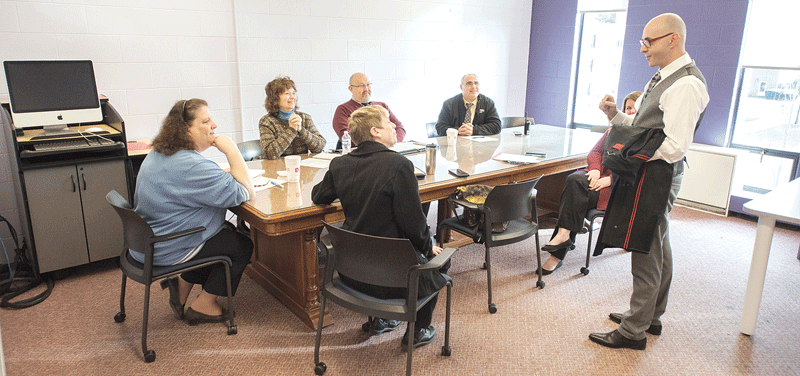
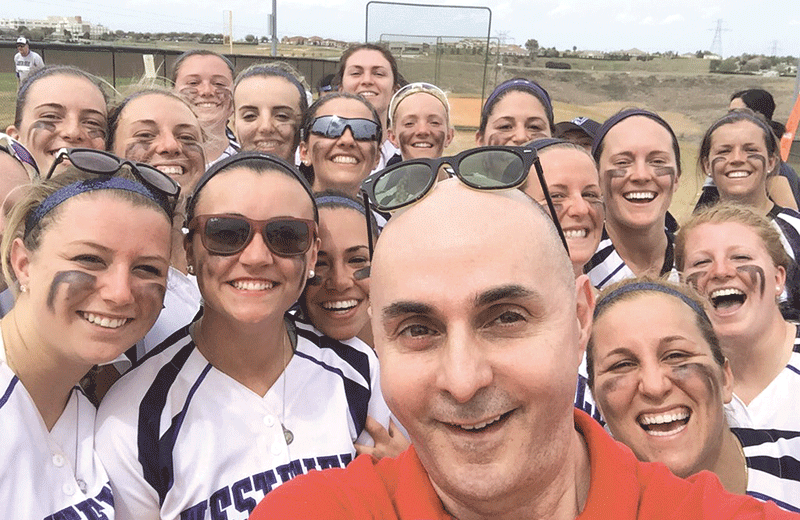


 For example, a third-grade class might visit Ramblewild during maple-sugaring season and learn how much science is involved in tapping a maple tree, as well as how to care for it and what takes place from the root structure up to the cellular level.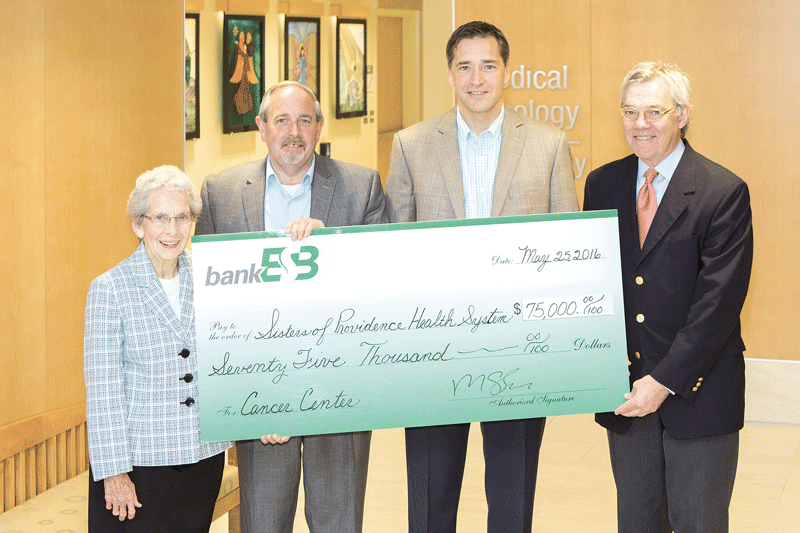

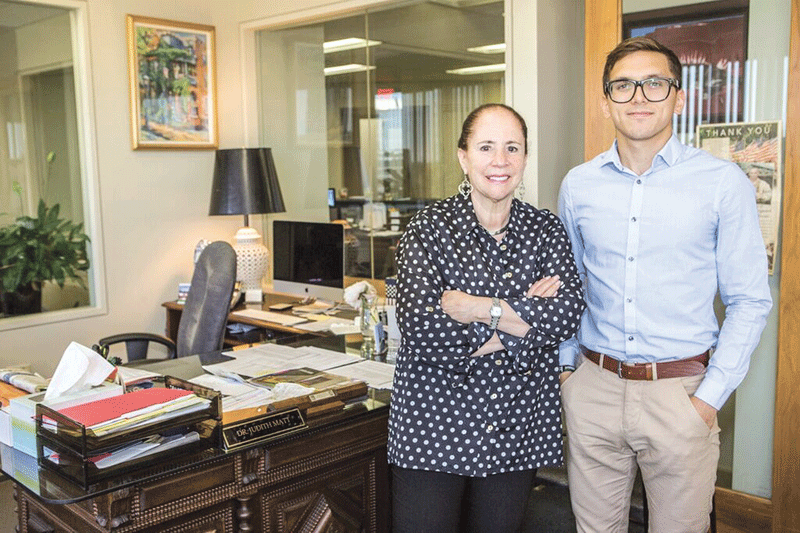



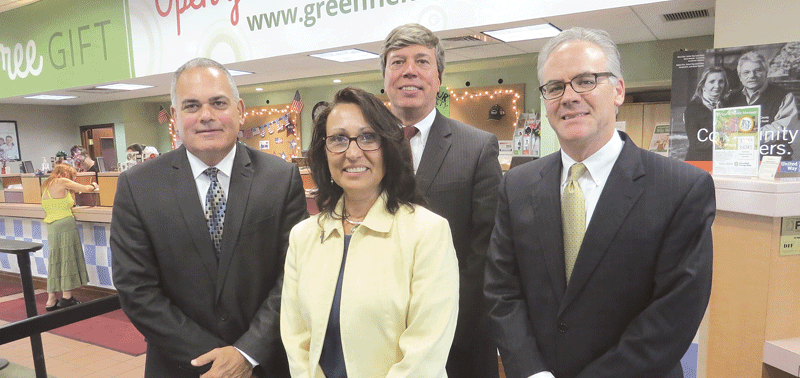

 Keroack is board-certified in internal medicine and bariatric (weight-management) medicine, and originally built his practice around weight loss, moving gradually into a broader wellness focus, where patients lose weight as just one benefit of a total lifestyle shift. But in addition to his formal training, he has certifications from the Institute of Functional Medicine and the Cenegenics Education and Research Foundation for Age Management Medicine.



 Whether or not a company explicitly allows it, employees in all fields are increasingly using their own laptops, tablets, and smartphones as part of their jobs. This practice, known as ‘bring your own device,’ or BYOD, certainly has its benefits, from flexibility to employee satisfaction to decreased IT costs. But it also brings risks — data security is a major one — and potentially thorny legal questions concerning company information being stored on private equipment. There may be no one right answer for all businesses, but well-written, clearly communicated policies are a good start.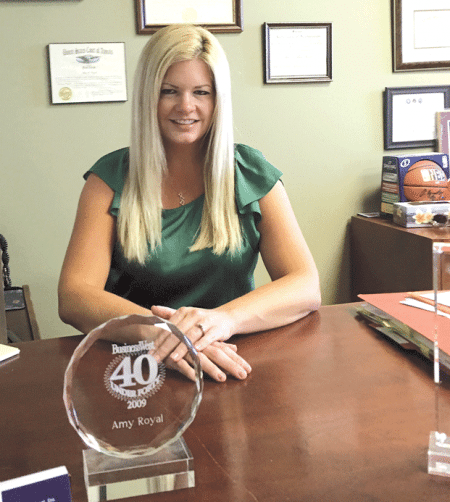

 Young people studying information technology in college, or IT professionals seeking a career change, don’t always think about the opportunities afforded by the banking industry. But perhaps they should — banks are increasingly clamoring for top IT talent to support their digital platforms, maintain network servers, and tackle thorny cybersecurity threats. The challenge is wooing these individuals to a career path they may never have considered.