Home Posts tagged Technology (Page 5)
Daily News

PITTSFIELD — The Feigenbaum Foundation is providing $2.5 million in support of the Berkshire Museum’s New Vision campaign, the largest single gift to the museum since its founding in 1903.

The announcement came as part of the museum’s July 12 special event celebrating the culmination of a two-year master-planning process which will lead to the creation of a new, interdisciplinary museum. At the event, on behalf of the Berkshire Museum board of trustees, Executive Director Van Shields offered a detailed presentation of the concepts and designs for the new museum, as well as information on the New Vision campaign, part of the funding strategy for the reinvented museum.

The goal for the New Vision campaign is $10 million. The lead gift of $2.5 million from the Feigenbaum Foundation, along with other gifts and pledges for a total to date of $5.4 million, bring the campaign more than halfway to the goal.

The Feigenbaum Foundation has long been a significant supporter of the Berkshire Museum. The Feigenbaum Hall of Innovation first opened in March 2008, as a 3,000-square-foot exhibition space exploring innovations in science, technology, business, politics, culture, and the arts.

As part of its commitment to ensuring that visitors to the museum enjoy experiences on the leading edge of exploring innovation in the Berkshires and beyond, the Feigenbaum Foundation made it possible for the Berkshire Museum to create the Curiosity Incubator, which opened in February. In the Curiosity Incubator, visitors discover exciting ways to learn about science and history through state-of-the-art, interactive stations. Filling an entire second-floor gallery, the Curiosity Incubator utilizes vivid full-wall graphics, touch screens, virtual-reality headsets, video monitors, a photo booth, and fresh ways to view objects from the museum’s collection. Meanwhile, a series of Feigenbaum Innovative Experiences will be deployed throughout the building as part of many of the exhibits being designed for the transformed institution.

“The Feigenbaum Foundation is proud to contribute to the museum as it embarks on this exciting new plan. We endorse the idea of a heightened focus on science and innovation as well as the creation of a consistently high-level core experience for visitors,” said Emil George, president of the Feigenbaum Foundation.

Added Shields, “we are extremely grateful for the Feigenbaum Foundation’s continued interest and generosity that also helps cement our position at the forefront of regional institutions dedicated to fostering creativity and innovation. As a result, the new Feigenbaum experiences will continue to be significant in the way they explore how invention shapes our lives and the world around us.”

Daily News

SPRINGFIELD — In conjunction with its current exhibit, “Push the Green Hand Ahead: Springfield Armory in World War I,” the Armory will host curator Alex Mackenzie’s Curator’s Corner program on Saturday, July 29 at 2 p.m. This series offers the public a glimpse of artifacts from the museum’s extensive collection and a chance to hear stories about these interesting objects. Admission is free of charge. Reservations are required due to limited seating.

Selecting a few WWI pieces from the collection, MacKenzie will share both the history and details of each item. It is an ideal opportunity to learn more about the rich collections of the Springfield Armory National Historic Site.

“The First World War is a conflict that involved an incredible amount of new technology. We’ll explore the inventive — and occasionally ridiculous — ways each country sought to arm one of those amazing pieces of new technology: the airplane,” MacKenzie said.

Following the presentation, attendees can speak with the curator and see the featured items up close.

The final two Curator’s Corner programs for the Armory’s World War I exhibit will take place Saturday, Oct. 7 and Saturday, Dec. 9, both at 2 p.m.

Departments People on the Move
Shannon Rudder

Shannon Rudder

The Providence Ministries for the Needy Inc. (PMN) board of trustees named Shannon Rudder executive director of PMN’s multi-human-services agency. First appointed interim director in May, Rudder previously served as executive director for MotherWoman Inc. in Hadley for four years. Prior to that, she was associate director of Housing Opportunities Made Equal Inc. in Buffalo, N.Y. “Shannon’s leadership, contagious enthusiasm, solid business acumen, strong operational skills, team-building focus, and dedication to building strong community relationships will advance our mission into the bright future ahead,” said Jean Zaleski, board chair. Rudder is currently on Springfield Technical Community College’s Foundation board; Mama’s Voice, a community-based participatory research project with Holyoke Community College; the grant review committee for United Way of Pioneer Valley; and United Way’s Women’s Leadership Council, and is an instructor at Bay Path University and Cambridge College. In addition, she has served as a guest lecturer at Springfield College, Smith College, and UMass School of Regional Planning. BusinessWest included Rudder in its 40 Under Forty class of 2016. “We are thrilled to have Shannon as our new executive director,” said James Wall, chair of PMN’s personnel committee. “She brings a great breadth and depth of experience that will help take Providence Ministries to the next level.” PMN is a member of the Sisters of Providence Ministry Corp. and is a mission-driven, nonprofit organization serving the Holyoke community with programs to feed, clothe, and shelter the poor and marginalized. These include Kate’s Kitchen, foodWorks at Kate’s Kitchen, Broderick House, Loreto House, McCleary Manor, Margaret’s Pantry, and St. Jude’s Clothing Center.

•••••

Anthony Hayes

Anthony Hayes

Following a nationwide search, Anthony Hayes has been selected as the new general manager for public broadcaster WGBY in Springfield. Hayes comes to WGBY with nearly two decades of executive experience in public TV and radio in Connecticut and Washington, D.C. He succeeds Rus Peotter, who retired last fall after leading the station for 15 years. “Anthony is a visionary leader, and his extensive background in strategic development and engaging with audiences will advance WGBY’s mission and vital role in the community and across the region,” said Liz Cheng, Television Stations manager for the WGBH Educational Foundation, which includes WGBY. Hayes will lead the station in its strategic planning, editorial operations, and community engagement, serving its public-media mission of advancing the educational and cultural life of Western New England. “As a highly accomplished media executive, Anthony’s management skills, experience, and style will be a great fit for WGBY. His industry knowledge and community focus will be of tremendous value in leading our public-media initiatives,” said Crist Myers, chair of the WGBY board of tribunes. Most recently, Hayes served as senior vice president for Engagement at Connecticut Public Broadcasting in Hartford, which includes CPTV and WNPR, where he guided fund-raising and sponsorship initiatives to develop new strategic opportunities and growth. Prior to that, he was at WAMU-FM, American University Radio, where he oversaw the sponsorship sales division and designed and implemented integrated fund-raising, communications, and outreach strategies, locally and nationally, that increased stakeholder engagement. Earlier in his career, he was with WETA, public TV and radio in Arlington, Va., where he managed corporate marketing and developed non-traditional revenue initiatives. “I couldn’t be more pleased to have this opportunity to magnify the impact of this exceptional organization,” said Hayes. “I will work collaboratively and strategically to build upon WGBY’s rich history and advance its core mission, focusing on building a stronger community through engagement, learning, and understanding. I believe WGBY is poised to expand its reach throughout Western New England, and I am eager to lead the charge.” Hayes holds a bachelor’s degree in fine arts from the New York Institute of Technology, and a master’s degree in media entrepreneurship from American University. He will join WGBY on July 10.

•••••

Mike Hamel, owner of Summit View Banquet House and Hamel’s Creative Catering, has been named 2017 Business Person of the Year by the Greater Holyoke Chamber of Commerce. Hamel’s Creative Catering was established in 1990, but the Hamel family business roots go back to 1963, when his family owned and operated Hamel’s Market in South Hadley and Edgar’s Market in the Churchill section of Holyoke. “Mike is an exemplary model of a home-grown success story. This is a great story of small business success,” said Kathleen Anderson, president of the Greater Holyoke Chamber of Commerce. “It includes a family legacy, following a passion, having a dream, and overcoming obstacles to achieve something significant and lasting. We are very proud of Mike and his family, and congratulate them on this achievement.” The award has been presented annually to an outstanding business person who is community-oriented, is innovative, possesses a high degree of integrity, and for business accomplishments in Greater Holyoke’s business community. Marge Manton, treasurer and CFO of Loomis Communities and chairman of the chamber board of directors, also announced the selection of Harry Montalvo of bankESB to receive the Henry A. Fifield Award for Voluntary Service to the Chamber. The award is named for the late Henry A. Fifield, former Amped executive and civic leader who served in leadership positions with the chamber. Montalvo’s service includes the chamber ambassador committee, the board of trustees of the Chamber Centennial Foundation, and chamber liaison between the two chamber boards. Montalvo has also been a mentor to many of the Chamber Foundation’s SPARK Launch Class graduates. Both award winners will be honored at the Business Person of the Year and Fifield Volunteer Award Dinner on Wednesday, Oct. 25 at 6 p.m. at the Delaney House. Information can be found online at holyokechamber.com or by calling the chamber office at (413) 534-3376. Everyone is invited to attend.

•••••

Sarah Jordan

Sarah Jordan

James Kelly, president and CEO of Polish National Credit Union (PNCU), announced that Sarah Jordan has joined the credit union as a marketing specialist. Jordan’s responsibilities include internal and external communications, marketing and public-relations campaigns, community relations, and website management. She comes to PNCU from Westfield Bank/Chicopee Savings Bank, where she served as marketing coordinator. She is a graduate of the University of Hartford with a bachelor’s degree in marketing, and has held marketing and communication assignments with the Greater Chicopee Chamber of Commerce, where she is a member of the marketing committee; the Barney School of Business Leadership Council; and the National Society of Leadership and Success – Sigma Alpha Pi. She has also been an active volunteer with Habitat for Humanity, the Spaulding After School Program, and Loaves and Fishes. “We look forward to Sarah’s success in promoting Polish National Credit Union and its products and services to both current and future members,” said Kelly. “We are pleased to welcome her to our team.”

•••••

Grace LaValley

Grace LaValley

Grace LaValley, who earned her doctor of nursing practice (DNP) degree in the inaugural DNP class at Elms College, had a paper accepted to the American Assoc. of Cardiac and Pulmonary Rehabilitation (AACVPR) for a podium presentation at AACVPR’s 32nd annual meeting in October, where it is a candidate for the conference’s Beginner Investigator Award. The paper Lavalley will present at the AACVPR conference was her capstone project in the DNP program at Elms College. Each DNP student is required to complete a scholarly capstone project that contributes to the field of nursing. The project topics are related to the areas of nursing where they currently work or areas in which they have a particular interest. Lavalley’s project earned her the 2017 DNP Capstone Award from Elms College, which honors a DNP student who has developed a distinguished capstone project that demonstrates scholarly rigor, innovation, and outcomes that improve health or health-related outcomes for a specific population, and has the potential to advance nursing science, practice, or policy. The paper is titled “A Telephone Intervention to Improve Patient Return Rates in Cardiac Rehabilitation: A Pilot Study” and focuses on cardiac rehabilitation, or CR. “Cardiovascular disease accounts for 17.3 million deaths per year, a number projected to reach 23.6 million by 2030,” Lavalley said. CR improves patient outcomes and reduces risk in the earlier post-discharge period, but it remains highly underused, she added. Despite its benefits, many patients are at risk for not following the CR program, for a variety of reasons. She and her colleagues decided to investigate whether a telephone call focused on patient motivation, education, risks, and goal setting would improve return rates among patients identified as at risk for non-adherence to the CR program. “Telephone interventions are known to be an important tool to provide support and help overcome barriers after discharge,” she noted. They studied 100 patients in Baystate Medical Center’s outpatient CR program and found that those who received the telephone call were more likely to attend their second session of CR as scheduled, compared with patients who did not receive this intervention (80% versus 51%). The overall return rate was higher in the intervention group as well. “This straightforward strategy represents an attractive adjunct to current management of outpatient CR patients,” she said. Lavalley’s coauthors are Heidi Szalai, Dr. Quinn Pack, and Andrew Storer, associate professor of Nursing at Elms. Their paper will be published in the September/October 2017 issue of the AACVPR’s Journal of Cardiopulmonary Rehabilitation and Prevention. Storer was the capstone chair for Lavalley’s project; he supervised the project from the development stage through implementation and analysis. The project, he said, “has made a positive impact in the quality of care for the patients, institutions, and communities served.” Added Lavalley, “this project may be of great value to other cardiac rehab programs around the nation, particularly in this complex healthcare environment.”

•••••

Paulo Marques

Paulo Marques

LUSO Federal Credit Union announced that Paulo Marques, senior loan originator, ranked fourth among top loan originators by volume for credit unions in Western Mass., with loan volume of $23.4 million. He also ranked fourth for top loan originators by number of loans for credit unions in Western Mass., with 156 loans. These results were reported by the Warren Group, publisher of Banker & Tradesman.

•••••

Deborah Jordan of Shamrock Financial in Wilbraham was named 2017 Affiliate of the Year by the Realtor Assoc. of Pioneer Valley (RAPV). The announcment was made during the association’s annual awards banquet held June 8 at the Log Cabin in Holyoke. As the highest honor given to an affiliate member, the award is bestowed upon the one person who has shown outstanding service and devotion to the organization during the past 17 months in the areas of affiliate-related association activity, community service, and business activity. A member of RAPV for five years, Jordan has served on the affiliate/Realtor, Education Fair & Expo, and community service committees. Her committee involvement includes the annual Benefit Golf Tournament, Playhouse Build for the Boys and Girls Clubs, and blanket and book drives to benefit Shriner’s Hospitals for Children – Springfield. Jordan’s additional community activities include serving as president-elect for the Ludlow Rotary Club, volunteering with Revitalize CDC, and serving on the Buy Springfield Now Committee to promote home ownership.

Daily News

BERLIN, Conn. — Comcast announced the appointment of four leaders for the company’s Western New England region, which is headquartered in Berlin, Conn. and includes more than 300 communities in Connecticut, Western Mass., New Hampshire, Vermont, and New York.

In the Human Resources department, Judith Rudge was named director of Talent Management, while Taissa Gawronski was named director of Human Resources. In Sales and Marketing, Matt Frascone was named director of Retail Sales, and in the Communications department, Elizabeth Walden was appointed manager of Public Relations.

Rudge came to Comcast with more than 12 years of recruiting experience. In her new role, she oversees talent management and recruiting efforts for the company’s Western New England Region, which currently employs more than 1,800 individuals across five states. Prior to joining Comcast, she was the senior manager of talent acquisition at Verizon in Atlanta, where she owned the end-to-end recruitment of information technology, engineering, product, and sales positions for 86 national office locations. She graduated from Dickinson College.

Gawronski joined Comcast with 10 years of human-resources experience. In her new role, she is responsible for the human-resources needs of the company’s retail and door-to-door sales channels, as well as those on the Comcast Business team and in Sales and Marketing administration. Before joining Comcast, she was director of Human Resources at C&M Corporate, a custom cable manufacturer in Killingly, Conn., where she evaluated and maintained the company’s organizational design, as well as oversaw its workforce-recruitment and retention efforts. She graduated from Framingham State College.

Frascone recently relocated from Comcast’s Greater Chicagor to Comcast’s Western New England region to oversee 10 XFINITY stores and three service centers across Connecticut, Western Mass., and Vermont. He is also responsible for Indirect Sales, which involves Comcast’s partnerships with Walmart, Target, and Best Buy. Previously, he spent the last year as director of Comcast’s flagship XFINITY store in Chicago. He joined Comcast with 20 years of retail experience and, prior to Comcast, was a director for two Apple stores in Atlanta, where he managed a staff of 177 sales associates. He was also a U.S. Navy Reservist.

Walden came to Comcast with seven years of public-relations experience. In her new role, she is responsible for helping shape the company’s image with external audiences across the Western New England region. Prior to joining Comcast, she was vice president at Quinn, a lifestyle public-relations firm in New York City, where she oversaw a team of public-relations executives who carried out day-to-day media and operations for a portfolio of 20 business, real-estate, and technology clients, in addition to being responsible for building the firm’s client base and developing strategic public-relations campaigns. She graduated from Clark University in Worcester.

Daily News

HOLYOKE — Based on the success of its live seminar series, PeoplesBank has launched a free lunchtime business-improvement webinar series.

The series will feature bank experts who will present topics related to improving and protecting business operations, including protecting data and managing vendor risk. The seminars are designed for business owners and management and operations professionals. Each of the Friday webinars will be offered live and will start at noon. The webinars are:

• July 14: “Best Practices to Keep Your Data Safe” (30 minutes). Every day, there are millions of attempts against companies to compromise data. Attacks like phishing and ransomware can be prevented with simple steps and employee education.

• Aug. 11: “ Managing Vendor Risk” (30 minutes). In today’s world, businesses rely more than ever on vendors to help with their core business, including providing access to sensitive information.

• Sept. 22: “Leveraging Technology to Improve Collection Efforts” (30 minutes). Creating efficiencies in collections allows you to concentrate less on banking and more on your core business.

• Nov. 10: “Anatomy of Fraud and Protecting Your Business (1 hour). Fraud happens from both internal and external sources. Internal fraud is said to cost businesses more than $3 billion per year.

More information and registration for each of the free business-improvement webinars can be found at bankatpeoples.com/business/seminars.

Banking and Financial Services Sections

West Side Story

A rendering of the new Florence Bank branch in West Springfield.

A rendering of the new Florence Bank branch in West Springfield.

After recording impressive growth during his 22-year tenure as president, John Heaps Jr. says Florence Bank is ready to take the next strategic step, by opening its first branch in Hampden County later this summer. The move comes at an opportune time, he said — a time when many Greater Springfield banks are being bought up and merging with institutions based well outside the region. A community-focused bank like Florence, he believes, is well-positioned to fill the gap.

John Heaps Jr. has deep roots in Hampden County. A 37-year resident of East Longmeadow who attended Cathedral High School and started his career at Valley Bank & Trust Co. in Springfield, he has personal reasons to celebrate Florence Bank’s first Hampden County branch, set to open in West Springfield in August.

“For me, it’s like coming home,” he said. “I grew up here in East Forest Park, and I’ve lived here all my life. So this is home to me, and coming here is just something that feels like coming back home, even though I live here.”

But as much as the move means to him personally, it says more about the bank’s growth, and the opportunities available to a community-focused institution in the midst of industry consolidation that has left the region without a Springfield-headquartered bank.

“The first part of my career with Florence Bank was focused on expanding within Hampshire County, and now it just makes sense to expand into Hampden County,” said Heaps, who has served as the bank’s president since 1995. “Because of the significant consolidation, many of the independent players are gone. There’s a real need for a community bank. People want banking decisions made locally, by local people and for the right reasons. That’s what we do.”

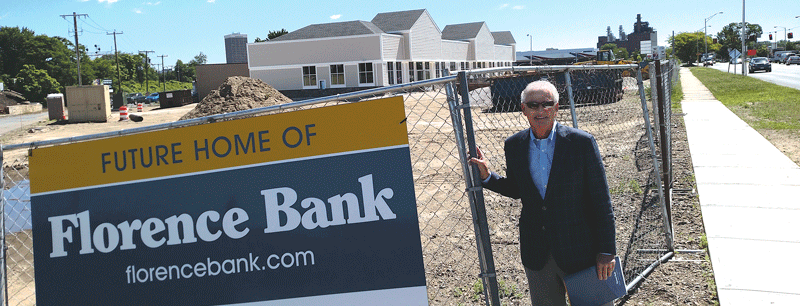
Bank President John Heaps Jr. visits the construction site.

Bank President John Heaps Jr. visits the construction site.

Construction is nearing the final stages at what will be a 9,000-square-foot plaza at 1010 Union St., one-third of which will house Florence Bank’s new Hampden County Banking Center, scheduled to open this summer.

All Florence Bank services will be offered through the new center, including deposits and loan products, mobile services to provide 24-hour access to accounts, mortgage-application services, debit-card issuance, commercial-loan capacity, and investment services. The center, which will also offer a drive-up ATM and night depository, will be staffed by eight employees, led by Branch Manager Maureen Buxton.

Heaps said the recent spate of mergers — United Bank was acquired by Rockville Savings Bank in 2014; the following year saw Hampden Bank acquired by Berkshire Bank, First Niagara Bank sold to Key Bank, and NUVO Bank & Trust acquired by Merchants Bancshares; and Westfield Bank acquired Chicopee Savings Bank in 2016 — creates an uncommon opportunity for a mutually-held bank that makes decisions about what’s best for customers and the community without input from stockholders.

“The Springfield area needs our kind of independent institution,” he said, and the bank has already found success in Hampden County following its opening, in 2007, of a loan-production office in West Springfield. It’s success helped boost the bank’s total commercial-loan portfolio to more than 36% from Hampden County-based businesses.

In fact, between the loan center, an ATM in Springfield, a relationship with the Basketball Hall of Fame, and employees — like Heaps — who live in Hampden County, the bank already boasts nearly 3,000 retail customers and more than 400 commercial clients in the Greater Springfield region. The bank also has a relationship with 97 nonprofits in Hampden County that have received over $300,000 in grants and gifts in the past five years.

In short, Heaps said, the time was right for the West Springfield branch.

Steady Growth

Florence Bank, headquartered in its namesake town, has long been a Hampshire County institution, with branches in Amherst, Belchertown, Easthampton, Granby, Hadley, Northampton, and Williamsburg. Heaps has seen the bank grow in his tenure from a $250 million institution with two branches to $1.3 billion and 10 branches. But growth didn’t mean abandoning the community culture.

“It was clear the bank wanted to stay mutual and wanted to grow, and quite frankly, we did that in Hampshire County,” he said. “Our capital has grown from $25 million to $135 million, which is really nice growth, so we’ve been extremely profitable while still being able to keep our focus on what we wanted, which was to stay mutual.”

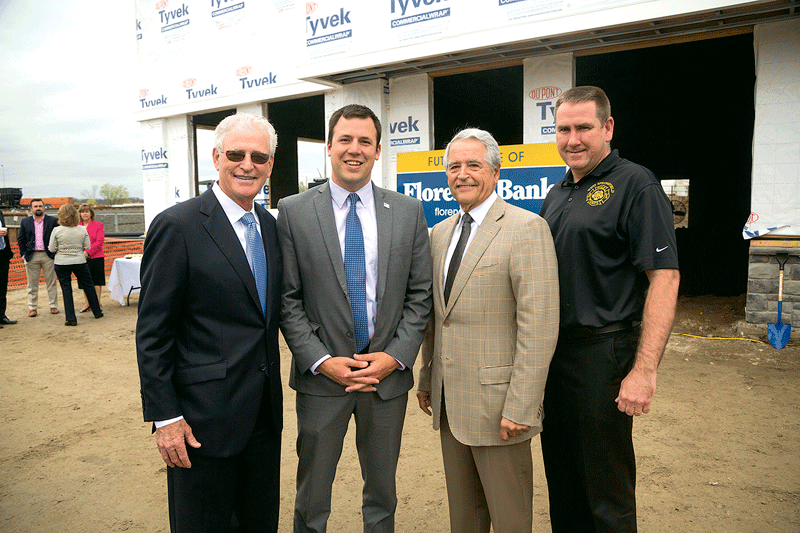
From left, John Heaps Jr., West Springfield Mayor Will Reichelt, developer Frank Colaccino, and West Springfield Fire Chief Bill Flaherty

From left, John Heaps Jr., West Springfield Mayor Will Reichelt, developer Frank Colaccino, and West Springfield Fire Chief Bill Flaherty were among those who attended a recent hard-hat tour of the site.

Another goal was to stay current with technological trends, he added. “We’ve got the best of both worlds; we’ve been able to keep the focus on customer service, but we’ve also added technology that has allowed us to keep up with the Bank of Americas. There’s nothing you can get there that you can’t get at Florence Bank, things like mobile management to get into your bank account, stop a debit card, pay bills, things like that.”

In fact, in the past five years, the percentage of customers using the bank’s mobile services has risen from about 5% to around 40%, and it’s still on the rise, among all demographics.

“Sometimes it’s just a matter of showing people,” he said. “If you come in the branch to talk about mobile banking, we’ll give you a $5 deposit check, and we’ll ask you to deposit it to set up your account. You wouldn’t believe how many people thank us for that.”

Customers aren’t the only ones with questions, however. “Strategically, other senior managers and even the board asks about bricks and mortar, why we continue to build branches when transactions have gone down in the branches,” Heaps said. “Clearly, the number of transactions has gone down significantly in the past five years — to around 60% of what it was. That obviously has an impact.”

But a physical branch still plays a critical role in the communities where a bank operates, he went on, not only because the majority of customers still do business there, but because it shows commitment to a city or town.

“Do you need 10 tellers? No, but you certainly need the branch,” he said, adding that branches of the future are likely to be smaller than in the past, and division of roles between tellers and customer-service professionals at Florence Bank will be blurred, with employees able to handle either task, so the teller window, or pod, will be a one-stop shop of sorts.

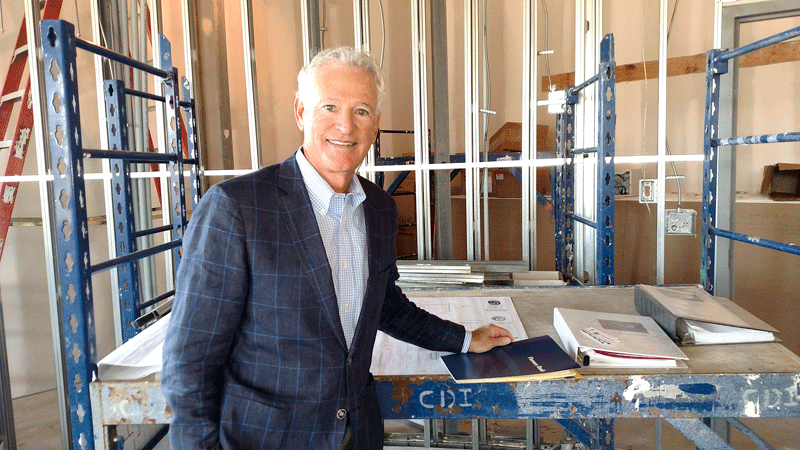
John Heaps Jr.

John Heaps Jr. stands before what will be the teller pod area in the new West Springfield branch.

“That’s the teller of the future, and it allows you to have a smaller footprint, and to do everything with much fewer people,” he said. “With remote capture, customers don’t even need to go to the bank to make deposits.”

The result, he said, has been a streamlined workflow, so as the bank has grown in size, it hasn’t added many employees, instead shifting roles to boost efficiency. A branch like the one in West Springfield, had it opened a decade ago, would have required more staff and a larger footprint, he noted.

Branching Out

To create the new space, the Colvest Group of Springfield is developing the new building where St. Ann Roman Catholic Church was once located, at the intersection of Union Street and Memorial Avenue.

The building’s exterior will feature stone wainscoting on the first few feet near ground level and tan siding and multiple windows across the front. Florence Bank will occupy one-third — or 3,000 square feet — of the new plaza, and up to three additional commercial tenants will fill the remaining space, said developer Frank Colaccino.

“We certainly think it’s a high-quality location, and the building is very attractive, he added. “We’re excited to have Florence Bank as our anchor tenant, and we’re confident we’ll have some good-quality tenants in addition to Florence Bank.”

It’s the same promise Heaps sees in the site and, more importantly, in the Greater Springfield region.

“There’s just so much happening in Hampden County,” he said, adding that the region’s economic vibrancy is reflected in Florence Bank’s steadily growing loan activity there. He noted that, at a time when mergers and acqusitions are the order of the day, retail and business customers are still looking for a community-bank experience and a financial partner across all aspects of life. “Eighty percent of our mortgage customers have checking accounts with us; that’s an amazing statistic.”

Which is why West Springfield is just the first stop along the way to the bank’s goal to become much more than a Hampshire County institution.

“It’s not just going to be one branch, just sticking our toe in the water,” he told BusinessWest. “Over the next three or four years, we’ll be adding between three and four new branches as part of a strategic move. I think Hampden County is ready for us, and we’re ready for Hampden County.”

Joseph Bednar can be reached at [email protected]

Daily News

BOSTON — The Mass. Department of Transportation (MassDOT) advises holiday travelers to plan ahead, utilize MassDOT’s many “real time” travel tools and use public transportation if possible to reach their destinations between now and the end of the July 4 holiday weekend.

“This holiday is a great opportunity for the public to use technology tools including www.mass511.com or the GoTime mobile app in order to make informed decisions on routes to take to destinations and the timing of travel,” said Transportation Secretary and CEO Stephanie Pollack. “If people check real-time travel time information before leaving home then they can make smart decisions about whether to drive or take transit and whether to leave earlier or later.”

Acting Highway Administrator Jonathan Gulliver said heavy traffic volumes are expected on the state’s highways during this upcoming holiday period. “With many people driving to destinations we encourage people to leave extra time to reach their destinations, exercise safe driving behaviors, be patient on the roadways, and consider taking public transit if possible.”

MassDOT is taking steps to facilitate the flow of traffic during the holiday and will be postponing scheduled roadway construction effective at noon June 30, with scheduled construction activities resuming with the start of normal business hours on July 5.

Free coffee will be served at the 18 MassDOT service plazas from 10 p.m. July 4, through 5 a.m. July 5. The plazas serving free coffee include 11 service plazas along I-90 plus plazas along Route 3 in Plymouth, Route 128 in Beverly, Route 128/I-95 in Newton and Lexington, Route 6 in Barnstable, and the Route 24 northbound and southbound plazas.

For traffic and road conditions, drivers may use the following options to make decisions:


  • Download MassDOT’s GoTime mobile app and view real-time traffic conditions;
  • Dial 511 and select a route to hear real-time conditions on I-90 and other roads;
  • Visit www.mass511.com, which provides real-time traffic and incident advisory information, and allows users to subscribe to text and email alerts for traffic conditions;
  • Download Waze, the real-time traffic navigation app; and
  • Follow MassDOT on Twitter @MassDOT because motor vehicle incidents which impact traffic flow are generally mentioned in tweets if they occur on the state’s major highways.


Business & Innovation Expo of Western Mass. Events

Countdown to the Expo

expologo2017webIt’s a subtle name change, but a rather large adjustment in tone for what has become a fall tradition within the region’s business community.

Indeed, the annual show at the MassMutual Center in downtown Springfield is now known as the Business & Innovation Expo of Western Mass., and this change — the addition of that word ‘innovation’ on the marquee — speaks volumes about the business-to-business show’s new and expanded mission, said Kate Campiti, associate publisher of BusinessWest, which has managed the show since 2011.

“For more than 200 years now, this region has had an incredibly strong tradition of innovation in business,” said Campiti. “And that tradition has taken many forms, from new products to new processes to new ways of thinking about to how to meet the needs of a constantly changing society. That tradition continues today, and the Expo will make this abundantly clear.”

Elaborating, she said the Nov. 2 show, still very much in the planning stages, will be, in effect, a showcase of innovation and the many forms it takes in a changing, highly competitive business climate.

“Innovation isn’t just a theme for this event,” said Campiti. “It will be a compelling thread that runs through the programming, the educational seminars, the special presentations, and more. This will be a celebration of innovation in some ways, but, more importantly, it will be a powerful statement about how that tradition of innovation continues today.”

Once again presented by Comcast Business, the Expo has become a fall tradition in Western Mass., attracting more than 2,000 visitors and more than 150 exhibitors to the MassMutual Center.

As always, there will be a strong business-to-business component to the show, said Campiti, adding that the event provides opportunities for businesses to showcase their products and services, and for these businesses and attendees to make important connections.

But there will be an educational component as well, she said, and much of the focus will be on innovation and the many forms it takes.

“People tend to think of innovation as new-product development, and that’s a big part of it,” she noted. “But there is information in all aspects of business — from process improvement to how companies attract and retain talent; from the use of technology to make a business more productive and efficient to development of systems to not only generate ideas but cultivate them into advances; from how an emergency room handles peak traffic flows to how a bank safeguards its customers from fraud.

“Innovation is vital to the success of every sector of our economy, from education to healthcare to manufacturing,” she went on. “And the Expo will show innovation isn’t simply a watchword, but a philosophy, or attitude.”

In addition to Comcast Business as presenting sponsor, Inspired Marketing is the show partner, MGM Springfield is participating as corporate sponsor, the Isenberg School of Management at UMass Amherst is the education sponsor, and the Better Business Bureau is a contributing sponsor. Additional sponsorship opportunities are available.

Details of the show will be presented in upcoming issues of BusinessWest and online HERE.

For more information on the show, to register, or to request information on becoming a sponsor, visit the website or call (413) 781-8600.

Sections Tourism & Hospitality

The Sounds of Summer

By Kathleen Mellen

An architect’s rendering of the how the $31 million expansion project will change the landscape at Tanglewood.

An architect’s rendering of the how the $31 million expansion project will change the landscape at Tanglewood.

Audiences have flocked to the Berkshires for Boston Symphony Orchestra’s summertime concerts since 1936, when the musicians offered a three-concert series, under the baton of then-music director Serge Koussevitzky, in a large tent at Holmwood, a storied estate in Lenox.

That first series, which would ultimately morph into the world-renowned Tanglewood Music Festival, was attended by nearly 15,000 people.

Then, in 1937, when the festival presented its first concert at Tanglewood, a gift to the BSO from the Tappan family estate, it drew the largest crowd to ever assemble under a tent, for an all-Beethoven program.

And the love affair has continued.

Last year, 350,000 guests visited the venerable annual music festival in Lenox, which offers weekly summer concerts by the BSO, performances by the Boston Pops and Tanglewood Music Center orchestras, as well as a lineup of famed guest artists in classical, contemporary, and popular music. That number has grown significantly over the past decade, and has remained fairly constant for the past five years, or so, said Anthony Fogg, the BSO’s artistic administrator and director of Tanglewood.

“It is a reflection of increasing, renewed interest in the great music that we’re offering,” Fogg told BusinessWest.

In response to these growing demands, the BSO in February announced a $30 million expansion of its music festival’s facilities and 524 acres campus in Lenox. The new complex will include a state-of-the-art, four-building complex designed to support performance and rehearsal activities at the Tanglewood Music Center (TMC), and to serve as the home of the new Tanglewood Learning Institute (TLI).

The new buildings will supplement the music festival’s main performance spaces — the 5,700-seat Serge Koussevitzky Music Shed, built in 1938, and the 1,200-seat Seiji Ozawa Hall, named for BSO’s former, long-time music director (1973-2002), built in 1984.

We see this as a way of increasing the flow of visitors to the Berkshires. It will be a beautiful facility, with acoustics of the first order, dining facilities, and the possibility for recording. I’m confident it’s going to be a very attractive venue, and we hope the community will embrace it.”

“We’re very much viewing this as a long-term investment in classical music as an art form, which is essential to our lives,” Fogg said in a recent interview.

The new building complex, scheduled to open in spring 2019, has been designed by William Rawn Associates, led by William Rawn and Cliff Gayley. It will be located at the top of the lawn leading down to Ozawa Hall, which was also designed by the architectural firm. The new facilities will be climate-controlled, which Fogg says will offer an opportunity for members of the larger community to use the space during the off-season, for such things as conferences, celebrations, and musical performances.

“We see this as a way of increasing the flow of visitors to the Berkshires,” he said. “It will be a beautiful facility, with acoustics of the first order, dining facilities, and the possibility for recording. I’m confident it’s going to be a very attractive venue, and we hope the community will embrace it.”

In Concert with the Environment

The expansion is part of a multi-year fund-raising effort, which has received donations from private and corporate donors, which Fogg declined to name at this time, saying Tanglewood will make a formal announcement about fund-raising sometime this summer.

To date, enough money has been raised to cover the cost of building the complex itself, but further funds will ensure there is a well-funded endowment to cover future operating expenses and programming, he noted, adding that the ultimate fund-raising goal is in the neighborhood of $40 million.

At the heart of the four-building project will be Studio 1, a 200-seat concert space designed with Tanglewood’s signature setting in mind. The festival’s iconic, 100-foot-tall red oak tree and the landscape beyond will be visible through a wall of glass that measures 30 feet high by 50 feet wide, and which will serve as an expansive backdrop to the stage. A 50-foot-wide retractable glass wall, also part of the design, will open directly out to a porch and the surroundings.

“We wanted to keep a sense of an easy relationship between the buildings and the landscape,” Fogg said. “We were very conscious of maintaining a feeling of openness and airiness. You can’t only hear some of the greatest musicians and some of the greatest music of all time, but you do it in this transparent atmosphere.”

Studios 2 and 3 will offer rehearsal and performance space for small and medium-sized ensembles, and can accommodate audiences of 60 and 40, respectively. For flexibility, Fogg said, all the spaces can quickly and easily convert from one use to another.

In addition, the buildings are designed to take advantage of new sound and recording technology, and “are wired to the maximum,” he said. “They are decked out to embrace whatever new technology comes along. There are very exciting possibilities.”

We have a situation where our fellows are really overcrowded and working in conditions which are not the most conducive to the best work. Ozawa Hall [where the fellows rehearse and perform] is probably the most-scheduled facility on the campus. It goes from 6 in the morning until 1 in the morning, and we found that fellows are starting dress rehearsals for upcoming concerts at 10 p.m. That’s not the right sort of working environment.”

A 150-seat café housed in the complex will become a hub for visitors, TMC fellows and faculty, TLI participants, and performing artists, and a place where visitors and musicians can interact.

Among the beneficiaries of the new space will be the Tanglewood Music Center, a world-renowned summer institute created in 1940 by Koussevitzky to further the tradition of classical music, and to serve as an American center for advanced musical study for young professional instrumentalists, singers, composers, and conductors. About 1,500 musicians compete annually for roughly 150 positions, and those who are accepted receive fellowships that cover tuition, room, and board. Leonard Bernstein, Lukas Foss, and Sarah Caldwell were among its first students.

But, frankly, Fogg said, space has become a problem for the program and its participants.

“We have a situation where our fellows are really overcrowded and working in conditions which are not the most conducive to the best work,” he noted. “Ozawa Hall [where the fellows rehearse and perform] is probably the most-scheduled facility on the campus. It goes from 6 in the morning until 1 in the morning, and we found that fellows are starting dress rehearsals for upcoming concerts at 10 p.m. That’s not the right sort of working environment.”

The new facility will address those and other needs by providing significantly more rehearsal and performance space for the TMC, and will enhance, support, and streamline activities to assure that Tanglewood continues to attract the most competitive class of fellows.

Knowing the Score

The new complex will also be home to Tanglewood Learning Center, which will offer all-new programming designed to provide the festival’s patrons with an array of educational and enrichment experiences that encourage a closer connection between artists and audiences, including seminars and panel discussions, film presentations, conversations with artists, and access to special concerts and master classes.

“An artist can come here and not only have the opportunity to give a great performance, but also spend a couple of days talking about how they got to that point — about the work they are doing … the process of creation,” Fogg said. “Those sorts of insights into the way an artist thinks, I think, will be absolutely key.”

Special offerings will include a ‘passport program,’ which will allow subscribers access to BSO and TMC closed rehearsals, TMC master classes, and backstage visits with musicians, guest artists, and conductors, among other activities.

“This will be an opportunity for those who are already aficionados of classical music, who already have some knowledge, to deepen their knowledge,” Fogg said. “It’s also an opportunity for those who are a little on the outside, who may want to find out more about classical music — why it works, why it’s important, and how it fits into our lives.”

The new buildings will be the first year-round structures at Tanglewood, with both heating and air-conditioning, and have been designed with an eye toward sustainability.

An architect’s rendering of one of the new facilities at Tanglewood.

An architect’s rendering of one of the new facilities at Tanglewood.

“We’re looking for LEED [Leadership in Energy and Environmental Design] status,” Fogg said, “and we believe we will be able to achieve Gold.”

To that end, natural ventilation and abundant day lighting are designed to minimize energy use. Other notable sustainable features include rainwater harvesting for irrigation; high-efficiency mechanical systems with low-velocity ductwork, meeting acoustic requirements; efficient LED theatrical lighting; water-saving plumbing fixtures; red-cedar cladding harvested from renewable sources; and recyclable zinc roofing.

“We have been extremely mindful of all of these things,” Fogg said. “We’re doing the best we can to achieve the highest standard of responsiveness to the environment, which is so important.”

In addition to the buildings, a new horticultural initiative, designed by landscape architects at Reed Hilderbrand, will revitalize and strengthen Tanglewood’s bucolic landscape, with the planting of 144 trees, improvements to stormwater-management systems and pedestrian walkways, and the restoration of views of the 372-acre Lake Mahkeenac, also known as the Stockbridge Bowl. A new horticultural-stewardship program will create and implement uniform strategies for documenting, maintaining, preserving, and enhancing Tanglewood’s horticultural assets.

“Tanglewood’s expansive setting is both a blessing and a curse,” Fogg said. “It offers the opportunity to do fantastic things, but it’s also a great responsibility … we’re taking this as an opportunity to see how we can find a unity of approach to the grounds.”

In Harmony with History

A groundbreaking ceremony will take place later this summer, at a date to be announced. Organizers hope Tanglewood luminaries will be on hand, and are in the process of trying to accommodate the hectic schedules of some of its artistic principals, including BSO’s music director, Andris Nelsons; Boston Pops conductor Keith Lockhart; and the Pops’ conductor laureate, John Williams.

“Their schedules are incredibly complicated,” Fogg said. “But, it [the groundbreaking] will be toward the end of the season. The construction company needs to start work absolutely as soon as the season finishes, to try to get as much done before the winter hits. They are optimistic, confident, that we can move toward an opening in spring of 2019.”

Thus begins the start of a new chapter in the history of one of the region’s great destinations — and a summer home for music lovers of all ages.

Accounting and Tax Planning Sections

A Different Kind of Number Crunching

sixsigmadpart3Since its introduction more than 30 years ago, the data-driven process-improvement methodology known as Six Sigma has been most closely associated with the manufacturing sector. But, as recent initiatives undertaken by the accounting firm Meyers Brothers Kalicka clearly show, this ‘lean’ concept can be utilized by companies in any business sector to improve efficiency and buy employees time — literally.

Melyssa Brown joked that when she earned her green belt in Six Sigma last year, she was disappointed when all that arrived in the mail confirming that accomplishment was a piece of paper, a certificate.

“I was thinking, hoping that maybe there would actually be a green belt — I could use an accessory like that,” she told BusinessWest, tongue firmly planted in cheek, adding quickly that just about everything else about Meyers Brothers Kalicka’s deep dive into this data-driven process-improvement methodology has been about what she and others at the Holyoke-based accounting firm expected.

And then some.

Our interaction with the client is better, and our delivery of services to the client is better. And internally, it has put everyone on the same page; it’s put everyone together behind a commitment to move forward and not stand still, because you can’t grow that way.”

Indeed, they were expecting that incorporation of this lean, quality-control program, developed by Motorola in 1986 and popular within the manufacturing sector, would be intense, time-consuming, and somewhat difficult because it constituted a significant change in how things were done.

They were right.

But they also expected it would achieve real results and provide powerful evidence that Six Sigma can work in the service sector as well as it does in the realm of manufacturing. And they were right again.

“Our interaction with the client is better, and our delivery of services to the client is better,” Brown, a senior manager in the auditing department at MBK, said of the net gains from the firm’s investments in Six Sigma. “And internally, it has put everyone on the same page; it’s put everyone together behind a commitment to move forward and not stand still, because you can’t grow that way.”

Elaborating, Brown said that, through Six Sigma, the company has been able to chart how the all-important time of partners, associates, and others at the firm is spent, with a critical eye toward making processes more efficient, thus essentially providing personnel with more time with which to better serve clients and serve more of them, critical elements in any company’s efforts to increase profits and improve market share.

Getting more specific, Brown said MBK has undertaken a few Six Sigma projects, both involving client interaction, the time spent accumulating needed information for tax and audit work, and efforts to bring more efficiency to those efforts.

Melyssa Brown

Melyssa Brown says MBK’s Six Sigma projects have effectively given employees at the firm more of that most precious commodity — time.

“To do audit and tax work, you clearly need to get information from the client — we need some numbers to work with,” she explained. “It comes down to, when you have that interaction, how it’s done, and how it’s followed up.”

In short, there were inefficiencies with all those steps in the process, she went on, and, therefore, some diligent work was undertaken to mitigate them.

“From these processes, we’ve put structures in place to help us monitor and conduct better interactions with the client, because that’s what’s important to them — and us,” she went on, adding that the goal was and is to make these interactions easier for the client and more productive for the firm.

Fast-forwarding a little, Brown said the firm has created an online portal, or drop box, if you will, for client information that can be accessed by all those servicing that particular client. This innovation has significantly reduced the time, trouble, and anxiety involved with collecting and accessing that data, as will be explained in more detail later.

As noted, the company’s experience shows how Six Sigma can be applied to businesses not traditionally associated with this methodology, said Brown, who was a member of a panel that delivered that very message to assembled members of the Employers Assoc. of the NorthEast several weeks ago.

“Everyone has a back office,” Brown explained. “And while people think of Six Sigma in terms of manufacturing processes, those back-office functions can be made more efficient as well.”

For this issue and its focus on accounting and tax planning, BusinessWest departs from more traditional discussions about taxes, audits, legislation, and compliance, and takes a hard look at a different form of number crunching.

Time Is of the Essence

Brown told BusinessWest she became the company’s point person on Six Sigma … well, because each senior manager at the firm has a ‘niche,’ as she called it, and at that moment in time, she didn’t have one.

So Six Sigma became her niche.

Backing up a little, Brown said she and others at the firm were in attendance for a presentation on Six Sigma presented by a consultant and hosted by CPA America, a trade organization the firm has belonged to for some time. That seminar came about just as the firm was aggressively exploring methods for achieving process improvement, thus bolstering the bottom line.

“We had tried several other ways to become better at improving efficiency,” she explained. “But we needed that outside person’s view of what the best course of action might be.”

Brown underwent green-belt training, which introduces an overview of the key concepts, in Ohio, and took on a project involving one of her clients to earn that aforementioned certificate in 2016.

Summing up what’s been happening at the firm since, Brown said MBK has essentially embraced ‘lean,’ a concept that, as noted earlier, is usually associated with manufacturing, but can be applied to virtually any business sector.

Lean is a transferable and systematic approach for discovering, analyzing, prioritizing, and correcting time-wasting activities that exist in business processes, Brown told BusinessWest — and her audience at the EANE roundtable in May.

Elaborating, she said ‘lean’ is a mindset, or a culture, to reduce waste, something that exists in every operation and can be reduced — but only, in most all cases, through careful analysis of data and development of new ways to do business.

And, as Brown noted, this approach can generate positive results not only on the factory floor, but also in back-room operations such as billing and accounts receivable, accounts payable, payroll, monthly reconciliations, and financial reporting.

With that, she returned to the projects undertaken by MBK, and specifically that online portal she discussed. It came about through the Six Sigma process of analyzing a specific process or method of doing business, taking it apart, and putting it back together again — without the wasted steps, energy, time, and profit.

To get her points across, she undertook an exercise in ‘before and after.’

“Before, we would send a list of needed information via e-mail, in Word or Excel, and the client would either send us documents via e-mail, save it to a jump drive, or find some other way to get it to us,” she explained. “But it was never really clear if we had a certain piece; we would say, ‘do we have an accounts-receivable list?’ and they would say, ‘yes, you have it,’ and someone here would say, ‘I don’t think I do.’”

Now, with the online portal, such exchanges are a thing of the past, she went on, and so is the time lost looking for information or trying to verify whether the firm has it or not.

The bottom line, as they say in this business, is that the firm can now serve clients better and more efficiently, and use the time saved to serve other clients or solicit new ones.

And all of these things can be measured.

“In the end, our goal in this is to issue financial statements to clients earlier or get tax returns done and out to the client sooner than we used to, and we can measure this,” she explained.

Meanwhile, the system improvements are enabling individual service providers to make better use of their time, she went on, adding that, in many cases, it is now possible to do some audit-preparation work in October or November, thus creating more time during the extremely hectic months and weeks prior to April 15.

“You’re getting a head start on the client,” she noted, “which frees us up during tax season, when we’re all a little stressed.”

The end result, she said, is the creation of more time.

“Before, we may have thought that we needed to hire more people to get the work done,” she noted. “Now, we can get the same amount of work done with fewer hours and the same amount of people — or more work, because you’re taking on new projects with the time that you’ve saved.”

Looking forward, Brown said the firm is looking at other ways to put Six Sigma to use.

Indeed, after projects involving the tax and audit functions, the company is looking at possible initiatives involving billing and administration and making them more efficient.

“There are lots of opportunities — you just have to crack open the shell,” said Brown, who told BusinessWest that this is her general advice to all those who own or manage service businesses.

She noted that too many businesses in this sector are not embracing Six Sigma, in part because they don’t fully understand how it can be applied to their sector. But once educated to the contrary, many are put off by what amounts to a considerable commitment to this culture in terms of time, expense (usually, a consultant must be hired and new technology acquired), and needed buy-in from everyone at the company.

Those willing to make such a commitment, she said, should take the dive.

“This can’t be the flavor of the month,” she explained. “The tone at the top has be, ‘we’re going to make this work — this is our new way of doing business and operating.’”

It All Adds Up

As noted, Brown doesn’t have an actual green belt, like the ones awarded to those engaged in the martial arts.

But through the firm’s implementation of Six Sigma principles, she and others at MBK have something far more meaningful — additional time, the most precious commodity that exists in business today.

It came about through hard work and a deep dive into processes and ways of doing business, with an eye toward continuous improvement.

Historically, such words, phrases, actions, and, yes, results have generally been restricted to the world of manufacturing. But as Brown noted and MBK has shown, any service business can generate the same types of positive outcomes.

They just have to crack open the shell.

George O’Brien can be reached at [email protected]

Departments Incorporations

The following business incorporations were recorded in Hampden, Hampshire and Franklin counties and are the latest available. They are listed by community.

AGAWAM

Db Entertainment Solutions Inc., 1186 River Road, Agawam, MA 01001. Daniel J. Hendrix, same. Entertainment and production company.

CHICOPEE

Europa Deli Inc., 55 Cabot St., Chicopee, MA 01013. Krystyna Kania, 912 Pool St., Ludlow, MA 01056. Food store.

FEEDING HILLS

Dino Corp., 1151 North Westfield St., Feeding Hills, MA 01030. Dino R. Mercadante, same. Restaurant business.

INDIAN ORCHARD

Enterprise Resource Group Corp., 32 Montgomery St., Indian Orchard, MA 01151. Ismail Syed, same. The company provides technology integration services.

LENOX

Dimario Inc., 25 Hillside Dr. Lenox, MA 01240. Michael J. Dimario, same. Plumbing & heating equipment repair & installation.

LUDLOW

D A Vance Inc., 68 Michael St., Ludlow, MA 01056. Debra A. Vance, same. Stenographer/real estate agent.

Elite Contracting Services Inc, 96 Clearwater Circle, Ludlow, MA 01056. Anabela B. Fernandes, same. Construction, utility and road reconstruction.

NORTHAMPTON

D & S Hospitality Inc., 48 Main St., Northampton, MA 01060. Steven Phillip Cambell, 4 Fairfield Ave, Easthampton, MA 01027. Restaurant, music venue.

PITTSFIELD

Deluxe Windows Inc, 82 Wendell Ave., Suite 100, Pittsfield, MA 01201. Andrey Ryaboy, same. Window sales.

SOUTH DEERFIELD

Endeavour Transportation Inc, 110a Hillside Road, South Deerfield, MA 01373. Ronald Barnes, same. Trucking and transportation.

WEST SPRINGFIELD

Deeper Life Bible Church, Springfield, 534 Union St., West Springfield, MA 01089. Joseph Adebayo Olayiwola, 42 Tremont St., New Britain, CT 06051. Church.

Briefcase Departments

Springfield Officials Announce Downtown Street Improvements

SPRINGFIELD — Springfield Mayor Domenic Sarno, Chief Development Officer Kevin Kennedy, and Public Works Director Christopher Cignoli announced several major streetscape improvements to downtown Springfield in the anticipation of the grand opening of Union Station and MGM Springfield. The city’s Main Street Refresh Project will target Main Street from Union Station to Central Street. Work will include numerous sidewalk repairs, tree plantings, intersection and crosswalk improvements, and enhancements to the railroad underpasses along Main Street, Dwight Street, and Chestnut Street. The project will also include a new pedestrian wayfinding system currently in the final phases of design. The project is designed to complement MGM Springfield’s significant investment in downtown infrastructure. That work just getting underway includes signal improvements at key intersections, major utility upgrades, new paving, curb and sidewalk work for improved pedestrian access, and more. MGM Springfield will distribute regular communications to the city and residents to give notice of where and when travel disruptions may occur. The project will have a total cost of $6.9 million, including approximately $5.5 million from MGM Springfield and $1.4 million from the city of Springfield. Work is anticipated to begin immediately and scheduled to be completed by late spring 2018.

Massachusetts Adds 2,900 Jobs in May

BOSTON — The state’s total unemployment rate increased to 4.2% in May from the April rate of 3.9%, the Executive Office of Labor and Workforce Development announced. The preliminary job estimates from the Bureau of Labor Statistics indicate Massachusetts added 2,900 jobs in May. Over-the-month job gains occurred in education and health services; leisure and hospitality; professional, scientific, and business services; information; and construction. The April estimate was revised to a loss of 800 jobs. From May 2016 to May 2017, BLS estimates Massachusetts has added 58,300 jobs. The May state unemployment rate remains lower than the national rate of 4.3% reported by the Bureau of Labor Statistics. The labor force increased by 17,100 from 3,694,200 in April, as 4,900 more residents were employed and 12,200 more residents were unemployed over the month. Over the year, the state’s seasonally adjusted unemployment rate increased four-tenths of a percentage point from 3.8% in May 2016. There were 17,300 more unemployed people over the year compared to May 2016. The state’s labor force participation rate — the total number of residents 16 or older who worked or were unemployed and actively sought work in the last four weeks — increased two-tenths of a percentage point to 66.7% over the month. The labor-force participation rate over the year has increased 1.7% compared to May 2016. The largest private-sector percentage job gains over the year were in information; construction; professional, scientific, and business services; and education and health services.

Horace Smith Fund Awards $216,000 to Area Students

SPRINGFIELD — On Thursday, June 15, the Horace Smith Fund will hold its 118th corporators’ meeting and scholarship awards ceremony at the Carriage House at Storrowton Tavern in West Springfield for recipients, their parents and school counselors, and corporators. Wayne Webster, chair of the board of trustees, announced that there will be 18 scholarship recipients and three fellowship recipients this year. Each scholarship provides a total of $10,000 over four years, and each fellowship provides $12,000 over three years. This year’s scholarship recipients include Thomas Hendrickson, Agawam High School; Aqsa Maham and Willard McKinstry, Chicopee Comprehensive High School; Xavier Farrell, High School of Science & Technology; Jordan Kei-Rahn, Longmeadow High School; Ashley Gurney, Minnechaug Regional High School; Timothy Canning, Palmer High School; Richard Nguyen, Roger L. Putnam Vocational-Technical Academy; Padraig Smith, Saint Mary High School; David Giang, Kiara Mickens, and Brendan Truong, Springfield Central High School; Ilona Znackharchuk, Westfield High School; Lindsay Gearty, West Springfield High School; Ngan Tran, Springfield Central High School, Bay Path University; Parris Porter, SABIS, Hampshire College; Amelia Vega, Holyoke High School, UMass Amherst; and Kevin Pelletier, Chicopee Comprehensive High School, Westfield State University. The three fellowship recipients are graduates of the following high schools and colleges: Melanie Gomes, Chicopee High School, Brandeis University; John-Marc Austin, Austin Family Homeschool, Elms College; and Alexander Smith, Minnechaug Regional High School, UMass Amherst. Students were selected on a variety of criteria, including test scores, class rank, extracurricular activities, and a personal essay.

Cultural District Celebrates Public Art Venture Downtown

SPRINGFIELD — The Springfield Central Cultural District (SCCD) launched its second district-wide public art program, following the success of last summer’s utility-box mural program. Three painted pianos have been installed in the metro center of Springfield, with the mission of activating space, encouraging pedestrian activity, and providing artist income. The pianos are located at Market Place Shops, located behind 1341 Main St., as well as at 1350 Main St. and 1550 Main St. This program of public pianos is linked to the international street-pianos movement, with participating cities including London, Paris, and Sydney.

Departments People on the Move
Alex Dixon

Alex Dixon

Courtney Wenleder

Courtney Wenleder

Marikate Murren

Marikate Murren

MGM Springfield President Michael Mathis announced the appointments of Alex Dixon as general manager and Courtney Wenleder as vice president of Finance and chief financial officer. Dixon assumes responsibility for the resort’s day-to-day leadership and direction, including overseeing all operational aspects of MGM Springfield. Wenleder will direct and oversee the strategic financial planning, operational performance, and financial management of MGM Springfield. Other personnel announcements include Marikate Murren’s promotion to vice president of Human Resources, and several additional senior management hires. Together, these positions will focus on strategic direction, workforce planning and development, and financial planning and oversight to help prepare for the resort’s September 2018 opening. With 10 years of industry experience, Dixon was most recently the vice president and assistant general manager of the Horseshoe Casino in Baltimore. There, he helped to open the Horseshoe property both ahead of schedule and under budget. “We are delighted to welcome Alex to the team at MGM Springfield,” Mathis said. “He brings broad industry experience and a passion for delivering hospitality on the East Coast, which will be incredibly valuable to the leadership and operations at MGM Springfield. He has a proven track record for success that will be instrumental in planning, opening, and initiating activities that will undoubtedly further strengthen the performance of MGM Springfield.” Wenleder most recently held the CFO position at New York-New York Hotel and Casino in Las Vegas, where she served for nine years and oversaw significant capital investments and property enhancements, including the introduction of the new retail esplanade. Prior to that she was the vice president of Finance and chief financial officer at Beau Rivage in Biloxi, Miss., where she oversaw the reconstruction of the resort following the devastating effects of Hurricane Katrina. “Courtney’s extensive experience with our resort operations at two of our company’s signature resorts will be a tremendous asset as our team prepares MGM Springfield to join our expanding regional portfolio,” Mathis said. “She will be instrumental in ensuring MGM Springfield achieves our financial and business goals.” In her new role as Vice President of Human Resources, Murren assumes responsibility for planning and directing all aspects of the talent and human resources functions, including ensuring adherence to labor laws, regulations, and HR corporate policies and procedures for MGM Springfield. She will design and oversee the property’s execution of comprehensive strategies, initiatives, action plans, and processes to improve critical organizational performance in the areas of employee engagement and guest service. She was most recently the director of Human Resources for the property, a role she assumed last June. The MGM Springfield team also has welcomed several additional senior managers, both new to MGM and relocating from other MGM facilities: Michael Custodio has been named director of Property Initiatives, Arlen Carballo is director of Financial Planning & Analysis, and Meagan Lippmann is Learning & Development partner. Rounding out the newest senior-management hires is Jason Randall as director, Talent Acquisition & Development. “I’m excited to have all these talented individuals join the MGM Springfield team,” Mathis said. “The breadth of experience, the leadership qualities, and values of this team gives me a high degree of confidence in our ability to lead MGM Springfield through and past the next phase of our strategic journey of delivering on our enlivened vision for the South End.”

•••••

Christina Royal

Christina Royal

Holyoke Community College President Christina Royal has been appointed to the board of directors of the Massachusetts Technology Collaborative, a nonprofit public agency that seeks to advance economic development through technological innovation, particularly in key industries such as healthcare, life sciences, information technology, nanotechnology, broadband deployment, and marine sciences. “Through its major divisions — the Innovation Institute, the Massachusetts eHealth Institute, and the Massachusetts Broadband Institute —Mass Tech brings together leaders from industry, government, and higher education to advance technology-based solutions that strengthen regional economies, improve the healthcare system, expand broadband access, and stimulate economic growth throughout the Commonwealth,” according to the Mass Tech website, www.masstech.org. Royal has a strong background in information technology, both in higher education and in the private sector. She was formerly the executive director of Distance Learning and assistant vice president of eLearning and Innovation at Cuyahoga Community College, and the director of Technology-Assisted Learning at Marist College. Before she made the switch to higher education, she worked as a project manager in research and development at CompUSA, and as the director of curriculum at the Beacon Institute for Learning. Royal’s term on the Mass Tech board runs until Nov. 20, 2020. She was sworn in on June 1.

•••••

United Way of Hampshire County (UWHC) announced the appointment of Renee Moss as interim executive director. Moss replaces Jim Ayres, who resigned his position as executive director to serve as president and CEO of United Way of Pioneer Valley. Julie Cowan, UWHC board chair, announced that Moss will serve as interim executive director while the board conducts a search to permanently fill the position. Moss, a UWHC board member, recently retired as longtime executive director of Big Brothers Big Sisters of Hampshire County. “Renee is well-respected in the community and will bring strong leadership skills to our United Way as we make the transition to a new director. We are grateful that she is willing to give her time and talents to United Way just as she was starting her retirement,” said Cowan. Added Kate Glynn, UWHC board vice chair, “Renee brings impressive experience to the interim director role at UWHC, where she will work with the staff and board on a number of fronts, including the search for a permanent executive. The board of directors is extremely excited to have someone with such a strong nonprofit background and so well-known in the community.” According to Cowan, “Renee was willing to step forward and serve in this capacity. She has been a tremendous board member and volunteer. Our organization is very fortunate to have her step in at this critical time as we prepare for the 2018 Community Campaign.” Moss said she was approached by some United Way officers to see if she would be interested, and she was. “United Way is a great organization, and I’m looking forward to working with the incredible staff.” Moss was with Big Brothers Big Sisters of Hampshire County for 32 years. Her passion for community collaboration and creating new partnerships is what she enjoyed most about leading that organization. Before moving to Amherst in 1985, Moss taught in the New York City public schools for 10 years. Moss will assume the executive director position on June 26 and is expected to stay until Sept. 22.

•••••

Mike Vedovelli

Mike Vedovelli

With more than 19 years of community and economic-development experience in Western Mass., Mike Vedovelli joined Eversource as its newest community relations specialist. Vedovelli will serve as the company’s liaison for communities in Hampden and Hampshire counties. His focus is supporting Eversource’s electric service business. He is a past board member of DevelopSpringfield and the Chicopee Chamber of Commerce, and a graduate of St. Anselm College. Most recently, Vedovelli served as Chicopee’s director of Community and Economic Development. Prior to that, he served more than seven years as the senior regional director for the Massachusetts Office of Business Development. He’s successfully worked on a number of projects involving site location, expansion and technical assistance generating private investment, economic opportunities, and jobs. He has worked with all of the Western Mass. communities and has strong relationships with municipal officials and business leaders.

•••••

Bay Path University President Carol Leary recently traveled to Washington, D.C. to meet with members of the Homeland Security Academic Advisory Council (HSAAC) and Department of Homeland Security (DHS) leadership. The HSAAC provides advice and recommendations to the Secretary of Homeland Security and its leadership on matters related to homeland security and the academic community. Since its formation, the HSAAC has delivered more than 120 recommendations resulting in new and expanded programs, resources, and initiatives to support the academic community. “I am excited to see that the department is focused on engaging with colleges and universities across the nation,” Leary said. “I am proud to be a member of the Homeland Security Academic Advisory Council, which has been an invaluable asset to the Department.” During the meeting, the HSAAC Academic Subcommittee on Countering Violent Extremism presented its report to council members. The report offered a number of recommendations for department consideration that were established through a joint effort of academic leaders and subject-matter experts. DHS leadership also outlined the 2017 National Seminar and Tabletop Exercise (NTTX) event, which will take place Oct. 10-11 at the University of Utah. The two-day event will include workshop sessions, a tabletop exercise, and an after-action review session on preparing participants to respond to a campus emergency. This year’s tabletop event will focus on a failure in campus infrastructure caused by cyberattack. This recurring NTTX series is part of the DHS Campus Resilience Program. The program engages colleges and universities in an effort to foster resilience and bolster campus emergency-preparedness efforts. Following the meeting, Deputy Secretary for Homeland Security Elaine Duke met with HSAAC members for an informational session on the department’s key priorities and challenges.

•••••

Tracey Egloff

Tracey Egloff

James Kelly, president and CEO, announced that Tracey Egloff has joined Polish National Credit Union as vice president of residential lending. Egloff has more than 20 years of experience in all aspects of residential lending, including loan origination, processing, underwriting, compliance, secondary market sales, and loan servicing. She began her career in banking at Northampton Cooperative Bank in 1992 and held various positions in the loan department. She was most recently the vice president of residential lending with successor institution Greenfield Cooperative Bank. She holds a bachelor’s degree from UMass Amherst and is also a graduate of the New England School for Financial Studies at Babson College. “Tracey’s strong background in all aspects of residential lending makes her a perfect choice for helping our members achieve their housing goals and objectives,” said Kelly. “We are extremely pleased to welcome her to the Polish National Credit Union family.”

•••••

Lou Mayo, office manager with Real Living Realty Professionals in Wilbraham, was named the 2017 Realtor of the Year by the Realtor Assoc. of Pioneer Valley (RAPV). The announcement was made during the association’s annual awards banquet held June 8 at the Log Cabin in Holyoke. As the highest honor given to a member, the Realtor of the Year award is bestowed upon the one person who has shown outstanding service and devotion to the 1,650-member organization during the past 17 months in the areas of Realtor activity, community service, and business activity. A Realtor since 1997, Mayo has been a member of the RAPV board of directors since 2012. He was RAPV president in 2016 and also served on the professional standards, strategic planning, and finance committees, as well as the forms and building task forces. At the state level, Mayo is a member of the board of directors of the Mass. Assoc. of Realtors (MAR). He is the chairman of the Mass. Assoc. of Realtors professional standards committee, a forms committee member, as well as a former member the MAR young professionals network committee. He is a MAR Leadership Academy graduate, and is currently a member of the MAR website task force. At the national level, Mayo has attended many National Assoc. of Realtors (NAR) conferences and trade shows and holds the professional designations of Certified Residential Specialist (CRS), Graduate Realtor Institute (GRI), and Certified Buyer Representative (CBR). Mayo’s community involvement includes providing support through charitable giving to Big Brothers Big Sisters and the Salvation Army, as well as serving as a member of the Granby Bow & Gun Club. In conjuction with the RAPV community service committee, he also contrubuted to the development and construction of four playhouses that were donated to local Boys and Girls Clubs. “I believe strongly in the code of ethics and strive daily to achieve its highest ideals as a Realtor,” Mayo said. “In both my personal and professional life, I desire to uplift the image of the Realtor by embodying the knowledge, character, and wisdom of a top professional.”

•••••

The Springfield Thunderbirds announced the addition of Charles Venezia to the front-office staff as an account executive. Venezia joined the Thunderbirds upon graduation from Western New England University, where he played football and was named an All-Academic team member for his conference three years in a row. On the field, he helped lead the Golden Bears to two conference titles. En route to graduating with his degree in sport management, Venezia spent the 2016-17 academic year interning with the Thunderbirds during the club’s inaugural season.

•••••

Berkshire Bank announced that Sharon Blanchette, first vice president, BSA/AML officer, moderated the cybersecurity panel at the Assoc. of Certified Anti Money Laundering Specialists (ACAMS) Connecticut chapter’s third annual conference on May 19. This year’s ACAMS conference focused on the theme “Anti Money Laundering in a Changing World,” which took place at Mohegan Sun. Blanchette attended this event, moderating the cybersecurity panel for the audience and serving as a panelist on the Bank Secrecy Act audit panel. “Cybersecurity is an important and ever-growing topic of discussion in the financial industry, particularly as we continuously adhere to the Bank Secrecy Act,” said Blanchette. “We are constantly defining and redefining compliance and regulations to stay current in a technologically advanced world, so to be able to serve on a panel to discuss this topic and bring further awareness to our community was an exciting opportunity.”

•••••

Rebecca Gray

Rebecca Gray

American International College (AIC) graduate Rebecca Gray, class of 2017, won first place and a $500 cash prize at Springfield Technical Community College’s (STCC) recent Shark Tank competition. Gray delivered one of seven two-minute pitches to a panel of four judges from the local business community. Gray’s idea for her company, Coastline Industries, focuses on efficient, eco-friendly, and renewable energy in the form of underwater turbines. “Solar energy loses 7% of its efficiency in the first year and, if not maintained, can lose up to 40% efficiency in that first year,” she noted. “Wind turbines add to an increase in noise and stress level of birds and interrupt their migration patterns, all contributing to a high environmental impact.” Gray’s proposed underwater turbines would be built 500 yards from the shoreline in New Hampshire and 100 yards below sea level, producing low environmental impact with little disruption to marine life. “The judges provided five minutes of feedback and very intense questioning about the contestants’ business proposals,” Gray said. While Gray’s idea is not a new one — Scotland already uses underwater turbines and is on track to build the world’s largest field this fall with 270 turbines — it is a new concept for the U.S., Gray said. “The United States is far behind in introducing renewable energy due to bureaucracy and other considerations. Eight turbines could power 5,200 homes, and 39% of the nation’s homes are within a thousand-mile reach of a shoreline.” As part of the competition, presenters had to develop a business model, including startup costs. “While the initial project for Coastline Industries will cost approximately $23.6 million to complete, this venture is eligible for $7 million in federal grants and up to $15 million in low-interest federal loans,” Gray said. “The venture seeks $1.6 million in private funding. The starting energy mill of eight turbines, powering 5,200 homes, would bring in $5.72 million in revenue the first year alone. The entire investment will be made back within five years.” Gray’s idea resonated with the panel, and she was granted the top prize of $500. “They said I did a really good job of answering questions on the spot, had confidence in my answers, and knew what I was talking about.” The newly minted AIC graduate, with a bachelor’s degree in business administration, is a New Hampshire native who now resides in Springfield. She will begin a full-time job in finance this July with plans to enter a master’s program in the fall.

Daily News

SPRINGFIELD — Following a nationwide search, Anthony Hayes has been selected as the new general manager for public broadcaster WGBY in Springfield. Hayes comes to WGBY with nearly two decades of executive experience in public TV and radio in Connecticut and Washington, D.C. He succeeds Rus Peotter, who retired last fall after leading the station for 15 years.

“Anthony is a visionary leader, and his extensive background in strategic development and engaging with audiences will advance WGBY’s mission and vital role in the community and across the region,” said Liz Cheng, Television Stations manager for the WGBH Educational Foundation, which includes WGBY.

Hayes will lead the station in its strategic planning, editorial operations, and community engagement, serving its public-media mission of advancing the educational and cultural life of Western New England.

“As a highly accomplished media executive, Anthony’s management skills, experience, and style will be a great fit for WGBY. His industry knowledge and community focus will be of tremendous value in leading our public-media initiatives,” said Crist Myers, chair of the WGBY board of tribunes.

Most recently, Hayes served as senior vice president for Engagement at Connecticut Public Broadcasting in Hartford, which includes CPTV and WNPR, where he guided fund-raising and sponsorship initiatives to develop new strategic opportunities and growth. Prior to that, he was at WAMU-FM, American University Radio, where he oversaw the sponsorship sales division and designed and implemented integrated fund-raising, communications, and outreach strategies, locally and nationally, that increased stakeholder engagement. Earlier in his career, he was with WETA, public TV and radio in Arlington, Va., where he managed corporate marketing and developed non-traditional revenue initiatives.

“I couldn’t be more pleased to have this opportunity to magnify the impact of this exceptional organization,” said Hayes. “I will work collaboratively and strategically to build upon WGBY’s rich history and advance its core mission, focusing on building a stronger community through engagement, learning, and understanding. I believe WGBY is poised to expand its reach throughout Western New England, and I am eager to lead the charge.”

Hayes holds a bachelor’s degree in fine arts from the New York Institute of Technology, and a master’s degree in media entrepreneurship from American University. He will join WGBY on July 10.

Opinion

Editorial


The best ideas are often born of need, and Ronny’s Priefer’s big idea is exhibit A.

As the story on page 24 relates, Priefer’s niece was diagnosed with type 1 diabetes at only 18 months old. Today, the now-6-year-old is one of tens of thousands of people pricking their fingers almost 10 times a day to monitor blood glucose — a task so onerous to many that compliance issues are common, often leading to diabetic complications.

So Priefer, a chemist, has developed a way to measure blood glucose using a person’s breath. For that idea and the startup, New England Breath Technologies, he and his team are building around it, Valley Venture Mentors awarded them $25,000 — the top prize — at the third annual Accelerator Awards. They and 11 other startups shared $150,000 in seed money to further their missions.

A quick look at the first two big winners tells a similar story of need meeting inspiration — and recording serious success.

In 2015, VVM tagged Jessica Dupuis with the top prize at the inaugural Accelerator Awards for Olive Natural Beauty, a company she launched after becoming disenchanted with the unregulated, unhealthy chemicals in the cosmetics she was selling for a Boston apothecary. She banked on women wanting a quality, natural alternative, and she was right; by the end of 2015, she had generated $250,000 in revenue and is being honored as a member of BusinessWest’s 40 Under Forty Class of 2017 on June 22 at the Log Cabin in Holyoke.

Last year, VVM chose Marcelia Muehlke for its top prize. She started her company, Celia Grace, when she discovered a lack of fair-trade wedding dresses. So she traveled to Asia and set up a supply chain to create high-quality garments her clients could feel good about. Today, she provides good-paying jobs for women in Cambodia while selling dresses around the world.

Another 2017 award recipient is Akshata Shanmugam, whose startup, Lumme Inc., is developing technology to help people quit smoking using mobile and wearable devices.

The common thread is unmistakable — identify a problem, or marketplace need, develop a solution, and launch a company. And because it’s highly unlikely humans will run out of problems to solve, there will always be a place for entrepreneurs to step into the gap with big ideas.

What VVM is doing, not only through the awards but with the Accelerator itself, is arming big thinkers locally with the tools, expertise, training, and strategies — and funding, of course — to turn their ideas into success stories, and, by extension, to seed the growing entrepreneurial landscape in Western Mass.

It’s a model worth celebrating, and repeating nationally, because even the best ideas need a boost.

Entrepreneurship Sections

Sweet Smell of Success

Valley Venture Mentors’ Accelerator Awards

The winners of Valley Venture Mentors’ Accelerator Awards, who split $150,000 in grant money to further their nascient businesses.

Valley Venture Mentors’ third annual Accelerator program may have been capped by the grants given to a dozen of its participants at a recent awards ceremony, but participants say the rewards of the program go far beyond dollars, encompassing everything from intensive business training and expert advice to exposure in the marketplace and critical networking. These entrepreneurs’ ideas are often potentially world-changing; VVM’s goal is to help turn that potential into reality.


By Kathleen Mellen

Ronny Priefer’s niece Ava was just 18 months old when she was diagnosed with type 1 diabetes, and almost died from diabetic ketoacidosis. If an alert aunt, who was babysitting, hadn’t noticed the telltale sweet smell of her niece’s breath (caused by a build-up of ketones), the toddler might have been in serious trouble.

“She realized something was wrong and took her to the hospital,” Priefer said, referring to the quick-thinking aunt. “If she hadn’t, the doctors think she probably would have died within hours.”

Ava’s story is not uncommon. Every year, more than 150,000 children in the U.S. are diagnosed with type 1 diabetes; roughly one in four aren’t diagnosed until they develop diabetic ketoacidosis, which occurs when the body cannot use glucose as a fuel source because there is no insulin, or not enough insulin. When that happens, the body breaks down fat for fuel instead, which leads to a build up of ketones, which, in turn, causes the sweet-smelling breath.

Like others with type 1 diabetes, Ava, now 6, must monitor her blood glucose by pricking her finger six to nine times a day, every day, for the rest of her life. Those finger pricks and the associated pain, Priefer says, can cause compliance problems, and “low compliance rates correlate to higher diabetic complications.”

All of which got Priefer, a chemist, to thinking: since the initial indicator of the little girl’s disease was sweet-smelling breath, why not find a way to use the breath as a way to monitor diabetes?

Priefer, 42, a professor of Medicinal Chemistry in the College of Pharmacy at Western New England University, is the co-founder and chief scientific officer of a business startup in Springfield called New England Breath Technologies, which has, indeed, developed a way to measure blood glucose using a person’s breath.

“It’s 100% pain-free,” he said. “This is my way to help the diabetic community.”

Priefer and his business partners, Judi Grupp, the company’s CEO, and Michael Rust, a co-founder and chief technology officer, got a leg up in their efforts on May 25 when they were awarded $25,000 at Valley Venture Mentors’ (VVM) annual Accelerator Awards banquet. The group will use the money to run a clinical trial this summer.

Holding their check for $25,000

Holding their check for $25,000 are New England Breath Technology’s Ronny Priefer and Judi Grupp, with, from left, Jay Leonard, VVM board treasurer; Katie Allan Zobel, president and CEO, Community Foundation of Western Massachusetts; Dennis Duquette, head of Community Responsibility, MassMutual, and Scott Foster, VVM board chairman.

The company is just one of a dozen that walked away with a share of $150,000 in prize money at the awards banquet held at the MassMutual Center in Springfield. The other finalists were Genoverde Biosciences Inc. in Amherst ($25,000), MEANS Database in Washington, D.C. ($22,500), Ernest Pharmaceuticals in Hadley ($12,500), M1 Tapes in Haydenville ($12,500), Lumme Inc. in Amherst ($10,000), Streamliners in Hampden ($10,000), Kwema in Miami, Fla. ($10,000), Nonspec in Carlisle (7,500), RecordME in Torrington, Conn. ($5,000), Barakat Bundle in Cambridge ($5,000), and ProjectMQ in Pooler, Ga. ($5,000).

They’ll all put the money to good use, but the true wealth they received was, perhaps, less tangible.

The companies participated in VVM’s annual, four-month-long Accelerator boot camp, now in its third year, which is designed to prepare high-potential startups for serious growth. As participants, they received intensive training and critical support from experts, investors, and collaborative peers; marketing exposure and public-relations promotion; and the chance to build a network of peers, potential advisors, and investors.

“We create career learning,” VVM CEO Liz Roberts said. “Usually people come to us with some proprietary experience or knowledge, who found a way, or think they have a better way, to solve a problem for a lot of people. They come here looking for the missing pieces.”

Priefer said he’d heard about the VVM Accelerator program and thought it would be beneficial for both the refinement of the business and networking — and he was right. “We not only gained the financial reward, but we were able to refine our business pitch, and make some solid connections for potential future investments.”

Addressing Addiction

Akshaya Shanmugam, 29, was born and raised in India, where access to healthcare, she said, is “a privilege that not many people enjoy.” She hopes to change that.

“My goal in life is to address the challenges of healthcare that the developed and developing worlds face,” said Shanmugam, who received a doctorate in electrical and computer engineering from UMass Amherst, and is an expert in the design of portable health monitoring, data analytics, and testing and validation.

She’s starting her quest with what she says is one of the most neglected diseases, addiction — specifically, smoking addiction.

Shanmugam is the program manager of Lumme Inc., a new business in Amherst that is developing technology to help people effectively quit smoking, by using what she calls “the ubiquitous power of smartphones.”

Lumme’s patented platform combines machine learning and wearable devices to automatically track activities and the context surrounding each activity. Based on that data, the platform can deliver personalized strategies on how to improve overall health. The group is also exploring the capability of using the platform to aid in the treatment of eating and obesity disorders, as well as alcohol addition.

Akshaya Shanmugam (right) and Abhinav Parate from Lumme Inc.,

Akshaya Shanmugam (right) and Abhinav Parate from Lumme Inc., which won $10,000 at the awards ceremony.

“Any role I can play in bringing this technology to the masses and to make a difference in the world is meaningful to me,” she said. “All the rich data that we can provide surrounding human behavior can help shift the focus from treatment to prevention of diseases.”

Shanmugam and her teammates — company CEO Christopher Salthouse; President Deepak Ganesan; Abhinav Parate, head of research and development; Sherry McKee, a behavior-change expert — received an award of $10,000 at the banquet, money that will help the fledgling company launch its pilot program. But the most beneficial part of the experience, she added, was the networking she and her team members were able to do.

“We had the opportunity to meet so many personally and professionally accomplished individuals,” she said. “These were top people in their fields who we wouldn’t have had the opportunity to meet otherwise.”

To be eligible to participate in the Accelerator program, a company must have earned less than $250,000 in revenue in the last 12 calendar months, but must also “think big,” Roberts said. “We aren’t here to support people who want to open a dry-cleaning business; there’s a lot of small-business support out there. We’re looking for people who, for example, want to create a franchise of dry-cleaning stores. You have to have ambition to scale. We are creating high-capacity, high-growth companies.”

This year’s winners were selected from a cohort of 36 teams who participated in the boot camp, which runs each year from January to May. They, in turn, were selected from more than 200 applicants. While 60% to 70% of all participating startups come from within a two-hour drive of Springfield, others come from around the world, including as far away as Ghana and the United Kingdom.

“We want Western Massachusetts to be the next startup region,” Roberts said. “The way business works now, it’s global, and it’s international. If you want to be a place of innovation, and you want to draw and retain people to this area, that’s a really key thing.”

At the close of the boot camp, the 36 startups self-selected 12 finalists following a high-stakes pitch contest. On May 25, 15 judges (angel investors and venture capitalists from Western Mass., Boston, New York, Washington, D.C., and as far away as Atlanta), were each allotted $10,000 to ‘invest’ in the companies; they heard the finalists’ pitches, interviewed them, looked at their product demos, and independently determined the amount each company would be awarded.

“This is not a consensus piece,” Roberts said. “It’s actually how investing works in real life.”

VVM receives funding for this and other programs from MassMutual, MassDevelopment, the Community Foundation of Western Massachusetts, the Irene E. and George A. Davis Foundation, and the Massachusetts Technology Collaborative, among other sponsors.

Big Picture

The folks at Valley Venture Mentors say they believe in setting big goals. Through its mentorship programs and its Accelerator Awards, VVM aims to create nothing short of an entrepreneurial renaissance in Western Mass. by building what Roberts calls an ecosystem, in which startup businesses can grow and flourish, both locally and globally.

“When Valley Venture Mentors was founded in 2011, there weren’t the entrepreneurship programs in colleges that there are now, and there certainly wasn’t the support of an ecosystem,” Roberts said. “It’s hard to get started on your own, in isolation. They don’t know what they don’t know before they come in — how to find your customers, who your customers are. Do you have the presentation model? Do you actually have a flawed business model? Through the process of this program, we help them with all that.”

The proof the companies’ success, Roberts says, is in the pudding. In 2016, VVM startups created $7.9 million in earnings and attracted $11.3 million in outside funding — everything from angel and venture-capital investments to prestigious federal research grants. VVM startups supported 227 full-time and 613 part-time and contract jobs, in addition to spending $2.45 million on service providers outside payroll.

It’s worth noting, Roberts says, that VVM’s startups are also diverse. While 63% of the companies in this year’s cohort were women-led, and more than 50% were led by people of color, the numbers for similar programs are much lower, nationally (23% led by women and 20% led by people of color), according the Ewing Marion Kauffman Foundation, which supports women and minority entrepreneurs.

“There’s something about the way we’re doing this — it’s on nights and weekends, we provide childcare, we do a founder-blind application process — that’s really different,” Roberts told BusinessWest. “I think it’s something that’s specific to Western Massachusetts, that is human-friendly. They can succeed here.”

With the aid of VVM’s Accelerator program, they’re gaining the resources to do just that — with rewards that go far beyond a dollar sign.

Sections Technology

Banking on Breakthroughs


Three UMass Amherst campus research initiatives are among nine projects across the five-campus system that are sharing $735,000 in grants from the President’s Science & Technology (S&T) Initiatives Fund.

Announced by UMass President Marty Meehan, the projects showcase a range of cutting-edge faculty research being conducted across the UMass system, from enhancing clean-energy technologies to developing materials that can autonomously release drugs and precisely target tumors.

The Amherst campus projects include:

• The Center for Autonomous Chemistry, an initiative with UMass Lowell and UMass Medical School, and led by chemistry professor S. Thayumanvanan. The project will develop the molecular design fundamentals for autonomous chemical systems, inspired by the immune system. Fully developed, this will form the basis to develop materials that can autonomously release drugs in response to a specific trigger and precisely target tumors. The grant of $140,000 will be used to facilitate one or more proposed projects to federal research agencies.

• The UMass Unmanned Aerial System Research and Education Collaborative (UASREC), led by Michael Knodler of the UMass Transportation Center. A collaboration with UMass Dartmouth, UASREC is established to advance unmanned aerial systems, also known as drones, to advance interdisciplinary and collaborative research and education. With research already funded through the state Department of Transportation, $100,000 in S&T funds will help position UASREC to become the New England Transportation Center and develop other proposals to federal funding agencies.

• The Center for Smart and Connected Society (CS2), a project with UMass Medical School, is being led by Prashant Shenoy in Computer Science at UMass Amherst and David McManus in Cardiovascular Medicine at UMass Medical Center. The project, as part of the creation of the new interdisciplinary CS2, will focus on the advancement and application of smart and connected technologies. The smart-application domains include smart health and smart living, smart buildings and energy, smart and autonomous vehicles, and smart agriculture. The one-year, $25,000 S&T grant will advance the planning for CS2 and coordination with the medical school’s Center for Data Driven Discovery and HealthCare, which also received an S&T award.

Amherst campus researchers are also involved in another of the funded projects, the UMass MOVEment Research Center, which will explore the mechanics of movement and muscle function. Led by Matthew Gage of the UMass Lowell Chemistry department, the researchers will use the $25,000 grant to plan for a UMass system-wide research center for movement mechanics, focused on understanding movement in the aging population. Faculty from Lowell, Amherst, and the medical school will explore how to combine existing research strengths at all three campuses into a comprehensive program designed to approach research questions in the biomechanics of aging from a molecular to an organismal level.

“These funds empower our faculty, strengthen our research enterprise, and spur breakthroughs that boost the economy and improve lives,” Meehan said. “I’m proud to support our faculty while advancing our critical mission as a world-class public research university.”

Now in its 14th year, the S&T fund accelerates research activity across all five campuses, drives partnerships with state industry, and positions researchers to attract larger investments from external sources to expand the scope of their projects.

Since 2004, the fund has awarded nearly $12 million to faculty, helping to generate additional funding of more than $240 million in areas such as medical devices, nano-manufacturing, clinical and translational science, bio-manufacturing, data science, robotics, and personalized cancer therapy.

S&T awards have also helped to establish important research and development centers across the state, including the Center for Hierarchical Nanomanufacturing at UMass Amherst, the Center for Personalized Cancer Therapy at UMass Boston, the Center for Scientific Computing and Data Visualization Research at UMass Dartmouth, the Massachusetts Medical Device Development Center and New England Robotics and Validation & Experimentation Center at UMass Lowell, and the UMass Center for Clinical and Translational Science at UMass Medical Center.

“Since 2004, these grants have generated a tremendous return on investment to our campuses and to the Commonwealth, strengthening our engagement in key areas, including the life sciences, data science, climate science, and advanced manufacturing,” Meehan said. “This program underscores how critical a strong public research university is to the future of the state.”

The President’s Science and Technology Initiatives Fund is one of three sources of support that help advance the work of faculty members, along with the Creative Economy Initiatives Fund and the Technology Development Fund. u

DBA Certificates Departments

The following business certificates and trade names were issued or renewed during the month of May 2017.

AMHERST

Blade Logic
10 Gatehouse Road
Old School, LLC

Eco Tech Management
463 West St.
Haim Gunner

Electrolysis by Athena & Lorraine
48N Pleasant St.
Lorraine Barbieri

Old School Productions
10 Gatehouse Road
Old School, LLC

Paciulli Consulting
141 Columbia Dr.
Melissa Paciulli

Passport Press
257 Shutesbury Road
Lisa Lieberman

CHICOPEE

Gallagher’s Olde Fashioned Service Inc.
1095 Chicopee St.
Robert Galica

Paper City Art Kids
89 Front St., Apt. 15
Natasha Ortiz

RJ’s Outdoor Power Inc.
460 New Ludlow Road
Robert Jennings, Judith Jennings

Speedy Garage Door Services
50 Austin St.
Michael Barrasso

DEERFIELD

Au Bon Pain
16 Yankee Candle Way
ABP Corp.

HELD Doula Services
11 Juniper Dr.
Virginia Nowakoski

Johnson Farm
42 Hoosac Road
Edward Johnson

EASTHAMPTON

Bulldog Transport and Recycling
21 Wright St.
David Meunier

Edward Jones Investments
180 Pleasant St.
Michael Markiewicz

Lucky Nails
30 Cottage St.
Thom Lieu

Public Health Masters Collaborative
9 Taft Ave.
Paul McNeil

Valley Paddler
52 Williston Ave.
Katie MacCallum, Melanie Salvaggio

EAST LONGMEADOW

Ludlow Carpet & Upholstery Cleaning
141 Allen St.
Donald Marchand

Peoples Skin Care / Peoples Massage
145 Shaker Road
Stephanie Barry

Pyncheon House
41 Hampden Road
John Thurner

GREENFIELD

Antique Revival
322 Deerfield St.
Eric Webster

Main Street Bar & Grille
94 Main St.
Christina Guevin-Gurney

Meadow Green Nail Center
5 Park St.
Patricia Semb

Mighty Clean Mutt
52 French King Highway
Megan Edson

MinuteClinic Diagnostic of Massachusetts, LLC
137 Federal St.
Kimberley DeSousa

Naps Auto Sales and Service Inc.
151 Federal St.
Walter Williams

New Fortune Restaurant
249 Mohawk Trail
Wah Seng Inc.

Planet Gas
109 Mohawk Trail
Goe Greige, Melissa Holzhauer

Real Pickles Cooperative Inc.
311 Wells St.
Tamara McKerchie

Terrazza
244 Country Club Road
Abaz Cecunjanin

Tognarelli Heating & Cooling
85 Pierce St.
Kristie Tognarelli

HOLYOKE

Classic Custom Muffler
54 Commercial St.
Anatoliy Purshaga

Jessie’s Home Improvement
303 High St.
Efrain Vasquez Jr.

Juan Deli Mini Market
551 South Bridge St.
Juan Perez

Karaoke Social Club Inc.
54 Adams St.
Candy Villaronga

Kebab House
50 Holyoke St.
Seymur Musayev

Nick’s Nest
1597 Northampton St.
Jennifer Cheateauneuf

Shahan, LLC
46 Franklin St.
Muhammad Khawaja

Springdale Grocery
845 Main St.
Diomedes Chavez

Star Dancers’ Unity
1719 Northampton St.
Alexcelin Saldana

LUDLOW

Budget Pest Solutions/Construction
264 Moody St.
John Boudreau

Performance Rehabilitation of Western New England, LLC
483 Holyoke St.
Robert McDonnell, Dylan Bates, Robert McKenzie

Tony Nails
263 East St.
Anh Giang Tran

NORTHAMPTON

Abba Motors
30 Norrth Maple St.
Stephen Brackett

Cricket Wireless
90 King St.
Evan Morowitz

Cry, Cry, Cry
9½ Market St., Suite 3A
Lucy Kaplansky, Richard Shindell, Dorothy Williams

H2O Consulting
27 Winter St., #2
Alec Bernstein

Hair, Etc.
52 Conz St., #8
Rebecca Brooks, Robin LaFleur

Kelly’s Nails
13 Bridge St.
Thiet Thanh Son

Kristy’s Nails
137C Damon Road
Hang Tngoc Le

Lia Toyota of Northampton
280 King St.
Michael Lia

Trump Dharma Dream
82 Stone Ridge Dr.
Randy Kaplan

PALMER

Blue Star Farmers Market
3090 Palmer St.
Cassandra Weglarz

JDC Pest Control
41 Mt. Dumplin Road
James Chadwick

Paramount Pizza
1620 North Main St.
Ali Boluk

Premier Communications
11 Hobbs St.
Robert Lucier

Quick Flow Drain & Sewer
2028 Pleasant St.
Rehman Chaudhray

SOUTHWICK

Donald’s Devil Dogs
38 Congamond Road
Donald Elton

Southwoods Magazine & Signs
610 College Highway
Carole Caron

SPRINGFIELD

10th Planet Jiu Jitsu
321 Albany St.
Pioneer Valley Jiu Jitsu

ARM Carpentry Co.
137 Webber St.
Richard Ottani

ATS Landscaping
34 Berkley St.
Andre Blanton

Achievement Network Ltd.
1 Federal St.
Natasha Williams

Boyd’s Bistro
91 Wilbraham Ave.
Boyd Paul

Bytes Knight Technology
68 Cleveland St.
Irma Alvarado

Clean Rite Janitorial
229 St. James Blvd.
David Douglas

Jean Sylvia’s Hair Salon
17 Lombard St.
Jean Bussolari

Joseph Anthony Handyman
2358 Wilbraham Road
Joseph Monzillo

Kims Jewelry Inc.
1624 Main St.
Donghee Kim

Mike Williams Management
20 Maple St.
Michael Williams Jr.

Painting Beyond
118 Catalpa Terrace
Jeancarlo Marchese

Persona
174 Massachusetts Ave.
Khaifani Forbes

Phil’s Remodeling
40 Noel St.
Philbert O’Brien

SHE Studios
101 Beacon Circle
Amelia Adams

Severino Construction Services
175 Walnut St.
Luis Roberto-Severino

Trendz Unlimited
258 Gilbert Ave.
Latrenda McMillian

Trumpf Medical
120 Carando Dr.
Hill-Rom Co. Inc.

WEST SPRINGFIELD

Brian’s Drywall Co.
41 Sprague St.
Brian Klein

Choice Consultants, LLC
4 Shady Brook
Karen Sikora-Bernard

Davis Chiropractic
900 Elm St.
Marjorie Davis

Dirk Kidwell, Electrician
100 Front St.
Dirk Kidwell

GBS Brows & Skincare
1313 Riverdale St.
Pramod Sarraf

Hair and Nail Co.
1346 Elm St.
Maria Sepulveda

Maids Made Affordable
24 Hampden St.
Christina LaRosa

Main Auto Sales
842 Main St.
William Matte

Needham Electric Supply Co.
91 Union St.
John O’Connell

Omega Cleaners of West Springfield
1238 Riverdale St.
Joo Lee

Randstad
1111 Elm St.
Ranstad Professionals

Toomey-O’Brien Funeral Home
1043 Westfield St.
Francis O’Brien

WESTFIELD

Full Plate Fitness
88 Notre Dame St.
Steven Czerniejewski

JP’s Totally Baked Goods
18 School St.
Patricia Patridge

J.S. Smith & Assoc., Law Offices
166 Elm St.
Jeffrey Smith

Marisol Franco Realty Group
72 Mill St.
Marisol Franco

Millie’s Kitchen Deli & Pizza
1029 North Road
MKDP Inc.

WILBRAHAM

All American Gymnastic Academy Inc.
65 Post Office Park
Joseph Saimeri

Cuddles Pet Sitting
586 Main St.
Sonya Flynn

The Lawn Ranger
11 Railroad Ave.
Kris Breudy

Metallurgical Perspectives
4 Meetinghouse Lane
James Grochmal

NEPM – A Division of AM-DA Inc.
15 Main St.
Amy Smith

Seyler Retrieval
278 Mountain Road
John Seyler

Wilbraham Candle
38 Manchonis Road
Deana Gore

Daily News

SPRINGFIELD — On Thursday, June 15, the Horace Smith Fund will hold its 118th corporators’ meeting and scholarship awards ceremony at the Carriage House at Storrowton Tavern in West Springfield for recipients, their parents and school counselors, and corporators.

Wayne Webster, chair of the board of trustees, announced that there will be 18 scholarship recipients and three fellowship recipients this year. “Providing that students maintain at least a B average in college, each scholarship provides a total of $10,000 over four years, and each fellowship provides $12,000 over three years. Therefore, the Horace Smith Fund is happy to be able to grant a total award of $216,000 to area students this year.”

The Horace Smith Fund was established in 1899 by its namesake philanthropist, said Teresa Regina, chair of the scholarship committee. “He and Daniel Wesson were the founders of Smith & Wesson, located in Springfield. Mr. Smith’s will provided that the residual of his estate, after several bequests to relatives and institutions, was to be used for public purposes at the discretion of his executors. They decided that it should be used to help deserving students finance their education.”

The scholarships and fellowships are named for Walter S. Barr, a West Springfield businessman, whose widow left the bulk of the family estate to the Horace Smith Fund in 1950. Recipients must be residents of Hampden County. The keynote speaker at the ceremony will be Ryan Migeed of Springfield, a 2015 graduate of American University and past recipient of the Walter S. Barr Scholarship.

This year’s scholarship recipients include Thomas Hendrickson, Agawam High School; Aqsa Maham and Willard McKinstry, Chicopee Comprehensive High School; Xavier Farrell, High School of Science & Technology; Jordan Kei-Rahn, Longmeadow High School; Ashley Gurney, Minnechaug Regional High School; Timothy Canning, Palmer High School; Richard Nguyen, Roger L. Putnam Vocational-Technical Academy; Padraig Smith, Saint Mary High School; David Giang, Kiara Mickens, and Brendan Truong, Springfield Central High School; Ilona Znackharchuk, Westfield High School; Lindsay Gearty, West Springfield High School; Ngan Tran, Springfield Central High School, Bay Path University; Parris Porter, SABIS, Hampshire College; Amelia Vega, Holyoke High School, UMass Amherst; and Kevin Pelletier, Chicopee Comprehensive High School, Westfield State University.

The three fellowship recipients are graduates of the following high schools and colleges: Melanie Gomes, Chicopee High School, Brandeis University; John-Marc Austin, Austin Family Homeschool, Elms College; and Alexander Smith, Minnechaug Regional High School, UMass Amherst.

Students were selected on a variety of criteria, including their test scores, class rank, extracurricular activities, and a personal, written account of why the student feels deserving of financial assistance. Applications for next year’s awards will be available September 15 at www.horacesmithfund.org or by calling (413) 739-4222.

Daily News

LONGMEADOW — The Massachusetts House Committee on Technology and Intergovernmental Affairs, chaired by state Rep. Angelo Puppolo Jr., will host a legislative hearing on Monday, June 19 at 10:30 a.m. at Wright Hall on the Bay Path University campus to learn about emerging cyber threats and career opportunities in the field of cybersecurity management.

The legislative hearing, titled “Cyber Threats, Cybersecurity, Cyber Careers,” will offer businesses, organizations, and interested individuals an opportunity to provide testimony on issues addressing risks and responses to cyber threats, including the growing skills gap, with thousands of related jobs currently going unfilled in Massachusetts.

Bay Path University President Carol Leary will welcome legislators to the campus and to the legislative hearing. Leary was recently appointed to the Academic Advisory Council of the U.S. Department of Homeland Security.

Larry Snyder, Bay Path University’s director of Cybersecurity Programs, will provide testimony about the new and increasing threats in cybersecurity and about the myriad management jobs currently available and going unfilled. He will share ways in which Bay Path and the academic community can play a role in meeting the growing demand for skilled cybersecurity managers.

“As a Commonwealth, we need to be preparing the next generation of cybersecurity leaders and managers to protect the public from cyber attacks,” Puppolo said. “I am pleased to hold a hearing on this topic at Bay Path University, an emerging leader in providing a career pathway in this critical area.”

Leary said there is a critical need for cybersecurity professionals and many opportunities for women entering the field. Currently, about 2 million cybersecurity jobs worldwide are going unfilled, some 200,000 in the U.S. alone. Women fill only 9% of cybersecurity jobs worldwide.

The conference is free and open to the public. Those interested should register on the Bay Path website at bit.ly/2rEsbuS.

Daily News

HOLYOKE — Holyoke Community College President Christina Royal has been appointed to the board of directors of the Massachusetts Technology Collaborative, a nonprofit public agency that seeks to advance economic development through technological innovation, particularly in key industries such as healthcare, life sciences, information technology, nanotechnology, broadband deployment, and marine sciences.

“Through its major divisions — the Innovation Institute, the Massachusetts eHealth Institute, and the Massachusetts Broadband Institute —Mass Tech brings together leaders from industry, government, and higher education to advance technology-based solutions that strengthen regional economies, improve the healthcare system, expand broadband access, and stimulate economic growth throughout the Commonwealth,” according to the Mass Tech website, www.masstech.org.

Royal has a strong background in information technology, both in higher education and in the private sector. She was formerly the executive director of Distance Learning and assistant vice president of eLearning and Innovation at Cuyahoga Community College, and the director of Technology-Assisted Learning at Marist College. Before she made the switch to higher education, she worked as a project manager in research and development at CompUSA, and as the director of curriculum at the Beacon Institute for Learning.

Royal’s term on the Mass Tech board runs until Nov. 20, 2020. She was sworn in on June 1.

Company Notebook Departments

MassMutual Refreshes Brand to Celebrate Interdependence

SPRINGFIELD — Massachusetts Mutual Life Insurance Co. has unveiled a newly refreshed brand, designed to better reflect and build on its legacy and the core values that have guided the company since its founding. Celebrating the gift of interdependence, the new positioning elevates the idea that Americans today want to protect the ones they love with a company whose values align with their own. The brand refresh — marked by the launch of a new, multi-channel advertising campaign, updated logo, and dramatically revamped website — communicates the company’s long history of stability and strength. “Since 1851, MassMutual has been guided by our founding principle — we are people coming together to look out for one another,” said Gareth Ross, chief Digital and Customer Experience officer. “We know people are inherently reliant on one another, whether that’s at home, in the workplace, or in the community. Our new positioning celebrates these relationships, underscoring that, when we depend on each other, we are not only more secure, but life is also happier and more fulfilling.” He added that, based on company research and customer insights — combined with the fact that a substantial number of individuals and families across the U.S. are in need of financial guidance — MassMutual wanted to reinforce the company’s vision and identity in a new, fresh, and relatable way. The new brand recognizes that, while the world celebrates independence, true happiness comes from our reliance on one another. It also seeks to inspire people to see themselves as part of something bigger. MassMutual’s new look is being rolled out through a broad, multi-channel advertising campaign that includes prominent TV, radio, print, outdoor, digital, and social-media advertising across the nation. The company’s visual identity has also been updated to focus on its policy owners and customers. The blue chip has been replaced by a newly designed logo, featuring a bold, dynamic blue color and symbolic dots that represent the community of people that MassMutual is helping to connect. Additionally, the company’s website, massmutual.com, has been redesigned to reflect the refreshed brand, improve the user experience, and deliver new features. “This is just the beginning of the next chapter in MassMutual’s long journey of helping people secure their future and protect the ones they love,” Ross said.

Baystate Wing Hospital Breaks Ground on New ED

PALMER — Baystate Wing Hospital, public officials, community leaders, and donors held a groundbreaking ceremony for the new Emergency Department this week. When it opens in September 2018, the $17.2 million project will expand the Emergency Department to better accommodate the needs of the community by supporting the current annual patient volume of 24,000 visits. “For over 100 years, Baystate Wing Hospital has played a vital role in the community by providing exceptional care for the region. The new Emergency Department will ensure that patients continue to receive outstanding emergency care close to home in an innovative and highly efficient space that will reflect the expertise and commitment of our Emergency Department team,” said Michael Moran, president and chief administrative officer for Baystate Health’s Eastern Region, which includes Baystate Wing Hospital and Baystate Mary Lane. The planning process for the Emergency Department project included input on design concepts from staff, emergency medical service providers, infection-control experts, and patients. The new space will include separate ambulance and public entryways and will feature 20 patient rooms, including trauma, behavioral health, and other dedicated specialty-care areas. In the new Emergency Department, private rooms will replace curtained bays to enhance patient privacy, and a dedicated space will be created for behavioral-health patients. Additionally, patients will have access to sophisticated medical technology, including CT scan and Radiology (X-ray) services, all located in the new, 17,800-square-foot space. While the new facility is being built, the existing emergency room will remain open for the community. “Once the new building is completed, the current Emergency Department space, which was built in 1995, will be retrofitted for other uses,” said Dr. Robert Spence, chief of Emergency Medicine for Baystate Health’s Eastern Region. “The Baystate Mary Lane Emergency Department is appropriately sized for their annual patient volumes of 12,000 emergency visits and will continue to provide 24-hour emergency care in Ware.” During the early phase of the project, Country Bank pledged ongoing investment in healthcare by donating $1 million to the new Emergency Department.

Pride Launches Campaign to Support Square One

SPRINGFIELD — First there were dice. Then came Wendy’s hamburgers, followed by Rubik’s Cube and SpongeBob. Now, Bob Bolduc and his team at Pride Stores want to add Square One to the list of famous ‘squares.’ The locally owned chain of gas stations and convenience stores is launching a campaign where customers may purchase a square for one dollar, in support of the work that Square One does with children and families throughout the region. “We are proud to be supporting the programs and services that Square One offers to ensure that children and families have the tools they need to be successful,” Bolduc said. “Selling squares and displaying them in our stores will be a very visible way to help raise funds for the organization and create greater awareness of the work they are doing.” The squares are available for purchase at the checkout registers of participating Pride locations. For every dollar donated, Pride will display a Square One square in the Pride location of purchase. All proceeds will benefit Square One’s early-learning and family-services initiatives. “We are so grateful to Bob and his team at Pride for all their very generous support of our work,” said Kristine Allard, chief Development and Communications officer for Square One. “Whether we are teaching children to read and write, inspiring an appreciation of fine arts, providing a nourishing meal, or developing a healthy love of play, everything we do is driven by our vision of a bright future for all children, despite the daunting challenges they face at home.” She added that many children in Square One programs are living in homeless shelters, struggle with food insecurity, have a parent who is in addiction recovery or post-incarcerated, or are in custody of an appointed legal guardian or foster parent. “Support from Pride and other businesses is critical to our ability to continue to serve these families.”

Porches Inn Invites Guests to Art Country

NORTH ADAMS — In the cultural hub of Northern Berkshire County, Porches Inn at MASS MoCA has debuted a new ArtCountry package that offers art lovers access to four of the area’s renowned institutions: the Massachusetts Museum of Contemporary Art (MASS MoCA), the Clark Institute, the Williams College Museum of Art, and Bennington Museum. The ArtCountry package includes one ArtCountry pass per adult per stay for complimentary admission to each museum, overnight accommodations, and buffet breakfast. Prices start at $270 per night based on double accommodations. The package is available for travel June 11 through Sept. 24. “With the location of Porches Inn literally across the street from MASS MoCA and the other museums just minutes away, our guests have a home base to experience what locals have always considered art country,” said Mel Karakaya, general manager of the Porches Inn at MASS MoCA. “We’re thrilled to be partnering with these venues to enhance that experience.” MASS MoCA will kick off ArtCountry’s summer season with the opening of its new addition, Building 6, on May 28. The new space will add 130,000 square feet to the museum’s campus and feature work from artists like Robert Rauschenberg, Louise Bourgeois, James Turrell, Jenny Holzer, Laurie Anderson, and Gunnar Schonbeck (Bang on a Can). Located across the street from Porches Inn, MASS MoCA will be the largest contemporary-art museum in the country once the new addition is complete. Set in seven renovated Victorian-era buildings, the Porches Inn’s guest rooms and public spaces employ a clever synthesis of retro and contemporary designs. The inn features a year-round outdoor heated pool, wi-fi, hot tub, sauna, bonfire pit, fitness room, and meeting rooms for retreats and special events. For more information on the ArtCountry package, visit www.porches.com/berkshires-hotel-specials.

Education Sections

Down to a Science Center

Marcia Scanlon says the numerous simulators in the new Science and Innovation Center provide unique, hands-on learning experiences.

Marcia Scanlon says the numerous simulators in the new Science and Innovation Center provide unique, hands-on learning experiences.

John McDonald hit the pause button ever so briefly in his conversation with BusinessWest and went to the window.

He then scanned the parking lot for his pick-up truck, found it, and gestured toward it. “There … that was our other lab space — my truck,” said McDonald, an assistant professor in the Environmental Science Department at Westfield State University. “Occasionally, we’d have field labs, such as animal necropsies, and we’d have to do those on the back of the truck, parked next to Route 20. We had zero functional lab space.”

The window he pointed from is one of many in the spacious classroom/lab area dedicated to Environmental Science at the Dr. Nettie Maria Stevens Science and Innovation Center at WSU, which opened last fall and was officially dedicated earlier this month.

The space represents everything this department didn’t have before — especially ample room and modern facilities such as a wet lab complete with drains in the floor. And while this department represents perhaps the most dramatic ‘before-and-after,’ ‘night-and-day’ scenario when it comes to the new building, there are many such stories to be told here.

Like the one the Department of Nursing and Allied Health can tell.

Marcia Scanlon, chair of that department, said that, prior to the opening of the new center, the Nursing Department made do with some classroom space on campus and, for hands-on skills work, a room with three hospital beds and two simulators in what amounted to rented space at Baystate Noble Hospital, about a mile from the campus.

Now, Nursing has a spacious suite of facilities in the 54,000-square-foot facility, including three simulation rooms, an eight-bed health-assessment room, an eight-bed nursing-skills lab, two control rooms, four high-fidelity mannequins, and 12 additional low- and mid-fidelity mannequins representing adults, children, infants, and newborns.

All this represents quite an upgrade, not just in space and convenience (students no longer have to make their way to Baystate Noble), but in overall learning opportunities, said Scanlon.

“By having all this on campus in this center, that gives students better access,” Scanlon explained. “It gives them better visibility, better access, and more opportunities to come for extra help if they need it.”

Jennifer Hanselman, professor and chair of the Biology Department, and Christopher Masi, chair of the Department of Physical and Chemical Sciences, told somewhat similar stories.

The 54,000-square-foot Dr. Nettie Maria Stevens Science and Innovation Center.

The 54,000-square-foot Dr. Nettie Maria Stevens Science and Innovation Center.

They, like Scanlon and McDonald, said a tremendous amount of research and input gathering, including visits to many other health and science centers in this region, were undertaken before the architects and construction crews went to work.

“We affiliated very closely with Springfield Technical Community College, which is a renowned simulation center for its Nursing and Allied Health,” said Scanlon, as she discussed just one example of this process. “We went and toured there to look at their technology and their equipment, and how they integrate it  — how often do they bring students to use it, and how do they use it? We made several trips there, and they actually came here, put hard hats on, and walked through our space to give us advice.”

Those exercises have yielded a facility that takes WSU to a new, much higher level in terms of its facilities, learning opportunities, and ability to recruit top students.

For this issue and its focus on education, BusinessWest went inside the new science center to get a feel for what it means to those departments now housed there, and the university itself.

Grade Expectations

As WSU cut the ribbon on the new center on May 5, a good amount of time was spent explaining just who Dr. Nettie Maria Stevens was. And such a discourse was needed, because most in attendance — not to mention the students now doing work in the facility — don’t know the story.

And they should.

Stevens completed four years of coursework at what was known then as the Westfield Normal School in only two years. In 1905, she published a series of papers in which she demonstrated that the sex of an offspring is determined by the chromosomes it inherits from its parents. Her discovery had an immeasurable impact on science and society; however, despite the significance of her work, Stevens’ notoriety went unheralded even as her male colleagues received recognition.

It is fitting, then, that the school named the center after her, said speakers at the ribbon cutting, especially in light of the role the facility will play in advancing a statewide strategy in promoting STEM (science, technology, engineering, and math) careers, especially with women.

At WSU, women comprise 51% of the student population, said a spokesperson for the university, and within the school’s STEM majors, there has been 69% growth in male majors and an impressive 109% increase in female majors over the past 10 years. (Nationally, only 29% of the science and engineering workforce is female.)

The new science and innovation center should only help improve upon those numbers, said the educators who spoke with BusinessWest, noting that the facility features state-of-the-art facilities and interactive classrooms, with an emphasis on collaborative learning.

Jennifer Hanselman says the new biology facilities in the Science and Innovation Center provide educators with better opportunities to work with students and develop their skills.

Jennifer Hanselman says the new biology facilities in the Science and Innovation Center provide educators with better opportunities to work with students and develop their skills.

Translation: the Environmental Science Department has come a very long way from the back of John McDonald’s pickup truck. And the same can be said for the other departments that now call the center home.

Elaborating, McDonald said his department had a small classroom in Wilson Hall, where most science programs were housed, some counter space and cabinets, and “a hood that didn’t work and a walk-in freezer that didn’t work, and no workspace other than a collecting hallway to another classroom that was about 10 feet long.

“It was pretty meager,” he went on, adding that environmental science is a relatively new major, one that now has considerable space in which to grow.

“Getting this room, and the adjacent workroom and storeroom with a working walk-in freezer, has been a huge boon to what we’re able to do with our students,” he said of the large space now occupied by his department. “The space doubles as a teaching classroom, but we can get it as dirty as we want with soil samples, water samples, or wildlife samples.”

Meanwhile, the Nursing Department has undergone a similarly dramatic transformation through its new facilities.

Indeed, as she offered a tour of the suite, Scanlon showed off a host of amenities that were just not available to students at Baystate Noble.

These include the wide array of simulators, representing everything from newborns to a pregnant women to a senior citizen, complete with a hearing aid. These simulators can take the role of either gender — “they all come with wigs and interchangeable parts; I can make them ‘Bob,’ and I can make them ‘Dorothy,’” said Scanlon — and present students with myriad medical conditions and problems, from high blood pressure to a skin rash to heart palpitations.

There were also the control rooms guiding work with those simulators (at Noble, an educator would work from behind a curtain), as well as a ‘medication-simulation room,’ which, as that name suggests, allows students practice with retrieving and dispensing medication.

And then, there are the large, eight-bed health-assessment room and nursing-skills lab. Designed to replicate conditions in a hospital, where nurses would obviously be caring for multiple patients at a time, these facilities provide learning opportunities simply not available at Noble.

“I think this is the beginning of something big,” she said while describing what the new facility means in terms of education opportunities, using a phrase that everyone we spoke with would echo. “We’re just trying to learn the technology and see how to implement it. But in the future, this will be transforming; we’ll have inter-professional education, and we’ll be able to do things using this technology that we weren’t able to do before. And it will provide a higher degree of safety because we have the actual equipment the hospitals have.”

Masi used similar language as he talked about the facilities dedicated to the Department of Physical and Chemical Sciences, noting, as others did, that the Science and Innovation Center represents a significant upgrade.

“Our new facilities provide us with a safer space to work in,” he explained. “We can now deal with more students at a given time, and we can work with them in a safer environment.”

Elaborating, he said there were 144 students enrolled in the General Chemistry classes in the new facility and roughly 80 in Organic Chemistry, both sizable increases.

“By moving from one building to the next, we can get more students in, which is important, because other majors are requiring Organic Chemistry,” he explained, adding that, beyond sheer capacity, the new space creates a more collaborative learning environment. “We’re excited to have the space and to be able to get to some of the things we’ve been slowly working on in the past.”

Hanselman, meanwhile, said the new space brings similar improvements and new opportunities for the Biology Department, which currently has roughly 230 students enrolled in that major.

“The modernized lab facilities offer us the opportunity to certainly work and prepare our students more effectively,” she explained. “We have a goal of working with our students in the scientific process; we emphasize research experience, and we planned this space accordingly.”

As examples, she pointed to two dedicated labs and a tissue-culture facility.

“Those lab spaces are never scheduled for classes; they’re used only for student research,” she explained. “This is giving us a chance to really work with students and develop their skills.

“These labs are designed in a way to promote inquiry-based instruction for those 100- and 200-level lab courses,” she went on, adding that they provide an environment conducive to problem solving and critical thinking.

Class Acts

As noted earlier, Scanlon was speaking for everyone when she said the first year of activity at the new Science and Innovation Center was merely the beginning of something big.

Something much bigger than McDonald’s pickup truck. Something that, as many of those we spoke with said, will be transforming.

Something to which Dr. Nettie Maria Stevens would be proud to lend her name.

George O’Brien can be reached at [email protected]

Modern Office Sections

Progressive Environment

Cooley Dickinson Health Care is no stranger to environmental awareness, recently earning the Greenhealth Partner for Change award from Practice Greenhealth for the fifth consecutive year.

Practice Greenhealth is the nation’s leading healthcare community dedicated to transforming healthcare worldwide so that it reduces its environmental footprint and becomes a community anchor for sustainability and a leader in the global movement for environmental health and justice.

The Partner for Change award is one of the organization’s Environmental Excellence Awards given each year to honor outstanding environmental achievements in the healthcare sector. The award recognizes healthcare facilities that continuously improve and expand upon their mercury-elimination, waste-reduction, recycling, and source-reduction programs. At minimum, facilities applying for this award must be recycling 15% of their total waste, have reduced regulated medical waste, are well along the way to mercury elimination, and have developed other successful pollution-prevention programs in many different areas.

Among Cooley Dickinson’s recent environmentally friendly practices, it has recycled 65 tons, or 85%, of the construction waste during the construction of the Comprehensive Breast Center at Cooley Dickinson Hospital; replaced kitchen dishwashers, saving 50% of water and energy use; arranged contracts for 3,500 kwh of solar power under a 20-year agreement, which is 30% of CDH’s annual usage; and replaced and upgrade lighting to LED technology in 15,000 square feet of the CDH property.


“Cooley Dickinson’s employees take pride in our sustainability efforts to lessen our impact on the environment and look forward to working with Practice Greenhealth to continue this work across the country.”


“As a Practice Greenhealth Partner for Change Award winner, Cooley Dickinson is committed to improving the health of our patients, staff, and community as a whole,” said Anthony Scibelli, vice president, Operations and chief administrative officer. “Cooley Dickinson’s employees take pride in our sustainability efforts to lessen our impact on the environment and look forward to working with Practice Greenhealth to continue this work across the country.”

Practice Greenhealth recently released its eighth annual Sustainability Benchmark Report, analyzing data from leading hospitals and health systems across the country, giving a snapshot of trends in environmental performance and sustainability in energy, water, toxics, food, and other categories. Among the findings:

• While U.S. hospitals emit an estimated 8% of the nation’s greenhouse-gas emissions, in the last three years, the percentage of facilities that have a written plan to address climate-change mitigation has nearly doubled. Also, the percentage of facilities that generate or purchase renewable energy has increased by 81%.

• Hospitals in the U.S. produce more than 4.67 million tons of waste each year. But in the last two years, the percentage of facilities that have taken measures to reduce the generation of pharmaceutical waste has grown by 11%. Leading hospitals are routinely achieving a 30% recycling rate — more than double the early EPA goal of 15%.

• More hospitals are purchasing products with safer chemicals. In 2016, the percentage of hospitals prioritizing furniture and medical furnishings free of halogenated flame retardants, formaldehyde, perfluorinated compounds, and PVC (vinyl) more than doubled from the previous year. A total of 78% of hospitals have chemical or purchasing policies that identify specific chemicals of concern to human health and the environment, with 79% purchasing certified green cleaning chemicals and 30% indicating they have programs in place to purchase furniture or furnishings that avoid chemicals of concern.

• Currently, U.S. hospitals use more than 7% of the nation’s commercial water supply. However, in the last three years, the percentage of facilities that benchmark water usage has doubled. During that time, there’s also been a 36% increase in the percentage of facilities that have a written plan to reduce water use over time with specific goals and a timeline. However, only 17% of hospitals reported any water-reduction projects in 2015.

“Our annual Sustainability Benchmark Report allows us to share how the nation’s leading hospitals are making progress year after year to improve health and reduce environmental impact while delivering strong financial return,” said Cecilia DeLoach Lynn, director of Sector Performance and Recognition for Practice Greenhealth. “We are proud to see more hospitals than ever appointing sustainability leaders to oversee environmental performance.”

DBA Certificates Departments

The following business certificates and trade names were issued or renewed during the month of May 2017.

AMHERST

MinuteClinic Diagnostic of Massachusetts, LLC
165 University Dr.
Kimberley DeSousa

Pineapple Dance
83 Sunderland Road
Charlotte Doyle

SolBridge Partners
51 Station Road
Kevin Mepham

BELCHERTOWN

Bistro 21
330 Chauncey Walker St.
Fan Du

Country Crossroads Convenience Store
43 Federal St.
Praful Patel

J.P. Maggi Paint & Wallpaper
442D State St.
Joseph Maggi

Nom Nom Hut, LLC
644 Federal St.
Nancy Magarry, Edward Magarry

Park Place Bed & Breakfast Inn
38 Park St.
Janey Maurer

CHICOPEE

Big Boys Contracting
930 McKinstry Ave.
Victor Borisik

Ela Deli
226 Exchange St.
Elzbieta Magda, Gregorz Magda

Frank’s Garage
11 Lawndale St.
Frank Drewniak

Hearth and Harness
35 Cochran St.
Ginger Moon

Martin and Son Custom Masonry Co.
103 Sheridan St.
Patrick J. Martin, Patrick R. Martin

RJ Services
1 Exchange St.
Richard Jones

EASTHAMPTON

Brett’s Stump Grinding
49 Westview Terrace
Brett Roy

Eric J. Wonderlich & Co.
212 Hendrick St.
Eric Wonderlich

EAST LONGMEADOW

Ascent Dental Solutions
250 North Main St.
Kevin Coughlin

Bond Financial Group Inc.
180 Denslow Road
Dylan Bond

Cote Construction
30 Wood Ave.
Kenneth Cote Sr.

GREENFIELD

Meadows Café & Grille
358 Deerfield St.
Michael Johnson

Ray’s Cycle Center
332 Wells St.
Theresa Pydych

HOLYOKE

Anugraha Brows Threading #1
50 Holyoke St.
Parlad Gurung, Poonam Gurung

Anugraha Brows Threading #2
50 Holyoke St.
Parlad Gurung, Poonam Gurung

Crazy Andy Liquors
7 Cabot St.
Jasvinder Arora, Ravinder Arora

Dairy Market
1552 Dwight St.
Syed Sada, Hussain Shah

Pulowski Property Maintenance
1094 Main St.
Nathan Pulowski

Ron’s Auto Care
150 Suffolk St.
Ron Poirier

LUDLOW

Basics Mini Mart
192 East St.
Ahmad Amin, Hasan Nadeem

Birch Pond Farm
1709 Center St.
Marcy Reed, Adolfo Segarra

Holiday Inn Express
321 Center St.
Kishor Parmar

Two Roses Tea & Cupcake Co.
8 Chestnut St.
Lorraine Watt

NORTHAMPTON

Columbia Delta Co.
32 North Elm St.
Richard Kowalski

Cultivate & Bloom
20 Hampton Ave.
Amy Lovell

Equiview
98 Main St.
Durryle Brooks, Samuel Bloom

Frank Wdowiak, Master Electrician
938 Bridge Road
Frank Wdowiak

MinuteClinic Diagnostic of Massachusetts, LLC
366 King St.
Kimberley DeSousa

Scotti’s Drive-In
90 Haydenville Road
Amanda Ashton

Strada
108 Main St.
Anna Bowen

VAM Technology, LLC
76 Industrial Dr.
Maksim Loboda

Vintage Treasures
121 North Main St.
Cynthia Wheeler

PALMER

Around the House Handyman Service
131 North St.
Daniel Flowers

Bob’s Small Engine Repair
106 Belchertown St.
Robert Caine

Burgundy Brook
3092 Palmer St.
Keith Gordon, Inna Gordon

Crane Exterior Design
70 Bourne St.
Dale Crane

Cricket Wireless
10458 Thorndike St.
Evan Morowitz

MinuteClinic Diagnostic of Massachusetts, LLC
1001 Thorndike St.
Kimberley DeSousa

Trek Associates
90 Beech St.
Steven Dykstra

Wedgewood Motel
1430 Park St.
Stanley Lamb, Genevieve Lamb

SPRINGFIELD

Amedisys Personal Care
811 Worcester St.
Associates Home Care

Avery’s Painting
100 Loretta St.
James Avery

Bernal Properties
97 Prospect St.
Adalberto Bernal

Cavalry Marketing Group
17 Sumner Ave.
Latna Boyd

Dunn’s Property Management
1655 Boston Road
Aaron Dunn

Enlightened Child Care
104 Clifton Ave.
Dorrett Dawes-Gobay

G & S Cleaning Services
101 Bancroft St.
Carmen Correa

G.A. Murray Consulting
174 Cabinet St.
Gemini Murray

The Laundry Spot
496 Page Blvd.
Marc Brown

Lwyre Enterprises
14 Radner St.
James Hall IV

Modern Day Scribe
48 Grandview St.
Nancy Domenichelli

Nails by Wanda
1 Locust St.
Wanda Tiburcio-Duran

New England Duct Cleaning
117 Fenwick St.
Alvin Medina

R & L Auto Repair
419 Taylor St.
Reinaldo Torres Jr.

R & R Fresh Sushi
1941 Wilbraham Road
Rebecca Maung

Rivera & Sons Services
37 Sunrise Terrace
Edwin Rivera Jr.

Roache Investment Group
82 Fargo St.
Don Roache

Salty Mama Boutique
49 Hobson St.
Gail Corliss

Tesla Carpentry and Tile
28 Rush St.
Cory Richard

Vega’s Ink Studio
159A Boston Road
Marilyn Pirela

The Watcher’s View
123 Bay St.
Anthony Smith

White Glove Inc.
28 Beaumont Terrace
Chandler Daniels

Wind and Wray Glass Creations
34 Front St.
Bonnie Roy

WARE

Moosey’s Muddy Brook Café
259 Greenwich Road
Amy Luksha

WESTFIELD

Cake Ladies at Totally Baked 413
18 School St.
Patricia Partridge

Compass Homes Real Estate School
108 Elm St.
William Miner

Country Mart
397 Little River Road
M & H Enterprises

Cutting Edge Hair Salon
45E Meadow St.
Chiara Bassett

Healthy Lifestyles with Donna
16 Union Ave., Suite 1
Donna St. Jean

Integrative Health & Fitness
1029 North Road, #1A
Robert Guiel

J & J Variety
69 Franklin St.
J & J Variety

Michael J. Fioroni
6 Main St.
Michael Fioroni

Prime Photography Imaging & Services
16 Union Ave.
Andrea York

Vivid Hair Salon & Spa Inc.
99 Elm St.
Basia Belz

Wireless Solutions of New England
83A Main St.
Afaq Ajmeri

Yellow Bear Indoor Tag Sale
98 Southwick Road
Yellow Bear Indoor Tag Sale

WEST SPRINGFIELD

Delta Stores
242 Memorial Ave.
Afaq Ajmeri

Law Office of Caroline M. Murray
71 Park Ave.
Caroline Murray

Nippon Grill
935 Riverdale St.
Aroma Inc.

WILBRAHAM

The Daily Pint
2523 Boston Road
John Leven, Karin Jeffers

Doyle Home Improvement
340 Glendale Road
Timothy Doyle

O’Grady Construction & Design
744 Main St.
Matthew O’Grady

Total Image Salon
2440 Boston Road
Huang Dan Yun

Wicked Good Treats by Elaine
3 Ely Road
Elaine Shepard

Daily News

SPRINGFIELD — Maria Mitchell, a Springfield Technical Community College graduate of the newly accredited Health Information Technology program, is the first person from STCC to receive the MaHIMA Student Achievement award.

The Massachusetts Health Information Management Assoc. (MaHIMA) offers the award to an outstanding student from any accredited health-information technology or health-information management program. STCC’s program received accreditation in December, making a graduate of the program eligible for the first time this year.

Walter Houlihan, senior director for Health Information Management and Clinical Documentation at Baystate Health and past president of MaHIMA, presented Mitchell with the award on May 16.

Tracey McKethan, department chair and professor of Health Information Technology, said Mitchell was an excellent student who served as a good role model for others in the program. “She was always available to mentor students.”

Mitchell said she was honored by the recognition, adding that “it was because of all the hard work of the faculty in gaining accreditation that I was even eligible for this award.”

Mitchell received a certificate of achievement and one-year membership to the national American Health Information Management Assoc. (AHIMA), free full-day registration for MaHIMA’s fall and winter meetings, and free MaHIMA webinars for one year.

Mitchell is seeking a position as a health-information technician or coding specialist and hopes to eventually return to school and earn her bachelor’s degree.

Graduates of STCC’s Health Information Technology program receive associate degrees. The program prepares students for certification and practice as registered health-information technicians, who typically work with patient medical records at healthcare facilities. Technicians focus in areas beyond coding, including data analytics, compliance, and more.

The associate degree program at STCC is accredited by the Commission on Accreditation for Health Informatics and Information Management Education.

Daily News

HOLYOKE — The Holyoke Rotary Club is giving back to the community with a donation to purchase computer tablets for the Holyoke Boys & Girls Club. The tablets will be used to enhance literacy programming at the Boys & Girls Club’s satellite units, operated within the public housing communities of Toepfert Apartments, Churchill Homes, and Beaudoin Village. Holyoke Boys & Girls Club staff will implement a variety of fun, educational activities designed to promote language and literacy skills.

“Recognizing that technology is a strong motivator with our youth, the tablets will help to create a literacy- and technology-rich environment at each of our satelitte sites,” said Holyoke Boys & Girls Club Executive Director Eileen Cavanaugh. “We are grateful to the Holyoke Rotary for supporting the club and helping us to make sure that our programs involve technology-rich experiences that are engaging, fun, and educational.”

A focus of the Holyoke Rotary Club is education and literacy, and over the years it has supported that focus with various projects throughout the Holyoke community, including the Holyoke Summer Reading Program, the Family Literacy Backpack Project, and the Golloe Root Dictionary Project.

Custom Content

Learning Experience

aic-medidrawer

As the population grows and ages, and the need for quality healthcare services grows, so too does the need for highly trained professionals to provide such care.

American International College has emerged as a regional leader in the ongoing work to not only train individuals for careers in healthcare, but fully prepare them to succeed in this ever-changing, increasingly challenging sector.

This is an assignment, or commitment, that the college approaches with a passion, a word chosen carefully by Cesarina Thompson, PhD, RN, ANEF, dean of the School of Health Sciences. It’s a passion for serving the community and for helping a diverse population of individuals — many of them first-generation college students — achieve their dreams of providing compassionate care and working on the cutting edge of medicine.

Cesarina Thompson

Cesarina Thompson

“We have a very distinctive collection of programs within the School of Health Sciences,” Thompson noted. “And they’re all under one roof, which makes us very unique.”

AIC has been adding to this roster of programs in recent years, and more additions are planned, she went on, because changing demographics and growing need for specific types of healthcare are demanding such steps — and the college is committed to meeting that demand.

“Students can come here and prepare themselves for a number of fields in health,” said Thompson, “from working with people when they’re healthy to keep them healthy, to working in the broad realm of sports, to direct, hands-on care, such as that provided by nurses and physical and occupational therapists.”

AIC’s programs include bachelor’s and master’s programs in Nursing (the nursing school was recently ranked among the top 50 in New England by Nursing Schools Almanac), a bachelor’s program in Public Health, a master’s program in Occupational Therapy, and a doctoral program in Physical Therapy.

New for this fall is an OTD (Occupational Therapy Doctorate) program, while programs in Exercise Science will be added in the fall of 2017, and a program in Athletic Training will be added in 2018.

“These are the fields that will be seeing growing demand for qualified professionals in the years to come, and advanced degrees will be needed to succeed in these fields,” Thompson noted. “AIC is committed to meeting these needs.”

And this commitment is what sets AIC apart!

aicclass
aiclogo-1115

A Unique Approach to Learning — Inside and Outside the Classroom

At American International College, it’s not just what students learn that’s important when it comes to preparing them for careers in healthcare — but how.

Indeed, Thompson noted that students are exposed to what she called the ‘continuum of care,’ meaning all facets of healthcare, not simply the specific field they’ve chosen, such as nursing or physical therapy.

“And this is very important,” she noted, “because, as technology advances, it is ever more important for professionals across a wide array of healthcare disciplines to communicate with one another and, yes, work with one another to provide needed care at the various stages of a patient’s life. Interprofessional work and interprofessional collaboration are a big focus today.”

At American International College, a diverse population of students is taught under one roof, with a decidedly hands-on approach to learning that enables students to learn not only the skills they will need to succeed in their chosen field, but to understand the various professional ‘languages’ used by others across the broad health spectrum.

aic-therapy

At AIC, students across various fields are brought together in myriad ways so they can understand the continuum of healthcare, what other professionals do, and how they work with others.

“The focus is on learning what each of us does, what each person’s role is in caring for that patient, and what value each professional brings to the process of caring for a patient,” Thompson explained.

Also, healthcare providers and the populations they serve are becoming ever more diverse. AIC helps prepare individuals for this environment through an extremely diverse student population and outside-the-classroom work in one of the most diverse regions in the country.

This unique approach to learning is one of many factors that sets AIC’s programs apart and makes the school a regional leader in training the individuals who will provide quality healthcare for decades to come.

AIC is the right course for
those pursuing health careers.

aic-lectureclass

aiclogo-1115

Custom Content

Learning Experience

aic-medidrawer

As the population grows and ages, and the need for quality healthcare services grows, so too does the need for highly trained professionals to provide such care.

American International College has emerged as a regional leader in the ongoing work to not only train individuals for careers in healthcare, but fully prepare them to succeed in this ever-changing, increasingly challenging sector.

This is an assignment, or commitment, that the college approaches with a passion, a word chosen carefully by Cesarina Thompson, PhD, RN, ANEF, dean of the School of Health Sciences. It’s a passion for serving the community and for helping a diverse population of individuals — many of them first-generation college students — achieve their dreams of providing compassionate care and working on the cutting edge of medicine.

Cesarina Thompson

Cesarina Thompson

“We have a very distinctive collection of programs within the School of Health Sciences,” Thompson noted. “And they’re all under one roof, which makes us very unique.”

AIC has been adding to this roster of programs in recent years, and more additions are planned, she went on, because changing demographics and growing need for specific types of healthcare are demanding such steps — and the college is committed to meeting that demand.

“Students can come here and prepare themselves for a number of fields in health,” said Thompson, “from working with people when they’re healthy to keep them healthy, to working in the broad realm of sports, to direct, hands-on care, such as that provided by nurses and physical and occupational therapists.”

AIC’s programs include bachelor’s and master’s programs in Nursing (the nursing school was recently ranked among the top 50 in New England by Nursing Schools Almanac), a bachelor’s program in Public Health, a master’s program in Occupational Therapy, and a doctoral program in Physical Therapy.

New for this fall is an OTD (Occupational Therapy Doctorate) program, while programs in Exercise Science will be added in the fall of 2017, and a program in Athletic Training will be added in 2018.

“These are the fields that will be seeing growing demand for qualified professionals in the years to come, and advanced degrees will be needed to succeed in these fields,” Thompson noted. “AIC is committed to meeting these needs.”

And this commitment is what sets AIC apart!

aicclass
aiclogo-1115

A Unique Approach to Learning — Inside and Outside the Classroom

At American International College, it’s not just what students learn that’s important when it comes to preparing them for careers in healthcare — but how.

Indeed, Thompson noted that students are exposed to what she called the ‘continuum of care,’ meaning all facets of healthcare, not simply the specific field they’ve chosen, such as nursing or physical therapy.

“And this is very important,” she noted, “because, as technology advances, it is ever more important for professionals across a wide array of healthcare disciplines to communicate with one another and, yes, work with one another to provide needed care at the various stages of a patient’s life. Interprofessional work and interprofessional collaboration are a big focus today.”

At American International College, a diverse population of students is taught under one roof, with a decidedly hands-on approach to learning that enables students to learn not only the skills they will need to succeed in their chosen field, but to understand the various professional ‘languages’ used by others across the broad health spectrum.

aic-therapy

At AIC, students across various fields are brought together in myriad ways so they can understand the continuum of healthcare, what other professionals do, and how they work with others.

“The focus is on learning what each of us does, what each person’s role is in caring for that patient, and what value each professional brings to the process of caring for a patient,” Thompson explained.

Also, healthcare providers and the populations they serve are becoming ever more diverse. AIC helps prepare individuals for this environment through an extremely diverse student population and outside-the-classroom work in one of the most diverse regions in the country.

This unique approach to learning is one of many factors that sets AIC’s programs apart and makes the school a regional leader in training the individuals who will provide quality healthcare for decades to come.

AIC is the right course for
those pursuing health careers.

aic-lectureclass

aiclogo-1115

Community Spotlight Features

Community Spotlight

Greenfield Mayor William Martin

Greenfield Mayor William Martin says the town is keeping pace with change through major projects and investments that will serve future generations.

Mayor William Martin recently acquired a book about Greenfield that was published in 1912. He keeps it in his office, and during a recent visit by BusinessWest, he culled through it and pointed out initiatives integral to the town’s economic development that mirror historic advances in the book that were considered progressive in the early 20th century.

They include increasing density downtown, attracting businesses where growth is occurring, and developing town-owned energy companies, while continuing to meet the needs of residents.

“We have taken ideas from the past and brought them into the modern day, which is very, very exciting,” Martin said. “Greenfield is a unique, progressive, and supportive community whose roots go back centuries in time; although people have come and gone, the spirit here remains the same.

“We were called a progressive community 150 years ago and are being called that again today,” the mayor continued, as he spoke about how the town is keeping pace with change through major projects and investments that will serve future generations.

They include the new, $70 million Franklin County Justice Center which opened its doors about a month ago after two and a half years of planning and construction. “It brought people back downtown and consolidated the county’s judicial system into one building,” Martin said, adding that, although some downtown businesses suffered when the old courthouse was closed and the offices were temporarily moved, there has been a revival of vibrancy due to an increase in traffic from courthouse employees, attorneys, and people who visit the justice center to resolve legal issues.

“In addition to housing the Franklin County court system, the center is home to preventive and social-justice offices for the afflicted and the addicted,” Martin said.

The increase in visitors created an immediate need for more downtown parking, which is being addressed. Construction will begin in July on a new, $10 million, four-story Olive Street Garage that will have a solar canopy on its upper floor and offer 355 parking spaces, charging stations for electric vehicles, and spots designated for bicycles and motorcycles.

It is being built on the site of a former parking lot and is expected to alleviate traffic congestion since it is located a block from the courthouse and across the street from the John W. Olver Transit Center, which serves Franklin County Transit Authority bus routes and provides inter-city bus service, as well as a train station that houses Amtrak’s Vermonter line.

“Greenfield is the capital of Franklin County and has always been an active transportation center. Our history dates back to the time of steamboats and stagecoaches which brought supplies to the hilltowns,” Martin said.

He noted that Robert Cartelli, who owns Ford Toyota of Greenfield and recently built a new, $8 million dealership, preserved several historic bas-relief caricatures of stagecoaches, planes, and trains that were on his old building and donated them to the town. One will be mounted on each floor of the garage, and the floors will be named after the sculptures.

A large monitor will also be installed that will serve as an educational showcase for the town’s transportation history and allow visitors to learn about its importance in Franklin County.

For this, the latest installment in its Community Spotlight series, BusinessWest looks at the many initiatives and projects taking place in Greenfield that are adding to its vitality and ensuring the town keeps pace with the future.

Continued Progress

Healthcare is an industry that is experiencing rapid growth, and projects in Greenfield reflect that trend. The Lunt Silversmiths property, located about 1.5 miles from Main Street and downtown, has undergone substantial reconstruction, and phase 3 is being completed by the developer 401 Liberty Street, LLC.

One of three buildings slated for redevelopment has been converted into a residential medical treatment center with 65 beds that is operated by Behavioral Health Network. That structure also houses two residential clinics that opened last fall, and Clinical & Support Options will soon move into a 15,000-square-foot renovated space in another building.

When the renovation is finished and the remaining 15,000-square-foot space is occupied, the property will have generated several hundred new jobs and increased taxes from $2.2 million to $11 million.

“The former brownfields site has been put to good, productive use,” Martin said.

He explained that the town purchased the property after Lunt Silversmiths went bankrupt, and the acquisition included a number of ballfields on 6.62 acres of the 11-acre parcel that had been used by youth baseball teams for more than 50 years.

“During negotiations that were associated with the sale, the developer agreed to create a mini-Fenway Park that will contain three playing fields for youth in the community that will open in August,” Martin said.

greenfieldfact

Health services and businesses in Greenfield are on the rise, and the Center for Human Development plans to move its Clinic for Behavioral Services and Community Health Clinic into 104-106 Main St., the former home of an antique and used-furniture business.

“The health clinic serves several thousand clients each month, which will help us reach our goal of increasing density downtown,” Martin told BusinessWest.

In addition, the First National Bank and Trust building downtown, which has been unoccupied for more than two decades, is being acquired by Greenfield Development Authority.

Martin said the state approved the town’s application to establish a cultural district last fall, and plans for the structure include creating a flexible space that could be used for plays, theater productions, an international marketplace during the winter, and an indoor seasonal farmer’s market in the spring, summer, and fall, as well as a gallery and museum to house the city’s antiques, including a Concord coach, an original pump from the Fire Department, a liberty bell, and a golden cane.

“This is a magnificent space in the center of Greenfield that will be used by the community and serve the interests of many residents,” the mayor said.

The Abercrombie Building, another structure downtown in the buildings along Bank Row, will also be put to new use when the state takes over 15,000 square feet and turns it into the Franklin County Public Attorneys’ Office. Martin noted that the building has been unoccupied for about 20 years, and its reuse fits in well with the idea of increasing foot traffic downtown.

Greenfield has also taken a proactive stance toward energy and technology because these sectors will play a vital role in ensuring its independence as well as its ability to attract new businesses.

Greenfield Light and Power began operating as a municipal aggregation plan more than a year ago, and brought lower-cost electricity to the community and measures to procure it from renewable sources.

Since it went online, all electricity used in the town is 100% green and is priced at $8.02 per kilowatt hour, which is less than the cost of electricity supplied by Eversource.

“Greenfield Light and Power was started by the town in the 1880s, then sold to Western Mass Electric in the 1930s. But today we have our own power company again,” Martin said, as he continued to outline the town’s history.

Another major initiative was born last year when the Town Council approved a $5 million bond to create a municipal broadband network that includes Internet, phone, and data services.

Greenfield Community Energy and Technology, commonly known as GCET, will pay for itself now that it is up and running. The mayor said the town will begin taking subscriptions within the next 60 days.

“We’re taking ideas from the past and giving them new life. It’s exciting that things done 150 years ago are the same things we want to do today. Our generation is replacing institutional landmarks, and we hope our Internet service and electric company will continue to operate into the next century,” the mayor noted, explaining that the goal was to provide the most current, fastest service for businesses in Greenfield at no cost to the taxpayer, which is part of the town’s strategy of making investments in capital projects to satisfy needs in the private market.

The town recently issued a request for proposals to demolish the former Bendix Corp. building and draw up a plan for the 17-acre brownfields site. The project is in the final stages of cleanup, and Martin said the city is working with Honeywell Corp., which is responsible for site remediation.

International Container Co. has also announced plans to move from Holyoke and build an 80,000-square-foot building in Greenfield. “We have been meeting with them for eight months, and they hope to start construction in August and hire 65 new employees after they open,” Martin said.

Eye to the Future

Improvements to the public-school system are ongoing. The new, $66 million Greenfield High School opened its doors in the fall of 2015 and sports new playing fields, a concession stand, and a track.

“The first track meet was held behind the building several weeks ago,” Martin said as he outlined other educational investments: Greenfield Community College’s establishment of a downtown campus; the Mass. Virtual Academy at Greenfield on Main Street, which was the Commonwealth’s first virtual K-12 public school; and the recent completion of $1.8 million of work at Federal Street School.

In addition, Greenfield’s Math and Science Academy, which serves grades 4 through 7, is being moved from the Federal Street School to Greenfield Middle School so more students can take advantage of its advanced curriculum.

Progress is also being made on the new 10,000-square-foot John Zon Community Center, which will be designed to meet the changing expectations and needs of seniors in the community.

Forish Construction in Westfield is in charge of the $4.5 million project and began demolition of a 15,000-square-foot brick building at the intersection of Pleasant and Davis streets several weeks ago. The town-owned structure was built as a school in 1908, operated as a hotel and apartments in the ’80s, then used as the public-school administration center.

“It’s an exciting project,” Martin said, explaining that the school’s administrative offices have been moved into the bottom floor of Greenfield Middle School.

Greenfield has also reorganized its Veteran’s Service Department that is the hub for all towns in Franklin County. In addition to a downtown office, it has a van that serves disabled vets in their homes.

“They deserve to get the care they need and also bring in between $7 million and $10 million a year in benefits, which affects our economy,” Martin said, noting that the town recently held a symposium for veterans at Greenfield Community College that dealt with Agent Orange and 43 diseases presumed to originate from exposure to the deadly chemical that was used during the Vietnam War.

In another part of town, the Eunice Williams Bridge has been restored. The historic covered structure was knocked off its abutment during Hurricane Irene and downgraded to a pedestrian bridge. But thanks to $9 million from the Federal Emergency Management Agency to cover damages in the town resulting from the storm, the abutment was replaced, and the bridge has been upgraded for vehicular travel.

Martin said Greenfield has received a number of awards in the past few years. Green River Park was feted with the 2017 Design of Facility Agency Award from the Massachusetts Recreation and Park Assoc. for major renovations that include a new basketball court, pickleball court, playground, pavilion, dog park, parking area, and Americans with Disabilities Act improvements.

And in 2016, Greenfield was designated as a Crossroads Cultural District by the Massachusetts Cultural Council, and honored by American City & County magazine as a Crown Community for pioneering locally generated renewable-energy certificates into the Greenfield Light and Power Program.

A LEED Gold certification was also awarded at completion of the new Greenfield High School, and the town was recognized for the fifth time as a Playful City USA by the national nonprofit KaBoom!, which honors cities and towns that ensure that all children, particularly those from low-income families, get the balanced and active play they need to thrive.

The mayor said these accolades and Greenfield’s continued progress has not come about by accident; rather, they are a result of action that has been taken with an eye to the future.

“I have dedicated myself to making Greenfield a city that is on the precipice of inventiveness, always moving forward while maintaining a dedication to fiscal responsibility,” he said. “We will continue to look for private investments that will enhance long-term development, generate revenue and jobs, and add to our tax base.”

This is a recipe from the past that should yield equal success in the future.

Company Notebook Departments

J. Polep Acquires Assets of Garber Bros. Inc.

CHICOPEE — J. Polep Distribution Services announced its recent acquisition of certain assets, including inventory, from Garber Bros. Inc., other than accounts receivable or its facilities in Stoughton. J. Polep is now New England’s largest family-owned convenience-store distributor, servicing over 6,000 customers weekly. To balance the continued leveraged growth, J. Polep was able to retain a majority of Garber’s sales force. J. Polep is excited about the opportunities this acquisition gives its employees and customers. Heavy concentration will be on the development and growth of customers’ in-store sales and improving their margin dollars. With the newly acquired assets, J. Polep will present newly obtained value-added services and food service programs to its customers. One of the new food-service offerings acquired from Garber Bros. is the popular branded coffee program, Beantown Coffee. J. Polep holds the exclusive rights to Beantown Coffee, allowing customers to have a coffee shop within their convenience stores featuring specialty roasted Beantown blend and flavored coffees, cappuccinos, iced coffee, and beans. Beantown Coffee is being added to the already extensive hot beverage category at J. Polep, which includes Keurig Green Mountain, Baronet, and New England Coffee. These assets and operation synergies will give J. Polep a stronger presence within the convenience-store industry throughout the Northeast and will further strengthen its business.

CHD Introduces Summer Program for Youth on Autism Spectrum

CHICOPEE — For typical youth in their high-school years, summer vacation provides a break from academic and social pressures. But for youth with autism spectrum disorder (ASD), this break in their normal school-year routine can lead to substantial regression. For summer 2017, the Center for Human Development (CHD) is providing an Extended School Year (ESY) Autism Coaching Program in support of select school districts in Hampden and Hampshire counties. The program, developed by Jennifer Bogin, coordinator of Autism Initiatives for CHD, is designed specifically for a higher-functioning population of youth with ASD. The program was designed for a specific population:

• Diagnosis or presumed diagnosis of ASD/asperger’s, non-verbal learning disability, social communication disorder, or any other disability that leads to social/emotional challenges;

• Co-occurring behavioral-health challenges (depression, anxiety disorder, OCD, ADHD);

• Age 16 to 22;

• Average IQ (either mild or no intellectual disability); and

• Skills deficit in relationship skills, communication, adaptive/life skills, employment/pre-employment, self-regulation, time management, community participation, and self-advocacy.

CHD’s ESY Autism Coaching Program runs from 8:30 a.m. to noon on Mondays, Tuesdays, Wednesdays, and Thursdays from July 5 to Aug. 10. The program is located at Chicopee Comprehensive High School, 617 Montgomery St., Chicopee. The co-location with the other Chicopee Public Schools Extended School Year programs on site will allow students possible vocational or volunteer placements as well as access to full culinary-arts facilities. “CHD conducted a needs assessment from September 2016 to February 2017 and found there was a wide service gap in ESY programming for a higher-functioning population,” said Bogin. “While it’s not designed as a summer-camp experience, CHD’s ESY Autism Coaching Program does allow youth and families living with autism to participate in a fun, social learning program designed for their needs. It helps keep youth engaged academically and involved socially so their summer isn’t spent alone or glued to a video game. Some ESY programs exclude youth based on the need for a mental-health component, but CHD has built this program with that in mind.” ESY program participant will gain new and transferrable skills, such as time management, grooming and self-care, budgeting, using transportation, as well as soft skills, such as making small talk, taking a break, and making plans with a peer. “Some social-skills programs focus on the hard skills and lack intentional work on soft skills, but this program is combining both,” said Bogin. “Community inclusion is the goal, and independence, socialization, and transition readiness to adulthood are the objectives.” One intended outcome of the program is building a regional cohort of youth who share similar interests. “Naturally developing communities are based more on interest than geography,” Bogin explained. “So instead of forcing socialization based on a specific school district, we’re attracting youth from all over the region, and providing an engaging, supportive environment where similar interests will be whatever develops organically.” A typical program day starts with a brief small-group check-in and review of the daily schedule. Students are then brought to one of three different community sites to work on the skills targeted in their individualized education program and ESY plan. Following community time, students are transported back to the program site for a professionally facilitated lunchtime social-skills group followed by a half-hour of unstructured (though supported) generalization and recreation time. Students spend the final hour of their day in a small group facilitated by a clinician to focus on interpersonal relationships, dressing for success and grooming, self-regulation and cognitive behavior therapy, time and money management, or self-advocacy. A new topic is chosen each week and is repeated three times per week to allow students an opportunity to practice what they are learning in the group and report on how they are able to generalize skills. School-district and private-pay options are available. Space is limited. For more information, visit www.chd.org and search ‘autism’ or e-mail Bogin at [email protected].

Dowd Insurance Collects Cell Phones to Battle Domestic Violence

HOLYOKE — The Dowd Insurance Agencies announced the launch of a cell-phone-collection drive to benefit the National Coalition Against Domestic Violence (NCADV). The organization, founded in 1978, works to end violence in the lives of women and men through education and advocacy efforts. The donated cell phones will be refurbished and sold or recycled, with a portion of proceeds benefiting the organization and its programs. Collection boxes will be placed at the reception desk of each Dowd branch location throughout the month of May. According to NCADV, every minute, as many as 20 people are physically abused by an intimate partner in the U.S.; during one year, this equates to more than 10 million victims. “With such staggering figures, we felt compelled to make a difference,” said Jon Lumbra, Dowd’s chief financial officer. Seeing multiple benefits to the drive — funding domestic-violence programs and, additionally, environmental benefits to reusing and recycling the electronics — it was unanimously agreed the cause was a noble one, and efforts to accelerate the program began. “We are honored to have the platform to raise awareness and funds for such a worthy cause,” Lumbra noted. Cellular Recycler, NCADV’s recycling partner, has received responsible-recycling certification, the highest designation from the Environmental Protection Agency and confirmation that donated materials are recycled safely and reliably. “There is no need to clean or wipe information from the cell phone you wish to donate,” Lumbra explained. “All donated electronics are either refurbished and resold or recycled for parts. If refurbished, all of the item’s software is replaced, which completely wipes all stored information on the device. If the item is recycled, it is crushed down during the process, making data retrieval impossible.” To date, an estimated 3 million cell phones have been kept out of waste sites due to the efforts of NCADV and cellular recyclers. Items donated fund programming that empowers domestic-violence victims, connects survivors to helpful and potentially life-saving resources, impacts legislation aimed at ending domestic violence, and gives support to organizations across the U.S. working to stop violence in the home. Those interested in donating a cell phone to the drive may do so through the month of May by visiting a Dowd location in Holyoke, Southampton, Hadley, Indian Orchard, or Ludlow.

Spirit Takes Flight from Bradley Airport to Orlando, Myrtle Beach

WINDSOR LOCKS, Conn. — Spirit Airlines’ inaugural flights from Bradley International Airport to Orlando, Fla. and Myrtle Beach, S.C. launched on April 27. “We are thrilled to deliver this non-stop service to two of the country’s most popular summer destinations,” said Mark Kopczak, vice president of Network Planning for Spirit Airlines. “These news flights, with new service to Fort Lauderdale starting in June, give Hartford even more ultra-low-cost options for summer travel.” Spirit Airlines is currently Bradley Airport’s only ultra-low-cost airline. This airline business model, which is increasing in popularity among economy travelers and the college-student population, offers introductory service to a variety of destinations for competitive fares. “Spirit Airlines is a strong addition to Bradley’s growing menu of direct flights,” Connecticut Airport Authority (CAA) Chairman Charles Gray said. “A continued mission of the Connecticut Airport Authority is for Bradley’s travelers to love the journey through the airport and beyond. One way of doing that is by continuing to diversify Bradley’s flight options, which is why we’re very pleased to be welcoming Spirit to the Bradley family.” All of Spirit’s operations at Bradley Airport will utilize either a 145-seat Airbus A319 or a 182-seat Airbus A320 aircraft. The Orlando route is offered daily, year-round, and the Myrtle Beach non-stop is a seasonal service offered four days per week. Spirit will commence non-stop service to Fort Lauderdale on June 15. “The key to successful route development is a loyal customer base,” CAA Executive Director Kevin Dillon said. “The Myrtle Beach service has been frequently requested by our travelers, and the additional frequencies between Bradley, Orlando, and Fort Lauderdale will provide travelers with more options. It is our hope that these additions to our route structure will continue to encourage our travelers to come home to Bradley and choose our local airport over other airports.”

AIC Adopts Quality Matters

SPRINGFIELD — American International College (AIC) is committed to ensuring that its online courses and programs employ best practices based on the existing research literature. Course-development goals are focused on ensuring the highest levels of student learning, interaction, and engagement. To meet these goals, AIC has become a Quality Matters (QM) member. QM is a faculty-centered peer-review process designed to certify the quality of online courses. The QM Rubric and course-review process were developed from a grant provided by the Fund for the Improvement of Postsecondary Education. QM has received national recognition for its peer-based approach to quality assurance and continuous improvement in distance learning and has more than 1,000 subscribers in North American and around the world. The QM Rubric is research-based and promotes best practice-based quality standards. Alignment, a central concept of the QM Rubric, requires that critical course components — learning objectives, assessment and measurement, instructional materials, learner interaction, and engagement and course technology — work together to ensure that students achieve desired learning outcomes.

Puffer’s Salon & Day Spa Raises Funds to Support Boston Children’s Hospital

WESTFIELD — Salons throughout the U.S. will be participating in HAIRraising, a fund-raising event benefiting Boston Children’s Hospital’s Heart Center. Puffer’s Salon and Day Spa has joined this initiative with a month-long celebration including raffles, featured items, and promotions. Throughout the month of May, 100% of the proceeds from all children’s haircuts will go to Boston Children’s Hospital. Founded in 2010 by longtime business partners John Frieda and Gail Federici, HAIRraising brings together the salon and hair communities to help support the life-saving care and breakthrough cures, treatments, and innovations at Boston Children’s Hospital. “We’re so grateful to the salon community for their ongoing support of Boston Children’s Hospital,” said Frieda. “We’re consistently overwhelmed and amazed by the level of commitment this effort receives from salon owners and stylists.” Added Federici, “support for Boston Children’s Hospital is critical. We need everyone to understand the huge global impact that this hospital has, not only for children, but for adults as well. Together with this event, we can help save countless lives.” Judy Puffer, owner of Puffer’s Salon & Day Spa, said she is “thrilled to participate in HAIRraising this year to support Boston Children’s Hospital. It’s exciting to be a part of something that unifies our community and can make such a huge difference in the lives of sick children.” In the past seven years, salons have raised more than $1 million for Boston Children’s Hospital through HAIRraising and the generosity of the salon community. This year’s event is expected to raise more than $300,000 for the hospital.

Pioneer Valley Credit Union Awards Scholarships

SPRINGFIELD — Pioneer Valley Credit Union (PVCU) announced the recipients of its 2017 College Scholarship Awards. Each year, Pioneer Valley Credit Union selects four deserving students to receive a $1,000 scholarship to help with college expenses. Since the inception of the program in 2000, PVCU has awarded nearly $65,000 to local young adults continuing their education. The Pioneer Valley Credit Union 2017 College Scholarship recipients are a group of young adults who have proven themselves in the classroom, on the athletic fields, and in various activities and clubs. Dorilyn Castillo of Chicopee High School received the Maurice O’Shea Scholarship. Kaitlyn Feyre of Westfield High School received the Richard Borden Memorial Scholarship. Daniel Sexton of the Springfield Renaissance School received the Ignatius Collura Scholarship. Kamran Noori Shirazi of Springfield Central High School received the Ted Klekotka Memorial Scholarship. The 2017 recipients were honored at the credit union’s 94th annual meeting.

Daily News

LONGMEADOW — Bay Path University, partnering with the Human Service Forum, will host a free conference and workshop, “Hot Topics: Meeting Your Mission Through Integrated Communications Strategies,” for area nonprofit management and leadership on
Friday, June 9.

The session is being presented by Bay Path’s MS in Nonprofit Management and Philanthropy and MS in Strategic Fundraising programs and will begin at 7:30 a.m. at the Blake Student Center, where Amy Sample Ward, CEO of the Oregon-based Nonprofit Technology Network (NTEN), will present to attendees.

The morning session and presentation by Ward will be followed by a hands-on workshop at Wright Hall that will provide building blocks for area nonprofit professionals. The program, “Community-Driven Communications,” will outline community-driven communication strategies, including the use of social media, and provide templates and plans attendees can complete and implement with their organizations.

According to Sylvia de Haas-Phillips, director and assistant professor of the MS in Nonprofit Management and Philanthropy and MS in Strategic Fundraising programs, the event will help nonprofits more effectively use digital, social, and mobile technologies in engaging supporters and in collaborating with other community organizations.

Full participation in the breakfast presentation and afternoon workshop earns CFRE points towards certification or recertification. Those interested can register by clicking here.

Ward is a speaker and author; her latest book is Social Change Anytime Everywhere: How to Implement Online Multichannel Strategies to Spark Advocacy, Raise Money, and Engage Your Community. In addition to serving as CEO of NTEN, she is dedicated to educating and supporting organizations nationwide in using integrated communications strategies to create meaningful engagement, helping nonprofits make lasting change in their communities.

The Human Service Forum is an association of nonprofit and public agencies in the Pioneer Valley providing trainings, roundtable networking opportunities, and advocacy for its members.
An economic-impact report published by the Human Service Forum indicated that more than 50,000 people are employed at more than 1,000 nonprofits in the Pioneer Valley.

According to de Haas-Phillips, “nonprofits in the region represent a significant sector both economically and in terms of the services they provide to improve the quality of living in the Pioneer Valley. Providing a no-cost forum to nonprofits to help their managers better utilize traditional, social, and other communication strategies in realizing their missions is an important community service for Bay Path.”

Bay Path inaugurated the Nonprofit Management program in 2007 in response to the growth of the nonprofit sector in the local economy.

“The pace of change in the digital world and in the nonprofit sector today has created an environment where many nonprofit staff are overwhelmed with options and often choose not to adopt new tools or test new strategies,” Ward said. “This conference is designed to help nonprofit professionals understand better the role technology already does play in their work and identify opportunities that are right for their organization.”

Daily News

SPRINGFIELD — Springfield Technical Community College (STCC) announced the hiring of Christopher Scott as the dean of the School of Health & Patient Simulation.

Scott had been the interim dean since the retirement of Michael Foss in 2016. His previous positions at STCC include assistant dean for the School of Health & Patient Simulation and director of Clinical Education and SIMS Medical Center.

“Chris Scott is the perfect choice. He has demonstrated that he will uphold the standards of excellence for our programs that have made our graduates so sought-after by employers, while making sure STCC remains on the forefront of innovative healthcare education,” said Dr. Arlene Rodriguez, vice president of Academic Affairs at STCC. “He’s truly a visionary leader.”

Scott will lead a school that offers the most competitive programs at STCC and is home to the Northeast’s largest patient-simulation training facility. The SIMS Medical Center at STCC provides a clinical setting to train students as well as healthcare providers.

Scott played a key role in expanding the facility when he was hired as director in 2010. At the time, the center included 18 patient simulators and five rooms and provided 3,000 simulation experiences each year. Today, there are 52 simulators and 12 rooms, or simulation areas, and more than 20,000 simulation experiences.

As dean, he is responsible for the overall leadership of the school as well as for the daily and long-term operation of all the credit and non-credit health programs. About 800 students are enrolled in credit and non-credit programs. The school includes more than 100 full-time and part-time faculty and staff.

Scott sees his mission as helping to meet the community’s health care needs and ensuring access to the degree and certificate programs, which include cosmetology, dental assistant, dental hygiene, diagnostic medical imaging, interdisciplinary health studies, medical assistant, medical laboratory technician, nursing, rehabilitation therapies, respiratory care, and surgical technology.

“We want to make sure that our community understands what health programs are offered at STCC, and we want to ensure that we set our community up for success to enroll and graduate from our health programs,” Scott said. “We’re really about community engagement.”

Scott, who holds a master’s degree in health education and curriculum development from Springfield College, is currently is completing his doctorate of education in higher education administration from Northeastern University in Boston. A certified healthcare-simulation educator, Scott earned his bachelor’s degree in emergency medical services management from Springfield College.

Daily News

SPRINGFIELD — The Professional Women’s Chamber (PWC) announced that Jacqueline Charron, chief risk officer and senior vice president of Operations and Information Technology for PeoplesBank in Holyoke, has been named the PWC 2017 Woman of the Year.

The Woman of the Year award is presented to a woman in the Western Mass. area who exemplifies outstanding leadership, professional accomplishment, and service to the community. This award has been given annually since 1954.

Liz Rappaport, secretary of the PWC board committee, said the selection committee was thoroughly impressed with Charron’s work-life balance, as evidenced by her pursuit of education while managing her career and being the mother of four children.

“The PWC recently had a work-life balance panel at a luncheon, and we loved how, through her application, Jackie personified work-life balance,” Rappaport said.

Charron earned a bachelor’s degree in economics at Mount Holyoke College while working as a teller at PeoplesBank. She went on to receive an MBA from the Isenberg School of Management at UMass Amherst. She has done post-graduate work at Babson College (Mass. Bankers Assoc. School of Financial Studies), Villanova University (master certificate in Lean Six Sigma), and the Dartmouth College Tuck School of Business Leadership Program.

After 32 years, Jackie continues to build a successful career at PeoplesBank, where today she leads a team of 40 associates in deposit operations, information technology, electronic banking, and risk and compliance.

She has served at the leadership level of many community and business organizations, including the Food Bank of Western Massachusetts, Girls Inc., the South Hadley and Greater Holyoke chambers of commerce, and United Way of Pioneer Valley. She also enjoys volunteering at the Holyoke St. Patrick’s Day Road Race and at activities and fund-raisers that support her children’s academic and athletic interests. She can be found working the concession stand at a high-school girls’ soccer game or attending a gala for the Fine Arts Center or Bright Nights.

“We are so fortunate to have Jackie on the Food Bank board of directors and next in line to serve as board president,” said Andrew Morehouse, executive director of the Food Bank of Western Massachusetts. “Simply put, Jackie is committed to our mission. She takes her role very seriously and comes to meetings prepared, having reviewed all agenda materials, and, yes, ready with a boatload of penetrating questions.”

A celebration in Charron’s honor will be held on Thursday, June 1 at 5:30 p.m. at the Carriage House, Storrowton Tavern, 1305 Memorial Ave., West Springfield. Reservations may be made online at www.springfieldregionalchamber.com or by contacting Jessica Hill at [email protected].

“I am extremely honored to have been named Woman of the Year by the PWC,” Charron said. “This award is meaningful to me because it recognizes so many of the things I value and enjoy in my life — family, friends, community, career, and personal accomplishments. I credit my success in managing work life integration to my mother, Priscilla (Brooks) Charron, who taught me that kindness, respect, hard work, and helping others are key cornerstones to strength, ambition, and achievements in the business world and in personal life. When I think of this award, I don’t believe it is based upon just what I have accomplished alone. Instead, I think of what we have accomplished. By working together with my family, friends, co-workers at PeoplesBank, and fellow board members through the years, we have been able to reach our goals, while enjoying the experience and the journey together.”

Health Care Sections

Skeletal System

Dr. Steven Wenner, who specializes in hand surgery, and nurse practitioner Jessica Drenga

Dr. Steven Wenner, who specializes in hand surgery, and nurse practitioner Jessica Drenga show off a model of the bones beneath the skin.

Rehabilitation is a very broad term in the medical community, encompassing a range of services — ambulatory, cardiac, developmental, the list goes on — with one basic aim: to help patients achieve, or rediscover, the quality of life they desire. This story and the ones that follow demonstrate how area facilities are doing just that.

Thirty years ago, Dr. Joseph Sklar and Dr. Sumner Karas were among a group of physicians who gave birth to a medical practice that was ahead of its time: a place where every orthopedic surgeon had a subspecialty and only saw patients whose problems related to their area of expertise.

New England Orthopedic Surgeons (NEOS) was opened in 1987 by seven doctors and three physician assistants who made the decision to merge Mulberry Orthopedics and Chestnut Orthopedics, which were both in Springfield. The roster of physicians included Sklar and Karas, who met doing their residencies and fellowships at Mass General Hospital, liked the model they saw there that focused on subspecialties, and presented the idea to their partners, which became a central focus as they orchestrated the merger.

Over the past three decades, the practice has been highly successful. It has grown to 18 physicians and 22 physician assistants who see 700 patients a day in their Springfield office and two physical-therapy locations.

“We were a little ahead of the game, but thought this was the best way to deliver optimal patient care,” Sklar told BusinessWest, explaining that the idea stemmed from the belief that, if a doctor focused all of his or her energy on a subspecialty and did the same surgery frequently, their skill would improve, which would result in improved patient care and outcomes.

“We also believed if each doctor specialized in one area, the likelihood would increase that they would be able to recognize unusual problems and know the best way to treat them,” he added.

At the time, no studies had been done to substantiate these beliefs, but over the past several decades, a wide range of benefits from treatment by subspecialists have been documented; they range from accurate diagnoses to a low incidence of post-operative complications.

Today, NEOS is the largest surgical orthopedic practice in the Pioneer Valley. Patients range in age from infants to people in their 90s, although children who need reconstructive surgery for conditions such as congenital hip or spinal disorders or a club foot are usually treated at Shriners Hospitals for Children in Springfield.

Dr. Sumner Karas, Dr. John Corsetti, and Dr. Joseph Sklar

Dr. Sumner Karas, Dr. John Corsetti, and Dr. Joseph Sklar say New England Orthopedeic Surgeons has grown to be the largest subspecialty practice of its kind in Western Mass.

But NEOS does provide care for many young people with traumatic injuries that include broken bones, dislocated shoulders, meniscus tears, or other sports-related problems.

Dr. John Corsetti, who specializes in sports medicine, arthroscopy, and shoulder and knee surgery, joined NEOS in 1995. He was impressed by the practice and said the number of surgeries its physicians perform today is significantly higher than orthopedic groups in Boston.

“Orthopedic surgeons in private practice usually do about 300 to 400 surgeries a year, but our doctors can do as many as 1,300 every year,” he said, noting that many of their patients are referred by other doctors for diagnosis refinement and confirmation.

The practice continues to grow, and on June 5 a new location was opened on Benton Drive in East Longmeadow with the goal of making care more convenient for patients who live in that area or in Connecticut. To that end, the NEOS physical-therapy office in the Sixteen Acres area of Springfield also moved to East Longmeadow.

Two new jobs for physician assistants were created, and an aggressive growth plan is in place for the future, but in the meantime, changes have been put into place that have reduced the time it takes to get an appointment.

In the past the wait was often several months, but NEOS has established a waiting list, and as soon as an appointment is cancelled, a receptionist picks up the phone and begins calling people until someone is found to fill the slot. It has led to 80 additional appointments each week, due in part to a ripple effect: when a cancellation slot is filled, the appointment time the person originally scheduled opens up.

In addition, X-rays no longer need to be taken in advance of an appointment. They can be done while the patient is in the office, which makes it easier for people to get the care and treatment they need in an expedited manner.

For this issue and its focus on rehabilitation and sports medicine, BusinessWest examines the growth of NEOS, the types of problems its doctors treat, and its plans for the future.

Storied History

Karas and Sklar moved to Springfield from the Boston area after completing orthopedic fellowships, which requires an extra year of training in a specialized area after a surgeon fulfills his or her residency requirements.

Sklar joined Mulberry Orthopedics, while Karas joined the Chestnut practice, and although they knew each other, they never dreamed they would play a major role in developing the largest orthopedic practice in Western Mass.

Sklar told BusinessWest he had enjoyed working with children at Boston Children’s Hospital, and one of the things that attracted him to Mulberry Orthopedics was the fact that its doctors provided staffing for Shriners.

It turned out that surgeons from both Mulberry and Chestnut covered for each other on weekends there, and the relationship between Sklar and Karas deepened through their shared work ethics and similar beliefs.

When the decision to merge and form NEOS was made, the two practices had nine doctors between them, but one retired and another moved, leaving seven doctors when the group opened their doors at 300 Carew St. in Springfield.

But forming the new partnership was a complex endeavor. In addition to requiring complete trust and a willingness to send each other patients, there were also financial implications. Since the surgeons agreed to see only patients whose problems fell into their areas of specialized expertise, they had to find a way to share incomes, because limiting their work meant some were no longer doing routine procedures that accounted for a significant percentage of their earnings.

But NEOS quickly became known, and as referrals from other orthopedic surgeons with challenging cases as well as the general public mushroomed, it added a physical-therapy area to its medical office.

“It allowed us to work closely with the therapists, which was particularly important for post-operative patient care,” Karas said, adding that it also enhanced their goal of providing the highest quality of care possible.

Fifteen years ago, NEOS moved to a much larger location at 300 Birnie Ave. in Springfield, and today, it is the only subspecialized comprehensive orthopedic surgical practice in Western Mass. Its physicians are all board-certified and focus on sports medicine, knee and hip replacements, hand and wrist care, foot and ankle surgeries, total joint care, trauma and fracture care, spine care, and orthotic services.

Each surgeon has completed a fellowship in at least one of these areas, but the physician assistants and nurse practitioners are generalists.

“This is important because sometimes it is not clear what the problem is; the neck can cause shoulder pain, while a problem with the spine can result in pain in the hip or knee,” Sklar explained, adding that PAs often determine which doctor the patient should see.

Surgery accounts for only half of the services provided at NEOS because medications, different types of injections, and physical therapy are often the best way to treat muscular-skeletal problems. For example, frozen shoulders can be helped with injections, people with arthritis in their knees or shoulders can experience relief with the help of medication and physical therapy, tendinitis in the hands can improve with splints, and ankle pain can be relieved with a splint or brace, which patients often get before they leave the practice, thanks to the wide array of durable medical equipment that NEOS stocks in its office.

A large number of the surgeries undertaken by NEOS physicians are performed at Baystate Orthopedic Surgery Center, and the results are reviewed by Baystate Medical Center.

“We also keep up with technology,” Karas said, adding that NEOS adopted an electronic medical-records system, has digital X-ray machines, and does casting on site.

Patients also benefit from communication that takes place between the surgeons, especially when a case involves complex injuries. “We come up with a plan and help each other with surgery, which gives everyone a great deal of comfort,” Corsetti said.

Sklar says being able to focus on one aspect of orthopedic medicine gave him the time and experience to create tools and implants that would make a difference in knee surgery, which, coupled with sports medicine, has been his primary focus.

He designed and co-designed two fixation devices that anchor grafts to reconstruct torn ACL ligaments into the bones inside the knee, has developed tools to make arthroscopic surgery more successful, secured a grant from the National Institutes of Health to study the effect of a patient’s outlook on their recovery from ACL surgery, and is an advocate of preventive measures that athletes or anyone engaging in exercise can take to avoid injury.

Changing Landscape

Corsetti said NEOS treats every type of orthopedic problem, and has a large population of patients with degenerative disorders. It continues to specialize and keep current in its respective fields, but thanks to minimally invasive surgical procedures, the length of a hospital stay after surgery has been greatly reduced.

“People used to be in the hospital for five to seven days after a total knee replacement, but now are in for two or three days. In the past, a shoulder surgery could involve a five- to seven-day stay, but today people sometimes return home right after it,” Corsetti told BusinessWest, noting that 60% of the patients they operate on go home the same day and often return to work several days later.

It’s all part of staying ahead of the curve in an ever-changing field, which NEOS has done since its early beginnings when Sklar, Karas, and their partners imagined a new way of delivering orthopedic care in Western Mass. — and made it a reality.

Health Care Sections

Safety Net

Larry Borysyk takes Lucille Chartier’s blood pressure

Larry Borysyk takes Lucille Chartier’s blood pressure as she exercises in Holyoke Hospital’s cardiac rehabilitation gym.


Lucille Chartier had no idea she had heart problems until a day last October when she got out of the shower, began sweating, and felt like she was going to pass out.

“I knew something was really wrong,” said the 68-year-old Chicopee woman, who was diagnosed with a heart attack after an ambulance took her to the hospital.

While there, she was told about a cardiac-rehabilitation program in a gym, but wasn’t given much information, and since she had never exercised on machines, she was hesitant to sign up.

Several months later, she spoke to Larry Borysyk at Holyoke Medical Center (HMC), and after he explained its program in detail and why it was important, Chartier decided to give it a try.

That was two months ago, and today she would advise anyone who has had a cardiac event to take part in cardiac rehabilitation. She enjoys walking on the treadmill as well as the camaraderie between staff and participants, and says it has helped her gain strength and confidence.

Borysyk, cardiac rehabilitation counselor at HMC, said Chartier’s initial reaction was not unusual.

“Cardiac rehabilitation is life-saving, but it can be a scary adjustment for people who have never exercised in a gym, so we try to reduce their mental and physical stress,” he told BusinessWest, adding that individuals need to slowly acclimate to the equipment. Meanwhile, people who exercised on a regular basis before a cardiac event need to relearn what they can do, and how long and hard they can safely push themselves.

Exercise can be problematic because people can become hyper-vigilant after a heart attack and think any symptom is a precursor to another event. But cardiac rehabilitation can help them learn what is normal.

“Each participant is assessed by a nurse while they are exercising to make sure they stay within their limits,” said Kelley Weider, department director of Cardiac and Pulmonary Rehabilitation for Berkshire Medical Center, adding that patients are connected to wireless telemetry monitors, and if they experience symptoms during exercise they are worried about, they are immediately evaluated.

Holyoke, Baystate, and Berkshire medical centers all have cardiac-rehab programs, and participants exercise in their gyms two or three times a week for 10 to 12 weeks under close supervision. Their blood pressure, heart rate, and heart rhythm are measured during activity, and routines are tailored to meet individual needs and fitness levels.

Participants must have a doctor’s referral, and although the majority have had a heart attack or stent placement, others have had bypass surgery, a heart-valve replacement, congestive heart failure, a heart replacement, or angina.

Kelly Weider says studies show regular exercise can help decrease the risk of a second cardiac event.

Kelly Weider says studies show regular exercise can help decrease the risk of a second cardiac event.

In addition to monitoring that takes place during each session, participants receive education on topics that include diet, stress reduction, smoking cessation, and other factors that affect heart health, and slowly build strength, get used to exercising, and understand it needs to become part of their lifestyle.

People also learn the importance of genetics and how that factor and their lifestyle have affected their health. “Heart disease does not happen overnight,” Borysyk said.

For this issue, BusinessWest examines the importance of cardiac rehabilitation, how treatment has changed, and how it helps people understand what they do can safely — and when symptoms should not be ignored.

Changes in Care

Borysyk has worked in cardiac rehab since the early ’70s, and has seen changes due to technology and medical advances that allow heart disease to be detected and treated earlier than in the past, which results in better outcomes.

“Coronary-care units were set up in the ’60s, but before that, nurses did everything for patients after a heart attack, including feeding them. They worried about compromising their damaged hearts, and as a result, people ended up as cardiac cripples,” he said, noting that, in the late ’70s and early ’80s, people were kept in the hospital for two weeks after a heart attack, but today they are released after two or three days.

Cardiac procedures and surgeries are not done at Holyoke Medical Center, and in many instances patients who go to their emergency room are transported by ambulance to Baystate Medical Center.

Heidi Szalai, manager of Baystate Medical Center’s cardiac-rehab program, which is the largest in the area, told BusinessWest that, although rehab doesn’t usually start in the hospital, staff members get patients up and moving.

“We want to make sure they’re walking and that it is safe for them to go home,” she said, adding that healing speeds up when they leave the hospital and they are told about programs available to them when they are discharged.

However, cardiac rehab doesn’t begin for a week or two after a person leaves a medical center, especially if they have had surgery, because the heart needs time to recover.

The programs start with individual assessments to determine the best plan of action. In addition to an exercise routine that is created for each participant, they are taught about risk factors that include high cholesterol, smoking, diabetes, stress, nutrition, and lack of exercise.

“They are usually on new medications, and we need to make sure they understand them,” Szalai said, explaining that some prescription drugs may slow their heart rates, and their doctors receive periodic reports about their blood pressure and how the heart responds during exercise, which helps them determine how well a medication is working and if adjustments need to be made.

Heidi Szalai

Heidi Szalai said cardiac rehab helps patients know how they should feel when they exercise and when to seek medical help.

Lifestyle changes are also discussed. “Some people have always eaten well and are doing everything they should, but need to learn to control stress and cope with it so it doesn’t affect their heart,” she continued, adding that patients have a clinician trained in mindfulness-based stress management. “We tell people that exercise is a dose of medication and has positive affects on risk factors; it helps lower blood pressure, blood sugar, cholesterol, and improves their overall sense of well-being.”

The goal is to get people exercising five days a week, which can make a profound difference because studies show finishing a cardiac-rehab program can lower the likelihood of another event.

Insurance typically covers the cost of the programs, but some people have high co-pays and cannot afford to attend all of the sessions.

When that occurs, staff in cardiac programs do their best in a limited number of sessions. Berkshire Medical Center has a program that pays half of co-pays of $15 or more for qualified individuals, and although it can help, it may not be enough.

“We’ve seen people with co-pays that are $80 a session, so even if they receive financial help, attending 36 sessions may be cost-prohibitive,” Weider said, adding that, in some instances, they have modified the program into six sessions, which is less than ideal, but helps to give a patient security and knowledge about what they can do safely.

“During the intake process, we get a sense of what they’ve done in the past as well as their level of conditioning,” she noted. “About 90% of people haven’t been exercising on a regular basis, but some were running five miles a day.”

Exercise machines are integral to the program and include different types of stationary bicycles, a treadmill, and resistance bands, which are used for strength training.

The final phase of the program is maintenance, and although people can join gyms or exercise on their own, if they still want to be monitored, most hospitals have ongoing exercise programs that cost $40 to $45 per month and are overseen by cardiac rehabilitation staff members who are available to take their blood pressure or put them on a cardiac monitor if they feel it is needed.

Some people like the idea of having that safety net ,and Weider said Berkshire Medical Center’s maintenance program has about 320 participants who want the peace of mind that comes from knowing that, if any concerning symptoms arise, they can be assessed.

“We’ve sent some people to the emergency room, but many times they simply need to be checked out and reassured that they are OK,” she said, noting that a nurse is always available.

Future Outcome

Borysyk says people with cardiac conditions who don’t exercise are at greater risk of not being able to do the things they want as they get older, especially if their diet is poor and they smoke. And although some people avoid cardiac rehab because they want to bury the memory of the event, learning what they can do safely is an excellent way to help ensure their heart health in the future.

“Many studies show that exercise is the biggest modifiable factor to decrease the risk of another heart event,” Weider said, citing one study showing that participants in a cardiac rehab program reduced their risk of another event by 25%.

In addition, it helps participants understand how they should feel when they exercise, what the red flags are, and when they need to call their doctor or go to the emergency room.

“It helps them return to what is important to them in life and gets them into a routine of exercising 150 minutes a week that they can continue when they finish the program,” Szalai said.

It’s definitely an investment of time and money, but one that yields positive results and can lead to a healthier and happier lifestyle.

Briefcase Departments

SC Learning Commons to Be Named for Benefactor

SPRINGFIELD — During his lifetime, Rev. Harold Smith dedicated himself and his many gifts to Springfield College. Mary-Beth Cooper, Springfield College president, announced that, to celebrate his rich legacy, the college will name its newly reconstructed learning commons to honor his memory and the many ways in which he helped Springfield College grow and prosper. Smith passed away March 21, 2017, in New York City, at age 83. “Harold had a passion for Springfield College and for the YMCA,” said Cooper. “His life’s work will live on in this learning commons and in the lives of our students who will study and research there.” Smith was a valued member of the Springfield College board of trustees for more than three decades, and served as chair of the board’s investment committee for 25 of those years, as well as on the executive committee and the committee on business affairs. Under his leadership, and through his investment expertise and strategy, the college’s endowment experienced unprecedented growth through a diverse portfolio. Smith was recognized for his dedication and commitment to serving others in the Springfield College tradition when he was awarded the Springfield College honorary doctor of humanics degree in 1998. He was a member of the college Naismith Giving Society, which recognizes donors who have given more than $1 million during their lifetime. He is enshrined in the YMCA Hall of Fame located on the college campus. The Harold C. Smith Learning Commons will be dedicated when the building is opened later this year to honor the man who studied for the ministry, but went on to become the president and chief investment officer of the YMCA Retirement Fund. Reflecting 21st-century library innovations, the learning commons will become the heart of the college’s academic program, providing facilities where students and faculty can study, research, work in groups, and receive writing and other academic support. Renovations of the college’s 45-year-old library began in August 2016, and the new facility will include a 24-hour reading room, a café, and a technology hub designed to promote collaboration between research and information technology, and will be home to the college’s Academic Success Center. Smith was a dedicated philanthropist and volunteer throughout his lifetime and volunteered for the League of Women Voters, the Interfaith Committee of Trumbull, and the Bridgeport Area Foundation. He was a trustee of the YMCA Retirement Fund, YMCA Greater Bridgeport, and Ursinus College, as well as a board member of the YMCA of Greater New York, Bank Mart, and Y-Mutual Insurance. Born in the Bronx, Smith was an ordained minister in the United Church of Christ and held a bachelor’s degree and doctor of divinity degree from Ursinus College, a master of divinity degree from Union Theological Seminary, and an MBA from New York University. He was a chartered financial analyst, a member of the New York Society of Security Analysts, and a member of the American Economics Assoc. He had a 40-year dual career in ministry and investments.

STCC to Offer Summer Classes

SPRINGFIELD — Springfield Technical Community College (STCC) will offer five-week and 10-week on campus and online summer classes. Session One begins June 5, and Session Two starts July 10. Summer classes an ideal opportunity for area college students to earn college credit between June and August, said STCC Dean of Enrollment Management Matthew Gravel. “The majority of classes available during summer session can be used to fulfill requirements at other colleges and universities,” he added. “Classes fill up very quickly, and we continue to offer classes across the curriculum to meet the demands of STCC students, as well as students from other colleges and universities who are home for the summer.” Academic subject areas include accounting, anthropology, biology, business law, chemistry, criminal justice, economics, electronic systems, English, finance, graphic communication and photography, history, IT, math, marketing, medical assisting, music, office information technologies, philosophy, physics, psychology, sign language, sociology, Spanish, and speech. Class schedules are available at www.stcc.edu/summer. Students can register online, by phone at (413) 755-4321, or in the Registrar’s Office, Garvey Hall South, first floor.

Daily News

SPRINGFIELD — Federal Court Judge Mark Mastroianni, who graduated from American International College (AIC) in 1986, will deliver the commencement address to graduate and undergraduate students and receive an honorary degree from the college at its commencement ceremony on Saturday, May 13 at 2 p.m. at the MassMutual Center. He will receive an honorary doctor of laws degree, awarded for outstanding achievement in the social sciences and for significant community contributions at the local and national levels.

Mastroianni graduated magna cum laude with majors in English and political science. While at AIC, he received the Outstanding Senior Award, Outstanding Achievement in History Award, and Outstanding Achievement in Political Science Award. He was named to the National Honor Society in 1985. Mastroianni attended Western New England University School of Law and graduated with a juris doctorate in 1989. He began his legal career at the Hampden County District Attorney’s Office as a prosecuting trial attorney and later moved to private practice specializing in criminal-defense litigation in both state and federal courts.

In 2010, Mastroianni announced his candidacy for district attorney of Hampden County, and won. He was elected as the only independent to serve as one of the 11 district attorneys in the Commonwealth. During his tenure, he initiated programs focusing on the use of DNA and modern forensic technology to successfully investigate previously unsolved murder and cold cases, and he began community outreach to connect with, educate, and focus on issues faced by diverse members of the community, including elders, school-age children, and those in high-crime neighborhoods.

In 2013, Mastroianni was recommended by a search committee formed by Sen. Elizabeth Warren to fill a judicial vacancy in the U.S. District Court. Warren’s recommendation to fill the judicial position was made to President Barack Obama, who noted that Mastroianni “demonstrated the talent, expertise, and fair-mindedness Americans expect and deserve from their judicial system.” In June 2014, the Senate confirmed the president’s nomination by a 92-2 vote, and Mastroianni received a lifetime judicial commission in June 2014.

Mastroianni has received numerous recognitions, including the Kent B. Smith Award for achievement and dedication to the advancement of the practice of criminal law, the Massachusetts Missing Children’s Day Award for contribution and service to that cause, and a Distinguished Alumni Award from Western New England University School of Law.

AIC alumnus James Hagan, who graduated with an MBA in 1988, will receive an honorary doctor of commercial science degree awarded for outstanding achievement and service in the field of commerce. Hagan has spent his career in the banking business, having been with Westfield Bank for more than 20 years, serving as vice president of commercial lending and chief operations officer before becoming president and CEO.

In addition, Hagan has dedicated himself to lending his time and talent to assist many organizations. He currently is serving a second term on the board of trustees for Westfield State University, where he previously served as board chair. In addition, Hagan is a member of the board of directors for Stanley Park of Westfield Inc., and a trustee of Westfield Academy Westfield Inc. and the Greater Westfield Babe Ruth League Inc. He is also a member of the St. Mary’s Parish finance council, a corporator for Westfield Athenaeum, and a Greater Westfield Babe Ruth League coach.

Community Spotlight Features

Community Spotlight

Springfield Mayor Domenic Sarno (left) and Police Commissioner John Barbieri

Springfield Mayor Domenic Sarno (left) and Police Commissioner John Barbieri say community-policing efforts are changing perceptions — and reality — about crime in the city.

Most people are familiar with the major projects underway in Springfield: the $950 million MGM casino, the $90 million renovation of Union Station, and the $95 million CRRC MA rail-car factory being built at the former Westinghouse site.

But a highly successful, multi-pronged program to improve public safety that was created by Mayor Domenic Sarno and the Springfield Police Department has gone on mostly behind the scenes and yielded remarkable results.

“We have had a 20% drop in crime since 2015,” said Police Commissioner John Barbieri.

Officials attribute the dramatic reduction to a number of factors. They include an increase in police officers (48 were added from the last academy, and in about a month another 50 will be sworn in), a highly effective C3 (community policing) program, an ongoing strategic analysis of crime by a division in the police department that has been dramatically increased, leadership classes for police officers, a new computer program on laptops in cruisers that pinpoint where recent crimes have occurred and allows police officers to read reports about them, and other measures that have made a decided difference.

Officials are proud of the recorded success, but know that changing public perception remains an ongoing challenge.

“Perception and attitude equal reality, and we are continuing to battle the negative perceptions people have toward crime and urban cities by enhancing public safety and providing increased police visibility,” Sarno said, noting that, in the past, businesses interested in moving to Springfield typically asked about public safety, but that conversation rarely occurs today.
downtown police presence

The downtown police presence will be boosted by a number of well-lit kiosks and substations.

Barbieri agreed. “The goal for the future is to create a high degree of police visibility downtown which reflects modern-day standards,” he said. “Whenever people travel to a metro area, they worry about crime, but an increase in police presence combats their fear.”

He added that public safety and economic development complement each other, and the entire police department has been reorganized.

“We’ve a made a commitment to the community in terms of accountability and responsiveness,” Barbieri noted, explaining that the department’s approach has differed from most large cities, where attempts to suppress crime are not typically linked to accountability. For example, some police departments might increase arrests or tickets for offenses such as littering, but since 99% of people are law-abiding, those tactics don’t generate cooperation or lead to an increase in information from residents about problems that haven’t yet surfaced.

“Our officers will never know the neighborhoods they work in as well as the people who live there, no matter how long they are assigned to an area,” Barbieri said, as he spoke about the difference community policing has made in establishing respect and rapport between Springfield police officers and residents.

“Crime is complex, and it takes a unified approach by nonprofits, businesses, schools, and local, state, and federal partners to deal with the issues that cause it,” he continued. “Reducing crime is not just about making arrests; it’s about arresting the right people who will not reform or seek help, as well as resolving neighborhood problems.”

They can include derelict properties, and to that end, Sarno created a Quality of Life/Ordinance Flex Squad in 2008 to deal with properties that are neglected or affect the quality of life of nearby residents. Members include the police department, building and code enforcement, the city’s law department, and the mayor’s office. The fire department and housing department also offer assistance when needed, and the collaborative approach has proven effective.

Sarno noted, as an example of success, a project that involved multiple entities to deal with the old River Inn at the corner of State and Thompson streets. It had been a troubled location for two decades before it was condemned in 2011, then purchased by DevelopSpringfield at a foreclosure auction and demolished. There are other examples of success related to the vision of creating a vibrant downtown where people feel safe and can enjoy and appreciate the Innovation District, Union Station, the Quadrangle, the MGM casino, and the businesses and eateries that already exist as well as those that will grow around them.

“But no matter how much money is spent on marketing, word of mouth is key,” Sarno said, adding that highly successful events, such as the Jazz & Roots Festival in August that attracted more than 12,000 people from all over New England and New York, are making a difference in perception and reality, which is critical because Union Station will be used by 4 million people each year and the MGM casino will bring in at least 10,000 guests on a daily basis when it opens.

For this issue, BusinessWest focuses on measures that officials in Springfield and its police department have taken to improve public safety and the overall perception of the City of Homes.

Ongoing Work

When Sarno was elected mayor in 2008, the city had significant problems and was being managed by a state Finance Control Board due to a $41 million budget deficit. But that board was dissolved in 2009, and in addition to addressing the city’s finances, Sarno took steps to improve public safety and quality of life in all of Springfield’s neighborhoods.

New lighting was installed downtown, the police presence was strengthened in the former entertainment district, which had been attracting large numbers of undesirable people, and the size of the police force was increased.

In addition, MGM made a commitment to spend $1.5 million annually for 15 years to create and maintain a public-safety district downtown due to the traffic it will bring to the city. The district runs from the south end of Mill Street to Union Station, to Riverfront Park, which is being renovated, and up to the Quadrangle.

But perhaps one of the most important changes was the establishment of C3 policing in vulnerable neighborhoods where high levels of poverty, truancy, and healthcare problems exist. Special police units have been created and put in place in four areas: Mason Square, the South End, the North End, and lower Forest Park.

MGM will be an important piece of Springfield’s resurgence

MGM will be an important piece of Springfield’s resurgence, Mayor Domenic Sarno says, but it’s only one piece.

Police officers in these units have formed strong bonds with families and children through a number of measures. They have walked thousands of students to school via a program called the Walking School Bus, attend school sports events and cheer students to success, participate in community events, and recently collaborated with neighborhood agencies to hold an Easter-egg hunt.

Every police academy recruit receives C3 policing and de-escalation training and volunteers on a regular basis in the community, where they mix and mingle and take part in a wide variety of activities.

Weekly meetings are held in each neighborhood that are attended by representatives from 60 agencies, including churches, local businesses, and nonprofits such as the YMCA, YWCA, and Big Brothers Big Sisters. The number of residents who attend the meetings is growing, and many provide information about issues that need to be addressed.

“The philosophy of C3 policing is carried over into our entire uniformed division,” Barbieri said, noting that all concerns expressed by residents are taken seriously.

The mayor said the city’s C-3 policing program (which was named a Difference Maker by BusinessWest in 2013) has been so successful, it is being used as a model across the country, and Barbieri has spoken about it before many audiences.

In addition, the police commissioner established a Crime Analysis Unit in 2014 that allows the police department to determine trends and patterns.

“We look at trends from the previous year and hold weekly meetings with all of our commanding officers and supervisors to go over crime that has occurred,” Barbieri said, explaining that they discuss problem properties, prolific offenders, and strategies that will be used to resolve issues. “There is a high level of accountability.”

Sarno works closely with Barbieri and gave a green light to the idea of installing a Crime View program on the laptops in every police cruiser. The technology gives officers detailed information about incidents that have taken place over the previous seven days in the area they are assigned to patrol.

“It pinpoints where the crime occurred and allows officers to read reports related to each incident, including the time of day and day of the week it took place, so they can self-deploy into the areas where they are needed the most,” Barbieri said, noting that residents can also text tips or reports anonymously about problems or concerns.

Although a police presence is not always visible in some neighborhoods, that happens for a reason, as it doesn’t make sense for officers to be limited to a very small area. For example, if a rash of housebreaks are occurring in a neighborhood, an appropriate contingent can move into that area.

However, in the near future, the police presence downtown will increase and be highly visible. Plans are in place to build a number of well-lit police kiosks and substations in the public safety district, and Union Station will have its own police office.

Call-for-service kiosks will also be installed throughout the area, containing cameras that videotape action on the street, and the C3 squads will be expanded.

“People will see blue wherever they go,” Barbieri said, noting that additional police officers assigned to the area will be hand-picked and will adopt a customer-service approach.

In addition, programs in the schools and community centers are yielding positive results: the truancy rate has been cut in half, and young people are forming relationships with police due to their participation in community events and the Walking School Bus program.

The entire police department is making strides, and is the only one in the country that provides peer-to-peer anti-corruption training without being mandated to do so by a federal consent decree. In addition, the strategic crime unit will eventually become a 24/7 operation and will provide information to officers in real time as crime is occurring.

Sarno believes that, as Springfield adds more attractions and confidence rises, there will be an increase in demand for housing downtown, and Baby Boomers who left years ago may want to return.

The $6 million renovation of the former Morgan Square complex at 15 Taylor St., located a block from Union Station, serves as a cornerstone of new residential redevelopment and potential for growth in the future. The complex has been named SilverBrick Lofts Springfield, and 25 of its one- to three-bedroom apartments, with rents ranging from $795 to $1,235, have been reserved for teachers.

Kevin Kennedy, the city’s chief Development officer, said another example of progress is the $40 million renovation of the Chestnut Towers complex by Related Beal. When the towers were built 40 years ago, the property was known for its luxury apartments, but the state foreclosed on the complex in 1996, and after that occurred, it became a hotspot for drugs, violence, and other crimes.

But that is another site where progress is occurring. “Related Beal plans to spend about $100,000 on each of the 489 apartment units,” said Kennedy. “A key component of its plan involves working with the police department to get rid of negative tenants and provide reassurance to the good families who live there.”

He noted that there has been a change in management, the developer is working with police to hire a new security director, and it has partnered with the city to provide better housing and improve the quality of life for new and existing residents.

In addition, Pynchon Plaza will be updated and renovated. It was built in 1976 as a gateway between downtown and the Springfield Museums and Quadrangle, and the city is going out to bid for designer services for a plan to improve it in phases.

New Chapter

Sarno believes confidence in public safety will grow alongside new entertainment venues and spur more investment.

“MGM put Springfield on the map, and the new CRRC MA plant and Union Station revitalization has led to meetings every week with businesses and developers who want to come to Springfield,” he said, noting that the City of Homes has an AA+ rating from Standard & Poor’s, and the last two city budgets were not only balanced, but contained reserves.

Crime — as well as the perception of it — is being reduced, and officials are proud of the work being done by the police department. “When Springfield police officers were asked to stand up to prepare the city for growth, they stood tall and embraced the community,” Barbieri said.

Sarno calls Springfield police officers “sentinels of peace” and says they are making a positive difference 24 hours a day.

“In the next five years, there will be dramatic changes in Springfield,” he said, “and we are working hand in glove with the police department to keep our city safe.”


Springfield at a glance

Year Incorporated: 1852
Population: 156,000 (2016)
Area: 33.2 square miles
County: Hampden
Residential Tax Rate: $19.66
Commercial Tax Rate: $39.07
Median Household Income: $38,398 (2015)
median family Income: $43,289 (2015)
Type of government: Mayor; City Council
Largest Employers: Baystate Medical Center; MassMutual Financial Group; Big Y; Center for Human Development; American Outdoor Brands Corp.
* Latest information available

Nonprofit Management Sections

Strong Foundation

By Kathleen Mellen

eureka-2The reach of Girls Inc. of Holyoke — which operates programs for elementary-school-aged girls as well as teenagers — is striking, serving more than 1,750 girls each year through programs, peer education, and community outreach on a budget of $1.3 million. But other numbers are more impressive, such as statistics showing that Girls Inc. participants are more likely than their peers to get good grades, attend college, and find learning fun and valuable. What it all adds up to is a priceless foundation for success.

You could call it a lunch break on wheels.

Every Monday through Friday during the school year, Dianette Marrero uses her lunch hour to drive her daughters, Jasminn, 7, and Tatianna, 10, from their hometown of Chicopee to 52 Nick Cosmos Way in Holyoke, where the girls attend a licensed after-school program for ages 5 to 12, sponsored by Girls Inc. of Holyoke. And when her workday is done, Marrero returns to pick her daughters up.

Marrero says she doesn’t mind the drive in the least. She’s been sold on the nonprofit organization that educates and empowers girls from underserved communities ever since her daughters started attending its girls-only after-school program nearly two years ago. Through the program’s breadth of activities — including an in-depth literacy program, educational field trips, outdoor activities, and experiential, hands-on learning opportunities — she says her daughters are learning to be confident and motivated young women.

“Girls Inc. allows the girls to be confident with their peers,” Marrero told BusinessWest. “We’re a girls-only family, so this has been great for my daughters.”

Stella Cabrera, 16, has had a similarly positive experience: she has participated in nearly every program offered by Girls Inc. of Holyoke since joining up in the fifth grade. She first heard about the organization from a friend, and pleaded with her mother to let her attend.

The Girls Inc. Eureka! program is a STEM-based approach to education

The Girls Inc. Eureka! program is a STEM-based approach to education that places girls in labs and classrooms at UMass Amherst for intensive training.

“I was getting bullied by boys at school, and I wanted to try something new,” Cabrera said in an interview at the Girls Inc. administrative office and teen center at 6 Open Way in Holyoke. “It was really exciting because I’d never been in a place where it was just girls.”

Since then, she’s become more confident, and she credits Girls Inc. with the transformation.

“When I started out, I was a really shy person; I didn’t talk to many people,” she said. “Now I make friends with everybody. I don’t judge people. I’ve learned to accept people for who they are.”

Testimonials like these are music to Suzanne Parker’s ears.

“It’s our mission to inspire girls,” said Parker, the organization’s executive director. “The work that we’re doing, helping them to be successful, is really important.”

Girls Inc. of Holyoke, formerly the Holyoke Girls Club, operates programs for elementary-school-aged girls, as well as Holyoke’s only teen center just for girls. Serving more than 1,750 girls each year through programs, peer education, and community outreach, the organization aims to equip girls to navigate gender, economic, and social barriers, and grow up to be healthy, educated, and independent. It is one of more than 90 Girls Inc. affiliates of a network across the U.S. and Canada that serves more than 138,000 girls, ages 5 to 18.

“The programs we provide are developed to meet the very specific needs of girls,” Parker said. “Having the research and the support of the national organization really helps us with that.”

Why Girls Only?

Girls live in a society with different expectations about success for boys and girls, Parker said, and Girls Inc. aims to close that gap. By teaching personal-development and communications skills, conflict resolution and problem solving, and how to make healthy choices relating to their bodies and relationships, it aims to “inspire girls to be strong, smart, and bold by offering life-changing experiences and real solutions to the unique issues girls face,” according to its website.

“We work to build up their confidence, making sure they have self-esteem, but first and foremost, we make sure they’re exposed to opportunities that they wouldn’t otherwise have,” Parker said. “All of those things are best done, we feel, in a girl-only environment, where they feel safe. They know they have a sisterhood here.”

From left, Girls Inc. of Holyoke participants Brandy Wilson and Stella Cabrera with Executive Director Suzanne Parker.

From left, Girls Inc. of Holyoke participants Brandy Wilson and Stella Cabrera with Executive Director Suzanne Parker.

The organization’s hallmarks are its mentoring programs, the girls-only environment, and its research-based, hands-on approach to learning. It also advocates for legislation and policies to increase opportunities for all girls.

The staff includes 11 full-time and four part-time professionals year-round, as well as an additional eight to 10 staff members who work in the full-day summer programs. In addition, more than 100 community members volunteer with the organization in a number of ways.

Nearly 70% of those who attend programs at Girls Inc. of Holyoke live in households earning $30,000 a year or less; one in 10 lives below the $10,000 line. The majority of members are Latina, Parker noted. While most live in Holyoke, some come from Chicopee, like Jasminn and Tatianna, and others live in Longmeadow, Wilbraham, South Hadley, Westfield, and West Springfield.

The organization’s newest strategic plan includes initiatives to broaden the organization’s reach, with in-school programs now being developed in Holyoke’s Peck Middle School, as well as Alfred G. Zanetti Montessori Magnet School and M. Marcus Kiley Middle School, both in Springfield.

In April, the organization was one of 17 Girls Inc. affiliates to receive a three-year grant award of $100,000 from the S.D. Bechtel Jr. Foundation to expand strategically to serve more girls growing up in low-income communities.

“Girls Inc. of Holyoke has a strong track record of making a measurable difference in the lives of girls,” said Judy Vredenburgh, president and CEO of Girls Inc. “As a well-run, sound organization, they are poised for expansion and growth, preparing more girls for responsible and confident adulthood, economic independence, and personal fulfillment.”

The programming reflects those initiatives, and its successes are measurable. For example, according to a national survey, one in six girls will not finish high school; by contrast, three-quarters of high-school girls who attend Girls Inc. programs report earning As and Bs on report cards, and 85% say they plan to attend college.

Finding Their Voice

Still, Parker said, girls who do well in math and science can pay a price socially at school, where they are often teased, even bullied, by other students. “We hear it from girls all the time. Bullying continues to be a major issue with girls across the country. And when you’re in school and you’re facing that, it’s hard to be successful.”

Girls Inc. addresses these gender-specific problems — and, more importantly, crafts solutions — in its girls-only environment.

“In order to be successful, girls have to have confidence, and they have to understand they have a voice and that they have the tools needed to be successful in that co-educational world we all live in,” she told BusinessWest. “There’s a need to provide a space for girls where they can come together, where they can take risks, try things they wouldn’t otherwise try.”

To that end, the organization fashions programs that promote academic success for girls in fields previously thought to be the domain of males. Chief among them is the Eureka! program, a STEM-based approach to education for eighth- through 12th-graders, which places girls in labs and classrooms at UMass Amherst for intensive training in science, technology, engineering, and math.

More than 100 girls are currently involved in Eureka!, attending the program for four weeks in the summer and on one Saturday a month during the school year, where they work with UMass professors who volunteer their time to offer hands-on experiences in fields like nanoscience, robotics, DNA research, and forensic science. In addition, the students are active daily in physical fitness and sports training, healthy living, and financial literacy.

Data shows that girls participating in Eureka! stay engaged in math and science throughout high school; many go on to higher education, often becoming the first in their family to attend a college or university, Parker noted. According to a recent survey, the percentage of girls participating in the program who identify themselves as “smart” increased by 13%, girls who think math is fun and interesting increased by 10%; and girls who feel comfortable in science class increased by more than 20%.

“Exposing girls to STEM skills and proficiencies is absolutely critical,” she went on. “While they might not all go into traditional STEM careers, the types of skills they’re learning, and the exposure they’re having, is absolutely critical. I believe that to the core.”

In the same survey, more girls also reported a positive body image, and nearly 90% of Eureka! girls see school as an opportunity “to learn as much as I can.” It also showed that the percentage of girls planning to go to a four-year college increased more than 10%.

Cabrera, now a high-school junior, and one of the original Eureka! scholars, wants to be a math teacher, and plans to attend college after she graduates from high school.

“I’ll be the first grandchild [in my family] to graduate and plan to go to college,” she said, adding that the program has significantly bolstered her confidence. “I really thrive, and I’ve gotten so much support for being strong. It’s a really inspiring program, and it really does help girls to understand their power and their impact on the world, and the amount of strength they have in themselves that they probably haven’t tapped yet.”

Avenues of Support

Girls Inc. of Holyoke’s annual budget is about $1.3 million, with between 55% and 60% of funding coming from the state. As a licensed after-school provider, it receives some funding from the state Department of Early Care. The teen center also receives support from the state Department of Public Health to run programs in pregnancy prevention and youth violence prevention. Specifically, the organization’s Healthy Relationships module helps girls learn to “identify, establish, and cultivate healthy relationships through assertiveness and negotiation skills,” and Project Bold works to “ensure that girls have the skills, knowledge, and support to be safe and reduce their risk of experiencing violence.”

But, Parker says, those funds don’t begin to cover the cost of providing a high-quality experience. For the past 10 years, the organization has held a Spirit of Girls breakfast, its signature fund-raising event; this year, on April 4 at the Log Cabin in Holyoke, a record crowd of about 450 people donated more than $140,000.

The organization also relies on foundation grants, as well as corporate and private donors. Indeed, Parker says there’s been a significant uptick in recent years in support from individuals. For example, participation in the three-year-old Champion for Girls initiative, through which individuals donate $1,000 or more, has risen from 15 annual donors to close to 100.

The organization also launched a program this year for ‘corporate champions,’ which is also seeing growing success, Parker said, with recent donations from CheckWriters Payroll, MassMutual, and PeoplesBank.

“Companies are definitely seeing the value of partnering with Girls Inc.,” she added. “We have to work hard; we’re always looking for people who are interested in investing in our work. We can’t do it alone.”

That work continues to enrich the lives of its members, from the STEM education of Eureka! to myriad teen-center programs offered on a drop-in basis, including art, creative writing, spoken-word expression, computer coding, and entrepreneurship, among others, as well as myriad field trips, classes, and workshops.

The success-based programming is not just reserved for the older girls. Last year, for example, a group of younger students, including Jasminn and Tatianna, developed a business model for a lemonade stand and put it into practice; the girls tested their lemonade recipe, did a market survey, and created a business plan to determine how much were they would charge for the lemonade. Then they launched their business in a real-life setting, setting up their stand at Celebrate Holyoke. Finally, the girls deposited the proceeds into a bank account and, together, decided how they would spend it.

That program, like others at Girls Inc. of Holyoke, builds a knowledge base that is useful in the real world, while building self-confidence, said Brandy Wilson, director of middle- and high-school programs.

“It’s all about exploring their options. So many times, girls who come in from what we consider an underserved community don’t know what their options are,” she explained. “We’re giving the girls experiences that make that lightbulb go off — that makes them realize, ‘I can do this.’”