
Home 2011 (Page 12)
Cover Story
Separating Hype from Reality on Debt Relief

Cover March 14, 2011

Cover March 14, 2011

Millions of Americans are drowning in debt and desperate for a lifeline, so it’s no wonder ads touting easy debt relief are so alluring. But they can also be deceptive, glossing over the harsh realities and limitations of the debt-settlement industry; in fact, these programs leave many customers worse off than when they enrolled. Solutions to spiraling debt — bankruptcy among them — do exist, financial experts say, but finding the right remedy takes an understanding of all the options and a willingness to accept that there are no easy answers.

Michael Katz keeps a box of tissues behind his desk. And they get a lot of use from the people who sit down to talk with him about their crippling debt, and the reasons — unemployment, divorce, medical bills, or perhaps plain old bad decisions — it has spiraled out of control.
It’s not just feelings of anxiety and helplessness, but often a sense of desperation that brings them to tears — and to promising-sounding solutions, like debt-settlement companies that promise to drastically reduce or eliminate that crushing red tide.
Reality, they often find, paints a far different picture.
“So many people I talk to found these agencies through a television commercial or on the Internet, and in a very high percentage of cases, they have no idea about the legitimacy of the agency,” said Katz, an attorney with Bacon Wilson, P.C. who specializes in business and insolvency law and co-chairs the firm’s bankruptcy department.
“Most people who come to see me who have been in one of these programs found them to be unsuccessful and basically worthless,” he continued, explaining that many of them charged membership fees in the hundreds of dollars, followed by a monthly maintenance fee. This monthly payment typically goes into a ‘dedicated account’ which builds up over time, and is eventually used to make ‘full and final’ settlement offers to one or more of a customer’s creditors.
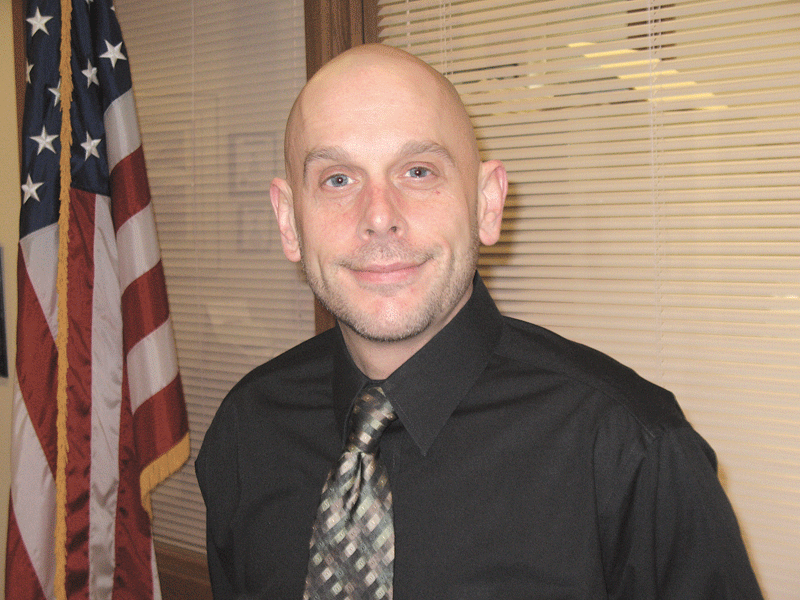
Thom Fox

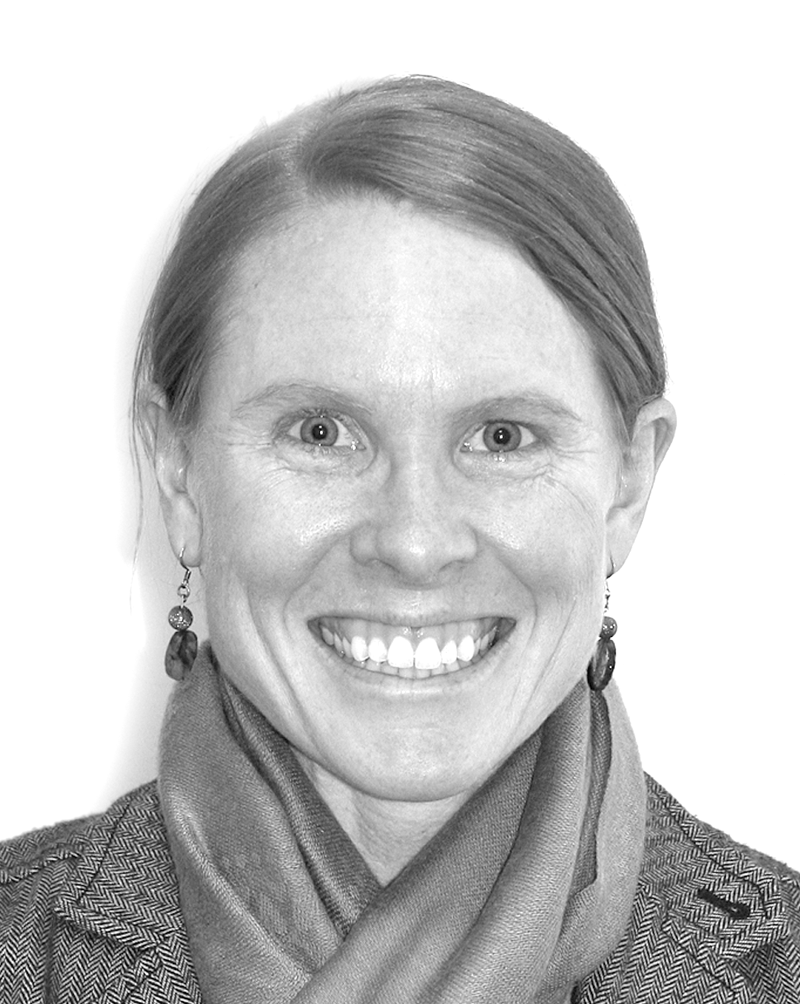
Thom Fox says people should be wary of companies that want to enroll them in a program without offering credit counseling.

Sometimes these are accepted, and an account settled. However, Katz said, “the problem with that is, during this time, your debts are still earning interest and still accruing fees and late charges. Some people who started the plan with X dollars of debt find that, by the time the settlement is offered, the debt has grown to twice that, and they owe as much at the end of the plan as when they started.”
That anecdotal evidence is backed up by a Federal Trade Commission (FTC) study determining that 65% of people who leave debt-settlement programs do so without receiving any settlements whatsoever. Overall, during the survey period, they paid $55.6 million in fees while receiving just $58.1 million in savings from settlements — essentially a wash.
However, the FTC points out, those figures don’t include other costs typically associated with debt-settlement programs, such as late fees and interest charges from creditors, meaning the cost of using such a program, in many cases, far outweights the benefits.
“The FTC received a couple thousand complaints about these services, and that put them on the radar,” said Thom Fox, community outreach director at Cambridge Credit Counseling Corp. in Agawam. “When the FTC did its report, the findings were startling to many people.”
The data eventually led the FTC to amend its Telemarketing Sales Rule. The new regulations, which went into effect in October, set tighter restrictions on how debt-settlement companies — specifically those that solicit customers by phone or receive phone calls in response to ads — conduct their business.
But consumers must still be wary of the remedies they seek to get out of debt, Fox said. In this issue, BusinessWest examines what those options are, and why becoming debt-free is almost never as easy as a TV commercial might make it sound.

Cards on the Table
For instance, Fox said, a consumer might owe $10,000 on a credit card, and the creditor might accept a $7,000 settlement. But while payments to a debt-relief firm are amassing in escrow, that $10,000 can rise at an alarming rate. “Your creditor’s not being paid during that time, the bills pile up, you fall behind, and maybe you get sued,” he said, adding that debt-settlement programs have rarely explained that to clients, but now they have to lay it all out.
Under the new FTC rule, debt-relief companies that run ads or engage in telemarketing will not be able to charge upfront fees until three conditions have been met: the service successfully renegotiates, settles, reduces, or otherwise alters the terms of at least one debt; a written settlement, debt-management plan, or other agreement is worked out between the consumer and the creditor; and the consumer has made at least one payment to the creditor as a result of this agreement.
Also, debt-relief services cannot require that consumers set aside payments in a dedicated account unless the account is maintained at an insured financial institution; the consumer owns the funds (including any interest accrued); and the consumer can withdraw the funds at any time without penalty. In addition, the debt-relief firm cannot own, control, or have any affiliation with the company administering the account, nor receive any referral fees from it.
Finally, before the consumer signs up for any debt-relief service, the company must disclose certain aspects of their services, including how long it will take for consumers to see results, how much it will cost, the negative consequences that could result from using debt-relief services, and detailed information about dedicated accounts if they require them.
The Better Business Bureau (BBB) heartily supports the changes. From December 2007 — roughly the start of the Great Recession — through late 2010, the BBB received more than 6,000 complaints from consumers about debt-relief or debt-settlement companies. Complainants typically said they were charged large up-front fees in exchange for a promise — soon proven empty — to significantly reduce or eliminate their debt.
But consumers aren’t out of the woods because of a rule change, the bureau stresses, and still need to use caution when enlisting a third party to help them get out of debt.
“The debt-relief industry has flourished in the current economy, and you can bet that many unscrupulous companies are feverishly trying to figure out ways to get around the new laws, such as relying less on telephones to solicit new customers,” said Alison Southwick, BBB spokesperson. “While these new rules provide effective new protections, consumers still need to be on the lookout for deceptive debt-relief services.”
Fox said the rule takes aim at all sorts of misleading marketing practices, from promising to cut personal debt by 75% to using President Obama’s image in ads, giving the debt-relief service the appearance of government approval.
“A lot of these things are going away” with the new rules in place, Fox told BusinessWest. “They’re trying to get rid of deceptive advertising, give people proper disclaimers, and empower people with knowledge. Debt settlement can hurt people as well as help them.”
Katz added that people facing debt issues have local options — banks, lawyers, and agencies like Cambridge, to name a few — that provide a level of security that an out-of-state debt-relief firm might not.
“That way, if you have issues or problems, you know where to find someone to help you,” he said. “You can go to a local office and sit down with someone to talk about a program, rather than doing business with someone you and I and, frankly, sometimes Google has never heard of, who has no desire to be a responsible citizen or work out your concern.”

Problem Not Solved

Mike Katz

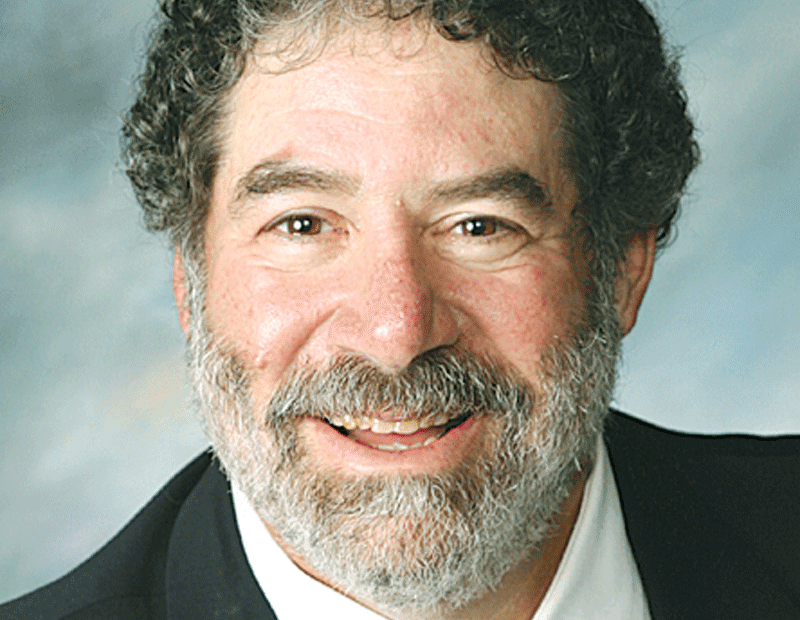
Mike Katz says bankruptcy can be preferable to debt relief because it erases all the debt at once so that an individual can begin to rebuild his credit rating.

One drawback to debt settlement, Katz said, is its piecemeal approach to fixing the problem. For instance, if two of an individual’s 10 creditors eventually accept a final offer, that still leaves eight more debts that remain — and, in most cases, have only grown since the start of the process. “Whether you’re shot with eight bullets or 10, you’re still mortally wounded,” he quipped.
Another issue, he explained, is the problem of ‘phantom income.’ It can take several forms.
“If you owe the bank $200,000 on your home and the bank forecloses on the house, and the house sells for $100,000, by law the bank is required to report the money being written off to the taxing authorities, including the IRS and the Mass. Department of Revenue, and they issue a 1099 to you as well as to the IRS,” he said. “Therefore, you owe federal and state income tax on the amount of debt being written off by the lender, and must pay taxes on it at the same rate as your own personal income tax.”
Similarly, Katz explained, “any debt that’s settled through one of the debt-settlement agencies will result in phantom income being produced. And we have found that, in virtually every agency we have dealt with, that fact has never been disclosed to people until the end of the term.”
As an example, he noted that someone with $50,000 in debt who settles for $25,000 might be taxed 30% on the $25,000 written off, or $7,500.
Opting instead for Chapter 7 bankruptcy proceedings, he noted, does not produce any phantom income and might cost as little as $2,000 to erase the entire debt, and the individual can start rebuilding his ruined credit score immediately, especially if he’s diligent about paying other bills, such as a mortgage or car payment. Choosing debt settlement can be equally devastating to one’s credit rating — again, something customers weren’t always told in the past — with little chance of improving it during the life of the plan, which might be three years or more.
“You don’t get any extra credit unless you pay your creditors in full,” Katz said. “So it’s better to do the Chapter 7 and start building your credit back three years earlier than not having it paid in full and still having a black mark on your credit. That’s the reality.”
That’s not to say bankruptcy is the only answer — “it’s not a good thing for anybody,” he said — but he recommended at least talking to a lawyer with expertise in that field.
If someone is considering using a debt-relief agency, Katz said, at minimum they should go online and search for positive or negative comments about that firm. But even then, they should be aware that companies often hire people to post false comments on message boards, praising their services or blasting a competitor’s, a practice that extends to other service industries as well, such as restaurants and hotels.
“So when you see reports online, you have to take them with some skepticism because you don’t know who’s writing them,” he noted, adding that the Better Business Bureau is often a more reliable resource to investigate customers’ experience with various agencies.
A good start, Fox said, is to seek help from a nonprofit agency, which is more likely to focus on the needs of each client, and not just the bottom line.
“Let’s say 100 people call me tomorrow; we’ll offer a debt-management program to roughly 20 of them. That’s about how many would qualify. But the remaining 80% receive personalized advice regarding their situation. Our average employee has been here eight years and has made a career out of helping people with their finances.”

No Quick Fix
The mistake many consumers make, Fox said — and one that has been exacerbated by those ads trumpeting quick, dramatic debt reduction — is relying on a one-size-fits-all program to solve their problem quickly. But the first step in the journey out of the red has to be a serious study and understanding of their own situation, how it developed, and what it will take to avoid future setbacks.
To that end, Cambridge Credit Counseling conducts hundreds of seminars each year — reaching about 7,000 people in Western Mass. annually — in addition to issuing publications and maintaining a weekly YouTube show called Your Money. That’s in addition to spending hours at a time providing free, intensive counseling services to its clients, whether they’re among the 20% referred to debt-management programs or the 80% who aren’t.
“Our goal is empowerment. Maybe 90% of the people who call us have never put a budget into play. They understand their income, but they don’t understand their expenses,” he said — and, specifically, which ones can easily be reduced or eliminated.
“The best learning experiences are the mistakes you make, not the triumphs you have,” Fox continued. “But people aren’t learning financial literacy in their school systems, although that philosophy started changing after the financial collapse. Money is a central aspect of life, and people need to know how to manage it.”
It’s an issue close to the heart of Brady Chianciola, assistant vice president and regional manager at PeoplesBank, who has initiated a series of financial-literacy programs for area students.
“Locally, we’re trying to start young and educate the youth of the region with financial-literacy initiatives,” he said of the school-based programs in Springfield and other Pioneer Valley communities — from budgeting and recognizing the difference between needs and wants to seminars on mortgages and mutual-fund investing.
“No matter what, you need to know about the complex financial landscape we live in,” Chianciola said. “We certainly understand how easy it is to get into trouble, and we hope that, by the time they get out into the real world, they’ll understand these concepts and not fall into some of the traps and scams out there.”
In talking to parents, Chianciola is encouraged by their support of the program. “They say they didn’t have this education,” he told BusinessWest, “but they’re excited about their kids starting young and not falling into the same pitfalls they did.”
Fox said his agency is providing a crash course to people who are learning the hard way. “Our counseling sessions can be an hour and a half, two hours. We do an in-depth budget analysis. We can’t give anyone advice without a full understanding of their goals and situation and aspirations. We can’t build a plan from nothing.”
While making sure any solution fits the individual is simple common sense, he said, it’s a practice that has been neglected by debt-relief services and people who are clamoring for an easy way out — when one usually doesn’t exist.
In most cases, Fox said, “there’s not going to be a quick answer. If anyone gives you a quick answer just to enroll you in their program for debt settlement or debt management, you’re with the wrong agency. Walk away; nobody benefits from that. They’re not providing value if they’re pushing you into a program that’s going to hurt you.”
In too many cases, the end result is more debt — and more tears to wipe away.

Joseph Bednar can be reached at [email protected]
Departments Picture This

Send photos with a caption and contact information to: ‘Picture This’
c/o BusinessWest Magazine, 1441 Main Street, Springfield, MA 01103
or to [email protected]

Mary Ellen Scott, president of United Personnel

Mary Ellen Scott, president of United Personnel

U.S. Rep. Richard Neal

U.S. Rep. Richard Neal

Russell Denver

Russell Denver, right, with PeoplesBank President and CEO Doug Bowen


Outlook 2011
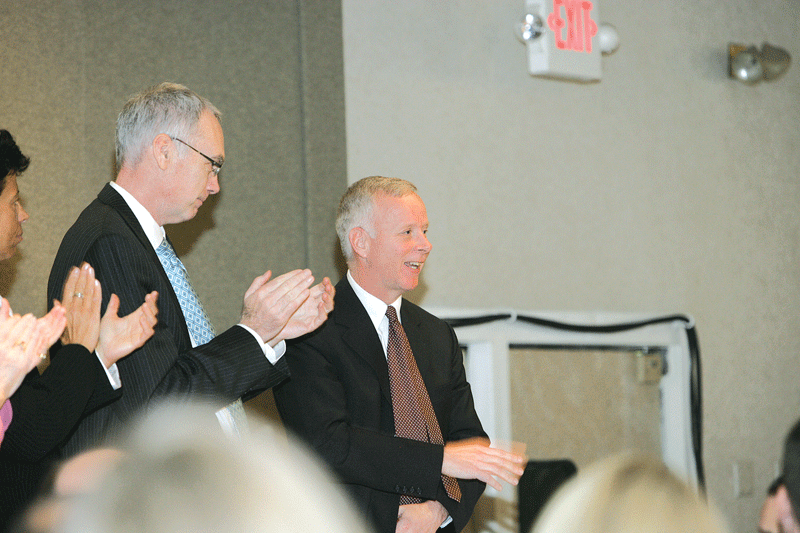
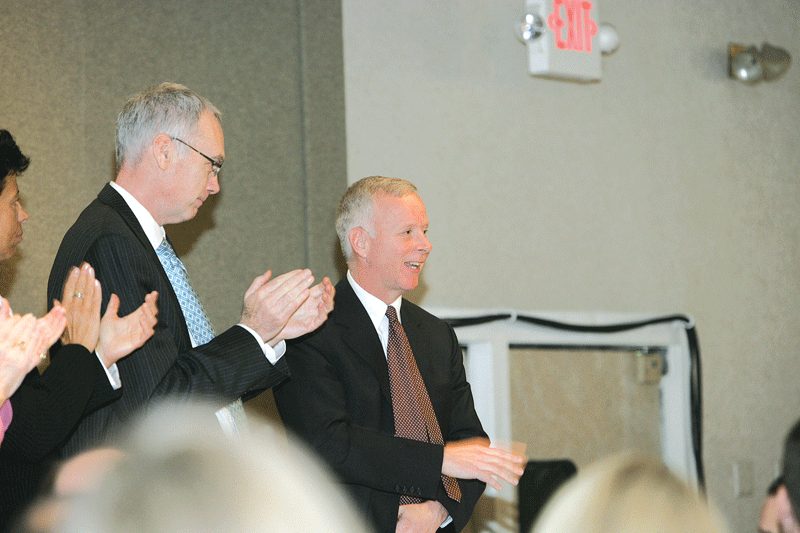
The Affiliated Chambers of Commerce of Greater Springfield staged Outlook 2011 on Feb. 11. The event featured an address from Gov. Deval Patrick, at right, and remarks from U.S. Rep. Richard Neal (top right, with Patrick and Health New England President Peter Straley at the head table). HNE was the presenting sponsor. At top left, Mary Ellen Scott, president of United Personnel, presents the chamber’s legislative agenda. Above, Russell Denver (right, with PeoplesBank President and CEO Doug Bowen) is saluted as he winds up more than 15 years as ACCGS president.

Court Dockets Departments

The following is a compilation of recent lawsuits involving area businesses and organizations. These are strictly allegations that have yet to be proven in a court of law. Readers are advised to contact the parties listed, or the court, for more information concerning the individual claims.

CHICOPEE DISTRICT COURT
Brooke L. Langlais, ppa Victoria I. Morris v. Crickets Corner Learning Center Inc.
Allegation: While under the care of the defendant, the plaintiff was injured by a space heater left unattended: $5,500
Filed: 2/7/11
FRANKLIN SUPERIOR COURT
Rebecca Mae Higgins v. Hampden Custom Vision, Andrew Walkowiak, O.D., and John F. Warren, M.D.
Allegation: Negligence during the course of eye surgery causing permanent vision impairment: $25,000+
Filed: 1/6/11

Takisha Burton v. MA Dept. of State Police
Allegation: Negligence in the operation of a state police cruiser, causing injury: $57,608.61
Filed: 1/10/11
HAMPDEN SUPERIOR COURT
Commonwealth Packaging Corp. v. Daniel Fitzgerald and CCES, LLC
Allegation: Failure to perform work in timely manner: $51,702.58
Filed: 12/6/10

Edgar Guerra v. Farmland Foods Inc.
Allegation: Employee discrimination: $25,000+
Filed: 12/6/10

Jacquelynne M. Williams v. City of Holyoke, Robert Kane, and Michael J. Sullivan
Allegation: Claim against municipality for discrimination in the workplace: $248,000
Filed: 12/3/10

Shimizu Corp. v. Dow Roofing Systems Inc.
Allegation: Failure of a roof sold by the defendant: $1,000,000
Filed: 12/6/10

Thomas and Jean Despard v. Lumber Liquidators
Allegation: Breach of contract and warranties of sale: $80,000
Filed: 12/3/10

HAMPSHIRE SUPERIOR COURT
Laurel Arel v. Wing Memorial Hospital and Andrew B. Chertoff, M.D.
Allegation: Failure to diagnose: $400,000
Filed: 1/28/11

Mitchell J. Fondakowski v. Bowditch, LLC
Allegation: Failure to pay wages: $25,000+
Filed: 1/18/11

Walter Warchut, executor of the estate of Sally Warchut v. M. Kubair Kareem, M.D. and Kimat Gul Khatak, M.D.
Allegation: Negligence in diagnosis, resulting in death: $25,000+
Filed: 1/14/11

HOLYOKE DISTRICT COURT
Daybreak Fast Freight Inc. v. New A.D.E. Inc.
Allegation: Non-payment for transportation services: $4,068.42
Filed: 1/18/11

Margaret Alexander v. Kmart Corporation
Allegation: Negligence in property maintenance, causing slip and fall: $6,000
Filed: 1/18/11

NORTHAMPTON DISTRICT COURT
Daily Hampshire Gazette Inc. v. Night Timez and William D. Bergren
Allegation: Non-payment of advertising services rendered: $11,174.86
Filed: 1/10/11

SPRINGFIELD DISTRICT COURT
Aydyn Clayton, a minor, ppa Nicole Clayton v. Eastfield Mall shopping center; Central Specialties, LTD; and Tubular Engineering & Supply Co.
Allegation: Negligence causing injury to minor. Two-year-old injured in a stroller offered for use by the Eastfield Mall: $27,810.54
Filed: 1/5/11

Bank of America, N.A. v. Compton Doors Inc.
Allegation: Non-payment of a promissory note: $91,603.94
Filed: 12/16/10

Janet and Michael Young v. BSF Construction Inc.
Allegation: Breach of residential contract for services: $19,769.10
Filed: 1/5/11

The MVA Center for Rehabilitation Inc. v. The Premier Insurance Group
Allegation: Defendant was denied payment for reasonable and necessary medical bills and services rendered: $2,616.45
Filed: 12/13/10

United Rentals Inc. v. Tremont Caulking & Coating Inc.
Allegation: Non-payment for materials, equipment, and services on a construction project: $6,416.59
Filed: 1/6/11

Williams Distributing Corp. v. DEA Entertainment, LLC
Allegation: Non-payment for goods sold and delivered: $4,212.76
Filed: 1/13/11

WESTFIELD DISTRICT COURT
Accurate Mechanical Corp. v. J. Calabrese Farms, LLC
Allegation: Breach of service contract for plumbing and gas pipe work: $10,000
Filed: 1/3/11

Simplicity Engineering, N.E. Inc. v. First Financial Brokerage Inc.
Allegation: Failure to return deposit and breach of contract: $24,353.78
Filed: 1/20/11

Agenda Departments

Business Plan Basics
March 3: The Mass. Small Business Development Center (MSBDC) Network will host a training session titled “Business Plan Basics” from 10 a.m. to noon at the Franklin County Chamber of Commerce, 395 Main St., Greenfield. Allen Kronick, MSBDC, will present the workshop that focuses on management fundamentals from start-up considerations through business-plan development. Topics include financing, marketing, and business planning. The fee is $35. For more information, call (413) 737-6712, e-mail [email protected], or visit www.msbdc.org/wmass.

Dance Your Way to Wellness
March 4: The Chicopee and Greater Holyoke chambers of commerce will stage a fun night out called “Dance Your Way to Wellness” at the Castle of Knights on Memorial Drive in Chicopee, beginning at 6 p.m. The event will feature open dancing — as well as a dance production featuring award-winning dancers and student chamber members — all to the music of After All. Tickets are $40 per person for dinner and the dance production, and $20 for the production and open dancing (after 8 p.m.). For more information or to purchase tickets, call (413) 594-2101.

Transformational Leadership Forum
March 4: Randy Dobbs, author and protégé of General Electric’s legendary CEO Jack Welch, will be the keynote speaker for a forum titled “Transformational Leadership: a Blueprint for Organizational and Individual Success,” at the Western New England College (WNEC) Law and Business Center for Advancing Entrepreneurship in Springfield. Hosted by WNEC and Springfield-based UnityFirst.com, the 9 a.m. to 1 p.m. event will offer insights on how individuals, organizations, and businesses can drive significant business improvement by adapting to change. Dobbs will share many tested concepts from his book, Transformational Leadership. Also, a panel of thought leaders will offer perspectives on diversity and inclusion in the workplace, marketplace, and community. Registration is required to attend the forum, which includes a copy of Dobbs’ book and lunch. To register, call (413) 221-7931 or e-mail [email protected].

National College Fair
March 6-7: The Eastern States Exposition in West Springfield is the setting for the Springfield National College Fair, slated from 1 to 4 p.m. on March 6 and from 9 a.m. to noon on March 7. Sponsored by the National Assoc. for College Admission Counseling, and hosted by the New England Assoc. for College Admission Counseling, the event is free and open to the public. The fair allows students and parents to meet one-on-one with admissions representatives from a wide range of national and international, public and private, two-year and four-year colleges and universities. Participants will learn about admission requirements, financial aid, course offerings, and campus environment, as well as other information pertinent to the college-selection process. Students can register at www.gotomyncf.com prior to attending the event to receive a printed, bar-coded confirmation to use on-site at the fair as an electronic ID.

Forum on Sales
March 9: The Scibelli Enterprise Center, 1 Federal St., Springfield, will be the setting for a program titled “Prospecting, Cold Calls, and Sales, Oh My!” from 9 to 11 a.m. The program, sponsored by the Mass. Small Business Development Center (MSBDC) Network, will be presented by Sheldon Snodgrass of SteadySales.com. Snodgrass will discuss ways to approach, qualify, and close prospects, as well as how to keep one’s ego and integrity intact. Additionally, Snodgrass will explain how to distinguish between a high- and low-probability prospect, how to get appointments with decision makers, and how to present who you are and what you do. A complete workbook is included. Fee is $40. For more information, call (413) 737-6712, e-mail [email protected], or visit www.msbdc.org/wmass.

The Vision Project
March 10: The Affiliated Chambers of Commerce of Greater Springfield will present “The Vision Project,” an event featuring Richard Freeland, Massachusetts commissioner of Higher Education, who will detail a new public higher-education agenda that has taken that name. The talk is slated for noon to 1:30 p.m. at the Springfield Sheraton. A box lunch will be provided. The master plan unites the work of the state’s community colleges, state universities, and the UMass system, while stressing accountability and aspirations for higher-education leadership. Freeland will detail why he believes Massachusetts needs “the best-educated citizenry and workforce in the nation,” and how the state can aspire to improve educational outcomes even in tough economic times. Tickets are $20 for ACCGS members and $30 for non-members. For more information or to order tickets, call (413) 755-1313 or visit www.myonlinechamber.com.

Be the Authority Lecture
March 16: Claudia Gere of Claudia Gere & Co. will present a lecture titled “Be the Authority and Attract More Customers” from 9 to 11 a.m. at the Scibelli Enterprise Center, 1 Federal St., Springfield. The lecture is hosted by the Mass. Small Business Development Center (MSBDC). Gere will explain how to create written content to demonstrate your expertise, establish yourself as an authority, and create trust. Templates, formulas, and how-tos will be provided. The fee is $40. For more information, call (413) 737-6712, e-mail [email protected], or visit www.msbdc.org/wmass.

U.S. Navy Band
Salutes City
March 18: The U.S. Navy Band will treat Springfield to an early birthday gift — a birthday concert — at 7 p.m. at Springfield Symphony Hall. The City of Springfield turns 375 years in May, and the band concert is just one of several events planned to mark the milestone. As the premier wind ensemble of the U.S. Navy, the band will perform a wide range of marches, patriotic selections, orchestral transcriptions, and modern wind ensemble repertoire. Tickets are free and can be obtained by sending a stamped, self-addressed envelope to the Spirit of Springfield/U.S. Navy Band, 101 State St., Suite 220, Springfield, MA 01103.

Difference Makers
March 24: BusinessWest will salute its Difference Makers Class of 2011 at a gala slated to begin at 5 p.m. at the Log Cabin Banquet & Meeting House in Holyoke. Initiated in 2009, the Difference Makers program recognizes individuals and groups making outstanding contributions to the Western Mass. community. The 2011 winners — Tim Brennan, Lucia Giuggio Carvalho, Don Kozera, Robert Perry, and Anthony Scott — were profiled in the magazine’s Feb. 14 issue. For more information on the event or to order tickets ($50 per person, with tables of 10 available), call (413) 781-8600, ext. 10; or visit www.businesswest.com.

Lecture on Independent Contractor Statute
March 25: Attorney Susan Fentin of Skoler, Abbott & Presser will discuss the amendment to the Mass. Independent Contractor statute in 2004, and how misclassification has caught the attention of the Department of Labor. Fentin will cover the amendment, how it applies to individuals in the workforce, and the steps an employer needs to ensure compliance. The fee is $10. For more information, call (413) 737-6712, e-mail [email protected], or visit www.msbdc.org/wmass.

Not Just Business as Usual
April 26: Al Verrecchia, retired CEO and chairman of the board of Hasbro Inc., will be the keynote speaker for a program titled “Not Just Business as Usual,” presented by the Springfield Technical Community College (STCC) Foundation. The STCC Foundation will capture the energy and excitement of the college’s past, present, and future at the unique affair that will be staged at the Log Cabin Banquet and Meeting House in Holyoke. In addition, two past Entrepreneurship Hall of Fame inductees, Balise Motor Sales and Smith & Wesson, will be honored for their continued success and contributions to the local community. A cocktail and networking reception is planned from 5:30 to 7 p.m., followed by a dinner program from 7 to 9 p.m. Tickets are $175 each or $1,500 for a table of 10. Proceeds raised from the event will benefit STCC. For more information on the event, visit www.notjustbusinessasusual.net.

Western Mass.
Business Expo
May 4: Businesses from throughout Hampden, Hampshire, Franklin, and Berkshire counties will come together for the premier trade show in the region, the Western Mass. Business Expo. Formerly known as the Market Show, the event, produced by BusinessWest, and staged at the MassMutual Center in Springfield, has been revamped and improved to provide exposure and business opportunities for area companies. The cost for a 10-by-10 booth is $700 for members of all area chambers and $750 for non-members; corner booths are $750 for all chamber members and $800 for non-members; and a 10-by-20 booth is $1,200 for all chamber members and $1,250 for non-members. For more information, log onto www.businesswest.com, or call (413) 781-8600, ext. 10.

Springfield 375th Parade
May 14: The Spirit of Springfield is seeking community involvement for the city’s 375th birthday celebration, which will include a parade that represents all that Springfield has to offer, its roots, and its future. If you have a business or group that would like to get involved in the festivities, call (413) 733-3800 or e-mail a message to [email protected].

EASTEC 2011
May 17-19: EASTEC, the East Coast’s largest annual manufacturing event, will once again be staged at the Eastern States Exposition in West Springfield. For exhibition or registration information, call (866) 635-4692 or visit www.easteconline.com.

40 Under Forty Gala
June 23: BusinessWest will present its 40 Under Forty class of 2011 at a not-to-be-missed gala at the Log Cabin Banquet & Meeting House, beginning at 5 p.m. The 40 Under Forty program, initiated in 2007, has become an early-summer tradition in the region. A team of five judges is currently scoring more than 100 nominations, and the winners will be announced in April. For more information on the event or to order tickets ($60 per person, with tables of 10 available), call (413) 781-8600, ext. 10; or visit www.businesswest.com.

Summer Business Summit
June 27-28: The Resort and Conference Center of Hyannis will be the setting for the Summer Business Summit, hosted by the Mass. Chamber of Business and Industry of Boston. Nominations are being accepted for the Massachusetts Chamber, Business of the Year, and Employer of Choice awards. The two-day conference will feature educational speakers, presentations by lawmakers, VIP receptions, and more. For more information, visit www.masscbi.com.

Departments People on the Move

Robert F. Borawski

Robert F. Borawski

Robert F. Borawski has been elected Chairman of the Board of Directors of Florence Savings Bank. Borawski is President of Borawski Insurance Co. in Northampton. He is a Certified Insurance Counselor and a Licensed Insurance Advisor. Borawski was elected a Corporator of Florence Savings Bank in 1981 and a Director in 1992.
•••••
Abby Mahoney

Abby Mahoney

Abby Mahoney has been selected as Director of Career Services at American International College in Springfield. Mahoney will maintain the career library, Web site, database, and current job listings, as well as plan and conduct career days, job fairs and a majors fair. She will also design and deliver workshops, seminars, and fairs to assist students with job-search strategies such as interviewing, résumé writing, mock interviews, and other related supports. Mahoney will also contact, schedule, and arrange guest speakers from local businesses, the community, and alumni to present information about specific careers.
•••••
Roberta Hillenberg-Gang has been appointed Link Senior Project Coordinator for the Link to Libraries Inc.’s collaboration to offer read-aloud programs to area public elementary schools with Loomis Communities residents.
•••••
Pamela Simpson

Pamela Simpson

Pamela Simpson has been promoted to Commercial Banking Officer at United Bank. Working from United’s Northampton branch, Simpson’s primary responsibility will be business development in the Hampshire County marketplace.
•••••
Denise Remillard

Denise Remillard

Denise Remillard has joined the Insurance Center of New England in Agawam as Manager of Human Resources.
•••••
Mark A. Germain has been appointed Vice President and Partner in charge of technology at Gomes, DaCruz & Tracy. He will have overall responsibility for the development, implementation, and support of internal technology-related design and procedures as well as providing clients with technology consulting. He will also be responsible for providing accounting and tax services, focusing on the construction and manufacturing industries.
•••••
van Schouwen Associates in Longmeadow announced the following:
• Shannon Filippelli has been promoted to Director of Strategic Communications; and
• Staasi Heropoulos has been hired as Manager of Strategic Communications.
•••••
Kate Reagan has been hired by PeoplesBank as a Mortgage Consultant.
•••••
Attorney Danielle P. Ferrucci has been named a Partner at the law firm of Shipman & Goodwin in Hartford, Conn. Ferrucci’s practice encompasses the areas of estate planning, estate settlement, and trust administration. She also represents individual and corporate fiduciaries and beneficiaries in contested matters in probate courts throughout Connecticut.
•••••
The Chicopee Chamber of Commerce announced the following:
• Richard Kos of Egan, Flanagan & Cohen, P.C., has been named Incoming Chair of the Board of Directors;
• Tina Kuselias of BusinessWest has been named to the Board of Directors;
• Cid Inacio of Chicopee Savings Bank has been named to the Board of Directors;
• Corey Briere of Complete IT Solutions has been named to the Board of Directors;
• Ben Garvey of Insurance Center of New England Inc. has been named to the Board of Directors; and
• Lt. Col. James G. Bishop of Westover Air Reserve Base has been named to the Board of Directors.
•••••
Gregory B. Chiecko, Sales Director at the Eastern States Exposition in West Springfield, has been elected to the International Assoc. of Fairs and Expositions’ Board of Directors and will serve as Chair of Zone 1 of the organization, which includes the Northeast U.S. as well as New Brunswick, Newfoundland, Nova Scotia, and Prince Edward Island in Canada.
•••••
Attorney William Hart, specializing in estate planning with the law firm of Bulkley, Richardson & Gelinas, has been appointed to the Professional Advisors Board of the Mason-Wright Foundation. The foundation provides housing and daily-living services to the elderly, regardless of their ability to pay.

Company Notebook Departments

Bank Employees Collect Items for Soldiers
PITTSFIELD — Berkshire Bank conducted a company-wide care-package drive in mid-February through its employee-volunteer program to raise awareness of soldiers’ needs and show troops the support they have throughout Berkshire County, the Pioneer Valley, Eastern New York, and Southern Vermont. Bank officials partnered with local, service-connected organizations to distribute the care packages to soldiers serving in Iraq and Afghanistan. Customers and the public were invited to participate in the care package drive by donating non-perishable foods, travel-sized toiletries, games, and certain clothing items. Peter Lafayette, Berkshire Bank Foundation’s executive director, noted in a statement that the bank was “very proud” to again sponsor the drive to benefit soldiers from the region. Organizations partnering on the project with the bank were the USO of the Pioneer Valley and Blue Star Mothers of the Capital District.

Springfield Partners for Community Action Relocates Offices
SPRINGFIELD — Springfield Partners for Community Action’s main office at 619 State St. and its weatherization office at 284 Main St., Indian Orchard, were moved the week of Feb. 14. Staff moved into renovated office space on the second floor of 721 State St., which houses Springfield Partners New Beginnings Childcare Center on its first floor. The main office phone number, (413) 263-6500, and staff extensions will not change. Weatherization staff can also be reached at this number. Visitors to the second floor of 721 State St. should park in the lot behind the building, which can be accessed from Monroe Street. For more information, visit www.springfieldpartnersinc.com.

Big Y Plans Store in Connecticut
SPRINGFIELD — Big Y Foods Inc. recently announced plans to open a World Class Market in Meriden, Conn. The company’s proposed 55,000-square-foot supermarket will be located in the 125,000-square-foot Townline Square shopping center on North Colony Road at its intersection with South Broad Street. Big Y intends to renovate the location vacated by ShopRite when it relocated to Wallingford in 2010. The Meriden Big Y will employ between 150 and 175 people. In other news, a Big Y World Class Market is under construction in Lee, and one in Franklin is scheduled to start construction later this year. Big Y has also announced plans to develop a Big Y World Class Market in the Foxfield Plaza in Foxborough. Big Y operates markets in Massachusetts and Connecticut. The Meriden market will represent Big Y’s investment of approximately $5 million into the community. In addition, the project will provide construction opportunities for local contractors during the renovation process. A late-spring opening is planned.

Authority Approves Baystate’s New ED Plan
SPRINGFIELD — The Massachusetts Public Health Council recently approved Baystate Medical Center’s request to meet urgent community needs by expediting construction of a new emergency department as part of Baystate’s Hospital of the Future project now underway. The council of the Mass. Department of Public Health considers and approves or denies determination-of-need applications for health care building projects such as Baystate’s. The new ED, 70,000 square feet, nearly doubles the number of treatment areas, including a separate pediatric triage and treatment area, an urgent care center, eight rooms specifically designed for behavioral-health services, and an adjacent space for diagnostic imaging such as X-ray scanning. The new ED is scheduled to open by early fall of 2012, just a few months after the March 2012 opening of the first phase of the building project. For more information, visit www.baystatehealth.org/hospitalofthefuture.

UMass Spending on Financial Aid Rises to $130.5M
BOSTON — Illustrating its commitment to affordability, the University of Massachusetts is directing $130.5 million of its own funds to student financial aid this year, according to a recent report to the UMass Board of Trustees Committee on Administration and Finance. During the past eight years, UMass spending on financial aid has risen from $35.6 million to $130.5 million, an increase of 267%. In a statement, UMass President Jack Wilson noted that “we understand that higher education is the path to a better life for students and is critical to our future as a Commonwealth, and therefore the University of Massachusetts is doing everything it can to maintain access and affordability.” According to the report, 25,681, or 61%, of the university’s 41,947 in-state undergraduate students are receiving some amount of need-based financial aid this year.

Kindred Hospital Has Deficiency-free Survey
SPRINGFIELD — Kindred Hospital officials recently announced that its survey for Park View Rehabilitation & Nursing Center, a specialty neurobehavioral unit, was deficiency-free. The center, located within the hospital, provides services to individuals with acquired brain injuries, neuropsychiatric disorders, and other neurological/behavioral disorders. Massachusetts conducts on-site inspections that determine whether its nursing homes meet the minimum Medicare and Medicaid quality and performance standards. During the nursing-home inspection, a team evaluates whether the facility is meeting residents’ needs. Marcia B. Zimmer, executive director of the center, noted in a statement that she was “proud of the team of caregivers.” Zimmer added, “it’s an honor to have a deficiency-free survey, and I would like to thank the staff for their hard work in providing the quality care our residents deserve and expect.”

Baystate Home Infusion Opens Branch at Hospital
WARE — Baystate Home Infusion & Respiratory Services (BHI&RS) recently opened a second store at Baystate Mary Lane Hospital. Located on the first floor of the hospital, the firm offers a wide selection of medical equipment and is staffed by trained advisors. “A great advantage to the retail showroom is that customers can view many different personal-care items and also try out a wide range of medical products such as canes, walkers, crutches, hospital beds, wheelchairs, rollators, and transport chairs,” said Gisele Livingstone, customer service coordinator, in a statement. With trained Sigvaris fitters on staff, the store also offers a wide range of medically approved Sigvaris compression stockings, socks, and hosiery. The firm accepts most major insurances, and staff can work directly with customers to obtain coverage for products and services that qualify.

Easthampton Savings to Open New Loan Center
EASTHAMPTON — William Hogan Jr., president and CEO of Easthampton Savings Bank, announced that the bank will submit building plans to the city of Easthampton to construct a 28,000-square-foot loan center with a banking office at the corner of Northampton and O’Neill streets in town. This facility, which will be called the Easthampton Savings Bank Loan Center, will house the entire lending team and operations departments, as well as provide banking services with a new branch office. Thanks to the recent zone change by the city, there will be a drive-up window and a drive-up ATM at this location. The bank’s current drive-up ATM will be temporarily relocated across the street during construction. “With our expansion into this facility, we will be adding 14 new jobs in the community as well as generating approximately $60,000 annually in new tax revenue to the city,” Hogan said. “We will be constructing this building as green as possible and are currently exploring the feasibility of solar power. We will also provide bike racks to encourage customers to visit the bank from the nearby bike path.” The bank hopes to break ground this summer and be open for business in the spring of 2012. The bank’s main office is located at 36 Main St. in Easthampton.

Briefcase Departments

2011 AIM Global Trade Award Nominations Open
BOSTON — The Associated Industries of Massachusetts International Business Council (AIM-IBC) has announced its call for nominations for the 16th annual Global Trade Awards, which recognize Massachusetts firms, institutions, and public agencies of all sizes that have demonstrated excellence in international trade. This year, a new award category will recognize a globally owned company that has positively impacted the Massachusetts economy. Kristen Rupert, executive director of AIM-IBC, noted in a statement that, “this year, we are focusing attention on the value of internationally owned companies, as their significant presence in the Commonwealth has led to the creation or retention of around 170,000 jobs.”Award winners will be honored at AIM’s Annual Meeting & Luncheon on May 13 at the Waltham Westin Hotel.  The deadline for nominations is March 18.  Entry forms are available online at www.aimnet.org/international. Since 1996, the Global Trade Awards have recognized more than 60 Massachusetts companies, institutions, and individuals. The AIM International Business Council helps Massachusetts employers engage in international trade and expand their global business activities. Through seminars, referrals, and e-newsletters, the AIM International Business Council provides companies with resources they need. For more information, visit www.aimnet.org/international.

UMass Research Spending Breaks $500M Mark
BOSTON — Research expenditures at the University of Massachusetts reached $536 million in fiscal year 2010, topping the $500 million mark for the first time in the school’s history, according to a statement by President Jack Wilson. Research spending increased by $47 million, rising from $489 million in fiscal year 2009 to $536 million in fiscal year 2010. The additional $47 million represents a 9.5% increase in research expenditures over the previous year. The research numbers, preliminary at this point, will be submitted to the National Science Foundation later this month. “Part of what makes the University of Massachusetts a world-class university is the sustained effort we have made in the past decade to increase research funding throughout all five of our campuses,” said Wilson. “The research work of our faculty is rocket fuel for the state’s innovation economy.  It is saving lives, cleaning the environment, and stoking economic development in Massachusetts. Our success in this area is the result of the hard work of the faculty, the leadership of the chancellors and their teams, and the encouragement and guidance we have received from our board of trustees.” With 9.5% growth in research spending, total research expenditures at UMass have been growing at a rate that exceeds the national average. Research expenditures have risen from $320 million in fiscal year 2003 to $536 million in fiscal year 2010. “Research activity at the University of Massachusetts has grown sharply over the past several years, and the Commonwealth and all of its citizens benefit from it,” added Wilson.  “The funding we have received creates new companies and new jobs in the state. It provides students with the kind of skills they need to be competitive in the workforce — and most of those students will stay here in Massachusetts to put that knowledge to work in the Commonwealth.” Most of the research that takes place on UMass campuses is externally funded, with the federal government providing research funding through the National Institutes of Health, the National Science Foundation, and other agencies. According to the new report, preliminary fiscal year 2010 research expenditures by campus were: Amherst, $169 million; Boston, $51.3 million; Dartmouth, $26 million; Lowell, $57.4 million; and Worcester, $232 million. The university’s research-expenditure accomplishment comes on the heels of the recent announcement that UMass is now the eighth-ranked university in the nation in terms of income derived from the licensing of faculty discoveries and products. According to the Assoc. of University Technology Managers, UMass, with more than $71 million in income generated in 2009, was the top Massachusetts university in this ranking. Annual intellectual-property income rose from $20 million in fiscal year 2003 to $71 million during fiscal year 2009.

Personal-bankruptcy Filings Rise 8.5% in State
BOSTON — Personal-bankruptcy filings in Massachusetts jumped almost 9% in 2010, compared to 2009, according to a new report from the Warren Group, publisher of Banker & Tradesman. There were 17,496 Chapter 7 bankruptcies filed in Massachusetts last year, an 8.5% bump from the 16,118 filed in 2009, and a 45% hike from 12,034 in 2008. Chapter 7 of the U.S. bankruptcy code is the most common option for individuals seeking debt relief, and accounted for 75% of Massachusetts’ bankruptcy filings last year. The fourth quarter saw the slowest quarterly bankruptcy pace of 2010, with 5,423 filers statewide seeking some kind of bankruptcy protection under Chapters 7, 11 and/or 13, compared to 5,350 in the fourth quarter of 2009. The second quarter experienced the most bankruptcy volume, with a combined 6,193 filings. Chapter 7 bankruptcy filings also accounted for almost 75% of all filings tracked by the Warren Group in the fourth quarter. Chapter 7 bankruptcy filings totaled 4,008 in the fourth quarter, a 4.8% decrease from 4,212 during the same period in 2009. People filing under Chapter 7 bankruptcy can eliminate most debt after non-exempt assets are used to pay off creditors. In contrast, Chapter 13 requires debtors to arrange for a three- or five-year debt-repayment plan. Filings under Chapter 13 of the U.S. bankruptcy code surged 52% to 5,392 in 2010, from 3,547 in 2009. The number of Chapter 13 filings rose 26.5% to 1,359 in the fourth quarter of 2010, up from 1,074 filings during the same period in 2009. Chapter 11 filings, which are used for business bankruptcies and restructuring, also rose in 2010; filings increased 10.2% to 237, up from 215 in 2009. Filings decreased in the fourth quarter, however. A total of 56 Chapter 11 bankruptcies were filed in the fourth quarter, down from 64 during the same period in 2009. A total of 23,125 filers statewide sought protection under Chapters 7, 11, and/or 13 of the U.S. bankruptcy code in 2010, up from 19,880 in 2009.

Small Grants Available for Connecticut River Improvement
SPRINGFIELD — Nonprofits, municipalities, and schools within the watershed of the Connecticut River in Massachusetts and Connecticut are invited to submit project proposals that will result in improved river-water quality, ecosystem health, public awareness, and recreational access to the Connecticut River. This project is a joint effort by the Pioneer Valley Planning Commission, the Capitol Region Council of Governments, the Franklin Region Council of Governments, and the Connecticut River Estuary Regional Planning Agency, which serve the towns in the Connecticut River watershed. Proposals are due March 18. For more information, visit www.pvpc.org. Funding for this project has been provided by the National Oceanic and Atmospheric Administration.

UMass President Praises Obama Decision to Invest in Higher-Ed Innovation
BOSTON — UMass President Jack Wilson recently praised President Obama’s decision to propose the creation of a $123 million fund aimed at fostering reform and innovation in higher education. Wilson called the proposed “First in the World” fund a “farsighted effort to foster educational innovation and to set the stage for long-term national economic growth.” Wilson added that the proposal is consistent with the principles Obama enunciated in his State of the Union address when he said the U.S. must “win the future” by investing in education and by maximizing the capabilities of every student and citizen. Wilson serves as chairman of the National Board of the U.S. Department of Education’s Fund for the Improvement of Postsecondary Education (FIPSE). FIPSE’s mandate is to improve post-secondary-educational opportunities across a broad range of concerns. Through its various grant competitions, FIPSE seeks to support the implementation of innovative education-reform projects, to evaluate how well they work, and to share the findings with the larger education community. The funding for the higher-education-innovation fund, which also seeks to increase college-completion rates, was proposed when Obama unveiled his 2012 federal budget.

Smith & Wesson Receives Tax Break
SPRINGFIELD — With a commitment to add 225 full-time jobs and invest millions of dollars in its plant on Roosevelt Street, Smith & Wesson recently received tax incentives totaling $600,000 over a five-year period. The City Council approved the special tax agreement on a vote of 12-1. Councilor Timothy Rooke voted no because he felt the firm had not met hiring obligations in a financing agreement from 1995. John Judge, Springfield’s chief development officer, called the vote a “big win” for the city, adding that it would set the stage for “bigger and better things” from the company. Councilors noted that the new agreement outlines clearly the requirements that the firm must follow, and that reviews will be done to ensure that guidelines are met. John Dineen, vice president of finance for Smith & Wesson, noted during the council meeting that the firm looks forward to working with the city as it has for the past 159 years. Dineen added that Smith & Wesson will begin filling the new jobs within the next month.

State Businesses Report Record Exports in 2010
BOSTON — Global demand for technology products was good news for state businesses, as exports rebounded in 2010 to the highest level since 2008. High-tech instruments, machinery, and equipment rose 11.3% to more than $26 billion, according to the World Institute for Strategic Economic Research (WISER). WISER, based in Leverett, noted that only in 2008 did state firms sell more than $28 billion in overseas sales. Andre Mayer, senior vice president for research at Associated Industries of Massachusetts, noted that the state’s gains fell “far short” of national export growth. Mayer added that the state’s growth lagged behind the nation because its largest trading partners — Canada, Japan, and Europe — are nations recovering slowly from the global recession. The top export market for Massachusetts products in 2010 was the United Kingdom at $3.2 billion.

Chamber Corners Departments

ACCGS
www.myonlinechamber.com
(413) 787-1555

• March 2: Business@Breakfast, 7:15 to 9 a.m., Chez Josef, 176 Shoemaker Lane, Agawam. Speakers: Sheriff Michael Ashe and Springfield Police Commissioner n William Fitchett. Cost: members $20, non-members $30. For reservations, contact Cecile Larose at (413) 755-1313 or [email protected].

• March 9: After 5, 5 to 7 p.m., Café Lebanon, Shaker Road, East Longmeadow. Cost: members $10, non-members $20. For reservations, contact Cecile Larose at (413) 755-1313 or [email protected].

• March 16: Professional Women’s Chamber Luncheon, 11:30 a.m. to 1 p.m., MassMutual Room, Max’s Tavern at the Basketball Hall of Fame. Speaker: Libby Pidgeon, vice president of Human Resources for Big Y Foods Inc. Cost: members $25, non-members $35. To register, contact Lynn Johnson at (413) 755-1310 or e-mail [email protected].

Amherst Area Chamber of Commerce
www.amherstarea.com

• March 16: After 5 joint event with Franklin County Chamber of Commerce, 5 to 7 p.m., Magic Wings Conservatory and Garden, Deerfield. Sponsored by Greenfield Cooperative Bank and Yankee Home Improvement. Cost: members $5, non-members $10.

Chicopee Chamber of Commerce
www.chicopeechamber.org
(413) 594-2101

• March 16: Salute Breakfast, 7:15 to 9 a.m., MassMutual Learning & Conference Center, 350 Memorial Dr., Chicopee. Cost: members $18, non-members $25.

• March 23: 17th Annual Table Top Expo & Business Networking Event, presented by the Chicopee, Greater Holyoke, Greater Easthampton, and Greater Northampton chambers of commerce. Log Cabin Banquet & Meeting House, 500 Easthampton Road, Holyoke. More than 175 exhibitors. Exhibitor table fee: $100 (members only). Attendee cost: $5 in advance, $10 at door. Contact above chambers for more information or tickets.

Franklin County Chamber of Commerce
www.franklincc.org
(413) 773-5463

• March 16: Business After Hours, 5 to 7 p.m., Magic Wings Conservatory and Garden, Deerfield. Co-hosting with Amherst Area Chamber of Comerce. Networking, refreshments, door prizes. Bring business cards. Cost: members $5, non-members $10.

• March 24: GBA Member Showcase, 5 to 9 p.m., Greenfield Grille, 30 Federal St., Greenfield. Refreshments, door prizes, tabletop displays. Cost: free for members of the Greenfield Business Assoc., $5 for the public.

• March 25: Breakfast Series, 7:30 to 9 a.m., Deerfield Inn, Old Deerfield. Theme: “Taking the Risk Out of Business” with Henry Shterenberg, Step-Up Venture University. Music by the Academy at Charlemont. Sponsored by People’s United Bank and the Academy at Charlemont. Cost: members $12 members, non-members $15. Call (413) 773-5463 for reservations.

Greater Easthampton Chamber of Commerce
www.easthamptonchamber.org
(413) 527-9414

• March 10: Networking by Night Business Card Exchange, 5 to 7 p.m., hosted and sponsored by Venus & the Cellar Bar, 95 Main St., Easthampton. Door prizes, hors d’ouevres, cash bar. Cost: members $5, non-members $15.

• March 17: St. Patrick’s Day Luncheon, 12 to 2 p.m., Clarion Hotel & Conference Center, One Atwood Dr., Northampton. Honored guest: Shealyn Berube, Greater Easthampton Jr. Miss. Sponsored by Easthampton Learning Foundation and Finck & Perras Insurance Agency. Cost: members $21.95, non-members $23.95.

• March 23: 17th Annual Table Top Expo & Business Networking Event, presented by the Chicopee, Greater Holyoke, Greater Easthampton, and Greater Northampton chambers of commerce. Log Cabin Banquet & Meeting House, 500 Easthampton Road, Holyoke. More than 175 exhibitors. Exhibitor table fee: $100 (members only). Attendee cost: $5 in advance, $10 at door. Contact above chambers for more information or tickets.

Greater Holyoke Chamber of Commerce
www.holycham.com
(413) 534-3376

• March 4: Leadership Holyoke Program. Sponsored by PeoplesBank. Presented by the Greater Holyoke Chamber of Commerce in partnership with Holyoke Community College. Speakers, discussions, classroom time, and field trips are included in this 11-week session. Call (413) 534-3376 for details.

• March 4: Dance Your Way to Wellness, Castle of Knights, 1599 Memorial Dr., Chicopee. Presented by the Greater Holyoke and Chicopee chambers. Cocktails at 6 p.m., dinner at 7 p.m., dance program at 8:15 p.m. Cost: $50, includes dinner, show, and dancing. Call (413) 534-3376 for more information.

• March 17: St. Pat’s Salute Breakfast, 7:30 a.m., Log Cabin Banquet & Meeting House, 500 Easthampton Road, Holyoke. Sponsored by PeoplesBank and Holyoke Mall. Cost: $20. Call (413) 534-3376 for reservations.

• March 23: 17th Annual Table Top Expo & Business Networking Event, presented by the Chicopee, Greater Holyoke, Greater Easthampton, and Greater Northampton chambers of commerce. Log Cabin Banquet & Meeting House, 500 Easthampton Road, Holyoke. More than 175 exhibitors. Exhibitor table fee: $100 (members only). Attendee cost: $5 in advance, $10 at door. Contact above chambers for more information or tickets.

• March 29: Table Top Expo, 5 to 6:30 p.m. (snow date: March 30), Holiday Inn, 245 Whiting Farms Road, Holyoke. Sponsored by Ross Insurance Agency Inc. Social Media and Digital Marketing Seminar. Cost: members $15, non-members $20. Includes hot appetizers and cash bar. Call (413) 534-3376 to register, or register online at www.holyokechamber.com.

Greater Northampton Chamber of Commerce
www.explorenorthampton.com
(413) 584-1900

• March 2: March Arrive @5, 5 to 7 p.m., Pages Loft Restaurant and Events at the Clarion Hotel & Conference Center, 1 Atwood Dr., Northampton. Cost: $10 for members.

• March 17: St. Patrick’s Day Breakfast, 7:30 to 9 a.m., Pages Loft Restaurant and Events at the Clarion Hotel & Conference Center, 1 Atwood Dr., Northampton. Cost: $17 per person, $170 for a table of 10.

• March 23: 17th Annual Table Top Expo & Business Networking Event, presented by the Chicopee, Greater Holyoke, Greater Easthampton, and Greater Northampton chambers of commerce. Log Cabin Banquet & Meeting House, 500 Easthampton Road, Holyoke. More than 175 exhibitors. Exhibitor table fee: $100 (members only). Attendee cost: $5 in advance, $10 at door. Contact above chambers for more information or tickets.

Northampton Area Young Professional Society
www.thenayp.com
(413) 584-1900

• March 10: Party with a Purpose, 5 to 7 p.m., the University Club at UMass Amherst, 243 Stockbridge Road, Amherst. Sponsored by the UMass Fine Arts Center. Cost: members free, non-members $5. For information on the performance, see www.umass.edu/fac/calendar/centerseries/events/philadancodance.html.

Greater Westfield Chamber of Commerce
www.westfieldbiz.org
(413) 568-1618

• March 9: March WestNet, 5 to 7 p.m., Westfield Care & Rehabilitation Center, 60 East Silver St., Westfield. Cost: members $10, non-members $15.

• March 18: Annual St. Patrick’s Day March Breakfast, 7:30 to 9 a.m., Scanlon Hall, Westfield State University, 577 Western Ave., Westfield. Sponsored by premium members Westfield Bank, Noble Health Systems, Westfield State University, and Westfield Gas and Electric. Cost: members $25, non-members $30. There are several different member chamber sponsorship levels available to have your company recognized. Contact Marie Quinn for more information, to reserve tickets, or if you have questions, at (413) 568-1618 or [email protected].

Departments Incorporations

The following business incorporations were recorded in Hampden, Hampshire, and Franklin counties and are the latest available. They are listed by community.

CHESTER

Big Picture Agency Inc., 86 Chester Road, Chester, MA 01011. Kim Baker, same. Marketing and graphic design services.
 
EAST LONGMEADOW

Baystate Deaf Senior Citizens Inc., 328 Main St., East Longmeadow, MA 01028. Carol Murray, 61 Kennedy Dr., Enfield, CT 06082. Promote educational and social relations with the deaf community.
 
F & I Coach Inc., 280 North Main St., East Longmeadow, MA 01027. Michael Wilkins, 160 Stone Hill Road, East Longmeadow, MA 01028. Sales of automobile after-market service contracts.
 
GREENFIELD

Colrain Street Inc., 130 Colrain St., Greenfield, MA 01301. Brenda Ament, 520 South Shelburne Road, Greenfield, MA 01301. Real estate development.
 
HOLYOKE

Adminicus Inc., 903 Dwight St., Holyoke, MA, 01040. David Anthony Caputo, same. Charitable organization organized for educational purposes.
 
Evolution GS Inc., 20 Hadley Mills Road, Holyoke, MA 01040. Robert Beaulac, 246 Pine Orchard Road, Brandford, CT 06405. Commission merchant-wholesale and retail.
 
INDIAN ORCHARD

Enhjr Ventures Inc., 93 Grochmal Ave., Lot 117, Indian Orchard, MA 01151. Ernst Harris Jr., same. E-commerce of electronics.
 
LONGMEADOW

D & D Industries Corp., 95 Dunsany Dr., Longmeadow, MA 01106. Brian John Dahahey, same. Wholesale of adhesive products.
 
Guideway Inc., 32 Homecrest St., Longmeadow, MA 01106. Richard Golber, 3170 South Ocean Blvd., Unit 504 North, Palm Beach, FL 33480. Marketing and product branding services.
 
PITTSFIELD

Coha Automotive Group Inc., 130 Pittsfield-Lenox Road, Pittsfield, MA 01201. George Haddad, 150 Blythwood Dr., Pittsfield, MA 01201. Automobile dealership.
 
SPRINGFIELD

295 Allen St. Inc., 295 Allen St., Springfield, MA, 01103. Yasir Osman, 197 Florida St., Springfield, MA 01103.
 
Above the Rim Inc., 34 Leatherleaf Circle, Springfield, MA 01109. Steve Anthony James, 9001 South Braeswood Blvd., Apt. 104, Houston, TX, 77074. Celebrates the history of the game of basketball through educational programs, player interviews, and documentary presentations.
 
American Institute of Historic Preservation Inc., 21 Clarendon St., Springfield, MA, 01109. Ward Hamilton, 5-56th St., Newburyport, MA 01950. Historic preservation forum.
 
Covenant Realty Inc., 1111 Main St., 2nd Floor, Springfield, MA 01103. Richard Hanks, 85 Cleveland St., Springfield, MA 01104. Real estate services.
 
Ed Detailing Inc., 122 Chestnut St., #410, Springfield, MA 01103.Ed Valle Jr., same. Car-detailing services.
 
WESTFIELD

Building Autistic Community Inc., 24 Sunbriar Dr., Westfield, MA 01085. Kate Wallace, 21 Searle Road, Huntington, MA 01050. Avocation and support services to persons on the autism spectrum, their families and allies.
 
Cloverleaf Realty Group Inc., 110-112 Elm St., Westfield, MA 01085. Thomas Dineen, 11 Woodland Dell Road, Wilbraham, MA 01095. Real estate services.
 
Environmental Forensics Inc., 4 School St., Westfield, MA 01085. Nancy Baenziger, same. Provides comprehensive and professional data gathering, scientific analysis, documentation, reasoned substantiation and factual assessment of corporeal sates or material events.

DBA Certificates Departments

The following Business Certificates and Trade Names were issued or renewed during the month of February 2011.

AGAWAM

CES Logistics
335 Walnut St.
George Ammirato

Gonyeas Business Support
32 Wildflower Lane
Judith Gonyea

Hidden Treasures
143 Main St.
Laura Albano

Holly’s Consignment
1325 Springfield St.
Holly Kirby

Second Wind Yoga
327 Walnut St.
William Clark

TLC Transport LLC
91 Ramah Circle
Jo-Anne Candido

CHICOPEE

Great China Restaurant
690 Grattan St.
Li Q. Gao

LS Cleaning Services
954 Chicopee St.
Luciano C. Santos

EASTHAMPTON

Aaron’s Roll-Off Service
1 Loomis Way
Joel Keefe

All Things Relaxation
21 South St.
Jessica Berger

Skull Factory
12 Matthew Dr.
Eric Talbot

Three Posies
2 Franklin St.
Bronwen Hodgkinson

EAST LONGMEADOW

Landmark Realtors
60 North Main St.
Thomas Avezzie

Red Carpet Nails
424 North Main St.
Kwang Shin

Vanie’s Hair and Nails
613 North Main St.
Stephanie Le

GREENFIELD

D’Angelo Grilled Sandwiches
68 Mohawk Trail
Land Corporation

Soucie Styles
94 Main St.
Amy Soucie

The Laundry
176 Federal St.
Alexander Fiorey

The Solar Express
120 Fox Hill Road
Alexander Fiorey

HOLYOKE

Diaz Auto Sales
829 Main St.
Jose R. Diaz

N.F. Creed Communications
2 Pheasant Dr.
Nancy F. Creed

Vin’s Car Wash
185 South St.
Paul J. Mazzariello

LUDLOW

All Day All Night Fitness
56 East St.
Carol J. Morello

Compass Professional Services
733 Chapen St.
Kathleen Duke

Warrior Nation Xtreme Fighters Alliance
885 East St.
Jess G. Camp

NORTHAMPTON

John Geryk Plumbing & Heating
20 Jackson St.
John T. Geryk

MIS Cleaning
377 Florence Road
Patricia Mizula

Northampton Cab
68 Bradford St.
Seemo Amzil

Paradise Food Group
139 Federal St.
Donna B. Lilborn

Rich Clothing For Men
22 Masonic St.
Nancy Donato

SOUTHWICK

Donna M. Houghton Licensed Massage Therapist
405 North Loomis St.
Donna M. Houghton

Hairsworks Salon
320 College Highway
Paula Zering

New England Academic Specialties
1 Cody Lane
Kristen Coccia

SPRINGFIELD

Ahisha’s Snow Removal
1303 Bay St.
Ahisha L. Fontanez

Anderson Home Improvement
777 St. James Ave.
Frederick C. Anderson

Appleby’s Neighborhood Grille
1349 Boston Road
Rebecca R. Tilden

Car-Venience
6 Lawton St.
Glen D. Porter

Clinton Nursery School
1590 Sumner Ave.
Karen L. Hachadourian

Conquest
351 Bridge St.
AT & T Corporation

Cumberland Farms
70 Parker St.
Cumberland Farms Inc.

CVS Pharmacy
1242 Parker St.
Isabel B. Amado

Doggy Dooz
1512 Allen St.
Paula L. Cox

Downtown Convenience
160 Worthington St.
Nafees Awan

Eternal Nail Salon Inc.
1195 Sumner Ave.
Nicole Chen

Fantastico Wraps and Salads
1500 Main St.
Nazario J. Settembre

Fresh Anointing Ministries
711 Dwight St.
Anthony Darryl

Healing Hands Ministries
158 Chestnut St.
Clive Ryan

Heavenly Essence
280 Oakland St.
Hamzah Latif

House of Tickets
340 Cooley St.
Bruce M. Cooper

Interior Motives Publishing
97 Lumae St.
Keith L. Walker

J. Methe Construction
34 Newport St.
Jeremy D. Methe

WESTFIELD

Gene Paulson Health & Happiness
31 Ridgeway St.
Eugene Paulson

GG’s Auto Repair Inc.
988 Southampton Road
John R. Gagnon

Greg Mastroianni Electrician
110 Joseph Ave.
Greg Mastroianni

Gulfstream
33 Elise St.
Gulfstream Aerospace

Household Handyman
130 Park Dr.
Edwin Pemberton

Leger’s Field Services
77 Valley View Dr.
Gary M. Leger

Lethe-Rasa Freelancing
12 Chestnut St.
Hunter Elliot

Ryan’s Package
31 Franklin St.
Edwin O. Anderson

Seasons for Gifting
19 Old Park Lane
Kathie Mazza

WEST SPRINGFIELD

Atwood Fire & Security
33 Sylvan St.
George Condon III

Coppa Law Group
1012 Memorial Ave.
Vittorio Coppa

Kevin T. Boyle Plumbing and Heating
19 Rochelle St.
Kevin T. Boyle

Long Radio
1102 Riverdale St.
W. T. Mitus Company Inc.

Lower Pioneer Valley Educational
174 Brush Hill Ave.
Anne S. McKenzie

Naatz Law Office
1012 Memorial Ave.
Carrie A. Naatz

New Image Décor N More.com
129 Apple Ridge Road
Linda M. Guiel

Shades of Jade
1138 Memorial Ave.
JB Studios Inc.

Bankruptcies Departments

The following bankruptcy petitions were recently filed in U.S. Bankruptcy Court. Readers should confirm all information with the court.

420 Main St. Group, Inc.
420 Main St., Bldg. 4
Sturbridge, MA 01566
Chapter: 7
Filing Date: 01/24/11

Archambeau, Gene A.
Archambeau, Denise H.
157 Lower Beverly Hills
West Springfield, MA 01089
Chapter: 7
Filing Date: 01/30/11

Atwater, James D.
Atwater, Theresa R.
133 Lindbergh Blvd.
Westfield, MA 01085
Chapter: 13
Filing Date: 01/27/11

Auger, Raymond R.
P.O.Box 431
Warren, MA 01083
Chapter: 13
Filing Date: 01/28/11

Bailey, Daniel B.
66 Lake Dr.
Indian Orchard, MA 01151
Chapter: 7
Filing Date: 01/28/11

Banas, Patricia A.
66 Lake Dr.
Indian Orchard, MA 01151
Chapter: 7
Filing Date: 01/28/11

Banash, Gary M.
47 Vladish Ave.
Turners Falls, MA 01376
Chapter: 7
Filing Date: 01/20/11

Belliveau, Jean M.
868 Southampton Road #42
Westfield, MA 01085
Chapter: 7
Filing Date: 01/25/11

Blatt, Cynthia A.
320 Miller St.
Ludlow, MA 01056
Chapter: 7
Filing Date: 01/20/11

Boissonneault, Charles F.
Boissonneault, Sara E.
a/k/a Champagne, Sara E.
P.O.Box 172
Huntington, MA 01050
Chapter: 7
Filing Date: 01/25/11

Borkosky, David A.
1 Springfield St.
Chicopee, MA 01013
Chapter: 7
Filing Date: 01/30/11

Bourgeois, Lisa A.
Bourgeois, Wanda Bridget
145 Ventura St.
Ludlow, MA 01056
Chapter: 7
Filing Date: 01/21/11

Boyle, Daniel P.
54 Claire Ave.
Florence, MA 01062
Chapter: 7
Filing Date: 01/31/11

Broderick, Patrick W.
930 Main St.
Great Barrington, MA 01230
Chapter: 13
Filing Date: 01/20/11

Brunelle, John R.
Brunelle, Ellen D.
10 Ridge Ave.
Pittsfield, MA 01201
Chapter: 7
Filing Date: 01/31/11

C.L. Moran Mechanical Construction
Moran, Curtiss Lee
94 1/2 Old Goshen Road
Williamsburg, MA 01096
Chapter: 7
Filing Date: 01/26/11

Carleton, Philip John
Carleton, Barbara Mary
11 Amherst St.
Granby, MA 01033
Chapter: 7
Filing Date: 01/25/11

Clark, David S.
Clark, Hilary M.
20 Rockland Heights Road
Northampton, MA 01060
Chapter: 7
Filing Date: 01/26/11

Crosby, Russell G.
Crosby, Jette
P.O.Box 514
Oakham, MA 01068
Chapter: 7
Filing Date: 01/28/11

Daniel, Patricia P.
64 Forest Park Ave.
Springfield, MA 01108
Chapter: 13
Filing Date: 01/21/11

Dollase, Catharine J.
25 Strong St.
Easthampton, MA 01027
Chapter: 7
Filing Date: 01/27/11

Dukette, Eric
P.O.Box 0934
Westfield, MA 01086
Chapter: 7
Filing Date: 01/30/11

Dulude, Joseph M.
70 Westfield Road
Holyoke, MA 01040
Chapter: 7
Filing Date: 01/31/11

Ewing, Barbara D.
18 Cornell St.
Springfield, MA 01109
Chapter: 7
Filing Date: 01/31/11

Flanagan, Michael
Flanagan, Miranda
13 Dexter St., Apt. #2
Holyoke, MA 01040
Chapter: 7
Filing Date: 01/21/11

Fontaine, Donna A.
1661 Westover Road
Chicopee, MA 01020
Chapter: 7
Filing Date: 01/21/11

Gates, Howard W.
Gates, Joan I.
P.O.Box 167
Athol, MA 01331
Chapter: 7
Filing Date: 01/30/11

Gingras, David M.
891 West Housatonic St.
Pittsfield, MA 01201
Chapter: 7
Filing Date: 01/18/11

Gold Star Canine
Ahearn, Shawn P.
217 Broadway St.
Chicopee, MA 01020
Chapter: 7
Filing Date: 01/31/11

Hartnett, Debra A.
a/k/a Garczynski, Debra A.
199 Meadow St.
Chicopee, MA 01013
Chapter: 13
Filing Date: 01/31/11

Hussey, Donald J.
Hussey, Sandra L.
300 East Main St.
Chicopee, MA 01020
Chapter: 7
Filing Date: 01/27/11

Kruzel, Joseph C.
Kruzel, Lottie T.
2 Margaret Dr.
Wilbraham, MA 01095
Chapter: 7
Filing Date: 01/25/11

Kulvicius, Olga Michelle
27 Sylvan Dr.
Westfield, MA 01085
Chapter: 7
Filing Date: 01/24/11

Lassiter, Leslie
15 Shaw St.
Belchertown, MA 01007
Chapter: 13
Filing Date: 01/24/11

Laviolette, John Anthony
Laviolette, Theresa Ann
6 Melody Lane
East Longmeadow, MA 01028
Chapter: 13
Filing Date: 01/21/11

Legrand, Nicholas N.
17 Princeton St.
Westfield, MA 01085
Chapter: 7
Filing Date: 01/27/11

Lesperance, Thomas D.
5 Plainville Circle
South Hadley, MA 01075
Chapter: 13
Filing Date: 01/27/11

Liltbear’s Trading Post
Maloney, Paul J.
Maloney, Susan E.
79 Devens St.
Greenfield, MA 01301
Chapter: 7
Filing Date: 01/20/11

Lussier, Kendra Lynn
a/k/a Kies, Kendra L.
20 Lawson Dr.
Easthampton, MA 01027
Chapter: 7
Filing Date: 01/25/11

Macksey, Randy J.
Macksey, Pamela M.
90 Liberty St.
North Adams, MA 01247
Chapter: 7
Filing Date: 01/27/11

Mailhott, Wendy A.
1 Dover Road
South Hadley, MA 01075
Chapter: 7
Filing Date: 01/24/11

Marier, Raymond P.
678 Britton St.
Chicopee, MA 01020
Chapter: 7
Filing Date: 01/24/11

Marini, Keith M.
87 West Akard St.
Ludlow, MA 01056
Chapter: 7
Filing Date: 01/21/11

Martin, Bridgitt L.
125 Feeding Hills Road
Southwick, MA 01077
Chapter: 7
Filing Date: 01/25/11

McDonnell, Kimberly F.
58 Magnolia Ter.
Chicopee, MA 01013
Chapter: 7
Filing Date: 01/28/11

McGowan, John Robert
P.O. Box 591
East Longmeadow, MA 01028
Chapter: 7
Filing Date: 01/20/11

McMordie, Cheryl A.
123 Honey Pot Road
Westfield, MA 01085
Chapter: 7
Filing Date: 01/19/11

Mendoza, Gloria I.
91 Oakwood Ter.
Springfield, MA 01109
Chapter: 7
Filing Date: 01/17/11

Morin, Joseph A.
Morin, Lisa M.
60 Belmont Ave.
West Springfield, MA 01089
Chapter: 13
Filing Date: 01/28/11

Nguyen, Nga T.
346 Dickinson St.
Springfield, MA 01108
Chapter: 7
Filing Date: 01/17/11

Pelkey, Donald R.
Pelkey, Patricia A.
36 Woodland Road
Lee, MA 01238
Chapter: 7
Filing Date: 01/18/11

Phillips, Claude C.
122 Gralia Dr.
Springfield, MA 01128
Chapter: 7
Filing Date: 01/24/11

Reed, Lawrence E.
22 Lakeside Dr.
Springfield, MA 01109
Chapter: 7
Filing Date: 01/31/11

Reynolds, Michael J.
74 Joseph Ave.
Westfield, MA 01085
Chapter: 7
Filing Date: 01/31/11

Roberts, Gail M.
Roberts, Wayne L.
P.O.Box 184
Blandford, MA 01008-0184
Chapter: 7
Filing Date: 01/30/11

Roberts, Julianne
25 Woodbridge Ter.
South Hadley, MA 01075
Chapter: 7
Filing Date: 01/31/11

Rodriguez, Patricia
a/k/a Most, Patricia
450 Broadway St., #2
Chicopee, MA 01020
Chapter: 7
Filing Date: 01/31/11

Roman’s Automotive Inc.
534 Chicopee St.
Chicopee, MA 01013
Chapter: 7
Filing Date: 01/25/11

Rosa, Luz S.
22 Barton St.
Springfield, MA 01104
Chapter: 7
Filing Date: 01/17/11

Saalfrank, Richard A.
Saalfrank, Louise T.
491 Bridge Road, Apt. #1001
Florence, MA 01062
Chapter: 7
Filing Date: 01/25/11

Saez, Angel L.
12 Volpe Dr., Apt. 65
Chicopee, MA 01013
Chapter: 7
Filing Date: 01/24/11

Salame, Valarie L.
79 Woodmont St.
Springfield, MA 01104
Chapter: 7
Filing Date: 01/17/11

Soucie, Todd A.
Soucie, Kimberly R.
232 Arlington St.
Athol, MA 01331
Chapter: 7
Filing Date: 01/31/11

Spinazola, William P.
235 Littleton Road #9
Chelmsford, MA 01824
Chapter: 7
Filing Date: 01/25/11

Sullivan, Kimberly J.
116 West Orange Road
Orange, MA 01364
Chapter: 7
Filing Date: 01/30/11

Team Page
Page by Page Assisting
Page, David M.
a/k/a Charbonneau, David M.
Page, Christy L.
a/k/a Fisher, Christy L.
83 East Myrtle St.
Orange, MA 01364
Chapter: 7
Filing Date: 01/30/11

Tirozzi, Michael Joseph
Tirozzi, Debra Lynn
37 Melba St.
Springfield, MA 01119
Chapter: 7
Filing Date: 01/21/11

Toole, Thomas E.
70 Edendale St.
Springfield, MA 01104
Chapter: 13
Filing Date: 01/18/11

Tunnicliffe, Ruth
609 West St.
Pittsfield, MA 01201
Chapter: 7
Filing Date: 01/24/11

Vivenzio, Rachelle M.
a/k/a Persico, Rachelle
116 Sheri Lane
Agawam, MA 01001
Chapter: 7
Filing Date: 01/31/11

Weagle, Jay F.
P.O. Box 651
West Warren, MA 01092
Chapter: 7
Filing Date: 01/27/11

Wheeler, Richard
Wheeler, Kathleen
53 White Oaks Dr.
Feeding Hills, MA 01030
Chapter: 7
Filing Date: 01/31/11

Wolfram, David William
Lapinski, Mary H.
27 Hillside Road
South Deerfield, MA 01373
Chapter: 7
Filing Date: 01/19/11

Youmans, Roberta Louise
11 Delmore St.
Springfield, MA 01109
Chapter: 7
Filing Date: 01/31/11

Zavala, Rene
Rivera, Carmen L.
a/k/a Rivera-Zavala, Carmen L.
12 Isabel St.
Springfield, MA 01109
Chapter: 7
Filing Date: 01/21/11

Zrakas, Denise J.
110 Cady St.
Ludlow, MA 01056
Chapter: 7
Filing Date: 01/25/11

Features
New SPHS CEO Enters the Health Care Fast Lane

SPHS President and CEO Dan Moen

SPHS President and CEO Dan Moen

Dan Moen wasn’t looking for a job opportunity when a recruiter invited him to apply for the position of president and CEO of the Sisters of Providence Health System last summer. But after the initial interviews, Moen, then president of Heywood Hospital in Gardner, saw an intriguing career challenge unfolding. Since putting his new title on his business card, Moen has been familiarizing himself with the region, his health care system and its employees, and even the competition. He’s also getting to work on strategic initiatives to confront the myriad hurdles facing all health care providers.

Dan Moen describes himself as “an adrenaline junkie.”
He explained by pointing to several pictures of a red racecar adorning the bookcase of his office. “I race at Lime Rock and Sebring regularly,” he said of two road courses in Connecticut and Florida, respectively. “I started with open wheels, but now I race mostly sports cars, and I love it.”
He continued by grabbing a framed copy of a Worcester-area magazine story highlighting his exploits in something called hydrofoiling, an extreme form of waterskiing in which one is actually riding on a sled-like device several feet above the surface of the water.
Moen is also feeding his habit with his latest career move — assuming the helm at the Sisters of Providence Health System (SPHS). While not as outwardly hair-raising as those other pursuits, this assignment comes with its own stern set of challenges. Indeed, while SPHS and its various component parts, including Mercy Medical Center, are facing the same fiscal challenges as other providers, the system itself has the specific challenge of meeting a mission, set more than a century ago, to essentially serve the historically underserved.
And often, this means programs that struggle to pay for themselves, and often don’t.
Meanwhile, there is the regionwide and nationwide matter of coping with health care reform — or what Moen calls “access reform” — and the need for what he termed “payment reform.”
“Every hospital is going to be challenged over the next three to five years, maybe longer, and moreso than I think we’ve ever seen before,” he told BusinessWest. “The pressures on the cost side are enormous at this point; the state budget is in serious trouble, the federal budget is in serious trouble, and employers are experiencing premium increases on health insurance for their employers that are just unsustainable. Things will have to change.”
All this adds up to a challenge that is bigger and, in some ways but not all, different than the one Moen was facing at Heywood Hospital, a 125-bed facility in Gardner, just north of Worcester. And it was, and is, an intriguing-enough challenge for him to first accept an invitation to interview for the position and then accept it when it was offered.
“At one point I thought I’d finish my career at Heywood — I’d spent 21 years there and was enjoying a good run; it’s a fine institution,” he said. “But when the recruiter called me on this one, it really made me start to think about the rest of my career, and I said to myself, “if I’m going to do something else with my career, now is the time to do it. I looked at this and saw some new challenges for me, and the fit was right.”
Elaborating, Moen said SPHS, with its wide range of services and focus on accountable care (which moves toward rewarding good peformance and better outcomes, rather than sheer volume), represents “where health care is going,” and he wanted to be on the front lines of that movement.
“When you look at some of the work that’s being done here to build a model for accountable-care organizations, I don’t see a lot of institutions at the level we’re at here,” he explained. “Some of them are just getting their hands around what it all means. I’m enthused that we’re already looking at the model of care that’s going to help us be successful in the future, because starting from scratch is a big undertaking.”
For this issue, BusinessWest talked at length with Moen about the challenge he’s accepted, how he’ll approach his latest high-octane endeavor, and topics ranging from physician recruitment to having his major competition (Baystate Health) 800 yards away, instead of 15 miles, as was the case at Heywood.

Getting Revved Up

Dan Moen, seen here in a Mazda

Dan Moen, seen here in a Mazda, has added racecar driving to his list of adrenaline-pumping activities.

Moen has enjoyed an intriguing, 28-year career in health care, one that has offered him a number of vantage points and insight into services — and those to whom they are provided.
Indeed, he started out as a radiologic technologist, or rad tech, as they’re called, at several hospitals, and later taught that subject at Quinsigamond Community College and Northeastern University.
He said that direct-care experience has helped in a series of administrative roles he’s had in the past quarter-century, including that of CEO at Heywood and, before that, Holden Hospital in Holden, Mass.
“Coming from a direct-patient-care position,” he explained, “my values center around the quality of patient care, the experience the patient has when he or she comes into the institution, building a positive reputation for the institution out in the community, but also connecting with the community and not being isolated.”
Moen told BusinessWest that he certainly wasn’t looking for a career move, and had already turned down a number of recruiters’ requests to interview, when the SPHS position came onto his radar screen.
“I was so involved in what I was doing, and was still having fun with it — we were doing a lot of innovative things,” he said of his work at Heywood. “There wasn’t the opportunity to make a change until the right opportunity came along, and this was it.”
Since arriving on Jan. 24, Moen says he’s spent most of his time listening — to employees, fellow administrators, patients, area business owners, and government leaders — and is just getting started with that exercise.
“The learning curve is just getting to know so many people — hundreds of people in the organization and lots of people out in the community,” he said. “Having been in my previous institution for 21 years, I pretty much knew everything and everybody; one of the exciting things about coming to a new opportunity is getting to meet a lot of new people. Everyone has something to bring to the table, so I try to learn from every conversation I have out there, both inside the organization and outside, because I call it servant leadership, if you will; it’s a situation where I feel we’re really here to help other people do their jobs well, and we’re here to serve the community.
“I see one of my roles being as an information gatherer for the system, and I do that in a lot of different ways,” he continued. “Bringing that information to the institution and talking to people about it will help us make better strategic decisions, both short-term and long-term.”
Looking ahead, he said he has a number of receptions planned to advance the process of meeting and listening. Those constituencies include the medical staff and area business leaders, while at the same time, he’s also reaching out to other hospital CEOs in the region to sound them out on opportunities for collaboration.
“I know all of them very well, but this is a new day, a new opportunity for us to talk about health care needs in the area and how we can meet those needs,” he said. “There may be some things we can do together.”
At Heywood, he recalled, that facility worked with nearby Health Alliance to put a program in place to facilitate access to care. “We were helping patients and their families get health-insurance coverage that they were eligible for; it’s quite a task to get people enrolled in these plans,” he said. “We worked with Health Alliance to make it a multi-town, multi-city effort. This is the kind of thing hospitals can look at.”
Moen noted that he is now in a different kind of competitive situation than he was at Heywood, with Baystate just a few blocks to the north. He said he’s never been afraid of competition, and looks forward to it in this case, but will look for ways to collaborate as well.

A Higher Gear
When asked to describe his management style, Moen came back repeatedly to the adjective ‘collaborative.’ And when pressed to elaborate on what that means to him, he said it entails an inclusive form of management where he delegates where necessary and does not make decisions in a vacuum.
“To me, it’s more about listening than anything else — listening and learning from the people who are really out there doing these important jobs on a day-to-day basis,” he explained. “And that feedback is included when we’re making decisions about the future of the system.
“As CEO, I view myself an orchestra leader,” he continued. “There are a lot of talented people out there in the organization, and it’s my job, and that of the administrative team, to pull all that together, make sure there’s a vision for the future, and that we take steps to get this institution ready for that future. And that’s something I think I have a pretty good history of doing.”
Moen will lead this orchestra at a time when composing quality, efficient health care is a daunting task, and in an environment where the questions about how to change a system that most say doesn’t work come much easier than the answers.
“There’s a lot of pressure on the system to be more efficient, and payment changes will put a premium on wellness and keeping people’s health at optimum levels — whatever that happens to be for the individual,” he continued. “There will be a lot more preventative care, preventing readmissions and exacerbations of chronic illness — that’s what it’s going to be.”
But while acknowledging that all this is the right thing to do, Moen said this thinking runs counter to the way most health care systems have been set up to operate.
“People get into health care because they want to do the right thing and help patients,” he explained, “but the health care system isn’t built to make that happen. But I think we’re going to see some real changes because the status quo, in the bigger health care system, is really unsustainable.
“Something’s going to have to change in our health care system in this country,” he went on. “We’ve done the access reform, and we’ve seen national health care follow Massachusetts on that. But now it comes down to answering the question, ‘how are we going to be able to provide high-quality care and do it at a cost that everyone can afford? The current fee-for-service system doesn’t reward people for doing that.”
While accomplishing the change that seems so necessary won’t be easy, Moen says the needed building blocks are, for the most part, ready and waiting to be put into place.
“We’re caught in this system that doesn’t work as well as we would like, but it will be a more efficient system and one that, I think, will reward the right behaviors if we make some of these payment changes,” he said. “A lot of the pieces are here … you’re going to see more care delivered in the home; you’re going to see intensive medical care delivered in skilled-nursing beds; you’re going to see more work being done on an outpatient basis to prevent hospitalizations. These are just some of the pieces in place.
“The question is, what are the strategies we work on to further improve the Sisters of Providence Health System and make sure we’re well-positioned for what comes down the road?” he continued. “And it could come fast.”

Getting on the Right Track
Summing up his thoughts on health care in general, and his new assignment in particular, Moen said that health care, and running a health care system, “is not necessarily rocket science.”
“It’s making sure the basics are done well, that the planning is done well, getting patients in and out, making sure there’s good quality and a good experience, and planning and implementing new services for the community in the future,” he explained. “Those basics are inherent in any hospital or health care system.”
But taking care of those basics is more challenging than ever before. And while health care isn’t as fast-paced, literally, as racecar driving or hydrofoiling, it will get the adrenaline pumping.
And Moen, as he said, is a junkie. n

George O’Brien can be reached at [email protected]

Features
In Business and Life, He’s Faced Peaks and Valleys

Michael Matty, president of  St. Germain Investment Management

Michael Matty, president of St. Germain Investment Management

Mike Matty says there are about 350 people who have reached the so-called ‘seven summits’ — the highest peaks on each of the seven continents. That’s about 50 or so fewer than have been rocketed into space.
“So you’re more likely to run into an astronaut than you are someone who’s done this,” said Matty, who will attempt to join a very exclusive club in May, when he takes on the highest peak in the world, Mount Everest.
He leaves for Nepal in late March, and is training hard for this latest assignment (much more on that later), which is the culmination of a quest that started rather informally and innocuously only about five years ago, when he ventured to central Africa to take on Mount Kilimanjaro, or ‘Kili,’ as those who have scaled it — or tried to — are given to calling it.
“I met a guy on that trip who started talking about these seven summits and how he was going to try and do it,” said Matty, president of Springfield-based St. Germain Investment Management. “But he never did — he climbed Kili, and that was it — his first and last. But I became interested with the prospect of doing it, and now I’m just one big step away.”
Indeed, over the course of the three and a half years or so after Kili, Matty climbed, in succession, Elbrus (Europe); Vinson (Antarctica); McKinley, or Denali, as it’s often called (North America); Kosciuszko/Carstensz (Australia); and Asconcagua (South America), the highest peak not in the Himalayas, which he scaled roughly a year ago.
Each of these mountains was challenging in some, and often several, ways, he said, listing everything from the extreme cold and remoteness of Antarctica to the long travel times to Australia, to the high and unpredictable winds in Alaska — and seemingly every other stop.
The six climbs, and the myriad others at far-less-celebrated peaks, including Mount Washington in New Hampshire, provide Matty with extremely stern tests of his strength, endurance, and patience, which he enjoys. But they also provide something else — much-needed breaks from his day job, or, to be more specific, from the intense attention to national and world events that is needed to do it properly.
“The funny thing about the investment world is that almost everything has a potential impact,” he explained. “So you say, ‘I’m tired of thinking about the news and what’s going on in Egypt and things like that — the heck with this, I’m going to turn on the Weather Channel.’ Well, the Weather Channel’s talking about a hurricane moving into the Gulf, so you start thinking about oil rigs and what’s going to happen there.
“Your mind never gets away from it if you’ve done this forever,” he continued. “That’s one of the nice things about mountain climbing — it gives you a break to get away from it; you don’t know what’s going on anymore. Everything you’re doing is physical as opposed to what I do on the job, which is all mental.”
For this, the latest installment of its Profiles in Business series, BusinessWest talks with Matty about his work, but mostly what he does away from it, and especially that seventh summit. He still has some rigorous training to do, but believes he’s ready, physically and mentally. And while he has plenty of inspiration, he’s bringing along a little more — a decades-old picture of his brother, Billy, who passed away unexpectedly last year at the age of 48, which he intends to leave at the roof of the world.
“It‘s a shot of him when he was a little kid; it was sitting on my father’s dresser for decades,” he continued. “I asked him if I could have it … I said, ‘if I need one little extra push on summit day, that might be it — I need to get his picture up there.’”

On a Grand Scale
As he talked with BusinessWest on a Friday in mid-February, a somewhat casually dressed Matty was prepping for a weekend trip to Mount Washington. This peak in the Presidential Range of the White Mountains is, at 6,288 feet, just over one-fifth the height of Mount Everest.
But scaling it, something Matty’s done more than 50 times by his estimation, is effective training for May’s climb, especially in the nasty weather that was predicted for that weekend.
There is no shortage of weather on Mount Washington, Matty continued, adding that temperatures in mid-winter are just above or, quite often, well below freezing. And that’s without wind, which is almost always howling. In fact, until very recently, Mount Washington proudly held the record for highest wind gust directly measured at the earth’s surface (231 mph), and it regularly hits three digits at the summit.
Matty says it’s all but impossible to climb when the winds get above 60 mph, and that it gets dicey when the gusts get to even half that level, considering that one is on a mountain — and sometimes on a ledge only a few feet wide — with up to 100 pounds on his or her back.
“It’s much more difficult than most can fathom even with a 20- or 40-mph wind,” he said. “I say to people, ‘imagine trying to stand on the roof of a car going down the highway at 65 miles an hour — that’s what a 65 mile-per-hour breeze is. Except on the highway, it’s a steady breeze going in one direction; up there, what you’re getting is wild gusts that are changing direction potentially every second or two as it’s bouncing off of something or shifting. You’re bracing in one direction, and all of the sudden the wind is pushing from that direction. That’s one of the reasons why Mount Washington is such a great training ground.
“We had some really windy days on Asconcagua,” he recalled. “You’d be lying in the tent, and you’d suddenly hear this sound like a freight train rolling down the mountain, and you knew that in another five or 10 seconds you’d be pummeled by a high, high wind. So you’d try to stretch yourself out to the corners of the tent so the wind can’t get underneath the tent. Meanwhile, the side of the tent is getting bent over, and you’re waiting for the poles to snap and hope you don’t get impaled on one of the poles. It’s a worrisome event when you get in those high winds.
There are many things about mountain climbing — especially summits like the seven — that people who have never done anything like this couldn’t easily comprehend, he continued, citing, as another example, the cold encountered in Antarctica.
When he was climbing there, Matty told BusinessWest, the sun was out 24 hours a day, “and it’s just sort of circling around the horizon. And when the sun drops behind one of the mountains … the temperature gets down to about minus-40, and in a hurry. One minute you’re standing there feeling pretty comfortable in just one layer, and then, you’re eating dinner and the sun creeps behind that mountain, and 10 minutes later, the temperature has dropped 30 or 40 degrees; it’s like being in the desert — there’s nothing to hold the heat in. That’s when it’s time to get in the sleeping bag and try to stay warm until the sun pops out on the other side.”
There’s also the remoteness factor to deal with on that continent, he went on.
“Vinson is really in the middle of nowhere,” he explained. “There’s a Russian cargo plane that drops you off on a natural ice runway; it’s a miles-long patch of rock-hard ice that runs parallel to the mountain range. It’s a big, big, big plane, and when it hits the runway, you can’t brake, so you roll for miles after you hit the ground.
“And when that plane takes off, they can’t land again until the winds off the mountains die down,” he continued. “You might call and say, ‘we’re ready to be picked up on your next flight in — but their next flight in … the winds may not shift for two, three, or four weeks. It’s not so bad if you’re prepared for it, but if you have someone with a medical condition, knowing you may be stuck for several weeks can be a real problem. When you watch that plane take off, you know it’s your last link with anything, anywhere — and the anywhere is a four- or five-hour flight to a remote town in South America.”
Matty has compiled all these memories, and many more, in a fairly short career in mountain climbing. He told BusinessWest that, since his youth, he’s always been a hiker — he thought about trekking across the Appalachian Trail and was told that he should do so when he was young, but didn’t — and kept active with that activity into his 40s.
It was at the invitation of Paul Valickus, CEO at St. Germain, that Matty took on what would become the first of the seven ascents — Kilimanjaro — in 2006. In the end, Valickus didn’t go on that trip, but Matty did, and he recalls those conversations with the fellow climber who introduced him to the concept of the seven summits.
“He never went on to do any of the others, but I was getting intrigued talking to him,” Matty recalled. “I said, tongue-in-cheek, ‘geez, there’s only six more after this.’ But then I started thinking about it, and said, ‘Kili’s doable, Asconcagua, the one in South America, is doable, the one in Australia’s doable — long flight, but it’s doable, the one in Russia’s doable, and McKinley, well, that’s doable, but it’s a tough mountain.”

Taking Stock of the Challenge
While staring down mountains over the past several years, Matty, like all those in the financial-services realm, has coped with peaks and valleys of a different kind.
Indeed, while Matty has stories of enduring wind, cold, frostbite, sunburn in strange places (like the tongue and the roof of the mouth), and snow-bridge-hidden crevasses, he has similarly harrowing tales of trying to calm panicked investors in the fall of 2008, when the Dow plunged below 7,000 and the phrase Great Recession was working its way into the lexicon.
It might be an oversimplification, but Matty seems to take the same approach to investment-consultation work that he does to mountain climbing — intense preparation, knowing his subject matter, and looking at what’s directly ahead as well as the bigger picture.
His career in the financial-services sector began in the mid-’80s with Phoenix Mutual in Hartford. There, he took part in a training program that provided exposure to all aspects of the business, from real estate to fixed-income; from high-yield products to stocks, the facet he liked best.
He became an analyst in the stock department and wound up running one of the mutual funds there. When Phoenix started moving some of the fund managers out of Hartford to other locations (something he wasn’t interested in), Matty left to start a company that wrote investment research for hedge-fund managers, mutual-fund managers, and others handling investments.
And while doing that for five years, he said he kept getting phone calls from broker friends about a firm in Springfield (St. Germain) that he should look into.
“I got four or five calls saying I should go talk to those people, and I eventually did, just so when I got calls seven, eight, nine, and 10, I could say, ‘I already talked to them,’” he recalled, adding that his visit led to the kind of opportunity — and lifestyle, away from the congestion and commutes of New York and Boston — that he was looking for.
Matty said St. Germain has a unique (for this industry, anyway) compensation formula, in which people are not paid by commission, a system he supports wholeheartedly.
“People will respond to whatever incentive you pay them, and I’ve seen that in some of the other places I’ve worked,” he explained. “So if you’re going to pay people commissions, you’re going to get people who are going to try to sell product, not people who are going to say, ‘I want to sit down and take care of people the best way I can.’
“That’s a broad overstatement, but there’s a good deal of truth to that,” he continued. “Instead, what I want to compensate people for is taking care of clients, so I say to everyone here who’s talking with clients, ‘every potential client who’s coming in is your potential parent or grandparent — do the right thing for them.”
This approach has succeeded, he said, in helping the company keep clients for the long haul, and properly serve them through the many ups and downs that mark a lifetime of investing and managing money.
“When someone comes in who shouldn’t be in stocks, for example, and the focus should be on ways to pare down debt as this person approaches retirement, we want to send them out with a laundry list of things that they should be doing on the financial-planning side that don’t include a single thing that puts money in our pocket.
“And that’s OK,” he continued. “We’ve been around a long time. We’re not worried about paying the light bills. We don’t need to get every dollar out of every client that comes in the door; what we need to do is treat people well and keep clients for a long time.”

Face Time
Matty knows that people have died trying to climb each of the seven summits — and a good number have lost their lives attempting the challenge now awaiting him.
“Historically, for every 10 people who summit Everest, you’ve had one mortality,” he said, “but it’s much better than that now — you’ve got better gear, people are in better shape … there’s lot of reasons why that number has gone down.”
Still, he has filled out the body-disposal form that is part and parcel to getting a climbing permit for the summit at Everest. It asks him to pick from one of several options with regard to what to do with his body if — and this is a rather large if — it can be recovered should tragedy strike. (He chose cremation in nearby Katmandu.)
“When you climb Everest, you see the bodies,” he said, adding that retrieval is logistically difficult, and people would often have to put their own lives at risk for such recovery exercises, so usually they don’t attempt them.
But Matty — and apparently his colleagues at St. Germain — can maintain a sense of humor about this subject. “They were getting a pool going in the office, so if I came back, they’d be really happy, and if not, there would be a consolation prize,” he joked. “They were going to try to get a few million dollars in insurance on me, but no one would write it.”
Meanwhile, training for the Everest climb is a far more serious matter.
“Right now, I’m working super hard because it’s coming up fast,” he said, adding that he works out with personal trainers four mornings a week at Attain Performance in East Longmeadow, and also uses a so-called versa-climber, what he described as “an endless ladder,” at home.
“The trainers are high-tech in terms of their knowledge of things,” he continued, adding that they’ve worked out with minor-league baseball players and other professional athletes. “When you’re trying to work on a specific muscle group or exercise to mimic something you would do on the mountain, they really know which buttons to push to activate those muscles and build up a lot of strength and endurance, which is what this is all about.”
Many of his workout routines at the gym, from squats to sessions on the treadmill or elliptical machines, are taken on while carrying a pack containing a 50-pound bag of sand, he continued.
When asked if he was worried about a letdown if and when Everest is conquered — feelings of ‘what do I do now?’ — Matty said there will still be plenty of challenges left, both personally and professionally.
“There’s still a lot of interesting stuff out there, like Mount Rainier in Washington State and the Matterhorn in Switzerland,” he said, “And, heck, I’ll be getting too old for this stuff soon anyway.”
Matty told BusinessWest that there isn’t much official recognition that comes with joining those who have scaled the seven summits.
“You get your name on the Web site … and that’s about it,” he said, referring to a list of the members of this exclusive club. “That, and some bragging rights, I guess.”
For scaling Everest, though, he gets to write his name on the wall in the famous Rum Doodle bar and restaurant in Katmandu — and he gets to eat there free for the rest of his life.
All that — and the chance to give his brother’s picture a new home, one with the best view on the planet — is more than enough reward for him.

George O’Brien can be reached at [email protected]

Features
The Nominations Are In, and the Judges Are Hard at Work

40 Under FortyHector Toledo was getting ready to leave on a long-awaited school-break-week vacation in Maine, where it’s quite cold in February, but there’s still plenty to do. He said he was looking forward to spending some time away from work and with his family, including his in-laws. And while the slate was pretty full, he said there would be some down time to relax.
Well, maybe there was some down time.
Toledo, vice president and Retail Sales director for Hampden Bank, and proud member of BusinessWest’s 40 Under Forty class of 2008, agreed to be a judge for this year’s program, and further agreed to devote some of his vacation time to the cause. He may have wound up donating more than he planned.
Indeed, Toledo left Hampden Bank headquarters in downtown Springfield with a three-inch-thick packet under his arm, representing the nominations of more than 100 people. Toledo and four other judges will wrap up the scoring of those individuals this week, and then the 40 Under Forty class of 2011 will be known.
The winners will be notified later this week, and the fifth class of 40 will be announced in BusinessWest’s April 25 edition, with the annual gala slated for June 23 at the Log Cabin Banquet & Meeting House.
Kate Campiti, associate publisher and advertising director at BusinessWest, said the heavy workload for this year’s judges speaks well of the 40 Under Forty program, and the region as a whole.
“When we started this initiative, we believed that becoming a member of this club — having a 40 Under Forty award on one’s desk and the ceremonial plaque on one’s wall or cubicle — would become an honor, something to strive for, and it has,” she explained. “Meanwhile, we believed the program would become a way for businesses, nonprofit agencies, and government organizations to showcase their young talent and, in essence, show it off. And that’s happened as well, as evidenced by the number of nominations we’ve received in year five.”
The nominations, which include everything from assorted professionals to entrepreneurs getting businesses off the ground or to the next level, to a high-school student already donating time a number of nonprofits, truly runs the gamut, said Campiti, adding that the judges “really have their work cut out for them this year.”
Those judges are a diverse group, as well, representing several fields within business and two classes of the 40 Under Forty program. They, too, will be recognized on June 23, and they will have earned their applause and BusinessWest’s tokens of thanks (still to be determined to build suspense). Our judges are:

Hector Toledo

Hector Toledo

• Hector Toledo, who, in addition to his work with the bank, has long been very active in the community. He is currently chair of the Board of Trustees at Springfield Technical Community College (from which he graduated), and has long been active with the Juvenile Diabetes Foundation, Springfield’s libraries, his church, and a host of other nonprofit groups;
• Dianne Fuller Doherty, regional director of the Western Mass. Regional Office of the Massachusetts Small Business Development Center Network (MSBDC) since 1992. Part of the Isenberg School of Management at UMass Amherst, the MSBDC offers free and confidential business-advisory services, training programs, and information and referral to small businesses in Western Mass. Previously, she founded and served as president and CEO of Doherty-Tzoumas Marketing, a full-service advertising and public-relations firm based in Springfield. Active in civic affairs in the Greater Springfield area, Doherty is a founder of the Women’s Fund of Western Mass., an
Dianne Fuller Doherty

Dianne Fuller Doherty

endowment to support women and girls. She also serves on the boards of the Pioneer Valley Plan for Progress, Bay Path College, the Community Foundation of Western Mass. and the Regional Technology Corp. She is also a board member of Digital Divide Data, a U.S.-based, nonprofit corporation that offers employment and educational opportunities to disadvantaged youth in Cambodia and Laos, by addressing the technology divide;

  • Eric Gouvin, a professor of Law at the Western New England College School of Law and director of the WNEC Law and Business Center for Entrepreneurship, which provides a number of services to ‘low-income’ business owners, including clinical support and several forms of community outreach. Prior to joining the faculty at WNEC, Gouvin practiced corporate, commercial, and banking law with a large firm in Portland, Maine. He worked on

Eric Gouvin

Eric Gouvin

matters for business clients ranging from Fortune 500 companies to small, closely held concerns. He has been very involved in entrepreneurship education, having founded the Small Business Clinic at the WNEC School of Law, serving on the Board of Editors for the Kauffman Foundation’s eLaw Web site, and being a member of the Board of Advisors for the Scibelli Enterprise Center and for the Harold Grinspoon Charitable Foundation’s Entrepreneurship Initiative. His areas of scholarly interest include corporate, banking, and entrepreneurship law, often with an international or comparative perspective;

• Jeffrey Hayden, director of the Kittrredge Center for Business and Workforce Development at Holyoke Community College, which houses a number of workforce-development programs, the Mass Export Center, and WISER, the World Institute for Strategic Economic Research. Previously, he was the long-time director of the Holyoke Office of Planning and Development and the Holyoke Economic Development and Industrial Corp. In those capacities, he worked on a wide range of economic-development-related programs, and also assisted dozens of small businesses with efforts to locate and expand within Holyoke; and

Jeffrey Hayden

Jeffrey Hayden


• Michael Vann, a principal with the Vann Group, a professional-services firm that provides small to mid-size businesses with solutions such as accounting and bookkeeping, human resources, recruiting, and strategic advisory services. He is responsible for the day-to-day operations of the group’s strategic-advisory services and merger/acquisition activities, where he serves as the trusted adviser to several of the group’s key clients. In addition to his duties with the Vann Group, he serves on the Board of the Alden Credit Union and is actively involved in a number of charitable organizations. He is a member of the 40 Under Forty Class of 2007.
Michael Vann

Michael Vann

For more information on the 40 Under Forty gala or to order tickets — $60 per person ($50 for members of the Young Professional Society of Greater Springfield and Northampton Area Young Professionals), with tables of 10 available — call (413) 781-8600, or visit www.businesswest.com.

Opinion
Smaller Manufacturing Sector Still Relevant

Tony Fernandez said that, when a long-time Springfield official came to visit him recently at Baystate Metal Solutions’ Armory Street plant, this individual confessed that he long believed the property in question was abandoned and unoccupied. In fact, it had been humming — sometimes at a faster pace than others — for nearly 40 years.
This episode could effectively serve as a metaphor for the region’s manufacturing sector as a whole. To many, this industry is like that property on Armory Street: people drive by, figuratively, look at it quickly, and think there’s nothing going on there — that its day has passed.
In defense of that Springfield official, it would be easy to think this property was abandoned. Once a stable of sorts for the horses in Springfield’s mounted police patrol, it had certainly seen better days and looked shuttered (some renovations are now in progress). And in defense of those who see the manufacturing sector as a once-proud but now rather insignificant part of the region’s economy — well, it might be easy to think that, as well.
But as in the case of the Baystate complex, with the manufacturing sector, one just needs to look a little more closely.
Indeed, as the stories in this issue of BusinessWest relate, there is still a thriving manufacturing sector in this region. In truth, it’s a fraction of its once-massive size, but there is still depth, diversity, jobs, and resilience.
As the stories on Baystate and Hazen Paper reveal, manufacturing companies in this region — and all others — must, even if they’ve been around for 85 years (Hazen) or since 1973 (Baystate), adapt, change, diversify, and create ways to be ever-more resilient.
At Hazen, the third-generation paper converter still counts basic laminating work as its bread and butter. But in recent years, it has created and expanded a holographic division that is doing exciting, cutting-edge work helping graphic artists and packagers use a host of high-tech designs to sell everything from golf balls to toothpaste to Elvis CDs.
Investments required to bring creation and production of these holographic originations were significant and came with considerable risk, but the company made them, because they were necessary, not for survival, but for the company to continue growing in Holyoke and now Berkshire County and Indiana.
At Baystate, meanwhile, new ownership is injecting life into a company that had been declining for several years. A metal fabricator, Baystate, formerly Ace, still creates cabinetry and other components for everything from television transmitters to first-response vehicles on the decks of aircraft carriers.
Baystate has made significant strides in just seven months since Fernandez arrived, but it needs help in the form of local and state grants to help acquire new equipment and bring processes in house.
We hope that this help is forthcoming, and, likewise, we hope that economic-development officials, area lenders, and local leaders will look a little more closely at the existing manufacturing sector — what might appear to be abandoned, vacant property. If they do, they’ll often discover that there’s life inside.
And while it’s critical to support new, sometimes-exotic avenues of job creation — from wind turbines to cellulosic ethanol — investments in a smaller but still-significant manufacturing sector are equally important for the future of this region.

Opinion
Business Needs Partnership with Education

A more comprehensive partnership between business and education could benefit both our student population and the economy. The need for expanded educational options, with more focus on career preparation, has been suggested in several recent studies and articles, and is becoming part of the national conversation.
And a new statewide vision can help us set that course.
We’ve read of states and cities with high unemployment where jobs are still unfilled due to a lack of potential employees with the necessary skill set. And according to a recent report, the National Skills Coalition has found that, by 2016, 38% of all job openings will require more than a high-school education.
Additionally, a new study conducted by the Harvard Graduate School of Education notes that, of the 47 million American jobs expected to be created by 2018, only one-third will require a bachelor’s degree. One solution, the report suggests, is to place stronger emphasis on career-focused education. The report also urges employers to expand opportunities for work-based learning by high-school students.
Over the past century, America moved ahead because of the widespread education of its workers. Now, that once-accepted education level has become inadequate, because many jobs previously available for a high-school graduate no longer exist, or at least not in this country.
With lower-skilled and lower-cost jobs moving abroad, could technically advanced products and processes lead to jobs that would be created and retained at home? Do the appropriate academic programs now exist, or can they be established in response to this need? Might the high-school dropout rate decrease if students could see a clear path through education to a useful and satisfying career?
One clear way to answer these questions in the affirmative is to strengthen partnerships — among educational institutions at different levels, and between education and business.
A pathway to progress in American education and jobs is being promoted by Richard Freeland, Massachusetts commissioner of Higher Education, in the Vision Project. This initiative asserts that Massachusetts will be a national leader, and will assess and report on five goals for our 29 public higher-education institutions. These goals include sending more Bay State high-school graduates to college, graduating them from college at a higher rate, measuring their academic achievement, aligning programs with the workforce needs of the state, and closing achievement gaps among different student population groups.
At Springfield Technical Community College, we have been working on these issues for some time, through a variety of means that include:
• Encouraging higher college-enrollment rates through outreach efforts to area high schools, and through scholarship and financial-aid support;
• Focusing on increasing student success through Achieving the Dream initiatives (STCC is the only Western Mass. college selected by the Lumina Foundation for this national, multi-year, grant-funded effort);
• Making sure our career programs lead to jobs in area businesses and organizations;
• Measuring student academic achievements, and comparing the results nationally; and
• Working to close the achievement gap among our varied student populations through focused advising and assistance toward student success.
One goal in the Vision Project — producing graduates that possess the skill sets demanded by business and industry — is the most relevant for this forum. Are we educating appropriately trained graduates for current and future jobs here in Western Mass.?
We believe so, partly because STCC career programs are advised by professionals in those specific industries. We are very grateful to the many businesses, banks, and foundations that have generously contributed toward these academic programs.
A few years ago, we conducted a series of studies in local industries from health care to financial services to manufacturing, and heard that we are, indeed, producing graduates with the requisite skills and knowledge.
We welcome a continued, ongoing discussion with industry leaders. What can we do better? Are there new academic areas that we should explore to assure a solid economic future not only for our graduates, but also for the potential employees needed to allow our regional industry to grow? We look toward an expanded, strengthened partnership between education and business to invigorate the economic vitality of our region.

Ira Rubenzahl is president of Springfield Technical Community College.

Sections Supplements
What’s Covered — and What’s Not — When Bad Weather Strikes

Kevin Ross

Kevin Ross says a basic policy will cover most homeowners’ insurance needs, but that’s not always the case.


An ice-covered tree branch fell through your roof? It’s OK; your insurance will cover it. An ice dam caused water to back up under the shingles and seep into your kitchen? Again, no problem. Rapidly melting snow is turning your whole basement into a kiddie pool? Uh-oh.
As the region emerges (hopefully) from what has been an unusually rough season of winter weather, the rapid pileup of snow and ice has caused often-significant damage to many area homes. Fortunately, most of it is covered by the typical homeowner’s insurance policy. But there are some significant exceptions.
When it comes to collapsed or otherwise damaged roofs and siding, as well as water damage caused by damming ice in the gutters, “the loss, the damage to the walls, the drying out and replacement of the insulation, repainting — all that is covered,” said William Grinnell, president of Webber & Grinnell Insurance in Northampton.
In addition, “some companies will also cover a ceratin amount to remove additional snow from the roof — usually just around the affected area, not the whole roof, if you’ve sustained some damage from water already,” he added.
According to the Property Casualty Insurers Assoc. of America (PCI), property insurance is likely to cover some — though not all — damages caused by snow, ice, and wind.
For example, damage to a house caused by a falling tree or branch is covered. Typically, the policy also covers the cost of removing the tree or branch from the house. If a tree in one person’s yard causes damage to a neighbor’s house, the neighbor should file a claim with his own insurance company.
“A winter storm of this magnitude can cause significant damage, and insurers are ready to work with home and auto owners to minimize problems and help make the claims process go as smoothly as possible,” writes Paul Blume, senior vice president of state government relations for PCI.
“In an extremely heavy ice or snowstorm,” he adds, “it is possible for the weight of the ice, snow, or sleet to cause tree branches to break and damage a roof. If that were to occur, the damage to the personal property would be covered. We encourage property owners to report their claims as soon as possible to begin the recovery process.”

Tough Sledding
After a January peppered with snowstorms — with very little of the accumulation having melted — February dawned in the Pioneer Valley with a one-two punch: another foot of snow, followed by ice. It was too much for some roofs, many of which collapsed throughout the region.
A standard homeowner’s policy pays for roof repairs or replacement if the structure caves in due to the weight of the snow and ice, and also covers the loss of any items inside the house damaged or destroyed by the collapse, said Kevin Ross, vice president of Ross Insurance Agency in Holyoke. The exception would be expensive fine arts or collectibles, which are typically covered under their own policy anyway.
But roof damage, while potentially severe when it happens, has not been the region’s top weather threat this year.
“The foremost problem this winter is the ice-dam situation,” Ross said. “That’s where ice builds up in the gutters, and as water melts on the roof, it comes down but has nowhere to go, so it leeches up into the shingles of the house.” That can cause mild to severe damage inside the home, he added, but insurance typically covers it.
Timm Marini, president of FieldEddy Insurance in East Longmeadow, said coverage trends have shifted over time; for example, interior water seepage due to an ice dam was not usually covered 15 years ago, but now it’s standard. And although insurance companies will sometimes alter their coverage patterns for financial reasons (after taking large or concentrated losses), he doesn’t expect any change in the current protection against ice dams.
“Now everyone’s worried that next year we’ll have a drastic change in policies” because of a spike in ice-dam-related claims in 2011, he noted. “I’m saying no. This is a catastrophic event for our area, and there’s going to be some relief available through the federal government. But, though policyholders might see an increase in the cost of their premiums over time, the availability of that type of coverage will not go away unless we have multiple years of this stuff.”
If a home loses power during a storm event and is rendered unlivable for any significant time, Ross said, any loss of income from a home business or rental income would be covered by a typical policy as well.
According to the PCI, the various impacts of storm-related power outages are handled in different ways. For example, loss of refrigerated food caused by a power failure that originates away from the residence is generally not covered. However, the homeowner’s policy may reimburse an individual for additional living expenses — such as temporary housing, restaurant meals, overnight parking, and laundry services — when the property is determined to be uninhabitable due to damage or loss of power.

Out of Luck
So, what’s not covered when it comes to weather damage?
For one thing, the PCI reports, damage to trees, shrubbery, and other plants during a storm is not covered under a standard policy. If a tree or branch falls but doesn’t damage any structure, there’s usually no coverage for removing the tree or branch.
More serious is the potential for thickly accumulated snow to thaw quickly and seep into the basement. The agency executives we spoke to agreed this is not covered — even if the homeowner has purchased separate flood insurance, which applies to a widespread event, not a single home.
“A flood is defined as, you’re underwater, and your neighborhood is underwater; it’s not just water that runs into your basement,” Ross said.
And when it comes to wind and rain damage, a little common sense comes into play, too, Grinnell said. “If a windstorm comes and strips the shingles off, what comes in the house is covered. On the other hand, if a storm comes blowing through an open window, that damage would not be covered.”
And as the spring thaw turns into summer, Ross said, homeowners would be well-advised to take the lessons of the past two months and inspect their homes for any needed repairs before the next harsh winter.
“I strongly encourage everyone to make sure their gutters are working properly and directing water away from the foundations,” he said. “It’s a very small fix, but it can save you a lot of heartache.”

Joseph Bednar can be reached at [email protected]

Sections Supplements
Former Banquet Hall Gives ICNE Plenty of Food for Thought

ICNE Dave Florian, Bill Trudeau, and Dean Florian

From left, Dave Florian, Bill Trudeau, and Dean Florian, stand near the front entrance of the new headquarters for Insurance Center of New England.

When Insurance Center of New England commenced a search for new headquarters space last year, the focus soon centered on the former Oaks banquet facility on Suffield Street in Agawam. The site provided ample parking, room to grow, space to expand a health-and-wellness initiative, and even acreage on which to start an employee-managed vegetable garden. In short, this was an exercise in stretching the imagination — and the limits of creative space utilization.

Bill Trudeau was pointing to the spots where the treadmills, elliptical machines, and spinning bikes would go, and conjecturing on what the room would look and feel like when fully ready for occupancy.
“It’s not going to be the Y … it’s not going to be LA Fitness,” he said of the workout room still taking shape at the new headquarters for Insurance Center of New England. “But it’s going to be really nice, a big step up for us.”
Those same words would be appropriate for just about every aspect of ICNE’s new home — from the spacious conference room, decorated with modern art and equipped for videoconferencing, to the locker rooms across the hall from the gym, to the inviting front lobby — that was creatively carved out of the former Oaks banquet facility on Suffield Street in Agawam, with some 5,000 square feet left over to lease out to prospective tenants.
The company moved in last month, completing a project that had been in the works for some time, but that moved forward in earnest when the Oaks property quietly, and unofficially, went on the market early in 2010.
As Trudeau, the company’s president, explained, ICNE had been fairly content in its now-former home at 246 Park St. in West Springfield, where it had leased up to 12,000 square feet since 1987. But the company’s principals had essentially decided a few years ago that they would much rather own their space than lease.
After efforts to acquire the Park Street property were unsuccessful, the company started looking at a host of other options, said CEO Dean Florian. These actually included other leasing alternatives — space in some downtown Springfield office towers was looked at — but mostly focused on new building or renovation possibilities.
And there were not many viable options, he continued, adding that the company did consider a building lot at the end of Route 57 in Agawam. But the search essentially ended when Trudeau, Florian, and his brother, Dave, the company’s executive vice president and CFO, toured the Oaks property in early 2010 and started considering the myriad possibilities it presented.
“This building offered us a lot of flexibility,” said Dave Florian. “We had what amounted to a blank canvas we could fill in as we wanted. And working on that canvas has been a lot of fun.”

Space Exploration
Creating this broad work of art — meaning reuse of the building and adjoining five acres, including parking for several hundred cars — has been a nine-month project that has allowed ICNE executives, working in collaboration with Springfield-based Corporate Designs, architect Roy Brown, and office furniture firm the Lexington Group, to stretch their collective imaginations.
“There were literally hundreds of decisions to be made,” said Trudeau, “about where people were going to sit, which offices would go where, what colors would be used on the walls, the tiling in the bathrooms. Our designers always gave us plenty of options, and we always worked with the goal of providing an attractive environment for employees and customers.”
Outside, the company has removed the Oaks’ Greek-inspired look — complete with columns and decorative concrete lions — and put in a new entrance and new signage. Meanwhile, large stretches of asphalt have been torn up and replaced with green spaces, including a vegetable garden to be tended by employees now given one more reason to eagerly await the arrival of spring.
Inside, everything in the former kitchen area has been removed, and that section is now part of the space that will be leased out. Meanwhile, the spacious former banquet area, capable of sitting some 400 people, has been apportioned and outfitted to maximize efficiency and customer service, said Trudeau, while also providing a comfortable work area that addresses current trends in the modern workplace.
This includes everything from ergonomics and ‘green’ design elements to the colors on the walls (earth tones chosen to enhance livability and productivity) to the gym, which is in keeping with a company-wide focus on improving employee health and well-being.
Indeed, when BusinessWest last visited ICNE’s Park Street facility, it was to hear about a comprehensive initiative — now part of the culture at the company — that involved everything from smoking-cessation efforts to an organized walking program to an ever-present bowl of fruit in the company’s kitchen.
The fruit is still available in what is now a larger kitchen, the smoking-cessation program continues to draw results, and the walks still happen, except now along a more-rural stretch with fewer traffic issues. But soon, the employees will have a workout area that Trudeau says is part of a larger campaign for ICNE to essentially practice what it preaches to its clients — that good employee health promotes greater productivity and also lowers the cost of insuring a workforce.
The gym is still a work in progress, with pieces of equipment still arriving, but it is expected to be fully ready for use in a few weeks, said Trudeau, who counts himself among those who will be regular users.
And while getting into the business of operating a gym, sort of, ICNE is venturing into the real-estate sector as well, and is already marketing, in a quiet way, its available square footage.
Trudeau told BusinessWest that there are positives and negatives to being a landlord with space available at this time. The economy, while improved, is still in a recovery mode, he explained, adding that many business owners and managers are still being cautious about undertaking moves and expansions.
At the same time, though, many businesses that have been hunkering down for a years while the recession played itself out are now in a growth mode, and there is some pent-up demand for quality space. There is abundant supply for that demand, Trudeau acknowledged, adding quickly that ICNE believes it has the right product in the right place at the right time.
“There is a lot of office-space inventory on the market right now,” he acknowledged. “But this is a good location and attractive space; there are some good opportunities here.”

Room for Improvement
ICNE has slated an open house to showcase its new home on March 31.
By then, the large snowbanks now partially obscuring the view from Suffield Street will be gone or much lower in stature (one can only hope), and the gym will be fully outfitted.
There won’t be anything growing in the garden at that time, but the company didn’t want to wait until summer to show what it had done with its blank canvas, said Dave Florian, who is obviously proud of the way it’s been filled in.
“It took some imagination,” he said, looking at the building from the parking lot, “but we had plenty of that to work with.”

George O’Brien can be reached at [email protected]

Difference Makers Features
Celebrate This Year’s Difference Makers on March 24

Kate Campiti, BusinessWest’s associate publisher and advertising director, says that, when the magazine created the Difference Makers recognition program more than two years ago, it did so knowing that there were many ways in which recipients could live up to that title.
And never has that been more evident than with the class of 2011, recently chosen by the magazine after receiving dozens of worthy nominations. Indeed, this year’s cast consists of:

• Pioneer Valley Planning Commission Executive Director Tim Brennan, who has kept one eye on the present and the other on the future — sometimes decades into the future — as he goes about helping to create a better quality of life for area residents and enabling this region to effectively compete in an increasingly global economy. He has many legacies, including the Pioneer Valley Transit Authority, a cleaner Connecticut River, several bike trails, and the Plan for Progress — with more on the horizon;

• The founder of Rays of Hope, Lucia (Lucy) Giuggio Carvalho. A breast-cancer survivor, she took inspiration, and some practical lessons in how to wage an effective event, from an AIDS walk in Boston led by, among others, her nephew, and created a walk that today draws more than 18,000 participants annually. In 17 years, Rays of Hope has raised more than $8 million for breast-cancer services and research, while also creating a strong show of unity in the ongoing fight against this killer;

• Don Kozera, president of Human Resources Unlimited, who, over the course of three decades of leadership, has enabled the organization to expand and evolve while remaining true to its original mission: helping individuals with mental and physical disabilities find employment and thus become productive members of society. Kozera has steered the agency though a number of fiscal and bureaucratic challenges while keeping it on course with its all-important goals;

• Robert Perry, a quasi-retired accountant who has, over the course of his career, devoted generous amounts of time, energy, imagination, and dedication to a number of nonprofit organizations, especially Habitat for Humanity. While lending his financial acumen and strong leadership and organizational skills to that agency as president and treasurer, he and his wife, Bobbi, also provided a large dose of inspiration when they committed to donating and raising $35,000 each toward the construction of a Habitat home, the building of which coincided with their 35th wedding anniversary; and

• Holyoke’s police chief, Anthony Scott, who says that his decade-long mission in that job — one that most would say he’s accomplished — has been to “increase the overhead” on criminals in that city, thus driving them out of business, or at least to another community. While doing so, he’s kept the heat on judges and probation officers to keep criminals in jail and off the streets.

“This year’s class of Difference Makers clearly show that there are, indeed, many ways to make a difference in our community,” said Campiti, noting that the award was created to highlight this fact and hopefully inspire others to find new and different ways to continue this legacy.
The class of 2011 will be honored at a gala slated for March 24 at the Log Cabin Banquet & Meeting House in Holyoke, beginning with a networking hour starting at 5 p.m. The event will feature entertainment, butlered hors d’ouevres, lavish food stations, introductions of the Difference Makers, and remarks from the members of this year’s class.
Tickets are $50 per person, with tables of 10 available. For more information or to order tickets, call (413) 781-8600, ext. 10, or visit www.businesswest.com.

Sections Supplements
Job Outlook Brightens for Graduates … Who Have Planned Ahead

College Try

College Try

In decades past, getting a good job was often a matter of choosing a hot career field and getting into a well-regarded college program, and offers would follow. But in recent years, amid a crushing recession, new graduates have encountered a far more competitive job market. Prospects seem to be improving for the class of 2011, however — especially graduates who have paved their path with a steady diet of work experience while in college.

College used to be a time to prepare for the work world. These days, the lines between the two have been blurred, with work experience becoming a more prominent part of one’s education.
And those who graduate without that experience are finding themselves at risk to a greater degree than ever before.
“It’s become more competitive,” said Deborah Pace, director for Employer Relations at Western New England College, “and if an employer looks at a student with a business background who interned for a semester or two, and then one who didn’t, and they both interview well and present themselves well, more than likely they’re going to hire the student who did the internship.”
Internships are nothing new, but they’re an especially hot topic today, as a still-tight job market has allowed employers to be choosier with applicants, and they’re increasingly focusing on the volume and quality of work experience a college student has amassed before donning that cap and gown.
“Multiple internships are becoming very important now,” said Nicholas Wegman, executive director of the Chase Career Center at UMass Amherst. “It used to be that having an internship would get you an edge; now, it’s almost assumed that business students will have an internship, and the buzzword is multiple internships.
“There are lots of opportunities for experiential learning — doing a project for a small business or going out to a manufacturing site or a distribution center, or doing Web-based projects, interactive marketing, or social-media marketing,” he added. “These are things you can reference on your résumé and that give you something positive to say in an interview.”
Most observers of the employment landscape say things are looking up for the class of 2011, at least compared to the past two years. But progress in the marketplace has been gradual, and the recession has in some ways forged a new reality: yes, jobs might be available for new graduates, but the days of taking them for granted are, at least for now, a thing of the past.
First, the good news: even amid the persistent stagnancy of the job market, this year’s college graduates seem to have more options than last spring’s crop. According to the Job Outlook 2011 survey conducted by the National Assoc. of Colleges and Employers (NACE) last fall, companies anticipate hiring 13.5% more new college graduates from the class of 2011 than they hired from the class of 2010.
However, the improved expectations are not across the board; in fact, only 48% of responding employers expect to increase hiring at all. Meanwhile, 40% plan to maintain last year’s pace of hiring new graduates, and 12% anticipate reducing hiring among this age group. The odds of landing a job vary by region of the U.S., too; according to NACE, Pace pointed out, the Midwest promises to be more fertile ground than the Northeast when it comes to hiring graduates.

Pamela White

Pamela White says she has seen interest in internships rise over the past few years, among both students and employers.

“I think it’s going to be challenging,” said Pamela White, director of Cooperative Education, Career Services, and Transfer Affairs at Springfield Technical Community College. “For some fields, it seems to be a little better. Obviously, in health care there always seem to be more opportunities, but even in that field we’ve seen some challenges.”
For this issue, BusinessWest gazes upon the landscape being contemplated by the collegiate class of 2011, why there’s reason for optimism, but also why students who have not adequately trained for their future might be nervous about what awaits them this spring.

Looking Up
The Chase Career Center, as a department of the Eisenberg School of Management at UMass, serves about 3,400 undergraduate students in various business fields, from accounting and finance to management and marketing, so Wegman has the pulse of a variety of fields — and he likes what he hears.
“The indications I have are that the market is going to be a little better than it was last year, and certainly much better than it was the year before that,” he told BusinessWest. But there’s a caveat, one that can be frustrating for students anxious to line up jobs for the spring.
“I think the market is developing a little later,” he said, explaining that, in the past, recruiters would descend upon campus early each school year, in the fall, because competition for top students was high, and they wanted to get offers out as soon as possible. Now, companies are waiting until the spring, in many cases, because they don’t want to commit to new staff seven or eight months out, with their own balance sheets in flux due to an uncertain economy.
“When so many offers were made in the fall,” Wegman continued, “there was an expectation — even a little subtle pressure — for those students to commit. Their parents liked it, and the companies liked it. Now, they’re cycling back and making job offers more closely aligned to their market situation. They’re not as anxious to make offers in the fall.”
Pace — who regularly tracks information from NACE, and has also been involved in many job fairs, including last fall’s regional College 2 Career Expo — sees a mixed picture for graduates.
“We had about 50 employers [at the expo], and they were looking for students with all backgrounds — arts and sciences, business and engineering majors. And jobs are still available. But in the Knowledge Corridor, we’ve seen some decreases.”
She pointed to population growth in Massachusetts that has trailed behind other states, and anecdotal evidence, such as fewer companies participating in local chamber of commerce breakfasts, as signs that graduates may have to set their sights on other regions of the country where business is expanding more rapidly. But some fields remain strong in Massachusetts. She told of an accounting student who began doing projects for a local firm before graduation, and recently received an attractive job offer.
“They weren’t going to let him get away,” Pace said. “If you have an accounting or financial background, a good GPA, and excellent interviewing skills, they’re going to scoop you right up. Those graduates are still in high demand.”

Test Drive
But in that case and so many others, gaining real-world experience is key — moreso, perhaps, than ever before, White said, as employers seek to test-drive potential employees before making a commitment. Of course, internships also benefit companies in the short term.
“Many have some projects that need to be completed,” she noted, “but they don’t have funds in the budget to hire someone, so they’re seeking out college students to help fill that gap.
“I’ve seen a real increase in students seeking out internship opportunities,” she added. “More and more employers have been requesting interns than in the past. Given our population [at a two-year college], the majority of students are either working or need to work, and they’re receptive to the idea. I’ve had more and more students coming through who want to find internships, just to have that competitive edge, something on the résumé. They clearly understand the level of competition right now, and they’re doing what it takes to get experience.”
Pace agreed that internships have become more prominent over the past three years or so. “Definitely, employers would like to see internships on students’ résumés, and then be able to talk about that experience,” she told BusinessWest.
And for most students, she noted, getting that sort of experience shouldn’t be too difficult. “There are more than enough employers in the region for students to do internships.”
Given the opportunities available, Wegman says today’s business students are encouraged to start building a portfolio of these work-related experiences, transferable skills, and leadership roles starting freshman year — and they’re arriving on campus willing to do just that.
“We are finding that students are more invested, more interested” in their long-term outlook, he said, and parental encouragement to set career goals early and work hard to reach them seems to be a factor.
“They’re thinking about internships earlier, understanding some of the language of corporate America earlier, interacting with recruiters and companies earlier,” Wegman added. “They know they have to do that; it’s not such a big surprise to them anymore. And we’re trying to get our students involved with corporate recruiters and business representatives, and into internships, from their freshman and sophomore years.”

Attitude Adjustment
Considering the challenges they’re facing in a somewhat reordered economy, Pace was frank about the fact that many Millennials, the generation that includes the class of 2011, need an attitude adjustment before entering the work world, having grown up hearing stories of Silicon Valley employees kicking back at work in pajamas and slippers.
“Most industries aren’t like that,” she laughed. “Companies expect you to show up on time, fully clothed with a nice suit, with a service-minded attitude.”
What does that have to do with graduates’ employment outlook? Simply put, perceptions of this generation as entitled and transitory — earned or not — could be suppressing the number of entry-level jobs available to them.
“Some companies are hiring older people because they know they come to work on time and respect the workplace,” Pace said. “They know younger people take a job for a year and leave — they job-hop; they don’t want the onus of staying on a job for at least five years. That creates problems for employers, who need to spend money recruiting and then retrain and acclimate a new employee to the company.”
That presents opportunities for applicants who are able to project the right combination of maturity and experience, regardless of their age, and often community-college students fit that mold, STCC’s White said.
“We think our students are really qualified and able to compete for a lot of opportunities with people at four-year colleges,” she argued. “Employers know that these students are just as able to compete one-on-one with other students at four-year schools.”
For graduates with an adventurous streak, Pace said, the world of entrepreneurship holds promise, although their path carries more risk. Western Mass. has long boasted a strong tradition of business startups, and uncertainty in the employment market may be persuading some to create their own jobs.
“Here at Western New England College, that’s built into the curriculum — doing a business plan,” she said. “A lot of students say they want to get a business degree, then start their own business after they graduate, especially if the startup costs are low.”
But that general feeling of uncertainty in the job market may be lifting just a bit. Wegman has noticed a little more restlessness in his school’s graduate students after a few years in which workers not satisfied with their careers have often been unwilling to make a move and sacrifice their current job security.
“My sense now is that, after several years of being static, people are re-energized about making a change of company, or retool and move up, as opposed to the sense that, ‘this is a good job; I should stay focused on this.’”
And so the employment cycle continues — upward, by most accounts. But just in case, it wouldn’t hurt to pad that résumé a little more.

Joseph Bednar can be reached at [email protected]
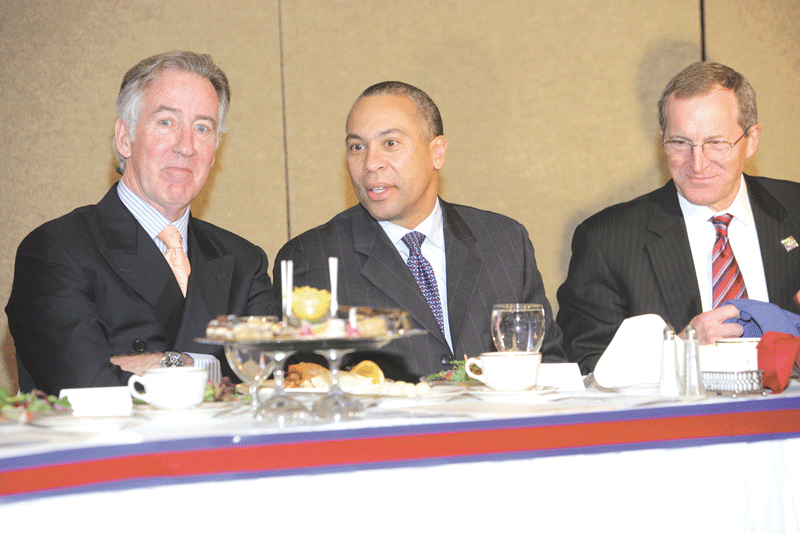
Sections Supplements
Understanding Tax Credits for Those Who Hire Eligible Employees

Kristen Houghton

Kristen Houghton

By KRIS HOUGHTON

In today’s tough economy, every dollar counts. But many businesses lose out on thousands of dollars in tax savings every year by failing to claim tax credits to which they’re entitled.
For 2010 and 2011, two credits are available for employers who hire eligible employees. The Hiring Incentives to Restore Employment (HIRE) Act of March 2010 offers payroll tax breaks for employers that hire unemployed workers, plus additional credits for qualified workers they retain for at least 52 consecutive weeks. This article looks at the HIRE credit and examines whether this benefit is more advantageous than the often-overlooked Work Opportunity Tax Credit (WOTC).
Back in March, health care reform grabbed most of the headlines, but it wasn’t the only legislation enacted that month. About a week earlier, President Obama signed the HIRE Act. An employee qualifies for payroll-tax breaks if he or she:
• Starts work after Feb. 3, 2010, and before Jan. 1, 2011;
• Wasn’t employed for more than 40 hours during the 60-day period before the start date (and signs an affidavit to that effect);
• Doesn’t replace an existing employee (except one who quits voluntarily or is fired for cause); and
• Isn’t related to the employer or to an individual who owns more than 50% of the business.
Qualified employees include previously laid-off workers that you rehire, provided they meet the above requirements. Employment can be full-time or part-time, but the more hours a qualified employee works, the greater the benefits.
If you hire qualified employees, you’re exempt from the 6.2% Social Security portion of Federal Insurance Contributions Act (FICA) taxes on wages you pay them for work performed after the HIRE act was enacted (March 18, 2010) through the end of 2010. Based on the current Social Security taxable wage base of $106,800, the maximum tax benefit is $6,622 per qualified employee.
For each employee qualifying for the payroll tax break whom you keep on the payroll for at least 52 consecutive weeks, you’re entitled to a tax credit of up to $1,000 on your 2011 income-tax return. To qualify for the credit, an employee’s wages for the second half of the 52-week period must be at least 80% of his or her wages for the first half of the period. Even if a new hire leaves voluntarily before 52 consecutive weeks are up, no retention credit is received for that hire.
To prevent employers from claiming the full $1,000 credit for employees who do minimal part-time work, the amount of the credit is the lesser of $1,000 or 6.2% of a qualified employee’s wages during the 52-week period. Put another way, new hires who earn more than $16,129 during that period qualify for the full $1,000 credit.
Now let’s look at the rules for the WOTC, which is a dollar-for-dollar reduction in federal tax liability — ranging from $1,200 to $9,000 per new hire — for companies that hire people from disadvantaged groups, including certain youth, public-assistance recipients, and veterans.
The credit’s requirements are detailed and specific. Generally, new hires who belong to one of these groups qualify:
• Short- and long-term recipients of Temporary Assistance for Needy Families (TANF) benefits;
• Veterans who are disabled or unemployed, or receive food stamps;
• Ex-felons hired within one year after conviction or release from prison;
• Individuals age 18 to 39 who live in empowerment zones, enterprise communities, or renewal communities (‘designated communities’);
• Disabled individuals referred after completion of a qualified vocational rehabilitation program;
• Summer youth employees age 16 or 17 who live in designated communities and work at least 90 days between May 1 and Sept. 15;
• Individuals age 18 to 39 who receive food stamps;
• Individuals receiving Supplemental Security Income (SSI) benefits; and
• ‘Disconnected youths’ ages 16 to 24 who aren’t in school, employed, or readily employable due to a lack of basic skills.
Each target group is subject to specific requirements, so it’s important to do your homework to see whether any of your new hires qualify.
Generally, the credit reduces the employer’s wage deduction dollar-for-dollar. The reduction is required even if you can’t take the full amount of the credit in the current year and must carry it back or forward.
For long-term TANF recipients, the maximum credit is 40% of first-year wages up to $10,000 (a $4,000 credit), plus 50% of second-year wages up to $10,000 (a $5,000 credit, so there’s a maximum credit of $9,000 over a two-year period). Formerly known as the welfare-to-work credit, this credit was combined with the WOTC a few years ago.
The maximum WOTC is available for employees who work 400 hours or more during their first year of employment. A partial credit equal to 25% of qualifying wages is available for those who work between 120 and 399 hours.
To obtain the WOTC, you first need to complete and file various federal forms when hiring a qualifying employee. Once the employee has worked the required number of hours, you can claim the credit on your company’s next income-tax return. You also may be eligible for state credits or other incentives. Your tax advisor can help guide you through the process. Although it’s complicated, the tax savings can be well worth the effort.
Wages you pay to a worker who qualifies for the HIRE Act’s payroll-tax exemption don’t qualify for the Work Opportunity Tax Credit unless you elect not to claim the payroll-tax exemption. So it’s important to select the tax break that provides the greater benefit.
For some new employees, the WOTC will provide a greater benefit than the HIRE act’s payroll-tax exemption. Suppose, for example, that you hire a new employee on July 1, 2010, at an annual salary of $50,000, and the employee qualifies for both tax breaks. The payroll tax exemption would provide tax savings of $25,000 × 6.2%, or $1,550. In this case, you’d be better off opting out and claiming the $2,400 WOTC.

Kristina Drzal-Houghton, CPA MST is the partner in charge of Taxation at Holyoke-based Meyers Brothers Kalicka, P.C.: (413) 536-8510.

DBA Certificates Departments

The following Business Certificates and Trade Names were issued or renewed during the months of January and February 2011.

AGAWAM

Elmwood Car & Van Controls
521 River Road
William A. Douglas

Garden Art
32 Church St.
Ken Guerin

Rosemarie’s Salon @ Sebastian’s
333 Walnut St.
Rosemarie Brandoli

Sandy’s K-9
84 Maple St.
Silke Lanski

Twice But Nice
525 Springfield St.
Nicholas Grimaldi

Wicked Leather
53 Fairview St.
Robert Alves

Wideorbit
67 Hunt St.
Diana Falvo

CHICOPEE

Bernie’s Service Station
105 Montgomery St.
Daniel Bernashe

Chicopee Jiffy Lube
2017 Memorial Dr.
Richard Smith

Daigle’s Truck Master Inc.
57 Fuller St.
Jeffrey Daigle

Nasa’s Auto Service LLC
817 Front St.
Michael Wayne Asselin

Lara’s Destiny Hair Salon
1512 Memorial Dr.
Lara Torrao

Power On
115 Beauregard Terrace
Rvi’shan Yo

GREENFIELD

Barlow Tree & Landscaping
77 Davis St.
Bryan Barlow

Daily Nuggets
324 Wells St.
Robert Apteker

Greenfield Corporate Center Café
101 Munson St.
Simon Guy

Sigda Flower Shop
284 High St.
Richard Sigda

Spalding Affordable Custom Cleaning
256 Davis St.
William Spalding

HOLYOKE

Jizay’s Global Tech
101 High St.
Marcos J. Alvarao

Klassic Eye Brow
50 Holyoke St.
Sukhpal Kaur

Law Office of Joseph E. Best, Esq.
328 High St.
Joseph E. Best

Ponce Store
254 Maple St.
Efrain Resto

T-Mobile
50 Holyoke St.
Harvey Woodford

LONGMEADOW

Gold Courier
35 Erskine Dr.
Stephen Goldstein

LUDLOW

Lara’s Destiny House Salon & Day Spa
293 State St.
Lara Torrao

Joseph Testori Electrical Contractor
71 New Crest St.
Joseph Testori

SOUTHWICK

Donna M. Houghton Licensed Massage Therapist
405 North Loomis St.
Donna M. Houghton

Hairsworks Salon
320 College Hwy.
Paula Zering

New England Academic Specialties
1 Cody Lane
Kristen A. Coccia

SPRINGFIELD

Garcia’s Painting
878 Liberty St.
Luis A. Garcia

Good Shepherd Realty
107 Blaine St.
Richard Fontaine

Imperial Bakery
345 Main St.
Maria Tirado

J. Methe Construction
34 Newport St.
Jeremy D. Methe

Jack Chen Chinese Restaurant
1193 Sumner Ave.
Jin Q. Chen

Pair A Dice Clean
19 Dewey St.
Elizabeth Y. Ruiz

Sullivan Service
14 Brighton St.
Brendan Patrick

Super Class Laundry
1771 Boston Road
Bhanu B. Tiwari

The Hook Up
72 Bancroft St.
Rafael J. Sierra

WESTFIELD

Cornerstone-Good Goth
77 Mill St.
Marianne Deidolori

Del Photocraft
46 Spruce St.
Michael C. DelMonte

Gary’s Auto Repair
11 Bartlett St.
Gary Francis

J.M.C.
18 King St.
James J. Merati

WEST SPRINGFIELD

Allston Antiques
820 Union St.
William P. Youngworth IV

Cal’s Wood-Fired Grill & Bar
1068 Riverdale St.
Calamari’s III Inc.

Capzice Creative Hair Salon
553 Main St.
Lilia Dzhenzherukha

Case Handyman and Remodeling
380 Union St.
New England Handyman Services

Charlie’s Diner
218 Union St.
Michael Alfano

Dan’s Domestic Auto Repair
23 Sumner St.
Daniel E. Chraplak

Samtronix
274 Westfield St.
Osama Jalal

The Healing Zone Therapeutic Mass
201 Westfield St.
Nanci J. Newton

Video Chat Shopping
104 Kings Highway
George Colon

Sections Supplements
Know the Requirements in Order to Remain in Compliance

Bruce Fogel

Bruce Fogel

Many of us, at one time or another, have seen an IRS form titled 1099. Most of us are familiar with the more common versions of that form, including:
• Form 1099-INT, which is used to report interest paid to someone in excess of $10 per year;
• Form 1099-DIV, which is used to record dividends and/or capital-gains distributions paid to someone in excess of $10 per year;
• Form 1099-B, which is used to report the proceeds from the sale of capital assets other than real estate; and
• Form 1099-S, which is used to report the proceeds from the sale of real estate, typically other than one’s principal residence (provided the appropriate information was provided to your lawyer or other representative at the time of sale).
In each of these instances, the purpose of a Form 1099 — whatever its specific designation — is to provide information to the Internal Revenue Service so it can cross-check the same to make sure that the recipient is properly reporting the payment and/or income.
Another type of Form 1099 is the Form 1099-MISC. As you might have already guessed, this designation is intended to cover most other miscellaneous payments for which a specifically identified Form 1099 does not exist. The threshold for being required to file such a form is when payments have been made to a qualifying recipient during any calendar year (or tax year, in the case of an entity reporting information on a fiscal-year basis), in an amount totaling at least $600.
So, who is required to submit such forms to the IRS and to the payee? Anyone or any entity engaged in a trade or business, who made such payments in the course of that enterprise, is required to use 1099-MISC. But, you may wonder, what constitutes a trade or business? The instructions for this form state that you are generally considered to be engaged in a trade or business “if you operate for gain or profit.”
However, as with most IRS guidelines, the answer has exceptions. For example, those parties responsible for filing this version of Form 1099 include nonprofit organizations as well as federal, state, and local governments. Interestingly enough, through Dec. 31, 2010, the definition did not include landlords or rental-property owners. However, effective with payments beginning Jan. 1, 2011, landlords are required to join in the fun and issue Form 1099-MISC for all payments for services and/or materials reaching the $600 filing threshold.
The next logical question is, to whom or to which organizations are these forms issued? Historically, and through Dec. 31, 2010, these forms were to be issued to any individual and/or non-corporation receiving $600 or more during the year. Most corporations were excluded. However, payments were still required to be reported on the form if paid to pass-through entities, including LLCs that were not being taxed at the entity level, as well as payments made for professional fees (including doctors, lawyers, etc.), whether the professional entity was incorporated or not. However, these rules were changed for payments made after Dec. 31, 2010, such that corporations are no longer exempted from receiving these forms.
As you might expect, there are penalties for non-compliance, and not having the information necessary to complete the form is not always considered to be a valid excuse. There are also filing deadlines, other forms necessary to accompany copies of the Form 1099 to be filed with the IRS, and additional form-specific details relating to the filing requirements.
Suffice it to say, if you are subject to the filing requirements for these forms or think you might be, it is certainly better to err on the side of caution and make arrangements for their filing, or at least to check with your tax or accounting professional. Under such circumstances, it would be wise for you to take steps during the year to make sure to collect the necessary information you’ll need to file these forms from the various payees you work with. Such information would include their full and correct name, their correct tax-identification number, and their correct and current mailing address.
If necessary, there are forms available for collecting such information and receiving the payee’s certification as to the accuracy of the information.

Bruce M. Fogel is a partner with Bacon Wilson, P.C./Morse & Sacks in Northampton. He is a member of the firm’s estate-planning, elder, real-estate, and business departments. He has extensive experience in matters relating to income, gift, and estate taxes, and he focuses on the tax implications of all legal transactions. He can also be heard on the radio show Taxes and Assets; (413) 584-1287; [email protected]
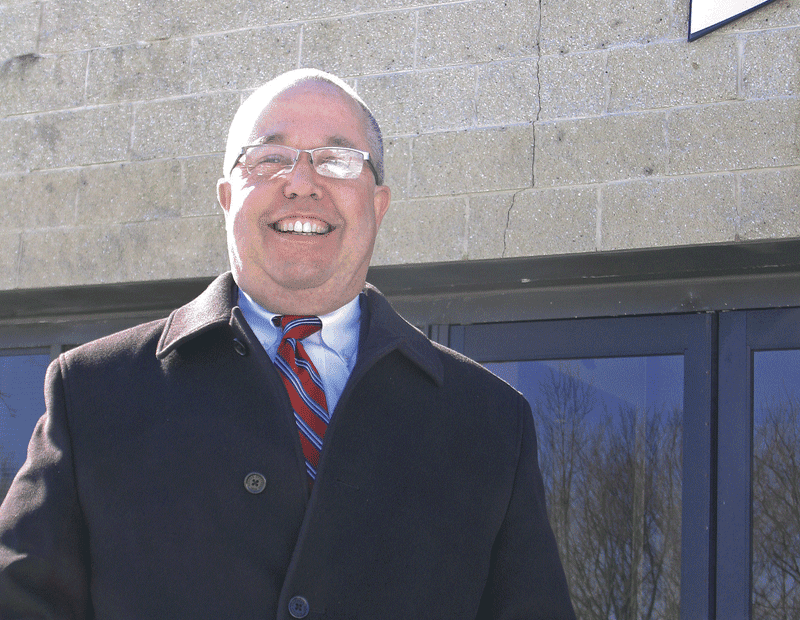
Sections Supplements
New CORI Measure Impacts Employers’ Hiring Processes

Amy Royal

Amy Royal

Prior to hiring a prospective employee, many businesses opt to conduct background checks, some of which include checks into an applicant’s criminal history. Indeed, obtaining information about an applicant’s criminal records and general background can be quite helpful for verifying the veracity of an applicant and in learning more information about an individual who is otherwise an unknown commodity.
The ways in which businesses can obtain and use criminal-offender record information (CORI) during the hiring process was limited by the state’s CORI-reform law, which Gov. Deval Patrick signed into law last summer. CORI records include information and data related to the nature and disposition of a criminal charge, arrest, pre-trial and other judicial proceedings, sentencing, incarceration, rehabilitation, or release.
The impetus for the new law was to make it easier for individuals to secure employment. In fact, in supporting the law, Patrick announced that “the best way to break the cycle of recidivism is to make it possible for people to get a job.” The first piece of the new CORI law went into effect on Nov. 4, 2010; other sections will not take effect until early next year.
Under the portion of the CORI law that took effect last November, it became unlawful for employers to ask job applicants about their criminal-offender record information, including information about arrests, criminal charges, and incarceration, on an “initial written application.”
Benjamin Bristol

Benjamin Bristol

The new CORI law created this prohibition by amending Mass. General Laws Chapter 151B, Section 4, our state’s anti-discrimination law. Before this new amendment, employers could ask job applicants about felony convictions and certain misdemeanor convictions that were not protected from disclosure. The only exceptions to the conviction-question ban on initial job applications occur when federal or state law disqualifies an applicant for that position because of a conviction or where an employer is subject to an obligation under federal or state law not to employ an individual who has been convicted.
Unfortunately, the term ‘initial written application’ was not defined in the new law, so it remains unclear whether the new CORI law was intended to prohibit job interviewers from asking about criminal-offender record information later on in the application process, such as during an interview. The Mass. Commission Against Discrimination (MCAD), the state administrative agency that enforces our state’s anti-discrimination law, has taken the position that a job interviewer may inquire about convictions in very limited circumstances. Indeed, the MCAD has indicated that questions about convictions are permissible as long as the interviewer does not ask about any of the following:
• An arrest that did not result in a conviction;
• A criminal detention or disposition that did not result in a conviction;
• A first conviction for any of the following misdemeanors: drunkenness, simple assault, speeding, minor traffic violations, affray, or disturbance of the peace;
• A conviction for a misdemeanor where the date of the conviction predates the inquiry by more than five years; and
• Sealed records and juvenile offenses.
Without question, this list presents more problems than it does solutions for employers. Since interviews usually consist of broad and open-ended questions, it is very likely that the interviewer who asks about an applicant’s past convictions will erroneously lead the applicant to disclose conduct that the MCAD deems protected, which could ultimately result in litigation. This is true even if a question is well-intentioned; it could still be seen as a violation.
To avoid this problem, employers should train their interviewers on the proper questions to ask applicants, and provide their interviewers with a written set of questions to help steer the discussion away from unlawful inquiries.
In addition to the initial-application piece of the new law, another provision, slated to take effect on Feb. 6, 2012, will further restrict an employer’s ability to obtain criminal conviction history. While employers will still be able to obtain criminal information from the CORI database, they will no longer be able to receive felony convictions that have been closed for more than 10 years or misdemeanor convictions that have been closed for more than five years. Currently, employers may receive information about felony convictions occurring up to 15 years earlier and misdemeanor convictions occurring up to 10 years earlier.
Another provision that takes effect on Feb. 6, 2012 will require employers to create and implement a written policy if the employer annually conducts more than four criminal background investigations. This written policy must include language notifying applicants of the following: that the employer will give copies of the policy and the information obtained during the criminal background investigation to the applicant; that there is a potential for an adverse decision based on the criminal background investigation; and the steps applicants can take to correct their criminal record. Employers must then make sure that the applicant receives a copy of the policy and the information obtained during the investigation.
Also effective Feb. 6, 2012, the new law will prohibit employers from retaining a terminated employee’s CORI information for more than seven years from the last day of employment. The same rule will also apply to job applicants; thus, employers will be prohibited from retaining an unsuccessful applicant’s information for more than seven years from the date of the decision not to hire.
However, Feb. 6, 2012 will bring some good news for employers. Specifically, under another section that takes effect that day, the new law will protect employers from claims of negligent hiring when relying solely on CORI records and not conducting additional criminal background checks prior to hiring an applicant. This provision will also protect employers who fail to hire an applicant because of erroneous information on the applicant’s CORI.
In this ever-increasingly litigious society, employers should routinely gather all available information regarding a prospective employee before deciding whether or not to hire them. In light of the new CORI law, employers who are currently using criminal-record information in their hiring process should review their current policies and practices to ensure compliance with the new law.

Amy B. Royal, Esq. and Benjamin A. Bristol, Esq. specialize exclusively in management-side labor and employment law at Royal LLP, a woman-owned, boutique, management-side labor- and employment-law firm; (413) 586-2288; [email protected]

Sections Supplements
How to Avoid Turning Private Estate Matters into Public Conflicts

Carol Cioe Klyman

Carol Cioe Klyman

Litigators love conflict.
In the world of trust and estates litigation, an innocent transaction, such as adding a child’s name to a bank account, could set the stage for a legal battle royal after the parent’s death.
Consider the questions mom will not be around to answer. Did she put Johnny’s name on her account because she wanted him to be able to withdraw funds while she was living, or rather to inherit the account when she died? Or did she intend to give Johnny access to the money just in case something happened to her, but she really wanted all her children to split the account when she died?
The siblings never got along that well, but think about what could happen in this family when mom is no longer around to referee.
Walk into most courthouses these days, and you will soon realize that ambiguity and conflict mean money. Trust and estates litigation is booming in no small part because the innocent transactions of life conflict with family dynamics and the complex realities of the legal system. Litigators sue, but estate-planning attorneys try their best to keep clients out of court. So here, from my observations, files, and trials, and those of my colleagues, are some of the mistakes that can drive what should be private matters into public conflict.
1. DIY estate planning. Filling out forms from the Internet for wills, trusts, and powers of attorney is the easy part. Thinking through the ramifications of those documents takes knowledge and skill. Most people plan one or two generations ahead, but life is not that simple.
Divorce, biology, human frailty, and the simple passage of time all affect our planning. It also takes knowledge to separate the useful from the flawed in these Internet documents. Litigators will exploit ambiguities and unintended consequences.
2. Not having a will, power of attorney, and health care proxy. If you don’t have these basic documents, the government controls where your property goes and monitors who makes decisions about your health care and your funds. If you become incapacitated, a judge will appoint a guardian and conservator to take care of your financial and medical affairs. Families often disagree over who will serve in these roles, and these conflicts often end up in court. These cases can be brutal, costly, and time-consuming.
The judge, usually the person in the room who knows the least about your case, is confronted with choosing between children, as often as not appointing a professional who is a stranger to the family.
3. The law of unintended consequences. Even people who have estate plans can fail to consider the consequences. In one glaring example that came across my desk some years ago, a man terminally ill with cancer thought he had provided for his adult children in his will, signed six months before his death. The will left everything to his second wife, whom he had married two years previously, and then to his five children if she were dead. When he died, his wife inherited his entire estate, and his children got nothing.
His children sued. The case settled with the widow agreeing to give them their father’s property at her death. Many such cases end only after protracted and expensive litigation that leaves the children empty-handed.
4. “My child will do the right thing.” I can’t tell you how many times a client has told me, “I’m leaving everything to my daughter. She knows what I want.” The law favors certainty over sentiment. The certainty is, the daughter owns everything at the parent’s death. Fortunately, in most cases, the child will do the right thing when a parent dies. However, at times the ‘right thing’ is unclear.
The person in charge may believe she knows exactly what the deceased person wanted. Others may disagree, and even resent the authority given to the favored person.
5. Promising more than you deliver. Many lawsuits are won and lost over the issue of a promised inheritance that failed to materialize. In many of these cases, the neglected survivor performed an uncompensated service expecting to be rewarded later. In one recent case, a son was promised he would inherit the family business and real estate if he ‘employed’ his mother at a substantial salary and paid her living expenses.
He faithfully performed his obligations until her death. Unfortunately for the son, the mother changed her estate plan in the intervening years and split the business among her children when she died. The dutiful son sued his siblings and won. The sympathetic judge found that the son acted based on his mother’s promise and should be compensated for his trouble.
6. Picking the wrong person to be in charge. A corollary to this is, “Sheila is the oldest, so I’ll name her.” Much sadness, loss, and many expensive lawsuits arise from this mistake. An executor of a will, trustee of a trust, and agent with power of attorney or health care authority — each of these jobs requires a person of intelligence, honor, loyalty, and diligence. Putting the wrong person in charge can completely derail a perfectly crafted estate plan.
Individuals abuse the trust placed in them when they use funds for their own purposes, contradict their principal’s instructions, or fail to follow the directions expressed in the decedent’s will. These cases run the gamut: a grandmother serving as executor of her daughter’s will spent her grandchildren’s inheritance on herself; an agent transferred property owned by her incapacitated mother to herself without permission; an executor used estate funds to repair and improve his own home. Often the people who are wronged — an incapacitated person, trust beneficiaries, a decedent’s heirs — have the law on their side but cannot recover what was lost or taken. The wrongs can occur many years before discovery, and perpetrators often are poor and ‘judgment-proof,’ and not required by the court to have insurance to cover losses.
7. Dueling powers of attorneys. When a parent cannot choose which child to put in charge, they sometimes put too many children in charge. They will sign a power of attorney naming one child, a second power of attorney (sometimes drafted by a different lawyer) naming another child, and so forth. The question then becomes, who is really in charge?
If the parent is incapacitated, unable to pick the first among equals, and the children can’t agree, the decision will end up in court. My advice is to say what you mean in one document only, and don’t let your children bully you into creating another. If you can’t pick one and then another as backup, you can name two serving together, but it is best for an odd number to serve in case a tiebreaker is needed. You might also spread the jobs of executor, attorney-in-fact, and health care agent among your trusted family members so no one feels slighted.
8. Failing to name successor executors, agents, and trustees. If an office is vacant, the court may need to appoint an individual or corporation to serve. Refer to points 2, 3, 5, and 6 for the ramifications.
9. Not specifying how taxes are paid when you die. If you leave assets of more than $1 million, Massachusetts will tax your estate (more than $5 million, and the federal government is also interested). Unless you decide differently, taxes are paid from general probate assets, which do not include specific assets bequeathed in a will, insurance policies, annuities, retirement accounts, and other assets with beneficiaries. The result could be that the people you want to benefit the most will pay all the taxes and receive the least.
10. Specifying that taxes be paid from tax-exempt assets. Some assets transferred at death, such as gifts to charity or to a trust for a surviving spouse, are exempt from estate tax and can actually result in reduced taxes for an estate. However, an improperly drafted estate plan can cause a portion of these exempt assets to be spent on estate taxes, reducing the amount of the exempt gift, and in turn increasing the taxable estate and the tax bill — a mathematical spiral that often ends in court. Charities, marital trust beneficiaries, and litigators can do the math.
11. The ostrich estate plan. Pretending problems don’t exist, and not meeting them head-on, is a gift that keeps on giving to a litigator. A parent may disinherit a child or children for any reason, sometimes out of sheer dislike. Most parents can’t live with the thought of treating one child differently, even a child with substance-abuse, financial, or marriage problems, or perhaps physical or mental challenges. Failing to address these issues by sweeping them under the rug or pretending they don’t exist can be destructive to the family. With proper planning, children can be protected from themselves in many positive ways.
However, if ever your loved ones would have reason to race to their lawyer, an estate plan that singles out a child with problems, disinherits children, or leaves the entire estate to the poodle would be it. Care must be taken to evidence that the parent acted willfully and with full understanding. Plans that seem irrational or flippant leave much room for doubt and speculation — and make a litigator’s day.

Attorney Carol Cioe Klyman is a shareholder with Shatz, Schwartz and Fentin, P.C., Springfield, Northampton, and Albany, N.Y. Her practice concentrates in the areas of elder law, estate and special-needs planning, estate administration, and trusts and estates litigation. She is a fellow of the American College of Trust and Estates Counsel and immediate past president of the Hampden County Estate Planning Council; (413) 737-1131.

Opinion
They Make a Difference in Many Ways

This region is going to miss Anthony Scott.
Holyoke’s police chief is slated to retire in a few months, when he turns 65. In addition to making a serious dent in the level of criminal activity in the Paper City, Scott has been as outspoken as they come, making him a real favorite of the media and a royal pain to the judges and parole officers he’s criticized seemingly without end for what he considers light sentences and decisions to release repeat offenders on their own recognizance.
Scott, who will retire to a consulting gig in South Carolina, will long be remembered around here for his hard-edged sound bites and newspaper headlines, but his main contribution — it remains to be seen whether it’s a lasting contribution (that’s up to his successor) — was his success with simply driving criminals out of his city because, as he put it, he made the “overhead costs” too high to do business there.
Scott’s decade-long tenure in Holyoke is a classic example of how there are many ways to make a difference in this region through one’s work or contributions to the community. And this year’s Difference Makers, as chosen by BusinessWest (profiled beginning on page 40), really drive that point home.
Lucia (Lucy) Giuggio-Carvalho has made a difference by starting Rays of Hope. She was still recovering from breast cancer when she pulled together the concept, the sponsors, the upfront money, and, yes, the courage and determination to get this fund-raiser off the ground. Today, Rays of Hope is on the brink of surpassing the $1 million mark for funds raised in one year, and with any luck, organizers will bust down that door this fall.
But beyond the money raised — which goes toward research and a variety of services for breast-cancer victims — the walk has become, well, an event, a show of strength and perseverance for survivors and their friends and families. The results are difficult to quantify, but Carvalho and her walk have certainly made a difference in thousands of lives.
Some of Tim Brennan’s contributions are hard to quantify as well. It’s like that when you’re a long-range planner. Some of his efforts as director of the Pioneer Valley Planning Commission are visible — like the bike trails running through area cities and towns, a visibly cleaner Connecticut River, and a widened Coolidge Bridge. However, with initiatives such as the Plan for Progress, which Brennan initiated, the benefits are difficult to see with the naked eye.
But they have succeeded in doing something that is desperately needed in this region — promoting business owners and municipal leaders to look beyond next week, next year, or even the next decade, imagine what the competitive landscape will be like, and be ready for that day.
As for Robert Perry, as he told BusinessWest, he’s not really handy, but that hasn’t stopped him from being a driving force with Habitat for Humanity — or any of the organizations to which he’s contributed his time, energy, imagination, and ability with numbers.
In short, his contributions have added up to something special — literally and figuratively.
Which brings us to Don Kozera, whose strong leadership skills and ability to shape goals and, as he put it, “define reality” for his staff, have enabled Human Resources Unlimited to help those with physical and mental disabilities find employment, independence, and self-esteem. By doing so, he and all those at HRU are making a difference in the lives of thousands of people, and this region as a whole.
BusinessWest invites all its readers to attend the Difference Makers gala on March 24 at the Log Cabin Banquet & Meeting House in Holyoke. We’ll be celebrating these five individuals, but also the many ways in which people can make a difference, and the hope that their work will inspire others to find and develop still more methods for having an impact.

Class of 2011 Difference Makers

Executive Director, Pioneer Valley Planning Commission

Tim Brennan

Tim Brennan

Tim Brennan was talking about the specific skills one must possess to be a successful planner, especially a long-range planner, which is his unofficial job title.

And he focused on two traits — patience and tenacity — noting that one must have them in abundance in this arena, because some — actually, it’s more like most — initiatives don’t take a few months or years to become reality; they take a few decades, at least.

“If you get disappointed easily, and you don’t have the grit to keep coming back over and over again and make the plans work that you think should work, then you’ve picked the wrong job,” he told BusinessWest, laughing as he did so. “And it happens; some people just don’t have that demeanor for this.”

As an example of patience and tenacity, he cited work to create bike paths in the region, an initiative that dates back to when he started working for what was then known as the Lower Pioneer Valley Regional Planning Commission (LPVRPC), as the transportation planner, in 1973.

“There were none at that time, but the temperature started to change and the federal government became interested in things other than autos and transit,” he explained. “We started working on what was then the Five College Bikeway, which was a conceptual idea. Once the media-release value was gone, everyone abandoned it; but we stayed with it, and 20-something years later, I’m at the ribbon-cutting for the trail. I’m not the planner in the Transportation Department, I’m the director, and I’ve got two young daughters who are going to be able to use the Norwottuck trail.

“That’s a long time to wait for some satisfaction,” he continued, putting extra emphasis on that word ‘long.’ “But now we have these bikeway projects springing up across the area, and I think they’re really attraction amenities; they add a lot of value to communities, and when we get them to hook up with one another, they’re great assets.”

There are several other examples from Brennan’s tenure with what is now simply the Pioneer Valley Planning Commission. They include everything from Connecticut River clean-up efforts to initiatives to bring more and better rail service to the area; from work to maximize the CSX complex in West Springfield as a regional economic-development asset to efforts to promote greater regionalization in this region and also neighboring Northern Conn.

For achieving progress in these areas and, overall, for giving that grit he described earlier, Brennan has been named one of BusinessWest’s Difference Makers for 2011. Some of the work he’s led is easy to see, such as those bike trails, a cleaner Connecticut River, and a reconstructed Coolidge Bridge. But some of it is outwardly less visible, yet equally important, such as the creation in 1994 of the Plan for Progress — a blueprint for helping the Valley remain competitive in an increasingly global economy — and its many updates since.

Brennan has seemingly always been a little ahead of his time, dating to when he did his thesis at UMass Amherst on issues concerning the collection and management of solid waste, and, specifically, the need for greater recycling. “That was kind of a radical idea at the time,” he said.

While at UMass, he took part in an internship with the city of Northampton, “which at that time was as downtrodden as any city you could imagine,” and worked on solid waste and, eventually, planning issues for then-Mayor Sean Dunphey. He was part of efforts to create a new master plan and revamped zoning laws, and was there to see the very beginnings of that city’s renaissance.

After graduating from UMass, Brennan commenced a search for employment in the region and found an opportunity at the LPVRPC as transportation planner. While in that position, he led the formation of the Pioneer Valley Transit Authority (PVTA), one of many regional transit systems created by the state Legislature.

In 1980, when the directorship of the LPVRPC came open, Brennan applied, but did not get the nod. But when the individual who was chosen ultimately decided not to relocate from Illinois, another search was commenced, and this time Brennan triumphed.

When asked what’s kept him in this job for more than 30 years, working for and alongside countless mayors, selectmen, and planning and development leaders, Brennan said it’s the diversity of the work and the satisfaction that comes with overcoming the many challenges it takes to bring projects that are decades in the making to fruition.

He also likes the balance between working in both the present and future tenses.
“I tell people, and I really believe this, that one of the interesting things about planners is that you have to be bipolar in terms of your time zone,” he explained. “And I don’t know if you can quantify it, but both switches are always on because, if you can’t demonstrate that you’re relevant to the present, all your conjecture about the future gets completely tuned out.”

So when asked what the Greater Springfield area might look like in 30 years, the man who always has one eye focused at least that far down the road said there will be some recognizable changes.

“What’s going to shape the region is energy and climate change,” Brennan said. “Suddenly, it’s politically unpopular to talk about climate change, but the scientists are screaming that it’s real and we have to do something about it. A few weeks ago, the state set greenhouse-gas emission-reduction goals for 2020 and 2050. I don’t think I’ll be around in 2050, but it’s my job to start, with my colleagues, to take this seriously and try to get us ready.

“So what I see is that we won’t be on fossil fuels anymore; we’ll be running off different kinds of fuels, and we’ll need a more-compact land-use pattern — we can’t keep spreading out like we have been,” he continued. “We’ll be going back to the future in a way, where some of the places that we depopulated get repopulated, including many of the urban areas, the downtowns.”

Meanwhile, the Valley will have to focus its energies on successfully existing in one of what are projected to be a dozen or so ‘super regions,’ the one in question stretching from Philadelphia to Boston.

“We have to be connected to the Northeast mega-region, or we’re toast,” Brennan told BusinessWest. “There was a guy here 10 years ago who has a national reputation, who said that if we didn’t have firm plans and follow through on them, much of New England, including this region, could end up as a cul-de-sac, and that really stuck in my mind.

“I think the Valley has all the right building blocks to be one of those regions that can sustain itself going into all these major changes,” he continued. “That’s why we’re working on rail, that’s why we’re working on the broadband, that’s why we will be working on food security; these are all designed to put the infrastructure in place for the region to be vibrant and attractive.”

Getting to that place won’t be easy, but Brennan has the requisite personality traits — patience, tenacity, and that all-important grit — to get the job done.

— George O’Brien

Class of 2011 Difference Makers

Founder, Rays of Hope

Lucy Giuggio Carvalho

Lucy Giuggio Carvalho

Lucy Giuggio Carvalho calls them her “million-dollar sunglasses.”

She found them in a bargain bin at T.J. Maxx in the summer of 2009, and knew at first sight that she had something special.

“I think I paid $2 for them; they’re pink, they’re sparkly, they’re different,” said Carvalho, who gave them their name because she thought that, by wearing them, she could help will the fund-raising walk known as Rays of Hope — which she founded after becoming a breast-cancer survivor in 1994 — over the $1 million mark for that year’s walk.

Thus far, the shades haven’t lived up to their name — the tallies for the past few walks have come tantalizing close to what is, for now, anyway, the magic number, but haven’t crossed that threshold. But Carvalho isn’t ready to give up on her latest good-luck charm.

“They’ll be back for a third year,” she said with a large dose of conviction, adding quickly that her choice of eyewear is just one of myriad decisions to make when it comes to her Rays of Hope ensemble (everything goes with pink sneakers, apparently). Indeed, over the years she has collected vast amounts of keepsakes and gifts from event organizers and fellow walkers — survivor pins and badges, scarves, T-shirts, and assorted chochkies, as she calls them. “I couldn’t wear it all,” she joked. “If I did, it would weigh me down so much I couldn’t walk.”

There are far more scientific ways of measuring just how far Rays of Hope has come in 17 years than Carvalho’s inventory of options when it comes to accessorizing for the annual walk — such as the total raised to date, more than $8 million. But there are perhaps none that are more poignant.

They show how the event has evolved into more than a fund-raiser — although it is that, first and foremost. It has become, said Carvalho, a very powerful show of strength, and unity, in a fight that’s far from over — a sobering fact that draws more individuals and teams to the starting line every year.

For creating and nurturing this show of unity, Carvalho, a former oncology nurse and currently director of case management for Jewish Geriatric Services, has been named one of BusinessWest’s Difference Makers for 2011. She said that, if she had her way, she would bring the tens of thousands of walkers and event organizers to the podium with her, because it is their collective efforts that have made the event, through the dollars it raises, a difference maker in the lives of breast-cancer victims, and a role player in the ongoing efforts to find a cure.

When asked how Rays of Hope came to be, Carvalho didn’t start with her own well-documented battle with breast cancer, which began when she discovered a lump during a self-exam. Instead, she focused on her nephew’s involvement, and also her own, in an AIDS walk in Boston several years earlier, and the very important lessons she took from it.

“I come from a family that gets involved,” she said while explaining how and why she became a participant. “And it’s from that walk that I gained a lot of the vision that I wanted to see happen here. That’s where I learned so much about how important it is, and how much you can do, if you can get a group of people who are dedicated to a cause and try to make a difference.

“They raised a lot of money, and they made it fun,” she continued. “They made it fun, exciting, and educational. While you were walking, you talked with people and learned about the disease; all that made it such a fulfilling experience that you wanted to do it again, and we did.”

To make a long and inspiring story short, Calvalho and other Rays of Hope organizers have managed to do the same with their event.

Indeed, with memories of that AIDS walk still fresh in her mind and an American Cancer Society breast-cancer walk that netted $400,000 in the pouring rain further inspiring her, Carvalho, while still recovering from her own lengthy battle with the disease, set out to create her own event.

She recruited organizers, secured a media sponsor (Channel 40), and gained commitments for startup funds. Still, many people involved with her wanted her to wait a year to get on even more solid ground. She listened to that advice, but pressed ahead with her plans for that year, and is glad she did.

“I believe to this day that, if I waited a year, it wouldn’t have happened,” she explained. “It had to happen, and it had to happen that year. I had the energy, I had the passion, I had the motivation, I had the group … the stars were aligned, and it was meant to be.”

Today, funds from Rays of Hope go in several directions. Some are put toward ongoing research, including work at the Pioneer Valley Life Sciences Institute in Springfield. Funds also go toward a wide range of services, including what are known as ‘complementary services’ for those battling the disease. These include yoga, Reiki, and something known as Art from the Heart.

Carvalho is traditionally assigned the task of reviewing requests in this complementary-services category, which she says has perhaps the most compelling direct impact on breast-cancer patients.

“It’s probably the most unscientific aspect of all this, but the piece that really helps people,” she explained. “It’s promoting wellness, and a way of helping people through the process.”

Over the years, Carvalho has turned over most all of the operational aspects of the walk to partner Baystate Health, employees there, and a massive team of volunteers. She describes the broad planning and execution process as a “well-oiled machine” with which she is still quite active.

She has what she considers a lifetime seat on the committee that receives and considers funding requests and ultimately rewards proceeds, and played a role in a five-year strategic plan for the walk undertaken in 2004. “Obviously, we’re overdue for another one.”

As for walk day itself, she said she has a badge (somewhat lost amid everything else she wears) that identifies her as the founder. “It gets me a parking space close to the start line,” she joked, adding that she is largely anonymous for the event itself, walking with a team from JGS and family members, and getting to meet as many new people as time and circumstances allow.

Carvalho told BusinessWest that fund-raising veterans have marveled at the longevity of Rays of Hope. “They say an event like this one usually runs its course in 10 years, and then you have to find something else. This one, though, shows no signs of slowing down; I don’t see it ending unless we find a cure for breast cancer.”

The one constant, she said, is change — in everything from the size and composition of the crowd of participants, to new wrinkles (a run and a walk in Greenfield were added for 2010), to the programs funded by the proceeds.

One thing that won’t change for 2011 is that pair of million-dollar sunglasses.

Carvalho isn’t sure what else she’ll be wearing — again, there are a lot of decisions to make — but weather permitting (and perhaps even if it doesn’t), the shades will return.

And Carvalho believes this year they will live up to their name.

— George O’Brien

Class of 2011 Difference Makers

President, Human Resources Unlimited

Don Kozera

Don Kozera

Don Kozera says he applies a number of lessons from his time in teaching to his day-to-day work as president of Human Resources Unlimited (HRU).

And one of the most important dates back to his first full day at Green Mountain Union High School in Chester, Vt., and what happened after.

“The administration thought it would be an excellent idea to have the students choose their homeroom teacher,” he recalled for BusinessWest in a voice conveying no small dose of cynicism, “because if they choose their homeroom teacher they’ll be more bonded to that individual, and the teacher will become their advisor … that was the theory, anyway.

“I was a young guy right out of school, 22 years old. I coached soccer, and some of the kids thought I was a cool guy who could relate to people,” he continued. “Anyway, I had no idea what I was doing, really, but I had 300 names on my door when I arrived that first day. And then, there was this extremely experienced, but tough, science teacher across the hall from me, and she had two.”

The moral to this story? “The concept was a great one, but the execution of it just created all kinds of problems,” he explained. “That woman … she hated me for the rest of my time there, and she made my life a living hell.

“Often in management, there is great intent on the part of people like those administrators at Green Mountain Union,” he went on. “But when you put it into action, the unintended consequences of that decision were worse than having left things the way they were. By choosing their homeroom teacher, the students did bond better with the teacher — that part was true, but what they failed to realize was that they destroyed the collaboration between teachers, the sharing of information; everybody then became an island.

“That piece is something I carry with me all the time,” he continued, “and the way you apply it is that you don’t think you know the answer, and you don’t do things in isolation.”

Kozera has let that experience and many others help guide him as he’s steered HRU to continued growth and success as an organization devoted to helping mentally and physically disabled individuals find work — and, in the process, gain confidence, self-esteem, and all the other rewards that come with meaningful employment, and become productive members of society.

Since arriving in 1980 as fiscal director of what was known then as the Carval Workshop, Kozera has led the agency, which currently operates on an annual budget of $7.5 million and assists more than 1,500 people a year, on a course of expansion and evolution to where it now includes a number of working parts, including:

• A component known as Workforce Alternatives, which helps transition individuals from public assistance to the workplace through job-readiness skills, placement assistance, and ongoing support;

• Pyramid, a ‘day habilitation’ program that provides a caring environment in which individuals with developmental disabilities can enhance their physical, mental, and social competencies;

• ETS (Employment Training Support) Career Services, which provides individuals who are disabled or have developmental or other disabilities with opportunities to increase their vocational skills and find meaningful work that ranges from light assembly to sorting greeting cards bound for the Final Markdown;

• Custom Packaging, HRU’s commercial division that provides a wide range of customers with services that include light assembly, heat-sealing, shrink-wrapping, folding, collating, and mailing; and

• Four clubhouses — Lighthouse, Star Light, Forum House, and Trade Winds — that help transition members, who join on a volunteer basis, to meaningful employment.

For these efforts, as well as his recent and ongoing efforts to successfully combat what he called “mission drift,” Kozera has been named one of BusinessWest’s Difference Makers for 2011. More specifically, Kozera is being recognized for his work in leading the organization through times of change and extreme challenge.

This leadership comes in a number of forms — from successfully managing day-to-day operations to conducting long-term strategic planning, to maintaining the critical balance that is part and parcel to both of those assignments. And, overall, and to borrow Kozera’s own words, “making sure that the guiding principles of the organization are not simply words on a wall.”

When asked for his job description and the approach that he takes to everything on that list, Kozera thought for a minute and said that, at the end of the day, it is essentially to set goals for the agency and give his staff the tools and the direction to meet them.

And these goals must be realistic, he continued.

“That’s because, when people are constantly working on unrealistic goals, they become deflated, and then it becomes OK never to achieve — they just work hard, but they don’t achieve,” he explained. “You must have action phases that are really defined, timelines that are really defined, and goals that are aggressive but ultimately achievable.

“My job is to really define reality and to make sure everyone knows what that reality is and to pull people toward that vision and ensure that we stay in balance,” he continued. “Staying in balance is how you manage change.”

Kozera said that, whenever he’s looking or acting like the bureaucracy or regulatory aspects of his work are dragging him down, they’ll find some way to get him out to one of HRU’s various programs.

“They’ll call one of the managers to invite me to the program for some purpose,” he explained, “and then I’m fine. That’s when I’m reminded of exactly what I’m doing; by far the most rewarding thing for me is seeing the outcome of those programs.”

Which brings him back to that mission drift he mentioned and the need to be vigilant about allowing it to happen.

“Especially in bad times, it’s easy to get mission drift and essentially chase money, and we have not done that,” he explained. “Sometimes you’ll see agencies like ours, specializing in employment services, see a residential contract come out and say, ‘let’s do some residential work.’ Is that really their expertise? And is there a need for that? Often, they’re just trying to make their organization survive.

“We’ve remained very true to our mission, even in the tough times, and there have been none tougher than what we’re seeing now,” he continued. “We have a niche mission — our major focus is employment services; they are the tool to empowerment for us. In these times, everyone’s grabbing, and it’s not just on human services — you’re seeing painters looking at paving; people are just trying to stay in the game. We’re very conscious of mission drift and are committed to not letting that happen.”

As he goes about meeting that overriding goal, Kozera will keep in mind the lessons he’s learned over the past 30 years, and some that go back further, to those lists of names on the teachers’ doors at Green Mountain Union High School.

In short, he won’t just think he knows the answer, and won’t do anything in isolation.

— George O’Brien

Class of 2011 Difference Makers

Retired Partner/Consultant, Meyers Brothers Kalicka, P.C.

Robert Perry

Robert Perry

Robert Perry admits that he’s not much of a handyman.

So he makes no apologies for the fact that, over the course of more than a decade’s work with Greater Springfield Habitat for Humanity, he’s probably spent three or four days “working,” at least by his estimation.

And while others would disagree with that math — they say Perry enjoys getting his hands dirty and is always ready, willing, and able to pitch in — they usually don’t quibble with his numbers, or his leadership, for that matter.

That’s because Perry’s contributions usually haven’t been with a hammer, shovel, or level, but rather with a telephone, gavel, and calculator. A quasi-retired CPA — ‘retired partner/consultant’ with Meyers Brothers Kalicka, P.C. in Holyoke, to be more exact — Perry spent an unheard-of seven years as president of the organization’s board (“I wasn’t smart enough to find a replacement”) while also serving as treasurer.

He said that, instead of framing, tiling, or putting up sheetrock, his main contributions to Habitat’s mission have come in the form of leadership, organization, fund-raising, finding and cultivating sponsors, and keeping track of the financial details.

Those who have worked with him over the years would say that he and his wife (Bob and Bobbi to those who know them) have provided something else — hefty amounts of inspiration. A large dose of it came in late 2008 when, in conjunction with their 35th wedding anniversary, they donated and raised $35,000 each toward the construction of a Habitat home in Monson.

Perry said there was a was good deal of serendipity, or symmetry, to that project — it was the 35th house built by the Greater Springfield Habitat group, and it was dedicated on Valentine’s Day in 2010. And, overall, it was an appropriate way for he and his wife to give back and celebrate all they’ve been able to enjoy together. “We’ve had a lot of good things happen in our lives.”

Meanwhile, the overall experience with Habitat has been perhaps the best example of how, through more than 30 years of work within the community — here and elsewhere — he’s sought out opportunities where the results are visible and significant. It was this way with his work at Big Brothers Big Sisters in Framingham much earlier in his professional career, and also with his recent efforts mentoring students at Putnam Vocational-Technical High School in Springfield.

“The connection I made between being a big brother and being in Habitat is being able to see the results of your efforts every day,” he explained. “When I was working as a big brother with a kid, you could see his progress — you could see his self-esteem growing, you could see him learning things that you were imparting. In Habitat, when we raised some money or when we found a family, you could see the change immediately — you could see the cause and effect of your relationship.

“That’s the essence of Habitat for me,” he continued. “We all know we’re doing good when we donate to cancer or when we take part in the breast-cancer walk, or take part in Rotary, but it’s a little more difficult to connect the dots. And that’s one of the big benefits of work with Habitat; you truly get to see that every day.”

Recapping his professional career and work in the community, Perry said they’ve dovetailed nicely. He told BusinessWest that he was always drawn to accounting work, and, after graduating from Northeastern, he went to work for Alexander Grant in Boston. After a stint as a CFO for a textile manufacturer in the late ’70s, he went to Greenberg Rosenblatt in Worcester, and later, when that firm bought an accounting practice in Springfield, he was transferred here to run that operation. After a few years as a self-employed consultant, he went to work for Meyers Brothers, which merged with the Kalicka firm in 2003.

Today, Perry is what one colleague, also semi-retired, calls a “partner emeritus.” He says he spends about 500 hours a year as a consultant — 250 during the three crunch months of tax season, and the balance spread out over the remainder of the year. The rest of his time is devoted to a few passions, but especially golf and community service.

He and Bobbi are members at Wilbraham Country Club (he’s a 16 handicapper and she’s a 20), and they play together frequently. As for the community-service piece, it’s been a career-long constant, inspired in part by Bobbi’s work with deaf children and their families.

Perry spent several years as a member of the Exchange Club that serves Longmeadow, East Longmeadow, and Wilbraham, but found he wanted to be more on what he called the “front lines” of community work. He looked for ways to address this desire, and found one when friend York Mayo, then-volunteer president of Habitat for Humanity, recruited him to look at the group’s finances.

Little did he know that he would soon work his way up to president and spend seven years in that seat, helping the organization “get to the next level” organizationally, as he put it, while also building three or four houses a year.

As for the house he and Bobbi helped sponsor for their 35th anniversary, Perry said, “sometimes, things just come together in a natural sort of way. “This was the 35th house. We saw it coming, looked at it, saw an opportunity to give back, and worked with some church groups to make it happen.”

He’s been making things happen with other organizations as well, especially the Greater Springfield YMCA, which he’s served on the corporate and finance boards, as chair of the audit board, and as co-chair of the Scantic golf tournament. He also involved with Springfield School Volunteers, and is currently in his second year of mentoring students at Putnam.

“I have a sophomore student who’s on point,” he said. “He’s a little shy; I think he’s looking for some self-confidence, and he’s looking for someone outside his family to be a role model. It’s a mini-version of Big Brothers Big Sisters, and I find it very rewarding.”

Mayo, summing up Perry’s contributions to Habitat and other groups, had this to say: “Bob has compassion for others. He converts his beliefs into action through hard work and relentless dedication. When he makes the decision to support an organization, he is the first to roll up his sleeves and get involved. He is persistent and never gives up.

“He is a critical thinker, learns quickly, and is a great listener,” Mayo continued. “His contribution to Habitat for Humanity is immeasurable. But Habitat is not the only recipient of Bob’s many talents. A partial list includes ReStore Home Improvement, the Red Cross, the YMCA, the Roger L. Putnam Technical Fund, and the Millbrook Scholars Fund for homeless high-school students.”

As for what he considers a lack of handyman skills, “I think it’s funny that I would get involved in a volunteer construction organization,” Perry joked, adding quickly that he believes he’s more than made up for that deficiency with organizational and leadership abilities.

And no one would argue with that point.

— George O’Brien

Class of 2011 Difference Makers

Police Chief, City of Holyoke

Anthony Scott

Anthony Scott

Anthony Scott was talking about his penchant for garnering media attention.

He insists that he’s not a publicity hound, and that newspaper headlines and broadcast sound bites “have just happened” — everywhere he’s gone, including Holyoke.

But Scott, the city’s police chief since 2001, freely admits that he tries to align himself with the press — “I meet the media on their grounds” — and use its reach to get his various messages across. “You can’t sit down and talk to 40,000 people,” he said, noting the approximate population of the Paper City, “but you can use the media to reach them.”

As for what he does with the press and how he does it, he summons a few quotes from an old Cajun friend, passed along when Scott was a young officer with the New Orleans Police Department.

“He told me to never get into a pissing contest with someone who buys their ink by the barrel, their paper by the ton, or their videotape by the mile,” Scott told BusinessWest, acknowledging that this is time-honored advice uttered by many. “He also said that, if you can’t say something kind, nice, or good, tell the truth.”

And through a 44-year career in law enforcement, that’s exactly what Scott has been doing — telling the truth. Sometimes, actually, much of the time, it comes with a little sarcasm, and more often than not it hurts those to whom he’s referring. But this certainly has never stopped the truly outspoken Scott, who will be retiring in April, from speaking his mind.

Consider these comments concerning various topics and constituencies:

On the Holyoke City Council, with which he has butted heads seemingly since the day he arrived: “It’s funny … but when an individual gets 400 or maybe 1,000 votes, they suddenly think they know more about your job than you do. I’ve only been doing this for 40-something years. I’m not trying to be a smart aleck, but I think I know a little more about law enforcement than the average politician.”

On his seemingly incessant criticism of judges for what he considers light sentences and releasing criminals on their own recognizance, and whether this campaign has made an impact: “The judiciary won’t admit it, but it has. We can see that judges are getting a little stiffer on the sentencing and bails are increasing. I’ve been a royal pain in their tuckus; they don’t like me, and personally, I don’t care. I’m here to look out for the citizens of Holyoke, and I’m going to do that until the day I walk out of this office.”

And how about this letter, which Scott wrote to the state parole board when informed that one Angel Santiago, found guilty of breaking and entering and assault on a police officer, was scheduled for a parole hearing just six days into a 60-day sentence? “Inmate Santiago hasn’t had sufficient time to adjust to the luxuries in his present surroundings within the House of Corrections before you are in a rush to push him out the door and back into the civilized community to which he has shown nothing but contempt. Once again I ask that you excuse my sense of right and wrong, but scheduling a parole hearing does not appear to be in the best interest of public safety, nor does it send a message that one must pay for the crimes they commit. Inmate Santiago is a thief, and at the young age of 21, inmate Santiago has been arraigned 11 times in the Holyoke and Springfield district courts. To even consider this rascal for parole is an insult to me, the arresting officers, and the citizens of Holyoke.”

Scott told BusinessWest that he considers such letter-writing, such telling it like it is, to be an important part of his job. He describes all of these various efforts as part of his work to be a voice for victims — and he says there are not enough of them.

“You have a lot of people out there who are very vocal about the rights of criminals, and how fairly criminals should be treated when they go to court,” he said. “There are a lot of voices out there. But not a lot of voices saying, ‘how about the victims of crime?’”

For standing up for victims and, more importantly, for making Holyoke an inhospitable place for criminals and would-be criminals, Chief Scott has made another headline, this time as one of BusinessWest’s Difference Makers for 2011.

And the chief found a little irony in the fact that he was being honored by a business publication, because he has a degree in business, and, more to the point, he approaches crime like a business.

Well, to be more specific, he says he wants to make it so criminals won’t want to do business in his city.

“If a business is operating within a city and that city continues to raise its taxes and raise its fees, and the business overhead gets to be expensive for them, they’ll relocate,” he explained. “They’ll go to another city where the taxes are lower and the fees are low enough so they can operate and make a profit.

“I look at that the same way I do at criminals,” he continued. “I try to make the overhead as high as possible; I try to wreck their drug business, I try to get fees and fines increased … and those individuals from the dark side, the attorneys, help me out a lot. They charge a great deal of money for their services. So the criminal has to pay higher attorney fees, higher fines, they lose their drugs — so they are going to seek out a city that’s not driving up the overhead. I get calls from correctional officers working in Massachusetts and Connecticut who tell me that the criminal element is telling other criminals, ‘don’t go to Holyoke — that chief is crazy.’”

Dark side?

Lawyers probably like Scott because his war on crime has created more business for them, but if they don’t, it really doesn’t matter to him. As he said, he’s told the City Council on many occasions, “I don’t do touchy-feely. My job is to remove the criminal element from the street and make the community safe.”

Scott will reach mandatory retirement age (65) in a few months, and is stepping down in April. He said his plan for life after police work — and it seems well-thought-out — is to do consulting work with police departments, handle background checks on candidates for executive positions, and similar investigatory work. He said he won’t miss the judges — and took one more shot on his way out the door, saying he’ll be extra careful in retirement “because, if I get arrested for a parking ticket, I’m going to jail” — or the city councilors. He will miss the people of Holyoke, though.

“They welcomed me into their community and made me feel at home,” he said, adding that he’s not quite sure what retirement will bring for him.

Probably more of what he’s been doing all along: telling the truth.

— George O’Brien

Building Permits Departments

The following building permits were issued during the months of January and February 2011.

AGAWAM

Benchmark Properties
153 Cardinal Dr.
$3,000 — Construct 17-foot metal stud wall

CHICOPEE

Brals, LLC
67 Sunnyside St.
$23,000 — Convert interior of house for handicap accessibility

Elms College
291 Springfield St.
$39,000 — Construct handicap ramp to Spaulding House

Front Street, LLC
920 Front St.
$5,000 — Seal up hole in dividing wall

GREENFIELD

Amerigas Propane
44 Montague City Road
$4,000 — Roof over one layer

Franklin Medical Center
48 Sanderson St.
$150,000 — Interior renovations

Friendly’s Realty I, LLC
200 Mohawk Trail
$24,000 — Replace roof

Western Mass Electric Co.
Wisdom Way
$56,000 — Construct addition to electrical control house

HOLYOKE

Holyoke Mall Company, L.P.
50 Holyoke St.
$135,000 — Remodel Crazy 8 store

Monohar Lalchandani
1820 Northampton St.
$13,000 — Strip and install new roof

LUDLOW

Spa East
154 East St.
$2,000 — Interior alterations

NORTHAMPTON

Valley Millbank, LLC
18 Michelman Ave.
$20,500 — Kitchen fire restoration

PALMER

H.A.V., Inc.
1144 Thorndike St.
$3,000 — Construct storage shed

SOUTHWICK

Subway
535 College Highway
$10,500 — Construct handicap bathroom

SPRINGFIELD

Baystate Medical Center
2 Medical Center Dr.
$341,000 — Tenant fit-out for neurosurgery suite

Chase Management
21 Maple St.
$3,700 — Repair brick veneer

Jhanvi Hospitality Inc.
143-147 State St.
$2,000,500 — Renovate existing building for hotel

Marcos A. Gomez
599 Page Blvd.
$29,500 — Renovate former pocket store to restaurant

WESTFIELD

Westfield Alpine Company, LLC
1029 North Road
$22,000 — Remove center wall, insulate, and carpet

WEST SPRINGFIELD

Eastern States Exposition
1305 Memorial Ave.
$270,000 — Strip and re-roof 28,000 square feet of commercial structure

Memo’s Restaurant
1272 Memorial Dr.
$5,000 — Install a commercial kitchen exhaust hood