Home 2013 (Page 17)
Conventions & Meetings Sections
Hotel Group Gives New Look, Feel, and Name to a Springfield Landmark

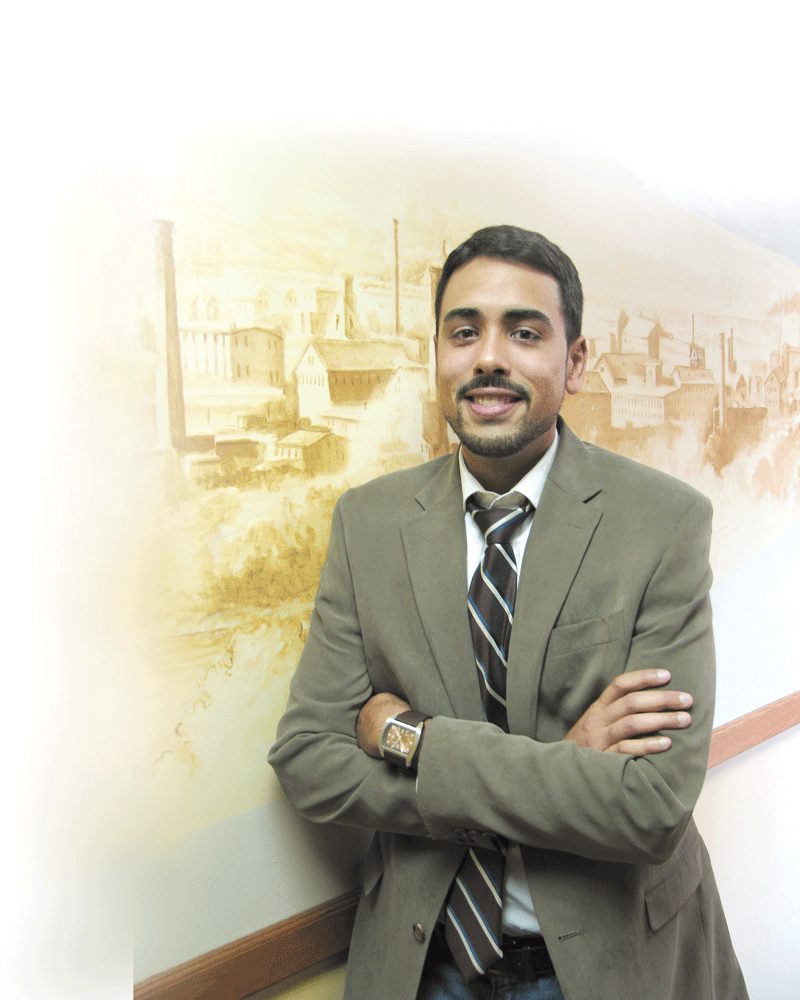
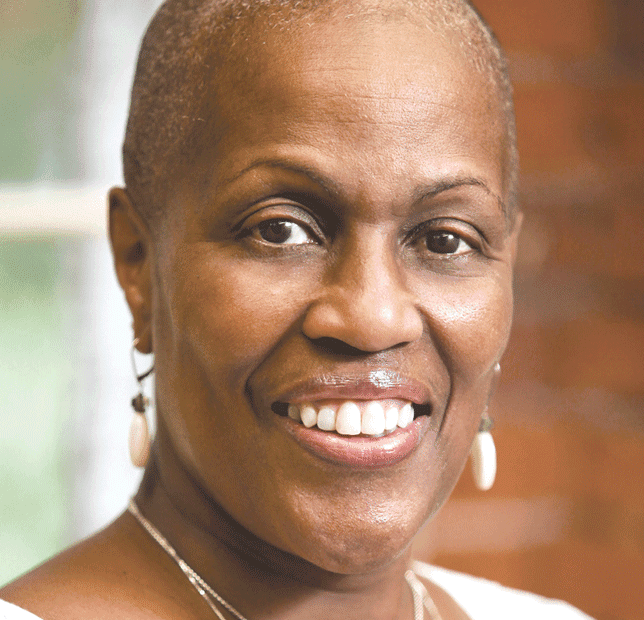
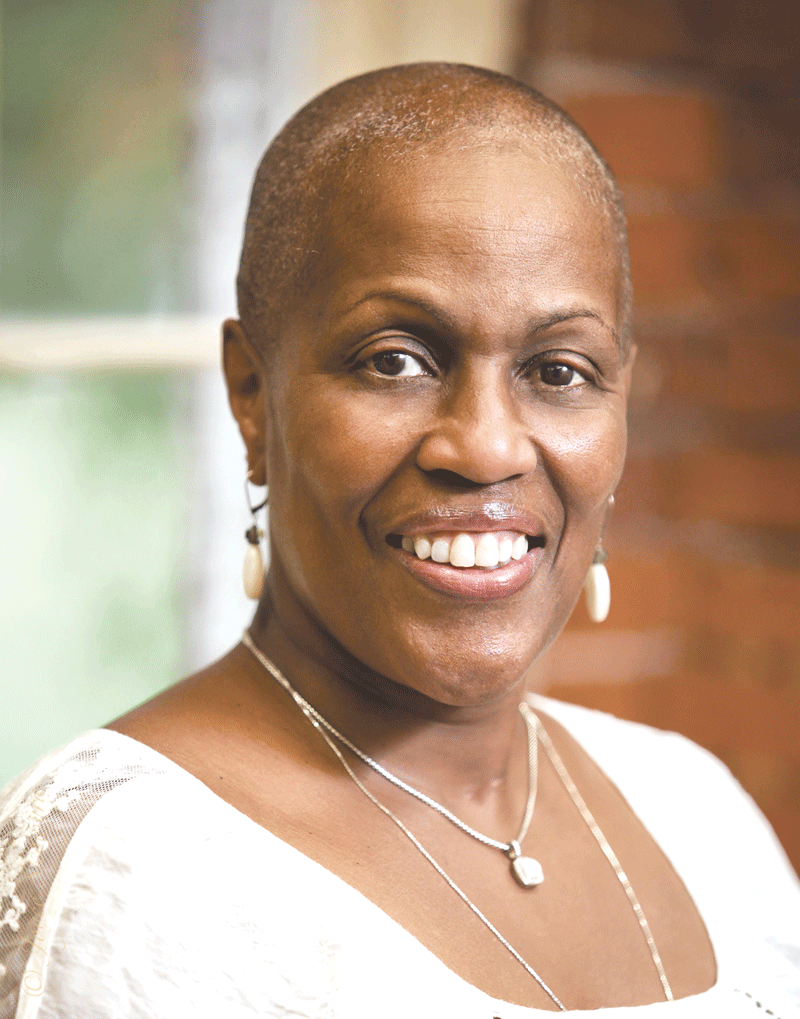
Shardool Parmar

Shardool Parmar says the large Mount Tom ballroom on the 12th floor showcases the downtown Springfield skyline and Connecticut River.

Shardool and Kishore Parmar, president and vice president respectively of the Pioneer Valley Hotel Group (PVHG), understand that they have two sizeable challenges when it comes to the property at 711 Dwight St. in Springfield.

The first is to get people to stop talking about it in the past tense — a still-common practice, especially when it comes to the rotating restaurant on the top floor that was once a major destination in the region — and using one of the names that used to be on the building, especially Holiday Inn.

The second is to convince several constituencies, from families to business travelers to event planners, to embrace the new name over the door — LaQuinta Inn & Suites — as one that represents both quality and an attractive option to the deep roster of other players in the local hospitality sector.

And the brothers Parmar believe that a recent $4.5 million renovation project, one that accompanied the new brand name on the landmark — will go a long way toward tackling both.

Indeed, the Parmars say they’re already noticing that while some people still talk nostalgically about the revolving restaurant, named Top o’ the Round, and how they had they had their high school prom there, many more are now talking about the new Mount Tom Ballroom, carved out of the space once occupied by the restaurant, and its stunning views of the Connecticut River and the Springfield skyline.

Meanwhile, they say the facility is catching the eye of event planners, some of whom are still getting quizzical looks, and more, when they reveal their choice for the company’s next function.

“Just recently, we’ve had meeting planners go back to their superiors after booking here and the superiors say, ‘there’s no way we’re going to book over there; are you crazy?’” he said with the laugh. “But they haven’t seen the space.”

Those who have generally report a facility that’s much brighter than the old Holiday Inn or, later, the Inn Place or CityPlace Inn and Suites, and also more customer friendly.

“This is probably one of the nicest looking LaQuinta hotels you’ll see in the whole country,” said Shardool. Indeed, PVGH recently won the Best Conversion award for all LaQuinta Inns & Suites in the U.S.

The Parmars realize that while they’ve made some progress with those aforementioned challenges, real success will take time and energy. It’s an assignment they embrace as one of the more visible components of a growing hospitality chain that also includes facilities in Ludlow and Hadley.

For this issue and its focus on meetings and conventions, BusinessWest toured what had been the forgotten hotel in Springfield, and gained a sense for what could happen next for this intriguing slice of the city’s skyline.


Suite Success

Wanting a better life for his two young sons, Laxman Parmar, PVHG’s CEO, brought the family to America in 1987, and eventually purchased the Seven Gables Motel (now Howard Johnson’s) on Boston Road in Springfield.

His two young sons essentially learned the hospitality business from the ground up at the motel, handling a number of odd jobs, from changing beds to cleaning bathrooms to tackling landscaping duties. And their learning opportunities multiplied as their father eventually came to preside over a hotel group that now also includes two facilities in Hadley, the Hampton Inn and Comfort Inn; and the Comfort Inn in Ludlow, which will soon change over to the Holiday Inn Express name in April.

Shardool and Kishore both enjoyed hospitality, but pursued degrees in engineering, and took jobs in related fields. A chemical engineer, Shardool worked in the biotech industry, while Kishore, an electrical engineer, worked at a Boston-area provider of information technology services.

They returned to the family business, however, when their father suffered a second stroke in 2005. And they took what they learned in the engineering field with them, skills and knowledge that have helped them shape decisions that have enabled the hotel chain to continue growing.

“If you look at the greatest CEOs in business history, most of them were engineers,” Shardool explained. He referenced Jack Welch, the former chairman of General Electric, who was a chemical engineer, and former Coca-Cola chairman Roberto Goizueta, a Cuban immigrant and also a chemical engineer.

“Engineers are good in business because we can quickly identify problems, and we have a great understanding of the mechanics of a business, not in the sense of equipment, but in the sense of what steps and what procedures need to take place to achieve the right outcome,” Shardool explained. “So when it comes down to making sure that rooms are clean, we don’t just take somebody’s word for it, we verify it.”

Kishore agreed.
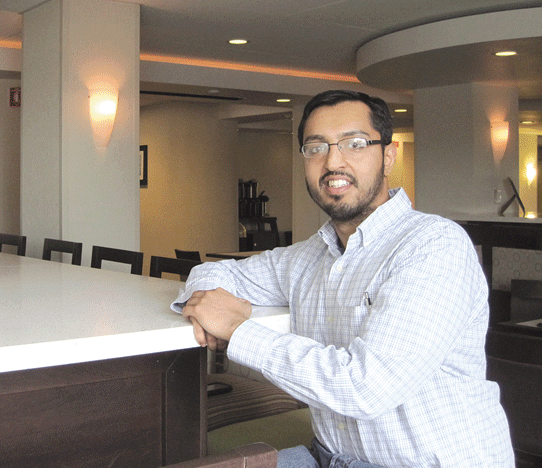
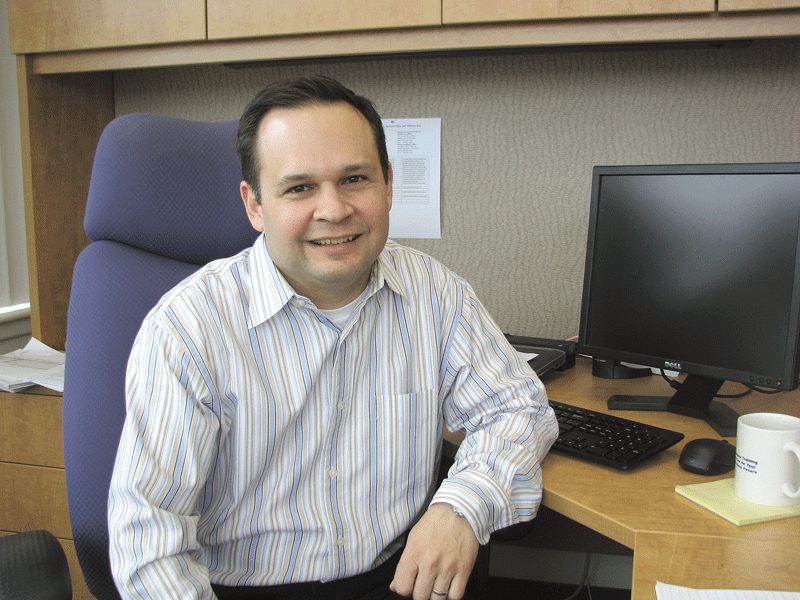
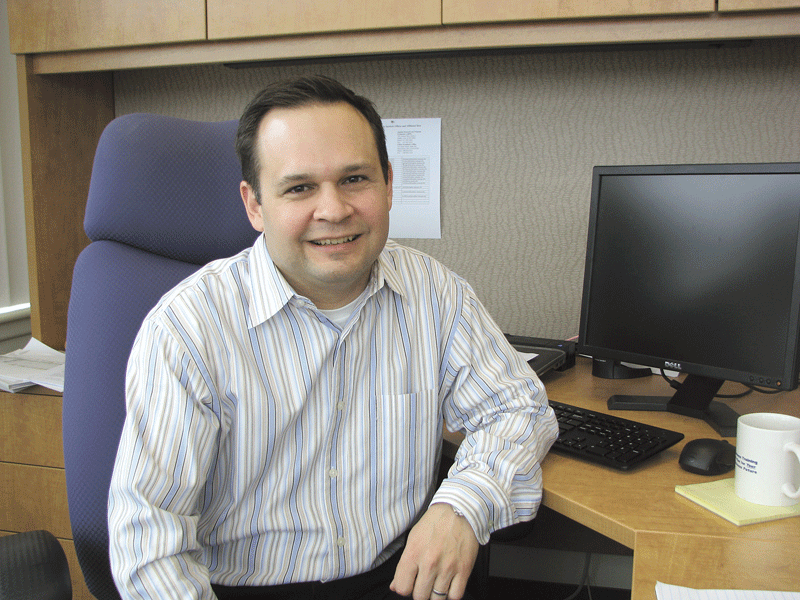
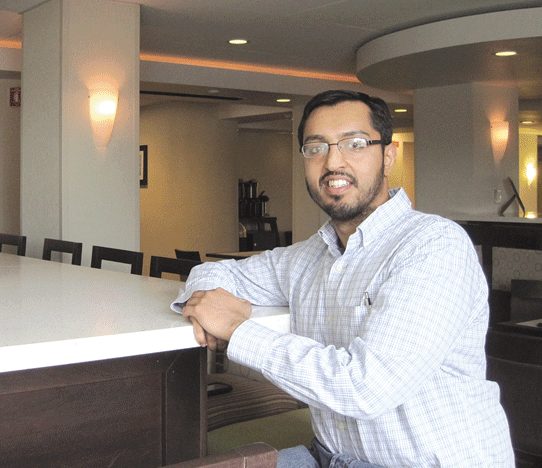
Kishore Parmar

Kishore Parmar says customers are impressed by the contemporary new lobby of LaQuinta Inn & Suites.

“The worst thing you can do is let a problem linger,” he said. “And engineers hate problems that linger, we want solutions, very quickly.”

These attributes and attitudes certainly came into play as the Parmar brothers first assessed the risks and opportunities involved with the former Holiday Inn, and also with moving forward after they eventually triumphed in the competition to acquire the property from the company that was operating it in receivership.

While all those who looked at the facility saw a property in a advanced state of decline, the Parmars saw something else — what Shardool described as ‘great bones.’

“We saw what happened to the hotel more as neglect, and lack of good management than anything else,” said Shardool. “We essentially had an idea of what we wanted here, but it takes time.”

One of the first priorities for the new owners was to rebrand a facility they had already been renamed the CityPlace Inn and Suites. What ensued was in-depth research into national franchise options, and analysis about what might work within the Greater Springfield market.

This research eventually focused on LaQuinta, a name and a chain that is far better known in other regions of the country. What the brand offered was a reputation for quality (at least in those markets where it’s a known commodity), and an opportunity to succeed within a specific niche — a lower-priced product that appeals to those who don’t want or need all the amenities of a full-service hotel.

But what it lacked was name recognition in the 413 area code.

“The greatest thing and the worst thing about LaQuinta is that nobody knows what LaQuinta is,” Shardool explained to BusinessWest. “The greatest thing is that nobody has a preconceived idea of what it is, but of course the downside is that it’s not as well-known.”


Room for Improvement

Once they had zeroed in on the LaQuinta brand, the PVHG began formalizing what became a $4.5 million renovation, funded in part by a $2.5 million loan from the U.S. Department of Housing and Urban Development (HUD) and a secondary loan from NUVO Bank & Trust Company, along with PVHG’s own funds.

The motivation for the massive undertaking was to change the look, feel, and attitudes concerning the property, said Kishore, and the LaQuinta chain facilitated these efforts by providing a great amount of flexibility, or individuality when it came to design elements and overall layout of the facility.

“Our goal from the beginning was to have as few walls as possible,” added Shardool, adding the desired effect was a much brighter, far more modern, more customer-friendly facility, from the front lobby to the 12th-floor facilities, and the two brothers believe all that has been accomplished.

The hotel now offers 182 rooms, down from the original 207, and 28 suites, said Kishore, adding that the work was phased in to enable the facility to remain open during the rehab process. The Parmars would close down two to three floors to gut and renovate, while the other floors remained open for business.

The bright, contemporary, open design that allows people to move more freely through the hotel has generated strong word-of-mouth referrals, said the brothers.  Moving the complimentary breakfast down from the dark and cramped top floor to the main lobby area has allowed the staff to meet the customers during breakfast or at the comfortable bar with it’s lime green pendant lamps and stylish, geometric design bar-height chairs.

On the 12th floor what had been three rooms has been transformed into one large function area, renamed the Mt. Tom Ballroom, which comfortably accommodates 260 people for sit-down functions, and 400 for cocktail events. The Summit Room, also on the top floor, can be split into two separate rooms and can hold up to 80 seated guests and 200 for cocktail functions.

Starting from essentially scratch, sales staff at the hotel report considerable interest in the 12th floor’s facilities, with a number of events already booked.


Mint on the Pillow

Recent increased national advertising by LaQuinta has helped famililiarize people in this region with the brand, but the Parmars acknowledge that many still don’t know about their facility or its extensive renovations.

They hope to change all that through strong word-of-mouth marketing, and by creating positive experiences for those who choose what amounts to Springfield’s newest hotel.

“LaQuinta has a good leisure following, nationally, and Springfield is predominately a leisure and sports type of customer,” said Shardool. “The business market is not as strong in Springfield, but the hotel market is changing, and we know, it just takes time.”

And in time, they believe far fewer people will be talking about this landmark with the past tense.


Elizabeth Taras can be reached at [email protected]
Banking and Financial Services Sections
Country Bank Maintains Its Community Focus

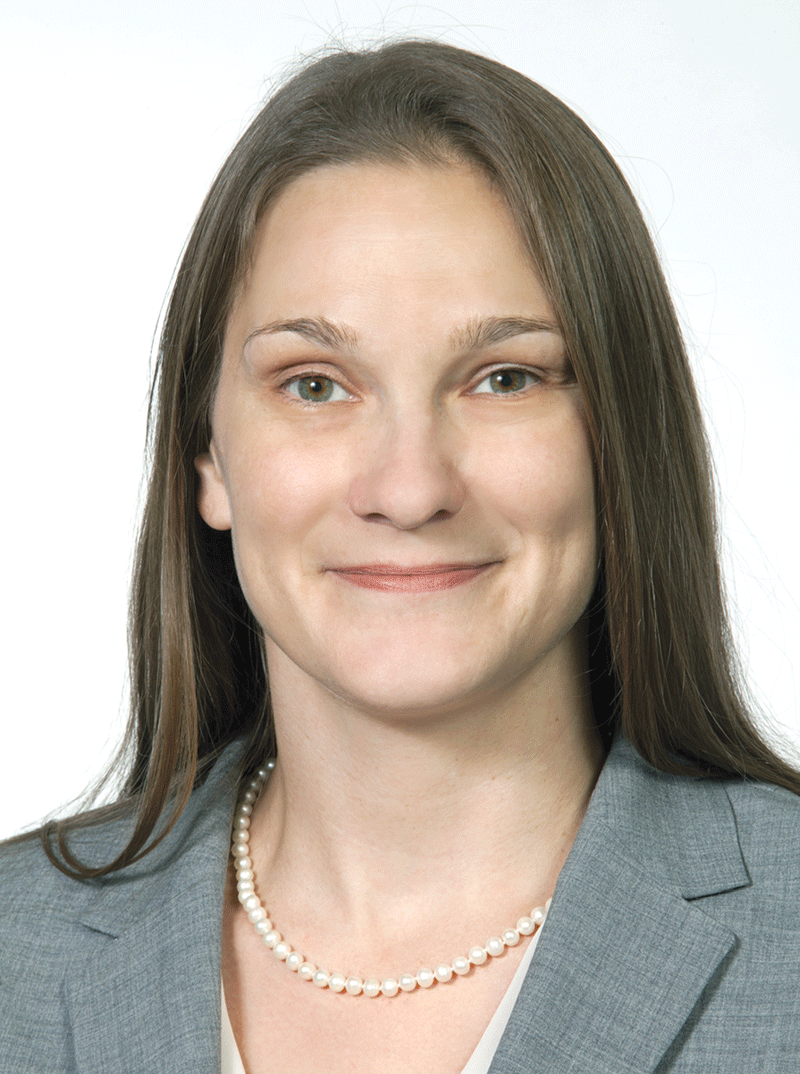
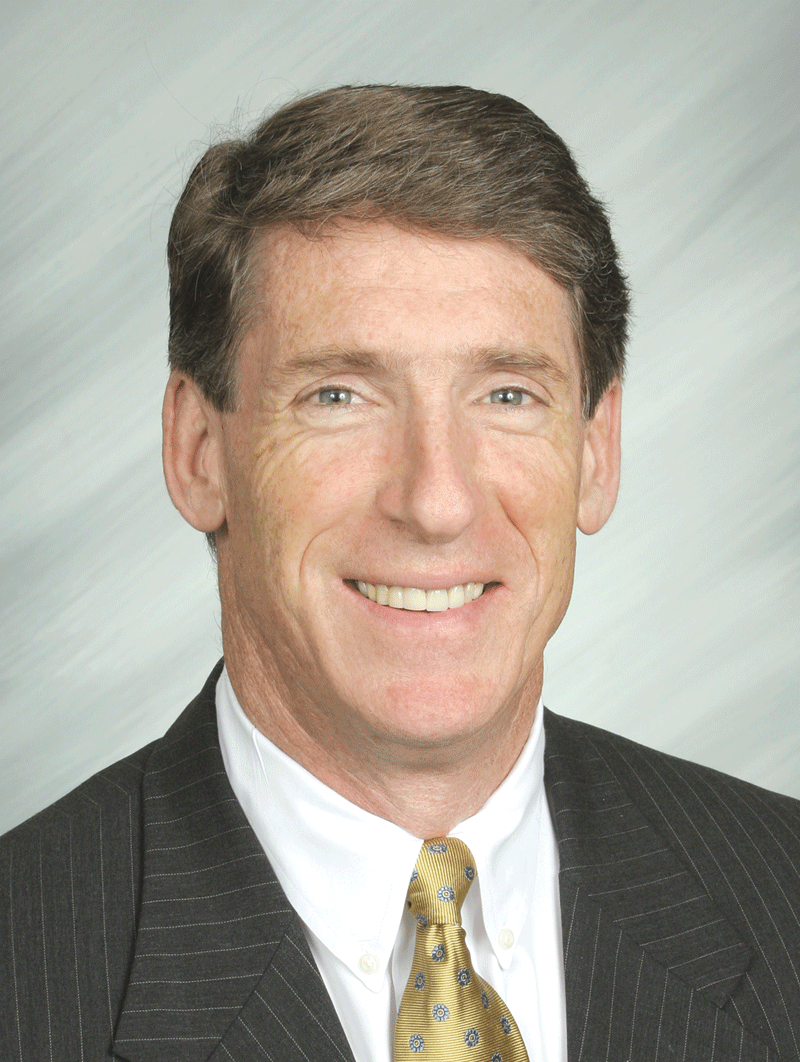
Paul Scully

Paul Scully says Country Bank’s community involvement extends beyond philanthropy to financial-education programs for young and old.

To describe how Country Bank is getting stronger, Robert Kolb used an apt analogy.

Specifically, Kolb — the bank’s senior vice president and chief commercial banking officer, who came on board six months ago — said he wants to take a “barbell approach” to growing its loan portfolio. Picture Country’s reach geographically, he said, with Springfield and Worcester representing the weights and all the smaller towns in between, where Country has a branch presence, as the bar.

“If we want to continue to grow the portfolio, we have to put our toe in the waters of other areas,” Kolb said, noting that the bank does not have physical branches in those two larger cities, but sees opportunities there. “We’re looking to do more in the Worcester market and the Springfield market … we want to expand our presence in those markets.”

As a mutual savings bank with $1.4 billion in assets, and boasting 14 branches and 245 employees — Country has the reach to grow, said its president, Paul Scully, but continues to maintain an emphasis on small communities.

“We’re still focused on providing a full range of consumer and business products and services within our marketplace, and we view our marketplace as the geography between the Worcester and Springfield areas,” he noted. “Our branching strategy is the same: smaller towns.”

However, he noted, “branch locations don’t matter as much anymore; between mobile banking, remote capture, and other services, customers have really caught on to the fact that they can do all their banking and really never go into a branch. Technology has allowed us to expand our product offerings within more urban marketplaces without having a physical presence there.”

And growth is what Scully has in mind.

“Last year we originated about $105 million in commercial loans — pretty respectable, considering what the market was and what the competition is,” he said, noting that the bank boasts a loan portfolio of $838 million. “A lot of banks are looking for the same opportunities as we are, but there aren’t as many opportunities to go around. What every bank tries to do is differentiate themselves from the crowd.”

One of the ways Country has always tried to do so is through an emphasis on service.

“We look at ourselves as a small business,” Scully said. “We’re a good-sized bank, but we’re still a small business able to offer personalized service. We don’t have a high level of turnover; people who come into the branches see the same people who have been working with them for a long time. Customers are recognized and feel comfortable with the people they’re doing business with. They’re not calling an 800 number where someone across the country is answering. The service element is really a key factor in our success and has set us apart since 1850.”

Added Kolb, “on the commercial side, as an organization, we provide a nice match for what the market demands. We’re not too big and not too small.” But he also echoed Scully’s sentiments about service.

“The money’s still green at the bank across the street. It’s a pretty homogenous product. We all make mortgages and commercial loans; we all do deposits,” he said. “But what really differentiates us is service. It’s not just a tagline; it’s something that’s ingrained and apparent.

“When you walk around the teller line, the average tenure there is 20 years. In the business lines, it’s 10 to 15 years. They don’t stay here because it’s a local, sleepy bank in Massachusetts; they take a lot of pride in the relationships they’ve forged. It is the difference between us and the bank across the street.”


Wiring of the Green

Bob Kolb says Internet and mobile banking are key to a bank’s success today

Bob Kolb says Internet and mobile banking are key to a bank’s success today, but so is the personal service available at a branch.

But how important is that physical bank on the street, in the era of Internet and mobile banking? Kolb said it will always have its place.

“There are still customers out there that like to see the branch bank on the corner,” he explained. “Having that visibility is important, and it’s never going away; it’s the doorstep to us being active in the community. And giving back to the community is really part of the culture at Country Bank.”

But technology has certainly changed the way customers interact with banks, Scully told BusinessWest.

“We’re pretty much able to have a full range of products to meet everyone’s expectations, from savings accounts straight through to mobile banking and e-bill payment,” he said. “Last year, we converted our ATMs to digital ATMs, so there are no more envelopes; you put the check right into it. That’s the convenience factor; it expedites the transaction for a person sitting in their car with a couple kids or a dog who wants to be somewhere else.”

Those high-tech advances extend to remote capture for businesses that can conduct transactions without going to a branch, and retail online banking has come into its own as well, but there’s no longer as dramatic a split in the ages of people who use it.

“We used to think of it as a generational thing, with the older client base wanting to come into the branch,” Scully said. “People still want to know the branch is on the corner, but we’ve learned that age doesn’t matter. Almost everyone uses a computer, and we have a lot more seniors using e-billing and other technology, and we have people feeling more and more comfortable with security.”

For that reason, the bank’s educational outreach spans generations as well. Country conducts a banking program in area elementary schools, building early financial literacy by teaching students about savings and investment and providing them with passbooks to open their own in-school accounts. It has since expanded that to a ‘credit for life’ program for high-school seniors, teaching them about credit scores and smart handling of paychecks and expenses.

“But the other thing we’re focused on is the senior piece,” Scully noted. “We do a lot with senior centers, talking about banking technology and security, so they don’t feel intimidated using a computer for their banking.”

When Social Security switched over to electronic payments, “we did a lot with senior centers about what that change means and why e-banking is very secure,” he added. “Once seniors feel more comfortable with the technology and understand that their money is not at risk, they want to use e-banking; they want to use mobile banking.”

“The key,” added Kolb, “is to make those channels available, whether through the computer, at a branch, or on the phone, whether someone is 18 or 88 years old.”

In fact, Scully said, there’s no reason why remote banking shouldn’t be embraced by seniors. “Once people realize, ‘OK, I don’t have to go out in the snow and possibly fall down,’ suddenly they feel really good about it.”

For younger customers, he added, “it’s all about smartphones. They’re not looking to have a passbook; they don’t want to bring in some clunky old thing.”


Hometown Appeals

The Country Bank name is only 32 years old, but the institution has been around since 1850, when it was known as Ware Savings Bank. It took on its current name after a 1981 merger with Palmer Savings Bank; another merger with Leicester Savings Bank 17 years ago further increased the bank’s holdings.

From the time of the name change, Scully said, it has been important to communicate a sense of community ties. That’s why the name of each branch reflects its hometown: Country Bank of Ludlow, Country Bank of Palmer, etc. “We like to think of ourselves as that town’s small-town bank, their community bank,” he said — despite the occasional confusion of a customer who goes into a branch in a different town and wonders whether he can bank there because of the different name.

The small-town focus is a positive when it comes to lending, Kolb said.

“Small business is really the backbone of America, and it’s certainly the backbone of the small areas we operate in,” he told BusinessWest. “In Central and Western Mass., it’s about small business; it’s about Main Street. With our branch network and experienced lenders on the commercial side and on the mortgage-origination side, that puts us in a great spot to serve the community with the resources of a big bank, yet we’re small enough to be able to jump in the car and see someone at 7 at night, or be reminded when walking down the aisle of the grocery store that you need to see somebody.”

The hometown emphasis is also at the heart of Country’s philanthropic efforts. In 2012, Scully noted, the bank donated more than $600,000 to community organizations.

“They’re causes that people don’t think about because they don’t necessarily apply to their life, but there are so many people whose lives are affected,” he said, citing the bank’s support of domestic-violence task forces, food pantries, and other organizations. “Unless you need that service, you might not pay attention to the fact that their funding sources have been reduced, or that their needs have grown.”

But the bank offers more than money, he was quick to add, noting that management staff alone volunteered more than 1,400 hours last year at community events — “that’s personal time, nights and weekends” — and the bank has been expanding volunteer opportunities for all employees as well. “Now we have more than 100 volunteers giving back to the community.”

All the bank’s efforts — from its lending business to its charitable work — boil down to an effort to improve people’s quality of life,” Scully said. “Maybe we lend to a business that puts up a building and hires more people. Or we could be giving a scholarship to a kid who then graduates from college. Or we could be supporting social services. It’s all full circle, quality of life.”

Kolb was quick to note that “philanthropy is not something that drives revenue; it’s not a profit center. What it is, really, is part of the culture; it’s consistent with the mutuality of the company. What we’re trying to do for the communities we serve is not a revenue driver; it’s really part of who we are.”

Specifically, Scully added, “the profit is in the long-term impact in the community. Everyone benefits from it. And we didn’t start those things; it’s the legacy of the bank as it relates to every aspect of community life.”


Bottom Line

In many ways, despite its asset growth, some things have remained the same at Country Bank, Scully said. “Community banking is consistent banking. We’re taking what we believe we’ve done well and expanding it.”

And that requires constant reconsideration of business strategies. For example, “the [loan] portfolio is very heavy in real estate, so one of my objectives in coming here is to diversify the portfolio,” Kolb said, a process that will take some time considering an economy that is improving, but still far from thriving. “The idea is to start with small businesses and identify opportunities in that space where we can exploit our leverage with our infrastructure and the experience of our lenders and our service.”

Scully called today’s banking environment “an exciting time, but a challenging one,” but he noted that, particularly since the financial collapse in 2008 that was brought on partly by the misdeeds of the largest banks, there’s something appealing to many customers about a community bank’s consistency.

“That’s not to disparage super-regionals, but those organizations use their customer base as a means to produce revenue and income, which increase shareholder value,” Kolb noted. “What sets us apart, as a mutual bank, is that our depositors are in essence the drivers, and our mission is to service those individuals.”

“We have sort of a split personality,” Scully added. “Are we a big little bank or a little big bank? We’re sort of both; we can do almost any type of transaction a big bank can do, and by any standard we’re considered large, but by having a focus on the customer, the community perceives it as a little bank.”

But one that, barbells or not, is growing stronger.


Joseph Bednar can be reached at [email protected]

Employment Sections
Online Education Programs Are Undergoing Rapid Change

Debbie Bellucci

Debbie Bellucci says that 12% of the credits sold at STCC are of the online variety.

John Wells teaches a course in Information Technology Strategy at the Isenberg School of Management at UMass Amherst. But his students don’t spend their time listening to lectures. Instead, they access that information online and use classroom sessions to discuss complex projects or cases, he said.

The associate dean for professional programs is just one of many college and university professors taking advantage of technological advances in what has become known as the ‘flipped classroom’ — a form of blended learning that encompasses technology to leverage learning, so a teacher can spend more time interacting with students.

“There’s been a huge movement of change over the past five years, and the way people deliver content has improved dramatically as instructors and students get more comfortable online,” Wells said.

An example of advancing technology is a pilot program at Isenberg for students taking online courses. They are participating in live lectures and interacting with students in traditional day classes via the computer, and if they aren’t available when the class meets, they can watch the captured portion later. “We’re seeing a constant melding of online and offline courses, and we plan to expand the pilot program in the fall,” Wells told BusinessWest.

Integration exists in many degree programs, and at Springfield College, students in the Physical Therapy program take online courses while they are engaged in off-campus clinical fieldwork. “It allows them to discuss their clinical experiences, receive mentoring and enjoy a much richer environment than was possible in the past,” said Jean Wyld, vice president for Academic Affairs. “Discussions can include students from across the country, and everyone joins in the discussion forum.”

She added that it’s a virtual version of everyone getting together at the end of the workday to talk about what happened. “It’s a great addition to our program.”

So, although the two entities — online classes and on-site classes — still exist, the boundaries are beginning to blur, while the benefits and disadvantages of distance learning are becoming clearer as the number of online course offerings expand.

“Online education is a great idea, but traditional education is faced with the dilemma of having to meld the two types of learning. And schools like ours are offering more online courses because the market wants it,” said Christopher Hakala, professor of psychology and director of the Center for Teaching and Learning at Western New England University.

That market includes a diverse group of students, and some are definitely more suited to distance learning than others. But for all students, accessing educational information via the Internet is a valuable tool.

“In the future, online learning at work will play a major role for our graduates, so we want them to learn how to do it well,” said Wyld, adding that the typical 2013 faculty member is using electronic resources to support their teaching. And since many students are mixing online and traditional classes, their skills are growing, along with a set of best practices for online learning being developed at institutions of higher learning.

But it doesn’t take advanced skills to begin, and even those who are almost computer illiterate can participate.

“If you can write an e-mail and attach a word document to it, you can take a distance course,” said Debbie Bellucci, dean of the School of Continuing Education and Online Learning at Springfield Technical Community College. “People think of them as technical, but they aren’t. You don’t need to be a computer programmer or a techie. And they are very popular — 12% of all of the credits we sell are distance credits. Students are taking some courses online and some on-site. They are not buttonholed into one method, and it affords another option for people to complete a degree.”

For this issue and its focus on education, BusinessWest takes an in-depth look at the world of online classes and what students need to know about this type of learning.


Bevy of Benefits

Christopher Hakala

Christopher Hakala says one of the biggest challenges facing educators today is successfully melding traditional and online methods of learning.

Wells said many UMass students take online classes in the summer to accelerate matriculation. “They can take a lighter load during the semester and fill in the gap over the summer, which many students feel comfortable doing, especially if they are working part-time. In fact, it can be a huge advantage for people who are putting themselves through school by working.”

Another benefit is that the courses allow every student to voice their opinion via discussion boards. “In a regular classroom, everyone may have their hands up, but then you run out of time, so they can’t contribute their thoughts,” Wells said, noting that both instructors and students tout the forums as an online advantage.

Bellucci agrees, and says it can be a real bonus for shy students due to the sense of anonymity. “No one is staring at you, so people feel safer. And for those who are not good at responding on the fly, it gives them time to think about their answers.”

Flexibility is another advantage, especially for those who commute. “Students can take regular classes on Tuesdays and Thursdays; work Mondays, Wednesdays, and Fridays; and do the rest online,” Wells said.

Hakala concurs. “Convenience is a factor, and students can access material when they need to. Plus, online courses allow us to reach people who might not otherwise be able to take classes,” he said.

In addition, learning on one’s own timetable can allow a student to do an internship and still graduate on time, which can prove beneficial to their future career.

Vana Nespor, dean of Online and Adult Studies at Bay Path College in Longmeadow, said the school has a Saturday degree program that many women take advantage of, especially since a blended course format is available. “Some say their employers have told them their job will be in jeopardy if they don’t get a degree, while others want to move up the career ladder,” she explained. “And although many love face-to-face classes, we are seeing more and more students who like the convenience of taking courses from home.”

She added that Bay Path has received grants that allow it to incorporate advanced technology in all of its classes, including occasional live video chats with instructors.

“The new wave of online courses is exciting and very interactive and gives students the opportunity to build community through Facebook, YouTube, and social media,” she continued. And since online classes include students from around the world, “it opens discussion to a much broader society than if the majority of people in the class came from Western Mass.”

It also allows students to finish degrees who can no longer attend classes on campus. Nespor said Bay Path had a traditional student two courses shy of graduation who needed to return to Africa and was able to complete her degree due to online offerings.

However, Belluci said online courses are not open-ended, and students do face constant deadlines. But they still have a certain amount of freedom. “Some people will work for six hours at one sitting, while others like to do it in smaller pieces. It’s all related to their learning style.”

Plus, there is no lack of social interaction. “We hear that many online students get to know each other better than they would in a classroom because there are no time barriers,” said Belluci. “When you are in a three-hour class, there isn’t time to really talk to anyone. But in most online classes, the first assignment is to introduce yourself, which is not done in a regular classroom.

“A student might spend a whole semester not knowing who the person sitting next to them is or what they do,” she went on. “But online, people form great bonds because they have each other’s e-mails. And faculty members tell us they know more about their online students than the students in their classrooms.”


Drawbacks Exist

Although benefits abound, there are disadvantages, and cost can factor into this because some institutions charge more for online courses, and others don’t include them in the price of full-time tuition.

But perhaps the most critical issue is whether the student is suited to this type of learning. “Older students who are returning to school tend to be better at online learning because they are usually more self-disciplined. It’s a matter of being able to manage your time efficiently,” Hakala said.

Wyld agrees, citing a study of 40,000 students released last month showing that students who are academically unprepared for college may not only fail to benefit from online classes, they may actually be hurt by digital instruction.

“Students need to have strong study skills and a solid high-school foundation to complete college-level online courses. It’s not a great fit for all students for a host of different reasons,” she explained. “Some do much better with face-to-face interactions in regular classes.”

Wyld said the ideal candidate is “a very focused, self-disciplined person who has very good time-management skills. Flexibility is the hallmark of online learning, but students still need to meet the same outcome, and an online learner must go to class.”

Wells advises people to choose their online courses carefully. “If a class is very experiential, don’t take it online,” he said. “Putting concepts into practice is more conducive to face-to-face learning.”

In addition, not all professors are adept at using technology to teach. “Some are very good at it and can turn readings, discussions, and PowerPoint presentations into a good learning experience, while others simply give students assignments and don’t provide them with structure,” Hakala said. “Professors have a long history of in-class experience to draw upon, but sometimes fail to anticipate issues that happen online.

“In a classroom, you can respond rapidly to feedback, but online it’s staggered,” he continued. “And many professors who have been in the classroom for 20 or 30 years have never taken an online course, so they don’t see it from both sides. However, we are getting better at it and moving towards standardization as we develop best practices.”

Wyld concurs. A recent study at Springfield College showed that its typical online student is a woman in her 30s taking classes to advance her career. “Many of them have a job and a family. And the success people have really depends on the quality of the experience. It has to be very interactive to be successful, which depends on the professor and the course design,” she said, adding there is a clear distinction between online courses at non-accredited institutions and those that are accredited.


Final Grade

Although the options to earn a degree are expanding thanks to online options, “there are deadlines, and the assignments are not open-ended, so students who engage in distance learning have to be very self-motivated,” Bellucci reiterated.

But the horizon has few limits. “The world of online education was clumsy when it started. But it has become highly interactive and very engaging, and instead of feeling isolated, students are building a community online and helping each other,” Nespor told BusinessWest.

“This is a going to be a great decade because technology is becoming so sophisticated and we can do things we couldn’t do before,” he went on. “It just gets better and better every day.”

Education Sections
Bay Path Women’s Conference Continues to Educate and Motivate

Carol Leary, left, and Caron Hobin

Carol Leary, left, and Caron Hobin say the key to the success of Bay Path’s conference is effectively matching speakers to themes, such as this year’s ‘Be Bold.’

Her business card might say ‘vice president of Planning and Student Development’ at Bay Path College, but Caron Hobin’s supplementary title is ‘event organizer.’

And in that capacity, she has played a lead role in organizing and presenting Bay Path’s Women’s Leadership Conference for the past 18 years. Which means she can name drop — through the conference, she’s met everyone from former Secretary of State Madeleine Albright to author and screenwriter Nora Ephron to poet Maya Angelou. But she’s also had some anxious moments with some of the famous speakers.

Hobin recalled a phone message in 2001 from the representative of the keynote speaker, actress Rita Moreno — the only performer to have been awarded an Emmy, Grammy, Oscar, and Tony —  the night before the sold-out conference.

“She had lost her only living relative the day before,” Hobin recalled, breathing deeply just remembering the stress she endured more than a decade ago. With less than 24 hours to go, getting a replacement was impossible.

“Moreno’s representative said that they’d let me know the next morning if she was coming,” remembered Hobin, who said she had no idea what to expect. But at 11:30 a.m. on the day of the event, Moreno called her directly and said, “I’m going to honor this commitment; I’m a performer, and I’m coming.”

And the show went on, just as it has every spring since 1996.

While Hobin remembers that scare, she has many more memories of inspiring speeches, educational programs, and Bay Path students enjoying the unforgettable experience of being escorts for those who take to the podium (more on that later).

This year, one student will have the honor of being escort for musician, actress, author, and entrepreneur Queen Latifah, the main keynoter for the March 22 event at the MassMutual Center. Latifah’s unique personality is just one manifestation of this year’s theme, “Be Bold,” which is based on the new Bold Scholarship to help students disadvantaged by the recent recession.

Bay Path President Carol Leary called the rest of the day “an amazing lineup of speakers” and promises that professional women, students, and interested individuals will be boldly inspired, entertained, and, above all, educated. Other speakers include Susan Cain, author of Quiet: The Power of Introverts in a World that Can’t Stop Talking, and Jenn Lim, CEO and ‘chief happiness officer’ of Delivering Happiness, LLC, who will discuss shaping a corporate culture.

Leary emphasized the educational component of the conference — which is modeled after a program both she and Hobin experienced while working at Simmons College — is geared especially toward alumni who not only never stop learning, but, like all professional women, want to be refreshed, inspired, and motivated by nationally and internationally known speakers.

“The beauty of this program is that it’s not just inspiration and motivation, but useful information, so that women can go back to their office the next day and say, ‘I just learned in one of the skill-building breakout sessions how to encourage introverts and extroverts  … practical tips I can use immediately.’

“That was one of the two primary purposes for putting the conference together,” she continued. “One, we wanted to expose our own students, faculty, staff, and alumni to well-known, well-respected, influential women, and two, it was an opportunity to bring it to a large venue to serve the outlying community.”

For this issue and its focus on education, BusinessWest takes an in-depth look at how Bay Path College’s conference has become part of the landscape in Western Mass., and how, after nearly two decades, it continues to evolve, mature, and give area professionals plenty to think about.

Words of Wisdom

Leary remembers Hobin’s first week at Bay Path in August 1995. Hobin had just left Simmons to assume the role of dean of Continuing Education.

“I told her what her first assignment was,” Leary said with a laugh before Hobin finished the sentence for her: “the conference.”

“I said, ‘we’re going to do it,’” said Leary, ‘and we’re going to take that Simmons concept of a women’s conference, and we’re going to bring it to Springfield.’”

Hobin said she was very familiar with the Simmons model for a women’s professional conference, and remembers thinking to herself, ‘how hard could it be?’

By March, she would find out — there were a number of challenges, logistical and otherwise, with staging the inaugural conference at the Sheraton and Marriott hotels in downtown Springfield, but she was helped in her efforts by successfully landing keynote speaker Elizabeth Dole (then-director of the American Red Cross). This was a timely booking since her husband, then-U.S. Sen. Bob Dole, had just announced that he would run as the Republican candidate in the 1996 presidential race. (Elizabeth Dole would later run for president herself in 2000.)

“Getting Elizabeth Dole as our first speaker really helped — that was the first big ‘get,’” said Hobin.

There have been more since, she told BusinessWest, adding that securing speakers is one of many responsibilities that fall to the team tasked with orchestrating the conference each year. That team includes Hobin; Leary; Kathy Wroblewski, director of Communications and Marketing; and Briana Sitler, director of Special Events.

To be more specific, the assignment is to match speakers to a theme, said Hobin, which is an intriguing process. “Sometimes the theme comes first and then the speakers follow, and sometimes a really great speaker becomes the lead and then a theme emerges as a result.”

While planning the 2012 conference, Hobin kept hearing, seeing, and reading the word ‘compassion’ in various publications and electronic media. Using Wroblewski as her barometer, Hobin started to pare down concepts and wordsmith possible titles for a theme (“Lead with Compassion” was eventually chosen), while also locking in a keynote speaker whose work is the epitome of compassion — Sr. Helen Prejean, a leading advocate for the abolition of the death penalty.

“I pick up on little cues, and it’s an evolution,” Hobin told BusinessWest, adding that everyone from staff to students is involved. “And I tell the students this: the universe sends you messages; you just have to listen.”


Star Search

Looking back, Hobin said the theme for the 2011 conference, “The Power of Choice,” was shaped in part by a Legal Studies student who was forced to drop out of the college for financial reasons.

Her former Bay Path professor bumped into her at the job she took to make ends meet, and, through the course of their conversation, learned about a book she was enjoying titled The Other Wes Moore. The teacher made the Bay Path staff aware of the book, which then became the summer ‘common read’ for all incoming freshmen.

Hobin, connecting the student’s financial issues and subsequent decision and the subject matter of the book — choice  — created the theme and landed the author, Wes Moore, as the morning keynoter.  The student in question actually became his escort, to assist him for the day.

Leary remembers seeing the student point out an underlined part of the book to Moore — the most critical part of the book for her, and, as it turned out, for Moore as well. During his keynote, Moore referenced the student in the large audience to explain how profound her life could be just by making a different choice.

“The part that she underlined was, ‘you will step out, but you will step back in if you want it bad enough,’ and you could see the emotional connection right then,’” said Leary, noting that the student did come back and finish her degree. “There’s a lot of learning that goes on during the conference on so many different levels.”

As just one example, she recalled the 2005 conference, headlined by Albright, the first female Secretary of State, who availed herself to sit with 15 students and Leary at a large table at the Marriott.

“There was an incredible dynamic between our students and this powerful woman,” said Leary, who distinctly remembers the students asking Albright who she thought would be the first female president — as well as the answer, Hillary Clinton.

“We really believe that we’re educating not only our own community,” said Leary, “but the professional women in the region who can be inspired by women, like Madeleine, that they may never have had the chance to meet otherwise.”

The opportunity for students to meet the keynote speakers is vital to the internal success of the program, said Hobin, adding that it has created a few much-coveted escort positions over the past 18 years. And the more famous the speaker, the more in demand the escort position is, said Hobin, adding that those seeking it must submit a two-page essay explaining why they want such an assignment. Applicants must then go through a rigorous series of interviews.


Meeting of the Minds

“Be Bold” might be the theme for this year’s conference, but that phrase also constitutes the unofficial directive for those organizing and presenting the conference since the beginning.

They have been bold — and imaginative and, above all, diligent about providing attendees with a program that will not only inform, but also inspire.

Their track record for success has made the conference a spring tradition in Greater Springfield — and a learning opportunity that, as Leary noted, comes on a number of levels.


Elizabeth Taras can be reached at [email protected]

Employment Sections
Cambridge College’s Move Downtown Increases Visibility, Accessibility

Terrie Forte

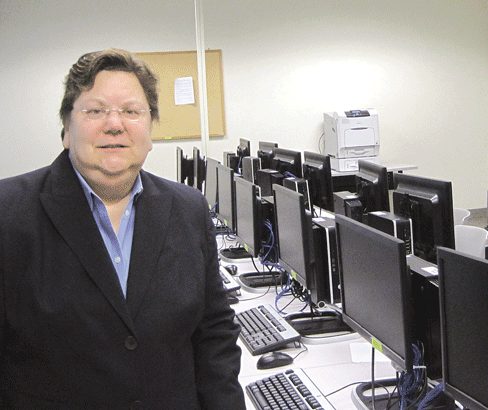
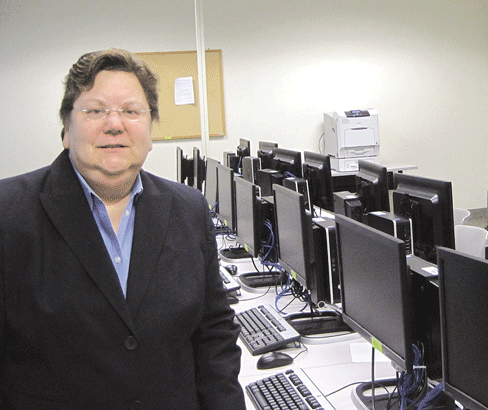
Terrie Forte shows off the computer lab in Cambridge College’s new location in Tower Square.

Terrie Forte says there were a number of motivating factors behind Cambridge College’s relocation from Cottage Street in Springfield into former retail space in Tower Square, in the heart of downtown.

There was the desire to upgrade and modernize the facilities at the Cottage Street location, she said, noting that they had been in use for more than 20 years and had been carved out of former industrial space not exactly suited for higher education. And there was a need for both more immediate space and room for likely expansion of this school that serves mostly working adults who need graduate or undergraduate degrees to advance their careers.

But the overriding motivations were the need for both more exposure and better accessibility, factors that have been verified since the doors to the new facility opened several weeks ago.

“The most interesting thing we’ve learned in this relocation process,” said Forte, director of the school’s Springfield Regional Center, “is that, even though we’ve been in the area for 20 years, many people don’t know about us and what we do. But it shows us just how much potential we have here.”

Indeed, Forte has already noticed an uptick in inquiries from prospective students, especially younger individuals looking for degree-completion options — one of the school’s many realms of service.

“What we’ve seen is a lot of younger people coming in, just because of the new location,” she said. “And generally, they will come to us for degree completion.”

And while the new location appears to be already paying dividends for Cambridge College, the move is also benefiting the long-struggling Tower Square.

For starters, space that had been dark for more than a decade (since former tenant U.S. Factory Outlets moved out) is now vibrant again. And the presence of students, faculty, and administrators on the ground floor of the retail and office complex is breathing some new life into the facility.

“Every time I go down the escalator and see those windows [adorned with the Cambridge College logo], it puts a big smile on my face,” said Fred Christensen, senior property manager for CB Richard Ellis, which manages Tower Square.

The new Springfield Regional Center includes 18,000 square feet of space fronting Boland Way, compared to 16,000 in the Cottage Street facility. The new location features 14 classrooms (six more than the school had previously), complete with daylight and motion sensors for all lighting, ergonomically designed chairs, smart boards, ceiling projectors, and other high-tech elements that make instructors’ jobs easier while enhancing the learning experience.

The move took more than two years to plan and execute (somewhat longer than initially expected),  but it already appears to be a smart move, in more ways than one, with the school gaining valuable exposure from its Main Street address, as well as much greater accessibility off nearby I-91.


School of Thought

Turning back the clock roughly three years, Forte said senior administrators at Cambridge College had reached the conclusion that, while the Cottage Street location was still in some ways adequate, a larger, more modern, more accessible location was needed if the Springfield center, one of six located across the state, was to grow.

“Being the first regional location for the college over 20 years ago, we were the one most in need of an upgrade,” explained Forte. “But once the college decided they would make the investment, it was the question of, ‘where do we do it?’”

Many locations in the city were considered following strong response to a request for proposals issued by the school, she told BusinessWest, adding that the Tower Square site most effectively addressed the college’s needs and concerns.

“Not only could we provide them with a large, contiguous space and exterior street exposure,” said Christensen, “but the parking component was a big factor in terms of keeping their students safe.”

Forte agreed. “The average age of our students is 38, and they are adults in career transition,” she explained. “Some don’t have cars, or they’re busy parents who require flexible schedules, so most of our class time is nights and weekends, and safety, from the very beginning, was absolutely my number-one concern.”

Overall, the new location will enable the Springfield center to better attract and then assist the many constituencies it serves, she went on, noting that Cambridge College caters to a diverse population of adult learners for whom higher-education opportunities may have been limited.

In this tight job market, she noted, employers can be somewhat demanding, and that means that many job seekers will need additional skills or degrees to advance in their chosen field or move into a new one.

“We’re seeing many people who find themselves unemployed or underemployed and are looking to change that, and what’s great about Cambridge College is our rolling admission policy,” said Forte. “There aren’t any barriers; you get here, and you prove yourself.”

To emphasize that point, she referenced one of the school’s newest offerings, called the Portfolio Program. It allows students who have already been working in the human-services field, for example, to earn a degree in that course of study.

The most appealing aspect of the program, Forte explained, is that work-life experience is taken into account, and while most students still have considerable work to do to earn their degree, attending a rotating class schedule is not necessary; meeting periodically with the advisor is. Essentially, the Portfolio Program is customized for each student, based on what skills and experiences he or she has gained over time.

“It’s definitely not an easier path by any means,” she said, “but for some of our students, it does allow them to not have to go to class.’”

Currently, Forte said, the college serves approximately 300 adult students and employs 50 faculty members, 10 of whom hold administrative posts. The school offers graduate-degree programs in education, management, and counseling and psychology, many of which lead to licensure and certification. Undergraduate degrees are also offered in human services, management, and multidisciplinary studies.


— Elizabeth Taras

Employment Sections
Understanding the Nuances of Employer Liability Under Title VII

Karina L. Schrengohst

Karina L. Schrengohst

You employ Jack and Jill. Jill files a lawsuit alleging that Jack was harassing her and you did nothing to stop it. Can you be held liable for Jack’s conduct? The answer: it depends.

It depends on whether or not Jack supervised Jill. If Jack was Jill’s supervisor, you may be held liable for Jack’s conduct. Under Title VII of the Civil Rights Act of 1964, which is our federal anti-discrimination law, employers may be found liable for the conduct of supervisors who harass subordinate employees.  If, however, Jack was Jill’s co-worker, you may be held liable only if you were negligent in discovering or remedying the harassment.

Problematically, courts across the country interpret what makes an employee a supervisor differently. Therefore, determining who exactly qualifies as a supervisor can be complicated. Some courts have a narrow, employer-friendly understanding that Jack is a supervisor if he has the power to ‘hire, fire, demote, promote, transfer, or discipline’ Jill. Other courts have a broader and more employee-friendly understanding that Jack is a supervisor if you have given him authority to ‘direct and oversee’ Jill’s daily work. The Equal Employment Opportunity Commission (EEOC) also favors this broader definition of supervisor. The U.S. Supreme Court will soon decide which courts have it right.

Maetta Vance, an African-American woman working at Ball State University in the catering department, sued her employer under Title VII alleging racial harassment by several individuals that she worked with. Her allegations include the repeated use of racial epithets (including references to the Ku Klux Klan), threats, slapping her in the face, and physically accosting her while on an elevator. Vance reported this conduct to her employer on multiple occasions. The university investigated each complaint and in some instances took disciplinary action. The courts involved in this case, Vance v. Ball State University, take a narrow view of supervisor liability. The district court and the appeals court both found that an individual Vance considered to be a supervisor, was, in fact, not a supervisor because she did not have authority to hire, fire, demote, promote, transfer, or discipline Vance.

Because a supervisor was not involved, the university could be held liable only if it was negligent. The court did not find the university to be negligent because it promptly investigated each of Vance’s complaints and took disciplinary action when appropriate. Consequently, Vance’s employer was not liable. Vance appealed this decision, and on Nov. 26, 2012, the Supreme Court heard oral arguments, but has not yet issued its decision.

Why should employers be paying attention? This decision could potentially change the current landscape of Title VII litigation and increase the risk of employer liability. If the Supreme Court adopts a broader, more employee-friendly definition of supervisor that includes anyone with authority to direct and oversee an employee’s daily work, it means that more employees have supervisory roles. This also means that there will be more occasions when employers could find themselves facing liability for allegations of discrimination and harassment than they currently do. Therefore, if the court favors a broader definition of supervisor, some employers may want to think about revising job responsibilities so that the portion of their workforce with supervisory roles is clearly delineated.

Regardless of the outcome, employers should take preventative steps to eliminate workplace harassment and reduce their risk of liability. Toward this end, employers should create and implement a written anti-discrimination and anti-harassment policy. In addition, employers should provide training on a regular basis to ensure that all employees understand the company’s policy. And additional trainings should be conducted for employees with supervisory roles to ensure they understand their obligations, know how to recognize what constitutes discrimination and harassment, and know the appropriate steps to take when discrimination or harassment is identified or an allegation is reported.

Employers have even more incentive to train supervisors because, as discussed above, employers are liable for the discriminatory and harassing conduct of employees in supervisory roles. Furthermore, supervisors are the first line of defense;  what they do can either create or prevent additional problems. Providing the proper training to employees in supervisory roles can help shield the company from costly and time-consuming litigation claims. And, finally, employers should establish a complaint procedure and have an investigative process that they uniformly use for all investigations.

Vance serves as a reminder to employers of the importance of taking such preventative measures. When co-workers are harassing other co-workers, one of the things the court is going to consider is whether you took reasonable measures to prevent and correct discrimination and harassment in your workplace. The employer in this case prevailed because it had a policy in place, promptly investigated each complaint, and took disciplinary action when appropriate.


Karina L. Schrengohst, Esq. is an attorney at Royal LLP, a boutique, management-side-only labor- and employment-law firm, specializing exclusively in management-side labor and employment-law litigation and preventative practices to avoid litigation. Royal LLP is SOMWBA-certified as a woman-owned business with the Mass. Supplier Diversity Office (formerly known as the State Office of Minority and Women’s Business Assistance); (413) 586-2288; [email protected]

Opinion
The Case Against Required Paid Sick Leave

For several years, the idea of mandating every business to offer paid sick leave to their employees has been debated in the Statehouse. The Affiliated Chambers of Commerce of Greater Springfield (ACCGS) has opposed the resulting legislation.

Does opposition to mandated-leave legislation make the ACCGS and its members mean people? Quite the opposite. We simply believe that mandated paid sick leave is an intrusion by government into the relationship employers have with their employees. We believe it is not only wrong but could be counterproductive.

The ACCGS represents roughly 800 businesses, and the vast majority of those businesses offer paid sick leave as part of their overall benefits package. Every member of the ACCGS realizes that their employees are their most vital assets. Whether on the front line of service or in the back rooms for support, the employees of our members are valued by their employers. As such, benefit packages are always under review, either because of employee requests for certain benefits, or because of the escalating costs associated with some benefits. There is a delicate balance for employers when developing benefits packages, but this balance should be settled between employees and employers, not the government.

How does government know the bottom line of a business? How does government know what gives one business in our area a competitive advantage over another business perhaps in a neighboring state? Government-mandated paid sick leave would take the flexibility out of the design of benefit packages intended to suit the distinct needs of a business and its employees. Many companies have best practices that allow their employees leave when ill with no adverse consequences, while providing that business with the flexibility it needs to continue to successfully operate, seen especially in the service sector when maintaining a full staff is crucial.

Many businesses in our region, and around the country, are finding creative ways of providing all types of days off: vacation, sick, personal, or ‘paid time off’ which can be used as best fits the employee’s situation. A state-mandated effort to disrupt those types of agreements would be a move in the wrong direction.

Legislated paid sick leave has once again surfaced, and the ACCGS will once again oppose this effort. While we continue to believe that government intrusion into this issue is simply wrong, we contend that it could also impact continued economic recovery. Our region’s economy is recovering, but our members still express uncertainty over the future as they watch the activities in Washington. State-mandated paid sick leave adds to this uncertainty. It causes businesses to hesitate on increased hiring and to spend more of their focus on developing plans to survive these mandates rather than on working to thrive in this economy. Our legislators have enacted some successful legislation to assist our economic recovery, including the passage of the jobs bill last year and changes to small-business regulations; however, this specific piece of legislation could counteract much of those efforts.

With the strong relationships our members have with their employees, the ACCGS believes the dialogue over paid sick leave should be left to the employer and employee so as to ensure flexibility and promote activity and creativity when developing benefits packages. Let these parties determine what the right benefits are for their individual business models and the specific needs of their employee population rather than through legislation written with no real understanding of the existing relationships between employee and employer.


Jeffrey S. Ciuffreda is president of the Affiliated Chambers of Commerce of Greater Springfield.

Opinion
Let’s Not Forget What’s Really Important

The formal program for the Affiliated Chambers’ Outlook Luncheon was only a few minutes old when Springfield Mayor Domenic Sarno stepped to the microphone.

He started with some humor — a joke about how Big E President Eugene Cassidy had said the mayor was there that day to formally endorse the Hard Rock casino proposed for the Big E grounds — and then snuck in a little poignancy.

It was rather innocuous, something about how the casino issue was “sucking all the life out of the room.”

He moved on quickly, but the point was made — casinos are, in fact, sucking the life out of the room, and they’re drawing needed attention and energy away from other things. That’s not exactly a news flash, but it is relevant and certainly worth remembering.

The casino is a huge, 800-pound, $800 million gorilla or elephant in the room (take your pick), and the identification of the winner of the Western Mass. casino license will be the biggest news story in decades; it’s been that long since the Republican has used 120-point type on a page 1 headline, but the paper might just put it to use in this case.

But while that story plays out, we can’t forget everything else that’s happening in this region from an economic-development perspective. That’s because it will take four years for a casino to open its doors, and when it does open, it will not magically transform this region or even the host city into a thriving center for business.

This issue of BusinessWest provides some timely and pertinent matters that this region can’t forget about while the casino sweepstakes plays itself out.

For starters, there’s the University of Massachusetts Donahue Institute (page 6) and, more importantly, some of the work it’s doing — to gauge the need for and the benefits to be derived from enhanced passenger rail service; to identify strategies for expanding the manufacturing sector in the Berkshires; and to chart the needs of small and mid-sized businesses across the region and suggest ways of meeting them, among many other initiatives.

There’s also the work taking place in the city of Holyoke (page 13) to reinvent that community and diversify its economy — through the arts, technology, and other sectors — without a casino within its boundaries. There are other stories involving this region’s two largest sectors — education (page 27) and healthcare (page 44) — which emphasize the need to focus on ways to keep these industry groups vibrant and growing.

And then’s there’s Delcie Bean.

The 26-year-old serial entrepreneur, and now owner of one of the fastest-growing private companies in the country, is one of the rising stars in the region’s business galaxy, and a prime example of where this region really needs to focus its efforts.

Success in stimulating the creation and growth of more small businesses like Bean’s Paragus Strategic IT will ultimately be more important to the long-term vibrancy of this region’s economy than the casino that will eventually open its doors somewhere within the 413 area code. That’s because a gaming complex won’t change the complexion of dozens of cities and towns in the four western counties nearly as much as jobs like the 27 (and counting) that Bean has created.

We can easily understand why casinos are sucking the life out of the room, as Sarno mentioned. This development is exciting — several companies want to spend $800 million in Western Massachusetts! — and there are countless parties that have huge stakes in the outcome of that competition.

But we can’t wait until that contest is over, and we certainly can’t wait until the casino opens its doors, to save most of our attention for those matters that will ultimately have a much greater impact on the long-term health of this region.

Features
BusinessWest’s Difference Makers to Be Honored March 21


Difference Makers 2013 logoDetails are falling into place for the March 21 Difference Makers Gala at the Log Cabin Banquet and Meeting House in Holyoke, one of BusinessWest’s premiere events and now an early-spring tradition in Greater Springfield.

The menu for the lavish buffet is set, the traditional musical performance featuring area young people will spotlight the Children’s Chorus of Springfield, and the Taylor Street Jazz Band will again be on hand to provide entertainment throughout the evening.

The biggest news, of course, has been known for about a month now — the composition of the Difference Makers Class of 2013, one of the most intriguing and diverse groups since the start of the program in 2009. This year’s honorees are:

Michael Cutone, John Barbieri, and Thomas Sarrouf, organizers of Springfield’s C3, or Counter Criminal Continuum, Policing Program. The initiative, which makes use of counter-insurgency tactics used by U.S. Special Forces troops in Iraq and Afghanistan to combat gang violence and crime, has been successful in making residents of the Brightwood section of the city far more actively involved in the safety of their neighborhood. It has also succeeded in bringing about reductions in many categories of crime, including larceny, weapons violations, burglary, and motor-vehicle thefts.

John Downing, president of Soldier On. Over the past several years, Downing has created a number of programs to improve quality of life for veterans returning from service, all designed with the Soldier On slogan — “changing the end of the story” — firmly in mind. Perhaps his most celebrated accomplishment is an initiative that provides veterans with the opportunity to transition from homelessness to home ownership through a program that enables them to purchase an equity stake in their homes.

Bruce Landon, president and general manager of the Springfield Falcons. Over the past 45 years, Landon has gone from being a goaltender with the local American Hockey League franchise to holding nearly every title in the club’s front office, including his current role as general manager and co-owner. More significantly, though, he has put together ownership groups on three separate occasions, enabling Greater Springfield to retain its hockey team and thus reap the many benefits, including the economic boost to area businesses.

The Sisters of Providence, represented by Sr. Mary Caritas, SP, and Sr. Kathleen Popko, SP. Now celebrating the 140th anniversary of their arrival in Holyoke at the start of the Industrial Revolution, the Sisters of Providence are being honored for their long tradition of service to the community, especially in the broad realms of healthcare, education, and social service. The sisters’ mission — to serve segments of the population most in need and generally overlooked by traditional programs — is manifested today in programs such as Healthcare for the Homeless, methadone clinics, and cutting-edge elderly-housing initiatives.

Jim Vinick, senior vice president of investments at Moors & Cabot Inc. Vinick has a long and distinguished track record of service to the community, which is punctuated by his work with the Naismith Memorial Basketball Hall of Fame, which he has served in a number of capacities, and the Jimmy Fund, the fund-raising arm of the Dana Farber Cancer Institute, a cause that became a passion for Vinick after his son, Jeffrey, lost his battle against a rare form of testicular cancer in 1982.

“This year’s honorees provide more direct evidence that there are many ways for an individual or group to make a difference in this region,” said BusinessWest Editor George O’Brien, “and all of them are important to overall quality of life.”

O’Brien will emcee the Difference Makers Gala, which will begin at 5 p.m. with networking and opportunities to meet this year’s honorees, followed by the performance by the Children’s Chorus of Springfield and introductions of this year’s honorees.

Tickets to the gala cost $55 each, with tables of 10 available. For more information or to order tickets, call Melissa Hallock at (413) 781-8600, ext. 100, or e-mail [email protected].

Features
At the Donahue Institute, They Also Help Formulate the Questions

Executive Director J. Lynn Griesemer

Executive Director J. Lynn Griesemer

While J. Lynn Griesemer still hears the phrase ‘think tank’ used in reference to the University of Massachusetts Donahue Institute (UMDI), she acknowledges that she’s heard that largely inaccurate description less often in recent years.

And she believes that’s because more groups and individuals are coming to understand that this agency, attached to the UMass President’s Office, is so much more than that.

Indeed, while the institute certainly has its share of experts among its 100 employees — on subjects ranging from the U.S. Census and the numbers it generates to passenger rail service in the Northeast Corridor — and has been called upon to conduct research on matters as disparate as college-graduate retention rates and the workforce needs of the state’s life-sciences industry, it also boasts a number of programs that one might not expect from a pure think tank.

For starters, said Griesemer, the agency’s executive director, there’s a so-called special initiative called the Academy for Newly Elected Legislators. This is a biannual program (senators and representatives are elected to two-year terms) that the institute funds from its own budget. It’s designed to help newcomers to Beacon Hill with everything from understanding the nuances of the state’s budget to dealing with the media.

There’s also another recent endeavor called the Massachusetts STEM (Science, Technology, Engineering, and Mathematics) Summit. The ninth edition of the program, staged last October inside Gillette Stadium in Foxboro, was hosted by the Donahue Institute and the Massachusetts Business Roundtable and sponsored by more than two dozen colleges, universities, businesses, and education-related agencies. It brought more than 1,200 people together for sessions with titles like “Preschool Science Standards: Connecting Theory to Early Childhood Education” and “Aligning STEM and the Commonwealth’s Economic Development Strategy.”

Couple these initiatives with long-standing Donahue Institute programs involving everything from the training of state employees to workforce-development initiatives to early-childhood-education services, and it’s easy to see why the term ‘think tank,’ while in some ways appropriate, doesn’t quite cover things.

And this lack of a simple descriptive phrase makes the institute quite unique, said Eric Heller, its deputy director, who spends a good amount of his time educating people about what the UMDI does and how it does it.

“When you think of a traditional think tank and the white papers it would produce … that’s not the typical bread-and-butter work that goes on here,” he told BusinessWest. “The work here is client-oriented; we support ourselves by doing work for clients to help them solve problems.”

But there remains a large and vibrant research component at the institute, as evidenced by the white board that dominates one wall in the office occupued by Dan Hodge, the recently named director of the agency’s Economic and Public Policy Research department.

It lists more than a dozen potential projects, or “opportunities,” as he called them, and several initiatives already underway, including a study on the growth potential of the manufacturing sector in the Berkshires, commissioned by the Pittsfield Economic Revitalization Corp., and another research project, undertaken for the Boston Redevelopment Authority, on retention of college graduates.

Dan Hodge

Dan Hodge is currently overseeing projects on matters ranging from the industrial sector in the Berkshires to growth issues involving businesses across the region.

“Even Boston thinks about the notion of brain drain,” Hodge said with a laugh, noting that the issue is now national in scope, although many of those who study it are uncertain just how much of a concern it should be. “Part of the argument that we’re trying to make, or one conclusion we’re reaching, is that it matters less if someone went to Boston University or Dartmouth; what matters more is that the individual is a skilled, educated worker in the area.”

For this issue, BusinessWest takes an in-depth look at the Donahue Institute and the many kinds of work it undertakes within the Commonwealth and beyond.


Getting the Idea

Griesemer was somewhat apologetic when she brought up another of those special initiatives involving the UMDI — research into the feasibility and practicality of a UMass satellite facility in downtown Springfield, a development that many believe would bring foot traffic and therefore more vitality to the city’s central business district.

That report is nearly ready, she said, but isn’t something she can talk about in any detail until the ink is officially dry and the product has been delivered to the client — in this case, the President’s Office itself.

“There’s need, but the real issue is going to be money — funding such a facility,” said Griesemer, while politely declining further comment and acknowledging that there are many officials at the university and Springfield City Hall who are eagerly awaiting the report and its findings. “I spent a lot of time on that project personally, and understand how important this is to the city.”

There have been countless similar initiatives since the UMDI was created by an act of the state Legislature in 1970 and eventually led by former state Senate President Maurice Donahue, a Holyoke Democrat who was looking for a new challenge after leaving his Senate seat for what turned out to be an unsuccessful run for governor.

The institute was originally charged with “bringing the intellectual resources of the university to bear on the needs of the Commonwealth and its citizens,” said Heller, adding that this unofficial mission, while intact, has evolved and manifested in a number of ways over the past 43 years.

In the beginning, for example, much of the emphasis was placed on training and educating individuals involved in state and local government, said Griesemer, adding that the federal government was pumping large sums of money into such initiatives in the early and mid-’70s.

One of the institute’s early programs, for example, was an annual ‘cherry sheet conference,’ created to help officials in cities and towns understand the state appropriations that were detailed on documents that came in that unusual color.

“We still do a lot of work with those in state and local government, but from that beginning, the institute has grown and evolved significantly,” Griesemer explained, adding that it now has a staff of 100 and six business units handling roughly $15 million in contracts and grants each year. The UMDI will handle roughly 140 contracts each fiscal year, with dollar amounts ranging from a few thousand to several million.

Those six business units are Applied Research & Program Evaluation, Economic & Public Policy Research, Organizational Development & Learning Solutions, Early Childhood Services, Workforce Development Services, and Civic Initiative/International Programs. A seventh unit — Financial Management Education & Training — is being phased out.

The institute is described in its own promotional literature as a “client-focused provider of a broad array of consulting services, including applied research, training, organizational development, management support, technical assistance, educational programming, international-exchange programming, and workforce-development services.”

As it goes about that broad assignment, the UMDI serves clients in the public, nonprofit, and private sectors through grants and contracts, Heller went on, noting that the institute works throughout Massachusetts, across New England, nationally, and also through international programs. In doing so, it routinely collaborates with a broad range of individuals and organizations to meet client needs, including UMass faculty, independent consultants, and other consulting organizations. And, in some cases, the university itself is the client.

The institute is headquartered in Hadley, at a facility within the WestMass development known as University Park, and also has a facility in Brockton that houses a career center for employers and displaced workers, another in Shrewsbury that houses the Applied Research & Program Evaluation unit, and other operations scattered across New England and also in Washington, D.C.

And while its role extends well beyond pure research and advocacy, some of its most important work falls within those realms. As an example, Griesemer cited important work it does for the state with regard to the Census.

“We support the Common-wealth by being the home for the U.S. Census in Massachusetts,” she explained. “We help ensure the best count for Massachusetts, which in turns leads to the state getting the most federal money, because the Census count and the subsequent estimates affect 140 federal formulas involving 140 federal programs. And if you don’t have as good a count as you can get, you’re losing money.”

And there are some of those aforementioned white papers, or detailed reports for clients, said Heller, listing, as just one example, a document called “Growing Talent: Meeting the Evolving Needs of the Massachusetts Life Science Industry,” which was prepared by the institute and commissioned by the Massachusetts Life Sciences Center and the Massachusetts Biotechnology Council.


Study in Perseverance

Some of the UMDI’s most visible work falls to the Economic & Public Policy Research unit, which Hodge took over just a few months ago.

He had been working as an independent consultant after stints with Regional Economic Models Inc. (REMI) in Amherst, a venture started by a long-time UMass Amherst economics professor; Cambridge Systematics, known for transportation-related policy and planning work; and the Boston-area office of engineering and architecture company HDR, when the position became open.

Hodge said he was intrigued because the job presented him with an opportunity to blend his experience in research with many recent projects that have made him familiar with this region, its economic-development leaders, the issues it faces, and its prospects for growth.

These include a study undertaken while he was at HDR that focused on passenger rail service in the so-called Knowledge Corridor, which stretches from Northampton to New Haven, Conn., which was undertaken for the Pioneer Valley Planning Commission, and another initiative involving the High Performance Computing Center in Holyoke and the development of an innovation-based economic-development strategy for Holyoke and the Pioneer Valley.

“The big thing for me was a chance to continue to focus on the Massachusetts economy,” he told BusinessWest, adding that he and his team do this through analysis of current economic trends and statistics (Hodge presented a broad overview of the state’s economy at the Affiliated Chambers Outlook Luncheon, for example), and also through various projects, such as those currently listed on that white board in his office.

“To a large extent, we function almost as a quasi-consulting group within the university,” he explained, adding that the institute is being called upon to conduct research and then analyze the resulting data on a host of timely matters.

The study on manufacturing in the Berkshires, for example, was commissioned to identify potential growth areas for a region known more for its tourism-related businesses and institutions, at a time when it is trying to diversify its overall economy.

“Growing Talent,” a report undertaken for the Life Sciences Institute and the Mass. Biotechnology Council

“Growing Talent,” a report undertaken for the Life Sciences Institute and the Mass. Biotechnology Council, is one of hundreds prepared by the Donahue Institute since 1970.

“The Berkshires aren’t necessarily known for manufacturing, but there is some tradition of manufacturing there and a number of small to mid-sized companies that are doing quite well,” Hodge explained. “We’re looking at how that sector can potentially be expanded and how could it possibly be a supplier to the many semiconductor firms in New York, for example.”

Another current initiative undertaken by Hodge’s division is a business-growth study for the Pioneer Valley, a project undertaken for several clients working collaboratively, including Common Capital, the PVPC, the Economic Development Council of Western Mass., and the Franklin Regional Council of Governments. The specific assignment is to create a detailed profile of existing businesses in the region and identify growth trends among individual sectors and companies.

A key component of the work is a detailed business survey designed to identify both the factors likely to stimulate or restrict growth and the types of support needed, said Dodge, adding that the initiative has thus far generated nearly 200 responses from Hampden, Hampshire, and Franklin counties.

“There are financial needs that could be met by organizations like Common Capital,” he explained. “But there are other concerns, such as access to skilled workers, that affect a number of businesses across the region.”


Thought Process

While handling those 140 contracts, or assignments, each year, Griesemer said, the Donohue Institute must also do some strategic planning of its own, to remain effectively positioned to meet the needs of its many kinds of clients.

“In this business, you have to be constantly scanning the environment to see what’s emerging,” she explained. “The development of each of our units has a history behind it; they all came about because of opportunities — what was out there as far as recognized needs, and could we meet those needs? That continues today.

“And there are some characteristics of the institute from a business standpoint that have opened up some of those doors,” she continued. “We are like a mid-sized consulting company that has the good fortune of being located inside a public university.”

These thoughts bring her back to the uniqueness of the institute — “there are organizations within universities that will do one of the pieces of the institute’s work, but not all the pieces,” she said — and some of the work it does that falls well outside basic research or consulting.

And the STEM Summit, co-sponsored by businesses and institutions ranging from Raytheon to Westfield State University, is a perfect example.

“This is an event that’s grown steadily over the past 10 years, and taking it to Gillette Stadium has taken it to a new level,” said Heller, adding that the program has drawn attendees from across the country who want to learn about the state’s aggressive approach to tackling the STEM challenge, and how the summit is a key component in those efforts.

The Academy for Newly Elected Legislators is another example. The three-day, non-partisan program, jointly conducted with the president of the Senate and speaker of the House, falls under the category of community service and speaks to the original motivations for creating the institute, said Griesemer.

“We focus on everything from communication, working with the press, to ethics, how the budget works, and the overall process — what happens when you’re on the floor of the House or Senate,” she explained, adding that there was a special program this year on the economy and the budget featuring Michael Widmer, president of the Mass. Taxpayers Assoc., and Michael Goldman, co-editor of MassBenchmarks.

Looking ahead, Griesemer and Heller said that, because much of the institute’s work is generated by federal grants and contracts, the agency is watching the phenomenon known as sequestration very closely.

As an example, Heller cited work handled by the Applied Research & Program Evaluation group, which will often collaborate with the state Department of Elementary and Secondary Education on projects funded by federal grants.

Beyond that, well, it’s often up to clients to decide what’s next for the UMDI, said Heller and Griesemer, before quickly adding that the institute can in many ways help clients and potential clients figure out what’s coming down the road.

“All of our clients will tell us what’s next,” said Griesemer, “but we also engage heavily with clients about shaping their own thoughts about what’s next. And that’s tricky business, because sometimes clients will be absolutely convinced that it’s this, or the facts are that. But one of our first engagements with a client is always around helping them shape what the questions are and what they’re really trying to accomplish with an engagement with us.

“We’ll do a needs assessment, because the perception about what is needed may not be, in reality, what is needed,” she continued. “Helping a client shape their thinking, and their request, is always critical.”

Heller concurred. “Helping them ask the right questions of themselves is an important part of what we do,” he told BusinessWest. “And I think that’s very common in consulting; it’s not uncommon that the presenting question or need, or perceived need, does not end up being what the real need is. And when you’re good at working with this client to think through and explore all the aspects of what they’re dealing with, then you end up providing them with a service that is much more responsive and that really helps them.”


Schools of Thought

Such involvement is just another example of how the institute is not like most other consulting organizations, and why ‘think tank,’ doesn’t always, or even usually, work when describing the institute and what it does within and for the Commonwealth.

Heller doesn’t have a simple one- or two-word phrase to sum it all up, and that’s one of the challenges he faces when he goes about explaining the UMDI’s mission and how it’s carried out.

It takes probably a full sentence or two to do that, he said, and it comes down to not only coming up with the answers, but helping clients understand — and formulate — the questions.

George O’Brien can be reached at [email protected]


Sections Technology
Report on Innovation Economy Details Opportunities, Challenges

The state’s innovation economy is experiencing three new shifts that present both opportunities and challenges, including the growth of new sectors like robotics and ‘Big Data’ as major economic drivers, according to the annual Index of the Massachusetts Innovation Economy, recently released by the Innovation Institute at the Massachusetts Technology Collaborative (MassTech).

The index benchmarks the performance of Massachusetts in key innovation-economy sectors against nine leading technology states.

“Our innovation economy is both producing new opportunities and facing new challenges. The net outcome is that our innovation economy is growing and supporting our rebound from the economic downturn,” said Pamela Goldberg, CEO of the Massachusetts Technology Collaborative. “Most of our key innovation industries are adding jobs, and newer sectors like robotics and big data are growing at a remarkable pace. There is, however, work ahead to preserve our leadership status as a global hub for innovation.”

Almost 40% of the state’s employment is concentrated in the 11 key sectors of the innovation economy, and employment rose in 7 of the 11 key sectors in the first quarter of 2012. Meanwhile, average annual wages for all innovation industries increased from 2010 to 2011.

The three new shifts identified by the report are:

• New sectors, such as robotics and Big Data, that are growing and emerging as significant economic drivers. Employment in both areas has outpaced that of the entire Massachusetts economy as well as the 11 clusters identified as the innovation economy. Robotics generated substantial gains in employment between 2007 and 2010, and Big Data’s employment grew 21% in that same time period.

• A changing capital landscape. Massachusetts is also experiencing an increase in angel investment, which nearly doubled between 2009 and 2011. Many entrepreneurs are pursuing innovation with smaller capital requirements than in the past, due to factors such as virtualization of company functions. While Massachusetts retained its first-in-the-nation ranking for venture-capital investment per GDP, the dollar amount of venture-capital investment in the state is still below pre-recession levels.

• Competition. Massachusetts retains its position of strength as compared to other leading technology states, but this year’s index reveals that many other states are gaining ground. For example, while Massachusetts ranks second in industry funding of academic R&D per capita, three other leading technology states grew at a faster rate from 2005 to 2010. Analysis indicates that this trend in broad-based growth may be due to the democratization of innovation and entrepreneurship across the country and globe.

“Our innovation economy has become a global calling card for the Commonwealth, and the Patrick-Murray administration’s continued investments in innovation, technology, and life sciences will help keep Massachusetts at the head of the pack,” said Secretary of Housing and Economic Development Greg Bialecki. “The index shows why the administration has called for increasing investments in innovation, education, and infrastructure.”

Added Patricia Flynn, trustee professor of Economics and Management at Bentley University and chair of the Innovation Index Committee, “the index demonstrates the central role the innovation economy plays in jobs, incomes, and long-term economic growth in the state.” However, she noted, “this year’s index highlights why Massachusetts cannot afford to become complacent with its role as an innovation leader, and that now more than ever we need to invest in the state’s innovative people and assets.”

The new edition of the Innovation Index will feature a new, interactive web portal which provides the public with easier access to the information contained within the index, as well as additional charts and data. The web portal also allows for MassTech to update index data throughout the year.

“The index helps us assess where we are as a Commonwealth and informs the debate about where we are headed,” said Patrick Larkin, director of the Innovation Institute at MassTech. “This new index portal makes this data more accessible to all participants in the state’s innovation ecosystem.”

Other highlights from the Index include:

• As of the second quarter of 2012, Massachusetts had the fastest-growing computer and communications hardware sector employment out of the leading technology states, demonstrating the continued vitality of this key component of the state’s tech sector.

• Massachusetts had the highest number of patents per capita in the country for 2011, an increase of 5.4% from 2010.

• Massachusetts’ research institutions attract the largest share of the National Institutes of Health (NIH) extramural research funding per $1,000 GDP among leading technology states.

• Our total science and engineering talent increased 6% between 2000 and 2011, driven by a 33% increase among those who were born outside the U.S. and relocated to Massachusetts during the same period.

In partnership with the Patrick-Murray Administration, MassTech makes strategic investments that help create conditions for innovation to thrive. These include the Massachusetts Green High Performance Computing Center in Holyoke, which helps position Massachusetts as a global leader in Big Data; the Massachusetts Digital Gaming Institute at Becker College (MassDiGI), which supports the digital-gaming sector; a recent spotlight report on the Commonwealth’s manufacturing renaissance; and a new tech-sector internship program launching this spring to support talent retention.

Health Care Sections
Head Trainer Tom Bourdon Keeps the Falcons Flying

Tom Bourdon

Tom Bourdon (right) says athletic trainers hope for the best but prepare for the worst, knowing they have to be ready for any situation that may arise during a game or practice.

In his first 104 home games with the Springfield Falcons, head athletic trainer Tom Bourdon had never dealt with an on-ice emergency. But all that changed in game 105.

“We always hope for the best and prepare for the worst. That’s the way we approach it. You just never know when there’s going to be an emergency, and Sunday was a prime example of that,” he said a few days after Wade MacLeod collapsed on the ice in a Feb. 17 matchup against visiting Adirondack.

MacLeod had just been checked into the boards late in the second period and was headed to the bench when he suffering an apparent seizure — a situation so frightening that both teams agreed to postpone the remainder of the game. MacLeod’s family later reported that a CT scan discovered a benign mass in his brain.

“We got the best results we could have possibly hoped for in that he was removed from the ice and got the medical attention he needed as quickly as possible,” Bourdon said, emphasizing at the same time that MacLeod’s long-term outlook is still uncertain.

“You just never know — since I’ve been here, we’ve never had an on-ice emergency. That’s not to say this weekend we won’t have another one. You just don’t know, and you always have to be ready. We go through a lot of training, and you hope.”

Most days for Bourdon aren’t nearly as harrowing. As head athletic trainer, he puts in long hours performing a variety of duties for Springfield’s American Hockey League franchise, all aimed at maintaining his players’ health.

“I’m fully in charge of the players’ well-being, from treating their injuries to diagnosing illness — just making sure the players are ready to go on the ice,” he explained. “That includes evaluating them and deciding when there is an injury, deciding what treatments we need to seek, and then seeking those treatments.”

This month, BusinessWest sits down with Bourdon — whose decade-plus of experience with professional hockey teams includes three seasons with the Falcons — to talk about the day-to-day life of a head trainer, and how it melds his passions for sports and medicine in many satisfying ways.


Head Games

Bourdon, who had played sports his whole life, was first intrigued by sports medicine after his own injury in middle school. “I broke my leg when I was playing football in eighth grade. Everyone assumes, when you have a bone break, that you’re getting a cast. But the doctor I saw decided not to put me in a cast, and I did my rehab with an athletic trainer.”

After only eight weeks, he was back playing with no side effects. The experience affected him, and he decided he might want to pursue that field as a career. Besides loving sports, he was already interested in medicine, as his mother was a nurse.

“It intrigued me, and it’s a good fit. I get to stay involved in athletics and do something in the medical profession, too,” he explained. After college, he got a job at a physical therapy clinic in Maine. Having interned with the Boston Bruins while in school, he eventually found a position as the trainer of the Lewiston MAINEiacs, a U.S.-based franchise of the Canadian Hockey League that launched in 2003. After seven years there — wrapped around a short stint with the Providence Bruins — he returned to Massachusetts to take the Falcons job in 2010.

Beyond injuries and those rare emergencies, Bourdon maintains conditioning and health-maintenance programs for the players. In recent years, that means a stricter regimen for dealing with head injuries.

“In medicine, things are always evolving — we can always learn better ways to treat things. But the biggest change has been with concussions,” he noted. “It’s scary how much we know now, and it’s scarier how much we still have to learn. This is just the tip of the iceberg, what we’re finding out compared to what we knew 20 years ago.

“We’re better equipped to handle concussions, better equipped to return our players back to playing in a safer manner,” he continued. “I think players’ education is much better now — they understand what’s going to happen when they have a concussion, and as tough as it is for them, they need to understand that they need to tell us what’s going on.”

That’s because it’s not natural for athletes — especially those in a rough sport like hockey — to admit they don’t feel right after sustaining a blow to the head. But a flood of new data — as well as the examples of Junior Seau (the former Patriots player who died from a self-inflicted gunshot wound last summer) and other high-profile athletes who have struggled in various ways with brain issues since leaving their sports — have changed that equation.

“They know we’re here for them, and not just because they’re a Falcons player,” Bourdon said. “We don’t just worry about the next game or next season, but the effects a concussion could have on their life down the road.”

The challenge for a trainer, he said, is that, “when you have a concussion, you look normal; you don’t seem injured, and people don’t understand what’s happening inside your head. If you were walking around with a sling or a crutch, people would know you’re hurt. But we don’t wrap your head.”

The team follows the ImPACT regimen so common today in sports at all levels, from high school through professional leagues. After a concussion, a player must be asymptomatic for a day or two before being allowed any activity at all. From there, if the player continues to show no symptoms, he’s allowed to engage in more activity each day — stationary bike riding, then free skating, then skating in practice with no contact, then full practice, and eventually game play, all the while being monitored using a computerized test that measures responses to stimuli against his established baseline. The whole process can take a week or more.

“There’s no bend to it, no cutting out steps,” Bourdon said. “We really adhere to it, and it’s for the players’ safety. I tell my players, ‘I take no joy in telling you that you can’t play.’ We’re not here to keep them from playing, but to keep them healthy when they are playing.

“I can identify with them; I played baseball in college, and I never wanted to hear that I shouldn’t be playing,” he added. “But we present them with the facts and tell them what they need to do next.”


Heading into Overtime

Beyond concussions, there’s no one injury that pops up more often than others; rather, injuries tend to cycle, and a team could undergo a rash of knee injuries, hand injuries, sprains, or pulls. Bourdon said part of his job is educating the players in caring for their own bodies to minimize the risk of injury. “We preach to our players good nutrition, hydration, stretching and cooling down — all things that are important to maintaining their health.”

Bourdon’s days are anything but short. Practice days begin around 6:30 a.m., and shortly after, players begin to filter in at staggered times, depending on who’s active, injured, or at various stages of rehab. Bourdon watches the mid-morning practice session — which generally lasts about 75 minutes — then conducts post-practice treatments with the players, who are typically out the door by early afternoon.

For Bourdon, however, those tasks are followed up by his administrative duties, including touching base with doctors and the Falcons front office — as well as staying in the loop with the Columbus Blue Jackets, the team’s NHL parent, which can call up players at any time and need to know their status.

“Every day an e-mail goes out updating management, the coaching staff, and medical staff as to what’s going on with everybody, and what their status is for the next day,” he explained. After cleaning down the training area and managing inventory, his day typically ends around 3:30 or 4.

Game days are much longer; the first part of the day is much like a practice day, except that Bourdon will give himself some down time between 2 and 3:30. Around 4, the players will start to filter in, “and we make sure those guys have whatever they need to be ready to go, whether that’s stretching or some kind of therapeutic modality, taping them, getting them ready to go on the ice that night.” After the 7 p.m. tilt ends, typically around 9:15 or 9:30, he puts in the same administrative and cleanup duties as on a practice day, and goes home around 10:30 — about a 14-hour workday in all.

As a key member of the bench during the game, “I watch for injuries — and I’m not always watching the play,” he said. “Things may be happening behind the play; maybe a player got hit and is getting up slowly. So I might not be watching the puck going down the ice, but watching another player.”

As for emergency situations like MacLeod’s collapse, the key is simply to be ready to handle something that might not come up for many years. “We make sure the medical staff covering the game that night understand the emergency protocols,” he said, again stressing the importance of communication among various parties. “There are a lot of behind-the-scenes things that seem taken for granted, but it’s all about the details. You have to pay attention to the details on this job.”


Love of the Game

Bourdon told BusinessWest he’s pleased to have a job where the challenges change daily.

“Honestly, I love the fact that the job’s not the same every day,” he said. “You never know what’s going to happen on any given day. We have our routines, but within that routine, we’re always adapting to changes. That makes it exciting.”

But he’s also gratified when he sees the results of his work, when he sees a player return to the ice after an injury and perform well. “When someone’s been out for six weeks and the first game back scores a goal or has a good game, for us there’s a sense of pride.

“That,” he concluded, “is what I enjoy most about my job — helping players get back to doing what they love.”


Joseph Bednar can be reached at [email protected]

Columns Sections
Managing the Property Tax on Your Business

Most businesses have recently finished their tax year and are closing their books and analyzing expenses. Part of this process is usually reviewing what expenses can be reduced in future years to add profits.

Many times, the amount paid for personal property tax is not even considered in this process. However, effectively managing this tax can have a significant impact on the final amount assessed. This article will explain a few simple steps you can take to ensure that you’re not overpaying your company’s personal property tax.

The Form of List (FOL) is a document used by Massachusetts cities and towns to calculate the local personal property taxes of businesses. The form, which is issued early in the year, is often completed with very little regard. Unfortunately, this particular form can have significant tax consequences.

When completing the FOL, be sure to report a value for all the assets listed on your books. No asset has a zero value in the eyes of your city or town. Be mindful of this and make sure that the assets listed on your books accurately represent those assets you actually possess — there is no need to pay a tax on something you no longer own.

The majority of local assessors will assign a fair market value to the assets on your books, none of which will have a value lower than 10% of the original cost. This makes it very important to write off all of those old computers, that broken-down forklift, or even that traded-in copier still included in your fixed assets.

Another issue to keep in mind is that some local assessors require that the disposal of assets be formally communicated to them. Simply leaving those assets off the listing doesn’t ensure that they will be removed from the assessor’s file. Businesses can request a list from the assessor summarizing their assets, their cost, and their assessed value. Use this list to cross out assets that have been disposed of (or abandoned) so they are removed from your base taxable amount.

If you are a Massachusetts corporation registered with the state, you pay a tangible-property excise tax on your state income-tax return for the net book value of furniture, fixtures, and inventory.

Local assessors should assess you only a personal property-tax bill at the local mill rate on non-manufacturing machinery owned. Care should be taken to ensure that items being listed as non-manufacturing machinery (computers, copiers etc.) are not also listed under furniture or fixtures on your state tax return. This will result in a double tax.

If your business is not incorporated (a sole proprietor or partnership, for example), the city or town can tax all of your fixed assets and inventory at the local mill rate. It could be advantageous to consider the effect of this difference. Local property rates can be about $40 per thousand of fair market value versus the state rate of $2.60 per thousand of net book value.


New Requirement

This year, Massachusetts has introduced a new filing requirement. Based on this new obligation, corporations and LLCs taxed as corporations (including S corporations) must now file a “Certificate of Entity Tax Status” with the MA DOR annually. Companies who have a web-file business account with the state will now see a new tab for “Annual Certificate of Entity Tax Status,” which allows them to submit the information needed to be included on the MA DOR Annual List of Corporations for Property Tax Status, also called the Corporation Book.

This list is examined by local assessors for a few different reasons. The first reason is to determine if your business is a corporation, preventing a local tax on your inventory, furniture, and fixtures. The second reason, and perhaps the most important part of this process, is to determine whether or not you are in fact a classified manufacturer.

Classified manufacturers receive a local property-tax exemption on their machinery in addition to their inventory, furniture, and fixtures. As outlined above, the differences in the taxable amount and tax rate make this very beneficial. So how do you go about determining whether or not your business has the classified manufacturing status? If you don’t have it, how do you go about getting it?

On the Corporate List, there is a code to distinguish companies that are classified manufacturers in Massachusetts. If your company is not distinguished on the list as such, you need to file a Form 355Q with the MA DOR for status approval. There are certain qualifications that must be met in order to be considered a classified manufacturer in the Bay State.

Generally, a corporation may be classified as a manufacturing corporation for any calendar year if it is in existence and engaged in manufacturing in Massachusetts as of Jan. 1 of that year. A corporation is engaged in manufacturing if both of the following requirements are satisfied:

1.  The activities of the corporation involve manufacturing; and

2.  The manufacturing activities performed by the corporation are substantial.

Manufacturing is defined as the process of substantially transforming raw or finished materials by hand or machinery, and through human skill and knowledge, into a product possessing a new name and nature, and adapted to a new use. This is a facts-and-circumstances test emphasizing the importance of what information you provide when completing the Form 355Q.

There may be other challenges to overcome, but this is a good starting point when determining whether your company could be eligible to receive the local property-tax exemption on machinery. If you believe that your company meets any of the requirements listed above, you should be sure to discuss this with your accountant or tax advisor. Do not assume that you should receive an exemption without the state’s approval; cities and towns are aggressively working to identify businesses not qualified for the local exemption either partially as a corporation or more extensively as a classified manufacturer.

When that Form of List comes in the mail this year, be sure to pay attention and, as always, consult your tax advisor.


Dan Eger is a tax associate for the Holyoke-based public accounting firm Meyers Brothers Kalicka, P.C.; (413) 322-3555; [email protected]

Building Permits Departments

The following building permits were issued during the month of February 2013.

AGAWAM


Jim Sheridan

491 River Road

$33,000 — Install solar array


SBA Communications

369 Main St.

$20,000 — New elevated platform on cell tower


Six Flags New England

1623 Main St.

$103,000 — New Bonzai Pipeline Pump House in the water park


AMHERST


Amherst College

Frost Library

$81,000 — Renovations in The Barker Room


Amherst Shopping Center Association

165 University Dr.

$94,000 — Add small office areas in existing space


Institute for Training and Development Inc.

8 Sunset Ave.

$2,500 — Interior renovations


Belchertown Road Partnership, LLC

10 Belchertown Road

$9,350 — New roof


CHICOPEE


Chicopee Crossing, LLC

530C Memorial Dr.

$25,000 — Finish build-out for Yogurt City


Chicopee Falls Polish Home

27 Grove St.

$81,000 — Wireless communication facility


Northeast Utilities

400 Prospect St.

$600,000 — Pre-fab building for utility control switch station


EASTHAMPTON


Dan Whilely

58 Cottage St.

$41,000 — Construct addition on front of existing building


Eastworks, LLP

116 Pleasant St.

$6,500 — Install hood and ductwork


Interland Real Estate, LLC

172 Pleasant St.

$14,000 — Replace wireless antennas


HOLYOKE


City of Holyoke Water Department

5 Apremont Highway

$50,000 — Attach antennas to cell tower


Properties Group

2217-2239 Northampton St.

$40,000 — Repair roof


Suffolk Realty Associates Inc.

56-58 Suffolk St.

$40,000 — Install six wireless antennas


NORTHAMPTON


Gail Canon

154 King St.

$3,500 — Install new roof system


Hap Inc.

96 Pleasant St.

$10,000 — Create three rooms in open tenant space


Maureen A. Flannery

76 Crescent St.

$10,000 — Interior remodel


Northampton Golf

135 Main St.

$8,000 — New roof


Smith College

108 South St.

$1,800 — Sheetrock basement and first floor


SOUTH HADLEY


Mount Holyoke College

50 College St.

$3,500 — Remodel


Pioneer Valley Photo Voltaic

18 The Knolls

$41,000 — Install solar panels


SPRINGFIELD


City of Springfield

1550 Main St.

$16,000 — Office renovations


Colebrook Realty

455A Breckwood Blvd.

$27,000 — Build new storefront


Theresa Keaveny

175 Chestnut St.

$175,000 — Perform structural repairs


WESTFIELD


C&S Wholesalers

53 Summit Lock Road

$50,000 — Interior renovation


Lacrenski Brothers

14 Delmont St.

$55,000 — Demo and replace building


Tighe & Bond

53 Southampton Road

$100,000 — Create interior offices


WEST SPRINGFIELD


Aspen Properties

170 Rogers Ave.

$22,000 — New roof


Christy Real Estate

339 Bliss St.

$6,000 — Two offices in existing space


DDR Corporation

935 Riverdale St.

$141,000 — Renovate existing storefront for massage therapeutic parlor


Hallmark Cards

935 Riverdale St.

$65,000 — Interior remodel

Bankruptcies Departments

The following bankruptcy petitions were recently filed in U.S. Bankruptcy Court. Readers should confirm all information with the court.


Baer, John C.

83 Wilshire

Cheshire, MA 01225

Chapter: 7

Filing Date: 02/04/13


Bell, Deborah A.

137 Mill Valley Road

Belchertown, MA 01007

Chapter: 7

Filing Date: 02/15/13


Bommarito, Christopher A.

Bommarito, Mandy

a/k/a Lindsell, Mandy

118 Mount Pleasant St.

Athol, MA 01331

Chapter: 7

Filing Date: 02/11/13


Bonnayer, Michelle R.

P.O. Box 98

Conway, MA 01341

Chapter: 7

Filing Date: 02/07/13


Brittman, Alison R.

71 Village Park Road

Amherst, MA 01002

Chapter: 7

Filing Date: 02/03/13


Brown, Janet

35 Webber Road

West Whately, MA 01039

Chapter: 7

Filing Date: 02/01/13


Brown, Jonathan Albert

39 Dewey St.

Chicopee, MA 01020

Chapter: 7

Filing Date: 02/07/13


Bush, Jennifer L.

38 Munson St.

1st Floor Front

Greenfield, MA 01301

Chapter: 7

Filing Date: 01/31/13


Child Care

Simmons, Jacqueline

a/k/a Betts, Jacqueline

799 Sumner Ave.

Springfield, MA 01108

Chapter: 7

Filing Date: 02/12/13


Ciociola, Constance

27 Wrentwood St.

Springfield, MA 01119

Chapter: 7

Filing Date: 02/01/13


Clark, John C.

510 East State St.

Granby, MA 01033

Chapter: 7

Filing Date: 02/02/13


Crocker, Lisa A.

11 Giovina Dr.

Pittsfield, MA 01201

Chapter: 13

Filing Date: 02/13/13


Diemer, Charles S.

93 South Maple St.

Westfield, MA 01085

Chapter: 7

Filing Date: 01/31/13


Duval, Cheryl A.

47 St. Dennis St

Westfield, MA 01085

Chapter: 7

Filing Date: 02/04/13


Eastern Portal Roofing,

Jourdenais, Francis L.

219 River Road

Florida, MA 01247

Chapter: 7

Filing Date: 02/11/13


Fisher, Touraine L.

106 Lionel Benoit Road

Springfield, MA 01109

Chapter: 7

Filing Date: 02/14/13


Gold, Harry N.

1139 Westfield St.

West Springfield, MA 01089

Chapter: 7

Filing Date: 02/07/13


Govoni, Vincent R.

139 Silver St.

Agawam, MA 01001

Chapter: 13

Filing Date: 01/31/13


Grimes, Gary A.

84 Mountainview St.

Ludlow, MA 01056

Chapter: 7

Filing Date: 02/06/13


Hanson, Aimee

89 Miles Road

Athol, MA 01331

Chapter: 7

Filing Date: 01/31/13


Hardy, Michael D.

Hardy, Maria A.

20 Brien St.

Agawam, MA 01001

Chapter: 7

Filing Date: 02/14/13


Hebert, Derrick G.

22A Montgomery Road, Unit 6

Westfield, MA 01085

Chapter: 13

Filing Date: 01/31/13


Jimenez, Calvin O.

47 Crystal Ave.

Springfield, MA 01108

Chapter: 7

Filing Date: 02/04/13


Kickery, Michael R.

Kickery, Christine G.

17 Hillcrest Ave.

Pittsfield, MA 01201

Chapter: 7

Filing Date: 02/07/13


Knightly, Shelley L.

a/k/a Moynihan, Shelley L.

33 Claremont Ave.

Holyoke, MA 01040

Chapter: 7

Filing Date: 02/08/13


Kobzar, Daniel

27 Emily St.

Springfield, MA 01109

Chapter: 7

Filing Date: 02/06/13


Kobzar, Tatyana

27 Emily St.

Springfield, MA 01109

Chapter: 7

Filing Date: 02/06/13


Koncitik, Raymond P.

P.O. Box 3864

Springfield, MA 01101

Chapter: 7

Filing Date: 02/12/13


Korsah, Flo

49 Newhall St.

Springfield, MA 01109

Chapter: 13

Filing Date: 02/11/13


Langlois, Dana M.

252 Prentice St.

Springfield, MA 01104

Chapter: 7

Filing Date: 02/12/13


Maggard, Robert L.

Maggard, Judith A.

494 East St.

Ludlow, MA 01056

Chapter: 7

Filing Date: 02/04/13


Maria, Santa

428 Berkshire Ave.

Springfield, MA 01109

Chapter: 7

Filing Date: 02/14/13


McCormack, Thomas D.

52 Whitmun Road

Longmeadow, MA 01106

Chapter: 7

Filing Date: 02/08/13


Miller, Barbara

212 East St.

Granby, MA 01033

Chapter: 7

Filing Date: 02/06/13


Mouser, Sarah E.

103 Davis St., Apt. B

Greenfield, MA 01301

Chapter: 7

Filing Date: 02/05/13


Nicola, David P.

Nicola, Rosa E.

10 Dove St.

Pittsfield, MA 01201

Chapter: 7

Filing Date: 02/11/13


Nye, John M.

Nye, Judy A.

1661 White Pond Road

Athol, MA 01331

Chapter: 13

Filing Date: 01/31/13


Osborne, Jo-Ann K.

Osborne, David D.

9 Station St.

Montague, MA 01351

Chapter: 7

Filing Date: 02/07/13


Pelletier, Karen R.

93 Grochmal Ave., Lot 7

Indian Orchard, MA 01151

Chapter: 7

Filing Date: 02/14/13


Polezhaev, Nikolai F.

90 McKinstry Ave., Unit 110

Chicopee, MA 01013

Chapter: 7

Filing Date: 02/01/13


Pollack, Jay

10 Greenfield Road

Turners Falls, MA 01376

Chapter: 7

Filing Date: 02/15/13


Puia, Michael J.

18 McKinley Ter.

Pittsfield, MA 01201

Chapter: 13

Filing Date: 01/31/13


Rafferty, David B.

139 New Ludlow Road

Granby, MA 01033

Chapter: 7

Filing Date: 02/15/13


Rodriguez, Briseida

397 Page Blvd., 2nd Fl.

Springfield, MA 01104

Chapter: 7

Filing Date: 02/15/13


Scully, Sean

Scully, Cynthia

55 Pleasant St.

Granby, MA 01033

Chapter: 7

Filing Date: 02/15/13


Shevchuk, Pavel B.

26 Hunters Slope

Westfield, MA 01085

Chapter: 7

Filing Date: 01/31/13


Szostkiewicz, Daniel J.

Szostkiewicz, Debra L.

25 Sunnyside Road

Southwick, MA 01077

Chapter: 7

Filing Date: 01/31/13


Thiebe-Hickson, Linda M.

39 Bridle Path Road

Springfield, MA 01118

Chapter: 13

Filing Date: 02/03/13


Tomasello, Vincent J.

Tomasello, Mary J.

72 Cathy Lane

Barre, MA 01005

Chapter: 7

Filing Date: 02/06/13


Tower, Elizabeth S

46 Railroad St., Apt. LL3

Lee, MA 01238

Chapter: 7

Filing Date: 02/01/13


Ware-Charles, Angelica B.

31 Bonnyview St.

Springfield, MA 01109

Chapter: 7

Filing Date: 02/14/13


Wilson, Angela R.

91 Bloomfield St.

Springfield, MA 01108

Chapter: 13

Filing Date: 01/31/13

Departments Incorporations

The following business incorporations were recorded in Hampden, Hampshire, and Franklin counties and are the latest available. They are listed by community.


HOLYOKE


Premiere Staffing Services Inc., 476 Appleton St., Suite 7, Holyoke, MA 01040. Elisabel Rivas, same. Provide temporary employment services and employment placement to entities and individuals.


The Hillside At Providence Inc., 5 Gamelin St., Holyoke, MA 01040. Kathleen Popko, 53 Mill St., Westfield, MA 01085. Solicit and receive donation and grants from individuals and organizations.


INDIAN ORCHARD


Valish-Pro Inc., 237 Water St., Indian Orchard, MA 01151. Frank Santos-Diaz, same. Professional cleaning service.


PITTSFIELD


Joez Inc., 700 North St., Suite 3, Pittsfield, MA 01201. Joseph Zradi, same. Services printing.


Making The Grade Inc., 190 Cloverdale St., Pittsfield, MA 01201. Lisa Lausier, same. To address the dropout crisis in Berkshire County.


SPRINGFIELD


Philanthropy of Love and Service Inc., 124 Putnam Circle, Springfield, MA 01104. Manuel Medina, 1551 Allen St., Springfield, MA 01118. Organized to alleviate the needs of the neediest families in the community.


Quality Respite Services Inc., 37 Blodgett St., Springfield, MA 01108. Sarah Smith, same. Respite care services.


Solutions Financial Services Corp., 4 Langdon St., Springfield, MA 01104. Nathilda Ramirez. Tax services.


THREE RIVERS


Unitarian Christian Emerging Church & Ministries, 92 Maebeth St., Springfield, MA 01119. Religious organization.


Valley Casket Company, 145 Harvard St., Springfield, MA 01109. Jerry Car, same. Retail sales burial products.


Briefcase Departments

Mass. Career Development Institute to Close Sept. 1
SPRINGFIELD — The Mass. Career Development Institute (MCDI) has announced it will close this fall. In a statement, MCDI Executive Director Timothy Sneed said the agency is currently working to “transition its remaining programs to other community providers” and that the center will close on September 1. In addition to the “steadily declining” funding, Sneed said that “job-training programs that were once unique to MCDI are being duplicated in other places in the community.” MCDI has an annual budget of $2.7 million, of which 41% of funding comes from federal sources and 39% from the state. There are about 250 students currently enrolled in MCDI programs. Those students currently enrolled will be able to complete their training by the end of the academic year this spring. The center’s English for Speakers of Other Languages (ESOL) program will be available until Sept. 1. “The good news,” Sneed said, “is that no one in our community will be without the services, as our core programming, such as nurses-aide training, is available in the community-college system or the vocational education system.” Regarding the 29 people who will lose their jobs because of the closure, Sneed said, “our hope is that, by announcing our plans well in advance of the closing of all operations in September, these workers will have ample time to be absorbed into the workforce where their skills in job training can be utilized.” Founded in 1970, MCDI was created to raise educational-attainment levels and develop workforce skills for individuals as part of a comprehensive program. The goal was to graduate participants into the economy through employment, where they could advance their own economic prospects while contributing to the area’s economic development.

Construction Spending Declines in January
WASHINGTON, D.C. — Construction spending snapped a nine-month string of monthly gains with a sharp decline in January but still rose from year-ago levels, according to an analysis of new Census Bureau data by the Associated General Contractors of America.  Association officials cautioned that across-the-board federal spending cuts known as sequestration, which took on March 1, along with a possible shutdown of the federal government later in March, could hit construction harder than most sectors and dampen demand for needed projects. “At first glance, January was a bad month for construction, with a sharp drop in private non-residential spending, along with small dips in residential and public construction,” said Ken Simonson, the association’s chief economist.  “However, the January figure was higher than the year-ago level. Moreover, steep upward revisions … in the preliminary numbers for November and December suggest January may ultimately prove to have been positive as well.” Construction put in place totaled $883 billion in January, down 2.1% from the December total, which was marked up from an initial estimate of $885 billion to $903 billion on the basis of new data on power and energy construction. The January 2013 total was 7.1% higher than in January 2012. Private residential construction spending was flat for the month and up 22 percent year-over-year. Private nonresidential spending slumped 5.1% for the month but climbed 4.0% year over year. Public construction spending dropped 1.0% for the month and 3.0% over 12 months. “Once more complete data is available, power construction should prove to be a strong category in 2013, along with manufacturing, multifamily, and — at least in the first half of the year — single-family construction,” Simonson said. “But public construction, which has declined year over year for 28 straight months, appears to be headed still lower.” As for sequestration and its aftermath, association analysis suggests that an estimated $4 billion worth of federal construction projects will be cancelled this year alone. “These indiscriminate cuts run the risk of undermining the fragile recovery in demand many contractors are just now beginning to experience,” said Stephen Sandherr, the association’s chief executive officer. “It is hard to encourage major new private sector investments in capital projects when Washington can’t even find a way to avoid fiscal crises of its own making.”

MIT Urges Growth of ‘Industrial Ecosystem’
BOSTON — A new report by the Massachusetts Institute of Technology urgently recommends that the nation rebuild its “industrial ecosystem” of manufacturers, suppliers, research, and skilled labor to support multiple industries, not just clusters of companies dedicated to one particular sector. The report claims that manufacturers with the ability and talent to produce the ideas of entrepreneurs are in increasingly short supply, as U.S. corporations have shifted production offshore and outstourced many other functions, such as research and development, over the last 30 years. “Across the entire industrial landscape, there are now gaping holes and missing pieces,” the report says. “It’s not just that factories stand empty and crumbling; it’s that critical strengths and capabilities have disappeared that once served to bring new enterprises to life.” The report, compiled by 20 MIT faculty members notes that, for innovation and the invention and creation of new products to occur, startup companies and manufacturers must operate close by so that they may draw on each other’s expertise. The MIT task force studied more than 250 companies in several states to better understand how to improve the nation’s ability to manufacture and benefit from products invented, designed, and brought to market by American entrepreneurs and engineers. The U.S. has lost about one-third of the manufacturing jobs it had more than a decade ago. About 30 years ago, the report says, American corporations began shedding large-scale research and development and manufacturing operations, realizing that leaner operations drove their stock prices higher. Increasingly, cutting-edge research and innovation is instead taking place in universities, startups, and government labs, which face challenges moving ideas to commercial production. “The anxieties of the public connected with many of our own deep concerns at MIT about where the American economy is heading,” the report says. “Our question was: what kinds of production do we need — and where do they need to be located — to sustain an innovative economy?”

Life Sciences to Benefit from $9M in Grants
HOLYOKE — During a recent visit to Holyoke Community College (HCC), Gov. Deval Patrick announced more than $9 million in grants for capital projects related to life sciences in Western Mass. He said the grants, paid for with money from the sale of state bonds, fit in with his current budget and its emphasis on spending on infrastructure and especially on education. An educated workforce, he noted, “is as important to us as oil is to Texas and corn is to Iowa.” The grants include $3.8 million to Holyoke Community College for the creation of the Center for Life Sciences in the Marieb Building, in space to be vacated by moving nursing and radiology programs to the former Grynn & Barrett photo studio building the college recently purchased. The grant is the largest received in the institution’s history, said HCC President William Messner. In addition, the Massachusetts Green High Performance Computing Center in Holyoke will receive $4.54 million for life-sciences work. Bay Path College in Longmeadow will receive a $50,000 planning grant, and Springfield Technical Community College will reap $150,000 in planning-grant money. Industries included in life sciences include pharmaceuticals, medical devices, research, and bio-informatics, or the study of complex data in the field of biology. Through the Massachusetts Life Sciences Center, the Commonwealth is investing $1 billion over 10 years in the growth of the state’s life-sciences industry. These investments are being made under the Massachusetts Life Sciences Initiative, signed into law by Patrick in 2008. The governor also announced smaller grants for vocational and technical high schools and high schools in Gateway Cities in Western Mass.: Dean Technical High School and Holyoke High School with $195,000, Roger L. Putnam Vocational Technical Academy with $100,000, Smith Vocational and Agricultural High School with $100,000, Taconic High School in Pittsfield with $88,000, and Westfield High School with $44,333. With the money, high schools will be able to invest in renovated labs and the latest equipment.

Company Notebook Departments

Grant from MassMutual to Facilitate Local Junior Achievement Programs

SPRINGFIELD — Junior Achievement of Western Massachusetts recently announced a grant from Massachusetts Mutual Life Insurance Co. (MassMutual) that will help deliver critical personal-finance skills to the next generation of Western Mass. youth. Junior Achievement of Western Massachusetts was one of four JA Areas across the nation selected to receive a MassMutual grant. “We are thrilled to receive this gift on behalf of our local students,” said Jennifer Connolly, president of Junior Achievement of Western Massachusetts. “MassMutual has given tangible proof of its practical commitment to giving young people advantages through financial literacy.” The grant will provide additional elementary- and middle-school programs for students in the community. JA programs help young people gain the knowledge and skills they need to own their economic success, plan for their future, and make smart academic and economic choices. Additionally, MassMutual employees will serve as JA volunteers, teaching the JA curriculum and sharing their personal and professional experiences with students. The Junior Achievement mission is a direct correlation with MassMutual’s mission to help families become more confident in their financial decisions and empower them to take control of their financial situations. According to the Council for Economic Education’s “Survey of the States 2011: The State of Economic and Personal Finance Education in our Nation’s Schools,” only 13 states require its schools to teach personal-finance skills to its students. “It is critical to teach our children the skills they need to manage their finances. Learning to make smart financial decisions early in life can help them make the transition to college and financial independence later in life,” said Nick Fyntrilakis, vice president, Community Responsibility. Indeed, college debt is a major concern for the next generation. Currently, more than 60% of all students take out loans, and the average college graduate has more than $24,000 in debt upon graduation, according to the New York Times.


AIC Receives Gold Award for Viewbook

SPRINGFIELD — American International College recently received the Gold Award in the print communications category from the Council for the Advancement and Support of Education (CASE). Lynn Saunders, Janelle Holmboe, and Scott Whitney of Florence were recognized for their work on the school’s admissions viewbook. CASE District I annually bestows its Excellence Awards on individuals and schools doing innovative work in the fields of special events, fund-raising, stewardship, volunteer engagement, alumni relations, student-alumni initiatives, advancement services, and communications. Saunders, AIC’s art director and project manager, said the messaging inspired not just the viewbook’s content, but also its visual messaging and editorial tone. “We kept in mind our target demographic and repositioned our piece to be more friendly, accessible, and true to who we are. The bold copy reinforces the visual elements and makes us stand out from many of the pieces we see from other area colleges.” Holmboe, dean of Undergraduate Admissions at AIC, said one of the goals of the viewbook was to reclaim AIC’s image by articulating what the school stands for as an institution of higher education. “We intended to underscore our egalitarian ethos, our history of catering to an underserved population, and our commitment to academic support that would ensure students’ success.” Jennifer Grossman, director of Marketing and Communications at AIC, said the viewbook was a true collaboration between both Enrollment and Marketing. “It is great to see hard work pay off, and for AIC’s accomplishments to be recognized by our peers.”


Armbrook Village Set

for April 1 Opening

WESTFIELD — Armbrook Village, the region’s newest senior-living community, announced that it will open its doors April 1. The facility will be managed by Massachusetts-based Senior Living Residences, with a local management team headed by Executive Director Beth Cardillo. Armbrook Village will feature independent senior apartments with concierge services, service-enriched assisted living, and a state-of-the-art Compass Memory Support Neighborhood, affiliated with Boston University’s School of Medicine’s Alzheimer’s Disease Center, featuring research-based treatment for those with memory loss. Westfield Mayor Daniel Knapik, who recently toured the facility with other civic and business leaders, said the complex will be an important addition to the local landscape. “Armbrook Village will add vitality to Westfield and our surrounding communities — not just for our seniors, but for other age groups in our local community. The more than 120 residents of Armbrook Village will make use of area amenities such as the YMCA, Noble Hospital, our shopping centers, grocery stores, and restaurants. And they will be involved in the fabric of our community through volunteering and other social and cultural pursuits.”


MassMutual Named a FORTUNE World’s Most Admired Company

SPRINGFIELD — Massachusetts Mutual Life Insurance Co. (MassMutual) announced that it has once again been named a FORTUNE World’s Most Admired Company in 2013 in the life and health insurance industry and in the state of Massachusetts. Ranked third overall, MassMutual is the most-admired mutual company in the life and health insurance industry category this year. The 2013 FORTUNE World’s Most Admired Company survey was conducted in the fall of 2012 among top executives, directors, and securities analysts in 57 industries. To be named to the World’s Most Admired list, a company’s overall score must rank in the top half of its industry survey. The survey assessed nine reputation drivers considered to be crucial to a company’s global success: financial soundness, long-term investment value, people management, social responsibility, use of assets, quality of management, quality of products and services, innovation, and global competitiveness. “We are honored to be a FORTUNE World’s Most Admired Company again this year, and especially proud to receive a top ranking in the social-responsibility category in recognition of our important contributions in communities across the U.S.,” said Roger Crandall, chairman, president, and CEO of MassMutual. “As a leader in an industry built on trust and accountability, we are pleased to be included among this elite list of admired companies.”


Monson Savings Bank Announces Winners of Community-giving Vote

MONSON — For the third year in a row, Monson Savings Bank asked the community to help plan the bank’s community-giving activities by inviting people to vote for the organizations they would like the bank to support during 2013. “We received nearly 900 votes for more than 60 different organizations doing community-service work in Monson, Hampden, Wilbraham, and Ware, where we will be opening a branch later this year,” said Steve Lowell, president of Monson Savings Bank. “We were pleased to hear from so many people. It really shows that we live in a community of concerned and committed citizens, and that feels great.” The top vote getters are:

1. River East School-to-Career Inc.

2. Homefront Equestrians

3. Link to Libraries

4. Replanting Monson Tree Committee

5. Monson Bellman Antique Fire Apparatus Club/Museum

6. Blue Star Equiculture

7. Scantic Valley YMCA

8. Greene Room Productions

9. Boy Scouts of Western Massachusetts

10. Two Town Trolley

The organizations have been notified of the good news and will be receiving checks from the bank in the next few weeks. According to Lowell, the list continues to change every year. “Just like last year, four of the 10 organizations were new to the list, and we learned about new groups that we didn’t even know were out there. That reinforces our decision to reach out to ask people for their input. We think that’s part of being a community bank.”


Development Proposals Sought for Allis House

SPRINGFIELD — The Sisters of Providence Health System (SPHS) has issued a formal request for development proposals involving the W.H. Allis House on the Mercy Medical Center campus. The request was initiated with the hope of creating a new use for the landmark, which was slated to be demolished to make way for construction of a $20 million medical office building at the northwest corner of the Mercy campus, near the intersection of Chestnut and Carew streets. Ground was broken for the project last October. The initiative is being developed by Carew Chestnut Partners, and under terms of a construction and land-lease agreement, Carew Chestnut Street Partners will develop and own the building. In recent weeks, discussions between SPHS and members of both public and private historicalpreservation groups have been conducted to gain input about methods for preserving the history of the building. “We remain mindful of the history of the W.H. Allis House and appreciative of the importance of effectively preserving that history, particularly as it relates to the legacy of care provided by the Sisters of Providence,” said Daniel Moen, president and CEO of SPHS. “At the same time, our ongoing role as stewards of our limited resources calls us to continue the transformation of the Mercy campus, ensuring our ability to continue to serve the needs of our community while furthering our mission.” A spokesperson for SPHS said that initial plans for this construction project called for the removal of four structures on the Mercy campus: the maintenance garage, the Mercy Hearing Center building, the St. Mary’s building, and the W.H. Allis House.  Three of these buildings are located within the footprint of the medical office building project, while the W.H. Allis House is contiguous to it. “The decision to include the W.H. Allis House in the removal plan came after lengthy discussions and careful consideration,” the spokesperson said. “This difficult decision followed an internal evaluation that determined that the structure was unsafe and unusable, could not be renovated in a financially responsible way, and could not be used for patient care nor be adequately renovated for administrative functions. These findings were further validated by an outside engineering firm that SPHS engaged to assess the structural condition of the building. Steiger Engineering Inc. also determined that the renovation of the structure would be cost-prohibitive at $6 million to $7 million and would not result in a viable medical use. However, after discussions with Springfield city officials and members of the local historical-preservation community, SPHS has agreed to re-evaluate its position on demolition of the W.H. Allis House until such time as it can be reasonably determined if restoration is not only a workable option, but will not impede ongoing transformation of the Mercy campus.” To that end, SPHS was involved in the creation of a task force comprised of SPHS leaders, Springfield city officials, and private citizens who are members of the Springfield Preservation Trust and Preservation Massachusetts, and engaged the services of Greg Farmer, a leading expert on historical preservation, to advise SPHS and the task force on appropriate methods to preserve the history of the Allis House. The Task Force began its work on Jan. 23 and is investigating alternatives to the removal of the building, primarily focused on efforts to secure the involvement of an outside party who would be willing to invest in and oversee its restoration, the spokesperson explained.


Chamber Corners Departments

CHICOPEE CHAMBER OF COMMERCE

www.chicopeechamber.org

(413) 594-2101

• March 20: Salute Breakfast, 7:15-9 a.m., MassMutual Learning & Conference Center, 350 Memorial Dr., Chicopee. Cost is $20 for members, $25 for non-members.

• March 20: 19th Annual Table Top Expo & Business Networking Event, 4:30-7 p.m., the Log Cabin, 500 Easthampton Road, Holyoke. Presented by the Greater Chicopee, Holyoke, Northampton, and Easthampton chambers of commerce. The event will feature more than 180 exhibitors and hundreds of visitors. Cost to attend: $5 pre-registered, $10 at the door. Sign up online at www.chicopeechamber.org.

FRANKLIN COUNTY CHAMBER OF COMMERCE

www.franklincc.org

(413) 773-5463


• March 22: Breakfast Series, 7:30-9 a.m., hosted by the Hallmark Institute of Photography, Industrial Boulevard, Turners Falls. Presentation by Robert McBride, founding director of the Rockingham (Vt.) Arts and Museum Project. He will share RAMP’s five-pronged approach to integrating the arts into a community-revitalization effort and long-term sustainability strategies. Sponsored by Franklin County Community Development Corp. and HitPoint Studios. Cost is $12 for FCCC members, $15 for non-members.

• March 22-23: Creative Economy Summit IV, a two-day seminar for artists, art lovers, business supporters, and everyone related to the creative economy. Registration fees and program details available at www.creativeeconomysummit.com.


GREATER EASTHAMPTON CHAMBER OF COMMERCE

www.easthamptonchamber.org

(413) 527-9414


• March 14: Networking by Night Business Card Exchange and Chamber Open House, 5-7 p.m., Greater Easthampton Chamber of Commerce, 33 Union St., Easthampton. Sponsored by Innovative Business Systems and TechCavalry. Door Prizes, hors d’ouevres, host beer and wine. Tickets are $5 for members, $15 for future members.

• March 20: 19th Annual Table Top Exposition and Business Networking Event, 4:30-7 p.m., the Log Cabin Banquet & Meeting House, 500 Easthampton Road, Holyoke. Presented by the Greater Easthampton, Chicopee, Greater Holyoke, and Greater Northampton chambers of commerce. Exhibitor table fee: $100 (must be a member). Contact the participating chambers for information. Attendee-only tickets: $5 in advance, $10 at the door.

GREATER HOLYOKE CHAMBER OF COMMERCE

www.holycham.com

(413) 534-3376


• March 1-29: St. Pat’s Luck of the Irish Raffle. First prize, sponsored by Fln-Mar Rubber and Plastics: Red Sox Weekend Getaway for July 20 game vs. Yankees. Includes two game tickets, overnight stay at Boston Sheraton Back Bay Hotel, Peter Pan bus transportation, and $100 spending money. Second prize, sponsored by PeoplesBank and Pioneer Valley Railroad: Apple 32GB iPad Mini and case. Third Prize, sponsored by Mountain View Lanscapes, Barry J. Farrell Funeral Home, and Aubrey, Dixon &Turgeon LLC: $500 spending spree at Holyoke Mall. Drawing to be held March 20 at the Table Top Expo at the Log Cabin. Tickets are $5 each or book of three for $10. Tickets are available for purchase online, at the chamber, and at each chamber event through March 20.

• March 13: St. Pat’s Salute Breakfast, 7:30-9 a.m., the Log Cabin Banquet & Meeting House, 500 Easthampton Road, Holyoke. Sponsored by PeoplesBank and Holyoke Mall. Tickets are $25. Call the office for reservations at (413) 534-3376 or sign up online at holyokechamber.com.

• March 20: Table Top Expo, 4:30-7 p.m., the Log Cabin Banquet & Meeting House, 500 Easthampton Road, Holyoke. Presented by the Greater Holyoke, Chicopee, Easthampton, and Northampton chambers of commerce. The public is invited. Admission: $5 in advance, $10 at the door; vendors: $100 per table. Corporate sponsor: the Log Cabin-Delaney House; Platinum sponsors: Taylor Rental of Holyoke, the Republican, Westover Job Corps Center, BusinessWest, Florence Savings Bank, and the Daily Hampshire Gazette; Gold Sponsors: Holyoke Community College, United Bank, Guenther Associates, Hadley Printing, the Valley Advocate, Northampton Rental, Charter Business, First Niagara Bank, and Harrington Insurance; Silver Sponsors: Dowd Insurance, Elms College, Freedom Credit Union, Hampden Bank, Health New England, Loomis Communities, Mountainview Landscape, PeoplesBank, New England Public Radio WFCR-WNNZ, TD Bank, Reminder Publications, United Personnel, Peter Pan Bus Lines, Peoples United Bank, and Valet Park of America. Call (413) 534-3376 or the participating chambers to reserve a table or to order admission tickets. Snow date: March 27.

PROFESSIONAL WOMEN’S CHAMBER

www.professionalwomenschamber.com

(413) 755-1310


• March 20: March 2013 Meeting, 11:30 a.m.-1 p.m., the Basketball Hall of Fame, MassMutual Room. Catered by Max’s Tavern. Speaker: Hope Margala Klein, executive vice president of Brand, Innovation & Merchandising, Yankee Candle. Her program is titled “My Journey Through the Glass Ceiling.” Tickets: $25 for members, $35 for non-members. For more information or to purchase tickets, contact [email protected].


GREATER WESTFIELD CHAMBER OF COMMERCE

www.westfieldbiz.org

(413) 568-1618


• March 13: March WestNet, 5-7 p.m., First Niagara Bank, 664 College Highway, Southwick. Come join us for a couple of hours to socialize and network with local businesses. Complimentary hors d’oeuvres and cash bar. Walk-ins welcome. Cost: members, $10 in advance or cash at the door; non-members, $15 cash. To register, contact Pam Bussell at the chamber office at (413) 568-1618 or e-mail [email protected] by March 11.

• March 15: St. Patrick’s Day Breakfast, 7:15 a.m., Westfield State University, Scanlon Hall, 577 Western Ave., Westfield. Registration is at 7:15, the breakfast begins at 7:30, and the program begins at 8. Judy Dumont, MBI director, will speak on Massachusetts 123, a project to bring high-speed broadband to every corner of the Commonwealth. Cost is $25 for members, $30 for non-members. To register, contact Pam Bussell at the chamber office at (413) 568-1618 or e-mail [email protected]. RSVP for this event by March 11.


YOUNG PROFESSIONAL SOCIETY OF GREATER SPRINGFIELD

www.springfieldyps.com


• March  21: Third Thursday, 5-7 p.m. at Nadim’s Mediterranean Restaurant & Grill, 1390 Main St., Springfield. Go to www.cafelebanon.com for more information about the restaurant.

Agenda Departments

St. Patrick’s Breakfast

March 13: The St. Patrick’s Business Breakfast of the Greater Holyoke Chamber of Commerce will be held at 7:30 a.m. at the Log Cabin Banquet & Meeting House. The event, sponsored by PeoplesBank and Holyoke Mall at Ingleside, will begin with the serving of a full Irish breakfast. Attorney Jay Driscoll of Resnic, Beauregard, Waite & Driscoll will serve as greeter.  He will be introduced by Jeffrey Sullivan of United Bank, who will preside, and Holyoke Mayor Alex Morse will kick off the program with a special St. Patrick’s Day welcome. The Holyoke St. Patrick’s Parade, to be held on Sunday, March 17, will be in the spotlight, along with the Parade Committee and all winners of committee awards. Also recognized will be the chamber’s new members: Dean Nimmer Arts, Easthampton Savings Bank, Eco-Tints Expert Window Tinting, EmbroidMe of Holyoke, Hobby Lobby, South Street Laundromagic, S. Pierce Photography Studios, VertitechIT Inc., and Victory Home Healthcare Inc.  Guests will have an opportunity to purchase The Irish Legacy, the first book in the Republican’s new Heritage series, as well as the chamber’s “Luck of the Irish” raffle tickets. Breakfast tickets are $25 and may be obtained in advance by contacting calling (413) 534-3376 or by ordering online at holyokechamber.com.


Business Plan Basics

March 14: The Massachusetts Small Business Development Center Network’s Western Regional Office will present “Business Plan Basics” from 9:30 a.m. to 12:30 p.m. at the Mass Venture Center, Room 113, 100 Venture Way, Hadley. The workshop — to be presented by Lyne Kendall, the office’s senior business analyst — will focus on management fundamentals from startup considerations through business-plan development. Topics will include financing, marketing, and business planning. The cost is $25. To register, call (413) 737-6712 or register online at www.msbdc.org/wmass/training.html.


Women’s Fund Celebration

March 14: The Women’s Fund of Western Massachusetts will celebrate its 15th anniversary by honoring 16 local women with the first-ever Standing on Her Shoulders Awards. The celebration, at the MassMutual Center in Springfield, begins at 5 p.m. with a cocktail hour and photographic exhibit of the award recipients and a showcase of the Women’s Fund grantees. The dinner begins at 6:30 p.m. with a musical performance, presentation of the Standing on Her Shoulders Awards, and a speech by Luma Mufleh, founder and coach of a soccer team called the Fugees, short for refugees.  An immigrant from Jordan and a Smith College graduate, Mufleh has created several businesses to employ refugees and immigrants in her community. That will be followed by an after-party and dancing from 8:45 to 10:30 p.m. Tickets cost $100. RSVP by March 7 to Julie Holt at (413) 529-0087, ext. 10, or register online at www.womensfund.net. The Women’s Fund is a public foundation that has reached over 80,000 people through $2 million in grant awards. More than 100 women have participated in the Women’s Fund Leadership Institute for Political and Pubic Impact. The 16 Standing on Her Shoulders Award recipients include Elaine Barkin, Ethel Case, Claire Cox, Verda Dale, Ruth Hooke, Vera Kalm, Gail Kielson, Susan Lowenstein Kitchell, Gloria Lomax, Ruth Stewart Loving, Ruth Moore, Venessa O’Brien, Lorna Peterson, Linda Slakey, Marlene Werenski, and Angela Wright.


Mother/Daughter Night

March 15: Cooper’s Commons, located at 159 Main St. in Agawam, will host a Mother & Daughter Night Out from 6 to 8:30 p.m. to benefit the Children’s Miracle Network at Baystate Children’s Hospital while also highlighting local businesses. For a $10 donation, each mother-daughter duo will enjoy 10%-off shopping in Chasam Boutique, Sweet September Baby & Children’s Boutique, and Cooper’s Gifts, Curtains & Furnishings. In addition, guests will be treated to complimentary carnations from Floral Concepts by Tom, hot beverages from Squire’s Bistro, hair updos from Shear Techniques, nail-polish changes at the Skin Salon, and chair massages at Knots Kneaded. Mother-daughter duos are also invited to visit LHQ Danceforce to sign up for one free dance class for each, and mother-daughter portraits will be available from photographer Paula Tingley. “We are looking forward to a wonderful night of pampering, shopping, and fun, all for a terrific cause,” said Kate Gourde, owner of Cooper’s Commons, which was recently renovated and subdivided into many specialty shops and services. “The Children’s Miracle Network at Baystate Children’s Hospital has special meaning to all of us.” Tickets are available in advance at any business within Cooper’s Commons, or at the door the night of the event. If the weather is inclement, the event will be postponed to March 22.


Difference Makers 2013

March 21: The annual Difference Makers award program, staged by BusinessWest, will be held at the Log Cabin Banquet & Meeting House starting at 5 p.m. Difference Makers is a program, launched in 2009, that recognizes groups and individuals that are, as the name suggests, making a difference in this region. This year’s honorees include Springfield’s C3 Policing program; John Downing, president of Soldier On; Bruce Landon, president and general manager of the Springfield Falcons; the Sisters of Providence; and Jim Vinick, senior vice president of investments at Moors & Cabot Inc. Their stories were told in the Feb. 11 issue of BusinessWest and may also be read online at www.businesswest.com. The March 21 gala will feature butlered hors d’oeuvres, lavish food stations, introductions of the Difference Makers, and remarks from the honorees. Tickets cost $55 per person, and tables of 10 are available. For more information or to order tickets, call (413) 781-8600, ext. 100, or visit www.businesswest.com. Event sponsors include Baystate Medical Practices, First American Insurance Agency, Health New England, Meyers Brothers Kalicka, Northwestern Mutual, Royal LLP, Sarat Ford Lincoln, and Six-Point Creative Works.


Understanding

Financial Reports

March 29: The Massachusetts Small Business Development Center Network’s Western Regional Office will present “Understanding Financial Reports” from 9 a.m. to 12 noon at PeoplesBank, second-floor conference center, 330 Whitney Ave., Holyoke. The workshop will be presented by Robb Morton of Boisselle, Morton & Associates, LLP. If you are in business, financial statements are an essential tool. Knowing how to read your financial statements can help you understand what happened last year in your business and what is likely to happen this year. The cost is $40. To register, call (413) 737-6712 or register online at www.msbdc.org/wmass/training.html.


Not Just Business as Usual

April 4: The Springfield Technical Community College (STCC) Foundation will host its fourth annual Not Just Business as Usual event at the Naismith Memorial Basketball Hall of Fame. A cocktail and networking reception will be held from 5:30 to 7 p.m., followed by the dinner program and keynote speaker from 7 to 9 p.m.
This year, in celebration of 40 years of excellence in nursing at STCC, speakers include ‘The Three Doctors’ — Drs. George Jenkins, Rameck Hunt, and Sampson Davis — who are well-known for their work delivering messages of hope and inspiration. As teenagers growing up on the inner-city streets of Newark, N.J., the three friends made a pact to stick together, go to college, graduate, and achieve their dreams of becoming medical doctors. They have been lauded by Oprah Winfrey as being “bigger than rock stars” and have been featured as medical experts on the Tom Joyner Morning Radio Show and CNN. The Three Doctors received the Essence Award in 2000 for their accomplishments and leadership, and a BET Honors Award in 2009. Over the past two years alone, the Not Just Business as Usual event has provided the STCC Foundation with more than $100,000 to support college and student needs. Funds help to provide STCC students with access to opportunities — through scholarships, technology, and career direction — to be successful future employees and citizens. A variety of sponsorship opportunities are available. Individual tickets cost $175 each. If your business is interested in purchasing a table, contact Robert LePage at (413) 755-4477 or [email protected].


HRU Fund Raiser

April 11: Human Resources Unlimited (HRU) will stage its annual Recognition and Fund Raiser event at Springfield Country Club in West Springfield, from 7:30 to 9 a.m. This breakfast event is by invitation only and is limited to the first 200 registrants. HRU will recognize local employers that have distinguished themselves this past year through their commitment to hire individuals with a disability. In addition, the organization annually honors a special volunteer who has given of their time and talent to help advance HRU in achieving its mission. Two employers will be honored: the Holiday Inn Express & Suites in Westfield is receiving the agency’s Employer of the Year Award, and the Sturbridge Host Hotel is being recognized with the Rookie Employer Award. Jeff Lander of Appilistic will receive the Armand Tourangeau Volunteer of the Year Award for his efforts on behalf of HRU’s Westfield Service Forum House. Gold Sponsors for the event include FieldEddy Insurance and Meredith Management. The media sponsor is BusinessWest. Sponsorships for this event are still available and welcome. Annually, Human Resources Unlimited assists more than 1,200 individuals living with developmental disabilities, mental illness, or other disadvantages to increase their skills, return to work or school, and become productive, contributing members of the community. Sponsorships and donations assist the organization in advancing its mission. For further information or to make a reservation, contact Lynda at (413) 781-5359 or [email protected]. The suggested minimum donation is $100.


DevelopSpringfield Gala

April 12: DevelopSpringfield will be hosting its 2nd annual gala in celebration of Springfield, the many accomplishments the community has achieved over the past year, and the exciting new initiatives underway. The gala will take place at the MassMutual Center in Springfield. Festivities will include a cocktail reception, silent auction, dinner, dancing, and more. All proceeds will support DevelopSpringfield’s redevelopment initiatives, projects, and programs. An anticipated 400 attendees — including federal, state, and city officials; leaders from the business and nonprofit communities; and local residents — will come together in support of ongoing efforts to advance development and redevelopment projects, stimulate and support economic growth, and expedite the revitalization process in the city. Sponsorship packages as well as individual ticket opportunities are available. For more information, visit www.developspringfield.com, or contact Diane Swanson at (413) 209-8808 or [email protected].


Bankruptcy Seminar

April 16: As part of its series of free information sessions on business-law basics, the Center for Innovation & Entrepreneurship at Western New England University will present a session on bankruptcy, featuring attorneys George Roumeliotis of Roumeliotis  Law Group, Justin Dion of Bacon Wilson, and Kara Rescia of Eaton & Rescia. The event will take place from 5 to 7 p.m. at the WNEU School of Law, in the Blake Law Center. It is free and open to the public, and light refreshments will be provided. To learn more about upcoming events hosted by the Center for Innovation & Entrepreneurship, visit www.wne.edu/cie.


EASTEC 2013

May 14-16: EASTEC, the premier manufacturing exposition in the Northeast will be held at the Eastern States Exposition in West Springfield on May 14 and 15 from 9 a.m. to 5 p.m. and on May 16 from 9 a.m. to 3 p.m. The event will offer a variety of exhibitors, educational offerings, tours of nearby facilities, and much more. For more information and to register to attend, visit www.easteconline.com.


40 Under Forty

June 20: BusinessWest will present its seventh class of regional rising stars at the annual 40 Under Forty gala at the Log Cabin Banquet & Meeting House in Holyoke. The event will feature music, lavish food stations, and introductions of the winners. Look for event details in upcoming issues of BusinessWest — including the must-read April 22 issue in which the class of 2013 will be profiled — or call (413) 781-8600, ext. 100 for more information.

Departments Picture This

Send photos with a caption and contact information to:  ‘Picture This’ c/o BusinessWest Magazine, 1441 Main Street, Springfield, MA 01103 or to [email protected]

Outlook 2013

Outlook2013-124Outlook2013-133Outlook2013-110Outlook2013-53The Affiliated Chambers of Commerce of Greater Springfield recently staged Outlook 2013, the organization’s annual winter gathering of area business and civic leaders, at the MassMutual Center in Springfield. The event, staged on Feb. 25, drew more than 800 attendees, who had the opportunity to network, receive an update on the chamber’s legislative agenda, and hear from a host of speakers on the state of the economy locally, regionally, and nationally. From top: U.S. Rep. Richard Neal delivers his annual address on the federal economic outlook; keynote speaker Mark Shields, a nationally known columnist and commentator, delivers his talk, titled “How Will History Judge Today’s Headlines?”; Daniel Hodge, director of Economic and Public Policy Research at the University of Massachusetts Donahue Institute, offers his forecast for the regional economy; and the scene in the packed banquet hall at the MassMutual Center.

Departments Picture This

Send photos with a caption and contact information to:  ‘Picture This’ c/o BusinessWest Magazine, 1441 Main Street, Springfield, MA 01103 or to [email protected]

Outlook 2013

The Affiliated Chambers of Commerce of Greater Springfield recently staged Outlook 2013, the organization’s annual winter gathering of area business and civic leaders, at the MassMutual Center in Springfield. The event, staged on Feb. 25, drew more than 800 attendees, who had the opportunity to network, receive an update on the chamber’s legislative agenda, and hear from a host of speakers on the state of the economy locally, regionally, and nationally. Clockwise from above left: U.S. Rep. Richard Neal delivers his annual address on the federal economic outlook; keynote speaker Mark Shields, a nationally known columnist and commentator, delivers his talk, titled “How Will History Judge Today’s Headlines?”; Daniel Hodge, director of Economic and Public Policy Research at the University of Massachusetts Donahue Institute, offers his forecast for the regional economy; and the scene in the packed banquet hall at the MassMutual Center.

Insurance Sections
10 Simple Steps to Readying a Home and Preventing Calamity

John E. Dowd Jr.

John E. Dowd Jr.

Many disasters caused by winter-weather conditions can be prevented by taking a few simple steps. Although fall is an ideal time to begin to think about and prepare for the cold winter months ahead, you really need to be constantly assessing such things as snow loads on roofs and decks, appropriate foundation drainage as the snow melts and freezes, and, of course, the dreaded ice dams on your roofs and gutters.

Regular homeowner’s policies provide coverage for ice dams, burst pipes, loss from fires, and wind damage from snow or ice. When snow melts, it can cause serious damage to a home. One of the most common causes of catastrophic loss is winter storms. Although wind and hail are the most common causes of insurance claims, freezing and water damage follow close behind.

It’s important for homeowners to carefully review their insurance policies before winter arrives to understand what is covered. It’s crucial to have ample coverage for rebuilding a home and replacing all the belongings in it. It’s also helpful to consider purchasing sewer-backup insurance.

There are several ways to prepare a home for winter and the damage it usually brings. Consider the following tips:

• Clean out all gutters. It’s important to remove all sticks, leaves, and debris. This helps the melting ice and snow flow smoothly. It also prevents ice collecting and forming a dam, which can result in water seeping into the house’s ceilings and walls.

• Keep trees and branches trimmed. When branches hang over houses during the winter, they’re likely to accumulate snow and ice, which may make them break. Branches falling on homes can cause significant amounts of damage. They may also hurt people who enter the property.

• Use gutter guards. These guards are useful for preventing interference of water flow from debris.

• Seal cracks and holes. Caulk all these spaces to ensure that melted snow and wind can’t enter the home.

• Keep steps and handrails safe. It’s important to ensure that steps and banisters are sturdy. If they accumulate snow or ice, they can contribute to serious injuries.

• Use insulation liberally. Homeowners should add extra insulation to basements, attics, and crawl spaces. When heat escapes through the roof, it contributes to ice and snow melting faster. As the moisture melts, re-freezes, and accumulates, it can cause a roof to collapse.

• Maintain a warm temperature. It’s best to keep the thermostat at 65 degrees to prevent pipes from freezing. The temperature in the walls is always colder than the temperature in the house.

• Call the professionals. The heating system should be checked and serviced every year to prevent fires. It’s also important to ensure that smoke alarms are working. Carbon-monoxide detectors are another valuable safety feature that should be placed in every home. In addition to this, homeowners should have a contractor evaluate the home for structural damage. It’s best to identify and repair minor problems before they become a disaster.

• Be familiar with shutting off the water. Homeowners should know how to do this, and they should know where their pipes are located. When pipes freeze, it’s imperative to act quickly. When going away for an extended time, it’s best to have someone look after the home or have a service professional drain the system.

• Add an emergency pressure-release valve. By adding this to a current system, homeowners will have a system that is protected against increasing pressure from frozen pipes.

Although many of these suggestions appear to be common sense, we all have a tendency to put off certain mundane routine maintenance. As we have all experienced at one on time or another, failure to follow these preventative steps can lead to expensive and annoying problems.

Taking a moment to save the list of suggestions above and use it as your personal fall preventive checklist will save you time and money and give you peace of mind to enjoy the winter season while living in New England.


John Dowd is a principal and executive vice president of the Dowd Agencies, the oldest insurance agency in Massachusetts with operations and management under continuous family ownership. Today the fourth generation of Dowds provides counsel and coverage from several offices in Western Mass.: James J. Dowd & Sons Insurance Agency Inc. of Holyoke; Cray-Dowd Insurance Agency Inc. of Hadley; Moskal Dowd Insurance Inc. of Indian Orchard; Dumont-Dowd Insurance Agency Inc. of Southampton; and Dowd Financial Services LLC in Holyoke; www.dowd.com.

Features
Employers Brace for a Possible Casino-fueled Talent Flight
Keith Makarowsky

Keith Makarowsky says that staffing is already tight, and he is concerned that it will only get tougher with a casino in the area.

When New York Times bestselling author Erma Bombeck wrote her book The Grass Is Always Greener over the Septic Tank in 1976, Vogue called it “the exposé to end all exposés — the truth about the suburbs.”

It offered humorous stories, based on real research, enlightening readers as to why so many long for what the Joneses have.

Today, the ‘grass is always greener’ attitude is one that’s being used by many employers with regard to the eventual arrival of a casino in Western Mass. and the likely response from many currently in the workforce. It’s a mindset they’ll be looking to prevent, or least keep under reasonable control.

That’s because the inevitability of a casino somewhere in the 413 area code — be it in Springfield, West Springfield, or Palmer — and the 2,000 to 3,000 jobs that will come with it, have many, both employed and unemployed, thinking and dreaming about a situation better than the one they’re in.

Keith Makarowsky, partner and owner of JT’s Sports Bar, Theodore’s, and Smith’s Billiards in downtown Springfield, which together employ close to 90 people, is one of the many concerned employers.

“I’m already having a hard time staffing,” he said. “And it’s only going to get worse — much worse.”

If U.S. Department of Labor statistics are any indicator, Makarowsky, whose businesses are located just a few blocks from the dueling Springfield casino proposals, may see talent flight from all three venues. In 2010, the commercial casino and gaming-equipment-manufacturing industry employed nearly 370,000 — more direct employees than the U.S. automobile industry. The thriving gaming-entertainment industry expects that number to rise to more than 470,000 over the next 10 years.

And those jobs come across a number of fields and professions. Most think about blackjack dealers, pit bosses, waitstaff in restaurants, and other hospitality-related positions, but there are also myriad money-handling and backroom operations that should have employers in the broad financial-services realm concerned.

“There will be many levels of educated professionals that will be needed, as well as a big customer-service element behind the scenes, and these people will come from the banks, the professional-service firms, and local hotels,” said Kristina Drzal Houghton, partner and director of Taxation Services at Meyers Brothers Kalicka, P.C.

Peter Rosskothen, owner and president of Log Cabin Banquet and Meeting House, the Delaney House, and catering through Log Rolling and at Wyckoff Country Club, takes a generally positive approach to the situation while focusing on what he believes is the primary challenge for the region — supplying a trained, talented workforce for the casino without necessarily impacting existing employers.

“Of course I have fears, but I’m focusing on the positive side,” said Rosskothen, who manages a staff of 200. He believes there’s enough unemployment in this market to supply current and future workforce needs. “But we need to get them to a level that they’re hireable, and my biggest concern now is, how do we plan … how do I keep my good employees while the casino gets its good employees?”

This is, in many ways, the unofficial assignment for a recently established consortium called the Community College Casino Careers Training Institute. The unique initiative, developed by leaders at Holyoke Community College (HCC) and Springfield Technical Community College (STCC), is a collaboration among the Commonwealth’s community colleges, one that gives casino developers a single point of contact in the three different regions across the state where casinos will be constructed to help develop their workforce.

Peter Rosskothen

Peter Rosskothen knows that educational programs that target skills for casino jobs will benefit many who are unemployed in the region.

While HCC and STCC currently offer programs in many of the professional skill sets casinos will require, neither offer dealer- and entertainment-related courses, which prompted the consortium to consult and contract with Atlantic Cape Community College in Atlantic City (more on this later).

For this issue and its focus on the casino era, BusinessWest takes an in-depth look at how an $800 million gaming facility, such as those being proposed for Western Mass., could and likely will impact the region’s employment situation, and also what employers can do to improve their odds of minimizing the impact on their businesses.


Sure Bet

The question of ‘if’ a casino is coming to Western Mass. has long since given way to other queries about ‘when’ and ‘where.’ And this inevitability has business owners thinking about many things, from opportunities to partner with the casino operator of choice (see related story, page 17) to what will happen with their current staff when the 800-pound gorilla sets up shop.

John Thomas, general manager of Max’s Tavern at the Basketball Hall of Fame, believes a casino — wherever it lands — will be a positive development for Springfield simply in terms of bringing more people into the area. “It’s more competition for us because we’re going to have a casino with restaurants, and it’s going to make me step up my game a little bit more.”

From a staffing standpoint, though, Thomas, who not only oversees Max’s Tavern, but catering for events in the MassMutual Room, at center court, and in the Hall concourse, believes retention will be an even greater challenge in his sector.

“A casino is definitely one of those things that could steal away a couple of my servers and chefs,” he said, “and I don’t want to have to hire new employees because it takes six months to train them, and turnover is not the best thing for guest services.”

If surveys by the American Gaming Assoc. (AGA) are to be believed, turnover may prove inevitable for local employers.

A 2007 AGA Survey of Attitudes of Casino Industry Employees by Peter D. Hart Research Associates Inc. found that more than 85% of the nation’s gaming employees find their job satisfying. Another 2007 AGA study with PricewaterhouseCoopers LLP, the Gaming Industry Diversity Snapshot, found that participating casinos hired a greater percentage of black, Hispanic, and Asian workers than the U.S. workforce — overall, employing more minorities than the national workforce by 20.6%.

“I think small businesses might be the loser on that,” said Thomas, referring to local businesses that rely on a non-professional, minority workforce. “The grass looks greener at the casino.”

To retain his employees, Thomas told BusinessWest that his strategy is to treat them like guests. The Max Restaurant Group, he said, pays its employees well, covers half their health insurance, and holds frequent reviews. These steps have facilitated retention to the point where some of Thomas’s employees have been with Max’s for 10 years, and the majority for at least five years.

Rosskothen said he feels that he offers a fair wage and a pleasant, comfortable work environment to keep his staff satisfied with their jobs. “It’s the best shot I have at keeping them here,” he said, adding that all employers will have to sharpen their focus on retention strategies if they are to minimize the impact from a casino.

Houghton agreed.

“A casino is more than two years away,” she continued. “There is plenty of time for companies to access what their policies are and where their biggest areas of exposure are with their employees … because two years from now it’ll be too late, and the employees then are going to say, ‘too little, too late.’”

She said Meyers Brothers strives to be the proverbial ‘employer of choice’ with competitive pay, attractive perks, and flex hours, even during tax season. Despite all that, the company remains at risk of losing auditors and accountants to a casino, and its challenge moving forward is to minimize that risk while also perhaps trying to educate employees that the grass isn’t necessarily greener at a very large employer like a casino operator.

“I often hear that the honeymoon period does not last long,” she said. “And it’s probably a lot better to work for the local management companies than the bigger companies.”


Schools of Thought

While employers brace for the potential fallout from the onset of the casino era, area community colleges and workforce-related agencies are taking up the challenge of making sure this region has a large, talented workforce in place for not only the casino, but existing employers as well.

Holyoke Community College Presi-dent William Messner told BusinessWest that the consortium is an opportunity for the community colleges to demonstrate the ability to respond effectively, efficiently, and collaboratively to a significant statewide workforce need. To do so, they’ll need to cooperate with one another and with other workforce-related entities, such as the regional employment boards, FutureWorks, CareerPoint, and other agencies, all of which can play a role in meeting the opportunity and challenge of casino job placement.

Messner, who also leads the statewide Presidents Council of Massachusetts Community Colleges, and Ira Rubenzahl, president of STCC, convened the state’s community colleges, created three regions that will each host casinos (each with a lead college), and joined forces with the aforementioned workforce entities. The concept was met with enthusiasm from all those involved, said Messner, including the casino developers, who face the daunting task of filling 2,000 to 3,000 positions.

Rosskothen’s take on the consortium idea: “a brilliant concept.”

“We want people to look at this opportunity and say, ‘OK, I can work as a dealer, a receptionist, a housekeeping person, make good money, and make it a career,’” he said. “We need more of this in Western Mass.”

And it would appear the consortium is something gaming developers would like to see more of, too.

“My sense was that there is a varied pattern of experience from state to state, but as best as I could assess, no one had put together quite the same sort of organized effort that we are intending,” said Messner. “More often, it was a fairly disorganized effort with a variety of institutions and organizations sort of knocking on the door of the casino developer, leaving the developer trying to sort out who they were going to work with.”

Messner added that the final step included discussions with the Gaming Commission, which cautioned that the colleges could not be the exclusive parties working with developers, while expressing overall support for the concept.

Messner further explained that HCC programs in information technology, business, security, and hospitality could all be useful at a local casino, but gaming-related jobs that involve the gaming function and handling of money will require a great deal of scrutiny and a license from the state, so specific help was needed.

The consortium contracted with an institution that certainly knows the business of gambling: Atlantic Cape Community College in Atlantic City. In cooperation for more than 30 years with the gaming industry, its consulting services and tested curriculum have been used throughout the world, said Messner.

He added that some classes that provide employees with needed skills might be only a few weeks or a few months in length and at staggered hours, a schedule that should prove attractive to existing employers, many of whom will want to take advantage of additional training for employees as a retention tool when the casinos come knocking.

“I cannot send them to a one- or two-year kind of curriculum,” said Rosskothen, “but if they need to improve a specific skill, they’ll make money for my business and for themselves … it’s a win-win, and I keep them.”


Double or Nothing

Many area employers would be reluctant to use that phrase ‘win-win’ when it comes to a Western Mass. casino, especially when it comes to workforce issues and the prospects for a talent flight.

But with at least a few years to go before a casino opens its doors, there is the potential for a scenario in which, as Rosskothen suggests, casinos can have good help and area employers can retain theirs.

That is the job at hand — both literally and figuratively.


Elizabeth Taras can be reached at [email protected]

Opinion
Developing a Skilled Workforce

Gov. Deval Patrick recently disclosed plans to include $112 million in the state budget for the MASSGrant college-scholarship program. It was no surprise he chose to make the announcement during a visit with students at Springfield Technical Community College’s Smith & Wesson Technology Applications Center. The center teaches precision machining and other skills needed in modern manufacturing.

The governor has strongly stated his intention to support the state’s fifth-largest employment sector, manufacturing. As states struggle with limited budgets, he recognizes manufacturing education as an investment in long-term growth. And that is why the Society of Manufacturing Engineers (SME) is especially pleased to return to West Springfield this May for EASTEC, the largest manufacturing event in the Northeast.

Manufacturing education is in crisis. While the national unemployment rate remains near 8% (Massachusetts was at 6.7% in December), as many as 600,000 manufacturing jobs have gone unfilled because of a shortage of skilled workers. The question for state government executives is how to replace retiring skilled workers with the next generation of workers who can operate and maintain sophisticated machinery designed to speed production times and cut costs.

Massachusetts is already taking many of the actions SME outlines in its Workforce Imperative: A Manufacturing Education Strategy, including:

• Partnering with business. The state’s Advanced Manufacturing Collaborative is an excellent example of how business, government, and educators can identify the skills that are needed, understand and update the curriculum, and engage students in real-world projects through design-build competitions and internships.

• Access to education. The governor signed into law last year reforms of the state’s community-college system. The goal is to make community colleges “more responsive to the needs of businesses and help fill the skills gap that can often leave employers with a shortage of well-trained job prospects.” We hope the reform will also include national accreditation for schools and skills certification for students.

• Supporting STEM. The SME education strategy calls for building a strong foundation for science, technology, engineering, and mathematics. Earlier this year, Lt. Gov. Timothy Murray announced the expansion of five programs across the state to prepare workers for careers in STEM fields. In addition to approximately $428,000 from the state’s STEM Pipeline Fund, the programs will leverage more than $1.3 million in matching funds from participating corporations, private foundations, and federal government sources.

A major challenge is to dispel the antiquated stereotypes students may have about manufacturing and STEM programs. A major focus of EASTEC will be a new “Dream It Do It” manufacturing student challenge. It gives students and educators the opportunity to see and experience the ‘wow’ factor in modern manufacturing — new, cutting-edge technologies that are transforming how we make things.

Massachusetts is leading the way on building a workforce prepared to tackle the challenges ahead of us. We hope other states will follow.


Mark C. Tomlinson, CMfgE, EMCP, is executive director and CEO of the Society of Manufacturing Engineers (SME). SME, the organizer of EASTEC, is a leader in workforce-development issues in manufacturing, working with industry, academic, and government partners to support the current and future skilled workforce.

Opinion
The Casino Dilemma for Springfield

It’s certainly not surprising that Springfield Mayor Domenic Sarno has decided to negotiate a final host-community agreement with both MGM and Penn National Gaming, the two companies vying to place a casino in Springfield (see related stories, pages 17 and 23).

After all, there are still many details to be hammered out on both proposals, and, as we’ve said on several occasions, it behooves the city to keep this competition going as long as it possibly can. Doing so will create better proposals and inevitably create more benefits for the city, its business community, and area nonprofits.

So while this particular decision was a no-brainer in most respects, the next one is exponentially more difficult. It comes down to whether one or both proposals will go before the voters in the city and, eventually, to the Mass. Gaming Commission. (While it’s possible that neither proposal will advance beyond this point, we consider that highly unlikely given the many identified benefits to having a casino in the city.)

This is a difficult decision because there are many factors that go into it, but two real considerations. The first is that Springfield officials, and especially Mayor Domenic Sarno, do not necessarily want the city’s voters or the Gaming Commission deciding where a Springfield casino is going to go — they want to make that decision themselves based on a number of factors, but essentially their objective and subjective determination of which project works best for the city. Once matters go the Gaming Commission, the city has no control.

The second major consideration is that the city is in the contest for a Western Mass. casino license for one reason — to win it. And there are questions about whether Springfield will stand a better chance of doing that if it has one proposal being considered by the Gaming Commission or two.

Indeed, while a simple mathematical analysis would conclude that, if the city has two of the four casino proposals under consideration (the others being in Palmer and West Springfield), it has a 50% chance of winning the license, and only a 33% chance if it has only one proposal, that may not be the case. Gaming Commission members may become split on the Springfield proposals (as many in the city already are), thus theoretically allowing a rival plan to slip in with a majority of the votes.

So what is Springfield to do? Sending both proposals to the voters and then the Gaming Commission would be fair, and would certainly leave fewer questions about whether politics might be involved. But is there room for ‘fair’ in this ultra-high-stakes competition?

It is probably still too early in the process to even determine if both plans are worthy of going before the commission (although the Boston Globe has already endorsed MGM’s plan as the best for Springfield from an economic-development standpoint), but we would advise the city to let the voters and the Gaming Commission have a say on both plans.

Yes, the city stands a chance of looking divided, or not unified on one plan, but that is, in fact, the reality of the moment. This city is not unified on one plan, and it’s not going to become unified — there is simply too much at stake for the supporters of both proposals for that to happen.

And if the city isn’t going to become unified, it shouldn’t make any pretension that it is, even when the purpose for doing so would be to better its odds of winning the $800 million lottery.

For the next several months, there will be a heated debate about whether Springfield is better off with one casino proposal or two. There is no quick or easy answer to that question, but how it’s answered will be a critical matter for this city moving forward.

And it must be answered correctly.

Features
Pittsfield Remakes Itself as Center for Arts, Sciences
Daniel Bianchi

Daniel Bianchi says young people are moving to Pittsfield from metropolitan areas and opening businesses that utilize cutting-edge technology.

Mayor Daniel Bianchi has a vision for the future.

It’s decidedly ambitious, but coupled with a strategic plan designed to make Pittsfield the center for life sciences in Western Mass.

“Gov. Deval Patrick is adamant about making Massachusetts the life-science capital of the world, and I want Pittsfield and Berkshire County to be the western end of that,” Bianchi told BusinessWest.

The cornerstone of his plan is the proposed Berkshire Life Sciences Center, which has a $6.5 million earmark from the state and will be situated in the new William Stanley Business Park, on 50 acres of ground once occupied by General Electric’s large transformer-manufacturing complex.

“We like to think that ideas can be brainstormed in Boston but can be built here in the Berkshires, and we plan to leverage the $6.5 million with private investments. We know we won’t attract research companies, but once they are ready to commercialize a product, they can come to the beautiful Berkshires and rent space at $50 a square foot,” Bianchi said, adding that agriculture plays a significant role in the area and is related to the life sciences and green energy.

Another part of the park will be utilized for traditional manufacturing, but Bianchi noted that Pittsfield is a great place for any business to position itself, due to its geographic location and comparatively low cost of living. “Synergy is a key word here, and we are examining that as part of our business plan, because clustering is so important, especially in the life sciences.”

The plastics industry is already flourishing in Pittsfield, as are small companies that make innovative medical devices. And some of the most sophisticated work being done for the armed forces is taking place at General Dynamics Advanced Information Systems.

In addition, the city’s Economic Revitalization Corp. was selected as one of four communities in the state to receive a $150,000 grant to help small businesses increase their Internet use.

Bianchi has also started a fund for small companies that are successful, but need help to expand their operations. “We are hoping to grow from within, and the money we set aside for these businesses is pegged for job creation,” he said. “But our strength isn’t only in our community, but the entire region. Pittsfield is the largest city in Berkshire County, but we are fostering collaborative economic development.”

Meanwhile, the city has undergone a real renaissance, especially in the cultural arena. Year-round events staged by the Office of Cultural Development have spawned a number of new restaurants and retail shops, as well as new apartment complexes created within the shells of historic buildings that are rented as quickly as they are built.

In fact, young people are flocking to the city from New York and other metropolitan areas and opening businesses that utilize cutting-edge technology. As Bianchi sees it, they are moving to Pittsfield for a reason.

“There is a lot to be said about the great lifestyle here. People who live here can leave work at 5 p.m. and be on a ski lift at 5:30,” he said. “We have state forests, beautiful lakes, and very competitively priced land and real estate, along with a solid educational system that includes both a four-year and two-year college. And one of my goals is to build a technical vocational high school, which will be a great boon to economic development.”

Bonnie Galant, acting director of the department of Community Development, is working collaboratively with Bianchi and others to fuel the city’s progress. “There is so much going on here that it is hard to keep track of, and it’s incredible to see how much Pittsfield has changed,” she said. “People who haven’t been here for years wouldn’t even recognize the city. There is an amazing difference in the skyline, and we are trying to encourage the life sciences because it is an up-and-coming industry for the future, especially here in the Berkshires where the cost of living and doing business is significantly less than in Boston.”


Cultural Leader

Bonnie Galant

Bonnie Galant says people are amazed at the amount of money being invested in Pittsfield.

Pittsfield’s new Upstreet Cultural District was the first area west of Boston to be designated as a cultural district by the state, and director of Cultural Development Megan Whilden has been named a Gateway Cities Innovation Institute senior fellow.

“We are one of only five communities in Massachusetts with this designation; the rest are in the eastern part of the state, and we are seen as a leader in cultural revitalization, especially among Gateway Cities,” she told BusinessWest.

The Upstreet District encompasses most of the downtown area, and the name is a throwback to yesteryear. “Upstreet was what the old-timers called downtown. We have tried to integrate the old with the new so everyone feels included when it comes to the arts,” Whilden added.

Their efforts have been successful, and thousands of people visit Pittsfield each year to take part in cultural offerings, which range from First Friday Art Walks to Third Thursday events, an annual Jazz Festival, the Latino-American Family Fiesta de Pittsfield, and a popular Ethnic Fair.

In addition, the Office of Cultural Development manages the Lichtenstein Center for the Arts, a year-round community-arts center owned by the city, which features monthly exhibitions, performances and classes, as well as working artist studios.

Its most recent event was the 10×10 Upstreet Arts Festival, held Feb. 14-24, which was an enormous success. “It’s a contemporary arts festival held downtown that we started last year,” Whilden said, noting that there were more than 75 offerings this year, ranging from comedies and theater performances to dance, music, film, art shows, and other offerings.

“We had more than 20 programming partners, which is an example of how we work collaboratively to create new events and initiatives that will benefit residents and attract visitors,” Whilden said. “The festival was a hallmark of what we do and will continue to do.”

Another celebration held last summer was named “Call Me Melville” to pay tribute to author Herman Melville, who wrote Moby-Dick when he lived in the city. “We had new plays written for the celebration and brought in a rock band from Brooklyn that wrote a song for each of the 135 chapters in the book,” Whilden said. “We also had an online book club which posted a chapter from the book each day.”

The event included youth initiatives, and high-school students formed a giant white whale on their football field in a flash mob. “We like to be creative, collaborative, and inclusive so everyone is part of the cultural life in Pittsfield,” Whilden explained.

Other cultural attractions include the Berkshire Museum, which has undergone a $9 million addition; Berkshire Community College; Berkshire Athenaeum; Wahconah Park; Canoe Meadows Wildlife Sanctuary; and Bousquet Ski Area and Summer Resort.

There is also the historic Colonial Theater and the Tony Award-winning Barrington Stage Company. The two joined forces over the past two years and formed the Berkshire Theater Group, which stages a full roster of performances.

Galant says the Common, a park within walking distance of downtown, is being restored, and new housing continues to be built. “The Amsterdam Apartments are a block west of downtown, and last year a $15 million historic renovation was completed on the former Rice Silk Mill, which turned it into 45 apartments. It’s a really interesting building, and they kept the beams, bricks, and large windows as well as a lot of other architectural features.”

In addition, the Onota Building has been purchased and will be renovated into 25 apartments with commercial space on the ground floor, while the Howard Building, which sits a block from downtown near City Hall, has also been purchased with plans to create 39 high-end apartments, along with a roof terrace, workout room, and other amenities.

“People are astounded at the change and the amount of money that has been invested in the city,” Galant said. “Berkshire Regional Transit runs an $11 million intermodal station that opened in 2004, and $100 million has been invested downtown in the past 10 years. The McKay Street parking garage is undergoing a $7.6 million renovation, $14 million has been put into streetscapes so far in an improvement project that is expected to exceed $20 million, the Colonial Theater underwent at $19.3 million renovation, the Barrington Stage project cost $6 million, and the multiplex Beacon Cinema Center cost $23 million.”

In addition, a $40 million expansion of the municipal airport was completed last fall, which will make it accessible for larger jets.

Plus, the healthcare sector continues to expand, led by Berkshire Health Systems. Berkshire Medical Center boasts a new surgical wing and emergency room, which cost approximately $43 million, and a new, state-of-the-art, $32 million cancer-treatment center is in the works. “They will break ground for it this summer,” Bianchi said, adding that these projects, combined with the city’s proximity to UMass Amherst and the fact that the Massachusetts College of Liberal Arts is building its own life-science center, makes it an ideal place to establish the Berkshire Life Science Center.

“We will have a strong case to make in Boston because we can build on our existing strengths,” he said.


Winning Combination

Overll, Pittsfield’s future holds great promise on many levels, from the arts to the life sciences to its attractiveness as a home to young professionals.

“Our collaborations with successful businesses and government, combined with civic support, will accelerate innovation and success,” Bianchi said. “We are engaging young people on our boards, have an old-fashioned marketing and recruitment effort planned, and are very confident we will be successful.”

Features
Holyoke’s Planning Leader Welcomes Sky-high Expectations for the City

PlannerMarreroHolyoke


Marcos Marrero remembers that there was about a month between when he received the phone call from Mayor Alex Morse telling him he was being offered the job of planning and economic development director for Holyoke (which he quickly accepted) and when he actually moved into his office at One Court Plaza.

And he recalls spending it doing some very hard cramming on the nation’s first planned industrial city.

“That was Holyoke-intensive studying — I was consuming, eating, and breathing Holyoke every day for a month,” he told BusinessWest, adding that he learned as much as he could about its history, demographics, politics, neighborhoods, ongoing projects, and future prospects. “I said, ‘give me all the plans … I want the master plan, any redevelopment plans — just lay it on me.’”

Along the way, he remembers having an odd sensation of feeling sorry in some way for the people who held that post before him. They had essentially laid the track, he said, referring to predecessors Kathleen Anderson, now president of the city’s Chamber of Commerce, and Jeff Hayden, now an administrator at Holyoke Community College, and he was going to be in a position to see that hard work yield some tremendous benefits for the city.

Such initiatives include the Massachusetts Green High Performance Computing Center, which opened its doors last year; the pending reintroduction of rail service to the city, a development that should open some new doors of opportunity to the community; completion of the challenging renovation of the downtown fire station into a intramodal transportation center and education facility; movement toward creation of a thriving creative economy in the city; and continued evolution of this former manufacturing hub into a more diverse economy that also features the arts, technology, and retail.

“My impression was that this was really unfair to all my predecessors,” Marrero recalled. “Because I could see the arc of the past 20 years, and how everyone in Holyoke had worked together to put Holyoke in the position it’s in today.

“Not that this a slam dunk, by any means, what’s happening now,” he continued. “But I felt the conditions were such that, with good leadership, good vision, and help from community stakeholders, this city could just take off. I’m standing on the shoulders of the work that other people have done.”

And while appreciative of that hard work that’s been undertaken by those who occupied the office before him, Marrero, who just turned 30 and is part of a youth movement in Holyoke city government (Morse is only 24), said there is obviously considerable work still to be done, specifically in the realm of meeting and perhaps even exceeding the sky-high expectations many have for Holyoke to become a place where people want to live, work, and start a business.

“Right after the press announcement of my appointment, I remember being taken aback by the expectations that were thrown out there, and I said to the mayor, ‘this is not my modus operandi — I’d rather promise little and overdeliver,’” Marrero recalled. “And he said something to the effect of, ‘nope, you can’t do that here — the expectations are really high.’ And I said, ‘OK, challenge accepted.’”

For this issue, BusinessWest talked at length with Marrero about this very intriguing time in Holyoke’s history, those high expectations he mentioned, and how he, Morse, and other city officials plan to work together to turn potential into reality.


Background — Check

When asked how he came to occupy the front office in the municipal facility just a block or so from City Hall, Marrero paused for a second, glanced toward the ceiling, and offered a heavy sigh.

He did all that to indicate that there were a number of circumstances that brought him to this place and time — from developments in his wife’s medical career that eventually took her to Baystate Medical Center and the couple to Western Mass., to the departure of Anderson, to the ascension of Morse, who, as he interviewed a number of candidates for the planning and economic development post, became impressed with Marrero’s opinions on everything from modern urban renewal to reinventing Gateway cities.

Our story starts in New York City, where Marrero was born, but the scene quickly shifts to Puerto Rico, where he spent much of his youth, was educated, and started his career in planning and economic development. While attending the University of Puerto Rico, he initially majored in computer science (the technology field was still booming at the time), but soon shifted gears and ventured into political science and economics.

Upon graduating in 2004, he took a job as an economic analyst for the Puerto Rico Industrial Development Co., and soon thereafter started applying to graduate schools. He was accepted into the Woodrow Wilson School of Public and International Affairs and earned dual master’s degrees in Public Affairs and Urban and Regional Planning. While there, he studied under Lisa Jackson, who would go on to lead the Department of Environmental Protection and do considerable work in the broad field of climate change.

He took those diplomas and went to work in the governor’s office in San Juan, Puerto Rico, acting as a deputy advisor on federal affairs, energy, and climate change. When the governor lost in the next election, though, he was out of a job.

It was about this time that Marrero’s wife, Wanda, was applying for residency positions and found one within the Tufts University system “at somewhere called Springfield,” he remembers her saying. From there, she took a job at St. Vincent’s Hospital in New York, and Marrero found employment at the New York City Economic Development Corp.’s Energy Policy Office.

But they both had to start sending out résumés when St. Vincent’s abruptly closed after a prolonged period of economic woes. Wanda found a position at Baystate, while Marcos eventually found work as an adjunct professor at UMass Amherst, teaching Environmental Policy. He would later apply for, and win, a job as a land-use environmental planner for the Pioneer Valley Planning Commission in 2011.

This takes us up to the spring of 2012, when Anderson became the successor to Doris Ransford, the longtime director of the Greater Holyoke Chamber of Commerce, and Morse commenced a search for someone to fill her shoes. He eventually contacted Marrero at the recommendation of a mutual friend, and an interview was scheduled, although Marrero had his apprehensions about the position.

“Having worked with economic-development corporations before, I had the sense that a lot of politicians had a very narrow view of economic development,” he explained. “Like corporate welfare, or just getting projects done at any cost or without any regard for a more comprehensive view of what makes an economy work and what makes a city work.

“Sometimes you can’t really explain it all in dollars and cents,” he went on, adding that, the more the two talked, the more he came to believe that Morse had a better, much broader view on the subject. “The meeting was a feeler as much for me as it was for him.”

Those vibes, coupled with his strong first impressions of the city, erased any doubts he had about the position.

“I said, ‘these people get what economic development is all about,’” he recalled. “And I saw the layout of Holyoke, the canals, the grid, and the old buildings … there’s something about this place. It’s abuzz with energy, and when I got that same feeling from the mayor, I said, ‘I really want this job.’”

State of the City

Marrero remembers one of his first encounters with the City Council; actually, it was one of its subcommittees.

There was some tension and disagreement over items up for discussion, to the point where one of the councilors offered a form of mild apology. Marrero recalls being taken aback by such talk — as well as his desire to put things in their proper perspective.

“I said, ‘have you seen Puerto Rican politics?’” he recalled with a hearty laugh. “I said, ‘I thought it was a great meeting.’ The governor in Puerto Rico that I was working for had a legislature dominated by members of the other party; it was sort of like what President Obama is going through with the Republican House — but on speed. There was no legislation he could get passed, and in fact the government shut down in 2006 because they couldn’t agree on anything.”

That experience in council chambers has been part of an intriguing learning curve for Marrero, one he said is certainly ongoing, and also one of many examples of how he intends to put some of those stops on his résumé — and even his time studying computer science — to work in his current position.

To date, he said there has been progress on many key issues, and what he considers a solid working relationship between the administration and the City Council. As just one example, he cited the hiring of the city’s first ‘creative economy coordinator.’

“The mayor had presented the idea for an arts and culture director,” he explained. “There were some reservations, and I think the mayor was very receptive to some of the comments and concerns the councilors had, and, to his credit, he modified the proposal to include some of those comments, on such matters as the administrative costs related to that position and how it will support economic development.”

Looking ahead, he said he’s anticipating a similar cooperative spirit on such matters as leveraging the High Performance Computing Center, redeveloping the former Holyoke Catholic High School campus in the heart of downtown (work is slated to begin later this year), progress on the next stages of the Canal Walk, bringing passenger rail service back to the city (construction on the new platform is slated for the fall), building on what is already a solid foundation in the creative economy, and attracting more businesses and residents to the city.

“There are a lot of things going on in the city, and when individuals’ hopes and work are rewarded by seeing these physical manifestations of their efforts, it feeds in a positive way into their expectations, but also the belief that their hard work will pay off. So 2013 is going to be a very exciting year.”

Looking further down the road, Marrero said that, while his predecessors have done considerable work to fill in some of the canvas that is Holyoke’s present and future, there is still the need for more broad strokes and imagination.

As an example, he cited the large number of vacant, unused properties that still remain in Holyoke and have been identified for acquisition by the city in its urban-renewal plan — a total of about 32 acres of land, by his estimation.

“Holyoke has plenty of space to grow, and we need to do it in a way that’s different than urban renewal in other cities, which unfortunately has meant urban removal of certain communities, usually the poor, ethnic minorities, people who speak differently,” he explained. “That’s the tarnished past of urban renewal; it’s just a reality. We have the opportunity here to do it differently and do it in a way that builds on the strengths of our community and creates opportunities for everyone in the community.”

And this brings him back to that subject of expectations, something he’s not intimidated by because there are others working with and beside him to meet them.

“The reality is that with expectations comes a lot of support, and people here are willing to go the extra mile,” he said, referring to a number of constituencies — “be it a board member or volunteer, people who just want to share their ideas, state partners that are willing to look at your proposals more than once, partners who provide vital funding to make projects happen, people who connect with other partners to make projects happen, like the Innovation District Task Force, and city employees who are willing to stay until 10 at night with you to get something done.

“You don’t see that everywhere and at anytime,” he went on. “And that’s why I feel comfortable with the expectations; it’s not just on me. I think this city expects a lot of itself, and people come through.”


Bottom Line

Returning to his thoughts on what he learned and what he experienced during his month of Holyoke-intensive studying, Marrero said there was a good deal of humility when it came to all the track-laying work undertaken by his predecessors in planning and economic development.

That emotion has essentially given way to resolve, he went on, and a commitment to take full advantage of the hand that he’s been dealt and fulfill those sky-high expectations for the city.

As Morse told him when Marrero was first introduced to the media, there is no promising little and then overdelivering in Holyoke — there’s too much progress in many key areas and too many critical building blocks already in place for that.

But, as he said in response to the mayor, ‘challenge accepted.’


George O’Brien can be reached at [email protected]

Commercial Real Estate Sections
Unique Sports Facility May Become a Game Winner for Agawam Site

Sean Provost

Sean Provost says the Stick Time Sports training facility will meet a recognized need in the region.

A little more than two years ago, Sean Provost, a local software salesman, was sitting in his car having lunch on the road between sales stops when he looked over at a ‘for-lease’ sign on a building in the Agawam Towne Center complex.

He remembers thinking to himself, “hmm … I wonder if that could work?”

‘That’ was a 20,000-square-foot space adjacent to the Dave’s Soda & Pet Food City facility in the former Ames department store location. When Provost saw it, it was being used as warehouse space for dog food and other products, but he immediately saw the potential it presented as the home for a dream he’d been trying to make reality for roughly a decade.

This dream involved creating what he called a “sports training center,” focused on hockey, which he’s played and coached, but also other sports. The concept calls for a facility where young people can learn a sport and develop their skills through practice. This vision required a large amount of open space, a good deal of flexibility, and an affordable price — three things he couldn’t find at dozens of other sites he considered, but a combination he encountered at the Agawam location.

Fast-forward those two years, and Provost, recently laid off from that sales job, is set to take a dramatic career turn as president of something called Stick Time Sports (STS), which will feature two mini-ice rinks — both 45 feet by 82 feet — as well as two 45-by-85-foot synthetic turf fields that can be used for a variety of sports, including lacrosse and field hockey. There is also an area for strength training and conditioning with machines and weights; a facility for conferences, birthday parties, and other events; locker  rooms; and space for additional expansion.

All this fulfills one of Provost’s ambitions, but also creates some needed momentum in a large retail center that has struggled to reinvent itself since a FoodMart supermarket closed after its roof collapsed more than a decade ago. There are some new tenants moving into the complex, including a satellite facility for the YMCA of Greater Springfield, and it is hoped that those initiatives and Stick Time Sports can create greater vibrancy in that location.

Those were some of the sentiments expressed by Dave Ratner, owner of the former Ames building and Dave’s Soda & Pet City.

“I had to get some new warehouse space,” he said with a laugh in reference to the new development, “but this [venture] increases the value of the building, it will bring more potential customers to my store, and it will make the center more viable so new people might want to move in to the other side of the center. So all in all, it’s a win-win.

“Traffic gets traffic,” Ratner added. “The more places we get there, the more people will say, ‘I want to be there.’”

Meanwhile, STS is one of many sports-related business ventures taking shape in Agawam. In addition to STS and the Y’s facility, there are plans for something called the Plex Sports Park, a $7 million, indoor-outdoor complex to be built at the former Crowley’s Sales Barn and Stables site off Shoemaker Lane.

For this issue and its focus on commercial real estate, BusinessWest takes a look at the STS project and how it may help bring more life to a once thriving retail section of Agawam.


Goal-oriented Venture

Using some of his trademark humor, Ratner described his efforts over the past several years to lease out the 20,000 square feet next to his retail operation.

“The fact of the matter is, we had a lot of interest, but because the real-estate market isn’t real strong, people thought they were going to come in and we were going to pay them to take the space,” he told BusinessWest, adding that, while he wanted to find a tenant, he also liked having the space as a warehouse facility, so he wasn’t going to pull the trigger on a deal unless it really worked for both sides.

And in many ways, STS fits that description.

Ratner said it won’t be a huge revenue source, but it will potentially drive more traffic to his store while creating more momentum in the still-struggling retail plaza. “This is a huge deal,” he noted. “I think his business is going to explode more than he thinks it’s going to explode, and I think he’s going to need every bit of space over there.”

And that’s why he worked with Provost to not only ink a lease, but get his venture off the ground.

“I sat down with him and I said, ‘I think it’s a home run, but you have to get your business plan together,’” said Ratner, adding that he ran though the lengthy process of taking a concept from the drawing board to reality, essentially becoming Provost’s ‘Mr. Murphy,’ a reference to Murphy’s Law.

“Whenever you do anything in business, Murphy’s Law — Mr. Murphy — moves in right next to you,” said Ratner.

Having been a partner years ago in a group that owned and operated the Mushie’s Driving Range on Main Street in Agawam, Provost said he learned a good bit about what not to do in business, and eventually got out of that relationship (that property is now being turned into a solar farm).

And for his second foray into commercial real estate, Provost began working with the Mass. Small Business Development Center Network in Springfield, where he received assistance to finalize his business plan, along with help to secure two business partners: Daryl Devillier, associate vice president with Raymond James, and partner Sal LaBella. The partners eventually secured bank financing for the estimated $1 million buildout of the property.

Provost said STS is going to be dedicated to providing athletes of all ages from Western Mass. and Northern Conn. the opportunity to practice, train, improve their skills, and just have fun in a positive atmosphere.

Provost explained that there’s really no facility in the region where parents or coaches can rent some ice and enable young people to get some invaluable practice time and hone their skills. “For instance, baseball players can warm up anywhere, but hockey is different, and now, two kids can share a half-hour to shoot a few hundred pucks at $15 apiece.”

He added that the site will also fill a void in the region for full-year, under-14 and under-16 boys hockey, and its location, just a few miles from both the Connecticut line and several Western Mass. population centers, enables it to tap into both markets.

Richard Cohen, Agawam’s mayor and also an avid former hockey player and coach, is a strong supporter of the STS concept, and told BusinessWest it’s a perfect fit for the town’s growing inventory of sports-related businesses.

“It goes along with what we’re trying to put together … a sports complex that was originally going to go in Chicopee” but couldn’t get special permit approval for a site there, said Cohen, referring to the Plex Sports Park, an indoor-outdoor facility with an 80-foot-high, inflatable dome.

Cohen also noted that one of the other Agawam Towne Center building owners is looking into indoor karting as an addition to the retail area that now includes Dave’s and STS, Slot Car Speedway, Friendly’s Restaurant, and the soon-to-open, 8,500-square-foot Y Express Wellness & Program Center.

And just a few hundred feet from Agawam Towne Center, the long-vacant Games and Lanes building is in the subject of a $50,000 site assessment, funded by MassDevelopment, to determine the scope of needed environmental remediation, an important first step in putting the property back in use.

“There is a developer who wants to do business retail there,” said Cohen, “so my goal is to help get that project finalized for that entire area.”


Winning Approach

Looking to the future, Provost and his partners purchased a ‘chiller,’ the compressor that makes and maintains the ice, which is larger than they actually need and will allow them to build a third mini-rink on a portion of the turf area.

Meanwhile, the idea of expansion elsewhere is also being discussed.

“There’s no room to physically expand, but we think if this works here, it can certainly work in other places,” he said, adding that there is still a sizeable inventory of former warehouse and retail facilities that could become home to such ventures.

For now, though, he’s focused on making STS the win-win proposition that he, Ratner, Cohen, and others believe it can become. And he believes there will be net results in many forms.


Elizabeth Taras can be reached at  [email protected]

Commercial Real Estate Sections
Springfield Offers Substantial Tax Incentives to Residential Developers

The ability to attract developers of market-rate housing to Springfield has just been made easier thanks to a new tax-incentive program being administered by the Mass. Department of Housing and Community Development.

This effort, known as the Housing Development Incentive Program (HDIP), allows developers to apply for local and state tax incentives for the rehabilitation of multi-family properties for sale or lease primarily as market-rate units if located within a ‘housing development incentive zone,’ or HDIP zone. The program is available only in ‘gateway municipalities’ that have successfully registered as an HDIP zone with the Commonwealth. Springfield is now one such municipality.

On Dec. 3, 2012, the Springfield City Council approved an HDIP zone pursuant to a housing development zone plan, as recommended by the Springfield Office of Planning and Economic Development. The plan establishes a zone encompassing sections of the city’s downtown, North End, and South End. Included in the HDIP zone are three projects that the city believes could potentially have a market-rate housing component: Chestnut Street School, the Student Prince, and State Street Lofts.

The plan is purported to be consistent with the Urban Land Institute plan of 2006, which encouraged more downtown middle-income housing; the Zimmerman Volk Downtown Market Rate Housing Study of 2006, which indicated a market demand for such housing; and the 2012 UMass Medical District Report, which indicated that there is a significant number of medical professionals currently choosing to live outside of the city.

The Commonwealth’s recent approval of the Springfield HDIP zone represents a significant business opportunity for developers and a possible rebirth for the city’s struggling downtown.

The HDIP provides two major tax incentives for developers of multi-unit market rate housing:

• A local real-estate tax exemption in an amount not less than 10% and not more than 100% of the incremental value of the market-rate units for a period of not fewer than five years and not more than 20 years. Previously, these agreements could only be offered to commercial developments; and

• A state investment tax credit of up to 10% on all qualified expenditures in creating and constructing new market-rate housing units.

To qualify for these tax benefits, the development must have between two and 50 units, 80% or more of which are targeted for market-rate residential use and priced for households with incomes above 110% of the area’s household median income. Preliminary estimates for Springfield indicate the median income to be around $49,084 per year. There are no ceilings on the pricing of sales or rents or for the income of occupants.

Qualifying projects can be proposed in the Springfield HDIP zone, and require approval from the city and the Commonwealth.

The approval by the Commonwealth is a three-step process. First, based upon an application containing basic information about the property, the developer must seek preliminary approval that the building meets the standards of a certified housing-development project.

After receiving preliminary approval, based on a more extensive application, which includes construction documents and a marketing plan, the Commonwealth will consider the issuance of a conditional certification of the project. Once all of the certificates of occupancy have been issued for the housing-development project and 80% of the market-rate units have been leased or sold, the Commonwealth will consider issuing a final certification which designates the project eligible for the tax incentives.

According to the plan, the city envisions that the implementation of the HDIP will help to eliminate vacancy and blight conditions of some of the city’s commercial buildings by converting underutilized upper floors to attractive market-rate apartments; increasing foot traffic, which is a critical component for neighborhood viability; retaining local talent as well as recruiting talent from other areas by providing attractive housing opportunities for young professionals who work in and around the HDIP zone; promoting historic preservation; and strengthening the city’s ability to attract high-quality development to Springfield.


Ellen W. Freyman is a partner with the Springfield-based law firm Shatz, Schwartz & Fentin, P.C., who concentrates her practice in all aspects of commercial real-estate acquisitions and sales, development, leasing, and financing. She has an extensive land-use practice that includes zoning, subdivision, project permitting, and environmental matters; [email protected]. Michael A. Fenton is an associate with Shatz, Schwartz & Fentin who concentrates his practice in the areas of business planning, commercial real estate, estate planning, and elder law. He represents principals in business formation and succession planning, businesses in the purchase and sale of enterprises, developers in the acquisition and permitting of projects, and high-net-worth individuals in establishing comprehensive and sophisticated estate plans; [email protected]

Court Dockets Departments

The following is a compilation of recent lawsuits involving area businesses and organizations. These are strictly allegations that have yet to be proven in a court of law. Readers are advised to contact the parties listed, or the court, for more information concerning the individual claims.


HAMPDEN SUPERIOR COURT

Kimball Brothers Realty, LLP v. Genco Cable, LLC Seminole Wire and Cable Company Inc., and Michael Genzel

Allegation: Breach of commercial lease: $500,000

Filed: 1/8/13


People’s Bank v. Stockbridge Bowl Affordable Acquisition Corp., et al

Allegation: Failure to pay on commercial loan: $856,131.32

Filed: 1/18/13


Westfield Auto Parts Inc. v. Auto Service Inc. d/b/a Brake King

Allegation: Non-payment of goods sold and delivered: $97,929.35

Filed: 1/8/13


HAMPSHIRE SUPERIOR COURT

Richard S. Paton Jr. and Bonnie Paton v. Robert C. Randin and GMTBP Inc. d/b/a Antonio’s Pizza

Allegation: Motor-vehicle negligence causing personal injury: $95,778.

Filed: 1/14/13


West Cummington Congregational Church v. Chase, Clark, Stewart, and Fontana Inc., James H. Stewart, and Utica Insurance Group

Allegation: Inadequate coverage caused by agent negligence and misrepresentation: $200,000

1/8/13


HOLYOKE DISTRICT COURT

Berlin Industries, LLC v. Motherwear International Inc.

Allegation: Non-payment of goods sold and delivered: $14,450.59

Filed: 11/19/12


NORTHAMPTON DISTRICT COURT

Jon Kostek and Jennifer B. Margolis v. D. Jondrow Landscaping Inc.

Allegation: Failure to complete work, performance in an unworkmanlike manner, and unfair and deceptive trade practices: $15,000; Filed: 1/25/13


Peter Wilson and Harold Wilson d/b/a Wilson Construction v. Bowl New England Inc.

Allegation: Non-payment of snow-removal services provided: $22,650

Filed: 1/9/13


SPRINGFIELD DISTRICT COURT

Douglas Industries Inc. v. New England Upholstery and Design and Paul Vento

Allegation: Non-payment of goods sold and delivered: $6,279.58

Filed: 1/25/13


Forbo Flooring Inc. v. Complete Flooring Solutions and Kenneth G. Matthews Jr.

Allegation: Non-payment of goods sold and delivered: $5,805.21

Filed: 1/22/13

Francisco Ortiz v. Vinnie Shah d/b/a Super Convenience Mart

Allegation: Negligent maintenance of property causing slip and fall: $24,999.99

Filed: 1/25/13


Preferred Mutual Insurance Co. as subrogee of James and Julie Jaron v. Home Depot, USA Inc. and Giagni Enterprises, LLC

Allegation: Negligent design and manufacture of faucet sold at Home Depot causing extensive water damage to the plaintiff’s property: $27,985.74

Filed: 1/17/13


Soaring Capital, LLC v. Dey Homeworks and Daniel Torres

Allegation: Unpaid balance due for money loaned: $3,494.09

Filed: 1/8/13


WESTFIELD DISTRICT COURT

TBF Financial, LLC v. Pavel Shevchuk d/b/a Seven Colors Painting

Allegation: Breach of promissory note: $12,506.55

Filed: 1/14/13

Agenda Departments

Business-law Basics

March 12, April 16: Get the business-law basics that every small-business owner and entrepreneur needs to know from the legal experts at the Center for Innovation & Entrepreneurship at Western New England University. This series of free information sessions is focused on key topics to help plan and grow a small business. Sessions will be held from 5 to 7 p.m. at Western New England University School of Law, in the Blake Law Center. The events are free and open to the public. Light refreshments will be provided. The dates, topics, and presenters are: March 12, “Intellectual Property Law Basics,” with attorneys Peter Irvine of Peter Irvine Law Offices, Leah Kunkel of the Law Offices of Leah Kunkel, and Michelle Bugbee of Solutia Inc.; and April 16, “Bankruptcy,” with attorneys George Roumeliotis of Roumeliotis  Law Group, Justin Dion of Bacon Wilson, and Kara Rescia of Eaton & Rescia. To learn more about upcoming events, visit www.wne.edu/cie.


Women’s Fund Celebration

March 14: The Women’s Fund of Western Massachusetts will celebrate its 15th anniversary by honoring 16 local women with the first-ever Standing on Her Shoulders Awards. The celebration, at the MassMutual Center in Springfield, begins at 5 p.m. with a cocktail hour and photographic exhibit of the award recipients and a showcase of the Women’s Fund grantees. The dinner begins at 6:30 p.m. with a musical performance, presentation of the Standing on Her Shoulders Awards, and a speech by Luma Mufleh, founder and coach of a soccer team called the Fugees, short for refugees.  An immigrant from Jordan and a Smith College graduate, Mufleh has created several businesses to employ refugees and immigrants in her community. That will be followed by an after-party and dancing from 8:45 to 10:30 p.m. Tickets cost $100. RSVP by March 7 to Julie Holt at (413) 529-0087, ext. 10, or register online at www.womensfund.net. The Women’s Fund is a public foundation that has reached over 80,000 people through $2 million in grant awards. More than 100 women have participated in the Women’s Fund Leadership Institute for Political and Pubic Impact. The 16 Standing on Her Shoulders Award recipients include Elaine Barkin, Ethel Case, Claire Cox, Verda Dale, Ruth Hooke, Vera Kalm, Gail Kielson, Susan Lowenstein Kitchell, Gloria Lomax, Ruth Stewart Loving, Ruth Moore, Venessa O’Brien, Lorna Peterson, Linda Slakey, Marlene Werenski, and Angela Wright.


Mother/Daughter Night

March 15: Cooper’s Commons, located at 159 Main St. in Agawam, will host a Mother & Daughter Night Out from 6 to 8:30 p.m. to benefit the Children’s Miracle Network at Baystate Children’s Hospital while also highlighting local businesses. For a $10 donation, each mother-daughter duo will enjoy 10%-off shopping in Chasam Boutique, Sweet September Baby & Children’s Boutique, and Cooper’s Gifts, Curtains & Furnishings. In addition, guests will be treated to complimentary carnations from Floral Concepts by Tom, hot beverages from Squire’s Bistro, hair updos from Shear Techniques, nail-polish changes at the Skin Salon, and chair massages at Knots Kneaded. Mother-daughter duos are also invited to visit LHQ Danceforce to sign up for one free dance class for each, and mother-daughter portraits will be available from photographer Paula Tingley. “We are looking forward to a wonderful night of pampering, shopping, and fun, all for a terrific cause,” said Kate Gourde, owner of Cooper’s Commons, which was recently renovated and subdivided into many specialty shops and services. “The Children’s Miracle Network at Baystate Children’s Hospital has special meaning to all of us.” Tickets are available in advance at any business within Cooper’s Commons, or at the door the night of the event. If the weather is inclement, the event will be postponed to March 22.


Difference Makers 2013

March 21: The annual Difference Makers award program, staged by BusinessWest, will be held at the Log Cabin Banquet & Meeting House starting at 5 p.m. Difference Makers is a program, launched in 2009, that recognizes groups and individuals that are, as the name suggests, making a difference in this region. This year’s honorees include Springfield’s C3 Policing program; John Downing, president of Soldier On; Bruce Landon, president and general manager of the Springfield Falcons; the Sisters of Providence; and Jim Vinick, senior vice president of investments at Moors & Cabot Inc. Their stories were told in the Feb. 11 issue of BusinessWest and may also be read online at www.businesswest.com. The March 21 gala will feature butlered hors d’oeuvres, lavish food stations, introductions of the Difference Makers, and remarks from the honorees. Tickets cost $55 per person, and tables of 10 are available. For more information or to order tickets, call (413) 781-8600, ext. 100, or visit www.businesswest.com. Event sponsors include Baystate Medical Practices, First American Insurance Agency, Health New England, Meyers Brothers Kalicka, Northwestern Mutual, Royal LLP, Sarat Ford Lincoln, and Six-Point Creative Works.


Not Just Business as Usual

April 4: The Springfield Technical Community College (STCC) Foundation will host its fourth annual Not Just Business as Usual event at the Naismith Memorial Basketball Hall of Fame. A cocktail and networking reception will be held from 5:30 to 7 p.m., followed by the dinner program and keynote speaker from 7 to 9 p.m.
This year, in celebration of 40 years of excellence in nursing at STCC, speakers include ‘The Three Doctors’ — Drs. George Jenkins, Rameck Hunt, and Sampson Davis — who are well-known for their work delivering messages of hope and inspiration. As teenagers growing up on the inner-city streets of Newark, N.J., the three friends made a pact to stick together, go to college, graduate, and achieve their dreams of becoming medical doctors. They have been lauded by Oprah Winfrey and been featured as medical experts on the Tom Joyner Morning Radio Show and CNN. The Three Doctors received the Essence Award in 2000 for their accomplishments and leadership, and a BET Honors Award in 2009. Over the past two years alone, the Not Just Business as Usual event has provided the STCC Foundation with more than $100,000 to support college and student needs. Funds help to provide STCC students with access to opportunities — through scholarships, technology, and career direction — to be successful future employees and citizens. A variety of sponsorship opportunities are available. Individual tickets cost $175 each. Businesses interested in purchasing a table may contact Robert LePage at (413) 755-4477 or [email protected].


Live Comedy Night to

Help Children’s Charities

April 6: Smith & Wesson will host a live comedy night to benefit to support two local children’s charities, the Shriners Hospitals for Children and the Ronald McDonald House. The event will begin at 6 p.m. at the Cedars Banquet Hall, 419 Island Pond Road, Springfield, and includes a cash bar, raffles, games, music, and hot and cold hors d’oeuvres prior to the show. The laughs begin at 7:15 p.m. with Teddie Barrett of Teddie B Comedy emceeing the show and introducing comedians Mark Scalia, Chance Langton, and Mike Whitman. Scalia began his stand-up career in Boston in the early 1990s and is now an international headliner. Langton is a nationally known comedian, musician, actor, writer, and basketball player who has been entertaining in comedy clubs for more than 20 years. Whitman was voted Boston’s Best New Comedian in 2008. Tickets cost $30 and may be purchased in advance by contacting Elaine Stellato at Smith & Wesson, (413) 747-3371; Karen Motyka at Shriners Hospital, (413) 787-2032; or Jennifer Putnam at Ronald McDonald House, (413) 794-5683.


DevelopSpringfield Gala

April 12: DevelopSpringfield will host its 2nd annual gala in celebration of Springfield, the community’s recent accomplishments, and the exciting new initiatives underway. The gala will take place at the MassMutual Center in Springfield. Festivities will include a cocktail reception, silent auction, dinner, dancing, and more. All proceeds will support DevelopSpringfield’s redevelopment initiatives, projects, and programs. An anticipated 400 attendees — including federal, state, and city officials; leaders from the business and nonprofit communities; and local residents — will come together in support of ongoing efforts to advance development and redevelopment projects, stimulate and support economic growth, and expedite the revitalization process in the city. Sponsorship packages as well as individual ticket opportunities are available. For more information on the event, visit www.developspringfield.com, or contact Diane Swanson at (413) 209-8808 or [email protected].

EASTEC 2013

May 14-16: EASTEC, the premier manufacturing exposition in the Northeast will be held at the Eastern States Exposition in West Springfield on May 14 and 15 from 9 a.m. to 5 p.m. and on May 16 from 9 a.m. to 3 p.m. The event will offer a variety of exhibitors, educational offerings, tours of nearby facilities, and much more. For more information and to register to attend, visit www.easteconline.com.


40 Under Forty

June 20: BusinessWest will present its seventh class of regional rising stars at the annual 40 Under Forty gala at the Log Cabin Banquet & Meeting House in Holyoke. The event will feature music, lavish food stations, and introductions of the winners. Look for event details in upcoming issues of BusinessWest — including the must-read April 22 issue in which the class of 2013 will be profiled — or call (413) 781-8600, ext. 100 for more information.

Chamber Corners Departments

ACCGS

www.myonlinechamber.com

(413) 787-1555


• March 5: ERC5 March 2013 “High Five” Five-year Anniversary Event, 5-7 p.m., Spoleto Restaurant, 84 Center Square, East Longmeadow. For more information and to purchase tickets, contact [email protected]

• March 6: ACCGS Business@Breakfast, 7:15-9 a.m., the Cedars, 375 Island Pond Road, Springfield. Guest speaker: Suzanne Bump, Massachusetts state auditor. The event will feature a salute to the YMCA of Greater Springfield on its 145th anniversary. For more information and to purchase tickets, contact [email protected].


AMHERST AREA CHAMBER OF COMMERCE

www.amherstarea.com

(413) 253-0700


• Feb.  27: Chamber After 5, 5-7 p.m., Hampshire Athletic Club, 90 Gatehouse Road, Amherst. Admission is $10 for members, $15 for non-members. For more information, visit www.amherstarea.com.


CHICOPEE CHAMBER OF COMMERCE

www.chicopeechamber.org

(413) 594-2101

• Feb. 27: February Business After Hours, 5-7 p.m., at NUVO Bank & Trust Co. Admission is $5 for members, $15 for non-members.

• March 1: Shining Stars Banquet, Castle of Knights, Memorial Drive, Chicopee. The event will recognize the Business of the Year — Birch Manor Rehabilitation & Skilled Nursing; Citizen of the Year — Lorraine Houle of Lorraine’s Soup Kitchen & Pantry; and Chamber Volunteer of the Year — Earl LaFlamme III of Marcus Printing. Diamond Sponsor is Chicopee Savings Bank; Gold Sponsors are Dave’s Truck Repair Inc., Hampden Bank, NUVO Bank & Trust Co., Pioneer Packaging Inc., Teddy Bear Pools Inc., the Gaudreau Group Inc., and Valley Opportunity Council. Silver Sponsor is MicroTek Inc. Tickets are $60 per person.

• March 20: Salute Breakfast, 7:15-9 a.m., MassMutual Learning & Conference Center, 350 Memorial Dr., Chicopee. Cost is $20 for members, $25 for non-members.

• March 20: 19th Annual Table Top Expo & Business Networking Event, 4:30-7 p.m., the Log Cabin, 500 Easthampton Road, Holyoke. Presented by the Greater Chicopee, Holyoke, Northampton, and Easthampton chambers of commerce. The event will feature more than 180 exhibitors and hundreds of visitors. Cost to attend: $5 pre-registered, $10 at the door. Sign up online at www.chicopeechamber.org.

FRANKLIN COUNTY CHAMBER OF COMMERCE

www.franklincc.org

(413) 773-5463


• March 22: Breakfast Series, 7:30-9 a.m., hosted by the Hallmark Institute of Photography, Industrial Boulevard, Turners Falls. Presentation by Robert McBride, founding director of the Rockingham (Vt.) Arts and Museum Project. He will share RAMP’s five-pronged approach to integrating the arts into a community-revitalization effort and long-term sustainability strategies. Sponsored by Franklin County Community Development Corp. and HitPoint Studios. Cost is $12 for FCCC members, $15 for non-members.

• March 22-23: Creative Economy Summit IV, a two-day seminar for artists, art lovers, business supporters, and everyone related to the creative economy. Registration fees and program details available at www.creativeeconomysummit.com.


GREATER EASTHAMPTON CHAMBER OF COMMERCE

www.easthamptonchamber.org

(413) 527-9414


• March 8: St. Patrick’s Day Luncheon, noon-2 p.m., Southampton Country Club, 329 College Highway, Southampton. Guest speaker: U.S. Rep. Richard Neal. Honored guest: Rachel Connell, Distinguished Young Woman of Greater Easthampton. Sponsored by the Easthampton Learning Foundation and Finck & Perras Insurance Agency. Tickets are $21.95 for members, $23.95 for non-members.

• March 14: Networking by Night Business Card Exchange and Chamber Open House, 5-7 p.m., Greater Easthampton Chamber of Commerce, 33 Union St., Easthampton. Sponsored by Innovative Business Systems and TechCavalry. Door Prizes, hors d’ouevres, host beer and wine. Tickets are $5 for members, $15 for future members.

• March 20: 19th Annual Table Top Exposition and Business Networking Event, 4:30-7 p.m., the Log Cabin Banquet & Meeting House, 500 Easthampton Road, Holyoke. Presented by the Greater Easthampton, Chicopee, Greater Holyoke, and Greater Northampton chambers of commerce. Exhibitor table fee: $100 (must be a member). Contact the participating chambers for information. Attendee-only tickets: $5 in advance, $10 at the door.

GREATER HOLYOKE CHAMBER OF COMMERCE

www.holycham.com

(413) 534-3376


• March 1-29: St. Pat’s Luck of the Irish Raffle. First prize, sponsored by Fln-Mar Rubber and Plastics: Red Sox Weekend Getaway for July 20 game vs. Yankees. Includes two game tickets, overnight stay at Boston Sheraton Back Bay Hotel, Peter Pan bus transportation, and $100 spending money. Second prize, sponsored by PeoplesBank and Pioneer Valley Railroad: Apple 32GB iPad Mini and case. Third Prize, sponsored by Mountain View Lanscapes, Barry J. Farrell Funeral Home, and Aubrey, Dixon &Turgeon LLC: $500 spending spree at Holyoke Mall. Drawing to be held March 20 at the Table Top Expo at the Log Cabin. Tickets are $5 each or book of three for $10. Tickets are available for purchase online, at the chamber, and at each chamber event through March 20.

• March 7: Leadership Holyoke Program, sponsored by PeoplesBank. Presented by the Greater Holyoke Chamber of Commerce in partnership with Holyoke Community College. Speakers, discussions, classroom time, and field trips are included in this 11-week session. Call the chamber at (413) 534-3376 for details or sign up online at holyokechamber.com.

• March 13: St. Pat’s Salute Breakfast, 7:30-9 a.m., the Log Cabin Banquet & Meeting House, 500 Easthampton Road, Holyoke. Sponsored by PeoplesBank and Holyoke Mall. Tickets are $25. Call the office for reservations at (413) 534-3376 or sign up online at holyokechamber.com.

• March 20: Table Top Expo, 4:30-7 p.m., the Log Cabin Banquet & Meeting House, 500 Easthampton Road, Holyoke. Presented by the Greater Holyoke, Chicopee, Easthampton, and Northampton chambers of commerce. The public is invited. Admission: $5 in advance, $10 at the door; vendors: $100 per table. Corporate sponsor: the Log Cabin-Delaney House; Platinum sponsors: Taylor Rental of Holyoke, the Republican, Westover Job Corps Center, BusinessWest, Florence Savings Bank, and the Daily Hampshire Gazette; Gold Sponsors: Holyoke Community College, United Bank, Guenther Associates, Hadley Printing, the Valley Advocate, Northampton Rental, Charter Business, First Niagara Bank, and Harrington Insurance; Silver Sponsors: Dowd Insurance, Elms College, Freedom Credit Union, Hampden Bank, Health New England, Loomis Communities, Mountainview Landscape, PeoplesBank, New England Public Radio WFCR-WNNZ, TD Bank, Reminder Publications, United Personnel, Peter Pan Bus Lines, Peoples United Bank, and Valet Park of America. Call (413) 534-3376 or the participating chambers to reserve a table or to order admission tickets. Snow date: March 27.

PROFESSIONAL WOMEN’S CHAMBER

www.professionalwomenschamber.com

(413) 755-1310


• March 20: March 2013 Meeting, 11:30 a.m.-1 p.m., the Basketball Hall of Fame, MassMutual Room. Catered by Max’s Tavern. Speaker: Hope Margala Klein, executive vice president of Brand, Innovation & Merchandising, Yankee Candle. Her program is titled “My Journey Through the Glass Ceiling.” Tickets: $25 for members, $35 for non-members. For more information or to purchase tickets, contact [email protected].


WEST OF THE RIVER CHAMBER OF COMMERCE

www.ourwrc.com

(413) 426-3880


• Feb.  28: Legislative Breakfast presented by the West of the River Chamber of Commerce, 7-9 a.m., Springfield Country Club. The breakfast will have a panel of various legislatures: state Sen. Michael Knapik, state Sen. James Welch, state Rep. Nicholas Boldyga, state Rep. Michael Finn, Agawam Mayor Richard Cohen, and West Springfield Mayor Greg Neffinger. Tickets are $25 for members, $30 for non-members. For more information on ticket sales, contact the chamber office at (413) 426-3880 or [email protected].

• March 6: Wicked Wednesday, 5-7 p.m., Raymour & Flanigan, 895 Riverdale St., West Springfield. Wicked Wednesdays are monthly social events hosted by various businesses and restaurants. These events bring members and non-members together to network socially in a laid-back atmosphere. For more information contact the chamber office at (413) 426-3880 or [email protected]. Free for chamber members, $10 for non-members. Event is open to the public, but non-members must pay at the door.


GREATER WESTFIELD CHAMBER OF COMMERCE

www.westfieldbiz.org

(413) 568-1618


• March 4: Mayor’s Coffee Hour, 8-9 a.m., East Mountain Country Club, 1458 East Mountain Road, Westfield. Free and open to the public. To register, contact Pam Bussell at the chamber office at (413) 568-1618 or e-mail [email protected].

• March 13: March WestNet, 5-7 p.m., First Niagara Bank, 664 College Highway, Southwick. Come join us for a couple of hours to socialize and network with local businesses. Complimentary hors d’oeuvres and cash bar. Walk-ins welcome. Cost: members, $10 in advance or cash at the door; non-members, $15 cash. To register, contact Pam Bussell at the chamber office at (413) 568-1618 or e-mail [email protected] by March 11.
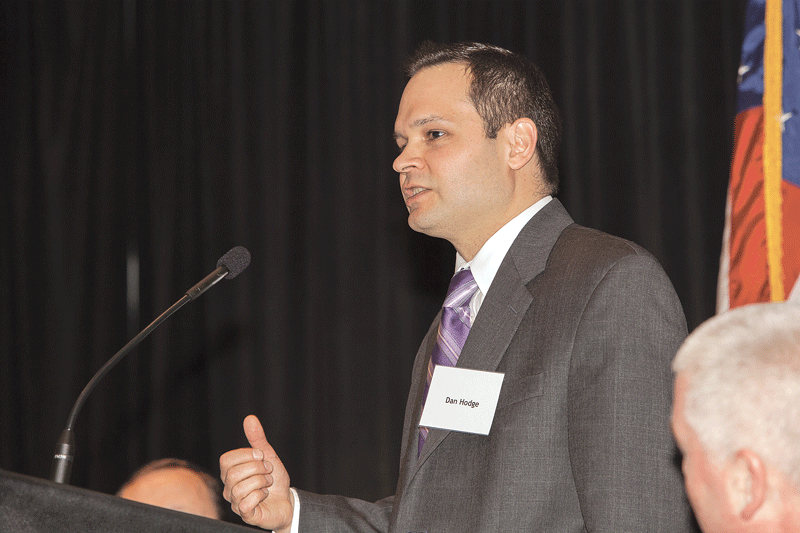
• March 15: St. Patrick’s Day Breakfast, 7:15 a.m., Westfield State University, Scanlon Hall, 577 Western Ave., Westfield. Registration is at 7:15, the breakfast begins at 7:30, and the program begins at 8. Judy Dumont, MBI director, will speak on Massachusetts 123, a project to bring high-speed broadband to every corner of the Commonwealth. Cost is $25 for members, $30 for non-members. To register, contact Pam Bussell at the chamber office at (413) 568-1618 or e-mail [email protected]. RSVP for this event by March 11.


Young Professional Society of Greater Springfield

www.springfieldyps.com


• March  21: Third Thursday, 5-7 p.m. at Nadim’s Mediterranean Restaurant & Grill, 1390 Main St., Springfield. Go to www.cafelebanon.com for more information about the restaurant.

Departments People on the Move

Audrey Rome

Audrey Rome

Audrey Rome has joined the Springfield-based law firm Cooley Shrair as a real-estate paralegal. Providing support in the Western Mass. real-estate field for more than 30 years, Rome will help to expand the firm’s real-estate department.

•••••

The Greater Springfield Convention & Visitors Bureau (GSCVB) announced the following:

• Michael Hurwitz has been appointed as Chairman of the board of directors, and will serve a two-year term. Hurwitz, a hospitality-industry veteran, has managed several restaurants in Western Mass., including Uno Chicago Grill, with locations in Springfield, Holyoke and Worcester; and Sonic in Springfield. He served on the GSCVB’s board of directors and executive committee in addition to his previous duties as Chairman of the Howdy Awards for Hospitality Excellence Committee.

• John Parsons has been named Sales and Marketing Coordinator. Parsons, a 2011 graduate of Western New England University, will promote membership within the GSCVB and assist with a number of marketing initiatives, with a special emphasis on sports.

Other officers were named by the GSCVB to serve a three-year term on its board of directors. They include:

• John Doleva, President of the Naismith Memorial Basketball Hall of Fame, to serve as vice chairman;

• Barry Crosby of Freedom Credit Union to serve as treasurer;

• Robert Schwarz of Peter Pan Bus Lines, Inc. to serve as secretary; and

• Robert Gilbert of Dowd Insurance to serve as compliance officer.

New members of the board to serve a three-year term are:

• William Messner, President of Holyoke Community College; and

• James Woolsey, Superintendent of the Springfield Armory National Historic Site.

•••••

Melanie Skroski

Melanie Skroski

Northampton-based Royal LLP recently welcomed Attorney Melanie Skroski to the management-side-only labor and employment law firm. With practical experience in management, Skroski counsels companies on the myriad state and federal employment laws impacting them, including employment discrimination and harassment, wage and hour, disability and leave, workplace safety, and affirmative action. Her other preventive work includes drafting employee manuals; preparing non-disclosure, non-solicitation, and non-compete agreements; and conducting management training. Skroski is a graduate of Trinity College and Western New England University School of Law.

•••••

TD Bank recently promoted Peter Simko to Store Manager of the branch located at 40 Springfield St. in Agawam. An Assistant Vice President, he is responsible for new-business development, consumer and business lending, and managing personnel and day-to-day operations at the store, serving customers throughout the Greater Springfield area. With 13 years experience in banking, investments, real estate, and mortgages, Simko joined TD Bank in 2011. He most recently served at TD Bank as an Assistant Store Manager in Agawam. Prior to joining the bank, Simko served as an Investment Consultant at TD Waterhouse in Boston, Registered Principal at Scottrade Financial Services in Springfield, and General Partner at Center Exchange Associates, a realty-consulting firm in Chicopee.

Bankruptcies Departments

The following bankruptcy petitions were recently filed in U.S. Bankruptcy Court. Readers should confirm all information with the court.


Antonuzzo, John R.

Antonuzzo, Christine M.

PO Box 418

Southwick, MA 01077

Chapter: 7

Filing Date: 01/30/13


Barbato, Eric D.

Barbato, Angela M.

31 Lincoln Ave.

Orange, MA 01364

Chapter: 7

Filing Date: 01/31/13


Beaudry, Bernadette A.

a/k/a Zielinski, Bernadette A.

45 Amherst Ave.

Feeding Hills, MA 01030

Chapter: 7

Filing Date: 01/31/13


Bourdeau, Kyle T.

415 Holyoke St.

Ludlow, MA 01056

Chapter: 7

Filing Date: 01/24/13


Brown, Melissa R.

20 Cranberry Dr.

Holyoke, MA 01040

Chapter: 7

Filing Date: 01/30/13


Buck, Ronald D.

Buck, Tammy L.

130 Donbray Road

Springfield, MA 01119

Chapter: 7

Filing Date: 01/24/13


Burdeau, Theresa R.

3 Susan Dr.

Easthampton, MA 01027

Chapter: 7

Filing Date: 01/24/13


Cappelli, Mark A.

Cappelli, Jessica M.

6 Blue Hill Road

Great Barrington, MA 01230

Chapter: 7

Filing Date: 01/24/13


Claudio, Sonia A.

111 Nassau Dr.

Springfield, MA 01129

Chapter: 7

Filing Date: 01/25/13


Claus, Dorothy M.

86B Sugarloaf St.

South Deerfield, MA 01373

Chapter: 7

Filing Date: 01/29/13


Colwell, John P.

Colwell, Dolores E.

176 Columbus Ave. Apt 724

Pittsfield, MA 01201

Chapter: 7

Filing Date: 01/30/13


Danalis, Stephen G.

Danalis, Sherry L.

59 Firglade Ave.

Springfield, MA 01108

Chapter: 7

Filing Date: 01/24/13


Darr, Steven A.

134 Union St., Unit 53

Westfield, MA 01085

Chapter: 7

Filing Date: 01/23/13


Deal, Cora B.

90 Braddock St.

Springfield, MA 01109

Chapter: 7

Filing Date: 01/25/13


Denison, Christopher J.

8 Spring St., Apt. 3R

South Hadley, MA 01075

Chapter: 7

Filing Date: 01/30/13


Garrity, Francis

745 Cape St.

Lee, MA 01238

Chapter: 13

Filing Date: 01/17/13


Gaudreau, John P.

76 Hmpden St.

Indian Orchard, MA 01151

Chapter: 7

Filing Date: 01/31/13


Gorski, Peter J.

1069 Central St.

Palmer, MA 01069

Chapter: 7

Filing Date: 01/23/13


Gryszowka, Jonathan S.

18 Crestview Dr.

Belchertown, MA 01007

Chapter: 7

Filing Date: 01/21/13


Hart, Charles

35 Fourth Ave.

Cheshire, MA 01225

Chapter: 7

Filing Date: 01/18/13


Horniak, Nickolas J.

55 Alhambra Circle South

Agawam, MA 01001

Chapter: 7

Filing Date: 01/22/13


Humel, Steven E.

29 Mount Royal St.

Chicopee, MA 01020

Chapter: 7

Filing Date: 01/25/13


Jones, Robert C.

17 Sumner Ave., Apt. 4

Springfield, MA 01108

Chapter: 7

Filing Date: 01/22/13


Jovan, Alexander

91 Lord Terrace

Chicopee, MA 01020

Chapter: 7

Filing Date: 01/23/13


Kimball, Philip H.

Kimball, Kathi L.

43 Perry Lane

Agawam, MA 01001

Chapter: 7

Filing Date: 01/28/13


Komssi, Michael J.

Komssi, Sarah A.

156 Wales Road

Brimfield, MA 01010

Chapter: 13

Filing Date: 01/24/13


Kozar, Steven

Kozar, Katarina

70 Greystone Ave.

West Springfield, MA 01089

Chapter: 7

Filing Date: 01/30/13


Kulik, Juan C.

182 Brookfield Lane

Agawam, MA 01001

Chapter: 7

Filing Date: 01/31/13


Lamy, Ralph G.

Baxendale-Lamy, Barbara A.

43 Shirley St.

Chicopee, MA 01020

Chapter: 7

Filing Date: 01/25/13


Laplante, Keith W.

Laplante, Judith B.

18 Strong Farm Lane

South Hadley, MA 01075

Chapter: 7

Filing Date: 01/21/13


M&N Trucking

Merzoian, Jerier B.

a/k/a Merzoian, Jerry

31 Biltmore St.

Springfield, MA 01108

Chapter: 7

Filing Date: 01/17/13


Martelli, Lisa

815 Willimasville Road

Barre, MA 01005

Chapter: 7

Filing Date: 01/31/13


Mcintosh, Henry C.

1081 Cascade St.

Mailing Box 714 01202

Pittsfield, MA 01201

Chapter: 7

Filing Date: 01/25/13


Menard, Roland

72 East Allen Ridge Road

Springfield, MA 01118

Chapter: 7

Filing Date: 01/29/13


Mitchell, Annika M.

a/k/a Markham, Annika M.

P.O. Box 794

Lee, MA 01238

Chapter: 7

Filing Date: 01/17/13


Notre, Alan

44 Meadow Lane

Orange, MA 01364

Chapter: 7

Filing Date: 01/18/13


O’Clair, Norma J.

414 Chestnut St.

Springfield, MA 01104

Chapter: 7

Filing Date: 01/18/13


Ortiz, Zoraida

990 Chicopee St.

Chicopee, MA 01013

Chapter: 7

Filing Date: 01/21/13


Paradis, Russell S.

45B Colonial Circle

Chicopee, MA 01020

Chapter: 7

Filing Date: 01/17/13


Provost, David Paul

Provost, Suzanne Marie

2118 Palmer St.

Three Rivers, MA 01080

Chapter: 13

Filing Date: 01/31/13


Rajpold, Adolf S.

Rajpold, Maria A.

122 Stedman St.

Chicopee, MA 01013

Chapter: 7

Filing Date: 01/17/13


Rajpold, Robert J.

30 Sunnymeade Ave.

Chicopee, MA 01020

Chapter: 7

Filing Date: 01/17/13


Ralys, Thomas A.

Ralys, Cathy J.

191 Ashland St. #310

North Adams, MA 01247

Chapter: 13

Filing Date: 01/23/13


Ryder, Donna M.

9 Wells St.

Greenfield, MA 01301

Chapter: 7

Filing Date: 01/31/13


Ryder, Robert J.

206 Intervale Ave.

Athol, MA 01331

Chapter: 7

Filing Date: 01/29/13


Sanders, Dreana C.

17 Brunswick St.

Springfield, MA 01108

Chapter: 13

Filing Date: 01/18/13


Sauer, Kevin C.

72 Howard St.

Pittsfield, MA 01201

Chapter: 7

Filing Date: 01/22/13


Sawin, Christine L.

a/k/a Martin, Christine L.

45 Johnson Road

Orange, MA 01364

Chapter: 7

Filing Date: 01/31/13


Sfakios, Kyriakos

a/k/a Sfakios, Charles

17 Bonnie View Road

Southwick, MA 01077

Chapter: 7

Filing Date: 01/22/13


Shah, Simon

P.O. Box 365

Deerfield, MA 01342

Chapter: 7

Filing Date: 01/25/13


Simmons, James S.

Simmons, Jane F.

37 Somers Road

East Longmeadow, MA 01028

Chapter: 7

Filing Date: 01/22/13


Slowik, John P.

46 Ashfield Road

Williamsburg, MA 01096

Chapter: 7

Filing Date: 01/31/13


Stavroulakis, Cecile P.

43 Sunapee St.

Springfield, MA 01108

Chapter: 7

Filing Date: 01/29/13


Sullivan, Barry J.

8 Jonathan Judd Circle

Southampton, MA 01073

Chapter: 7

Filing Date: 01/22/13


Szafranski, Cary L.

162 North Main St.

East Longmeadow, MA 01028

Chapter: 7

Filing Date: 01/31/13


Therrien, Raymond A.

149 Mazarin St.

Indian Orchard, MA 01151

Chapter: 7

Filing Date: 01/28/13


Trudell, Melinda A.

25 Charles St.

Three Rivers, MA 01080

Chapter: 7

Filing Date: 01/30/13


Valentin, Lydia I.

86 Debra Dr., Apt. 2C

Chicopee, MA 01020

Chapter: 7

Filing Date: 01/23/13


Vanasse, Barbara Jean

110 1/2 Pleasant St.

Ware, MA 01082

Chapter: 7

Filing Date: 01/24/13


Vazquez, Wanda

601 Hampden St.

Holyoke, MA 01040

Chapter: 7

Filing Date: 01/23/13


Vears, Ann Marie

122 Benton Place

Athol, MA 01331

Chapter: 7

Filing Date: 01/28/13


Waterman, Patrick A.

45 Enterprise St.

Adams, MA 01220

Chapter: 7

Filing Date: 01/18/13


Witholt, Wolter Daniel

59 Firglade Ave.

Springfield, MA 01108

Chapter: 7

Filing Date: 01/23/13


Young, Garry L.

800 Franklin St., Apt. #3

Belchertown, MA 01007

Chapter: 13

Filing Date: 01/28/13

Features
And Five Judges Will Now Score the 40 Under Forty Hopefuls

40under40-LOGO2012A flurry of last-minute nominations has produced a near-record number of entries for BusinessWest’s 40 Under Forty program.

A total of 99 individuals have been nominated for the honor of joining the class of 2013, the seventh since the program was initiated in 2007.

The daunting, yet rewarding, task of scoring these individuals now falls to five judges (including two previous winners), who represent fields ranging from law to accounting; from education to financial services. They will be returning their scores later this week, and the winners will be notified in the days that follow.

The class of 2013 will be profiled in the April 22 issue of BusinessWest, one of the most popular issues of the year, and the annual 40 Under Forty gala is scheduled for June 20 at the Log Cabin Banquet & Meeting House. Here are those who will be scoring this year’s nominees:

Jeffrey Fialky

Jeffrey Fialky

• Jeffrey Fialky, a member of the 40 Under Forty class of 2008 and a shareholder of the regional law firm Bacon Wilson, P.C., and member of the firm’s corporate, commercial, and municipal departments, where he specializes in all aspects of corporate and business law, banking, commercial real estate, and sophisticated commercial transactions. He joined the firm in 2006 after nearly a decade of living in Eastern Mass., where he held senior commercial attorney positions within some of the country’s most prominent publicly traded telecommunications and cable television companies. He previously served as an assistant district attorney in Hampden County.

Fialky is also active in the community, having served on a number of nonprofit and economic-development-related organizations. They include the Springfield Chamber of Commerce, Springfield Museums, the United Way of Pioneer Valley, the Jewish Federation of Pioneer Valley, the Springfield Technical Community College Scibelli Enterprise Center Advisory Board, the Alden Credit Union board of directors, the Community Foundation, the American Cancer Society, the Young Professional Society of Greater Springfield, Leadership Pioneer Valley, OnBoard, the YMCA of Greater Springfield, the Mason Wright Foundation, the EDC Tourism Development Committee; and the American Red Cross Pioneer Valley Chapter.

Brendon Hutchins

Brendon Hutchins

• Brendon Hutchins, CFP, a member of the 40 Under Forty class of 2012, and senior vice president of Account Management for St. Germain Investment Management. Prior to joing the firm in 2003, he was vice president and financial advisor for the FleetBoston Financial Corp. Private Clients Group in Springfield. His prior experience includes eight years with Fidelity Investments as a vice president in the retirement division, with responsibilities across multiple locations during his tenure there.

In addition to being a certified financial planner, Hutchins holds NASD series 7 and 65 licenses for securities representation and investment-advisor services. He currently serves on the board of directors for the New England office of the March of Dimes, the Greater Springfield YMCA, and the Basketball Hall of Fame, and has also served on the board for the Springfield School Volunteers.

Mark O’Connell

Mark O’Connell

• Mark O’Connell, president and chief executive officer of Wolf & Co., providing audit and financial reporting services to both privately held and publicly traded financial institutions and holding companies across New England, including community banks and mortgage banking institutions. In his current capacity, he is responsible for the strategic direction of the firm, while also providing audit and advisory services to financial institutions. His experience also includes consultation on audit and accounting issues related to mergers and acquisitions and with respect to debt and security offerings filed with the Federal Home Loan Bank Board, the Federal Deposit Insurance Corp., and the Securities and Exchange Commission.

O’Connell has been involved with a number of industry and nonprofit organizations, including the American Institute of Certified Public Accountants (AICPA), the Massachusetts and Connecticut Societies of Certified Public Accountants, and the Children’s Study Home in Springfield. In 2010, he won the Human Services Forum Board Member Award.

Myra Smith

Myra Smith

• Myra Smith, vice president of Human Resources and Multicultural Affairs at Springfield Technical Community College (STCC). Joining the college in 1978, Smith has helped transform the STCC community into one of inclusiveness that celebrates cultural diversity. Among her many accomplishments is the creation of the STCC Diversity Council and its event series, which brings national and international speakers and artists to the campus. Smith also was responsible for the creation of the STCC “Think Tank” series, which brings community leaders together to assist with the retention and graduation rate of young men of color.

Smith is also active in the community, serving on many local boards, including People’sBank, the National Conference for Community Justice of Western Mass., and the STCC Foundation. Smith is a founding trustee of the Martin Luther King Charter School of Excellence and a trustee for the Non-Unit Health and Welfare Trust Fund for the Commonwealth of Massachusetts. Smith was recognized in 2007 by Unity First with a Women of Leadership Award, and received a Women of Vision Award from the Elms College Step Forward Program in 2005.

Jeff Sullivan

Jeff Sullivan

• Jeff Sullivan, executive vice president and chief operating officer of United Bank. In that capacity, which he assumed Jan. 1, Sullivan is responsible for the bank’s retail deposit and operations division, advancements in technology and electronic banking, and franchise expansion efforts. In addition, he also oversees the Information Systems and Facilities Departments and the United Wealth Management Group, and is also responsible for the company’s enterprise risk management program. He previously served the bank as executive vice president and chief lending officer and, prior to arriving at United, served in commercial-lending capacities for the Bank of Western Mass. and BayBank.

Sullivan has been involved with a number of area nonprofit and economic-development-related organizations, including DevelopSpringfield, Better Homes Inc., Martin Luther King Jr. Family Services, Briana Fund for Children with Physical Disabilities, OnBoard, the Pioneer Valley Plan for Progress, the Holyoke Chamber of Commerce, and the Economic Development Council of Western Mass.