Home 2013 (Page 18)
Building Permits Departments

The following building permits were issued during the months of January and February 2013.


AGAWAM


Coopers Commons, LLC

159 Main St.

$35,000 — Second-floor renovation


OMG, Inc.

57 Almgren Dr.

$150,000 — Construct interior partitions and renovate existing space


CHICOPEE


Doverbrook Estates

125 Greenwood Terrace

$16,500 — Replace vinyl siding


GREENFIELD


Greenfield Farmers Cooperative Exchange

264 High St.

$20,000 — Install new checkout and countertop


Home Depot U.S.A, Inc.

278 Mohawk Trail

$78,000 — Restroom renovations


YMCA

451 Main St.

$5,000 — Convert existing space to bathroom


HOLYOKE


Centro Properties Inc.

2217-2239 Northampton St.

$40,000 — Repair roof supports


City of Holyoke Park & Recreation

Community Field Road

$20,000 — Install concrete floor


KAM Industries

525-527 Dwight St.

$50,000 — Roof repairs


Pearson Bradley Development

9 Sullivan Road

$300,000 — Interior reconstruction


SOUTH HADLEY


Big Y

44 Willimansett St.

$15,000 — Renovation


SPRINGFIELD


AIC

99 State St.

$58,000 — Interior renovation


Carew Chestnut Partners, LLC

175 Carew St.

$7,875,000 — Construction of a three-story medical office building


Manfred Karori

32-34 Allen St.

$10,000 — Interior renovations


Roger DeRosier

578 Main St.

$4,000 — Install new ladies room


WESTFIELD


Sage Engineering

395 Southampton Road

$475,000 — Addition to medical center


WEST SPRINGFIELD


Crown Castle

120 Interstate Dr.

$20,000 — Replace two equipment cabinets at the base of the cell tower


Mercy Life Center

2112 Riverdale St.

$163,000 — New duct systems for lower level


Law Sections
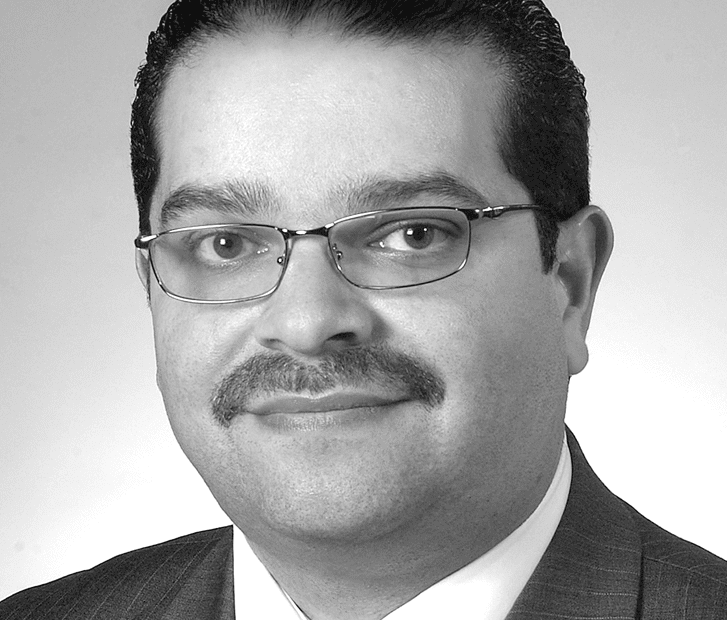
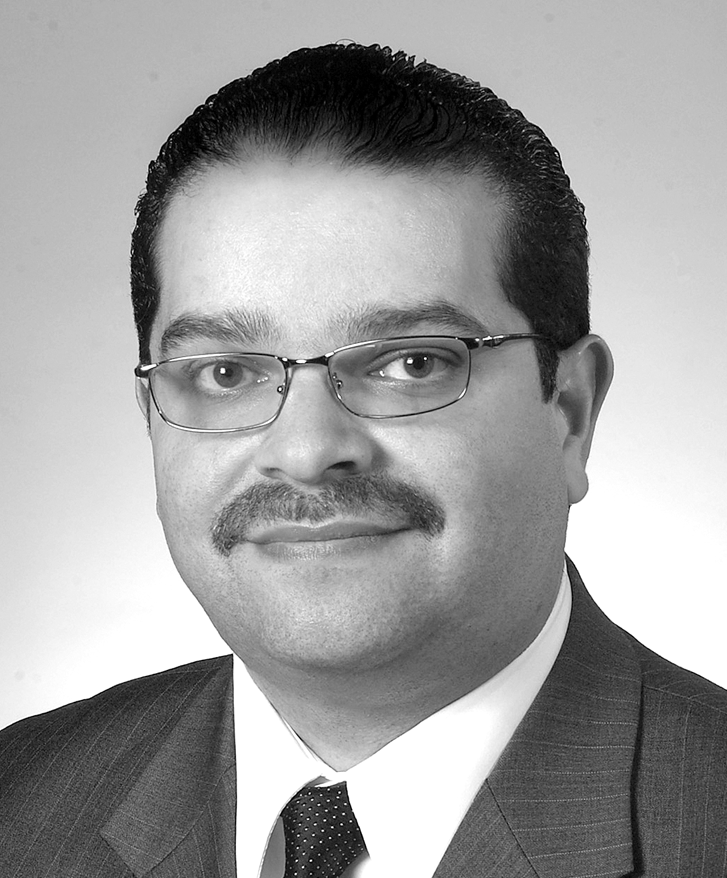
Ruling on Appointments Creates More Controversy at NLRB

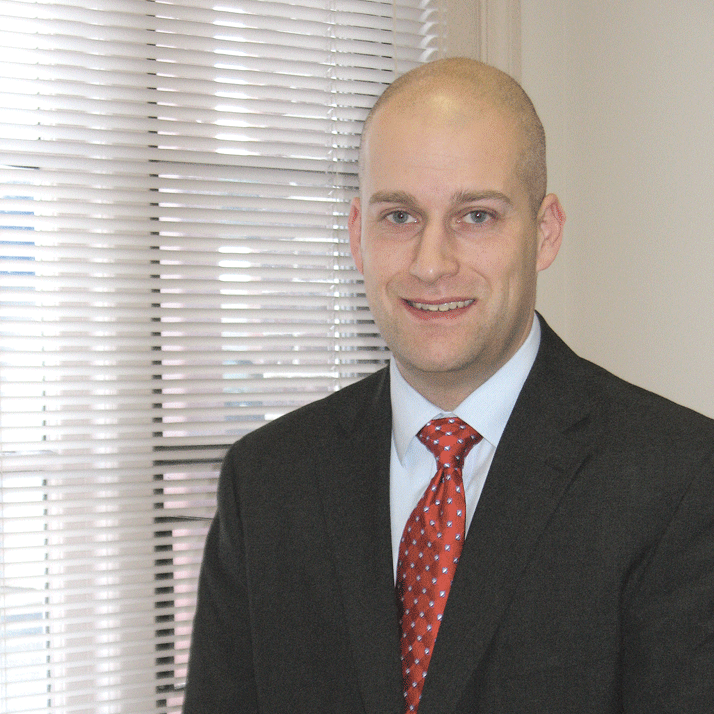
Tim Murphy

Tim Murphy

Staying In for RecessPresident Obama violated the constitution when he made three recess appointments to the National Labor Relations Board (NLRB) on Jan. 4, 2012, according to the U.S. Court of Appeals for the District of Columbia in a decision issued on Jan. 25.

Because the three recess appointments were invalid, the NLRB lacked the requisite three-member quorum when it rendered the Noel Canning decision. Although the D.C. Circuit ruling governs only this one case, its decision throws hundreds of NLRB decisions made since Jan. 4 into uncertainty.


Background

The NLRB is the five-member panel that enforces federal labor law and the National Labor Relations Act. The president appoints NLRB members to staggered terms generally subject to Senate confirmation in accordance with the Constitution. Traditionally, the NLRB consists of three members from the president’s political party and two from the other. Since President Obama took office, the NLRB has been on the front lines of the partisan war to control federal labor policy. With several of the president’s nominees too controversial to earn sufficient Senate support to overcome a filibuster, the nominations suffered long delays and were effectively blocked by objecting senators.

To counter that, Obama sought to make appointments to the NLRB while the Senate was in recess, a power contained in the Constitution. In the early history of our country, Congress was often in recess for six to nine months a year. Though recess appointments were little used until after World War II, they did enable presidents to staff executive-branch vacancies during periods when the Senate was not in session and, thus, could not exercise its ‘advise and consent’ power over presidential appointments.

On Jan. 4, 2012, the Senate was away for the holidays and conducting no business. The Senate remained in ‘pro forma’ session (gaveled in and out every few days) because it had not been formally adjourned into an official recess. This was a strategy designed to block the president from making recess appointments. He was undeterred. But the Senate strategy proved effective, according to the D.C. Circuit.

The constitution’s recess appointments clause provides that “the president shall have power to fill up all vacancies that may happen during the recess of the Senate by granting commissions which shall expire at the end of their next session.” Pursuant to that clause, Obama made three appointments on Jan. 4, one day after the Second Session of the 112th Congress began. However, the D.C. Circuit interpreted the recess appointments clause to permit only ‘intersession’ appointments (those made between distinct sessions of the Senate) and not ‘intrasession’ appointments made during recesses in the midst of a session.

Next, analyzing the language “vacancies that may happen during the recess,” the D.C. Circuit found that the clause limits the president’s intersession-recess appointment power to filling vacancies that first arise during the recess in which they are filled, which was not the case here. Thus, recess appointments are unconstitutional unless made to fill vacancies that arose while the Senate was in recess. If it stands, this particular ruling could virtually eliminate a president’s ability to make recess appointments.

The court’s ruling rejects presidential practice of both parties dating back many years, and raises questions about how a president’s inability to fill vacancies could impact government functioning in an age of partisan gridlock in Washington, D.C.

The NLRB disagrees with the decision and intends to continue issuing decisions (while its presumptive appeal is pending). Right now, the NLRB has only three members, as one resigned, and the other’s term expired. Of the three remaining members, two are recess appointees involved in the Noel Canning case. Only Chairman Pierce was confirmed by the Senate.


The Bottom Line

It seems inevitable that the U.S. Supreme Court will ultimately decide these issues, especially because there are numerous similar appeals pending in circuit courts of appeals around the country.

In the meantime, the NLRB will likely remain a lightning rod of controversy. Republicans and business groups will continue to oppose the perceived pro-labor decisions and initiatives of the current NLRB at every turn. It would appear that they believe a non-functioning NLRB is preferable to a functioning one.

This is surely not the last word on recess appointments.


Timothy F. Murphy is a partner in the Springfield labor and employment law firm Skoler, Abbott & Presser, P.C., which represents employers exclusively and specializes in helping employers understand their obligations under state and federal employment law; (413) 737-4753; [email protected]

Law Sections
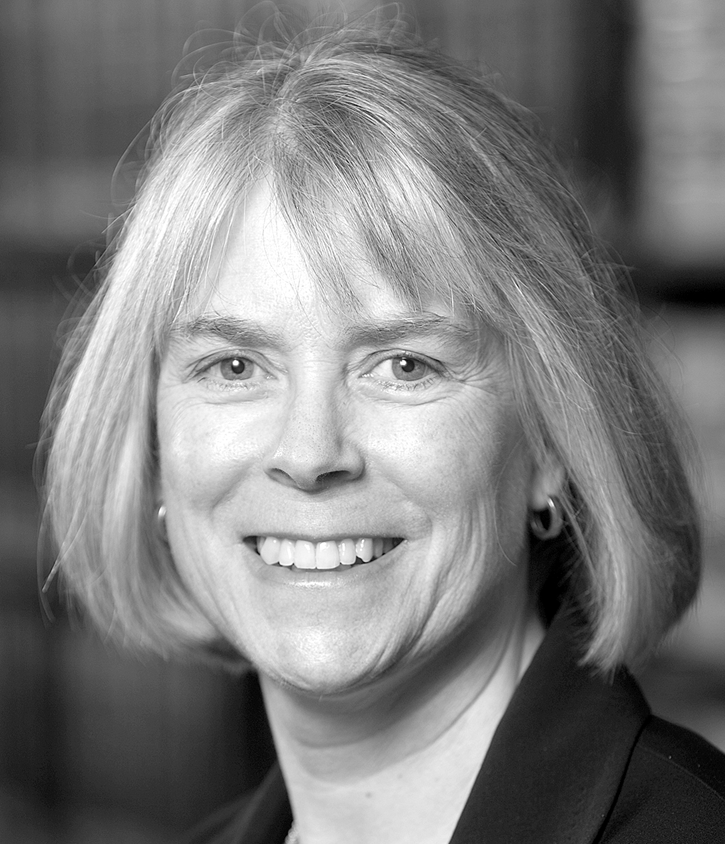
Is Bankruptcy an Alternative for Relief from Student Loans?

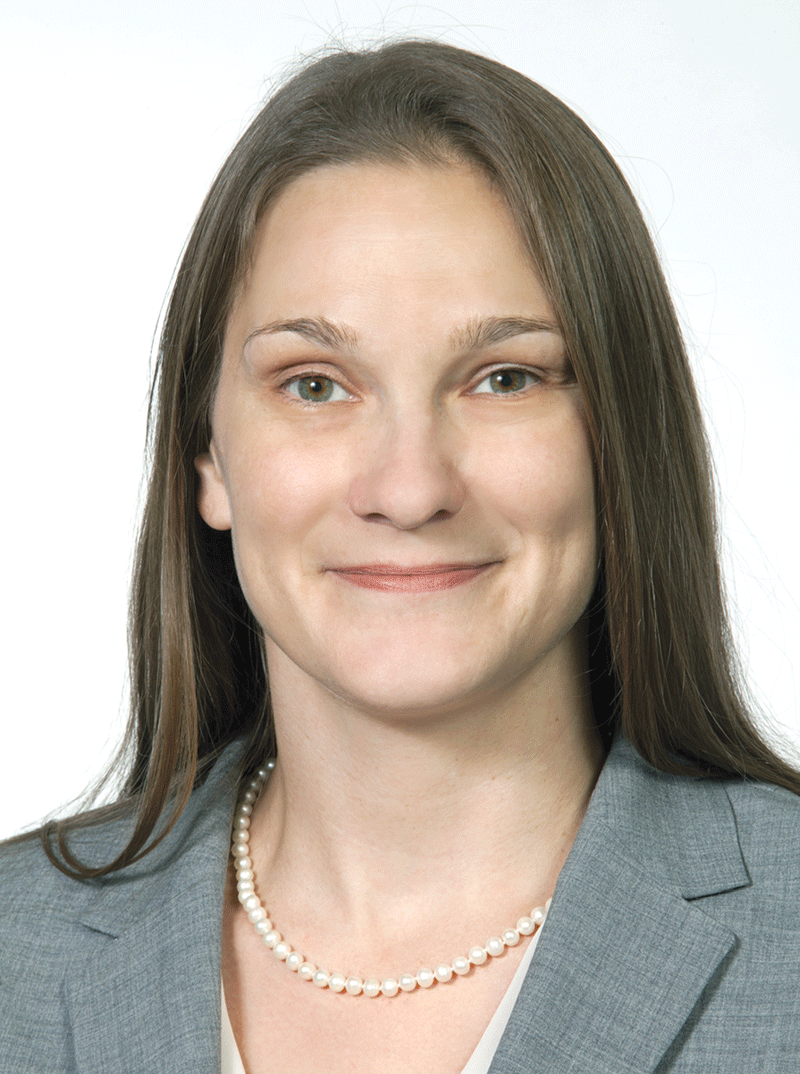
L. Alexandra Hogan

L. Alexandra Hogan

A college education should increase a person’s earning capacity over a lifetime.  Unfortunately, many graduates are finding that the value of their education is outweighed by heavy student-loan debt. This may be the reason that the delinquency rate on student loans has surpassed that of other types of consumer loans, such as credit cards and car loans.

The New York Fed reports that student-loan debt has exceeded $956 billion and estimates that 21% of these loans are in default.

Financial blows caused by events like loss of employment, medical issues, or divorce are catalysts for personal bankruptcy filings. Bankruptcy is meant to give a fresh start to honest debtors by providing a mechanism of relief from most types of debt, such as credit cards, personal loans, medical bills, and foreclosure deficiencies. Although it is not impossible to discharge student loans in bankruptcy, it is difficult to do, and just recently got even harder. Although seemingly harsh, this law is meant to protect the solvency of the educational-loan system and to prevent people from abusing the system by receiving a free education.

Relief from student-loan debt is not generally available in bankruptcy, unless failure to discharge the debt would lead to an “undue hardship” on the debtor, under §523(a)(8) of the Bankruptcy Code. Courts use different tests to determine what constitutes an undue hardship. In Massachusetts, bankruptcy courts generally evaluate undue hardship on a case-by-case basis by considering (1) a debtor’s past, present, and reasonably reliable future financial resources; (2) a calculation of the debtor’s and their dependents’ reasonable necessary living expenses; and (3) any other relevant facts and circumstances.

Some examples of debtors’ circumstances that led to findings of undue hardship include the following: student loans exacerbated by the debtor’s mental illness; the debtors reaching their maximum earning capacity in worthwhile, but low-paying, teaching jobs; the debtor being homeless and unemployed; the debtor being unable to complete her doctorate degree program and suffering from depression; and the debtor suffering from a variety of medical illnesses, making employment almost impossible. The takeaway is that circumstances must be dire to obtain relief.

A recent court case closed a loophole in the law, making discharge even more unlikely. Typically, a general unsecured loan like a line of credit is dischargeable in bankruptcy. The case of In re Belforte, decided on Oct. 1, 2012 in the U.S. Bankruptcy Court for the District of Massachusetts, Eastern Division, held that the debtor’s line of credit could not be discharged. The debtor made a handwritten note seeking an increase in her line of credit to pay for her children’s tuition and expenses. Liberty Bay Credit Union increased and rewrote the debtor’s line of credit under a new unsecured loan agreement — not through Liberty Bay’s educational-lending program.

Liberty Bay neither inquired from the debtor what the loan would be used for, nor did it exercise oversight as to how the debtor utilized the loan proceeds, as a traditional student lender would. Notwithstanding this, the court construed the bankruptcy statute broadly and ruled that, since the loan was used for an ‘educational benefit,’ it was not dischargeable. Under this ruling, it is now clear that an individual with a regular personal loan used for an educational benefit must establish undue hardship as well.

Those with unusually difficult situations should consult with a bankruptcy attorney to determine whether their circumstances would qualify as an undue hardship. But otherwise, where does this leave the average person struggling with high student-loan debt and low or non-existent income?

Avoid the potentially harsh consequences of defaulting on student loans, including wage garnishment, tarnished credit, and offset tax refunds. There are options to avoid defaulting on federal student loans. Deferment, forbearance, and repayment plans may be available. The U.S. Department of Education has announced a new option that may greatly benefit newer graduates, called “Pay as You Earn.”

This plan may apply to those with partial financial hardship who have certain types of federal direct student loans. Under this plan, 10% of a person’s annual discretionary income is paid, and after 20 years of participation, the loan is forgiven. To learn more about Pay as You Earn, visit www.studentaid.ed.gov.

L. Alexandra (Alex) Hogan is an associate with the Springfield-based form Shatz, Schwartz and Fentin, P.C., and concentrates her practice primarily in business, litigation, and bankruptcy law; (413) 737-1131.


Law Sections
Department of Labor Issues New Guidance on Area of Confusion

Karina L. Schrengohst

Karina L. Schrengohst

The Family Medical Leave Act (FMLA) presents many challenges for employers because of its complexities. And one area of confusion employers have faced arises in the context of requests for leave to care for adult children.

Generally, the FMLA entitles an eligible employee to take up to 12 weeks of unpaid, job-protected leave during a 12-month period to care for a son or daughter with a serious health condition who is under the age of 18. Once an employee’s son or daughter turns 18, a parent is entitled to take FMLA leave only if the adult son or daughter (1) has a mental or physical disability as defined by the Americans with Disabilities Act (ADA); (2) is incapable of self-care due to that disability; (3) has a serious health condition; and (4) is in need of care due to the serious health condition.

One issue employers have struggled with is whether the disability had to occur before the child turned 18 years of age. Recent guidance issued by the Department of Labor’s (DOL) Wage and Hour Division answers this question.

On Jan. 14, the Wage and Hour Division issued a new Administrator’s Interpretation (No. 2013-1) that clarifies the definition of “son or daughter” under the FMLA, and addresses whether an employee is entitled to FMLA leave to care for an adult child who does not become incapable of self-care because of a disability until after the child turns 18. DOL guidance clarifies that whether an adult child’s disability arises before or after the child turns 18 is not relevant in determining a parent’s entitlement to FMLA leave. Therefore, an otherwise eligible employee is entitled to take leave under the FMLA to care for an adult child with a serious health condition who is incapable of self-care because of a disability regardless of when the disability commenced.

This means that employers should focus on the adult child’s condition at the time of the requested leave when determining eligibility for FMLA leave.

The administrator’s interpretation also demonstrates how the significantly expanded definition of ‘disability’ under the Americans with Disability Act Amendments Act of 2008 (ADAAA) has impacted the FMLA.

The DOL has historically adopted the ADA’s definition of disability for purposes of defining a son or daughter 18 years of age or older. And the DOL notes, pursuant to the clear language of the ADAAA and the EEOC’s position, that the definition of disability “should be construed in favor of broad coverage” and “should not demand extensive analysis.”

Therefore, when the ADAAA broadened the definition of disability, it similarly broadened the scope of this definition under the FMLA. Thus, the number of adult children falling under the FMLA’s definition of son or daughter has increased, which enables more parents to take FMLA-protected leave to care for an adult child who is incapable of self-care because of a disability.

As an illustration, the administrator’s interpretation provides the following scenario: An employee requests leave under the FMLA after his or her 37-year old daughter is injured in a car accident. The daughter suffers a shattered pelvis in the accident, which substantially limits her in a number of major life activities (i.e., walking, standing, sitting, etc.). As a result of this injury, the daughter is hospitalized for two weeks and under the ongoing care of a healthcare provider. Although she is expected to recover, she will be substantially limited in walking for six months. If the daughter needs assistance with three or more daily living activities, such as bathing, dressing, and maintaining a residence, she will qualify as an adult child under the FMLA because she is incapable of self-care due to a disability.

The daughter’s shattered pelvis would also be a serious health condition under the FMLA, and her parent would be entitled to take FMLA-protected leave to provide care for her immediately and throughout the time that she continues to be incapable of self-care because of the disability.

In addition, the DOL guidance addresses an employee’s request for FMLA leave to care for an adult child who has been injured during military service.  Under the military-caregiver provision of the FMLA, an otherwise eligible employee may take up to 26 weeks of leave in a single 12-month period to care for an adult son or daughter injured in the line of duty. The administrator’s interpretation notes that the service member’s injury may last longer than a single 12-month period. Thus, the DOL clarifies that the service member’s parent, if otherwise eligible, would be entitled to take 12 weeks of FMLA leave in subsequent years for the purpose of providing care to an adult child.

As an illustration, the administrator’s interpretation provides the following scenario. A father has exhausted his 26 weeks of military-caregiver leave to care for his 20-year old son, a returning service member who sustained extensive burn injuries to his arms and torso. In the next FMLA leave year, the father seeks leave from his employer to care for his son as he undergoes and recovers from additional surgeries and skin-graft procedures.

The father will be entitled to take up to 12 weeks of FMLA-protected leave to care for his son because his son’s burn injuries, which substantially limit his ability to perform manual tasks, constitute a disability under the ADA — the son is incapable of self-care due to a disability (i.e., he needs active assistance or supervision in bathing, dressing, and eating), the son’s burn injuries are a serious health condition because they require continuing treatment by a healthcare provider, and the father is needed to care for the son.

Employers should review the way they determine FMLA eligibility to account for this recent guidance. In addition, supervisors and managers should be trained to ensure they are prepared to handle requests for leave in light of this new interpretation. Further, when faced with requests for leave to care for an adult child, employers will have to make a case-by-case determination of whether the adult child qualifies as a son or daughter under the FMLA and the employee qualifies for leave under the FMLA.


Karina L. Schrengohst, Esq., an attorney at Royal LLP, a boutique, management-side-only labor and employment law firm, specializes exclusively in management-side labor and employment-law litigation and preventative practices to avoid litigation. Royal LLP is SOMWBA-certified as a woman-owned business with the Mass. Supplier Diversity Office (formerly known as the State Office of Minority and Women’s Business Assistance); (413) 586-2288; [email protected]


Law Sections
Law Students and Graduates Gain Valuable Experience as Clerks

Kevin Maltby

Kevin Maltby says clerkships offer educational experiences that law students don’t necessarily get in the classroom.

“There’s a reason,” Kevin Maltby said, “that it’s called the practice of law.”

He was referring specifically to the role of clerk — specifically, law students or recent law-school graduates who work for a short time, typically one or two years, in a law firm or court system to gain valuable career experience. Or, as he put it, practice.

“I think clerking is one of the best opportunities students can have, in terms of learning by actually being in the law practice,” said Maltby, an associate with Bacon Wilson, P.C. who helps oversee the firm’s efforts to bring in clerks each year. Typically the firm hires four individuals each spring for a one-year clerkship; they come from many different schools, but the current crop are all students at Western New England College School of Law.

“They are excellent students, excellent writers, great researchers,” he told BusinessWest, “and we get to use those skills in exchange for teaching them and exposing them to things they might not be exposed to in law school.”

Jared Olinski agrees. A 2011 graduate of WNEU, he is on his second clerkship; after working for a year at the Connecticut Appellate Court, he’s now clerking in the U.S. District Court in Springfield.

“I think it’s kind of a prestigious thing to have on your résumé,” he said. “You’re getting great experience but also seeing the inside of the court system, seeing how the judges make their decisions, meeting lawyers, possibly making some connections … so I think it’s very beneficial for a recent law graduate.”

In many ways, the advantages of clerking haven’t changed much over the years. Sandy Dibble, partner at Bulkley Richardson in Springfield, graduated from Suffolk University Law School in 1974. Around that time, he worked as a summer clerk both at a Boston law firm and at the Massachusetts Supreme Judicial Court for respected judge Francis Quirico; he also served unpaid stints with the consumer protection division of the Massachusetts Attorney General’s office and with a legal-aid clinic outside Boston.

“All those positions, including the volunteer positions, help you learn and expose you to people who have a lot of experience, so you see how they do things,” Dibble said. “If it’s a law firm, you see how law firms operate; if it’s the judicial system, you see how the court operates. And you get evaluated all the time. You’re in an environment where people function at a very high level, and expectations are high.”

Dibble noted that the word ‘clerk’ covers a lot of territory, including the full-time workers who perform the administrative tasks of a court system; that’s a different class of law professional altogether. As for young, temporary clerks, Dibble explained, they fall into two categories: those who work during the school year, and summer clerks.

“Our firm may be different from some others, but we don’t hire a lot of clerks during the school year,” he said. “We have, and sometimes do — usually somebody who can do a lot of things, or somebody who has a particular skill set we need.

“Summer clerks tend to be more of a formalized thing,” he continued. “I was a summer clerk at a big law firm in Boston a long time ago, and a lot of lawyers here worked as summer clerks in law school. That’s usually a pretty desirable position. Most firms use the law-clerk program as a kind of extended interviewing process on both sides.”

In addition to the obvious connections and career opportunities the experience can open up, Maltby said, the clerks at Bacon Wilson are constantly learning, from the time they arrive, in ways they can’t from the vantage point of a classroom desk.

“Whether in a law firm or clerking for the court system or for the DA’s office, they’re learning from day one to practice law,” he explained. “They’re getting some good experience here, and there are other things they learn as well about the practice in terms of client relationships, as we sometimes bring them on client meetings and so forth.”

For this issue’s focus on law, BusinessWest explores the world of law clerks, discovering in the process that, while practice doesn’t make perfect, it can often make for better career opportunities in what has become a very tight market for today’s law-school graduates.


Different Worlds

Olinski said his two very different judicial clerkships have provided him with a wide range of experiences. On the appellate level, “in Connecticut, almost all cases have an automatic right of appeal; if the losing party chooses, it can appeal to the appellate court, which then has to take the case. The parties submit a brief and the reason why they think the trial court got it wrong.”

Here, he explained, the clerks often work with judges to research cases, write internal memos, and, depending on the judge, perhaps help produce decisions. “It’s very substantive work, very fulfilling.

“It’s different dealing on the trial level,” Olinksi said of his current role in Springfield. “You’ll deal with all types of cases, and it’s kind of rare that cases go to trial, so you’re usually dealing with pre-trial stuff — like if one of the parties is trying to get the case dismissed before trial for whatever reason. Or you may research, do some writing, and help the judge prepare for trial.”

When Nancy Frankel Pelletier attended law school in the early 1980s, she chose George Washington University “because it was one of the only schools in the country that had a clinical program that allowed law students to gain real-life experience while in law school,” she explained. “It was a pretty unusual situation back then.”

Now, many schools have clinical programs, said Frankel Pelletier, an attorney with Robinson Donovan in Springfield. “As a result of changes in the law over the past five to seven years, law schools have been expanding in terms of programs for clerkships, programs that are now called externship programs.”

She said there are significant pros and cons for law firms that employ clerks. “The upside, obviously, is that it provides you someone to work for you, but the downside is that taking somebody brand new in and training them takes an enormous amount of work.”

She cited Northeastern University’s program that places students in law firms full-time for a full semester. “We had one, who was outstanding. You spend time educating them and training them, but they are working under the auspices of an American Bar Assoc. program, and they have to meet certain criteria. These programs can be pretty flexible — anywhere from working a few hours a week to the extensive Northeastern model.”

At Bacon Wilson, Maltby said, clerks are able to “pick from the whole buffet” when it comes to the experience they gain.

“They provide litigation support, which means helping the litigation department with legal research and writing, helping prepare discovery materials,” he explained. “On the corporate side of things, they assist in transactions, maybe shooting over to a governmental agency or to the register of deeds to look things up. In family law or probate practice, there are a lot of documents we may need help with, and they’ll witness signings, and sometimes they come to court to get some experience in that regard.

“Or they’ll do research for us in conjunction with our own legal research,” Maltby continued. “We have them do the initial legal research and then work with them, a lot like a mentor-mentee relationship. For me personally, I have them give it their best shot and come back to me and show me what they’ve done, and I work with them on what I would like to see on the final product.”

Frankel Pelletier said clerkship can result in a hire afterward, in which case it operates as a sort of temp-to-perm work experience. “We have the opportunity to see the person at work and make a determination whether it’s the right fit from both perspectives.”

Even clerks who move on to other opportunities have a leg up, which is critical in today’s tight job market; only 55% of the class of 2011 at American law schools landed a job within nine months of graduation.

Those who have clerked, however, “can say they’ve had an opportunity to work,” she noted. “Having real-world work experience obviously puts a student in a much different category than a student who has not had that experience.”


Tough Competition

Naturally, that tight job market has also made clerkship opportunities far more competitive.

“The legal market has not been very kind for recent graduates,” Olinski said. “I think, even before this downturn, clerkships were very competitive, and they’re even more so now. Generally judges want someone who has done very well in law school, someone who has done law review, top of the class. Some people send applications across the country, especially for the federal courts, which are even more competitive.

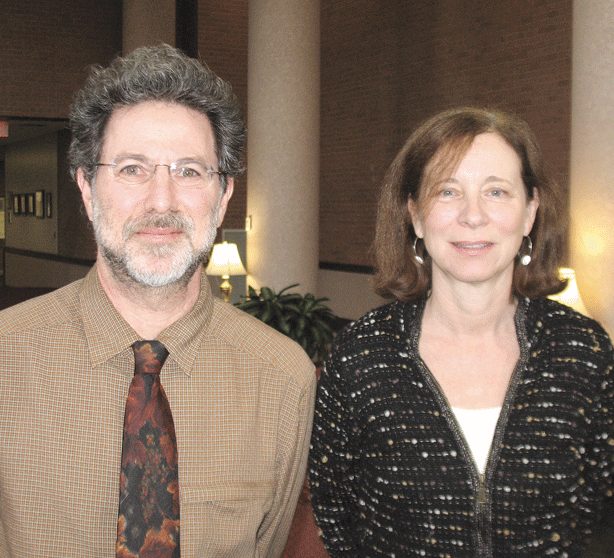
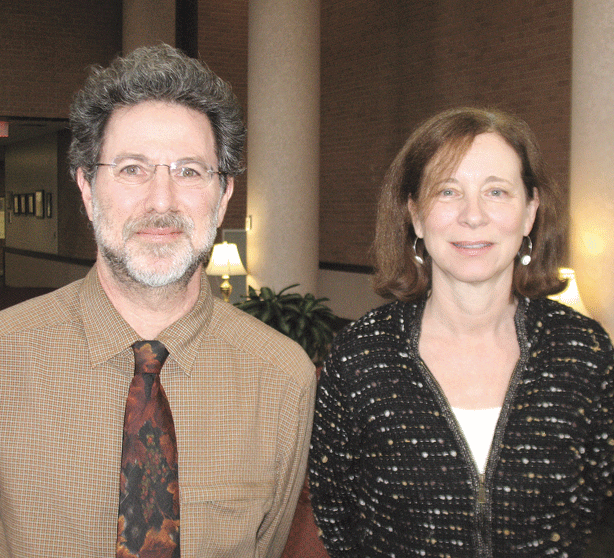
Paula Zimmer and Harris Freeman

Paula Zimmer and Harris Freeman say a lack of funding at the state trial-court level has curtailed clerking opportunities, in turn slowing down the work of the courts.

Paula Zimmer, assistant dean and director of Law Career Services at WNEU School of Law, said clerkships are becoming increasingly popular for a variety of reasons. “People love clerking because it puts all their legal education into play — the research, the writing, the first-hand look at courts and what it’s like to practice law.

“It’s a great opportunity, but a competitive opportunity as well,” she continued. “There are always more people interested in clerking than there are clerks. We have a judicial clerkships committee comprised of faculty, and we keep all kinds of materials on clerkships and deadlines, and we send recommendations.”

Zimmer, like Olinski, noted that the intensity of competition for clerkships varies depending on the venue. For instance,  “it’s very, very competitive to get one at the federal level, at the state supreme court level, even at the state appellate level. It’s still competitive to get into the superior trial-court level, but the trial-court level tends to be open to a broader range of good students.

“Clerkship is a really good credential for someone after law school; it adds a certain prestige to someone’s résumé,” she added. “It’s particularly helpful, especially in this environment, to make connections at law firms and with judges. Often judges will serve as a recommendation for you, and it helps you when transitioning into the workforce.”

She noted, however, that not every qualified student wants to do a clerkship. “Some people have a job at a firm and are offered a clerkship, but they’d just as soon go to work. Most large firms will defer your offer — they’ll say, ‘come to us in a year,’ and they’ll often give a bonus to make up for the fact that a clerkship pays less than a large firm’s salary.”

Still, Zimmer said, “because there are fewer jobs, more people are applying to clerkships at every level of law school. One of our sweet spots has been at the appellate-court level.”

Harris Freeman, a professor of Legal Research and Writing at WNEU Law School — and a former clerk at the federal district-court level — told BusinessWest that a persistent lack of state funding has curtailed the number of clerkships at the trial-court level, although the appellate level and federal courts don’t have the same problem.

The result, he and Zimmer noted, is not only a decrease in opportunities for students, but a slowing of judicial proceedings, which affects businesses as well as individuals seeking redress in the courts.

In law firms, Dibble noted, whether hiring school-year or summer clerks, practices are looking for top students, as well as those with at least a couple of school years under their belts. “There are a couple of reasons for that: one, they know more, they’re older and a little more mature; and also, it’s closer to the time when they’ll decide what they’re going to do.”

If the firm is using a clerkship to gauge whether an individual will be invited back for a job, he added, “it’s a lot easier for everyone to think about that when they’re only a year away from graduation.”


Options Open

Maltby is pleased with the two-way benefits of clerkships. “I would like to think when these students move on to their next job, they’re very well-qualified and prepared to handle a variety of different things.”

At the same time, the experience of clerking can help someone figure out what to do. They might say, ‘you know, I really don’t want to do litigation; I want to do transactional work.’ They’re seeing options and talking to lawyers in the firm and coming to an understanding of what they’d like to do, and that’s good.”

Frankel Pelletier agreed. “Sometimes they grow up wanting to be a trial lawyer, then they see what we do and say, ‘no, I don’t want to do that at all.’ You don’t get that kind of experience in law school, seeing exactly what it’s like. This affords you that opportunity.”

Dibble values his time clerking in the 1970s, but said the experience can vary for a student or graduate depending on the firm or judge.

“These kinds of positions are sought after by law students for the experience, the contacts, the possibilities,” he said. “Some judges are known for spending a lot of time with law clerks, helping them advance and supporting them, and others are a little more standoffish about it.”

As for Olinksi, his experiences have been overwhelmingly positive, and have helped him keep his options open. He is interested in litigation and has considered career paths in private practice, appeals, government work, even nonprofit practice.

“So it’s good for someone like me to see so many different areas of the law, not really getting focused on one or specializing in one,” he told BusinessWest. “Clerking is great if you haven’t picked which area you want to be in.”

And that’s true no matter how much law practice you need.


Joseph Bednar can be reached at [email protected]

Opinion
The Power of Passion Makes a Difference

When State Trooper Michael Cutone talks about the so-called C3P, or Counter Criminal Continuum Policing Program, now being implemented in Springfield’s Brightwood neighborhood, there is an unmistakable passion in his voice.

And it’s understandable.

Cutone, fellow State Trooper Tom Sarrouf, and John Barbieri, deputy chief of police in Springfield, are the three main architects of this program, which has enjoyed considerable success with the daunting task of taking neighborhood residents, once relegated to the role of spectators by fear and apathy, and making them a major force in a counter-insurgency effort that has gang members reportedly throwing their cell phones in the Connecticut River because they believe they’re bugged by police.

“Gang members and drug dealers are very savvy — they exploit the fact that people don’t want to engage with the police; they exploit that passive support,” Cutone told BusinessWest, adding that, while the program has a long way to go, it is succeeding with its broad goal of turning that base of support on its ear. And it is because of his passion for the program and its tactics — borrowed from work Cutone and Sarrouf employed with the Green Berets in Iraq — that it is enjoying solid results and bringing news media from across the country to see how it works.

This passion might be considered the prevailing common denominator among this year’s class of Difference Makers.

Indeed, there is passion in Bruce Landon’s voice when he talks about not only how, but why he has fought so hard to keep professional hockey in Springfield, assembling three different ownership groups. That same emotion is there as Sisters Kathleen Popko and Mary Caritas talk about the Sisters of Providence and their incredibly inspiring 140-year track record of finding new and much-needed ways to assist underserved segments of the population.

The passion is palpable as the remarkable John Downing talks about Soldier On and how it never stops working to find ways to improve the lives of those who have served their country. And it bubbles over when Jim Vinick talks about the Jimmy Fund, the Naismith Memorial Basketball Hall of Fame, and the myriad other causes and institutions he has attached his name to.

Thus, we may well attach the subtitle ‘the power of passion’ to this year’s stories, because it certainly sums things up. There are, indeed, many ways to effectively make a difference in a community, but the process of doing so begins with the requisite passion for a cause or a problem. And there is a lesson there for all of us — find something, or some things, we’re passionate about, and then use that emotion to change people’s lives.

Landon is often called ‘Mr. Hockey’ in Springfield, a fitting title for someone who played the game here and has held about every title in the front office. But there’s a big difference between liking a sport and devoting your life to keeping a team playing in downtown Springfield. The difference is the level of passion.

The same can be said of Vinick. Many people sit on multiple boards and donate time and money to causes. Vinick goes beyond, giving himself to those causes. That means he gives his love of his hometown and the game with which it is identified, and he gives his desire, born from great personal tragedy, to help all those who have seen their lives turned upside down by cancer.

Downing has a simple passion for helping any individual who would go fight and die for his or her country, and this is seen clearly in a career-long quest to help those who discovered that their fight wasn’t over when they returned home from service. And the Sisters of Providence have made a passion for caring service the trait that defines the congregation.

The stories of this year’s Difference Makers vary in some ways, but they all convey the same message: there really is no limit to what you can accomplish when you’re passionate about something, and when you find ways to channel that passion into solutions for others.

Features
Amherst’s College Collaborations Fuel Innovation

Amherst mapTony Maroulis says Amherst offers the cultural sophistication of a big city with the charm of a small town.

“It’s a pretty unique place where you can walk past a rock star and a Nobel laureate in one day — and that really does happen here,” said the executive director of the Amherst Chamber of Commerce.

The town is home to UMass Amherst, Amherst College, Hampshire College, and eight museums, which attract hundreds of thousands of visitors each year, in addition to its 38,000 residents. There are also three parks and a plethora of community and cultural events.

“Higher education is our smokestack industry, and there is innovation, research, and an economic spinoff from it as we are bringing world-class researchers and students together,” said Town Manager John Musante. “Plus, UMass is in the midst of a building boom and growth strategy.”

This results in jobs — UMass Amherst is the second-largest employer in Western Mass. — and benefits to the town. “There are three individuals on our water-supply protection committee who are leading researchers,” said Musante. “The ability to engage a talent pool and their willingness to help the town is a real strength that makes Amherst a great place to live and work. People get involved here, and the economic and cultural vitality is largely driven by an active engagement of citizens and people who work at the colleges.”

Maroulis concurs, and says the town has something for people of every age. “Amherst offers cultural opportunities, a wonderful intellectual community, and a good school system. It’s a great place to raise a family and a pretty place to look at,” he said. “You can see the Pelham hills in the distance, and there is lots of open space downtown.”

But the bucolic setting belies the 21st-century progress that makes Amherst a leader in technology and green energy. Many changes have occurred over the past few years, and town officials make it easy for solopreneurs, partnerships, and developers to succeed.

John Musante

John Musante says Amherst’s strong network of colleges and universities has driven the town’s economic and cultural vitality.

Last month, the town completed work on the largest and fastest open municipal wi-fi network in Massachusetts. “Amherst is well-positioned in the ongoing technological revolution as the state and college fiber network also runs through town, which makes downtown an even more attractive place to live, work, and grow a business,” Musante said. “We have the cultural amenities of a college town with the infrastructure of research and a skilled workforce. And the cost of living is very competitive.”

The wi-fi network also gives Amherst a competitive advantage and has spurred growth of the café culture downtown. “You can find people writing code for a website or writing a freelance article for a New York magazine in our coffee shops,” Maroulis said.


New Life

The town has continued to grow over the past few years in spite of a still-sluggish economy. A number of new restaurants have opened, with several geared toward students and others designed to attract adults and families.

“But they have really created a restaurant buzz,” Maroulis said. “Amherst is becoming a foodie paradise.”

In addition, renovations to the historic Lord Jeffery Inn were completed in November 2011. “It reopened after being closed for several years. It has filled a void, and there has been a lot of energy and excitement at that end of the common. The inn brings in hundreds of people each week who stay there and attend local functions,” Maroulis told BusinessWest.

The renovation included the addition of nine new rooms, a new ballroom that holds 200 people, and a new restaurant. “They are ramping up their wedding business as well as small conventions from the college and university community,” he added, noting that collaboration is evident on all fronts, including in the town’s new Business Improvement District (BID). It was launched early last year and is funded in part by Amherst College and UMass, whose property borders the edges of the downtown perimeter.

Its president is Larry Archey, who is director of facilities and grounds at Hampshire College. In addition, several representatives from UMass Amherst and Amherst College are on the board of directors at the Chamber of Commerce.

“Our BID is unique because there is both money and in-kind contributions,” Musante said, adding that he is a board member. “We all have a vested interest in the success of our downtown and want to strengthen it so it enhances the quality of life and increases partnerships and relationships with the two campuses.”

Beautification, marketing, and special events are on the agenda, and the first event the BID staged was an Amherst Block Party. It attracted about 6,000 people who mingled as they enjoyed food, live music, shopping, and street performers. “It was festive, a lot of fun, and a terrific win for the colleges, university, and businesses,” Maroulis said.

Other popular events include the annual Taste of Amherst, which draws more than 20,000 people during its four-day run in June, and a Winterfest, staged Feb. 9, which brought people out during the cold weather to enjoy cardboard-box sledding, fireworks, live music, and a chili cookoff between local restaurants. The chamber purchased a small snow-making machine several years ago, so lack of the white stuff is never a problem.

Tony Maroulis

Tony Maroulis says Amherst offers both the cultural sophistication of a big city and the charm of a small town.

5Developers are also investing in the downtown area, and last spring, construction was completed on a new, luxury, $3.5 million apartment building known as Boltwood Place. “It’s full. People want to live downtown and be able to walk to work,” Musante said, adding that a growing number of seniors are retiring in Amherst due to its cultural offerings.

There has also been a significant investment in road reconstruction on Route 116 in the Atkins Corner, which runs from the village center to South Amherst. “We think it will foster additional private investments in the area,” he said. Road improvements are also being undertaken in the Notch.


Economic Development

UMass trustees have approved nearly $900 million in new projects for Amherst, which include a new campus master plan, a $144 million science building slated to open April 13, a new classroom building now under construction, and new dormitories which will hold 1,500 students from Commonwealth College. It is expected to open Sept. 13.

“They want to grow by 3,000 students over the next 10 years,” Musante said, adding that the university opened another new, state-of-the art science building about three years ago.

He explained that Commonwealth College is for honors students from across the state, so the new dorms will help to attract a top-tier-caliber student body. “It makes the university even more attractive, which is important because our economy is linked with their success,” Musante continued. “They are a center economically and culturally, and as research grows, the demand for off-campus space is a direct spinoff. We are working with the university to explore possibilities for private investment for research and development and wet-lab space.”

Amherst College, which owns the Lord Jeffery Inn, launched its $425 million “Lives of Consequence” Capital Campaign in October 2009, and installed a new president in 2011. In addition, the college is adding its own new, $200 million science building, which is in the design phase.

Hampshire College, situated a few miles away, is a leader in environmental education. Amherst is also a leader in its own right and was designated a green community by the state this year. In addition to the town’s new sustainability coordinator, it has embarked upon a five-year plan to reduce energy consumption by 20%, and is using a $300,000 state grant to install energy-efficient LED streetlights. “There will be a big payback in the tens of thousands of dollars each year,” Musante said.

Town officials are also in the midst of a permitting process to install a solar farm at its old landfill, via a collaboration with Blue Wave Capital, which would supply the majority of the municipal buildings and schools with renewable energy. And a third project, which is in the feasibility stage and will involve private investments, is the installation of an anaerobic digester which would convert organic material (including food; fats, oils, and grease; wastewater biosolids; and manure) into a methane-rich biogas that can be used for heat and electricity.

“UMass has an active interest in it from an operational and research standpoint,” Musante said, adding that it is a major Department of Environmental Protection initiative, and there are plans to install three facilities in the state.

Hampshire College is also erecting a new building with a master plan of relocating Amherst’s nonprofit Hitchcock Center for the Environment to their campus. “It’s a new partnership which will strengthen them both,” he added.


Continuing Prosperity

Amherst has been largely insulated from the economic downturn that began in 2008 because it is a college town. “Although we did have a modest decline, our housing prices have remained more stable than the rest of the nation, which is another real strength. And our population is growing,” Musante added.

So are the number of partnerships and projects in the planning stage. Which means the economic spinoff will continue to make Amherst a place where innovation, research, and cutting-edge technology are a mainstay, with the added attraction of culture that attracts people of all ages and all stages of life.

Features
Ice-cream Flavor Creator Steve Herrell Is an American Innovator

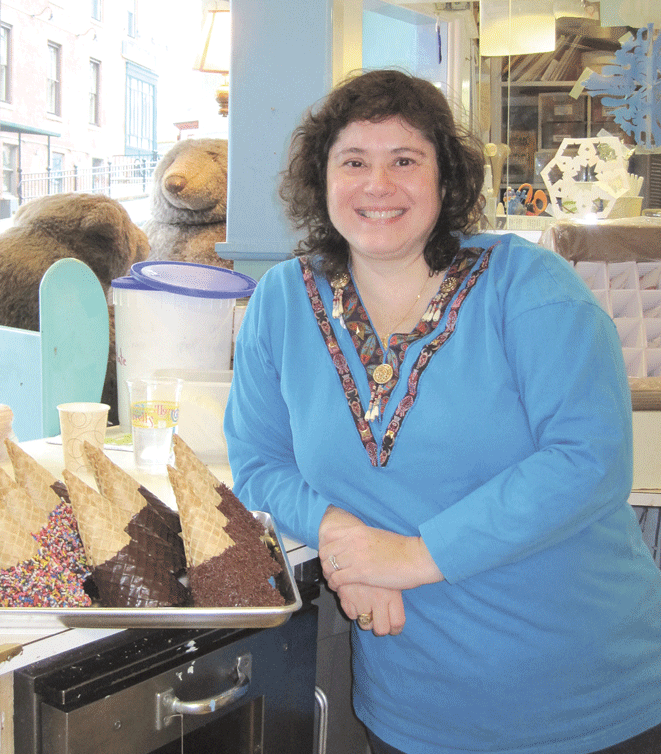
Steve Herrell

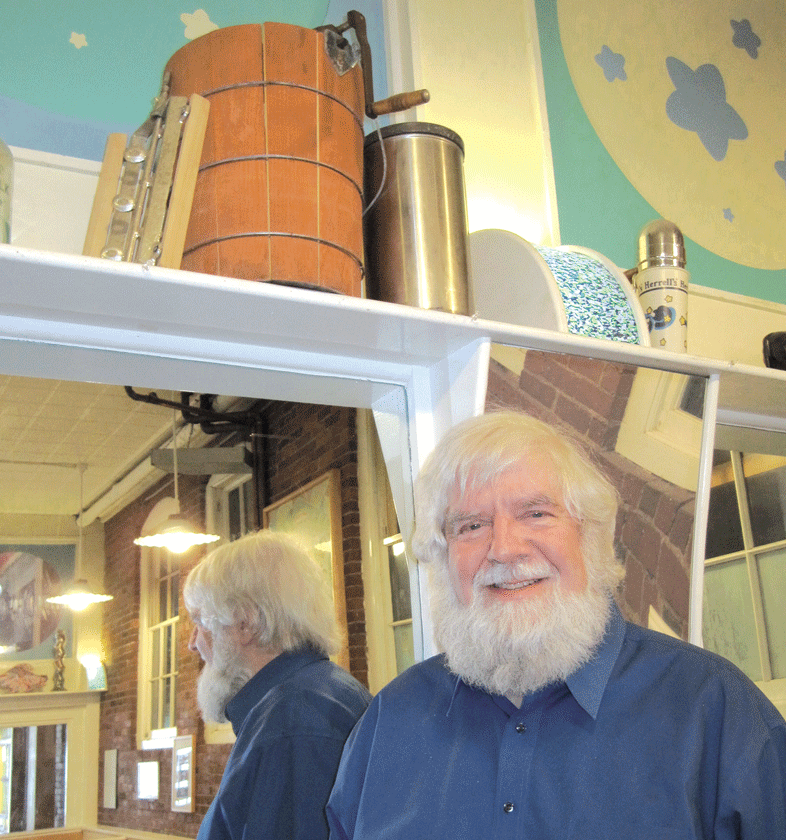
Steve Herrell stands below his original hand-cranked ice-cream freezer, which he used in 1973 to create his sweet innovations.

Steve Herrell has been called many names: Flavor Master, Mr. Mix In, Cone Head, Godfather of American Ice Cream, and Santa Claus, to name a few.

The first four monikers refer to his rise to sweet fame as ‘Steve’ of the original Steve’s Ice Cream in Somerville, Mass. in the mid-1970s (which he sold in 1977), and now as president of Northampton-based Herrell’s Ice Cream, founded in 1980, featuring his ‘Mix-ins,’ which were later trademarked as ‘Smoosh-ins.’

That last name refers to Herrell’s current shock of white hair and beard, which has prompted more than one child in his Thornes Marketplace store to gasp, “look, it’s Santa Claus!”

Judy Herrell, Steve’s former wife, who serves as vice president of Herrell’s Ice Cream and president of Herrell’s Development Corp. for Herrell’s Hot Fudge and franchise opportunities, said there may come a day when she’ll get Steve in a red suit to portray Santa.

For now, they’re just trying to keep up with the constant, year-round walk-in business to the Old South Street flagship store that attract what, for more than 30 years, have been called ‘line standers.’

“There are hundreds of them around Boston and this area, and there are now the children of the line standers,” Judy said with pride. “They will say, ‘my parents used to stand in line waiting an hour or more for ice cream.’”

These devotees cite, first and foremost, the quality of more than 220 unique flavors of Herrell’s all-natural, preservative-free, premium ice cream, and other cold treats and toppings. That, combined with Americans’ deep love of ice cream — we eat it pretty much year-round — has helped make Herrell’s increasingly popular and spawned a second location in Huntington, N.Y., in addition to various spots around the region that sell the company’s sweet products.

According to a Mintel Consumer Research report, in 2011, the ice-cream market posted a 4.1% increase from 2010’s retail sales of $10.7 billion, and once all data is considered, was on track for continued growth of another 4% in 2012.

But Herrell’s fame, not as ostentatious as household names like Ben & Jerry and Cold Stone Creamery, has a more modest flavor. Regardless, any ice-cream business today owes it a huge debt of gratitude.

If not for Steve Herrell, there might be no ‘premium’ ice cream (more on this in a bit), and there would be no Cookies and Cream or Heath Bar Crunch ice cream — which he originally called Mix-ins — or other now-common and trademarked concoctions, an effort that the International Dairy Foods Assoc. deems ‘co-branding.’

Sure, maybe someone else would have eventually come up with those industry-impacting innovations, but it was Herrell who did them both first.

For instance, by creating a method to slow down the dasher scoop in the ice-cream freezer, he was able to produce a premium product with a lower amount of aeration than regular ice cream. But it was also his idea to add candy bars, cookies, nuts, and brownie bits to ice cream, which he custom-mixed for each customer on a cold marble slab.

Indeed over the years, this innovator and his ice-cream shops have been featured in Bon Appetit, Newsweek, Time, the Food Network, and TV Diner, to name a few media, and last August, Herrell’s Ice Cream was named one of the ‘10 places you must visit’ by  GQ magazine.

For this issue, BusinessWest got the scoop on Steve Herrell and his intriguing history in the premium ice-cream business and the process that makes it one of America’s favorite treats.


Second Scoop

Judy Herrell

Judy Herrell says Herrell’s Hot Fudge winning the top spot over Williams-Sonoma Hot Fudge in a taste contest is a very big deal.

Judy and Steve met in 1980, at the beginning of his second ice-cream career start. They married in 1985, had a daughter, Jessye, and divorced amicably in 2000, all while maintaining their company positions. Steve eventually introduced Judy to Stephan Wurmbrand, who became Judy’s second husband — and the company CFO.

With Wurmbrand’s daughter, Allison, now added to the family, “Thanksgiving is a bit unusual in our house, but it works,” said Judy.

Even with Herrell’s innovations and dedication to the ice-cream craft, he admits he’s not on the cultural level of Ben & Jerry’s. But Ben Cohen and Jerry Greenfield actually visited Herrell in the late 1970s to research their own ideas, which they developed into a nationwide sensation.

“They looked in the ice-cream-making machine and wondered why it was going more slowly than others they’d seen,” Steve recalled. “I don’t think they ever figured it out.”

The Herrells, Cohen, and Greenfield remain friends to this day, while their companies have adopted far different strategies.

“We are not Ben & Jerry’s … our sales are much lower, and they took a different tack,” Judy said. While Herrell’s does not sell to supermarkets, preferring to hand-pack the ice cream at the time of order, she explained, Cohen and Greenfield opened more stores, sold product in commercial grocery chains, and developed quite a few marketing stunts, which helped brand their name. Cohen and Greenfield have also been quite political, at times controversial, while the modest-yet-charismatic Herrell, “has always been more of a ‘home’ kind of guy.”

While driving a cab for a living in Boston, way before the first ice-cream shop, Herrell would have a hot-fudge sundae every day for lunch, “from either Brigham’s or Friendly’s,” said Judy.  “That’s what gave him the impetus to know he could make better ice cream.”

Indeed, every Fourth of July, Herrell’s family would make ice cream in a hand-cranked barrel freezer. Eventually, due to his dairy obsession, he tinkered with the motor of an ice-cream maker freezer and found the right gear-reduction device to incorporate into the mechanics. During the slowed churning process, less air got into the freezing cream, and a higher fat content resulted in a much richer and creamier end result.

The process, now known as ‘low overrun,’ was essentially what food-trade magazines have called the beginning of premium, or gourmet, ice cream.

“Everybody uses it now,” said Judy, adding that, nonetheless, no one has been able to copy exactly what Steve makes. “We know why, but we’re not telling.”

Steve also had an affinity for a certain candy back then. “I thought Heath Bars would go well with ice cream,” Steve smiled. “But in what flavor … coffee, malt, maybe chocolate?”

The answer would turn out to be whatever flavor somebody wanted it to be. It was with this original concept — mixing goodies into his low-overrun processed premium ice cream — that Herrell opened Steve’s Ice Cream in an old dry-cleaner store near Harvard in 1973. After the first day, during which he sold out of all 32 gallons of ice cream, word spread, and the line-stander tradition began.

Burned out with 90-hour weeks at the Somerville location, and envisioning life as a ‘homesteader’ — a person who literally lives off the land — Herrell sold the Steve’s Ice Cream and Mix-ins trademarks in 1977, but not the formulas for the ice cream or hot fudge. He figured he’d need a bit of cash for things here or there, so he learned how to tune pianos.  But homesteading and piano tuning didn’t last long.

“I didn’t think I would miss it,” he recalls.  “But I did. And by that time, I really knew a lot about ice cream.” With the 1977 sale had came a three-year non-compete clause, and, now living in the Western Mass. area, he found an ideal spot in Thornes Marketplace and opened Herrell’s Ice Cream in 1980 — and the rest is sweet history.


Churning Process

How much ice cream has Steve eaten in his lifetime? His response, as he looks up at the hand-cranked ice-cream barrel on display, is a chuckle and the realization that he has no idea. But he bets it’s quite a lot, and while he has to watch his weight these days, most of the tasting is just that — tasting.

Creating five to six flavors a year, Herrell gets an idea and devises a few recipes in small batches. From those he produces between four and 10 different batches before settling on a composition, and he is the final taster. Sometimes, he said, only one or two tries are necessary because he’s gotten so good at knowing what the impact of a certain ingredient is going to have and how it will interplay with other flavors in that batch.

Then the administrative end of the business kicks into gear; that includes familiarizing the staff with the new flavor and making a flavor sign with any explanation necessitated by a play on words.

He typically ends up with four or five ‘experiment sheets,’ and each new flavor gets its own folder, under lock and key.

The number of folders is well over 240, said Judy, including 220 ice cream flavors; a selection of sorbet, sherbet, and ‘no moo,’ or dairy-free, flavors make up the other 20.

Rarely is a flavor removed, except the unusual occasion of a product ingredient coming off the market, like the Twinkie. Not all flavors are available all the time; that wouldn’t be possible since the store product is made on site. Seasonal flavors like Egg Nog during the holidays and Guinness around St. Patrick’s Day always bring more line standers.

Flavor suggestions come via Facebook, e-mails, and line standers, and all are taken into account, but the final say is up to the Herrells themselves: Steve as the final flavor taster, and Judy to gauge overall profitability, which, in the case of cocoa, can be completely unpredictable.

She explained that the base of all Herrell’s chocolate flavors is cocoa. “When I first started making our hot fudge, a bag of cocoa was $75; now that same 50-pound bag is over $200.”

There are only two companies in the world that process the cocoa powder, she told BusinessWest; add in global politics, taxes, and weather, and the result is a cocoa price that is constantly fluctuating.

Judy’s temper also fluctuates at times, most recently due to royalty demands. Facing possible extinction in the 1970s, she explained, Steve’s use of Heath Bars in Mix-ins, increased the candy’s production 27% between 1985 and 1986 alone. But Heath was sold to Hershey’s, and Herrell’s was informed recently that, after 30 years of offering Heath Bar Crunch and other ice-cream flavors using Heath Bars, the use of the name would require a $25,000 royalty fee, per flavor, per year.

“We kind of saved the Heath company,” Judy said with a wry smile. “But, with nine or 10 flavors, it was cost-prohibitive, so we just changed the name to English Toffee Crunch.

“If they push me any harder,” she added jokingly (sort of), “I’m going to use another brand.”


Just Desserts

Ice Cream isn’t the only thing on the menu at Herrell’s. All-natural Herrell’s Hot Chocolate is made in small batches and comes in Original, Peppermint, Irish Cream, Mexican, Malted, and Coconut. And the gooey, rich, corn-syrup-free Herrell’s Hot Fudge, which comes in Original, Almond, Coconut, Peppermint, Orange, and Chipotle, is also an award winner, like its premium ice-cream partner.

In August 2011, Judy saw the Herrell’s Hot Fudge jar pictured in a SeriousEats.com taste-test announcement. The publication had purchased various products in Whole Foods and tested them with readers, and Herrell’s won the top spot, said Judy. “What’s interesting about this is who we beat; these are gourmet companies, and that makes it a really big deal.”

Indeed, little Herrell’s Hot Fudge, produced and packaged at the Franklin County Community Development Corp. food-processing kitchen, beat out Williams-Sonoma Hot Fudge and King’s Cupboard Bittersweet Chocolate Sauce.

A recent coup for the company is the move from the specialty area of the North Atlantic region of Whole Foods, which Herrell’s Hot Fudge has called home for five years, to the general grocery department of all the chain’s stores. This will pit the brand against all the current products in Whole Foods. “It’s another big deal,” she said.

Through Herrell’s Development Corp., Judy oversees the hot-fudge business and franchising, which is by inquiry only until the economy gets better. Meanwhile, the trademarked Steve’s name that was sold more than 35 years ago pops up with different owners who have tried and failed nationally to resurrect Herrell’s initial quality and success; the most recent is a revival in New York City that is “not doing too well.”

Certainly, in Northampton, Huntington, and beyond, Steve Herrell’s got it licked — proving that it’s not what’s in the name, but what’s in the product, that determines the hot hand in the cold arts.


Elizabeth Taras can be reached at [email protected]

Bankruptcies Departments

The following bankruptcy petitions were recently filed in U.S. Bankruptcy Court. Readers should confirm all information with the court.


Aucoin, Mary P.

a/k/a Gillis, Mary

25 Hamilton Ave.

Orange, MA 01364

Chapter: 7

Filing Date: 01/15/13


Barnett, Ian K.

14 Marchioness Road

Springfield, MA 01129

Chapter: 13

Filing Date: 01/15/13


Berns, Tracy Petit

a/k/a Proulx, Tracy D.

a/k/a Smalley, Tracy D.

PO Box 443

Thorndike, MA 01079

Chapter: 7

Filing Date: 12/29/12


Boateng, Nana Y.

115 Main St.

Wilbraham, MA 01095

Chapter: 13

Filing Date: 01/09/13


Brandt, Roger D.

96 Gold St.

Belchertown, MA 01007

Chapter: 7

Filing Date: 01/14/13


Chamberlain, Frederick W.

Chamberlain, Amy L.

5 Almon Ave.

West Springfield, MA 01089

Chapter: 7

Filing Date: 12/31/12


Devio, John L.

16 Crossey Place

North Adams, MA 01247

Chapter: 7

Filing Date: 01/03/13


Fuller, Matthew D.

15 Sawmill Plain Road

South Deerfield, MA 01373

Chapter: 7

Filing Date: 01/04/13


Gray, Stephen P.

86 Bowdoin St.

Springfield, MA 01109

Chapter: 13

Filing Date: 01/04/13


Grimaldi, Mallori L.

PO Box 35

Agawam, MA 01001

Chapter: 7

Filing Date: 12/31/12


Iellamo, Jr., Paul A.

55 Windham Dr.

East Longmeadow, MA 01028

Chapter: 13

Filing Date: 01/15/13


Iron Kustoms Auto Body

Harris, John W.

PO Box 212

Orange, MA 01366

Chapter: 7

Filing Date: 01/08/13


Jeffery, Jacquelyn M.

213 Tyler St.

Springfield, MA 01109

Chapter: 7

Filing Date: 01/14/13


Khawaja, Talat

Khawaja, Rukhsana

45 Montgomery St.

Westfield, MA 01085

Chapter: 7

Filing Date: 12/31/12


Koldys, Michael R.

45 Redwood Lane

Sheffield, MA 01257

Chapter: 13

Filing Date: 01/15/13


Kravchenko, Sergey N.

Kravchenko, Natalya P.

46 Grattan St.

Chicopee, MA 01020

Chapter: 7

Filing Date: 01/11/13


Leary, Sarah

26 Greenwood Ave.

Holyoke, MA 01040

Chapter: 7

Filing Date: 12/31/12


Lopardo, Darlene M.

29 Irvington St.

Springfield, MA 01108

Chapter: 7

Filing Date: 01/10/13


MacAdams, Courtney David

50 Red Brook Lane

Orange, MA 01364

Chapter: 7

Filing Date: 12/31/12


Maigret, Lisa M.

97 Monrovia St.

Springfield, MA 01104

Chapter: 13

Filing Date: 01/11/13


Martineau, Daniel R.

14 Carmen St.

Chicopee, MA 01013

Chapter: 7

Filing Date: 12/31/12


Marzano, Frank

412 Island Pond Road

Springfield, MA 01118

Chapter: 7

Filing Date: 12/31/12


McHale, John D.

McHale, Kimberley J.

387 East River St.

Orange, MA 01364

Chapter: 13

Filing Date: 12/31/12


McIntyre, Kathleen Jean

a/k/a Slattery, Kathleen Jean

17 Laurence Dr. West

West Springfield, MA 01089

Chapter: 7

Filing Date: 01/04/13


McIntyre, Michael Lynn

285 Shaker Road

Enfield, CT 06082

Chapter: 7

Filing Date: 01/04/13


Nieves, Joselito

533 Wilbraham Road

Springfield, MA 01101

Chapter: 13

Filing Date: 12/31/12


O’Donnell, Monique F.

153 Allen St., Apt. D

Springfield, MA 01108

Chapter: 7

Filing Date: 01/04/13


Ortega, Luz Maria

a/k/a Roldan, Luz Maria

142B Gresham St.

Springfield, MA 01119

Chapter: 7

Filing Date: 12/31/12


Palatino, Laurie A.

1286 Parker St.

Springfield, MA 01129

Chapter: 7

Filing Date: 12/31/12


Payette, Stephen

Payette, Sherri

295 Elm St.

Pittsfield, MA 01201

Chapter: 13

Filing Date: 12/31/12


Pishchenkov, Maksim

9 East Bartlett St.

Westfield, MA 01085

Chapter: 7

Filing Date: 12/31/12


Reed, Matthew B.

Reed, Carol Anne

169 Allen St.

East Longmeadow, MA 01028

Chapter: 13

Filing Date: 01/02/13


Rivas, Liza M.

172 Bacon Road

Springfield, MA 01119

Chapter: 7

Filing Date: 01/03/13


Rivera, Ivan J.

16 Johnson St.

Springfield, MA 01108

Chapter: 7

Filing Date: 01/14/13


Rivera, Marcos N.

Collazo-Rodriguez, Myrta

73 Wellington St.

Springfield, MA 01109

Chapter: 7

Filing Date: 01/14/13


Robinson, Gina M.

57 Webber St.

Springfield, MA 01108

Chapter: 7

Filing Date: 01/10/13


Salvidio, Rachel

555 Russell Road, Unit J62

Westfield, MA 01085

Chapter: 7

Filing Date: 01/07/13


Seldomridge, Ricky R.

a/k/a Seldomridge, Richard

Seldomridge, Jody L.

a/k/a Adams, Jody L.

844 Main St.

Agawam, MA 01101

Chapter: 7

Filing Date: 01/06/13


Servantez, Philip M.

Servantez, Judith A.

67 Horace St.

Springfield, MA 01108

Chapter: 7

Filing Date: 01/15/13


Smith, Christie Marie

400 North King St.

Northampton, MA 01060

Chapter: 7

Filing Date: 01/15/13


Suriner, Lea Ann

1 Tracie Ave.

Adams, MA 01220

Chapter: 7

Filing Date: 01/04/13


Torres, Jose M.

P.O. Box 6636

Holyoke, MA 01041

Chapter: 7

Filing Date: 01/14/13


Vicente, Andres

Rodriguez, Amparo

20 Gerard Way, Apt. G

Holyoke, MA 01040

Chapter: 7

Filing Date: 01/10/13


Wheeler, Sandra L.

985 Florence Road

Florence, MA 01062

Chapter: 7

Filing Date: 01/08/13


Wiles, Melanie Jeanne

49 Lunt Dr.

Greenfield, MA 01301

Chapter: 7

Filing Date: 01/15/13


Yell, Mary Elizabeth

12 Gaugh St.

Easthampton, MA 01027

Chapter: 13

Filing Date: 01/08/13


DBA Certificates Departments

The following Business Certificates and Trade Names were issued or renewed during the months of January and February 2013.


AGAWAM


Carefree Gourd Gallery

75 Simpson Circle

Ceclia Rossi


Fozzies Gourmet Bakery

694 Barry St.

Ellie Kozak


Real Estate Solutions

10 Abbey Lane

Jeff Dubiel


CHICOPEE


A.J. Chimney Services

32 Hajel Circle

Adolf Andruleonis


Cutting Edge Cuisine

100 Northwood St.

Jaime Duclos


Family Nutrition Consultants

335 Grattan St.

Sallie T. Czepiel


Midas

704 Memorial Dr.

Scott Gonyer


Olde Time Service

35 Glade Ave.

Brian Kennedy


EAST LONGMEADOW


Nails by Kat

124 Shaker Road

Kateryna Derkach


Network Security Partners

132 Shaker Road

Eric Mance


Plouffe Realty Inc.

217 Shaker Road

Raymond Plouffe


R.E. LaPlante Construction Inc.

94 Maple St.

Ray E. LaPlante


Sayegh Jewelers Inc.

60 Shaker Road

Jamil A. Sayegh


Stephen Allen Jewelers

35 Maple St.

Stephen Lewis


GREENFIELD


Antonio’s Pizza

201 Main St.

Amy Long


Bill’s Auto Sales

330 Federal St.

William Redmond


Creek Massage Therapy

116 Federal St.

Heather Creek


Harmony Home Care

83 Thayer Road

Tammy Zellman


Harpers Store

404 Colrain Road

William Valvo Jr.


JC’s Market

259 Conway St.

Bruce Bednarski


Ravenous MMA

158 Main St.

Joseph Leonard


Ray’s Cycle Center Inc.

332 Wells St.

Theresa Pydych


Winterland Country Club

76 Hope St.

Joseph A. Poirier Jr.


HOLYOKE


Fashion Nails

293 High St.

Tai Do


Holyoke Sporting Goods

1584 Dwight St.

Elizabeth A. Frey


JD’S Transmission Auto Sales & Repairs

358 Main St.

Julio DeJesus


Melo Deli Grocery

512 South St.

Luis S. Melo


New Fashion

303 High St.

Rosimary Ramirez


Scents Remembered

540 County Road

Tom Paquin


LUDLOW


Pires Realty

160 East St.

John Pires


Poppi’s Pizzeria

351 West St.

Kevin Fonseca


Studio DCC

48 Pine Glen Dr.

Denise L. Catuogno


Superior Networking Solutions

476 East St.

Michael Richter


T-Clectic

194 East St.

Treena Peltier


PALMER


Ray Croteau Electric

244 Burlingame Road

Raymond Croteau


Stephens Tree Service

1022 Chestnut St.

Shane Stephens


SPRINGFIELD


Minh Tai Inc.

308 Belmont Ave.

Tony M. Tai


Optical Expressions Inc.

1514 Allen St.

Shelia Gibbs


Rah’s Express, LLC

51 Maebeth St.

Raoul Harvey


Rocktenn CP, LLC

320 Parker St.

Angela Rosado


Rosario’s Scooters

74 Glenmore St.

Hector M. Rosario


Snack Time

423 ½ State St.

Jason L. Ocasio


Sovereign Investigative

67 Wollaston St.

Alexander Buor


The School Store

1089 State St.

Henry G. Cockett


The Traveling Toolbox

109 Carver St.

Alan G. Jarvis


Wholesale Auto Outlet

480 Central St.

Attilio Cardaropoli


WESTFIELD


A Time to Grow

6 Mainline Dr.

Cheryl Ouellette


BGK Clothing Company

12 Fowler St.

Joseph Bushior


Main Street Hair Company

32 Main St.

Megan Clauson


MG Snow Plowing

542 West Road

Michael Gogol


VCW Interior Solutions

29 Bayberry Lane

Vitaliy Shpak


Whip City Networking

89 Yeoman Ave.

Matthew Biegalski

Class of 2013 Difference Makers

Managing Director of Investments for Moors & Cabot Inc.

Jim Vinick

Jim Vinick
Photo by Denise Smith Photography

As he talked about one of his latest — and most intriguing — endeavors, Jim Vinick’s passion, perseverance, and dedication to those causes that are special to him came across quickly and clearly.

And so did his no-nonsense approach to getting things done.

This particular project involves a statue he’s commissioned that will honor the late Einer Gustafson — the individual identified fairly late in his life as the young boy who became the ‘Jimmy’ in the Jimmy Fund — and the man who treated him, Dr. Sidney Farber, founder of the Children’s Cancer Research Foundation (eventually renamed the Dana-Farber Cancer Institute) and the father of modern chemotherapy.

The initiative is the latest manifestation of a 35-year commitment Vinick has made to the Jimmy Fund, service that escalated, and took on a far more personal character, after his son, Jeffrey, was treated at Dana-Farber but eventually lost his battle against rare form of testicular cancer in 1982, and his daughter, Beth, became a cancer survivor.

Originally, the plan was to have the statue also include Red Sox slugger Ted Williams, long known for his devotion to the Jimmy Fund. But Vinick knows his Jimmy Fund history. So he also knows that, when the then-12-year-old Gustafson was selected to speak on Ralph Edwards’ national radio program Truth or Consequences from his hospital bed in 1948, he was surrounded by members of the Boston Braves, the National League franchise that actually started the Jimmy Fund (the Red Sox picked up the mantle after the Braves moved to Milwaukee in 1953).

Thus, Vinick decided to remove Williams from his plans, even though he was his close friend for many years and actually still owns the rights to produce his life’s story on screen (more on that later).

But there’s much more to this saga.

Originally, officials wanted the statue placed in what Vinick considered to be a remote corner of a huge facility cluttered with more than 19,000 pieces of art. “I said to them, ‘if we’re going to hide this, I’m not going to do it — not for this price [$150,000],” he told BusinessWest, adding that he then secured a far more prominent location where the statue would be virtually impossible to miss. Meanwhile, Farber’s son wanted some specific wording on the accompanying plaque.

“He wanted it certain ways, and I wanted it certain ways, and finally, I got it may way — and it was going to be my way or the highway,” said Vinick. “I told them, ‘this is my project, and I’m not doing this for Dr. Farber, I’m doing it for the original Jimmy.’ Dr.’s Farber’s obviously a massive part of it, but this all germinated with Jimmy.”

“My Way” is the title to a song made famous by Frank Sinatra and Elvis Presley, among others, but those two words constitute Vinick’s MO as well.

His way has been to be an ardent, nearly life-long supporter of the Naismith Memorial Basketball Hall of Fame, a commitment described by the Hall’s president, John Doleva, this way: “he is unequivocally one of the most passionate and involved board members in the history of Basketball Hall of Fame, and can be seen supporting our important events across the U.S., sharing the pride of the birthplace of basketball.”

His way has been to get deeply involved with the Western Mass. Jimmy Fund Council and stay involved for more than 35 years. His passion has been the Jeffrey Vinick Jimmy Fund Golf Tournament, which has raised more than $9 million in the 34 years it has existed.

His way has been to lend his time, energy, and imagination to groups ranging from the Jewish Community Center to the Willie Ross School for the Deaf; from Temple Beth El to the Springfield Armor basketball team (he’s a partner in that venture).

And his way has been to right some things that he sees as wrong — like the Dana-Farber Cancer Institute not having a memorial to either Farber or the young man who inspired a charitable institution that has raised hundreds of millions of dollars to find cures for a killer.

Because he’s always done things his way, and because that approach has greatly impacted so many lives, Jim Vinick has been chosen as a Difference Maker for 2013.

Star Power

The walls and shelves in Vinick’s office on the 15th floor of One Financial Plaza in Springfield are crowded with photographs, news clippings, and other assorted memorabilia that do a decent job of summing up his life, career, and philanthropic exploits.

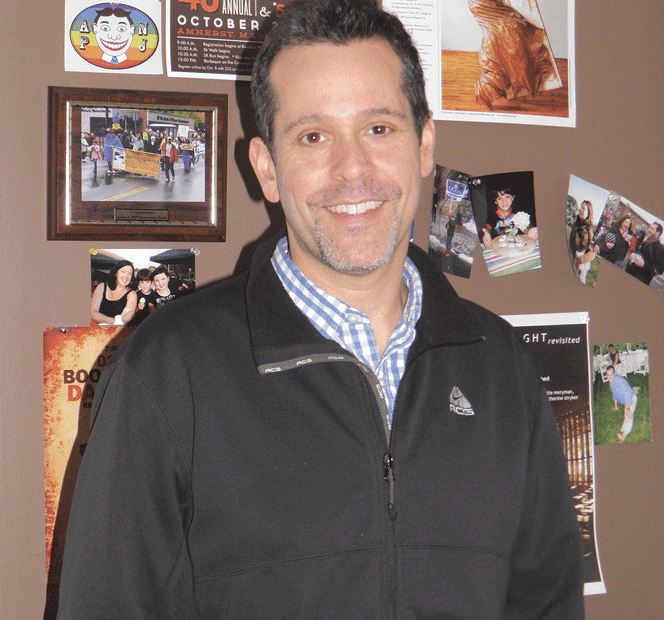
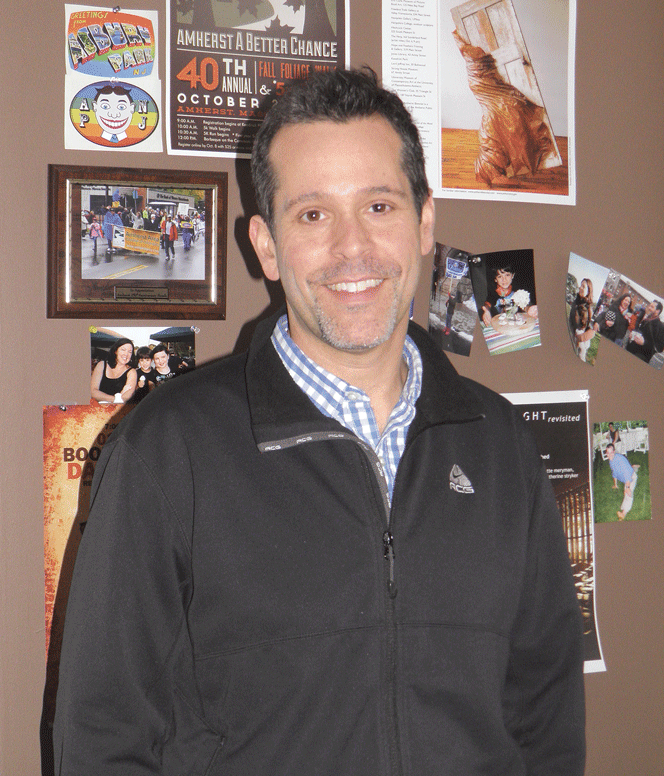
The collection includes everything from photos of family members, including his son Jeff, to news reports involving Friendly’s — he controlled a large amount of stock in the Wilbraham-based corporation and was often quoted in recent years on the many developments that have shaped the company — to a snapshot from his early days doing The Vinick Report, the region’s first business-news segment, on Channel 40.

And then, there’s a photo that captures the moment in February 1986 when Ted Williams signed the contract giving Vinick exclusive rights to his life’s story.

“The check was for $125,000 — that was a down payment — and that was the biggest check he’d ever seen in his life,” Vinick recalled, adding that the Splendid Splinter, as he was called, never surpassed $100,000 as a ballplayer, and that figure represented the annual amount paid to him by Sears Roebuck for 20 years to be one of its top pitchmen.

“Ted was under the gun — in 1980, he dropped Sears Roebuck,” Vinick recalled. At the time, the two were close friends who had worked together on many Jimmy Fund initiatives, including the annual Western Mass. sports banquet, at which Williams spoke on several occasions.

Vinick has never been able to get the Williams project off the ground, although it’s not from lack of effort, and he says he’s not through trying. He had a screenwriter interested, fielded inquiries from several actors looking to play the part (including Treat Williams and David Hasselhoff), shopped the project at various Hollywood studios, and spent a lot of money trying to pull a script together. But the pieces never fell into place.

However, frustration with the Williams project has been one of the very few real setbacks for Vinick, who has historically seen his persistence and passion take him — and the organizations he’s supported — to where he wants to go.

Perhaps the best example of this is the Jimmy Fund, which he has served for more than 35 years as a member of the Western Mass. Council, work that could best be described as a mix of personal tragedy, triumph over extreme adversity, and true inspiration.

Most in the region know the story of how Vinick’s son Jeffrey succumbed to cancer after a long fight, and they probably know also how his daughter, Beth, won her battle against the disease, but not before her mother (Vinick’s wife, Harriet) took her own life just days after Beth’s cancer was diagnosed.

“Those are my daughter’s twins there,” said Vinick, pointing at a photo on his wall, adding that his work with the Jimmy Fund takes many forms. The golf tournament is the most visible, but there are many other fund-raising events, including the recent Chef’s Night at Chez Josef.

“For the past several years, the Western Mass. Jimmy Fund Council has raised over $1 million,” he said, “and my family’s been an integral part of that.”

And for his efforts on behalf of the Jimmy Fund, Vinick has receieved one of the highest awards bestowed by the organization, the Bob Cheyne Lifetime Achievement Award.

Far from satisfied, he’s pushing ahead with the statue of ‘Jimmy’ and Dr. Farber. He’s commissioned Brian Hanlon, who he met through the Hall of Fame (he’s the shrine’s official sculptor), who will add this project to a portfolio that includes a statue of Shaquille O’Neal on the LSU campus, one of Bob Cousy at Holy Cross, and planned works on Chuck Bednarik and Yogi Berra.

Court of Opinion

Beyond the Jimmy Fund, Vinick is best noted for his work with the Basketball Hall of Fame, an institution he’s been involved with for about as long as he can remember. Actually, it started with his father. He ran a dry-cleaning business and eventually became involved in the building of the first Hall of Fame on the campus of Springfield College, a project that started in 1959, but was often delayed by funding problems and wasn’t completed until 1968.

Jim Vinick was intricately involved in both the building of the second Hall (the first on Springfield’s riverfront), which opened in 1983, and the current structure, which opened nearly a decade ago.

“I guess that’s my legacy to the city of Springfield,” he said of the current Hall complex. “Obviously, we’ve had a tremendous amount of help everywhere, and I’m just a cog in the wheel … but I’m devoted to it, and I’ve been involved since day one.”

One of his signature projects was the creation of the Jeffrey Vinick Memorial Locker Room in the first Hall on the riverfront.

“He was always in the locker room, so I thought this was the most appropriate way to honor him,” Vinick said of his son, who starred in three sports at Longmeadow High School.

Over the years, Vinick has held a number of positions and titles with the Hall, including board member, governor, treasurer, member of the Audit & Finance Committee, and chairman of the Endowment Fund. For his efforts, he was recognized with the Chairman’s Cup Award in 2010.

Doleva told BusinessWest that it’s not only what Vinick has accomplished, but also how, that stands out.

“He’s a very intense individual, let me put it that way,” he explained. “When I first met him, I kind of felt that he was a little over the top. But you have to take time to understand what Jim is all about, especially when he’s passionate about an organization you’re involved with.

“And it does take time to completely understand where he’s coming from,” he continued. “But there is no one more impassioned, more connected to this organization, than he is.

“We have events all over the country, and very few of my Board of Governors members, who live throughout the country, attend them,” Doleva went on. “Jim’s at almost every one of them, and he’s a local governor. He’ll go to the Final Four, he’ll go to a statue unveiling, he’ll be at various basketball tournaments around the country staged to support the Hall of Fame. And he doesn’t just go to be there and enjoy a good basketball game and a few social events; he’s there, and the switch never goes off — he’s talking about Springfield and the Hall of Fame and the birthplace of basketball. He just never stops.”

This ‘never stops’ quality equates to always looking for new and different ways to give back to the community — such as with another of his more recent endeavors, restoration of Robert Lewis Reid’s historic mural, titled “The Light of Education,” which hung in the auditorium of his alma mater, Classical High School, for more than 70 years.

When the school was converted into condominiums in the late ’80s, the mural was removed and subsequently damaged, said Vinick, adding that he and other members of the class of 1958 are working in conjunction with the Springfield Council for Cultural and Community Affairs to restore the piece and then hang it in the Springfield Library.

“We’re up to about $109,000, and we’re still collecting money,” he said, adding that the efforts recently received a boost in the form of a $23,000 check from Audrey Geisel, widow of Theodor Seuss Geisel (Dr. Seuss). “This is a piece of Springfield’s history, and it should be there for citizens and visitors to enjoy.”

Art of the Deal

Work on the Jimmy statue had been delayed somewhat — Vinick said it took several months to get permission to use the 1948 Boston Braves uniform given to Gustafson by the team’s manager, Jimmy Southworth, in the statue’s design — but everything now appears on track for a spring unveiling.

There have been several challenges to overcome and many logistical hurdles to clear, but they are now all in the past tense.

That’s because Vinick is doing things his way, and also because, as Doleva said, the switch never goes off when it comes to something he’s passionate about.

George O’Brien can be reached at  [email protected]

Class of 2013 Difference Makers

President and General Manager of the Springfield Falcons

Bruce Landon

Bruce Landon
Photo by Denise Smith Photography

It was a few days before the National Hockey League was to begin its abbreviated and condensed season — salvaged by a new collective bargaining agreement reached in early January — and Bruce Landon was talking about the many ways the division-leading Springfield Falcons, the organization he’s been involved with for more than 40 years, would be impacted by those developments.

“We’ve lost six players,” said the team’s president, general manager, and minority owner, referring to the roster members who have been called up to the American Hockey League affiliate’s parent club, the Columbus Blue Jackets, since the labor impasse was resolved. “Every team has lost three to nine; whether we get one, two, or three back remains to be seen.

“They’re going to play 48 games in 99 days, so there are going to be a lot of injuries,” he continued. “So depth is going to be the key to success for teams in this league [the AHL]. It will be important for us to stay healthy here.”

Actually, the team already has a lot of depth, he went on, noting that it was built with the NHL’s labor situation in mind. In fact, the Falcons are carrying between 28 and 30 players, when they normally have 22 or 23 on the roster.

“And when you carry extra guys, it’s always expensive,” said Landon, who would quickly move on to other headaches, including everything from attendance still described by the word ‘flat’ to weather forecasts — not actual weather itself — that are often enough to keep people from driving to the MassMutual Center for a game.

But dealing with such challenges is obviously a labor of love for Landon, and this passion for hockey in Springfield is the sole reason why he’s still dealing with such issues as buying more tape and booking more hotel rooms because he has to keep more players on his roster.

Indeed, on three separate occasions, Landon has put together ownership groups that have allowed the city to keep an AHL affiliate, something it’s been able to do since 1936. And the most recent rescue was also the most harrowing.

It was the 11th hour, and the clock was getting ready to strike midnight. After negotiating with 28 potential ownership groups from Chicago, Washington, and even Russia, an exhausted Landon, whose wife, Marcia, was starting to worry about his health, was running out of options and nearly running out of hope that he could keep the team in Springfield.

That’s because the ownership group in place at that time was almost out of patience and applying some pressure to sell — even it meant to a group that would take the team to another city, like Des Moines, Iowa, which was coming ever more prominently into view as the likely landing spot.

But then, Landon had one more conversation with Charlie Pompea, a Florida-based businessman who had kicked the tires on the Falcons but was hesitant about pulling the trigger. It was after hearing Landon deliver an impassioned speech after the golf tournament they had just played in together — one in which he talked about the importance of preserving the team’s mailing address at Falcons Way in Springfield — that they initiated the talks that got a deal done.

Landon acknowledged that, while his business card says president and general manager, his unofficial job description for much of his tenure has been to keep a team in Springfield. And the main reason, he went on, is because, while Springfield has historically been good for hockey, the community should know and understand that hockey is very good for the city.

“Springfield should be proud to have a team in the American Hockey League,” he said, prefacing his remark by saying that he makes it quite often. “There are only 30 teams, and 30 cities across North America and Canada, and we’re one of them.”

For his untiring work to enable the city to say it is still one of those 30, Landon has been named a member of the Difference Makers Class of 2013.

Several Big Saves

As he talked with BusinessWest, Landon referenced an e-mail he had just received from Chris Olsen, one of the hundreds of interns he’s worked with over the years.

Olsen is currently vice president of Football Administration for the Houston Texans, who were still battling for an NFL championship until the New England Patriots beat them on Jan. 13.

“He wrote to basically say that he was following us and he was happy with our success, and he wanted to thank me for giving a young man an opportunity to get into the business,” said Landon. “Those things are so rewarding, and we’ve seen so many of them over the years.

“I love it when we see people come here and either work for us, or go on to bigger and better things, because that’s what we’re all about,” he went on. “We’re not just a development team for players … we’re also a development business for a lot of aspiring sports professionals as well.”

Helping individuals contemplating careers in everything from broadcasting to marketing to merchandising by giving them real-world experience is just one of the many ways in the which the Falcons have made an impact on this region, said Landon, listing others ranging from direct economic impact to providing wholesome family entertainment.

“We’re more than just a professional hockey team providing great sports entertainment for families,” he explained. “We are, and should be looked at as, a catalyst for downtown; on a good year, we can draw 180,000 people into the city, and the economic spinoff from that is in the millions of dollars.

“We create jobs for people at the MassMutual Center — we have 38 guaranteed dates there,” he continued. “Our players live here and spend money here, we employ people ourselves, we help the parking garage … our franchise is very important to the city in many different ways.”

Landon has been making such comments since Jimmy Carter was in the White House, making him perhaps the most enduring and significant sports figure in the city’s history.

And by now, most people in Greater Springfield know at least the basics of the Bruce Landon story — how the Kingston, Ontario native was drafted by the NHL’s Los Angeles Kings and came to the Springfield franchise (then also named the Kings) in 1969, and how he injured his shoulder in the later stages of the Calder Cup championship season of 1970-71, paving the way for future Hall of Famer Billy Smith.

They probably also know that he later went on to play for the New England Whalers in the World Hockey Assoc. (which eventually merged with the NHL in 1979) before returning to Springfield and the AHL in the late ’70s. And they likely know that, while playing for the team, he was also doing some front-office work, something that became a full-time endeavor when he blew out his knee at age 28 in 1977, forcing him to retire.

They might also know that he’s held just about every title one can have with a pro sports franchise, from player to broadcaster; from director of marketing and public relations to general manager and part owner, and that he has plaques in his den, including the James C. Hendry Award, presented annually to the AHL’s outstanding executive, which he earned in 1989.

Less well-known, perhaps, are Landon’s successful efforts behind the scenes to assemble ownership groups. He first did it in 1994 after the then-Springfield Indians (the name the team had for decades in a nod to the famous motorcycles made in the city) were sold to out-of-town interests and moved to Worcester. Partnering with Wayne LaChance, Landon started a new franchise and named it the Falcons after the birds that had famously begun to nest in downtown Springfield office towers.

And he did it in 2002, when he expanded the ownership base to provide more stability for the franchise. He managed to pull together a group of local business people to commit to the team and then stay with it through a succession of parent clubs and seasons that ended with the club at or near the bottom of the standings.

Eventually, the ownership group tired of the team’s lackluster financial performance and initiated the process of exiting the AHL. And it was this latest effort to secure ownership that would keep the team in Springfield that is considered the biggest save of Landon’s career — and the most difficult.

Goal-oriented Individual

“Selling the team at that time was a real challenge,” he recalled, “because no one wanted to keep the team in Springfield — they all wanted to move it. They were looking at other cities and other venues that were available … it’s a great league, and people want to be part of it.

“Had Charlie not stepped up and brought the franchise, there was a significant offer from a group that wanted to move it to Des Moines,” he continued, adding that he’s never made that information public before. “That [Falcons] ownership group had said, ‘there’s not much more we can do — we don’t want to lose money anymore.’ They were getting to the point where they wanted to sell, and if we couldn’t find a local buyer, then they’d take the best offer they could, even if that meant the team would be moved. A message was being sent, and Charlie saved the day.”

But, to borrow a term from his sport, Landon obviously earned a huge assist.

Returning to that golf tournament at which the two played together, Landon said his remarks at dinner obviously struck a chord with Pompea.

“He said, ‘you’re really serious about this, aren’t you?’” Landon recalled, adding that his lengthy answer to that query obviously convinced him he was. “We talked some more, and a few weeks later, we had a deal.”

Looking ahead, something Landon is far more comfortable doing than looking back, especially at his own exploits, he said that, despite the team’s recent success and position at the top of the Northeast Division, well ahead of the Bridgeport Sound Tigers and Hartford Whale, there are still many question marks about the future.

“There are no more rabbits left in the hat,” Landon said candidly when referring to the team’s status, using those words to convey his belief that there will be no more 11th-hour rescues for this franchise if the current ownership situation deteriorates.

“We have our lease through next year, and we have our affiliation agreement through next year,” he noted. “But, as Charlie and I talk about, this is a business, not a hobby, and we have to assess how we’re doing from a business standpoint; are we seeing some light at the end of the tunnel, and are we making progress?

“He wants to see this work,” Landon went on, referring to Pompea. “But he is a businessman, as I am. Overall, we’re cautiously optimistic that we’re going to get this thing headed in the right direction.”

He said the team is well-positioned in many respects. It has a solid partnership with the Columbus franchise, a favorable lease arrangement with the MassMutual Center, travel expenses far lower than most other AHL franchises because of its central location, and a lean operation. The keys moving forward are improving attendance, obviously, but also growing revenues across the board.

And this can only be accomplished, he went on, by gaining a full buy-in from the residents of not only Springfield but the entire region.

“I hope that fans understand that they have to engage and embrace this team so it stays here for many more years to come,” he said in summation. “I’ll eventually be leaving this position, and I just hope that the fans — and not just the fans, but the community — realize how lucky they are to have a team of this caliber, and never take it for granted.”

A Game Changer

On several occasions during his recent talk with BusinessWest, Landon heaped praise on Pompea, crediting him with the fact that Springfield currently has a team stirring dreams of another Calder Cup banner hanging from the rafters at the MassMutual Center.

“If it wasn’t for Charlie, this team would have been gone,” he said. “He’s the one who saved hockey here.”

That’s one man’s opinion. Most, however, would say that Landon himself is the individual worthy of that sentiment, earned through more than four decades of dedication to the Kings, Indians, Falcons — and the Greater Springfield area.

For that, he’s truly a Difference Maker.

George O’Brien can be reached at [email protected]

Class of 2013 Difference Makers

President of Soldier On

John Dowling

John Dowling
Photo by Denise Smith Photography

John Downing has file folders full of statistics at his disposal as he talks about the many programs being carried out by Soldier On and the philosophy that powers the organization — from the percentage of veterans it serves who have mental-health issues (78%) to the average hourly wage being earned by the many formerly homeless veterans now working for the agency ($10.89).

But perhaps the most powerful — and poignant — numbers are these:

There are more than 265 ‘residents’ of the homeless veterans shelter and transitional facility in Leeds, where the organization is based, and only about 25 of them went ‘home’ — whatever and wherever that is — for the holidays last December.

“The rest of them were already home,” said Downing, the long-time president of the organization, founded in 1994, who understands fully what those numbers mean and what they tell him his responsibility, and that of his staff, must be to those the agency serves. Basically, to redefine ‘home.’

“These people have lost everything, and so they identify now with the community they’re growing and serving in,” said Downing, who told BusinessWest that, when he took over at the struggling organization, housed at the Veterans Administration Hospital in Leeds, in 2001 at the behest of its board, he did so with the single goal of creating the “Holiday Inn of shelters.”

He did that in what seemed like a few months — although it actually took the better part of a year to complete a full turnaround, thanks to some dramatic changes in the basic approach taken. And looking back over what’s happened since, success with that goal might be considered perhaps his most modest accomplishment.

Indeed, Downing has been able to blueprint and implement a number of innovative programs and services, all designed with the Soldier On slogan — ‘changing the end of the story’ — firmly in mind.

The most intriguing, and celebrated, of these to date is an initiative that provides veterans with the opportunity to transition from homelessness to home ownership through a unique program that enables them to purchase an equity stake in their homes. The Gordon H. Mansfield Community in Pittsfield, where more than 40 veterans now own their own condos, has become a model being emulated around the country, and Soldier On is planning several similar projects in this area, in communities ranging from Northampton to Agawam.

But there is much more to the Soldier On story, including a unique and comprehensive veterans-outreach program that includes case-management and referral services and temporary financial assistance involving everything from daily living activities to transportation to child care.

There’s also a full roster of employment services — a key component in any individual’s struggle for financial independence — that include interview skills, money management, résumé building, training and education, and transportation. And there’s also something called the Veterans Justice Partnership, created with the purpose of developing service and treatment options and, where appropriate, alternatives to incarceration.

Meanwhile, Soldier On recently received a $100,000 grant from the Newman’s Own Foundation to develop a wellness center to support its growing women’s program, said Downing, adding that the money will be used to help fund a multi-faceted treatment plan aimed at “getting them back in the center of their lives.”

And while compassion is the primary driver of these programs, there is a practical side as well: some of those aforementioned statistics show that, while the VA is projected to spend $400,000 to $500,000 on a 54-year-old veteran over the rest of his or her life, in the Soldier On model, that cost drops to $150,000.

Overall, it’s not just what Solider On does that’s so impressive and makes this organization and its leader a Difference Maker, but also how. Its model is founded on the quality of social interaction amongst veterans, and it brings services to them instead of the other way around, while giving them the means to succeed rather than criticizing them when they don’t.

“Our job is to serve veterans where they are, and our job is to take responsibility for their failure,” Downing explained. “You don’t serve people by blaming them, shaming them, and making them afraid.”

For this special section profiling our Difference Makers, we talked at length with Downing about how this approach came about and why it has become so successful in positively impacting quality of life for veterans.

Vetting Process

During the course of his lengthy interview with BusinessWest for this story, Downing interrupted the proceedings on several occasions to bring various members of his staff into the discussion.

There was Maggie Porter, director of Communications; Michael Hagmaier, senior vice president; Dominick Sondrini, director of Outreach and Employment Training and coordinator of the Veterans Justice Partnership; John Crane, director of Case Management; and Katie Doherty, Women’s Partnership consultant, among others.

He wanted to introduce them and have them explain what they do and how, but he also wanted to display the great deal of pride he has in the team he’s assembled, the work it’s doing, and the intriguing approach it’s taking, which he explained in direct, colorful language.

“Everyone who comes to us is broken,” he explained. “And because of their brokenness, we all get to make a wonderful living serving them and figuring out strategies to bring their lives back to meaningful ways for them — not defining what we think is meaningful, but letting them define it for themselves.”

And as he elaborated, he ventured back to the weeks and months after he came to the then-7-year-old Soldier On, the latest in a series of assignments within the broad realm of social service and, especially, reintegration and after-care services.

He found an organization, started by some homeless veterans and employees of the VA hospital, that was functioning at about 40% capacity, had been poorly managed, and was essentially ready to be shut down by the VA.

His work to create that Holiday Inn he spoke of started with cleaning the buildings, replacing dilapidated furniture, and making sure the residents had decent meals and clothing.

And then, the real work started. By that, he meant changing and improving the way veterans were administered services and altering the basic approach taken by the staff. It was no small change.

“Most of us, as Communist-trained social workers, spend most of our adult lives learning how to tell people what to do,” he noted. “We tell people how to get into recovery, what steps they have to take, and what kind of financial planning they need to do. And we know how to tell them how to change their decision making.

“And I just thought that was a very offensive process to me as an adult,” he continued. “If you want to see my oppositional behavior rise up, just tell me what to do — and I’ll show you just what I’m not going to do. And I realized we spent a lot of time doing things that way, so I tried to figure out how to bring about change, because everyone in the recovery business, everyone working with homeless people, have all these rules and regulations that they like to enforce.

“So I decided to run the place with no rules — if you drank, you could stay, and if you missed your appointments, you could stay here, and that was quite different from what everyone else does in this world,” he went on, adding that another radical idea came to him — having the staff essentially take responsibility for the failures of those they’re serving.

This approach essentially changed the conversation, he said, from asking why they did certain things to asking what the staff could do to help them make better choices. That’s a fundamental change in philosophy that has had tremendous results.

“What we saw when we did that was that our number of intakes went from 1,025 for the 265 beds down to to 401,” he noted, adding that another major change was to either bring services to where those needing them lived — or bring them to the services.

Downing said that there are some things that he and his staff have come to understand over the years, and these have become the cornerstones to their model for delivering services:

• Veterans who have been homeless succeed in overcoming addiction, as well as physical and psychological challenges, when they are part of a community of veterans who serve and support each other;

• They typically fare better when they live in a community in which they are surrounded by the various services they need; and

• They require not only counseling and treatment, but education, employment training, and individual case-management services, all on an ongoing basis.

And when an agency can succeed in doing all that, many things are possible in that broad realm of helping veterans define — and achieve — things that are meaningful to them.

Room for Improvement

Nowhere is this more evident than with the program to transition homeless veterans into what amounts to home ownership.

And for the inspiration to take Solider On into this realm — what certainly amounted to uncharted territory and a tangled web of bureaucracy and funding programs — he returned to 2005 and a speech delivered by Army Maj. Ed Kennedy from the Joints Chiefs staff as the project in Pittsfield was being announced.

“As Kennedy finished his talk, he looked out on everyone and said, ‘I’m Major Ed Kennedy, I’m 31 years old, I’m in the Army, and I’m a dad to two children,’” Downing recalled. “And then he said to everyone, ‘I’m going back to Iraq, and I will die for you.’

“When he said that, in my head I was thinking, ‘every veteran in my care said, ‘I will die for you,’ and all 25 million Americans who were veterans said, ‘I will die for you,’ and I never heard it. And I thought to myself, ‘the people who said they would die for me … it’s OK for them to live in transitional housing with used clothing, be treated like second-class citizens, and be grateful for this, because I’ve never been grateful for their commitment.’

“And in that moment,” he went on, “I said, ‘the game is over for building shelters; I’m going to build beautiful housing for these people to own.’ That became the mission.”

The rest, as they might say, is history in the making.

And it’s been an intriguing, often difficult ride — Downing knew next to nothing about housing at that time, and had to endure a challenging learning curve involving something called limited-equity co-op apartments.

He saw a few models, mostly faith-based, in Minnesota and New York City, and took these concepts to a property he acquired in Pittsfield. The working model calls for individuals to buy an equity share in a complex (there are 39 units in Pittsfield, and thus 39 shares), and that share entitles the individual to rent an apartment. Soldier On provides Internet, cable, and 20 meals a month in a dining facility on the campus to help enable veterans to live in the complex on their limited incomes.

“It’s a model that really works — it ends homelessness for veterans, and it ends long-term care for veterans in the Veterans Administration system,” he said, adding that the win-win-win nature of the concept (there are also real-estate taxes to be gained by the community in question) is generating considerable interest in new projects.

There are 44 units planned for the VA complex in Leeds ($6.2 million has been secured from the VA to build it), another project is planned for the former police-training facility in Agawam, and more plans are coming to the drawing board across the country.

And while housing is certainly a huge part of the equation, there are many other ways in which Soldier On is helping to change the end of the story.

Another is through direct employment — there are now just over 100 people on the Soldier On payroll, and 74 of them are formerly homeless veterans — and helping enable clients to enter and succeed in the job market. Through the Homeless Veterans Reintegration (HVRP) program, funded by the U.S. Department of Labor, the agency provides veterans with the tools and support necessary for employment, said Downing, adding that this includes maintaining relationships between veterans and area employers.

There is also a greater emphasis on outreach, he continued, as well as on the recently instituted Veterans Justice Partnership, an alternative-sentencing program, involving the four western counties, for veterans who wind up in the court system.

In a nutshell, the program was created to provide veterans with access to information, resources, and programs to help them make positive transitions and lead productive lives.

“We’re in all four western-county jails every week with our staff, meeting with the veterans in jail, running groups, and helping them do their exit planning,” said Downing. “It’s another example of how go where the veterans are, we serve them, and, in this case, we try to prevent them from winding up there.

“The earlier you can intervene, the more effective you can be, and the costs go down,” he continued, adding that this sentiment applies not only to the justice partnership, but also to every Soldier On endeavor, and it goes a long way toward explaining the organization’s track record for success.

Fighting the Good Fight

When it was explained to those veterans who would soon be living in the Gordon H. Mansfield Community in Pittsfield that they would become taxpayers, Downing recalled, some responded with tears.

“They would say to me, ‘Jack, I never thought I could do this again — and I’m so grateful that I can do it,’” he told BusinessWest.

For making it possible for such individuals to give back to the community in such a different and rewarding way, and for truly changing the end of the story in so many positive ways, Downing and the entire staff at Solider On are more than worthy of the title Difference Maker.

George O’Brien can be reached at [email protected]

Class of 2013 Difference Makers

Organizers of Springfield’s C3 Policing Program

C3Policing

Michael Cutone, left, and John Barbieri. (Note: Tom Sarrouf was on assignment with his SF units and not available to be photographed.)

Michael Cutone was asked how he could tell if the C3P, or Counter Criminal Continuum Policing program, in Springfield’s North End was succeeding with its various goals in the manner that organizers anticipated when they commenced the initiative roughly three years ago.

The Massachusetts State trooper and master sergeant in the U.S. Army Special Forces (the Green Berets) paused for a second and nodded his head a few times, as if to indicate that he gets that question often, and that he had an answer.

Actually, he had several.

For starters, he told BusinessWest, there is statistical evidence showing often-dramatic reductions in what would be considered gang-related crime in the Brightwood neighborhood since this program, based on tactics used by the Special Forces in Iraq and Afghanistan, went into effect. Comparing 2010 statistics with those from 2009, before the initiative started, there was a 76% decrease in larceny, a 66% drop in weapons violations, a 55% reduction in burglary, and a 47% decline in motor-vehicle thefts.

But there is also anecdotal evidence concerning what is being called a counterinsurgency, or COIN, program, he said, listing everything from reports of gang members throwing their cell phones into the nearby Connecticut River because they believe the police must have them bugged — so accurate is their information about gang activities past and planned — to other reports of gang operatives offering to pay neighborhood residents for information on what those leading the C3P operation are up to.

Meanwhile, there’s the rising number of communities and police departments looking to emulate this model — officials have come from as far away as the Netherlands to observe the concept and talk with its organizers — and the growing volume of press it’s generating; the New York Times and Boston Globe have done stories, and 60 Minutes will present a report on the program later this winter.

Still, with all that, Cutone prefers to sum things up with what he calls the “non-traditional answer,” a summation of what residents and neighborhood activists are saying about C3P at what amounts to the heart of the program, regular Thursday community meetings designed to share information and ideas and continuously strengthen the relationship between the police and area residents. Or what they aren’t saying, as the case may be.

“No one’s saying, ‘you guys suck, and we don’t want you here anymore — this is a all a bunch a crap,’” he explained with a laugh, noting that such sentiments work as effectively (for him, anyway) as the crime stats, media attention, and cell phones in the river.

Collectively, they tell him that the COIN operation is meeting its overriding goal — to make things very uncomfortable for the gangs that once ruled these streets through intimidation, so much so that they’ll want to get out of the various businesses they’re in, especially selling drugs. And this happened because the program has succeeded in getting residents involved in making their streets safer, where once they were “inured, apathetic, and afraid.”

Those are three words that John Barbieri, deputy chief of police in Springfield, used early and often as he talked with BusinessWest about C3P. He is the official within the department with whom Cutone and Tom Sarrouf, a fellow state trooper and team commander of Cutone’s Special Forces (SF) unit, worked most closely to get this program implemented.

“The problem with the communities we’re talking about is that there’s very little involvement with the police,” he said, adding that the gangs in the North End had thrived in part due to what amounted to passive support from the community. “And there are myriad reasons for this, but a lot of this boils down to them not being stakeholders — these people are, for the most part, very poor, and they’d become inured to gang violence, violence in general, and drug dealing.”

In very simple terms, the C3P program has succeeded in making people claim a stake, he went on, and by doing so, they are considerably weakening that base of passive support.

Sarrouf agreed. “The residents there are now engaged in their community, where before they were not, plain and simple,” he said, referring to the most tangible and far-reaching benefit derived from what has become known in SF circles as the “Avghani Model,” named after the small town in Northern Iraq where these tactics were employed successfully to gain the trust and support of the local population and make them a resource in the fight against the enemy.

For their success to date and the promise of much more, Cutone, Barbieri, Sarrouf, and all those people in the community who work with them are truly Difference Makers.

Joining the Force

As he talked about how the COIN program works, Cutone offered a few analogies to help get his points across.

The first is what he calls the “seagulls and the Labrador retriever on the beach” scenario. Elaborating, he said that, while the dog will scare the birds away, they will merely hover or fly off, eventually to return; their lifestyle is interrupted, but not changed. The same is true, he said, with a typical police crackdown, or increased police presence, in an area like Springfield’s North End.

Another analogy involves a water balloon. When one pushes a finger into a full water balloon, it compresses that area, he said, noting that, when the finger is removed, the balloon returns to its original shape. What C3P is designed to do is apply several pressure points and not relieve that pressure, thus permanently altering the shape of balloon, or, in this case, a neighborhood. And a third analogy references a farmer battling weeds; unless one gets to the root of the problem and removes the weeds, they will keep coming back.

Using such effective visuals, Cutone, Sarrouf, and Barbieri explained how a COIN operation, and this one in particular, goes well beyond most traditional police tactics and the community-policing concept as a whole to involve a neighborhood in efforts to reduce crime.

And such extreme tactics are necessary, said Cutone, because gangs, like insurgents in foreign countries, are clever opponents not usually thwarted by what would be considered conventional approaches.

“Gang members and drug dealers are very savvy; they exploit the fact that people don’t want to engage with the police,” he explained. “They exploit that passive support. Just like insurgents, they move into areas where people are not going to report on them. Terrorist training camps don’t set up shop in Longmeadow or Belmont, Mass. They set up in Yemen, Afghanistan … failed states. Well, gang members and drug dealers will move into a failed neighborhood for the same reasons.”

‘Failed’ would be one effective way to describe Brightwood in the early fall of 2009, said Barbieri, adding that it was, at that time, the scene of heightened gang violence and activity, punctuated by several murders, including one “finished off” near the entrance to the trauma unit at nearby Baystate Medical Center.

In response to the surge, Springfield police countered with heightened patrols and a spate of arrests. “We were carrying assault rifles because they were carrying assault rifles,” he recalled, adding that, while police were diligent in their work, the results were basically similar to that of the retriever on the beach.

It was about this time that Cutone — who had attempted to initiate a counter-insurgency program in Brightwood based on tactics used by the SF, but seen it back-burnered — made another push. And the reason was obvious to those fighting crime in that neighborhood at that time, he said.

“It was clear that, just as we couldn’t kill our way out of insurgency in Iraq, we weren’t going to arrest our way out of this gang and drug problem,” he said.

Instead, the answer lay with intelligence, said Barbieri, returning to his thoughts about making residents stakeholders.

“It’s the community involvement that separates these neighborhoods from the suburbs and even the more affluent areas of Springfield, such as 16 Acres and Forest Park,” he explained when talking about the attitude that existed in Brightwood three years ago. “If there’s a crime in those neighborhoods, people become involved. If there’s drug dealing, they don’t tolerate it. When they call the police, they demand results — they go out and take pictures of the people involved; they take down license plates.

“In Brightwood, we were working like animals, but it all boils down to intelligence, and no one was telling us what was going on,” Barbieri continued. “No matter how long I work your neighborhood, no matter how much patrolling I do down there, I don’t know your neighborhood like you do — you know who’s dealing drugs and who’s hanging out in front of your house all day. It’s a community that keeps a community safe.

“Trooper Cutone comes up to me at a meeting and says, ‘I just got back from Iraq; there’s a counterinsurgency model to target gangs where we get the community involved and committed, and we try to change the conditions and build capacity in the neighborhoods,’” he went on. “I was the right target audience, and this was the right target location.”

For Your Information

Cutone recalls that the COIN initiative got its unofficial start with what he described as “dismounted patrols,” where he would get out of his cruiser and walk into shops and engage the owners and employees.

“That’s something we would do in Army SF when we were deployed in remote areas — we would live amongst the villagers and get to know them,” he explained. “Using that principle that I was taught, I would walk into a lot of these Hispanic shops, using my limited supply of Spanish to simply say ‘hello.’ These folks would look at me like a hog staring at a wristwatch, saying, ‘why is this trooper in my shop having coffee and asking me how I’m doing?’ So I got the cold shoulder in a lot of places.”

Changing attitudes and generating the steady flow of information, or intelligence, that the program needs to succeed took the better part of year, said those we spoke with, adding that the process of building trust and a working relationship with the neighborhood’s residents was difficult, and it is in many ways ongoing.

There are many moving parts within the program, but its heart and soul is the regular Thursday community meetings, staged at a few different locations, such as the apartment complex at 101 Lowell St.

At these sessions, updates are given, information is shared, and ideas are launched, such as the so-called ‘walking school bus’ concept — teachers chaperoning groups of students as they walk to school in the morning — which was offered by an employee of the Baystate Brightwood Health Center.

Overall, trust is built and momentum is generated through these meetings and other initiatives, such as regular Saturday neighborhood walk-throughs during which police officers will knock on doors and engage residents, other types of outreach efforts, classes on how to report crimes and spot gang activity, and ‘text-a-tip,’ which enables residents to forward information anonymously, said Cutone and Barbieri, adding that the results have been dramatic when it comes to the residents of the neighborhood taking that stake they once resisted and becoming an invaluable resource.

“We gave them our work numbers, our work cell numbers, our e-mail addresses, we gave them classes in how gangs recruit youths and how to identify if your child is in a gang — those types of things,” said Cutone. “And what happened, little by little, is that, between the Thursday meetings, the walk-throughs on Saturdays, and these classes, the amount of criminal information started increasing exponentially.”

And this volume represents a radical departure from what the police are accustomed to, and normally forced to subsist on.

“Typically, narcotics units and gang units get their information from criminal elements — I arrest a bad guy, he’s looking at X number of charges and X number of years, so all of a sudden, he wants to cooperate with the police, so he gives me another bad guy,” Cutone explained. “That’s a good technique, and we still use that technique; the problem with it, though, is that you’re minimizing your information flow, because 95% or more of the people in a community are law-abiding citizens. If you’re only dealing with the criminal element, you’ve eliminated 95% of your information flow.

“So now I have all this intelligence coming into my work computer — I’ve had guns and drugs located because informants would send material to my work cell phone and we’d be able to make arrests and recover stolen weapons,” he continued. “None of that would have happened if we hadn’t built this rapport with the local population.”

This steady flow of information has changed life for gang members to the extent that there are reports that some are buying new cell phones every month because they believe the police are somehow tapping the lines, said Barbieri, adding that there have been other reports of residents trying to chase away undercover police officers working the neighborhood, believing they’re there to buy drugs.

As for the neighborhood as a whole, there has been palpable change, said Sarrouf.

“When you ask people what’s different about living there now as opposed to before the program started, they’ll tell you very candidly that it’s safer, they feel more engaged in their own community, and they feel more empowered to be able to participate in the direction their community takes with respect to the issues that they had prior to this.

“Before, the North End was just truly chaotic; that’s the only way to describe it,” he went on. “Is there still crime there today? Of course, but it is at a much more manageable level, where there’s trust built between the community, city government, and law enforcement where they can respond more accurately, in a more timely fashion, and with a better approach.”

State Rep. Cheryl Coakley-Rivera, who represents that neighborhood, used different words to say essentially the same thing.
“There’s a renewed sense of hope — that’s the word I keep coming back to,” she explained. “But there’s also a sense of action and responsibility. If I’m a resident and I go to one opf these meetings, I come away thinking, ‘what can I do? — I have a team behind me now. What is my responsibility when it comes to working with that team?’ Is it just to fix my fence or clean up my yard, or is it call text-a-tip because I saw a guy put a gun in his trunk?’ There is a new sense of responsibility.”

To a Different Beat

Despite the gains in Brightwood, Sarrouf said, there is still much work to be done in this neighborhood.

“We’re not trying to fool anyone and present this as any kind of quick fix,” he explained. “Right up front, we said that this is a very long-term project, one that will take years to accomplish all its goals. Are we there yet? No, but we’re seeing incremental dividends with respect to the fact that the community is getting better over time.

“And what we’re not seeing is a fallback to what it was — which is a very good thing,” he continued.

In other words, there is more than sufficient evidence — both hard and anectodal — to suggest that this program is working, and that those who have put it in a position to succeed are worthy of being called Difference Makers.

George O’Brien can be reached at [email protected]

Court Dockets Departments

The following is a compilation of recent lawsuits involving area businesses and organizations. These are strictly allegations that have yet to be proven in a court of law. Readers are advised to contact the parties listed, or the court, for more information concerning the individual claims.


FRANKLIN SUPERIOR COURT

Business Loan Center, LLC v. Hoop Mountain Academy, LLC and 202 Entertainment Ltd. Liability Co. and Catherine White

Allegation: Non-payment of remaining balance due on note: $617,301.12

Filed: 11/26/12


Catherine Kilgallen v. PNC Bank, N.A.

Allegation: Negligent property maintenance causing injury: $237,700.65

Filed: 11/7/12


GREENFIELD DISTRICT COURT

Soaring Capital, LLC v. Spuds in Buds Flower and Debra A. Pasienik

Allegation: Unpaid balance due for monies loaned: $7,879.77

Filed: 11/27/12


HAMPDEN SUPERIOR COURT

American Express Bank, FSB v. C-Tours and Walter D. Witholt

Allegation: Breach of contract and unjust enrichment: $63,300.78

Filed: 12/20/12


Margaret Bielen v. Depuy Ortho Inc. and Johnson/Johnson Services

Allegation: Plaintiff was implanted with a defective Depuy ASR hip: $63,216.88+

Filed: 12/20/12


Tighe & Bond Inc. v. 200 Tillary, LLC

Allegation: Mechanics lien for amount owed: $41,567

Filed: 1/2/13


SPRINGFIELD DISTRICT COURT

Zainab Abdi v. Academic and Behavioral Clinic Inc.

Allegation: Breach of contract and unpaid wages: $1,985

Filed: 12/24/12


WESTFIELD DISTRICT COURT

Harty Law Offices v. C.E. Pratt and Sons

Allegation: Non-payment of legal services: $14,000

Filed: 12/4/12

Chamber Corners Departments

ACCGS

www.myonlinechamber.com

(413) 787-1555

• Feb. 13: Murder Mystery! After Hours, 5-7 p.m. at City Place Inn and Suites, 711 Dwight St., Springfield. For reservations, contact Cecile Larose at (413) 755-1313.


AMHERST AREA CHAMBER OF COMMERCE

www.amherstarea.com

(413) 253-0700

• Feb. 27: Chamber After 5, 5-7 p.m. at the Hampshire Athletic Club, 90 Gatehouse Road, Amherst. Admission is $10 for members, $15 for non-members. For more information, visit www.amherstarea.com.


CHICOPEE CHAMBER OF COMMERCE

www.chicopeechamber.org

(413) 594-2101

• Feb. 20: February Annual Meeting/Salute Breakfast, 7:15-9 a.m., at the Castle of Knights. Tickets are $20 for members, $26 for non-members.

• Feb. 27: February Business After Hours, 5-7 p.m., at NUVO Bank & Trust Co. Admission is $5 for members, $15 for non-members.


WEST OF THE RIVER CHAMBER OF COMMERCE

www.ourwrc.com

(413) 426-3880

• Feb.  28: Legislative Breakfast, 7-9 a.m., at Springfield Country Club, 1375 Elm St., West Springfield. Panel of elected officials will include state Reps. Nicholas Boldyga and Michael Finn, Agawam Mayor Richard Cohen, West Springfield Mayor Greg Neffinger, and state Sen. Michael Knapik. Tickets are $25 for members, $30 for non-members. For more information, contact the chamber office at (413) 426-3880, or e-mail [email protected].

GREATER WESTFIELD CHAMBER OF COMMERCE

www.westfieldbiz.org

(413) 568-1618

• Feb. 13: February WestNet, 5-7 p.m., at Shaker Farms Country Club, 866 Shaker Road, Westfield. Meet chamber members and bring your business cards. Sponsored by Ashton Services. Admission is $10 for chamber members, $15 for non-members. Payment can be made in advance or at the door with cash or check. Walk-ins are welcomed. Call the chamber at (413) 568-1618 or e-mail Pam Bussell at [email protected]. Your first WestNet is always free.


YOUNG PROFESSIONAL SOCIETY OF GREATER SPRINGFIELD

www.springfieldyps.com

• Feb. 21: February Third Thursday Networking Event, 5-7 p.m., at Samuel’s Tavern, 1000 West Columbus Ave, Springfield. The event is free for members, $10 for non-members. For more information, visit www.springfieldyps.com/events.

Agenda Departments

Dress Down for Animals

Feb. 15: Employers, are you looking for a fun way to engage your staff while helping local shelter animals? By participating in Dress Down for Animals Day, your business can help provide life-saving care to dogs, cats, and other small animals at the Thomas J. O’Connor Animal Control and Adoption Center in Springfield. Through this program, employees will make a minimum donation of $5, $10, or whatever level the employer sets for the privilege of wearing whatever they wish to work on Feb. 15, with proceeds donated to the shelter. Prizes will be awarded based on donation total and number of employees participating. Businesses can compete for a a chair yoga session for up to 50 employees, a catered dessert party, a chance to introduce a business to 7,000 people on the Thomas J. O’Connor Facebook page, and more. To request a form to fill out and return with donations, call (413) 533-4817 or e-mail [email protected]. For more information about the adoption center, visit www.tjofoundation.org.


Business-law Basics

March 12, April 16: Get the business-law basics that every small-business owner and entrepreneur needs to know from the legal experts at the Center for Innovation & Entrepreneurship at Western New England University. This series of free information sessions is focused on key topics to help plan and grow a small business. Sessions will be held from 5 to 7 p.m. at Western New England University School of Law, in the Blake Law Center. The events are free and open to the public. Light refreshments will be provided. The dates, topics, and presenters are: March 12, “Intellectual Property Law Basics,” with attorneys Peter Irvine of Peter Irvine Law Offices, Leah Kunkel of the Law Offices of Leah Kunkel, and Michelle Bugbee of Solutia Inc.; and April 16, “Bankruptcy,” with attorneys George Roumeliotis of Roumeliotis  Law Group, Justin Dion of Bacon Wilson, and Kara Rescia of Eaton & Rescia. To learn more about upcoming events hosted by the Center for Innovation & Entrepreneurship, visit www.wne.edu/cie.


Women’s Fund Celebration

March 14: The Women’s Fund of Western Massachusetts will celebrate its 15th anniversary by honoring 16 local women with the first-ever Standing on Her Shoulders Awards. The celebration, at the MassMutual Center in Springfield, begins at 5 p.m. with a cocktail hour and photographic exhibit of the award recipients and a showcase of the Women’s Fund grantees. The dinner begins at 6:30 p.m. with a musical performance, presentation of the Standing on Her Shoulders Awards, and a speech by Luma Mufleh, founder and coach of a soccer team called the Fugees, short for refugees.  An immigrant from Jordan and a Smith College graduate, Mufleh has created several businesses to employ refugees and immigrants in her community. That will be followed by an after-party and dancing from 8:45 to 10:30 p.m. Tickets cost $100. RSVP by March 7 to Julie Holt at (413) 529-0087, ext. 10, or register online at www.womensfund.net. The Women’s Fund is a public foundation that has reached over 80,000 people through $2 million in grant awards. More than 100 women have participated in the Women’s Fund Leadership Institute for Political and Pubic Impact. The 16 Standing on Her Shoulders Award recipients include Elaine Barkin, Ethel Case, Claire Cox, Verda Dale, Ruth Hooke, Vera Kalm, Gail Kielson, Susan Lowenstein Kitchell, Gloria Lomax, Ruth Stewart Loving, Ruth Moore, Venessa O’Brien, Lorna Peterson, Linda Slakey, Marlene Werenski, and Angela Wright.


Difference Makers 2013

March 21: The annual Difference Makers award program, staged by BusinessWest, will be held at the Log Cabin Banquet & Meeting House starting at 5 p.m. Details on the event will be published in upcoming issues of the magazine. Difference Makers is a program, launched in 2009, that recognizes groups and individuals that are, as the name suggests, making a difference in this region. Several dozen nominations for the award were received this year, and the winners have been chosen. They will be announced in the magazine’s Feb. 11 issue. For more information, call (413) 781-8600.


Not Just Business as Usual

April 4: The Springfield Technical Community College (STCC) Foundation will host its fourth annual Not Just Business as Usual event at the Naismith Memorial Basketball Hall of Fame. A cocktail and networking reception will be held from 5:30 to 7 p.m., followed by the dinner program and keynote speaker from 7 to 9 p.m.
This year, in celebration of 40 years of excellence in nursing at STCC, speakers include ‘The Three Doctors’ — Drs. George Jenkins, Rameck Hunt, and Sampson Davis — who are well-known for their work delivering messages of hope and inspiration. As teenagers growing up on the inner-city streets of Newark, N.J., the three friends made a pact to stick together, go to college, graduate, and achieve their dreams of becoming medical doctors. They have been lauded by Oprah Winfrey as being “bigger than rock stars” and have been featured as medical experts on the Tom Joyner Morning Radio Show and CNN. The Three Doctors received the Essence Award in 2000 for their accomplishments and leadership, and a BET Honors Award in 2009. Over the past two years alone, the Not Just Business as Usual event has provided the STCC Foundation with more than $100,000 to support college and student needs. Funds help to provide STCC students with access to opportunities — through scholarships, technology, and career direction — to be successful future employees and citizens. A variety of sponsorship opportunities are available. Individual tickets cost $175 each. If your business is interested in purchasing a table, contact Robert LePage at (413) 755-4477 or [email protected].


40 Under Forty

June 20: BusinessWest will present its seventh class of regional rising stars at the annual 40 Under Forty gala at the Log Cabin Banquet & Meeting House in Holyoke. The gala will feature music, lavish food stations, and introductions of the winners. Look for event details in upcoming issues of BusinessWest — including the must-read April 22 issue in which the class of 2013 will be profiled — or call (413) 781-8600 for more information.

Departments People on the Move

The Business Networking International (BNI) Western Massachusetts Executive Team recently chose Jason Turcotte, owner of Turcotte Data & Design, a website design and development business in Ware, as the 2012 Director of the Year for Western Mass. at the organization’s annual banquet at the Delaney House. The award recognizes one director for commitment and dedication to the organization and for accomplishments within the chapters each oversees. In June 2012, after two years as a director consultant, Turcotte became the managing director of the Western Mass. BNI region, which encompasses Hampshire, Hampden, Franklin, and Berkshire counties. In that part-time role, he oversees and provides continued structure, training, and support to the region’s chapters and members in Western Mass. to ensure that every chapter is following the BNI system, establishing goals, and keeping pace to achieve them.

•••••

Hector Toledo

Hector Toledo

Gov. Deval L. Patrick has reappointed Hector Toledo to the Springfield Technical Community College board of trustees, effective Jan. 16, 2013 through March 1, 2017.  Toledo, an alumnus of STCC, is Vice President and Sales Director at Hampden Bank and has served on the STCC board of trustees since 2008.  In June 2012, Toledo was appointed by Patrick to serve as the chair of the board of trustees.

•••••

Doherty, Wallace, Pillsbury & Murphy, P.C. recently announced that attorney Rebecca Thibault has joined the Springfield-based firm as an Associate. Her practice areas include general corporate, real estate, and environmental law. She was an intern of the Massachusetts Department of Environmental Protection’s Office of Appeal and Dispute Resolution (Western Region) and was managing editor of Washington University Global Studies Law Review while in law school.

•••••

Felicity Hardee

Felicity Hardee

Felicity Hardee, a Partner with the regional law firm Bulkley Richardson who chairs its Real Estate and Environmental Law departments, has been elected President of the Valley Community Development Corp. The nonprofit corporation addresses the growing needs of low- and moderate-income people in the Pioneer Valley through developing and preserving affordable rental and ownership housing, cultivating economic self-sufficiency, and fostering community leadership. Hardee previously served as the organization’s vice president.

•••••

First Niagara Bank recently announced that First Vice President of Small Business Banking John Delgadillo and Vice President of Commercial Lending Allison Standish Plimpton have each been recognized as a New Leader in Banking by the Connecticut Bankers Assoc. and Connecticut Banking magazine. Delgadillo manages small-business relationships in the New England Region for the bank, while Standish Plimpton manages commercial relationships in the Greater Hartford and Greater Manchester area. The New Leaders In Banking awards recognize bankers who show promise and potential in the local banking industry. Honorees are chosen by an independent panel, which considers Connecticut bankers under the age of 50 who are judged to be outstanding employees, managers, or business leaders and who make a notable impact within their banks or their community.

•••••

Amherst-based New England Environmental Inc. (NEE) announced that Jack Jemsek has joined the company as a Senior Hydrogeologist. Jemsek is a Massachusetts licensed site professional, a Connecticut licensed environmental professional, a professional geologist in New Hampshire, and a certified geologist in Maine. He has a bachelor’s degree in Earth Science from the University of Notre Dame, and a Ph.D. in Marine Geology and Geophysics from the Massachusetts Institute of Technology and Woods Hole Oceanographic Institution Joint Program in Oceanography. With more than 24 years of conducting environmental assessments, remedial investigations, hydrogeologic studies, and environmental permitting, Jemsek has been responsible for overseeing technical and regulatory aspects of environmental projects and project teams, directing and managing site investigations and risk characterizations, and designing and evaluating remedial actions for hazardous-waste disposal and brownfield sites throughout New England.

•••••

Craig Melin, President and CEO of Cooley Dickinson Hospital, will join the founding board of the Hampshire County Regional Chamber, while the hospital has pledged a two-year, $15,000 investment to the developing initiative. Melin has been a longtime supporter of the idea of a Regional Chamber, saying it can help Northampton, Amherst, and Easthampton avoid duplication of economic-growth efforts. Melin said he brings to the board a perspective on improving the health of the community, continuously improving the quality of the broader care system and helping to make healthcare more affordable.

Company Notebook Departments

United Bank Named Area’s Top SBA Business Lender

WEST SPRINGFIELD — Richard Collins, president and CEO of United Bank, announced that the bank was named the top business lender in Western Mass. by the U.S. Small Business Assoc. (SBA). The Lender of the Year designation honors United Bank’s fiscal 2012 performance in the SBA’s 7(a) loan program, which helps startups and existing small businesses with financing guaranteed for a variety of general business purposes. SBA does not make loans itself, but rather guarantees loans made by participating lending institutions, according to Collins. “At United Bank, we’re doing everything we can to help improve the economic environment in the markets we serve,” he said. “Small businesses and startup companies are the key to the future; their success is everyone’s success.” With total consolidated assets of approximately $2.4 billion, the bank is the 11th-largest publicly traded bank headquartered in New England.


South End Citizens Council Endorses MGM Springfield

SPRINGFIELD — MGM Resorts International announced recently that its MGM Springfield proposal has received the exclusive endorsement of Springfield’s South End Citizen’s Council. Bill Hornbuckle, MGM Resorts president and chief marketing officer and MGM Springfield president, said, “we are extremely proud to have received the exclusive endorsement of the South End Citizen’s Council. MGM believes in being a good corporate citizen, and this begins with working hard to earn the support and trust of those people whom we hope to soon call our neighbors.” Leo Florian, president of the South End Citizens Council, added, “we have had an open and honest dialogue with MGM from day one. The South End Citizen’s Council voted to exclusively endorse the MGM Springfield project because of the benefits the project would bring not only to our neighborhood but to the entire City of Springfield.” MGM officials have been meeting with South End residents and business owners for months to discuss the MGM Springfield proposal and answer questions. MGM hosted a neighborhood dinner prior to its August 2012 announcement detailing the uniquely urban and integrated downtown Springfield resort-casino proposal. The dinner was followed in November by a formal presentation to the South End Citizen’s Council. In addition to the South End, MGM Resorts executives and the MGM Springfield team have met with 11 other neighborhood councils across the city over the past several months. They plan to meet with the remaining councils in the weeks ahead. These neighborhood meetings and presentations have been a way to inform, educate, and hear from different communities throughout the entire city to better understand their needs and priorities. “We would never come into a community and presume to know what’s best for them,” said Hornbuckle. “By investing this time in listening to residents, business owners, and community leaders, we believe we’ve put forward a project that is worthy of this city and its people. Added Florian, “MGM has created a proposal that is respectful of our neighborhood’s unique fabric and history, and also will bring 3,000 much-needed permanent jobs, revenue, and vitality to this entire city. Their level of community engagement across this city has been unprecedented, and it clearly shows in the amount of care and detail that has gone into this proposal.” The endorsement was made official prior to MGM Resorts submitting its detailed response to RFQ/P Phase II of the city’s casino selection process. A copy of the endorsement letter was submitted earlier this month as part of MGM’s response and was kept confidential until the city made the Phase II responses public. MGM Springfield is proposed for about 10 acres of land between Union and State streets, and between Columbus Avenue and Main Street. MGM is seeking the sole gaming license in Western Mass.


UMass Astronomer, International Team Make Unique Observation

AMHERST — Just-forming stars, like growing babies, are always hungry and must ‘feed’ on huge amounts of gas and dust from dense envelopes surrounding them at birth. Now, a team of astronomers, including Robert Gutermuth, a UMass Amherst expert in imaging data from the Spitzer Space Telescope, reports observing an unusual ‘baby’ star that periodically emits infrared light bursts, suggesting it may be twins — that is, a binary star. The discovery is reported this month in Nature. The extremely young (in astronomical terms) object, dubbed LRLL 54361, is about 100,000 years old and is located about 950 light years away toward the Perseus constellation. Years of monitoring its infrared with the Spitzer instrument reveal that it becomes 10 times brighter every 25.34 days, Gutermuth and colleagues say. This periodicity suggests that a companion to the central forming star is likely inhibiting the infall of gas and dust until its closest orbital approach, when matter eventually comes crashing down onto the protostellar ‘twins.’ Gutermuth, who surveys star-forming molecular clouds with Spitzer to search for protostars, said, “the idea that this object is a baby binary system fits our data, so twins fit our data. In single protostars, we would still see matter dumping onto the star non-uniformly, but never with the regularity or intensity of the bursts we observe in LRLL 54361. The 25.43-day period is consistent with the orbital period we would expect from a very close binary star.” The protostar twins, embedded in a gas cocoon many times larger than our solar system, offer an unusual chance to study what looks like a developing binary-star system, he added. Because dense envelopes of gas and dust surround embryonic stars, the only detectable light to escape is at longer, infrared wavelengths. “Spitzer’s infrared camera is perfect for penetrating this cool dust to detect emission from the warm center,” said Gutermuth. “When you have two young stars feeding from the same circumstellar disk, the gravitational influence of the secondary companion can cause hiccups, an inhibition of infalling material from the disk. But when the orbital paths approach closely, that material can rush in, triggering feeding pulses for both stars and releasing a bright burst of light. The flash moves out from the center, reflecting off the disk and cavities in the envelope like an echo reverberating out from cave walls. We’ve seen the light flashes with Spitzer and have imaged the echo-tracing cavities in its envelope.”

Departments Incorporations

The following business incorporations were recorded in Hampden, Hampshire, and Franklin counties and are the latest available. They are listed by community.


AMHERST


Atlantic Soccer Club Inc., 22 Whippletree Lane, Amherst, MA 01002. Non-profit soccer club.


ASHFIELD


West County Builders Inc., 215 Graves Road, Ashfield, MA 01330. Andrew Vivier, 14 Monroe Road, Sh elburne Falls, MA 01370. Residential construction.


BRIMFIELD


Brimfield Trail Association Inc., 37 Saint George Road, Brimfield, MA 01010. Robert Mahlert, 1485 Dunhamtown-Brimfield Road, Brimfield, MA 01010. To promote the public use and creation of recreational trails.


CHICOPEE


Wyman Petroleum Inc., 451 Grattan St., Chicopee, MA 01020. Robert Johnson, same. Gasoline service station and convenience store.


EAST LONGMEADOW


Friends of Brown Farm Inc., 44 Mill Road, East Longmeadow, MA 01028. Heather Cunningham, same. Dedicated to the preservation and renovation of the Brown Family Farm in East Longmeadow.


EASTHAMPTON


Hampshire Pediatrics P.C., 179A Northampton St., Easthampton, MA 01027. Susan Ray Lamond, same. Practice of pediatric medicine.


GREAT BARRINGTON


Greenagers Inc., 33 Rossetter St., Great Barrington, MA 01230. William Conklin, 203 Galvin Farm Trail, Sheffield, MA 01257. Non-profit to increase the involvement of local youth in their community and raise youth awareness of environmental issues.


GREENFIELD


Yes Exactly Inc., 289 Main St., Suite 5 Greenfield, MA 03101. Elizabeth Gadwa, 83 West St., Greenfield 01301. Custom website design and hosting.


HADLEY


Amherst Youth Lacrosse Inc., 9 Kennedy Dr., Hadley MA 01035. Robert Kuzmeski, same. To train and instruct youth in the sport of lacrosse.


Helping Hearts for Hadley Schools Inc., 341 River Dr., Hadley, MA 01035. Stacey Mushenski. To raise funds for the Hadley Elementary School and Hopkins Academy.


Lacomb Enterprises Inc., 191 Russell St., Hadley, MA 01035. Neal Lacomb, 134 Rachael Terrace, Westfield, MA 01085. Retail sales.


Learning Alternatives Properties Inc., 135 Russell St., Hadley 01035. Joshua Hornick, 94 Summer St., Amherst, MA 01002. Non-profit organization.


HOLYOKE


Dimples Event Planning Inc., 20 Easthampton Road, Apt. A9, Holyoke, MA 01040. Alesha Lanier, same. Low-cost event planning consulting services within the Commonwealth.


Class of 2013 Difference Makers
SistersOfProvidence

Sr. Mary Caritas, SP, left, and Sr. Kathleen Popko, SP.

Sr. Kathleen Popko, SP likes to say that the 700-odd Sisters of Providence, present and past, “share some DNA” with Sr. Mary Providence Horan, the first mother general of the congregation.
And by that, she meant that those who worked beside her or followed in her footsteps have possessed both her many character traits and her broad operating philosophy.
As for the former, these include vision, compassion, determination, a large dose of innovation, and a very strong sense of mission.
“Mother Mary of Providence has always been an inspiration to me,” said Popko, president of the Sisters of Providence. “She had a lot of foresight and was very innovative; she established 20 works of charity within the first 15 years of her becoming head of the congregation. She crossed boundaries — she worked with the Jewish community and the Protestant community to help establish the board at Mercy Hospital, And she was willing to collaborate and ask for help from others to support the work she was doing, whether it was in Worcester or Pittsfield. And she had a great love of learning; those are qualities we like to think we possess today.”
As for the latter, well, that’s perhaps best summed up in a quote often attributed to her: “never rest on what has been accomplished, but continue reaching on to what needs to be done.”
Suffice it to say, the sisters have never done any such resting. Instead, they have, over the decades, responded to changing societal needs with the same zeal and desire that were firmly in evidence when two members of the Sisters of Charity of the House of Providence from Kingston, Ontario, Canada, came to Holyoke on a so-called begging tour in 1873 and were invited to establish a mission there to help the waves of immigrants struggling to carve out a living.
They eventually did, creating a legacy of providence that is captured in the statue of Mother Mary near the entrance to Providence Place in Holyoke, with a commanding view of the valley below. She is depicted holding hands with two young children — a boy carrying a schoolbook and a girl with a broken arm — artistic touches designed to spotlight the two basic tenets of the sisters’ work over the past 14 decades: education and healthcare.
Those two foundations remain, especially healthcare, through work carried out within the broad Sisters of Providence Health System. But the modern work of the Sisters of Providence is quite diverse, said Sr. Mary Caritas, vice president of the congregation, who listed everything from programs to provide healthcare to the region’s homeless population to groundbreaking initiatives in the broad realm of senior living, such as the ‘small house’ concept created at Mary’s Meadow.
“The one constant is need,” she said. “When the sisters came in 1873, it was in response to a need — they saw a need, and they responded. We’re doing things differently in this day and age, but we continue to have that same spirit.
“But they also recognize the need to change as society does — we’ve never been afraid to let go and move on from something because society has changed,” she went on, citing, as just a few examples, the transition of Providence Hospital from acute care to behavioral health; the repositioning of the former Farren Hospital in Montague into the Farren Care Center, a provider of services to people with severe behavioral disorders; and new uses for the facilities at Brightside for Families and Children.
The past several months have been a time of celebration for the Sisters of Providence — specifically, the marking of two important anniversaries.
Last year marked the 120th anniversary of the Sisters of Providence’s 1892 foundation as an independent congregation in the Springfield diocese. And this year marks the 140th anniversary of the arrival of the Sisters of Providence’s foremothers — today’s Sisters of Providence of St. Vincent De Paul in Kingston, Ontario — in Holyoke.
There have been a host of events to mark both occasions, from the planting and blessing of ‘anniversary trees’ to an anniversary procession and prayer; from an “open weekend of gratitude” to a dinner at Mercy Medical Center.
And because of that long history of caring being celebrated, there will be at least one more event to attend — BusinessWest’s Difference Makers Gala on March 21, when the sisters will be introduced as members of the Class of 2013.
For this special section profiling this year’s winners, we spoke at length with Popko and Caritas about how society may have changed over the past 140 years, but the devotion of the Sisters of Providence to their mission of meeting the needs of the most challenged segments of the population certainly hasn’t.

Past Is Prologue
Before talking about Western Mass. in 2013, Popko and Caritas wanted to talk first about Holyoke in 1873. Doing so, they said, would at least start to put the work of the Sisters of Providence in perspective, and also help explain that shared DNA.
Holyoke was the first planned industrial city in the country, they explained, and in the early 1870s, it was the place where some mill owners found fortune and many immigrants found opportunity for employment. But most found only hardship in the form of difficult, often dangerous work; crowded, inadequate housing (tenements built near the mills); and systems of education and healthcare that were nonexistent or extremely lacking.
It was into this environment that Srs. Mary de Chantal McCauley and Mary Elizabeth Stafford ventured on their begging tour in early 1873. They found the climate difficult for philanthropy — the country was in recession, and many of Holyoke’s mills had closed, while others were struggling — but ripe for charity, and for mostly the same reasons.
Fr. Patrick Harkins, pastor of St. Jerome’s Church in Holyoke, proposed that the congregation establish a mission in his parish for sick people and orphaned children, and one was created later that year, with four pioneer sisters from Kingston moving into a house belonging to St. Jerome’s but located across the Connecticut River in South Hadley Falls. The first orphan was admitted one week after their arrival, and the first patient was admitted for hospital care on Dec. 2, the recorded date of the beginning of the House of Providence, the first Catholic hospital in Western Mass.
Two years later, land was acquired for a new House of Providence on Dwight Street, while that same year, six sisters from Kingston, including Mother Mary of Providence, were assigned to teach at St. Jerome’s Institute, a school for boys in Holyoke.
In 1880, 53 acres of property in Holyoke, known as Ingleside, were purchased, and ground was broken for Mount St. Vincent, a home for orphaned girls. Sixteen years later, property on Carew Street in Springfield was acquired and deeded to the congregation for the House of Mercy, which later became Mercy Hospital and is now known as Mercy Medical Center.
In 1890, Bethlehem House, a home for infants and toddlers, opened at Brightside in Holyoke, Farren Memorial Hospital was dedicated, and schools of nursing were opened at Providence Hospital, Mercy Hospital, and St. Vincent Hospital in Worcester, establishing a pattern of caring and growth that continued unfettered for decades.
“When the sisters came here, they were not here a week, and they had an ophan at the door, and then the alms person in the city decided to send some more,” Popko explained. “It wasn’t long before the need was manifested, and they responded, whether it was with orphaned children or with healing the sick, oftentimes in their homes, or it was with making burial plots because there was no one to do that.
“And I think that’s why the Sisters of Providence ministries have been so diverse, from the beginning,” she continued. “It wasn’t simply that we started a healing ministry and were in hospitals, although that evolved most significantly. We were also involved in caring for the elderly or the orphaned or abandoned children, or in burying the dead, or doing home care. We were trying to be the providence of God in the lives of others, and in doing that, we reached out into healing ministries.”
Today, the area facilities operated by the Sisters of Providence include Providence Hospital, Mount Saint Vincent Care Center, Beaven Kelly Home, Providence Place retirement community, and Mary’s Meadow long-term nursing care and rehabilitation center, all in Holyoke; Mercy Medical Center and St. Luke’s Home in Springfield; Saint Luke’s Hospital in Pittsfield; Saint Vincent Hospital in Worcester; Farren Care Center; Genesis Spiritual Life Center in Westfield; and the many agencies of Brightside for Families & Children. There are also operations far outside this region, ranging from a home-health agency, hospital, and retirement village in North Carolina to a health clinic and multiple social-service agencies in an impoverished section of Santiago, Chile.
The specific missions and constituencies served vary with each ministry, said Popko, but there is a common denominator — bringing care to those who need it, and to those who may have no other alternative.

Innovative Spirit
The stories of many of these various ministries, as well as the people who inspired and created them, are told in a recently released book titled 140 Years of Providential Caring — The Sisters of Providence of Holyoke, Massachusetts.
Authored by Suzanne Strempek Shea, Tom Shea, and Michele Barker, it chronicles how many programs and facilities were developed, and is told largely through the eyes and thoughts of the individuals who paved those roads. There’s a chapter, for example, on Sr. Julie Crane and her work to create Health for the Care of the Homeless, another on Sr. Caroline Smith and her efforts to create the Sisters of Providence Methadone Maintenance Program, and still another on Sr. Elizabeth Oleksak and her work at Genesis Spiritual Life Center.
These chapters serve as both historical record and source of inspiration, said Popko.
“The individual stories demonstrate how that original spirit has been the driving force for us for 140 years, and how it’s certainly taken different shapes and forms and responded to the different calls of providence in each of our lifetimes,” she explained. “It’s certainly been an amazing journey, and for us to look back on it all in 2012 and 2013 and to read some of our archival material and relive some of the extreme dedication and willingness to reach out in multiple ways, is certainly inspiring.”
And moving forward, the unofficial assignment for the Sisters of Providence is to write more chapters for the next book, said Popko and Caritas. This means finding new ways to carry out the original mission, while also strengthening the infrastructure and operating philosophy that will ensure that this work is carried out in the decades to come, long after the last of the current sisters, already dwindling in number, are gone.
This is part of the legacy of never resting on one’s laurels that continues today, said Caritas, adding that there are several examples of how it manifests itself.
One involves a portion of the former Brightside property, used for residential treatment programs that were discontinued in 2010.
“I’m sure Mother Mary would have been thinking, as we have been for the past three years, about what to do with that property,” Caritas told BusinessWest, adding that plans are emerging to relocate the Sisters of Providence home-care and hospice programs in the main administration building at Brightside, while the ground floor will be used for something called PACE, or the Program for All-inclusive Care for the Elderly.
Elaborating, Popko said the initiative is a capitated-insurance program that provides essentially whatever care is needed to enable an older individual to remain in his or her own home. “They come to the site three or four times a week,” she explained, “and they might get all kinds of care, be it socialization, they might get a bath, there will be a clinic there so we can look at their healthcare needs and medication. They will be assessed, and care will be coordinated. It’s all designed to prevent those higher-cost institutionalizations by treating them effectively in the short run.”
In other words, it’s another imaginative approach to meeting recognized needs in the community, said Caritas, adding that there are other possible reuses of the Brightside facilities coming into focus, including low-income elderly housing, a geriatric-assessment center, and other coordinated facilities.
“It will be a full-service site,” she noted, “one that will provide all-inclusive care for those who participate.”
Securing funding for the project is ongoing, and it will be a challenge, said Popko, adding that there is no firm timetable in place for this strategic initiative. But the manner in which it is coming together speaks to the legacy of the Sisters of Providence and that notion of never resting on laurels.
“It references a vision of the future, a responsiveness to the needs of the times, and a creative reuse of existing resources — a replanting of the seeds, if you will, that were put down 140 years ago,” she said. “That’s what we’ve been doing throughout our history.”

Mission: In Progress
Returning to her thoughts on Mother Mary of Providence one more time, Popko said that she’d been doing some reading about her lately, and learned that her skills extended into architecture and building practices.
“I just read a quote recently … she said, ‘the next hospital we build is not going to be the conversion of some big house so we can fit in beds,’” Popko recalled. “She said, ‘we’re going to build a modern facility designed for the care of people.’
“Meanwhile, she designed Mount St. Vincent herself,” she went on. “She saw the first plans and went to the bishop and said, ‘these plans are totally inadequate.’ So they made her a committee of one; they tore up the plans, let her design her own building, and pretty much built off what she drew up.”
The current sisters are not architects in the same literal sense, but they are designers and builders in a figurative manner — blueprinting new ways to expand the mission launched 140 years ago.
And in that respect, the DNA is the certainly the same. The 700 Sisters of Providence through history have always been Difference Makers.

Commercial Real Estate Sections
New Property Owners Can No Longer Opt out of These Programs

Michael Fenton

Michael Fenton

Business Improvement Districts (BIDs) are special districts in which owners of real property vote to initiate, manage, and finance supplemental services in addition to those services already provided by their municipal governments.

In the past, owners of real property located within a BID were allowed to convey their property interest without saddling the new owner with an absolute obligation to pay annual BID fees. These new owners were allowed to ‘opt out’ of their respective BIDs; however, this opt-out power was recently extinguished by state law and replaced with a mandatory BID-renewal procedure. The new law significantly impacts the rights of property owners in BIDs across the state and deserves the attention of any entity or individual with a current or future interest in such property.

On Aug. 7, 2012, Gov. Deval Patrick signed into law an “Act Relative to Economic Development and Reorganization,” which substantially amended Mass. General Laws (M.G.L.) chapter 40O, dealing with BIDs. Under the new law, purchasers of real property located within a BID no longer have 30 days to opt out. Instead of the opt-out power, all participating owners of real estate located within a BID are able to take part in a renewal vote on the BID every five years.

The renewal meetings are to be called by the BID board of directors or its designated agent on or before the fifth anniversary of a newly created BID and then again on or before each fifth anniversary of the date of the most recent renewal vote. If a majority of the eligible participating property owners present at the renewal meeting, in person or by proxy, vote to renew the BID, then the BID will continue for an additional five-year term.

If, on the other hand, said eligible participating property owners vote not to continue the BID, the BID will proceed to conclude its business in accordance with M.G.L. chapter 40O. This renewal procedure is a simple proposition for BIDs created after the effective date of the new legislation on Aug. 7, 2012, but it presents serious complications for property owners in BIDs created prior to said effective date.

BIDs formed prior to Aug. 7, 2012 are also required to have renewal meetings every five years. As specifically provided in M.G.L. c. 40O, the initial renewal vote for BIDs in existence prior to Aug. 7, 2012 may be held at any time on or before Jan. 1, 2018. Accordingly, an existing BID may hold its first renewal meeting at any time on or before Jan. 1, 2018, subject to the giving of notice to the BID’s participating property owners at least 30 days prior to the meeting.

Property owners who opted out of participation in a BID prior to Aug. 7, 2012 will remain non-participating owners until the date of the first approved renewal vote, at which point such property owners automatically become participating property owners. However, since property owners who previously opted out of the BID are non-participating owners at the time of the first renewal vote, they are not entitled to notice of the initial renewal meeting, and are not permitted to participate in the initial renewal vote.


What Does This Mean?

As a result, it is likely that existing BIDs will be motivated to call for the first renewal vote far in advance of 2018 in the interest of collecting revenues from previously non-participating owners in the near future. This could prove to be frustrating for property owners who opted out of participation in the BID when they acquired their property interest.

After the initial renewal meeting of an existing BID, if the participating property owners vote to continue the BID, the BID will no longer have any non-participating property owners, and, accordingly, all property owners in the district (including owners who had previously opted out) will be entitled to notice of, and have the right to participate in, future renewal meetings.

With Western Mass. serving as home to four BIDs that were in existence prior to Aug. 7, 2012 (Springfield, Amherst, Westfield, and Northampton), the impacts of this legislation hit close to home. Property owners who previously opted out of participating in a BID can be forced into participating without notice at any point between Aug. 7, 2012 and Jan. 1, 2018. If renewal votes are passed by participating property owners, then an owner who previously opted out of the BID will have to wait up to five years before being able to vote on the renewal of the BID.


Attorney Michael Fenton is an associate with the Springfield-based firm Shatz, Schwartz and Fentin, P.C. He concentrates his practice in the areas of business law, real-estate development, and estate planning. He has served on the Springfield City Council since 2010; (413) 737-1131;

www.ssfpc.com

Departments Picture This

Send photos with a caption and contact information to:  ‘Picture This’ c/o BusinessWest Magazine, 1441 Main Street, Springfield, MA 01103 or to [email protected]


Showing Off

PicThis 0113baPicThis 0113bbPicThis 0113bcThe Professional Women’s Chamber of Western Massachusetts held their annual Table top Business Expo in the MassMutual Room at Max’s Tavern.  The room was filled with area businesses exhibiting their products and services.  From top, Caleigh Creighton and Kathleen Plante of Care@Home, Dawn Creighton of Associated Industries of Mass., and David Paquette from Community Enterprise; from left, Jeanne Filomeno, Rachel Ames, Lisa Piwcio, and Bonnie Nieroda of Marcotte Ford; from left, Patricia Faginski, Laurie Long, and Amy Santarelli of St. Germain Investments.


Photos by Denise Smith Photography

Court Dockets Departments

The following is a compilation of recent lawsuits involving area businesses and organizations. These are strictly allegations that have yet to be proven in a court of law. Readers are advised to contact the parties listed, or the court, for more information concerning the individual claims.


FRANKLIN SUPERIOR COURT

Donna M. Billings v. Rick Greenfield, UC c/o Arin Realty Inc. and Walgreen Eastern Co. Inc.

Allegation: Negligence in property maintenance causing injury: $21,323.89

Filed: 11/26/12


Faye Ainsworth and Charles Chandler v. Vermont Mutual Insurance Co. Inc., Servpro Industries Inc., et al

Allegation: Unfair insurance-claims practices, unfair business practices, theft of property, and damages to home: $1,440,000

Filed: 12/5/12


GREENFIELD DISTRICT COURT

Matthew Boron v. Burt’s Bees Inc., the Clorox Co., and Target Stores Inc.

Allegation: Plaintiff purchased Burt’s Bees Almond Milk Beeswax Hand Crème and sustained injury after using the product, which contained glass shards: $8,443.02

Filed: 11/20/12


HAMPDEN SUPERIOR COURT

Acme Site Work Inc. v. Geeleher Enterprises Inc.

Allegation: Non-payment for services, labor, and materials provided: $112,239

Filed: 12/14/12


Christine Greco v. Microtest Laboratories Inc.

Allegation: Plaintiff seeking damages for back pay: $27,592.80

Filed: 12/12/12


Philadelphia Indemnity Insurance Co., as subrogee of Springfield Library and Museums Assoc. Inc. v. Western Mass Electric Co.

Allegation: Defendant negligently failed to maintain, inspect, and update the distribution lines to the Elijah Blake House, resulting in a fire: $353,534.19

Filed: 12/17/12


SPRINGFIELD DISTRICT COURT

Donna Jacobs v. the Stop & Shop Supermarket Co., LLC, and the TJX Companies Inc., d/b/a AJ Wright Stores

Allegation: Negligent maintenance of property causing injury: $7,105.94

Filed: 12/21/12


WESTFIELD DISTRICT COURT

Midland Funding, LLC, as assignee of GE Money Bank/Toro Consumer v. Mario Landscaping

Allegation: Unpaid balance for monies loaned: $13,527.19

Filed: 12/17/12

Chamber Corners Departments

ACCGS

www.myonlinechamber.com

(413) 787-1555


• Feb. 6: Business@Breakfast, 7:30-9 a.m., at the Springfield Marriott. The monthly Business@Breakfast series pays tribute to individuals, businesses, and organizations for major contributions to civic and economic growth and for actions that reflect honor on the region. The Business@Breakfast gives your company exposure to business owners, upper management, and salespeople. For reservations, contact Cecile Larose at (413) 755-1313.

• Feb. 13: Murder Mystery! After Hours, 5-7 p.m. at City Place Inn and Suites, 711 Dwight St., Springfield. For reservations, contact Cecile Larose at (413) 755-1313.


AMHERST AREA

CHAMBER OF COMMERCE

www.amherstarea.com

(413) 253-0700


• Feb. 13: Amherst Area Chamber Breakfast, 7:15-9:05 a.m., at the Hampshire College Red Barn. Features a Hampshire County Regional Tourist Council update. Cost is $17 for members, $20 for non-members. RSVP to [email protected] or register online at www.amherstarea.com.

• Feb. 27: Chamber After 5, 5-7 p.m. at the Hampshire Athletic Club, 90 Gatehouse Road, Amherst. Admission is $10 for members, $15 for non-members. For more information, visit www.amherstarea.com.


CHICOPEE CHAMBER OF COMMERCE

www.chicopeechamber.org

(413) 594-2101


• Feb. 20: February Annual Meeting/Salute Breakfast, 7:15-9 a.m., at the Castle of Knights. Tickets are $20 for members, $26 for non-members.

• Feb. 27: February Business After Hours, 5-7 p.m., at NUVO Bank & Trust Co. Admission is $5 for members, $15 for non-members.


GREATER HOLYOKE

CHAMBER OF COMMERCE

www.holycham.com

(413) 534-3376


• Jan. 28: Basics of Marketing Seminar, 8:30-10 a.m., chamber office. Learn some free and low-cost ideas on marketing your business. Cost is $10 for members and $20 for non-members. A continental breakfast is included in the price. Call the chamber at (413) 534-3376 to register or visit holyokechamber.com to sign up.


GREATER NORTHAMPTON CHAMBER OF COMMERCE

www.explorenorthampton.com

(413) 584-1900


• Feb. 6: Arrive @5, 5-7 p.m., at Easthampton Savings Bank, 241 Northampton St., Easthampton. Arrive when you can, stay as long as you can; a casual mix and mingle with colleagues and friends. Admission is $10 for members, $15 for non-members.


WEST OF THE RIVER

CHAMBER OF COMMERCE

www.ourwrc.com

(413) 426-3880


• Feb. 6: Wicked Wednesday, 5-7 p.m., at Chez Josef, 176 Shoemaker Lane, Agawam. Free for chamber members, $10 for non-members. Wicked Wednesdays are monthly social events, hosted by various businesses and restaurants, that bring members and non-members together to network in a laid-back atmosphere. For more information, contact the chamber office at (413) 426-3880, or e-mail [email protected].

• Feb.  28: Legislative Breakfast, 7-9 a.m., at Springfield Country Club, 1375 Elm St., West Springfield. Panel of elected officials will include state Reps. Nicholas Boldyga and Michael Finn, Agawam Mayor Richard Cohen, West Springfield Mayor Greg Neffinger, and state Sen. Michael Knapik. Tickets are $25 for members, $30 for non-members. For more information, contact the chamber office at (413) 426-3880, or e-mail [email protected].


GREATER WESTFIELD

CHAMBER OF COMMERCE

www.westfieldbiz.org

(413) 568-1618


• Feb. 4: Mayor’s Coffee Hour, 8-9 a.m., at Miss Sweets, 4 Russell Road, Westfield. The mayor will share information about what’s happening in the city. For more information or to register, contact Pam Bussell at the chamber office at (413) 568-1618.

• Feb. 13: February WestNet, 5-7 p.m., at Shaker Farms Country Club, 866 Shaker Road, Westfield. Meet chamber members and bring your business cards. Sponsored by Ashton Services. Admission is $10 for chamber members, $15 for non-members. Payment can be made in advance or at the door with cash or check. Walk-ins are welcomed. Call the chamber at (413) 568-1618 or e-mail Pam Bussell at [email protected]. Your first WestNet is always free.


YOUNG PROFESSIONAL SOCIETY OF GREATER SPRINGFIELD

www.springfieldyps.com


• Feb. 21: February Third Thursday Networking Event, 5-7 p.m., at Samuel’s Tavern, 1000 West Columbus Ave, Springfield. The event is free for members, $10 for non-members. For more information, visit www.springfieldyps.com/events.

Agenda Departments

HP Vendor Showcase

Feb. 5: Entre Computer and vendor partner Hewlett Packard (HP) will exhibit the latest technologies and products for 2013 from 4 to 9 p.m. at the Naismith Memorial Basketball Hall of Fame in Springfield. The event, hosted by Hewlett Packard and strategic partners, will introduce new information from Entre, Intel, and Microsoft, who will all be present to discuss the latest innovations from their companies, including the new HP Business Tablet featuring Windows 8 and Intel technology, HP point-of-sale products, and digital signage. The event will highlight HP’s innovation in personal computers and printing. Some of the educational topics covered will include mobile computing, Microsoft Windows 8, and a host of leading-edge solutions, followed by dinner and a partner technology exposition. Entre Computer invites all qualifying customers, businesses, healthcare providers, manufacturers, banks, and retailers to the exhibit, and all are welcome to a complimentary, self-guided tour of the Hall of Fame at the conclusion of the program. Attendance and seating are limited, and pre-registration is required by visiting hpbroadband.com. For additional information, contact Entre Computer at (413) 736-2112 or e-mail [email protected].


Essence Editor to Speak

Feb. 5: Susan Taylor of Essence magazine will speak at Springfield Technical Community College at 11 a.m. in the Scibelli Hall gym as part of the STCC Diversity Council Event Series. The presentation, which coincides with Black History Month, is free and open to the public. Taylor’s name is synonymous with Essence magazine, the brand she built as the magazine’s fashion and beauty editor, editor in chief, and editorial director. For nearly three decades, Taylor has been the driving force behind one of the most celebrated black-owned businesses of our time and a legend in the magazine-publishing world. For 27 years, Taylor authored one of the magazine’s most popular columns, “In the Spirit.” She is the only African-American woman to be recognized by the Magazine Publishers of America with the Henry Johnson Fisher Award, the industry’s highest honor, and the first to be inducted into the American Society of Magazine Editors Hall of Fame. Taylor also is the recipient of the NAACP President’s Award for visionary leadership and has honorary degrees from more than a dozen colleges and universities.
A fourth-generation entrepreneur and the author of four books, she supports a host of organizations dedicated to moving the black community forward, but her passion and focus today is with the National Cares Mentoring Movement, a call to action which she founded in 2006 as Essence Cares. The National Cares Mentoring Movement (www.caresmentoring.org) is a massive campaign to recruit 1 million able adults to help secure children who are in peril and losing ground. Taylor’s presentation is sponsored by PeoplesBank, Hampden Bank, the STCC Diversity Council, the Springfield Department of Health and Human Services, Baystate Health, Health New England, MassMutual, and the United Way of Pioneer Valley.


Business-law Basics

Feb. 5, March 12, April 16: Get the business-law basics that every small-business owner and entrepreneur needs to know from the legal experts at the Center for Innovation & Entrepreneurship at Western New England University. This series of free information sessions is focused on key topics to help plan and grow a small business. All sessions will be held from 5 to 7 p.m. at Western New England University School of Law, in the Blake Law Center. All events are free and open to the public. Light refreshments will be provided. The topics and presenters are: Feb. 5, “Legal Issues in Finance,” with attorneys Scott Foster of Bulkley Richardson and Michael Sweet of Doherty, Wallace, Pillsbury and Murphy; March 12, “Intellectual Property Law Basics,” with attorneys Peter Irvine of Peter Irvine Law Offices, Leah Kunkel of the Law Offices of Leah Kunkel, and Michelle Bugbee of Solutia Inc.; April 16: “Bankruptcy,” with attorneys George Roumeliotis of Roumeliotis  Law Group, Justin Dion of Bacon Wilson, and Kara Rescia of Eaton & Rescia. To learn more about upcoming events hosted by the Center for Innovation & Entrepreneurship, visit www.wne.edu/cie.


40 Under Forty Reunion

Feb. 7: BusinessWest will stage a reunion featuring the first six classes of its 40 Under Forty program at the Log Cabin Banquet & Meeting House in Holyoke. The event, open only to 40 Under Forty winners, event judges, and sponsors, will begin at 5:30 p.m. and feature a talk from Peter Straley, president of Health New England, about leadership and community involvement. For more information on the event, call (413) 781-8600 or e-mail [email protected].


Dress Down for Animals

Feb. 15: Employers, are you looking for a fun way to engage your staff while helping local shelter animals? By participating in Dress Down for Animals Day, your business can help provide life-saving care to dogs, cats, and other small animals at the Thomas J. O’Connor Animal Control and Adoption Center in Springfield. Through this program, employees will make a minimum donation of $5, $10, or whatever level the employer sets for the privilege of wearing whatever they wish to work on Feb. 15, with proceeds donated to the shelter. Prizes will be awarded based on donation total and number of employees participating. Businesses can compete for a $590 advertising package from Reminder Publications, a chair yoga session for up to 50 employees, a catered dessert party, a chance to introduce a business to 7,000 people on the Thomas J. O’Connor Facebook page, and more. To request a form to fill out and return with donations, call (413) 533-4817 or e-mail [email protected]. For more information about the adoption center, visit www.tjofoundation.org.


Difference Makers 2013

March 21: The annual Difference Makers award program, staged by BusinessWest, will be held at the Log Cabin Banquet & Meeting House starting at 5 p.m. Details on the event will be published in upcoming issues of the magazine. Difference Makers is a program, launched in 2009, that recognizes groups and individuals that are, as the name suggests, making a difference in this region. Several dozen nominations for the award were received this year, and the winners have been chosen. They will be announced in the magazine’s Feb. 11 issue. For more information, call (413) 781-8600.

Departments People on the Move

Jeffrey McCormick

Jeffrey McCormick

Jeffrey McCormick, a Partner at Robinson Donovan, P.C. in Springfield, who concentrates his practice in the area of civil litigation, has been named the 2013 President of the Massachusetts Chapter of the American Board of Trial Advocates (ABOTA). Formed in 1958, ABOTA is dedicated to the preservation of the Seventh-Amendment right to civil trial by jury, to the promotion of the legal profession and civility among the trial bar, and to the support of an independent judiciary and the rule of law. Applicants must have tried at least 20 civil cases to verdict and must practice with the highest ethical and professional standards of conduct. Massachusetts was the first colony in America to guarantee a right to a civil jury trial with the adoption of the Bodie of Liberties in 1641. McCormick, a past president of the Mass. Bar Assoc., is a fellow in the American College of Trial Lawyers. He has taken more than 100 trials to conclusion and has settled, mediated, and arbitrated hundreds of other cases. Among other appointments and honors, he has served on the Mass. Judicial Nominating Commission, the Mass. Board of Bar Overseers, and the Supreme Judicial Court Committee on the Rules of Professional Conduct. He has consistently been listed in The Best Lawyers in America, and in the past has been named a Best Lawyer of the Year in the area of personal-injury litigation in Springfield. He has also been named a Massachusetts and New England Super Lawyer and has received the Super Lawyer designation of one of the top 100 lawyers in Massachusetts. He has been inducted as a fellow in the Litigation Counsel of America.

•••••

Bacon Wilson, P.C., with law offices in Springfield and Northampton, recently announced that Mark Tanner, Esq. has been named a Partner. Tanner, a trial lawyer, works predominantly out of the Northampton office and represents clients in court cases involving business disputes, serious personal injury, land use and zoning, will and estate disputes, and criminal defense. He is currently the president of the Northampton Soccer Club and serves on the Board of Directors of the People’s Institute Inc., the Franklin County Community Development Corp., and the Hampshire County Bar Assoc. A former president of the Hampshire County Bar Assoc. and recipient of the SuperLawyers Rising Stars award for five years, Tanner is also an author of numerous local articles and a member of BusinessWest’s 40 Under Forty class of 2007. Tanner earned his J.D. with honors from the University of Wyoming, his M.B.A. from University of Colorado, his B.S. cum laude from UMass, and his A.A. from New Mexico Military Institute, where he was commissioned as an officer in the Army Reserves.

•••••

Susan Kelly

Susan Kelly

Susan Kelly, CPC, was recently honored as the 2012 Corporate Consultant of the Year by Management Search Inc. (MSI), one of the largest privately held executive-search firms in New England. As Managing Partner, Kelly specializes in placing professional positions within manufacturing and service companies in the Northeast and has been instrumental in the company’s growth. She joined MSI in March of 1987, swiftly developing her client base in the manufacturing and service industry throughout Massachusetts and Connecticut.

•••••

David Cameron has joined the Northampton office of engineering and design firm Stantec. An environmental scientist with more than 20 years of experience, Cameron has particular expertise in evaluating and permitting the natural-resources impacts of land development related to electric generation and transmission projects. Cameron will serve as a Senior Project Manager on environmental permitting projects across New England and help support Stantec’s power projects across the country. Stantec employs more than 120 employees across Massachusetts.

•••••

Jessica Ridley

Jessica Ridley

TransFluenci Interpreting and Translations Services recently promoted Jessica Ridley to Partner. Ridley was formerly the Operations Manager and has been instrumental in the company’s growth and expansion over the past six years. She previously worked at Meadowbrook as Director of Admissions and Director of Marketing. Ridley will continue to add new customers, provide more languages, and oversee the selection of high-quality interpreters and translators who provide service to state agencies, hospitals, community clinics, school districts, and legal services.

•••••

The UMass Donahue Institute (UMDI), the public service, outreach, and economic-development unit of the UMass President’s Office, recently named Daniel Hodge as the new Director of Economic and Public Policy Research. An applied economist and lifelong resident of Massachusetts, Hodge brings to his position more than 18 years of experience assessing local, regional, state, and multi-state economies in terms of economic impacts, competitiveness, target industries, strategic plans, and infrastructure investments. Most recently, he was the principal and owner of Hodge Economic Consulting, and he has held prior positions at HDR Decision Economics, Cambridge Systematics, and Regional Economic Models Inc. His unique background combines rigorous, data-driven, quantitative economic analysis with significant experience developing strategic plans and policy initiatives, and his work has impacted major projects in Massachusetts, New England, and nationally. He was the project manager for the widely praised Innovation-based Economic Development Strategy for Holyoke and the Pioneer Valley, as well as a study for the Boston Redevelopment Authority on the Economic and Sustainability Benefits of Boston’s ARRA Investments. Most recently, he served as the on-call economist for the Appalachian Regional Commission and the Florida Department of Transportation. Hodge earned his master’s degree in Applied Economics and master’s in Public Policy from the University of Michigan, and holds a B.A. in Economics and Business from Lafayette College.

Briefcase Departments

Mohegan Sun Taps Partner for Casino Project

PALMER — Mohegan Sun has announced a strategic partnership with Brigade Capital Management on its project to build a destination resort casino in Palmer. The agreement with Brigade — a $12 billion New York-based investment advisor — coincides with Mohegan Sun’s formal application for a casino license to the Mass. Gaming Commission.
“This is an important day for Mohegan Sun, for Western Mass., and the entire Commonwealth. Today, we take the next critical step in fulfilling our commitment to bringing new jobs and economic growth to the region,” said Bruce “Two Dogs” Bozsum, chairman of the Mohegan Tribal Council. “It’s our intent to be the first casino to open its doors in Massachusetts.”
Added Mohegan Tribal Gaming Authority CEO Mitchell Etess, “Brigade Capital Management will be a great partner and important asset to this project. They are experienced as institutional investment partners on gaming projects in several states across the U.S., and understand the business that Mohegan Sun has been successful in for 16 years.” Through this agreement, Brigade will invest capital into the corporate entity that is being established to develop Mohegan Sun’s project in Western Mass. “Mohegan Sun is one of the most recognized casino gaming brands in the U.S., and they embody the proven model of success for gaming in New England,” said Don Morgan, managing member of Brigade. “This project will be built at the best location for a casino in Massachusetts, by a team with combined experience in multiple licensing jurisdictions, and managed by one of the premier gaming operators in the U.S. We are excited to be a partner in this endeavor and to have a role in establishing the Massachusetts casino gaming industry.”
Mohegan Sun is planning a world-class destination casino resort in Palmer that promises to create thousands of jobs and bring economic growth to Western Mass. Mohegan Sun established a storefront office in Palmer more than three years ago, and has conducted outreach to thousands of area residents through its Community Conversations series, appearances at other community meetings, a Mohegan Sun in Palmer newsletter and social-media outreach. Mohegan Sun is also far along in discussions with Palmer officials on a host community agreement, which is required under the Massachusetts casino-gaming legislation.
“Our project has distinct and unique advantages with regard to location, access, and infrastructure. Its rural setting on 150 acres — adjacent to other large parcels that present ancillary development possibilities — is ideal for creating the type of gaming facility that New England patrons are familiar with and have made successful over the past two decades,” Etess said. “Moreover, our host community of Palmer has been welcoming, motivated, and supportive. The community is excited about the jobs and economic development that Mohegan Sun will bring to the entire region.”


MGHPCC Awards $500,000

in Grants for Research

HOLYOKE — The Massachusetts Green High Performance Computing Center (MGHPCC) has announced $500,000 in seed grants to six multi-university teams to support cross-institutional research among MGHPCC members.
The MGHPCC, which opened in November, is intended to promote research collaboration among the participating universities — Boston University, Harvard University, the Massachusetts Institute of Technology, Northeastern University, and UMass — through high-performance computing, a pillar of major scientific research today. The seed grant program is intended to accelerate the MGHPCC’s mission of computational collaboration. This is the second round of seed grants awarded by the MGHPCC Consortium, and it brings the total amount of awards to $1.1 million. The six winners were chosen from a field of 26 applications by a committee of researchers from the participating universities. The funded projects are: “The CaterPillar Project: Exploring the Dark Matter Substructure of Milky Way Galaxies”; “Designing Cloud and Big Data Platforms for Scientific and HPC Applications”; “Strength and Fracture Mechanisms of Hierarchical Biological Materials”; “Computational Identification of Outcome-Associated DNA Alterations in Neuroblastoma”; “Genome-Scale Characterization of Chromosonal Aberrations Using Parallelizable Compression Algorithms”; and “Automated Segmentation of Vessel Network Structures in Large Image Stack Sets.” The grant amounts ranged from $52,000 to $131,000. The request for proposals sought “novel collaborative researchactivities addressing significant and challenging problems at the forefront of high-performance technical computing.” Proposals also had to include a strategy for followup research that would attract external funding.
“This year’s awards span basic astrophysics research, computer-systems innovation, and real-time clinical application, and highlight the richness of the region as a world leading center of gravity for academic discovery,” said Chris Hill, an MIT researcher who served on the committee.


MassDOT Releases

Transportation Plan

BOSTON — The Board of the Mass. Department of Transportation (MassDOT) and Transportation Secretary and CEO Richard Davey have announced a plan for the next generation of transportation investment in the Commonwealth. The plan includes passenger-rail service connect Boston and Springfield, commonly known as the “Inland Route,” and the rehabilitation of infrastructure to support rail service between Pittsfield and New York City. A $362.4 million investment to fund the Inland Route will cover rehabilitation along the route, creating a second track, widening bridges, upgrading signals purchasing train equipment, and constructing or rehabilitating stations. This will also support future high-speed rail connection to New York City via Springfield. Another $113.8 million in funding for rail service between the Berkshires and New York City will include rehabilitation of track, signals, and structures between Pittsfield and the Massachusetts-Connecticut state line to support future rail service between Pittsfield and New York City. The current line is served by freight carriers and is not up to standards necessary for commuter service. The plan also includes a $32.2 million increase to the Pioneer Valley Transit Authority in fiscal year 2014, a $3.2 million increase to the Berkshire Regional Transit Authority (BRTA), and a $1 million increase to the Franklin Regional Transit Authority (FRTA). The PVTA is receiving the largest increase of all regional transit authorities in the state. Additional Western Mass. investments in the plan, including funding for the 1-91 Viaduct in Springfield, reconstruction of Route 2 in Erving Center, and investments in the Mohawk bike and pedestrian trail in North Adams and the Skyline Trail in Hinsdale, promise to further ensure regional transportation equity, create jobs, and expand economic opportunity.  “We have parts of this Commonwealth whose opportunities are constrained by substandard service and lack of access. Our plan outlines increased investments in passenger rail in Western Mass. and regional transit authorities to unlock opportunities across the board,” said Gov. Deval Patrick. “Improving our transportation system is key to meeting our economic potential, for Western Mass. and every region of the Commonwealth.”


Hospitals Request Response to Community Health Survey

PIONEER VALLEY — The Coalition of Western Massachusetts Hospitals is conducting a community-health-needs assessment to identify and address the most pressing public health needs in the Pioneer Valley. Community members are encouraged to participate in this process by taking the Community Health Survey. The link to the survey can be found on the participating hospitals’ websites and at www.surveymonkey.com/s/masschna.
The coalition is a partnership between eight area tax-exempt hospitals: Baystate Medical Center, Baystate Franklin Medical Center, Baystate Mary Lane Hospital, Cooley Dickinson Hospital, Holyoke Medical Center, Mercy Medical Center, Shriners Hospitals for Children – Springfield, and Wing Memorial Hospital and Medical Centers. The survey is currently available online in English and Spanish and will soon be available in Russian and Vietnamese (paper copy only).
The coalition began meeting to plan the process for this community-health-needs assessment in August, and is scheduled to have reports finalized by this spring. Its goal is to identify the health and safety assets of area communities and also to determine the potential concerns they face. They will do so by asking residents for their opinions about these issues, services presently available, their satisfaction with these services, and identification of others programs that may be needed. The survey should take no more than 15 minutes to complete and will be available through Feb. 15. Survey respondents will be identifiable only by ZIP code, and all individual responses will be kept confidential.
All survey respondents will have the option to enter a drawing for an iPad Mini and several gift cards. Personal contact information entered for drawing registration will be kept confidential and used solely for the purpose of this drawing and not for any marketing purposes.


Chamber Seeks Input for

2013 Woman of the Year

SPRINGFIELD — The Professional Women’s Chamber, a division of the Affiliated Chambers of Commerce of Greater Springfield, is seeking nominations for the 2013 Woman of the Year Award. This award has been presented annually since 1954 to a woman in the Western Mass. area who exemplifies outstanding leadership, professional accomplishment, and service to the community. The nominee’s achievements can be representative of a lifetime’s work or for more recent successes. Any woman in the Pioneer Valley is eligible for nomination, and a chamber affiliation is not required. A Woman of the Year nomination form may be obtained online at www.professionalwomenschamber.com or by emailing Nancy Mirkin, committee chair, at [email protected]. Nomination documents are due by Feb. 15.


Consortium Plans Program

to Train Casino Workers

SPRINGFIELD — In an effort to prepare local residents for future casino jobs, a consortium of community colleges from across the state, led by Springfield Technical Community College and Holyoke Community College (HCC), recently signed worker-training agreements with four prospective casino developers. The group, called the Community College Casino Careers Training Institute, gives casino developers a single point of contact to help develop their workforce. William Messner, president of HCC, said the consortium hopes to have a training program up and running sometime in 2015, about one year before any of the proposed casinos would open.


MassINC Program Aims to

Stimulate Gateway Cities

The Gateway Cities Innovation Institute, an entity run by MassINC, is proposing a $1.7 billion public investment in Massachusetts’ Gateway Cities, which include Springfield, Holyoke, Pittsfield, and Westfield. The Gateway Cities Innovation Institute focuses on the 24 cities designated by the Massachusetts Legislature as Gateway Cities — midsize urban cities, typically former manufacturing centers — that anchor their regional economies but have had trouble attracting new growth and investment. MassINC predicts that its $1.7 million investment would stimulate at least seven projects totaling $3.4 billion of new development or reuse, which could in turn leverage nearly $7 billion in investments and create about 80,000 jobs. The money would be split between public funding and loan guarantees, tax incentives, regulatory reform, and technical assistance.

Construction Sections
Cissell Investigative Engineering Gets to the Bottom (and Top) of Things

Jeff Cissell saw many scenes like this throughout New England

Jeff Cissell saw many scenes like this throughout New England during the harsh January of 2011.

When homeowners call Jeff Cissell about a damaged roof or a crack that suddenly appeared in a wall, they have a tendency to think the worst.

That’s why he considers peace of mind one of the many services his company, Cissell Investigative Engineering, provides.

“I feel like we’re actually helping people in that way,” he said. “People don’t know why something is happening, and they get scared. Sometimes all we’re doing is giving them peace of mind. They see a crack and think the structure is ready to fall down. But 99% of the time, it’s a common thing, and we can make a simple suggestion to keep it from happening again. Most times, they’re just happy to know they don’t have to move out.”

Cissell’s job is essentially to uncover why an adverse event — from a torn-up roof to a workplace accident — took place, and the extent of the property damage. He works for a variety of clients, but mostly insurance companies — specifically, claims adjusters trying to assess liability after a storm, fire, or other incident causes damage to a property.

He said 2011 — which began with a harsh, icy January that took its toll on roofs, but also included the June 1 tornadoes, a microburst and a tropical storm later in the summer, and the freak snowstorm just before Halloween that took down countless trees — was an exceptionally busy year, but every season provides plenty of opportunities.

“A lot of damage, a lot of structural issues arose out of those events,” he said. “Usually what happens is, claims adjusters will call us to take a look at a problem when they have questions about whether a policy would cover it.

“We don’t interpret the policy,” he emphasized, “but we interpret why the damage occurred. We go in there and objectively look at what the problem is and come up with a conclusion about what caused it, and the insurance company uses that information to decide whether it’s covered and what the extent of that coverage should be. We also provide some qualified ideas about how to make the repairs.”

For example, he said, “a lot of times, we’re asked to come take a look after a hailstorm comes through. Hail generates different-sized pellets, with different wind velocities and different wind directions. We’ve been successful in ascertaining when hail has damaged a roof and when it hasn’t. We’ve developed some fairly sophisticated ways to ascertain that.”

It’s an important task, and not just for insurance purposes, but sometimes to save homeowners money out of pocket. Cissell noted that many out-of-state roofing contractors moved into Massachusetts after the ice and snow of January 2011 and stuck around after the tornado, and they typically want to push customers for major repairs.

“People want an objective opinion. When they ask a roofer what the problem is, they’ll say they need a new roof. The same goes for a window salesman; they’ll say you need a new window. We don’t sell anything; we just tell you why something happened. I’ve personally been involved in dozens of cases where we come in after someone told a homeowner they needed a new roof, and we find something that can be fixed quickly.”

For this issue’s focus on construction services, Cissell spoke recently with BusinessWest about how his Connecticut-based company, which works at sites across Southern New England and beyond, is bringing clients a welcome dose of clarity when it’s needed most.


When Disaster Strikes

The 2011 tornado rattled plenty of Western Mass. home and business owners — not just those with obvious, catastrophic loss, but those whose properties might have been buffeted by wind and debris to a lesser — and difficult-to-determine — extent.

“When the tornado went through, a lot of people were scared; it’s one thing to lose a few shingles, but another to sustain roof damage to the structure itself,” Cissell said. “If a structure has been compromised, there are clues for us to find. We’ve done about 5,000 of these, so we know where to look.”

Roofs, in fact, comprise a good portion of Cissell’s investigative business, and on this front he’s seen it all, from a shopping-center roof that collapsed weeks after the building was vacated to flat-roofed schools that couldn’t handle ice and snow buildup — some of which had inherent structural defects to begin with.

Property managers reach out to Cissell as well, when they’re unsure about the extent of storm damage or don’t understand where a water leak is coming from. “A large complex in New York called us when people were getting mold on their walls and they couldn’t understand why,” he said. “We can determine where the potential water sources are.”

Cissell is also called upon in legal proceedings in cases like slip-and-fall injuries, to determine whether a property or business owner should be liable for damages. “Are there code-related conditions? We determine who’s responsible for the accident — did someone just lose their balance and fall, or did something contribute to that?

“Sometimes we’re working for the defense, and sometimes we’re working for the plaintiff,” he added. “It doesn’t matter who is buttering our bread. But we don’t take sides; we apply scientific methods to come up with an answer. For example, we have a machine that tests the friction of surfaces. And we can stand up in court and take a lot of the subjectivity out of insurance liability.”

He said building a reputation for objectivity is critical to the success of his business, and clients appreciate that quality — even when his findings don’t match up with their hopes. “I tell them, ‘I’ll tell you what you need to know, not necessarily what you want to hear, and let the chips fall where they may.’”

He recalled a case where a worker was installing trim on a building and fell over a handrail. But the investigation concluded that he had failed to secure himself according to normal worksite protocol. “That’s why he fell. He was suing the property owner, but he was, in fact, violating all kinds of OSHA rules. He should have known better.”

Whether it’s a home or business owner faced with such an incident, he added, “most people don’t know why something happens and what they are obligated to do. But we look at these things objectively.”

By ‘we,’ Cissell is also referring to a team of independent professionals who work as subcontractors for his investigative business. Paul Huijing, a Wilbraham-based general contractor, is one of them.

“I’ve done mostly roofs lately — looking at storm damage, hail damage, and whether it’s significant or not,” Huijing said. “I’ve also looked at structural issues with severe winters, where we’ve had the weight of ice and snow cause cracks and structural problems.”

Some of these are minor and easily fixed, he explained, but homeowners usually can’t determine this on their own. He echoed Cissell’s contention that a roofer or other contractor isn’t always the best source of information because they’re trying to sell additional products and services.

“I was on a roof the other day; there were some cracks in the roofing,” he recalled. “A roofer had gone up there and told the homeowner they had some wind damage; I went there and looked at it, and they had some cracks in the roofing material, but it wasn’t the result of wind damage, just the expansion and contraction of the shingles themselves.”


Career Change

Cissell, who studied engineering in college and earned his master’s in environmental engineering, has worked in a variety of settings over the years, specializing in power and petrochemical plants, wastewater-treatment facilities, and construction, along with a stop in Clinton, Conn. as the town engineer. In 1991, he hung out his own shingle, doing mainly design work for various clients.

But when an attorney for an architect asked him to look at a slip-and-fall claim, his career path began to change. “I was looking for another revenue stream and include more of my talents. So I started doing more and more of this, and by 2003, I was doing very little site-design work; that just kind of faded away. By 2005, my work was almost exclusivfely forensics-related.”

Cissell Investigative Engineering performs work throughout Connecticut, Massachusetts, and Rhode Island, as well as Western New York — essentially anywhere within a two-hour drive.

“There aren’t a lot of people doing this, in part because it’s so multidisciplinary; not everyone has the tools to do it,” he said. “The guys who work best for me get their hands dirty and aren’t afraid of climbing a ladder. They think of the big picture and don’t focus on just one possibility; they bring all the tools to the table.”

Even though he might show up at a house as a representative of an insurance company, Huijing said his role as an investigator provides an opportunity for education as well.

“I usually end up meeting the homeowner there, so I can at least educate them about what’s going on,” he told BusinessWest. “So I feel that adds value; what I find may or may not be covered, but hopefully they learn more about their house and other peripheral issues — what does the chimney look like? Do they have enough ventilation? If I’m in an attic, I might talk about how they need more insulation, and how they can get that through the MassSave program at reduced cost. I try to bring my broad experience to the homeowner in addition to the specific thing I’m looking at.”

But the education aspect is often a two-way street, Huijing noted.

“It’s an interesting sideline for me because my main business is building and remodeling, and it’s useful and instructive to see these problems,” he said. “You are only the sum of your mistakes or what you’ve learned from other people’s mistakes, so it’s a good way for me to gain even more experience on items I might not normally see.”

As for Cissell, he loves the variety of the work, with a roster of jobs that constantly changes. “This just conglomerates all the experiences I’ve had in my career,” he said. “Plus, it’s fairly quick; I get an assignment, and we usually have things figured out in a day or two.”

Which is a relief for property owners clamoring for answers — and a little peace of mind.


Joseph Bednar can be reached at [email protected]

Banking and Financial Services Sections
How Do I Know If My Business Should Be Filing in Multiple States?

Jennifer Reynolds

Jennifer Reynolds

With the speed at which technology is changing and the borderless environment in which we now live, businesses often find themselves unknowingly doing business in states other than the one they call home.

In fact, in today’s business environment, very few companies do business in only one state. Further, it is not unusual to find that small to medium-sized closely held companies are doing business in several states — or even all 50. And it’s no secret that states are struggling financially. As such, they are all competing for your tax dollars.

A review of your company’s interstate activities can help comply with the various tax laws and identify valuable tax-saving opportunities.


So, how do you know if your business should be filing in other states?

A state’s power to tax your business depends on its connection (or nexus, as it is referred to in the world of accountants and attorneys) with the state. The level of nexus required, however, may vary depending on the tax involved. The four most prevalent state taxes are:

• Sales and use taxes;

• Corporate income taxes;

• Franchise taxes; and

• Payroll taxes.

Many early nexus cases involved sales and use taxes. Technically, the consumer is responsible for those taxes, but because of the impracticality of collecting them from individuals, states have placed this burden on the seller.


Do you have an economic presence?

Going back to the founding fathers, the Commerce Clause prohibited states from imposing tax on out-of-state businesses unless that business had a ‘substantial nexus’ with the taxing state. Substantial nexus, as you can imagine, can be interpreted differently by each person. So how do we know what constitutes substantial nexus?

Well, as with all interpretations of the Constitution, the courts interpret the meaning. Here, U.S. Supreme Court decisions have determined that, for purposes of applying the commerce clause, ‘substantial nexus’ means physical presence. Thus, states cannot constitutionally tax an out-of-state business unless that business has some form of physical presence in that state.

In its landmark 1992 decision in Quill v. North Dakota, the U.S. Supreme Court ruled that a state cannot require an out-of-state seller to collect sales or use taxes unless it has a substantial physical presence in the state. Again, the meaning of ‘physical presence’ depends on the facts and circumstances. But, in general, you have a physical presence if you maintain offices, stores, manufacturing or distribution facilities, property, or employees in the state.

In the age of e-commerce, it’s extremely easy for companies to do business remotely with customers in states or countries where they have no physical presence. Many courts and state legislatures believe that economic presence is a more relevant indicator of a business’s connection with a state.

Over the last few years, there has been a trend in the courts toward eliminating the physical-presence requirement, at least for purposes of income and franchise taxes. But for now, physical presence is still required today to trigger sales and use tax-collection obligations, but many states require only a very minimal presence to establish nexus, and the courts are agreeing.

However, under Federal Public Law 86-272, states are prohibited from taxing a company’s income if its only activity in that state consists of the solicitation of orders or the sale of tangible personal property that is approved and shipped from outside of that state.

One caveat, though: this law does not apply to intangible property. Hence, several recent cases have allowed states to tax an out-of-state firm’s income on intangibles such as credit cards or trademark licenses, even though the firm had no physical presence in that state. A substantial ‘economic’ presence was sufficient.

For example, Connecticut has now instituted a ‘bright-line’ economic nexus test. A taxpayer is deemed to have substantial economic presence if it generates receipts of $500,000 or more attributable to the purposeful direction of business activities toward the state, examined in light of the frequency, quantity, and systematic nature of a company’s economic contacts with this state, without regard to physical presence, to the extent permitted by the U.S. Constitution.

However, Public Law 86-272 will continue to restrict Connecticut’s ability to impose a tax on income derived within its borders from interstate commerce if that activity was only the solicitation of orders of tangible personal property, and where those orders are sent from outside of Connecticut for acceptance and subsequently shipped from outside of Connecticut. And Connecticut is not alone. More states are pushing for economic presence in lieu of a required physical presence.


Am I doubling my tax obligations by crossing state lines?

You might think that establishing nexus with a state increases your tax exposure, but in some cases it does the opposite.

Consider corporate income taxes. Many states determine the portion of your income subject to their tax using a three-factor formula based on the percentage of your sales, property, and payroll attributable to the state. (In some states, the sales factor is double-weighted.) Others use a single-factor formula based on sales. If you’re able to apportion some of your income to a state with a lower tax rate, it can actually reduce your company’s tax bill.


Taking the ‘I’ll take my chances and let them find me’ approach can be a gamble.

Revenue-hungry states will continue to extend the geographical reach of their tax laws, and state agencies will continue to communicate with each other about state taxes. Along with companies, state revenue departments are also becoming more sophisticated.

For example, many states are starting to query vendor files of customers within the state. In-state auditors are looking at invoices to ensure that proper sales and use taxes are being paid for the out-of-state businesses with potential nexus in their state. From there, the states are generating nexus questionnaires to businesses that appear in their audits but are not showing as being registered in their state.

States are not only going after current taxes, but targeting businesses and individuals for back taxes from the date they first started doing business in that state. In addition to the tax, states are imposing penalties for not registering to do business in the state (which itself requires a fee and generally requires the company to file annual reports). The penalties for not registering, and penalties and interest for late filing and payment of taxes, can be substantial.


How can I be proactive to determine my company’s exposure to other states?

To ensure compliance with all applicable laws, be sure to periodically review your business’s interstate activities either internally with your accounting staff or with a qualified tax or legal advisor.

A nexus study may help you to understand your company’s obligations in the various states. It helps to identify your company’s normal business activities in relation to the various nexus standards, based on the type of tax (i.e. income, franchise, payroll, sales and use, or even a ‘privilege tax’ imposed by some states) and the states with which you may have connections.

Having the information up front before you begin a job or do business in another state can help you manage your company’s bottom line. Managing and planning for potential filing and tax obligations in advance can mean the difference between a profitable job and an unprofitable job.

This article is intended to provide a general overview of the multi-state tax environment. As always, you should consult your tax and/or legal advisor regarding the applicability of this general information to your business’s specific situations.


Jennifer Reynolds is a tax manager with the Holyoke-based certified public accounting firm Meyers Brothers Kalicka, P.C.; (413) 322-3542; [email protected]

Sections Women in Businesss
For Some Businesswomen, Roller Derby Has Become a Big Hit

The women competing in the growing sport of roller derby

The women competing in the growing sport of roller derby say the benefits are many, from camaraderie to hard work to empowerment.

Malea Rhodes called it “love at first bruise.”

That’s how she chose to describe her introduction roughly four years ago to the sport of roller derby — no, not that roller derby that Baby Boomers would remember watching on their Zeniths in the ’60s and ’70s, an activity that was more stage production than actual sport.

This is so-called flat-track roller derby, said Rhodes, and it’s real, and she and other members of an outfit called the Pair O Dice City Rollers (they broke off from a squad in Northampton, hence the name), have the bruises to prove it. But they also have some other things as well, she told BusinessWest, listing everything from a heightened sense of empowerment to the camaraderie that comes from both going into battle and the hours of practice and scrimmaging it takes to be ready for a bout.

“It’s a great sport because, in roller derby, everybody matters — it’s a total team effort,” said Rhodes, the team’s captain, who by day owns a pottery studio in Northampton and still works part-time at Webs America’s Yarn Store in Northampton, but when she puts on her skates becomes ‘Halle Pain Yo.’ “It really empowers everyone and gives them way more self-esteem than before they started.”

Words to this effect are being spoken by a growing number of women, from across many sectors of business and levels of entrepreneurship, who have discovered or rediscovered this sport in recent years. Some are invited by friends who have already learned how to hit and be hit, while others see the ads for something called ‘Fresh Meat Recruitment Night’ and show up, usually having no idea what they’re going to find.

Greta Shaver falls into the former category. She’s a sales associate and website assistant at Webs, who took up Malea on her invitation to check out roller derby. That was two years ago, and she’s still at it, serving the Rollers as a blocker or the player designated as the ‘swing,’ a more versatile blocker. “The swing’s job is to do everything in her power to get in the other team’s way,” she explained. “When I’m on the track, I’m looking around and usually trying to hit everything that’s not in a purple jersey.”

Meanwhile, Katie Stebbins is in the latter group.

“I showed up to fresh-meat night never thinking that I would love it almost as much as my children,” she joked. “I went to see what it was all about and how legitimate it was, and from the very first night when I hit the track and met the women and saw the seriousness they brought to this, I was hooked. I was completely hooked.”

Elaborating, Stebbins, who spent a decade working as a city planner in Springfield and currently has her own consulting firm as well as an online publication (more on that later), originally looked at roller derby from purely an economic-development standpoint. “My first reaction wasn’t necessarily that I wanted to skate for them; it was ‘what a great economic-development opportunity this is for the city — here’s this fast-growing sport that’s all over the world, and Springfield has a group of women dedicated to developing a team for the city.’”

But she’s passed the first two levels of training needed to get into game action, and is now anxious to hear her playing name (Springfield 413) heard at one of the Rollers’ tilts.

Her first opportunity may come on Feb. 17 in a game against the Baystate Brawlers, out of Worcester, at Interskate 91 South. Like other contests, this one will benefit a specific charity, still to be chosen. Previous bouts have benefited groups and causes ranging from the Westfield Boys & Girls Club to activities involving area Shriners, to something called Stupid Cancer, a nonprofit group that supports young adults battling the disease.

“There are many programs for kids battling cancer, and quite a few for older people, but not much for those in between, so we did something for them,” she said, adding that games have been attracting about 200 spectators on average, and she anticipates that this number will go up as the sport continues to gain acceptance.

For this edition and its focus on Women in Business, we take a break from the traditional issues and challenges facing this constituency and talk at length with some roll players — puns and plays on words are huge in this sport — about some of their greatest hits.


Jam Sessions

The Pair O Dice City Rollers

The Pair O Dice City Rollers draw women from all walks of life who are up for a challenge — and a good time.

The playing names on the Pair O Dice City roster speak volumes about the mindset of those who play this sport — or at least about their efforts to intimidate the opposition.

There’s ‘Reckless B Havior,’ ‘Eve N. Meaner,’ Olive R. Twisted,’ ‘Meryl Creep,’  ‘Donny Brook,’ and ‘Killer Krush,’ among others. Stebbins acknowledged that ‘Springfield 413’ probably won’t scare anyone, but she took that name to convey her passion for the City of Homes, not frighten the other team.

“My derby name is ‘Springfield,’ because I’m doing it for the city and for myself,” she explained. “Plus, Springfield’s a pretty badass city with all the natural disasters it’s had.”

Choosing a roller-derby name is maybe the last thing Stebbins thought she’d be doing as she navigates her way through life in her early 40s, but she’s certainly not alone with that task as the sport continues to pick up more participants and fans.

For those not familiar with the sport — and there are still many in that category — roller derby is played by two five-player teams skating in the same direction around a track. (The tracks used to be banked decades ago, but they are flat in most cases now). Games, or bouts, consist of a series of short matchups called ‘jams,’ during which a team’s designated scorer, called a ‘jammer,’ will attempt to lap the opposition.

Players on the track essentially play offense and defense at the same time — helping their own jammer while opposing the other team’s — although some play more of one than the other.

For each of the nearly two dozen people on — or nearly on — a Pair O Dice City roster, there is a different story about just how they came to be involved in this unique sport and its current resurgency worldwide.

Malea remembers watching the movie Whip It — which is about a teenager who joins a roller derby team, but Malea saw the poster featuring a girl in a helmet and figured it was about horseracing — and seeing a good deal of herself in one of the characters.

“Three-quarters of the way through the film, one of the main characters makes this comment, ‘I’m 36, and this is the first thing I’ve been good at,’” she recalled. “I’m 38 now … I thought that was pretty cool, so I put on some skates and went skating with some friends to make sure I still could, and later I saw a flyer to join roller derby.”

She told BusinessWest that roller-derby leagues — and there are now several of them across the region — are attracting a diverse mix of women of all ages, many of them professionals. When she first got involved with the Northampton team, there were a few lawyers, some nurses, and several schoolteachers on the roster. At present, the Rollers roster is most dominated by teachers and librarians, she said.

They will play several bouts over the next several months against teams from Maine, New Hampshire, and other parts of the Bay State.


Turn for the Better

Stebbins certainly wasn’t thinking about joining the ranks of those who are taking up the game when she saw the notice for fresh-meat night. Indeed, she was already juggling a few different career ventures.

One is her consultancy business, which currently involves a contract to be the project manager of Holyoke’s fledgling Innovation District. In that capacity, she manages the various opportunities involving economic investment around the Massachusetts Green High Performance Computing Center, which opened its doors late last fall. “I’m working with others to make sure that center isn’t an island, but is instead relevant to the rest of the community.”

And then, there’s her online publication, called byofamily.com, which Stebbins calls a “parenting lifestyle e-zine” focused on Holyoke and Springfield. She cashed out her retirement account to get it off the ground, but has never looked back.

“It’s Springfield’s first lifestyle magazine for families,” she explained, adding that it has enjoyed steady growth since it was launched nearly a year ago. “It’s not, ‘you should love Springfield; don’t be afraid of it’ — it’s not hit-you-over-the-head stuff. It’s 15 articles a month about people raising their families in Springfield and Holyoke.

“Being an entrepreneur is a pretty exciting adventure,” she went on. “I have ambitions to expand the magazine into Worcester and Albany, and eventually move it into several post-industrial cities on the Eastern Seaboard and then west.”

Stebbins never imagined adding at least two nights of roller-derby practices and scrimmages a week to what was an already-crowded schedule, but she found herself drawn in by the sport, its team atmosphere, the camaraderie, opportunities to compete, and even the hitting.

“I went from thinking, ‘I want to help this team become a part of Springfield’s economic-development future’ to ‘I want to skate for this team,’” she told BusinessWest. “I’ve never played team sports before like this, so it was whole new experience — working together as a team to accomplish a common goal.”

Shaver tells a somewhat similar story.

“I was a little intimidated at first, because sometimes you walk in and see a bunch of girls who look really tough,” she explained while recalling her first encounter with the sport and those who play it. “However, it turns out, when you join a roller-derby team, it’s like joining a family of 30 or 40 people; everyone is really supportive of one another, and that’s one of the big reasons why I’ve stuck with it for more than two years now and have no intention of stopping anytime soon.”

Elaborating, she said she graduated from Smith College, a women’s school where there was an “intense atmosphere of sisterhood,” something she missed after getting her diploma. Roller derby fills the gap in many ways.

“I really enjoy having a close-knit group of female friends who really support one another,” she explained. “We play hard on the track, we play hard at the after party, and we just have a great time.”


Taking It on the Shin

Shaver told BusinessWest that Rollers players and others who have taken up the sport usually make sure to tell family members, co-workers, the boss, and anyone else they’re close to just what they’re up to.

Doing so helps explain bruises, assorted injuries, and other things that can happen to the body, she said with a laugh.

“One time, a friend got hit in the face, and she had to go into work with a shiner,” Shaver explained. “All you have to do is say ‘roller derby,’ and people get it.”

Saying those two words means much more to those who have discovered this fast-paced activity, who now enjoy a good track record — in more ways than one.


George O’Brien can be reached at [email protected]

Features
Difference Makers to Be Revealed in February, Saluted in March

BizDiffMakrsLOGO2011The Difference Makers Class of 2013 has been chosen, and BusinessWest Associate Publisher Kate Campiti believes it provides five good reasons why this recognition program was created in 2009.

“There are many different ways that a group or individual can make a difference and positively impact quality of life in this region,” said Campiti, who was among those who selected this year’s honorees. “This year’s stories really capture this sentiment and relate some of the wonderful things that are happening in this region.”

These stories will be told in the Feb. 11 edition of BusinessWest, which will truly be must reading. And on March 21, the Class of 2013 will be feted at the annual Difference Makers gala, to be staged at the Log Cabin Banquet & Meeting House in Holyoke.

Campiti and BusinessWest Editor George O’Brien both said the selection process this year was equal parts inspiring and challenging, primarily because of the quality and quantity of the nominations received.

Indeed, there were more than three dozen individuals and organizations nominated, which is a record, said O’Brien, noting that, in some way, each nominee is making a difference in this region.

“This was a very difficult selection process; there were so many outstanding candidates this year,” said O’Brien. “We could easily have chosen any of them. In the end, we selected a mix of individuals and groups that clearly show how, with some perseverance, imagination, and determination, it is possible to change lives for the better.

“These are very compelling stories,” he continued, “and, more importantly, they are very inspiring as well, and that’s one of the reasons we created this award — to help inspire individuals and groups to find their own ways to make a difference.”

Tickets for the March 21 gala are now on sale. Seats cost $55 each, with tables of 10 available. To reserve tickets or for more information, call (413) 781-8600, ext. 100, or e-mail [email protected].

This year’s Difference Makers gala is being sponsored by Baystate Medical Practices, Health New England, Meyers Brothers Kalicka, Royal LLP, Sarat Ford Lincoln, and Six Point Creative Works.

Opinion
Mentoring Positively Impacts Two Lives

The beginning of the year is a time when people make resolutions and think about things they want to improve in their lives. From exercising more to eating healthier to making a career change, people use the new year to make a personal goal or commitment to they want to achieve.

The new year is also when we celebrate National Mentoring Month and raise awareness about mentoring and its impact in our communities. January is a time to highlight the importance of mentoring for young people while also putting a spotlight on the need for more caring adults to step up and become mentors. At a time when people are assessing their lives and identifying ways to improve them, mentoring a young person is a valuable option for impacting the community and oneself.

This year’s National Mentoring Month theme is ‘mentoring works.’ Research shows that the presence of a caring adult in the life of a young person helps prepare them for school, set them on a career track, and develop important life skills. All of these things also help to prevent many of the challenges that young people can experience, such as violence, substance abuse, and bullying. Spending consistent, quality time with a young person makes a big difference in their life, as it helps to give them guidance, support, and a caring role model to look up to.

What people might not realize is that mentoring actually impacts two lives. The impact for the young person is well-known, but the difference that mentoring makes for the mentor is an unknown benefit to most. The experience of spending time with a young person, listening to them, and building a friendship with them makes a huge impact on an adult and enables them to both learn and be a part of new things while sharing their skills and life experiences. Mentoring works by impacting both the mentee and the mentor, and when you stop to think about it, most of us have benefited by someone who mentored us along the way.

As the CEO of Mass Mentoring Partnership, with more than 15 years of management experience in nonprofits in Boston, I personally know the impact that mentors and caring adults have made in my own life. Growing up in a single-parent household with a mom who often worked two or three jobs just to support our family, mentoring was vital to my future path. As part of the first generation in my family to go to college and achieve things that others in my family never had the opportunity to experience, I remember those mentors who helped give me confidence and guided me down the right path. It was those caring adults that helped prepare me to go to college and think about the skills and lessons I needed to learn to get a job and plan for my future career.

They helped me figure out my path and plant the seed that my interest in giving back to others could turn into a nonprofit career. Their support and guidance enabled me to figure out what my interests were, what my goals could be, and what I could become.

My personal experience and life story proves to me that mentoring works. Professionally, there is so much we can do to help bring more caring adults into the lives of young people and give them that same chance at a brighter future. Using National Mentoring Month to highlight this issue is a great time for all of us to think about what we can do to impact young people and support this important prevention strategy in our communities.

As we march into this new year and reflect on those things we want to improve in our lives and changes we want to make, think about getting involved as a mentor and spending quality time with a young person. Not only can it impact and improve our communities, but it can make a big difference in your own life. Let’s resolve to invest our time, our energy, and our resources to close the mentoring gap and ensure that every young person who needs a caring adult in their life has one.

Marty Martinez is president and CEO of the Mass Mentoring Partnership.

Opinion
Gaming Panel Got Competition It Wanted

When Stephen Crosby, the chairman of the Mass. Gaming Commission, sat down for an interview with BusinessWest nearly a year ago in the restaurant at the Newton Marriott, he spoke at length about the process that would soon commence to identify casino operators who would be granted the coveted licenses to do business in the Bay State.

He used words like ‘public,’ ‘transparent,’ and ‘optimize’ to describe both this process and the goals for it. But the term he came back to repeatedly was ‘competition.’ Paraphrasing the so-called casino czar, he said the Gaming Commission didn’t want to merely award licenses, it wanted to create intense competition for them.

A year later, that goal has been accomplished, even though at times it didn’t look that way, especially in the eastern part of the state.

Indeed, by Jan. 15, the deadline to file extensive financial documents and pay a non-refundable $400,000 fee, there were 11 players in the mix, including four in the Western Mass. region, and two who have undetermined locations and could conceivably intensify the battle already taking shape within the 413 area code. Chicopee Mayor Michael Bissonnette has a site at the Cabotville Industrial Park, for example, that could come into play.

What people will soon realize, if they haven’t already, is that, when it comes to the fight for a casino license, competition is a very, very good thing. Look at the battle taking shape in Springfield as just one example.

Already, MGM Resorts and Penn National Gaming Inc. (in partnership with Peter Picknelly) seem to be trying to outdo each other when it comes to who can do the most for Union Station, one of the economic-development priorities identified by city officials. MGM says it will lease 44,000 square feet in the long-dormant station for a training institute that includes a hiring center, training rooms, and a regional call center — and it is taking out full-page ads in the local paper to announce these intentions. Penn National, meanwhile, says it will be catalyst for new development in the station by leasing office, retail, and garage space, and linking the station to the casino complex with a skywalk. These plans can now be seen on the sides of Peter Pan buses.

But it goes much deeper than Union Station. The dueling casino operators are announcing their presence, and their intentions, with philanthropic initiatives that indicate that 2013 should be a great year for organizations ranging from the Spirit of Springfield to Square One to the Dunbar Community Center.

And now, the competition is truly regional. In addition to the two Springfield proposals, there is the Mohegan Tribal Gaming Authority’s plans for Palmer, and Hard Rock International’s recently released plans for a casino complex at the Big E. As a result, the Springfield proposals not only have to compete against each other, but also against the other area players.

This should prove very beneficial for the Western Mass. area as a whole because it should — that’s should — result in a casino project that takes a more regional approach, and becomes much more than a contest to see who can take the most square footage in Union Station or write the most checks to area nonprofits. The casino will be located in one city or town, but it will impact a number of communities, to one extent or another, and the final plans should reflect this.

People in business all say they love competition (although most would probably admit privately that it is more of a love/hate relationship) because it makes them try harder, never allows them to rest easily, and drives them to continually raise the bar.

As the battle for the coveted Western Mass. casino license reaches its next critical stage, this region will find out why Crosby placed such heavy emphasis on competition. It’s because, when it exists, there are far more winners than those who are granted the casino licenses.

Features
Hard Rock Submits a Casino Proposal of Note

Hard Rock International’s plans for a resort casino on the grounds of the Eastern States Exposition

Hard Rock International’s plans for a resort casino on the grounds of the Eastern States Exposition

Eugene Cassidy had been on the job as president and CEO of the Eastern States Exposition (ESE) for less than a week when officials at the Bronson Companies initiated discussions that eventually led to serious talk about the possibility of locating a casino on the Big E grounds.

And it was very soon thereafter that he started canvassing members of his board for their thoughts on that subject. What he found was that, as with the general public in most respects, there was little, if any, middle ground on the matter; some were quite supportive, while others, he said, used direct and sometimes profane language to make it clear that they were not.

“One of them said to me, ‘are you out of your … mind — you’ve only been CEO for a matter of days; do you want to get yourself … fired?” he recalled, deleting the expletives, but adding pauses for effect.

But he said he was able to change such attitudes with what he considers some powerful arguments, presented at subsequent, and very intense, board meetings. The first is that a casino paying a sizable lease to the Big E for the property that would be needed for parking and the assorted facilities would ensure the survival of the century-old institution for the foreseeable future.

The second is that he considers the Big E to be the best steward to operate a casino in the western region of the state.

“The Legislature has said that gaming is now legal in Massachusetts, so now it’s a question of who’s going to be the most responsible party to be involved with this,” he told BusinessWest. “And I could make an argument all day long that this organization is precisely the most responsible host; there’s no one more well-equipped than the Eastern States Exposition, and the town of West Springfield, to handle this.”

It is these arguments, and especially the latter, that Cassidy, who took the reins at the Big E in June, hopes will bring town and area residents, not to mention the Mass. Gaming Commission, around to the idea of embracing Hard Rock Entertainment’s plans to build a $700 million to $800 million resort casino on land at the Big E currently used for parking.

He knows there are questions, and many of them, about parking, traffic, how to juxtapose an immensely for-profit venture with the exposition’s nonprofit status, and many other concerns, and he expects that they will all be effectively answered in the weeks and months to come. For now, though, he’s ecstatic to simply be in a position to have to answer such questions and, as he put it, “have a seat at the table” in the great casino contest.

So is Jim Allen, Hard Rock’s chairman.

For more than a year now, the company has been actively engaged in nailing down a site for a Western Mass. casino, after concluding, as others have, that this area presents the best odds for gaining a foothold in the Bay State. Hard Rock looked at perhaps seven or eight sites in Western Mass., including one in Holyoke and several in downtown Springfield, he said.

It was only after the Bronson Companies, serving as a consultant to several casino entities, engaged Cassidy in those aforementioned discussions that Hard Rock eventually narrowed its search to a 38-acre tract in the southeast corner of the Big E property.

Allen acknowledged that the site has its obvious challenges, especially traffic, but he said all the Western Mass. proposals have challenges, and, in some respects, the Big E site presents fewer than the downtown Springfield locations, while also offering more flexibility with its size.

Ultimately, he believes the plan that emerges, coupled with Hard Rock’s brand and strong track record in both gaming and entertainment — the company has facilities in 58 countries — will enable the project to win over both voters in West Springfield and members of the Gaming Commission.

For this, the latest in a series of stories about the contest for the Western Mass. casino license, BusinessWest talked with Cassidy and Allen about what has become the fourth entry in the pitched battle for the Western Mass. casino license, and why they believe they can, and will, triumph in that contest.


Working in Concert
Eugene Cassidy

Eugene Cassidy says a casino on the Big E grounds would ensure the long-term survival of the nearly century-old fair.

Cassidy said he knows the ‘casino-at-the-state-fair’ model works — because he’s seen it up close.

He told BusinessWest that he pays an annual visit to the Delaware State Fair, which became the site for a casino in the late ’90s, and has made fairly regular trips to the Erie County (New York) State Fair, which added one several years ago. He’s also been to the famous Calgary Stampede, which has long had a gaming facility on its grounds.

In each instance, he said, the revenue gained from leasing land to the casino has become a game changer for the facility in question.

“What the casino does in all those cases is provide the kind of economic support that only an operation of that size and scope can provide,” he explained. “The economic wherewithal of a casino is such that they can afford to really play an active role in the infrastructure of the facility.

“I’ve seen Delaware improve dramatically in just the few short years they’ve had it,” he continued. “And in New York, they’ve done dramatic things to the fairgrounds.”

The Hard Rock proposal has the same potential for the Big E, said Cassidy, noting that the revenue gained from leasing land to the casino operator could be put toward renovating many of the older facilities at the ESE, including the 97-year-old Coliseum.

“We’re trying to struggle along and preserve a 100-year-old facility that has 44 buildings, 31 of which were built before World War II,” he explained. “It’s an incredibly capital-intensive plant; I have an engineering study in my drawer completed in 2008 that shows that to rehabilitate the Coliseum — the gem of the fairgrounds, the jewel in the crown of West Springfield, the place where the American Hockey League was founded — would cost more than $52 million.

“We just had the biggest fair in our history, and we’re going to probably earn, after depreciation, $1.3 million, $2.8 million before depreciation,” he continued. “There’s no possible way that you can capitalize a $52 million rehabilitation, which today is probably $62 million, on $2.8 million before depreciation.”

But generating revenue for capital improvements is merely one of the benefits to be derived from having a casino on the grounds, he went on, putting simple survival at the top of that list.

Indeed, he listed a number of state fairs, including those in Virginia and Michigan, that have gone out of business in recent years due to a combination of declining state support and increased competition for the entertainment dollar from, among other things, casinos.

He said that such a fate is not inconceivable for the Big E, despite its continued success at the gate, and that, at the very least, a casino located across the river in Springfield — and two are proposed for the City of Homes — would negatively impact the ESE in matters ranging from its book of business on conventions, meetings, and traveling shows to its ability to book musical talent, something that’s already impacted by the two casinos in Connecticut.

These were some of the many points he made at an elaborate red-carpet rollout of Hard Rock’s plans at Storrowton Tavern earlier this month. Bret Michaels, from the rock band Poison, was in the house, doing two sets, which included an acoustic version of “Every Rose Has Its Thorn.” Hard Rock also brought along a few of the tens of thousands of pieces of music memorabilia in its vast collection, including a bass guitar used in concert by Gene Simmons of KISS and Michael Jackson’s red leather “Beat It” jacket.

Amid all the hype, music, and visuals was some plain talk, especially from Cassidy, who called the Hard Rock proposal “a once-in-a-lifetime economic-development opportunity.”

How it came into focus is an intriguing example of what some might call trial and error or a process of elimination, but which Allen described as a scientific search for a location that offered accessibility, flexibility, and, in broad terms, the best chance for success in the competition for the casino license.

Like MGM, Penn National, and Ameristar (before it dropped out of the race), Hard Rock was attracted to Springfield because of its location, accessibility, and demographics, said Allen, adding that the company simply wasn’t able to piece together a site that worked in the city.
“We felt that, in downtown Springfield, there were some great opportunities, but we just couldn’t come to grips with land assembly that would give us the appropriate acreage to design something that becomes more than a casino or a slots-in-a-box facility,” he said. “When you’re dealing with a downtown city grid and the restrictions that go with that, we just didn’t feel we could design something that would be beneficial to our brand and beneficial to the citizens who live in that area.

“And, frankly, when the opportunity came about to be involved with the Big E, this was truly a marriage made in heaven,” he continued. “With 175 acres, all that history, and the Big E’s focus on entertainment, we thought this was something that would be very positive.”


Ready to Rock

Allen said his company’s proposal, named Hard Rock New England, would feature a 200,000-square-foot casino with 100 to 125 table games and 2,500 to 3,000 slot machines, a 400-room hotel, a spa, a restaurant, shops, a pool area, a concert and show venue, and a permanent music-memorabilia collection.

He told BusinessWest that the proposal reinforces Hard Rock’s reputation for building not just gaming facilities — or “machines in a box,” as he called them — but entertainment complexes.

And this specific model, he believes, will dovetail nicely with the Big E and its brand of family entertainment — complementing it, but not competing with it.

There are obviously concerns about traffic, he noted, adding that he believes a downtown Springfield casino, such as those they considered, would present even more challenges in that realm. “How do you find 3,000, 4,000, or 5,000 parking spaces in downtown Springfield and get the people in and out of there, along with the people going to the central business district?”

In West Springfield, he said the company is looking to work with the community, consulting engineers, and the state to create a comprehensive access plan that addresses both historical traffic problems that have characterized the fair throughout its existence and additional volume from a casino complex.

“We want to be part of the solution, not part of the problem,” he said, acknowledging that his ability to back up those words will go a long way toward determining how the residents of West Springfield may vote on gaming referendum — one of the many hurdles this project will have to clear to become reality.

“This will be a ground-zero, door-to-door approach,” he said. “It starts with the community’s concerns and addressing them in our design thought processes. If one looks at gaming on a national basis, the majority of people now look at it as a form of entertainment that creates a tremendous amount of jobs.

“If we use that as the foundation block,” he continued, “the key for us is to design something that will be an additional attraction to the community and not something that is going to create additional stress on the infrastructure, the police, or the fire department.”

Hard Rock’s plans put the Big E in a much different situation than it was in just a few months ago, said Cassidy, acknowledging that this position — one where the institution is a competitor to other casino operators, rather than an observer or potential collaborator — comes complete with great opportunity, but also sizable risk.

But it’s a position he felt he needed to be in, primarily because he believes he wasn’t getting anywhere in his efforts to gain the attention of casino developers, and was putting his operation in jeopardy by merely taking the role of bystander.

“I was, and I still am, extraordinarily concerned about the ability of this organization to function in the future, because no one is looking out for the Eastern States Exposition,” he explained. “In fact, to the contrary, there are those who feel we don’t do enough or we don’t provide enough, when, in fact, we are the biggest economic cultural event that takes place east of the Mississippi, generating a quarter of a billion in revenues brought into Hampden County in just 17 days.

“Now, the town of West Springfield, rather than bordering a community that’s been incredibly parochial in its discussions about a casino, has a seat at the table,” he continued, adding that it wasn’t until very recently that he believes he heard a Springfield official use the word ‘regional’ when discussing a casino.

“Up until then, it had been all about Springfield,” he went on. “I don’t want to make this a war between Springfield and West Side, but now, the town of West Springfield and the Big E have that seat at the table, and I’m going to be able to provide a means by which this organization can carry on.”

Cassidy told BusinessWest that, in many ways, he regrets the way casinos have almost completely dominated his first six months at the helm. He said that it was his intention upon taking over — something that was planned and scheduled nearly a year earlier — to reaffirm the need for philanthropy to the organization, and to be what he called the “reincarnation” of Joshua Brooks, who founded the fair in 1917.

But in many respects, pursuing a casino is the kind of ambitious, entrepreneurial venture that Brooks would have embraced, he went on.

“Mr. Brooks was an incredibly dynamic thinker and a very progressive man,” said Cassidy. “It’s my goal to see to it that he’s not lost to the history books; as a young man, he was incredibly successful because he was a forward thinker who embraced change. And I have every confidence that Mr. Brooks himself would embrace this change.”


The Big Finale

Cassidy told BusinessWest that, if he had his druthers, he would have had the state Legislature pass a gaming measure similar to the one approved in Indiana.

There, he explained, there is a provision that roughly 6% of the receipts from casino operations sent to the state are routed to the state fair — a windfall he puts at $6 million to $8 million per year.

“If we had that here, we wouldn’t be going through this,” he said with a laugh, referring to the multi-stage “beauty pageant” involving the Western Mass. casino license and the Big E’s presence as one of the contenders.

But the reality is that there is no such provision, so Cassidy is left to work in concert with a casino operator, which eventually became Hard Rock, to secure such revenue in a far different way.

Whether things go as Cassidy and Allen hope remains to be seen, obviously, but it is clear that they intend to make the most of their seats at the casino table.


George O’Brien can be reached at [email protected]