Home Archive by category Sections (Page 45)

Sections

2019

It all started in 1919, when Paul Balise went into business fixing farm equipment in his garage in Hadley.

The company that still bears his family name has come a long way and evolved considerably since. The fourth-generation family-owned and operated business is now one of the largest automotive dealer groups in New England and the country.

Today, Balise is a billion-dollar company that employs more than 1,500 associates at more than 30 locations throughout Massachusetts, Connecticut, and Rhode Island.

Owner Jeb Balise, Paul’s grandson, attributes this growth, evolution, and the ability to celebrate the company’s centennial to remaining true to the values and principles on which the company was founded. Then, as now, the foundation of the company is “great associates and great customers,” he said.

One of the primary guiding principles, or core values, at Balise is — and always has been — to exceed customers’ expectations and create an environment where people feel comfortable working and doing business, said Jeb Balise. Since the start, the company has been guided by these tenets:

The mission is to continually exceed the expectations of customers and associates;

The goal is to be the benchmark for excellence in every aspect of the business. Balise is dedicated to delivering exceptional service and value;

The promise is to create an environment of mutual trust and respect; to promote personal and professional growth; to foster teamwork and associate involvement; and to demand from ourselves the highest ethical standard.

The commitment to this mission makes this company a place where people want to work and do business. This is why “You’ll do better at Balise!” is a phrase that applies to customers and associates alike.

For 100 years, the Balise family has prided themselves on finding new and better ways to serve their customers and communities — a philosophy that is not only great for business, but a surefire way to cultivate passion among associates, said Jeb Balise. “When you put the customer first, growth is inevitable.”

In today’s competitive market, serving the customer is more than simply making a sale, he went on, and this is why Balise continually strives to be a one-stop-shop for all of one’s automotive needs.

In addition to the company’s 26 new and used car dealerships across Western Massachusetts, Rhode Island, Cape Cod, and Southern Connecticut, Balise has expanded over the years to include collision repair centers, full-service car washes, a finance company, and an insurance agency.

Along with the centennial celebration, exciting changes are on the horizon for the Balise Auto Group, including plans for a new Balise Mazda location opening in the South End of Springfield early next year, he said, adding that Balise is excited to be part of the revitalization of Springfield and to continue giving back to the community that welcomed it a century ago.

So much has changed in 100 years, he noted, but what matters most, the company’s guiding principles, haven’t.

2019

There’s a reason why chambers of commerce, throughout their history, have taken a minute or two at their regular breakfast meetings to recognize their members celebrating important birthdays or key developments in their history.

And that reason is … milestones are certainly worth celebrating.

Indeed, as anyone in business will tell you — and they undoubtedly have — while launching a new venture is anything but easy, staying in business is much, much more difficult.

Especially when we’re talking about staying in business for 100 years or 50 or even 20. All one really needs for perspective is to think about all the businesses and nonprofits that cannot make such claims.
Staying in business for even a decade or two almost always requires perseverance, imagination, some daring, some sacrifice, the ability to look around the proverbial corner, and, yes, luck.

All of the above, and especially that last ingredient can and usually are required because there are myriad things that can keep a company or an institution from reaching some of the milestones being marked on the pages that follow.

Just a partial list includes a serious recession — or two, or three, or four; the lack of a ‘next generation’ to carry things on; developments that seem to come from nowhere — everything from digital photography to the automobile itself (yes, the car destroyed a good number of buggy-whip-manufacturing businesses in Westfield); from those red boxes dispensing videos in the supermarket or pharmacy, to the chain pharmacy itself.
Yes, staying in business is extremely difficult, and that’s why milestones are celebrated.

And while celebrating years and significant developments, companies use such occasions to reflect not only on what has happened, but what can happen moving forward. It is the same reason why the country is stopping to celebrate everything from the moon landing to Woodstock this year.

People are stopping not just to note that 50 years has gone by since those events, but to ponder how those developments have changed the landscape since.
And so it is with milestones being celebrated by companies in this region and on the pages that follow. These institutions are marking not just the passage of time, but how a company like Balise Motor Sales or a ground-breaking development like the Bay Path University Women’s Leadership Conference can change the landscape, literally and also figuratively.

And in many cases, as you’ll see, what allows companies and institutions to survive and thrive for years and decades is not only a willingness to adapt and the ability to adapt, but also a resolve to remain true to the mission and the principles that were there in the beginning.
So it is with BusinessWest magazine, which is celebrating its own milestone — 35 years since it was launched by John Gormally, a man who has become a serial entrepreneur.

There has been considerable change, but what hasn’t changed is the mission of providing comprehensive, reliable, sometimes entertaining business news.
The stories on the pages that follow have similar threads. Many things have changed over the years, but what’s really important is what hasn’t changed.
And that’s a big part of celebrating a milestone.


Senior Planning

Take care to prepare

What was once a demographic ripple has become a full-blown wave — and it’s getting bigger.

According to the U.S. Census Bureau, in 2000, the number of adults age 65 and older was 35 million, or 12.4% of the total population. In 2016, the number of seniors had risen to 49.2 million or 15.2% of the population.

By 2030, the bureau estimates, more than 20% of U.S. residents will have passed their 65th birthdays, and by 2035, that demographic will outnumber children younger than 18 — an unprecedented swing.


View the PDF flipbook HERE


What does all this mean?

It means it’s time to prepare — the sooner, the better.

As the Baby Boom generation continues to march into their retirement years — at the rate of 10,000 per day — Americans are living longer than ever. But what that life will entail, post-65, can wildly vary depending on lifestyle preferences, health status, finances, and more.

The questions are myriad. What levels of care are available, and what do they include? How will I pay for all of this, especially if I, or my parents, live well past 80 or 90? How do I approach mom or dad with my concerns that they might not be able to live alone anymore? What’s an estate plan, and what documents do I need to worry about?

It’s a lot to think about, and no single guide can answer all those questions. But hopefully, this special section will sort through some of the confusion and get those conversations started.

Law

What’s Next for the Cannabis Industry?

The cannabis industry is off to a fast and quite intriguing start in the Bay State, and two new categories of license have particular potential to move this sector in new directions: one for home delivery of cannabis products, and another for social-consumption establishments, or cannabis cafés.

By Isaac C. Fleisher, Esq.

We are nearly three years into the Commonwealth’s experiment with recreational cannabis, and the industry is finally moving beyond an amusing novelty.

The Cannabis Control Commission (CCC) reports that retail sales in 2019 alone have already exceeded $190 million, and this is just the tip of the iceberg. To date, the CCC has issued only 72 final licenses for marijuana establishments, but there are currently another 400 license applications that are pending or have received provisional approval.

Isaac C. Fleisher

This all means that, over the next few years, the Massachusetts cannabis industry is set to grow at an unprecedented rate. What we don’t know is how this growth will change and shape the industry.

Much of the excitement and rhetoric around legalization has focused on the potential to create new business and employment opportunities for communities that have been disproportionately harmed by prohibition and for local entrepreneurs. Lawmakers attempted to pursue these goals (with mixed success) through the design of the original regulations, with provisions for local control by cities and towns, special categories for equity applicants, and caps on the number of licenses that a single business could control.

The CCC has recently been grappling with these issues once again as it revises its regulations.

On July 2, after months of policy discussions and hearings, the CCC released new draft regulations for both medical and recreational marijuana, which will be open for public comment until Aug. 16. While most casual observers will not find the draft regulations to be scintillating reading material, there are a number of interesting new provisions that can tell us a lot about what the future of Massachusetts’ cannabis industry could look like.

Two new categories of license have particular potential to move the cannabis industry in new directions; one for home delivery of cannabis products, and another for social-consumption establishments (i.e., cannabis cafés).

Social Consumption

A social-consumption license would authorize businesses to sell cannabis products to customers for on-site consumption. Just think of your neighborhood bar, but it serves cannabis instead of alcohol. Under the proposed regulations, cannabis could be consumed at a social-consumption establishment in almost any form, except for combustible (i.e. smoking it the old-fashioned way), but even that possibility is left open by a provision for an outdoor smoking waiver.

Cannabis edibles would have to be prepackaged and shelf-stable, but there is no prohibition on serving prepared food on site, so long as the food isn’t directly infused with marijuana. That means we could soon be seeing cannabis restaurants that offer gourmet food alongside gourmet pot.

“There is no prohibition on serving prepared food on site, so long as the food isn’t directly infused with marijuana. That means we could soon be seeing cannabis restaurants that offer gourmet food alongside gourmet pot.”

The CCC is taking an incremental approach to this new class of license by including provisions for a social-consumption pilot program that would be limited to only 12 municipalities. Towns that participated in a working group on social consumption — including North Adams, Amherst, Springfield, Provincetown, and Somerville — would be among those able to opt into the pilot program. Licenses would initially be available only to applicants that were already licensed as a ‘microbusiness’ or a ‘craft marijuana cooperative,’ or applicants certified by the CCC as an ‘economic empowerment’ applicant or ‘social equity’ applicant. The pilot program is an interesting attempt to address the demand for new cannabis markets, while still preserving access for small, local, and minority-owned businesses.

Home Delivery

A licensed ‘delivery-only retailer’ could deliver marijuana products directly to a customer’s residence. Advocates for home delivery have long touted its potential to level the playing field between large, well-funded businesses and the small, local entrepreneurs the CCC seeks to attract.

In theory, a delivery-only licensee wouldn’t need much more than a vehicle in order to begin operating. However, the draft regulations include a number of provisions that could create substantial barriers to entry for small-time operators. Home-delivery orders would still need to go through a traditional brick-and-mortar retailer, who would presumably not be particularly interested in providing their product to competitors at wholesale prices.

Additionally, the draft regulations prohibit deliveries to any residence in a town that has banned brick-and-mortar retailers.

Numerous security provisions included in the draft regulations create further costly (and controversial) requirements for delivery-only retailers. Each delivery vehicle would need multiple surveillance cameras, and delivery agents would need to wear body cameras to record the entire delivery, including the customer. This has predictably resulted in a number of concerns about privacy and regulatory overreach.

At a recent CCC meeting, Commissioner Shaleen Title pointed out that, “to the extent that home delivery to [medical-marijuana] patients has been ongoing, there may already be security in place that goes above and beyond our regulations, and to my knowledge there haven’t been incidents … That seems to be an argument that you should not be putting in additional burdens and regulations.”

While body cameras got the most attention at the CCC’s meetings, one provision in the proposed home delivery regulations with the potential to be far more consequential is the option to use a “third-party technology platform provider” to facilitate the ordering process. In simpler terms, we could soon be saying “there’s an app for that.”

While there is still a thorny tangle of federal and state laws preventing a true e-commerce for cannabis, it’s not hard to imagine startups racing to be the first ‘Uber for weed.’ This would certainly make the consumer experience even more convenient, but it would mean yet another blow to the delivery only retailer’s profit margin, and does not seem consistent with the goal of lowering the barrier to entry for small businesses.

Of course, excitement about new markets comes with the important caveat that the rules still need to be finalized and, in some cases, there would need to be a corresponding change in state law. Nevertheless, it is encouraging to see that regulators are willing to consider new ideas for Massachusetts’ cannabis industry. The lines around the block at the first retailers have everybody seeing dollar signs, but with no statutory limits on the number of licenses that the CCC can issue, it is only a matter of time before supply exceeds demand.

In states that are further along in this process there is already evidence of a boom-bust cycle, as oversupply causes wholesale prices to plummet and smaller operators are forced out of the market. In Massachusetts, where the cannabis industry is still relatively nascent, there is still opportunity for regulators, consumers, activists, and entrepreneurs to play important roles in shaping the future of the industry.

Attorney Isaac C. Fleisher is an associate with Bacon Wilson, P.C., where his practice is focused on business and corporate law, with particular emphasis on the rapidly expanding cannabis industry. An accomplished transactional attorney, he has broad experience in all aspects of business representation, for legal matters ranging from mergers and acquisitions to business formation and financing; (413) 781-0560; [email protected].

Architecture

History Lessons

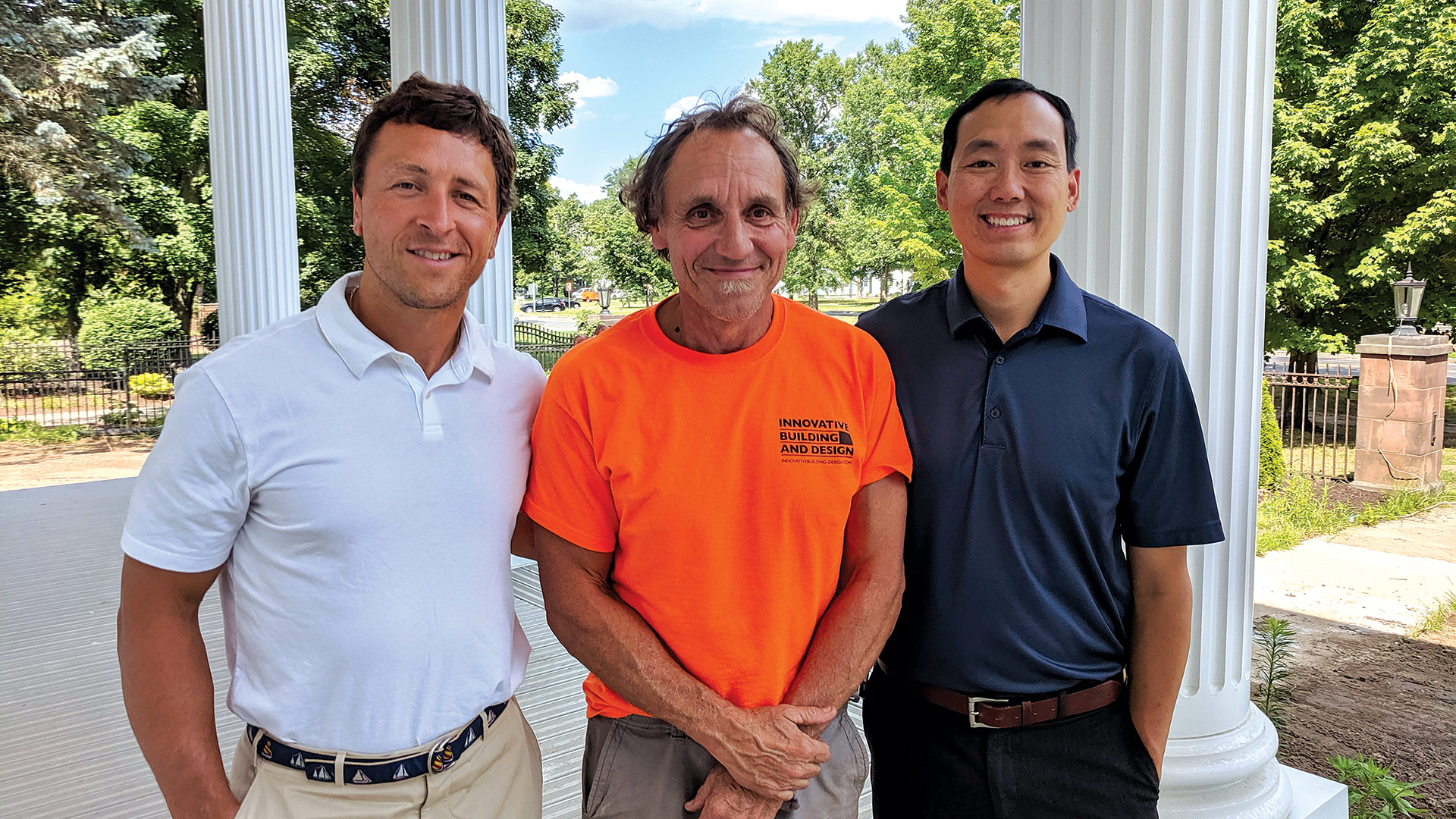
At right: from left, project partners Chris Orszulak, Henry Clement, and Andrew Lam.

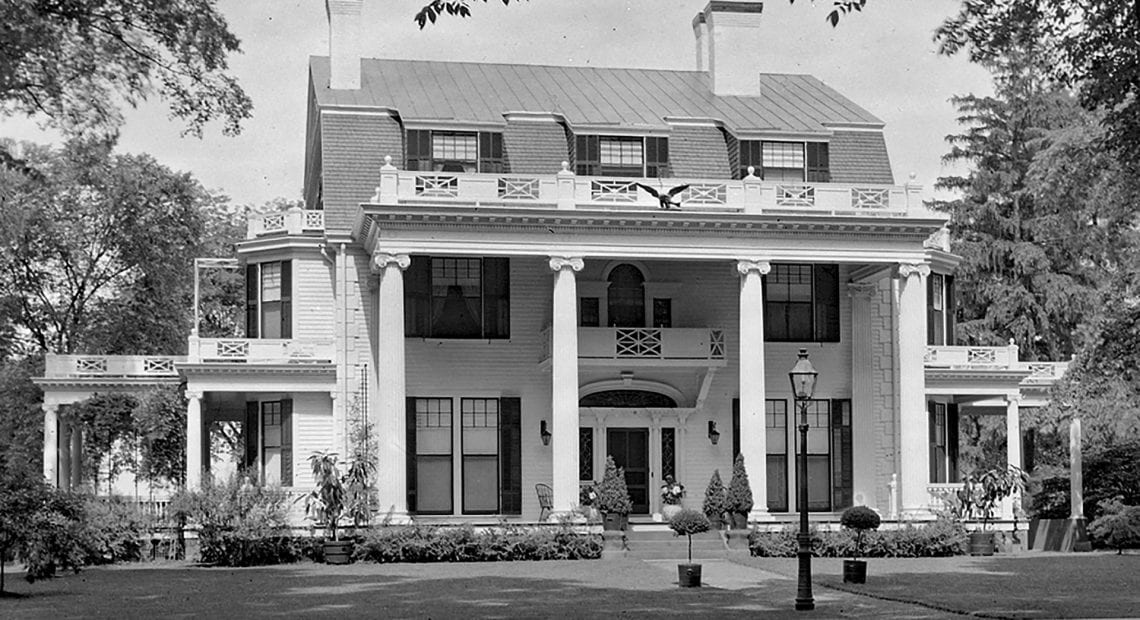
In its heyday, the Brewer-Young mansion was the center of Longmeadow’s social scene. Those who don’t remember those days know it more as an eyesore alongside the town green, after a string of owners over the past 30 years were unable to maintain the decaying structure. Enter a trio of investors with a commercial vision for the property, one that would pump economic vitality into the building while restoring its original architecture — and historic importance.

Andrew Lam says he’s “very invested in Longmeadow’s history,” and not just because he lives next door to it.

Specifically, his home abuts the Brewer-Young mansion, a sprawling, Colonial Revival estate built in 1885 that has, to put it charitably, seen better days.

Restoration work aims to return the mansion to its former glory (top photo, courtesy of the Longmeadow Historical Society).

“I’m very interested in making sure we preserve this property and turn it into a positive on our green — not to have it torn down or turned into something negative,” said Lam, an eye surgeon, author of three history books, and co-owner, along with financial-services professional Chris Orszulak and contractor Henry Clement of Innovative Building and Design, of the mansion that will soon begin the next phase of its intriguing story — as a professional office complex for small businesses.

The 10,900-square-foot house, at 734 Longmeadow St., has undergone a slow decline since it left the Young family — of Absorbine fame — in 1989, and has fallen into significant disrepair over the past decade, especially after its last owner, Shahkar Fatemni, was foreclosed on in 2013 and evicted in 2015.

The problem is that — as a string of owners since 1989 have learned — with its massive size and the restoration work it requires, it’s just not viable as a residence anymore; when the front columns collapsed several years ago, it cost Chase Bank $120,000 just to repair the porch. Even if the town got lucky and a wealthy investor stepped in to buy it, Lam noted, what would happen when he moved out? Longmeadow would be in the same situation all over again.

Orszulak also lives in town — in fact, with kids at Center Elementary School, right across the street, and a commute to work that takes him right past the mansion, he’s had a good view of it for a long time. He discussed some sort of commercial development at the site with Lam several years ago, when Lam still believed a residential use was possible.

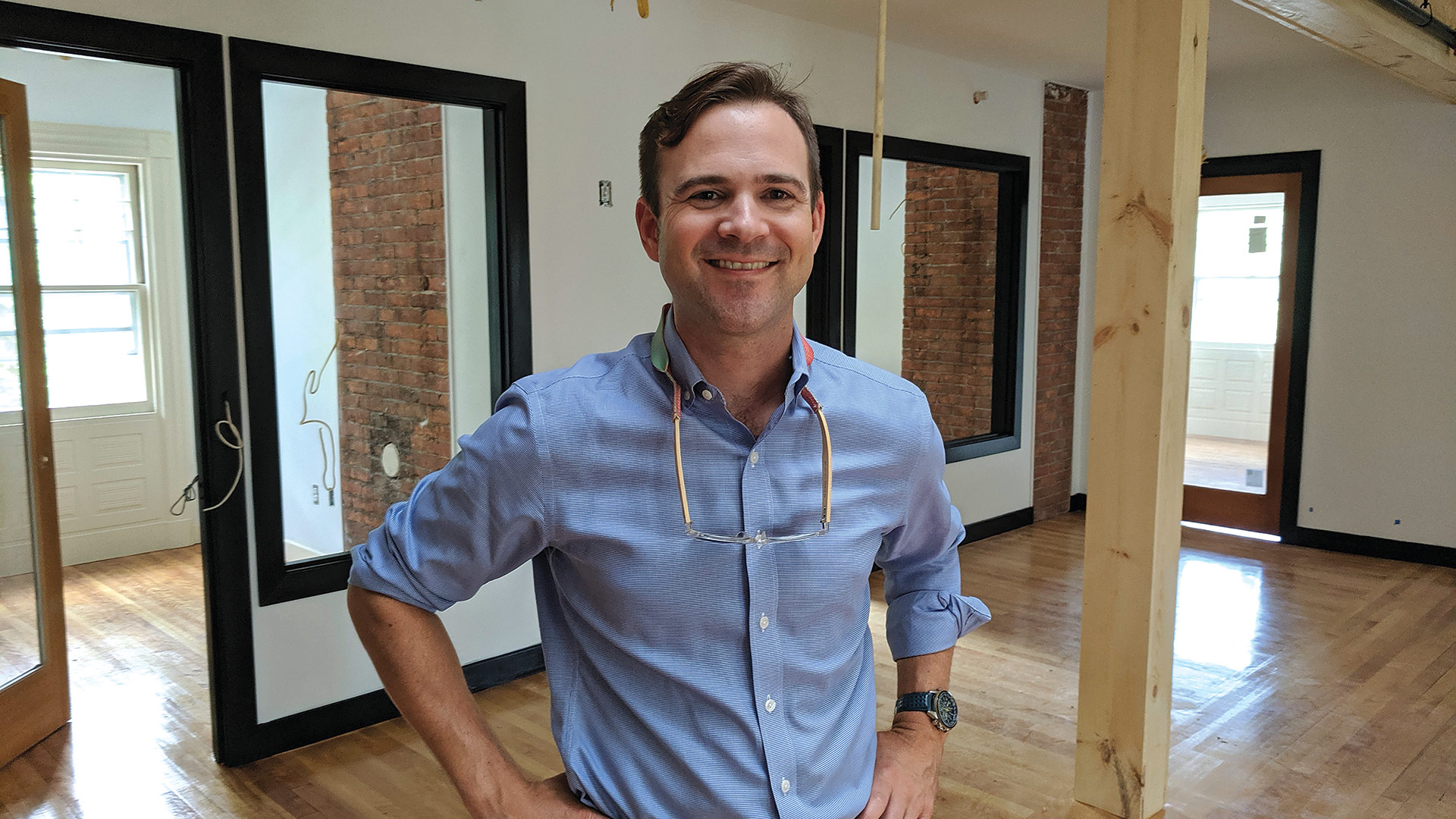
Jason Pananos in 734 Workspace, the co-working center he’s developing on the third floor.

“I basically said to him, ‘listen, if it ever gets to a point where it comes on the market and you agree it’s not a viable single-family residence, why don’t we talk about partnering on repurposing it and putting it back on the path to sustainability?” Orszulak told BusinessWest. “I’ve always felt like the property was a key part of the town center, and there was a way to sustain and repurpose it.”

Fast-forward a few years — and a massive restoration effort — and the three owners will welcome a nearly full house of commercial tenants in September. The Youngs’ ballroom is now the home of financial advisers Shawn Torres and Alecka Kress of Vitae Wealth Management. The minister’s parlor is occupied by event planner Lindsay Maloni. Setting up shop in the formal dining room are Melissa Buscemi and Maria Arsenieva, program director and financial advisor, respectively, for Reboot, a national nonprofit organization dedicated to promoting Jewish heritage. Psychologist Bonnie Connell will practice in the mansion’s former kitchen.

Meanwhile, Dr. Melissa Johnson, a surgeon at Baystate Medical Center, will operate a practice on the entire second floor, and the third floor is given over to a large co-working space.

The public will have an opportunity to tour the restored mansion as part of the Friends of Storrs Library Tour of Homes fundraiser on Oct. 5. What they’ll find is a lot of history — and, for the first time in many years, hope that a new, vibrant chapter is being written within what was, very recently, only an eyesore alongside the town green.

Singing the Praises

The mansion’s first resident was Rev. Samuel Wolcott, known for writing more than 200 Christian hymns. It was built for him by his two sons, who made their fortune in silver mining in Colorado. Ownership passed to State Sen. Edward Brewer in 1901, but the mansion’s third owner, Mary Ida Young, truly put it on the map.

The matriarch of a family that had made its fortune from Absorbine, a horse liniment popular in the days before automobiles, Young lived there from 1921 to 1960, and during this time it was truly a Gilded Age mansion, with extensive grounds and many servants and gardeners, serving as the site of important social gatherings.

A worker from Blackburn Building Conservation engages in the painstaking work of repairing the original wallpaper.

The Young family retained it until the 1980s, over the years selling off parts of the estate toward the Connecticut River — some was given up for I-91, more to enable development of the Ely Road neighborhood in the rear. A series of residential owners owned the home it in the 1990s and 2000s, each with plans to restore it and put it to use (among the plans were an event space and a bed and breakfast) — but each kept running into the high cost of repair and maintenance.

As it decayed further, Fatemni, five years before his eviction, sought a residential buyer, but found none. And once the property was abandoned, it went downhill quickly.

“Over these eight years, it really started decaying rapidly,” Lam said. “The front portico columns collapsed. The porches were rotting and threatened to fall. The inside had water damage from roof leaks. It was a terrible eyesore for the town because it is located prominently at the center of the historic green.”

Lam, who served for years on the Longmeadow Historical Commission, wanted to preserve it, but every historical preservation society or benefactor he approached realized it was too expensive to maintain — “it was a true money pit” — and declined to help. One society said taking the project on would have bankrupted it.

Finally, he came around to the idea that a commercial use would make sense, and teamed with Orszulak and Clement to purchase the property for $470,200. But not just any commercial use, like a bank or chain store that would be out of character for the town center. Instead, they envisioned a professional office complex that would require renovating and restoring, not tearing down, this piece of history.

“It is probably the best example of Colonial Revival architecture in the Pioneer Valley,” Lam told BusinessWest. “All three of us cared deeply about preserving the mansion in the best possible way.”

That use, however, required a zone change — and a two-thirds vote at a special town meeting. “We had a strong case it was in such terrible condition that it was quite obvious something needed to be done, but any time there’s a change, there are always going to be people for and against it.”

Their effort was buoyed by an informational campaign — and the support of Todd and Tyler Young, the last of the Young family to reside in the mansion.

The striking conservatory at the mansion was restored with new tempered, shatter-proof glass.

“When considering the various use cases (bed and breakfast, condominiums, etc.) and related market and financial analysis the current owners have undertaken, our family honestly believes that the proposal of re-zoning this property for professional office space is the most realistic and best use of this uncommon structure,” they wrote to Longmeadow Buzz, an online forum, in January 2018. “Outside of a viable repurposing and renovation, we sincerely believe demolition of this prominent building is a certainty once it is officially deemed uninhabitable or a catastrophic event such as a partial structural collapse or fire occurs — whichever comes next.”

The vote that month was close, as 69% approved the zone change from a residence to professional offices. “That’s different from commercial zoning,” Lam said. “We didn’t want it to be a McDonald’s or a gas station or any building that didn’t look historic.”

Since then, he, Orszulak, and Clement have poured $1.3 million into renovations, with more to come — the original budget was $2 million, and Lam thinks it will wind up in that ballpark.

Melding Old and New

It has been a delicate dance. On one hand, Lam said, “everything needed to be modernized — HVAC, plumbing, electrical. There was no central air, and the roof was collapsing. Every day brought a new challenge. ‘Oh, we need handrails.’ ‘Oh, we need an elevator.’ ‘Oh, we need a fire escape.’ But we didn’t want to take away from the historic look.”

Original features include marble floors and a grand staircase, lined by stained-glass windows, in the front foyer; a glassed-in conservatory based on the Crystal Palace from London’s Great Exhibition of 1851; and embossed leather wallpaper on the first floor designed by Zuber & Cie, an 18th-century French manufacturer that also designed wallpaper for the Diplomatic Reception Room in the White House.

“The wallpaper was literally falling apart, full of cracks and peeling,” Lam said, noting that the team commissioned Middleborough-based Blackburn Building Conservation return it to its original glory, a painstaking process involving tiny scalpels and other equipment — and plenty of patience.

“The whole staircase is priceless,” Lam said. “The goal when you walk into the building is for it to appear as it did in 1885 when it was first built — exactly the same. The staircase and stained glass are all the same.”

But today’s Brewer-Young mansion reflects the 21st century in many ways, too, such as 734 Workspace, the co-working complex Jason Pananos has developed on the third floor, featuring 10 small offices — already mostly rented — a large shared workspace, and amenities including a kitchen and office equipment.

The mansion’s grand staircase is highlighted by large panels of stained glass.

“It’s very exciting. It’s going to be a vibrant place — a place where entrepreneurs and professionals come together and cross-pollinate ideas,” Lam said. “It’ll be a wonderful environment to work in. All our tenants are local; they all believe in our goal to save this mansion, and they’re willing to join us in doing just that.”

Saving the 134-year-old house means modernizing it in other ways, too, many of which require significant funds.

“Frankly, it was not clear how much it would truly cost,” Lam said. “Asbestos was discovered that would have to be removed. We needed to install a giant sprinkler system that includes the exterior porches to comply with codes. The conservatory serves no purpose from a profit standpoint, but it’s beautiful, so we replaced the old glass with tempered, shatter-proof glass.”

Even more beautiful, the partners said, was the speed at which the building was rented.

“It was a stronger response than I anticipated,” Orszulak said, noting that the tenants on board are virtually all from Longmeadow — impressive in a town that has a lower density of commercial properties than any other in the region, by far. “For us to be almost occupied before completion was really reassuring to me personally. This level of support, I think, speaks to the broad community interest in repurposing this property.”

Lam never assumed that kind success, although he was hopeful.

“That was one of the major risks we were taking — that no one would want to be there,” he told BusinessWest. “But the town strongly believes in our goals to preserve it in an aesthetically beautiful way, and that’s reflected in the people who want to be there. They’ve trusted us and agreed to rent before the building was beautiful. That’s telling, and very fulfilling to us.”

Joseph Bednar can be reached at [email protected]

Accounting and Tax Planning

Section 199A

Section 199A of the Tax Cuts and Jobs Act was created to level the playing field when it comes to lowering the corporate tax rate for those businesses not acting as C corporations. For most profit-seeking ventures, qualifying for the deduction is not difficult, but for rental real estate, it becomes more difficult.

By Lisa White, CPA

On Dec. 22, 2017, the Tax Cuts and Jobs Act (TCJA) was signed into law, bringing with it a plethora of changes, affecting, albeit in varying degrees, every taxable and non-taxable entity and individual.

One of the primary focuses of the act was to lower the corporate tax rate to a flat rate of 21%. In order to keep the taxable-entity landscape equitable, however, a provision was necessary for those businesses not operating as C corporations.

Thus, Section 199A was created, providing for a deduction of up to 20% of qualified business income from a domestic business operating as a sole proprietorship, partnership, S corporation, trust, or estate.

The first step in assessing the benefit of the Section 199A deduction is to determine if there is a qualified activity. The statute uses Section 162 of the Internal Revenue Code to designate qualification — which is difficult since Section 162 does not actually provide a clear definition of what constitutes a trade or business.

“What might be the easiest way to approach making the determination is the ‘walks like a duck, quacks like a duck’ scenario. If the activity is a profit-seeking venture that requires regular and continuous involvement, there should not be an issue with rising to the level of a qualified trade or business under Section 162 — and thus being eligible for the Section 199A deduction.”

Instead, case law must be used to support the position taken. What might be the easiest way to approach making the determination is the ‘walks like a duck, quacks like a duck’ scenario. If the activity is a profit-seeking venture that requires regular and continuous involvement, there should not be an issue with rising to the level of a qualified trade or business under Section 162 — and thus being eligible for the Section 199A deduction.

For rental real estate, the determination becomes a bit more complicated. If the rental activity consists of property being rented to or among a group of commonly controlled businesses, where the same owner — or group of owners — owns directly or indirectly at least 50% of both the rental property and the operating business, and the operating business is not a C corporation, then the qualifying designation is automatic. Otherwise, to make the determination, we must once again turn to case law.

Here, this becomes problematic, as there is limited history supporting the position that rental activities rise to the level of a Section 162 trade or business, as the designation heretofore was unnecessary.

In response to concerns about the lack of guidance, the Internal Revenue Service issued Revenue Procedure 2019-7, which provides for a safe harbor under which a rental-real-estate activity will be treated as qualifying for the Section 199A deduction. In addition to holding the rental property either directly or through a disregarded entity, other qualifying factors include the following:

• Separate books and records are maintained for each rental activity (or rental activity group);

• At least 250 hours of rental services are performed each year on each rental activity; and

• For tax years ending after 2018, contemporaneous records are maintained detailing hours of services performed, description of services performed, dates on which services were performed, and, who performed the services.

When making the determination of whether an activity rises to the level of a trade or business under the general rules, each activity must be assessed separately, and no grouping is permitted.

Alternatively, the safe-harbor provision provides an opportunity to elect to group rental activities together in order to meet the other qualifications. The caveat here is that commercial properties must be grouped only with other commercial properties, and likewise for residential properties. Once made, the grouping election can be changed only if there is a significant change in the facts and circumstances. The rental services performed that qualify for the 250-hour requirement include tasks such as advertising, negotiating leases, collecting rent, and managing the property, among others. Financial-management activities, such as arranging financing or reviewing financial statements, do not qualify as ‘rental services,’ nor does the time spent traveling to and from the property. The rental services can be performed by the owners of the property or by others, such as a property-management company.

The safe-harbor election is available to both individuals and pass-through entities and is made by attaching a signed affidavit to the filed return stating that the requirements under the safe-harbor provision have been met.

It’s important to note here that, although meeting the safe-harbor requirements will qualify the activity for Section 199A, it does not provide automatic qualification under Section 162. Similarly, failure to satisfy the safe-harbor requirements does not mean the activity automatically does not qualify for the deduction. Instead, support for the position will just need to be derived from considering other relevant factors and/or case law that can be used as precedent.

Additionally, the safe-harbor election cannot be made for residences used personally for more than 14 days during the year, nor for properties rented on a triple-net-lease basis, a scenario where the tenant is responsible for the taxes, insurance, and general maintenance related to a rental property.

If pursuing the Section 199A deduction for rental property without using the safe-harbor provision, some factors to consider documenting would be the type of property rented, the day-to-day involvement of the owner (or the owner’s agent), and the types and significance of any ancillary services provided.

It seems the courts have applied a relatively low threshold in finding rental activities to rise to the level of a Section 162 trade or business, but it’s also important to note that implications of that designation have changed significantly. One thing is for certain: if the position is taken that the rental activity is a trade or business for the Section 199A deduction, then it needs to be treated as a trade or business in all other aspects, as well, which could mean additional filings (i.e. Forms 1099) and becoming subject to different tax regulations (i.e. interest-limitation rules).

Ultimately, although the Section 199A deduction was implemented as a means of leveling the playing field for the tax impact of entity choice and could potentially offer significant tax savings, in order to take advantage of the deduction, the related activity must first qualify for the deduction.

Reaching this designation is relatively easy for most business operations, but might require more analysis when considering rental activities. There are some options available, such as the safe-harbor and grouping elections, but the related tax impact should be carefully considered prior to making any election.

Be sure to consult with your tax advisor if you have any questions.

Lisa White, CPA is a tax manager with the Holyoke-based public accounting firm Meyers Brothers Kalicka, P.C.; (413) 322-3542; [email protected]

Community Spotlight

Community Spotlight

Cynthia West says Easthampton had the best ‘feel’ for the business she launched with her daughter, McKenzie, the Sonnet & Sparrow ‘curated thrift store.’

It was the food that brought Cynthia West to Easthampton.

Well, sort of.

It was the food, in the form of weekly visits to restaurants like Galaxy, Kisara, and others that gave West … well, a flavor of Easthampton and, eventually, the opinion that this was the place to bring a business she had been thinking about and dreaming about for some time.

It’s called Sonnet & Sparrow, a “curated thrift store” she operates with her daughter, McKenzie West, in space that was once part of the historic, yet also somewhat notorious, Majestic Theater on Cottage Street. Notorious because 30 years ago it was showing adult films and had become a symbol of the decline of Easthampton and the Cottage Street area.

Now, Cottage Street, and the city as a whole, have been reborn, and West decided she had to be part of what is generally referred to as a renaissance in this old mill town.

“I chose Easthampton because I love to eat here,” West, who opened her store just two months ago, said matter-of-factly. “We found the community very welcoming; we wanted to be in the Valley, and we found that Easthampton had the best feel for what we wanted to do.”

She’s certainly not alone in these sentiments about Easthampton’s feel and it being an ideal home for a new business, as made clear in an anecdote the city’s mayor, Nicolle LaChapelle, related about a manufacturing firm that expressed interest in this community in the shadow of Mount Tom as a landing spot.

“They’re looking for 40,000 square feet, and they’re looking in Easthampton because, when they surveyed their employees, who have an average age of 47, they found that they want to be able to live and walk to work, have some options when it comes to leisure recreation, and be part of a city,” she said. “Easthampton checks all those boxes.”

Suffice it to say Easthampton checks a good many boxes for entrepreneurs across the broad spectrum of the regional economy, with a number of new ventures opening over the past few months, and even the past few weeks.

Businesses like INSA, a multi-faceted cannabis complex in the Keystone mill complex on Pleasant Street that includes a cultivation facility, dispensary, lab, kitchen, and more. The company, led by CEO Mark Zatyrka, has other locations in the region and is expanding into other regions of the state, but Easthampton is the headquarters location.

And like Prodigy Minigolf & Gameroom, located in the basement of the Eastworks building, also on Pleasant Street, and home to an eclectic mix of businesses. Founder Jeff Bujak, a musician looking to hit some different notes, calls this the most challenging mini-golf to be found anywhere, but there’s much more to the operation, including an extensive list of board games and video games that would make any Boomer nostalgic and any Millennial quite intrigued.

And like Veracruzana Mexican restaurant, or should we say the latest Veracruzana. Phil Pallante and his wife, Sunia Hood, had already purchased the restaurant’s two locations in Northampton and Amherst, but even before they did that, they informally decided Easthampton would be the next push pin on the map. They eventually found a spacious storefront on Union Street right next door to the Chamber of Commerce, and opened just a few weeks ago.

Mark Zatyrka, seen here in INSA’s dispensary, says he and his partners were drawn to Easthampton because of its amenities and welcoming approach to the cannabis industry.

Collectively, these entrepreneurs and others we spoke with say they came to Easthampton for the same reasons West did — they saw a city on the rise, one that that boasts vibrancy, arts and culture, a growing restaurant sector, healthy tourism, no shortage of things to do, and a very ‘green’ mindset.

Comparisons to neighboring Northampton are inevitable and seemingly constant. There are many who call this the ‘new Northampton.’

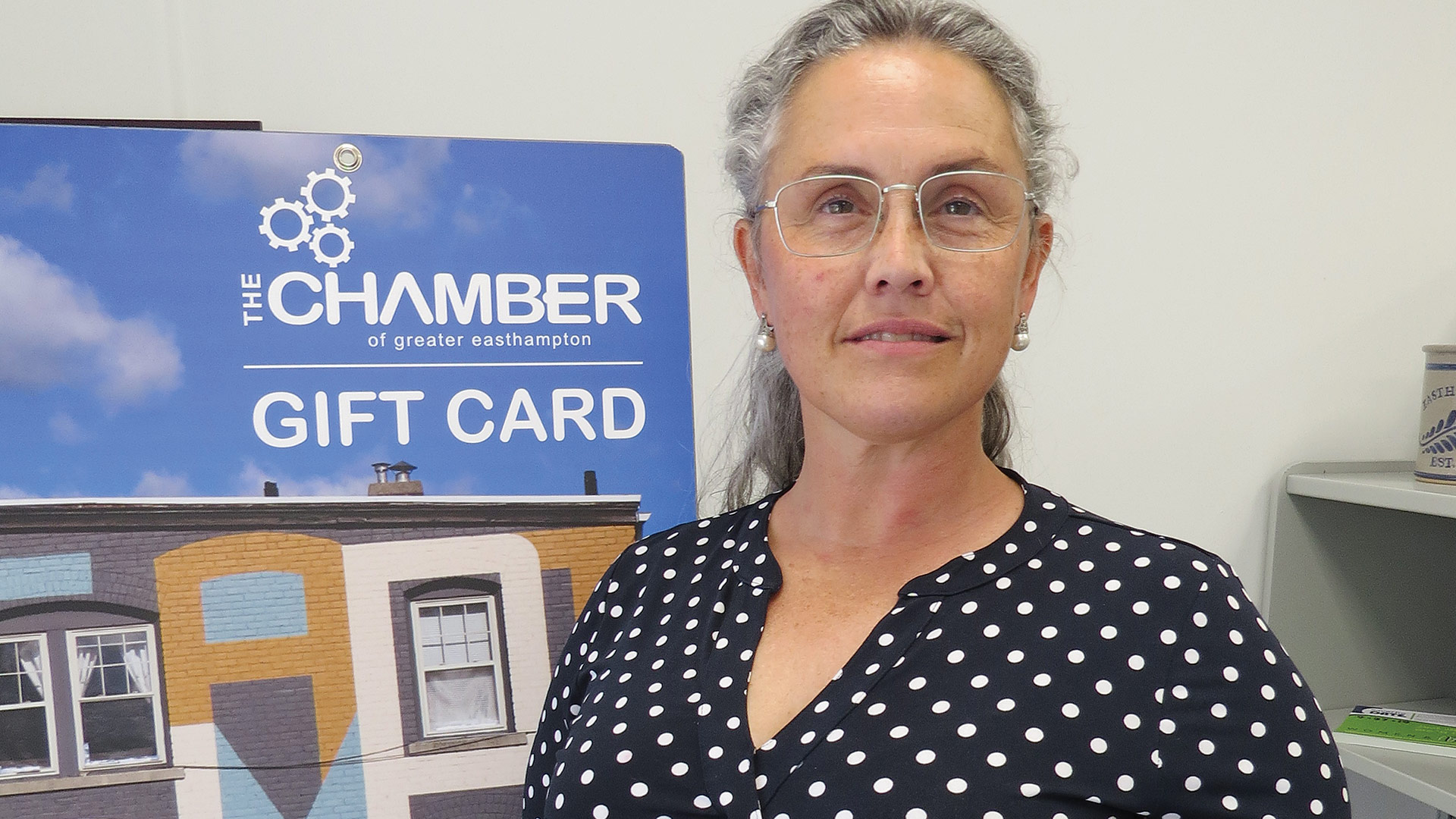
But while flattered by such comments, Maureen Belliveau, executive director of the chamber, doesn’t believe they accurately describe what’s going on here. Indeed, she told BusinessWest that, while there may be some similarities, Easthampton has forged its own identity.

“We’re not the ‘next Northampton,’” she said. “Northampton does Northampton really, really well. And we do Easthampton outstandingly well. I like to say that our community is hip, cool, wow, and now.”

For this, the latest installment of its Community Spotlight series, BusinessWest explores all that goes into that phrase and why Easthampton is becoming the landing spot of choice for a growing number of businesses.

Getting On Board

Casey Douglass says that, when he arrived on the scene in Easthampton roughly 15 years ago and opened his first restaurant in the city, the community was, in his estimation, like that literary little engine that could and its signature phrase ‘I think I can.’

By that, he meant the city was emerging and developing what became a healthy dose of confidence. It’s no longer saying ‘I think I can,’ but instead has shown that it can do it, he suggested.

“Now, we’re moving like a bullet train, and I’m happy to be on it,” said Douglass, owner of Galaxy, a fixture on Main Street and his third such venture in the city after Apollo and what is now Coco and the Cellar Bar. “And there are plenty of seats available.”

As noted earlier, seemingly every month, if not every week, another business owner is getting on board, keeping Belliveau and her ceremonial ribbon-cutting scissors quite busy.

Before getting to some of the recent arrivals, and others, like Douglass, who can talk about the scene in Easthampton with decades of perspective, we need to talk about how Easthampton got here, a state where it is being increasingly compared to its neighbor, a destination that is still the most economically vibrant community in the region.

Summing things up, LaChapelle, a labor attorney who came to the city in 1997, said that, in the mid- to late ’90s, Easthampton laid the foundation for a revival, a reinvention of itself from a mill city to an arts and cultural center, and it has carefully built on that foundation ever since.

Phil Pallante says Main Street in Easthampton was the logical location for the third Veracruzana restaurant.

The bedrock on which it’s built is effective zoning, a huge inventory of old mill buildings ready to be repurposed, a business-friendly government, and a community that can blend affordable housing, plenty of recreation, and that increasingly ‘green’ mindset mentioned earlier.

Over the past few decades, it has steadily added building blocks, she said, in the form of new businesses across many sectors, a slew of new restaurants and cultural attractions that are bringing people into the city, and, perhaps most importantly, jobs to replace those lost when the mills closed.

LaChappele was quick to note that this business-friendly attitude certainly applies to the burgeoning cannabis industry. Indeed, while some communities have outlawed such ventures or are just putting a toe in the water, Easthampton, like another neighbor, Holyoke, has rolled out the red carpet, but in a careful, thoughtful way.

“We’re head over heels in love, I would think, with cannabis, and I don’t that’s overstating it,” she told BusinessWest, referring to everything this industry is generating, from tax dollars to jobs to foot and vehicular traffic.

“This is a unique industry; it’s very rare in these days that a person on the street or a collection of investors can get in on a new industry and be a part of the regulations,” she went on, adding that the community currently hosts one such business, INSA, but it has several other host-community agreements in place and other ventures in various stages of progression. “It’s a unique opportunity where we, as a community, get to write the rules and work with entrepreneurs on something that provides local tax revenue. I can’t imagine when that will happen again, and I expect the presence of cannabis-related businesses to grow in Easthampton.”

This open affection is no doubt one of the factors that brought INSA to Pleasant Street.

“Pretty early on in the process, we realized how much time and money went into creating this business and how important it was to be timely,” said Zatyrka. “So we wanted to find a city that was welcoming to us. At the time, there were a lot of cities that weren’t as welcoming, and it gets expensive to push your agenda on a city and its constituents.
Mayor Nicolle LaChapelle says Easthampton can “check a number of boxes” for business owners across a number of sectors.

“I was born in Easthampton,” he went on, adding that the other founders are local as well. “In combination with the progressive nature of Easthampton as well as what the mill district and the mills had to offer, we thought this was the perfect home for us.”

There are now more than 150 people working in the company’s facilities at the Keystone complex, in operations ranging from cultivation to retail, he went on, adding that there is plenty of room to expand.

Scoring Points

Prodigy’s Bujak noted, in what can’t be considered an upset, that his favorite Seinfeld episode is the one called “The Frogger.”

You remember (even if you’re a Millennial) … that’s the one where George discovers that, years after he last played a Frogger machine at a pizza parlor he’s revisiting, he’s still the high scorer. And he attempts to take the machine home, an adventure that ends, predictably, in calamity.

Prodigy has been bringing in a lot of George Costanza types since it opened in the spring of 2018, said Bujak, noting that they come to play a wide array of video games that took up a good part of their lives in the ’70s, ’80s, and ’90s. And they’re playing them on a collection of vintage TVs that he’s had no problem assembling because their previous owners were happy to find someone to take them off their hands. He’s also drawing many teenagers and older individuals (this course is not for young children) to his challenging mini-golf operation.

“I’ve played mini-golf everywhere in this country, and this is by far the most challenging — I won’t say difficult, but challenging — and I wanted it that way,” he said, adding that it plays as much like a video game as it does like golf.

Jeff Bujak made Easthampton home to what he calls the most challenging mini-golf facility in the country.

While he’s lived in Northampton for many years, Bujak noted, he never thought of opening his venture there. Instead, he always focused on Easthampton. He said Will Bundy, owner of Eastworks, made him one of those deals that couldn’t be refused. And he didn’t.

“It’s been very successful,” he said of his first 16 months in business. “I’m doing three times the business I thought I thought I would, and that I put down in my original business plan.”

Early on, he was relying heavily on his large fan base, acquired through many years as a touring musician, but visitation from area communities has escalated, and he’s now averaging 500 to 700 people a week.

“And these 500 to 700 people are now also going to the mill district, and to Food Truck Fridays, and to INSA, and to the Mill Pond concerts,” he said, adding that business has become another of those aforementioned building blocks that support one another and bring ever-greater vibrancy to the community.

Pallante agreed, telling a story with many of the same themes as those told by West, Bujak, and Zatyrka.

He said he and his wife would often eat in Easthampton to avoid the congestion in Northampton and Amherst, and in doing so came to understand that the community was building momentum and had become a true destination in its own right. Together, the two drew up plans for the latest Veracruzana on a napkin while having a bite at still another of the city’s restaurants, Amy’s Place, on Cottage Street.

“We knew that, from everything the city had to offer, and logistically as well, this was the place we wanted to be,” Pallante said. “It became very apparent that Easthampton is aggressively seeking and helping people come here, and creating a culture where people want to be.”

Michael Poole, a welder and sculptor and thus one many artisans now working (and in many cases also living) in Easthampton, echoed these sentiments.

He joked that, if they did one of those Taste of Easthampton-type of events when he first arrived in the city in the early ’90s, it would have featured “a few slices of pizza, and none with pineapple on them.”

That last reference was an attempt to accentuate just how much has changed in a quarter-century or so. There is now a solid portfolio of restaurants acting not only as drawing cards bringing visitors and even entrepreneurs (like West), but as anchors for a host of other businesses that need foot traffic to succeed.

Poole noted that a diverse mix of businesses now exist, and many people are choosing to live and work in the community, a change from when he first arrived.

Easthampton at a glance

Year Incorporated: 1785
Population: 16,059
Area: 13.6 square miles
County: Hampshire
Residential Tax Rate: $15.46
Commercial Tax Rate: $15.46
Median Household Income: $45,185
Median Family Income: $54,312
Type of Government: Mayor, City Council
Largest Employers: Berry Plastics Corp., INSA, Williston Northampton School, National Nonwovens Co.
* Latest information available

“There weren’t a lot of jobs back then,” said Poole, owner of Blue Collar Artisans and noted for his ornate ‘tree’ handrails, furniture, and other forms of home décor, as well as the bicycle rack on Main Street he fashioned out of the numbers in the city’s zip code — 01027. “People lived here and worked someplace else.”

Now, many more people are coming to Easthampton to work, he noted, quickly adding that many now choose to settle in Easthampton because of all it has to offer and commute to work.

He measures the progress, unscientifically to be sure, by the volume of traffic on Holyoke Street.

“My business is at the far end of East Street, and I can tell what time it is by where the line of traffic stops,” he said. “Our house is right on Holyoke Street, and we joke about the ‘Easthampton rush hour’; every year it gets a little longer. But those are the problems you want.”

Right Place, Right Time

Indeed they are.

Easthampton didn’t have to worry about traffic jams or finding enough parking spaces 20 years ago. Now, it does, to some extent, and, as those we talked with agreed, those are good problems to have.

As is being called the ‘new Northampton.’

It’s always meant as a compliment, said Belliveau, but, as she noted, it’s not really accurate. The city is indeed thriving and establishing itself as a destination, but it’s not the new Northampton; it’s the new Easthampton.

George O’Brien can be reached at [email protected]

Law

Date with Destiny

By Timothy M. Netkovick, Esq. and Daniel C. Carr, Esq.

Timothy M. Netkovick

Timothy M. Netkovick

Daniel C. Carr

Daniel C. Carr

As everyone knows, paid family medical leave (PFML) is coming to Massachusetts on Jan. 1, 2021. To that end, the Department of Family and Medical Leave recently released its final regulations that will govern PFML.

The final regulations provide much-needed clarity on some aspects of PFML, while other aspects remain vague.

Prior to the final regulations being rolled out, one of the most common questions was whether PFML would apply to employers who have places of business in locations other than Massachusetts. The final regulations make clear that the definition of an employee in the Commonwealth of Massachusetts will be very broad. The regulations state that an employee will be eligible for PFML leave if the service provided by the employee is entirely within the Commonwealth or the service is performed both within and outside the Commonwealth, but the service performed outside the Commonwealth is incidental to the individual’s service within the Commonwealth.

An employee is also eligible for PFML if the service is not localized in any state, but some part of the employee’s service is performed in the Commonwealth and (1) the individual’s base of operations is in the Commonwealth, or (2) if there is no base of operations, then the place from which such service is directed or controlled is within the Commonwealth, or (3) the individual’s base of operations or place from which such service is directed or controlled is not in any state in which some part of the service is performed, but the individual’s residence is in the Commonwealth.

Therefore, even employers who do not have a physical place of business in Massachusetts, but who may have salespeople in Massachusetts, will want to review the PFML regulations with their employment counsel to determine any potential impacts to their business.

“Even employers who do not have a physical place of business in Massachusetts, but who may have salespeople in Massachusetts, will want to review the PFML regulations with their employment counsel.”

Once an employee begins PFML leave, an employer cannot require an employee to use other forms of paid time off (PTO) prior to PFML leave. However, an employee can choose to use accrued PTO provided by their employer instead of PFML. If an employee chooses to use accrued PTO, the employee is required to follow the employer’s notice and certification processes related to the use of PTO.

If an employee is going to use accrued PTO, employers are required to inform employees that the use of accrued PTO will run concurrently with the leave period provided by PFML. It will be important for employers to track the use of accrued PTO, as they will also be required to report the use of accrued PTO by employees or covered individuals upon request by the Department of Family Medical Leave.

Employers have the ability to establish their own private PFML plan instead of participating in the state administration process. If an employer is going to utilize a private PFML plan, the plan must confer all the same or better benefits, including rights and protections, as those provided to employees under PFML, and may not cost employees more than they would be charged under the state plan administered by the department. A private plan will also need to be approved by the Department of Family Medical Leave before it is implemented.

While the clear intent of the PFML regulations is to line up with the Family and Medical Leave Act (FMLA) as much as possible, there are also several key areas of difference.

The first noticeable difference is that PFML applies to every employer, regardless of size. Furthermore, as covered employers are aware, under the FMLA, an individual is entitled to leave if they work for 1,250 hours within the previous 12-month period. That 12-month period can be a calendar year or rolling period. PFML contains no such service requirement or minimum hours worked.

Furthermore, an employee is eligible for 20 weeks of leave for their own serious health condition under PFML as opposed to 12 weeks under the FMLA.

It is clear that questions still remain regarding the implementation of PFML. It is also clear that PFML and FMLA will not perfectly align. Employers will therefore want to consult with their employment counsel as they continue to prepare for PFML.

Timothy M. Netkovick and Daniel C. Carr are attorneys with Royal, P.C.; [email protected], [email protected]; (413) 586-2288

Law

A Disturbing Trend

By Amelia J. Holstrom, Esq.

Amelia J. Holstrom, Esq.

Amelia J. Holstrom, Esq.

The #MeToo movement exploded back in 2017. With #MeToo in the news almost a daily, women everywhere became more comfortable coming forward and reporting harassment and telling their stories.

As a result, women felt empowered, but has sharing their stories hurt them in other ways? According to a recent survey conducted by LeanIn.org, the answer to that question might be yes.

Over the past two years, LeanIn.org — an organization dedicated to helping women come together and achieve their goals — conducted surveys to gain an understanding of what individuals are experiencing at work. One of the surveys revealed that, in the post-#MeToo world, women may be receiving less support at work from male managers and may be hindered in their ability to seek career advancement.

The survey, titled “Working Relationships in the #MeToo Era,” suggested that 60% of male managers reported they were not comfortable participating in common work activities — mentoring, working alone, or socializing — with women.

To put that into perspective, according to LeanIn.org, that percentage was only 32% just a year ago. The survey also noted that senior-level men were 12 times “more likely to hesitate to have one-on-one meetings” with junior female employees, nine times “more likely to hesitate to travel [with junior female employees] for work,” and six times “more likely to hesitate to have work dinners” with junior female employees. According to the survey results, 36% of men said they avoided mentoring or socializing with women because they were concerned about how it might look.

Worrisome Results for Employers

The results suggest that #MeToo may actually lead to more gender discrimination in the workplace. If male members of management distance themselves from mentoring, working alone with, and socializing with women, they might be creating legal liability for their employer because they are giving women less opportunity to advance and succeed with the organization.

For example, while work performance is always a factor in decisions regarding promotions, skills learned through mentoring and workplace connections and relationships also play an important role. If a female employee is denied a promotion due her lack of mentorship and/or workplace connections and relationships, and she did not have access to those things like her male colleagues did simply because of her gender, the employer could be subject to a gender-discrimination lawsuit.

The survey did contain some good news for employers: 70% of employees, compared to 46% in 2018, reported that their company was doing more to address sexual harassment. The increase in this statistic is likely because more employers are conducting annual sexual-harassment training in the post-#MeToo world. Unfortunately, the remainder of the survey results suggest that training alone is not enough.

Proactive Steps

Employers should continue to address harassment in the workplace through their anti-harassment policies and by conducting annual anti-harassment training, but they also need to do more to educate employees regarding other forms of discrimination.

First, employers should have an equal-employment-opportunity policy that clearly outlines that discrimination based on gender or any other characteristic protected by law is expressly prohibited. The policy should also outline how an employee may file an internal complaint of discrimination at the workplace.

Second, employers should add annual anti-discrimination training to their training agenda. Implementing effective training will demonstrate that you care about the issue and are taking it seriously, which could help you defend against a lawsuit if an employee decides to bring one.

Finally, employers should remember that gender discrimination doesn’t just arise in this context. Businesses should take a close look at compensation practices to be sure there are no pay-inequity issues. Studies show that women in America earn about 80 cents for every dollar paid to men. Not only is this wage gap a fundamental problem, but it can also lead to serious legal trouble for an employer. Case in point: the World Cup-champion U.S. women’s soccer team’s lawsuit alleging pay inequity and “institutionalized gender discrimination.”

Bottom Line

It is clear that #MeToo has led to important changes in the workplace, but LeanIn.org’s recent study suggests that employers need to continue to be proactive and take steps to create a culture free from harassment, but also address other forms of discrimination.

The full survey results can be found at leanin.org/sexual-harassment-backlash-survey-results.

Amelia J. Holstrom is an attorney with Skoler, Abbott & Presser, P.C., one of the largest law firms in New England exclusively practicing labor and employment law. Holstrom specializes in employment litigation, including defending employers against claims of discrimination, retaliation, harassment, and wrongful termination, as well as wage-and-hour lawsuits. She also frequently provides counsel to management on taking proactive steps to reduce the risk of legal liability; (413) 737-4753; [email protected]

Law

The Neutral Patent Evaluation

By Mary Bonzagni

Business owners often ask themselves, ‘why embark on a path of securing a U.S. patent when enforcing your patent rights in court will inevitably be a very costly and time-consuming endeavor?’ Amazon may have helped to remove the presumption embedded in that question by offering an attractive alternative to the costly and time-consuming litigation route.

As we all know, Amazon dominates the e-commerce marketplace worldwide. For many consumers (like me), Amazon has become the first and primary source for virtually anything we may need (or want). Dominance, however, has come with a price. Mounting pressure from intellectual-property owners for Amazon to take responsibility for conduct in its marketplace has apparently pushed Amazon into choosing to relinquish its former ‘hands-off’ approach to infringement concerns.

Neutral Patent Evaluation

For U.S. utility patent owners (not U.S. design or foreign patent owners) who have identified infringing products on the Amazon retail or Marketplace platform, Amazon now offers its neutral-patent-evaluation procedure.

The benefits of this procedure include its low cost ($4,000) relative to litigation and its streamlined approach to resolving patent disputes (two weeks to four months). Plus, the parties do not waive any rights to pursue their respective claims in court.

By way of this procedure, a patent owner files a request for an evaluation of their infringement allegation against an Amazon retailer. The Amazon retailer is given the option of either responding to the allegation or removing the accused product listing. If the Amazon retailer choses to respond, then Amazon assigns a neutral evaluator who is a qualified patent attorney, and each party then pays a deposit in the amount of $4,000 to the evaluator. The deposits are held in escrow during the evaluation procedure. The prevailing party will have its deposit reimbursed, while the non-prevailing party will forfeit its deposit, with the forfeited deposit paying the fees/costs of the evaluator.

“While the benefits of this process are apparent, there are limitations.”

While it is not same-day Shipping, this procedure takes only a few weeks (if the Amazon retailer does not participate in the procedure) or up to a maximum of four months (if the Amazon retailer does participate in the procedure). To assure that this procedure concludes within this relatively short term, Amazon limits the evaluation procedure to one patent claim, does not allow any challenges to the validity of the asserted claim, allows only written arguments of a specified length (no discovery or oral arguments), and imposes strict response deadlines.

If the evaluator decides the accused product is covered by the asserted patent claim, then Amazon will remove the listing of the product from its online marketplace. Irrespective of the evaluator’s finding, however, should either party obtain a judgment or order from a court of competent jurisdiction that the accused product does or does not infringe the asserted patent claim, or that the asserted patent claim is invalid, then that party may submit the judgment or order to Amazon, which will honor it by either removing or relisting the product.

During the neutral patent evaluation, the parties may not talk directly to the evaluator but may talk to each other regarding the possibility of reaching an amicable resolution to the dispute. If this happens, then the evaluator may keep a portion of the deposits received from each party as compensation for work completed.

While the benefits of this process are apparent, there are limitations. For example, the outcome of this process determines only whether a product may continue to be sold on Amazon; it does not limit other avenues of commerce for allegedly infringing products. Plus, the procedure only applies to third-party merchants. In other words, products sold by Amazon itself, cannot be challenged using Amazon’s neutral-patent-evaluation procedure. It is also problematic that Amazon does not inform the parties how neutral evaluators are selected. Nonetheless, in my opinion, this procedure is attractive for what it does offer.

Amazon’s Other Programs

Amazon has other programs as well that are designed to protect IP rights. Amazon’s brand-registry program provides owners of registered trademarks with tools for searching and identifying potential infringers of their registered trademarks on the Amazon platform. Amazon also allows IP owners to report patent, trademark, and/or copyright infringement directly to Amazon by way of its report-infringement form. If Amazon accepts the infringement claim, then it will remove the reported content and will take appropriate (but unfortunately confidential) action against the retailer. If Amazon rejects the infringement claim, then they will not take any further action. Amazon will, however, provide the claimant with the reason for its rejection of the claim.

Conclusion

As more and more consumers flock to e-commerce sites, the hope is that Amazon’s neutral-patent-evaluation initiative will be picked up and further developed by other online marketplaces, or perhaps developed into an all-inclusive system that serves to address not only patent, but also trademark and copyright, infringement in a way that all online marketplaces can collaborate on.

Mary Bonzagni is a partner at the law firm of Bulkley Richardson, where she focuses on intellectual-property matters; (413) 781-2820.

Accounting and Tax Planning

Employee or Contractor?

By Danielle Fitzpatrick

Taxpayers often ask about the difference between being an independent contractor and an employee. Although it may seem like they both perform similar work, there are some significant differences when it comes to their responsibilities and when filing annual income-tax returns.

Perhaps you are currently working for an employer and are considering becoming a contractor, or maybe you have just graduated college with a degree and are trying to decide which option is best for you. Whichever route you decide to take, it is important to know the differences so that you can plan accordingly.

Differences in Responsibilities

You are considered an employee when the business you work for has the right to direct and control the work you perform. You are given specific instructions on when and where to work, and are often provided training and the necessary equipment needed to perform specific duties. As an employee, you receive regular wages and may be eligible for benefits such as insurance, retirement, vacation, and sick pay.

You are considered a contractor when services are provided for a specific period of time. Rather than being paid a regular wage, you are paid a flat fee for contractual services. As an independent contractor, you are not eligible for benefits or training through the businesses you are performing services for. You are in charge of your own schedule and typically have several clients for which you are providing services.

Differences at Tax Time

One of the biggest differences between being an employee and a contractor is how your income is taxed on your income-tax return. Unfortunately, the difference is often not realized until an individual files their return and is faced with a significant tax burden.

As an employee, your employer pays 50% of your Medicare and Social Security (FICA) taxes. The other 50% is withdrawn from your regular paycheck along with federal and state (if applicable) tax withholdings. If any expenses are incurred and unreimbursed by your employer, the expenses are not deductible for the employee. On an annual basis, you receive a Form W-2, which shows your taxable income along with all taxes that you had withheld throughout the year.

“One of the advantages of being a contractor is that you can deduct expenses you incur in relation to the income you receive. Record keeping is extremely important when becoming self-employed in order to ensure that you are tracking all applicable income and expenses.”

As a contractor, you are considered self-employed (a sole proprietor). You are now responsible for 100% of the FICA taxes, also known as self-employment taxes. No federal or state tax withholdings are withdrawn from the income you receive, and you may be required to make quarterly estimated tax payments. On an annual basis, you receive a Form 1099-MISC showing the gross income you received in excess of $600 for each business you performed services for. All of the income you receive as a contractor is reportable on Schedule C, which is filed with your individual income-tax return, or on a business tax return if you choose to become incorporated.

One of the advantages of being a contractor is that you can deduct expenses you incur in relation to the income you receive. Record keeping is extremely important when becoming self-employed in order to ensure that you are tracking all applicable income and expenses. Expenses that may help offset your income include, but are not limited to, vehicle expenses, travel expenses, supplies, fees paid for continuing education, and the renewal of professional licenses.

Some Examples

Say you are an employee making $25 an hour and working 40 hours a week. For this example, note that nothing is being withheld for benefits. Your paycheck would look like the following:

Weekly Pay ($25 x 40 hrs.) $1,000
Less:
Federal Taxes Withheld       $200
State Taxes Withheld             $50
FICA Taxes Withheld             $77
Total Weekly Pay              $673

Now, say you are a contractor and charge $25 an hour to provide services to three businesses totaling 40 hours for the week. You receive a total of $1,000 for the week. In addition, you purchased $30 in office supplies and drove 250 miles for the week. Your net income for the week would be:

Gross Income             $1,000
Less:
Office Supplies                $30
Mileage Expense           $145
Taxable Net Income    $825

Now you’re thinking, why am I not a contractor? I bring home over $300 more a week! Yes, you bring home more for the week, but you cannot forget that taxes are not being withheld from your income. You will be responsible for paying these taxes on a quarterly basis and/or when you file your tax return.

As an employee, you report $1,000 as taxable wages on your income-tax return, from which federal and state taxes have already been withheld and will hopefully cover your tax liability. As a contractor, you have taxable net income of $825, but you are now responsible for self-employment tax, in addition to regular income tax that you have not yet paid.

Conclusion

So, should you become an independent contractor or an employee? There is no right or wrong answer; each individual needs to make their own decision and determine what will work best for them and their situation. However, whichever route you decide to take, be sure to consult your tax professional for advice to eliminate any potential surprises and ensure that you are prepared when it comes to filing your annual income-tax returns.

Danielle Fitzpatrick, CPA, is a tax manager at Melanson Heath. She is part of the Commercial Services department and is based out of the Greenfield office. Her areas of expertise include individual income taxes and planning, as well as nonprofit taxes. She also works with many businesses, helping with corporate and partnership taxes and planning.

Accounting and Tax Planning

Recording Revenue

By Rebecca Connolly

Recording revenue is, in anyone’s mind, seen as a job well done when you complete selling your product or service or receiving a donation for your organization.

But a new revenue-recognition standard for non-public companies is effective for years ending Dec. 31, 2019 and annual periods then after, and business owners and managers must be aware of what this new standard means.

The new revenue-recognition standard, Accounting Standards Codification 605, Revenue Recognition, created a five-step process to determine when you should recognize revenue.

• Step 1: Identify a contract with a customer. This contract can include an invoice, a formal signed contract, and other various forms agreed to upon the purchase of goods or services. Once a contract has been identified, you proceed to step 2.

“Know what you are signing and know, if you are entering into a long-term contract, how to structure it in accordance with generally accepted accounting principles.”

• Step 2: Identify the performance obligations (promises) in the contract. Contracts can have one or more performance obligations. An example of one performance obligation is to deliver the 10 office chairs that were ordered by a customer. An example of multiple performance obligations within a contract is a construction contract that requires a house to be built and suitable for living, a driveway to be installed, and a garage to be constructed. The key item here is to know what you are signing and know, if you are entering into a long-term contract, how to structure it in accordance with generally accepted accounting principles. Then you proceed to step 3.

• Step 3: Determine the transaction price. Transaction price is the amount of consideration the entity expects to be entitled to, in exchange for transferring promised goods or services to a customer, excluding amounts collected on behalf of third parties. This item concerns how much money the entity expects to receive. As one example, if you sell office chairs for $59 a chair, but there is a sale and the chairs are now $45 a chair, then the revenue the entity can expect to receive for the chair at this time is $45 a chair. Elements from step 2 and step 3 are then used in step 4.

• Step 4: Allocate the transaction price to the performance obligation in the contract. If there is only one performance obligation of the office- chair delivery, then no allocation is needed. It gets complicated when you have more than one performance obligation in a contract. The best method is to allocate the price per performance obligation in the contract itself. Continuing the example of the construction of a house, the price could be allocated at $200,000 and the garage and driveway obligation could potentially be allocated at $100,000. An important element here is to be consistent in your application of the price allocations and document your process with the allocation among performance obligations. Once prices are allocated, you can proceed to step 5.

• Step 5: Recognize revenue when (or as) the reporting organization satisfies a performance obligation. Recognizing the revenue in the amount determined in step 4 has become more of a checklist item, as, yes, we have completed the performance obligation, and now the revenue can be recorded. This step is ‘I have delivered the office chairs and have completed the performance obligation with this contract.’

Conclusion

The moral of the new revenue-recognition standard is that the rules are changing, and it is best to look at your contracts and how you record revenue now before your accountant comes in and notes your revenue is overstated by $300,000.

Rebecca Connelly, CPA is a manager for West Springfield-based Burkhart, Pizzanelli, P.C. She is involved in the accounting and consulting aspects of the practice and manages engagements of various size and complexity, including nonprofit and construction companies, manufacturing, and distributors; (413) 734-9040.

Senior Planning

Don’t Neglect Any of These Five Important Steps

Whether you’re taking care of a family member full-time or just beginning to anticipate a need, the American Association of Retired Persons recommends a series of five steps to make the process easier for both you and your loved one. Just take it one step at a time.

1. Start the Conversation

Ask your loved one about their wishes, values, and preferences on things that matter, from health to finances. If you wait until a fall, accident, or serious diagnosis, your choices may be more limited, more difficult to evaluate, and made hastily under stress.

Look for an opening. Rather than bringing up a tough topic out of the blue, it can help to point to a newspaper story or a relevant comment as a conversation starter. (Example: “You mentioned your eyes are bothering you. Is this causing problems with reading or driving?”)

It can be hard for some people to admit they need help. If your first conversation doesn’t go well, gently try again. Listen to and respect your loved one’s desires. If you are repeatedly shut out, consider asking another trusted family member, friend, or doctor to approach them about your concerns.

2. Form a Team

Don’t go it alone. Trying to handle the responsibilities of caregiving yourself can lead to burnout and stress-related health problems. It’s important to form a larger network of friends, family, and community resources to help you. Remember to consider your loved one part of the team.

Then, decide who’s in charge. It’s important to have a point person to keep the process moving and make sure everyone on the team understands the plan and priorities. In most families, one person assumes the primary role because he or she lives nearby, has a close relationship, or simply is a take-charge person. That may be you.

Also, consider a mediator. It can be useful to engage an unrelated facilitator, such as a social worker or minister, to help keep everyone focused, manage potential disagreements, and communicate difficult subjects when meeting with your team.

3. Make a Plan

Now it’s time to work with your team to develop a plan. You can’t anticipate every detail or scenario, but being forward-thinking now will help you respond more quickly and effectively in an emergency. It also helps assure that everyone keeps the focus on what’s best for your loved one.

You’ll need to determine roles. Ask your caregiving team members about what tasks they can and are willing to take on. Who is free to travel to medical appointments? Who can prepare meals a few times a week? Who can be responsible for bill paying?

Finally, summarize the plan in writing. A written record will assure everyone is on the same page and help avoid misunderstandings (while remembering, of course, that the plan will likely change as time passes).

4. Care for Your Loved One

This step encompasses the others, of course, and every caregiver’s situation is different. But there are a wide range resources and tools that can make your job easier, whether you’re caring for a parent from another state, a spouse with a long-term illness, or a family member with dementia.

Advocate for yourself. Let the doctor know if you are the primary caregiver and need to be informed about your loved one’s condition and the treatments prescribed. Ask for training on procedures you’ve never done at home, such as injecting medication or changing bandages.

If the person you’re caring for has more difficulty getting around or their vision or hearing fades, implement some simple changes to make their home less hazardous. Consider installing things like handrails, grab bars, nightlights, and adjustable shower seats.

5. Care for Yourself

It’s easy to forget about your own needs, which is why caregivers are more likely to report high stress levels and suffer from depression and other health problems. Don’t neglect exercise, sleep, and healthy eating, and take time for activities you enjoy. You’ll need to keep up your energy and stay well to care for others.

Understand that your personal finances can take a hit from family caregiving — which might require time off of work, cutting back on hours, or passing up promotions, as well as paying for things like groceries and prescriptions for your loved one from your own pocket. Also, find out if your workplace will accommodate your working from home part-time or making certain adjustments to your schedule.

Finally, give yourself a break. Sometimes caregivers feel guilty about taking time to have fun. Find ways to reduce your stress and enjoy yourself.

Senior Planning

A Challenging First Step

By Joe Gilmore, Landmark Senior Living

Talking about long-term care needs with an elderly parent or other loved one can be a difficult thing. You may not know exactly how to approach it without coming off as rude or disingenuous. However, when it comes to a loved one’s health, it is important to cast aside how you feel to ensure that they can live safely and happily later in life. It is especially important to have this conversation before a problem occurs, not after.

An American Assoc. of Retired Persons survey found that two-thirds of adult children have never had this conversation. This is most likely due to the fact that a lot of adult children don’t know how to engage in this type of talk, or how to begin it. To begin, you have to decide who is going to be there during the talk and what the discussion is going to center around.

Keeping your loved one or parent safe later in their life is a priority, and talking to them about living situations, such as assisted living or even enlisting the help of a caregiver, is the first step. This is especially true if your parent or loved one has experienced a traumatic event in the recent past, such as a fall or the loss of a spouse.

Tips for the Talk

• Decide how you are going to do it and who’s going to be there. Sometimes a one-on-one talk is best; however, if you need someone to back up your points or provide another point of view, it may be a good idea to get other family members involved.

• Go over which talking points you will speak on before approaching your loved one, and set up a time and place to talk.

• Express each idea as an opinion of yours rather than a need for them. For example, choosing phrases like “I think” or “I need” rather than “you should” or “you need” are good ways to avoid conflict.

• Remind your loved one that everyone is there because they care and want to help keep them safe.

• Stay calm. Don’t raise your voice, speak over your loved one, or encourage any hostility during this discussion, as it will only make the situation worse.

• If your loved one immediately dismisses the idea of leaving their home, it may be best to drop the issue for the moment and bring it back up at another time.

The first step in beginning the talk is setting up how you are going to do it and who’s going to be there. Sometimes it is best for the talk to be a one-on-one; however, if you need someone to back up your points or provide another point of view, it may be a good idea to get other family members or loved ones involved. Every family is different, and it may be a good idea to disregard some family members when deciding who is invited to speak.

It is best to go over which talking points that you will speak on before approaching your parent or loved one. Meeting beforehand to talk about these things is recommended. Create a plan on how you wish to talk about this.

Understanding Your Loves Ones’ Goals for the Future

Your conversation about the future doesn’t have to focus only on a caregiving plan. You may also consider talking generally with your loved ones about what is important to them as they grow older. This checklist can be used as a starting point to better understand their priorities. Start by asking then to check all those that apply and then spend some time talking about each one in a little more detail:
__ To remain as independent as possible for as long as possible

__ To remain healthy and active

__ To remain in my home as long as possible

__ To focus on a hobby

__ To work for as long as possible

__ To become involved in the community

__ To remain as financially independent as possible

__ To take classes

__ To create a safety net in the event of an emergency or crisis situation

__ To start my own business

__ To buy a second home

__ To move closer to my family

__ To relocate to a smaller home

__ To retire in a different place

__ To travel

__ To be able to help my children and grandchildren

After going over the points you will make, the first thing you’ll want to do is set up a time and place to talk with your parent or loved one. This may require the use of some type of web communications like Skype or just over the phone if someone can’t be there or lives in a different area.

Depending on how you are hoping to help your parent, there are a few ways to go about this. For example, if you are just hoping to enlist the help of a caregiver, or become the caregiver yourself, it will take less convincing than, say, getting them to agree to be admitted to an assisted-living or residential care facility.

When speaking with a parent or a loved one about what you feel they should do, it is best to phrase it in a way that expresses that it is an opinion of yours rather than a need for them. For example, choosing phrases like “I think” or “I need” rather than “you should” or “you need” are good ways to avoid conflict.

Be sure to remind your parent or loved one that everyone is there because they care and want to help keep them safe. It may even be beneficial to bring up times when your parent may have had their health put at risk — maybe a fall or another incident.

This is also true for other major events like the loss of a spouse. There is evidence that the social isolation that stems from living alone and independently can lead to problems like loneliness and depression.

It is also important not to raise your voice or encourage any hostility during this discussion, as it will only make the situation worse. You should also be aware of when your parent is trying to talk. Do not try to speak over them, as it will likely lead to an argument. Keep your cool and remain calm during the discussion, even if others don’t.

Some parents will dismiss the idea of moving to an assisted-living facility immediately or adamantly. If this is the case, it may be best to drop the issue for the moment and bring it back up at another time down the road.

At the end of the meeting, make sure everyone has a clear understanding of the issues, concerns, and considerations presented.

Senior Planning

Choosing the Right Level of Care Begins with Understanding All of Them

By the Massachusetts Senior Care Assoc.

Massachusetts has a broad array of care options and a national reputation for quality. Understanding the different types of healthcare services offered by providers is the first step to determining which care option best fits your needs.

Skilled Nursing and Rehabilitation

Nursing facilities provide both short- and long-term care services for older adults and people with disabilities or chronic illnesses.

Of the more than 120,000 people Massachusetts Senior Care Assoc. members care for annually, close to two-thirds return to their community within one month after a brief, post-hospital, rehabilitative stay. With ever-shortening hospital stays, skilled-nursing facilities have become the preferred choice for discharged hospital patients who need short-term transitional care before they can return safely to their homes. Those who cannot live safely and comfortably at home receive precisely the care and community they need as long term residents of Massachusetts’ nursing and rehabilitative facilities.

Short-term care is available for individuals who have been hospitalized and need a period of medical monitoring and/or rehabilitation before returning home. Often referred to as subacute or transitional care, this kind of care can be provided in a free-standing nursing facility or a hospital-based skilled-nursing unit. Most stays are for fewer than 30 days, after which the patient usually returns home. This kind of care can be beneficial after a surgery or a prolonged hospitalization, or for rehabilitation following a stroke or other serious medical event.

Long-term care is available for people who are unable to live safely and comfortably at home, require 24-hour nursing care and support, and need help with many of the activities of daily living, such as eating, dressing, toileting and bathing. When considering long-term nursing facility care, it is important to discuss the issue thoroughly with the person involved and his or her personal physician before the situation becomes an emergency. Finding the right facility can take time, and since some facilities have waiting lists, it helps to plan ahead so space will be available when it is needed.

Among the services provided are 24-hour nursing care; rehabilitative care such as physical, occupational, speech, and respiratory therapy; and help with personal care such as eating, dressing, toileting, and bathing. In addition, a growing number of nursing facilities provide post-operative rehabilitative care, inpatient and outpatient rehabilitation, Alzheimer’s/dementia specialty care, respite care, restorative and residential care for people with multiple sclerosis and other neurological disorders, pediatric specialty care, and acquired brain-injury specialty care.

Assisted Living

Assisted-living residences are for older people who no longer feel comfortable or safe living alone, but do not need 24-hour nursing and medical care. While assisted-living residences monitor the well-being of their residents and help coordinate health services by licensed outside agencies or providers, they do not provide these services directly and are not designed for people with serious medical needs. State law prohibits assisted-living residences from admitting or retaining individuals who need skilled nursing care for more than 90 days in a 12-month period.

Assisted living residences combine apartment-like living with a variety of support services, including meals, assistance with activities of daily living such as bathing and dressing, on-site staff to respond to emergencies and help with medications, housekeeping and laundry services, social and recreational programs, and 24-hour security.

Assisted-living residences have one- or two-bedroom units with private bathrooms and entry doors that lock. Some units may also have a living or sitting room. In addition to a group dining area, assisted-living residences typically provide either a private kitchenette or access to a communal cooking area. Units are usually furnished with a resident’s personal belongings and furniture.

Continuing-care Retirement Community

Continuing-care retirement communities (CCRCs) combine independent retirement housing, assisted-living services, and nursing facility care, usually on the same campus, to allow elders to have their current and future care needs met at one location. As a senior’s needs change, he or she can choose from among the services and care settings available.

CCRCs are another option for older people who no longer want the responsibility of caring for a house and want the peace of mind of knowing that they have planned for their future long-term-care needs. Most CCRCs require incoming residents to be fully capable of independent living upon entering, or may impose conditions based on certain pre-existing conditions. However, some CCRCs allow residents to enter their assisted-living units directly from the community.

CCRCs also provide assisted-living services (either in separate assisted-living units or to individuals residing in the independent living units) and 24-hour nursing-facility care.

Most independent-living units in a CCRC consist of one or two bedrooms, a living room, a kitchen, and a full bathroom. CCRCs typically have a number of common areas, including one or more resident dining rooms, and many also have libraries, hair salons, convenience stores, exercise and game rooms, and banking facilities.

Other Care Options

• Adult day health programs, also known as adult day care centers, provide supervision, recreation, health, and personal-care services during the day to older people so that family caregivers can work or attend to other responsibilities. All adult day health programs must meet minimum standards set by the Massachusetts Medicaid program, also known as MassHealth. Adult day health programs are provided either on a private pay basis or through Medicaid.

• Adult foster-care programs match elders who are no longer able to live alone with families willing to provide room and board and personal care. Families are paid a stipend by MassHealth for elders who are Medicaid-eligible. Some adult foster-care funding is also available to pay for assisted-living services for people who are clinically and financially eligible through the state’s Group Adult Foster Care Program.

• Congregate housing facilities provide a living arrangement in which elders have a private bedroom and share common space with others. Support services are usually available to help elders maintain their independence. Most congregate housing sites are sponsored by local municipal housing authorities or nonprofit organizations. Public congregate housing is partially subsidized by the state or federal government.

• Home-based services help individuals live independently at home and are provided by home health agencies, visiting nurse associations, and state-funded home-care corporations (called aging services access points, or ASAPs). They include homemaker services to maintain household functioning, including help with home management, shopping, meal preparation, and light housekeeping; and personal care, including bathing, dressing, grooming, and toileting. They may also provide health services; home health aides provide basic healthcare services such as personal care, recording temperatures and checking pulses, changing simple bandages, and assisting with self-administered medications, while licensed nurses and therapists provide skilled nursing care and therapeutic services.

• Hospice care serves patients with a life-threatening illness and a life expectancy of six months or less. Hospice care may be provided in the home, nursing facility, or hospital, and the hospice team works cooperatively with the patient, family, physician, and other caregivers to provide specialized care that is focused on comfort, not cure. The hospice team includes the patient’s physician, hospice medical director, registered nurses, home health aides, licensed social worker, bereavement counselor, pastoral counselor, rehabilitation therapists, and volunteers.

• Resident Care Facilities (RCFs), also known as rest homes, provide housing, meals, 24-hour supervision, administration of medications, and personal care to individuals who do not routinely require nursing or medical care.

• Respite care is short-term care provided at home, in a nursing facility, or in an assisted-living residence to give families caring for elders at home some time off from their caregiving responsibilities.

• Finally, independent-living senior communities are an option if you want to live on your own, but don’t want to have all the chores that go along with having a home. It’s also a great option for people who want to live in a community with other seniors. Depending on the community you choose, you can rent an apartment either at the market rate or, if your income level applies, a lower rate. They are often specially designed with things like railings in bathrooms or power outlets higher up on the wall. They may also offer a 24-hour emergency call service if residents need help right away. Some facilities may also offer services like meals, transportation, social activities, and other programs.

Senior Planning

What Options Are Available?

Many seniors are not aware of the options available for affordable housing and care as they age. In Massachusetts, there are a few financial-assistance programs that can assist low- to moderate-income seniors pay for both housing and care options. Residential care homes in Massachusetts offer seniors and disabled adults affordable housing options that include services such as homemade meals, snacks, scheduled activities, housekeeping, laundry, and clinical oversight with medication management.

“Many homes, like the Lathrop Home, offer private rooms, with shared common areas and daily activities to enrich the lives of the residents we serve,” said Crystal Cote-Stosz, executive director of the Northampton facility. “For many individuals, the offerings of a residential care home can bridge the care gap by providing assistance that is customized and affordable. Finances are a major consideration with life’s transitions, and for those of us needing support services such as meals, medication management, and assistance with personal care, making these choices can be difficult. Luckily for Massachusetts residents, subsidized care options are available in many residential care homes and assisted-living facilities.”

Paying for care is a significant stressor for families, especially for those who have not planned ahead or saved enough. According to a TD Bank study, one in five Millennials helps to financially support their aging parents, to the tune of $18,250 per year on average, and nearly three-quarters of the financial aid goes towards general living expenses like food and housing.

Both the state and federal government offer subsidy programs for residential care facilities, like the Lathrop Home, Cote-Stosz noted. The federal subsidy that assists individuals pay for residential care is through the Supplemental Security Income (SSI) program combined with the state Supplemental Security Program. Both programs work together to supplement an individual’s income to pay for the care provided by a residential care home.

The state program that assists residents in Massachusetts pay for residential care is called EAEDC (Emergency Aid to Elderly and Disabled Children). Residential care facilities like the Lathrop Home can have residents with monthly incomes up to $3,450 qualify for assistance paying for care. Many Massachusetts residential care facilities offer nursing on staff to triage residents’ clinical care needs, which allows individuals to remain independent from long-term care.

Residential care facilities provide application assistance for the financial-assistance programs available to those residents that spend down or require a subsidy application from point of admission. Individuals interested in residential care should visit the Massachusetts Assoc. of Residential Care Homes website at maresidentialcarehomes.org.

Senior Planning

These regional and statewide nonprofits can help families make decisions and access resources related to elder-care planning.

AARP MASSACHUSETTS

1 Beacon St., #2301, Boston, MA 02108

(866) 448-3621; states.aarp.org/region/massachusetts

Administrator: Mike Festa

Services: A nonprofit, nonpartisan, social-welfare organization with a membership of nearly 38 million that advocates for the issues that matter to families, such as healthcare, employment and income security, and protection from financial abuse.

THE CONVERSATION PROJECT

20 University Road, 7th Floor, Cambridge, MA 02138

(617) 301-4868; www.theconversationproject.org

Administrator: Kate DeBartolo

Services: Helps people talk about their wishes for end-of-life care; its team includes five seasoned law, journalism, and media professionals working pro bono alongside professional staff from the Institute for Healthcare Improvement.

ELDER SERVICES OF BERKSHIRE COUNTY INC.

877 South St., Suite 4E, Pittsfield, MA 01201

(413) 499-0524; www.esbci.org

Administrator: Christopher McLaughlin

Services: Information and referral, care management, respite care, homemaker and home health assistance, healthy-aging programs, and MassHealth nursing home pre-screening; also offers housing options, adult family care, group adult foster care, long-term-care ombudsman, and money management, and oversees Senior Community Service Aide Employment Program.

GREATER SPRINGFIELD SENIOR SERVICES INC.

66 Industry Ave., Suite 9, Springfield, MA 01104

(413) 781-8800; www.gsssi.org

Administrator: Jill Keough

Services: Dedicated to maintaining quality of life for older adults, caregivers, and people with disabilities, through programs and services that foster independence, dignity, safety, and peace of mind; services include case management, home care, home-delivered meals, senior community dining, money management, congregate housing, and adult day care.

HIGHLAND VALLEY ELDER SERVICES

320 Riverside Dr., Florence, MA 01062

(413) 586-2000; www.highlandvalley.org

Administrator: Allan Ouimet

Services: Care management, information/referral services, family caregiver program, personal emergency-response service, protective services, home-health services, chore services, nursing-home ombudsman services, adult day programs, elder-care advice, bill-payer services, options counseling, respite services, representative payee services, local dining centers, personal-care and homemaker services, and home-delivered meals.

LIFEPATH

101 Munson St., Suite 201, Greenfield, MA 01301

(413) 773-5555; www.lifepathma.org

Administrator: Barbara Bodzin

Services: Private, nonprofit corporation that develops, provides, and coordinates a range of services to support the independent living of elders and people with disabilities; also supports caregivers, including grandparents raising grandchildren.

MASSACHUSETTS ASSOC. OF OLDER AMERICANS

19 Temple Place, Boston, MA 02111

(617) 426-0804; www.maoamass.org

Administrator: Chet Jakubiak

Services: Aims to improve the economic security of older Massachusetts residents through research and advocacy on policies that may reduce risk and hardship; fights against the dual stigma of being old and mentally ill, to preserve Medicare and Social Security, to ensure access to community-based long-term care, and to obtain mental healthcare for elders suffering from depression and other brain disorders.

MASSACHUSETTS EXECUTIVE OFFICE OF ELDER AFFAIRS

1 Ashburton Place, Unit 517, Boston, MA 02108

(617) 727-7750; www.mass.gov/elders

Administrator: Elizabeth Chen

Services: Connects seniors and families with services like senior centers, councils on aging, nutrition programs such as Meals on Wheels, exercise, health coaching, and more; supports frail adults through programs and quality-improvement initiatives in nursing homes and assisted-living facilities; caregiver support programs.

MASSACHUSETTS SENIOR LEGAL HELPLINE

99 Chauncy St., Unit 400, Boston, MA 02111

(800) 342-5297 ; www.vlpnet.org

Administrator: Joanne Allison

Services: The Helpline is a project of the Volunteer Lawyers Project of Boston that provides free legal information and referral services to Massachusetts residents age 60 and older; the Helpline is open Monday through Friday, 9 a.m. to noon.

MASSOPTIONS

(844) 422-6277

www.massoptions.org

Administrator: Marylou Sudders

Services: Connects elders, individuals with disabilities, and their caregivers with agencies and organizations that can best meet their needs; staff can also assist with determining eligibility for and applying to MassHealth.

VA CENTRAL AND WESTERN MASSACHUSETTS HEALTHCARE SYSTEM

421 North Main St., Leeds, MA 01053

(413) 584-4040; www.centralwesternmass.va.gov

Administrator: John Collins

Services: Provides primary, specialty, and mental-health care, including psychiatric, substance-abuse, and PTSD services, to a veteran population in Central and Western Mass. of more than 120,000 men and women.

WESTMASS ELDERCARE INC.

4 Valley Mill Road, Holyoke, MA 01040

(413) 538-9020; www.wmeldercare.org

Administrator: Roseann Martoccia

Services: Provides an array of in-home and community services to support independent living; interdisciplinary team approach to person-centered care; information, referrals, and options counseling as well as volunteer opportunities available.

Senior Planning

When It’s Time to Leave Home: Making the Change

By the National Institute on Aging

The decision about whether your parents should move is often tricky and emotional. Each family will have its own reasons for wanting (or not wanting) to take such a step. One family may decide a move is right because the parents can no longer manage the home. For another family, the need for hands-on care in a long-term care facility motivates a change.

In the case of long-distance caregivers, the notion of moving can seem like a solution to the problem of not being close enough to help. For some caregivers, moving a sick or aging parent to their own home or community can be a viable alternative. Some families decide to have an adult child move back to the parent’s home to become the primary caregiver.

Keep in mind that leaving a home, community, and familiar medical care can be very disruptive and difficult for the older parent, especially if they are not enthusiastic about the change. You might first want to explore what services are available in your parents’ community to help them in their home — including home health care, housekeeping, personal care, and transportation services.

Myriad options exist when it comes to deciding where to live, but these choices can be limited by factors such as illness, ability to perform activities of daily living (for example, eating, bathing, using the toilet, dressing, walking, and moving from bed to chair), financial resources, and personal preferences.

Tips for the Transition

• Keep in mind that leaving a home, community, and familiar medical care can be very disruptive and difficult for the older parent. First explore what services are available in their community to help them in their home.

• Some families find a conference call is a good way to talk together about the pros and cons of each option. The goal of this call is to come up with a plan that works for everyone, especially your parent.

• Many older adults want to ‘age in place’ — to stay in their own homes as they get older — but may have concerns about safety, getting around, or other daily activities. A few changes could help the resident continue to live independently.

• Whatever your decision, try not to let your parent or loved one feel threatened or forced.

Older adults, or those with serious illness, can choose to stay in their own home or move to a smaller one, move to an assisted-living facility, move to a long-term care facility, or move in with a family member. Making a decision that is best for your parent — and making that decision with your parent — can be difficult. Try to learn as much as you can about possible housing options.

Some families find a conference call is a good way to talk together about the pros and cons of each option. The goal of this call is to come up with a plan that works for everyone, especially your parent. If the decision involves a move for your mom or dad, you could, even from a distance, offer to arrange tours of some places for their consideration.

Experts advise families to think carefully before moving an aging adult into an adult child’s home. There are a lot of questions to consider. For example, is there space in your home? Is someone around to help the older person during the whole day? What are your parents able to do for themselves? What personal care are you willing and able to provide — moving your parent from a chair to a bed or toilet, changing adult diapers, or using a feeding tube, for example? What kinds of home-care services are available in your community? What kind of specialized medical care is available nearby?

Many older adults want to ‘age in place’ — to stay in their own homes as they get older — but may have concerns about safety, getting around, or other daily activities. A few changes could make the home easier and safer to live in and help the resident continue to live independently.

For example, don’t use area rugs, and check that all carpets are fixed firmly to the floor. Replace handles on doors or faucets with ones that are comfortable for you to use. Install grab bars near toilets and in the tub or shower. Reduce fall hazards by placing no-slip strips or non-skid mats on tile and wood floors or surfaces that may get wet. Place light switches at the top and bottom of stairs and remember to turn on nightlights. Install a ramp with handrails to the front door.

Whatever your decision, try not to let your parent or loved one feel threatened or forced. Help them understand you have their best interest at heart, and want to find a solution that works for everyone.

Senior Planning

The Four Key Documents of an Estate Plan

By Gina Barry

Consider this — tomorrow, you take a terrible fall.

You are injured to the point that you cannot communicate, or worse yet, you pass away. No one expected this to happen. Your loved ones are reeling. They are in shock and not thinking clearly.

Gina Barry

By Gina M. Barry, Esq.

They are now immediately called upon to act on your behalf. Do you know who will handle your affairs? Have you given that person the legal authority they would need to do so without added cost, time, and administrative difficulties? If your estate plan is in place and up to date, your affairs can be handled efficiently and effectively, leaving your loved ones to grieve the tragedy without all the added stress of navigating your affairs blindly and without authority.

Thus, every adult should have an estate plan in place. Fortunately, a basic estate plan is quite simple to establish. It requires four documents:

Last Will and Testament

The will is the document most people think of when contemplating an estate plan. Your will directs how your probate assets will be distributed after you pass away.

When you die, your probate assets are those assets held in your name alone that do not have a designated beneficiary. If you pass away without a will, your estate will be distributed in accordance with the Commonwealth’s intestacy laws, which may not be as you would have wanted.

A common misconception is that a will is not needed unless you have a lot of assets; however, a will can do much more than simply distribute assets. A will is necessary for you to name a personal representative (formerly known as executor), who will carry out your estate. Your personal representative will gather your probate assets, pay valid debts, and distribute the balance as set forth in your will.

Further, if you leave behind minor or disabled children, a guardian can be named in your will to take custody of these children. Likewise, a trust can be established in a will to provide ongoing protection for minor or disabled children as well as for other beneficiaries who should not receive their inheritance outright, usually due to spendthrift concerns. When there is no will in place, your power to make these designations and to direct the distribution of your property is forfeited.

Many also believe that, if every asset is jointly owned or has a designated beneficiary, a will is not necessary. For such a plan to be successful, the joint owner or beneficiary must survive you. If they do not survive you, your estate will need to be probated, which is when your will would direct the distribution of those assets.

Further, there are some instances where joint ownership cannot carry out your wishes, such as when you have more than one child, but cannot add all of their names on the same account due to the financial institution’s practices or because one or more of your children cannot be trusted to have access to your account as a joint owner during your lifetime.

Healthcare Proxy

A healthcare proxy is a document that designates a healthcare agent, who would make healthcare decisions for you if you were unable to make them for yourself.

Your healthcare agent would step into your shoes and make your decisions as you would if you were able. For example, your agent may decide whether a certain medication should be taken, a certain medical procedure should be done, or an admission or discharge from a medical facility should occur. Should you lose capacity and not have a healthcare proxy in place, your loved ones would need to petition the Probate Court to become your guardian, which is a lengthy, expensive, and public process that most would rather avoid.

‘Living-will’ language is normally included within the healthcare proxy, as it addresses your end-of-life decisions and generally sets forth that you do not want extraordinary medical procedures used to keep you alive when there is no likelihood of recovery. This can be a difficult decision to carry out; therefore, care should be taken to name someone who would be able to honor that decision.

If you have a terminal illness or are of advanced age, you also should consider establishing Medical Orders for Life-Sustaining Treatment (MOLST) in addition to your healthcare proxy. A MOLST is a form completed by you and your physician that relays instructions about your care. A MOLST would eliminate the need for living-will language in a proxy, but the best practice would be to reference the MOLST in your proxy.

Durable Power of Attorney

A durable power of attorney is a document that designates someone to make financial decisions for you. This document is usually in full force and effect when it is signed, but it is expected it will not be used unless you want help with or are unable to handle your own financial affairs.

It is also possible to grant a springing power that does not take effect until incapacity arises. Should you lose capacity and not have a durable power of attorney in place, your loved ones will have to petition the Probate Court to become your conservator, which, just like the guardianship process, is also lengthy, expensive, and public.

The durable power of attorney is a very powerful document with authority that is as broad as the powers granted within it. It gives power to the person you name to handle all your financial decisions, not just pay your bills. In most cases, the person named will be authorized to handle your real estate, life insurance, retirement accounts, other investment accounts, bank accounts, and any other matters involving money, such as tax returns and applications for public benefits.

As such, the person chosen to serve in this capacity should be someone with financial savvy who can be absolutely trusted to use your assets for only your benefit.

Homestead Declaration

For Massachusetts homeowners, a homestead declaration, once properly recorded in the Registry of Deeds, will declare your principal residence to be your homestead. The homestead declaration protects the equity in your primary residence up to $500,000 from attachment, seizure, execution on judgment, levy, or sale for the payment of debts.

In some cases, such as advanced age or disability, the equity protection can be up to $1 million. If a homestead declaration is not recorded, there is an automatic $125,000 of equity protection. It should be noted that, in addition to some other specific exceptions, a homestead declaration will not protect your real estate from nursing-home costs or tax liens.

Conclusion

While incapacity and death are not the most joyous of topics, when faced with them, most people would prefer to have a plan in place to ensure their needs and goals will be met.

You can help your loved ones avoid expensive legal hassles related to your ongoing care and your estate. Individuals with more complicated estates may require different or additional documents to fully protect their interests, but for most, an estate plan is only four documents away.

Gina Barry is a partner with the law firm Bacon Wilson, P.C. She is a member of the National Assoc. of Elder Law Attorneys, the Estate Planning Council, and the Western Massachusetts Elder Care Professionals Assoc. She concentrates her practice in the areas of estate and asset-protection planning, probate administration and litigation, guardianships, conservatorships, and residential real estate; (413) 781-0560; [email protected].

Education

Learning to See

Joy Baglio

When she arrived in the Pioneer Valley from New York City four years ago, Joy Baglio knew she wanted to write, and to connect with other writers. What she didn’t expect was to stumble upon a passion to teach the craft of writing, and to assemble a team to help her do that. Since its opening in 2016, the Pioneer Valley Writers’ Workshop has grown steadily, into a place both supportive and rigorous. And that’s an intriguing story in itself.

Joy Baglio likes sharing a quote by Flannery O’Connor, who wrote, “learning to see is the basis for learning all the arts.”

And there are many ways to see, Baglio said, including breaking apart written texts to examine the ‘how’ of writing — the craft, to employ a term Baglio uses often to describe what takes place at Pioneer Valley Writers’ Workshop (PVWW).

“I guess I have an inner engineer, someone who wants to understand how things work — but with stories,” she said during a candid conversation with BusinessWest, a few weeks after she was honored by the magazine as one of this year’s 40 Under Forty.

The problem is that the process of learning how to improve one’s writing requires vulnerability — and not every writer relishes that.

“People want to be recognized, they think they want to improve, but they don’t know how to take feedback,” she said. “We all have sense that what we produce is precious and sacred. That’s an earlier writer impulse — ‘this came out this way, this needs to be in this format, I’m protective of the way it is.’”

However, “there’s a moment when you emerge from that, when you really want to grow,” she went on, before hearkening back to the O’Connor quote. “Learning to see is also learning to see where your own work can grow. What can you learn from others? How can you learn those things? Taking feedback is one of the big challenges. It’s hard — it challenges our sense of self.”

But those who attend classes and workshops at PVWW quickly learn the value of feedback, of diving honestly into their work, and of honing their craft — just as Baglio does with the trusted writers to whom she sends her own manuscripts.

Joy Baglio (right) with PVWW Assistant Director Kate Senecal at the Easthampton Book Fest.

“If there’s anything not working, I want to know all of it. I want this thing to be as good as it can be,” she said of perhaps the greatest reason to take a class. “It requires deep self-honesty. What do you really want from your writing? Are you writing for yourself, in which case feedback is very threatening? Is it all about the ego, or is there something about the process of writing that you love? Do you want to be recognized and that’s all, or do you want to be the best writer you can be? If so, it requires a kind of surrendering.”

Writers — both seasoned and just starting out — have been happily surrendering, and growing, at PVWW since Baglio launched the school in 2016 as an informal Meetup.com group. It has since expanded to 13 instructors and a comprehensive curriculum that draws fiction writers, memoir writers, poets, even songwriters. One-day classes offer participants the opportunity to focus on specific elements such as dialogue, setting, and suspense, while multi-week series delve deeper into fiction fundamentals, story arc, revision, and more.

The organization also provides one-on-one consultations and writing-coach services, as well as hosting free writer gatherings and readings designed to cultivate and support the writing community at large.

It’s a collaborative environment where the instructors — who receive most of the proceeds the class fees generate — have plenty of say in what they’d like to bring to the table.

“We just slowly built it so we had more and more people teaching, and in order to sustain it, we started charging for classes, as low as we could, and it just kind of grew from sheer demand of people being interested and telling us how valuable they found it.”

“I might say, ‘it would be great if we had a class on sentence structure, creating flow on sentence level,’ and someone might fill that gap. But I want them to be passionate about what they’re teaching. We send out calls for class proposals, and I try to offer as many as we can,” Baglio said. “We offered 20 classes last spring — so it’s really kind of grown. I had no idea that it would grow like this.”

Settling Down

Baglio’s own story begins in Buffalo, N.Y. — “I grew up in blizzards and lake-effect snow” — after which she earned her undergraduate degree in English and creative writing from Bard College in New York, followed by an MFA in fiction from the New School in Manhattan.

She remained in the city for several years after that, but she and her partner were looking for a lifestyle change when they moved to the Pioneer Valley in 2015.

“My own writing started taking off when I moved here,” she recalled. “There must be something about leaving a place like New York City and coming to a place like this, a new place.”

Some early successes with published work and awards — her short stories have appeared in Tin House, Iowa Review, New Ohio Review, TriQuarterly, PANK, SmokeLong Quarterly, and many others — gave her a sense of momentum and possibility in her new home. In particular, a short story in Tin House called “Ron” — about a young woman who encounters a long series of lovers by that name — led to a film and TV option, and a film agent. Meanwhile, she’s working on a novel based loosely on her short story “How to Survive on Land,” the story of three half-mermaid siblings.

Much of Baglio’s work falls into the genre known as speculative fiction, a broad umbrella that includes sci-fi, fantasy, dystopian or futuristic fiction, and other imaginative themes. She started writing fantasy in high school, but as an undergrad, she was encouraged to write in a more realistic bent, although it wasn’t interesting to her. Inspired by the stories of Karen Russell and others, she felt she could uncover more meaning through more interesting, fantastic angles — and have fun doing it.

“It feels more playful, and I’m an advocate that writing is not drudgery,” she said. “My impulse was always that kind of story, but I got steered away from it — and then I refound it.”

A lot of her ideas lend themselves to “short exploration,” she said, which explains why she has about 20 pieces of flash fiction — very short stories — on her desktop. “I jump around and try to inch them all forward simultaneously, like an advancing army of stories. I like to work from start to finish through a piece and get that practice of what it means to begin and end something and develop it.”

That said, she’s making progress on her novel — writing much of it in a notebook instead of on a computer, which forces her to move the story forward, rather than get bogged down tweaking one section. She was awarded fellowships from the Elizabeth George Foundation and the Speculative Literature Foundation for work and research on the novel, for which she has already received early interest from agents and publishers.

She also teaches at the Boston-based creative writing center GrubStreet, and is associate fiction editor of Bucknell University’s literary magazine, West Branch.

The school’s instructors bring a deep pool of writing and editing experience to their classes.

All that would seem to take a good deal of Baglio’s time, and it does. In fact, she never planned to start a writing school — just to move to an arts-friendly region with a writing community she could tap into. When she did, through the Meetup groups gathering at Commons Coworking in Williamsburg, she saw an opportunity for more.

“There are a lot of small writing groups around here, and I loved some of them. I just felt a need for something else — I felt people wanting and needing instruction and tools,” she said. “I refer to ‘the writer’s toolbox’ — all the techniques and tools and concrete stuff that can actually help people. Like point of view — it’s a very technical craft element, and when you understand point of view and narrative distance and how to move farther and closer to your characters, it can really improve your writing a lot.”

She was particularly inspired by writing conferences she attended after earning her MFA, especially Tin House’s summer workshop in Portland, Oregon, which was very craft-based in instruction.

“We learned about technical stuff that I feel wasn’t even taught in many of my MFA classes. It really approached writing from the point of view of how to technically learn different skills,” she said. So, once her Meetup sessions became well-attended, Baglio began to put the pieces together in an entrepreneurial way.

“Even at the beginning, I approached it as a class, so I had a whole lesson. I think the first-ever one I did was on creating and developing characters,” she said. “I was leading it; it wasn’t just a free-for-all meeting where we’d sit and write together. I was giving out a lot of craft instruction I had accumulated over years — a lot of stuff I thought was helpful. And people kept coming back.”

Preserving the Spark

The roster of classes and workshops gradually expanded as Baglio met more writers drawn to the experience — and more instructors as well.

“We just slowly built it so we had more and more people teaching, and in order to sustain it, we started charging for classes, as low as we could, and it just kind of grew from sheer demand of people being interested and telling us how valuable they found it,” she explained. “A lot of people told us this was the first of this kind of writing instruction in the Valley. There are a lot of literary offerings and writers, but there isn’t one cohesive craft school for writing. So I felt there was a need — and we kept expanding.”

Becoming an entrepreneur was an education in itself, she added, and in many ways, running the school has taken time away from actual writing, but, on balance, she feels energized by the interactions.

“With writing, it’s always a balance of preserving your own creative spark and your own initial drive that led you to write in the first place with the practical side of how to teach others,” she told BusinessWest. “I really love teaching. I feel like I learn so much from the students and from other writers. I feel like I have this community of writers in the Valley.

Joy Baglio is seen here teaching the first-ever multi-week workshop (Intro to Fiction) at Pioneer Valley Writers’ Workshop — the first, as it turns out, of many more.

“It’s become this weird marriage of my own passion and the practical aspects of the business,” she went on. “Administrative work takes a lot of time. But it does give me creative energy. I just see what the other instructors are teaching, and I’m inspired by their topics, what they propose.”

The school — which draws writers of all ages and skill levels, from young people just starting out to retirees contemplating their memoirs — remains based at Common Coworking, which has been a positive symbiotic relationship; a number of current members at the space discovered it through a writing class.

Baglio also hosts free monthly community writing sessions and organizes free public literary readings and author panels at venues such as UMass Amherst, local libraries and bookstores, and other central locations in the Pioneer Valley. The school’s curriculum also includes workshops specifically geared to young creative writers, from middle through high school. On a related note, Baglio is currently teaching speculative fiction writing to high-school girls at Smith College’s summer writing program.

While her next goal is to get her novel into the world — which she feels would raise the profile of the PVWW as well as her own — she’s also looking at ways to expand the school, including online options and perhaps a residency program.

“I want to find really innovative ways to help people feel empowered creatively,” she said. “I feel like Pioneer Valley Writers’ Workshop can go in many different directions, but craft is always at the center of it. I want it to feel both rigorous and kind.”

She’s found plenty of both rigor and kindness through her development of a school she never planned to open when she left the urban environs of New York City.

“I remember moving here and reading some article saying this is the most densely populated area of writers in the country. So it isn’t surprising that this would emerge here,” she said. “I wasn’t dreaming of starting a writing school in New York, but I needed to get out of the city to do this. I feel like the Valley itself inspired this.”

Joseph Bednar can be reached at [email protected]

Modern Office

They’re Not Sitting Still

Mark Proshan

When the Lexington Group was launched in the waning days of the 1980s, the office was in many ways a different place than it is today. Spaces are more open, people can now stand at their desks, and the ‘world of sitting’ has evolved in ways that might not have been imagined years ago. As it celebrates 30 years in operation, the Lexington Group embraces change, but really embraces what hasn’t changed — the basic fundamentals of serving customers.

It’s been not quite 30 years since the collapsing Monarch Insurance Co. handed employee Mark Proshan an additional assignment — find a buyer for roughly $3.5 million in office furniture it no longer needed — one that ended with him becoming that buyer.

With that acquisition, he founded the Lexington Group, which, now as then, operates out of former manufacturing space in the old Gilbarco complex on Union Street in West Springfield, selling and repairing new and used office furniture.

As he talked with BusinessWest about those 30 years, Proshan noted two things that might seem obvious. The first is that they’ve gone by very quickly. The second is that they have been marked by constant and sometimes profound change.

Indeed, Proshan now regularly attends ergonomics conferences — there weren’t many, if any, of those in 1989. He sells sit-stand desks and something called the Magis Spun chair (it’s large, orange, looks more like a sculpture than a chair, and, yes, it rocks and spins; it’s popular in college dorm lounges). And today, rather than browse the showroom (although some still do that), many customers come in with a cell phone and show Proshan a picture of what they want. They weren’t doing that in 1989, either.

But what’s far more significant to him — not that these changes are not noteworthy — is what hasn’t changed.

Mark Proshan says there have been many changes in the inventory on the showroom floor over the past 30 years, but what’s more important is what hasn’t changed — the fundamentals of business.

“The fundamentals of doing business have never changed, in my opinion,” he told BusinessWest. “The technology and the gadgetry and the wizardry of doing business have changed, but the need to listen, establish relationships, understand, and guide someone to what would be a good solution for them — those don’t change, and that’s what we’ve always done.”

This focus on listening, guiding, and relationship building has enabled Lexington Group to enjoy consistent growth over the years, to the point where it now occupies roughly 165,000 square feet, more than eight times the amount it struggled to fill with inventory when it first opened, and employs 30 people full-time, as opposed to the two part-timers Proshan started with.

Change, as noted, has been a constant when it comes to everything from products to how people shop to the height of cubicle walls (they were 70 inches on average, and now they’re typically 48 to 54). Meanwhile, the percentage of used furniture sold compared to new, which was roughly 60-40, is now the exact opposite, and probably closer to 20-80 as customer demands change.

The client list has changed and grown as well, said Proshan, adding that it includes many of the region’s colleges and universities, hundreds of businesses large and small, and a growing number of entrepreneurs launching new ventures.

These are just some of the things the company is celebrating as it marks this important milestone, with the official anniversary date coming in December.

It will celebrate in unique style well before that, though, with an event that’s been staged in most other markets before, but not this one, to the best of Proshan’s knowledge.

We’re talking about chair hockey.

Yes, this is hockey played in chairs — specifically Aeron Chairs manufactured by Herman Miller, a company that has been helping to stage such competitions across the country and around the world. In fact, the phrase often used is Aeron hockey.

Set for Oct. 2 at Lexington’s facilities — the center aisle in the main showroom is 30 feet wide, ample enough for such a purpose — this event will feature top collegiate teams squaring off, with the winner moving on to play a delegation from the Springfield Thunderbirds. A contingent from American International College, which last spring sent a team deep into the NCAA tournament, has signed on, as has UMass Amherst, which went all the way to the championship game last spring (won by Minnesota-Duluth) to participate as well.

“The technology and the gadgetry and the wizardry of doing business have changed, but the need to listen, establish relationships, understand, and guide someone to what would be a good solution for them — those don’t change, and that’s what we’ve always done.”

Proceeds — and Proshan is hoping to raise $5,000 to $7,000 — will go to the Foundation for TJO Animals.

Funds will be raised by selling Aeron chairs to be used in the tournament to participating companies (at an amount well below sticker price). Companies get their name on the back of the chair for the tournament, and when it’s over, they get to keep the chair.

Ultimately, Proshan is hoping this becomes an annual event, and he has ambitions to take it to a larger venue (the MassMutual Center, perhaps) and involve dozens of area businesses in the competition.

“We’re excited about this because a lot of people do walks, a lot of people do runs, and a lot of people do golf tournaments, but this has never been done before,” he said, adding that this year’s hockey competition doubles (or triples) as an anniversary celebration and networking event for the region.

And it’s an appropriate way to mark the company’s milestone because it represents something new, different, and forward-looking, qualities the company has strived to embody from the very beginning.

Chair Man

As he talked about his business and his industry, Proshan acknowledged what many probably knew already: office furniture is not exactly rocket science.

But it is certainly more than filling a warehouse with desks, chairs, file cabinets, and credenzas and waiting, as he noted, for people to come in, bring their phones out, and show pictures of what they want. This is, indeed, a customer-service-focused business, even if the customer might not fully grasp this at the beginning.

“With office furniture, people will often come in thinking that they know what they want,” he said. “But when you question them as to why, they start to look at things differently.”

To get his point across, Proshan summoned one of the myriad anecdotes he’s collected over three decades as a business owner.

Mark Proshan, seen here with his dog and frequent work companion, Beckett, says the company will celebrate 30 years with an Aeron hockey competition.

“A guy came in a few years ago, and he wanted a very traditional, bank-like-looking leather chair to sit at his desk in,” Proshan recalled. “It had all of the looks of old-school banking and power, and that’s what he wanted. And when I talked with him, he said he was also having trouble with his back.

“I told him this chair would do nothing to help with any physical ailments he was experiencing, and also told him I understood what he was going for in terms of a look,” he went on. “But I told him he needed to weigh that against the benefits of some of the technological advancements that have come out in the world of sitting.”

Fast-forwarding a little, Proshan said he showed the customer an Aeron chair, and the response was “absolutely not — this is not what I have in mind.” He then enticed him to sit in one. When the customer left the showroom, he took one of the chairs with him.

That story provides a simple yet effective tutorial in how this business is carried out, or should be carried out.

“It’s that kind of guiding people to what may be a more favorable outcome that they may not have been aware of when they came in that still takes place,” he said. “And that’s really the key to success in this business.”

Meanwhile, that story also provides more evidence of how things have changed.

Exhibit A is that phrase Proshan used above — ‘the world of sitting.’ It has changed considerably in 30 years, and even in the past few years. And, as noted with that reference to the sit-stand desks now populating the workplace (Proshan has one himself), people are doing less of it.

But when they do sit … well, there are options, more of them than some might imagine.

Like the Magis Spun chair, made by Herman Miller and described in marketing materials as “a fun and functional chair that lets you rock side to side or spin around.” And like the Berdi Perchiching sit-stand stool, made by Ergonomic Solutions. As the name suggests, it’s designed for use with sit-stand desks, and, further, it’s designed to enable people to exercise their core while sitting and working.

Proshan, who also has one of these, explains, with insight gathered at one of those ergonomics conferences he now attends:

“The experts say that not only should we stand, but we should be constantly engaging our hips and our core,” he said, referring to the now-universally accepted opinion that people need to sit less. “And I have a chair with a bottom that moves so that you constantly engage the hips and your core and are more active than if you were just standing.”

As for the aforementioned height of cubicle walls, and the more-open nature of today’s offices, a topic of considerable import in this business, Proshan won’t predict anything, but he said he’s heard anecdotally that they may be soon be rising again.

“Things seem to cycle, and there’s a question about how long it will be before the walls go back up and people want their private and individual spaces again,” he told BusinessWest. “And that’s good news if you’re in this industry, because then you’ll have an opportunity to provide product in that new design mode.”

He added that it’s not his job to predict what will come, but to be ready for it, and to help customers be ready for it. And that’s another thing that hasn’t changed since he put a sign over his door.

Bottom Line

Returning to the question of what has changed and what hasn’t in 30 years, Proshan said his office provides ample evidence of the former, between his desk and his ergonomically correct chair.

As for the latter, he goes back to his comments about the fundamentals of business — and his in particular.

“The basics of office furniture haven’t changed that much in a very long time,” he said. “There’s a place to sit, a place to stand, and a place to collaborate. It’s not that dynamic.

“It’s still about the fundamentals — paying attention to who your customers are and what they’re asking you to do, and being there when they need you to be there,” he went on. “Those are the things that are constants, and they’re as important now as they were back then.”

A sharp focus on those fundamentals has helped Lexington Group grow and thrive through three decades of change to the so-called ‘modern office,’ and this is what will carry it through the next chapters in its intriguing history.

George O’Brien can be reached at [email protected]

Manufacturing

Taking Flight

Since the announcement last month that defense and aerospace giants Raytheon and United Technologies will merge into one firm based in Eastern Mass., few other details have emerged, and questions remain about the impact on the companies’ workforce, particularly those currently based at UTC’s Connecticut plant. But some see potential growth in the merger, which may bode well for the many Western Mass. machine shops — and their 5,000 employees — that make components for those companies.

Rick Sullivan calls it the “invisible backbone of the economy” in Western Mass.

He refers to precision manufacturing, and he chooses each of those words for a reason. Machine shops — virtually all of them in the small (make that very small) to medium-sized range — exist in almost every community in the four counties of Western Mass.

“Those companies, if we could put them together under one room, it would be a giant company that gets everyone’s attention all the time — national attention. It’s that significant,” said Sullivan, president and CEO of the Western Mass. Economic Development Council.

As for invisible? “These shops each have a real niche and do high-quality work, and you don’t see that impact every single day,” he went on. “But it’s a true center of excellence. It’s important.”

Among the work many of these shops do is supplying components for major companies — like Raytheon and United Technologies Corp. (UTC). And when two companies of that size announce plans to merge, as they did last month, it sends ripples of concern through that often-invisible but critical industry, simply because of the uncertainty it produces.

“Obviously, when anything changes out there, we have to evaluate that change in terms of what it’s going to mean locally,” Sullivan told BusinessWest. “No question, the relationship of Massachusetts manufacturers with both companies is significant.”

The merger — which will create one of the world’s largest defense companies, with combined sales of $74 billion — will close in the first half of 2020 after United Technologies completes the previously planned separation of its Otis and Carrier businesses.

The combined company, to be named Raytheon Technologies Corp., will be a major player in defense research and technology — not that the two companies weren’t already. In announcing the merger, the two giants said they will be able to develop new technologies more quickly, with combined research and development spending of $8 billion annually and more than 60,000 engineers.

In many ways, that’s good news, but there are workforce-related questions, state Sen. Eric Lesser noted the day the merger was announced.

Rick Sullivan says the economic impact of the region’s precision manufacturers is significant, even as it often flies under the public radar.

“The UTC-Raytheon deal means another major corporate HQ is relocating to Massachusetts, which overall for Massachusetts is positive news and will be celebrated in Boston,” he said, while quickly noting that a sizable portion of UTC’s current workforce lives in Greater Springfield.

“A quick drive past the huge parking at UTC’s facility across from Bradley Airport, for example, shows a lot of Massachusetts license plates,” he went on. “I personally know many constituents that work at the UTC facilities in both Windsor Locks and Farmington — engineers, electricians, accountants, salespeople, etc. — almost all very good and well-paying careers with great career paths at a variety of education levels.

“Long term, what will happen to those Western Mass. UTC jobs as a result of this merger?” Lesser asked. “If facilities are relocated to Metro Boston, what will losing those jobs mean for Western Mass.? It won’t be positive. We need good jobs at both ends of Massachusetts, and everywhere in between.”

The fact that Raytheon Technologies will be based near Boston drew a complaint from U.S. Sen. Richard Blumenthal of Connecticut, who said he is concerned about the potential workforce impact on his state. A member of the Senate Armed Services Committee, Blumenthal also urged the Defense Department, the Justice Department, and other agencies to examine the potential impact on costs and competition in the defense industry.

Maintaining the Flow

Then there’s the matter of protecting the flow of work to the region’s small machine shops and their 5,000-plus employees. It’s an area of concern for Kristin Carlson in both her roles — as president of Peerless Precision in Westfield and also of the Western Mass. chapter of the National Tooling and Machining Assoc.

She recently told BusinessWest that business is booming for Peerless and most other local precision manufacturers, and that the region has a reputation across the country and around the world as a precision-machining hub. The industries the sector serves — aerospace, defense, oil and gas, and some commercial sectors — are surging, and a report issued last year by the Precision Manufacturing Regional Alliance Projects suggests that the manufacturing sector statewide will need to fill up to 1,500 jobs this year, due to growth and retirement.

“Obviously, when anything changes out there, we have to evaluate that change in terms of what it’s going to mean locally. No question, the relationship of Massachusetts manufacturers with both companies is significant.”

So there’s a lot at stake when a move of this scale happens — and Carlson hopes the impact is a net positive.

“A lot of the machine shops are already suppliers to Raytheon or UTC,” she said. “From what I can see, this merger presents the opportunity for existing suppliers to those two separate companies to become suppliers to the new company, which can increase opportunities for local machine shops and other manufacturers — which means growth and more jobs.”

As for the move of UTC to Eastern Mass., where Raytheon is already based, Carlson doesn’t expect the company to move its entire workforce, although it hasn’t made those plans clear yet.

“I don’t know what the grand plan is,” she said. “My perspective is, I don’t think they’re going to be moving everyone to Eastern Mass. I anticipate some jobs might get transferred over to the new location, but I don’t think they’ll be shutting down or moving everyone over.”

Kristin Carlson says the Raytheon-UTC merger may present opportunities to increase an already-robust pipeline of work.

Raytheon Technologies intends to focus on hypersonics — vehicles and weapons that can fly faster than the speed of sound — as well as intelligence and surveillance systems, artificial intelligence for commercial aviation, and cybersecurity for connected planes.

Raytheon was founded in 1922 and makes missiles, including the Patriot system, and cybersecurity tools. United Technologies was founded in 1934 and makes products for the aerospace and building sectors, including airplane engines and spacesuits.

“Our two companies have iconic brands that share a long history of innovation, customer focus, and proven execution,” United Technologies Chairman and CEO Greg Hayes noted in a statement last month.

Hayes will become the CEO of Raytheon Technologies. Two years after the merger closes, he will add the title of chairman. Raytheon Chairman and CEO Tom Kennedy will be appointed executive chairman. The company’s board will include eight directors from UTC and seven from Raytheon.

Defense mergers are nothing new in recently years. In 2018 alone, there were eight mergers exceeding $1 billion in value, including an all-stock deal between L3 Technologies and Harris and General Dynamics’ acquisition of CSRA Inc., according to PricewaterhouseCoopers.

Building on Relationships

Still, in Western Mass., much of the focus has come down to jobs, and preserving the working relationships that exist between small machine shops and large players like Raytheon and UTC.

“Those relationships as subcontractors are vital to us,” Sullivan told BusinessWest. “I do think, moving forward, those connections can even be strengthened. In Western Mass., we recognize that we have an economy that goes east-west, but as importantly, and maybe even more importantly, it goes north-south also. We obviously will be watching closely.

“Raytheon is obviously a big player regionally in Western Mass.,” he added. “We need to grow those relationships, and I do think there are opportunities for growth.”

Joseph Bednar can be reached at [email protected]


Education

Pressing On

President-Elect Ed Wingenbach spoke at his first public press conference on Thursday, July 18 regarding the future of Hampshire College and the role he hopes to play in its success.

When asked whether he thought Hampshire College could not only maintain its accreditation but forge a long-term future, Ed Wingenbach, the recently named president of the beleaguered institution, didn’t hesitate in his response and spoke with a voice brimming with confidence.

“Yes; do you need me to say more?” he replied as the question was posed at a press conference to announce his appointment on July 18.

“I’m not at all worried about our ability to pull it off,” he went on, adding that, although he believes Hampshire College will overcome these obstacles, that certainly doesn’t mean it will be easy. “There’s a lot of hard work to be done over the next two months, six months, three years, but it’s the work that Hampshire College should always be doing.”

His confidence, he said, results from what he called “extraordinary and dedicated students, staff, faculty, alumni, and community members who all have the will to get the job done.”

Wingenbach will be the eighth president of the Amherst-based institution has appointed. An accomplished administrator, faculty leader, scholar, and proponent of liberal-arts education, he has served for the past six months as acting president of Ripon College in Wisconsin, a liberal-arts college where he has been vice president and dean of faculty and a professor of Politics and Government since 2015. Previously, he served for 15 years as an administrator and faculty leader at the University of Redlands in California.

“I’m coming to Hampshire College today and hopefully for a very long time because I think that it is the essential college in higher education,” he said at his welcoming press conference. “There is no place that has been more important to the success of the American college and university system over the last 50 years than Hampshire College.”

Hampshire’s board of trustees voted unanimously for Wingenbach’s appointment on July 12 after a formal recommendation from the presidential search committee chaired by trustee Ellen Sturgis and comprising faculty, students, staff, trustees, and alumni.

The board’s goal was to name a new president this summer to help guide the college in securing its operations, planning for its future, and preparing for the coming academic year, assignments that come as the school is literally fighting for its survival.

Indeed, the school recently received a letter from the New England Commission of Higher Education (NECHE) stating that, absent evidence of substantial progress on a number of matters, ranging from hiring a new president to developing plans for achieving ambitious goals for fundraising and rebuilding enrollment, “the commission will, at its November 2019 meeting, take an action to place the college on probation or withdraw its accreditation.”

“I’m coming to Hampshire College today and hopefully for a very long time because I think that it is the essential college in higher education. There is no place that has been more important to the success of the American college and university system over the last 50 years than Hampshire College.”

This rather stern warning comes after roughly a year of turmoil and regional and national headlines concerning the college, thrusting it into the forefront of mounting problems for smaller, independent colleges dependent largely on high-school graduates at a time when graduating classes are getting smaller and projected to get smaller still.

In recent months, Hampshire announced it will not admit a full class for this fall — in fact, only about 15 students are expected to be in what will be known as the class of 2019. There have also been layoffs, the resignations of President Miriam Nelson and several board members, and departures among the current student body.


Grade Expectations

Despite this steady drumbeat of bad news, in recent writings to the Hampshire community, interim President Ken Rosenthal, one of Hampshire’s founders, has been using a decidedly optimistic tone. Last month, he wrote that the school was fully committed to enrolling a full class for 2020, was making progress with an aggressive bid to raise $20 million by June 2020 and an estimated $100 million over the next five years, and was filling several key positions, including president.

Ken Rosenthal

While acknowledging this optimistic tone and focus on the future at a time when many had — and perhaps still have — grave doubts that Hampshire has a future, Rosenthal told BusinessWest, “that certainly doesn’t mean it’s going to be easy.”

Wingenbach agrees, but he has a plan.

“I am confident that we can overcome those challenges by reinvigorating the mission to innovate and lead higher education,” he said. “By becoming distinctive again, and inventing, again, new ways to think about undergraduate education, and implementing them and doing them well, we’ll restore the rightful distinctiveness of Hampshire College.”

However, both his and Rosenthal’s sentiments about the task ahead certainly not being easy were echoed by Barbara Brittingham, president of NECHE, who said Hampshire faces what she called a “heavy lift,” given both the challenges facing all colleges reliant upon high-school graduates, and the relatively young age of Hampshire’s alumni.

Wingenbach told media, professors, students, and trustees that Hampshire College is a laboratory to how to make higher education better, and the hard work that will happen over the coming months and years will set the college up for success.

Indeed, like Rosenthal, she said Hampshire is challenged to raise money and thus grow its endowment because its oldest alums are barely 70 — and probably still living and thus not bequeathing money to the college — and most alums are at an age when they are paying for their children’s college, saving for retirement, or putting their money to other uses.

Thus, the school will have to look well beyond its alumni base for support, she said. And it will also have to attract more students, a task made more difficult by recent headlines and words and phrases such as ‘probation’ and ‘possible loss of accreditation.’

“Colleges rely a lot on donations from alumni, but they often get donations from friends, people who admire the mission,” said Brittingham, adding that Hampshire will need considerable help from such friends moving forward.

This, said Wingenbach, is part of the plan. In order to reinvigorate Hampshire College, reaching out to not only alumni, but also those who are interested in Hampshire’s mission, is crucial.

“We have all kinds of resources beyond this campus to make sure that our students have access to everything they need to be successful,” he said.


Course of Action

The college has certainly used those resources so far. Wingenbach praised Hampshire for raising more than $9 million since February of this year, adding that this is an impressive accomplishment with the challenges they’ve faced.
But the college will need to continue to raise money at this rate in order to make ends meet.

Because Hampshire will be a much smaller school this fall — it just graduated 295 students and will bring in only 15 freshmen in September — the resulting loss of tuition and fees will result in a huge budget deficit. The projected number is $20 million, said Rosenthal, but it may be smaller depending on just how many students return to the campus this fall; the school is budgeting for 600.

“We set out two months ago to raise that $20 million by June 30, 2020, and we’re a little ahead of schedule,” said Rosenthal, adding that this schedule called for having $7 million in cash in hand by August, another $7 million by the end of December, and the final $6 million by the end of the current fiscal year, ending next June 30.

Moving forward, and, again, thinking optimistically, as the college moves closer to what Rosenthal called ‘normal size,” meaning 1,200 to 1,400 students, the budget deficits will grow smaller. Still, he projects that roughly $60 million will be needed over the next five years. When necessary capital improvements are added, the number rises to $100 million.

As Brittingham noted — as Rosenthal did himself, only with different language — this is indeed a heavy lift for a college this size.

Wingenbach says the cost structure of the college must undergo a serious adjustment in order to accomplish this ambitious goal.

“As we’re currently constituted, we spend too much money, and we don’t raise enough. That’s a fundamental reality of almost all small colleges in the entire country; we’re no different. But we have to face that reality as well,” he said. “As we’re thinking about experimentation and innovation and new ideas, we have to think about that framework within a reasonable understanding of what our budget and resources will look like two and four years from now, and live within that framework.”

This, Wingenbach said, may include an increase in tuition.

“We have to be thinking really carefully about what our likely students are willing to pay for this kind of an education,” he said, adding that the average Hampshire student graduates with about $24,000 in debt, an extraordinarily low figure for a four-year education. “I think it’s likely that tuition goes up, but I don’t think it’s likely that it goes up a lot in any given year.”


Critical Crossroads

Whether all or any of this — from the early progress on fundraising to Hampshire’s relevance in a changing world — will have any impact on students’ decisions on whether to return to the campus, or on NECHE’s upcoming decision on accreditation, remain to be seen. And they will both go a long way toward determining the college’s future.

“I think we have a really good story to tell that I think is compelling to people,” Wingenbach said, adding that another critical part of reinventing the school is going to be reminding people why the school is so important in the first place.

“One of the big advantages Hampshire has is that the value of an education here is easy to articulate,” he went on. “Colleges struggle to attract students who can pay a slightly higher rate if they have no argument as to why you should do that. Hampshire has a great argument for why you should do that.”

Reminding not only those within the community, but also those inside Hampshire College, of all this is a critical step in maintaining the energy Wingenbach says is crucial to get the school back on top. This includes recognizing the hard times in order to get to the good.

“There has been a lot of trauma here,” he said. “This has been a very hard six months to a year. Part of engaging people is recognizing that, both within the college community and with the public. It doesn’t change the fact that this has been a really hard year, and people have struggled. We recognize that and say, ‘now we’re going to continue to struggle, but we’re going to do something productive about it.’”

Kayla Ebner can be reached at [email protected]

Features

Making Courage Contagious

Kirk Jonah has devoted himself to making sure fewer families must suffer the kind of tragedy his did — the death of his son Jack (inset) to a heroin overdose in 2016 at age 19.

Kirk Jonah doesn’t rely on a set script when he gives one of his talks; he’ll vary the message to the setting and the audience.

But generally speaking, he’ll wrap things up the same way, especially when he’s speaking to young people.

He puts up an image of a form. He’ll usually ask if someone knows what it is, and often, someone will offer that it’s a birth certificate. He focuses in closer with the next PowerPoint slide, and it becomes clear that is instead a death certificate — one for his son, Jack.

Then he focuses in even closer on the ‘cause-of-death’ line and the words ‘acute heroin intoxication.’ “I tell them, ‘this is what you get, as a parent, five or six weeks after you bury your child — a death certificate,’” he told BusinessWest.

And he leaves the image there for a few moments — usually to very dramatic effect.

Jonah started giving these talks not long after Jack died of that overdose in April 2016. He says he probably averages one a month now, although the talks frequently come in spurts. And, as noted, the audience varies. Often, it’s young people, but sometimes it’s parents. And at other times, it’s a mix of both.

He talks about Jack — his life as well as his death — but he also makes a point of talking about survivors, those who are fighting addiction, to show there is a path to a better life.

Overall, he talks about the choices people have to make and the need to make smart ones (much more on this later). There are three themes — honor those who have died, educate people about those choices to be made, and support those who are fighting the fight. Honor, educate, and support.

And if there is an overriding message, it’s that everyone, that’s everyone, has to do all they can to prevent more parents, more families, from being mailed a death certificate like the one sent to the Jonah residence.

Today, he’s presenting this message and those themes on platforms far beyond the podium. Indeed, Jonah and his family — wife Nini, son Dan, and daughter Karlye — have created the Jack Jonah Foundation, which this spring staged its first fundraising walk.

Jack Jonah, far right, with his siblings, Dan and Karlye, and grandmother, Anita Barrett.

It netted more than $70,000 in contributions that will be distributed to nonprofits helping to wage the fight against opioid abuse, but it much more than that. It brought more than 1,000 people together behind a cause that has too often been relegated to the background because of the stigma against drug abuse.

And soon, there will be a movie about the Jonah family and its work, to be undertaken by JCFilms, a maker of family-friendly, faith-based narratives; the working title could also be called the unofficial mission of the recently formed foundation — Jack Jonah: Making Courage Contagious.

Dean Cain (Lois & Clark: The New Adventures of Superman, Out of Time, Rat Race, and, more recently, a host of JCFilms productions) has been cast in the role of Kirk Jonah, and other roles will be filled soon. In fact, a casting call was issued, and auditions were held on July 20 at West Springfield High School. The poster declared there are more than 13 adult roles, more than 25 teenage roles, and 200 background actors.

“This is not a biography; it’s not a chronology,” said Jonah. “It’s about Jack, and it’s about our family, but there will be a lot of moving parts; it’s an opportunity to engage people in fighting this epidemic.”

For this issue, BusinessWest talked at length with Jonah about the film, the foundation, and the sum of his efforts to prevent more tragedies like the one that befell his family.

Bitter Pills

Jonah recalls the short conversation as being somewhat odd.

A friend with the West Springfield police called and told him he needed to get home as quick as he could. But he didn’t say why.

Upon arriving, Jonah, who theorized it might have something to do with his alarm system, was told why. His son had been found dead in his room with hypodermic needles around him. Jonah had to take the police at their word because his room was now a crime scene and he was not allowed in.

“The room was locked off — there were police officers at both stairwells,” he recalled. “I called family, they started coming to the house, and we sat in the kitchen while the coroner came and went up to the room, and then the body was taken out of the house; we were not allowed to see any of it.”

Thus, Jack’s death became the latest in an epidemic of fatal overdoses rocking this region and this nation. This one was a little different, though.

Jack’s family had absolutely no idea he was using heroin. None whatsoever.

Kirk Jonah ends most of his talks by putting his son’s death certificate on the screen and focusing in on the ‘cause of death’ line.

“We didn’t see any signs,” said Jonah. “A lot of people who have come up to me over the years have said that a loved one had been fighting addiction for five years or 10 years and they had gone through a lot of difficult moments. We didn’t have that with Jack — we were completely surprised.”

The basic reason for this surprise was all the good that was going on in Jack’s life in the months and years leading up to this tragedy, none of it really consistent with heroin addiction.

“He was going to HCC [Holyoke Community College] and was dean’s list,” Jonah explained. “He was deciding what he wanted to do, and he had kind of narrowed it down to working with animals — he worked at Boston Road Animal Hospital, where he assisted surgical vets — or the medical field, like nursing.

“He was very artistic,” he went on, adding that Jack created a self-portrait in charcoal that hangs in the family’s living room. “He played guitar, he played the piano, and he was also involved in drama — he did some acting and was involved with other students in writing a play called Labels. He was fiercely loyal to his friends and family, and he was just a great kid and a wonderful young man.”

To this day, Kirk Jonah still doesn’t know when or how his son became hooked on heroin. Since Jack’s death, no one has come forward with any information that might help him solve that puzzle.

But in most all respects, it doesn’t matter. What does is that someone died of a heroin overdose. And Jonah, with the help of his family and a very supportive employer, Holyoke Gas & Electric, has dedicated himself to saving some of the lives that might otherwise be lost to drug addiction and overdoses.

When asked how this work began and why, Jonah started by referencing the many sleepless nights he was experiencing after his son’s death.

“A person said to me, ‘that’s Jack and God speaking to you — listen to them, open up, invite them in,’” he recalled. “So I said, ‘OK.’”

He said he was asked to speak at Holyoke Mall at an event called “Living in Plain Sight,” put on by the CARE (Collaborative Accountability Reaches Everyone) Coalition of West Springfield, and from there, the requests have multiplied.

He’s spoken at events ranging from assemblies at area schools to a gathering at Baystate Noble Hospital to Mercy Medical Center’s annual Caritas Gala; Channel 57 recently made the family’s story the basis of an episode of its Connecting Point show.

“People just kept reaching out to me asking me to speak,” he said, adding that he now gives about a dozen talks a year.

Talking Points

As noted earlier, his presentations vary in their specific talking points, depending on the audience.

When he’s talking to the those who have suffered a loss like his, he has some poignant thoughts on coping, advice handed down from his grief counselor.

“I tell them, ‘you’re going to be sad every day, but don’t make it all day — make it part of your day,’” said Jonah, who can tell you at any moment how many years, months, and days it has been since his son’s death. “I say, ‘manage it as best you can; that’s what I do.’

“I have this imagery vault, and I’m the only one who has a key,” he went on. “I open that vault every day, and I take out that sadness; it’s overwhelming. Sometimes it can last 10 minutes, sometimes it’s 30 minutes, sometimes it’s longer. But then you take this sadness, put it back in the vault, lock it, and say, ‘I’ll see you tomorrow.’”

In all cases, though, Jonah’s talks come back to choices, and the need to make smart ones.

These choices come in all varieties, he went on, from young people deciding whether to pop a few prescription pills while at a friend’s party to adults deciding how to store and dispose of such pills, to the friends of those who are abusing drugs deciding whether to intervene and tell the parents of such an individual.

“In a lot of cases, it starts with prescription medication,” Jonah said of heroin addiction. “It might be at a party, and they took their parents’ prescription pills,” he said. “One person gets addicted, and the other one doesn’t; you don’t know which one you’re going to be, and that’s why you have to make smart decisions.”

He also encourages people to speak up, as difficult as that might be in many situations.

Specifically, he often relates the story of one young person who did speak up and told his parents that his brother had a problem that needed to be addressed.

“This person called his parents, and they said, ‘OK,’ and they started watching for signs,” said Jonah. “When they found their son overdosed, they had Narcan, and they revived him; he’s now been clean for many, many years.

“I say to the kids, ‘how do you think that brother who was doing the heroin felt when his brother spoke up?’” he went on. “They all say, ‘not good.’ I ask, ‘how do you think he feels now?’ They’re best friends.”

He also relates the story of someone who didn’t speak up about an individual who eventually died of an overdose. “And I ask them, ‘which one are you going to be?’”

And, as noted, he finishes with that death certificate.

“I say, ‘when you leave here today, you may remember Mr. Jonah, or you may not; you may remember Jack, or you may not,’” he said. “‘But when you’re out in the world and you’re faced with a challenging decision, think of that death certificate, and hopefully it will give you the strength and confidence to make the right decision.’”

The talks were followed by a website, a logo, a Facebook page, and, eventually, the foundation, a 501(c)(3), all of which came about through the help of a number of supporters, said Jonah, adding that the film, production of which will begin next month, is the latest platform for telling the story.

The short informational piece on the Jack Jonah Foundation website pretty much tells the story about why the film is being made and what those behind it hope to accomplish.

“Jack Jonah was an extraordinary teen with real dreams and a bright future,” it reads. “On April 6, 2016, that ended, and he quickly became a statistic.

“Will you join this project to challenge teens in the community and communities around the country to be courageous in speaking out against drug usage among teens?” it continues. “This is bigger than just a film about Jack’s life; it’s about his voice being echoed throughout this film to save lives.”

In a nutshell, that’s what Kirk Jonah’s talks, the website, the foundation, and everything else are all about.

Inspiration that Lives on

Jonah told BusinessWest that he reaps many rewards from his ongoing work. The most important to him are the comments from those who approach him after one of his talks, at the fundraising walk, or just on the street.

Parents have told him that he has inspired them to become more open about a child’s problem and not be caught up in the stigma of drug abuse. Young people have told him that, because of his words, they have intervened in an effort to help a friend, or plan to.

In short, he believes he is creating some progress in an ongoing war against opioid addiction — progress that will hopefully translate into fewer people getting a death certificate like he did.

And he gives all or most of the credit for this progress to Jack, and the way his story continues to move others.

George O’Brien can be reached at [email protected]

Community Spotlight

Community Spotlight

The Baystate Health & Wellness Center, which opened last year, lies alongside significant improvements to the Dwight Road corridor at the East Longmeadow line.

When people think of economic development, they might think of a flood of new businesses into a community. Longmeadow will never have that, Town Manager Stephen Crane said, but it certainly has economic development — centered instead around residential property values and the quality of life that maintains them.

“What sustains property values are investments like middle schools, senior centers, things that make the community more desirable to live. That’s the number-one goal of Longmeadow,” he said of a town in which 95% of all property is residential.

“As I always say, our number-one economic activity is the sale of single-family homes,” he went on. “So keeping those homes a desirable place for people to live is job one, and new senior centers, new schools, new amenities — those are the things we can do as a municipal government to sustain that quality of life.”

While a new middle school has been talked about for years, a new senior center will soon become reality, after a groundbreaking ceremony was held on July 11. The Longmeadow Adult Center will move from its current location, a former elementary school at Greenwood Park, to a $14 million facility on Maple Road next year.

“It’s a fantastic project. It’s a very big deal,” Crane said, noting that the demographic trend commonly called ‘the aging of America’ is certainly underway in Western Mass.; in fact, 29% percent of Longmeadow’s population is age 60 or older, and that number grows every year. Because of that, he said, communities need to provide services that help seniors age in place.

“The senior center will fill a lot of gaps we have in terms of aging in place,” he told BusinessWest, noting amenities like its state-of-the-art gymnasium with a suspended walking track. “The programming space will be substantially better than what we have now. The current programs are great, but the new space will reflect the quality of those programs.”

Crane, who has been Longmeadow town manager for the past six years, will be departing his seat next month after inking a three-year contract as town manager in Concord. He’s witnessed plenty of changes in town during that time, but one of the intriguing ones has been Longmeadow’s shifting demographic reputation, spurred by growing amenities for seniors and a significant stock of ranch homes for single-floor living. In short, a town once known as a place where young parents raised their kids and moved out is becoming an all-ages destination.

Taxing Concerns

To maintain those amenities — and the quality of life so critical to keeping residential property values high — town officials support legislation on the state level that would allow it, and other towns, to override a key element of Proposition 2½, which went into effect in 1982.

That legislation sets a 2.5% ceiling on total property taxes — or $25 per $1,000 of assessed value — and a 2.5% annual limit on property-tax increases. (The ceiling does not include excludable debt for capital projects like the senior center.) Proponents of a change, at least in Longmeadow, would like towns to be able to override the first part of the law by moving the ceiling higher, first by a two-thirds vote at town meeting, then at the ballot box.

“It’s really quintessential self-determination, which is the essence of town-meeting government.”

“We are approaching that ceiling. And costs are going to continue to go up, unless property values stay the same or go up. If we have a 1% dip in our real-estate market, our tax rate jumps up even if we don’t spend another dime,” Crane said. “We are not proposing to touch the 2.5% increase, but we propose that the community can set the ceiling where it wants, and decide for themselves how much they want to invest in themselves. It’s really a local-control thing.”

While Longmeadow has the highest residential tax rate in the Commonwealth, it also has a high bond rating. “So our tax rate is not the result of profligate spending. We are an extremely well-managed town from a financial standpoint. We have to be very careful and make great decisions and pursue value in earnest, which we do.”

One way it does that is by pursuing regionalization when possible, as with the two-town (and perhaps others in the future) regional emergency communications center, or RCC, that Longmeadow is establishing with Chicopee, housed in that city’s Police Department and operated by an independent district called WESTCOMM. That system is expected to go live in October, and dispatchers have already been hired.

“The Baker administration is pushing municipalities to work together,” Crane said. “We certainly embrace that, whether it’s working with East Longmeadow on shared health services for public health, the regional dispatch with Chicopee, we are always reaching across town lines, trying to find ways to work more efficiently and relieve burdens on taxpayers.”

He understands how legislation to change Prop 2½ could be cast as merely an effort to raise taxes, and he understands how that goes over with some.

“Would it lead to increased taxes? Not any more than the current two-and-a-half-percent cap allows year after year. Would it lead to higher tax bills in the future? Potentially. But is it essential to maintain property values and maintain the community’s quality of life? Yes.

“To hit that ceiling,” he continued, “means reductions in services that may not be impactful right away, but would lead to a downhill momentum where services are reduced, quality of life goes down, property values then go down as well — and that’s even if the economy and real-estate market stay stable.”

Important, though, is the fact that, under the proposed change, each community would have a say in moving its tax ceiling — and Crane said Longmeadow residents have long been aware of its unique tax base and the need for community investment to keep property values high.

“It’s really quintessential self-determination, which is the essence of town-meeting government,” he added. “The state doesn’t really give a lot of local-control options to communities for generating revenue.”

Moving Right Along

Meanwhile, the town continues to pursue improvements and development on both the public and private fronts. Along the busy Dwight Road corridor that intersects Converse and Williams streets — where the Baystate Health & Wellness Center opened last year — a major infrastructure project included street and sewer upgrades, new sidewalks and bike lanes, and improved traffic-light coordination across the East Longmeadow town line.

“The corridor improvements on Dwight Road are complete, which is a regionally significant improvement,” Crane said. “Traffic is flowing exponentially better than it ever did. Those improvements were clearly needed.”

Longmeadow at a glance

Year Incorporated: 1783
Population: 15,784
Area: 9.7 square miles
County: Hampden
Residential Tax Rate: $24.09
Commercial Tax Rate: $24.09
Median Household Income: $109,586
Median Family Income: $115,578
Type of Government: Open Town Meeting; Town Manager; Board of Selectmen
Largest Employers: Bay Path University; JGS Lifecare; Glenmeadow
* Latest information available

On the private-investment front, in addition to the Baystate project and a 21,000-square-foot expansion of the Longmeadow Shops in 2017, a memory-care facility is planned on the site of a former synagogue on Williams Street, and the former Brewer-Young Mansion on Longmeadow Street has been converted to professional offices, with developers eying a mix of uses, including shared workspaces. On the municipal side, the development of a new Department of Public Works facility on the site of a former tennis club on Dwight Road continues despite unexpected costs from asbestos removal from the soil.

Overall, Crane said, “town meeting been generous with appropriations. To me, it’s a sign that they have faith in their local government and know that, if it wasn’t really needed, we wouldn’t be asking for it. The success we’ve had with approval of things shows we are able to articulate the community’s needs in a way that town meeting agrees with.”

For instance, voters recently authorized a $1.54 million debt exclusion to continue improvements to the Wolf Swamp Road athletic fields, which Crane called the town’s biggest and busiest recreational asset.

“The fields have fallen into disrepair for a variety of reasons — lack of irrigation, overprogramming, and just some disinvestment,” he told BusinessWest. “The DPW does the best it can to maintain those fields, but without irrigation and with the overprogramming, there’s a limit to how effective you can be with maintenance.”

The plan includes a new, central parking lot, converting current parking at one end of the complex to field space, and achieving a net gain in field space.

“The fields will be stripped, graded, planted, and irrigated,” he went on. “It’ll be a couple years out of service, but when it comes back online, it’ll be the envy of the region, I think. That’s not a great economic driver, but when we have tournaments, those do generate revenue for the town, but it also sustains quality of life, which does have economic value.”

‘A Good Place’

Crane said the various departments in Town Hall want to support its local bricks-and-mortar businesses with good infrastructure and cooperative permitting. “You can help people with what they need or you can make them climb through the regulatory systems on their own, and I know we really try to do what we can for our local businesses.”

But he also understands that housing — and the higher revenues that come from raising quality of life and keeping home values high — will always dictate much of what Longmeadow is able to achieve.

“I’m proud of the work I’ve had a small part in accomplishing,” he said as he prepared for his newest challenge in Concord. “We have a great team, great departments, and outstanding volunteers. I’m proud to have been a part of many positive changes that have happened in the community — things that have been quality-of-life improvements, but have not changed the character of the community. The next town manager will have challenges, but I think the town is in a good place.”

Joseph Bednar can be reached at [email protected]
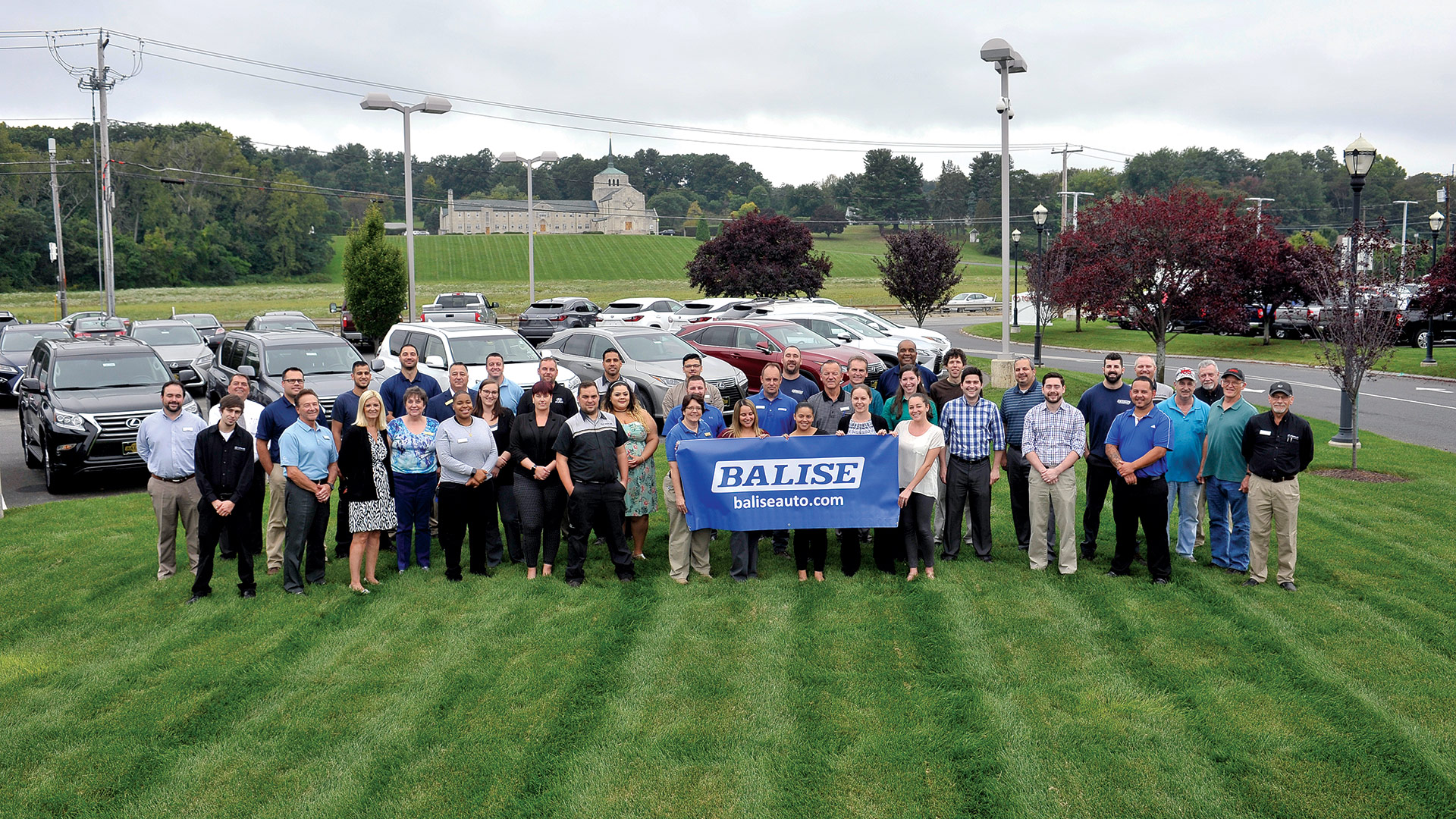
Education

Closing the Skills Gap

Caron Hobin says Strategic Alliances can help fill skills gaps that exist in the region’s workforce.

The ever-changing workforce environment is a continuous challenge for employers seeking qualified people to fill their positions.

However, not all employers are looking for people with a college degree. In fact, the World Economic Forum reported recently that skills are in higher demand in the labor market than occupations and degrees.

This is one of the many reasons why Bay Path University started a new division on campus — Strategic Alliances, which provides customized training and learning experiences for area employees, as well as the latest online certifications and recertifications.

Caron Hobin, Bay Path’s vice president of Strategic Alliances, said the goal for this new division is a direct reflection of the overall mission of what was then Bay Path Institute when it was founded in 1897. And that is to always be attentive to the needs of the employers in the region and to make sure the university is preparing prospective employees to succeed in the workplace.

“That’s what I see our division doing here in an authentic way,” said Hobin, adding that this initiative strives to help employers target areas of recognized need through specialized training. Whether the focus is on cultivating emotional intelligence, working in teams, storytelling for success, or any other topic a company may need help with, Strategic Alliances uses carefully selected faculty from Bay Path as well as practitioners who have expertise in the topic to create programs that address these issues.

“Time is always of the essence, money is critical, so how do you provide training, and how do you help close the skills gap that employers say is definitely an issue out there?” said Hobin. “We do discovery sessions with companies and prospective clients, and we listen to what they are looking for, and then we create customized programs to meet their needs.”

She said these trainings may last anywhere from a few hours to weeks or months; however, she does her best to encourage companies to choose a lengthier program in order to get the most out of the experience, noting that, if the goal is changed behavior, employers aren’t going to get it with a one-hour training.

Longmeadow-based Glenmeadow, which provides of variety of senior-living options, is one of about a dozen clients of Strategic Alliances. It recently completed a six-month leadership academy for all its managers.

“They used a best-practice model for adult learning, which is learning something new and then putting it into practice,” said Hobin. “It’s not theory; it’s not just a couple of hours, then you’re done. You go through an intensive training.”

“We do discovery sessions with companies and prospective clients, and we listen to what they are looking for, and then we create customized programs to meet their needs.”

Anne Miller, Glenmeadow’s vice president of Operations, scheduled six training sessions with Strategic Alliances for 20 managers at the facility, with each three-hour session going into detail on specific topics, with the aim of improving overall leadership skills. After each training session, Miller put together breakout sessions held at Glenmeadow that helped her employees apply what they learned from the trainings.

“We wanted to do some things that reinforced some of the training or actually made it come to life a bit,” Miller told BusinessWest, adding that post-training sessions are important in order to help with retaining and applying what’s been learned.

These training sessions, conducted by a host of individuals from Bay Path, covered a wide array of topics ranging from how to de-stress to how to complete a good performance review, which Miller said are critically important for customer-service purposes within the many aspects of Glenmeadow’s broad business portfolio.

“I think it set a good base for us to continue the learning,” she said.

Interactive Approach

Glenmeadow’s case provides a perfect example of how Strategic Alliances works and why it was created, said Hobin, adding that, today, adult learners not only want to learn new information, but they want interactive, applied learning that goes along with it.

So, after the initial presentation session, Strategic Alliances hosts a practice session, where participants take the training they’ve received and apply it using strategies like role play in order to engage the employees.

Hobin said this training, coupled with ongoing work to determine specific needs among industry sectors and specific businesses, helps Strategic Alliances tweak its customized programs. And it also helps Bay Path when it comes to teaching students in its classrooms.

“We recognize that, with declining numbers of high-school graduates and with just a changing work environment going forward, we are going to need to find new markets,” she said, referring to the need to improve the skills of those already in the workplace and those seeking to advance within the workforce. “We can tell you very concretely that these are the skill sets that employers are looking for.”

Bay Path also partners with MindEdge, a provider of online continuing-education courses, to deliver various certifications and recertifications to any interested student or employee. When Bay Path launched its American Women’s College, its online degree program, Hobin said, she was hearing that more and more employers were not necessarily interested in people having a degree, but rather specific skill sets and certifications.

She hopes this will encourage students to get a professional certification before graduation, and she has a specific goal for the future — to have every Bay Path student complete a certification before they graduate.

For now, Hobin said Bay Path is implementing several strategies to reach out to the community, improve the visibility of Strategic Alliances, and build relationships with area business and economic-development-related agencies.

In addition to being a member of several local chambers of commerce, Strategic Alliances hosts virtual roundtables which provides viewers with a free, one-hour training course on various topics, which Hobin said have brought in many interested companies. These videos host a panel of professionals in the field and have focused on topics including using one’s power voice, having difficult conversations in the workplace, and diversity and inclusion.

Overall, Hobin wants Strategic Alliances to be a resource for the region, its business community, and individuals who want to be better-equipped to succeed in an ever-changing workplace.

“We’re here,” she said. “We’re interested in innovative approaches to professional development going forward.”

— Kayla Ebner

Modern Office

The Value of Internships

By Brittany Bird

People are often aware of the numerous benefits for students who participate in an internship while pursuing an undergraduate or graduate degree, but the benefits to you as an employer of offering an internship program are not to be overlooked.

Interns are similar to entry-level employees who are likely students and are hired for a specific period of time. Interns may be paid or unpaid, though paid internships typically produce better candidates. Students are generally eager to get their hands dirty and get real, hands-on experience so that they can put into practice what they’ve been learning in their classes.

Brittany Bird

What’s more, students putting in the effort to seek internship opportunities tend to be motivated, aspiring professionals who are willing to work hard to show their value to a business in the field of their major and desired career. These young go-getters can offer fresh perspectives, new ideas, and valuable feedback. As interns are most often still in school while working with your business, they are able to provide insight into new technology and trends to participate in the continuous improvement of your company.

The feedback they provide from their experience with you can also help to better the work environment and position your business to attract other young graduates like themselves.

Providing internship opportunities to local students showcases that your business supports the community and is interested in the potential of the younger generations. Internships support students as part of the growing workforce by giving them work experience and a better understanding of their field of choice and their own skill set.

This is a great way for local businesses and firms to secure young talent in Western Mass. as well. Indeed, your company has the chance to try out new talent before hiring them as a full-time employee. Internships allow you as an employer to gauge the work ethic of the student and see how he or she fits with your company and vision.

Recruiting for these positions also increases brand awareness among students, across local university campuses, and beyond. People become more familiar with your company name and what you represent as a result of your recruiting presence. Additionally, interns themselves act as quasi-recruiters as they tell friends, family, and classmates about their internship experience and inform them of other positions available with your company.

Internships allow young professionals to become familiar with your company and its culture and mission. Scouting out interns is like proactively recruiting for future full-time positions. Internships are a time to evaluate the intern in a lower-risk setting than bringing someone on full-time allows. Also, interns can typically do the same work as a new hire, but for a lower pay rate.

Retention Rate as of 1 year of Employment:

Internship with your company: 70.6%
External internship experience: 65.8%
No internship experience: 46.3%
(NACE 2016)

Internships also provide the chance for more seasoned staff to improve their management, mentoring, and leadership skills by training the new students on board. Having internships during your busiest times of year puts them through the ringer and tries their abilities to keep up and help out even in the craziest of circumstances while providing relief to other associates from the less important or less involved projects.

Internships not only allow a smoother transition into a career for the student, but also for your business. Instead of hiring someone you have to train from scratch, you now have an entry-level employee who has spent time with your organization and will require significantly less, if any, training. You will already to know their strengths and how they work with the team.

When they come on full-time, you have a much better understanding of their abilities and qualifications and can bring them on and keep your business operating smoothly. And getting employees who are a better fit through internships means better retention. Studies conducted by the NACE have shown that, at one year (see table on page 30) and at five years, retention rates are higher for those employees who started with a business through an internship program. Even if there are no full-time positions currently available, the line of communication is there and can be kept open for when future opportunities arise or when the student graduates and is looking for a career.

Internship programs that are well-designed and well-run will attract bright, young talent that can be a great addition to your team and part of your strategy for achieving the goals of growing your business by increasing productivity, efficiency, and profitability. Recruiters can look to university career centers to contact personnel who can lead them in the direction of clubs relevant to your business’ field or inform them of dates of meet-and-greet events or career fairs. Often, businesses can also put postings on universities’ websites or flyers and applications in the universities’ career-counseling offices.

In short, the time, money, and effort put into an internship program usually provide a big payoff in the long run as well as providing direct benefits to your company’s short-term goals in the present.

Brittany Bird is an audit associate with the Holyoke-based public accounting firm Meyers Brothers Kalicka, P.C. She began her career at MBK as an intern and recently celebrated her first anniversary as a full-time audit associate; (413) 322-3502; [email protected]

Manufacturing

Leading Lights

Two Springfield Technical Community College (STCC) students are working as interns this summer at MIT Lincoln Laboratory, a U.S. Department of Defense research and development center in Lexington.

MIT Lincoln Laboratory selected Douglas Bednarczyk and Shane Richardson, students from the Optics and Photonics Technology program at STCC. They are interning at the Lexington facility through August.

Richardson earned his associate degree from STCC in May, but will return this fall to take additional classes. Bednarcyzk finished his first year in the two-year Optics and Photonics Technology program and hopes to earn his associate degree in spring 2020.

Students in the Optics and Photonics Technology program learn about the practical applications of light, optics, and electronics. High-tech applications include lasers, fiber optics, holography, laser materials processing, optical systems, and more.

“Students in the Optics and Photonics Technology program at STCC train on state-of-the-art equipment used in many commercial laboratories,” said Nicholas Massa, department chair for Optics and Photonics Technology. “There aren’t any other associate-degree programs like ours in the region. That’s why companies approach us. They discover our students know how to use the laser equipment and know the theory. They’re ready to go to work.”

Massa said there are not enough trained candidates to meet the demand for jobs in the optics and photonics industry.

“I get calls every day from companies asking about candidates for internships and full-time positions. Nearly all of my students who graduate from the program get hired, and they often get multiple job offers,” he said. “After you get a degree in Optics and Photonics Technology, you can land a job that pays between $40,000 and $60,000 a year to start, and you go up from there.”

Bednarczyk is a third-generation STCC student. His grandfather studied electrical engineering technology, and his father graduated from a biomedical technology program. He looked into the optics and photonics technology after reading an article about STCC’s program.

“I enjoy the program,” he said. “It’s really engaging and hands-on. I’m not the type of kid that was meant to sit behind a computer all day. To use the laser-etching and marking systems we have, I think that’s a blast.”

Meanwhile, Richardson came to the Optics and Photonics Technology program with a bachelor’s degree in theater from a university in California. At STCC, Richardson had the opportunity to study with a mentor, Eric Lim, who holds a doctorate in electrical engineering from Stanford University.

“As a hiring manager, I’ve been impressed with the quality of students who came out of this program,” said Lim, who worked at a laser-technology company. “It was exciting to find a student who was hands-on and interested in laser physics, something I had trained for in my graduate days. So I was very happy to mentor Shane.”

For his class project at STCC, Richardson experimented with converting invisible infrared light into visible green light.

“In order to change light to interact with anything, we have to change the wavelength, and that is what this whole experiment was about,” he said. “I didn’t realize how much I was going to enjoy the program or how beneficial it was going to be. It was a nice fit. I like the people here, and I like the atmosphere. Not many people know about optics and photonics technology.”

Banking and Financial Services

Steady Course

President and CEO Michael Tucker

President and CEO Michael Tucker

Like most all bank presidents in the 413, Michael Tucker would concede that a great many of the region’s communities are heavily populated with financial institutions, or “overbanked,” to use the term most would put into play.

He’s inclined to include Greenfield on that list, and gestures out the window of his office to make his point. “They used to call the other end of the street Bank Row,” he said, referring to a stretch of Federal Street now occupied by what once were stately bank offices, many of them redeveloped for other uses. “They really should call this Bank Row now.”

Tucker, president and CEO of Greenfield Cooperative Bank (GCB) and Northampton Cooperative Bank (the two institutions merged in 2015, and the former name was kept) was referencing the number of competitors who call a different stretch of Federal Street home, and it’s a large number.

But, unlike most of the other bank leaders who bemoan the overbanked nature of this region, Tucker sees the landscape through a slightly different lens.

“Some bankers would say we’re overbanked; I would say we have choices,” he explained. “It forces you to be more competitive, and it gives people choices. It doesn’t hurt to have competition — otherwise, you get complacent.”

So perhaps all that competition should get some of the credit for what has been a consistent pattern of growth for the bank, especially since Tucker took the helm at GCB in 2003. Since then, the bank has seen assets rise from roughly $175 million to more than $630 million, its branch count soar from three to 10, and its commercial-lending portfolio take a quantum leap.

Overall, the bank’s strategy has been to gradually expand its footprint in Franklin and Hampshire counties, growing mostly via the organic route (although the merger with Northampton Coop certainly accelerated that process), and achieve more of the size that is needed to thrive in today’s banking landscape.

The plan also calls for seizing opportunities when and where they arise, which brings us to the institution’s latest expansion effort — a branch in South Hadley at the Woodlawn Shopping Plaza that will bear a Northampton Cooperative sign over the door and open next January.

Formerly a Bank of America branch — that institution has been closing a good number of facilities in recent years — the new location gives Greenfield Coop presence in another Hampshire County community, but one that enables it to serve residents of several nearby Hampden County cities, especially Chicopee and Holyoke.

The plan for the foreseeable future is summed up neatly in the bank’s annual report, issued just a few weeks ago.

“Our primary strategy remains to look for prudent and measured organic growth right here in Western Massachusetts,” Tucker wrote in the report, noting that many of those aforementioned competitors have ventured into Central Mass., Connecticut, or both. “We need to remain a lean organization, especially in light of the growth of mobile and electronic banking in today’s world. Our branch strategy recognizes the new world order with the continued growth of the internet.”

Michael Tucker says the GCB branch is just one of many banks located on Federal Street

Michael Tucker says the GCB branch is just one of many banks located on Federal Street, a proliferation that provides competition, which he believes makes his bank better.

For this issue and its focus on banking and financial services, BusinessWest asked Tucker to elaborate on all those points and essentially draft a quick blueprint of the bank’s plans for the future. In a nutshell, it simply calls for more of what of what the bank has been achieving under his leadership — smart growth.

Points of Interest

Tucker said he ventured into banking, if that’s the word for it, while he was in law school at Western New England University.

He took a teller’s job at the institution known then as Springfield Institution for Savings (SIS), while attending night classes, not knowing this would be his employer for some time to come.

He remembers his first boss, John Collins, telling him that his law degree could be put to good use in the banking industry.

“He said, ‘I have a lot MBAs who could use some help, because we have this new thing called compliance,’” he recalled, referring specifically to the Truth in Lending Simplification Act of 1981. “That was my first foray into banking law.”

He took the title ‘counsel and compliance officer,’ and later worked his way up to senior vice president and general counsel. When Peoples Heritage acquired SIS, Tucker, like many others, was soon out of work, but he eventually landed at what is now bankESB for several years before being recruited to lead GCB.

When he arrived in Greenfield, he took over one of the smallest banks in the region with a simple goal — “I told the board I was going to keep this place mutual and hopefully leave it a better bank than I found it” — and set about a course of steady if unspectacular growth, which was by design, as he explained with a little humor.

“Our growth is roughly 4% to 6% a year,” he noted. “If we were a stock bank, they would have thrown me out the door. Because we’re a mutual bank, we can take our time. Where I see banks get in trouble is when they try to grow too fast and lose sight of their basic principles.”

GCB hasn’t done that, and its strategic goal — and operating philosophy — are summed up by its web domain name, www.bestlocalbank.com, and a comment from the annual report. “As I’ve often said before, we’ll probably never be the biggest bank,” Tucker wrote. “But we always strive to be the best bank in Western Massachusetts.”

During Tucker’s tenure, the bank has, as noted, expanded to 10 branches. There are two in Amherst (although they will soon be consolidated; more on that later), one in Florence, another in Northampton, two in Greenfield, as well as a commercial and residential and loan-services facility, and single locations in Northfield, Shelburne Falls, Sunderland, and Turners Falls.

Meanwhile, it has also greatly expanded its commercial-lending team and its commercial portfolio, which, like that at many banks in the region, is dominated by commercial real-estate loans, but also reflects the diversity of the local economy, especially in the bank’s hometown.

Indeed, this is an intriguing time for Greenfield, said Tucker, noting that the community once dominated economically by manufacturing has varied its economy, making great strides in technology and hospitality.

“Our growth is roughly 4% to 6% a year. If we were a stock bank, they would have thrown me out the door. Because we’re a mutual bank, we can take our time. Where I see banks get in trouble is when they try to grow too fast and lose sight of their basic principles.”

“There is a lot of energy in the town,” he said. “We have the new courthouse and the new parking garage; they opened the Olver [Transit Center], and there have been many other new developments.”

Still, this region, and especially Franklin County, where many communities are struggling to maintain population and especially young people, would be considered a low- or no-growth area, he acknowledged, meaning growth is a challenge for any financial institution.

This is why many area banks, as he noted in his annual-report comments, have ventured into Connecticut, Central Mass., or both, and why others have grown through acquisition or merger.

GCB has done some of that with its merger with Northampton Coop, a move that Tucker described as “logical” for both institutions because of that overbanked nature of this sector, and the lack of population growth in Franklin County.

“That’s why we looked at Hampshire County and why I talked to Northampton [Coop],” he explained. “It would have been silly for us to build another branch down in Hampshire County and fight 10 other banks for the money when we can partner with another bank.

“That worked out well for everyone because we didn’t have to lay anyone off,” he went on, adding that he spends one day a week in Northampton at that division of the institution. “It was a smooth transition. We were both very small — and we’re still one of the smaller banks — but we now have more size, and that helps. It was a good merger.”

By All Accounts

As he talked about his bank’s branch strategy, Tucker reached for his cell phone and held it aloft.

“This is our fastest-growing branch,” he said, noting that internet banking is becoming an ever-stronger force in this sector.

But brick-and-mortar branches are obviously still needed, he went on, adding that they probably don’t need to be as large as they once were, and they are far less transaction-oriented than they once were.

But they serve an important purpose in that they give a bank a presence and enable it to better serve customers in a particular region or community.

Which brings us to the new South Hadley branch.

The most logical expansion point for the bank moving forward is probably Hampden County, said Tucker, adding that the South Hadley branch provides an opportunity to make some strides in that direction.

Tucker found the branch while on one of his many drives around the area looking for opportunities.

“We keep our eyes open, and I drive around the area a lot and take a look at the communities,” he explained. “South Hadley was a community that I thought had some upside, and I was surprised when I read that Bank of America was closing that branch because they had a fair amount of deposits in that office.

“With this branch, we can serve some customers that we have already in Springfield and Chicopee,” he went on. “But it also gets us to reach a base in South Hadley that BOA is telling, ‘if you want to bank with us, you have to drive over here.’”

BOA’s departure will ultimately lead to GCB’s arrival, specifically its Northampton Coop division, said Tucker, adding that, while moving into South Hadley, the bank will continue to look for other growth opportunities as well as ways to become the ‘leaner organization’ he mentioned in the annual report.

Toward that end, the bank will consolidate its two branches in Amherst into one, a nod to the fact that specific branches are simply handling fewer transactions these days.

“When I was a teller in Forest Park [for SIS], we had seven or eight tellers plus a manager and an assistant manager,” he noted, turning the clock back four decades or so. “People were lined up out the door — we didn’t have deposit — and everyone came in to cash their Social Security checks on the first of the month.”

Elaborating, he said the branches in Amherst that saw 10,000 transactions a month several years ago were down to 5,000 maybe five years ago, and are now seeing roughly 3,000 a month, thanks to ever-advancing technology.

This phenomenon will eventually lead to fewer branches, and, more immediately, smaller facilities.

“The industry is moving in that direction,” he said while again holding his phone aloft and explaining it is now a branch itself in most all respects. “But I don’t think branches will be obsolete; they will be smaller and leaner.”

As for future expansion geographically, Tucker said GCB will continue to look for potential landing spots. “We’ll continue to look south and possibly east to Worcester County,” he told BusinessWest. “A lot depends on what happens; with some of the branches we’ve opened, I didn’t anticipate doing it at that time, as in Turners Falls, but the opportunity arose.”

Bottom Line

In his annual-report statement, Tucker noted that, over the past 114 years, GCB has had three basic operating slogans.

It’s gone from ‘Traditional, Progressive, Locally Focused,’ to ‘In the Community, for the Community,’ to the current ‘Come on Over to the Coop.’

The words are different, but they say the same thing, essentially — that this isn’t the biggest bank on a block crowded with other banks, but it strives to be best, and it’s generally successful in that mission.

This is the strategy that has worked since Teddy Roosevelt was in the White House, and there isn’t any sentiment to change it, said Tucker, because it works, not only for the community, but for the institution as well.

George O’Brien can be reached at [email protected]m

Sports & Leisure

The Real Dirt

Keith Johnson (left, with Rick Johnson)

Keith Johnson (left, with Rick Johnson) says his passion for the Wick 338 stems from his own participation in the sport of motocross.

Motocross in Southwick is nearly a half-century-old tradition. It’s also a business and a well-tuned economic engine. Like the sport itself, this local enterprise has endured some ups and downs, twists and turns, but, thanks to a father-son team, it is now hitting on all cylinders.

When Rick Johnson relates the history of the Wick 338 motocross track in Southwick, he notes that he never thought he’d be managing the production of a national championship — let alone four of them.

But that’s what has transpired in what can only be called the latest chapter in the story of motocross in this town, perhaps best known for other forms of recreation, specifically those involving the Congamond Lakes, which give the community so much of its character.

It’s a story that, like the sport itself, features a number of twists and turns, ups and downs. With that, Johnson, track manager for the facility, flashes back almost a half-century, to 1972. That’s when the very first Southwick motocross race was held, just a few miles from the location of the Wick 338 track on Legion Road in Southwick, as in American Legion Post 338. Hosted by the New England Sports Committee (NESC), the race was held to benefit the Jimmy Fund and other town charities.

“Obviously there’s an economic spinoff, especially when you have a national race where you’re bringing thousands of people into town.”

The event was a huge success, and members of the Legion quickly developed an appetite for more motocross.

Fathers of NESC racers set their minds on building a track of their own and constructed the first version of what now stands at the Wick 338. Led by Bernie Yelin, Pat Smith, Ray Peebles, Dante Molta, Clovis Goyette, and many more, the Wick, as it would come to be called, would bring races, and then a national championship, the first in 1976, to the community. But it also brought much more, including large crowds of people and support for many kinds of businesses, especially those in the hospitality sector.

Then came some of those twists, turns, and dips. Indeed, after the 2012 national championship, the race was taken from the Wick because the track’s condition had deteriorated. Soon, the entire operation was in danger of being closed.

That’s when Mike Grondahl stepped into the picture; he worked out a lease with the American Legion to put it back in business.

The former Planet Fitness CEO had a great love for the sport of motocross, but due to a business investment he made prior to his deal with the track, he did not have the time to maintain it properly, and the track lay dormant.

Luckily for him, he knew a family who also loved the sport.

“He called me, and we agreed to do it — but not with the intent of having a national championship here,” Johnson told BusinessWest. “We just wanted to build the best track for the Northeast.”

Chris Canning (center) is the reigning motocross champion in the Northeast.

Chris Canning (center) is the reigning motocross champion in the Northeast.

While Grondahl originally reached out to Johnson’s son, Keith, now president of the Wick 338 Promotions LLC, the father-and-son duo agreed that the best way to maintain the track was to work together. Rick would help with the business plan and work with the town, acting as the front man, and Keith would take care of things at the track.

Together, their goal was to bring the track — and the business — back to the high level of success enjoyed decades ago. And, generally speaking, they’ve succeeded in those goals, as evidenced by the national championship staged there just over a week ago. The seventh round of the 2019 Lucas Oil Pro Motocross Championship put an exclamation point on what would have to be called a comeback for motocross racing in Southwick.

For this issue and its focus on sports and leisure, BusinessWest talked with the Johnsons and others within the community, and learned that motocross is more than a popular spectator sport; it’s also a driving force when it comes to economic vibrancy in Southwick.

Beyond the Track

The national race at the Wick 338 proves to be one of the most physically grueling races for those competing, each twist and turn more challenging than the last.

But this is not the only event that happens at the track.

Rick Johnson said the site hosts more than 40 events throughout the year, each one bringing between 500 and 3,000 people to town.

“It’s great for the town, not just because of the national, although it brings in 15,000 people in that one day,” said Keith. “For the most part, the town is a huge supporter of the entire facility.”

He noted that many business owners even plan around the track’s events.

“When I give my presentation to the town and give them my schedule, there are so many local shop owners there to learn what the schedule is all about so they can plan,” he told BusinessWest.

Southwick Selectman Joe Deedy can attest to this, and said the town simply wasn’t as vibrant when motocross races weren’t staged for a few years. “When motocross went away a couple years back, you could see a ton of people were so disappointed overall.”

Deedy also recalled that, in the old days, competitors would just show up and enjoy the race. Now, a race team might have five or six promoters they are dealing with, bringing in even more business to the local community.

“Every local little mom-and-pop business or even bigger facility that does catering, chances are, they are there catering to one race team or another,” he said.

Deedy and other town selectmen, Doug Moglin and Russ Fox, spoke highly about the track and the effect it has on Southwick, noting that everything from gas stations to breakfast shops do better business when there is a race in town.

“Obviously there’s an economic spinoff, especially when you have a national race where you’re bringing thousands of people into town,” said Fox, who has been a selectman, off and on, for nearly 40 years.

Among those people who came to town for this year’s national was a large crew from NBC, which broadcast the race nationally. This exposure, said Fox, helps bring in more people and shines a light on Southwick, home to about 10,000 people.

The Wick 338

The Wick 338 hosts more than 40 events throughout the year, from small races to the recent national event that brought 15,000 people to town.

A national race like the one on June 29 brings in a crowd larger than the community’s population, drawing some traffic and maybe a few headaches, but any negatives are far outweighed by the positives, said those we spoke with.

Indeed, Moglin said, even during an event like the national, someone passing through Southwick wouldn’t know the event was going on, making the track a good neighbor.

Because the town has hosted the event several times before, the accumulated experience helps all those involved put on an event with minimal negative impact within the community, Moglin said, noting that the hour before the event and when it finishes are the only times traffic gets backed up, and additional law-enforcement services are not needed on the streets to help manage the crowds.

More Than Moto

While things may be quiet on the road, the track is always bustling.

Referred to as the Fenway Park of motocross, the Wick 338 hosts everything from open practices to Rugged Maniacs to an event known as Southwick Day. Track managers even volunteer their starting line to light off fireworks on the Fourth of July.

Before Rick and Keith hosted their first national event, they knew they needed to upgrade the track in order to make it the best of the best. This included installing new tunnels under the track, trimming trees to make the facility more viewer-friendly, close to 3,000 feet of fencing, a new irrigation system, a brand-new scoring and announcing tower, and more. Four days before the 2019 national, 20 truckloads of dirt were brought in.

These are just a few of the things it takes to run a successful track — and they aren’t cheap. Rick said he knew that, if the Wick charged for general admission only, it would be difficult to generate the revenue needed to pay for the upkeep of the track.

That’s why he got creative and introduced VIP seating.

“We looked and found areas of the track that weren’t being utilized, and we invested in those areas to create VIP sections,” he said, adding that these areas around the track allow ticket holders to get a whole new experience and greatly increase revenues; VIP tickets range from $90 to $375 compared to the general-admission price of $45.

All these investments have led to a four-year run of nationals for the father-and-son duo.

Before Rick and Keith took over at the Wick 338, chain-link fences stood six feet high, and tall trees made it difficult for viewers to truly feel like they were a part of the action. Now, motocross fans have the opportunity to see the dirt flying up-close and personal.

“Those were the things that we felt took away from the character of the New England track,” said Rick. “It was our intent to bring it back as it was back in the ’70s that everybody loved so much, and make it safe.”

They’ve succeeded in that mission, and in the process, they’ve helped rev up the local economy — literally and figuratively.

Kayla Ebner can be reached at [email protected]

Business of Aging

Man UP

Joy Brock

Joy Brock says organizations like the CONCERN Employee Assistance Program can bring mental-health resources to men — if they’re willing to ask.

Behavioral health is not a male issue or a female issue — it’s a human issue. Yet, the imbalance between the problems facing men and their willingness to seek help has raised alarm bells in the field over the years.

Suicide rates provide one of the starker contrasts, with men making up more than 75% of all suicide victims in the U.S., with one man killing himself every 20 minutes on average. Substance abuse — sometimes referred to as ‘slow-motion suicide’ — follows a similar track, ensnaring three men for every woman.

And, yet, men don’t want to bring up these issues, said Sara Kendall, vice president of Clinical Operations at MHA in Springfield.

“In our society, we have expressions like ‘man up.’ So many things in our culture are geared toward men being strong, and therefore, seeking any help — especially anything behavioral-health-related — been viewed as weakness,” she told BusinessWest. “It’s often difficult for men to feel comfortable talking to someone, so there’s a disconnect with how to help. We encounter that a lot.”

Joy Brock, director of the CONCERN Employee Assistance Program, which is affiliated with River Valley Counseling Center, has battled the same tendencies in her counseling and referral work.

“Oftentimes, men have this tendency to pull back and not discuss any mental-health stuff that’s going on with them,” she said. “They might be struggling with anxiety or depression or even social anxiety, but they’ll hide it.”

“Not all families sit down and say, ‘all right, as a guy, here’s how you handle this.’ They just tell you, ‘stop crying’ or ‘you’re being weak right now’ or ‘be a man.’”

Many times, the reluctance of men to seek help begins in their youth, with stereotypes that eventually harden into personality traits.

“We’re not all taught how to deal with situations growing up,” she noted. “We all come from different families, and not all families sit down and say, ‘all right, as a guy, here’s how you handle this.’ They just tell you, ‘stop crying’ or ‘you’re being weak right now’ or ‘be a man’ — all these social norms and stereotypes, which make it even harder when something’s happening to you.”

It’s a situation that’s exacerbated when one’s peers hold the same stereotypes, Brock added.

“Where do you go for help when you can’t go to your family and friends because they’re like, ‘oh, it’s not that big of a deal’? So some guys don’t talk about it, which is tough because it’s isolating. And if we hide it or pretend it doesn’t exist, it just keeps growing and gets to a place where you’re having breakdowns or meltdowns, or you’re getting suspended from work, and part of you doesn’t understand what’s going on.”

While difficult emotions — and clinical depression and anxiety — don’t always have a specific cause, there are some common stressors, she said, noting that divorce and unemployment can strike at the identity of men by altering their traditional roles and leaving them adrift, without pride or purpose.

It’s notable that men in small towns and rural areas have particularly high rates of suicide, and flyover states such as Wyoming, Montana, New Mexico, and Utah, as well as Alaska, have the highest rates of suicide in the country — a trend that has been linked to the decline in traditional male industries such as manufacturing, forestry, and fisheries, leaving large swaths of men in certain regions jobless or underemployed.

High rates have also been observed in veterans, young Native Americans, and gay men, with one possible common thread being perceived rejection by mainstream society, leading to strong feelings of alienation and isolation.

If there is an obvious trigger to feelings of depression or anxiety, Kendall said, it’s often easier to get men in the door to talk about it.

“The referral may come from a spouse. Oftentimes, a gentleman will come in and say, ‘I have to do this or lose my marriage, or lose my family, or lose my job.’ It’s tied to the fear of losing something. But once they’re here, they’re just as inclined to stay in treatment as females. There’s so much potential to help, if we can make it more comfortable for men to talk.”

Breaking Barriers

Besides cultural factors, Mental Health America notes three elements that may feed into the reluctance of men to seek help for mental-health issues.

The first is that awareness strategies are not targeted effectively to men. Research indicates that men respond more strongly to humor (especially dark humor) and, at least initially, to softer mental-health language. But, as Kendall noted, once men are engaged enough to learn more, there is often much less resistance to continuing the conversation.

The second factor is that men ask for help differently. Men are much more likely to accept help when there is a chance for reciprocity — that is, when they perceive an opportunity to help the other person in return, which wards off the feeling of weakness that is often associated with asking for help. Men also prefer to either fix or at least try to fix issues themselves when possible, before reaching out for help.

Sara Kendall says men tend to stay with needed mental-health programs once they begin, but getting the conversation started can be difficult.

Sara Kendall says men tend to stay with needed mental-health programs once they begin, but getting the conversation started can be difficult.

For this reason, Brock suggested that acceptance and commitment therapy (ACT) is an effective option for many men. Instead of putting the emphasis on talking about feelings, ACT stresses accepting the reality of one’s situation, choosing a direction, and taking specific action toward those goals.

“What is it you’re fighting for? What gives you meaning in your life? Let’s focus on that, while also acknowledging you don’t feel great about the situation you’re in,” she said. “It’s a different, more action-oriented approach, and works especially well for veterans.”

The third factor is the fact that men often express mental-health problems differently than women, leading to misdiagnosis.

Although both genders experience similar symptoms of some mental-health concerns, how they manifest and present those symptoms can vary. For example, women often respond to symptoms of depression by appearing disheartened, sad, or talking about feelings of worthlessness. Men, however, often respond with anger, frustration, impulsive behavior, or other manifestations that are often dismissed as normal male, acting-out behaviors.

“It’ll end up presenting like anger or sometimes irritability,” Brock said. “Sometimes they just get tired, they don’t want to do anything, they’re not motivated, or they’re pulling away from work or the things that normally interest them. Sometimes it’s physical — stomachaches or chest tightening, that kind of thing. Or they do a lot of risk taking or avoiding or trying to escape a situation. And they might use substances, like alcohol or drugs, to try to hide things.

“If you’re no longer enjoying activities, if it creates disruption in your life, let’s talk about that. It’s no different than a pulled back keeping you from baseball games.”

“Sometimes we don’t recognize what depression is,” she went on, “because when you think depression, you think sadness, and for guys it looks way different. If you’re finding you’re more angry or irritable, that may be depression. And if you’re pulling away and isolating from other people, that’s depression as well.”

Because depression, anxiety, and related issues can wreak as much havoc on daily life as physical problems, if not more, it makes sense to seek help, Kendall said.

“If you’re no longer enjoying activities, if it creates disruption in your life, let’s talk about that. It’s no different than a pulled back keeping you from baseball games,” she explained. “We’re all in the same boat, and it’s OK to talk about it. Asking for help is not a sign of weakness.”

Dispelling the Myths

Joshua Beharry, a survivor of suicide, has become a mental-health advocate and the project coordinator of HeadsUpGuys, which provides men with advice and resources to identify, manage, and prevent depression.

“Fighting depression is difficult. Not only do you have to fight the illness, but you also fight the stigma attached to it,” he recently wrote for the National Alliance on Mental Illness website. “For men, the fear of looking weak or unmanly adds to this strain. Anger, shame, and other defenses can kick in as a means of self-protection, but may ultimately prevent men from seeking treatment.”

He outlined several common myths that stand between men and recovery from depression, including ‘depression equals weakness,’ ‘a man should be able to control his feelings,’ ‘real men don’t ask for help,’ ‘talking about depression won’t help,’ and ‘depression will make you a burden to others.” Understanding the falsehood behind all of these is the first step toward a healthier life, he added.

“Being unhealthy and refusing to seek treatment can put pressure and stress on those that care about you, but asking for help does not make you a burden. It makes people feel good to help a loved one, so don’t try to hide what you’re going through from them. What’s most frustrating is when someone needs help, but they refuse to ask for it.”

An employee-assistance program like CONCERN, which contracts with numerous area employers, is a good place to start, Brock said. It’s intended to be a non-confrontational environment where someone can admit they’re struggling and learn about resources — such as outpatient therapy, anger-management and substance-use support groups, and perhaps more intensive treatments — that can help.

“Sometimes it’s easy to hide things under drugs and alcohol, so that men don’t even know they have a problem,” she added. “Sometimes men have trouble being assertive and communicating their needs. But when they drink, out come the feelings.”

Primary-care physicians are also a good place to bring up issues of concern, Kendall noted.

“Most of us have one — it’s someone we know and feel comfortable with, who doesn’t feel as foreign or off-putting to call,” she said. “I feel like that’s the safest place to start. They know you physically, and mental health is just as important as your physical health.”

The doctor might provide a number of options, she added, such as an outpatient behavioral-health clinic like the BestLife Emotional Health & Wellness Center that MHA recently opened in Springfield. The important thing is to get the conversation started.

“How can we make it OK for men to talk openly about this part of themselves, which is just as important as their physical health?” Kendall said. “Men need to hear that it’s OK to talk about feeling anxious or depressed, just as they’d be concerned about having a back problem or a knee injury.”

Taking the First Step

The bottom line is that mental health is a critical part of life, both Kendall and Brock said. Not only do men attempt suicide far more often than women, they tend to use more lethal means, and are successful — if that’s the right word — about two-thirds of the time.

“I think it’s just hard to talk about what’s going on with us,” Brock told BusinessWest. “We’ve been trained that we have a life to live, we have to get on with it, and we’re supposed to be productive members of society. The reality is, life is not perfect, and it’s not smooth.

“With mental health, in order to get through it, you actually have to go straight through it,” she went on, “and it takes an extraordinary amount of courage and willingness to face something that is terrifying and extremely painful. Most of us would prefer to go out the back door and say, ‘yeah, I’m not dealing with that today.’”

Those who choose to take action — to man up, if you will — are typically glad they did. But the first step, facing the truth, is often the hardest.

Joseph Bednar can be reached at [email protected]

Community Spotlight Features

Community Spotlight

Kate Phelon and Stefan Czaporowski

Kate Phelon and Stefan Czaporowski say the Westfield Education to Business Alliance benefits both current employers in the city and some of their future workforce.

Kate Phelon has long appreciated the spirit of collaboration between Westfield’s municipal, business, and educational leaders — and points to the Westfield Education to Business Alliance, which just wrapped up its third year, as a good example.

The alliance, WE2BA for short, connects the city’s schools, where students are beginning to contemplate their career paths, with companies that are eager to mine local talent. Last year, it launched an adopt-a-classroom program — Mestek, Forum House, and PeoplesBank were the initial adopters, and more are expected to come on board next year — while Westfield High School’s annual career fair drew a record 61 vendors.

“We want to get more people involved — more businesses adopting more classrooms,” said Phelon, executive director of the Greater Westfield Chamber of Commerce. “The principals are engaged in this.”

Stefan Czaporowski, the city’s Superintendent of Schools, said those efforts can have long-term economic-development impacts.

“Whether our students go on to college or work, we realize they might not be in Westfield as soon as they graduate,” he told BusinessWest. “But we want them to come back here, live here, work here, and help grow Westfield. I think the best way to do that is to show them what Westfield has to offer — and it offers a ton.”

It’s not just WE2BA (much more on that later) that’s showcasing the city’s strengths. Take, for example, Go Westfield, a collaboration among municipal officials, Westfield Gas + Electric, Whip City Fiber, the Greater Westfield Chamber of Commerce, and corporate sponsor Westfield Bank to encapsulate what makes this city a desirable landing spot, and, more importantly, tell people about it.

“The city had never really taken on the task of marketing itself until just recently,” Mayor Brian Sullivan said. “It’s a work in progress, but we’ve gotten much better at touting what we have. We’ve got a lot of things here. We have an airport, a college, a hospital. We’ve got an exit off the Mass Pike. We’ve got transportation potential, between I-91 and the Pike. We’re literally two hours away from six different state capitals; geographically, we’re situated nicely. And we have more developable land than most.”

But Go Westfield is about more than marketing; it’s also a means to continual self-improvement. Phelon cited three recent focus groups — targeting the retail, manufacturing, and nonprofit sectors — as a notable example.

“Whether our students go on to college or work, we realize they might not be in Westfield as soon as they graduate. But we want them to come back here, live here, work here, and help grow Westfield. I think the best way to do that is to show them what Westfield has to offer — and it offers a ton.”

“These are the businesses that are here, and we wanted to find out from them what’s working really well, and what keeps them up at night,” she told BusinessWest. “That helps us better market ourselves as we address concerns and find out if other businesses have the same concerns. We want to make our existing businesses happy and address their issues — and if we don’t know what those issues are, we can’t help them.”

Sullivan agreed. “We’ve gotten much better at listening to stakeholders. It used to be that the city would have an idea, and we would go after that idea. Now, it’s more reaching out to the companies in town and saying, ‘what’s working? What’s not working? What do you need?’ We’re making the companies already here a little better, and by listening to their needs, it’s helping out other companies who are saying, ‘yeah, we needed that too.’”

Sullivan hears those needs at the Mayor’s Coffee Hour, sponsored by the chamber and hosted by a different business each month.

“Those companies get to show off what they do, and we get to talk about things like construction projects, road projects, what’s coming down the pike for the City Council,” Sullivan said, adding that he often brings along other city department heads to enrich the discussions. “I don’t want to just stand in front of the room and talk; it’s got to be a two-way conversation. And an hour can fly by.”

That’s partly because there’s a lot to talk about these days in the Whip City — and the collaborations driving that progress are becoming more robust.

Welcoming Party

When someone contacts one of the Go Westfield member organizations, Sullivan explained, other members are quickly roped in, whether that’s a municipal department, Westfield Gas + Electric, or the chamber. “If some company is interested in coming here and calls the chamber, Kate’s been really good at giving me a heads-up that, ‘hey, these people are looking to come.’”

Companies like Wright-Pierce, a 72-year-old environmental/civil infrastructure engineering firm, which recently announced it will open an office in Westfield.

Or Myers Information Systems, which is relocating downtown from its previous location in Northampton, bringing 20 software-development professionals and renovating 110 Elm St., which used to be a restaurant with industrial space above it. The firm expects to hold a ribbon-cutting ceremony in the coming months.

Westfield at a glance

Year Incorporated: 1669
Population: 41,552
Area: 47.4 square miles
County: Hampden
Residential Tax Rate: $19.70
Commercial Tax Rate: $38.00
Median Household Income: $45,240
Median Family Income: $55,327
Type of Government: Mayor, City Council
Largest Employers: Westfield State University, Baystate Noble Hospital, Mestek Inc., Savage Arms Inc., Advance Manufacturing Co.
* Latest information available

“Some of the reasons Myers chose here were the chamber, a bike trail, access to downtown, and fiber coming from the Gas + Electric,” the mayor said. “We reached out, wooing them to come to us. They were pretty impressed with how solidified we were as a group.”

He was referring specifically to Whip City Fiber, a division of Westfield Gas + Electric that continues to expand gigabyte-speed internet to residences and businesses across the city.

“Having access to that is huge for an awful lot of companies that are looking for bandwidth and a central location for their employees,” he explained. “Companies aren’t 9 to 5 anymore, where people come in and do their work and leave. It’s all hours of the day, it’s weekends, and if you can have access to high-speed internet, you can thrive as a company.”

The Elm Street Urban Renewal Plan, approved in 2013, continues to focus on revitalizing a two-block area in the heart of downtown Westfield running along both sides of Elm Street, the city’s main commercial thoroughfare. One recent success story is the $6.6 million Olver Transit Pavilion, which opened in April 2017.

The same year, the Westfield Redevelopment Authority demolished a former bowling alley near the transit center, with plans to create a multi-story, mixed-use building with retail, restaurants, office space, and market-rate apartments. The WRA plans to issue a request for proposals for the site — much of which used to house J.J. Newberry’s five-and-dime store — within the next month.

The mixed-use concept, Sullivan said, is an important one for a wide swath of Millennial professionals who crave city living with walkable amenities.

“They want to live downtown and don’t want cars; they want to walk or bike anywhere they want to go — a total urban lifestyle,” he told BusinessWest. “With Millennials, it’s not ‘build your house somewhere and have your two cars and go to your job.’ They want to be downtown, walk to the coffee shop, bring their laptop, do some of their work there, and go for a bike ride.

“The trend is all about internet access, getting to and from places without using a car, and downtown visibility,” he went on. “That’s what drove Myers to Elm Street, access to all these things.”

Another economic trend in Massachusetts involves the cannabis industry, and Westfield has embraced such businesses, with four available licenses for retail, cultivation, or other uses; two are currently going through the permitting process. With Southwick and West Springfield currently not in the marijuana game, Sullivan noted that Westfield is in a good spot when it comes to cornering market share, particularly from across the Connecticut border.

Brian Sullivan says city officials have become more adept

Brian Sullivan says city officials have become more adept at “opening up our ears” and being responsive to the needs of the business community.

“The City Council is figuring out whether we want one in downtown core district or keep them on the outskirts,” Sullivan said. “It’s such a new industry that nobody really knows what’s going to shake down. Everything is on the table right now.”

Meanwhile, initiatives like Go Westfield continue to dig into what the business community wants and how to bring new companies into the fold, with the goal of boosting economic development not only downtown, but across this sprawling city of more than 47 square miles.

“You have to adapt, and we’re getting better at adapting and opening up our ears,” he added. “And that’s what these focus groups are doing. We’re sitting there and listening to what’s lacking or what’s not working, or maybe what is working, and doing more of that.”

Back to School

Phelon and Czaporowski are excited about the potential of expanding the reach of the Westfield Education to Business Alliance, enlisting graduate students from Westfield State University to help out with programs moving forward. At a focus group in the spring, about 20 professors from various degree programs expressed an interest in working with different organizations in town, getting students into the weeds of local businesses.

“We hope they go away to college — that’s great — but come back. We have a great community. It’s pretty cool what’s happening here.”

The existing connections work on multiple levels. For instance, the students who worked with Mestek in the adopt-a-classroom program improved their presentation skills and performed, on average, markedly better than their peers in the school’s science fair. Meanwhile, Westfield teachers went to Mestek to help employees with limited English proficiency boost those skills.

“We want to expand adopt-a-classroom because getting the business community in front of the kids and sharing their expertise and their work experiences is huge,” Czaporowski said. “And we want to keep promoting what some call soft skills and we call essential skills — speaking with eye contact, how to interview, résumés, but also how to be a productive employee — things like punctuality and attendance. We call them essential skills because these are skills you’re going to need throughout life.”

Meanwhile, businesses visited elementary schools for career-day events toward the end of the school year, getting kids thinking early about career pathways and even what high school to attend to best serve those interests.

“We’re exposing kids to relevant life learning,” the superintendent said. “And it’s beneficial to the businesses too. The experience is eye-opening for them.”

That’s partly because students learn differently today — in a more interactive, collaborative style, with different tools — than they used to, Sullivan said, and it’s helpful for employers to understand that.

“It’s all about workforce development,” he said. “A lot of these companies will need their talents someday. They need those kids to walk into their business and start working. That training is now happening in the schools. And it’s a two-way street. A lot of the best companies in town are sending a representative to some of these meetings with the students because they want the students to know their product when they get out.”

Whether it’s through the career fair, adopt-a-classroom, or other efforts, Phelon noted, there are many ways to engage with students and show them what career and lifestyle opportunities exist in their own backyard — just as Go Westfield broadcasts that message to a much wider audience.

“We hope they go away to college — that’s great — but come back,” she said. “We have a great community. It’s pretty cool what’s happening here.”

Joseph Bednar can be reached at [email protected]
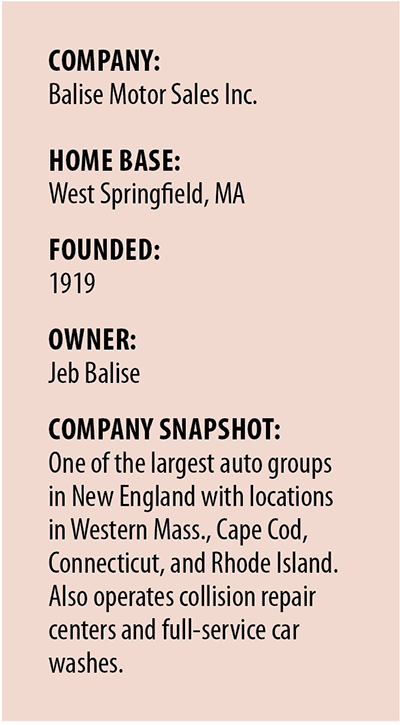
Sports & Leisure

The Shape of Things

Anna Dichner and Steve Tryon

Anna Dichner and Steve Tryon are currently the only two trainers at Body Fit Warehouse, teaching about 40 classes a week, focusing on body-weight exercises.

When a person thinks of ‘working out,’ what typically comes to mind first are the grueling physical challenges the body goes through.

However, Steve Tryon says many personal trainers at gyms today are missing a key piece of the puzzle: the mental and spiritual side of training.

This is what he and co-owner Anna Dichner try to bring to Body Fit Warehouse, a holistic lifestyle and fitness gym in Southwick.

When Tryon first started working at the gym years ago, he had no idea he would one day be buying and co-owning the facility with Dichner, his girlfriend he met seven years ago. The two have since completely transformed their own values, which they remember every day in order to give members the best training possible.

“We rebuilt the whole foundation from scratch to show people that it’s not about how you look, it’s not about how strong you are… it’s about everything else you’re able to do in the rest of your life,” said Tryon, adding that, when the couple bought the gym in February 2018, there were a lot of things that needed to be changed. “The trainers and other practitioners that were here, they weren’t looking at things from a holistic standpoint.”

He’s talking about the importance of addressing what is going on inside people’s minds before the body gets to work.

Dichner added that a key element to how successful they have been with the business so far is how they approach identifying what may be going on in a person’s life outside of the gym, and how they can help fix the problem.

“I always ask every one of my clients, ‘how was your day?’ or ‘how are you feeling?’ because that will dictate the workout and the type of session we’re going to have,” she said.

Tryon and Dichner are the only two trainers in the gym, with 130 regular members paying a monthly fee and 40 to 50 people going through classes each week. Even with this high volume, the two manage to spend one-on-one time with a significant number of their members, while still keeping their focus on supporting a holistic lifestyle for each individual who walks through the door.

More Than Muscle Power

Using an individual approach like the one Tryon and Dichner describe sounds like it might break the bank, but the gym gives members and visitors plenty of options when it comes to finding the right fit for them.

“When we came in, we established right off the bat that we’re going to bring a loving atmosphere to the place to show people that we’re about growth,” said Tryon, adding that he will custom-match anyone who comes through the door. “If you have $5, I’ll train you for $5. We don’t care about how much money you pay, we don’t care about how much you’re capable of or this or that. We just want to show you that we want to grow with you, not just train you and make money from you.”

The 24/7 facility offers a no-contract membership, which means people can pay on a month-to-month basis for a rate of $24.95. The gym also allows drop-ins for $10 a class, and $5 simply to use the facility. The two run about 20 group training sessions a week, and these are not your average gym classes.

Dichner says how many people show up and what kind of energy they give off during the warm-up dictates the type of movements they will do for the day, adding that it is very difficult to plan workouts in advance when she doesn’t know how members will be feeling when they walk through the door.

“We don’t stick to any strict guidelines,” she said. “The holistic practice is, we have to take everything into consideration. If one thing is off, everything is off.”

This “structureless” system, as Tryon calls it, allows the trainers to assess how someone is feeling right off the bat, giving them the ability to create the best training session as possible.

And he says the results are astounding.

The two explained that they have completely different training styles, giving members more options when it comes to choosing how they want to approach a workout.

Both Dichner and Tryon are certified personal trainers, but they credit their ability to get results not to their certifications, but to the experiences they’ve gained throughout their lives. In fact, Dichner says she hardly remembers anything from her certification.

“Once I started training myself and going through trial and error, that’s when I learned the most,” she said. “There’s so much that you learn through hands-on experience.”

Attribute Adjustment

This experience has led to a facility with a completely different mindset about fitness, and Dichner and Tryon have big plans for the future.

“We want to bring it to its full potential,” said Dichner, adding that she hopes they can one day open a much bigger facility with fields and other elements. “The vision keeps changing.”

For now, the couple say helping people grow is the best part of their business. The excitement of not knowing what’s going to happen next helps them stick to their values and continue to give people the best training possible.

“I love seeing people’s attitudes and mindsets change through the training and me helping them,” said Dichner.

“We’re really just enjoying the ride, without a doubt,” added Tryon. “We took it from a gym to a garden.”

Kayla Ebner can be reached at [email protected]

Banking and Financial Services

The Scammers Are Out There

By Jean Deliso

Jean Deliso

Jean Deliso

Have you ever been scammed by someone or received a phone call attempting to pressure you to provide personal information or send money?

If you can say yes, have you thought about what your parents or grandparents might do in similar situations?

Senior citizens are frequent victims of these criminal activities. To help protect older family members and to safeguard yourself, everyone should be better informed about these schemes and how to help prevent becoming a victim.

Scam artists are everywhere, and they are here in Western Mass. Within the past 18 months, I personally had two different clients who were defrauded by a scam tactic that preyed on their love of their grandchildren and their innocence and confusion.

One was contacted and told their grandchild had been in an accident, he had seriously hurt someone, and he was going to spend many years in jail unless money was sent. In the other situation, it was claimed that a grandchild was in a friend’s car, which was stopped by the police, and they found drugs. The scammer stated that the grandchild was not guilty, but he would be charged unless the grandparent sent cash immediately to get him assistance in court.

Both victims were told not to tell anyone, otherwise the assistance would stop. And in both situations, the grandparents went to the bank or withdrew money from their investment accounts, converted it to cash, placed it an envelope, and sent it to these unknown addresses.

These situations are happening more often, and thus there is a pressing need to educate our senior citizens to be aware of these types of scams.

There is nothing more special than the love of a grandchild. These imposters are targeting and exploiting this love and affection.

There have been other articles written on this subject, but not everyone reads them. It is important to educate your parents or grandparents that these scams exist and that, if they ever receive a call where they are instructed to be silent, they should contact a trusted family member or the proper authorities immediately.

Not all children are comfortable talking to their parents or grandparents about these situations, but I highly recommend you do.

I’ve seen too many of these scams recently amongst my clients. As a certified financial planner, it’s my responsibility to help my clients manage their assets and finances and to help safeguard against risks to their financial well-being. If a suspicious phone call or request is unusual or confusing, it’s important for the recipient to question it and alert their loved ones.

Please speak to your parents and grandparents about these threats. If they receive such a call, have them talk to other family members or the police before providing any information to the caller. They should never send cash to someone they don’t know or if they don’t fully understand why it’s being requested. Have them call the grandchild on their personal phone number, and, most importantly, tell them never to send cash to anyone they don’t know.

Jean Deliso, CFP is a principal with Deliso Financial and Insurance Services; (413) 785-1100.

Sports & Leisure

Star Power

They’re calling it a “pairing party.”

And, as that name suggests, this is a party at which the pairings for the MGM Springfield Basketball Hall of Fame Golf Classic Hosted by Ray Allen!, will be announced.

Most golf tournaments in this region, and there are a great many of them, don’t have a pairing party. This one does, and for a good reason — players are being paired with Hall of Famers and legends of the game. The list of those signed on to participate include players such as Allen, Dominique Wilkins, Gary Payton, Dave Cowens, Rick Barry, Bernard King, Muggsy Bogues, and Alex English. And there are others coming, such as ESPN personality Jackie MacMullan.

The opportunity to play with one of these stars is just one of the intriguing aspects of this tournament, which will benefit both the Hall of Fame and local schools, said Jason Fiddler, vice president of Sales & Marketing for the Hall.

Others include the fact that this is a two-day event, with day one being the pairings party at MGM Springfield, and the second day being all golf — at the Ranch in Southwick, one of the region’s premier courses, and also the fact that, the higher the participation level, the more a group gets to choose the star they’ll play golf with.

The tournament, slated for July 25 and 26, is actually a rebirth of a fundraising tournament staged by the Hall of Fame roughly a decade ago, one that was staged in conjunction with enshrinement weekend in September, said Fiddler, adding that it is now one of three golf events the shrine conducts over the course of a year. The others are in Los Angeles in the fall, and in Phoenix in the spring.

“We wanted to bring a premier event back to Springfield — that was one of our primary missions,” he said, noting that Springfield is the birthplace of the sport and home to its Hall of Fame. “We wanted to do something that would bring our Hall of Fame talent back to Springfield on a regular basis.

“We had long conversations with various Hall of Famers to see who we could get engaged,” he went on, “and then had various conversations with local and regional parties to get a title partner involved in the event, and both kind of came together on the same day.”

Elaborating, he said MGM showed great interest in putting its name on the event, and Ray Allen, the former UConn great and key player in the Boston Celtics 2008 championship run, communicated the same level of interest in doing the same — hence the first annual MGM Springfield Basketball Hall of Fame Golf Classic Hosted by Ray Allen!, complete with exclamation point.

In addition to raising funds for the Hall of Fame, proceeds will, through Ray Allen Charities, be channeled to a Springfield-based school to be determined later.

“We’re trying to raise enough funds to revamp a computer room or robotics program here in the city,” said Fiddler, adding that $40,000 has been earmarked for such a project. “Everyone’s working behind the scenes to select an appropriate school.”

This latest addition to the Hall of Fame golf portfolio will be like the others in that it will enable participating golfers to play with a legend, said Fiddler, adding that there has been a good deal of positive response to the tournament, although there are still a few foursomes to be filled.

Foursomes cost $2,500, and, as noted, there are higher participations levels and other ways to support the endeavor. Sponsorships opportunities are also available. For more information, visit www.hoophall.com/events/mgm-springfield-hall-of-fame-golf-classic/schedule-of-events.

—George O’Brien

Business of Aging

Education Anywhere

Marjorie Bessette says online nursing programs are opening doors to higher degrees at a time when the industry is demanding them.

Marjorie Bessette says online nursing programs are opening doors to higher degrees at a time when the industry is demanding them.

Back in 2010, the Institute of Medicine put out a call for 80% of all registered nurses to have a bachelor’s degree in nursing (BSN) by 2020. National nurse organizations picked up the goal as well — 85% is the current goal — while hospitals with ‘magnet’ status, such as Baystate Medical Center, maintain even stricter staffing goals.

One problem, though: RNs work full-time jobs, and many go home to a full slate of family and parenting obligations. And that leaves little opportunity to go back to school to take classes toward a BSN.

Enter the online model.

“The reason for the increase in online RN-to-BSN programs is the need to increase the number of BSN-prepared nurses in the workplace,” said Marjorie Bessette, academic director of Health and Nursing at Bay Path University.

“There’s a national initiative to have 85% of RNs be minimally at the BSN level by 2020, which is right around the corner,” she went on. “Nurses have full-time jobs and full-time lives. With area hospitals and work sites demanding BSNs, we’re trying to help that workforce shortage by creating accelerated programs online that nurses can take on their own schedule. They don’t have to be in class at a certain time.”

Bay Path, through its American Women’s College, launched its online RN-to-BSN program in 2015 and graduated its first class in 2017. It also offers online tracks toward master of science in nursing (MSN) and doctor of nursing practice degrees.

“Many students come in with an RN already, and they’re usually able to transfer most of their associate-degree credits toward a bachelor’s degree,” Bessette noted.

American International College (AIC) offers online programs for an RN-to-BSN degree, as well as its MSN track, which offers three concentrations: nurse educator, nurse administrator, and family nurse practitioner.

“Ultimately, both RNs and graduate-program students are already working nurses, and it can be challenging to go back to school while working on their chosen career, but the online format gives them the opportunity to do that,” said Ellen Furman, interim director for Graduate Nursing and assistant professor of Nursing at AIC.

“The reason for the increase in online RN-to-BSN programs is the need to increase the number of BSN-prepared nurses in the workplace.”

“They have to be online weekly, but when, exactly, to be online is up to them,” she went on. “So, a nurse might be working nights, or might be on days, and this gives them the flexibility to arrange their schedule to get their work done at a time that’s convenient for them.”

And convenience is paramount for young medical professionals who don’t need much more added stress on their plates.

“Many have families, and trying to balance that can be really difficult,” Furman said. “With the online forum, they can work when they want to work, or when they have time to work, rather than being at a specific place at a specific time on a weekly basis.”

And that, industry leaders believe, will lead to many more nurses seeking the higher degrees so in demand.

“There is currently an RN shortage, which seems to be cyclical. Some years, graduates are looking for jobs, and some years, there are multiple jobs per graduate,” Furman said. “Right now, there seems to be a real shortage. If you look at any healthcare institution in the region, they’re all looking to recruit nurses, and at higher levels of education, especially if they’re a magnet institution like Baystate, which is looking to increase their number of nurses with higher degrees.”

Setting the Pace

Cindy Dakin, professor and director of Graduate Nursing Studies at Elms College School of Nursing, said Elms offers all three tracks of its MSN program — one in nursing education, one in nursing and health services management, and the third in school nursing — online.

“You don’t have to be sitting in front of the computer at a specific time. Classes are not live. You can access the materials through the system,” she noted. “The faculty will load the syllabus and load all the assignments for the entire semester, so students know when each deadline is. That allows them to plan ahead if they want to get ahead. If somebody moves quicker, or if a vacation is coming up, you can get it done ahead of time if you want to. It allows flexibility when you can access the whole course and know what the requirements and deadlines are.”

Elms launched its first MSN program — a totally in-person classroom model — in 2008, then moved to a hybrid format, recogizing that nurses have busy lives, and the requirements of the job — with often-unexpected overtime shifts arising — made it difficult to come to class at times.

School nurses in particular were having a tough time making it to class for 3 or 3:30 p.m., Dakin noted. “They always had to be late, and we always made allowances for them, but they were still missing something in the first half-hour of class.”

The best option, department leaders decided, was a totally online program.

“It has helped to broaden our market,” she said. “Normally, students — even in hybrid programs — have lived within close proximity to Elms, and come on campus for classes. Being online, I have students from the North Shore, on Nantucket, and these people definitely would not have enrolled in our program if we still required face-to-face classes. Our base is much wider now.”

Bessette added that students face the same academic rigors as they would in a physical classroom, but they can complete the program on an accelerated basis to meet the requirements.

“It’s more convenient because, whatever shift you’re working as a nurse, you’re able to fit that in. When I went back for my bachelor’s degree, I did it the traditional way; we didn’t have an online program at the time. I went in the evening after work, one course, three nights a week, for 15 weeks. But I did my master’s online, and that made a huge difference.”

Most online nursing courses do require a clinical component, depending on the track. Also, “we have a few on-campus days, but those are minimal,” Furman said. “In the RN-to-BSN program, there’s no on-campus requirement.”

Breaking Through

Dakin was quick to note that, if students need to talk to faculty, the professor will schedule a session, or perhaps arrange to meet several students at once through a videoconferencing session.

In fact, technology has made the online model feel less isolating in recent years, she added. “When they load the course information, they may use PowerPoint, or they might tape themselves lecturing. Most of us, at the very least, do voiceovers, which lends a more personal aspect to it.

“Some students aren’t sure if they’ll like it,” she added. “They like the extra time, not having to travel to a specific place. But they’re also afraid of losing contact. But that doesn’t happen, and at the same time, it really broadens our base to recruit students.”

Furman agreed.

“There will be people who say, ‘I don’t think I can learn online.’ I’ve been that student who has been both online and in the classroom, and I’ll say that online education is not like it used to be,” she told BusinessWest. “Today, with technology as it is, there are so many more options to deliver content and more effectively teach students in that online room. I believe if a student says they can’t learn online, they just haven’t been engaged in the right program in the right way.”

Joseph Bednar can be reached at [email protected]

Features

Grade Expectations

Trisha Canavan tells the story often, and for a reason — it resonates with everyone who hears it.

United Personnel, the staffing agency she serves as president and CEO, used to make candidates for jobs in warehousing and manufacturing, two of the company’s strongest niches, take and pass what she called a “basic math test” before they could be considered for placement with a client.

That’s ‘used to.’

United stopped the practice some time back, said Canavan, because no one — and she was only slightly exaggerating when she says ‘no one’ — passed the test.

“This was a very, very basic math-skills test, fourth- or fifth-grade level if I had to guess,” said Canavan, a former educator herself (she taught at Berkshire Community College and Cambridge Rindge & Latin School). “We’re talking about basic measurements with a ruler or tape measure, addition, subtraction, multiplication, and division, and pretty much everybody, I would say 95% of those who took it, was unable to get a passing grade.

“We had used it as a screening tool but stopped doing that — otherwise, we wouldn’t have any employees,” she went on. “This wasn’t just people from Springfield, but because our headquarters are in Springfield, we’re seeing a lot of Springfield residents who really don’t have the basic knowledge to be successful.”

With these experiences concerning the math test ringing in her head — and filling her with frustration — Canavan offered a resounding ‘yes’ when asked a few years ago if she would like to join a group called Springfield Business Leaders for Education, or SBLE, as it has come to be called, a name that certainly tells all or most of the story.

This is a group of Springfield-area business leaders focused on education in the community and, more specifically, strategies for improving it. John Davis, president of the Irene E. and George A. Davis Foundation, which helped lead efforts to create the SBLE and now co-chairs it with Canavan, called it “a critical friend of the Springfield public school system.” And by critical, he meant both important and judicious in its assessment of what’s happening — and not happening.

The group’s unofficial mission is to ensure that students not only receive a diploma signifying they have fulfilled the requirements needed to graduate from high school, but that they have the skills needed to succeed in the workplace. One is clearly not the same as the other, said those we spoke with, using one loud, resounding voice.

“This was a very, very basic math-skills test, fourth- or fifth-grade level if I had to guess. We’re taking about basic measurements with a ruler or tape measure, addition, subtraction, multiplication, and division, and pretty much everybody, I would say 95% of those who took it, was unable to get a passing grade.”

Put another way — not that Canavan actually said this — the group exists to perhaps create a day when United Personnel can dust off the basic math test it put on the shelf, once again give it to candidates, and see the vast majority of them pass.

That day, unfortunately, seems far off, she said, adding that SBLE is obviously working to bring it closer. It does this through advocacy, enlightenng its members about the issues in education — it recently hosted a well-attended talk by Gov. Charlie Baker on the subject of education reform at the Basketball Hall of Fame — and, most importantly, through partnerships with other advocacy groups.

These include Massachusetts Parents United (MPU), a statewide group comprised of concerned parents, and the Massachusetts Business Alliance for Education (MBAE), which has a mission similar to SBLE, but is also statewide.

Trisha Canavan

Trisha Canavan says too many students are graduating from high school without the basic skills needed to succeed in the workplace.

Keri Rodrigues, founder of Mass. Parents United, now headquartered on Maple Street in Springfield, said the group started as three women meeting in a public library. Today, it has more than 7,000 members and is the largest urban parent-advocacy organization in the Commonwealth.

The work of these groups, individually and collectively, comes at what many describe as a watershed moment for education reform in Massachusetts — when dueling education bills (more than $1 billion apart in overall funding) are being debated in the State House and when those in Gateway cities such as Springfield say students of color are disadvantaged by what they call systemic educational inequity.

Collectively, these groups intend to use this critical moment to press for real and lasting change, adequate funding, far greater accountability when it comes to how education dollars are spent, and, overall, an end to those inequities they cited.

For this issue, BusinessWest talked with those involved with SBLE and other advocacy groups about just what is at stake when it comes to education reform in the Commonwealth, but also the broad work of making students workforce-ready when their days in school are over.

School of Thought

It’s called “Defining Our Path: A Strategic Plan for Education in Worcester 2018-2023.”

It’s a 40-plus-page document that, as the name suggests, is a strategic plan for the school system for the next five years. Sections in the document have titles ranging from “Culture of Innovation” to “Investing in Educators” to “Academic Excellence.”

Davis presented BusinessWest with a copy for the sole purpose of pointing out that Springfield doesn’t have such a plan — and it desperately needs one.

“There are three things that have to happen in Springfield, three questions to be asked and answered, and it’s an open discussion among all the players — the parents, the educators, the political establishment, and others,” he said. “First, where are we? We need a real, open, and honest discussion about that, because it’s never really happened. Two, where are we going, and where do we want to go? What skills will our kids need?’ And, three, how do we get there? We have to come up with a plan.”

Work to create such a plan has become a priority for the SBLE, said Davis, adding that, as it goes about such work, it knows it needs to partner with other groups, and especially those that involve parents.

Which brings us to the MPU. Rodrigues said she started the organization out of frustration born from how the system was failing her three children, especially one with special needs.

Keri Rodrigues

Keri Rodrigues says Massachusetts Parents United was formed to give a voice to an important, and often overlooked, constituency.

“I saw that my child was already falling through the cracks in kindergarten,” she told BusinessWest, adding that she knew there were others and that it was time to advocate on their behalf. “I saw all these inequities with my kids and could actually fight a little bit. I decided to use my skills as an organizer to help those who were underserved. But I was also looking around and seeing how parents were being left out of the conversation completely.

“Parents are kind of pushed in when it’s convenient and we want to hear them and their little anecdotes, and then we push them along,” she continued. “But we’re prime stakeholders; we have to be advocates for our kids, who are supposed to be the center of the education conversation. So many of us are survivors of our public education system — I was a foster kid myself and got expelled from a public high school and was lucky to get to college — and then to watch my children, from kindergarten on, be underserved, is really frustrating.”

Not wanting to see that cycle perpetuated, she started MPU, which has steadily grown both its membership and its influence, said Rodrigues, and has been especially visible during the ongoing debate over education reform and school funding.

“A few weeks ago, we had more than 150 parents get on buses and go directly to Beacon Hill and advocate for education funding,” she said, “and making sure there’s some accountability with how this money is spent.”

But as large and powerful a constituency as parents may be, MPU knew early on it needed allies in this ongoing fight, said Rodrigues, adding that MBAE has become such an ally.

“Parents are an important constituency, and so is the business community,” she explained. “We’re both invested in these outcomes in our children because it’s not just about getting them to graduation day and handing them a diploma; we want our kids to have access to these wonderful jobs.”

Ed Lambert, executive director of the MBAE, which has been in existence for nearly 30 years, agreed, and noted that, while significant progress has been achieved since the Education Reform Act was passed in 1993, there are still significant achievement gaps — and opportunity gaps — that exist in this state.

“Our achievement gaps are among the largest in the country,” he told BusinessWest. “Students are passing MCAS and graduating, but many are inadequately prepared for college and a career.”

Thus, MBAE, working in partnership with other groups, has been examining and using data to question and “critically, but diplomatically” challenge the establishment.

“We think that, with this next iteration of education reform, with the new funding that is going to come, particularly to the Gateway cities like Springfield, there is an opportunity to close those achievement gaps,” he said. “But only if there’s continued emphasis on improvement and reform.

“Money alone is not is not going to move the needle for a lot of students,” he went on. “We have data and information showing that, statewide, some school systems, with the same or comparable demographics, are spending much more, sometimes twice as much, per student, and not getting the results.”

Subjects Matter

Returning to the state of public education in Springfield, Davis and others said the city needs a strategic plan — and the state needs to further reform education — because inequities persist, and there are serious ramifications stemming from these inequities.

“I was very, very struck by the inequities that exist,” said Canavan, again speaking from experience as an educator and screener of potential employees. “Kids who are living in the surrounding suburbs have different experiences, different opportunities, and different outcomes than their peers in Springfield and other Gateway cities, and we should all be outraged, frankly.

“There have been improvements in the school system,” she went on. “But they’re too incremental for our kids to get where they need to be fast enough. And this is an economic-development issue; employers will not locate here, and they will not stay here, if they do not have the workers they need.”

Rodrigues agreed, noting that her group was inspired by, and outraged by, recent comments she attributed to Springfield’s school superintendent to the effect that the main problem with the city’s schools wasn’t one of performance or results, but merely one of “public relations.”

“That presentation wasn’t based in reality,” she said. “When you take a look at the numbers, the outcomes we’re getting for children … they show something much different. They were talking about growth percentiles, not proficiency.”

John Davis

John Davis says Springfield lacks a strategic plan for its public school system and needs one moving forward.

Indeed, hard data suggests there are problems, and the numbers come to life in a document prepared for SBLE as it goes about its mission of education and advocacy.

Titled “A Call to Action: Building a 21st-century Education System,” the report uses numbers and words to paint a disturbing picture. Here are some examples:

• “Only 33% of third graders meet expectations for grade-level reading, which means that two-thirds of Springfield’s third-graders don’t read at grade level. Children who are not proficient readers are more likely to drop out, not attend college, and are more likely to be incarcerated.”

• “By eighth grade, only 22% are reading at grade level; only 19% are at grade level in math. That means nearly 80% of Springfield’s eighth-graders are not at grade level for math or reading.”

• “The graduation rate for Springfield’s Latino population is only 74%, and only 9% of Latinos have a bachelor’s degree.”

• “Springfield’s dropout rate is more than two times higher than the state average.”

• “While 72% of jobs will require a career certificate or college degree by 2020, only 17% of Springfield ninth-graders go on to earn a college degree or certificate within six years of leaving high school.”

The numbers are followed by that call to action, and for formation of a plan that will, among other things, improve the quality of education in Springfield by ensuring the attraction of talented, high-quality teachers; establish universal pre-K; introduce acceleration academies for immediate intervention in schools in critical condition; and lengthen school days for extended learning time with high-quality teachers.

And with that plan, those with SBLE and MPU want more transparency from school leaders and, overall, more accountability.

“We’re not getting the information, and we can’t even agree to the fact there’s a problem,” said Rodrigues. “If we’re lucky enough to get our kids to graduation day, we hand them a piece of paper that says, ‘you have a foundation, and you’re ready to access all of this opportunity in your future.’ And then we find out that the paper means nothing — they have to take two years of remedial courses before they can take a college-level course.”

Canavan agreed, and stressed, again, that lack of proficiency in school translates into both employment issues and economic-development issues.

“We continue to see a persistent skills gap, a persistent gap in work behaviors that would torpedo people’s efforts to be in the workforce,” she said in reference to what she’s observed in her business. “It’s creating more and more challenges for us as a company, but also for employers — we hear over and over again that they don’t have the qualified employees that they need to meet production needs and to meet operational needs.

“We need to look at not just whether people are qualified to get a job,” she went on, “but are they qualified, and do they have the persistence and problem-solving skills to keep a job?”

Doing the Math

Returning to the matter of that very basic math test that United Personnel once gave to candidates, Canavan said the exam had become, toward the end, what she called a “waste of paper.”

“If we used it as a screening tool, we literally would have been unable to run our business,” she said. “But what that means is that, when people go to work, they need much more training and support, and sometimes they can’t even be successful with that support and training.”

But if those tests can, indeed, become part of a movement that brings about real change and an end to the persistent inequities in education that still exist in this state, then they won’t be a waste at all.

That is Canavan’s hope, and the hope of all those in SBLE, MPU, and MBAE, who, as critical friends of the school system, have decided to take on a larger, more impactful role in trying to bring about change.

George O’Brien can be reached at [email protected]

Hampshire County

A Shopping Evolution

General Manager Lynn Gray

General Manager Lynn Gray

Hampshire Mall has seen its share of changes over the decades, particularly in recent years with the onslaught of online retail that has severely challenged brick-and-mortar shopping centers across the country. But this complex on busy Route 9, in a largely affluent, college-dominated region, has recrafted itself as an entertainment destination, where people can do some shopping, yes, but also enjoy go-karts, bowling, laser tag, a movie, and more. The takeaway? Malls may be challenged, but they’re not obsolete yet.

When Bill Hoefler purchased Interskate 91 at the Hampshire Mall 19 years ago, the rollerskating destination had been open for several years, and the mall itself had been thriving, more or less, for two decades.

He wondered how that could be. “Hadley’s population was only about 3,800.”

But the commercial corridor on Russell Street had been growing for some time, he went on, serving as a bridge between Amherst and Northampton, two communities with eclectic, college-centric populations where it could sometimes be difficult to build.

“Walmart had just been built in ’98,” he noted, “and we knew the mall had plans to demolish the theaters and build new ones. Then you had Chili’s and Applebees just a half-mile away. Those companies usually will not build where there’s not a 100,000 population density within a five-mile radius. So why are they in Hadley?”

Fast-forward almost 20 years, and Route 9 is even more built out than before. Interskate continues to draw a loyal clientele, and Hoefler has expanded his adjoining laser-tag operation from 2,100 square feet to 4,500. And Hampshire Mall — at a time when malls, especially those not bordering major highways, have been rocked by the online retail revolution — is not just surviving in tiny Hadley, but bringing in new tenants, many of them entertainment-oriented.

“It’s a hotbed,” Hoefler said. “People in Western Massachusetts will drive 45 minutes to do what they want, but why not just go to Holyoke? Well, a lot of people north of Holyoke just won’t go that far; they stop here. Or they come in from the west. We even have people from Westfield who would rather come here than mess with the perception of the ‘city mall’ in Holyoke.”

Lynn Gray has a lot of experience at Hampshire Mall as well, starting her career in marketing there about two decades ago, when Kmart was still a thriving anchor, and Cinemark was turning the old six-screen movie theater into a 12-screen megaplex. After leaving to work at another Pyramid Management Group property a decade ago, she returned around the start of 2016 and now serves as the mall’s general manager.

“So I got to see where the center was 20 years ago and where it is today, and the changes in between have been really exciting,” she said, rejecting the idea that brick-and-mortar retail is in permanent decline.

“The word I like to use is evolution, because shopping behavior changes constantly,” she told BusinessWest. “What consumers want, how they want it, when they want it, how they want it delivered to them, or how they want to see, touch, and feel it has constantly changed.”

Many still desire that hands-on, instant-gratification shopping experience, she added, which explains why Hampshire has brought in new retail tenants in recent years, from chains like PetSmart to service-oriented shops like T-Mobile and Nail Pro & Spa to local favorites like Faces, which previously spent decades in downtown Northampton.

But it has also morphed into an entertainment destination, complementing long-time tenants Interskate and Cinemark with newer arrivals like Autobahn Indoor Speedway and PiNZ.

“Twenty years ago, there was a theater here, which is entertainment. We had rollerskating and laser tag, which is entertainment,” Gray said. “Over the last several years, as a lot of developers and shopping centers have moved away from big boxes and wondered what to do with some of the changes in retail, they’ve been introducing more and more entertainment. We’ve followed suit, but Pyramid has always been at the forefront of that anyway. Having a rollerskating rink at a shopping mall is not traditional.”

Not much has been traditional about successful malls in recent years, Hoefler agreed, but the business model is working in Hadley.

“When we got here, we saw it was the beginning of an upswing, and we made it our home,” he said. “We’ve been big cheerleaders for the property, and we love being here.”

Gaining Speed

Jake Savageau, general manager of Autobahn, feels the same way. The karting chain boasts 12 locations across the country and attracts a broad clientele, from parents bringing young children during the day to a college and adult crowd at night, racing electric karts that can reach 50 mph. The center’s oldest racer to date was a 95-year-old.

“So much entertainment is coming into malls,” he said, “so when people come in expecting to buy clothing and other items, they see us making a lot of noise, and it attracts their attention — ‘what’s going on here?’ It makes them stay in the mall longer and spend more money and have a good time at the end of the day.”

PiNZ, a small, Massachusetts-based chain, is another recent addition, bringing bowling, arcade games, and a full restaurant and bar to the mall — plus the most recent attraction, axe throwing. General Manager Jessica Ruiz said PiNZ attracts the same kind of crowd flow Autobahn does — younger kids during the day, college students and adults at night.

Jake Savageau says shoppers sometimes discover the entertainment options, like Autobahn Indoor Speedway, when they arrive — and then return to spend more time and money in the mall.

Jake Savageau says shoppers sometimes discover the entertainment options, like Autobahn Indoor Speedway, when they arrive — and then return to spend more time and money in the mall.

“They love it,” she said of the axe-throwing room. “For the most part, people are surprised they like it as much as they do. Everyone’s looking for an experience now. And that’s what we give them, with all the activities we offer here.”

The mall has begun installing ‘patios’ outside the PiNZ eatery and nearby Arizona Pizza, offering a sort of sidewalk-café experience that connects diners to the mall as a whole. Speaking of connecting to the mall, neither PiNZ nor Autobahn has an exterior entrance — the idea is to bring people into the mall to see what else catches their interest.

The Cinemark theaters still do well, Gray said, and continue to invest in the space, including new seating last year and updates to the HVAC system to become more energy-efficient. “They’re making a lot of changes and reinvesting because this is a great, desirable location for them, too.”

Pyramid has made capital investments as well, she added, not only in space improvements to attract new dining, shopping, and entertainment options, but efforts over the past decade to install new lighting, new flooring, restroom updates, and seating modifications to make the center more attractive to both customers and retailers.

“The food court was redone, we have new digital display directories … it’s been really nice to see,” she said. “Fifteen or 20 years ago when I came here, it was the cobblestone and a sort of ’80s-’90s vibe, and today, it’s fresh, it’s exciting, it’s bright.”

With new retail and entertainment tenants in the fold, she would like to see more dining options come on board — perhaps some locally owned eateries, or even a brewery. The idea is to constantly evolve the mix to transform what was once retail-dominant into a center where people can have a diverse experience and spend plenty of time — and money.

“Twenty years ago, people wouldn’t have thought they’d see a Target in a shopping center, and the next evolution is that people wouldn’t have thought a gym would be in a mall,” she said, noting the presence of Planet Fitness. “But that’s here, and go-kart racing is here. So it constantly changes.”

Blurring Lines

Malls aren’t done evolving, Gray said, noting that even online retailers, like Warby Parker, are showing up in malls.

“Even Amazon is doing pop-ups inside shopping centers. The online world and the e-commerce world does still look to brick and mortar to enhance their brands as well. While you can buy things on Target.com, people still want that experience and that instant gratification, while other people can wait for their product. A lot of people still want to come into a mall, into a setting where there’s more than one option, to see, touch, and feel their products before they make their purchase.”

That said, no one managing malls today is downplaying the impact of online retail.

“Your online presence is always going to be there — that’s the wave of the future,” Gray told BusinessWest. “But by introducing an entertainment component, it’s about the experience — and we’ve taken that experience to a new level. With the collection of all these experiences all under one roof, the goal for us is to make sure we’re all things to all people and we provide the customer with what they want, when they want it.”

Faces built its name for 33 years in downtown Northampton, but now it’s one of the newest retail options a few miles to the east at Hampshire Mall.

Faces built its name for 33 years in downtown Northampton, but now it’s one of the newest retail options a few miles to the east at Hampshire Mall.

Hampshire Mall is well-positioned to roll with changes in shopping habits, Gray added, because of its community demographics and the economic vitality of Route 9 in general.

“Retailers are looking for population density, but they’re also looking for household income thresholds, and this area offers so much. It’s a very affluent community, the crossroads between Northampton and Amherst,” she explained. “But we’re also in great proximity to a wealth of the college student population, which definitely is a driver for this area.

“Twenty years ago, this section of Route 9 was completely different than what it looks like today,” she went on. “There wasn’t a Lowe’s, a Home Depot, a Starbucks. Now all these things exist here, and this becomes a very desirable area for a lot of different uses. LL Bean is moving across the street; Autobahn is open here. A lot of people see this as valuable real estate because of its access to the affluent community and the college students.”

Bill Hoefler

Bill Hoefler says he enjoys being part of the “funky and eclectic” mix of tenants at Hampshire Mall.

Faces is a good example, she said. “It’s traditional retail, if you will, but with a non-traditional flair,” she said of the quirky store that opened in downtown Amherst in 1971 but recently ended a 33-year run as a downtown Northampton mainstay.

“They relocated to Hampshire Mall because they saw the collection of entertainment and dining and all the uses they wanted to be around to support their business for the long term,” Gray noted. “I think that’s a testament to how, when you put the right people under the same roof, people are more drawn to come in, and businesses are more drawn to open new locations.”

Rolling Along

Hoefler has certainly seen his share of mall evolution, but continues to draw families to the uniquely shaped skating rink above the food court and his new, cutting-edge laser-tag center downstairs. “We didn’t just want to move; we wanted to do it bigger, better, with the latest technology.”

The skating business ebbs and flows, he added, but in perhaps unexpected ways; when the economy is good, he sees new faces, but he typically does best when the economy is flat, because he has a loyal clientele, largely middle to lower-middle class, that appreciates an affordable entertainment option. “Even when times are tough, they still come skating.”

Now that those entertainment options have expanded, Hampshire Mall’s target audience — a mix of college students, factory workers, agricultural families, and more — have additional reasons to make their way to the mall.

“We’re proud of our history,” Hoefler said. “We’re proud to be in the mall. We’re glad to be part of the mix that keeps this funky and eclectic. It’s a good time.”

Joseph Bednar can be reached at [email protected]

Banking and Financial Services

Landmark Decision

Tom Senecal, left, and Andrew Crystal

Tom Senecal, left, and Andrew Crystal, vice president of O’Connell Development, look over blueprints for the new banking center now taking shape at the site of the Yankee Pedlar.

Tom Senecal says PeoplesBank first looked at the historic Yankee Pedlar property as the potential site a future branch roughly three years ago.

‘Looking’ didn’t advance to anything further, though, said Senecal, the bank’s president, because at the time, the efforts to ‘save the Pedlar,’ as the campaign concerning the beloved restaurant and gathering spot came to be called, was ongoing, and hopes to keep that landmark in its long-time role were still somewhat high.

Fast-forward a year or so, after many restauranteurs had looked at the Pedlar and essentially passed on it, deeming it too large and too expensive to maintain as a restaurant — and hopes for keeping the property a restaurant had all but dissolved — the bank was back for another look.

“We thought we could do something special for the city.”

And what it saw was opportunity — and in a number of forms, said Senecal.
First, there was an opportunity to save the most historically significant piece of the property, the home to John Hildreth, “overseer of the making up department of the Farr Alpaca Company,” according to Mass. Historical Commission documents concerning the property and, later, a lawyer, judge, president of Crystal Spring Aqueduct, and “president-clerk” of the institution that would become PeoplesBank.” (Note: Officials at PeoplesBank cannot confirm that Hildreth was president, but they also can’t confirm that he wasn’t).
But there was also an opportunity for the bank to consolidate and modernize two of its branches in Holyoke — one on South Street in the Elmwood neighborhood, and the other at the corner of Hampden and Pleasant Streets in the Highland neighborhood, and create a new state-of-the-art facility.

“As we’ve been remodeling all our other branches, we thought there was no better way to do this in Holyoke than put all this together in one centralized location between those two branches in an historic building that we certainly have the ability and the desire to retain and keep as an historic building,” he explained. “We thought we could do something special for the city.”

The Hildreth House, constructed in 1885

The Yankee Pedlar

The Yankee Pedlar

Specifically, that something special is preserving the Hildreth House itself — the hip-roof Queen Ann dwelling built in 1885 that was later added on to several times — for use as a community center, while also building a new state-of-the-art, 4,700-square-foot banking center.

Also to be preserved are many pieces of memorabilia from the Pedlar, including a stained glass window originally from the Kenilworth Castle, a historic Holyoke mansion torn down in 1959, wainscoting, and even ‘Chauncy the Butler,’ the wooden figure that greeted visitors to the Pedlar.

The next chapter in the history of the property will begin the Tuesday after Labor Day weekend, said Senecal, with the opening of a property that will blend the old with the new, the nostalgic with the environmentally friendly.

“We’re doing this in the long-term best interests of the community; quite frankly, no one would spend the kind of money we’re spending on refurbishing this and doing this — no one.”

It’s a project Senecal said is in keeping with the bank’s large and visible presence in the community, and also in keeping with its desire to be on the cutting edge of both of emerging banking technology and ‘green’ architecture and building practices.

He chose to categorize the undertaking, which comes with a pricetag he opted not to disclose, as an investment, one he described this way:

“We’re doing this in the long-term best interests of the community; quite frankly, no one would spend the kind of money we’re spending on refurbishing this and doing this — no one,” he said. “We’re going to be here for a long time. Holyoke is our mainstay, it’s our headquarters. It’s our community.

“We’re a mutual bank, and we want to do the right thing for the community,” he went on. “This bank is going to be here for a long time.”

Building Interest

Senecal told BusinessWest that that the bank has long had a pressing need to modernize those branches in the Elmwood and Highland neighborhoods, both nearly a half-century old in his estimation.

And it was with the goal of finding a replacement for the latter that he said he personally drove the length of Northampton Street to scout potential options.

“I went all the way from Hampden Street to Beech Street looking for various properties that might work,” he explained, adding that the Pedlar property was among those considered. He said he was aware that other businesses were looking at the property, located at the well-traveled corner of Northampton St. (Route 5) and Beech Street, but this was at a time when hopes to keep the Pedlar a restaurant were fading but still alive.

As those hopes eventually dissipated, the bank eventually came forward to acquire the property and announce plans for the consolidation of both branches in that area into the new location that, as noted, would blend new construction with renovation of the Hildreth House — it’s ground floor, anyway, into a community center.

The 4,700-square-foot banking center will feature state-of-the-art banking technology, such as video tellers and cash dispensers, but also include memorabilia from the Yankee Pedlar.

The 4,700-square-foot banking center will feature state-of-the-art banking technology, such as video tellers and cash dispensers, but also include memorabilia from the Yankee Pedlar.

“At the time, I was looking at something to replace the Highland location,” said Senecal. “But as I got closer to the South Street location, it made all the sense in the world to consolidate both branches, because the Pedlar was far more centralized than I thought when I set out.”

Beyond geography, the Pedlar site offered a chance, as he said earlier, to modernize banking at the institution’s Holyoke branches, and do so seamlessly.

“If you look at our branches in West Springfield, Westfield, East Longmeadow, and Sixteen Acres, those branches were built 10-15 years ago — they’re pretty modern and up-to-date,” he explained. “Our brand in Holyoke is extremely dated compared to those. So in order to get existing branches up to our current brand, you’d have to gut the branch, and if you gut the branch, you can’t operate the branch. This provides us an opportunity to close on a Saturday and open on a Tuesday, with no customer traffic impact.”

The bank’s plans were initially greeted with some resistance by those behind the ‘save the Pedlar’ initiative, but it waned as it became clear that the bank would not demolish the Hildreth House, the historically significant portion of the property.

“This project provides a statement of who we are in the Holyoke community.”

As Senecal explained, the property is not on the National Register of Historic Places (it is on the state’s list) essentially because of those aforementioned additions, including the so-called Opera House, a banquet room, and the enclosure of a wrap-around porch to expand the restaurant, undertaken in the ’80s.

While the interior of the Hildreth House was gutted to make way for the community room — to be used by area nonprofits free of charge — and other portions of the property were razed or moved, visitors to the new branch will certainly get a taste of, and feel for, the Pedlar when they head inside, said Senecal.

“The final product will incorporate a lot of the significant historic memorabilia from the Pedlar,” he explained, adding quickly that, originally, there were hopes and expectations that more of these items could be on display. However, due to size constraints and functionality issues, the collection won’t be as large as anticipated.

“Chauncy the Butler will be in the lobby, and in the Hildreth House will contain other historic memorabilia,” he went on. “The ‘hunter’ stained glass painting, which used to be in the main restaurant portion of the Yankee Pedlar, has been refurbished, and that will hang in the main branch, and the wainscoting from the entrance to the original Pedlar will be in a similar area in the community room, and some of the pictures will hang in the corridor between the branch and the community room.”

Also, a few historic gas lanterns, more than a century old, that were mounted on and around the Yankee Pedlar have been refurbished, he said. They’ve been converted to electric and will be positioned on a patio constructed outside the Hildreth House.

Beyond the historic and nostalgic, however, the new facility will also feature state-of-the-art banking technology, including video-banking machines and cash dispensers, as well as cutting-edge ‘green’ building practices. Indeed, the bank will look to have the project, being undertaken by O’Connell Construction (the general contractor and construction manager) and Western Builders, become LEED (Leadership in Energy and Environmental Design) certified.

“This project provides a statement of who we are in the Holyoke community,” said Senecal, summing up the initiative and its many characteristics.

The Bottom Line

Returning to the scouting trip be took down Northampton Street a few years ago, Senecal said there were very few properties that both suitable for what he wanted to do and for sale at the time.

One that fit both categories was an old BayBank Valley branch that he looked at and thought about. But another party beat him to the punch.

“I’m kind of glad they did,” he said, noting, in retrospect, that the site probably was not big enough for what he had planned. And if he had pursued that property, he probably could not have gone ahead with the Pedlar project.

One that, as he said, provided a chance to do something special — for the bank and especially the city.

George O’Brien can be reached at [email protected]