Home Archive by category Sections (Page 46)

Sections

Insurance

Protect and Serve

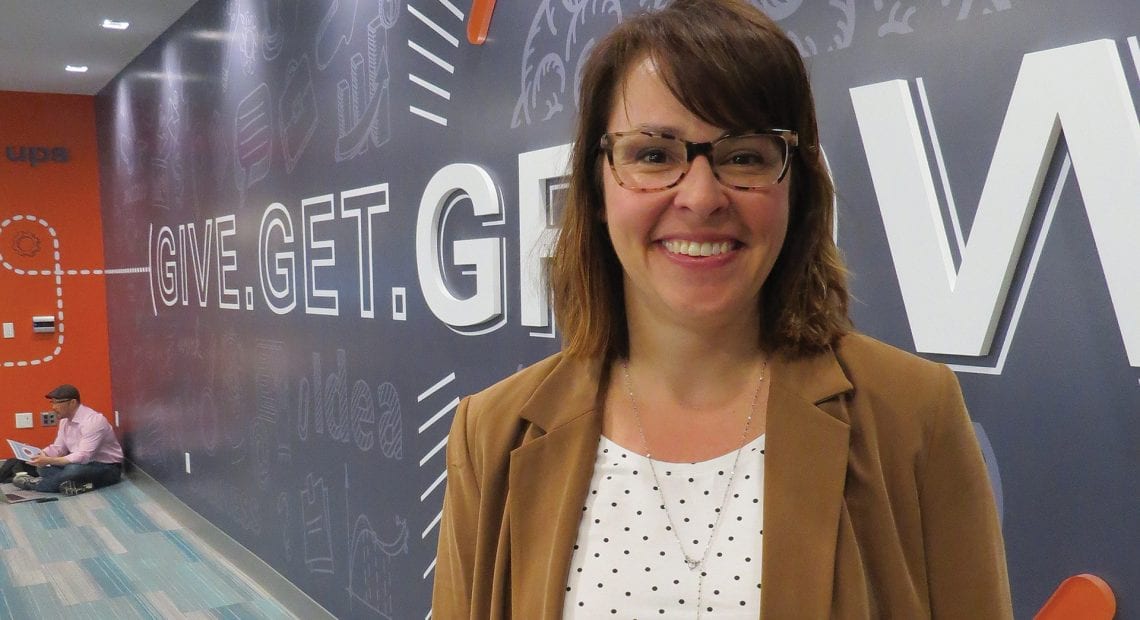
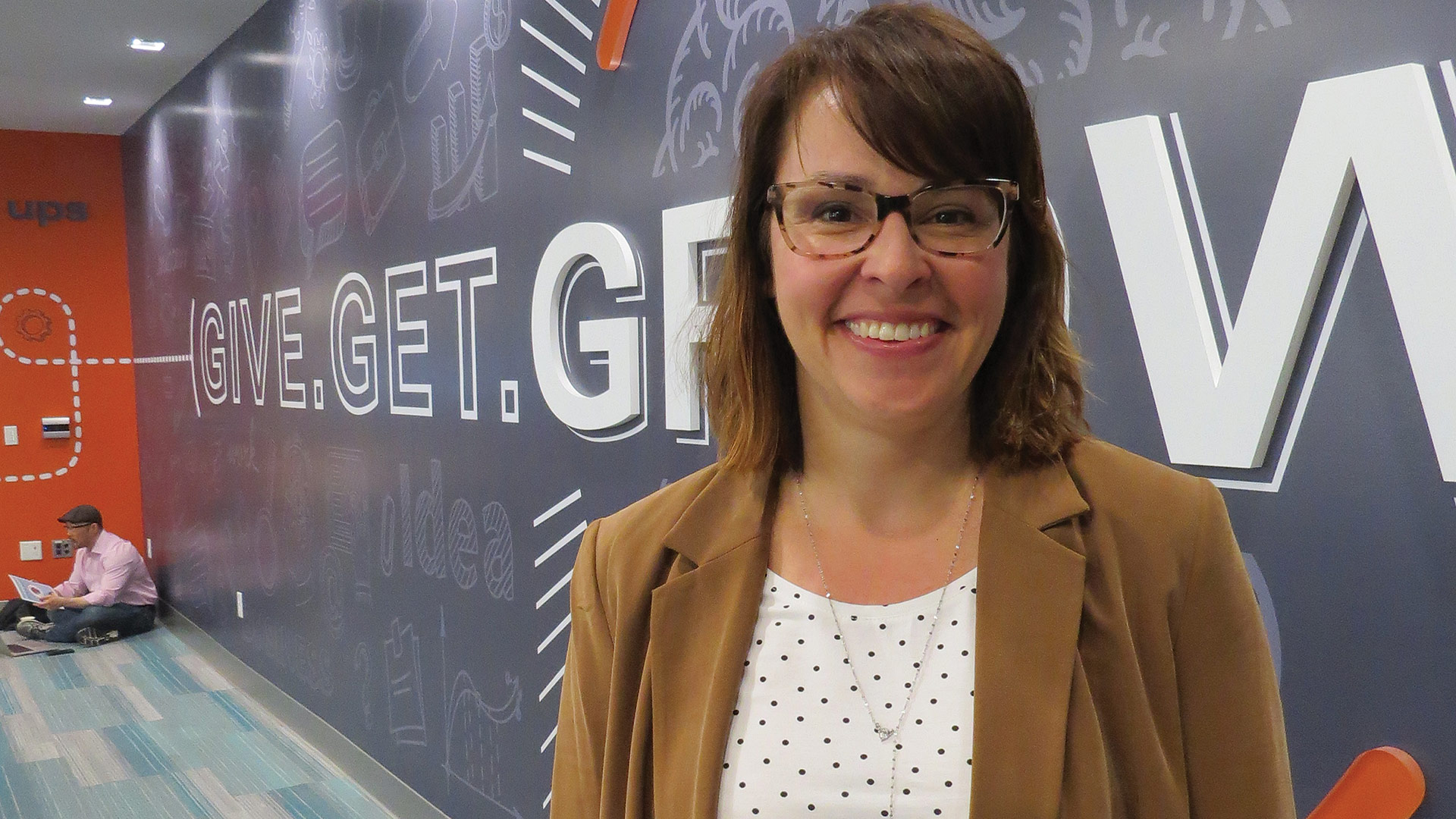
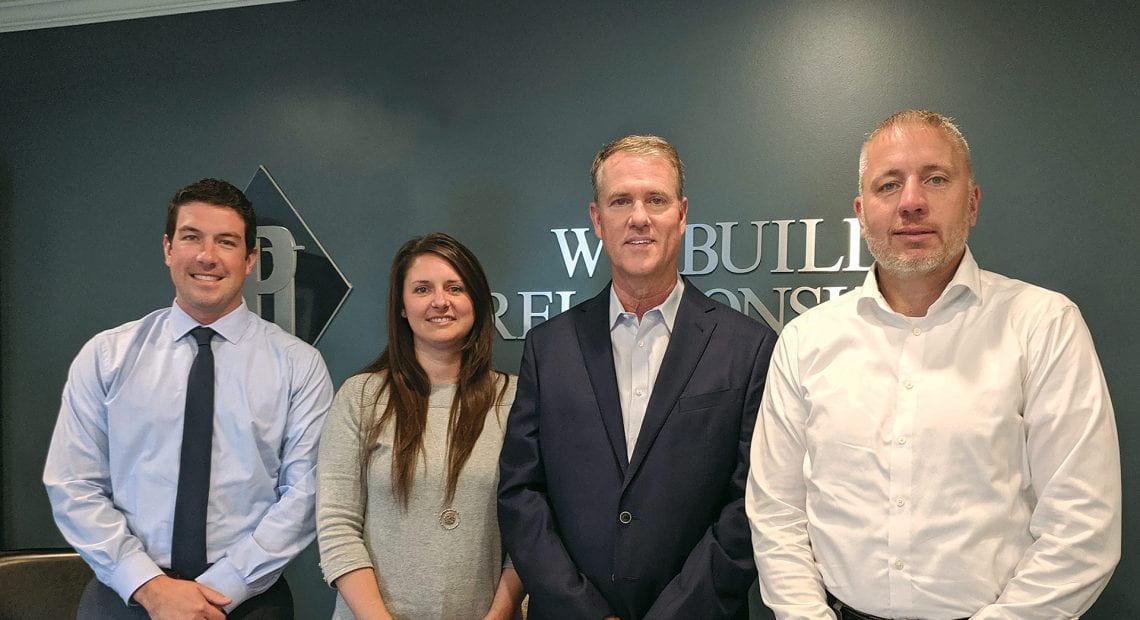
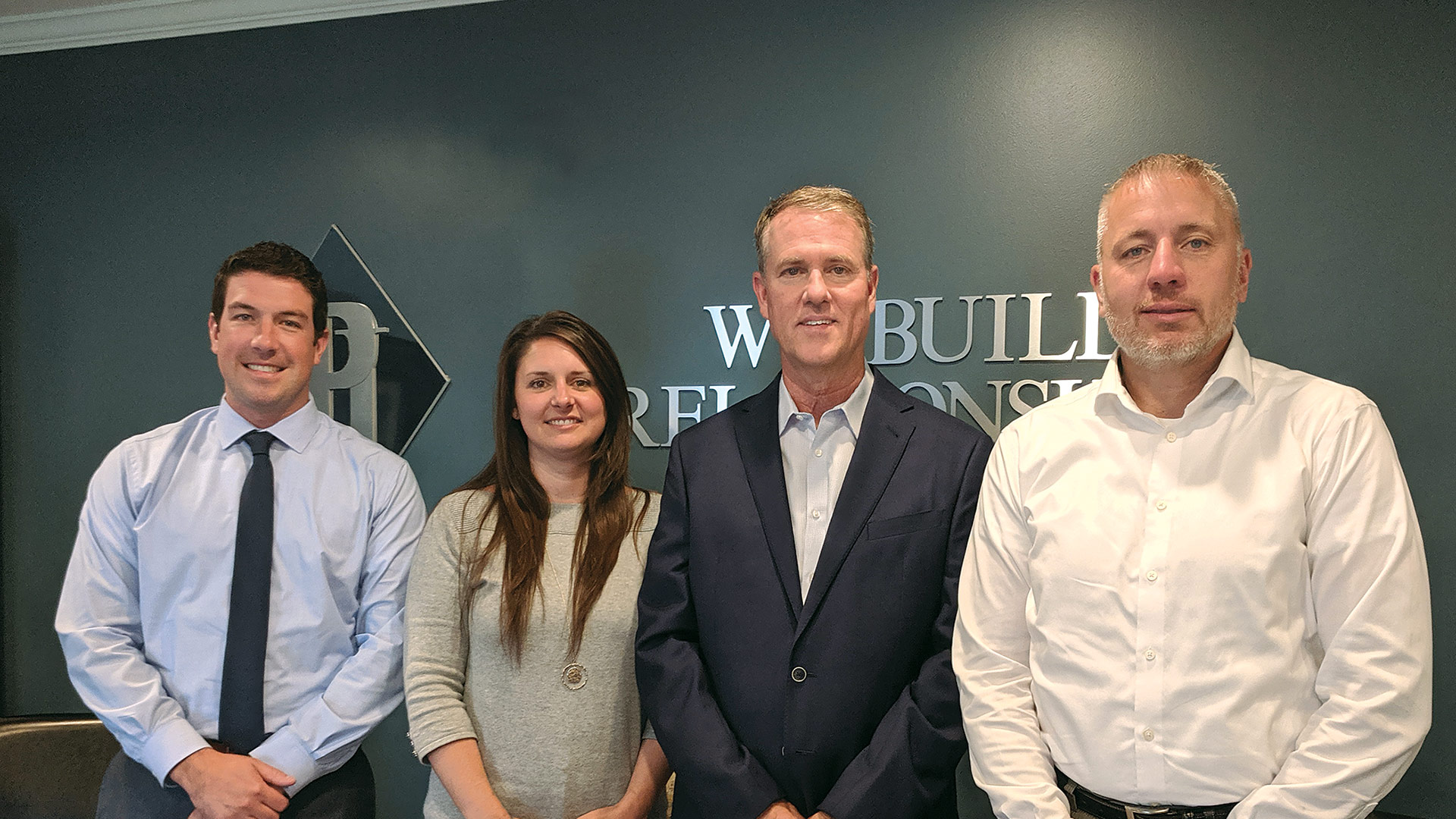
Phillips Insurance team members, from left, Christopher McMaster,  Chrystal Greenleaf, Joe Phillips, and Christopher Rivers.

Phillips Insurance team members, from left, Christopher McMaster, Chrystal Greenleaf, Joe Phillips, and Christopher Rivers.

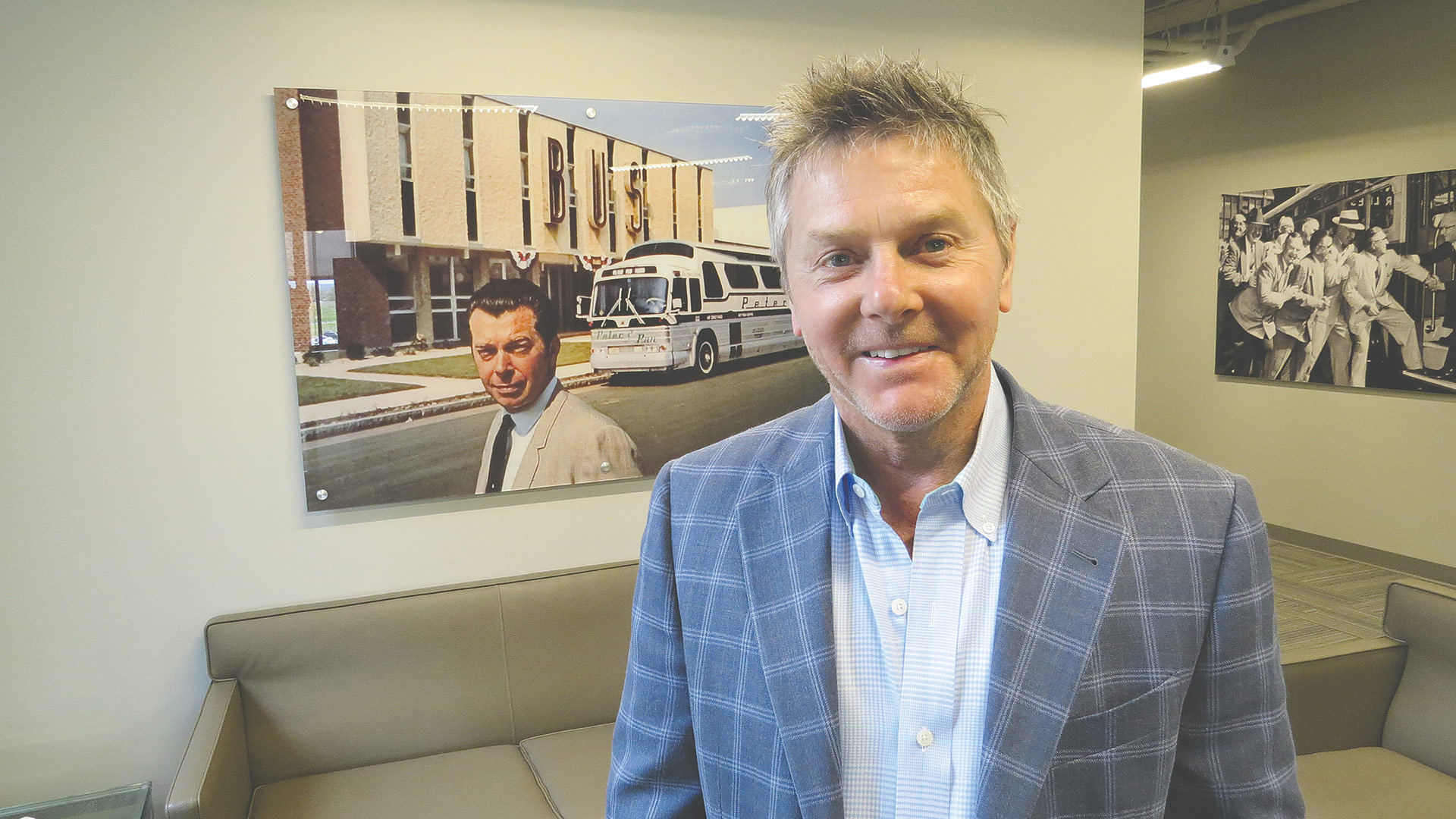
In the 66 years since Joe Phillips’ father opened the business that bears the family’s name, the insurance industry has undergone plenty of change, both in the range of risks faced by individual and business clients and in the products available to lower those risks and protect key assets. But the way the agency does business has changed as well, reflecting a modern approach to technology, mobility, and employee flexibility. The result has been high retention of both team members and clients — and consistent growth.

The insurance world has changed significantly in the 22 years since Joseph Phillips took the reins at Phillips Insurance Inc. — not to mention the 66 years since his father hung out a shingle in Chicopee.

But some changes at his agency don’t have as much to with insurance itself as they do with the way today’s employees — especially younger ones — want to work.

“We try to be as flexible as possible in this changing work environment,” Phillips said, noting that four employees work from home — actually, they kind of have to, living in Montana, Florida, Delaware, and right around the corner, relatively speaking, in Boston. “And we try to be as flexible as possible. Our office is open from 6 to 5 every day, so everybody picks eight hours within that timeframe to work. Some people come in at 6 and leave at 2. It works out, especially for some of the new parents whose spouses work.”

It adds up to a high employee-retention rate; four of Phillips’ 28 staffers have been there for more than 20 years, and 10 have been around more than a decade.

“You need to think about employee retention,” he said. “The average person has seven to nine jobs in their lifetime. If our average employee had seven to nine jobs in their lifetime, our retention would kill us. And our customers want to come in and see the same face, talk to the same person on the phone.”

“Everyone has become so fast-paced right now — people want something sent over, and you’re e-mailing and texting clients 24/7. And you have to, because it’s just as fast on their side as well.”

That’s why insurance agencies, like businesses of all kinds, need to compete for talent, he said — not just up front, but once they’re on board.

“Interviews used to be pretty one-way, and now — and I think it’s healthy — it’s a two-way interview, so when I bring in a new prospect for employment, they’re interviewing me as well. We sell them on the benefits we’re providing — retirement plan, health insurance, flexible work hours.”

It’s an office that’s set up for flexibility, he said — not just for flex time and maternity leave, but when a snowstorm strikes, or a major accident clogs up the Mass Pike, workers are set up through agency-automation technology to work from anywhere. That means no slowdowns at a time when clients demand speed and efficiency like never before.

“Everyone has become so fast-paced right now — people want something sent over, and you’re e-mailing and texting clients 24/7. And you have to, because it’s just as fast on their side as well,” Phillips said. “There are no more days off, which is good and bad, I guess. Companies don’t start their workday at 9 o’clock anymore. If they are, they’re far behind the curve.”
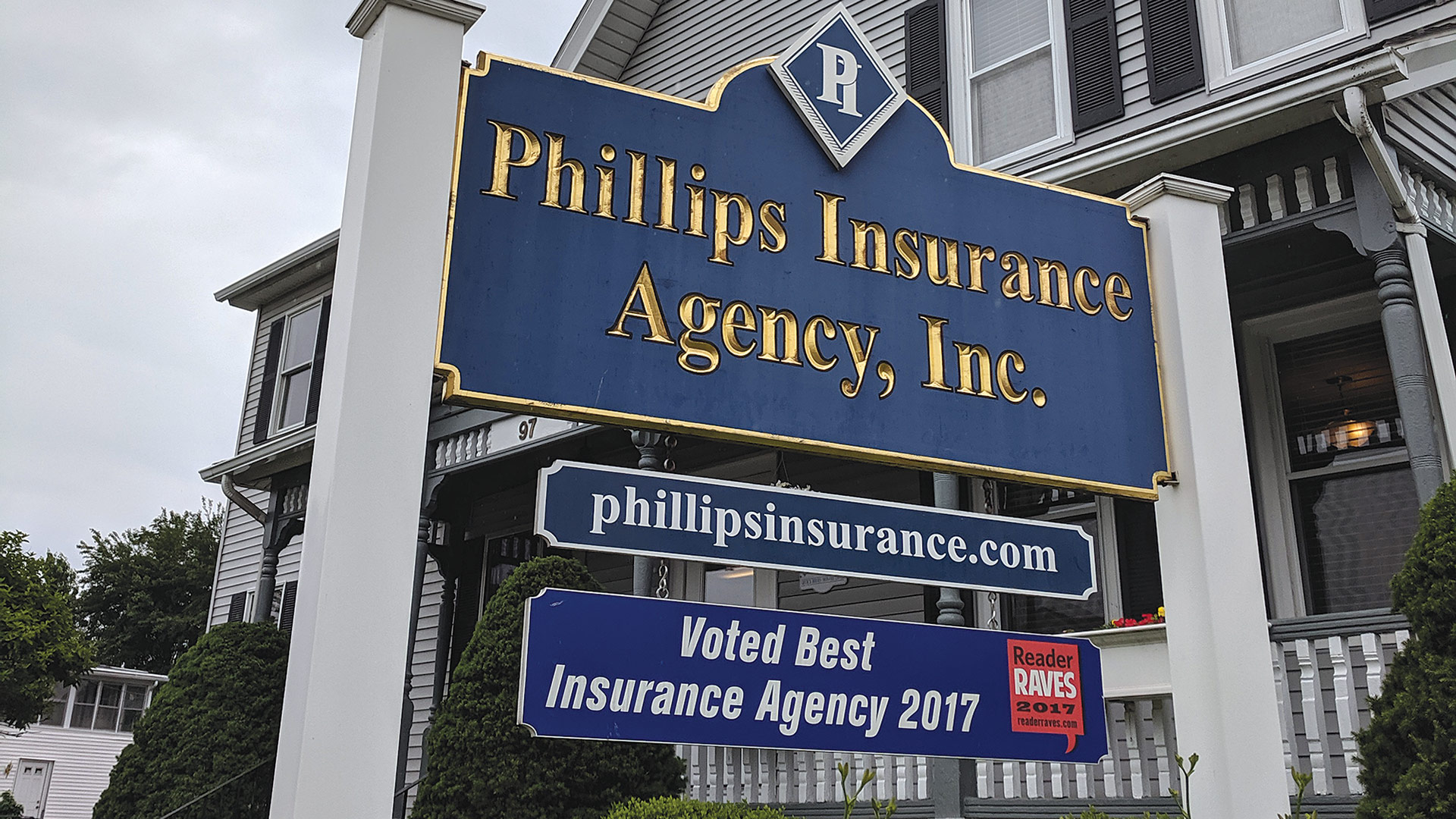
The agency’s headquarters in downtown Chicopee will soon expand for the fourth time in the past 20 years, a testament to its consistent growth.

The agency’s headquarters in downtown Chicopee will soon expand for the fourth time in the past 20 years, a testament to its consistent growth.

All this modernization and flexibility makes a difference, Phillips said, noting that clients appreciate stability — the agency boasts a 98% client-retention rate — and the staff has increased from 17 employees in 2014 to 28 today. Some of that growth has been internal, with three people who started as receptionists moving up to broader duties.

In short, Phillips Insurance is keeping up with the times, its president said, and growing all the more for it.

Family Business

Phillips’ father entered the insurance business in 1953, purchasing the William J. Fuller Agency, which was founded in 1892, and changing the name. The younger Phillips came on board in 1996 and took over the business when his father died unexpectedly a year later. At the time, the staff totaled three people, and two of them — Joe Phillips and Jeanne Jones — are still there.

Growth has necessitated some physical changes. This fall, the agency will undergo a 2,500-square-foot addition on the back of the building — its fourth addition in 20 years — and it also bought the former Masonic temple next door and will be tearing it down to build a 30-car parking garage.

The growing clientele is dominated by commercial lines, which account for 80% of total premiums. Much of that business is surety bonds for construction-related risk, mostly in Western Mass., but a good percentage east of Worcester, where the construction market is particularly active, and some out of state.

“MGM has really helped — we had 10 clients working down there, from a $20 million site package to the $6 million masonry package,” Phillips explained, adding that the Five Colleges have been doing a lot of building in recent years as well, providing further growth opportunities.

Another change has been the rise of captive insurance, he said. “That’s a little different. Our clients actually get together with a group of other like-industry-group businesses, and they form their own insurance company. They become the profit center. Instead of spending $500,000 a year to a major national carrier and that carrier making hundreds of thousands of dollars off you, you can make money off yourself. It’s becoming more and more common; it’s a growing section of the market.”

Phillips has also grown its employee-benefits department quite a bit over the past five years, while its personal lines — including home, auto, boat, ATV, and personal umbrella — are growing well, with the agency licensed with 20 insurance carriers, including some of the largest players, like Safeco (a member of Liberty Mutual), Arbella, Safety, and Preferred Mutual.

Still, “we specialize in complex risk — a lot of construction solar, recycling … a lot of tougher industries,” Phillips stressed. “It’s a diverse group of businesses, from Northern Tree Service, one of the largest tree-cutting companies in the country, to the Student Prince restaurant in Springfield.

“We’re an industry-specialization agency — construction, hospitality, manufacturing — so we align ourselves with the insurance carriers that want to ensure those types of businesses,” he added. “We have very good relationships with our insurance carriers. We’re one of the largest writers for Liberty Mutual in New England, and other household names have been great partners.”

Current Events

The modern approach to doing business spills over into Phillips’ online presence, which includes Instagram, LinkedIn, and a revamped website with an active blog that aims to educate clients — and hopefully future clients — on various aspects of insurance and risk; recent articles cover boating safety, lowering one’s carbon footprint, and home-security technology. Meanwhile, the agency has won awards from the Republican’s Reader Raves program four years running.

Meanwhile, the agency’s charitable efforts include sending about 15 employees annually to prepare Thanksgiving meals at the Knights of Columbus, as well as donating to efforts like the Joseph D. Freedman Bowl-a-thon to benefit Camphill Village, Berkshire Hills Music Academy in South Hadley, and Link to Libraries.

The latter is an example of civic involvement that goes beyond donations, Phillips said. “We’ve got about six people now going to elementary schools in Chicopee. We donate a few hundred books a year, and a different person goes over and reads every month. It’s great for morale. Everybody loves to do it. And it’s an opportunity to get out of the office.

In fact, he said, there’s a bit of a reading backlog because the volunteer readers don’t want to stop doing it. “We gently nudge them aside to give everyone an opportunity.”

Another hands-on activity is the bowl-a-thon, which Phillips has been involved in for eight years, sending 15 to 20 bowlers to participate and raising $85,000 last year alone.

“We want people to feel good about where they work and what we do for the community, and there are certainly plenty of worthwhile causes out there,” Phillips said. “It’s tough to pick — there are only so many hours in the day and so much money to go around. You have to pick a few and really make a commitment to it. Something like Link to Libraries is really hands-on and gets everyone involved, rather than just writing a check.”

In a way, those community-engagement efforts aren’t much different than the insurance business itself. In both cases, the goal is to solve problems and make people’s lives a little more secure.
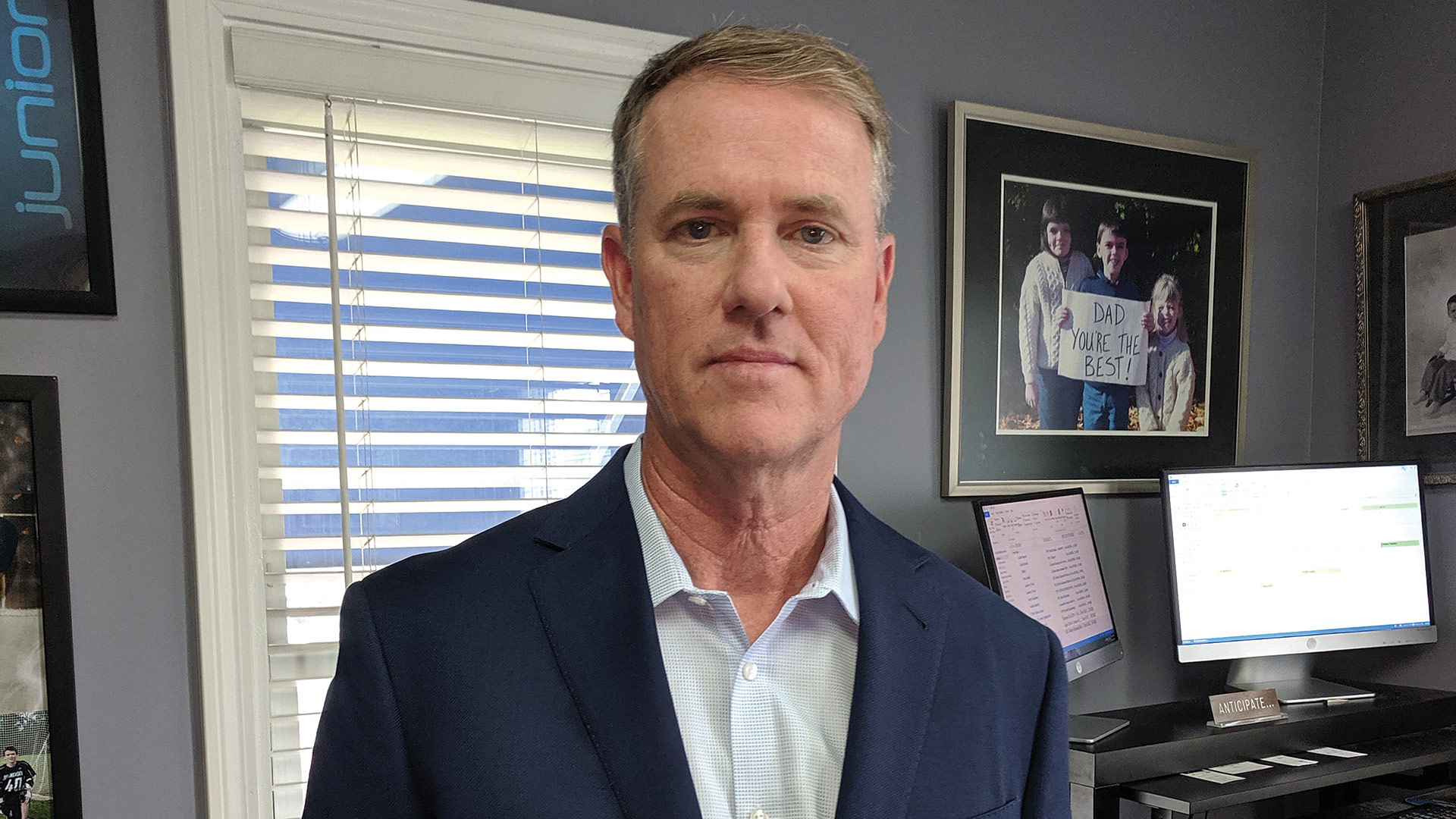
Joe Phillips says the agency has built a strong reputation for taking on complex risk, much of it surety bonds for construction projects.

Joe Phillips says the agency has built a strong reputation for taking on complex risk, much of it surety bonds for construction projects.

“With the personal lines, we’re protecting someone’s most valuable assets,” he said, adding that they also help families deal with the cost and stress of milestones like, say, adding youthful operators to an auto policy.

“On the commercial side, we’re also solving problems,” he went on. “We’re coming in and working as a trusted advisor, much like they’d work with their CPA or their attorney. We identify risk exposures that maybe they hadn’t really reflected on in the past that they should have — assets that are at risk. We try to work with them to develop the most comprehensive package for their insurance, whether it’s a utilizing captive insurance or using higher deductibles to save on premiums and maybe absorb some of the risk on smaller losses.”

It’s gratifying, Phillips added, to come to work every day knowing this work — and what the agency does outside the office — makes a difference in the region.

“We try to be out there in the community through business networking, charitable networking, and, of course, just trying to do the best job for our clients,” he said. “That’s the best referral — our existing clients.”

Joseph Bednar can be reached at [email protected]
Commercial Real Estate

A New Anchor

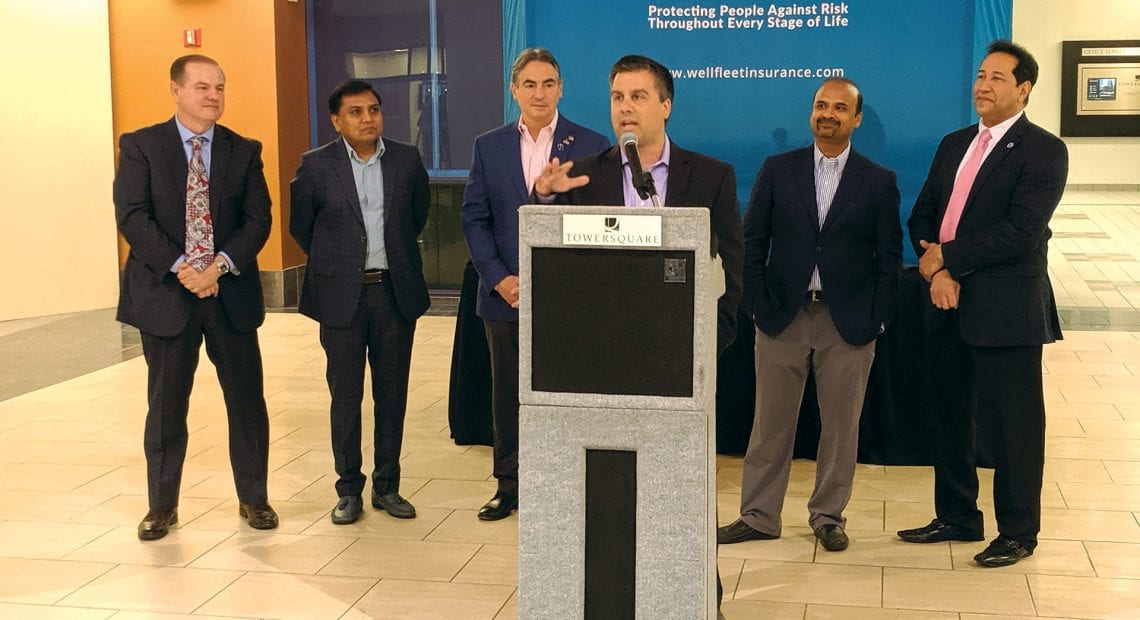
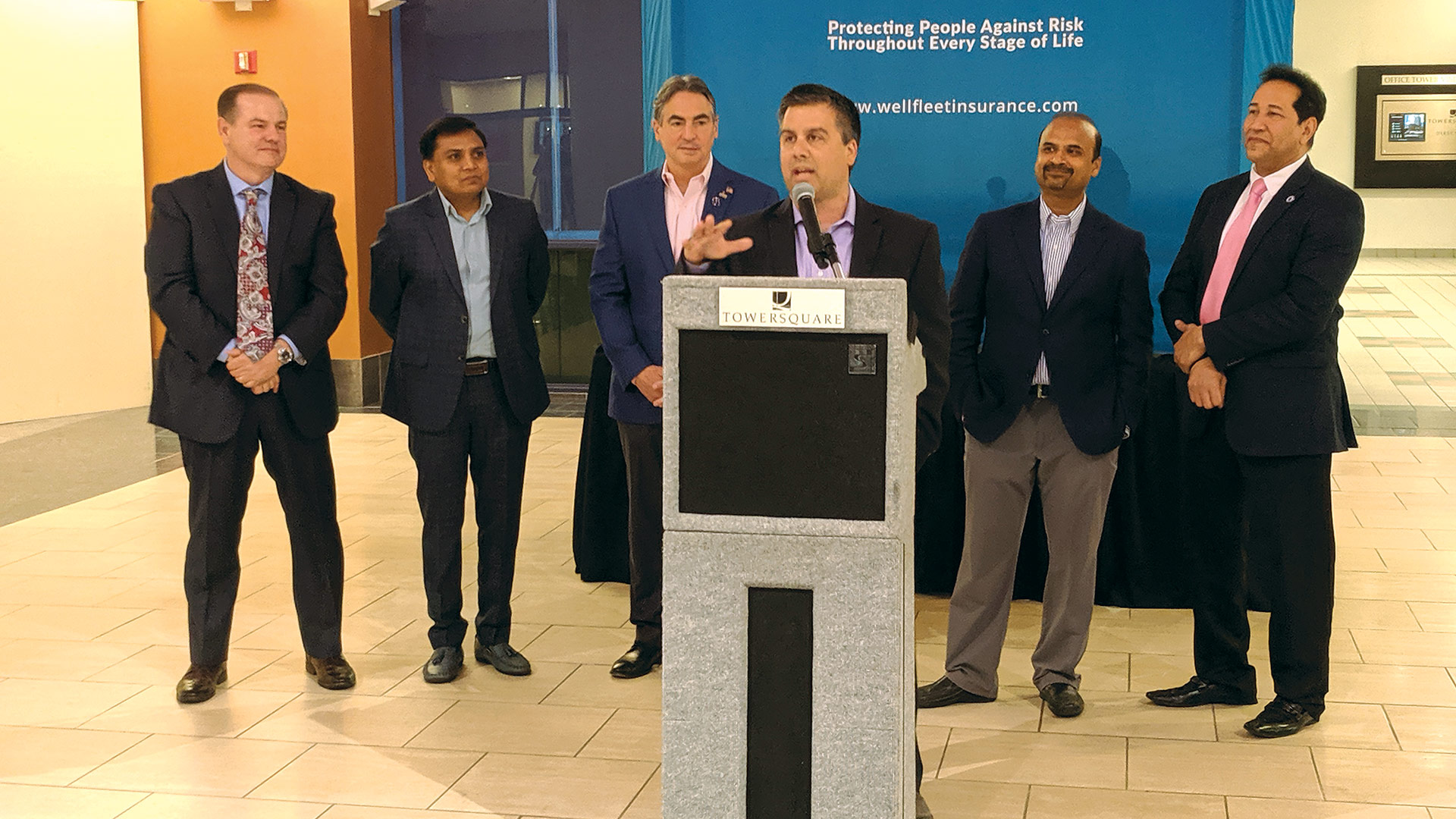
Drew DiGiorgio discusses Wellfleet’s move

Drew DiGiorgio discusses Wellfleet’s move, backed by, from left, Demetrios Panteleakis, Dinesh Patel, Springfield Mayor Domenic Sarno, Vid Mitta, and state Rep. Carlos Gonzalez.

Tower Square has seen its ups and downs over the years, but its new owners have been aggressive about selling potential clients on the renovated space, convenient parking, downtown amenities, and simply being part of an economic renaissance in Springfield. Wellfleet took that pitch to heart, which is why it agreed to become the tower’s anchor tenant.

Vid Mitta, managing partner of Tower Square, called Wellfleet’s relocation to the downtown Springfield office tower “a big thing.”

It’s even bigger when one considers how far the company has come, said Drew DiGiorgio, Wellfleet’s president and CEO.

“When we started, it was five employees,” DiGiorgio said. “My office was not an office — it was a desk and a chair located at the bottom of the stairs at a barbershop in Wilbraham. We would open up envelopes, and I would lick them because didn’t even have the little spongy thing. We answered the phones when they rang; we did everything. To go from that to this is pretty humbling, and I appreciate everyone’s support to get us here.”

“If this was five years ago, the issue might have been safety in the downtown. But the dynamic has changed. The downtown is attractive, there are all kinds of venues and attractions nearby, and security doesn’t appear to be an issue any longer.”

Wellfleet, a Berkshire Hathaway company providing accident and health-insurance products, recently staged a press conference to announce the relocation of its national corporate headquarters — and 150 of its employees — to the 10th, 11th, and 12th floors of Tower Square in August.

Wellfleet — which has built a national niche insuring college students, handling more than 100,000 students at more than 200 colleges and universities — has outgrown its current office space on Roosevelt Avenue in Springfield. The new offices at Tower Square will give employees up to 80,000 square feet of class-A office space and provide ample room for Wellfleet’s new and growing Workplace Benefits division.

“To me, Wellfleet is a home-grown, small, Springfield-based company which has grown to this size today, and we should applaud their success,” said Mitta, who announced that Wellfleet’s name will be placed on the tower as its anchor tenant.

Rethinking the City

Demetrios Panteleakis, principal of Macmillan Group, the real-estate firm that represents Tower Square, said his team was in discussions with Wellfleet for about a year as Wellfleet searched the suburban market for a home.

“We were the alternative. They were kind of weighing it against what the suburbs had to offer,” he said, adding that he was able to pitch a downtown headquarters as much more than a fallback. In fact, the more Wellfleet’s leaders considered Tower Square, the more it made sense.

“If this was five years ago, the issue might have been safety in the downtown,” Panteleakis told BusinessWest. “But the dynamic has changed. The downtown is attractive, there are all kinds of venues and attractions nearby, and security doesn’t appear to be an issue any longer.”

In short, a thriving urban center is simply more attractive than the suburbs to many companies. But that shift in perception didn’t happen overnight.

“I think it’s a culmination of everything the folks at City Hall, the Business Improvement District, and all the economic-development folks have been working on, rowing in the same direction, for the last four or five years,” he said. “The result is not only attracting new tenants, but bringing tenants from Westfield, West Springfield, Northampton, Agawam … these are folks saying, ‘Springfield is the heart of the economic engine in Western Mass., and that’s where we need to be; that’s where our employees need to be.’”

DiGiorgio said Wellfleet employees, when asked what’s appealing about Tower Square, cited the modern, renovated space itself, with its natural light, city views, and covered parking, as well as the food options downtown and the fact that the district has been emerging economically in recent years.

“In New England, it’s not a lot of fun when the snow and rain come, so having a secure garage, and having the ease of a building that kind of provides you everything you need over the course of the day, that’s highly attractive,” Panteleakis added.

Drew DiGiorgio called Wellfleet’s new home in Tower Square “inspirational” space.

Drew DiGiorgio called Wellfleet’s new home in Tower Square “inspirational” space.

Formerly known as Consolidated Health Plans, Wellfleet branded under its current name in January, uniting its insurance carriers and claims-administration organizations under one marketing name. It boasts approximately 175 employees, 150 of whom work in Springfield; others work remotely or from satellite offices in Florence, S.C. and San Rafael, Calif.

“We believe being part of Springfield is important,” DiGiorgio said, noting that the company has long been involved in efforts like the Memorial Spring Cleanup, Link to Libraries, Friends of the Homeless, Rays of Hope, and Open Pantry. “We are active in the community. Our name is not well-known, but we think that will change in the future.”

Springfield Mayor Domenic Sarno noted that Tower Square’s owners have been aggressive and creative in bringing an eclectic mix of businesses to the facility, from Wellfleet to the YMCA of Greater Springfield to White Lion Brewing Co.

“A lot of people, years ago, said, ‘what can you expect? It’s Springfield.’ More and more people are saying now, ‘why not Springfield?’” the mayor said. “I won’t say the downtown is re-emerging as much as it is reinventing itself. Springfield is getting on the map. And my administration continues to be business-friendly because it brings jobs.”

Towering Presence

At the end of the day, Panteleakis said, Tower Square is becoming an easier sell.

“When you walk people through the space and they consider the economics of it — for a few dollars more, they can have parking at their leisure, then the level of security and the amenities a class-A building has to offer — it sells itself.”

That’s why he enjoys those tours of the building with prospective tenants, and hopes more companies and organizations request them.

“What they need to understand is what Wellfleet understands — the level of the buildouts of the existing spaces in Tower Square rival anything you’d see in Boston or New York City,” he told BusinessWest. “These are class-A, high-tech buildouts, and there’s a difference between being in a class-B or suburban market and being in a state-of-the-art, class-A office space with spectacular views of the Pioneer Valley.”

At the press conference, Panteleakis said welcoming Wellfleet was “a special day” for the city and the office tower.

“It’s quite remarkable to have another insurance company that’s growing at the rate this company is growing, and it’s only fitting it makes its home in the marquee building in the center of the city, bringing its people, its energy, and its vitality to the downtown,” he noted. “It’s just a great day to see it happen to our city. I think it’s going to be one of many great announcements Tower Square has for you over the coming months.”

Joseph Bednar can be reached at [email protected]
Commercial Real Estate

Painting the Town

The East Columbus parking garage after being colorfully decorated by artist Wane One from the Bronx, N.Y.

The East Columbus parking garage after being colorfully decorated by artist Wane One from the Bronx, N.Y.

Artist Wane One from the Bronx, N.Y.

Artist Wane One from the Bronx, N.Y.

Britt Ruhe is a huge fan of public art, specifically mural art.

After attending what have come to be called ‘mural festivals’ in cities such as Worcester and Salem and seeing the many benefits they bring to those communities, she lobbied hard to bring a concept known as Fresh Paint to the City of Homes.

Wanting to find a way to give back to the community, Ruhe, a financial strategist for startups and small businesses by trade, began meeting with festival organizers in other parts of the state to gather input and essentially learn how it’s done.

“I was able to see firsthand what an incredible impact mural festivals have on revitalizing a neighborhood, and I thought, ‘Western Mass. needs something like this,’” said Ruhe, adding that, when she approached Springfield’s business, civic, and community leaders about staging a festival here, she encountered overwhelming support.

Indeed, not only did Kevin Kennedy, the city’s chief Development officer, agree to the festival concept, he pushed Ruhe to set the bar higher than her original proposal of five murals in order to achieve a greater impact.

Over six days earlier this month, 35 artists, with considerable help from the public during several ‘paint parties,’ transformed 10 walls throughout the city during Springfield’s first mural festival.

“It’s been a great success; when you do something in a city the size of Springfield, it has to have the correct impact,” said Kennedy. “I thought five was a little too small to be impactful. This was the first time we were going into multiple murals, and I thought 10 was more impactful than five.”

He said encouraging the arts and culture sector, currently a $50 million business in Springfield, is important for the continued revitalization of the city, especially in the realms of housing and entertainment.

The 28 total works of public art add up to 20,000 square feet of murals, and the larger works were approved by building owners who had no idea what the finished product would look like.

“I was able to see firsthand what an incredible impact mural festivals have on revitalizing a neighborhood, and I thought, ‘Western Mass. needs something like this.’”

“The building owners have the biggest lift; they donate their wall,” said Ruhe. “As part of a festival, the building owner doesn’t have to pay, but they don’t get to choose what goes on their wall, which is a big ask, especially this first year around.”

Overall, the festival was a community effort, with $150,000 raised for the event from donors and several sponsors, including MassMutual, MassDevelopment, Tower Square Hotel, and many others.

Dozens of volunteers took part, and 1,500 cans of spray paint and 500 gallons of liquid paint were used to change the face of many formerly drab buildings and pieces of infrastructure.

But the benefits far outweigh the costs, Ruhe told BusinessWest.

“There’s a lot of data out there that shows that murals increase property value, foot traffic, and they’re good for residential and commercial businesses,” she explained, adding that, although the economic benefits are difficult to quantify, a study is being undertaken to examine the direct effects such a festival has on a city.

While little of the funds raised go to the artists themselves, Kim Carlino, artist of the mural at 8-12 Stearns Square, said there are many other types of rewards, especially the pursuit of such a daunting challenge.

Kim Carlino’s mural at 8-12 Stearns Square is a product of her love for creating illusion and disillusion of space in abstract form.

Kim Carlino’s mural at 8-12 Stearns Square is a product of her love for creating illusion and disillusion of space in abstract form.

Carlino says she loves the challenge of approaching a big piece and the ability to change and adjust the marks she makes.

Carlino says she loves the challenge of approaching a big piece and the ability to change and adjust the marks she makes.

“I like the experience of having something that’s bigger than you and can really engulf you,” she said, while transforming that massive, highly visible wall in the heart of the entertainment district. “Everyone coming by is just so thankful; it’s the same experience I have every time I make a mural — everybody wants more color in their life, and we need more of that in our day-to-day.”

Springfield, as noted, is only the latest in a number of cities — in Massachusetts and across the country — to embrace murals and the concept of a mural festival.

Wane One, a muralist for 38 years, has taken part in many of these events. He said the only American art form started by young children has turned into a worldwide artistic movement.

“This artform has gone global,” he said after creating the mural on the East Columbus parking garage. “It doesn’t matter what part of the world you go to right now, it has pretty much taken over.”

In the city of Worcester, the arts and culture sector is a $127.5 million industry, filling 4,062 full-time jobs. And murals have become a distinctive part of the landscape there.

Che Anderson, project manager in the Worcester city manager’s office, said that community’s mural festival — called “Pow! Wow!” — has brought more people out and into the local community, providing a boost to small businesses.

“Overall, ‘Pow! Wow!’ has provided an international platform to know about Worcester and the things that are already existing,” he told BusinessWest, adding that the festival has improved the city’s walkability. “The festival also provided an outlet for many creatives in the city.”

As for Springfield, similar effects are already in evidence.

“It’s been a great success,” said Kennedy. “It has delivered everything I think the mayor and I hoped for on the cultural side, the economic side, and the reputational side.”

Ruhe said the local business community’s support has been extremely helpful through the course of the festival, and she sees her hopes for the event’s future materializing.

“It’s really bringing the community together. People from all walks of life are coming out for the events or standing on the sidewalks looking at the art, talking with each other, painting together,” she said. “What makes mural art so powerful is that is brings art out into the street and into people’s everyday lives.”

Kayla Ebner can be reached at [email protected]

Community Spotlight

Community Spotlight

Woodlawn Shopping Plaza

An architect’s rendering of the housing project planned for the Woodlawn Shopping Plaza.

Rocco Falcone acknowledged that, when he and fellow partners Andy Yee and Peter Picknelly acquired the Woodlawn Shopping Plaza on Newton Street in South Hadley in 2016, they were making that sizable investment at a time when the world of retail was changing — and shrinking.

And they knew then that the plaza, dominated by a closed Big Y supermarket, might not look like it did years down the road — not that they didn’t try to find a strong retail anchor to fill the role that Big Y played.

“We knew there was going to be an unlikelihood that we’d be able to get another supermarket, although we tried like heck to — we talked to a number of chains, local, national, and international,” said Falcone, manager of South Hadley Plaza LLC, the entity created to acquire the property, and perhaps better known as president and CEO of the Rocky’s Ace Hardware chain. “When we bought it, we kept it in our minds that it might not be a supermarket — or even retail.”

And the Woodlawn Shopping Plaza will, indeed, take on a new look — and role that goes beyond shopping — with the announcement of plans to build 72 mixed-income apartments on a three-acre portion of the plaza where the Big Y once stood; a public hearing is slated on the proposal for June 26 at the South Hadley library.

Town Administrator Mike Sullivan, former mayor of Holyoke, sees the proposed housing project as an opportunity for the community, one that could change the face of an underperforming property (the plaza), perhaps spur new business development at the site and elsewhere, and even boost enrollment at the town’s schools, which have seen their numbers declining in recent years.

“We knew there was going to be an unlikelihood that we’d be able to get another supermarket, although we tried like heck to — we talked to a number of chains, local, national, and international. When we bought it, we kept it in our minds that it might not be a supermarket — or even retail.”

The announced plans for the plaza comprise one of a number of intriguing developments in South Hadley, a community of nearly 18,000 people that has always been an attractive place to live and has been working for decades to balance its strong neighborhoods with new business opportunities.

Others include progress toward an update of the community’s master plan; introduction of a new option for ultra-high-speed internet service, called FiberSonic, to town residents; efforts to work with neighboring Granby to bring more order to a hodgepodge of zoning on the Route 202 corridor; apparent progress in bringing the town’s long-underperforming municipal golf course, the Ledges, to self-sustainability; and even a new dog park on the Ledges property.

“Dog parks have become somewhat of a recreational amenity in many communities, including Northampton, Granby, and many other cities and towns,” said Sullivan. “It’s surprising how many people are really into their dogs; this is a quality-of-life issue, and at least this will put another 100 to 200 South Hadley residents onto property that they’re paying for. They don’t golf, but they have a dog.”

For the latest installment of its Community Spotlight series, BusinessWest looks at these various developments in South Hadley and how they are part of ongoing efforts to make the community a better place to work, live, and start a business.

Getting out of the Rough

Golf courses, especially municipal golf courses, usually don’t generate many headlines.

The Ledges has been a notable exception to that rule. Since it opened at the start of this century, it has been in the news often — and for all the wrong reasons. Indeed, conceived and built as Tiger Woods was rocketing to stardom and golf was booming as a sport and a business, the picturesque Ledges, with breathtaking views of the Holyoke Range, was projected to a be a strong revenue generator for the community.

Suffice it to say things haven’t worked out that way. In fact, the course has been a financial drain, racking up deficits of more than $1 million some years, and into six figures most years.

Town Administrator Mike Sullivan

Town Administrator Mike Sullivan says new high-speed Internet service, called FiberSonic might spur more young professionals to move to South Hadley.

Sullivan, who inherited this problem, took the aggressive step of outsourcing not only maintenance of the course, but overall management of the facility, with the goal of turning things around and making the Ledges self-sustaining.

Mike Fontaine, the course’s general manager and an employee of Lakeland, Fla.-based International Golf Maintenance (IGM), which manages more than 30 courses across the country, is optimistic that some kind of corner has been turned at the Ledges. He noted that the shortfall was smaller last year (Sullivan pegged it at roughly $35,000) — despite unrelenting rains that made 2018 a difficult year for every golf course — and that, even with more rain early this year, the course is on track to improve on last year’s numbers and continue on an upward trajectory.

He said IGM’s efforts comprise work in progress, but added that a number of steps have been taken to improve the visitor experience and, thus, generate more revenue for the town. Work has been done to build a management team, place more emphasis on customer service, and give the 19th hole, an important revenue stream for all golf operations, a new look and feel. And even a new name.

“We gave the whole place a facelift, especially the restaurant,” he explained. “It was time for a fresh coat of paint, work behind the bar, new pictures of the golf course on the walls, moving the TVs, changing the name from Valley View restaurant to the Sunset Grille, and going with a whole new brand and marketing campaign.”

The new name highlights one of the course’s hallmarks — dramatic sunsets — and attempts to capitalize on that asset, said Fontaine, who said was inspired by what he saw in Key West, which is famous for its sunsets and people turning out to watch them.

He said the course has generally done well with visitation — 25,000 rounds last year — but needs a break from Mother Nature as well as a break from the negative publicity that hasn’t been good for business.

South Hadley at a Glance

Year Incorporated: 1775
Population: 17,791
Area: 18.4 square miles
County: Hampshire
Residential and commercial tax rate: $20.15 (Fire District 1); $20.55 (Fire District 2)
Median Household Income: $46,678
Median Family Income: $58,693
Type of government: Town meeting
Largest Employers: Mount Holyoke College; the Loomis Communities; Coveris Advanced Coatings; Big Y
* Latest information available

“We’re beating the numbers from last year, and we’re hitting our revenue goals despite losing three weekends in a row, including Mother’s Day weekend, due to rain — money we’ll never get back,” he said. “We’ll have a much better understanding of where we’re at when this year is over.”

While the picture seems to be improving at the Ledges, the picture is changing on Newton Street, especially at the Woodlawn Shopping Plaza.

While there is still significant retail there — the plaza is home to a Rocky’s, Dunkin’ Donuts, Dollar General, the Egg & I restaurant (a recent addition), the Parthenon restaurant, Mandarin Gourmet, and more — the former Big Y site was proving difficult to redevelop, said Falcone, noting that, after efforts to find a replacement supermarket were exhausted, the building was razed in 2018 with the goal of bringing more options to the fore, including residential.

The proposed 72-unit apartment complex will fill a need within the community for both affordable and market-rate housing, said Falcone, adding that this reuse is consistent with how many malls and shopping plazas are being repurposed at a time when stores are closing at an alarming rate and malls — and communities — are forced to be imaginative in a changing retail landscape.

“We looked at options to possibly subdivide the Big Y property, but we couldn’t get any junior anchors,” said Falcone, adding that the owners spent roughly the past year and half looking for smaller tenants, but to no avail.

“Retail is changing — people are getting away from retail and putting more focus on service and entertainment,” he said, adding that the town created an overlay district within the Newton Street area that allows for mixed-use development and residential space, which brings us to the plans currently on the table.

“We thought this would be a good option and a good opportunity,” said Falcone, adding that research revealed demand for such housing. “If you look at Village Commons, those apartments are always full, and my understanding is there’s a waiting list to get in there. So we think South Hadley is a great community for some additional housing.”

Sullivan agreed. “We’re a vibrant community for condominium development, and there’s considerable demand for them — we have condominiums on the riverfront selling for more than $400,000,” he noted. “But we think this proposed development balances things out; it provides another option for housing.”

The Gig-speed Economy

They’re called ‘fiberhoods.’

That’s the name the South Hadley Electric Light Department (SHELD) has given to areas, or neighborhoods, in the community that will be provided with FiberSonic, which will make gigabit-speed internet available to residential homes; the service is already available to South Hadley businesses.

SHELD is starting in the Ridge Road area — the service will be available there in July — and will proceed to the Old Lyman Road fiberhood in August, and the Hollywood Street area in September. By year’s end, 700 homes should be covered by the project, and the 32 identified fiberhoods will be added in phases over the next five years, said Sean Fitzgerald, SHELD’s general manager.

“Establishing fiber-optic internet service throughout the town will bring added convenience and, more importantly, will accommodate the ever-growing bandwidth need for South Hadley customers,” said Fitzgerald, who described FiberSonic as “home-grown, gig-speed Internet.”

This service should help make South Hadley a more attractive option for a growing number of professionals who essentially call the office home, even as they work for companies in Boston, New York, and Seattle, said Sullivan.

“When you can access a high-paying job in New York City, Boston, Montreal, or even Los Angeles, and you might have to only go to the home office once a month or once a week and the rest of the day work at home, your housing costs are lower and quality of life is higher in Western Mass.,” he explained. “We’re seeing more of this in South Hadley, and the new internet service will make this community even more attractive.”

As the overall pace of change accelerates, the town looks to anticipate what the future might bring — and be prepared for it — with an update to a master plan drafted roughly a decade ago.

That document, the town’s first master plan in more than three decades, included no less than 200 recommended actions, said Town Planner Richard Harris, noting that this represents an obviously unachievable number, although many have been implemented, especially in the realms of housing, recreation, and creation of growth districts.

He expects that the updated plan, to be completed by year’s end, will be more strategic in nature.

“While it will still be broad, because the nature of a master plan is broad, we’re expecting it to be more strategic in focus and more related to the current organizational structure and long-term needs of the community,” he told BusinessWest. “I wouldn’t expect as much focus on zoning and land use as the last plan, and instead more on how to capitalize on what we have done.”

There have been a number of community forums staged to solicit commentary and input about the plan and what it should include, as well as smaller, more informal sessions within neighborhoods called “meetings in a box,” said Harris, adding that a draft of a new plan should be ready for additional review by the fall and a final document in place by the end of the year.

Meanwhile, the town isn’t waiting for the new plan to address a long-term concern and probable hindrance to growth — the hodgepodge of zoning along the Route 202 corridor, roughly from Route 33 into Granby Town Commons.

“Both towns have the leftover remnants of a ’60s regional road,” he explained, noting that there are homes next to dinosaur-track stops next to other forms of business. “It’s not very well-organized; there’s a weird mix, and we think there is a real need for conformity.

“If we could get that conformity, there’s enough business traffic going into Belchertown, Ware, and, beyond that, Amherst — and we can harness that traffic,” he went on, adding there have been discussions with officials in Granby about zoning and also infrastructure and perhaps tying properties along that corridor into South Hadley’s sewer system, a development that would benefit both communities.

“We hope this will bring more investment to those commercial properties along 202 in South Hadley,” Harris explained. “That will result in more tax dollars — and it would be great to have more people to share the tax burden with.”

Bottom Line

Those last sentiments accurately reflect a goal, and an ongoing challenge, spanning decades: creating more opportunities to share the tax burden.

South Hadley has always been a great place to live — and now also play golf and walk your dog. Greater balance in the form of new businesses and better use of existing and potential commercial property has always been a goal and priority.

And between the proposed new housing project, faster internet service, and progress along the Route 202 corridor, the community is making more headway toward realizing that goal.

George O’Brien can be reached at [email protected]

Hampshire County

World Changers

Phil Weilerstein

Phil Weilerstein wants to help innovators move their ideas into practice — and perhaps change the world.

Katya Cherukumilli has a big idea with potentially bigger impact.

Her nonprofit startup, Seattle-based Global Water Labs, is developing a scalable and affordable fluoride-removal technology that aims to reduce the incidence of irreversible diseases as a result of consuming excess naturally occurring fluoride in groundwater — a risk common to some 200 million people worldwide.

She credits Hadley-based VentureWell with helping her move her big idea beyond the headspace into something tangible and, hopefully, impactful.

“One of the things VentureWell helped me realize was that the business model has to be really different for the R&D pilot phase and the scale-up and commercialization and expansion phase,” she said. “In a sense, I pivoted from how I was thinking about the fundraising for the initial pilot phase to thinking about who the different donors and funding agencies would be for the scale-up phase.”

VentureWell, which has been promoting technology entrepreneurship — especially in the sciences, medicine, and the environment — for almost a quarter-century, was a key reason Cherukumilli was able to even reach the pilot stage, thanks to $25,000 grant, but also connections to additional opportunities and networks she otherwise wouldn’t have access to.

“One of the things VentureWell helped me realize was that the business model has to be really different for the R&D pilot phase and the scale-up and commercialization and expansion phase.”

Myriam Sbeiti tells a similar story. While at New York University, she co-founded Sunthetics, which has developed a solar-powered device to use during the chemical-input phase of nylon production, helping eliminate greenhouse-gas emissions from the manufacturing process. But she quickly learned that conceiving a way to solve a worldwide problem and actually solving it are two different things.

“I’ve learned that entrepreneurship is finding solutions to completely new problems every day. I’ve been able to develop many new competencies from scratch — from negotiating contracts to navigating regulatory hurdles,” she said. “VentureWell has been a catalyst for our development. They provide a healthy balance of business mentoring and support while also keeping in mind the feasibility and viability of a venture’s technology.”

It’s that gap — between good ideas and viable businesses — that VentureWell has been trying to bridge since its founding in 1995, largely working with teams of college students and faculty. Its success to date, and its future promise, have both turned heads and drawn significant funding support, from the likes of the Lemelson Foundation, USAID, the European Investment Fund, the National Institutes of Health, the Autodesk Foundation, the Ewing Marion Kauffman Foundation, the National Science Foundation, to name a few.

“Our objective broadly is to impact entrepreneurship and innovation at colleges and universities,” VentureWell President Phil Weilerstein told BusinessWest, noting that its programs encompass grant making, faculty development, conferences, and curriculum — all with the goal of “making the idea of entrepreneurship more available to students.”

Laura Sampath says VentureWell is looking to adapt its model to enterprises that aren’t college-based.

Laura Sampath says VentureWell is looking to adapt its model to enterprises that aren’t college-based.

More specifically, the idea is to foster programs that help people move ideas into practice — and then scalability.

“As someone who’d started a business in the Valley before this, I wish I’d have had someone share these things with me so that the startup process was more effective, efficient, and less painful,” he went on. “It’s very rewarding, knowing the value it has for the people we work with, and being able to do it in a way that not only supports that particular venture but creates, through that venture, other pathways.”

Such a program is needed, if a recent report by the National Chamber Foundation and the Millennial Generation Research Review is to be believed. While more than 2,100 U.S. colleges and universities have added an entrepreneurship curriculum, the report notes, a large percentage of former students claim that the coursework did not adequately prepare them to start a business. Which raises the question, how can student innovators gain the necessary tools and knowledge to take their idea to market?

Enter VentureWell, and its team of 56 individuals trying to change the world from their quiet corner of Hadley. “We provide people with a healthy start,” Weilerstein said, “and get them on a pathway they might not otherwise have found.”

How they do that can’t be explained in a few words — and the potential worldwide impact is broader still.

What’s the Big Idea?

VentureWell was established in 1995 with support from the Lemelson Foundation, founded by prolific independent U.S. inventor Jerome Lemelson, who believed invention was essential to American economic success and vitality and envisioned a program that would foster the next generation of collegiate inventors and help them bring their ideas to impact.

In 1995, Lemelson convened a group of higher education faculty and administrators at Hampshire College to discuss how to make his vision a reality. In the meeting, Lemelson described an organization that would support educators in implementing a hands-on, experiential approach to learning while at the same time helping students develop new products and boost them toward commercialization.

VentureWell — originally called the National Collegiate Inventors and Innovators Alliance — was created out of this meeting. It began offering grants to faculty to start programs in technology entrepreneurship, particularly ones that focused on the development of ‘E-teams’ — groups of students, faculty, and advisors working to commercialize a novel idea. VentureWell then funded the best E-teams coming out of those courses and programs, helping them bring their inventions to market.

Christina Tamer (left), senior program officer, and Lauren Gase

Christina Tamer (left), senior program officer, and Lauren Gase, senior evaluation analyst, at VentureWell’s annual OPEN conference, which promotes connections among innovators and entrepreneurs.

The organization has since grown to a membership of 200 colleges and universities from across the U.S., engaging — and funding — thousands of undergraduate and graduate student entrepreneurs each year.

“Our approach from the outset has been to develop pathways for people with good ideas to figure out how to make an impact in the world through an innovation process that leads to scaled entrepreneurial outcomes,” Weilerstein said. “We’ve been successful at doing that both in the individual E-team ventures as well as working with institutions — with faculty and folks who are the enablers of this work — to improve the productivity of their environments.”

The end goal, he added, is to create pathways and support resources that enable ventures not only to emerge, but emerge with the ability to scale up and sustain that growth.

This is accomplished in three ways: programs to assist early-stage innovators, faculty initiatives, and cultivating broad-based innovation and entrepreneurship networks.

E-teams — VentureWell’s most common approach to early-stage innovation — are formed through competitive grants accessed through universities, Weilerstein explained. “Students are driving the projects — they’re the entrepreneurs, and they’re expected to be the startup founders, typically after they graduate. They learn by doing early-stage development in school, so they’re in good position to raise money and launch the company after graduation. Our training programs are designed to support that process.”

VentureWell’s second means to achieve its goals is by supporting faculty initiatives at colleges and universities — basically, challenging innovation and entrepreneurship (I&E) faculty to pioneer new and better ways of engaging their students in the entrepreneurial process. To these ends, the organization issues grants up to $30,000 to support science- and technology-based I&E in higher education.

Finally, VentureWell wants to cultivate networks of inventors and entrepreneurs to build an ecosystem of innovation.

“VentureWell has awarded over $11 million to 450-plus faculty at more than 230 different institutions,” Victoria Matthew, VentureWell senior program officer, said during a recent conference session on a project called Mission 2025, which was designed to elicit a vision for the future of I&E education. “Over that time, I&E education ecosystems have flourished and advanced such that competitions, entrepreneurship centers, and maker spaces are now standard on many campuses. While the progress is impressive, many in our community are now asking: ‘where do we go from here?’”

Indeed, Laura Sampath, vice president of Programs, told BusinessWest that, more than five years ago, VentureWell started being recognized nationally for the work it was doing with early-stage innovators, and funders were asking how to translate the model to support innovators who were not necessarily university-based. So the organization started working with USAID and the Bill & Melinda Gates Foundation on programs that supported scientific community.

“It’s the same at its core with a slightly different participant base, and those programs have continued to grow,” Sampath said, adding that VentureWell also works with the U.S. State Department to promote enterprises in Africa, Eastern Europe, and other areas. “With this model we developed over our first 20-plus years in existence, there are a great deal of transferrable ideas within that.”

Getting Down to Business

Again, the idea is to effect broad change in some area of technology, healthcare, or environment — and change lives, perhaps worldwide.

“We want to have an impact on educational and institutional systems, infrastructure, and ecosystems that provide the breeding ground and opportunity space where people with ideas can begin to think about the applications of their ideas,” Weilerstein said. “We work with the innovators to move that forward to support opportunity and investment and jobs — but also societal benefits through health and environment impacts.”

Sometimes the innovator doesn’t even understand what the eventual value of his or her invention will be.

“Like, I might know how to put a coating on a piece of glass so that nothing will stick to it. Well, who cares about that?” Weilerstein said, suggesting that, perhaps, people who make solar panels and want them to shed dust may value that idea most. “The initial thinking was, ‘I can make windows that never need to be washed.’ Well, it turns out that’s not actually worth much to people. So the innovators are finding out where the value is and what will actually lead to a viable, scalable business.”

In short, the E-teams and other programs are teaching students and faculty how to go from thinking like a scientist to thinking like an entrepreneur. “How can we support the scaling of your brilliant research idea and help it move more quickly or successfully into use by other people? That’s the critical jump between nothing ever coming of a really interesting research result and something actually world-changing happening.”

At VentureWell’s inception, Sampath added, the field of innovation and entrepreneurship was very different, and the types of institutions it works with must continue to evolve along with societal needs. “Part of what we now need to do is create that engine in a way that keeps us up with the times, that ensures we’re meeting the need of the [innovation] field as it stands today, which is constantly changing. And there’s no shortage of opportunity.”

Part of Mission 2025, Weilerstein said, is building tech-innovation networks in geographic pockets — like in the Midwest — that don’t have the advantages of, say, Boston, where resources, funding, and talent to build a billion-dollar company are close at hand.

“This is very rewarding work,” he added. “I feel lucky every day to come to work. It is meaningful work, both for the outcomes that happen and the way the work we do changes people.”

Even if an idea never turns into a viable business, the E-team experience often changes the mindset of the students, who then bring that heightened entrepreneurial approach to whatever career they attempt.

And if an idea does take root? Well, the world is full of massive problems in need of solving.

“The solutions to the problems facing society are often found at scale in an entrepreneurial way, and I think that’s true of things like climate change, pollution issues, and healthcare,” he went on. “People often are reluctant to associate problem solving with entrepreneurship, but that’s the way we approach it. Our work starts with invention. That’s really at the core of what we’re looking for — people who have figured out how to take a good idea and reduce it to practice. And the good idea is usually a solution to somebody’s problem.”

To an entrepreneur, the end goal of a good idea might be a business, independence, and financial security. That’s all fine, but Weilerstein wants people to think bigger.

“You have the satisfaction of a career, but it’s also an important way for society to solve problems,” he said. “All the things we think of as a crisis, we also see as an opportunity.”

Joseph Bednar can be reached at [email protected]

Nonprofit Management

Y’s Plan of Action

Dexter Johnson

Dexter Johnson says the Springfield Y’s move downtown is a significant cost savings, but there are other reasons why it makes sense.

The YMCA of Greater Springfield has had a long-standing policy: once someone has logged 50 years of continuous membership, their days of paying to work out are over.

Dexter Johnson, CEO of the nonprofit, told BusinessWest that there are at least a few dozen people currently taking advantage of this benefit, including one who recently crossed that threshold. “He was counting down the days until April 15, and kept reminding us,” said Johnson. “It’s a badge of honor for them.”

Some of those in this exclusive club can trace their membership back to when the YMCA was located a few blocks to the south of its current home on Chestnut Street, in the heart of the city’s downtown. And most all of them will be turning back the clock in a way and staying with the Y when it makes its move back downtown — to Tower Square — in a matter of weeks.

Johnson hasn’t officially polled these long-time members, but he has gathered some feedback on this move, one that has been accompanied by no end of questions concerning everything from where people will park to why this relocation was necessary, to where people might be able to swim a few months from now.

We’ll get to all those later. First, back to Johnson and those in the ‘membership is free’ club.

“We’re hoping that they stay with us through this transition, and most are keeping an open mind,” he said. “They understand that transition has to happen, it has to happen in life in general, and all businesses go through it some point. Our message to them has been, ‘just wait and come check it out; there’s no need to run somewhere else.’”

And this is the mindset — especially that open-minded part — that Johnson hopes all current members, prospective members, and the community at large will take as the Springfield Y, one of the oldest such institutions in the country, embarks on what will certainly be one of the most intriguing chapters in its history.

“We’re hoping that they stay with us through this transition, and most are keeping an open mind … Our message to them has been, ‘just wait and come check it out; there’s no need to run somewhere else.’”

The lease with Tower Square is for 10 years, and the ensuing decade will be spent exploring and perhaps implementing any of a number of options for securing long-term sustainability for the Y, a nonprofit that has struggled financially not only for the past several decades, but most of its existence, said Johnson, who has researched the matter thoroughly.

However, the fiscal picture became even darker in recent years, said Johnson, adding that the Y essentially reached a point where it needed to get out from under a half-century-old facility that had become an untenable money pit.

But while the move to Tower Square will ultimately save the Y roughly $150,000 a year, the relocation and sale of the property on Chestnut Street should be looked upon not merely as a cost-saving measure, but as a real opportunity for the agency.

Indeed, Johnson estimates there are at least 2,000 people working in Tower Square and the other office buildings abutting it, and within those ranks are undoubtedly people who could benefit from having a well-equipped gym just a few hundred feet from their office or cubicle. Likewise, there are parents perhaps looking for day-care services more convenient than the one they’re using.

Meanwhile, the Y will have a front-row seat for, and perhaps play an important role in, the revitalization of Springfield’s downtown.

“There’s a lot of activity happening downtown right now, and this gives us the opportunity to be part of that rejuvenation that’s going on,” he said.

These are just some of the ‘glass-more-than-half-full’ takes that Johnson has concerning the Y’s new home. For this issue and its focus on nonprofits, he offered much more on how and why this step was taken and what it means for this institution.

Positive Steps

As he talked with BusinessWest in his office at the Chestnut Street facility, Johnson said the Y recently received an appraisal ($1.3 million) on the building — or, to be more specific, the non-residential component, with the five-story living quarters having already been acquired by Home City Housing — and said the property will go on the market later this month.

When asked to speculate on possible future uses, potential buyers, and degree of retrofitting likely to be involved, he obliged.

“If it was a school that really wanted a pool and a basketball court, then there wouldn’t be as much repurposing to do,” he explained. “But if someone wanted to turn it into office or retail space, then obviously there would be significantly more repurposing.”

But at present, Johnson has his mind on many other matters beyond what will hopefully be a quick sale, especially the work to get the Y’s new digs, especially the child-care component, ready for primetime, meaning August by his calculations.

But before we go there, we need to go back and discuss the many factors that brought us to this moment. Recapping, albeit quickly, Johnson said a number of factors and circumstances in recent years — everything from escalating competition in the fitness business to the miscalculation that was the Y branch that opened in Agawam in 2014 and subsequently closed less than two years later, to the ever-rising costs of operating and maintaining the Chestnut Street facility — brought the Y to the point where something needed to be done, and soon.

He said a number of options have been considered in recent years, from new construction — pegged at $12 million to $15 million — to renovation of the existing structure, to retrofitting another building. But the numbers didn’t seem to work with any of them.

A different kind of option presented itself when the new owners of Tower Square — even before they actually owned the property — approached Johnson about the prospects of the Y moving there.

“There’s a lot of activity happening downtown right now, and this gives us the opportunity to be part of that rejuvenation that’s going on.”

And the talks quickly escalated to action.

“The opportunity at Tower Square was chosen because it did allow us to make a quicker move than any other options we explored,” he explained, adding that, as those talks continued, a plan emerged that would bring the old Y, or at least most of it, to two different locations within Tower Square. The childcare unit would be relocated to an area on the ground floor, formerly occupied by Valley Venture Mentors, a travel bureau, dry cleaners, and other businesses. Meanwhile, the wellness center would be located in a large space across from the Food Court, perhaps best known in recent years as the home to the Boys and Girls Club’s Festival of Trees.

The two sides came to an official agreement in the spring, and work has been ongoing at the childcare facilities and, more recently, the wellness center. Meanwhile, logistics have been worked out regarding parking — members can park for free in the Tower Square parking garage — and for the dropoff and pickup of children at childcare in a designated area created along Bridge Street.

The Y will be trading its current 85,000 square feet of space for less than half that (35,000 square feet), said Johnson, but a good portion of the existing footprint is unused or underutilized anyway, including the basketball court and squash courts, which in recent years have been put to other uses. And there are options available for adding more space in the future.

The move is somewhat unusual, but not without precedent, he added, noting that, as the retail scene changes and many YMCAs face fiscal challenges and upkeep expenses at aging facilities, some have found new homes in closed malls and supermarkets, and others, like Hartford’s, have found their way back downtown.

Space Exploration

But while a move to Tower Square was the most sensible option on many levels, it obviously comes with a good amount of risk, Johnson acknowledged, noting that the downtown location brings with it questions, challenges, and limitations.

Starting with the obvious lack of a pool.

Johnson said there are a number of members who make use of the pool at the Chestnut Street location — just how many he couldn’t say — but these individuals will certainly be among those who won’t be going with the Y to its new home.

“The question about the pool is the one that’s raised the most, and that’s a loss for us, no question about it — especially for the adults who use the pool for lap swimming,” he noted. “But for us, that’s not a huge number right now. The pool sees more activity from youth swim lessons and exercise classes happening in the pool, and we’re looking to continue those at other sites.”

Elaborating, he said the Y is exploring partnerships with a number of entities, including Boys and Girls Clubs, schools in Springfield, and other facilities.

As for the membership in general, Johnson said there have been a lot of questions and some anxiety about the move, both of which were expected. But he believes when the dust settles — literally and figuratively — most will stay with the Y.

“There are a lot of great members who have been here 40 and 50 years — we have some long-term members who are used to being here,” he said. “Once they’ve seen the renderings of what the new place will look like and they understand that it’s the same great staff … they’ll realize that, if everyone goes over, then the small groups that have formed and the friendships that have formed can continue.

“We’re not looking to change any of that,” he went on. “We’d just like to change the location and create something that’s more attractive to new membership.”

Overall, Johnson is expecting an attrition rate of perhaps 20% among the Springfield Y’s roughly 1,100 members, a number he admits is a calculated guess based on the feedback he’s received.

That’s a big number, but he’s optimistic when it comes to the prospects for recovering those losses with new members, especially from the ranks of those working in and around Tower Square, a number that will climb by roughly 200 with the arrival of Wellfleet in August (see related story, page 39).

Johnson acknowledged there are already a few gyms downtown — one at the Sheraton hotel in Monarch Place and another just a block down the street at 1350 Main St. — but none right in Tower Square. And none that have the far-reaching mission of the YMCA, where dollars spent on a fitness membership ultimately wind up helping fund a number of youth programs within the community.

He’s already reached out to those at the UMass campus located on the second floor of Tower Square and plans to do the same with Cambridge College, located on the ground floor. Meanwhile, the Y is planning a membership drive and grand-opening specials, to help spur interest in the new facility, as well as half-hour classes designed specifically for business people on tight schedules.

The Shape of Things to Come

In discussing the move to Tower Square, Johnson refrained from describing the new mailing address with the term ‘temporary,’ although he hinted strongly that it probably won’t be permanent.

“As we looked to our future, we saw this as a great opportunity for more immediate stability,” he told BusinessWest. “Our options are open to continue once we get this move done and stabilize ourselves a little bit. I wouldn’t call this ‘temporary,’ but I also wouldn’t say it doesn’t mean that we’re not going to explore standalone ownership somewhere else in Springfield down the road.”

In other words, the move buys the Y some precious time and, by all accounts, a much better chance than it previously had of putting itself on better financial footing for the short and long term.

Which means that, in most all respects, this was a gamble worth taking.

George O’Brien can be reached at [email protected]m

Features

Rethinking Safety

Joe Hileman of Blue-U Defense addresses the audience gathered at the recent seminar on workplace violence.

Joe Hileman of Blue-U Defense addresses the audience gathered at the recent seminar on workplace violence.

Sarah Corrigan thought the new security systems being implemented at OMG Inc.’s several locations would be sufficient to keep employers safe from any sort of outside danger.

But a recent workplace-violence training session convinced her that keeping an office or building safe at a time when active-shooter incidents occur almost weekly in the U.S. is far more about educating and training people than it is about technology — although technology is certainly important.

Corrigan, vice president of Human Resources and Environmental Health and Safety for Agawam-based OMG, said she went into the session, hosted by the Employers Assoc. of the NorthEast (EANE) and presented by Blue-U Defense, expecting to receive some type of plan for how to deal with these types of tragic incidents.

Instead, she came out knowing it was up to her to talk with her employees about how they can each help themselves survive such a situation.

“I expected them to give us a process where there would be something set that we follow, so that was different to me, but it made a lot of sense,” she said, adding that she was surprised to hear the instructors actually warn against making a detailed plan.

Blue-U President and CEO Terry Choate Jr. told his audience of 150 business owners, managers, and rank-and-file employees that active-shooter training can oftentimes be too descriptive, putting the lives of those in the path of danger at even higher risk.

“As alarming as some of those videos are to watch, it is truly a reality. We’re really at a point where we need to take matters into our own hands; we have to be proactive at this point. It’s almost like, if we don’t do anything, we can’t expect any change.”

“Most of the active-shooter training across the country is ‘run, hide, and fight’ based. The problem with run, hide, fight is we already know that,” Choate said. “In the end, it means nothing. The key becomes how, when, and where do we run? How, when, and where do we hide? How, when, and where do we fight?”

This was the key takeaway from the three-hour session, hosted by EANE twice earlier this month — on June 12 at the Log Cabin in Springfield and on June 13 at at the Mandell Jewish Community Center in West Hartford.

The sessions were prompted by recent events — all too many of them, including the May 30 mass shooting at a municipal building in Virginia Beach, Va. — and alarming statistics. Indeed, according to the Gun Violence Archive, there were 340 mass shootings in 2018, compared to 269 in 2014. Meanwhile, during the presentation, Choate said the number-one cause of death for women in the workplace is workplace violence.

More than 140 area business owners, managers, and employees attended the event.

More than 140 area business owners, managers, and employees attended the event.

Those numbers help explain why the MassHire Springfield Career Center office, located in the Springfield Technology Park across from Springfield Technical Community College, was uninhabited on the afternoon of June 12, with all 28 employees attending the session at the Log Cabin.

Executive Director Kevin Lynn said his staff had been asking to do a training like the one put on by EANE, and he jumped at the opportunity.

“I think the issue really is that, every time we turn on the news and hear about one of these shootings, you think, ‘do you know what to do? What’s the right thing to do?’ he told BusinessWest. “You’re always sort of guessing.”

And guessing isn’t what he wants to be doing, or wants anyone else on his staff doing, he said, adding that this was a big motivator for sending his team to the training.

The audience at the Log Cabin was attentive and responsive as Choate and his colleague, Joe Hileman, went through their presentation, and the crowd fell silent when listening to the disturbing audio of the Columbine High School shooting in 1999.

Using that tape and videos of other mass shootings, the two explained that, although it may be a difficult thing to think and talk about such incidents and the steps needed to prevent one, such discussions are necessary in this day and age.

Pam Thornton, director of Strategic HR services at EANE, agreed, and said part of the agency’s role as an employer partner has become keeping the employees it serves safe, prompting such programs as the recent training sessions.

“As alarming as some of those videos are to watch, it is truly a reality,” she said. “We’re really at a point where we need to take matters into our own hands; we have to be proactive at this point. It’s almost like, if we don’t do anything, we can’t expect any change.”

Lynn added that the training session forced him to think about things differently, noting that being a company that regularly interacts with the public, serving 12,000 people annually, heightens the need for security.

“There’s really not a lot of room to operate; a building from the 1800s is not really built for this kind of reality,” he said, referring to the Tech Park, part of the Springfield Armory complex and later home to Digital Equipment Corp.

Like OMG, Lynn said he is looking into renovations that could potentially make the building safer, but for now, he said his employees were thankful for the training.

Whether working with organizations as large as OMG or nonprofits as small as MassHire, Blue-U focuses on giving people the tools to mentally deal with a life-threatening situation.

Choate told the audience at the Log Cabin that one of the biggest problems with active-shooter training in these times is that the mental aspect of the problem is not dealt with. Another huge problem comes with overpreparing for a workplace-violence situation.

“We cannot assume what a bad guy or threat is going to do when they come into the building,” he said.

OMG Inc. is in the process of upgrading its security systems, including the installation of cameras and using badges for all 300-plus employees in its Agawam facility, but the company’s leaders now know that a conversation needs to be started with its workers as well.

“There are a lot of doors, a lot of ways to get in,” said Corrigan. “You can’t protect all of those means of access, so you have to teach employees to think for themselves so that they have a plan.”

Kristen Pospolita, HR manager at OMG, said the training session aligned with what the company is currently focusing on.

“I thought that it goes in line with what we are trying to do at OMG, which is to empower our employees to take accountability and responsibility for their own safety in every aspect of the job,” she said, adding that being careful while operating machines and picking up spills on the floor are other ways to be self-aware. “This is just one more step in keeping us all safe. ‘See something, say something’ can be very helpful in lots of different types of situations.”

While a mass shooting or violent crime in the workplace is still not exactly a common occurrence, Choate said such matters are, unfortunately, something people are forced to think about in today’s world. Taking the necessary precautions and thinking about how one would respond in an active-shooter situation can be the difference between living and dying.

“No matter what we do, we will never be able to stop acts of mass violence entirely; it will not happen,” said Choate. “That doesn’t mean we can’t try.”

Kayla Ebner can be reached at [email protected]

Features

Striking a Chord

Donald Harrison and Zaccai Curtis perform on the Charles Neville Main Stage in 2017.  Photo by Ed Cohen

Donald Harrison and Zaccai Curtis perform on the Charles Neville Main Stage in 2017.
Photo by Ed Cohen

Evan Plotkin has always been a firm believer in the arts as an economic-development strategy and vehicle for “changing the conversation about Springfield,” as he likes to say.

And this belief has manifested itself in a number of ways, from the manner in which he has turned 1350 Main St. (the downtown Springfield office building he co-owns) into a type of art gallery to the sculptures he has helped bring to the central business district, to his long-time support of the Springfield Museums and other institutions.

But perhaps the most visible, and impactful, example of his work to use the arts to bring people — and energy — to the city and its downtown is the annual Springfield Jazz & Roots Festival, the sixth edition of which is slated for Aug. 10.

“We’re putting a light on Springfield that is very positive,” said Plotkin, one of the founders of the festival. “The reputation of the jazz festival has been very positively received throughout the music world, regionally and beyond. That has a lot of benefits to changing the conversation about Springfield; you can talk about a lot of things about Springfield, but now you can add the festival to those things.”

The festival strives to connect people of all ages, races, and backgrounds through music and the arts, said Plotkin, and also connect people to Springfield, a city clearly on the rise.

The festival is known for bringing both established and up-and-coming artists together to perform on the same stage — actually, several stages. The 2019 festival headliner is Elan Trotman, who will perform on a stage in the plaza at MGM Springfield at 10 p.m., kicking off the festival’s after-party.

Other performers of the day are split between two stages of equal importance in or near Court Square; the Charles Neville Main Stage and the Urban Roots Stage will offer performances simultaneously.

Artists for the 2019 lineup include Cory Henry and the Funk Apostles, Elio Villafranca & the Jass Syncopators, Tia Fuller, Samite, Firey String Sistas!, Kotoko Brass, Molly Tigre, Convergence Project Trio, Tap Roots, and the Holyoke Community Jazz Ensemble. Local artists from the Springfield area include the Billy Arnold Trio, Bomba De Aqui, and Ryan Hollander.

Evan Plotkin believes the jazz festival helps bring people to Springfield and present the city in a positive light.  Leah Martin Photography

Evan Plotkin believes the jazz festival helps bring people to Springfield and present the city in a positive light.
Leah Martin Photography

This year marks the festival’s second without Charles Neville, member of the Neville Brothers and beloved performer at the event, who died in April 2018. Neville’s wife, Kristin, co-founded the event with Plotkin and Blues to Green, a nonprofit organization that uses music to bring people together through performances, and hopes to unite people from many different communities in Springfield that share a common love for art and music.

The organization also works to create a more positive image for Springfield and help erase negative perceptions about the City of Homes. Plotkin told BusinessWest that Charles Neville’s impact on the festival lives on through the performances at the annual event.

“I think he really believed in the healing power of music and its ability to bring people together as one people,” said Plotkin, adding that Neville acted as a guiding light for the festival. “His presence spoke more than almost anything.”

The free outdoor festival has drawn thousands of people to Court Square, giving people the opportunity to meet other music lovers. The $200,000 budget for the event comes completely from sponsors and volunteers.

Plotkin said support for the event has been tremendously helpful, and the positive reactions from attendees are what drive the producers to make it bigger and better each year.

“I love the fact that people are so animated and excited about the music,” said Plotkin, adding that the music ranges from Latino bands to blues artists to gospel singers. “The audience embraces the variety of different genres and feels like this is something that belongs to them.”

Hollander, one of the local artists set to perform at the 2019 festival, agreed that jazz music has the ability to bring people together. “I think jazz music is intended to be the music of the people,” he said.

City on the Rise

The Springfield Jazz & Roots Festival comes at a time where the arts are playing a significant, and growing, role in the revitalization of Springfield and also in creating a better vibe in the city. Examples abound, including everything from high-profile, MGM-organized concerts at the MassMutual Center (Stevie Wonder and Cher have performed, and Aerosmith is booked for this summer) to Fresh Paint, a mural project downtown that has changed the face of many buildings and structures .

“I think this festival coming off of the mural festival is going to push us forward in terms of really positive impressions that people will have about the city,” Plotkin said.

Hollander agreed, noting that the opening of MGM and other initiatives have created more vibrancy and more nightlife, complemented by a greater police presence and, overall, fewer concerns about crime and safety.

“I think that Springfield is definitely on the rise,” he told BusinessWest. “The general downtown just feels safer in most parts. I think any time we find other things to occupy ourselves with, we’re less likely to resort to crime or violence. The festival is an opportunity to do something non-violent and be entertained.”

In 2016, Jazz Times magazine named the Springfield Jazz & Roots Festival one of the best jazz festivals to attend, and Plotkin hopes the event can continue to grow in both size and stature.

“The jazz festival helps to define the downtown from its walkability,” he said, adding that his goal would be to model the festival after other famous ones in the region, like the Newport Jazz Festival, and set up several different stages and venues around the downtown area.

“Ultimately, a really cool concept to grasp is how walkable the city is, because that implies that it’s safe,” he said. “A walkable city is a safe city. The more people who are walking the streets, the less worries you have about crime and safety.”

As an example of this phenomenon, he cited the underpass that connects the downtown with Riverfront Park, which has been painted into a Dr. Seuss mural by John Simpson. This connector, Plotkin said, used to be a place where people did not want to go because they were afraid to cross the highway to go to the riverfront.

“Now, by painting that underpass and creating activities on that side of the river as well as downtown, you’re creating this connector,” he explained, adding that the jazz festival acts similarly, showing how possible it is to bring all communities in Springfield together as one. “We haven’t reached that ultimate goal of having this festival throughout the downtown, but by doing the jazz festival, you can see the potential of what can happen if we carry this throughout downtown.”

Plotkin remembers a time in his early 20s where he was able to walk to bars and restaurants downtown and feel completely safe, and feels that Springfield is making its way there once again.

“I think, today, it’s the safest the city has ever been downtown,” he said. “And it can only get better as we finish construction on several parks and as we start to program them with music.

“That,” he added, “is where a wall becomes a bridge.”

Kayla Ebner can be reached at [email protected]

Restaurants

Meals on Wheels

John Grossman and Dawn Cordeiro of Holyoke Hummus

John Grossman and Dawn Cordeiro of Holyoke Hummus

As the operator of one of the region’s more popular food trucks points out, food-truck culture in the Pioneer Valley is different than it is in metro areas like Manhattan, where the trucks are a constant street-corner sight. Here, they’re more common at fairs, music festivals, and community gatherings, in addition to city streets. And a few have morphed into brick-and-mortar locations as well, which operate in synergy with the mobile kitchens, giving patrons even more opportunities to experience new tastes.

John Grossman has told the story often about the year — it was 2013 — he attended the Holyoke Brick Race, an annual stock-car event in the Paper City. Organizers arranged for food vendors, but none showed up.

“I had been traveling to New York for work, and I was used to seeing falafel trucks on every other corner, and I really wanted to see food like that here,” he recalled. “I told the mayor, ‘next year, I’m going to be here with a falafel cart.’ He said, ‘go ahead, John, you do that.’ That’s all the inspiration and shoving I needed. Our first gig was the race a year later.”

Grossman calls his food truck the Great Garbanzo, and has since added a smaller trailer called the Little Chickpea. He and his wife, Dawn Cordeiro, have turned their enterprise, Holyoke Hummus, into a staple at events like Food Truck Fridays at MGM Springfield and Abandoned Building Brewery, as well as community events, music festivals, and other gatherings across the region, like last weekend’s Run the Runway 5K at Westover Air Reserve Base.

Festivals and other public gatherings have been key to the success of most regional food trucks, he said, as opposed to places like Manhattan, where they’re a constant sight on city streets.

“There isn’t the urban density to support food trucks” lined up along streets, he noted, adding, however, that MGM and others have done well to create buzz around weekly food-truck events.

“It’s not the people in the casino coming out to that; it’s the people who work downtown who say, ‘hey, there’s a bunch of food trucks,’” he told BusinessWest. Making food trucks a regular sight along city streets outside of festivals and events, he added, requires permitting and parking tangles that can be difficult to navigate, although many have done so in Western Mass.

Like Sun Kim, who launched her food truck, Sun Kim Bop, in Amherst in 2014, but eventually decided downtown Springfield would bring more traffic, so she set up shop in front of Tower Square in downtown Springfield.

Bop is cooked rice molded into a bun and grilled; it’s the foundation for her Bop Burger, a seasoned rice bun with dry seaweed sprinkles, sauteed kimchi, and pork, beef, or chicken in between.

“It’s a tough business, but exciting. It’s a good way to get to know people,” she said. “During the warm season, people want to go outside to eat, or have an outing with their employees, and the food truck can go anywhere — in a field, in a park.”

At events, she added, “so many restaurants come with a tent to set up, and they take quite a while, but with the truck, we can set up within 10 minutes and start to feed people.”

Her authentic Korean street food soon developed a following, but there was a problem: what to do during the cold months?

“We had a long break during the winter, from November through April, when we closed. Food-truck season is quite short — maybe two-thirds of the year — and I felt like people might forget about us during the winter. I felt like we were starting our business over every spring,” she said. “But with a restaurant, we could stay connected to people. They could keep coming back to the same place and remember us.”

So, two years ago, she opened a Sun Kim Bop restaurant on Main Street. And she’s not the only one who turned mobile success into a storefront; Holyoke Hummus opened its restaurant on High Street, across from Holyoke City Hall, two years ago, starting with lunch service and adding breakfast this past January.

Sun Kim says her restaurant patrons will often seek out the food truck

Sun Kim says her restaurant patrons will often seek out the food truck, and vice versa, bringing synergy to her two-pronged business.

For our annual Restaurant Guide, BusinessWest checks in with a few local food trucks, and learns how that model has evolved for them, or will, into brick and mortar sites that coexist along with those kitchens on wheels.

Local Flavor

Jake Mazar and Will Van Heuvelen both come from a farming background, and both worked at Brookfield Farm in Amherst when they got an idea.

“Will’s background is in cooking and baking, and mine is in business management,” Mazar said. “But we both came to the Valley to pursue agriculture and had a passion for local food.”

Brookfield Farm had no commercial kitchen, though, and the pair wanted to take their food passions further. So they launched a food truck called Wheelhouse.

Jake Mazar (left) says he and Will Van Heuvelen

Jake Mazar (left) says he and Will Van Heuvelen want to take concepts that resonate with the agricultural movement and make them more accessible to the public.

“We wanted to take a lot of the same concepts that resonate so strongly with the local agricultural movement and make them more accessible to the public,” Mazar explained.

Wheelhouse got rolling in 2015, bringing the wheeled kitchen to food-truck events, farmers markets, festivals, and fairs over the first couple of years. It still takes part in some 75 events per year, but mixed in with music festivals, like the Green River Festival, and other public gatherings is an increasing number of private, catered events.

“For some of those, we don’t actually use the food truck,” he said. “Or, sometimes we bring the food truck to a wedding and do a family-style dinner, followed by late-night tacos from the truck. We do a lot of private events, and generally, we don’t do as many public events as we used to.”

That evolution has brought them to the next step, and they’re in the process of purchasing a property in Amherst to — much like Holyoke Hummus and Sun Kim Bop — open up a brick-and-mortar version of Wheelhouse.

“Will and I both think the Valley is such a unique place, in large part because of the agricultural heritage here, and the amazing small farms and growers — and large farms and growers. We can get grain here, dairy, fruit, vegetables, meat, mushrooms, fish — you name it, there’s a different place for it,” he said. “And it’s sort of our mission to highlight the amazing work these growers are doing. The farms contribute in a big way to the culture of our communities, and we want to shine a spotlight on them.”

It’s a shifting spotlight, to be sure, as the menus at Wheelhouse are constantly in flux, based on what’s coming out of the ground locally that month — from spring vegetables to summer fruits to root vegetables when the weather cools down.

“We change the menus basically every week based on what’s fresh, what’s going to be in season,” he said, noting that will be a feature at the brick-and-mortar restaurant, too. “That’s a big challenge, to accommodate what’s available in a given week.”

Dawn Cordeiro are among a handful of food-truck operators

John Grossman and Dawn Cordeiro are among a handful of food-truck operators who have translated their success into a brick-and-mortar restaurant — or are planning to do so.

What helps is that the Pioneer Valley is home to a progressive, multi-cultural, and culinary adventurous population that’s open to new tastes, and that means opportunity for truck owners who can carve out a niche, as Grossman has with his creative takes on falafel and hummus.

“People in Holyoke are interested in a wide variety of foods,” he said.

As for the restaurant, “it has a fun vibe,” he added. “We always knew lunch and dinner would be the bread and butter. But we started breakfast at the beginning of the year, and we also went to seven days a week. We were able to grow the restaurant in ways we weren’t even thinking about.”

He wasn’t sure High Street was ready for a seven-day operation, he noted, because it’s a largely commercial district that clears out after business hours.

But we heard people telling us, ‘I live in Holyoke but work in Springfield, and I can’t get back from work in time to eat at your place. Weekends would be great.’ And weekends are going nicely; people are happy we have food available every day.”

Rolling On

Still, food trucks are still about getting into plenty of outdoor events and raising their profile — usually for one type of food, as Grossman has done, and as Kim has done with Korean street food.

She told BusinessWest she’s relieved to have the Main Street shop, as a food-truck-only business was problematic in some ways. Simply put, it’s not easy to prepare everything without a commercial kitchen, with limited space and always having to supply electricity, gas, and water to the vehicle.

“It was tough; we were working without a real kitchen, like a restaurant has. That’s why we started thinking, ‘if I opened up a restaurant, we could prep all those things in the restaurant’s kitchen.’”

In fact, the truck and restaurant have boosted each other, Kim noted. “Sometimes people who find us at the truck come to the restaurant, and the restaurant people come to the truck. They both have the same logo and colors, and they can make a connection. Rather than having only a restaurant or truck, that really gives us synergy.”

Cordeiro has been out front with marketing Holyoke Hummus — both the food truck and the restaurant — especially online. “We’re mobile, and people are mobile, too, and that’s how you reach them,” Grossman said. “She’s been a great voice for us, explaining who we are and reaching people who’ll want to follow us around and be a part of this.”

As for Mazar, “I like to joke that we started this business just so we get to eat more of Will’s food,” he said. “At the end of the day, we just love food. We’re not trying to be pretentious about it; we just want to make it accessible.”

When asked what he enjoys about the mobile food lifestyle, he was quick to respond.

“It’s the people — well, the combination of people and food. Food trucks are a great interaction between the natural world and the human world. That’s a great inspiration for Will and me. We work with amazing farms — it all starts with them — and we get to see people experience the natural world in an incredibly delicious and satisfying way.”

Joseph Bednar can be reached at [email protected]
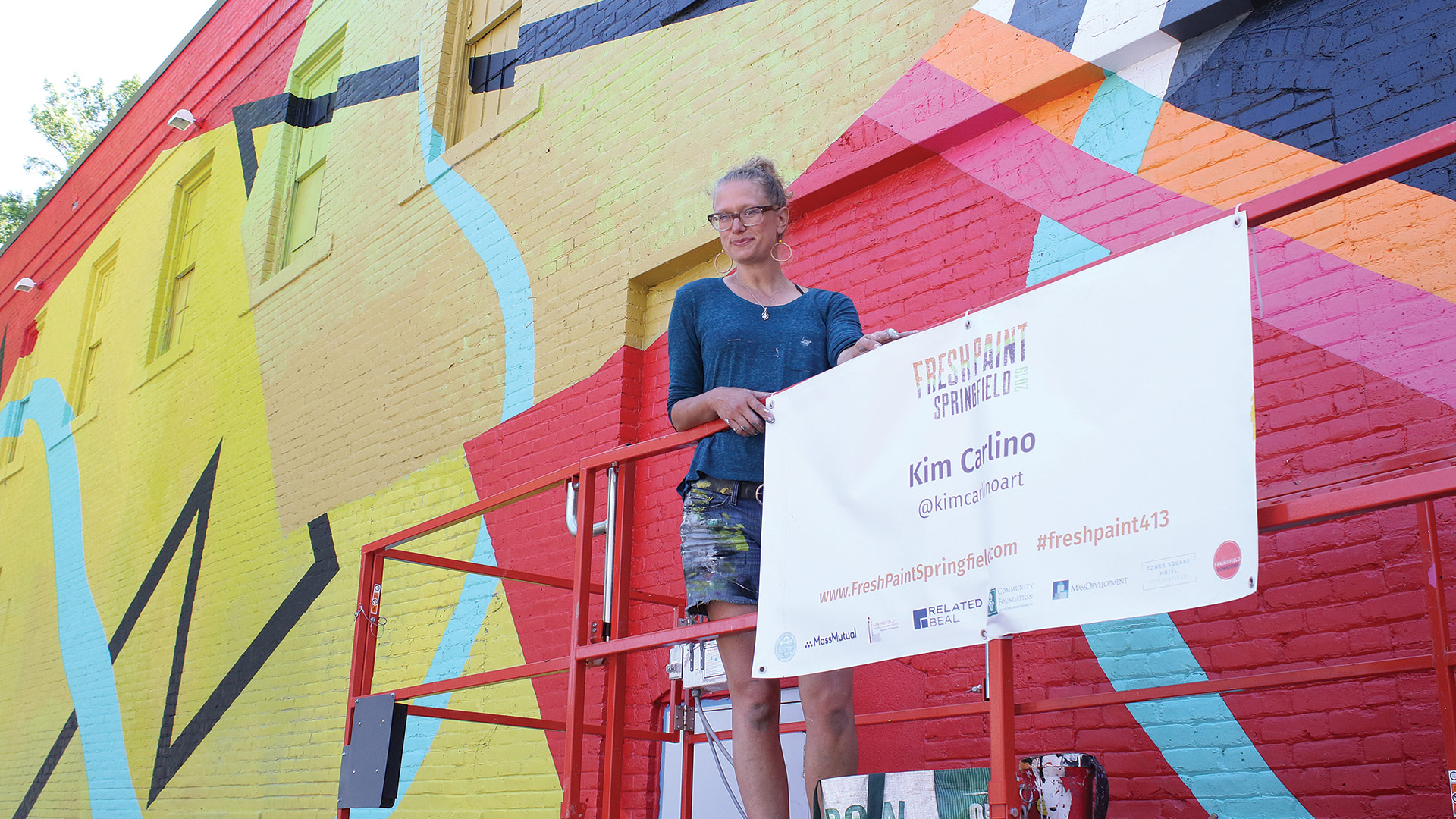
Travel and Tourism

Fun in the Sun

Summertime is a great time to get away, but in Western Mass., it’s also a great time to stick around and enjoy the many events on the calendar. Whether you’re craving live music or arts and crafts, historical experiences or small-town pride, the region boasts plenty of ways to celebrate the summer months. Here are a few dozen ideas to get you started.

June

Granby Charter Days
Dufresne Park, Route 202, Granby, MA
www.granbycharterdays.com
Admission: Free
• June 14-16: This annual town fair celebrates the adoption of Granby’s charter in 1768. This year’s event promises an array of local vendors and artisand, arts and crafts, contests, tractor pulls and an antique tractor show, an oxen draw, helicopter rides, a petting zoo, live music headlined by Trailer Trash, midway rides, a pancake breakfast, fireworks, and more.

Worthy Craft Brew Fest
201 Worthington St., Springfield, MA
www.theworthybrewfest.com
Admission: $35-$45
• June 15: Smith’s Billiards and Theodores’ Booze, Blues & BBQ, both in the city’s entertainment district, will host two dozen breweries, live music, and food served up by Theodores’, Thai Chili Food Truck, and Nora Cupcake Co. The event will also feature a home-brew contest; Amherst Brewing will make the winner’s beer and serve it at next year’s Brew Fest.

Jacob’s Pillow Dance Festival
358 George Carter Road, Becket
www.jacobspillow.org
Admission: Prices vary
• June 19 to Aug. 25: Now in its 86th season, Jacob’s Pillow has become one of the country’s premier showcases for dance, featuring more than 50 dance companies from the U.S. and around the world. Participants can take in scores of free performances, talks, and events; train at one of the nation’s most prestigious dance-training centers; and take part in programs designed to educate and engage audiences of all ages.

Out! for Reel LGBT Films
274 Main St., Northampton, MA
www.outforreel.net
Admission: $7-$12
• June 22: Out! For Reel LGBTQ Films celebrates National Pride Month with a mini film fest at the Academy of Music Theatre in Northampton. This year’s theme is “This American Lesbian Life: Uplifting (and Fun) Stories in Short Films.” Out! For Reel invites everyone in the community to enjoy these entertaining, inspiring, and award-winning films.

New England Food Truck Festival
1305 Memorial Ave., West Springfield, MA
www.nefoodtruckfest.com
Admission: $6-$35
• June 22-23: The New England Food Truck Festival, on the grounds of the Eastern States Exposition, is the largest event of its kind in New England, featuring close to 50 of New England’s premier food trucks, live music, and family fun. An array of entertainment is slated throughout the weekend, from local bands to face painting, to enjoy along with a taco, grilled cheese, or hundreds of other tasty options.​

The Capitol Steps
55 Lee Road, Lenox, MA
www.capsteps.com
Admission: $49
• June 28 to Aug. 30: Since they formed in 1981, political satirists the Capitol Steps have recorded more than 30 albums and can be heard four times a year on NPR during their “Politics Take a Holiday” specials. They will release their new CD, The Lyin’ Kings, in time for their annual summer residency at Cranwell Spa and Golf Resort. Cranwell performances are nightly excluding Tuesdays throughout the summer.

July

Old Sturbridge Village Independence Weekend Celebration
1 Old Sturbridge Village Road, Sturbridge
www.osv.org
Admission: $14-$28; free for children under 4
• July 3-4: At this celebration of America, visitors can take part in a citizens’ parade, play 19th-century-style ‘base ball,’ march with the militia, make a tri-cornered hat, and sign a giant copy of the Declaration of Independence. Children and families will enjoy some friendly competition with games, and a reproduction cannon will be fired. On July 4, a citizen naturalization ceremony will take place on the Village Common.

Monson Summerfest
Main Street, Monson
www.monsonsummerfestinc.com
Admission: Free
• July 4: In 1979, a group of parishioners from the town’s Methodist church wanted to start an Independence Day celebration focused on family and community. The first Summerfest featured food, games, and fun activities. With the addition of a parade, booths, bands, rides, and activities, the event — now celebrating its 40th anniversary — has evolved into an attraction drawing more than 10,000 people every year.

Berkshires Arts Festival
380 State Road, Great Barrington
www.berkshiresartsfestival.com
Admission: $7-$14; free for children under 10
• July 5-7: Ski Butternut may be best-known for … well, skiing, of course. But the property also plays host to the Berkshires Arts Festival, a regional tradition now in its 18th year. Thousands of art lovers and collectors are expected to stop by to check out and purchase the creations of more than 175 artists and designers, and take in a performance by ‘chamber-folk’ trio Harpeth Rising on July 6.

Brimfield Outdoor Antiques Show
Route 20, Brimfield
www.brimfieldshow.com
Admission: Free
• July 9-14, Sept. 3-8: After expanding steadily through the decades, the Brimfield Antique Show now encompasses six miles of Route 20 and has become a nationally known destination for people to value antiques, collectibles, and flea-market finds. Some 6,000 dealers and close to 1 million total visitors show up at the three annual, week-long events; the first was in May.

Yidstock
1021 West St., Amherst
www.yiddishbookcenter.org/yidstock
Admission: Festival pass, $236; tickets may be purchased for individual events
• July 11-14: Boasting an array of concerts, lectures, and workshops, Yidstock 2019: the Festival of New Yiddish Music brings the best in klezmer and new Yiddish music to the stage at the Yiddish Book Center on the campus of Hampshire College. The eighth annual event always offers an intriguing glimpse into Jewish roots, music, and culture.

Green River Festival
One College Dr., Greenfield
www.greenriverfestival.com
Admission: Weekend, $139.99; Friday, $44.99; Saturday, $69.99; Sunday, $64.99
• July 12-14: For one weekend every July, Greenfield Community College hosts a high-energy celebration of music; local food, beer, and wine; handmade crafts; and games and activities for families and children — all topped off with hot-air-balloon launches and Friday- and Saturday-evening ‘balloon glows.’ The music is continuous on three stages, with more than 35 bands slated to perform.

Northeast Balloon Festival
41 Fair St., Northampton, MA
www.northeastballoonfestival.com
Admission: $7.50-$15; free for children under 13
• July 12-14: This annual event, held at the Three County Fairgrounds, features balloon rides, walk-in balloons, nighttime balloon glows, and pilot meet-and-greets, as well as a vendor expo, craft beer, live music, and more. More than 30 of New England’s top food trucks will offer an array of tastes, while amusement rides and a petting zoo have been added for the first time.

Glasgow Lands Scottish Festival
300 North Main St., Florence
www.glasgowlands.org
Admission: $5-$18, free for children under 6
• July 20: Celebrating its 26th anniversary this year, the largest Scottish festival in Massachusetts, held at Look Park, features Highland dancers, pipe bands, a pipe and drum competition, animals, spinners, weavers, harpists, Celtic music, athletic contests, activities for children, and the authentically dressed Historic Highlanders recreating everyday life in that society from the 14th through 18th centuries.

Celebrate Ludlow
Ludlow Fish & Game Club
200 Sportsmans Road, Ludlow, MA
Admission: Free
• July 27: Celebrate Ludlow began in 2000 as an extension of a parade and picnic in 1999 to celebrate the town’s 225th anniversary, and has continued annually ever since. The event, held at Ludlow Fish & Game Club and put on with the help of numerous local nonprofit organizations, typically features live bands, food, games, activities for children, and fireworks to cap off the evening.

Hampden County 4-H Fair
1305 Memorial Ave., West Springfield
www.easternstatesexposition.com
Admission: Free
• July 28: More than 200 youth from Hampden County, and 4-H members from Berkshire, Franklin, Hampshire, and Worcester counties, will showcase projects they have made, grown, or raised during the past year. Events include a horse show and other animal exhibitions, a fun run, a talent show, a scavenger hunt, raffle drawings, arts and crafts, and more.

August

High Hopes Music and Arts Festival
One MGM Way, Springfield, MA
www.mgmspringfield.com
Admission: $25-$35
• Aug. 3: Paddle Out Productions is partnering with MGM Springfield to bring a day of music, food, and arts to the Plaza at MGM Springfield. Renowned Queen tribute band Almost Queen will headline the bill and will be joined by Roots of Creation’s Grateful Dub, a reggae-infused tribute to the Grateful Dead; the Eagles Experience; and local acts Atlas Grey and Joon.

Kids Safety Expo
1000 Hall of Fame Ave., Springfield, MA
www.kidssafetyexpo.com
Admission: Free
• Aug. 3: Children and parents can combine fun activities with critical safety education during the 11th annual Kids Safety Expo at the Basketball Hall of Fame. Attendees will have meet-and-greets with area law-enforcement officers, popular characters, and local mascots, and the first 500 children who attend will receive complimentary bicycle helmets.

Springfield Jazz & Roots Festival
Court Square, Springfield
www.springfieldjazzfest.com
Admission: Free
• Aug. 10: The sixth annual event will offer a festive atmosphere featuring dozens of locally and internationally acclaimed musical artists. More than 10,000 people are expected to attend. This internationally heralded festival has become a powerful expression of civic pride, uniting the region’s diverse cultural communities through music, arts, education, and revelry.

Downtown Get Down
Exchange Street, Chicopee
www.chicopeegetdown.com
Admission: Free
• Aug. 23-24: Downtown Chicopee will once again be transformed into a massive block party. Now in its fifth year, the event — which typically draws some 15,000 people to the streets around City Hall — will feature live music from nine bands, as well as attractions for children, local food vendors, live art demonstrations, and a 5K race on Aug. 24.

Celebrate Holyoke
Downtown Holyoke
www.celebrateholyokemass.com
Admission: Free
• Aug. 23-25: Celebrate Holyoke is a three-day festival that made its return in 2015 after a 10-year hiatus. This year’s festival, expected to draw more than 10,000 people downtown, will include plenty of live musical performances, food and beverages from local restaurants, activities for children and families, and goods from local artists, crafters, and creators of all kinds.

Red Fire Farm Tomato Festival
7 Carver St., Granby, MA
www.redfirefarm.com
Admission: $5; free for children under 8
• Aug. 24: When the tomatoes are ripe and delicious in the August fields, Red Fire Farm hosts its annual Tomato Festival. Attendees can taste (and buy) a rainbow of tomato varieties grown on the farm and vote for their favorites. Bands play out back while visitors snack on food from local vendors, go on a wild edibles walk, pick cherry tomatoes, listen in on a cooking workshop, and more.

September

Glendi
22 St. George Road, Springfield
www.stgeorgecath.org/glendi
Admission: Free
• Sept. 6-8: Every year, St. George Cathedral offers thousands of visitors the best in traditional Greek foods, pastries, music, dancing, and old-fashioned Greek hospitality. In addition, the festival offers activities for children, tours of the historic St. George Cathedral and Byzantine Chapel, vendors from across the East Coast, icon workshops, movies in the Glendi Theatre, cooking demonstrations, and more.

Mattoon Street Arts Festival
Mattoon Street, Springfield
www.mattoonfestival.org
Admission: Free
• Sept. 7-8: Now in its 47th year, the Mattoon Street Arts Festival is the longest-running arts festival in the Pioneer Valley, featuring about 100 exhibitors, including artists that work in ceramics, fibers, glass, jewelry, painting and printmaking, photography, wood, metal, and mixed media. Food vendors and strolling musicians help to make the event a true late-summer destination.

FreshGrass Festival
1040 MASS MoCA Way, North Adams
www.freshgrass.com
Admission: $48-$135 for three-day pass; free for children under 6
• Sept. 20-22: The Massachusetts Museum of Contemporary Art is known for its musical events, and the Fresh Grass festival is among the highlights, showcasing more than 50 bluegrass artists and bands over three days. This year, the lineup includes Greensky Bluegrass, Calexico and Iron & Wine, Andrew Bird, Mavis Staples, Kronos Quartet, Tinariwen, Steep Canyon Rangers, and many more.

All Summer Long

Valley Blue Sox
MacKenzie Stadium, 500 Beech St., Holyoke
www.valleybluesox.com
Admission: $5-$7; flex packs $59-$99
• Through. Aug. 1: Western Mass. residents don’t have to trek to Boston to catch quality baseball. The Valley Blue Sox, two-time defending champions of the New England Collegiate Baseball League, play close to home at MacKenzie Stadium in Holyoke. Frequent promotional events like postgame fireworks and giveaways help make every game a fun, affordable event for the whole family.

Westfield Starfires
Bullens Field, Westfield, MA
www.westfieldstarfires.com
Admission: $7-$10
• Through. Aug. 4: The newest baseball team to land in Western Mass., the Starfires, a member of the Futures Collegiate Baseball League, is playing its inaugural season at Bullens Field in a city with plenty of baseball history. The league itself has been expanding and growing its attendance in recent years, and 30 of its players were drafted last June by major-league organizations.

Berkshire Botanical Garden
5 West Stockbridge Road, Stockbridge, MA
www.berkshirebotanical.org
Admission: $12-$15; free for children under 12
• Through. Oct. 11: With 15 acres of public gardens, Berkshire Botanical Garden’s mission is to fulfill the community’s need for information, education, and inspiration concerning the art and science of gardening and the preservation of the environment. In addition to the garden’s collections, visitors can enjoy workshops, special events, and guided tours.

Crab Apple Whitewater Rafting
2056 Mohawk Trail, Charlemont
www.crabapplewhitewater.com
Admission: Varies by activity
• Through. Oct. 14: Wanna get wet? Crab Apple is a third-generation, multi-state family business that operates locally on the Deerfield River in the northern Berkshire Mountains of Western Mass. Its rafting excursions range from mild to wild, full- or half-day runs, in rafts and inflatable kayaks. In short, Crab Apple offers something for everyone, from beginners to more experienced rafters.

The Zoo in Forest Park
293 Sumner Ave., Springfield, MA
www.forestparkzoo.org
Admission: $5-$10; free for children under 1
• Through. Oct. 14: The Zoo in Forest Park, located inside Springfield’s Forest Park, is home to more than 175 native and exotic animals representing a large variety of species found throughout the world and North America. Meanwhile, the zoo maintains a focus on conservation, wildlife education, and rehabilitation, while offering special events like Zoo on the Go, guided tours, and discovery programs.

Six Flags New England
1623 Main St., Agawam, MA
www.sixflags.com/newengland
Admission: $46.99; season passes $75.99
• Through. Oct. 27: Continuing an annual tradition of adding a new major attraction each spring, Six Flags New England recently unveiled Cyborg Hyper Drive, a spinning thrill ride in the dark. Other recent additions include Harley Quinn Spinsanity, the Joker 4D Free Fly Coaster, the looping Fireball, and the 420-foot-tall New England Sky Screamer swings. And the Hurricane Harbor water park is free with admission.

Historic Deerfield
84B Old Main St., Deerfield, MA
www.historic-deerfield.org
Admission: $5-$18;
free for children under 6
• Year-round: This outdoor museum interprets the history and culture of early New England and the Connecticut River Valley. Visitors can tour 12 carefully preserved antique houses dating from 1730 to 1850, and explore world-class collections of regional furniture, silver, textiles, and other decorative arts. Summer activities include educational lectures, cooking demonstrations, and exhibitions of period items and art.


Entrepreneurship

Stout Measures

Ray Berry and business partner Ashley Clark

Ray Berry and business partner Ashley Clark at the company’s beer garden in Tower Square Park.

Ray Berry said he recently delivered what amounted to the commencement address for the most recent accelerator class at SPARK EforAll Holyoke.

When asked for a synopsis of that speech, Berry, founder and general manager of Springfield-based White Lion Brewing Co., said he talked to the fledgling business owners about the roller-coaster ride that is entrepreneurship — the ups and downs, successes, failures, and inevitable pivots.

“They’re traveling the same journey I traveled,” he said of his time working with Valley Venture Mentors and taking part in its accelerator program. “I talked about what worked and what didn’t work, what I would do if I had the opportunity to change something, and how, at the end the day, you win some along the way and you lose some, and that just makes your company stronger and the team around you stronger; you ride that wave of experience.”

He was speaking, of course, from experience — lots of wave riding, in fact, as he’s taken White Lion from a part-time pursuit, a concept he launched while working for the United Way of Pioneer Valley, to a full-time passion.

“At the end the day, you win some along the way and you lose some, and that just makes your company stronger and the team around you stronger; you ride that wave of experience.”

Indeed, he told BusinessWest that the casual observer might not be aware of those turns, dips, challenging times, and pivots, but there have been many of each on this ride, which started in 2011.

“A lot of people see what’s on the surface, but they rarely get a glimpse of what’s going on behind the scenes,” he explained. “The late nights, a lot of conversation, a lot of strategy … and during that process, there are some wins, and there are some losses. In our business, it’s about sales, and through that journey, you gain accounts, and you lose some accounts.”

For White Lion, the journey has come to an intriguing place — one where the venture is taking dramatic steps to expand its footprint geographically, while also increasing its presence in the region and playing an ever-larger role in the ongoing renaissance in Springfield.

These efforts take several forms, especially the ongoing plans to create a brewery and taproom in Tower Square, specifically at the long-vacant site of the former Spaghetti Freddy’s restaurant.

Berry and other partners recently appeared before the Armory Quadrangle Civic Assoc. to talk about their plans and what they might mean for the city and Tower Square, and in a few weeks they’ll do the same before the City Council, which must grant a special permit for the project to move forward.

Meanwhile, the company has moved forward with plans for a beer garden in Tower Square Park, the small park across Main Street from the office/retail complex. Actually, Berry likes to call this “an outdoor beer, music, food, and family venue,” a phrase that certainly captures what it’s all about.

Indeed, there’s White Lion on tap, but there’s also music — the Standing Bear Band and the Buddy McEarns Band were among the first acts booked — as well as rotating food trucks and other food providers, and activities for the entire family.

The venture is a logical extension of the White Lion Wednesdays pop-up beer gardens that drew a popular response, said Ashley Clark, a cash-management officer at Berkshire Bank, part of the White Lion team for several years, and now a managing partner. And it is an important step forward as the company works to build its brand while also being part of the efforts to bring more vibrancy to Springfield and its central business district.

“The White Lion Wednesdays were created so that everyone could leave work, stop, have a beer, hang out for a little bit, and be on their way,” said Clark. “Now, with the beer garden stationary in one place, the event is created not just for people leaving work, but also for families.”

White Lion’s new beer garden was designed to be enjoyed by the whole family.

White Lion’s new beer garden was designed to be enjoyed by the whole family.

Combined, these ambitious steps add up to a critical moment in the company’s brief history and represent an intriguing new chapter in the story.

“We’re at a pivotal stage of growth — we have strong programming, we have strong community engagement, we’re in the midst of building a brewery, and we’re clearly growing by way of volume and the amount of sales that are hitting the market,” Berry said, adding that, once the downtown brewery opens, the company will add another six to 12 employees, taking growth to another, much higher plane.

For this issue’s focus on entrepreneurship, BusinessWest talked with Berry and Clark about White Lion and the latest strategic initiatives in its business plan — but also about those basic tenets of business that Berry passed on in his recent address — especially the part about riding that wave of experience.

Lager Than Life

Returning to that address at the SPARK EforAll event, Berry said he spent a good deal of time talking about pivoting, how natural it is, and how important it is.

“I talked about how people in business often get stuck in their lane — we don’t want to venture out, for whatever reason,” he explained. “So I was very strong in touching on fear of failure, the risk quotient, the need to pivot, the need to listen … but how also, at the end of the day, you’re responsible for the decisions you make, and you have to live by them.

“To change course is a natural part of a growing business,” he went on. “And sometimes, those forces are financial, demand, supply, government regulation, and more, so you always have to be aware of all of those fronts.”

Listening, pivoting, and moving out of the lane pretty much sum up what is approaching a decade of business for White Lion, a brand that now boasts several different labels and has made the White Lion imagery part of the landscape in Springfield — and beyond.

But none of it has been easy, said Berry, who cited his plans — first envisioned several years ago — for building a brewery downtown as a solid example.

“It’s been a journey, and we’ve really come full circle,” he told BusinessWest. “From day one, we wanted the brewery to be part of the downtown fabric; we wanted to be in the heart of what was being called a renaissance, a resurgence in downtown Springfield.”

While many breweries are located in more rural areas, in old mills along rivers and streams, Berry said some have set up shop in the central business district and been part of downtown revitalization efforts.

He noted Brooklyn Brewery — a venture that has played an important role in the meteoric rise of that New York borough in recent years — as an example he’s in many ways trying to emulate.

“They took it upon themselves to invest in a highly dilapidated area in Brooklyn,” he said. “And since that investment, that entire area has been redeveloped, and it’s become a destination.

“White Lion is anchored in the heart of a metropolitan area,” he went on, adding that he was determined to build a brewery somewhere downtown.

But the search became more complex than he could have anticipated.

“I think that, in the beginning, I might have been a little naïve, feeling right from the onset that there would be a lot of opportunity, and space, for a brewery, and that was just not the case,” he said, adding that it soon became clear that the company was going to have to fit, or “mold,” itself into a suitable location downtown.

He looked at a number of options, including the old Rain nightclub building in Stearns Square, a property in Market Place that was eventually deemed more expensive to rehab than new construction, and 1350 Main St., also known as One Financial Plaza, before the focus shifted to Tower Square.

Actually, it was the new ownership of that landmark property that approached him.

White Lion partners

White Lion partners Ashley Clark and Ray Berry with brand ambassadors Scott Freniere, second from left, and Jeremy Eickelberg at the beer garden.

“They wanted us to be part of their plans to make Tower Square a destination of its own,” he said. “We were intrigued and felt very comfortable in those discussions.”

One of the new owners of Tower Square, Vid Mitta, has also become an equity partner in White Lion, said Berry, adding that the ownership team has expanded in recent months and now includes several managing partners, including Clark and brewer Mike Yates.

What’s on Tap?

It was this expanded team that appeared before the Armory Quadrangle Civic Assoc. last week, and is slated to make its case to the City Council later this month (they certainly believe they have a strong one).

If all goes as planned — and the brewing equipment has already been moved in — roughly 98% of production will take place in downtown Springfield, said Berry, adding that the remaining 2% — the bottles supplied to MGM Springfield (the rest are cans) — will be contracted out.

And while pressing on with the plans for the brewery, the owners are taking bold steps to build the brand and expand its footprint.

The beer garden is one of these steps, said Clark, adding that a permanent location for the beer garden and an expansion from Wednesdays to Wednesday through Saturday was a logical progression, and one that made this a family event.

“We’ve created an environment where, if you’re a mother and father with two young kids, everyone can come down on Saturday afternoon or Friday night and listen to some music and play games, and all have a good time,” she said, adding that the garden is open from 4 to 9 p.m.

Meanwhile, outside the city, the brand, which self-distributes, has now extended its reach across the state to Cape Cod and continues to look for new growth opportunities, said Berry, adding that it now has more than 750 accounts — and counting.

“We’ve been able to grow in Central and Eastern Mass. through hard work and forging relationships,” said Berry, who credits another fairly recent addition to the team, Blair Landry, a veteran of the craft-beer industry who had already forged a number of relationships on the distribution side within the industry with another label, and has been re-engaging with the White Lion brand. “Locally, it’s a much cleaner and clearer conversation because we’re local. Through the relationships that all of us have, we’ve been able to onboard a number of accounts that have enabled us to grow considerably over the past two years.”

He said the decision to self-distribute, while somewhat unusual, is a pivot— again, one of many — that has benefited the company in a number of ways.

“Early on, we relied too heavily on distribution partners,” he explained. “Those distribution partners can open doors, but they’re also managing another 100 to 150 brands, and that led us to make a pivot; we felt we could have a stronger level of engagement by doing it on our own, and we’ve been able to demonstrate that by opening up many more accounts and strengthening our outlook going forward.”

He acknowledged there is a tremendous amount of competition within the craft-beer industry, and new brands enter the market seemingly every week. But he said this competition provides both challenges and opportunities, with the latter coming to those willing to put in the work and make their brand stand out in a crowded marketplace.

“Craft is about local; craft is about conversation and fostering relationships,” he explained. “If you can engage and foster relationships and have good beer and be true to your word, you’re going to be able to open some doors, and we’ve done that.”

Hip Hops

Berry told BusinessWest that, if all goes smoothly — and what he told the accelerator graduates at commencement is that things certainly don’t always go smoothly — the first can of White Lion will be rolling off the line at the facility in Tower Square late this summer.

It will be an important moment for the company given the stage in its development and the location of the brewery — the heart of downtown Springfield.

But, in reality, it’s just the latest in a number of big moments, with many more likely to come as the team at White Lion continues to ride that wave of experience and continue its remarkable journey.

George O’Brien can be reached at [email protected]

Construction

Shining Example

Sean Callahan and James Jaron didn’t expect the level of competition — make that outright opposition — they faced when they decided to enter the field of lighting distribution, which is dominated by a handful of huge, national players. But through patience, persistence, and adherence to a customer-first philosophy, they broke through, and gradually expanded their locally owned firm into a major regional player. And they’re not done lighting the way to further growth.

Opening a business — and keeping it going — isn’t an easy proposition. Still, Sean Callahan and James Jaron had no idea what obstacles lay before them when they decided to open Ion Lighting Distribution Inc. in 2016.

Jaron owned Zap Electric in Chicopee, and Callahan worked for Needham Electric Supply. “One day, we decided we needed to perfect one area of the distribution business, and that was the lighting,” Jaron said, noting that, in the large, corporate-owned stores, “the guy across the counter knows nothing about lighting, so he has to call somebody to call somebody to get some rep to talk to you” — and that adds layers of cost.

“So we established a distribution company from scratch, against all odds,” he said.

Those odds included a full-court press by those aforementioned large companies, he recalled. “They made a big effort to make sure we failed by cutting off our supply houses and manufacturers, telling them, ‘we’re multi-million-dollar companies; don’t sell to these guys, or we’re going to cut you off.”

Callahan remembers it well. “The day we started the company, I reached out to people I’d known for 15 or 18 years. All the manufacturers’ reps, literally 100%, across the board, all of them said ‘no.’ I was leaving a perfectly good job, I had customers ready to buy, and when I started reaching out to our manufacturers, it was ‘no,’ across the board — because our competition was trying to squeeze us out.”

He went so far as to e-mail the CEOs of those companies, saying, “‘I’ve been selling your products for 15 years.’ And they would look into it and say, ‘we’re not taking on new distribution at this time.’ It was very difficult to get started, but it’s nice to have people coming to us now saying, ‘hey, we screwed up. We didn’t think it was possible you guys would last. We want to do business.’”

Today, the Chicopee-based firm covers the state of Connecticut and Western and Central Mass., and extends into Rhode Island and New York City as well — and is looking to move into its fifth different facility in four years, all to accommodate Ion’s growth. How Callahan, the company’s president and CEO, and Jaron, principal and treasurer, managed that feat is a lesson in persistence.

Early on, Callahan said, “we flew to Hong Kong and China and met with manufacturers. Through that process, we found most major companies were buying overseas. So we got set up with container companies there and here and opened our business. As we got traction, more vendors started jumping on board because they saw we weren’t giving up. But it took a little while.”

Today, Ion purchases only in the U.S., he noted. “But it was tough getting started, and that was our only option at that point. It took a little more capital getting started than we would have liked, but eventually, we got our first vendor here — a small company we never would have thought about.”

Sean Callahan (left) and James Jaron

Sean Callahan (left) and James Jaron are looking for a larger headquarters — it would be their fifth in four years — to consolidate their warehouses and accommodate more growth.

Electricians are busy this summer installing 14,000 LED lights in the Du Bois Library building at UMass Amherst, one example of a large project for which Ion distributed products. But it deals with small businesses, too.

“Little by little,” Callahan said, we started picking up more and more work, and now we can sell top-of-the-line lighting on a big UMass project or commercial job, but we also have affordable lights for someone with a machine shop or small business who doesn’t want to pay top dollar when they can buy a fixture for $50.”

Green from Green

Ion is not an installer, Jaron emphasized; rather, it sells lighting to businesses, municipalities, and schools, as well as contractors, which is the ideal client.

Today, the company is a top-five distributor for Mass Save, a rebate program for using energy-efficient products; all the states Ion distributes in have similar initiatives. But the pitch isn’t just about cost savings.

“Think about the impact we have on the environment — it’s mind-boggling,” he told BusinessWest. “When we think about LEDs, we think about rebates and electric bills, but really, it’s an environmentally conscious thing to do.”

At the same time, the goal is to give customers the best solutions for the best price. “Our products are tested. If it doesn’t pass my scrutiny as an electrician, we don’t put it out,” he said, noting that Energy Star-rated products automatically imply that the fixture has a five-year warranty and has been through a rigorous quality-assessment process.

Jaron also noted that some of the large distributors won’t always explain the Mass Save rebate to customers and pocket the savings themselves.

“We put that savings in your pocket. We’re not doing anything hocus-pocus; we’re just being fair and giving customers what they need. We take care of our customers and talk to them like human beings,” he said. “Companies out there don’t want people to know. They’re gouging the end users. We said, ‘no. Make your margins, make money, but play fair, be a human being.’ You’ve got to do the right thing, and that’s what we’re doing, and that’s why our competition hates us. We’ve disrupted their little game. And our customers are very happy.”

A lot of people don’t understand the Mass Save incentives, Callahan said, so Ion makes a point of helping people maximize them. Jaron added that Ion has no commitment to any manufacturer’s rep, which makes it fairly unique in the upper tier of the industry — and allows for more cost savings.

“When the big supply houses have a commitment, they have to use their product. So when you come in buy a fixture, they’re obligated to use these certain brands for $120 or $130, where we have the same fixture, with the same manufacturer — apples to apples — and we can sell it to you for $80. Then add the Mass Save rebate, and it goes down to $40. Think about that for a second. No wonder they were terrified — because we’re not handcuffed to use certain brands.”

In many cases at corporate-owned distributors, Callahan said, the end user saw the inflated price and often decided not to buy because they didn’t have all the facts and options, and that was frustrating.

“But we found all these little offshoot manufacturers’ reps, all these other companies that we can work with, and can offer good, solid products that I would put up against any mainline manufacturers, and we were able to have stuff people could afford.”

Ion has a presence throughout Southern New England and New York City

Ion has a presence throughout Southern New England and New York City, and a forthcoming e-commerce website aims to expand sales nationally.

Take auto garages, for instance, which use big, 400-watt fixtures that stay on for long hours. Many shop owners have seen the long-term savings of LED lighting — typically knocking off two-thirds to three-quarters of the old cost — and were willing to make the shift. But Mass Save also, in many cases, brought the initial cost of the new fixtures down to nearly nothing.

“And the maintenance is almost none; you can go 10 to 15 years without changing a bulb,” Jaron said. “With the price, the maintenance, and the environment, it’s just a win-win-win.”

Seeing the Light

When Callahan and Jaron went into electrical distribution, they decided early on it would be in everyone’s benefit — theirs and customers’ — to focus on lighting. “That was our niche, that’s what I had a passion for, and it’s what I gravitated toward throughout my career,” Callahan said. “We decided we could do lighting better than anyone else. So that’s all we do.”

It’s a model that has worked. Counting outside salespeople, Ion’s team numbers about 15, and sales have grown significantly every year. After opening in an office above Main Street in Northampton, the firm has relocated three times in the mill district of downtown Chicopee, and is looking to expand again, in order to consolidate all its operations, including its additional warehouses currently located in Palmer and Springfield.

Callahan isn’t worried demand for LED lighting will dry up anytime soon, with so many businesses and municipalities still in need of a changeover. “You can drive down any street anywhere, and you’ll find opportunities.”

Meanwhile, he noted, Ion is getting ready to launch an e-commerce website. “We’re excited to bring it to a national level and start selling to everyone in that way as well.”

He and Jaron are gratified by stories like a big job they supplied lights for in Worcester. They later received letters from the thankful customer, noting that electricity costs had dropped from almost $120,000 a month to around $68,000 — with the savings essentially paying for the project cost in year one.

“Three years ago, it was tough. We’re one of the only privately owned companies like this, because every other supply company is owned by a multi-million-dollar corporation somewhere,” Jaron said. “Now, these reps that didn’t want to talk to us, they’re coming through the doors, apologizing.”

Joseph Bednar can be reached at bednar@businesswest.

Health Care

Taking Important Steps

By Mark Morris

Dr. Christopher Peteros prepares a patient for laser therapy.

Dr. Christopher Peteros prepares a patient for laser therapy.

Spring weather in New England is a great time to shake off winter’s cabin fever and head outside to take a walk, go for a run, or play a sport. Spring also means an increase in foot injuries from people being too active, too soon.

While overdoing it can cause aches and pains in many areas of the body, it’s easy to overlook our feet, which support everything else and are key to overall quality of life. Those who specialize in this realm of care have a simple word of advice: don’t.

They stress the importance of taking care of one’s feet, listening to them when they are sore and need attention, and fully understanding how it’s not unusual for foot pain to be the cause or the result of other pain in the body.

“Sometimes foot pain causes knee, hip, or back issues, and by the same token, if someone has pain in their knees or back, it puts the foot in an awkward position, resulting in foot pain,” said Dr. Christopher Peteros, a podiatrist with New England Foot Specialists in Longmeadow, who stressed the importance of paying attention to pain, calling it our body’s early-warning system.

“If you feel pain in your foot, knee, or ankle, it’s telling you to stop what you’re doing,” he told BusinessWest. “It’s like the ‘check engine’ light in your car.”

When we walk or run, the foot’s natural movement is known as pronation (the inward roll of the foot) and supination (the outward roll of the foot), both of which move us forward while providing support, cushioning, and balance. Too much or too little of either pronation or supination can cause pain in the feet and other parts of the body.

“I’m not telling people to go walk in the middle of the street, but if you know of a neighborhood with a cul-de-sac or a circular street, those are better choices than sidewalks, which are a harder force on our bodies.”

Terrance McKeon, a physical therapist with Cooley Dickinson Health Care’s Rehabilitation Services in South Deerfield, refers to the foot as the ‘victim,’ because it’s often the one in pain while the culprits can be nearby or as far away as the hip or pelvis. To carry the analogy further, McKeon said that, when investigating the cause of foot pain, the calf muscle is often a prime suspect, because when the calf muscles are tight, the body adjusts by collapsing the foot.

“Your foot tries to maintain balance by unnaturally scrunching the toes,” he explained. “Then the fascia gets stretched, the Achilles tendon gets overstretched, and you may even wiggle your pelvis, all because your calf muscles aren’t letting you get over your foot.” 

Brianna Butcher, a physical therapist at Select Physical Therapy in Enfield, agreed. “When someone walks in with foot issues, the first thing I check is their hips,” she said, adding that, since the glute muscles tend to be weak in many people, it causes more strain to be put on the leg and foot to compensate and maintain balance.

For this issue, we take an in-depth look at what causes foot pain and discomfort and how to prepare your feet for activity.

Walking the Walk

Those who spoke with BusinessWest there are a number of factors that contribute to one’s overall foot health — or lack thereof. These include everything from the level of exercise to the type and condition of the shoes being worn, to the surface that people walk or run on.

Terrence McKeon demonstrates an orthotic insert for a patient.

Terrence McKeon demonstrates an orthotic insert for a patient.

People should be thinking about all of them and making smart decisions, said Butcher, who noted, for example, that serious runners opt for an asphalt road instead of a concrete sidewalk, because the asphalt surface is slightly less harsh on our bodies than concrete.

“I’m not telling people to go walk in the middle of the street, but if you know of a neighborhood with a cul-de-sac or a circular street, those are better choices than sidewalks, which are a harder force on our bodies,” she said, adding that, for those who live near a track, that’s an even better option than walking on the street.

While sidewalks can be too hard on our feet, Peteros said treadmills can create the opposite problem and result in repetitive-motion injuries.

“Some treadmills can be too soft, so as your foot sinks in, it creates an abnormal amount of repeated pronation while the person is walking, which can lead to tendinitis or plantar fasciitis.”

One of the most common causes of foot pain, plantar fasciitis affects the band of tissue that runs along the bottom of the foot from heel to toe. The plantar fascia acts like a shock absorber to support the arch of the foot. Too much strain on it leads to a stabbing pain in the heel.

Many factors can contribute to plantar fasciitis, but it often results from a change in activity levels that puts more stress on the heel. Peteros said likely candidates for plantar fasciitis include the person who hasn’t run in years and then decides to pursue it again, as well as the person who goes on vacation and does more walking than normal while wearing flimsy shoes.

Peteros said a person with plantar fasciitis tends to experience severe pain in the morning after just waking up. The pain subsides a little after moving around, and then, by the end of the day, it increases. He said the pain can move into a cycle that won’t easily go away.

“It’s a very difficult thing to treat in some cases,” he said, “because you’re using that sore foot for every other step you take, unlike a sore hand where you can just carry it around.”  

The first remedy Peteros suggests for plantar fasciitis and other foot injuries is the easy-to-remember acronym RICE: rest, ice, compression, and elevation. People can do this on their own, and in many cases RICE along with good, supportive shoes is enough to solve the problem. If that doesn’t work, he has a variety of treatments to further care for plantar fasciitis.

Anti-inflammatory medicines or cortisone shots are two possible treatment options. While cortisone can be effective for some, Peteros said, he cautions against its overuse because the shots can create ruptures in the plantar fascia instead of healing it.

For several years, he has used laser therapy to treat plantar fasciitis. As an alternative to anti-inflammatory medications, laser therapy uses a beam of light so it’s painless for the patient, works to reduce inflammation, and allows for faster healing. He said the success rate for healing injuries by laser therapy is about 80%.

“Depending on the injury, most patients will need between five and 10 treatments, which take about 10 minutes each. It may not always lead to a cure, but it speeds up the process,” he said.

For chronic foot issues, Peteros also uses shock-wave therapy, which treats plantar fasciitis with sound waves. He said it functions much like the technology that uses sound waves to break up kidney stones, adding that the same company makes the two machines.

When taken care of quickly, he said most people will get great results and no longer need treatment for their plantar fasciitis.

“Some patients may get an occasional flare-up, usually because they did something they shouldn’t have done. The key is to be aware of it, protect yourself, and stop as soon as you feel any pain.”

Getting to the Bottom of Things

That bit of advice applies to all aspects of foot care, said McKeon, who told BusinessWest that, overall, it’s best to best to be proactive and avoid the energetic enthusiasm of taking too much advantage of a nice spring day.

“Your brain says, ‘I used to run five miles a day,’ but when you’ve gone all winter without running even one or two miles, that’s breaking the 10% rule,” he said, explaining that the best way to prevent injury when approaching spring activities is to take it easy in the beginning and gradually increase activity levels no more than 10% a week.

Physical therapists have used the 10% rule for years, and recent studies have supported the idea that the body can react and get stronger from a 10% increase each week for nearly any activity.

“If you can obey the rule, especially for weight-bearing activities like walking and running, you’ll be fine,” said McKeon.

Brianna Butcher inspects a patient’s foot for injury.

Brianna Butcher inspects a patient’s foot for injury.

This can require some pre-planning, he added, noting that simple heel-raising exercises for the calf muscles are a good way to get ready for a walking or jogging routine.

“Strengthening calf muscles is easy because you just go up and down on your toes. Go up on your toes to hit full height, then back down, and do them until you get tired,” he said, adding that the yoga position downward-facing dog is an effective exercise for tight calf muscles. He then stressed that the 10% rule also applies to the stretches.

As essential as good conditioning is to prevent foot injury, these proactive steps can easily be undone by cheap or worn-out shoes — or the wrong kind. McKeon said serious runners should consider new shoes every six months because the foam in the shoe that absorbs the energy of running will lose its ability to bounce back with heavy use.

Peteros also emphasized the importance of protecting the feet with good hygiene and proper shoes. “Whether you are a runner, walker, or any type of athlete, good, supportive shoes are the foundation of healthy feet.”

Peteros recommends shoes designed for the specific activity in mind, with a stiff sole. “If you can bend the shoe in half, it’s not offering support.”

One of the best examples of warm-weather shoes that provide no support are the ever-popular flip-flops. Peteros did not condemn them, necessarily, but referred to them as “purpose-built.”

“If you’re sitting around the pool, or at the beach, or even on your back deck with an iced tea, they’re perfectly fine to wear,” he said, adding that problems arise when people continually wear flip-flops around town, because the feet have to work hard just to keep them on. “Your toes are scrunching as they’re trying to grip the flip-flop, and there’s just no support; they’re actually more trouble than they’re worth.” 

Peteros also mentioned the dangerous practice of people who wear flip-flops to mow the lawn, adding that yardwork is another place where good, supportive shoes matter.

“A lot of people retire their old, beat-up sneakers to wear in the yard, but when you’re doing yardwork, you’re often on uneven ground, when your feet need support the most.”  

A work boot or hiking boot is a great choice for yardwork, he said, because they are lightweight and supportive. Meanwhile, high-top or low-cut shoes are both fine, he noted, stressing that these shoes should be kept just for yardwork; don’t retire them to the yard only after they’ve worn out.

Because every foot is different, people with overly high arches or flat feet often need additional support from custom orthotic inserts. Peteros admits that some people can get good results with over-the-counter insoles and advised that, when shopping for inserts, firmer is better. When a custom orthotic insert is needed, he said the old methods to make them have given way to 3-D digital imaging that results in an orthotic that fits the exact contours of the person’s foot.

“We used to make casts and molds and have people step in foam. I haven’t done those things in at least nine years; it’s all digital now.” 

McKeon said finding the right footwear for those at one extreme or another can be tricky, while people whose feet are more in the middle range may be able to slowly build up strength in their feet and avoid using an insert.

“I tell people that, if they gradually increase their activity levels following the 10% rule, they can improve the strength in their foot,” he explained. “This works well with athletes who don’t like wearing orthotic inserts.”

So, before taking on outdoor activities this spring, remember supportive shoes, the 10% rule, and RICE. You’ll prevent injury to your feet and better enjoy the spring weather.

Features

Fabulous Five

With a whopping 480 past 40 Under Forty winners, it’s no easy task to choose the one who has accomplished the most since his or her selection. But, for the fifth straight year, our judges are giving it a try.

“So many 40 Under Forty honorees have refused to rest on their laurels,” said Kate Campiti, associate publisher of BusinessWest. “Once again, we want to honor those who continue to build upon their strong records of service in business, within the community, and as regional leaders. And, like previous years’ finalists, these five individuals have certainly done that.”

This year’s crop of finalists were chosen from a field of 60 nominations by three independent judges: Elizabeth Cardona, executive director of Multicultural Affairs and International Student Life at Bay Path University; Scott Foster, partner with Bulkley, Richardson and Gelinas; and Susan O’Connor, vice president and general counsel at Health New England.

Four years ago, BusinessWest inaugurated the award to recognize past 40 Under Forty honorees who had significantly built on their achievements since they were honored.

The first two winners were Delcie Bean, president of Paragus Strategic IT, and Dr. Jonathan Bayuk, president of Allergy and Immunology Associates of Western Mass. and chief of Allergy and Immunology at Baystate Medical Center. Both were originally named to the 40 Under Forty class of 2008. The judges chose two winners in 2017: Foster (class of 2011); and Nicole Griffin, owner of Griffin Staffing Network (class of 2014). Last year, Samalid Hogan, regional director of the Massachusetts Small Business Development Center (class of 2013), took home the honor.

The winner of the fifth annual Continued Excellence Award will be announced at this year’s 40 Under Forty Gala, slated for Thursday, June 20 at the Log Cabin Banquet & Meeting House in Holyoke. The nominees are:

Michael Fenton

Michael Fenton

Michael Fenton

When Fenton was named to the 40 Under Forty in 2012, he was serving his second term on Springfield’s City Council and preparing to graduate from law school. He was also a trustee at his alma mater, Cathedral High School, where he dedicated countless hours to help rebuild the school following the 2011 tornado.

Since then, Fenton continues to serve on the City Council — including as its president from 2014 to 2016 — and is a shareholder at Shatz, Schwartz & Fentin, P.C., practicing in the areas of business planning, commercial real estate, commercial finance, and estate planning. He received an Excellence in the Law honor from Massachusetts Lawyers Weekly and was named a Super Lawyers Rising Star from 2014 through 2017.

Meanwhile, in the community, he is a founding member of Suit Up Springfield; a corporator with Mason Wright Foundation; a volunteer teacher at Junior Achievement; a member of the Hungry Hill, Atwater Park, and East Springfield civic associations; and an advisory board member at Roca Inc., which helps high-risk young people transform their lives.

Anthony Gleason II

Anthony Gleason II

Anthony Gleason II

Gleason was just 24 when he earned the 40 Under Forty designation in 2010. At the time, he was commercial sales manager at Roger Sitterly and Son, overseeing about 20 people, while also managing the operations of his own company, Gleason Landscaping, which at the time was bringing in $500,000 in annual revenues.

Today, he’s no longer affiliated with Sitterly, as his landscaping and snow-removal outfit now services all of New England, employing more than 100 people during the landscaping season and 300 during the winter. The firm grosses more than $10 million annually and is the 32nd-largest snow-removal company in the country. He also co-owns Gleason Johndrow Rentals, which has a portfolio of properties valued at $10 million. He’s also a co-owner of MAPAM-1, LLC and a director of Gleason Brothers Inc.

Meanwhile, Gleason is active with Spirit of Springfield, leading the largest cadre of volunteers for the annual World’s Largest Pancake Breakfast, serving on the organization’s golf committee, and sponsoring Bright Nights and the Bright Nights Ball. He has also donated landscaping services to a number of municipal and nonprofit projects.

Cinda Jones

Cinda Jones

Cinda Jones

Jones was a member of the inaugural 40 Under Forty class of 2007, chosen not just for her role as president of the Amherst Area Chamber of Commerce board of directors, but for her ninth-generation leadership of WD Cowls Inc., which managed timberland in 31 communities. At the time, she managed the company’s real-estate division and oversaw its sawmill and planing mill.

Since then, Jones has grown Cowls’ timberland base by more than 1,000 acres, closed the unprofitable sawmill, and built nothing short of a new town center, called North Square, in its place. She also hosts two major solar farms and is planning more, and sold the largest conservation restriction in state history; the 3,486-acre Paul C. Jones Working Forest raised $8.8 million and was named for her father. This year, she will add 2,000 more across to her conservation legacy.

Jones also stays active in the community with the Amherst Survival Center, donating her contractors’ time to mow and plow for this food bank and sponsoring community food-collection programs.

Eric Lesser

Lesser was chosen for the 40 Under Forty class of 2015 following his election to the state Senate in November 2014. Elected at just 29 years old, he represents nine communities in the First Hampden & Hampshire District. His legislative agenda focuses on the fight for greater economic opportunity and quality of life for Western Mass., with initiatives around high-speed rail, a high-tech economy, job training, and innovation in government. He also spearheads the Senate’s agenda on millennial issues, including technology policy, student debt, and greater youth engagement in public affairs.

Since 2015, in addition to securing several leadership positions in the Legislature, Lesser has been overwhelmingly re-elected senator twice, and has authored several pieces of successful legislation, including lowering the cost of Narcan for first responders, which has contributed to a decrease in the Commonwealth’s overall opioid deaths for two straight years.

Lesser has also supported economic programs that bridge the gap between Boston and Springfield and has secured hundreds of thousands of dollars for area organizations, including Valley Venture Mentors, the Women’s Fund of Western Massachusetts, Greentown Labs, and more.

Meghan Rothschild

Rothschild, then development and marketing manager for the Food Bank of Western Mass., was named to the 40 Under Forty class of 2011 mainly for her tireless work in melanoma awareness. A survivor herself, she began organizing local events to raise funds for the fight against this common killer, and launched a website, SurvivingSkin.org, and TV show, Skin Talk, that brought wider attention to her work.

Since then, Rothschild has stayed busy, increasing her profile with the Melanoma Foundation of New England and IMPACT Melanoma, and hosting a community talk show on 94.3 FM. Most notably, however, she has grown Chikmedia, a woman-focused marketing firm, into a true regional force. The firm recently marked its fifth anniversary and continues to expand its roster of clients, community workshops, branded events, and social-media impact.

Rothschild also teaches at Springfield College and is a board member at the Zoo at Forest Park, donating her time to its marketing and PR initiatives. She has also participated in events benefiting the Holyoke Children’s Museum, Junior Achievement, and a host of other groups.

Construction

Surveying the Landscape

The National Assoc. of Landscape Professionals (NALP) recently released its annual list of the top 2019 landscape trends.

Drawing upon the expertise of the industry’s 1 million landscape, lawn-care, irrigation, and tree-care professionals, NALP annually predicts trends that will influence the design and maintenance of backyards across America in the year ahead. NALP develops its trends reports based on a survey of its members. It also draws from the expertise of landscape professionals from across the U.S. who are at the forefront of outdoor trends.

“Homeowners yearn for beautiful outdoor spaces without the hassle of upkeep. With the rise of multi-functional landscape design and automated processes, consumers can spend more time enjoying their landscapes than ever before,” said Missy Henriksen, NALP’s vice president of Public Affairs. “This year’s trends reflect current lifestyle preferences as well as innovations happening in the industry that are transforming landscapes across the country.”

NALP listed the following five trends influencing outdoor spaces in 2019.

Two-in-one Landscape Design

Functional elements are becoming a necessity in today’s landscapes. Consumers desire stunning outdoor features that have been cleverly designed to serve a dual tactical purpose. An edible vertical garden on a trellis that acts as a privacy fence, a retaining wall that includes built-in seating for entertaining, and colorful garden beds that divide properties all combine function and style.

Automated Lawn and Landscape Maintenance

The latest technology and equipment allow tasks to be more streamlined and environmentally efficient than ever before. Robotic lawnmowers continue to rise in popularity among both homeowners and landscape professionals. Also, programmable irrigation systems and advanced lighting and electrical systems help outdoor spaces become extensions of today’s smart homes. Homeowners relish knowing these technological advancements give them more time to relax and enjoy their outdoor spaces.

Pergolas

A staple of landscape design for years, pergolas constructed of wood or composite materials are now becoming more sophisticated. They can now come with major upgrades, including roll-down windows, space heaters, lighting, and sound systems. When paired with a luxury kitchen, seating area, or fire feature, pergolas can become the iconic structure for outdoor sanctuaries.

Pretty in Pink

Pops of coral and blush are anticipated to add a more feminine touch to landscapes this year. With ‘living coral’ named Color of the Year by Pantone, a leading provider of color systems and an influencer on interior and exterior design, landscape professionals predict this rich shade of pink could bring fresh blooms of roses, petunias, zinnias, and hibiscus to flower beds. Experts also anticipate light blush tones to become the ‘new neutral’ and another option for hardscapes and stone selections.

Mesmerizing Metals

Whether homeowners want a bold statement or whimsical touch, incorporating metals can bring new dimensions to landscape design. Used for decorative art, water features, or furniture and accessories, creative uses of metals, including steel and iron, can make for lovely accents or entire focal points.

Health Care

Leveling the Playing Field

Spiros Hatiras

Spiros Hatiras says the Massachusetts Value Alliance has created what he called a “virtual system” for the state’s independent hospitals.

Spiros Hatiras was asked about the Massachusetts Value Alliance and, more specifically, how it improves the buying power of its members, including the one he serves as president and CEO — Holyoke Medical Center (HMC).

He handled the assignment by referencing the hospital’s ongoing work to implement a new electronic medical record (EMR) system, and with an analogy that puts this concept in its proper perspective.

“Let’s say you went to Ford and asked them to build you a car, but told them that, instead of putting the power-switch buttons on the window side, you wanted them on the center console — the cost to customize the car the way you wanted it would be enormous,” he explained. “It’s the same with EMR; what hospitals used to do, and still do, is go to an EMR vendor and ask them to come in and build and install a system for that hospital.”

The Massachusetts Value Alliance, or MVA, as it’s called, is a coalition that is enabling its members to depart from that expensive scenario.

Indeed, several members of the alliance, which now includes 14 community hospitals, have come together to order an EMR system that will be customized for a group — with minor tweaks for each specific facility — and not one hospital. The savings will be substantial — in fact, Hatiras pegs the cost at roughly $5 million for HMC, close to half of what the cost might have been.

“Instead of us individually customizing, we get three hospitals to come together and say, ‘what are the features that make sense for all of us, and let’s build it one time and implement it in three locations.’”

“Our patients are not that different; in fact, they’re not different at all from the other hospitals, and the processes that we use are very similar — the order set, the treatment protocols, are all very similar,” he told BusinessWest. “So, instead of us individually customizing, we get three hospitals to come together and say, ‘what are the features that make sense for all of us, and let’s build it one time and implement it in three locations.’”

This is the very essence of the MVA, which was formed three years ago by founding members Emerson Hospital in Concord, Sturdy Memorial Hospital in Attleboro, and South Shore Health in South Weymouth. It has added new members steadily since then, and the alliance now also includes HMC, Berkshire Medical System, Harington Healthcare System, Heywood Healthcare, Lawrence General Hospital, Signature Healthcare, and Southcoast Health.

These are smaller, independent hospitals that enjoy the benefits of being independent and the ability that gives them to be focused on the needs of their respective communities, said Dr. Gene Green, president of the MVA board of trustees and president and CEO of South Shore Health. But they don’t enjoy the buying power and other cost-saving benefits of being in a larger healthcare system.

Dr. Gene Green

Dr. Gene Green says the MVA gives its members a very potent commodity in these challenging times — buying power.

The MVA, operating under the slogan “Health Care Is Better When We Work Together,” was created to level the playing field in at least some ways.

“There’s always greater bargaining power with numbers,” Green explained, adding that the MVA has helped its members reduce the cost of everything from laboratory services for their patients to health insurance for their employees. “Although a lot of people do group purchasing on common things, there are other things, especially within hospitals and healthcare systems, that are specialized, and so the question was, ‘how do we help each other bring our numbers together and help each have more bargaining power with third-party vendors?’”

The MVA was the answer to the question. It was in many ways inspired by a similar system in Connecticut called the Value Care Alliance (VCA), said Green, and today, the two alliances are collaborating to create additional economies of scale.

For this issue, BusinessWest takes an in-depth look at the Massachusetts Value Alliance and at how it is benefiting its members across the state during what remains a very challenging time for all hospitals, but especially the smaller, independent institutions.

Group Rates

Hatiras told BusinessWest that he was approached by the president of Sturdy Memorial not long after the MVA was created and encouraged to become part of the new group.

As he recalls the conversations, it wasn’t a very hard sell.

That’s because the value — yes, you’ll be reading that word a lot during this discussion — was readily apparent. And value is something these hospitals certainly need.

“We were quick to join — we’ve been a member almost from the beginning,” said Hatiras. “This is something we ought to be doing because, as independent hospitals, our resources are much more limited.

“This was a way to bring these hospitals together and join forces in terms of acquiring resources without merging assets or governance,” he went on, recounting two of the obvious downsides to becoming part of a large healthcare system. “We’re creating an almost virtual system.”

And within this virtual system, there exists that all-important commodity of businesses of all kinds, but especially hospitals that purchase a seemingly endless array of products and services — buying power. The alliance uses it with everything from laboratory services — there’s a contract with Quest Diagnostics — to elevator services, Green explained.

“The question was, ‘how do we help each other bring our numbers together and help each have more bargaining power with third-party vendors?’”

“It was a way for us to help each other find cost reductions and efficiencies to help drive down the cost of care, hopefully — unfortunately, revenues are declining at the same time we’re doing the cost cutting — and serve our communities.”

Hatiras agreed.

“We don’t have the benefits of a, quote-unquote, system,” he said, referring to the independent hospitals in the MVA. “But we replicated a lot of the those benefits with this alliance.

“We don’t have a mothership that can come to the rescue if one of its members isn’t doing so well — we don’t have that backup,” he went on. “But aside from that, all the other benefits of a system are there — the sharing of information, the sharing of best practices, collaboration, shared negotiation on resources, and more.”

And the alliance enables its members to enjoy greater buying power while also remaining independent, meaning decisions are made locally, a quality these hospitals covet.

“As independents, we’re very focused on our communities, and we’re very proud of that,” said Green. “That’s one of the reasons we came together — to see how we could help one another through cost-effective measures to be able to carry on our missions. We all have the same mission and focus on patient care, patient experience, and high quality.

“All of us are good at partnering with people in our own communities,” he went on, “which made us naturals to be able to partner with one another.”

Green said the group will collectively decide where opportunities to collaborate may exist, and then individual members have the opportunity to opt in or not, an operating mindset that provides members with a good deal of flexibility.

“We didn’t want to force anyone into doing something,” he explained. “If you had a contract that was good for five years, when that expires — and we have one — you can opt in, or you can stay with your own, depending on the relationship.

Which brings us back to that example of EMR that Hatiras mentioned. It’s a perfect example of just how and why the alliance works.

This is a project that involves HMC, Harrington Healthcare System, and Heywood Healthcare, all working with EMR-system designer Meditech.

“This allows to take advantage of tremendous economies of scale because we work on a common build and share common resources, which allows to do this build at a significantly lower cost than if we did it alone,” said Hatiras, adding that HMC will go first, with the other hospitals to follow, with an August 2020 ‘go live’ date for the system.

Bottom Line

Green told BusinessWest that, as reimbursement rates for care decrease, or hold steady, and as the price of technology and everything else hospitals buy continues to increase — the savings generated by the MVA are even more important.

“They enable us to stay afloat,” he said in a voice that clearly conveyed just how challenging these times are for all hospitals, but especially those who have chosen to remain independent.

That choice has left them without a safety net, if you will, but in the MVA, they have something that replicates a system in so many ways.

As that chosen slogan suggests, healthcare is better when people work together.

George O’Brien can be reached at [email protected]

Features

This Isn’t Your Grandparents’ HR Department

By Michael Klein

Michael Klein

Michael Klein

When Showtime network’s Wall Street drama Billions launched its fourth season this year, most viewers did not realize one of its main characters is modeled after a job that exists in the real world — a role that is quite familiar to business coaches and HR directors who have specialized training in mental health.

In fact, in companies similar to the fictitious Axe Capital on Billions, the role of the in-house performance coach and psychiatrist Wendy Rhoades is not new. Wall Street traders have used psychologists and psychiatrists for years to make sure that they maximize their confidence, optimism, performance, and earning potential in stressful and highly demanding situations.

It’s impossible to work effectively in any job without running into roadblocks periodically. The character of Wendy Rhoades has had an important educational impact. We know that one of the biggest differentiators regarding success at work is managing internal roadblocks and reacting thoughtfully to external ones. While a few industries understand the benefit to the bottom line in having highly trained, in-house advisors and coaches for employees and managers, most haven’t caught on yet.

This is not personal therapy or counseling at work like employee-assistance programs (EAPs). It is helping employees perform at peak capacity in their jobs based on their own drive to do well and manage barriers at work.

On Wall Street, the work of Ari Kiev is often referenced as the first clear example of this unique in-house role in businesses. Kiev, a psychiatrist, focused early in his career on depression and suicide, leading ultimately to a career helping athletes and Wall Street traders achieve peak performance.

By studying their behavior patterns and subconscious fears, he helped traders gain insight into their tendencies toward denial and rationalization that could subvert their investment goals. He helped traders develop visualization and relaxation techniques to escape their fear of failure and achieve their performance goals.

It is critical that companies and their employees know these are not medical or psychiatric interventions. Referrals to local therapists can be made when the conversations steer toward personal issues and history.

Many people confuse this with therapy because it does involve conversations about personality, behavioral habits, and self-awareness. But this work at small companies with managers and employees is not about mental health; we don’t discuss parenting, family, substance-abuse, or any other personal issues. It is exclusively about work performance and professional development.

Chicago-based management psychologist Gail Golden believes the psychologist’s toolkit is relevant and tremendously useful in this role.

“Reframing, confrontation, changing perspectives — all of these can rapidly accelerate performance when used by a professional,” she said. “A large part of performance coaching is about managing energy — teaching leaders to utilize their physical, emotional, mental, and spiritual energy for maximum stamina and effectiveness.”

Unlike the Billions coach’s focus on maximizing performance in service of profitable stock trades and income potential, in-house psychologist-advisors work with a much broader variety of issues, including:

• Staff supervision;

• Interpersonal communication;

• Career development;

• Organizational change;

• Team effectiveness;

• Employee conflict;

• Role clarity;

• Transition management;

• Working with new leaders; and

• Other topics related to work roles, responsibilites, and performance.

While these types of ‘soft skills’ are often addressed via training workshops and seminars, data shows that, without one-on-one coaching, these skills typically do not transfer from the classroom to the job. And even when they do, they are quickly lost without ongoing attention and energy.

While these topics often overlap with the responsibilities and tasks of human-resource professionals, a key difference lies in the (part-time) on-site coach’s objectivity, ‘outsider’ status, and not being part of the organization’s HR department or management processes.

When managers and employees consult with an in-house psychologist or performance coach, they know the insight, advice, and challenges they are confronting are designed to help them be more productive, advance their career, or minimize some difficulty they are having at work. They share information and concerns they would never share with HR, or any other employee, for fear of it hurting their career, getting back to their manager, or, often, just causing painful embarrassment.

What many companies haven’t realized is that having a highly trained and experienced professional in this role can benefit the organization, whether it results in a better manager, higher-performing employees, less workplace conflict and drama, or simply greater employee-driven professional development.

Michael A. Klein, Psy.D. is a Northampton-based performance advisor and business coach. Klein, who holds a doctorate in clinical psychology, has worked with small and mid-size businesses in the Pioneer Valley in an on-site capacity since 2008, including Paragus Strategic IT, American Benefits Group, and Westside Finishing, among others; (413) 320-4664; [email protected]

Health Care

Implanted Thoughts

Dr. David Hirsh

Dr. David Hirsh says mini dental implants can hold a bridge or crowns in place without requiring surgery and months of recovery.

Early in his career, Dr. David Hirsh used to perform dental work for the then-Springfield Indians, and even back then, there was a clear generational divide among hockey players — one measured by how many teeth they had.

“Everybody used to talk about hockey players having no teeth,” he told BusinessWest. “But the young players grew up with helmets, facemasks, and mouthguards, and they came to the office here, and they had beautiful teeth. Their older counterparts would smile, and there would be nothing there.

“It was a matter of education,” he went on, comparing it to how today’s athletes have a better understanding of concussions for the same reason.

But that focus on education holds true among all dental patients, Hirsh added, not just athletes. Simply put, dentists are seeing people make it past their childhood and young adulthood with healthier teeth than in decades past. “We see a tremendous difference in the younger population, which is very satisfying.”

Since launching his practice in downtown Springfield in 1981 — he has expanded the Bridge Street office four times since then — Hirsh has seen plenty of change in the way care is delivered, particularly in the realm of implants, especially the mini implants he has become known for regionally (more on that later). But some of that change has to do with improving habits.

“We’re here to restore teeth and fix teeth and help patients smile and look good. But we would much rather get these people when they’re younger — meaning children or young adults — and guide them and help them to maintain their teeth,” he explained.

“There’s no fun in making someone a denture,” he went on. “There’s no fun in having to restore a full arch with implants. We do it because there’s a need. But that’s not the goal of dentistry. The goal of dentistry is clearly prevention. My goal has always been having a strong hygiene program, a strong prevention program, and helping guide people — and helping parents guide their children — to better oral health so they won’t have to be in a situation where they need a root canal, bridges, partials, dentures. Those things aren’t the goal. That’s not what we want.”

“There’s nothing more satisfying to me than to have a patient come in missing teeth, and they leave here with a beautiful smile, and they have tears in their eyes.”

But because there will always be a need for restorative dentistry, Hirsh — who practices with Dr. Kelly Soares under the umbrella of PeoplesDental — has taken advantage of plenty of innovations in the world of implants, with the goal of restoring not only teeth, but quality of life to patients with less recovery time than ever before.

Tooth of the Matter

When implants first came on the scene a half-century ago, Hirsh said, they were designed differently, and didn’t exclusively use titanium as they do today, so a membrane would form between the metal and the bone, causing the implants to loosen up.

“Today, every implant system is based on titanium technology — all of them,” he explained. “Titanium is the only metal that fuses directly to bone without forming a membrane around it.”

Implants are typically a surgical procedure, placed into exposed bone after the gums are opened up. “A hole is drilled, the implant is tapped in or screwed in very gently, and then the gums are sutured closed, and you have to wait anywhere from six to eight months in the lower jaw — four to six months in the upper — for that titanium implant to fuse with the bone.”

While traditional implants do a good job of anchoring crowns, bridges, and other structures over the long term, mini dental implants, or MDIs, have been a game changer for Hirsh’s practice.

MDIs are solid, one-piece, titanium-coated screws that take the place of a tooth root. They are much thinner than traditional dental implants and were originally designed to hold dentures in place. However, they have other benefits, including the fact that they stimulate and maintain the jawbone, which prevents bone loss and helps to maintain facial features. In addition, they are stronger and more durable than crowns and bridges that have been cemented into place.

They were first used in the ’90s and have been approved by the U.S. Food and Drug Administration for long-term use for fixed crowns and bridges and removable upper and lower dentures.

PeoplesDental in Springfield is now certified among a group known as Mini Dental Implants Centers of America — the only one, in fact, in a region that stretches from the Berkshires to Worcester, and from Vermont to Hartford. The organization is associated with the Shatkin Institute, the largest training center in America for MDIs.

“For reasons I don’t understand, mini implants in this area in New England are not widely utilized,” Hirsh told BusinessWest. “I think we’re a little slower than other areas of the country to experiment and do new things. When we have something that works, we don’t like to change. When traditional implants began in the late 1960s, early ’70s, the biggest negative voices were from dentists themselves — ‘you can’t put metal in somebody’s bone.’ Then, all of a sudden, by seeing what could be done, they came around.”

The same may soon happen with MDIs, he went on. “More people around the country are learning that minis are a very, very good alternative to traditional implants. The mini implants are not shorter, they’re just narrower; the largest minis today are equivalent to the thinnest traditional implants. The difference is basically the placement of them and what’s involved from a patient perspective.”

Most notably, no surgery is involved. Rather, the dentist makes a small hole through the gum tissue and into the bone, and screws the implant in.

“It gets its retention from the screwing effect, so you don’t have to wait six to eight months,” Hirsh explained. “That very day, you take an impression and make your final crown or bridge or whatever you’ll use it for.”

He likened the procedure to drilling a thin screw into a piece of wood. “You drill a pilot hole first, then put a screw in that’s a little bigger than the hole, so it bites into the wood. The same thing happens here, except it bites into the bone. It’s about half the cost, it’s less invasive, and there’s less chance of infection and the many types of sensitivity and soreness afterward because that usually comes from the cutting and the stitching.”

Quality of Life

More important, however, is the impact of mini implants on patients’ quality of life, Hirsh said, particularly for those wearing lower dentures.

“Lower dentures float all over the place. Nobody’s ever happy with their lower denture. It sits on a ridge like a horseshoe, and their tongue hits it and lifts it up, and they use pastes and powders that are uncomfortable and taste bad. And at restaurants, they can only eat what their teeth permit them to eat.”

With mini implants, however, a dentist can place four implants into the arch and corresponding attachments into their denture, and the denture can snap into place that same day. When they are used to stabilize upper dentures, the palate portion of the denture can be cut away, which makes it more comfortable and improves the taste of food.

“They can take it out to clean it, but it’s not going to move around,” he said. “There’s no paste or powder, it’s cost-effective, and it changes their life. I’ve done commercials with patients who bite into apples or corn with dentures, and they feel it’s rock solid.”

That’s gratifying for someone who has spent nearly 40 years helping people find solutions to dental issues that stem from genetics, accidents, environmental factors, and plain old bad habits.

In his earlier days, he explained, before dental insurance became more widely accessible, it was more common than today for families to avoid the dentist because of cost — or, if a tooth went bad, just opt for an extraction over a root canal.

“They were in a bad financial situation, or they weren’t educated to take care of their teeth, or a combination of both,” he told BusinessWest. “One tooth goes bad, and they need a root canal to save it, but they don’t want to spend the money, or don’t see the value in it. So they have that tooth extracted, and a year later, another one hurts, and it’s the same thing. All of a sudden, you’re looking at half a mouth of teeth, and half a mouth can’t do the work of a full mouth.”

Sometimes it’s a long process — decades, perhaps — to get to that point, or perhaps something happened suddenly, like a car accident or being struck in the teeth, but without insurance, it can be a challenge for families to get the work they need, at a time when procedures have become less invasive, in many cases, and more cutting-edge.

That’s changing, he said, not just on the insurance front, but as the result of decades of education and advertising the benefits of healthy oral habits. “When I see today’s young people, I don’t think, in the future, we’re going to see the amount of restorative need we see today.”

Until then, Hirsh aims to continue fixing what he can and helping young people forge a path to a future without implants. He’s scaled back to three days a week as he approaches retirement, but says the leisure activities of those coming years may not make him as happy as his current work does.

“There’s nothing more satisfying to me than to have a patient come in missing teeth, and they leave here with a beautiful smile, and they have tears in their eyes,” he said. “I’m not a golfer, but I fully understand hitting a great golf shot is very satisfying — but no one can convince me it’s as satisfying as doing something like that for a patient.”

Joseph Bednar can be reached at [email protected]

Entrepreneurship

Becoming a Resource

Robyn Caody, left, and Samalid Hogan are working to take Innovate413 to the next level as a resource to the region.

Robyn Caody, left, and Samalid Hogan are working to take Innovate413 to the next level as a resource to the region.

Samalid Hogan says that, when the website Innovate413 was launched roughly four years ago, it was with a desire to not only promote entrepreneurship and innovation in the region, but to inspire more of both.

And when she agreed to essentially take over the initiative early last year, she admitted the original goal was just to “keep it going,” as she put it, because she could clearly see the value it represented.

But rather than just keep it going, she has committed herself to taking its mission, and its offerings, to a much higher level. And with the help of a growing team that includes Robyn Caody, a business-culture and brand strategist who relocated to the region from New York City, Hogan, best known as director of the Western Mass. Small Business Development Center and winner of BusinessWest’s Continued Excellence Award last year, is doing just that.

Indeed, Innovate 413, or Inno413, for short, has become a multi-platform initiative, with a website (www.innovate413) as well as a monthly newsletter and comprehensive calendar of events related to entrepreneurship, professional development, and business management.

In addition to publishing original content, Innovate413 also aggregates and links to entrepreneurial news from outside sources, provides resources for entrepreneurs in the Pioneer Valley, and encourages its partner organizations to submit their own content highlighting innovative trends within their businesses.

The broad goals, said Hogan, are to educate and motivate the audience and also promote the region and all that’s happening within it, especially when it comes to a steadily growing startup community.

“There’s a big start-up culture here, a culture of creativity — I could sense that. But since I moved here, it’s been hard to find these people; I know they’re here, but where’s the community hub? How can I find out what people are doing? Innovate413 is a way to make that more obvious.”

“When I took it over, the goal was to just keep it alive and post items on the site,” she explained. “But now we’re actively engaged in taking this to the next level and making it much more of a resource.”

Caody agreed. She said she relocated to this region partly because of the large amounts of creativity and entrepreneurial spirit that exist here, and a desire to be part of all that. She joined Innovate413 to help shed some light on all that’s going on.

“There’s a big startup culture here, a culture of creativity — I could sense that,” she explained. “But since I moved here, it’s been hard to find these people; I know they’re here, but where’s the community hub? How can I find out what people are doing? Innovate413 is a way to make that more obvious.”

The content currently on the site provides an effective snapshot of the mission and how it’s carried out. There are several stories from the pages of BusinessWest — including those highlighting agencies such as TechSpring, Valley Venture Mentors, the Berthiaume Center for Entrepreneurship at UMass Amherst, 1Berkshire, and others — and other media outlets. But there is more original content, such as a piece on the upcoming Demo Day, written by Paul Silva, president of Launch413, and short stories on individual businesses.

The site prints articles from agencies like TechSpring (one of the original founders of the site, along with Click Workspace and PixelEdge), Greentown Labs, and others, and submissions from individual entrepreneurs looking to help educate others or just tell their own story.

Headlines on educational stories currently on the site range from “Five Signs You Might Have Second-stage Business” to “Should You Get a Business Certification?” Meanwhile, there are profiles (again, many from BusinessWest) on agencies and businesses ranging from Happier Valley Comedy to Central Rock Gym.

The team at Innovate413 now includes Hogan; Caody, serving as chief Development officer; and Mychal Connolly Sr., an entrepreneur (he founded the venture Stinky Cakes), author, and speaker who serves as chief Marketing officer.

Together, they’re working to make the initiative more of a resource for area entrepreneurs — and the region as a whole — and an ever-more-important part of the entrepreneurship ecosystem in Western Mass.

“There’s a lot of opportunity here because a lot of organizations that are not really innovative have found themselves wanting to innovate. And we can really be a resource to these agencies.”

The goal moving forward, said Hogan, is to create more original content, build a subscriber base for the monthly newsletter — there are currently a few hundred, and the goal is 1,000 — and continually build the calendar, which is becoming a popular and valuable resource,

Indeed, the calendar posts events being staged by 16 different area organizations within the ecosystem, and organizers do the hard work by pulling the items off those agencies’ websites.

“We post anything that helps entrepreneurs,” said Hogan. “That includes training and educational programs such as those on how to start a business, networking events, pitch competitions, leadership programs, things like Demo Day, blockchain-technology meetups … anything that helps educate entrepreneurs.”

And, looking down the road, those at Innovate413 have a vision of perhaps creating events to help promote entrepreneurship. As with the startups it spotlights, the initiative’s business plan is evolving, said Caody.

“Ultimately, we want to create a community of entrepreneurs and small-business owners,” she said, adding that there is a considerable amount of momentum building within the startup community and the ecosystem that supports it, and Innovate413 wants to tap that energy and use it to fuel additional growth.

Like any business in this region, Innovate413 has the broad goal to be sustainable, said both Hogan and Caody, adding that the initiative is laying a solid foundation that will enable it to do just that.

“There’s a gap when it comes to this kind of service in this region, and we’re filling it, slowly but surely,” said Hogan. “We’re getting there.”

Caody agreed. “There’s a lot of opportunity here because a lot of organizations that are not really innovative have found themselves wanting to innovate,” she explained. “And we can really be a resource to these agencies.”

—George O’Brien

Features

Striking a Chord

By Kayla Ebner

Evan Plotkin has always been a firm believer in the arts as an economic-development strategy and vehicle for “changing the conversation about Springfield,” as he likes to say.

And this belief has manifested itself in a number of ways, from the manner in which he has turned 1350 Main St. (the downtown Springfield office building he co-owns) into a type of art gallery to the sculptures he has helped bring to the central business district, to his long-time support of the Springfield Museums and other institutions.

But perhaps the most visible, and impactful, example of his work to use the arts to bring people — and energy — to the city and its downtown is the annual Springfield Jazz & Roots Festival, the sixth edition of which is slated for Aug. 10.

“We’re putting a light on Springfield that is very positive,” said Plotkin, one of the founders of the festival. “The reputation of the jazz festival has been very positively received throughout the music world, regionally and beyond. That has a lot of benefits to changing the conversation about Springfield; you can talk about a lot of things about Springfield, but now you can add the festival to those things.”

The festival strives to connect people of all ages, races, and backgrounds through music and the arts, said Plotkin, and also connect people to Springfield, a city clearly on the rise.

The festival is known for bringing both established and up-and-coming artists together to perform on the same stage — actually, several stages. The 2019 festival headliner is Elan Trotman, who will perform on a stage in the plaza at MGM Springfield at 10 p.m., kicking off the festival’s after-party.

Other performers of the day are split between two stages of equal importance in or near Court Square; the Charles Neville Main Stage and the Urban Roots Stage will offer performances simultaneously.

Artists for the 2019 lineup include Cory Henry and the Funk Apostles, Elio Villafranca & the Jass Syncopators, Tia Fuller, Samite, Firey String Sistas!, Kotoko Brass, Molly Tigre, Convergence Project Trio, Tap Roots, and the Holyoke Community Jazz Ensemble. Local artists from the Springfield area include the Billy Arnold Trio, Bomba De Aqui, and Ryan Hollander.

This year marks the festival’s second without Charles Neville, member of the Neville Brothers and beloved performer at the event, who died in April 2018. Neville’s wife, Kristin, co-founded the event with Plotkin and Blues to Green, a nonprofit organization that uses music to bring people together through performances, and hopes to unite people from many different communities in Springfield that share a common love for art and music.

The organization also works to create a more positive image for Springfield and help erase negative perceptions about the City of Homes. Plotkin told BusinessWest that Charles Neville’s impact on the festival lives on through the performances at the annual event.

“I think he really believed in the healing power of music and its ability to bring people together as one people,” said Plotkin, adding that Neville acted as a guiding light for the festival. “His presence spoke more than almost anything.”

The free outdoor festival has drawn thousands of people to Court Square, giving people the opportunity to meet other music lovers. The $200,000 budget for the event comes completely from sponsors and volunteers.

Plotkin said support for the event has been tremendously helpful, and the positive reactions from attendees are what drive the producers to make it bigger and better each year.

“I love the fact that people are so animated and excited about the music,” said Plotkin, adding that the music ranges from Latino bands to blues artists to gospel singers. “The audience embraces the variety of different genres and feels like this is something that belongs to them.”

Hollander, one of the local artists set to perform at the 2019 festival, agreed that jazz music has the ability to bring people together. “I think jazz music is intended to be the music of the people,” he said.

City on the Rise

The Springfield Jazz & Roots Festival comes at a time where the arts are playing a significant, and growing, role in the revitalization of Springfield and also in creating a better vibe in the city. Examples abound, including everything from high-profile, MGM-organized concerts at the MassMutual Center (Stevie Wonder and Cher have performed, and Aerosmith is booked for this summer) to Fresh Paint Springfield, a mural project downtown that has changed the face of many buildings and structures.

“I think this festival coming off of the mural festival is going to push us forward in terms of really positive impressions that people will have about the city,” Plotkin said.

Hollander agreed, noting that the opening of MGM and other initiatives have created more vibrancy and more nightlife, complemented by a greater police presence and, overall, fewer concerns about crime and safety.

“I think that Springfield is definitely on the rise,” he told BusinessWest. “The general downtown just feels safer in most parts. I think any time we find other things to occupy ourselves with, we’re less likely to resort to crime or violence. The festival is an opportunity to do something non-violent and be entertained.”

In 2016, Jazz Times magazine named the Springfield Jazz & Roots Festival one of the best jazz festivals to attend, and Plotkin hopes the event can continue to grow in both size and stature.

“The jazz festival helps to define the downtown from its walkability,” he said, adding that his goal would be to model the festival after other famous ones in the region, like the Newport Jazz Festival, and set up several different stages and venues around the downtown area.

“Ultimately, a really cool concept to grasp is how walkable the city is, because that implies that it’s safe,” he said. “A walkable city is a safe city. The more people who are walking the streets, the less worries you have about crime and safety.”

As an example of this phenomenon, he cited the underpass that connects the downtown with Riverfront Park, which has been painted into a Dr. Seuss mural by John Simpson. This connector, Plotkin said, used to be a place where people did not want to go because they were afraid to cross the highway to go to the riverfront.

“Now, by painting that underpass and creating activities on that side of the river as well as downtown, you’re creating this connector,” he explained, adding that the jazz festival acts similarly, showing how possible it is to bring all communities in Springfield together as one. “We haven’t reached that ultimate goal of having this festival throughout the downtown, but by doing the jazz festival, you can see the potential of what can happen if we carry this throughout downtown.”

Plotkin remembers a time in his early 20s where he was able to walk to bars and restaurants downtown and feel completely safe, and feels that Springfield is making its way there once again.

“I think, today, it’s the safest the city has ever been downtown,” he said. “And it can only get better as we finish construction on several parks and as we start to program them with music. That’s where a wall becomes a bridge.”

Features

A Different Time

Jessica Roncariti-Howe, here displaying one of her own paintings

Jessica Roncariti-Howe, here displaying one of her own paintings, says efforts to shine a spotlight on the arts and culture is just one of the ways the Greater Chicopee Chamber is working to build a stronger community.

Years ago, joining the local chamber of commerce was a knee-jerk reaction for a new business or a venture moving to a new community. Today, it’s far less a given, especially with the budgetary and time constraints facing all business members. To attract and properly serve members — and their communities — chambers must focus on creativity and collaboration, as we learned from several chamber leaders relatively new to their roles.

They call it ‘Run the Runway.’

Because that’s what you do.

Indeed, participants in this reincarnated version of the Greater Chicopee Chamber’s fundraising 5K road race actually run down the runway at Westover Air Reserve Base on part of the course. They traverse roughly three-quarters of the main runway’s length, turn off along one of the aprons, pass under the wing of one of the giant C-5s, and then back again.

The second edition of the event will be staged June 8, and while the inaugural run was hugely successful, this year’s version will raise the bar much higher — and probably raise considerably more money. That’s because organizers have added a large ampersand to the event logo, as well as the words ‘Festival’ and ‘Car Show.’

“This used to be a minor fundraiser, but now it’s probably our biggest,” said Jessica Roncariti-Howe, president of the Greater Chicopee Chamber of Commerce. “And having our major fundraiser be an event that is signature to Chicopee and highlights some things are very unique to our city is really heartening to us; it’s very exciting.”

“We try very hard to stay away from the ‘mingle around the bar with a glass of wine’ model; our goal is to bring some fun to everything we do.”

Thus, Run the Runway is in many ways a solid example of changing times for area chambers of commerce and the need to adapt to these changes. In this climate, chambers are being more creative, finding ways to bring more value to members and the communities they serve, and doing far more partnering and collaborating — with other chambers, different business- and economic-development-related agencies, and civic groups.

In the case of Run the Runway, these partnerships are with Westover itself, Westover Metropolitan Airport, and the Galaxy Community Council, said Roncariti-Howe, who is one of several area chamber leaders relatively new to their assignment — she’s been at the helm for roughly two years.

For this issue, BusinessWest talked to several of the region’s new chamber leaders about their work, how it is changing in many ways, and what chambers must do to remain relevant and maintain strong membership at a time when joining such an organization is far from the given it was a generation ago.

Claudia Pazmany is another of these new chamber leaders. She took the helm at the Amherst Area Chamber of Commerce roughly a year ago, at a critical time in the history of the agency.

Indeed, the Amherst chamber had gone through several directors over the previous decade and had become a volunteer organization for a short time before the board handed the reins to Pazmany, a veteran development strategist and consultant — she’s worked for agencies ranging from Providence Ministries for the Needy to CHD’s Big Brothers Big Sisters of Hampshire County — with the goal of putting the chamber on far more solid footing.

She told BusinessWest her basic strategy has been to raise the chamber’s profile, inject some energy, and establish the chamber as a valuable resource for members, and she believes she’s achieving results. Those efforts are summed up nicely in the name she chose for the newsletter she distributes weekly: “In Your Corner.”

Claudia Pazmany

Claudia Pazmany says signing on with a chamber is the easy part for a business. Leveraging membership and getting the most of it takes some work.

“I’ve been reintroducing the chamber to people and sending a consistent message — we’ve really upped our game with our e-contacts and e-newsletter,” she said, describing these efforts as ‘Marketing 101,’ but something that wasn’t being done at the chamber.

She added quickly that there are many challenges facing chambers today, and, more than ever, these agencies must be focused on those three letters so well-known to everyone who sells a product or service: ROI.

Diana Szynal, executive director of the Franklin County Chamber of Commerce (FCCC) since late last fall, agreed.

Szynal was looking for a challenge — and a job, really — after coming up short in her bid to succeed the late Peter Kocut, the state representative she served for many years as district representative.

She said the chamber job is in many ways a natural for her because she can easily find a number of similarities between serving constituents and serving business owners — and the communities of Franklin County.

“This was a natural progression, to trade constituents for businesses. In both cases, there’s a lot of listening and responding to what you hear,” said Szynal, adding that the FCCC will be celebrating its centennial this year, a milestone that will be marked in a number of ways.

As it looks toward the next hundred years — or even the next few years — the goal will be to continuously find new and different ways to make membership not a cost, but an investment — a challenge shared by all the area chambers.

Mission Statements

As Roncariti-Howe talked with BusinessWest in the Greater Chicopee Chamber’s conference room, the office was noticeably quiet.

She was the only one in that moment — and in a few weeks, she noted, that would be the situation for some time to come.

Her two staff members are both leaving the agency (one is going to work in the mayor’s office), leaving Roncariti-Howe alone — and also with a chance to take a hard look at the organization and perhaps do some restructuring and reorganizing.

Again.

Indeed, she went through this same scenario roughly a year ago, she noted, adding quickly that finding, retaining, and ultimately replacing talent is just one of the challenges she’s taken on since coming to the chamber after several years spent in nonprofit management, most recently with the AIDS Foundation. And she acknowledged that she’s certainly not alone.

“I tell people I’m in their corner. I want people to know that we’re reliable, we’re consistent, and our marketing is here to support them; we’re here to highlight our members.”

Other challenges include membership — numbers are way down from years ago, when chambers were able to include health insurance to members as part of their package, and maintaining current levels is always a struggle — as well as finding new and creative ways to engage members and bring value to their participation.

Roncariti-Howe explained her work this way: “Working for a nonprofit, I always served one mission. This job gave me the opportunity to serve 300 — to figure out what helped the local business community, what made all these individual organizations tick, and how to build relationships among them and bring them together.”

To explain how she goes about all that, she summoned two words that provide some alliteration — ‘creativity’ and ‘collaboration’ — and offered a quick explanation.

“Creativity manifests in the form of creating events that are either in unique or attractive venues or have some sort of draw that’s different than what other people would typically get,” she said. “We try very hard to stay away from the ‘mingle around the bar with a glass of wine’ model; our goal is to bring some fun to everything we do.”

Diana Szynal

Diana Szynal, who recently took the helm at the Franklin County Chamber of Commerce, says collaboration is the key to getting things done in that rural region.

A few decades ago, chamber leaders didn’t have to worry much about providing fun — or about membership in general. Pazmany, like the others we spoke with, noted that, in the past, chamber membership was in many ways a knee-jerk reaction for new business ventures or those moving into a community. Today, it is anything but, especially with the time and budget constraints facing small-business owners today.

So the chamber has to make membership worth the time and expense, said those we spoke with, adding that this is being done in a number of ways, from offering resources to providing valuable content in newsletters, and creating networking opportunities that, as Roncariti-Howe noted, go well beyond a glass of wine at the bar.

“I tell people I’m in their corner,” said Pazmany, adding that her chamber lives up to the name on its publication. “I want people to know that we’re reliable, we’re consistent, and our marketing is here to support them; we’re here to highlight our members.”

Working with graduate research students at UMass Amherst, the Amherst Area Chamber, which also represents Hadley, Pelham, and other communities, has worked to fill holes on its website and update Google Analytics to provide optimal exposure for members on that website.

“Some people’s member listings are coming up higher than their own,” said Pazmany, with a large dose of pride in her voice, adding that this is one of the ways the chamber is providing value and ROI. “We want to remind people that a chamber membership can be part of their marketing plan, and if they do it well — meaning they’re networking, they’re showing up at events, they’re sponsoring an event or speaking at an event — they can really benefit.

“But they need to take full advantage of it — it’s a partnership,” she said of chamber membership. “Signing on is the easy part; it’s how you show up. You get out what you put in.”

Concepts That Are Taking Off

That’s especially true with the FCCC, which, as that acronym denotes, represents not a city or a few communities but an entire county, one populated by small and very small communities, some with fewer than 100 residents.

“We try to focus on things that can help county-wide,” said Szynal. “We focus on supporting businesses and social-service agencies — we have many of them in this region — but we also focus on tourism and especially outdoor recreation, and in doing that, we’re able to help communities across the entire county. We’re unique — most chambers are much more focused in terms of the number of communities they serve — and we have our hands full, but we’re doing it.”

And doing it largely through a focus on collaborative efforts with other agencies — because that’s how things get done in such a rural setting, she went on.

“I’ve learned there’s a huge amount of collaboration up here, more so than I’ve ever witnessed anywhere,” she explained. “Businesses and organizations really want to work together to grow the economy in Franklin County and make this a place that’s great to live and work in, and it’s very encouraging to see that; by working together, we can do so much more than we could by ourselves.”

Those sentiments bring us back to Run the Runway.

Only a few years ago, the chamber was hosting a 5K run as one of many annual fundraisers, said Roncariti-Howe, adding that, by collaborating with the Galaxy Council and other entities, it has become a much larger community event.

As noted earlier, the run is a particularly poignant example of what all chambers must do today to effectively carry out their missions — collaborate, be creative, and focus on ways to not only serve members, but strengthen the communities they serve.

The Greater Chicopee Chamber is doing that in a number of ways, said Roncariti-Howe, who had only to gesture around the conference room to get that point across.

“They need to take full advantage of it — it’s a partnership. Signing on is the easy part; it’s how you show up. You get out what you put in.”

Indeed, that room — and the outside rooms as well — were crowded with works of art as part of the Lights on Art and Culture program, which, as the name suggests, puts a spotlight on the arts by engaging local businesses, and the chamber, in displaying the works of local artists, a constituency that now includes Roncariti-Howe, who showed off one of her paintings.

“We do this quarterly, and we do something different each time,” she said, adding that the most recent offering featured live music, tours of new living units in redeveloped mills, food trucks, and more. “It’s a collaboration among the chamber, Cultural Council, city, and downtown businesses, and it’s one of the ways we support our local businesses and our community, which is an important part of our mission.”

Szynal agreed, noting again that, with the FCCC, ‘community’ means one city (Greenfield) and 25 small towns with a total population of roughly 70,000 people.

“There are differences among the communities and what their focus points are,” she said. “But they’re all unique, and they all contribute to the rich fabric here in Franklin County in their own special way, and we work to support each one of them.”

Bottom Line

Pazmany told BusinessWest that some of her members had remarked that there weren’t enough pictures of her in “In Your Corner.”

“I told them that it’s not about me, it’s about them,” she said with a laugh. “It’s all about our members.”

It always has been, but today, that mantra is even more important than at any time in the past. And as these chamber leaders noted, it’s not about getting members, it’s about providing value to them, retaining them, and working with them to improve their community.

That’s why you can now run the runway — and many people are.

George O’Brien can be reached at [email protected]
Law

Passion for Practice

Last week, Western New England University School of Law graduated its latest class, all of them surely thinking about the road ahead — specifically, the bar exam and the planned first stops on their career paths. But they’re also reflecting on long-term goals and the experiences and mindsets that have shaped those ambitions, in a field of law as broad and diverse as it is challenging. BusinessWest spoke with four of them to put a face — several, actually — on the WNEU Law class of 2019.

Stand Up and Represent

Sometimes, a work experience is more than that, because it sparks a passion. For Kate Malone, she found that passion interning for the Committee for Public Counsel Services (CPCS), a public-defense organization, in Northampton.

“I really admired the attorneys I worked with and the people who put such effort and compassion into what they do every day, regardless of the client,” she said. “I really like being in that role — even when the facts are against me, I like being able to stand up and represent somebody.”

An interest in work that serves the public interest wasn’t new for Malone, but she had been searching for the right role.

“I initially wanted to find some way to use my degree working in the community, and I started doing work in the immigration clinics,” she said, noting that, during her first summer away from WNEU, she traveled to Guatemala to learn Spanish in an immersion program, then came back and split time between school and the public-defense work.

“I’ve always found a way to relate to people I serve and trying to find ways to give them not only a great defense, but the best opportunities going forward.”

There was a time when Malone had envisioned herself across the aisle, in a prosecutor’s role, especially during her undergraduate years at Smith College, when she interned in the Victim/Witness Unit of the Northwestern District Attorney’s office. “I knew that I wanted to be a trial lawyer after spending my summer in court with the victim witness advocates,” she said, adding, however, that her work with CPCS led her in a different direction. She did credit the DA’s office, however, with lending her the sensitivity she finds necessary for her work as a public defender.

“I developed a passion for public defense after observing the challenges people accused of crime often face that I did not fully appreciate before,” she went on. “The issues that my clients experience — namely, poverty, substance-use issues, and mental-health disorders — often contribute to them cycling in and out of court.”

As for her immediate plans, Malone will continue working for CPCS — and helping to fill what she sees as a desperate need for public defenders. “I’m happy to be joining CPCS to help fill that gap, and also helping serve the people in the community I grew up in,” she noted.

Kate Malone — pictured, at center

Kate Malone — pictured, at center, with fellow grads Veronice Santana and Claribel Morales — says an internship sparked a passion for public defense, specifically standing up for often-marginalized people.

“I’ve always found a way to relate to people I serve and trying to find ways to give them not only a great defense, but the best opportunities going forward,” she went on. “The way their cases get resolved matters — it has an impact I’d never even considered before law school.”

Taxing — but Fascinating

Emily Eash entered law school with an interest following in the footsteps of her aunt, who operates an estate-planning practice. But she soon stumbled across a different passion — although ‘passion’ might not be the first word most people would use to desribe it.

That field is tax law.

“When I took my first tax course — it wasn’t required, but I was curious — I was hooked, and I wanted to take all the tax courses they had to offer,” Eash said.

She found out she was good at it, too, placing second in the Young Lawyers Tax Challenge, a national annual competition, held in New Orleans this past January. “I was already interested in tax law, and that cemented that I was fairly decent at what I do.”

“Tax is always a puzzle; there are moving parts and different ways you can create a plan or figure out the puzzle to best suit a client’s needs and wants.”

It helps that she considers the wonkier aspects of the discipline, well, kind of fun.

“Tax is always a puzzle; there are moving parts and different ways you can create a plan or figure out the puzzle to best suit a client’s needs and wants. To get the best outcomes, it takes a lot of moving pieces and interacting with the client to help them achieve their goals.”

Eash isn’t sure where her first landing spot will be — she’s still interviewing for jobs, and would like to land in a small to medium-sized firm to start out — but she’s been impressed by the sheer range of opportunities, both in the tax-law discipline and across the legal realm in general.

“Some of my friends knew exactly what they wanted to do and stayed on that track,” she said. “Others, like me, were thinking they’d do something else and found a different branch off the main tree.”

One thing many young lawyers have in common is a desire to help people, and they don’t wait until they’re out of school to do it.

“I’ve done a clinic with the Housing Court in Springfield, and that’s been very gratifying, helping people access the system. Well, it’s not so much helping them, but giving them the tools they need to access the system and have a fair outcome,” Eash said. “That’s been really nice — I’ve been in the Housing Court for seven months, and it’s been a very fulfilling experience, with a lot of courtroom time and client triage.”

Emily Eash

Emily Eash was surprised at how much she enjoyed her first tax-law course — then turned it into a potential career.

From that perspective, the entire field of law may be seen as a series of puzzles to solve — not just intellectual exercises, but challenges with real stakes, and an opportunity to make a difference.

Broad Outlook

Zac Broughton is a bit of Renaissance man when it comes to the law. At least, he’d like to be.

“I think my favorite part about law is that I don’t have to stay with one thing for the rest of my life,” he said. “As law continues to evolve over time — with new technology, new situations, new philosophical debates to participate in — my desire is to be part of that conversation in whatever area of the law I’m working in.”

Broughton, who will be clerking at Connecticut Appellate Court later this year, honed his multi-faceted approach as editor in chief of the Western New England Law Review.

“I loved working through different areas of the law, but also helping other people find their voice to help advance one area of the law or another — and inspiring my staff and reminding them that we’re stewards of the law, and they should help advance it any way they can. What’s the next legal challenge we can help the legal world solve with the piece we were publishing?”

Broughton has dreams of running for public office someday — or at least being involved in the political scene — but he also wants to work in the public sector with underprivileged populations, particularly individuals with disabilities. That’s a passion that started in his undergraduate years at UMass Amherst — specifically, in the Pi Kappa Phi fraternity, which runs an organization called the Ability Experience, whose purpose is to raise money for people with disabilities.

Zac Broughton

Zac Broughton says he’s excited to explore myriad areas of the law — and perhaps run for political office — during his career.

That’s a lot of goals, but there’s nothing wrong with exploring myriad paths in the law, he said. “To say I’ve settled on one area of the law right now is not true. But that means every day, I go to work excited and interested in what comes next.”

Broughton understands that a law degree doesn’t have to mean working in what people might consider traditional legal settings. For instance, at UMass, he earned a master’s degree in higher education administration, and can envision himself someday working in the higher-ed field.

“Today, there’s a host of outside things impacting how higher education operates in law, such as funding Title IX; it’s an incredible time to be working on a college campus and seeing how that intersects with the law.”

In short, it’s good to have options.

“I still want to run for office; I want to work in government,” he said. “It’s all interesting to me.”

A Passion on Hold

Sara Idris was on the cusp of middle school when 9/11 changed the complexion of the country, in many ways for the worse.

“Soon after that, the Patriot Act came out, and I was hearing about these people imprisoned at Guantanamo Bay without cause,” she recalled. I wrote a lot of research papers on that, and it became my passion to go to law school and get justice for people who can’t get justice for themselves.”

As a student of Pakistani descent, she was sometimes harassed in school in the coming years, but the perpetrators were never disciplined, which further solidified her resolve to be an advocate for victims of persecution — or worse.

“I knew the injustice done to me wasn’t on the level done to people all over the world, and I saw a future for myself in human-rights law.”

She’s not sure when that future will arrive, however. As she works to finish her education — she has one class left to finish and will take the bar exam in February — she continues to work as a form filing specialist at a local intellectual-property law firm.

Sara Idris

Sara Idris says it can be difficult to match one’s passions to financial realities coming out of law school, but she intends to reach her goal of advocating for victims of social injustice.

“I really enjoy this, and I can see myself working here long-term,” she said. “I have a passion for public interest, but given the amount of loans I have, I don’t know if I can risk working in public interest for the next 10 years at a salary that’s probably lower than I’m making now.”

But Idris and her fiancé have a career plan that involves methodically paying off those loans and perhaps navigating her law career toward the issues she’s most passionate about.

She also realizes that a juris doctor degree doesn’t necessarily mean taking the title of lawyer at all. In fact, many law-school students enroll in order to use the JD to move up in the worlds of education, business, finance, nonprofit management, journalism — the possibilities are endless.

“I spoke with my supervisor here, and she talked to me about how other people have moved up in different departments not working as lawyers, but utilizing the skills they’ve learned in other ways.”

That’s one value of the degree, she went on. “While I want to practice law, I don’t necessarily have to.”

Still, it’s not hard to imagine Idris, down the road, standing up, as she put it, for people struggling to defend themselves against all manner of injustice, and could use a passionate advocate.

Joseph Bednar can be reached at [email protected]
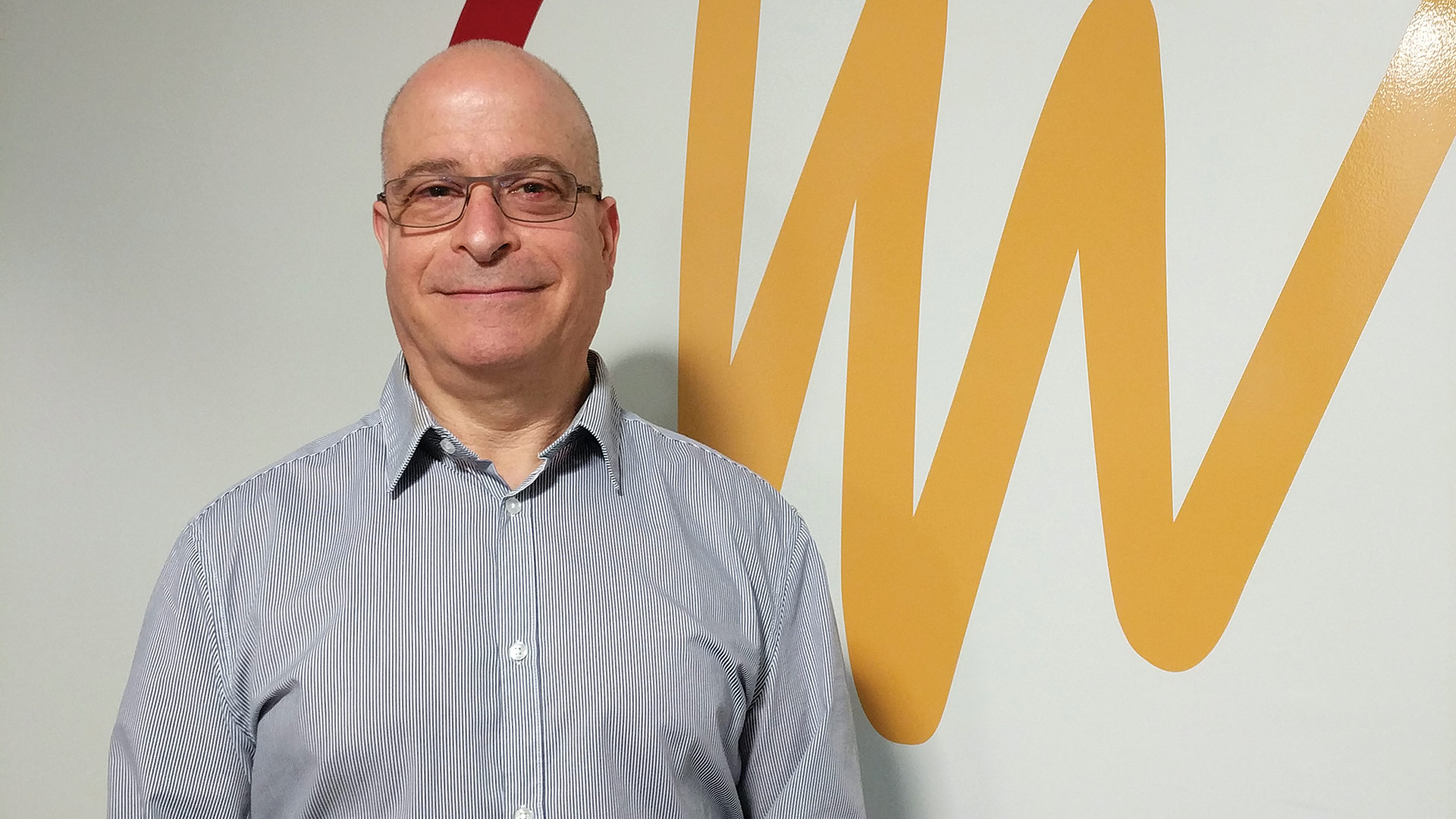
Education

Taking Center Stage

Frank DeMarinis stands in the balcony

Frank DeMarinis stands in the balcony overlooking the stage of the massive auditorium in what will soon be the new Springfield Conservatory of the Arts.

Frank DeMarinis understands that people frequently used the phrase ‘white elephant’ in association with the massive former Masonic temple on State Street.

What he could never understand is why.

Indeed, while many saw a property that was too big and too difficult to redevelop into something for the 21st century, he saw only potential.

“This is a piece of history — it is what you make of it,” said DeMarinis, owner of a number of businesses, with the lead being Westfield-based Sage Engineering & Contracting, adding that, when the property first came onto his radar screen and then into his possession (he acquired it for the bargain price of $100,000 from the church looking to unload it), he envisioned a boutique hotel to coincide with the arrival of MGM Springfield.

Those plans never materialized, but something different and with certainly greater implications for Springfield and its School Department did — conversion of the property into the new home of the Springfield Conservatory of the Arts, a magnet middle school and high school that, as the name suggests, offers an arts-infused curriculum and enables students to focus on their interest in the arts, whether they’re dancers, painters, musicians, or playwrights.

“The idea was to have a place for the kids who have an inclination for the performing arts to go to school,” said Conservatory of the Arts Principal Ryan Kelly, who arrived three years ago. “There’s now a place where singers and dancers and musicians can go to perform.”

At present, though, that ‘place’ — both schools are operating out of former Catholic schools, one in Indian Orchard (the middle school) and the other off Liberty Street — is limiting, and in all kinds of ways.

The middle-school students perform in the basement of a church, said Kelly, while the high-school students perform in an old gym that doubles as a music room.

“Everyone’s really excited to have a 21st-century arts building; this will be a tremendous showcase for the city.”

Things will change in a … well, dramatic way come September, when both schools move into what will be a state-of-the-art facility created out of the cavernous spaces within the old Masonic temple, including the huge, nearly 1,000-seat theater on its fifth floor, previously known as the ‘sanctuary,’ now undergoing a significant facelift.

“It’s an awesome facility — it’s going to be a great performance venue,” said Kelly, adding that the theater is just one of the facilities that represent a tremendous leap forward for the school and its students. Others include a black-box theater for drama classes, a large, modern dance studio on the same floor as the theater, a recording studio, a media center, a tech lab, state-of-the-art classrooms, and more.

Actually, there will be two of many of these facilities, one each for middle school and high school, said Kelly, adding that the former will be located on the first and second floors, and the latter on the third and fourth.

The much-anticipated opening this fall will put a bright spotlight not only on the Conservatory of the Arts, which has enjoyed steady enrollment but should get a significant boost with this new facility, but also on one of Springfield’s forgotten architectural gems.

The Masonic temple has been vacant and unused for years now, said DeMarinis, adding that it had fallen into a significant state of deterioration by the time he acquired it. The exterior has been preserved, but the interior has been largely gutted and significantly altered — entire floors have been added — to repurpose the landmark for its new use.

The Masonic temple on State Street

The Masonic temple on State Street has been mostly vacant and unused for many years, but it will now play a leading role in Springfield’s future.

For this issue and its focus on education, BusinessWest toured the work in progress that is the new Conservatory for the Arts to get a feel for how a big piece of the city’s past will play a large and intriguing role — that’s another arts-industry term — in the future of the community and the students who come through the facility’s doors.

Development of Note

As his tour stopped in what will be the teacher’s lounge, located on one of the upper floors of the new Conservatory of the Arts, DeMarinis pointed out the recently added windows on the west wall and, more specifically, the view they provide.

“You can see all of downtown Springfield,” he said, pointing out several of the landmarks, including the MGM casino.

With that, he noted that his original idea for the Masonic temple, a boutique hotel targeted toward high rollers, would have been an intriguing addition to the business landscape and, in his view, an almost-certain success story. He said he had some regret that those plans never materialized, but not much, because of what has emerged instead.

Flashing back roughly five years, DeMarinis said he was looking for his “next project” when the Masonic temple caught his attention, primarily because of its proximity to downtown Springfield and the announced site of the MGM casino.

There were already several ventures in his portfolio, including everything from the various Roots facilities in Westfield — an aquatic and fitness center and indoor and outdoor soccer fields among them — to an independent-living facility in Suffield to several distribution centers, including one for Utz potato chips. The temple offered the promise of further diversification.

“I toured the facilities, and it was in absolute shambles,” he recalled. “That’s why I picked it up really cheap.”

More than $1 million in cleanup later, including remediation of an asbestos-laden boiler room, DeMarinis was ready to look at potential opportunities.

One came his way with a request for proposals from Springfield school officials who acknowledged that a new home was needed for the school for the arts. They desired a location downtown, in or close to the “theater district,” as DeMarinis called it, a facility that would have state-of-the-art facilities and ample room for the school to grow.

DeMarinis said he had all that in the Masonic temple, and he also had a pricetag that others couldn’t approach because of the bargain price he paid for the property.

“It was a change of plans, but you adjust accordingly,” he said of his vision of the property. “I felt it was a much safer investment to work with the city.”

But getting the 88,000-square-foot, century-old temple ready for prime time has been a two-year process laden with challenges, from creating parking where there was none — a three-story garage was built behind the facility with room for 50 cars — to gutting and rebuilding the massive auditorium at the top of the building, to adding more than 100 windows to let natural light in.

The new facilities represent a quantum leap forward for the arts school, said Kelly, adding that he expects the new home to spark a rise in enrollment — the middle school is at or near capacity, but the high school is not — and also create much better learning and performance opportunities.

Ryan Kelly, principal of the Springfield Conservatory of the Arts

Ryan Kelly, principal of the Springfield Conservatory of the Arts, says the new facility will provide state-of-the-art learning experiences for students.

“It’s a real step forward,” he told BusinessWest. “The students will have real performance space, and we’re going to have full science labs, the auditorium for shows, a sound and recording room, a room with a greenscreen so we can make videos and newscasts … the facilities allow the teachers and the students to be more creative and express themselves more.

“We’re very much limited where we are,” he went on. “And now, the limitations will mostly be gone, so I’m really excited to see what the students can do with all this.”

To showcase the new school and reach full capacity (420 students, with current enrollment at roughly 350), Kelly said he’s forging plans to have fifth-graders, and perhaps parents as well, attend performances starting in the fall.

He believes the new building, and the learning experiences it creates, will inspire arts-oriented students to think about careers in that broad field and give themselves the best opportunity to pursue them.

“We figure that, if we bring them into the school, put on a show, and let them see the place, that should increase enrollment,” he said. “Everyone’s really excited to have a 21st-century arts building; this will be a tremendous showcase for the city.”

Show of Force

Referencing the current performance venues — the church basement and old gym — Kelly said they are woefully inadequate for what the school for the arts is trying to do with and for its students.

And that’s why the new facility is so important.

“It will enable them to be completely creative and just be released, and we’re really looking forward to that,” he explained.

Meanwhile, the Masonic temple is also being released. For decades now, it has been relegated to being a part of the city’s past, and, yes a white elephant.

Now, it has a starring role in the future of this intriguing school.

George O’Brien can be reached at [email protected]
Women in Businesss

Women Supporting Women

Meghan Rothschild

Meghan Rothschild

When Meghan Rothschild launched Chikmedia as a two-woman operation five years ago, she was determined to build a successful marketing firm that focused heavily, if not exclusively, on women and brought a fierce attitude and a sense of fun into the work. Five years later, as the head of a small team with an ever-growing clientele, she says those philosophies haven’t changed — nor has the need for a company that reminds women of the power they wield when they lift each other up.

Marketing has come a long way in the 21st century, Meghan Rothschild says, in ways many companies struggle to understand.

Take social media.

“When we first started, social media wasn’t what it is today — it was something that businesses absolutely used, but it wasn’t this intricate skill set you have to educate yourself about in order to be up to date on the latest trends. That’s been one of the biggest advances,” said Rothschild, whose marketing firm, Chikmedia, recently celebrated its fifth anniversary.

“We’ve learned how to use social media from a business perspective in a really successful way,” she went on. “Our social-media management is much more comprehensive, and includes graphic design and creating custom content, and using the live features and story features on all the platforms. That’s evolved quite a bit. But other things about this business are the same, like writing press releases and helping people have grand openings at their businesses.”

“You have all these places that have ample budgets, or have a staff person dedicated to marketing. We like to work with the companies that don’t have that. Marketing is such an important part of business ownership that people forget about.”

Chikmedia is unique in other ways, though. For one, Rothschild — who gives herself the title “chief badass” — says she started the business to put an emphasis on female-run organizations and women business owners with an “edgy, fierce, and authentic” approach.

At its inception, Chikmedia focused mostly on social media, graphic design, and public relations. However, the firm has expanded its services outward, with branded events (more on that later) and a series of educational workshops that aid businesses with social media, personal branding, PR 101, and crisis management, to name a few topics.

While not all clients are female-run companies, the average client, Rothschild explained, is a woman who owns a small to medium-sized business who isn’t sitting on a six-figure marketing budget and, therefore, needs to be creative with her efforts.

“We sort of thrive in that space, finding unique and creative ways to engage audiences that aren’t going to cost you $100,000,” she said. “You have all these places that have ample budgets, or have a staff person dedicated to marketing. We like to work with the companies that don’t have that. Marketing is such an important part of business ownership that people forget about.”

Among its newer clients are the region’s new Futures Collegiate Baseball League team, the Westfield Starfires. Chikmedia also worked with Square One, a Springfield nonprofit that provides a range of early-education and support services, in launching a new service line that expands childcare to all hours of the day. The company has also partnered with Dunkin’ Donuts in sponsoring several events.

In short, it’s a varied clientele, which means a lot of education going both ways.

It all feeds into a “fierce” attitude she further describes as “bold, empowering, having confidence, and positioning clients in a way that they are the experts on their subject matter.”

In fact, Rothschild said, empowering women is at the core of everything she does, having been harassed and encountered inappropriate treatment many times in the corporate world — and not only by men.

Educational workshops

Educational workshops have become a staple of Chikmedia’s services — and a way to put more autonomy in clients’ hands.

“It’s one thing to walk into an environment and not be supported by your male peers, but to encounter that from your female peers is really something. It’s frustrating,” she said. “I said, ‘this is going to stop with me. I’m going to start a company whose mission and sole purpose is women lifting each other up instead of tearing each other down.’

“As a culture,” she went on, “it’s really easy for us to give each other a hard time and drag each other down and be super competitive, but we want to be the complete opposite of that — women supporting women.”

Choosing a Path

Rothschild had been in marketing for eight years — with stints as marketing and promotions manager at Six Flags, development and marketing manager at the Food Bank of Western Massachusetts, and director of marketing and communications at Wilbraham and Monson Academy — when she teamed up in 2014 with Emily Gaylord, who brought a strong design skillset to the partnership they called Chikmedia.

With about two dozen clients coming aboard in the first few months, including Bueno y Sano, UMass Dining, Papa John’s, ArchitectureEL, Energia Fitness, SkinCatering, and Lioness magazine, they were, frankly, overwhelmed with the early response and realized they had something that was more than a “side hustle,” as Rothschild put it.

Gaylord eventually left the company to pour more of her time and passion into the Center for EcoTechnology, where she works as Communications and Engagement director. Meanwhile, Rothschild was balancing ownership of Chikmedia with a full-time gig at IMPACT Melanoma. A survivor of the disease who had built a national platform for skin-safety advocacy, she was working for IMPACT as Marketing and Public Relations manager when he realized she had to make a choice.

“I spent about four years at IMPACT, and last year, the success of Chikmedia was getting to the point where it wasn’t sustainable — I couldn’t do both. And I felt like Chikmedia was the right path.” Today, she still serves as a spokesperson for IMPACT, which is among Chikmedia’s clients.

As the company has grown its client base, Rothschild said, so has its emphasis on education and training, both one on one with clients and in the community.

“We’ll do a training for anyone. We did one-hour training for a client on Constant Contact; she was new to the software, so she brought me in, and I walked her through,” she recalled. “If you have someone in your office that’s supposed to be managing Instagram and they don’t know how to use it, instead of giving them a month or two months to learn all the intricacies of it, bring us in for an hour, and we’ll educate them on what to do. That way, we’re putting the power back into corporate hands. A lot of people would love for us to manage their social media, but it’s not the most cost-efficient thing as opposed to us coming in and training your staff how to do it.”

“I’m going to start a company whose mission and sole purpose is women lifting each other up instead of tearing each other down.”

She also teaches personal branding and social media at Springfield College, calling education a “side passion” alongside marketing and helping firms grow. Often, she takes what she’s done in those classes and packages the material into condensed workshops for clients and other audiences, like a three-part series she recently conducted on navigating one’s personal brand — what it is and why it’s important.

“It’s super relevant,” she said. “Think about social media. Even though universities are starting to adapt, starting to insert it into the curriculum, it’s definitely not a standard part of the curriculum. So I’m helping to fill that void until everyone catches up.”

While teaching, though, she’s often learning — specifically, about each client and industry she takes on.

“Our specialty is learning the industry, and we’re working with everything from financial investment firms to UMass Dining, Dunkin’ Donuts, local spas like SkinCatering and Beauty Batlles, nonprofit organizations, event-planning companies … we’re sort of a mix. I always say to clients, if we don’t know something about this subject matter, we’re going to learn it.”

She tries to be honest with each potential client, too. “I’ve had people come to me and say, ‘this is what I need,’ and I’ve said, ‘I don’t think we’re the right fit for you; I think you should go to XYZ.’ Or, ‘I don’t think you’re ready for marketing yet; I think you should see a business advisor first.’ We’re not going to put a square peg in a round hole. We want the right fit.”

Fun with a Purpose

In all those efforts, she’s also passionate about keeping the emphasis on making marketing and branding fun. When BusinessWest sat down with Rothschild and Gaylord five years ago, after the launch of Chikmedia, they said if they’re another stressor in a client’s day, they’re not doing their job right. Today, as the sole business owner, Rothschild has not abandoned that philosophy.

“I can be hard to stay true to that because, as an entrepreneur, you’re trying to stay afloat and get all the work done. But I made a promise to myself when I made this a full-time job I was going to continue that path and have fun in everything I do. You spend the majority of your waking hours at work; you’d better enjoy what you do and be passionate about it.”

Ashley Kohl, owner of Ohana School of Performing Arts

Ashley Kohl, owner of Ohana School of Performing Arts, was one of many women business owners show-cased at Chiks’ Night Out.

Part of that sense of fun comes out during the firm’s branded events, such as Chiks’ Night Out event, which took place in Springfield in March to promote the spring line of Addy Elizabeth, a chic clothing boutique.

“All the focus is on women entrepreneurs, so all the models and sponsors are women entrepreneurs. We’re not calling them models, but women business owners. When they walk on runway, we describe their outfit — and their business. So women are learning what women on the runway have to offer them in terms of services.”

Then there’s a bus tour called Chiks’ Day Out, a sort of shopping trip where every stop is a female business.

“That’s how our events are positioned,” Rothschild said. “We want leave them tingling, saying, ‘oh my God, there’s such a need for this — for women to connect in a fun way.’ It creates a sense of community.”

Chikmedia promotes connections through its strong social-media presence as well, on platforms like Facebook and Instagram, as well as its own blog — not to mention its line of branded merchandise, like T-shirts emblazoned with phrases like ‘Boss Chik.’

“I see women wearing our T-shirts, hats, and sunglasses, and I’m not sure if there’s another local firm that has that kind of presence,” she told BusinessWest. “I really am proud of that, how we’ve been able to leverage our own brand to help our clients.”

Besides its core team of four in Western Mass., Rothschild has an intern in Providence, a part-time accountant, and contractors spread out over its service areas, which extend beyond this region into Boston, Cape Cod, Rhode Island, and Charlotte, N.C. In today’s high-tech world, she said, there’s plenty a company can do remotely for clients, although she needs to be in front of them for certain tasks, like running events and producing video content for social media.

And there’s plenty of room for the firm to grow, she noted, adding that its success in its first five years has been a gratifying challenge — in every sense of both words.

“I’d be lying if I didn’t I say I enjoy being my own boss,” she said. “Of course, as an entrepreneur, you say, ‘I’m going to manage my own schedule and take vacations,’ and the reality is you never take vacations. Even when you go on vacation, you’re on the phone. When you’re a business owner, you’re the business. It’s my burden to bear; its not someone else’s. It’s not someone telling me to do something; it’s me being accountable to myself.”

Still, she added, “I love marketing and PR, I love social media, I love writing. Having control of my own company makes me happy, and my team makes me happy — they’re smart, awesome people. I genuinely love what I do.”

Joseph Bednar can be reached at [email protected]
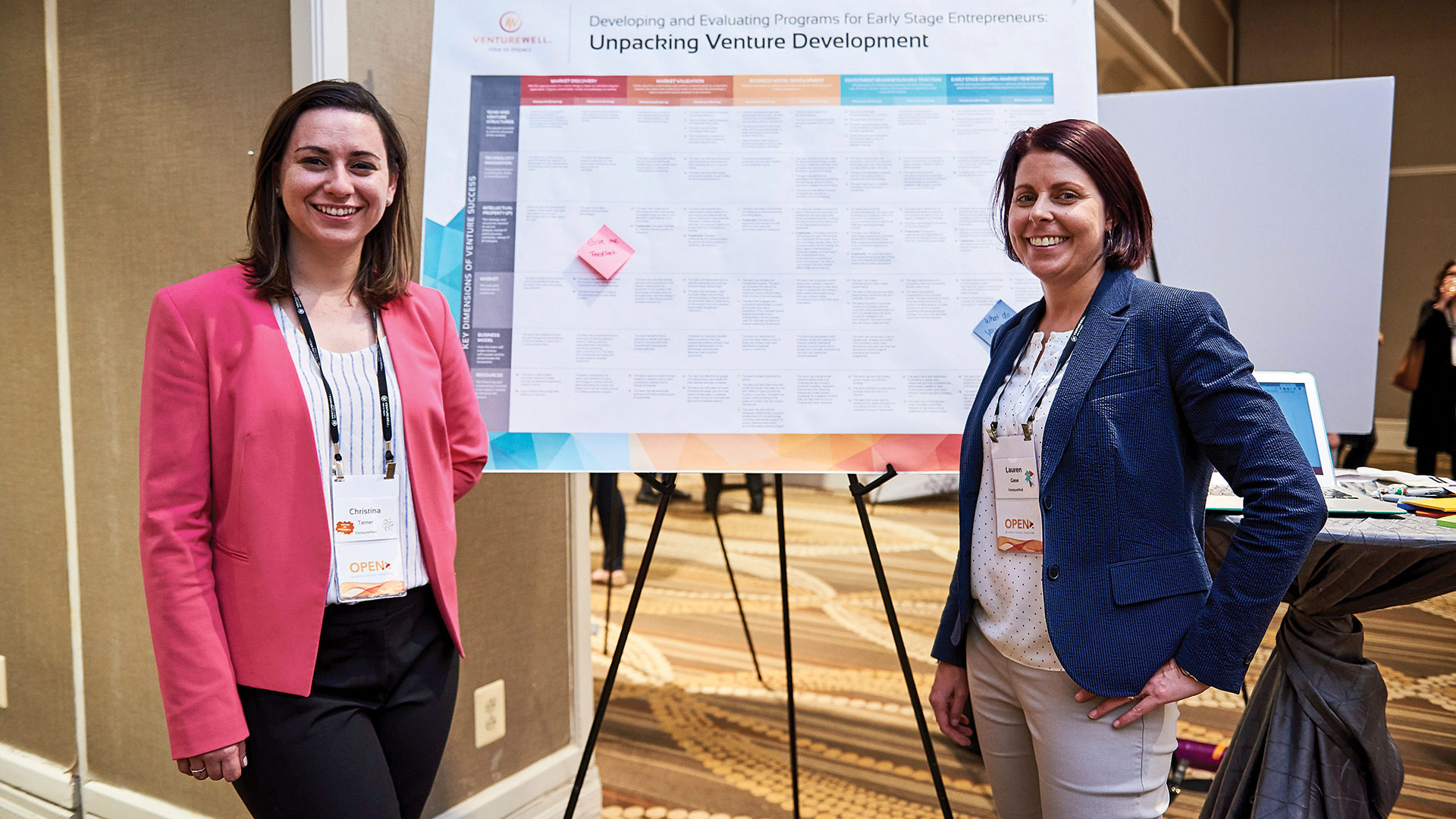
Education

Building a Pipeline

Joe Marcelino with some of the 90 devices on the machining floor of the center’s 2017 expansion

Joe Marcelino with some of the 90 devices on the machining floor of the center’s 2017 expansion.

With much of the manufacturing workforce starting to age out and a dearth of young people entering the field, companies have been struggling for some time to find the skilled employees they need to grow. One successful model changing the equation is the Advanced Manufacturing Technology Center at Asnuntuck Community College, which is placing students with a one-year certificate to work in good-paying careers — while meeting area companies’ critical talent needs. It is, in short, a true win-win.

When Joe Marcelino spoke to a group of Hartford Public High School students recently, he came armed with some numbers — and a common-sense pitch.

Among the numbers was the starting salary for students who earn a one-year certificate at Asnuntuck Community College’s Advanced Manufacturing Technology Center (AMTC): typically, in the $45,000 to $50,000 range, and sometimes higher.

The pitch involved the country’s student debt crisis.

“I stressed to them that the opportunity coming through our program is priceless because a lot of the manufacturers actually pay for their continued education,” said Marcelino, an instructor at the center. “So not only do you come out of our program with a decent income, but you have the opportunity to go to school at night without debt — and student debt really follows you.”

The main pitch, of course, is the job itself, and how the center has partnered with manufacturers — in both Connecticut and Massachusetts — to create work opportunities for both young people and career changers, and address what has been a persistent lack of qualified employees these companies need to grow.

“We can almost promise you a job coming out of our program,” Marcelino said, “while if you get a four-year degree in, say, English, you might not have a job coming out — but you’ll have all that debt.”

The Advanced Manufacturing Technology Center at ACC has been around for 20 years, but it received a major overhaul two years ago with the opening of a 27,000-square-foot addition, more than doubling its space. It includes an 11,000-square-foot machining lab with 90 computerized numeric control (CNC) and manual machines, an additive-manufacturing lab equipped for both plastic and metal 3D printing, a metrology lab featuring computerized measuring machines, and state-of-the-art computer labs — and a whole lot more.

“I stressed to them that the opportunity coming through our program is priceless because a lot of the manufacturers actually pay for their continued education.”

But the center’s most impressive offering may be those partnerships with area manufacturers, who have guided ACC in crafting the certificate program as a way to get skilled workers in their doors.

“With manufacturing booming in Connecticut again and all over the world, demand for skilled labor right now is really high,” Marcelino said during a recent tour of the facility with BusinessWest. “When I was in high school 25 years ago, a lot of the counselors and teachers were deterring us from getting into the trades. That’s partly why there’s such a shortage now in the industry.

“A lot of contracts are being signed by some of our largest manufacturers, like Pratt & Whitney, Sikorsky, and Electric Boat,” he went on, “but because of what was happening 25 years ago, there’s a shortage now because a lot of people are leaving the industry and there’s nobody qualified to fill these positions.”

Normally, advanced manufacturers are looking for people with three to five years of experience. But ACC students are interning during their second semester and being hired for jobs immediately after, at good salaries. The reason is that the curriculum is customized according to industry needs.

Mary Bidwell

Mary Bidwell said the national conversation is changing around student debt and careers — like many in manufacturing — that don’t require massive loads of it.

And that foundation, he explained, is something companies can build on, hiring certificate holders, further training them up, and often providing additional education opportunities along with that full-time paycheck.

“A lot of the companies we partner with pay tuition reimbursement, so it’s a real win-win,” said Mary Bidwell, interim dean of the AMTC. “You can get a certificate, start working, and chip away at a degree.”

That makes sense at a time when exploding college debt has become a worrisome economic drain, and a national story.

“The conversations are changing,” she said. “You don’t need all that debt. You can do this and still get that engineering degree later; a great engineer still needs the hands-on training in how a part is made and what the machines can do. In fact, engineers come here to take classes.”

And that certificate doesn’t even need to result in a job on a manufacturing floor, she added, noting that some have used the training, and continued education, as a springboard into manufacturing sales, teaching, and management, to name a few pathways. “We give them a good, rounded foundation where they can get a career and then grow from there.”

A Different Floor

While perceptions are changing about today’s manufacturing floor, Bidwell said, there’s still some work to be done to get young people — and their parents, who grew up with different ideas — interested.

“A lot of parents, when they think of manufacturing, think of a dark, dingy, dirty environment, so when they hear their kids want to go into that, they say, ‘no, don’t do that.’ They haven’t seen manufacturing as it is today. It’s very clean and technology-driven. And from where you start to where you can advance is unbelievable.”

That’s the message ACC is sharing not only with parents, but with guidance counselors and teachers, some of whom are invited in during the summer to see the facility and learn about career opportunities. “It’s about educating the people who educate the students,” she explained.

Those efforts are working. While student ages can range from 18 to 65, the average age at the center during the Great Recession, when many more people were looking to switch careers, was around 45. Today, it’s 28.

The center’s mechatronics lab

The center’s mechatronics lab gives students experience in the growing world of robotics.

“We give them a great foundation to build upon,” Bidwell said, “and the pathway is there to do whatever they like.”

That foundation begins with a hands-on approach to learning the machinery and techniques — from 3D printers, lathes, and surface grinders to welding and robotics labs, Marcelino said. And it’s a healthy mix of manual and CNC machines.

“The companies tell us the students still need to know the old-school skills; they need that foundation in order to make the transition into the CNC world, which are machines you write a program for in a computer, and then set up the machine to run the part for you. You need to know both ways.

“There’s no such thing as close enough in this industry,” he added. “The parts have to be made right. Precision is precision. I like to call this a work-ready program because our job is to get them the skills to get them a job.”

Those skills include — actually, the center emphasizes — ‘soft skills,’ especially punctuality.

“We’re really high on attendance and punctuality because that’s what the employers say is the biggest issue they have,” he said. “The other big issue we’ve been encountering is cell phones. Cell phones are a big distraction. We don’t allow them in class or in the shop. Some employees don’t even want them in the building, so we implement that here.”

Those second-semester internship opportunities — two days a week, with the other three days spent back at Asnuntuck — are based partly on grades, but mostly on attendance.

“The employer gets to feel out the student, and the student gets to feel out the company, and they’re getting a real training in what they’ll be doing,” Marcelino said. “Ninety percent of the time, that ends in a job offer. So we’re doing a lot of the training for the companies, and that’s what the companies are looking for. When they hire off the streets, the employees don’t always get it.”

Even in a healthy economy, the AMTC still attracts a good number of mid-life career changers who see opportunities they don’t have in their current jobs. Meanwhile, high-school students can take classes at ACC to gain manufacturing credits before they enroll, and a second-chance program gives incarcerated individuals hands-on experience to secure employment once they’re eligible for parole.

It all adds up to a manufacturing resource — and, thus, an economic driver — that has attracted plenty of public funding from the state and from Aerospace Components Manufacturers, a regional nonprofit network of aerospace companies that has long supported the center’s mission, most recently with a $170,632 donation on May 15. The investment arrives, Marcelino said, because the results of the program are evident.

“Students aren’t going to learn everything, but they’re going to have that foundation they need to make an impact right away in the industry,” he explained. “They’re getting the basic skills. There are programs out there that specialize in this or specialize in that. But in our program, we’re giving them a little bit of everything.”

Demand Continues

From what he hears from companies that partner with ACC’s Advanced Manufacturing Technology Center, Marcelino doesn’t expect any dip in opportunity for students — young and old — who want to explore the modern manufacturing world.

“We can’t keep up with the demand employers have, which is a good problem to have,” he told BusinessWest. “We just need to keep getting the word out about the opportunities in manufacturing. People think, ‘manufacturing, oh, it’s dirty, oily, stinky,’ but times have changed. Technology has changed. And as technology changes, more doors open. The medical industry for machining is booming right now.”

That said, it’s not an easy job, although, for the right candidate, it is a rewarding one.

“They have to want to be here. It’s not for everybody, and you’ll get out of it what you put in,” he said. “I’m a firm believer that the program works, but you have to want it. But the ones that do, they take off. It’s phenomenal what they do.”

Joseph Bednar can be reached at [email protected]
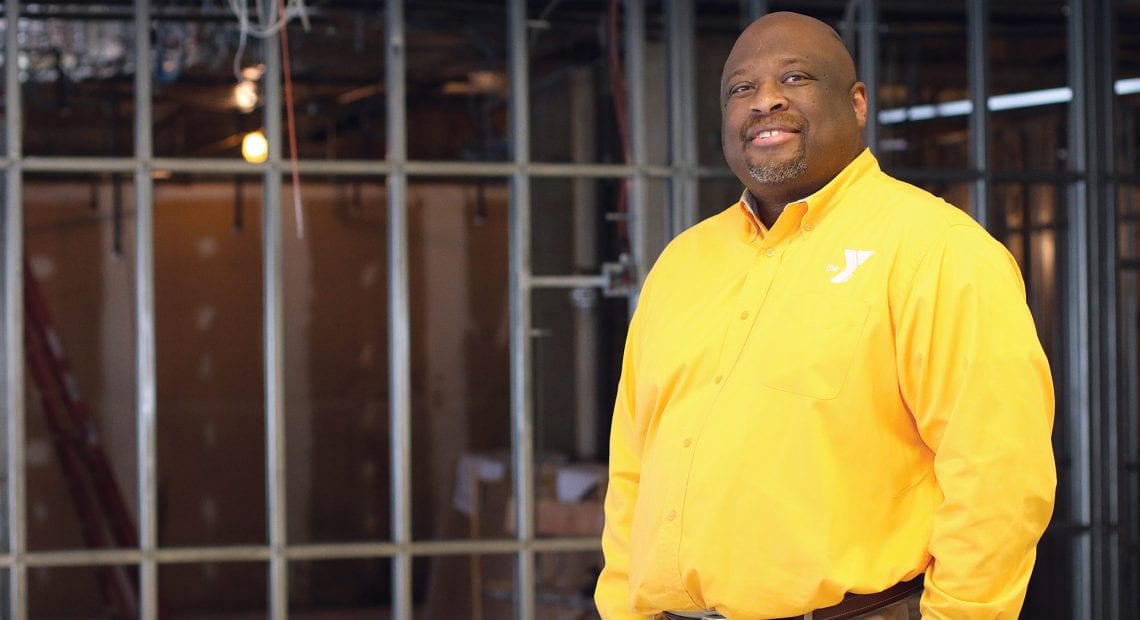
Features

Getting Creative

Kristin Leutz

Kristin Leutz says the inaugural Innovation Fest will provide a solid foundation on which to build.

HUBweek in Boston. Denver Startup Week. The Tom Tom Summit & Festival in Charlottesville, Va. South by Southwest in Austin, Texas.

These are just a few of the many highly successful and very well-attended entrepreneurship and innovation events now taking place across the country.

Some of them go on for a few days, others for a whole week, as their names make clear, said Kristen Leutz, executive director of Springfield-based Valley Venture Mentors (VVM), who has been to Startup Week and will likely attend some of those other gatherings in the months and years to come as she seeks to learn more about entrepreneurship ecosystems, how they work, and how they can be developed and expanded.

For right now, though, she’s busy putting together the latest addition to that list of summits. It will be called the Springfield Innovation Fest, or SIF for short, although its probably too early for an acronym to take hold.

Indeed, Leutz and her team at VVM are essentially starting from scratch and scrambling to pull things together for the June 12 event, to be staged at the Innovation Center on Bridge Street in Springfield. As she tells the story, those at VVM had been thinking about and talking about a summit — an event that would showcase this region’s burgeoning entrepreneurship ecosystem (and the many other things that are happening in and around Springfield) and take VVM’s Accelerator Awards banquet to a new and much higher plane. But they were initially focused on 2020, a round-number year with all kinds of meaning — until they decided not to wait that long to get the ball rolling.

“We decided to do this on a very short time frame,” she said. “Once we came up with the vision, we were all excited; we didn’t want to wait a another year. We said, ‘let’s lean into it and see what we can pull off.’”

Leutz told BusinessWest that the Springfield Innovation Fest certainly has a long way to go before it can be mentioned in the same sentence as those events in Boston, Denver, Central Texas, and Northern Virginia, but one has to start somewhere, create some buzz, and continually build on the foundation that’s been laid, and that is the very informal business plan for the festival.

“We decided to do this on a very short time frame. Once we came up with the vision, we were all excited; we didn’t want to wait a another year. We said, ‘let’s lean into it and see what we can pull off.’”

“Startup Week certainly wasn’t built in a day — or a week,” she said. “We want to see if we can gain some excitement and momentum for next year.”

The inaugural event, still very much in the planning stages, as noted, will feature a number of speakers, ample amounts of networking, and opportunities to get a taste of Springfield — figuratively and quite literally, with tours of the Springfield Museums and Fresh Paint mural art, as well as a visit to What’s on Tap Wednesday.

There are many goals for this year, said Leutz, listing everything from celebrating this region’s history of innovation and ‘firsts’ to recognizing the winners (and all the companies) in this year’s VVM Accelerator class, to moving the needle when it comes to putting Springfield and this region on the map as a startup and innovation hub.

“In the vein of these other festivals that showcase the startup and innovation economies, I thought that, given all that’s happening in Springfield, it was time for our own startup event,” she explained. “I want visibility for the work of entrepreneurship and innovation and how it affects our economy and how it affects traditional businesses as well as startups.

“The idea of being innovative goes beyond a startup company — it infiltrates everything that we do,” she went on. “Springfield is a city of firsts, and we really believe in that heritage and history, and we want people to see that it still is a city of innovation.”

For this issue and focus on business innovation, BusinessWest talked with Leutz about the launch of the SIF, what to expect this year, and where this summit can go in the years to come.

Summit Meeting

“How to Bootstrap the Bejeezus out of Your Startup.” “Think Like a Placemaker Transforming Neighborhoods.” “Future Forward: Live Better with Innovation in Healthcare.” “How to Help Female Founders Succeed (and Every Other Founder, Too).”

These are titles for just some of the presentations scheduled for the SIF, said Leutz, noting that they will cover two tracks — a startup track and an innovator track — and feature speakers that include both young entrepreneurs and leaders of several of the groups within that aforementioned entrepreneurship ecosystem.

And these presentations represent just one aspect of the festival, she went on, adding that there will be, as mentioned, several breaks for networking and collision-making, a showcase and lunch at which attendees can meet the VVM Accelerator and Summer Collegiate Accelerator startups as they showcase their businesses and compete for ‘VVM bucks,’ and also a pitch competition featuring the top five in the Accelerator and the awarding of prizes.

The full lineup is still very much a work in progress, even at this late date (remember, they started late), and the general ideas are to both call attention to the growing startup community and innovative energy in the region, and also give attendees something to take back home — whether that’s across the state or maybe cross-country (although that’s more likely to happen down the road).

This is the formula that those festivals mentioned at the top have followed, said Leutz, noting that many of them are works in progress as well.

That’s certainly the case with HUBweek, which was launched just three years ago, but now brings together attendees from 59 countries, 46 states, and 38 industries, according to the event’s website. Marketed as a gathering “where art, science, and technology collide,” HUBweek was founded by the Boston Globe, Harvard, MIT, and Massachusetts General Hospital, and its website describes it as “a giant petri dish welcoming impact-oriented artists, entrepreneurs, researchers, executives, makers, and up-and-comers. HUBweek brings together the curious, those building our future.”

Startup Week in Denver is in many ways similar, said Leutz, adding that she attended last fall’s festival and came away inspired to bring something with the same vibe, and energy, to the City of Homes.

“It was incredible,” she said, using that adjective to describe the scope of the show, the depth of the speakers, and the amount of planning and marketing that went into the event. “They had 1,000 applications for talks.”

While something to aspire to, these shows more importantly represent a model that can be replicated on a considerably smaller scale, she said, adding that, like the Boston show, she wants an event where worlds can collide, and, like Denver, she wants a “community-created event,” where people submit ideas for talks.

For this first show, organizers have put together a schedule of talks targeted toward entrepreneurs and would-be entrepreneurs, and ‘innovators,’ a broad constituency to be sure, said Leutz. Speakers, many of them still to be confirmed, include Christian Lagier, executive director of TechSpring; Mo Reed-McNally of the MassMutual Foundation, and Laura Masulis, transformative development fellow with MassDevelopment (they’re handling the talk on transforming neighborhoods); Bill Cole, leader of Living Local, and Tessa Murphy-Romboletti, director of SPARK EforAll Holyoke, who will lead a discussion titled “How to Revive Main Street”; and Daquan Oliver, president of WeThrive, the first-prize winner in last year’s VVM Accelerator Awards.

As for this year’s Accelerator class, it is smaller — by design (16 companies) — in order to provide more in-depth, customized support to the startups, said Leutz, adding that a smaller group enabled VVM to have a higher ratio of entrepreneurs in residence to startups.

Meanwhile, some of the cash traditionally handed out at the annual banquet as prizes has been awarded already in order to help the startups advance their ventures, said Leutz, adding that there is still plenty at stake at the June 12 showcase and final pitch.

All-day passes to the SIF are $50 each ($45 each for blocks of three or more), and potential attendees can buy an extra ticket so an entrepreneur can attend for free, said Leutz, adding that the admission charge is essentially to cover the cost of the event. Sponsorship opportunities are available, starting at $1,000. For more information, visit www.valleyventurementors.org.

Getting Started

Like the companies taking part in the VVM Accelerator, the SIF is essentially a startup venture, Leutz acknowledged, and one with considerable promise to grow well beyond its current size and scope.

It will likely never be on the same level as HUBweek or Denver Startup Week, but like those other events, it provides an opportunity to bring several worlds together and spark more innovation.

SIF is not part of the local lexicon yet, but Leutz and her team believe it soon will be.

George O’Brien can be reached at [email protected]

Law

Paid Family and Medical Leave

By John S. Gannon, Esq. and Amelia J. Holstrom, Esq.

John S. Gannon

John S. Gannon

Amelia J. Holstrom, Esq.

Amelia J. Holstrom

Businesses have had almost a year to prepare for the implementation of Paid Family and Medical Leave (PFML) in Massachusetts. Still, many questions remain, and the first critical date — July 1 — is right around the corner.

Here are five things that should be at the top of your to-do list as employers in the Commonwealth prepare for PFML.

Decide How to Handle Tax Contributions

PFML is funded through mandatory payroll contributions that begin on July 1. Currently, the contribution is set at 0.63% of an employee’s eligible wages. Because PFML covers two types of leave — medical leave and family leave — the state Department of Family and Medical Leave (DFML) has attributed a portion of the contribution (82.5%) to medical leave and the remainder (17.5%) to family leave. As if that wasn’t confusing enough, employers are permitted to deduct up to 100% of the family-leave contribution and up to 40% of the medical-leave contribution from an employee’s pay. Employers with 25 or more employees are required to pay the rest.

Although employers can pass on a lot of the contribution to the employee, businesses should consider whether to pay a portion, or even all, of the employee’s portion. When doing so, employers should consider the impact on morale, whether an employee is more or less likely to use the leave if they are paying for it, and whether the employer can afford to do more.

Provide the Required Notices

Employers are required to provide notice to employees about PFML on or before June 30. Two separate notices are required — a workplace poster and a written notice distributed to each employee and, in some cases, independent contractors. The mandatory workplace poster must be posted in English and each language that is the primary language of at least five individuals in your workforce if the DFML has published a translation of the notice in that language. Posters are available on the DFML website.

“It goes without saying that employees will have less incentive to return to work once PFML goes live. This undoubtedly will increase the amount of time employees are out of work.”

The written notice must be distributed to each employee in the primary language of the employee and must provide, among other things, employee and employer contribution amounts and obligations and instructions on how to file a claim for benefits. Employees must be given the opportunity, even if provided electronically, to acknowledge or decline receipt of the notice. The DFML has issued a model notice for employers to use.

Employers must get these notices out by June 30, but also within 30 days of an employee’s hire. Failure to do so subjects an employer to penalties.

Consider Private-plan Options

Employers who provide paid leave plans that are greater than or equal to the benefits required by the PFML law may apply for an exemption from making contributions by applying to the DFML. Employers can apply for an exemption to family-leave or medical-leave contributions, or both. Private-plan approvals are good for one year, and, generally, will be effective the first full quarter after the approval.

However, the DFML has made a one-time exception for the first quarter — July 1 through Sept. 30. Employers have until Sept. 20 to apply for an exemption, and any approval will be retroactive to July 1. Employers should consider whether this is a viable option for them before employees can begin taking leave on January 1, 2021.

There are benefits to doing so, but employers should consider the potential cost. If an employer chooses to self-insure its private plan, it must post a surety bond with a value of $51,000 for medical leave and $19,000 for family leave for every 25 employees. Employers may also have the option to purchase a private insurance plan that meets the requirements of the law through a Massachusetts-licensed insurance company.

Review Current Time-off and Attendance Policies

The principal regulator of frequent leaves of absence is the fact that employees are not getting paid for this time away from work, absent company provided paid time off like sick or vacation time. Once those company-provided benefits are used up, the employee is not getting a paycheck.

Naturally, this gives employees motivation to get back to work and on the payroll. Unfortunately, when Jan. 1, 2021 comes around, businesses will lose this regulator as PFML will be paid time off, up to a cap of $850 per week (and up to a whopping 26 weeks of paid time off per year).

It goes without saying that employees will have less incentive to return to work once PFML goes live. This undoubtedly will increase the amount of time employees are out of work. Therefore, businesses should be reviewing their current time-off and attendance policies to determine whether changes should be made in light of this forthcoming law. Are you providing too much paid time off already? Should you develop stricter requirements surrounding absenteeism and employee call-out procedures?

The time is now for discussing these changes as modifications to leave and attendance policies take time to think through and implement.

Plan for Increased Staffing Challenges

Many businesses and organizations throughout the region are currently dealing with significant staffing difficulties due to historically low unemployment rates. This challenge is only going to increase when the leave protections of PFML kick in on Jan. 1, 2021.

We recommend that employers try to get out in front of this by having meetings and possibly forming committees tasked with planning for expected workforce shortages. Consider increasing per-diem staff as regular staffers are likely to have more time off and call-outs from work. Consult with staffing agencies to explore whether temporary staffing will be an option if (and when) employees take extended PFML. Whatever you do, don’t wait until late next year to address potential staffing problems.

Bottom Line

PFML is certainly going to be a challenge for employers to deal with, particularly smaller employers who are not already familiar with leave laws like the federal Family and Medical Leave Act. Although it may seem as though the sky is falling on employers, with proper and careful planning and guidance from experts, transitioning into the world of PFML should be reasonably manageable.

John S. Gannon and Amelia J. Holstrom are attorneys with Skoler, Abbott & Presser, P.C., one of the largest law firms in New England exclusively representing management in labor and employment law. Gannon specializes in employment litigation and personnel policies and practices, wage-and-hour compliance, and non-compete and trade-secrets litigation. Holstrom devotes much of her practice to defending employers in state and federal courts and before administrative agencies. She also regularly assists her clients with day-to-day employment issues, including disciplinary matters, leave management, compliance, and union-related matters; (413) 737-4753; [email protected]; [email protected]

Law

Navigating Short-term Rentals

By Ryan K. O’Hara, Esq.

Ryan K. O’Hara

Ryan K. O’Hara

Maybe you’ve spent a lazy July week with your family in a cottage overlooking Cape Cod Bay.

Maybe you’re letting Janice from work use Grandma’s cabin in Otis for a long fall weekend – you weren’t going to use it then anyway, and who would say no to an extra $200?

Maybe you’ve temporarily filled your empty nest with an Angolan physicist and a Chilean biologist attending a two-week academic conference put on by the Five Colleges.

Whatever the specifics, without actively realizing it, many Massachusetts residents have been party to a short-term rental (that is, a temporary rental of a living space that isn’t in a hotel, motel, lodging house, or bed and breakfast).

While short-term rentals are nothing new, they have become much more prevalent with the rise of entities like Airbnb. Short-term rentals can be an exciting source of income, and powerful online tools have made participation in the market easier than ever. Together with that increased participation, however, comes increased regulation.

Airbnb, Vrbo, and other companies like them act as third-party platforms where property owners can list premises for rent, and prospective renters can find a place that meets their needs. Both renters and property owners can now enter the market and operate with relative ease and informality. The market has also expanded to include a wide range of rental offerings — not only traditional houses and apartments, but also cottages, cabins, “micro” homes, campers, and even letting out vacant rooms in owner-occupied homes.

“While the notion of creating an online account and letting the rental income flow is very appealing, property owners should be aware that there is much more responsibility involved than a first glance at a website might suggest.”

While the notion of creating an online account and letting the rental income flow is very appealing, property owners should be aware that there is much more responsibility involved than a first glance at a website might suggest. Particularly in areas where the rental property is in close proximity to non-renting neighbors, conflicts and complications can arise.

Neighbors worry about vetting the renters, frequent turnover, and increased noise, traffic, and litter from transient visitors who don’t have the same investment in the neighborhood as those who live there. State and local governments are concerned with the number and density of rentals, the loss of tax revenue through unreported rental income, and the movement of customers away from traditional lodging options like hotels (and the excise-tax revenue that comes with them).

In response to these concerns, in December 2018, Massachusetts enacted “An Act Regulating and Insuring Short-Term Rentals” (Mass. Acts 2018, c. 337). This law defines short-term rentals, establishes and imposes obligations on both owners and renters, and empowers local governments to regulate short-term rentals on a town-by-town basis. The act goes into effect on July 1, making it critical that anyone interested in the short-term rental industry familiarize themselves with this new law.

The first thing to understand is whether your property is covered by the act. The act applies to any property that is not a hotel, motel, lodging house, or bed-and-breakfast establishment, and where at least one room or unit is rented, and all rentals are reserved in advance. The next question is whether a specific rental is in fact a short-term rental. Owners beware: if the space is rented for more than 31 calendar days to a given renter, it is no longer a short-term rental, but a residential tenancy, which carries vastly different obligations and duties.

If your property constitutes a short-term rental within the act’s definitions, you are considered an ‘operator,’ and are obligated to register with the Department of Revenue, file special tax returns showing rental income, and pay a 5% state excise tax on rents received. Cities and towns can also choose to impose an additional excise tax of up to 6% (or 6.5% for Boston properties). For Cape and island towns and cities, an additional 2.75% excise tax may be added.

The act also authorizes cities and towns to pass ordinances or bylaws regulating operators. These regulations may, among other things, limit the existence, location, and/or number of operators and the duration of rentals; require local licensing and registration; require health and safety inspections; or even prohibit future rentals where violations are found. Operators must consult with town authorities before operating any short-term rental, to ensure compliance with local regulations.

Per the act, operators must maintain liability insurance of $1 million or greater to cover bodily injury and property damage relative to each short-term rental, unless the rental is offered through a platform such as Airbnb or Vrbo that has equal or greater coverage. Operators must also notify their own property insurer that they will be operating a short-term rental at their premises.

Finally, the act makes clear that Massachusetts’ anti-discrimination statute applies to short-term rental operators. Any unlawful discrimination could expose operators to significant liability. For this reason, it may be advisable for operators to obtain training and legal advice on housing and rental discrimination.

Operating a short-term rental business can be a profitable endeavor that carries less expense and exposure than operating traditional, long-term residential rentals. However, it is vital that any operator understand and abide by the laws and regulations that govern this growing industry. Those who arm themselves with knowledge — whether by reviewing the law on their own or consulting legal counsel familiar with the industry — give themselves a fantastic chance at profitability and success with minimal complications.

Ryan K. O’Hara is an associate with Bacon Wilson, P.C. and a member of the firm’s litigation team. His legal practice is focused on contract and business matters, landlord-tenant issues, land-use and real-estate litigation, and accidents and injuries; (413) 781-0560; [email protected]

Women in Businesss

Exchange of Ideas

President Carol Leary (right) and other Bay Path leaders

President Carol Leary (right) and other Bay Path leaders with the group of visitors from Jissen Women’s University in Tokyo.

Bay Path University has a long history of forging paths for women to work together, and this year that involved helping students cross oceans and continents to learn from one another.

Six students from Jissen Women’s University in Tokyo, Japan recently ventured to Bay Path to partake in a week of learning, adventure, and cultural interchange as a part of a new hybrid exchange program between the two universities. Bay Path was selected as one of only two U.S. institutions to take part as part of the TEamUP project pairing U.S. and Japanese institutions together to develop a dual hybrid exchange program and Collaborative Online International Learning (COIL) course.

During their weeklong stay, students from Jissen were able to visit the Bay Path campus, where they met with students, took in a student theater production, and had tea with Bay Path President Carol Leary. They also visited New York City, Boston, Northampton, the Springfield Museums, LEGO, and Yankee Candle, and ended their trip at the Bay Path Women’s Leadership Conference and a farewell dinner at Red Rose Pizzeria. Next month, students from the American Women’s College (TAWC) at Bay Path will visit Japan.

The program, made possible by support from the Japan-U.S. Friendship Commission, goes beyond international travel and includes student collaboration in an online course that the Japanese and American students will take together, with curriculum to be jointly developed by the partners. This aspect of the program gives these students, in particular the adult non-traditional students of TAWC who may have work commitments or children at home, a chance to experience another culture firsthand.

“This innovative model for international exchange will offer women, who might not otherwise have the opportunity, the ability to participate in a culturally rich and diverse learning experience,” said Veatrice Carabine, deputy chief for Partnership Development at the American Women’s College. “We are grateful for the generous support of the Japan-U.S. Friendship Commission in supporting this exciting opportunity for our students.”

Advancing the Mission

Advancing the higher education of women and preparing them for leadership roles in their professions and communities is central to the respective missions of TAWC and Jissen Women’s University, and the education this collaboration hopes to provide will extend far beyond their trips. Students will examine values related to women’s moral and ethical leadership in Japan and the U.S., including issues of social justice, diversity, and service to others. Through an experiential learning lab, students will assess leadership styles in these cultural contexts and think critically and creatively about the necessity of vision, trust, and cultural awareness to gain strategic competitive advantages for action in a global world.

“Students will have impactful opportunities to share and exchange global perspectives, compare and contrast women’s roles and leadership, and use technology tools to complete projects across time and space — not to mention develop relationships with Japanese friends.”

“I’m thrilled to partner with the Japan-U.S. Friendship Commission and Jissen Women’s University to share collaborative, cross-cultural learning experiences to students at the American Women’s College, both through the course content and learning activities, as well as through the travel and hosting opportunities,” said Maura Devlin, deputy chief learning officer at the American Women’s College. “Students will have impactful opportunities to share and exchange global perspectives, compare and contrast women’s roles and leadership, and use technology tools to complete projects across time and space — not to mention develop relationships with Japanese friends.”

In a time of increasing globalization, bringing together women of different ages, backgrounds, and nationalities to learn from one other and equipping them with a greater sense of confidence, leadership, cultural awareness, and connectedness to a global world can be a powerful strategy for empowering women to address the world’s most challenging issues, and that has always been at the heart of Bay Path’s mission, she added. For the students involved, this experience will broaden their understanding of how women’s leadership can be applied to influence organizational change in differing global contexts, as students’ own leadership skills, cultural awareness, and confidence in engaging with others globally are developed.

This article first appeared on the Bay Path University blog; www.baypath.edu/news/bay-path-university-blogs

Green Business

Saving Graces

Clarence Smith, owner of Final Touch Barber Shop in Springfield

Clarence Smith, owner of Final Touch Barber Shop in Springfield

While outwardly in the business of providing energy, Eversource is making a name for itself in the business of conserving energy as well. Indeed, it has a deep portfolio of initiatives that are slicing energy bills, reducing peak-demand periods, and making a real impact — on both Main Street in Springfield and main streets across the Northeast.

Clarence Smith doesn’t have any trouble remembering when Eversource Energy entered his life — and his business — and helped him see the light, in all kinds of ways.

It was early June 2016. Muhammad Ali had recently passed away, and the boxing legend was on everyone’s mind. Coincidentally enough, he was also on Smith’s wall — the back wall of Final Touch, his barber shop on State Street in Springfield, to be more precise.

A representative of Eversource, the energy company based in Hartford and Boston, with a large presence in Springfield, happened to walk by and see the mural, said Smith, adding that he came in for a closer look, an impromptu visit that led to a wide-ranging discussion and, eventually, some improvement in the numbers on his electric bill.

“He was coming from a meeting at the health clinic across the street … he walked by and said, ‘wow, that’s a beautiful picture,’” Smith recalled. “We talked about Muhammad Ali, I showed him other pictures I had, and I eventually learned that his father used to do some boxing.

“We had a conversation about boxing, and then he said, ‘hey, I work for Eversource. We run a program — how would you like to be part of it?’” Smith went on, finishing the story (sort of) about how he became involved with the utility’s Main Street Energy Efficiency program, which has now impacted businesses on a great many streets in several different communities, and is now focusing on the Indian Orchard section of Springfield.

Through the initiative, business owners save an estimated $600 to $1,000 a year in energy costs through steps that include new and more efficient lighting, occupancy sensors, programmable thermostats, and water-saving devices.

Penni McLean-Conner

For both Eversource and Massachusetts, Penni McLean-Conner says, conservation is the “first fuel.”

The Main Street initiative is one of many that Eversource has launched with the broad goal of reducing overall energy consumption across the region and across the Northeast, involving communities, neighborhoods, and landmarks ranging from the corner market to Springfield’s Union Station; from Fenway Park to TD Bank Garden.

Others include a small-business program that provides no-interest loans to ventures to undertake similar energy-efficiency projects, often with dramatic results, such as those recorded by the Dakin Humane Society at its facilities in Springfield and Leverett.

There’s also a new focus on solar power, electric-car charging stations, and initiatives to improve storage in many locations — from UMass campuses to Cape Cod — with new technology, including lithium ion batteries and so-called ‘ice batteries’ (more on them later) to better handle peak loads, help alleviate outages, and improve reliability.

And while reducing the amount of energy consumed may seem counterproductive for a utility that sells that commodity, it makes perfect sense, said Penni McLean-Conner, senior vice president and chief customer officer for Eversource, noting that energy conservation is now a state priority and a state mandate.

“We’re at the end of the pipeline, so energy is expensive, and therefore it’s important that we leverage this resource and use it as wisely as possible,” she explained. “And Massachusetts leaders have recognized that conservation is the first fuel, something that was established with the Green Communities Act. And with that, the state has created the regulatory framework and policy framework that has allowed utilities to thrive by investing in energy-efficiency solutions.”

And Eversource has, indeed, invested in a number of these solutions, designed, overall, to help reduce the state’s carbon footprint and, locally, enable utility customers of all sizes and all business sectors to do what Smith did — trim (that’s one of his industry’s terms) his energy consumption.

“Our entire energy-conservation portfolio looks like an asset,” said McLean-Conner, who oversees a team of some 1,200 employees charged, overall, with managing the customer experience and developing ways to improve it. “In a three-year period, our energy-efficiency programs will build the equivalent of a 750-megawatt power plant. That’s powerful, because can you imagine siting a 750-megawatt power plant and getting all the lines up?”

Kim Kiernan, energy efficiency consultant for Eversource

Kim Kiernan, energy efficiency consultant for Eversource, with Charles Brush, owner of Indian Orchard Mills, which has benefited from the utility’s energy-conservation programs.

For this issue and its focus on green energy, BusinessWest takes an in-depth look at Eversource’s Main Street program and its many other initiatives aimed at helping businesses become greener — and save green at the same time.

Current Events

Charles Brush says he’s “a small business that manages space for lots of small businesses.”

That’s an intriguing, but accurate, description of the Indian Orchard Mills, a large mill complex along the Chicopee River that is home to more than 150 businesses. Many of them are artists who don’t use large amounts of electricity, but maybe half are manufacturers that do, especially those that make use of compressors.

“When machines start up, they create a demand — when machinery kicks on, it creates a higher rate that we pay,” said Brush, who has already had the lighting at the mill changed once through the Main Street program. With another upgrade to LED now in the discussion phase, he’s also hoping to perhaps implement some other electric-efficiency programs regarding machinery and compressors.

“We’re talking about doing what’s known as soft-starting,” he explained, “so that when a compressor comes on, it doesn’t just go from ‘off’ to ‘on,’ which creates that load; it soft-starts the motors so it doesn’t create a spike in demand.”

As noted, Brush is not your typical small business participating in these energy-efficiency programs — his mill complex boasts more than 500,000 square feet of space being put to all kinds of uses. But his issues are in many ways the same as those facing business owners occupying one-tenth, one-hundredth, or even one-thousandth of that footprint, which is about what Smith’s barbershop covers.

Every small-business owner is looking to reduce energy consumption and, therefore, their monthly bill, said Kim Kiernan, energy efficiency consultant for Eversource and manager of the Main Street program, and the utility is committed to helping as many as it can.

“Our plan is to have everyone changed over to LED lighting by 2021,” she said, stating just one of the program’s goals, adding that the Main Street program, which started in Springfield and has been expanded to several other communities, has assisted more than 600 businesses to date.

While all business owners are in the same boat when it comes to energy consumption and the need to reduce it, very large customers do have their own specific issues and challenges, said McLean-Conner, adding that Eversource breaks down the business community into several categories of customers, with usage being the determining factor.

“We don’t look at business customers as one homogeneous group; we realize that our customers have different needs, so we do a lot of segmentation,” she said, adding that very large customers — think colleges and universities, hospitals, the new MGM casino, large manufacturers, and refrigerated warehouses — have their own account executive assigned to them.

But there are also teams assigned to different business sectors comprised of large users — education, healthcare, food-processing plants, and others — with the specific goal of identifying ways to save.

“And each of the solutions for those sectors is different,” she explained, citing the example of higher education and work the utility has done in partnership with the Massachusetts Institute of Technology (MIT).

“When I’m working with education, there’s considerable focus on labs, said McLean-Conner. “Those labs have intense energy needs, so the focus is how we reduce that. MIT was one of the first customers to sign on with us with a strategic energy agreement, a multi-year agreement and a public commitment by MIT and Eversource to reduce energy use over a period of time.

“They have actually increased square footage and reduced overall energy consumption — it’s a tremendous story,” she went on. “But it’s been done through the investment of wise energy-efficiency efforts, whether it’s building envelope and ensuring that the building itself is well-insulated, or heating and ventilation to make sure those systems are increasingly controlled, and lighting, which is obviously huge.”

There are a number of these tremendous stories being written, said both McLean-Conner and Kiernan. Like the one at MIT, they involve the customer partnering with Eversource to achieve stated goals when it comes to reducing energy consumption.

“In a three-year period, our energy-efficiency programs will build the equivalent of a 750-megawatt power plant. That’s powerful, because can you imagine siting a 750-megawatt power plant and getting all the lines up?”

They involve communities — Springfield was among the first, if not the first, city to ink what’s known as a strategic energy agreement with the utility — as well as large customers (UMass Amherst and Yankee Candle in this market are some of the examples cited), and literally thousands of small businesses.

“We try to develop custom solutions for these large organizations,” said McLean-Conner, noting that, at Yankee Candle, for example, the utility worked with the company to showcase various lighting options for franchisees — systems that would not only enhance the customer experience but reduce energy consumption and lower electricity bills.

Watt’s Happening

One of the keys to achieving those goals is making a dent in peak-demand periods, an important development for all commercial consumers, said McLean-Conner, because they pay not only for the energy for they use, but for the peak usage as well.

And recent trends show the peak moving higher, she said, motivating utilities like Eversource to look for innovative solutions, many of them involving a combination of energy conservation and storage of power for use during those peak-demand periods, usually in the middle of the summer when chillers of all sizes are operating at once.

“We want to avoid building resources just for those peak moments — we want to clip those peaks,” she explained, adding that one initiative in that realm is the installation of a large lithium-ion battery-storage system with the goal of reducing peak energy demand on the campus.

Funded through a $1.1 million state grant from the Advancing Commonwealth Energy Storage project, the battery-storage system will provide power that would otherwise have to be purchased from the power grid at premium rates — and it will also provide a research site for clean-energy experts, researchers, and students, said McLean-Conner.

Ice batteries do much the same thing, she noted, adding that there are a few in place across the state. These thermal storage systems produce ice at night when the demand for energy is at its lowest point. When the outside air is hot, the stored ice melts and is used to cool the building with existing air conditioning ducts and fans, but not the compressor, which requires power, she explained, adding that shifting power demand from peak times to non-peak hours is one of the major goals of the energy efficiency programs.

While working to reduce those peak-demand periods through storage initiatives, Eversource continues to work with business owners of all sizes to reduce energy consumption.

With the Main Street program, it works with very small businesses, generally shop owners who are leasing property. Launched in 2015, the program has program has focused on different communities — Pittsfield, Easthampton, Southwick, West Springfield, Ludlow, and Greenfield among them, with Hadley and Amherst next on the schedule — and sections of Springfield each year.

In the City of Homes, work began, appropriately enough, on Main Street, moved to State Street, then to the ‘X,’ and now, as noted, it is focused on Indian Orchard and customers like Charles Brush. There are some 400 small businesses in the Orchard, as it’s called, and Kiernan would like to sign up at least half of them.

That will be a challenge, she noted, because these are partnership efforts, and sometimes, some selling is required to recruit these partners.

Indeed, Kiernan noted that small-business owners, especially those who take part in the Main Street program, are, generally speaking, understandably worried about possible scams and wary of claims of reduction in their energy bills. But once Eversource can convince them to not only listen to the pitch — sometimes it’s difficult to even get a foot in the door — but implement many of the suggested steps, they’ll discover that the savings are real.

The process, with both the small-business initiative and the Main Street program, begins with an assessment by electrical contractors and then development of a detailed plan to reduce consumption. Lighting, specifically a switch to LED lighting, is a big element in these plans, said Kiernan, calling it “low-hanging fruit,” but important fruit, generally able to yield a 40% reduction in cost over what was in the ceiling.

But there are other considerations as well, such as refrigeration, HVAC, motors and compressors, occupancy sensors, programmable thermostats, and others, she went on, adding that measures are implemented without interruption to the business in question.

Eversource provides an incentive to participate, Kiernan added. With the Main Street program, 100% of the project’s cost is covered by the utility, and with the small-business program, 70% of a project’s cost is covered, and the utility will finance the rest over two years, with a zero-interest loan.

Generally, the cost of the loan is more than covered by the savings generated by the measures implemented, she went on, adding that the customer’s bill doesn’t increase through participation. When the loan is paid off, the bill will then decrease by that amount.

In many cases, as noted, all this sounds too good to be true, and utility customers need to be convinced that it isn’t, Kiernan went on, adding that, while it works diligently to do this, often it has help from those who can see first-hand that the benefits are real.

Positively Charged

People like Clarence Smith. He’s become an ambassador of sorts for the Main Street initiative, encouraging many of his business neighbors to take part.

“People don’t believe it until they see it,” he explained, noting that he’s encountered plenty of initial skepticism about the project. “I’m a testament to this program; I’ve seen how it’s worked for us, and if people ask me, I’ll tell them it can work for them, too.”

It all started when someone from Eversource saw his mural of Muhammad Ali and came in for a look and a talk — a talk that led to another of thousands of small steps to reduce energy consumption across the state and the region.

As McLean-Conner noted, conservation has become the first fuel for Eversource, as well as the state, and this mindset is creating a spark — in all kinds of ways.

George O’Brien can be reached at [email protected]
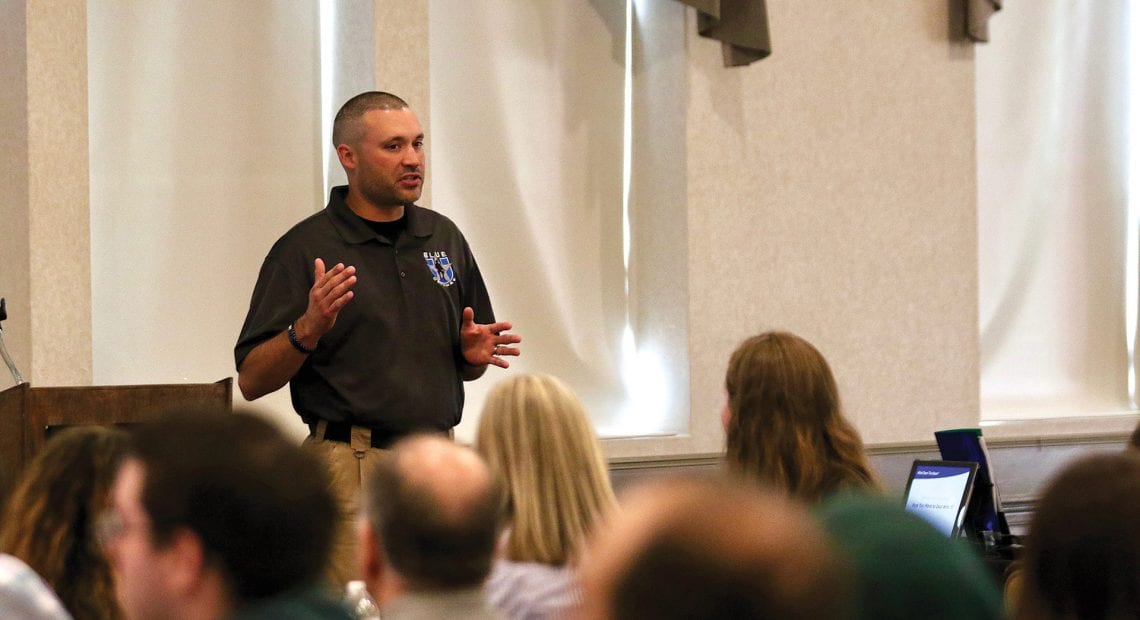
Accounting and Tax Planning

Looking Back — and Ahead

April 15 has come and gone, and many people are not looking back on the recent tax season with fond memories. Indeed, for many there were surprises and refunds lower than expected. One of the keys to not being surprised or disappointed is planning, as in year-round planning.

By Danielle Fitzpatrick, CPA

Many taxpayers think about taxes only once a year, and that one time is when they are filing their income-tax return. However, taxpayers should be thinking about their taxes year-round.

Many people do not consider how a change in their life may affect their taxes until they see the outcome the following year. Surprises may be avoided if they were to seek the advice of their tax professional ahead of time.

Seeking the advice of a tax professional throughout the year is very important. Certified public accountants (CPAs) who specialize in tax are not just tax preparers. CPAs can be trusted advisors who can help meet your personal wealth-creation, business-management, and financial goals.

Danielle Fitzpatrick

Danielle Fitzpatrick

The 2018 tax-filing season brought some of the biggest tax-law changes that we’ve seen in more than 30 years, and left many taxpayers surprised with their tax outcome. Perhaps you were pleasantly surprised by the additional money you received because you have children, or maybe you were one of the many who were shocked because of the reduced refunds or liability that you owed for the very first time.

If you were unhappy with the results of your 2018 tax return, you now have an opportunity to plan for the future. Review your 2018 income-tax return and determine if changes need to be made. Did you owe money for the first time because your withholdings decreased too much, or because you are now taking the standard deduction due to the loss of several itemized deductions?

Consider this — if your income and deductions were to remain relatively the same in 2019 as they were in 2018, would you be happy with your results, or do you wish they were different?

“If you were unhappy with the results of your 2018 tax return, you now have an opportunity to plan for the future.”

After you have looked at your 2018 income-tax return, you should then consider what changes may need to occur in 2019. Your tax accountant can help you determine how an expected change can impact your tax liability and try to ensure that you are safe-harbored from potential underpayment penalties.

Individuals may be subject to underpayment penalties on both their federal and state returns if they do not meet specific payment requirements each year through withholdings and/or estimated tax payments. Your accountant can also help you determine if a change in withholdings at work or through your retirement is necessary, or whether there is a need to adjust or make estimated tax payments.

These changes can help you avoid, or reduce, any potential underpayment penalties.

There are so many changes in a person’s life that could impact their tax return. Some changes include, but are not limited to, getting married or divorced, having a baby, sending a child to college, retiring, or starting a new job.

Maybe you have decided to start your own business and now are responsible for self-employment tax. Or maybe you have decided that you need to sell that rental property or second home you have had for many years. Perhaps you are a beneficiary of an estate for a loved one who passed away or have decided to sell stock through your investments. These are all examples of changes that could significantly impact your taxes.

Businesses also experience changes that could have an impact on their business returns. These changes include, but are not limited to, purchasing or selling a business, investing in a new vehicle or piece of equipment, or maybe the company has grown and you want to start providing benefits to your employees.

All the above examples could have a major impact on your individual or business income-tax returns, and that impact could be reduced if you were to reach out to a tax professional for advice before the next tax season. Besides the changes briefly mentioned above, here are two lists of questions (personal and business) that may be helpful in your next discussion with your tax professional.

First, some questions to ask your accountant in relation to your personal taxes:

• How much should I be contributing to my retirement, and which type of retirement best suits my needs?

• Am I adequately saving for my children’s education, and should I consider an education savings plan?

• Do I have adequate health, disability, and life insurance?

• When should I start taking Social Security benefits?

• When do I sign up for Medicare?

• Have I properly planned for Medicaid?

• Do I need a will, or when should my existing will be updated?

• Should I consider a living trust?

• Are my bank accounts, retirement accounts, and investment accounts set up appropriately so they avoid probate if I pass away?

• Are my withholdings and/or estimated tax payments adequate?

• When should I sell my rental property, and how much should I expect to pay in taxes?

• Can I still claim my child as a dependent even though they are no longer a full-time student?

• I’m inheriting money from a loved one who passed away; will this affect my taxes?

• I’m thinking about starting my own business; how will this impact my taxes going forward?

• My financial advisor told me I would have significant capital gains; how will this affect my tax liability?

Here are some questions to ask your accountant in relation to your business:

• What business structure is most appropriate for my circumstances?

• How do I know if my business is generating a profit?

• Am I pricing my products and services properly?

• How would my business function if my bookkeeper left tomorrow?

• What controls should I have in place to prevent employees from misusing company funds?

• Should I upgrade my accounting software?

• Do I need compiled, reviewed, or audited financial statements?

• Are my withholdings and/or estimated tax payments adequate?

• Can I claim a deduction for an office in my home?

• Should I buy a new truck or equipment before year-end?

• Should I buy or lease a vehicle?

• Should I implement a retirement plan before year-end?

• What is the overall value of my business?

• What should my exit strategy be?

• What are the tax consequences of selling my business?

Whether you are experiencing a major change in your life or want to plan for your future, do not forget to reach out to your tax professional to determine how it may affect your income taxes. u

Danielle Fitzpatrick, CPA, is a tax manager at Melanson Heath. She is part of the Commercial Services Department and is based out of the Greenfield office. Her areas of expertise include individual income taxes and planning, as well as nonprofit taxes. She also works with many businesses, helping with corporate and partnership taxes and planning

Banking and Financial Services

Adding It Up

It’s no secret that too many Americans make poor borrowing decisions, fail to save for retirement, even lack basic budgeting skills. That financial-literacy deficit begins early, say local bank and credit-union officials, which is why area institutions offer programs and classes to help people — both teenagers and adults — forge better strategies for making their money work for them, not drag them down.

So much, Lena Buteau says, comes down to tiny decisions that add up.

Take that morning coffee. If someone spends $2.69 at Dunkin’ Donuts every morning, that comes out to well over $900 a year. Spend $7 or $8 on lunch five times a week instead of packing a lunch at home, and you’re looking at around $2,000 a year.

“When you think you can’t afford something, look at your daily expenses,” said Buteau, vice president of Retail Administration at Monson Savings Bank, while explaining the importance of MSB’s financial-literacy programs, many of which target students, but which are needed by many adults, too.

For instance, people of all ages often struggle to understand the long-term impact of buying on credit, she noted, using the example of someone who buys a $650 laptop at Best Buy but takes a $150-off deal to put it on a store credit card at 25% interest, then pays only the minimum every month. At that rate, that laptop would be paid off in seven years — eventually costing more than double its original price tag.

“When you explain this, the kids are shocked at the numbers,” she said. “It really touches home.”

Because so many habits and philosophies are forged early, Buteau said, “we go in and teach students about saving, lending, credit scams, how to keep your money safe, and much more.”

And it’s not just schools, she added. “We want to go to church groups, Boy and Girl Scout troops, anybody that will give us an hour of time for a financial-literacy class.”

“No disrespect to the schools, but they’re not preparing kids for real life — how your credit score affects your insurance and buying a car, how to handle a checkbook.”

Michael Ostrowski, president and CEO of Arrha Credit Union, said his institution has an internal focus on financial literacy.

“No disrespect to the schools, but they’re not preparing kids for real life — how your credit score affects your insurance and buying a car, how to handle a checkbook. People don’t go into banks anymore; they do stuff online, and you can get ripped off if you don’t know what you’re doing.”

For that reason, Arrha has worked with high schools in the past on financial-literacy programs and is currently planning another program for local students.

“When we were kids, we had home-ec class, and they used to explain how to do a checkbook. They don’t do that anymore, and I don’t know why,” Ostrowski said, before offering one possible reason. “With all the regulations schools are under, for MCAS and other things, they’ve bailed on programs like this, but they’re absolutely critical for kids’ development and future life.”

Jon Reske, vice president of Marketing at UMassFive College Federal Credit Union, pointed out that financial literacy, and education in general, has long been part of the credit-union culture.

“Why? Because, unfortunately, your parents and my parents probably never taught us anything about personal finance, especially if things weren’t going well in the household,” he told BusinessWest. We take the opposite approach — we say your kid should be involved in understanding how the budget works in your house.

Jon Reske says even good budgeters can be tripped up by a bad loan — with long-term consequences.

Jon Reske says even good budgeters can be tripped up by a bad loan — with long-term consequences.

“We also do workshops on a regular basis — everything from homebuying 101 to how to create a budget to understanding credit,” he added, noting that the latter is especially critical, as the average American, between the ages of 21 and 65, will borrow about $1.5 million, and bad decisions can compound quickly and have a long-term impact. “You can be the greatest budgeter in the world and be smart about your pennies, but if you make bad borrowing decisions, you can be overwhelmed by debt.”

Monson Savings also conducts workshops for adults, such as first-time homebuyers, and offers a Credit Builders loan program, which is an effective way to, as the name suggests, build credit without going into unmanageable debt. The customer borrows a certain amount from the bank, which is deposited into a savings account and cannot be accessed until the loan is repaid. Not only does the borrower build positive credit through on-time payments, but at the end, the balance, plus interest, is available for a down payment on a car or home, a cushion for emergencies — anything, really.

In short, area institutions understand the deficits that exist when it comes to financial literacy and how that impacts the decision-making process — and how bad decisions can turn into years of heartache. And they’re doing something about it.

A Matter of Confidence

A new national survey by Junior Achievement USA and Citizens Bank shows that more than 30% of teens do not believe they will be financially independent of their parents by the age of 30. Sixty percent believe they will own a home by that age, 44% believe they will begin saving for retirement, and 43% think they will have paid off their student loans.

“With a strong economy, you would think teens would be more optimistic. It just demonstrates the importance of working with young people to help them better understand financial concepts and gain confidence in their ability to manage their financial futures.”

“These survey findings show a disconcerting lack of confidence among teens when it comes to achieving financial goals,” said Jack Kosakowski, president and CEO of Junior Achievement USA. “With a strong economy, you would think teens would be more optimistic. It just demonstrates the importance of working with young people to help them better understand financial concepts and gain confidence in their ability to manage their financial futures.”

Financial literacy has long been a cornerstone of Junior Achievement, but there’s no shortage of educational programs available at credit unions and banks.

“Money is very emotional. It’s one of the hardest things to talk about, even with your spouse,” Reske said. “And it’s hard to be objective. That’s why it’s nice when people come to our workshops and say, ‘I’m not emotional now; I’m looking at the objective side of it. I wish I’d taken this before getting that loan.’”

While money issues can seem overwhelming at times, he added, financial-literacy tools are much more accessible than they were 10 years ago if people know where to look. He also outlined a number of concepts people attending UMassFive’s workshops might learn. For example:

• If you’re able to pay bills weekly, as they arrive, do it. It reduces the risk of missing a deadline and winding up with a late fee, which is easy to do when you pay the whole pile of bills once a month.

• Start building an emergency fund. According to a U.S. News & World Report study, two-thirds of Americans would struggle — and often do — to come up with $1,000 for an emergency, like an urgent car repair or medical procedure.

“So what happens? You put it on a credit card, and now you’re paying 21% interest, and soon $1,000 turns into $1,200,” Reske noted. “And an emergency fund can keep you from missing a rent payment or not getting something fixed on your car, which could lead to a bigger repair in three to six months.”

• Check out your credit report on an annual basis, if only to make sure everything is correct. “If the activity on your credit report is inaccurate, you’re getting an inaccurate score, and most rates you get are based on your score.”

• Put every credit card on a minimum automatic payment so you don’t miss any payments — and then pay more principal when the bill arrives in the mail. Also, it’s not a bad idea to dedicate one credit card to online purchases only, to more easily identify instances of identity theft.

• Finally, it’s never too early to start saving for retirement. According to Forbes, 33% of adults have zero saved for retirement.

“Social Security will pay a portion of your expenses, but not all,” Reske said. “Time is more valuable than money because of compounding interest. If you start planning at 50 or 55, you just don’t have enough time; you’ve wasted 20 years. And if you have a 401(k) at work with an employer match and you’re not on it, you’re being foolish.”

Budget Battles

UMassFive also conducts a workshop for high-school seniors in which they choose a career, get a salary, and then go from station to station filling out a budget in different categories, from housing, transportation, and food to luxury items and student loans — and trying to stay within that budget.

“Kids say, ‘I never knew how expensive things are,’” Reske said. “People wonder why a 40-year-old can’t come up with $1,000 for an emergency; it’s because they weren’t taught that the key is to get in front of problems as early as possible” with smart budgeting followed by spending discipline.

Monson Savings runs a similar program in local schools. “One thing I build in there is student debt. If you want to spend $30,000 a year on college and go for a $30,000-per-year job, you’re not going to be able to pay that back,” Buteau said, stressing the importance of making smart decisions about college — if college is even the best option.

In fact, she said, many kids today are so focused on college — because it’s what their schools push — that they may not be aware of careers in the trades that offer robust salaries and no long-term debt.

One thing is for sure: whether in high school, college, early adulthood, or beyond, there’s no bad time to learn more effective strategies for handling money, budgets, and credit — in other words, to become more literate.

“If you’re sick, you go to the doctor,” Buteau said. “If your car is broken down, you go to a mechanic. If your pipes are broken, you call a plumber. But if you have trouble budgeting or financing, no one thinks to go to the bank for advice or a class. And it’s free.”

And when it comes to finances, there’s nothing wrong with free.

Joseph Bednar can be reached at [email protected]
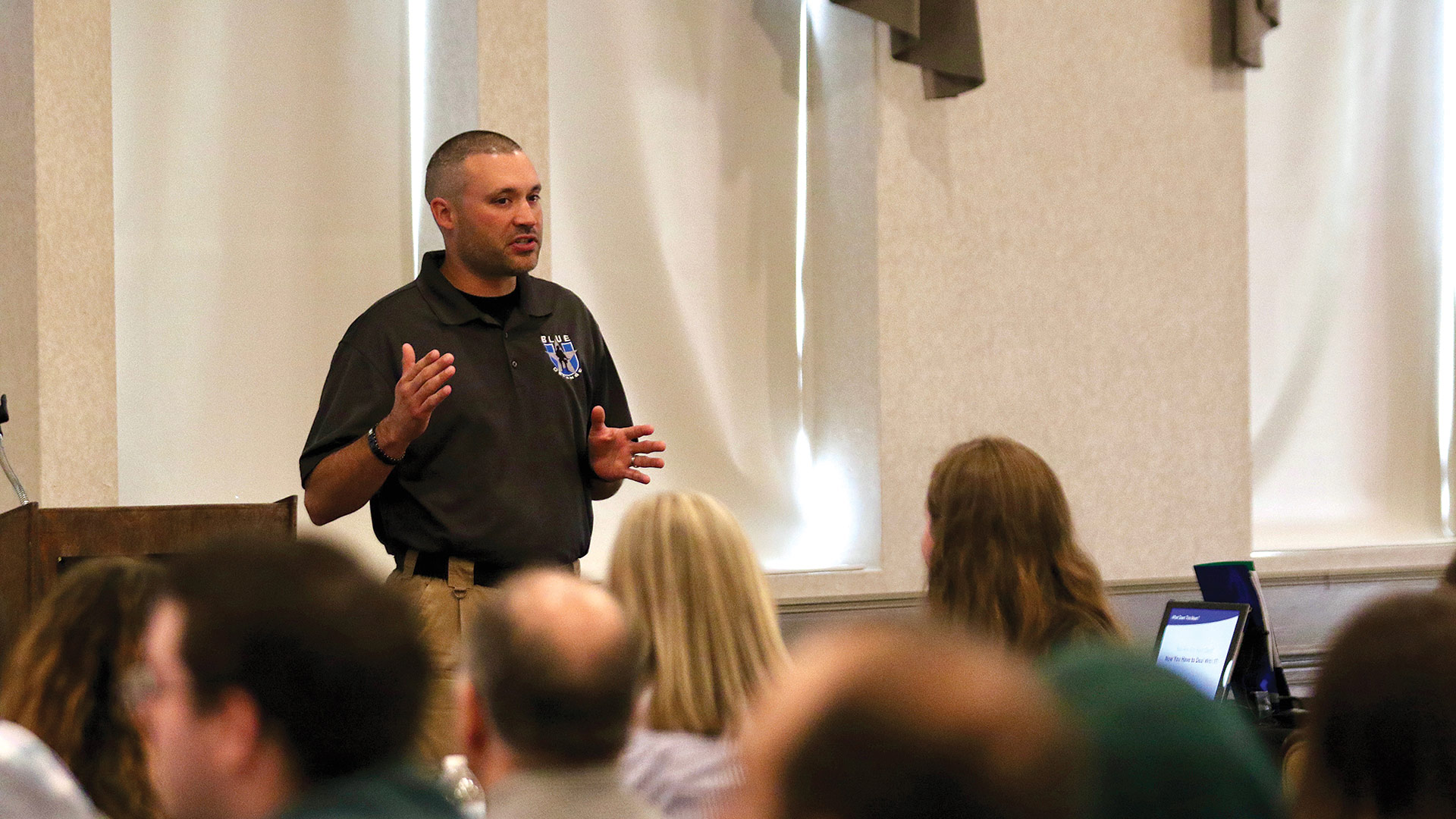
Business of Aging

On the Path of Discovery

Skip Matthews says Louis & Clark

Skip Matthews says Louis & Clark is continuing a process of evolution and response to changes in the marketplace that began in 1965.

By now, a good number of people in this region know the story of how the second-generation, 55-year-old company known to most as Louis & Clark came to take that name.

The sign over the pharmacy on Memorial Drive in Chicopee in the mid-’60s read ‘Airline Drug,’ an obvious nod to what was then known as Westover Air Force Base, just a few hundred yards away. But before long, many customers had unofficially renamed it, using the first names of the partners — and pharmacists — who had acquired the business, Louis Demosthenous and Clark Matthews, who just happened to share names with those famous explorers (sort of).

“There weren’t really marketing companies back then,” Skip Matthews, Clark’s son, explained with a laugh. “It was just … we were Airline Drug, the customers started calling it Louis & Clark, and they kept calling it that, so they changed the name. I imagine that feeds your ego pretty well, too.”

Perhaps a less-known story (although the company is investing considerable time and energy in telling it, as we’ll see later) is how this company continues to evolve and respond to change — within the industry, in societal needs, in demographics, and even in the way companies are operated.

We’ll start with the much longer name over the door. Under the ‘Louis & Clark’ in large type (with a stick figure in a wheelchair taking the place of a traditional ampersand) are the words ‘Pharmacy & Home Medical Supplies,’ and they go a long way toward telling this story.

“Our employees possess a world of knowledge. Our emphasis is on unlocking all that knowledge instead of having people place an order, come in and pick it up, and leave.”

Indeed, a company that once had several pharmacies scattered across this region has seen that division of the company remain vibrant while also taking on a different look and feel. There are fewer locations — in fact, just one — but also a greater focus on convenience and delivery.

It’s all on display at the company’s recently opened pharmacy on Brookdale Drive in Springfield.

Formerly located on Page Boulevard in the same city, the company calls this a ‘long-term-care-facility’ pharmacy, one that focuses on delivery, packaging, and medication management, especially through a relatively new service called the MediBubble, its new medication-management system delivered to those in assisted-living facilities, group homes, nursing homes, and independent-living situations within the community.

The MediBubble is a medication package that helps individuals safely manage what prescription medications they take, and when, he explained, adding that each package contains all of one’s medications for a specific time of day, this reducing confusion when taking multiple medications.

Diane Cordeiro says one of the main focal points for Louis & Clark

Diane Cordeiro says one of the main focal points for Louis & Clark is to build relationships and boost awareness of its many products and services.

“Sometimes it’s hard for people to remember if they’ve taken their pills,” he went on. “With MediBubble, they simply have to look at the sheet. If that bubble has been opened, they’ve probably taken their pills.”

Meanwhile, the medical-supplies side of the operation, which itself dates back to 1978, has grown considerably and also evolved to meet new and different needs and bring a higher level of service to customers. Matthews explained this by stressing that the company doesn’t simply supply medical equipment. It also provides education and advice, something that isn’t available to those who might be tempted to merely order something online.

“The big point of emphasis now is becoming more and more knowledge providers as opposed to order takers,” he explained. “That’s a challenge for us and a challenge for our industry; people have options — they can go to a pharmacy, or they can try to find something online. For people to come into our location, there has to be a reason — it’s too easy to buy things anywhere else.

“Our employees possess a world of knowledge,” he went on, adding that some have been in the business for three decades or more. “Our emphasis is on unlocking all that knowledge instead of having people place an order, come in and pick it up, and leave.”

Over the years, the company has developed a number of specialty services, including the Pink Mermaid Mastectomy Boutique, located in the medical-supplies location in Groton, Conn., and a focus on foot care in all its medical-supplies locations — in Springfield, Easthampton, and East Longmeadow.

And it continues to find new ways to bring quality service and convenience to customers, a pattern that has continued for 55 years. For this issue, BusinessWest looks at how this ability to respond, adapt, and evolve has positioned Louis & Clark for continued growth in an always-changing healthcare landscape.

Blazing New Trails

Before talking about the present and especially the future, Matthews first stepped into the way-back machine and returned to 1965 — and actually a few years before that, when his father and Louis Demosthenous were classmates at the Hampden College of Pharmacy in Chicopee, long since merged into the Massachusetts College of Pharmacy and Health Sciences in Boston.

After graduation, they went in different directions — mostly work at pharmaceutical chains — before deciding to go into business for themselves. They acquired Airline Drug, and as you now know (if you didn’t know before), the partners’ first names, not their last, as is so often the case, became a brand.

And a brand that quickly expanded its presence across the region as the partners opened additional pharmacy locations.

Indeed, just a few years after acquiring the Chicopee facility, they opened a second on Breckwood Boulevard in Springfield, across from Western New England University. Additional pharmacy locations were opened in the center of Wilbraham (1970), Ludlow (1971), Page Boulevard (1972), Baystate Medical Center (1988), Mercy Medical Center (1992), and Holyoke Health Center, among others. The first medical-supplies facility was located in one of the company’s pharmacies in West Springfield.

Kim Vigliotte, seen here in the fitting area

Kim Vigliotte, seen here in the fitting area in the East Street, Springfield location, is a compression specialist and pedorthist who consults with 25-30 customers a day.

As the landscape changed and pharmacy became much more of a volume business, the company consolidated those operations and focused its attention on the types of business that the large chains dominating that landscape were not interested in — specifically delivery and packaging, like the MediBubble, said Matthews, who has been involved with the business since graduating from college in 1987 and assumed full ownership a few years ago.

The recently opened facility on Brookdale Drive will deliver to individuals and facilities within a wide geographic radius, from Greenfield to the north to Westfield and beyond to the west, to Monson and Palmer to the east.

As noted, the service specializes in bringing packaged medications to those who take anywhere from five to 15 medications a day, and it is becoming increasingly popular, said Matthews, adding that the pharmacy side of the business remains vibrant — but different than it was decades ago.

And the same can be said of the medical-supplies division, which has seen more dramatic growth over the years.

Indeed, there are now four locations — what Matthews calls the ‘hub,’ a large showroom and warehouse on East Street in Springfield; a satellite location in Easthampton; a recently opened retail location in the Heritage Plaza in East Longmeadow; and the location in Groton, which was an acquisition of an existing facility.

As was noted earlier, Matthews said the focus is on not merely supplying or resupplying a wide range of items — from catheters to compression socks; from incontinence products to wheelchairs — but also supplying information, education, and guidance.

“People need help, and sometimes they don’t even know what’s out there to help them — like a different product or a different size of a given product,” he said, again stressing that the company strives to move well beyond merely taking and filling orders and dispensing more knowledge.

This is especially true when it comes to foot care, said Kim Vigliotte, a compression specialist and pedorthist, who spends much of her time at the East Street location, but rotates to all of the company’s medical-supply locations.

She told BusinessWest she assists individuals with a range of foot problems, including diabetes, vascular disease, and non-healing wounds, and sees, on average, 25 to 30 people a day at the Springfield location.

“A patient comes in with a prescription from their podiatrist or primary-care doctor, and we do a foot evaluation or evaluation of their legs, and determine which product would be most appropriate for them to address whatever issues they’re having, be it pain, swelling, or ulceration,” she said, adding that there are a number of products on the market now that can improve quality of life for such patients. Her work is focused on matching them with the right ones, and she acknowledged it’s very rewarding work.

Charting a New Course

While working to improve service to customers, Louis & Clark has also been working to improve efficiency and develop and then follow a roadmap for continued growth, and it has been helped in this regard by adaptation of what’s known as the entrepreneurial operating system (EOS).

In simple terms, EOS is a system by which companies large and small can manage and strengthen six key components of business operation: vision, data, process, traction, issues, and people.

Rachel Duda says Louis & Clark has been very proactive

Rachel Duda says Louis & Clark has been very proactive in its outreach to a number of constituencies.

The company now has separate leadership teams for its two divisions — pharmacy and medical supplies — thus enabling Matthews to focus more on the vision side of the equation and long-term strategic planning.

This new structure has allowed for better, sharper focus within each division, said Diane Cordeiro, the company’s marketing manager and also the integrator, or chief operating officer, for the medical-supplies division, adding that it also enables them to work better together toward the same goals.

“The integrator is the individual who is responsible for keeping all the different business units working together — finance, HR, operations, marketing — and just make sure that each unit is working to the best of their ability and that their leader is having them maximize everything they do on a day-to-day basis,” said Cordeiro, who joined the company in 1990 as a cashier and moved steadily up the ladder. “We want to have everyone working toward the same goals and being enthusiastic about their day-to-day, helping customers, working with referral groups, and enabling us to stand out from every other standard medical-supply location.”

Elaborating, she said one of the emerging priorities for the company is to make the public fully aware of all it does — and all the knowledge its employees possess, work that dovetails nicely with the main title on her business card: ‘marketing manager.’

“I want to see that part of the business grow,” she said, referring specifically to medical supply. “And, obviously, this involves making new relationships with new referral groups, maximizing outreach for relationship building, and just letting people know who we are and what we do.”

Rachel Duda, a marketing assistant for the company, said Louis & Clark has been very proactive in its outreach to a number of constituencies, including physicians’ offices, assisted-living facilities, nursing homes, and group homes, in both Massachusetts and Connecticut, in an effort to build awareness of the company as a resource.

“It’s all about education — individuals don’t know what they don’t know,” she explained, adding that the company has taken things to a higher level in recent years with a program called ‘lunch and learn.’

As the name implies, it involves lunch and learning — about Louis & Clark and its various services, said Cordeiro, adding that lunch is very often the only time to get the full attention of a staff at a physician’s office or residential facility.

“We offer these to any new opportunity or referral group,” she explained, “including doctor’s offices, home-care agencies, physical-therapy offices, rehab facilities, anyone who would be prescribing products that we dispense.”

The lunches are definitely having an impact, Cordeiro went on, adding that company is receiving prescriptions from a number of new sources. And they are just one example of more aggressive outreach that benefits both parties.

Another is a relatively new initiative involving on-site visits to senior centers and senior-living facilities for everything from ice-cream socials to hot lunches to what are known as ‘tune-up clinics.’

“Our in-house technician will go on site on a scheduled day, and any individual who is from that community can bring down their walker, their wheelchair, anything that might need some sort of adjustment, new wheels, new brakes, whatever,” she told BusinessWest, adding that for parts under $5 there is no charge, and for parts over that amount, the individual pays just the retail cost.

That explains why these tune-ups have become hugely popular and also a huge part of the company’s efforts to tell its story and build new relationships, something it’s been doing since Lyndon Johnson was in the White House.

Making More History

After Louis Demosthenous retired more than a dozen years ago and Skip Matthews took on a leadership role, there was brief — as in very brief, apparently — discussion about changing the company’s name again to Skip & Clark.

Those talks were brief because it was decided this name didn’t roll off the tongue as well and didn’t have the historical connection. Besides, Louis & Clark had become a regional brand, one that had become synonymous with service and innovation.

So, while the name hasn’t changed, the company remains, in a word, fluid as it continues to discover — pun intended — ways to better educate and better serve its customers.

George O’Brien can be reached at [email protected]
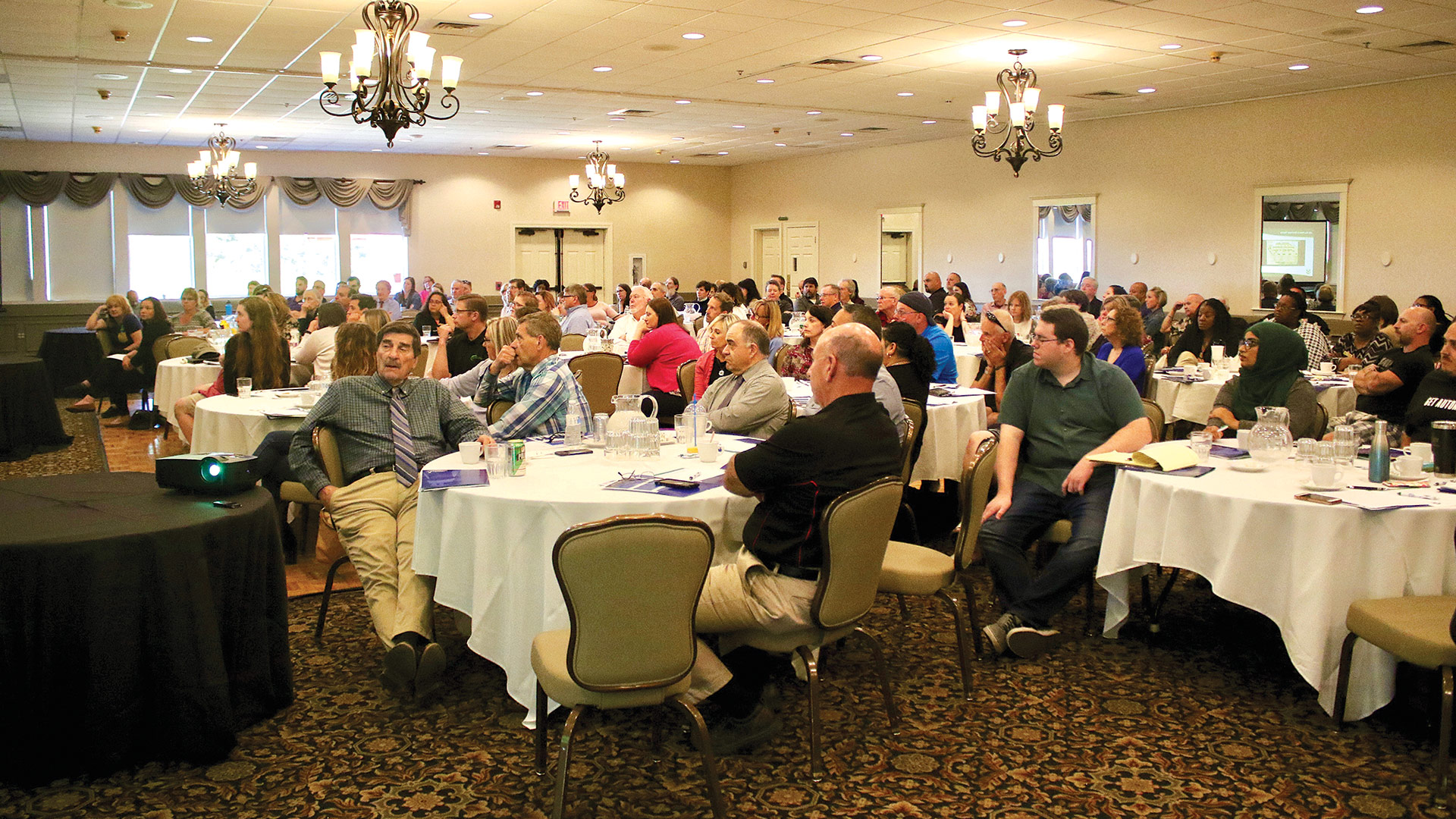
Features

Driving Forces

Peter Picknelly says Peter Pan is taking steps

Peter Picknelly says Peter Pan is taking steps that make the company more agile, a necessary trait in a changing bus business.

Peter Picknelly says the higher prices that consumers are experiencing at the gas pump are a fairly recent phenomenon, with the surge coming over the past few months or so.

But in the bus business, such changes to the landscape can, and usually do, have a quick and profound impact. And Easter weekend provided ample evidence of this.

“Business was up 18% over the same period a year ago — we were really busy over Easter weekend,” said Picknelly. “When gas prices go up, we see an increase in ridership, and they’ve been going up.

“It’s almost instantaneous — when fuel prices go up, it hurts our customers, and they look for alternatives,” he went on. “Meanwhile, holidays are generally a pretty good barometer of how business is going overall, and we saw that Easter weekend.”

Elaborating, he said that fluctuating gas prices — they come down as often as they go up — are just one of the reasons why agility is perhaps the best quality a bus company can possess these days, and also why Springfield-based Peter Pan is currently taking a number of steps to become even more agile.

“It’s almost instantaneous — when fuel prices go up, it hurts our customers, and they look for alternatives.”

Indeed, the company is expanding its fleet — five new buses were recently delivered, and 10 more are on order, far more than the number replaced in what would be considered a typical year — and also adding new routes, hiring more drivers, and utilizing technology (a revamped website and a new app) to make it easier to know where all those buses are going and to buy seats on them.

Meanwhile, Peter Pan will soon have its own ticket counter at the Port Authority Bus Terminal in Manhattan, a long-awaited, very expensive, and logistically complicated undertaking that Picknelly said will give the company invaluable visibility in the city where it does its highest volume of business.

All these steps, as noted, are designed to make the company more agile and better able to thrive in an always-changing marketplace, but one where bus travel is seemingly as popular as ever, and perhaps even more so as younger generations eschew the automobile and look to other — generally simple and inexpensive — ways to get from here to there.

Peter Pan is currently in an expansion mode, adding new buses, drivers, and routes.

Peter Pan is currently in an expansion mode, adding new buses, drivers, and routes.

“What the buses specialize in is high-frequency service at very reasonable fares — and that’s what people are looking for,” said Picknelly, who described Peter Pan as “once again the fastest-growing bus line in America,” meaning it has held that distinction once, if not a few times, and he believes it does again, especially as he watches many competitors scale back.

For this issue, BusinessWest talked at length with Picknelly about why he feels he can make that claim and the specific steps that back up that boast.

Route Causes

Picknelly told BusinessWest that as part of the process of ordering those new coaches he mentioned — each with a price tag of roughly $550,000 — he a few other team members (his wife, Melissa Picknelly, vice president, and Marketing Director Danielle Veronesi, to be specific) spent a considerable amount of time recently trying out some options for the seats in those vehicles.

Decades ago, there probably wouldn’t have been a need for such an exercise — a seat was a seat. But that was then. These days, as with seemingly everything else you can buy, there are options, and lots of them.

“The average ride on our buses is three and a half hours, and we’re looking to make it as comfortable as possible,” he explained. “There’s a lot to look at with these seats — how the seatbelt clicks, how they adjust, how comfortable they are … the one I think we’re going to go with is actually an inch and a half lower than others, which we think will provide for a better ride.”

That attention to detail with seats speaks volumes about the overall mindset driving the company — pun intended. It’s a customer-based approach that is spawning a number of new initiatives, starting with the new buses and why they’ve been ordered.

Picknelly said the coaches the company buys, like workhorse planes bought by the airlines, can be in service for decades. But eventually they need to be replaced, and in a typical year the company will cycle out a least a few.
But this year’s order placed with Motor Coach Industries (MCI) is especially large and includes not only replacement buses, but ones needed to cover new routes and expected heavier traffic on some existing routes.

In that first category are new routes on Cape Cod and between New York, Philadelphia, and Washington, D.C.

On the Cape, the company, which in the past only brought riders as far as Hyannis, now services just about every community between there and Provincetown, said Picknelly, an aggressive expansion effort that began at the start of this year.

“We’re expecting that to be huge,” he said, adding that bus service can and should be viewed as an alternative to trying to drive to those communities, especially in the summer. “We’re running express service and we’re connecting in from Logan Airport, downtown Boston, and New York City — those are our biggest destinations to Cape Cod.”

Elaborating, he said the company currently runs eight buses a day between Boston and Hyannis, and will expand that number to 12 in the summer. Meanwhile, it currently runs two a day between Hyannis and Provincetown, and will at least double that with the summer schedule.

Further down the coast, the company recently (meaning just last week) expanded service between three of the biggest cities it serves — New York, Baltimore, and Washington — to essentially provide more options for customers.

“We currently serve Philly to New York, Baltimore to New York, and D.C. to New York,” he said, prior to the expansion of the schedule. “We’re now going be serving Philadelphia to Baltimore and Philadelphia to D.C.; we’re expanding our route to connect those cities together.”

The reason for such expansion is obvious — demand, he went on, adding that the company will start with seven buses a day to each city, but those numbers could rise.

And there could be still more additions to the schedule after the Encore Boston Harbor casino opens its doors next month, said Picknelly, adding that the company is in discussions with ownership about running buses from the casino to South Station and other connecting points, shuttles, and other work.

As he talked about all this growth and the potential for more to come, Picknelly said technology has played a big part in it. As one example, he cited a revamped website that went live just before Easter, one that not only heightens awareness of routes and schedules, but greatly simplifies the process of buying a ticket online.

And the buying public is moving increasingly in that direction, he said, noting that today, 80% of tickets are purchased online, a number that moves higher with each passing year, although there are still many who still walk up and buy at the counter — especially in New York, which explains the company’s huge investment at the Port Authority.

This heavy volume of online sales brings benefits for the customers, obviously, but also for Peter Pan, said Picknelly, adding that they take a lot of the guesswork out of scheduling and staffing buses.

“In the olden days, for lack of a better term, we would have a consistent schedule, seven days a week the same schedule,” he explained. “Now, because people buy tickets in advance — it’s a reservation and it’s a guaranteed seat — we know exactly how many people are going to be on the bus, and we modify our schedules accordingly.

“In many cases, our schedules are different on Tuesdays and Wednesdays than they are on Thursdays, and very different from what they are on Fridays, Saturdays, or Mondays,” he went on. “We adjust our schedule product based on consumer demand on a daily basis; before it was guesswork and ‘set it and kind of forget it.’ Now, we have staff looking at the numbers and the trends, and we adjust every day.”

Elaborating, he said that, if the 2 o’clock bus to Philadelphia is filling up, the company may well add a 2:30 run. And with a new app the company is rolling out in a few days, a customer can, among other things, change his or reservation from the 2 to the 2:30, if they know well in advance that they’re going to be running a little late.

The app will also make buying tickets even easier, because it will log previous purchases, recognize trends, and enable the consumer to rebook a schedule with one click, said Picknelly, adding that many of these developments are unique within the industry.

Also unique will be the ability to buy what Picknelly called ‘commuter tickets,’ 10 tickets at once, for example, at a discount price that consumers can load onto their phone and use whenever they want.

“No one else is doing that in our industry,” he said, using that phrase to refer to many of the recent innovations. “And these are things that we think are game changers.”

The Ride Stuff

Returning to the subject of online buying and the benefits it brings, Picknelly said the company can make adjustments for weather, holidays, special events, and, yes, soaring gas prices.

“If we know there’s a snowstorm coming, we can cut schedules and combine them,” he explained. “We’re able to forecast much better and adjust our product based on consumer demand. We’re much more agile than we used to be, and the consumer benefits from that.”

There’s that word again, and it’s a word you didn’t hear much when it came to transportation in general and bus companies in particular. But you do now, and Peter Pan keeps finding new ways to be agile and benefit from that important quality.

That’s a big reason why Picknelly believes that, once again, this is the fastest-growing bus company in the country.

George O’Brien can be reached at [email protected]
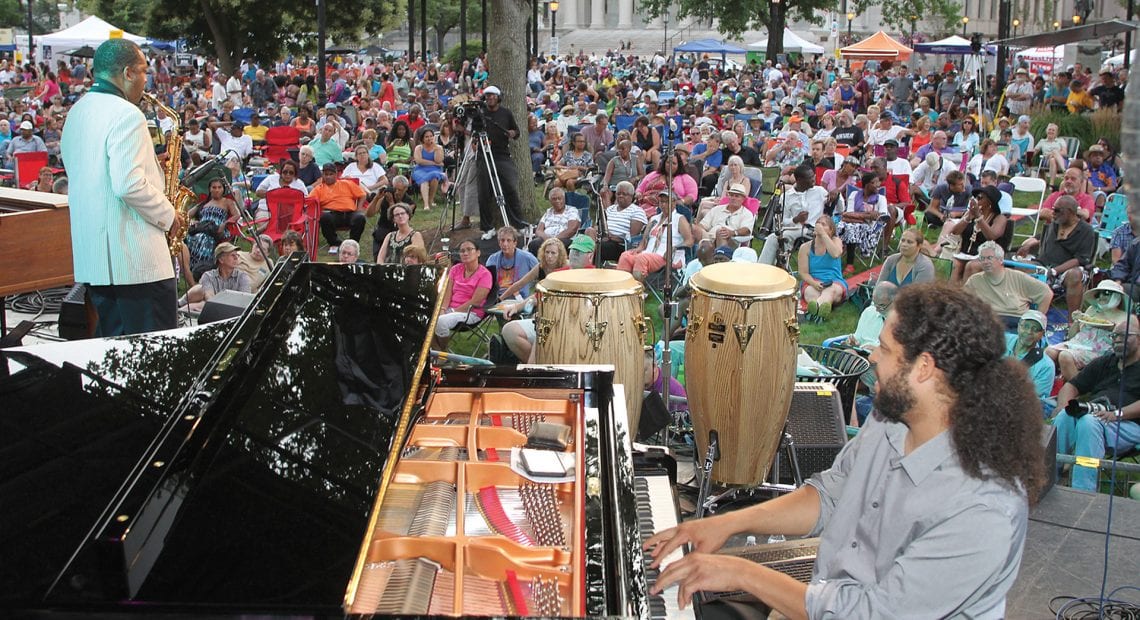
Community Spotlight

Community Spotlight

A rendering of the rail station expansion and renovation, scheduled to be completed this summer.

A Knowledge Corridor study before the Amtrak Vermonter line opened four years ago projected 28 riders per day at the Northampton station. In fact, the average is 59 for the two trains per day — a southbound run that arrives at 2 p.m. and a northbound train at 4 p.m., noted Masterson, the city’s Economic Development director.

“And that’s inconvenient service, in the middle of the afternoon,” added Mayor David Narkewicz. “If they made it convenient — get on in the morning, go to Manhattan, and come back the same day — it would be interesting to see the numbers. Even now, on the weekend, there’s a line around the parking lot, with students and other folks trying to use the service.”

The proposed broadening of the Vermonter service, which would bring two morning trains to Northampton and two more late in the day, will be supported by the expansion of the rail platform at the station. The project to lengthen it and bring it up to ADA code is expected to be completed this summer.

That’s been complemented by a series of major projects on the Pleasant Street corridor, from a $2.9 million infrastructure upgrade, making the street safer and more navigable for motorists, bicyclists, and pedestrians, to the completion of the roundabout at Pleasant and Conz streets and a number of residential and mixed-use developments along the thoroughfare.

Currently, Valley Community Development Corp. is building a $20 million, mixed-use project called the Lumberyard, which will feature 55 residential units, 3,100 square feet of retail space, and 2,200 square feet of office space.

Mayor David Narkewicz cuts the ribbon

Mayor David Narkewicz cuts the ribbon at the opening of Conway School of Landscape Design last fall.

“We’ve seen lots of development on Pleasant around the rail,” Narkewicz said, and with good reason. “Millennials and younger people want to live in a place where they don’t have to own a car — they want Uber, car share, bike share, access to rail, access to good bus service. And businesses and housing developers see that and are interested in locating here.

“The whole entrance to the city has been upgraded and improved,” he went on, “and in a way, it helps grow the downtown and creates another corridor for Northampton.”

It’s just one example, Masterson added, of the ways public and private investment spur each other, pumping new life into a city already known for its vibrant economic and cultural life.

It Takes a Village

Take, for instance, the impressive volume of work that continues in the Village Hill neighborhood, including a new, $4.1 million headquarters for ServiceNet and the $1 million renovation of a long-vacant Northampton State Hospital building that now houses the Conway School of Landscape Design.

“They used to be in Conway,” the mayor noted, “but they basically decided that students that want to go to a landscape school want to be in a more urban environment, so it’s a perfect fit, and we’re excited they’ve moved to Northampton.”

Meanwhile, the $6.5 million Columns at Rockwell Place transformed another long-dormant hospital structure into a 25-unit residence, with 12 units currently sold, five leased, and eight available. Behind that is Christopher Heights, an assisted-living facility that opened in 2016, and Village Hill Cohousing broke ground last fall.

“So you have this whole diversity of senior living, independent living, and you’ve got some commercial redevelopments, which is very exciting,” Narkewicz said. “And the campus itself has walking trails, open space, community gardens, and it’s only a 10-minute walk from downtown. So, from a sustainability standpoint, it fits the model of not wanting people building subdivisions way out on the edge of town that require roads, services, and more car trips. There’s even a bike-share station there, so you can hop on a bike and go downtown.”

In addition to the usual ebb and flow of small businesses, the Atwood Drive Business Park is fully open just off 1-91 exit 18, boasting a 60,000-square-foot building for the Family Probate Court and other judicial tenants, and two 40,000-square-foot buildings with a host of healthcare tenants, including Cooley Dickinson Health Care and Clinical & Support Options.

The $6.5 million Columns at Rockwell Place

The $6.5 million Columns at Rockwell Place transformed a long-dormant building into a 25-unit residence, one of many recent developments at Village Hill.

Meanwhile, the venerable Autumn Inn on Elm Street was sold last year for $2.25 million to Saltaire Properties, which specializes in breathing new life into outdated hotels. At 60% occupancy, the 32-room inn — which has been renamed the Ellery — would generate annual guest spending of $500,000 and room revenues of $1.1 million, in addition to $34,000 in property taxes and $66,000 in hotel taxes to the city.

And, of course, the cannabis trade continues to be an economic driver. Masterson noted that the city’s 0.75% meals tax brought in $171,000 from November 2017 through January 2018, representing taxes on $22 million revenue. Over the same three months a year later, following the launch of adult-use cannabis sales at New England Treatment Access (NETA), the figure was $187,000, a 9.3% increase that reflected $24 million in revenue.

“One can fairly assume that people who came to NETA also spent some money in the city, and a number of store owners recently said they had seen an uptick in business, so we’ll see if that continues.”

The mayor has been quick to temper people’s long-term expectations because, for most of that recent three-month period, NETA was one of only two recreational marijuana retailers in the state. Since then, INSA in Northampton began selling, and other communities, like Amherst and Chicopee, are expecting businesses to open soon.

“It’ll be interesting to see how the market shakes out once there are more available — and Connecticut and New York are moving quickly to legalize, too,” he said. “We definitely see a lot of Connecticut and New York plates.”

What he hasn’t seen is an uptick in crime or other negative impacts. NETA has been diligent in paying police officers to help manage traffic and renting parking from surrounding businesses and property owners to manage the rush, which was especially significant early on.

That bodes well for other cannabis businesses that have approached Northampton, not only on the retail side, but also manufacturers making food products, a testing lab, and a major cultivation facility to be located at a former gravel pit in Florence.

“For whatever reason, Northampton is viewed as a good place for the cannabis industry,” Narkewicz said. “We’ve been very open and welcoming, our zoning is straightforward and not discriminatory toward cannabis, and we did not put any caps on the number of retailers we would allow here, like many communities have.

“I think people feel Northampton has a kind of built-in visitorship and vibrancy and is a regional destination,” he went on, “so I think they feel like cannabis will incorporate well into the rest of the retail and cultural market here in Northampton.”

Show Time

Speaking of culture, Northampton continues to thrive on that front, thanks to successful developments like CLICK Workspace, which has melded co-working with a robust arts calendar at its Market Street location since 2016, and the purchase of 33 Hawley St. by the Northampton Arts Trust, which is spending $6.8 million to convert it into a multi-dimensional arts, cultural, and education center.

“That’s one reason tech entrepreneurs want to be downtown,” the mayor said. “They want to be in a place that has culture.”

Meanwhile, annual visitorship to the Academy of Music, Three County Fairgrounds, the Paradise City Arts Festival, Smith College Museum of Art, WEBS, Thornes Marketplace, the city’s hotels, and its major one-day downtown events totals nearly 1.24 million annually.

Northampton at a glance

Year Incorporated: 1883
Population: 28,483
Area: 35.8 square miles
County: Hampshire
Residential tax rate: $17.29
Commercial tax rate: $17.29
Median Household Income: $56,999
Median Family Income: $80,179
Type of government: Mayor, City Council
Largest Employers: Cooley Dickinson Hospital; ServiceNet Inc.; Smith College; L-3 KEO
* Latest information available

Northampton has seen a number of generational business transactions in recent years, as entrepreneurs who were part of the city’s original renaissance 30 to 40 years ago are retiring and passing their enterprises to family. The downtown also sees continual lateral moves, and vacancies fill quickly.

“We are still viewed as a very vibrant destination downtown where people want to locate their business,” Narkewicz said. “And they’re local businesses. We do have a few national chains, but mostly locally owned businesses.”

They’re drawn by the city’s low single tax rate — $17.29, which falls well below the commercial rate in nearby communities — but also by a culture of local loyalty, he added.

“People here support local businesses. Our neighbors are running these businesses, and the people who work in them are our neighbors, too, and when you spend money in these stores, it has a multiplier effect in the community.”

He said editorial writers have occasionally written the city’s obituary over the years, or at least wondered when the decline will occur, but when he attends conferences with other mayors and municipal officials, the feeling he gets is that everyone wants to be like Northampton.

“We’re proud of what we have here, but we don’t take it for granted, and we don’t rest on our laurels,” he told BusinessWest. “We continue to do what we can to promote local businesses and make strategic investments that will help our local economy grow and thrive, and provide jobs and revenues the city needs to provide the services we want to provide.”

It’s a cycle that keeps chugging along, like the morning trains that could start pulling into Northampton’s station later this summer.

Joseph Bednar can be reached at [email protected]

Green Business

Pet Project

Carmine DiCenso

Carmine DiCenso stands by the solar installation on the roof of Dakin’s facility in Springfield.

Carmine DiCenso says there’s a changed atmosphere at the Dakin Humane Society facilities in Springfield and Leverett these days — in many different respects.

Indeed, due to comprehensive spaying and neutering programs, overpopulation among canines and felines is far less of a problem than it was even a few years ago, and, as a result, there are, generally speaking, fewer animals up for adoption in these centers.

Meanwhile, societal changes have made adoption a more accepted and therefore more popular practice. “Culturally, everyone wants to rescue a pet now,” said DiCenso, Dakin’s executive director, adding that, as a result, many of the pets that wind up in the adoption centers are not there for long stays.

Those that are tend to be older and often have physical and/or behavioral-health issues and thus need more time at the shelter to become ready for adoption, said DiCenso. “We’re spending more time and resources to rehab animals, and that’s a bigger challenge,” he explained, adding that the agency is shifting its focus to work with animals in the community — by providing food, vaccinations, and other necessities — with the goal of keeping them out of shelters.

But these are not the only changes to the environment at Dakin.

The others involve energy-efficiency, and while many cannot be seen (such as the solar installations on the roofs) or heard, they are important developments in Dakin’s ability to carry out its broad mission.

That’s made clear by current numbers and those that DiCenso is projecting for a few years out. He expects that, when the latest round of planned improvements — efforts to better seal skylights and windows to improve efficiency and replacement of a 21-year-old, very inefficient inefficient chiller — are implemented, the nonprofit agency will see annual energy savings approaching $50,000 at the Springfield site. In six to 10 years, he projects that the number will be closer to $200,000.

“And that money would be diverted right into director programming,” he explained, “and meeting the needs of our animals who need more from us — here in the shelter and out in the community.”

Backing up a bit, DiCenso said Dakin has undertaken a number of significant steps to become more energy-efficient over the past few years, many in what amounts to a partnership with Eversource, largely because it needed to, especially in Springfield.

The 47,000-square-foot facility, formerly home to the MSPCA, was built just over 20 years ago, a different era when it comes to energy efficiency, said DiCenso, adding that discussions about doing something with a building that had become a large drain on the budget began years ago.

And with a two-year, $95,000, no-interest loan from Eversource as part of the utility’s small-business retrofit program (see related story, page 18), Dakin has addressed many of these glaring needs. Indeed, starting in late 2016, the nonprofit has undertaken several initiatives, including:

• Lighting conversions. Dakin switched from fluorescent to LED lighting in many areas of the Springfield building. The parking-lot lights, formerly multi-vapor models, have also been converted to LED. Meanwhile, occupancy-sensor switches were installed in several rooms, replacing traditional on/off switches that are often left on long after people have left the room.

• An HVAC upgrade, specifically adding a dedicated domestic hot-water system that uses just the right amount of energy needed to have hot water on tap. Previously, Dakin relied on large boilers to heat even the smallest amounts of hot water.

• Variable-frequency drives. As part of the HVAC upgrade, Dakin added these drives to achieve more scalability in controlling indoor climate, said DiCenso, adding that it also installed carbon-dioxide detectors to control the amount of outside air (hot or cold) coming into the building to control costs.

“The fans were either on or off, and it took a tremendous amount of energy for them to cycle up and turn on fully, and that’s a waste of energy,” he explained. “What we have now are variable drives, which slowly build up to speed and only bring them to the level you need; instead of going from zero to 100 every time you turn them on, if they only need 25% of the energy, that’s what they’ll turn on to.”

As for the solar installations, installed in 2018, they were made possible by a gift from area residents Brian Adams and Morey Phippen, who have funded solar projects for a number of nonprofits in the area, said DiCenso, adding that, through these installations, both facilities are realizing substantial savings on their electric bills, especially the Leverett site.

“It will take a few years to really see those cost savings,” he said. “But we’ll get a bigger bang for our buck in Leverett because it’s a smaller building and the solar installation will be able to take more of the load; we do think our energy costs will drop 50%.”

Between the two buildings, as he noted, the overall savings will likely exceed $200,000, a budgetary windfall, if you will, that will be needed in the years to come.

That’s because, while the landscape has changed, overpopulation is no longer a real issue, and rescuing animals has become more popular, there are still many needs to be met when it comes to that constituency.

Because it now far more energy-efficient, Dakin will be better able to meet them.

— George O’Brien

Green Business

A Change at the Checkout

Volunteers at the annual Source to Sea Cleanup

Volunteers at the annual Source to Sea Cleanup always seem to pick up the same amount of plastic waste, meaning something has to change further up the chain.

Americans need to start talking about plastic waste, Bob Bolduc said. For proof, look no further than the customer who visits Pride Stores regularly for lottery tickets — and wants them in a plastic bag.

“What does that tell you and me? That the world has a big education problem. We need to talk about it.”

Bolduc, who owns the Pride chain, and his team have done just that, deciding to eliminate plastic bags at checkout counters across the chain. The ban went into effect on May 1.

“We’re happy to do it,” he went on. “We’re getting mixed reviews, but we think people in time will come around. Everyone’s got to do their share. This is a little thing we should have done a long time ago.”

As part of the conversion, Pride will give away reusable bags as long as supplies last, and give a 5-cent discount whenever a reusable bag of any kind is used.

“It was the right thing to do; it’s that simple,” Bolduc said. “Anybody who cares about our planet realizes it’s one of the easy fixes, so we decided to do it right away. There have been a few customers who complained, but most customers have been understanding, some have applauded us, and some — here’s the good news — said, ‘I don’t need a bag at all.’ That’s the best response, because paper bags aren’t the solution, either.”

Pride isn’t alone. Big Y Foods recently announced it will eliminate single-use plastic bags from checkouts at its 70 supermarkets and specialty stores, along with its Big Y Express gas and convenience locations, in 2020.

“We’re getting mixed reviews, but we think people in time will come around. Everyone’s got to do their share. This is a little thing we should have done a long time ago.”

Big Y supermarkets in six area communities — Adams, Amherst, Great Barrington, Lee, Northampton, and South Hadley — have already made the switch to comply with municipal bag bans, and that got the company, which has implemented a number of sustainability-minded practices over the years, thinking.

“We have a handful of stores that are in towns with bag bans, which makes it a hodgepodge for us,” said Claire D’Amour-Daley, Big Y’s vice president of Corporate Communications. “The first stores were tougher — people got mad at us. But it’s much more commonplace now, with these town ordinances. Most people support it, and the employees support it.”

Eliminating the single-use bags chain-wide, she added, simply made sense.

“It’s a start. We continue to look at all types of packaging we can substitute — we’re looking at alternative sources of everything — but we figured we’d start with the bags.”

Massive Impact

As one might imagine, plastic bags create an inordinate amount of waste. According to the Environmental Protection Agency, more than 380 billion plastic bags are used in the U.S. each year. If not disposed of properly, this plastic can end up in waterways and forests, where it can harm fish, marine animals, birds, and other wildlife.

As a large chain, Big Y uses 100 million plastic bags and 3.5 million paper bags at its checkouts each year. The company recognizes that paper isn’t the answer to this waste problem, as the paper-production process is harmful to the environment, causing increased greenhouse-gas emissions and deforestation, which is why it’s promoting the adoption of reusable bags through in-store promotions (like buy one bag, get one free) and signage.

Signage at the South Hadley Big Y

Signage at the South Hadley Big Y reminds shoppers they won’t be getting plastic bags there.

The Connecticut River Conservancy understands the impact of waste more than most. CRC volunteers have cleaned up more than 1,000 tons of trash over the course of 22 years at its annual Source to Sea Cleanup.

“It’s clear that repeated cleaning is not the solution to our trash problem,” said Andrew Fisk, executive director. “We need to redesign our economy so there isn’t waste in the first place.”

The CRC is taking a three-pronged approach to that campaign: corporate pressure, consumer pressure, and legislative efforts.

“We realize, by going out and cleaning it up, how big it is, but we’re still doing the same work year after year,” said Angela Chaffee, communications director.

“There are things that can be done to stop trash from ending up in riverbanks in the first place. That’s what we want to start working toward,” she went on. “Littering is definitely part of the problem, and we encourage people not to be litterbugs. But there are choices people can be making every day at the consumer level — things like reusable bottles, shopping bags, and coffee mugs. A lot of people think that doesn’t make a difference, but it absolutely does.”

On the subject of corporate pressure, she mentioned Dunkin’ Donuts as an example of a company that needs to do more — as evidenced by the countless plastic DD cups that get picked up at every cleanup.

“We see those all the time; they tend to gather in parking lots and storm drains on the street, which directly connect to our rivers. We got to thinking, why are these businesses making things that end up as trash in the rivers? They say, ‘it’s not us, it’s our consumers’ — but why not give your consumers better options? Dunkin’ does have a reusable mug program, and they could be incentivizing that a whole lot more.”

The goal isn’t to burden companies, Chaffee said, but to sit down at the table with them to formulate strategies for reducing waste. If that doesn’t work, she encourages consumers to speak up with their money.

“They can say, ‘hey, I’m a customer, and I love your coffee, and I want you to do it this way, not that way.’ That has been downplayed a little bit. The power of that dollar is more than people think. The public has a role and a voice.”

The third step is working with legislators to craft laws, like plastic-bag bans. “We support any municipality that wants to pass a ban because it does contribute,” she said. “But we feel the best way to solve the problem is a statewide ban, not different rules depending on what town you’re in.”

Northampton was among the early adopters of a plastic-bag ban about five years ago. Mayor David Narkewicz recalled that some shop owners were concerned about the impact on their business, that it might put the city at a competitive disadvantage. But they were given plenty of transition time, and the fears turned out to be unfounded.

“I don’t think anyone has been able to say it had an impact,” he told BusinessWest. “Stop & Shop totally ran with it. They switched without any issues — Walmart, too. And Big Y is voluntarily getting rid of plastic bags in all their stores. So I think we were ahead of the curve.”

He noted that entire states — California, Hawaii, and New York — have banned single-use plastic bags without much pushback from customers. “I think it’s part of the environmental ethic we have here in Northampton. On so many levels, it made sense to people here.”

Terry Masterson, the city’s Economic Development director, agreed. “My job for a while was to deal with businesses that didn’t comply — and we had one. Customers want to see it, and store owners want to provide it.”

Next Steps

D’Amour-Daley agreed that banning plastic is a positive step customers will adjust to — hopefully by embracing reusable bags, not relying on the paper bags available at checkout for 10 cents a pop. “California has had a ban for years. People get used to it once you put a line in the sand.”

Big Y has a history of promoting sustainability, she noted, including almost daily donations of unsold food to the five food banks within its marketing area. Last year, the company distributed 6.4 million pounds of food, including 2.4 million pounds of meat and 1.4 million pounds of produce. Big Y locations also participate in paper and cardboard recycling programs and composts 2,500 tons of food annually. In addition, it has championed other energy-saving initiatives, such as the use of solar arrays, LED lighting, and reclamation of heat from refrigeration systems to heat the stores during the winter.

“We continue to look for other types of packaging that are better for the environment,” she added. “People expect that now, and we recognize we have more work to do.”

Bolduc noted that Pride looks for ways to be more environmentally progressive as well, including charging stations for electric vehicles at new stores; the use of high-efficiency refrigeration, heating, and air conditioning in all stores; conversion of all hand dryers to cold air only; and climate-controlled stores for optimum energy reduction.

The bag ban, he said, was a comparatively simple step, and one that raises awareness of sustainable practices among customers. After all, he added, “we’re all in this together.”

Chaffee welcomes such moves. “The fact that we’re having this conversation at all is a good step forward,” she told BusinessWest. “Every little bit helps move us in the right direction. We want companies to step up and do more.”

As for individual consumers, “a lot of times, people think just one person won’t make a difference,” she added. “But you don’t have to do everything 100% perfectly. If you’re doing one small thing to make a difference, think about the millions of people across the country and around the world; it does add up and has a huge, positive impact.”

Joseph Bednar can be reached at [email protected]

Accounting and Tax Planning

A Proactive Step That Adds Up

By Joe Lemay, CPA

I’m sure you’ve heard by now, but there were quite a few changes to the tax law in 2018. When the Tax Cuts and Jobs Act (TCJA) was signed into law into December 2017, it took an axe to many itemized deductions on your personal return.
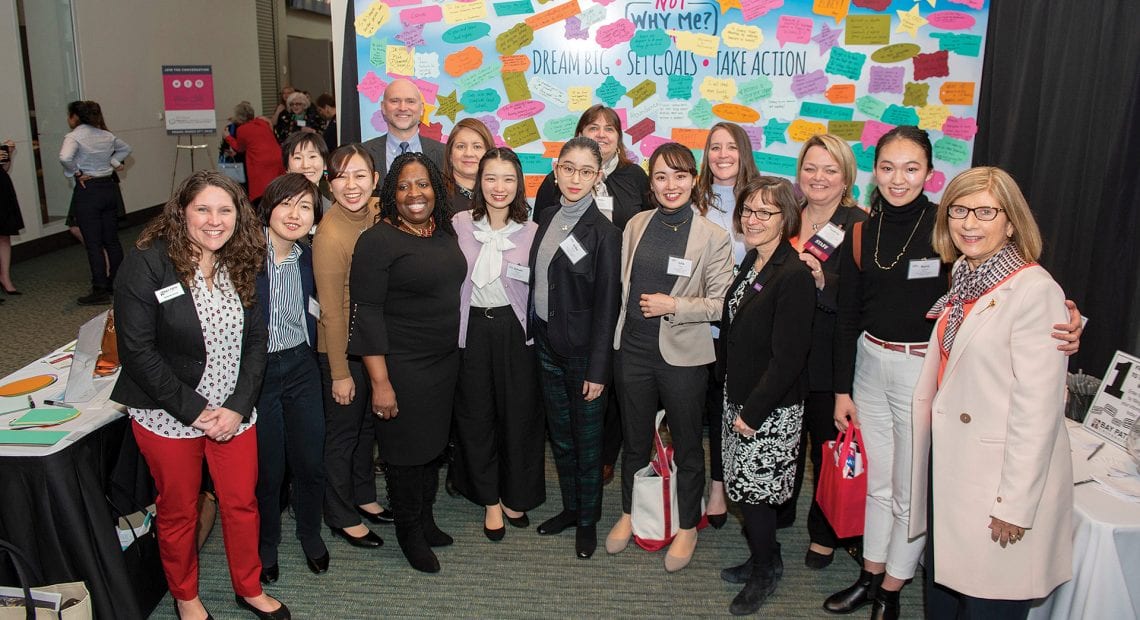
Of these, the deduction for unreimbursed employee business expenses, such as business travel or car expenses, tolls, and parking, is one of significant note. However, despite the lost deduction, there may be an alternative solution that can be a win-win for employers and employees.

Prior to the TCJA, unreimbursed employee business expenses were deductible as a ‘miscellaneous’ deduction on an individual’s return. All miscellaneous deductions were deductible in excess of 2% of adjusted gross income (AGI).

For example, if your AGI was $100,000 in 2017, you could claim only a deduction for the amount of your total miscellaneous expenses that exceeded $2,000. If you had a total of $3,200 of unreimbursed employee expenses, you would have been able to deduct $1,200 on your personal return in 2017. Now fast-forward to 2018, and the $3,200 of unreimbursed employee expenses are not deductible at all on the individual return.

The Solution

You may be thinking the changes noted above sound unfair. However, a company can establish an ‘accountable plan,’ which may serve to remedy this change. An accountable plan is a reimbursement or other expense-allowance arrangement between an employer and employee, which reimburses employees for business expenses that are not recorded as income to the employee and are generally deductible by the employer as business expenses.

If the accountable plan is followed properly, the company reimburses an employee for substantiated business expenses, and then, in turn, the company deducts those business expenses on its income-tax return. The reimbursements are excluded from the employee’s gross income, not reported as wages or other compensation on the employee’s W-2, and are also exempt from federal income-tax withholding and employment taxes.

The company can negotiate with the employee to reduce the employee’s wages in exchange for the reimbursement, thereby saving the company payroll taxes, which includes Social Security tax of 6.2% on gross wages, capped at $132,900 (for 2018) and Medicare tax of 1.45%. By executing this transaction appropriately, the employee receives full reimbursement for business expenses, while seeing no change in their overall income, and the company benefits by saving on payroll taxes.

For example, Johnson Inc. has a sales team, which includes its ace salesman, Dave. During 2017, Dave earned $105,000 in base compensation and had $7,000 of unreimbursed business expenses. Assuming Dave’s base compensation of $105,000 is also his adjusted gross income, Dave would have been able to deduct $4,900 of his unreimbursed business expenses on his personal tax return in 2017. The remaining $2,100 of unreimbursed business expenses is a lost deduction.

Now let’s assume Johnson Inc. establishes and properly follows an accountable plan in 2018. During 2018, Dave earns the same $105,000 reduced by the elective expense allowance of $7,000 to a new taxable base of $98,000. Under the accountable plan, Dave is reimbursed in full for his business expenses; therefore, his net income, subsequent to reimbursements, remains the same as 2017 at $98,000. However, in this scenario, the company saves Social Security and Medicare tax in the amount of $535 (7.65% combined tax rate multiplied by $7,000 of reduced wages). While this savings may not seem like a lot, imagine a sales team of 25 employees; that is a potential savings of $13,375. Think about what you could do with that savings as a business owner.

How to Establish an Accountable Plan

The following criteria must be met for the plan to be accountable:

The accountable plan must prove the business connection for the reimbursements and/or allowances. The typical allowable deductions are travel, supplies, local transportation, meals incurred while away on business, and lodging.

The accountable plan must also have adequate support and records (such as itemized receipts) that substantiate the expense’s amount and purpose. The substantiation should be examined and approved by a manager or supervisor. The plan also requires the employee to return any advances back to the company which are not business expenses. Excess advances must be returned to the company within a reasonable period after the expense is paid or incurred. If excess advances to employees are pocketed by the employee, the excess advances are subject to federal income-tax withholdings and employment taxes.

The business-connection requirement is satisfied if a plan only reimburses employees when a deductible business expense has been incurred in connection with performing services for the company and the reimbursement is not in lieu of wages that the employees would otherwise receive. The company cannot simply shift taxable wages to the employee to non-taxable reimbursements without adequately proving the business connection.

There is no specific IRS form used to adopt an accountable plan, nor does the tax law require an accountable plan to be in writing; however, it would behoove employers to write down a formal plan.

Costs and Benefits of an Accountable Plan

The benefits produced from an effective accountable plan are clear. The employee is reimbursed in full for business expenses, and the company can save on payroll taxes, a win all around for everyone. However, the costs of implementing an accountable plan must also be factored in.

The company must have an organized process for tracking employee reimbursements, maintaining appropriate support that substantiates the business connection of employee reimbursements and is timely with reimbursements and requests for payback from its employees.

Companies with highly functioning accounting and/or human-resource departments will not have an issue with meeting these tasks; however, companies with low-functioning accounting and human-resource departments could struggle with appropriately maintaining an accountable plan.

Conclusion

Utilizing an accountable plan is an overall win for employers and employees. But consistency must be maintained throughout the year in order to yield the benefits.

Joe Lemay, CPA is a senior associate with the Holyoke-based public accounting firm Meyers Brothers Kalicka, P.C.; (413) 322-3520; [email protected]