For Sale, for Lease
A listing of available commercial real estate properties
View/download the PDF HERE




View/download the PDF HERE
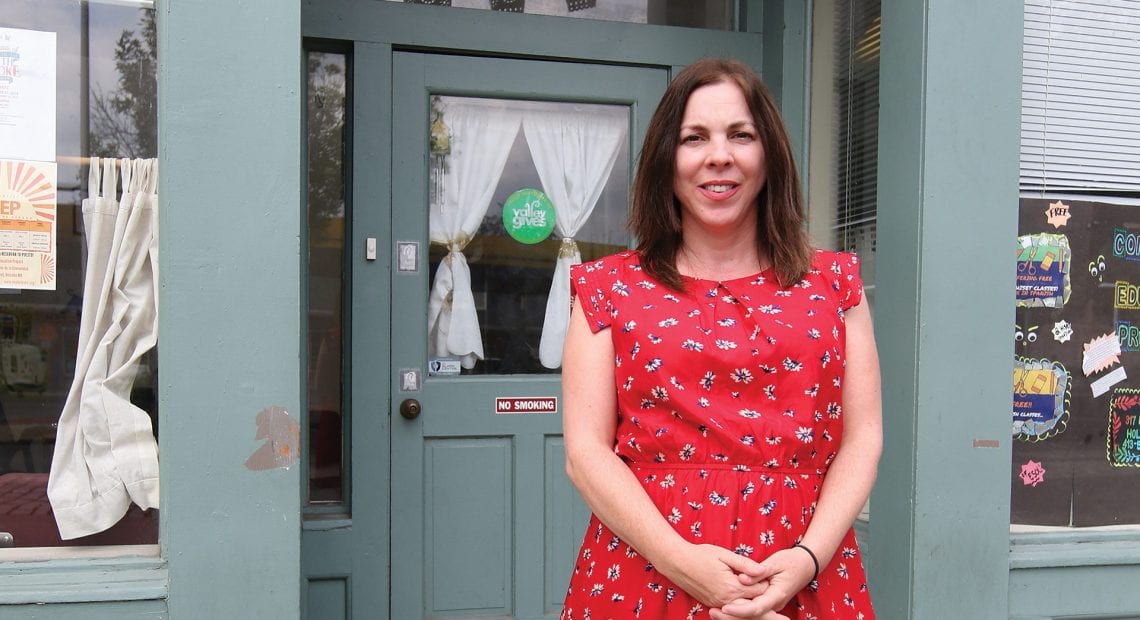
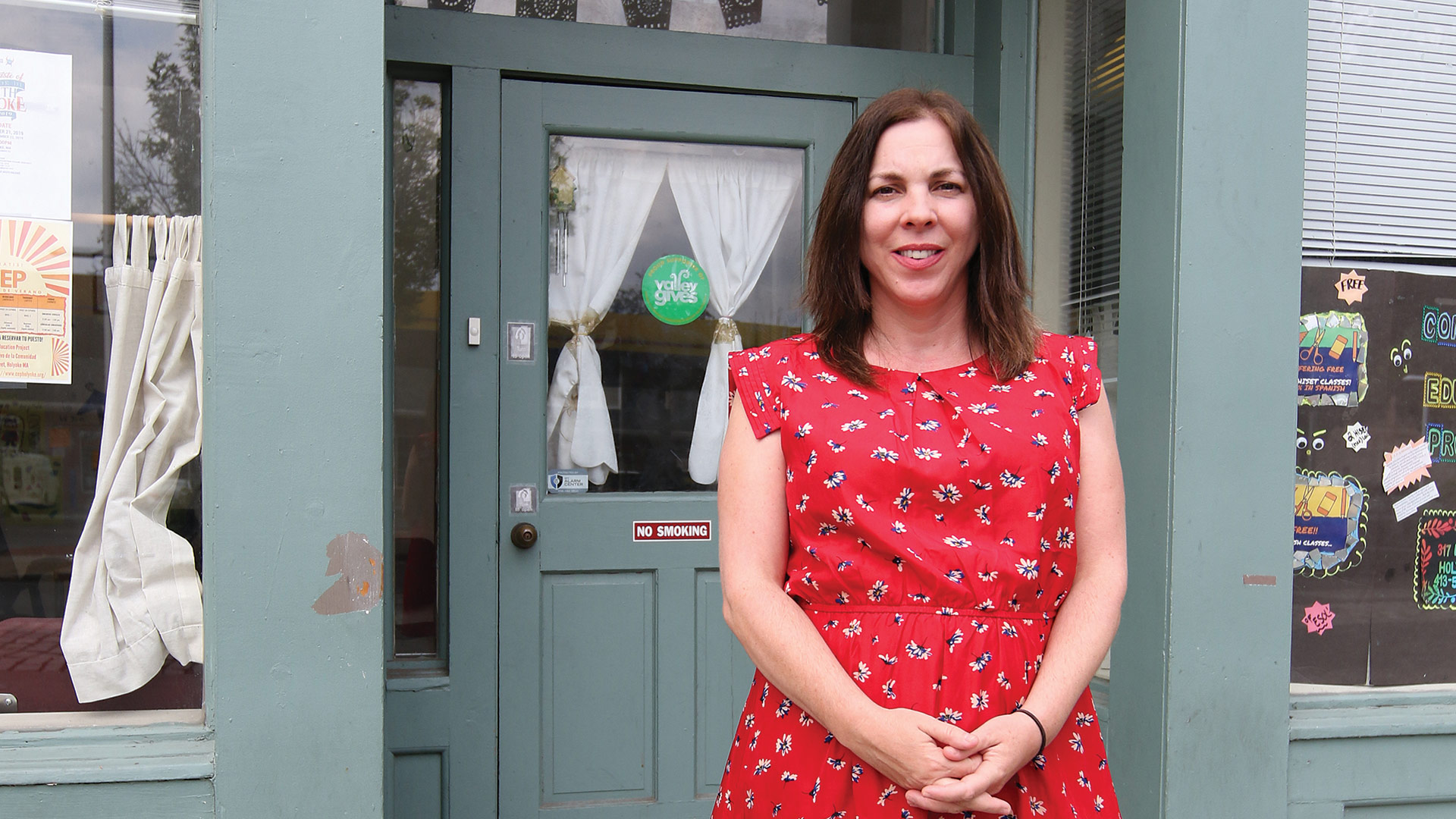
Rose Egan was inspired to work at the CEP because she had a long and difficult journey to education and wants to be able to give the gift of learning to others.
Imagine that your one and only barrier to success was not speaking the language you need to speak in order to move forward in life.
This intimidating scenario is all too real for many people in the city of Holyoke. In the Paper City, 30% of the population age 18 and older does not have a high-school diploma, while 18.4% speak with limited English proficiency.
This language barrier creates setbacks for much of the Latino community, but the Community Education Project (CEP) is working to change that.
“The bottom line is, people want to better their lives, and they want better opportunities. A lot of them are doing it for their children so they have better opportunities as well.”
The CEP provides adult-literacy and language-education programs in an effort to achieve social and economic justice by contributing to the development of the Latino community in Holyoke. The organization offers two levels of native language literacy in Spanish to prepare students for HiSET and GED exams in Spanish, three levels of English for speakers of other languages (ESOL), and adult basic education for transition to college and careers.
It is the only provider in the region that offers native language literacy, or GED preparation in Spanish, and all classes are provided for free to anyone who walks in the door.
Executive Director Rose Egan said most people come in because they desire a better quality of life and want to be more independent.
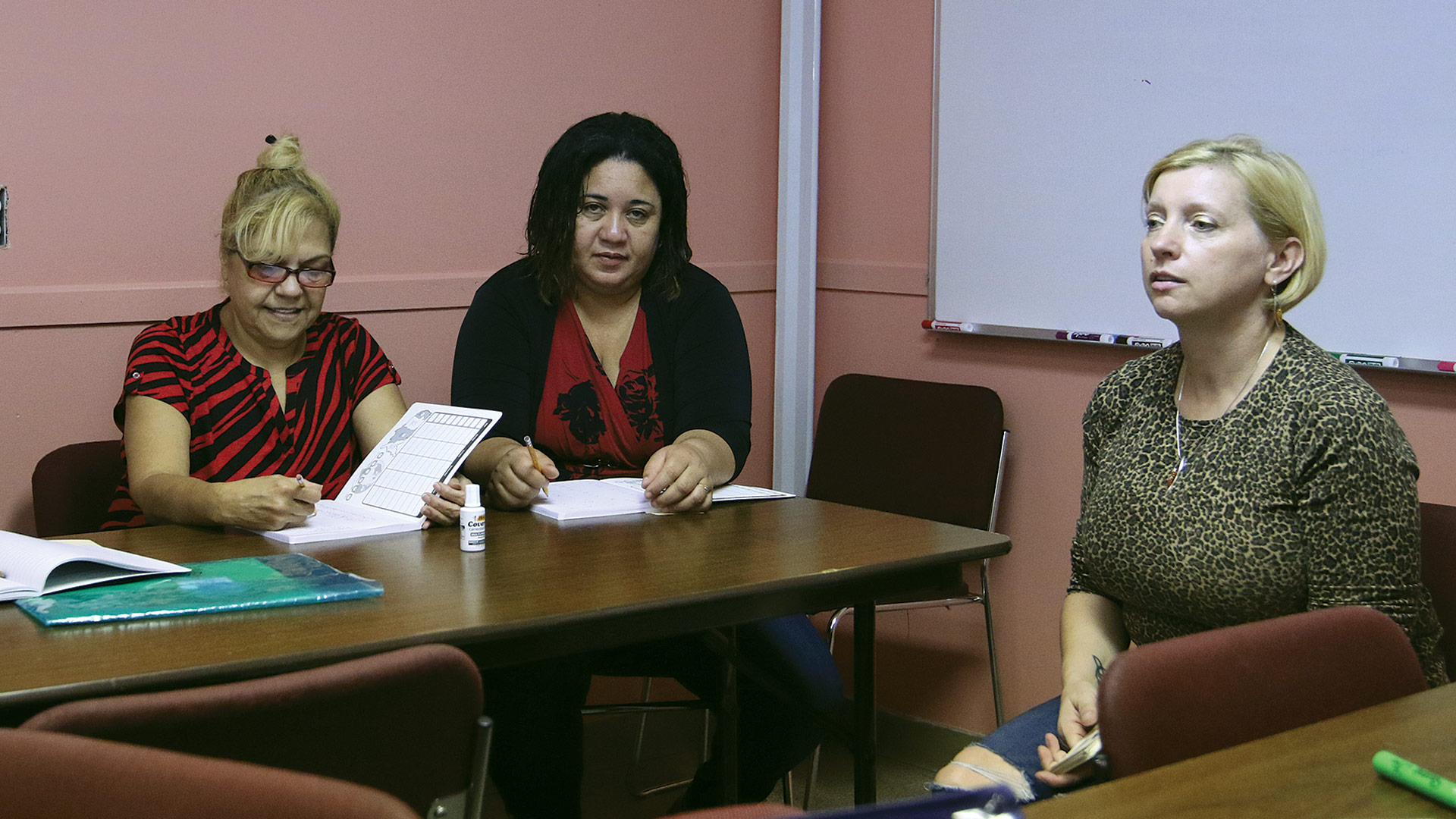
From left, Edith Rodriguez, and Sonia Girón Peña de Aponte take their first English class with Angelika Bay, lead instructor in English for speakers of other languages (ESOL).
“The bottom line is, people want to better their lives, and they want better opportunities,” she noted. “A lot of them are doing it for their children so they have better opportunities as well.”
People come to the CEP at all levels, including adult learners with grade-level equivalency of age 3 to high school. Some students haven’t stepped in a classroom in 20 years. Some must bring interpreters to doctors’ appointments. Some are parents who want to be able to talk to their kids’ teachers and other school personnel without having an outsider in the mix, because they feel like they cannot develop a solid relationship.
“They want to be able to advocate for themselves,” said Egan. “The issue we see is that people can get along in their daily life fine in this area because everyone around here speaks Spanish, but then when they try to step out of that zone, they find barriers due to their lack of English-language skills.”
CEP classes run throughout the day and at night, and summer classes are offered as well. Egan said about 110 students participate daily across all programs, and seven staff members make it all happen — a “small but mighty” team, as she calls it.
“I didn’t even know what college was — it could have been another planet. I knew no one that went to college in my entire life. My purpose here is to help open doors for students, but also help elevate the organization as a whole.”
One staff member in particular, Vida Zavala, made a positive impact on student Ingrid Arvelo’s life, and put her in the right direction to accomplish her goals.
Arvelo — an immigrant from Venezuela and a 40-year-old mother of two — has plenty on her hands, but still found time to take level three ESOL classes, including the hardest, most immersive class in the program.
“It worked for me because now I’m taking classes to go to college in January,” she said.
Arvelo is currently enrolled in the college-transition course with CEP, and wants to attend Holyoke Community College next year, hoping to study law or education to become a teacher. She is thankful to the CEP for helping give her the confidence to learn English.
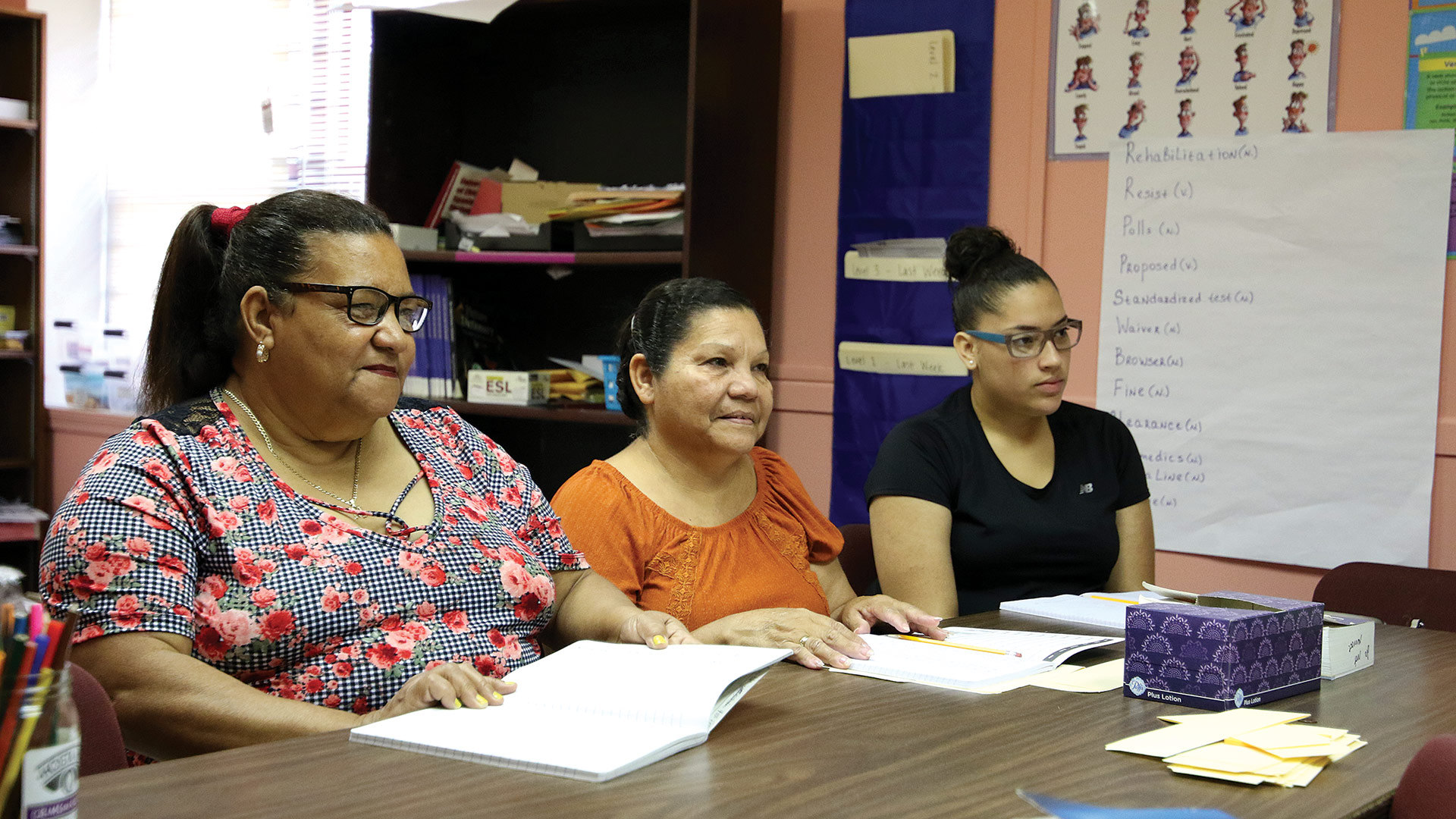
From left, Maria Vasquez, Nydia Rodriguez, and Stephanie Trinidad take their first English class at the CEP.
“If they see that you are in trouble or struggling, they help,” she said. “I’m so grateful for the program.”
Putting on programs like this isn’t easy, but when things get tough, Egan says she remembers her journey through education and how much she wants to give that to others.
“I didn’t even know what college was — it could have been another planet. I knew no one that went to college in my entire life,” she said. “My purpose here is to help open doors for students, but also help elevate the organization as a whole.”
Egan is also a single mom and sent her daughter off to her first day of kindergarten recently. She recognizes — and is grateful — that her daughter will probably never experience what it’s like to not know what education is. Her job at the CEP is her way to make sure others can grow and learn every day.
“This is an opportunity for me to be able to come to work every day and feel like I’m not coming to work,” she said. “I’m doing what I love to do, which is sharing the gift of education with other people.”
And she has plans in motion to help support the classes the CEP offers.

The Community Education Project is a 501(c)(3) organization and is classified as a public charity. After attending an innovation accelerator program with Paul Silva, Egan came up with a few programs to expand its revenue streams.
The first is a document-translation service the CEP has been providing for 30 years, but recently opened up to nonprofit organizations in the area. She explained that document translation is very costly, and the CEP is able to come in about 20% below competitors, helping other local nonprofits get their documents translated into Spanish.
“It helps us because it provides us some unrestricted revenue so that we can focus on our core services, which are serving our students and providing them with native language literacy, English-language skills, transition to college and careers, things like that,” Egan said, adding that this is very difficult to do with a limited budget.
“We find the biggest barrier to people coming in our door is they didn’t know we existed,” she said, adding that conducting more outreach in the community and incorporating marketing strategies into the mix are also on her to-do list.
She’s also hoping to expand Spanish-language classes to both children and adult learners, such as those regularly tasked with interacting with Spanish-speaking employees.
“We’re targeting local employers so that we can train their staff to speak Spanish so they can develop a better relationship with people they are serving without having to have a middle person interpret,” Egan said. “Launching those classes will really help us worry less about how we’re going to fund our classes and our core program. We want to make sure we have the funds we need to continue providing the services that will better our community.”
With all these services, Egan is confident CEP will be able to help even more students like Arvelo reach their goals.
“This country gives you the opportunity to be a better person, a better professional, and a better worker,” Arvelo said. “But if you don’t speak English and if you don’t put in the effort, you can’t make it. So English is the first step.”
With that in mind, Egan and the staff at the CEP continue to look for new ways to support those who want a better quality of life and have big plans for the future, one step at a time.
“Education is such a gift, and without it, we don’t even know what we’re missing,” Egan said. “If I can be that conduit to just make education accessible to those who otherwise wouldn’t have that opportunity, then I’m more than happy to step into that role.”
Kayla Ebner can be reached at [email protected]


Photo by Leigh Chodos
Sixteen months ago, Mike Hempstead was a landlord with a background in sales and marketing and an interest in alternative energy.
He had six solar systems installed on properties he owned, giving him plenty of experience with various solar companies, including Valley Solar, an energy division of Valley Home Improvement in Northampton, which installed his last two systems.
“I just felt that the experience of working with the team at Valley Solar was so far superior to what I experienced with other solar companies that I knew this was the place I wanted to work when I got into solar.”
Hempstead was so impressed with the service he received that he applied for a job with the company.
“I just felt that the experience of working with the team at Valley Solar was so far superior to what I experienced with other solar companies that I knew this was the place I wanted to work when I got into solar,” he said.
These days, he’s Valley Solar’s sales manager, part of the team that provides service to customers in the four counties of Western Mass.
That service, he said, is what helps the company shine (pun intended) in a very competitive field — so competitive, in fact, that Valley Solar is one of 211 solar installers in the state of Massachusetts.
“Most customers only buy solar one time in their lives, but we treat our customers for solar as if they’re going to be a repeat customer and we give them that level of care that sets us apart,” he said.
General Manager Patrick Rondeau agreed, adding that Valley Solar makes recommendations for homeowners based on what’s best for them, not what’s hottest on the market.
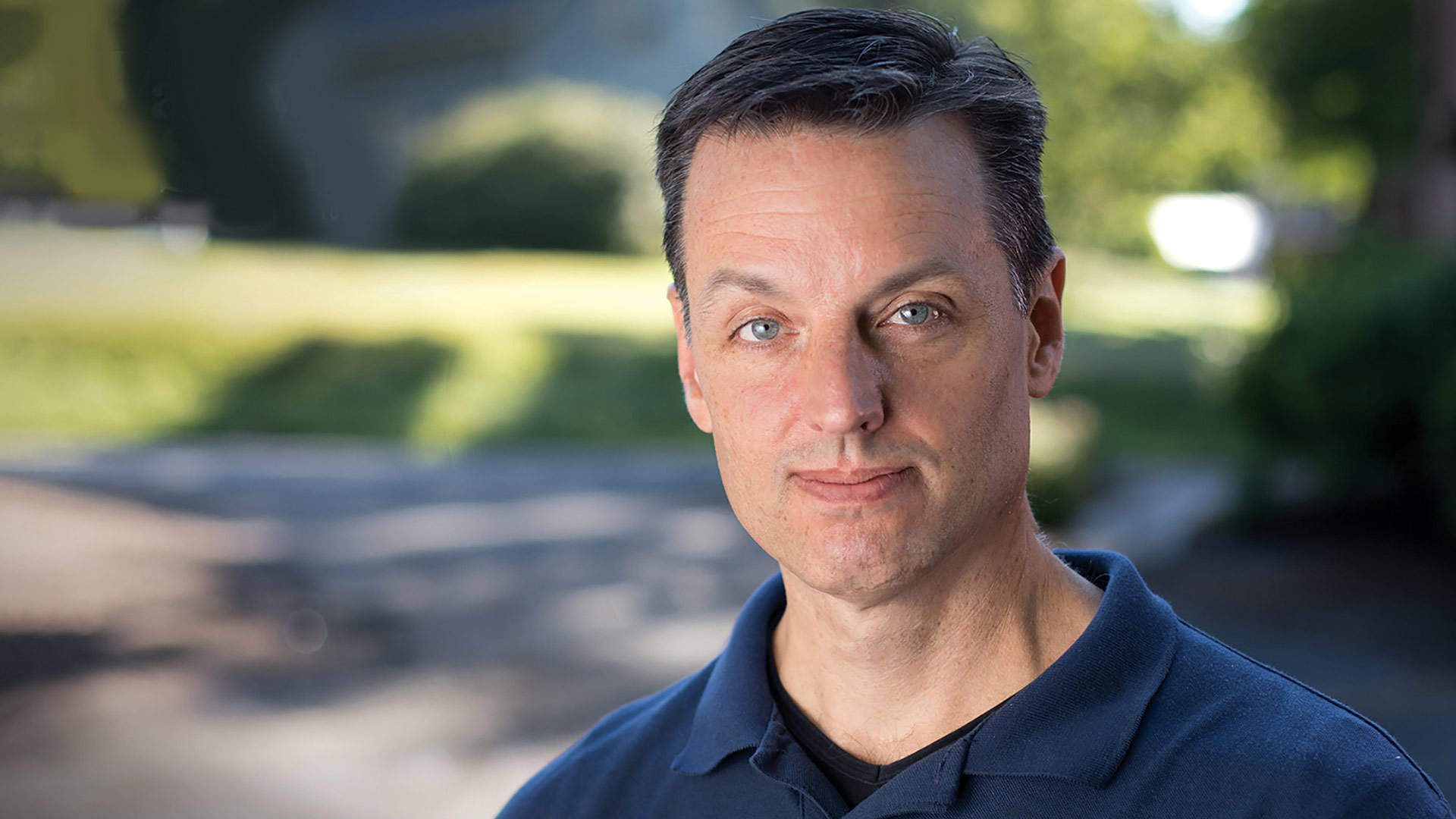
Mike Hempstead says his first experience with Valley Solar was when he installed systems on two of the houses he leased, which led him to pursue a position at the company. (Photo by Leigh Chodos)
“We’re just trying to advise homeowners in a way that we’d want to be advised if we weren’t specialists in the field,” he said.
Valley Solar is a division of Valley Home Improvement, which has been around for 25 years. “About five or six years ago, the former owner of the company installed solar at his house,” said Rondeau. “He watched the process, and, having been a builder for his whole life, he thought, ‘we could do that. We should do that.’”
So, five years ago, this vision was brought to life with Valley Solar, and its relatively new status hasn’t slowed it down. The company took the 2018 Daily Hampshire Gazette Readers’ Choice Award for Best Local Solar and continues to receive raving reviews from customers.

Hempstead said much of that success comes from the firm’s home-improvement background, better enabling it to help choose the right plan for each customer.
“We’re a division of a design and build firm, and we handle all aspects of building renovation and construction, and that gives us a broader perspective of how solar integrates with other energy systems,” he said.

A finished system that Valley Solar installed on a home in Pelham. (Photo by Leigh Chodos)
For this issue and its green-business focus, BusinessWest talked with Hempstead and Rondeau about the solar business and the advantages it brings to customers on both the residential side and business side.
Rondeau started by stating the obvious: solar technology is environmentally friendly.
 But what many people don’t realize, he went on, is that it is also a huge money-saving strategy.
“Right now, if you’re simply paying the utility, you’re paying what they’ll have you pay,” said Rondeau. “If you have your own system, you don’t worry about what they’re charging; you’ve taken care of that.”
Perhaps one of the greatest incentives is the constantly rising cost of energy, which has been going up at twice the rate of inflation, Hempstead noted. Massachusetts has the third-highest residential electricity rate in the country, coming in at 22.57 cents per kilowatt-hour, topped only by Hawaii (32.09) and Rhode Island (22.67). And these numbers will only continue to rise.
“Your savings are far greater than they were in the past because the cost of energy is so much more than it was,” he said. “At the same time, panels have become more powerful, so you’re getting more energy for less cost.”
Webber and Grinnell Insurance is one local business that recently installed solar panels on their property, and Vice President of Operations Richard Webber said the investment has been 100% positive so far.
“We’ve basically eliminated our monthly electric charge, which is really our only utility in the building,” he said. “We do all of our limited heating and air conditioning with the solar panels now.”
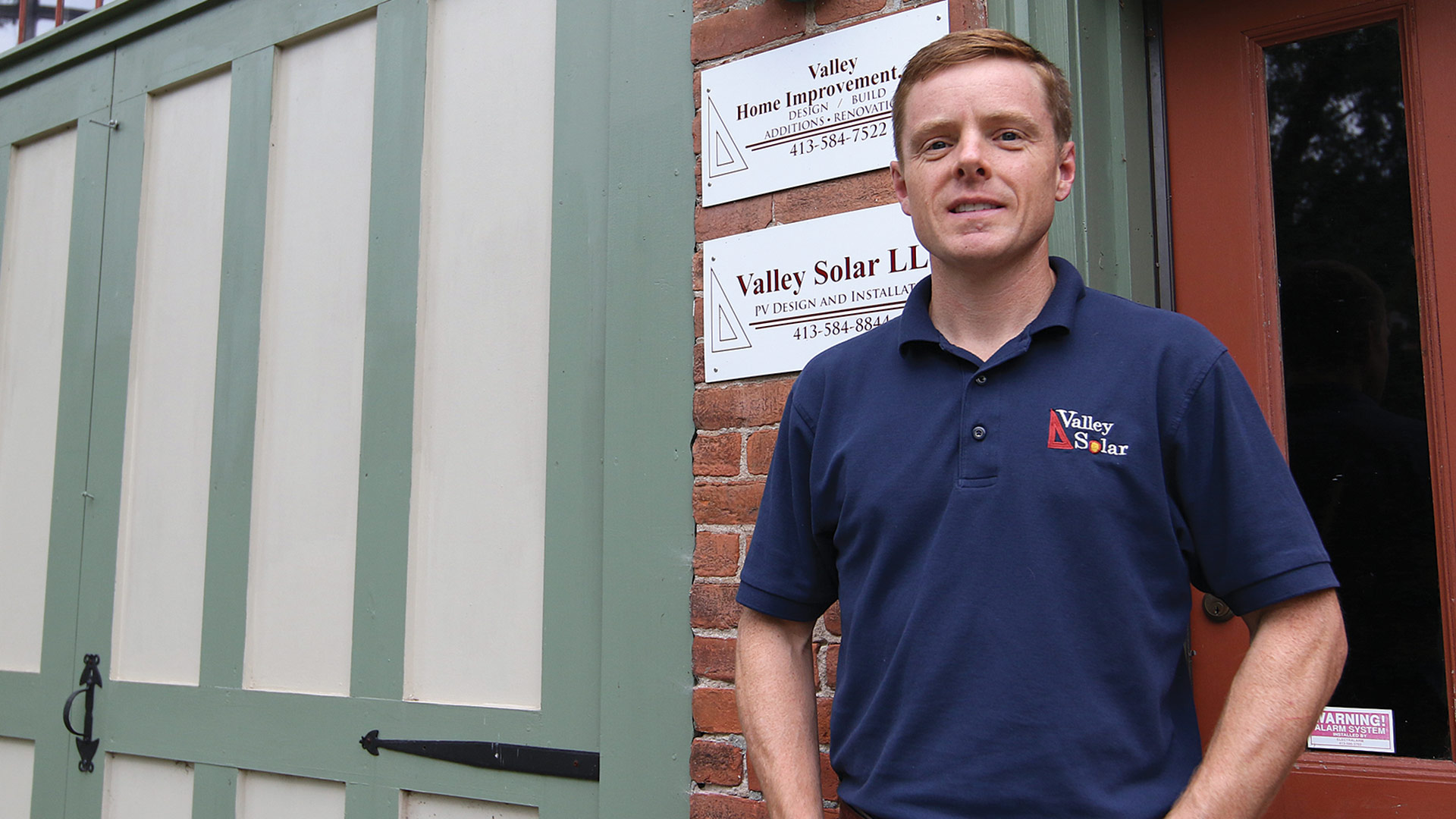
Patrick Rondeau says Valley Solar recommends products for homeowners based on what’s best for them, not what’s hottest on the market.
President Bill Grinnell agreed, and said the incentives were another reason why the company chose to go solar.
“As a business owner, you’re very concerned with the investments you make and the return you get,” he said, adding that, while the upfront investment is a good chunk of change, the tax credit he gets will make it worthwhile. “With the incentives that are out there, I think it’s a great investment.”
These incentives are another reason why many businesses and homeowners alike have invested in solar energy, but they’re always shifting. Commercial and residential owners who have just installed their solar systems receive a federal tax credit for 30% of the system, but not for long. Congress passed a multi-year extension of the solar Investment Tax Credit (ITC) in 2015, with a 30% incentive for systems installed in 2019, a 26% incentive in 2020, 22% in 2021, and 10% in 2022 for commercial and utility scale, but none for residential.

Still, even with this news, there are still plenty of reasons to consider solar installation, including accelerated depreciation. While business customers still get the 30% federal tax credit for their business, they also get a 100% bonus depreciation in their first year with solar.
“This will effectively, depending on your tax rate, give you another 20-25% back in the first year,” said Hempstead. “So, you have 50-55% of your system paid for the next time you pay taxes.”
The numbers speak for themselves, said Rondeau, adding that he predicts prices for solar installation will continue to drop in the next few years.
“Solar can and often does pay for itself in a relatively short period of time,” he said. “I think we have reached a tipping point where most folks, if they can see the numbers, can convince themselves that it’s worth the investment.”
Kayla Ebner can be reached at [email protected]

 With home-improvement demand surging in 2019, contractors say they can pick and choose from available jobs, which isn’t always ideal for consumers, who often have trouble finding a professional who can fit them in. In realty, most contractors would love to take on more jobs — but can’t because it’s not easy to find talent, especially young talent with the potential to grow with a company over the long term.
In one sense, it’s a good problem to have, Andy Crane said — but it’s still a problem.
He’s talking about an ongoing shortage of skilled labor in the construction field, making it difficult for companies to keep up with what continues to be high consumer demand for home-improvement projects.
The good part of the problem is that they can be more selective about the projects they want to tackle, but that’s not always great for the consumer, and it stifles growth, said Crane, executive director of the Home Builders and Remodelers Assoc. of Western Mass.
“There’s a lot of work to be done, but the workforce is very tight, and it’s difficult for companies to respond to everyone. They’re just booked out for a long period of time,” he went on. “Skilled labor — especially young skilled labor — is few and far between.”
Crane gets calls from homeowners looking for a contractor for a project but struggling to nail one down who can fit them in, and that labor shortage has a lot to do with it, he told BusinessWest. “A lot of contractors are in the same boat. I guess it’s a good problem on our side, but it’s bad PR.”
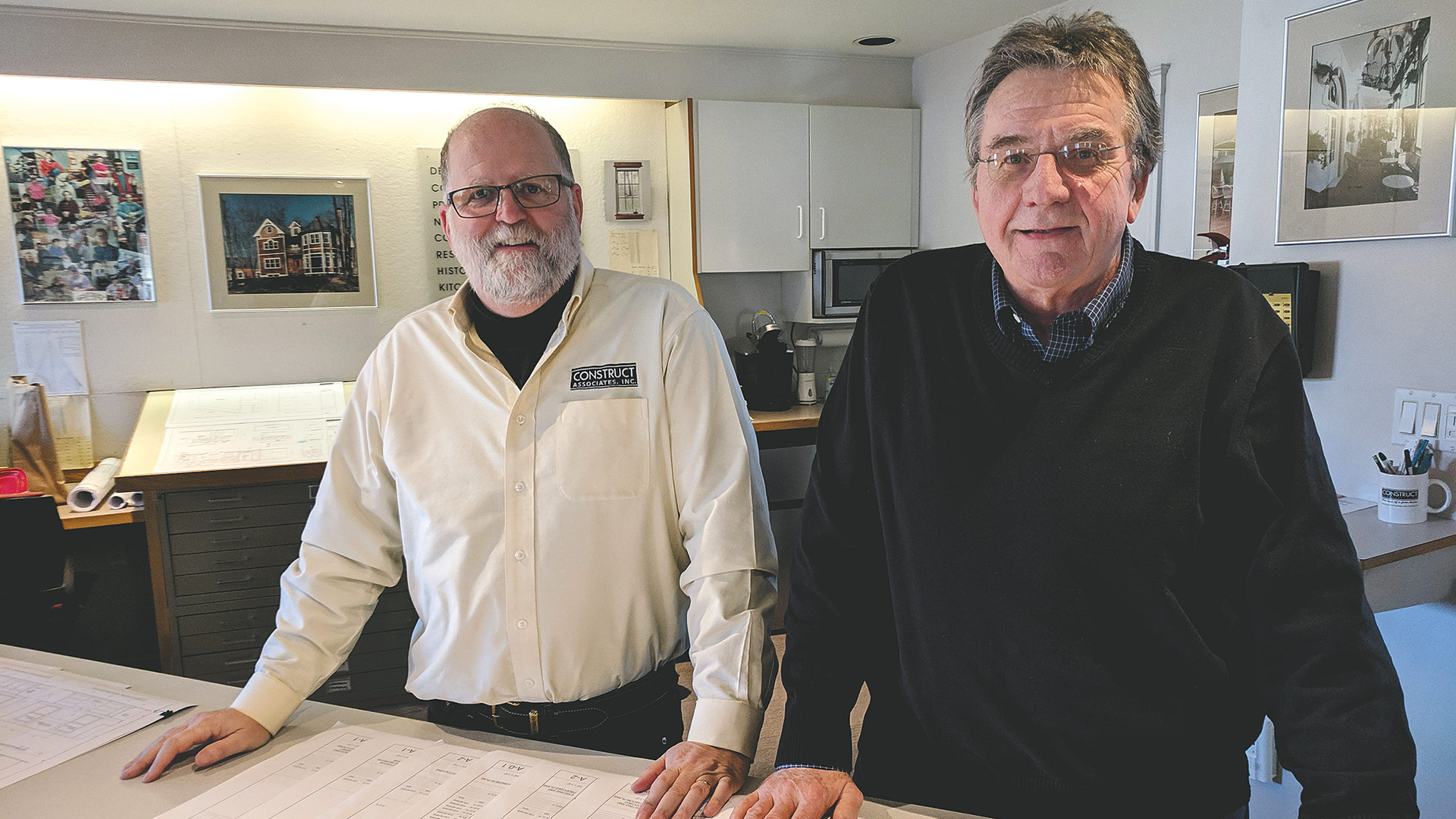
Stephen Ross, partner at Construct Associates in Northampton, understands the problem well. “We just hired two new guys, which is a nice thing to be able to do these days. We just snapped them up. It’s hard — the majority of people applying for jobs have been in their late 50s, even early 60s. But we try to hire for the long haul.”
Still, business has been positive for a long stretch now at Construct, which boasts plenty of residential construction in its mix of projects.

“Kitchens and bathrooms are still big sellers around here — lots and lots of them,” Ross said, noting that the prevailing design trends of the past couple of years continue to dominate, among them open floor plans, tile in bathrooms, hardwood floors, and granite and quartz surfaces in kitchens.
The Home Improvement Research Institute (HIRI), which issues quarterly state-of-the-industry reports, is bullish on the rest of 2019. According to HIRI’s quarterly Project Sentiment Tracking Survey of 3,000 homeowners, several trends stand out:
• About 75% of homeowners are planning one or more projects in the next three months — the highest project-planning incidence since tracking began in 2012, according to the organization.
• The top motivators for projects include repair, replacement, and routine maintenance.
• The average homeowner plans to complete 4.3 projects in the next three months.
• The top projects include kitchens, windows, driveways, exterior paint, and roofs.
• The Northeast is home to the nation’s highest percentage of project planners in the second quarter — not surprising, as the region’s housing stock tends to be older than in many other areas of the country, so there’s plenty of work to be done.
Energy efficiency remains a trend at the forefront of home improvement as well. Each year, Fixr, an online home-improvement community, polls experts in the home-design industry to discover what the upcoming trends in home design and building will be. This year, the site polled industry experts on what they believe are the top ways that homeowners will utilize design trends and new innovations to help lower their energy bills in the coming years.
According to the poll, a majority of homeowners are personally motivated to save energy in order to save money, yet they also have a significant environmental awareness, which is driving some decisions.
The poll revealed that ducts and windows are the two most effective places to save through air sealing, heat pumps are the most popular method to heat an energy-efficient house, tankless heaters are the most efficient way to heat water, solar power remains the most common way to utilize renewable energy in the home, and cellulose and fiberglass are tied as the most popular ways to insulate an attic.
Another trend analysts have been keeping an eye on for years has been the rise of DIY (do-it-yourself) projects, spurred partly by a greater variety of resources available to homeowners and the abundance of inspiration available on home-improvement television programs and websites.
According to HIRI, roughly two-thirds of completed home-improvement projects are done completely DIY, and three-quarters have at lease some DIY involvement. The level of professional work is dependent on the project. Painting and landscaping are overwhelmingly DIY, while roof and siding replacement are heavily dependent on professional work. Interestingly, HIRI’s poll suggests that, while most who finish their projects are satisfied, those who complete them totally DIY report a higher satisfaction rate.
Not surprisingly, projects done with professionals cost significantly more than those undertaken DIY, and survey respondents who used professional contractors showed a higher likelihood of having the total cost of their project be higher than expected.
As homeowners age, they tend to move away from doing the work by themselves, shifting to professional contractors more frequently. Baby Boomers are twice as likely to hire a pro than a Millennial. The use of professionals is also largely dependent on household income. As family income goes up, so does the likelihood that a contractor is hired to complete a remodeling project.
Whether professional or DIY, annual gains in improvement and repair spending, while still healthy, are projected to continue decelerating through early 2020, according to the Leading Indicator of Remodeling Activity (LIRA) released by the Remodeling Futures Program at the Joint Center for Housing Studies of Harvard University. LIRA forecasts that year-over-year growth in homeowner remodeling expenditure will slow from about 7% this summer to 2.6% by the first quarter of 2020.
“Cooling house price gains, home-sales activity, and remodeling permitting are lowering our expectations for home-improvement and repair spending this year and next,” said Chris Herbert, managing director of the Joint Center for Housing Studies. “Yet, more favorable mortgage rates could still give a boost to home sales and refinancing … which could help buoy remodeling activity.”
Abbe Will, associate project director in the Remodeling Futures Program, added that “home-improvement and repair spending has been in an extended period of above-trend growth for several years, due to weak homebuilding, aging homes, and other factors. However, growth in remodeling is expected to fall below the market’s historical average of 5% for the first time since 2013.”
One strong home-improvement trend in the Northeast involves Baby Boomers, who continue to pour into their retirement years at the rate of about 10,000 a day — and want to spend those years in their own homes if possible. As a result, many projects today involve making those homes safer and more accessible, with improvements ranging from night and security lights to wider interior walkways to curbless showers.

But older homeowners are also going for modern and attractive features, Ross said. “People are wrapping things up, things they’ve let go for decades. People are moving toward fixed incomes and are planning that last hurrah — maybe a garage addition. Or decks need replacing, or siding needs replacing — and nothing gets cheaper the longer you wait.”
In fact, building costs are more expensive than ever, Crane said, for reasons ranging from heavy regulation in Massachusetts to new tariffs at the federal level to inevitable economic trends. But the landscape remains a healthy one for builders and remodelers — if they can find the help they need.
“Construction companies can pick and choose their jobs,” he said. “It’s a great sellers’ market.”
Joseph Bednar can be reached at [email protected]
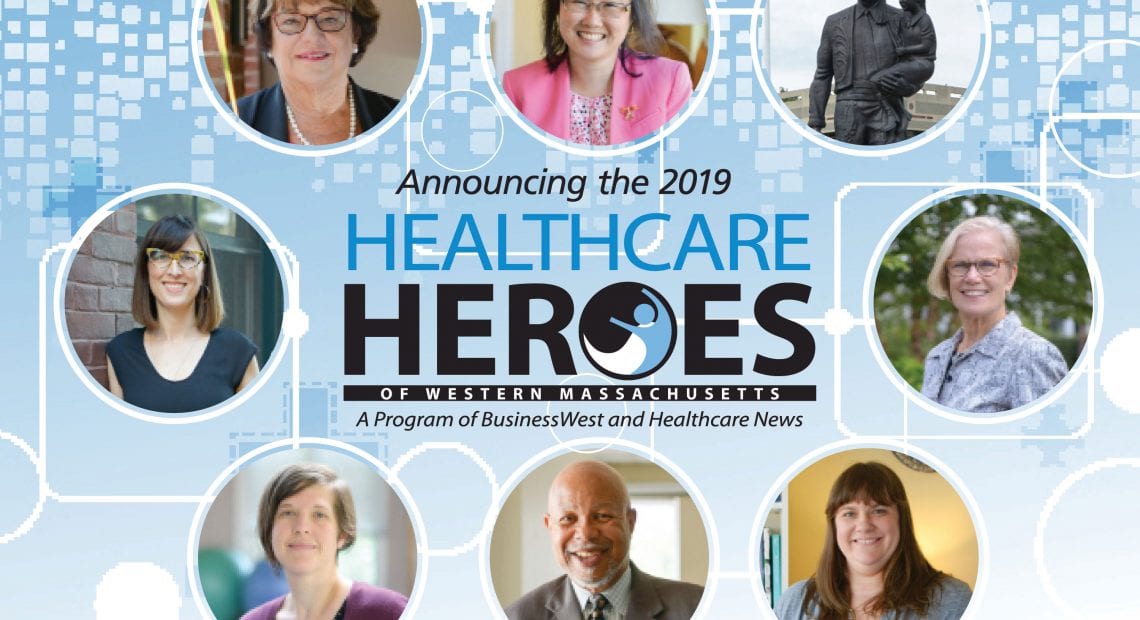
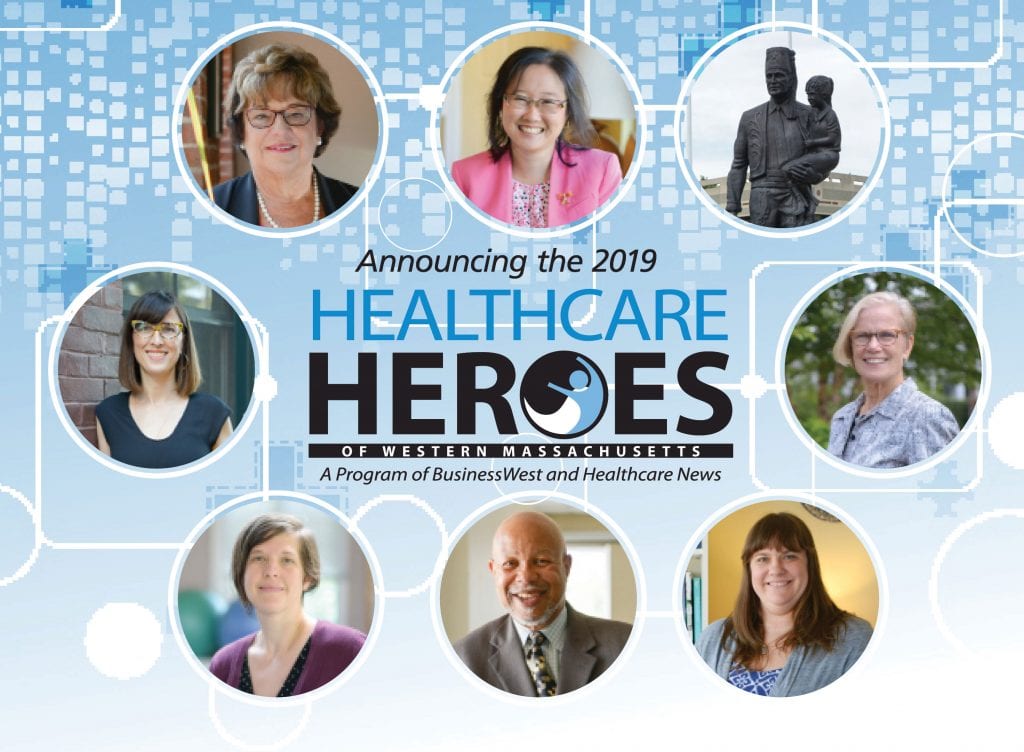
 When BusinessWest and Healthcare News launched Healthcare Heroes in 2017, there was no doubt this was a long-overdue award program in Western Mass. — in fact, we knew the challenge wouldn’t be finding quality nominations, but choosing just a handful to honor each year. Indeed, this year’s judges (see below) carefully studied about 100 different nominees in seven categories to choose the impressive group to be honored at this year’s gala in October.
Collectively, they are innovators and game changers in the region’s rich and vibrant healthcare community, and their stories — told on the following pages — reveal large quantities of energy, imagination, compassion, entrepreneurship, forward thinking, and dedication to the community.









Bob Fazzi
Bob Fazzi has spent a lifetime making a difference in healthcare, most notably with Fazzi Associates, the company he started 40 years ago and incorporated in 1995. Its stated mission is to make a real difference in healthcare by strengthening the quality, value, and impact of home care, hospice, and community-based services. Fazzi Associates has been a leader and a pioneer in this sector, developing products and services — including the industry’s first home-health patient-satisfaction services — as well as research to make agencies stronger and better able to serve their patients. For this work, Fazzi was honored as a Healthcare Hero in 2018 in the category of Lifetime Achievement.

Mary Paquette
Mary Paquette, director of Health Services at American International College, is another 2018 Healthcare Hero, in the category of Patient/Resident/Client Care Provider. AIC is only the latest stop in a 35-year career that has seen her take on a variety of roles, from director of Nursing at Ludlow Hospital to per-diem hospitalist at in the GI Department of the Eastern Connecticut Health Network, to assistant director of Health Services at Western New England University — the job that became the springboard to her post at AIC. Since arriving at AIC 2012, she has turned a moribund health-services facility that few students knew about or ventured to into a thriving, innovative, important campus service.
Alan Popp
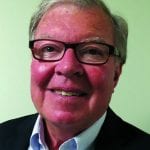
Alan Popp joined the Mason Wright Foundation as its Chief Executive Officer in 2008. His previous experience includes head of school and CEO at White Mountain School, a college preparatory school; and chief operating officer at Pine River Institute, a residential treatment center. He has also served as a consultant to more than 200 New England nonprofits, many of them providers of services to seniors. He serves on the boards of LeadingAge Massachusetts, Salvation Army Citadel Corps, and OnBoard Inc., and on the Leadership Council of the Alzheimer’s Assoc. of Massachusetts/New Hampshire. He is also a trustee of Antioch University New England and previously served on the campaign cabinet for the United Way of Pioneer Valley.
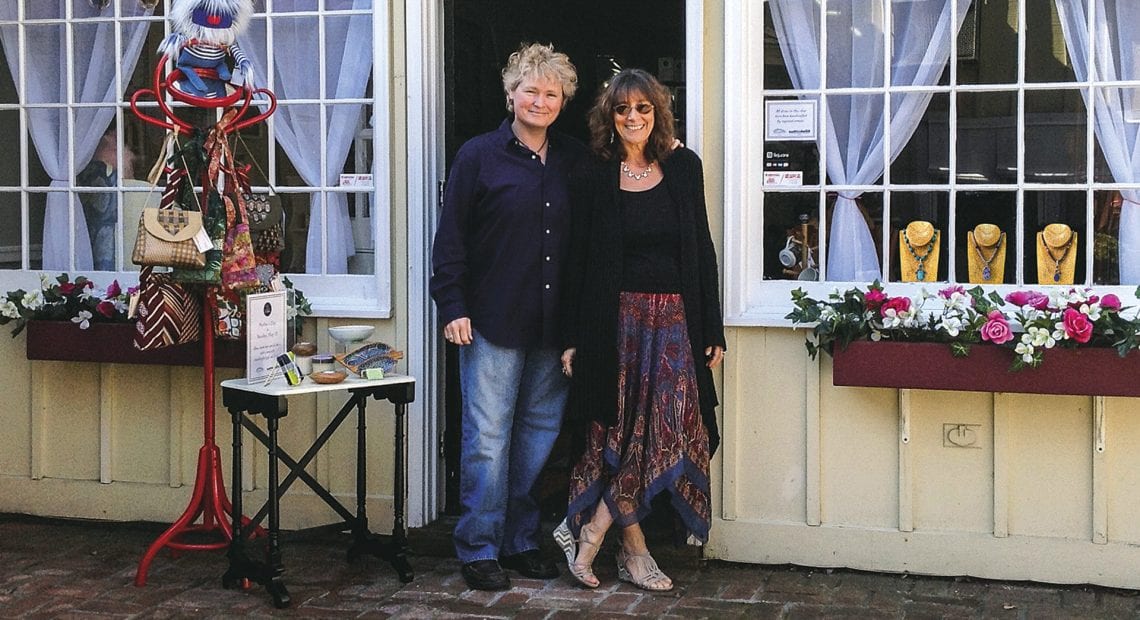
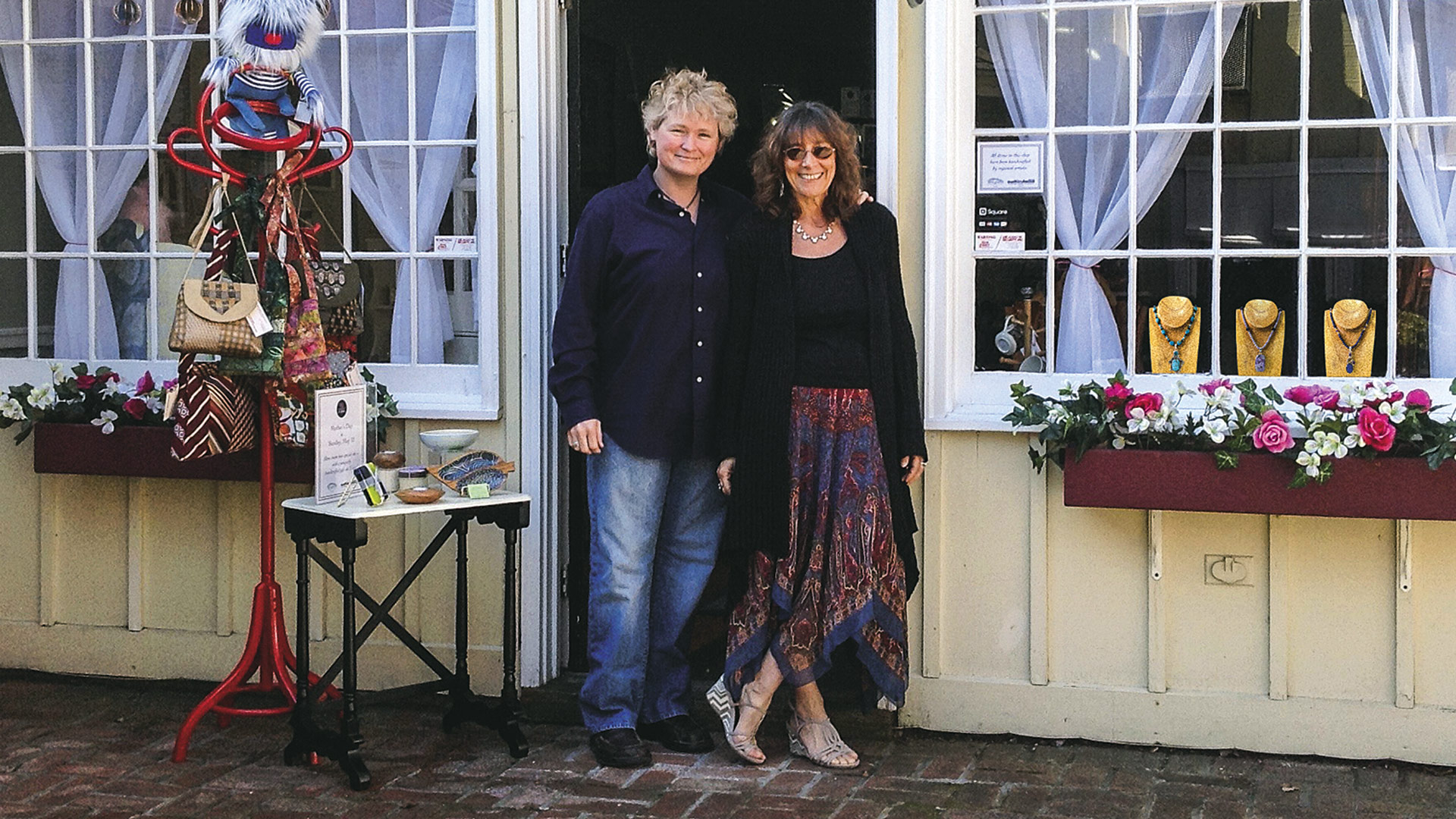
Margaret Kerswill (left) and Laureen Vizza in front of their Main Street shop, Mutability in Motion.
When Margaret Kerswill talks about her favorite part of the town of Stockbridge, she doesn’t mention a restaurant or the relatively low property-tax rate — she talks about the positive vibe and sense of community in town.
Although Kerswill’s favorite local shop is undoubtably Mutability in Motion, a store she owns with wife Laureen Vizza that sells crafts from more than 50 artisans in the U.S., the first thing she mentioned was the culture of the town.
“That’s the absolute joy of Stockbridge itself,” she said. “You see it in every aspect of Stockbridge, whether you’re just out and about for your daily activities like going to the post office. Doing those normal, daily things, you bump into people all over the place.”
And Kerswill experiences this sense of community in more ways than one. As president of the Stockbridge Chamber of Commerce, she regularly attends meetings and finds that several town residents show up consistently, contradicting the typical stereotype for chambers of commerce.
“It’s a great force in the town,” she said. “The more members we have, the more feedback we get, and the more people who can take part in town meetings. It gives us a bigger voice, and it helps us when we come at this as a collective rather than trying to do all the same things, but as individuals.”

She joined the chamber soon after opening her business in town as an opportunity to be a part of a broader marketing reach, hoping to create relationships with other local businesses in town.
“The chamber has a much broader marketing reach than I might as an individual business,” Kerswill told BusinessWest. “Because of that much broader marketing reach, when the businesses come together and support the chamber, it can reach even further because those member dollars increase our marketing budget and increase our ability to interact with the town.”
When thinking of a small town that relies on tourism to support its economy, one might assume it turns into a ghost town during the winter months. But this is not the case for Stockbridge. In fact, this close-knit town provides plenty of museums, historic sites, and other activities for those who live there and visitors alike, and most don’t close down during the offseason. While summer and spring typically see the most tourism, Stockbridge still has plenty to offer during the other months of the year.

“We are a town that’s open all year long; nobody closes seasonally,” said Kerswill. “All of our shops are independently operated, and they’re all mom-and-pop shops. Everybody carries something you need; we try not to overlap what we sell. We all have different missions.”
And these missions all provide different forms of entertainment, 365 days a year.
Barbara Zanetti, executive director of the Stockbridge Chamber of Commerce, noted that, while Stockbridge currently relies on tourism, the chamber is constantly looking for ways to grow the town and slowly move away from that necessity.
“We are a small community with just under 2,000 residents, but we have so much to offer as far as culture,” she said.
Along Main Street alone, one can find the Stockbridge Library, banks and real-estate offices, the Red Lion Inn, St. Paul’s Episcopal Church, the Austen Riggs Center, the Mission House Museum, and many more.
Year Incorporated: 1739
Population: 1,947
Area: 23.7 square miles
County: Berkshire
Residential Tax Rate: $10.13
Commercial Tax Rate: $10.13
Median Household Income: $48,571
Median Family Income: $59,556
Type of government: Town Administrator; Open Town Meeting
Largest Employers: Austen Riggs Center; Tanglewood; Red Lion Inn
* Latest information available
Among the most popular is the Norman Rockwell Museum, which celebrates 50 years of exhibits this year. The museum holds the world’s largest and most significant collection of Rockwell art, and provides educational opportunities for those who are interested in learning more about the universal messages of humanity and kindness portrayed in his work.
Another popular destination is Tanglewood, the summer home of the Boston Symphony Orchestra and one of the world’s most beloved music festivals. The 2019 Tanglewood season included everything from performances by the Boston Symphony Orchestra to showcases for up-and-coming artists.
During the warmer months, outdoor activities abound, Kerswill noted, and suggested visitors take a moment to explore nature in and around Stockbridge.
“Bring your kayak up here, get out on the water, and just let your body de-stress for a couple of hours,” she said. “And then take in the surroundings.”
The natural resources, hiking, and beauty of the countryside are a few things that Zanetti says consistently keep people coming to the area, in addition to the arts and cultural aspects that draw a steady flow of visitors.
And though some activities may slow down during the offseason, Kerswill said few close during the colder months. “There’s just this amazing bit of culture that happens. Whether you live here or whether you’re visiting, you will find something regardless of the time of year.”
While Stockbridge has the feel of being in the countryside, Kerswill says anything a person could need is only a short drive away.
“We like the small-town New England feel, but you’re also not too far from all the conveniences you need,” she said. “It’s like this illusion of living in the country, but you’re surrounded by everything you need, so nothing is really inconvenient.”
All it takes, she said, is a little bit of research to find a plethora of activities to explore in town.
“I think, unless people really get to know the town, they don’t really realize just how much there is here,” she said. “It’s the best of both worlds, for sure.”
Kayla Ebner can be reached at [email protected]

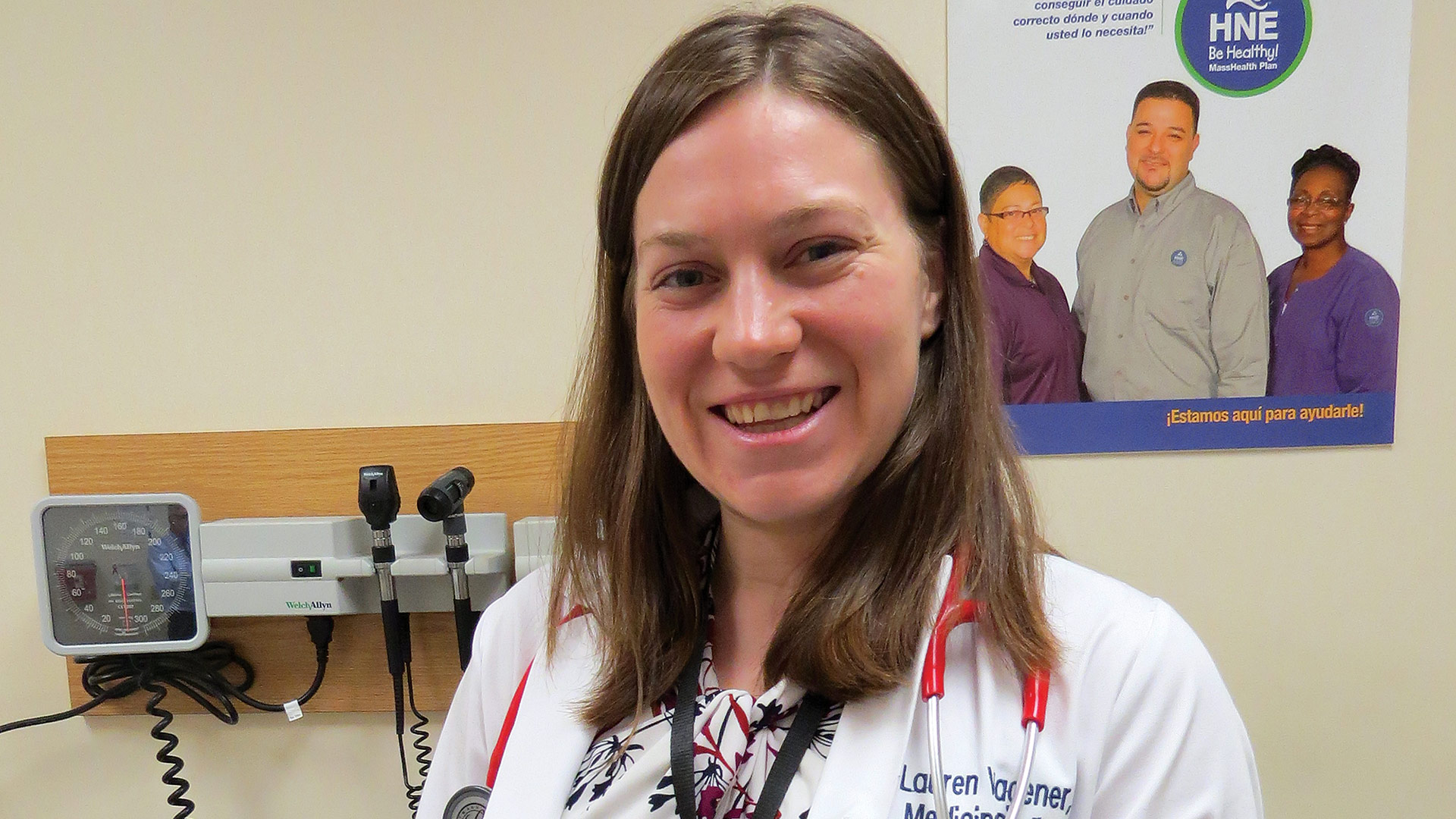
Dr. Lauren Wagener
Dr. Lauren Wagener says she discovered roller derby before she enrolled in medical school, and continued to play while earning that degree.
She told BusinessWest she started playing in a league, taking shifts as both a ‘jammer’ and a ‘blocker,’ terms most Baby Boomers might remember — that’s might — from when they watched the sport on TV back in the ’70s.
Things are different now, said Wagener, noting that today’s game features less violence and fewer of the pro-wrestling-like antics that Boomers might remember.
“Roller derby has revamped into more of a fully realized team sport with rules and regulations and safety — we’re not allowed to trip, no punching, no hitting,” said Wagener, who did some extensive research on the scene well before she moved here and identified two leagues she might play in locally.
But she has a few problems.
The first is a completely torn anterior cruciate ligament in her knee, an injury suffered while playing the sport; she is scheduled to have surgery soon. The second is that she just started her residency at Baystate Medical Center.
“No one likes working on the computer, on the notes; it’s the patient care everyone enjoys. This is what internal medicine offers, and I wanted to be a part of that.”
And while residents don’t have the crazy schedules they did until a decade or so ago, they still put in 80 hours a week over six days, the equivalent of two full-time jobs. That won’t leave much time for roller derby, although Wagener is determined to make some — after the knee is healed, of course.
In the meantime, she plans to take some of the lessons she’s learned from roller derby about teamwork into her daily duties at Baystate’s Mason Square Neighborhood Health Center and myriad other settings she finds herself in. And there are many such lessons, as she will explain later.
Wagener is one of 90 new residents and fellows to arrive at Baystate this summer to begin the next chapter in their healthcare education. Each one has a different and compelling story.
Dr. Zoha Kahn is from Pakistan. But she was already quite familiar with Baystate and Western Mass. before starting her residency a few weeks ago because her sister is a cardiology fellow at the hospital, and her brother-in-law is a pulmonary and critical-care fellow.
Kahn is an internal-medicine resident who hasn’t quite figured out what she wants to a specialize in, and plans to spent at least the next year narrowing her focus.
“Internal medicine is very broad — you deal with everything,” she explained. “This gives you the opportunity to look at the full spectrum of diseases before choosing what you want to do; I get to find out what I truly like.”
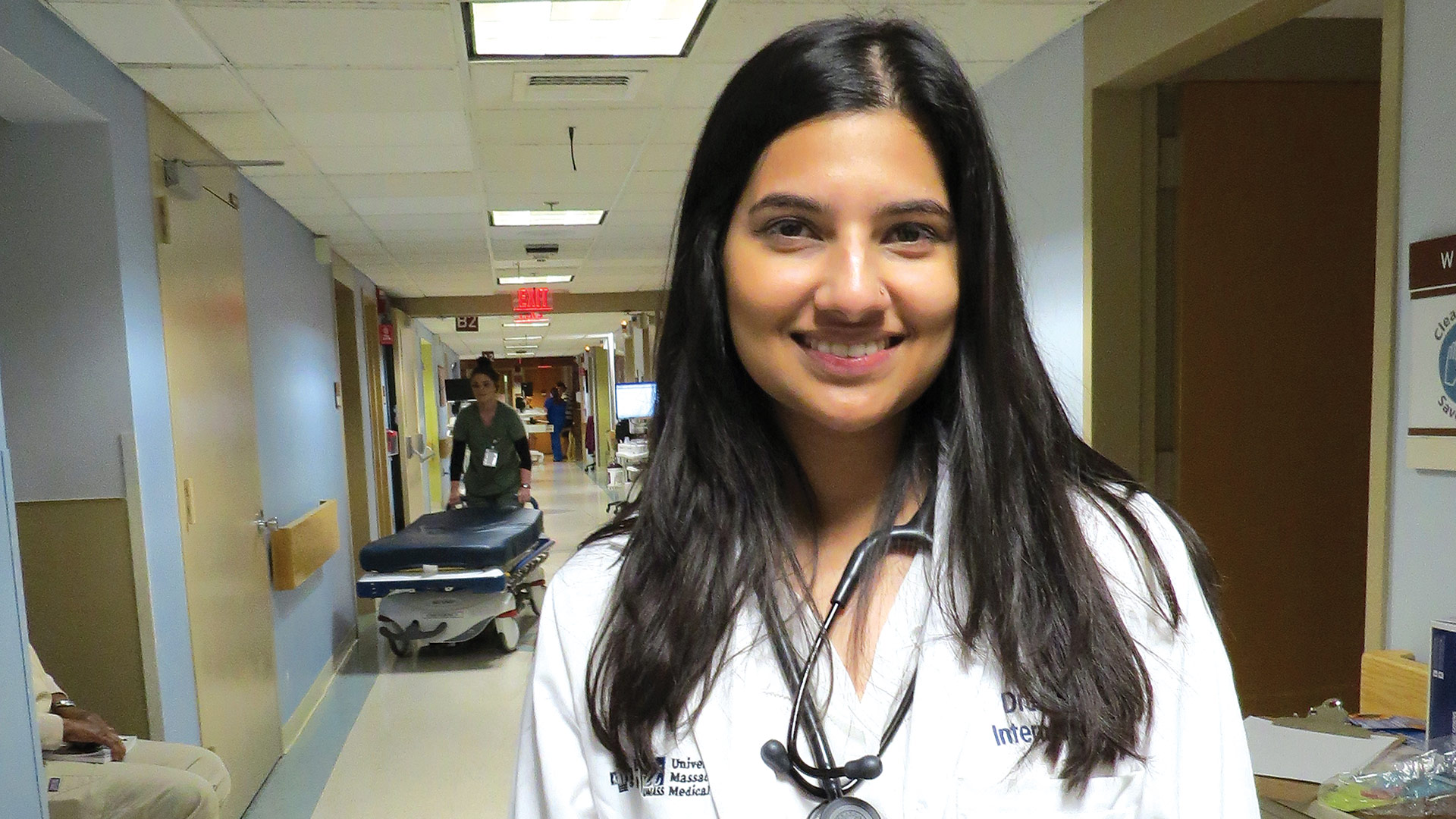
Dr. Zoha Kahn
Dr. Tiago Martins, meanwhile, is from Ludlow. While attending Ludlow High School, he took part in a job-shadowing program that brought him to Baystate Medical Center, an experience that inspired him to choose healthcare as a career. Later, he did rotations at Baystate while attending the University of New England College of Osteopathic Medicine in Maine and was actually on a trauma-surgery rotation at the hospital when he learned he had matched there.
Today, he’s essentially starting his professional career there with the stated goal of becoming a hospitalist, a specialist who, as that name implies, cares for individuals while they are hospitalized.
“It provides a different type of challenge,” he said of the hospitalist role. “You see patients not on a long scale, like a primary-care physician does, but you deal with more healthcare needs, and you also get to work with them more on a social level; I really enjoy it.”
For this issue and its focus on education, BusinessWest talked with these residents and some of their supervisors about these intense experiences and how they help these newly minted doctors prepare for the careers in front of them.
Kahn told BusinessWest there is certainly no shortage of poverty in Pakistan. She cared for that population while attending medical school in that country, and she said she’s generally aware of the myriad challenges that those living in poverty — there and here — face as they struggle to survive day to day.
But none of this prepared her for what’s known as ‘poverty simulation,’ an experience that seemingly every participant describes with the same adjective — eye-opening.
Kahn is no exception. She played the role of a young, single mother in this exercise, and over the course of the fast-moving, four-hour simulation, she learned first-hand all that life can throw at you — and take from you — when you’re living at a certain income level.
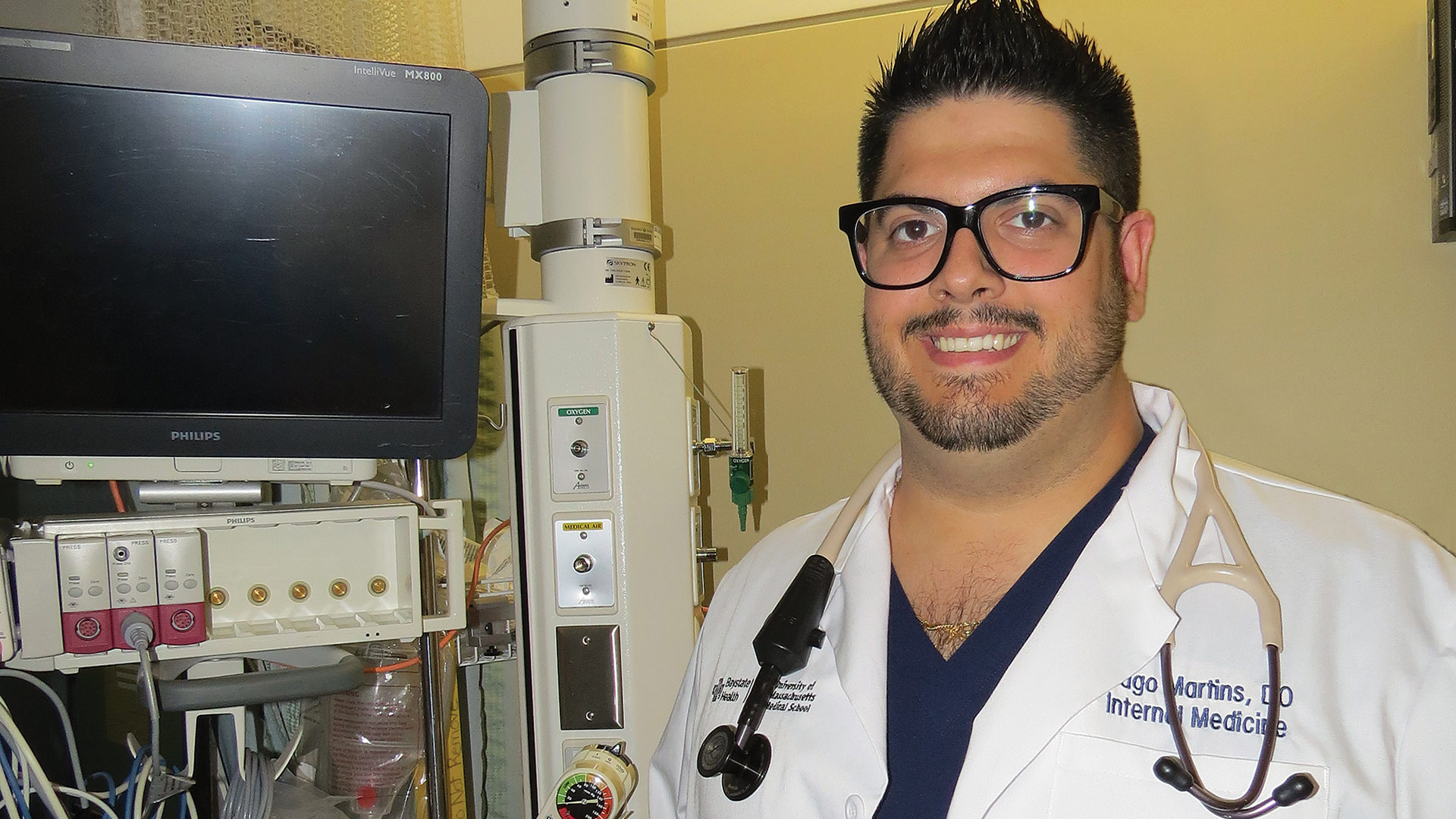
Dr. Tiago Martins
“When you’re in that place, it is so difficult,” she recalled. “I was a single mother with two kids, and I was going to school. The first week, I couldn’t pay my rent, my kid was taken away … it was really crazy. You don’t know how to handle all your expenses along with taking care of kids; it’s really eye-opening and gives you a better perspective on how to deal with the kind of patients you’re going to see.”
The poverty simulation is part of the orientation process for all new residents at Baystate, she explained, and, as she said, it’s designed to help ease residents into the community they’re going to serve and give them perspective into one of the larger populations they will serve.
Kahn said she knew more than a little about Springfield from visits to see her sister and brother-in-law, both of whom also did their residencies at Baystate. This familiarity, not to mention a host of positive reviews, put the hospital at or near the top of her wish list when it came to the matching process for her internal-medicine residency.
“When I came for the interview, it felt right,” she said, adding that feel is all-important when one is considering where to spend their next three years on their career journey.
In addition to the array of options it presents, she said she chose internal medicine for the high level of patient interaction.
“You get these long-term relationships — you’re following that one patient for a while, and you build a relationship with that patient, which is very important to me,” she said. “No one likes working on the computer, on the notes; it’s the patient care everyone enjoys. This is what internal medicine offers, and I wanted to be a part of that.”
“Some rotations are harder than others, so we try to pick the schedules carefully so the rotations are balanced in terms of the intensity of the number of hours they do.”
Since starting her residency, Kahn has been working mostly on the ‘floors,’ or wards within the hospital. The cardiac ward is coming up soon on the schedule, and she expects to be working with her sister. She described life so far as “crazy,” in part because she’s learning a new system.
“The way medicine is practiced in Pakistan is different from the way it’s practiced here,” she explained. “It’s a steep learning curve, even with something like the electronic system of documentation.”
Kahn said she’s managing to navigate all this change thanks to a solid support system, a sentiment echoed by all the residents we spoke with.
“Everyone is super helpful,” she explained, adding that it certainly helps to have family in the area — and at the same hospital. “I feel more confident in my ability to deal with patients, and things have gotten better with time, but in the first few days it was really tough; what’s helped has been all the support.”
Dr. Reham Shaaban is a big part of that support system that Kahn mentioned.
She’s program director of Internal Medicine Residency at Baystate and an academic hospitalist there. She also did her own residency at Baystate.
Each year, she told BusinessWest, a class of 18 new residents arrives at the Baystate system. The doctors come from across the region and around the world, she noted, adding that the class of 2019 is quite typical.
“They all have different backgrounds, different experiences, and different expectations,” she explained. “And knowing that, we start with a blank slate and put together a six-week orientation period for them to get them familiar with all of our resources, all of the help, to get to know them a little better, and ease them into understanding our system and what’s expected of them.
“And introduce them to our community,” she went on, adding that there is quite a bit that goes into that part of the equation.
Part of it involves work at Baystate’s various neighborhood clinics, like the one in Mason Square, she said, adding that the six-week orientation also involves rotations in various wards at the hospital. There are also shadowing programs with nurses and other healthcare professionals, and so-called boot camps, simulation-lab cases conducted with supervisors and chief residents to focus on some of what Shaaban called the “bread-and-butter medicine aspects we see in internal medicine to help them hit the ground running.”
The poverty-simulation program is another big part.
“This is the third year we’ve been doing it, and it’s a very powerful experience for our residents to understand our community and have a different perspective going into medicine,” she explained. “And we do it purposefully before they start seeing their first patients.”
When they do start seeing patients, they do so with large amounts of supervision and support from senior residents, who are two years ahead of them in training, she went on, adding that guidance is provided in everything from patient diagnosis and treatment to use of the computer system.
And the schedule is carefully choregraphed, she went on.
“Some rotations are harder than others, so we try to pick the schedules carefully so the rotations are balanced in terms of the intensity of the number of hours they do,” she explained. “We try to put easier rotations between harder rotations to give them some breathing room.”
Describing the sum of all this, both Shaaban and Marie Housey, administrator of the internal-medicine program, said it extremely rewarding work — and it’s a lot like parenting.
“It’s the best job I ever had,” said Shaaban, who devotes much of June and July to the new residents before shifting back to the second-and third-year doctors. “It’s like being a parent and seeing your kids go through and learn new things and grow each day until you let them out to real life.”
Housey agreed. She said she starts corresponding with residents soon after match day and continues to do so on a weekly basis, dealing with subjects ranging from the location of housing to how and when they get paid.
“It’s like having a lot of children and nurturing them and watching and helping them grow,” she said. “It’s a lot of work, but it’s very, very rewarding.”
Flashing back to the job-shadowing experience nearly a decade ago, Martins said he was able to shadow a wide variety of professionals, including Emergency Department staffers, radiologists, physician assistants, nurses, and a variety of doctors.
The experience, as noted earlier, put his career path into focus.
“From that point, I knew that I wanted to go into medicine,” he told BusinessWest. “And, ideally, I knew that I wanted to work at Baystate.”
And today he is, with a badge that declares that he is a doctor of Osteopathic Medicine.
Martins said he has a number of connections to Baystate, and collectively they make the hospital feel like home.
Listing more of them, he said his mother works there as a housekeeper; he now rides to work with her most days. Also, he became familiar with the hospitalist and that unique role while visiting — and translating for — grandparents and parents when they were in the hospital.
“Coming from a first-generation family, I always had to interpret for my parents and grandparents,” he explained. “And I found myself always connecting very well with the hospitalist team that took care of them, one of them being my current advisor; she took care of my grandfather when he was here with cancer four years ago.”
This explains the wide range of emotions when he received the e-mail on match day informing him that he would be doing his residency at Baystate.
“It’s hard to describe,” he said. “It was a happy, emotional type of experience, but at the same time it was kind of surreal; I was very excited.”
When he spoke to BusinessWest, Martins was on rotation at the Cardiac Intensive Care Unit (CICU) at the hospital, but, like Wagener, he’s also doing work in the clinics as well, specifically the one on High Street, another facility that serves a generally low-income population.
“We see a wide variety of conditions, and we also deal with some complex social backgrounds that are not unique to Springfield but are very common here,” he explained. “In a sense, we’re helping them with the social determinants of healthcare; many of these patients can’t afford some of their medications and have to make decisions about what they can afford and can’t afford.”
The clinic setting contrasts sharply with the CICU, he said, adding that those working in the latter setting are far less focused on social concerns than the immediate medical necessities; going from one world to the other is part of the residency experience.
“There are high points of stress and low points of stress,” he said, referring initially to the CICU, but also the clinic setting as well.
Like Kahn, he said the poverty simulation brought home the challenges facing many of his patients in a very powerful way.
“Even though we all knew it was a game,” he recalled, adding that he played the father and head of a household in his simulation, “it became very real.”
Wagener told BusinessWest she had heart surgery as an infant and has vivid memories of some of the follow-up visits to the hospital.
She recalls having a temper tantrum upon being informed that she couldn’t keep an X-ray taken of her.
Overall, she said science and medicine are in her blood, and that’s why she took the healthcare fork along the career path. “I took an anatomy class in junior or senior year of high school, and that got me full into it,” she said, adding that further inspiration was provided by listening to the stories of some classmates diagnosed with cancer.

Dr. Lauren Wagener, seen here in her other uniform, will struggle to fit roller derby into her life — even after knee surgery.
Photo by Phantom Photographics
A native of the Pittsburgh area, she preferred to stay somewhat close to home for her residency, but she also read — and actually called up the quote on her phone to verify — that Baystate “has the happiest residents in the country.”
On match day, she got a text informing her that she would be one of them.
As noted, her residency is in what’s known as ‘med-peds,’ a combination of internal medicine and pediatrics, which means she has many career options to consider as her residency plays out over the next three years, both general and very specialized.
Early into her residency, she has spent considerable time at the clinic in Mason Square, where she’s taking care of patients and getting a first-hand look at the challenges facing a population that is, for the most part, living at or below the poverty line.
“At Mason Square, we have a very underserved population of patients,” she explained. “These are people not only with complicated medical issues, but also people who might struggle to get the resources that would help with their treatment. In the clinic, it’s not only learning the medicine, it’s also learning how to navigate the resources that we have for patients and helping them get what they need, not only medicine-wise, but with things in the home as well.”
Overall, it’s work that is in many ways different from medical school.
“It feels different when the decisions are yours and you’re not just recording for someone else,” she said, adding that she is new to such duties as ordering tests and prescribing medications. “There is a lot of responsibility that comes with that, and you want to do well by your patients.”
As for roller derby, she said it’s like medicine in a lot of ways, especially when it comes to teamwork.
“You have to have a good team and a strong sense of teamwork and collaboration,” she said, referring to both the roller-derby rink and a hospital or clinic. “Communication is the name of the game.
“You’ve got to put yourself out there,” she continued while expanding the analogy to her current work in residency. “In roller derby, one of the first things they teach us is falling and how to fall safely; they teach you how to fall so hopefully you can fall less in the future. If you make a mistake by falling, you know to get back up again and jump back into it — it’s in the same in this setting. And there’s a lot of encouragement as well; we pick each other up.”
Wagener told BusinessWest she’s going to be very careful and patient when it comes to roller derby, and she wasn’t just talking about her knee.
“It’s a sport that can easily take over your life,” she said, while quickly noting that she’s already had her life taken over by something else — her med-peds residency.
It’s a three-year journey and a critical step in one’s career in healthcare. It’s a learning experience, but also a life-changing experience, as these residents, only a few weeks into the process, already know.
George O’Brien can be reached at [email protected]
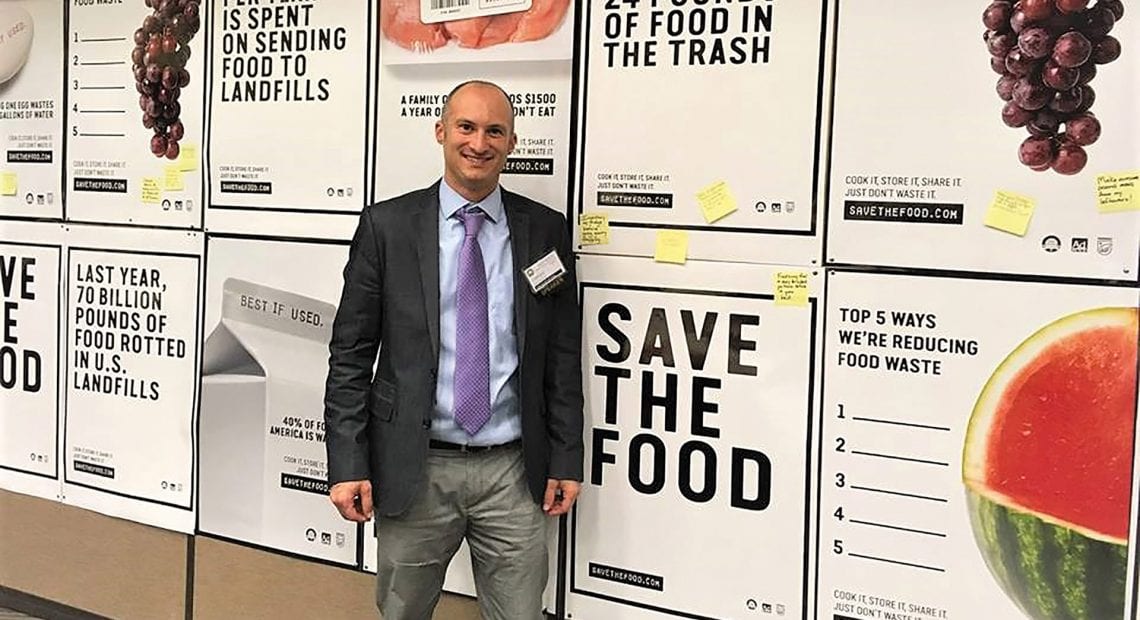
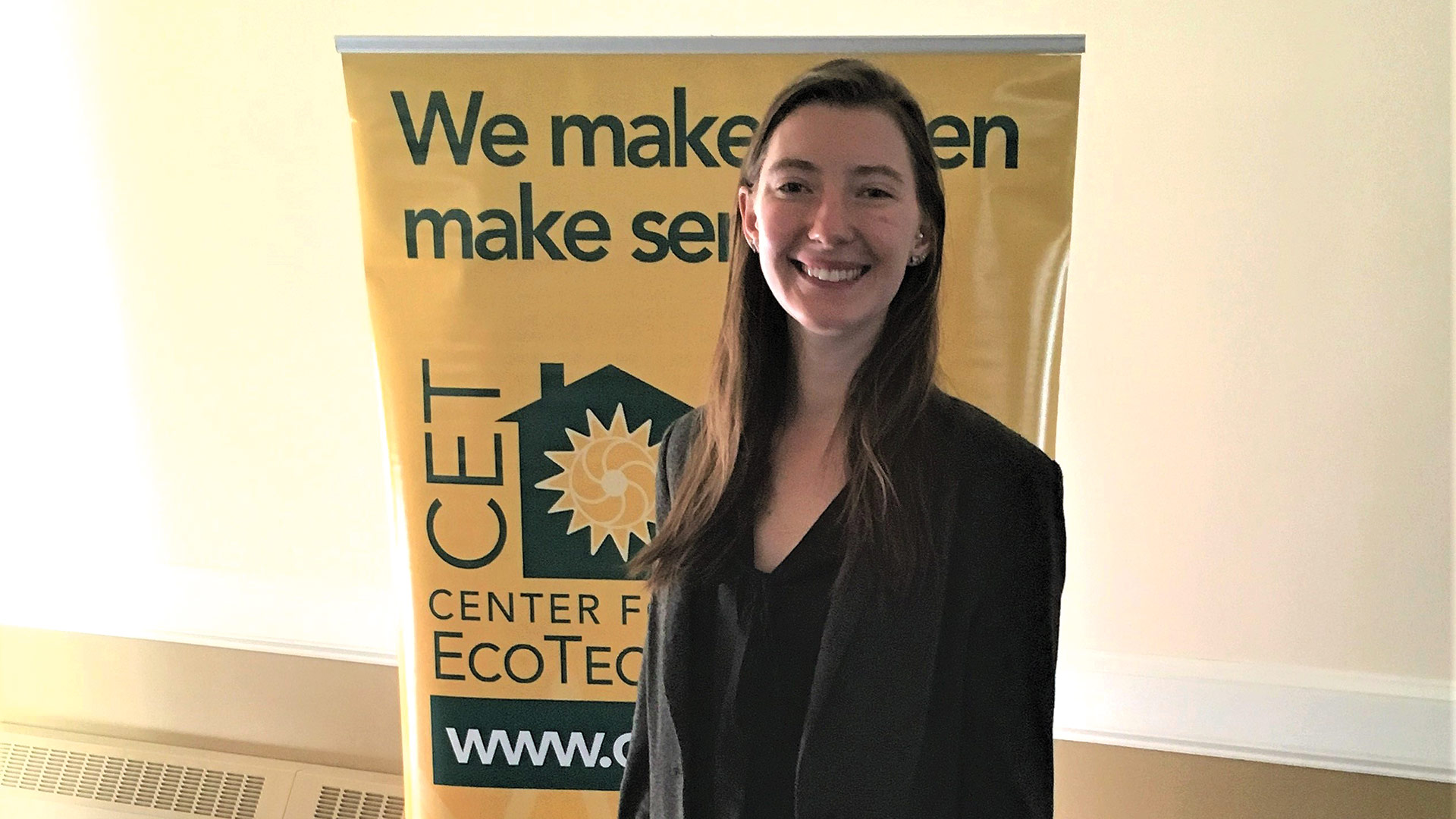
Coryanne Mansell says CET understands how to balance conservation issues (like food-waste reduction)with business needs.
Ask a random person what percentage of food goes to waste. Maybe they’ll say 10% or 20% — some might guess a little more. But few would surmise the actual figure.
“Food waste is a nationally and even globally pervasive issue,” said Lorenzo Macaluso, director of Client Services at the Center for EcoTechnology (CET) in Northampton. “There have been a number of studies on this, all of which find that somewhere in the ballpark of 40% of all food produced is never actually consumed. There is loss at every step of the way along the chain. From a cost perspective, from an environmental perspective, from a resources perspective — basically, by every measure — it’s very significant.”
Massachusetts is one of only six states — five of them clustered in the Northeast, the other being California — and seven metro areas that have implemented organic waste bans on some level. And CET has helped area businesses develop strategies to reduce food waste, so a recent partnership with the Harvard Law School Food Law and Policy Clinic (FLPC) — specifically, a ‘toolkit’ on organic waste bans and their potential to reduce food waste and strengthen local economies — made sense.
“Somewhere in the ballpark of 40% of all food produced is never actually consumed. There is loss at every step of the way along the chain.”
“Massachusetts in general has been a national leader on addressing this issue head-on, through a number of strategies to help keep food from the trash,” Macaluso told BusinessWest. “We’re focused on helping businesses implement those strategies because we have a long, rich history of doing that work. Harvard Law is great at analyzing policies with a legal lens, and we have the practical side, how those policies are actually playing out in real life.”
Food waste in the U.S. amounts to some $218 billion each year spent on food that is never eaten, according to the toolkit, which is basically a lengthy report (titled “Bans and Beyond”) that examines the issue, what those six states and seven cities have implemented, the challenges they’ve faced, and the economic impact of those policies.
As for the core issue, most wasted food ends up in landfills, where it produces greenhouse gases and contributes to states and localities running out of landfill capacity. State and local bans limit the amount of organic waste, including food waste, that businesses and individuals can dispose of in landfills — thus driving more sustainable practices, such as food-waste prevention, food donation, and sending food scraps to animal-feed operations or composting or anaerobic-digestion (AD) facilities.
“Food waste takes up space in landfills, contributes to climate change, and is a drain on the economy,” said Emily Broad Leib, director of FLPC. “Organic waste bans are one of the best tools we have seen that states and localities can use to transform business practices and drive the development of food-waste recycling infrastructure.”
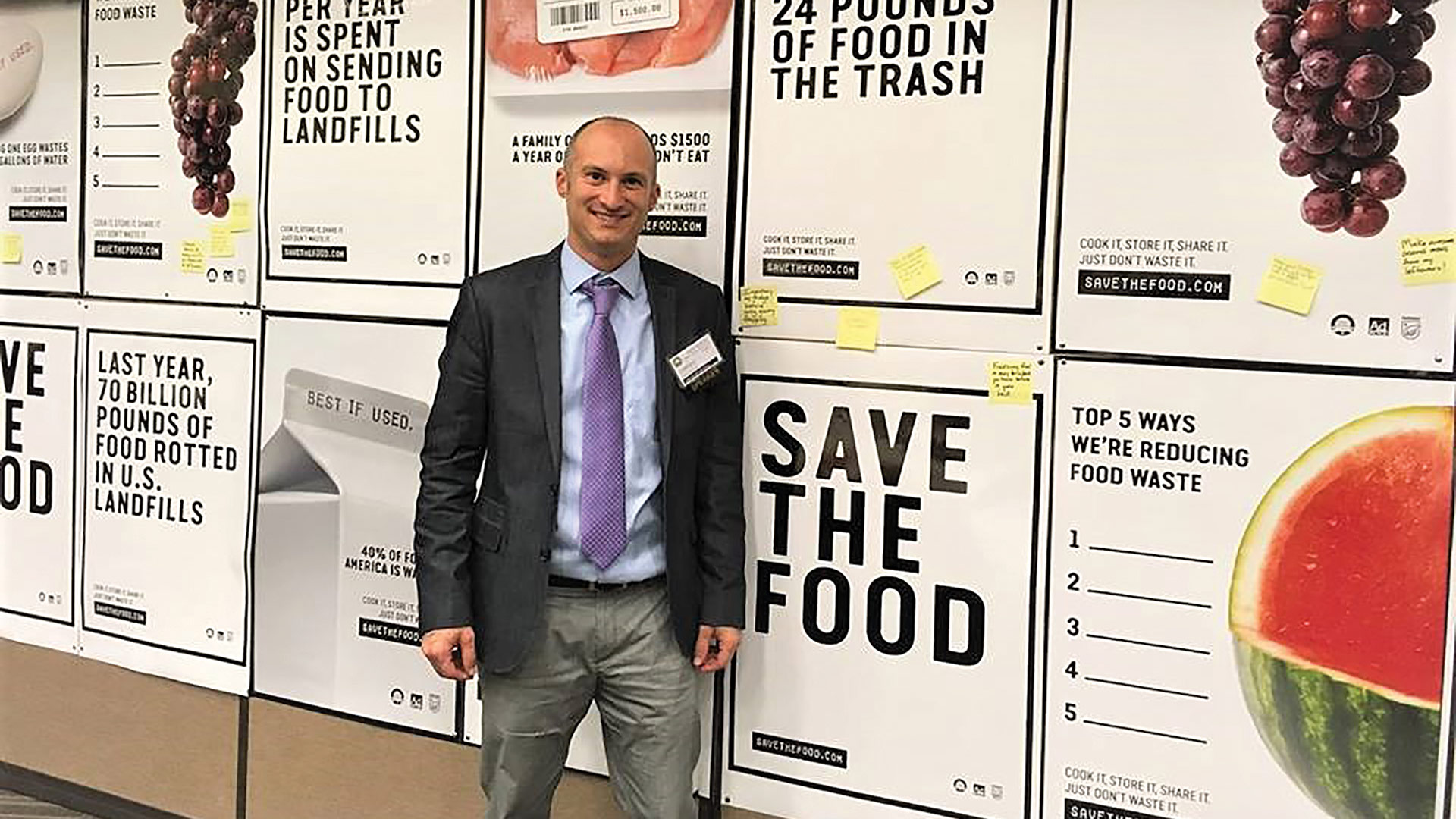
While much work remains, Lorenzo Macaluso says the Bay State has been a national leader on the food-waste issue.
The toolkit walks readers through factors to consider in pursuing similar policies in their own state or locality. It also explores nine other categories of policies and programs — such as permitting and zoning regulations for organics-recycling facilities, grants to support food-waste reduction projects, and policies to create markets for biogas and compost — that can enhance the impact of an organic waste ban or advance food waste reduction and diversion independently.
“Over the years, we’ve seen firsthand how waste bans and the other policies and programs discussed in the toolkit can drive innovation and significantly reduce wasted food,” said John Majercak, president of CET. “The resulting impact is a big win for communities, regional economies, and the environment.”
The environmental impact is significant. According to the report, 21% of the U.S. freshwater supply and 300 million barrels of oil are used to produce food that goes to waste. And in 2012, more than 20% of municipal solid waste disposed of was food waste — especially noteworthy at a time when cities and states are running out of space to pile trash. Furthermore, organic materials in landfills decompose and release methane, a greenhouse gas that contributes to climate change. Food waste is responsible for at least 11% of methane emissions generated from landfills, an amount equivalent to the emissions of about 3.4 million vehicles.
“We’ve seen firsthand how waste bans and the other policies and programs discussed in the toolkit can drive innovation and significantly reduce wasted food.”
“We partnered with the Harvard Food Law and Policy Clinic to develop this toolkit because we have boots-on-the-ground experience with businesses to implement food-waste diversion programs, as well as understanding market needs,” said Coryanne Mansell, Strategic Services representative at CET, adding that individual businesses, at least locally, increasingly understand the problem, especially after hearing the 40% statistic. “That’s a huge impact on the environment.”
“When I mention that number,” Macaluso added, “100% of the people are really surprised when they first hear it.”
Unlike other states with organic waste bans, Massachusetts established its disposal ban through regulation rather than legislation. In 2014, the Commonwealth’s Department of Environmental Protection (DEP) amended regulations on solid-waste disposal by adding ‘commercial organic material’ to a list of several materials already barred from entering solid-waste disposal streams.

The ban applies only to commercial and institutional food-waste generators (not households) that dispose of at least one ton of those materials in waste per week, and and only for weeks during which they surpass that one-ton threshold. Temporary exemptions from the ban may be issued if the waste is contaminated or unacceptable for composting or other use, and the entity takes steps to prevent the contamination from recurring, or if a waste generator’s usual composting or other processing service declines the waste and the generator cannot find an alternative within a reasonable time.
Food-scrap generators may comply by reducing their waste production below the one-ton-per-week threshold, donating surplus food, processing food scraps on site, or sending food scraps to an animal-feed, composting, or AD facility.
To aid in compliance, Massachusetts offers several options for funding organics-processing operations. The DEP also partners with BDC Capital to administer the Massachusetts Recycling Loan Fund, which provides loans to eligible businesses, including recycling and composting companies. The fund offers preferred terms for composting, AD, and other food-waste processing facilities. Another funding source for renewable-energy projects is the Massachusetts Clean Energy Center, a quasi-public agency that provides grants and technical assistance for clean-energy innovators.
Due to the efforts of organizations like RecyclingWorks, food-rescue organizations, and state and local agencies, the amount of food donated or rescued in Massachusetts has increased at least 22% since the organic-waste ban went into effect, from 21,300 tons in 2014 to 25,900 tons in 2017.
“We’ve had great results,” Macaluso said. “An economic-impact study was conducted, showing increased investment and job creation and large diversion of food-waste tonnage … it’s been quite effective.”
That economic impact has been an underreported part of the story. The Massachusetts DEP contracted with ICF, a management-consulting company, in 2016 to conduct an analysis of the impacts of Massachusetts’ commercial food-waste ban and broader trends in the state’s organic waste industry. To accomplish this, they developed a survey targeting three primary sectors: organic waste haulers, processors and composters, and food-rescue and recovery organizations.
The study found that the three sectors together supported more than 900 total jobs in 2016, and that all three sectors reported significant growth in employment in recent years, with more than 500 jobs added between 2010 and 2016. In 2016, the jobs supported by all three sectors combined generated more than $46 million in labor income, and the industries contributed nearly $77 million to the gross state product and produced almost $175 million in industry activity. Finally, the organic-waste industry contributed more than $5 million in state and local tax revenue in 2016. The analysis projected that growth would continue in 2017 in beyond.
“When we evaluate the impact of these waste bans,” Mansell told BusinessWest, “we see they can create job growth, help feed more hungry people, and, of course, increase capacity at existing landfills.”
The toolkit lays out this data in detail not just for Massachusetts, but for New York, Vermont, Connecticut, Rhode Island, California, and the seven metro areas (New York City; Seattle; San Francisco; Portland, Ore.; Austin, Texas; Boulder, Colo.; and Hennepin County, Minn.). The hope now, among those who prepared the toolkit, is that other states will consider these case studies and be part of a national effort to lower that daunting 40% statistic.
CET has been promoting waste-reduction efforts on the local level for a long time, Mansell said. “We help people understand what the regulatory requirements are, but we also come at it from a company perspective, helping them implement a program that’s best suited for their needs, really meeting those businesses where they are. And we’ve seen some pretty positive experiences because companies are seeing the financial savings and seeing the social and environmental opportunities from these programs as well.”
For states wondering if a food-waste ban would work, she added, “we do hope this toolkit provides a roadmap.”
The report makes clear that it’s not an easy decision. A state or locality must determine whether it has, or plans to develop, the necessary infrastructure to process the organic waste that a ban would divert from landfills, from composting and AD facilities that accept food scraps to collection services and food-rescue organizations.
A state or city must also determine whether implementing an organic waste ban would be politically and financially feasible, the report notes. “In the absence of a plan to develop sufficient infrastructure, or without political support or financial resources, a state or locality may wish to focus on a non-binding strategy such as a zero-waste plan or waste-management strategy, or on more targeted policies to support infrastructure development, before pursuing an enforceable organic waste ban or mandate.”
So change doesn’t necessarily happen overnight. But Macaluso says these kinds of changes are worth pursuing.
“We understand business. We understand things have to make business sense,” he said. “But we do feel like this is a win all around.”
Joseph Bednar can be reached at [email protected]
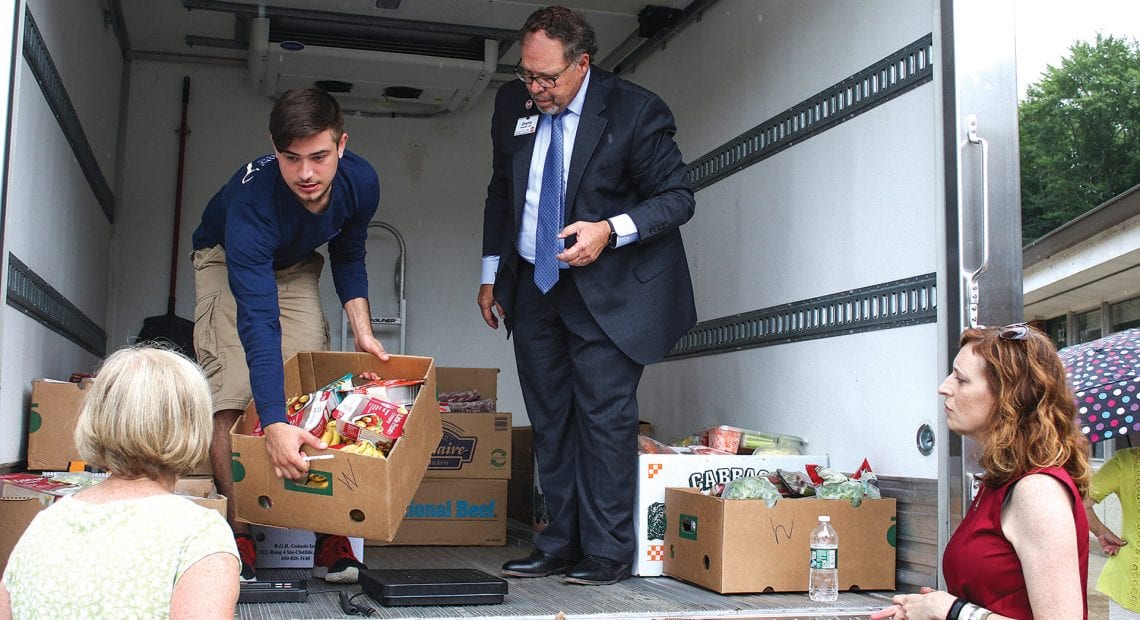
Tyler Crawford (left), Lovin’ Spoonfuls Hampden County food rescue coordinator, and Big Y president and CEO Charlie D’Amour help make a delivery to the Longmeadow Food Pantry.
Hampden County has the highest rate of child food insecurity in the state of Massachusetts. In fact, more than 15% of children in the region may not know where or when their next meal will come from, and may lack access to enough food to lead an active, healthy life.
This is one of the reasons Lovin’ Spoonfuls, an organization dedicated to rescuing and distributing fresh food to communities in need, brought its project to Hampden County.
In explaining the significance of an elevated child food-insecurity rate, Lauren Palumbo notes that it not only affects those kids now, but may also negatively impact communities in the long term.
“You can’t expect these children to succeed in school if they’re not accessing adequate nutrition.”
“The challenging thing about food insecurity is that it often affects households with children at a much higher rate than it affects general households,” said Palumbo, the organization’s chief operating officer. “You can’t expect these children to succeed in school if they’re not accessing adequate nutrition.”
Palumbo told BusinessWest that Lovin’ Spoonfuls has been eyeing Hampden County for a couple years now, partially due to that high level of child food insecurity, and she hopes Lovin’ Spoonfuls can help aid those in need.
So far, Lovin’ Spoonfuls has rescued and delivered more than 13,300,000 pounds of food to nearly 40 cities and towns across Eastern Mass., she noted. “For us, it’s about growing regionally and serving the areas that have some of the greatest need, but our long-term goal is really to serve all of Massachusetts.”
Although it may not always be obvious, there is plenty of need in Hampden County.
Kathy Henry, food administrator at Friend’s Place Food Pantry in Springfield, serves up to 180 people and households on one of her two distribution days throughout the week. Monday is reserved for senior citizens age 60 or older, and normally draws up to 135 seniors, while Wednesday is open to all ages, and typically brings in up to 180 people or families.
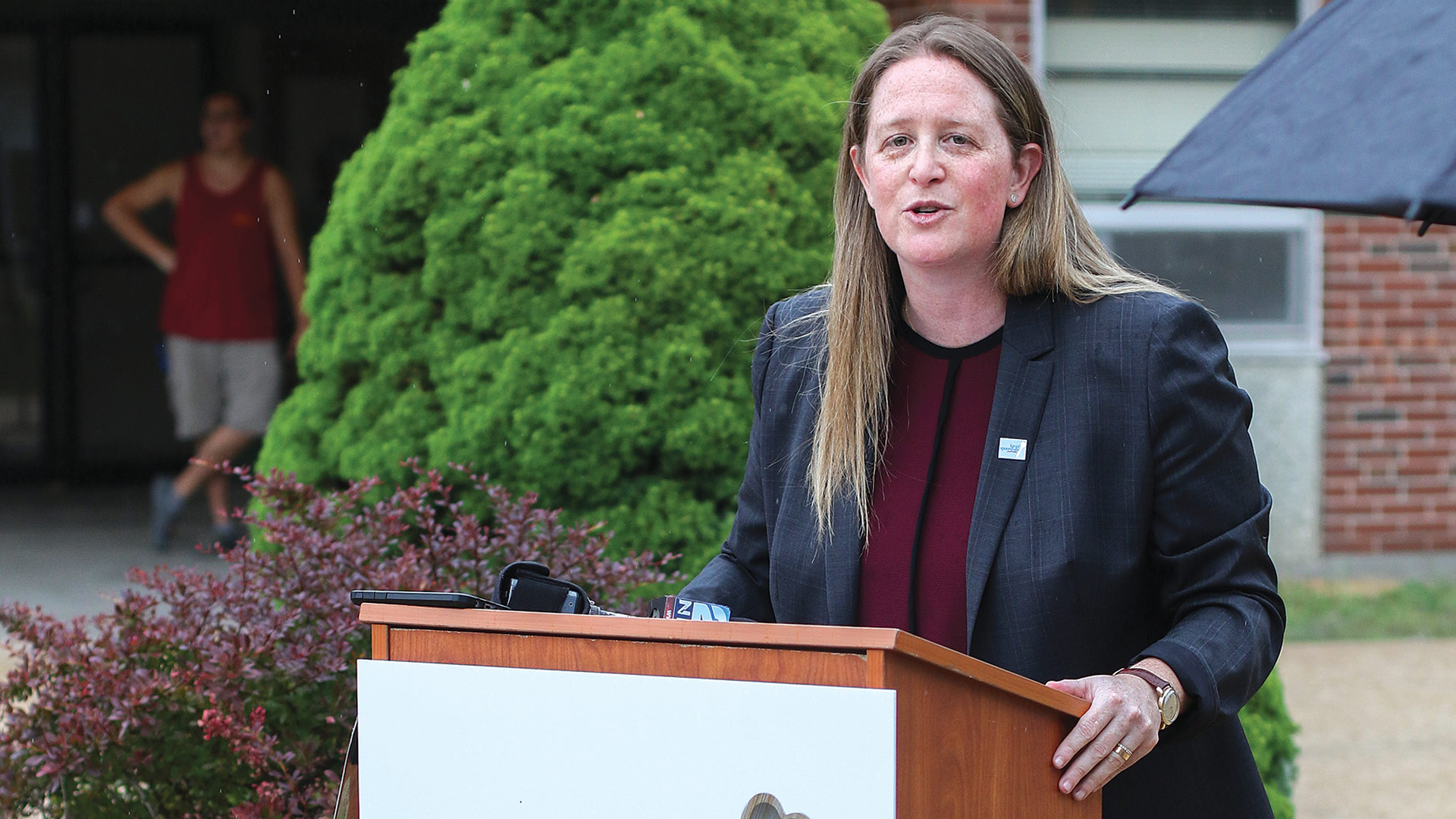
Founder and Executive Director Ashley Stanley kicks off the launch of Lovin’ Spoonfuls in Hampden County.
Henry said Lovin’ Spoonfuls reached out to her about delivering food right when she lost a few volunteers who used to pick up food for her.
“It was perfect timing that they stepped in,” she said. “I have no complaints. I greatly appreciate the service.”
Henry’s food pantry is one of 17 that Lovin’ Spoonfuls delivers to in Hampden County. The organization works to deliver food that would otherwise be wasted to nonprofits in Chicopee, East Longmeadow, Holyoke, Longmeadow, South Hadley, Springfield, and West Springfield.
The route in Hampden County is expected to rescue an estimated 10,000 pounds of fresh produce, dairy, proteins, and prepared foods from grocery stores in the region every week, including inaugural retail partner Big Y, whom Palumbo says has been a pleasure to work with.
“Oftentimes, it’s sort of a learning curve to get a business on board, but their team has been absolutely on board since day one and has been really consistent and amazing to work with,” she noted.
This proved to be true at the Hampden County launch of Lovin’ Spoonfuls on July 22, when Big Y President and CEO Charlie D’Amour was the first volunteer to jump in the back of the truck to help deliver food to Longmeadow Open Pantry.
“It’s not every day we get the president and CEO of a retailer into the back of a truck to move boxes,” Palumbo said.
At the launch, D’Amour said he’s always been troubled by the waste endemic to the supermarket business, and he’s glad there is now a way to use the extra food to serve those in need.
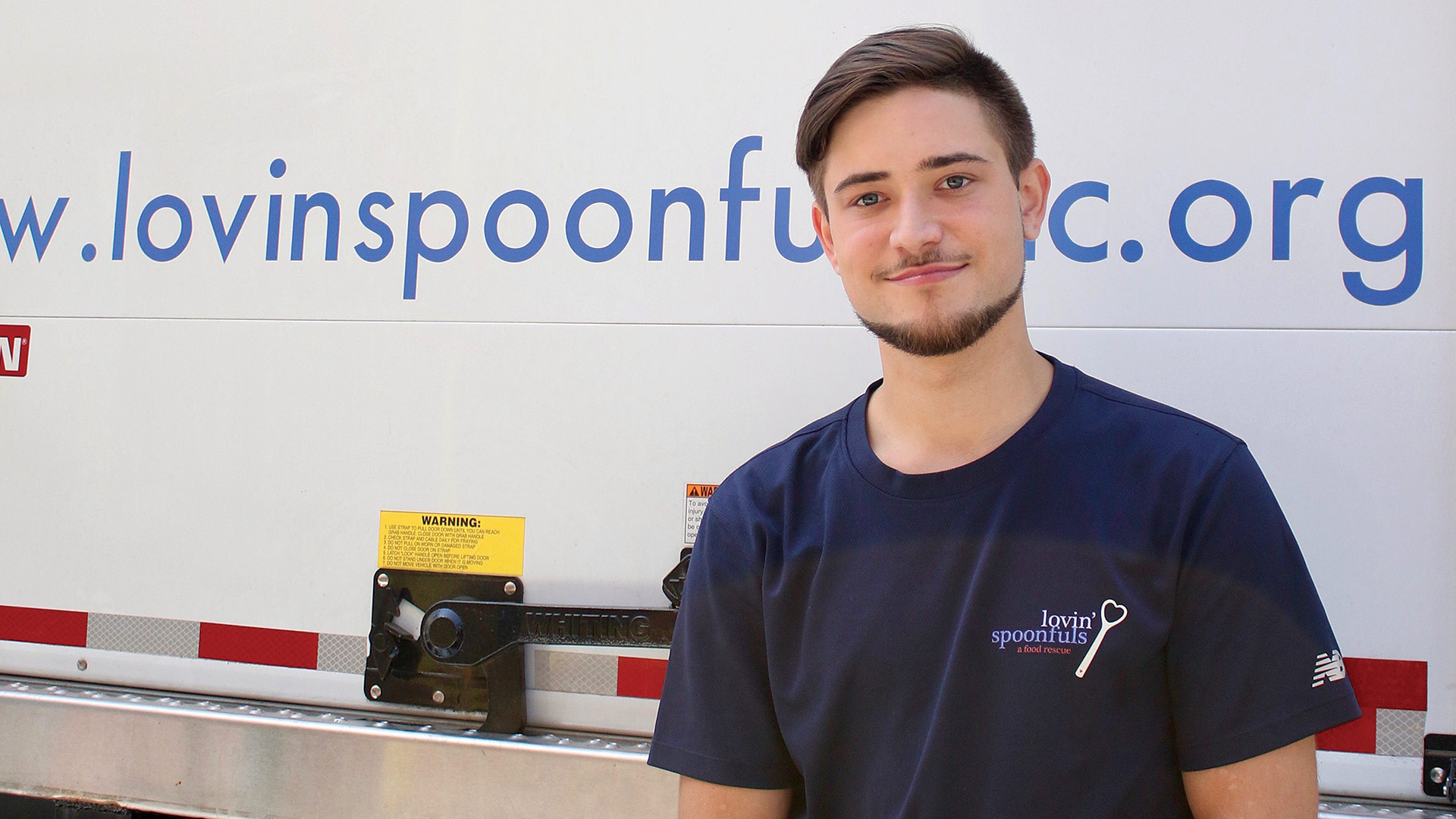
Tyler Crawford says working for Lovin’ Spoonfuls gives him the opportunity to give back to the community he grew up in.
“With Lovin’ Spoonfuls, we have a wonderful opportunity to connect that much more and in a very timely way,” he said. “It’s food rescue for a reason because it would just be going to waste, and there’s an opportunity to have it not go into the landfills, but have it go and do some wonderful good.”
Right now, Hampden County food dropoffs are run by driver Tyler Crawford, a 23-year-old who grew up in Springfield. He said he was looking for a way to give back to the community when he saw Lovin’ Spoonfuls was coming to the area.
“I had been looking for something meaningful for work,” he said. “I don’t like just having a job to make money; I prefer to do something I’m passionate about, which is mostly helping people.”
But a dedicated team isn’t the only thing that makes what Lovin’ Spoonfuls does possible. Palumbo says it takes about $140,000 a year to run this operation, from staffing costs to training right down to the truck itself.
“The real lift is, obviously, making sure that we have the funds in place to stay and make a strong commitment to the community,” she said, adding that the last thing she wants to do is enter a community and have to pull back if the funding is not there.
“With Lovin’ Spoonfuls, we have a wonderful opportunity to connect that much more and in a very timely way. It’s food rescue for a reason because it would just be going to waste, and there’s an opportunity to have it not go into the landfills, but have it go and do some wonderful good.”
If operating at full capacity, each truck can rescue up to 600,000 pounds of food a year, adding up to more than 3 pounds per dollar for the cost of operating the vehicle.
“There is not a single county in this country that is not wasting food,” she noted. “So much energy goes into producing and transporting food, and then to throw 40% of it away, you’re wasting the resources and the human labor and all of the effort that went into doing this in the first place. For us, it’s an environmental issue as well.”
The most important impact, however, may be on the thousands of people who are food-insecure across the state.
“This is not a problem of supply. Hunger has been a problem in this country for a number of years, but it is not a question of us not having enough food,” Palumbo said. “We produce more than enough food to feed everyone, but it’s about getting it to them.”
Kayla Ebner can be reached at [email protected]


Photo by Sandra Costello
Ira Bryck knew it was time — as in time to put a succession plan in place — when he attended a gathering of family business center directors just over a year ago, took a quick look around the room, and concluded that he was the only first-generation leader still on the job roughly a quarter-century after this “movement,” as he called it, began.
“They were all second- and third-generation administrators,” he said of the other 39 people in the room. “I was the elder statesman, and that was a wake-up call.”
He laughed as he recalled this — it was one of those Baby-Boomer-realizing-he’s getting-on-in-years laugh — but there was considerable seriousness in his voice as he talked about the subjects of succession and succession planning.
As leader of the Family Business Center of the Pioneer Valley Inc., and as a fourth-generation member of a family business himself, he knows that far too many companies, large and small, don’t have succession plans, or don’t have them until it’s too late.
For this reason, the transition in leadership at the FBC, as it’s called, from Bryck, whose name is pretty much synonymous with that agency, to Jessi Kirley became not just a succession, but what amounted to an exercise in successful succession planning.
And, no, these two are certainly not shy about using that phraseology this early on — just as Kirley is about to officially take the reins at the FBC’s 25th anniversary gala next month at the Log Cabin. They really believe that this is how it should be done.
“The family business, as a topic, has a lot to do with succession, and I have coached a lot of other people how to go through succession, and I did see it with my own family,” said Bryck, who will remain with the FBC on a very part-time basis working on special projects and coaching. “I believe what we’ve done here is a good model to follow.”
Kirley concurred, and noted that this transition has been different from most she’s observed in the way that the process used has enabled her to establish relationships and trust with the board and the FBC’s members before her tenure officially began, helping to ensure a smooth passing of the baton.
“Ira’s been talking about this transition for a long time,” she explained, “giving the members time to absorb it, to ask questions, to share concerns, and being really available.”
Elaborating, the two said the board of the FBC, which currently boasts nearly 60 members, was involved in not only making sure Kirley was a proper fit — she and Bryck both took a battery of personality tests — but that the transition was given the time, resources, and blueprint to help ensure success.
By time, they meant nearly 10 months of the two working together at the FBC, and by resources, they meant the payroll flexibility to have them both on the clock for that extended period.
 And by blueprint, they meant a plan of action whereby Bryck would hire a program manager who then would be assessed to determine if he or she had what it took to become the FBC’s second executive director. And for this assessment, the chosen candidate (Kirley) would quickly start making key decisions and assuming a leadership role.
“One of the first things I said to her was, ‘I’m throwing you in the deep end of the pool and making sure you don’t drown,’” said Bryck, adding that this strategy paid off. “Right away, she took ownership.”
Kirley agreed, and described this succession as a “slow, conscientious hand-off.”
For this issue, BusinessWest takes an in-depth look at this handoff to detail both this important change at the FBC at its 25th anniversary, and also the manner in which this became what Bryck and Kirley both believe could be a model transition.
Bryck called it a “rainy-day fund.”
That’s what the FBC, like many businesses, agencies, municipalities, and states, calls money put aside for emergencies and unforeseen expenses.
It was this account that was tapped to enable Bryck and Kirley to be on the payroll for several months together — budget flexibility that they readily acknowledged that many businesses and nonprofits don’t have.
The FBC didn’t officially rename the fund, but Kirley did unofficially, suggesting that it might be called the ‘growth and sustainability fund.’
Such thinking helps explain the mindset that all those involved in this transition — Bryck, Kirley, the FBC’s board, and its membership — took with this exercise.
“One of the first things I said to her was, ‘I’m throwing you in the deep end of the pool and making sure you don’t drown.”

Photo by Sandra Costello
It was, indeed, a slow, conscientious handoff, one designed to secure perhaps another 25 years for this agency, devoted, as the name suggests, to providing education and insight to those involved in family businesses — however they are defined, and there are several working definitions.
And while this story officially began with Bryck walking into that conference meeting room, it started to gather steam when he got back. Not long after, he talked with his board and conveyed the need to start the process of succession.
“I knew I needed to find someone who did what I did, but would do it differently if they really wanted to increase the capacity,” said Bryck, “and do the second quarter-century the right way.”
This was a huge moment in the FBC’s history, because Bryck had been there from the beginning and was (and still is) quite popular with members — and for many reasons.
They include his innovative methods — right down to writing and then performing plays about various aspects of being in business with family members — as well as a hands-on approach and first-hand experience with being in a family business, specifically a children’s clothing store.
So it was important not only to pick the right successor but orchestrate a smooth transition that would not only retain members, but create momentum and enthusiasm for the next 25 years.
The process started with finding the right person. Kirley was recommended to Bryck by a mutual friend who, Bryck recalled, kicked things to a higher level with the comment, ‘why haven’t you hired Jessi Kirley yet?’

Jessi Kirley says the deliberate, well-orchestrated passing of the baton at the FBC helped her build confidence before officially taking the helm.
Photo by Sandra Costello
After several interviews with Kirley, who was looking for a new challenge after working in administrative positions for a succession of healthcare-related businesses, Bryck decided she had the requisite skills and potential. And she decided that was where she wanted that search for a new challenge to end.
“It was clear that there was a growth-oriented mindset built into the fabric of what Ira has created over 25 years,” she recalled. “I felt like I was home, that I was around people who want to learn and love and care for their business; it’s what I had always been looking for.”
Thus began a lengthy process of making sure she was the right fit for the executive director’s position, one that included several personality assessments, for both Kirley and Bryck.
“They wanted to make sure that she had the leadership style, the ability to gather a community together, and the ability to tap into what a lot of people have in common,” Bryck explained. “They also wanted to determine if she was coachable and if she could scale this over the next 25 years.”
Bryck originally thought this process of evaluation and eventual succession would take roughly two years. But in practice, it has gone much more quickly, roughly 10 months, in part because of that decision to throw Kirley into the deep end of the pool.
“He let me try things,” she recalled. “Within my first month, he let me book a speaker, which was a big risk for him. He’s let me try to throw on new systems that ask him to do things differently. He could have said, ‘we’re going to do things this way, and then when you have full reins, you can do what you want,’ but he didn’t.
“There’s something to be said for taking risks with a safety net,” she went on. “Having Ira there and being able to test ideas and try things little by little … I don’t know if enough rising leaders get to do that. And it built my confidence quicker, as well as my credibility, and it allowed us to know sooner that this was going to go well.”
“There’s something to be said for taking risks with a safety net.”
Bryck and Kirley acknowledged that certainly not all businesses and nonprofits can transition in this manner. Many simply wouldn’t have the payroll flexibility or an environment that would allow responsibilities to be shared in such a manner. But when possible, they said, the slow, conscientious handoff could help ensure a successful succession.
Several weeks ago, both Bryck and Kirley both went to the 2019 edition of the gathering that triggered this succession process.
Still the elder statesman in the room, Bryck felt much more comfortable this time, because he no longer had to be concerned about succession; he and his board had found a successor.
Not only that, they provided to their members a real-life demonstration of how to put a plan in place and then execute it.
And that’s something else to celebrate as this important resource for the region’s business community celebrates a critical milestone and moves on to what’s next.
George O’Brien can be reached at [email protected]
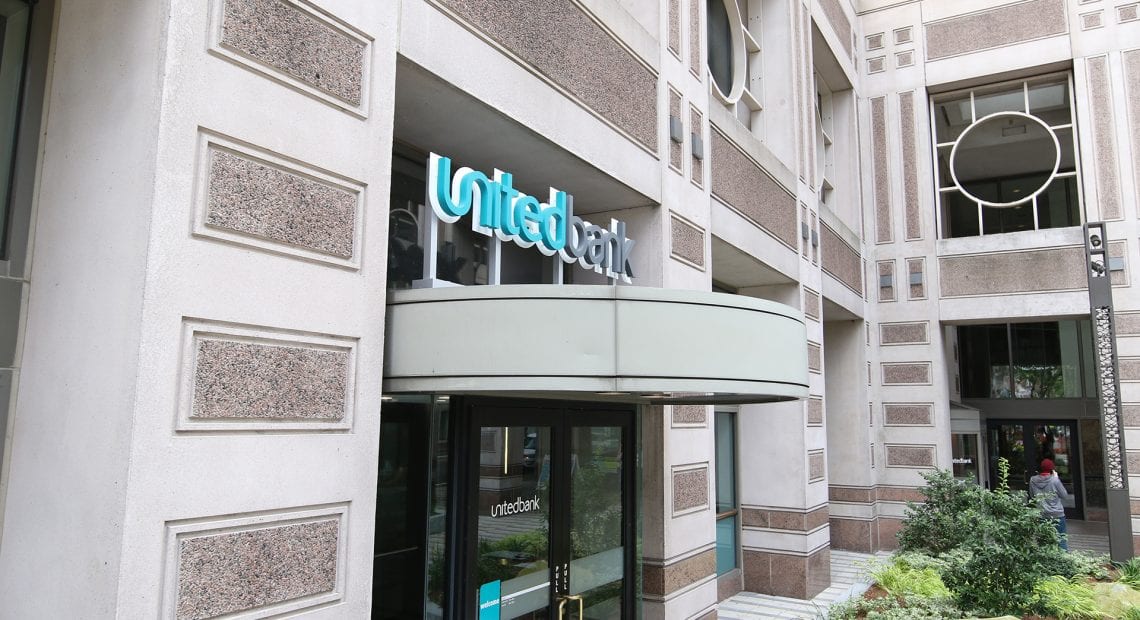
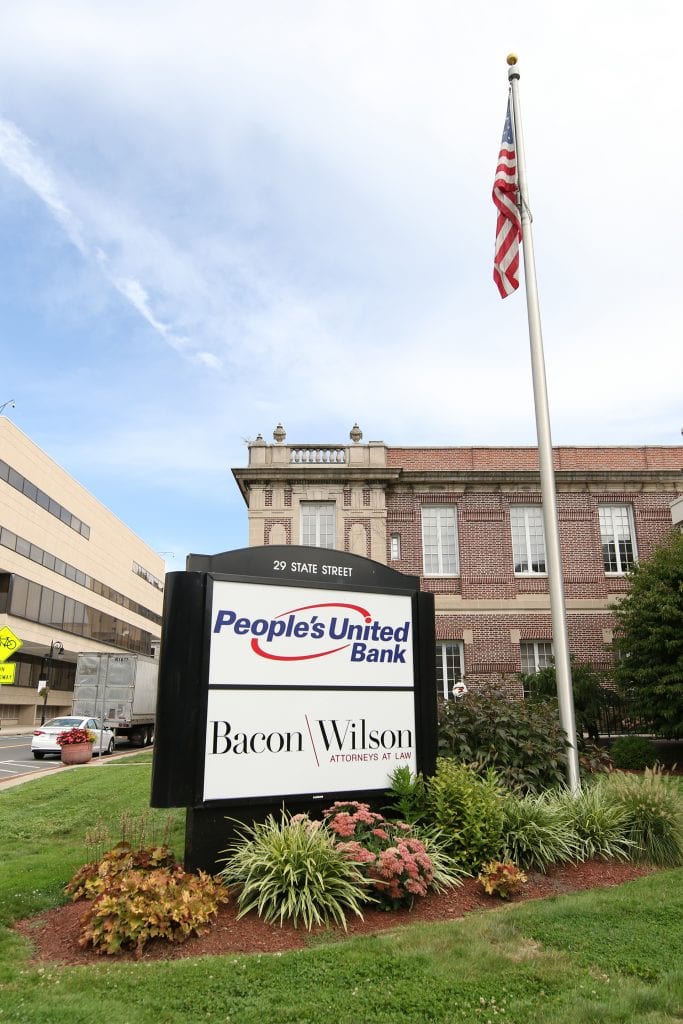 People’s United Bank is no longer the small, Springfield-based institution, then known as the Bank of Western Massachusetts, that made its name three decades ago through a strong emphasis on local commercial lending. And the now-Connecticut-based institution is growing again, with a planned acquisition of United Bank that will push its assets well above $50 billion. But local connections are still key to the People’s United ethos, its Massachusetts president says — and he hopes United Bank customers feel the same way.
Patrick Sullivan thinks People’s United Bank has built a strong reputation in Western Mass. — and hopes customers of United Bank feel the same way following a recently announced acquisition.
“We trust that customers kind of know us already in Western Mass., and that they’re confident this isn’t a big change in the sense of somebody they don’t know. They’ve known us for a long time,” said Sullivan, Massachusetts president of People’s United, the Bridgeport, Conn.-based bank that began life in downtown Springfield 32 years ago as the Bank of Western Massachusetts.
“We have people that have worked for either the Bank of Western Mass. or People’s United for a long time,” he added. “Long-term relationships are valued here, and long-time principles and dynamics don’t change. Local is local.”
The two institutions announced in July that People’s United Financial Inc., the holding company for Peoples’s United Bank, would acquire United Financial Bancorp Inc., the holding company for United Bank, in a 100% stock transaction valued at approximately $759 million. Then banks’ leaders characterized it as a strong cultural fit that would benefit customers.
“We are excited to welcome United Bank to People’s United,” said Jack Barnes, chairman and CEO of People’s United Financial. “With the fourth-largest deposit market share in the combined Hartford and Springfield market, a complementary array of commercial and retail capabilities, and a shared legacy of community giving, United will solidify our presence in the Central Connecticut market and strengthen our franchise in Western Massachusetts.”
William Crawford, president and CEO of United Financial Bancorp, added that “People’s United Bank has long been a premier brand in Connecticut that is committed to building meaningful relationships with its customers and communities. We are confident their broad array of products and services, in-market knowledge, and the size and strength of their balance sheet will deliver enhanced value to our stakeholders.”
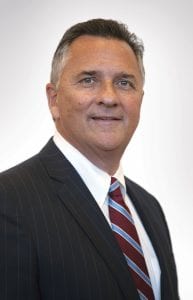
Patrick Sullivan says the acquisition of United Bank makes sense on a number of levels, both financially and culturally.
Indeed, the move is, in one sense, the story of two Connecticut-based banks —United is based in Hartford — but both banks have a long history and a strong presence in Western Mass.
Sullivan — who joined People’s United six years ago as Massachusetts president and also oversees the bank’s commercial, industrial, and business banking, noted that the institution was already the eighth-largest bank in Massachusetts, and will obviously be slightly larger, growing from 56 branches in its multi-state footprint to around double that, though some are expected to close (more on that later).
“Because of the economy in Massachuetts and the size of the market, we’ve invested a lot in people from other institutions that have joined us with specific expertise in lending, commercial markets, retail, wealth, insurance, whatever,” he went on, citing its government-banking niche as one strength.
“We had a good government business in Western Mass. before I came on six years ago. Today, we’ve got 90 clients in Western Mass. with $162 million in deposits. It’s a big business for us. Likewise, it’s a big business for us throughout the whole company. The city of Springfield is a major customer,” he explained, as are Worcester, Pittsfield, Easthampton, and many others.
For this issue’s focus on banking and finance, BusinessWest spoke with Sullivan about the broadened services and technology People’s Bank will bring to United Bank customers, and why he feels this growing institution will continue to maintain a local focus in the communities where it operates.
Immediately after the merger, People’s United will go from five branches in Hampden County to 20, from five to 10 in Worcester County, and from three to four in Hampshire County; its roster of three branches in Franklin County won’t change.
Still, not every branch will remain open; in some communities, both banks now operate within a block or so of each other, which means consolidation is inevitable, Sullivan said. “We’ll make a decision in the best interests of our customers, according to where they bank. But all the retail employees have been told they will have positions with us.”
Just as it has during its growth over the years — People’s United boasts assets around $47.9 billion, and is acquiring a bank with about $7.3 billion — Sullivan said the institution stresses local decision making when it comes to lending, philanthropy, and other matters.
“We still operate just like we did when we had $30 billion. We want to keep it local,” he told BusinessWest. “Our biggest client has its headquarters in Western Mass. Our challenge has been small businesses, those $100,000 loans, the startups. We try to take care of the small-business segment. Let’s face it, those are the heart of a lot of the communities we’re in, and we’re always trying to be more responsive to them.”
In recent years, People’s United has made significant investments in its commercial specialties, including hiring teams of specialized industry experts to better serve customers. Among these niches are technology companies, restaurant franchises, and a healthcare finance team. While those divisions are based out of Boston, they serve the bank’s entire New England and New York footprint and beyond.
The bank has also invested heavily in technology, said Steven Bodakowski, vice president of Corporate Communications.
This United Bank branch in downtown Springfield is just a couple blocks from the People’s United branch — one of many examples of overlapping branches the organization must examine post-merger.
“We’re constantly focused on on how, when, and where we interface with customers in this changing age of banking,” he noted. “Technology and digital enhancements continue to be a major focus for the bank as we aim to stay one step ahead of customer needs and deliver a truly integrated service model that blends the best in customer service with technology.”
To that end, People’s United has developed a strategic initiative to provide customers with online and digital solutions for a suite of its most popular offerings.
“This digital banking experience is designed to mirror and be an extension of the branch experience — serve as another path to interact with and receive guidance from bankers, based on individual customer preferences,” Bodakowski said. “Our bankers are being trained to become digital advocates.”
Offerings include a technology-based home-lending platform designed to simplify and transform the way customers apply for a home-equity loan or home mortgage, providing the ability to virtually interact with mortgage account officers in real time to complete the online application.
Other features include a refreshed online and mobile solution for opening checking and savings accounts, a digital small-business loan application for loans $250,000 or less, a direct-to-client robo-advisory offering, and a new, digitally driven financial-literacy platform that allows customers and the community to access financial-literacy classes and modules.
The latter is an especially important tool to help young people, the elderly, and anyone, really, become more financially savvy, make better decisions, plan for the future, and avoid scams.
“We also launched a new website in May with a fully optimized user experience,” Bodakowski said, one that delivers a fully optimized user experience for mobile devices, an enhanced ‘storefront’ feature to highlight key product areas, and a robust support and security center and new content areas designed to engage and educate customers.
The bank has also enhanced its marketing capabilities to more accurately target its customers and understand their lifestyles, through the use of integrated third-party digital e-mail and marketing platforms such as Marketo and Salesforce.
“We look forward to welcoming [United Bank’s] well-established customer base and delivering to them our enhanced technology and digital capabilities, combined with our network of expert bankers,” Barnes said when the acquisition was first announced.
That’s a lot of growth since the institution opened its doors in 1987 as the Bank of Western Massachusetts with $9.3 million in assets. By way of contrast, People’s United awarded almost half that total — about $4 million — to nonprofits last year, about $2.3 million of that in Massachusetts. Of that latter figure, more than $854,000 was contributed by the bank in donations and sponsorships, while more than $1.4 million was awarded in grants by People’s United Community Foundation and People’s United Community Foundation of Eastern Massachusetts.
Those giving decisions remain, as they always been, local, Sullivan said, because the local bankers know the market and its needs. He knows that’s part of the community-bank ethos in Western Mass., and even banks that have grown far beyond community-bank size still have to operate like one.
“Our philanthropy is very local. We take very seriously how things get allocated to these organizations,” he added. “Our principles are always to stay local, whether it’s the specialty expertise in the market or our volunteerism and philanthropy. That’s in our DNA.”
Joseph Bednar can be reached at [email protected]

 Work continues on an intriguing and highly visible project to put a fresh, more watertight face on the sphere at the Basketball Hall of Fame. The project is a study in efficient teamwork and bringing intricate work to a polished finish — quite literally.
While the Campanile and the larger Court Square complex are perhaps the most recognizable landmarks in Springfield, the large sphere that encompasses the museum at the Basketball Hall of Fame has certainly joined that list.
And right now, that sphere has taken on the look of a giant jigsaw puzzle — with some pieces in place and many still missing — which, in many respects, is exactly what it is.
Indeed, the Hall of Fame is in the midst of a $4 million project to repair the outside of the dome, easily the most visible component of a larger project will modernize the Hall and make it far more user-friendly.
The dome work, which began in March, has become somewhat of a spectator sport because of the Hall’s high degree of visibility, especially from I-91 and even the MGM Springfield parking garage. What people can see is dramatic change between what would be considered the old and the new, even though the 900 panels that make up the sphere are not actually being replaced.
What people can’t see, though, is how intricate and challenging this reconstruction project is, and the high level of choreography involved as crews attempt to make a museum façade comprised of nearly 1,000 panels look like one very shiny globe.
Paul Dowd, president of Bloomfield, Conn.-based Managed Air Systems LLC, which is leading the initiative, explained that “what makes it unique is there are not many spherical buildings out there. This replication of a basketball is a unique structure in and of itself.”
“It didn’t give us the opportunity to really reflect all the content that’s out there, whether it was a long-time-ago hall of famer or an honoree just enshrined last year; we weren’t able to really bring them alive. The objective in our new Hall of Honor will be to provide as much information as we possibly can on all the hall of famers, no matter what era they came in, and have it be much more engaging.”
Elaborating, he said that, again, like a jigsaw puzzle, no two pieces of this dome are exactly the same, despite how things look to the naked eye and even the photographs on these pages. This means each panel must be marked when it is taken down in order to ensure that it is put in the same place when it is returned.
After they’re removed and marked, 10 pieces at a time are shipped to Managed Air Systems where they are sanded and painted — a process that takes several hours per panel.


Each panel is unique and must be marked before being taken off, repaired, and put in the exact same spot it came from.
Although his firm specializes in this kind of work — Managed Air applies protective or decorative coating to anything that needs it, from cars to planes to furniture — the Hall project is somewhat different in that requires a focus on timeliness and ensuring an ultra-high level of consistency across 900 individual panels weighing 110 pounds each.
“One of the big concerns going into this was having a coordinated effort from the people taking the panels off to the people doing the rubber membrane repair on the inside to us getting the panels repaired and back to them,” said Dowd. “It was a very large, coordinated effort to make this all go smoothly.”
For this issue and its focus on construction, BusinessWest takes an in-depth, up-close look at the Hall project and how it is a shining example, figuratively but also quite literally, of effective teamwork in construction — and reconstruction.
By now, a good number of people across the region have seen John Doleva, president and CEO of the Hall of Fame, hold up and talk about what he affectionately refers to as a ‘spaceship.’
That’s his pet term for the individual lights that were affixed to the museum dome as it was constructed nearly 20 years ago — the lights that took on different colors for various occasions.
He calls them ‘spaceships’ because, well, they take on the 1950s-ish, sci-fi shape of a UFO.
There are — or were — 900 of these lights — one for each panel — and roughly half of them leaked, said Doleva, adding that the damage caused by these leaks inspired the $4 million reconstruction project which will restore the panels to the original luster and replace the spaceships with LED lighting.
The project commenced in the spring, and, as both Dowd and Doleva noted, it’s been an intriguing project that requires a high level of coordination among Managed Air Systems and a host of local contractors.
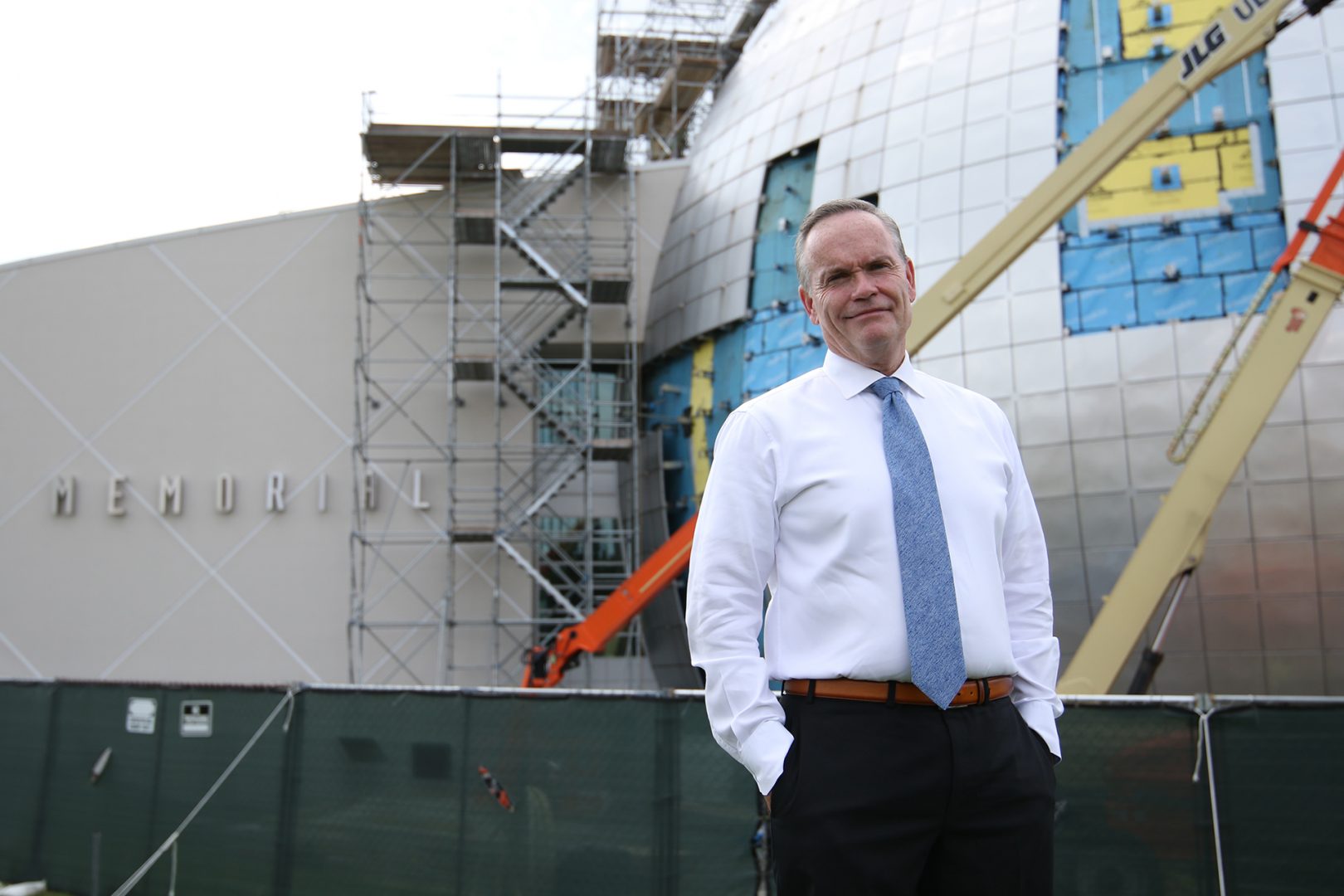
John Doleva says the $4 million dome reconstruction should be finished by the end of September.
That list includes Western Builders of Granby, Chandler Architectural Products Inc. of Springfield, Kent Brothers Excavating of Southampton, Superior Caulking & Waterproofing of Palmer, Collins Electric of Chicopee, Healey & Associates of Belchertown, and project management by Colebrook Realty Services of Springfield and Holyoke.
“That was a key element as we chose vendors,” said Doleva. “We wanted them to be qualified, but there are plenty of qualified vendors in our area, and we wanted to make sure that we were employing people from our region.”
Managed Air Systems spends about 10 hours, on average, refurbishing each of the panels. Some have been damaged over the years and need additional repairs, meaning they need to be kept overnight. Once the repair and reconditioning work is done, the panels are painted to give the dome a fresh, new look.
Doleva said construction is moving quickly, so when these panels aren’t quite ready to be placed back in their positions, they are stored in the garage located under the Hall of Fame.
Dowd said the board at Hoop Hall chose a high-gloss finish for the panels, which will provide long-term durability against UV rays and weather.
“It almost looks wet when you look at the panel, very similar to a freshly painted car part,” he explained. “That glossy finish helps protect it more long-term from the exposure to the sun and the elements.”
But there’s more to it than slapping some paint on. There are three different materials that go on the panels — a sealer that allows the paint to go on, a grey metallic coating, and a clear coat that encapsulates and seals the panel. Dowd says each panel is painted in a downdraft-heated paint booth that he compares to a giant convection oven. Once the panels are painted in the booth, the press of a button cures the panels at up to 200 degrees.
Perhaps the most intricate part of this process is making sure each panel looks the same as the rest, even though they are all slightly different sizes.
“From our end, the biggest challenge we have is to have the repeatability in the quality of finish,” Dowd said, adding that the company has had to redo some panels that weren’t quite right. “You want this globe, when it’s all done, if someone was to walk around it, to have the same luster and shine and quality on it to look consistent as if it was just one giant globe.”
Once the dome is finished, LED projection lighting will be installed to light the front of the building.
“I think it will attract a lot of attention,” Dowd said. “You can’t miss it when you drive on 91 — it should get some ‘wow’ factor.”
That phrase ‘wow factor’ applies to the many other components of the Hall renovation project as well, said Doleva.
These include the new Hall of Honor, which recently opened. It allows visitors to view any hall of famer in a brand-new, digital manner.
“It didn’t give us the opportunity to really reflect all the content that’s out there, whether it was a long-time-ago hall of famer or an honoree just enshrined last year; we weren’t able to really bring them alive,” said Doleva in reference to the old display. “The objective in our new Hall of Honor will be to provide as much information as we possibly can on all the hall of famers, no matter what era they came in, and have it be much more engaging.”

This includes the next phase of the indoor construction: a complete remodeling of the top floor of the museum. Doleva says this exhibit, sponsored by the NBA Players Assoc., will feature 16 key moments in basketball displayed in graphics on the ceiling.
“We’re going to take advantage of the verticality of that space by having a big sailboat sail of graphics and then an exhibit in front of it,” he said, adding that, while they are taking a more digital approach, they are not totally abandoning the original values of the museum, which includes physical artifacts. “What we haven’t lost sight of is what makes a sports museum different than going on your telephone and looking up sports history.”
Meanwhile, the outside of this particular sports museum will have a different look and feel as well.
The refurbished sphere will reflect a new era at the Hall — in all kinds of ways.
Kayla Ebner can be reached at [email protected]
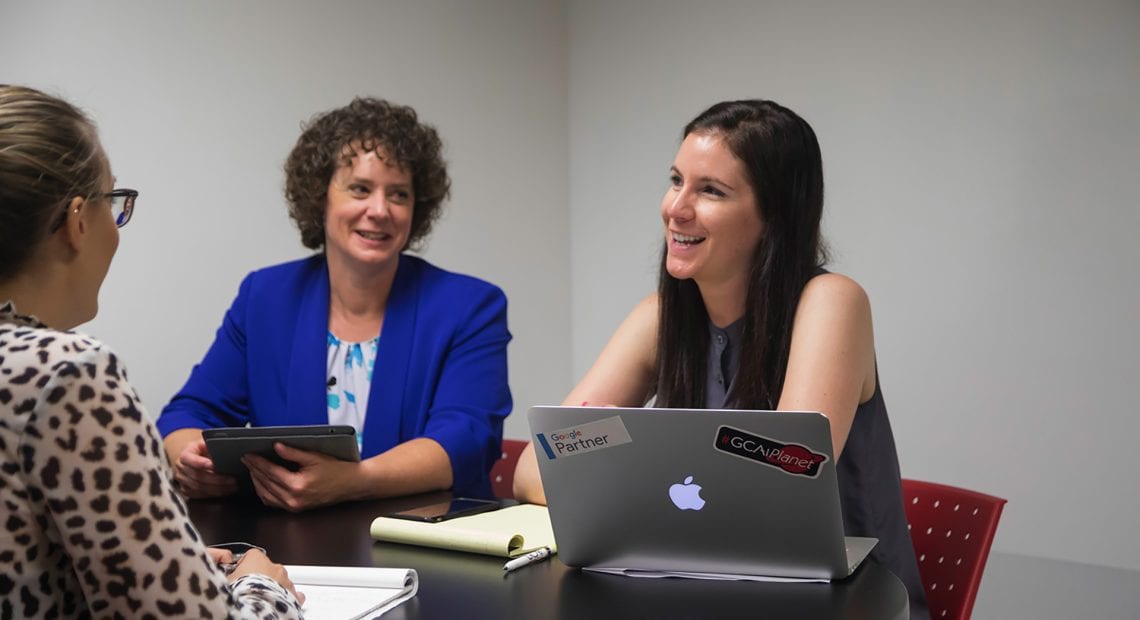
 Many people assume that working from home is less productive than spending time in the office. However, the opposite is oftentimes true. This is especially true now that technology allows for quick and easy communication between home and office, giving employees, especially moms, the ability to work efficiently from home while maintaining a healthy work-life balance.
When Tiffany Appleton looks back on raising her now-19-year-old daughter, she remembers how difficult it was to have a full-time job on top of the 24-hour job called parenting. As a single parent, she really didn’t have a choice whether to go to work or not — she had to find a way to balance the two.
And she did — but she also realizes how much easier that might have been in today’s world, where technology allows employees to work from home productively and sustain a healthy work-life balance.
Appleton, recruiter and director of the accounting and finance division at Johnson & Hill Staffing, finds more and more people are working from home, and sees benefits for both the employee and the employer.
“I’ve interviewed many people who have had a work-from-home schedule, and usually they say that they end up working more than they would if they were in the office,” she explained, adding that it is oftentimes easier to be productive at home than working in an office environment, with the myriad distractions found there.
“I think much of this desire for having flexibility to work remotely came from moms who wanted to have their hands in balancing both the career and raising a family, and not having to feel like they could only do one or the other.”
In fact, the work-from-home population has grown by 159% since 2005, and the number of employers offering a remote option has grown by 40% in the past five years. The start of this fairly new trend, Appleton said, can be attributed to the moms.
“I think much of this desire for having flexibility to work remotely came from moms who wanted to have their hands in balancing both the career and raising a family, and not having to feel like they could only do one or the other,” she said.
Mary Shea, vice president of digital strategy at GCAi, can attest to this. She’s a new mom of a 4½-month-old boy. She commutes from Sturbridge but works from home on Mondays and Fridays, a schedule she says took some getting used to but now allows her use her time more productively while helping her maintain a healthy lifestyle. Her position at GCAi includes building and managing ad campaigns for her clients, a job she says she can do very well remotely.
Between her long commute and having a new baby boy, Mary Shea says working from home twice a week makes a huge difference in her life.
“Most of the time, I don’t have to be in the office,” Shea told BusinessWest. “I’ve set it up where Mondays and Fridays are my set schedule. Those are the days I’ll work on things that I know are online, and then, the other three days, I come into the office or go on location for a video shoot.”
Working from home saves Shea three hours a day that would otherwise be spent in a car — time she spends either working more, grocery shopping, or fitting in some exercise. And she never feels disconnected from the company, knowing her team back in the Springfield office is only a phone call away.
“Technology today has enabled parents, particularly moms like me, to work remotely,” she said, adding that hard and soft technology like the cloud-based project-management system GCAi uses and applications on her phone make this possible. “Being able to work remotely in the situation I’m in now is pretty vital because it’s just such a busy week.”
Shea isn’t the only mom, or employee in general, who feels this way. Karen Buell, vice president of Operations at Payveris and mother of two, has been working from home three days a week for eight years.
“Some women are pushing off having a family or they’re choosing between a career and having a family. For me, I can choose both,” she said, adding that being part of a tech company makes this a pretty easy thing to do.
Tiffany Appleton says Western Mass. businesses are adopting work-from-home policies slower than bigger cities, but it is still becoming more normal in the area.
In fact, Buell says about a third of the employees at Payveris are 100% remote.
But for some employers, this can be a difficult thing to embrace. Appleton says the negative stigma that surrounds those who work from home can sometimes prevent employers from making the jump.
“I’ve found, in Western Mass., we’re a little slower to adopt it than the cities are,” she said. “Sometimes employers get scared by work-life balance and think, ‘that means people don’t want to work, they just want to have a life and pretend they’re working.’ They just assume the worst.”
This negative perception is one of the things Buell experienced in her early work-from-home days, with people telling her she’d have a hard time being visible or ever being promoted. Despite the lingering stereotype, she was promoted at Payveris just a couple months ago.
“It doesn’t hold you back. If you’re there and you’re showing up and being productive, you can do anything,” she said. “It’s not about where you are, it’s about how productive you can be.”
Another challenging aspect about working from home is maintaining a connection with those who are at the office. Both Appleton and Shea agreed this responsibility lies largely with the employee, but also the cooperation of co-workers to maintain connectivity.
“Keeping the culture of the office is probably the most important thing the employer can do when having people who are not in the office all the time — finding ways to make sure that they are included, even if they’re not there in person,” Appleton said.
This may even include something as simple as telling a co-worker not to bring a lunch tomorrow because the office is ordering pizza or letting them know that so-and-so down the hall got engaged.
“Those are the things that usually irk people,” she continued. “Making sure there are ways to include the people when they’re not there — and being very conscious to include them and make them feel like they are part of the team — is important.”
Karen Buell says employers would benefit from seeing the upside of remote work instead of focusing on the negatives.
Technology makes all this especially simple. Appleton says more and more employers are investing in the kinds of technology that can be accessed remotely, such as Freedcamp, a collaborative project-management system that GCAi uses for everyday business and communication.
With increasingly adaptive technology that allows employees to do things like videoconferencing and sending documents through group-sharing software within seconds, disconnectedness is becoming less and less of a problem.
“Taking the next step to make sure the tools you’re investing in for the office have those abilities for people to work from anywhere is crucial,” Appleton said.
When she thinks about becoming a working parent 19 years ago, she realizes how helpful modern technology would have been when her daughter was home sick from school and she had to take the day off from work. Or on a snow day, when it wouldn’t have been necessary to get in the car and drive to the office to be productive.
“It’s nice now that you can do everything you need to do from home,” she said. “I think it’s good for the employees and the employers at the end of the day.”
Kayla Ebner can be reached at [email protected]m
 As anyone who lives in Hadley, visits the town, or drives through it knows, Route 9, the main commercial thoroughfare in this still largely agricultural community, is in a seemingly constant state of motion.
In this case, motion translates into everything from high traffic counts to a continuous flow of new businesses across a wide spectrum that includes service ventures, retail outlets, and hospitality-related companies, to infrastructure work aimed at improving traffic flow.
And Hadley is seeing all of the above at the moment, as Town Administrator David Nixon noted as he talked with BusinessWest about the state of his community.
There are a number of new additions to the commercial landscape in various stages of development, said Nixon, listing a new Homewoods Hotel that recently debuted — bringing the total number of hotel rooms in town to 612 — as well as a Five Guys, L.L. Bean, Harbor Freight Tools, and 110 Grill that will be unveiled soon.
“There’s a lot of demand, and obviously the infrastructure is in place to support that demand except for the gas moratorium,” said Nixon, referring to an ongoing ban on new or expanded natural-gas service in Hampshire and Franklin counties due to a lack of capacity, a source of considerable controversy and consternation within the community. “The University of Massachusetts and the other colleges in the area, as well as 25 other campuses within an hour’s drive of this spot, make the area recession-proof.”
“Route 9 is a big economy booster for the town of Hadley and is continuously being renovated to provide services to both residents and visitors.”
And they make Hadley, population 5,000 or so, a much more populated place during what would be called business hours, with between 35,000 and 80,000 visiting the community each day.
But Hadley has always been much more than a place to visit or travel through on the way to somewhere else, especially the college towns that border it, Amherst and Northampton. Indeed, a mix of culture, recreation, and bucolic countryside makes it an attractive place to live.
Which brings us back to the aforementioned infrastructure work and a mix of municipal projects designed to make it even more attractive.
That latter category includes a new, $3.9 million library that can be seen from the top of Hadley’s Town Hall building. Molly Keegan, general government liaison for the Hadley Select Board, said the state’s Library Building Assoc. is matching 50% of the project costs.
“Like many communities, we were suffering from deferred maintenance on some of our older town properties,” she noted, “and we were able to move forward with a funding strategy that allowed us to build a new library and take advantage of the state grant program.”
Right next door to the library, a new, $7.1 million senior center is under way, and a new, $3.5 million fire substation is being constructed on River Drive.
Meanwhile, the infrastructure work includes a number of road and bridge projects, all aimed at improving traffic flow along Route 9.
For this, the latest installment in its Community Spotlight series, BusinessWest looks at how the word ‘Hadley’ remains seemingly synonymous with both ‘change’ and ‘progress.’
As is the case with most infrastructure projects, progress usually comes after a lengthy period of inconvenience. And that will certainly be the case in Hadley.
Three major road projects will be taking place simultaneously over the next few years, said Nixon, adding that all are needed for the community to better accommodate those tens of thousands of visitors every day.
Currently underway is work on the roundabout at the west side of the Calvin Coolidge Bridge in Northampton.
“The current configuration is not efficient — it doesn’t allow cars to go through quickly,” he explained. “They’re going to put an exchange with the ramps, the bridge, and the surface streets, so that will get traffic moving a lot quicker.”
In addition, the Bay Road Bridge over Fort River is being completely replaced. The bridge will be reconstructed with wider shoulders and new sidewalks, with construction set to begin in the spring of 2021.
Finally, a four-year project is set to widen Route 9 from Town Hall to 2.5 miles east by the malls. This project will add another lane to the popular route in hopes of significantly reducing traffic tie-ups.
“Traffic congestion has been a real problem in some areas, but is now becoming a real problem all over the East Coast,” Nixon said. “Taking care of the infrastructure is of regional importance.”
Year Incorporated: 1661
Population: 5,250 (2010)
Area: 24.6 square miles
County: Hampshire
Residential Tax Rate: $12.36
Commercial Tax Rate: $12.36
Median Household Income: $51,851
Median Family Income: $61,897
Type of Government: Open Town Meeting, Board of Selectmen
Largest Employers: Super Stop & Shop; Evaluation Systems Group Pearson; Elaine Center at Hadley; Home Depot; Lowe’s Home Improvement
* Latest information available
Equally important is maintaining what has been a diverse business community, he noted, adding that, while the retail and hospitality sectors have exploded along Route 9 in recent decades, agriculture remains a huge part of the town’s vibrancy — and its identity.
“Agriculture is a part of our heritage,” he said. “This is still very much an agricultural town.”
He’s talking about the six dairy farms and endless acres of preserved farmland on town property that accompany the booming business on Route 9.
The town has the most protected farmland in the Commonwealth of Massachusetts, he said, adding that the strong commercial and industrial base helps the community to not only preserve its agricultural base, but keep its residential tax rates comparatively low.
But while small in size (population-wise) and mostly rural in character, Hadley is facing some big-city challenges.
“We are, at our core, a small town,” Nixon said. “We have the resources of a small town, and yet we’re dealing with much larger issues.”
Chief among them is traffic, he said, adding that this is a seasonal concern for the Berkshires and Cape Cod, in Hadley, it’s a year-round problem, although conditions are somewhat better when the colleges are not in session.
The town will have some help as it goes about taking on these various challenges in the form of a higher bond rating.
On June 21, Hadley was informed that its bond rating was upgraded from AA+ to AAA, an achievement only three other towns in Massachusetts — Northampton, Great Barrington, and Lenox — can currently boast.
“That’s quite an achievement for a small town,” said Nixon. “We’re insufferably pleased with ourselves. It’s an accomplishment not only of the town government and the million things that we do, but it’s also an accomplishment for the entire business, residential, and agricultural community. It’s something that everyone can take pride in and feel good about and take credit for.”
Keegan added that a financial team has been working hard alongside elected officials to make the higher bond rating possible.
“Having that bond rating … not only is it public recognition of all the good work being done by the municipal employees and volunteers, but it also puts us in the best position we can be in in terms of borrowing,” she said. “The timing on that could not have been any better.”
As for the future, Nixon hopes Hadley continues to build upon its recent successes and especially that higher bond rating.
What is distinctly clear is that the town is in a period of ongoing growth and evolution, all while maintaining the rural quality and agricultural character that makes Hadley, well, Hadley.
And like that AAA rating, this is something to celebrate.
Kayla Ebner can be reached at [email protected]

 The American Bankers Assoc. argued it’s critical that legal, cannabis-related businesses have access to the regulated banking system as it urged the Senate to advance the SAFE Banking Act in recent testimony before the Senate Banking Committee.
Joanne Sherwood, president and CEO of Citywide Banks in Denver and chair of the Colorado Bankers Assoc., testified on behalf of ABA. Sherwood explained how current federal law prevents financial institutions from banking any money derived from cannabis-related businesses and how a narrow, banking-specific remedy to the cannabis banking problem will reap immediate public-safety, tax, and regulatory benefits.
“Because cannabis continues to be illegal at the federal level, handling funds associated with cannabis businesses can be deemed money laundering,” said Sherwood. “That federal/state divide has particularly severe repercussions for banks and communities like mine, where the cannabis industry is fully operational, but it also impacts banks in every state.”
With limited access to banking services available, large amounts of cash remain on site in many of the cannabis-related businesses, which creates significant safety concerns for the communities where they are located. For example, on average, more than 100 burglaries occur at cannabis businesses each year in Denver, according to the Denver Police Department.
“Providing a mechanism for the cannabis industry to access the regulated banking system would help those businesses and their surrounding communities by reducing the high volume of cash on hand, thereby reducing instances of cash-motivated crime,” Sherwood said.
Additionally, since many cannabis businesses do not have a bank account, they are forced to pay their taxes in cash at local IRS offices. Processing paper-based returns costs the IRS nearly 17 times more compared to an e-filed return — a cost borne by taxpayers. Cash-based taxpayers are also more likely to underreport income than those who receive payment by check or those subject to third-party reporting or withholding.
“Banking the cannabis industry is a straightforward way to ensure that businesses have the means and motivation to remain fully tax-compliant,” Sherwood said.
The SAFE Banking Act, which is currently before the committee for consideration, would help address this urgent problem. The bill specifies that proceeds from a state-licensed cannabis business would not be considered unlawful under federal money-laundering statutes or any other federal law and directs the Financial Crimes Enforcement Network and federal banking regulators to issue guidance and exam procedures for banks doing business with legitimate cannabis-related businesses.
“Although the SAFE Banking Act does not cure all of the cannabis-related banking challenges, it would help the 33 states that have legalized cannabis in some form to make their communities safer, collect their taxes, and regulate their cannabis markets effectively,” said Sherwood. “ABA supports the SAFE Banking Act and urges the committee to mark up and advance this legislation as soon as possible.”
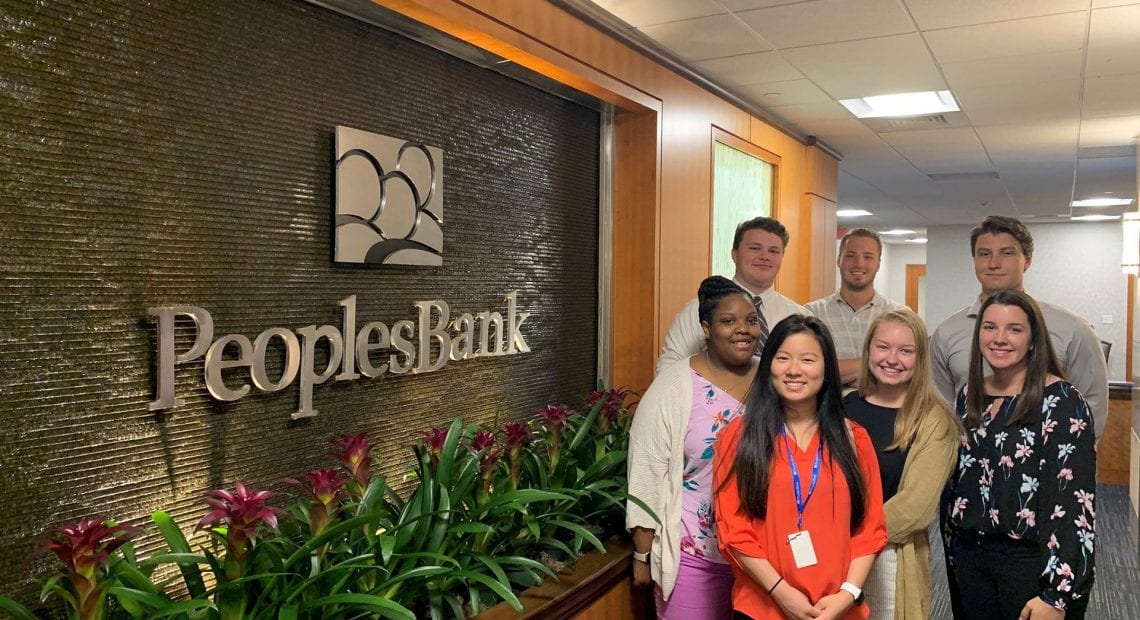
 PeoplesBank joined Google, Facebook, BMW, Southwest Airlines, and more top companies on the 2019 WayUp Top 100 Internship Programs list. WayUp is a professional networking application that connects college students and recent graduates to career opportunities with reputable employers.
According to WayUp, the bank was selected because “PeoplesBank interns not only get a behind-the-scenes look at what it takes to operate a bank, they also get hands-on experience to work on passion projects like Habitat for Humanity’s Build Days.” The list is determined by a panel of industry experts who consider everything from public votes to internship-program highlights. More than 1,000 employers participated in this year’s assessment.
“Our internship program instills that we can learn just as much from our interns as they can learn from us.”
“PeoplesBank interns make an immediate and direct impact on the organization and the communities that the bank serves,” said Danielle St. Jean, HR Coordinator and Training Specialist. “Each intern is also assigned to a home department at the bank. In addition to day-to-day assignments and value-add projects completed within that department, the group of interns are involved in several hands-on activities.”
PeoplesBank interns participated in on-site professional development, a Habitat for Humanity Build Day, employee-engagement planning, banking-topic webinars, and job shadowing. They also were able to discuss their career paths with senior leadership in the bank’s finance, human resources, information technology, marketing, and retail operations. After spending the summer at PeoplesBank, the interns have returned to study at colleges throughout Massachusetts as well as Connecticut and Colorado.
“Our internship program instills that we can learn just as much from our interns as they can learn from us,” St. Jean said. “We ask for lots of feedback from our group of interns, and even have a private ‘PeoplesBank Internship Alumni’ group on LinkedIn so that we keep in touch with them at the conclusion of the program.”
Recruitment for the next PeoplesBank summer internship program kicks off during the winter. Interested students are encouraged to complete an application on the bank’s career page, www.bankatpeoples.com/careers.

By Susan Atran
Bank of America recently announced the findings of a new study conducted by Merrill Private Wealth Management, which found that 64% of wealth holders have never talked with family members about how or why they intend to pass on their assets. While 48% plan to communicate this information eventually, or assume family members already know, 10% vow never to divulge details of their estate plan, primarily because they consider it personal and no one else’s business. But is that a good decision?
“This research is designed to help families make better decisions and secure the promise of wealth, including the impact it can have within and beyond one’s family and lifetime,” said Andy Sieg, president of Merrill Lynch Wealth Management.
For this study, Merrill asked more than 650 high-net-worth individuals across the country how different types of financial decisions are made and communicated within their family. Part of an ongoing series of white papers on wealth sustainability from the Merrill Center for Family Wealth, findings from this study were published in a report titled “How Do Families Make Effective Wealth Decisions?” Among them:
• Decisions about family money — such as gifting to family and charities, dividing assets among heirs, and establishing trust provisions or limitations — ranked as the most important and hardest to make, compared to decisions about saving, investing, spending, and other day-to-day finances;
• Just 33% of people have informed their family of lifetime gifts already made or committed to, such as assets held in a trust or funding of education, a down payment on a first house, or another purpose;
• Seventy-two percent have not discussed their philanthropic commitments;
• When asked what they consider to be the most important idea to communicate when discussing wealth with family, the top response was to be a good steward and handle family money wisely. However, only 46% have talked with heirs about fundamental family values and operating principles;
• On the distribution of their estate, 69% of wealth holders plan to divide their assets equally among heirs, while the rest say allocation decisions are based on specific criteria, such as merit for individual contributions (11%) or need (8%); and
• While 22% plan to openly share details of their estate plan with the whole family, 17% would share information only as it applies to each person.
“Decisions about family money have the potential to change lives, yet the outcome depends on how well the purpose and reasoning behind those decisions are understood, and too often that is left unsaid,” said Stacy Allred, head of the Merrill Center for Family Wealth. “Misunderstanding can lead to family conflicts, resentment, and other unintended consequences, including the misuse or loss of family wealth.”
The Merrill Center for Family Wealth specializes in helping families define the purpose of their wealth. This study found that, in six in 10 families, there is no formal structure or rigorous process in place to ensure family wealth decisions are made and communicated effectively. When asked how wealth decisions are typically made, the most prevalent response was an autocratic and top-down approach whereby one person makes decisions with little or no input from anyone else. Seventeen percent of families make financial decisions democratically with collective input or representation of all members.
Three-quarters of participants, including more men (79%) than women (68%), report complete confidence in their financial decisions. Looking back on decisions they’ve made, however, just 56% of people said their decisions always turned out well. The rest reported mixed results, including 21% who said their decisions turned out badly or they delayed making decisions because they were unsure of the outcome.
“The best form of financial parenting and a big part of improving the outcome of decisions involves putting more care into the decision-making process itself,” said Matthew Wesley, director of the Merrill Center for Family Wealth. “Family wealth decisions can be complicated by family dynamics, a long-time horizon, and unrecognized biases that call for a deliberate and disciplined approach.” u
Susan Atran is senior vice president of Communications for Bank of America.

By Kathleen Prause and J.D. Harrison
 Results from the USG Corp. and U.S. Chamber of Commerce Commercial Construction Index from the second quarter of 2019 indicate that more than half of contractors are highly confident that the market will provide sufficient new business opportunities in the next 12 months.
Overall, the Q2 composite score of 74 — up two points from 72 in the first quarter — shows a vibrant commercial construction sector, although contractors’ revenue expectations slightly decreased.
“The construction industry is a reflection of our country’s broader economic health, so contractor optimism is a great sign for everyone,” said Chris Griffin, president and CEO of USG Corp. “Even so, it is important that we think about solutions to our big challenges, like building a healthy pipeline of new workers and incorporating technology to make our job sites safer and more efficient.”
More than half of contractors (52%) are highly confident about the ability of the market to provide new business opportunities in the next 12 months, an 11% increase over last quarter’s findings. The backlog ratio — comparing contractors’ average current backlog of projects to the ideal amount of work companies would like to take on — reached 82, the highest since the Index launched in 2017. Hiring expectations also recovered between Q1 and Q2 2019, with most contractors (60%) anticipating employing more people in the next six months.
Furthermore, 60% of contractors report confidence that revenue will remain stable. They also expect access to capital to continue, with 66% believing access to financing will get easier or remain the same over the next six months.
In a notable shift from the last three quarters, the number of contractors who report “high concern” about the availability of skilled labor declined to 46% (down from 54% in the first quarter. While confidence in having access to skilled labor shows some improvement, 85% of contractors still express high concerns about the cost of that skilled labor.
For the third time since the launch of the Index in 2017, this quarter’s survey explored sustainability practices in construction. The findings show that the average share of green projects for contractors is declining. This finding is interesting, since other industry studies reveal no slowdown in the number of green construction projects. One explanation may be that the majority of green work is becoming more concentrated among a smaller group of specialized companies. The study shows that green projects are done more frequently by large contractors.
The Index also reports a mismatch between green standards and green incentives, with most contractors (84%) saying they must meet green standards on at least some projects, but fewer than half (47%) take advantage of green incentives. Finally, general contractors report that the most important green attributes swaying their purchasing decisions are energy efficiency (80%), materials without harmful chemicals (65%), and water efficiency (64%).
The Index comprises three leading indicators to gauge confidence in the commercial construction industry, generating a composite index on the scale of 0 to 100 that serves as an indicator of health of the contractor segment on a quarterly basis. The second-quarter results from the three key drivers were:
• Backlog: contractors’ ratio of actual to ideal backlog rose five points (to 82 from 77), hitting its highest point since the Index launched in 2017;
• New business confidence: the level of overall confidence rose three points (to 74 from 71), suggesting a return of optimism about the market’s ability to provide new business opportunities in the next 12 months; and
• Revenue: the revenue score dropped one point (to 66 from 67), although most contractors (60%) expect revenue to remain the same.
Kathleen Prause is director of Corporate Communications for USG Corp., a manufacturer of building products and innovative solutions. J.D. Harrison is executive director for Communications & Strategy at the U.S. Chamber of Commerce.

By Jenna Finn
Vade Secure, a global leader in predictive e-mail defense, recently published the results of its Phishers’ Favorites report for the second quarter of 2019. According to the report, which ranks the 25 most impersonated brands in phishing attacks, Microsoft was by far the top target for the fifth straight quarter. There was also a significant uptick in Facebook phishing, as the social-media giant moved up to the third spot on the list as a result of a staggering 176% year-over-year growth in phishing URLs.
The report was developed by analyzing the number of unique phishing URLs detected by Vade Secure. Leveraging data from more than 600 million protected mailboxes worldwide, Vade’s machine-learning algorithms identify the brand being impersonated as part of its real-time analysis of the URL and page content.
“Cybercriminals are more sophisticated than ever.”
Microsoft has ranked number one on the Phishers’ Favorites list every quarter since the official rankings were first released early in 2018. In the most recent quarter, Vade’s AI engine detected 20,217 unique Microsoft phishing URLs, for an average of more than 222 per day. This represents a 15.5% year-over-year increase compared to the second quarter of 2018.
Microsoft phishing has become a potential goldmine thanks to the growth of Office 365, which boasts more than 180 million active monthly business users. Office 365 is increasingly the heart of companies, providing the essential services (e-mail, chat, document management, project management, etc.) that businesses depend on to run. Each set of Office 365 credentials provides a single entry point not just to the entire platform but the entire business, allowing cybercriminals to launch insider attacks targeting anyone in the organization in just one step.
Meanwhile, Facebook phishing has been on a tear throughout 2019 and advanced one spot up to number three in the most recent quarter thanks to a 175.8% increase in phishing URLs. One explanation for this rise in popularity could be the prevalence of social sign-on using Facebook accounts, a feature called Facebook Login. This is particularly attractive to cybercriminals because they’ll be able to see what other apps the user has authorized via social sign-on, and potentially compromise those accounts as well.
The rest of the most-impersonated brands on the Phishers’ Favorites report include PayPal (number 2), Netflix (4), Bank of America (5), Apple (6), CIBC (7), Amazon (8), DHL (9), and DocuSign (10). Amazon phishing URLs saw a massive spike in the second quarter of 2019, growing 182.6% over the first quarter and 411.5% year over year. This coincides with reports of a new Amazon phishing kit in May, as well as the lead up to Prime Day 2019.
In terms of the most impersonated industries, cloud companies took the top spot for the fifth straight quarter with 37.6%, followed by financial services (33.1%), social media (15.6%), e-commerce/logistics (7.7%), and internet/telecommunications (5.2%).
A large majority of phishing (80%) took place on weekdays, while Tuesdays and Wednesdays were the most popular days for cybercriminals to take their shot.
“Cybercriminals are more sophisticated than ever, and the ways they target corporate and consumer e-mail users continued to evolve in Q2,” said Adrien Gendre, chief solution architect at Vade Secure. “Microsoft Office 365 phishing is the gateway to massive amounts of corporate data, while gaining access to a consumer’s Facebook log-in information could compromise much of their personal, sensitive information. The fact that we saw such a significant volume in impersonations of these two brands, along with the coinciding new methods of attack, means that virtually all e-mail users and organizations need to be on heightened alert.”
Jenna Finn is an account manager with Vade Secure.

Eighty percent of construction firms report they are having a hard time filling hourly craft positions that represent the bulk of the construction workforce, according to a national, industry-wide survey released last week by Autodesk and Associated General Contractors of America (AGC). Association officials said the industry was taking a range of steps to address the situation but called on federal officials to assist those industry efforts.
“Workforce shortages remain one of the single most significant threats to the construction industry,” said Stephen Sandherr, AGC’s CEO. “However, construction labor shortages are a challenge that can be fixed, and this association will continue to do everything in its power to make sure that happens.”
Of the nearly 2,000 survey respondents, 80% said they are having difficulty filling hourly craft positions, Sandherr noted. All regions of the country are experiencing similarly severe craft-worker shortages, with 83% of contractors in the West and South reporting a hard time filling hourly craft positions, slightly higher to the 81% rate in the Midwest and 75% rate in the Northeast.
Seventy-three percent of firms report it will continue to be difficult, or get even harder, to find hourly craft workers over the next 12 months. One reason for their worries is that contractors are skeptical of the quality of the pipeline for recruiting and preparing new craft personnel. Forty-five percent say the local pipeline for preparing well-trained and skilled workers is poor. And 26% say the pipeline for finding workers who can pass a drug test is poor.
Labor shortages are prompting many firms to boost pay and compensation. Two-thirds of firms report they have increased base pay rates for craft workers. And 29% report they are providing incentives and bonuses to attract craft workers. Firms are also taking a greater role in developing their own workforce. Forty-six percent say they have launched or expanded in-house training programs, and half report getting involved in career-building programs.
“Construction workforce shortages are prompting many firms to innovate their way to greater productivity,” said Allison Scott, head of Construction Integrated Marketing at Autodesk. “As the cost of labor continues to increase and firms look to become even more efficient, technology can enable better collaboration and ultimately lead to more predictable outcomes. There is also opportunity in untapped pools of talent such as tradeswomen, veterans, and young people looking for an alternative to the traditional four-year university.”
Scott noted that 29% of firms report they are investing in technology to supplement worker duties. One-quarter of firms report they are using cutting-edge solutions, including drones, robots and 3-D printers. Meanwhile, 23% of firms report they are taking steps to improve job-site performance by relying on lean construction techniques, using tools like building information modeling and doing more off-site prefabrication.
Association officials called on the federal government to boost funding for career and technical education. They also called on federal leaders to allow more immigrants to enter the country to work in construction, let construction students at community and career colleges qualify for federal Pell Grants, and make it easier for firms to establish apprenticeship and other training programs.

There’s a reason why chambers of commerce, throughout their history, have taken a minute or two at their regular breakfast meetings to recognize their members celebrating important birthdays or key developments in their history.
And that reason is … milestones are certainly worth celebrating.
Indeed, as anyone in business will tell you — and they undoubtedly have — while launching a new venture is anything but easy, staying in business is much, much more difficult.
Especially when we’re talking about staying in business for 100 years or 50 or even 20. All one really needs for perspective is to think about all the businesses and nonprofits that cannot make such claims.
Staying in business for even a decade or two almost always requires perseverance, imagination, some daring, some sacrifice, the ability to look around the proverbial corner, and, yes, luck.
All of the above, and especially that last ingredient can and usually are required because there are myriad things that can keep a company or an institution from reaching some of the milestones being marked on the pages that follow.
Just a partial list includes a serious recession — or two, or three, or four; the lack of a ‘next generation’ to carry things on; developments that seem to come from nowhere — everything from digital photography to the automobile itself (yes, the car destroyed a good number of buggy-whip-manufacturing businesses in Westfield); from those red boxes dispensing videos in the supermarket or pharmacy, to the chain pharmacy itself.
Yes, staying in business is extremely difficult, and that’s why milestones are celebrated.
And while celebrating years and significant developments, companies use such occasions to reflect not only on what has happened, but what can happen moving forward. It is the same reason why the country is stopping to celebrate everything from the moon landing to Woodstock this year.
People are stopping not just to note that 50 years has gone by since those events, but to ponder how those developments have changed the landscape since.
And so it is with milestones being celebrated by companies in this region and on the pages that follow. These institutions are marking not just the passage of time, but how a company like Balise Motor Sales or a ground-breaking development like the Bay Path University Women’s Leadership Conference can change the landscape, literally and also figuratively.
And in many cases, as you’ll see, what allows companies and institutions to survive and thrive for years and decades is not only a willingness to adapt and the ability to adapt, but also a resolve to remain true to the mission and the principles that were there in the beginning.
So it is with BusinessWest magazine, which is celebrating its own milestone — 35 years since it was launched by John Gormally, a man who has become a serial entrepreneur.
There has been considerable change, but what hasn’t changed is the mission of providing comprehensive, reliable, sometimes entertaining business news.
The stories below have similar threads. Many things have changed over the years, but what’s really important is what hasn’t changed.
And that’s a big part of celebrating a milestone.
Northampton Survival Center
Springfield Partners for Community Action
Balise Motor Sales
BFAIR Berkshire Family & Individual Resources
BusinessWest
WestMass ElderCare Inc.
Women’s Leadership Conference
Lexington Group
Peter Pan and Bridgestone
Whalley Computer Associates
bankESB
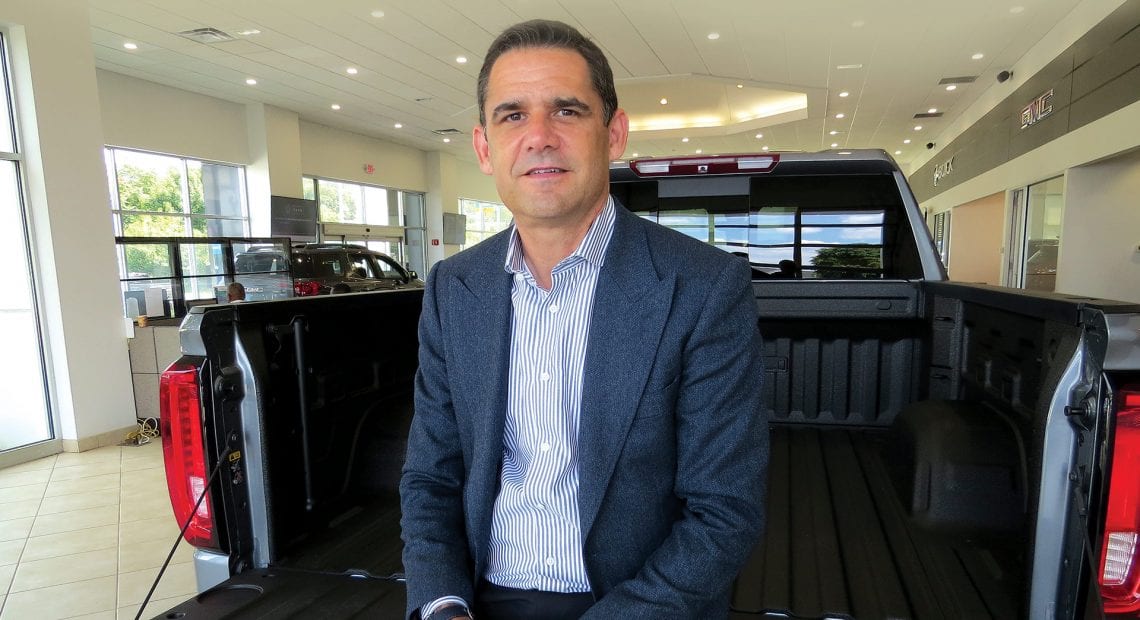
Ben Sullivan, COO of Balise Motor Sales, says pick-up truck sales, especially those involving small trucks, have been moving steadily higher in recent years.
Ben Sullivan notes that while SUVs and cars seem to be making all the news these days — the former because of how well they’re selling, and the latter because how they’re not selling — there is that third segment of the market that is making a lot of noise in its own right; trucks.
This is not a recent phenomenon, noted Sullivan, chief operating officer for Balise Motor Sales, adding that truck sales have been solid for some time and especially since the end of the recession and during the recent, and prolonged period of relatively low gas prices. But the number of truck sales continues to be move higher, and for several reasons, one in particular.
“What we’ve seen over the past decade is a significant investment by the manufacturers in not only styling, but ride comfort, quietness, electronics, safety equipment, and especially fuel economy,” said Sullivan. “To the point where they’ve made the pick-up truck probably the primary choice for people; they can drive it to the country club on the weekend and to a work site during the week. It gives people a lot of flexibility.”
He noted that while the sales of mid-sized, half-ton trucks (think Ford 150, Chevy Silverado, and Dodge Ram, the three most popular sellers, and in that order) have been relatively flat, there is considerable movement in the smaller-truck market, featuring brands like the Toyota Tacoma, Ford Ranger, and Chevy Colorado.
He called this development a “resurgence,” because small trucks were popular in the ’80s, then things cooled off considerably, and now, they’re picking up again (pun intended), and in rather dramatic fashion.
“For years, the small-pick-up-truck market fell dormant behind the explosive growth of the half-ton-pick-up-truck market,” he explained. “Been there’s been a real resurgence in the small pick-up.”
But while the smaller trucks are selling, there is solid movement across the board, especially when there are incentives available.
Indeed, Jeff Sarat, owner of Sarat Ford Lincoln in Agawam, said he normally sells about 20 to 25 super-duty trucks — that would be the F-250 through F-550 and up — each July. Last month, he sold 54, more than a 100% increase.
Jeff Sarat says pick-ups now offer almost everything cars and SUVs do, including solid gas mileage.
“Ford came out with some really aggressive programs — 0% for 72 months – so they created a market, which was phenomenal for business,” he said. “I had multiple customers buy more than one, because businesses — and that’s really who’s buying those type of trucks — they haven’t had that deal for three years.”
The response was quick, too, he added, as Ford didn’t even start the promotion until mid-July. “My guys just got on the phone and started calling people: “hey, we can lower your payment 100 bucks and put you in a brand-new truck.’ And people were flocking in. It was awesome.”
Ford agrees, extending what was supposed to be a two-week promotion through Labor Day, creating worries that Sarat might actually run out of trucks before the October-through-December season, which is traditionally a good time for truck sales — he usually sells about 100 super-duties over those three months — as businesses make year-end purchases for tax purposes.
Looking ahead, those we spoke with said truck sales, like SUVs, will continue to move higher at the expense of the car, because, again like SUVs, the product continues to evolve, improve, and provide more of what consumers are demanding.
Sullivan recently relocated to Western Mass. from Texas, specifically the Dallas area. The Lone Star State is known for many things — from oil to cattle to Friday night football — but it might just be the pick-up truck capital of the world.
“They really like their pick-ups in Texas,” he said with a smile, noting that while nationally, one auto purchase in five is a pick-up, in Texas, it’s at least one in four. And in keeping with the state’s character, bigger — and better-appointed — is better.
“You’re not a gentleman cowboy unless you’re driving an F-250, which is a diesel engine, with King Ranch leather interior,” he said referring to the expensive brand of leather from that ranch in Texas. “And that thing is probably an $80,000 truck by the time everything is said and done.”
Western Massachusetts, and the Northeast as a whole, is a long way from Texas, geographically and also with regard to the popularity of pick-ups, but this region is gaining some ground in that regard, if you will, and numbers supplied by Sullivan bear this out.
He said that since the start of the year in Massachusetts, Connecticut, and Rhode Island, roughly 300,000 vehicles have been sold. Of those, 31,000 would be considered mid-sized, half-ton trucks; 20,000 are larger work trucks, and 13,000 are smaller, quarter-ton trucks, leaving a total of 54,000 pickups sold to date, not quite 20% of the total volume of vehicles.
And, as noted, while the biggest surge has been with the smaller trucks, sales are steady across the board, thanks to a still-solid economy that is fueling sales to consumers and businesses alike, and especially the former.
“Those guys are having good years, and they’re adding people,” said Sarat, referring to the builders, contractors, landscapers, and others that rely on larger trucks and work them hard. “When the economy is up, it’s good for everybody, and that especially helps us because we specialize in trucks.”
And the numbers are only expected to climb higher for those reasons cited earlier by those we spoke with. Where once people had to sacrifice things like comfort, luxury, room, technological bells and whistles, and especially gas mileage when they bought a pickup, now, they don’t have to.
Indeed, Sarat used the Ford F-150 to get his points home. This model remains popular among non-commercial drivers, although some businesses use them in their fleets as well. ‘I drive one,” Sarat said. “If you have a family of five, you can all hop in it and go somewhere — and put something in the bed if you need to.”
And, as noted, the trucks are becoming more car-like in terms of comfort and features which each passing model year.
“Every year, the technology gets better, and the safety features get better,” Sarat said. “I have an app on my phone that I can use to start my truck anywhere in the world. If a check-engine light goes on, from that app on my phone, I can see, ‘OK it’s an oxygen sensor, I’ve got to get it in for service,’ or maybe it’s nothing major, and it’s on because this is something I can fix.”
Safety features like self-parking and anti-collision assist are common in today’s trucks as well, and self-driving vehicles aren’t far away, he added. Plug-in hybrid options are creeping into the truck market as well, for people who crave fuel efficiency – or just want to use less fossil fuels. Even traditional, gas-powered trucks are being built with fuel economy in mind.
“I just drove to Ohio last week with my son, 580 miles. And I got out there on one tank of gas,” he said. “My fuel economy was better than I’ve ever had in any truck. Once I got out there, I still had about 100 miles left. That, to me, was impressive.”
Whether it’s efficiency, safety, or other technology, “it’s slowly getting better,” Sarat said. “It’s ever-changing. They’re definitely not stagnant, that’s for sure.”
Sullivan agreed, adding that all these amenities obviously come with a cost, but it is one that consumers seem ready and willing to pay.
“Manufacturers still have to make the affordable work trucks,” he explained, adding that there’s a work-truck grade, a grade above that, and maybe a few above that. “But by the time you’re done with the leather interiors, the technology and the touch-screen displays, the heated and cooled leather seats, you can drive the price of those trucks up quite a bit.”
By that he meant north of $60,000 or $70,000 — and even higher if one wants a fully loaded F-150 King Ranch. And what’s interesting, he noted, is that the manufacturers haven’t yet determined just what the ceiling is for these vehicles in terms of luxury and appointments — and what people might be willing to pay for all that.
“What the manufacturers have been playing with at the top is … ‘how much truck is too much so that no one will buy it?’” he told BusinessWest. “I don’t think they’ve found that yet.”
While Texas and the rest of the pick-up-truck buying world awaits an answer to that question, dealers here and seemingly everywhere continue to record healthy sales of the vehicles.
It’s a movement that seems destined to continue and probably accelerate, because today’s trucks are not yesterday’s trucks.
As Sarat noted, they are anything but stagnant. They are moving — in every sense of that word.
George O’Brien can be reached at
[email protected]
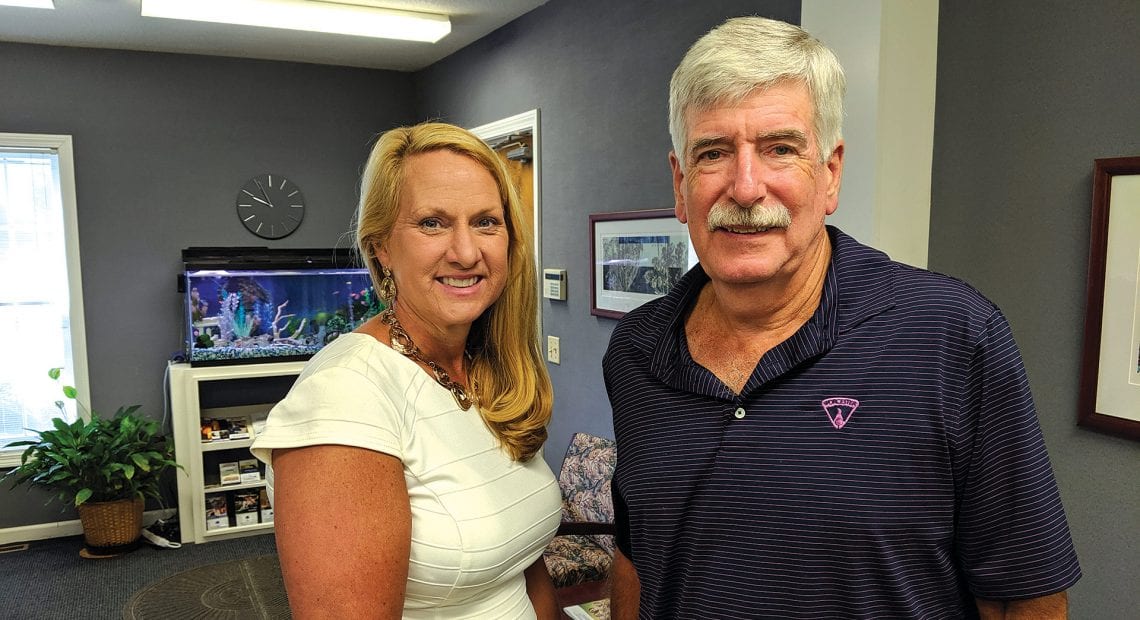
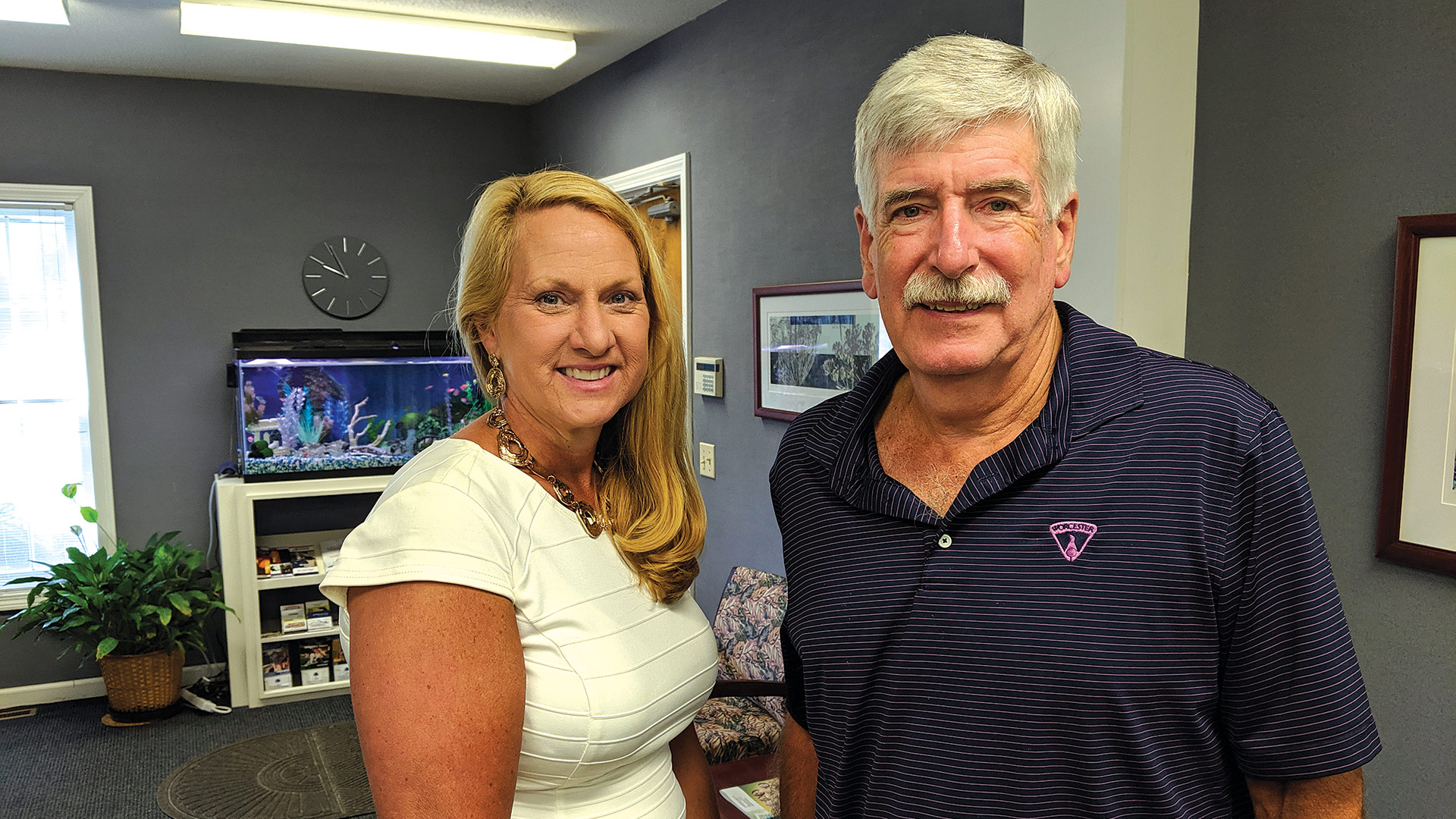
Co-owners Anna Holhut and Glenn Allan.
Anna Holhut recalls a family with an insurance claim — no, actually, a family with a life-changing crisis.
“They had a fire, and they had nothing, and I had a check for $25,000 the next morning on my desk so they could go buy shoes and socks — and coats, because it was in the winter. They lost everything. Even if you could put a huge amount on a credit card or have reserves, it’s still huge.”
Or the man who, several years ago, had just lost his mother, so he was already in poor spirits when he came home around 9:30 p.m. to a flooded house due to burst pipes. “That night, we had people out there helping him,” Holhut, president of Amherst Insurance Agency, told BusinessWest. “He was overwhelmed, and he was saying, ‘thank you so much.’ But we want to be there, to try to put things in place to help our clients.”
Part of that process, she noted, is teaming with quality companies, from the insurers themselves to home-restoration firms, attorneys, and anyone else who needs to be part of the insurance process, both when the policy is written and when — often sadly — that coverage comes into play.
“We’ve obviously been here a long time and have the networking to get in touch with people in order to help people, and I love to do that,” she said. “That’s what I strive for.”
Glenn Allan, who co-owns the company with Holhut and serves as its vice president, agreed. “Everybody’s going to say, ‘we provide great service,’ but saying it and doing it are two different things. It’s easy to say, harder to do.”
The Nathan Agencies have been striving to meet that standard since Ron Nathan launched the firm — then known as the Nathan Agency and focusing on life insurance and investment products — in 1969. Now celebrating its 50th anniversary, the enterprise actually encompasses two distinct businesses under one roof: Amherst Insurance Agency and Amherst Financial Services, the latter owned by financial advisor Christian Sulmasy.
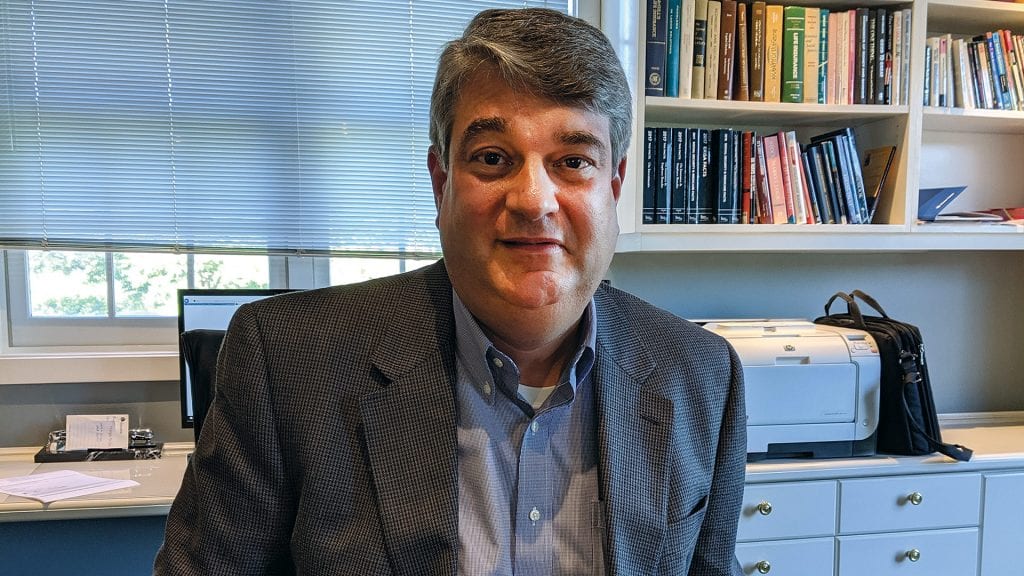
Christian Sulmasy says he brings a “comprehensive approach” to his work in financial services.
Sulmasy’s clients run the gamut from young people seeking a basic life-insurance policy or a 401(k), just getting used to saving and financial planning, to people in their 50s deciding where to focus their investment energies and discussing long-term-care insurance, to people in retirement protecting their assets.
“What I’m trying to bring to the table is a more comprehensive approach,” Sulmasy said. “When Ron set this all up, he wanted it to be a one-stop shop, so when a client comes in, it’s ‘let us help you with your retirement, your life insurance, insuring your house.’ It’s more than just, ‘let’s roll over your IRA, and let me manage your IRA.’ Now, we’re doing things like retirement projections. Are you on track? Are you not on track? And what strategies do we employ? That’s what I bring to the table, that comprehensive approach.”
In short, these two businesses under the Nathan Agencies umbrella comprise a lifetime of services for clients of all ages who are looking to the future and wondering how to make it a secure and successful one.
When Nathan opened his doors in 1969, Sulmasy said, “he created quite a practice. At one time, he sold a lot of life insurance. He did financial services. He also had property and casualty insurance, all under the Nathan Agencies umbrella. And he even had a real-estate arm at one point, which doesn’t exist anymore.”
In 1979, Nathan purchased the Amherst Insurance and Real Estate Agencies and changed his company’s name to the Nathan Agencies. These days, Amherst Insurance Agency offers property and casualty products, and the Amherst Financial Services Agency provides life insurance, health insurance, and financial-services products through Lincoln Investment.
As Nathan approached retirement, he forged a succession plan to allow the business to continue. In 2012, he sold Amherst Insurance Agency to Holhut and Allan, who had joined the firm in 1987 and 1991, respectively. Sulmasy came on board in 2014 and struck a deal to purchase Amherst Financial Services in 2017.
Holhut and Allan mainly serve individual clients, though a growing commercial-lines practice serves a range of companies, with niches including the home daycare market. “Those are people a lot of companies have difficulty insuring or don’t want to insure,” Allan said. “We’re more of a personal-lines agency than a commercial-lines agency, although we’re trying to grow the commercial aspect of the business.”
No matter the client, Holhut said, customer service is a particular point of emphasis. “I would say we run our business like a family business even though we’re not related. It’s the customer service to our clients; we really strive to go the extra mile for our clients. We have receptionists answering the phone when you call. It’s a very friendly, upbeat staff.”
Allan agreed. “We try to ensure that, when people are left messages, they respond in a timely manner. That’s the biggest complaint we hear from people coming from other agencies — ‘oh, they never got back to me.’ We never want to hear that about our staff.”
Technology has driven plenty of change in the insurance world; Holhut and Allen have both been around to witness the total changeover from paper files to electronic ones, and how that has affected speed of communication and response times between agents and customers — not to mention the ability to respond to a need from anywhere.
“Heaven forbid we had a tornado or hurricane and we couldn’t be here. I always want to be able to set up somewhere we can help our clients. And we can put things into play to do that,” Holhut said. “Because that’s when you need somebody — when something bad happens.”
Again, it’s that message of relationships and personal service, which she said customers can’t get from direct insurance writers on the internet.
“We look at people’s policies, and we’re astonished at the limits. When something happens, they find out they have only $5,000 worth of property-damage coverage and they did $25,000 in damage. There aren’t many cars out there worth only $5,000. So it’s a matter of educating them,” she said. “When people are purchasing something online, they’re just pushing buttons, and they’re just going for the lowest price, and the lowest price isn’t always the best. Maybe you get it cheaper, but you don’t have the coverage you need when something happens.”
Or, as Allan put it, “are you buying a price, or are you buying the coverage you need?”
Education is a big part of Sulmasy’s job, too, whether it’s helping small businesses navigate health-insurance offerings or explaining to individual clients what goes into hybrid life-insurance policies, which offer both a health benefit and help paying for long-term care. Or, of course, teaching people why it’s never too early to plan for retirement.
“People are becoming more wise to it, but for every client that wants to move forward, there are two or three who need a push,” he told BusinessWest. “It doesn’t have to be a full estate plan — it could be basic things like a will, healthcare proxy, or power of attorney. At the very least, getting those in place is important.
“Everybody’s different,” he went on. “Some people kick the can down the road: ‘I’ll deal with it next year.’ With them, my role would be to motivate them or push them in the direction to do what’s in their best interest. I can’t make them do it. I’m not an attorney — I can’t draft up a will for them. But we have some relations with estate planners in the area, and where appropriate, I try to at least let them know these are people I’ve done business in the past and have a comfort level with, and if they want to pursue it, I can certainly help them with that.”
Cradle to Grave
Holhut said her division of the Nathan Agencies also has strong rapport with the attorneys and realtors it works with. “We have the reputation of getting the paperwork to them correct and on time. They don’t want headaches. They don’t want to hold up a closing. It’s important. And we stand behind our reputation.”
Meanwhile, an active blog on the agency’s website educates the public on how to mitigate risk with seasonally placed articles on topics ranging from ice dams to kids going away to college.
The two sides of the Nathan Agencies often refer customers to one another, recognizing that, together, they can help people through numerous stages of life, which is something Ron Nathan always prioritized. “A lot of people say they do it,” Allan said, “but we can actually do it.”
Sulmasy, for one, enjoys the aspect of his job that helps people find security and peace of mind.
“I used to be in the corporate world, struggling to find my social footprint on this earth,” he said, adding that he wanted to make a greater impact on society. But it was a failing economy that gave him the kick he needed.
“I was laid off from my last corporate gig in 2008, when the market was plummeting,” he said. “But I was able to figure out what I want to do for the rest of my life. I made the jump into financial planning, where I could still rely on my financial skill set I’d accumulated, but, at the same time, help people in a more meaningful way than I was in the corporate world. And that’s been totally gratifying for me.
“That’s why I got into the industry — I wanted to help people,” he added. “I believe this is a relationship business. I feel like the relationship is equally important as the financial advice and guidance I and my team provide. Knowing it’s about relationships and knowing I’m trying to help people, it’s been a great fit, and I haven’t looked back.”
Holhut looks back, in some ways — like when she finds she has served multiple generations of a family.
“We watch the kids grow up, then they have kids, then the kids are driving … it’s crazy,” she said. “I enjoy that. I’ve always said I love what I do, because I love the people.” u
Joseph Bednar can be reached at [email protected]
Gene Cassidy stands in front of what will soon be the midway sign that Big E visitors know very well.
Eugene Cassidy likens the process of getting the Big E ready for opening day to choreographing a dance number. In short, a large number of people have to work in sync and in cooperation with one another to get the desired result.
Preparations for the 17-day long fair, which starts Sept. 13, begin 18 months before it happens, and there are countless moving parts that need to come together — properly and on time — to not only have the fair ready for prime time, but to ensure that each day of The Big E is a success.
“Even though we’re now just a month away from the 2019 fair, we’re well into planning for 2020,” said Cassidy, president and CEO of the Eastern States Exposition, while explaining how the jig-saw puzzle that is the 2019 fair comes together.
“Everybody is probably on pins and needles as we get ready,” he went on. “Coordinating the fairgrounds is really like being a dance instructor. There are so many little things that need to be considered, like what gets placed first. The choreography that’s required is very important.”
And this year, there is more to be choreographed than merely the tents, displays, rides, and flower gardens.
Indeed, while managing the traffic to and from the fair has always been a matter of import (and a stern test) this year there is a much higher degree of difficulty to those maneuvers.
That’s because the Morgan-Sullivan Bridge, which connects Agawam with West Springfield and borders the western end of the fairgrounds, is roughly one third of the way through a three-year renovation project.
The four-lane bridge is down to two, and as anyone who has ever tried to cross the bridge during Big E time knows, four lanes are not nearly enough.
Strategies are being developed to address the matter, said Agawam Mayor William Sapelli, adding that he is working with both the Big E and the town of West Springfield to devise ways to mitigate tieups.
“We discussed the traffic concerns and how we’re going to mitigate some of those issues,” he said. “The Big E has been very, very cooperative. There’s going to be a lot of coordination between the two police departments… it’s kind of like an orchestrated dance; we have our side and they have theirs.”
So it seems there will be a lot of dancing going on, figuratively, before and during this edition of the Big E, which will look to top last year’s record attendance mark of 1,543,470 people.
Organizers believe they have the lineup to do just that, as we’ll see, and, as always, are keeping their fingers crossed on the weather, which is one puzzle piece that can’t be choreographed.
For this issue and its focus on tourism and hospitality, BusinessWest talked at length with Cassidy and others at the fair to gain some perspective on this year’s edition and also how these fairs come to life.

Gene Cassidy says the carnival rides and games, brought in by the North American Midway Entertainment right after Labor Day, all go up in a matter of days.
Cassidy has been coming to the Big E since his youth, and he has many vivid memories from his visits. Among them is his first view of an elephant when he was 7.
Today, it’s his job — and his mission — to make lasting memories for others. He’s been doing this for eight years as president and CEO, and 26 years of working for the exposition in various capacities.
These memory-making duties are rewarding, but also quite challenging at this time, said Cassidy, listing everything from new and different hurdles being faced by agriculture fairs, especially from animal-rights groups, to mounting competition for the time and attention of families — competition that certainly didn’t exist when the fair was launched, to the aging infrastructure of the Big E itself, with many buildings approaching 100 years in age.
These facilities are “capital intensive,” according to Cassidy, who said donations to the fair are modest because some people do not recognize the Eastern States as something that is worthy of making charitable contributions to.
“Because the fair is so successful, we’re sort of a victim of our own success,” he said. “We produce tremendous agricultural events that draw interest across North America, and we make enough income in order to support those events, but we do not have enough income to recapitalize the facility.”
This makes things difficult when updating the older buildings that hold some of the fair’s most beloved traditions. Over the past seven years, Cassidy said, the corporation has spent about $30 million fixing up the buildings.
“My goal is to raise awareness of the importance of the Eastern States in order to stimulate the interest of our region’s businesses in order to raise money to help recapitalize the facilities,” he said, adding that this awareness-raising process comes down to many factors, including the task of putting on a good show each year.

Brynn Cartelli, Longmeadow native and winner of season 14 of The Voice, is set to perform at The Big E on Sept. 13-15 on the Court of Honor stage.
And this involves choreography, but also a blending of the traditional and the new in ways that will draw audiences of all ages. And Noreen Tassinari, director of marketing at the Eastern States Exposition, believes this has been accomplished with the 2019 edition of the fair.
“The Big E is, across generations, a tradition here in Western Mass., Connecticut, and throughout New England — people come for many reasons, and some of the reasons are their favorite family traditions,” she said, adding that for many, the fair is a yearly stop in their calendar, which is why it’s so important to keep adding new items to the extensive list of things to do at the fair.
“We like to have a fresh approach each year, so we like to introduce new entertainment and features and certainly new foods so people are buzzing about what’s going on at the Big E this year,” she said. “We want people thinking ‘we can’t miss the fair.’”
Among the new additions for 2019 are a star-studded entertainment lineup with three stages featuring big-name stars like Loverboy, Carly Rae Jepsen, and Brynn Cartelli, as well as other local artists. Other entertainment includes everything from Ireland’s Dingle Peninsula Showcase, a cultural, educational, trade and tourism showcase featuring products from the Emerald Isle, to the Avenue of States, a unique display of buildings representing each New England state.
John Lebeaux Commissioner of the Mass. Department of Agricultural Resources, believes that The Big E might not have as significant of an impact as it does today without the unique representation from all New England states.
“It’s one of the top 10 biggest agricultural fairs in the United States,” he said. “I don’t think we would have been able to achieve that were it not for this regional aspect.”
This extended reach and regional flavor makes the Big E more than a fair and a tradition, said Cassidy, adding that it also a force within the local economy.
“A lot of our mission is to create and build a local economy,” he said, adding that the lastest economic-impact study, conducted in 2014, showed that the annual impact regionally totaled $479 million.
In Cassidy’s seven years as CEO, five have set new records for attendance. If the record is broken again, that will be a good problem to have, in most respects, because of what promises to be a trying year traffic-wise.
As a result of the bridge-construction work, left turns from River Road onto Memorial Ave. are “no longer allowed,” according to The Big E website, and fair-goers are being asked to use Baldwin Street to get to the Eastern States instead.
This will no doubt create lengthier travel times for many people traveling to and from the area, but both Agawam and West Springfield are doing what they can to minimize the inconvenience.
Sapelli said The Big E is making sure that any larger vehicles, including horse trailers and delivery trucks, are using a specific route with better access rather than coming through Agawam and having to make a tight turn onto the bridge. In addition, the fair partnered with King Ward Coach Lines, which will be shuttling people from various locations, including the Enfield Mall, to cut down on the number of vehicles that need to come in for parking.
With realistically only two ways to get to Memorial Avenue, and one of them under serious construction, West Springfield Mayor William Reichelt says delays are, unfortunately, inevitable.
“We’re working with each other and then the state to make sure there are enough resources,” he said. “I think, unfortunately, there’s just going to be traffic going that way because we went from four down to two lanes.”
Sapelli agrees and asks that people be patient while waiting to get into the fair.
“We’ll all get through this, it’s a wonderful fair,” he said. “They do a lot for the economy and the surrounding communities.”
Despite the likely traffic jams, the fair is likely to draw record-breaking crowds. Again, that has been the trend. For now, it’s crunch-time for the Big E staff who have to choreograph another major production.
Between the entertainment artists, the Avenue of States, the seemingly-endless food vendors, and everything in between, it’s easy to see why this fair has become a tradition for families across the Northeast and even beyond.
“You almost need more than one visit to do it justice,” said Tassinari. “We really have the New England flavor and feel, and that’s part of our mission.”

Four years ago, a $7,500 grant from MassDevelopment helped to fund the first annual Downtown GetDown block party in Chicopee. Mayor Richard Kos understands why that was a good investment.
“They like the idea of people coming downtown, because when they do, it gives other people impetus to want to develop the downtown,” he told BusinessWest.
In that first year, he went on, “the block party really removed a lot of question marks. People say there’s no parking downtown. Well, we had 15,000 people over a weekend, and no one complained about parking. It was not an issue. We had people come down and say, ‘this is a nice place to walk around.’ It’s safe, secure, well-lit at night, and they had a lot of fun.”
Now in its fifth year, Downtown GetDown is again expected to draw around 15,000 people the weekend of Aug. 23-24, offering a steady diet of music, entertainment, food, and more than 60 vendor booths.
And what visitors will see is a downtown on the rise, the mayor noted. Take, for example, two residential projects in the pipeline, both of them conversions of former mills: the SilverBrick Group’s $29 million project that will offer 280 units at the Cabotville Mill, and Mount Holyoke Development’s $14 million project that will bring another 105 to the Lyman Mills building.
Across the street is Ames Privilege, a 270-unit development that opened several years ago and now has a two- to three-year waiting list. “We look at that as a model,” Kos said. “If anyone wonders about the need, we point out what a success Ames Privilege is.”
Mills have a particular attraction for young professionals who seek urban living surrounded by public transportation options and walkable amenities. The latter will get a boost with the expected opening of a C-Town supermarket downtown.
“That eliminates a food desert downtown,” Kos said. “To some degree, they’re anticipating what’s happening when you add several hundred apartments. People need groceries — it’s convenient to just walk out your door to a market that provides a lot of food options.”
Chicopee has also signed on to the regional ValleyBike program, with the downtown joining two other locations — in Chicopee Falls and Willimansett — with bike-share stations. “We think those will be positive, and will give people another way to get to work and do things they enjoy doing,” the mayor added.
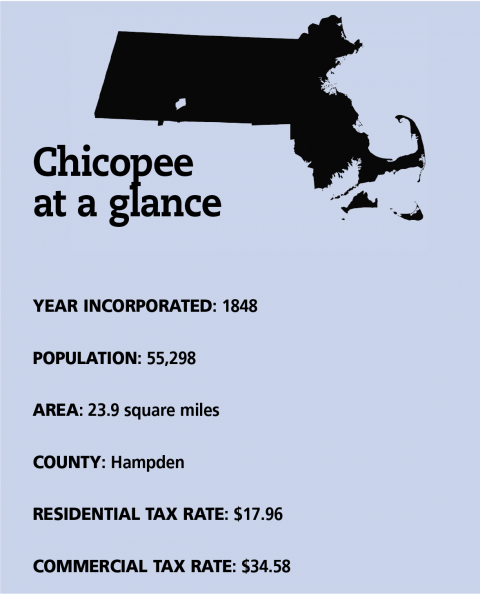
But perhaps the most intriguing development downtown is the two-year MassDevelopment grant that will pay for a Transformative Development Initiative fellow who will focus on economic-development initiatives in the city center, said Lee Pouliot, the city’s director of Planning and Development.
“Our objectives are things like reactivating the old library that’s been vacant for a really long time, getting vacant storefronts filled, and using the GetDown as a catalyst for finding entities that might be interested in growing their business to a permanent location,” he said. “It’s taking energy from those activities and, through the fellow who’s working on our behalf, getting those things to the next step.”
To Kos, it’s all about continuing the momentum that has been picking up steam in recent years. “That’s how you get a downtown where people want to come,” he said, adding, “I grew up in an era of urban renewal where you tore everything down, and unfortunately sometimes there was no plan to replace it, so you wound up with nothing. And then people would scramble to find stuff.”
But he sees value in preserving a downtown’s character — for example, the old mills — while looking to the future. “The old brick-and-mortar buildings were so much more impressive than the new stuff.”
For this edition of Community Spotlight, we shine the light on what’s happening not only in Chicopee’s downtown, but across a city that developers have found increasingly attractive in recent years.
Mayor Richard Kos says Chicopee’s downtown is enjoying more visitation and vibrancy.
One of the city’s more visible signs of improvement is the work going on at the 148-year-old City Hall itself, which is undergoing a $12 million improvement and renovation project addressing everything from handicap accessibility to roof and foundation repair; from a new elevator to a full auditorium renovation.
“This building needed a little attention,” Kos said. “The last time I was mayor, we built schools and a library. This time, we’re fixing things.”
The city also bought a house near City Hall from the Valley Opportunity Council, and will demolish it; coupled with other city-acquired properties nearby, the endgame will be 125 to 150 additional free parking spots next to City Hall and walking paths to connect them with downtown destinations.
That comes on the heels of a $10 million renovation of Chicopee’s public-safety complex a couple miles away on Court Street. “As one proponent of that, we’re putting a civilian dispatch facility there and making it robust enough to make it regional,” Kos said, an effort that currently includes Longmeadow but could eventually expand to other towns.
“A number of communities have been looking to do this, but nothing was being done, and we made our improvements sufficient, so it just made sense,” the mayor continued. “In some parts of the country, there’s a regional dispatch for 20 to 30 cities and towns. Here in Massachusetts, nearly every community has own dispatch, and for some, it just doesn’t make sense, with one or two calls a night, if that.”
The city is also training civilians to work the system, which will keep more uniformed officers on the street, he added.
Meanwhile, the 10-year (so far) quest to develop the former Uniroyal site continues, as the city needs to abate three more buildings, demolishing one and securing two for future development, including office and residential uses, Pouliot said.
The city also continues to invest in its two high schools, such as an upcoming replacement of the turf field at Chicopee Comprehensive High School and new LED lights for the Chicopee High School field. It’s also starting an $8 million reconstruction of Fuller Road that will include permitting work to create access to Chicopee River for kayakers.
On the city-services side, Kos continues to tout Chicopee’s low residential tax rate, a municipal electric-light utility with similarly attractive rates, and a plan, also through Chicopee Electric Light, to install high-speed fiber throughout the city, joining the growing ranks of ‘gig cities’ across the U.S.
“That will benefit both residents and businesses,” he said. “The internet is really what drives so much now.”
Meanwhile, in preparation to close its dump on New Lombard Road, which it did in June, Chicopee has promoted less waste over the past few years by limiting trash pickup to one 35-gallon barrel per household, with residents able to buy bags for additional trash.
“For the vast majority of people, it’s worked well,” Kos said. “We also gave everyone a barrel three times that size for recycling, which sends the message that you should recycle more than you throw away, and it’s been working. Our trash has gone down by over 25%.”
In other words, it takes cooperation between the city and its residents and businesses to create an environment where people want to live and set up shop. On the latter front, the booming commercial center at Mass Pike exit 5 picked up another pair of businesses with Five Guys and Mattress Firm in recent months, while Dinesh Patel’s planned $45 development at exit 6 is set to begin soon, and will include a hotel, a gas station, a sit-down restaurant, a coffee shop, and two fast-food eateries.
In Willimansett, major employers like Callaway and J. Polep are thriving on Meadow Street, while Chicopee Street recently saw the opening of Leadfoot Brewing. Meanwhile, the new marijuana economy has arrived in Chicopee as well, with Mass Alternative Care already operational on East Main Street, Theory Wellness set to open a shop on Fuller Road, and a couple of other businesses moving forward with the permitting process.
In short, there’s a lot going on, said Kos, who is getting ready to step down from his second stint as mayor, not seeking re-election this fall. To help harness that energy, the city is getting ready to launch a comprehensive planning project, a resident-driven project being conducted by Horsely Witten Group under a two-year, $150,000 contract.
“It will simply answer the question, ‘what does Chicopee want to be in 20 years?’” Pouliot said, “so we can start developing policy and update zoning to support what we want to build now, versus what we wanted to build back in the ’40s or the ’70s.”
Added Kos, “we’re not only dealing with the present, but preparing for the future” — and there are plenty of reasons to be excited about both.
“We’re trying, as a city,” he went on, “to move on multiple fronts to draw more businesses and more residents — to make this a place where you want to live, not where you have to live.” u
Joseph Bednar can be reached at [email protected]
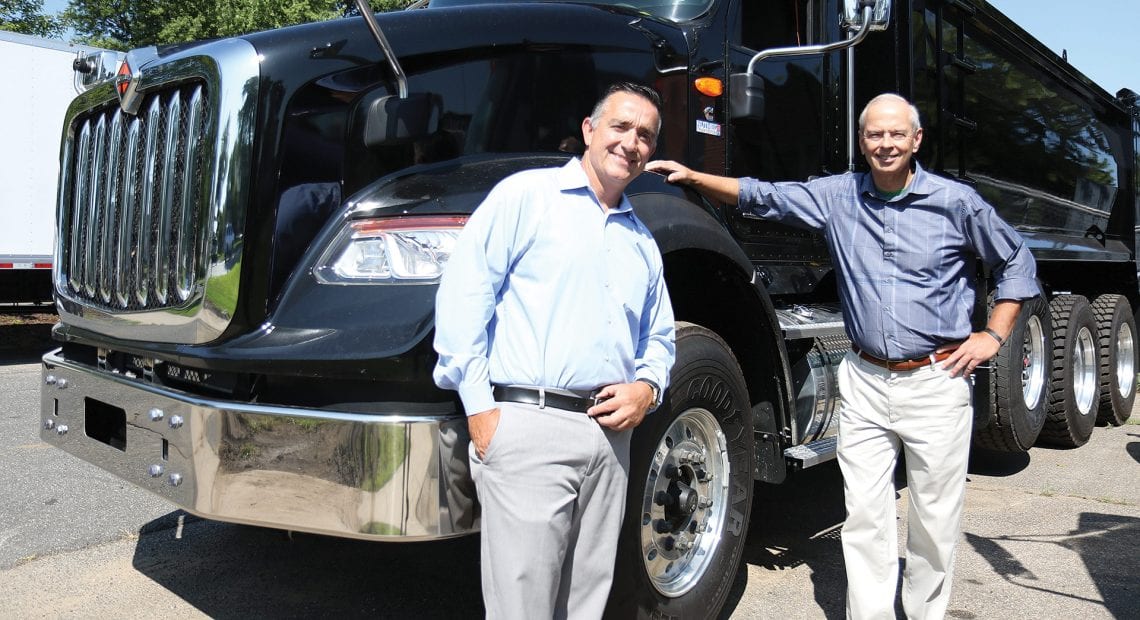

Peter Vecchiarelli, left, and Tom Parsons say that building relationships is the key to success when it comes to commercial truck sales.
Peter Vecchiarelli says that selling commercial trucks — everything from box trucks to tanker trucks to huge dump trucks — is a lot like selling … almost anything else.
It’s obviously important to know everything there is about the products you’re selling and servicing, he told BusinessWest. But it’s more important to know and understand everything there is to know about the specific customer.
Indeed, sometimes what a customer thinks he or she needs isn’t really what they need, said Vecchiarelli, general manager of Nutmeg Truck Center in West Springfield, which sells and leases International and Isuzu vehicles and services all makes.
“You don’t want to be a know-it-all, but you want to suggest things that will benefit the customer,” Vecchiarelli said, adding that these suggestions comprise just one of the keys for this business.
Tom Parsons agreed. He sold cars for 30 years before joining Nutmeg, and noted some similarities between that world and this one. In both, and especially this one, success comes from working in partnership with the client to forge an appropriate solution.
“You really have to know the product and what the customer needs,” he explained. “Every single customer has a business, where every person who buys a car probably doesn’t, and each business is different.”
This mindset has enabled Nutmeg — a Connecticut-based business (hence the name) with six locations (the other five are in Connecticut — to stand out in a crowded field of competitors, said Vecchiarelli. He added that success isn’t necessarily dictated by the inventory on the lot (although that certainly helps), but rather by the level of trust that can be established with the client.
“We try to sell ourselves,” Vecchiarelli said. “People buy from who they like and trust, that’s one of our huge mottos. We’ve been around, and people trust us.”
For this issue and its focus on auto sales, BusinessWest talked at length with Vecchiarelli and Parsons about the truck business and what it takes to be leader within it.
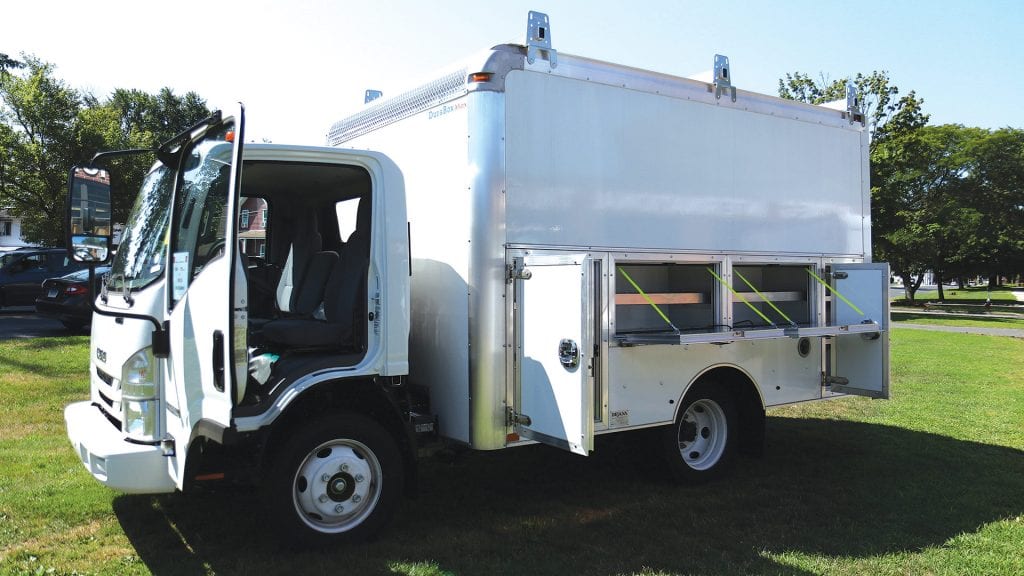
This Isuzu truck, suitable for a wide array of potential clients, is one of many on the lot at Nutmeg Trucks.
And Vecchiarelli started by saying that the truck business certainly wasn’t in his plans when he graduated from Westfield State University in 1992.
Actually, he didn’t have any real plans at all.
Indeed, he earned a degree in Communications, but had no solid ideas about what to do with it. For a while, he worked his summer job and coached football with his brother at Agawam High School. One day, he came across an entry level management job at Penske Truck Rental in Chicopee.
That’s how he got his start in the truck business, and when he found Nutmeg in 1996, he never looked back.
And while looking straight ahead, he told BusinessWest, he wears a good number of hats. Many are part and parcel to having ‘general manager’ on one’s business card, but some might surprise you.
For example, he might very well be the one delivering a new or used truck to a client, an assignment he said he carries out on a regular basis.
This is one of those little things that add up, he said, adding that the big things include having quality products to offer and, again, working closely with the client to find solutions.
This is necessary, because, as noted, there is considerable competition within the truck marketplace.
On the International side, Nutmeg competes against the likes of Ford, Freightliner Trucks, and Mack Trucks. Isuzu competitors include Chevrolet, Hino and Mitsubishi.
Overall, business has been solid over the past several years as the economy has continued its pattern of slow yet steady growth, said Vecchiarelli, adding that company sold more than 40 new and used vehicles in 2018 and is on pace to double that number this year.
It’s customer portfolio, as might be expected, is diverse, and includes everything from general contractors to municipalities to area farms.
In addition to selling trucks, Nutmeg also sells truck parts and provides other services to its customers. Vecchiarelli noted that Clean Machine Power Wash buys all its trucks from Nutmeg, which has a great relationship with the owner. A few weeks ago, the business had its company picnic and asked if Vecchiarelli would do a few oil changes on their trucks while the business was closed for the day. Each oil change on a truck takes from an hour to an hour and a half to complete, and Nutmeg did 11 oil changes throughout the day.
“It’s just the little things we do,” Vecchiarelli said. “It’s not always an 8 to 5 job. You have to do what it takes.”
This brings him back to that work involving relationship-building, how it can create repeat customers and often turn relatively small transactions into much larger ones down the road.
As an example, he recalled the story of how the sale of an $11,000 used box truck eventually turned into much more.
“As I was delivering the used truck, the customer said he was interested in buying a new tri-axle dump truck in the future,” said Vecchiarelli while pointing out one of the obvious benefits of doing that work himself. “We put stuff together and sold him one and he then recommended his friend to us for another tri-axle dump; we turned an $11,000 sale into two dump trucks worth almost $400,000.”
There have been many stories like that recorded over the years, said both Vecchiarelli and Parsons, adding that by focusing on the fundamentals of customer service, Nutmeg continues to thrive and grow.
“Those fundamental things are so true,” he said. “We practice fundamentals, try to over deliver and exceed expectations.”
Vecchiarelli agreed. “The biggest thing that sets us apart from the competition is experience, getting the job done, and building relationships,” he said in summation. “If you do little things right, people remember that.” u
Rob Pion, says Buick is trying to make inroads in the SUV market and has a lineup to do just that.
Editor’ Note: With this issue, BusinessWest launches something new and different for its auto-sales section — first-person looks, and some commentary — about some of the vehicles that are, let’s say, in the news.
And that person will be me.
That laughing you just heard was brother Robert. He’s reading this and thinking, if not saying out loud, ‘George is going to do car reviews?!?’
Well, sort of, as I will explain.
First, as to why my brother is laughing … while, like most all guys (and people for that matter), I like cars and shared every Baby Boomers dream of owning a 1972 Dodge Challenger, I am not a ‘car guy.’
Am I, however, like most people. My ability to ‘work’ on cars is limited to adding washer fluid and putting air in the tires. I wash it, I vacuum it, I put Armor All on the steering wheel, I put gas in it, and I drive it. That’s most people. So am I qualified to do this? I guess. As much as anyone else.
What is this? Well, it’s not reviews of the cars and trucks coming onto the market these days. I won’t be rating cupholders, trunk space, and headlights — although they’re all important. I’ll be using test drives to talk about emerging stories in this business — and talk a little about the cars, trucks, and SUVs themselves.
First, more about me … my first car was a 1973 Chevy Impala. There are a lot of Boomers nodding their heads right now. That was a lot of people’s first car. It was a large, four-door sedan, and I have been driving those ever since, with one real exception.
My now ex-wife and I were in Aruba in 1994, visiting the far side of the island. Those who have been there know it looks like the kind of place Kirk, Spock, Dr. McCoy and the crew member destined to die in that episode would beam down to and put the phasers on ‘stun.’ It’s desolate, with lots of sand and pink rocks and things like that. Anyway, to get around, you need a four-wheel drive vehicle, so we rented a Chevy Tracker, a small, as in very small, domesticated version of a Jeep.
We liked it so much, we said ‘when we get back, we gotta get one of these.’ And we did.
My sister in law likened it to a ride at Six Flags. ‘You have to be at least this tall to ride in it,’ she would joke, ‘and you must keep your hands and feet inside the vehicle until it comes to a complete stop.’
Other than that, large four-door sedans. With big back seats and big trunks. This, despite the fact that I don’t think I’ve had a human passenger in my back seat since a funeral procession. In 1993. But I have to have a big back seat. As for the trunk, it’s for the golf clubs, but hardly anyone builds a trunk big enough to put all the clubs down sideways or even on an angle. So I have to take the driver out, which is a pain.
All of this provides a nice segue to … Buick.
This is the company that invented the large four-door sedan. Well, not really, but everyone thinks they did. That’s seemingly all they made for decades, for guys (and women) like me.
I had an uncle who only bought Buicks. I think everyone has an uncle who only bought Buicks. They’re an ‘uncle’ car. Or at least they were.
For some time now, Buick has been working hard to put young people into their vehicles. In the late ’90s and early 2000s, you might remember that GM hired Tiger Woods to be its Buick spokesperson. His mission wasn’t to sell to golf fans, but to the younger audience, and he had some success. That’s some.
Today, Buick is letting its cars do the talking, only the cars are, for the most part, SUVs. (I have been told that in the lingo of the industry, SUVs are not cars; they are SUVs. Large four-door sedans are cars. That’s what I’m told.)
Back to Buick … they’re not selling many cars anymore, but they’re selling more SUVs — and to people of all ages, as Rob Pion, third-generation general manager of Bob Pion GMC Buick in Chicopee, explained as we took the Buick Enclave (Avenir model), the largest of the models in the lineup, for a spin.
At first, I thought it was the SUV.
The world really does look much different when you’re riding high in a large SUV (maybe 30 inches from the ground) as opposed to your standard four-door sedan (maybe 20 inches).
But it’s not the vehicle, Memorial Drive looks much different from any height, as became clear as we headed north on that road from the Pion dealership toward South Hadley.
Back when Tiger Woods was plugging Buicks and Bill Clinton was in the White House, BusinessWest operated out of a small office on Memorial Drive. Back then, this was the land that time forgot — there was a dead mall (Fairfield), a Ponderosa Steak House (maybe it was a Bonanza), and other chain restaurants seen nowhere else. Things look much better now with new hotels, a strong lineup of stores where the mall was, and many new businesses.
But there is that huge open lot where the Hu Ku Lau used to be.
“We’re not sure what’s happening there,” said Pion as we drove by the grassy lot, obvious concern in his voice. “Everyone’s watching that closely to see what develops.”
Enough about Memorial Drive … back to the Buick and the Enclave Avenir, sticker price just under $60,000. It’s large, with three rows; looking in the rear-view mirror, the back window looks like it’s in another state — one of those in the Midwest — and well-appointed. It features what’s called ‘intelligent all-wheel drive,’ which means it did well on its SATs, and has every safety device one might expect, as well as all the technology, meaning connectivity. It’s six-cylinder engine delivers 310 horses and decent mileage for something this large — 17 city/25 highway mpg (see, I can do car talk). Meanwhile, it easily passes the golf-bag test.
And it’s really, really quiet, meaning my tape recorder had no problem picking up Pion as he talked about how Buick’s SUVs — the smaller Encore, mid-sized Envision, and large Enclave — are expected to compete with the top luxury brands in the market and bring younger audiences into the Buick showrooms.
BusinessWest Editor George O’Brien tries out the Enclave Avenir, the top of the line.
“GM’s vision for this is to go against BMW, Lincoln, Mercedes … the premium SUVs,” he said, referring specifically to the Enclave Avenir, but ostensibly to the whole lineup. And while Buick is still lagging well behind other brands when it comes to SUV sales, it is starting to gather some momentum, especially with the smaller model, the Encore, priced in the mid 20s to just over $30,000.
“We’re getting young people to at least come in and give it a look,” Pion said of the SUV lineup. “Many wouldn’t even do that before.”
Buick still has a long way to go to not only shed it’s old-person’s-car image but also become a serious player in the white-hot SUV market.
But based on this drive down Memorial Avenue and the vehicles now in the Buick showrooms, the carmaker known for sedans, as in big sedans, would appear to have a fighting chance. u
Privacy and security are two growing areas for small-business owners. Most businesses have at least some digital presence. Keeping your own data and the information provided by customers safe is crucial. Verizon recently reported there were 53,000 data incidents in 2018, including 2,216 confirmed data breaches. As a small-business owner, here are some measures you can take to help protect your company from these threats.
Anti-malware software is designed to prevent various types of online attacks on your computer. Malware is a general term for a program that can harm your device. It could be a virus, phishing sites, ransomware, spyware, etc. Having this type of software in place is one of the most basic, yet very effective, ways to protect your business from digital threats. If you have more than one computer or device, you should get anti-malware software for all of them.
Updating your existing software is another easy but effective measure you can take. When a software has an update, it can provide additional protection from malware. Sometimes, software might release a new patch. If a new patch is available, make sure to perform the update. It’s a good idea to turn on automatic updates so you don’t have to worry about manually updating all of your software.
A firewall helps block out connections that are unauthorized or harmful. Some computer systems may have a basic firewall, but consider getting a more substantial one for your business platforms. A more robust firewall can help protect your business from potential hazards.
Encrypting data just means no one can access your data without a password or other form of authorization. It’s another layer of defense if your computer gets hacked or someone tries to access it without your knowledge. Different encryption software options are available for your business to choose from.
Backing up your data is essential if you encounter a cybersecurity threat. If something happens, you will be able to restore all your data quickly. Make sure your backed-up data is located somewhere outside of your computer. If your computer is compromised, at least then you will have a copy somewhere safe. You can back up your data on a physical storage device, or in the cloud. You can also go through a storage device company.
Sometimes a cybersecurity threat occurs when an employee makes a mistake. Informing your employees about best practices — such as educating them on what phishing e-mails look like and how to use different security measures your company employs — can help keep your business safe. Having an educational meeting or seminar can make a difference in the world of digital threats.
Hiring a professional to visit and assess your cybersecurity efforts can help reinforce your company’s defense. They can help you set up the types of protection your business may need. It’s never a bad idea to consult a professional, since they have expertise in the field.
Because of the growing threat of data breaches, you may want to consider getting cyber insurance. This coverage helps protect your business in event of a data breach, loss of sensitive or personal data, and the legal matters that go along with information loss.
Hopefully, all the methods mentioned above will prevent any data loss, but sometimes things happen that are out of your control. Talk to your insurance agent about cyber insurance and how it can help protect your business. u
This article first appeared on the blog of Encharter Insurance in Amherst; Visit www.encharter.com.
Katie DiClemente says the openness of the meeting spaces at the Sheraton is one of the biggest selling points for people looking to stage conventions.
Stacy Gravanis acknowledged the obvious when it comes to the convention and meetings market in the Northeast, and the country as a whole — there is no shortage of competition.
And in this climate, the assignment is also obvious — to find a way, or several ways, as the case may be, to stand out in this crowded marketplace.
The Sheraton Springfield has been doing that since it opened more than 30 years ago, said Gravanis, general manager of the facility, and it keeps looking for new, innovative, and, well, cool ways of continuing that practice. Cool as in a Ding-Dong cart. Indeed, the nostalgic summertime staple, sometimes seen patrolling neighborhoods and often seen parked at pools and lakes, became part of the landscape at the downtown Springfield landmark during the first week in August.
It was parked on the grounds, providing a unique opportunity to cool down during what has been an oppressive summer to date — for guests and downtown workers alike. And it became another way to bring value and something different to visitors, said Gravanis, who told BusinessWest that this is all part of the work to not only stand out — as important as that is — but also to help build relationships and turn customers into repeat customers, a critical assignment in this industry.
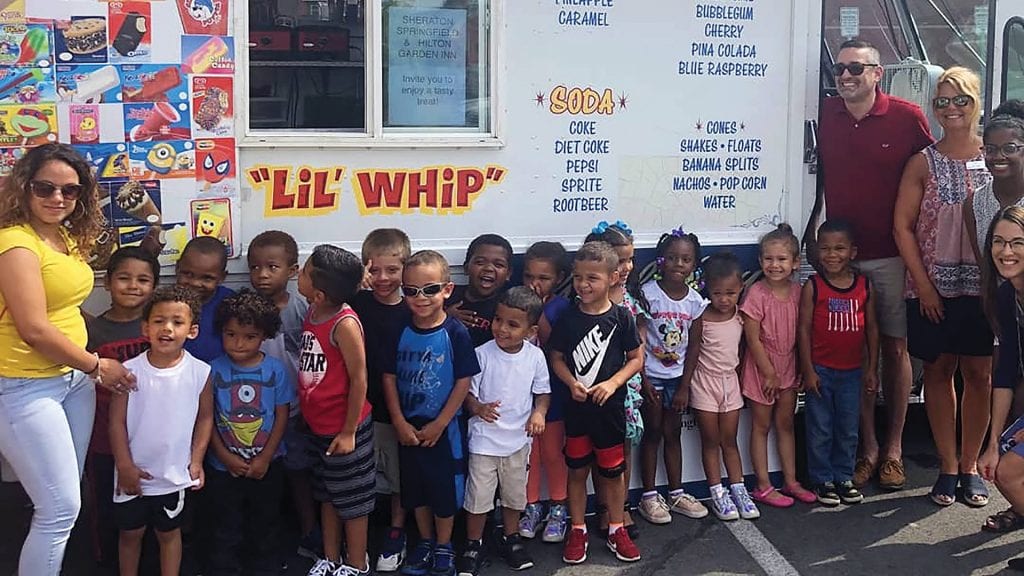
One of the stops on the Sheraton’s ice cream truck tour was MGM Head Start in Springfield.
“The goal is to find that connection to them and build loyalty,” she told BusinessWest, adding that the Ding-Dong cart is just one example of programs, products, and services that go into the connection-building process.
Katie DiClemente, assistant director of Sales and Marketing for the Sheraton agreed. She said that conventions and meetings comprise a large slice of the business at the Sheraton, one where building relationships and generating repeat business is essential.
DiClemente noted that the facility hosts dozens of convention groups a year, such as the Pancretan Association of America, which was in town from June 28 to July 3 and brought 475 people to the hotel. Meanwhile, its assorted meeting spaces host a wide array of gatherings, from company retreats and annual meetings to team-training sessions, to educational seminars.
The hotel’s portfolio of facilities and its unique layout (more on that later) are attractive selling points, she said, as is the region and its many attractions.
Both Gravanis and DiClemente said an already attractive mix of attractions, from Six Flags to the Dr. Seuss museum, has been significantly bolstered by MGM Springfield, which they expect to help bring new convention business to the 413.
For this issue and its focus on meetings and conventions, BusinessWest talked with Gravanis and DiClemente about the Sheraton’s ongoing work to stand out in the market, and how it is creating new flavors of customer service — figuratively but also quite literally.
One of the largest facilities of its kind in the region, the Sheraton boasts 325 hotel rooms, more than 36,000 square feet of meeting space, including a ballroom and eight meeting rooms on the third floor, six meeting rooms on the second floor, and two additional meeting rooms on the fourth floor, leaving plenty of space for large conventions.
DiClemente says the 10,000 square foot ballroom can hold up to 1,000 people depending on the type of event, with a 500-person cap for a banquet-style event.
But size is not the only attractive quality. Indeed, DiClemente said the setup of the meeting spaces at the Sheraton Springfield is unlike most other hotels.
“The flow of our space is something that definitely attracts people to our hotel,” she told BusinessWest. “We’re not a conference-style hotel where you’re walking down a long hallway and going to your meeting rooms and finding it that way. We’re an atrium style, so if your meeting room is on the second floor, you can look down and see where you need to go. The natural light shines through the atrium.”
This natural light, and all that comes with it, has attracted a number of groups to the Sheraton — and Greater Springfield. The Pancretan Association of America (PAA), a national organization comprised of members who support and perpetuate Cretan culture through scholarship, educational, cultural, and philanthropic programs for those in the United States, Canada, and Crete, is an example of the how the region and the hotel are drawing local, national, and even international groups.
And bringing them here is a collaborative effort, said Gravanis, adding that the hotel works closely with the Greater Springfield Convention and Visitors Bureau (GSCVB), keeping in daily contact with Director of Sales Alicia Szenda.
“We have a really great relationship with her being the director of sales,” said DiClemente. “If the convention center has a lead where they need overnight rooms, that’s sent to the [GSCVB] and Alicia is that middleperson between the MassMutual Center and the hotels in the area.”
Once that lead is sent out to the hotels, they bid on the piece of business, which is sent directly to Szenda. Of course, this region is usually competing against several other cities in for the right to host specific conventions, which brings us back to that notion of standing out — and building relationships.
Again, the Ding-Dong cart was just part of it.
Aside from the ice cream runs, Gravanis said the hotel staff works to stay in touch with clients — be they groups or individuals — through birthday and anniversary cards and other touch points to build a relationship and, hopefully, a long-term relationship.
“Whether it’s a local client or a client out of a different city, it’s so important to build that relationship with them and that’s something we do every day,” said DiClemente. “It’s really a top priority for our sales team.”
Gravanis added, again, that the area itself is a huge selling point for the Sheraton, and it is becoming more so through the addition of MGM Springfield, which has the potential to bring a wide array of meetings and conventions to the city, many of which will require large amounts of hotel rooms and other facilities.
Since it opened nearly three decades ago, the Sheraton has been one of the key players in the region’s large and important hospitality sector.
It has been one of the important pieces in the puzzle when it comes to the infrastructure needed to bring meetings and conventions, and, therefore, revenue and vibrancy, to the region.
It has maintained this position by being innovative and always finding ways to stand out. And the Ding-Dong cart, as cool as it is, is just the latest example.
Kayla Ebner can be reached at [email protected]

It was early 1984, and 24-year-old entrepreneur John Gormally had an observation, then a question, and, eventually, the ultimate answer.
The observation was that most urban areas and regions had journals covering the local business community. The question was, in essence, ‘why doesn’t Western Massachusetts have one?’
The answer came in two parts — Gormally’s conclusion that the region certainly needed one, and the product he launched.
It’s now called BusinessWest, but only relative old-timers will recall that it was originally known as the Western Mass. Business Journal.
Then, as now, the publication was the most trusted, most comprehensive source of information on the local business community. Its pages were filled with articles on people, businesses, trends, developments.
It’s the same today, but BusinessWest and its sister publication, Healthcare News, launched in 2000, have gone well beyond the printed word in their efforts to inform, inspire, and even entertain its audience of local decision makers.
Indeed, over the past several years, the publications have added several recognition programs. These include 40 Under Forty, created to identify rising stars across the region; Difference Makers, a program with a name that says it all; Healthcare Heroes, a program devoted to that all-important sector of the economy; and Women of Impact, which recognizes the contributions of a still often-overlooked constituency.
 There have been other additions, including the annual Resource Guide, an invaluable resource for the community; daily news blogs to provide more accessibility to important information; educational seminars, including the recent Future Tense series; special publications such as Cool Stuff, focused on employment opportunities in the manufacturing sector; and much more.
BusinessWest has come a long way in 35 years, but it has never wavered from its original mission and reason for being — to meet a critical need within the four counties of Western Mass.
 Whalley Computer Associates (WCA) has grown and changed tremendously since it was founded in 1979, but it remains a friendly, flexible, family-owned business that puts the customers’ needs first, said President Paul Whalley.
WCA is a technology sales and service organization that partners with customers to reduce their costs and increase their efficiency through technology, said Whalley, adding that it accomplishes this by providing unbiased presales consultation, exceptional pricing, outstanding, product preparation, delivery, deployment and maintenance services anywhere in North America.
Since the beginning, WCA has been servicing corporations and educational institutions headquarted in New England, New York, and their remote locations throughout North America, he noted. The company has extensive experience with corporations of all sizes, educational institutions from kindergarten to college, as well as local and state government.
 WCA performs services for some of the largest and most prestigious companies in New England and New York including EMC, TJMAXX, Marshalls, Friendly’s, Bertucci’s, Westfield State University, Providence College, the cities of Boston, Springfield, Warwick, R.I., and nearly 3,000 other customers.
As a result of its rapid growth, Ingram Micro, the largest distributor of technology products in the world, recognized WCA as one of their fastest growing ‘solution providers’ in the industry. WCA is also one of the largest Lenovo, Dell, Aruba, and HP solution providers in the Northeast.
Today, WCA’s corporate office is located in our new 62,500-square-foot state-of-the-art office building located at One Whalley Way in Southwick. WCA employs more than 140 computer professionals at its two business locations, serving a customer base of more than 30,000 customers. They provide hardware, software, programming, technical, networking, and training services.
WCA remains a family-owned business completely focused on providing the best service available anywhere in the United States.
As its celebrates its 40th anniversary, one thing that will not change moving forward, said Whalley, is its commitment to customer satisfaction and ability to provide the best technology products and services in the region.
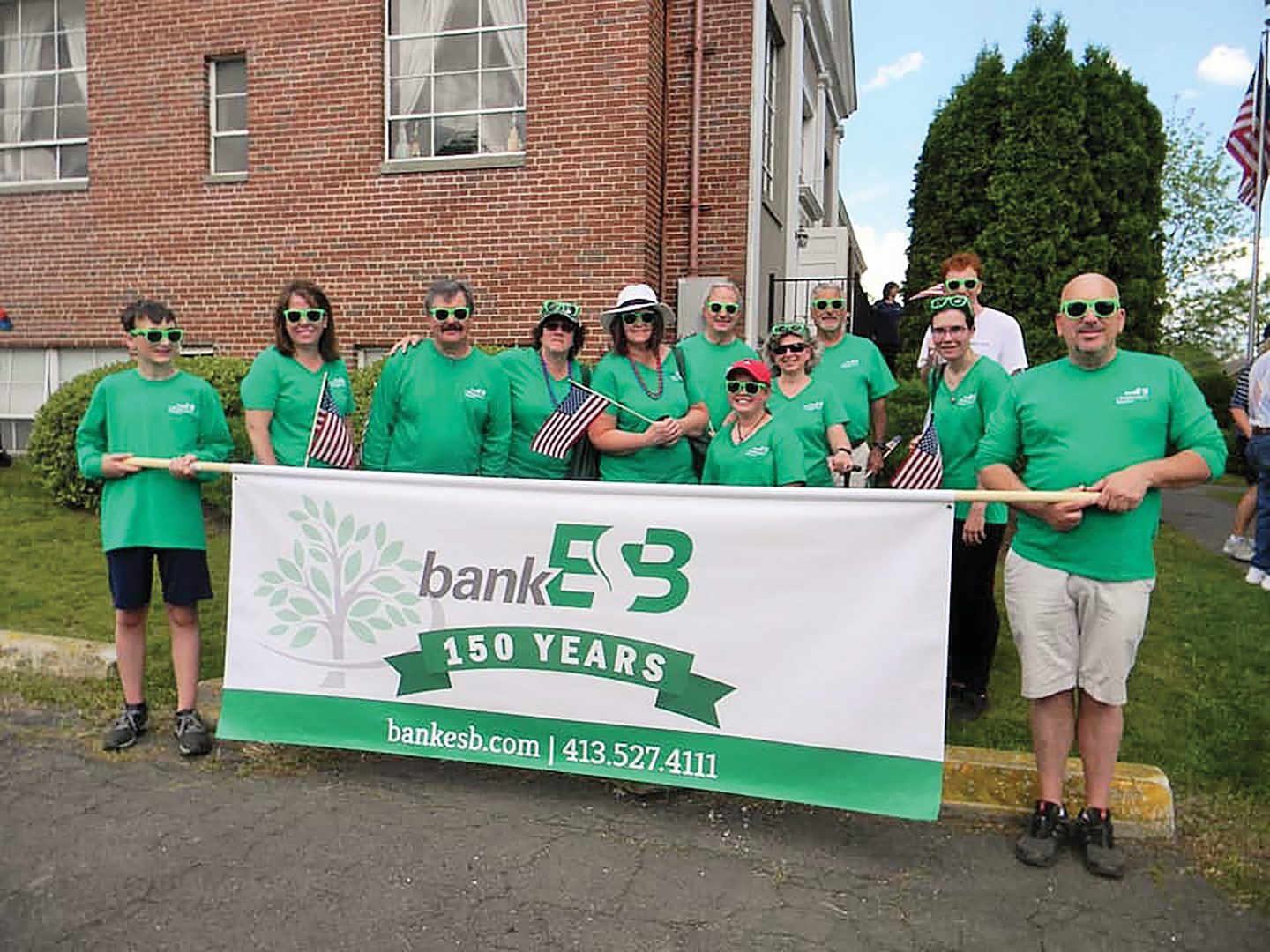
bankESB is marking its 150th birthday this year, and there is much to celebrate, especially a century and a half of being a true hometown bank.
“For all of those years, the bank has been dedicated to providing its customers with a wide range of innovative products and services,” said Dena Hall, bankESB Executive Vice President and Chief Marketing Officer. “Today, bankESB is a one-stop shop for individual and commercial banking and financial services. The bank has been growing and expanding to better serve customers, including recently adding three commercial bankers, and increasing its staff in human resources, cash management, and mortgage services. Customers looking to buy a home or refinance have the option of applying for a loan either in-person with a mortgage professional or online.”
With the opening of a branch on Sargeant Street in Holyoke, bankESB has 11 branches throughout the Valley. Besides Easthampton, where it has two locations, branches are also located in Agawam, Belchertown, Hadley, South Hadley, Southampton, Westfield, and two in Northampton. And a 12th branch is scheduled to open in Amherst in 2020.
In short, the bank has grown and evolved over the years, but it remains true to the charter on which it was launched. 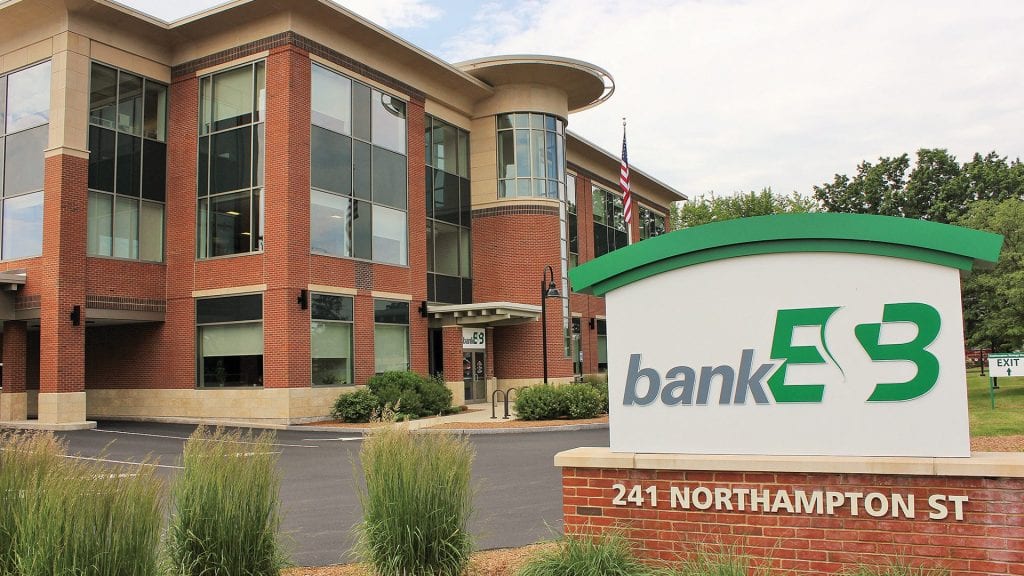
Indeed, a mutual bank, bankESB’s mission is to remain loyal to its customers, employees and the communities it serves, not stockholders, said Hall, adding that the bank’s mission is reflected in its values of charitable giving and volunteerism. From large organizations like Cooley Dickinson Hospital to local
Little League teams, the Easthampton Saving’s Bank Charitable Foundation has donated close to $2 million over the past five years.
Recent contributions to local nonprofits include the Hampshire Regional YMCA’s Renew and Restore Project, Pioneer Valley Habitat for Humanity’s Big Enough Initiative, and Northampton Survival Center’s “Partners in Doing Good Business” program.
bankESB employees can also be found volunteering their time for a myriad of charitable projects and events throughout the Pioneer Valley, so much so that the Boston Business Journal recently ranked the bank as a “Top Corporate Charitable Volunteer” in Massachusetts.
“It’s important for us to be that community partner,” said Hall. “We’re focused on how we serve our customers, how we serve our communities, and how we treat our employees.”
These efforts have culminated in Forbes Magazine naming bankESB to its 2019 Best n-State Bank list, two years in a row. 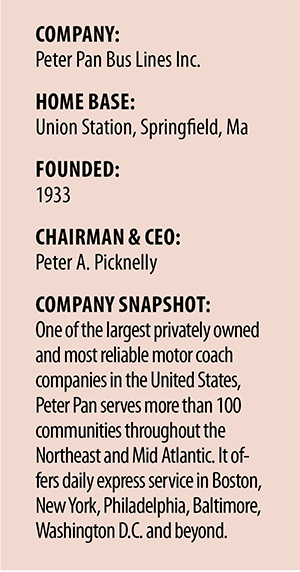
“This recognition is particularly special because we live and work by a set of core values, so I’m proud to say this award really goes to our employees,” said Matthew Sosik, President & CEO of bankESB and CEO of Hometown Financial Group, the bank’s parent company. “The commitment they bring to their job each day and the service they provide to our customers and communities is what sets us apart from other banks.”
As Hall and Sosik noted, as bankESB marks its sesquicentennial, there is plenty to celebrate.
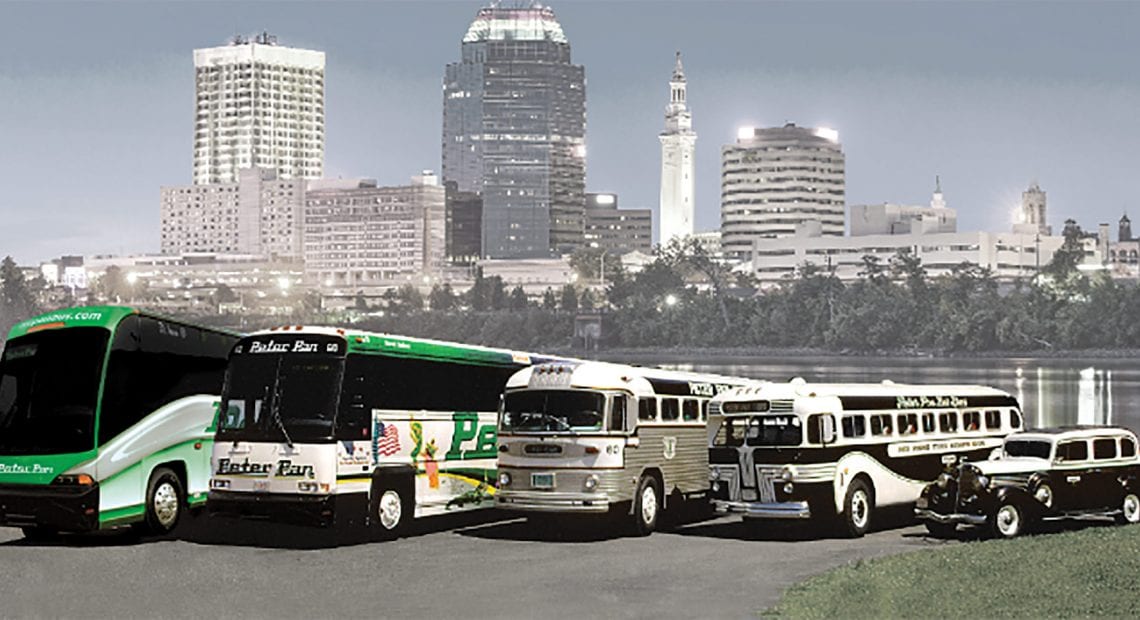

Peter Pan Marks 80 Years of Rolling Together with Firestone Tires
In 1939, just six years after Peter C. Picknelly started Peter Pan Bus Lines in Springfield, he reached an agreement with the Firestone Tire and Rubber Company to lease Firestone tires for a period of one year.
That was the beginning of a partnership that kept the two companies rolling together for the next 80 years.


That lease was signed on August 11, and six decades to the day later, Bridgestone America’s Inc. marked the occasion by presenting the Picknelly family with the original tire lease contract. Twenty years later, another anniversary, the 80th was marked, and there was much to celebrate.
“When my grandfather Peter C. Picknelly sealed this important partnership with Harvey Firestone in 1939, they could only imagine how many miles these two companies would travel together,” said Peter A. Picknelly, chairman & CEO of Peter Pan. “Our agreement with Firestone was groundbreaking in the industry. It was the first agreement in the U.S. for a bus company to actually lease tires from Firestone as opposed to buying tires, and we’re the longest bus-company partnership Firestone has ever had.
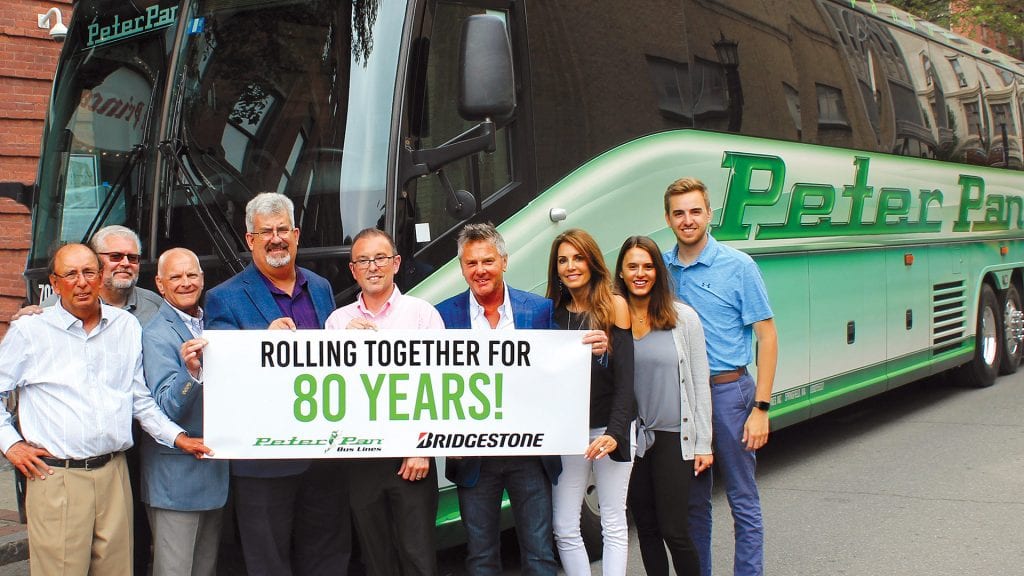
“Now, 80 years later, we are still proud to share the road with a longtime leader in the tire industry,” he went on. “Together, over the 80 years, Peter Pan and Firestone have carried passengers more than 600 million miles on Firestone tires. That’s 2,514 trips to the moon and 24,094 times around the Earth. Safety is Peter Pan’s number one priority and Firestone Tires have delivered that promise with precision and consistency.”
In the original contract signed by Peter C. Picknelly and Harvey Firestone, Firestone agreed to supply enough tires to equip 10-passenger Chevrolet buses and five 19-passenger Beck buses on a cost-per-mile basis. As the buses became larger and heavier, Firestone tires evolved to meet Peter Pan’s needs.
“Passengers can take comfort in knowing they are riding on the most modern fleet with the safest tires on the road today — this is a huge safety factor,” said Picknelly. “And the reason we lease is that as soon as the tires show any signs of wear, we replace them with eight new tires; our competitors who own their tires will run them until they show considerable wear and are far less safe.”
Today, Peter Pan Bus Lines carries more than 4 million passengers throughout the northeastern United States with hubs in Springfield, Cape Cod, Boston, Hartford, Providence, New York City, Philadelphia, Baltimore, Washington D.C., and beyond.
Looking down the road, as they say in this business, beyond logging millions of additional miles on Firestone tires, Peter Pan is expanding its fleet, adding new routes, hiring more drivers, and utilizing technology, including a new app, to serve more customers and improve service to all riders.
The new routes are on Cape Cod and between New York, Philadelphia, and Washington, D.C., said Picknelly.
As for technology, a revamped website and the new app make it easier to buy tickets online, said Picknelly, adding that the app logs previous purchases, recognize trends, and enables the consumer to rebook a schedule with one click.
“We’re the fastest-growing bus line in America,” said Picknelly, adding that this was said about the company back when it first started putting Firestone tires on its buses, and it’s still true today.
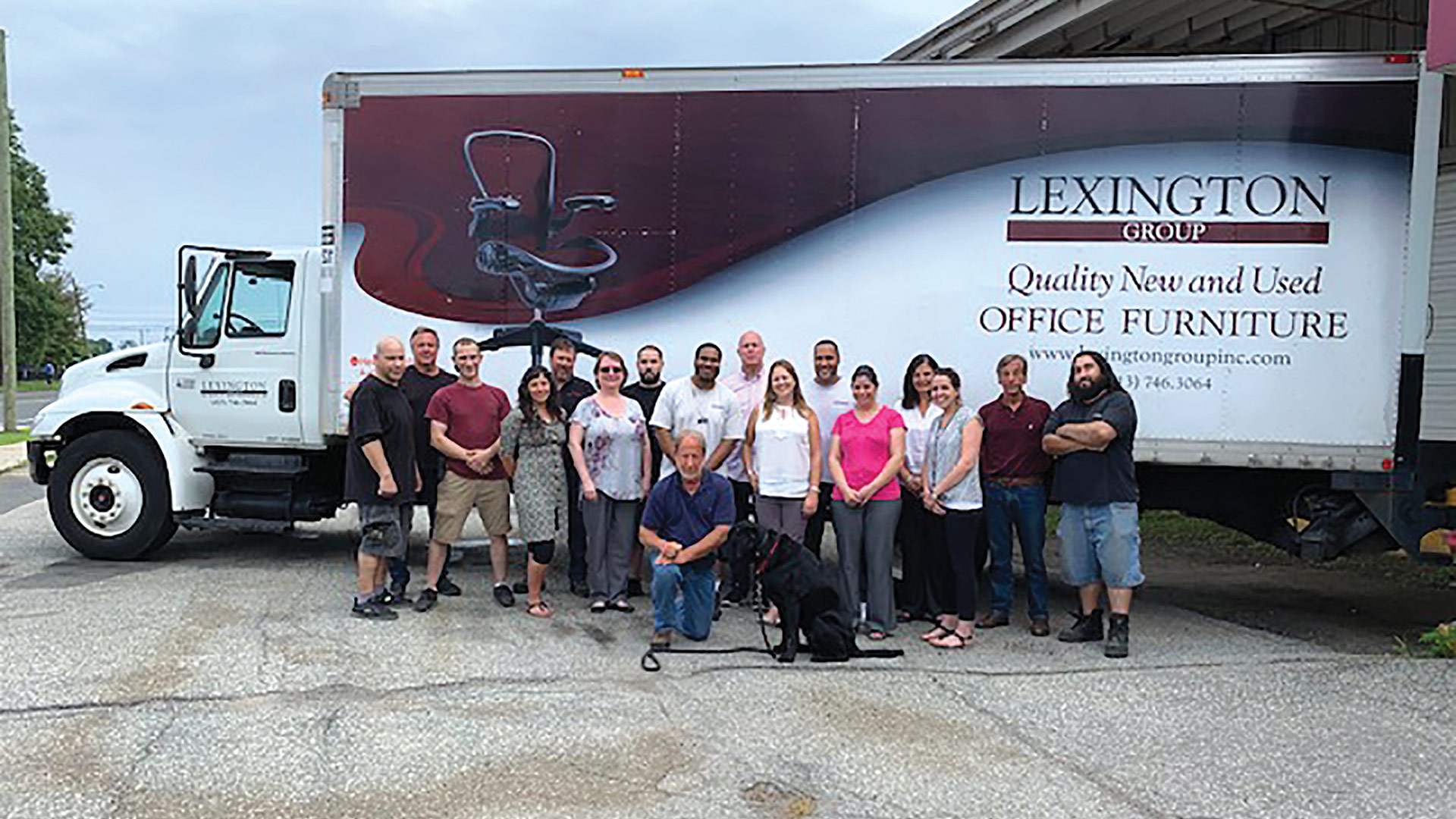
Mark Proshan says that, scattered among the hundreds of items on the showroom floor at Lexington Group, one can still find a few of the office chairs that were popular, if that’s the right word (probably not) when the company was launched 30 years ago.
 “They’re akin to Medieval torture devices — it’s like sitting on a rock,” he joked. “The evolution of the chair has been quite dramatic, but then … these days, we’re telling everyone to stand up, not sit down.”
With those comments, he made it clear that despite what some may think, office furniture evolves and changes with the times. And for three decades, Lexington Group has stayed on the cutting edge of these changes.
And while being current is important for this company that specializes in new, refurbished, and used office furniture, cubicles, workstations, and interior design solutions, staying true to the values and operating principles that have guided the company from the beginning is even more important.
“At the end of the day, the fundamentals and doing things the right way to get a desired result for your customer is what it’s all about,” he said. “And when you’re done with that, it’s about doing as much good as you can as a business to give back to the community you’re working with. And that’s we’ve been doing.”
He summed up 30 years in business — and what’s to come next — this way.
“If, in your gut, you truly believe that what you’re doing is right, and that you’re doing it for the right reasons, the rest will likely work itself out.”
Suffice it to say that things have worked themselves out for Lexington group.