Home Posts tagged Difference Makers (Page 4)
Features

Honoring Excellence, Innovation

healthcareheroeslogo0217finalHealthcare Heroes.

Over the past decade or so, those two words have become a national brand — a brand that symbolizes many things, including excellence, dedication, compassion, commitment, and much more.

Indeed, Healthcare Heroes has become the name attached to recognition programs created by business magazines, healthcare publications, health- and wellness-related organizations across the country, and other entities, to honor individuals and institutions that stand out for the work they do. The name has become part of the landscape in New York, California, Hawaii, Connecticut, Pennsylvania, Utah, and many other states. And now, it is coming to Western Mass.

Indeed, BusinessWest and its sister publication, HCN, have launched Healthcare Heroes of Western Mass., a program to recognize excellence and innovation across the broad spectrum of the region’s healthcare sector.

The program will culminate in the Healthcare Heroes gala on Oct. 19 at the Starting Gate at GreatHorse in Hampden.

Details concerning the program and the gala will be revealed on the pages of the two magazines — and their on-line daily news blasts — over the next several weeks. The editors recently convened a meeting of an advisory committee to discuss the program. That session generated a robust dialogue and several suggestions regarding everything from the categories in which individuals and institutions will compete to the judges who will evaluate those who are nominated.

“Over the past several years, BusinessWest has created a number of recognition programs to honor individuals, groups, and institutions across this region,” said BusinessWest and HCN Associate Publisher Kate Campiti, citing, specifically, the 40 Under Forty program launched in 2007 and Difference Makers, initiated in 2009. “But after considerable discussion, it was decided that this region’s large, diverse, and critically important healthcare sector deserved a recognition program of its own.

“Indeed, while we have had several honorees from the healthcare sector in 40 Under Forty, and a few from that realm in Difference Makers, excellence and innovation in healthcare are sometimes difficult to assess and measure,” Campiti added. “Healthcare Heroes will provide us with a needed vehicle for identifying and then recognizing those who stand out in very crowded fields.”

The program will be designed to recognize both those on the front lines of healthcare and those in administration; those who focus on treating individuals, and those involved with prevention and wellness.

“Healthcare involves many types of professionals working in different ways to create a healthier region and improve the overall quality of life for people living and working in Western Massachusetts,” said Campiti. “This Healthcare Heroes program will be crafted to recognize this great diversity of care and the many ways people and individuals are making a difference.”

Nominations for the various categories will be gathered in the coming months, and they will then be evaluated by a carefully chosen team of judges. The winners will be profiled in both publications prior to the gala.

“This will be a welcome recognition program for the four counties of Western Mass.,” said Campiti. “The healthcare sector has been a vital source of everything from high-quality care for our residents to jobs for area communities, to inspiration for those looking to bring innovation and higher levels of quality to their businesses. These individuals and institutions deserve to be recognized for the work they do.”

Agenda Departments

Understanding Gender Identity in the Workplace

March 22: HRMA of Western New England will present a half-day symposium event on understanding gender identity and supporting transgender and gender non-binary individuals in the workplace. This important topic is impacting local employers across the region. This program will help attendees understand the difference between gender identity and sexual orientation, learn ways to foster respectful work environments for all employees, and gain an understanding of the legal protections for the transgender community. Speakers will include Dr. Eunice Aviles, gender specialist and clinical psychologist; Erica Tabias, public speaker, transgender advocate, and life coach; and Jonathan Miller, chief of the Public Protection & Advocacy Bureau for the state Attorney General’s Office. The event runs from noon to 4 p.m., with a buffet lunch included. Tickets are $75. For more information, contact Allison Ebner at (413) 789-6400 or [email protected], or visit www.hrmawne.org.

Mini Medical School

March 23 to May 11: Itching to get out of the house as the winter draws to an end? Consider signing up for a little dose of continuing education as part of Baystate Medical Center’s Mini Medical School, where you can broaden your knowledge of the field of medicine with professors from the teaching hospital. Mini Medical School, which begins its spring session on Thursday, March 23, offers area residents an inside look at the expanding field of medicine, minus the tests, homework, interviews, and admission formalities. The program continues through May 11. Baystate’s Mini Medical School program is an eight-week health-education series featuring a different aspect of medicine each week. Classes this spring will include sessions on various medical topics such as surgery, deep-brain stimulation, emergency medicine, dementia, pathology, and several others. For a full list of topics and instructors, visit www.baystatehealth.org/minimed. While it is not difficult to be accepted into the program, slots are limited, and early registration is recommended. Many of the students, who often range in age from 20 to 70, participate due to a general interest in medicine and later find that many of the things they learned over the semester are relevant to their own lives. The goal of the program, offered in the hospital’s Chestnut Conference Center, is to help members of the public make more informed decisions about their healthcare while receiving insight on what it might be like to be a medical student. Baystate Medical Center is the region’s only teaching hospital, and each course is taught by medical center faculty, who explain the science of medicine without resorting to complex terms. All classes are held Thursday nights starting at 6 p.m. and run until 8 or 9 p.m., depending on the night’s topic. No basic science knowledge is needed to participate. Each participant is required to attend a minimum of six out of eight classes in order to receive a certificate of completion. Tuition costs $95 per person and $80 for Senior Class and Spirit of Women members. To register, call (413) 794-7630 or visit www.baystatehealth.org/minimed.

Cultivate & Nest Open House

March 25: Cultivate & Nest, a collaborative workspace for businesspeople with children, will host Bloom, its annual open house, from 10 a.m. to 4 p.m. in its Hadley office center. Terra Missildine, founder and owner of Cultivate & Nest, said the event will offer talks on the topic of entrepreneurship and parenting. A highlight of the day will be a flower-hat-making craft and a hat parade around the grounds. Face painting, puzzles, and other activities will also be offered. Tours of the workspace will be offered to parents hourly, while children will enjoy story time. In addition, a drawing will be held for a one-month Cultivate & Nest membership, valued at $99. All Pioneer Valley families are invited to take part in the event and bring their children. Registration is not required, and the event is free. Cultivate & Nest is the first membership-based collaborative workspace in the Valley to incorporate a childcare component. Located on the first floor in the Hadley Crossing business park, Cultivate & Nest offers roughly 3,400 square feet of work and community space. Members of Cultivate & Nest pay in cost tiers that range from $100 to $600 per month, depending on amenities and level of office access. Event and workshop space is also available for members and the community at large to host family friendly events. To learn more about Cultivate & Nest, visit cultivateandnest.com or call Missildine at (413) 345-2400.

Mass. Restaurant Day for No Kid Hungry

March 27: Eight Massachusetts Restaurant Assoc. restaurants across the state will participate in Massachusetts Restaurant Day for No Kid Hungry. Inspired by Chef Andy Husbands of Tremont 647, who has hosted a dinner for this cause for the past 20 years, the MRA announced the program’s expansion across Massachusetts. Last year, participating Boston restaurants raised more than $60,000 to end childhood hunger in Massachusetts. This year, Hotel Northampton is hosting the Western Mass. branch of the event, a multi-course meal with wine pairings. The hotel’s culinary team is working alongside and co-sponsoring with four well-known restaurants in town, including Sierra Grille, Spoleto’s, Packard’s, and Union Station. Attendance at this event will not only help to curb childhood hunger in Massachusetts, but will also help local programs that feed children of all ages at school and in the home. The goal is to ensure all children get the healthy food they need, every day. To purchase tickets or provide sponsorship for the event, visit www.eventbrite.com/e/massachusetts-restaurant-day-for-no-kid-hungry-the-hotel-northampton-tickets-31735014282.

Regional Career Fair

March 29: The College Career Centers of Western Massachusetts will hold a career fair from noon to 3 p.m. in the Alumni Healthful Living Center on the campus of Western New England University. Nearly 100 companies will be recruiting college students for paid and unpaid internships, as well as full-time and part-time employment opportunities. This annual event is a unique opportunity for employers and graduate-school representatives to connect with motivated students and alumni who are looking to launch and advance their careers. The College Career Centers of Western Massachusetts is a consortium of career-center professionals representing the eight colleges in Hampden County, including American International College, Bay Path University, Elms College, Holyoke Community College, Springfield College, Springfield Technical Community College, Western New England University, and Westfield State University. These eight institutions of higher education enroll more than 27,000 students from diverse backgrounds, and graduate approximately 5,000 students each year with a wide range of academic degrees.

‘Stay in the Game’

March 29: The community is invited to join staff from the Baystate Wing Hospital Physical Therapy and Rehabilitation team for an education session about staying active and injury-free. The program, “Stay in the Game,” will be held in the Snow Conference Room from 6 to 7 p.m. Participants will learn about the most effective types of stretching, nutrition, and hydration that will help to avoid injury when working out. Physical therapist Dena Plante and physical therapist assistant Karen Kiernan will be on hand to answer questions and offer educational materials. The program is open to student athletes and adults interested in staying active and exercising without injury. The Physical Therapy and Rehabilitation team at Baystate Wing Hospital provides a full range of rehabilitation services to help patients regain function and achieve recovery. For more information or to register, call (413) 370-5254.

Difference Makers

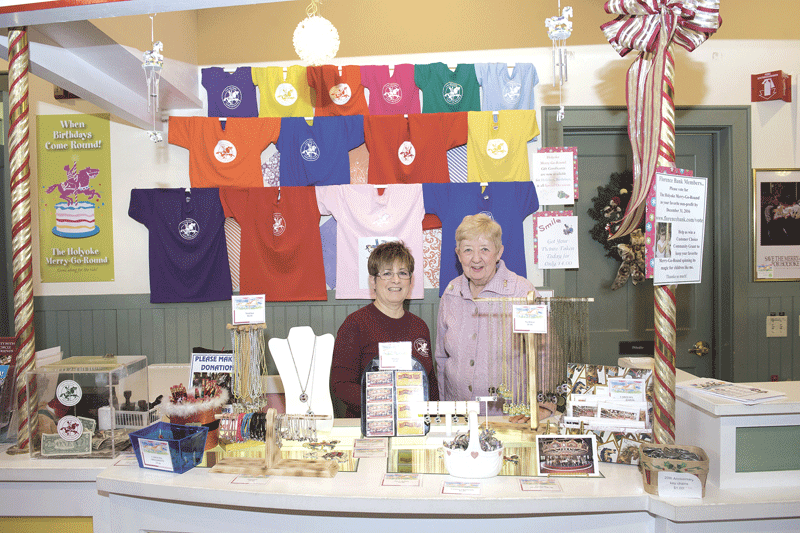
March 30: The ninth annual Difference Makers award program, staged by BusinessWest, will be held at the Log Cabin Banquet & Meeting House. The winners, profiled in the Jan. 23 issue and at businesswest.com, are the Community Colleges of Western Mass. (Berkshire Community College, Greenfield Community College, Holyoke Community College, and
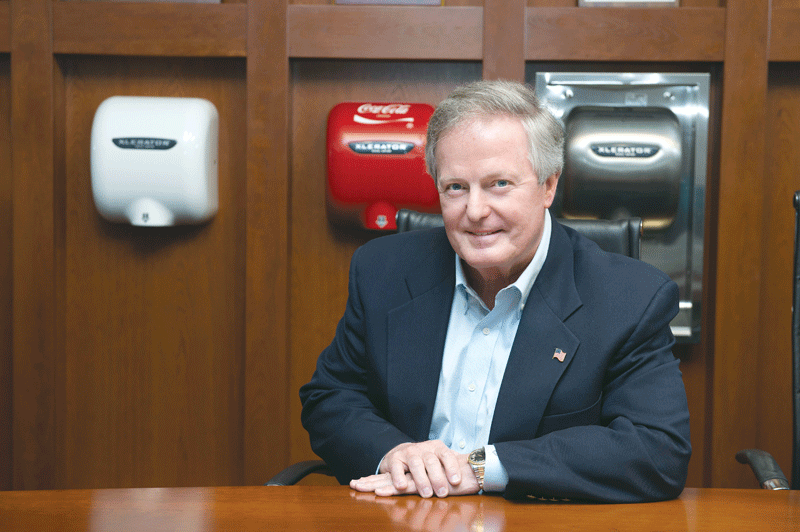
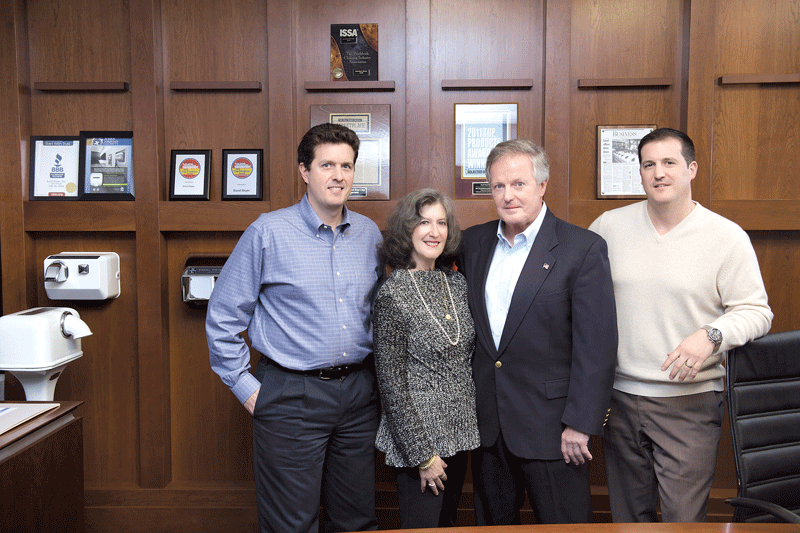
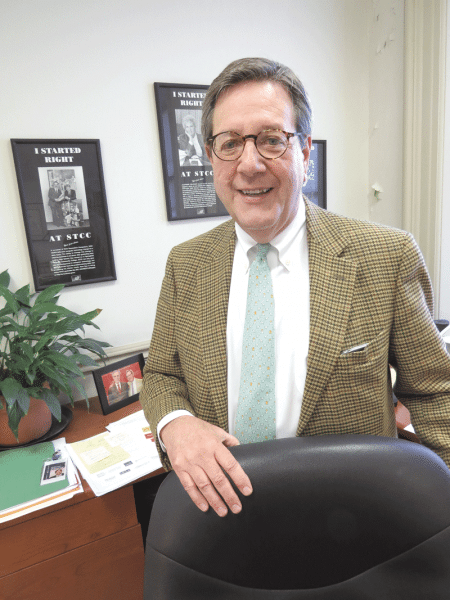
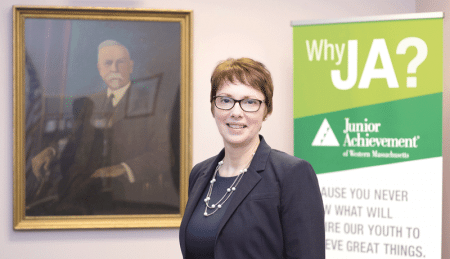
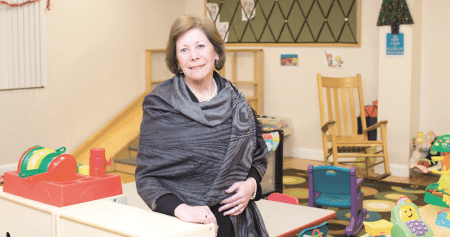
Springfield Technical Community College); Friends of the Holyoke Merry-Go-Round; Denis Gagnon Sr., president and CEO of Excel Dryer Inc.; Junior Achievement of Western Mass.; and Joan Kagan, president and CEO of Square One. Tickets to the event, which is nearly sold out, cost $65 per person. To order, call (413) 781-8600, ext. 100. Difference Makers is a program, launched in 2009, that recognizes groups and individuals that are, as the name suggests, making a difference in this region. Sponsors include First American Insurance; Health New England; JGS Lifecare; Meyers Brothers Kalicka, P.C.; Northwestern Mutual; O’Connell Care at Home; Royal, P.C.; and Sunshine Village.

Education Fair & Expo

April 4: Jared James, a national real-estate speaker and trainer, will be the featured speaker at the 24th annual Education Fair & Expo taking place at the MassMutual Center in Springfield. The event is sponsored by the Realtor Assoc. of Pioneer Valley. The program features a day of educational presentations including two breakout sessions from James, three continuing-education classes, and two technology classes. A sellout trade show with more than 50 vendors is anticipated. Anyone who is interested in attending as a trade-show vendor should contact Kim Harrison, membership and meetings coordinator at the Realtor Assoc. of Pioneer Valley, at (413) 785-1328 or [email protected].

Art Show Reception

April 5: The National Alliance on Mental Illness of Western Massachusetts (NAMI Western Mass.) will hold an opening reception for its sixth annual art show featuring the work of artists living with mental illness from 6 to 8 p.m. at the Chicopee Public Library, 449 Front St. The reception and parking adjacent to the library are free. The exhibit runs through the end of April. The art show, originated by Karen West, an artist and art teacher at Westfield High School, will feature works for sale to the public, with proceeds going to the artists. Complimentary refreshments will be served and the public is welcome. Headquartered in Agawam, NAMI Western Mass. is an affiliate of the nation’s largest grass-roots mental-health organization dedicated to building better lives for the millions of Americans who are affected by mental illness.

EANE Management Conference

April 6: The Employers Assoc. of the NorthEast (EANE) announced its 13th annual Management Conference will be held at the Springfield Marriott. With a focus on the power of passion in leadership, the full-day conference will address how managers and supervisors can motivate themselves and their teams to create a culture of high performance. The program will feature keynote speakers Rick Barrera and Bruce Christopher. Barrera, the head of faculty for the Center for Heart Led Leadership, works with Fortune 500 CEOs, world-class mountain climbers, astronauts, professional actors, and SEAL Team Six leaders teaching them how to build high-performance teams. Christopher, a psychologist and humorist, offers cutting-edge content with a mix of comedy, showing audiences how to embrace change and giving them practical skills to apply for success. The cost for the program is $350 per person with discounts for three or more. Register at www.eane.org/management17 or by calling (877) 662-6444. It will offer 6.25 credits from the HR Certification Institute and SHRM. Sponsoring the program are Johnson & Hill Staffing Services and the HR Certification Institute.

‘Mini Golf in the Library’

April 7-8: Friends of the Holyoke Public Library will host its second annual “Mini Golf in the Library” fund-raiser on the weekend of April 7-8. Hole sponsors and event sponsors are now being recruited. At last spring’s event, more than 250 players putted their way through five levels of the Holyoke Public Library building, laughing and enjoying unique obstacles added by enterprising hole sponsors. Funds raised help the Friends of the Library support library programs and resources, especially those for children and youth. Sponsors will be publicized and thanked in local media, social media, and the library’s website in connection with this event. Logos of sponsors will be printed on the scorecard given to each player. Names of sponsors will be displayed in the library, ranked by level of sponsorship. Sponsors will be invited as guests to the Friday-evening cocktail party, with the opportunity to preview (and play through) the course. In addition to event sponsors and hole sponsors, the event planning committee, chaired by Sandy Ward, is seeking donors of in-kind services and items for a silent auction to be held during the Friday cocktail party. Hole sponsorships start at $250. Those who wish to sponsor (and decorate) one of the 18 holes are encouraged to act quickly, as holes are being sold on a first-come, first-served basis. Event sponsorships are available at five levels ranging from $250 to $1,000. An exclusive title sponsorship is possible at $2,500. For more information, visit www.holyokelibrary.org/aboutfriendsgolf.asp or e-mail Sandy Ward at [email protected].

Walk of Champions

May 7: The 12th annual Walk of Champions to benefit the Baystate Regional Cancer Program at Baystate Mary Lane Outpatient Center in Ware will step off at the Quabbin Reservoir. Since 2006, the Walk of Champions, founded by field-hockey coach John O’Neill of Quaboag Regional Middle High School, has served as a tribute to the compassionate care his mother received at the Baystate Regional Cancer Program in Ware during her cancer journey. Over the years, the walk has grown into a collection of teams and individuals, each walking for their own reason. There are friends and family members celebrating victory over cancer. Others are encouraging their loved ones in their personal fight over cancer, while others walk in memory of those who have lost their battle with cancer. The Baystate Regional Cancer Program at Baystate Mary Lane Outpatient Center provides the majority of outpatient cancer services in the Baystate Health Eastern Region, which includes Ware, Palmer, and surrounding communities. Since its inception, the Walk of Champions has raised more than $740,000 to assist, support, and instill hope in those facing cancer. All funds raised remain local to support those cared for in the Baystate Health Eastern Region at the Baystate Regional Cancer Program located at Baystate Mary Lane Outpatient Center in Ware. The route offers a one-mile loop that allows walkers to choose the number of miles they walk among the comfortable walking terrain of the Goodnough Dike. Along the way, walkers will enjoy entertainment and refreshments. Pledge forms, fund-raising resources, giving opportunities, and more are now available at www.baystatehealth.org/woc for businesses, community organizations, and individuals who wish to participate.

Daily News

SPRINGFIELD — Seats are still available for the ninth annual Difference Makers award program, staged by BusinessWest, to be held on Thursday, March 30 at the Log Cabin Banquet & Meeting House in Holyoke.

The winners, profiled in the Jan. 23 issue and at businesswest.com, are the Community Colleges of Western Mass. (Berkshire Community College, Greenfield Community College, Holyoke Community College, and
Springfield Technical Community College); Friends of the Holyoke Merry-Go-Round; Denis Gagnon Sr., president and CEO of Excel Dryer Inc.; Junior Achievement of Western Mass.; and Joan Kagan, president and CEO of Square One.

Tickets to the event cost $65 per person, with tables of 10 available. To order, call (413) 781-8600, ext. 100.

Difference Makers is a program, launched in 2009, that recognizes groups and individuals that are, as the name suggests, making a difference in this region. Event sponsors include First American Insurance; Health New England; JGS Lifecare; Meyers Brothers Kalicka, P.C.; Northwestern Mutual; O’Connell Care at Home; Royal, P.C.; and Sunshine Village.

Agenda Departments

‘Sport and Diplomacy’

March 8: Retired U.S. Department of State Foreign Service Officer Hugh Dugan will present “Sport and Diplomacy” at the Center for International Sport Business (CISB) program series, “For the Love of the Games.” The presentation will take place at 7 p.m. in the Lyman and Leslie Wood Auditorium in Sleith Hall at Western New England University. Dugan currently serves as a distinguished visiting scholar and fellow at the School of Diplomacy and International Relations at Seton Hall University. The intersection of sports and diplomacy can be difficult, but rewarding. Dugan will talk about his diplomatic career spanning 32 years, including serving as senior adviser to 11 U.S. ambassadors to the United Nations, and his work to secure adoption of the ancient tradition of the Olympic Truce by the UN General Assembly. This event is free and open to the public, and is sponsored by the Western New England University Alumni Assoc. Established in 2007, the CISB is a forum for the study of the business of sport with an international focus. In addition to the distinguished-speaker program that brings prominent personalities from sport and business to the university community, the CISB organizes a summer seminar-abroad program that takes students to the Olympic Games and the FIFA World Cup.

Caritas Gala

March 11: Mercy Medical Center will present the first annual Caritas Gala at the MassMutual Center in Springfield. Themed “All You Need Is Love,” the inaugural gala will raise funds to expand and enhance Mercy Behavioral Health Care’s Opioid Treatment and Addiction Recovery programs. The major goal of the project is to create a new inpatient step-down treatment program for post-detox services, giving individuals a better chance at long-term recovery. John Sjoberg and Brenda Garton-Sjoberg are the Caritas Gala honorary chairpersons. Sjoberg serves as chairman of the board for Mercy and as vice chairman of the board for Trinity Health New England. Garton-Sjoberg has served as honorary chairperson of Mercy Gift of Light. The Caritas Gala will begin at 6:30 p.m. with a cocktail reception, live entertainment from the band Beantown, and a silent auction. Dinner will be served at 8 p.m., followed by a live auction and dancing until midnight. For more information or to purchase tickets, visit www.mercycares.com/caritasgala.

Difference Makers

March 30: The ninth annual Difference Makers award program, staged by BusinessWest, will be held at the Log Cabin Banquet & Meeting House. The winners, profiled in the Jan. 23 issue and at BusinessWest.com, are the Community Colleges of Western Mass. (Berkshire Community College, Greenfield Community College, Holyoke Community College, and
Springfield Technical Community College); Friends of the Holyoke Merry-Go-Round; Denis Gagnon Sr., president and CEO of Excel Dryer Inc.; Junior Achievement of Western Mass.; and Joan Kagan, president and CEO of Square One. Tickets to the event cost $65 per person, with tables of 10 available. To order, call (413) 781-8600, ext. 100. Difference Makers is a program, launched in 2009, that recognizes groups and individuals that are, as the name suggests, making a difference in this region. Details on the event will be published in upcoming issues of the magazine. Sponsors include First American Insurance; Health New England; JGS Lifecare; Meyers Brothers Kalicka, P.C.; Northwestern Mutual; O’Connell Care at Home; Royal, P.C.; and Sunshine Village.

‘Mini Golf in the Library’

April 7-8: Friends of the Holyoke Public Library will host its second annual “Mini Golf in the Library” fund-raiser on the weekend of April 7-8. Hole sponsors and event sponsors are now being recruited. At last spring’s event, more than 250 players putted their way through five levels of the Holyoke Public Library building, laughing and enjoying unique obstacles added by enterprising hole sponsors. Funds raised help the Friends of the Library support library programs and resources, especially those for children and youth. Sponsors will be publicized and thanked in local media, social media, and the library’s website in connection with this event. Logos of sponsors will be printed on the scorecard given to each player. Names of sponsors will be displayed in the library, ranked by level of sponsorship. Sponsors will be invited as guests to the Friday-evening cocktail party, with the opportunity to preview (and play through) the course. In addition to event sponsors and hole sponsors, the event planning committee, chaired by Sandy Ward, is seeking donors of in-kind services and items for a silent auction to be held during the Friday cocktail party. Hole sponsorships start at $250. Those who wish to sponsor (and decorate) one of the 18 holes are encouraged to act quickly, as holes are being sold on a first-come, first-served basis. Event sponsorships are available at five levels ranging from $250 to $1,000. An exclusive title sponsorship is possible at $2,500. For more information, visit www.holyokelibrary.org/aboutfriendsgolf.asp or e-mail Sandy Ward at [email protected].

Daily News
Bruce Landon

Bruce Landon

The Springfield Thunderbirds didn’t win Friday night’s game against Lehigh Valley. But only real diehard fans could have been disappointed with the way the evening turned out.

That’s because the night didn’t belong to the T-Birds and their long-shot efforts to make the AHL playoffs. No, it belonged to Bruce Landon, and, therefore, there was cause for celebration. Lots of it.

Landon, or ‘Mr. Hockey,’ as he’s known in Springfield, says he will officially retire next month after nearly 50 years of close association to hockey in this town. Most are taking a ‘we’ll believe it when we see it’ approach to that word ‘retirement,’ but Landon, now 67, says this time, he means it.

The Thunderbirds threw a night in his honor Friday, complete with a bobblehead that Landon says bears a resemblance to Lex Luthor. Maybe, but Lex Luthor is a villain, and Landon has always been a hero when it comes to hockey, Springfield, and hockey in Springfield.

He lived, he breathed it, he promoted it, he championed it. To say that there wouldn’t be hockey in Springfield without him is an understatement. The current ownership team and management personnel are on record as saying they were motivated to launch the T-Birds because of the legacy Landon created and a strong desire not to see it come to an end.

Landon’s career had come to an end, sort of, when the owners of the Springfield Falcons, citing poor attendance, decided nearly a year ago to move the team to Arizona.

Landon didn’t actually retire, though, essentially because the future of hockey in Springfield was anything but secure. Now, it is, and therefore he believes the time is right to step aside.

He leaves with high praise for the new owners and the team’s chief executive, Nate Costa, saying they have the commitment and the passion to keep the game here.

Those are the very same words that defined Landon’s work for nearly a half-century.

In 2013, BusinessWest presented Landon with its Difference Makers award, citing his work to keep hockey alive in Springfield as one of the many not-so-obvious ways that people can make a difference in this region.

As he was being honored that night, the audience was told that hockey, although certainly not appreciated by all, was certainly part of the fabric of the city and the region.

We can still say that in March 2017, and Bruce Landon is a big reason why. And that’s why last Friday night, and the last few weeks of Landon’s career — again, we’ll believe it when we see it — are cause for celebration.

Daily News

SPRINGFIELD — Seats are still available for the ninth annual Difference Makers award program, staged by BusinessWest, to be held on Thursday, March 30 at the Log Cabin Banquet & Meeting House in Holyoke.

The winners, profiled in the Jan. 23 issue and at businesswest.com, are the Community Colleges of Western Mass. (Berkshire Community College, Greenfield Community College, Holyoke Community College, and
Springfield Technical Community College); Friends of the Holyoke Merry-Go-Round; Denis Gagnon Sr., president and CEO of Excel Dryer Inc.; Junior Achievement of Western Mass.; and Joan Kagan, president and CEO of Square One.

Tickets to the event cost $65 per person, with tables of 10 available. To order, call (413) 781-8600, ext. 100.

Difference Makers is a program, launched in 2009, that recognizes groups and individuals that are, as the name suggests, making a difference in this region. Event sponsors include First American Insurance; Health New England; JGS Lifecare; Meyers Brothers Kalicka, P.C.; Northwestern Mutual; O’Connell Care at Home; Royal, P.C.; and Sunshine Village.

Daily News

SPRINGFIELD — Seats are still available for the ninth annual Difference Makers award program, staged by BusinessWest, to be held on Thursday, March 30 at the Log Cabin Banquet & Meeting House in Holyoke.

The winners, profiled in the Jan. 23 issue and at businesswest.com, are the Community Colleges of Western Mass. (Berkshire Community College, Greenfield Community College, Holyoke Community College, and
Springfield Technical Community College); Friends of the Holyoke Merry-Go-Round; Denis Gagnon Sr., president and CEO of Excel Dryer Inc.; Junior Achievement of Western Mass.; and Joan Kagan, president and CEO of Square One.

Tickets to the event cost $65 per person, with tables of 10 available. To order, call (413) 781-8600, ext. 100.

Difference Makers is a program, launched in 2009, that recognizes groups and individuals that are, as the name suggests, making a difference in this region. Event sponsors include First American Insurance; Health New England; JGS Lifecare; Meyers Brothers Kalicka, P.C.; Northwestern Mutual; O’Connell Care at Home; Royal, P.C.; and Sunshine Village.

Agenda Departments

Wheelchair-basketball Clinic

Feb. 20: CDH Disability Resources will offer a free wheelchair-basketball clinic from 4:30 to 6 p.m. at CHD’s gymnasium at 69 Capital Dr., West Springfield. There is no cost to attend, and all participants qualify for raffles, prizes, and giveaways. The clinic will be led by Paul Weiland, a certified health and physical education teacher with an adaptive physical education certification. Weiland, Adapted Sports Program coordinator for Chapter 126 Sports & Fitness, has coached wheelchair basketball at the high-school and college levels and was part of the USA Paralympics wheelchair-basketball selection committee in 2008. He will be supported by volunteer staff, including therapeutic recreation students from Springfield College and varsity basketball players from Springfield College and American International College. For people interested in getting more involved with wheelchair basketball, in addition to the Feb. 20 clinic, Disability Resources is offering a 10-week program on Friday evenings from March 3 through May 5, 5:30 to 6:30 p.m., at the Pace Gym, 69 Capital Dr., West Springfield. Players will be taught fundamental skills and game-related strategies while focusing on the values of teamwork and respect. To learn more about wheelchair basketball or to sign up for programs, contact Levine at (413) 788-9695.

Real-estate Licensing Course

Feb. 22: Beginning Wednesday, Feb. 22, the Realtor Assoc. of Pioneer Valley will sponsor a 40-hour, 14-class sales-licensing course to help individuals prepare for the Massachusetts real-estate salesperson license exam. The course will be completed on March 23. Tuition costs $359 and includes the book and materials. For an application, call the Realtor Assoc. of Pioneer Valley at (413) 785-1328.

Estate Planning for Blended Families

Feb. 23: Linda Manor Assisted Living will host a discussion at 5:30 p.m. about meeting the estate-planning challenges of blended families. The event is free and open to the public, but those wishing to attend are asked to register by calling (413) 588-3316. A light dinner will be served. Attorney Valerie Vignaux of the law firm Bacon Wilson is a specialist in estate planning and elder law. Her discussion will focus on the unique challenges blended families can face. Common concerns are asset division, guardianship, long-term-care planning, and future decision making.

‘Create at the Carle!’

Feb. 27 to March 20: The Eric Carle Museum of Picture Book Art will offer adult art classes for people 55 and over thanks to a new grant from Aroha Philanthropies. “Create at the Carle!” is a new program for adults interested in expressing themselves through visual art. The first of a series of three workshops, this one on printmaking, begins Feb. 27 from 10 a.m. to noon, and runs for eight weeks. The cost is $90, or $76.50 for members. Teaching artist Lynn Peterfreund, who concentrates on printmaking, painting, and drawing, is offering this class for beginners or more experienced students. The goals are to learn processes, become more aware of different art styles, and learn to identify and tell one’s own stories with visual tools. Enrollment is limited to 20 participants. The workshop includes a visit from artist Lyell Castonguay, who will share his woodcut technique and experiences as director of BIG INK, and concludes with an art show for friends, family, guests, and the general public to enjoy. “Create at the Carle!” is presented in partnership with Aroha Philanthropies to support the development and expansion of Artful Aging programs. The Carle was selected as one of only 15 nonprofit organizations throughout the U.S. to receive a grant from Aroha Philanthropies through its new national initiative, Seeding Artful Aging. Following printmaking, additional classes in 2017 will include guest artists teaching collage and bookmaking. For more information about the classes or to sign up, visit www.carlemuseum.org.

Whiskey & Cigar Night

March 2: It’s official: whiskey passed vodka as the number-one spirit of choice in the U.S. back in 2014, and the trend is more than a passing one. The Springfield Symphony Orchestra’s Whiskey & Cigar Night, slated for 6 p.m. at Nadim’s Downtown Mediterranean Grill, provides novice and connoisseur whiskey drinkers with a chance to savor a variety of vodkas, while raising funds for the SSO’s artistic, education, and community programs. For a $75 admission ticket, attendees will enjoy a variety of cigars on an outdoor patio, food-pairing stations to accompany the drink, and several stations to taste a wide variety of whiskey, from Scotch and Irish whiskey to bourbon and rye. Expert representatives from local distributors and distilleries will be on hand to answer questions and provide tasting notes. In addition to the whiskey, food, and cigars, a silent auction will be running throughout the event, featuring sports memorabilia, high-end experiences, and trips. Participation is limited to ensure the highest quality experience for all attendees. Nadim’s Downtown Mediterranean Grill is located at 1390 Main St., Springfield. To learn more or purchase a ticket, call (413) 733-0636, ext. 118, or e-mail [email protected].

Caritas Gala

March 11: Plans are underway for Mercy Medical Center’s first annual Caritas Gala at the MassMutual Center in Springfield. Themed “All You Need Is Love,” the inaugural gala will raise funds to expand and enhance Mercy Behavioral Health Care’s Opioid Treatment and Addiction Recovery programs. The major goal of the project is to create a new inpatient step-down treatment program for post-detox services, giving individuals a better chance at long-term recovery. John Sjoberg and Brenda Garton-Sjoberg are the Caritas Gala honorary chairpersons. Sjoberg serves as chairman of the board for Mercy and as vice chairman of the board for Trinity Health New England. Garton-Sjoberg has served as honorary chairperson of Mercy Gift of Light. “Brenda and I are inspired by the selfless work of the Sisters of Providence, and our family has made their legacy our personal mission,” said Sjoberg. The Caritas Gala will begin at 6:30 p.m. with a cocktail reception, live entertainment from the band Beantown, and a silent auction. Dinner will be served at 8 p.m., followed by a live auction and dancing until midnight. Pre-registration is required by Feb. 17. For more information or to purchase tickets, visit www.mercycares.com/caritasgala.

Mini Medical School

March 23 to May 11: Itching to get out of the house as the winter draws to an end? Consider signing up for a little dose of continuing education as part of Baystate Medical Center’s Mini Medical School, where you can broaden your knowledge of the field of medicine with professors from the teaching hospital. Mini Medical School, which begins its spring session on Thursday, March 23, offers area residents an inside look at the expanding field of medicine, minus the tests, homework, interviews, and admission formalities. The program continues through May 11. Baystate’s Mini Medical School program is an eight-week health-education series featuring a different aspect of medicine each week. Classes this spring will include sessions on various medical topics such as surgery, deep-brain stimulation, emergency medicine, dementia, pathology, and several others. For a full list of topics and instructors, visit www.baystatehealth.org/minimed. While it is not difficult to be accepted into the program, slots are limited, and early registration is recommended. Many of the students, who often range in age from 20 to 70, participate due to a general interest in medicine and later find that many of the things they learned over the semester are relevant to their own lives. The goal of the program, offered in the hospital’s Chestnut Conference Center, is to help members of the public make more informed decisions about their healthcare while receiving insight on what it might be like to be a medical student. Baystate Medical Center is the region’s only teaching hospital, and each course is taught by medical center faculty, who explain the science of medicine without resorting to complex terms. All classes are held Thursday nights starting at 6 p.m. and run until 8 or 9 p.m., depending on the night’s topic. No basic science knowledge is needed to participate. Each participant is required to attend a minimum of six out of eight classes in order to receive a certificate of completion. Tuition costs $95 per person and $80 for Senior Class and Spirit of Women members. To register, call (413) 794-7630 or visit www.baystatehealth.org/minimed.

Difference Makers

March 30: The ninth annual Difference Makers award program, staged by BusinessWest, will be held at the Log Cabin Banquet & Meeting House. The winners, profiled in the Jan. 23 issue and at businesswest.com, are the Community Colleges of Western Mass. (Berkshire Community College, Greenfield Community College, Holyoke Community College, and
Springfield Technical Community College); Friends of the Holyoke Merry-Go-Round; Denis Gagnon Sr., president and CEO of Excel Dryer Inc.; Junior Achievement of Western Mass.; and Joan Kagan, president and CEO of Square One. Tickets to the event cost $65 per person, with tables of 10 available. To order, call (413) 781-8600, ext. 100. Difference Makers is a program, launched in 2009, that recognizes groups and individuals that are, as the name suggests, making a difference in this region. Details on the event will be published in upcoming issues of the magazine. Sponsors include First American Insurance; Health New England; JGS Lifecare; Meyers Brothers Kalicka, P.C.; Northwestern Mutual; O’Connell Care at Home; Royal, P.C.; and Sunshine Village.

Education Fair & Expo

April 4: Jared James, a national real-estate speaker and trainer, will be the featured speaker at the 24th annual Education Fair & Expo taking place at the MassMutual Center in Springfield. The event is sponsored by the Realtor Assoc. of Pioneer Valley. The program features a day of educational presentations including two breakout sessions from James, three continuing-education classes, and two technology classes. A sellout trade show with more than 50 vendors is anticipated. Anyone interested in attending as a trade-show vendor should contact Kim Harrison, membership and meetings coordinator at the Realtor Assoc. of Pioneer Valley, at (413) 785-1328 or [email protected] by March 10.

‘Mini Golf in the Library’

April 7-8: Friends of the Holyoke Public Library will host its second annual “Mini Golf in the Library” fund-raiser on the weekend of April 7-8. Hole sponsors and event sponsors are now being recruited. Funds raised help the Friends of the Library support library programs and resources, especially those for children and youth. Sponsors will be publicized and thanked in local media, social media, and the library’s website in connection with this event. Logos of sponsors will be printed on the scorecard given to each player. Names of sponsors will be displayed in the library, ranked by level of sponsorship. Sponsors will be invited as guests to the Friday-evening cocktail party, with the opportunity to preview (and play through) the course. In addition to event sponsors and hole sponsors, the event planning committee, chaired by Sandy Ward, is seeking donors of in-kind services and items for a silent auction to be held during the Friday cocktail party. Hole sponsorships start at $250. Those who wish to sponsor (and decorate) one of the 18 holes are encouraged to act quickly, as holes are sold on a first-come, first-served basis. Event sponsorships are available at five levels ranging from $250 to $1,000. An exclusive title sponsorship is possible at $2,500. For more information, visit www.holyokelibrary.org/aboutfriendsgolf.asp or e-mail Sandy Ward at [email protected].

Daily News

SPRINGFIELD — Plenty of good seats are available for the ninth annual Difference Makers award program, staged by BusinessWest, to be held on Thursday, March 30 at the Log Cabin Banquet & Meeting House in Holyoke.

The winners, profiled in the Jan. 23 issue and at businesswest.com, are the Community Colleges of Western Mass. (Berkshire Community College, Greenfield Community College, Holyoke Community College, and
Springfield Technical Community College); Friends of the Holyoke Merry-Go-Round; Denis Gagnon Sr., president and CEO of Excel Dryer Inc.; Junior Achievement of Western Mass.; and Joan Kagan, president and CEO of Square One.

Tickets to the event cost $65 per person, with tables of 10 available. To order, call (413) 781-8600, ext. 100.

Difference Makers is a program, launched in 2009, that recognizes groups and individuals that are, as the name suggests, making a difference in this region. Event sponsors include First American Insurance; Health New England; JGS Lifecare; Meyers Brothers Kalicka, P.C.; Northwestern Mutual; O’Connell Care at Home; Royal, P.C.; and Sunshine Village.

Daily News

SPRINGFIELD — Plenty of good seats are available for the ninth annual Difference Makers award program, staged by BusinessWest, to be held on Thursday, March 30 at the Log Cabin Banquet & Meeting House in Holyoke.

The winners, profiled in the Jan. 23 issue and at businesswest.com, are the Community Colleges of Western Mass. (Berkshire Community College, Greenfield Community College, Holyoke Community College, and
Springfield Technical Community College); Friends of the Holyoke Merry-Go-Round; Denis Gagnon Sr., president and CEO of Excel Dryer Inc.; Junior Achievement of Western Mass.; and Joan Kagan, president and CEO of Square One.

Tickets to the event cost $65 per person, with tables of 10 available. To order, call (413) 781-8600, ext. 100.

Difference Makers is a program, launched in 2009, that recognizes groups and individuals that are, as the name suggests, making a difference in this region. Event sponsors include First American Insurance; Health New England; JGS Lifecare; Meyers Brothers Kalicka, P.C.; Northwestern Mutual; O’Connell Care at Home; Royal, P.C.; and Sunshine Village.

Agenda Departments

Supper for Six

Feb. 7: Supper for Six, hosted by Women’s Way, a program of the United Way of Franklin County, will be held from 5:30 to 7 p.m. at St. James Episcopal Church, 8 Church St., Greenfield. Attendees are requested to bring $5 and one or more Supper for Six bags. Light refreshments will be offered. A Supper for Six bag is a reusable grocery bag filled with non-perishable items for dinner (and, in many cases, breakfast and lunch, too) for a family of six. “Due to the generous support of our community, hundreds of families in Franklin County will receive food donations through United Way partner agencies, to help during February school vacation week, when the need for food at home is higher than usual,” said Stephanie Gale, director of Resource Development & Community Engagement at the United Way. Agencies receiving donations include Franklin County Community Meals, the Center for Self-Reliance, the United Arc, Big Brothers Big Sisters of Franklin County, and the Salvation Army. In 2016, the Supper for Six food drive gathered more than 600 reusable grocery bags filled with more than 7,000 pounds of non-perishable food items that were subsequently distributed to needy families across Franklin County. RSVP is requested for the event by e-mailing [email protected] or calling (413) 772-2168.  If you cannot attend the event, you may drop off grocery bags at the United Way office, 51 Davis St., Suite 2, Greenfield on or before Feb. 9, between 8:30 a.m. and 4:30 p.m.

Heart-health Lecture

Feb. 9: Holyoke Medical Center (HMC) will host a free discussion, “Heart Health: Congestive Heart Failure,” at 5:30 p.m. in the HMC Auxiliary Conference Center. February is American Heart Month. There are more than 200,000 cases of congestive heart failure (CHF) each year in the U.S. Dr. Nirav Sheth, HMC cardiovascular specialist, will cover signs and symptoms, as well as how to help prevent CHF. This program is free and open to the public, and is part of the hospital’s community-education programming, one in a series of dozens of workshops held throughout the year to help people learn about specific health issues, wellness, prevention, and treatment. To register for this event, visit www.holyokehealth.com/events or call (413) 534-2789.

Dress for Success Tag Sale

Feb. 10-12: In keeping with its mission to empower women to be more confident in their personal and professional lives, Dress for Success is hosting a tag sale at the Eastfield Mall in Springfield to raise funds and awareness, while also working to meet the needs of women throughout the community. Customers may peruse the racks of new and gently used donated items, including suits, dresses, pants, blouses, skirts, shoes, accessories, and more. Items may be purchased by filling a shopping bag for only $25. The event will run from 10 a.m. to 6 p.m. on Friday and Saturday, Feb. 10-11, and from 11 a.m. to 6 p.m. on Sunday, Feb. 12. It will be staged in a temporary location two doors down from the Western Mass. Dress for Success Boutique. All proceeds will benefit Dress for Success. Volunteers are needed to staff the event. If interested, e-mail [email protected]. This event follows two years of successful tag sales, each raising thousands of dollars and engaging the help of hundreds of community volunteers.

‘I Love Wine’ at Wistariahurst

Feb. 10: “I Love Wine,” the popular annual wine-tasting event, returns to Wistariahurst from 6 to 8 p.m. Attendees can sample fine wines from around the world in the elegant atmosphere of Wistariahurst. Light refreshments will be served. Admission is $25 in advance and $30 at the door. Tickets are limited, so advance purchase is strongly encouraged. Tickets may be purchased online at www.wistariahurst.org. The event is sponsored by Historic Holyoke at Wistariahurst, and fine wines are provided courtesy of Liquors 44.

Nonprofit Board Fair

Feb. 16: The Franklin County Young Professionals Group (FCYPG), a program of the United Way of Franklin County, will host its first annual Nonprofit Board Fair in partnership with Leadership Pioneer Valley’s Leaders OnBoard program. The event will be held at Terrazza at the Country Club of Greenfield. Doors open at 5:30 p.m., and the fair runs until 8 p.m. Sponsored by Ramon Financial Services, Greenfield Cooperative Bank, and Franklin First Credit Union, the event is free and open to the public. RSVP is requested by visiting [email protected] or calling (413) 772-2168. “FCYPG’s first annual Nonprofit Board Fair has been at the top of our young professionals group’s list for quite some time. We are pleased to finally make it happen and support the work of exceptional local organizations here in Franklin County by helping them recruit volunteers and committee and board members,” said Stephanie Gale, director of Resource Development and Community Engagement at United Way. Currently, 15 organizations will be represented: Leadership Pioneer Valley, Friends of the Franklin County Regional Dog Shelter, YMCA in Greenfield, Franklin County Community Meals Program, New England Learning Center for Women in Transition, Stone Soup Café, Stavros Center for Independent Living, Salvation Army, Big Brothers Big Sisters of Franklin County, LifePath Inc., Franklin County Young Professionals, Center for New Americans, Children’s Advocacy Center, Friends of Children, and Montague Catholic Social Ministries. There’s still time to sign up for a table at the event by e-mailing [email protected] or calling the United Way at (413) 772-2168. “We are looking forward to this event and working with individuals and organizations to expand and strengthen their pool of volunteers, which is essential to a nonprofit’s success,” said Amy Proietti, program coordinator, Leadership Pioneer Valley, Leaders OnBoard Program. “Local residents looking for opportunities to give back to their community or make connections with area nonprofits are highly encouraged to attend the fair.”

40 Under Forty Nomination Deadline

Feb. 17: BusinessWest magazine will accept nominations for the 40 Under Forty Class of 2017 through the end of the work day (5 p.m.) on Friday, Feb 17. The annual program, now in its 11th year, recognizes rising stars within the Western Mass. community, which includes Berkshire, Franklin, Hampden, and Hampshire counties. This year’s group of 40 will be profiled in the magazine’s April 17 edition, then toasted at the June 22 gala at the Log Cabin Banquet & Meeting House in Holyoke. The nomination form, which can be found online HERE, requests basic information and can be supported with other material, such as a résumé, testimonials, and even press clippings highlighting an individual’s achievements in their profession or service to their community.

Wheelchair-basketball Clinic

Feb. 20: CDH Disability Resources will offer a free wheelchair-basketball clinic from 4:30 to 6 p.m. at CHD’s gymnasium at 69 Capital Dr., West Springfield. There is no cost to attend, and all participants qualify for raffles, prizes, and giveaways. The clinic will be led by Paul Weiland, a certified health and physical education teacher with an adaptive physical education certification. Weiland, Adapted Sports Program coordinator for Chapter 126 Sports & Fitness, has coached wheelchair basketball at the high-school and college levels and was part of the USA Paralympics wheelchair-basketball selection committee in 2008. He will be supported by volunteer staff, including therapeutic recreation students from Springfield College and varsity basketball players from Springfield College and American International College. “We’re thrilled to have Paul Weiland running our wheelchair-basketball clinic,” said Jessica Levine, program manager for CHD Disability Resources. “He is passionate about helping individuals of all abilities realize their full potential on the field of play and in life. Like every Disability Resources program, this wheelchair-basketball clinic enables people to focus on what they can do, as individuals and as teammates. Especially for people who are new to wheelchair basketball, this clinic will provide a great introduction along with opportunities to meet other interested players and families and to learn more about Disability Resources in general. We’re all about access and ability for kids, adults, and families in Western Mass.” For people interested in getting more involved with wheelchair basketball, in addition to the Feb. 12 clinic, Disability Resources is offering a 10-week program on Friday evenings from March 3 through May 5, 5:30 to 6:30 p.m., at the Pace Gym, 69 Capital Dr., West Springfield. Players will be taught fundamental skills and game-related strategies while focusing on the values of teamwork and respect. To learn more about wheelchair basketball or to sign up for programs, contact Levine at (413) 788-9695.

‘Create at the Carle!’

Feb. 27 to March 20: The Eric Carle Museum of Picture Book Art will offer adult art classes for people 55 and over thanks to a new grant from Aroha Philanthropies. “Create at the Carle!” is a new program for adults interested in expressing themselves through visual art. The first of a series of three workshops, this one on printmaking, begins Feb. 27 from 10 a.m. to noon, and runs for eight weeks. The cost is $90, or $76.50 for members. Teaching artist Lynn Peterfreund, who concentrates on printmaking, painting, and drawing, is offering this class for beginners or more experienced students. The goals are to learn processes, become more aware of different art styles, and learn to identify and tell one’s own stories with visual tools. Enrollment is limited to 20 participants. “It’s a wonderful opportunity to work in a community of people, sharing stories, efforts, and working spaces. I think our participants will enjoy working in the Carle’s light-filled art studio, and getting a behind-the-scenes look at our collection,” said Courtney Waring, director of education. The workshop includes a visit from artist Lyell Castonguay, who will share his woodcut technique and experiences as director of BIG INK, and concludes with an art show for friends, family, guests, and the general public to enjoy. “Create at the Carle!” is presented in partnership with Aroha Philanthropies to support the development and expansion of Artful Aging programs. The Carle was selected as one of only 15 nonprofit organizations throughout the U.S. to receive a grant from Aroha Philanthropies through its new national initiative, Seeding Artful Aging. Following printmaking, additional classes in 2017 will include guest artists teaching collage and bookmaking. For more information about the classes or to sign up, visit www.carlemuseum.org.

Caritas Gala

March 11: Plans are underway for Mercy Medical Center’s first annual Caritas Gala at the MassMutual Center in Springfield. Themed “All You Need Is Love,” the inaugural gala will raise funds to expand and enhance Mercy Behavioral Health Care’s Opioid Treatment and Addiction Recovery programs. The major goal of the project is to create a new inpatient step-down treatment program for post-detox services, giving individuals a better chance at long-term recovery. John Sjoberg and Brenda Garton-Sjoberg are the Caritas Gala honorary chairpersons. Sjoberg serves as chairman of the board for Mercy and as vice chairman of the board for Trinity Health New England. Garton-Sjoberg has served as honorary chairperson of Mercy Gift of Light. “Brenda and I are inspired by the selfless work of the Sisters of Providence, and our family has made their legacy our personal mission,” said Sjoberg. “The sisters have responded to the needs of our community for more than 140 years. But today we face a new crisis: the opioid epidemic, a problem that impacts all ages, races, and economic levels. Mercy Behavioral Health Care looks beyond the stigma of addiction and provides treatment that supports and allows people to recover.” The Caritas Gala will begin at 6:30 p.m. with a cocktail reception, live entertainment from the band Beantown, and a silent auction. Dinner will be served at 8 p.m., followed by a live auction and dancing until midnight. Pre-registration is required by Feb. 17. For more information or to purchase tickets, visit www.mercycares.com/caritasgala.

Difference Makers

March 30: The ninth annual Difference Makers award program, staged by BusinessWest, will be held at the Log Cabin Banquet & Meeting House. The winners, profiled in the Jan. 23 issue and at BusinessWest.com, are the Community Colleges of Western Mass. (Berkshire Community College, Greenfield Community College, Holyoke Community College, and
Springfield Technical Community College); Friends of the Holyoke Merry-Go-Round; Denis Gagnon Sr., president and CEO of Excel Dryer Inc.; Junior Achievement of Western Mass.; and Joan Kagan, president and CEO of Square One. Tickets to the event cost $65 per person, with tables of 10 available. To order, call (413) 781-8600, ext. 100. Difference Makers is a program, launched in 2009, that recognizes groups and individuals that are, as the name suggests, making a difference in this region. Details on the event can be found HERE. Sponsors include First American Insurance; Health New England; JGS Lifecare; Meyers Brothers Kalicka, P.C.; Northwestern Mutual; O’Connell Care at Home; Royal, P.C.; and Sunshine Village.

‘Mini Golf in the Library’

April 7-8: Friends of the Holyoke Public Library will host its second annual “Mini Golf in the Library” fund-raiser on the weekend of April 7-8. Hole sponsors and event sponsors are now being recruited. At last spring’s event, more than 250 players putted their way through five levels of the Holyoke Public Library building, laughing and enjoying unique obstacles added by enterprising hole sponsors. Funds raised help the Friends of the Library support library programs and resources, especially those for children and youth. Sponsors will be publicized and thanked in local media, social media, and the library’s website in connection with this event. Logos of sponsors will be printed on the scorecard given to each player. Names of sponsors will be displayed in the library, ranked by level of sponsorship. Sponsors will be invited as guests to the Friday-evening cocktail party, with the opportunity to preview (and play through) the course. In addition to event sponsors and hole sponsors, the event planning committee, chaired by Sandy Ward, is seeking donors of in-kind services and items for a silent auction to be held during the Friday cocktail party. Hole sponsorships start at $250. Those who wish to sponsor (and decorate) one of the 18 holes are encouraged to act quickly, as holes are being sold on a first-come, first-served basis. Event sponsorships are available at five levels ranging from $250 to $1,000. An exclusive title sponsorship is possible at $2,500. For more information, visit www.holyokelibrary.org/aboutfriendsgolf.asp or e-mail Sandy Ward at [email protected].

Daily News

SPRINGFIELD — Plenty of good seats are available for the ninth annual Difference Makers award program, staged by BusinessWest, to be held on Thursday, March 30 at the Log Cabin Banquet & Meeting House in Holyoke.

The winners, profiled in the Jan. 23 issue and at businesswest.com, are the Community Colleges of Western Mass. (Berkshire Community College, Greenfield Community College, Holyoke Community College, and
Springfield Technical Community College); Friends of the Holyoke Merry-Go-Round; Denis Gagnon Sr., president and CEO of Excel Dryer Inc.; Junior Achievement of Western Mass.; and Joan Kagan, president and CEO of Square One.

Tickets to the event cost $65 per person, with tables of 10 available. To order, call (413) 781-8600, ext. 100.

Difference Makers is a program, launched in 2009, that recognizes groups and individuals that are, as the name suggests, making a difference in this region. Event sponsors include First American Insurance; Health New England; JGS Lifecare; Meyers Brothers Kalicka, P.C.; Northwestern Mutual; O’Connell Care at Home; Royal, P.C.; and Sunshine Village.

Class of 2017 Difference Makers

Steady Course

The Community Colleges of Western Massachusetts

Berkshire Community College, Greenfield Community College,
Holyoke Community College, and Springfield Technical Community College
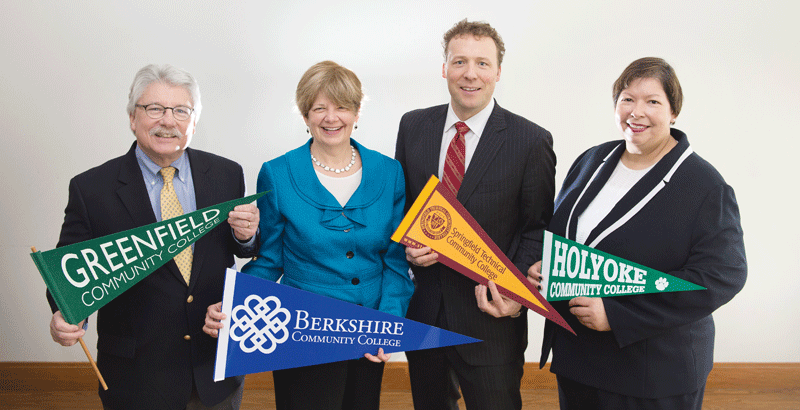
The region’s community-college presidents

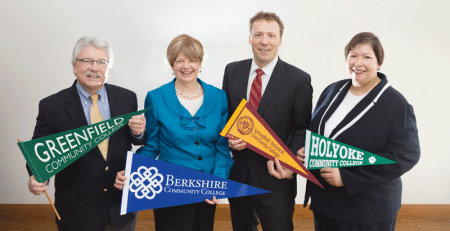
The region’s community-college presidents, from left, Bob Pura, Ellen Kennedy, John Cook, and Christina Royal.

Jeff Hayden had spent more than an hour talking about the critical roles played by community colleges in this region — while also listening to colleagues do the same — and desired to put an exclamation point of sorts on matters with a story about a woman whose case he had come to know first-hand.

She was about to earn a certificate of completion in a specific field from Holyoke Community College (HCC), and had a job interview set for the following week. She still had considerable ground to cover in terms of starting and then forging a new career, but she had a new-found confidence and sense of purpose, and wanted to let HCC officials know that — and know why.

“She said, ‘I’ve been out of work for almost five years; I thought I wasn’t worth anything, I didn’t think I could do anything, and my kids thought I could never do anything,’” Hayden, vice president of Business and Community Services at the school, told BusinessWest. “She went on, ‘the opportunity you’ve given us through this program is something that has not only changed my life, but changed my children’s lives as well.’

“Frankly, those of us at the region’s community colleges hear those stories often, which is great, and it’s a feel-good kind of thing,” Hayden went on. “But it’s one story at a time, and with the power of the four institutions here, it’s thousands of stories a year that happen in our region, where people are changed, and hopefully changed in a way that helps them with their family and with their career.”
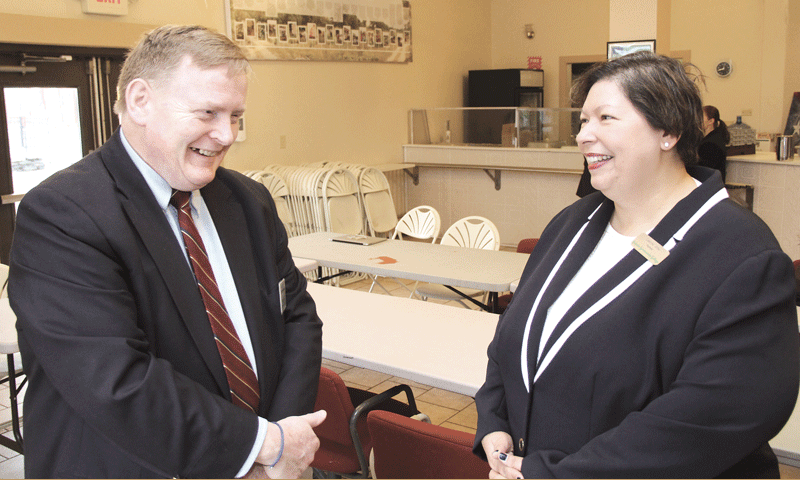
Jeff Hayden, seen here with new HCC President Christina Royal

Jeff Hayden, seen here with new HCC President Christina Royal, says community colleges provide a vital pathway to an education, especially for first-generation college students.

With that, Hayden effectively and somewhat concisely explained why the four community colleges serving residents of Western Mass. — HCC, Berkshire Community College (BCC), Greenfield Community College (GCC), and Springfield Technical Community College (STCC) — have been chosen collectively as Difference Makers for 2017.

Through use of those phrases ‘the power of the four institutions’ and ‘thousands of stories,’ he hit upon the real and profound impact of the four schools, which have been making a difference now for almost 60 years in some cases.

Echoing Hayden, Bob Pura, president of GCC, said the community colleges act as both a door of opportunity, especially for those who don’t have many open to them, and a pathway to both careers and four-year degrees at other schools.

And GCC is a perfect example. It is the only institution of higher learning in Franklin County, the poorest and most rural in the state, said Pura, while stressing that point about access to an education, and it has one of the highest rates of transfer to four-year schools among the state’s 15 community colleges.

“I don’t think there is a region in this state better served by community colleges,” said Pura, who stressed the plural and saw the six other people gathered around the table in a classroom at HCC’s Kittredge Center nod their heads in agreement. “We’re the pathway for the infrastructure in our community; the socioeconomic futures of our communities pass through the doors of our collective colleges.”

By ‘better served,’ Pura meant work beyond the schools’ historic mission of providing potentially life-altering opportunities to their students. Indeed, they are also playing important roles in a host of ongoing economic-development initiatives across Western Mass.
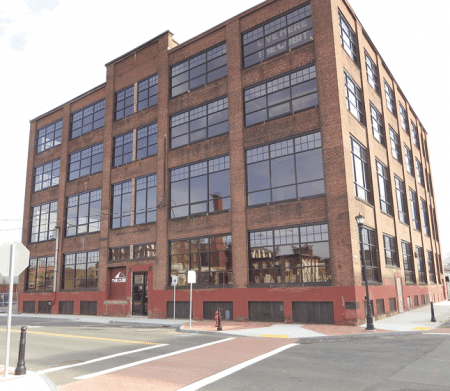
HCC’s involvement in the Cubit building project

HCC’s involvement in the Cubit building project in downtown Holyoke is just one example of how community colleges have become forces in economic-development efforts.

In fact, if one were to name a key issue or specific program, one will likely find one of the community colleges involved with it at one level or another.

Start with the region’s workforce. The schools are the proverbial tip of the spear in initiatives ranging from the retraining of manufacturing workers displaced by the decline of that sector to preparing individuals for the myriad jobs in the broad healthcare field that will have to be filled in the years to come; from training area residents for many of the 3,000 or so jobs to be created by the MGM Springfield casino to providing specific help with closing the so-called skills gap now plaguing all sectors of the economy and virtually every business, a problem addressed mostly through a program called TWO, as we’ll see later.

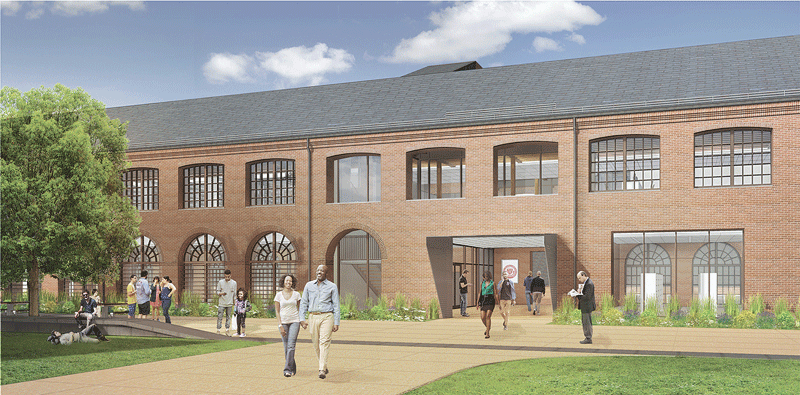
But there are other examples, as well, from STCC’s work to help precision manufacturers build a steady pipeline of talent to BCC’s involvement with efforts to create new opportunities for jobs and vibrancy at the sprawling former General Electric complex in Pittsfield, to HCC’s decision to move its culinary arts program into a mostly vacant former mill building in downtown Holyoke, thus providing the needed anchor for its revitalization.

All of these examples and many more help explain why the region’s community colleges — individually, but especially as a group — are true Difference Makers.

Schools of Thought

Community colleges, formerly known in some states as junior colleges, can trace their history back to 1901 (Joliet Junior College in Illinois is generally considered to be the first).

There are now nearly 1,200 of them enrolling close to 8 million people. They come in all shapes and sizes, some with just a few hundred students and others with enrollment in the tens of thousands.

In the Bay State, community colleges can trace their roots to 1958, when an audit of state needs recommended the establishment of a community-college system to address the need for more diversity and access to higher education in the Commonwealth, which, then as now, has been dominated by a wealth of prestigious (and expensive) private colleges and universities.

The reality is that the mission of a community college — to provide access to excellent education for the local community — is what we do, and we do it in sometimes unique ways. But what we also do is recognize the fact that there are times when shaking the hand and working together is far more effective than trying to go out on our own.”


The recommendation was adopted by the Legislature in August of that year, and the accompanying legislation included formation of the Board of Regional Community Colleges, which established nine of the current 15 schools within a five-year period, starting with BCC in 1960.

“We were the first one,” said Ellen Kennedy, president of that Pittsfield-based institution, with a discernable note of pride in her voice, while acknowledging that what is now HCC has a longer history, because that school began as Holyoke Junior College, which opened in 1946.

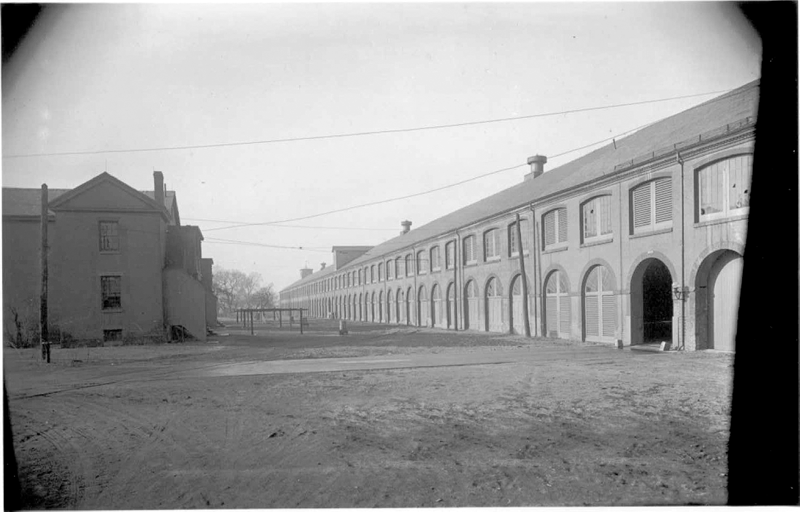
GCC opened its doors in 1962, and STCC, housed in the historic Springfield Armory complex, which was decommissioned in the mid-’60s, opened amid some controversy — HCC is only eight miles away as the crow flies, and many thought there wasn’t a need for two community colleges that close together — in the fall of 1967.

Today, community colleges in Massachusetts and across the country face a number of common challenges, including smaller high-school graduating classes, which are impacting enrollment; funding levels that are imperiled by dips in the economy and devastated by serious recessions, such as the one that began nearly a decade ago; and graduation rates that are impacted by the many burdens faced by the community-college constituency — everything from finances to life issues (jobs and family) to even transportation.

But overall, community colleges are seeing a surge of sorts. Indeed, amid the soaring costs of a college education and the ever-rising amounts of debt students are being saddled with, the two-year schools are being seen by many as a practical option to at least begin one’s education.

Meanwhile, host cities and regions are becoming more cognizant of their ability to help provide solutions to workforce and other economic-development-related issues and problems.

This is especially true in Western Mass., where many gateway cities, including Springfield, Holyoke, and Pittsfield, are facing stern challenges as they attempt to reinvent themselves and move on from their collective past as industrial centers, and regions (especially Franklin County) face spiraling unemployment, aging populations, and outmigration of young people.
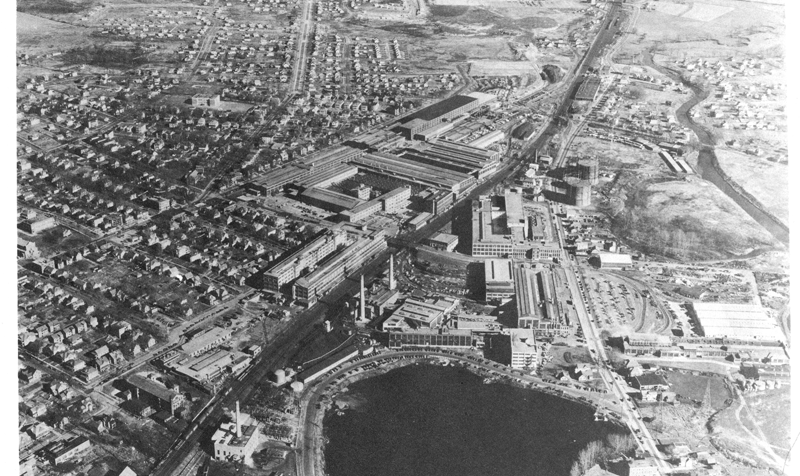
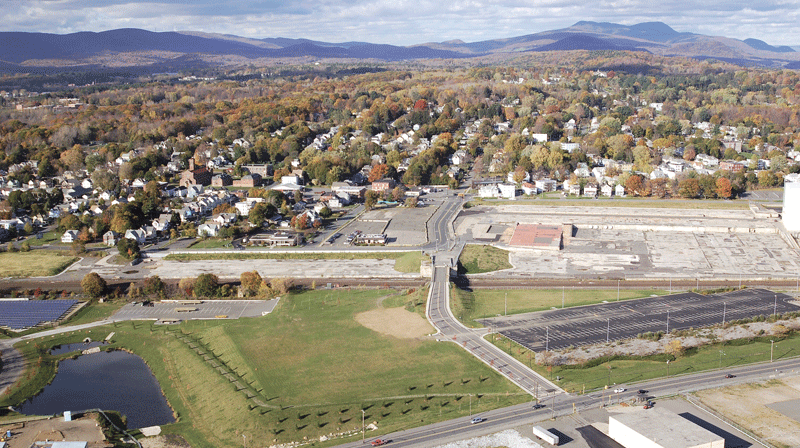
ge-pittsfield-aerial-1946

BCC’s efforts to develop new opportunities for the former GE complex

BCC’s efforts to develop new opportunities for the former GE complex in Pittsfield (in its heyday, above, and today) is another example of community colleges becoming involved in economic-development initiatives.

But at their very core, community colleges are still all about access — that open door that Pura mentioned. They all have what’s known as open admission, meaning anyone who has a high-school diploma or GED must be admitted. But while getting in isn’t a problem, staying in, and hanging in until a diploma or certificate is earned, can be, and often is.

Thus, increasingly, schools have been focusing on that broad, multi-faceted assignment of helping students succeed — with whatever it is they are trying to succeed at.

There are many elements that go into this equation, said those we spoke with, from programs focused on basics, including language skills, to new degree and certificate programs to meet specific industry needs, to a host of partnerships with area four-year schools that include not only articulation agreements but efforts to bring those schools’ programs onto the community-college campuses to help those facing time and transportation issues.

Meeting this role, this mission, makes the community colleges unique in the pantheon of higher education, and even public higher education. It is a niche, if you will, or, for many, including those we spoke with, a career path they’ve chosen for any of several reasons, but often because they can relate to the students in their charge.

Such is the case with Christina Royal, the recently named president of HCC, who is so new to the role she chose to let others, like Hayden, speak about the school’s history and specific current projects while she got fully up to speed.

But in a candid interview with BusinessWest upon her arrival, she said that, when she went to Marist College, a private liberal-arts school in Poughkeepsie, N.Y., she was the first in her family to attend college, and it was a struggle for the family to send her there.

So she understands what community-college students are up against, and chose that constituency, if you will, as the one she wanted to serve.

“The experience of community colleges — dealing with a lot of first-generation college students who don’t always understand the value of what they’re doing and also how to navigate it to be successful — these are things I can relate to from my own background,” she said. “And I think that has created a connection with the community colleges for me and helps me understand the students we serve. I’ve found a home in the community-college system.”
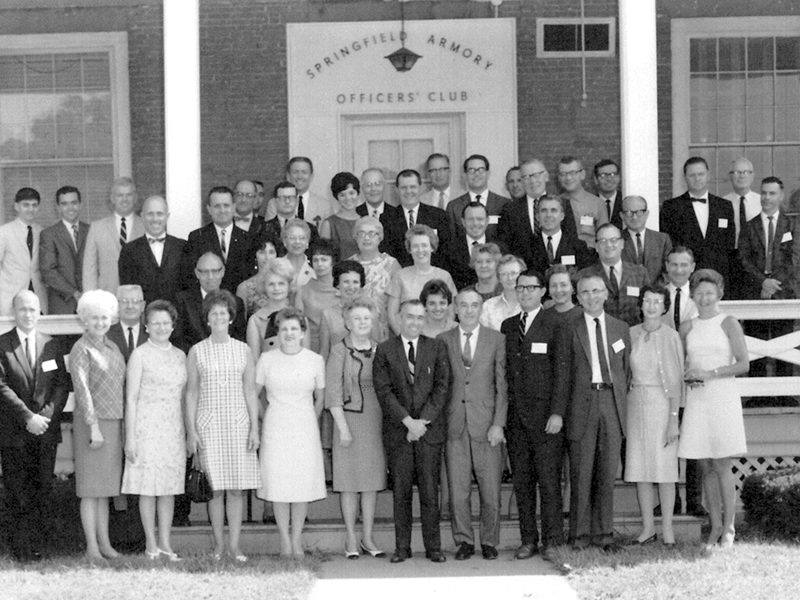
The original faculty and staff at STCC

The original faculty and staff at STCC pose in front of the old officers’ quarters at the Springfield Armory. The school was created in 1967 to focus on preparing students for careers in technology-related fields.

John Cook, who succeeded Ira Rubenzahl as president of STCC last summer, is similarly attracted to the community-college mission and unique role.

Formerly the vice president of Academic Affairs at Manchester (N.H.) Community College, he cast a wide net when seeking opportunities to lead a school, but was specifically focused on community colleges, which, he said, have a direct role in serving their communities (hence that middle name for all these institutions) and their residents, not employers across the country or halfway around the world, as the major private institutions do.

Pura agreed. “The students who come to our colleges are those who stay here,” he explained. “They’re the ones who will run the ice cream shop and the small nonprofit, and they’re going to be part of the leadership for our hospitals.”

The Jobs at Hand

Beyond providing access and pathways to opportunities, however, the region’s community colleges have become increasingly larger role players in area workforce and other economic-development-related initiatives.

Such roles are natural, said Cook, noting that the schools pride themselves on being nimble, responsive, and, overall, good listeners when it comes to the community — including the business community — expressing specific concerns and needs.

And while such programs solve problems for businesses, the communities they’re based in, and the region as a whole, said Bill Fogarty, HCC’s vice president for Administration and Finance, who served as interim president until Royal arrived, they also benefit individuals who may or may not have a job, but instead need a career.

“All of our capital investments, whether it’s the new Center for Health Education or the Cubit Building and the culinary center, or any of the others, have been geared toward getting people in the door,” he explained, “and getting them a basic type of credential they can use, and then providing pathways so they can further their education.”

Examples of economic-development-related initiatives that are also creating opportunities for individuals abound, and we’ll start with BCC, which has been active in efforts to help that region move past the huge shadow left by GE and other elements of a manufacturing-based economy, said Bill Mulholland.

He recently retired after a lengthy career at BCC, most recently as vice president of Community Education and Workforce Development, a title that speaks volumes about the work he was involved with in recent years. And as he started talking about that work, he referenced a Berkshire Eagle headline — “High-paying Jobs Going Unfilled” — from January 1998.

Upon reading it, he called Pura and invited him to lunch, at which there was broad discussion that eventually led to creation of something called the Berkshire Applied Technology Council.

“This is an industry-driven organization focused on workforce development,” Mulholland explained. “As we got all the companies together, we said, ‘what are your biggest needs?’ And when we boiled it all down, the commonality was basic math, writing, all of the basic skills.”

That’s where organizers started with a program that would be called (here comes that word again) Pathways, he went on, adding that the initiative effectively checks many of the boxes community colleges are trying to check, including direct involvement with businesses, providing individuals with the basic skills needed to contend for jobs and careers, working in collaboration with other community colleges and other partners, and creating progress with efforts to keep young people from migrating out of the region.

Another very specific example is the college’s involvement in the work to create an advanced manufacturing facility (the Berkshire Innovation Center) that will become the centerpiece of the William Stanley Business Park, created on the former GE site. Specifically, the school is developing training programs for individuals that will be employed by companies based there.

“What’s significant about this, for us and for the Commonwealth, is that we’re reinventing our manufacturing,” he said. “It’s about high-technology capabilities; so many of the original equipment manufacturers are outsourcing up to 70% to small and mid-sized enterprises because we’re quick, we’re nimble, and we innovate. That’s the focus of the innovation center, and it’s more about the human capital now than it is about the equipment, although that’s important as well.”

Human capital, and creating more of it, is at the heart of many BCC initiatives, he went on, adding that the school is also involved with efforts to bolster the creative economy that is becoming a force across Berkshire County and especially a revitalized Pittsfield, as well as the tourism industry that has always been a pillar.

As examples, he cited a filmmaking course designed to help provide trained individuals for the many film companies and special-effects houses that now call that region home, and also a special customer-service course for those seeking to enter the hospitality industry.

Manufacturing Momentum

Meanwhile, at GCC, manufacturing is also a prime focus, said Pura, adding that the region has lost a number of large employers in this sector over the past several decades and is intent on both retaining the companies that remain and attracting new ones.

To this end, a manufacturing collaborative was formed involving the college, employers such as Yankee Candle and Valley Steel Stamp, the Regional Employment Board, career centers, and area high school.

“What became clear was that we needed to invest in our infrastructure; facilities were very antiquated,” said Alyce Stile, dean of Workforce Development and Community Education (same title as Mulholland) at GCC, adding that, with $250,000 in seed money from many of the employers and grant money attained as a result of that investment, Franklin County Technical School has been transformed into a state-of-the-art facility.

With that foundation, GCC was able to start its first adult-education evening program — one firmly focused on the basics — with the help of considerable feedback from STCC, BCC, and other partners.
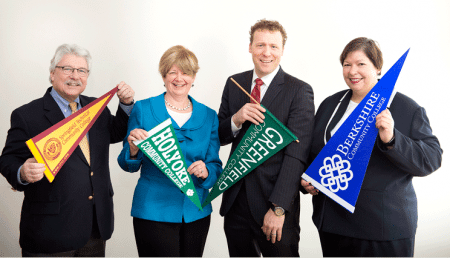
No, the region’s community college presidents have not been reassigned

No, the region’s community college presidents have not been reassigned. They’re merely using some artistic license to display a pattern of cooperation and collaboration that is only growing.

To date, more than 100 students have gone through the program, said Stiles, with the even better news being an employment rate of more than 80%.

Other recent initiatives have included a nursing ladder program designed to put more individuals in that important pipeline, and also a comprehensive study of just what area employees want and need from the workers of today and tomorrow. The results were not exactly surprising, but they were enlightening.

“Employers made it clear that what’s needed are the communication skills, the ability to critically think through and problem-solve in an innovative way, and the ability to work well with other people,” he explained, adding that a panel comprised of area employers ranging from Herrell’s Ice Cream to Baystate Franklin Medical Center recently emphasized these needs and discussed the next critical step — programming to help ensure workers possess these skills.

In Hampden County, meanwhile, initiatives involving the two community colleges there have generated considerably more press, and, like those in the other regions, have involved high levels of collaboration between the schools and a wide variety of other partners.

At the top of the list, perhaps, is TWO (Training and Workforce Options), a joint effort between STCC and HCC that provides custom contract training for area businesses and industry-sector collaborations.

To date, TWO has created training programs for call centers and customer-service workers, manufacturing production technicians, hospitality and culinary positions, home-health-aide workers, and healthcare-sector employees who need to become versed in the recently introduced medical coding system known as ICD-10, among others.

Another collaborative effort, this one involving all the community colleges, is the Mass. Casino Careers Training Institute, which, as that name suggests, is designed to help area residents become qualified for many of the positions that MGM Springfield — or any of the other casinos to open in the Commonwealth — will need to fill.

Other specific examples range from STCC’s involvement with CRRC, the Chinese company that will soon be building subway cars in Springfield’s East End, to secure a trained workforce, to HCC’s investment in Holyoke’s Innovation District through the Cubit project.

Degrees of Progress

As the presidents of the region’s four community colleges posed for some photographs for this piece, they each gathered up their respective school’s pennant, in a colorful, pride-nurturing exercise in effective identification.

Then, as a bit of fun, Pura had them shuffle the deck, if you will. This drill yielded some laughs and intriguing facial expressions, but also some symbolism if one chooses to look for it and accept it.

Indeed, while the schools remain immensely proud of their histories and track records for excellence, and do compete on a number of levels — for students, in some cases, and on all sorts of playing fields, especially — they also collaborate, and in ways that are often changing the local landscape.

It wasn’t always this way, especially when it came to HCC and STCC, mostly because of their proximity to one another and often-overlapping programs. But this spirit is certainly in evidence now, and the obvious reason is that the schools have realized that they can do more for the region by working together than by trying to do it alone, often with parallel initiatives.

“The reality is that the mission of a community college — to provide access to excellent education for the local community — is what we do, and we do it in sometimes unique ways,” said Hayden. “But what we also do is recognize the fact that there are times when shaking the hand and working together is far more effective than trying to go out on our own.”

Maybe the best example of both sides of this equation is the TWO program. Prior to its formation, the schools went about trying to forge skills-gap solutions themselves, and would often “bump into each other,” as he put it.

“It was not uncommon for a business owner to say, ‘Jeff, you’re here … but the guy from STCC was here last week,’ or vice versa,” he explained. “What we’ve recognized through some of these partnerships is that we need to work together; it’s better for the customer, it’s better for the student, and it’s better for the business.”

The effectiveness of that particular collaboration caught the attention of the Boston Foundation, which awarded the two schools the inaugural Deval Patrick Award for Community Colleges in 2015 (it came with a $50,000 unrestricted grant that they split), and in many ways it serves as an example of what other schools can do together — if they are so inclined.

The Mass. Casino Careers Training Institute, which will train workers for MGM Springfield

The Mass. Casino Careers Training Institute, which will train workers for MGM Springfield (see here in this rendering) and other casinos, is another workforce initiative involving the region’s community colleges.

“In the Boston market, they’re still really trying to figure out how to put such partnerships in place,” Hayden went on. “We talk about how we’re eight miles away from STCC or 21 miles away from Greenfield or 58 miles or whatever it is from Berkshire, but in Boston, you have four community colleges that could almost throw rocks at one another, and they can learn from this.

“The establishment of that kind of collaboration was more common sense than anything else,” he went on. “Why duplicate efforts? Why waste resources? Why not work together?”

There are countless other examples of this mindset, said Mulholland, who cited BCC’s addition of a medical-coding program.

“Our local health system said, ‘we’re going to ICD-10 — we need help here,’” he recalled. “We picked up the phone and called STCC, and we had the curriculum in no time. We were able to put it in and met the system’s needs in ways we never could have without partnering like that.”

Such partnering continues on many levels, and the schools are constantly looking for new ways to forge collaborations, said Cook, adding that he was calling and texting Royal within days of her arrival on Jan. 9 to initiate such discussions and continue a legacy of cooperation that has been handed down to the two of them.
“We have an obligation to do well by that tradition of cooperation,” he said. “It’s good for our schools, and it’s good for this region.”

Course of Action

Hayden said he doesn’t make a habit of it, but once in a while he will allow himself to think about what it would be like if HCC did not exist in that city.

It’s a whimsical exercise, but a nonetheless important one, he said, adding that, while some schools provide jobs, vibrancy, and a boost to service-related businesses in the city or town they call home, community colleges have an impact that runs much deeper. And it goes back to those words he and others would use early and quite often — ‘door’ and ‘pathway.’

Pura agreed, and to further the point, he summoned a comment he attributes to Allen Davis, former director of GCC’s foundation, and one he relates often.

“He said, ‘if Amherst College were to close, those students would find somewhere else to go; if GCC were to close, it would devastate this community,’” noted Pura. “And I think you can say that about all four of our institutions; if you were to close any of them, students would come to dead ends.”

The community colleges have instead made it their mission to provide inroads to better lives. And their success with that mission makes them more than worthy of the title of Difference Maker.

George O’Brien can be reached at [email protected]

Class of 2017 Difference Makers

Seizing the Brass Ring

Friends of the Holyoke Merry-Go-Round Are Preserving a Treasure

Friends of the Holyoke Merry-Go-Round

Some of the many passionate Friends of the Holyoke Merry-Go-Round: from left, Jim Jackowski, Barbara Griffin, Angela Wright, and Joe McGiverin.

The giant scrapbooks, their newspaper clippings turning yellow and their heavy leather covers fraying and kept on with shoelaces, are getting on in years — as are the people who created them.

But the truly inspiring story they tell never gets old.

It’s about how one of the poorest communities in the Commonwealth, then and now, came together, in every sense of that phrase and against very long odds, to raise nearly $2 million during a stubborn recession to keep the historic Mountain Park merry-go-round in Holyoke.

Carefully chronicled in those scrapbooks, this story relates tireless fund-raising efforts — from generous donations given by large corporate players to a fishing derby with a $10 entrance fee that went to the cause; from phone-a-thons and mailed solicitations featuring carefully crafted pleas for support to sales of everything from sweatshirts to Christmas-tree ornaments out of a donated kiosk at the Holyoke Mall.

It also captures work to find, finance, build, staff, open, and operate a home for the merry-go-round in Holyoke’s Heritage State Park in late 1993, an important chapter in this tale and one with many twists and turns.

John Hickey, a.k.a. “Mr. Holyoke,”

John Hickey, a.k.a. “Mr. Holyoke,” rallied the city to seize a “glittering brass ring.”

And those scrapbooks poignantly reflect, through photos, news stories, and his own commentary in the daily Holyoke Transcript Telegram, the passion, commitment, and drive of one John Hickey, known to most as “Mr. Holyoke,” who rallied the city and unified it behind what was, at the time, a most unlikely cause.

“He was determined; he felt like this was an important piece of Holyoke’s history and that there needed to be a way to save it,” Angela Wright, long-time volunteer director of the merry-go-round and one of the leaders of the effort to keep it in the Paper City, said of Hickey, then head of the Holyoke Water Power Co., who passed away in 2008. “He was like a pied piper … he went to every meeting, every organization, every business he could to stress the importance of this. And he got a city behind him.”

Indeed, Hickey ended one of his op-ed contributions (a piece that has become part of Holyoke lore) with a question that doubled as a rallying cry.

“There’s a glittering brass ring out there,” he wrote in reference to the carousel. “Will the people of Holyoke extend themselves to capture it?”

Indeed, they would, as the pages of those scrapbooks make clear, and more than 1.2 million people have gone for a ride.

But the last entry in those volumes is from Dec. 1, 1994 — a short story about upcoming Christmas happenings at the carousel — and, therefore, they don’t tell the whole story.

Indeed, while the efforts to buy the carousel and then begin its next life in downtown Holyoke could be described as ‘heroic’ and ‘monumental,’ what has transpired over the past 23 years or so and continues today is worthy of equal praise, said Jim Jackowski, business liaison for Holyoke Gas & Electric and long-time president of Friends of the Holyoke Merry-Go-Round Inc., the organization created to not only buy the treasure, but manage it and preserve it for future generations.

The second part of the equation isn’t captured in the scrapbooks because, for the most part, that hard work doesn’t generate headlines, he said. But the challenges to operating and properly maintaining the carousel — everything from spiraling insurance costs to non-stop maintenance to restoration work on the ornate horses — are many and formidable.

But the same passion that went into raising the money to buy PTC 80 (the 80th carousel built by the Philadelphia Toboggan Co.) goes into the work to keep the ride spinning today — and tomorrow, said Jackowski.

“It’s been a labor of love — it was then, when we were raising the money to buy it, and it still is today,” he explained.

One of the many ads designed

One of the many ads designed to emphasize what Holyoke would lose if the merry-go-round went to another buyer.

And that sentiment is perhaps best summed up with words from the Transcript Telegram, which played its own sizable role in the efforts to save the carousel.

Its presses fell silent in January 1993 as the paper succumbed to disastrous losses in the wake of the early-’90s recession. But it still has a voice on this subject (and this Difference Makers award) thanks to an editorial published just a few weeks before the paper closed.

The occasion was a decision of the state Department of Environmental Management to award $300,000 for the construction of a building in Holyoke’s Heritage State Park for the carousel, providing it with a home and, essentially, sealing the deal.

“If one project in recent history had to be chosen to represent the best Holyoke has to offer in community spirit, from the youngest child to the most senior resident,” the paper roared, “then the campaign to save the Holyoke Merry-Go-Round is it.”

More than 24 years later, those words still ring true.

Mane Attraction

Among the many individuals, groups, and businesses that donated in-kind services to the cause of saving the merry-go-round was the Hartford-based marketing and advertising firm Adams & Knight Communication.

The firm had a number of specific assignments — from designing promotional brochures destined for potential donors to crafting copy for print ads that ran in the Transcript Telegram and elsewhere. But one of its very specific tasks, apparently, was finding children with the ability to look sad. Really, really sad.

Children recruited for ads used in the merry-go-round campaign had plenty of practice looking sad.

Children recruited for ads used in the merry-go-round campaign had plenty of practice looking sad.

For example, there’s one young girl displaying that talent in an ad (that appeared in multiple outlets) in which she stands next to one of the carousel’s horses wearing a sign around its neck reading ‘sold.’ She’s holding on to its reins as if she doesn’t want to let go, clear symbolism of the city’s attitude at the time.

She makes another appearance, along with two other children, in an ad that features a broad view of the carousel with the headline “Imagine Telling Them That the Ride Is Over … for Good.”

And there’s a despondent yet still-hopeful young boy featured in yet another full-page ad. He’s holding out his piggy bank, as if to offer whatever’s in it. The headline reads, “Why He’s Putting All His Money on a Horse.”

But it wasn’t just young people enlisted to send this message. Indeed, several teenagers (from the ’50s, presumably, based on their attire) are featured in still another ad with the headline, “If You Care About Holyoke’s Future, Put Money Down on Her Past.”

In essence, this is what the campaign started in 1988 was all about, said those we spoke with, adding that it wasn’t just about keeping PTC 80 from being sold off as a unit or piece by piece and shipped overseas.

It was also about people investing in the city’s future, said Jackowski, meaning both the generations to come and the city itself, which needed a boost to spark its sagging fortunes and deteriorating downtown.

These sentiments are reflected in comments attributed to then-Mayor Marty Dunn (another of this story’s many heroes) in one of the many promotional pieces created to solicit support.

“This is not a toy,” said the mayor. “It is a folk-art masterpiece and a powerful attraction for our downtown.”

The merry-go-round has, by most accounts, become that spark, that attraction, thanks to the campaign to save it and, more specifically, that group that came to be known as the Friends of the Holyoke Merry-Go-Round.

It was created and led by Hickey, who first approached John Collins, owner of Mountain Park, who closed that attraction in 1987, with a proposal to allow the city of Holyoke to buy the carousel and thereby keep it ‘home.’

By most accounts, this wasn’t exactly a hard sell. Indeed, while Collins reportedly had some handsome offers for the merry-go-round on the table, including a rumored $2 million, he was supportive of the efforts to keep it in the city, and thus he set the bar, or price tag, low — $875,000.

While there was considerable support for the merry-go-round, in Holyoke and beyond, all those involved knew that raising that kind of money, at that time and in that community, would be very difficult. And, as we’ll see, the community would soon see that number rise considerably.

It’s been a labor of love — it was then, when we were raising the money to buy it, and it still is today.”

And this is where our story — the one told through the clips in those scrapbooks — really begins.

However, those we spoke with say it really starts with John Hickey.

Indeed, he was the one, said Wright, who convinced Holyokers, then facing a mountain of other, seemingly more pressing issues, from rampant unemployment to soaring poverty to a declining downtown, that the merry-go-round was still a treasure worth saving.

“In the beginning, people were saying, ‘are you kidding — a merry-go-round?’” Wright said while trying to capture the mood at the time. “There were so many other problems, from homelessness to the schools to downtown. People said, ‘how can you be thinking about raising money for a merry-go-round?’

“John would say to them, ‘you don’t understand — beauty is for your soul; there needs to be art, music, and beauty in this world, for everyone,’” she went on. “He would say, ‘this is as important as food’; he would make that comparison and stress the importance of art in one’s life.”

Round Numbers

To effectively reach the people of Holyoke, and beyond, Hickey would make early and frequent use of the Transcript Telegram’s op-ed page. Some of his early entreaties capture his passion for the project and his belief that it was an important part of the city’s history, identity, and psyche.

“A city needs more practical things, like sewage-treatment plants, snow plows, water filtration, better roads, and good school buildings,” he wrote on March 5, 1988, just as the campaign was being conceptualized. “But it also needs objects that nourish its spiritual life. A beautiful and historic, million-dollar merry-go-round may be a bit of mirthful indulgence, but it will give us, for generations, a special kind of happiness and pride.

“It is sad that we are losing our historic amusement park,” he would go on a few paragraphs later, “but it would be tragic if we stood by, doing nothing, and letting its centerpiece, the merry-go-round, become the object of pride and fame in some other distant city.”

Merry-go-round employee Kathie McDonough, left, staffs the concession stand with long-time volunteer Maureen Costello.

Merry-go-round employee Kathie McDonough, left, staffs the concession stand with long-time volunteer Maureen Costello.

Beyond passionate rhetoric, though, Hickey understood that this campaign needed a solid foundation on which to build, and to erect one, he turned to the many banks and other prominent corporate citizens at that time, said Wright.

“He pulled together all the CEOs and banking leaders and put them in a room,” she recalled, adding that, prior to this now-historic gathering, he took them to Mountain Park for a ceremonial and sentimental look at the carousel. “He talked for an hour about the value of this merry-go-round, not only to families and kids, but for history, nostalgia, as an anchor to downtown … he went through the whole thing.

“And he said, ‘unless you people commit a big number — and I mean a big number — then we can’t do it,’” she went on. “And by then, he had them practically in tears.”

Before the meeting convened, a big number, $300,000, had indeed been pledged, she went on, adding that, as for the rest … well, there were a variety of imaginative, and effective, strategies put to use, as told by the stories, ads, and posters clipped into the scrapbooks.

Famously, schoolchildren in the city raised $32,000 in two weeks from selling cookies and candy door-to-door, and for that work, a plaque was placed next the armored lead horse in their honor (such plaques were placed under each horse to commemorate donors.)

There was that fishing derby at the Jones Ferry Marina (“now is the time not to flounder,” wrote the creative scribe at the Chicopee Herald); Holyoke Community College raffled off a free semester of study to aid the cause; musicians performed at a benefit concert; the city’s aldermen launched a charity ball, with the merry-go-round as the first recipient of proceeds; commemorative stamped envelopes were issued with the likeness of the lead horse on them (the price was 25 cents, which will tell you how much water has passed under the bridge).

Also, schoolchildren sold Christmas ornaments; artists sold limited lithographs of the carousel; there were car washes, phone-a-thons, a 10th-anniversary party at the mall, with the carousel as the beneficiary. And at the Merry-Go-Round Gift Store (the storefront donated by the mall) and other locations, supporters could buy hats, ornaments, tote bags, sweatshirts, a 1,000-piece jigsaw puzzle, mugs, notecards, and several different posters with carousel imagery. The headline on the ad promoting it all in the Dec. 9 issue of the Transcript read, “Now You Can Finally Get a Pony for Christmas.”

Turn for the Better

As noted, the brass ring Hickey mentioned became the unofficial prize, if you will, and the phrase appeared repeatedly in ads and news stories throughout the campaign.

But even as the original goal of more than $1 million came closer to reality, the bar moved, and in a big way, said Wright, noting that, from the beginning, organizers knew they would have to build a home for the carousel.

They had a pledge from the state of $300,000 to build that home, she said, but as time went on, huge doubts emerged about whether the state could uphold its end of the bargain given the enormous financial pressure it was under, and whether that amount would be enough.

As things turned out, the state did keep its promise, but that figure wasn’t nearly enough (bids for the structure came in at twice that total).

Photography by Leah Martin

Photography by Leah Martin

But funds to cover the difference were raised with significant help from Warren Rhoades, then-president of PeoplesBank, she said, adding that this triumph would be one of the countless enduring stories from the campaign to save the carousel and then operate it, many of which simply didn’t generate headlines, but certainly contributed to that phrase ‘labor of love.’

As she recounted some of them, Wright said she didn’t really know where to start.

She eventually settled on Jim Curran, a contractor and owner of the Wherehouse banquet and meeting facility in downtown Holyoke, who not only stored a large amount of the carousel’s thousands of components — most of the horses were kept in a locked railroad car, and Hickey even kept some in his living room — but also took the carousel apart and played a huge role in the very complex, time-consuming effort to put it all back together.

“It was like a giant puzzle,” she explained. “There were boxes and boxes of nuts and bolts; it was mind-boggling to me.”

Wright also mentioned her husband, Joe (the couple have a long history of philanthropy in their native Holyoke), who assisted with piecing the carousel together and maintaining it; Tim Murphy, the architect who designed the carousel’s new home in Heritage State Park; Will Girard, a neighbor of the Wrights who has assisted with seemingly endless repairs and maintenance; the Gaul family, which donated the huge concession stand now at the carousel, replacing what amounted to a card table that was there at the start; Craig Lemieux, who volunteered the time and labor that went into building the ramp to make the carousel handicap-accessible; and the Steiger family for gifting to the carousel the Tiffany window that graced its downtown Holyoke store.

And on she went, noting that there were, and still are, volunteer angels whose names she never knew and faces she never saw.

“When we first opened, we didn’t have any money; we had no debt, but we also had no money,” she said. “And people just did things. Like cleaning the windows — people would appear … in the dark of night; I don’t know, I never saw them.”

The Ride Stuff

In many respects, this community spirit and volunteerism continues today, said those we spoke with, adding that the task of keeping the carousel open and operating is daunting, and a small army of volunteers is still needed.

Speaking in broad terms, Jackowski said operating a merry-go-round is a tough business these days — so tough that many have actually closed in recent years — and this one is no exception.

He cited everything from the myriad competitors for the time and attention of children and families to the rising cost of doing business (and generally flat revenues), to changes in Holyoke itself.

“It’s like any other business — there are fixed expenses and just stuff that you have to do,” he said, adding that there is quite a lot of ‘stuff’ with this ride that is now nearly 90 years old. “It’s a piece of machinery that requires maintenance and upkeep and hardware. And the community has changed in the 20-plus years since we opened; we had a bigger presence of retail and shopping when we first opened, and a lot of what was downtown and drew people to the downtown is unfortunately not there anymore.”

As one example, he cited Celebrate Holyoke, the annual summer festival that drew tens of thousands of people to Holyoke during its four-day run, which was discontinued several years ago.

“That used to be a huge weekend for us — we would get 20,000 riders in four days,” he explained. “Once that went away, it was hard to make up those riders; even at $1 per head, that was $20,000.”

And that challenge goes a long way toward explaining why a ride now costs $2, which is still a great bargain and one of the lowest prices to be found for a merry-go-round.

But, as with the vast majority of museums and other types of attractions, admission doesn’t cover annual expenses, said Joe McGiverin, another long-time member of the Friends of the Holyoke Merry-Go-Round board, noting that labor (there are seven staff members) and, especially, insurance top the list of rising costs.

Thus, other sources of income must be developed and nutured.

Birthday parties, private functions, and a handful of weddings each year have long been one such source, said Barbara Griffin, another long-time board member and former staff member at the Log Cabin, who, with Jackowski and others, would handle the logistics of such events.

“That’s just one example of how of this is truly a working board — we don’t just go to meetings,” she explained, adding that, while the staff manages the carousel day-to-day and is largely responsible for that perfect safety rating, the attraction is dependent on volunteers today as much as it was when the money to buy the attraction was being raised.

And many of these volunteers have their own specific assignments, said Wright, who offered one of many examples.

“Joe is the security person — if the alarm goes off in the middle of the night, it’s his responsibility to go in there and see what’s going on,” she said. “Everyone on the board has a job, in one way or another.”

But overall, the volunteers are generalists, said McGiverin, and help with everything from keeping the grounds clean to staging the semi-annual Kentucky Derby-themed fund-raiser, called Derby Dazzle, at the site.

But there is another source of help at the carousel that speaks volumes about its hold on people — and its special place in Holyoke.

These would be the young people — and there are more than a few of them — who would like to ride but don’t have $2, said Griffin, adding that staff members will often let them take a spin in exchange for pushing a broom for a few minutes.

“If they want to sweep the floor or pick something up, we’d be more than happy to give them a little something in return,” she said, noting that, in the larger scheme of things, the carousel is what has been given to all of Holyoke, and the region as a whole, in return for the generosity that kept it here.

Wright agreed. “These kids … they know what we have, and you can’t let a kid walk by and just look in the window all day. You need to let them ride.”

That’s the kind of community spirit John Hickey was talking about all those years ago.

Words That Ring True

In March 1988, not even Hickey could have known what an attraction, and an institution, the merry-go-round would become.

Then again, maybe he did know. Or maybe … there’s no maybe about it.

What was it he wrote? “A beautiful and historic merry-go-round may be a bit of mirthful indulgence, but it will give us, for generations, a special kind of happiness and pride.”

Sounds quite prescient, as does that comment from the Transcript Telegram. Indeed, this was, and still is, the best Holyoke has to offer in community spirit, from the youngest child to the most senior resident.

And that’s why, nearly 30 years after this saga began, three decades after Hickey implored a city to reach for that “glittering brass ring,” the story about how it all happened never gets old.

And that’s also why the many Friends of the Holyoke Merry-Go-Round — those who have passed and those who still keep the city’s happiness machine turning — are true Difference Makers.

George O’Brien can be reached at [email protected]

Class of 2017 Difference Makers

Cut and Dried

In Business and the Community, Denis Gagnon Is a Role Model

Denis Gagnon

Denis Gagnon

Denis Gagnon Sr. was asked about the origins of the signed, framed Tom Brady jersey that dominates one wall of his spacious office at Excel Dryer in East Longmeadow.

Rather than answer that question, he bolted up out of his chair and said, “think that’s nice? I’ve got something better … follow me.”

And with that, he walked briskly down the hall, with BusinessWest in tow, to the conference room, apologized as he ever-so-briefly interrupted a meeting in progress, and proudly pointed to a huge framed, autographed photo of Malcolm Butler, depicting the moment he stepped in front of Russell Wilson’s final pass in the 2015 Super Bowl, sealing a Patriots victory.

“How about that?” Gagnon, the company’s president, said of the photo, a gift from Pats owner Robert Kraft, who is now a valued customer of Excel Dryer, which, according to company literature — not to mention most people who have placed their hands under one of its products — has revolutionized the long-maligned hand-dryer industry.

Later, amid considerable and quite necessary prodding, he grudgingly revealed that signed photos and jerseys are just some of the many benefits that have come through what is now a very solid and multi-faceted marketing relationship between the Patriots and Excel (and donations to the team’s charitable foundation), up to and including the opportunity for Gagnon to actually get on the hallowed turf at Gillette Stadium, practice with the team, and play some catch with TB 12.

As noted, such reflections came reluctantly, because it is simply not in Gagnon’s nature to call attention to his actions or accomplishments. Those who know him well say he basically just goes quietly — and quite efficiently — about his business.

Denis Gagnon with his wife, Nancy, and sons Denis Jr., left, and Bill, right.

Denis Gagnon with his wife, Nancy, and sons Denis Jr., left, and Bill, right.

And by ‘business,’ they aren’t referring specifically to Excel and its signature product, the XLERATOR, although that’s certainly a big part of the conversation — the part referring to his strong entrepreneurial instincts, success in making the company’s products a global phenomenon, and even pride that the dryers are made not only in America (the only ones that can make such a claim), but in the 413 area code.

“I’m in the men’s room at Heathrow Airport … and I see East Longmeadow, Mass. on the XLERATOR,” recalled Gene Cassidy, president of the Big E, who has known Gagnon for years, “and it sends shivers up my spine; I wanted everyone in the lavatory to know that I knew Denis Gagnon.”

No, by ‘business,’ they were mostly referring to Gagnon’s strong track record of service to the community, which is notable for many reasons.

For starters, there’s simply the depth of that service, which includes everything from decades of work with the Boy Scouts and the Children’s Study Home to his multi-layered involvement with Link to Libraries (LTL).

There is also his ability to inspire others to become involved and make a difference in their own way.

He’s a man who not only sees the need, but takes action. He is very empathetic to those people in need and especially the young people of our community.”

Dana Barrows, a financial advisor with Northwestern Mutual, another long-time acquaintance and long-time LTL volunteer, explains.

“I was in Denis’ office four years ago, and I saw a picture of him with Springfield Mayor Domenic Sarno,” he recalled. “I said, ‘what are you doing?’ and he replied that he was reading a book to school kids as part of Link to Libraries. And he told me I should check it out.

“I did, I’ve been reading ever since, and I’ve thoroughly enjoyed every minute of it,” he said, adding that this is but a small example of how Gagnon not only gets involved, but gets others to follow suit.

Humbly, Gagnon said simply, “if you have the good fortune of being in a good corporate job or owning your own business, like we’ve been able to do, you have a responsibility to give back to that community.”

And this philosophy was certainly handed down to his children, including those involved with him at Excel, Denis Jr. and Bill, who are both very active in the community (Bill is a member of BusinessWest’s 40 Under Forty class of 2013).

Mike Suzor, assistant to the president at Springfield Technical Community College and a serial entrepreneur himself, was a classmate of Gagnon’s at Cathedral High School, in the class of 1968. He remembers Gagnon as an excellent student, a multi-sport athlete, and someone who knew what it took to succeed on any stage, or playing field.

Mike Suzor

Mike Suzor, a long-time friend and former classmate of Denis Gagnon’s at Cathedral, says Gagnon has always understood what it takes to succeed at any level.

“I never met his parents, but they must have been great people,” he said, “because Denis learned very early on the value of honesty, integrity, and hard work — ‘don’t pass it off to someone else; get it done yourself.’ That attitude was there in high school, and it has stayed with him all through his career.”

“If you measure success financially, then he’s clearly successful,” Suzor went on. “But if you measure success by what kind of human being someone is … he’s one of the most successful people I’ve ever met.”

Rarified Air

Over the past 18 years or so, Gagnon has sat across from interviewers representing all manner of media outlets curious about the XLERATOR, from the small weekly paper that covers Longmeadow and East Longmeadow to the Wall Street Journal; from a host of trade publications, such as Restaurant Daily News, to Inc. magazine.

While the comments vary, obviously, he will undoubtedly tell the inquirer something he told BusinessWest back in 2003 — that, as entrepreneurial gambles go, Excel Dryer was anything but a rock-solid bet.

That’s because the company made a product that, by Gagnon’s own admission, people don’t like or want — electric hand dryers, a product that, historically, didn’t dry people’s hands as much as they would like.

As he explained back then, and has gone on explaining ever since, most businesses and institutions that installed hand dryers in those days did so because satisfying the customer — and that’s a relative term in this case — was not a priority, and saving money was. As examples, he listed airports, train stations, colleges, municipal buildings, sports stadiums, and even correctional facilities.

Today, businesses and institutions like those mentioned above, but also some certainly not on that list, are installing Excel models because they do place a premium on customer service — and also on protecting the environment and saving money.

Changing the hand-dryer landscape wasn’t exactly the stated mission when Gagnon bought a piece of Excel in 1992 and later acquired the entire company, but it quickly became not only a goal, but an obsession — one of those who knew Gagnon well firmly believed he would succeed with, even given the chosen product’s dubious history and uncertain future.

To explain, Suzor went into the wayback machine to Cathedral High, then home to 3,000 students, and memories of Gagnon the student-athlete.

“He was an incredible wrestler and first-team All-Western Mass. placekicker,” Suzor recalled. “In the wintertime, he would go out and kick field goals in the snow to practice; he was absolutely dedicated to excellence and doing whatever it took to be the best he could be. Going back to high school, he showed that.”

This pattern would continue at UMass Amherst and later in business, especially at what was then Milton Bradley, later Hasbro, and now Cartamundi, where Gagnon would rise in the ranks to vice president of International Sales.

This was a rewarding job in a number of ways, but also one that took him away from home quite often (he was responsible for the Pacific Rim region).

Desiring a change, and something closer to home, he and his wife Nancy would both join her family’s business, Springfield-based Bassett Boat, and he would help it achieve dramatic growth in the late ’80s. But the deep and lengthy recession that began at the end of that decade put a serious hurt on discretionary spending and thus the boat business, and Gagnon began searching for an entrepreneurial adventure of his own.

He and a partner thoroughly researched options, and set their sights on Excel Dryer, but the partner got cold feet, leaving Gagnon to pursue plan B, as he called it, which was to acquire a piece of that company and acquire the rest over time as he ran its sales and marketing efforts.

By 1997, when the acquisition was complete, he would begin the process of changing the equation when it came to the product that seemingly no one liked or wanted by partnering with (and essentially bankrolling) some inventors with a revolutionary new concept.

In time, it would come to be called the XLERATOR, which, as that name suggests, was painstakingly designed to reduce the time it took to dry one’s hands, while actually getting the job done.

Gagnon explains the technology, sort of, in one of the many interviews he’s given, this one with Restaurant Daily News.

“If I could describe the new drying system in layman’s terms, I would say that it delivers a focused, high-velocity air stream, which blows off excess water in three to four seconds,” he told that publication, “and evaporates the remaining boundary layer of moisture very rapidly. With a conventional hand dryer, it takes over 20 seconds before effective evaporation takes place, and 30 to 45 seconds overall to completely dry your hands.”

Denis Gagnon

Denis Gagnon stands beside one of the first XLERATORs, the hand dryer that changed perceptions about that product.

He skipped over much of the proprietary science and engineering that would eventually solve a noise problem and enable the XLERATOR to live up to its considerable promise and become the best-selling hand dryer in the world, with more than a million units now in use.

The map outside Gagnon’s office, the one with multi-colored push pins on seemingly every continent (covering more than 70 countries in which the product is now sold), does an effective job of explaining how far this company has come in less than two decades.

Having a Blast

But there are other ways to measure its success, and at Excel, there are many of them, including:

• Evolution of the venture into a true family business. Indeed, while Denis Gagnon is president, his wife, Nancy, who has been involved with the company from the beginning, serves as vice president, while son Bill, who joined after college when Denis was developing the XLERATOR and has since helped grow the company, is vice president of Marketing and Sales, and son Denis Jr. is vice president of International Sales;

• Continued expansion and diversification of the product line, including a new “XLERATOR integrated sink system,” as Gagnon described it (there’s a prototype at the Fort restaurant in Springfield and 168 of them at MGM’s new casino in Maryland). Developed in collaboration with Sloan Valve, it includes an automatic soap dispenser, automatic faucet, and an automatic dryer coming out of what looks like a faucet head. “You never have to leave the sink — you soap, wash, and dry your hands right there,” he explained, adding that the product is being brought to the marketplace by a separate LLC called D13 Group, run by his son Bill and son-in-law Lance;

• Continued expansion of the plant complex in East Longmeadow to accommodate a growing company and staff (the company now employs 49 people). Town officials recently approved plans for 5,000 square feet of additional warehouse, R&D, and engineering space;

• Official designation as an American-made product and being named as the inaugural winner of the ‘Made in the USA Certified Award’ in the ‘medium company’ category in 2013; and

• Continued exposure in the press. Over the years, the company and the XLERATOR has earned all kinds of ink and face time. It was one of Terry Bradshaw’s ‘picks of the week,’ on his CNN Headline News segment, for example, and has also been on the Science Channel’s How It’s Made show, the Discovery Channel’s Things We Love to Hate series (actually, the show was about how the XLERATOR is changing perceptions about hand dryers), and many more.

But, as noted earlier, success in business is really only one chapter in the Denis Gagnon story, and not the most important one, according to those who know him well.

Excel Dryer employees

Excel Dryer employees gather for a shot at the plant in East Longmeadow. The company has registered explosive growth in recent years.

Instead, it’s his work within the community that resonates most.

As he talked about that work — again, something he doesn’t like to do and would rather leave to others — he referenced a more-than-half-century-long relationship with the Boy Scouts of America and the many lessons imparted him through that involvement.

Especially those from his youth. Indeed, Gagnon, a member of Troop 424, which met at the Nativity Church in the Willimansett section of Chicopee, became an Eagle Scout at the age of 12, something that couldn’t be done today (one needs to be at least 14) and was a very rare achievement back then.

He remembers some of the scout credos, or marching orders, if you will, and said they’ve never left him.

“What’s the motto of the Boy Scouts? ‘Do a good turn daily’ — in other words, do something to give back to help other people,” he explained. “They teach you to be self-reliant, but they also teach you to give back, and that stays with you.”

Likewise, he’s never really left the Boy Scouts. He served as board president for eight years, for example, and, during that time, merged the Pioneer Valley Council and the Great Trails Council into the Western Massachusetts Council of the Boy Scouts of America. And he’s still on the board.

In addition, he’s been a long-time supporter of a number of agencies, including the United Way, the American Red Cross, Western New England University (he’s a trustee), and a host of veterans’ organization, including Wounded Warriors.

Also on that list is the Children’s Study Home, the oldest nonprofit in Western Mass., which was created in 1865 as the Springfield Home for Friendless Women and Children, serving mostly the widows of Civil War veterans.

He’s served that agency, which provides a host of innovative and educational programs to strengthen children and families, in a number of roles, including the current one — president emeritus.

“That means that, whenever something big happens, they know who to call,” he joked, adding that his son Bill is now on the board.

Buy the Book

Actually, a number of agencies have called Gagnon’s number over the years, generally because he rarely says ‘no,’ but especially because he does much more than simply write a check.

That was the case with Link to Libraries, which, as that name suggests, places books on school-library shelves, but also brings business leaders into the classroom to read and essentially adopt the school in question.

Excel Dryer now sponsors two schools, and eight people at Excel volunteer to read, he said, adding that this is a company-wide effort that goes beyond read-alouds. Indeed, the company has funded a field trip to Sturbridge Village and other initiatives. And, as noted, Gagnon has encouraged others, including Barrows, to become involved and sponsor schools themselves.

Susan Jaye-Kaplan, founder of Link to Libraries and one of the first Difference Makers brought to the stage at the Log Cabin back in 2009, said Gagnon’s involvement with LTL is a good example of how he immerses himself in a cause and offers support that goes well beyond a cash contribution.

“He’s one of the most humble and caring men that I know,” said Jaye-Kaplan, who was one of many to invoke the phrase ‘role model’ as she talked about Gagnon. “He has never forgotten where he comes from or the people who helped make him the man he is today.

“He’s a man who not only sees the need, but takes action,” she went on. “He is very empathetic to those people in need and especially the young people of our community.”

Cassidy agreed, and put to use some of the same words and phrases others would deploy as they talked about Gagnon: ‘quiet,’ ‘humble,’ ‘generous,’ ‘impressive,’ ‘family man,’ and ‘inspiring,’ to name a few.

“He works quietly and mostly behind the scenes,” he said. “I’ve taken a lot of inspiration from him throughout my career from the way he works with people, the way he deals with adversity, and especially his generosity to the community.”

Barrows, who’s been doing business in Western Mass. for more than 40 years now, went so far as to put Gagnon in the same company (and sentence) as the late Dick Stebbins, the long-time regional president of BayBank whom most credit with setting the standard locally when it comes to community service, and said Gagnon is essentially the standard bearer for his generation.

Stebbins and Gagnon had different platforms in the business community — the former with a large public corporation, and the latter with a much smaller, family-owned company, but both worked in essentially the same way, Barrows explained.

“When I think of the people of that stature in today’s Pioneer Valley business community, I think of John and Steve Davis, and I think of Denis Gagnon,” he explained, adding that there may be others he is less familiar with.

“Denis is a little more private, a little more anonymous with his work in the community,” he went on. “But his actions speak very loudly. He’s a major player, and he inspires others with what he does and how he does it.”

Suzor agreed, noting that, in his philanthropic efforts, as with his business exploits, Gagnon takes a measured, results-driven approach to his giving.

“Even with his generosity, he would want to know the plan — ‘if I’m giving you money, what are you going to do with it? How are you going to use it? And how are you going to measure how successful you are at using it?’” he explained. “He’s a very bright businessman who always says, ‘let’s do what makes sense, and let’s not do what doesn’t make sense,’ and it was the same with his work in the community.”

Cut and Dried

In Business and the Community, Denis Gagnon Is a Role Model
That’s the Ticket

Returning to the subject of the Patriots and the various perks derived from that relationship, Gagnon noted that the company now has several season tickets.

In what should come as no surprise to anyone who knows him, Gagnon doesn’t use them much himself. (In fact, by late December, he had taken in only the Rams game a few weeks earlier, and that very ugly loss to Buffalo in early October, when Brady was still serving his Deflategate ‘vacation,’ as the quarterback called it).

Indeed, as any smart businessperson would, he bestows most of those tickets on very good customers and those who may attain such status. But he also puts them to use within the community — he donates tickets to the Boy Scouts, for example, for one of its fund-raisers, and, through his son Denis Jr., a board member with the United Way, that organization has received a few as well.

That’s a small example, but one of many, of someone who very quietly and humbly goes about his business — or businesses, as the case may be.

There’s the one that makes electric dryers, and then there’s the business of giving back to the community.

He’s, well, very hands-on, as one might say, with both — and certainly making a difference across Western Mass. in every sense of that phrase.

George O’Brien can be reached at [email protected]

Class of 2017 Cover Story Difference Makers

Difference Makers to Be Honored on March 30

bizdiffmakrslogobttrfly

When BusinessWest launched the Difference Makers program in 2009 (see past winners HERE), it was with the understanding that there were several components to this initiative.

The first is what this special edition has become, a comprehensive effort to shine a light on individuals, agencies, and institutions that are finding profound and often unique ways to improve the quality of life in the community we call Western Mass. These light-shining efforts are profiled with words and pictures that collectively tell some very poignant stories.

The second component of this program, the more fun one, is the event at which the honorees are recognized for their various accomplishments and contributions. Since the beginning, those of us at BusinessWest have struggled with what exactly to call this gathering.

‘Dinner’ doesn’t quite work, because, although the food at the Log Cabin is certainly excellent, the evening’s festivities encompass so much more. ‘Gala’ falls short, too, because this connotes black ties and formality, and there is little of that at this event.

No, we prefer the word ‘celebration,’ because that’s exactly what this is — a celebration of those who stand out and make this region a better place to live, work, and conduct business because of their efforts. And this year, there is much to celebrate:

The region’s community-college presidents

The region’s community-college presidents, from left, Bob Pura, Ellen Kennedy, John Cook, and Christina Royal.

• We start  with a nod to the region’s community colleges. While perhaps not as famous as the region’s many fine private schools or UMass Amherst and other four-year institutions in the state system, these schools — Berkshire Community College, Greenfield Community College, Holyoke Community College, and Springfield Technical Community College — are playing an absolutely critical role in the development of this region.

They act as both a door of opportunity, especially to those who don’t have many available to them, and a pathway to careers, through both degree and certificate programs that provide job skills and also transfer opportunities to four-year schools. Meanwhile, behind almost every major economic-development initiative in this region, there is a community college playing a significant role.

Friends of the Holyoke Merry-Go-Round

Some of the many passionate Friends of the Holyoke Merry-Go-Round: from left, Jim Jackowski, Barbara Griffin, Angela Wright, and Joe McGiverin.

• We continue  with the Friends of Holyoke Merry-Go-Round Inc. The story of how this group raised the money to save the carousel at Mountain Park and keep it in the Paper City has been told many times. But there’s a reason for it. This is an epic tale of a community coming together and battling long odds to save a treasure that could very easily have become someone else’s treasure.

But buying the carousel was just the first chapter in the story, really. Keeping it operating amid a host of stiff challenges so that it may be enjoyed by more generations of ‘young’ people (with young in quotation marks for a reason) is an ongoing saga and one certainly worth celebrating.

Denis Gagnon

Denis Gagnon

• As are the contributions of Denis Gagnon Sr. He has improved our lives by dramatically reducing the amount of time we need to spend in the restroom drying our hands with his company’s XLERATOR. But that’s not why he’s being honored. OK, that’s part of it.

The other, much bigger part is how he has devoted generous amounts of time, energy, and imagination to groups and causes ranging from the Boy Scouts to the Children’s Study Home to a host of veterans’ initiatives, and, while doing so, serving as a true inspiration to others.

Jennifer Connolly

Jennifer Connolly stands beside the portrait of JA co-founder Horace Moses at the agency’s offices in Tower Square.

• Also worth celebrating are the contributions of Junior Achievement of Western Mass. This is a group that has been around a long time now (its centennial is coming up in 2018), and it would be easy to take its many programs for granted.

That would be a big mistake. As the story reveals, JA programs run much deeper than showing high-school students how to make and sell lamps (although that’s where it all started, and that solid foundation remains).

The organization begins by teaching vital lessons in financial literacy to kindergarten students, and stays with these young people until they’re ready for college or whatever other path they choose. And because JA stayed with them, the lessons stay with them as well.

Photo by Leah Martin Photography

Photo by Leah Martin Photography

• Last but certainly not least, there is Joan Kagan, whose career and accomplishments are worth celebrating for many reasons.

She has steered the organization known as Square One (formerly Springfield Day Nursery) through treacherous whitewater in the form of seemingly endless adversity. It has come in waves, literally and figuratively, from a tornado to a natural-gas blast to persistent fiscal challenges.

But her more lasting contribution has been tireless efforts to not only serve children and families, but lobby state and federal leaders for the many kinds of support they need and deserve.

As we said, this year’s honorees offer much to celebrate. And we’ll do it on March 30. Here’s what you need to know:


Fast Facts:

What: The 2017 Difference Makers Celebration
When: Thursday, March 30
Where: The Log Cabin Banquet & Meeting House, Holyoke
COST: Tickets are $65 per person, with tables of 10 available. To order, call (413) 781-8600, ext. 100.
For More Information: Call (413) 781-8600, ext. 100, or go HERE.

Sponsored by:

RoyalPC SunshineVillage first-american-logo nortwestern-mutual
mbk-300x141 jgs-lifecare oconnell-care-at-home hne_logo_cmyk_stack-page-001
Opinion

Editorial


When BuinessWest approached Mike Suzor, assistant to the president at Springfield Technical Community College, to talk about Denis Gagnon Sr., he replied dryly, “who’s he … what’s he done?”

He was being facetious, of course. He’s known Gagnon since the two were roaming the halls, along with about 3,000 other students, at Cathedral high School in the late ’60s. And the ‘what’s he done’ line … well, that was an attempt at misdirection; what he was really saying was, ‘what hasn’t he done?’

In a way, though, Suzor was helping BusinessWest make a point. Many people don’t know Gagnon or what he’s done beyond revolutionize the electric hand-dryer business (and that’s a significant accomplishment in its own right). But they should know, and, more importantly, they need to know.

And that’s why BusinessWest launched the Difference Makers program back in 2009, to tell some of the stories that people need to know, or, to steal Paul Harvey’s famous line, tell them the rest of the story, the part that maybe they didn’t know.

And that’s what we’ve done with Gagnon and the rest of the year’s honorees, HERE.

People know, for example, that the region’s community colleges open their doors to anyone who has a high-school diploma or GED. It’s called open admission. What people might not know is just how this doorway has changed the lives of tens of thousands of people in this region. Also, they may not know the absolutely pivotal role community colleges are playing in the ongoing efforts to close a stubborn skills gap impacting every sector and virtually every business in the region through targeted programs and a hard focus on the specific needs of area businesses.

Many people do know the story of the merry-go-round that sits in the center of Holyoke in Heritage State Park and how it arrived there. But most probably don’t know the many ways individuals and the community as a whole came together to make it happen. Likewise, they probably don’t know or understand that the passion that drove this initiative nearly 30 years ago still exists today, and is quite necessary to keep the ‘happiness machine,’ as it’s known colloquially, spinning for this generation and those to follow.

As mentioned earlier, most know of Gagnon’s XLERATOR and its ability to dry their hands much faster than other products on the market. They probably don’t know about his multi-layered commitment to organizations ranging from the Boy Scouts to Link to Libraries, and how his work within the community has become an inspiration to all those who know him.

As for Junior Achievement, most people know it has programs that enable high-school students to learn about business by running a business. They know, because they were probably involved with such a company, whether they went to high school in 1948, 1978, or 2008.

What they probably don’t know is that JA has expanded its programming to include lessons in everything from how and why people pay taxes (taught to second-graders) to how a zoning board functions (a matter for fifth-graders to assess), all in the name of improving financial literacy across the region.

Finally, people probably know that Joan Kagan famously led her agency, Square One, in recovery efforts following both the June 2011 tornado and the November 2012 natural-gas blast. What they may not know is that she has spent her career developing and refining programs for families and children and continues to lobby tirelessly on behalf of these constituencies.

Difference Makers was launched because sometimes people don’t know about some of the more important stories involving community service in our region, or they don’t know the whole story.

They should know, and this year’s class presents five very poignant reasons why.

Education Sections

RoyalChristina Royal recently took the helm at Holyoke Community College. She brings with her a phrase, or saying, that she contrived and uses often as she talks about higher education and her approach to it: “it takes a village to raise a student.”

Before accepting the position of provost and vice president of Academic Affairs at Inver Hills Community College just outside the Twin Cities in Minnesota, Christina Royal first turned down an offer to become president of a school in Texas.

The stated reasons for that somewhat unusual career decision — many who have spent years working in higher education and believe they’re ready to apply for president positions yearn for that opportunity to lead their own school — speak volumes about Royal and her priorities. And also about the next school that would choose her to occupy the corner office: Holyoke Community College.

“I didn’t feel like it was going to be the best fit to get me the college experiences that I needed to prepare me ultimately to step into a college presidency and succeed,” she said in reference to job in the Lone Star State. “I’m a lifelong learner through and through, and when I look at my career to date, I tend to seek out positions where I see opportunities for growth and opportunities where I can make an impact.

“While it’s been helpful to be upwardly mobile in my career trajectory,” she went on, “it’s more important for me to feel that I can make a difference in that role and that I can learn something.”

Which says something about the provost’s job in Minnesota — and she did quite a bit of learning there, as we’ll see later — and also about the job she started on Jan. 9.


I really believe that having partnerships with business and industry and the community is essential for an institution of higher education to thrive.”


Starting with her visit to the campus on Homestead Avenue, she said she felt a “connection” — to the school, its mission, its current efforts to meet it, and the community as a whole. And the subsequent interviews and conversations with a host of constituencies, including students, faculty, and staff, only made the connection stronger.

At HCC, she saw an opportunity to forge an even stronger connection between the school and the community it serves, and thus make both stronger and more vibrant.

“I have a phrase that I’ve used often during my career — that ‘it takes a village to raise a student,’” she noted. “And I really believe that having partnerships with business and industry and the community is essential for an institution of higher education to thrive.

“Likewise, for a community with a community college to thrive, it needs to have a strong community college,” she went on. “I look at it as a bi-directional relationship and partnership.”

Royal arrives at HCC at an intriguing time for that school, community colleges in general, the ones in this state, and the four that serve this region. Indeed, those four institutions were chosen by BusinessWest as one of its Difference Makers for 2017, for their efforts to not only provide convenient, affordable access to higher education, but for becoming huge role players in regional economic-development efforts.

And, as that story goes on to note, the community colleges in this region have increasingly been working in collaboration among themselves and myriad other partners to address a host of workforce issues, including the skills gap plaguing virtually every sector of the economy.

Royal touched on some of these efforts when she talked with BusinessWest just a few days after her arrival — “nothing in this office is mine,” she said of what was in the credenza and on the walls — and noted that they fit right in with those basic criteria she was looking for in a move up the career ladder (and a college presidency) — opportunities to learn and grow professionally, and opportunities to make a difference.

As for community colleges as a whole, they are facing a host of common challenges, including enrollment — high-school graduation classes are getting smaller, and the economy is doing generally well, two factors that certainly don’t help drive individuals to community-college gates — and also financial pressures, and ongoing efforts to improve graduation rates, or ‘success rates,’ as many like to call them, because not all students are seeking a degree.


The $43 million renovation of HCC’s campus center

The $43 million renovation of HCC’s campus center is just one of many opportunities and challenges facing the school’s new president.

HCC is confronting these issues just as all schools are, said Royal, while it is also focused on some of its own specific challenges, including a soon-to-commence renovation of its campus center and a host of area workforce-development issues.

For this issue and its focus on education, BusinessWest talked at length with Royal about why she ultimately took this opportunity to become a college president, why she focused her career on the community-college community, as she called it, and what kind of learning opportunities she’s expecting at HCC.

Facing Stern Tests

Before getting into all that, though, Royal spent some time addressing the question often put to those putting ‘president’ on their business card for the first time — how and when did she know she was ready for that level of responsibility and challenge?

She said she recalls no specific morning when she woke up with that realization, but, rather, that it came with time, the accumulation of experience, the stockpiling of needed confidence … and confirmation from others in the industry that she was, indeed, ready to ascend to the top rung.

“I had a very well-rounded background, both in business and in higher education, that gave me a sense of the issues within higher education and the changing landscape of community colleges,” she told BusinessWest. “Given the number of college presidents that have been in these roles for many years and had started to retire, I was thinking this was a good time to be looking at pursuing one of those jobs.”

As for that accumulation of experience, it has come across the broad spectrum of higher education, starting in the private sector with CompUSA Inc. There, she provided instruction to more than 2,000 students for the Social Security Administration — and a host of other corporate clients — on various software-application programs.

From there, she went to the Beacon Institute for Learning in Florida, where, among other things, she was responsible for curriculum development, implementation, and assessment of technical training and certification programs for more than 20 colleges and universities, including Duke, Notre Dame, and Rutgers.

She then returned to her alma mater, serving from 2001 to 2006 as director of Technology-Assisted Learning in Marist College’s School of Graduate and Continuing Education in Poughkeepsie, N.Y.

In early 2006, she would take a job that would eventually inspire a career-path decision. It was executive director of Distance Learning at Cuyahoga Community College (CCC) in Cleveland, a massive school with four campuses, two corporate colleges, a $270 million budget, and roughly 52,000 credit and non-credit students. She would later become assistant vice president of eLearning & Innovation in 2010, a post she would hold until mid-2013.

It was during her tenure at CCC that Royal would first earn her doctorate in education (in 2007, at Capella University’s School of Education) a pre-requisite for most high-level jobs in higher education, especially president, and later achieve that aforementioned confidence and skill set also needed to ascend to those levels.

“My college president at the time said, ‘this is not for the faint of heart, but if you’re interested in this, then I’m going to send you to an executive-leader program focused on the job and the role of the president,’” she recalled. “She went on, ‘if you’re still interested when you come, let’s talk.’”

Christina Royal

Christina Royal says it take a village to raise a student, and this means more and stronger relationships between the college and the community.


She went, was interested when she came back, and the two did talk, she went on, adding that she considered herself ready for a presidency when there were “few surprises in the job,” and she had acquired a set of experiences that made her ready. She would cross that threshold at her next career stop — Inver Hills.

And it was also while in Cleveland, she said, that she began to focus on that aforementioned community-college community as her career ambition.

That mindset was only solidified at Inver Hills (which she chose over that Texas school), where she led a number of academic and workforce-development initiatives, including the South of the River Education Center, a workforce partnership with a host of other schools and economic-development-related agencies.


I had a very well-rounded background, both in business and in higher education, that gave me a sense of the issues within higher education and the changing landscape of community colleges.”


She told BusinessWest she has been looking at a number of president positions over the past several months, but made HCC the her main focus for a host a reasons, including geography (her family is still in the Albany area), but especially those aforementioned opportunities to grow professionally and make a difference — at the school and within the community it serves.

Grade Expectations

Since arriving on the campus during its winter intercession — students were not due back until late in January — Royal said she has taken advantage of that quiet time to meet with several of the constituencies she’ll be working with and beside.

These included staff and, later, faculty, as well as Holyoke Mayor Alex Morse, several state legislators, the school’s foundation, the Greater Holyoke Chamber of Commerce, and the other area community college presidents (through a photo shoot for the Difference Makers program).

She and Springfield Technical Community College President John Cook have already talked more than a few times, continuing a dialogue — and pattern of collaboration — forged by their respective predecessors, Bill Messner at HCC and Ira Rubenzahl at STCC, who retired within a few weeks of each other last summer. (You can read more about those collaborative efforts in the story on page A4).

Royal has also become acquainted with many of HCC’s current initiatives, and there are many of them, including:

• A $43.5 million renovation of the school’s campus center. The two-year project will change the look, feel, and orientation of the campus, and give it what administrators are calling “a new front door.”;

• The Mass. Casino Careers Training Institute, a joint effort among all the state’s community colleges to train people for careers at gambling facilities, including the $950 million MGM Springfield now taking shape in that city’s South End;

• The Cubit Building. That’s the name given to an old mill in downtown Holyoke that takes that shape. HCC will be moving its culinary-arts program into the first two floors of that structure, thus making it the anchor tenant in a building that will also feature market-rate housing and is touted as one of the keys to revitalization of the city’s Innovation District;

• TWO (Training & Workforce Options), a collaborative effort with STCC to provide training programs to help business sectors and individual companies close recognized skills gaps; and

• The school’s designation as an Hispanic Serving Institution, a federal designation from the U.S. Department of Education. Schools earn it when they have an enrollment of undergraduate full-time-equivalent students that is at least 25% Hispanic, a threshold HCC has reached. If it maintains that number for a year, it will be eligible to apply for certain grants that can be used to assist that specific constituency, Royal said.

As might be expected, Royal said one of her first priorities for the school will be to undertake development of a new strategic plan, which would be the first in decades, in her estimation.

She doesn’t expect that a new plan will yield many surprises in terms of recognized priorities, growth opportunities, and a specific strategic direction (although one never knows), but instead will provide needed affirmation of a host of agenda items.

These include the broad issues of access, enrollment, and how to grow it given the current, and lingering, challenges, and developing programs to improve students’ chances for success — whether they’re seeking a certificate, a two-year degree, or a pathway to a four-year degree.

And with that, we turn to what Royal wrote to the search committee that would choose HCC’s next president as she expressed her interest in the position.

“I have been intentional in my career about serving the community-college mission,” she said. “Growing up as a first-generation, low-income, biracial college student, I understand the community-college student and the challenges they face. Student success is most effectively achieved when an institution understands the unique support needs of students in two-year colleges.”

To further emphasize ‘unique,’ she would go on to discuss — with the search committee in that letter, and then, several months later, with BusinessWest — an initiative called the Mobile Food Pantry at Inver Hills.

As that name suggests, this program, created in partnership with a Minnesota-area nonprofit called Open Door, which has a mission to end local hunger, allows Inver Hills’ students in need of food support to receive healthy food on a bus that travels directly to the college.

And there were, and are, plenty of students in need, said Royal, adding that 60% of Inver Hills’ students were classified as low-income.

Whether HCC needs a mobile food pantry or something like it remains to be seen, said Royal, adding that it is merely one example of the ways community colleges can and should work to address the many obstacles standing in the way of students’ success.

“The reason programs like Food Pantry are important is that you cannot educate a hungry student,” said Royal in a firm, direct voice. “We do have students who are struggling, their food insecure, their housing insecure, there are transportation problems … these issues are real, and they impact their quality of focus as they try to concentrate on their studies and improve the quality of their life and the lives of their children.

“We have to look at how we’re able to address, or partner with someone who can address, some of these social-service issues that come with some of the students we serve,” she went on. “So I’ll be looking at community partnerships to address some of these issues.”

Food for Thought

As Royal noted, it takes a village to raise a student.

She is now in a leadership position within that village, and is intent on using that power and responsibility to make success less of a goal and more of a reality.

And, while doing so, she’ll be focused on creating more and different learning experiences — not only for the students, but for her as well.

That’s why she came to HCC, after all.

George O’Brien can be reached at [email protected]
Daily News

SPRINGFIELD — Plenty of good seats are available for the ninth annual Difference Makers award program, staged by BusinessWest, to be held on Thursday, March 30 at the Log Cabin Banquet & Meeting House in Holyoke.

The winners, profiled in the Jan. 23 issue and at businesswest.com, are the Community Colleges of Western Mass. (Berkshire Community College, Greenfield Community College, Holyoke Community College, and
Springfield Technical Community College); Friends of the Holyoke Merry-Go-Round; Denis Gagnon Sr., president and CEO of Excel Dryer Inc.; Junior Achievement of Western Mass.; and Joan Kagan, president and CEO of Square One.

Tickets to the event cost $65 per person, with tables of 10 available. To order, call (413) 781-8600, ext. 100.

Difference Makers is a program, launched in 2009, that recognizes groups and individuals that are, as the name suggests, making a difference in this region. Event sponsors include First American Insurance; Health New England; JGS Lifecare; Meyers Brothers Kalicka, P.C.; Northwestern Mutual; O’Connell Care at Home; Royal, P.C.; and Sunshine Village.

Cover Story Features

The Year in Review


The region’s business community had no shortage of big developments

The region’s business community had no shortage of big developments for BusinessWest to write about throughout 2016.

As 2016 comes to a close, BusinessWest looks back at what has been a year of significant progress on major regional projects, of a growing economy that nonetheless posed challenges for employers and business owners, and of company mergers, leadership transitions at large employers, and even some untimely deaths. Here are some of the stories that had the Western Mass. business community talking.

January

At the start of the new year, the Employers Assoc. of the NorthEast (EANE) unveiled the regional findings from the 2016 National Business Trends Survey conducted by the Employer Associations of America. Results indicated that the majority of executives surveyed were optimistic for 2016, were confident about raising pay, emphasizing recruiting, increasing training budgets. However, regulatory compliance was a bigger concern in the Northeast than in other regions: 42% of the Northeast respondents saw regulatory compliance as a serious long-term challenge, whereas nationally, the average checks in at 34%. With state and national changes looming in the realms of sick leave, pay equality, overtime pay, and others, those results weren’t surprising.

The past year brought a striking number of notable deaths on the national stage, but locally, few matched the impact of Mike Balise and Paul Doherty. Balise, who actually passed away just before the calendar turned to 2016, was more than the co-owner of Balise Motor Sales; he was a dedicated philanthropist who showed the world how to squeeze every moment out of a life he knew would be cut short by stomach cancer. His fierce battle, and his life’s work, inspired his selection as one of BusinessWest’s Difference Makers for 2016. Meanwhile, Doherty, who grew his law firm, Doherty Wallace Pillsbury & Murphy, into one of the largest in the region and cultivated a culture of philanthropy there, was known not only as the man who rarely turned down an opportunity to contribute time and energy to a good cause, but who inspired others around him to do the same. In one month, the region lost two lights who both understood how to live well by doing good.

February

After many months of planning and communicating with Springfield residents and business people, the joint venture of White-Schiavone began demolishing the I-91 viaduct’s reinforced concrete bridge deck, marking the start of a $148 million deck-replacement project that will continue throughout 2017. The lane closures slowed traffic through the artery to a crawl, while a temporary exit helped southbound commuters navigate their way downtown.

Across the state, gambling revenue at Plainridge Park Casino increased by $1.3 million in January, snapping five straight months of revenue declines after a strong start in the spring of 2015. That began a streak of several months of increases at Plainridge. That was good news for casino watchers in Western Mass., who wondered if Plainridge’s first-year performance, which fell well short of projections, would be repeated at MGM Springfield when it opens in the fall of 2018.

The $950 million MGM Springfield project

The $950 million MGM Springfield project took a dramatic step forward in 2016, dramatically altering the South End skyline.

Meanwhile, the MGM Springfield plan was dealing with growing pains of its own. In February, the Springfield City Council approved a revised site plan that includes the elimination of a 25-story hotel tower, replacing it with a six-story, 250-room hotel on Main Street. In another change, MGM’s host-community agreement with Springfield allows MGM to move about 54 proposed market-rate apartments from the casino grounds to a location near the casino.

March

Taking the fight against the state’s opioid-abuse crisis to the next level, Gov. Charlie Baker signed landmark legislation into law to address the epidemic. “An Act Relative to Substance Use, Treatment, Education, and Prevention,” passed with unanimous votes in both legislative chambers, calls for prevention education for students and doctors and a seven-day limit on first-time opioid prescriptions, among other provisions. The state’s estimated rate of 17.4 opioid-overdose deaths per 100,000 residents in 2014 is the highest ever for unintentional opioid overdoses and represents a 228% increase from the rate of 5.3 deaths per 100,000 residents in 2000.

Real gross domestic product in Massachusetts grew at an annual rate of 2.3% in the first quarter of 2016, according to MassBenchmarks, the journal of the Massachusetts economy published by the UMass Donahue Institute in collaboration with the Federal Reserve Bank of Boston. In contrast, according to the U.S. Department of Commerce, national real gross domestic product grew at an annual rate of 0.5% during the same period. The pace of economic growth in Massachusetts picked up in the first three months of 2016 after slowing in the second half of 2015.

Also in March, BusinessWest honored its Difference Makers Class of 2016. In addition to Balise, the magazine honored Bay Path University President Carol Leary; Hampden County Sheriff Michael Ashe; Big Brothers Big Sisters of Hampden, Hampshire, and Franklin counties; and John Robison.

April

One of the region’s signature banks is no more, at least not in name, as Chicopee Savings Bank was acquired by Westfield Bank in a deal announced in April and made official later in the year. The merger creates the largest locally managed bank in Hampden County and the second-largest bank in terms of deposit market share in the county. The combined company will have total assets of $2.1 billion and 21 branch locations serving customers throughout Western Mass. and Northern Conn. In other merger news, Key Bank acquired First Niagara Bank in a deal that became official this fall.

Massachusetts marked the 10-year anniversary of universal access to healthcare, an achievement that predated the federal Accountable Care Act by several years. “Ten years ago, Massachusetts led the country by creating a landmark healthcare coverage law, and today we are pleased that 96.4% of the state’s population is insured,” Gov. Baker said. “Through our state-based marketplace, individuals and families have the ability to choose their best coverage options, and while there is still more work to be done to increase accessibility and transparency for consumers, we have taken many steps in the right direction.”

John Cook, vice president of Academic Affairs at Manchester Community College in New Hampshire, was selected by the Springfield Technical Community College board of trustees to succeed the retiring Ira Rubenzahl as STCC president.

May

Twelve area startups won a total of $252,000 at the annual Valley Venture Mentors (VVM) Accelerator Awards, led by Celia Grace, whose founder, Marcelia Muehlke, calls her company a fair-trade, ethical wedding-dress seller that gives back and empowers women around the world. Muehlke won $50,000 at the ceremony at the MassMutual Center. The other two top winners were  Homebody Holistics ($45,000), a maker of all-natural, hand-crafted, herbal cleaning solutions using no harsh chemicals or additives; and Scout Curated Wears ($32,000), a designer, curator, and producer of thoughtful women’s accessories.

Robinson Donovan, P.C. marked a year-long celebration of 150 years in business with a series of donations to local nonprofits, from Providence Ministries Service Network and Friends of the Homeless Inc. to the Food Bank of Western Massachusetts and Bay Path University, just to name a few. The firm’s founder, George Robinson, was a true public servant, said attorney Carla Newton. “That is why we are choosing to celebrate our 150th anniversary, and honor our founder, by supporting local nonprofits. Nonprofits are vital to the fabric of our communities, and we hope to raise awareness for their causes and support important initiatives that benefit us all, which continues the legacy of our founder and our firm.”

June

The University of Massachusetts announced that the system was responsible for $6.2 billion in economic activity in Massachusetts last year — a record high — and helped to support more than 43,000 jobs statewide. “UMass educates more students than any college or university in the Commonwealth and is one of the state’s three largest research universities, but it also has a profound impact on the Massachusetts economy based on the scope and reach of its operations,” President Marty Meehan said. “UMass is a vital economic engine for the Commonwealth, and its impact is felt in every community and by virtually every family across Massachusetts.”

72,000-square-foot addition to the Isenberg School of Management at UMass Amherst

A $62 million, 72,000-square-foot addition to the Isenberg School of Management at UMass Amherst was one of several major undertakings at area colleges and universities launched in 2016.


When the Springfield Falcons took flight to Arizona following the 2015-16 season, the city didn’t have to wait long for a new bird to swoop down and replace the Falcons on the ice at the MassMutual Center. The Springfield Thunderbirds, owned by a large group of area business leaders, were unveiled as the new AHL franchise taking the ice for the 2016-17 season.

After more than two years of strategic planning, in a deal valued at approximately $1.6 million, Paragus IT announced in June that its employee stock-ownership plan (ESOP), which distributes ownership of 40% of the company to its 40-plus employees, is officially a go. ESOPs are traditionally formed after the company has fully matured and when a major shareholder is looking to exit. For Paragus, however, it’s about fueling future growth by giving everyone a direct stake and a personal investment in the future of the company, said President and CEO Delcie Bean. “It made sense to give everybody some skin in the game. Now they aren’t just growing a company, they’re growing their company. Which means Paragus is here to stay, and we’re only getting bigger.”

BusinessWest also honored its 40 Under Forty Class of 2016 at a sold-out Log Cabin Banquet & Meeting House, marking 10 years of shining a light on rising young stars in the region.

July

In a move that echoed similar laws around the U.S., Gov. Charlie Baker signed into law an anti-discrimination bill, passed by the state House and Senate, that gives transgender people the right to use public restrooms and locker rooms consistent with their gender identities, regardless of their sex at birth. “No one should be discriminated against in Massachusetts because of their gender identity,” Baker said. “This compromise legislation extends additional protections to the Commonwealth’s transgender community, and includes language to address the public-safety concerns expressed by some by requiring the attorney general to issue regulations to protect against people abusing the law.”

In local news, Nancy Creed, vice president of Marketing and Communications for the Springfield Regional Chamber, was tapped to succeed Jeffrey Ciuffreda as president of that institution, becoming the first woman chief executive in the chamber’s more than 125-year history. She had played an integral role in the recent chamber restructuring and was responsible for its rebranding effort.

The Thunderbirds weren’t the only new sports team making news in Springfield this year, as the city welcomed the Sting, the first American Basketball Assoc. (ABA) team to call Springfield, the birthplace of basketball, its home when it commenced play in November. The Sting joined the ABA’s Northeast Division for the 2016-17 season, alongside teams in Boston, Providence, New York, Long Island, and New Jersey.

August

August brought more employment news when Gov. Baker signed a bipartisan pay-equity bill aimed at ensuring equal pay for comparable work for all Massachusetts workers and equal opportunities to earn competitive salaries in the workplace. The law, which will go into effect on July 1, 2018, will prevent pay discrimination for comparable work based on gender. The bill allows employees to freely discuss their salaries with co-workers and prohibits employers from requiring applicants to provide their salary history before receiving a formal job offer. “Pay equity is not only a women’s issue, it’s a family issue, and with this new law on the books, we are closer to closing the pay gap in our state,” Attorney General Maura Healey said.

The Valley Blue Sox scored a playoff berth in 2016, and fans responded to the team’s success, with attendance at McKenzie Stadium in Holyoke averaging 2,121 fans per game, enough to rank them 11th nationally out of 169 summer collegiate teams. This placed them second in New England overall to only the Worcester Bravehearts of the Futures League and first overall in the New England Collegiate Baseball League. Furthermore, the Blue Sox ranked 154th overall on Ballpark Digest’s ‘mega list’ of minor-league teams and summer collegiate teams, with the team beating out 20 A-ball teams and three AA teams. The total attendance per game jumped almost 600 fans from 2015.

Not all the news was good in August. Baystate Health announced the elimination of 300 positions from among the system’s 12,500 employees, citing a budget gap of $75 million for the fiscal year beginning Oct. 1, 2016. “Many factors are causing this projected shortfall, most significantly the continuing shortfalls in the reimbursements we receive for providing Medicaid services,” said President and CEO Dr. Mark Keroack.

September

In September, BusinessWest detailed Springfield Technical Community College’s $50 million effort to convert its historic Building 19 into a campus center. The 700-foot Armory warehouse, which predates the Civil War, will become home to a wide array of offices and facilities now scattered across the campud, including the library, admissions, registration, financial aid, the bookstore, the welcome center, student government, the parking office, health services, student activities, a café, the IT help desk, meeting and convention space, and more.

building-19

$50 million initiative at STCC

Another landscape-altering project launched in 2016 was a $50 million initiative at STCC to convert Building 19 (seen above in the 1930s) into a new campus center.


Meanwhile, state and UMass Amherst officials broke ground on the $62 million Business Innovation Hub at the Isenberg School of Management. The ambitious project will add 70,000 square feet of classrooms, labs, and student spaces, including an expanded career center, advising spaces, and learning commons, as well as faculty offices to the school’s existing facilities. The project is scheduled for completion in September 2018, with occupancy in January 2019.

Speaking of the state’s university system, UMass continued a decade-long surge in enrollment, surpassing 74,000 students for the first time, with 74,678 students enrolled across the five campuses. Over the past decade, student enrollment at UMass has risen almost 27%, from 58,939 in the fall of 2006 to the current 74,678, making UMass one of the fastest-growing universities, public or private, in the nation. In the recently released U.S. News & World Report “Best Colleges” rankings, the four UMass undergraduate campuses for the first time are all represented in the magazine’s top category.

October

The Associated Industries of Massachusetts (AIM) Business Confidence Index rose 0.3 points to 56.2 in October, 0.6 points higher than in October 2015. The increase was driven by a 2.6-point jump in the manufacturing index. In fact, the AIM Index, based on a survey of Massachusetts employers, has been rising consistently throughout 2016. AIM President and CEO Richard Lord noted that the economic recovery appears to be benefiting the entire Commonwealth, not just the metropolitan Boston area. “It’s great to see unemployment falling in areas outside the Boston-Cambridge technology belt, which has been enjoying explosive economic growth since the onset of the recovery,” he said. “One of the key tenets of AIM’s Blueprint for the Next Century economic plan for Massachusetts is that lawmakers must make public policy that allows economic opportunity to flourish in all areas of the Commonwealth, from Boston to the Berkshires.”

The $88.5 million rehabilitation of Union Station in Springfield into an intermodal transit hub continued to chug toward its expected completion in January 2017. The project has included the complete renovation of the terminal building and its central concourse, the renovation and reactivation of the Amtrak passenger tunnel linking the terminal building to train platforms and the adjacent downtown area, demolition of the former baggage-handling building and construction of a regional and intercity bus terminal and parking garage, and opening up of 64,000 square feet of leasable commercial space on the upper floors of the terminal building.

November

BusinessWest kicked off November with the sixth annual Western Mass. Business Expo at the MassMutual Center in downtown Springfield. Now a fall tradition for the region’s business community, the show featured more than 100 exhibitors, more than 2,000 attendees, dozens of educational seminars, special presentations, breakfast and lunch programs, and much more, including demonstrations of virtual-reality technology that proved to be extremely popular. “There are a great many challenges to doing business today, from harnessing the latest technology to recruiting, developing, and retaining young talent, to creating an environment where several generations can work, and thrive, together,” said BusinessWest Associate Publisher Kate Campiti. Once again, she added, the Expo helped businesses identify and cope with these challenges.

Meanwhile, the state’s total unemployment rate dropped to 2.9% in November, marking the fifth consecutive month the rate went down, the Executive Office of Labor and Workforce Development reported. The last time the state’s unemployment rate was that low was January 2001. “We are very pleased to see the unemployment rate consistently go down month after month,” said Labor and Workforce Development Secretary Ronald Walker II. “Not only is the unemployment rate declining, but we have continued job growth in key sectors that drive the Massachusetts economy.”

December

Christina Royal, provost and vice president of Academic Affairs at Inver Hills Community College in Inver Grove Heights, Minn., was approved as the next president of Holyoke Community College (HCC), succeeding William Messner, who retired in August after serving for 12 years. Meanwhile, HCC announced the details of an upcoming two-year, $43.5 million renovation project that will transform the look, feel, and organization of the campus. The HCC Campus Center is scheduled to close Feb. 3, 2017, and construction will begin soon after. The key features of the project include squaring off the building’s sloping façade and giving the entire building a new exterior shell that will make it both weathertight and energy-efficient. About 9,000 square feet of space will be added to the current 58,727.

The MBTA announced it will place a second order for new Red Line cars with CRRC, the company already contracted to build new train cars at a facility it is building in Springfield. MBTA officials say it’s cheaper to pay $300,000 for each new car than to rehab aging trains. CRRC, the Chinese-owned world leader in rail-car manufacturing, won a contract in 2014 to build 152 Orange Line cars and 132 Red Line cars to replace aging trains. Under the new proposal, CRRC will start building an additional 120 Red Line cars in 2022 after completing the initial order of Red Line and Orange Line cars. The proposal includes an option to purchase 14 more cars after that.

Education Sections

Joining the Fight

Carol Leary

Carol Leary says women can, and must, play a lead role in efforts to stem violent extremism.

At first, Carol Leary thought the e-mail she received in September was spam, and was wondering why it didn’t go into that particular folder.

It was from the Department of Homeland Security (DHS), she said, and was essentially an inquiry, with the sender alerting Leary, the long-time president of Bay Path University in Longmeadow, that she had been nominated for a position on the Homeland Security Academic Advisory Council, or HSAAC, and asking if she was interested in learning more and possibly serving.

This was an acronym that Leary admits she had never heard of — “I didn’t know this panel existed” — but now rattles off with great frequency and ease.

Indeed, after determining that the e-mail was, in fact, legitimate, and not junk or, worse, a virus spreader, Le ary did apply for that panel — because she immediately grasped the importance of its broad mission and the fact that sitting on it would be a great honor not only for her, but the school she’s led since 1994.

She was chosen to join seven others as the latest members of a panel that is essentially parked at the intersection of academia and DHS, which is becoming an ever-more-important spot on the map.

Through its six subcommittees, the HSAAC focuses on such matters as campus resilience, cybersecurity, international students, homeland-security academic programs, academic research and faculty exchange, and student and recent-graduate recruitment, and that list of assignments certainly helps explain why Leary received that e-mail mentioned earlier.

Indeed, Bay Path has put itself at the forefront of such issues and concerns, said Leary, through both graduate and undergraduate degree programs in cybersecurity and specific courses such as “An Introduction to Terrorism and Counterterrorism” and “The Path to Violent Extremism,” both offered by the American Women’s College and the One Day Program at Bay Path.

“I think these programs are what really attracted Homeland Security,” she told BusinessWest, “because the newest area they will focus on is countering violent extremism, and when they saw we had classes taught by someone with a great reputation in Great Britain on this subject, they knew we had an expert.”

That would be Bob Milton. He’s the retired commander of the London Metropolitan Police Service, New Scotland Yard; director of his own consulting company that specializes in counterterrorism consulting; and, as noted, professor of Criminal Justice and lead faculty for Counterterrorism at Bay Path.

He blueprinted many of the courses at the college, including the two mentioned above, and recently delivered a talk at the school, as part of its Kaleidoscope series, called “Countering Terrorism: The New Role of Women.”

This is a subject of particular interest to Leary — and the rest of the HSAAC, for that matter — because it represents an important, but far from fully tapped resource in the battle to identify and possibly defuse developing violent extremism.

“As we know, in our own country we have young people being radicalized,” she told BusinessWest. “Mothers are probably going to be the first to recognize this. The question then becomes, how do we reach women, not only in all communities, but particularly Muslim communities across our world, probably woman to woman? I think this is going to be a very important role for women to play in the field of countering extreme violence.

As we know, in our own country we have young people being radicalized. Mothers are probably going to be the first to recognize this.”

“We need to give them the tools, the techniques, and the impetus to do this,” she went on. “We need to show them they will be helping our country and helping the families in which students are being radicalized.”

Milton agrees. “You could say that the biggest threat to the U.S. is coming from within; the last few attacks have both come from within,” he said, citing incidents in Florida and California. “We need to put much more effort into identifying those people who are becoming radicalized and then putting in place measures to try and carry out intervention. And women can play a big role in this.”

For this issue, BusinessWest looks at Leary’s appointment to the Homeland Security panel, but also the developments that led to it — specifically the school’s rise to prominence in this field — and the many issues involved with combating violent extremism.

Front of Mind

As he talked about the many issues involved with countering radicalism and the importance of doing so on many levels, Milton recited a statement issued by members of the Provisional Irish Republican Army after it executed a nearly successful attempt on the life of then-British Prime Minister Margaret Thatcher in 1984 at the Grand Hotel in Brighton.

“It said, ‘you need to be lucky all the time — we only need to be lucky once,’” he recalled, adding that the note was received after Thatcher narrowly escaped the blast of a long-delay time bomb that left a gaping hole in the façade of the hotel. (Five others were killed in the attack, and 31 were injured).

Milton told BusinessWest that he recites that IRA message often in the talks and lectures that he gives in cities around the world, and probably not in the context that most people might think. Instead of agreeing with the gist of the missive, he says its thinking is inherently flawed.

To get his point across, he summons a quote often attributed to golfing legend Gary Player, among others, which goes something like, “the more I practice, the luckier I become.”

Whatever the exact quote is, and regardless of who actually said it, the message is clear, said Milton: the harder individuals, groups, and countries work to counter terrorism and violent radicalism, the more successful they will be.

This, in essence, goes a long way toward explaining the existence (and the mission) of not only the DHS, but the HSAAC as well — which is, in part, to practice hard at the work of recognizing and stemming radicalization.

“We need to work harder so we’re lucky,” said Milton, adding that this work constitutes a large, complex fight, started long ago and now waged on many fronts and in many ways. And it focuses on everything from working with, rather than isolating, underprivileged communities, to teaching others how to spot the many warning signs of someone being radicalized.

Milton said these include changes in behavior, being secretive, excessive amounts of time spent on the Internet, acquiring new friends, disappearing for long periods of time, and becoming angry, frustrated, even passionate about things they see on the news.

But spotting the signs is only part of the equation, he went on, adding that people, and especially mothers, need to know what to do when they see those signs.

Bob Milton

Bob Milton says individuals, agencies, and nations need to work hard to counter radicalization and essentially make their own luck.

“It’s my experience that it’s the families, and the women in the families, who are more likely to see the signs of radicalization earlier than anyone else,” he explained. “There have been so many cases in the U.K., particularly, where young women or men have become radicalized, and in some cases have gone off to fight and die in Syria, and yet their families — and particularly the women in those families — knew there was something going on and had nowhere to go.”

In short, he went on, women — especially those who are, for some reason, be it language issues or something else, isolated within their community — need to become less isolated and, therefore, more empowered to effectively deal with these situations.

And women, as noted, can play a huge role in this effort, said Leary, who, as she talked about this, drew an effective, even poetic analogy to the work carried out by women at Bletchley Park, the headquarters for Britain’s fabled code breakers during World War II, immortalized in countless books, TV series, and movies such as the recent The Imitation Game.
“The word we would use for it today is cybersecurity,” she said of those efforts to break the codes enciphered on Germany’s Enigma machines. “All the men were off fighting the war; it was the women trying to decode messages sent all across Europe. Fast-forward 70 years, and it’s clear that we again need more women in this field.”

Bay Path is certainly doing its part in this effort, she went on, adding that roughly 80 students are enrolled in its cybersecurity programs, and the number is growing every year.

The master’s-degree program in cybersecurity management graduated its first class in 2014, and there are now 30 (17 of which are women) currently enrolled in that program. Meanwhile, there are 50 students (almost all of them women) enrolled in the undergraduate program, which features concentrations in digital forensics and information assurance.

As noted earlier, though, the role to be played by women moving forward is multi-faceted and goes much deeper than taking jobs in this growing field. It entails work within and for the community to intervene and hopefully prevent individuals from resorting to violence in support of a cause or faith.

Getting the Message

Leary, named by BusinessWest as one of its Difference Makers for 2016 for her work at the college and in the community, acknowledged that she had more than enough to keep her busy before that e-mail arrived in September.

And while she has, indeed, learned to say ‘no’ over the years due to the sheer volume of requests she receives to donate her time, energy, and talent to a group or cause, that word never entered her mind when the DHS enlisted her help.

That’s because the group’s mission is so important, and also because Bay Path has made major investments — and major strides — toward become a recognized leader in cybersecurity and related programs.

And those investments can and will yield dividends at this critical juncture for the country — and the world.

George O’Brien can be reached at [email protected]
Daily News

SPRINGFIELD — The Basketball Hall of Fame and the Rotary Club of Springfield have announced the honorees for the seventh annual Basketball Hall of Fame / Springfield Rotary Service Above Self Luncheon: local honoree Susan Jaye-Kaplan and national honoree Spencer Haywood.

The event will be held at the Basketball Hall of Fame’s Center Court on Friday, Nov. 18 at noon. Since 2010, these annual awards have highlighted some of the remarkable individuals in the local community and the larger family of basketball who live out the motto of Rotary International, “Service Above Self.”

Locally, there are few individuals more engaged in their community than Jaye-Kaplan, the founder of Pioneer Valley Women’s Running Club, founder of Go FIT Inc., and co-founder of Link to Libraries Inc., organization whose mission is to collect and distribute books to public elementary schools and nonprofit organizations in Western Mass. and Connecticut. She is also the co-founder of Women’s Leadership Network as well as an advisory board member and fund-raiser for Square One.

Jaye-Kaplan has received one of the nation’s Daily Point of Light Awards, the President’s Citation Award at Western New England College, the Elms College Step Forward/Step Ahead Woman of Vision Award, the Reminder Publications Hometown Hero Award, the Massachusetts Commission on the Status of Women Unsung Heroines Award, the New England Patriot’s International Charitable Foundation Community MVP Award (the only person to receive this award twice), the Girl Scouts of Pioneer Valley Women of Distinction Award, and the Pynchon Award for Community Service. She was also chosen one of BusinessWest magazine’s Difference Makers in 2009.

Haywood had a truly historic basketball career, scoring more than 17,000 points and grabbing nearly 8,700 rebounds in the NBA and ABA. He won a gold medal with the 1968 U.S. Olympic team in Mexico City and had his number retired by the Seattle Supersonics. Haywood is best remembered, however, for his landmark Supreme Court case which allowed players to enter the NBA on a hardship basis, forever changing the face of the professional game.

A gifted speaker noted for his countless hours of community service and outreach, Haywood has followed his election to the Hall of Fame in 2015 with national appearances on behalf of the Hall speaking to thousands of young people about overcoming obstacles, facing life challenges, and dealing positively with life issues. From migrant working families in Immokalee, Fla. to urban teens in Phoenix, Ariz. to an appearance at Springfield’s Commerce High, he brings his generous spirit, honesty, and sincerity to audiences both young and old. From his childhood in a cotton field in Mississippi to the heights of basketball success, his story transcends the traditional sports pages with a message of hope while living the creed of “Service Above Self.”

The luncheon will once again serve as precursor to a basketball event in downtown Springfield. On Sunday, Nov. 27, the MassMutual Center plays host to an action-packed day of college basketball when eight top Division 1 women’s teams compete in the 2016 Women’s Holiday Showcase. Louisville (third-ranked nationally) will meet second-ranked South Carolina in the day’s featured matchup at 1 p.m.

Tickets and sponsorship opportunities for the luncheon are still available. Individual tickets cost $60. For more information on sponsorships or to purchase tickets, contact Paul Lambert at the Basketball Hall of Fame at (413) 231-5502 or [email protected].

Features

Building on a Legacy

BizDiffMakrsLOGO2011

It was a moment — actually, several moments — that no one in attendance would soon, if ever, forget.

David and Marisa Balise had moved to the microphone at the Log Cabin Banquet & Meeting House to offer reflections on how their father, Mike, who had succumbed to stomach cancer just a few months earlier, had lived a life dedicated to family, the New England Patriots, and philanthropy.

“It was a special moment for everyone,” said BusinessWest Associate Publisher Kate Campiti. “Several people had already talked about Mike’s contributions to the community and the myriad ways he gave back, but no one did it in a more powerful, more thought-provoking way than his own children.”

There were a number of powerful moments at the Difference Makers celebration staged last March, such as the introduction of retiring Hampden County Sheriff Michael Ashe, which was punctuated by a rousing standing ovation from those in attendance, including many members of the area’s law-enforcement community. And then, there was the tribute to Bay Path University President Carol Leary, marked by the passage “no one has been a more effective, more impactful, and more important leader for their organization.”

There have been countless other memories like these since BusinessWest inaugurated its Difference Makers recognition program eight years ago. And now, it’s time to begin the process of making some more.

Indeed, nominations (HERE) are now being sought for the class of 2017, members of which will be feted at the Log Cabin late next March.

Nominations, which must be submitted to BusinessWest by Nov. 16, should, in very simple terms, explain why the individual or group in question is a Difference Maker within the community called Western Mass.

And as the list that follows reveals, there are many ways to fit that description. Last year’s class of honorees, which also includes Big Brothers Big Sisters and John Robison, president of Robison Service and advocate for individuals on the autism spectrum, provides ample evidence of this. But over the years, those honored include other college presidents, leaders of a host of nonprofits, and business leaders known as much for what they do within the community as for their respective companies.

“We chose that name ‘Difference Makers’ for a reason,” said Campiti.  “It speaks to what these groups and individuals do, of course, but it doesn’t put any limitations on how those words can be interpreted.

“As we’ve seen over the years, there are countless ways to make a difference,” she went on. “The common denominator is that these individuals and and groups make this region a better place to live, work, and conduct business.”

Submissions will be reviewed by the team at BusinessWest, with the class of 2017 to be introduced in late January.

Details on the March Difference Makers celebration will be presented in upcoming issues of the magazine.

For the record, go HERE for a list of previous honorees.


Opinion

As a general rule, BusinessWest does not routinely endorse candidates for political office like daily newspapers do. We do so when we think a race is so consequential that our voice should be heard.

And that is the case in the upcoming race for Hampden County Sheriff. This is a vitally important contest for the Greater Springfield area, and for many reasons. Chief among them is the fact that this election will decide a new sheriff for the first time in more than four decades. More importantly, though, it will decide who will be given the unenviable task of trying to fill the shoes of the office-holder since 1977 — Michael Ashe.

This past March, BusinessWest presented Sheriff Ashe with its coveted Difference Makers award (he’s the first politician to be so honored) for his work to revolutionize corrections and put the focus on rehabilitating prisoners, not simply warehousing them. These efforts have brightened the fortunes of those prisoners, the business community (many companies are currently employing such individuals), and area cities and towns alike by making their streets safer.

It is imperative that these programs are continued and that the tremendous sense of momentum in the Hampden County correctional system be maintained.

And for that reason, we strongly endorse Nick Cocchi, the deputy chief of security at the Hampden County’s Sheriff’s office and a 23-year veteran of that department in next month’s Democratic primary. He has helped Sheriff Ashe stay on the cutting edge of correctional rehabilitation, and he is by far the best candidate to continue this tradition.

… we strongly endorse Nick Cocchi, the deputy chief of security at the Hampden County’s Sheriff’s office and a 23-year veteran of that department in next month’s Democratic primary. He has helped Sheriff Ashe stay on the cutting edge of correctional rehabilitation, and he is by far the best candidate to continue this tradition.

We endorse Cocchi not only because of his managerial skill set but also because of his competition, especially his opponents in the Democratic primary, who are simply career politicians looking for more power, a fatter paycheck, and a much bigger pension.

This is especially true of former Springfield Mayor Michael J. Albano, currently on the Governor’s Council, an individual who certainly should not be trusted with running a correctional system with an $80 million budget, 1,000 employees, and up to 1,800 inmates.

The last time he was trusted with such responsibility, he sent the City of Springfield into receivership and a deep state of decline that required a decade to fix, not to mention many of his appointees and closest confidants going to prison in the process.

We find it ironic that Albano is demanding — and decrying a lack of — transparency, accountability, and honesty from that sheriff’s department as he campaigns. Sadly, those were qualities sorely absent from his mayoral administration, and the city paid an enormous price for his failed leadership.

The talents most required of the sheriff are those of hiring a competent team and then providing the leadership to manage it. Albano has shown that he is incapable of either.

Meanwhile, Springfield City Councilor Tom Ashe, no relation to the current sheriff, has shown that there’s seemingly no seat he won’t seek — whether he’s qualified for it or not, with the latter usually being the case, especially in this instance.

Ashe also needs to explain the child support and tax levies listed in his campaign account. If he can’t manage his own financial affairs, how can he be trusted to manage our correctional system? If accurate, these tax and child support levies disqualify Tom Ashe from being sheriff because there are or have been inmates serving time for doing exactly that — not paying child support.

As we said, Cocchi is the clear choice for Hampden County sheriff. We cannot leave the public’s safety to an unqualified career politician who will only have their own interests in mind. That’s why Sheriff Michael Ashe has endorsed Cocchi, and we wholeheartedly agree that he is the best person to serve as our next sheriff.

Banking and Financial Services Sections

The Feeling’s Mutual

Tom Senecal

Tom Senecal

Tom Senecal takes the helm at PeoplesBank at an intriguing time for the institution — and the industry. Competition is keen, and efforts to achieve growth are challenged by thin margins and stagnant, historically low interest rates. The bank has made a commitment to continue this fight as a mutual institution, a strategy Senecal believes will continue to bring a host of inherent advantages.

Tom Senecal called it “going from the back room to the front lines.”

That’s how he chose to describe his decision in 2001 to leave his position as controller at Holyoke-based PeoplesBank and join the commercial-lending team led at that time by future President and CEO Doug Bowen.

Looking back on that not-so-subtle and fairly unusual career move, Senecal said that, at that juncture, he understood it was a necessary move if he was to achieve what was an already-emerging goal — to move higher up the ladder in banking administration, and perhaps to the top rung.

“I knew, career-wise, that if I wanted to be … well, where I am today, I needed more exposure and experience than just an accounting background,” he explained, noting that Bowen’s career trajectory has become common in the industry today. “So I made a conscious decision to change careers and move to the front line of servicing customers.

“This was outside my comfort zone — I was 41 years old, moving from an accounting environment to a sales environment,” he went on. “But I knew I needed that experience.”

What Senecal — who was named president last August after prevailing in a search for Bowen’s successor a few months after he made his retirement plans known — didn’t know in 2001 but does know now, is that, while leaving the back room improved his chances to advance in this industry, working in both settings will better enable him to handle that position’s varied job description.

“My experiences, both on the financial side and in lending, brought something different to the table, and that’s important given the current banking environment,” he explained. “Both jobs enabled me to see how the bank operates, but from different perspectives.”

Senecal takes the helm at PeoplesBank at an intriguing time for both that institution and the banking industry as a whole. Indeed, he officially takes both the president and CEO titles (Bowen maintained the latter until late June) just as the bank, probably not coincidentally, announced it was taking its commitment to being a mutual bank to a higher level.

Specifically, the institution changed its bylaws in a way that will make any future conversion to a stockholder-owned company exceedingly more difficult. Before, a vote to take such a step would require a simple majority of votes among corporators to move in that direction; now, it will take a super-majority, or 75% (much more on all this later).

As for the industry in general, a trend toward consolidation and gaining all-important size and economies of scale continues unabated, with the recently announced merger of Westfield Bank and Chicopee Savings Bank being the latest in a lengthy string of such moves.

Senecal acknowledged the benefits of size in this era of rising regulatory costs and razor-thin margins, but said PeoplesBank will continue to address those challenges as a mutual institution, and with an operating strategy forged by his immediate predecessors and honed by Bowen during his 10-year tenure.

Tenets include everything from calculated territorial expansion, including a strong push into Springfield, to permanent residency on the cutting edge of new banking technology and an emerging niche in lending to ‘green’ business ventures.

Describing what might come next, Senecal started by implying strongly that there won’t be any attempts to fix anything that isn’t broken (and that’s most things). Getting slightly more specific, he said the bank will continue its efforts to grow the only way a bank can grow in this region and this banking environment — by gaining additional market share.

And this brings him back to mutuality and a commitment to retain that operating structure. As a mutual institution, the bank is not beholden to stockholders, he explained, and in this case, the word ‘local’ doesn’t refer to where commercial lenders live and play golf, but rather to where decisions are made.

“We believe that local decisions really do mean something,” he noted. “There aren’t many mutuals left, and that means people don’t feel comfortable that the decisions are being made in Western Massachusetts. I think that’s a big advantage for us.”

For this issue and its focus on banking and financial services, BusinessWest talked at length with Senecal about his career in banking, his attainment of that goal he set long ago, and what to expect — or not expect, as the case may be — from PeoplesBank moving forward.

Matters of Note

Summing up the progressive Doug Bowen administration at the 131-year-old institution, Senecal said his predecessor “set the bar very high.”

As he spoke those words, he was referring to awards and honors, specifically to the bank’s regular appearance on a host of regional and statewide ‘best-of’ lists. They include everything from the Boston Globe’s compilation of the best places to work in the Bay State to Boston Business Journal’s list of the top corporate charitable contributors, to MassLive’s Readers Raves.

Meanwhile, Bowen himself was honored in 2009 as one of BusinessWest’s first Difference Makers, and in 2011 as a Globe 100 Innovator for, essentially, creating an environment that fostered and facilitated all of the above.

But that reference to setting the bar high actually referred to much more than placement on lists and plaques for the front lobby. It was also a reference to overall growth (the bank crashed through the $2 billion barrier in total assets during Bowen’s tenure), territorial expansion in the form of six new branches, a ‘green’ philosophy (three of those branches are LEED-certified), innovation (the institution has created a Customer Innovation Lab and hired a so-called ‘data scientist’), and the bank’s strong commitment to mutuality and the many competitive advantages it brings.

Senecal will work to keep the bar where it is and hopefully raise it even higher, and he’ll bring to this task that aforementioned blend of experience in the back room and on the front lines.

A Coast Guard veteran, Senecal eventually decided the military would not become a career, and went back to school, earning a degree in business at the Isenberg School of Management at UMass Amherst.

Tom Senecal, seen with other members of the PeoplesBank

Tom Senecal, seen with other members of the PeoplesBank team, says the bank’s commitment to remain a mutual institution makes a strong statement.

He started his career in the financial-services sector with the Big 4 firm KPMG, as a senior manager and CPA. In that capacity, he provided organizational leadership and technical consulting expertise in the areas of auditing, accounting, tax compliance, and financial reporting for small to mid-sized banks in Massachusetts and Connecticut. One of the clients in his portfolio was PeoplesBank, which eventually recruited him to the role of controller.

As mentioned earlier, he drifted far out of his comfort zone a few years later and joined the commercial-lending team, where he remained until 2004, when he accepted an offer to join Florence Savings Bank as CFO and treasurer.

He returned to Holyoke in 2008 when Bowen, who took the helm at PeoplesBank a year earlier, encouraged him to take that same role with his bank.

“I looked upon coming back here as an opportunity,” he explained. “PeoplesBank is a larger, broader-reaching bank geographically that had a lot of opportunities for growth because of its name recognition and the marketability of PeoplesBank. Having had some conversations about the future with people here, I decided to come back.”

The search for Bowen’s successor, which began in the summer of 2015, eventually focused on two internal candidates, and Senecal prevailed.

Making a Statement

Since taking over as president of the bank, Senecal has put himself even closer to the front line — actually, right on it.

Indeed, he’s spent some time behind teller windows at several of the branches, getting an up-close look at what happens there, while also taking the opportunity to speak with some customers directly.

“I don’t think one of those branches is going to invite me back to scan checks, because I wasn’t very good at it — I think I kept the staff an extra hour,” he joked, adding quickly that those experiences were nonetheless fruitful and somewhat eye-opening. “As much as I can laugh about it now, that’s an example of understanding what the front line is really like.”

Beyond this time in the field, Senecal said he’s spent his first several months as president working toward that vote on mutuality and also developing a new four-year strategic plan. Dubbed Vision 2020, it will be presented to the board of directors in September.

When asked what’s in it, Senecal offered only generalities, and said it focuses on every aspect of the banking operation, including retail and commercial products and services, cash management, retail delivery channels, digital delivery channels, and more.

“We’re strategizing and looking at best-in-class products and services to compete with the larger institutions,” he explained. “Remaining as a mutual enables us to do that; we don’t have to worry about the next quarter’s earnings — we can make investments in these technologies and people and not worry about it. We’re in it for the long term.”

Elaborating, he said the bank changed two bylaws that will make converting to a public company far less likely. The first is the new requirement of a super-majority. The second is a so-called ‘protective self-enrichment clause,’ which prevents any director or senior manager from financially benefiting if that 75% vote from the corporators is actually obtained.

“Management and directors cannot participate in any initial public offering,” he explained. “This takes away all the financial incentive to convert; it requires senior management to focus on the long term and growing responsibly.”

Commenting on the decision to change the bylaws regarding mutuality, Senecal said he’s not sure such a step was necessary given that the bank hasn’t shown any interest in moving toward converting to stock ownership. But the vote does make a statement, and an important one, he went on, in terms of its commitment to the community.

“It was an opportunity to commit the institution and send a message to the community about who we are,” he explained. “I think it’s hard to deliver that message because most people don’t understand what mutuality is and how it affects them.

“Having been the CFO of two banks and having talked to other banks, I’ve gotten a real sense for what community banks do for our communities,” he explained. “You can talk to the big banks and the public banks, and they’ll tell you they’re committed and they’re creating foundations, but take a look at what they contribute to the community compared to what the mutual banks contribute, and you’ll see a huge difference.

“The public doesn’t see that,” he went on. “But on the inside, we see that.”

On-the-money Analysis

Still, despite the apparent advantages of mutuality, it does bring some competitive challenges, especially when it comes to size and its benefits, and capital (which ultimately determines how much a bank can lend) and how to attain it.

“Size is not overrated,” Senecal said, adding that it is the best method for coping with costs that continue to rise (compliance costs have nearly tripled for PeoplesBank over the past three years, from $1 million to $2.5 million, for example), while banks cannot recover them by adjusting rates for loans and deposits.

As for raising capital, public banks do so through stock offerings, he noted, while for mutual banks, the only source of capital is earnings, which are elusive in this era of those rising operating costs and in a region generally defined by the compound modifier ‘no-growth.’

But Senecal said there is room for growth in market share, and, as an example, he pointed to the residential mortgage market.

“We were a top-four mortgage lender in Hampden and Hampshire counties last year,” he explained. “There were probably 190 originators in our market, and we had 4% of that market. To me, there’s a lot of market share that can be acquired — and in many ways beyond bricks and mortar.”

This was a reference to emerging technology in the financial world and digital ways of doing business, a realm the bank has been on the leading edge of for years, Senecal noted — a trend he expects to continue.

Meanwhile, there is also room for growth in commercial lending, he said, adding quickly that the market remains highly competitive, despite the fact that the spate of mergers and acquisitions has actually created fewer players.

“There may be fewer banks, but there aren’t fewer lenders — this remains a very competitive environment fueled by historically low rates,” he explained, adding that area institutions are raising the already-high stakes by recruiting not simply individual lenders, but entire teams of lenders.

“I think the public institutions are feeling that they can steal market share by acquiring a group of commercial lenders,” he explained, adding that PeoplesBank has a different strategy, one focused on creating and maintaining relationships through stability.

“We’ve had very little turnover in our commercial lending area,” he explained, “and that has definitely helped us grow that part of our business.”

As for the overall growth strategy, Senecal said PeoplesBank has historically done it organically (it has never acquired another institution), and this trend will continue.

“When I arrived in 1995, this bank had $450 million in assets; today, we’re just about $2.1 billion,” he explained. “We did that through organic growth — putting branches in, increasing our loans, increasing our deposit base. We will continue to focus on that same strategy, although it’s definitely challenging.”

A Strong Bottom Line

When asked to compare and contrast work in the back room and on the front lines, Senecal said there are basic and very important differences.

“Having worked in the finance area, I’d say it’s very easy to make decisions looking at numbers and not understanding the customer impact,” he explained. “When you get to the front lines, you realize those decisions impact your customers, and they become more difficult.”

As he noted earlier, working in both environments will benefit him immensely as he goes about trying to move an already-lofty bar still higher.

He said he’s ready for the many challenges facing the banking industry today, and so is the institution he now leads.

In other words, the feeling is mutual — in all kinds of ways.

George O’Brien can be reached at [email protected]

Briefcase Departments

PVPC Releases Economic-development Strategy

SPRINGFIELD — The Pioneer Valley Planning Commission (PVPC) recently released its 2016 Comprehensive Economic Development Strategy (CEDS) annual update, as part of its larger Plan for Progress, a 10-year blueprint for economic development in the region. The CEDS features a description of regional economic-development conditions and sets forth goals and objectives for the future, as well as a list of projects seeking the U.S. Department of Commerce’s Economic Development Administration (EDA) public-works funding in the next year. The report highlights the region’s continued decrease in unemployment, an improved workforce-talent pipeline, and increased early-education enrollment and high-school and community-college graduation rates, among others, as metrics illustrating the overall progress being made. The CEDS also lists many major committed projects of regional significance, such as the Center for Hospitality and Culinary Excellence at Holyoke Community College, the Springfield Innovation Center, the CRRC MA subway-car manufacturing plant, and the Aviation Research and Training Center, a collaboration between UMass Amherst and Westover Air Reserve Base. A full digital copy of the 2016 CEDS is available on the PVPC website, www.pvpc.org. Hard copies are also available upon request. The PVPC, which administers this process, has been the EDA-designated regional planning agency for the Pioneer Valley region since 1999, which includes 43 cities and towns in Hampshire and Hampden counties.

Home Sales Rise in Pioneer Valley

SPRINGFIELD — The REALTOR Association of Pioneer Valley reported that single-family home sales in May were up 19.4% compared to the same time last year. The median price was up 2.0% to $205,000. County reports vary. In Franklin County, sales were up 90.3% and prices up 5.6%; in Hampden County, sales were up 16.8% and prices up 1.5%; in Hampshire County, sales were up 10.6% and prices down 3.7%.

Passenger Rail Platform Delayed at Union Station

SPRINGFIELD — Springfield Redevelopment Authority (SRA) Director Christopher Moskal announced recently that required design modifications will delay the opening of a new boarding platform at Springfield Union Station. He said progress at the Union Station Regional Intermodal Transportation Center project continues to advance, and he “expects that the Union Station terminal project itself will open on schedule in January 2017, albeit without the new boarding platform in operation.” He said this “includes the terminal building, the bus terminal, the parking garage, and the passenger tunnel up to the current Amtrak lobby on Lyman Street.” As a separate component of the overall project, MassDOT is committed to delivering a new boarding platform for Amtrak trains. This high-level platform, which will provide ‘level-entry boarding’ for Amtrak passengers, was scheduled to be in operation when Union Station opened. However, in reviewing the new platform’s design, Amtrak indicated that a waiver of two Federal Railroad Administration (FRA) design requirements would be needed. This waiver relating to the width of the new platform was necessitated by the unique configuration of the existing Union Station tracks. The SRA submitted the waiver request on March 10. After discussions between FRA and MassDOT, FRA issued a letter on May 23 requiring full compliance with its design regulations. This FRA decision requires major modifications to the initial design of both the platform and the underground passenger tunnel. Accordingly, the project’s architect has been directed to prepare necessary changes to the project’s plans and specifications. The project team is currently working to finalize a revised schedule and budget. Moskal indicated that MassDOT remains committed to funding related design and construction costs. In the interim, he indicated that Amtrak passengers will access trains from the new terminal by passing through the renovated portion of the tunnel into the current Amtrak lobby and using the existing boarding platform on the Lyman Street side as they do today. After the new boarding platform is completed, the Lyman Street end of the tunnel — the current Amtrak lobby — will be renovated and will reopen. This will result in a fully renovated passenger tunnel between the terminal and Lyman Street.

Ashe Explores Starting Foundation

Hampden County Sheriff Michael J. Ashe Jr., honored by BusinessWest as one of its Difference Makers for 2016, issued a statement to the press recently announcing that he is exploring the possibility of staring a foundation to continue his life’s work. “Like most anyone else facing retirement, I find myself contemplating what I want to do with the rest of my life,” he said. “I know that, despite being in my mid-70s, I still have great intensity and energy. The fire still burns in me for my life’s work of 42 years — assuring that offenders have the best possible likelihood of re-entering the community as law-abiding, productive, positive citizens, giving to, rather than taking from, the lives of others. That life’s work would be hard for me to completely walk away from when I still feel vital and useful and passionate about its value to others. One of the scenarios that I’ve contemplated is to continue that life’s calling in a new framework, to create a local foundation, with myself as its unpaid chief administrator, to enhance our community’s effort to successfully re-enter offenders.” Ashe said he’s far from having an exact blueprint regarding specific ways that such a nonprofit might help, and he’s not yet completely certain that starting and heading up such a philanthropic foundation is where he can be of best service in retirement. But he did say it’s an idea worth exploring. “Although I am not far enough along to have detailed the specifics of the structures of such a possible foundation, I would want any such foundation to be marked by simplicity and integrity,” he explained. “One model that I would use is the local charity Griffin’s Friends, which was founded to bring moments of joy to courageous kids at Baystate Medical Center, and which minimizes administrative costs and maximizes direct service to those it seeks to help.” Ashe said one reason he’s thinking aloud and publicly about this is to put the word out to others who might be likewise interested in founding such a new nonprofit, to let him know of their interest in helping to build what could be “an inspired addition to the edifice that we’ve labored so tirelessly to build during these last 42 years — a community corrections system driven by a vision of social justice, integrity, and public safety.”

Employer Confidence Weakens in June

BOSTON — A month of economic uncertainty punctuated by weak U.S. job growth and the United Kingdom’s impending exit from the European Union drove Massachusetts employer confidence lower during June. The Associated Industries of Massachusetts (AIM) Business Confidence Index fell 1.6 points to 56.1 as employers took an increasingly bearish view of the U.S. economy. At the same time, the confidence reading remained comfortably above the 50 mark that denotes an overall positive economic outlook. Taken quarterly, confidence rose from 55.8 during the first three months of the year to 56.7 during April, May, and June. The June survey of employers overlapped by a few days the landmark vote in Great Britain to leave the European Union, an outcome that caused financial gyrations and concern about U.S. exports in the face of a rising dollar. The confidence readings also came in the wake of the slowest pace of job creation in the U.S. since 2010. “Massachusetts employers are trying to balance a range of economic and political distractions that pull them in different directions month to month,” said Raymond Torto, Chair of AIM’s Board of Economic Advisors (BEA) and lecturer at Harvard Graduate School of Design. “The good news is that employers remain highly confident in the Massachusetts economy and in the prospects for their own companies.” Added AIM President and CEO Richard Lord, a BEA member, “the sustained optimism that Massachusetts employers have shown toward the state economy reflects the ability of the Legislature and several administrations to maintain disciplined fiscal policy while creating an environment that allows employers to grow. We look forward to working with policymakers to continue that record as the two-year legislative session ends next month.” The index reached its historic high of 68.5 on two occasions in 1997-98, and its all-time low of 33.3 in February 2009. It has remained above 50 since October 2013.

Daily News

Hampden County Sheriff Michael J. Ashe Jr., honored by BusinessWest as one of its Difference Makers for 2016, issued a statement to the press Tuesday announcing that he was exploring the possibility of staring a foundation to continue his life’s work.

“Like most anyone else facing retirement, I find myself contemplating what I want to do with the rest of my life,” he said. “I know that despite being in my mid-70s, I still have great intensity and energy. The fire still burns in me for my life’s work of 42 years — assuring that offenders have the best possible likelihood of re-entering the community as law-abiding, productive, positive citizens, ‘giving to,’ rather than ‘taking from’ the lives of others. That life’s work would be hard for me to completely walk away from when I still feel vital and useful and passionate about its value to others.

“One of the scenarios that I’ve contemplated,” he continued, “is to continue that life’s calling in a new framework is to create a local foundation, with myself as its unpaid chief administrator, to enhance our community’s effort to successfully re-enter offenders.”

Ashe said he’s far from having an exact blueprint regarding specific ways that such a non-profit might help, and he’s not yet completely certain that starting and heading-up such a philanthropic foundation is where he can be of best service in retirement. But he did say it’s an idea worth exploring.

“Although I am not far enough along to have detailed the specifics of the structures of such a possible foundation, I would want any such foundation to be marked by simplicity and integrity.,” he explained. “One model that I would use is the local charity Griffin’s Friends, which was founded to bring moments of joy to courageous kids at Baystate Medical Center, and which minimizes administrative costs and maximizes direct service to those it seeks to help.”

Ashe said one reason he’s thinking aloud and publicly about this is to put the word out to others who might be likewise interested in founding such a new non-profit to let him know of their interest in helping to build what could be “an inspired addition to the edifice that we’ve labored so tirelessly to build during these last 42 years – a community corrections system driven by a vision of social justice, integrity and public safety.”

Class of 2016 Difference Makers

More than 450 people turned out at the Log Cabin Banquet & Meeting House in Holyoke on March 31 for a celebration of the 2016 Difference Makers, the eighth annual class of individuals and organizations honored by BusinessWest for making an impact in their Western Mass. communities. The photos below capture the essence of the event, which featured entertainment from Veritas Preparatory Charter School and the Taylor Street Jazz Band, as well as fine food and thoughtful comments from the honorees. This year’s class, chosen by the editor and publishers of BusinessWest from dozens of nominations, include Hampden County Sheriff Michael J. Ashe Jr.; the late Mike Balise, Balise Motor Sales and philanthropist; Big Brothers Big Sisters of Franklin, Hampden, and Hampshire counties; Bay Path President Carol Leary; and John Robison, president of Robison Service and advocate for individuals on the autism spectrum. Once again, the honorees received glass plates handcrafted by Lynn Latimer, representing butterflies, the symbol of BusinessWest’s Difference Makers since the program was launched in 2009.

Class of 2016 Difference Makers Features

Scenes From the Eighth Annual Event

2016 AwardMore than 450 people turned out at the Log Cabin Banquet & Meeting House in Holyoke on March 31 for a celebration of the 2016 Difference Makers, the eighth annual class of individuals and organizations honored by BusinessWest for making an impact in their Western Mass. communities. The photos below capture the essence of the event, which featured entertainment from Veritas Preparatory Charter School and the Taylor Street Jazz Band, as well as fine food and thoughtful comments from the honorees. This year’s class, chosen by the editor and publishers of BusinessWest from dozens of nominations, include Hampden County Sheriff Michael J. Ashe Jr.; the late Mike Balise, Balise Motor Sales and philanthropist; Big Brothers Big Sisters of Franklin, Hampden, and Hampshire counties; Bay Path President Carol Leary; and John Robison, president of Robison Service and advocate for individuals on the autism spectrum. Once again, the honorees received glass plates handcrafted by Lynn Latimer, representing butterflies, the symbol of BusinessWest’s Difference Makers since the program was launched in 2009. Photos by Leah Martin Photography

Sponsored by:

EMAdental
FirstAmerican
HNEnew
MBK
NorthwesternMutual
PeoplesBanks
RoyalPC
SunshineVillage

A chorus of young singers

A chorus of young singers from Veritas Preparatory Charter School in Springfield kicks off the evening’s festivities.

2016 Difference Maker Big Brothers Big Sisters

From 2016 Difference Maker Big Brothers Big Sisters (BBBS): from left, Angela Smith-LeClaire; her ‘little,’ Abby; Executive Director Danielle Letourneau-Therrien; and Kate Lockhart, all of BBBS of Hampshire County; and Ericka Almeida from BBBS of Franklin County.

Marisa Balise (left) and Maryellen Balise

Marisa Balise (left) and Maryellen Balise, daughter and wife, respectively, of Difference Maker Mike Balise.

Representing event sponsor Northwestern Mutual, from left: Nico Santaniello, Dan Carmody, and Darren James.

Representing event sponsor Northwestern Mutual, from left: Nico Santaniello, Dan Carmody, and Darren James.

Bill Hynes, Baystate Health Foundation

Bill Hynes, Baystate Health Foundation (left), and Hector Toledo, People’s United Bank.

Deborah Leone

Deborah Leone with 2013 Difference Maker James Vinick, Moors & Cabot Inc.

event sponsor Royal, P.C.,

Back row: from event sponsor Royal, P.C., from left: Julie Cowan, Sarah Reece, Shawna Biscone, Founding Partner Amy Royal, Tanzi Cannon-Eckerle, Joe Eckerle. Front row: from left, Amy Jamrog, the Jamrog Group; Dawn Creighton, Associated Industries of Massachusetts; Mike Williams, Royal, P.C.; and 2010 Difference Maker Don Kozera, Human Resources Unlimited.

From event sponsor EMA Dental

From event sponsor EMA Dental, from left: owners Dr. Vincent Mariano and Dr. Lisa Emirzian, Christine Gagner, Colleen Nadeau, Amy Postlethwait, Dr. Rebecca Cohen, and Dr. Colleen Chambers.

from event sponsor First American Insurance

Back row, from left: from event sponsor First American Insurance, Edward Murphy, President Corey Murphy, Chris Murphy, and Molly Murphy; and Jim Fiola, Westwood Advertising. Front row, from left: from First American Insurance, Amber Letendre, Jenna Dziok, Alicja Modzelewski, Dina Potter, and Noni Moran.

t sponsor Meyers Brothers Kalicka, P.C.,

From event sponsor Meyers Brothers Kalicka, P.C., back row, from left: Brandon Mitchell, Managing Partner Jim Barrett, Kristi Reale, Joe Vreedenburgh, and Jim Krupienski. Front row, from left: Howard Cheney, Donna Roundy, and Melyssa Brown.

Representing event sponsor PeoplesBank

Representing event sponsor PeoplesBank, back row, from left: Xiaolei Hua, President Tom Senecal, Meghan Parnell-Gregoire, Matt Krokov, Cindy Wszolek, and Mary Meehan. Front row, from left: Shaun Dwyer, 2009 Difference Maker Doug Bowen, Anna Bowen, and Matthew Bannister.

sponsor Health New England

From event sponsor Health New England, back row, from left: Dan Carabine, Steven Webster, Elaine Mann, Rosa Chelo, and Sandra Bascove. Front row, from left: Brooke Lacey, Aracelis Rivera, Sandra Ruiz, and Nicole Santaniello.

: Jill Monson-Bishop

Back row, from left: Jill Monson-Bishop, Inspired Marketing; Darren James and Nico Santaniello, event sponsor Northwestern Mutual; and Heather Ruggeri, Inspired Marketing. Front row, from left: Daryl Gallant, Joe Kane, Donald Mitchell, and Dan Carmody, Northwestern Mutual.

From event sponsor Sunshine Village

From event sponsor Sunshine Village, back row, from left: Jeff Pollier, Michelle Depelteau, Marie Laflamme, and Ernest Laflamme. Front row, from left: Colleen Brosnan, Richard Klisiewicz, and Executive Director Gina Kos from Sunshine Village, and Chicopee Mayor Richard Kos.

From event sponsor Meyers Brothers Kalicka, P.C.

From event sponsor Meyers Brothers Kalicka, P.C., from left: Joe Vreedenburgh, Jim Krupienski, and Managing Partner Jim Barrett.

Brenda Olesuk

Brenda Olesuk from Meyers Brothers Kalicka, P.C., an event sponsor.

David Beturne

David Beturne, executive director, Big Brothers Big Sisters of Hampden County, and his wife, Julie.

From left: Western Mass. Economic Development Council President

From left: Western Mass. Economic Development Council President and CEO Rick Sullivan, BusinessWest Associate Publisher Kate Campiti, and Springfield Mayor Domenic Sarno.

2016 Difference Maker John Robison

2016 Difference Maker John Robison, who could not attend the event, addresses the audience remotely.

Jack Robison

Jack Robison, son of 2016 Difference Maker John Robison, speaks about his father’s life and work on behalf of individuals on the autism spectrum.

Mike Balise

Mike Balise, honored posthumously as a 2016 Difference Maker, is memorialized by, from left, his children David and Marisa, and his wife, Maryellen.

Carol Leary

Carol Leary, honored as a 2016 Difference Maker, addresses the packed room at the Log Cabin.

 Michael J. Ashe Jr.

2016 Difference Maker Sheriff Michael J. Ashe Jr. takes in the evening’s presentations.

Opinion

Editorial

When the judges chosen by BusinessWest to score the nominations for the 40 Under Forty program (roughly 150 or so annually in recent years) complete their assignment and e-mail those scores back, they will usually send along a few editorial comments as well.

‘That took longer than I thought it would’ is a common refrain, as is ‘I wish some of those nominations were more detailed’ — a strong bit of advice to those thinking about nominating someone they know next year (and nomination forms for 2017 are available at businesswest.com). And there’s usually at least one or two along these lines — ‘that was a lot of fun; thanks for allowing me to be a part of it.’

But invariably, at least one judge will also say something like ‘I feel a little (or a lot) better about this region and its future having read about all those young people and what they’re doing.’

This year was no exception, and with good reason. Like other recent groups, the class of 2016 is not only excelling in the workplace and in the broad theater of community involvement, but in perhaps the most important realm of all — work/life balance.

Indeed, this class does a very good job of reflecting the priorities of the young people now becoming leaders in communities across the four counties of Western Mass., and increasingly, the top priority is family, which is more critical to the future of this region than having been named assistant vice president of a department at their bank or that they’re involved with the local Boys & Girls Club — although those are vitally important as well.

A look at the pictures of our winners this year  reveals what is important to them. Yes, there are images that reflect their day jobs and what they like to do on weekends, but for the most part, it’s family.

And in the words that accompany those photos, family once again takes center stage. Comments offered by Andrew Anderlonis, president of Rediker Software in Hampden, sum things up nicely.

“One of the big reasons I left the Navy was that I wanted to be around to see my child grow and up and be there for him,” he told BusinessWest, referring to 2-year-old Tyler.

There are many similar comments to this effect from young people who make it clear that, while they are ambitious and intend to succeed in their fields while also giving back to the community, home is where their attention lies.

And this is reason enough to feel a little better about this region and its prospects moving forward.

Indeed, at BusinessWest’s annual Difference Makers gala on March 31, Carol Leary, who never minces words and has a way of drilling down and getting to the heart of the matter in question, said that, while she was flattered to be honored as she was, she knows the real difference makers in this world are parents.

Or, to be more specific, parents who take the myriad responsibilities that come with that job at least as seriously as those in their work on the job and in the community.

This class of 40 Under Forty winners seems to have that part down. Thus, we should all feel a little (or a lot) better about the future.

Agenda Departments

Outlook 2016

March 29: Gov. Charlie Baker will serve as the keynote speaker at the Springfield Regional Chamber’s Outlook 2016 from 11:30 a.m. to 1:30 p.m. at the MassMutual Center, 1277 Main St., Springfield. He made his first major address to the business community at the chamber’s annual event in 2015. Presented by Health New England, Outlook is the area’s largest legislative event, attracting more than 700 guests and presenting expert speakers on local, state, and federal issues. The event is sponsored by Eastern States Exposition, MassMutual Financial Group, United Personnel, and MGM Springfield; program/reception sponsors Sisters of Providence Health System, Comcast, Eversource, and the Republican; with support from Chicopee Savings Bank and BusinessWest, and presented in in partnership with the East of the River Five Town Chamber of Commerce (ERC5). Baker and Lt. Gov. Karyn Polito have set their sights on addressing some of the Commonwealth’s greatest long-term challenges, including reducing family energy costs and improving the reliability of the energy grid through hydro- and solar-power legislation; lifting the charter-school cap; securing a 50% increase in the Earned Income Tax Credit (EITC); and curbing the opioid epidemic’s grip on Massachusetts families. Baker will be joined in the program by U.S. Rep. Richard Neal, who will remark on events at the federal level, including his insight into activities on Capitol Hill, the presidential race, and front-burner issues facing Congress in the coming months. “As a senior member of the powerful House Committee on Ways and Means and ranking member of its Select Revenue Measures subcommittee, Congressman Neal serves in a critically important capacity in Washington for our area, our state, and the entire country,” said chamber President Jeffrey Ciuffreda. Tickets are $50 for Springfield Regional Chamber members and ERC5 members, and $70 for general admission. Reserved tables of 10 are available. Reservations must be made by Friday, March 18 by visiting www.springfieldregionalchamber.com or e-mailing Sarah Mazzaferro at [email protected]. No walk-ins will be accepted, and no cancellations will be accepted once the reservation deadline has passed.

Difference Makers

March 31: The eighth annual Difference Makers award program, staged by BusinessWest, will be held at the Log Cabin Banquet & Meeting House. Tickets cost $60, and tables of 10 are available. To reserve a spot, call (413) 781-8600, ext. 10, or visit HERE. Difference Makers is a program, launched in 2009, that recognizes groups and individuals that are, as the name suggests, making a difference in this region. This year’s class was profiled in the Jan. 25 issue, and their stories can also be read HERE. They include Hampden County Sheriff Michael J. Ashe Jr.; Mike Balise, Balise Motor Sales, philanthropist (1965-2015); Big Brothers Big Sisters of Hampden, Hampshire, and Franklin counties; Bay Path University President Carol Leary; and John Robison, president, J.E. Robison Service. Difference Makers is sponsored by EMA Dental, First American Insurance Agency, Health New England, Meyers Brothers Kalicka, P.C., Northwestern Mutual, PeoplesBank, Royal LLP, and Sunshine Village.
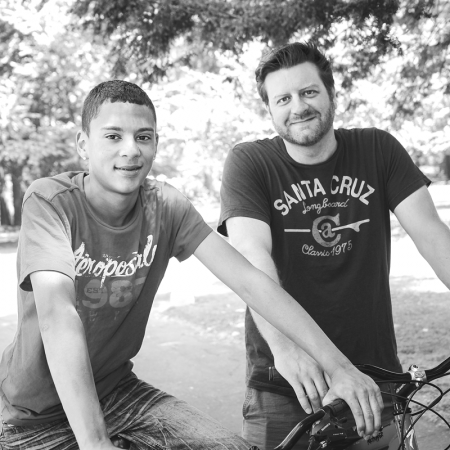
‘Training for the Digital Marketplace’

April 1, 8, 15: Stevens 470 will host a three-week program called “Training for the Digital Marketplace: Develop Your Online and Offline Marketing Strategies” to show attendees how to maximize their marketing channels. This seminar is for business owners, marketing managers, entrepreneurs, and key marketing staff. As marketing channels continue to evolve, are you using them to maximize your business opportunities? This program covers the latest online and offline marketing channels including brand presentation, websites, SEO, advertising, social media, e-mail, and mobile technologies. During this hands-on program, participants will review their current messaging and marketing channels; learn the latest ways to use both traditional and new media channels; explore social media, online advertising, and search-engine optimization; outline plans for offline and online marketing campaigns; coordinate marketing channels to maximize their effectiveness; and determine methods for evaluating results. Each participant will complete the program by creating a specific plan for their online and offline channels that they can share and put into action with members of their business team. The program meets weekly on three consecutive Friday mornings at Stevens 470 in Westfield. Limited space is available. For details, visit stevens470.com or call (413) 568-2660.

Service of Remembrance

April 3: Baystate Children’s Hospital will hold its annual Service of Remembrance for area families who have experienced the death of a child over the past year. All family member and friends are invited to attend the event, which will be held at 1 p.m. at Baystate Medical Center’s Chestnut Conference Center on 759 Chestnut St., Springfield. It is also open to families with losses prior to 2015. Baystate Children’s Hospital staff will be in attendance at the event to remember and pay tribute to the children and families who were under their care. Families are asked to respond by March 23 with the number of adults and children planning to attend the event, as well as their child’s name, if they would like it to be read aloud during the service. Families with earlier losses are simply asked to call and register. To respond, call Deborah Levine at (413) 794-3283. The special service will include readings, music, and a ceremony of light. Families can share a photograph or other memento of their child on a ‘Table of Memories’ at the event. They may also choose to have their child’s name read aloud during the Memorial Service, regardless of whether they can attend the event. As part of the service, families will be given a piece of fabric which they can personalize in memory of their child before it is added, along with others, to create a memory quilt. The new quilt will be displayed on Oct. 1, along with 17 other quilts created in past years, at Baystate’s annual Memorial Quilt Exhibit.

‘A Night of Passion’ for Link to Libraries

April 5: They’re calling the event “A Night of Passion.” That’s a phrase that applies to both support for efforts to promote childhood literacy and a fondness for a particular food or beverage. These various passions will come together April 5 at the Log Cabin Banquet & Meeting House in Holyoke at Link to Libraries’ biennial fund-raising event. Proceeds from all ticket sales will go to Link to Libraries. More than 500 people are expected to attend the event, which will be a celebration of all that Link to Libraries has accomplished since it was created in 2008 — including the donation of nearly 500,000 books to area schools and organizations — and how it intends to continually expand its mission in the years to come. As for those passions for specific foods and drinks, they will be a focus of the night, provided by a host of area celebrities and business leaders, including Mike Mathis, MGM Springfield president and chief operating officer; Kevin Rhodes, Springfield Symphony Orchestra conductor; Spiros Hatiras, Holyoke Medical Center president and CEO; Delcie Bean IV, CEO of Paragus Strategic IT; Mick Corduff, executive chef and co-owner of the Log Cabin; Amy Royal, founding partner of Royal, P.C., and many more. As for their passions, well, those are carefully guarded secrets at this point. Those who would like to experience these passions and support Link to Libraries — which supplies books to schools and other organizations across Western Mass. and Northern Conn., and promotes read-alouds that put area business and civic leaders in area classrooms — can buy tickets for $40 each by sending checks to: Link to Libraries, Attn. Karen Blinderman, P.O. Box 958, West Springfield, MA 01090. All beverages are included in the ticket price. Food and beverages are donated by the Log Cabin. Sponsors for “A Night of Passion” include lead sponsors Health New England and Rediker Software, and event sponsors Bacon Wilson, Bank of America – U.S. Trust, the Frank Stanley Beveridge Foundation, the Irene E. & George A. Davis Foundation, James Vinick and Moors & Cabot Investments, Monson Savings Bank, PeoplesBank, Peoples United Bank, the Springfield Falcons, and United Bank.
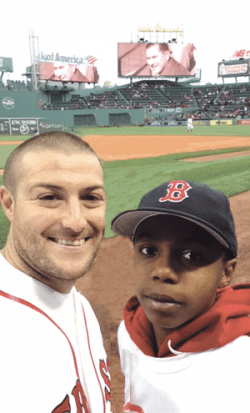
‘Poets for Life: Poets Respond to AIDS’

April 9: Patrick Donnelly, 2015-17 poet laureate of Northampton, will host “Poets for Life: Poets Respond to AIDS,” a benefit reading in support of A Positive Place (formerly AIDS Care/Hampshire County), a nonprofit organization providing a wide array of services for people with HIV in Hampshire and surrounding counties. The event will be held at 3 p.m. at the Paradise Room, Conference Center, Smith College, 51 College Lane, Northampton. The Northampton Council for the Arts and the Poetry Center at Smith College are co-sponsors of the benefit. Tickets for the event are $20 and may be purchased online at poetsforlife.brownpapertickets.com, or by phone at (800) 838-3006, ext. 1, or at the door at the event. All proceeds from ticket sales will benefit A Positive Place. Those unable to attend the event can designate a tax-deductible donation through poetsforlife.brownpapertickets.com to make it possible for one of A Positive Place’s clients to attend. Poets for Life will feature readings by award-winning poets Eduardo C. Corral, Patrick Donnelly, Michael Klein, and Joan Larkin, who will read not only from their own poetry about the epidemic, but from the work of other notable poets, living and dead. Singer-songwriter Laura Wetzler will also perform. Since 1991, A Positive Place has been providing comprehensive, confidential case management and health-related support services, filling life-saving needs for people living with HIV/AIDS in the county. Anyone living with HIV or AIDS is eligible for services regardless of level of need, health status, or ability to pay. Services are free to people living with HIV.

Not Just Business as Usual

April 14: The Springfield Technical Community College (STCC) Foundation’s Not Just Business as Usual (NJBAU) event, a networking event for business leaders in Western Mass., will be held at the Naismith Memorial Basketball Hall of Fame. The event, now in its seventh year, is a celebration of innovative thinking giving participants the opportunity to learn from business experts while raising significant funding for the STCC WORKS scholarship program. A cocktail and networking reception will be held from 5:30 to 7 p.m., with dinner and keynote speakers to follow from 7 to 8:30 p.m. This year, NJBAU will host a discussion of diversity in the science, technology, engineering, and mathematics (STEM) fields with panelists Emily Reichert, CEO of Greentown Labs; Laurie Leshin, president of Worcester Polytechnic Institute; and Frank Robinson, vice president of Public Health and Community Relations for Baystate Health. Tickets and sponsorship opportunities are now available. Tickets are $175 each, and sponsorships begin at $2,500 for a table for 10. For additional information or to become a sponsor, contact Christina Tuohey, STCC’s director of Annual Giving and Alumni Relations, at (413) 755-4475 or [email protected]. To purchase tickets online, visit www.stcc.edu/njbau.


5K Run & Walk for a Noble Cause

April 30: Registration is now open for Baystate Noble Hospital’s 32nd annual 5K Run & Walk for a Noble Cause, being held at Stanley Park in Westfield. The race begins at 9 a.m., with registration from 7:30 to 8:30 a.m. near the Children’s Pavilion. The Baystate Noble 5K is a competitive, 3.1-mile road race through Stanley Park and surrounding areas for all levels of runners, from the novice to the serious athlete. Early registration is encouraged. The registration fee for ages 13-59 is $35 through April 29 (seniors 60 and older are $25). The registration fee for ages 13-59 is $40 on April 30 ($30 for seniors). Children 12 and under participate free when accompanied by a paying adult. T-shirts in various sizes are available to registrants on a first-come, first-served basis while inventory is available. To register online, download registration materials, and read general information, visit baystatenoblehospital.org/5k. Sponsorship and vendor table opportunities are also available. For more information, visit baystatenoblehospital.org/5k or contact the Community Development Office at [email protected] or (413) 568-2811, ext. 5520.


Walk of Champions

May 1: The community is invited to come together at the Quabbin Reservoir to mark the 11th annual Walk of Champions to benefit the Baystate Regional Cancer Program at Baystate Mary Lane Hospital in Ware. The walk is a one-mile loop that allows walkers to choose the number of miles they complete among the comfortable walking terrain of the Goodnough Dike. Along the way, walkers will enjoy entertainment and refreshments, along with the peace and beauty of the Quabbin Reservoir. Since its inception, the Walk of Champions has raised more than $662,000. All funds raised remain local to support those cared for in the Baystate Health Eastern Region at Baystate Medical Center’s Mary Lane Satellite Unit and for things such as family-support counseling, educational outreach, pastoral care, medications, state-of-the-art equipment, and the Healing Garden located in the courtyard of the hospital. Overlooking the Healing Garden is the oncology suite, which provides access to comprehensive cancer care, clinical trials, and a multi-disciplinary team approach to cancer care. Pledge forms, fund-raising resources, giving opportunities, and more are available at www.baystatehealth.org/woc for businesses, community organizations, and individuals who wish to participate.


40 Under Forty

June 16: The 10th annual 40 Under Forty award program, staged by BusinessWest, will be held at the Log Cabin Banquet & Meeting House in Holyoke, honoring 40 of the region’s rising stars under 40 years old. An independent panel of judges has chosen the winners, and their stories will be told in the April 18 issue. Tickets — which cost $65 per person, with reserved tables of 10 available — are going very quickly. To order, call (413) 781-8600, ext. 100. The event is sponsored by Northwestern Mutual and Paragus Strategic IT (presenting sponsors), EMA Dental, Health New England, Moriarty & Primack, and United Bank. More details on the gala will be revealed in upcoming issues.

Agenda Departments

Management Conference

March 10: The Employers Assoc. of the NorthEast (EANE) announced its 12th annual Management Conference will be held at the Springfield Marriott, with a focus on driving business performance. The full-day conference will address how managers and supervisors can create a culture of alignment, agility, and engagement to improve organizational performance. The program will feature Bruce Tulgan, an expert on leadership and management. He is the bestselling author of It’s Okay to Be the Boss, Managing Generation X, and his newest book, Bridging the Soft Skills Gap. The conference also includes breakout sessions, a presentation on “Building a Leadership Culture of Innovation and Energy” with Rich Trombetta of Innovation Is Easy, and an improv workshop by ConnectAnd about connecting your leadership to your team. The cost for the program is $325 per person, with discounts for three or more. Register and learn more at eane.org/12th-annual-management-conference or call (877) 662-6444. The program will offer 6.75 credits from the HR Certification Institute. Sponsoring the program are Johnson and Hill Staffing and the Human Resource Certification Institute.


Springfield Falcons Dr. Seuss Night

March 12: The Springfield Falcons, in partnership with the Springfield Museums and Dr. Seuss Enterprises, announced Dr. Seuss Night, to be held during a game against the Portland Pirates starting at 7 p.m. Dr. Seuss Night and the game will be sponsored by Berkshire Bank. For the first time ever, Dr. Seuss Enterprises has partnered with the Falcons and the Springfield Museums in presenting this special night to honor Theodor Geisel, a.k.a. Dr. Seuss, who was born and raised in Springfield. The Springfield Museums are preparing to open the Amazing World of Dr. Seuss Museum in 2016, an exhibit featuring interactive activities for children and a one-of-a-kind experience that will provide a look at the man behind the drawing board. “We are excited to partner with the Springfield Museums and Dr. Seuss Enterprises in presenting this special night to honor one of Springfield’s most famous native sons,” Falcons President Sarah Pompea said. “We have been anticipating this night since the summer months and are excited to aid the launching of the new museum in support of a unique family entertainment night around a favorite children’s author.” The night will include appearances by the Cat in the Hat and Thing 1 and Thing 2 costumed characters. In addition, specialty jerseys will be worn by Falcons players and auctioned off, with proceeds donated to the Springfield Museums to help support the creation of the new museum. “We are thrilled that the Falcons are stepping up in support of our fund-raising campaign,” said Kay Simpson, president of the Springfield Museums. “It’s wonderful to have the support of one our best downtown neighbors.”

 

Difference Makers

March 31: The eighth annual Difference Makers award program, staged by BusinessWest, will be held at the Log Cabin Banquet & Meeting House. Tickets cost $60, and tables of 10 are available. To reserve a spot, call (413) 781-8600, ext. 10, or go HERE. Difference Makers is a program, launched in 2009, that recognizes groups and individuals that are, as the name suggests, making a difference in this region. This year’s class was profiled in the Jan. 25 issue, and their stories can also be read online at businesswest.com. They include Hampden County Sheriff Michael J. Ashe Jr.; Mike Balise, Balise Motor Sales, philanthropist (1965-2015); Big Brothers Big Sisters of Hampden, Hampshire, and Franklin counties; Bay Path University President Carol Leary; and John Robison, president, J.E. Robison Service. Difference Makers is sponsored by EMA Dental, First American Insurance Agency, Health New England, Meyers Brothers Kalicka, P.C., Northwestern Mutual, PeoplesBank, Royal LLP, and Sunshine Village.


‘Training for the Digital Marketplace’

April 1, 8, 15: Stevens 470 will host a three-week program called “Training for the Digital Marketplace: Develop Your Online and Offline Marketing Strategies” to show attendees how to maximize their marketing channels. This seminar is for business owners, marketing managers, entrepreneurs, and key marketing staff. As marketing channels continue to evolve, are you using them to maximize your business opportunities? This program covers the latest online and offline marketing channels including brand presentation, websites, SEO, advertising, social media, e-mail, and mobile technologies. During this hands-on program, participants will review their current messaging and marketing channels; learn the latest ways to use both traditional and new media channels; explore social media, online advertising, and search-engine optimization; outline plans for offline and online marketing campaigns; coordinate marketing channels to maximize their effectiveness; and determine methods for evaluating results. Each participant will complete the program by creating a specific plan for their online and offline channels that they can share and put into action with members of their business team. The program meets weekly on three consecutive Friday mornings at Stevens 470 in Westfield. Limited space is available. For details, visit stevens470.com or call (413) 568-2660.


‘A Night of Passion’ for Link to Libraries

April 5: They’re calling the event “A Night of Passion.” That’s a phrase that applies to both support for efforts to promote childhood literacy and a fondness for a particular food or beverage. These various passions will come together April 5 at the Log Cabin Banquet & Meeting House in Holyoke at Link to Libraries’ biennial fund-raising event. Proceeds from all ticket sales will go to Link to Libraries. More than 500 people are expected to attend the event, which will be a celebration of all that Link to Libraries has accomplished since it was created in 2008 — including the donation of nearly 500,000 books to area schools and organizations — and how it intends to continually expand its mission in the years to come. As for those passions for specific foods and drinks, they will be a focus of the night, provided by a host of area celebrities and business leaders, including Mike Mathis, MGM Springfield president and chief operating officer; Kevin Rhodes, Springfield Symphony Orchestra conductor; Spiros Hatiras, Holyoke Medical Center president and CEO; Delcie Bean IV, CEO of Paragus Strategic IT; Mick Corduff, executive chef and co-owner of the Log Cabin; Amy Royal, founding partner of Royal, P.C., and many more. As for their passions, well, those are carefully guarded secrets at this point. Those who would like to experience these passions and support Link to Libraries — which supplies books to schools and other organizations across Western Mass. and Northern Conn., and promotes read-alouds that put area business and civic leaders in area classrooms — can buy tickets for $40 each by sending checks to: Link to Libraries, Attn. Karen Blinderman, P.O. Box 958, West Springfield, MA 01090. All beverages are included in the ticket price. Food and beverages are donated by the Log Cabin. Sponsors for “A Night of Passion” include lead sponsors Health New England and Rediker Software, and event sponsors Bacon Wilson, Bank of America – U.S. Trust, the Frank Stanley Beveridge Foundation, the Irene E. & George A. Davis Foundation, James Vinick and Moors & Cabot Investments, Monson Savings Bank, PeoplesBank, Peoples United Bank, the Springfield Falcons, and United Bank.


Not Just Business as Usual

April 14: The Springfield Technical Community College (STCC) Foundation’s Not Just Business as Usual (NJBAU) event, a networking event for business leaders in Western Mass., will be held at the Naismith Memorial Basketball Hall of Fame. The event, now in its seventh year, is a celebration of innovative thinking giving participants the opportunity to learn from business experts while raising significant funding for the STCC WORKS scholarship program. A cocktail and networking reception will be held from 5:30 to 7 p.m., with dinner and keynote speakers to follow from 7 to 8:30 p.m. This year, NJBAU will host a discussion of diversity in the science, technology, engineering, and mathematics (STEM) fields with panelists Emily Reichert, CEO of Greentown Labs; Laurie Leshin, president of Worcester Polytechnic Institute; and Frank Robinson, vice president of Public Health and Community Relations for Baystate Health. Tickets and sponsorship opportunities are now available. Tickets are $175 each, and sponsorships begin at $2,500 for a table for 10. For additional information or to become a sponsor, contact Christina Tuohey, STCC’s director of Annual Giving and Alumni Relations, at (413) 755-4475 or [email protected]. To purchase tickets online, visit www.stcc.edu/njbau.


Walk of Champions

May 1: The community is invited to come together at the Quabbin Reservoir to mark the 11th annual Walk of Champions to benefit the Baystate Regional Cancer Program at Baystate Mary Lane Hospital in Ware. The Walk of Champions, founded in 2006 by John O’Neill, field-hockey coach at Quaboag Regional Middle High School, began as a tribute to the compassionate care and comfort his mother received during her struggle with cancer. Since then, the Walk of Champions has grown into a collection of teams and individuals each walking for their own reason. There are friends and family members celebrating victory over cancer. Others are encouraging their loved ones in their personal fight over cancer, while others walk in memory of those who have lost their battle with cancer. The walk is a one-mile loop that allows walkers to choose the number of miles they complete among the comfortable walking terrain of the Goodnough Dike. Along the way, walkers will enjoy entertainment and refreshments, along with the peace and beauty of the Quabbin Reservoir. Since its inception, the Walk of Champions has raised more than $662,000. All funds raised remain local to support those cared for in the Baystate Health Eastern Region at Baystate Medical Center’s Mary Lane Satellite Unit and for things such as family-support counseling, educational outreach, pastoral care, medications, state-of-the-art equipment, and the Healing Garden located in the courtyard of the hospital. Overlooking the Healing Garden is the oncology suite, which provides access to comprehensive cancer care, clinical trials, and a multi-disciplinary team approach to cancer care. Pledge forms, fund-raising resources, giving opportunities, and more are available at www.baystatehealth.org/woc for businesses, community organizations, and individuals who wish to participate.


40 Under Forty

June 16: The 10th annual 40 Under Forty award program, staged by BusinessWest, will be held at the Log Cabin Banquet & Meeting House in Holyoke, honoring 40 of the region’s rising stars under 40 years old. An independent panel of judges has chosen the winners, and their stories will be told in the April 18 issue. The event is sponsored by Northwestern Mutual and Paragus Strategic IT (presenting sponsors), EMA Dental, Health New England, Isenberg School of Management at UMass Amherst, Moriarty & Primack, and United Bank. More details on the gala will be revealed in upcoming issues.

Daily News

HOLYOKE — Tickets still remain for the eighth annual Difference Makers Gala, to be staged by BusinessWest on Thursday, March 31 at the Log Cabin Banquest & Meeting House in Holyoke, but they are going fast.

Those interested in attending the event — which will honor Hampden County Sheriff Michael J. Ashe Jr.; Mike Balise, Balise Motor Sales, philanthropist (1965-2015); Big Brothers Big Sisters of Hampden, Hampshire, and Franklin counties; Bay Path University President Carol Leary; and John Robison, president, J.E. Robison Service — are urged to order tickets promptly.

Tickets, with tables of 10 still available, cost $60 each. To reserve tickets, call (413) 781-8600, ext. 10, or visit businesswest.com. Difference Makers is a program, launched in 2009, that recognizes groups and individuals that are, as the name suggests, making a difference in this region. This year’s class was profiled in the Jan. 25 issue, and their stories can also be read online at businesswest.com.

Difference Makers is sponsored by EMA Dental, First American Insurance Agency, Health New England, Meyers Brothers Kalicka, P.C., Northwestern Mutual, PeoplesBank, Royal LLP, and Sunshine Village.

Agenda Departments

Academy of Music Historic Tour

Feb. 24: The Academy of Music will offer a free tour of the historic theater at 5:15 p.m. Led by Academy of Music Development Coordinator Kathryn Slater, the tour will provide insight into the history behind this Northampton mainstay, including details about the organization’s founder and interesting notes about the many revitalizations. Built in 1891, the Academy of Music was the first municipally owned theater in the U.S., and home to the first stock theater company in the nation, the Northampton Players, formed in 1912. For nearly 125 years, the Academy has hosted an impressive array of performers, and the building holds the tales. See for yourself the century-old hole cut in the stage floor for Houdini’s disappearing act; Cole Porter’s grandfather clock; dressing rooms used by Sarah Bernhardt, Boris Karloff, Ethel Barrymore; and more. Step on the stage and see the Academy of Music from a whole new perspective, and take in the results of the 2014 restoration that refurbished the 800-seat auditorium, which earned a Mass. Historical Commission Preservation Award. This walking-and-talking tour begins promptly at 5:15 p.m. in the main lobby and is expected to run approximately 45 minutes. Admission is free, but reservations are required, as attendance is limited to 20. Reservations may be made through the Academy of Music Box Office by calling (413) 584-9032, ext. 105, Tuesday through Friday from 3 to 6 p.m., or by e-mailing [email protected].

Management Conference

March 10: The Employers Assoc. of the NorthEast (EANE) announced its 12th annual Management Conference will be held at the Springfield Marriott, with a focus on driving business performance. The full-day conference will address how managers and supervisors can create a culture of alignment, agility, and engagement to improve organizational performance. “Research shows that 60% of highly engaged employees report that their work is not aligned with company goals,” said Meredith Wise, EANE president. “By aligning employees to business priorities and equipping them with skills to quickly sense and lead change, companies can improve their organizational performance. Our conference is about managers and supervisors learning how alignment, agility, and engagement contribute to corporate performance.” The program will feature Bruce Tulgan, an expert on leadership and management. He is the bestselling author of It’s Okay to Be the Boss, Managing Generation X, and his newest book, Bridging the Soft Skills Gap. The conference also includes breakout sessions, a presentation on “Building a Leadership Culture of Innovation and Energy” with Rich Trombetta of Innovation Is Easy, and an improv workshop by ConnectAnd about connecting your leadership to your team. The cost for the program is $325 per person, with discounts for three or more. Register and learn more at eane.org/12th-annual-management-conference or call (877) 662-6444. The program will offer 6.75 credits from the HR Certification Institute. Sponsoring the program are Johnson and Hill Staffing and the Human Resource Certification Institute.


Celebrate Springfield Dinner

March 10: DevelopSpringfield will host its fifth annual Celebrate Springfield dinner event in celebration of the many accomplishments the community has achieved over the past year along with exciting new initiatives underway. The event will take place from 5:30 to 8:30 p.m. at the MassMutual Center in Springfield. Festivities will include a reception with live music by the Eric Bascom Trio, auction activities, a cash bar, and hors d’oeuvres, followed by dinner, a brief program, and award presentations. The platinum sponsor this year is MassMutual Financial Group. Many other local businesses and organizations are also supporting the event as sponsors and participants. Sponsorship opportunities are still available. DevelopSpringfield will once again present its Partner in Progress Award to recognize the outstanding contributions of three individuals toward revitalization in Springfield. Honorees are selected for their leadership and ability to motivate and inspire others. This year’s honorees are Brian Connors, Springfield’s deputy director of Economic Development; Maureen Hayes, president of Hayes Development Services; and Ira Rubenzahl, president of Springfield Technical Community College. In addition to the program and award presentations, greetings will be provided by Mayor Domenic Sarno followed by Jay Ash, secretary of the Commonwealth’s Executive Office of Housing and Economic Development. Jill Monson-Bishop of Inspired Marketing will serve as mistress of ceremonies. The celebration is a benefit event; all proceeds will support DevelopSpringfield’s redevelopment initiatives, projects, and programs. More than 500 attendees, including state and city officials, leaders from the business and nonprofit communities, and local residents, are expected to come together in support of ongoing efforts to advance development and redevelopment projects, to stimulate and support economic growth, and to expedite the revitalization process within the city. Tickets are $100 per person. Registration and sponsorship information is available at www.developspringfield.com or by contacting Paige Thayer at (413) 209-8808 or [email protected]. RSVP by Tuesday, Feb. 23.


Springfield Falcons Dr. Seuss Night

March 12: The Springfield Falcons, in partnership with the Springfield Museums and Dr. Seuss Enterprises, announced Dr. Seuss Night, to be held during a game against the Portland Pirates starting at 7 p.m. Dr. Seuss Night and the game will be sponsored by Berkshire Bank. For the first time ever, Dr. Seuss Enterprises has partnered with the Falcons and the Springfield Museums in presenting this special night to honor Theodor Geisel, a.k.a. Dr. Seuss, who was born and raised in Springfield. The Springfield Museums are preparing to open the Amazing World of Dr. Seuss Museum in 2016, an exhibit featuring interactive activities for children and a one-of-a-kind experience that will provide a look at the man behind the drawing board. “We are excited to partner with the Springfield Museums and Dr. Seuss Enterprises in presenting this special night to honor one of Springfield’s most famous native sons,” Falcons President Sarah Pompea said. The night will include appearances by the Cat in the Hat and Thing 1 and Thing 2 costumed characters. In addition, specialty jerseys will be worn by Falcons players and auctioned off, with proceeds donated to the Springfield Museums to help support the creation of the new museum. “We are thrilled that the Falcons are stepping up in support of our fund-raising campaign,” said Kay Simpson, president of the Springfield Museums. “It’s wonderful to have the support of one our best downtown neighbors.”


Difference Makers

March 31: The eighth annual Difference Makers award program, staged by BusinessWest, will be held at the Log Cabin Banquet & Meeting House. Tickets cost $60, and tables of 10 are available. To reserve a spot, call (413) 781-8600, ext. 10, or visit businesswest.com. Difference Makers is a program, launched in 2009, that recognizes groups and individuals that are, as the name suggests, making a difference in this region. This year’s class was profiled in the Jan. 25 issue, and their stories can also be read online HERE. They include Hampden County Sheriff Michael J. Ashe Jr.; Mike Balise, Balise Motor Sales, philanthropist (1965-2015); Big Brothers Big Sisters of Hampden, Hampshire, and Franklin counties; Bay Path University President Carol Leary; and John Robison, president, J.E. Robison Service. Difference Makers is sponsored by EMA Dental, First American Insurance Agency, Health New England, Meyers Brothers Kalicka, P.C., Northwestern Mutual, PeoplesBank, Royal LLP, and Sunshine Village.


‘A Night of Passion’ for Link to Libraries

April 5: They’re calling the event “A Night of Passion.” That’s a phrase that applies to both support for efforts to promote childhood literacy and a fondness for a particular food or beverage. These various passions will come together at the Log Cabin Banquet & Meeting House in Holyoke at Link to Libraries’ biennial fund-raising event. More than 500 people are expected to attend the event, which will be a celebration of all that Link to Libraries has accomplished since it was created in 2008 — including the donation of nearly 500,000 books to area schools and organizations — and how it intends to continually expand its mission in the years to come. As for those passions for specific foods and drinks, they will be a focus of the night, provided by a host of area celebrities and business leaders, including Mike Mathis, MGM Springfield president and chief operating officer; Kevin Rhodes, Springfield Symphony Orchestra conductor; Spiros Hatiras, Holyoke Medical Center president and CEO; Delcie Bean IV, CEO of Paragus Strategic IT; Mick Corduff, executive chef and co-owner of the Log Cabin; Amy Royal, founding partner of Royal, P.C., and many more. As for their passions, well, those are carefully guarded secrets at this point. Those who would like to experience these passions and support Link to Libraries — which supplies books to schools and other organizations across Western Mass. and Northern Conn., and promotes read-alouds that put area business and civic leaders in area classrooms — can buy tickets for $40 each by sending checks to: Link to Libraries, Attn. Karen Blinderman, P.O. Box 958, West Springfield, MA 01090. Sponsors for “A Night of Passion” include lead sponsors Health New England and Rediker Software, and event sponsors Bacon Wilson, Bank of America – U.S. Trust, the Frank Stanley Beveridge Foundation, the Irene E. & George A. Davis Foundation, James Vinick and Moors & Cabot Investments, Monson Savings Bank, PeoplesBank, Peoples United Bank, the Springfield Falcons, and United Bank.


Not Just Business as Usual

April 14: The Springfield Technical Community College (STCC) Foundation’s Not Just Business as Usual (NJBAU) event, a networking event for business leaders in Western Mass., will be held at the Naismith Memorial Basketball Hall of Fame. The event, now in its seventh year, is a celebration of innovative thinking giving participants the opportunity to learn from business experts while raising significant funding for the STCC WORKS scholarship program. A cocktail and networking reception will be held from 5:30 to 7 p.m., with dinner and keynote speakers to follow from 7 to 8:30 p.m. This year, NJBAU will host a discussion of diversity in the science, technology, engineering, and mathematics (STEM) fields with panelists Emily Reichert, CEO of Greentown Labs; Laurie Leshin, president of Worcester Polytechnic Institute; and Frank Robinson, vice president of Public Health and Community Relations for Baystate Health. Tickets and sponsorship opportunities are now available. Tickets are $175 each, and sponsorships begin at $2,500 for a table for 10. For additional information or to become a sponsor, contact Christina Tuohey, STCC’s director of Annual Giving and Alumni Relations, at (413) 755-4475 or [email protected]. To purchase tickets online, visit www.stcc.edu/njbau.


5K Run & Walk for a Noble Cause

April 30: Registration is now open for Baystate Noble Hospital’s 32nd annual 5K Run & Walk for a Noble Cause, being held at Stanley Park in Westfield. The race begins at 9 a.m., with registration from 7:30 to 8:30 a.m. near the Children’s Pavilion. The Baystate Noble 5K is a competitive road race for all levels of runners, from the novice to the serious athlete. The 3.1-mile course is flat out and back through Stanley Park and the surrounding residential area. A family-friendly, non-competitive walk follows the same route as the road race. Individuals, teams, wheelchair racers, and school groups are all encouraged to participate. After the race, refreshments, activities, and vendor tables will be located near registration, and awards will be given out. Early registration is encouraged. The registration fee for ages 13-59 is $35 through April 29 (seniors 60 and older are $25). The registration fee for ages 13-59 is $40 on April 30 ($30 for seniors). Children 12 and under participate free when accompanied by a paying adult. T-shirts in various sizes are available to registrants on a first-come, first-served basis while inventory is available. To register online, download registration materials, and read general information, visit baystatenoblehospital.org/5k.


40 Under Forty

June 16: The 10th annual 40 Under Forty award program, staged by BusinessWest, will be held at the Log Cabin Banquet & Meeting House in Holyoke, honoring 40 of the region’s rising stars under 40 years old. Nominations are now closed, and an independent panel of judges will choose the winners; their stories will be told in the April 18 issue. The event is sponsored by Northwestern Mutual and Paragus Strategic IT (presenting sponsors), EMA Dental, Health New England, Isenberg School of Management at UMass Amherst, Moriarty & Primack, and United Bank. More details on the gala will be revealed in upcoming issues.

Daily News

HOLYOKE — The eighth annual Difference Makers award program, staged by BusinessWest, will be held at the Log Cabin Banquet & Meeting House on Thursday, March 31.

Difference Makers is a program, launched in 2009, that recognizes groups and individuals that are, as the name suggests, making a difference in this region. This year’s class was profiled in the Jan. 25 issue, and their stories can also be read online at businesswest.com. They include Hampden County Sheriff Michael J. Ashe Jr.; Mike Balise, Balise Motor Sales, philanthropist (1965-2015); Big Brothers Big Sisters of Hampden, Hampshire, and Franklin counties; Bay Path University President Carol Leary; and John Robison, president of J.E. Robison Service and an internationally known advocate for people with autism.

Tickets cost $60, and tables of 10 are available. To reserve a spot, call (413) 781-8600, ext. 10, or visit businesswest.com/differnce-makers/difference-makers-event. Difference Makers is sponsored by EMA Dental, First American Insurance Agency, Health New England, Meyers Brothers Kalicka, P.C., Northwestern Mutual, PeoplesBank, Royal LLP, and Sunshine Village.

Agenda Departments

‘Wolf to Woof’ Exhibit

Through May 12: In today’s society, dogs enhance the lives of millions of people in countless ways, but they are also some of our oldest friends. Ancient clues like cave paintings and burials reveal that dogs and people have lived together for thousands of years. But why have humans formed such close relationships with dogs, and not cows or chickens? “Wolf to Woof: The Story of Dogs” is the largest and most comprehensive traveling exhibition ever created on the history, biology, and evolution of dogs. The exhibit, on view at the Springfield Science Museum through May 12, attempts to sniff out the facts on dogs and explore what makes the human/dog relationship so unique. It uses the familiarity and love of these four-legged friends to explore science and biological concepts. The exhibit has four themed sections including multi-media displays, artifacts, photo murals, and dioramas of taxidermied wild canines and sculpted modern dog breeds. Additionally, interactive, hands-on components demonstrate key exhibit concepts. For example, visitors can enter a ‘howling area’ and guess what dogs are saying, test their nose against a dog’s great sense of smell, and examine fossil and genetic evidence of how modern-day dogs are descended from wolves. In addition, the weekly Museums à la Carte lecture on Thursday, March 17 will feature a talk by Eliot Rusman, president and CEO of Fidelco Guide Dog Foundation. Tickets for this lecture are $4 for the general public and $2 for members. “Wolf to Woof: The Story of Dogs” is sponsored by United Bank. MassMutual is the 2015-16 Premier Sponsor of the Springfield Museums.

Grief Through Story Workshop

Feb. 10: The Garden: A Center for Grieving Children and Teens will present a Grief Through Story workshop from 6 to 7:30 p.m. at Sunderland Public Library, 20 School St. The workshop, co-hosted by the Sunderland, Deerfield, and Hatfield public libraries, is geared toward adult caregivers and community members who are interested in learning how to initiate gentle conversations with youth about death, dying, and grief. The purpose of the workshop is to use children’s literature as an effective tool in talking with children about these difficult topics. Participants will join in a guided conversation about grief and will discover resources in various mediums that can be used to facilitate these important conversations. Family members, friends, and loved ones in the lives of a grieving young person, as well as anyone interested in grief work with children, is invited to attend.   The snow date is Wednesday, Feb. 17 from 6 to 7:30 p.m. The event is free, and drop-ins are welcome. The Garden provides bereavement support at no cost to grieving families with young children no matter where, how, or when a death occurred. For more information about its programs, call Shelly Bathe Lenn, Garden coordinator, at (413) 582-5312.

Chocolate Fantasy

Feb. 12: Baystate Franklin Medical Center’s volunteers and members of the Baystate Franklin Auxiliary (BFA) will hold their annual Chocolate Fantasy fund-raiser from 9:30 a.m. to 3:30 p.m. in the hospital’s main conference rooms. This year, funds raised at the Chocolate Fantasy will support the hospital’s Cardiopulmonary Department and Mental Health Unit. The event also features Valentine-related crafts and a raffle with baskets of items from local businesses. BFMC Clinical Notes, the hospital’s women’s a cappella chorus, will present a mini-concert of love songs at 12:15 pm in the main lobby. “Many local organizations and BFMC staff and volunteers have graciously and generously donated chocolate items, from chocolate-chip cookies to chocolate-covered apples to truffles and fudge, and much more,” said Sydney Ramey, chair of the Chocolate Fantasy committee. “We always invite contributors to think creatively as they consider what to send in for the sale.” A highlight of this year’s Fantasy is the raffling of an original watercolor by John Tomasetti, a member of the Old Deerfield Painting Group. The painting is on display in the BFA Gift Shop window. Raffle tickets may be purchased in the shop for $2 each, three for $5, or $10 for a baker’s dozen. The drawing will take place at the Chocolate Fantasy. For more information on the event, or to donate chocolate goodies or raffle items, contact Becky George, manger, Volunteer Services, BFMC, at (413) 773-2318  or [email protected].

Red Cross Blood Drive

Feb 16: The MassMutual Center will host its annual American Red Cross blood drive from 11 a.m. to 5 p.m. Severe winter weather across the nation since Jan. 1 has forced the cancellation of more than 300 blood drives, resulting in more than 9,500 donations uncollected, further depleting an already-low winter supply. In order to fulfill the need, blood products are being distributed to hospitals as quickly as donations are being collected. “The MassMutual Center is proud to hold our annual blood drive in support of the Red Cross. We are committed to serving the Springfield community and working with partners such as the Red Cross whose mission is to provide compassionate care to those in need,” said Stacey Church, general manager of the MassMutual Center. Visit redcrossblood.org or call (800) 733-2767 to schedule an appointment. Walk-ins are welcome, but appointments are preferred.


Informational Seminar on
Alzheimer’s, Dementia

Feb. 16: The Arbors at Chicopee will host an informational seminar on Alzheimer’s disease and dementia at 6 p.m. Ed Walters-Zucco, RN at Integra, will offer a brief presentation on the differences between the two diseases and the signs and symptoms. More than 5 million Americans suffer from Alzheimer’s disease. Community and resident family members will gather to learn how to cope with this statistic. Following the presentation will be a question-and-answer session and a raffle drawing. Refreshments, cookies, and cheese and crackers will be served.


Dinner, Conversation
About Race in America

Feb. 21: Blue Heron Restaurant will host “On the Bus: Dinner and a Conversation About Race in America with Julius Lester and Barry Moser.” Lester and Moser, writers, educators, and artists who currently reside in Western Mass., both came of age in Tennessee in the 1950s and 60s. Although they both rode public buses in the South, their experiences differed greatly because of the color of their skin. Their experience provides a lens through which the two will begin a discussion on race, racism, and segregation in the U.S. Local poet, author, and gallery owner Richard Michelson will moderate the discussion. Guests will be invited to pose questions to the panelists and share their own thoughts and experiences on the subject. The evening’s menu will draw from the culinary heritage of the American South. The meal will begin with a root vegetable soup served with pimento-cheese crostini. For the main course, guests will choose from a selection of chicken-fried steak with cream gravy, fried catfish with jalapeño remoulade, or squash and cheddar soufflé. Side dishes will be served family-style, and include collard greens, hoppin’ John, sautéed okra, and housemade biscuits. The meal will conclude with a slice of chess pie, a staple of Southern cuisine. The event will begin at 5:30 p.m., and the cost is $40 per person, not including tax or gratuity. The full menu is available to view at www.blueherondining.com/special-events. Reservations are recommended and can be made by calling (413) 665-2102 or e-mailing [email protected].


Real-estate
Licensing Course

Feb. 22: Beginning Monday, Feb. 22, the Realtor Assoc. of Pioneer Valley will sponsor a 40-hour, 14-class sales-licensing course to help individuals prepare for the Massachusetts real-estate salesperson license exam. The course will be completed on Wednesday, March 23. Tuition is $359 and includes the book and materials. For an application, call the Realtor Assoc. of Pioneer Valley at (413) 785-1328.


Celiac Disease and
Gluten-free Diets

Feb. 24: Many people are on gluten-free diets, either due to celiac disease, gluten intolerance, or just because they think it’s healthier. The community is invited to attend a luncheon program titled “Separating Facts from Fad: Gluten-free Diets,” presented by Dr. Harbir Sawhney, gastroenterologist from Baystate Medical Practices – Mary Lane Gastroenterology from 11:30 a.m. to 1 p.m. at Baystate Wing Hospital in Palmer. “Dr. Sawheny will discuss celiac disease, gluten-free diets, and all things gastrointestinal,” said Susan Fontaine, senior coordinator of Loyalty Programs at Baystate Health. “Celiac disease is a digestive disorder in which the body can’t tolerate gluten, a protein found in wheat, rye, barley, and sometimes oats. According to the National Foundation for Celiac Awareness, an estimated 1 in 133 Americans, or about 1% of the population, has celiac disease. “If you need to cut gluten from your diet, it may seem difficult, but there are many healthy and delicious foods that are naturally gluten-free,” said Fontaine, noting that the program will include a gluten-free bag lunch. The program is sponsored by Baystate Health Senior Class and will include lunch at no cost. Space is limited, and registration is required by calling Baystate Health Link at (800) 377-4325. For more information about the Senior Class Loyalty Program, visit www.baystatehealth.org/seniorclass.


Academy of Music
Historic Tour

Feb. 24: The Academy of Music will offer a free tour of the historic theater at 5:15 p.m. Led by Academy of Music Development Coordinator Kathryn Slater, the tour will provide insight into the history behind this Northampton mainstay, including details about the organization’s founder and interesting notes about the many revitalizations. Built in 1891, the Academy of Music was the first municipally owned theater in the U.S., and home to the first stock theater company in the nation, the Northampton Players, formed in 1912. For nearly 125 years, the Academy has hosted an impressive array of performers, and the building holds the tales. See for yourself the century-old hole cut in the stage floor for Houdini’s disappearing act; Cole Porter’s grandfather clock; dressing rooms used by Sarah Bernhardt, Boris Karloff, Ethel Barrymore; and more. Step on the stage and see the Academy of Music from a whole new perspective, and take in the results of the 2014 restoration that refurbished the 800-seat auditorium, which earned a Mass. Historical Commission Preservation Award. This walking-and-talking tour begins promptly at 5:15 p.m. in the main lobby and is expected to run approximately 45 minutes. Admission is free, but reservations are required, as attendance is limited to 20. Reservations may be made through the Academy of Music Box Office by calling (413) 584-9032, ext. 105, Tuesday through Friday from 3 to 6 p.m., or by e-mailing [email protected].


Springfield Falcons
Dr. Seuss Night

March 12: The Springfield Falcons, in partnership with the Springfield Museums and Dr. Seuss Enterprises, announced Dr. Seuss Night, to be held during a game against the Portland Pirates starting at 7 p.m. Dr. Seuss Night and the game will be sponsored by Berkshire Bank. For the first time ever, Dr. Seuss Enterprises has partnered with the Falcons and the Springfield Museums in presenting this special night to honor Theodor Geisel, a.k.a. Dr. Seuss, who was born and raised in Springfield. The Springfield Museums are preparing to open the Amazing World of Dr. Seuss Museum in 2016, an exhibit featuring interactive activities for children and a one-of-a-kind experience that will provide a look at the man behind the drawing board. “We are excited to partner with the Springfield Museums and Dr. Seuss Enterprises in presenting this special night to honor one of Springfield’s most famous native sons,” Falcons President Sarah Pompea said. “We have been anticipating this night since the summer months and are excited to aid the launching of the new museum in support of a unique family entertainment night around a favorite children’s author.” The night will include appearances by the Cat in the Hat and Thing 1 and Thing 2 costumed characters. In addition, specialty jerseys will be worn by Falcons players and auctioned off, with proceeds donated to the Springfield Museums to help support the creation of the new museum. “We are thrilled that the Falcons are stepping up in support of our fund-raising campaign,” said Kay Simpson, president of the Springfield Museums. “It’s wonderful to have the support of one our best downtown neighbors.”

Difference Makers

March 31: The eighth annual Difference Makers award program, staged by BusinessWest, will be held at the Log Cabin Banquet & Meeting House. Tickets cost $60, and tables of 10 are available. To reserve a spot, call (413) 781-8600, ext. 10, or visit businesswest.com. Difference Makers is a program, launched in 2009, that recognizes groups and individuals that are, as the name suggests, making a difference in this region. This year’s class was profiled in the Jan. 25 issue, and their stories can also be read online at businesswest.com. They include Hampden County Sheriff Michael J. Ashe Jr.; Mike Balise, Balise Motor Sales, philanthropist (1965-2015); Big Brothers Big Sisters of Hampden, Hampshire, and Franklin counties; Bay Path University President Carol Leary; and John Robison, president, J.E. Robison Service. Difference Makers is sponsored by EMA Dental, First American Insurance Agency, Health New England, Meyers Brothers Kalicka, P.C., Northwestern Mutual, PeoplesBank, Royal LLP, and Sunshine Village.


5K Run & Walk
for a Noble Cause

April 30: Registration is now open for Baystate Noble Hospital’s 32nd annual 5K Run & Walk for a Noble Cause, being held at Stanley Park in Westfield. The race begins at 9 a.m., with registration from 7:30 to 8:30 a.m. near the Children’s Pavilion. The Baystate Noble 5K is a competitive road race for all levels of runners, from the novice to the serious athlete. The 3.1-mile course is flat out and back through Stanley Park and the surrounding residential area. A family-friendly, non-competitive walk follows the same route as the road race. Individuals, teams, wheelchair racers, and school groups are all encouraged to participate. After the race, refreshments, activities, and vendor tables will be located near registration, and awards will be given out. Early registration is encouraged. The registration fee for ages 13-59 is $35 through April 29 (seniors 60 and older are $25). The registration fee for ages 13-59 is $40 on April 30 ($30 for seniors). Children 12 and under participate free when accompanied by a paying adult. T-shirts in various sizes are available to registrants on a first-come, first-served basis while inventory is available. To register online, download registration materials, and read general information, visit baystatenoblehospital.org/5k. Sponsorship and vendor table opportunities are also available. For more information, visit baystatenoblehospital.org/5k or contact the Community Development Office at [email protected] or (413) 568-2811, ext. 5520.


40 Under Forty

June 16: The 10th annual 40 Under Forty award program, staged by BusinessWest, will be held at the Log Cabin Banquet & Meeting House in Holyoke, honoring 40 of the region’s rising stars under 40 years old. The magazine will continue to accept nominations for the class of 2016 until 5 p.m. on Friday, Feb. 12. The nomination form, which can be found at businesswest.com, requests basic information and can be supported with other material, such as a résumé, testimonials, and even press clippings highlighting an individual’s achievements in their profession or service to their community. An independent panel of judges (see profiles on page 9 of this issue) will choose the winners, and their stories will be told in the April 18 issue. The event is sponsored by Northwestern Mutual and Paragus Strategic IT (presenting sponsors), EMA Dental, Health New England, Isenberg School of Management at UMass Amherst, Moriarty & Primack, and United Bank. More details on the gala will be revealed in upcoming issues.

Daily News

HOLYOKE — The eighth annual Difference Makers award program, staged by BusinessWest, will be held at the Log Cabin Banquet & Meeting House on Thursday, March 31.

Difference Makers is a program, launched in 2009, that recognizes groups and individuals that are, as the name suggests, making a difference in this region. This year’s class was profiled in the Jan. 25 issue, and their stories can also be read online at businesswest.com. They include Hampden County Sheriff Michael J. Ashe Jr.; Mike Balise, Balise Motor Sales, philanthropist (1965-2015); Big Brothers Big Sisters of Hampden, Hampshire, and Franklin counties; Bay Path University President Carol Leary; and John Robison, president, J.E. Robison Service.

Tickets cost $60, and tables of 10 are available. To reserve a spot, call (413) 781-8600, ext. 10, or visit businesswest.com. Difference Makers is sponsored by EMA Dental, First American Insurance Agency, Health New England, Meyers Brothers Kalicka, P.C., Northwestern Mutual, PeoplesBank, Royal LLP, and Sunshine Village.

Class of 2016 Cover Story Difference Makers

Their Contributions to Be Honored on March 31

BizDiffMakrsLOGO
The 2016 Honorees:

• Hampden County Sheriff Michael J. Ashe Jr.

Mike Balise, Balise Motor Sales, Philanthropist (1965-2015)

Big Brothers Big Sisters of Franklin, Hampden, and Hampshire Counties

Bay Path University President Carol Leary

John Robison, president, J.E. Robison Service

The old line about pictures and how they’re worth a thousand words has been around seemingly since Mathew Brady poignantly documented the Civil War.

It usually doesn’t work effectively with business journalism, but in the case of this year’s Difference Makers, it certainly rings true.

This year’s special section features a number of pictures that could be called powerful, and that certainly tell the story at least as effectively as the accompanying words.

Start with the image of Homer Street School Principal Kathleen Sullivan standing next to a lone winter jacket hanging in the main hallway of that facility. It doesn’t have an owner, because every student at the school who needs a jacket — and there are many in that category because Homer Street is in one of the most impoverished neighborhoods in the state — has one because of Mike Balise.

He succumbed to stomach cancer late last month, but not before making sure his annual donation of money for coats, started two years ago, would continue after his death.

Then, there are the many images of big brothers and big sisters with their ‘littles,’ as they’re called. Individually and collectively, they effectively drive home the point of how this organization, and specifically the Franklin, Hampden, and Hampshire County chapters, work to create matches that bring stability into the lives of young people and forge friendships that last a lifetime.

Meanwhile, the two images of Hampden County Sheriff Michael J. Ashe Jr. convey both the passage of time — he’s been in this post for more than 40 years — and how he’s taken corrections from one era, when inmates were essentially warehoused, to another, in which rehabilitation is the watchword.

There are other impactful images, including several involving Bay Path President Carol Leary. Two depict high-profile speakers who have keynoted the Women’s Professional Development Conference, and another depicts the sign at the front entrance declaring that this former junior college is now a university, one of many huge developments that occurred during her watch.

And then, there’s the image of John Robison posing near a half-million-dollar Italian sports car, a picture that depicts his success in business, as well as his determination to help others within the autism spectrum reach their full potential.


Meet the first seven classes of Difference Makers


Together, these pictures are worth several thousand words, and they collectively help explain some of the many ways in which individuals and groups in this region can make a difference.

The specific ways found and developed by members of the Difference Makers Class of 2016 are explained in far greater detail on the pages of this special section. And these contributions will be celebrated at the annual gala on March 31 at the Log Cabin Banquet & Meeting House in Holyoke.

The gala has become one of those not-to-be-missed events on the regional calendars. It is a wonderful networking opportunity, but more importantly, it is a chance to recognize those who have made a huge difference in the lives of countless others.

The March 31 gala will feature butlered hors d’oeuvres, lavish food stations, a networking hour, introductions of the Difference Makers, and remarks from the honorees. Tickets cost $60 per person, with tables of 10 available.

For more information about the event or to reserve tickets, call (413) 781-8600, ext. 100, or go HERE.

Sponsored by:

EMAdental
FirstAmerican
HNEnew
MBK
NorthwesternMutual
PeoplesBanks
RoyalPC
SunshineVillage

Photo portraits by Leah Martin Photography

Class of 2016 Difference Makers

His Legacy of Generosity, Inspirational Living Will Carry On

Mike Balise

Mike Balise, September 2015

Kathleen Sullivan was doing fine, talking in calm, measured — you might even call them precise — tones about Mike Balise and his many forms of support for the Homer Street School, which she serves as principal, until…

Until the conversation turned to the events of last fall — specifically, Mike’s latest, but certainly not last, gesture regarding what has become known simply, and famously, as the ‘coat thing.’ That’s when the dam holding back the emotions broke.

And with very good reason.

To explain, one needs to go back two more Octobers. That’s when Mike first entered the Homer Street School as a celebrity reader with the Link to Libraries program. As he walked down the main hallway, he noticed a number of winter coats, department-store tags still on them, hung on hooks along one wall.

Upon asking what this was all about, he learned that many students’ families cannot afford winter coats, so the school has long been proactive in soliciting donations of coats and money to buy more. But need had traditionally exceeded supply, he was told.

According to Homer Street School lore, Mike then asked what he could do to help close the gap, and soon commissioned a check for $2,000 — much more than was requested.

A year later, and a few weeks after he was diagnosed with incurable stomach cancer, Mike was back at the school — to read and present another $2,000 check for coats. And last October, after already living longer than his doctors told him he probably would, he was back again, to read and do a lot more than cover another year of coats.

“He said to me, ‘I might not be here next year, but those kids will be here, and some of them will need coats, so I want to give the students at Homer Street School $2,000 for an additional five years,’” said Sullivan, her voice cracking before she had to stop for a minute and compose herself. “And later, he wrote me an e-mail a few days before he passed away to thank me for an inspirational message I had sent to him, and for allowing him to be part of something special here at the school.

“That’s the kind of person he was,” she went on. “He was always thinking of others and how he could help, even while battling cancer.”

The coat thing is one very literal example of how Mike’s generosity, his ability to make a difference, will live on long after his passing. There are many others, from the donation the Balise company made to the expansion of the Sister Caritas Cancer Center in Springfield, to his work supporting efforts to assist autistic children and their families (one of his daughters has autism).

Mike Balise began his relationship with Homer Street School

Mike Balise began his relationship with Homer Street School as a celebrity reader with Link to Libraries; it soon evolved into much more.

Indeed, Mike made Community Resources for People with Autism, an affiliate of the Assoc. for Community Living, the primary beneficiary for those wishing to honor him following his death. Jan Doody, the recently retired executive director of the center, said it’s far too early to know how the funds received in Mike’s memory will be used, but she does know they will certainly advance the agency’s mission for years to come, and help fill recognized gaps in support for individuals with autism.

While effectively filling such gaps is certainly one reason to call Mike a Difference Maker, another was the inspiration he provided to those across the area through the courageous manner in which everyone says he fought cancer and the death sentence he was given.

Everyone, that is, except his brother, Jeb, who took a departure from the rhetoric that usually accompanies such a battle, and offered a different, quite profound take on what went down over the 15 months after Mike was diagnosed.

“What he did, and I think he did it better than most people in that situation, is that he didn’t really battle cancer,” Jeb explained. “What he did was focus on positive things, enjoying life, and making a difference.

Mike Balise Family

Jeb Balise says his brother, seen here with his family, didn’t battle cancer; rather, he fought to get the most out of every day.

“His battle was making sure that he got the most out of every moment, and not allow himself to fall into the trap of ‘how much longer do I have?’ and ‘I can’t do this anymore,’” he went on. “He had one very bad day, as I recall, but otherwise he did an amazing job of focusing on life, not his condition. And that’s what I mean when I say that he didn’t really fight cancer.”

By focusing on life, not only for those 15 months after his diagnosis, but for all 50 of his years, Mike Balise remains an inspiration to all those who knew him. For that reason, and for spending much of that time devoted to finding ways to help others, he was — and indeed always will be — a true Difference Maker.

Warm Feelings

Mike died early in the evening on Dec. 23, roughly a week after entering hospice care, and several days into Homer Street School’s two-week winter break.

Thus, the staff at the facility didn’t have a chance to collectively grieve until a meeting after school let out on Jan. 4, their first day back. It was an emotional session, said Sullivan, noting that there was literally not a dry eye in the room. People shared their thoughts on the many ways he supported the institution, she went on, and initiated talks on how best to honor him.

A statue of a man reading a book to children — a non-personalized model that Sullivan had seen on some Internet sites — was one early proposal, but the concept now gaining serious traction is a plan to name the school’s library after him.

That would certainly be fitting, because although he actually read to students there only a few times, Homer Street, a nondescript school in the city’s Mason Square neighborhood that opened its doors in 1896, and is thus the city’s oldest elementary school, has become a kind of symbol of Mike’s work within the community.

The building itself is slated to be replaced over the next few years, said Sullivan — work to identify a site in the area, near American International College, is ongoing — and there will very likely be a new name as well.

But the ‘coat thing’ and the way in which Balise attached himself to the needs of the students at the school will long outlive both the man and the structure.

Indeed, in many ways, his work there epitomizes not just what he did, but how, and the enthusiasm and tireless energy he brought to such endeavors, said Susan Jaye-Kaplan, co-founder of Link to Libraries (LTL) — she was among BusinessWest’s first Difference Makers in 2009 in recognition of her efforts — and a self-described friend of Mike’s.

Upon that first visit to Homer Street School in late fall 2013, she recalled, he adopted the facility in a manner that went well beyond reading on the rug at the front of a third-grade classroom.

“He told me that he would read at other schools over the course of the year,” she said, “but he said, ‘I have to go to Homer Street in the fall for the coats.’”

And the need for such items there was acute, as poignantly explained by Nancy Laino, the school’s instructional reading specialist, who was happy to use the past tense as she talked.

“Kids wouldn’t come to school when it was very cold outside because they didn’t have a coat,” she told BusinessWest. “And sometimes, two siblings would share a coat; one would come to school one day, the other would come the next day.”

This reality explains why teachers would pitch in money themselves and work with a host of service agencies to purchase coats — and why Mike saw several along the wall of the main hallway on his first visit to the facility.

But, eventually, his commitment to the school went behind the coat thing. Indeed, last fall, Mike told Jaye-Kaplan he wanted Balise to sponsor the school as part of LTL’s Business Book Link program. She told him it already had a sponsor, albeit one on a one-year contract, a reply that drew a response she said she won’t ever forget.

“He said, ‘I don’t care if there’s six sponsors at Homer Street; we want to sponsor them,’” she recalled. “He said it had nothing to do with the coats, that they would take care of themselves. He said the company wanted to sponsor a school and he would have members of his team read there.”

And this aggressive form of attachment to a cause was hardly isolated, she went on, using the word ‘humble’ and ‘committed’ frequently as she talked about him.

“When he saw a need, he was always quick to act,” Jaye-Kaplan recalled. “There was no hesitation, and he always followed through. When he said he was going to do something, you could count on him to do it.”

Wear There’s a Will…

Mike Balise, second from left, presents a check to Community Resources

Mike Balise, second from left, presents a check to Community Resources for People with Autism to, from left, James Foard Jr., former president of the board of directors of the Assoc. for Community Living, parent of Community Resources; Jan Doody, recently retired director; Nancy Farnsworth, educational advocate; and Kaitlyn Holloway, projects manager.

Such character traits explain why, even though the Balise company’s many and diverse philanthropic efforts were and are undertaken by a team, and Mike was simply a part of that team, he nonetheless stood out when it came to work in the community, said Jeb.

He was, in most respects, the face of the company — even if it was his voice, heard on countless Balise radio commercials, that most people knew, Jeb went on. But his work at Homer Street School and many other places went well behind that.

“When Mike saw the ability to make a meaningful difference, he would step in and do it,” Jeb explained, adding that his contributions often came with causes that fell between the cracks, groups that could use his organizational — and entertainment — skills, and with filling gaps in funding.

He cited a number of examples, starting with the many requests the company receives for donations of vehicles to help individuals, families, or nonprofits in various types of need. Summing up the corporate response to such requests, he said there are many social-service agencies that, among their many other responsibilities, handle such matters, and Balise will step in only if such needs can’t be met through such channels.

“There are so many great services that will handle such requests,” he explained. “It takes time, there’s bureaucracy, and you have to go through paperwork, but there are agencies that meet these needs. If we believed the system provided for these people, we would tend to say ‘no.’

“But quite often, Mike would give a vehicle to a person who didn’t fall into any of those categories,” he went on. “It would be a mom whose husband died … she had four kids … one of the kids has a job but now he’s going to lose his job because he has no transportation to it, that kind of thing. It was people like this, people who fell under the radar screen, that he sought to help — and he helped a lot of them.

“That’s what Mike was good at — finding people who really needed the help,” Jeb continued, adding that one of the causes he attached himself to years ago was autism.

This work has taken many forms, from working with his friend Doug Flutie to stage a free-throw-shooting competition at the Basketball Hall of Fame to raise money for Flutie’s foundation, which assists those with the condition, to taking an autistic child to visit New England Patriots Head Coach Bill Belichick last fall.

But the main beneficiary (literally and figuratively) of his time, talents, and desire to help was Community Resources for People with Autism.

Founded in 1989 by a group of parents with autistic children, this state-funded organization, as the name suggests, is focused on providing resources to a host of constituencies. These range from individuals diagnosed with the condition to their families to the school systems tasked with providing them with an education.

The resources provided by the Easthampton-based agency, one of seven across the state with the same mission, vary as well, from information and referrals to a resource library; from training and education to educational advocacy.

It is with the last item on that list that Mike (whose family received various forms of support from the agency), acting as part of that aforementioned team at Balise, decided to step in and fill another critical gap.

Indeed, educational advocacy, which involves guiding parents though the individualized education program (IEP) and special-education processes, is the only service not funded by the state. But it’s something many parents need, said Doody, adding that it is very difficult for them to articulate and then fight for all the services their child needs and is entitled to.

“It’s hard for a parent to know how the law works, let alone possess the negotiating skills needed, to advocate for their child in front of school officials,” she explained, adding that Nancy Farnsworth, the agency’s educational advocate, has both parts of the equation covered.

The rate for her services generally runs about $45 per hour, although there is a sliding scale, Doody went on, noting that families sometimes need help meeting such costs. Various forms of support have been secured over the years, she explained, but, as with the coats at Homer Street School, there was a gap between need and the help available.

“Sometimes we would try to divert some of our fund-raising toward that project and cobble money together somehow,” she told BusinessWest. “But it was always underfunded.”

It was roughly 16 months ago, or just after Mike was diagnosed with stomach cancer, that the Balise company was first approached by the agency about helping to close that gap.

The $20,000 the company eventually donated last fall — Mike presented the ceremonial check at one of the company’s dealerships — will provide scholarships and assistance for roughly 10 to 15 families, said Doody, making this a substantial gift that will have a lasting impact.

The same can certainly be said for Mike’s decision to name the agency his beneficiary of choice.

“We were surprised but very pleased that they chose Community Resources as the beneficiary,” she said. “Knowing how many people he was connected to and the many ways he was involved in the community, this is a real honor, and I’m imagining that a lot of people will want to remember him with a gift.”

Doody placed herself in that category, noting that she dropped off a check in Mike’s name early this month.

She said it certainly isn’t known yet how her gift and all the others will be put to use by the agency to support its mission. But there is already some sentiment toward using at least a portion of those funds to expand the educational-advocacy program — Farnsworth currently works part-time — and provide more help to those who need such services.

If that is what transpires, it will be just one example of how Mike and the Balise company will be closing gaps long after his passing.

Clothesing Thoughts

There is just one coat hanging

There is just one coat hanging in the hanging in the hallway at Homer Street School, said Principal Kathleen Sullivan, because everyone who needs one has one.

Today, there is just one winter coat, a large blue one with gold accents, hanging in the main hallway at Homer Street School, just a few feet from a large collection of hats, mittens, and gloves.

And it’s been there for a while, said Sullivan, adding that this is because every student who needs a coat has one, a departure from years past.

Mike Balise saw to it that this was the case, and he will continue to see to it, even though his fight with cancer has ended.

This is an example of how his work as Difference Maker continues to live on. And there are many more where that came from.


George O’Brien can be reached at [email protected]