Home Posts tagged Events (Page 14)
Daily News

SPRINGFIELD — The Fort in Springfield will host “Plunge into the Parade” on Thursday, March 9 from 5 to 9 p.m., featuring drinks, celebrity servers, and live music. The celebrity servers will include the Dress For Success board; the Suit Up Springfield board; Devin Sheehan of the Holyoke School Committee; and Jacob Wycoff, John Hesslein, and Jeff Cramer of Western Mass News.

Donations collected by the celebrity servers will go back to both the Leprechaun Plunge Committee of South Hadley and the Holyoke St. Patrick’s Parade Committee. A percentage of food and drinks purchased during the event will also be donated by the establishment.

This is the fourth of five fund-raising events taking place on Thursdays through March 16 to raise money for both organizations. A complete list with dates, locations, and celebrity servers may be found at www.facebook.com/plungeintotheparade.

Chamber Corners Departments

1BERKSHIRE
www.1berkshire.com
(413) 499-1600

• March 15: Chamber Nite, 5-7 p.m., at Community Health Programs, 71 Hospital Ave., North Adams. Bring your business card so you can enter to win a door prize. Cost: free.

• March 29: Career Fair, 10 a.m. to 4 p.m., at Berkshire Community College, Paterson Field House, 1350 West St., Pittsfield. Get in front of Berkshire-based businesses at this annual event. This event is open to the public and is free. No registration is required.

• March 29: Brown Bag Fundraising, noon-1 p.m., at 1Berkshire Central Station, 66 Allen St., Pittsfield. Cost: Free

Register online for events at www.1berkshire.com.

EAST OF THE RIVER
CHAMBER OF COMMERCE
www.erc5.com
(413) 575-7230

• April 27: The Feast in the East, 5:30-7:30 p.m., at the Starting Gate at GreatHorse, 128 Wilbraham Road, Hampden. This event is open to the public. The ERC5 is preparing to host 30 of the finest restaurants in our area to serve delicious and decadent signature dishes to guests. Tickets and sponsorship opportunities are available at www.erc5.com. Call Nancy Connor, executive director, at (413) 575-7230 with questions.

GREATER CHICOPEE
CHAMBER OF COMMERCE
www.chicopeechamber.org
(413) 594-2101

• March 8: Salute Breakfast, 7:15-9 a.m., at the Delaney House, 3 Country Club Road, Holyoke. Salutes include Berkshire Bank/165-year anniversary; Chicopee Industrial Contractors/25-year anniversary; Chicopee Colleen and her court; and a Bow of Recognition to Clear Vision Alliance for a 10-year anniversary. Cost: $23 for members, $28 for non-members. To register, visit www.chicopeechamber.org.

• March 16: CEO Luncheon featuring Raymond Berry, president and general manager of White Lion Brewing Co., 11:45 a.m. to 1 p.m., at Collegian Court Restaurant, 89 Park St., Chicopee. Cost: $30 for members, $35 for non-members. To register, visit www.chicopeechamber.org.

• March 22: Business After Hours with the Springfield Regional Chamber, 4:30-6:30 p.m., hosted by Springfield Thunderbirds main office, 45 Bruce Landon Way, Springfield. Networking, raffle prizes, shoot-the-puck contest on the ice, Plan B Burger, and a cash bar available. Cost: $10 for members, $15 for non-members. To register, visit www.chicopeechamber.org.

GREATER EASTHAMPTON
CHAMBER OF COMMERCE
www.easthamptonchamber.org
(413) 527-9414

• April 12: Business Expo, 4:30-7 p.m., at the Bartley Center at Holyoke Community College, 303 Homestead Ave., Holyoke. Sponsored by Florence Bank, Williston Northampton School, and Green Earth Energy PhotoVoltaic. The Greater Easthampton Chamber of Commerce is partnering with the chambers of Holyoke, Chicopee, and Northampton for a Business Expo. The chambers are now accepting reservations for tables. The cost is $150 if reserved by March 29, and $200 after that date. Table fee includes a 6’ x 30” skirted table, two entrance passes, a light supper, and free parking. Sponsorships are also available. For more information, call the chamber at (413) 527-9414 or e-mail [email protected].

GREATER WESTFIELD
CHAMBER OF COMMERCE
www.westfieldbiz.org
(413) 568-1618

• March 6: Mayor’s Coffee Hour, 8-9 a.m., at Armbrook Village, 551 North Road, Westfield. Join us for our monthly Mayor’s Coffee Hour with Westfield Mayor Brian Sullivan. Free and open to the public. Call (413) 568-1618 to register for this event.

• March 8: After 5 Connection, 5-7 p.m., at Shaker Farms Country Club, 866 Shaker Road, Westfield. Sponsored by Camp K-9 Doggie Day Camp. Refreshments will be served, and there will be a 50/50 raffle to benefit our CSF – Dollars for Scholars fund. Bring your business cards and make connections. Cost: free for members, $10 for general admission (cash/credit paid at the door). Online registration will be made available at www.westfieldbiz.org. For more information, call Pam at the Chamber at (413) 568-1618.

• March 15: St. Patrick’s Day Dinner, 6-10:30 p.m., at Tekoa Country Club, 459 Russell Road, Westfield. Sponsored by Westfield Bank, platinum sponsor; Savage Arms, gold sponsor; A Plus HVAC Inc., silver sponsor; NorthPoint Mortgage, beer sponsor; and Mercy Continuing Care Network, dessert table sponsor. Join us for our St. Patrick’s Day Dinner, 6-6:30 p.m.; cocktails and networking, 6:30-7:30 p.m.; dinner and program, 7:30-10:30 p.m.; music and dancing. Cost: $38 for singles, $70 for couples, and $300 for a table of eight. Featuring Band O’Brothers, an Irish/American band. For sponsorship opportunities, call the chamber office at (413) 568-1618. To register, visit www.westfieldbiz.org.

• March 24: Employment Law Workshop, 8:30-10 a.m., at the Holiday Inn Express, 39 Southampton Road, Westfield. Topic: “Managing Employee Appearance and Religious Accommodations in the Workplace.” Join attorney Karina Schrengohst for a roundtable-style seminar to discuss appearance in the workplace and religious accommodations, including an overview of religious-discrimination law; dress and appearance standards; body modification (tattoos and piercings); an workplace culture, individual self-expression, and employee retention. Cost: free for members, $30 for general admission paid in advance. Online registration will be made available at www.westfieldbiz.org. For more information, call Pam at the chamber at (413) 568-1618.

PROFESSIONAL WOMEN’S CHAMBER
www.myonlinechamber.com
(413) 787-1555

• March 22: Professional Women’s Chamber Headline Lunch, 11:30 a.m. to 1 p.m. Location to be determined. Cost: $30 for PWC members, $40 for general admission.

SPRINGFIELD REGIONAL CHAMBER
www.myonlinechamber.com
(413) 787-1555

• March 6: Outlook 2017, 11:30 a.m. to 1:30 p.m., at MassMutual Center, 1277 State St., Springfield. Cost: $50 for members, $70 for general admission. Reservation deadline: Feb. 22. No walk-ins accepted. No cancellations after RSVP deadline.

• March 8: Lunch ‘n’ Learn, “Apprentices and Internships: The Real Deal,” 11:30 a.m. to 1 p.m., at Lattitude Restaurant, 1338 Memorial Ave., West Springfield. Presented by David Cruise, president of the Regional Employment Board of Hampden County. Cost: $25 for members in advance ($30 at the door), $35 for general admission ($40 at the door).

• March 14: Speed Networking, 3:30-5 p.m., at Lattitude, 1338 Memorial Ave., West Springfield. Cost: $20 for members in advance ($25 at the door), $30 for general admission in advance ($35 at the door).

• March 22: “Power Play” After 5, 4:30-7 p.m., hosted by the Springfield Thunderbirds, MassMutual Center, 1277 State St., Springfield. Cost: $10 for members, $15 for general admission. Special event presented jointly with the Springfield Regional Chamber and the Greater Chicopee Chamber.

• March 28: Pastries, Politics & Policy, 8-9 a.m., at TD Bank Conference Center, 1441 Main St., Springfield. Cost: $15 for members in advance ($20 at the door), $25 for general admission in advance ($30 at the door).

Reservations for all chamber events may be made online at www.springfieldregionalchamber.com.

WEST OF THE RIVER
CHAMBER OF COMMERCE
www.ourwrc.com
(413) 426-3880

• March 16: Networking Lunch, noon to 1:30 p.m., at Crestview Country Club, Agawam. You must be a member or guest of a member to attend. Enjoy a sit-down lunch while networking with fellow chamber members. Each attendee will get a chance to offer a brief sales pitch. The only cost to attend is the cost of your lunch. Attendees will order off the menu and pay separately that day. We cannot invoice you for these events. For more information, contact the chamber office at (413) 426-3880 or [email protected].

• March 23: Business 2 Business Meet and Greet with West Springfield Mayor Will Reichelt. 7:30 a.m., hosted by Fathers & Sons, 989 Memorial Dr., West Springfield. A casual meet and greet with local businesses and the mayor.

Departments Picture This

A photo essay of recent business events in Western Massachusetts March 7, 2017
Email ‘Picture This’ photos with a caption and contact information to [email protected]

Spreading Light

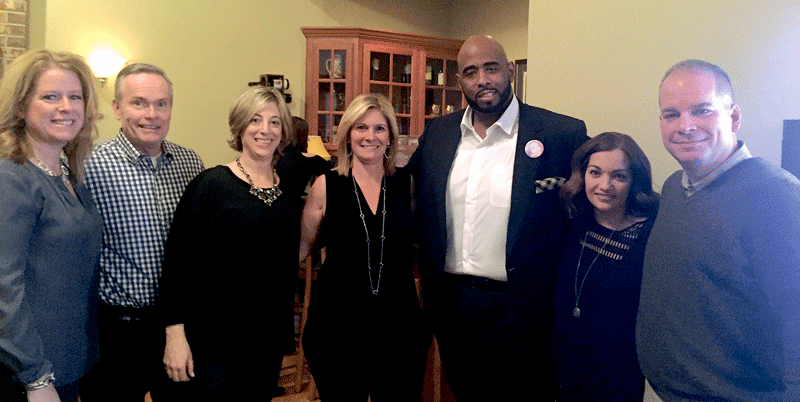
I Found Light Against All Odds, a television program hosted and co-produced by Stefan Davis, provides high-risk youth and families with tools and opportunities to break the cycle of poverty, desperation, and dependence that dominates their lives, enabling them to become contributing members of the community. Pictured at a recent meet and greet in Wilbraham for I Found Light Against All Odds are, from left, Lisa Leary; John Doleva, president and CEO, Naismith Memorial Basketball Hall of Fame; Lauri Doleva; Kim Sanborn, board member, I Found Light Against All Odds; Davis; Lori Berg, and Scott Berg, president and CEO, YMCA of Greater Springfield.

I Found Light Against All Odds, a television program hosted and co-produced by Stefan Davis, provides high-risk youth and families with tools and opportunities to break the cycle of poverty, desperation, and dependence that dominates their lives, enabling them to become contributing members of the community. Pictured at a recent meet and greet in Wilbraham for I Found Light Against All Odds are, from left, Lisa Leary; John Doleva, president and CEO, Naismith Memorial Basketball Hall of Fame; Lauri Doleva; Kim Sanborn, board member, I Found Light Against All Odds; Davis; Lori Berg, and Scott Berg, president and CEO, YMCA of Greater Springfield.

Daily News

SPRINGFIELD — The Springfield Regional Chamber will stage its popular Speed Networking event on March 14 from 3:30 to 5 p.m. at Lattitude, 1338 Memorial Ave., West Springfield. The event provides attendees with a quick and entertaining opportunity to introduce themselves and pitch their company to the other attendees.

The core concept to speed networking is the “elevator speech,” a short summary of an individual, business, organization, product or service — a summary that a person could deliver in the time span of a short elevator ride. Attendees will be divided into two groups, seated across from each other. Each group member will have 60 seconds to give his/her elevator speech to the person seated directly across from him/her. Once each member has given their elevator speech, they will change seats and the process will begin again with a new partner. The round robin format of networking will continue until the event is over.

Only one person per company can attend the event so that attendees are able to meet with someone from a different company at each interaction.

The event will begin with registration and light refreshments at 3:30 p.m. To accommodate the event, no admittance will be allowed after 3:55 p.m. Reservations are $20 in advance for members ($25 at the door), $30 for general admission ($35 at the door). Reservations must be made online and in advance at www.springfieldregionalchamber.com or by contacting [email protected].

Community Spotlight Features

Community Spotlight

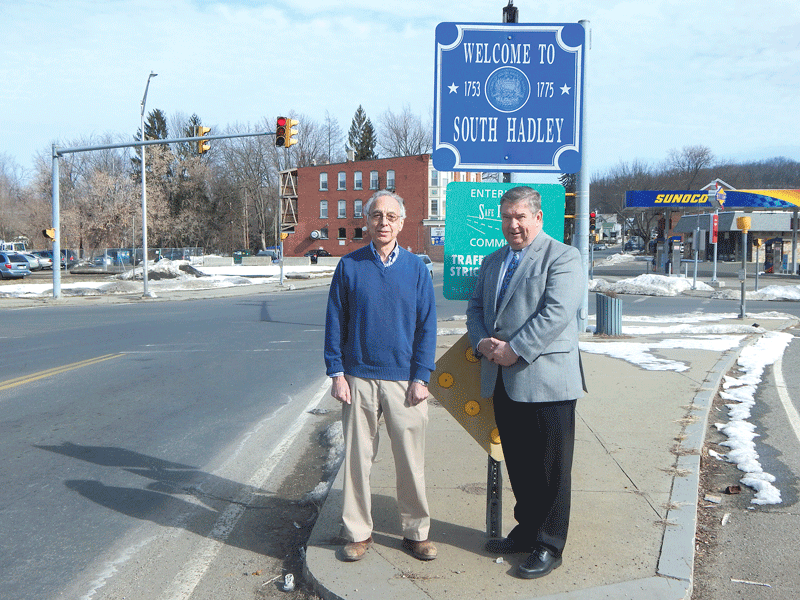
Frank DeToma and Mike Sullivan

Frank DeToma and Mike Sullivan say the Vietnam Veterans Memorial Bridge is the gateway into South Hadley Falls, where revitalization efforts are underway.

In two months, the Vietnam Veterans Memorial Bridge that leads from Holyoke into South Hadley Falls will be closed for a day for a “River Roll and Stroll” event.

The family festival is designed to promote healthy living and is being co-sponsored by the Holyoke Bike-Pedestrian Committee and the South Hadley Bike-Walk Committee, a grass-roots effort to help promote recreational opportunities for bicyclists and pedestrians.

“The River Roll and Stroll will give people a look at the Falls and allow them to see the potential that exists while providing an economic boost to businesses there,” said Mariann Millard, co-chair of the event steering committee and chair of the South Hadley Bike-Walk Committee.

One of their goals is to make people aware of the natural resources and hiking trails that wind through conservation land in the town, which will help to expand efforts by town officials who believe increasing recreational opportunities will foster the growth of economic investments.

“We don’t have a rail trail, but want to show the public what we have to offer,” Millard said, adding that the South Hadley Falls Neighborhood Assoc. has put together a walking map of the area that highlights historic buildings and the Bicentennial Canal Park that overlooks the Connecticut River.

The newly created map; River Roll and Stroll on May 7, which was initiated by Sean Condon of Holyoke; and upcoming annual FallsFest Music & Arts Festival on July 29 that attracts thousands of people are part of a growing force aimed at introducing newcomers to the Falls and promoting economic development there.

“We believe the strategic use of public funding and local enthusiasm will encourage more people to live, visit, and work in the Falls and become a catalyst for private investment,” said Frank DeToma, a selectman and chair of the Redevelopment Authority. “Our ultimate vision is to develop a ‘canal village’ that will consist of commercial and residential establishments that capitalize on our historic canal and adjacent riverfront as well as the architectural character of some of the original buildings.”

Town Administrator Mike Sullivan said that, although the Redevelopment Authority is concerned with the entire town, bringing new life to the Falls will provide a significant boost to South Hadley’s economy as a whole.

We believe the strategic use of public funding and local enthusiasm will encourage more people to live, visit, and work in the Falls and become a catalyst for private investment.

Ira Brezinsky agrees and says collaborative efforts that include work by government officials and businesses have coalesced to shine a light on the Falls and attract people who might not otherwise visit the area.

“It’s an ideal time for business people who want to get a taste of the community and neighborhood to come here, and we will put our best foot forward to welcome people from throughout the region,” said the selectman, co-chair for the River Roll and Stroll, and president of Music and Arts South Hadley, a grass-roots effort that became a nonprofit last year and hosts the FallsFest.

The town has also partnered with the Pioneer Valley Planning Commission to map out walking trails that need improvement and places where bike lanes and chevrons are needed to increase recreational opportunities.

In addition, a five-year, $5 million infrastructure project that involves improving parks, adding benches, new landscaping, crosswalks, traffic-calming devices, and new sidewalks in the Falls is well underway. So far, $2.7 million has been spent, and this year another $1.2 million will be poured into the redevelopment effort.

For this, the latest installment of its Community Spotlight series, BusinessWest looks at what the Falls has to offer, plans for its future, and why officials and residents are bullish on the idea of redeveloping the area.

Planned Progress

Sullivan says the Falls is overdue for attention, and holds unlimited potential. It is less than a mile from the $4.3 million Holyoke passenger rail platform, and has centralized sewers and great access to the Connecticut River. In addition, South Hadley has its own municipal light plant, and work is being done to be able to offer secure, high-speed Internet in the future.

The Falls is also rich in history: the first navigable canal in the U.S. was built there in 1795, which made Falls Village (then South Hadley Canal) a busy shipping center and tourist attraction.

Unfortunately, its former vibrancy has been greatly diminished, mirroring what has occurred in many towns and cities across Western Mass., where businesses along riverfronts shut their doors or moved, and disinvestment slowly occurred.

But revitalization efforts began in earnest after a study of the area that was completed about five years ago became a springboard for change. As a result of recommendations in the final draft, the Falls Neighborhood Assoc. was formed, and in 2014 two important advances were made. The first was the long-awaited construction of a new $12 million public library on 2 Canal St. It was dedicated a year ago and contains meeting and reading rooms, and large banks of computers that businesses can use to conduct training classes.

The second advance occurred when a town meeting approved the creation of an advisory board to develop a comprehensive plan for the area.

The final draft is almost complete and will be presented to the public by the Redevelopment Authority, which is the name the advisory board was given, at a special town meeting held expressly for that purpose on June 7.

“A tremendous amount of work has gone into this,” Sullivan said, noting that the committee members are all unpaid volunteers.

There are many components to the plan, which include a focus on the east-west core of the area that is part of a larger, recently established ‘Smart Growth’ overlay district in the Falls.

“Developers who wish to construct relatively high-density housing in Smart Growth districts can do so by right, thus eliminating their need to apply for special permitting from a local planning authority,” DeToma told BusinessWest.

The proposed plan contains many other elements, including repurposing some town-owned properties and redeveloping a number of industrial properties.

But progress is already occurring, and the first residential construction project in decades is underway. Orange LLC is building 12 condominiums in three units directly across from the new library on 1 Canal St. that will each have their own garage and extra parking.

“This is a beautiful spot, and the Victorian look of the buildings is expected to enhance the neighborhood,” DeToma said, adding that Orange LLC also has plans to develop six other condominiums in the old library building on 27 Bardwell St. “The design is very imaginative and interesting, and there will be a great room in every unit.”

Sullivan told BusinessWest that condominiums in South Hadley have appreciated significantly over the past six months. “New ones are selling more quickly than they can be built,” he said, noting that construction on the Rivercrest Condominiums on Ferry Street began last year, and 16 of the proposed 28 units have already been sold.

Business growth has also taken place in the Falls. Over the past 18 months, Mohawk Paper and E Ink Corp. moved there, and South Hadley Fuel scrapped its plans to move out and expanded in town instead.

Sullivan explained that the decision came about in large part because Town Planner Richard Harris alerted South Hadley Fuel owner Steve Chase to an existing but unused underground tank farm near E Ink Inc., which he described as an “opportunity found.”

“As a result, they have opened one of the largest propane storage and distribution facilities in Western Mass,” the town administrator said. “We do all we can to introduce businesses to opportunities that exist here.”

Brezinsky agreed. “South Hadley and particularly the Falls has been very welcoming and engaging to businesses that want to move or expand there. We were able to steer Mohawk Paper through town meeting very quickly to get them what they needed to move here, and there are other examples like this,” he said, explaining that Mohawk Paper moved to the Falls two years ago into a group of buildings formerly known as the U.S. Gaylord properties, and opportunities exist for professional space, retail businesses, manufacturing, and incubator space.

“I believe one of the benefits of the Falls is its scale,” he continued. “It has a small footprint and is very walkable, unlike some former industrial areas where there are blocks of old buildings. The Falls never rose to those heights, so I don’t believe it will take much to get it to the tipping point where it can become a vibrant place again where people live, work, and play.”

DeToma said the northwest corner of the gateway Bridge/Main intersection is a prime location for redevelopment. It consists of three parcels owned by three different entities, but each lot is too small to be of interest to a developer.

“Our proposed redevelopment plan calls for the consolidation of those properties in order to increase their potential for private development,” he said.

Forward Movement

South Hadley recently lobbied to have Pioneer Valley Transit Authority’s Tiger Trolley change its route. Today, it runs over the Vietnam Veterans Memorial Bridge on Route 116 rather than the bridge on Route 202. Sullivan said that was important because the Falls is densely populated and town officials wanted to provide access to jobs in Holyoke and South Hadley, especially since Mohawk Paper and Mount Holyoke College are two of the largest employers. He added that the X90A Route that runs from Chicopee to Main Street in South Hadley is one of the fastest-growing routes in the area and also goes over the Route 116 bridge.

Parks in the town are also receiving attention. The town administrator told BusinessWest that Bicentennial Park, which is situated a quarter-mile away from the new library, will be renamed Belsky Park after Ted Belsky, a longtime member of the Select Board, and $97,000 will be spent to install lighting and a deck that will overlook the Connecticut River.

In addition, the town is creating a one-mile loop called the River to Range Trail that will begin in a field near Brunelle’s Marina and offer access to people of different abilities.

“We worked with the Pioneer Valley Planning Council on this,” Sullivan noted, adding that, eventually, the trail will connect to the Summit House on top of Mount Holyoke. “We see it becoming part of a recreational economy. That market is exploding, and we are getting requests for groups for camping areas. Although we are not proposing to open any right now, we have to be cognizant of opportunities as they present themselves.”

The Buttery Brook area is another area of focus. It runs east-west and roughly parallel to Gaylord and Bridge streets, crosses under Main Street via a culvert, and empties into the Connecticut River. DeToma said it is overgrown, but the Redevelopment Authority hopes to restore it to its original, attractive condition and install a multi-use recreational path along its bank.

“There will be two benefits to this,” he explained. “First, it will be a major recreational attraction in our Canal Village central area. Secondly, because this area is part of our Smart Growth district, it should stimulate the interest of developers in constructing affordable, higher-density housing nearby.”

Plans are also in place to build a new bridge over Bachelor Brook as well as a parking lot for 12 cars. The estimated cost is $2.1 million, and South Hadley has already received almost $1 million toward that amount from state and federal grants.

Concerted Efforts

Sullivan said major efforts are taking place to help people rediscover, reconsider, and reinvest in the Falls, and the Redevelopment Plan is the underpinning of the future.

“South Hadley has many opportunities; a lot of cool things are happening here,” he told BusinessWest, noting that South Hadley Electric is planning to create a hub for data storage and hired a new manager to help develop its high-speed Internet plan. “Their rates were key in bringing Mohawk Paper here, and enthusiasm about the area is growing. It has become an organic movement with its own energy, all for the benefit of the Falls.”

DeToma concurred. “The grass-roots efforts are taking on a life of their own. As we point out the value and potential of moving here, many groups are getting involved, and events like the River Roll and Stroll will help South Hadley and Holyoke to grow.”

Which bodes well for the future as residents and officials work together to bring new life to South Hadley in a way that will benefit generations to come.


South Hadley at a glance

Year Incorporated: 1775
Population: 17,663 (2017)
Area: 18.4 square miles
County: Hampshire
Residential and Commercial Tax Rate: $20.12 (Fire District 1); $20.66 (Fire District 2)
Median Household Income: $64,610
Median family Income: $76,679
Type of government: Town Administrator, Select Board, Town Meeting
Largest employers: Mount Holyoke College, Loomis Communities, Mohawk Paper
* Latest information available

Creative Economy Sections

Broad Strokes

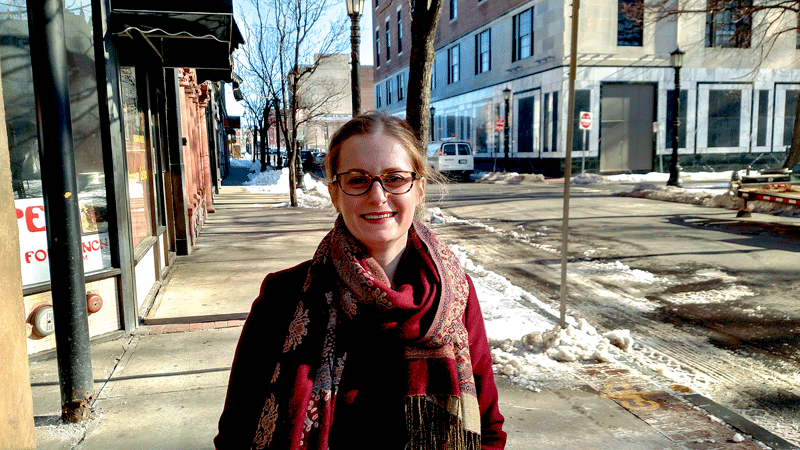
Springfield Central Cultural District Director Morgan Drewniany

Springfield Central Cultural District Director Morgan Drewniany

As director of the Springfield Central Cultural District, Morgan Drewniany doesn’t see the arts in a vacuum. Rather, they’re one of the connecting threads joining the realms of economic development, social justice, and a city’s walkability and livability, which are, of course, among the keys to any community’s future. To that end, the SCCD is raising the profile of the arts in and around downtown Springfield — and that of its myriad artists as well.

Morgan Drewniany recognizes the connections in her passions. That’s why she doesn’t think it strange that she went from studying soil chemistry at Hampshire College to leading the Springfield Central Cultural District (SCCD).

The specific connecting fiber is a passion for improving society. For example, to write a thesis on the political and physical environment in Northern New Mexico, she stayed on a reservation there, and later brought 200 soil samples — packed into the back of her Volvo — on a cross-country trek back to Amherst.

When she thinks back to her early interest in environmental health and social justice, “what I loved most was working with economically disadvantaged communities, those with lower education levels, lower income levels, communities of color in general. So, when I looked for a job, I didn’t look in the science field; I looked in art and nonprofits.”

The job Drewniany found was assistant director of the Springfield Business Improvement District. “It seemed like a good fit,” she told BusinessWest, explaining that the idea of lending her skills and passions to economic development appealed to her, particularly in the City of Homes. “I grew up in Westfield, and my parents brought me to Springfield all the time as a kid, to the museums or the symphony — I thought it was the coolest place ever. So to come back and help out during its revitalization was really gratifying for me.”

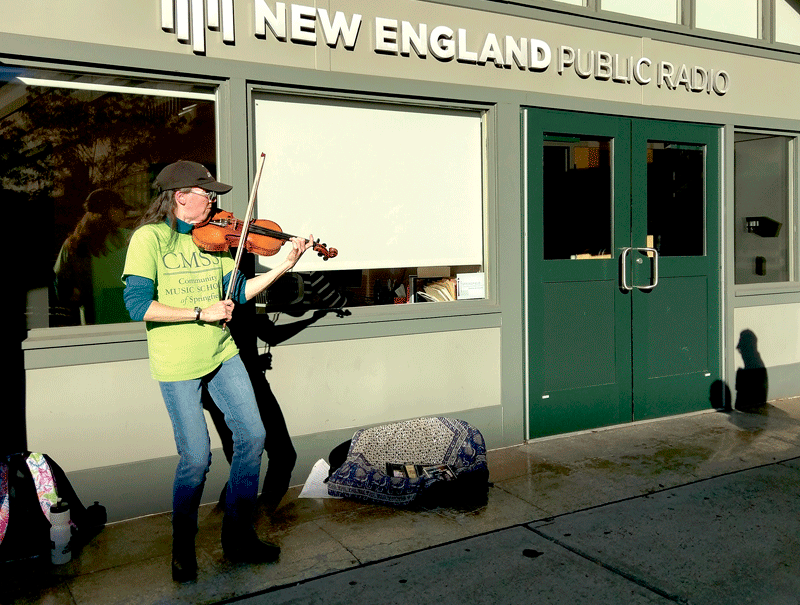
Violinist Anne Marie Messbauer

Violinist Anne Marie Messbauer plays in front of New England Public Radio during last fall’s Art Stop. NEPR will again host an Art Stop gallery next month.

But another opportunity would emerge that she’d find more intriguing. In 2013, the Massachusetts Cultural Council introduced the Cultural District Program as a way to brand areas densely populated with architectural, historical, and cultural assets. A consortium of cultural entities in Springfield applied for the designation, launching the SCCD in 2014. A year later, the organization sought a new director.

“When the opportunity came up, I knew the players, I personally have a passion for the arts, I have a lot of friends who are artists … it was a pretty natural fit,” Drewniany said, adding that she was drawn by the district’s untapped potential. “We were still applying for 501(c)(3) status, finalizing our bylaws and structure, a lot of internal stuff … it was a really exciting time. Now we know who we are. We want to be a unified voice for arts culture, not just within Springfield, but statewide, and even nationally.”

Today, the SCCD is supported by 55 members, ranging in size from the Mattoon Street Arts Festival, an annual weekend event, to larger players like Springfield Museums, New England Public Radio, the Community Music School of Springfield, and the Eastern States Exposition.

Representatives of these groups have long attended conferences on the state and national levels to advocate for the role of the arts, but the SCCD can represent the entire range of arts in Greater Springfield, Drewniany explained.

“We have a mission and vision — in short, to make Springfield a more friendly arts culture through civic engagement and arts engagement. That’s very broad, so it leaves us a lot of opportunities to interpret that.”

Forging Links

The district’s website explains its mission this way: “To bring more vitality to the city by highlighting its outstanding cultural offerings and adding new creative opportunities for artists and the greater community. We aim to make arts and culture in Springfield more accessible, while creating connections between artists, cultural landmarks, and visitors.”

One of those connections is the partnership known as Futurecity Massachusetts, a joint initiative of the Massachusetts Cultural Council and the Boston Foundation. Futurecity is working with mayors, urban planners, and arts and business leaders in Springfield, Boston, and Worcester on key real-estate projects in state-designated cultural districts in the three cities, targeting areas ready for development and job growth. The organization has created more than 200 such partnerships across the globe that reposition cultural assets from community amenities to marketplace drivers.

“We took on the Futurecity Massachusetts initiative with the Massachusetts Cultural Council with the idea of talking about a paradigm shift of art from nicety to necessity,” Drewniany said. “That has involved not just arts people but developers, city department heads, and city leaders talking about how, in order to create a 21st-century city, you have to integrate the arts. When you look at competitive cities right now, like London or Boston, developers are one-upping each other, saying, ‘we have art in our gallery.’ ‘Our building is totally made of art, and we have a huge sculpture outside!’”

She noted the example of London, where the developers behind a recent train-station project invested so much money in the building’s aesthetics that people started hanging out there because it was so beautiful. In short time, cafés started popping up, and adjacent vacant buildings were bought up and converted to lofts. “The revitalization of that neighborhood was based around the choice not to build a regular train station,” she said. “They didn’t just slap a mural on a wall and call it a day.”

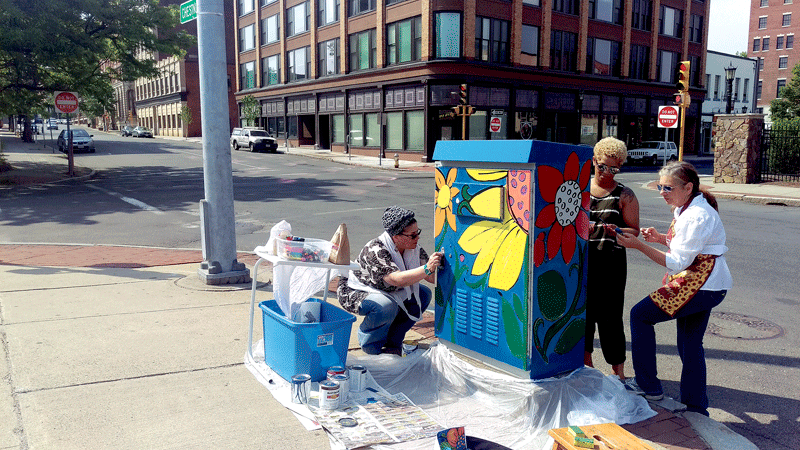
The utility-box painting project

The utility-box painting project has brought splashes of color and whimsy to Springfield’s downtown.

That’s not to say public art of any size isn’t valuable. For example, starting last spring, the SCCD commissioned 26 artists to paint utility boxes around the district’s footprint, transforming the gray, bland boxes with a splash of bright color. The program was intended to both encourage walking downtown and provide a source of income to working artists, and was funded by matching local businesses and organizations to individual artists. The net effect has been increased feelings of positivity downtown, Drewniany said, which hopefully impacts pedestrian traffic.

“We’re so focused on walkability right now, and connecting spaces. If we have more people on the street, it portrays a more positive, friendly environment, and that affects public safety and also helps bring dollars to downtown businesses,” she explained. “And we advertised the times the artists would be painting so people could watch something be created right in front of their eyes, so it served a secondary purpose. We want people to interact with each other, even if it’s for a second. It’s a way to start building a bridge to a more connected community.”

Play and Pay

Other efforts to connect the district’s institutions through art include a new video map to accompany the Downtown Springfield Cultural Walking Tour, and the second annual Art Stop event slated for later this month.

The walking tour, first introduced in the summer of 2015, is a tool designed to be used by visitors or residents to learn more about the city’s architectural, historic, and cultural highlights. Printed maps are available at all downtown hotels, visitor’s centers, and cultural institutions.

The video map, available digitally on the SCCD website, springfieldculture.org, brings a new dimension to the walking tour. Viewers gain insight into the history of each location on the map and have the chance to learn an unexpected fact about the venue or building. Each short video (under two minutes, for easy viewing while out and about) is presented by a member of the SCCD on location.

The Art Stop initiative — essentially a pop-up gallery program — also encourages foot traffic downtown, while giving artists a chance to sell their work in one of three locations downtown: New England Public Radio, SilverBrick Lofts, and 1550 Main.

A request for proposals closes on March 8, and the exhibits will be displayed starting the first week of April. All pieces will be available for sale, with 100% of proceeds going directly back to the creators. Like last fall’s inaugural Art Stop, a joint reception will be held between the three locations on April 5, with artist talks, street art, and performances between the locations to encourage walking, and light food and drinks provided by the SCCD and artist hosts.

“Property owners had contacted me about how to activate a space, to get people interested in it, because it felt bland,” Drewniany said of the inspiration behind the program. “We felt we could provide economic impact for artists by creating galleries in these spaces, where the artists can actually sell their work. We also hire musicians and street performers and pay for their performances. That’s definitely a focus of ours — whenever artists are doing work, they’re getting paid like everyone else.”

Too many people, she went on, are too willing to ask artists to perform and produce work as a public service, when other industries don’t get treated that way. “You’d never invite an electrician into your house and say, ‘if you do this, I’ll tell my friends; it’ll be great exposure for you.’”

Other SCCD programs are one-off events intended to create buzz around often-unappreciated cultural genres. For example, in November, the district presented a free concert with three local organists in Old First Church in Court Square, playing the church’s full-size 1958 Aeolian-Skinner organ with its 56 ranks and 3,241 pipes.

The organizers hoped to both show how beautiful and versatile the Old First Church space is — demonstrating the potential in a historic building and encouraging future activity there — and, again, provide income to local artists.

Coming into Focus

While the district is prioritizing Springfield artists in its applications and trying to build a culture of artistic excellence downtown, Drewniany said, SCCD outreach includes artists from across the whole region, recognizing that Western Mass. is rich in cultural resources and individual artists. “But we want to make our downtown a place where artists want to be showing.”

Member fees fund roughly 75% of the district’s programs and expenses, she told BusinessWest, while most of the remainder is covered by grants, and a few projects, like the utility boxes, are sponsored. She treats her grant-application efforts like all her endeavors — in other words, seeking connections between art and community betterment.

“I’ve applied for public-health grants; I’ve applied for economic-development grants,” she said. “Really, the arts have such a unique way to reach people and solve problems — if you find the right partners and take the right approach. We want to make sure everyone has the opportunity to have their voice heard.”

That’s a vision worth painting — and it sure beats the cold gray of an unadorned metal box.

Joseph Bednar can be reached at [email protected]

Cover Story Sections Tourism & Hospitality

Everyone’s Living Room

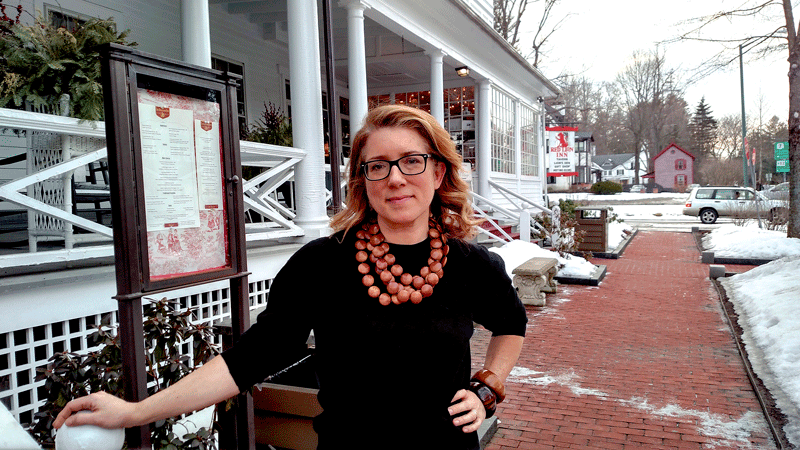
Main Street Hospitality Group CEO Sarah Eustis

Main Street Hospitality Group CEO Sarah Eustis

Sarah Eustis says the core mission of the Main Street Hospitality Group is to “create places that will enable people to connect in meaningful ways — not just to provide hospitality excellence.” The group is now doing that on a few Main Streets, with further expansion of the portfolio always on its mind.

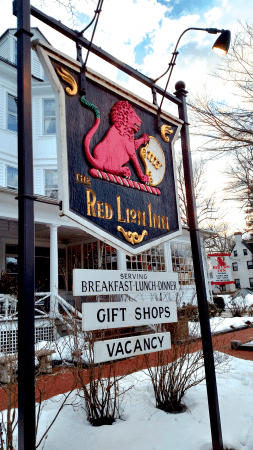
The barstools in the Red Lion Inn’s rustic tavern creak a little, but Sarah Eustis says that’s part of the charm in a building that dates back to the late 18th century. The guests who crowded the place on a late weekday afternoon, as Eustis sat with BusinessWest and told the story of her family’s growing hospitality business, didn’t seem to mind.

It’s a story that actually begins almost 50 years ago, when Eustis’s grandmother, Jane Fitzpatrick, bought the Stockbridge hotel in 1969 with a couple of motivations in mind — to find a home for her growing curtain business, known today as Country Curtains, and to save the Red Lion from becoming a “parking lot.”

“It was a seasonal property — at the time, it was closed in the winter — and it was at risk of being taken down,” said Eustis, CEO of the Main Street Hospitality Group (MSHG). “She reopened the hotel and brought it to full operation, year-round, and the family has been running it ever since.”

Fitzpatrick had a specific vision for the 1773 landmark, Eustis added. “My grandmother set the standard of hospitality, maintaining the place as the ‘living room of the Berkshires.’ All our hotels have that identity and that spirit, meaning a place where all are welcome, a place where people can connect in meaningful ways, with the place and with each other.”

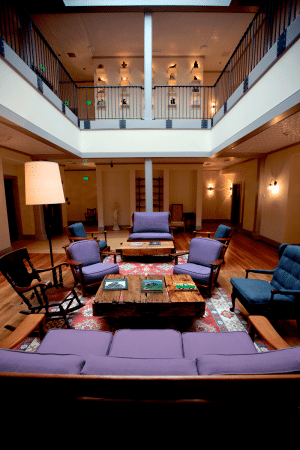
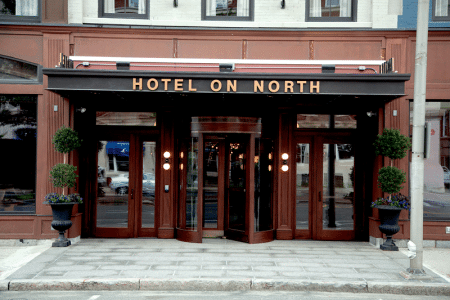
Those places now include four hotels around the Berkshires the MSHG currently owns or manages: the Red Lion Inn, Porches Inn in North Adams, Williams Inn in Williamstown, and, most recently, Hotel on North in Pittsfield, which collectively boast 350 rooms and almost as many employees.

Hotel on North was designed, like all of Main Street’s properties, to be the ‘living room’ of its community.

Hotel on North was designed, like all of Main Street’s properties, to be the ‘living room’ of its community.

“People are coming through the doors with an entire range of human emotions,” Eustis went on, “and they’re wearing invisible signs around their necks, and we have to figure out what they say: ‘I’m in the middle of a divorce.’ ‘I have to impress my girlfriend.’ ‘I’m here with my first big client.’ ‘I’m worried about my child.’ ‘I’m exhausted and hungry.’ We have to figure that out; it’s our job to connect with people in a way that makes the experience good for them, where they are, in that particular moment. We’re not perfect, but it’s what we work toward.”

When they succeed in that task, downtown hotels can be the lifeblood of a town center, she said. “They are the heartbeat that pumps blood to the arteries of cities. Hotels are always there; the lights are always on, and someone is always there.”

Independent hotels, with their unique charms that aren’t based on a corporate template, are even better, she went on. “The Marriotts and Hiltons are great, but I do think there’s something about an independently designed hotel that is unique and that people are willing to pay for.”

Third Generation

Fitzpatrick passed the business to her daughter, Nancy Fitzpatrick — Eustis’s stepmother — who has overseen the operation for the past 20 years.

“I grew up around this place and started working here as a housekeeper when I was 14,” said Eustis, who lived with her mother in Philadelphia but spent plenty of time in the Berkshires as well. “I will always stand behind hospitality training early in one’s career is a great way to start. We have so many young people come through our hotels and go into all kinds of things. If they want a hospitality career, that’s great, too. I was here every summer growing up, getting experience in every aspect of the operation. I’ve cleaned every toilet in the place, and I make a mean hospital corner.”

But she didn’t see it as her career at first, moving instead to New York City to pursue a career in retail operations, marketing, design, and brand development for big clothing labels like Polo Ralph Lauren, Banana Republic, and Limited Brands. “I got good experience working for family businesses, because that’s what those companies are. And that was appealing to me.”

mainstreetporches

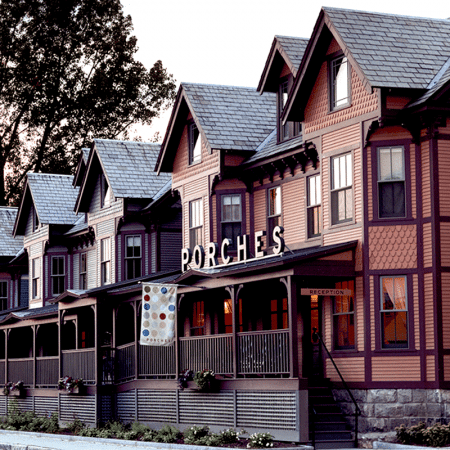
Two of MSHG’s properties, Porches Inn opened in North Adams a decade and a half ago, followed by Hotel on North in Pittsfield in 2015.

Two of MSHG’s properties, Porches Inn opened in North Adams a decade and a half ago, followed by Hotel on North in Pittsfield in 2015.

When her father, Jack Fitzpatrick, passed away in 2010, Eustis started thinking about the family business, and decided to move back to Massachusetts in the summer of 2012, a time that unofficially began the family’s most recent chapter, with Eustis eventually setting in as CEO, and Nancy Fitzpatrick continuing as owner and chairman.

“The Main Street Hospitality Group did not exist before that point,” Eustis said. “My aim was to explore how we could evolve and take the resources we already had on the team and deploy them further — to take the ‘special sauce’ that happens here at the Red Lion, in terms of hospitality and graciousness, and spread it around, and also develop new revenue streams.”

The first expansion had already occurred a decade earlier in North Adams. Nancy Fitzpatrick and Jack Wadsworth were both founding board members of the Massachusetts Museum of Contemporary Art, and decided to strike a deal.

“As the story goes, they were in the main gallery of MassMoCA, looking out across the street at these derelict houses originally designed for workers at the Sprague Electric factory. Nancy is a really creative visionary, and she said to Jack, ‘why don’t we do a hotel there?’ He said, ‘that’s the craziest thing I’ve ever heard.’ But they signed on a napkin and did the project.”

The result was Porches Inn,  seven renovated Victorian-era buildings. Reflecting its artsy surroundings, the guest rooms and public spaces employ a synthesis of retro and contemporary designs, reflecting everything from the Mohawk Trail to paint-by-numbers art. Boston magazine praised its “hipster sensibility with downtown charm.”

“It’s been a remarkably successful venture,” Eustis said. “We wanted to instill part of our DNA into something that adds value to its landscape. It has to reflect the feeling of the place. It’s elegant, but with a sense of humor. Guests just rave about the place. We really haven’t changed it in 15 years; we just keep it polished and updated and fresh.”

City Life

Williams Inn came next, a 125-room hotel owned by Williams College that MSHG has managed for the past several years.

“The college bought it, but they don’t run hotels,” Eustis said. “They gave us our first big break as a management company. We provided return to the college on what I would call a tired asset.”

But that project, along with the Porches, gave Main Street experience working in educational and art settings, a niche it aims to further explore in the future. Hotel on North, on the other hand, became the company’s first foray into the city setting.

Around 2013, Eustis began talking with the family that owns Tierney Construction in Pittsfield, which had purchased the former Bessie Clark clothing store in the heart of that city. She’s intrigued by Pittsfield’s story as an industrial city that has struggled to reinvent itself but has launched a sort of renaissance over the past couple of decades.

“We’re very, very committed to Pittsfield. It’s right in the middle of our region — this urban center in this bucolic place — and it needs to thrive.”

A city’s renaissance is typically a 20-year process, she said, a cycle she believes Pittsfield is well into, starting with the Colonial Theatre renovation a decade ago.

“A lot has happened on North Street. We felt the momentum was there. Our partners bought the building and invited us to do a hotel with them; we worked on every aspect of the hotel together. We led the design, we staffed the hotel, we run the hotel … we’re accountable to the owners for agreed-upon results.”

Hotel on North was opened using historic tax credits in June 2015, with an eye toward being one of the key anchors downtown. Developers sought the same blend of local character, historical design flourishes, and modern amenities showcased at other MSHG properties, creating a place where, as Main Street’s marketing materials put it, “lightning-fast wi-fi beams through exposed brick from the 1880s.”


List of Airlines serving Bradley Aiport


Eustis said first-year projections may have been optimistic. “We really had to engage the community, engage the city, do a grass-roots sales campaign.” But, at the same time, the hospitality group was growing as an organization as well, and the family was learning how to leverage its economies of scale across the properties, including in Pittsfield. “We got stronger and stronger, and the hotel started to get its legs, too. Now it’s really thriving and making a lot of people happy.”

In fact, 15,000 people checked into the hotel last year as their home base to explore Pittsfield. “It’s a well-designed, thoughtful, genuinely hospitable face — it’s become the living room of Pittsfield,” she went on, again echoing her grandmother’s original vision for the Red Lion 15 miles south on Route 7. “You have to overcome the doubters and keep going and show them the positive outcomes that come from a project like this.

“Our core purpose, as we’ve developed it as a leadership group,” she went on, “is to create places that will enable people to connect in meaningful ways — not just to provide hospitality excellence, which we do anyway.”

What’s Next?

Beyond physical expansion, the company is branching out in other ways as well. Take food service, led by Brian Alberg, vice president of Culinary Development. A graduate of the Culinary Institute of America who has been with MSHG for about a dozen years, he was at the forefront of the farm-to-table movement in the Berkshires and created a culture around that philosophy at all the group’s properties, as well as a growing niche in event catering.

In addition, Main Street recently formalized a partnership with Hancock Shaker Village — and its new director, Jennifer Trainer, herself a MASSMoCA veteran with a rich culinary background — to establish a café (opening April 15) and manage it, along with working with her on all the facility’s culinary events.

“We’re also expanding the retail piece here at the Red Lion, which is my background,” Eustis added. While the hotel has a gift shop, she envisions creating a line of tasteful logo items — think the Black Dog on Martha’s Vineyard as an example — that will expand the Red Lion brand beyond the Berkshires. “We’re thinking of things that reflect the warmth and genuine feeling of being at the hotel, whether it’s food, accessories, or home-related things. This is a part of our business that’s growing slowly this year and will grow further in 2018.”

After almost 50 years in the Fitzpatrick family, the Red Lion Inn remains the heart of Main Street Hospitality Group’s operations.

After almost 50 years in the Fitzpatrick family, the Red Lion Inn remains the heart of Main Street Hospitality Group’s operations.

As for the next big property, the company is looking at a number of projects, representing both ownership and management models.

“A new project has to pass certain fundamental criteria for us — geography, size and scope, who are the people involved, is it a new build or a conversion,” Eustis said. “It’s not necessarily about rolling out the Hotel on North or Porches concept into different markets. I’m interested in responding to the needs of the community, the fact that there may be existing hotels that need to be refreshed or revitalized.”

Still, she went on, “the way Porches and Hotel on North, not to mention Red Lion, have resonated has led us to conclude that kind of hotel can be relevant in other places and can be successful and add value to landscapes like Springfield, like Buffalo, like Albany — cities that are re-emerging as secondary or tertiary cities and benefiting from migration out of big cities.”

Yes, Springfield is a possibility, reflected by the fact that Eustis has had conversations with planning leaders there.

“Springfield is right in our backyard, and the Pioneer Valley has been interesting to us for a number of years. There’s good stuff going on there, a lot of like-minded people collaborating. We’re looking for opportunities where we can add value and the city’s ready for it.

“It’s not a get-rich-quick scheme,” she added. “You do need patient investors that have some psychic investment in a place. You can make money; it just takes a while.”

In other words, Eustis noted, MSHG is not looking to become a 200-hotel group.

“Let’s be honest — we value our lifestyle and like to see our children from time to time. Our vision is to grow thoughtfully,” she said. “Hotels always used to be on Main Street. And we want to be the heart of a place.”

Joseph Bednar can be reached at [email protected]

Sections Tourism & Hospitality

Past Is Prologue

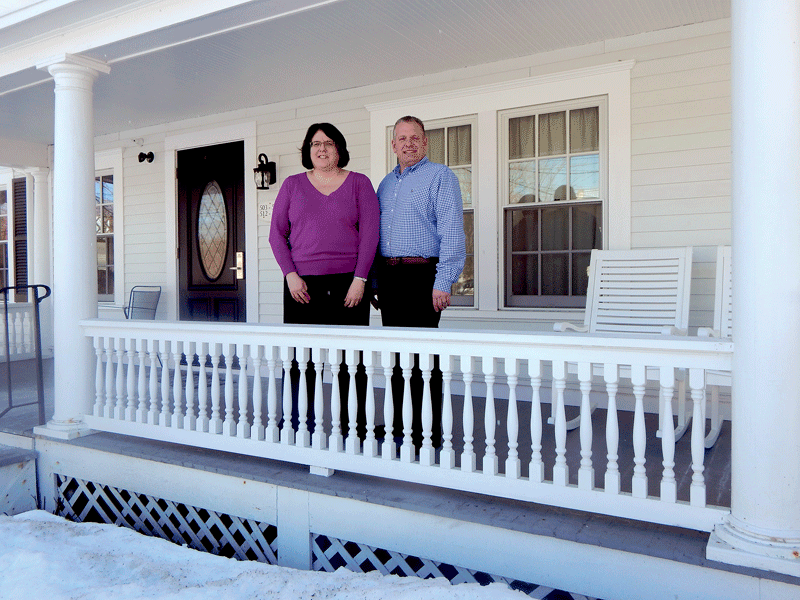
Michelle Rondeau and Michael Glick

Michelle Rondeau and Michael Glick say the addition to the Chamberlain House includes a patio and suite for wedding parties or groups holding functions in the Garden Tent.

Michael Glick says the Publick House Historic Inn and Country Lodge in Sturbridge is two miles — and two centuries — away from the Mass Pike.

“We have every modern amenity, but when people come here, they step back to a period in time when things weren’t so fast-paced. It’s a place where they can really relax,” said the general manager.

Throughout its 246-year history, the Publick House has been known for its hospitality, excellent food, and New England charm, and has become a popular venue for weddings, celebratory events, and family gatherings. Part of the draw is its central location: it is in close proximity to Route 20 and Interstates 90 and 84 and easy to get to from all of the New England states as well as New York and New Jersey.

The historic inn was built in 1771, houses two restaurants and a pub, sits directly across from the Town Common, and offers a retreat from stress on its 43-acre campus that contains more than eight buildings.

Publick House

Michelle Rondeau says the multi-million-dollar investment in the hotel portion of the Publick House has led to an increase in corporate business.

During the fall and winter, guests lounge in comfortable chairs next to wood-burning fireplaces and spend hours reading or talking to co-workers, friends, or family members.

In the spring and summer, meanwhile, they stroll along meandering brick walkways through lush gardens, relax on patios with sweeping vistas, and enjoy outdoor fire pits.

Although its 11 event rooms can accommodate corporate gatherings of up to 200 people, in the past, marketing efforts were focused almost entirely on weddings and events in the dining room. The complex was never promoted as a place to stay overnight, and Glick says that was purposeful.

The reason was simple: the inn offered 17 rooms, and the Chamberlain House next door had six rooms outfitted with period furnishings and décor. But the remaining 80+ rooms were in the outdated Country Motor Lodge. It was built in the ’60s on a hill behind the inn, has drive-up entrances to each room, and falls short of offering the luxury and amenities people expect today.

Minor upgrades were made over the years, including installation of new hotel bedding, but the discrepancy between the rooms in the Motor Inn and the Publick and Chamberlain House next door was so great, they couldn’t market it as a place to hold multi-day business meetings or group gatherings.

“All of our rooms are sold out every weekend because we have so many weddings here,” said Rooms Division Manager Michelle Rondeau, adding that they hosted 183 weddings last year, and 179 nuptial celebrations have already been booked for 2017.

“But corporate groups were offended by the idea of having to put some of their participants in the old motor lodge,” she noted. “Everyone wanted to stay in the inn or the Chamberlain House, and in order to book multi-day events, we needed to be able to offer similar accommodations.”

In 2014 a decision was made to help resolve that discrepancy, and 15 months ago a $3.2 million renovation and addition to the Chamberlain House was completed that includes 20 new hotel rooms.

It has changed the focus of the Publick House from a quintessential New England restaurant to a charming hotel that can custom-tailor events for businesses and other large groups.

New jobs were created as a result of the project, and salespeople who were hired to market the rooms were successful in attracting businesses, craft-oriented groups, and more for multi-day stays.

The trend is continuing, and construction on a new $5 million to $6 million building is expected to start soon to replace more of the old rooms in the motor inn. It will be built on a site that houses an old barn originally built to store horse feed.

“We’re a boutique hotel, and we are not looking to grow larger,” Glick said, adding that town bylaws allow the facility to have only 125 hotel rooms on the campus. “We just want to replace the motel rooms with ones of a higher quality.”

For this issue and its focus on tourism and hospitality, BusinessWest looks at recent changes that have taken place at the Publick House Historic Inn and Meeting Lodge, what people can expect in the future, and the reasons behind the facility’s success.

New Focus

Glick said the Publick House first approached the town about six years ago with the idea of making changes, and in 2014 the architectural and landscape design firm Siemasko and Verbridge was hired to find a creative and appropriate way to add new guest rooms to the campus.

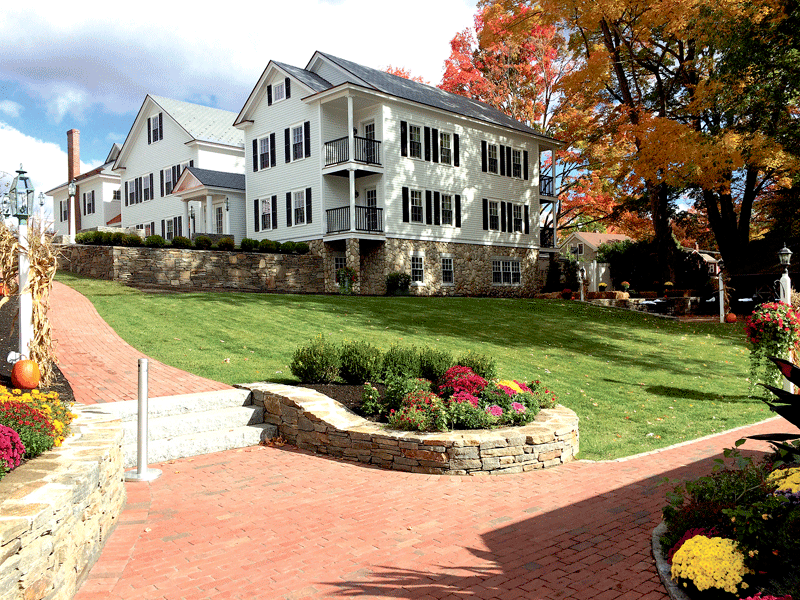
Its design plan involved retaining the exterior of the 1830 Chamberlain House with its wide columned porch, gutting the interior, replacing outdated plumbing and electrical wiring, adding a handicapped entrance, and building an addition onto the rear of the structure that would add 14 new rooms and blend in seamlessly with the neighboring historic buildings.

After the renovation and addition was complete, the rooms were decorated in a simple manner befitting the history of the home and Publick House. Window treatments were purchased from Country Curtains in Sturbridge, and the rooms were furnished with solid-wood bureaus and beds whose high wood posts are topped with pineapples, which are a sign of hospitality commonly seen at New England inns during the Colonial era.

In addition, an outdoor courtyard was built between the Chamberlain House and the Publick House that overlooks the bucolic area where the Garden Tent area is set up three seasons of the year. It can hold 200 guests and is a popular place for weddings.

historic building on the Publick House campus

The new hotel has been designed to meld with the architecture of the historic building on the Publick House campus.

A brick pathway leads directly from the Chamberlain House to the tent, and the suite that faces the area is used as a hospitality room for bridal parties, large gatherings, and corporate events, while the patio is often the setting for cocktails and hors d’oeuvres.

Two of the five buildings that make up the old motor lodge have been phased out, and more rooms will be closed when the new building is complete, but Glick said they plan to leave a few open for travelers seeking a modest price point.

“The addition and renovation of the Chamberlain House has definitely increased our corporate business,” Rondeau said, noting that companies that have held training sessions, seminars, meetings, and themed events in the country setting.

For example, a Hawaiian Luau in the Garden Tent was created for a business party and included carving a fully cooked pig in the patio area.

“We created a beautiful atmosphere. The outdoor fire pit was burning, tiki torches were lit around the perimeter of the area, and there were lush flowers blooming everywhere,” Glick said, explaining that the acreage allows the company to offer events that might not be possible in a downtown hotel in a large city.

He added that business guests who enjoy the atmosphere and hospitality the Publick House offers are returning for overnight stays with their entire families.

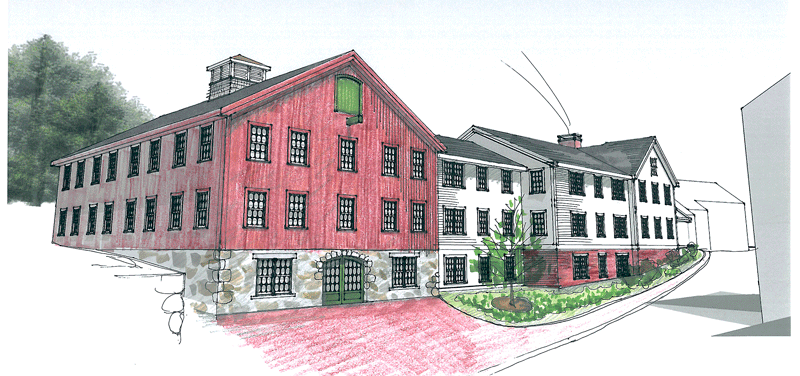
The investment in upgraded rooms proved so successful that Siemasko and Verbridge were rehired last year to create a design for the new hotel building. Its plans involve tearing down the white clapboard-style barn that sits next to the Publick House and replacing it with a 21,314-square-foot structure with 28 hotel rooms.

The building will face the street and resemble a Colonial home on a raised, red-brick foundation linked to a red-barn-style structure with a raised stone foundation.

“It will be nestled between the Publick House and Sadie Green’s,” said Rondeau, referring to the retail emporium, jewelry store, and curiosity shop housed in buildings on the property.

“The new lobby will become the hotel registration center and will feature a double-sided wood-burning fireplace with lots of comfortable seating,” she continued. “The design and layout have a lot of character that includes roof gables and a mock hayloft door. We can’t recreate the Publick House, but we’re doing our best to give the new building a historic feel.”

The town’s design review board approved the plan in November, and it will go before the planning board in April.

However, the project was delayed in December when the Historical Commission put the demolition of the existing barn on hold for a year, but Glick said they are working closely with the commission and hope to come up with a compromise that will allow them to move forward this year.

“But the Publick House will continue to serve as the hub of the property,” he said, noting that its two restaurants and historic pub are convenient for overnight guests.

Ongoing Traditions

The Publick House is known for its fine food, New England specialties, and bake shop, which does $700,000 in business annually.

Glick noted that the majority of dishes on the menu in the dining room never change and include pot roast, chicken pot pie, lobster pie, and a full turkey dinner with all of the fixings that is offered every day throughout the year.

“People come here and expect to be able to order the foods we’re known for,” he explained.

Indeed, families have been coming there for generations and expect things to stay the same. Glick told BusinessWest that the bakery offers a frosted sugar cookie with a smiley face, and when the chef altered the recipe to make it healthier, they received calls and letters of complaint even though there were no signs alerting people to the slight difference in taste. “So we went back to the original recipe,” he said.

Rondeau added that the Publick House is rooted in tradition, and many grandparents bring their grandchildren there to experience history in the same way they did when they were young.

But ultimately, what all of their guests look for and find is the service, attention to detail, and personal touch that Colonial New England inns were known for.

“We have all the luxuries of a downtown hotel, and the quality of our food drives business here. Until last year, we were never known as a hotel, but that is changing,” Glick said. “We’re targeting business groups of about 50 people, but no matter who our guests are, our focus will always remain on offering them true hospitality.”

Daily News

HADLEY — Cultivate & Nest, a collaborative workspace for businesspeople with children, will host Bloom, its annual open house, on Saturday, March 25 from 10 a.m. to 4 p.m. in its Hadley office center.

Terra Missildine, founder and owner of Cultivate & Nest, said the event will offer talks on the topic of entrepreneurship and parenting.

A highlight of the day will be a flower-hat-making craft and a hat parade around the grounds. Face painting, puzzles, and other activities will also be offered. Tours of the workspace will be offered to parents hourly, while children will enjoy story time. In addition, a drawing will be held for a one-month Cultivate & Nest membership, valued at $99.

All Pioneer Valley families are invited to take part in the event and bring their children. Registration is not required, and the event is free.

Cultivate & Nest is the first membership-based collaborative workspace in the Valley to incorporate a childcare component. Located on the first floor in the Hadley Crossing business park, Cultivate & Nest offers roughly 3,400 square feet of work and community space.

Members of Cultivate & Nest pay in cost tiers that range from $100 to $600 per month, depending on amenities and level of office access. Event and workshop space is also available for members and the community at large to host family friendly events.

To learn more about Cultivate & Nest, visit cultivateandnest.com or call Missildine at (413) 345-2400.

Daily News

HOLYOKE — The Greater Holyoke Chamber of Commerce Table Top Expo has a new home in 2017, as the Bartley Center at Holyoke Community College (HCC) will open its doors to the event on Wednesday, April 12 from 4:30 to 7 p.m.

The 23rd annual event, one of the region’s largest small-business networking events, will welcome 200 small-business professionals and entrepreneurs who want to take their business to the next level and develop their business leads. The show is the ‘big sister’ of the Chicopee Table Top Expo, which takes place each fall, and is a multi-chamber event that includes the Greater Holyoke, Chicopee, Easthampton, and Northampton chambers with vendors from Hampden, Hampshire, and Franklin counties.

The event originated as the Commerce Show and was held at the Basketball Hall of Fame but moved closer to home in 2008 and has been hosted by the Log Cabin ever since. The trade show consistently grew each year and eventually exceeded the capacity of the Log Cabin, therefore forcing the event to move to a larger venue. After an exhaustive search for a venue large enough to accommodate 200 vendors, hundreds of visitors, room to grow, ample parking, and a convenient location, organizers chose the Bartley Center at HCC.

“Exhibitors will miss the great service and warm environment that that the Log Cabin provided, but will be rewarded significantly with a larger facility and plenty of convenient parking,” said Wanda Zabawa, Greater Holyoke Chamber of Commerce program manager.

Added Kathleen Anderson, president of the Greater Holyoke Chamber of Commerce, “we’re pleased to bring local small-business owners and entrepreneurs together to network and learn about the newest products and services out there. It’s a great learning tool to assist the local entrepreneurs in their daily tasks and long-term goals.”

Another event sellout is expected at the new location, but early registration will guarantee a table. Call your local participating chamber if you are interested in reserving a table or becoming an event sponsor. For general information, call the Greater Holyoke Chamber of Commerce at (413) 534-3376.

Daily News

HOLYOKE — The St. Patrick’s Business Breakfast of the Greater Holyoke Chamber of Commerce will be held on Wednesday, March 15 at 7:30 a.m. at the Log Cabin.

The event is sponsored by PeoplesBank, the Holyoke Mall, Marcotte Ford, United Personnel, and Resnic, Beauregard, Waite & Driscoll, and will begin with the serving of a full Irish breakfast. Banish Misfortune, sponsored by Expert Staffing, will play traditional Irish music for the expected crowd of 400. Registration begins at 7 a.m.

Emcee John Driscoll, and attorney with Resnic, Beauregard, Waite & Driscoll, will salute the St. Patrick’s Day Parade committee and the following award winners: Parade President, Mike Moriarty; Parade Grand Marshal, Sr. Jane Morrissey; George O’Connell Award winner, Kimberly Izquiedro; Daniel J. Gallivan Award winner, Timothy Patrick Burns; Thomas F. Rohan Award winner, Joseph Griffin III; Citizenship Award winners, Irma Perez Gourde and Gladys Perez; John F. Kennedy Award winner, Ann Dowd; Ambassador Award winner, Turlough McConnell; and Grand Colleen, Margaret Walsh and her court.

Special recognition will go to Holyoke City Clerk Brenna Murphy McGee on being the recipient of the Women of Excellence Award from the National Foundation for Women Legislators, and to the Chamber’s new members: Panarico Farm Dog Daycare and Training, Success Coaching, Residence Inn of Springfield/Chicopee, Moriarty and Wilson Law Offices, Carve Beauty Bar, and Dunn and Wilson, Attorneys at Law.

St. Patrick’s Day items will be available for purchase and will feature Holyoke Road Race ornaments, shamrock cozies, and shamrock baseball caps. Reservations may be made online at holyokechamber.com/events. Tickets are $35 if purchased before March 8, and $40 thereafter. Walk-in (without a reservation) guest tickets will be $45.

Daily News

SOUTH HADLEY — Dockside Restaurant in South Hadley will host “Plunge into the Parade” on Thursday, March 2 from 5 to 9 p.m., featuring drinks, celebrity servers, and live entertainment by Sky High Way. The celebrity servers include Gary Rome, Anthony Cignoli, and past Holyoke St. Patrick’s Day Parade grand marshals Peter Brady, Alan Cathro, Brian Corridan, Raymond Feyre, Barry Farrell, Gerald Healy, Joseph McGiverin, and Sr. Jane Morrissey.

Donations collected by the celebrity servers will go back to both the Leprechaun Plunge Committee of South Hadley and the Holyoke St. Patrick’s Parade Committee. A percentage of food and drinks purchased during the event will also be donated by the establishment.

This is the third of five fund-raising events taking place on Thursdays through March 16 to raise money for both organizations. A complete list with dates, locations, and celebrity servers may be found at www.facebook.com/plungeintotheparade.

Daily News

WEST SPRINGFIELD — Calling all designers, copywriters, videographers, photographers, and other marketing creatives — now is the time to submit your best work to be considered for recognition at the Advertising Club of Western Mass. 2017 Creative Awards.

Work must be submitted by Friday, March 10. For more information, visit www.adclubwm.org/events/creativeawards2017.

Daily News

HOLYOKE — Jazz icons have performed at the annual Holyoke Community College (HCC) Jazz Festival for 20 years, but, according to Robert Ferrier, the festival organizer and one of its founders, the two-day event has always been more about education.

Each year, eight to 12 high schools and some area colleges bring their music students to the festival to watch, play, jam, and attend clinics and workshops. It gives students an opportunity to meet other emerging musicians, form friendships, and exchange ideas. It’s also a lot of fun, he said. The only thing students don’t do is compete.

“I love it,” said Ferrier, a jazz guitarist and HCC music professor. “It’s educational. No one leaves thinking they lost.”

The annual festival will celebrate its 20th anniversary March 10-11 with jazz trombonist Steve Davis as guest artist. Davis, a renowned trombonist who has played with some of the greatest performers in jazz. A graduate of the Hartt School’s Jackie McLean Institute at the University of Hartford in Connecticut, he began his career with Art Blakey and the Jazz Messengers, later playing with McLean’s group. He has taught alongside McLean at the Hartt School and Artists Collective.

The concept of a regional jazz festival began in 1998 with Ferrier kicking around ideas with Dan Oberholtzer, the former chairman of HCC’s Music Department, and Oberholtzer’s son Chris, a jazz trombonist who was also teaching at HCC.

At the time, nothing like it existed in the area. The concept of a jazz festival for high-school students was a novel idea. Right away, musicians from the Pioneer Valley Performing Arts Charter School and high schools in Westfield, Holyoke, Amherst, Easthampton, and Springfield, among others, joined in. Soon, local colleges began participating. This year, for the first time, middle-school students from Westfield will also take part.

“We started this, and a year later UMass started one, too,” Ferrier said of the larger festival that generally comes a month after the HCC event. “We start making plans in September.”

The structure of the festival has not changed significantly in 20 years. For the Friday-night kickoff concert, the guest performer plays with the Amherst Jazz Orchestra under the musical direction of David Sporny, in the Leslie Phillips Theater in the college’s Fine and Performing Arts building, beginning at 8 p.m.

“It’s a special event,” said Sporny, a former trombone professor at UMass who has brought his large jazz orchestra to the festival every year. “The festival is not an arts war. It’s not a competition. It’s all educational. The percentage of kids that go on to play professionally is small, but for the kids involved in music, it helps them learn discipline. And the ones who are really passionate about music find each other there.”

The festival continues on Saturday, March 11, from 9 a.m. to 5 p.m. with big band and jazz combo performances by high-school and HCC students. Clinics, workshops, and jam sessions will be held throughout the day, with Davis participating in music clinics at 11 a.m. and 1 p.m.

All Saturday events are free and open to the public, including the closing concert from 4 to 5 p.m. in the Leslie Phillips Theater.

Daily News

SPRINGFIELD — The general membership meeting of the Realtor Assoc. of Pioneer Valley (RAPV) to induct new members and present the 2016 President’s Awards took place on Feb. 16 at the Login Cabin in Holyoke.

The 190 attendees enjoyed statements from President Richard Sawicki, immediate Past President Lou Mayo, CEO Ben Scranton, and guest speaker Jamie Moore, National Assoc. of Realtors Region I vice president. Six new Realtors were induced into membership by RAPV Secretary Susan Drumm.

The President’s Award is presented to those Realtors who have shown exemplary involvement in the association and outstanding sales activity throughout the year. A combination of participation in membership meetings, networking events, and service to various committees, along with overall sales criteria, contribute to qualification for the award. A total of 64 Realtors were recognized with a President’s Award.

Daily News

LONGMEADOWNew York Times featured chef Franny Krushinsky will visit Bay Path University on Thursday, March 2, to present on the topic, “Is Sustainable Food Sustainable?” The lecture will take place from 7 to 8:30 p.m. in Breck Suite located in Wright Hall on the university’s Longmeadow campus.

Krushinsky is a certified holistic nutrition counselor at the Institute of Integrative Nutrition in New York City and will showcase how to make sustainable food approachable, comprehensible, and easily adaptable to people’s daily lives. Krushinsky has worked with celebrity chefs and catered for famous companies such as Martha Stewart, Ralph Lauren, and Diane von Fursteberg.

This event is part of Bay Path’s Kaleidoscope series, which fosters openness, curiosity, and dialogue concerning issues and topics in local and global communities, and is free and open to the public. Registration is strongly encouraged and available at www.baypath.edu/events-calendar.

Community Spotlight Features

Community Spotlight

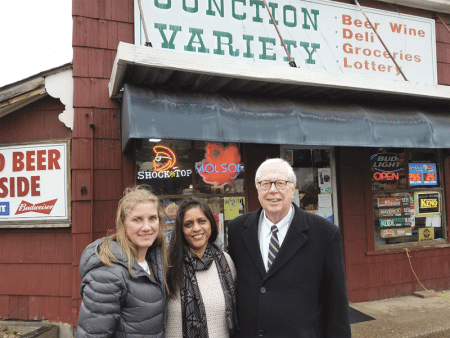
Linda Leduc, Meena Patel, and Charlie Blanchard

Linda Leduc, Meena Patel, and Charlie Blanchard say the new Junction Variety store will include 1,800 square feet of space suitable for retail or office use.

A dozen years ago, Meena and Bharat Patel purchased Junction Variety store in Palmer. They established a loyal client base, but several years ago, the cost of operating the antiquated building, combined with the need for extensive repairs and inadequate parking, forced them to make a decision about whether to remain in town and build a new structure or move their business elsewhere.

“We decided to stay here; I love Palmer,” said Meena. “The people are very supportive, and we have good relationships with our customers.”

Last June, ground was broken on a new, 40,000-square-foot facility. It is expected to be completed within a few weeks, and once the store is moved, the old building will be demolished, and a parking lot with 20 parking spaces will take its place.

Junction Variety will occupy 2,200 square feet of the new structure, which will almost double its current size, and the remaining 1,800 square feet will be available for lease as office or retail space.

The project is part of a flurry of commercial activity that began last year and is rapidly accelerating, creating momentum in this community.

“It’s definitely a sign of the recovering economy. Things are happening a lot faster now than they did in the past, and we are very busy,” said Town Planner and Economic Development Director Linda Leduc, who explained that, a few years ago, projects were permitted that never moved forward, but today construction often begins months after the permitting process is complete.

The list of developments, moves, and expansions nearing completion or underway is lengthy, as Leduc and Town Planner Charlie Blanchard explained during a lengthy interview with BusinessWest. It includes four new solar farms (last year the town had five, which brings the total to nine), construction of a $17.2 million Emergency Department at Baystate Wing Hospital that will begin this year, a $2 million expansion of an advanced-manufacturing company that was recently finished, grassroots efforts in Three Rivers that are leading to change, and churches in residential neighborhoods being reused in creative ways.

Construction is also underway at Town Hall. A $400,000 heating and air-conditioning system was installed over the past two years and paid for with funds from the Green Community Act. And this year, renovations are being made to the entire building to make better use of space vacated by the Police Department when it moved into a new, $7.4 million facility several years ago.

Specifically, the public meeting room will be expanded and gain a new entrance; a new conference room and additional storage space will be created; the Board of Health, Conservation Department, Building Department, and Veteran’s Agent will move into larger offices; and new lighting, windows, and carpeting will be installed throughout the building.

“We have a lot of activity taking place for a town this size,” said Blanchard, attributing it not only to renewed confidence in the economy, but to the willingness of officials and the Town Council to work with businesses and make changes to accommodate their needs.

For this, the latest installment of its Community Spotlight series, BusinessWest takes a look at projects that were recently completed, underway, or on the drawing board throughout the four villages that make up the town of Palmer.

Diverse Undertakings

Change continues to take place in Depot Village, the first commercial district travelers pass through after they exit the Mass Turnpike.

Last year, Mark Baldyga of Baldyga Inc. stopped selling travel trailers and made the decision to focus on autobody work and used-car sales, which necessitated a move, because his 1221 South Main St. location didn’t provide the frontage and exposure he needed.

Finding a suitable property proved difficult, but he hoped to remain in Palmer because he grew up in the town, has spent more than 30 years on the Fire Department, and has an employee who is also a firefighter.

“I have a good reputation, and people here know me, which is one of the main driving forces for my business,” Baldyga said, adding that he has close ties with the community.

His search led to a two-acre parcel on Route 20 with the frontage he needed. However, before he purchased it, he petitioned the town to change the area from general zoning to highway business so he could move forward with his plan.

The petition was accepted, and Baldyga split up the acreage, which was needed because the rear portion of the plot contained a multi-family home.

Ground was broken last spring for a new, 5,500-square-foot building that is nearing completion; he expects to reopen in a few weeks.

He told BusinessWest that the neighbors were not only accommodating, but supported the zoning change, and it has worked out well for everyone involved.

“The town will get more taxes, businesses of a similar nature can move here now, and my tenants are happy because I made improvements to their apartments and cleaned up the property,” he noted, adding that, if the zoning change hadn’t been approved, he would have had to leave Palmer.

Michael’s Party Rentals purchased Baldyga’s former location, and President Michael Linton said the company moved from its Ludlow locations and did a substantial renovation of the 20,000-square-foot building, included the addition of a showroom, design center, and state-of-the-art tent-washing machine.

Other moves have occurred in Depot Village. Last year, the Fire Service Group purchased the former American Legion building on 1010 Thorndike St., which allowed the company to expand from a smaller location, and construction plans have been approved for a Dollar General store on the corner of Breckenridge and Park streets that will be built after the single-family home on the site is demolished.

Progress has also taken place at Detector Technology, a precision-manufacturing firm located in Palmer Industrial Park.  Blanchard said the company needed room to expand and purchased a building from Wayne Buxton, who was using it to house his ShedWorks Inc. business.

“Wayne needed to downsize but wanted to stay in Palmer, so he kept half of the lot and is building a new, smaller structure on it,” Blanchard noted, explaining that Detector Technology recently finished a $2 million renovation of the former Shedworks.

Baystate Wing Hospital is also building a $17.2 million, 37,000-square-foot Emergency Department on its Palmer campus. Ground was broken in November, and the institution is meeting all its timetables.

“They are a major employer and are making a big investment that will be beneficial to our residents as well as the region,” Leduc said.

The town’s capped landfill on Emery Street is another property that has been given new life. Leduc said a request for proposals was issued for the site several years ago, but nothing came to fruition until Syncarpha Solar, which owns and operates a solar farm on the adjacent former Palmer Metropolitan Airport, made the decision to build a second facility on the landfill.

“We were happy they were interested in generating additional solar power on the site,” Leduc said, adding that the town had five solar farms, and, in addition to the new one on the landfill, Nexamp, Nextsun Energy, and Beaumont Solar also built solar facilities last year.

“Two are operating, and the other two are waiting to be interconnected, but once that happens, Palmer will be generating almost 25 megawatts of electricity on its nine solar farms,” she noted.

The facilities will bring in new revenue and result in energy savings. Palmer will receive $121,000 annually for the next 25 years in lease payments from the solar farm on the capped landfill, and will begin getting net metering credits this year from Blue Wave Solar on Baptist Hill in Three Rivers, which Blanchard estimates will save the town 30% to 40% of the generated cost of electricity.

New Life

Two other projects Leduc describes as “exciting” involve the conversion and reuse of former churches.

Artist Bruce Rosenbaum and his wife, Melanie, recently purchased St. Mary’s Episcopal Church on Main Street in Thorndike. It had been vacant for several years, and will become their residence and the new home for Mod Vic Steampunk Design when the couple moves from Sharon.

“It was a perfect situation,” Leduc said, explaining that churches often are located in the middle of residential districts, and although the town is willing to rezone whenever it makes sense, it’s not always possible.

The Rosenbaums created the first functional steampunk house in the world, and their business repurposes and infuses modern technology and gadgets into period, relevant antiques and salvage objects.

“We work with clients in the U.S. and internationally to design one-of-a-kind pieces, creatively combining eras and ideas to transform the ordinary into incredible steampunk functional art,” Bruce said, adding that the couple has clients all over the world and looked throughout the Commonwealth and in Connecticut before deciding that St. Mary’s Church was a great place to expand their business.

The 1876 gothic structure, with 30-foot ceilings and tall stained-glass windows, three wooded acres, and 30 parking spaces in the middle of a residential neighborhood appealed to them, especially since they have clients in Amherst, Holyoke, Northampton, and Springfield, including MGM.

They worked with the town to get a home-occupation permit before purchasing the home earlier this month, and are looking forward to relocating and creating a showroom and gallery in the historic space, as well as holding steampunk workshops for families.

In addition, Amherst Railway Society purchased the Crossroads Christian Church on South Main Street in Depot Village and plans to move there on June 16.

“It’s a nostalgic reuse of a historic church and very fitting since Palmer is known as the Town of Seven Railroads,” Leduc said.

Collaborative efforts to revitalize Main Street in Three Rivers are also bearing fruit, thanks to work by the consortium On the Right TRACK (the acronym stands for Three Rivers Arts Community Knowledge), which has been working to build a cultural and creative economy in the village.

The Quaboag Valley Community Development Corp. was awarded a $13,500 Adams Art Grant for fiscal years 2016 and 2017, and the town completed a market-assessment and business-recruitment tool as well as a feasibility study showing that a building on 2032 Main St. obtained through the tax-title process has potential for redevelopment.

“The town will put out a request for proposals as soon as we have grants in place for the building,” Leduc said.

A number of property and business owners also began meeting 11 months ago in a grass-roots effort to help the revitalization effort, which includes changing the perception of the area and filling vacant storefronts.

Community Development Director Alice Davey said Nancy Roy, of Interactive Schoolhouse, was instrumental in starting the group. The agency received $35,000 from MassDevelopment and used the money to hire Union Studio in Providence, R.I. to design a conceptual plan for the center. The consulting firm held a public presentation several weeks ago to get input from residents, and the final report is expected in the near future.

Davey said suggestions put forth during the meeting included making the downtown more pedestrian-friendly, building a walking path with river access around the perimeter of Laviolette Park and upgrading the parking there, and expanding Hryniewicz Park, which is used for movie nights, concerts, and other events staged by the town’s recreation department and the Quaboag Hills Chamber of Commerce.

“It’s an exciting time for Three Rivers,” she noted. “The public meeting was well-attended, and residents and property owners eagerly anticipate the final plan and development of a course of action to implement some of the recommendations.”

Forward Movement

Bruce Rosenbaum says steampunk is more than just art: it’s a way to creatively problem-solve, learn how to adapt to a situation, and be resilient.

“You look at an object, know the purpose it was designed for is obsolete, then find a way to give it new life and make it beautiful and functional,” he said, adding that the idea translates to people and cities, and he is excited to work with Palmer “as the town re-imagines itself.”

That certainly applies to Three Rivers, and progress is indeed underway that will put the Town of Seven Railroads on the map as it moves forward on a fast track that is attracting new businesses and helping existing ones to expand and grow.


Palmer at
a Glance
Year Incorporated: 1775
Population: 13,050 (2015)
Area: 32 square miles
County: Hampden
Tax Rate, residential and commercial: Palmer, $21.57; Three Rivers, $22.25; Bondsville, $22.06; Thorndike, $23.01
Median Household Income: $51,846
median family Income: $68,200
Type of government: Town Manager; Town Council
Largest Employers: Baystate Wing Hospital; Camp Ramah of New England; Big Y World Class Market
* Latest information available

Employment Sections

Value Proposition

From left, Phil Michaud, Alisa Feliberty, and Robert Raynor

From left, Phil Michaud, Alisa Feliberty, and Robert Raynor say PeoplesBank’s efforts to keep young professionals engaged with the company’s values and connected to the community are among the qualities their generation values in an employer.

It’s difficult to pigeonhole the Millennial generation — though many have tried — in terms of what they want in a job and a workplace.

But one recurring theme is a sense of purpose and meaning, one that goes beyond their list of duties. And on this front, employers are largely falling short.

In fact, according to a recent Gallup study, “How Millennials Want to Work and Live,” only about one-third of young professionals strongly agree that the mission or purpose of their organization makes them feel their job is important. And just 40% feel strongly connected to their company’s mission. This is a problem, the study notes, that leaders need to take seriously because Millennials currently make up 38% of the U.S. workforce, and that percentage will continue to rise.

They might do well to listen to three Millennials whose employer, PeoplesBank, seems to understand what makes them tick.

“As an employee, I feel appreciated, I feel heard, like my opinion actually matters,” said Alisa Feliberty, call center manager. “That’s a big thing for me, knowing I’m not just a body here, but a person considered for her thoughts and beliefs.”

Phil Michaud, a loan service associate, recalled being part of a meeting in which top bank officials candidly outlined their growth strategy for the next decade. “Having that kind of access to the direction the company is looking to grow, getting into the nitty gritty of all that, says they value you, and you’re worth telling.”

Then there’s Robert Raynor, who stumbled into banking after studying business management in college.

“I’d say the biggest thing for me is connection to the community,” said Raynor, now assistant vice president of Compliance. “To be able to work for a company that reaches out to the community, that makes a positive impact in the community and makes a difference, you know you’re working to help out the less fortunate in your area, not just coming in and making a widget and making a profit.”

These opinions aren’t happy accidents, said Janice Mazzallo, the bank’s chief Human Resources officer, but part of an overall strategy to create a culture that draws and retains top talent by making sure they feel connected.

“Values is something we get right in the organization,” she said. “Attracting Millennials isn’t just about having the right employee benefits, though we do that. We also recognize that Millennials — and all employees, for that matter — want to connect; when they go to work, they want to feel engaged, that what they do matters.”


List of area Employment Agencies


These efforts have drawn the attention of the Boston Globe, which has named PeoplesBank among its Top Places to Work five years running — in fact, the only company based in Western Mass. to be named to the most recent list.

“We put a lot of energy into that effort, and we don’t take it for granted,” Mazzallo said. “But it’s also not something that HR does in a vacuum.”

Rather, creating a workplace culture that keeps employees engaged and committed to the brand is an effort that requires buy-in across the organization. For this issue’s focus on employment, BusinessWest explores why PeoplesBank’s leaders feel the effort is worth it.

Making Connections

The benefits of engaging Millennials extends far beyond accolades in a magazine. In the coming years, employers must learn what makes this large, diverse group tick if they want to retain top talent.

The Gallup survey found that 67% of Millennials are engaged at work when they strongly agree that the mission or purpose of their company makes them feel their job is important. In contrast, just 14% are engaged when they strongly disagree with this statement. Because engagement leads to increased retention, fostering a connection to purpose can help companies fight Millennials’ propensity for job-hopping.

“When a company’s purpose is evident through its culture and brand, Millennials are better able to connect it to their role,” write Brandon Rigoni, associate director for Selection and Development at Gallup, and Bailey Nelson, a writer and editor at the polling company. “Leaders should strategically align the company’s purpose, brand, and culture to create an environment in which mission is something employees experience daily. By integrating purpose company-wide, leaders give employees the opportunity to own the company’s mission and transform it into enhanced performance.”

The values PeoplesBank tries to espouse, Mazzallo said, range from an extensive volunteerism culture to environmental awareness (which takes the form of an active committee that seeks out ways to make the bank and the surrounding community ‘greener’); from technological innovation to an emphasis on work-life balance.

Janice Mazzallo

Janice Mazzallo says creating a culture that has earned multiple ‘Top Places to Work’ accolades starts at the top but includes input across the organization.

“I think the fact that we’re an employer that cares about our community and gives employees opportunities to get involved in the community — whether it’s volunteerism or board involvement or the social aspect — that’s certainly important to them,” she went on. “We have a lot of opportunities here to get involved.”

The bank’s employee-driven committees tackle everything from wellness and the environment to organizing social events, such as bowling outings and trivia nights. A popular annual event called Employee Fest is another opportunity to make workers feel connected and appreciated.

“Everyone looks forward to Employee Fest; it’s a week where the company kind of caters to you, but you also realize how everyone contributes to our success,” Felberty said.

Michaud agreed, noting that various departments compete in contests, and it’s good to see people, especially those in far-flung branches, he doesn’t talk to on a regular basis. “At face value, it looks like we’re playing games, but I think about the connections we’re making and what that does for everyone in the bank. It’s more about building community and building relationships in this place where we spend the majority of our time.”

None of these efforts — the events or the committees — would happen if they didn’t have support at the top, Mazzallo stressed. “We have a senior management team that believes strongly that this is important, and support the idea that people want to feel engaged, and without that engagement, the high performance doesn’t come. We know that; we’ve seen it. Our financial performance over the last five years has been phenomenal, and that’s no coincidence — we have highly engaged employees.”

Getting Ahead

The three young professionals we spoke with also praised the company’s advancement efforts, from its management-development program to its support of continuing education and a willingness to move people around if they desire a new challenge.

“Management here supports us and allows us to take time to develop our skills,” Michaud said. “I started off as a less-than-part-time teller, and in a short period of time, I made this position. The opportunities are definitely there. You see people moving up in departments and transferring between them. If you find it’s not a great fit or you’re interested in something else, they’ll move you to another department.”

Feliberty agreed. “They’re interested in making sure you’re happy and successful. It’s important for them to retain you as an employee, and they’d rather move you from one department to another than keep you stagnant in one position.”

That flexibility is married, they added, to encouragement by bank leaders to communicate their goals and ambitions.

“I’m always surprised at the open doors to communication,” Raynor said. “I’ve had the opportunity to sit down with the then-CFO — now president — and talk about my career path, and what my interests are. With that busy schedule, to take time to sit down and talk about my thoughts and plans is pretty amazing to me. You don’t hear about that taking place that often.”

Michaud agreed, citing coffee events held with senior officials, who share their own paths to success. “The feeling is, they’re looking for you to ask questions and discover your own path to success, and then give you the tools to do that. They’re incredible at that. They’re giving you confidence that they’re here for you — you’re not on your own here.”

Added Raynor, “it’s not a canned message. It’s, ‘this is my story, this is what happened — the obstacles I faced, what happened in my personal life that helped me make this decision or that decision.’ It’s incredibly helpful.”

It’s also not the way most companies operate. According to the Gallup survey, only 26% of millennials say that, in the past seven days, they have heard someone talk about how their daily work connects with their organization’s mission and purpose. And just 34% of millennials report that they have heard a story in the past 30 days about how their company impacted a customer to improve their business or life.

PeoplesBank’s openness, Raynor added, breeds pride in the company and one’s place within it, which suppresses the natural urge to believe the grass is greener somewhere else. “Being at a place like Peoplesbank and having those conversations, I know where the grass is greener, and that’s a pretty good feeling.”

Just a Little Respect

Mazzallo called on one more word to describe the workplace culture at PeoplesBank: Respect.

“I’ve worked for a lot of organizations in my life, and there’s something about this bank that, I think, leads with respect. When you have that in place, there are so many lessons that can be learned,” she told BusinessWest. “When we have strategic initiatives, we want to hear from every level of the organization … I think there’s a healthy respect for the people who are directly involved in day-to-day projects.”

Feliberty said young employees definitely want to be heard. “It’s important to feel we’re included, that we matter, that what we think is considered when making decisions.”

There’s also a healthy regard for trying new ideas that arise from those discussions, Mazzallo said, whether it’s a new product or a new technological innovation.

“It’s OK to make mistakes,” she said. “I don’t think a lot of employers will say that. But if you want to have an innovative organization, you have to take risks — smart risks. I think people feel they can be creative and take risks, and, as a result, some very, very innovative ideas have been created.”

Like the brainstorm, cultivated over time, that clearly communicating the company’s values — and making employees feel connected to those values — will not only keep them around, but motivate them to new heights.

Joseph Bednar can be reached at [email protected]

Briefcase Departments

VVM Graduates Manufacturing Cohort

SPRINGFIELD — This week, Valley Venture Mentors (VVM) celebrated the graduation of participants in its Massachusetts Manufacturing Accelerator. The graduation ceremony took place at VVM World Headquarters at Tower Square in front of a crowd of nearly 100 friends, supporters, and members of the political and business communities. The Manufacturing Accelerator delivered intensive and immersive training sessions to seven small precision manufacturers over four months to help them identify new revenue streams and connect them with new industries and customers. “This program is unique because it takes startup methodology and applies it to established manufacturers,” said Paul Silva, VVM co-founder. “We encouraged these businesses to boldly question the way they’ve been doing business for decades and discover new markets and opportunities. We’re very excited about the results.” Funding for this program was provided by the Advanced Manufacturing Futures Program administered by MassDevelopment. “The manufacturers who participated in the Massachusetts Manufacturing Accelerator benefited from the creative and thoughtful approach Valley Venture Mentors and its partners took with this program, and MassDevelopment is pleased to support the accelerator with a grant from the Manufacturing Futures Fund,” MassDevelopment President and CEO Marty Jones said. “Congratulations to everyone on this accomplishment, which will help Western Massachusetts’ innovative manufacturing industry continue to grow.” Graduates of the program include BSS Additive, Boulevard Machine & Gear, Decker Machine Works Inc., Mitchell Machine Inc. and Precise Turning and Manufacturing.

Nominees Sought for Ubora, Ahadi Awards

SPRINGFIELD — The African Hall subcommittee of the Springfield Museums is seeking nominations for the 26th annual Ubora Award and the ninth annual Ahadi Youth Award. The African Hall subcommittee is a volunteer group comprised of educators, business people, and community leaders from the African-American community. The nomination deadline for both awards is March 31. The Ubora Award is presented to an African-American adult who has demonstrated a commitment to the Greater Springfield area and exhibited excellence in the fields of community service, education, science, humanities, or the arts. The Swahili word ‘ubora’ means ‘excellence.’ Named for the Swahili word for ‘promise,’ the Ahadi Youth Award is presented to a young African-American who has excelled in academics and performed admirable service to the Greater Springfield community. Eligible candidates must be age 19 or younger, live in or have strong ties to the Greater Springfield area, and be currently enrolled in grades 10, 11, or 12. The Ubora and Ahadi Awards will be presented at a ceremony at the Springfield Museums in September. Nomination forms can be downloaded by visiting springfieldmuseums.org/ubora. For additional information, call (413) 263-6800, ext. 325, or e-mail Valerie Cavagni at [email protected]. Nominations may be e-mailed to Cavagni or mailed to African Hall Subcommittee, c/o Valerie Cavagni, Springfield Museums, 21 Edwards St., Springfield, MA 01103.

Nominations Sought for Pynchon Award

SPRINGFIELD — The Advertising Club of Western Massachusetts is seeking nominations from throughout Hampden, Hampshire, Franklin, and Berkshire counties for the Pynchon Award, which recognizes citizens of this region who have rendered distinguished service to the community. The Order of William Pynchon was established by the Advertising Club in 1915 to recognize and encourage individuals whose lives and achievements typified the ideals of promoting citizenship and building a better community in Western Mass. Past recipients include war heroes, social activists, teachers, volunteers, philanthropists, historians, clergy, physicians, journalists, public servants, and business leaders. A complete list of recipients since 1915 can be found at www.adclubwm.org/events/pynchonaward. To nominate an individual, submit a one-page letter explaining why the nominee should be considered. Include biographical information, outstanding accomplishments, examples of service to the community, organizations he or she is or has been active in, and the names, phone numbers, and e-mail addresses of at least three people who can further attest to the nominee’s eligibility for induction into the Order of William Pynchon. All nominees will be considered and researched by the Pynchon trustees, comprised of the current and five past presidents of the Advertising Club. Nominations must be submitted by Tuesday, Feb. 28 to William Pynchon Trustees, Advertising Club of Western Massachusetts, P.O. Box 1022, West Springfield, MA 01090-1022, or by e-mail to [email protected]. Pynchon medalists are chosen by unanimous decision of the Pynchon trustees. The 2017 recipients will be announced in June, with an awards ceremony scheduled for Oct. 19 at the Log Cabin in Holyoke. Recipients are presented with a bronze medal cast with the name and likeness of Springfield’s founder, William Pynchon, and bearing the inscription, “They honor us whom we honor.”

Chamber Corners Departments

1BERKSHIRE

www.1berkshire.com

(413) 499-1600

• Feb. 22: Good News Business Salute, 4:30-6:30 p.m., at Country Curtains, 705 Pleasant St., Lee. Good News Business Salutes recognize major milestones including anniversaries, expansions, and new product lines. This salute is part of 1Berkshire’s Creative Economy Month celebration during the month of February. This event’s honorees include Annie Selke Companies, Pittsfield; Boyd Technologies, Lee; Big Elm Brewing, Sheffield; and Winstanley Partners, Lenox. Cost: $35-$45.

• Feb. 24: BYP Back in Time Bash, 7-11 p.m., at Berkshire Museum, 39 South St., Pittsfield. Berkshire Young Professionals is kicking off another great year with its annual museum party this February. Enjoy a dance party with DJ BFG, sing your favorite karaoke tunes, sample food, snap a picture in our photo booth, play some indoor lawn games, and much more. Cost: $10-15.

• Feb. 28: Spark! Creative Economy Networking Event, 5:30-7:30 p.m., at Kripalu Yoga Center, 57 Interlaken Road, West Stockbridge. Get to know others in the creative industries at our February Spark! creative economy networking event. Hear from Kripalu about all it has to offer as part of our Sparkplug speed-speaker series, then dive deep into icebreaker engagement with mini-workshops offered by key staff members of the Kripalu Center for Yoga & Health. Cost: free.

• March 15: Chamber Nite, 5-7 p.m., at Community Health Programs, 71 Hospital Ave., North Adams. Join us for this popular event and remember to bring your business card so you can enter to win a door prize. Cost: free.

• March 29: Career Fair, 10 a.m. to 4 p.m., at Berkshire Community College, Paterson Field House, 1350 West St., Pittsfield. Get in front of Berkshire-based businesses at this annual event. Connect with employers looking to hire someone like you. This event is open to the public and is free. No registration is required.

• March 29: Brown Bag Fundraising, noon-1 p.m., at 1Berkshire Central Station, 66 Allen St., Pittsfield. Cost: Free

Register online for events at www.1berkshire.com.

EAST OF THE RIVER CHAMBER OF COMMERCE

www.erc5.com

(413) 575-7230

• April 27: The Feast in the East, 5:30-7:30 p.m., at the Starting Gate at GreatHorse, 128 Wilbraham Road, Hampden. This event is open to the public. The ERC5 is preparing to host 30 of the finest restaurants in our area to serve delicious and decadent signature dishes to guests. Tickets and sponsorship opportunities are available at www.erc5.com. Call Nancy Connor, executive director, at (413) 575-7230 with questions.

GREATER CHICOPEE CHAMBER OF COMMERCE

www.chicopeechamber.org

(413) 594-2101

• March 3: Shining Stars Gala, 6-9:30 p.m., at the Castle of Knights, 1599 Memorial Dr., Chicopee. Honoring Business of the Year: Polish National Credit Union; Citizens of the Year: Werner and Chris Maiwald/Renaissance Advisory Services, LLC; Volunteer of the Year: Michael Epaul/Michael Epaul Photography; Nonprofit Organization of the Year: Holyoke Medical Center; and a Tribute to William Wagner/Westfield Bank. Cost: $60 per person. To register, please go to www.chicopeechamber.org.

• March 8: Salute Breakfast, 7:15-9 a.m., at the Delaney House, 3 Country Club Road, Holyoke. Salutes include Berkshire Bank/165-year anniversary; Chicopee Industrial Contractors/25-year anniversary; Chicopee Colleen and her court; and a Bow of Recognition to Clear Vision Alliance for a 10-year anniversary. Cost: $23 for members, $28 for non-members. To register, visit www.chicopeechamber.org.

• March 16: CEO Luncheon featuring Raymond Berry, president and general manager of White Lion Brewing Co., 11:45 a.m. to 1 p.m., at Collegian Court Restaurant, 89 Park St., Chicopee. Cost: $30 for members, $35 for non-members. To register, visit www.chicopeechamber.org.

• March 22: Business After Hours with the Springfield Regional Chamber, 4:30-6:30 p.m., hosted by Springfield Thunderbirds main office, 45 Bruce Landon Way, Springfield. Networking, raffle prizes, shoot-the-puck contest on the ice, Plan B Burger, and a cash bar available. Cost: $10 for members, $15 for non-members. To register, visit www.chicopeechamber.org.

GREATER EASTHAMPTON CHAMBER OF COMMERCE

www.easthamptonchamber.org

(413) 527-9414

• April 12: Business Expo, 4:30-7 p.m., at the Bartley Center at Holyoke Community College, 303 Homestead Ave., Holyoke. Sponsored by Florence Bank, Williston Northampton School, and Green Earth Energy PhotoVoltaic. The Greater Easthampton Chamber of Commerce is partnering with the chambers of Holyoke, Chicopee, and Northampton for a Business Expo. The chambers are now accepting reservations for tables. The cost is $150 if reserved by March 29, and $200 after that date. Table fee includes a 6’ x 30” skirted table, two entrance passes, a light supper, and free parking. Sponsorships are also available. For more information, call the chamber at (413) 527-9414 or e-mail [email protected].

GREATER WESTFIELD CHAMBER OF COMMERCE

www.westfieldbiz.org

(413) 568-1618

• March 6: Mayor’s Coffee Hour, 8-9 a.m., at Armbrook Village, 551 North Road, Westfield. Join us for our monthly Mayor’s Coffee Hour with Westfield Mayor Brian Sullivan. Free and open to the public. Call the chamber office at (413) 568-1618 to register for this event so we may give our host a head count.

• March 8: After 5 Connection, 5-7 p.m., at Shaker Farms Country Club, 866 Shaker Road, Westfield. Sponsored by Camp K-9 Doggie Day Camp. Refreshments will be served, and there will be a 50/50 raffle to benefit our CSF – Dollars for Scholars fund. Bring your business cards and make connections. Cost: free for members, $10 for general admission (cash/credit paid at the door). Online registration will be made available at www.westfieldbiz.org. For more information, call Pam at the Chamber at (413) 568-1618.

• March 15: St. Patrick’s Day Dinner, 6-10:30 p.m., at Tekoa Country Club, 459 Russell Road, Westfield. Sponsored by Westfield Bank, platinum sponsor; Savage Arms, gold sponsor; A Plus HVAC Inc., silver sponsor; NorthPoint Mortgage, beer sponsor; and Mercy Continuing Care Network, dessert table sponsor. Join us for our St. Patrick’s Day Dinner, 6-6:30 p.m.; cocktails and networking, 6:30-7:30 p.m.; dinner and program, 7:30-10:30 p.m.; music and dancing. Cost: $38 for singles, $70 for couples, and $300 for a table of eight. Featuring Band O’Brothers, an Irish/American band. For sponsorship opportunities, call the chamber office at (413) 568-1618. To register for this event, visit www.westfieldbiz.org.

• March 24: Employment Law Workshop, 8:30-10 a.m., at the Holiday Inn Express, 39 Southampton Road, Westfield. Topic: “Managing Employee Appearance and Religious Accommodations in the Workplace.” Join attorney Karina Schrengohst for a roundtable-style seminar to discuss appearance in the workplace and religious accommodations, including an overview of religious-discrimination law; dress and appearance standards; body modification (tattoos and piercings); an workplace culture, individual self-expression, and employee retention. Cost: free for members, $30 for general admission paid in advance.

Online registration will be made available at www.westfieldbiz.org. For more information, call Pam at the chamber at (413) 568-1618.

PROFESSIONAL WOMEN’S CHAMBER

www.myonlinechamber.com

(413) 787-1555

• March 22: Professional Women’s Chamber Headline Lunch, 11:30 a.m. to 1 p.m. Location to be determined. Cost: $30 for PWC members, $40 for general admission.

SPRINGFIELD REGIONAL CHAMBER

www.myonlinechamber.com

(413) 787-1555

• March 1: Business@Breakfast, “The 8 Languages of Money,” with Liz Dederer, 7:15-9 a.m., at the Colony Club, 1500 Main St., Springfield Cost: $22.50 for members in advance ($25 at the door), $30 for general admission in advance ($35 at the door).

• March 2: Leadership 2017 session 4, “Leading with an Entrepreneurial Focus,” 1-4:30 p.m., at the TD Bank Conference Center, Springfield.

• March 6: Outlook 2017, 11:30 a.m. to 1:30 p.m., at MassMutual Center, 1277 State St., Springfield. Cost: $50 for members, $70 for general admission. Reservation deadline: Feb. 22. No walk-ins accepted. No cancellations after RSVP deadline.

• March 8: Lunch ‘n’ Learn, “Apprentices and Internships: The Real Deal,” 11:30 a.m. to 1 p.m., at Lattitude Restaurant, 1338 Memorial Ave., West Springfield. Presented by David Cruise, president of the Regional Employment Board of Hampden County. Cost: $25 for members in advance ($30 at the door), $35 for general admission ($40 at the door).

• March 14: Speed Networking, 3:30-5 p.m., at Lattitude, 1338 Memorial Ave., West Springfield. Cost: $20 for members in advance ($25 at the door), $30 for general admission in advance ($35 at the door).

• March 22: “Power Play” After 5, 4:30-7 p.m., hosted by the Springfield Thunderbirds, MassMutual Center, 1277 State St., Springfield. Cost: $10 for members, $15 for general admission. Special event presented jointly with the Springfield Regional Chamber and the Greater Chicopee Chamber.

• March 28: Pastries, Politics & Policy, 8-9 a.m., at TD Bank Conference Center, 1441 Main St., Springfield. Cost: $15 for members in advance ($20 at the door), $25 for general admission in advance ($30 at the door).

Reservations for all chamber events may be made online at www.springfieldregionalchamber.com.

WEST OF THE RIVER CHAMBER OF COMMERCE

www.ourwrc.com

(413) 426-3880

• Feb. 22: Legislative Breakfast, 7-9 a.m., at Springfield Country Club, West Springfield. Attendees will include state Sens. James Welch and Donald Humason, state Reps. Nicholas Boldyga and Michael Finn, and Mayors Richard Cohen (Agawam) and Will Reichelt (West Springfield). Sponsorship opportunities are available. Cost: $30 for members, $35 for non-members. Register online at www.westoftheriverchamber.com. For more information on ticket sales, contact the chamber office at (413) 426-3880 or [email protected].

• March 1: Wicked Wednesday, 5:30-7:30 p.m. Hosted by Music Speaks Feeding Hills. Wicked Wednesdays are monthly social events, hosted by various businesses and restaurants. that bring members and non-members together to network in a laid-back atmosphere. For more information about this event, contact the chamber office at (413) 426-3880, or register at www.westoftheriverchamber.com.

• March 16: Networking Lunch, noon to 1:30 p.m., at Crestview Country Club, Agawam. You must be a member or guest of a member to attend. Enjoy a sit-down lunch while networking with fellow chamber members. Each attendee will get a chance to offer a brief sales pitch. The only cost to attend is the cost of your lunch. Attendees will order off the menu and pay separately that day. We cannot invoice you for these events. For more information, contact the chamber office at (413) 426-3880 or [email protected].

• March 23: Business 2 Business Meet and Greet with West Springfield Mayor Will Reichelt. 7:30 a.m., hosted by Fathers & Sons, 989 Memorial Dr., West Springfield. A casual meet and greet with local businesses and the mayor.

Daily News

SPRINGFIELD — On Thursday, MGM Springfield announced the terms of a MassMutual Center venue-management agreement with the Massachusetts Convention Center Authority (MCCA) and Spectra by Comcast Spectacor. MGM Springfield President Michael Mathis, together with MCCA Executive Director David Gibbons and Spectra Regional Vice President Matt Hollander, outlined the phased management-transition plan during a presentation at the MassMutual Center (MMC).

In front of approximately 175 current Spectra employees who work at the MMC, MGM Resorts executives presented a transition plan that will commence as early as July 1. At that time, MGM Springfield will become the exclusive venue manager of the MMC and will work in partnership with Spectra, which will provide management-transition services in support of MGM, while also overseeing food and beverage services until a similar transition plan is reached with MGM.

“We are thrilled to enter into this agreement that leverages the best of what our company has to offer, in order to make best use of the MMC and drive downtown economic development,” Mathis said. “We commend Spectra and the Commonwealth of Massachusetts on all they have accomplished with the MMC, and we are excited about the future opportunities that will come with the opening of our $950 million casino resort across the street. Creating experiences that attract visitors is what we do at MGM. We look forward to partnering with the professionals at Spectra during this transition period to make the MMC a central component in Springfield’s revitalization.”

The announcement comes as a result of discussions following a winning joint bid last year by MGM and Spectra for the five-year contract to operate the MMC, an 8,000-seat, multi-purpose arena and convention center in downtown Springfield, one block from the MGM Springfield site.

Early on, MGM committed to using its extensive entertainment relationships and partnerships to bring 12 performances annually to existing Springfield venues — the MMC, CityStage, and Symphony Hall. The commitment was memorialized in the host-community agreement with the city of Springfield.

“The MCCA is excited about the future of the MassMutual Center and downtown Springfield,” Gibbons said. “Spectra has been a great partner in the management of the center since it opened in 2005. And with a world-renowned entertainment and hospitality leader moving in across the street, we now have the power of MGM’s extraordinary industry relationships to look forward to on our future marquees.”

Added Hollander “Spectra has always been committed to the success of the MassMutual Center. We appreciate the opportunity that the MCCA provided us to operate the center, and we look forward to working with the MGM Springfield team in the coming year to leverage on the achievements we and our local hospitality and tourism partners have built.”

As a result of the management agreement, MGM Springfield will welcome about 175 full-time and part-time MMC employees as early as July 1. MGM Springfield plans to host several informational sessions for its new employees in the spring. These employees will join the more than 72,000 MGM Resorts employees around the world, gaining access to MGM’s training and expertise as an industry leader in entertainment and hospitality, including sales, marketing, meetings, and events.

Marikate Murren, MGM Springfield director of Human Resources, noted that, “for almost five years, MGM has had an opportunity to see MMC employees host special events, small and large-scale meetings, and first-rate entertainment offerings. Our entire company looks forward to welcoming these hard-working, proud, and diverse professionals and learning from their local experience, passion, and knowledge.”

In the near future, MGM and Spectra will be working on increased cross-marketing opportunities, streamlined job and customer-service training, coordinated purchasing of local goods and services, and a new, stronger, multi-faceted approach to trade and industry events. Additionally, MGM Springfield will manage the long-term event calendar, reinforcing its commitment to bring entertainment back to downtown by leveraging its expertise and brand to attract high-quality programming.

“From day one, MGM Springfield vowed to use MGM’s entertainment roots to bring the arts and entertainment back to downtown Springfield,” Mathis said. “This agreement furthers our engagement, allowing us to be central to the discussions and decisions about the events that will best serve Springfield, and how we can best leverage the facility to benefit local businesses.”

Daily News

SOUTH HADLEY — Sok’s Bar & Grille in South Hadley will host ‘Plunge into the Parade’ on Thursday, Feb. 16 from 6 to 9 p.m., featuring drinks, celebrity servers, and more. Donations collected by the celebrity servers will go back to both the Leprechaun Plunge Committee of South Hadley and the Holyoke St. Patrick’s Parade Committee. A percentage of food and drinks purchased during the event will also be donated by the establishment.

Five fund-raising events will be taking place on Thursdays through March 16 to raise money for both organizations. A complete list with dates, locations, and celebrity servers may be found at www.facebook.com/plungeintotheparade.

Opinion

Editorial

As he talked about the American Hockey League’s franchise in Utica, N.Y., Nate Costa said plans to place a new team there after one failed years earlier were greeted with great skepticism and even laughter.

He probably knows there was a somewhat similar reaction here when it was announced almost nine months ago that a group of businesspeople had purchased the AHL’s Portland, Maine team with the intention of moving it to the City of Homes. That’s because, just a few months earlier, the owner of the Springfield Falcons moved the team to Arizona, claiming he wasn’t getting the support he needed and couldn’t envision a scenario where he would.

No one is laughing in Utica these days, because the city’s team, the Comets, are selling out every night, and their games have become must-see events. And while it’s still quite early, no one is laughing in Springfield, either, thanks largely to Costa, the executive vice president of the franchise named the Thunderbirds, and the energetic team he has put together (see story).

Instead, most people are marveling — at the attendance (4,600 or so per game), the energy, and the manner in which the team is quickly weaving itself into the fabric of the community.

Costa is, among other things, quite realistic and level-headed. He is not getting carried away by this early success and is instead reminding his team in the back office that there is still a long way to go to make this story match that of Utica’s.

But the pace of progress is impressive, and it’s been achieved despite the fact that the team’s performance on the ice has been, well, far less so — sixth place in the AHL’s seven-team Atlantic Division.

But from the start, Costa said the plan was not to bring hockey to Springfield, but rather entertainment and an experience, and he and his team have done exactly that. And they’ve done it by essentially moving on from the past, meaning Springfield’s 80-year history of hockey — while still paying homage to it.

Perhaps the most notable example is the retirement of the long-time rally song “Shake, Rattle and Roll” and the introduction of a new one, “Out of Our Heads” by the Dropkick Murphys — a move made with younger audiences in mind — but there are many others.

Indeed, changes have been made in everything from how the team is marketed, with a much greater focus on social media, to the game-night experience (live music on Friday nights, for example, as well as concessions priced at $1), to the special promotions.

Indeed, Ric Flair, the flamboyant former wrestling champion (and smash hit at one of BusinessWest’s recent 40 Under Forty galas, by the way) will make an appearance at the Feb. 10 game.

Change was necessary, obviously, and it has come in waves, enabling the T-Birds to take flight, if you will.

As we noted earlier, this franchise still has a ways to go before it can be described with the word ‘established.’ The new management team has shown it can get people out to take in their team. It still has to show that it can do that consistently, over a full season and over multiple seasons, and build the necessary rock-solid foundation of reliable fan support.

We predict that it will happen, because the management team is doing all the right things. The focus is on the experience, providing value, and making the team part of the community.

Word is that you can’t get a ticket to a Utica Comets game these days. We’re not there yet in Springfield — a good thing, because many people still haven’t taken in this team or the experience, and they need to — but one can easily envision the day when we might.

Community Spotlight Features

Community Spotlight

By Kathleen Mitchell

Mayor Linda Tyer

Mayor Linda Tyer says Pittsfield has made great strides in re-inventing itself and moving beyond its industrial past, dominated by General Electric.

Mayor Linda Tyer is a strong believer in the power of collaboration.

Several weeks ago, she gave the first State of the City address in Pittsfield’s history and outlined a myriad of multi-faceted projects that have come to fruition in the last year as a result of collaborative efforts.

Tyer told BusinessWest that investments designed to revitalize the city have taken root and change is occurring on a daily basis, which is good, because it’s needed as the city continues the process of reinventing itself.

“Pittsfield has a long history as an industrial town primarily because of GE’s large manufacturing facility,” she explained, referring to the massive complex that once employed more than 13,000 people. “The city relied on it for decades as its economic driver for real-estate taxes, employment, and community engagement.”

GE closed in the ’80s, which was a devastating blow and led to what Tyer refers to as a “grieving period that created self-doubt for the people who live here.”

Although a period of disinvestment followed, change began in 2000 when city officials decided to redefine Pittsfield’s identity.

Tyer was on the City Council at that time and recalled the city realized a robust cultural economy existed in the towns around them, but Pittsfield, which is the geographic and commercial hub of the area, was not participating in it.

Investments began downtown, and thanks to a collaborative effort by partners that included city officials, the community, state and federal legislators, and investors, today Pittsfield’s downtown boasts a thriving district that includes the Barrington and Colonial theaters, an independently owned movie theater, popular restaurants, and market-rate housing that followed as thousands of visitors flocked to the area.

“People want to live in our downtown, which is proof that the investments paid off,” Tyer said.

City officials have also helped local businesses, and the mayor said the belief that there are no jobs in Pittsfield is a myth. Indeed, numbers are rising: last January, the unemployment rate was 6.6%, which dropped to 3.3% by November.

“We strengthened workforce relationships last year and developed innovative training programs,” Tyer said, explaining that the workforce system generated $1.8 million that was used to train 1,250 people in healthcare, advanced manufacturing, STEM careers, finance, and customer service, and 70% of them found employment.

The city has also worked to retain local companies. Last July, after Covanta announced that it planned to close its Pittsfield facility, the City Council granted the waste-burning plant $562,000 to help with capital repairs and keep it open. The move saved 25 jobs and prevented a huge increase in trash-disposal costs, as a shutdown would have forced Pittsfield to have its trash and recyclables hauled away at an estimated annual cost of $462,000, in addition to losing $960,000 in property taxes, water and sewer user fees, and host-community fees over a four-year period.

Fiscal challenges lie ahead. But many steps will be taken to stabilize the issue, including cost containment, debt management, new revenue, and strategic investments that will prepare Pittsfield to not only survive, but thrive well into the future.”

The Hubbard Avenue facility incinerates 85,000 tons of waste per year and turns it into steam energy, which is then sold to Crane & Co. and Neenah Technical Materials. Republic Services hauls the city’s curbside collection to the site, including recyclables that are stored and later shipped in bulk to the Springfield Massachusetts Materials Recycling Facility.

The financial package Covanta received included state energy-tax credits, extended its contract with the city until 2020, and allowed the company to continue to sell steam energy to Crane and Neenah.

“But Covanta wasn’t the only company on our radar,” Tyer said, adding that five additional businesses were provided with assistance from a variety of incentive programs.

For this, the latest installment in its Community Spotlight series, BusinessWest looks at revitalization efforts in Pittsfield and what is being done to make it a place where Millennials want to live, which is one of the mayor’s goals. She noted they typically choose that place first, then look for a job, which is markedly different than past generations who moved to areas where they found employment.

“Millennials have a very different way of planning their lives,” said Tyer. “But we plan to capitalize on our growing art, culture, and entertainment economy; maximize our spectacular natural environment by updating our recreation and open space; invest in our housing stock; safeguard our educational institutions; and support small and mid-sized businesses and their aspirations for growth in new markets for the people who live here now as well as future generations that will call Pittsfield home.”

Neighborhood Focus

Over the past year, the Tyler Street business corridor has been the focus of combined energy, effort, and investment. The area is adjacent to North Street, Pittsfield’s downtown thoroughfare, and is bookended by Berkshire Health Systems, the city’s largest employer, and the William Stanley Business Park.

In December 2014, Pittsfield’s Community Development Department, the Pittsfield Economic Development Authority, and the Tyler Street Business Group applied to have the neighborhood become a state-designated Transformative Development Initiative (TDI) district.

The application was accepted, and the agencies have formed a core partnership in this program, administered by MassDevelopment, that leverages public dollars to stimulate private investment in selected neighborhoods in gateway cities.

“We are very privileged to have MassDevelopment as a partner,” the mayor said. “This will allow Pittsfield to receive enhanced technical assistance, real-estate services, and equity investments to support our vision for redevelopment. We’re learning what the citizens want, as well as working to understand the needs of small businesses there, and will develop a plan to help Tyler Street become a unique, thriving, working, residential neighborhood where typical day-to-day needs can be met within walking distance.”

Amewusika “Sika” Sedzro is the TDI fellow for Pittsfield, and she noted that MassDevelopment hired a consulting firm to conduct an assessment of the area and come up with recommendations for an action plan.

Two meetings were held to get public input, and a forum was staged for developers to find out what is needed to spur interest in structures that have been vacant for long periods of time.

The final report was due when BusinessWest went to press, but Sedzro said it quickly became clear that developers want easy access to data about available parcels, information about incentive programs, and a streamlined process to help bring submitted plans to fruition.

“There is a lot of property of this size available in the Tyler Street District, and we’re working with businesses and developers to understand the barriers to entry given current market conditions,” Sedzro noted, adding that she is available to talk about properties and incentives available from the city and MassDevelopment that include low-interest loans, access to capital, and technical assistance.

The Tyler Street neighborhood has a growing Latino and Asian population, and a number of new businesses have been opened by entrepreneurial immigrants.

“It’s a really positive indicator, especially since Berkshire Health, Sabic Innovative Plastics, and the William Stanley Business Park are in close proximity to the neighborhood,” Sedzro said, explaining that Pittsfield TDI plans to coordinate measures that could lead to an even more diverse economy.

The city is also working to expand the Housing Development Incentive Program into the Tyler Street District, which could benefit a developer who hopes to purchase the St. Mary’s Church campus and convert three of its buildings into market-rate housing. The campus has been vacant for more than two decades and contains the church, a school, a convent, and a rectory.

The developer is in negotiations with the Diocese of Springfield, and the city and state are working to provide incentives to move forward.

The Tyler Street TDI is part of the Morningside neighborhood, and last June that area received a $75,000 grant from the Kresge Foundation.

“It’s a grass-roots effort that includes efforts aimed at the arts, pride of place, and increasing food options and availability,” Sedzro said.

The money will be used to create a soup kitchen in the Berkshire Dream Center, an urban working farm in Springside Park, and an augmentation of community gardens that would allow their produce to be used by local businesses.

Continued Improvements

The cultural and entertainment district in Pittsfield’s downtown continues to grow as infrastructure improvements add to its attractiveness.

A four-phase streetscape project was recently completed, and North Street has a new look that includes street resurfacing, sidewalk improvements, decorative street lighting, increased seating, medians with plantings, and high-visibility crosswalks compliant with Americans with Disabilities Act standards.

New, solar-powered parking kiosks were installed last month as part of the city’s parking-management plan, and are equipped with a parking app that provides a simplified way to manage parking needs.

“Pittsfield’s parking is still friendly; the first 30 minutes are free, and so are nights and weekends,” Tyer said, noting that parking is also free for people with handicap placards.

A grass-roots movement led voters to approve the adoption of the Community Preservation Act in November, which will provide funds that can be used for public and private projects including historic preservation, recreation, open space, and housing.

“The next step is to establish a community-preservation committee that will develop a plan and identify priorities so projects can be funded early in 2018,” Tyer said.

She outlined other collaborations in her State of the City Address that include the revitalization of Willard and Rosemary Durant Park in the Westside.

Neighborhood volunteers installed a new playground and swingset paid for by Community Development Block Grant funds, and Greylock Credit Union has made a commitment to build a permanent pavilion there.

Other collective efforts aimed at youth include a free Sticks for Kids golf program and Dig This Volleyball initiative that have helped children learn new skills. In addition, donations from local businesses have led to innovative art and education programs, and grant money will pay for a strategic plan to provide high-quality education to more preschool children.

The city is also getting help with municipal finances due to a community compact that was formed with Lt. Gov. Karyn Polito’s office and gives officials access to financial expertise from UMass Collins Center.

Tyer said they hope to meet two goals as a result of the collaboration. The first is to create a comprehensive, five-year financial forecast that will serve as a guide in establishing budget priorities and matching them against projected revenues and funding obligations such as pensions, health insurance, and debt service.

The second is the development of a comprehensive budget document that will allow the City Council and residents to understand the mission of different city departments and the spending plan for the upcoming year.

“Fiscal challenges lie ahead. But many steps will be taken to stabilize the issue, including cost containment, debt management, new revenue, and strategic investments that will prepare Pittsfield to not only survive, but thrive well into the future,” Tyer said.

She added that the city is also addressing blight. Last summer, four vacant residential properties were demolished, and six additional properties were scheduled for demolition last month.

Bright Future

All of the economic-development efforts planned or underway have involved a collaborative effort between stakeholders that include community organizations, businesses, residents, and city, state, and federal officials.

“My administration respects and values cross-collaborations internally and seeks partnerships outside of city government that will help Pittsfield to thrive; we have turned the corner in terms of designing our future, and the city is on its way to becoming the vibrant, dynamic place it deserves to be,” the mayor said, noting that many well-attended events were held last year, including the municipal airport’s first air show, the 10th Third Thursday street festival, and the fifth Upstreet Arts Festival, which attracted more than 10,000 people.

Indeed, this former industrial city is on an upward trajectory. Its future is brighter than it has been for decades, and the positive forecast should continue as Pittsfield redefines its image and alerts developers and businesses to opportunities in its diverse neighborhoods.


Pittsfield at a Glance

Year Incorporated: 1761
Population: 44,737 (2016)
Area: 42.5 square miles
County: Berkshire
Residential Tax Rate: $39.78
Commercial Tax Rate: $19.63
Median Household Income: $50,765 (2015)
median family Income: $65,297 (2015)
Type of Government: Mayor, City Council
Largest Employers: Berkshire Health Systems; General Dynamics; Petricca Industries Inc.; SABIC Innovative Plastics
* Latest information available

Law Sections

Value-added Proposition

Amy Royal

Amy Royal says her marketing strategy has long emphasized providing helpful resources through blogs, newsletters, and seminars.

There was a time when law firms simply didn’t advertise their services; it was considered unseemly. Those days are long gone, and marketing is now an accepted, even necessary part of the business. But for today’s practices, marketing goes well beyond print and radio ads. With the help of the Internet, firms are increasingly getting the word out by writing articles and blogs on important legal issues and connecting with the public through informational seminars — building credibility with the public and possibly creating clients down the road, but adding value for audiences in the meantime.

Generations ago, Michele Feinstein said, the legal profession’s code of ethics was simple when it came to promoting a law firm.

“It was, ‘thou shalt not advertise,’” said the shareholder attorney with Springfield-based Shatz, Schwartz & Fentin. “Then it changed, but it’s still a very regulated thing — the question of what constitutes appropriate advertising.”

To prove it, she dug out a thick volume of Massachusetts Supreme Judicial Court codes and eventually found the professional-conduct guidelines addressing marketing, or, to quote the section title, “Communications Concerning a Lawyer’s Services.”

This two-page-long rule governs appropriate outlets for advertising and what firms can and cannot promise in ads, among other minutiae. Feinstein is right: the rules are much more lenient today, with language conceding the importance of television and print media in reaching the public. But — aside from the more-strident messaging sometimes employed by personal-injury firms — it’s still an industry whose marketing echoes its restrained past.

Michele Feinstein

Michele Feinstein

When I started my practice, we never thought about marketing. Certainly, they never tell you about that in law school. But the practice has had to evolve with the modern-day realities of how people meet and connect, and how they find and talk with their lawyers.”


That’s not to say there aren’t other ways to stand out, however.

“When I started my practice, we never thought about marketing. Certainly, they never tell you about that in law school,” Feinstein said. “But the practice has had to evolve with the modern-day realities of how people meet and connect, and how they find and talk with their lawyers.

“Certainly, word of mouth is important, but these days, the modern equivalent is the Internet: search engines, blogs, newsletters, and other forms of Internet presence,” she went on. “That technology didn’t exist 20 years ago.”

Shatz, Schwartz & Fentin has employed the Internet like many other area firms have: not only to get its name out, but to do so in a way that provides value to clients and the public, she explained, such as an online newsletter that focuses on estate planning and elder law, and a blog that addresses issues in myriad areas of the law. Traditional print media is useful too, she said, as seen in the articles the firm writes for BusinessWest and other outlets.

Amy Royal also sees the benefits of a multi-pronged approach to marketing. Her Northampton-based employment-law firm, Royal, P.C., hosts a robust blog; the firm’s attorneys contribute articles to area press outlets (including, again, BusinessWest); and they also conduct seminars and trainings for the public and fellow lawyers alike.

“We stay abreast of developments in the law, both on the federal and state side, and we tailor our trainings as well as our blog posts to making sure our clients stay up to date,” she said. “There are a lot of moving parts, a lot of change happening on the federal side, going to an entirely different administration … on any issue, we want to demonstrate credibility for perspective clients, so hopefully people say, ‘they’re experts in that area.’”

That credibility and recognition often translates into more business, a philosophy shared by Michael Gove, who launched the Gove Law Office, LLC, in Northampton in 2013.

Michael Gove

Michael Gove

I think [our marketing efforts] ensure that we’re top of mind for people. Then, when someone has a legal issue, they may think of us, because they saw us recently in the paper, or online, or at a chamber event. We find we get referrals from those things.”


When it comes to marketing, he told BusinessWest, he has always focused on three areas: personal relationships with referral sources, trying to find reasons to be in the news as much as possible — for example, distributing press releases when the firm adds an attorney — and online marketing, which includes some paid advertising but more informational material, including a blog, providing resources to people who might then turn to Gove for legal services.

“I think it helps ensure that we’re top of mind for people,” he said. “Then, when someone has a legal issue, they may think of us, because they saw us recently in the paper, or online, or at a chamber event. We find we get referrals from those things.”

In a crowded market for law firms, those referrals and phone calls out of the blue are valuable, said the lawyers we spoke with about their marketing strategies. But laying the groundwork for that recognition doesn’t happen overnight.

Standing Out

Royal understands the importance of standing out in the Western Mass. legal community.

“There’s a lot of competition here in a small area; we’re saturated with lawyers in our region, and we have a law school here turning out new lawyers every year,” she said. “So what do you do to set yourself apart?”

The first step, she said, was focusing on a very specific niche — in her case, as a boutique firm that represents employers only — and building a brand around that niche in a number of ways.

“Our  niche provides a natural focus for our marketing strategies,” she explained. “Because of our defined services, we’re not everything to everyone, and maybe that’s a recipe for failure — to be too generalized. We’ve really focused on our marketplace and focused on developing a strong, recognized brand with targeted, consistent messaging.”

That messaging takes both active and passive forms, she added. Passive outreach includes the blog, newsletters, seminars, social-media outreach, trade shows, and anything that establishes the firm’s expertise in its field without being an actual, traditional advertisement — something Royal has largely eschewed, though both her firm and Shatz, Schwartz & Fentin utilize BusinessWest as part of their marketing efforts each year.

“We don’t do passive marketing thinking we’re going to have a direct sale from it, necessarily, but just to build brand awareness in the community,” Royal explained. “Then, of course, we do active marketing, direct relationship building. That happens in a variety of ways: through community involvement, business events, networking events, where we zero in on who our target is.”

Feinstein agrees that outreach that amounts to sharing information with the public brings marketing benefits that may not be realized right away.

“We write articles, we give seminars where we speak to the public, we do advanced trainings for lawyers — quite a bit of that. We feel that these sorts of marketing efforts, if they don’t immediately create a client — though they may — they certainly, at minimum, give us secondary recognition. People see our blogs, read our articles, hear our name when we’re giving a talk, and later on, if they need a lawyer and ask around and our name comes up, it’s familiar.”

In fact, it’s impossible to tell when such efforts will result in client work, she said. Sometimes it’s the next day, and sometimes it’s years down the road, when someone comes in with materials they’ve been saving since the event, and now they need help.

“The fact that they also see we’re doing trainings for other lawyers, which we do a lot of, I think confirms, or enhances, the fact that we are knowledgeable in a particular area and are recognized by our peers as such.”

While passive marketing has its benefits, Gove said, he’s not averse to paid ads as well. Most of his efforts in this area are targeted at avvo.com, a website with a national reach. “It’s a way for people who need answers to legal questions find lawyers. We’ve found a lot of success there.”

As for more traditional media advertising, Gove said he plans more narrowly targeted messaging. As a bilingual firm, he wants to expand more into Spanish-speaking communities, so he intends to approach media outlets that have inroads in that population.

“But, really, the three main pillars to our marketing are personal relationships, getting in the news, and being visible online. We’re definitely not advertising in the Republican or in the yellow pages. It’s not like it was 20 years ago.”

That said, the strategy has largely paid off for this growing firm, which expanded with a second office in Ludlow in 2014. “I think we’ve done a good job of growing, by making sure we’re visible and helpful.”

Word Up

Feinstein also considers her firm’s various passive marketing efforts to be a form of help, of public service.

“All we’ve ever done — writing articles, whether for legal journals or the Reminder or BusinessWest; lecturing and giving talks; that kind of stuff — gets our name out, gets the word out, but it also provides value, and we feel like that comes back to you in one way or another. It doesn’t have to be a one-to-one correlation. That’s fine with us; we have an obligation to serve the public by providing information, which we take seriously.

“People appreciate the difference between that kind of marketing and some general slogan, like ‘call us and we’ll fight for you,’ or ‘we’ll take your case seriously,’” she went on. “We provide real information and something to think about, and if people have concerns, we tell them to see their advisor. Whether that advisor is us or someone else, we’re still providing value.”

The Supreme Judicial Court’s rules on advertising state that “questions of effectiveness and taste in advertising are matters of speculation and subjective judgment,” which is a far cry from “thou shalt not advertise.” But lawyers should take their messaging seriously, Royal said.

“A lot of law firms maybe don’t think of themselves as a business first, which they are; they think of themselves as practitioners first,” she told BusinessWest. “But we treat this law firm as a business and attack our marketing that way. What we’ve done has been very strategic from the beginning.”

Joseph Bednar can be reached at [email protected]

Health Care Sections

Healing Touch

Hazel Ferriter

Hazel Ferriter says massages by Saskia Cote at Bottom-Line Bodywork help her to relax before she starts a 12-hour shift.

Twice each week, the assisted dining room at the Life Care Center of Wilbraham is transformed into a quiet, relaxing oasis.

The blinds are drawn, and soothing music plays softly as employees enter the dimly lit room and are treated to a 15-minute massage designed to alleviate stress, treat aches and pains, and allow them to return to work feeling rejuvenated and ready to help the people they care for.

The service is provided by Body-Line Bodywork, LLC in Palmer, which brings massage therapy into the workplace with a focus on nursing homes, assisted-living facilities, hospitals, and doctors’ offices.

“We specialize in short, targeted sessions to reduce tension, relieve stress, and help prevent carpal-tunnel and other repetitive-motion injuries,” said founder and CEO Saskia Cote, explaining that all massages are done on a massage table as opposed to a massage chair, which allows people to lie down and completely relax.

Although Life Care Center Senior Executive Director Dennis Lopata says the free massages are a simple perk, the benefit is appreciated and important to employees whose work duties include lifting people, assisting them with ambulation, and helping with tasks necessary to daily living.

“The job can be really demanding, especially for certified nursing assistants, who use and abuse their bodies to meet everyday challenges,” Lopata told BusinessWest. “The signup sheets fill quickly every week, and employees tell me the service makes them feel like Life Care cares about their personal well-being. It’s a well-regarded service, and we are happy to have Saskia as part of our team.”

Life Care Center is one of a growing number of companies that are incorporating massage therapy into wellness programs. Studies show the alternative health practice is an effective treatment for stress and pain relief, and doctors and healthcare professionals endorse its benefits.

Research has demonstrated that, in addition to decreasing stress, anxiety, and depression, massage therapy relieves muscle tension and pain, improves sleep, helps headaches, lowers blood pressure, prevents repetitive-strain injuries, increases immune function, treats carpal tunnel and tendinitis, and increases focus, energy, and mental clarity.

A recent study by Beth Israel-Deaconess Center for Alternative Medicine Research and Education and the Center for Health Studies in Seattle concluded that therapeutic massage is an effective treatment for chronic low back pain, while other workplace studies show it results in reduced absenteeism and workers’ compensation claims.

Indeed, it has become a benefit that pays for itself. According to the “2015 Report on Corporate Wellness” by IBISWorld, corporate wellness programs that include massage therapy average a $3 to $6 return on every dollar of investment.

Life Care has not been able to quantify benefits in terms of a dollar amount, but Lopata believes workers’ compensation claims and sick days have been reduced as a result of  the massages that several dozen employees take advantage of each week.


Dennis Lopata says massage therapy provided by Saskia Cote

Dennis Lopata says massage therapy provided by Saskia Cote of Body-Line Bodyworks has proved to be highly beneficial to employees at Life Care Center of Wilbraham.

Restorative aide Deborah Rivera is a proponent of workplace massage and has donated her time to peers who are having a difficult day and aren’t on the schedule.

“We try to provide every resident with the utmost in care, but sometimes we can’t do everything we would like to. We see some heartbreaking situations,” she said as she spoke about dementia and other age-related illnesses. “But this takes us away from the unit and puts us in a different stage of mind. We are being cared for and attended to, which is very relaxing.”

She added that a single session has alleviated back pain that stemmed from lifting and transferring patients. “When I leave the massage room, I feel rejuvenated and ready to go back on the floor and be a super aide.”

Winsome Roberts is another massage advocate who signs up for massages at Life Care every week. “I used to get a lot of migraine headaches, but they stopped after several months of massage,” said the certified nursing assistant. “Fifteen minutes may not seem like much, but it helps me to be more relaxed and flexible. The job can be physically and mentally demanding, but this makes a real difference and helps me to help residents who need assistance.”

Healing Journey

Cote has been a licensed massage therapist for 25 years, and has taught massage therapy to students in the U.S. as well as seven foreign countries.

She grew up in the Netherlands and began bodywork training at the Upledger Institute Europe in 1990.

She moved to the U.S. following a spiritual retreat to Santa Fe, N.M., where she learned about the New Mexico Academy of Healing Arts and was accepted into the program.

“I fell in love with massage there,” she said, adding that, after graduation, she worked at Ten Thousand Waves Spa in Santa Fe, which has been consistently named one of the top 10 spas in the world.

In 2002, Cote and her husband left New Mexico and moved to Massachusetts because they wanted to live closer to his family in the Boston area. They settled in Palmer, and she began work as an independent massage therapist. She also taught massage therapy at the Muscular Therapy Institute in Watertown, which recently changed its name to the Cortiva Institute. She was promoted to director of the institute’s continuing-education program and continued in that role until three years ago, when she left to teach at the Massage School in Easthampton.

During a time when she was questioning what else she could do with her life, she received a phone call about a counseling program at Elfinstone College in Rockport. She enrolled and graduated in 2008 with a doctorate that proved to be an important adjunct to her career.

“People store emotions and memories of trauma in their bodies, which sometimes come out when they are touched with compassion,” Cote told BusinessWest, recalling people who received massages after 9/11 and began crying on the massage table.

Three and a half years ago, she was hired to replace a massage therapist working for the Life Care Center in Wilbraham, and the joy she found helping people in the workplace led Cote to found Bottom-Line Bodyworks in 2015.

In addition to massage therapy, she is trained in a number of other healing modalities that include craniosacral therapy, myofascial release, lymphatic drainage, Reiki, and Qi Gong. She also offers hot-stone massage and cupping, which is popular with nursing-home employees because it helps with pain and inflammation while providing a sense of well-being.

“People often think of massage as a luxury, but when they have the opportunity to get a massage at work, it becomes part of their self-care,” Cote said, adding that it helps employees in nursing homes alleviate stress and physical discomfort in their knees, backs, and shoulders that results from working on their feet all day or lifting residents.

Cote also enjoys being able to provide local therapists with work, especially since it can be difficult for them to maintain a steady flow of clients. She has two employees and plans to hire a third in the Foxboro area, as a company there has requested her firm’s services.

In December, Wingate at Wilbraham signed a six-month contract with Body-Line Bodywork, and employees began signing up for weekly massages last month.

Administrator Darryl LeCours said the money for the service came from an $11,000 Pay for Performance Award the facility received last year from the state. The award has to be spent on staff, and after taking a poll and holding meetings to see what employees preferred, it became evident that their top choice was massage.

“Things such as gift cards or food for the break room, which were suggested, have a very short-lived impact,” she noted. “Massage is therapeutic and something tangible we can do to help employees have a better week physically and mentally.”

LeCours added that certified nursing assistants and other front-line caregivers are often exhausted at the end of a shift. But she noted that everyone has a smile on their face when they come out of a session.

“We’re trying to bring happiness into the nursing home, and it’s important for our employees to feel good so they can provide compassionate care to our residents,” LeCours said.

Other companies have called upon Body-Line Bodywork to give massages at employee-appreciation days and similar events, and their numbers are growing.

Beneficial Effects

When Cote arrives at a nursing home, the signup list is always full, and on a recent day, employees at Life Care Center kept stopping by for shoulder or back therapy even though they weren’t on the schedule.

Although it’s difficult to quantify the therapeutic benefits of this service, people have reported they are less anxious, sleep better, and have enjoyed better health as a result of massage.

It also provides them with a refuge from stress in a temporary oasis created expressly for that purpose.

“It’s a nice 15 minutes of silence that allows me to put everything in perspective,” said Ann Caseldan, a speech-language pathologist at Life Care who has enjoyed massages for the past two years.

Hazel Ferriter agrees. She usually signs up for a massage before her 12-hour shift at Life Care Center begins. “It loosens up your muscles and has helped me with a migraine and back pain that comes from lifting. Massage makes you feel better,” said the certified nursing assistant.

Indeed, it’s a win-win situation. “People are always happy to see me, which brings me great joy,” Cote said. “When they receive a massage, they learn how to touch the residents in a healing and loving way and may be able to go the extra mile for a patient because they feel nurtured themselves. It’s a ripple effect of compassionate touch; once someone is touched with love and compassion, they are much more likely to be loving and compassionate towards others.”

Which is a priceless benefit, especially in settings where employees care for loved ones who can no longer care for themselves.

Company Notebook Departments

News and notes about area businesses February 6, 2017

Bay Path Launches Graduate Program in Genetic Counseling

LONGMEADOW — The need for genetic counselors keeps growing; there are just 4,000 certified genetic counselors in the country today, or one for every 80,000 Americans. To respond to this need, Bay Path University has launched a new master of science program in genetic counseling, naming Nancy Steinberg Warren program director. “I am excited to help launch Bay Path’s genetic counseling graduate program,” Warren said. “By taking advantage of current instructional technology through hybrid course delivery, students from varied backgrounds will have maximum accessibility and flexibility to become genetic counselors in 21 months. Graduates will be poised to fill future clinical, research, and laboratory-based roles in this growing field.” The program is a hybrid of on-ground and online learning that will prepare graduates for careers in the burgeoning field of genetic counseling. As a profession, genetic counseling is the process of helping people understand and adapt to the medical, psychological, and familial implications of genetic contributions to disease. The program will accommodate students in the university’s East Longmeadow graduate health science facility, the Philip H. Ryan Health Science Center. Online courses and hands-on field-work experience in nearby genomic laboratories will further prepare students for the growing list of jobs available in the industry. Warren comes to Bay Path with more than 30 years of experience in genetic counseling. Her primary expertise has been in education and training of students, healthcare professionals, and the public. She developed and directed the genetic-counseling graduate program at the University of Cincinnati for two decades, and she was interim director of the Long Island University Genetic Counseling Program in 2013. She has held many leadership roles in the field, including serving on the board of the National Society of Genetic Counselors (NSGC) and the American Board of Genetic Counseling. Warren is credited with developing a web-based cultural and linguistic competence toolkit for the genetic-counseling profession and an online case-module series approved for continuing education, the Genetic Counseling Cultural Competence Toolkit, available at geneticcounselingtookit.com. In 2013, she was further recognized as a thought leader in the field as the first recipient of the NSGC Cultural Competency Award. She holds a bachelor’s degree in biology from the State University of New York at Stony Brook, and a master’s degree in human genetics from Sarah Lawrence College.

Square One Awarded Mutual Impact Grant by MassMutual

SPRINGFIELD — Square One has been awarded a $100,000 grant by MassMutual through the company’s Mutual Impact community-investment program. Mutual Impact is funded by MassMutual employees through the company’s annual employee-giving program and matched by the MassMutual Foundation, a dedicated corporate foundation established by MassMutual. This is the second year that Square One has received a Mutual Impact grant. “We are so incredibly grateful to the MassMutual team for their belief in our mission and long-standing, generous support for our work,” said Kristine Allard, chief development & communications officer for Square One. “The funds we receive through this grant will support over 1,000 children and families who rely on Square One for innovative literacy programming.” The Mutual Impact program is completely driven by MassMutual employees. Employees choose cause areas and nonprofit organizations to receive funding, make donations which are matched dollar-for-dollar by the MassMutual Foundation to fund grants, and volunteer in support of the organizations they select. Selected nonprofits have demonstrated excellence in their organization, volunteer opportunities, and community impact. “Corporate responsibility and community involvement are part of our DNA, and we take great pride in helping people in the communities where we live and work secure a better future,” said Dennis Duquette, head of Community Responsibility with MassMutual and president of the MassMutual Foundation board of directors. “Square One tirelessly devotes time and energy in support of families in our local community, and we are pleased to support them through the Mutual Impact program.” Mutual Impact grants were awarded to 21 nonprofit organizations for programs that fit within specific cause areas, including early-grade reading proficiency, food security, violence prevention, family economic self-sufficiency, returning veterans, successful advancement in school, child hunger, and education.

Comcast Donates Computers to CHD Residential Program

SPRINGFIELD — The Center for Human Development (CHD) announced that Comcast has made a donation of 25 Dell Latitude laptop computers with an estimated value of $5,000 to its Caring Together residential programs. “Comcast is committed to digital literacy,” said Dan Glanville, vice president of Government and Regulatory Affairs for Comcast’s Western New England Region, which includes Western Mass. “We want the next generation of young people to be literate, use computers, and understand the resource that computers can be in their lives. Since CHD Caring Together Residential Programs focus on improving the lives of some of our community’s most vulnerable young people, we hope that these laptops can help make a crucial difference in their lives today and for their future. It is truly inspiring to learn of some of the successful stories of these youth, especially considering the challenges they have faced in their life’s journey.” The laptops will be distributed among the eight CHD Caring Together residential treatment group home locations in Western Mass. Caring Together serves youth who struggle with issues related to trauma, abuse, depression, self-harm, and substance use, among others. CHD’s on-site teams provide the youth with integrated mental-health, occupational-therapy, and nursing services, combined with direct-care staff members who are specially trained and included in the treatment plan. Referrals to all Caring Together residential treatment group homes are made through the state Department of Children and Families or Department of Mental Health. “Just about everyone these days has a phone, but the young people we serve through Caring Together do not typically come from homes where computers were either available or seen as a learning resource,” said Kimberley Lee, vice president, Office of Advancement at CHD. “The youth we serve are at transition age and may soon be living on their own, so helping them develop independent living skills is truly critical. Comcast understands the breadth and scope of CHD’s work, and their people determined that CHD Caring Together would be a prime and relevant partner to receive these donated laptops. We could not be more excited.” According to Lee, having computers on site at Caring Together programs will provide great tools to help the residents get organized with homework and research projects at school, access learning resources such as Kahn Academy, improve financial literacy and money-management skills, apply for employment, register for SATs and scholarships, complete applications for higher education, and more. “It’s important to understand that state contracts and federal funds that help pay operating expenses for Caring Together are highly prescriptive and cannot be used for things like computers,” said Lee. “This generous donation by Comcast will help CHD made a crucial difference in the lives of youth who can benefit greatly from the resources available through digital literacy.”

NetLogix Scores 99.4% Customer-satisfaction Rating for 2016

WESTFIELD — NetLogix engaged a third-party monitoring system, SmileBack, in 2016 that allows customers to rate their satisfaction with each service event. In 2016, NetLogix received an extremely favorable customer satisfaction rating of 99.4%. This is an aggregate rating over thousands of service events from clients. “We are honored that our clients are happy with the services we provide,” said Marco Liquori, CEO of NetLogix. “We continue to listen to our clients to understand and deliver the best customer experience and IT services in the region.” NetLogix posts on its website the rolling, 90-day customer-satisfaction (CSAT) scores. SmileBack also recognized NetLogix in its Dec. 21, 2016 blog as being a standout with the highest net CSAT score achieved in 2016. NetLogix is one of thousands of service providers that use the service. Headquartered in Westfield, NetLogix is a network-management, cloud, and systems technology integrator providing end-to-end solutions that ensure business integrity for small, medium, and enterprise-level clients.

Berkshire Bank Receives Three Davey Awards

PITTSFIELD — Berkshire Bank announced it has received three Davey Awards for advertising design. The bank received silver awards for “2015 Berkshire Hills Bancorp,” an annual report; “Firestone Financial, a Berkshire Bank Company,” a brochure; and “What’s Your Game Plan?” direct sales support collateral. The Davey Awards honor the best creative products in design, web, video, mobile, advertising, and social media from small agencies all over the world. Endorsed and judged by the Academy of Interactive and Visual Arts, the Davey is an invitation-only body consisting of top-tier professionals from a host of acclaimed media, advertising, and marketing firms. For more information on the Davey Awards, or to read the full listing of all 2016 winners, visit www.daveyawards.com.

Valley Blue Sox Announce 2017 Schedule

SPRINGFIELD — The Valley Blue Sox recently announced their 2017 schedule. As was the case in 2016, the Sox will play a 44-game slate, with their home opener set for Thursday, June 8 against the Winnipesaukee Muskrats at 6:35 p.m. at MacKenzie Stadium in Holyoke. The Blue Sox have 10 home games slated for the month of June and 12 scheduled for July. The full schedule is available at www.valleybluesox.com. “The biggest and most important thing is that all but three home games this season will be played on a Thursday, Friday, Saturday, or Sunday,” said Blue Sox President Clark Eckhoff. “That maximizes the accessibility for fans — they won’t have to worry as much about school nights, getting to work the next day, and the like. They can come out and do what they’re supposed to do at a baseball game — and that’s have fun with their families.” The Blue Sox will kick off 2017 on the road on Tuesday, June 6 versus North Adams. It’s the first time the Blue Sox have opened on the road in four years. “You know the home opener is coming no matter what — but it’s always nice to have those few extra days to get things ready the way you want them to be,” said Blue Sox General Manager Hunter Golden. “For the fans, the slightly later start date will just mean a better experience right out of the gate.” The Blue Sox promotional schedule will also be released in the coming months, Eckhoff said. “We’ve got some really exciting things on tap. Some staples like Star Wars night and Friday night fireworks will be back — and we’ve got about five new promotions that we think the fans will get really excited about.” Individual game tickets will go on sale starting March 1 and will cost $7 for adults and $5 for kids and seniors. Season tickets, flex packs, and group tickets are already on sale, and can be purchased either online at www.valleybluesox.com or by calling the Blue Sox ticket office at (413) 533-1100.

Chamber Corners Departments

A schedule of Western Massachusetts Chambers of Commerce events February 6, 2017


AMHERST AREA CHAMBER OF COMMERCE

www.amherstarea.com

(413) 253-0700

• Feb. 8: Chamber After 5, 5-7 p.m., hosted by Bistro 63 at the Monkey Bar, 63 North Pleasant St., Amherst. Sponsored by UMass Athletics and the Masonic Angel Fund. Come join the Chamber at Bistro 63, a community-minded business, for some Cajun and Italian cuisine. Cost: $10 for members, $15 for non-members. Register online at www.amherstarea.com.

EAST OF THE RIVER CHAMBER OF COMMERCE

www.erc5.com

(413) 575-7230

• Feb. 9: ERC5 Lunch and Learn in Partnership with the West of the River Chamber, noon to 1:30 p.m., at Storrowton Tavern, 1305 Memorial Ave., West Springfield. Topic: “Robert’s Rules of Order: How to Run an Effective Meeting.” Guest speaker: Robert MacDonald, executive director, Work Opportunity Center Inc. Cost: $35, including a buffet lunch. Register online at www.erc5.com.

• Feb. 17, March 3, March 31: The Dale Carnegie Leadership Course on Transformational Leadership, 8 a.m. to 5 p.m., hosted by Cartamundi, 443 Shaker Road, East Longmeadow. This three-day training is designed for executive senior managers. Cost: $1,600 for members, $1,700 for non-members. (Chamber members: use code 2525 when registering for discount.) To register, e-mail Robert Dickson, president, Dale Carnegie Training, at [email protected] or call (203) 723-9888.

GREATER CHICOPEE CHAMBER OF COMMERCE

www.chicopeechamber.org

(413) 594-2101

• Feb. 10: Seminar: “Tips and Tricks for Excel,” 8:30-10:30 a.m., conducted by Pioneer Training, hosted by Hampton Inn Chicopee, 600 Memorial Dr. Cost: $40 for members, $50 for non-members. Register at www.chicopeechamber.org.

• Feb. 15: Annual Meeting and Salute Breakfast, 7:15-9 a.m., hosted by Castle of Knights, 1599 Memorial Dr., Chicopee. Cost: $23 for members, $28 for non-members. Register at www.chicopeechamber.org.

• Feb. 22: Business After Hours, 4:30-6:30 p.m., hosted by Elms College, 291 Springfield St., Chicopee. Cost: $10 for members, $15 for non-members. Register at www.chicopeechamber.org.

GREATER EASTHAMPTON CHAMBER OF COMMERCE

www.easthamptonchamber.org

(413) 527-9414

• March 9: Networking by Night, 5-7 p.m., at Nini’s, 124 Cottage St., Easthampton. Sponsored by Web-tactics Inc. Cost: $10 for members, $15 for non-members. Register online at www.easthamptonchamber.org.

• March 17: St. Patrick’s Day Luncheon 2017, noon to 2:30 p.m. at Southampton Country Club, 329 College Highway, Southampton. Sponsored by AZ Storage & Properties, Finck & Perras Insurance Agency, and Taylor Real Estate. Join us for a feast of corned beef and cabbage as we celebrate St. Patrick’s Day. This year’s keynote speaker is Northwestern District Attorney Dave Sullivan. Special appearance by The Pioneer Valley Fiddlers. We will also honor the Greater Easthampton Parade Committee Grand Marshals, Mr. and Mrs. Bob Cadieux. We will also recognize 2017 award recipients for the Gallagher Walker Award: Melissa Pike, and the Shamrock Award: Easthampton’s first responders (accepted by Chief Bob Alberti & Chief Motter). Also attending as guests of honor are the 2017 Distinguished Young Women of Greater Easthampton. To register, e-mail the chamber at [email protected].

GREATER HOLYOKE CHAMBER OF COMMERCE

www.holyokechamber.com

(413) 534-3376

• Feb. 8: Economic Development Breakfast, 7:15-9 a.m., at the the Summit View Banquet and Meeting House, 555 Northampton St., Holyoke. Sponsored by Goss & McLean Insurance, United Personnel, United Bank, Holyoke Community College, Hadley Printing, and Marcotte Ford. Guest Speakers include Marcos Marerro, director of Economic Development, Holyoke; Mike Sullivan, town administrator, South Hadley; and Mike Vedovelli, director of Economic Development, Chicopee. Hear how our community local leaders seek to cultivate a strong, sustainable, and economically vibrant community. Cost: $23 for members who sign up before Feb. 4; $28 for non-members, walk-ins, or members who sign up after Feb. 4. Register online at www.holyokechamber.com.

• Feb. 15: Chamber After Hours, 5-7 p.m., hosted by Conklin Office Furniture, 56 Canal St., Holyoke. Sponsored by DeRenzy Document Solutions. Join us for a casual networking experience. Dress for Success will be on hand to collect new and gently worn business attire. Live entertainment, drinks, catered hors d’ouevres, music, and raffles. Cost: $10 for members, $15 for non-members. Register online at holyokechamber.com.

• March 8: Chamber Coffee Buzz, 7:30-8:30 a.m., at Loomis Communities, Jarvis Avenue, Holyoke. Sponsored by Loomis Communities & United Personnel. The Coffee Buzz series is a morning networking program that provides chamber members and guests the opportunity to make new contacts and exchange business information over a light breakfast. The format includes a 30-second introduction of each guest, the host has a five- to 10-minute promotional opportunity, and rest of the event is mingling. No charge. Register online at www.holyokechamber.com.

• March 15: St. Patrick’s Day Business Breakfast, 7:30-9 a.m., hosted by the Log Cabin, 500 Easthampton Road, Holyoke. Join us for our business breakfast as we celebrate the 2017 St. Patrick’s Parade Committee award winners, the Grand Colleen and her court, local business milestones, and new chamber members. Register by March 3 for discounted price. Visit holyokechamber.com or call (413) 534-3376 for more information.

• March 22: Chamber After Hours, 5-7 p.m., hosted and sponsored by Summit View Banquet and Meeting House, 555 Northampton St., Holyoke. Meet up with your business associates for networking, food, a 50/50 raffle, and door prizes. Stop in for a bite and say hello to our host, Mike Hamel. Cost: $10 for members, $15 for non-members. No invoicing under $20. Register online at www.holyokechamber.com.

• March 24: Leadership Holyoke 2016-17, 8:30 a.m. to 4:30 p.m., at Holyoke Medical Center (location subject to change). A series of eight days comprise Leadership Holyoke 2016-17. Faculty members from Holyoke Community College will participate as instructors and facilitators. Community leaders will participate as speakers and discussion leaders.  Tuition varies by program and is due at the start of the course. The fee also covers continental breakfasts, the graduation luncheon, and a trip to the State House in Boston. For business people learning to become community leaders, tuition is $600. Call the chamber at (413) 534-3376 for registration information.

GREATER NORTHAMPTON CHAMBER OF COMMERCE

www.explorenorthampton.com

(413) 584-1900

• March 3: 2017 Annual Meeting, noon to 2 p.m., host to be announced. Sponsored by PeoplesBank. A fun meeting with your chamber colleagues, including chamber trivia, where we’ll test your knowledge of our members. A fun wrap-up of 2016 and preview of 2017. Presentation of the Dan Yacuzzo Community Leadership Award. Cost: $35 for members, $40 for non-members. Register online at www.explorenorthampton.com.

GREATER WESTFIELD CHAMBER OF COMMERCE

www.westfieldbiz.org

(413) 568-1618

• Feb. 6: Mayor’s Coffee Hour, 8-9 a.m., at the Holyoke Inn Express, 39 Southampton Road, Westfield. Join us for our monthly Mayor’s Coffee Hour with Westfield Mayor Brian Sullivan. Free and open to the public. Call Pam at the Chamber office at (413) 568-1618 to register for this event so we may give our host a head count.

• Feb. 8: After 5 Connection, 5-7 p.m., at Tucker’s Restaurant and Pro Tour & Cruises, 625 College Highway, Southwick. Sponsored by Romeo & Julietta Bags. Bring your business cards and make connections. Refreshments served, and 50/50 raffle to benefit two Citizen’s Scholarships. Cost: free for members, $10 for general admission (cash or credit card).

• Feb. 9: Lunch and Learn: “Robert’s Rules of Order: How to Run an Effective Meeting,” noon to 1:30 p.m., at Storrowton Tavern, 1305 Memorial Dr., West Springfield. Learn how to utilize common rules and procedures for deliberation and debate in order to place the whole room on the same footing. Guest speaker: Robert MacDonald, executive director, Work Opportunity Center Inc. Cost: $35 for members, $45 for general admission.

PROFESSIONAL WOMEN’S CHAMBER

www.myonlinechamber.com

(413) 787-1555

• March 22: March Ladies Luncheon, 11:30 a.m. to 1 p.m., at Storrowton Tavern, 1305 Memorial Ave., West Springfield. An afternoon of fun and networking.

SPRINGFIELD REGIONAL CHAMBER OF COMMERCE

www.myonlinechamber.com

(413) 787-1555

• Feb. 9-March 23: Leadership Institute, 1-4 p.m., at the TD Bank Conference Center, 1441 Main St., Springfield. The 2017 Leadership Institute, designed for mid- and upper-level managers, includes an emphasis on strategies and techniques designed to create high-energy and high-involvement leadership. The institute is a partnership between the Springfield Regional Chamber and Western New England University, with support from MGM Springfield and The Irene E. and George A. Davis Foundation. Tuition is $885 per participant. The institute runs for seven consecutive Thursdays. For questions about the program or the application process, call Jessica Hill at (413) 755-1310.

Agenda Departments

Supper for Six

Feb. 7: Supper for Six, hosted by Women’s Way, a program of the United Way of Franklin County, will be held from 5:30 to 7 p.m. at St. James Episcopal Church, 8 Church St., Greenfield. Attendees are requested to bring $5 and one or more Supper for Six bags. Light refreshments will be offered. A Supper for Six bag is a reusable grocery bag filled with non-perishable items for dinner (and, in many cases, breakfast and lunch, too) for a family of six. “Due to the generous support of our community, hundreds of families in Franklin County will receive food donations through United Way partner agencies, to help during February school vacation week, when the need for food at home is higher than usual,” said Stephanie Gale, director of Resource Development & Community Engagement at the United Way. Agencies receiving donations include Franklin County Community Meals, the Center for Self-Reliance, the United Arc, Big Brothers Big Sisters of Franklin County, and the Salvation Army. In 2016, the Supper for Six food drive gathered more than 600 reusable grocery bags filled with more than 7,000 pounds of non-perishable food items that were subsequently distributed to needy families across Franklin County. RSVP is requested for the event by e-mailing [email protected] or calling (413) 772-2168.  If you cannot attend the event, you may drop off grocery bags at the United Way office, 51 Davis St., Suite 2, Greenfield on or before Feb. 9, between 8:30 a.m. and 4:30 p.m.

Heart-health Lecture

Feb. 9: Holyoke Medical Center (HMC) will host a free discussion, “Heart Health: Congestive Heart Failure,” at 5:30 p.m. in the HMC Auxiliary Conference Center. February is American Heart Month. There are more than 200,000 cases of congestive heart failure (CHF) each year in the U.S. Dr. Nirav Sheth, HMC cardiovascular specialist, will cover signs and symptoms, as well as how to help prevent CHF. This program is free and open to the public, and is part of the hospital’s community-education programming, one in a series of dozens of workshops held throughout the year to help people learn about specific health issues, wellness, prevention, and treatment. To register for this event, visit www.holyokehealth.com/events or call (413) 534-2789.

Dress for Success Tag Sale

Feb. 10-12: In keeping with its mission to empower women to be more confident in their personal and professional lives, Dress for Success is hosting a tag sale at the Eastfield Mall in Springfield to raise funds and awareness, while also working to meet the needs of women throughout the community. Customers may peruse the racks of new and gently used donated items, including suits, dresses, pants, blouses, skirts, shoes, accessories, and more. Items may be purchased by filling a shopping bag for only $25. The event will run from 10 a.m. to 6 p.m. on Friday and Saturday, Feb. 10-11, and from 11 a.m. to 6 p.m. on Sunday, Feb. 12. It will be staged in a temporary location two doors down from the Western Mass. Dress for Success Boutique. All proceeds will benefit Dress for Success. Volunteers are needed to staff the event. If interested, e-mail [email protected]. This event follows two years of successful tag sales, each raising thousands of dollars and engaging the help of hundreds of community volunteers.

‘I Love Wine’ at Wistariahurst

Feb. 10: “I Love Wine,” the popular annual wine-tasting event, returns to Wistariahurst from 6 to 8 p.m. Attendees can sample fine wines from around the world in the elegant atmosphere of Wistariahurst. Light refreshments will be served. Admission is $25 in advance and $30 at the door. Tickets are limited, so advance purchase is strongly encouraged. Tickets may be purchased online at www.wistariahurst.org. The event is sponsored by Historic Holyoke at Wistariahurst, and fine wines are provided courtesy of Liquors 44.

Nonprofit Board Fair

Feb. 16: The Franklin County Young Professionals Group (FCYPG), a program of the United Way of Franklin County, will host its first annual Nonprofit Board Fair in partnership with Leadership Pioneer Valley’s Leaders OnBoard program. The event will be held at Terrazza at the Country Club of Greenfield. Doors open at 5:30 p.m., and the fair runs until 8 p.m. Sponsored by Ramon Financial Services, Greenfield Cooperative Bank, and Franklin First Credit Union, the event is free and open to the public. RSVP is requested by visiting [email protected] or calling (413) 772-2168. “FCYPG’s first annual Nonprofit Board Fair has been at the top of our young professionals group’s list for quite some time. We are pleased to finally make it happen and support the work of exceptional local organizations here in Franklin County by helping them recruit volunteers and committee and board members,” said Stephanie Gale, director of Resource Development and Community Engagement at United Way. Currently, 15 organizations will be represented: Leadership Pioneer Valley, Friends of the Franklin County Regional Dog Shelter, YMCA in Greenfield, Franklin County Community Meals Program, New England Learning Center for Women in Transition, Stone Soup Café, Stavros Center for Independent Living, Salvation Army, Big Brothers Big Sisters of Franklin County, LifePath Inc., Franklin County Young Professionals, Center for New Americans, Children’s Advocacy Center, Friends of Children, and Montague Catholic Social Ministries. There’s still time to sign up for a table at the event by e-mailing [email protected] or calling the United Way at (413) 772-2168. “We are looking forward to this event and working with individuals and organizations to expand and strengthen their pool of volunteers, which is essential to a nonprofit’s success,” said Amy Proietti, program coordinator, Leadership Pioneer Valley, Leaders OnBoard Program. “Local residents looking for opportunities to give back to their community or make connections with area nonprofits are highly encouraged to attend the fair.”

40 Under Forty Nomination Deadline

Feb. 17: BusinessWest magazine will accept nominations for the 40 Under Forty Class of 2017 through the end of the work day (5 p.m.) on Friday, Feb 17. The annual program, now in its 11th year, recognizes rising stars within the Western Mass. community, which includes Berkshire, Franklin, Hampden, and Hampshire counties. This year’s group of 40 will be profiled in the magazine’s April 17 edition, then toasted at the June 22 gala at the Log Cabin Banquet & Meeting House in Holyoke. The nomination form, which can be found online HERE, requests basic information and can be supported with other material, such as a résumé, testimonials, and even press clippings highlighting an individual’s achievements in their profession or service to their community.

Wheelchair-basketball Clinic

Feb. 20: CDH Disability Resources will offer a free wheelchair-basketball clinic from 4:30 to 6 p.m. at CHD’s gymnasium at 69 Capital Dr., West Springfield. There is no cost to attend, and all participants qualify for raffles, prizes, and giveaways. The clinic will be led by Paul Weiland, a certified health and physical education teacher with an adaptive physical education certification. Weiland, Adapted Sports Program coordinator for Chapter 126 Sports & Fitness, has coached wheelchair basketball at the high-school and college levels and was part of the USA Paralympics wheelchair-basketball selection committee in 2008. He will be supported by volunteer staff, including therapeutic recreation students from Springfield College and varsity basketball players from Springfield College and American International College. “We’re thrilled to have Paul Weiland running our wheelchair-basketball clinic,” said Jessica Levine, program manager for CHD Disability Resources. “He is passionate about helping individuals of all abilities realize their full potential on the field of play and in life. Like every Disability Resources program, this wheelchair-basketball clinic enables people to focus on what they can do, as individuals and as teammates. Especially for people who are new to wheelchair basketball, this clinic will provide a great introduction along with opportunities to meet other interested players and families and to learn more about Disability Resources in general. We’re all about access and ability for kids, adults, and families in Western Mass.” For people interested in getting more involved with wheelchair basketball, in addition to the Feb. 12 clinic, Disability Resources is offering a 10-week program on Friday evenings from March 3 through May 5, 5:30 to 6:30 p.m., at the Pace Gym, 69 Capital Dr., West Springfield. Players will be taught fundamental skills and game-related strategies while focusing on the values of teamwork and respect. To learn more about wheelchair basketball or to sign up for programs, contact Levine at (413) 788-9695.

‘Create at the Carle!’

Feb. 27 to March 20: The Eric Carle Museum of Picture Book Art will offer adult art classes for people 55 and over thanks to a new grant from Aroha Philanthropies. “Create at the Carle!” is a new program for adults interested in expressing themselves through visual art. The first of a series of three workshops, this one on printmaking, begins Feb. 27 from 10 a.m. to noon, and runs for eight weeks. The cost is $90, or $76.50 for members. Teaching artist Lynn Peterfreund, who concentrates on printmaking, painting, and drawing, is offering this class for beginners or more experienced students. The goals are to learn processes, become more aware of different art styles, and learn to identify and tell one’s own stories with visual tools. Enrollment is limited to 20 participants. “It’s a wonderful opportunity to work in a community of people, sharing stories, efforts, and working spaces. I think our participants will enjoy working in the Carle’s light-filled art studio, and getting a behind-the-scenes look at our collection,” said Courtney Waring, director of education. The workshop includes a visit from artist Lyell Castonguay, who will share his woodcut technique and experiences as director of BIG INK, and concludes with an art show for friends, family, guests, and the general public to enjoy. “Create at the Carle!” is presented in partnership with Aroha Philanthropies to support the development and expansion of Artful Aging programs. The Carle was selected as one of only 15 nonprofit organizations throughout the U.S. to receive a grant from Aroha Philanthropies through its new national initiative, Seeding Artful Aging. Following printmaking, additional classes in 2017 will include guest artists teaching collage and bookmaking. For more information about the classes or to sign up, visit www.carlemuseum.org.

Caritas Gala

March 11: Plans are underway for Mercy Medical Center’s first annual Caritas Gala at the MassMutual Center in Springfield. Themed “All You Need Is Love,” the inaugural gala will raise funds to expand and enhance Mercy Behavioral Health Care’s Opioid Treatment and Addiction Recovery programs. The major goal of the project is to create a new inpatient step-down treatment program for post-detox services, giving individuals a better chance at long-term recovery. John Sjoberg and Brenda Garton-Sjoberg are the Caritas Gala honorary chairpersons. Sjoberg serves as chairman of the board for Mercy and as vice chairman of the board for Trinity Health New England. Garton-Sjoberg has served as honorary chairperson of Mercy Gift of Light. “Brenda and I are inspired by the selfless work of the Sisters of Providence, and our family has made their legacy our personal mission,” said Sjoberg. “The sisters have responded to the needs of our community for more than 140 years. But today we face a new crisis: the opioid epidemic, a problem that impacts all ages, races, and economic levels. Mercy Behavioral Health Care looks beyond the stigma of addiction and provides treatment that supports and allows people to recover.” The Caritas Gala will begin at 6:30 p.m. with a cocktail reception, live entertainment from the band Beantown, and a silent auction. Dinner will be served at 8 p.m., followed by a live auction and dancing until midnight. Pre-registration is required by Feb. 17. For more information or to purchase tickets, visit www.mercycares.com/caritasgala.

Difference Makers

March 30: The ninth annual Difference Makers award program, staged by BusinessWest, will be held at the Log Cabin Banquet & Meeting House. The winners, profiled in the Jan. 23 issue and at BusinessWest.com, are the Community Colleges of Western Mass. (Berkshire Community College, Greenfield Community College, Holyoke Community College, and
Springfield Technical Community College); Friends of the Holyoke Merry-Go-Round; Denis Gagnon Sr., president and CEO of Excel Dryer Inc.; Junior Achievement of Western Mass.; and Joan Kagan, president and CEO of Square One. Tickets to the event cost $65 per person, with tables of 10 available. To order, call (413) 781-8600, ext. 100. Difference Makers is a program, launched in 2009, that recognizes groups and individuals that are, as the name suggests, making a difference in this region. Details on the event can be found HERE. Sponsors include First American Insurance; Health New England; JGS Lifecare; Meyers Brothers Kalicka, P.C.; Northwestern Mutual; O’Connell Care at Home; Royal, P.C.; and Sunshine Village.

‘Mini Golf in the Library’

April 7-8: Friends of the Holyoke Public Library will host its second annual “Mini Golf in the Library” fund-raiser on the weekend of April 7-8. Hole sponsors and event sponsors are now being recruited. At last spring’s event, more than 250 players putted their way through five levels of the Holyoke Public Library building, laughing and enjoying unique obstacles added by enterprising hole sponsors. Funds raised help the Friends of the Library support library programs and resources, especially those for children and youth. Sponsors will be publicized and thanked in local media, social media, and the library’s website in connection with this event. Logos of sponsors will be printed on the scorecard given to each player. Names of sponsors will be displayed in the library, ranked by level of sponsorship. Sponsors will be invited as guests to the Friday-evening cocktail party, with the opportunity to preview (and play through) the course. In addition to event sponsors and hole sponsors, the event planning committee, chaired by Sandy Ward, is seeking donors of in-kind services and items for a silent auction to be held during the Friday cocktail party. Hole sponsorships start at $250. Those who wish to sponsor (and decorate) one of the 18 holes are encouraged to act quickly, as holes are being sold on a first-come, first-served basis. Event sponsorships are available at five levels ranging from $250 to $1,000. An exclusive title sponsorship is possible at $2,500. For more information, visit www.holyokelibrary.org/aboutfriendsgolf.asp or e-mail Sandy Ward at [email protected].

Departments Picture This

Email ‘Picture This’ photos with a caption and contact information to [email protected]
A photo essay of recent business events in Western Massachusetts February 6, 2017


Manufacturing Growth

vvm2vvm1


Last week, Valley Venture Mentors (VVM) celebrated the graduation of participants in its Massachusetts Manufacturing Accelerator. The program delivered intensive and immersive training sessions to seven small precision manufacturers over four months to help them identify new revenue streams and connect them with new industries and customers. “This program is unique because it takes startup methodology and applies it to established manufacturers,” said Paul Silva, VVM co-founder. “We encouraged these businesses to boldly question the way they’ve been doing business for decades and discover new markets and opportunities. We’re very excited about the results.” Funding for this program was provided by the Advanced Manufacturing Futures Program administered by MassDevelopment. “The manufacturers who participated in the Massachusetts Manufacturing Accelerator benefited from the creative and thoughtful approach Valley Venture Mentors and its partners took with this program, and MassDevelopment is pleased to support the accelerator with a grant from the Manufacturing Futures Fund,” MassDevelopment President and CEO Marty Jones said. “Congratulations to everyone on this accomplishment, which will help Western Massachusetts’ innovative manufacturing industry continue to grow.” Graduates of the program include BSS Additive, Boulevard Machine & Gear, Decker Machine Works Inc., Mitchell Machine Inc. and Precise Turning and Manufacturing. Pictured: Silva (left) and Jones with Decker Machine Works President Scott Decker (top left) and Precise Turning and Manufacturing President Gary Siedlik (top right).


Clothing Time

picthisclothing
Farmington Bank retail administration and assistant branch managers joined forces recently to initiate a holiday children’s clothing drive to benefit My Sisters’ Place, a Hartford-based organization that empowers women, families, and others to achieve independence and stability in their community by providing housing and supportive services. Those efforts were reinforced by customer support center and branch staffs in Farmington Bank operations in Connecticut and Massachusetts. Collectively, bank employees donated more than 300 pieces of clothing.

Daily News

SPRINGFIELD — Liz Dederer, founder of Selling With Service and co-creator of the 8 Languages of Money, will present “Speak Your Value with the 8 Languages of Money” at the Springfield Regional Chamber’s March Business@Breakfast. The breakfast will be held Wednesday, March 1 from 7:15 to 9 a.m. at the Colony Club, Tower Square, 1500 Main St., Springfield.

In this lively and engaging presentation, Dederer will share powerful strategies to close the sale through stronger conversations. She will explain what the 8 Languages of Money are, and how people can use them to build relationships and business.

Dederer’s presentation will be of interest to anyone who is responsible for driving revenue growth. She helps clients increase revenue by using the 8 Languages of Money for team building, leadership, sales, and marketing. Her clients have included Verizon Wireless, JP Morgan Chase, AT&T, Disney, CVS, and IBM. Before starting her own company in 2011, she created training programs and executed sales plans for international retailers and developed growth strategies for startups, turnaround, high-growth, and venture-capital-backed companies.

The breakfast will also recognize Christina Royal, new president of Holyoke Community College, and Revitalize CDC for its 25th anniversary.

Tickets cost $22.50 for Springfield Regional Chamber members in advance ($25 at the door) and $30 for general admission in advance ($35 at the door). Reservations can be made in advance online at www.springfieldregionalchamber.com or by e-mail to [email protected].

Daily News

SPRINGFIELD — The Advertising Club of Western Massachusetts is seeking nominations from throughout Hampden, Hampshire, Franklin, and Berkshire counties for the Pynchon Award, which recognizes citizens of this region who have rendered distinguished service to the community.

The Order of William Pynchon was established by the Advertising Club in 1915 to recognize and encourage individuals whose lives and achievements typified the ideals of promoting citizenship and building a better community in Western Mass. Past recipients include war heroes, social activists, teachers, volunteers, philanthropists, historians, clergy, physicians, journalists, public servants, and business leaders. A complete list of recipients since 1915 can be found at www.adclubwm.org/events/pynchonaward.

To nominate an individual, submit a one-page letter explaining why the nominee should be considered. Include biographical information, outstanding accomplishments, examples of service to the community, organizations he or she is or has been active in, and the names, phone numbers, and e-mail addresses of at least three people who can further attest to the nominee’s eligibility for induction into the Order of William Pynchon.

All nominees will be considered and researched by the Pynchon trustees, comprised of the current and five past presidents of the Advertising Club. Nominations must be submitted by Tuesday, Feb. 28 to William Pynchon Trustees, Advertising Club of Western Massachusetts, P.O. Box 1022, West Springfield, MA 01090-1022, or by e-mail to [email protected].

Pynchon medalists are chosen by unanimous decision of the Pynchon trustees. The 2017 recipients will be announced in June, with an awards ceremony scheduled for Oct. 19 at the Log Cabin in Holyoke. Recipients are presented with a bronze medal cast with the name and likeness of Springfield’s founder, William Pynchon, and bearing the inscription, “They honor us whom we honor.”

Daily News

WESTFIELD — NetLogix engaged a third-party monitoring system, SmileBack, in 2016 that allows customers to rate their satisfaction with each service event. In 2016, NetLogix received an extremely favorable customer satisfaction rating of 99.4%. This is an aggregate rating over thousands of service events from clients.

“We are honored that our clients are happy with the services we provide,” said Marco Liquori, CEO of NetLogix. “We continue to listen to our clients to understand and deliver the best customer experience and IT services in the region.”

NetLogix posts on its website the rolling, 90-day customer-satisfaction (CSAT) scores. SmileBack also recognized NetLogix in its Dec. 21, 2016 blog as being a standout with the highest net CSAT score achieved in 2016. NetLogix is one of thousands of service providers that use the service.

Headquartered in Westfield, NetLogix is a network-management, cloud, and systems technology integrator providing end-to-end solutions that ensure business integrity for small, medium, and enterprise-level clients.

Daily News

LONGMEADOW — Bay Path University’s spring Kaleidoscope community-event series kicks off on Wednesday, Feb. 1 with a screening of the film Heroes Don’t Come Home. The event will be held on the Longmeadow campus in Mills Theatre at Carr Hall from 6:30 to 8:30 p.m. A discussion with writer/director Jake Hulse and producer Kelly Henshaw, a Bay Path alumna, will follow the screening.

The film tells the story of Tim and Ben, who grew up together in small-town New England. They’re practically brothers, and then their teenage lives are shattered by the events of 9/11, which claims the life of Tim’s father. Both vow to enlist and fight in the war on terror, but Ben wavers, while Tim deploys with the U.S. Marines to Afghanistan. Reunited years later, on a fishing trip in the remote woods of Maine with Ben’s father, an unexpected event forces the two, who have now become strangers, to confront the teenagers they were and the men they’ve become. It’s billed as a moving story of broken promises, shredded friendship, family, and who we would have been.

Heroes Don’t Come Home is a Happy Wasteland production and stars Andrew Casanova, Tyler McElroy, and Robert Schorr.

The university’s Kaleidoscope series aims to foster openness, curiosity, and dialogue concerning issues and topics in our local and global communities, and is free and open to the public. Registration is strongly encouraged and available at www.baypath.edu/events-calendar.

Company Notebook Departments

WNEU Unveils New Scholarship

SPRINGFIELD — Western New England University announced a new Business Impact Scholarship to support the recent surge of economic development in the Greater Springfield area. The scholarship is available to Massachusetts residents from Hampden, Hampshire, and Worcester counties who are enrolled in the university’s College of Business starting in the fall of 2017. “For nearly a century, the College of Business at Western New England has educated and prepared local residents to become successful business leaders, and our alumni lead many Springfield area businesses and nonprofit organizations,” said Robert Kleine, dean of the College of Business. “This scholarship is an investment in preparing the next generation to provide leadership in the local economy.” The $2,000 award will be in addition to an incoming student’s Academic Merit Scholarship, which may range up to $20,000 per year. The Business Impact Scholarship and the Academic Merit scholarship are renewable for all years of full-time undergraduate study in the university’s College of Business, to students in good academic standing. “I have already received positive feedback from members of the local community regarding this important scholarship opportunity,” said Bryan Gross, vice president for Enrollment Management. “There is good reason to be optimistic about all the recent business development in our region, and I know that Western New England University will continue to provide highly motivated business leaders and pioneering entrepreneurs to our community in the years to come.” Western New England University is still accepting applications for fall 2017. For more information about the Business Impact Scholarship or the College of Business program, visit the Admissions website at wne.edu/cost-and-aid/undergraduate.

Berkshire Bank Expands Scholarship Awards Program

PITTSFIELD — Berkshire Bank announced it will honor a record 35 high-school seniors across Massachusetts, New York, Connecticut, Vermont, New Jersey, and Pennsylvania for their volunteer service through the Berkshire Bank Foundation’s annual Scholarship Awards Program. The program will award $52,500 in total scholarship dollars to students who have exemplified community service through their volunteer efforts. Additionally, students must attend a high school that is located in a county with a Berkshire Bank office. Through the program, 35 $1,500 scholarships will be awarded to high-school seniors who will be attending a two-year or four-year college in the fall. Applications are evaluated based on the student’s record of volunteerism in the community, academic standing, and financial need. Applicants must have a minimum 3.0 GPA and a family household income under $75,000 to be eligible to apply. A team of more than 200 bank employee volunteers will review the applications and select this year’s recipients. Scholarships will be awarded in the geographic regions where Berkshire Bank offices or its subsidiaries are located, with 14 available in Massachusetts, 10 in New York, three in Connecticut, three in Vermont, three in New Jersey, and two in Pennsylvania. Students may apply online though the bank’s website at www.berkshirebank.com/scholarships. To be considered, all applications must be submitted online by Wednesday, March 22 at 4 p.m. In other news, the bank announced the three winners of its Exciting Home Equity Sweepstakes, which ran from Sept. 12 through Nov. 25. The three winners of this giveaway were notified last month. They are Craig Walton of Hinsdale, Deborah Robbins of Westfield, and Christine Robie of Pittsfield. New and existing Berkshire Bank home-equity line of credit or home-equity loan customers as of Nov. 25 were entered automatically in the sweepstakes, and individuals were also encouraged to enter the sweepstakes by mail. Three winners were chosen to each receive a $2,500 prize. The winners then had the option to receive the funds by check, apply the money to their existing home-equity balance, or a deposit it into an account.

AIC Graduate Degree in Forensic Psychology Lauded

SPRINGFIELD — Online Psychology Degrees, a comprehensive, web-based psychology-degree guide, has named American International College (AIC) one of the top colleges for a graduate degree in forensic psychology in a recent ranking. The college is one of only two schools in Massachusetts to be named in this category. The mission at Online Psychology Degrees is to provide high-quality, well-researched rankings and other resources for individuals considering a career in psychology. Programs were selected for ranking based on criteria such as cost of attendance, number of degree and specialization options offered, accreditation, and acknowledgement by a national ranking body. The American International College master’s-degree program in forensic psychology was created for students who have a bachelor’s degree in psychology, criminal justice, or a related field. The forensic psychology program emphasizes the combination of psychology and law, as well as the psychology behind police work, corrections, probation, and parole. Students learn about victim services, juvenile justice, and family services to help work in those areas upon graduation. The curriculum includes a wide range of areas related to law enforcement and the evaluation and treatment of offenders. Careers in psychology and related mental-health professions are rapidly growing throughout the nation. The U.S. Bureau of Labor Statistics Occupational Handbook predicts that, between 2012 and 2022 the occupation of psychologist will see an increase of at least 12%. Psychologists, therapists, and mental-health counselors are in high demand in a variety of work settings. Forensic psychology involves the application of psychology to issues relating to law and the legal system.

Coldwell Banker Supports Springfield Preservation Trust

LONGMEADOW — The Coldwell Banker Residential Brokerage office in Longmeadow recently presented a $250 donation to the Springfield Preservation Trust for the 2017 Spring House Tour. The donation was made through Coldwell Banker Residential Brokerage Cares, the company’s charitable foundation. The Springfield Preservation Trust preserves and protects properties in Springfield that have architectural, historic, educational, or general cultural significance. The organization hosts a variety of events and fund-raisers throughout the year, including historic house tours in the spring and autumn. “As a company, we are deeply committed to giving back to our community, and we are proud to be able to lend our support to an organization that works hard to stabilize and maintain notable properties that are local treasures,” said Theresa Lindsey, who, along with Vincent Walsh, serves as managing broker of the Coldwell Banker Residential Brokerage office in Longmeadow. “Without the Springfield Preservation Trust, many of our historic buildings would no longer be in existence.”

Chamber Corners Departments

AMHERST AREA CHAMBER OF COMMERCE

www.amherstarea.com
(413) 253-0700

• Feb. 8: Chamber After 5, 5-7 p.m., hosted by Bistro 63 at the Monkey Bar, 63 North Pleasant St., Amherst. Sponsored by UMass Athletics and the Masonic Angel Fund. Come join the Chamber at Bistro 63, a local community-minded business, for some Cajun and Italian cuisine. Cost: $10 for members, $15 for non-members. Register online at www.amherstarea.com.

EAST OF THE RIVER CHAMBER OF COMMERCE

www.erc5.com
(413) 575-7230

• Feb. 9: ERC5 Lunch and Learn in Partnership with the West of the River Chamber, noon to 1:30 p.m., at Storrowton Tavern, 1305 Memorial Ave., West Springfield. Topic: “Robert’s Rules of Order: How to Run an Effective Meeting.” Guest speaker: Robert MacDonald, executive director, Work Opportunity Center Inc. Cost: $35, including a buffet lunch. Register online at www.erc5.com.

• Feb. 17, March 3, March 31: The Dale Carnegie Leadership Course on Transformational Leadership, 8 a.m. to 5 p.m., hosted by Cartamundi, 443 Shaker Road, East Longmeadow. This three-day training is designed for executive senior managers. Cost: $1,600 for members, $1,700 for non-members. (Chamber members: use code 2525 when registering for discount.) To register, e-mail Robert Dickson, president, Dale Carnegie Training, at [email protected] or call (203) 723-9888.

FRANKLIN COUNTY CHAMBER OF COMMERCE

www.franklincc.org
(413) 773-5463

• Jan. 27: January Chamber Breakfast, 7:30-9 a.m., at Chandler’s Restaurant at Yankee Candle Village, 25 Greenfield Road, South Deerfield. An inspiring and humorous presentation that will allow you to gracefully and optimistically embrace the challenges ahead in your business and life. Your attitude will be elevated to new heights. Presenter Dr. Steve Sobel is a nationally known motivational speaker, educator, and humorist and continues to teach at the college level, where he has delivered many commencement addresses, and often speaks to school systems as well as corporate and business groups. His book, The Good Times Handbook: Your Guide to Positive Living and an Exciting Life, has been enjoyed by thousands. Cost: $13 for members if pre-paid or at the door, $14 for members if billed, $16 for general admission. Call (413) 773-5463 to register.

GREATER CHICOPEE CHAMBER OF COMMERCE

www.chicopeechamber.org
(413) 594-2101

• Jan. 26: Business After Hours, 4:30-6:30 p.m., at the Delaney House, 3 Country Club Road, Holyoke. Hors d’oeuvres, cash bar, raffle prizes, and networking. Luke Baillargeon will be in the Mick starting at 6 p.m., and each person who attends the after-hours event will receive 10% off their bill at the Mick if they stay after the event. Cost: $10 for members, $15 for non-members. Register online at www.chicopeechamber.org.

GREATER EASTHAMPTON CHAMBER OF COMMERCE

www.easthamptonchamber.org
(413) 527-9414

• March 9: Networking by Night, 5-7 p.m., at Nini’s, 124 Cottage St., Easthampton. Sponsored by Web-tactics Inc. Cost: $10 for members, $15 for non-members. Register online at www.easthamptonchamber.org.

• March 17: St. Patrick’s Day Luncheon 2017, noon to 2:30 p.m. at Southampton Country Club, 329 College Highway, Southampton. Sponsored by AZ Storage & Properties, Finck & Perras Insurance Agency, and Taylor Real Estate. Join us for a feast of corned beef and cabbage as we celebrate St. Patrick’s Day. This year’s keynote speaker is Northwestern District Attorney Dave Sullivan. Special appearance by The Pioneer Valley Fiddlers. We will also honor the Greater Easthampton Parade Committee Grand Marshals, Mr. and Mrs. Bob Cadieux. We will also recognize 2017 award recipients for the Gallagher Walker Award: Melissa Pike, and the Shamrock Award: Easthampton’s first responders (accepted by Chief Bob Alberti & Chief Motter). Also attending as guests of honor are the 2017 Distinguished Young Women of Greater Easthampton. To register, e-mail the chamber at [email protected].

GREATER HOLYOKE CHAMBER OF COMMERCE

www.holyokechamber.com
(413) 534-3376

• Feb. 8: Economic Development Breakfast, 7:15-9 a.m., at the the Summit View Banquet and Meeting House, 555 Northampton St., Holyoke. Sponsored by Goss & McLean Insurance, United Personnel, United Bank, Holyoke Community College, Hadley Printing, and Marcotte Ford. Guest Speakers include Marcos Marerro, director of Economic Development, Holyoke; Mike Sullivan, town administrator, South Hadley; and Mike Vedovelli, director of Economic Development, Chicopee. Hear how our community local leaders seek to cultivate a strong, sustainable, and economically vibrant community. Cost: $23 for members who sign up before Feb. 4; $28 for non-members, walk-ins, or members who sign up after Feb. 4. Register online at www.holyokechamber.com.

• Feb. 15: Chamber After Hours, 5-7 p.m., at the Holyoke Community College PeoplesBank Conference Room at the Kittredge Center, 303 Homestead Ave., Holyoke. Join us for a casual networking experience. Dress for Success will be on hand to collect new and gently worn business attire. Cost: $10 for members, $15 for non-members. Register online at holyokechamber.com.

• March 8: Chamber Coffee Buzz, 7:30-8:30 a.m., at Loomis Communities, Jarvis Avenue, Holyoke. Sponsored by Loomis Communities & United Personnel. The Coffee Buzz series is a morning networking program that provides chamber members and guests the opportunity to make new contacts and exchange business information over a light breakfast. The format includes a 30-second introduction of each guest, the host has a five- to 10-minute promotional opportunity, and rest of the event is mingling. No charge. Register online at www.holyokechamber.com.

• March 15: St. Patrick’s Day Business Breakfast, 7:30-9 a.m., hosted by the Log Cabin, 500 Easthampton Road, Holyoke. Join us for our business breakfast as we celebrate the 2017 St. Patrick’s Parade Committee award winners, the Grand Colleen and her court, local business milestones, and new chamber members. Register by March 3 for discounted price. Visit holyokechamber.com or call (413) 534-3376 for more information.

• March 22: Chamber After Hours, 5-7 p.m., hosted and sponsored by Summit View Banquet and Meeting House, 555 Northampton St., Holyoke. Meet up with your business associates for networking, food, a 50/50 raffle, and door prizes. Stop in for a bite and say hello to our host, Mike Hamel. Cost: $10 for members, $15 for non-members. No invoicing under $20. Register online at www.holyokechamber.com.

• March 24: Leadership Holyoke 2016-17, 8:30 a.m. to 4:30 p.m., at Holyoke Medical Center (location subject to change). A series of eight days comprise Leadership Holyoke 2016-17. Faculty members from Holyoke Community College will participate as instructors and facilitators. Community leaders will participate as speakers and discussion leaders.  Tuition varies by program and is due at the start of the course. The fee also covers continental breakfasts, the graduation luncheon, and a trip to the State House in Boston. For business people learning to become community leaders, tuition is $600. Call the chamber at (413) 534-3376 for registration information.

GREATER NORTHAMPTON CHAMBER OF COMMERCE

www.explorenorthampton.com
(413) 584-1900

• Feb. 1: Arrive@5, 5-7 p.m., hosted by Lia Chrysler Dodge Jeep, 263 King St., Northampton. Sponsored by Applied Mortgage, WEEI/Smart Reach, Northeast Solar. Arrive when you can, stay as long as you can. A casual mix and mingle with colleagues and friends. Cost: $10 for members. Register by e-mailing [email protected].

• March 3: 2017 Annual Meeting, noon to 2 p.m., host to be announced. Sponsored by PeoplesBank. A fun meeting with your chamber colleagues, including chamber trivia, where we’ll test your knowledge of our members. A fun wrap-up of 2016 and preview of 2017. Presentation of the Dan Yacuzzo Community Leadership Award. Cost: $35 for members, $40 for non-members. Register online at www.explorenorthampton.com.

GREATER WESTFIELD CHAMBER OF COMMERCE

www.westfieldbiz.org
(413) 568-1618

• Feb. 6: Mayor’s Coffee Hour, 8-9 a.m., at the Holyoke Inn Express, 39 Southampton Road, Westfield. Join us for our monthly Mayor’s Coffee Hour with Westfield Mayor Brian Sullivan. Free and open to the public. Call Pam at the Chamber office at (413) 568-1618 to register for this event so we may give our host a head count.

• Feb. 8: After 5 Connection, 5-7 p.m., at Tucker’s Restaurant and Pro Tour & Cruises, 625 College Highway, Southwick. Sponsored by Romeo & Julietta Bags. Bring your business cards and make connections. Refreshments served, and 50/50 raffle to benefit two Citizen’s Scholarships. Cost: free for members, $10 for general admission (cash or credit card).

• Feb. 9: Lunch and Learn: “Robert’s Rules of Order: How to Run an Effective Meeting,” noon to 1:30 p.m., at Storrowton Tavern, 1305 Memorial Dr., West Springfield. Learn how to utilize common rules and procedures for deliberation and debate in order to place the whole room on the same footing. Guest speaker: Robert MacDonald, executive director, Work Opportunity Center Inc. Cost: $35 for members, $45 for general admission.

PROFESSIONAL WOMEN’S CHAMBER

www.myonlinechamber.com
(413) 787-1555

• March 22: March Ladies Luncheon, 11:30 a.m. to 1 p.m., at Storrowton Tavern, 1305 Memorial Ave., West Springfield. An afternoon of fun and networking.

QUABOAG HILLS CHAMBER OF COMMERCE

www.qhma.com
(413) 283-2418

• Jan. 25: Michael’s Party Rental After Five, 5-7 p.m., at Michael’s Party Rentals Inc., 1221 South Main St., Palmer. Michael’s Party Rentals is new to Palmer and would love to welcome everyone to a Chamber After 5 meeting in its new home. You will get to see the shocking transformation from what was once an auto-body shop to the company’s new, state-of-the-art warehouse. Mingle between the brand-new showroom and heated tent for cocktails and appetizers. See the newest industry trends by checking out the numerous displays and see what goes into the daily operation of a rental company with a private warehouse tour. Cost: $10 for pre-registered members, $15 for members at the door, $25 for non-members. Register online at www.qhma.com.

SOUTH HADLEY & GRANBY CHAMBER OF COMMERCE

www.shgchamber.com
(413) 532-6451

The annual meeting, previously scheduled for Jan. 24, has been postponed. Rescheduled date to be determined.

SPRINGFIELD REGIONAL CHAMBER OF COMMERCE

www.myonlinechamber.com
(413) 787-1555

• Feb. 1: Business@Breakfast: “What’s the Big Deal with Big Data?” 7:15-9 a.m., at the Delaney House, 3 Country Club Road, Holyoke. Rob Madrid, director of Digital Solutions for MassLive Media, will talk about ways to harness the power of digital data to understand your customers and grow your business. Leveraging free website tools like Google Analytics and audience data from marketing campaigns, the digital world provides insight into who your customers are and what ultimately drives their decisions. Cost: $22.50 for members ($25 at the door), $30 for non-members ($35 at the door). Reservations may be made online by visiting www.springfieldregionalchamber.com.

• Feb. 9-March 23: Leadership Institute, 1-4 p.m., at the TD Bank Conference Center, 1441 Main St., Springfield. The 2017 Leadership Institute, designed for mid- and upper-level managers, includes an emphasis on strategies and techniques designed to create high-energy and high-involvement leadership. The institute is a partnership between the Springfield Regional Chamber and Western New England University, with support from MGM Springfield and The Irene E. and George A. Davis Foundation. Tuition is $885 per participant. The institute runs for seven consecutive Thursdays. For questions about the program or the application process, call Jessica Hill at (413) 755-1310.

WEST OF THE RIVER CHAMBER OF COMMERCE

www.ourwrc.com

(413) 426-3880

• Feb. 1: Wicked Wednesday, 5:30-7:30 p.m. Hosted by CHD – Cancer House of Hope, 1999 Westfield St., West Springfield. Wicked Wednesdays are monthly social events hosted by various businesses and restaurants, that bring members and non-members together to network in a laid-back atmosphere. For more information about this event, contact the chamber office at (413) 426-3880, or register at www.westoftheriverchamber.com.

Departments Picture This

Email ‘Picture This’ photos with a caption and contact information to [email protected]
A photo essay of recent business events in Western Massachusetts January 23, 2017

A Decade of Engagement

Young Professional Society of Greater Springfield (YPS)

Last week, the board of directors of the Young Professional Society of Greater Springfield (YPS) hosted a press conference and leadership luncheon panel to kick off a year-long slate of events celebrating the organization’s 10th anniversary. “I was nothing before YPS,” said Jeremy Casey, past president. “Being a part of this organization has made me better personally and professionally. It’s the best thing I have ever done for my career.” Springfield Mayor Domenic Sarno issued a proclamation declaring Jan. 18, 2017 Young Professional Society of Greater Springfield Day in the city, praising members’ commitment to cultivate a more engaged young workforce and adding, “you have truly been outstanding ambassadors for the city of Springfield.” Afterward, BusinessWest Editor George O’Brien led a panel discussion with Casey, current YPS President Peter Ellis, and past presidents Jeff Fialky and Pam Thornton. “It’s amazing to me to see the progression, the continuation of the ideas you guys had, that are still happening,” Ellis told the past presidents and current YPS members gathered in the room.” Added Thornton, “YPS is only as good as the people serving. It’s always been a working board, a working organization. Everyone brings their own perspectives, different opinions about how to grow it, and sometimes we didn’t get along, but we’re so excited to see it’s still strong and still growing.”

Making IT Happen

Tech Foundry

Last month, Tech Foundry graduated its third class, during which area employers announced the hiring of IT students, turning them from interns to employees. With close to 100 volunteers, partners, business leaders, friends, and family in attendance, Jonathan Edwards (pictured), Tech Foundry’s director of Strategic Partnerships, feted the accomplishments of the Tech Foundry students, noting that “the class we’ve had this time around is truly remarkable. Now it’s time to build on that momentum.” Meanwhile, Tech Foundry founder and board chair Delcie Bean challenged the graduating students to “live up to the expectations that everyone in the room has for you by helping the Springfield economy grow and thrive. Other guest speakers included Carol Leary, president of Bay Path University, and Andrew Anderlonis, president of Rediker Software, whose company has hired three Tech Foundry graduates.

Class of 2017 Difference Makers

Seizing the Brass Ring

Friends of the Holyoke Merry-Go-Round Are Preserving a Treasure
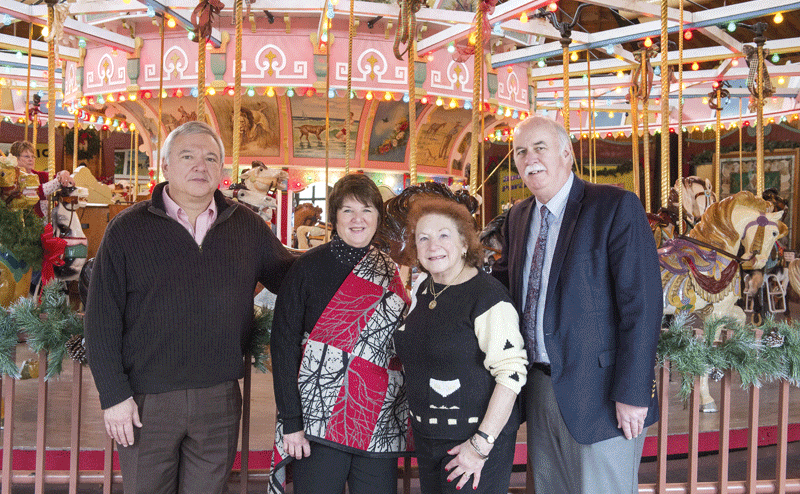
Friends of the Holyoke Merry-Go-Round

Some of the many passionate Friends of the Holyoke Merry-Go-Round: from left, Jim Jackowski, Barbara Griffin, Angela Wright, and Joe McGiverin.

The giant scrapbooks, their newspaper clippings turning yellow and their heavy leather covers fraying and kept on with shoelaces, are getting on in years — as are the people who created them.

But the truly inspiring story they tell never gets old.

It’s about how one of the poorest communities in the Commonwealth, then and now, came together, in every sense of that phrase and against very long odds, to raise nearly $2 million during a stubborn recession to keep the historic Mountain Park merry-go-round in Holyoke.

Carefully chronicled in those scrapbooks, this story relates tireless fund-raising efforts — from generous donations given by large corporate players to a fishing derby with a $10 entrance fee that went to the cause; from phone-a-thons and mailed solicitations featuring carefully crafted pleas for support to sales of everything from sweatshirts to Christmas-tree ornaments out of a donated kiosk at the Holyoke Mall.

It also captures work to find, finance, build, staff, open, and operate a home for the merry-go-round in Holyoke’s Heritage State Park in late 1993, an important chapter in this tale and one with many twists and turns.
John Hickey, a.k.a. “Mr. Holyoke,”

John Hickey, a.k.a. “Mr. Holyoke,” rallied the city to seize a “glittering brass ring.”

And those scrapbooks poignantly reflect, through photos, news stories, and his own commentary in the daily Holyoke Transcript Telegram, the passion, commitment, and drive of one John Hickey, known to most as “Mr. Holyoke,” who rallied the city and unified it behind what was, at the time, a most unlikely cause.

“He was determined; he felt like this was an important piece of Holyoke’s history and that there needed to be a way to save it,” Angela Wright, long-time volunteer director of the merry-go-round and one of the leaders of the effort to keep it in the Paper City, said of Hickey, then head of the Holyoke Water Power Co., who passed away in 2008. “He was like a pied piper … he went to every meeting, every organization, every business he could to stress the importance of this. And he got a city behind him.”

Indeed, Hickey ended one of his op-ed contributions (a piece that has become part of Holyoke lore) with a question that doubled as a rallying cry.

“There’s a glittering brass ring out there,” he wrote in reference to the carousel. “Will the people of Holyoke extend themselves to capture it?”

Indeed, they would, as the pages of those scrapbooks make clear, and more than 1.2 million people have gone for a ride.

But the last entry in those volumes is from Dec. 1, 1994 — a short story about upcoming Christmas happenings at the carousel — and, therefore, they don’t tell the whole story.

Indeed, while the efforts to buy the carousel and then begin its next life in downtown Holyoke could be described as ‘heroic’ and ‘monumental,’ what has transpired over the past 23 years or so and continues today is worthy of equal praise, said Jim Jackowski, business liaison for Holyoke Gas & Electric and long-time president of Friends of the Holyoke Merry-Go-Round Inc., the organization created to not only buy the treasure, but manage it and preserve it for future generations.

The second part of the equation isn’t captured in the scrapbooks because, for the most part, that hard work doesn’t generate headlines, he said. But the challenges to operating and properly maintaining the carousel — everything from spiraling insurance costs to non-stop maintenance to restoration work on the ornate horses — are many and formidable.

But the same passion that went into raising the money to buy PTC 80 (the 80th carousel built by the Philadelphia Toboggan Co.) goes into the work to keep the ride spinning today — and tomorrow, said Jackowski.

“It’s been a labor of love — it was then, when we were raising the money to buy it, and it still is today,” he explained.
One of the many ads designed

One of the many ads designed to emphasize what Holyoke would lose if the merry-go-round went to another buyer.

And that sentiment is perhaps best summed up with words from the Transcript Telegram, which played its own sizable role in the efforts to save the carousel.

Its presses fell silent in January 1993 as the paper succumbed to disastrous losses in the wake of the early-’90s recession. But it still has a voice on this subject (and this Difference Makers award) thanks to an editorial published just a few weeks before the paper closed.

The occasion was a decision of the state Department of Environmental Management to award $300,000 for the construction of a building in Holyoke’s Heritage State Park for the carousel, providing it with a home and, essentially, sealing the deal.

“If one project in recent history had to be chosen to represent the best Holyoke has to offer in community spirit, from the youngest child to the most senior resident,” the paper roared, “then the campaign to save the Holyoke Merry-Go-Round is it.”

More than 24 years later, those words still ring true.

Mane Attraction

Among the many individuals, groups, and businesses that donated in-kind services to the cause of saving the merry-go-round was the Hartford-based marketing and advertising firm Adams & Knight Communication.

The firm had a number of specific assignments — from designing promotional brochures destined for potential donors to crafting copy for print ads that ran in the Transcript Telegram and elsewhere. But one of its very specific tasks, apparently, was finding children with the ability to look sad. Really, really sad.
Children recruited for ads used in the merry-go-round campaign had plenty of practice looking sad.

Children recruited for ads used in the merry-go-round campaign had plenty of practice looking sad.

For example, there’s one young girl displaying that talent in an ad (that appeared in multiple outlets) in which she stands next to one of the carousel’s horses wearing a sign around its neck reading ‘sold.’ She’s holding on to its reins as if she doesn’t want to let go, clear symbolism of the city’s attitude at the time.

She makes another appearance, along with two other children, in an ad that features a broad view of the carousel with the headline “Imagine Telling Them That the Ride Is Over … for Good.”

And there’s a despondent yet still-hopeful young boy featured in yet another full-page ad. He’s holding out his piggy bank, as if to offer whatever’s in it. The headline reads, “Why He’s Putting All His Money on a Horse.”

But it wasn’t just young people enlisted to send this message. Indeed, several teenagers (from the ’50s, presumably, based on their attire) are featured in still another ad with the headline, “If You Care About Holyoke’s Future, Put Money Down on Her Past.”

In essence, this is what the campaign started in 1988 was all about, said those we spoke with, adding that it wasn’t just about keeping PTC 80 from being sold off as a unit or piece by piece and shipped overseas.

It was also about people investing in the city’s future, said Jackowski, meaning both the generations to come and the city itself, which needed a boost to spark its sagging fortunes and deteriorating downtown.

These sentiments are reflected in comments attributed to then-Mayor Marty Dunn (another of this story’s many heroes) in one of the many promotional pieces created to solicit support.

“This is not a toy,” said the mayor. “It is a folk-art masterpiece and a powerful attraction for our downtown.”

The merry-go-round has, by most accounts, become that spark, that attraction, thanks to the campaign to save it and, more specifically, that group that came to be known as the Friends of the Holyoke Merry-Go-Round.

It was created and led by Hickey, who first approached John Collins, owner of Mountain Park, who closed that attraction in 1987, with a proposal to allow the city of Holyoke to buy the carousel and thereby keep it ‘home.’

By most accounts, this wasn’t exactly a hard sell. Indeed, while Collins reportedly had some handsome offers for the merry-go-round on the table, including a rumored $2 million, he was supportive of the efforts to keep it in the city, and thus he set the bar, or price tag, low — $875,000.

While there was considerable support for the merry-go-round, in Holyoke and beyond, all those involved knew that raising that kind of money, at that time and in that community, would be very difficult. And, as we’ll see, the community would soon see that number rise considerably.

It’s been a labor of love — it was then, when we were raising the money to buy it, and it still is today.”

And this is where our story — the one told through the clips in those scrapbooks — really begins.

However, those we spoke with say it really starts with John Hickey.

Indeed, he was the one, said Wright, who convinced Holyokers, then facing a mountain of other, seemingly more pressing issues, from rampant unemployment to soaring poverty to a declining downtown, that the merry-go-round was still a treasure worth saving.

“In the beginning, people were saying, ‘are you kidding — a merry-go-round?’” Wright said while trying to capture the mood at the time. “There were so many other problems, from homelessness to the schools to downtown. People said, ‘how can you be thinking about raising money for a merry-go-round?’

“John would say to them, ‘you don’t understand — beauty is for your soul; there needs to be art, music, and beauty in this world, for everyone,’” she went on. “He would say, ‘this is as important as food’; he would make that comparison and stress the importance of art in one’s life.”

Round Numbers

To effectively reach the people of Holyoke, and beyond, Hickey would make early and frequent use of the Transcript Telegram’s op-ed page. Some of his early entreaties capture his passion for the project and his belief that it was an important part of the city’s history, identity, and psyche.

“A city needs more practical things, like sewage-treatment plants, snow plows, water filtration, better roads, and good school buildings,” he wrote on March 5, 1988, just as the campaign was being conceptualized. “But it also needs objects that nourish its spiritual life. A beautiful and historic, million-dollar merry-go-round may be a bit of mirthful indulgence, but it will give us, for generations, a special kind of happiness and pride.

“It is sad that we are losing our historic amusement park,” he would go on a few paragraphs later, “but it would be tragic if we stood by, doing nothing, and letting its centerpiece, the merry-go-round, become the object of pride and fame in some other distant city.”
Merry-go-round employee Kathie McDonough, left, staffs the concession stand with long-time volunteer Maureen Costello.

Merry-go-round employee Kathie McDonough, left, staffs the concession stand with long-time volunteer Maureen Costello.

Beyond passionate rhetoric, though, Hickey understood that this campaign needed a solid foundation on which to build, and to erect one, he turned to the many banks and other prominent corporate citizens at that time, said Wright.

“He pulled together all the CEOs and banking leaders and put them in a room,” she recalled, adding that, prior to this now-historic gathering, he took them to Mountain Park for a ceremonial and sentimental look at the carousel. “He talked for an hour about the value of this merry-go-round, not only to families and kids, but for history, nostalgia, as an anchor to downtown … he went through the whole thing.

“And he said, ‘unless you people commit a big number — and I mean a big number — then we can’t do it,’” she went on. “And by then, he had them practically in tears.”

Before the meeting convened, a big number, $300,000, had indeed been pledged, she went on, adding that, as for the rest … well, there were a variety of imaginative, and effective, strategies put to use, as told by the stories, ads, and posters clipped into the scrapbooks.

Famously, schoolchildren in the city raised $32,000 in two weeks from selling cookies and candy door-to-door, and for that work, a plaque was placed next the armored lead horse in their honor (such plaques were placed under each horse to commemorate donors.)

There was that fishing derby at the Jones Ferry Marina (“now is the time not to flounder,” wrote the creative scribe at the Chicopee Herald); Holyoke Community College raffled off a free semester of study to aid the cause; musicians performed at a benefit concert; the city’s aldermen launched a charity ball, with the merry-go-round as the first recipient of proceeds; commemorative stamped envelopes were issued with the likeness of the lead horse on them (the price was 25 cents, which will tell you how much water has passed under the bridge).

Also, schoolchildren sold Christmas ornaments; artists sold limited lithographs of the carousel; there were car washes, phone-a-thons, a 10th-anniversary party at the mall, with the carousel as the beneficiary. And at the Merry-Go-Round Gift Store (the storefront donated by the mall) and other locations, supporters could buy hats, ornaments, tote bags, sweatshirts, a 1,000-piece jigsaw puzzle, mugs, notecards, and several different posters with carousel imagery. The headline on the ad promoting it all in the Dec. 9 issue of the Transcript read, “Now You Can Finally Get a Pony for Christmas.”

Turn for the Better

As noted, the brass ring Hickey mentioned became the unofficial prize, if you will, and the phrase appeared repeatedly in ads and news stories throughout the campaign.

But even as the original goal of more than $1 million came closer to reality, the bar moved, and in a big way, said Wright, noting that, from the beginning, organizers knew they would have to build a home for the carousel.

They had a pledge from the state of $300,000 to build that home, she said, but as time went on, huge doubts emerged about whether the state could uphold its end of the bargain given the enormous financial pressure it was under, and whether that amount would be enough.

As things turned out, the state did keep its promise, but that figure wasn’t nearly enough (bids for the structure came in at twice that total).
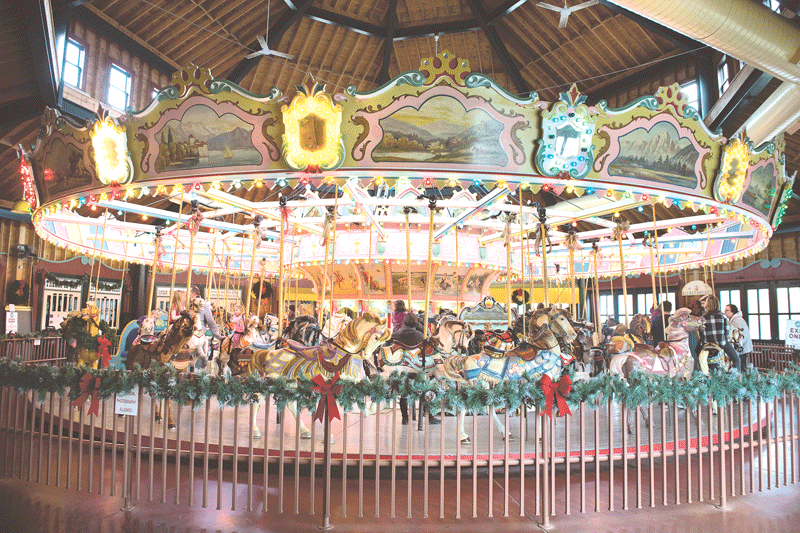
Photography by Leah Martin

Photography by Leah Martin

But funds to cover the difference were raised with significant help from Warren Rhoades, then-president of PeoplesBank, she said, adding that this triumph would be one of the countless enduring stories from the campaign to save the carousel and then operate it, many of which simply didn’t generate headlines, but certainly contributed to that phrase ‘labor of love.’

As she recounted some of them, Wright said she didn’t really know where to start.

She eventually settled on Jim Curran, a contractor and owner of the Wherehouse banquet and meeting facility in downtown Holyoke, who not only stored a large amount of the carousel’s thousands of components — most of the horses were kept in a locked railroad car, and Hickey even kept some in his living room — but also took the carousel apart and played a huge role in the very complex, time-consuming effort to put it all back together.

“It was like a giant puzzle,” she explained. “There were boxes and boxes of nuts and bolts; it was mind-boggling to me.”

Wright also mentioned her husband, Joe (the couple have a long history of philanthropy in their native Holyoke), who assisted with piecing the carousel together and maintaining it; Tim Murphy, the architect who designed the carousel’s new home in Heritage State Park; Will Girard, a neighbor of the Wrights who has assisted with seemingly endless repairs and maintenance; the Gaul family, which donated the huge concession stand now at the carousel, replacing what amounted to a card table that was there at the start; Craig Lemieux, who volunteered the time and labor that went into building the ramp to make the carousel handicap-accessible; and the Steiger family for gifting to the carousel the Tiffany window that graced its downtown Holyoke store.

And on she went, noting that there were, and still are, volunteer angels whose names she never knew and faces she never saw.

“When we first opened, we didn’t have any money; we had no debt, but we also had no money,” she said. “And people just did things. Like cleaning the windows — people would appear … in the dark of night; I don’t know, I never saw them.”

The Ride Stuff

In many respects, this community spirit and volunteerism continues today, said those we spoke with, adding that the task of keeping the carousel open and operating is daunting, and a small army of volunteers is still needed.

Speaking in broad terms, Jackowski said operating a merry-go-round is a tough business these days — so tough that many have actually closed in recent years — and this one is no exception.

He cited everything from the myriad competitors for the time and attention of children and families to the rising cost of doing business (and generally flat revenues), to changes in Holyoke itself.

“It’s like any other business — there are fixed expenses and just stuff that you have to do,” he said, adding that there is quite a lot of ‘stuff’ with this ride that is now nearly 90 years old. “It’s a piece of machinery that requires maintenance and upkeep and hardware. And the community has changed in the 20-plus years since we opened; we had a bigger presence of retail and shopping when we first opened, and a lot of what was downtown and drew people to the downtown is unfortunately not there anymore.”

As one example, he cited Celebrate Holyoke, the annual summer festival that drew tens of thousands of people to Holyoke during its four-day run, which was discontinued several years ago.

“That used to be a huge weekend for us — we would get 20,000 riders in four days,” he explained. “Once that went away, it was hard to make up those riders; even at $1 per head, that was $20,000.”

And that challenge goes a long way toward explaining why a ride now costs $2, which is still a great bargain and one of the lowest prices to be found for a merry-go-round.

But, as with the vast majority of museums and other types of attractions, admission doesn’t cover annual expenses, said Joe McGiverin, another long-time member of the Friends of the Holyoke Merry-Go-Round board, noting that labor (there are seven staff members) and, especially, insurance top the list of rising costs.

Thus, other sources of income must be developed and nutured.

Birthday parties, private functions, and a handful of weddings each year have long been one such source, said Barbara Griffin, another long-time board member and former staff member at the Log Cabin, who, with Jackowski and others, would handle the logistics of such events.

“That’s just one example of how of this is truly a working board — we don’t just go to meetings,” she explained, adding that, while the staff manages the carousel day-to-day and is largely responsible for that perfect safety rating, the attraction is dependent on volunteers today as much as it was when the money to buy the attraction was being raised.

And many of these volunteers have their own specific assignments, said Wright, who offered one of many examples.

“Joe is the security person — if the alarm goes off in the middle of the night, it’s his responsibility to go in there and see what’s going on,” she said. “Everyone on the board has a job, in one way or another.”

But overall, the volunteers are generalists, said McGiverin, and help with everything from keeping the grounds clean to staging the semi-annual Kentucky Derby-themed fund-raiser, called Derby Dazzle, at the site.

But there is another source of help at the carousel that speaks volumes about its hold on people — and its special place in Holyoke.

These would be the young people — and there are more than a few of them — who would like to ride but don’t have $2, said Griffin, adding that staff members will often let them take a spin in exchange for pushing a broom for a few minutes.

“If they want to sweep the floor or pick something up, we’d be more than happy to give them a little something in return,” she said, noting that, in the larger scheme of things, the carousel is what has been given to all of Holyoke, and the region as a whole, in return for the generosity that kept it here.

Wright agreed. “These kids … they know what we have, and you can’t let a kid walk by and just look in the window all day. You need to let them ride.”

That’s the kind of community spirit John Hickey was talking about all those years ago.

Words That Ring True

In March 1988, not even Hickey could have known what an attraction, and an institution, the merry-go-round would become.

Then again, maybe he did know. Or maybe … there’s no maybe about it.

What was it he wrote? “A beautiful and historic merry-go-round may be a bit of mirthful indulgence, but it will give us, for generations, a special kind of happiness and pride.”

Sounds quite prescient, as does that comment from the Transcript Telegram. Indeed, this was, and still is, the best Holyoke has to offer in community spirit, from the youngest child to the most senior resident.

And that’s why, nearly 30 years after this saga began, three decades after Hickey implored a city to reach for that “glittering brass ring,” the story about how it all happened never gets old.

And that’s also why the many Friends of the Holyoke Merry-Go-Round — those who have passed and those who still keep the city’s happiness machine turning — are true Difference Makers.

George O’Brien can be reached at [email protected]

Class of 2017 Difference Makers

The ‘Unflappable’ Joan Kagan

Leader Guides Square One Through All Kinds of Adversity

Photo by Leah Martin Photography

Photo by Leah Martin Photography

Joan Kagan’s corner office on the second floor of 1095 Main St. in Springfield comes complete with two large windows offering stunning views of the ongoing construction of MGM Springfield.

That’s the good news — and the bad news.

Indeed, while she and others have been fascinated by the panorama presented by this front-row seat, Kagan readily admits that at times — or most of the time, to be more precise — it can be a huge distraction and even an impediment to workflow.

“It’s … amazing,” Kagan said of the beehive of activity that has been a constant for more than a year now. “A few days ago, I’m at my desk working, and all of the sudden I see this huge piece of equipment dangling in front of my window; I look out, and they’re placing it on an 18-wheeler parked on Main Street.”

She acknowledged that, while she, other staff members, and certainly the children at Square One have been captivated by the construction work and giant cranes moving steel and equipment just a few feet from those windows, the demolition work that preceded it was equally, if not more, compelling and attention-diverting.

“When they were moving the [former First Spiritualist] church, I think we were down to about 10% productivity,” she said with a wry smile, noting that the historic structure seemed to move at a snail’s pace, but that didn’t stop observers from becoming entranced by the exercise. “It was fascinating, but it made it tough to get work done.”

She’s seen worse impediments to productivity, unfortunately. Much, much worse.

Start with the June 1, 2011 tornado that roared down Main Street and then through Square One’s former offices just a few hundred yards to the north, displacing young students and staffers alike and leaving the agency without a permanent home for … well, even the current quarters wouldn’t exactly be considered permanent.

Joan Kagan with several of the students at Square One

Joan Kagan with several of the students at Square One. Since 2003, she has led the agency through profound change — and large amounts of adversity.

But the tornado did more than dislocate employees and programs. It seriously impacted cash flow by removing from the equation invaluable seats in early-childhood-education classes, and it would be years before those losses could be made up.

Then there was the natural-gas explosion roughly 18 months later that absolutely erased the gentlemen’s club on Worthington Street next to another Square One facility, leaving it uninhabitable, thus displacing more people and programs and further imperiling the bottom line.

Kagan’s actions during both disasters, but especially the tornado, have been described as heroic, in both a literal and figurative sense, with the latter saved for how she fashioned response plans and rallied the various troops. As for the former, she acted quickly and calmly that June afternoon to help move young students and employees — and even a technician in the building working on the air conditioning — to safety in the basement. Then, while standing in the middle of Main Street surveying the considerable damage and hearing police issue loud warnings about gas leaks and a second tornado, she essentially commandeered a school bus to get students and staff to a shelter set up down the street at the MassMutual Center.

“She was … unflappable,” said Kevin Maynard, an attorney with Springfield-based Bulkley Richardson, a long-time (now former) Square One board member, and current volunteer, who would use that word often to describe Kagan’s work before, during, and well after those calamities . “After both the tornado and the gas blast, Joan leaned on the board for support, but the board really leaned on Joan. She was rock-solid, knew what she had to do, and worked with others to get it all done.”

She continues to fight every day, through all the bureaucracy, to make sure that Square One and other organizations are heard and they’re able to meet their individual mission statements.”

While being unflappable in the face of natural and man-made disasters is certainly part of the reason Kagan was named a Difference Maker for 2017, there is, of course, much more to this story — and this individual.

It involves not only her work to stabilize, diversify, and expand Square One, an agency that was in a definite state of disarray when she arrived in 2003, but also her tireless efforts to bring attention to the critical need for not only early-childhood education, but other programs focused on strengthening families and championing their cause — on Capitol Hill, Beacon Hill, and everywhere in between.

Bill Sullivan, a long-time Square One board member

Bill Sullivan, a long-time Square One board member, said of Joan Kagan’s outlook on children and families and society’s responsibilities to them, “she gets it.”

Bill Sullivan, first vice president of Commercial Loans at PeoplesBank and another long-time board member, summed it all up succinctly and effectively.

“She gets it,” he told BusinessWest. “She understands that human services, and especially childcare, is really the foundation of the whole local — and national — economy. If you have an employee who doesn’t have safe, secure childcare, what is that employee’s attendance going to be like?

“Joan gets that,” he went on. “And she continues to fight every day, through all the bureaucracy, to make sure that Square One and other organizations are heard and they’re able to meet their individual mission statements.”

Not Child’s Play

As he talked further about Kagan, Sullivan said the place to start the discussion was not with the day she was hired at Square One — and he was one of those on the search committee that hired her — or that fateful June day in 2011, or even the day after Thanksgiving in 2012, when the natural-gas explosion leveled a city block.

Instead, he chose an unlikely place and time — the funeral services he attended for Kagan’s mother in Pittsfield 2013. That’s when and where he gained a real understanding of — and a deeper appreciation for — her passion for helping others, and especially children.

“Her mother really was involved in the community, and she understood the social activism that’s needed to make sure people are heard, especially the people who are less fortunate than we are,” Sullivan explained. “My epiphany at that time was ‘Joan’s pretty good, but now I understand why she’s pretty good. She comes from a family that has a long heritage of giving back.”

That heritage has defined her career through a number of career stops, including an unlikely starting point, and a certainly intriguing 14-year stint at Square One, one that has seen everything from the adaptation of that name (the agency was formerly known as Springfield Day Nursery) to a profound broadening of its mission to what everyone would agree has been far too much practice dealing with adversity.

Our story begins in New York City in the fall of 1975. Kagan had recently earned a master’s degree in social work (MSW) at Columbia University, but was confronting a historically bleak job market.

Indeed, the Big Apple was in the depths of its worst financial crisis since the height of the Great Depression, and was teetering on bankruptcy that would only be avoided when President Gerald Ford, who initially balked at a $4 billion federal bailout of the city (the New York Daily News headline on Oct. 29 famously read ‘Ford to City: Drop Dead’), eventually relented.

But the federal assistance would come far too late to improve in any way Kagan’s job-search prospects.

“I couldn’t buy a job, and in fact, some of the people I was calling to inquire about opportunities with were telling me they were getting laid off,” she explained while talking about the months after she graduated. “So I went back home with my tail between my legs.”

Kevin Maynard

Kevin Maynard says that, during times of crisis, Joan Kagan would lean on her board, but the board would really lean on her.

Home was Pittsfield, a city dominated in every way, shape, and form by its largest employer, General Electric. And while she thought ever-so-briefly about trying to work there, Kagan instead joined the field she was trained for. Well, not really, but it was in the ballpark, as they say.

She found an opportunity at Berkshire Home Care, tending to the needs of the elderly, not those at the other end of the spectrum, as she desired. But it was work, and it was actually much better than that.

Indeed, at age 25, she was named client-service supervisor — the job demanded an MSW, and there were not many people with that credential — and tasked with overseeing co-workers and coordinating services with other community agencies. This would be the first of a host of leadership roles on her résumé.

The next would come a few years later, after a short stay as a social worker at Child & Family Services of Springfield Inc., when she became supervisor of Social Services at Brightside for Families and Children in 1979.

She would stay with that West Springfield-based agency for 17 years, serving in no fewer than 12 positions, ranging from program manager for the Family Resource Unit to the last one, vice president of Community Development.

“I kept getting promoted and given new management responsibilities and training,” she explained. “Brightside was going through a major transition, and I had a lot of opportunities for growth and development, and appreciated that very much.”

In 1996, she would apply those skills to a new career challenge serving as administrator of the Western Mass. region for the Mass. Society for the Prevention of Cruelty to Children (MSPCC), a position — one that saw her supervise a staff of nearly 400 — she would keep for seven years before deciding she was ready for “something else.”

That turned out to be the administrator’s role at a Springfield institution with a proud past, a shaky ‘present,’ and uncertain future.

Name of the Game

Indeed, as he talked about the situation at Springfield Day Nursery when Kagan arrived, Maynard spoke in measured tones, choosing his words in a careful, diplomatic manner, while still getting his point across.

His point was that the agency was at a crossroads in many respects, and in need of strong leadership to return it to stability.

“We had gone through some tumultuous times and several changes in leadership,” he explained. “The organization very much needed someone like Joan, with her credentials and her experience, to right the ship, which had been roiled by some pretty big waves.”

Kagan, being equally diplomatic, agreed.

“When I arrived, Springfield Day Nursery needed a lot of restructuring, fiscally as well as programmatically and administratively,” she said, adding that the CFO left just before she arrived, and the agency’s board had just closed its center in East Longmeadow and was in the process of closing the facility in Tower Square.

“Eight centers immediately became seven, and I consolidated two of those centers, so the seven became five, and that’s how we were rolling along until the tornado,” she said, before replaying the tape and moving much more slowly.

June 2011 tornado

In many ways, Joan Kagan and Square One became the face of the June 2011 tornado and its aftermath.

Her first eight years would see expansion of the agency well beyond its Springfield roots (into Holyoke, for example) and its primary mission — to provide daycare services. To undertake this diversification of services, Kagan called upon experience, and perspective, amassed at several of her previous stops.

“They hired a social worker who was coming to them with a background in child welfare and mental health,” she said of her career path. “And with that came a perspective, or philosophy, that the strategic point of intervention in making a difference with children is the family.

“You cannot work with just the child — you must work with the family,” she went on. “I said that before I even got hired during the interview phase; I said I wanted to integrate early-childhood education, child welfare, and mental health.”

That’s because many of the same families she saw at the MSPCC were arriving at the doors at Springfield Day Nursery, she said, adding that a far more holistic approach to serving children was needed.

So, over her first several years, she implemented one, after first educating the board and then gaining its blessing.

“I’m not sure anyone really knew what I was talking about or quite understood it,” she said with a laugh. “But I think it was intriguing enough that they went with it.”

In 2006, Kagan, amid some skepticism, hired the agency’s first social worker with the help of a grant and some other funding cobbled together, thus beginning the process of changing the conversation from a focus on the child to a focus on family-support services.

“I remember someone saying to me, ‘how can you hire someone? — this is a one-year grant; you’re just going to have to lay her off,’” she recalled. “I said, ‘welcome to the world of nonprofits — this is what we do. And over the next year, we’re going to work very hard to find more funding and hire more of these people.’”

And she did. There are now 40 social workers, funded in large part by a contract through the Children’s Trust Fund called Healthy Families. Other contracts would follow, including one with the Hampden County Sheriff’s Department to work with individuals who have been incarcerated.

These various forms of expansion involving geography and programming created the need for a name change, she explained, adding that neither ‘Springfield’ nor ‘day nursery’ really worked anymore.

Several options were considered, before the board, after much debate, decided upon ‘Square One,’ a name crafted to connote that this was where a child got a solid start and a foundation he or she could build on.

Little did board members and agency administrators know they would be going back to square one themselves in the years to come, and in ways they probably couldn’t have imagined.

A Force in the Community

Before moving on to Columbia, Kagan earned a bachelor’s degree in sociology at Washington University in St. Louis. While there, she received an informal education in a much different subject matter — tornadoes.

Indeed, while that Missouri city located on the banks of the Mississippi River isn’t as noted for twisters as sections of Oklahoma and Kansas, it is visited by them frequently, she told BusinessWest. “We never had a direct hit while I was there, but there were times when it got pretty scary; it would get very dark and very still, and the winds would pick up, and the pressure would build.”

She would call on those experiences nearly 40 years later on that fateful afternoon in 2011, reacting instinctively, for example, to get her assistant away from the large window through which she first spotted the twister, and then herd everyone into the basement, including that reluctant air-conditioning technician.

Joan Kagan chats with state Sen. Eric Lesser

Joan Kagan chats with state Sen. Eric Lesser. Over the years, she’s lobbied tirelessly for programs benefiting children and families.

Thinking back, Kagan said that, while everything happened very quickly — three minutes total, by her estimate — she remembers events unfolding almost in slow motion. And what she remembers most are sights and sounds.

Starting with the latter, while most would compare the noise generated by the twister as it passed over and through the building to a freight train moving at high speed, she would get into even more detail.

“It was deafening,” she said while recalling the brief time she and several others spent in the basement listening to what was going on overhead. “It was like you were on a airport tarmac, and jumbo-jet engines were running, and someone was taking pieces of metal and throwing them into those engines. It was like metal crunching, and it was very loud.”

As for the sights, there are too many to recount, but the one that resonates most, perhaps, was the view she had of the building next door to Square One’s after arriving on a chaotic Main Street.

“The wall had been sheared off … I’m looking at it, and I’m looking at people’s offices; I can see their pictures on the wall,” she recalled. “It was totally exposed; it was like a doll’s house.”

In the days and weeks after the tornado, Square One, and especially its president and CEO, would become the face of the tornado and the recovery that followed — quite literally.

Indeed, the June 20 issue of BusinessWest, bearing the headline “Blown Away: Business Community Grapples with the Tornado Aftermath,” features a picture of a grim-but-determined-faced Kagan with a pile of rubble that used to be the Square One offices in the background.

And that verb grapple was the operative word. While the tornado packed a wallop, the aftermath was in many ways far more grueling, said those we spoke with, noting that the challenges were many, ranging from simply finding new quarters to the immediate and severe cash-flow problems, to dealing with insurance companies that covered the agency.

“The tornado totally took out our infrastructure — the administration building was demolished — and dramatically altered our business plan,” Kagan explained. “That spring, we had just secured funding to renovate our King Street site; our plan was to add 100 more children there. When we lost the Main Street site, instead of being able to add 100 children, I ended up having to place the 100 children we were serving on Main Street to King Street.”

Those renovations weren’t ready until August, she went on, adding that the agency had to find temporary space for the displaced children while waiting for an insurance settlement and finding a new home for administrative offices.

Unfortunately, and almost unbelievably, the agency’s misfortunes would be compounded by a different disaster, the natural-gas blast 18 months later. Kagan was actually out of town traveling when it happened, but quickly returned to handle an aftermath that featured far too much déjà vu.

“Just as we were getting things together from the tornado, the gas explosion hit, and we lost the capacity to serve another 100 children,” she said. “We were rocking and reeling and trying to find places for those kids, dealing with staff issues, dealing with the insurance companies, dealing with Columbia Gas … on it went.”

The twin disasters certainly tested the agency’s mettle, said Sullivan, adding that, in many ways, the present tense is still needed, because Square One is still dealing with infrastructure and cash-flow issues and still rewriting its business plan; it has gone from serving 1,000 children to handling roughly 700.

“Instead of growing, we were just trying to keep things together,” he said, adding that Kagan’s calm, determined brand of leadership has been a key factor in weathering those storms. “She never gets rattled; she’s been the voice of reason, and that has certainly helped us as we’ve fought our way back.”

Battle Tested

But while Kagan has in many ways become best-known for her leadership in the form of disaster response — something they don’t teach people in business school, let alone the social-work program at Columbia — her work before and after those calamities has more far-reaching implications for Square One and the community as a whole.

In recent years, that work has increasingly focused on the day-to-day fiscal challenges facing all nonprofits today, as well as bringing attention to a challenging, almost debilitating system for funding agencies like Square One and lobbying for a replacement that enables such institutions to function more effectively.

“They pay you per child, per day,” said Kagan, adding that this puts enormous pressure on efforts to build capacity, efforts that have been, as noted, crippled by those twin disasters, but also by simple demographics.

Joan Kagan and students at Square One

Joan Kagan and students at Square One pose with members of the Western Mass. delegation to the state Legislature.

“Because of the population we serve, it’s very hard to keep children in the seats day after day,” she explained, adding that the current system would be akin to a college being paid only for the classes a student attends, rather than a designated tuition amount set to cover a host of expenses. “We have all these fixed costs, and they’re the same whether we have 15 kids in the class or 20. But if we only have 15, they’ll only pay us for 15, which makes it very difficult to operate.”

For years, Kagan and others have been lobbying for change, and a sliver of hope for such a system has come in the form of a pilot program, which Square One is now part of, whereby agencies are paid on a reimbursement system based not on students in the classrooms, but costs incurred.

“It’s still difficult, but it’s better; if I spend this amount on teachers, that’s the bill I submit,” she explained, adding that there are still challenges, because the agency incurs expenses one month, bills the state the next month, and gets reimbursed the third, which adds up to serious cash-flow-management issues at an already-difficult time for nonprofits.

“We can manage now,” she went on, adding that the challenge ahead is to convince the state to change its funding model because, with the old (current) one, center-based care is simply not viable, let alone profitable.

Fighting this fight is just one example of the strong leadership Kagan has provided to the larger community of Greater Springfield and all of Western Mass., said Sullivan, adding that she has never stopped battling for children and families — and won’t.

“The state looks at centers like this, and it figures there will be 50% private pay, something you can make margin on, and 50% are poor children who have to be subsidized,” he explained. “Well, Square One doesn’t have that benefit; all our children are subsidized. The children we serve are the future employees in this city, and she’s out there saving souls every day.

“Joan’s been a director, but also a kind of battlefield commander,” he told BusinessWest, referring specifically to the twin disasters but also to the sum of the challenges she and the agency have confronted. “She gets her arms around things quickly and can understand what has to be done.”

Family Business

As he talked about Kagan’s career — the chapters that have been written and those still to be penned — Bill Sullivan harkened back to the woman he came to know and fully appreciate at that memorial service in Pittsfield more than three years ago.

“I think about how proud Joan’s mother would be knowing what a tremendous human-service advocate her daughter has been, and how she has continued that family legacy by passing it on to her children,” he said, adding quickly that Irene Besdin Kagan certainly wouldn’t be the only proud one.

All those who had the foresight to hire her daughter would fall into that category, he said, as would everyone who has the opportunity to work with her — at Square One, all her other career stops, and within the community as well.

Through more than 40 years of service to children and families in need, she has been not only a true leader, but, as Maynard so eloquently put it, “unflappable,” especially during the times when that quality was most urgently needed.

And for that, Joan Kagan is truly a Difference Maker.

George O’Brien can be reached at [email protected]

Daily News

SPRINGFIELD — Every high-school senior, college student, and adult student who plans on attending college in the 2017-18 academic year and is looking to apply for federal, state, and institutional financial aid needs to complete the Free Application for Federal Student Aid (FAFSA). FAFSA Day Massachusetts, part of the national College Goal Sunday program, provides free help statewide to students and families looking to complete the FAFSA.

The 13th annual FAFSA Day Massachusetts is being held in Springfield at American International College (AIC) on Sunday, Jan. 29. Registration begins at 12:30 p.m. in the computer labs on the second floor of Amaron Hall on the AIC campus. Financial-aid experts from local colleges will be on hand to offer families individual assistance. Assistance will also be provided in Spanish. The service is free and available to anyone attending college for the 2017-18 academic year. Low-income and first-generation students are especially encouraged to attend.

FAFSA Day is a nonprofit program sponsored by the Mass. Assoc. of Student Financial Aid Administrators, the Mass. Educational Financing Authority, American Student Assistance, and USA Funds. AIC is the only Springfield-based venue out of 30 locations statewide where this service will be offered. More than 14,000 students have been served during FAFSA Day events.

Families are encouraged to visit www.fafsaday.org to register in advance and see a list of what to bring to the event. For more information regarding FAFSA Day at American International College, contact Assistant Director of Financial Aid Richard O’Connor by calling (413) 205-3280 or e-mailing richard.o’[email protected].