
Home Posts tagged Features (Page 3)
Features

Reclaiming the Past

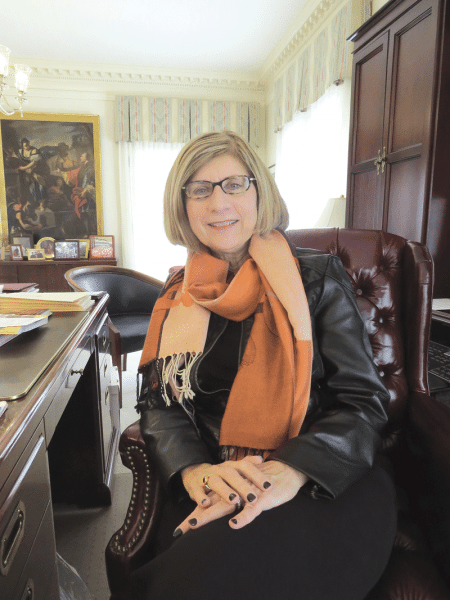
Armory Superintendent James Woolsey

Armory Superintendent James Woolsey with the skyline of Springfield behind him, something that wasn’t visible from that site just a few weeks ago

While steeped in history, the Springfield Armory property — now a National Historic Site managed by the National Park Service, has become somewhat of a forgotten, or overlooked, part of the city’s past. But James Woolsey, superintendent of the site since 2012, has aggressively worked to shift that equation by changing the landscape at the facility — in all kinds of ways.

James Woolsey walked to the crest of a hill near the northwest corner of the Springfield Armory property and paused for some reflection and commentary.

He started by gesturing toward the skyline of Springfield less than a half-mile away, something that would not have been as visible from that spot just a few months ago because it would have been obscured by small, scruffy trees and bushes.

Woolsey, superintendent of the Springfield Armory National Historic Site, as well as the Coltsville National Historic Park in Hartford that is being readied for its opening, then pointed down the hill to a spot that, 40 or so years ago, was used by area Springfield high schools for gym classes, specifically track and field events.

“They used to throw the shot put and javelin down there,” he said, pointing to an area that will, like most of the rest of the 50-acre Armory site, be restored to the way things looked in the late ’50s, only a half-decade before then-Defense Secretary Robert McNamara would initiate the process of decommissioning the facility, which had opened near the end of the 18th century.
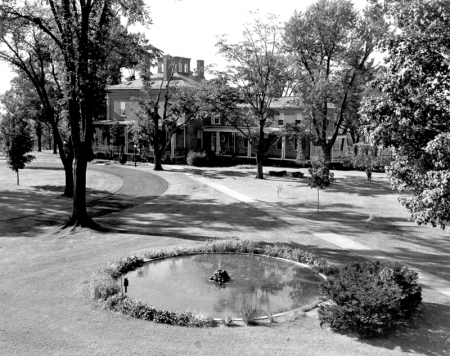
A shot of the Armory from roughly 60 years ago

A shot of the Armory from roughly 60 years ago. Current initiatives aim to recreate that look.

The Armory has called this comprehensive construction and renovation effort “Reclaiming the Past,” and that’s a sentiment that also fits much broader efforts undertaken by Woolsey since he arrived at the facility five years ago to reconnect it to the area, improve visitation, and, overall, make more area residents aware of the Armory’s story and its broad significance to the region in terms of employment, innovation, and culture.

There is no turning back the clock and making the Armory as prominent as it was throughout most of its history and especially during World War II, when more than 12,000 people were employed there. But Woolsey said it can gain greater visibility, respect, and visitorship, and in many respects it already has.

Indeed, annual visitation, stagnant and hovering around 16,000 when Woolsey arrived after stints at many historic sites here and abroad (more on that later), has risen steadily and is now at or above 25,000.

Woolsey credits this rise to everything from new exhibits such as the current offering on this country’s entry in World War I (nearly a century ago) and the Armory’s role in that effort, to new signs — on area highways and at the Armory itself.

The road signs feature the easily recognizable National Park Service (NPS) logo, said Woolsey, and thus they attract people drawn to the more than 400 individual sites managed by that agency.

“People are very passionate about the National Park Service,” he explained. “And when people see that logo on the sign, they will want to get off the highway and see that national park.”
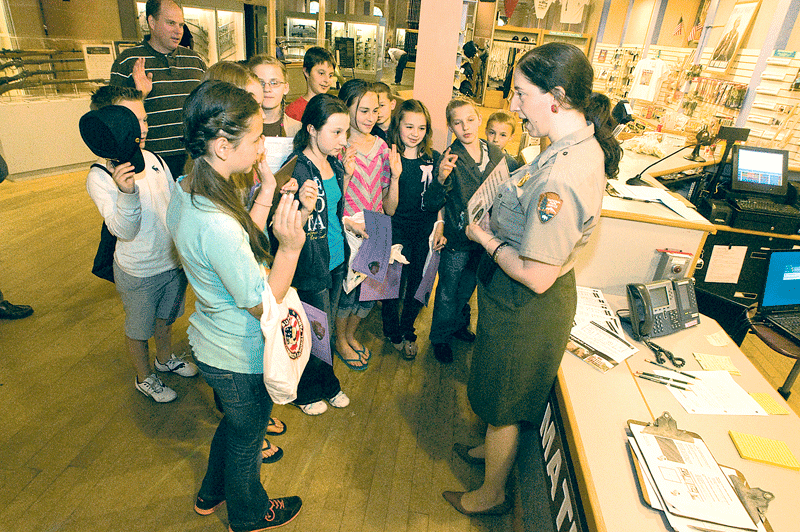
Springfield Armory has taken a number of steps to be more “welcoming

Over the past several years, James Woolsey says, the Springfield Armory has taken a number of steps to be more “welcoming.”

Overall, Woolsey said the mission is to make the Armory, in a word, more “welcoming,” an assignment that has manifested itself in everything from new exhibits to the new signs, to the reopening of the large gate at the entrance to Byers Street, enabling easier public access to the facility masterminded by George Washington more than two centuries ago.

“What I wanted to do was make it more welcoming,” he explained. “This is a national park; it’s a park for all the American people. We want people to be able to find us, and we want to provide a great experience when they come here.”

For this issue, BusinessWest talked at length with Woolsey about his efforts to reclaim the past and thus make the Armory a more visible, more relevant part of the city’s present and future.

History Lessons

Woolsey’s office speaks loudly and effectively to his career and his passion for historic sites and the national parks.

His screen saver features a photo from Bryce Canyon National Park in Utah, where he served as ‘chief of interpretation’ from 2000 to 2003, and there are many photos depicting his various career stops over the years.

As he was talking with BusinessWest, he grabbed one of them, a photo depicting the grand opening of the visitors center at the Normandy American Museum on the bluffs overlooking the famous battlefield at Colleville-sur-mer in France, a project he oversaw as director of visitor services.

That assignment represented the lone departure from a career spent with the National Park Service. He started as a park ranger working on the National Mall in Washington, and later worked at the Chesapeake and Ohio Canal National Historic Park in Maryland, the Lowell (Mass.) National Historic Park, the Mohave National Preserve in California (there were two stints there), and Bryce Canyon, before six years of service in France.

It was a desire to run his own park that brought him to Springfield in the spring of 2012. And that assignment was broadened shortly upon his arrival with the creation of the Coltsville National Park in Hartford, a facility that will commemorate the contributions of both Samuel and Elizabeth Colt, specifically creation of the village of Coltsville, the complex where guns were made and the workers who built them lived.
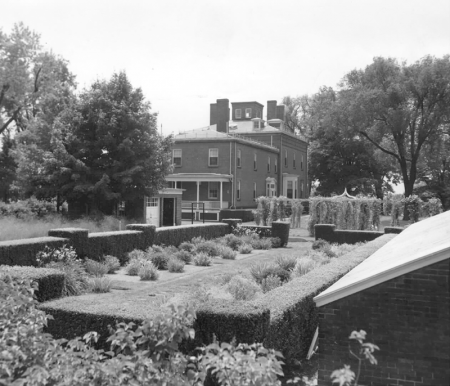
Current landscaping efforts at the Armory

Current landscaping efforts at the Armory include restoration of some of the gardens on the site, including these, seen nearly 60 years ago, adjacent to the commander’s quarters.

While Coltsville is one of the 50 National Historic Parks (the facility in Lowell is another), the Armory is a National Historic Site. There are 90 of them, and the list includes everything from Ford’s Theater, site of the assassination of Abraham Lincoln, to the Golden Spike National Historic Site in Utah, where the first transcontinental railroad was completed, to the Tuskegee Airmen National Historic Site in Alabama.

Most all of the historic sites are managed by the NPS, but some, including the Armory, are what are known as ‘partnership’ sites, said Woolsey, meaning they’re managed in partnership with another entity. In the case of the Armory, that entity is the Commonwealth of Massachusetts, which owns much of the land and operates Springfield Technical Community College in a mix of old Armory structures and new facilities built in the ’80s and ’90s.

Woolsey now splits his time between the Armory and Coltsville — he says he’s figured out the traffic patterns to minimize the commute time when possible — but has been in Springfield quite a bit this spring to oversee a project that has captured the public’s attention.

As he discussed it, he would gesture out his west-facing window, because that is where most of the work is taking place. Indeed, as he talked, earth-moving machines were humming as part of a project that blends landscaping with much-needed infrastructure work.

“The drainage and sewer system was installed in the 19th century, and the entire system is failing,” Woolsey explained, adding that, while securing funds for this necessary work, he is using this opportunity to restore the historic contouring of the land and undertake other initiatives to essentially turn back the clock.

These include everything from a $500,000 project to repair and paint the many windows on the Armory building (known technically as the ‘Main Arsenal’ because large supplies of guns were stored there) to restoration of gardens around the commanding officer’s quarters adjacent to the main arsenal, to repaving roads and sidewalks.

As for the contouring, Woosley said the city, needing ballfields, trucked in tons of fill and leveled the gentle slope of the Armory property behind the main arsenal; these changes also altered the natural drainage of the site, creating bogs and flooding hazards.

Overall, $1.2 million will be spent on this project, which won’t just recreate the look of 1959, but perhaps some of the feel as well, he said.

Blasts from the Past

But the landscaping work is only part of a larger effort to reclaim the past, said Woolsey, who, soon after arriving at the Armory, put together a multi-faceted strategic plan for addressing a host of needs he soon recognized at the facility.

The first of these needs was to improve what he called “community outreach,” a broad term he used to describe efforts to build visibility, relevance, and involvement within the city and region.

“We’ve really worked to build better relationships with Springfield and Greater Springfield,” he explained, “and become involved in the cultural district downtown and other institutions.”
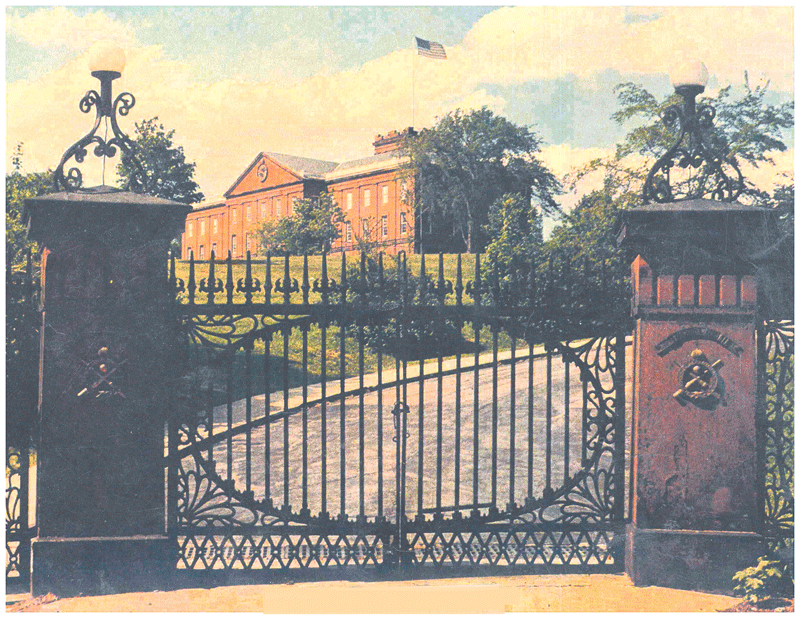
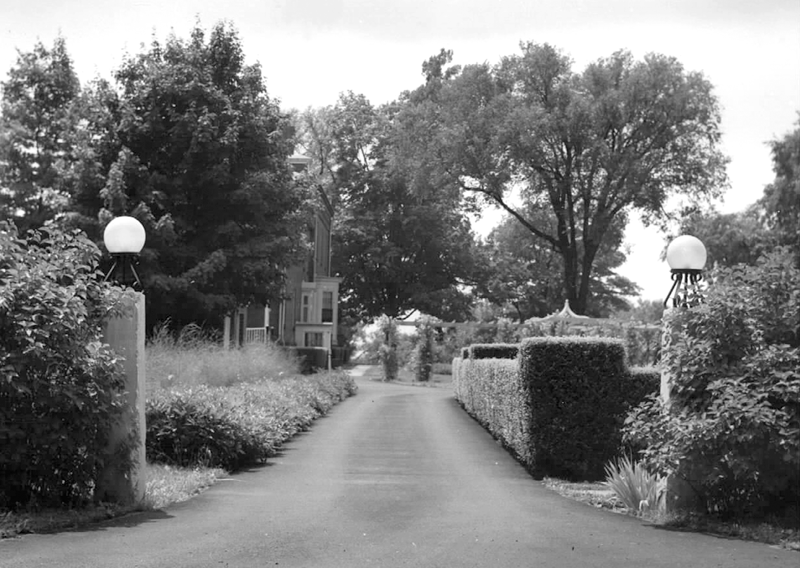
byers-st-gate_c1967_spfld-magazine-dated-1967

Above, the gate at the Byers Street entrance, seen here in a postcard, will soon be open to pedestrians. Below, one of the gardens to be restored through current landscaping initiatives.

Above, the gate at the Byers Street entrance, seen here in a postcard, will soon be open to pedestrians. Below, one of the gardens to be restored through current landscaping initiatives.

Overall, the Armory had to do considerable work to make its story — and its historical importance — known, said Woolsey, adding that it’s among the less-well-known National Historic Sites across the country and even in this region, and correcting this awareness problem is still a work in progress.

“This is something we’re trying to rectify,” he noted. “I’m often surprised at how many local people don’t know this is a national park.”

What’s more, he said there has historically been what he called “less enthusiasm” for this site among local residents, at least when compared to others in the NPS portfolio, such as the park dedicated to Thomas Edison and his work in New Jersey and the park in Lowell, focused on that city’s rich industrial heritage.

“When you compare the enthusiasm of the local population and their involvement with those sites … people here are less involved with their site,” he noted, adding that one theory for this is that the closing of the Armory was a huge blow to the city, not merely from an employment standpoint, but from a pride standpoint as well.

“During World War II, 12,000 people worked here, so this was a central part of the local economy,” he went on. “And when the federal government decided to close it down, I think a lot of people had a bad feeling about that in their gut, and it lasted for years.”

Thus, much of the Armory’s recent efforts aim to get the local population more involved, he said, adding that part of this equation is creating more awareness and making the visitor experience more powerful. Stagnant visitation numbers for the better part of three decades provided ample evidence that work was needed in this realm.

Visitation has improved roughly 5% a year since he arrived, said Woolsey, who attributed this steady climb to several factors, including those new signs and also a new low-power radio station (105.5 AM) that tells those within a 15-mile radius what’s happening at the Armory and how to get there.

“People can find us now,” said Woolsey, adding that the Armory is hampered in this regard not only by the fact that it’s not directly off a main highway, but also because it is at the far end of a complex now dominated by the college.

But getting people to the Armory was only part of the solution, he noted, adding that the facility needed to improve the experience people would find upon arrival.

To this end, Woolsey and his staff worked to create more and better programming, including rotating exhibits and temporary exhibits.

“The exhibitry here had been stale for several decades,” he told BusinessWest, adding that the centennial of this country’s entry into that conflict (April 6, 1917 is the exact date) provided an opportunity to not only mark that occasion (considered a turning point in the war) but also spotlight the Armory’s contributions to the quick and massive rearmament efforts that followed years of isolationism.
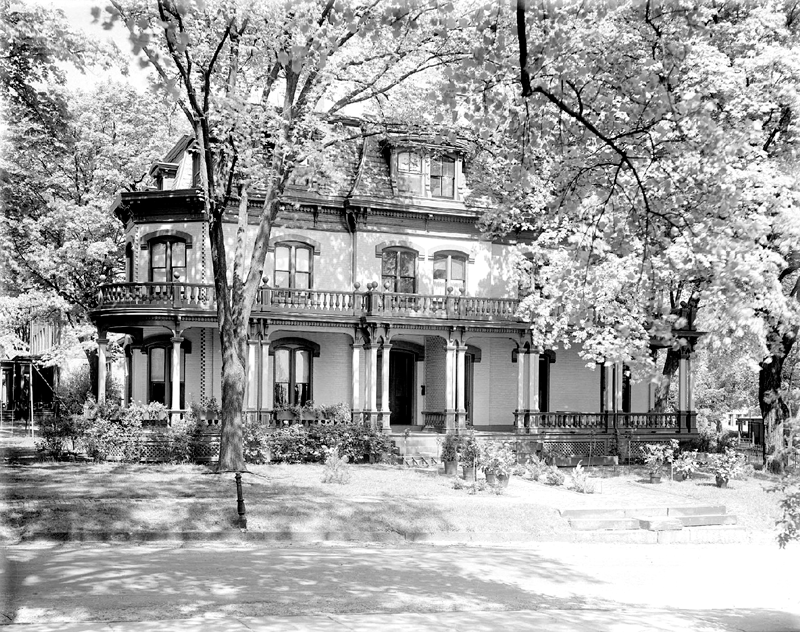
old-house409-sa

Two views of what are known as Buildings 5 and 6; the one at top is from the 1930s, and the other is recent, after significant restoration efforts.

Two views of what are known as Buildings 5 and 6; the one at top is from the 1930s, and the other is recent, after significant restoration efforts.

Thus, among the exhibits is one featuring the M1903 Springfield, nicknamed the ‘03’ for the year it was adopted by the military.

There have been many other initiatives involving exhibits and programming at the Armory, including a collection of movie clips shown in the facility’s theater featuring weapons made there, including the climax scene in Jaws (yes, that was an M1 Garand used by Chief Brody to obliterate the shark).

The landscaping and infrastructure improvements are among the elements in the strategic plan, said Woolsey, adding that they include an ongoing collaborative effort with the state to renovate and preserve what are known are as Buildings 5 and 6, directly across the main road through the Armory property.

While technically on state property, the buildings, which had fallen into a state of advanced disrepair in recent years, are highly visible and historically important — the large duplex was used as junior officers’ quarters.

Arsenal of Democracy

In 2016, the Armory was chosen as the winner of the Greater Springfield Convention and Visitors Bureau’s Spotlight Award, part of its Howdy Awards for Hospitality Excellence. The spotlight award recognizes individuals or organizations that have made a significant contribution to the tourism industry in Western Mass.

Woolsey said that honor speaks to the many ways the Armory has worked to improve visitation and bring visitors to the area, and he’s very proud of it.

Overall, though, he has his eyes on a much bigger prize — bringing ever more attention and relevance to a historic landmark and the cradle of the region’s precision-manufacturing industry.

He calls the effort ‘Reclaiming the Past,’ and he’s well on his way to doing just that.

George O’Brien can be reached at [email protected]

Chamber Corners Departments

GREATER CHICOPEE CHAMBER OF COMMERCE
www.chicopeechamber.org
(413) 594-2101

• June 2: “Spicing Up Your PowerPoint Presentations,” 8:30-10:30 a.m., hosted by La Quinta Inn & Suites, 100 Congress St., Springfield. Cost: $40 for members, $50 for non-members.

June 17: Third annual Champions of Chicopee 5K and 2-mile walk, starting at the Portuguese American Club, 149 Exchange St., Chicopee. Registration is at 7:45 a.m., and race begins at 9:30 a.m. Cost: $25 per runner/walker, $15 for kids 12 and under. Each participant receives a T-shirt (if registered by June 3) and lunch at the Munich Haus. Part of the proceeds will benefit the National Alliance on Mental Illness (NAMI) in memory of Nathan Dumas of Lucky Design + Media. Sponsored by Munich Haus, PeoplesBank, Holyoke Medical Center, Polish National Credit Union, Westfield Bank, First American Insurance Agency Inc., Insurance Center of New England, and MedExpress Urgent Care.

• June 21: Salute Breakfast, 7:15-9 a.m., hosted by Munich Haus Restaurant, 13 Center St., Chicopee. Cost: $23 for members, $28 for non-members.

• June 29: Business After Hours, 4:30-6:30 p.m., hosted by Valley Blue Sox, Mackenzie Stadium, Holyoke. Game time: 6:35 p.m. Cost: $10 for members, $15 for non-members.

GREATER EASTHAMPTON CHAMBER OF COMMERCE
www.easthamptonchamber.org
(413) 527-9414

• June 6: Networking by Night, 5-7 p.m., “Move the Mountain” with the Greater Holyoke Chamber of Commerce, hosted by New City Brewery, 180 Pleasant St., Easthampton. Sponsored by Finck & Perras Insurance Agency Inc. and Westfield Bank. Cost: $10 for members, $15 for non-members. Refreshments will be available. For more information, call the Easthampton Chamber office at (413) 527-9414 or the Holyoke Chamber office at (413) 534-3376.

• June 28: Speaker Breakfast: “Why Ping-pong Tables Do Not Define Your Business Culture,” 7:30-9 a.m., hosted by Williston Northampton School, 19 Payson Ave., Easthampton. Featured guest speaker: Tim Retting of Cincinnati-based InTrust. Sponsored by BusinessWest, Easthampton Savings Bank, Finck & Perras Insurance Agency Inc., Innovative Business Systems Inc., United Personnel, and Williston Northampton School.

• July 13: Networking by Night featuring the Oxbow Water Ski Team, 5-7 p.m., hosted by Oxbow Marina, Old Springfield Road, Northampton. Sponsored by BusinessWest, Fleury’s Outdoor Equipment Inc., and American Boat Restoration. Cost: $10 for members, $15 for non-members.

• July 28: The Chamber Island Golf Tournament, 9 a.m. to 5 p.m., hosted by Southampton Country Club. Visit www.easthamptonchamber.org for additional information.

GREATER HOLYOKE CHAMBER OF COMMERCE
www.holyokechamber.com
(413) 534-3376

• June 6: Networking by Night, 5-7 p.m., “Move the Mountain” with the Greater Easthampton Chamber of Commerce, hosted by New City Brewery, 180 Pleasant St., Easthampton. Sponsored by Finck & Perras Insurance Agency Inc. and Westfield Bank. Cost: $10 for members, $15 for non-members. Refreshments will be available. For more information, call the Holyoke Chamber office at (413) 534-3376 or the Easthampton Chamber office at (413) 527-9414.

• June 14: Greater Holyoke Chamber of Commerce Year in Review and Award Winner Announcements, 7:30-9 a.m., hosted by Wyckoff Country Club, 233 Easthampton Road, Holyoke. Sponsored by the Greater Holyoke Chamber of Commerce Corporate Leaders. Networking, buffet, and announcement of 2017 Business Person of the Year and the Fifield Volunteer Award winners. Cost: $35. The public is invited to attend. Visit holyokechamber.com to register

• June 21: Chamber After Hours, 5-7 p.m., sponsored and hosted by Slainte Restaurant, 80 Jarvis Ave., Holyoke. Mix and mingle with your friends and colleagues at this casual networking event. Refreshments will be available. Cost: $10 for members, $15 for non-members. Sign up at holyokechamber.com.

GREATER NORTHAMPTON CHAMBER OF COMMERCE
www.explorenorthampton.com
(413) 584-1900

• May 18: “Intro To QuickBooks,” 9-11 a.m., at the Northampton Chamber of Commerce, 99 Pleasant St., Northampton. Presented by Pioneer Training. This session will cover setting up a new company, invoicing and receiving payments, writing checks, and paying bills. The session will end with a brief introduction to and overview of reports. It is suitable for those who have recently started using QuickBooks and those planning to use it. This session is taught on the PC desktop version, but the basic principles of QuickBooks remain the same for the Windows, Macintosh, and online versions of the program. Be aware that specific details of how to accomplish a task or available features may differ on the different versions, and these differences will not be covered. It is not required, but if you have a laptop or tablet and have QuickBooks installed, you may bring it and follow along. Note: this workshop is designed for training on the basics of QuickBooks and is not intended to troubleshoot problems individuals may currently be experiencing. Those types of questions are better suited to a one-on-one consulting session. Cost: $25 for members, $35 for non-members.

• June 7: June Arrive @ 5, 5-7 p.m., at ConVino, 101 Armory St, Northampton. Sponsors: Keiter Builders and MassDevelopment. Networking event. Cost: $10 for members.

• June 23: “Microsoft Excel: Tips, Tricks & Shortcuts,” 9-11 a.m., at the Northampton Chamber of Commerce, 99 Pleasant St., Northampton. Presented by Pioneer Training. Pre-registration is required; space is limited. To register, visit [email protected]. Cost: $35 for members, $45 for non-members.

GREATER WESTFIELD CHAMBER OF COMMERCE
www.westfieldbiz.org
(413) 568-1618

• May 22: The chamber’s 56th annual golf tournament, 10 a.m., the Ranch Golf Club, Southwick. Sponsors: Whip City Fiber, SealRyt Corp., Westfield Bank, Baystate Noble Hospital. Along with a round of golf, bid at the live auction to benefit three $500 student scholarships and win some raffles. Online registration, along with information on sponsorships and foursomes, are available at www.westfieldbiz.org. For more information, call Pam at the chamber at (413) 568-1618.

• June 1: Workshop: “Non-Compete Agreements,” 8:30-10 a.m., hosted by Holiday Inn Express, 39 Southampton Road, Westfield. Attorneys Mary Jo Kennedy and Ryan Barry from Bulkley, Richardson & Gelinas, LLP will present on the subject of non-compete agreements. Topics will include the circumstances in which non-compete agreements arise, non-solicitation and non-disclosure agreements, how to structure non-compete agreements, limitations on the enforceability of non-compete agreements, recent cases discussing non-compete agreements; proposed legislation regarding non-compete agreements; and alternatives to non-compete agreements. A question-and-answer session will follow the presentation. Cost: free for members, $30 for non-members (cash or credit paid at the door or in advance). Light refreshments will be served. Online registration is available at www.westfieldbiz.org. For more information, call Pam at the chamber at (413) 568-1618.

• June 5: June Mayor’s Coffee Hour, 8-9 a.m., hosted by Stanley Park, 400 Western Ave., Westfield. Join us for our monthly Mayor’s Coffee Hour with Westfield Mayor Brian Sullivan. This event is free and open to the public. Call the Chamber office at (413) 568-1618 to register for this event so we may give our host a head count.

• June 9: June Breakfast featuring Secretary Jay Ash, 7-9 a.m., hosted by Westfield State University in Scanlon Hall, 577 Western Ave., Westfield. Sponsored by Westfield State University (platinum) and Westfield Gas & Electric (gold). Come hear Jay Ash, secretary of Housing and Economic Development for the Commonwealth of Massachusetts, at the Greater Westfield Chamber of Commerce June Breakfast. Cost: $25 for members, $30 for non-members (paid in advance). There will be a 50/50 raffle to benefit the chamber’s CSF – Dollars for Scholars fund. Online registration is available at www.westfieldbiz.org. For more information, call Pam at the chamber at (413) 568-1618.

• June 14: June After 5 Connection, 5-7 p.m., hosted by Westfield Bank, 462 College Highway, Southwick. Our kickoff to summer is a celebration with a cookout. Refreshments will be served. There will be a 50/50 Raffle to benefit the chamber’s CSF – Dollars for Scholars fund. Bring your business cards and make connections. Cost: Free for members, $10 for non-members (cash or credit paid at the door). Online registration is available at www.westfieldbiz.org. For more information, call Pam at the chamber at (413) 568-1618.

PROFESSIONAL WOMEN’S CHAMBER
www.springfieldregionalchamber.com
(413) 787-1555

• June 1: Professional Women’s Chamber Woman of the Year Dinner honoring Jacqueline Charron of PeoplesBank, 5:30 p.m., hosted by Storrowton Tavern Carriage House, 1305 Memorial Ave., West Springfield. Cost: $55.

SPRINGFIELD REGIONAL CHAMBER
www.springfieldregionalchamber.com
(413) 755-1310

• May 17: Speed Networking, 3:30-5 p.m., hosted by Lattitude, 1338 Memorial Ave., West Springfield. Cost: $20 for members in advance ($25 at the door), $30 for non-members in advance ($35 at the door).

May 23: Professional Women’s Chamber Woman of the Year Celebration, 5:30 p.m., hosted by Storrowton Tavern Carriage House, 1305 Memorial Ave., West Springfield.

• May 30: Pastries, Politics, and Policy, 8-9 a.m., hosted by TD Bank Conference Center, 1441 Main St., Springfield. Cost: $15 for members ($20 at the door), $25 for non-members in advance ($30 at the door).

• June 7: Business@Breakfast, Annual Meeting honoring the Richard J. Moriarty Citizen of the Year, 7:15-9 a.m., hosted by Flynn Campus Union, Springfield College, 263 Alden St., Springfield. Cost: $22.50 for members in advance ($25 at the door), $30 for non-members in advance ($35 at the door).

• June 14: After 5 on the Riverfront, 5-7 p.m., hosted by Pioneer Valley Riverfront Club, North Riverfront Park, 121 West St., Springfield. Cost: $5 for members, $10 for non-members.

Sponsorship opportunities are available. Register online for events at www.springfieldregionalchamber.com or e-mail [email protected] for more information.

WEST OF THE RIVER CHAMBER OF COMMERCE
www.ourwrc.com
(413) 426-3880

• May 18: Networking Lunch, noon to 1:30 p.m., hosted by Lattitude in West Springfield. Members or guests of members may attend. Enjoy a sit-down lunch while networking with fellow chamber members. Each attendee will get a chance to offer a brief sales pitch. The only cost to attend is the cost of lunch. Attendees will order off the menu and pay separately the day of the event. We cannot invoice you for these events. For more information or to register, visit www.westoftheriverchamber.com or contact the chamber office at (413) 426-3880 or [email protected].

• June 7: Wicked Wednesday, 5:30-7:30 p.m., hosted by Lattitude, 1338 Memorial Ave., West Springfield. Wicked Wednesdays are monthly social events, hosted by various businesses and restaurants, that bring members and non-members together to network in a laid-back atmosphere. For more information about this event, call the chamber office at (413) 426-3880, or register at www.westoftheriverchamber.com.

• June 15: Annual Meeting and Business Grant Drawing, 7-9 a.m., hosted by Chez Josef, Agawam. The event will kick off with the welcoming of new Chairman Frank Palange and the incoming WRC board of directors. Two $500 business grants will be drawn the morning of the event. Guest speaker will be Drew Crandall. Cost: $35 for members, $45 for non-members. For more information and for tickets to this event, call the chamber office at (413) 426-3880 or e-mail [email protected].

YOUNG PROFESSIONAL SOCIETY OF GREATER SPRINGFIELD
springfieldyps.com

• June 15: Ninth annual Great Golf Escape, hosted by the Ranch Golf Club. Cost: $95, including lunch and dinner. Registration begins at 10:30 a.m., shotgun start at noon.

Agenda Departments

‘Home Care and Financing Strategies’

May 16: Monson Savings Bank will host a complimentary workshop titled “Home Care and Financing Strategies: A Workshop for Families and Caregivers,” featuring Paul Hillsburg, president and owner of Amada Senior Care of Western & Central Massachusetts, and Nancy Simms, sales vice president, Long Term Care for Highland Capital Brokerage. Finding the right senior care for you or a loved one can be overwhelming and time-consuming. This event is designed to help people learn and understand what options there are for care and how to pay for it. Hillsburg and Simms both have extensive backgrounds in long-term healthcare and understand how daunting the process can be. This workshop will be held from 5:30 to 7 p.m. at Monson Savings Bank Corporate, 107 Main St., Monson. It is free and open to the public. Refreshments will be served. “So many people are concerned about senior care these days,” said Steve Lowell, president of Monson Savings Bank. “The options are confusing, and people want to know how they can help their loved ones live as independently as possible. We want people to know that the event is open to the public, not just our customers.” Seating is limited. Those interested may call Anna Calvanese at (413) 267-1221 or e-mail [email protected] to RSVP.

Run for River Valley

May 20: River Valley Counseling Center (RVCC), an affiliate of Holyoke Medical Center and member of Valley Health Systems, will hold its sixth annual Run for River Valley fund-raiser on Saturday, May 20. Funds raised will support RVCC in providing critical behavioral-health and other supportive services to individuals, families, and groups throughout the Pioneer Valley. “Research shows that exercise improves mental health by reducing anxiety, depression, and negative mood and by improving self-esteem and cognitive function. This event helps raise funds for our programs, but it also promotes the importance of exercise and wellness for everyone in our community,” said Angela Lozano Callahan, RVCC’s Marketing and Development specialist. The 5K run and 1.5-mile walk will take place at Ashley Reservoir in Holyoke. Registration starts at 8 a.m. at Elks Lodge 902, 250 Whitney Ave., and the race begins at 9:30 a.m. An awards ceremony will be held at the Elks Lodge following the race. The registration fee is $25 ($10 for children 12 and under). Adults who pre-register will save $5, and the first 100 registrants will receive a free race T-shirt. To register online, visit accuspec-racing.com or download a registration form at rvcc-inc.org. The deadline for mail-in registration is Saturday, May 13, with online registration accepted until Wednesday, May 17. Sponsors of the 2017 Run for River Valley include PeoplesBank, Palmer Paving Corp., Holyoke Gas and Electric, Hamel’s Catering, Laurel Pure, and Gallagher Real Estate. For additional information, visit www.rvcc-inc.org or contact Angela Callahan at (413) 841-3546 or [email protected].

‘An Afternoon with Tom Ahern’

June 1: Berkshire Taconic Community Foundation invites regional nonprofit staff to attend “An Afternoon with Tom Ahern,” a two-part workshop from 1 to 4 p.m. at Jane Iredale Cosmetics, 50 Church St., Great Barrington. Back by popular demand, Ahern will present two back-to-back workshops: “The Big (little) Diff: Writing for Online Readers,” a discussion of best practices in writing for web, e-mail, and social-media platforms; and “Writing a Powerful Case for Support,” which will review effective fund-raising methods. The New York Times calls Ahern “one of the country’s most sought-after creators of fund-raising messages.” This event is part of Berkshire Taconic’s popular annual Seminars in Nonprofit Excellence series. Tickets are $40 per person, and light food and beverages will be provided. To register, visit www.berkshiretaconic.org/ahern.

Discussions about Race

June 2-3, 9-10: Cooley Dickinson Health Care, the United Way of Hampshire County, and the Jandon Center for Community Engagement at Smith College are addressing the issue of racism, as well as race-related incidents that continue to occur both locally and nationally, by offering a series of community dialogues on race in Northampton and Amherst. Community members who live or work in Hampshire County are invited to attend either of the sessions. The two-part dialogue will be offered Friday, June 2 from 6 to 8 p.m. and Saturday, June 3 from 10 a.m. to 4 p.m. at the Jandon Center for Community Engagement at Smith College, Wright Hall, 5 Chapin Dr., Northampton. A second two-part session will be offered Friday, June 9 from 6 to 8 p.m. and Saturday, June 10 from 10 a.m. to 4 p.m. at the Amherst Survival Center, 138 Sunderland Road, Amherst. Event organizers say they aim to move toward solutions rather than continue to express or analyze the problem; to reach beyond the usual boundaries, offering opportunities for new, unexpected partnerships; and to unite divided communities through a respectful, informed sharing of local racial history and its consequences for different people in today’s society. The community dialogue is free, and lunch will be provided. Attendance is limited to 30 people, and participants must attend both Friday and Saturday. When registering, people will be asked their name, the organization they represent, if any, and their race/ethnicity. Organizers are asking about race/ethnicity as they have a goal of 50% participation from people of color. To register, call (888) 554-4234 by Tuesday, May 30. You will receive confirmation on whether you have been selected to attend a session.

WGBY Asparagus Festival

June 3: The WGBY Asparagus Festival returns to the Hadley Town Common from 10 a.m. to 6 p.m. to once again celebrate the region’s legacy of agriculture and community. The family-friendly, outdoor event features more than 90 local food, crafts, and agricultural vendors at a Farmers’ & Makers’ Market. In addition, there will be entertainment displays, kids’ games, and a live visit from PBS Kids character Curious George. A large “Rooted in the Valley” stage will feature popular performers. Family entertainer Tyler Conroy will start off the day, followed by bands Western Den and Parsonsfield, which were selected by Northampton-based Signature Sounds. Western Den blends “compelling lush harmonies with ambient textures,” and Parsonsfield “trades instruments, shares microphones, and sings in tight multi-part harmonies,” according to each of the bands’ websites. “As a public television station, our WGBY Asparagus Festival is so rewarding to us because it not only raises funds for local educational programs and services, but also helps fulfill our mission of connecting Western New England,” said Lynn Page, WGBY’s interim general manager. “Seeing so many community partners and so many neighbors from around the region, you really leave the event feeling good, feeling like you’re a part of the community.” Attendees will leave the event feeling well-fed, too. More than a dozen Pioneer Valley culinary artisans, local brewers, and regional food vendors will offer a wide variety of snacks and meals. Taste original dishes from Mi Tierra, Esselon Café, or Spoleto. Visit the Wheelhouse Farm, UMass Dining, or Hadley Fry King food trucks. Or, go on the sweeter side and sample asparagus-flavored ice cream from Flayvours of Cook Farm, maple treats from the North Hadley Sugar Shack, or a specialty from the Florence Pie Bar. Other food vendors include North Hadley Congregational Church, Harmony Springs, and Dean’s Beans. In addition, a large craft-beer tent will provide tasting opportunities from popular local breweries (craft beer tasting tickets available at wgby.org/beer). The WGBY Asparagus Festival is open to the public and free with a recommended donation of $5 per person. It will be held rain or shine. Donations directly benefit public television and education efforts in the Western New England region. The event is sponsored by the Dennis Group, Greenfield Savings Bank, Whole Foods Hadley, and Alternative Recycling Systems. Media sponsors include the Daily Hampshire Gazette, MassLive, and Yankee magazine.

40 Under Forty

June 22: The 11th annual 40 Under Forty award program, staged by BusinessWest, will be held at the Log Cabin Banquet & Meeting House in Holyoke, honoring 40 of the region’s rising stars under 40 years old. An independent panel of judges has chosen the winners, and their stories are told in the April 17 issue and at businesswest.com. The event is sponsored by Northwestern Mutual (presenting sponsor), PeoplesBank (presenting sponsor), Baystate Health, Moriarty & Primack, Health New England, the Gaudreau Group, the Isenberg School of Management at UMass Amherst, Six-Point Creative Works, Renew.Calm, and the Young Professional Society of Greater Springfield. Tickets cost $75. A limited number of tables are available, and some individual and standing-room-only tickets are also available, but are expected to sell out quickly. To purchase tickets, call (413) 781-8600.

BFAIR Walk for Independence

June 24: Berkshire Family & Individual Resources (BFAIR) announced its second annual Walk for Independence. Last year, the inaugural walk along the Ashuwillticook Rail Trail saw participation of nearly 100 walkers of all ability levels, with this year already set to exceed that number. A stroll to Cheshire and back (with or any distance in between), the walk will be a fund-raising event in which BFAIR participants, community members, and sponsors can get involved in through sponsored walking, lunch, bucket raffles, and entertainment. Starting and finishing at the Adams Visitors Center, the walk is a day of fun and helps BFAIR share its mission to enrich the lives of people of all ages and abilities by providing positive life experiences and advocacy through distinctive, individualized, quality services. As a local nonprofit, BFAIR relies on public funds to provide critically needed residential, vocational, habilitative, and clinical services for adults, adolescents, and children with developmental disabilities, autism, and acquired brain injury, as well as home-care services for the elderly. The registration fee for the walk is $25 for adults and $12.50 for children 10 and younger. Registration includes a picnic lunch and ball-cap giveaway. Interested walkers can register online at thedriven.net/bfairwalk, by calling (413) 664-9382 ext. 40, e-mailing [email protected], or visiting www.bfair.org. In addition to registering, walkers may seek individual sponsors by asking family and friends to support their walk. Donations are accepted via thedriven.net/bfairwalk, or donation envelopes can be provided for walkers. Corporate sponsorships are available for the trail, mile, bronze, silver, and gold levels, ranging from $100 to $2,500, respectively. Interested businesses should contact Jennifer Civello at [email protected] for more information. Current gold-level walk sponsors include Greylock Federal Credit Union, MountainOne, and the Print Shop Williamstown.

Nomination Deadline for Healthcare Heroes

June 29: Healthcare Heroes, an exciting recognition program involving the Western Mass. healthcare sector, was launched this spring by BusinessWest and HCN. Sponsored by American International College, Bay Path University, Elms College, and Renew.Calm, with additional sponsorships available, the program was created to shed a bright light on the outstanding work being done across the broad spectrum of health and wellness services, and the institutions and individuals providing that care. Nominations are now being sought — and will be accepted until June 29 — in the following categories: Patient/Resident/Client Care Provider; Innovation in Health/Wellness; Community Health; Emerging Leader; Collaboration in Health/Wellness; Health/Wellness Administration/Administrator; and Lifetime Achievement. The nominations will be scored by a panel of judges to be announced in the coming weeks. The winners will be chosen in July and profiled in the Sept. 4 issue of BusinessWest as well as the Sept. issue of HCN. The guidelines to consider when nominating individuals, groups, or institutions in these various categories are available HERE.

Daily News

SPRINGFIELD — Massachusetts Mutual Life Insurance Co. has unveiled a newly refreshed brand, designed to better reflect and build on its legacy and the core values that have guided the company since its founding. Celebrating the gift of interdependence, the new positioning elevates the idea that Americans today want to protect the ones they love with a company whose values align with their own.

The brand refresh — marked by the launch of a new, multi-channel advertising campaign, updated logo, and dramatically revamped website — communicates the company’s long history of stability and strength.

massmutuallogo“Since 1851, MassMutual has been guided by our founding principle — we are people coming together to look out for one another,” said Gareth Ross, chief Digital and Customer Experience officer. “We know people are inherently reliant on one another, whether that’s at home, in the workplace, or in the community. Our new positioning celebrates these relationships, underscoring that, when we depend on each other, we are not only more secure, but life is also happier and more fulfilling.”

He added that, based on company research and customer insights — combined with the fact that a substantial number of individuals and families across the U.S. are in need of financial guidance — MassMutual wanted to reinforce the company’s vision and identity in a new, fresh, and relatable way. The new brand recognizes that, while the world celebrates independence, true happiness comes from our reliance on one another. It also seeks to inspire people to see themselves as part of something bigger.

“Much has changed in the past decade — we live our lives differently, connecting on social media and depending on each other at all stages of life,” said Jennifer Halloran, MassMutual’s head of Brand and Advertising. “As we took a close look at the key attributes that distinguish us from our competitors, we saw this as not only an opportunity to communicate who we are, but to also help more Americans with holistic financial solutions at a time they need the help the most.”

At the core of the refresh is the fact that American expectations about interdependence continue to evolve. Some 32% of young adults (ages 18 to 34) now live at home with their parents, and only one-third of Baby Boomers are confident they will have enough money to last through their retirement. Add in the fact that some generations, like Gen X, may be taking care of both parents and children, and it’s clear that Americans are turning to their loved ones for support throughout their lives.

The need for holistic financial solutions in rapidly growing and underserved communities is also very apparent. Millennials, the middle class, and Latinos are the industry’s fastest-growing customer base, but many are financially unprepared. Millennials are the largest living generation and the biggest group in the workforce, but they are burdened with more than $1.3 trillion in student loan debt. Furthermore, median middle-class income fell 4% in the past decade, and although Latinos are the fastest-growing demographic in the U.S., more than half say they are financially unprepared.

MassMutual’s new look is being rolled out through a broad, multi-channel advertising campaign that includes prominent TV, radio, print, outdoor, digital, and social-media advertising across the nation. The company’s visual identity has also been updated to focus on its policy owners and customers. The blue chip has been replaced by a newly designed logo, featuring a bold, dynamic blue color and symbolic dots that represent the community of people that MassMutual is helping to connect. Additionally, the company’s website, massmutual.com, has been redesigned to reflect the refreshed brand, improve the user experience, and deliver new features.

“This is just the beginning of the next chapter in MassMutual’s long journey of helping people secure their future and protect the ones they love,” Ross said.

Daily News

SPRINGFIELD — The WGBY Asparagus Festival returns to the Hadley Town Common on Saturday, June 3 from 10 a.m. to 6 p.m. to once again celebrate the region’s legacy of agriculture and community.

The family-friendly, outdoor event features more than 90 local food, crafts, and agricultural vendors at a Farmers’ & Makers’ Market. In addition, there will be entertainment displays, kids’ games, and a live visit from PBS Kids character Curious George.

A large “Rooted in the Valley” stage will feature popular performers. Family entertainer Tyler Conroy will start off the day, followed by bands Western Den and Parsonsfield, which were selected by Northampton-based Signature Sounds. Western Den blends “compelling lush harmonies with ambient textures,” and Parsonsfield “trades instruments, shares microphones, and sings in tight multi-part harmonies,” according to each of the bands’ websites.

“As a public television station, our WGBY Asparagus Festival is so rewarding to us because it not only raises funds for local educational programs and services, but also helps fulfill our mission of connecting Western New England,” said Lynn Page, WGBY’s interim general manager. “Seeing so many community partners and so many neighbors from around the region, you really leave the event feeling good, feeling like you’re a part of the community.”

Attendees will leave the event feeling well-fed, too. More than a dozen Pioneer Valley culinary artisans, local brewers, and regional food vendors will offer a wide variety of snacks and meals. Taste original dishes from Mi Tierra, Esselon Café, or Spoleto. Visit the Wheelhouse Farm, UMass Dining, or Hadley Fry King food trucks. Or, go on the sweeter side and sample asparagus-flavored ice cream from Flayvours of Cook Farm, maple treats from the North Hadley Sugar Shack, or a specialty from the Florence Pie Bar. Other food vendors include North Hadley Congregational Church, Harmony Springs, and Dean’s Beans. In addition, a large craft-beer tent will provide tasting opportunities from popular local breweries (craft beer tasting tickets available at wgby.org/beer).

The WGBY Asparagus Festival is open to the public and free with a recommended donation of $5 per person. It will be held rain or shine. Donations directly benefit public television and education efforts in the Western New England region. The event is sponsored by the Dennis Group, Greenfield Savings Bank, Whole Foods Hadley, and Alternative Recycling Systems. Media sponsors include the Daily Hampshire Gazette, MassLive, and Yankee magazine.

Health Care Sections

Small Steps Toward Wellness

Jill LeGates

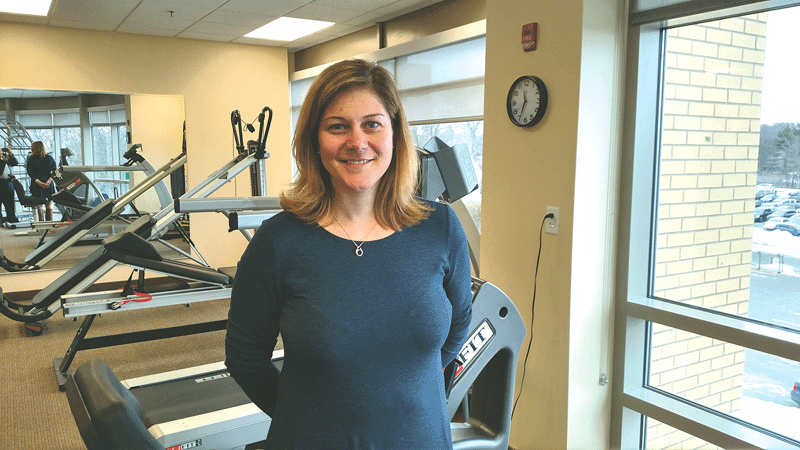
Jill LeGates says Weldon’s outpatient services have become both more personalized and more regionalized as the healthcare industry continues to change.

Almost 600,000 Americans died of cancer last year. But almost 15 million were living with — and often well beyond — a cancer diagnosis, a figure expected to rise to 19 million by 2024, as cancer treatments continue to improve and Americans live longer than ever.

That trend poses opportunities in the world of outpatient rehab — opportunities Weldon Rehabilitation Hospital in Springfield has embraced.

“We went through a cancer rehab certification program to offer additional services to cancer patients. It’s a large area of growth,” said Jill LeGates, director of Rehabilitation Services at the facility. “More patients are surviving cancer treatments, but now they have fatigue, pain, dysfunction. We can help return them to the activities of daily living, so that’s been a huge focus for us.”

Specifically, Weldon is certified by the STAR Program (Survivorship Training and Rehabilitation) program, a nationally recognized certification that focuses on improving the lives of cancer survivors who experience side effects caused by treatment.

A team of therapists, physicians, and nurses has undergone training to provide patients with individualized cancer rehabilitation treatment to improve the symptoms that affect their daily functioning and quality of life. It’s similar to rehabilitation that people undergo after a serious illness or injury, but tailored to the unique issues they face as a cancer survivor.

“Our rehabilitation professionals can help you with a wide variety of treatment-related conditions and the symptoms they cause, targeting not just pain and fatigue, but balance and gait problems, memory and concentration issues, swallowing and speech problems, and lymphedema.

“You might expect your oncologist to say to you, ‘I did my job; you’re wonderful. This is your new normal,” LeGates said. “But some patients are saying, ‘I still have this pain.’ So, is there a way we can manage their pain and fatigue, increase their endurance, get them back to working, back to caring for their children, back to living? Rehab can be a huge part of that.”

It’s just one example, actually, of how Weldon — founded in 1974 and part of the Sisters of Providence Health System (SPHS), which includes Mercy Medical Center — continues to change with the times to meet rehabilitation needs.

The most obvious change is the new location of its outpatient services, a block away from the main Weldon facility, in the medical office building the health system opened in 2015 on the corner of Carew and Chestnut streets.

“When we were at the old building, we had multiple outpatient services in different places, scattered throughout the building,” LeGates said. “Here, all the outpatient services are together in one suite — physical therapy, occupational therapy, speech therapy, and some specialized programs.”

Those programs include occupational, physical, and speech therapy; hand therapy for a variety of conditions; specialized programs for lymphedema, swallowing disorders, vestibular therapy, and voice disorders; a wheelchair clinic; a driver-advisement program to help people determine whether it’s safe for them to drive; a broad pediatric program; and the STAR program for cancer patients.

“As a mission-driven hospital organization, our focus is on patient-centered care,” LeGates said. “We strive to provide patients with the individualized care and treatment plans they require. If someone needs more specialized care, we have therapists with those specialties to consult and help patients increase their function.”

Meeting Needs

Patients arrive in Weldon’s outpatient programs in a number of ways, but post-hospital care remains a key focus, especially at a time when the accountable-care model in healthcare is putting a premium on discharging patients sooner than before and emphasizing preventive and rehabilitative care outside the hospital setting.

“They’re coming out of the hospital faster, and health systems are looking at cost containment,” LeGates said. “So the environment where patients receive therapy services is a huge component — how is that patient functioning, and what are their needs?”

While many patients are referred from hospitals, others may be referred directly from physician practices. “They go to the doctor, who identifies an illness, something that requires the services of a therapist. We also see patients that have an injury on the job, and they may need therapy services in order to return to work.”

The pediatric wing of Weldon Rehabilitation Hospital

The pediatric wing of Weldon Rehabilitation Hospital features therapeutic and sensory tools that are both effective and fun.

Since SPHS absorbed the former Hampden County Physician Associates practices and is affiliated with Riverbend Medical Group’s network, these referrals are an especially critical pipeline. “As a huge health system, we want to maintain the integrity of where our patients receive services,” she noted. “Keeping all those services within the health system has been a huge opportunity.”

In short, she went on, “we always knew if we were in strong alignment with referral resources, we would see growth. And we do have a very positive referral base, and we are continuing to grow. Our physical-therapy services are extremely busy, and we’ve added additional therapists to absorb that growth, which is great.”

The growing need for services is also being driven by an aging population, as the Baby Boomers surge into their senior years but are often living with a host of conditions that require therapy. But at the other side of the age spectrum, Weldon has broadened its pediatric services, working with children dealing with autism, sensory-processing disorders, Down syndrome, developmental delays, handwriting difficulty, speech apraxia, language delays and speech issues such as stuttering, neuromuscular disorders, ADHD, and a host of other conditions.

Weldon’s pediatric therapists evaluate each child’s needs and develop an individualized treatment plan that may include one-on-one occupational therapy, speech therapy, and physical therapy, all provided in a colorful, child-centered environment, LeGates said.

“We may work in collaboration with schools or with home services — there’s a lot of collaborating with the pediatric world,” she added. “We’re treating the whole person and all the child’s needs, whether educational, medical, or social. We also have a well-established animal-assisted therapy program with the Zoo at Forest Park; animals seem to bring out a lot in people. That’s a huge piece of what we do as well.”

Regional Focus

Since SPHS became part of a much larger, regional health system, Trinity Health New England, Weldon has begun to assess the regional big picture for rehab services, and perhaps find ways to collaborate on population-health initiatives with facilities like Mount Sinai Rehabilitation Hospital in Hartford and St. Mary’s Hospital in Waterbury, which boasts several outpatient rehab centers.

“How can we expand to grow and regionalize some of this?” LeGates said. “As we look to the future, as we move from fee for service into all kinds of payment changes, we may be able to collaborate on this from a regional perspective.”

Despite that big-picture outlook, however, rehabilitation remains, at its core, a one-on-one connection between therapist and patient.

“It’s a wonderful profession,” she told BusinessWest. “You’re helping people and truly seeing people gain back their independence, gain back function, and return to the activities they had stopped doing.”

In the end, success stories are based on more than hard work in the gym; they rest on strong relationships — which don’t necessarily end when the care does.

“We’ve had patients come back and show us how they’re doing, tell us how they went back to school or went back to work,” LeGates said. “It’s a rewarding career, and the people who work here are a people-driven team.”

Joseph Bednar can be reached at [email protected]

Chamber Corners Departments

GREATER EASTHAMPTON CHAMBER OF COMMERCE

www.easthamptonchamber.org

(413) 527-9414

• May 11: Networking by Night, 5-7 p.m., hosted by Amy’s Place Bar & Grill, 80 Cottage St., Easthampton. Sponsored by Easthampton Savings Bank.

• June 6: Networking by Night, 5-7 p.m. “Move the Mountain” with the Holyoke Chamber of Commerce, hosted by New City Brewery, 180 Pleasant St., Easthampton. Sponsored by Finck & Perras Insurance Agency Inc. and Westfield Bank.

• June 28: Speaker Breakfast: “Why Ping-pong Tables Do Not Define Your Business Culture,” 7:30-9 a.m., hosted by Williston Northampton School, 19 Payson Ave., Easthampton. Featured guest speaker: Tim Retting of Cincinnati-based InTrust. Sponsored by BusinessWest, Easthampton Savings Bank, Finck & Perras Insurance Agency Inc., Innovative Business Systems Inc., United Personnel, and Williston Northampton School.

GREATER NORTHAMPTON CHAMBER OF COMMERCE

www.explorenorthampton.com

(413) 584-1900

• May 5: Spring Swizzle Auction, 6:30-10:30 p.m. Hosted by Eastside Grill, Strong Ave., Northampton. Cost: $75. Purchase tickets at www.chamberspringswizzle.com.

• May 10: May Arrive @ 5, 5-7 p.m., at Goggins Real Estate, 79 King St., Northampton. Sponsors: Applied Mortgage, Greenfield Community College Foundation, MassDevelopment, and Northeast Solar. Networking event. Cost: $10 for members.

• May 11: “Google Analytics,” 9-11 a.m., at the Northampton Chamber of Commerce, 99 Pleasant St., Northampton. Presented by SCORE of Western Mass. What is Google Analytics? A free, powerful analytics tool that provides reports showing how visitors found your website and what they did when they got there. It measures the effectiveness of your online and offline marketing campaigns. Pre-registration is required; space is limited. Cost: free.

• May 18: “Intro To QuickBooks,” 9-11 a.m., at the Northampton Chamber of Commerce, 99 Pleasant St., Northampton. Presented by Pioneer Training. This session will cover setting up a new company, invoicing and receiving payments, writing checks, and paying bills. The session will end with a brief introduction to and overview of reports. It is suitable for those who have recently started using QuickBooks and those planning to use it. This session is taught on the PC desktop version, but the basic principles of QuickBooks remain the same for the Windows, Macintosh, and online versions of the program. Be aware that specific details of how to accomplish a task or available features may differ on the different versions, and these differences will not be covered. It is not required, but if you have a laptop or tablet and have QuickBooks installed, you may bring it and follow along. Note: this workshop is designed for training on the basics of QuickBooks and is not intended to troubleshoot problems individuals may currently be experiencing. Those types of questions are better suited to a one-on-one consulting session. Cost: $25 for members, $35 for non-members.

• June 7: June Arrive @ 5, 5-7 p.m., at ConVino, 101 Armory St, Northampton. Sponsors: Keiter Builders and MassDevelopment. Networking event. Cost: $10 for members.

• June 23: “Microsoft Excel: Tips, Tricks & Shortcuts,” 9-11 a.m., at the Northampton Chamber of Commerce, 99 Pleasant St., Northampton. Presented by Pioneer Training. Pre-registration is required; space is limited. To register, visit [email protected]. Cost: $35 for members, $45 for non-members.

GREATER WESTFIELD CHAMBER OF COMMERCE

www.westfieldbiz.org

(413) 568-1618

• May 1: Greater Westfield Chamber of Commerce, May Mayor’s Coffee Hour, 8-9 a.m., hosted by Amelia Park Ice Arena, 21 South Broad St., Westfield. Join us for our monthly Coffee Hour with Westfield Mayor Brian Sullivan. This event is free and open to the public. Call the chamber office at (413) 568-1618 to register for this event so we may give our host a head count.

• May 5: “What to Expect at the Massachusetts Commission Against Discrimination,” 8:30-10 a.m., hosted by Holiday Inn Express, 39 Southampton Road, Westfield. Imagine one afternoon an envelope from the Massachusetts Commission Against Discrimination (MCAD) arrives in the mail. You are filled with dread as you discover that a former employee has filed a complaint alleging discrimination, harassment, and retaliation. Now what? Join Attorney Timothy Netkovick of Royal, P.C. for a workshop to discuss what to expect at the MCAD. Cost: free for members, $30 for non-members (cash or credit paid at the door or in advance). Light refreshments will be served. Online registration is available at www.westfieldbiz.org. For more information, call Pam at the chamber at (413) 568-1618.

• May 10: May After 5 Connection, 5-7 p.m., hosted by Armbrook Village, 551 North Road, Westfield. Cost: free for members, $10 for non-members (cash or credit paid at the door). Refreshments will be served, and a 50/50 raffle will benefit the chamber’s CSF – Dollars for Scholars fund. Online registration is available at www.westfieldbiz.org. For more information, call Pam at the chamber at (413) 568-1618.

• May 22: The chamber’s 56th annual golf tournament, 10 a.m., the Ranch Golf Club, Southwick. Sponsors: Whip City Fiber, SealRyt Corp., Westfield Bank, Baystate Noble Hospital. Along with a round of golf, bid at the live auction to benefit three $500 student scholarships and win some raffles. Online registration, along with information on sponsorships and foursomes, are available at www.westfieldbiz.org. For more information, call Pam at the chamber at (413) 568-1618.

SPRINGFIELD REGIONAL CHAMBER

www.springfieldregionalchamber.com

(413) 755-1310

• May 3: Business@Breakfast, 7:15-9 a.m., hosted by Chez Josef, 176 Shoemaker Lane, Agawam. Featuring Peter Sokolowski, Merriam-Webster’s editor at large, who will speak about trending words, Merriam-Webster’s sassy tweets, and some of the 1,000 new words recently added to the dictionary. Cost: $22.50 for members in advance ($25 at the door), $30 for non-members in advance ($35 at the door).

• May 10: Lunch ‘n’ Learn, “The Trump Effect: Potential Impact on Employer Mandates,” 11:30 a.m. to 1:30 p.m., hosted by Lattitude, 1338 Memorial Ave., West Springfield. Presented by attorney Amelia Holstrom of Skoler, Abbott & Presser. Cost: $25 for members in advance ($30 at the door), $35 for non-members ($40 at the door).

• May 17: Speed Networking, 3:30-5 p.m., hosted by Lattitude, 1338 Memorial Ave., West Springfield. Cost: $20 for members in advance ($25 at the door), $30 for non-members in advance ($35 at the door).

• May 23: Professional Women’s Chamber Woman of the Year Celebration, 5:30 p.m., hosted by Storrowton Tavern Carriage House, 1305 Memorial Ave., West Springfield.

• May 30: Pastries, Politics, and Policy, 8-9 a.m., hosted by TD Bank Conference Center, 1441 Main St., Springfield. Cost: $15 for members ($20 at the door), $25 for non-members in advance ($30 at the door).

Sponsorship opportunities are available. Register online for events at www.springfieldregionalchamber.com or e-mail [email protected] for more information.

WEST OF THE RIVER CHAMBER OF COMMERCE

www.ourwrc.com

(413) 426-3880

• May 3: Wicked Wednesday and grand re-opening, 5:30-7:30 p.m., hosted by Curry Printing/Fast Signs, West Springfield. Wicked Wednesdays are monthly social events, hosted by various businesses and restaurants, that bring members and non-members together to network in a laid-back atmosphere. For more information about this event, contact the chamber office at (413) 426-3880 or register at www.westoftheriverchamber.com.

• May 10: Job Fair 2017, 3-7 p.m., hosted by Crestview Country Club, 281 Shoemaker Lane, Agawam. The town of Agawam and the West of the River Chamber will be hosting a local job fair. West Springfield and Agawam businesses, along with other employment opportunities, will be showcased. This event is free and open to the public. To be a participating vendor, register online at www.westoftheriverchamber.com.

• May 18: Networking Lunch, noon to 1:30 p.m., hosted by Lattitude in West Springfield. Members or guests of members may attend. Enjoy a sit-down lunch while networking with fellow chamber members. Each attendee will get a chance to offer a brief sales pitch. The only cost to attend is the cost of lunch. Attendees will order off the menu and pay separately the day of the event. We cannot invoice you for these events. For more information or to register, visit www.westoftheriverchamber.com or contact the chamber office at (413) 426-3880 or [email protected].

Chamber Corners Departments

GREATER CHICOPEE CHAMBER OF COMMERCE
www.chicopeechamber.org
(413) 594-2101

• April 19: Salute Breakfast, 7:15-9 a.m., at the Willits-Hallowell Center, Mount Holyoke College, 50 College Street, South Hadley. Cost: $23 for members, $28 for non-members. Sign up online at www.chicopeechamber.org.

GREATER EASTHAMPTON CHAMBER OF COMMERCE
www.easthamptonchamber.org
(413) 527-9414

• May 11: Networking by Night, 5-7 p.m., hosted by Amy’s Place Bar & Grill, 80 Cottage St., Easthampton. Sponsored by Easthampton Savings Bank.

• June 6: Networking by Night, 5-7 p.m. “Move the Mountain” with the Holyoke Chamber of Commerce, hosted by New City Brewery, 180 Pleasant St., Easthampton. Sponsored by Finck & Perras Insurance Agency Inc. and Westfield Bank.

• June 28: Speaker Breakfast: “Why Ping-pong Tables Do Not Define Your Business Culture,” 7:30-9 a.m., hosted by Williston Northampton School, 19 Payson Ave., Easthampton. Featured guest speaker: Tim Retting of Cincinnati-based InTrust. Sponsored by BusinessWest, Easthampton Savings Bank, Finck & Perras Insurance Agency Inc., Innovative Business Systems Inc., United Personnel, and Williston Northampton School.

GREATER HOLYOKE CHAMBER OF COMMERCE
www.holyokechamber.com
(413) 534-3376

• April 19: Chamber After Hours, 5-7 p.m., hosted by Holyoke Hummus Cafe, 285 High St., Holyoke. Meet up with your business associates for networking, food, and a 50/50 raffle. Stop in and check out Holyoke’s newest café. Cost: $10 for members, $15 for non-members. Feel free to bring a door prize. Sign up online at holyokechamber.com.

GREATER NORTHAMPTON CHAMBER OF COMMERCE
www.explorenorthampton.com
(413) 584-1900

• May 5: Spring Swizzle Auction, 6:30-10:30 p.m. Hosted by Eastside Grill, Strong Ave., Northampton. Cost: $75. Purchase tickets at www.chamberspringswizzle.com.

• May 10: May Arrive @ 5, 5-7 p.m., at Goggins Real Estate, 79 King St., Northampton. Sponsors: Applied Mortgage, Greenfield Community College Foundation, MassDevelopment, and Northeast Solar. Networking event. Cost: $10 for members.

• May 11: “Google Analytics,” 9-11 a.m., at the Northampton Chamber of Commerce, 99 Pleasant St., Northampton. Presented by SCORE of Western Mass. What is Google Analytics? A free, powerful analytics tool that provides reports showing how visitors found your website and what they did when they got there. It measures the effectiveness of your online and offline marketing campaigns. Pre-registration is required; space is limited. Cost: free.

• May 18: “Intro To QuickBooks,” 9-11 a.m., at the Northampton Chamber of Commerce, 99 Pleasant St., Northampton. Presented by Pioneer Training. This session will cover setting up a new company, invoicing and receiving payments, writing checks, and paying bills. The session will end with a brief introduction to and overview of reports. It is suitable for those who have recently started using QuickBooks and those planning to use it. This session is taught on the PC desktop version, but the basic principles of QuickBooks remain the same for the Windows, Macintosh, and online versions of the program. Be aware that specific details of how to accomplish a task or available features may differ on the different versions, and these differences will not be covered. It is not required, but if you have a laptop or tablet and have QuickBooks installed, you may bring it and follow along. Note: this workshop is designed for training on the basics of QuickBooks and is not intended to troubleshoot problems individuals may currently be experiencing. Those types of questions are better suited to a one-on-one consulting session. Cost: $25 for members, $35 for non-members.

• June 7: June Arrive @ 5, 5-7 p.m., at ConVino, 101 Armory St, Northampton. Sponsors: Keiter Builders and MassDevelopment. Networking event. Cost: $10 for members.

• June 23: “Microsoft Excel: Tips, Tricks & Shortcuts,” 9-11 a.m., at the Northampton Chamber of Commerce, 99 Pleasant St., Northampton. Presented by Pioneer Training. Pre-registration is required; space is limited. To register, visit [email protected]. Cost: $35 for members, $45 for non-members.

GREATER WESTFIELD CHAMBER OF COMMERCE
www.westfieldbiz.org
(413) 568-1618

• April 21: Employment Law Workshop, “A Transition in the Law: Transgender Discrimination,” 8:30-10 a.m., at the Holiday Inn Express, 39 Southampton Road, Westfield. Discrimination based on transgender status or gender identity is a developing area of the law. There has been a lot of debate on the local, state, and national levels over access to bathrooms for transgender individuals. As the public debates this issue, legislators, administrative agencies, and courts are shaping the law that prohibits gender discrimination, including discrimination against transgender individuals. Join Attorney Timothy Netkovick of Royal, P.C. for a roundtable-style seminar to discuss how to navigate the legal landscape of an evolving and challenging area of discrimination law. Cost: free to chamber members, $30 for general admission (cash or credit paid at the door or in advance). Online registration is available at www.westfieldbiz.org. For more information, call Pam at the chamber at (413) 568-1618.

• April 25: Seventh annual Home & Business Show, 4:30-7 p.m., at Tucker’s Restaurant, 625 College Highway, Southwick. Join us for this annual tabletop event in partnership with the Southwick Economic Development Commission. The event is free to the public. Southwick business owners can have a tabletop for $25 per business — one six-foot table with a tablecloth (you are free to bring your own table covering) and a listing in the show program provided you register by the deadline, April 7. For information and an application, visit southwickma.info or call (413) 304-6100.

• May 1: Greater Westfield Chamber of Commerce, May Mayor’s Coffee Hour, 8-9 a.m., hosted by Amelia Park Ice Arena, 21 South Broad St., Westfield. Join us for our monthly Coffee Hour with Westfield Mayor Brian Sullivan. This event is free and open to the public. Call the chamber office at (413) 568-1618 to register for this event so we may give our host a head count.

• May 5: “What to Expect at the Massachusetts Commission Against Discrimination,” 8:30-10 a.m., hosted by Holiday Inn Express, 39 Southampton Road, Westfield. Imagine one afternoon an envelope from the Massachusetts Commission Against Discrimination (MCAD) arrives in the mail. You are filled with dread as you discover that a former employee has filed a complaint alleging discrimination, harassment, and retaliation. Now what? Join Attorney Timothy Netkovick of Royal, P.C. for a workshop to discuss what to expect at the MCAD. Cost: free for members, $30 for non-members (cash or credit paid at the door or in advance). Light refreshments will be served. Online registration is available at www.westfieldbiz.org. For more information, call Pam at the chamber at (413) 568-1618.

• May 10: May After 5 Connection, 5-7 p.m., hosted by Armbrook Village, 551 North Road, Westfield. Cost: free for members, $10 for non-members (cash or credit paid at the door). Refreshments will be served, and a 50/50 raffle will benefit the chamber’s CSF – Dollars for Scholars fund. Online registration is available at www.westfieldbiz.org. For more information, call Pam at the chamber at (413) 568-1618.

• May 22: The chamber’s 56th annual golf tournament, 10 a.m., the Ranch Golf Club, Southwick. Sponsors: Whip City Fiber, SealRyt Corp., Westfield Bank, Baystate Noble Hospital. Along with a round of golf, bid at the live auction to benefit three $500 student scholarships and win some raffles. Online registration, along with information on sponsorships and foursomes, are available at www.westfieldbiz.org. For more information, call Pam at the chamber at (413) 568-1618.

PROFESSIONAL WOMEN’S CHAMBER
www.myonlinechamber.com
(413) 787-1555

• April 22: Professional Women’s Chamber, Headline Luncheon Series, 11:30 a.m.-1 p.m., at Storrowton Tavern Carriage House, 1305 Memorial Ave., West Springfield. “Maintaining Sanity: The Journey Toward Work-life Balance” is a panel discussion featuring Patricia Fay, an assistant vice president and actuary of strategic planning and analysis at MassMutual and the insurer’s 2015 Working Mother of the Year.

SPRINGFIELD REGIONAL CHAMBER
www.springfieldregionalchamber.com
(413) 755-1310

• April 19: After 5, in partnership with the West of the River Chamber of Commerce, 5-7 p.m., at BMW of West Springfield, 1712 Riverdale St., West Springfield.

• April 20: Leadership Institute Graduation, 6-9 p.m., at the Springfield Sheraton, One Monarch Place, Springfield.

• April 26: Beacon Hill Summit, noon to 1 p.m., hosted by the Massachusetts State House, co-hosted by state Sen. James Welch and state Rep. Aaron Vega. Sponsorship opportunities are available. E-mail [email protected] for information.

• May 3: Business@Breakfast, 7:15-9 a.m., hosted by Chez Josef, 176 Shoemaker Lane, Agawam. Featuring Peter Sokolowski, Merriam-Webster’s editor at large, who will speak about trending words, Merriam-Webster’s sassy tweets, and some of the 1,000 new words recently added to the dictionary. Cost: $22.50 for members in advance ($25 at the door), $30 for non-members in advance ($35 at the door).

• May 10: Lunch ‘n’ Learn, “The Trump Effect: Potential Impact on Employer Mandates,” 11:30 a.m. to 1:30 p.m., hosted by Lattitude, 1338 Memorial Ave., West Springfield. Presented by attorney Amelia Holstrom of Skoler, Abbott & Presser. Cost: $25 for members in advance ($30 at the door), $35 for non-members ($40 at the door).

• May 17: Speed Networking, 3:30-5 p.m., hosted by Lattitude, 1338 Memorial Ave., West Springfield. Cost: $20 for members in advance ($25 at the door), $30 for non-members in advance ($35 at the door).

• May 23: Professional Women’s Chamber Woman of the Year Celebration, 5:30 p.m., hosted by Storrowton Tavern Carriage House, 1305 Memorial Ave., West Springfield.

• May 30: Pastries, Politics, and Policy, 8-9 a.m., hosted by TD Bank Conference Center, 1441 Main St., Springfield. Cost: $15 for members ($20 at the door), $25 for non-members in advance ($30 at the door). Sponsorship opportunities are available. Register online for events at www.springfieldregionalchamber.com or e-mail [email protected] for more information.

WEST OF THE RIVER CHAMBER OF COMMERCE
www.ourwrc.com
(413) 426-3880

• April 19:A Multi-chamber Wicked Wednesday, 5-7 p.m., hosted by BMW of West Springfield. Wicked Wednesdays are monthly social events, hosted by various businesses and restaurants, that bring members and non-members together to network in a laid-back atmosphere. For more information about this event, contact the chamber office at (413) 426-3880 or register at www.westoftheriverchamber.com.

• April 25: Lunch N Learn Seminar, “Emerging Workforce Study,” noon to 1:30 p.m., hosted by Carriage House at Storrowton Tavern, West Springfield. Enjoy lunch while learning about our economy’s emerging workforce. This study was done over a three-year time frame. Join us to hear all of the results. Cost: $30 per member or guest. Register online at www.westoftheriverchamber.com. For for more information, contact the chamber office at (413) 426-3880 or [email protected].

• May 3: Wicked Wednesday and grand re-opening, 5:30-7:30 p.m., hosted by Curry Printing/Fast Signs, West Springfield. Wicked Wednesdays are monthly social events, hosted by various businesses and restaurants, that bring members and non-members together to network in a laid-back atmosphere. For more information about this event, contact the chamber office at (413) 426-3880 or register at www.westoftheriverchamber.com.

• May 10: Job Fair 2017, 3-7 p.m., hosted by Crestview Country Club, 281 Shoemaker Lane, Agawam. The town of Agawam and the West of the River Chamber will be hosting a local job fair. West Springfield and Agawam businesses, along with other employment opportunities, will be showcased. This event is free and open to the public. To be a participating vendor, register online at www.westoftheriverchamber.com.

• May 18: Networking Lunch, noon to 1:30 p.m., hosted by Lattitude in West Springfield. Members or guests of members may attend. Enjoy a sit-down lunch while networking with fellow chamber members. Each attendee will get a chance to offer a brief sales pitch. The only cost to attend is the cost of lunch. Attendees will order off the menu and pay separately the day of the event. We cannot invoice you for these events. For more information or to register, visit www.westoftheriverchamber.com or contact the chamber office at (413) 426-3880 or [email protected].

Daily News

SPRINGFIELD —Training & Workforce Options (TWO), the collaboration between Springfield Technical Community CollegeHolyoke Community College, and Commonwealth Corp., invite area businesses to a free information session on April 26 to hear an overview of all of the Workforce Training Fund Programs (WTFP).

Registration is required to attend the session, scheduled for 8:30-11:30 a.m., at Scibelli Hall (Building 2), Café Rooms, at STCC. Seating is limited. To register online, click on this Eventbrite link.

Workforce Training Fund, a program of the Massachusetts Executive Office of Labor and Workforce Development, is administered by Commonwealth Corp.

The Workforce Training Fund offers several types of grants to support training needs of business across the state. The fund is available for business of all sizes, but its major focus is small- to medium-sized businesses. Government agencies are not eligible to apply.

The Workforce Training Fund helps address productivity and competitiveness by providing resources to Massachusetts businesses to fund training for current and newly hired employees. It’s designed to help businesses make an investment in their future and in their employees’ skills.

Topics covered at the info session will include the features and requirements of each Workforce Training Fund Program, funding availability, and the application process.

The session covers the following Workforce Training Fund grant programs:

  • General Program;
  • Express Program;
  • Direct Access Program (formerly Regional Training Capacity Pilot Program); and
  • Technical Assistance Grant

For more information about the WTFP, please visit www.workforcetrainingfund.org.

MassDevelopment, the state’s economic development and finance agency, will attend the session to share its funding options.

Businesses can apply for grants up to $250,000. After the information session, participants should be able to determine which grants are best suited for their business’s needs and how to start the application process.

For more information, contact Tracye Whitfield, Director of Manufacturing and Corporate Training

Community Spotlight Features

Community Spotlight

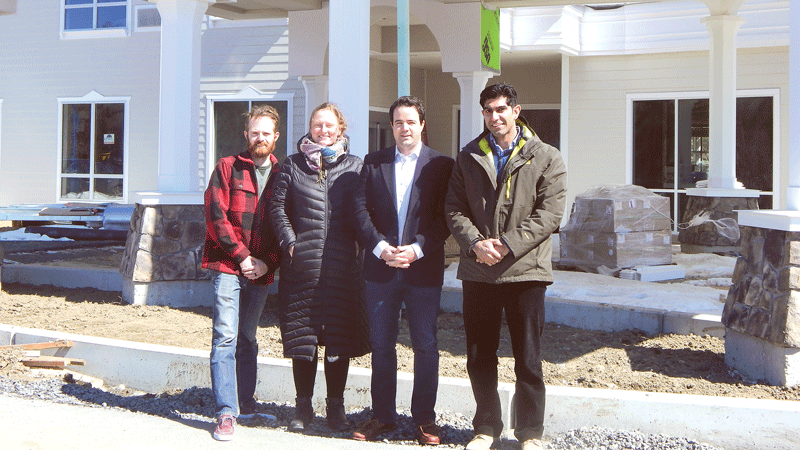
From left, Kameron Spaulding, Gwen Miller, Colin Toole, and Mayur Desai

From left, Kameron Spaulding, Gwen Miller, Colin Toole, and Mayur Desai say the new, 96-room Courtyard by Marriott hotel will open in May.

The temperature was in the teens and the wind chill factor was frigid on a recent day when town officials arrived at the construction site of the Brushwood Marriott Hotel in Lenox, but Colin Toole and Mayur Desai wanted photos taken outside the entrance to show off the building’s unusual French empire design.

“This is not a prototype of a typical Courtyard Marriott,” Toole explained.

But then again, noted the CEO of Toole Co., which owns and will manage the property, and also built and operates the Hampton Inn and Suites in Lenox, the town is no ordinary place.

“Lenox has a certain cachet in terms of its name; when people think of it, they think about Shakespeare and Co., the Gilded Age mansions, and Tanglewood,” Toole told BusinessWest.

Indeed, those very attractions, combined with bucolic scenery, the town’s identity as a center for health and wellness — it’s home to Canyon Ranch and the Kripalu Center for Yoga and Health — and a wide range of culture and recreational opportunities have spawned a number of multi-million-dollar projects in the last year alone.

“A combination of factors makes Lenox attractive,” said Kameron Spaulding, executive director of the Lenox Chamber of Commerce. “You can see great theater in New York City, but you can’t take a hike there and go to the beach in the same day. But you can do those things here, plus visit a spa and listen to the Boston Symphony Orchestra play outdoors without ever leaving town. All these things work together to create a unique experience.”

The largest project in the works is a $60 million expansion and renovation at the former Cranwell Spa & Golf Resort. The Miraval Group, a subsidiary of Hyatt Hotels, purchased the property last fall for $22 million and plans to transform it into a high-end wellness resort. Other major projects taking place include the new Marriott, the relocation of Morrison’s Home Improvement Specialists Inc. from Pittsfield and its adaptive reuse of a blighted building that had been vacant for 10 years, an apartment conversion at the Walker Street Residences by Allegrone, and the construction of its new headquarters and co-working office space using green design and technology in a building on Route 7.

“It’s been a good year for investments, which shows that Lenox is a place where people want to do business,” Spaulding said.

The building was ghostly, but I had a vision of what it could become, and knew the location was great in terms of visibility: 35,000 to 45,000 vehicles drive past it every day.”

Economic development and growth is on an upward trajectory, but Town Manager Christopher Ketchen said the town hasn’t rested on its laurels. In February, officials adopted a policy to determine whether a project is worthy of a TIF, or tax-increment financing, which is used as a subsidy to spur redevelopment; or an STA, which stands for special tax assessment.

“Developers are looking for these, so it was important for us to have objective measures to make decisions,” said Land Use Director and Town Planner Gwen Miller. “Now we have a clear time frame and process for businesses looking for the help.”

Ketchen added that Lenox has a sound fiscal standing and excellent schools, which play into the equation when developers consider a project or a business wants to move. It is one of two towns west of the Connecticut River that has an AAA rating from Standard & Poor; one of its elementary schools earned a Blue Ribbon rating from the U.S. Dept. of Education, and its high school is the only one in the Berkshires that received a Gold Medal Award from U.S. News & World Report.

In addition, its infrastructure improvement budget was $10 million for FY 2016-17, and the town plans to spend another $5 million over the next year.

The population in Lenox is aging, which reflects a trend in other towns in the Berkshires, and the median age of residents is 51. But town officials are taking steps to attract young professionals and families. Last year, they created a first-time-homebuyers program in partnership with four banks that offers up to $10,000 in down payments to qualified applicants. They also changed zoning requirements to make it easier to build new apartments and condominiums or convert older housing stock into appealing residences, as well as adopting a Complete Streets policy that will make the town eligible for state funds to improve connectivity for pedestrians and bicyclists.

For this issue, BusinessWest looks at major projects that are underway and what they will add to help increase the tourist business that is the cornerstone of the town’s economy.

Filling a Need

The Miraval buildout of the Cranwell resort will begin this spring and is expected to take two years to complete. A total of 43 new rooms will be added to the existing 105, along with a new spa, fitness center, new programming, and other wellness features. The existing facilities will be renovated, the property will remain open during construction, and neighboring condominiums will be able to access the golf course and other amenities via a fee-based system.

“Miraval plans to construct several new buildings and an underground tunnel to connect guests from the main campus to the driving range and several other buildings across the street,” Miller said.

Ketchen told BusinessWest that people have been coming to Lenox for generations to find themselves spiritually and improve their lifestyle, and this high-end wellness resort will benefit the town as well as Miraval’s clients, who often fly from New England to their other locations in the Midwest.

The project is expected to create more than 100 new full-time positions and generate an estimated $1.3 million annually in real estate, sales, and lodging taxes, in addition to a one-time, $1.1 million payment for sewer, water, and other utility connection fees.

The new Brushwood by Marriott will also add to the town’s offerings and is expected to open next month. The hotel will have 92 rooms with panoramic views, an indoor pool, a large patio with firepits, a restaurant, and a 12,000-square-foot event space, which is something Lenox hasn’t been able to offer groups in the past.

Planning began in 2013, and construction kicked off last year after a blighted Econolodge building on the site was demolished.

“We focused a great deal of attention on making this property unique. It fills a void in the Berkshires for hospitality,” said Desai, who will serve as general manager and is a partner in Brushwood LLC, which owns the real estate.

The work has been undertaken by local contractors, and although Marriott is a branded property, the Lenox hotel will be managed by its owners.

Another major project was finished last month and opened its doors April 1. Steve Morrison, who owns Morrison’s Home Improvement Specialists in Pittsfield, relocated his company to Lenox after completing a $400,000 gut and renovation of the former Trillium House on Route 7.

He needed room to grow, and the moment he stepped into the 1870 building, he saw its potential in spite of the deterioration that might have scared others away.

“The roof was leaking, there was structural damage, plaster was falling off the walls, and there was mold inside of them; the windows needed replacing, and the chimney had to be rebuilt,” he said. “The building was ghostly, but I had a vision of what it could become, and knew the location was great in terms of visibility: 35,000 to 45,000 vehicles drive past it every day.”

Today, the building is a welcoming place and resembles a new home inside and out. It has become Morrison’s headquarters, but there are areas that show off every product needed in a residential renovation, filled with samples of roofing, windows, tiles, kitchen cabinets, lighting, bathrooms, floor and wall tile, and more.

“It’s a year-round home show,” Morrison said, explaining that manufacturers lease space from him and, in addition to multiple 40-inch screens that show before-and-after photos of remodeling jobs he has done, he finally has a place where customers can “see, feel, and touch products before they buy them.”

Expanding Options

There is a dearth of market-rate apartments in Lenox, but thanks to Allegrone Companies, the number will soon increase. The firm is undertaking a $5 million to $8 million renovation of the 1804 William Walker House that will transform it into eight market-rate, one- and two-bedroom apartments.

The new units will range from 800 to 1,500 square feet and contain dishwashers, security alarms, stainless-steel appliances, and other amenities. The work is expected to be completed this summer, and three of the apartments have already been rented.

“The building is within walking distance to downtown, Shakespeare and Company, and Canyon Ranch,” Miller said, adding that they will help fill a need in the community.

In addition, Allegrone recently completed the renovation and establishment of the new Berkshire Design Center. The project began almost five years ago when the firm purchased the foreclosed and abandoned Edgewood Motel, which was built in 1959.

After a major renovation, Allegrone moved its corporate headquarters from Pittsfield to Lenox into the second floor of the newly built, contemporary, 30,000-square-foot office building on Pittsfield Road last summer.

Large window frames align the inner corridors and outer walls, allowing natural light to radiate through the building, and the first floor contains 16 suites and co-working conference and event space that tenants will share.

Xerox moved in and staged a ribbon-cutting ceremony several weeks ago, and Liberty Mutual has signed a lease agreement and will become the second tenant.

“This renovation was one of only 16 economic-development initiatives across the state during the recession,” Spaulding said, explaining that officials from the town and state Economic Development Incentive Program collaborated with MassDevelopment, which gave Allegrone a multi-million-dollar recovery-zone facility bond to fund the project, then Allegrone worked with local teams of architects, engineers, and field contractors to do the work.

The Zoning Board of Appeals has also approved a special permit to open a center for women with eating disorders at the former Lenox Institute of Water Technologies. Members of the Berg family who established 107 Yokun LLC and own the adjoining Ethelwynde Estate plan to hire a company that will use the building to help women who suffer from anorexia and bulimia. It would house up to 48 residents who would live there for several months while undergoing treatment, and promises to create 25 full-time jobs.

“It dovetails into the broader health and wellness movement stemming from nearby Canyon Ranch and Kripalu, as well as the recreational opportunities here, and is an interesting example of a private adaptive reuse of a building on a historic site that leverages other development in our community,” Miller said, explaining that the town has a ‘great estates’ bylaw intended to promote this type of reuse.

In addition, to encourage companies to move to Lenox or expand, town officials have been focused on a five-year open-space plan that was adopted in 2013 to serve the community as well as the visitor population.

“Open space is a large part of our identity,” Ketchen said, as he spoke about the town’s great-estate legacy and expanses of open space around these historic buildings.

Officials are working with partners to capitalize on the town-owned land at Kennedy Park and a future boardwalk with access to Parson’s Marsh, which is a wetlands area that is home to many birds.

In addition, Berkshire Natural Resource Council, the regional land trust, is working toward a regional trail network with a long section passing through Lenox, and construction is about to begin to improve the town beach on Laurel Lake.

Lifeguard hours will be expanded this summer, the area will become handicapped-accessible, and changes will be made to the beach house that contains bathrooms and changing areas.

Vital Relationships

The fact that Lenox is a small town has helped facilitate development because officials know what properties are available for development as well as their history.

“I’ve spent entire days driving people around to look at sites, and several hours on Sundays,” Spaulding said.

Miller has done the same and will continue to extend that courtesy to people interested in building or moving to the town.

“We know what is permissible,” she said, adding that officials were able to waive the site-planning review for the Morrison Home Improvement renovation. “Our responsiveness and assistance make a marked difference to developers. It’s our goal to help them get to ‘go’ as painlessly and quickly as possible, so we make it easy, which starts by helping them find the right location.”

Ketchen agreed and said the end result is the continued popularity of the town as a destination.

“We bring people here and create experiences,” he said. “We’re also the central hub of Berkshire County, and people come here to stay.”


Lenox at a glance

Year Incorporated: 1767
Population: 5,214 (2017)
Area: 21.7 square miles
County: Berkshire
Residential Tax Rate: $12.21
Commercial Tax Rate: $15.06
Median Household Income: $61,457
median Family Income: $82,212
Type of government: Open Town Meeting
Largest employers: Canyon Ranch, Boston Symphony Orchestra, Cranwell Resort and Spa
(Latest information available)

Building Trades Sections

Flush with New Ideas

Craig O’Connor says bathroom makeovers by Affordable Bath

Craig O’Connor says bathroom makeovers by Affordable Bath can include deep soaking tubs, which are growing in popularity.

It’s one of the most important rooms in the house — resale-wise, and otherwise. And yet, many people live with something that’s been outdated for 20 years or more. New materials, products, and techniques provide an array of creative and often-affordable options for giving the bathroom a new life.


A bathroom makeover can be functional and involve a simple update, or turn the space into a spa-like retreat with recessed lighting, a heated floor, a spacious tiled shower with multiple shower heads and built-in benches, or a deep soaking tub where the water vibrates in response to soft music.

The choices are almost limitless, and thanks to new materials and technology, there are solutions for every budget that result in a fresh, clean, updated look.

“The two rooms that affect resale value the most are the kitchen and the bathroom; they tend to be most expensive to remodel, but are also the most important,” said Jason Cusimano, owner of Bathfitter of Western Mass. in Greenfield, which specializes in customized acrylic tub liners, wall systems, and shower-to-bath conversions.

Jim Belle-Isle agrees. “The bathroom is the first thing people see in the morning and the last room they see before they go to bed,” said the owner of BathCrafters in Chicopee, which also specializes in custom acrylic tub liners, wall systems, and conversions.


The two rooms that affect resale value the most are the kitchen and the bathroom; they tend to be most expensive to remodel, but are also the most important.”


Affordable Baths Inc. in Springfield, meanwhile, does complete makeovers that begin with gutting the entire room. The existing footprint can be replicated, or the room may get an entirely new design, which allows a homeowner to be as creative as their budget and imagination allow.

“Many people are suffering with bathrooms that have been outdated for 10 or 15 years; they wait to remodel until they are ready to put their house on the market, but if you are going to spend the money, you should do it at least a few years before you sell so you can enjoy it,” said Craig O’Connor, owner of Affordable Baths, adding that a remodeled bathroom adds instant equity to a home.

Local bath remodelers say the majority of their clients are 35 and older, and are remodeling or making changes because the room is outdated or has problems due to mold and mildew. Baby Boomers also make up a large part of their business, and those who plan to stay in their homes often want the bathtub converted into a spacious shower stall with grab bars, a seat, and recessed soap holders.

“Twenty years ago, we did one shower conversion for every tub makeover. Now the ratio is one-to-one,” Cusimano said as he spoke about the growing trend. “The bathroom usually has a small footprint, but eliminating a tub can make the space seem amazingly larger.”

Trends and styles come and go, but white fixtures are the most popular, followed by neutrals that include beige and gray. Although many remodeling shows on TV feature bathrooms with intricate tiles and daring designs in shower stalls, grouted seams require maintenance, and most New Englanders want surfaces that are easy to clean and prefer wall surrounds or large, block-style tiles.

For this edition and its focus on home improvement, BusinessWest explores options offered by local remodelers that range from complete makeovers to less-costly renovations that include relining and resurfacing tubs, sinks, wall tiles, and bath surrounds, extending their life and giving them a clean, updated look.

Changing Trends

O’Connor’s Springfield showroom contains tiles, vanities, showerheads, shower stalls, faucets, lighting, countertop samples, flooring, and everything else needed for a complete bathroom remodel. The typical cost of a job in New England is $14,000, but Affordable Bath can usually do a complete remodel for $10,000, as long as the footprint isn’t changed. However, the price rises if people choose costly options such as heated floors, custom tile bath surrounds, or vanities larger than 36 inches.

The room is gutted down to the studs, and the remodeling takes a week or two to complete. It can be inconvenient for homeowners who have only one bathroom, but the new bath or shower is ready for use by the end of the first week, and clients are offered Porta Potty units.

Gunmetal-gray-colored vanities are growing in popularity, but most people choose shades of brown, and quartz countertops are replacing granite; the material is slightly more expensive, but doesn’t require maintenance and resists stains.

O’Connor told BusinessWest that many people whose master bathrooms have Jacuzzi tubs are eliminating them or replacing them with deep-soaking or claw-foot models.

Jim Belle-Isle

Jim Belle-Isle says BathCrafters can install a new bathtub liner and wall system in one or two days to give the room an updated look.

Claw-foot tubs come in cast iron, which retains the temperature of the water for long periods of time, or acrylic, which weighs less and is a good choice for second floors.

Some Baby Boomers and seniors are also looking toward the future and choosing walk-in tubs.

“The surfaces are heated, and the jets can be positioned to hit the knees, hips, or lower back,” O’Connor said, adding that roll-in showers with fold-down seats and grab bars are another option that eliminate the need to step over a wall to bathe.

“We’ve created bathrooms that range from a basic remodel that meets practical needs to spaces that provide the comfort of a private, spa-like retreat,” he continued, noting that the company recently remodeled a master bathroom and installed an oversized Jacuzzi tub and separate shower with multiple showerheads, custom tiles, a built-in bench, and a frameless glass exterior.

Although a complete makeover is the ultimate choice, there are many options for people who don’t need or want that option or can’t afford it. They include having a custom-made acrylic tub and liner installed over the existing one. The liners usually have lifetime warranties, and the entire job can be done in about two days and enhanced with a new sink with fancy faucets and a new toilet.

“We have more than 1,000 acrylic molds that fit every cast-iron or steel tub, along with multiple designs and colors,” Cusimano said, adding that bronze or brushed nickel drains or overflows are popular and an average job costs $3,000 to $4,000, although prices for tub-to-shower conversions range from $1,000 to $7,000, depending on factors that include how much plumbing is required and whether the homeowner wants built-in seats and other high-end features.

He told BusinessWest that acrylic is a very high-end plastic and far more durable than old bath surrounds that tend to be made of fiberglass. The material is easy to clean, and the finish never wears off, as acrylic is not a coating.

Many bathrooms remodelers are called upon to change have baby-blue or pink tubs and fixtures, and tiles that were also used as wainscoting and were popular in the ’40s and ’50s.

The tiles are often removed before a new wall system is put in place, and water damage caused by small cracks in the tiles or grouting behind them is repaired.

“There can be hundreds of seams in a tiled bathroom where water can get in,” Cusimano said, adding that some people have no idea that this has been happening.

Most tub liners and wall systems need beading where the edges meet, but new barrier materials are infused with mildicides and antimicrobial additives.

The wall systems Bathfitter uses don’t come in pieces, but are custom-made after taking measurements with a laser. They extend from the edge of the tub or shower to the ceiling, and the corners are bent so there are no seams inside the tub.

Soap dishes and corner caddies can be added, along with acrylic on the ceiling, and bowed rods are gaining popularity as they make the area seem more spacious.

BathCrafters also makes custom tub liners that are formed to fit perfectly over existing tubs, and if tile walls are in excellent shape, Belle-Isle said, they can be covered with acrylic liners, which reduces the cost of removing them. In addition, tile wainscoting in dated colors can be covered with tile-shaped acrylic.

“The biggest decision they have to make is whether they want a shower door. It does pose a maintenance issue, but some people want glass doors without metal frames,” he noted.

Although tub surrounds come in many colors and designs, neutral palettes allow people to change the look of the bathroom in the future without having to spend a lot of money. “People can get creative with floor tile, vanity tops, and paint colors,” Belle-Isle said, adding that he often reminds customers that it is much easier to redo a floor than a tub and surround.

“Remodeling can cost a lot, but the main issue in a bathroom is usually the tub or shower. Many don’t want to completely gut the room, but they do want a look that is modern and doesn’t require much maintenance, and we can provide that,” he continued, adding that everything he installs is customized to fit.

Miracle Method of Ludlow offers another option that is the least expensive choice but completely updates the look of a bathroom, tub, or shower area and extends the life of existing tubs and showers that are scratched, chipped, or contain outdated colors. After the tub or wall surround is professionally cleaned, a high-end coating is applied, which contains a bonding agent that fuses with the old surface.

Owner Jim Kenney says the entire process takes five to six hours and cures overnight. Prices start at $585 for a standard bathtub, and sinks, countertops, and tiled walls can also be sprayed.

“We can change the entire color scheme and use the same acrylic on tile walls, which will give the room a fresh new look and bring it up to date,” he explained.

In addition, Miracle Method does step-through cutaways in bathtubs that turn them into shower stalls and are popular with seniors. “We cut a 24-inch wide step into the side rail so it is easier to get into,” Kenney explained, adding that he leaves five inches on either end of the cutaway and can install grab bars and apply a non-slip surface to the floor before the coating is sprayed onto it. The cost of this makeover with grab bars is about $1,450, and it is a growing part of his business.

Modern Look

Bathrooms are used on a daily basis by homeowners as well as their guests, and can reflect a person’s decorating style or simply serve as a functional room that meets basic needs.

But the look and age of the tub, sink, toilet, and walls can make it a place to avoid or one that is enjoyable to visit, Belle-Isle said. “When the environment in a bathroom is pleasant, it makes a big difference in a person’s overall mood.”

Chamber Corners Departments

GREATER CHICOPEE CHAMBER OF COMMERCE

www.chicopeechamber.org

(413) 594-2101

• April 7: Seminar, “Microsoft Word: “Tips, Tricks & Shortcuts,” 8:30-10:30 a.m., at Hampton Inn Chicopee, 600 Memorial Dr., Chicopee. Presented by Pioneer Training. Cost: $40 for members, $50 for non-members

• April 12: Table Top Expo & Business Networking Event, 4:30-7 p.m., at the David M. Bartley Center for Athletics & Recreation, Holyoke Community College, 303 Homestead Ave., Holyoke. Presented by the Greater Chicopee, Greater Holyoke, Greater Easthampton, and Greater Northampton chambers of commerce. Parking available on site. Admission: $10 pre-registered; $15 at the door.

• April 19: Salute Breakfast, 7:15-9 a.m., at the Willits-Hallowell Center, Mount Holyoke College, 50 College Street, South Hadley. Cost: $23 for members, $28 for non-members. Sign up online at www.chicopeechamber.org.

GREATER HOLYOKE CHAMBER OF COMMERCE

www.holyokechamber.org

(413) 534-3376

• April 12: Table Top Expo & Business Networking Event, 4:30-7 p.m., at the David M. Bartley Center for Athletics & Recreation, Holyoke Community College, 303 Homestead Ave., Holyoke. Presented by the Greater Chicopee, Greater Holyoke, Greater Easthampton, and Greater Northampton chambers of commerce. Parking available on site. Admission: $10 pre-registered; $15 at the door. Vendor table: $150.

• April 19: Chamber After Hours, 5-7 p.m., hosted by Holyoke Hummus Cafe, 285 High St., Holyoke. Meet up with your business associates for networking, food, and a 50/50 raffle. Stop in and check out Holyoke’s newest café. Cost: $10 for members, $15 for non-members. Feel free to bring a door prize.Sign up online at holyokechamber.com.

GREATER NORTHAMPTON CHAMBER OF COMMERCE

www.explorenorthampton.com

(413) 584-1900

• April 5: April Arrive @ 5, 5-7 p.m., at Degrees of Comfort & VNA, 168 Industrial Dr. # 2, Northampton. Sponsors: BusinessWest, Center for EcoTechnology, and Northeast Solar. Networking event. Cost: $10 for members.

• April 12: Table Top Expo & Business Networking Event, 4:30-7 p.m., at the David M. Bartley Center for Athletics & Recreation, Holyoke Community College, 303 Homestead Ave., Holyoke. Presented by the Greater Chicopee, Greater Holyoke, Greater Easthampton, and Greater Northampton chambers of commerce. Parking available on site. Admission: $10 pre-registered; $15 at the door.

• May 5: Spring Swizzle Auction, 6:30-10:30 p.m. Hosted by Eastside Grill, Strong Ave., Northampton. Cost: $75. Purchase tickets at www.chamberspringswizzle.com.

• May 10: May Arrive @ 5, 5-7 p.m., at Goggins Real Estate, 79 King St., Northampton. Sponsors: Applied Mortgage, Greenfield Community College Foundation, MassDevelopment, and Northeast Solar. Networking event. Cost: $10 for members.

• May 11: “Google Analytics,” 9-11 a.m., at the Northampton Chamber of Commerce, 99 Pleasant St., Northampton. Presented by SCORE of Western Mass. What is Google Analytics? A free, powerful analytics tool that provides reports showing how visitors found your website and what they did when they got there. It measures the effectiveness of your online and offline marketing campaigns. Pre-registration is required; space is limited. Cost: free.

• May 18: “Intro To QuickBooks,” 9-11 a.m., at the Northampton Chamber of Commerce, 99 Pleasant St., Northampton. Presented by Pioneer Training. This session will cover setting up a new company, invoicing and receiving payments, writing checks, and paying bills. The session will end with a brief introduction to and overview of reports.  It is suitable for those who have recently started using QuickBooks and those planning to use it. This session is taught on the PC desktop version, but the basic principles of QuickBooks remain the same for the Windows, Macintosh, and online versions of the program. Be aware that specific details of how to accomplish a task or available features may differ on the different versions, and these differences will not be covered. It is not required, but if you have a laptop or tablet and have QuickBooks installed, you may bring it and follow along. Note: this workshop is designed for training on the basics of QuickBooks and is not intended to troubleshoot problems individuals may currently be experiencing. Those types of questions are better suited to a one-on-one consulting session. Cost: $25 for members, $35 for non-members.

• June 7: June Arrive @ 5, 5-7 p.m., at ConVino, 101 Armory St, Northampton. Sponsors: Keiter Builders and MassDevelopment. Networking event. Cost: $10 for members.

• June 23: “Microsoft Excel: Tips, Tricks & Shortcuts,” 9-11 a.m., at the Northampton Chamber of Commerce, 99 Pleasant St., Northampton. Presented by Pioneer Training. Pre-registration is required; space is limited. To register, visit [email protected]. Cost: $35 for members, $45 for non-members.

GREATER WESTFIELD CHAMBER OF COMMERCE

www.westfieldbiz.org

(413) 568-1618

• April 3: April Mayor’s Coffee Hour, 8-9 a.m., at the Forum House, 55 Broad St., Westfield. Join us for our monthly Mayor’s Coffee Hour with Westfield Mayor Brian Sullivan. This event is free and open to the public. Call the chamber office at (413) 568-1618 to register for this event so we may give our host a head count.

• April 6: “Improving Website Visibility with SEO,” 8:30-10 a.m., at the Holiday Inn Express, 39 Southampton Road, Westfield. Join us for a chamber workshop presented by Scott Pierson of the Executive SEO. This event is free for chamber members and $30 for general admission (cash or credit paid at the door or in advance). Are you looking for a way to optimize your website visibility? Join Pierson and examine current search-engine optimization (SEO) best practices to increase brand awareness, local web visibility, web traffic, organic rankings, and domain authority. Understand how SEO works, why some pages rank highly, and what to do to move the needle. Register online at www.westfieldbiz.org.  For more information, call Pam at the chamber at (413) 568-1618.

• April 7: 2017 Legislative Luncheon, 11:30 a.m.-1:30 p.m. (please note new date), at Tekoa Country Club, 459 Russell Road, Westfield. Raise your voice and business concerns to your legislators. Come and hear the challenges facing the Commonwealth, our communities, and our businesses. Invited legislators include state Sens. Adam Hinds and Donald Humason Jr. and state Reps. Nicholas Boldyga, Peter Kocot, Stephen Kulik, William Pignatelli, and John Velis. Cost: $30 for members, $40 for non-members (must be paid in advance). Register online at www.westfieldbiz.org. For more information, call Pam at the chamber at (413) 568-1618.

• April 12: April After 5 Connection, 5-7 p.m., at One Arch Road, Westfield. Refreshments will be served, and a 50/50 raffle will benefit our Dollars for Scholars fund. Bring your business cards and make connections. Cost: Free for chamber members, $10 general admission (cash or credit paid at the door). Online registration will be available at www.westfieldbiz.org. For more information, call Pam at the chamber at (413) 568-1618.

• April 21: Employment Law Workshop, “A Transition in the Law: Transgender Discrimination,” 8:30-10 a.m., at the Holiday Inn Express, 39 Southampton Road, Westfield. Discrimination based on transgender status or gender identity is a developing area of the law.  There has been a lot of debate on the local, state, and national levels over access to bathrooms for transgender individuals. As the public debates this issue, legislators, administrative agencies, and courts are shaping the law that prohibits gender discrimination, including discrimination against transgender individuals. Join Attorney Timothy Netkovick of Royal, P.C. for a roundtable-style seminar to discuss how to navigate the legal landscape of an evolving and challenging area of discrimination law. Cost: free to chamber members, $30 for general admission (cash or credit paid at the door or in advance). Online registration is available at www.westfieldbiz.org. For more information, call Pam at the chamber at (413) 568-1618.

• April 25: Seventh annual Home & Business Show, 4:30-7 p.m., at Tucker’s Restaurant, 625 College Highway, Southwick. Join us for this annual tabletop event in partnership with the Southwick Economic Development Commission. The event is free to the public. Southwick business owners can have a tabletop for $25 per business — one six-foot table with a tablecloth (you are free to bring your own table covering) and a listing in the show program provided you register by the deadline, April 7. For information and an application, visit southwickma.info or call (413) 304-6100.

PROFESSIONAL WOMEN’S CHAMBER

www.myonlinechamber.com

(413) 787-1555

• April 11: Professional Women’s Chamber, Ladies Networking Night, 5-7 p.m., at City Stage, One Columbus Center, 150 Bridge St., Springfield.

• April 22: Professional Women’s Chamber, Headline Luncheon Series, 11:30 a.m.-1 p.m., at Storrowton Tavern Carriage House, 1305 Memorial Ave., West Springfield. “Maintaining Sanity: The Journey Toward Work-life Balance” is a panel discussion featuring Patricia Fay, an assistant vice president and actuary of strategic planning and analysis at MassMutual and the insurer’s  2015 Working Mother of the Year.

SPRINGFIELD REGIONAL CHAMBER

www.springfieldregionalchamber.com

(413) 787-1555

• April 5: Business@Breakfast, 7:15-9 a.m., at the Delaney House, 3 Country Club Road, Holyoke. Featuring the Mayor’s Forum with Springfield Mayor Dominic Sarno, Chicopee Mayor Richard Kos, and Holyoke Mayor Alex Morse. Ray Hershel of Western Mass News will moderate.

• April 10: Outlook Luncheon, 11:30 a.m.-1:30 p.m., at the MassMutual Center, 1277 Main St., Springfield.

• April 19: After 5, in partnership with the West of the River Chamber of Commerce, 5-7 p.m., at BMW of West Springfield, 1712 Riverdale St., West Springfield.

• April 20: Leadership Institute Graduation, 6-9 p.m., at the Springfield Sheraton, One Monarch Place, Springfield.

• April 26: Beacon Hill Summit, noon to 1 p.m., hosted by the Massachusetts State House, co-hosted by state Sen. James Welch and state Rep. Aaron Vega. Sponsorship opportunities are available. E-mail [email protected] for information.

• Reservations for all events may be made online at www.springfieldregionalchamber.com or by e-mailing [email protected].

WEST OF THE RIVER CHAMBER OF COMMERCE

www.ourwrc.com

(413) 426-3880

• April 19: Multi-chamber Wicked Wednesday, 5-7 p.m., hosted by BMW of West Springfield. Wicked Wednesdays are monthly social events, hosted by various businesses and restaurants, that bring members and non-members together to network in a laid-back atmosphere. For more information about this event, contact the chamber office at (413) 426-3880 or register at www.westoftheriverchamber.com.

• April 25: Lunch N Learn Seminar, “Emerging Workforce Study,” noon to 1:30 p.m., hosted by Carriage House at Storrowton Tavern, West Springfield. Enjoy lunch while learning about our economy’s emerging workforce. This study was done over a three-year time frame. Join us to hear all of the results. Cost: $30 per member or guest. Register online at www.westoftheriverchamber.com. For for more information, contact the chamber office at (413) 426-3880 or [email protected].

• May 3: Wicked Wednesday and grand re-opening, 5:30-7:30 p.m., hosted by Curry Printing/Fast Signs, West Springfield. Wicked Wednesdays are monthly social events, hosted by various businesses and restaurants, that bring members and non-members together to network in a laid-back atmosphere. For more information about this event, contact the chamber office at (413) 426-3880 or register at www.westoftheriverchamber.com.

• May 10: Job Fair 2017, 3-7 p.m., hosted by Crestview Country Club, 281 Shoemaker Lane, Agawam. The town of Agawam and the West of the River Chamber will be hosting a local job fair. West Springfield and Agawam businesses, along with other employment opportunities, will be showcased. This event is free and open to the public.  To be a participating vendor, register online at www.westoftheriverchamber.com.

Daily News

SPRINGFIELD — Beginning in August, the UMass Amherst College of Nursing’s accelerated bachelor’s in nursing program will be taught at the UMass Center at Springfield in Tower Square.

The 17-month program, designed for students with bachelor’s degrees in other subjects or people interested in a career change, will enroll 80 students each year. Courses will be taught by UMass Amherst College of Nursing faculty using state-of-the-art teaching technologies in newly renovated and expanded classrooms to allow for the intensive clinical work that nursing education demands.

“Moving these students, who come to us with prior experiences and education, to an urban campus perfectly poises us to take advantage of all the teaching and service opportunities among diverse communities in the Springfield area. This was also an exciting opportunity to expand and renovate our technologies, simulation center, and health laboratories to be ahead of a rapidly changing healthcare environment,” said Maeve Howett, clinical professor and assistant dean of Undergraduate Nursing Education.

The Springfield location will put students in close proximity to two of the busiest medical facilities in Western Mass., Baystate Medical Center and Mercy Medical Center, as well as a wide range of other clinical learning opportunities.

Less than three years old, the 26,000-square-foot space features 10 classrooms and clinical simulation areas specifically designed for the needs of the nursing program. In addition, a simulation lab is designed and furnished to resemble an apartment, offering the opportunity for students to practice at-home care. Cameras throughout the space allow student performance to be recorded and played back in any of the classrooms, conference rooms, or breakout spaces to be reviewed with instructors and peers.

Telehealth facilities will allow students to practice this technology and become leaders in its use as it is increasingly implemented in healthcare facilities. Whether giving patients in remote locations access to top healthcare experts or allowing elderly patients to remain in their homes during health visits, nurses will know how to listen to a heartbeat through a stethoscope, thousands of miles away, and recognize symptoms via high-definition video.

“Incorporating telehealth and other technologies into our nursing students’ education will give them new insights into providing health care for Massachusetts residents and will also help shape the future of healthcare for our nation and globally,” said Stephen Cavanagh, dean of the UMass Amherst College of Nursing.

Daily News

SPRINGFIELD — Springfield College will host the second annual Sports and Social Justice Symposium on Friday, March 31 from 1 to 2 p.m. in the Flynn Campus Union. The event features sports and social-justice pioneer and Springfield College graduate Justine Siegal. The event is free and open to the public, and is supported by the Dr. Tom Waddell ’59 Fund.

Siegal earned her PhD in sport and exercise psychology from Springfield College in 2013, and, most recently, she served as the mental-skills coach for team Israel in the 2017 World Baseball Classic. Siegal served as an assistant coach from 2006 to 2009 for the Pride baseball team. She will talk about her experiences in making the national pastime an iconic place for inclusion.

Siegal made Major League Baseball history in September 2015 when the Oakland A’s hired her to be a guest instructor for its Instructional League club, making her the first woman to coach in big-league history. In 2011, she became the first woman to throw batting practice to a Major League team when she assisted the Cleveland Indians during spring training.

Through her nonprofit organization, Baseball for All, Siegal provides opportunities through a number of initiatives for girls to play, coach, and lead in baseball.

Following Siegal’s presentation, a current Springfield College student-athlete will be recognized with the Tom Waddell Level the Playing Field Award. Waddell is a Springfield College Athletic Hall of Fame member who devoted his life to issues of social justice. This annual award goes to a student-athlete who has worked diligently to build a more fair and just world.

If you have a disability and require a reasonable accommodation to fully participate in this event, contact the Office of Inclusion and Community Engagement at (413) 748-3050 or e-mail [email protected] to discuss your accessibility needs. Springfield College is a smoke-free/tobacco-free campus.

Entrepreneurship Sections

Pour Planning

sign

It’s one of the region’s most unlikely success stories — a brewery that doesn’t distribute its beers beyond the building where they’re crafted, yet has managed to amass a passionate following of enthusiasts who wait in long lines to buy that week’s selections. From humble beginnings in a Brimfield barn, Monson-based Tree House Brewing Co. will make its second big move later this year, into a 55,000-square-foot brewery in Charlton, which will dramatically expand its capacity, raise its profile, and put smiles on the faces of a lot more thirsty people.

It’s called Julius, and it’s a different type of IPA beer.

“Julius is a beer that is near and dear to our heart, both because we love it and because it is the embodiment of our identity: a brewery that makes carefully crafted, brightly flavored, contemplative, and pleasant-to-drink malt beverages,” said Nate Lanier, co-founder and head brewer at Tree House Brewing Co.

Describing it as robustly flavored, with notes of citrus, papaya, and mango, Lanier said Julius is typically available year-round at Tree House’s headquarters on Koran’s Farm in the rolling hills of Monson. “If you’re used to light-beer flavors, drinking a Julius will be a shock to the palate — in the most lovely way imaginable.”

No wonder, then, that the day BusinessWest visited, the line to purchase cans of Julius and other ales stretched a football field’s length from the door of the barn that currently houses the brewery’s entire production and retail space (but not for long; more on that later). In fact, fans surge into the farm’s parking lot and brave those sometimes hour-long lines every time the doors open to the public, like zealous fans who can’t find Tree House brews anywhere else.

Because they can’t.

“We’re 100% sold out of this building, and that is uncommon,” said Dean Rohan, one of the brewery’s three co-founders, along with Lanier and Damien Goudreau. But it’s not strictly by design, Rohan said.

“By Saturday, there is no beer left to put on a truck and bring somewhere. We brew 340 barrels of beer a week, and we sell every single drop of it every single week.”

beer
 

It was like nothing they’d had before. A lot of the guys out west were making big, hop-forward beers, and when Nate started brewing hop-forward beers, they were what we called ‘drinkable hops’ — they weren’t so bitter and in your face. People who don’t like IPAs say they like our beer.”


But the phenomenon wouldn’t exist were it not for Lanier’s wife, Lauren, who got him started in the craft of home brewing.

“He loved craft beer and would go on pilgrimages to his favorite breweries and stand in line,” Rohan said. “So she bought him a home-brewing kit as a gift. I call her the mother of this place; she started it all.”

The three knew each other through music — they’re all musicians who occasionally played together — but Tree House Brewing Co. was born from a different kind of gathering, when Lanier threw a craft-beer tasting party as his house. Everyone brought favorites, and Lanier tossed three of his own home brews into the mix; when attendees voted, his creations finished first, second, and third among some 25 selections.

That got the three of them talking about investing time and money into making beer together, which they did, in Goudreau’s backyard barn in Brimfield, after getting permission from his wife. In 2012, they applied for and received a license to sell to the public, filling growlers right from the barn.

Tree House Brewing Co. founders (from left) Damien Goudreau, Nate Lanier, and Dean Rohan

Tree House Brewing Co. founders (from left) Damien Goudreau, Nate Lanier, and Dean Rohan say the Charlton expansion will create opportunities for growth and perhaps broader distribution.

“Our business plan said maybe if we could get 25 people to come buy our beer, we’d be able to pay off the little loan we took to buy a 12-gallon, half-barrel system,” Rohan said. “Well, those 25 people came the first day, then 50, then 75. From the day we opened our doors, we had more people than we’d expected.”

That’s a story that would be repeated again and again, resulting in a move to Monson two years ago and the ongoing development today of a much larger brewing facility in Charlton. At its heart, it’s a story about the enthusiasm shared among folks who make beer, and those who seek it out and stand in long lines to buy it.

Word of Mouth

The initial response to that tiny brewery in Brimfield — and, really, much of the marketing ever since — was driven by social media, which has long been a fertile communications network for craft brewers. Beer enthusiasts like the idea of hunting down something new and different, and Lanier had already developed a reputation for his beer.

“It was like nothing they’d had before,” Rohan said. “A lot of the guys out west were making big, hop-forward beers, and when Nate started brewing hop-forward beers, they were what we called ‘drinkable hops’ — they weren’t so bitter and in your face. People who don’t like IPAs say they like our beer.”

Unable to meet the demand from people who were driving up to the barn, the partners quickly outgrew the 12-gallon system, and approached the bank for their first big loan. The funds helped purchase a five-barrel brewhouse — a 150-gallon system — from California.

“That was going to be it,” Rohan said. “We were going to be able to make enough beer in that little barn to keep people happy. But we couldn’t do it.”

Again, simply through word of mouth and social media, beer enthusiasts continued to cram into the Brimfield site. Clearly, it was time to find larger digs.

“After about a year and a half in that neighborhood, the neighbors decided it was getting to be too much, having 125 cars driving up their agricultural, residential road in Brimfield, and rightfully so. We didn’t have an inch to grow in that barn anyway, so we came here.”

The lines to buy beer at Tree House often stretch to an hour or more.

The lines to buy beer at Tree House often stretch to an hour or more.

The partners built the current brewery — a 7,000-square-foot building housing a 30-barrel brewhouse, which could pump out 13,000 barrels per year — at Koran’s Farm in Monson. During construction, they continued to sell beer out of a little red barn across the street.

“This is where we were going to retire,” Rohan said, adding that, at the very least, the farm would be the framework of a five-year plan. But, a year and a half into that plan, production still wasn’t keeping up with demand.

“We have these plans and goals for the future, and the future arrives much faster than we expect it to,” he went on. “Wait, that’s wrong — we actually expect it now.”

It was in Monson that the long-line phenomenon really took off, he added. “In the dead of winter, on days when the news people were saying, ‘coldest day of the year — stay home, don’t go out’ — we’d have 25 cars in the parking lot an hour or two before we opened.” So he started printing tickets with the line order and passing them out so people could stay warm in their cars and not lose their place.

There are benefits to selling on site only, starting with freshness, as everything patrons carry out has been very recently brewed. As the partners note on their website, people like the convenience of finding a favorite beer at the convenience store, but that convenience comes at a price. “The minute our beer leaves our loving hands, it is subjected to forces that seek to destroy it — temperature fluctuations, ultraviolet light, mistreatment, etc. These forces are especially destructive to the pale, hoppy beers we love so much.”

The no-distribution model hasn’t hindered the company’s recognition; Beer Advocate recently listed 14 of its offerings on a list of 100 favorite beers. Besides the ever-popular Julius, other brews in regular rotation include ‘That’s What She Said,’ a milk stout with elements of chocolate and coffee; ‘Sap,’ a piney IPA originally brewed as a Christmas beer; ‘Green,’ a citrus-heavy IPA with notes of pineapple, tangerine, and orange rind; and ‘Eureka,’ which boasts a delicate bouquet of passionfruit and a slight lemon flavor.

Nate Lanier crafts a brew at Tree House’s headquarters in Monson.

Nate Lanier crafts a brew at Tree House’s headquarters in Monson.

Occasional offerings may include ‘Tornado,’ which Lanier concocted in the aftermath of the June 2011 tornado that ripped through Monson and Brimfield, and features notes of pine, tropical fruit, and citrus; ‘Good Morning,’ which pours black in the glass with a creamy head and offers the flavors of milk chocolate, maple syrup, and coffee; and ‘Double Shot,’ a rich, decadent coffee stout.

Stay Awhile

Those beers and more will soon be brewed in Charlton — specifically, in a 55,000-square-foot brewery on a 68-acre parcel that was most recently considered for a Home Depot warehouse, and before that, a casino. Built with the help of a $7.7 million MassDevelopment bond, the facility will initially boast a 30,000-barrel annual capacity, with the potential to expand to 125,000 barrels. Customers will be able to sample beers, buy and fill growlers, and buy cans of Tree House beer.

“For the first time in our history, we will have a taproom where guests can enjoy pints and enjoy a self-guided tour from a mezzanine level of our new, state-of-the-art brewing facility,” Lanier said. “We were lucky to find an amazing property high on a hill off of Route 20 that will allow guests to explore the grounds and disconnect a bit from the world at large.”

The people who wait in line in Monson typically make their purchases and get back in their cars, as there’s no space inside for socializing. Lanier is excited that Charlton will provide that social space.

“Since our inception, we have never been able to make enough beer to keep up with demand. Charlton will solve that problem and allow us to focus more on curating a communal environment,” he said — a place where beer enthusiasts can sit, enjoy the selections, and pass time with friends.

With the much larger quantities Tree House will be able to produce in Charlton, it may be able to keep public hours every day, as opposed to the four days a week — and maybe 20 total hours — it keeps now. While the Monson facility will remain operational, both for testing new beers and probably a scaled-back retail presence, Charlton will become the main hub, potentially doubling the company’s 22 employees.

“Once we get up and running, we may even do a little bit of distribution,” Rohan said. “There are so many taps in Massachusetts that have been waiting for us to give them a keg since the first month we were open. We’d never be able to get kegs to all those bars and restaurants, and we wouldn’t be anything but hyper-local for the next five to seven years. The closer we keep the beer to us, the fresher it will be.”

He expects the long lines and early arrivals at the new facility as well, but said the phenomenon has grown to be endearing phenomenon. “We’re in awe that some people sit there for hours for no other reason than to be first or second in line.”

In a way, he told BusinessWest, customers have made themselves into a community and made new friendships over their shared passion for craft beer. “We’re seeing upwards of 5,000 people a week coming through the doors, and when I walk out and talk to the people in line — some of them have been here four or five times — I feel like we’re friends.”

equipment

It’s a vibe he, Lanier, and Goudreau try to maintain among their employees as well.

“We want to make sure everyone is happy and friendly and can answer questions and give people what they need. We want this to be more than just a place to come get beer — we want it to be an experience, and a good experience. That’s really important to us, and I think that started from the beginning, when they’d walk into the red barn in Brimfield, put a record on the record player, sit on the couch next to the pot-belly stove, and wait for their beer to get poured. I want to give everyone that vibe here, and I’m hoping that vibe comes back twofold or even tenfold in Charlton.”

Climbing Higher

When the founders first petitioned the state for a brewery license, they had to list a company name, and went through a few rustic-sounding options to match their surroundings.

“We thought maybe Red Barn Brewing, or Brimfield Brewing,” Rohan said. “Well, Damien had this beautiful treehouse in one of the trees right next to the brewery. We realized it had to be Tree House Brewing.”

The company’s logo — a treehouse stylized in a whimsical, flowing manner — has become a common sight on car bumpers throughout the Quaboag region, which he finds gratifying. “I can drive down the road and see the sticker in front of me and know they’re coming from the brewery or have been there. It’s recognizable.”

And it all started with a wife’s gift, a tasting party — and an idea.

“We’re riding a wave that is bigger than any of us imagined, for sure,” Lanier told BusinessWest. “We love Tree House — the beer, the community, the philosophy, and the brand — and our goal every day is to wake up and work our tails off to meet the very high standards we set for ourselves before we ever brewed a beer.”

In short, he concluded, “if the beer is good, and the attitude is right, everything else will fall into place.”

Joseph Bednar can be reached at [email protected]

Chamber Corners Departments

GREATER CHICOPEE CHAMBER OF COMMERCE

www.chicopeechamber.org

(413) 594-2101

• April 7: Seminar, “Microsoft Word: “Tips, Tricks & Shortcuts,” 8:30-10:30 a.m., at Hampton Inn Chicopee, 600 Memorial Dr., Chicopee. Presented by Pioneer Training. Cost: $40 for members, $50 for non-members

• April 12: Table Top Expo & Business Networking Event, 4:30-7 p.m., at the David M. Bartley Center for Athletics & Recreation, Holyoke Community College, 303 Homestead Ave., Holyoke. Presented by the Greater Chicopee, Greater Holyoke, Greater Easthampton, and Greater Northampton chambers of commerce. Parking available on site. Admission: $10 pre-registered; $15 at the door.

• April 19: Salute Breakfast, 7:15-9 a.m., at the Willits-Hallowell Center, Mount Holyoke College, 50 College Street, South Hadley. Cost: $23 for members, $28 for non-members. Sign up online at www.chicopeechamber.org.

GREATER NORTHAMPTON CHAMBER OF COMMERCE

www.explorenorthampton.com

(413) 584-1900

• April 5: April Arrive @ 5, 5-7 p.m., at Degrees of Comfort & VNA, 168 Industrial Dr. # 2, Northampton. Sponsors: BusinessWest, Center for EcoTechnology, and Northeast Solar. Networking event. Cost: $10 for members.

• April 12: Table Top Expo & Business Networking Event, 4:30-7 p.m., at the David M. Bartley Center for Athletics & Recreation, Holyoke Community College, 303 Homestead Ave., Holyoke. Presented by the Greater Chicopee, Greater Holyoke, Greater Easthampton, and Greater Northampton chambers of commerce. Parking available on site. Admission: $10 pre-registered; $15 at the door.

• May 5: Spring Swizzle Auction, 6:30-10:30 p.m. Hosted by Eastside Grill, Strong Ave., Northampton. Cost: $75. Purchase tickets at www.chamberspringswizzle.com.

• May 10: May Arrive @ 5, 5-7 p.m., at Goggins Real Estate, 79 King St., Northampton. Sponsors: Applied Mortgage, Greenfield Community College Foundation, MassDevelopment, and Northeast Solar. Networking event. Cost: $10 for members.

• May 11: “Google Analytics,” 9-11 a.m., at the Northampton Chamber of Commerce, 99 Pleasant St., Northampton. Presented by SCORE of Western Mass. What is Google Analytics? A free, powerful analytics tool that provides reports showing how visitors found your website and what they did when they got there. It measures the effectiveness of your online and offline marketing campaigns. Pre-registration is required; space is limited. Cost: free.

• May 18: “Intro To QuickBooks,” 9-11 a.m., at the Northampton Chamber of Commerce, 99 Pleasant St., Northampton. Presented by Pioneer Training. This is an introduction to the popular accounting program QuickBooks. This session will cover setting up a new company, invoicing and receiving payments, writing checks, and paying bills. The session will end with a brief introduction to and overview of reports.  It is suitable for those who have recently started using QuickBooks and those planning to use it. This session is taught on the PC desktop version, but the basic principles of QuickBooks remain the same for the Windows, Macintosh, and online versions of the program. Be aware that specific details of how to accomplish a task or available features may differ on the different versions, and these differences will not be covered. It is not required, but if you have a laptop or tablet and have QuickBooks installed, you may bring it and follow along. Note: this workshop is designed for training on the basics of QuickBooks and is not intended to troubleshoot problems individuals may currently be experiencing. Those types of questions are better suited to a one-on-one consulting session. Cost: $25 for members, $35 for non-members.

• June 7: June Arrive @ 5, 5-7 p.m., at ConVino, 101 Armory St, Northampton. Sponsors: Keiter Builders and MassDevelopment. Networking event. Cost: $10 for members.

• June 23: “Microsoft Excel: Tips, Tricks & Shortcuts,” 9-11 a.m., at the Northampton Chamber of Commerce, 99 Pleasant St., Northampton. Presented by Pioneer Training. This workshop will present our favorite tips, tricks, and shortcuts that we have collected and developed over 15 years of teaching and using Microsoft Excel. Topics will include shortcuts for selecting ranges, using Autofill to create a series of dates or numbers, setting the print area, using page-break preview, adding headers and footers, and using page-layout view. You’ll learn how to group spreadsheets in the same workbook in order to type or format more than one sheet at the same time, as well as how to create 3D formulas that calculate across several spreadsheets in the same workbook. You’ll practice dividing text from one column into two columns, as well as how to concatenate text from two columns into one.  You’ll learn how to use conditional formatting to format cells according to their values, how to protect all or part of a worksheet, and how to paste an Excel spreadsheet into Word as an Excel object that links to the original spreadsheet and updates automatically.  The workshop will also cover a new set of features in Excel 2013 that includes the new Start screen, Backstage View, Flash Fill, the Quick Analysis Tool, and a new set of options related to creating Excel charts.  A set of handy keyboard shortcuts will also be included in the workshop. Participants are encouraged to bring laptops and follow along with the instructor, but this is not required. Pre-registration is required; space is limited. To register, visit [email protected]. Cost: $35 for members, $45 for non-members.

GREATER WESTFIELD CHAMBER OF COMMERCE

www.westfieldbiz.org

(413) 568-1618

• March 24: Employment Law Workshop, “Managing Employee Appearance and Religious Accommodations in the Workplace,” 8:30-10 a.m., at the Holiday Inn Express, 39 Southampton Road, Westfield. Join attorney Timothy Netkovick of Royal, P.C. for a roundtable-style seminar to discuss appearance in the workplace and religious accommodations, including an overview of religious discrimination law; dress and appearance standards; body modification (tattoos and piercings); and workplace culture, individual self-expression, and employee retention. Royal, P.C. is a woman-owned firm that exclusively represents and counsels businesses on all aspects of labor and employment law. Netkovick exclusively represents employers in management-side labor and employment-law matters. Cost: free to chamber members, $30 for general admission paid in advance. Online registration will be available at www.westfieldbiz.org. For more information, call Pam at the chamber at (413) 568-1618.

• April 3: April Mayor’s Coffee Hour, 8-9 a.m., at the Forum House, 55 Broad St., Westfield. Join us for our monthly Mayor’s Coffee Hour with Westfield Mayor Brian Sullivan. This event is free and open to the public. Call the chamber office at (413) 568-1618 to register for this event so we may give our host a head count.

• April 6: “Improving Website Visibility with SEO,” 8:30-10 a.m., at the Holiday Inn Express, 39 Southampton Road, Westfield. Join us for a chamber workshop presented by Scott Pierson of the Executive SEO.  This event is free for chamber members and $30 for general admission (cash or credit paid at the door or in advance). Are you looking for a way to optimize your website visibility? Join Pierson and examine current search-engine optimization (SEO) best practices to increase brand awareness, local web visibility, web traffic, organic rankings, and domain authority. Understand how SEO works, why some pages rank highly, and what to do to move the needle. Pierson is a 15-year SEO consultant, speaker, blogger, trainer, and adviser on the subject of search-engine optimization. Register online at www.westfieldbiz.org.  For more information, call Pam at the chamber at (413) 568-1618.

• April 7: 2017 Legislative Luncheon, 11:30 a.m.-1:30 p.m. (please note new date), at Tekoa Country Club, 459 Russell Road, Westfield. Raise your voice and business concerns to your legislators. Come and hear the challenges facing the Commonwealth, our communities, and our businesses. Invited legislators include state Sens. Adam Hinds and Donald Humason Jr. and state Reps. Nicholas Boldyga, Peter Kocot, Stephen Kulik, William Pignatelli, and John Velis. Cost: $30 for members, $40 for non-members (must be paid in advance). Register online at www.westfieldbiz.org. For more information, call Pam at the chamber at (413) 568-1618.

• April 12: April After 5 Connection, 5-7 p.m., at One Arch Road, Westfield. Refreshments will be served, and a 50/50 raffle will benefit our Dollars for Scholars fund. Bring your business cards and make connections. Cost: Free for chamber members, $10 general admission (cash or credit paid at the door). Online registration will be available at www.westfieldbiz.org. For more information, call Pam at the chamber at (413) 568-1618.

• April 21: Employment Law Workshop, “A Transition in the Law: Transgender Discrimination,” 8:30-10 a.m., at the Holiday Inn Express, 39 Southampton Road, Westfield. Discrimination based on transgender status or gender identity is a developing area of the law.  There has been a lot of debate on the local, state, and national levels over access to bathrooms for transgender individuals. As the public debates this issue, legislators, administrative agencies, and courts are shaping the law that prohibits gender discrimination, including discrimination against transgender individuals. Join Attorney Timothy Netkovick of Royal, P.C. for a roundtable-style seminar to discuss how to navigate the legal landscape of an evolving and challenging area of discrimination law. Royal, P.C. is a woman-owned firm that exclusively represents and counsels businesses on all aspects of labor and employment law. Netkovick exclusively represents employers in management-side labor and employment-law matters. Cost: free to chamber members, $30 for general admission (cash or credit paid at the door or in advance). Online registration is available at www.westfieldbiz.org. For more information, call Pam at the chamber at (413) 568-1618.

• April 25: Seventh annual Home & Business Show, 4:30-7 p.m., at Tucker’s Restaurant, 625 College Highway, Southwick. Join us for this annual tabletop event in partnership with the Southwick Economic Development Commission. The event is free to the public. Southwick business owners can have a tabletop for $25 per business — one six-foot table with a tablecloth (you are free to bring your own table covering) and a listing in the show program provided you register by the deadline, April 7. For information and an application, visit southwickma.info or call (413) 304-6100.

PROFESSIONAL WOMEN’S CHAMBER

www.myonlinechamber.com

(413) 787-1555

• April 11: Professional Women’s Chamber, Ladies Networking Night, 5-7 p.m., at City Stage, One Columbus Center, 150 Bridge St., Springfield.

• April 22: Professional Women’s Chamber, Headline Luncheon Series, 11:30 a.m.-1 p.m., at Storrowton Tavern Carriage House, 1305 Memorial Ave., West Springfield. “Maintaining Sanity: The Journey Toward Work-life Balance” is a panel discussion featuring Patricia Fay, an assistant vice president and actuary of strategic planning and analysis at MassMutual and the insurer’s  2015 Working Mother of the Year.

SPRINGFIELD REGIONAL CHAMBER

www.myonlinechamber.com

(413) 787-1555

• March 29: Pastries, Politics & Policy, 8-9 a.m., at the TD Bank Conference Center, 1441 Main St., Springfield. The speaker is Eileen McAnneny, president of the Mass. Taxpayers Foundation. The topic will be “The Fiscal Health of the Commonwealth.” Cost: $15 for members in advance ($20 at the door), $25 general admission in advance ($30 at the door).

• April 5: Business@Breakfast, 7:15-9 a.m., at the Delaney House, 3 Country Club Road, Holyoke. Featuring the Mayor’s Forum with Springfield Mayor Dominic Sarno, Chicopee Mayor Richard Kos, and Holyoke Mayor Alex Morse. Ray Hershel of Western Mass News will moderate.

• April 10: Outlook Luncheon, 11:30 a.m.-1:30 p.m., at the MassMutual Center, 1277 Main St., Springfield.

• April 19: After 5, in partnership with the West of the River Chamber of Commerce, 5-7 p.m., at BMW of West Springfield, 1712 Riverdale St., West Springfield.

• April 20: Leadership Institute Graduation, 6-9 p.m., at the Springfield Sheraton, One Monarch Place, Springfield.

• April 26: Beacon Hill Summit, noon to 1 p.m., hosted by the Massachusetts State House, co-hosted by state Sen. James Welch and state Rep. Aaron Vega. Sponsorship opportunities are available. E-mail [email protected] for information.

Reservations for all events may be made online at www.springfieldregionalchamber.com or by e-mailing [email protected].

Daily News

NORTHAMPTON — The Pioneer Valley just got a fresh dose of girl power with the March launch of Athena Girls, a website and workshop series focused on issues of female self-empowerment for girls ages 8 to 16. The program’s vision is to help girls realize their own power — like that of Athena, the Greek goddess of wisdom — to create positive change and impact.

Athena Girls addresses a recognized need for local programming and resources dedicated to helping girls develop strong identities and self-confidence. This region is rife with professionals ready to teach important skills and insights to young women. Knowing that early intervention is vital to helping girls activate strong self-esteem and personal power, Athena Girls has created a centralized platform from which these experts can help them achieve their potential.

The cornerstone of Athena Girls’ programming is its workshop series, which begins on Saturday, April 8 with “Self-Defense for Girls Ages 9-12.” Taught by instructors from IMPACT Boston, students will learn how to de-escalate potentially threatening situations; how to respond to peer pressure, bullying, and strangers; essential self-protection skills; and empowerment and self-confidence. Each student will get an opportunity to practice physical and verbal defense skills during the three-hour session led by two instructors, one of whom teaches physical and verbal skills, while the other takes on the role of the assailant or person who can’t be trusted.

Other springtime workshops include two classes on Saturday, May 6 that will get girls actively involved in STEM learning. “Girl Game Makers” and “Make a Mobile App” will introduce young women to programming and coding through fun activities using accessible, age-friendly software. And on Sunday, May 21, local singer-songwriter Nerissa Nields will show girls 9-16 years old how to put their thoughts and feelings to music in her workshop, “Girl Power Chords: Songwriting for Social Change.”

Athena Girls is based at Click Workspace at 9½ Market St. in downtown Northampton, and is led by Lisa Papademetriou, Dalila Gomes, and Click’s director, Alison Klejna.

“Social pressure and gender stereotypes can undermine young women’s confidence. As the mother of a strong, fierce girl, I want to help her keep hold of the energy she has now,” Papademetriou said. “And Northampton has the female role models, leaders, and instructors to make that happen.”

Complete workshop information is available at www.athenagirls.com. The website also features community events, local resources, and curated news stories, blog posts, and videos, all focused on enriching the lives of young women.

Architecture Sections

Living Spaces

WASHINGTON, D.C. — Nearly three quarters of U.S. architects say the health impacts of buildings are influencing their design decisions. That finding parallels a strong market demand by building owners, with a solid two-thirds surveyed also reporting that health considerations affect how they design and construct buildings.

These findings and others were featured in a new report, “The Drive Toward Healthier Buildings 2016” by Dodge Data & Analytics, in partnership with Delos and the Canada Green Building Council, and with the participation of the American Institute of Architects (AIA) as a critical research advisor and partner.

The report documents the value and need for more of the research, education, collaboration, and outreach efforts that are hallmarks of the AIA’s Design and Health initiative. Since 2013, AIA has invested in expanding the body of knowledge on the connection between design and health, including professional continuing education and the 17-university Design & Health Research Consortium.

“As a society, we spend nearly 87% of our time indoors,” said AIA Chief Executive Officer Robert Ivy. “Designing and constructing healthy buildings is crucial to our own well-being.

“Working with architects, we can accelerate this need for healthier buildings and improve quality of life across the country,” he continued. “This report documents how architects can help clients have a positive effect on human health, through the built environment.”

That positive result includes increasing employee participation and fulfillment, the report found. Sixty-nine percent of owners who measure employee satisfaction and engagement reported improvement in both attributes due to their healthier building investments.

According to the report, the top five healthier building features implemented by architects include better lighting and daylight exposure, products that enhance thermal comfort, spaces that enhance social interaction, enhanced air quality, and products that enhance acoustical comfort. Use of nearly all of these is expected to grow considerably along with further pioneering approaches like the use of biophilic design features, spaces that enhance tenant mood, and opportunities for physical activity, the report found.

“The increased attention to building health impacts is just beginning,” said Stephen Jones, senior director of Industry Insights at Dodge Data & Analytics. “In a similar way several years ago, companies engaged in green construction because of the demonstrable business and financial benefits they were able to achieve. The findings of this report demonstrate that the focus on buildings that enhance the health and well-being of their occupants is likely to follow a similar trajectory, boosted by those who have committed to sustainability in their organizations.”

Additional highlights from the report include:

• Most owners are not aware how healthy building investments result in business benefits like leasing rates (52%) and asset values (58%). However, among those that report an effect, 73% report faster rates, and 62% report higher values.
• According to architects and interior designers, the top driver for greater investment in healthier buildings is improved public awareness of the health impacts of buildings.
• Public-health professionals report that the most common policies currently in place to support healthier building practices are requirements to avoid the use of hazardous materials in buildings (65%). The key policy areas that are currently being considered include incentives that encourage physical activity (47%) and requirements for ongoing building air-quality measurement (46%).
• Ninety-two percent of public-health professionals also report that their institutions are actively conducting research on the influence buildings have on occupant health and well-being.
• Architects are most aligned with their clients (owners) when it comes to understanding the goals of healthy-building investments, as compared to other industry players, recognizing that improved tenant/employee satisfaction and happier and healthier occupants is the primary focus for owners related to their investments.
• The largest percentage of owners, at 42%, identify that they are very interested in partnering with architects to help increase their ability to implement healthy-building practices. While low, it is notably more than the next two highest potential partners — facility managers and educational institutions, both at 31%.

The report also received key support from CBRE, Dewberry, and the U.S. Green Building Council, with additional support from Armstrong Ceiling Solutions and the Regenerative Network. Other organizations that participated in the research process include the American Society of Interior Designers, the National Assoc. of Real Estate Investment Managers, and the World Green Building Council.

This article was prepared by the American Institute of Architects, which works to create more valuable, healthy, secure, and sustainable buildings, neighborhoods, and communities.

Agenda Departments

Wheelchair-basketball Clinic

Feb. 20: CDH Disability Resources will offer a free wheelchair-basketball clinic from 4:30 to 6 p.m. at CHD’s gymnasium at 69 Capital Dr., West Springfield. There is no cost to attend, and all participants qualify for raffles, prizes, and giveaways. The clinic will be led by Paul Weiland, a certified health and physical education teacher with an adaptive physical education certification. Weiland, Adapted Sports Program coordinator for Chapter 126 Sports & Fitness, has coached wheelchair basketball at the high-school and college levels and was part of the USA Paralympics wheelchair-basketball selection committee in 2008. He will be supported by volunteer staff, including therapeutic recreation students from Springfield College and varsity basketball players from Springfield College and American International College. For people interested in getting more involved with wheelchair basketball, in addition to the Feb. 20 clinic, Disability Resources is offering a 10-week program on Friday evenings from March 3 through May 5, 5:30 to 6:30 p.m., at the Pace Gym, 69 Capital Dr., West Springfield. Players will be taught fundamental skills and game-related strategies while focusing on the values of teamwork and respect. To learn more about wheelchair basketball or to sign up for programs, contact Levine at (413) 788-9695.

Real-estate Licensing Course

Feb. 22: Beginning Wednesday, Feb. 22, the Realtor Assoc. of Pioneer Valley will sponsor a 40-hour, 14-class sales-licensing course to help individuals prepare for the Massachusetts real-estate salesperson license exam. The course will be completed on March 23. Tuition costs $359 and includes the book and materials. For an application, call the Realtor Assoc. of Pioneer Valley at (413) 785-1328.

Estate Planning for Blended Families

Feb. 23: Linda Manor Assisted Living will host a discussion at 5:30 p.m. about meeting the estate-planning challenges of blended families. The event is free and open to the public, but those wishing to attend are asked to register by calling (413) 588-3316. A light dinner will be served. Attorney Valerie Vignaux of the law firm Bacon Wilson is a specialist in estate planning and elder law. Her discussion will focus on the unique challenges blended families can face. Common concerns are asset division, guardianship, long-term-care planning, and future decision making.

‘Create at the Carle!’

Feb. 27 to March 20: The Eric Carle Museum of Picture Book Art will offer adult art classes for people 55 and over thanks to a new grant from Aroha Philanthropies. “Create at the Carle!” is a new program for adults interested in expressing themselves through visual art. The first of a series of three workshops, this one on printmaking, begins Feb. 27 from 10 a.m. to noon, and runs for eight weeks. The cost is $90, or $76.50 for members. Teaching artist Lynn Peterfreund, who concentrates on printmaking, painting, and drawing, is offering this class for beginners or more experienced students. The goals are to learn processes, become more aware of different art styles, and learn to identify and tell one’s own stories with visual tools. Enrollment is limited to 20 participants. The workshop includes a visit from artist Lyell Castonguay, who will share his woodcut technique and experiences as director of BIG INK, and concludes with an art show for friends, family, guests, and the general public to enjoy. “Create at the Carle!” is presented in partnership with Aroha Philanthropies to support the development and expansion of Artful Aging programs. The Carle was selected as one of only 15 nonprofit organizations throughout the U.S. to receive a grant from Aroha Philanthropies through its new national initiative, Seeding Artful Aging. Following printmaking, additional classes in 2017 will include guest artists teaching collage and bookmaking. For more information about the classes or to sign up, visit www.carlemuseum.org.

Whiskey & Cigar Night

March 2: It’s official: whiskey passed vodka as the number-one spirit of choice in the U.S. back in 2014, and the trend is more than a passing one. The Springfield Symphony Orchestra’s Whiskey & Cigar Night, slated for 6 p.m. at Nadim’s Downtown Mediterranean Grill, provides novice and connoisseur whiskey drinkers with a chance to savor a variety of vodkas, while raising funds for the SSO’s artistic, education, and community programs. For a $75 admission ticket, attendees will enjoy a variety of cigars on an outdoor patio, food-pairing stations to accompany the drink, and several stations to taste a wide variety of whiskey, from Scotch and Irish whiskey to bourbon and rye. Expert representatives from local distributors and distilleries will be on hand to answer questions and provide tasting notes. In addition to the whiskey, food, and cigars, a silent auction will be running throughout the event, featuring sports memorabilia, high-end experiences, and trips. Participation is limited to ensure the highest quality experience for all attendees. Nadim’s Downtown Mediterranean Grill is located at 1390 Main St., Springfield. To learn more or purchase a ticket, call (413) 733-0636, ext. 118, or e-mail [email protected].

Caritas Gala

March 11: Plans are underway for Mercy Medical Center’s first annual Caritas Gala at the MassMutual Center in Springfield. Themed “All You Need Is Love,” the inaugural gala will raise funds to expand and enhance Mercy Behavioral Health Care’s Opioid Treatment and Addiction Recovery programs. The major goal of the project is to create a new inpatient step-down treatment program for post-detox services, giving individuals a better chance at long-term recovery. John Sjoberg and Brenda Garton-Sjoberg are the Caritas Gala honorary chairpersons. Sjoberg serves as chairman of the board for Mercy and as vice chairman of the board for Trinity Health New England. Garton-Sjoberg has served as honorary chairperson of Mercy Gift of Light. “Brenda and I are inspired by the selfless work of the Sisters of Providence, and our family has made their legacy our personal mission,” said Sjoberg. The Caritas Gala will begin at 6:30 p.m. with a cocktail reception, live entertainment from the band Beantown, and a silent auction. Dinner will be served at 8 p.m., followed by a live auction and dancing until midnight. Pre-registration is required by Feb. 17. For more information or to purchase tickets, visit www.mercycares.com/caritasgala.

Mini Medical School

March 23 to May 11: Itching to get out of the house as the winter draws to an end? Consider signing up for a little dose of continuing education as part of Baystate Medical Center’s Mini Medical School, where you can broaden your knowledge of the field of medicine with professors from the teaching hospital. Mini Medical School, which begins its spring session on Thursday, March 23, offers area residents an inside look at the expanding field of medicine, minus the tests, homework, interviews, and admission formalities. The program continues through May 11. Baystate’s Mini Medical School program is an eight-week health-education series featuring a different aspect of medicine each week. Classes this spring will include sessions on various medical topics such as surgery, deep-brain stimulation, emergency medicine, dementia, pathology, and several others. For a full list of topics and instructors, visit www.baystatehealth.org/minimed. While it is not difficult to be accepted into the program, slots are limited, and early registration is recommended. Many of the students, who often range in age from 20 to 70, participate due to a general interest in medicine and later find that many of the things they learned over the semester are relevant to their own lives. The goal of the program, offered in the hospital’s Chestnut Conference Center, is to help members of the public make more informed decisions about their healthcare while receiving insight on what it might be like to be a medical student. Baystate Medical Center is the region’s only teaching hospital, and each course is taught by medical center faculty, who explain the science of medicine without resorting to complex terms. All classes are held Thursday nights starting at 6 p.m. and run until 8 or 9 p.m., depending on the night’s topic. No basic science knowledge is needed to participate. Each participant is required to attend a minimum of six out of eight classes in order to receive a certificate of completion. Tuition costs $95 per person and $80 for Senior Class and Spirit of Women members. To register, call (413) 794-7630 or visit www.baystatehealth.org/minimed.

Difference Makers

March 30: The ninth annual Difference Makers award program, staged by BusinessWest, will be held at the Log Cabin Banquet & Meeting House. The winners, profiled in the Jan. 23 issue and at businesswest.com, are the Community Colleges of Western Mass. (Berkshire Community College, Greenfield Community College, Holyoke Community College, and
Springfield Technical Community College); Friends of the Holyoke Merry-Go-Round; Denis Gagnon Sr., president and CEO of Excel Dryer Inc.; Junior Achievement of Western Mass.; and Joan Kagan, president and CEO of Square One. Tickets to the event cost $65 per person, with tables of 10 available. To order, call (413) 781-8600, ext. 100. Difference Makers is a program, launched in 2009, that recognizes groups and individuals that are, as the name suggests, making a difference in this region. Details on the event will be published in upcoming issues of the magazine. Sponsors include First American Insurance; Health New England; JGS Lifecare; Meyers Brothers Kalicka, P.C.; Northwestern Mutual; O’Connell Care at Home; Royal, P.C.; and Sunshine Village.

Education Fair & Expo

April 4: Jared James, a national real-estate speaker and trainer, will be the featured speaker at the 24th annual Education Fair & Expo taking place at the MassMutual Center in Springfield. The event is sponsored by the Realtor Assoc. of Pioneer Valley. The program features a day of educational presentations including two breakout sessions from James, three continuing-education classes, and two technology classes. A sellout trade show with more than 50 vendors is anticipated. Anyone interested in attending as a trade-show vendor should contact Kim Harrison, membership and meetings coordinator at the Realtor Assoc. of Pioneer Valley, at (413) 785-1328 or [email protected] by March 10.

‘Mini Golf in the Library’

April 7-8: Friends of the Holyoke Public Library will host its second annual “Mini Golf in the Library” fund-raiser on the weekend of April 7-8. Hole sponsors and event sponsors are now being recruited. Funds raised help the Friends of the Library support library programs and resources, especially those for children and youth. Sponsors will be publicized and thanked in local media, social media, and the library’s website in connection with this event. Logos of sponsors will be printed on the scorecard given to each player. Names of sponsors will be displayed in the library, ranked by level of sponsorship. Sponsors will be invited as guests to the Friday-evening cocktail party, with the opportunity to preview (and play through) the course. In addition to event sponsors and hole sponsors, the event planning committee, chaired by Sandy Ward, is seeking donors of in-kind services and items for a silent auction to be held during the Friday cocktail party. Hole sponsorships start at $250. Those who wish to sponsor (and decorate) one of the 18 holes are encouraged to act quickly, as holes are sold on a first-come, first-served basis. Event sponsorships are available at five levels ranging from $250 to $1,000. An exclusive title sponsorship is possible at $2,500. For more information, visit www.holyokelibrary.org/aboutfriendsgolf.asp or e-mail Sandy Ward at [email protected].

Features

A Real Page Turner

Diane Pikul

Diane Pikul, Northeast regional sales manager for National Library Relocations.

You might say this is a business that does things by the book. But that tells only part of the story. It also stores, moves, cleans, and inventories everything from maps to photographs; from pieces of art to railroad equipment. And if you called National Library Relocations a ‘volume business,’ that wouldn’t exactly be accurate, either. Here, they measure collections in linear inches and feet — lots of them. In fact, just last summer, the company, with a huge warehouse in Palmer, moved more than 20 miles of books.

As she walked among the seemingly endless rows of books, journals, and boxes of photographs, Diane Pikul stopped to admire what is easily one of the more intriguing items now in her care.

And one that, like those books on the shelves, tells a story. Well, sort of.

The old train lantern is from the collection owned by the National Railway Historical Society. Pikul, Northeast regional sales manager for National Library Relocations (NLR), looked for some clue as to how old this artifact was, and couldn’t find one. She did learn, however, that the lantern was put to use in Chicago.

It is stored next to a large wooden rack that once held dozens of train schedules, an indication of just how dominant that mode of transportation was a century ago and even 60 years ago. And it’s just one small part of a collection measured not in pieces, or volumes, as one might expect, but in linear feet, as will be explained later.

The story it helps tell? Well, it’s more the NLR story than anything else.

Indeed, the railway historical society’s library was kept in the Robert Morris Building in Philadelphia’s Center City, a handsome Gothic Revival structure built in 1914 by hotelier Rutherford Jennings that later served as a college dormitory and academic building and then as an office tower until 2007. That’s when it was acquired by 806 Capital with designs to remake it into a hotel, plans that were scuttled by the recession and later revamped to feature upscale apartments.

We’re unique because we can offer customers a unique blend of experience from the fields of architecture, library science, and transportation.”

To make a long story short, the NRHS needed a new home for its library collection — and it still needs one, although Pikul says it’s closing in on a site. The extended search for new quarters, which has featured a number of twists and turns, explains why this collection, which was supposed to be in NLR’s care for maybe a year or two, has now been at the company’s location in the old Tambrands complex in Palmer for close to a decade.

“It’s a really fascinating collection and a great client — they’re a joy to work with,” said Pikul, who deploys such language to talk about most every client — and means it when she says it.

Indeed, the client list includes some of the most famous and revered institutions in the world, from Harvard University to the Smithsonian to the Clark Art Institute. And what NRL provides to those clients is solutions to problems, or issues.

They range from renovations to fallout from natural disasters; forced relocations (like the NRHS’s) to simple space limitations, which many facilities are now facing.

That constituency includes Wellesley College, which currently stores thousands of books and journals at NLR. Collectively, these items fall into the category of “lesser-used,” said Pikul, which doesn’t mean not used. Indeed, requests from students and teachers at the renowned women’s college for items in the stacks at NLR come in almost daily — with the volume increasing during finals week, she noted, adding that they are overnighted and in the hands of those who requested them within 24 hours.

It also includes Bay Path College, Springfield Technical Community College, and a host of other clients, she said, adding that long-term (or what could also be considered permanent) storage is just one line on the company’s list of services.

Others include far more temporary storage for libraries dealing with some of those aforementioned issues, especially renovations and expansions, and also cleaning of collections, inventorying items, and, as the name of the business suggests, moving them as well.

“We’re unique because we can offer customers a unique blend of experience from the fields of architecture, library science, and transportation,” said Pikul, a former librarian at STCC, as she explained what sets the company apart.

And despite those rumors that the Internet will soon make books and libraries somewhat obsolete, Pikul is firmly of the belief that this is a growth industry. Indeed, as more books are published and institutions grapple with space limitations, storing lesser-used books, as Wellesley and other schools do, is far less costly than building an addition or a new library, she explained.

For this issue, BusinessWest takes an in-depth look at a rapidly growing company in a truly unique industry, a business that continues to add new chapters to a compelling success story.

Reading Between the Lines

Pikul has a large, well-appointed office within NLR’s 28,000-square-foot home in what is now known as the Palmer Technology Center, home to dozens of small businesses. But you won’t find her there much these days.

Instead, she’s on assignment, if you will, handling aspects of a massive initiative involving several of the Five Colleges in the Amherst-Northampton area to relocate parts of their vast library collections in a huge annex now being constructed on a 12-acre parcel in Hatfield.

Due to open in the spring, the facility will have the capacity to shelve 2.1 million to 2.5 million volumes, which is sorely needed because the space now being used by the colleges — the famous Cold War-era bunker built into the side of Bare Mountain in the Holyoke Range in 1957 — has now reached capacity.

The current schedule calls for starting to move things in May, said Pikul, adding that much of her time over the past several months has been spent on this project — “I go into the office on weekends to do payroll; people like to get paid,” she joked — in preparation for the move. NLR has been hired to clean items and get them ready for travel, storage, and, if needed, retrieval.

And in many ways, the annex project, although much larger in size and scope than most initiatives, is exemplary of what the company does and how it does it.

Diane Pikul shows off the train lantern

Diane Pikul shows off the train lantern, part of the collection amassed by the National Railway Historical Society, that is one of the more intriguing items now in her care.

NLR goes  — meaning Pikul usually goes — where its clients need it to go, be it to area libraries or to the University of the Pacific’s main campus in Stockton, Calif. (she and other team members will be going there next month to measure a collection in advance of a renovation project), or to Harvard’s campus in Cambridge, where NLR handled a number of projects over the years, including the relocation of one of the its collections to China.

“That was a fun project … that library was shipped to the Ocean University in Qingdao,” she said, searching her memory bank for details on a project undertaken a dozen years ago. “We packed the books into boxes and then used conveyor belts to put the boxes into sea containers; it took a few months for the books to get there, and they used a manual I wrote to put the collection back on shelves; everything is packed left to right and top to bottom.”

Such projects help explain why Pikul, who has been with NLR for nearly two decades now, talks repeatedly about just how much she enjoys what she does.

“I love my job — I think I have the best job in the world. We have terrific clients, and helping them with their collections is very rewarding work,” she said, adding that her role blends elements of library science, architecture, mathematics (adding up all those linear feet), and even antiquities. The company moved a Gutenberg Bible on one of its assignments, for example, and more valuable items stored at the Palmer site, including some pictures of trains owned by the NRHS, are kept in what’s known as the ‘inner-sanctum room,’ which features additional security and climate control.

Our story begins nearly 50 years ago with NLR President Scott Miller. He was working for a company that was part of the Allied Van Lines family in the mid-’60s when his unit was assigned the task of moving a library. Eventually, the company — and Miller — became good at this kind of work. After struggling to find employment after graduating from college with a degree in architecture, Miller returned to Allied (and moving libraries) before starting his own venture in 1985.

Then, as now, libraries comprised the main focus, said Pikul, adding that, from the beginning, there has always been a steady supply of work, because there are tens of thousands of school, college, and municipal libraries, as well as museums and archives, and eventually, most all of them will require some of the services offered by the company.

This is made clear by a look at NLR’s portfolio of projects. It’s broken down by year, and each one has dozens of bullet-pointed undertakings.

In 2011, for example, the company did work with almost every college in the Ivy League, including Harvard (a frequent customer, as noted), Columbia, Princeton, Yale, and the University of Pennsylvania. But the ledger also lists work with dozens of other colleges, several school libraries, nearly two dozen public libraries, a medical library, and several ‘special libraries,’ including those at the Metropolitan Museum of Art in New York, the Smithsonian Institution in Washington, and Travis Air Force Base in California.

The consistency and high volume of work is also reflected in Pikul’s comments about next summer — and the one after that, as well — because that is traditionally the busiest time of year as colleges and public schools try to get work done when students are on break.

“This coming summer is completely booked,” she said slowly and without acknowledging there was a decent pun within that explanation. “This past week, I’ve been telling people, ‘we’ve been booked for eight months now; I can’t even give you a quote.’ They call and say, ‘we’d like to move in May,’ and I say, ‘this May, really?’

“When things are really good, we’re booked a year in advance,” she went on. “I have several projects booked for 2018 already.”

Good Story Lines

As she talked about the various forms of work undertaken by NLR, Pikul said that, as one might expect, part of it is simple physical labor — loading books onto trucks (or shipping containers, as in that case involving Harvard mentioned earlier) and transporting them to and from the warehouse in Palmer, or to other locations, including China.

But the vast majority of this work would be described as both delicate and intricate, undertaken by people — a good deal of them retired librarians or educators — who have an understanding of books and library science itself.

Indeed, Pikul and those she works with (mostly on a project basis, although she is hopeful to add more permanent employees in the future) have a thorough understanding of not simply the Dewey Decimal System, but the many other library classification methods.

These include the Library of Congress System, the Cutter System, the Pettee, or Union Classification System, and many others, she said, adding that this cumulative knowledge enables the company to play an invaluable consultative role for clients and potential clients.

Elaborating, she said NLR representatives can provide advice on everything from how much space to leave for a collection or parts of it (not only for today but years and decades down the road) to how to design a library or expansion, to the best course of action when mold attacks a book or a collection — which it often does.

And Pikul, as you might expect by now, is well-versed on that subject as well.

“My staff is trained to recognize mold issues,” she said. “Sometimes, you get dead mold, which you can just wipe right off. But sometimes it can be colorful — black or psychedelic (I’ve seen some interesting things out there), and that’s when our staff knows enough to stop, recognize that there’s something wrong, and bring the item to me.

“If it’s a small thing, we can treat it with isopropyl alcohol, isolate the item, see how it dries, and then decide whether it can go back in the collection,” she went on. “If it’s really, really bad, those spores can spread and get into carpeting and curtains and upholstery.”

Meanwhile, simple cleaning of books is not exactly simple, she said, adding that great care is taken to preserve the materials, meaning no chemicals are used in these processes.

the company moved more than 20 miles of books last summer alone

At NLR, they measure volume of business not by volumes, but by linear feet of materials; the company moved more than 20 miles of books last summer alone.

Actually, there are several options for clients when it comes to cleaning, depending on how serious they want to get with such an undertaking.

“If they’re going from one building to another, and it’s a newer collection, we can do a reverse vacuum where we just blow the dust off the tops of the books,” she explained. “We can do a light cleaning where we’re doing the spines and the tops of the books just to get the surface dust off, and then there’s a really detailed cleaning we’ve done for some clients, especially special collections, where we clean all six sides of the book and wipe the shelf down using cloth treated with mineral oil so it’s anti-static and you’re not getting dust glomming back onto the shelf.”

The vacuums are triple-filtered, like those used in hospitals, and the brushes used are made of natural horse hair so as not to scratch the items, she went on, adding that attention to details like this has enabled NLR to become one of the top companies nationally in what is now a highly competitive field.

Looking forward, Pikul said the company is looking to grow, has the capacity to do it — there is considerably more space at the Palmer Technology Park for the company to rent if it so desires, and it has already expanded several times — and the need will certainly be there.

As evidenced by the massive project in Hatfield involving the Five Colleges, schools, public libraries, and other kinds of institutions will continue to add to their collections, and many will need help storing, cleaning, and moving items, or perhaps all of the above.

Part of the growth equation is education, said Pikul, adding that libraries need to understand that those assignments listed above are not — or should not be — do-it-yourself projects.

Thus, the best marketing strategy the company has is word-of-mouth referrals, and there have been hundreds of those over the years, she told BusinessWest.

“We rely on testimonials — they’re very important in this business because of the work that’s involved and the trust that clients are putting in us,” she explained, adding that the phone is ringing even more often these days thanks to the company finally earning placement on the state bid list for such projects involving the moving of libraries.

Tome-honored Practices

As for those references to linear feet, Pikul actually summoned a different unit of measure to convey how busy this company has been.

Indeed, just last summer — remember, that’s the busy season — it moved some 20 miles of books.

How many volumes is that? Pikul doesn’t know, and doesn’t really care, because that number is not particularly relevant; 500 children’s books would certainly take up far less space than 500 books from a law library.

This is just one of the many intriguing nuances in a business where things are done by the book — and the journal, map, microfilm box, and, yes, train lantern.

That’s what makes it so fascinating, and enjoyable, to Pikul, and why it’s a business story that has become a real page turner.

George O’Brien can be reached at [email protected]

Features

A Festival, Not a Concert

The Irish Tenors

The Irish Tenors will be coming to Springfield for what’s being described as a festival, not merely a concert.

Peter Salerno says the Springfield Symphony Orchestra (SSO) doesn’t merely want to present music to the people of this region.

Instead, it wants to be what he called “responsive and responsible” to the community — while also presenting music — and, in the course of doing that, become even more woven into its fabric.

And this mindset, if you will, explains not only why the Irish Tenors will be appearing at Symphony Hall on March 4 at 7:30 p.m., but why that performance is merely part of something much bigger.

“We wanted to celebrate this region’s Irish heritage, not just this year, but for many years to come,” said Salerno, executive director of the SSO, adding that this desire falls into that category of being responsive.

As for the ‘responsible’ part, he said it explains why the performance of the Irish Tenors will be accompanied by everything from an Irish dinner before the event to efforts to mark (and educate people about) the Irish Rebellion —  also known as the Easter Rising or the Easter Rebellion because it took place that week — in 1916.

“We wanted this to be a festival, as opposed to just a concert,” he explained, adding quickly that the ‘just a concert’ line was a figure of speech, and that performance will be momentous in its own right. Indeed, it will feature the world-famous group that has been performing around the world for nearly 20 years now, and 51 musicians from the SSO.

But it will be a true festival and celebration, he went on, adding that such efforts are part of an ongoing SSO strategic initiative to broaden its visibility and overall impact within the community and engage larger and more diverse audiences.

This strategy was certainly in evidence in early December, as the SSO presented not a holiday concert, but a holiday ‘extravaganza,’ which included the Children’s Chorus of Springfield, what is now an annual holiday silent auction, Santa Claus, and much more.

And it will be evidence at a number of other performances as well, including the season’s finale, “Video Game Live,” on May 13. Salerno described this as an immersive concert that features the musical scores from the greatest video games of all time, plus large-screen video footage, synchronized lighting, solo performers, and a host of pre- and post-concert attractions such as video-game demonstrations and competitions.

As for the Irish Tenors, Salerno called their agent last year and discovered that there was what could only be called a window of opportunity. This was an open date that would bring the group to the Springfield area for the first time in years — and thus give the region a performance that would complement, but not in any way compete with, the many St. Patrick’s Day activities taking place in Holyoke later in the month.

The concert will take place at 7:30 p.m. on March 4, but festivities will begin much earlier, said Salerno, noting that there will be a traditional Irish dinner at the Marriott Hotel at 4:30. At 6:30, at Symphony Hall, U.S. Rep. Richard Neal will make a presentation on the 101st anniversary of the Easter Rising.

Other elements of the festival, as he called it, are coming together, said Salerno, adding that he expects this will be a special day and night for Springfield and the entire region — one of many in the months and years to come as the SSO continues to find ways to be both responsive and responsible.

—George O’Brien

Autos Sections

Supply and Demand

Jennifer Cernak

Jennifer Cernak says technology and connectivity features often appeal to younger buyers.

With the Millennial generation quickly becoming a more powerful force in the economy — totaling around 85 million, they’re now in their 20s and 30s, and their spending clout is only growing — auto dealers have definitely taken notice.

“They’re becoming more influential in the purchase of durable goods, including vehicles,” said Bill Peffer, president and chief operating officer of Balise Motor Sales. “They’re buying for themselves as they get older, but many are still living with their parents, so they’re also influencing their parents’ decisions. That’s quite a reversal from the Baby Boomers, who wanted to break free of the Greatest Generation and develop their own tastes.”

One way Millennials are changing the car-buying process is in their reliance on technology, specifically the online experience of car shopping.

According to Automotive News, more than 90% of car shoppers begin the journey online, visiting an average of 18 sites, including Google, online shopping networks, and social media, before showing up at a dealership, usually unannounced. However, Millennials take this process further, visiting an average of 25 sites before buying a vehicle.

“They definitely use technology to find what they need before they come into the store,” Peffer said. “Not too many years ago, the average consumer visited four or five stores. Now, with the explosion of technology and social media and the Internet, they’re making visits to far fewer stores before they actually make their purchase.”

Most Millennials don’t like to negotiate. They have information; they know what the cost is. They do their negotiating online.”

The average, actually, is fewer than two, he said. “They go to one store, and if the experience isn’t pleasant, if it’s not to their satisfaction, they go to the next one. Particularly with Millennials, they know what they want; the question is, are you able to meet their needs? You have to arrive at a mutually acceptable price and respect the convenience of when they want to make the purchase.”

J.D. Power reports that Millennials — usually defined as the generation born between 1980 and 1998 — bought 4 million cars and trucks in 2015, their share of the new-car market jumping to 28% — a number expected to rise steadily each year, with some estimates having them accounting for 75% of all purchases by 2025. So dealers need to understand their habits and preferences.

“I think it forces everyone to be on their game. It forces dealers to adopt — and not only adopt, but utilize — technology to fulfill the dealer’s end of the process,” Peffer said. “This is how shopping has evolved, not just for vehicles, but for everything. You can shop from your house for a suit at 10 o’clock at night.”

As for car shopping, he continued, “the deal has to be completed in the store, but we can make it convenient as well. We can deliver the car to the house for a test drive. We help the consumers make the decision where and when they want to.”

It’s all about meeting demand — for a generation of car buyers that can be well, demanding.

What’s New?

Jennifer Cernak, co-owner of Cernak Buick in Easthampton, understands the demands placed on a dealership by a prepared shopper.

“Most customers have already spotted the car they want; they’ve seen it online, and they know what they’re looking for,” she said.

Young people tend to appreciate technology, she said, from smartphone apps that connect a smartphone’s navigation feature to the vehicle, and infotainment apps like Pandora, Apple CarPlay, and Android Auto.

“There’s definitely some cutting-edge technology,” she said. “People don’t always think of that when they think of Buick; they don’t realize we have some of the latest and greatest technology and features out there.”

Bill Peffer

Bill Peffer says young, Internet-savvy shoppers, armed with data before they arrive at the dealership, are changing the car-buying game.

While Millennials certainly appreciate infotainment and connectivity packages — features that make the car a sort of platform for all one’s personal tech — that’s only one part of what they’re looking for in a car, Peffer said.

The second big draw is safety features — everything from lane-departure sensors and active braking systems to multiple airbags and safety shields: in other words, components that both help avoid crashes and protect riders in the case of one.

The third attraction is, quite simply, value, a concept that goes beyond the bottom-line price, encompassing everything from how well a vehicle holds its resale value to how it will serve their lifestyle and needs. That explains the popularity of compact SUVs, or crossovers, because they tend to support the activities of families and outdoor enthusiasts at a more reasonable price than larger SUVs.

Cernak noted that the Buick Encore compact SUV has broad, cross-generational appeal, and that includes Millennials, who appreciate features like all-wheel drive, Bluetooth connectivity, in-car wi-fi, backup cameras, and being able to start the car from their phone — a mix of traditional and thoroughly modern amenities. “The younger generation seems to like these things — not that the older generation doesn’t like them too. But older buyers are looking for a more traditional luxury experience.”

She also said young buyers are increasingly leasing, but that’s true across the generations. “More and more people are leasing. If someone likes to get in a brand-new car every few years, it can be more affordable. Some people just want to keep up with the latest and greatest.”

Peffer likewise doesn’t see much difference in the popularity of leasing between the generations, but noted that, as a whole, the New England region leads the country, along with the West Coast, in the percentage of car shoppers who choose that option. “I don’t see that waning. No matter what the generation, it’s a great option.”

Jeff Sarat, president of Sarat Ford Lincoln in Agawam, said he sees plenty of crossover in what vehicles and elements of the car-buying experience appeal to the different generations, though he noted that some of the company’s outreach, particularly search-engine marketing, is created with younger, more tech-savvy consumers in mind.

One big difference, however, is the loyalty factor. Baby Boomers were far more likely to develop brand and even dealer loyalty and return for new product every few years for decades. Millennials, Sarat said, are less likely to forge those bonds, and are much more willing to switch models, brands, and dealerships if they see more value elsewhere.

“Millennials are apt to jump around a little bit, meaning they might go with a Volkswagen this time and then next time try a Ford,” Sarat said. “Maybe their friend recommended a car they thought was phenomenal, so they try that. They’re more likely to switch around, and they don’t have set buying habits, so you really have to work to make them a customer for life. We try to do that with everyone, of course, but with Millennials, if you don’t stay in contact with them, they’re more likely to move around.”

Unfounded Fears

According to Business Insider, there was some concern in the auto-sales industry about how enthusiastic the growing Millennial generation would be; among the questions were whether they’d reject SUVs and whether they would gravitate toward mass transit. But those fears proved unfounded, as young professionals and families were a key factor in the industry’s surge to its current sales pace, which has topped 17 million for two straight years, with the same expected in 2017.

Yes, Millennials are demanding, and their penchant for Internet research doesn’t make things easier on auto dealers, but it’s not a negative, Peffer said; it just means dealers have to know as much as buyers do, and be ready to clearly explain subtle differences in pricing and features, skills they should already have.

“Most Millennials don’t like to negotiate. They have information; they know what the cost is. They do their negotiating online. They come in knowing exactly what they want to pay,” he told BusinessWest. “This is how shopping has evolved in the overall economy. The question is, are you able to meet their needs?”

Joseph Bednar can be reached at [email protected]

Daily News

SPRINGFIELD — Jared James, a national real-estate speaker and trainer, will be the featured speaker at the 24th annual Education Fair & Expo taking place on April 4 at the MassMutual Center in Springfield. The event is sponsored by the Realtor Assoc. of Pioneer Valley.

The program features a day of educational presentations including two breakout sessions from James, three continuing-education classes, and two technology classes. A sellout trade show with more than 50 vendors is anticipated. Anyone interested in attending as a trade-show vendor should contact Kim Harrison, membership and meetings coordinator at the Realtor Assoc. of Pioneer Valley, at (413) 785-1328 or [email protected] by March 10.

Class of 2017 Difference Makers

Seizing the Brass Ring

Friends of the Holyoke Merry-Go-Round Are Preserving a Treasure

Friends of the Holyoke Merry-Go-Round

Some of the many passionate Friends of the Holyoke Merry-Go-Round: from left, Jim Jackowski, Barbara Griffin, Angela Wright, and Joe McGiverin.

The giant scrapbooks, their newspaper clippings turning yellow and their heavy leather covers fraying and kept on with shoelaces, are getting on in years — as are the people who created them.

But the truly inspiring story they tell never gets old.

It’s about how one of the poorest communities in the Commonwealth, then and now, came together, in every sense of that phrase and against very long odds, to raise nearly $2 million during a stubborn recession to keep the historic Mountain Park merry-go-round in Holyoke.

Carefully chronicled in those scrapbooks, this story relates tireless fund-raising efforts — from generous donations given by large corporate players to a fishing derby with a $10 entrance fee that went to the cause; from phone-a-thons and mailed solicitations featuring carefully crafted pleas for support to sales of everything from sweatshirts to Christmas-tree ornaments out of a donated kiosk at the Holyoke Mall.

It also captures work to find, finance, build, staff, open, and operate a home for the merry-go-round in Holyoke’s Heritage State Park in late 1993, an important chapter in this tale and one with many twists and turns.

John Hickey, a.k.a. “Mr. Holyoke,”

John Hickey, a.k.a. “Mr. Holyoke,” rallied the city to seize a “glittering brass ring.”
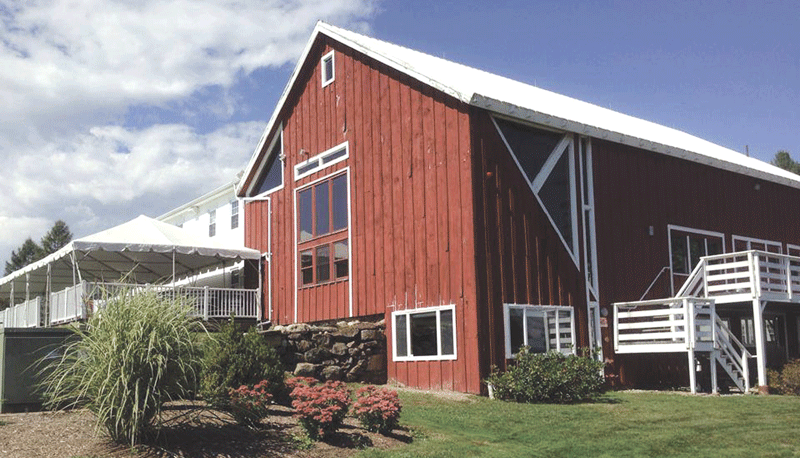
And those scrapbooks poignantly reflect, through photos, news stories, and his own commentary in the daily Holyoke Transcript Telegram, the passion, commitment, and drive of one John Hickey, known to most as “Mr. Holyoke,” who rallied the city and unified it behind what was, at the time, a most unlikely cause.

“He was determined; he felt like this was an important piece of Holyoke’s history and that there needed to be a way to save it,” Angela Wright, long-time volunteer director of the merry-go-round and one of the leaders of the effort to keep it in the Paper City, said of Hickey, then head of the Holyoke Water Power Co., who passed away in 2008. “He was like a pied piper … he went to every meeting, every organization, every business he could to stress the importance of this. And he got a city behind him.”

Indeed, Hickey ended one of his op-ed contributions (a piece that has become part of Holyoke lore) with a question that doubled as a rallying cry.

“There’s a glittering brass ring out there,” he wrote in reference to the carousel. “Will the people of Holyoke extend themselves to capture it?”

Indeed, they would, as the pages of those scrapbooks make clear, and more than 1.2 million people have gone for a ride.

But the last entry in those volumes is from Dec. 1, 1994 — a short story about upcoming Christmas happenings at the carousel — and, therefore, they don’t tell the whole story.

Indeed, while the efforts to buy the carousel and then begin its next life in downtown Holyoke could be described as ‘heroic’ and ‘monumental,’ what has transpired over the past 23 years or so and continues today is worthy of equal praise, said Jim Jackowski, business liaison for Holyoke Gas & Electric and long-time president of Friends of the Holyoke Merry-Go-Round Inc., the organization created to not only buy the treasure, but manage it and preserve it for future generations.

The second part of the equation isn’t captured in the scrapbooks because, for the most part, that hard work doesn’t generate headlines, he said. But the challenges to operating and properly maintaining the carousel — everything from spiraling insurance costs to non-stop maintenance to restoration work on the ornate horses — are many and formidable.

But the same passion that went into raising the money to buy PTC 80 (the 80th carousel built by the Philadelphia Toboggan Co.) goes into the work to keep the ride spinning today — and tomorrow, said Jackowski.

“It’s been a labor of love — it was then, when we were raising the money to buy it, and it still is today,” he explained.

One of the many ads designed

One of the many ads designed to emphasize what Holyoke would lose if the merry-go-round went to another buyer.

And that sentiment is perhaps best summed up with words from the Transcript Telegram, which played its own sizable role in the efforts to save the carousel.

Its presses fell silent in January 1993 as the paper succumbed to disastrous losses in the wake of the early-’90s recession. But it still has a voice on this subject (and this Difference Makers award) thanks to an editorial published just a few weeks before the paper closed.

The occasion was a decision of the state Department of Environmental Management to award $300,000 for the construction of a building in Holyoke’s Heritage State Park for the carousel, providing it with a home and, essentially, sealing the deal.

“If one project in recent history had to be chosen to represent the best Holyoke has to offer in community spirit, from the youngest child to the most senior resident,” the paper roared, “then the campaign to save the Holyoke Merry-Go-Round is it.”

More than 24 years later, those words still ring true.

Mane Attraction

Among the many individuals, groups, and businesses that donated in-kind services to the cause of saving the merry-go-round was the Hartford-based marketing and advertising firm Adams & Knight Communication.

The firm had a number of specific assignments — from designing promotional brochures destined for potential donors to crafting copy for print ads that ran in the Transcript Telegram and elsewhere. But one of its very specific tasks, apparently, was finding children with the ability to look sad. Really, really sad.

Children recruited for ads used in the merry-go-round campaign had plenty of practice looking sad.

Children recruited for ads used in the merry-go-round campaign had plenty of practice looking sad.

For example, there’s one young girl displaying that talent in an ad (that appeared in multiple outlets) in which she stands next to one of the carousel’s horses wearing a sign around its neck reading ‘sold.’ She’s holding on to its reins as if she doesn’t want to let go, clear symbolism of the city’s attitude at the time.

She makes another appearance, along with two other children, in an ad that features a broad view of the carousel with the headline “Imagine Telling Them That the Ride Is Over … for Good.”

And there’s a despondent yet still-hopeful young boy featured in yet another full-page ad. He’s holding out his piggy bank, as if to offer whatever’s in it. The headline reads, “Why He’s Putting All His Money on a Horse.”

But it wasn’t just young people enlisted to send this message. Indeed, several teenagers (from the ’50s, presumably, based on their attire) are featured in still another ad with the headline, “If You Care About Holyoke’s Future, Put Money Down on Her Past.”

In essence, this is what the campaign started in 1988 was all about, said those we spoke with, adding that it wasn’t just about keeping PTC 80 from being sold off as a unit or piece by piece and shipped overseas.

It was also about people investing in the city’s future, said Jackowski, meaning both the generations to come and the city itself, which needed a boost to spark its sagging fortunes and deteriorating downtown.

These sentiments are reflected in comments attributed to then-Mayor Marty Dunn (another of this story’s many heroes) in one of the many promotional pieces created to solicit support.

“This is not a toy,” said the mayor. “It is a folk-art masterpiece and a powerful attraction for our downtown.”

The merry-go-round has, by most accounts, become that spark, that attraction, thanks to the campaign to save it and, more specifically, that group that came to be known as the Friends of the Holyoke Merry-Go-Round.

It was created and led by Hickey, who first approached John Collins, owner of Mountain Park, who closed that attraction in 1987, with a proposal to allow the city of Holyoke to buy the carousel and thereby keep it ‘home.’

By most accounts, this wasn’t exactly a hard sell. Indeed, while Collins reportedly had some handsome offers for the merry-go-round on the table, including a rumored $2 million, he was supportive of the efforts to keep it in the city, and thus he set the bar, or price tag, low — $875,000.

While there was considerable support for the merry-go-round, in Holyoke and beyond, all those involved knew that raising that kind of money, at that time and in that community, would be very difficult. And, as we’ll see, the community would soon see that number rise considerably.

It’s been a labor of love — it was then, when we were raising the money to buy it, and it still is today.”

And this is where our story — the one told through the clips in those scrapbooks — really begins.

However, those we spoke with say it really starts with John Hickey.

Indeed, he was the one, said Wright, who convinced Holyokers, then facing a mountain of other, seemingly more pressing issues, from rampant unemployment to soaring poverty to a declining downtown, that the merry-go-round was still a treasure worth saving.

“In the beginning, people were saying, ‘are you kidding — a merry-go-round?’” Wright said while trying to capture the mood at the time. “There were so many other problems, from homelessness to the schools to downtown. People said, ‘how can you be thinking about raising money for a merry-go-round?’

“John would say to them, ‘you don’t understand — beauty is for your soul; there needs to be art, music, and beauty in this world, for everyone,’” she went on. “He would say, ‘this is as important as food’; he would make that comparison and stress the importance of art in one’s life.”

Round Numbers

To effectively reach the people of Holyoke, and beyond, Hickey would make early and frequent use of the Transcript Telegram’s op-ed page. Some of his early entreaties capture his passion for the project and his belief that it was an important part of the city’s history, identity, and psyche.

“A city needs more practical things, like sewage-treatment plants, snow plows, water filtration, better roads, and good school buildings,” he wrote on March 5, 1988, just as the campaign was being conceptualized. “But it also needs objects that nourish its spiritual life. A beautiful and historic, million-dollar merry-go-round may be a bit of mirthful indulgence, but it will give us, for generations, a special kind of happiness and pride.

“It is sad that we are losing our historic amusement park,” he would go on a few paragraphs later, “but it would be tragic if we stood by, doing nothing, and letting its centerpiece, the merry-go-round, become the object of pride and fame in some other distant city.”

Merry-go-round employee Kathie McDonough, left, staffs the concession stand with long-time volunteer Maureen Costello.

Merry-go-round employee Kathie McDonough, left, staffs the concession stand with long-time volunteer Maureen Costello.

Beyond passionate rhetoric, though, Hickey understood that this campaign needed a solid foundation on which to build, and to erect one, he turned to the many banks and other prominent corporate citizens at that time, said Wright.

“He pulled together all the CEOs and banking leaders and put them in a room,” she recalled, adding that, prior to this now-historic gathering, he took them to Mountain Park for a ceremonial and sentimental look at the carousel. “He talked for an hour about the value of this merry-go-round, not only to families and kids, but for history, nostalgia, as an anchor to downtown … he went through the whole thing.

“And he said, ‘unless you people commit a big number — and I mean a big number — then we can’t do it,’” she went on. “And by then, he had them practically in tears.”

Before the meeting convened, a big number, $300,000, had indeed been pledged, she went on, adding that, as for the rest … well, there were a variety of imaginative, and effective, strategies put to use, as told by the stories, ads, and posters clipped into the scrapbooks.

Famously, schoolchildren in the city raised $32,000 in two weeks from selling cookies and candy door-to-door, and for that work, a plaque was placed next the armored lead horse in their honor (such plaques were placed under each horse to commemorate donors.)

There was that fishing derby at the Jones Ferry Marina (“now is the time not to flounder,” wrote the creative scribe at the Chicopee Herald); Holyoke Community College raffled off a free semester of study to aid the cause; musicians performed at a benefit concert; the city’s aldermen launched a charity ball, with the merry-go-round as the first recipient of proceeds; commemorative stamped envelopes were issued with the likeness of the lead horse on them (the price was 25 cents, which will tell you how much water has passed under the bridge).

Also, schoolchildren sold Christmas ornaments; artists sold limited lithographs of the carousel; there were car washes, phone-a-thons, a 10th-anniversary party at the mall, with the carousel as the beneficiary. And at the Merry-Go-Round Gift Store (the storefront donated by the mall) and other locations, supporters could buy hats, ornaments, tote bags, sweatshirts, a 1,000-piece jigsaw puzzle, mugs, notecards, and several different posters with carousel imagery. The headline on the ad promoting it all in the Dec. 9 issue of the Transcript read, “Now You Can Finally Get a Pony for Christmas.”

Turn for the Better

As noted, the brass ring Hickey mentioned became the unofficial prize, if you will, and the phrase appeared repeatedly in ads and news stories throughout the campaign.

But even as the original goal of more than $1 million came closer to reality, the bar moved, and in a big way, said Wright, noting that, from the beginning, organizers knew they would have to build a home for the carousel.

They had a pledge from the state of $300,000 to build that home, she said, but as time went on, huge doubts emerged about whether the state could uphold its end of the bargain given the enormous financial pressure it was under, and whether that amount would be enough.

As things turned out, the state did keep its promise, but that figure wasn’t nearly enough (bids for the structure came in at twice that total).

Photography by Leah Martin

Photography by Leah Martin

But funds to cover the difference were raised with significant help from Warren Rhoades, then-president of PeoplesBank, she said, adding that this triumph would be one of the countless enduring stories from the campaign to save the carousel and then operate it, many of which simply didn’t generate headlines, but certainly contributed to that phrase ‘labor of love.’

As she recounted some of them, Wright said she didn’t really know where to start.

She eventually settled on Jim Curran, a contractor and owner of the Wherehouse banquet and meeting facility in downtown Holyoke, who not only stored a large amount of the carousel’s thousands of components — most of the horses were kept in a locked railroad car, and Hickey even kept some in his living room — but also took the carousel apart and played a huge role in the very complex, time-consuming effort to put it all back together.

“It was like a giant puzzle,” she explained. “There were boxes and boxes of nuts and bolts; it was mind-boggling to me.”

Wright also mentioned her husband, Joe (the couple have a long history of philanthropy in their native Holyoke), who assisted with piecing the carousel together and maintaining it; Tim Murphy, the architect who designed the carousel’s new home in Heritage State Park; Will Girard, a neighbor of the Wrights who has assisted with seemingly endless repairs and maintenance; the Gaul family, which donated the huge concession stand now at the carousel, replacing what amounted to a card table that was there at the start; Craig Lemieux, who volunteered the time and labor that went into building the ramp to make the carousel handicap-accessible; and the Steiger family for gifting to the carousel the Tiffany window that graced its downtown Holyoke store.

And on she went, noting that there were, and still are, volunteer angels whose names she never knew and faces she never saw.

“When we first opened, we didn’t have any money; we had no debt, but we also had no money,” she said. “And people just did things. Like cleaning the windows — people would appear … in the dark of night; I don’t know, I never saw them.”

The Ride Stuff

In many respects, this community spirit and volunteerism continues today, said those we spoke with, adding that the task of keeping the carousel open and operating is daunting, and a small army of volunteers is still needed.

Speaking in broad terms, Jackowski said operating a merry-go-round is a tough business these days — so tough that many have actually closed in recent years — and this one is no exception.

He cited everything from the myriad competitors for the time and attention of children and families to the rising cost of doing business (and generally flat revenues), to changes in Holyoke itself.

“It’s like any other business — there are fixed expenses and just stuff that you have to do,” he said, adding that there is quite a lot of ‘stuff’ with this ride that is now nearly 90 years old. “It’s a piece of machinery that requires maintenance and upkeep and hardware. And the community has changed in the 20-plus years since we opened; we had a bigger presence of retail and shopping when we first opened, and a lot of what was downtown and drew people to the downtown is unfortunately not there anymore.”

As one example, he cited Celebrate Holyoke, the annual summer festival that drew tens of thousands of people to Holyoke during its four-day run, which was discontinued several years ago.

“That used to be a huge weekend for us — we would get 20,000 riders in four days,” he explained. “Once that went away, it was hard to make up those riders; even at $1 per head, that was $20,000.”

And that challenge goes a long way toward explaining why a ride now costs $2, which is still a great bargain and one of the lowest prices to be found for a merry-go-round.

But, as with the vast majority of museums and other types of attractions, admission doesn’t cover annual expenses, said Joe McGiverin, another long-time member of the Friends of the Holyoke Merry-Go-Round board, noting that labor (there are seven staff members) and, especially, insurance top the list of rising costs.

Thus, other sources of income must be developed and nutured.

Birthday parties, private functions, and a handful of weddings each year have long been one such source, said Barbara Griffin, another long-time board member and former staff member at the Log Cabin, who, with Jackowski and others, would handle the logistics of such events.

“That’s just one example of how of this is truly a working board — we don’t just go to meetings,” she explained, adding that, while the staff manages the carousel day-to-day and is largely responsible for that perfect safety rating, the attraction is dependent on volunteers today as much as it was when the money to buy the attraction was being raised.

And many of these volunteers have their own specific assignments, said Wright, who offered one of many examples.

“Joe is the security person — if the alarm goes off in the middle of the night, it’s his responsibility to go in there and see what’s going on,” she said. “Everyone on the board has a job, in one way or another.”

But overall, the volunteers are generalists, said McGiverin, and help with everything from keeping the grounds clean to staging the semi-annual Kentucky Derby-themed fund-raiser, called Derby Dazzle, at the site.

But there is another source of help at the carousel that speaks volumes about its hold on people — and its special place in Holyoke.

These would be the young people — and there are more than a few of them — who would like to ride but don’t have $2, said Griffin, adding that staff members will often let them take a spin in exchange for pushing a broom for a few minutes.

“If they want to sweep the floor or pick something up, we’d be more than happy to give them a little something in return,” she said, noting that, in the larger scheme of things, the carousel is what has been given to all of Holyoke, and the region as a whole, in return for the generosity that kept it here.

Wright agreed. “These kids … they know what we have, and you can’t let a kid walk by and just look in the window all day. You need to let them ride.”

That’s the kind of community spirit John Hickey was talking about all those years ago.

Words That Ring True

In March 1988, not even Hickey could have known what an attraction, and an institution, the merry-go-round would become.

Then again, maybe he did know. Or maybe … there’s no maybe about it.

What was it he wrote? “A beautiful and historic merry-go-round may be a bit of mirthful indulgence, but it will give us, for generations, a special kind of happiness and pride.”

Sounds quite prescient, as does that comment from the Transcript Telegram. Indeed, this was, and still is, the best Holyoke has to offer in community spirit, from the youngest child to the most senior resident.

And that’s why, nearly 30 years after this saga began, three decades after Hickey implored a city to reach for that “glittering brass ring,” the story about how it all happened never gets old.

And that’s also why the many Friends of the Holyoke Merry-Go-Round — those who have passed and those who still keep the city’s happiness machine turning — are true Difference Makers.

George O’Brien can be reached at [email protected]

Class of 2017 Difference Makers

The ‘Unflappable’ Joan Kagan

Leader Guides Square One Through All Kinds of Adversity

Photo by Leah Martin Photography

Photo by Leah Martin Photography

Joan Kagan’s corner office on the second floor of 1095 Main St. in Springfield comes complete with two large windows offering stunning views of the ongoing construction of MGM Springfield.

That’s the good news — and the bad news.

Indeed, while she and others have been fascinated by the panorama presented by this front-row seat, Kagan readily admits that at times — or most of the time, to be more precise — it can be a huge distraction and even an impediment to workflow.

“It’s … amazing,” Kagan said of the beehive of activity that has been a constant for more than a year now. “A few days ago, I’m at my desk working, and all of the sudden I see this huge piece of equipment dangling in front of my window; I look out, and they’re placing it on an 18-wheeler parked on Main Street.”

She acknowledged that, while she, other staff members, and certainly the children at Square One have been captivated by the construction work and giant cranes moving steel and equipment just a few feet from those windows, the demolition work that preceded it was equally, if not more, compelling and attention-diverting.

“When they were moving the [former First Spiritualist] church, I think we were down to about 10% productivity,” she said with a wry smile, noting that the historic structure seemed to move at a snail’s pace, but that didn’t stop observers from becoming entranced by the exercise. “It was fascinating, but it made it tough to get work done.”

She’s seen worse impediments to productivity, unfortunately. Much, much worse.

Start with the June 1, 2011 tornado that roared down Main Street and then through Square One’s former offices just a few hundred yards to the north, displacing young students and staffers alike and leaving the agency without a permanent home for … well, even the current quarters wouldn’t exactly be considered permanent.

Joan Kagan with several of the students at Square One

Joan Kagan with several of the students at Square One. Since 2003, she has led the agency through profound change — and large amounts of adversity.

But the tornado did more than dislocate employees and programs. It seriously impacted cash flow by removing from the equation invaluable seats in early-childhood-education classes, and it would be years before those losses could be made up.

Then there was the natural-gas explosion roughly 18 months later that absolutely erased the gentlemen’s club on Worthington Street next to another Square One facility, leaving it uninhabitable, thus displacing more people and programs and further imperiling the bottom line.

Kagan’s actions during both disasters, but especially the tornado, have been described as heroic, in both a literal and figurative sense, with the latter saved for how she fashioned response plans and rallied the various troops. As for the former, she acted quickly and calmly that June afternoon to help move young students and employees — and even a technician in the building working on the air conditioning — to safety in the basement. Then, while standing in the middle of Main Street surveying the considerable damage and hearing police issue loud warnings about gas leaks and a second tornado, she essentially commandeered a school bus to get students and staff to a shelter set up down the street at the MassMutual Center.

“She was … unflappable,” said Kevin Maynard, an attorney with Springfield-based Bulkley Richardson, a long-time (now former) Square One board member, and current volunteer, who would use that word often to describe Kagan’s work before, during, and well after those calamities . “After both the tornado and the gas blast, Joan leaned on the board for support, but the board really leaned on Joan. She was rock-solid, knew what she had to do, and worked with others to get it all done.”

She continues to fight every day, through all the bureaucracy, to make sure that Square One and other organizations are heard and they’re able to meet their individual mission statements.”

While being unflappable in the face of natural and man-made disasters is certainly part of the reason Kagan was named a Difference Maker for 2017, there is, of course, much more to this story — and this individual.

It involves not only her work to stabilize, diversify, and expand Square One, an agency that was in a definite state of disarray when she arrived in 2003, but also her tireless efforts to bring attention to the critical need for not only early-childhood education, but other programs focused on strengthening families and championing their cause — on Capitol Hill, Beacon Hill, and everywhere in between.

Bill Sullivan, a long-time Square One board member

Bill Sullivan, a long-time Square One board member, said of Joan Kagan’s outlook on children and families and society’s responsibilities to them, “she gets it.”

Bill Sullivan, first vice president of Commercial Loans at PeoplesBank and another long-time board member, summed it all up succinctly and effectively.

“She gets it,” he told BusinessWest. “She understands that human services, and especially childcare, is really the foundation of the whole local — and national — economy. If you have an employee who doesn’t have safe, secure childcare, what is that employee’s attendance going to be like?

“Joan gets that,” he went on. “And she continues to fight every day, through all the bureaucracy, to make sure that Square One and other organizations are heard and they’re able to meet their individual mission statements.”

Not Child’s Play

As he talked further about Kagan, Sullivan said the place to start the discussion was not with the day she was hired at Square One — and he was one of those on the search committee that hired her — or that fateful June day in 2011, or even the day after Thanksgiving in 2012, when the natural-gas explosion leveled a city block.

Instead, he chose an unlikely place and time — the funeral services he attended for Kagan’s mother in Pittsfield 2013. That’s when and where he gained a real understanding of — and a deeper appreciation for — her passion for helping others, and especially children.

“Her mother really was involved in the community, and she understood the social activism that’s needed to make sure people are heard, especially the people who are less fortunate than we are,” Sullivan explained. “My epiphany at that time was ‘Joan’s pretty good, but now I understand why she’s pretty good. She comes from a family that has a long heritage of giving back.”

That heritage has defined her career through a number of career stops, including an unlikely starting point, and a certainly intriguing 14-year stint at Square One, one that has seen everything from the adaptation of that name (the agency was formerly known as Springfield Day Nursery) to a profound broadening of its mission to what everyone would agree has been far too much practice dealing with adversity.

Our story begins in New York City in the fall of 1975. Kagan had recently earned a master’s degree in social work (MSW) at Columbia University, but was confronting a historically bleak job market.

Indeed, the Big Apple was in the depths of its worst financial crisis since the height of the Great Depression, and was teetering on bankruptcy that would only be avoided when President Gerald Ford, who initially balked at a $4 billion federal bailout of the city (the New York Daily News headline on Oct. 29 famously read ‘Ford to City: Drop Dead’), eventually relented.

But the federal assistance would come far too late to improve in any way Kagan’s job-search prospects.

“I couldn’t buy a job, and in fact, some of the people I was calling to inquire about opportunities with were telling me they were getting laid off,” she explained while talking about the months after she graduated. “So I went back home with my tail between my legs.”

Kevin Maynard

Kevin Maynard says that, during times of crisis, Joan Kagan would lean on her board, but the board would really lean on her.

Home was Pittsfield, a city dominated in every way, shape, and form by its largest employer, General Electric. And while she thought ever-so-briefly about trying to work there, Kagan instead joined the field she was trained for. Well, not really, but it was in the ballpark, as they say.

She found an opportunity at Berkshire Home Care, tending to the needs of the elderly, not those at the other end of the spectrum, as she desired. But it was work, and it was actually much better than that.

Indeed, at age 25, she was named client-service supervisor — the job demanded an MSW, and there were not many people with that credential — and tasked with overseeing co-workers and coordinating services with other community agencies. This would be the first of a host of leadership roles on her résumé.

The next would come a few years later, after a short stay as a social worker at Child & Family Services of Springfield Inc., when she became supervisor of Social Services at Brightside for Families and Children in 1979.

She would stay with that West Springfield-based agency for 17 years, serving in no fewer than 12 positions, ranging from program manager for the Family Resource Unit to the last one, vice president of Community Development.

“I kept getting promoted and given new management responsibilities and training,” she explained. “Brightside was going through a major transition, and I had a lot of opportunities for growth and development, and appreciated that very much.”

In 1996, she would apply those skills to a new career challenge serving as administrator of the Western Mass. region for the Mass. Society for the Prevention of Cruelty to Children (MSPCC), a position — one that saw her supervise a staff of nearly 400 — she would keep for seven years before deciding she was ready for “something else.”

That turned out to be the administrator’s role at a Springfield institution with a proud past, a shaky ‘present,’ and uncertain future.

Name of the Game

Indeed, as he talked about the situation at Springfield Day Nursery when Kagan arrived, Maynard spoke in measured tones, choosing his words in a careful, diplomatic manner, while still getting his point across.

His point was that the agency was at a crossroads in many respects, and in need of strong leadership to return it to stability.

“We had gone through some tumultuous times and several changes in leadership,” he explained. “The organization very much needed someone like Joan, with her credentials and her experience, to right the ship, which had been roiled by some pretty big waves.”

Kagan, being equally diplomatic, agreed.

“When I arrived, Springfield Day Nursery needed a lot of restructuring, fiscally as well as programmatically and administratively,” she said, adding that the CFO left just before she arrived, and the agency’s board had just closed its center in East Longmeadow and was in the process of closing the facility in Tower Square.

“Eight centers immediately became seven, and I consolidated two of those centers, so the seven became five, and that’s how we were rolling along until the tornado,” she said, before replaying the tape and moving much more slowly.

June 2011 tornado

In many ways, Joan Kagan and Square One became the face of the June 2011 tornado and its aftermath.

Her first eight years would see expansion of the agency well beyond its Springfield roots (into Holyoke, for example) and its primary mission — to provide daycare services. To undertake this diversification of services, Kagan called upon experience, and perspective, amassed at several of her previous stops.

“They hired a social worker who was coming to them with a background in child welfare and mental health,” she said of her career path. “And with that came a perspective, or philosophy, that the strategic point of intervention in making a difference with children is the family.

“You cannot work with just the child — you must work with the family,” she went on. “I said that before I even got hired during the interview phase; I said I wanted to integrate early-childhood education, child welfare, and mental health.”

That’s because many of the same families she saw at the MSPCC were arriving at the doors at Springfield Day Nursery, she said, adding that a far more holistic approach to serving children was needed.

So, over her first several years, she implemented one, after first educating the board and then gaining its blessing.

“I’m not sure anyone really knew what I was talking about or quite understood it,” she said with a laugh. “But I think it was intriguing enough that they went with it.”

In 2006, Kagan, amid some skepticism, hired the agency’s first social worker with the help of a grant and some other funding cobbled together, thus beginning the process of changing the conversation from a focus on the child to a focus on family-support services.

“I remember someone saying to me, ‘how can you hire someone? — this is a one-year grant; you’re just going to have to lay her off,’” she recalled. “I said, ‘welcome to the world of nonprofits — this is what we do. And over the next year, we’re going to work very hard to find more funding and hire more of these people.’”

And she did. There are now 40 social workers, funded in large part by a contract through the Children’s Trust Fund called Healthy Families. Other contracts would follow, including one with the Hampden County Sheriff’s Department to work with individuals who have been incarcerated.

These various forms of expansion involving geography and programming created the need for a name change, she explained, adding that neither ‘Springfield’ nor ‘day nursery’ really worked anymore.

Several options were considered, before the board, after much debate, decided upon ‘Square One,’ a name crafted to connote that this was where a child got a solid start and a foundation he or she could build on.

Little did board members and agency administrators know they would be going back to square one themselves in the years to come, and in ways they probably couldn’t have imagined.

A Force in the Community

Before moving on to Columbia, Kagan earned a bachelor’s degree in sociology at Washington University in St. Louis. While there, she received an informal education in a much different subject matter — tornadoes.

Indeed, while that Missouri city located on the banks of the Mississippi River isn’t as noted for twisters as sections of Oklahoma and Kansas, it is visited by them frequently, she told BusinessWest. “We never had a direct hit while I was there, but there were times when it got pretty scary; it would get very dark and very still, and the winds would pick up, and the pressure would build.”

She would call on those experiences nearly 40 years later on that fateful afternoon in 2011, reacting instinctively, for example, to get her assistant away from the large window through which she first spotted the twister, and then herd everyone into the basement, including that reluctant air-conditioning technician.

Joan Kagan chats with state Sen. Eric Lesser

Joan Kagan chats with state Sen. Eric Lesser. Over the years, she’s lobbied tirelessly for programs benefiting children and families.

Thinking back, Kagan said that, while everything happened very quickly — three minutes total, by her estimate — she remembers events unfolding almost in slow motion. And what she remembers most are sights and sounds.

Starting with the latter, while most would compare the noise generated by the twister as it passed over and through the building to a freight train moving at high speed, she would get into even more detail.

“It was deafening,” she said while recalling the brief time she and several others spent in the basement listening to what was going on overhead. “It was like you were on a airport tarmac, and jumbo-jet engines were running, and someone was taking pieces of metal and throwing them into those engines. It was like metal crunching, and it was very loud.”

As for the sights, there are too many to recount, but the one that resonates most, perhaps, was the view she had of the building next door to Square One’s after arriving on a chaotic Main Street.

“The wall had been sheared off … I’m looking at it, and I’m looking at people’s offices; I can see their pictures on the wall,” she recalled. “It was totally exposed; it was like a doll’s house.”

In the days and weeks after the tornado, Square One, and especially its president and CEO, would become the face of the tornado and the recovery that followed — quite literally.

Indeed, the June 20 issue of BusinessWest, bearing the headline “Blown Away: Business Community Grapples with the Tornado Aftermath,” features a picture of a grim-but-determined-faced Kagan with a pile of rubble that used to be the Square One offices in the background.

And that verb grapple was the operative word. While the tornado packed a wallop, the aftermath was in many ways far more grueling, said those we spoke with, noting that the challenges were many, ranging from simply finding new quarters to the immediate and severe cash-flow problems, to dealing with insurance companies that covered the agency.

“The tornado totally took out our infrastructure — the administration building was demolished — and dramatically altered our business plan,” Kagan explained. “That spring, we had just secured funding to renovate our King Street site; our plan was to add 100 more children there. When we lost the Main Street site, instead of being able to add 100 children, I ended up having to place the 100 children we were serving on Main Street to King Street.”

Those renovations weren’t ready until August, she went on, adding that the agency had to find temporary space for the displaced children while waiting for an insurance settlement and finding a new home for administrative offices.

Unfortunately, and almost unbelievably, the agency’s misfortunes would be compounded by a different disaster, the natural-gas blast 18 months later. Kagan was actually out of town traveling when it happened, but quickly returned to handle an aftermath that featured far too much déjà vu.

“Just as we were getting things together from the tornado, the gas explosion hit, and we lost the capacity to serve another 100 children,” she said. “We were rocking and reeling and trying to find places for those kids, dealing with staff issues, dealing with the insurance companies, dealing with Columbia Gas … on it went.”

The twin disasters certainly tested the agency’s mettle, said Sullivan, adding that, in many ways, the present tense is still needed, because Square One is still dealing with infrastructure and cash-flow issues and still rewriting its business plan; it has gone from serving 1,000 children to handling roughly 700.

“Instead of growing, we were just trying to keep things together,” he said, adding that Kagan’s calm, determined brand of leadership has been a key factor in weathering those storms. “She never gets rattled; she’s been the voice of reason, and that has certainly helped us as we’ve fought our way back.”

Battle Tested

But while Kagan has in many ways become best-known for her leadership in the form of disaster response — something they don’t teach people in business school, let alone the social-work program at Columbia — her work before and after those calamities has more far-reaching implications for Square One and the community as a whole.

In recent years, that work has increasingly focused on the day-to-day fiscal challenges facing all nonprofits today, as well as bringing attention to a challenging, almost debilitating system for funding agencies like Square One and lobbying for a replacement that enables such institutions to function more effectively.

“They pay you per child, per day,” said Kagan, adding that this puts enormous pressure on efforts to build capacity, efforts that have been, as noted, crippled by those twin disasters, but also by simple demographics.

Joan Kagan and students at Square One

Joan Kagan and students at Square One pose with members of the Western Mass. delegation to the state Legislature.

“Because of the population we serve, it’s very hard to keep children in the seats day after day,” she explained, adding that the current system would be akin to a college being paid only for the classes a student attends, rather than a designated tuition amount set to cover a host of expenses. “We have all these fixed costs, and they’re the same whether we have 15 kids in the class or 20. But if we only have 15, they’ll only pay us for 15, which makes it very difficult to operate.”

For years, Kagan and others have been lobbying for change, and a sliver of hope for such a system has come in the form of a pilot program, which Square One is now part of, whereby agencies are paid on a reimbursement system based not on students in the classrooms, but costs incurred.

“It’s still difficult, but it’s better; if I spend this amount on teachers, that’s the bill I submit,” she explained, adding that there are still challenges, because the agency incurs expenses one month, bills the state the next month, and gets reimbursed the third, which adds up to serious cash-flow-management issues at an already-difficult time for nonprofits.

“We can manage now,” she went on, adding that the challenge ahead is to convince the state to change its funding model because, with the old (current) one, center-based care is simply not viable, let alone profitable.

Fighting this fight is just one example of the strong leadership Kagan has provided to the larger community of Greater Springfield and all of Western Mass., said Sullivan, adding that she has never stopped battling for children and families — and won’t.

“The state looks at centers like this, and it figures there will be 50% private pay, something you can make margin on, and 50% are poor children who have to be subsidized,” he explained. “Well, Square One doesn’t have that benefit; all our children are subsidized. The children we serve are the future employees in this city, and she’s out there saving souls every day.

“Joan’s been a director, but also a kind of battlefield commander,” he told BusinessWest, referring specifically to the twin disasters but also to the sum of the challenges she and the agency have confronted. “She gets her arms around things quickly and can understand what has to be done.”

Family Business

As he talked about Kagan’s career — the chapters that have been written and those still to be penned — Bill Sullivan harkened back to the woman he came to know and fully appreciate at that memorial service in Pittsfield more than three years ago.

“I think about how proud Joan’s mother would be knowing what a tremendous human-service advocate her daughter has been, and how she has continued that family legacy by passing it on to her children,” he said, adding quickly that Irene Besdin Kagan certainly wouldn’t be the only proud one.

All those who had the foresight to hire her daughter would fall into that category, he said, as would everyone who has the opportunity to work with her — at Square One, all her other career stops, and within the community as well.

Through more than 40 years of service to children and families in need, she has been not only a true leader, but, as Maynard so eloquently put it, “unflappable,” especially during the times when that quality was most urgently needed.

And for that, Joan Kagan is truly a Difference Maker.

George O’Brien can be reached at [email protected]

Community Spotlight Features

Community Spotlight

Chicopee Mayor Richard Kos, left, and Michael Vedovelli

Chicopee Mayor Richard Kos, left, and Michael Vedovelli say the new, three-megawatt solar farm on James Street will benefit the city and reduce the cost of electricity at Westover Air Reserve Base.

Richard Kos says officials in Chicopee are doing all they can to foster good relationships with developers, government leaders, and local businesses, and their efforts have led to a strong surge in growth.

“In 2016 the building department issued $31 million in building permits, but we anticipate that, by the end of the first half of 2017, we will more than double that amount,” the mayor said.

Indeed, the list of projects in the planning stages or underway is not only lengthy but diverse in nature, ranging from new hotels to new and improved housing, a solar farm, business expansions, infrastructure improvements, and progress at the Uniroyal and Facemate properties. There’s also a new Mercedes-Benz dealership under construction on Burnett Road.


Chicopee has a can-do attitude, is business-friendly, and has officials who come up with optimal solutions to problems. All of the department heads have given us input to make the building process go smoothly.”


Peter Wirth is co-owner of that $12 million, 37,000-square-foot, state-of-the-art facility, expected to open in late summer or early fall. He and his partner took their time searching for a location in the metro Springfield area before choosing a site next to the entrance of Interstate 291 and exit 6 on the Mass Pike, and said city officials have done everything possible to help them meet their timetables.

“Chicopee has a can-do attitude, is business-friendly, and has officials who come up with optimal solutions to problems,” Wirth said. “All of the department heads have given us input to make the building process go smoothly.”

Other developments off exit 6 include construction of a $20 million Tru by Hilton Hotel by the owners of a Days Inn who demolished the outdated hotel on 450 Memorial Dr. to make way for the new structure.

“The project will include a Starbucks, a Wendy’s restaurant, an Irving gas station, and a sit-down restaurant that will be named later,” Kos said as he talked about reasons that make Chicopee a desirable place to live and operate a business.

“We’re the third-largest city west of 495 and are known as the ‘crossroads of New England’ because Interstate 91 and two exits of the Mass Pike intersect here,” the mayor noted, adding that the city’s financial stability and the traffic that runs through it add to its appeal.

But he attributes the rapid acceleration in growth to concerted efforts that began in 2014 after he was elected mayor for the second time.

“In a time when people are losing faith in government, Chicopee has seen unprecedented cooperation between its leaders, locally and on the state level,” Kos said. “We are working together to get things done and are excited about the industries that have chosen to invest here.”

For this issue, BusinessWest outlines some of the major projects that took place in Chicopee last year as well as those scheduled to begin in 2017.

Cooperative Efforts

A three-megawatt solar farm under construction on a 26-acre site off of Outer Drive and Goodwin Street is an example of how combined efforts have led to growth.

Last summer, the city was finally able to raze 100 units of military housing units on the site, which had sat unused for two decades and become problematic. Although Chicopee acquired the property from the Navy in 2011 after five years of negotiations, restrictions and their condition had prevented the city from renovating the structures or reusing the land for other purposes

“The housing was an eyesore, in a state of disrepair that had become a hazard to the neighborhood due to vandalism, vagrants, and other problems,” Kos said.

In 2015, he proposed putting a solar farm on the site, and after the City Council and neighbors endorsed the idea, Chicopee was awarded a $1 million MassDevelopment grant to remediate the property that was matched with funds from city coffers.

The money came from the state’s $5.9 million bond bill grant program to support the Clean Energy Assessment & Strategic Plan for Massachusetts Military Installations, and the housing was finally torn down.

In December, a lease agreement was signed with Chicopee Solar LLC, a subsidiary of ConEdison Development, to build a solar farm on 21 of the 26 acres.

“We gave the company permission to begin working at the site while the final details were being worked out,” Kos said, explaining that ConEdison had to have all mechanical components installed and ready for operation by Jan. 8 to meet a deadline set by the Mass. Department of Energy that would allow it to receive solar renewable-energy credits.

“They worked under a very tight timeline and brought in electricians from all over New England, but there was complete cooperation between the company, the city, and the state, and the installation was finished on time,” said Michael Vedovelli, the city’s director of Community and Economic Development.


Increasing a city’s market rate residential population is one of the real secrets of urban success.”


Kos added that the city’s investment will be recouped in 10 years through tax revenue and income from the lease agreement and the government will also benefit because Westover Air Reserve Base will receive a 5% discount each year on electricity that will amount to $100,000 in annual savings.

He noted that the remaining five acres on the property are available for industrial use and located adjacent to Air Park North and the former Avery Dennison building that is being used by Yankee Candle.

The project has been praised by residents of the Crossing at Ridgewood Village, a condominium association that sits across from the solar farm.

“It’s a wonderful reuse of the property that is great for the region,” said Dottie Sikes, a resident and member of the board of trustees, who recalled living in the former military housing with her husband in 1970 when Westover was an active military base. “The Crossing has always been a great place to live, but it will be much nicer now thanks to the new solar farm.”

The city has also reached an agreement with Mass. Alternative Care Inc. to open a medical-marijuana cultivation facility and dispensary near the Springfield line.

The company plans to convert the former Chicopee Engineering Associates building into a storefront, and the City Council approved a zoning change for a 3,270-square-foot piece of land on East Main Street so the business can begin its operation.

It will be the first of its kind in Hampden County, and Kos said the owners will be ready to plant by April. “The facility will provide patients with necessary treatment options and bring jobs and numerous tax benefits to the city.”

Ongoing work has also taken place at the Uniroyal site, and last year two of the remaining buildings on the 27-acre property were razed.

“We’ll try to repurpose four of the remaining 10 structures,” Vedovelli said, adding that the city has been aggressive in pursuing funds to remediate the brownfields and received three $200,000 grants from the Environmental Protection Agency last year.

“It is a tribute to our grant writer and our team,” he said, noting that only 53 projects in the country received the grants.

Previously, the City Council had appropriated $185,000 to make roof repairs, cover a broken skylight, and board up broken windows in the administration building on the Facemate property at Oak and Grove streets. A full abatement of that 62,000-square-foot structure will be completed this spring, and a request for proposals will be issued later in the year.

Interest in the Facemate property continues to grow, and David Spada from Lawrence has plans to build a $22.9 million, 92-room assisted-living facility on Lot 4 of a 3.85-acre parcel that has frontage on West Main Street across from the Chicopee Falls Post Office, and will be situated off a new road which leads to the RiverMills Senior Center.

Residential Growth

Two years ago, Mount Holyoke Development purchased the Lyman Mills in Chicopee Center, and plans are now underway to convert the former textile-manufacturing plant into 110 market-rate apartments. The buildings were unoccupied for four years, and the new units will be loft-style work/live spaces designed to appeal to young entrepreneurs.

Kos said the project was made possible in part by a $2.6 million MassWorks grant the city received last year that will be used to upgrade water, sewer, and storm-water lines in the area. Tighe and Bond is designing the project, and the work will begin this summer.

“Increasing a city’s market-rate residential population is one of the real secrets of urban success,” the mayor said, noting that such development becomes a catalyst for further growth as residents put feet on the street and increase business at local establishments and restaurants.

Change is also occurring at the former Kendall House in Chicopee Center as a result of collaborative efforts.  Valley Opportunity Council acquired the building from HAPHousing Inc. last year, and has plans for a $7 million renovation that will convert the rooming house, which housed Quicky’s restaurant on its first floor, into 39 affordable studio apartments.

“We’re working to improve the affordable-housing stock within the city, and by collaborating with the state, VOC received a $3.1 million grant to help restore the Kendall House,” the mayor said, adding that the nonprofit will cover the remainder of the renovation costs.

He told BusinessWest the city is also working to increase home ownership through two incentive programs. The first is the First Time Home Buyers Assistance Program, which helped 22 eligible families last year by giving each up to $5,000 toward the purchase of a new home.

The second initiative is aimed at people willing to purchase three-family homes and live in them, which ensures the likelihood that they will be kept in good condition. New homeowners in the program are given $1,000 each year for up to 16 years as long as they reside in the properties.

“The majority of these homes are in Chicopee Falls, Chicopee Center, and Willimansett, and the program continues to grow and pay dividends,” the mayor said.

Improvements are also being made to the city’s parks; a $225,000 spray park with other amenities was completed at Wisniowski Memorial Park last year, and $225,000 will be invested to make enhancements to Sarah Jane Park this year.

In addition, legislators are working to grant approval to use the former Chicopee Falls Library building as a home for a third Head Start program.

Work on a new parking lot downtown has also been completed. It features 15 designated public spaces as well as parking for patrons of Munich Haus restaurant. The city has also applied to become designated as a Green Community, which would make it eligible for grants for improvements to city buildings.

Continuing Progress

Last summer, Pilgrim Interiors Inc. expanded, and several weeks ago U.S. Tsubaki Automotive LLC held its formal groundbreaking ceremony for a $11.5 million, 100,000-square-foot expansion.

“It will preserve 348 jobs and result in 35 new ones,” Vedovelli said, adding that the company decided to remain in Chicopee after considering a move to either Tennessee or Mexico.

New businesses continue to be attracted to the city, and last year PV Sullivan Supply Co. Inc. and Holden Humphrey Co. were welcomed.

Growth is expected to continue as seeds that were planted take root, and the outlook for this year is exceptionally bright.

“Chicopee is still the biggest small town in Massachusetts,” said Kos. “We’re like the old Cheers bar where everyone knows your name, and are making great progress because we work together in a way that benefits our community as well as its residents.”


Chicopee at a glance

Year Incorporated: 1848
Population: 55,603
Area: 23.9 square miles
County: Hampden
Residential Tax Rate: $17.31
Commercial Tax Rate: $32.49
Median Household Income: $47,276
median family Income: $65,443
Type of government: Mayor; City Council
Largest Employers: Westover Air Reserve Base; City of Chicopee; J. Polep Distribution Services; Turbo Care Inc.
* Latest information available

Daily News

NORTHAMPTON — Click Workspace’s new home on Market Street was built to not only serve its growing co-working community, but to help fill the void in small performance venues in downtown Northampton. Since last spring, Click’s flexible, artwork-filled space has been serving the need for 100-seat and smaller rooms with a growing roster of performance and literary events. Now the venue introduces its own series, Click Music, which invites audiences to up-close encounters with artists experimenting with their music making.

Click Music premieres on Thursday, Jan. 26 in the first-floor event space at 9½ Market St. The 7 p.m. concert, titled “Exploratory Devices,” features a double bill shared by George Langford (of the band Javelin) and Noam Schatz’s 3rdness. Click Music is curated by Anand Nayak and sponsored in part by Downtown Sounds.

Armed with several Critter & Guitari Kaleidoloops, Langford creates textural sonic collages and invites listeners to a hands-on and improvisatory affair. Langford began Javelin with his cousin Tom Van Buskirk in 2005, and their eclectic music focuses mostly on a mellow electropop/’80s synth style. The band has played hundreds of events, including Lollapalooza. Their production techniques have a history of fostering audience participation, and that will also be encouraged in Langford’s solo set.

3rdness is the nom de noise of Noam Schatz, a veteran of the Valley music scene, usually found behind the drums of rock bands such as the Capitulators and Endless Mike (Schatz has also played with local luminaries Mobius Band, Meathawk and the Meathawks, the Sometimes, and the Sun Parade). He engages in circuit bending, the art of destruction, purposefully breaking toy keyboards and drum machines until they unveil compelling new sounds.

Tickets are available at the door for $10 cash. Beer and wine will be available.

Meetings & Conventions Sections

Rustic Retreat


The Red Barn’s outdoor deck

The Red Barn’s outdoor deck, overlooking the scenic grounds, is a draw for events of all kinds.

The first thing guests of the Red Barn at Hampshire College notice is that, well, they’re in a barn.

It’s what the college has done with that barn that sets the facility apart, said Mike McKenna, director of Dining & Event Services at Hampshire College.

The Red Barn has existed in some form for almost 200 years, but for most of that time, it was a simple post-and-beam structure designed to house livestock and farm equipment, with hay storage in the loft. The barn was originally built in 1820 in conjunction with Stiles House, which is now the college’s Alumni House.

The transformation from that space to what exists today began as a student project in the spring of 1971, the first year Hampshire College was open, when a group of students in the Humanities and Arts course, along with their professor, Norton Juster, undertook a design for the barn’s renovation.

“They surveyed the site and existing structure, conducted a survey of the Hampshire community to determine its preferences for use of the building, and made plans for its renovation,” McKenna said. “The students decided that the college needed a community center, and proposed to use this building to create one.”

The students found that the basic structure was sound, he explained, and the space within it appealing. “The plans attempted to maintain the character of the space, while opening it up with many large windows. In addition, plans were made for plumbing, heating, insulation, and electricity, as well as ensuring compliance with building codes.”

Several trustees, impressed with the project concept, funded its construction, McKenna noted. A professional construction supervisor was hired to work with student labor, mostly during the summers, and outside subcontractors were brought on for the utility work. The project was finally completed in 1974, establishing a multi-purpose space that has been in use by the Hampshire community ever since.

Since the renovation, the Red Barn has hosted a variety of college-sponsored meetings, events, and banquets throughout each academic year. Students frequently hold dances and concerts there, and a number of big-name acts have performed in the space. But the Red Barn is open to any group, not just Hampshire students and alumni.

What draws party and meeting planners, McKenna said, is the facility’s unique blend of old and new, rustic and high-tech. While the space has become widely known as a destination for weddings and receptions, the most recent growth has been in the realm of corporate meetings, trainings, conferences, and special events throughout the year.

“This end of our business has increased considerably since the installation of high-end audio/video equipment in 2014,” McKenna noted, adding that the Red Barn now offers full-service audio-visual support with equipment and services including wi-fi, a video projector with a drop-down screen, a built-in sound system, and videoconferencing capabilities.

For this issue’s focus on meetings and conventions, BusinessWest takes a look inside the Red Barn and explores why this building with a long, rural past is looking toward a promising future.

Business and Pleasure

It’s not all business at the Red Barn, which hosts events ranging from showers and bar and bat mitzvahs to memorials, anniversaries, and birthday parties.  The facility also hosts annual events for local nonprofits, including the Amherst Ballet, Big Brothers/Big Sisters, and the United Way.

Still, weddings (typically 65 to 70 annually) remain the Red Barn’s bread and butter, and one look around the expansive grounds — particularly a massive oak tree under which many couples have been hitched — shows why.

“We’ve seen significant growth in our wedding business in the past three years, increasing bookings by 170%,” McKenna said, before reeling off a raft of accolades: Best of Amherst Small Business 2016, Best of Weddings three years running from the Knot, Couple’s Choice 2016 and Editor’s Pick 2015 from Wedding Wire, and Best Farm-to-Table Catering 2015 from Unique Venues.

Those plaudits are no accident, McKenna said, but the result of long-term planning to create a spacious, versatile facility that draws on the past while taking advantage of technologically modern amenities.

The renovation of the early-19th-century barn, completed in 1974

The renovation of the early-19th-century barn, completed in 1974, maintained its original post-and-beam structure and floors.

The physical space features the original wide-panel flooring inside the original post-and-beam structure, with the large windows, a highlight of the 1970s remodel, offering scenic views of the Mount Holyoke Range. The back deck provides similar vistas and is ideal for barbecues, picnics, and group outings. Meanwhile, McKenna added, proximity to major highways, hotels, and bus lines offer ease of accessibility.

McKenna said the food service is another draw to the Red Barn, adopting a farm-to-table philosophy centered around local ingredients whenever possible. “We proudly support the Hampshire College Farm Center and local farmers to provide guests with the freshest products available from the Pioneer Valley.”

Notable entrees include pan-seared beef tenderloin with zinfandel balsamic or red wine demi-glaze, chicken roulade stuffed with spinach and fontina cheese, local striped bass with a fennel and apple slaw, and butternut squash ravioli. Favorite appetizers range from risotto arrancini to mini crabcakes with remoulade; from an herbed cheese, prosciutto, and asparagus roll to a Mediterranean display, featuring tabbouleh, hummus, stuffed grape leaves, assorted olives, roasted red peppers, marinated mushrooms, pita chips, and rosemary focaccia triangles.

And don’t forget the Red Barn’s signature drink, McKenna noted, known as the Barn Brew: a spiced apple cocktail with fresh pressed cider, apple liquor, and vodka, garnished with a cinnamon stick. Meanwhile, party planners can choose from several open- and cash-bar beverage options.

“Our staff works with our clients to customize menus that meet the specific needs of their guests,” he added. “Our culinary team is well-versed with preparing vegan, vegetarian, and gluten-free menu items.  Menus can be as elegant or as informal as a client wishes, with plated service or buffet options for guests.”

Contemporary Touches

Whatever the event, McKenna said, the staff assists clients with the coordination of all details and on-site event management. Aiming to be a one-stop shop for event coordination, services include room setups, AV, catering, equipment rentals, linens, floral arrangements, signage, and parking. The full-service AV equipment includes complimentary wi-fi.

He noted that many of the Red Barn’s offerings reflect elements that today’s party and meeting planners are looking for — particularly versatility and flexibility in room setups and décor; a variety of table and chair options to suit the style of the event; fresh, innovative, and sustainable catering options; menu customization and dietary accommodations; easy-to-use ‘plug-and-play’ AV equipment; and attractive surroundings to provide both indoor and outdoor amenities to guests — and sets these modern trends inside a decidedly 19th-century aesthetic framework.

The result, he added, has been significant growth in not only wedding business, but in corporate bookings over the past couple of years — growth that has been enhanced by increasing corporate-meeting business across the industry over the past several years as the economy has improved.

“I believe companies are increasing the number of meetings and events they are hosting off-site, but are mindful of the overall cost of such events,” McKenna told BusinessWest. “Our staff works with the client to ensure meetings and events come within budget at the greatest value to the client.”

And it all starts with booking an event in a barn.

Joseph Bednar can be reached at [email protected]

Sections Women in Businesss

Invaluable Connections

womenbusinessdpartMembers of the Women Business Owners Alliance of Pioneer Valley say the organization has proven beneficial on many levels, offering inspiration and knowledge from other women’s experiences in a supportive and non-competitive atmosphere. There’s a comfort level in the WBOA many say they haven’t found elsewhere, and it’s helping them gain the confidence and connections to succeed at business and in life.

The organization’s tagline is “It’s Your Business; Don’t Grow it Alone,” and that axiom and related support made a significant difference to Amy Woolf of Amy Woolf Color Consulting in Northampton when she relocated to Western Mass. from Florida in 2009.

“I was a stay-at-home mom, and being in a business-oriented environment has helped me perceive myself as a professional,” she said, noting that many companies start at women’s kitchen tables, and connecting with a warm and welcoming group of professionals can help them establish a business persona.

Woolf was talking about the Women Business Owners Alliance of Pioneer Valley (WBOA), and stressed that there was nothing like it in the Sunshine State.

She went on to say the group has provided her with invaluable benefits that include support, inspiration, connections, and knowledge gleaned from other women’s experiences.

“When you work as a solo entrepreneur, you are often very isolated. But belonging to this group is like having several dozen mentors,” she explained. “You develop relationships over time: everyone has a different area of expertise, so you have people you can call when you need to figure out how to handle different situations.”

Dee Emery-Ferraro, the WBOA’s current president, agreed, and called the organization a real sisterhood.

Indeed, the group is different than many other business and professional organizations that focus almost entirely on networking and generating new business, she said.

To begin with, this group completely avoids the word ‘networking,’ and concentrates instead on providing a warm, supportive atmosphere that fosters what they refer to as ‘connections’ that allow and encourage women to share information about their business as well as their personal lives. As a result, most members get to know each other in a way that has little to do with their professional goals, although that certainly isn’t ignored.

“In addition to being business professionals, we are homemakers, wives, mothers, sisters, and aunts,” said Emery-Ferrero. “What we do professionally is only one facet of our lives.”

Beverly Astley agrees, and says the camaraderie in the group inspires women to help their peers succeed. She attended chamber of commerce meetings before she was introduced to WBOA, but found they didn’t offer what she was seeking.

However, WBOA filled that gap and has provided her with the type of support she had hoped to find in a group.

“Women think very differently than men; when you have conversations with members of WBOA, they want to get to know you as a person, not just find out about your business,” she said, adding that the group is very nurturing; women share photos of their family and talk about their children, grandchildren, home-improvement projects, and other issues affecting their lives.

Which is not to say they don’t discuss business. Indeed, those conversations definitely take place, and a combination of programs, sage advice, and even technical assistance has allowed many women to grow their companies and become successful.

Members interviewed by BusinessWest noted that competitiveness does not exist within the group, even between women who offer similar services or products.

Amy Woolf

Amy Woolf says membership in WBOA has provided her with a number of benefits, including support, inspiration, and connections.

“It’s a great first stop for anyone contemplating a business, but it’s not just for women starting out,” said Woolf. “Over the years, WBOA begins to feel like a family, and today my closest friends are women I met in the group.”

When she leaves a meeting, she noted, she always goes home with a kernel of wisdom or an actionable item — a great idea that is easy to implement. A conference can be overwhelming, but meetings allow women to make changes and “put wisdom to work” in a manageable, sustainable way, she told BusinessWest.

“The group has been very, very meaningful to me and very helpful. I don’t know that my business would be what it is today without WBOA,” she said.

Debra Sorcinelli concurred. “A lot of our members are sole entrepreneurs and want to do business on their own terms. But it brings you up a notch to be around other professionals,” said the serial entrepreneur, reiterating the fact that many women have families and other important priorities, and it doesn’t matter to members whether someone is working part-time or full-time.

For this issue and its focus on women in business, we look at the programs WBOA offers and how they have helped women grow as professionals and entrepreneurs.

Meetings of the Minds

WBOA has 110 members ranging from women employed by companies of all sizes, to solo entrepreneurs, small-business owners who employ others, and females who work only part-time. As long as a woman is working in any capacity, she is eligible to join the group.

Membership dues are $95 annually, although the first meeting is free. Meanwhile, those we spoke with said the group is open to adding males to their roster, although so far none have expressed interest in the nonprofit, founded in 1982 by Renate Oliver.

Its initial purpose was to provide women with business referrals, but today it has evolved into what its members call a true sisterhood. Connections are made formally and informally, and many members use services and products offered by their peers.

The group’s main fund-raiser is its annual Women’s Night of Comedy, which features three professional female comedians. The event typically raises $5,000 to $10,000, and the majority of the profits are donated to charities that change from year to year. The next comedy event will be staged March 23 at the Log Cabin in Holyoke, and chosen charities include the SMART Girls program at the Westfield Boys and Girls Club and Safe Passage, a nonprofit dedicated to helping survivors of domestic violence and relationship abuse.

WBOA also holds monthly breakfast events on the third Thursday of the month at the Summit View Restaurant in Holyoke featuring guest speakers, as well as After-5 gatherings scheduled bimonthly on the first Tuesday of the month at the Delaney House.

Guests are invited to most events, and great care is taken to ensure they feel welcome and comfortable. A greeter is stationed at the door, and potential members are given the option of being assigned an ambassador who sits with them, answers questions, and follows up with a call to make sure they felt comfortable and welcomed.

During events, WBOA members participate in power connections, a program that gives them a 15-second opportunity to speak about their business. Shout-outs are also held, during which members praise a service or product from a peer that has helped them.

In addition, every June the organization has a Woman of the Year Celebration in which a member chosen by a committee is recognized for her contributions to WBOA as well as her community.

Over the past 18 months, the WBOA has started two new initiatives. The first is a mentor-mentee collaboration with Springfield Technical College Community created with help from STCC Associate Business Professor Diane Sabato and WBOA chairperson Lori Fortuna.

Business students from STCC are matched with members twice a year and take part in a six-week program that includes guest speakers, seminars, and information on topics ranging from self-esteem to job interviews. At the final meeting, mentees are given outfits donated by WBOA member Linda Ligsukis, who owns Designer Consigner in Southwick. Seventeen graduates were recently honored at a monthly breakfast meeting and received a certificate of achievement, gift bag, and flowers donated by member Jackie Griswold.

The second new program focuses on education and was coordinated by Debra Sorcinelli and Anita Eliason, co-chairs of the education committee. They launched the program with classes on how to use Facebook and social media to promote a business, and additional programs are being planned for the coming year.

Valuable Gains

Sorcinelli went into business in 1982 under the moniker It’s A Girl’s Thing. The Agawam entrepreneur began selling handcrafted silver jewelry, then switched to fashion jewelry, before she joined WBOA four years ago.

The timing was perfect; her jewelry business was successful, but she wanted to make a change and needed inspiration, which she found in the group.

“I have gone to other groups that are all about networking, where everyone wants to sell you something; but WBOA isn’t like that,” she said.

Sorcinelli became a member of the board of directors soon after she joined, and last year she closed her jewelry business and launched a new venture called Social Sorc. Today, she specializes in teaching individuals and small-business owners how to use Facebook and social media, and although WBOA has not added to her customer base, it has put her in touch with women who have business skills she wanted to learn.

“I have heard wonderful stories that were really inspiring, and the group allowed me to meet women who were more than willing to share their business secrets and contacts,” she noted. “We have all grown together.”

Sorcinelli also initiated change, and with help from co-chairs Kim Chagnon and Eileen Jerome, the After-5 events were born.

She told Business West that members have opportunities to speak about their businesses at these gatherings, which is ideal, as many have not done this in public, and the group is always supportive.

Sorcinelli has continued to be active in WBOA, and in 2015 she was feted with its Spirit Award at the annual Business Woman of the Year Celebration, in part for her work in helping women build connections with each other.

She says the old axiom that states “the people you surround yourself with determine your success” has been proven true with this group. Other women have supported her, and she has shared her own knowledge, which has included collaborating with members who wanted to use social media to promote their events.

Woolf told BusinessWest she was intimidated by social media before she joined WBOA, especially since it was a new marketing platform when she first heard about it. But after a member shared her own experiences with LinkedIn, Woolf gained the confidence to go home and set up a profile on the site.

“I have received a lot of free advice,” she said.

But she has also given back during annual roundtable events in which members give 10-minute presentations in their field of expertise.

Astley has also found WBOA highly beneficial. The sole proprietor does voiceovers via her business, Beverly Ann’s Voice, spends many hours alone in her studio, and finds the meetings inspirational both personally and professionally.

“You feel comfortable talking about personal things while you discuss your business in this group,” Astley said. “WBOA hasn’t enhanced my business directly, but it has given me a lot more confidence.”

Worthwhile Endeavor

Astley says every female entrepreneur should attend at least one WBOA meeting. “It’s a really good place to land,” she said.

Woolf agrees and says membership has provided her with priceless benefits.

“It’s an extraordinary organization, and my business has gone gangbusters. I am experiencing steady growth and wrapping up the best year I ever had, and WBOA has been a big part of that,” she said.

That’s a testimonial — one you hear often — that speaks highly of this group that caters to female professionals and provides them with a level of comfort they have not been able to find anywhere else.

Sections Sports & Leisure

Level Best

Greg Stutsman and George Myers

Greg Stutsman and George Myers say the Quarters is intended to appeal to a wide range of people, from kids to college students to adults who crave a nostalgia fix.

George Myers and Greg Stutsman didn’t spend the early ’80s in arcades; they were toddlers when the arcade craze peaked in 1982 and 1983 before collapsing alongside the boom in home consoles.

So they don’t remember first-hand the thrill of mastering Ms. Pac-Man and Q*bert and Donkey Kong and dozens of other titles from that golden age. But they experience it vicariously every day at the Quarters in Hadley, watching 40-somethings light up with nostalgia at the old games while their own tweens, raised on the hyper-realistic games of the 21st century, discover the simple charms of these retro titles for the first time.

“A lot of people say our games are obsolete, and one reason is home-gaming consoles,” said Stutsman, who opened the Quarters with Myers in January 2014. “But the thing that’s missing is being in the physical space, enjoying the games alongside other people. Here, they can play one game, move to another — it’s a more energetic space.”

The pair had known each other for 12 years through event production, mainly music shows, and began talking about going into business together. The original idea was a music venue with food and drink and maybe a few arcade games, and they visited several potential locations before their current neighbor, who runs a tattoo business next to the Quarters, told them about the available space, which used to house a café and a furniture gallery.

It didn’t work as a music venue, but Myers and Stutsman saw plenty of potential for both nightlife and weekend traffic, and the Quarters concept began to take shape.

“We’ve seen an emergence of destinations like this, arcade bars,” Stutsman said. “A lot of places focus on nightlife, a young, creative crowd, but we saw an opportunity for a more inclusive place, where we could include a broader community than the college-student nightlife crowd.”

Myers recalled with a smile how friends they’d go out with would complain when he and Stutsman criticized how a venue was laid out and how they’d do it differently. When they had their space, and saw how it bordered the region’s main bike trail and was close to both Hadley’s downtown area and area colleges, they recognized that the games should be the main draw, with their appeal to multiple generations.

And so they are — almost two dozen at any given time, ranging from 1978’s Space Invaders to a few from the early ’90s, but mainly hailing from that early-’80s golden age.

“We liked the idea of creating a space that was special in nature and provided opportunities for people to bond over their shared love of these retro games,” Myers said. “We wanted to make sure it was exciting and interesting for a lot of different people.”

Some patrons might be drawn by theme trivia nights, he went on, while kids tend to pour in on weekend mornings and early afternoons. “We want all these different people in this space. At its core, it never stresses one thing, and we make sure no one feels alienated or unwelcome.”

Word on the Street

After deciding on their concept, the owners relied on an Indiegogo campaign to raise money to buy the initial machines, which got the word on the street that a retro arcade was coming. That turned out to be a positive development, even when the opening took longer than expected.

“All businesses take longer than people think to open, and we started advertising pretty early,” Stutsman said. “But that was to our benefit. People knew about us; the word was out. We were often telling people, ‘next month it’s going to happen.’ And when we did open, we were busy from day one.”

Myers said he and Stutsman deliberately crafted their business as a space where everyone could come and feel comfortable. It’s a popular booking spot for kids’ birthday parties, and weekly Super Cereal Saturdays, which feature unlimited tokens, a cereal and milk bar, and ’80s and ’90s cartoons, are well-attended.

“It’s a place for 11-year-olds and people who remember being 11, and may be in their 30s or 40s with their own kids,” Myers said. “People on the bike trail might stop by for lunch. At night, it’s a little more bar-oriented crowd. In the span of 24 hours, so many different types of people can come here and enjoy it on their own terms. We went through great pains to make that happen.”

As for the food, it’s not an afterthought, said Stutsman, who ran sandwich shops in Northampton in a previous career. “We’re happy to see the recognition it’s getting. People are really happy with the food. For us, it’s an important piece of the puzzle, and a lot of thought was put into that.”

Q*bert

Myers and Stutsman get a kick out of seeing parents introduce their kids to the games they grew up with, like Q*bert, Ms. Pac-Man, and Burgertime.

The menu features food that can be carried around while patrons play games, but with a twist. For example, a series of small, locally made hot dogs, or ‘pups,’ come in varieties ranging from the classic New York pup to a kimchi pup and a banh mi pup. At the other end of the taste spectrum, the place was packed for a recent vegan night, which featured a wide-ranging menu of all-vegan fare.

But the games themselves are the main draw, and they’re not as difficult to find as one might think, Stutsman said. Craigslist was an obvious starting point, and in the four years since they began collecting the machines, they’ve come to know a network of sellers across the country — some in the Western Mass. region — so the task of replacing games and adding to their collection has become easier.

When they sat down with BusinessWest, the Quarters had 22 games on the floor and another 35 in storage. Games are rotated in and out on a regular basis, both for repairs and simply to maintain variety for players.

And, yes, the games do need repairs. Over the years, they’ve learned enough to fix some issues themselves, while others require outside repair experts; some are hobbyists, others electrical engineers with an interest in vintage games.

“Games do break, and we try to stay on top of that,” Stutsman said. “This is not a museum.”

Some video-game collectors, he elaborated, display their machines as showpieces, not meant to be played, but the games in the Quarters are meant to be used, and used a lot, and their moving parts often require maintenance. “These aren’t like the collector’s pieces you’ll find in someone’s basement.”

Blast from the Past

Myers and Stutsman knew their concept was a winner after the success of their Indiegogo campaign and the initial crowds, which haven’t dampened. They recognize they’re giving something valuable to their customers: a chance to relive fond memories and create new ones.

“One of the neatest things for me is to see the joy on people’s faces when they walk in here,” Stutsman said. “It’s a pretty special place — not just because it’s a room full of arcade games, but because of the atmosphere. On the flip side of that, all the work that goes into it is hard to overstate.”

Myers agreed.

“It’s much easier to talk about the fun aspects as the years move along, but opening it was a challenge, a lot of sweat equity,” he told BusinessWest. But he’s gratified to see the sheer range of people who come in every day — kids and their parents, teenagers, college students, young professionals — all with a shared love of playing retro games and soaking in the distinctly ’80s vibe. Here, after all, is a place where the arcade industry never disappeared, where people still patiently line up for their turn on Galaga or Arkanoid or Burgertime.

“I love seeing a dad in his 40s introducing his daughter to the game he was so great at — and the daughter turns out to be better than he is,” Myers said.

“That’s a great experience,” Stutsman added, “sharing that joy, seeing someone experiencing a game for the first time.”

And then dropping in another quarter. And another. And another.

Joseph Bednar can be reached at [email protected]

Cover Story Sections Sports & Leisure

Plane and Simple

Angela Greco stands by her Cessna 172 SP

Angela Greco stands by her Cessna 172 SP, which she acquired just before Thanksgiving and is now putting through its paces.

Attaining a pilot’s license involves a deep commitment — of time, money, and energy. But for those who persevere, the rewards are many, and include freedom, convenience, and sometimes a career. Meanwhile, there is the simple phenomenon of flight, which continues to captivate and stir the emotions. Said one woman who recently bought her own plane, “it’s almost like magic when that plane lifts off the ground.”

Angela Greco says she first started dreaming about learning to fly and one day owning her own plane when she was a freshman in high school.

Her family had a summer home in Laconia, N.H., she told BusinessWest, and she would become captivated watching the sea planes land and take off, allowing her imagination to take her to a time and place when she might be able to do those things herself.

The dream was put on hold for awhile — OK, a long while, as in more than 40 years. Her mother said ‘no’ when she first raised the prospect of taking flying lessons, and then, well, life got in the way, as it often does. But it has been realized — big time.

Indeed, Greco got her license three years ago, and just last month took possession of a 2005 Cessna 172 SP (price tag: $200,000). She is still in the process of breaking it in and becoming comfortable with its so-called glass cockpit — one that features electronic (digital) flight-instrument displays, rather than the traditional analog dials and gauges — but she’s just about ready to put it through its paces.

Specifically, she’s starting to assemble a list of attractive destinations, and is zeroing in on the state of Tennessee — she recently took in a show on the Smithsonian channel detailing many of its attractions and scenery from the air, and her interest was certainly piqued.

“I love to travel, that’s one of my passions,” she said, adding this pursuit was one of the reasons she pursued a pilot’s license. “There seemed to be a lot of interesting things in Tennessee, and it’s a state I haven’t been to yet.”

Thus, Greco has joined what appears to be a growing number of people making the sizable commitment — in terms of both time and money — it takes to learn how to fly and gain a license.

The numbers of new flyers are not exactly soaring, to use an industry term, noted Rich MacIsaac, manager of Northampton Airport and Northampton Aeronautics Inc., who has been a flight instructor for nearly 20 years. But they are climbing.

And, as has been the case historically, most of those taking to the air are in their 20s and early 30s — before the responsibilities of everyday life really start to pile up — or their 50s and 60s, after those responsibilities have at least started to ease up a bit.

Greco falls in that later category, obviously — she’s an owner and manager of several residential properties and is getting ready to sell them and officially retire — while Shannon O’Leary is among the former.

She’s a 22-year-old senior at Ithaca College in Upstate New York who told BusinessWest that, if all goes well, she might just be handed her diploma and her pilot’s license at roughly the same time.

She said she gained the urge to fly from her father, who flew years ago, put that hobby aside, and then picked it up again a few years ago, or just in time to start flying to Ithaca to hear his daughter, an accomplished French horn player and music teacher in the making, perform at a host of events.

Gaining a pilot’s license, as noted, is an expensive, somewhat time-consuming endeavor, said MacIsaac, noting that, when all is said and done, a license will usually set one back between $8,000 to $10,000, and most will spend 12 to 18 months earning their wings.

Rich MacIsaac

Rich MacIsaac says the sensation of flight continues to attract people of all ages.

Thus, only about half of those who start down this path will reach their destination, he said.

For those who persevere, however, the rewards are considerable, in terms of everything from the convenience that flying provides — one can get from Northampton Airport to Martha’s Vineyard in maybe an hour, a fraction of the time it take to get there via car and the ferry — to the sensation of flying, which can lead those who have experienced it to summon a host of descriptive words and phrases.

Like these.

“It’s almost like magic when that plane lifts off the ground,” said Greco. “That’s the only way I can describe it — magic. It’s exciting, and at the same time very peaceful.”

Added O’Leary, “taking off is probably my favorite part. It’s that moment when you really feel like you can do something so liberating as flying a plane; that feeling that you’re flying is just incredible.”

For this issue and its focus on sports and leisure, BusinessWest talked with a number of people who can talk about that experience, what it takes to join those ranks, and why it’s all well worth it.

Working in the Cloud

It was bitterly cold the day Greco talked with BusinessWest, and the wind, while not as strong as the forecasters predicted, was significant, and gusting up to 15 to 20 miles per hour.

Not ideal flying conditions, certainly, and many of the people who were scheduled to head out of Northampton Airport that day or take lessons there decided to scrap those plans.

But not everyone, and eventually Greco decided that the weather was not bad enough to keep her on the ground. When asked what she had in mind for the afternoon, she paused for a moment as if to indicate she was still considering options, before saying she might head up to Keane, N.H. to have lunch and maybe do some shopping. After all, in her Cessna, she could probably do all that in just a few hours — and take a nice, relaxing ride while doing so.

“It is just this convenience and … let’s call it freedom that has always appealed to people with an interest in aviation,” said MacIsaac, adding quickly that, for most, there is much more involved than a desire to chop a commute time in half.

Indeed, the phenomenon of flight still resonates with many individuals, he noted, even at a time in history when being at the controls at cloud level certainly isn’t as, well, mind-blowing as it was a century ago, or even a few decades ago.

“Flying used to be a kind of technical thing, and it was something people could gravitate toward — these were technically advanced pieces of equipment,” he explained. “Now, if you’re interested in technology, there’s lots of other things you can be doing.”
Still, flying continues to capture the imagination, said MacIsaac, who speaks from personal experience. He moved into a house not far from a small airport outside Omaha, Neb. in his early 30s and, after years of watching planes fly over his yard, eventually decided he’d rather do than observe.

Shannon O’Leary, seen here after her first solo flight last summer

If all goes well, Shannon O’Leary, seen here after her first solo flight last summer, will get her college diploma and pilot’s license at about the same time.


“I got to the point where financially I could do it and I had the time to do it,” he explained. “So I got my private pilot’s license and flew recreationally. Over time, I added ratings and became a flight instructor, and it slowly morphed into a career.”

In many ways, his story is typical of those who take the plunge and get their license, he said, adding that recreational flying is just part of the equation. Indeed, some are attracted by career opportunities, he went on, noting that, while many airline pilots don’t earn as much as one might think, that’s just one route one can take, and, overall, one can certainly earn a decent (and fun) living with a pilot’s license.

He’s proof of that.

After instructing for several years, he took aviation as a career to a much higher plane, becoming manager of Northampton Airport in 2004, the year it was acquired by local business owner Bob Bacon, who invested heavily in infrastructure and facilities, including several new hangars. He owns his own plane, a four-seat Sirrus SR22.

Today, MacIsaac oversees a multi-faceted business that operates under the name SevenBravoTwo Inc. It includes everything from the flight school to scenic flights; aircraft maintenance to leasing hangar and tie-down space (there are roughly 90 planes based there).

The flight-school operation generally has about 50 people working toward their pilot’s license at an given time, and that translates into roughly 4,000 flights a year, said MacIsaac, noting that 70% of these individuals are doing so for what would be considered personal or recreational flying, with the other 30% harboring aspirations to become a professional pilot of some sort.

One must be 17 to attain a license, he went on, adding that an individual can start the process earlier. He sees a few who choose to balance flying lessons with high-school classes, but most are older and fall in those two categories mentioned earlier — young professionals who still have the time and the means to pursue a license, and older individuals who have paid off the house and put the children through college.

One must have 40 hours of flight time and be able to successfully complete a wide array of maneuvers to get a private pilot’s license, MacIsaac noted, and most will take their time gaining that requisite experience, usually more than a year. And many won’t reach their intended destination, for one of many reasons.

“For many, it’s a financial issue; it becomes more expensive than they thought it was going to be,” he noted. “Or, over a period of time, something happens in their life that puts them in a situation where they can’t afford it anymore and they have to stop.”

As for those who persevere and gain their licenses, only a small percentage, maybe 5%, will actually buy their own plane, he told BusinessWest, adding that many others will join partnerships and clubs that jointly own planes.

And many will simply choose to rent one of the many aircraft the airport has available for such purposes, he went on, adding that they generally lease for about $120 per hour of flight time (that includes fuel).

Considering that one can fly to the Vineyard and back in two hours and skip a considerable amount of time and hassle that are part and parcel to driving to the island, renting a plane has become an attractive option for day trips to that destination and many others.

Winging It

Dave Strassburg’s story is in many ways similar to MacIsaac’s.  A pharmacist by trade, he attained his license more than 20 years ago, and continued to add ratings, moving from private to ‘instrument,’ to commercial.

Becoming an instructor was an objective he put on his bucket list some time ago, and he’s been doing it for 15 years now. While doing that at Northampton Airport on a very part-time basis, he also flies recreationally, and for business — he owns a medical-device-manufacturing company, Strassburg Medical Inc., based just outside Buffalo, N.Y., and takes his twin-engine Cessna there at least once a month.

Business takes him all over the country, and whenever possible, he’ll fly himself, he said, adding that doing so frees him from having to comply with the airlines’ schedules and a host of other inconveniences.

“Besides, if I was sitting in the back of a commercial airliner, I’d just be wishing I was up front anyway,” he said with a laugh.

Strassburg says flying is a passion, and he’s dedicated himself to encouraging others to take up that pursuit and persevere in their quest for a license. He’s convinced a good number, including his wife, who got her license about six months ago, and two Blackhawk helicopter instructor pilots based at Barnes Municipal Airport in Westfield.

“I’m a big proponent of aviation, and I love getting other people involved in it — I like giving people that little push they need,” he told BusinessWest. “There are so many people who think about it, but they never pursue it. I instruct people for the passion of flying and getting people involved in it and showing them that they can do it.”

That push he described comes in various forms, including Groupons used as incentives to get people who are on the fence to try to get over it.

And it was one of that Groupons that caught Greco’s eye.

“I said to myself, ‘that’s it, it’s sign, time to go do it,” she said, adding that she never actually lost that fascination for flying she acquired while summering in Laconia. She just had to wait till the time was right.

She said the lessons were not easy or inexpensive, but she stuck with it and gained her license in the spring of 2014. Soon thereafter, she rented planes and became a half-share partner in a another Cessna 172, taking trips to a host of destinations, including, Block Island, Niagara Falls, Cape Cod, Maine, and North Carolina.

“My plan now is to take my plane and just fly to destinations all over the United States,” she said, adding that she’ll likely start with Tennessee and move on from there.

O’Leary has some similar ambitions, and some others as well. She plans to teach music for a living, but intends to make flying an important part of her life.

“In an ideal world, I see myself getting a recreational license and being able to have a side gig where I might be able to take people on scenic flights,” she told BusinessWest. “That would be a second source of income for me during the summers, because I’m going to be an educator.

“It would be awesome to be able to fly and also service others,” she went on, adding that she intends to make this a life-long pursuit. “You start doing this because you love it, and when you don’t stop loving it, you get to open up all kinds of possibilities.”

And with that, she spoke for everyone who has had the privilege to enjoy life in what’s known in aviation as the ‘left seat.’

Final Approach

Summing up the pursuit of a pilot’s license and recreational flying in general, MacIsaac said it’s like golf or many other activities one might pursue during their lifetime.

“Some people are naturally going to be better at it than others, some people are going to enjoy it more and it’s going to become a big part of their life forever,” he explained. “And for some, it’s going to be something they tried, and maybe they enjoyed it, but for reason or another, they moved on to something else.”

Perhaps, but not too many of those activities can evoke the same kind of emotions — and the same kind of language used by those who have experienced flight.

As Greco said, “it’s like magic when that plane lifts off the ground.”

George O’Brien can be reached at [email protected]

Agenda Departments

Nutcracker and Sweets

Dec. 16-18: One of Holyoke’s most beloved holiday traditions will return as the Massachusetts Academy of Ballet presents Nutcracker & Sweets at Wistariahurst. This unique, historical interpretation of Tchaikovsky’s classic ballet is presented through narration and dance in the historic setting of Wistariahurst, thanks to the support of Holyoke Gas & Electric. Student dancers will perform the magical story with a local historical twist and lively choreography, in eight performances on Friday, Dec. 16 at 4 p.m. and 6:30 p.m.; Saturday, Dec. 17 at 11:30 a.m., 2 p.m., and 4:30 p.m.; and Sunday, Dec. 18 at 11:30 a.m., 2 p.m., and 4:30 p.m. Seating is limited, and advance ticket purchases are required. Tickets are available online at www.wistariahurst.org, and can also be purchased in person at the Wistariahurst visitor’s center, Monday through Friday from 10 a.m. to 2 p.m. Seated tickets are available for $15. Children under 4 are permitted on laps at no additional charge (one child per adult). Standing-room-only tickets are available for $12. Massachusetts Academy of Ballet is a training school for students interested in pursuing a career in classical ballet. The academy also has a program for non-professional students and adults seeking ballet training and artistic education. Classes emphasize classical ballet technique, musicality, artistry, and creativity.

Tree of Love Ceremony

Dec. 17: As the holiday season approaches, the Baystate Wing Auxiliary has set the date for its annual Tree of Love ceremony. This special event, created to honor and remember loved ones, features ornaments that can be purchased, personalized, and placed on the tree with names in memory of family and friends. “There is a definite comfort in coming together with others to remember someone, especially during the holidays,” said Teresa Grove, president of the Auxiliary and Philanthropy officer for the Baystate Health Eastern Region, which includes Baystate Wing and Baystate Mary Lane Outpatient Center. The ornaments may be purchased for $5 for a single name and $10 for a family. In addition, the community is invited to be part of an event held on Sunday, Dec. 17 from 1 to 3 p.m., when the decorated Tree of Love will be displayed in the lobby located on the ground floor of the hospital. This special event will include fellowship, refreshments, and festive music by Voices of Love and Remembrance. “The Tree of Love is our annual tradition that warms our hearts as we remember loved ones and celebrate their lives,” said Carol Doyle, an auxiliary member who coordinates the event. All proceeds benefit the Baystate Wing Auxiliary, which in turn donates needed equipment and other items for the benefit of patients to the hospital. The funds from this year’s event will benefit the Baystate Wing Hospital Emergency Department expansion project. For more information about the Tree of Love or to purchase an ornament, stop in the Baystate Wing Hospital Gift Shop or call Doyle at (413) 267-9219.

Daily News

HOLYOKE — Holyoke Community College (HCC) is about to embark on a two-year, $43.5 million renovation project that will transform the look, feel, and organization of the campus.

The HCC Campus Center is scheduled to close Feb. 3, 2017, and construction will begin soon after. When it reopens in 2019, college officials say, the building will be a place that truly lives up to its name.

Originally known as G Building, the sloping, three-story concrete structure sits in the middle of the campus between an intermittent stream choked with invasive plants and the HCC Courtyard. Since it opened in 1980, the Campus Center has been plagued by water leaks. Projects that would have waterproofed the building have been delayed since at least 2008.

“The main impetus for this is to get the building watertight,” said interim HCC President Bill Fogarty. “Then we also wanted to do things that will improve the operation of the building and make it a real campus center.”

The state Division of Capital Asset Management and Maintenance is in charge of the project. Walsh Brothers Construction of Boston has been hired as the general contractor. The state has already allocated $8 million for the current fiscal year to begin the project, with the remainder of the funding to follow, Fogarty said.

The key features of the project include squaring off the building’s sloping façade and giving the entire building given a new exterior shell that will make it both weathertight and energy-efficient.

The squaring off and the addition of large windows on its eastern side will give the building a look that complements the adjacent Kittredge Center for Business and Workforce Development, which opened in 2003. About 9,000 square feet of space will be added to the current 58,727.

A glass atrium will be added to the west side of the building, covering a set of double stairs that descend from the lower courtyard into an area known as the ‘pit’ that now serves as the main entrance to the food court and cafeteria. On the east side of the building, the open balcony on the second floor will be enclosed, adding extra interior space to the student dining area.

The first floor of the Campus Center, on the side facing Homestead Avenue, will become the new ‘front door’ to the campus, accessed by a bridge to be built over a restored Tannery Brook. HCC Admissions, Assessment Services (college placement testing), and the ACT Center (Advising, Career and Transfer Affairs) — now in the Frost Building — will relocate to a new Welcome Center. Admissions will have a dedicated parking lot, and a separate, college-funded project will reconfigure traffic flow, creating a new bus drop in the front of the campus.

The Campus Store (formerly the College Bookstore) will move from the first floor to the second floor, on the same level as the food court and cafeteria. The second floor will include programs and departments focused on student engagement, including Student Activities, Student Clubs, and Multicultural Academic Services (MAS), which are being relocated from other parts of the campus.

“The whole idea of bringing the Campus Store up to the second floor, so that it’s on the same level as dining services and Student Activities, really makes sense in terms of foot traffic,” said Fogarty. “They all complement each other. It will give it a real feel of a campus center.”

Academic classrooms at the north end of the second floor will be opened up to make more room for student-engagement areas. The layout, both on the first and second floor, will be more open and airy, with glass walls and doors separating offices and community spaces.

“It’s going to look different, much more open and inviting, not so much offices and chunked-up spaces like we have now,” said Michelle Snizek, director of Retention and Student Success. “The idea is to create engaging and alluring spaces — we’re calling them pods — where students can come and charge up their cell phones and do their work.”

The third floor will remain the Media Arts Center. In preparation for the renovation, the Electronic Media Program is already operating in its temporary home on the first floor of the Donahue Building.

The HCC Campus Store will temporarily relocate to the Donahue Building, with a focus on retail merchandise and school supplies. Textbook sales are now being handled by HCC’s online partner, MSB Direct.

The HCC cafeteria will remain open in its present location for the first two weeks of the spring semester. The Subway franchise now in the food court is being moved to the second floor of the Frost Building. Food service will be handled by increased offerings at the POD concession area on the first floor of Donahue, and the Forum Café on the second floor of the Fine & Performing Arts Building, and by the addition of high-end vending machines in the Kittredge Center and Bartley Center. When not in use for special events, the Picknelly Dining Room in the Frost Building will be open for students who want to sit and eat.

After the Culinary Arts program moves off campus into the new hospitality and culinary-arts center in downtown Holyoke, HCC Dining Services will be serving a larger menu of freshly cooked food for purchase in the dining room. In the renovated Campus Center, the food court and cafeteria will return to their present locations with a new look and configuration.

Daily News

HOLYOKE — The Holiday Business Breakfast of the Greater Holyoke Chamber of Commerce, sponsored by Holyoke Gas & Electric and United Bank, will be held on Wednesday, Dec. 14 at 7:15 a.m. at the Log Cabin.

Salutes will be given to Michael McManus of Holyoke as the new superintendent of the Department of Public Works; the 40th anniversary of Mountain View Landscapes; Clayton Insurance on its 50th anniversary, as well as to the chamber’s newest members, New Horizon, Mask Makers, and Ramos Electric. Also recognized will be the 2016 Chamber Ambassador of the Year, Katherine Buckley of Goss & McLain Insurance.

The Holiday Pop-up Shop is set to debut at the breakfast. Sign up for a vendor table at $25 each when making the breakfast reservation to take part in the chamber’s newest holiday tradition. It is an opportunity to showcase merchandise to other chamber members and guests during this busy shopping season. Vendors who sign up for and participate in the pop-up shop will be refunded $15 for their marketing table, making it a bargain at only $10.

The chamber’s ornament promotion will be in full swing and will feature Mountain Park, Soldiers’ Home of Holyoke, and St. Patrick’s Day Road Race ornaments at $20 each.

Reservations may be made online at holyokechamber.com. Tickets are $25 for members if purchased before Dec. 9 and $30 for all other tickets. Guests are encouraged to bring men’s, women’s, and children’s warm socks to be distributed to those in need by Providence Ministries.

Daily News

PALMER — As the holiday season approaches, the Baystate Wing Auxiliary has set the date for its annual Tree of Love ceremony. This special event, created to honor and remember loved ones, features ornaments that can be purchased, personalized, and placed on the tree with names in memory of family and friends.

“There is a definite comfort in coming together with others to remember someone, especially during the holidays,” said Teresa Grove, president of the Auxiliary and Philanthropy officer for the Baystate Health Eastern Region, which includes Baystate Wing and Baystate Mary Lane Outpatient Center.

The ornaments may be purchased for $5 for a single name and $10 for a family. In addition, the community is invited to be part of an event held on Sunday, Dec. 17 from 1 to 3 p.m., when the decorated Tree of Love will be displayed in the lobby located on the ground floor of the hospital. This special event will include fellowship, refreshments, and festive music by Voices of Love and Remembrance.

“The Tree of Love is our annual tradition that warms our hearts as we remember loved ones and celebrate their lives,” said Carol Doyle, an auxiliary member who coordinates the event. All proceeds benefit the Baystate Wing Auxiliary, which in turn donates needed equipment and other items for the benefit of patients to the hospital. The funds from this year’s event will benefit the Baystate Wing Hospital Emergency Department expansion project.

For more information about the Tree of Love or to purchase an ornament, stop in the Baystate Wing Hospital Gift Shop or call Doyle at (413) 267-9219.

Opinion

Editorial

Behold … the Power of Cranes.

Maybe that should have been the title placed on the latest update on economic development initiatives throughout Springfield, hosted last week by the city and the Springfield Regional Chamber.

Instead, they chose ‘Springfield, Rising to New Heights, subtitled ‘The Renaissance is Real,’ which is a serious play on the crane-themed invitation to the event. It features an extremely detailed rendering of the giant crane at the MGM Springfield site, which has become a very famous addition to the city’s skyline.

The crane art and the accompanying subtitle are appropriate when juxtaposed together. Indeed, countless people have said (out loud or to themselves) that they didn’t really believe the MGM project was real until they saw those cranes. (MGM President Mike Mathis would have a ready response in such cases: ‘We always thought it was real.’

In some ways, the same conversational tones can be used for the city itself, although when it comes to a true renaissance, the city will have to do better than the ‘crane test.’

While progress (totaling a whopping $3.307 billion in public and private investments) really does seem genuine on many fronts — from Union Station to the subway-manufacturing plant; from MGM to vast amounts of entrepreneurial energy; from new places for people to live, to new places for them to work and play — one might still have a hard time convincing those in the city, and those looking from the outside, that this is the real thing.

That’s because it’s easy to make people believe it isn’t. As evidence, look no further than the piece that ran in the Boston Globe this month concerning MGM’s casino, the city’s image problem concerning crime, and how the latter might impact the former.

Complete with a close-up shot of razor wire on a building downtown and beginning with what amounts to a recreation of a drive-by shooting just blocks from the MGM site, the story also includes this quote from City Council President Michael Fentin: “We have a perception problem. People don’t want to come into the city; they say “I’m not going into that war zone.”

We’re not sure what he was attempting to do with that quote — maybe draw a line between perception and realty — but all he really did was blur the line and make ‘war zone,’ the one phrase everyone will remember from that piece.

But in a way, he helped make our point. You can’t just say the renaissance is real, you have to prove it. And right now, the city still has some work to do in that regard.

The cranes in the sky will generate some believers, but to generate more of them, the city must continue to move in the right direction on crime and the perception of it. Even if  ‘war zone’ is extreme and represents the view of the minority, public safety remains a real concern.

And while doing that, the city must do more to tell its story — and tell it to people living outside the city limits. The story is good and getting better all the time, and others need to hear it.

Maybe with some additional PR and work to reduce crime, more people will come to the conclusion that this renaissance is, in fact, real.

Daily News

LONGMEADOW — Bay Path University will host its annual holiday performance of Winterfest on Wednesday, Dec. 7 at 7 p.m. An annual tradition, Winterfest celebrates themes of peace and light and features music, dance, poetry, caroling, and inspirational messages from leaders in the community, with a reception to follow.

Winterfest takes place on the university’s Longmeadow campus in Mills Theatre at Carr Hall. The event is free and open to the public.

Community Spotlight Features

Community Spotlight

Denise Menard and Robyn Macdonald

Denise Menard and Robyn Macdonald say the gas station and convenience store under construction at 227 Shaker Road will give people in the southern portion of town access to needed services.

East Longmeadow has grown and flourished in recent years thanks to its excellent schools, pastoral landscape, and thriving Industrial Garden District, where manicured lawns and flower gardens belie the scope of commercial and manufacturing companies that do business there.

However, last year, the town’s bucolic character was upset by repeated controversy that was ignited and fueled by reports of corruption. “The town went through a year of turmoil, and some businesses were hesitant to move here due to the negative publicity,” said Robyn Macdonald, the town’s Planning, Zoning Board, and Conservation director.

She added that these issues were essentially put to rest in April when residents voted overwhelmingly in favor of a new charter that replaced the town meeting and three-member Board of Selectmen with a town manager and Town Council that features seven elected members.

Its first official meeting was staged July 1, and a few weeks later, former East Windsor, Conn. First Selectman Denise Menard was hired as interim town manager.

“The charter expanded the town’s leadership, and work has already been done to preserve the good things that exist here, while promoting healthy living and balanced growth,” Macdonald said.

To that end, plans are in place to establish East Longmeadow’s first human resources department. In addition, several new positions have been added that include a director of finance; a director of Planning and Community Development; and a full-time health director. Aimee Petrosky was recently hired to fill that role and is working with the newly appointed three-member Board of Health.

She told BusinessWest that the town held its first flu clinic last month, which was highly successful and will be repeated next year. In the meantime, the board plans to seek funding to vaccinate uninsured residents, and the next event will include the shingles vaccine.

Other changes include a new sharps-disposal program that offers disposal units to residents at an affordable price because they can be cost-prohibitive; new regulations that make it illegal to smoke any type of tobacco, including e-cigarettes and vapor cigarettes, within 50 feet of a public building; a fine policy for restaurateurs who fail to comply with health regulations; and new rules that require companies that serve or produce food to install traps to prevent grease from entering sewers and affecting business operations or private residences.

“The Health Department also recently purchased an electronic inspection system that will post the outcomes of health inspections online,” Petrosky said, noting that food-safety training sessions were held for the School Department, the Council on Aging, and at churches that requested it to insure that the most vulnerable populations are protected.

Menard applauds these changes because they add to the town’s offerings, and notes that, when a permanent town manager is named, it will be important for the person to promote intelligent economic development and take a proactive stance in attracting new businesses.

“There is room for growth in the underutilized areas of our industrial and commercial sections of town,” she said.

Macdonald agrees, and says there are a few dormant parcels they hope to fill in the future, including the long-vacant Package Machinery site. “East Longmeadow has always welcomed new businesses, but we try to maintain a good balance between residential and business growth,” she noted.

For this, the latest installment of its Community Spotlight series, BusinessWest looks at projects on the drawing board as well as developments underway that will help East Longmeadow retain its small-town character while offering new venues that will boost the tax base and provide services for people who live and work in the town.

Major Projects

Officials are happy that several sites in town that have been vacant for more than a decade are being redeveloped.

For example, L.E. Belcher broke ground three months ago on a 6,500-square-foot convenience store with five gas pumps, 10 pumping stations, three outdoor tables, and 28 parking spaces on a lot at 227 Shaker Road that was empty for many years.

The company has secured a license to sell wine and beer, and worked closely with the Planning Board to ensure the new business is a good fit for the town. Ownership has installed flashing pedestrian safety lights to facilitate safety on the Chestnut Street side of the Redstone Rail Trail that runs behind the property, and contributed to a mitigation fund that will assist the Department of Public Works with roadway and traffic improvements in the Shaker Road and Chestnut Street corridor.

“It’s a busy intersection, and their gift of $25,000 to the DPW was a great gesture from a new business,” Menard said.

Macdonald concurred. “L.E. Belcher is a community-minded company, and the facility they are building will provide the industrial area with a service that doesn’t exist in that part of town. There is nothing like it from there until Route I-90 in Enfield, and it is expected to bring in people from Connecticut, while reducing congestion at the rotary,” she said, adding that the new convenience store and gas station are expected to open in mid- or late January.

A new restaurant called Green/Wich is also under construction at 16 Maple St. on the rotary. The eatery’s plans were recently approved, and the owner has also secured a beer and wine license.

“It’s a great addition to our center, and we’re happy to have a building that sat empty for many years put to use by a business that will help people attain a healthy lifestyle. It will offer high-end wraps and salads with indoor seating,” Menard said.

Macdonald told BusinessWest that Green/Wich had to do a major renovation of the building that included asbestos abatement, and has worked closely with the town to ensure the restaurant meets all safety requirements when it opens in about a month.

Several businesses in the town are experiencing rapid growth, including Go Graphix, which relocated from a shopping plaza on North Main Street to a 5,000-square-foot space on Benton Drive in the industrial park several years ago.

“The organization takes a concept through design, production, and installation. Their focus is on individual brands and messaging, and they incorporate big-picture objectives while paying close attention to the smallest details,” Macdonald said. “They have done so well, they are planning a 2,584-square-foot addition to their existing building. “

That project is still in the planning stages, but in September the Planning Board approved construction of an 18,000-square-foot medical office building on 250 North Main St.

The new, two-story structure will be constructed by Associated Builders for Baystate Dental Group and will have 90 parking spaces. The dental office will occupy the first floor, and the second floor will be rented as medical or office space.

Two other significant projects were also recently proposed. The first is an expansion: Excel Dryer wants to put an addition onto its existing building at 357 Chestnut St. that will include 1,300 square feet of warehouse space and 3,700 square feet of office space.

“This is a family-owned and -operated company that revolutionized the industry and set a new standard for performance, reliability, and customer satisfaction,” Macdonald said. “They have continued to grow, and the addition will enhance their ability to move forward in the future.”

The second project is much more complex, as it involves the towns of East Longmeadow and Longmeadow.

Macdonald said the planning boards in both towns have been working with Michael Crowley of Michael Crowley Associates and Middle Franklin Development, Robert Levesque of R. Levesque Associates Inc., David Dunlop of David Dunlop Associates, and Fuss & O’Neill to create a medical complex that will add to East Longmeadow Skilled Nursing Center at 305 Maple St., cross town lines, and provide benefits to both communities.

Crowley presented plans for the project in June. It includes four structures on a 20-acre site: a 50,000-square-foot medical office building in Longmeadow that would be occupied by Baystate Health; a two-story, 25,000-square-foot conventional office building in East Longmeadow; and an assisted-living facility and an expansion of the existing skilled-nursing facility that would be run by Berkshire Health in the town.

“The complex will feature state-of-the-art technology and have every safety system installed possible, including fire alarms, an emergency generator, and rooftop units with individual room controls,” Macdonald said, explaining that the two towns have commissioned a traffic study to mitigate any problems that could result from the project because it will affect some of their busiest intersections, namely Benton Drive and Chestnut Street in East Longmeadow, the Converse Street area in Longmeadow, and that town’s intersection at Dwight Road, Williams Street, and Maple Street.

Work in Progress

The Department of Public Works has an ongoing project that involves installing new sidewalks in East Longmeadow’s center and around the schools to make pedestrian travel safe and help make the town more desirable.

Historically, that hasn’t been a problem.

“Businesses are thriving in East Longmeadow and want to stay here,” Macdonald said, explaining that, although the town doesn’t have its own utility companies, manufacturers in the Industrial Garden District including Sullivan Paper Co., Tiger Press, and the recently sold Lenox Newell Rubbermaid have installed solar panels on their roofs, and panels have also been approved for the Reminder building in the commercial district.

“We still have plenty of room for new companies, and the opportunities here are great. The town welcomes large and small businesses, and our Industrial Garden District is a beautiful area which is easy to get to from I-91,” she noted.

Indeed, the negative publicity has come to an end, the town is moving forward, and the future looks bright for residents and businesses alike.

East Longmeadow at a glance

Year Incorporated: 1894
Population: 15,720 (2010)
Area: 13.0 square miles
County: Hampden
Residential Tax Rate: $21.12
Commercial Tax Rate: $21.12
Median Household Income: $78,835
Median Family Income: $99,707
Type of Government: Town Council; Town Manager
Largest Employers: Cartamundi; Redstone Rehab and Nursing Center; Lenox Newell Rubbermaid
* Latest information available

Education Sections

Joining the Fight

Carol Leary

Carol Leary says women can, and must, play a lead role in efforts to stem violent extremism.

At first, Carol Leary thought the e-mail she received in September was spam, and was wondering why it didn’t go into that particular folder.

It was from the Department of Homeland Security (DHS), she said, and was essentially an inquiry, with the sender alerting Leary, the long-time president of Bay Path University in Longmeadow, that she had been nominated for a position on the Homeland Security Academic Advisory Council, or HSAAC, and asking if she was interested in learning more and possibly serving.

This was an acronym that Leary admits she had never heard of — “I didn’t know this panel existed” — but now rattles off with great frequency and ease.

Indeed, after determining that the e-mail was, in fact, legitimate, and not junk or, worse, a virus spreader, Le ary did apply for that panel — because she immediately grasped the importance of its broad mission and the fact that sitting on it would be a great honor not only for her, but the school she’s led since 1994.

She was chosen to join seven others as the latest members of a panel that is essentially parked at the intersection of academia and DHS, which is becoming an ever-more-important spot on the map.

Through its six subcommittees, the HSAAC focuses on such matters as campus resilience, cybersecurity, international students, homeland-security academic programs, academic research and faculty exchange, and student and recent-graduate recruitment, and that list of assignments certainly helps explain why Leary received that e-mail mentioned earlier.

Indeed, Bay Path has put itself at the forefront of such issues and concerns, said Leary, through both graduate and undergraduate degree programs in cybersecurity and specific courses such as “An Introduction to Terrorism and Counterterrorism” and “The Path to Violent Extremism,” both offered by the American Women’s College and the One Day Program at Bay Path.

“I think these programs are what really attracted Homeland Security,” she told BusinessWest, “because the newest area they will focus on is countering violent extremism, and when they saw we had classes taught by someone with a great reputation in Great Britain on this subject, they knew we had an expert.”

That would be Bob Milton. He’s the retired commander of the London Metropolitan Police Service, New Scotland Yard; director of his own consulting company that specializes in counterterrorism consulting; and, as noted, professor of Criminal Justice and lead faculty for Counterterrorism at Bay Path.

He blueprinted many of the courses at the college, including the two mentioned above, and recently delivered a talk at the school, as part of its Kaleidoscope series, called “Countering Terrorism: The New Role of Women.”

This is a subject of particular interest to Leary — and the rest of the HSAAC, for that matter — because it represents an important, but far from fully tapped resource in the battle to identify and possibly defuse developing violent extremism.

“As we know, in our own country we have young people being radicalized,” she told BusinessWest. “Mothers are probably going to be the first to recognize this. The question then becomes, how do we reach women, not only in all communities, but particularly Muslim communities across our world, probably woman to woman? I think this is going to be a very important role for women to play in the field of countering extreme violence.

As we know, in our own country we have young people being radicalized. Mothers are probably going to be the first to recognize this.”

“We need to give them the tools, the techniques, and the impetus to do this,” she went on. “We need to show them they will be helping our country and helping the families in which students are being radicalized.”

Milton agrees. “You could say that the biggest threat to the U.S. is coming from within; the last few attacks have both come from within,” he said, citing incidents in Florida and California. “We need to put much more effort into identifying those people who are becoming radicalized and then putting in place measures to try and carry out intervention. And women can play a big role in this.”

For this issue, BusinessWest looks at Leary’s appointment to the Homeland Security panel, but also the developments that led to it — specifically the school’s rise to prominence in this field — and the many issues involved with combating violent extremism.

Front of Mind

As he talked about the many issues involved with countering radicalism and the importance of doing so on many levels, Milton recited a statement issued by members of the Provisional Irish Republican Army after it executed a nearly successful attempt on the life of then-British Prime Minister Margaret Thatcher in 1984 at the Grand Hotel in Brighton.

“It said, ‘you need to be lucky all the time — we only need to be lucky once,’” he recalled, adding that the note was received after Thatcher narrowly escaped the blast of a long-delay time bomb that left a gaping hole in the façade of the hotel. (Five others were killed in the attack, and 31 were injured).

Milton told BusinessWest that he recites that IRA message often in the talks and lectures that he gives in cities around the world, and probably not in the context that most people might think. Instead of agreeing with the gist of the missive, he says its thinking is inherently flawed.

To get his point across, he summons a quote often attributed to golfing legend Gary Player, among others, which goes something like, “the more I practice, the luckier I become.”

Whatever the exact quote is, and regardless of who actually said it, the message is clear, said Milton: the harder individuals, groups, and countries work to counter terrorism and violent radicalism, the more successful they will be.

This, in essence, goes a long way toward explaining the existence (and the mission) of not only the DHS, but the HSAAC as well — which is, in part, to practice hard at the work of recognizing and stemming radicalization.

“We need to work harder so we’re lucky,” said Milton, adding that this work constitutes a large, complex fight, started long ago and now waged on many fronts and in many ways. And it focuses on everything from working with, rather than isolating, underprivileged communities, to teaching others how to spot the many warning signs of someone being radicalized.

Milton said these include changes in behavior, being secretive, excessive amounts of time spent on the Internet, acquiring new friends, disappearing for long periods of time, and becoming angry, frustrated, even passionate about things they see on the news.

But spotting the signs is only part of the equation, he went on, adding that people, and especially mothers, need to know what to do when they see those signs.

Bob Milton

Bob Milton says individuals, agencies, and nations need to work hard to counter radicalization and essentially make their own luck.

“It’s my experience that it’s the families, and the women in the families, who are more likely to see the signs of radicalization earlier than anyone else,” he explained. “There have been so many cases in the U.K., particularly, where young women or men have become radicalized, and in some cases have gone off to fight and die in Syria, and yet their families — and particularly the women in those families — knew there was something going on and had nowhere to go.”

In short, he went on, women — especially those who are, for some reason, be it language issues or something else, isolated within their community — need to become less isolated and, therefore, more empowered to effectively deal with these situations.

And women, as noted, can play a huge role in this effort, said Leary, who, as she talked about this, drew an effective, even poetic analogy to the work carried out by women at Bletchley Park, the headquarters for Britain’s fabled code breakers during World War II, immortalized in countless books, TV series, and movies such as the recent The Imitation Game.
“The word we would use for it today is cybersecurity,” she said of those efforts to break the codes enciphered on Germany’s Enigma machines. “All the men were off fighting the war; it was the women trying to decode messages sent all across Europe. Fast-forward 70 years, and it’s clear that we again need more women in this field.”

Bay Path is certainly doing its part in this effort, she went on, adding that roughly 80 students are enrolled in its cybersecurity programs, and the number is growing every year.

The master’s-degree program in cybersecurity management graduated its first class in 2014, and there are now 30 (17 of which are women) currently enrolled in that program. Meanwhile, there are 50 students (almost all of them women) enrolled in the undergraduate program, which features concentrations in digital forensics and information assurance.

As noted earlier, though, the role to be played by women moving forward is multi-faceted and goes much deeper than taking jobs in this growing field. It entails work within and for the community to intervene and hopefully prevent individuals from resorting to violence in support of a cause or faith.

Getting the Message

Leary, named by BusinessWest as one of its Difference Makers for 2016 for her work at the college and in the community, acknowledged that she had more than enough to keep her busy before that e-mail arrived in September.

And while she has, indeed, learned to say ‘no’ over the years due to the sheer volume of requests she receives to donate her time, energy, and talent to a group or cause, that word never entered her mind when the DHS enlisted her help.

That’s because the group’s mission is so important, and also because Bay Path has made major investments — and major strides — toward become a recognized leader in cybersecurity and related programs.

And those investments can and will yield dividends at this critical juncture for the country — and the world.

George O’Brien can be reached at [email protected]

Holiday Gift Guide Sections

Perfect Presents

giftgivingartThe holiday season will soon be upon us, and choosing a gift for a business professional or customer that will make their life easier or provide a bright spot in their day can be a daunting, but ultimately satisfying, task.

Some want to keep pace with the latest technology, others appreciate anything that can provide them with comfort or add pleasure to their work day, while still others appreciate whimsy or a gift they can enjoy themselves or with others when their day is done.

BusinessWest has done its best to make your shopping easier by presenting ideas in a variety of price ranges sure to please a co-worker, frequent flyer, or anyone who spends a good deal of their life in the office. Some items can be found locally and support small businesses, while others are carried at a range of stores.

If none of these seems quite right, a gift certificate to an area store, restaurant, or theater venue is sure to be appreciated. And, last but not least, consider a gift to a charitable organization you know the person cares about and supports.

Prosperity Candle

Candles can make a scent-sational gift, and a small group of socially responsible female entrepreneurs at Prosperity Candle in Easthampton has a wide range of offerings designed to brighten things for everyone on your list.

Their candles are handmade to order with soy-blend wax, essential oils, and natural cotton and wood wicks, and can be purchased individually or in a gift box that contains local products.

Try Pioneer Valley Gift Box #1 with maple syrup from Florence and a candle scented with a blend of tobacco leaves, aged cedar, and a touch of spice ($34 at www.prosperitycandle.com).

Fitbit 2 Heart Rate and Fitness Band

fitbit-charge-2Many people make an annual New Year’s resolution to exercise more, and a Fitbit 2 Heart Rate and Fitness Band may be the ideal gift to help goal-oriented professionals meet with success.

The device contains a multitude of features that range from call, text, and calendar notifications to “Reminders to Move” that encourage wearers to take 250 steps every hour, and tracks steps taken, distance, calories burned, floors climbed, active minutes of exercise, and hourly activity, as well as how long and how well you sleep. The battery lasts up to five days without being recharged. Starts at $149.

Tre Olive Gift Box

tre1Anyone who likes to cook or enjoys a good salad will appreciate a gift of extra-virgin olive oil grown by members of the Falvo family in the Calabria region of Southern Italy. Tre Olive in East Longmeadow has individual bottles starting at $9.99, balsamic vinegars and spreads, beautiful gift boxed tins starting at $19.99, and olive-oil soaps flavored with lemongrass, fig, and other intriguing combinations.

There is also the ultimate gift: adopt an olive tree for a year, receive a photo of it, and look forward to the spring when its olives are pressed and you or your gift recipient will be sent some of the freshest oil imaginable. At www.treolive.com.

Nokia Treasure Tag

People who travel frequently often fear losing their laptop, luggage, and other necessary items. But this little tag with a standard watch battery life of six months can prevent that: it connects to smartphones that use Bluetooth 4, and if the traveler forgets an item, the tag beams. In addition, it allows you to search for missing items. Cost: $30.

Tea Guys

Many business professionals drink coffee throughout the day, but if you introduce them to award-winning tea brewed in small batches, they may thank you for years to come.

Tea Guys in Whately offers every type of tea imaginable with highly unusual blends and flavors such as chocolate raspberry and candied lemon. A box, gift package, or gift certificate is sure to soothe. At www.teaguys.com.

Natico Decision Maker and Paperweight

natico-decsion-makerBusiness involves daily decisions, but sometimes it’s not clear what to do. In these cases, it’s simple to alleviate stress — or just have a moment of fun — by pressing the button in the middle of the Natico decision maker and paperweight.

A solution will appear when it is done spinning, and your reaction may help determine what course to take. The paperweight can also serve as a conversation piece when someone enters your office. Cost: $17.50.

Herman Miller Aeron Desk Chair

aeron-chair_1Comfort is priceless, and spending hours behind a desk can lead to chronic back pain, but Herman Miller offers an almost foolproof solution with its classic Aeron desk chair.

The most well-known ergonomic office chair on the market incorporates the latest research around the science of sitting; fabric and foam are replaced with a breathable, woven suspension membrane, and ergonomic engineering allows the person’s weight to be distributed evenly to eliminate pressure points and heat buildup.

The chair reclines, and its PostureFit feature provides support at the base of the spine, where it is needed. Models start at $679 at Lexington Group Inc. in West Springfield.

Share Coffee Roasters

share-coffeeThere’s nothing to brighten up a day like getting a gift at work, and coffee lovers will be thrilled to find a delivery of freshly roasted gourmet coffee sent to them weekly by Share Coffee Roasters in Hadley. The first bag is free, and after that, weekly packages are sent for the length of time you choose and come in 6-, 12-, or 18-ounce packages.

The coffee is roasted and shipped the same day and is similar to fine wine, as it contains a medley of tastes. For example, Guatemalean Los Dos Socios has hints of dark chocolate, juicy citrus fruits, and praline. Prices start at $13 at www.sharecoffeeroasters.com.

Dragon Professional Individual, v15

dragon-professionalIf you know a small-business owner or executive who doesn’t have a secretary or complains frequently about carpal-tunnel pain, Dragon Professional Individual v15 voice-recognition software may usher in tidings of great joy. It can transcribe dictation or an audio interview three times faster than typing, and the person never needs to use their hands. In addition, simple voice commands can be used to edit documents or change formatting with up to 98% accuracy. Cost: $300.

Frigo Gourmet Foods Gift Basket

frigosbasket2016Food is always a welcome gift, and a gift basket from Frigo Gourmet Foods in Springfield can be shared at the office, taken to a party, or enjoyed at home. They come in a wide array of prices and styles, but their Old World Italian gift basket is sure to be a hit, with its irresistible mix of seasonal products such as panettone, amarettini cookies, biscotti, torreones, asiago, fontina, parmesan, provolone, salami, pepperoni, and casaling or sopressata meats. Cost: $125 at www.frigofoods.com.

Bose QuietComfort 35 Headphones

bose-headphonesHave a frequent flyer on your list? Someone who has trouble concentrating in a noisy workplace, or whose performance soars when listening to music their co-workers might not appreciate? Bose QuietComfort 35 headphones might suit their needs as they combine Bluetooth connectivity with the latest in noise-canceling technology, take a mere 15 minutes to charge, and have an unmatched battery life of 20 hours with a free app that makes switching between devices easy. Cost: $349.

Black Birch Vineyard

This family-owned Southampton vineyard offers award-winning wines created by hand in small, individually numbered batches. Choose from reisling, chardonnay, epic white, pinot noir, cabernet blanc, and more at $16 and up, or a beautiful gift basket that contains a bottle of wine, two glasses, and a wine-tasting gift certificate for two. Basket: $45 at www.blackbirchvineyards.com.

Clear Bubble Paperweight

paperweightThis clear bubble paperweight by the Museum Store at Wheaton Arts is handmade, so the color and size may vary if you purchase more than one, but it’s an unusual gift that is practical, decorative, and comes with a story card. Cost: $34 at www.wheatonarts.org.

Laurel Mountain Basket Co. Inc.

laurel-mountain-gift-basketThis Easthampton company creates unique gourmet gift baskets and believes that giving a gift basket “shouldn’t make you a basket case.”

Each basket is made when the order is placed, so give them a call at (413) 527-1243 to talk about their kosher, gluten-free, and specialty New England gift baskets overflowing with products that can be designed to suit every budget and palate. Visit www.laurelmtbasket.com.

Wireless Weather Station

People who love to know what it’s doing outside will delight in a desktop wireless weather station. Many models are available and range in price from about $50 to more than $500.

The AcuRite 01036 Pro Weather Station with PC Connect, 5-in-1 Weather Sensor, and My AcuRite Remote Monitoring App has great ratings; accurately measures the temperature, humidity, wind speed, wind direction, and rain; and allows you to set up programmable weather alarms as well as e-mail and text alerts to notify you when conditions change or your presets are reached. Cost: $125.