Home Posts tagged Health Care (Page 7)
Health Care Sections
Understand the Significance of This Important Document

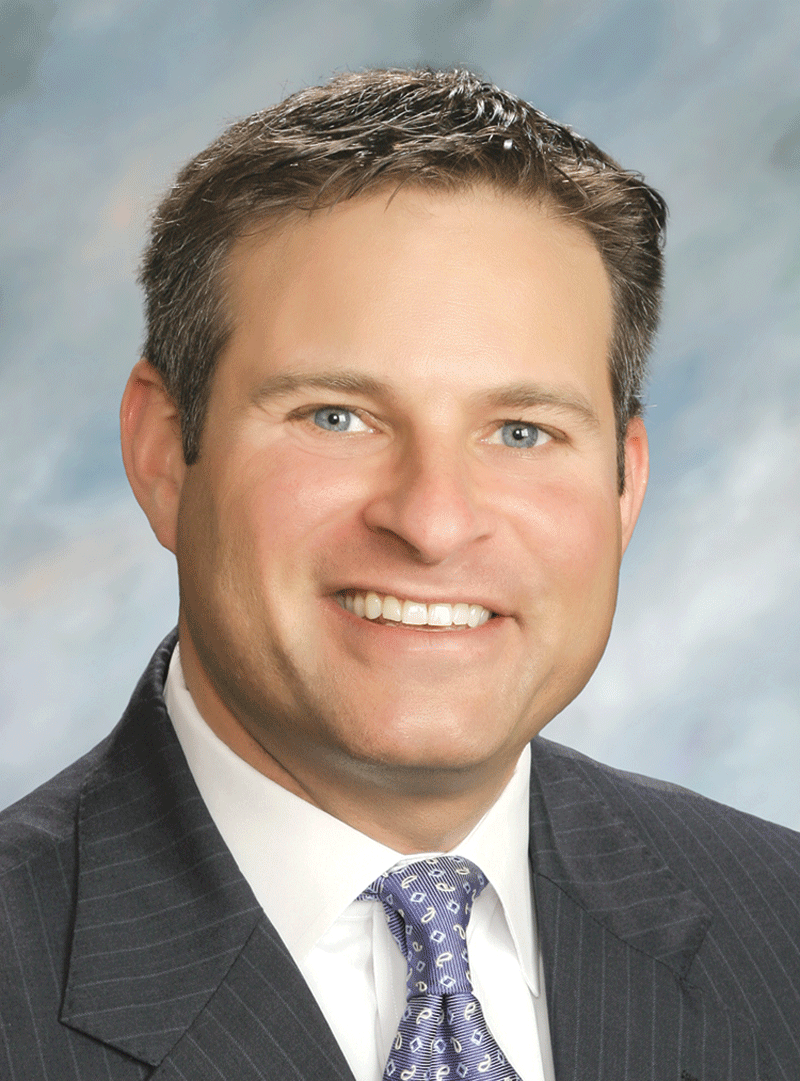
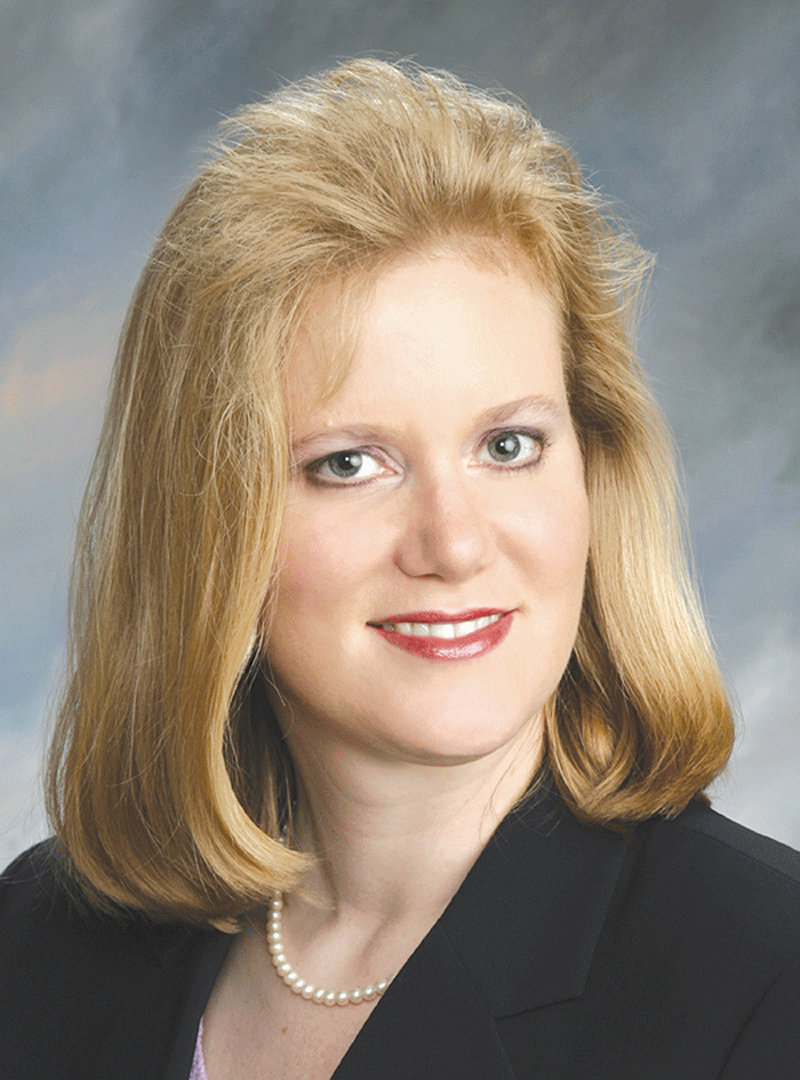
Hyman G. Darling

Hyman G. Darling

Paramedics are often called to a home because of an emergency situation. In such instances, most people wish to be resuscitated or defibrillated in order to maintain their life and hopefully recover with quality of life. Most people also desire that extraordinary medical procedures be utilized in a time of crisis. But this is not the case in every situation.
While an individual is competent, he or she may exercise their option to have treatment provided to them or discontinued, so that no further attempt should be made to provide them with life support and related medical treatment. While competent, it is relatively straightforward and easy for someone to make decisions regarding their own health care. When competency falls into somewhat of a gray area, the test for competency helps to determine whether the patient understands the nature of their illness and the effects that proposed treatment or lack thereof would have on them.
Since 1990, a person in Massachusetts has been able to make their own decisions and provide for their future care with a document called a health care proxy. This is similar to a living will or a document called five wishes or advance medical directives. These documents designate another person to substitute for the patient in making decisions regarding end of life and ongoing health care treatment.
However, the standard form provided by medical facilities does not provide for a so-called do-not-resuscitate order (DNR). Many individually prepared documents do include language that permits the agent under the health proxy to make decisions for the patient relative to all medical decisions, including end of life and possibly a DNR.
In the absence of a health care proxy, a guardian will have to be appointed by the Probate Court in order to determine not only ongoing care for the patient, but also extraordinary treatment or the withdrawal of that treatment. These cases may take a significant time period from the inception of the filing of the documents in Probate Court, giving notice to all parties, scheduling a hearing, and, very often, hiring an attorney or guardian ad litem (another person, usually an attorney, appointed to represent the interests of the incapacitated person).
This process will likely be even more drawn out as a result of the enactment of the Uniform Probate Code of 2009, which protects an incapacitated person’s rights by instituting various protections or hurdles that must be overcome before a decision is made regarding an incapacitated person’s health care, especially end-of-life decisions. Certainly, most people don’t want their life made public within the Probate Court, which is also a time-consuming, often-emotionally draining, and expensive process. All of these issues may be compounded when there is a contest regarding who should serve as the guardian and whether or not the person’s end-of-life decisions are being carried out in a manner that is appropriate for them and as they may have desired.
Most people have heard of famous end-of-life cases, namely Karen Quinlan, Nancy Cruzan, and Terri Schiavo, all of which brought national attention to the issue of making decisions for another person, especially relative termination of life support. It is interesting to note that the cases mentioned involve relatively young women, as opposed to older individuals, regarding the withdrawal of mechanical life-support machines, which, when removed, allow an individual to die shortly thereafter. Had these women signed DNRs when they were competent, their families would have been spared tremendous anguish.
A DNR order becomes a separate and distinct issue relative to the decision-making process, because it normally is executed by a person and is also signed off as accepted by that individual’s physician. A DNR is not necessarily made public, but rather provided by the physician to the patient. The form is normally kept in the physician’s office, and copies or separate portions of the form are then given to the patient, who may keep one in their wallet, post one on the refrigerator, or display one in a prominent place within his or her home in the event that it is needed.
Normally, when paramedics are called to a home, they must take all action necessary to preserve the life of the patient, but they are protected from potential liability by a DNR order, which allows them to withhold life-sustaining measures. Each DNR order in Massachusetts has a separate number, as initially a program was considered in which all DNR orders would be entered into a central database, which would be maintained and available 24/7 in situations where the patient may need to have care considered but not administered.
There are many instances in which DNR orders are used effectively. In the case of a terminal illness, such as COPD, liver failure, kidney failure, etc., where one’s life will only be prolonged with more treatment, that person may opt for a DNR order.
This is not to say that oxygen, dialysis, and other procedures would not be continued, but if that individual went into cardiac failure, or was stricken with another ailment, such as pneumonia or a similar life-threatening situation, then the patient could refuse treatment that would prolong their life. The individual should also instruct his or her caregivers to consider not calling 911 in times of crisis, as this normally implies that care is desired.
Normally, a DNR does not come into play when one is placed on hospice, as hospice implies and requires that no heroic measures be used to keep a person alive.
On the other hand, sometimes a person doesn’t want to sign a DNR, but rather prefers a health proxy that includes so-called living-will language, which states that he or she does not wish to be kept alive by heroic means unless there is going to be a relatively good quality of life and a reasonable expectancy to regain the baseline of the care and health that they enjoyed prior to the unfortunate illness, accident, or other issue causing a health decline.
In other situations, DNR orders may be suspended when one is having medical treatment such as a surgery, in which, if the DNR were not suspended, then the medical treatment may have to be terminated. This is similar to instances where a health care proxy is suspended during medical procedures.
It is important to take the decision whether or not to sign a DNR very seriously. Naturally, if an individual is in an accident and there is a good chance that they will recover, then they likely would want such things as a using a defibrillator or respirator to save their life. Individuals who wish to sign a DNR should be fully informed of the effect of signing the document.
Once it is signed, copies should be provided to all other physicians who may be treating the patient, as well the health care proxy agent, family members, and even any attorney who created other estate-planning documents, so that the DNR will be made part of the record with the health proxy.
Possibly someday, a national (or at least a state) registry bank of DNR orders will be initiated, and records will be maintained for the individuals who wish to execute it. After signing, it is a good idea to renew this document on an annual basis to establish that the patient continues to understand the nature of it.

Attorney Hyman G. Darling is chairman of Bacon Wilson, P.C.’s Estate Planning and Elder Law departments, and he is recognized as the area’s preeminent estate planner. His areas of expertise include all areas of estate planning, probate, and elder law. He is a frequent lecturer on various estate-planning and elder-law topics at local and national levels, and he hosts a popular estate-planning blog at bwlaw.blogs.com/estate_planning_bits; (413) 781-0560; baconwilson.com


DBA Certificates Departments

The following Business Certificates and Trade Names were issued or renewed during the month of January 2012.

AGAWAM

Actuarial Litigation Consulting
35 Rugby Road
Kevin Reopel

David J. Maisey
335 Walnut St.
David J. Maisey

The J.W. Home School Network
404 Barry St.
Trina Davis

The Spiced Pumpkin
1325 Springfield St.
Christian Dyckman

CHICOPEE

Atlas Legends of Polynesia
705 Memorial Dr.
Mokihana Ripley

Car Credit 1st
536 East St.
Frank DeCaro

Diana Sobieras Photography
140 Hendrick St.
Diana M. Sobiera

Grease Monkey Auto Repair
1057 Montgomery St.
Ivan Vlasyuk

HOLYOKE

Jo-Ann Fabrics & Crafts
2267 Northampton St.
Jeff Peters

Kim’s Holiday Cleaners
20 Forestdale Ave.
Wooil Kim

Pearl Bridal Boutique
1 Open Square Way
Ryan Mainville

Reyes Income Tax & Bookkeeping
476 Appleton St.
Enrique Reyes

NORTHAMPTON

All About You
2 Conz St.
Kimberly Demerski

B & H Education Inc.
58 Pleasant St.
Rashed Elyas

Brave One
351 Pleasant St.
Jesse Mayhen

Grub Sandwich Shop
88 Pleasant St.
Elizabeth Martinez

KC on Track Investigations Inc.
29 O’Donnell Dr.
Kathleen Lafountain

L & R Cleaning Services
21 Wilson Ave.
Richard Tucci

Lhasa Café Inc.
159 Main St.
Thondup Isering

New Karma Yoga
71 Olander Dr.
Victoria Healy

Northampton Airport Wright Flight
160 Old Ferry Road
Daniel M. Bergeron

Sledge
106 Cardinal Way
Alex Sledzieski

Spectrum Wellness
49 Gothic St.
Allison Filepp

PALMER

A Plus Landscaping & Construction
1132 Thorndike St.
Robert Taylor

Dayspring Home Health Care
60 Dunhampton Road
Emilie Brodeur

SOUTHWICK

Bill’s Home Improvement
15 Pineywood Road
William Alaimo

Darling’s Energy Service
151 Vining Hill Road
Charles Darling

The Growth Spurt
175 Berkshire Ave.
Tricia St. Pierre

SPRINGFIELD

Perez and Perez Construction
93 Allen St.
Senei Perez

Pleasant Snack Bar
174 Main St.
Valentim A. Porfirio

Precision Auto Repair
70 Union St.
James U. Stephenson

Presto Digital Transfer
472 Main St.
Christopher David

Puerto Rican Master Barber
602 Page Blvd.
John W. Stevens

Quinn Evaluation Consulting
28 Virginia St.
Paula M. Quinn

RR Build and Design
21 Porter St.
Reinaldo Rasado

S.A.S. Trucking LLC
180 Warrenton St.
Sherlock Suban

Salazar Jewelry & Gifts
1090 Main St.
Pedro Salazar

Sao Mai Video & Gifts
285 Belmont Ave.
Hien M. Tran

Springfield Homeowners
14 Orange St.
Pascacio Reynoso

Springfield Mobil
1828 Boston Road
Sanjay P. Patel

T.S. Services
24 Leatherleaf Dr.
Sean L. Walter

The Hair Connection
1142 State St.
Nicole M. Sanders

Thee Realm
396 Page Blvd.
Juan R. Guillen

V.I.P. Cuts
445 Main St.
Hector Gonzalez

Watch Repair Professionals
1655 Boston Road
Jesus Navarro

Where There is a Need
27 Carver St.
Monica J. Caldwell

Your Buddy’s Painting Service
760 Alden St.
Thomas Waters

WESTFIELD

Cost Cutters
249 East Main St.
Regis Corporation

L.R. Pomeroy & Sons
491 Russellville Road
Seth W. Pomeroy

Lecrenski Bros Inc.
14 Delmont Ave.
Dana Lecrenski

TBG Property Management
1 Arch Road
Joseph M. Muto

VM Construction & Mill Work
43 Sabrina Brook Lane
Slav Mokan

WEST SPRINGFIELD

A-C Motor Express LLC
339 Bliss St.
John C. Nekitopoulos

David’s Bridal Inc.
935 Riverdale St.
David’s Bridal, Inc.

Delisioso Latin Restaurant
913 Main St.
Horaida Cardona

KapStone Kraft Paper
100 Palmer Ave.
KapStone Container Corporation

Market Ready Solutions
38 Neptune Ave.
New England Esta Services LLC

Polonez Parcel Service
143 Doty Circle
Jan A. Chrzan

Steve’s Piping & Heating
180 Farmer Brown Lane
Stephen Bousquet

Features

WRC Launches Wicked Wednesdays
WEST SPRINGFIELD — The West of the River Chamber of Commerce (WRC) has a new lineup of events for the business community as well as career-minded students, including Wicked Wednesdays. Starting in March, Wicked Wednesdays will be conducted on the first Wednesday of every month, to be hosted by various businesses throughout Agawam and West Springfield. The gatherings are free for members and $10 for non-members. The first event is planned for March 7 at 5 p.m. at Westfield Bank, 206 Park St., West Springfield. For more information about Wicked Wednesdays or other events, visit www.ourwrc.com or call (413) 426-3880.

Construction Employment Hits Two-year High
WASHINGTON, D.C. — The construction sector added 21,000 jobs in January as a second consecutive month of unseasonably mild winter weather helped the industry raise employment to a two-year high, according to an analysis of new federal employment data recently released by Associated General Contractors of America. Association officials cautioned that the gains remain fragile amid declining public-sector investments in construction and infrastructure. “Although it’s great news that the industry has added 52,000 jobs in the past two months, the unemployment rate in construction is still double that of the overall economy, and construction employment remains at 1996 levels,” said Ken Simonson, the association’s chief economist. “It will take another month or two to see if the recent job growth reflects a sustained pickup or merely acceleration of home building and highway projects that normally halt when the ground freezes in December and January.” Total construction employment now stands at 5,572,000, or 0.4% higher than a month earlier, and 116,000 (21%) higher than in January 2011 — which was an exceptionally cold and snowy month in many regions, noted Simonson. He added that construction employment is still 28% below its peak level of 7,726,000 in April 2006 and is no higher than in August 1996. The industry’s unemployment rate in January was 17.7%, not seasonally adjusted, Simonson noted. The rate was down from 22.5% a year earlier but still double the all-industry rate of 8.8% (8.5%, seasonally adjusted). Job gains occurred at similar rates across the major construction segments in the past year, added Simonson. Heavy and civil-engineering construction employment grew by 2.6% or 21,000 jobs from January 2011 to last month. Non-residential building and specialty trade contractors increased their combined employment by 2% (17,000 jobs), while employment among residential building and specialty trade contractors rose by 2.1% (41,000 jobs), he said. Association officials said the across-the-board increase in construction jobs was heartening, but they were concerned that an ongoing failure to enact highway and other infrastructure funding in Washington would drag down employment numbers across the industry, especially in heavy and civil-engineering construction. “While it is encouraging to see some recent progress on aviation and surface transportation measures, it is vital that Congress and the White House make passing key infrastructure and pro-growth measures a top priority,” said Stephen Sandherr, the association’s CEO. “Without adequate long-term funding for infrastructure, competitive tax rates, and fewer costly regulatory hurdles, the construction industry may lose many of the jobs it has gained in the past year.”

Submissions Sought for Mass. Chamber Awards
BOSTON — The Massachusetts Chamber of Commerce is seeking submissions for the annual Business of the Year and Employer of Choice awards. Business of the Year recipients receive statewide visibility for companies that have dedicated resources toward working with lawmakers in Boston and Washington, D.C., to make changes and support laws that improve the business climate in Massachusetts. The Employer of Choice award, sponsored by the Employers Association of the NorthEast, provides statewide visibility for companies that have developed a culture for transforming and rewarding employee performance. The awards committee ranks companies based on the following criteria: company culture, training and development, communication, performance recognition and rewards, life/work balance, and Employer of Choice-related results of on-site visits performed. An award will also be presented to a business in the manufacturing and non-manufacturing/service sectors. Applications will be accepted until April 9. Winners of both awards will receive invitations to attend the Massachusetts Business Summit in September in Hyannis, where they will meet other business leaders from across Massachusetts, as well as state and local elected officials, and will be recognized at a luncheon in their honor on Sept. 11. The application process is free. For more information or to obtain an application, visit www.masschambersummit.com or call (617) 512-9667 or (413) 426-3850. The Massachusetts Chamber of Commerce provides legislative advocacy, marketing, networking, and educational and informational programs for businesses across the state. The chamber also provides managerial services for local chambers of commerce and professional organizations such as the West of the River Chamber of Commerce and the Realtors Commercial Alliance of Massachusetts.

Employers Step Up
Hiring in January
WASHINGTON, D.C. — The nation’s labor market posted strong gains in January, according to a recent statement by Secretary of Labor Hilda Solis. “The economy added 257,000 private-sector jobs last month, exceeding expectations, while the unemployment rate dropped to 8.3% — its lowest level since February 2009,” said Solis. “These numbers show that the labor market continues on a positive trajectory.” More than 3.7 million private-sector jobs have been created over the last 23 months, according to revised numbers from the Bureau of Labor Statistics. January’s job growth was the strongest in nine months. The unemployment rate among African-Americans fell by 2.2% in January down to 13.6% — the largest one-month drop in recorded history. “The national unemployment rate has fallen by 0.8% in the last five months,” added Solis. “The drop in unemployment has been driven by employment gains, not workers leaving the labor force. We’re seeing accelerated growth in our labor force across almost every industry.” Solis noted that the manufacturing industry surged in January, adding 50,000 jobs. “Over the past year, we’ve added 235,000 manufacturing jobs,” she said. “More products are rolling off the assembly line marked ‘made in the USA.’ We can build on this encouraging trend if Congress acts on the president’s proposals to remove tax incentives for companies that ship American jobs overseas and invests in training programs so our workers can fill existing openings in advanced manufacturing. January’s employment numbers exceeded all forecasts and provide the strongest evidence yet that our economic recovery is on track.”

Census Bureau Reports Post-recession Growth in 10 of 11 Service Sectors
WASHINGTON, D.C. — The U.S. Census Bureau recently released its 2010 Service Annual Survey, which shows that, of the nation’s 11 service sectors, 10 showed an increase in revenues for employer firms between 2009 and 2010. Only the finance and insurance sector showed a loss ($27.2 billion, down 0.8%). “The statistics presented in this year’s Service Annual Survey are noteworthy,” said Thomas Mesenbourg, the Census Bureau’s deputy director. “We are able to present a six-year trend that clearly shows the impact the most recent recession had on certain service sectors. At the same time, the newly released 2010 statistics show that, in some industries, there is evidence of a statistically significant change in an upward direction.” These figures are the first findings from this survey to track the revenues of services after the December 2007 to June 2009 recession. The survey provides the most comprehensive national statistics available annually on service activity in the U.S. Since 2009, the survey has been expanded to collect data for all service industries, capturing 55% of U.S. gross domestic product (GDP). Previously, the survey accounted for only 30% of GDP.
“Increases varied widely across service sectors,” said Mesenbourg. For example, the information sector increased from $1.08 trillion to $1.1 trillion. Within this sector, Internet publishing and broadcasting continued to see increased revenues, up 11.3% from $19.1 billion to $21.3 billion in 2010. Television broadcasting increased 12.0% from $31.6 billion to $35 billion. Cable and subscription other programming as well as wireless telecommunications carriers also saw increases in revenue of 7.3% and 5.3%, respectively, to $55.2 billion and $195.5 billion. However, revenues for newspaper and periodical publishers continued to fall. Newspaper publishers declined by 4.6% to $34.7 billion, and periodical publishers declined 1.8% to $38.4 billion. Wired telecommunications carriers continued to decline, falling 2.3% to $168.8 billion. Health care and social-assistance revenue continued to increase for employer firms, rising to $1.9 trillion in 2010, an increase of 4.0%. Hospitals increased revenue to $822.6 billion, up 4.5% from 2009. Nursing and residential care facilities also rose 4.4% to $192 billion.  The finance and insurance sector had a small decline to $3.3 trillion in revenues in 2010, decreasing 0.8% from the prior year. Revenues for securities and commodity exchanges decreased 1.5% to $10.9 billion, while miscellaneous intermediation revenue rose 16.0% to $23.6 billion. Among other sectors covered by the Service Annual Survey, the utilities sector showed estimated revenues of $501.7 billion, an increase of 5.0% from $477.6 billion in 2009. Arts, entertainment, and recreation increased 2.0% to $192 billion in revenue. Revenues for the transportation and warehousing sector were $640.2 billion in 2010, up 7.6% from $595.2 billion in 2009. The real-estate rental and leasing sector had total revenues of $356.0 billion, up 1.8% from 2009. New subsectors added last year to this sector included real estate and lessors of nonfinancial, intangible assets. For measures of sampling variability and other survey information, visit www.census.gov/svsd/www/cv.html.

Retailers Say January
Ends on Mixed Note
NEW YORK — The fiscal month of January ended on a mixed note for retailers, as retail sales rose marginally on a week-over-week basis. For the week ending Jan. 28, weekly retail sales rose modestly by 0.1%, according to the International Council of Shopping Centers (ICSC) and the Goldman Sachs Weekly Chain Store Sales Index. However, on a year-over-year basis, retail sales rose sharply by 3.9% to end the fiscal month, which was lifted by a weather-depressed sales performance during the same week of 2011. “With the fiscal month and year coming to a close this past week, retail sales once again showed how much sales patterns can shift, especially in January,” said Michael Niemira, ICSC vice president of research and chief economist. “The good news is that sales on a year-over-year basis continue to show strength, which is a positive sign as the industry moves into the new fiscal year beginning this week.” For January, ICSC Research anticipates that January comparable-store sales for the retail industry will increase by 2% to 3% on a year-over-year basis when retailers release their monthly sales figures in February. The Weekly Chain Store Sales Snapshot measures U.S. nominal same-store or comparable-store sales excluding restaurant and vehicle demand. The weekly index is constructed as a sales-weighted geometric average growth rate to preserve long-term consistency, and is statistically benchmarked to a broad-based, monthly retail-industry sales aggregate that currently represents approximately 40 retail chain stores, also compiled by ICSC.

Departments People on the Move

Barbara Benoit has been appointed Director of Graduate Enrollment, Management and Services at Assumption College in Worcester. She is responsible for recruiting and screening prospective students for Assumption’s graduate programs in business, counseling psychology, rehabilitation counseling, school counseling, and special education.
•••••
JC Schnabl has been named the Assistant Vice Chancellor for Alumni Relations at UMass Amherst and Executive Director of the UMass Amherst Alumni Assoc.
•••••
Associated Industries of Massachusetts announced the following:
• Kristen Lepore has joined the organization as Vice President of Government Affairs. She will manage efforts in the areas of health care cost control and health insurance for employers; and
• Brad MacDougall has been promoted from Associate Vice President of Government Affairs to Vice President. He will assume responsibility for the agency’s work on taxation issues.
•••••
Edward Garbacik, Vice President of FSB Financial Group at Florence Savings Bank, has completed his CFP certification requirements that are required by the Certified Financial Planner Board of Standards. Individuals seeking certified financial planner certification are required to complete coursework and exams covering the seven major financial planning areas — general principles of financial planning, insurance planning and risk management, employee-benefits planning, investment planning, income-tax planning, retirement planning, and estate planning. CFP certificants must also agree to meet ongoing continuing-education requirements and uphold the CFP Board’s Code of Ethics and Professional Responsibility, Rules of Conduct, and Financial Planning Practice Standards.
•••••
Greenfield Savings Bank announced the following:
• Christopher Caouette has been promoted to Vice President and Commercial Credit Officer; and
• Jean Dobias has been promoted to Assistant Vice President and Trust Officer.
•••••
Amanda Moyer has been named Director of Account Services at Market Mentors in West Springfield.
•••••
Joseph Knapik has joined the corporate office of Environmental Compliance Services in Agawam as Director of Training and Facilities Services. He will play a key role in developing the firm’s underground storage tank operator training program. He will also be spearheading additional product launches, primarily in the training field, and will develop and expand the firm’s suite of health and safety training course offerings. Additionally, he will direct the implementation of educational, informational, and service products for the regulated business community.
•••••
The law firm Bulkley Richardson announced the addition of four attorneys to the firm’s Litigation/Alternative Dispute Resolution Department. John P. Pucci, Andrew Levchuk and J. Lizette Richards will represent clients in all types of civil and criminal litigation, in responding to government investigations, and in conducting corporate internal investigations. They will practice from the firm’s Springfield and Boston offices. Jamie L. Kessler will handle financial services litigation from the firm’s Boston office.

John P. Pucci

John P. Pucci

• Pucci, a partner, of Northampton, is one of Massachusetts’ top civil and criminal trial lawyers, with particular experience in the areas of white-collar criminal defense and state and federal regulatory agency matters. He is the former chief of the U.S. Attorney’s Office in Springfield, and has been a Fellow in the American College of Trial Lawyers since 2002. In his career, Pucci has been named to The Best Lawyers in America, and Boston Magazine’s Massachusetts Super Lawyers and Top 100 Lawyers in Massachusetts. He was most recently a Partner at Fierst, Pucci & Kane in Northampton.
Andrew Levchuk

Andrew Levchuk

• Levchuk, Counsel, brings high-level national experience in corporate compliance and integrity as well as experience in data privacy and Internet security to Bulkley Richardson. He served as senior trial attorney in both the DOJ Criminal Division’s Public Integrity Section and its Computer Crime and Intellectual Property Section. In 2006-2007, he chaired the U.S. delegation to the G8 Subgroup on High-Tech Crime.  He has tried cases across the country and has argued 30 appellate cases in the U.S. Courts of Appeals. Most recently, he served as Deputy Chief of the Human Rights and Special Prosecutions Section of the Criminal Division of the U.S. Department of Justice. At Bulkley Richardson, he will handle complex civil and criminal litigation and responses to government investigations, as well as advise clients in matters of data security and corporate compliance.
J. Lizette Richards

J. Lizette Richards

• Richards, an Associate, joins the firm with significant civil and criminal litigation experience in areas such as mail and wire fraud, tax fraud, and healthcare fraud. In the past, she worked as a New Hampshire public defender, and, during the past seven years, she was an associate at Fierst, Pucci & Kane in Northampton.
Jamie L. Kessler

Jamie L. Kessler

• Kessler, an Associate, previously served for two years as a law clerk and paralegal at Bulkley Richardson.

Agenda Departments

Headache Relief Lecture
Feb. 15: Dr. Karin Johnson from Baystate Medical Center’s Neurodiagnostic & Sleep Center will present a free lecture titled “Headache Relief,” as part of Bay Path College’s Kaleidoscope series. Johnson will discuss the causes and theories about the physiology of migraines, as well as headache-treatment options, including trigger prevention, myofascial release, and abortive and preventative medications, at the Springfield JCC, 1160 Dickinson St., Springfield. Pre-registration is recommended by calling (413) 739-4715 or sending an e-mail to [email protected].

Human Service Forum Breakfast
Feb. 16: The Human Service Forum, which recently released a report showing the impact of human, social, and health service organizations on the region’s economy, will share the data at its monthly gathering from 8 to 9:30 a.m. at the Delaney House, 1 Country Club Road, Holyoke. Victor Woolridge, vice president at Cornerstone Real Estate Advisors, will give the keynote address. The program cost is $25 for HSF members and $35 for non-members. To register or for more information, visit www.humanserviceforum.org.

Holyoke Chamber Legislative Luncheon
Feb. 17: State Sen. Therese Murray, president of the Massachusetts Senate, will be the keynote speaker at Issues 2012, the annual legislative luncheon of the Greater Holyoke Chamber of Commerce. The 11:45 a.m. event is planned at the Log Cabin Banquet and Meeting House in Holyoke. State Sen. Michael Knapik will also present remarks, as well as Holyoke Mayor Alex Morse and state Rep. Michael Kane. Tickets are $36 per person and may be obtained at www.holyokechamber.com or by calling (413) 534-3376. Tables may be reserved for groups of eight or 10.

Historical Lecture at Wistariahurst Museum
Feb. 20: Alan Swedlund, professor emeritus of Anthropology at UMass Amherst, will lecture on his 30-year research into the history of mortality in the Connecticut Valley as part of the Wistariahurst Museum’s Historical Lecture Series. Swedlund’s program is planned at 6 p.m., and a $5 donation is suggested. Swedlund’s approach incorporates medical history with social history, and he uses documents from valley towns to identify epidemics and causes of death. Diaries, letters, newspapers, and other sources combine to tell the story from any given town. The lecture will be accompanied by historical images from the area. Swedlund’s most recent book is titled Shadows in the Valley: A Cultural History of Illness, Death and Loss in New England, 1840-1916. The Wistariahurst Museum is located at 238 Cabot St., Holyoke. For more information on the event, call (413) 322-5660 or visit www.wistariahurst.org.

Anthropologist Lecture
Feb. 22: Susan Darlington, a professor at Hampshire College, will discuss her latest book, The Ordination of a Tree: The Thai Buddhist Environmental Movement, as part of the Ovations series at Springfield Technical Community College. Darlington has studied the work of Buddhist monks in Thailand who are engaged in rural development and environmental conservation. The science-based talks, at 10:10 a.m. and 11:15 a.m. in Scibelli Hall Theater, will also include insights into religion and social activism. The presentations are free and open to the public. For more information, call (413) 755-4233.

ACCGS Outlook Luncheon
Feb. 27: Congressman Richard Neal and Michael Widmer, president of the Massachusetts Taxpayers Foundation, are featured speakers at the Affiliated Chambers of Commerce of Greater Springfield’s annual Outlook Luncheon. The event is planned from 11:30 a.m. to 1:30 p.m. at the MassMutual Center in downtown Springfield. In addition to remarks by Neal and Widmer, Springfield Mayor Domenic Sarno will outline the recently unveiled Rebuild Springfield Plan. For more information or to register, contact Cecile Larose at [email protected] or visit www.myonlinechamber.com.

Manufacturing Seminar
Feb. 29: Presentations by the Economic Development Council of Western Mass., MassDevelopment, Massachusetts Offices of International Trade and Investment, and Associated Industries of Massachusetts will highlight a seminar titled “Promoting Manufacturing in Massachusetts,” from 4 to 7 p.m. at the Springfield Country Club, 1375 Elm St., West Springfield. A networking reception is also planned. For more information or to register by Feb. 4, contact Gloria Fischer at [email protected].

Difference Makers
March 22: BusinessWest will stage its Fourth Annual Difference Makers Celebration at the Log Cabin Banquet & Meeting House in Holyoke. The program recognizes area individuals and organizations that are truly making a difference in this region. The winners will be announced in the Feb. 13 edition of BusinessWest. The awards ceremony will feature entertainment, butlered hors d’oeuvres, and introductions of the winners. Tickets are $55 per person, with tables of 10 available. For more information or to order tickets, call (413) 781-8600, e-mail [email protected], or visit www.businesswest.com.

Women’s Leadership Conference
March 23: Keynote speakers Sister Helen Prejean, Marjora Carter, and Ashley Judd will share personal stories, as well as insightful advice and perspectives, during Bay Path College’s annual Women’s Leadership Conference at the MassMutual Center in downtown Springfield. The theme for the 7:30 a.m. to 4:30 p.m. event is “Lead with Compassion.” Prejean is a member of the Sisters of St. Joseph of Medaille and an anti-death-penalty activist; Carter, an eco-entrepreneur, is president of the Majora Carter Group; and Judd is a film and stage actor and human-rights activist. For more information on the conference or to register, log onto www.baypathconference.com or call Briana Sitler, director of special programs, at (413) 565-1066.

Bestselling Author Lecture
March 28: Internationally acclaimed author Tom Perrotta will read from his upcoming novel, The Leftovers, at 10:10 a.m. and 11:15 a.m. in Scibelli Hall Theater, as part of the Ovations series at Springfield Technical Community College. The talks are free and open to the public. Two of Perrotta’s books, Election and Little Children, have been made into movies, and five novels have been national bestsellers. For more information, call (413) 755-4233.

Not Just Business as Usual
April 5: Former NBA player and businessman Ulysses “Junior” Bridgeman will be the guest speaker at the Springfield Technical Community College Foundation’s third annual Not Just Business as Usual event at the Naismith Memorial Basketball Hall of Fame in Springfield. A cocktail and networking reception is planned from 5:30 to 7 p.m., followed by the dinner program from 7 to 9. Bridgeman spent most of his 12-year NBA career with the Milwaukee Bucks, but also played for the Los Angeles Lakers. He is the current franchise owner of more than 160 Wendy’s and 120 Chili’s restaurants. The event encourages local businesses to come together for an evening to network, learn from one another, and support student success. Funds from the event will provide students access to opportunities — through scholarships, technology, and career direction — to be successful future employees and citizens. “It’s a time to celebrate innovations, change, and our region’s success,” said STCC Foundation Interim Director Robert LePage. A variety of sponsorship opportunities are available, and individual tickets cost $175 each. For more information, contact LePage at (413) 755-4477 or e-mail [email protected].

Lecture by Author of Constitution Café
April 10: Author and philosopher Christopher Phillips’ latest book, Constitution Café, draws on the nation’s rebellious past to incite meaningful change today. He proposes that Americans revise the Constitution every so often, not just to reflect the changing times, but to revive and perpetuate the original revolutionary spirit. He will present a free lecture at 8 p.m. in the dining hall at Blake Student Commons on the Bay Path College campus, 588 Longmeadow St., Longmeadow. The lecture is part of the annual Kaleidoscope series. For more information, call (413) 565-1000 or visit www.baypath.edu.

Slam Poet Lecture
April 13: Taylor Mali, a former high-school teacher who has emerged from the slam-poetry movement as one of its leaders, will discuss his performances at 10:10 a.m. and 11:15 a.m. in Scibelli Hall Theater, as part of the Ovations series at Springfield Technical Community College. The talks are free and open to the public. For more information, call (413) 755-4233.

40 Under Forty
June 21: BusinessWest will present its sixth class of regional rising stars at its annual 40 Under Forty gala at the Log Cabin Banquet & Meeting House in Holyoke. Nominations are currently being sought for the popular program, which recognizes young people in realms including business, education, health care, nonprofit management, and government service. Nominations, which are due Feb. 17, will be scored by a team of five judges. The 40 highest scorers will be feted at the June 21 gala, which will feature music, lavish food stations, and introductions of the winners. Tickets cost $60 per person, with tables of 10 available. Early registration is advised, as seating is limited. For more information, call (413) 781-8600, ext. 100, or visit www.businesswest.com.

Company Notebook Departments

Tighe & Bond Launches New Web Site
WESTFIELD — Tighe & Bond recently launched a new Web site aimed at making information on the engineering firm’s core services easier to find and more comprehensive, according to David Pinsky, president. “Part of being a progressive engineering firm that is client-focused means keeping up with technology and making it easier for our clients and others to readily find the information they seek on our Web site,” said Pinsky. He added that the firm wanted to “bring elements of our core business into greater focus and create a fresh design.” Beyond the firm’s traditional core business — civil engineering, water, wastewater, and environmental consulting — the Web site highlights newer areas of expertise. These areas include renewable energy, as well as the latest 3D modeling and GIS technologies. In addition, the Web site offers interactive features such as the ability to ask a question on each Web site page, review current projects that are out to bid, and request a host of technical papers authored by Tighe & Bond staff. The Web site also features a revitalized section on career opportunities and information on the company’s culture. Facebook, Twitter, and LinkedIn are also integrated to keep followers up to date on the latest news. Lastly, the Web site spotlights the firm’s commitment to sustainability, documents the firm’s history, and provides a link to the online commemorative book, Engineering a Century of Progress: The Evolution of Tighe & Bond.

NUVO Bank Unveils No-Catch Checking
SPRINGFIELD — NUVO Bank & Trust Co. is now offering No-Catch Checking, a free account with no hidden requirements, according to M. Dale Janes, CEO. Customers may open a No-Catch Checking account with a deposit of $10; going forward, there is no minimum balance to maintain. Customers will have the benefits of no direct-deposit requirements, no monthly maintenance or activity charges, no service charges, no hidden fees, and no ATM fees. “We simply adjusted the requirements of our original two checking-account options,” said Janes. “We listened to what is going on regionally and nationally and heard consumers demanding simplicity in banking, with no games or hoops to jump through.”

Cooley Dickinson Named High-performing Hospital
NORTHAMPTON — Two independent rating organizations have verified that patients who choose Cooley Dickinson Hospital (CDH) for their health needs receive better quality and safer outcomes, even as the hospital has reduced the cost of care, according to Dr. Mark Novotny, chief medical officer. The hospital is among the 2011 Top Performing Hospitals in the Premier health care alliance’s national QUEST collaborative. In the delivery of evidence-based care, CDH ranked 10 percentage points above the top-performing hospitals’ score of 84%, and its cost per adjusted admission was $780 lower than that of other community hospitals in its size group. This is the first year CDH placed among the top-performing QUEST hospitals. “Being a QUEST member means redesigning the way we provide care so that patients receive reliable, safe, and efficient health care every time they visit Cooley Dickinson,” added Novotny. QUEST, the most comprehensive hospital collaborative (300 hospitals) in the nation, measures, compares, and scales solutions for the complex task of caring for patients. In related news, the Leapfrog Group reported that CDH ranked in the top 10% on overall value, a measure that takes into account the quality of care hospitals provide. This is the second consecutive year that CDH has ranked in Leapfrog’s top 10%. “Achieving high overall value is the key success factor for health systems,” said Novotny. “More than ever, employers and patients expect superb outcomes at low cost.” Among the Leapfrog database of 1,066 hospitals from 43 states, CDH earned roll-up scores of 81 on quality and 88 on resource use in Leapfrog’s 2011 Hospital Survey. The value score combines the quality and resource scores, with quality weighted most. The hospital’s 83 for value is 11 points above the 72 score needed to rank in the top 10%. Leapfrog’s quality score is based on a hospital’s performance on more than 20 national quality standards. The standards measured include care provided for common conditions such as pneumonia and normal deliveries of babies, intensive-care unit physician staffing levels, and performance on preventing conditions such as pressure ulcers and central-line-associated bloodstream infections.

Lord Jeffery Inn Reopens in Downtown Amherst
AMHERST — The transformation of the Lord Jeffery Inn is complete, according to the Amherst Inn Co., an affiliate of Amherst College and owner of the inn. The downtown property features 49 state-of-the-art guestrooms, including three king, three queen, and two double/double suites. The inn has added a 2,360-square-foot ballroom along with a tented garden area that can accommodate up to a 40’ x 80’ tent. The project also included upgrading the 46,000-square-foot building’s internal systems, adding 20 parking spaces, and creating a new restaurant. The renovation and expansion also included significant energy-efficiency improvements that make it one of the greenest inns in the Pioneer Valley, according to Amherst College President Biddy Martin. “The absence of the Lord Jeff over the past few years has shown how important the inn is to the vibrancy of the college and the community,” said Martin. “The Lord Jeff has long served as a beacon, welcoming visitors to the town of Amherst and to Amherst College. We are thrilled that the magnificently renovated inn and restaurant is open to guests once again.” Last June, the Mass. Historical Commission announced that it had voted and approved the expansion of the boundaries of the Amherst Central Historic Business District to allow for the inclusion of the Lord Jeffery Inn. The vote was the first step in recognizing the historical significance of the inn, which is now included on the National Historic Registry along with such notable community landmarks as the Emily Dickinson Homestead, the Evergreens, the Strong House, and the West Cemetery. “The new inn was given a fresh contemporary update representing the spirit of a new generation of modern comfort,” added Rob Winchester, president and COO of Waterford Hotel Group Inc., the inn’s management company. “This renovation addresses the evolving needs of today’s traveler, offering a more contemporary style and the latest technology. We are thrilled to reintroduce the Lord Jeffery Inn to the community as the premier destination for lodging, dining, corporate meetings, and social events.”

Holyoke Community College Going Smoke-free
HOLYOKE — Holyoke Community College will become an entirely smoke-free campus on Aug. 13, college President William Messner announced recently. On that day, smoking will no longer be permitted in any building or outdoor area on the 135-acre HCC campus. Smoking is now allowed only outdoors outside 20-foot buffer zones around entryways. “The decision to establish a smoke-free campus reflects HCC’s commitment to provide an accessible, safe, and healthy environment in which to learn and work,” Messner said in a message sent out today to the HCC community. “It is also a result of the efforts of HCC students and the staff members of the HCC Smoke-Free Committee, who urged us to join the hundreds of other colleges and universities that have already made smoke-free a reality.” The full text of Messner’s statement is available on the HCC Web site at www.hcc.edu/smokefree, along with resources and links for people who want to quit smoking. Counseling and nicotine patches are also being made available through HCC Health Services. “We understand that overcoming the addiction to tobacco is a great challenge,” Messner said. “For students and staff who wish to quit smoking or find ways to manage their cravings on campus, HCC will provide a variety of resources.” HCC will also be holding events throughout the spring semester to raise awareness about the new smoking policy and the health benefits of quitting. Testimonials from people who quit smoking will be going up soon in the main lobby of HCC’s Frost Building. “As with any change, it will take time to adjust,” Messner said. “During the transition to a smoke-free campus, all members of the HCC community must share the responsibility of self-enforcement and of creating an environment that is respectful and cooperative.”

United Bank Supports Several United Ways
WEST SPRINGFIELD — United Bank’s employees and its United Bank Foundation recently contributed a combined totaled of $97,643 in support of the United Ways of Pioneer Valley, Hampshire County, and Central Mass. United’s employee campaign totaled more than $58,000, surpassing last year’s level of giving, according to Richard Collins, president and CEO. In addition, the bank’s foundation contributed $39,000 to the three United Ways. “The participation of our employees is also a reflection of United Bank’s commitment to the communities where we live and work,” said Collins. “It’s particularly meaningful in today’s trying economic times. Our neighbors need our help; our employees stepped up to provide that help.”

First Niagara Donates
$50,000 to Mass Mentoring Partnership
BOSTON – Mass Mentoring Partnership (MMP), a Boston-based nonprofit that is an umbrella organization for youth mentoring statewide, recently announced that First Niagara Bank will donate $50,000 to support the organization’s mentoring efforts, with a focus on initiatives in Western Mass. During Mass Mentoring’s annual Youth Mentoring Forum at State Street, which was held recently at State Street Financial Center, MMP Chief Program Officer Marty Martinez thanked representatives from First Niagara for signing on as the Western Mass. sponsor of National Mentoring Month (January) and for its support of the annual Champions of Mentoring fund-raising event with the Boston Red Sox, which will be held June 7 at Fenway Park. “National Mentoring Month is a time when mentoring organizations across the country come together with a focus on raising awareness of the importance of mentors, acknowledging and appreciating current mentors, and positioning our organizations for future success,” said Martinez. “We’re thrilled to partner with First Niagara to promote National Mentoring Month and expand quality mentoring in Western Mass.” During January, First Niagara supported MMP’s efforts to promote the importance of mentoring through a multi-faceted marketing campaign with a focus on Western Mass. Throughout National Mentoring Month, MMP aims to help Massachusetts mentoring programs celebrate the everyday people who are making a difference for young people in their communities.

Agenda Departments

Wine Tasting
Feb. 10: The Wistariahurst Museum in Holyoke will host its annual “I Love Wine Event” from 6 to 8 p.m., sponsored by Liquors 44 and Historic Holyoke at Wistariahurst. Wines will be available from distributors including Bay State Wines, MS Walker, Commonwealth, and United. Light refreshments will be provided. Advance tickets are $25 each or $40 per couple; door admission is $30 each or $50 per couple. Reservations are necessary. For more information, call the museum at (413) 322-5660. The museum is located at 238 Cabot St.

Historical Lecture
Feb. 20: Professor emeritus Alan Swedlund will lecture on his 30-year research on the history of mortality in the Connecticut Valley as part of the Wistariahurst Museum’s Historical Lecture Series. Swedlund’s program is planned at 6 p.m., and there is a $5 suggested donation. Swedlund’s approach incorporates medical history with social history, and he uses documents from valley towns to identify epidemics and causes of death. Diaries, letters, newspapers, and other sources combine to tell the story from any given town. The lecture will be accompanied by historical images from the area. Swedlund is professor emeritus of Anthropology at UMass Amherst. His most recent book is titled Shadows in the Valley: A Cultural History of Illness, Death and Loss in New England, 1840-1916. The Wistariahurst Museum is located at 238 Cabot St., Holyoke. For more information, call the museum at (413) 322-5660 or visit www.wistariahurst.org.

Anthropologist Lecture
Feb. 22: Susan Darlington, a professor at Hampshire College, will discuss her latest book, The Ordination of a Tree: The Thai Buddhist Environmental Movement, as part of the Ovations series at Springfield Technical Community College. Darlington has studied the work of Buddhist monks in Thailand who are engaged in rural development and environmental conservation. The science-based talks, at 10:10 a.m. and 11:15 a.m. in Scibelli Hall Theater, will also include insights into religion and social activism. The presentations are free and open to the public. For more information, call (413) 755-4233.

Author Lecture
March 28: Internationally acclaimed author Tom Perrotta will read from his upcoming novel, The Leftovers, at 10:10 a.m. and 11:15 a.m. in Scibelli Hall Theater, as part of the Ovations series at Springfield Technical Community College. The talks are free and open to the public. Two of Perrotta’s books, Election and Little Children, have been made into movies, and five novels have been national bestsellers. For more information, call (413) 755-4233.

Slam Poet Lecture
April 13: Taylor Mali, a former high-school teacher who has emerged from the slam-poetry movement as one of its leaders, will discuss his performances at 10:10 a.m. and 11:15 a.m. in Scibelli Hall Theater, as part of the Ovations series at Springfield Technical Community College. The talks are free and open to the public. For more information, call (413) 755-4233.

Difference Makers
March 22: BusinessWest will stage its fourth annual Difference Makers Celebration at the Log Cabin Banquet & Meeting House in Holyoke. The program recognizes area individuals and organizations that are truly making a difference in this region. The winners will be announced in the Feb. 13 edition of BusinessWest. The awards ceremony will feature entertainment, butlered hors d’oeuvres, and introductions of the winners. Tickets are $55 per person, with tables of 10 available. For more information or to order tickets, call (413) 781-8600, e-mail [email protected], or visit www.businesswest.com.

Outlook 2012
Feb. 22: The Affiliated Chambers of Commerce of Greater Springfield will stage its annual Outlook program at a new venue, the MassMutual Center in downtown Springfield. The event will feature co-keynote speakers: U.S. Rep. Richard Neal will provide the federal outlook, and Michael Widmer, president of the Mass. Taxpayers Foundation, will provide a state perspective. Tickets are $50 person, with tables of 10 available for $475. For more information, call (413) 755-1313, or visit www.myonlinechamber.com.

40 Under Forty
June 21: BusinessWest will present its sixth class of regional rising stars at its annual 40 Under Forty gala at the Log Cabin Banquet & Meeting House in Holyoke. Nominations are currently being sought for the popular program, which recognizes young people in realms including business, education, health care, nonprofits, government, law, and many others. Nominations, due Feb. 17, will be scored by a team of five judges. The 40 highest scorers will be feted at the June 21 gala, which will feature music, lavish food stations, and introductions of the winners. Tickets are $60 per person, with tables of 10 available. Early registration is advised, as seating is limited. For more information, call (413) 781-8600, ext. 100, or visit www.businesswest.com.

Architecture Sections
At Dietz & Co. Architects, Sustainability Is a Way of Life
Kerry Dietz

Kerry Dietz, says the design work her firm does must meet clients’ needs and budgets and also create a sustainable and comfortable environment for the people who will occupy or work in the buildings.

Kerry Dietz was talking about sustainable building design.
And although many people associate the concept with ‘green’ construction, to Dietz, the word ‘sustainable’ encompasses a wide range of considerations.
“Design is critical and happens at many levels, and the word ‘sustainable”’means a lot of different things to our clients,” said the principal of Springfield-based Dietz and Co. Architects Inc.
At Dietz, it includes the comfort and health of those who will live and work in a structure, the aesthetics inside and out, and the costs to maintain a structure during its life cycle, which is especially important to nonprofits that may not have the resources to do maintenance work in the future. “It also includes the materials, the context a building sits in, and the image the client wants to project, because a building can become a brand (more about that later). “It is all critical to us,” she said.
Her company’s tagline is “design that looks good, does good,” and that value has remained key to the way the firm has approached its projects for the past 25 years.
“People know they can count on us to do quality work and do it right,” Dietz told BusinessWest, adding that the entire staff believes their designs should make a difference in the community. “We have never faltered from that initial desire to create architecture that also serves. We are a company that pledges to be a responsible citizen in everything we do.”
Their projects range from affordable housing, which has always been a mainstay of the firm, to education, health care, commercial, institutional, and historic-preservation work. Part of the company’s success is attributed not only to having employees who are experts in their fields, but also to the fact that everyone working on a project is well-versed in its finances.
“We are an open-book company, and my employees know the budgets on our projects, which includes how much money we are making and how many new jobs there will be,” said Dietz, adding that, when there is a profit, everyone shares in it. “People who come here from other firms are surprised at this, but I believe my employees need to know the rules of the game and what the parameters are in terms of hours and months allocated to it.”

Blueprint for Success
Dietz said architectural firms in Western Mass. have to be generalists. “There is not enough work here to be a niche operator unless you are global in scale,” she explained.
However, one of the firm’s challenges is competing with Boston-based companies. “Every time the economy goes south, they come here. And sometimes they bring a level of expertise we don’t have,” she explained. “For example, we haven’t designed 50 schools, and we have never designed a library, so we will never get one. People want to hire someone who has done the job before.”

Michael Erickson, an architectural associate at Dietz & Co. Architects Inc.,

Michael Erickson, an architectural associate at Dietz & Co. Architects Inc., works on a design for one of their many projects that range from affordable housing to education, health care, commercial, institutional, and historic preservation.

The firm has several specialties, but its bread and butter has always come from work in the affordable-housing industry. “We understand the funding cycles and the regulations. Very often, it means scrambling to put together an application, then having to wait, but we are very familiar with that. Our core value is about serving the community.
“Architectural firms are altruistic to begin with, but for this firm, serving the community is at the core of our values,” she continued. “We tend to attract employees whose desire is to serve, and we do a lot of work for nonprofits. We understand the pressures they are under in terms of funding.”
Another niche for the company is education, especially colleges and universities, said Dietz, adding that the firm is also well-versed in the challenges, fiscal and otherwise, facing both public and private institutions. “Their decision-making and funding sources and flow are totally different from affordable housing.”
When schools receive grants, the work has to be done right away, and most institutions are dependent on state funding and bonding, so any time a financial crisis hits, it affects their budgets immediately, she went on. “But we like doing the work. It ranges from designing new environmental centers to cafés in science buildings, to work in their libraries.”
Banks are also a specialty. The firm designed Easthampton Savings Bank’s new main office and is renovating some of its branches. “We have also done work for United Bank and have been involved in master plans and studies,” Dietz said.

Staying Afloat
In recent years, the firm’s focus has shifted. It is designing less affordable housing and has broadened its base, in part because the economy has made it difficult for nonprofit developers to get funding.
“The heart of the recession was horrid; it was an equal-opportunity destroyer, and we were lucky to survive it. In 2008 and 2009, we had the worst two years we have ever had. Then in 2010 we had the best year we have ever had in our history,” Dietz said.
She attributes the firm’s success to carefully crafted strategic planning, and said its forecasting tools yielded indications that the recession was imminent. “By October of 2008, it was clear we were headed toward a major disaster. And we knew 2009 would be horrible and we were unlikely to get any new work.”
Although many architectural firms laid off employees or closed their doors, Dietz chose to keep all 19 employees on staff. She cut her own salary and reduced employees’ hours, taking advantage of a graduated program within the state’s unemployment system.
“It allowed us to reduce hours without substantially penalizing our employees, which was important, because we still had projects we were working on,” Dietz said. And although it would have cost less to lay employees off, she knew that, by keeping them, the company was positioned well, as there would be clients who would want to take advantage of declining construction prices.
The company has won a number of awards, and individuals within it have also earned accolades. Dietz said one of the firm’s architects received an e-mail from the Department of Public Health stating that her submission for the Caring Health Center, a recent project in Springfield delayed by the June 1 tornado, “was the best she had ever seen in her history.”
“The ability to make these people happy is a huge selling point for us,” Dietz said, adding that it takes a lot of expertise and work to meet complex and detailed requirements.
She added that much of the housing design they do is dependent on low-income tax credits, and they are also knowledgeable about those requirements due to their 25-year history in that arena.

Attention to Detail
An architectural design contains many elements and can become a “brand,” said Dietz, as she talked about the building the firm created for the YWCA of Western Mass. about 10 years ago.
“The organization almost died about 25 years ago,” said Dietz. “They came to us when they were on their last legs and had sites scattered in a variety of office buildings. They told us they wanted a new facility that looked corporate and would let people know their importance as one of the largest human-service agencies in the area.”
So the firm designed a building for the YWCA that “became a reflection of who they are and their vision for the future. Sustainable meant a lot of things to them, including choosing a high-efficiency heating and air-conditioning system as well as exterior materials that wouldn’t require maintenance,” she said.
Dietz said it’s critical to her company’s mission to think about who will use the buildings they design. Office workers need to have enough light and should not be distracted by noise or each other, for example.
“We really try to integrate our philosophy about sustainable design into everything we do; it’s not new to us, and some of the folks who work with me have been thinking this way for 20 years — sustainability is like religion,” she told BusinessWest, explaining that, although the U.S. Green Building Council developed a system of measurements for green building and Dietz and some of her employees are LEED-certified, there are a variety of measures that can be used to promote sustainability.
“We look at the human cost in terms of materials, rather than just the dollar cost,” she said. For example, although many buildings contain vinyl floor tiles, maintaining them requires expensive chemicals, which are not good for the environment; the people who work with them or the employees who will inhale the fumes of the cleaning solutions.

Unchanging Goals
“Since we opened our doors in 1985, we’ve worked to provide an environment that’s both challenging and nurturing,” Dietz said, adding that this begins within the company and extends to the nuances of every project.
“We never lose sight of our ultimate goal: to interpret our clients’ personal vision and create spaces that look great, feel great, and serve the needs of the people who will use these spaces,” she added.
And they do so in a way that creates comfort — and sustainability — now and for generations to come.

Opinion
Workforce Training Is Good Business

There are 13 million unemployed Americans and approximately 3 million job openings in the U.S. today. According to the Mass. Department of Workforce Development, this 4:1 ratio of unemployed people to unfilled jobs is mirrored in our state as well. Despite high unemployment, a 2011 report found that more than half of business leaders, and 67% of small-business leaders, face a challenge recruiting employees with the right education and training. In Massachusetts, these unfilled jobs in the health care, education, and manufacturing sectors pay between $40,000 and $60,000 per year.
How can this be?
Primarily, it’s the result of a skills mismatch brought on by technological change, structural economic shifts, and decades of underinvestment in the types of basic skills and occupational training that are essential for a thriving economy. We need an education system that focuses not on a college degree, but on preparation for the jobs of today and tomorrow as identified by employers, not politicians and economic forecasters. And with the rapid evolution of technology, we need programs that continually train and retrain adults.
Middle-skill jobs across the country pay well and contribute similarly through income-tax revenues paid by employees and reduced unemployment payments. Many of these jobs involve specialized training on highly complex manufacturing machinery or in hospitals and labs. Regions can achieve economies of scale by partnering with vocational schools and community colleges to do this training on shared equipment with shared curricula.
Western Mass. faces a chronic shortage of skilled machinists in our high-technology, precision-manufacturing industry. This month alone, three companies in Hampden County are looking to hire more than 40 machinists at salaries that average $60,000. Without these workers, companies face unwelcome choices such as subcontracting the work to outside shops or expanding in other states with more skilled machinists.
We’ve had success in Western Mass. by developing public-private partnerships to support this type of skills training, but employers can’t do it alone. The partnership between employers in the Western Mass. Chapter of the National Tooling and Machining Assoc., the Regional Employment Board of Hampden County (REB), the state, and area school systems and community colleges has leveraged resources and created or retained good-paying jobs for over 1,000 Western Mass. residents.
Precision machinists, nurses, elevator mechanics, and EMTs require a foundation of advanced math, metrology, physiology, biology, etc. that employers cannot be expected to provide. Skills training by professional educators combined with on-the-job internships should be part of our public education system. And if properly aligned with available jobs by hiring employers, this will strengthen our economy by putting people back to work.
Congress should examine the business case for skills training:  the above-mentioned 3 million job openings, if filled, could generate over $9 billion in annual taxable income (assuming a low average salary of $30,000 per year). With a federal tax rate of 15%, this would provide more than $1.3 billion in annual payroll taxes as well as state tax revenues and reduced unemployment benefits. With estimated training costs of $2,500 per person, the government would recover its investment in less than a year.
Federal funding for workforce-training programs declined by almost 20% (adjusted for inflation) between 2002 and 2012, with a 29% decrease in funding for Workforce Investment Act programs for adults, dislocated (laid-off) workers, and youth.
Instead of improving the system to help workers enter or return to the labor market and match employers with skilled workers, Congress has proposed eliminating it or consolidating it to the point of elimination. Cuts to federally funded workforce training would hurt Massachusetts’ small-business owners, stifle job creation, and slow economic growth.
Our elected representatives, including Sen. Brown and Sen. Kerry, need to stop their colleagues from acting in direct opposition to the economic interests of Massachusetts and the needs of our state’s workers and employers.
These programs, when properly structured and administered, pay for themselves. The Western Mass. model developed by the local Machining and Tooling Assoc. and the REB can provide the case study for success. v

Larry Maier is president of Peerless Precision Inc. in Westfield and co-president of the National Tool and Machining Assoc. of Western Mass.; [email protected]

Briefcase Departments

Friendly Is Closing 37 More Restaurants
WILBRAHAM — Friendly Ice Cream Corp. closed another 37 stores recently, including 10 in the Bay State, before emerging from Chapter 11 bankruptcy protection. The chain, based in Wilbraham, has closed about 40% of its locations in Massachusetts and 20% overall (about 100 restaurants in total) since filing for bankruptcy protection last October. Locally, stores in Springfield, Holyoke, and Great Barrington shut their doors. The most recent closings will result in nearly 800 people losing their jobs, the company said. A spokesperson for Friendly said the company restructured leases for some sites, but could not reach agreements with landlords for 37 restaurants and decided to shut them down at the close of business on Jan. 8.

HCC To Acquire
Grynn & Barrett Studio
HOLYOKE — State Sen. Michael Knapik (R-Westfield) and state Rep. Michael Kane (D-Holyoke) recently announced that legislation authorizing Holyoke Community College (HCC) to borrow $7 million from the Mass. Development Finance Agency for the acquisition and renovation of Grynn & Barrett Studios has passed both branches of the legislature and is headed to Gov. Deval Patrick for his approbation. The bill, which was filed last January, will allow HCC to create a state-of-the-art educational facility for the associate’s degree in Nursing and the Practical Nursing and Radiologic Technology programs at the site currently occupied by the Grynn and Barrett Photography Studios. The building is located across from the college’s secondary access road on Homestead Avenue. These funds will provide an additional 22,000 square feet for specialized and general instruction, and will allow the college to repurpose space on campus freed up by the relocation of these programs. In 2008, the Mass. Division of Capital Asset Management (DCAM) commissioned a space-reallocation study, which concluded that HCC was tightly packed, and the current campus would not allow for projected increases in enrollment. The college has pledged to continue to work with DCAM to develop strategies to address space issues in the future. “This legislation will allow Holyoke Community College to prepare more students for careers in nursing and health care to meet the growing demand for qualified workers,” said Knapik. “This will not only be a boost for the college but for the Pioneer Valley as whole, as many of the students and former students live and work within our communities.” A major component of the new facility will be the HCC SIMuCENTER. This program will introduce simulation into the nursing curriculum, providing students the opportunity to learn clinical decision-making skills, refine technical skills, gain competency in recognizing and preventing common medical errors, and practice a wide variety of commonly occurring clinical events and situations. The SIMuCENTER program will also provide a unique opportunity for the creation of partnerships with other community-college nursing programs and local health care providers to further educate current employees. The college will enter into a 30-year financing plan with the Mass. Development Finance Agency, with the loan to be paid off through student fees. The college will implement a three-tier surcharge, including a $150-per-semester surcharge for Registered Nursing, Practical Nursing, and Radiological Technician students; a $100-per-semester surcharge for Pre-Nursing, Pre-Health, and Foundations of Health students; and a $1-per-credit charge for all students. Currently, HCC is the second-least-expensive community college in Massachusetts at $4,050 per year. The average for all Massachusetts community colleges is $4,545 per year. Patrick is expected to sign the bill into law.

Nominations Sought for Woman of the Year
SPRINGFIELD — The Professional Women’s Chamber, a division of the Affiliated Chambers of Commerce of Greater Springfield, is seeking nominations for its 2012 Woman of the Year Award. The award has been presented annually since 1954 to a woman in Western Mass. who exemplifies outstanding leadership, professional accomplishment, and service to the community. The nominee’s achievements can be representative of a lifetime’s work or for more recent successes. Any woman is eligible for nomination, and a chamber affiliation is not required. For more information and a nomination form, visit www.professionalwomenschamber.com or e-mail committee chair Nancy Mirkin at [email protected]. Nomination documents are due by Feb. 10.

Construction-industry
Unemployment Jumps
to 16% in December
WASHINGTON, D.C. — Despite the addition of 17,000 jobs in December, the nation’s construction-industry unemployment rate jumped to 16% last month, a sharp increase from 13.1% in November, but down from 20.7% at the same time last year, according to the Jan. 6 jobs report by the U.S. Labor Department. For all of 2011, the construction industry added 46,000 jobs (0.8%), representing the best industry performance since January 2007. The average annual construction unemployment rate in 2011 was 16.4%, down from 20.6% in 2010 and 19% in 2009. Non-residential building construction employment stood at 662,200 jobs in December, down by 3,000 jobs compared to November, but up 3,000 jobs (0.5%) compared to the same time one year ago. Residential-building construction employment stood at 567,000 jobs in December, up by 3,000 jobs from the previous month and up 4,000 jobs (0.6%) from the same time last year. Non-residential specialty trade contractors added 20,000 jobs in December and have added 12,000 jobs, or 0.6%, during the past 12 months. In contrast, residential specialty trade contractor employment decreased by 3,000 jobs for the month, but is up by 16,000 jobs (1.1%) from December 2010. Heavy and civil engineering construction employment remained unchanged for the month and has added 11,000 jobs (1.4%) during the course of 2011. Across all industries, the nation added 200,000 jobs as the private sector expanded by 212,000 jobs and the public sector shrank by 12,000 jobs. Year over year, the nation has added 1,640,000 jobs (1.3%). The nation’s unemployment rate fell to 8.5% in December, down from a revised 8.7% level in November and down from 9.4% in December 2010.

Banking and Financial Services Sections
Glenn Welch Takes the Reins at Hampden Bank

Glenn Welch, president, COO, Hampden Bank

Glenn Welch, president, COO, Hampden Bank

Glenn Welch, the new president and COO of Hampden Bank, takes over with an informal philosophy of not trying to fix anything that isn’t broken — and this encompasses most all strategic initiatives at the nearly 160-year-old institution. For now, his primary focus is on seizing opportunities to grow the commercial portfolio presented by improving confidence among business owners and what Welch called “concern with larger-bank relationships and where they’re headed.”

Glenn Welch is one of many area bankers who had his or her name on many different business cards in the late ’80s and ’90s — and usually not by choice.
“I had a lot of them, and I think I still have them … they’re in my desk somewhere,” said Welch, referring to a collection that resulted from a spate of mergers, failures, and downsizings involving names that have long since disappeared from the business landscape — like Third National, Bank of New England West, Shawmut, BayBank, Comfed Savings, and Fleet.
Soon, Welch can add another card to the pile, if he ever finds it. Indeed, the new card identifying him as president and COO of Hampden Bank will be arriving shortly, meaning he won’t need the one he’s still using announcing him as “executive vice president and division executive of the Business Banking Group.”
On Nov. 30, Welch was named successor to Tom Burton, long-time president and CEO at Hampden, who is retiring but taking the title chairman and CEO during a transition period.
Welch believes that, if all goes as planned, this could very well be his last business card. In fact, it’s an unofficial goal to make sure it is. He plans on being here a while, and he believes the Hampden name will endure as well, even as he acknowledged that the institution is certainly the subject of rumors regarding the next local target for merger or acquisition.
“The board of directors, by deciding to go with an in-house candidate, shows that it’s comfortable with the plan we have in place to bring it forward and grow the bank to the level that we need to to satisfy our investors,” he said. “But it’s a crowded market, and there is a lot of capital in this market.”
For now, Welch is focused on continuing a strong pattern of growth knitted by Burton during his 17-year tenure as president, during which the bank doubled in size, from $250 million to more than $500 million, and went public in 2007.
The pace of growth slowed over the past few years, as it did at most all area banks, as the Great Recession took its toll on everything from mortgage volume to commercial lending. Still, Hampden has been on a pace to add roughly a branch a year, with the latest additions coming in Longmeadow (the second office there) and Boston Road in Springfield, and it is has been holding its own in a highly competitive commercial-lending arena.
“The difficulty was, we just weren’t seeing any loan growth — businesses just weren’t able or willing to borrow,” he explained. “We were sitting on a ton of capital, like a lot of other banks in this area, and really found it difficult to put it to good use.”
But as the economy improves, slowly but surely, Welch says he’s seeing signs of progress, especially on the commercial side of the ledger. It comes in many forms, from what he can see — more applications for loans to expand or build new — and what he can sense, namely greater confidence on the part of business owners.
“We’re seeing a lot of loan demand on the commercial side — there’s a huge backlog,” he said, adding that he expects many deals to close over the next several months. “Some of this demand is new business, which is exciting, such as an assisted-living facility that will generate about 100 jobs. There’s an addition to another assisted-living facility, a few precision-machining companies that are looking at new buildings and equipment … things are happening.”
Summing up what he believes his ascension to the presidency at Hampden means, Welch said it represents both continuity and change.
The former comes mostly in a continuation of growth strategies, internal programs — such as ‘Hampden College,’ aimed at building team and leadership skills (more on that later), and philanthropic initiatives within the community that were laid out by Burton and the leadership team, said Welch. Meanwhile, with change comes opportunities, fueled by an improving economy and frustration with regional institutions, to move those strategic initiatives forward.
“There is a sense of urgency,” he told BusinessWest in a wide-ranging interview a month after he took his new office. “We do need to grow and become more profitable; the pressure is there to perform.”

Interest Bearing
Welch arrived at what was then Hampden Savings Bank in 1998, after accumulating more than a dozen of those aforementioned business cards.
When asked what brought him to the Harrison Avenue institution, he paused for a minute, noting that there was a funny story behind it and he wasn’t sure if he should tell it. (He eventually decided he could, because the party in question was no longer working in the area).
Attempting to make a long story short, he said he was working at what was then Fleet National Bank (now Bank of America) and, following the departure of a colleague, was in line for one of the small corner offices within the Monarch tower, a step up from the high cubicle he was occupying. The last office to be apportioned was awarded based on tenure, but Welch, who led the field in that category, was told that this time, things would be different.
“First, he said, ‘maybe we’ll go by goals,’ which was fine with me because because I hit my goals that year. But then, he said, ‘I was thinking we’d draw cards,’” said Welch, working hard to keep a straight face. “We sat in his office, and three of us drew for high card; I went first and got a 3, the next guy drew a 6, and the winner of the office drew a 9. That was one of the final straws; right around that time I saw an ad — Hampden Bank was looking for an ‘eclectic’ commercial lender.’”
Welch said he had no idea what ‘eclectic’ meant in this context, but he applied anyway, and soon thereafter joined a small but growing commercial-lending department that would play a key role in the bank’s steady growth and the expansion of its footprint in Western Mass.
Backing up a bit, actually nearly 20 years, Welch said he entered Western New England College with the goal of becoming an engineer. “ I think that lasted a semester,” he recalled. “I took a few labs and knew it wasn’t for me. I just happened to be pretty good with numbers and liked the accounting and finance courses I took, and that’s how I ended up with a finance degree.”
Upon graduation from Western New England, he took a job with Household Finance, which, among other things, provided high-interest, real-estate-backed loans to struggling families — “that was a depressing place to start a career” — before joining Bank of New England West as a field examiner in the Commercial Finance Department. In that role, he conducted on-site field examinations of books and records for customers and prospects.
From there, he moved on to to BayBank Valley Trust Co., where he served as a credit officer in the Commercial Loan Department, and then as a secured lending auditing officer. Next came an ill-fated decision to follow a supervisor to ComFed Savings Bank, which had acquired the old Northeast Savings, where he served, briefly, as a commercial loan officer.
“That was my opportunity to get into commercial lending, because he asked me to go with him,” Welch explained. “And six months later, he had to ask me to look for a job, because ComFed was failing and they were eliminating the commercial-lending group.”
He then moved back to Bank of New England, later to fail and be rescued by Fleet, and rose to the title of vice president and ‘relationship manager’ in the Middle Market Banking Group, where he managed an $80 million commercial-loan portfolio consisting of 37 account relationships. During his tenure there, he completed his quest for an MBA at UMass Amherst through its evening program, focusing his capstone course on the demise of Bank of New England and the lessons to be learned from it.
Living through that tumultuous period in local banking history was difficult, especially at BNE/Fleet. “It was tough over there — I survived a lot of different downsizing,” he said of his time in the Monarch tower, which eventually ended not long after he drew that 3.
As for what’s in the cards for Hampden Bank, Welch said he expects a continuation of the programs that have helped fuel recent growth for the institution, especially a hard focus on growth in commercial lending.

By All Accounts
Returning to the subject of continuity, Welch said he plans to carry on with a number of programs initiated during Burton’s tenure to not only grow the bank, but strengthen the team running it.
In that latter category, he mentioned everything from quarterly meetings with the staffs handling the branches to keep them informed and connected — “they tend to feel alienated from the main office” — to Hampden College.
Staged in the spring and summer, this initiative involves after-hours courses (always well-attended) on leadership, diversity, and other timely and relevant issues.
“We had four members of the board of directors speak to employees last year as part of the program,” said Welch, adding that the broad objective of Hampden College is to “build better bankers.”
At the same time, the bank has staged a number of external forums — open to area business owners and managers — on subjects ranging from health care reform to taking a small business to the next level. “There’s an educational component to these, obviously,” he explained, “but these are also great networking opportunities, and for the bank, we are developing relationships with people we may not have relationships with.”
Overall, Welch said his primary goal moving forward is to continue and in many ways accelerate the bank’s ongoing evolution from a true savings bank to a multi-faceted institution with a strong mix of consumer and commercial products.
“We used to be for your home mortgage and grandma’s CD,” he said of the bank’s basic mission until only a few decades ago. “We’re trying to change that.”
He said the timing is good for growth in commercial lending, and for several reasons. The improving economy and pent-up demand he mentioned are big parts of it, but so is the growing sense of frustration many business owners and managers have with regional and super-regional banks, a phenomenon that has led to opportunities for many area banks.
“I think 2012 looks promising for the community banks,” he said. “The reason is we’ve turned the corner, in my opinion — people are starting to get more comfortable and are borrowing for projects. But the other side of it is the fact that community banks have real opportunity, especially in this area, a smaller city like ours — we’re here, and the decisions are made here, and there are a lot of people who are concerned with their larger-bank relationship and where it’s headed.
“There were a lot of people who were waiting to make sure that the light at the end of the tunnel, as they say, wasn’t an oncoming train,” he continued, while noting the recent uptick in business on the commercial side of the ledger. “We’re seeing pretty healthy demand in a lot of different areas.”
In many ways, Welch said, Hampden’s goal is to borrow, in some ways, from the model forged by Bank of Western Mass. (now People’s United), meaning the establishment of broad customer relationships propelled by the business side of such associations.
“What we really want to do is grow the commercial portfolio, along with all the other things we’re doing strategically,” he explained, “and allow the commercial portfolio to drive the growth in residential and commercial deposits, because we’re trying to become the bank for those businesses.”
Meanwhile, the bank intends to continue its strong record of philanthropy, punctuated by a recent $150,000 donation to cover operating expenses incurred by those leading the Rebuild Springfield efforts in the wake of the June 1 tornadoes.
Welch, the current chairman of the board of the Affiliated Chambers of Commerce of Greater Springfield, chair of the Springfield Enterprise Center, and board member of DevelopSpringfield, said he plans to continue these and other endeavors in the realm of community service. But most of his energies will be on the bank and the strategic initiatives he described.
“We have plans in place,” he said, “and we’re comfortable we can carry them out and that they’ll lead to significant growth.”

Making a Statement
Welch noted that Hampden Bank will turn 160 years old in April, joining MassMutual in that milestone of longevity, and reaching rarified air among companies based in this region.
He expects the bank to celebrate many more anniversaries and continue to grow its footprint regionally.
As for his career, well, he doesn’t think he’ll be adding to his business-card portfolio any time soon. He believes he and his bank are in the right place at the right time — and will be for the foreseeable future.

George O’Brien can be reached at [email protected]

Features
Report Touts Economic Impact of Region’s Nonprofit Organizations

Linda Williams (left, with Kathleen Dowd and Elizabeth Sullivan)

Linda Williams (left, with Kathleen Dowd and Elizabeth Sullivan) says HSHS agencies touch every life in some way.

Many different voices speaking as one.
That’s the goal of the Human Service Forum (HSF), a Western Mass. organization that provides a public platform for a wide variety of human-service nonprofits.
That catch-all term covers literally dozens of different types of agencies, providing services ranging from health care to early education; substance-abuse treatment to homeless shelters; youth recreation to career services.
But when people think of the good work done by these agencies, they often don’t consider the economic impact they have on the region, through job opportunities, local spending, and taxes. Kathleen Dowd, director of the HSF, thinks that should change.
“We felt the need to get our voice out there and talk about how we contribute as businesses, and about the impact we have as employers,” Dowd said. That’s why the Forum commissioned the Pioneer Valley Planning Commission (PVPC) to research those influences.
The report that emerged from that study, “The Economic Impact of Human, Social, and Health Service Organizations in the Pioneer Valley,” may have a cumbersome name, but its findings cut right to the point, and make the case that human-, social-, and health-services (HSHS) agencies do more than help people — they dramatically lift the region’s entire economy.
The numbers are striking. In 2009, HSHS organizations in the Pioneer Valley employed one out of every five workers in the region, paid $1.6 billion in wages, posted revenues of close to $4 billion, and recorded expenditures also around $4 billion.
Those numbers have risen sharply over the past decade. The total number of HSHS nonprofits in the region increased by 18% between 2000 and 2009, and annual per-capita expenditures of those organizations rose from just under $2,000 to more than $2,700 over the same period — and more than twice that total in Hampden County (see chart on page 11).
The sector is also growing more quickly in the Pioneer Valley than statewide. HSHS organizations in the region increased spending by 46% from 2000 to 2009, compared to 40% for all of Massachusetts. Those spending levels have a significant impact on area communities, as nonprofits typically spend more than 75% of their dollars locally.
“We’re part of the fabric of the whole community, and you really can’t separate us,” said Linda Williams, executive director of the Springfield-based Mental Health Assoc. (MHA), a Forum member. “People say our workers touch just about every life in Western Mass. — but I would maintain that we touch every life.”

Spreading the Word
Williams stressed that the PVPC report is not an end in itself.
“This isn’t a one-time deal where we just throw out a study,” she said. “This is a campaign of eduation from those of us providing these services. It’s a multi-year effort, and we need to continue the momentum.”
Part of that effort is a campaign to educate the public and get them talking about the importance of HSHS nonprofits — and, in time, increase support, financial and otherwise, for their services. To that end, the HSF tasked Paul Robbins, president of Wilbraham-based Paul Robbins Associates, to cultivate marketing opportunities.
“We brought Paul in to help us really distill all this data that the Planning Commission was so good at finding,” Williams said. “Some of it tends to be a bit dry, but we wanted to make sure we had the talking points, the bullet points we could articulate, not just to the general community, but legislators and people we do business with.”
One of those opportunities is the Forum’s annual legislative reception, scheduled for Jan. 20 at the Knights of Columbus in Chicopee.
“We’ll actually see legislators sitting at the table with constituents from various organizations,” she said. “It puts our work in perspective for them. We’re voters, and we use this time to get in front of our legislators.”
The reception, like the PVPC report, is a way to distill many different voices in the HSHS world into one clear message, Williams added.
“Even though we call ourselves human-service agencies and organizations, we’re very different, and for us to speak with a common voice is very important. This [reception] is a vehicle I’m passionate about. Whether it’s mental health or disabilities, elderly services, or education, it’s important for us to have a common voice.”
NonprofitHealthServExpendBW0112bAnd the economic value of those nonprofits is the message that needs to emerge, Dowd said.
“Many of our member organizations and businesses focus on their mission and get a little tunnel vision,” she told BusinessWest. “Over the next couple of years, we’ll produce a speakers’ bureau to educate the business community and local chambers, with this big-picture idea that we’re contributors and businesses as well as having a social profit.”
She added that the report is intended to stress the contributions of non-health-related agencies that sometimes get lost when people think of Western Mass. as a strong region for ‘eds and meds.’ “It’s known widely that health care businesses have a very strong workforce, but I think that’s lesser-known about human- and social-services organizations.
“We’re contributors; we have a vital workforce,” Dowd added. “We do professional development and provide career pathways for our peers.”
Nonprofits boast “some of the most creative business people I’ve ever met,” Robbins added. “They have to be creative and inventive in how they raise money and manage their resources.”
Although the human aspect of their work is critical, Dowd said, “at the same time, not-for-profit does not mean we do not run a financially sound business. We do — and we’re a large, vital force in terms of workforce and economic impact, in terms of multipliers like real estate, insurance products we purchase, taxes we pay. We do that every single day.”
She said she prefers the term not-for-profit, rather than nonprofit, when describing HSHS work, because the latter can give the impression that agencies aren’t trying to bring in dollars. The most effective organizations, she said, keep the funds rolling in, even during a recession, but they pump that money back into the organization, rather than lining the pockets of a CEO or stockholders.
“It’s not either-or,” Dowd said of the difference between for-profit businesses and not-for-profit agencies. “It’s not about pointing fingers, them against us. It’s not about making a profit, but what we do with that profit. We provide services as a business, and we have to operate with sound business principles while providing a mission. We’re not nonprofit; we’re not for profit. That’s a capital ‘for’ in the middle.”

Growth Pattern

Molly Goren-Watts

Molly Goren-Watts says the PVPC report gives the region’s nonprofits the type of marketing tool they have too-often lacked.

Even before the current awareness campaign, HSHS agencies had been proliferating throughout Hampden, Hampshire, and Franklin counties, with most of that expansion occurring in Springfield, Northampton, Holyoke, Amherst, and Greenfield. The 18% growth over the past decade can be explained in a number of ways, Forum members said.
“I would say Western Mass. is a region that focuses on community,” said Elizabeth Sullivan, special projects coordinator for the Mental Health Assoc. “With the closures of Belchertown State School, Northampton State Hospital, and, in the very near future, Monson Developmental Center, we’ve needed to establish human-services organizations to address those needs.”
The aging of the population is also a factor, she added; people are living longer today than in past decades, but often with a more acute need for health and social services.
In addition, Williams said, there’s less of a stigma these days attached to seeking the kind of support HSHS agencies offer. “People are more open to it, whether they’re looking to get help for a husband or wife, an elder, a child, or someone with a disability. That’s come through years of education, communication, and community service.”
Even with the success not-for-profits have had with growing their services and hiring more workers, communication still suffers at times, which is why the PVPC report is so important, said Molly Goren-Watts, principal planner/manager of the commission’s Regional Information and Policy Center.
“It seems that one of the major limits of nonprofits is that you have funding coming from a specific source or for a specific service,” she said. “It’s allocated for you to provide a specific service, and there’s usually not extra money built into the budget for marketing.”
Williams said it will take a cooperative effort to change that.
“It’s so good for the Human Service Forum to bring us all together under this umbrella and bring a common voice and make the message of our contributions heard,” she said. “It’s hard to do that with one voice when we’re all going in different directions. The Human Service Forum has been around for 25 years now, and it’s able to provide that support for all our organizations that we couldn’t achieve separately.”
Sullivan agreed. “This provides us with a forum to discuss what we have in common with the businesses in the community,” she said. “We have not really engaged in that discussion, so that dialogue begins now.”

Joseph Bednar can be reached at [email protected]

Employment Sections
Job Prospects Are Bright for the Class of 2012

Sally Schirner-Smith

Sally Schirner-Smith says students network, do volunteer work, take internships, and use the Internet to make themselves marketable.

There are a number of indications that the employment outlook for college seniors is fairly bright — from the strong turnout of employers at recent job fairs to statistics showing an uptick in overall hiring. Recent and upcoming graduates have other things going for them as well, especially a proficiency with technology that gives them a decided edge over older individuals competing with them for job opportunities.

Nic Wegman calls it a “competitive edge.”
He was referring to technology, and, more specifically, the ability of recent and upcoming college graduates to understand it and take full advantage of it when it comes to both handling a job and applying for one.
“Their relationship with technology is seamless and almost intuitive,” said Wegman, executive director of the Career Center at the Isenberg School of Management at UMass Amherst, citing just one of their strengths.
His colleague, Jeff Silver, touched on another. “Our graduates have a real edge,” concurred the director of Career Services at UMass Amherst, adding that more than 60% of its undergraduates complete internships that allow them to show off their skills and network with professionals in their field.
And although local experts say it’s a little early to project how the class of 2012 will fare after graduation, indicators are bright. “Employers booked every space we have for a job fair in February; in the past, it was more challenging to get them to sign up,” said Silver, adding that an employer networking event in New York City this month reached maximum capacity in terms of employers, as did an engineering fair last fall.
“We had employers in the hallway,” he recalled. “It’s a positive sign because in the past we had to call companies and go through our database to find people who were hiring. But this year employers are running to us.”
Deborah Pace, director of employer relations at Western New England University, said a job fair held in November for the class of 2012 attracted 45 employers who “had openings and were willing to hire graduates.”

Barbara Kautz, director of the Career Center at Springfield College

Barbara Kautz, director of the Career Center at Springfield College, says today’s college graduates offer advanced Internet skills and a tremendous amount of energy and enthusiasm.

In addition, employers who participated in the Job Outlook 2012 survey conducted by the National Assoc. of Colleges and Employers (NACE) said they plan to hire 9.5% more graduates in 2011-12 than they did in 2010-11. The majority of jobs are entry- level positions, but NACE reports the average salary offer for grads in the class of 2011 rose 6% over the previous year’s average, soaring from $48,288 to $51,171. However, career experts do say there is a wide variance in those numbers because students who major in accounting, engineering, or computer fields earn far more than those who study liberal arts.
For this issue, BusinessWest talked with career experts about the prospects for the class of 2012, as well as the forces that will shape their job-search fortunes.

Progress in Degrees
Wegman works with people who are pursuing degrees in management, marketing, finance, accounting, operations management, hospitality management, and sports management.
“They’re faring better in this economy than students from higher-education backgrounds in other fields,” he said. “Companies that are hiring are looking for the skill sets they have mastered.”
He added that the buzzword, or phrase, often used by corporate recruiters is ‘transferable skills.’ Today’s business graduates have them, and Wegman said they include “the ability to solve problems using data. Our graduates are able to model and use analytics that can lead to potential solutions.”
Nearly half (47%) of students in the graduating class of 2011 who responded to a UMass survey said they had accepted a job related to their field of study before graduation, and an additional 15% had jobs three months later. “We feel very confident that, if anything, these numbers are understated,” Wegman added.
The poll’s results showed that 70% of these jobs were in Massachusetts, 11% were in New England, and 7% were in New York or New Jersey. “So the outlook for business students with a four-year degree is better than the press is portraying; they seem to be disproportionally sought after by companies in this difficult market,” Wegman said, adding the average salary for entry-level jobs his students accepted ranged from the 30s to the high 50s.
Pace agrees that students with degrees in accounting, finance, or telecommunications are in demand, and said graduates in these fields almost always have a job offer before graduation.
Their sophisticated knowledge of technology gives them an edge over older workers, said those we spoke with.
“There is no doubt that there is a generational difference,” Wegman explained. “Students can use multiple devices at the same time and process and solve so much through the efficient use of technology that it is almost mindboggling.”
Barbara Kautz, director of the Career Center at Springfield College, is also impressed by students’ advanced technological abilities. “Their comfort, savvy, and expertise can be better and more refined than those who didn’t grow up with the Internet. They may not have much work experience, but their personal involvement with technology surpasses that of many other people looking for employment,” she said.
Recent graduates in any field of study are also willing and able to research a company’s history and apply for jobs quickly online. “It’s as simple for them as ‘click, click, click,’” Pace said. “And new college graduates are adept at using Microsoft Office products.”
Kautz said the students’ ability to present information about a company works to their advantage. “If a candidate fails to demonstrate knowledge about an organization, he or she is unlikely to be hired,” she told BusinessWest.
Meawhile, many businesses use the Internet to research a candidate by viewing their Facebook or LinkedIn profiles. “They are looking for a certain level of professionalism,” Kautz said, adding that, in some instances, job offers have been rescinded if inappropriate pictures or postings are discovered. “A candidate may be a finalist for a job, but the employer wants to check the way the person represents themselves,” she explained.
Students with degrees in health care, which include physical and occupational therapy, as well as accounting, marketing, and retail management, are also in high demand. “There is opportunity for growth in these fields, and these grads don’t have the dilemma of identifying jobs that students in other liberal-arts programs have,” Kautz  said.

Smart Choices
Many students take advantage of internships, which gives them with a clear picture of what is expected in the workplace as well as an inside track with what is going on within the company.
“It provides them with an edge because most employers are looking for candidates who can help move their organization forward,” Kautz said. “And because graduates are at the beginning of their careers, they throw themselves into their work with eagerness. That’s not to say people in their 40s and 50s don’t have as much energy, but they may have some reservations or ambivalence if they’ve been laid off, which can result in a morale issue.”
Sally Schirner-Smith, director of Career Services at Bay Path College, said that school requires students to perform an internship or have experience in their field before graduation. “We have found it is very beneficial for leveraging employment. If an employer has trained a student or put them through an orientation and they are a good fit for the company and have the right skill set, it can be a win-win situation. Some students have gotten jobs as a result, because employers don’t want to lose the person if he or she is doing quality work.”
Silver said UMass is one of a handful of schools in the country that allows students to earn up to 18 credits through internships or paid co-op positions. “U.S. News and World Report rated UMass among the top 10 universities in the country for producing internships,” he said. In fact, it recently started a program that allows students from other schools to sign up for internships through UMass and earn credits for their experience.
“An internship allows students to prove themselves in front of people who are doing the hiring,” Silver explained. “When they graduate, they have a leg up if their experience is linked with good grades.”
But even if a job offer isn’t forthcoming, the students gain valuable work experience, which enhances their résumé. Volunteer work is also beneficial, so many students pursue this avenue. “If a business sees that a graduate has given his or her time as a volunteer, it tells them a lot about the person’s interest and willingness to give back,” Schirner-Smith said.
Another decided advantage is that many young people are willing and able to relocate to distant states. “Today, people have to be open to mobility and the geographic regions that offer the greatest opportunity in their field,” said Schirner-Smith.
“There are jobs out there, but if a student wants to teach, he or she may have to work in North Carolina,” Pace agreed. “There are older people who are not getting jobs because they don’t want to move. They are established and have homes and young families.”
Recent graduates at Western New England University in Springfield have done well in the job market. “About 78% of the class of 2010 got jobs in their field,” said Pace, adding that statistics have not yet been compiled for 2011 graduates. The jobs spanned a wide range of fields, but the average starting salary was between $35,000 and $45,000.  “Employers are hiring the newbies because they can pay them less money,” Pace said.
Silver said students also haven’t developed bad habits and can be molded to fit within a corporate culture.

Alternative Measures
Many students who receive a bachelor’s degree continue their education, but Pace said most do so because their field requires a graduate degree. “If a student is a liberal-arts major and wants to become a social worker, he or she generally will be required to get a master’s degree.”
However, a fair number of the 44% of graduates in the class of 2010 at Springfield College who went to graduate school did so because they believe an advanced degree is a good investment. Because they realize work experience is important, competition can be fierce for fellowships and internships. “Students recognize that challenging themselves and seeking experiences of service to others can help them develop skills and competencies that are of value to employers,” Kautz said.
Colleges also do their best to offer programs that put grads at the top of the game, including a two-day career summit at Bay Path which offers workshops, classes, and opportunities to have résumés reviewed by professionals.
But some grads prefer to take the entrepreneurial path and have launched their own companies. Pace attributes this to two factors: they want to be in charge of their own destiny and want to help the country remain strong.
“They don’t like the trends they have seen in business and the fact that jobs are being sent overseas, so they decide to grow businesses that are American-owned,” Pace said, adding that recent grads have opened a variety of businesses which range from a bakery to a diagnostic car-repair company and a vodka company. “Ten years ago, graduates would have been more reluctant to do this. Back then, they were looking for jobs within companies, but today they want to be in charge of their own success and have control of their own legacy.”

Promising Futures
Experts concur that the outlook is positive for today’s graduates. “I think the prospects for the class of 2012 are good because there has been slight growth in some industries, and right now there are companies in the U.S. that are doing well,” Pace said.
Schirner-Smith acknowledged that graduates will face challenges.
“But things are slowly improving with the economy, and we are definitely seeing more students find jobs than we did in the past,” she said. “They are working very hard to strategize for employment in their respective fields by networking, using social media, joining organizations, and going to conferences, because many jobs are never posted. These things can streamline the time it takes to find a position, so we anticipate they will have success.”

Court Dockets Departments

The following is a compilation of recent lawsuits involving area businesses and organizations. These are strictly allegations that have yet to be proven in a court of law. Readers are advised to contact the parties listed, or the court, for more information concerning the individual claims.

FRANKLIN SUPERIOR COURT
Edmund J. Demers v. Poet’s Seat Health Care Center
Allegation: Negligence and breach of duty of care causing injury: $16,638.93
Filed: 11/10/11

GREENFIELD DISTRICT COURT
Roma Food Service v. Bada Bings Bar and Pizzeria Inc. d/b/a Christina’s Pizzeria & Tavern
Allegation: Non-payment of goods sold and delivered: $5,307.21
Filed: 10/20/11

HAMPDEN SUPERIOR COURT
Adolfo’s Restaurant Inc. v. American Canvas and Aluminum and Lyman Conrad
Allegation: Non-payment of services, labor, and materials: $100,000
Filed: 10/28/11

Brunelle Electric v. Supermedia, LLC
Allegation: Failure to provide services: $250,000
Filed: 10/28/11

East Baking Company, Danny & Idalina Serra v. Irwin I. Weitz, Esq. and Weitz & Weitz
Allegation: Legal malpractice: $750,000
Filed: 10/31/11

Mark Machine Co. v. Bronx County Recycling, LLC and Salvatore Cascino
Allegation: Non-payment of services, labor, and materials: $25,529.55
Filed: 11/10/11

Uneco Manufacturing Inc. v. Dow Roof Systems, LLC and Christopher Maurice d/b/a Commercial Construction Services
Allegation: Breach of contract: $45,000
Filed: 11/9/11

Western Mass Environmental, LLC v. Stamford Wrecking Co. and Douglas P. Fleming, LLC and VAMC Bedford
Allegation: Breach of contract: $213,061.68
Filed: 11/12/11

PALMER DISTRICT COURT
Julie Szymanski v. Caceres-Ferez-Gomez Realty, LLC
Allegation: Breach of lease agreement: $7,000
Filed: 11/9/11

Meister Media Worldwide Inc. v. Hampden Structural Systems Inc. d/b/a Private Garden Greenhouse Systems
Allegation: Non-payment of previous judgment: $10,877.01
Filed: 9/17/11

SPRINGFIELD DISTRICT COURT
Cutter & Buck v. Fran Johnson’s Golf & Tennis
Allegation: Non-payment of goods sold and delivered: $3,757.32
Filed: 11/22/11

Seaboard Drilling Inc. v. Atlantic Environmental Technologies
Allegation: Breach of contract for drilling services: $12,552.94
Filed: 11/15/11

U.S. Foodservice Inc. v. Compari’s Inc. and Tracy v. Mountain
Allegation: Non-payment of goods sold and delivered: $2,928.75
Filed: 12/2/11

WESTFIELD DISTRICT COURT
Brian Bigelow v. City of Westfield
Allegation: Negligence in maintenance of sidewalk causing injury: $13,000
Filed: 11/30/11

Margaret Schimke v. Blanford Club Inc.
Allegation: Negligence in property maintenance causing injury: $20,132.16
Filed: 11/29/11

Employment Sections
That’s the Goal of an Initiative Involving the State’s Community Colleges
Stephen Keller and  Deborah Koch.

Stephen Keller and Deborah Koch.

Jeff Hayden says it all comes down to one word: transformation.
That was his way of describing, in a succinct yet meaningful way, an initiative to assist the unemployed and underemployed that has a long name and a broad set of goals.
It’s called the Massachusetts Community College and Workforce Development Transformation Agenda (MCCWDTA), and it’s part of nearly $500 million in grants for community colleges in all 50 states that will help workers around the country. U.S. Secretary of Labor Hilda Solis called this the first step in preparing a workforce for “high-wage, high-skills fields.”
Hayden, vice president of Business and Community Services at Holyoke Community College, put it another way.
“The expectation sometimes in today’s world is that education is not meeting the needs of the workforce,” he explained, “because they’re not connected, or because there are bureaucratic systems in place that just don’t mesh with the business world. The grant will connect education to workforce in a way that transforms the systems that we have.”
Spearheaded by Quinsigamond Community College in Worcester, the MCCWDTA is a three-year, $20 million package that will involve all 15 Massachusetts community colleges, and is intended to target several industries, including health care, information technology, manufacturing, life sciences and biotechnology, clean energy, and financial services and entrepreneurship. In conjunction with the state’s workforce-development system — the local career centers — the broad goal is to find and pursue what the unemployed and underemployed need to re-enter the workforce.
As he talked about the initiative, Stephen Keller, executive vice president & chief academic officer at Springfield Technical Community College, gestured out his office window across the street to the STCC Technology Park, which houses FutureWorks Career Center. “Instead of FutureWorks working with employers and us working with employers, it’s getting everyone together at the table to talk about these issues.
“With the assistance of this grant,” he continued, “we can we create a unified approach where the one-stop centers are talking to the providers of training, who are in turn talking to the employers who are talking to the unemployed and underemployed. It’s a unified effort to create a system where someone comes in, they need a job, they’ve just been laid off, or a company is in the process of expecting layoffs, so they can contact one of the centers and we can work with the company to create some kind of training package.”
It’s a big effort, and there are many more fine points. Both men agreed that the goal is to transform not just the lives of future workers, but in many ways the entire academic process for workforce development. The MCCWDTA has been in effect since October, but there is still a lot of work to be done both at the colleges and for the Commonwealth’s administration of the grant.
Deborah Koch is director of grants for STCC and one of the design team who framed this transformative measure. As a simple means to understand the sheer breadth of what is hoped for, she used that magic word once again. “This will help transform how the community colleges deliver education, so that they can meet the needs of these dislocated workers.”

Class Action
The final draft of the MCCWDTA proposal lays out the bad news and the good news.
“In the last decade, millions of jobs requiring only a high-school diploma or less have been permanently lost to automation and overseas completion,” the abstract states. “Analysts anticipate that two-thirds of new jobs emerging in the next decade will be middle-skills jobs demanding some post-secondary education … especially true in Massachusetts, which is expected to lead the nation in middle-skills job openings in the coming decades.”
The document goes on to state that the grant isn’t just throwing money at a problem. Rather, it is hoping to address a cause, “changing the way that community colleges in the Bay State interact with one each other, the workforce-development system, public agencies, leading industry groups, leaders of government, and private businesses to transform delivery of education and training programs for workers.”
Here’s how it works:
Initially, each college will address particular strengths within their own curriculum. Keller said that STCC is focused on IT, health care, and manufacturing, and at HCC, Hayden said that his school is looking to fund the development of programs in both health care and clean energy — solar and wind — and to augment their career-counseling component.
“So we will now be able to offer career counseling to the adult student, and that’s relatively new,” he said. “We have been doing some of it, but this will give us the capacity to actually do that type of assessment, with the goal of helping that individual find what they want to do, and to get motivated in increasing their potential success.”
Koch explained some key concepts that the MCCWDTA targets. The grant allows the colleges to explore possibilities, “which is the beauty of grant funding,” she said, “so that we can meet the needs of our clientele. Workers probably have never seen themselves as college-bound, but now can consider us as a very sensible and reasonable option.”
Stackable certification is something both colleges spoke of. Koch explained it as “moving up the academic ladder,” but while being employed.
“The idea of stackable certificates is that, rather than being focused on coming and getting a two-year degree as the only indicator of your ability to do a good job,” she said, “it may be that there are steps prior to the two-year degree that will enable you to have some form of employment. You can get a job, not a high-paying job, but a job in a system or industry where there is growth. While you’re working, you can take additional courses to get you to the next step, so you can eventually have your two-year degree, but in the meantime you’re working.”
Another transformative component for the academic process is what Hayden called “the institutionalization of credit for prior learning.”
He listed the UMass Amherst University Without Walls as a good example of how this concept works. As the phrase suggests, it involves academic credit for relevant work in the business sphere, Hayden explained, adding that it hasn’t happened yet throughout the community colleges.
“In the academic world, it’s difficult to put a system like that into place where it’s widely accepted,” he told BusinessWest. “Part of this grant is to help the community colleges have broadly accepted standards for workforce and workplace-related education. An individual works at an area business after they have achieved a certain level of skill in their academic program, and they receive credit.”

Working Model
There are some limitations to the grant funding, Keller and Koch admitted.
“Some of these people may have had jobs that didn’t require college-level work, and perhaps they didn’t have a high-school diploma,” Keller said. “We’ll have to solve that problem. A lot of these moneys from the government come with a timeline, and sometimes a worker might need to learn these skill sets within a year, or a matter of months. That’s a real problem because, if a student comes to us with a low reading level, it’s going to take time to get them over that.”
Hayden said that, for those who might wish to switch fields altogether — for instance, from manufacturing to health care — the process isn’t a quick and easy fix. But with the new models of academic delivery allowed by the grant funding, it is possible.
“We know that someone who wants to be a doctor or nurse, and who has kids at home and might be on public assistance, isn’t going to be able to jump into medical school tomorrow,” he said. “But how do we get them to the point where we create some stability, get them a job, and make them aware of the career steps, the academic pathways, which they need in order to get them to where they want to be?”
Ultimately, MCCWDTA funds will help the colleges blur the lines between the ivory tower and workforce readiness. Historically, Hayden said, there has been a notion that education and workforce training are two different things.
“What this grant is saying is that they’re not,” he continued. “They might have different steps, or different components, but education and training are part of the same thing. The grant is bringing together the ideas that we need skills training, workforce-development training, and we need academic pathways and careers. And we need them to be at community colleges in an accessible way for our students.
“One of the criticisms that community colleges always get is that we try to be all things to all people,” he added. “But the mission of the community college is to take an individual where they’re at and to meet their goals, but at the same time make them aware of the education and career pathways that exist.”
With the MCCWDTA funding to help that mission become more clear, the word ‘transformation’ that everyone uses sounds less like magic, and more like people getting back to work.

Briefcase Departments

Big Y Acquires Louis & Clark Locations
SPRINGFIELD — Louis & Clark Drug Stores have signed an agreement to sell the assets of two of their pharmacy locations to Big Y Foods Inc. The Louis & Clark Drug Stores at 471 Breckwood Blvd. in Springfield and 459 Main St. in Wilbraham will be operated as Big Y’s Louis & Clark Pharmacies. Louis & Clark will continue to operate their remaining locations. “As a family-owned and -operated company, we are excited to be working with another family-owned and -operated company to continue to serve the needs of our local community. Through our partnership with Big Y, we are able to maintain our local roots,” said Skip Matthews, president of Louis & Clark. Through our partnership with Big Y, we are able to focus our business efforts on the growing fields of home medical equipment and specialty pharmaceutical services, while Big Y focuses on its strength in retail pharmacy.” In addition, Big Y Pharmacies and Louis & Clark will work together to develop Louis & Clark’s ongoing home medical equipment division by offering referrals and consultations to Big Y customers through Louis & Clark’s Medical Supplies and Equipment located at 309 East St. at the corner of Page Boulevard in Springfield, and the satellite Louis & Clark location at 238 Northampton St. in Easthampton. Through the years, Louis & Clark has been one of the region’s premier independent pharmacy and health care solutions providers. This new relationship with Big Y will ensure that continuity of services for these two stores. Louis & Clark Drug Stores were founded in 1965 by Louis Demosthenous and Clark Matthews. The first store, based in Chicopee, was named Airline Drug, but customers and friends commented so frequently on the opportune names of the partners, Louis & Clark, that they soon named the company after the two explorers, Lewis and Clark, who traveled across America in 1804. All current Louis & Clark employees at both locations will have an opportunity to interview for employment with Big Y.

MassCBI Updates Name
BOSTON — The Massachusetts Chamber of Business and Industry recently announced its new identity, the Massachusetts Chamber of Commerce Inc. “At the Massachusetts Chamber, we strive to represent all business interests in and around the Commonwealth,” said Debra Boronski, president and founder of the organization. “While we serve business and industry, the purpose of a statewide chamber of commerce is to increase wealth and prosperity by facilitating the growth of existing businesses and fostering new ones. Simply put, the Massachusetts chamber’s focus is the Commonwealth’s economic well-being.” The organization provides legislative advocacy, marketing, networking, educational, and informational programs for businesses in the state. The chamber also provides managerial services for local chambers of commerce and professional organizations such as the West of the River Chamber of Commerce and the Realtors Commercial Alliance of Massachusetts. For more information, visit www.masscbi.com.

Construction Industry a Lagging Indicator
WASHINGTON, D.C. — The nation’s construction industry lost jobs for a second straight month, shedding 12,000 jobs in November, according to the Dec. 2 jobs report by the Department of Labor. During the past 12 months, the construction industry has added 18,000 jobs, an 0.3% increase. The construction unemployment rate slipped from 13.7% in October to 13.1% in November, and is down from 18.8% in November 2010. Non-residential building construction employment decreased by 1,200 jobs for the month, but has added 9,900 jobs, or 1.5%, from the same time last year. Residential construction building employment decreased by 3,000 jobs for the month and has lost 400 jobs, or 0.1%, compared to the same time last year. In related news, for the week ending Dec. 3, the advance figure for seasonally adjusted initial claims was 381,000, a decrease of 23,000 from the previous week’s revised figure of 404,000. The four-week moving average was 393,250, a decrease of 3,000 from the previous week’s revised average of 396,250. The advance seasonally adjusted insured unemployment rate was 2.8% for the week ending Nov. 26, a decrease of 0.2% from the prior week’s unrevised rate. The advance number for seasonally adjusted insured unemployment during the week ending Nov. 26 was 3,583,000, a decrease of 174,000 from the preceding week’s revised level of 3,757,000.

Report: Corporations Paying Few State Taxes
BOSTON — A comprehensive new study, from the Institute on Taxation and Economic Policy (ITEP) and the Massachusetts Public Interest Research Group (MASSPIRG), profiles the 265 consistently profitable Fortune 500 corporations, finding that 68 companies paid no state corporate income tax in at least one of the last three years, and 20 of these corporations averaged a tax rate of zero or less during the 2008-10 period. “Individual taxpayers and Main Street businesses end up having to pick up the tab when these corporations avoid paying their taxes,” said Deirdre Cummings, legislative director for MASSPIRG. The report, “Corporate Tax Dodging in Fifty States, 2008-2010,” was produced by the Institute on Taxation and Economic Policy (ITEP) and recently released in conjunction with MASSPIRG. It examines Fortune 500 companies that filed SEC filings with required information on total state taxes paid that year. Only companies that reported profits in all three years were included in the study. It includes EMC, Raytheon, and Staples, which are headquartered in Massachusetts. “Our report shows these 265 corporations raked in a combined $1.33 trillion in profits in the last three years, and far too many have managed to shelter half or more of their profits from state taxes,” said Matthew Gardner, executive director at the Institute on Taxation and Economic Policy, and the report’s co-author. “They’re so busy avoiding taxes, it’s no wonder they’re not creating any new jobs.” EMC is one company covered in the report. It reported annual profits each year from 2008 to 2010, netting over $2.3 billion during the period, and paid 0.3% in state taxes across the nation. Raytheon is another example, with annual profits netting over $8 billion but paying just 2.3% in state taxes across the country. The report finds that 68 of the 265 companies managed to pay no state income tax at all in at least one year from 2008 through 2010, despite telling their shareholders they made almost $117 billion in pretax U.S. profits in those no-tax years. Some companies, such as DuPont, Goodrich, International Paper, and Intel, paid no net state income tax over the full three-year period. MASSPIRG’s own study last year on the use of offshore tax havens found that household tax filers in Massachusetts pay on average $608 in additional federal taxes to make up for revenue lost due to use of offshore tax havens. “We need to level the playing field,” said Cummings. “Companies should thrive based on how productive and innovative they are, not based on their aggressive tax lobbyists and lawyers and their ability to devise elaborate tax-avoidance schemes.”

Health Care Sections
Hospice Care Comforts, Supports Memory-care Patients

Lisa Adams (left) and Eileen Drumm

Lisa Adams (left) and Eileen Drumm show off some off the sensory ‘tools’ Beacon uses to stimulate memory in people with advanced stages of dementia.


Maureen Groden wants to dispel one of the stigmas of hospice care — the belief that it’s only for people in their last weeks of life.
“That’s a myth,” said Groden, hospice and palliative care manager for the VNA Hospice of Cooley Dickinson Inc. Take, for example, the benefits of hospice care for patients with Alzheimer’s disease.
That devastating condition robs people of their memory and ability to function while they are still alive. More than 5 million people have the disease, and the incidence of other types of dementia is on the rise. However, while many patients with a terminal diagnosis for dementia qualify for hospice care, few families seek this help.
“People lack information about what makes someone eligible,” Groden said. “There are also misconceptions about we do, which includes helping families make difficult decisions. There are many services available that people don’t know about, and families dealing with dementia need a tremendous amount of support and information.
“It’s important for them to get an early referral before the situation becomes acute,” she continued. “But people don’t know when to have this conversation, even though we do informational visits.”
Eileen Drumm, hospice service representative for Beacon Hospice Inc., echoed that assertion.
“When people hear the word ‘hospice,’ they think the person is giving up,” she said. “The biggest myth is that hospice only provides care when a person has hours or days left to live. The reason the myth exists is because so many people wait until close to the end to utilize the benefit. The word ‘terminal’ makes people freak out, but the person may have six, 12, or 18 months left to live.”
Reports from the National Hospice and Palliative Care Organization show the median length of hospice service was 21 days in 2009. However, people who receive it earlier live an average of a month longer than similar patients, and the care helps significantly with symptoms.
Hospice also offers help 24 hours a day, which is important. “People can call us at 3 a.m. if their loved one is in pain or having a hard time breathing, and our nurse will go out and visit them. We also give families a comfort kit which contains medication to control nausea or agitation,” said Joanne Schlunk, director of Mercy Hospice.
Hospice care is provided by a team that typically includes a physician/medical director, nurses, nurse’s aides, personal-care attendants, social workers, chaplains, and volunteers. In addition, the government mandates that hospice programs offer up to 13 months of bereavement support. The care is holistic and focuses on the person’s life and interests before the dementia set in, as well as their current condition.
Since dementia is a disease that progresses slowly, families become accustomed to making difficult decisions and don’t usually seek help until the situation escalates to crisis proportions. This, however, doesn’t have to be the case.

Difficult Decisions
Schlunk said patients with dementia range from those for whom it is a primary diagnosis to people whose memory loss is caused by a stroke, Parkinson’s disease, or other health issues.
Groden agreed, adding that it’s unusual for a person in their 70s or 80s to have only one disease, because health problems such as diabetes, hypertension, heart disease, and emphysema are common. But in order for an individual to qualify for hospice with a diagnosis of dementia, he or she must require significant help with daily activities, be disoriented, exhibit significant memory loss, and have approximately six months to live, assuming that the disease follows its natural course.
“People have to be pretty compromised,” she said, adding that the ability to perform daily activities does not pertain to other terminal diagnoses. “But there is a lot we can do to help. The services we provide are individualized. Everyone is unique, and although people may have the same diagnosis, there is no formula. But we can educate family members about what is normal.”
In addition, hospice providers can help families decide if they want their loved one to continue to have bloodwork or other tests for conditions that can’t be cured. That’s important because the tests can be uncomfortable, and frequent hospital visits affect the quality of life the person has left.
“You have to consider the toll it will take on the person,” Groden said. “If the person has advanced dementia and is in an ambulance, they will have no idea of where they are going. It’s not about denying people care; it’s looking at what is important to their quality of life.”
Many families don’t know they have the right to make such choices and aren’t familiar with other measures that could bring their loved one comfort. “Aggressive care doesn’t always translate into length and quality of life,” she explained. “Dignity is very, very important, and is a huge part of providing humane care. You have to really believe that each individual is a unique and important person regardless of the behavior he or she is exhibiting.”
The approach used to treat advanced dementia today is to allow people to exist in the time frame they believe they are living in, without trying to bring them back to reality. “Our goal is to make sure they are safe and their dignity is upheld. We also focus on who the individual is,” Groden said, adding that knowing a person’s interests can be helpful. “We have a volunteer who is bringing her singing group to sing with a patient in a nursing home who used to love to sing herself,” she said. “And another patient loved animals, so a volunteer brings her dog to visit.”
Advanced dementia can cause agitation and behaviorial changes. But it’s a mistake to simply attribute yelling to the disease, because the behavior may be caused by pain. A pain assessment is critical for patients, Groden said, explaining that conditions such as advanced arthritis or spinal stenosis can be helped with a good mattress and medication, while squirming in a chair may be related to bed sores or a skin condition. “Don’t assume the person is yelling just because they have dementia. You can almost always make things better.”

Necessary Measures
Decisions in the end stage of life can include whether to have a feeding tube inserted into the stomach, which carries risks and benefits and can prolong or shorten life. This measure becomes necessary because dementia can cause the muscles of the throat to stop working properly. And although food keeps people alive, eating and/or a feeding tube can result in aspiration pneumonia, which occurs if food ends up in the lungs instead of the stomach. “It’s a hard decision,” Schlunk said.
Groden agrees and says food is equated with nurturing, so when someone can’t eat, it weighs heavily on people’s hearts, which is another reason why it is important to help the patient stay independent as long as possible.
“Decisions have to be made again and again, and it’s really hard for families because there are so many periods during the course of the disease when they have to do research, especially if the person is confined to bed, is weak, and has lost a lot of function,” Schlunk said.  “Caregiving can lead to exhaustion, so we help families at different stages of the decline.”
In many cases, family meetings are needed. “You need facts to make good decisions, and also need to know what the expectations are for your loved one,” Schlunk said.  “And everyone needs a chance to be heard. Although everyone in the family may love the person, a caregiver who lives with the patient may have a more difficult time letting go.”
Resentment and other related emotions can arise when siblings who live far away express strong opinions to caregivers, who often feel abandoned and are left to deal with the agitation and loss of recognition that often occurs as dementia advances. “But people [with dementia] still have moments of lucidity and may say something that has such profound meaning that their loved one knows the connection is still there,” she added.
Hospice volunteers can provide a supportive presence. They often read to the person, play music, or simply sit and talk or hold the patient’s hand. “We all have an inner need for connection, and having the sense that someone is nearby helps people feel less lonely. They are still having inner experiences, and when you don’t understand what is happening in your environment, it can be very scary,” Schlunk said.
Drumm agrees. “Family members have expectations, and when they are not met, they become discouraged. But the purpose of a visit should be to have their loved one feel connected instead of being isolated in a room. The person takes in their environment even though they may not recognize people, so one of our goals in hospice is to educate families and help them find new ways of connecting.”
They also try to keep the environment soothing. “It’s important to prevent the patient from becoming overstimulated. Even the sound of the shower can be frightening because, when a person loses their memory, they don’t have the context to understand noises,” Groden said.
Bereavement support can be valuable, and Schlunk said primary caregivers may suffer the loss of the person they loved as well as the loss of their role. “They may begin to second-guess decisions they made. Sometimes there is a lot of regret.”

Inside the Mind
Beacon is affiliated with Amedisys, which is the largest home health care company in the country, and its goal is to provide a continuum of care with seamless change as the end of life approaches.
Director of Operations Lisa Adams said typical changes caused by advanced dementia include the loss of speech and the ability to walk, weight loss despite average nutrition, and pneumonia and infections, which set in as the body loses its ability to function normally.
“A person may take an hour and a half to eat one meal,” she said, adding that a hospice provider will have the patience to sit with the person and give them that time, rather than assuming they aren’t hungry.
Beacon created a program called Deep Harbors for Dementia, which contains a number of measures designed to provide comfort. “We work to create a connection between the patient, their loved ones, and staff members who work with them to preserve the patient’s dignity,” Drumm said. “Family members often pull away from visiting the person, as they don’t like to watch them get worse, which upsets patients even if they can’t express it.”
She added that touch is very important, and although family members may wonder why they should visit if their loved one doesn’t know who they are, “on some level, they do know you. If you take their hand, they will know you care about them,” she said, explaining that small things such as massaging a patient’s hand can bring them comfort. “The problem is that families look to the person to be who they were. But the disease is not their fault, and they are still human and very much alive.”
Beacon’s work with the Berklee School of Music revealed that tunes people with dementia enjoyed in their teens and 20s can elicit a positive response as the disease progresses, so its  program includes creating a compact disc of music for every patient. “One lady we cared for would sing along to every word from ‘Love Me Tender’ by Elvis,” Drumm said. “It was incredible to see, and helped her family realize that her spirit was still there and there was still memory in her body.”
They also create a Chart of Life after interviewing family members. “One day a woman looked at it, pointed to her bridal picture, then touched her wedding ring,” Adams said, adding that it meant the world to her family.
Their ‘tool kit’ also includes a teddy bear, and although it’s important to avoid treating patients with dementia like children, having something soft to touch can be comforting.
“We honor people, validate them, and meet them where they are. Our goal is to help families enter their loved one’s world, since the person can no longer enter theirs,” Drumm said. “It’s all about love.”
They also give patients a cloth activity pad. One side is soft and fuzzy, while the reverse side contains large buttons, pockets, zippers, and a compartment to hold photos. “It’s good for people who worked with their hands, as it keeps them busy,” she said.

Early Intervention
Drumm said it’s never too early to call and inquire about hospice care, as providers can refer families to other services they may need.
“Hospice care is for the whole family,” she said. “The end stage of the disease can cause conflict, which amplifies the family dynamic as emotions run so high.
“Our philosophy,” she added, “is that we want people to have a peaceful death. We don’t want anyone taking worry and anxiety from this life to the next, so anything we can do to help ease the heart, mind, and spirit of the dying person is important.”

Law Sections
Curran & Berger Works to Ease the Path to Immigration

From left: Daniel Berger, Joseph Curran, and Megan Kludt

From left: Daniel Berger, Joseph Curran, and Megan Kludt

The immigration lawyers at Northampton-based Curran & Berger paint a picture of immigration far different from commonly held stereotypes about foreigners scaling walls and taking advantage of the system. They say they work with people unjustly separated from their families over technicalities, and of extremely talented professionals with much to offer this country. These lawyers must overcome a maze of statutory barriers and systemic suspicion that makes their jobs more challenging — but the inevitable success stories even more gratifying.

Joseph Curran likes to talk about a “culture of no.”
Well, ‘likes’ may be inaccurate. He would much rather talk about a culture of ‘yes,’ but Curran — a partner with Curran & Berger in Northampton — is just being realistic about some of the challenges of being an immigration lawyer.
“The culture of no is firmly entrenched. We’ve made very little headway,” he said, referring to changes in immigration policy at the federal level that came about after 9/11. Prosecutors tasked with enforcing those laws “are supposed to use prosecutorial discretion; they’re supposed to be focusing on drug dealers, criminals, terrorists — the bad guys.
“No one ever gets punished for overzealously prosecuting even small things,” he added, “but they could face discipline if anyone thinks they’re being too slack and easy on these people.”
One such ‘small thing’ involved a Portuguese man who had lived in America since 1980 and had grown children and grandchildren living here. He ran into some trouble recently in his home country — it involved surgery — and apparently spent too much time there. “When he returned, the Immigration Service wanted to send him back; they said he had abandoned his green card,” said attorney Megan Kludt, who joined the firm last year.
She went to the prosecutor, who worked for the Department of Homeland Security, Curran recalled, “and said, ‘there are only so many hours in the day; do you really want to waste a whole half-day on an 80-year-old man who has never done anything wrong, when there are so many other cases to work on?’ Even the judge was irritated.”
While immigration is the firm’s specialty, Curran said, there are many subspecialties within that field.
“We are a full-service firm,” Curran said, noting that he, partner Daniel Berger, and Kludt — along with a diverse staff of paralegals and researchers — work with a wide variety of clients, from businesses and colleges looking to bring foreign workers on board to families trying to stay together in the U.S. when one member is faced with deportation.
“I deal personally with a lot of foreign national doctors coming to the U.S.,” he noted. “They make a deal with the Immigration Service and the Department of Labor to work in medically underserved areas in exchange for a green card — and there are a lot of medically underserved areas in Western Mass., including Springfield, Holyoke, Greenfield, and outlying towns. They can’t find physicians, especially primary-care physicians.”
In fact, Kludt said, despite rampant unemployment in the U.S., many businesses and health care organizations are in desperate need of skilled workers that they cannot find, and talented foreign-born workers can fill that gap. The Department of Labor must perform a balancing act in these situations, she added, because it wants to make sure businesses have the staff they need, yet it also needs to protect the interests of U.S. citizens who might lose out on jobs.
Still, “people are not scaling the fence coming in from Mexico; that’s a common misinterpetation of the immigration situation,” she told BusinessWest. “The border is actually fairly quiet, but we’re seeing some highly eduated people struggling to get in, people who could benefit the U.S. One researcher from Iran won’t travel [outside the U.S.] because it’s always a hassle, and he’s never sure he’ll get back in.”

People Who Need People
Early in his law career, Curran explained, he was drawn to a field that gave him more personal satisfaction than, say, divorce law or tort law.
“I chose early on to do just immigration,” he said, noting that his passion was likely sparked at a young age, by a family heavily involved in international matters. “We always had foreign students in our house — maybe a dozen different students over the years. There would be someone from Botswana or Korea or Brazil, talking to me about what life was like in other parts of the world. I didn’t really think about it until later on, but it was something ingrained in me. Then after law school, I met a couple of immigration lawyers and got into this field.”
The firm’s newest lawyer said she was drawn into the immigration niche by the opportunity to make a positive difference in people’s lives.
“I thought I was heading into a career in international relations,” said Kludt, who holds degrees in that field. “My plan was always to do international work, but after graduating from law school, I realized I could do much more here in the U.S. In another country, you make a small difference as part of an international organization, but here, you can make a difference with every single family; every time you win a case, you can look at that person and see them smiling. It’s gratifying.”
She said the job is endlessly varied, and she essentially travels the globe from her office; in a single week before speaking with BusinessWest, she had worked with clients from Denmark, the United Kingdom, China, Brazil, Mexico, and other nations.
But the field can be heartwrenching as well as gratifying. One client had a green card pending when he took an unauthorized trip to Brazil to be with his dying mother, which jeopardized his immigration status. Curran & Berger has been fighting to allow him to stay in the U.S., with no positive resolution yet. “He might give up and go home,” Kludt said. “Sometimes it comes down to that.”
Both Curran and Kludt say they enjoy working through the highly complex statutes surrounding immigration law, but it’s a challenge as well.
“The statute part is very complex, like a Sudoku puzzle,” Kludt said. “Immigration law is one series of immigration reform piled onto another.”
Differences in state laws can pose difficulties as well. Typically, a “crime of moral terpitude” will jeopardize someone’s immigration status, she explained, yet definitions of those crimes can vary from state to state, often with severe consequences.
For example, one state might define assault as any innocuous scuffle, while another might reserve the charge for more serious matters. Yet, because a simple admission of guilt carries the same weight as a conviction in immigration law, someone who admits to a very minor assault charge, resulting in no real punishment, may do permanent damage to his chances of staying in the U.S., so it’s often better to go to court. Kludt said she is often consulted by criminal lawyers to help them avoid such pitfalls.

Dream On
The firm has also been supportive of the Development, Relief, and Education for Alien Minors (DREAM) Act first introduced in the U.S. Congress a decade ago and reintroduced earlier this year. The legislation addresses the plight of young immigrants who have been raised in the U.S. without proper documentation, and would offer a path to legal status to those who have graduated from high school, have stayed out of trouble, and plan to attend college or serve in the U.S. military for at least two years.
“We’re doing a lot of work with students all over the country, and we’ve been hoping for passage of the DREAM Act for the sake of people who came in very young, grew up here, and are highly educated with no place to go,” Kludt said. “We’re working with as many students as possible; a lot of them never talked with immigration lawyers and have no idea what their options are. We’re seeing what we can do for them.”
The problem with current hurdles to immigration, she said, is that too many bright, foreign-born people — some with hard-to-come by skills that could benefit medicine, science, the arts, and other fields — are studying here and then taking that valuable knowledge back to their home countries.
In fact, Curran & Berger specializes in serving “aliens of extraordinary ability,” Kludt said, a legal term for foreign-born individuals who are at the top of their field and are able to self-petition the government for citizenship without being sponsored by a university or other organization.
“Typically, what these people do is extremely complicated, like a seismologist discovering new things about earthquakes,” she said. “We spend a lot of time learning about these things ourselves so we can explain it to the government; we put together packets sometimes two inches thick to try to convince the government that this person is unique, and we don’t want to lose them.”
Of course, many cases are more emotional, such as people who have found their way into the U.S. through educational or humanitarian means and who petition the government for asylum because they have been battered, tortured, or harassed in their home country. Sometimes it takes a long time, with many meetings, for such people to fully explain their story to the point where it will be convincing to a judge.
It’s the successes, Kludt said, that stand out most and continue to energize and motivate the whole team — like in the case of the old man making his way back from Portugal.
“We had the whole family in the back of the courtroom, crying,” she said. “It was a really celebratory event.”

Joseph Bednar can be reached at [email protected]

Education Sections
Study on Community Colleges Prompts Questions, Criticism

Bill Messner

Bill Messner


Bob Pura says he found at least a few things to like about the recent Boston Foundation report titled “The Case for Community Colleges: Aligning Higher Education and Workforce Needs in Massachusetts” — especially the main subject of the account.
“I’m glad they focused on community colleges — we need and deserve that kind of attention,” said Pura, the long-time president of Greenfield Community College, noting that this segment of the Commonwealth’s higher-education portfolio is often overlooked due to the prevalence of top-shelf private colleges. He also liked the fact that the report, released late last month, said the 15 institutions are woefully underfunded and that the state needs to step up its commitment to the schools.
Bob Pura

Bob Pura

But beyond that, Pura had some major reservations about the document and its primary message — summed up by a recent local headline: “Report Slams Community Colleges” — that these institutions were essentially failing in one of their primary missions, to train individuals to succeed in today’s technology-driven job market.
Actually, this was the conclusion of two reports released within the same week. In the other, the Commonwealth Corp., in a report titled “Critical Collaboration,” found that the state’s community colleges are not properly aligning their training programs with the specific needs of the health-care industry. According to the report, the schools are not creating important standards that ensure sufficient academic performance from students.
This double whammy had many community-college presidents on the defensive, but those we spoke with mixed praise for the reports — especially the Boston Foundation document — with criticism that it was recommending that things be fixed that aren’t necessarily broken.
Pura said the report seemed far too Boston-focused to be considered complete and fully accurate — one of its main recommendations is the merger of Roxbury and Bunker Hill community colleges — and surmised that those doing the research might not have ventured west of Worcester or even Route 128 as they went about their work. If they were more thorough, he argued, they would have found plenty of evidence that community colleges are successfully training and retraining thousands of individuals.
Bill Messner, president of Holyoke Community College, agreed, and took exception to some of the report’s primary recommendations, including a centralization effort that would do away with local boards of trustees at the community colleges, and a call for a more singular focus on workforce training, presumably, he believes, at the expense of one of his school’s historical strengths — transfer programs to four-year schools.
Meanwhile, Messner, Pura, and others said a move back to a centralized board for all 15 institutions would rob those schools of individuality and probably stifle ongoing efforts at various schools to address many of the concerns listed in the report.
“How’s that going to enhance workforce efforts? I don’t know,” asked Messner in reference to the centralization proposal before answering his own question.
Ira Rubenzahl

Ira Rubenzahl

Meanwhile, Ira Rubenzahl, president of Springfield Technical Community College, said that, while many of the report’s conclusions can be debated, its basic argument — that community colleges have a huge role in both workforce development and economic development, and need more financial support to carry out that role — cannot be.
And this is what he hopes everyone — including the community-college presidents that have assailed the report — can take away from this exercise moving forward.
“The reason for looking at community colleges now is economic,” said Rubenzahl, referring to both the timing of the report and its main thrust. “We’re still in the throes of the Great Recession, and certainly employment has not responded. And if we’re going to have a vibrant economy in Massachusetts, the report argues, and I agree, that community colleges have to play an important role — a bigger role — for that to happen.”

Schools of Thought
The crux of the Boston Foundation’s report — and the reason for its focus on the role and performance of community colleges — can be found in its executive summary:
“Massachusetts has one of the lowest unemployment rates in the nation and has added more jobs throughout the recession than most states. However, this transition has not benefited everyone,” it reads. “Rather, as blue-collar jobs continue their long decline, it is leaving far too many workers on the sidelines. There are great rewards for those with the requisite levels of education and skills — and far fewer options for everyone  else, as the economy becomes more and more highly specialized.
“While traditional jobs are disappearing, the gap between the needs of the knowledge economy and the educational attainment of the state’s residents is growing every year,” the report continues. “The recession has been especially tough on on those with less than a high-school diploma, leading to unemployment rates that are four times greater than those of college graduates. Already there are regions of Massachusetts where low rates of educational attainment have exasperated high unemployment levels and stalled economic recovery.”
“The economic imperative for aligning the workforce needs of Massachusetts with the needs of students attending community colleges is powerful and growing,” the authors go on. “Massachusetts is at a crossroads in its capacity to compete — and the ability of its residents to fully participate in the current economy and the rewards that employment brings. For the Commonwealth to flourish going forward, a high priority must be placed on training the workforce that is needed by the industries that are driving the Massachusetts economy. That responsibility falls squarely on the Commonwealth’s public higher-education system, most predominately the 15 community colleges.”
To enable these institutions to effectively carry out that assignment, the report’s authors recommend a number of steps, starting with a clarification and simplification of the schools’ mission. Not only is that mission too wordy, says the foundation (252, compared to 102 for North Carolina and an ultra-concise 18 in Virginia), but it is too broad.
The mission statement “is indicative of a lack of focus and an attempt to be all things to all people,” the authors state. “It is time for community colleges to embrace their role as the link between elementary education and career. This encompasses transfer to to a four-year college, technical education, certificate programs, and career retraining programs. The mission should be providing the Commonwealth’s residents with the education and skills necessary for a productive career with a family-supporting wage.”
Other recommendations include:
• “Developing a strategic blueprint for building a system that effectively leverages the capacity of community colleges to be leaders in meeting the workforce needs of Massachusetts”;
• Strengthening the community-college system of governance and accountability. “The existence of 15 community college governing boards, to whom the presidents report, completely independent from the Board of Commissioner of Higher Education, is not conducive to achieving state and regional workforce-development goals,” the authors write;
• Adopting performance metrics;
• Better preparing students for community-college-level work and graduation;
• Forming a community-college coalition; and
• Stabilizing community-college funding and consolidating the funding into one line item managed by the commissioner of Higher Education.
Paul Grogan, CEO of the foundation, told the Boston Globe, “I hope the colleges see this is not a blame game, not an assault, but just the reverse — we’re saying these institutions are crucial to the economic future of the state.”

Grade Expectations
The community-college presidents we spoke with said this message is certainly embedded in the report, although they believe it may likely get lost amid headline-making recommendations such as merging two of the schools, eliminating local governance, and narrowing the schools’ broad focus to workforce-related initiatives.
Meanwhile, they hint strongly that the authors may have overlooked Western Mass. in their research, and thus some evidence that the schools are working on some of the issues the report details — specifically that often-mentioned jobs-skills mismatch — and achieving progress.
“I thought the study lacked perspective on Western Massachusetts,” said Pura. “I thought that the wonderful work that’s going on in Springfield, Holyoke, the Berkshires, and here in Franklin County was not spoken to. That fact is that community colleges are very tied to the workforce agenda, and they’re serving the communities of this region in a rather powerful and significant way.”
As examples, he cited work at Berkshire Community College to partner with business leaders there to help make graduates workplace-ready; a regionwide effort called the Healthcare Workforce Partnership of Western Mass., designed to draw more people into health care fields and train them for those jobs; and the recently announced collaborative between HCC and STCC called TWO (Training and Workforce Options) through which the schools are essentially combining their workforce-training initiatives.
And he also summoned a recent anecdote from his own school that he believes is quite typical of what’s happening across the region.
“I know of one particular individual who was laid off; he worked with the regional employment board, and essentially went through the system,” Pura explained. “He had never been out of work before, and didn’t know how he would provide for his family. He wound up at GCC, got involved in our sustainable-energy program, did an internship with Sandri Energy Co., and is now gainfully employed there.
“If you asked him, this gentleman would say that the system works,” he continued, “and there are countless other people who could say the same thing.”
Messner had some similar observations, but noted quickly that workforce preparation is simply a part of the community-college mission — a large part, to be sure, but only one component that should not become the singular focus of such institutions.
“As you read this report, you come away with the sense that what they mean is we should be focused on short-term training and technical training, and that this whole focus on general education and liberal-arts transfer amounts to resources that are misallocated — which we simply don’t agree with here,” he told BusinessWest. “We’re a comprehensive community college; that’s our mission. We do transfer, we do liberal arts, we do adult basic education.
“Is that a lot? Yes, but that’s what we’re in business to do; that’s what we’re charged with doing,” he continued. “And the notion that we’re somehow going to truncate our mission doesn’t make sense; more and more students are coming to us because they’re being priced out of four-year education, and they’re coming to us for a start in that direction.”
Rubenzahl, meanwhile, without necessarily disagreeing with his colleague’s comments, said he’s choosing to view the report in the most positive way he can, and that is by focusing on its central theme — that community colleges are at the crossroads of education and the workplace, and must function effectively in that role if the state is to reverse those recent trends concerning out-migration, unemployment, and underemployment.
“There has been a fundamental change in the way education has to interact with the economy,” he explained. “We all have to be very thoughtful about how to improve education in order to help the economy recover.”

Thoughts in Passing
Echoing Pura’s thoughts, both Messner and Rubenzahl praised the report’s authors for bringing needed attention to the plight of community colleges as they go about their work.
“I was generally pleased that we’re getting this kind of attention,” said Rubenzahl. “Because generally, community colleges have labored in this state without a lot of recognition, and without the kind of support that goes with more recognition.”
Whether that support is coming is a matter of conjecture, but for now, community-college leaders and state legislators have been given something to think about — and debate — concerning the future of institutions who are finally getting some due, even if it comes complete with large doses of controversy.

George O’Brien can be reached at [email protected]

Health Care Sections
Mercy’s Expanded, Renovated ER Is a Statistical Success

Dr. Louis Durkin

Dr. Louis Durkin says Mercy’s updated ER successfully addresses issues of flow and flexibility, improving the department’s overall performance.

‘Flow’ and ‘flexibility.’
There were and are many goals and ambitions behind the $1.3 million expansion and renovation of Mercy Medical Center’s Emergency Department, but those two words pretty much tell the story, said Dr. Louis Durkin.
He’s the medical director for the Department of Emergency Medicine at Mercy, and while he didn’t actually design the ER improvements, he worked hand-in-hand with the architect to blueprint a facility designed to enable the department to move patients in and out more quickly (the ‘flow’ part of the equation), due in large part to space that can be used for many different purposes and to treat patients with various levels of emergencies (there’s the flexibility).
Ready for business starting early this fall, the expanded and renovated ER is already yielding improvement in some of many barometers used to track performance in the ER, said Durkin, citing both the “door-to-provider” measure — the medical center is now averaging under 30 minutes, the industry benchmark — and the stat known as “door to door,” which is now under four hours, another industry standard.
“For fast-track patients, it’s usually under 90 minutes,” he said, referring to those with less-serious issues. “But for our total population, which includes the patients that are admitted to the hospital with large workups, there is now a turn-around of under four hours, which is pretty good.”
Meanwhile, there’s also been improvement in another measure, the so-called “left without treatment” measure,” which, as the name suggests, denotes people who have left the ER for one reason or another — the wait was too long or the simply changed their mind, for example. At Mercy, that number has come down from 6% to 2% over the past several months.
The renovated ER passed a significant test during the recent late-October snowstorm, said Durkin, noting that resulting power outages taxed the facility and its personnel because many patients couldn’t be discharged to homes without power. And it will get another test in the flu season due to start later this month.
But he is confident the facility will bear up to those challenges because of the detail that went into the design, and also because of that level of flexibility, which enables the ER team to continually tweak and improve the facility and its operations.
Durkin told BusinessWest that the enhancements to the ER have been in the planning stages for more than two years now, and were made necessary by escalating numbers that were not an aberration but a trend expected to continue for many years.
Elaborating, he said that ER volume, which was averaging just over 70,000 several years ago, has been escalating steadily, peaking at 79,000 in 2009, and averaging more than 75,000 the past few years. The reasons for upward movement of the needle are many, he explained, citing two important trends — a significant rise in the number of people who have health care insurance (thanks to reform measures in the Bay State) coupled with stagnancy in the number of primary care physicians — as primary drivers.
“You have more people with insurance, but you have the same number of primary care physicians,” he said, adding that the bottom-line result is more visits to all ERs, and especially Mercy’s, one of the busiest in the state.
In response to the trend and its impact on some of the statistics referenced earlier, Mercy blueprinted a project that would increase the number of ER beds from 32 to 43, said Durkin, adding that this would yield significant improvement in another industry barometer for emergency departments. This would be the one using an official target of one bed for every 1,200 patient visits per year.
Mercy was well above 2,000 per bed before the expansion, and is now much closer to the industry goal, Durkin continued, adding that it is not only the number of beds that is improving overall statistical performance, but also that aforementioned flexibility in how they can be used.
To illustrate, Durkin provided a quick tour of the new ER, which is the result of a project that involved expansion, consolidation, renovation, and modernization. There are now five color-coded pods, or areas designated for specific types of patients. These include the so-called fast-track, or less-serious cases; acute cases (those more serious); and those involving patients with behavioral-health or substance-abuse issues.
Before, the ER had just one bed designated for behavioral-health-related cases, he said, adding that capacity for such cases has quadrupled, and even those expanded facilities are usually at or near capacity.
While each pod has a specific use, there is a large amount of flexibility that is part and parcel to emergency-room operations, and the new ER provides more of that commodity.
“The ideal flexibility comes when any patient can be seen in any bed, as opposed to having specialized beds and specialized rooms,” he explained. “We still need to have those, in that we have acute-resuscitation pods, but for the most part, we have more flexibility; if we start getting a higher number of more-acute patients, we can treat them in the fast-track area, and vice-versa.
“Soon, we’ll be able to treat almost any patient anywhere in the department no matter how acute they are,” he continued, “and that’s important, because most bottlenecks occur when you have specific rooms that you can only use for suture, for example. The ratio of acute to not-so-acute patients changes from day to day and hour to hour, so you have to be ready and make sure you can evenly distribute the workload.”

George O’Brien can be reached at [email protected]

Opinion
Making the Case for Community Colleges

Looking at it one way — maybe the way most community-college presidents choose to view things — it certainly was a tough stretch from a public-relations standpoint.
Indeed, the headlines following the release of two reports — from the Boston Foundation and the Commonwealth Corp. — were certainly not flattering. “Massachusetts Community Colleges Slammed Twice in One Week,” “Report: Massachusetts Community Colleges Fail in Preparing Students for Careers,” “Report Says Community Colleges Falling Short with Health Majors,” and “Mass. Community Colleges Slammed in 2nd Report This Week” were among the offerings (see story, page 18).
Like we said, not a good week PR-wise, at least on the surface. But we think there’s much more to these accounts — one of which says that many health care graduates are not fully ready for the careers they’ve chosen, while the other suggests that community colleges need to do more to close what the authors call a growing jobs-skills mismatch.
While most community-college presidents, including several in this market, got their backs up when the reports were released and spent most of their time defending their institutions and assailing the accounts (and some of that was and is warranted), we prefer to look at the week that was in late November in a very different way.
And that is from the perspective of opportunity, which we believe is buried in these reports somewhere amid several headline-grabbing suggestions — such as merging a few of the Boston-area community colleges, narrowing the mission of all 15 instituitions to workforce-related initiatives, and a centralization effort that would do away with the local boards of trustees.
That opportunity comes in the form of exposure, or recognition, regarding the vital role community colleges are playing and will continue to play in both economic development and workforce development across the state — and also the possibility that this recognition will eventually lead to greater support as the schools go about their work.
The Boston Foundation report notes that “Massachusetts is at a crossroads in its capacity to compete — and the ability of its residents to fully participate in the current economy and the rewards that employment brings,” and that community colleges will play a critical role in reversing many disturbing trends regarding the state’s skilled workforce. It suggests that several steps can be taken to make the schools more effective in that role. All this is much too difficult to cram into a short headline, and thus we are left with “Report Slams Community Colleges,” which isn’t entirely accurate but does catch the reader’s eye.
Over the past several years, community colleges have been involved in almost every major workforce-related initiative in this region, from the Healthcare Workforce Partnership of Western Mass. to the new Training and Workforce Options program involving Holyoke Community College and Springfield Technical College, to initiatives involving the area’s precision-machining sector and efforts to draw more people into that profession. And they have done their work extremely well, and under great duress in the form of reduced state funding in the wake of the recession.
None of this seems to have caught the attention of the Boston Foundation report’s authors, which is frustrating, but not the main point of this discussion. That point is that individuals and groups like the foundation and Commonwealth Corp. are finally waking up to the vital role being played by community colleges in this state, and that even more can and should be expected from them moving forward.
We can’t blame the community college presidents in this market for being defensive and critical of many of the recommendations in these reports. But most of those steps, especially the centralization of governance and a narrowing of the community-college mission, are not likely to happen any time soon, if at all.
But what might happen because of all this attention — and needs to happen — is for state leaders to adequately support these institutions, and in the many forms that the word ‘support’ connotes.

Health Care Sections
Baystate’s New COO Puts the Focus on Quality and Value

Greg Harb was asked about the job description for the title on his business card — chief operating officer/executive vice president at Baystate Health, a newly created position at the region’s largest health network.
He said part of it is creating an operational road map for this system, which has a wide array of facilities stretched across three counties and more than 10,000 employees, a task he says involves everyone at Baystate Health. “But it’s more about keeping everyone on course — following that map and getting to where we want to go.”
Elaborating, he said that it’s one thing to have a plan or a multi-faceted strategy for providing quality care in an increasingly challenging environment for all providers (and Baystate has one, which he would expand on in great detail), and it’s quite another to properly execute that plan. And in many ways, his job description comes down to leading, or enabling, effective execution.
“I’m working closely with physician leaders, and also interacting frequently with front-line co-workers,” he said by way of explaining his role within the system. “We’ll have open forums on a regular basis, and I’m also working with the leaders of our different operating entities — the hospitals, the physician practices, our home health and visiting nurses associations — to make sure we’re executing those system objectives and system strategies.
“We’re constantly spending time evaluating our strategies,” he continued, making use of the collective ‘we,’ as he would repeatedly as he talked with BusinessWest, “and ensuring that we’ve got the right tactics to execute those strategies.”
And, as he said, there are many components to the system’s strategic plan. He identified five core strategic objectives, all in support of the integrated health network he says is the model of the future:
• A focus on quality of care provided;
• “Financial stewardship of this community resource”;
• Ensuring that the system is providing innovation in how it provides care;
• Commitment to academic endeavors; “we want to continue to educate health care professionals in the future”; and
• Ensuring that the system “has the most talented group of co-workers in this part of the country.”
Summing all that up, while also condensing his own job description even further, he said it comes down to that simple (yet also exceedingly complex) term ‘value’ and how to provide it in everything the system does.
For this issue, BusinessWest talked at length with Harb about his new assignment at Baystate Health, the many components of his job description, and that all-important focus on value.

Background Check
Harb comes to Baystate from the St. Joseph’s/Candler (SJC) Health System in Savannah, Ga., where he took the same title he has now: chief operating officer. Prior to that, he was COO and executive vice president of the Baptist Health System of East Tennessee, and held similar positions at Valley Baptist Health System in Harlington, Texas, and Memorial Hermann Healthcare System in Houston.
Like Baystate, SJC is an integrated system with a number of components, including two hospitals (St. Joseph’s and Candler, each with roughly 300 beds), a home-health component, the Lewis Cancer and Research Pavilion, and many other programs.
Harb listed a number of accomplishments from his five-year stint at SJC, including an improvement in net operating income from $336,516 in FY 2007 to $3.1 million in FY 2008 and $8.6 million in FY 2010; development and implementation of a strategy that decreaed premium pay 30% compared to the same period the prior year, resulting in a $4.4 million annual savings; decreasing labor as a percentage of net patient revenue from 44.6% in FY 2005 to 39.9% in FY 2010; work with the system’s board to establish a ‘collaborative’ with a competing health care system, with the primary objective of reducing supply cost; and co-leadership of an enterprise-wide “patient throughput initiative,” which resulted in a 0.4-day reduction in average length of stay at each hospital.
He told BusinessWest that recruiters brought him into the search for a COO at Baystate last fall, and he was attracted by the prospect of working with others there to lead the system through a challenging period of transition for all providers.
“What was most appealing about Baystate is that this is truly one of those integrated regional health networks,” he explained, “where you’ve got Health New England as the payer partner, comprehensive and regionally distributed acute-care hospitals, an integrated, multi-specialty physician practice within the system, all the outpatient services, and parts of the continuum of health with home care and hospice,” he explained. “So Baystate is very well-positioned to really lead the transformation of care, and that was very exciting to me as a professional.”
During the interview process, he said he had the opportunity to meet with Baystate leadership, including CEO Mark Tolosky, whom Harb described as “dynamic,” as well as board members, and came away impressed with the common vision and the basic approach to achieving it.
“There was singularity in terms of their focus on wanting to be that integrated regional system and trying to position Baystate to really change the way care is delivered,” he explained.
Upon arriving in March, Harb said he spent a considerable amount of time acclimating himself to the Baystate system and understanding the dynamics of the many moving parts within the delivery network.
When asked what he took away from that acclimation process and the many forums he had with administrators, physicians, and employees at every level, he said it was the sense that everyone is pulling in the same direction.
“There’s a real commitment to Baystate Health’s strategies, a commitment to the execution of those initiatives, and a real positive outlook that, if we do execute those strategies, we’ll continue to be a leader in Western Massachusetts,” he said. “There was a positive outlook that we’re well-positioned as a system, but that doesn’t mean that there weren’t or aren’t significant challenges facing Baystate and everyone else in health care.”

Care Package
Which brings him back to the five core strategic objectives he mentioned earlier, and how they are all integral to that process of providing value and enabling systems to effectively serve the public when the costs of providing services (especially in the case of Medicaid and Medicare) are not fully reimbursed by payers.
Starting with that term, or philosophy, of quality, he said that it comes in three areas: clinical — the outcomes provided — as well as patient experience, which Harb described as a “core deliverable,” and access. “We want to ensure that our community has access to our physician practices, acute-care services, as well as our outpatient services.”
And a big component in the effort to deliver quality is transparency, he told BusinessWest, adding that the system posts all clinical outcomes on its Web site.
Regarding financial stewardship, Harb said a key part of this strategic initiative is removing waste from the system in order to provide care in the most cost-efficient manner.  As part of that effort, the system started down what he called a “lean journey” nearly 18 months ago, and now applies lean practices in a number of departments, leading to significant gains in efficiency and plans to expand the program.
Meanwhile, the system, which has undergone a large reduction in force (185 positions were eliminated in late June), has also focused on non-labor expenses, such as costs within the supply chain, he continued, and has managed to reduce expenses by roughly $40 million to $50 million over the past several years. “We’re constantly looking at ways to remove waste without compromising quality,” he explained, adding that such efforts are helping Baystate toward its three-year goal of breaking even on Medicare services (which constitute a large percentage of total volume within the system).
Innovation in the delivery of services plays a part in both the achievement of quality and financial stewardship, he continued, citing as one example, the advent of patient-centered medical homes (the system has 16 of them), a relatively new model of the organization of primary care. It involves an individual’s primary-care physician and family and focuses on care needs, including prevention and wellness.
“These homes, which coordinate care across the entire continuum, are a real innovation and an opportunity to improve the way in which we provide care,” Harb said, adding that another key to Baystate’s success quotient is recruitment of top talent across the board.
“We need to make sure that we recruit, retain, and develop the best physicians, the best nurses … all parts of our delivery system,” he said. “We have an aging workforce, so the constant challenge of recruiting and retaining our caregivers is something we spend a lot of time on. And we understand that this is at the core of all that we provide; the people — the team — are the most important element in the process.”
And the ongoing task of proper execution of strategic initiatives is a total team effort, he went on, summing up the many financial and operational challenges facing providers by saying that they must continue to “appropriately redesign care and remove waste, but not impact quality of care.”
Elaborating on this redesign process, he said it involves reduction, or elimination, of the fragmentation process in health care today, and the creation of truly integrated systems. This is a large component of Harb’s assignment, and one of the many motivations behind the $250 million Hospital of the Future expansion now taking shape on the Baystate campus.
“One of the core parts of my responsibility is seeing that we’re truly integrating our care,” he said, “and that we’re not just approaching it from a hospital perspective, or from a physician-practice perspective, or a post-acute perspective, but making sure that we are truly coordinating that across the system.”

Bottom Line
When asked how he would evaluate his level of success in his new position, Harb said there would be a number of effective measures.
“Are we hitting our quality metrics? Are we hitting our patient-experience metrics? Are we performing well financially? Are we recruiting and retaining our talent? Are our co-worker engagement scores improving? It’s very much based on how we perform against the measured objectives of our system,” he explained.
In more simple terms, though, he’ll be successful if he can keep the system on course, able to follow that roadmap for progress in a changing health care landscape, and, in a word, execute.

Health Care Sections
The Employment Outlook Remains Strong in Health Care

In many respects, the phrase ‘jobless recovery’ still applies to the landscape in Western Mass. But one key sector where that term doesn’t fit, or at least to the same degree, is health care. Indeed, shortages exist in many specialities, and hiring remains steady across the field. This situation presents opportunities for job seekers and career changers, but many positions require degress and completion of challenging programs.

In the midst of a still-sluggish economy that, overall, is adding jobs at a frustratingly slow pace, Cathy Dow-Royer paints a significantly rosier picture.
“We’re seeing an increase in the number of students coming through,” said Dow-Royer, director of the Occupational Therapy program at American International College. “A lot of students are interested in medical fields like occupational therapy, and they’re seeing no problems getting jobs at all.”
Overall employment trends are packed with good news for the health care sector. According to the U.S. Bureau of Labor Statistics, about 26% of all new jobs created by the nation’s economy between 2008 and 2018 will be in health care and social assistance — a broad category encompassing hospitals, nursing and residential-care facilities, and individual and family social services.
Those fields overall are expected to expand by about 24% over that 10-year period — an increase of about 4 million jobs — driven largely by an aging population and longer life expectancy in the U.S.
David Miller, dean of the School of Health Sciences and Rehabilitation Studies at Springfield College, cited data from the same report as he talked optimistically about this sector and its future. He noted that, for specialties represented in his institution’s roster of programs, the numbers are often even better — 39% for physician assistants, 37% for athletic trainers, 30% for physical therapists, 26% for occupational therapists, 21% for substance-abuse counselors, 19% for rehabilitation counselors, and 19% for speech and language pathologists.
As a result — at least in Springfield College’s case — young people mulling career options are increasingly giving health care serious consideration. “Enrollment in our [health] programs a few years ago was in the 500s, then the 600s, then the 700s, and now the 800s, so we’ve had steady, incremental growth,” Miller said.
“One of the reasons for that,” he continued, “is that prospective students and their families see that there are very good opportunities for employment on the other end — and that is, in fact, the case for 100% of our graduates, or very near that.”
Many of these programs require some clinical rotations or other field work, which exposes students and employers to each other, often greasing the tracks to a full-time job, he added. “Once they’re there, and they like the job and the employer likes them, our students are often offered employment in that setting. It’s a great opportunity for employers to work with our students and supervise them during their training.”

Cathy Dow-Royer

Cathy Dow-Royer says most graduates from programs at American International College have little trouble finding jobs in their chosen fields.

Dow-Royer added that internships in occupational therapy are usually a significant step toward employment. “Ninety-nine percent of graduates end up getting hired at field work sites; they go into internships and usually get hired by one of those.”
These employment success stories are being echoed across the region, in a wide variety of medical disciplines. But in many cases, job seekers must complete much more education and training than in the past, and need to be more flexible about where they want to work. But in most cases, the end result — a steady, good-paying job — is more than worth the effort and expense.

Outside the Office
According to Dow-Royer, one reason her department’s graduates are experiencing a solid hiring outlook is because occupational therapy has expanded its reach into so many areas of health care.
“Hospital outpatient rehabilitation is one area of practice, as well as prevention and chronic care management,” she said, which can include care at home, at skilled-nursing facilities, and elsewhere. “We’re working in primary care, with intensive care units, we’ll always be involved in mental health, and then there are extremity programs — working with doctors doing surgery on hands and arms, and getting people back to work again.”
Miller agreed. “To some extent, this is not necessarily hospital-based,” he said. “Some of the robustness is due to a shift away from bricks and mortar, from acute-care hospitals, into community-based settings. Home care, for instance, is projecting a 46% increase.
“There are rich opportunities — I don’t mean fiscally rich, but robust opportunities — in geriatrics,” he continued, citing the ever-advancing age of the Baby Boom generation, many of whom are living longer with chronic medical conditions than ever before. “Many of us are crossing that threshold into our 60s. People are living longer and want to be active and well and continue to work.”

Lynn Ostrowski, director of Health Programs and Community Relations at Health New England

Lynn Ostrowski, director of Health Programs and Community Relations at Health New England, says health insurance is just one of many fields experiencing job growth.

Another rapidly changing field is health insurance; that industry has spawned a need for more workers with specialized skills, said Lynn Ostrowski, director of Health Programs and Community Relations at Health New England.
“Even in this economy, we have been measurably growing,” she said. “It’s been slow but steady growth, and as we have entered new lines of business and marketed a variety of products, we’re looking for a trained workforce to come in and do these jobs. It’s getting more and more specialized. Medicaid product requirements are very different from Medicare products, and so on.”
That means looking for employees with a variety of skill sets, Ostrowski explained. For instance, “we have this brand-new role today — it’s a Medciaid community outreach leader, and we have a huge need for people who are bilingual. It was very difficult for us to fill this position. It took us almost six months to find someone with some knowledge of medicine with communication skills, who could work with members, someone we could teach the plan to and have them hit the ground running.”
At a recent seminar in Springfield on health-insurance reform (see story, page 32), state Rep. Michael Finn, D-West Springfield, said lawmakers recognize a shifting of jobs across the health care landscape, and have created a workforce-development fund that helps people working in struggling health care fields to transfer into areas with healthier employment rates.
In addition, he noted the state’s chronic shortage of primary-care physicians, exacerbated by pay disparities with other specialties and the five-year-old mandate that every citizen must carry insurance, creating access issues at doctors’ offices. In response, the state is exploring options such as loan-forgiveness programs and regional-disparity payments to try to broaden the pool of medical students entering primary care.

Back to School
While opportunities in many fields are expanding, however, education requirements are increasing as well. Occupational therapy, for example, is now typically a master’s-level program, while incoming physical therapists almost universally need a doctorate today. Even careers that once required just an associate’s degree now demand a four-year track of study.
Ostrowski’s “other hat,” as she called it, is coordinator of the Health Services Administration degree program at Elms College. “I teach mostly students who have an associate’s degree in some form — it may be occupational therapy assistant, nursing assistant, physical therapy assistant, dental hygienist — but most of these jobs we’re talking about need a bachelor’s degree just to be looked at.”
However, through a partnership between Elms and Holyoke Community College, these students can complete their bachelor’s degrees in less than two years through a Saturday program, making the track ideal for students who need to work or support a family while moving toward greater career opportunity.
“The tuition is the HCC tuition structure, but they get the degree from Elms College, so it’s a great opportunity for people to come into the health care field who have only an associate’s degree, but need to get their bachelor’s degree quickly.”
“From skilled-nursing facilities to the managed-care environment to teaching hospitals to rehab facilities, there are just so many different places where people can work,” Ostroski said. “The goal of the program is to give people experience across the entire industry so they can get an idea of what role they want to have, and then prepare them to take on that role. As soon as they get that bachelor’s degree, their salary goes up significantly.”
But it’s more than salary, Miller said. For those willing to make the necessary commitment to education, the result is usually a job that’s both well-paying and personally gratifying.
“There are wonderful opportunities — good jobs with good benefits — and if you look at job satisfaction, these are people who like some control over their day, respect, and work that makes a meaningful difference in someone’s life,” he said. “These are really positive things.”

Joseph Bednar can be reached at  [email protected]

Banking and Financial Services Sections
Bob Annon says Webster makes an effort to become partners with their customers, offering financial counsel and services for all stages of life.

Bob Annon says Webster makes an effort to become partners with their customers, offering financial counsel and services for all stages of life.

Webster Looks to Expand Its Footprint, Deepen Relationships

When Webster Bank opened branches in West Springfield and Westfield five years ago, it made a bold move into a region which many consider overbanked.
But this longtime major player on the Connecticut scene — it celebrated its 75th birthday last year and boasts 176 locations, most in the Nutmeg State — felt it could keep pace in the Western Mass. region. And, indeed, it has since expanded to locations in Springfield, Longmeadow, and East Longmeadow, with further growth expected down the line.
“When we decided to go in there, we felt that our approach to banking would serve us well competing in a highly competitive environment,” said Bob Annon, Webster’s regional president for Northern Conn. and Greater Springfield.
“We still find it competitive, but we’re pleased with the progress we’ve made,” he told BusinessWest. “We have, as clients, one of the largest and oldest manufacturers in the market, and also some fairly new companies, so we’re pleased with the penetration we’ve made. A lot of credit goes to our people in our branches who deal with people in our communities on a daily basis; they represent us extremely well.”
Annon knows a relatively new player on the region’s banking landscape, even one with the cachet of Webster — an $18 billion commercial bank with extensive retail and wealth-management services — needs to make a positive splash in any way it can.
“We offer a full range of services for individuals, families, and businesses,” he said. “We think that, at our size, we have the capacity to deliver the types of services — and quality of services — that national and even multinational banks offer, but still retain a strong commitment to valuing each customer, from individuals to larger businesses. We think we’re good at that, at staying close to them and treating them well in good times and in bad.”
And there’s been plenty of the latter during the past few years of economic hardship — which, to Annon, presents not just challenges for customers, but opportunities for the bank to help them overcome hardships.
For example, Webster earned national publicity earlier this fall in a Wall Street Journal article headlined “For Lender, Foreclosure Is a Dirty Word.” The article details the bank’s mortgage-modification efforts, citing examples like a couple, struggling with reduced employment hours, who were able to shrink their monthly payments by 17%, lower their interest rate, and shorten their term.
In fact, despite rampant consumer complaints about loan workouts and foreclosures nationally, Webster has been the subject of just 16 such complaints since 2006, which the Connecticut Department of Banking calls “a very small number.”
“We recognized that’s the best way we can serve our customers,” Annon said, “and that it’s in the best interest of the bank to work with customers and keep them in their homes, rather than having more adversarial relationships with them.
“And we’re not just working with residential mortgage modification; it’s what we’ve done with our business customers for awhile,” he continued. “There have been some big bumps in the road during this Great Recession, and we’ve had to amend or modify some relationships and agreements.
“It’s part of the culture of the company when someone does business with us,” he went on — a culture that is gradually drawing new adherents in a region that offers plenty of competition as well as opportunity.

Five Alive
Annon said Webster likely won’t stop at five branches in Greater Springfield.
“I think we’re where we want to be for the time being,” he said, “but we’re always looking. We know five branches isn’t the market density we’d like to have, so we’re always looking for opportunities to find new locations and opportunities to expand in a desirable market like Greater Springfield. It’s been five years now, and so far we’re pleased.”
Founded in 1935 in Waterbury, Conn. as First Federal Savings Bank, Webster Bank has been on an aggressive expansion path in recent years, opening almost 40 branches in four states — it also has a presence in Rhode Island and New York — since 2002 alone.
At a time when many large, national banks are trying to recoup lost profits through more aggressive fee policies (see story, page 39), Webster’s revenue model has long been based on the concept of a lifetime customer, from the initial, basic checking account to a suite of wealth-management services fully customized according to assets and need.
“Our chairman has gone on record saying we have no interest in charging for debit cards,” Annon said. “Having said that, when someone does business with us, it’s important to do as much business as we can with those customers on a personal and business basis. We’re not only selling credit products, but state-of-the-art cash-management products and investment products as well. Rather than have someone just have a checking account with us, we want to deepen that relationship with them, so that they’re a Webster customer for a long time.”
Through those services, and others, such as online bill pay, “we can really establish many different venues for customers,” he said. “Our commitment has always been to be, not a transactional company, but a relationship-oriented company; customers can look to us for advice, and we can counsel them as well as provide them with banking services.”
To that end, Webster boasts certain specialties in its lending and cash-management programs, including health care, not-for-profits, professional firms (such as lawyers and CPAs), and condo and homeowners’ associations.
“For example, in health care, we have people with intimate knowledge of third-party payers — Medicare, Medicaid, and insurance companies — who are critical if the goal is to become involved with hospitals, nursing homes, and people who rely on those third-party payers,” Annon said.
That expertise was recognized by the Massachusetts e-Health Institute, which named Webster its preferred provider of financing for electronic health records. “This is the program to get medical and health care providers using electronic health records,” he said — a major issue facing health providers over the next several years. “We have programs that can provide 100% financing for that hardware and software.”
Webster also has an asset-based lending specialty, as well as a program that specializes in equipment financing. “Our people really come to understand equipment values and, in many cases, are able to lend 100% of the purchase price of equipment,” he explained. “It’s delivered by people who have been in the market for a long time and who have done this a lot.”
Other specialties are in Small Business Administration loans — Webster is the number-one SBA lender in Connecticut — and check fraud and electronic fraud, “which is becoming more and more pervasive,” Annon explained. “We’ve been conducting seminars on what companies can do to protect themselves from this fraud.”
It’s another way to provide value to a community, he said, and to market the bank to people who might eventually be Webster customers.

Community Focus
It’s all part of an overall strategy to make Webster part of the community fabric. That includes philanthropic efforts, such as the bank’s support of organizations like the Food Bank of Western Mass., Open Pantry, the Urban League, and the capital campaign at Baystate Medical Center. “We’re determined to give back to the community wherever we can,” Annon said.
And, by all accounts, the communities of the Pioneer Valley are starting to see some economic growth, albeit slowly, and that improvement is starting to register in increased business lending at Webster.
“I think it’s starting to loosen up,” he told BusinessWest. “The results we’re seeing, with some third-quarter financial statements starting to dribble in, are generally fairly good, and the market might be starting to turn in confidence, which is where we really need to change. Banks are ready and willing to lend money, but there’s been reluctance by companies to borrow.”
As that confidence begins to take hold, he said, Webster will be ready to become not just a lender to growing businesses, but a partner.
“We are committed to to our customers’ success,” he said. “If they come to Webster, they’re going to find a bank that can fulfill all their banking and investment needs. They’re going to find a banker who is going to be candid and forthright from the first meeting on, and a banker who will deliver what they say they can deliver.”
Perhaps more importantly, during an era of such turmoil in financial services, Annon added, “they can expect a bank that’s going to stay around — that wants to stay part of their banking picture for a long time.”
For life, actually.

Joseph Bednar can be reached at [email protected]

Accounting and Tax Planning Sections
Understand the Many Ways It Can Impact Your Bottom Line

Bruce Fogel

Bruce Fogel

Everybody knows that the government is out of money and needs to raise cash. However, do you understand the financial impact that the 2010 health care legislation will have on your family?
This isn’t just about everybody being required to carry health insurance. It is much more. The government is using this legislation as a revenue builder, and you will be paying the bill. So what will your cost be?

Individual Mandate
The new federal law requires that non-exempt individuals must maintain qualifying health-insurance coverage for themselves and their dependents or face a tax penalty after 2013. Similar to Massachusetts law, those without qualifying health coverage will be required to pay a tax penalty. The federal penalty will be the greater of: (a) $695 per year, up to a maximum of three times that amount, or $2,085, per family, or (b) 2.5% of household income over the threshold amount of income required for income-tax-return filing.
The penalty will be phased in according to the following schedule: $95 in 2014, $325 in 2015, and $695 in 2016 for the flat fee; or 1.0% of taxable income in 2014, 2.0% of taxable income in 2015, and 2.5% of taxable income in 2016. Beginning after 2016, the penalty will be increased annually by a cost-of-living adjustment.
Exemptions will be available for a variety of reasons, including but not limited to, financial hardship,  those without coverage for less than three months, illegal aliens, prisoners, those for whom the lowest cost plan option exceeds 8% of household income, and those with incomes below the tax-filing threshold (in 2011 the threshold for taxpayers under age 65 is $9,500 for singles and $19,000 for couples).

Premium Assistance Tax Credits for Purchasing Health Insurance
A refundable tax credit is available to certain individuals who are not eligible for Medicaid, employer-subsidized health insurance, or other acceptable health coverage, and who get health insurance by enrolling in a qualified health plan through a state-run insurance exchange for tax years after 2013. While the credit generally will be payable directly to the insurer, individuals can elect to purchase health insurance out of pocket and then claim the credit on their Form 1040.
Based on the information provided to the exchange, the individual receives a premium-assistance credit based on income, and IRS pays the premium-assistance credit amount directly to the insurance plan in which the individual is enrolled. The individual then pays to the plan in which he or she is enrolled the dollar difference between the premium-assistance credit amount and the total premium charged for the plan. For employed individuals who purchase health insurance through an exchange, the premium payments are made through payroll deductions.
The premium-assistance credit will be available for individuals and families with incomes up to 400% of the federal poverty level ($43,320 for an individual or $88,200 for a family of four, using 2009 poverty level figures) who are not eligible for Medicaid, employer-sponsored insurance, or other acceptable coverage.

Higher Medicare Taxes on
High-income Taxpayers
High-income taxpayers will be subject to a tax increase on wages and a new levy on investments as well.

Higher Medicare Payroll Tax on Wages
Under current law, wages are subject to a 2.9% Medicare payroll tax with employees and employers paying 1.45% each. Self-employed people pay both halves of the tax, but are allowed to deduct half of this amount for income-tax purposes. While the payroll tax for Social Security applies to earnings up to an annual ceiling ($106,800 for 2011 and increasing to $110,100 for 2012), the Medicare tax is levied on all earnings without limit.
Under the provisions of the new law, which goes into effect in 2013, most taxpayers will continue to pay the 1.45% Medicare hospital-insurance tax, but single people earning more than $200,000, and married couples earning more than $250,000, will be required to pay an additional 0.9% (2.35% in total) on the excess over those base amounts. Self-employed individuals will pay 3.8% on earnings over the threshold.

Medicare Payroll Tax Extended to Investments
As part of the revenue-generation aspect of the new laws, beginning in 2013, a Medicare tax will, for the first time, be applied to net investment income. A new 3.8% tax will be imposed on such income of single taxpayers with adjusted gross income above $200,000, and joint filers over $250,000. Net investment income includes interest, dividends, royalties, rents, gross income from a trade or business involving passive activities, and net gain from disposition of property (other than most property held in a trade or business) reduced by properly allocable deductions to such income.
The new tax is intended to apply only to income in excess of the $200,000/$250,000 thresholds. For example, if a couple earns $200,000 in wages and $100,000 in capital gains, $50,000 will be subject to the new tax ($300,000 minus $250,000).
Additionally, while not directly applicable to individuals, this new tax is also applicable to estates and trusts. In such situations, the tax is 3.8% of the lesser of (a) undistributed net investment income, or (b) the excess of AGI over the dollar amount at which the highest estate- and income-tax bracket begins.

Threshold for Medical-expenses Deduction Raised
Under current law, taxpayers can include in their itemized deductions unreimbursed medical expenses for regular income-tax purposes (not AMT) only to the extent that those expenses exceed 7.5% of the taxpayer’s AGI.
As noted, the new law raises the threshold for itemized medical expense deductions from 7.5% of AGI to 10%, effective for tax years beginning after Dec. 31, 2012. However, it should be noted that the threshold for individuals age 65 and older (and their spouses) will remain unchanged at 7.5% through 2016.

Reimbursement Limited for Some OTC Medications
Qualified medical expenses, which are expenses that can be reimbursed tax-free through a health reimbursement account (HRA), health flexible savings account (FSA), health savings account (HAS), or Archer Medical Savings Account (MSA), no longer include over-the-counter medicines (except for insulin, which continues to qualify), unless prescribed by a doctor, effective for tax years beginning after Dec. 31, 2010.

Increased Penalties on Non-qualified Distributions
from HSAs and Archer MSAs
The penalty tax on distributions from a health savings account or an Archer MSA that are not used for qualified medical expenses has been increased to 20% (from 10% for HSAs and from 15% for Archer MSAs) of the disbursed amount, effective for distributions made after Dec. 31, 2010.

FSAs Limited to $2,500
An FSA is one of a number of tax-advantaged financial accounts that can be set up through a cafeteria plan of an employer. It allows an employee to set aside a portion of his or her earnings to pay for qualified expenses as established in the cafeteria plan, most commonly for medical expenses, but often for dependent care or other expenses. Under current law, there is no limit on the amount of contributions to an FSA. Under the new law, however, allowable contributions to health FSAs will be capped at $2,500 per year, effective for tax years beginning after Dec. 31, 2012. The dollar amount will be indexed for inflation after 2013.

Dependent Coverage in Employer Health Plans
Effective as of March 30, 2010, the new law extended the general exclusion for reimbursements for medical-care expenses under an employer-provided accident or health plan to any child of an employee who has not attained age 27 (whether they qualify as a dependent or not) as of the end of the tax year.
This change is also intended to apply to the exclusion for employer-provided coverage under an accident or health plan for injuries or sickness for such a child. A parallel change is made for voluntary employee benefit associations (VEBAs) and 401(h) accounts. Also, self-employed individuals are permitted to take a deduction for the health insurance costs of any child of the taxpayer who has not attained age 27 as of the end of the tax year.

Excise Tax on Tanning Services
The new law imposes a 10% excise tax on indoor tanning services. The tax, which will be paid by the individual on whom the tanning services are performed, but collected and remitted by the person receiving payment for the tanning services, will take effect July 1, 2010.

Liberalized Adoption-credit and Adoption-assistance Rules
For tax years beginning after Dec. 31, 2009, the adoption tax credit is increased by $1,000, made refundable, and extended through 2011. The employer-provided adoption-assistance exclusion is also increased by $1,000.

Bottom Line
These are some of the highlights of the 55-page health care legislation that was signed into law by President Obama on March 30, 2010. It affects every American citizen to varying financial degrees and phases, in different aspects, at various timeframes. If you have questions about how it will affect your family, it would be wise to consult with your tax advisor.

Bruce M. Fogel, Esq. is a partner with Bacon Wilson, P.C. in Northampton. He is a member of the firm’s estate-planning, elder, real-estate, and business departments. He has extensive experience in matters relating to income, gift, and estate taxes, and he focuses on the tax implications of all legal transactions. He also co-hosts the “Taxes and Assets” radio show on WHMP-AM; (413) 584-1287;
[email protected]

Features
Leadership Pioneer Valley Gets Down to Business

Kimberly Williams

Kimberly Williams hopes to gain deep insight into the issues and challenges confronting area communities through Leadership Pioneer Valley.

Kimberly Williams said she was “almost” embarrassed to admit that she needed her car’s GPS device to get her to Westfield and, more specifically, the Genesis Spiritual Life Center just a few blocks from that city’s downtown.
But she fessed up to help drive home one of many points about why she’s one of the 44 individuals in the inaugural class of a program called Leadership Pioneer Valley (LPV), and why she’s excited about its potential to become a real learning opportunity.
Williams, a consultant in the Office of Diversity at Baystate Health, grew up in Springfield, left the area upon graduation from high school, settled in Washington, D.C., and returned to this area nine years ago. She says Springfield has changed considerably since her childhood in the ’70s, and admitted that, while she and her two children have taken a number of day trips across Western Mass., she doesn’t know much at all about many of the cities and towns in which her co-workers at Baystate live.
LPV, which staged a weekend-long retreat at Genesis in late October to kick off its program, will help enlighten her by taking her into many of those communities, including the Amherst-Northampton area, Franklin County, Holyoke, and Chicopee, where she anticipates getting much more than an understanding of Western Mass. geography.
“I have what I’d call a surface understanding of many of the communities, and this region as a whole,” she said, adding that she wants to greatly expand that base of knowledge while also honing leadership skills.
Tony Maroulis, executive director of the Amherst Area Chamber of Commerce and another member of the inaugural class of leaders, agreed. He told BusinessWest that he has a particular fascination with cities, and expects that his nine-month tour of duty with LPV will provide a greater understanding of the issues facing Springfield, Holyoke, Chicopee, and other area urban centers.
But well beyond that, he anticipates that the interaction with his 43 classmates and the projects they become involved in through LPV will help advance the cause of regional thinking and doing in Western Mass., and the removal of boundary lines real and imagined.
“I’m lucky enough to sit on the board of the Greater Springfield Convention and Visitors Bureau, so I get a little more of a valley-wide perspective, but I still get wind up getting in my own silo sometimes because there’s so much to do in Amherst,” he told BusinessWest. “Sometimes, I don’t have a valley-wide view, and I entered this program thinking, ‘what are the connections that we can make and the synergies we can create? And through those connections and synergies, what can we solve?’
“This is a very diverse place that covers a big geographic area,” Maroulis continued, referring to the Pioneer Valley. “And its geography is both an asset and a curse in a way; we have a river that cuts us right down the middle, and we’ve got mountain ranges that go ways they don’t anywhere else.
The 44 members of the inaugural class of Leadership Pioneer Valley.

The 44 members of the inaugural class of Leadership Pioneer Valley.

“We need to break through all that … and eat through the tofu curtain from my end,” he went on, referring to the term that has come to describe an invisible barrier between the Northampton-Amherst area and points of the Holyoke Range.
Achieving progress toward such ambitious goals are among the many motivations for LPV, said its program director, Laura Wondolowski. She noted that the initiative was sparked by an action item in an overhaul of the Pioneer Valley Planning Commission’s Plan for Progress, one calling for a vehicle to “recruit and train a new generation of regional leaders.”
For this issue, BusinessWest talked with Wandolowski and some of the members of the class of 2012 to get perspective on the work ahead of them, and their expectations for this ambitious endeavor.

Heading in the Right Direction
Wondolowski said this first class of leaders represents diversity in a number of forms.
Introduced at a reception on Oct. 18 at the MassMutual Conference Center in Chicopee, the class includes individuals from across Hampden, Hampshire, and Franklin counties, represents several major employers and most industry groups — from health care to financial services to technology, as well as the broad nonprofit realm — and is culturally diverse as well. And while most class members are in their late 30s and 40s, some are much younger, and others can remember growing up in the ’60s.
Such a mix will provide the group with a number of different perspectives, which is important as it goes about the task of not only building leadership skills, but also broadening its participants’ base of knowledge concerning the region and its population, said Wondolowski.
“We wanted to make sure we had a good mix of individuals,” she said, adding that aggressive recruiting efforts helped create the high level of diversity and representation within industry sectors and geographic regions. More than 50 applications were received.
Participants will take part in a nine-month program of experiential learning that will take place at organizations and locations across the region, she explained, adding that there will be sessions devoted to team-building exercises and development of leadership skills, as well as field visits to many area communities.
“The field-based and challenge-based curriculum is specifically designed to help class members refine their leadership skills, gain connections, and develop a greater commitment to community stewardship and cultural competency,” said Wondolowski. “The program also features small-group projects, where class members will take action to address a regional need identified in the Pioneer Planning Commission’s Plan for Progress.”
Williams, 43, said she entered the program with a number of goals and expectations, but especially a desire to gain a better understanding of the region as a whole and many of its individual communities, knowledge and insight she believes will help her in her professional capacity at Baystate.
And she’s excited about LPV’s model, which involves learning while doing.
“That’s a critical component of adult education,” she said. “Adults learn by doing something as opposed to reading about it or getting instruction. This program is going to give all of us the chance to hone or develop new leadership skills, while also applying those skills within the community; it’s a learning opportunity on many levels.”
Maroulis, meanwhile, is looking forward to learning about other communities and the challenges they face, and also making real progress with perhaps removing that ‘tofu curtain’ from the local lexicon.
“We’re still trying to figure out how to work regionally in Hampshire County,” he said, adding that there remains a great divide between Amherst and Northampton symbolized by the Coolidge Bridge. “I think we’re doing it better and better, but we’re not there, not completely, and there’s much work to do across the entire valley.”
“To get more of a handle on that, and meet some people from the lower valley and to start working with those same people and getting them to think about those issues, will be a challenge and also a lot of fun,” he continued. “And fun is a big part of it for me.”

The Road Ahead
Maroulis doesn’t recall exactly how, but he remembers some discussion from the opening retreat focusing on the town of Gill. To which more than a few of the individuals present said, ‘where’s Gill?’
“No one from Hampden County had a clue, but the three people from Franklin County set everyone straight,” he recalled, noting that he already knew, and now others are aware that the community is just northeast of Greenfield, not far from the Vermont line.
By the time this inaugural class has graduated next spring, members will have benefited from much more than geography lessons, Maroulis went on, adding that, while learning new leadership skills, participants will also gain a better understanding of the many issues facing the area, and perhaps make progress on the task of thinking and acting like a region.

George O’Brien can be reached at [email protected]

Company Notebook Departments

Mercy Joins HNE’s Medicare Advantage Provider Network
SPRINGFIELD — Health New England (HNE) recently announced that Mercy Medical Center has become a part of its Medicare Advantage provider network. Any HNE member, regardless of product, can now access the services available at Mercy Medical Center. The hospital and physicians of the Sisters of Providence Health System (SPHS), which Mercy is a part of, have been in HNE’s commercial and Mass Health product networks for several years, and HNE is the health-insurance provider for the employees of SPHS. “HNE is excited about the extension of our partnership with SPHS,” said Peter Straley, HNE president and CEO. “We know that one of the most important components of any health-insurance product is the network of hospitals and physicians available to the members. This addition to our Medicare Advantage provider network enables us to be a viable option for all Medicare beneficiaries in our region.” Daniel Moen, SPHS president and CEO, echoed those sentiments. “Mercy Medical Center welcomes this opportunity to further our relationship with HNE,” he said. “Mercy’s participation as a member of the HNE Medicare Advantage provider network ensures that Medicare beneficiaries in our region are able to access the high-quality, high-value care at Mercy, no matter which Medicare plan they choose for health care coverage.”

Hampden Bank Offers Second Chance Mortgage
SPRINGFIELD — Hampden Bank has announced the availability of a new mortgage product specifically designed for those whose credit has been adversely affected by the recession. Robert Michel, senior vice president of retail lending, noted that the Second Chance Mortgage is a viable solution for those deemed ‘not bankable’ during these difficult economic times but who are working conscientiously to rebuild their credit. “Whether it’s directly due to the recession, job loss, bankruptcy, reduction of income, or other life events, such as divorce or illness, we know there are many good, hardworking people out there who, for one reason or another, have taken a serious hit in recent times,” he said. “We also know that many of these same people have been working hard to re-establish their credit, and we feel they at least deserve a second look and perhaps a second chance.” Michel added that the Second Chance Mortgage “could be the solution to get them back into home ownership.” Specific underwriting criteria must be met, and qualification will be determined on a case-by-case basis, with previous strong credit history and current ability to repay being major considerations.

Monson Savings Bank Wins SBA Award
MONSON — The Small Business Administration (SBA) recently announced that Monson Savings Bank has won the Lender of the Quarter Award for the third quarter of fiscal year 2011. The award was given to the bank in recognition of its “excellent” SBA activity for the quarter, according to Steven Lowell, president of Monson Savings. The bank had six SBA loan approvals from April 1 through June 30, which ranked it in the ‘Top 15 SBA Lenders in the State’ category. Additionally, the bank tripled its overall SBA activity since 2010 with 18 loans through the first three quarters of the SBA fiscal year. “We are very pleased to be able to help so many customers by leveraging the SBA lending programs,” said Lowell. “I’m not surprised we are ahead of so many larger banks statewide in this arena, because we specialize in working with small and mid-sized businesses.”

Companies Partner to Provide Cobiax Product for Miami Art Museum
LUDLOW — Meredith-Springfield Associates Inc. recently announced its partnership with Barker Steel, LLC to provide high-tech materials for the new, $220 million Miami Art Museum (MAM). Meredith-Springfield is a plastic-extrusion blow-molding manufacturing and engineering company that manufactured thousands of spheres from recycled plastic which were set into steel wire cages for Barker Steel, the licensed distributor for the Cobiax voided concrete system, headquartered in Milford. The wire cages and spheres were shipped in tower-crane-ready bundles for use in concrete slabs in the construction of the MAM. With Cobiax building units, the building slabs are up to 35% lighter than solid flat concrete slabs, and present up to 15% less load on foundations, which allows increased freedom for structural conception. “This type of building system also allows for up to 20-meter spans with no obstructing beams, which amounts to 40% fewer columns,” said Mel O’Leary, president and CEO of Meredith-Springfield. “By using spherical-resin products, strategically encased in concrete with reinforcing steel, one can leave out as much concrete as possible while maintaining the full flexural strength of the slab and allowing a biaxial load transfer. The result is overall weight reduction, increased seismic performance, cost reduction, and environmental sustainability.” The MAM design involves large spans of floor and ceiling without the typical number of columns so that the view from sea to land or vice versa is not completely obstructed. The museum building itself, totaling 120,000 square feet at the core, includes a wide stair connecting the platform to the sea and a promenade. The hanging gardens from ceiling to floor are not interrupted by numerous columns, and the building becomes part of the shoreline and helps visitors gradually transition from Miami’s tropical climate to the museum’s more regulated interior.

Study Rates MassMutual #1in Satisfaction
SPRINGFIELD — In Boston Research Group’s 2011 Defined Contribution Plan (DCP) Retirement Advisor Satisfaction and Loyalty Study, MassMutual’s Retirement Services Division earned the number-one overall satisfaction rating from retirement-plan advisors among all 17 record keepers in the study. MassMutual scored 13 points higher than its nearest competitor and 28 points above the industry average overall. MassMutual placed in the top quartile in every category ranking and garnered the most number-one ratings among all record keepers in the study, clinching the top rating in each of the following: overall satisfaction, wholesaler accessibility/availability, wholesaler expertise in the retirement services industry, thought leader in the 401(k) industry, partners with you (advisor) for success, marketing assistance (proposals, presentations, seminars), internal wholesaler ability to resolve problems, and making it easy to do business with them. The nationwide survey of retirement advisors was conducted from February to April 2011, and the results of the recordkeeping portion represent 17 leading defined-contribution retirement-plan providers. Findings are based on the percentage of advisors who were ‘very satisfied’ with the record keeper.

Health Care Sections
There Are Many Such Matters Involved with ‘the Long Goodbye’

Todd C. Ratner

Todd C. Ratner

November is National Alzheimer’s Disease Awareness Month as well as National Family Caregiver Month. To appreciate the breadth of these issues, it is helpful to understand that, according to the Alzheimer’s Assoc., 5.4 million people live with the disease, as well as about 15 million unpaid family caregivers; $183 billion in annual costs are associated with it.
Alzheimer’s disease, the most common form of dementia, is a physical and terminal illness that causes difficulties with memory, thinking, and behavior. It is not a normal part of aging.
According to the Alzheimer’s Assoc., there are 10 common warning signs of Alzheimer’s disease:
• Memory changes that disrupt daily life;
• Challenges in planning or solving problems;
• Difficulty completing familiar tasks;
• Confusion with time or place;
• Trouble understanding visual images and spatial relationships;
• New problems with words in speaking or writing;
• Misplacing things and losing the ability to retrace steps;
• Decreased or poor judgment;
• Withdrawal from work or social activities; and
• Changes in mood and personality.
Alzheimer’s gets worse over time; however, one advantage of a timely diagnosis is that the person living with the disease can often participate in their own estate planning. This allows them to decide who will make medical and financial decisions on their behalf in the later stages of the disease, provided, of course, that they still have the legal capacity — the level of judgment and decision-making ability — needed to sign legal estate-planning documents.
As such, it is imperative that someone diagnosed with Alzheimer’s begin making legal and financial plans as soon as possible, to the extent that they can. If there are any questions as to whether or not your loved one has the necessary legal capacity, a medical provider should be consulted.
The following should be considered immediately in the event that your loved one does not have a current or updated plan in place.

Estate Planning
Estate planning, in its most basic essence, is a process for nominating a trusted person to make medical and financial decisions and planning for the disposition of your assets upon death. Regardless of the size of your estate, there are several essential considerations.
Everyone needs a will, the most basic estate-planning document. It provides for the orderly distribution of your estate upon your death. In Massachusetts, the state has already drafted a will for you, designating that your assets pass in proportions of 50% to your spouse and 50% to your children, so if you want any customization, you’d better have an attorney draft a personalized version for you.
Another essential estate-planning tool is a health care proxy. This document allows a designated person, called a health care agent, to make health-related decisions for you if you become incapacitated and cannot make them yourself. This becomes especially prevalent when Alzheimer’s disease progresses, as your loved one will understand your wishes regarding care and end-of-life decisions.
Another critical estate planning tool is a durable power of attorney. This document gives a person called the attorney-in-fact the ability to handle your financial affairs during your lifetime when you are incapacitated. This will prevent your loved ones from having to go to court and obtain the legal right to pay your bills and handle your finances on your behalf when your disease progresses.
Estate planning is a broad term that can encompass many things, and there are more estate-planning choices available today than ever before. You may also consider various trusts to provide for the continued financial support of your family members after you lose the ability to care for them yourself.

Long-term Care Financing
While most families prefer to keep their loved one at home as long as possible, it is common for an individual with Alzheimer’s to have to go to a nursing home when family members can no longer provide the necessary round-the-clock care. Due to the characteristics of the disease, Alzheimer’s residents typically reside in nursing homes longer than other residents. Since the average cost of a nursing-home placement in Massachusetts is approximately $10,000 per month, long-term care financing is a critical component of the planning process for a loved one with Alzheimer’s disease. As such, effective planning for long-term care financing is a must to preserve your family’s assets against being drained by a nursing home.
The available options to pay for nursing-home care include private payment, long-term care insurance, and Medicaid. Private payment can quickly evaporate a lifetime of savings and significantly limit the amount passed to designated heirs, so it is generally preferred to find an alternative form of payment.
Long-term care insurance is a wonderful way to pay for a nursing home stay, but one must be insurable in order to be eligible to purchase such insurance, which precludes most people living with Alzheimer’s. It may also be expensive, thereby making it an unaffordable option.
Many people think that they can simply give away their money to family and friends freely. They often don’t understand that complicated Medicaid laws include a specific look-back period on all assets, and such transfers will delay Medicaid eligibility, requiring you or your loved one to find alternative financial resources until the waiting period is satisfied. Without proper planning, this delay could financially devastate your family, but Medicaid planning or asset preservation can be accomplished by properly transferring assets in accordance with Medicaid laws, and an estate or elder-law attorney can guide you through that process. It may be your best way to prepare for an anticipated nursing-home stay.
Even if a loved one is afflicted with Alzheimer’s disease and does not have an updated plan, it may not be too late. However, it is important to see a qualified estate-planning and elder-law attorney as soon as possible to ensure that the ever-changing and intricate laws and requirements regarding estate planning and long-term care planning are followed. Such an advisor is the best resource for determining how to effectively draft an effective estate plan that can help preserve your family’s resources.
You can be a voice and an advocate for the 5.4 million Americans living with Alzheimer’s disease. The local office of the Massachusetts/New Hampshire Chapter will be hosting events throughout the month of November to celebrate and promote awareness of the disease. Log onto alz.org/manh to find out more.

Todd C. Ratner is an estate-planning, elder-law, business, and real-estate attorney with the regional law firm Bacon Wilson, P.C. He serves as the co-chair for the Alzheimer’s Assoc. Tri-County (Hampden, Hampshire, and Franklin) Partnership and is a member of the National Academy of Elder Law Attorneys and the Estate Planning Council of Hampden County. He is also a recipient of Boston Magazine’s Super Lawyers Rising Stars distinction from 2007 to 2010; (413) 781-0560; baconwilson.com

Health Care Sections
Baystate’s Hospital of the Future Set for Spring Opening

The facade of the soon-to-be-opened expansion along Chestnut Street.

The facade of the soon-to-be-opened expansion along Chestnut Street.

Baystate’s quarter-billion-dollar expansion project, known since its announcement several years ago as the Hospital of the Future, is precisely that, creating new, cutting-edge space for the Heart and Vascular Program and the Emergency Department, yet reserving vast areas of shell space for future needs, which can often be unpredictable in the fast-moving world of health care. The project is on track for its planned 2012 opening; here’s a look inside.

When the Hospital of the Future opens to the public in March, only about half of the newly constructed building will be usable.
But without the hundreds of thousands of square feet of shell space included in the project, Baystate Medical Center might as well dub it the hospital of today, said Stanley Hunter, project executive. And that would miss the point.
“We call it the Hospital of the Future because we’ll be able to respond to the changing needs of health care in the coming years,” he said while taking the BusinessWest on a tour of the floors that will be bustling with patients this spring.
“The building itself is 640,000 square feet, which we’re fitting out in phases,” Hunter explained. “The first phase, just under half the building, will house our Heart and Vascular Program.”

Stanley Hunter

Stanley Hunter, outside what will eventually be the hospital’s new main entrance, says heart and vascular employees will start moving into the expanded space this fall.

The construction itself is within a month of completion, and patients will be able to use the facility in March, Hunter said. “The time period in between is for fitting out the building with equipment, training of staff, and Department of Public Health approvals in preparation for the opening. There are a lot of logistics to consider over the next four months in those areas.
“We’re excited that we’re on schedule,” he added. “We’ve always had that [March] date in mind, so it’s exciting that we’ll be able to keep to that. Construction started in mid-2008, and now, just over three years later, construction is still on track.”
What will follow, in late 2012, is the creation of a much larger, state-of-the-art Emergency Department in the new building, replacing a current ER that was designed to handle much less traffic than it does. Beyond that is deciding what will come of that aforementioned shell space.
But that’s a discussion for down the road. For now, Baystate officials are excited to unveil the results of this ambitious, quarter-billion-dollar investment in the hospital’s — and community’s — future.

Heart of the Matter
As Hunter walked through the new Heart and Vascular space — an ICU floor for more serious patients, two regular inpatient floors, space for outpatient procedures, and a spacious operating suite — he pointed out technology such as the large monitors that loom above the surgical tables.
“Recent technology has improved our ability to do procedures on heart and vascular patients, and that includes a lot of image-guided surgery, which is being able to see the images on the screens as physicians are doing the surgery itself,” he explained.
Most people, however, will first notice the patient rooms, all of them single-occupancy.
“Our current rooms are all double-occupancy,” Hunter said. “But studies show that single-occupancy rooms create an environment for better care and promote patient healing, so that’s going to be one large advantage for patients.
“There are also a lot more opportunities for family interaction with patients, family involvement in care, and making that transfer of care from the doctor and the clinical team to the family, so that when they leave they’re able to have a lot more insight into the care of the patient. There’s also a family area in each room, and family members will be able to stay overnight.”
The hospital is also installing the latest in telemetry and monitoring equipment, as well as the advanced electronic systems already in use to streamline drug prescribing and reduce medication errors.
Outside those hallways, Hunter said, “another thing we’re doing is remodeling the entry to the hospital. It’s sized and configured in a way that, when people come into the hospital, it’s a much clearer entry,” one that funnels patients from a central information desk to either the Daly building or the new structure. Parking has also been reconfigured, with much of Baystate’s north-side employee parking moved off-site to make room for more spaces for patients and visitors.
The second phase of the Hospital of the Future expansion, set to open in the fall of 2012, is a new Emergency Department.
“That was really a response to what our senior leadership heard from the community, from donors, and from staff — that the Emergency Department was greatly in need of upgrading,” Hunter said.
“We’ve been working with clinicians to design a contemporary space that meets the needs of patients,” he continued, adding that the hospital is also working to upgrade the technology and telecommunications systems used in that space.
“The Emergency Department will be three times bigger than it is now, with a dedicated children’s area and new trauma rooms where the most severe patients will be handled right away,” he explained. “The current Emergency Department was built in the ’80s for a much lower patient volume than what they’re experiencing now, so this will be built to the current patient volume.”
Baystate is still trying to determine what to do with space in the current hospital that will be vacated when the Heart and Vascular Program, ER, and other services move to the new building. In addition, the Porter building, which had been used most recently for administrative offices, was torn down to make room for the Hospital of the Future expansion, which looms over Chestnut Street.

Lean and Green
The new building is modern in more ways than one. In addition to how it meets the needs of patients, Baystate engineered several ‘green’ touches. Skylights will bring plenty of natural daylight to interior spaces, reducing energy requirements.
In addition, energy-efficient lighting will be used. Sensors will rely on daylight wherever possible, and lower lighting levels at night. Patient rooms and family areas will be located along exterior walls to maximize access to natural light.
Meanwhile, high-quality window systems will assist with insulation, and the building’s cooling and air-handling systems will be energy-efficient. Baystate has also scheduled large tree plantings along the main road and is constructing a green roof accessible at the third floor but visible from dozens of rooms on higher floors as well.
“It’s an outdoor space between the buildings with a walking trail and benches so that patients, family members, and staff can get outside and get refreshed,” Hunter said. “It’s an amenity to be able to get out there in the sun on nice days.”
Even for those rooms that only overlook the area, “it’s an attractive feature to look out on instead of having a black rubber roof,” he noted. “And there are also environmental aspects; it helps us with temperature control and water conservation, because we collect the water for irrigation.”
Hunter said the project has injected some green of another kind into the area’s construction industry, with between 250 and 300 workers on site daily — about 70% of them based in Springfield or the Pioneer Valley.
“We’ve been able to keep these jobs local because, especially in these times, we know there’s an interest in keeping work local in such an important project for the area.”
That work will eventually slow down, however, and a brand-new building will begin to fill with furniture, equipment, and hospital staff — and the future of Baystate Medical Center will begin in earnest.

Joseph Bednar can be reached at [email protected]

Cover Story
From the Editor and Publisher

For nearly 30 years now, BusinessWest has been shining a spotlight on the business community of Western Massachusetts and, at the same, serving as an invaluable resource for this large, diverse constituency. It’s been our mission to inform, educate, inspire, and make those all-important connections between area businesses and the communities they serve. And over the years, the methods for doing all this have evolved and expanded.

Indeed, we’ve moved beyond the printed word and also into electronic media and a host of events, including the hugely successful Forty Under 40 and Difference Makers programs, enabling us to say that we make connections in print, on line, and in person.

And this fall, BusinessWest takes things to an even higher level as producer of the inaugural Western Mass Business Expo, on Oct. 18 at the MassMutual Center in Springfield. We decided to take the leadership role in making this event reality because we believe, first and foremost, that the business community truly deserves an event of this magnitude and quality. What’s more, we are dedicated to finding new and exciting ways to carry out that aforementioned mission, and the Expo is the perfect vehicle for doing so.

In conjunction with the event-planning firm Rider Productions, BusinessWest has assembled an all-star lineup of area business leaders, elected officials, and experts in several fields to lead more than two dozen seminars, panel discussions, and special presentations on the pressing issues confronting all business owners today.

We’ve also brought together more than 135 companies representing every sector of the economy — from health care to information technology; from higher education to ‘green’ energy.’ Together, they illustrate the strength and diversity of our business community and a wealth of talent and experience with which attendees should want to do business.

We’ve billed the inaugural Western Mass Business Expo as the “place to be” on Oct. 18, and it is exactly that. There, exhibitors and guests will be part of a large audience of decision-makers, contributing to a room filled with energy and excitement.

This is the event that business owners across our region have been asking for, and it is our privilege to be able to present it.

Enjoy!

George O’Brien, Editor
John Gormally, Publisher
Kate Campiti, Associate Publisher

Event Schedule

Tuesday, Oct. 18, 2011

Kickoff Breakfast
7 a.m.; Registration
7:30-8:50 a.m.; Program; keynote speaker,
John Morse, president, Merriam-Webster

Ribbon Cutting
9 a.m.; Show Floor Theater

Exhibition Hall
9 a.m. to 4 p.m.

On the Expo Floor:
• The Whalley Computer and Valley
Communications Technology Corridor
• The HealthcareNews Health Corridor
• The DiGrigoli Artistic Team

Show Floor Theater:

Session One: 9:15-10 a.m.
Thriving in a Wildly Changing Market Place

Session Two: 10:15-11:15 a.m.
The Forecast: A Look at What’s Ahead for the State and Regional Economy

Session Three: 11:30 a.m.-noon
The Anti Resume Revolution

Session Four: 12:15-12:45 p.m.
Laugh For No Reason

Session Five: 1-1:45 p.m.
Blood From A Stone: How to Get Motivated and Do More Business in Any Economy

Session Six: 2-2:30 p.m.
The 401(k) Coach

Session Seven: 2:45-3:15 p.m.
Empower Your Workforce

Session Eight: 3:30-4 p.m.
You Don’t Have to Be Perfect to Be Great

Educational Seminars,
Meeting Rooms 1, 2, and 3
Continuously, from 9:15 a.m. to 4 p.m.

ACCGS & BBB Torch Awards Luncheon
11:30 a.m.; Registration
Noon-1:30 p.m.; Program; keynote speaker,
Michael Kittridge II, founder and former chairman,
Yankee Candle Corp.
Special presentation: the Better Business Bureau’s Torch Awards honoring: • Baystate Dental P.C., Springfield;
• St. Germain Insurance Inc., Ware; and
• Amy Alaimo of Agawam, Student of Integrity Award Winner

2011 Expo Social
presented by Meyers Brothers Kalicka P.C.
4-6 p.m.; Atrium

Show Floor Presentations

Click Here to Download the PDF: WMBEshowFloorPresentationsBW1011a

Educational Seminar Schedule

Click Here to Download the PDF: WMBEseminarSchedulesBW1011a

Floor Plan and List of Exhibitors

Click Here to Download the PDF: WMBEFloorPlan

Environment and Engineering Sections
Cooley Dickinson Cops National Award for Sustainable Practices

John Lombardi (left, with Assistant Director of Facilities Scott Johnson)

John Lombardi (left, with Assistant Director of Facilities Scott Johnson) says CDH has long made it a priority to promote healthy living and a healthy environment.


Cooley Dickinson Hospital in Northampton has long taken what it considers a leadership position in terms of green practices and operating philosophies. And now, it has some paperwork to back up those claims.
Indeed, the Volunteer Hospital Assoc. (VHA), a national health care network, recently presented John Lombardi, director of Facilities and Engineering at CDH, with its 2011 Leadership Award for Sustainability. That term ‘sustainability’ means using a resource so it is not depleted or permanently damaged, and the hospital has proven it has a burning desire — exemplified by its wood-burning co-generation system — to protect the environment and the health of the community.
Cooley Dickinson was one of only 13 health care facilities across the nation recognized at VHA’s recent annual conference in La Jolla, Calif. with a Sustainability Excellence/Best in Class Individual Program award.
In fact, its system is so unique and successful that Lombardi was asked to speak about it the week before he accepted the award at the Sustainable Hospitals 2011 conference in San Diego, sponsored by Active Communications International. The purpose of that conference was to help hospital officials understand how creating a sustainable environment can reduce operational costs, improve staff retention, and enhance the patient experience.
“It’s always been a Cooley Dickinson initiative to promote healthy living and a healthy environment,” Lombardi said, adding that it is the first hospital in New England to use woodchips to heat and cool its facility. “Hospitals use a lot of energy and resources to keep up with patient care, and it would be easy to burn oil and use nasty plastics and not be conscious of ecology. But we have been ahead of the game since 1980.”

Firing Up
Cooley Dickinson has been burning woodchips to heat and cool its campus for 25 years. “The hospital applied for a grant to install its first wood-burning operation,” said spokesperson Christina Trinchero. It was approved, and in 1985, the federal government funded half the cost of a new woodchip plant. The chips are purchased locally and consist of scrap wood from milling operations or old trees.
“Our boiler was designed and installed to eliminate the need to burn high-sulfur fuel oil when oil cost less than 50 cents a gallon,” Lombardi said. “The design of the hospital’s power plant has been in the forefront of running on sustainable energy since the ’80s.”
In 1996, a 500-ton steam-absorption chiller was added to provide chilled water for air conditioning. Lombardi explained that the steam supply for the chiller comes from the woodchip plant and reduces the electrical power needed for air conditioning.
In 2006, hospital officials made the decision to continue to expand their green initiative. Before building a new 110,000-square-foot surgery center, they invested in a second woodchip boiler. It was designed with an efficient-emissions package approved by the Mass. Environmental Protection Agency and the city of Northampton.
Lombardi said this was no small investment, as the unit costs about $2.5 million. But it offers many benefits. The wood chips are purchased locally, and since much of the material comes from waste, it reduces the load on landfills. The operation also creates jobs that Lombardi says would not otherwise exist, and the ash produced by the boiler system been donated to farms for fertilizer.
In 2008, the hospital employed an agency to conduct an energy study. As a result, additional measures were implemented to help produce electricity and continue to reduce Cooley Dickinson’s dependence on energy from other sources. Modifications were made to the power plant, which included drilling a new well, and today CDH’s energy-saving measures benefit the environment and save the hospital approximately $450,000 each year.
Recent energy initiatives that began in January of 2010 include installing 4,600 energy-efficient light fixtures, along with new heating, ventilation, and air-conditioning controls, and upgrading the steam-distribution system. In addition, the hospital launched a food-waste composting program in February, which reduces costs by taking waste out of the trash system.
“We realize that waste is inefficient and there is a lot of waste in things we do. So, the right thing to do is to minimize our waste,” Lombardi said. “We also believe in a healthy environment, and wood is cleaner to burn than oil.”
The hospital operates its burner under an Environmental Protection Agency permit that requires it to remove dust particles from the smoke. “So the emission from the smokestacks is mostly steam,” Lombardi explained.
He told BusinessWest that the new clean-energy features, along with micro-turbines installed in 2009 and 2010, save approximately 825,000 gallons of fuel oil and prevent 1,534 metric tons of carbon-dioxide emissions from being released into the atmosphere.
“That equates to 301 passenger cars not being driven for a full year, or 179 typical households being taken off the energy grid, or 469 tons of waste recycled,” he said.

Winning Idea
When he decided to fill out the application for the award, Lombardi never thought the hospital would win.
“It was a national competition, and there were a lot of other hospitals involved. I thought there would be bigger hospitals with bigger stories than ours at Cooley Dickinson,” he said. “Our story is simple — we burn wood and make electricity and heat and cool with it.”
So he was very proud when he was introduced at the gala. “We were honored to receive the award because it takes a lot of work on the part of our staff members and engineers to maintain the system. There are a lot of components and technology that affect many people at the hospital who have to coordinate their efforts to keep the system running at capacity and efficiently. So it was nice to be recognized nationally.”
During the conference, participants from other medical facilities expressed admiration and awe. “They didn’t understand how we could generate air conditioning out of wood. But to us, it’s easy,” he said.
Lombardi is proud of CDH’s system, and credits hospital officials for their support.
“Our senior leaders had confidence in the facilities team that the investment would pay off,” he said. “The old-school hospital mentality is to spend money on bigger machines and state-of-the-art technology. But that continues to waste energy, which is needed to run the machines. Instead, we are spending our money wisely in regard to sustainability and the environment, and it has paid for itself and also provided jobs for people.”

Columns Sections
Understanding Older Generations at Work

Mandatory retirement has been illegal in most industries for decades, but some managers are still reluctant to hire and retain workers older than 65. Frequently workers in this age group are characterized as inflexible, slower, and reluctant to evolve with technology. But most employers find that today’s older workers challenge these stereotypes and can be real assets.
Biological and psychological changes occur as we get older. Each generation is also different sociologically from other age groups. Awareness of age-related differences can empower employers to capitalize on senior workers’ positive attributes and consider making workplace adaptations for their limitations.

Biological Age-related Changes
While most stereotypes about older adults are greatly exaggerated, many biological changes do take place both physically and cognitively. Nearly every organ and system in the body is a bit less efficient than it once was, but this does not mean inevitable disease or disability. The stereotype that seniors can’t hear or see well is false, but it is true that hearing and vision are not quite as sharp as they once were when we are younger. While Alzheimer’s disease and dementia are not part of the normal aging process, tip-of-the-tongue moments and slower reflex, reaction, and recall times are.
Due to changes in eyesight and hearing, consider moving an older worker’s seat at a meeting table to enable a better view of a projection screen. Recognizing normal changes that happen to the aging brain can help managers understand older workers’ behavior. For example, some older workers may be quiet during that meeting but submit great ideas a few hours later, after they’ve had time to process.

Sociological Age-related Changes
Sociologically, older workers are generally highly dedicated employees. Many seniors, particularly older women, are motivated by financial need. There are numerous advantages to deferring Social Security payments, so many seniors want to put off collecting for as long as possible. Most older adults have also witnessed steep declines in their retirement accounts, so there is a genuine need to supplement their income. Others simply did not adequately plan for retirement and require additional income from a full- or part-time job.
Generationally, workers older than 65 are known for a strong work ethic. Even if there is not a significant financial incentive, they were raised in an era that idealized hard work. They are team-oriented and unlikely to leave coworkers in a bind. This age group has likely finished raising their families so they can be open to working more hours when necessary. They are known for honoring commitments and respecting authority.
This age group also is typically good at interpersonal communication. Having worked for most of their careers without access to e-mail and texting, these workers have had to rely on their people skills to get things accomplished. They tend to also be more resourceful than younger generations who have come to rely only on the Internet for research and problem-solving.
Since this age group may have less computer experience than their younger coworkers, it is important to assess and respond to needs for training. Older workers are sometimes thought to be technologically challenged, but often it is because they have not had the opportunity to learn the appropriate skills.

Psychological Age-related Changes
Psychologist Erik Erikson believed that older adults experience a crossroads in their life: a stage he called “ego integrity vs. despair.” The concept of ego integrity is that, when a senior reviews his life thus far, he finds meaning in the way he has spent his time, which leads to wisdom and acceptance of his mortality. On the other hand, if a senior’s life review is focused on feeling resentful or disappointed about the way his time has been spent, he feels despair, which can sometimes even trigger depression.
Meaningful work often promotes increased self-worth in older adults, regardless of whether they are experiencing ego integrity or despair. In understanding this, managers can best motivate older employees by critiquing gently and praising publicly when it is earned. A manager singling out an older employee for a job well-done provides psychological benefits for the senior but also goes a long way to dispelling false stereotypes about older workers.

Tips for Accommodating and Embracing Older Workers
The best strategy in managing and accommodating older workers is the same as with employees of any age: observe , identify strengths and weaknesses, and work with that person to optimize performance. Nearly every employee requires some accommodations in order to do the best job possible. For example, a manager may have to spend time with a new college graduate explaining when, and if, it is appropriate to text customers. The same concept is true with older workers.
It is also important to re-evaluate a worker’s duties as he ages during employment with an organization. For example, a 70-year-old hotel shuttle driver who has been with a company for 20 years may be better-suited to a front-desk assignment if age-related changes are interfering with driving abilities.
Older workers have so much to offer: experience, work ethic, potential to mentor, and, frequently, fewer family obligations that will interfere with work. The key to maximizing value with older employees is recognizing and accommodating their differences.

Jennifer FitzPatrick, MSW, LCSW-C is an author, speaker, and educator. Founder of Jenerations Health Education Inc., she has more than 20 years’ experience in health care. She is a frequent speaker at national and regional conferences and was an adjunct instructor at Johns Hopkins University. Her new book, “Your 24/7 Older Parent,” is addressed to those dealing with the care of an elderly parent; www.jenerationshealth.com
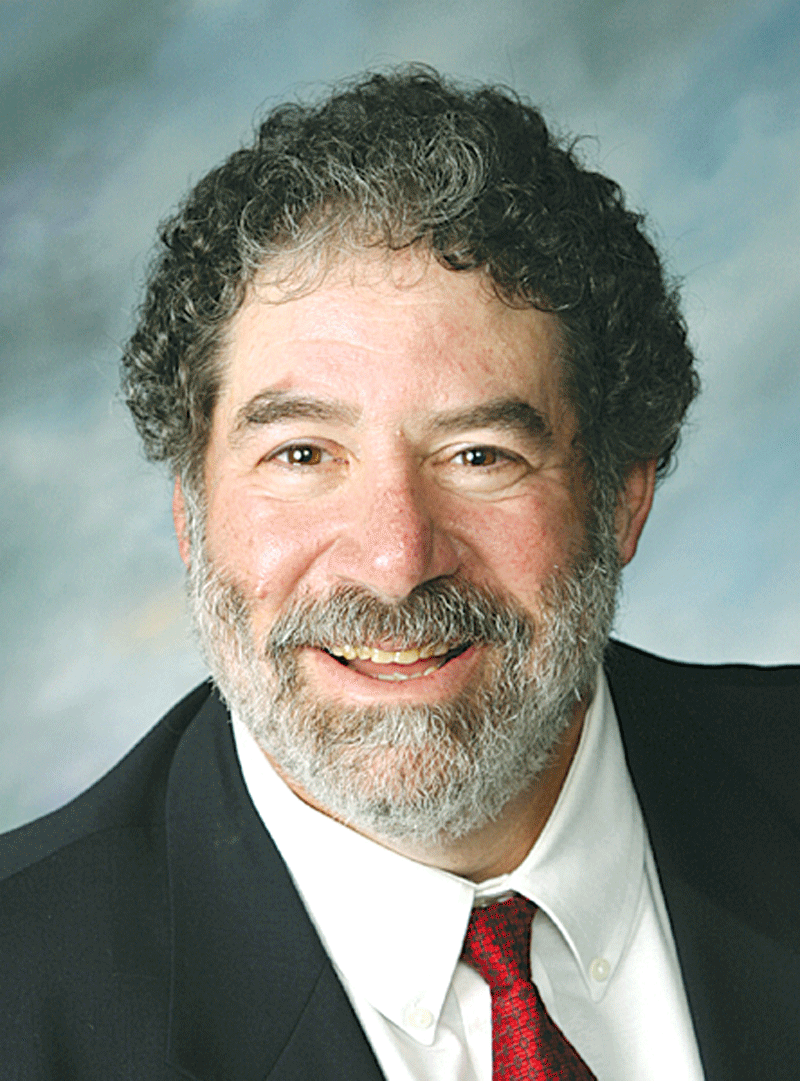
Construction Sections
There Are a Number of Financial Pros and Cons

Dennis G. Egan

Dennis G. Egan

Going green is all the rage lately. Political correctness almost dictates that waste be minimized and consideration be given to energy alternatives in most situations.
So, under what circumstances might “green” not be an attractive option for a business owner? When might going green have you seeing red?

Budget Considerations
While green buildings can result in significant energy efficiency and corresponding cost savings down the road, the upfront cost of green building materials can be significant. While cost is commonly greater in a green building project than the same costs associated with a traditional building project, the average increase is often less than traditionally believed.
For example, one recent study by the U.S. Green Building Council puts the average green building cost premium at slightly less than 2%, or $3 to $5 per square foot. Those on a tight budget might not be able to afford this increase, however, despite the prospect of lower energy costs in the future.
Additionally, it has been found that, with an increase in the number of green building projects, there is a corresponding reduction in the green-building cost premium. Obviously, the green-building cost premium can be, and often is, offset by the increased energy efficiency of green buildings and resulting reduction in energy costs. So you’ll have to pay more upfront to see the payoff later on.

Tax Credits and Financial Incentives
Recently, several tax credits, deductions, and other financial incentives have become available. For example, the Energy Policy Act of 2005 created the Commercial Building Tax Deduction, which provides an accelerated tax deduction aimed at reducing the initial cost of investing in energy-efficient building components. Under this program, owners of commercial buildings (or their tenants, if applicable) can deduct all or a portion of the cost of installing lighting, HVAC and hot-water components, windows, and building shell components in the year in which the new components are placed in service, up to a maximum of $1.80 per square foot.
Alternatively, partial deductions are available (up to a maximum of $0.60 per square foot) for improvements in any one of the energy-efficient components listed above. The deduction can be claimed for all qualifying projects as long as they are completed prior to January 1, 2014.
Additionally, the Energy Improvement and Extension Act of 2008 and the American Recovery and Reinvestment Act of 2009 expanded the business energy investment tax credit, which provides credits equal to 30% (with no maximum credit) of the cost of solar, fuel-cell, and small wind-turbine power systems, and 10% of the cost (with no maximum credit) for micro-turbines, geothermal power, and combined heat and power (CHP) systems. Minimum- and maximum-capacity requirements apply in some cases, so those wanting to take advantage of this credit should consult a professional to determine the project’s eligibility.
Alternatively, eligible taxpayers may receive a grant from the U.S. Treasury Department in lieu of taking a tax credit. Generally, to be eligible for the credit, the original use of the equipment must be made by the taxpayer, or the equipment must be constructed by the taxpayer. In addition, the tax credit is available only if the energy property is operational in the year in which the credit is taken.
For all of the above programs and incentives, you’ll have to shell out the money upfront, but if you can afford to do so, you may receive credits for the work and also enjoy reduced energy costs down the road.

Certification
One of the most recognized certifications that can be attained by builders, developers, building owners, and landlords is Leadership in Environment and Energy Design (LEED) standards set forth by the U.S. Green Building Council, which awards points based on building specifications. LEED certification can be achieved in a number of different areas, including but not limited to existing buildings (operations and maintenance), commercial interiors (leases/tenant improvements), core and shell (design for new core and shell construction), schools (construction of K-12 schools), retail (retail design and construction), and health care (planning, design, and construction for health care facilities).
LEED certifications are being recognized and adopted as the green benchmark in ever-increasing numbers by federal, state, and local governments. As such, many government entities are requiring that government buildings, both new and existing, as well as owned and leased, comply with LEED standards.
LEED-certification programs are pricey, though. A recent check online resulted in several different programs ranging from $595 to $2,500 for specific certifications. In addition, there are registration fees and credential-maintenance programs that can add up significantly. But as LEED certification becomes more mainstream and expected, contractors may find themselves obligated to make the investment to fulfill credentialing requirements.
Another available certification is Energy Star for commercial buildings, which is a government program administered by the U.S. Environmental Protection Agency and the U.S. Department of Energy. This certification differs from LEED certification in that Energy Star’s certification is relative to a building, rather than a person. The goal is to reduce the use of energy through energy efficient practices and products, and Energy Star uses a points-based system that awards points on a scale of 1 to 100.
Buildings must be verified by a professional engineer or registered architect, and associated costs must be paid, then buildings receiving a score of 75 or more receive the Energy Star designation. While there is no direct financial benefit from Energy Star certification, there is an implied status enhancement, and research shows that people generally prefer to do business with companies that are committed to doing their part to help the environment.

Dennis G. Egan Jr. is an associate with Bacon Wilson, P.C., concentrating in special education, business, and corporate law; (413) 781-0560; [email protected]

Agenda Departments

AIM Executive Forum
Sept. 16: Ralph de la Torre, chairman and CEO of Steward Health Care Systems, will be the guest speaker at the Associated Industries of Massachusetts Executive Forum at the Waltham Westin Hotel. He will discuss how his organization has grown into the largest integrated community health care organization in New England and its plans to reshape the health delivery landscape. Registration, which includes breakfast, is $55 per person, $90 for non-members, for the 7:45 to 9:15 a.m. program. To register, visit www.aimnet.org or call Julie Fazio at (617) 262-1180.

Classic Car Show
Sept. 18: The Chicopee Rotary Club will sponsor its 10th annual Classic Car Show in the Big Y parking lot on Memorial Drive in Chicopee. The event, staged from 9 a.m. to 3 p.m., recognizes over 30 different classes of cars with awards. The committee is soliciting for sponsorships as well as car registrations. Preregistration is $10, while registration that morning is $15. Trophies will be given in all categories, and all presenters will receive a dash plaque. Admission to the car show is free to the community and includes an airbag-deployment demonstration at noon. Refreshments will be available throughout the day. As a fund-raising event, the show raises money for the club’s many projects, including its Helping Hands Program, which provides holiday meals to economically disadvantaged families, and also supports the Polio Plus Project, which fights to eliminate polio throughout the world. Proceeds from this event will also directly benefit the Chicopee Elks Club’s annual Veteran’s Day Dinner. For more information or to obtain a registration, call Don Roy’s Auto Body at (413) 593-5010.

Trademarks Webinar
Sept. 20: Donald Holland, Esq. will present a webinar titled “Protect Your Trademarks” beginning at 11 a.m. for approximately 40 minutes. He is the senior partner at Holland & Bonzagni, P.C., based in Longmeadow. Webinar attendees will have the opportunity to ask specific questions at the end of the presentation. For more information or to register, visit www.hblaw.org/webinars or call (413) 567-2076.

STCC Ovations Series
Sept. 21: Mime Robert Rivest will lead off the Ovations special-events series at Springfield Technical Community College with performances scheduled at 10:10 a.m. and 11:15 a.m. in Scibelli Hall Theater. For more information or to bring a group, contact Ovations coordinator Phil O’Donoghue at (413) 755-4233 or [email protected].

Instant Issues Lunch Series
Sept. 21: The Hon. Patrick Binns, Canadian consul general to New England, will be the guest speaker at the Instant Issues Brown Bag Lunch Series, sponsored by the World Affairs Council of Western Mass. His noon lecture is titled “Beyond the Border: Canada-New England Relations.” Before coming to Boston in 2010, he served as Ambassador of Canada to Ireland. The event is planned at One Financial Plaza, community room, third floor, at 1350 Main St. (corner of Main and Court), Springfield. The cost is $5 for members, $15 with lunch; or $10 for nonmembers, $20 with lunch. For reservations prior to Sept. 19, call (413) 733-0110.

Filmmaker at STCC
Sept. 23: Lawrence Hott, documentary filmmaker, will talk about his upcoming work, The War of 1812, as part of the Ovations special events series at Springfield Technical Community College. His presentations are scheduled at 10:10 a.m. and 11:15 a.m. in Scibelli Hall Theater. In describing this war, Hott will also bring attendees into the world of the documentary film and its process. For more information or to bring a group, contact Ovations coordinator Phil O’Donoghue at (413) 755-4233 or [email protected].

Patents Webinar
Oct. 4: Donald Holland, Esq. will present a webinar titled “The Basics of Patents” beginning at 11 a.m. for approximately 40 minutes. He is the senior partner at Holland & Bonzagni, P.C., based in Longmeadow. Webinar attendees will have the opportunity to ask specific questions at the end of the presentation. For more information or to register, visit www.hblaw.org/webinars or call (413) 567-2076.

Western Mass. Business Expo
Oct. 18: Businesses from throughout Hampden, Hampshire, Franklin, and Berkshire counties will come together for the premier trade show in the region, the Western Mass. Business Expo, produced by BusinessWest, and staged at the MassMutual Center in Springfield. The show will feature breakfast and lunch programs arranged by the Affilaited Chambers of Commerce of Greater Springfield, nearly two dozen seminars on the business issues of the day, several presentations in the Show Floor Floor Theater on timely topics, and the sophisticated networking program known as Mine Your Business. The day will conclude with a networking social from 2 to 4 p.m. The cost for a 10-by-10 booth is $700 for members of all area chambers, and $750 for non-members; corner booths are $800 for all chamber members and $850 for non-members, and a 10-by-20 booth is $1,200 for all chamber members and $1,250 for non-members. For more information, log onto www.businesswest.com or www.WMBExpo.com, or call (413) 781-8600, ext. 100.
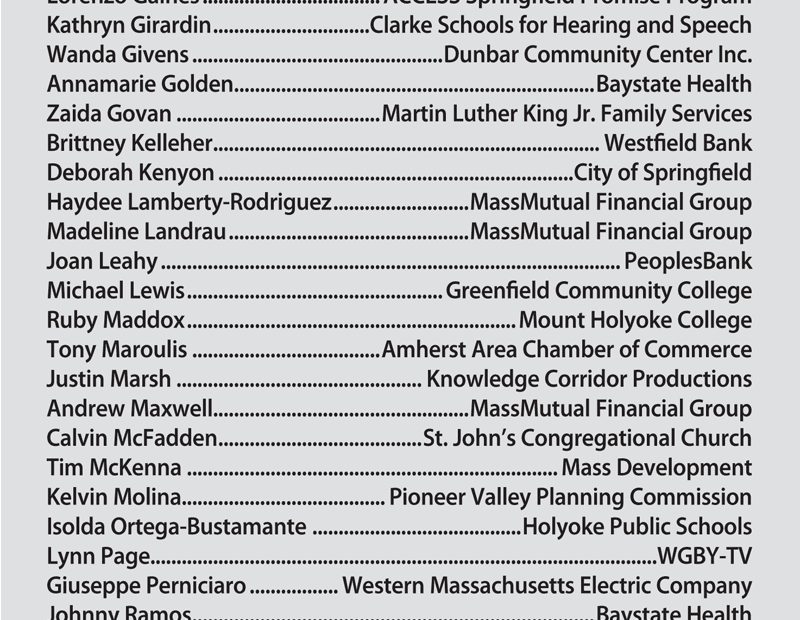
Trade Secrecy Protection Webinar
Oct. 20: Donald Holland, Esq. will present a webinar titled “Trade Secrecy Protection” beginning at 11 a.m. for approximately 40 minutes. He is the senior partner at Holland & Bonzagni, P.C., based in Longmeadow. Webinar attendees will have the opportunity to ask specific questions at the end of the presentation. For more information or to register, visit www.hblaw.org/webinars or call (413) 567-2076.

Cartoonist Lecture
Oct. 21: Cartoonist Leigh Rubin, renowned for the comic strip Rubes, will be the featured speaker as the Ovations special-events series continues this fall at Springfield Technical Community College. Rubes is syndicated in more than 400 newspapers and publications worldwide. His presentations, at 10:10 a.m. and 11:15 a.m. in Scibelli Hall Theater, will cover art, satire, and communication. For more information or to bring a group, contact Ovations coordinator Phil O’Donoghue at (413) 755-4233 or [email protected].

Entrepreneurship Lecture
October 27: Sue Morelli, chief executive officer and president of ABP Corp., will be the guest speaker at Bay Path College’s Innovative Thinking & Entrepreneurship Lecture Series in Longmeadow. Since joining Au Bon Pain in 1988, Morelli has worked her way up the ranks of the Boston-based, fast-casual bakery and café to become president and CEO in 2006. Under her leadership, the company now has more than 300 store locations, with almost 200 in the U.S. and the remainder in Thailand, India, South Korea, and the Middle East. She is currently leading a redesign of store interiors, a major menu transformation, and the opening of more than 30 new cafés per year. The lecture begins at 8:15 a.m.; a networking continental breakfast starts at 7:30 a.m. For more information, visit www.baypath.edu.

Serious Fun Event
Nov. 10: MassINC and CommonWealth magazine will host a seriously funny look back at the year in politics and media with pols, pundits, and the press. All proceeds will support MassINC’s CommonWealth Campaign for Civic Journalism as well as a scholarship program for those who are entering the field. The event is planned at the John F. Kennedy Presidential Library and Museum, with cocktails at 6 p.m. and dinner and the program starting at 7:30 p.m. For more information, visit www.seriousfun2011.org or contact Lauren Louison at (617) 224-1613 or [email protected].

Health Care Sections
How to Ease a Loved One’s Transition to the World of Assisted Living

Patrick Laskey

Patrick Laskey says educating families about what assisted living is — and isn’t — goes a long way toward relieving anxiety.

It’s something that seniors and their loved ones are often reluctant to talk about. But the topic of assisted living should be addressed long before it becomes necessary, say administrators and marketing coordinators at area retirement communities. But even for families who have had those conversations, making the transition from independent to assisted living can be challenging. Here’s how to make it a little easier — and why many residents find that what they once feared is a lifestyle they now love.
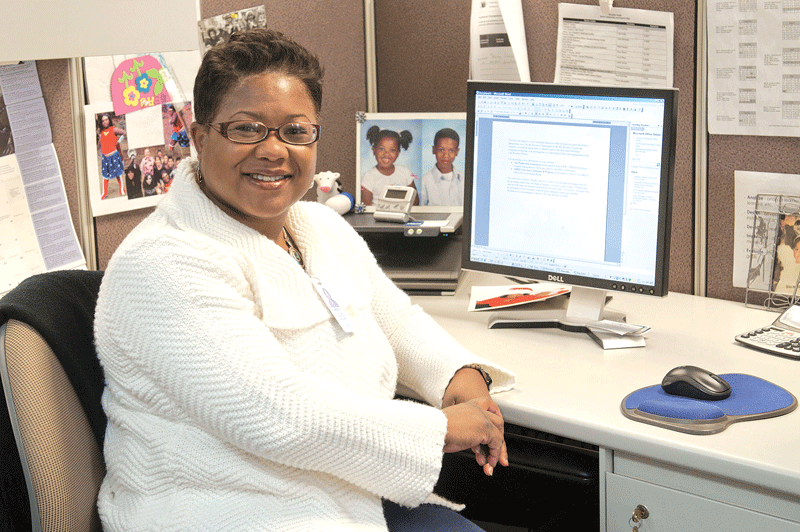
It’s something no one wants to think about, but should.
“In today’s society, seniors are very willing to talk about what they’re going to do early in retirement, and willing to talk about what they’ll do with their estate after they’re gone, but they’re very reluctant to have a conversation about when they will need care,” said Elena Leon, director of community relations for Orchard Valley at Wilbraham.
“They don’t know what needing care means: is it when they can no longer prepare meals? When they can’t walk so well, hear so well, see so well? When it’s no longer safe to walk out of the tub or shower?”
The fast-growing field of assisted living provides an opportunity for older Americans to enjoy the comforts of a home-like setting, plenty of activities and socialization, along with the help they might need — from bathing and dressing to housecleaning and medication reminders — to get through each day.
Yet, many are so attached to the house they might have called home for decades that leaving it is terrifying, even when diminished faculties, and perhaps the loss of the ability to drive, have left them isolated.
“If you’re sitting looking at the four walls or the TV all day, but your human interactions are lost, you may be staying at home, but what’s the value of that life?” Leon asked. “Are you living life, or just waiting for the end? The thing about assisted-living communities is, there’s a life to be lived, so let’s live it, not just look at the calendar and check off another day.”
Administrators at several area senior-care facilities had similar perspectives on the value of assisted living. But the transition from independent living to a different model can still cause plenty of anxiety for seniors terrified of giving up the familiarity of what they have, and families worried about an aging parent’s safety but confused about the care options available.
Patrick Laskey, administrator of Loomis Village in South Hadley, said the challenges of entering assisted living can vary greatly depending on the circumstances surrounding the transition.
“Some people come in crisis; they’ve been alone and independent, or with their spouse, and then some event happens that brings them to the hospital — some difficulty comes to light — and they suddenly need assisted living,” Laskey said. “That’s often the most difficult for residents and families because they’re the least prepared for it. They’re discharged from the hospital, and it’s, ‘oh my God, what are we going to do?’
“They’re under duress, because they haven’t planned it out,” he added, noting that it’s a good idea for families to begin thinking about such contingencies in advance, in case a loved one suddenly does need additional care.
Leon agreed. “I’m a big advocate of having a plan,” she told BusinessWest. “Otherwise, you’re waiting for a hip fracture, or a wandering incident with dementia, or some other precipitating incident that forces the move, and why put yourself and your loved one through that suffering? The last thing you want is to have this suddenly thrust upon you at the hospital bedside.”
In this issue, the BusinessWest explores the questions families must grapple with when a loved one needs more care than they can get at home — and why they shouldn’t put those questions off.

When a House Isn’t a Home

Mary Phaneuf

Mary Phaneuf says a house can become a prison for many seniors, and assisted living frees them to keep on living in a quality way.

Mary Phaneuf, regional marketing director of the Arbors, said it’s natural to want to stay in a house that might have been home for decades, but sometimes an older person needs some prodding to realize it’s no longer an ideal place to be.
“They say, ‘I want to keep that house,’ but when the house doesn’t benefit you anymore, it becomes a prison,” she said. “Assisted living opens up opportunities to keep on living in a quality way.”
What is changing is the public awareness of assisted living, a care model between independent senior housing and nursing homes that has come into prominence in the past 20 years, and will continue to grow as the Baby Boomers head into the retirement years.
“Adult children want to see their parents enjoying things, and they see they’ve lost that in their homes — their eyesight is bad, their hearing is bad, they can’t drive anymore, and when they’re home, they tend to isolate themselves,” Phaneuf said. “But when those opportunities are available to them again, they tend to blossom and enjoy life again.
“We don’t cure diseases, and we don’t prevent people from aging,” she added. “We don’t fix any of those things. But we can allow them to enjoy life to the best of their ability until they’re no longer with us. That’s what our goal is.”
But potential residents and families need to educate themselves first on the benefits of assisted living — and to do it well in advance of actually needing it, said Beth Vettori, administrator of Rockridge Retirement Home in Northampton.
“There’s a trend in society that people generally don’t start thinking about whether they need to move or need services until something happens that forces their hand,” she said. “So one thing assisted-living communities do to help facilitate the transition is to offer a lot of programs and informational sessions for families and potential residents.”
Education has become even more important in recent years, Laskey noted, considering that the trend — perhaps driven by economic strains — seems to be people waiting longer to make the move.
“They feel a need to stay in their houses as long as possible, and they’re presenting themselves with a greater number of challenges, in terms of their own health and support,” he explained. “They may have two, three, four chronic medical conditions, and they’re coming in with what we call a higher acuity level, needing more support than in the past.”
Laskey pointed out that educating families about what assisted living is — and isn’t — helps ease anxieties simply by painting an accurate picture of what to expect. And it’s an important part of the process, since the term ‘assisted living’ has been used in the elder-care community to describe a wide range of models, from home care to skilled nursing care.
For Loomis, “assisted living is residential care; it’s a residential environment, not a health care facility,” he noted. “There’s still a lot of misinformation — some people expect a health care facility, and even people who say ‘I want to be independent’ often have a desire for more medical support.
“So we do a lot of educating,” he continued. “Our approach to assisted living is to assist people with being more independent, not to take care of people. We want you to have the highest level of function, comfort, and safety, but people are still independent, and have rights of privacy, self-determination, and choosing their own providers. That’s our day-to-day philosophy here.”
Jacqueline Marcell, an author, speaker, and advocate for elder care issues, also argues for starting the conversation early — while the potential resident is still in good health — in an essay published at www.seniorhousingnet.com.
“Getting them used to the idea beforehand will make it easier when the time comes,” she writes, adding that the senior’s safety is the most important factor, so families should not be deterred by his or her reluctance to discuss the issue.
“If you know that they cannot remain in their home safely, don’t let your emotions override what you know needs to be done,” Marcell adds. “Don’t wait for a broken hip, a car accident, or a crisis call before you step in. Recognize that, when you were a child, your parents would have done everything possible to keep you safe. Now, as hard as it is, you have to be the ‘parent,’ and you have to make the best decisions for their safety.”

Moving Right Along
Even for someone who recognizes the need for assisted living, the move itself can be traumatic, Laskey said, especially if leaving behind a large house, as opposed to an independent-living apartment.
“A major barrier can be how they’re going to downsize,” he told BusinessWest. “That can intimidate a lot of people into avoiding the decision to move — they just have too much stuff.”
To that end, Loomis provides professional organizers to help wade through the downsizing process, which can be daunting, especially for someone who has lived in the same house for many years.
“You can’t fit a 13-room house into a two-room apartment, so you bring the most important things with you,” Leon said, adding that family members can be great helps in whittling down the pile to the most treasured possessions. “You don’t leave your life behind — you take it with you, and look forward.”
She admits it’s not an easy task for many Baby Boomers.
“I’ve moved a dozen times in my adult life, and the next generation [to retire] will probably know how to move, but this current generation, they didn’t move. They didn’t change careers; they purchased or built one home, and that’s still the home they’re in, and they don’t relate to the whole process of relocation. And they can become frozen with fear because it’s too large a concept to think about, and it’s easier to do nothing.”
Vettori stressed the importance of furnishing a unit with the resident’s favorite furniture and decorative items, but just as important is relieving their loved one as much as possible of the burden of the actual, physical move.
“I highly suggest making sure they set up the apartment, cottage, or suite beforehand, so when they person moves in, they’re not faced with that overwhelming sense of, ‘oh my goodness, look at all this stuff boxed up that I have to unpack.’ Instead, they have the ability to walk into a very familiar, very welcoming place.”
Even after the move, many seniors initially struggle with anxiety over this new life, but most adjust well, Vettori said, adding that residents tend to support newcomers with a welcoming committee or buddy system to get them active in their new community.
Laskey said a hospitality committee at Loomis takes new residents under its wing for the first week or so, taking them to dinner and events and basically making the transition as painless as possible.
“We’re not into bringing in people who don’t want to be here and don’t belong here,” he said. “But it can be traumatic when a person moves in; they can feel a loss of individuality, and some have trouble adjusting. That’s not abnormal. But most people stay, and, if you talk to them, most of them love it.”
Leon reported similar experiences at Orchard Valley.
Assisted living is “about safety and care, but also about that social element,” she told BusinessWest. “Aging is not kind, but we want to make it the best, most joy-ridden experience we can. We have to learn how to play again and take pleasure, and not just endure.”

Joseph Bednar can be reached at [email protected]

Manufacturing Sections
Company Makes Medical Instruments, Implants That Change Lives

John (left) and Steven Hicks

John (left) and Steven Hicks say they take pride in being on the leading edge of innovations in medical equipment.


When most people get together at a party or with friends and someone asks what they do, it sparks a brief conversation.
But when Steven Hicks, general manager of Thorn Industries Inc. in Springfield, tells people that he makes implants for knee, hip, and spine surgery as well as instruments used by doctors to perform the operations, people launch into detailed stories about their own medical histories.
“Someone will say, ‘I have one of those implants in my neck,’ ” he said, adding that he often shows them the tiny cervical plate that dangles from his keychain. “People have told me about big screws they have in their legs or other implants. The product may not be something we made, but is often something similar. My nephew had problems with his knees, and I was able to show him pictures of a cadaver part and the section of meniscus that was torn in his knee.”
In fact, Thorn Industries is a family business that Steven and his father, John Hicks, who gave birth to the company, take tremendous pride in. “We’re always on the leading edge of something new in the medical field, and we enjoy hearing these stories and being a part of this field,” Steven said. “It’s a very challenging business, but at the end of the day, you know that someone is using your products to better people’s lives.”
Thorn manufactures instrumentation and implantable surgical devices for the spine, knee, and hip using state-of-the-art computer numeric-controlled machinery. It also does its own laser marking, using a laser to mark parts for customers, as well as a process called passivation, which cleans instruments and implants with citric acid to remove imperfections in stainless steel or titanium.
“This business appeals to us, as it’s not something everyone can do,” Steven said. “You need the proper certification, which is difficult to obtain, and we work hand-in-hand with many design engineers on proprietary projects. We’ve done studies in our building on cadaver parts for knee surgery as well as on human feet and a cow’s spine.”

Taking Root
Thorn Industries was launched in February of 2002, after John moved from his job at the manufacturing company where he had worked for 33 years. “It was clear that it was time to go off on my own,” he said. He operated for a short period of time in Ludlow, but when Blackstone Medical Co. invited him to move his company into its facility at 90 Brookfield Dr. in Springfield, he embraced the opportunity for growth.
“They knew the medical business and needed someone to do small jobs for them,” John said, adding that he rented space in Blackstone’s modern plant, which contained state-of-the-art machinery.
At that point, his son Steven, who had started working at age 15 in the same company where his father spent three decades, joined him in the venture. Steven is a manufacturing engineer and had also worked in the field of research and development.
Their business included manufacturing parts for the aviation and firearms industries. But their medical knowledge, which was limited, grew quickly as they worked closely with Blackstone’s engineers and designers, and learned how to resolve issues that involved quality control with members of that firm’s engineering and quality department.
As time went on, Blackstone asked Thorn to expand its production manufacturing, which meant it had to make an investment in new and expensive computer numeric controlled machinery. The company received a grant for $36,000, which they triple matched in order to meet the stringent requirements it took to obtain an ISO13485 certification, which was necessary to allow them to produce medical devices used in the human body.
The added expense meant they needed to acquire more customers to make their investment worthwhile. But they have done so and met with real success.
Nine years later, Thorn is among leaders in the manufacturing of medical devices and instrumentation in Western Mass., and has less than a handful of competitors. Today, it works with about 15 clients and produces approximately 20,000 pieces each month.
The products they make are intricate and cross a wide range of needs within the health care field. In addition to tools used by physicians during surgery, “we work with people who harvest bone and tissue for transplants and want new instruments to do their work,” Steven said. “An engineer will call us and present an idea, and we help the firm develop it from prototype to production.”

Budding Venture
It’s not unusual for Thorn to have a request for a customized medical instrument to fit a specific doctor’s hand. The company also makes instruments and implants to accommodate different-sized patients, and Steven says the “fit, form, and function” of each piece must be precise.
“The size of a doctor’s hand can vary, and many want a tool that fits it exactly,” he explained, adding that physicians are concerned with aesthetics as well as fit and the ease of using a new instrument. “Engineers come to us with their wishes, and we are also called upon to make things in different sizes so they can accommodate surgeries in children as well as adults.”
This is no small feat, as every instrument or implant requires a new prototype. In addition, each one must undergo stringent testing to ensure that it meets those requirements for fit, form, and function without fail.
For example, screws used in surgery must fit exactly inside a stacked tolerance. “You can over-engineer something and still have the right fit and function. But if there is a design flaw, it could break if there is too much pressure put on by an instrument,” Steven said.
It takes two to five prototypes to create a finished design, with the number dependent on its complexity. Once that process is complete, the instrument or medical device is used in cadaver labs, and lengthy testing is required before it can be marketed.
This type of risk analysis is critical, John said, to ensure that accidents don’t occur during surgery.
John and Steven have both watched and worked alongside engineers who have performed surgeries under their roof on cadaver knees and feet, and figured out changes that needed to be made in an implant or instrument.
However, John makes it clear that the utmost respect is paid when cadaver parts are used.
“The people who work on them always take a moment of silence before they begin their surgery to appreciate the person,” he explained. “They will make a cut, then stop because they are extremely careful about what they do. We saw a surgery done on a knee that was scheduled to have four more surgeries after it left our company. It’s not as simple as people think.”
Nor is the production of these instruments and implants used in the human body.
After all modifications have been made to a design that are deemed necessary, it is frozen. “No changes can be made after that, which is why it is important to hash out problems so that, once it is being used in the field, the probability of failure is minimal,” Steven said.
At that point, doctors are trained in the use of the new equipment and/or implant. However, every piece that is manufactured must be marked by the manufacturer, so it can be traced in the event of a problem. “They need to be able to find out who made it and what processes and materials were used in the event that something goes wrong,” Steven said.
John explained that the tools used today are not much different than those used 100 years ago. But the designs have become more sophisticated, and custom fitting and new ideas make the industry one that continues to evolve.
For example, a medical device that has a history of becoming easily contaminated and has many different parts may be modified so it can be disassembled and the parts can be sterilized after each surgery. “Old designs are weaned out as engineers analyze how surgery can be done faster and more efficiently,” Steven said.

Scoping Things Out
The firm also continues to do work in the field of aerospace manufacturing as well as firearm production. But the bulk of its business is dedicated to helping improve people’s lives, which is accomplished with a staff of 12 employees and a team of support people.
“There are always new designs, and we have to keep a competitive edge,” Steven said. “We are always on the cutting edge in terms of equipment and personnel.”
Which makes for some really interesting conversations.

Opinion
The Glass Is More Than Half Full

There have been a lot jokes lately about people seeing a plague of locusts coming down State Street in Springfield — or what they would do if they did see one.
Likewise, there’s been more attempted humor concerning the notion that adversity builds character. If it does, most in this region would say we’ve got more than enough character, thank you.
Indeed, it’s been quite a year, and it’s far from over. The winter was long and brutal. The recovery … that should be put in the form of a question, as in ‘what recovery?’ Gas prices soared back up over $4 a gallon, and although they’re down a little, they remain a challenge to progress. Meanwhile, debt crises here and abroad have sent the stock market reeling in recent weeks and raised the specter of the dreaded double dip.
Then came the natural disasters: first the tornado, from which full recovery will take years, then the minor earthquake (no damage, but it shook people up, literally and figuratively), and then the tropical storm, which didn’t hit with full fury, but try telling that to many people in Franklin County.
So as 2011 heads for the three-quarter pole, many people are looking for the locusts, figuring they have to be next. However, while being pessimistic and cynical in this climate — both economically and meteorologically —  there is room for a little optimism. In other words, yes, things could be much worse, and they are in many parts of this country and other nations as well. Why see the glass as at least half full? Consider these reasons:
• Adversity does, indeed, build character, and out of the trials and travails of 2011, some positive energy and new sources of resiliency have been found. The tornado turned many sections of Springfield, West Springfield, and other communities upside down, but now there is a chance to rebuild and perhaps create momentum from new initiatives. Meanwhile, the sum of the natural disasters and other forms of turmoil (and survival of all of that) could create more needed confidence in the region — an ‘if we can make though all this, we can make it through anything’ mentality.
• The jobs market, while not robust, or anything approaching that description, is at least holding steady, with signs of progress. The cutbacks at Baystate Health and Milton Bradley have been the only real setbacks, while companies such as Smith & Wesson, Big Y, and others have been adding workers, and many businesses are seemingly on the cusp of having enough confidence to move forward with new hiring.
• The region continues to foster entrepreneurship through incubation efforts and mentorship programs that will eventually pay huge dividends for the Greater Springfield area. As we’ve said many times before, while it’s great to lure corporations that will bring hundreds of jobs to an area, the more likely scenario for growth is through small-business development, and this region is making great strides in efforts to encourage entrepreneurial thinking and help companies survive those ultra-challenging first few years.
• The ‘eds and meds’ sectors remain strong and show promise to become even greater forces in the local economy. Baystate’s Hospital of the Future is on schedule to open soon, and most all area health care providers have survived the recent economic upheaval more or less intact. The pace of hiring has slowed, but it is still solid. On the higher-education side, schools like American International College have enjoyed strong growth (see story, page 10), while all the institutions in the region have contributed critical resources — especially their student populations — to help spur economic development in many forms, both in individual communities such as Westfield, Chicopee, and Holyoke, and across the region as a whole.
We haven’t even mentioned the high-performance computing center in Holyoke, the emerging ‘green’ business sectors, and the strong possibility that a casino will be built in Palmer or Holyoke over the next several years.
Add it all up, and there is indeed reason for optimism, not merely cause to look over the hill for locusts.

DBA Certificates Departments

The following Business Certificates and Trade Names were issued or renewed during the month of August 2011.

AGAWAM

Bonavita Law Office
1775 Main St.
Anthony Bonavita

Jack Patterson Medical Sales
77 Debra Lane
Jack Patterson

Pondside Garage
704 Springfield St.
John Warren

Pure Power RF
50 Witheridge St.
Fred Stefanik

Silver Leaf Enterprises, LLC
36 Danny Lane
Bradley Wright

AMHERST

Game Central Station
220 North Pleasant St.
Younis Ghulam

Minuteman Cleaners Inc.
5 Pray St.
Moon J. Chang

V.I.D. Nail
181B University Dr.
Huy N. Thai

Winsome Smiles
50 Autumn Lane
Danielle Intile

CHICOPEE

Accounting Solutions
64 Robin Ridge Road
Traci Hopkins

Cosmo Cut & Style Salon
1890 Memorial Dr.
Viet N. Nguyen

Royal Coach Limousines, LLC
658 Fuller Road
John Garcia

HADLEY

Easy Mattress Stores, LLC
206 Russell St.
Paul Neto

Gomes Homes Health Care
18 New Lane
Ester Gomes

HOLYOKE

All in One Plus
92 Suffolk St.
Javier Rosa

B & V Automotive
101 North Bridge St.
Robert S. Vogel

M & L Car Audio & Clothing Accessories
119 High St.
Miguel A. Vega

Points East Accupuncture and Herbal Medicine
4 Open Square Way
Mark Mamuszka

The Hair Place
103 Chapin St.
Ronald E. Holland

NORTHAMPTON

L & T Respess Books
136 West St.
Linwood Respess

Pilar’s Cleaning Service
51 Con St.
Pilar Serpa

Kelli @ Continuous Creations
30 North Maple St.
Kelli Richardson

SOUTHWICK

Dang Shades
45 Rosewood Lane

Jimmy’s Pizza
81 Point Grove Road
K & S Restaurant Group, LLC

NWST, LLC
267 Hillside Road
Ralph Depalma

Silvercrest Farm
233 Mortvining Road
Paul Gregoire

Splatter Room
108 Congamond Road
Jeffrey Caron

SPRINGFIELD

M & P Cleaning Services
49 Ranney St.
Michely Acevedo

Omar’s Fashion
469 Main St.
Djibrilla Bonkano

Orchard Medical Associate
835 Worcester St.
Kevin Epstein

P & J Rentals
31 Florida St.
Jack Rodrigues

Pea Soup Catering
183 Emerson St.
Dianna Lemieux

Quick Pic Convenience Store
1343 Carew St.
Amir M. Paracha

Radiance Wellness Center
108 Dartmouth St.
Will G. Llewellyn

Santos Home Repair
76 Edgement St.
Jesus M. Santos

Smartalk
351 Bridge St.
Leonard Weitz

The Onlinebiz
55 Revere St.
Ormond Husbands

Town Pizza
459 Main St.
Waqar S. Khokhar

Travel Adventures
26 Hanson Dr.
Yelena Vatnikova

Wicked Tan
1760 Boston Road
Anna M. Major

WESTFIELD

DAS Alarm Systems Inc.
845 Airport Industrial Park Road
David Schenna

Debbie Reynolds Dance Academy
132 Elm St.
Debbie Reynolds

Guidance for Inner Peace
509 Southwick Road
Janice Pagano

Mayflowers at Pilgrim Candle Market Place
16 Union Ave.
Melissa Fouche

Menard Construction & Design
46 Stuart Place
Dennis Menard

P & C Group
50 Castle Hill Road
Paul Byrne

Patriot Freightliner Western Star, LLC
910 Southampton Road
Deborah Barss

Real China
116 Elm St.
Bizhen Zhu

Roberts Construction
31 Valley View Dr.
Jeffrey Roberts

Salvador’s Engraving and Awards
22 North Cherry St.
Bernadette Salvador Toomey

Shaker Farms Country Club
866 Shaker Road
Daniel Kotowicz

Tina Escalante Cleaning Service
80 George St.
Tina F. Escalante

TSC International
20 Camelot Lane
Todd S. Cieplinski

Western Mass Alliance
21-25 Montgomery St.
Brandon Palmer

Yellow Stonehouse Farm
354 Root Road
Constance Adams

WEST SPRINGFIELD

Absolute Transportation
59 Day St.
Ismat Niyazov

Agawam Melody Band
181 Park Ave.
George W. David

Anthony Wheeler Real Estate
116 Cedar Woods Glenn
Anthony Wheeler

Avada Hearing Care Center
459 Riverdale St.
Edbar Corporation Inc.

Capital Enterprises
172 Harwich Road
Arthur A. Arena

Discount Medical Depot, LLC
70 Windsor ST.
John Crean

Entre Computer Center
138 Memorial Ave.
P.C. Enterprises Inc.

HGL Transport
59 Lowell St.
Latipsha Kaimov

Kozar Realty, LLC
70 Greystone Ave.
Steven Kozar

LTG, Inc.
41 Oleander St.
Rachel L. Aibee

Mass Trans Insurance Agency
54 Oleander St.
Roman Shtetan

Music Tuitions
66 Irving St.
Mera Goroshit

Quality Appraisal Company
73 Rogers Ave.
Donald C. Pinkerman

The Friendly Barber Shop
90 Elm St.
Daniel V. Dineen

The Klassic Beauty Spot
2003 Riverdale St.
Sukhpal Kaur

Company Notebook Departments

HNE Files for Decrease in Premium Rates
SPRINGFIELD — Health New England (HNE) recently filed for a decrease in rates effective Oct. 1, 2011. HNE is the only plan in the state to have filed for a decrease. Juan Campbell, vice president of sales, noted in a statement that, over the past 16 months, HNE has experienced a “slowing in the rate of increase in costs and lower utilization of services which has lowered the overall medical trend.” Campbell added that medical trends drive approximately 90% of costs, while 10% covers administrative costs. “We are pleased to be in a position to pass on a reduction to individuals and employers,” he said. HNE, a provider-sponsored plan, is majority-owned by Baystate Health (approximately 97%), and the remaining 3% is held by independent practicing physicians in Western Mass. “We believe that to be successful in controlling health care costs requires a partnership between the health plan, the health care delivery system, and engagement with the member/patient,” added Peter Straley, HNE president and CEO.

Mercy Medical Center Scores High in Two National Rankings of Hospitals
SPRINGFIELD — Mercy Medical Center has been ranked in U.S. News Media & World Report’s “Best Hospitals” rankings, available online at www.usnews.com/besthospitals. The rankings, annually published by U.S. News for the past 22 years, will also be featured in the U.S. News Best Hospitals guidebook, which will go on sale August 30. The latest rankings showcase 720 hospitals out of about 5,000 hospitals nationwide. Each is ranked among the country’s top hospitals in at least one medical specialty. Mercy ranked as high-performing in urology. “At Mercy Medical Center, we continuously strive for clinical excellence through the delivery of high-quality care. The U.S. News and World Report’s ranking of Mercy Medical Center among the nation’s best hospitals provides additional validation of our team’s success in providing the highest quality of patient care,” said Daniel Moen, president and CEO of the Sisters of Providence Health System. In other news, Mercy Medical Center has once again been recognized as a Top 100 Community Value hospital by Cleverley + Associates of Columbus, Ohio, a leading health care financial consulting firm specializing in operational benchmarking and performance-enhancement strategies. Mercy’s designation  is noted in the independent organization’s recent publication, State of the Hospital Industry — 2011 Edition. “The concept of health care value has become increasing important to payers, employers, and individuals, not just here in Massachusetts, but also across the country,” said Moen. “Mercy Medical Center’s reputation for providing high quality care at a reasonable cost has again been independently validated by the presentation of both the Community Value 100 and Community Value Five Star Awards. At  Mercy Medical Center, we believe that providing high-quality care is the right thing to do for our patients. As experts in medical economics have demonstrated, high-quality care actually costs less.”

Baystate Medical Center Recognized as a ‘High-performing Hospital’ in Report
SPRINGFIELD — Baystate Medical Center is recognized as Massachusetts’ top hospital outside of Boston based on the most high-performing specialties, according to the latest edition of the U.S. News Media & World Reports 2011-12 Best Hospitals rankings. The rankings, annually published by U.S. News for the past 22 years, listed Baystate Medical Center as “high-performing” in the following specialties: cardiology and heart surgery, diabetes and endocrinology, gastroenterology, geriatrics, gynecology, nephrology, orthopedics, pulmonology, urology, and ear, nose, and throat. The latest rankings showcase 720 hospitals out of about 5,000 hospitals nationwide. Each is ranked among the country’s top hospitals in at least one medical specialty and/or ranked among the best hospitals in its metro area. “We are proud to be recognized by U.S. News and World Report for the quality of care we provide to patients right here in Western Mass. Baystate Medical Center has invested significantly in our quality and safety programs, and we are gratified by this recognition,” said Dr. Evan Benjamin, the hospital’s senior vice president of Healthcare Quality.

Big Y Opens New Store in Meriden
SPRINGFIELD —  State and community officials attended a cake-cutting ceremony Aug. 25 as Big Y Foods opened its newest World Class Market at 533 South Broad St. in Meriden, Conn. The 55,500-square-foot market was completely refurbished after being vacated by its former operator. The new Big Y reflects today’s modern supermarket standards along with an in-store pharmacy, prepared meals section, and eat-in café. Bowdoin Construction of Needham served as general contractor for this expansion in conjunction with several local subcontractors for the completion of the $3 million project. As part of Big Y’s grand reopening celebration, 15 schools in Meriden will each receive a check for $500 as part of the company’s longstanding commitment to education.

WMECo, Employees Assist Tornado Victims
SPRINGFIELD — Western Massachusetts Electric Co. (WMECo) and its employees recently contributed $28,600 to the American Red Cross Pioneer Valley Chapter and the Salvation Army to assist victims of the severe storms and tornado that struck Western Mass. on June 1, and for future disaster relief initiatives. “Many of our customers experienced unprecedented losses and disruptions to their lives,” said Peter Clarke, WMECo president and CEO. “We’re privileged to be able to help those organizations that are providing such essential services to the residents of the affected communities.” A check for $13,600 will be presented to the Red Cross, and $15,000 will be donated to the Salvation Army. The contributions are from WMECo employees; members of the Greater Springfield Reliability Project team, including its contractor, Burns & McDonnell; and corporate donations.

Chicopee Savings Bank Awards Scholarships
CHICOPEE — The Chicopee Savings Bank Charitable Foundation recently awarded six scholarships, each for $3,000, to eligible high-school students attending one of eight participating high schools within the market area. Scholarships were awarded to Amanda Pierce, graduate of Ware Jr./Sr. High School; Allison O’Shea, Chicopee High School; Kyle Benoit, Ludlow High School; Kaitlyn Baranowski, South Hadley High School; Trent Domingos, Chicopee Comprehensive High School; and Alyssa Sawyer, West Springfield High School. For the fifth year, this program replaced the Chicopee Savings Bank Medallion Scholarship Program, which was established in 1976 in conjunction with the nation’s bicentennial celebration. After 30 years in existence, an estimated $80,000 was awarded to high-school students residing in Chicopee.

Credit Union, CES Create Partnership to Assist Students
AMHERST — The UMass Five College Credit Union and the Collaborative for Educational Services (CES) have formed a unique partnership to provide loans to eligible students enrolled in the CES educator licensure and graduate programs. The collaborative offers programs leading to initial licensure in a wide variety of subjects, including high-need areas such as special education, English as a second language, science, and math. The loan offers a variable interest rate and terms up to seven years. Payment deferments are also available. The maximum loan amount is $20,000. Students enrolled in any CES program are eligible to join the credit union and apply for the financing opportunity. “Over the next few years, many teachers who are Baby Boomers are going to retire, opening up a lot of jobs in the educational field,” said Phyllis White, director of programs for the Franklin Hampshire Career Center. “With the new loan program, students enrolled in the collaborative’s licensure programs can get the financial help they need to enter teaching or school administration careers.” For more information on the loan program, visit www.umassfive.org/ces_student_loan. For more about the CES licensure program, visit www.techinmass.org.

MassMutual Webcast Attendance Up
SPRINGFIELD — More than 800 retirement-plan advisors and sponsors attended the recent “Plan Health and Retirement Readiness” webcast hosted by PLANSPONSOR magazine and sponsored by MassMutual Retirement Services. The informational webcast addressed two key challenges facing the retirement industry today — the importance of measuring plan health and helping plan participants prepare for retirement. Presenters reviewed the critical characteristics of the new retirement plan and discussed ways that plan advisors and sponsors can help improve overall plan health, prepare participants for retirement, and fulfill their fiduciary responsibilities. An integral part of this framework, the MassMutual PlanSmart Analysis report, allows advisors and sponsors to gauge the health of a plan by assessing the percentage of employees likely to have enough income in retirement. And for participants, the RetireSmart Ready tool provides a simple way to assess their personal level of retirement readiness. “The outstanding attendance of this webcast signifies how important the topics of plan health and retirement readiness are to the retirement services industry today,” said Elaine Sarsynski, executive vice president of MassMutual’s Retirement Services Division and chairman and CEO of MassMutual International LLC.

Central Scores High in Ranking of High Schools
SPRINGFIELD — The Washington Post recently recognized Springfield Central High School among the top of all academic high schools in the United States, citing the school’s strong commitment to preparing students for college as a key factor in its rating. Principal Thaddeus Tokarz said the school is elated by the good news. “This is a huge accomplishment and a testament to all of the tireless hours our students and staff put in every day,” said Tokarz, adding that the ranking places Central in the nation’s top 5% of high schools. “It affirms we are on the right track toward our goal to be one of the top high schools in the country by 2015. This is a terrific step along the way.” The ranking by the Post places the school as one of the top 1,900 academic high schools in the country, and identifies the school as a national leader in college preparation. Over the past five years, the number of Central High School students enrolled in Advanced Placement courses more than doubled going from 222 to 517. And Central High School students’ performance on Advanced Placement examinations outpaces the national average. Advanced Placement classes are college-level courses that earn high school students college credit upon successful completion.

Law Sections
Autism Legislation: What It Means for Your Child

By MELISSA R. GILLIS, Esq. and DENNIS G. Egan Jr.

Melissa R. Gillis

Melissa R. Gillis

Imagine this: an issue so big that when the governor signs a much-anticipated bill into law so many parents and families want to view the historic event that the signing has to take place at Fenway Park in Boston, instead of the State House, to accommodate the crowd.
Well, that’s exactly what happened on August 3, 2010 when Gov. Deval Patrick signed House Bill 4935 (an Act Relative to Insurance Coverage for Autism Spectrum Disorder, or ARICA) into law. As the crowd cheered, Massachusetts, finally having recognized the unfair and unreasonable burden imposed on families with children diagnosed with autism, became the 23rd state to pass such legislation.
Effective Jan. 1, 2011, private health-insurance plans, employees and retirees under the state plan, hospital service plans, and HMOs are now required to provide coverage of evidence-based, medically necessary autism therapies for diagnosed persons of all ages. After being deemed medically necessary by a doctor, coverage will include habilitative and rehabilitative treatments, psychiatric and other therapeutic care, diagnostic tests, applied behavioral analysis and health treatments, pharmaceuticals, and other care provided, prescribed, or ordered by a licensed physician or psychologist for a person on the autism spectrum, including speech, occupational therapy, and physical therapy. There is no age restriction for any of these treatments to begin or end.
Additionally, insurers cannot establish dollar-amount, annual, or lifetime service limitations on the required coverage that are less than that for other physical conditions, and they are prohibited from limiting the number of visits an individual makes to an autism-service provider. Implementation of ARICA is, however, based on each policy’s specific annual renewal date, so coverage goes into effect only when your company’s insurance plan renews after Jan. 1, 2011.
Dennis G. Egan

Dennis G. Egan

There are several types of plans, however, that are not subject to ARICA. These include self-funded plans, which are regulated by ERISA and therefore subject to federal laws, unless they comply with state laws as a matter of practice. Importantly, services received under MassHealth and CommonHealth are also not subject to ARICA.
Contacting your employer is the easiest way to determine if they are subject to this new law, and for those covered by MassHealth and CommonHealth, families with autistic children under the age of 9 can apply for the Mass. Children’s Autism Medicaid Waiver through the Department of Developmental Services. Additionally, if your plan is regulated by ERISA, the recently enacted federal health care reform contains language that will eventually cover autism treatment. Other caveats to the new law include a clause wherein insurers can opt out of providing coverage for three years if their costs rise by more than1% per year. However, this determination is to be made based on an independent review and not by the insurers themselves.
Opponents of ARICA and small-business owners argue that the cost of providing health care benefits to employees will become even more difficult for businesses already struggling to absorb rising plan premiums. Concerned that increased costs will ultimately cause business owners to offer less-quality health care packages or be reluctant to hire new employees who would be eligible for health insurance, they may have no alternative but to pass the cost along to employees.
ARICA leaves those who are skeptical asking, ‘what’s the catch?’ Many suspicious parents believe the insurance companies will use it as a way to deny claims and force parents to jump through a number of hoops before agreeing to cover services, or that some will simply give up trying. Others don’t want their children to be forced into a label of being on the autism spectrum disorder, and urge everyone to make sure there are proper medical assessments and treatments prior thereto, which seemingly is a catch-22 scenario in and of itself.
Yet advocates, including Autism Speaks, say this law is one of the most comprehensive in the nation, and will finally provide families with the relief desperately needed so that children can receive the therapies they deserve in order to meet their full developmental potential. Your child will no longer be denied, and parents will no longer have to pay out of pocket for health treatment if it’s deemed medically necessary because of an autism diagnosis. Other ARICA proponents argue that, until now, many parents were prevented from actually getting a diagnosis of autism for their child because of a lack of proper insurance coverage.
Under ARICA, educational services provided under an individualized education plan are unaffected. But while insurers are not required to pay for in-school services, studies show that, in other states that have similar legislation, towns and the states themselves end up actually saving money because, when children with autism receive appropriate treatment, more of them are likely to be able to participate in regular classes, thereby reducing the cost of expensive special-education services.
That said, as with any new law or significant change, time is required to work out the kinks, but generally speaking, Massachusetts has certainly made a huge step in the right direction with the acknowledgement that autism is a growing national health crisis, if not an epidemic, and that the time is now for insurance companies to assist families in ensuring their children get the proper treatment and care, just as they would for the flu or common cold.

Melissa R. Gillis, Esq. is an associate with Bacon Wilson, P.C. in the special education, family, and real estate departments; (413) 781-0560; [email protected]. Dennis G. Egan Jr. is an associate with Bacon Wilson, P.C, concentrating in special education, business, and corporate law; (413) 781-0560; [email protected]