Home Posts tagged Health Care (Page 6)
Law Sections
So What Does That Mean for Massachusetts Employers?

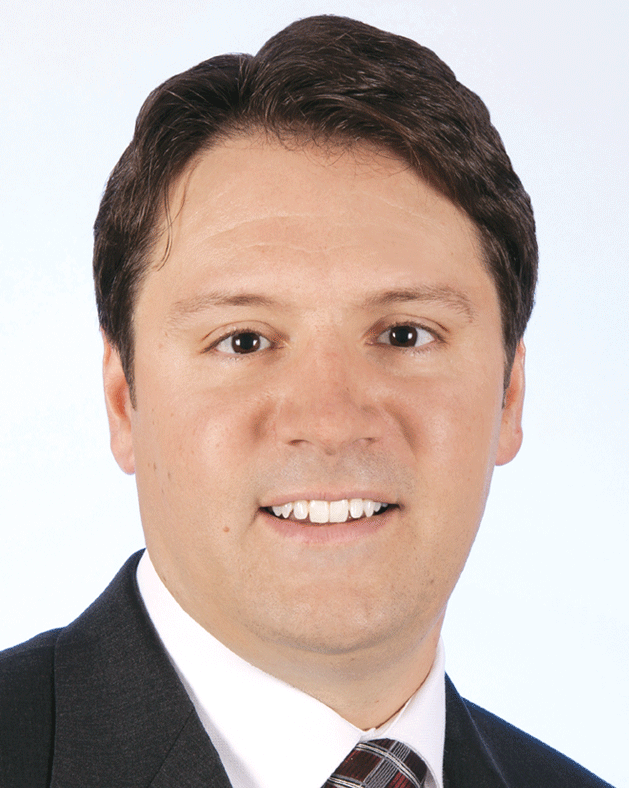
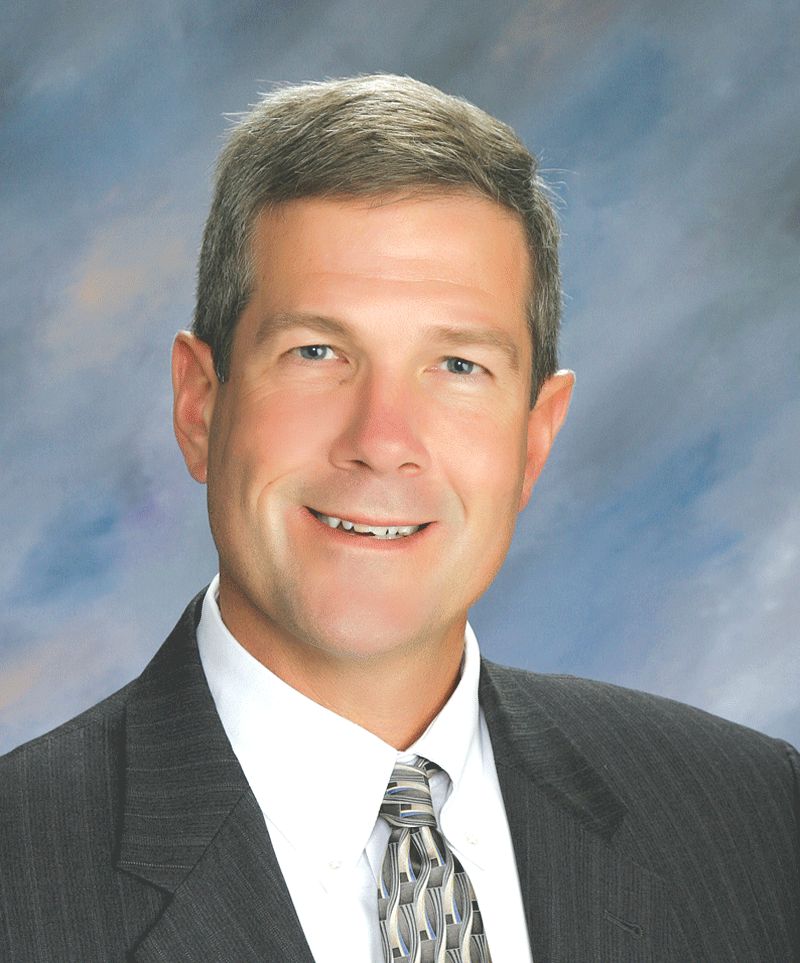
John S. Gannon

John S. Gannon

In its most significant decision of the year, and arguably the last decade, the U.S. Supreme Court recently upheld most of the Patient Protection and Affordable Care Act (PPACA), the controversial health care legislation also known as ‘Obamacare.’

But a blessing from the Supreme Court only seemed to take the health care debate to more contentious levels as Republican politicians, including presidential hopeful Mitt Romney, have promised to repeal the law. Even so, businesses cannot wait for a ceasefire in Washington. Employers must forge ahead and continue efforts to implement the law as provisions pertaining to the employer-employee relationship become effective.


The Court’s Ruling

At the forefront of the dispute over the PPACA’s legality was a constitutional challenge to the so-called individual mandate, which requires individuals to carry health insurance or pay a penalty. Opponents argued that Congress overstepped its authority when it enacted this part of the law. The Supreme Court majority disagreed, concluding that the individual mandate is a valid exercise of Congressional power to tax. “Because the Constitution permits such a tax, it is not our role to forbid it, or to pass upon its wisdom or fairness,” wrote Chief Justice John Roberts, author of the majority opinion.

Notably, the Supreme Court rejected the Obama administration’s principal argument in support of the individual mandate. Trying to avoid labeling the provision a tax, the government contended throughout that the mandate was a valid exercise of Congress’ power to regulate interstate commerce. That contention failed. “The individual mandate forces individuals into commerce precisely because they elected to refrain from commercial activity,” declared Roberts. “Such a law cannot be sustained under a clause authorizing Congress to regulate commerce.”

Massachusetts is viewed by many as the birthplace of the individual mandate. The state health care reform law includes a similar provision requiring residents of the Commonwealth to carry health insurance or pay a fine, although the formula for calculating the penalty is different from the method used under federal law.


Next Steps for Employers

Now that the uncertainty surrounding health care reform has been resolved, at least from a legal perspective, employers must be prepared to comply with significant provisions of the PPACA that kick in over the coming months. Starting this year, employer-sponsored group health plans will need to provide employees with a summary of benefits and coverage (SBC), which must include certain coverage details. Insurance carriers may provide the SBC notification for fully insured group plans, but plan administrators will have to provide the notification for self-funded plans.

The PPACA also requires employers to report the aggregate cost of employer-sponsored health coverage on Forms W-2. Employers that filed more than 250 Forms W-2 for tax year 2011 must ensure that the cost of coverage is reported next year. Smaller employers may be off the hook until 2014.

Beginning Jan. 1, 2013, the PPACA limits employee contributions to an FSA to $2,500 per year. The $2,500 FSA cap applies only to employee pre-tax contributions to a health care FSA, and does not affect employer contributions toward health care premiums, health savings accounts, health reimbursement arrangements, or other similar accounts.

Looking Ahead

In addition, savvy employers should begin planning to implement parts of the law set to take effect in 2014, including an employer mandate that penalizes businesses for failing to offer adequate health-insurance coverage.

The controversial employer mandate kicks in a little over a year from now. Starting in 2014, employers with more than 50 full-time employees must provide a minimum level of health-insurance coverage or pay a $2,000 penalty per full-time employee. As noted above, this concept is not entirely new to Massachusetts employers, many of which have been required to provide health insurance to employees since 2006, when the Commonwealth enacted its own version of health care reform. However, Massachusetts employers need to be aware that the penalty for failing to offer coverage is far greater under federal law.

The PPACA also requires that the coverage be ‘affordable’ and provide ‘minimum value.’ Coverage is considered affordable if the employee’s required contribution does not exceed 9.5% of household income. An employer provides a ‘minimum-value’ plan if the plan covers at least 60% of the participant’s covered expenses. If the coverage fails to meet these requirements, the employer may be subject to an excise tax of $3,000 if an employee declines to enroll in the plan.


PPACA Uncertainty

Calls to repeal the PPACA will echo throughout the 2012 electoral season. But rescinding the law is no small task. For starters, it will almost certainly take a makeover in the Oval Office. Until that day comes, employers need to be sure they are in compliance with the provisions of the PPACA that are set to go into effect this year and next. They also need start planning for the critical employer mandate set for 2014.


John Gannon is an associate in the Springfield labor and employment law firm of Skoler, Abbott & Presser, P.C., which represents employers exclusively and specializes in helping employers understand their obligations under state and federal employment law; (413) 737-4753; [email protected]

Agenda Departments

Massachusetts Chamber Business Summit

Sept. 9-11: The Massachusetts Chamber board of directors will conduct its annual Business Summit and Awards Ceremony at the Resort and Conference Center at Hyannis. The two-day meeting allows participants to meet with business professionals from across the state, as well as listen to state and local elected officials who will discuss the future of business in Massachusetts. Additionally, representatives from the Mass. Office of Economic Development will discuss loans, grants, and tax incentives available to business owners. Industry experts will also be on hand to discuss topics such as leveraging social media, search-engine optimization, and health care cost containment. The winners of the Business of the Year Award and the Employer of Choice Award will also be announced during the summit. For more information, call (617) 512-9667 or visit www.masscbi.com.


The Big E

Sept. 14-30: From live music and parades to sea lions and a circus, there’s something for everyone at the Big E. Country music artist Rodney Atkins will play a concert at the outdoor Comcast Arena Stage on Sept. 23 at 7:30 p.m. The Big E’s Mardi Gras Parade returns to the fair with eight custom-made floats specially designed and built by the Kern Companies of New Orleans. The Big E Super Circus features aerial daredevils the Marinofs, the wonder dogs of David Rosaire’s Perky Pekes, the equilibristic ability of Dany Daniels and Edina, comedy, and more. In addition, the Big E will feature a show with the Peking Acrobats, horse shows, the U.S. Freestyle Motocross National Championship series, hypnotist Catherine Hickland, the Sea Lion Splash show, and much more. Look for details and show times at www.thebige.com. Gates open each day at 8 a.m., and building exhibits are open 10 a.m. to 10 p.m. The Avenue of States is open 10 a.m. to 9 p.m., Storrowton Village is open 10 a.m. to 9 p.m., Craft Common is open 10 a.m. to 10 p.m., and the Midway is open Sunday through Friday, 11 a.m. to 10 p.m., and Saturdays, 10 a.m. to 11 p.m.


World Affairs Council Annual Meeting

Oct. 10: Hampshire College President Jonathan Lash will speak at the World Affairs Council of Western Mass. Annual Meeting & Dinner in the Mahogany Room of the Springfield Sheraton Hotel in downtown Springfield. More details will be forthcoming. Lash is an internationally recognized expert on practical solutions to global sustainability and development challenges. Before he became president of Hampshire College in 2011, he served as president of World Resources Institute (WRI), an environmental think tank with offices in eight countries and partners in more than 50 countries. WRI is an international leader on issues ranging from low-carbon development to sustainable transportation. From 1993 to 1999, Lash was co-chair of the President’s Council on Sustainable Development, a group of government, business, labor, civil-rights, and environmental leaders appointed by Bill Clinton that developed visionary recommendations for strategies to promote sustainable development. He played a key role in the creation and success of the U.S. Climate Action Partnership, which in 2007 issued the highly influential “Call to Action” on global warming. Prior to WRI, Lash held posts as director of Vermont Law School’s Environmental Law Center, Vermont secretary of Natural Resources, and Vermont commissioner of Environmental Conservation, as well as a federal prosecutor. For more information on the event, call (413) 733-0110.


Western Mass.

Business Expo

Oct. 11: BusinessWest will again present the Western Mass. Business Expo. The event, which made its debut last fall at the MassMutual Center in downtown Springfield, will feature more than 180 exhibitors, seminars, special presentations, breakfast and lunch programs, and the year’s most extensive networking opportunity. Comcast Business Class will again be the presenting sponsor of the event. Details, including breakfast and lunch agendas, seminar topics, and featured speakers, will be printed in the pages of BusinessWest over the coming months. For more information or to purchase a booth, call (413) 781-8600, e-mail [email protected], or visit www.wmbexpo.com.


40 Under Forty Reunion

Nov. 8: BusinessWest will stage a reunion featuring the first six classes of its 40 Under Forty program. Details on the event will be forthcoming. What is known is that it will be staged at the Log Cabin Banquet & Meeting House in Holyoke, and will be open only to 40 Under Forty winners, sponsors, and their guests, as well as judges of the first six contests. For more information on the event, call (413) 781-8600, or e-mail [email protected].

Briefcase Departments

GSCVB Touts Discounts in Updated WOW Value Book

SPRINGFIELD — The Greater Springfield Convention & Visitors Bureau (GSCVB) has produced a new edition of the WOW Value Book, a collection of discount coupons for several of the Pioneer Valley’s leading attractions, restaurants, shops, and more. Offers include discounted admission prices, free restaurant items with the purchase of entrée selections, and shopping discounts. More than 12,500 copies of the dollar-bill-sized book have been printed. Each of the offers highlighted in the coupon book are also available online by visiting www.valleyvisitor.com and clicking “Download WOW Values.” The book offers more than $100 in total savings. According to GSCVB President Mary Kay Wydra, “we got a terrific response to the earlier edition of the WOW Value Book that we released several months ago, and it was our plan to have subsequent editions to allow our seasonal attractions to participate. We created the book for people who came to the region to attend conventions and meetings, to encourage them to visit our restaurants, shops, and attractions in their free time. It also came in handy for people who couldn’t download and print the coupons on our Web site.” Pioneer Valley residents who would like a copy of the WOW Value Book should email [email protected] and provide their name and mailing address, or call (413) 787-1548. The book’s participants include: Adolfo’s Ristorante, Artist Square Group Art Gallery, Bright Nights at Forest Park, CityStage and Symphony Hall, Frigo’s Foods, the Handbag Outlet, La Fiorentina Pastry Shop, Mana Iguana’s, Nadim’s Mediterranean Grill, the Naismith Memorial Basketball Hall of Fame, Petra Hookah Lounge, Springfield Museums, the Student Prince Café and the Fort Dining Room, Zonin’s Deli, and the Zoo in Forest Park, all in Springfield; the Pizza Guy and Six Flags New England in Agawam; the Eric Carle Museum of Picture Book Art and the White Hut in Amherst; Lee Premium Outlets in Lee; the Loft Restaurant & Lounge in Northampton; Renew.calm, Storrowtown Tavern & Carriage House, and the White Hut in West Springfield; Horizons Restaurant & Bar in Wilbraham; the Connecticut Science Center in Hartford; and Friendly’s locations throughout the Pioneer Valley.


Survey: Employers Increase Health and Wellness Benefits

ATLANTA — More employers are offering benefits that encourage employees to improve their health, according to a survey released by the Society for Human Resource Management (SHRM) at its 2012 Annual Conference and Exposition in Atlanta. Over the past five years, benefits that reward employees for improving their health have jumped — a sign that organizations are looking for ways to cut business costs and recognize that employees value these benefits. For example, the percentage of employers offering health and lifestyle coaching jumped from 33% in 2008 to 45% in 2012, and rewards or bonuses for completing a health and wellness program increased from 23% in 2008 to 35% in 2012. “Employers recognize that providing employees with the opportunity to improve their health can increase morale, confidence, and productivity,” said Mark Schmit, vice president of research at SHRM. “Organizations continue to look for ways to manage costs as the economy slowly improves. Benefits that encourage healthier behavior are a cost-effective way to keep up employee morale, while healthier employees also help decrease health care costs to employers and employees.” SHRM’s 2012 Employee Benefits Survey found that, while most employee benefits stabilized this year, 73% of HR professionals reported that the economic downtown negatively impacted employee-benefit offerings (11% to a large extent and 62% to some extent). This is more or less the same as in 2011, when 77% said the economy negatively affected benefits to some or a large extent. Because of the economy and recent employment-related legislation, many employers have switched to benefits that shift primary responsibility and control to employees. For example, more employers offer defined-contribution retirement-savings plans (92%) than defined-benefit pension plans (21%) in 2012, putting the impetus on employees to manage their own retirement savings instead of relying on employer-provided pensions. “By shifting primary responsibility in controlling certain health care and financial benefits, employers are recognizing a shift in workplace culture,” said Schmit. “The new plans allow employees have more control over how they save for retirement and manage their health, while reducing costs for employers. These plans are also more flexible, and thus more attractive, to employees who will likely not spend an entire career with one organization.” Employer spending on benefits remained stable this year, with organizations spending, on average, 19% of an employee’s annual salary on voluntary benefits, 18% on mandatory benefits, and 10% on pay for time employees did not work. Paid-time-off plans have become more  popular; more than half of organizations (51%) provide paid-time-off plans, a combination of traditional vacation time, sick leave, and personal days in one plan, up from 42% in 2009. For more survey data, visit shrm.org/surveys.


Construction Backlog Bounces Back in

Second Quarter

WASHINGTON, D.C. — Associated Builders and Contractors (ABC) reported that its Construction Backlog Indicator (CBI) rose 4.3% in the second quarter of 2012 after declining the two previous quarters. Despite the quarterly expansion, CBI is 0.3 months, or 4.2%, below the second quarter of 2011, and progress in the Northeast region of the U.S remains sluggish. CBI is a forward-looking economic indicator that measures the amount of construction work under contract to be completed in the future. “The CBI accurately predicted both the broader economic softness experienced during the first half of 2012, as well as a flattening of the nation’s non-residential construction recovery,” said ABC Chief Economist Anirban Basu. “The latest CBI data is now projecting gradual acceleration in non-residential construction spending, and perhaps a slight increase in the overall pace of construction activity going forward. Unfortunately, any improvement in non-residential construction activity is likely to remain modest given the ongoing uncertainty regarding America’s fiscal cliff — a number of tax increases and spending cuts that take effect at the end of the year — as well as European sovereign-debt issues and increasingly volatile energy prices. While there is pent-up demand for new construction in the power, manufacturing, and infrastructure segments, the level of economic and political uncertainty remains far too elevated to permit more aggressive non-residential-construction spending recovery in the near term.” During the second quarter of 2012, the Northeast had the smallest gain in construction backlog at 0.05 months for the quarter, and is now at 7.28 months. Across the U.S. average construction backlog rose for all monitored industry segments after declining the two previous quarters. The infrastructure segment registered the largest quarter-to-quarter construction backlog increase, up 1.4 months to more than 10 months — the first time infrastructure backlog has been above 10 months since the second quarter of 2010. Construction backlog in the heavy-industrial category is at its highest level since the first quarter of 2011, but at the lowest level of all the industry segments at 5.92 months. Construction backlog in the commercial and institutional segment is 0.85 months lower than one year ago, and now stands at 7.78 months.


Prices of Construction Materials Decline Again

WASHINGTON, D.C. — Prices of construction materials declined 0.7% in July, according to the Aug. 14 Producer Price Index report released by the U.S. Department of Labor. On a yearly basis, construction materials prices are down 0.6% — the first year-over-year decline since November 2009, when non-residential construction spending was at its lowest point. Non-residential construction materials prices also are down, falling 0.9% for the month and 1.2% for the year. Prices for iron and steel dropped 3.7% for the month and are 9.7% lower on a yearly basis. Softwood lumber prices fell 3.7% in July, but are still 5.9% higher than in July 2011. Steel-mill product prices decreased 2.8% for the month and are down 5.9% year over year. Prices for fabricated structural metal products slipped 1% for the month and are up 0.1% during the past 12 months. Prices for prepared asphalt, tar roofing, and siding surged 5.4% for the month, but are still down 3.8% year over year. Non-ferrous wire and cable prices increased 0.5% for the month, but are down 8.9% from July 2011. Prices for concrete products are up 0.3% for the month and are 1.8% higher year over year. Prices for plumbing fixtures and fittings inched up 0.1% in July and are 1.2% more expensive than one year ago. Crude-energy-material prices increased 0.6% in July, the first monthly increase since February 2012. Year over year, crude-energy-material prices are down 19.1%. Overall, the nation’s wholesale-goods prices increased 0.3% for the month and are 0.5% higher than in July 2011. The report “should be viewed by the non-residential construction industry as good news,” said Anirban Basu, chief economist at Associated Builders and Contractors. “Prices of a number of key inputs declined significantly last month, including steel-mill products, iron and steel, and softwood lumber. Lower construction materials prices translate into more attractive project pro-formas, which in turn make it more likely that a project will be financed and move forward. While it is true that last month’s decline in materials prices is a reflection of a still-sluggish economic environment, there are reasons for growing optimism. For example, much of the economy’s lackluster performance can be attributed to ongoing uncertainty emerging from Washington, D.C., including the looming fiscal cliff. If Congress acts soon to create greater certainty around federal budgetary and taxation issues, the level of business certainty would increase meaningfully. That would result in the availability of more risk-seeking capital to finance projects. Anecdotal and survey information indicate that bankers are becoming more aggressive in their lending. Lower and more stable materials prices are associated with less risky construction, and permanent loans and are more likely to attract capital to construction projects. This means that, for the first time in several months, more robust recovery in non-residential construction spending is conceivable. However, Congress and the administration still must act appropriately before capital becomes sufficiently risk-seeking.”

Health Care Sections
Care @ Home Keeps Clients Independent and Moving to the Beat

Sherill Pineda

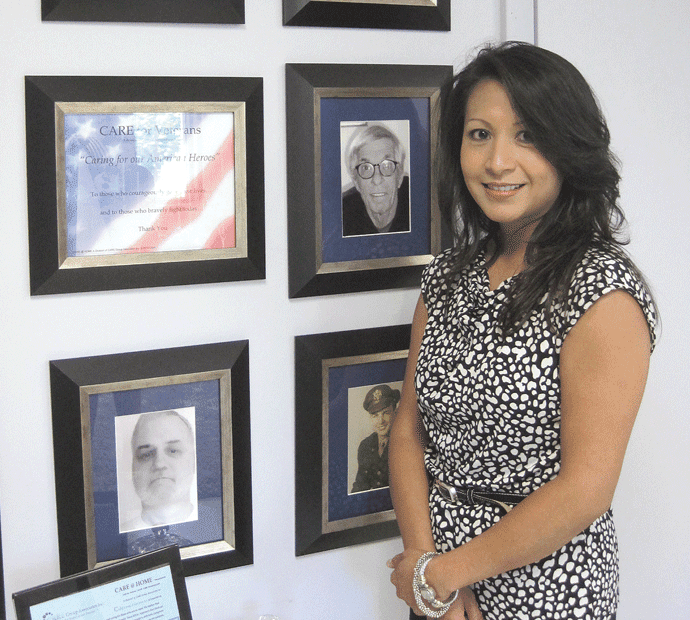
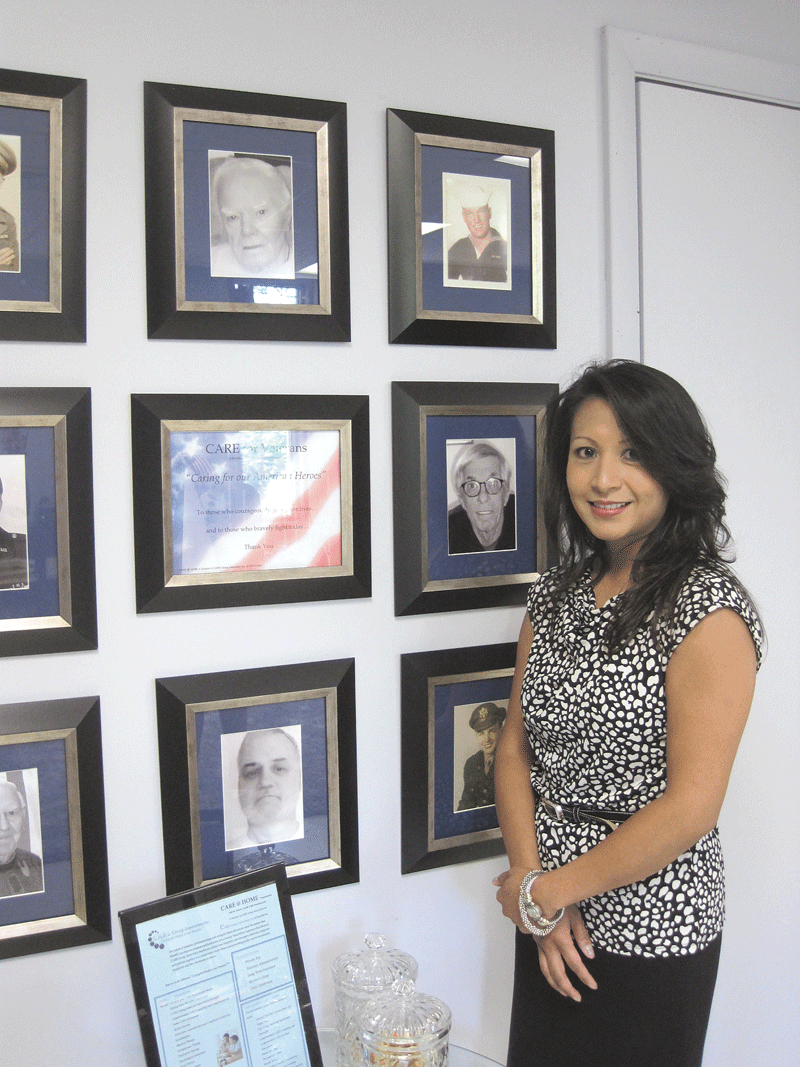
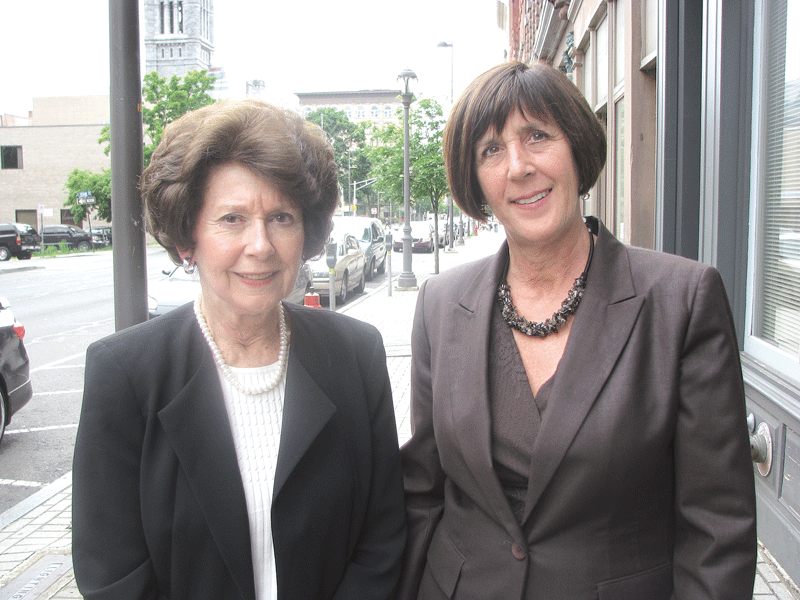
Sherill Pineda says she started Care @ Home with some inspiration from her friends and a desire to bring a higher level of service to the region.


Sherill Pineda calls them her “angels.”
These are the close friends who starting coming to her in the summer of 2010 looking for help with the care of aging parents, many of them veterans, in their homes. And they are the individuals Pineda, a veteran of the home health care industry, credits with giving her the motivation, confidence, referrals, and a solid foundation in the form of a growing client base to start a business she calls Care @ Home.
“My friends said, ‘don’t worry about the money — worry about taking care of our parents; that’s the most important thing,” said Pineda. “That same set of values — safety and independence and quality care — is what we have put in place for all our clients.”
And today, it is those friends, not to mention a host of other clients, who are using that word ‘angel’ to describe Pineda and her staff members, who bring a decidedly personalized style of care to their work, one that has enabled the company to achieve steady growth and a reputation for education, innovation, and giving back to the community.
Regarding the latter, Pineda has created what she calls the CARE Foundation, which stages a number of fund-raising events, with some of the proceeds funneled to local charities, veterans groups, and other local help organizations. “We try to do our part, whether it be big or small,” she told BusinessWest.
As for education and innovation, Pineda does a good deal of speaking, especially on the subjects of Alzheimer’s disease and the importance of physical fitness to the quality of life of all seniors. In fact, she’s a certified instructor in what’s known as Zumba Gold, a modified version of the increasingly popular Latin dance workout program designed especially for Baby Boomers.
And she’s brought it to a number of area senior centers and other gathering places, with solid results in terms of participation and reception.
She admits that she never thought that she’d be educating and entertaining seniors to the beats of ’40s ‘boogie woogie’ or ’50s Elvis Presley tunes through the popular Zumba dance-exercise routine, but it has become a big part of her community outreach.
In fact, it’s working so well that her fitness work, and her ties to the veterans community, led the 44-member 215th U.S. Army Band to reach out to Pineda and volunteer its talents for a CARE Foundation fund-raiser that became “A Tribute to Our American Heroes,” staged recently in the Holyoke High School auditorium. The event raised funds for homeless veterans.
Pineda told BusinessWest that other programs, in addition to 24/7 home care, include educational outreach in the workplace (called Care @ Work), at assisted-living centers, or anywhere she can plug in her speakers and iPod and get people dancing. In some way or shape, Pineda says all outreach, volunteer or otherwise, benefits the company, the client, or the community.
With a trained staff of 40, Care @ Home is well on its way to securing a firm foothold in the home-care industry in the Pioneer Valley. And for this issue, BusinessWest takes a look at the company and its ability to give back to the community in unique ways, while also offering skilled nurses and certified nursing assistants (CNS) to care for those who need compassionate, sometimes physical, and usually fun care and attention.

Working Relationships
In Pineda’s East Longmeadow office, there is a wall of yellowed, official Armed Services portraits, as well as recent photos, that showcase some of her first clients.
While veterans are not her only target group, they are the core of her young company’s client base. The company is an authorized agency for the Veterans Administration (VA), she explained, “and based on their eligibility and the VA requirements, if veterans meet the standards, they can receive home-care services through what is known as the Home Base Program; our state really supports our veterans.”
Kathleen Plante, care transition and community liaison for Care @ Home, adds that the Home Base Program’s goals mirror those of the agency, and include safety, independence, and reducing the need for future hospitalizations.
“The program is designed to facilitate keeping them at home as opposed to having to go into an institution or other facility,” she explained. “Our person-centered approach is the mission of the agency, and it secures the best possible outcome for our clients and their families. And, of course, our skilled nurses work with the physician, all to reduce the potential for relapse of a health issue, which could mean going back into an institution and the loss of their independence.”
Potential clients are introduced to the agency through relationships built by Pineda and her team. In fact, it is through current relationships, especially connections in the business community, that she projects strong growth for the new Care @ Work program.
The planned outreach to employers and employees through Care @ Work serves to explain to those still working and caring for a family member of any age, and for pretty much any medical reason, that help is available. The presentation, which is in the development phase, is designed to move through a human-resources department or employee-assistance program.
Whether from a work-related injury or one of the top four health issues Pineda sees — dementia, post-traumatic stress disorder, diabetes-related aliments, and cancer — transitional efforts from hospital to home or assisted living can be traumatic. Pineda and Plante both say that, from the start, effective care planning and medical follow-through both lead to better overall health and a sense of security for the clients and their families, including the need for respite services.
Early transition planning, quality care, and engagement, said Pineda, are qualities that make Care @ Home a different and innovative aging-in-place company.
“We are clinically and socially involved with our clients,” she noted. “We’re creating an individualized care plan and making sure we continue to have activities with them.”

Young at Heart
But when Pineda means ‘activities’, she’s not talking about crossword puzzles and bingo. In fact, she finds that some of her volunteer speaking and Zumba Gold requests stem from the fact that older individuals don’t want to play bingo anymore.
“They say to me, ‘we don’t want to hang out with those ‘seniors’ at senior centers … we want to learn new things; we’re tired of playing bingo,’” said Pineda.
Plante added good naturedly, “they don’t think they’re old; they think the others are old!”
And that dislike of a ‘center for old people,’ explains Pineda, is what is keeping many younger seniors away from physical activity, which is typically offered only in the local senior centers — and she notes that using the words ‘senior,’ ‘golden,’ and ‘elderly’ is already becoming increasingly unpopular among her clients.
This changing view of what old age really means to her clients, coupled with her awareness of the importance of staying active throughout one’s life, explains the emphasis Pineda places on physical and mental fitness in her work.
Last year, she became an Advisory Council member of the Western Mass. Healthy Aging Coalition, and a Matter of Balance coach in partnership with the Mass. Department of Public Health.
“Through the Matter of Balance program, we do a series of eight sessions that are two hours each, educating our aging population about fall prevention,” said Pineda, adding that one bad fall can physically and emotionally shut a person down due to the severity of the incident, resulting in depression and the often-debilitating fear of falling again.
But Pineda says learning and then practicing dance can potentially provide a needed confidence level to those who have fallen and fear a repeat, and this is one of many reasons she has tried to introduce audiences to Zumba Gold and its many potential benefits.
As a certified Zumba Gold instructor, Pineda has incorporated her exercise routine, a combination of Latin and international music with a fun and effective workout program, into weekend programs in which she educates her audience (people in their 60s and 70s), about the importance of staying active, no matter their age.
In that class, she discusses exactly what Alzheimer’s disease is, the early signs, what future help will be needed, and, more importantly, how staying healthy may slow or prevent the onset of the disease and various forms of dementia. Staying as active as possible is the key, said Pineda, who also serves as chairperson of the Alzheimer’s Assoc. Diversity Advisory Council of Massachusetts and New Hampshire.
After some quick discussion with questions and answers, she explained, Zumba begins.
“Then, and only then, do they get to do the dancing; they have to listen first, and then we have fun.”
But she stressed repeadedly that the dancing is far more than just fun; it’s medically important, and will become ever more so as the huge Baby Boom generation continues to age.

All for One, One for All
While Pineda is building her business to care for those in need now and in the future, she and Plante will complete the structure of the CARE Foundation, and will soon have a board of directors to determine the future beneficiaries of fund-raising events for local charities, and a possible endowment for clients that need help with financing their care.
To that end, Pineda says Care @ Home is constantly looking for collaboration and partnership, not just in home health care and fund-raising, but with other skilled professionals who can assist Pineda with bringing more educational outreach to the seniors and family members.
“We’re bringing health care to the next level,” said Pineda. “And that next level means breaking old molds and keeping as many seniors moving, educated, and engaged as possible.”
Plante agreed. “This whole model of reaching into every piece of people’s lives is what health care is going to be; we’re being proactive about it.”
And Pineda, who by all accounts is now fulfilling that role of ‘angel’ to her clients, will be singing and dancing to Elvis, or whatever song of choice her audience wants to step to, just to keep them moving, safe, and independent at home, or wherever home is.
“As long as I have my portable speaker, my iPod, and my flats,” she said, “I’m ready to go.”

Elizabeth Taras can be reached at [email protected]

Agenda Departments

NEBA Golf Tournament
Aug. 26: New England Business Associates (NEBA) will host a golf tournament on at Tekoa Country Club in Westfield. Proceeds from the tournament will benefit NEBA’s skills-training, supported-employment, academic-achievement, and self-employment programs for individuals with disabilities. The tournament will begin with a shotgun start at 1 p.m., and an awards and dinner ceremony will follow the finish. Sponsorship opportunities are available, and all golfers will have an opportunity to participate in contests and win prizes. To participate in the tournament and/or become an event sponsor, visit neba.eventbrite.com or contact David Parkinson, tournament director, at (413) 821-9200, ext. 145, or [email protected].

Massachusetts Chamber Business Summit
Sept. 9-11: The Massachusetts Chamber board of directors will conduct its annual Business Summit and Awards Ceremony at the Resort and Conference Center at Hyannis. The two-day meeting allows participants to meet with business professionals from across the state, as well as listen to state and local elected officials who will discuss the future of business in Massachusetts. Additionally, representatives from the Mass. Office of Economic Development will discuss loans, grants, and tax incentives available to business owners. Industry experts will also be on hand to discuss topics such as leveraging social media, search-engine optimization, and health care cost containment. The winners of the Business of the Year Award and the Employer of Choice Award will also be announced during the summit. For more information, call (617) 512-9667 or visit www.masscbi.com.

World Affairs Council Annual Meeting
Oct. 10: Hampshire College President Jonathan Lash will speak at the World Affairs Council of Western Mass. Annual Meeting & Dinner in the Mahogany Room of the Springfield Sheraton Hotel in downtown Springfield. More details will be forthcoming. Lash is an internationally recognized expert on practical solutions to global sustainability and development challenges. Before he became president of Hampshire College in 2011, he served as president of World Resources Institute (WRI), an environmental think tank with offices in eight countries and partners in more than 50 countries. WRI is an international leader on issues ranging from low-carbon development to sustainable transportation. From 1993 to 1999, Lash was co-chair of the President’s Council on Sustainable Development, a group of government, business, labor, civil-rights, and environmental leaders appointed by Bill Clinton that developed visionary recommendations for strategies to promote sustainable development. He played a key role in the creation and success of the U.S. Climate Action Partnership, which in 2007 issued the highly influential “Call to Action” on global warming. Prior to WRI, Lash held posts as director of Vermont Law School’s Environmental Law Center, Vermont secretary of Natural Resources, and Vermont commissioner of Environmental Conservation, as well as as a federal prosecutor. For more information on the event, call (413) 733-0110.

Western Mass.
Business Expo
Oct. 11: BusinessWest will again present the Western Mass. Business Expo. The event, which made its debut last fall at the MassMutual Center in downtown Springfield, will feature more than 180 exhibitors, seminars, special presentations, breakfast and lunch programs, and the year’s most extensive networking opportunity. Comcast Business Class will again be the presenting sponsor of the event. Details, including breakfast and lunch agendas, seminar topics, and featured speakers, will be printed in the pages of BusinessWest over the coming months. For more information or to purchase a booth, call (413) 781-8600, e-mail [email protected], or visit www.wmbexpo.com.

40 Under Forty Reunion
Nov. 8: BusinessWest will stage a reunion featuring the first six classes of its 40 Under Forty program. Details on the event will be forthcoming. What is known is that it will be staged at the Log Cabin Banquet & Meeting House in Holyoke, and will be open only to 40 Under Forty winners, sponsors, and their guests, as well as judges of the first six contests. For more information on the event, call (413) 781-8600, or e-mail [email protected].

Education Sections
The Many Flavors of the Region’s MBA Programs

In an ever-more-competitive career marketplace, educational degrees don’t always carry the weight they used to.
“At the turn of the 20th century, if a person had a high-school education, that was fantastic,” said Kathryn Carlson Heler, director of the MBA (master of Business Administration) program at Springfield College. “Remember, most people finished eighth grade and were out working at age 14.”
In the years following World War II, she explained, the G.I. Bill and other factors boosted college attendance, and a bachelor’s degree became the ticket to a secure career. But, in many cases, that’s not enough anymore.
“Most professionals now are saying, ‘hey, what’s the next step?’ And I think the master’s has become an important step — and who knows if it’s going to go further?” she said. “Look at nurses, for example; most of them have bachelor’s degrees, and some hospitals prefer to hire people with their master’s. And in the business world, the MBA has become the degree to have.”
Others who spoke with BusinessWest agree. “The MBA does carry an awful lot of weight in the workplace,” said Tom Barron, director of the MBA program at American International College. “It can affect opportunities for promotion, raises, and the like.
“The MBA allows you to really look at other aspects of a business, not just your own area of expertise,” he further explained. “You end up seeing how your area impacts the other areas of a business, so you’re a lot more comfortable developing company-wide solutions. Many people who get MBAs consider changing career fields, exploring areas they wouldn’t have been able to before, because they now have a wider cross-section of knowledge and expertise.”
Mo Sattar, who directs the MBA program at Bay Path College, is another believer in the strength of the degree.
“It helps to create leverage: how can I be a little bit better than the next person or the next business? Knowledge creates power,” he said. “I believe in teaching students how to learn, how to be life learners. That really matters, especially in the MBA world.”
For this issue’s focus on education, BusinessWest sits down with administrators from six area institutions — Western New England University, Elms College, and UMass Amherst are the others — to talk about the elements of a vibrant MBA program, and how the schools are tailoring their offerings to a very diverse group of degree seekers.

Matt Fox

Matt Fox says WNEU’s MBA program, like many regional offerings, allows students to finish in a year or longer, working on campus or online.


Time Trials
Some undergraduates intend to continue on to an MBA program right after finishing their bachelor’s degree, while many MBA students are longtime professionals returning to school to enhance their career prospects — and don’t necessarily have time to tackle a full-time course load or daytime classes. That’s why many colleges offer online courses, evening classes, or a blend of options.
For example, Springfield College’s 4+1 program “is an opportunity for our undergrads to stay a fifth year and earn their MBA,” Carlson Heler said. “What they do is take two classes in the summer after they earn their undergraduate degree and eight classes over the next two semesters.
“We have also attracted professionals from the community. Some of them have done the program in one year, working full-time and also going to school full-time,” she said. “But most of my professionals who join our program do it on a part-time basis, and do about two classes a semester.”
Similarly, the MBA program at UMass Amherst, part of its Isenberg School of Management, also stresses flexibility — to pursue a degree full-time on campus, completely online, or in a blended format at any satellite campus location.
Katherine Piedra, the director of the full-time program, has a unique perspective on that track, having graduated from it in 2004; now, she handles admissions, acceptance procedure, and operations, among other roles.
“The format hasn’t changed much from when I was here eight years ago,” she said, noting that most of the core coursework is completed during the first year, with field work highlighting the second year.
“We get a gamut of people, and we want a diverse class — not just in the traditional diversity sense, culturally, but across the board. We have about 35% international students in our class,” Piedra said.
Having both full-time and online options provides needed flexibility for the differing needs of students, she added. “The full-time program tends to have more people who are career changers. With the online program, it’s people who want their MBA to stay within their company, but want that boost. The online students tend to be older on average, too.”
She noted that, over the years, online degree seekers have multiplied, with a corresponding decline in those pursuing the full-time program. So the playing field has changed, with a lot more entrants into the online market.” Piedra said
Like most regional offerings, AIC’s MBA program can be finished in under two years, although some students, largely working professionals, may spread it out over three to five years, Barron said. “We have an interesting mix, with students coming from undergraduate programs as well as people who have been in the workforce 5, 10, 20-plus years.”
Western New England University also offers a blended online and evening degree program. “Right now, we primarily serve working professionals,” said Matthew Fox, director of Recruiting and Marketing for Graduate Studies and Adult Learning. “But the traditional student coming right out of college with a bachelor’s degree, that’s growing.”
This fall, WNEU will launch a full-time, accelerated day program in addition to its existing track. “We see that as a great opportunity to cater to a growing international student body,” Fox said. “They’re clearly looking for an experience where they can be immersed in their studies and have that continuous, face-to-face interaction with the faculty, as opposed to the existing model that blends online and in-classroom time.”
In any case, he added, “we emphasize to students, whether they’re traditional students or working professionals, they can accelerate their studies and finish the program in as little as a year, or they can take longer. It’s quite flexible.”

What’s Your Niche?
Students are also finding flexibility in the focus of the region’s various MBA programs.
For example, the Elms, which launched its MBA program only last year, offers three areas of study — health care leadership, accounting, and management — in a fast-track, hybrid format that pairs online and on-campus courses, said Kerry Calnan, director of the program.
“We’re the last to the market, and it’s a saturated marketplace,” she noted, adding that the school’s leaders took to heart a study conducted recently at Harvard called “Rethinking the MBA.”
“When we were getting ready to launch, we talked about the old-school model of MBA programs and how we needed to change if we wanted to add value, so that people who go through our program are valuable in the marketplace. We want to make sure we’re fitting what the market needs.”
In doing so, Elms staff interviewed some two dozen senior-level business leaders in the region and asked them what they’d like to see in an MBA program that they’re not getting from current MBA graduates.
“We developed our program by listening to what they had to say,” Calnan said, adding that the program taps area professionals to participate in course instruction, to lend more real-world credibility to the program. In fact, the five core courses in each track are delivered by a team comprised of an academic and a professional.
Springfield College, another recent entry into the MBA market with a program that started in 2010, offers two concentrations: one in for-profit management, and one in nonprofit management. The latter is attractive to people eyeing opportunities in health care, recreation, youth, the arts, sports, and as fund-development officers, to name just a few possible career tracks.
In both its general management and nonprofit concentrations, Springfield College offers a one-year, 30-hour degree program that’s tailored for professionals, Carlson Heler said.
“It’s a very doable degree; our classes are offered in the late afternoon and evening so that students can work during the day and take classes at night,” she noted. “And the size of our classes is very small, so students get to know their professors, and the professors get to know them.”
As with the Elms, it’s important that the SC program involve area professionals in the courses, “so students have an opportunity to tap into their experience.”
And the benefits of those exposures go both ways, Carlson Heler noted. One executive involved in the program told her, “‘I get to know the younger generation, and they will be my future employees — or, in some cases, my future boss. I get to know how they think and how they view the world, and it’s very important for me to have that opportunity.’
“I think it’s important.” she added, “that we reach out to the business and nonprofit community and ask them, ‘what should our students learn? What is important for them to be successful, and for your company or organization to have the best employees it can?’”

Mo Sattar

Mo Sattar says Bay Path’s MBA program helps students “connect the dots” and understand how all aspects of business work together.

AIC offers both a traditional MBA program and a ‘high-performance’ degree, with concentrations available in health care management, operations management, international business, strategic marketing, workforce and leadership development, fraud and financial crimes, green business, and management and sustainability.
“AIC had the first MBA program in Western Mass.,” Barron said. “One thing that’s unique is our strong entrepreneurship program. In our capstone course, the final course, students are actually required to go through and develop a business plan they can use to start their own business.”

Going Global
One theme that surfaced repeatedly in discussing area MBA programs is a focus on international business — reflective of what has become a global marketplace.
“Throughout the history of AIC and its MBA program, we have always had a strong international base in all key studies,” Barron said. “When we’re going through, asking about finance, economics, operations, we’re always going through what’s happening from a global perspective.”
That distinction has become crucial over the past two decades with the emergence of the Internet as a business tool, he added.
“If you look at a business that wants to operate out of a home, 20 years ago, the geographic area was the area around the house. Today, with the Internet, you’re literally doing business and delivering products around the world,” he noted. “So, how do we take this knowledge from all these subjects and not only apply it to local industry, but learn how to deal with it on a global basis?”
UMass provides overseas opportunities for its MBA students by means of exchange programs in Sweden, China, India, Brazil, Denmark, and South Korea.
“We’re working in a global economy,” Piedra said. “Anyone with international work experience in their MBA program has an edge going out into the work world, because of that experience working with people from other cultures and other countries.”
Sattar emphasized the way a strong MBA program “connects the dots” throughout the content, giving students a broad perspective on business.
“Our program starts with a business introduction where students learn about business models and strategy models and start to analyze some case studies and use analytical tools, like Excel,” he explained. Once students are grounded in that foundation, they move on to specifics like marketing, organizational behavior, business law and ethics, and the like, always being pushed to see the overlap between all of these disciplines.
“We learn about the important building blocks in business and how to connect them together, how to synthesize and optimize and maximize them,” Sattar said. “I find that, sometimes, people working in one area don’t understand what’s happening in the next cubicle or the next office.”
The idea, he said, is to produce professionals who understand the big picture within the company they work for — or, in many cases, who are able to launch their own enterprises.
“The value they get is not just that they truly understand marketing, finance, and legal issues,” he stressed. “The value is seeing how they are all connected. It’s more like a symphony than individual pieces of music, and the value comes in connecting everything together.”

Value Proposition
That word ‘value’ was another concept that area administrators kept returning to.
“I’ve been working with the graduate office for approximately five years, and I have found that the number of students seeking their MBA has definitely increased, whether it’s for an entry-level position or to enhance their prospects within their organization, or even to secure their present job,” Fox said.
“I think the value of an MBA has held, and if anything, the interest has increased from students seeking their MBA. We’ve seen our enrollments more than double in the last four years. Yes, we’re dealing with smaller numbers than some other schools, but it’s significant for us. That, to me, is a positive sign.”
Even a recently established program like the one at Springfield College is reporting positive returns in the single most critical area — post-degree employment.
“In our first class, the class of 2011, all of my students found good jobs within six months,” Carlson Heler said. “With the class of 2012, half of them have jobs, and the other half are interviewing, and it looks really good.
“The jobs are out there,” she continued. “People talk about the economy, but my students are finding jobs — maybe not all in the Pioneer Valley, unfortunately, which we would love, but the jobs are definitely out there for the MBA graduates.”

Joseph Bednar can be reached at [email protected]

Banking and Financial Services Sections
Some of the Old Rules May Not Apply When it Comes to 2013
Jim Barrett

Jim Barrett

By JAMES W. BARRETT, CPA/PFS, MST

Once tax filings are taken care of for the prior year, there is always the temptation to tuck current taxes away until the end of the year, when the tendency is to focus on tax strategies that can be executed quickly because of the short period of time remaining.
It would be prudent to take a moment before summer gets into full swing to focus on strategies that may take a little more time to implement but have the potential to reap significant tax savings.
Tax circumstances can change with a single event. Life events, such as marriage or divorce, the birth or death of a family member, retirement, relocation, or a job change, will generally alter your tax position, often dramatically.
Conventional wisdom is to avoid paying taxes for as long as possible by accelerating deductions and/or deferring income. But conventional wisdom may not apply in 2012. Two ominous tax clouds loom on the horizon for 2013, adding a significant level of uncertainty and reducing the value of traditional planning techniques.
The most broadly applicable change is the imminent expiration of the so-called Bush-era tax cuts. The scheduled arrival of the new 0.9% tax on earned income and 3.8% tax on investment income, enacted to pay for the 2010 health care legislation, also should not be overlooked.
We recognize that tax planning requires you to consider a series of unknown future events. Educated guesses and reasonable assumptions go a long way, but keep in mind that no tax strategy is final until the time for changing course has passed.

Planning in Times of
Tax-rate Change
Intentionally raising taxable income in the current year is contrary to the long-standing general guidelines to tax planning. Historically, tax planning has focused on accelerating deductions into the current year and deferring income into future years. But, with rates scheduled to increase, what has worked in years past may not produce the best tax outcome for the future.
The basic framework to help shape your overall income-tax planning in 2012 is as follows:
• If you expect to be in a higher income-tax bracket in 2013, consider accelerating income into 2012 and deferring deductions to 2013.
• If you are forecasting a lower income-tax rate in 2013, reverse the strategy: consider deferring income and accelerating deductions.
This year and going forward, keep in mind that the focus should always be on your marginal tax rate, the highest rate at which your last, or marginal, dollar of income will be taxed. Even though overall tax rates may rise in the future, if your income will be substantially lower in 2013 than in 2012, your marginal tax rate may decrease under the graduated-tax-bracket system.
It’s also important to keep in mind a couple of additional key income-tax concepts while mapping out tax techniques for 2012:

Alternative Minimum Tax:
In years you are subject to the alternative minimum tax (AMT), your deductions may be limited. If you anticipate being subject to AMT in either 2012 or 2013, consider timing those deductible expenditures limited under the AMT regime to maximize deductibility.
Standard Deduction:
If you expect to claim the standard deduction in either 2012 or 2013, shift itemized deductions into the year in which you will not claim the standard deduction to take full advantage of the deductions.

Rising Tax Rates
Individual income-tax rates are set to rise on Jan. 1 of next year to a top rate of 39.6%, a 13% increase over the customary rates in recent years. In addition, limitations on both itemized deductions and personal/dependency exemptions are scheduled to return for 2013, potentially raising the income-tax rate another three to four percentage points for taxpayers subject to these limitations.
Further still, dividends are set to once again be taxed as ordinary income in 2013. The 15% rate enjoyed on qualified dividends for a number of years could potentially become a 39.6% rate. The top tax rate on long-term capital gains is also set to increase by roughly one-third to 20%.

Provision 2011 2012 2013
Ordinary Income Rates 10.0% No Change 15.0%
15.0% No Change  15.0%
25.0% No Change  28.0%
28.0% No Change 31.0%
33.0% No Change 36.0%
35.0% No Change 39.6%
Long Term Capital Gains 15.0% No Change  20.0%
Qualified Dividends 15.0% No Change 39.6%
AMT Exemption – Single 48,450 33,750 No Change
AMT Exemption – Married 74,450 45,000 No Change

Unfortunately, the increasing rate news does not end here; since the Supreme Court did not overturn the health care legislation, the tax impact of the legislation begins in 2013.
Taxpayers with modified adjusted gross income above $200,000 ($250,000 on a joint return) will be subject to two additional taxes:

Hospital Insurance:
A 0.9% hospital insurance (HI) tax will apply to earned income, such as wages.
Unearned Income Medicare Contribution:
A 3.8% unearned income Medicare contribution (UIMC) tax will apply to investment income, including interest, dividends, and capital gains.

For taxpayers above the threshold, the impact of these two new taxes will be broad-reaching. With the addition of the UIMC, the top rate for long-term capital gains will rise by more than 50% to 23.8%, while the top ordinary income rate will rise by more than 15% to 40.5%.
Planning now may reduce the tax burden in years to come, and the timing and composition of earnings become critical. Potentially, a bonus from your company during 2012 instead of 2013 or a 2013 capital transaction accelerated into 2012 could save significant tax dollars. With uncertainty in these rates — and all tax rates this year — midyear may not be the time to initiate the transaction, but it is an ideal time to lay the foundation.
Although the new health care taxes apply to most types of earned (HI tax) and unearned (UIMC tax) income, the new taxes will not apply to retirement-plan distributions, IRA payouts, or tax-exempt income, such as interest from state and local government bonds.
Increases in tax rates are generally adverse for most taxpayers, but with increased rates comes increased value in your deductions, making this a great year to strategize with your tax adviser about the best timing for your deductions.
Here are some 2012 and 2013 planning points to consider if the new health care taxes go into effect Jan. 1, 2013:

Mind the Income Threshold: If you expect that your 2013 modified adjusted gross income (MAGI) will be close to, or just above, the $200,000 (single filer) or $250,000 (joint filers) threshold, you may be able to avoid the HI and UIMC taxes by accelerating income into 2012. The UIMC tax applies only to taxpayers who have both net investment income and MAGI above the threshold amounts.
Adjust Your Investment Portfolio: Seek out investments that produce tax-exempt or tax-deferred income, such as non-dividend growth stocks, tax-deferred annuities, and state or local government bonds. Since it may take time to realign your portfolio, you may want to start well in advance of Jan. 1, 2013.
Spread the Gain:
Installment reporting spreads the investment income from the gain on a sale over a period of years, reducing MAGI and deferring recognition of the investment income. However, electing out of installment reporting in 2012 results in gain recognition before the higher tax rates go into effect.
Transfer Investments to Family Members: Although your children’s investment income may be taxed at your marginal tax rate under the ‘kiddie-tax’ rules, an unmarried child is subject to the UIMC tax only if the child’s MAGI exceeds $200,000. You may be able to use a family limited partnership or other technique to spread some of your investment income among your children prior to Jan. 1, 2013.

Planning Your Estate and Gifts
Absent congressional action, the $5.12 million estate-tax exemption and current top tax rate of 35%, in place for 2012, will revert to a $1 million exemption with a top tax rate of 55% beginning Jan. 1, 2013. Moreover, the estate-tax exemption will no longer be portable between spouses.
With the lifetime gift exclusion also at $5.12 million for the rest of 2012, there exists what could be a once-in-a-lifetime opportunity to transfer significant assets to the younger generation without incurring any wealth transfer taxes. On Jan. 1, 2013, the lifetime gift-tax exclusion is scheduled to revert to $1 million.
Along with the high gift-tax exemption, the generation-skipping transfer-tax exemption is also $5.12 million during 2012. So the door is open to bypass children and defer the impact of estate taxes for many years into the future.
It’s uncertain where the estate-tax exemption and tax rates will end up in future years. And with the expiring provisions, it’s a good idea to review your plan to ensure that it is up to date.
Legislation proposed in Congress limiting valuation discounts attributable to minority interests or lack of marketability also potentially affects wealth transfer. The tax cost of gifts could increase should the changes be enacted.
Since these rules have not yet gone into effect, planning potential remains. Before transferring interests in family businesses or family limited partnerships, consult with your tax adviser to discuss potential tax and valuation pitfalls.
The gift-tax annual exclusion remains at $13,000 per donee, or recipient, for 2012. With gift splitting, spouses can transfer up to $26,000 to each person before the lifetime gift-tax exclusion comes into play.
Gifting techniques you may want to consider this year include:
• Outright gifts to family members;
• Transfers to family members through a family limited partnership; and
• Transfers in trust, including irrevocable life-insurance trusts, defective grantor trusts, and charitable trusts.
Following are a series of other tax-planning opportunities to consider:

Timing of Payments
Reviewing your withholding and planned quarterly estimated tax payments now provides the flexibility to adjust payments to limit or prevent penalties and manage cash flow.
Underpaying your taxes over the course of the year will subject you to underpayment penalties, which can be reduced or eliminated by increasing your withholding or quarterly estimated tax payments. A quirk in the penalty rules treats withholding, even if it occurs late in the year, as if it had been taken evenly throughout the year, making it a powerful planning tool for individuals.
On the flip side, why remit payment too soon when you can invest those funds until April 15, 2013? As long as you will not be subject to an underpayment penalty, consider holding on to your cash as long as possible by cutting back on your withholding or lowering your remaining quarterly estimated tax payments.

Retirement Funding
You can reduce your current tax obligations and help save for your retirement in a tax-efficient manner by contributing to a tax-qualified retirement plan. Qualified plans provide tax deferral — or tax avoidance, in the case of Roth accounts — on earnings until you receive distributions.
The earlier you make the contribution, the sooner your tax-deferred or tax-free earnings begin. If you already have a retirement plan in place, consider funding it as soon as possible to allow funds to start growing now.
To qualify for a tax deduction in 2012, your retirement plan generally must be in place before the end of the year. Exceptions are IRA and SEP (simplified employee pension) plans, which can be set up and funded through April 15, 2013.
Establishing a new retirement plan requires thoughtful decision-making. Small employers (generally those with 100 or fewer employees) that set up a qualified retirement plan may be eligible for a tax credit of up to $500 per year for three years. The credit is limited to 50% of the qualified startup costs.
The following contribution limits, along with the catch-up contribution limits for those 50 and older, apply for the 2012 tax year:

Limit Limit w/Catch Up
401(k) 17,000 22,500
IRA 5,000 6,000
Simple IRA 11,500 14,000
Self-Employed 50,000 55,500

Individuals with earned income, including alimony, are generally eligible to contribute to traditional IRAs. Claiming a deduction for your contribution is another matter. It depends on your income and whether you or your spouse is covered by an employer-sponsored retirement plan.
If neither you nor your spouse are covered by an employer’s plan, you may deduct your contribution to your traditional IRA. If you or your spouse are an active participant in an employer-sponsored plan, the deduction for your IRA is phased out at adjusted gross income (AGI) levels:

Filing Status  AGI Phase-out Range
Single 58,000 – 68,000
Married filing jointly 92,000 – 112,000
Married filing separately 0 – 10,000
Spousal IRA 173,000 – 183,000

 
Many taxpayers find the long-term benefits of contributing to a Roth IRA or a Roth 401(k) outweigh the short-term financial benefits of tax-deductible contributions. While Roth contributions are not tax-deductible, none of the income earned in the Roth account will have tax consequences unless there are early distributions, in which case penalties may apply. In addition, the Roth account is not subject to the required minimum distribution rules that apply when you reach age 70.
Eligibility to contribute to a Roth IRA depends on the amount of your income level. Contributions are allowed if your modified adjusted gross income for 2012 is between $110,000 and $125,000 for singles or between $173,000 and $183,000 for joint filers.
You can still roll your retirement savings from your traditional IRA or other qualified retirement plan into a Roth IRA. However, you must pay tax on the rollover amount. Unlike in past years, income limits no longer apply to Roth rollovers.
You might want to consider a Roth rollover in 2012 if you expect to be subject to the unearned income Medicare contribution tax in future years. Although distributions from a traditional IRA are not subject to the UIMC tax, taxable IRA distributions increase your modified adjusted gross income. If your MAGI exceeds the $200,000/$250,000 threshold, your investment income will be subject to the UIMC tax.
By rolling over your traditional IRA to a Roth IRA in 2012, you will recognize the additional income before the UIMC tax goes into effect. Once you have had a Roth IRA account in place for five years, future distributions from the Roth IRA will be non-taxable and will not increase your modified adjusted gross income.
If you own a business, you may be able to avail yourself of a defined-benefit type of retirement plan. These plans often allow higher retirement contributions than other types of plans. The higher retirement benefit must be weighed against the additional cost of providing comparable retirement benefits for your employees.

Charitable Contributions from IRAs
The tax rule allowing those over age 70 to make charitable contributions from their IRA without the need to include the distribution in income expired at the end of 2011. Making these contributions directly was generally advantageous because it didn’t raise the contributor’s income for limits on itemized deductions and certain phaseouts.
Although Congress has a track record of reinstituting expired tax provisions and applying them retroactively, it is certainly not guaranteed. If you are confident that you want to make the donation regardless of the tax treatment, you can still transfer the contribution directly from your IRA to the qualified charity. If Congress decides to retroactively reinstate the donation rule, the transfer will be excluded from income just as under the pre-2012 rule.
If Congress does not reinstate the rule, any charitable donation made from your IRA will be treated in the same manner as a donation made from any other source. The distribution from the IRA will be recognized as income, and the contribution will be included on your return as an itemized deduction. While the deduction should offset the income, the benefit will not be as great as it would have been if the income had not been recognized in the first place.

Employee Health Plans
If you are not currently providing health coverage for your employees, a tax credit for small businesses may make the cost of purchasing this coverage more affordable. The maximum credit is 35% of the premiums paid by the employer.
To be eligible for the credit, the employer generally must contribute at least 50% of the total premium. The full credit is available for employers with 10 or fewer full-time equivalent employees (FTEs) and average annual wages of less than $25,000. Partial credits are available on a sliding scale to businesses with fewer than 25 FTEs and average annual wages of less than $50,000.

New Employees
Congress extended the Work Opportunity Tax Credit for employers that hire eligible unemployed veterans after Nov. 22, 2011 and before Jan. 1, 2013. The credit can be as high as $9,600 per veteran for for-profit employers or up to $6,240 for tax-exempt organizations.
The amount of the credit depends on a number of factors, including the length of the veteran’s unemployment before hire, the hours a veteran works, and the amount of first-year wages paid. Employers who hire veterans with service-related disabilities may be eligible for the maximum credit.
If you own a business and have children, consider putting them to work during summer vacation or after school. You will be able to deduct their wages as long as you make their pay commensurate with what you would pay a non-family employee for the same services. For 2012, they can earn as much as $5,950 and pay zero income tax. If they earn $10,950 and contribute $5,000 to a traditional IRA, they will also pay zero income tax.

Capital Expensing
Generous expensing rules apply to most non-real-estate assets acquired and placed in service during 2012. The expensing election limit under Section 179 is set at $139,000 if the total amount of qualified asset purchases does not exceed $560,000. The deduction is available for most business equipment, furniture, and off-the-shelf computer software.
There are limits to the Section 179 deduction, including a requirement that the deduction not cause or increase a taxable loss. But the 50% bonus depreciation election, also available through the end of 2012, can cause or increase a taxable loss.
The key to qualifying for these enhanced deductions is that the asset must be placed in service by Dec. 31, 2012. Just ordering or paying for the asset is not enough. Considering the time it may take to identify the appropriate equipment, obtain competitive bids, order the product, have it assembled and shipped, and then get it installed and operational, now may be the time to begin the acquisition process.
With tax rates on personal income scheduled to rise in 2013, those who operate businesses as S corporations, partnerships, LLCs, and sole proprietorships will have to consider carefully whether to take advantage of the enhanced business deductions available for assets placed in service during 2012. Particularly for assets with shorter depreciable lives, forgoing the enhanced deductions for 2012 may result in more tax savings in 2013 and later years.
No one can predict the future, and predicting future actions of Congress is particularly hazardous. Congress can — and all too often does — change the tax law at a moment’s notice.
Tax planning is an ongoing process. Saving taxes is generally a good strategy, but making a bad business, investment, or personal decision just to save some tax dollars is never a good strategy.

James Barrett is managing partner of Meyers Brothers Kalicka in Holyoke; (413) 536-8510; [email protected]

Departments People on the Move

Mark R. Tolosky

Mark R. Tolosky

Mark R. Tolosky, president and CEO of Baystate Health, was recently awarded the prestigious 2012 William L. Lane Hospital Advocate Award from the Mass. Hospital Assoc. (MHA) in recognition of his “exceptional leadership.” During his 20-year tenure at one of the largest health systems in New England, Tolosky has helped transform Baystate Health into one of the Top 15 health care systems in the country, as recognized by Thomson Reuters. Lynn Nicholas, president and CEO of the MHA, noted that Tolosky “has driven the transformation of the North End of Springfield into a vibrant ‘medical mile,’ constructing new facilities, creating jobs, improving the local community, and contributing to the economic development of the city.” Nicholas added, “under Tolosky’s leadership, Baystate Health and Health New England are also nationally recognized for top levels of quality and safety, most notably through advances made in clinical care, the adoption of health-information technology, and the development of team-based and patient-centered medical homes.” Each year at the association’s annual meeting, the MHA publicly acknowledges one senior hospital executive who exemplifies exceptional leadership and the characteristics to which all hospital and health system leaders should aspire. Tolosky was nominated by Richard B. Steele Jr., chairman of the Baystate Health Board of Trustees, and his senior leadership team at Baystate Health. “Mark sets a stellar example as a CEO who tirelessly advocates for improvement, inclusion, responsibility, preparation, taking the high road, and the importance of collaborative, positive relationships,” noted one letter in support of Tolosky’s nomination. According to Nicholas, it was the first time in the nine-year history of presenting the award that the MHA executive committee was unanimous in its selection.
•••••

Eugene J. Cassidy

Eugene J. Cassidy became the seventh CEO of the Eastern States Exposition (ESE) in its 95-year history on June 27. He joined ESE as Director of Finance in 1993, and was named Executive Vice President and Chief Operating Officer in March 2011. He succeeded Wayne McCary, who retired June 26 after 21 years at the helm of the West Springfield institution. “The Big E is a balance of agriculture, industry, and entertainment all designed to move the core mission of the exposition forward while retaining the roots on which it was built,” said Cassidy. He is accredited as a certified fair executive by the International Assoc. of Fairs and Expositions (IAFE) and is actively involved as a member of the budget and finance and program committees. He is a frequent presenter at IAFE meetings on the local, regional, and national levels and served as program chair of the organization’s International Convention in Las Vegas in 2010. Cassidy began his career at KPMG Peat Marwick in Springfield. He then served as treasurer of Chicopee Cooperative Bank and Colonial Mortgage Co. and was assistant vice president of Park West Bank and Trust Co., all wholly owned subsidiaries of Westbank Corp.
•••••
Andrea Robitaille, P.E., recently joined Tighe & Bond Inc. as a Project Engineer. She brings to that position eight years of professional experience with the firm’s expanding structural-engineering team. Robitaille has provided bridge design and inspection, construction design, and transportation-planning services for numerous clients and projects throughout New England.
•••••
David Kalman, M.D. was recently promoted to President of Springfield Medical Associates, a multi-specialty group gractice with locations in Springfield and Enfield. Kalman has been a practicing gastroenterologist since 1927.
•••••
Amy Royal

Amy Royal

Amy Royal, founding partner of Royal LLP, the Northampton-based woman-owned boutique, management-side labor and employment law firm, has been invited to speak at the ExecuSummit 7th Annual National Employment Practices Liability Insurance Conference at Mohegan Sun in Uncasville, Conn. in October. She will present on minimizing emotional-distress damages in employment-litigation claims.
•••••
Danielle Nicklas

Danielle Nicklas

Danielle Nicklas, an attorney with the Springfield-based firm Cooley, Shrair P.C., has been appointed to serve on the Mass. Bar Assoc. (MBA) Health Law Section Council. Each council is charged with formulating and recommending policy and legislative positions, developing CLE program content for the MBA, and producing articles for Section Review and/or Lawyers Journal. Nicklas focuses her practice on the area of health law with a concentration in health care compliance, risk management, Start, and anti-kickback regulations.
•••••
Kevin Hart

Kevin Hart

Holyoke-based Mohawk Communications announced that Kevin Hart has joined the staff as Director of Operations. Hart has more than 15 years experience in the telecommunications field, from high-end PBX systems, to fiber installation, to managing communication networks for mid- to large-sized businesses. He will be managing the customer service department along with the outside technicians and various other projects.

Agenda Departments

NEBA Golf Tournament
Aug. 26: New England Business Associates (NEBA) will host a golf tournament on at Tekoa Country Club in Westfield. Proceeds from the tournament will benefit NEBA’s skills-training, supported-employment, academic-achievement, and self-employment programs for individuals with disabilities. The tournament will begin with a shotgun start at 1 p.m., and an awards and dinner ceremony will follow the finish. Sponsorship opportunities are available, and all golfers will have an opportunity to participate in contests and win prizes. To participate in the tournament and/or become an event sponsor, visit neba.eventbrite.com or contact David Parkinson, tournament director, at (413) 821-9200, ext. 145, or [email protected].

Massachusetts Chamber Business Summit
Sept. 9-11: The Massachusetts Chamber board of directors will conduct its annual Business Summit and Awards Ceremony at the Resort and Conference Center at Hyannis. The two-day meeting allows participants to meet with business professionals from across the state, as well as listen to state and local elected officials who will discuss the future of business in Massachusetts. Additionally, representatives from the Mass. Office of Economic Development will discuss loans, grants, and tax incentives available to business owners. Industry experts will also be on hand to discuss topics such as leveraging social media, search-engine optimization, and health care cost containment. The winners of the Business of the Year Award and the Employer of Choice Award will also be announced during the summit. For more information, call (617) 512-9667 or visit www.masscbi.com.

World Affairs Council Annual Meeting
Oct. 10: Hampshire College President Jonathan Lash will speak at the World Affairs Council of Western Mass. Annual Meeting & Dinner in the Mahogany Room of the Springfield Sheraton Hotel in downtown Springfield. More details will be forthcoming. Lash is an internationally recognized expert on practical solutions to global sustainability and development challenges. Before he became president of Hampshire College in 2011, he served as president of World Resources Institute (WRI), an environmental think tank with offices in eight countries and partners in more than 50 countries. WRI is an international leader on issues ranging from low-carbon development to sustainable transportation. From 1993 to 1999, Lash was co-chair of the President’s Council on Sustainable Development, a group of government, business, labor, civil-rights, and environmental leaders appointed by Bill Clinton that developed visionary recommendations for strategies to promote sustainable development. He played a key role in the creation and success of the U.S. Climate Action Partnership, which in 2007 issued the highly influential “Call to Action” on global warming. Prior to WRI, Lash held posts as director of Vermont Law School’s Environmental Law Center, Vermont secretary of Natural Resources, and Vermont commissioner of Environmental Conservation, as well as as a federal prosecutor. For more information on the event, call (413) 733-0110.

Western Mass. Business Expo
Oct. 11: BusinessWest will again present the Western Mass. Business Expo. The event, which made its debut last fall at the MassMutual Center in downtown Springfield, will feature more than 180 exhibitors, seminars, special presentations, breakfast and lunch programs, and the year’s most extensive networking opportunity. Comcast Business Class will again be the presenting sponsor of the event. Details, including breakfast and lunch agendas, seminar topics, and featured speakers, will be printed in the pages of BusinessWest over the coming months. For more information or to purchase a booth, call (413) 781-8600, e-mail [email protected], or visit www.wmbexpo.com.

40 Under Forty Reunion
Nov. 8: BusinessWest will stage a reunion featuring the first six classes of its 40 Under Forty program. Details on the event will be forthcoming. What is known is that it will be staged at the Log Cabin Banquet & Meeting House in Holyoke, and will be open only to 40 Under Forty winners, sponsors, and their guests, as well as judges of the first six contests. For more information on the event, call (413) 781-8600, or e-mail [email protected].

Briefcase Departments

Paid Sick Leave Sent to Study by Lawmakers
BOSTON — Backers of a bill that would require certain employers to offer workers earned paid sick leave acknowledged in recent months that it would be an uphill battle to get the legislation passed this session. They were proven right when the Joint Committee on Health Care Financing sent the bill to a study, according to the House clerk’s office, effectively killing its chances of becoming law this session, with the Legislature planning to recess at the end of July. The paid sick-leave bill was drafted by state Rep. Cheryl Coakley-Rivera and released favorably this year from the Labor and Workforce Development Committee co-chaired by the Springfield Democrat. Paid sick-leave benefits for workers have become a perennial issue on Beacon Hill, backed by a broad coalition of organizations and lawmakers who argue that legislation would improve productivity, reduce turnover in the workplace, and drive down health care costs by allowing people to seek primary care during the day rather than visiting emergency rooms after hours. Many business groups, however, including the Massachusetts Chamber of Commerce, warn that forcing employers to provide certain benefits could discourage hiring at a precarious time for the economy. Coakley-Rivera’s bill would have allowed workers at companies with more than 10 employees to earn up to seven paid sick days a year, while employers with between six and 10 employees would have been required to allow employees to accrue up to five paid sick days. Business, however, strongly resisted mandating sick leave, warning the bill could cost the economy as many as 12,000 jobs and claiming that such policies are best established by employers.

Construction Employment Stagnates in June
ARLINGTON, Va. — Construction employment stalled in June as more former construction workers left the industry, according to an analysis of new federal data released by the Associated General Contractors of America. The lack of current job openings, along with the departure of experienced workers, suggests a potential skilled-labor shortage may be developing, construction association officials warned. “Employment in the construction industry has fluctuated within a very narrow range — 1% above or below the June level of 5.5 million — for more than two years now,” said Ken Simonson, the association’s chief economist. While the latest figure was 14,000 higher than one year earlier, the June 2012 total was just 2,000 higher than in May and in June 2010. “Construction employment has essentially been stagnant for much of the past two years.” Meanwhile, the unemployment rate for former construction workers fell to 12.8%, the lowest June rate since 2008 and much better than the 15.6% rate in June 2011 or the 20.1% rate in June 2010, Simonson noted. He added that, over the past two years, nearly 750,000 experienced workers have either found jobs in other industries, returned to school, retired, or otherwise left the workforce. “It will be hard for construction firms to get those skilled workers back when demand picks back up.” There was little difference among construction segments in terms of recent job gains or losses, Simonson noted. Residential construction added 1,700 total jobs in June and 8,900 (0.4%) over 12 months. Non-residential construction firms lost 600 jobs in June but added 4,300 (0.1%) over 12 months. Within the residential segment, residential specialty trade contractors added 7,600 jobs for the month and 14,100 (1.0%) over the past year, reflecting ongoing strength in multi-family construction. In contrast, residential builders — mostly single-family homebuilders — lost 5,900 positions in June and 5,200 (–0.9%) over 12 months. Non-residential job gains for the year were concentrated among non-residential building contractors, which lost 1,000 jobs in the latest month but added 4,300 (0.7%) over 12 months. Heavy and civil-engineering construction firms shed 2,000 jobs in June and 1,800 (–0.2%) in the past year. Non-residential specialty trade contractors boosted employment by 2,400 since May but only 1,800 (0.1%) since June 2012. Association officials noted that one bright spot for the industry was the 27-month highway and transit bill the president recently signed into law. They said the legislation includes many significant reforms that will allow more existing transportation funds to be invested in highway and transit construction projects, as opposed to unrelated programs. “This measure will certainly help staunch the decline in construction employment among highway and transportation builders,” said Stephen Sandherr, the association’s chief executive officer. “Congress understands that investing in infrastructure is one of the best ways to support growth within the private sector.”

Summit Focuses on Academic Advising
SPRINGFIELD — More than 70 community-college faculty and advisors met at the Springfield Technical Community College (STCC) campus to participate in an academic advising summit on June 22 to focus on advising as a collaborative approach. The summit workshops explored national best practices in academic advising, apprised academic advisors of National Academic Advising Assoc. (NACADA) services and resources that support more effective academic advising, and detailed how to improve both individual academic-advising skills and overall campus academic programs. Sessions included topics about career exploration and advising tools, introduced advisors to the Advising Is Teaching program, and discussed important updates to advising software. Keynote speaker Susan Kolls, associate director of Student Account Services at Northeastern University and a member of the NACADA board of directors, said students today are faced with a variety of challenges. They work hard both in and outside the classroom balancing school, work, and families; they struggle with financial issues; and many are in the military, often finishing their schoolwork while in the combat zone. “We’re looking at the whole student,” said Kolls. “None of our students are only students, and if we don’t look at the things that impact them, if we only look at the academic side, we can’t help them with the things outside of school.” Knowing a student’s background, Kolls said, can help advisors understand how a student is better, or less, able to cope with their situation. Through her interactive session, Kolls questioned how to get faculty, staff, and advisors to think about all of the contributing factors that impact a student’s success. According to Kamari Collins, STCC’s director of Academic Advising, the summit allowed advisors from the region to get together and start a conversation. “It was a good way to have everyone focus and strengthen our campus as a whole, and it was a great opportunity for us to share our best practices with our colleagues at the other community colleges.” The summit, made possible through the Board of Higher Education’s Vision Project Performance Incentive Grant, was available to the four community colleges in the Western Mass. Vision Project Exchange: Berkshire Community College, Greenfield Community College, Holyoke Community College, and STCC. This was the first time STCC has hosted the summit.

Hiring Lukewarm in June
NEW YORK — Hiring was lukewarm last month, with employers adding jobs but not enough to bring the unemployment rate down. The economy added 80,000 jobs in June, the U.S. Labor Department reported, barely an improvement from the 77,000 jobs added in May. Meanwhile, the unemployment rate remained at 8.2%. Economists surveyed by CNN Money had expected to see employers add 95,000 jobs and the unemployment rate to remain unchanged. The labor market has been volatile this year, with job growth starting off strong in the first couple months of 2012. Then a disappointing slowdown in the spring led many to wonder whether the recovery was taking a turn for the worse. June’s weak growth added to those fears. The economy needs at least 125,000 jobs added each month just to keep up with population growth. Revisions from previous months also showed the economy gained 1,000 fewer jobs in April and May than originally thought. Overall, the job market has a long way to go to climb out of the deep hole left by the financial crisis. Of the 8.8 million jobs lost, only about 3.8 million have been added back. Roughly 12.7 million Americans remain unemployed, and 41.9% of them have been so for six months or more. Another 88 million out-of-work people were not even counted as unemployed because they didn’t look for a job in the last four weeks.

Cover Story
Roger Crandall Shapes a Vision for MassMutual

The six-foot-long fish mounted over Roger Crandall’s desk certainly looks real.
But in fact, this work of art, as he calls it, is a wood carving fashioned with the help of several dozen photographs of the 140-pound tarpon that Crandall hooked, battled for more than an hour and a half, landed, and then released off the Florida keys in 2006.
“I was looking through a fishing magazine, and found this woman in New Hampshire who does wood carvings of what are usually trout or salmon,” Crandall, the chairman, president, and CEO of MassMutual explained. “I sent her 50 pictures, she did some research on tarpon to get the dimensions right, and it took her three years to do it.”
Like just about everything else assuming floor, wall, and shelf space in Crandall’s large office at MassMutual, which he jokingly refers to as the hall of dinosaurs, the wood carving has meaning and tells a story — or several of them. In this case, the fish, which he admits probably wouldn’t fit anywhere else, relates his passion for the sport, which he enjoys for the challenge of fights like he had with the tarpon, but more for the relaxation it provides as well as the opportunity to get away from the numbers that have dominated his life and career.
“In a world, and a job in particular, where information is constantly coming at you, getting out onto a river or a flat is great,” he explained. “For that two, three, of four hours, there’s no Blackberry, there’s no crisis in Greece, there’s no low interest rates, no unclear regulatory policy, none of the things I deal with on a day-to-day basis; it’s a great way for me to de-stress and relax.”
Moving around the room, one will find dozens of objects that speak volumes about Crandall’s work and the mindset he brings to it. For example, there’s the 107-year-old grandfather clock, presented as a gift to a former president of MassMutual by the general agents association. Still keeping good time, the clock is there as a reminder of the importance of the relationship between the company and its agents and general agents, he said.
Hanging on a wall a few feet away, meanwhile, is a framed copy of an insurance policy sold in 1894. “We literally sell the same type of policy today,” said Crandall, adding that the document is a reminder that the foundations on which the company was built haven’t really changed — and won’t. “One of our best-selling products in the 1890s was also one of the best-selling products in 2011.”
And then, there are the model planes, or what Crandall referred to as “deal toys.” There are more than a dozen of them in total, and they represent individual aircraft or airlines that MassMutual has owned or invested in over the decades, he explained, noting a few that he’s particularly proud of. One would be a model of a jet owned by Morris Air, a small outfit started by David Neeleman in Salt Lake City that caught Crandall’s attention when he was an analyst for MassMutual in the early ’90s.
The company tripled its investment in Morris Air in just over 18 months when that venture was sold to Southwest Airlines, Crandall recalled, adding that the story got better — and the deal-toy collection grew significantly — when, after his non-compete agreement with Southwest expired, Neeleman started another airline that MassMutual became an original private equity investor in — JetBlue. “I think we made $80 million on a $15 million investment,” he said.
Although it would outwardly appear that Crandall’s office is outfitted as a way to salute past achievements, he described it collectively as an inspiration for the future — the tense that certainly occupies most of his time and attention.
He told BusinessWest that he’s focused on the year 2040, for example. That’s the year the U.S. is expected to be a nonwhite majority, and while that’s 28 years away, he’s already taking steps to position the company for that time, with steps ranging from a comprehensive effort to change the demographic mix of the company’s roster of agents to the introduction of many new products, to aggressive marketing to target groups ranging from African Americans to gays and lesbians.
A big part of getting the company positioned for the future is to remind customers and potential customers of the need to secure their futures — and then provide the products and services to help them do it, Crandall said, summing up matters by first borrowing an old Mandarin proverb — “when you’re safe, think about danger” — and then a quote attributed to Albert Einstein: “the most powerful force in the universe is compound interest.”
For this issue, BusinessWest talked at length with Crandall about tarpon, investments in airlines, and company history — but mostly about the future and how he intends to position the 161-year-old company to be fully ready for it.

On a Grand Scale
Crandall remembers that while he was in grade school, he would often go to the office on Saturdays with his father, a group life and health salesperson for MassMutual.
“I would stuff envelopes for him so he could do mailings, and got a penny an envelope,” he said, adding that he eventually took on more far-reaching duties. Indeed, when personal computing came into prominence, he would use an early spreadsheet program called VisiCalc (which predated Lotus and Excel) to help his father show prospective clients how much the premiums would be for group life insurance.
“Later, during summers when I was in college, I would go out on sales calls with him and sit in on meetings with MassMutual pension customers … that’s how I got a serious introduction to MassMutual,” he said, adding that while his father spent 34 years with the company, he didn’t picture himself following in those footsteps, let alone becoming CEO.
However, a series of circumstances, starting with the economic landscape he encountered upon graduating from the University of Vermont with a bachelor’s degree in 1988, put him on course that eventually led to that office on the second floor of the company’s State Street headquarters.
“I started in the real estate investment department, and it was the perfect time to get into that sector,” he recalled, “because we were about to have the biggest commercial real estate collapse since the Great Depression; it was actually a wonderful learning experience.”
MassMutual gave him the opportunity to take the charter financial analysts exam, and he eventually moved from real estate to the investment division to the securities investment division, where, fortuitously for him, the analyst assigned to watch the airline industry had just retired.
“At that time, my uncle, Bob Crandall, was president of American Airlines,” he explained. “So the guy I worked for said, ‘at least you’ll have one person to call,’ and told me to watch the airline industry.”
With a little guidance from his uncle, but mostly a keen eye for potential-laden ventures, Crandall steered MassMutual toward the Morris Air, JetBlue, and other deals now commemorated in his office. In 2000, he joined Babson Capital Management, LLCV, a MassMutual subsidiary, and in 2002 was named managing director of that company and head of its Corporate Bond Management, Public Bond Trading, and Institutional Fixed Income units.
In 2005, he was appointed chairman of Babson Capital and executive vice president of chief investment officer of MassMutual, eventually becoming president and CEO in January of 2010, and later named chairman as well.
He took those final steps to his current post at the height of the Great Recession, a downturn that severely tested all financial services institutions, but also brought a number of opportunities for MassMutual.
“The company is much stronger today than it was at the end of 2007,” he explained. “Our sales are higher, our earnings are higher, and our capital is higher. It was Rahm Emanuel (President Obama’s former chief of staff) who said, ‘don’t let a good crisis go to waste,’ and from our perspective, it became a great opportunity to remind people about the strength of a mutual company and how we differ from a stock company.
“It was also a time to remind people of the inherent strength that the mutual life insurance company products have,” he continued. “So we’ve actually been able to take market share as well as grow over the past three or four years.”

Dollars and Sense
Elaborating, he said MassMutual has done so essentially by focusing on what he called the “basics.”
And by this he means the three main pillars of the company’s operations — providing customers with financial security, paying the best dividends, and providing exceptional customer service.
For example, the company has “doubled down” on its roster of agents, going from 3,700 a few years ago to more than 5,000 today, he said, while also investing in new products, including a number of creative life insurance options, designed to meet the various needs of customers.
Such steps are part of those aforementioned efforts to position MassMutual for both today (and those opportunities from the fiscal crisis Crandall described) and the much different look and feel that this country — and the world — will have two, three, and four decades from now.
And with that, he turned to another item in his office, a framed commemorative photo, a gift from a Chinese entity that MassMutual has partnered with on a utility venture.
“My guess is that 20 or 30 years from now, someone’s going to look at that and say, ‘wow, MassMutual was thinking not five years ahead, but 10 and 20 years ahead in dealing with China. So I put that there to remind whoever’s sitting here in the future of that.”
To further explain his mindset, he referenced that acquired skill attributed to hockey legend Wayne Gretzky. “He said he would skate not to where the puck was, but to where he thought he would be,” said Crandall. “That’s what we’re trying to do.”
And in a figurative sense, the puck is going to a place and time, not far off, and in some cases, already here, where the demographic picture will be much different. The company has responded in a number of ways, he said.
“One of the big things we did was realize that the face of America is changing, and we needed a much more aggressive diversity strategy,” he explained. “So we’ve gone from having maybe 100 of our agents being multicultural to perhaps 1,000 over the past four years.
“Meanwhile, we’ve gone from having no dedicated multicultural marketing campaigns,” he continued, “to having dedicated campaigns for Hispanics, African Americans, Asian Americans, the gay and lesbian markets … we’ve really embraced diversity in a big way, and it’s making a huge difference for us. And we’ve only scratched the surface of the opportunities there.”

It’s not Foreign Policy
Another component of the company’s ‘getting back to basics’ strategic initiative is using marketing and other vehicles to emphasize the inherent advantages from doing business with a mutual company, Crandall continued.
“We’re owned by our policy holders, so we don’t get torn between two opposing views,” he explained. “Shareholders, we believe, are inherently, and rightly, more willing to take more risk than the policy holder is. Since we have just one constituency, we think that’s a huge advantage over having two, and you have to look no further than to a few public companies that are undergoing very sigfificant changes because their shareholders are pushing them to do that — their policy holders are not a big part of that public discussion.
“We’ve spent a lot of time redoing our advertising and marketing to remind people about mutuality,” he went on, pointing to a recent ad now framed and on his wall as one example. “We’re reminding people that we’re 160 years old (now 161) and we’ve been focused on policy holders since we were founded.”
These various pieces, from investment in new products to bolstering and greatly diversifying the roster of agents, to more aggressive marketing have all helped the company, said Crandall, noting that in 2011, MassMutual set records for sales of whole life insurance products and retirement products, and ended the year with record capital. And those trends have continued into the first half of 2012.
Looking ahead, he said there are tremendous opportunities to build on that recent progress, as evidenced by what many would describe as alarming statistics regarding Americans and how little they’ve done to secure a solid financial future.
“There are 50 million Americans who don’t have any life insurance, and that’s a huge opportunity for us,” he explained, adding that this is one of the reasons why, in addition to taking market share from competitors, the company can grow simply from what will, or should be, a much larger pie. “The other huge opportunity stems from the fact that Americans simply haven’t been saving enough money for probably the past 25 years.
“They’ve suddenly realized that they haven’t saved enough, and also realized that their house isn’t worth what they thought it was,” he continued. “So savings rates have tipped up, and we’ve done what I think is a very good job in our 401(k) business of reminding people how effective it is to save for retirement in that way, how steps taken in your 30s and 40s can make a difference when you’re in your 60s.”
Which brings him back to Albert Einstein and his comment on compound interest.
“Fundamentally, if you start saving early enough, you can solve all these problems,” he said, referring to the possibility of not having enough money for retirement, health care, or long-term care. “It’s very hard to take care of those things if you wait until you’re 60, and we want to help people understand that and start saving early.”

The Bottom Line
Among the myriad artifacts in Crandall’s office is a photograph of himself with David Neeleman in front of a JetBlue plane at New York’s JFK Airport.
Like the grandfather clock, framed insurance policy, and assorted deal toys, it is, as he said, a celebration of a past achievement, but also serves as inspiration for future success.
And it’s yet another example, said MassMutual’s top executive, of how even a company with 160 years of history to look back on, can only succeed if both eyes are on the future — and especially the distant future.

George O’Brien can be reached at [email protected]

Sections Workforce Development
One-stop Career Centers Rely on Partnerships to Fulfill Their Missions

Executive director Rexene Picard

Executive director Rexene Picard says FutureWorks has made changes in the way the agency serves customers due to shifts in the economy and advances in technology.

When one-stop career centers began opening across the state 16 years ago, David Gadaire said, the mantra connected to them was “no wrong door.”
“The concept was one of universal access,” said the executive director of CareerPoint in Holyoke. “If someone needed to brush up on their skills, get help with writing a résumé, learn to network, or get more training, they could find it under one roof, whether they were a school-age person or an older worker.”
The concept was forward-thinking, but the funding was never in line with the complexity of need that job seekers brought to the table. Still, the problem wasn’t nearly as evident in the early years when the economy was flush.
“For the first few years we were open, 50% of the people we saw were employed,” said FutureWorks Executive Director Rexene Picard, explaining that many came to the center to brush up on skills or take a Saturday class.
Gadaire agreed. “In the beginning, we had enough resources. It was a different game then, and the funding we had supported people who needed to harness their skills,” he said.
FutureWorks and CareerPoint achieved national recognition in 1998 when they were selected as Career Centers of the Year by the National Alliance of Business.
“It was a tremendous honor, but the funding kept dissipating as the numbers grew,” Gadaire said. “We were originally chartered to serve 7,000 people a year, and last year we served between 14,000 and 18,000. The numbers have gone up steadily, and although they have plateaued in the last few years, it is only because our capacity is so overstretched.”
The unemployment office has a representative at both centers, and many people confuse the entities. But the former is run by the state, while the one-stops were established through competitive charters.
CareerPoint was chartered as a nonprofit and opened 16 years ago via a partnership that included the Greater Holyoke Chamber of Commerce, Holyoke Community College, the Department of Transitional Assistance, and the UMass Donahue Institute. “They joined together because there was a disconnect between the jobs that were available and the skills of the people available to fill them,” Gadaire said.
The story of FutureWorks is quite different. It was opened in 1996 as the first one-stop in the state by the Employment Training Institute in Ringwood, N.J., owned by Ken Ryan. Granting a charter to a private, for-profit corporation was controversial, but “it gave us a chance to think outside the box,” Picard said. “In the beginning, we said that what we did was not going to be about numbers, it was going to be about customer service. We had welcome centers and made people lifetime members. We could have fallen under the realm of social services, but we felt we were role models for job seekers and wanted to reinforce soft skills, so the center had the atmosphere of a business,” she told BusinessWest.
Although their evolution has been different, it soon became apparent that the needs of the people who came through the doors of both centers were complex, and the funding to help them was far from adequate. “In 1998 when the Workforce Investment Act was passed, the intent was that community partners would support the one-stops. But it never happened,” Picard said.
Still, they have found a way to meet a myriad of complex challenges. “We don’t tell our story well, and it’s a very impressive story,” said Gadaire. “But if 10,000 more people came to our door, I don’t know what we would do.”

Complex Situation
After CareerPoint received its award, it became even more committed to its mission, said Gadaire.
“Universal access meant we had to serve the older worker, the school-age person, professionals, and mid-level executives who found themselves out of work and needed to grow their skills, as well as people with a disability, those who had been incarcerated, homeless people, and individuals who didn’t have an education or didn’t speak English,” he explained. “All of those things required a more significant amount of time than the one-stops were prepared to address. But we realized that we were part of the answer for every one of those populations.”
Since the state did not have money to serve these subgroups, CareerPoint began writing grant proposals, seeking help from corporations and forming alliances with a wide variety of venues, such as the Hampden County Sheriff’s Office.
Today, it operates via seven or eight funding streams and grants that are continually changing. “We have a youth center due to six or seven grants, but we had to carve out a funding strategy,” Gadaire noted.
Finding sources of revenue is a constant struggle because the number of organizations looking to them for help continues to rise. “We’ve tried to create a marketing budget, but it keeps dwindling away. If the choice is marketing or helping a homeless person, the answer is obvious,” he said.
Although the agency initially provided free in-house training for businesses, it began to charge for those services. “We conduct sessions for businesses to help them manage their workforce. We’re giving a series of workshops right now to teach mid- to upper-level managers leadership skills — how to resolve problems, make their workers more productive, and avoid turnover,” Gadaire explained, adding that his organization is also set to launch a videoconference-training program to teach businesses how to conduct remote, face-to-face interviews, which he says will save them time and money.
Since the way people find jobs has changed, CareerPoint has two computer labs where people can become versed in new software and learn how to apply for jobs online. It also stages classes in networking, résumé writing, and a host of other topics related to finding employment.
When the one-stop center opened, it had 36 staff members, but that number has been reduced to around 30. However, it has compensated by forming alliances with many agencies and organizations. It has nine people from different agencies stationed within its office, and makes use of interns.
CareerPoint has also benefitted from countless hours of volunteer help from the Americorps Volunteers in Service to America program. VISTA volunteers have worked with youths involved with gangs as well as seniors, and include one volunteer who is the center’s information-technology manager. “We’ve also tried to build bridges with Westover Job Corps and agencies that offer veterans’ services,” Gadaire explained.
The agency’s staff members are so dedicated that, when they were told recently that two positions had to be eliminated, they offered to save them by taking a 10% pay cut for six months. Gadaire was against the idea, but finally agreed that everyone (including himself) would do it, and much to his surprise, it worked.
“These people are extraordinary; they believe in the community and want to make a difference,” he said. “But they are always exhausted, and I forever worry about burnout.”
Many sit on local nonprofit boards where they build partnerships. “Our partnerships are absolutely critical,” he said. “We are not experts in everything, but hopefully, if we do it right, we can expand our capacity. The community is better-served by our willingness to partner on just about every issue.”

Radical Changes
When FutureWorks opened, it was the only one-stop center in the state operated by a private company. Although profits were capped, Picard said many grassroots organizations and labor groups were upset that a private firm was operating with funds from the state and federal government.
So, in January 2002, after a series of meetings with then Springfield Mayor Michael Albano and Bill Ward, director of the Regional Employment Board of Hampden County, the owner agreed to turn over FutureWorks, with the caveat that it become a nonprofit agency. “The decision meant a lot in terms of restructuring,” Picard said, noting that the corporate headquarters of the Employment Training Institute handled the agency’s finances and human-resource issues.
“It was like starting a new company,” she said. “But having our own board of directors turned out to be one of the best things that happened; we had a very business- oriented team, and the community began viewing us differently.”
The change in status also allowed FutureWorks to pursue grants and funding unavailable to it as a private company. “We also began partnering with staff from other agencies,” Picard said.
One of its most profitable ventures was a shared contract that allowed the agency to work with welfare recipients in Hampden County. “We put more welfare recipients to work than in any other part of the state,” she said.
But despite such gains, the customer base continues to mushroom. “When we started, we saw between 3,000 and 5,000 people a year; last year, we served more than 16,000 individuals,” she noted, adding that FutureWorks consistently leads the state and serves more minorities, youths, and individuals with disabilities than any of the other career centers. “But in order to do so, we have had to look outward to other opportunities.”
These include a unique partnership with the Department of Revenue. The joint effort allows FutureWorks to work with non-custodial parents to help them get jobs so they can pay child support.
The program began as a pilot and expanded to include the family court system. In time, FutureWorks received a performance-based contract to extend the initiative. “It’s been a great program, and we have been told there is only one other place in the nation doing this. It’s in Tennessee, but we are unsure if we will be able to continue it,” Picard said, adding that they have not heard if their latest grant proposal will be extended.
Since Springfield is four times the size of Holyoke in terms of population, FutureWorks receives more funding than CareerPoint. But agency partners are equally critical to its ability to serve people and their on-site representatives. Those partners include Westover Job Corps, the Mass. Rehabilitation Commission, the Department of Education, the Resource Partnership, Hampden County Jail, the Mass. Commission for the Blind, the Commonwealth Corp., and state agencies such as the Department of Social Services and the Division of Employment and Training.
As the labor market has undergone change, FutureWorks has focused on health care and precision manufacturing, since those industries continue to experience growth.
The agency takes advantage of every opportunity, and was the second one-stop in the state to receive a national emergency grant related to a weather disaster. Picard said the Regional Employment Board received $3 million after the tornado on June 1, 2011 that allowed FutureWorks to hire people to do humanitarian work as well as clean-up, which in some instances led to full-time employment.
“We hired four staff people to administer the grant money; two focused on Springfield, and the other two focused on Monson and Brimfield,” Picard explained, adding that the agency has also deepened its link with Springfield Technical Community College.
“There is work taking place on both sides of the fence,” she said, adding that the agency has an STCC staff member on site.

Changing Tide
Gadaire said the one-stop career centers are opportunistic.
“Sometimes a program starts because we can easily fill a need, and sometimes the need has been there, and we finally find a way to fill it. But we don’t ever give up trying,” he said.
Picard agreed. “The one-stops have achieved a 50% rate of employment for the people they serve,” she said. “We’re here to give people hope.”

Agenda Departments

Massachusetts Chamber Business Summit
Sept. 9-11: The Massachusetts Chamber board of directors will conduct its annual Business Summit and Awards Ceremony at the Resort and Conference Center at Hyannis. The two-day meeting allows participants to meet with business professionals from across the state, as well as listen to state and local elected officials who will discuss the future of business in Massachusetts. Additionally, representatives from the Mass. Office of Economic Development will discuss loans, grants, and tax incentives available to business owners. Industry experts will also be on hand to discuss topics such as leveraging social media, search-engine optimization, and health care cost containment. The winners of the Business of the Year Award and the Employer of Choice Award will also be announced during the summit. For more information, call (617) 512-9667 or visit www.masscbi.com.
World Affairs Council Annual Meeting
Oct. 10: Hampshire College President Jonathan Lash will speak at the World Affairs Council of Western Mass. Annual Meeting & Dinner in the Mahogany Room of the Springfield Sheraton Hotel in downtown Springfield. More details will be forthcoming. Lash is an internationally recognized expert on practical solutions to global sustainability and development challenges. Before he became president of Hampshire College in 2011, he served as president of World Resources Institute (WRI), an environmental think tank with offices in eight countries and partners in more than 50 countries. WRI is an international leader on issues ranging from low-carbon development to sustainable transportation. From 1993 to 1999, Lash was co-chair of the President’s Council on Sustainable Development, a group of government, business, labor, civil rights, and environmental leaders appointed by President Clinton that developed visionary recommendations for strategies to promote sustainable development. He played a key role in the creation and success of the U.S. Climate Action Partnership, which in 2007 issued the highly influential “Call to Action” on global warming. Prior to WRI, Lash held posts as director of Vermont Law School’s Environmental Law Center, Vermont secretary of Natural Resources, and Vermont commissioner of Environmental Conservation, and as a federal prosecutor. For more information on the event, call (413) 733-0110.
Western Mass. Business Expo
Oct. 11: BusinessWest will again present the Western Mass. Business Expo. The event, which made its debut last fall at the MassMutual Center in downtown Springfield, will feature more than 180 exhibitors, seminars, special presentations, breakfast and lunch programs, and the year’s most extensive networking opportunity. Comcast Business Class will again be the presenting sponsor of the event. Details, including breakfast and lunch agendas, seminar topics, and featured speakers, will be printed in the pages of BusinessWest over the coming months. For more information or to purchase a booth, call (413) 781-8600, e-mail [email protected] or visit www.wmbexpo.com.

Briefcase Departments

UMass President Awards $750,000 for Innovative Faculty Research
BOSTON — UMass President Robert Caret recently announced nearly $750,000 in grants to faculty members from the President’s Science and Technology Initiatives Fund to support six promising research projects, which range from creating standards for testing robotic systems to detecting financial fraud in large-scale securities data to developing new skin-cancer imaging technologies. The initiatives showcase a range of innovative research being undertaken by UMass faculty members that contribute to the growth of the Commonwealth’s economy, especially in the science and technology sectors, and extend the boundaries of human knowledge. The grants provide seed funding to accelerate research activity across all five campuses and position researchers to attract larger investments from external sources to expand the scope of their projects. “The Science & Technology fund advances the work of producing the discoveries and technological breakthroughs that will improve lives, create jobs, and preserve our planet,” said Caret. “It supports the ideas and inventiveness of our faculty and fosters a culture of collaboration across all five campuses that attracts investments and underscores our role as an innovation engine for the Commonwealth.” This marks the ninth year the President’s Science and Technology Initiatives Fund awards have been handed out. It’s one of three funds that President Caret taps to help advance the work of UMass faculty members: the other two are the Commercial Ventures and Intellectual Property Technology Development Fund and the Creative Economy Initiatives Fund. Since 2004, the Science & Technology Fund has provided $7.5 million to UMass researchers, which, in turn, has generated $207 million in funding from outside sources for vital research efforts and led to the creation of nearly 20 research centers on the five campuses. UMass’s annual research expenditures climbed to $587 million in fiscal year 2011; that same year the university generated income of $36.5 million from faculty discovery and innovation. To date, the President’s Science & Technology Fund has financed more than 60 projects representing the breadth of academic inquiry at UMass. Locally, a grant project at UMass Amherst called ‘Big Data Informatics Initiative (BDI2)’ focuses on areas such as detecting financial fraud in large-scale securities data, correlating video/audio surveillance data to spot trends or anomalies in real time, and smart-meter data processing by energy utilities. Collaborators include the Massachusetts Green High Performance Computing Center, Holyoke Gas & Electric, MIT, and commercial partners such as EMC, Nokia, GE Global Research, and Yahoo Research. The total awarded was $136,250.

MCDI Transitions to Family Self-sufficiency Focus
SPRINGFIELD — The Massachusetts Career Development Institute Inc. recently announced a transition in its core services that will increasingly revolve the agency around family self-sufficiency initiatives and de-emphasize some workplace-training programs, many of which are now being undertaken at the community-college and vocational-secondary-school level. The move will have the immediate impact of downsizing the organization by 15% of its current workforce. The agency will also plan to relocate to a smaller, more efficient training and educational facility within Springfield as it transitions to a more appropriate operating model, according to Timothy Sneed, executive director of MCDI. The new emphasis at MCDI will be on career counseling and training tracks that are in high demand, eliminating those that are being shifted to other training sources. However, MCDI will continue its vocational training programs that address the growing employer demand in health care through its Certified Nurse Aide/Home Health Aide and Medical Office Professional training programs. Sneed said he anticipates an opportunity for MCDI to grow into other health-related training programs based on employers’ needs. Sneed indicated that, in an effort to focus on program strengths, MCDI is evolving into an agency that supports “family self-sufficiency” and will provide a host of direct and indirect resources in support of the family. “There has been a shift in the funding landscape with respect to vocational training, and most federal and state dollars are targeted at funding community colleges and technical-high-school programs,” said Sneed. “So, in many areas MCDI has been duplicating services with more training funding going to the community colleges and vocational programs at the secondary-school level. We will continue to provide multiple levels of adult basic education and English for speakers of other languages (ESOL) together with career and academic advising. Our support-services strategy will include job-readiness and life-skills training, which is so critical in today’s job market. We will temporarily discontinue our trade programs in culinary arts, precision-manufacturing technology, and sheet-metal welding and fabrication.” He continued, “while this reorganization is difficult, we see this as an opportunity to strengthen our core training programs with a vision of future expansion opportunities. The impact upon a portion of our workforce is truly unfortunate. At the same time, our management and board of directors see this as a positive step in the long-term viability of MCDI and, most importantly, those we serve in our community.”

GSCVB Unveils 2012-13 Pioneer Valley Visitor Guide
SPRINGFIELD — The Greater Springfield Convention and Visitors Bureau (GSCVB) has unveiled the new 2012-2013 Guide to Masachusetts’ Pioneer Valley, which is now available by ordering online at www.valleyvisitor.com. The guide is free of charge and is a collaboration between the GSCVB and the Franklin and Hampshire County Regional Tourist Councils. The guide, a 112-page publication, contains information about some of the region’s top attractions, accommodations, and restaurants. The book offers new features, including a listing of farmers’ markets and expanded listings of attractions, accommodations, restaurants, shopping, transportation, recreational sites, colleges, and prep schools.

Features
Chicopee Chamber to Celebrate a Milestone

Gail Sherman

Gail Sherman says the Greater Chicopee Chamber will have a lot to celebrate at its 50th-anniversary party later this year.

Oct. 12 is shaping up as a big night for the Chicopee Chamber of Commerce. Make that the Greater Chicopee Chamber of Commerce (GCC).

That’s the original, corporate name of the organization that will celebrate its 50th anniversary on that evening with a dinner dance at the Castle of Knights on Memorial Drive. “Through the Years” will be the theme for the event, which will feature a special commemorative program, complete with a pictorial history of the chamber, a salute to board members, recognition of the 13 remaining charter members, (a list that includes Elms College, Chicopee Savings Bank, Spalding, and others), and the unveiling of a new logo that will return the word ‘Greater’ to the chamber’s brand.

And while much of the focus this fall will be on the past, there is much to celebrate concerning the present and future as well, said Gail Sherman, who this year will mark 15 years as director of the organization.

“We’ve developed a reputation as a chamber that’s very active, very inclusive, innovative, and that thinks outside the box,” she said, adding that there are many recent examples of how those qualities have manifested themselves to the benefit of members and the businmess community as a whole. They include:

• A new advocacy policy that represents a dramatic departure from the chamber’s longtime approach to issues impacting the business community. Where before, the GCC sought only to thoroughly educate its members on such matters, it will now do that while taking a position as well. Adopted in April, the new policy’s first position statement came in the form of opposition to a state budget proposal to centralize policy and budget control of community colleges under the state’s Board of Higher Education (more on that later);

• A new health care expo and career fair that will make its debut on June 19. Also located at the Castle of Knights, the fair, which is expected to draw at least 30 exhibiting companies from across the broad health care sector, has been designed to showcase those businesses, continue a chamber-wide focus on health and wellness, and help match companies in the field with qualified job candidates;

• Another new job fair — this one focused on veterans — that will take the name ‘Employ Wisdom — Hire a Veteran.” A collaborative effort between the chamber, the Chicopee Department of Veterans Service, and the Employer Support of the Guard & Reserve, the event, slated for July 3, is designed to bring veterans and employers together under one roof and create effective matches;

• Continuation of the chamber’s Business Executive Roundtable Series, a monthly program designed to help business owners and managers confront the many challenges involved with surviving and thriving in an increasingly global economy;

• A recent initiative called “Easy to Enter Chicopee Center,” a collaborative effort involving the chamber and downtown businesses that was launched to help those companies, especially retailers, cope with the closing of the Davitt Bridge; and

• Continuation of an accelerator program, or incubator initiative, that has helped a number of companies move from the garage or home office into the Western Mass. business community.

For this issue and its Getting Down to Business series, BusinessWest talked with Sherman about the coming milestone anniversary, but more about why she believes there will be much more to celebrate in the years and decades to come.


The Party Line

When Sherman arrived at the chamber in 1997 after career stops that included a lengthy stint as managing editor of the Chicopee Herald and later president of the Jay Peak Area Assoc. in Vermont, she didn’t expect that the stay would approach 15 years.

What has kept her in the chamber offices on Exchange Street in the heart of downtown has been the ongoing challenge to grow the chamber and make it a more effective force in what would be called the Greater Chicopee business community — and the way it has energized her and yielded a number of successful responses.

“It’s a busy, interesting, dynamic position,” she said of her role. “You get to know the business community and a lot of people, and you become so immersed in what’s going on in the community. I love the challenge of creating new programs and making this a better chamber.”

Indeed, over the years, and in collaboration with several other area chambers and other economic-development-related agencies, the Chicopee chamber has been part of a number of initiatives, ranging from innovative networking events, such as the recent Mine Your Business, to educational programs and the recently launched Business Roundtable series.

The key moving forward, said Sherman, is to continue to find new ways to serve the business community as a whole, while also bringing more value to a chamber membership.

And this brings her to the new advocacy program, which will involve issues — and there are many of them — that:

• Involve or pertain to the business community as a whole;

• Impact more than a substantial portion of the chamber membership;

• Influence the overall economic development of the area;

• Impact an entire business sector such as manufacturing, education, or tourism/retail; or

• Impact the enture business climate.

The state budget proposal to centralize policy and budget control of community colleges falls into each of those categories, said Sherman — so much so that a firm position statement on what the GCC calls a “red-flag issue” was deemed necessary.

“The chamber considers the local community colleges to be an important economic-development partner,” it reads. “We believe their ability to quickly identify and respond to particular local needs is a fundamental role that the colleges play in preparing residents for the available jobs and future employment opportunities. This ability would be drastically compromised if management were shifted to a centralized entity in Boston.

“We recognize that there are important gaps in the state’s overall arrangement for workforce preparation statewide that must be addressed,” the statement continues. “However, community colleges are only part of that system, and such issues have little to do with their governance. … Allowing for local control and self-determination to meet the ever-changing needs of the business community empowers the community colleges and their local boards.”

There will be more such position statements — reached when there is a consensus among chamber members on a specific issue — as the need arises, said Sherman, adding that possible subjects include everything from local property tax rates to unemployment insurance rates to a controversial proposal regarding mandated sick leave.

“Chambers are being pushed more and more toward becoming very involved in economic-development issues,” she told BusinessWest. “And that includes taking a position that would give our voice some power. We represent about 11,000 employees; to give them a voice is very important.”


Value Proposition

Due in part to the advocacy program and a desire to better reflect the regional impact of its programs and services, the chamber is re-emphasizing its original corporate name and the phrase ‘Greater Chicopee,’ which has not been used in many years, Sherman noted, adding that two area marketing firms, Jasin Advertising and Westwood Advertising, both based in Chicopee, are working on a new logo that will be launched at the October gala.

Meanwhile, there are a number of other new initiatives that are also part of that broad strategy to bring more value to members, she continued. These include the two job fairs slated for this summer. They were created to help job seekers find opportunities, she noted, but also to assist employers facing the ongoing challenge of finding qualified workers to fill job openings.

The health expo and career fair actually has many goals, she continued, and is in many ways an expansion of a collaborative effort with Health New England focused on health and wellness that included a unique event last fall called “Dancing Your Way to Wellness.” The June 19 event will feature exhibitors from across the medical field, a “Corridor to your Career” section, and a number of health screenings, including blood pressure, blood glucose, and body mass index.

“In order to lower their health-insurance premiums, people have to take an interest in becoming healthier,” she said. “One of the things we want to do with this expo is to keep the focus on wellness and remind people of the importance of taking care of themselves.”

The job fair focused on veterans, meanwhile, will have a singular purpose — bringing employers and potential employees together, said Sherman, who cited statistics showing that roughly one in three recently discharged young male veterans is unemployed, far more than double the current national jobless rate.

“Veterans can offer employers extensive skills sets — they have a lot of wisdom and skills that they can transfer to a job,” she explained. “But many veterans struggle to market themselves effectively. “Employ Wisdom — Hire a Veteran” was created to bring the employer and veteran employee together under one roof to meet face to face and interact in a less-stressful environment.”

And then, there’s the Easy to Enter Chicopee Center initiative, which has been active in raising money for an immediate need — promoting the downtown while the Davitt Bridge is closed, which it will be for the next two years — if all goes according to schedule.

The program includes a Web site (www.easytoenterchicopeecenter.com) that includes a button visitors can hit to find alternative routes into the central business district and a video featuring former Mayor Richard Kos explaining the many things people can do in Chicopee Center once they get there.

“We’re not doing this just because the bridge is closed,” Sherman told BusinessWest. “We want to start focusing on downtown and the gem that it could be. There are many mainstays that do bring people downtown, and we want to start shedding a positive light on downtown, but in the meantime, while people are readjusting their behavior because of the bridge closing, we want to make sure we stay positive.”

In addition to these new programs, the chamber is continuing and expanding many existing initiatives, said Sherman, citing, as just one example, the accelerator program that has been in place for more than a decade.

There are four incubator spaces of varying sizes at the chamber offices, she explained, noting that, at any given time, at least two are being rented by entrepreneurs trying to get ventures off the ground or to the next level. Current tenants include a massage therapist and Sandler Training, a business started by long-time consultant Jim Mumm that focuses on providing sales-staff training and other services to area businesses.

“We give people the opportunity to gain a downtown presence at a very affordable price,” said Sherman. “For businesses that are coming out of their home office or their cellar and want to have a professional environment, this is the perfect setting. We’ve had a lot of people come and go, and many have done very well in business.”

Another ongoing program is the series of business executive roundtables. Led by Lynn Turner and Ravi Kulkarni, principals with the Clear Vision Alliance, these sessions, staged on the second Thursday of each month from November through June, are a forum for leaders to stretch their thinking and challenge current assumptions in order to remain relevant and competive into the future.


The Bottom Line

The chamber’s 50th birthday actually arrives on Oct. 3, said Sherman, adding that she and her staff have been working for the past several months on the party that will come just over a week later and is expected to draw more than 200 people.

It will be a celebration of everything that’s happened since 1962, she told BusinessWest, adding quickly that, while this chamber is content to look back for this important milestone, its real mission is to look ahead and find new ways to build on that reputation for innovation and thinking outside the box.


George O’Brien can be reached at [email protected]

Company Notebook Departments

United Financial Bancorp Announces Acquisition

WEST SPRINGFIELD — United Financial Bancorp Inc., the holding company for United Bank, and New England Bancshares Inc., the holding company for New England Bank, recently announced the execution of a definitive merger agreement pursuant to which United Financial Bancorp will acquire New England Bancshares in a transaction currently valued at approximately $91 million, based on United Financial Bancorp’s 20-day volume-weighted average stock price of $15.89 per share as of May 30, 2012 and excluding shares used to terminate New England Bank’s employee stock ownership plan. United Financial Bancorp’s acquisition of New England Bancshares will add approximately $726.5 million in total assets, $557.9 million in gross loans, and $581.6 million in total deposits before acquisition-accounting adjustments. The transaction will expand United Financial Bancorp’s presence into Hartford, Tolland, New Haven, and Litchfield counties in Connecticut, where New England Bank operates 15 full-service banking offices and two administrative offices. Under the terms of the definitive merger agreement, at the effective time of the merger, each share of New England Bancshares common stock will be converted into the right to receive 0.9575 of a share of United Financial Bancorp common stock. The consideration received by New England Bancshares stockholders is intended to qualify as a tax-free transaction. United Financial Bancorp expects the transaction to be immediately accretive to its earnings per share, excluding one-time transaction expenses. The transaction represents 163% of New England Bancshares’ tangible book value and a core deposit premium of 7.4% at March 31. Richard Collins, chairman of the board, president, and CEO of United Financial Bancorp, said that “we are very pleased to announce our plans to partner with New England Bancshares. This combination presents a tremendous opportunity to expand our presence in Connecticut, where United Bank does not currently maintain any branches. Connecticut is an attractive and growing banking market, and one we have had our eye on for some time. Like us, New England Bancshares has deep roots in the communities it serves, and we look forward to introducing our brand of banking to this region. We believe the strategic value of this transaction will enhance our franchise and add value to our stockholders’ investment. We are excited about the future of our combined company.” David O’Connor, president and CEO of New England Bancshares, said, “we feel that this merger is an excellent opportunity for our customers and the communities we serve. Partnering with United Bank will allow us to continue providing our customers with a high level of personalized service and local decision making while preserving our community-bank atmosphere.” The transaction, which has been approved by the board of directors of both New England Bancshares and United Financial Bancorp, is expected to close in the fourth quarter of 2012. T


Research Spending Up 7% at UMass Amherst

AMHERST — According to UMass President Robert L. Caret’s office, research spending at the Amherst campus of UMass is up 7% over last year, while research spending at the five-campus system is up more than 8%. The funds, which helped the Amherst school reach a total of $181.3 million in research spending, come mostly from federal grants, with some private corporations also contributing to research projects. According to a report prepared by the UMass Office of Institutional Research, the university as a whole spent $586.7 million in fiscal 2011, up from $542.7 million in fiscal 2010. Some money on the Amherst campus has been spent developing new radar systems to provide earlier warnings of severe weather events such as tornadoes and hurricanes, while other funds were spent on nanotechnology.


Universal Plastics Acquired

HOLYOKE — The father-son team of Sunil and Jay Kumar has acquired Universal Plastics from the Peters family, pledging to serve as on-site managers and grow the business as the Whiting Farms Road company, founded in 1966 by James R. Peters, transitions from one family ownership group to another. Terms of the sale were not made public. Universal Plastics has gross annual sales of approximately $10 million, employs 70 people, and manufactures thermoforming plastics that include custom containers, protective covers, and enclosures for many large companies including Pratt & Whitney, General Electric, and BE Aerospace. The company also does work for the U.S. military. The new owners plan to keep senior management in place at the company and hope to expand and grow the product line. The Kumars also plan to serve as on-site owners and managers of the business. Sunil Kumar has an extensive background in manufacturing, having previously worked as president and CEO of International Specialty Products and GAF Materials Corp., and as executive vice president and member of the board of Bridgestone/Firestone Tires. His son Jay, who will join him in ownership, is a graduate of Cornell University and has worked extensively in the investment arena, most recently as managing principal at PAON LLC. According to Joseph Peters, president of Universal Plastics, closing on the sale of the business occurred this week, and the new ownership group has already reached out to many of Universal’s customers to inform them of the acquisition. Peters and his brothers Michael and Richard serve as senior managers of the company and will stay on for the foreseeable future to ensure a smooth transition.


HMC Earns Accreditation from Joint Commission

HOLYOKE — Holyoke Medical Center has earned the Joint Commission’s Gold Seal of Approval for accreditation by demonstrating compliance with the commission’s national standards for health care quality and safety in hospitals. The accreditation award recognizes Holyoke Medical Center’s dedication to continuous compliance with the Joint Commission’s state-of-the-art standards. The medical center underwent a rigorous, unannounced on-site survey in January. A team of Joint Commission expert surveyors conducted a full evaluation for compliance with standards of care specific to the needs of patients, including infection prevention and control, leadership, and medication management. “In achieving Joint Commission accreditation, Holyoke Medical Center has demonstrated its commitment to the highest level of care for its patients,” said Mark Pelletier, executive director of Hospital Programs, Accreditation, and Certification Services for the Joint Commission.

Chamber Corners Departments

ACCGS

www.myonlinechamber.com

(413) 787-1555


• June 20: ACCGS Ambassadors meeting, 4-5 p.m. in the EDC Conference Room, Springfield.

• June 21: ACCGS Executive Committee meeting, noon-1 p.m. in the TD Bank Conference Center, Springfield.

• June 27: Professional Women’s Chamber Board of Directors meeting, 8-9 a.m.

• July 9: ACCGS Annual Golf Tournament, at the Ranch in Southwick. Registration starts at 10:30 a.m., with a 12:30 shotgun start. Sponsors to date include: Lunch Sponsor: MassMutual Center; Reception Sponsor: Blue Cross Blue Shield; Photography Sponsor: NUVO Bank; Putting Contest Sponsor: H.L. Dempsey Co.; Hole in One Sponsors: Rocky’s Ace Hardware, Hampden Bank, and Teddy Bear Pools & Spas. The chamber is still looking for sponsors at all levels. New this year is the Flag Sponsor for $250. Costs: foursomes, $600; individual golfers, $150; reception only, $30. Interested parties may register online for any of the sponsorships as well as for golf and dinner, or by e-mailing Cecile Larose at [email protected], or by faxing a registration form to (413) 755-1322. For more information, call (413) 755-1313.


CHICOPEE CHAMBER OF COMMERCE

www.chicopeechamber.org

(413) 594-2101


• June 19: Health & Career Fair presented by Health New England, 8:30-11:30 a.m. at the Castle of Knights, 1599 Memorial Dr., Chicopee. If you are in the health care industry and have job openings, be a part of the job fair that will be at this event in the section “Corridor to Your Career.” The event is free to attend, and the public is welcome. Complimentary coffee, herbal tea, and sliced fresh fruit will be available until 9:30 a.m.

• June 27: Business After Hours, 5-7 p.m., at Grandview Estates off of Granby Road in Chicopee. Cost: $5 for pre-registered members, $15 for non-members.

• June 30: Bus trip to New York City — a day on your own in the city. The bus leaves the chamber parking lot at 7 a.m. and returns around 9:30 p.m. Cost: $45 per person. Call (413) 594-2101 or sign up online at www.chicopeechamber.org.


FRANKLIN COUNTY

CHAMBER OF COMMERCE

www.franklincc.org

(413) 773-5463


• June 29: Breakfast Series, 7:30-9 a.m., Annual Legislative Breakfast and Annual Meeting, FY 2013 budget and business news from our delegation on Beacon Hill. Sponsored by People’s United Bank. Cost: $12 for members, $15 for non-members.


GREATER EASTHAMPTON CHAMBER OF COMMERCE

www.easthamptonchamber.org

(413) 527-9414


• July 12: Networking By Night Business Card Exchange, 5-7 p.m., featuring a gala waterski show. Hosted by the Oxbow Water Ski Show Team, 100 Old Springfield Road, Northampton. Door prizes, hors d’ouevres, host beer and wine. Tickets: $5 for members, $15 for non-members.

• July 27: 28th Annual Greater Easthampton Chamber of Commerce Golf Tourney, 9 a.m. shotgun start for the Scramble event. Hosted by Southampton Country Club, College Highway, Southampton. Major sponsors: Easthampton Savings Bank and 5 Star Building Corp. Cost for the outing, which includes golf with cart, lunch, dinner, and a gift, is $100 per person and $400 per foursome. “Win a Buick Hole in One” sponsored by Cernak Buick. A $10,000 hole in one sponsored by Finck & Perras Insurance. Register at www.easthamptonchamber.org.


GREATER NORTHAMPTON CHAMBER OF COMMERCE

www.explorenorthampton.com

(413) 584-1900


• June 21: New Member Info Session for June, 8-9 a.m. This is the chance to tell us more about your business and how the chamber can best serve you. Meet other new members and learn how to make the most of your chamber membership. RSVP to (413) 584-1900 or [email protected]. A light breakfast will be served.


WEST OF THE RIVER

CHAMBER OF COMMERCE

www.ourwrc.com

413-426-3880


• June 21: Economic Development Committee Meeting, 7:30-8:30 a.m. Hosted by the Work Opportunity Center, Agawam.

• July 11: Wicked Wednesday, 5-7 p.m., EB’s Restaurant, 385 Walnut St. Ext., Agawam. Cost: free for members, $10 for non-members.

Agenda Departments

YMCA Celebration at Basketball Hall of Fame

June 18:  A celebration of the YMCA’s 160th anniversary will be staged at the Naismith Memorial Basketball Hall of Fame, starting at 6 p.m. The event will feature a keynote address by sports and business leader Mannie Jackson and Boston Globe sportswriters and ESPN commentators Jackie MacMullan and Bob Ryan. MacMullan and Ryan, both Basketball Hall of Fame Award winners, will share their thoughts and experiences covering the celebrated Boston sports teams, with a special concentration on the Boston Celtics. Jackson is a former player for the Harlem Globetrotters who, after a successful business career, purchased the Globetrotters from near-bankruptcy and extinction, reinvigorating one of America’s most popular sports brands. He is now a philanthropist and author who recently released a book called Boxcar to Boardrooms: My Memories and Travels. Tickets to the June 18 celebration are available by contacting Peggy Graveline, development assistant at the YMCA of Greater Springfield, at [email protected], or by calling (413) 739-6951, ext. 179. Tickets are $160 each or $1,500 for a table of 10. All proceeds from the event will benefit the YMCA of Greater Springfield’s 2012 Annual Scholarship Campaign.


Health Care Expo and Career Fair

June 19: The Greater Chicopee Chamber of Commerce has partnered with Health New England to produce a Health care Expo and Career Fair to be held at The Castle of Knights on Memorial Drive in Chicopee, from 8:30 a.m. to 11:30 a.m. According to Gail A. Sherman, President of the Greater Chicopee Chamber of Commerce, the Healthcare Expo has a multi-level purpose. “It is an opportunity for companies in the health care industry to promote their products and services; but it will also include what we are calling the “Corridor to Your Career” section where companies that have job openings in the healthcare industry will be there to welcome and meet job seekers in that field.” Companies that are in the health care industry can reserve a skirted-marketing table. If they are members of the Greater Chicopee Chamber of Commerce, the cost is $125. For non-members, the cost is $175. Admission to the event is free. Health New England’s Lynn Ostrowski, director of Brand & Corporate Relations, will launch the day’s event by teaching attendees how to effectively manage their energy throughout the day. Complimentary coffee, herbal tea and seasonal fresh fruit will be available until 9:30 a.m. To sign up or to learn more about this event, call Sherman at (413) 594-2101.


Elder Planning Seminar

June 20: Williamstown Commons Nursing & Rehabilitation Center will host “The Ins and Outs of Health and Long-Term Care Planning” at 6 p.m. Elder-law attorney James Sisto of the Berkshire Elder Law Center — a member of the National Academy of Elder Law Attorneys and a certified public accountant — will discuss strategies for seniors in preparing for long-term care, financial planning, and estate planning. Certified senior adviser Kira Breard, branch manager of Interim Health Care, will discuss services designed to help with health and personal-care needs, as well as sharing information on a variety of programs and services available to seniors in Berkshire County. To RSVP for this program, call (413) 458-2111.


40 Under Forty

June 21: BusinessWest will present its sixth class of regional rising stars at its annual 40 Under Forty gala at the Log Cabin Banquet & Meeting House in Holyoke. The gala will feature music, lavish food stations, and introductions of the winners. Tickets are $60 per person, with tables of 10 available. Early registration is advised, as seating is limited. For more information, call (413) 781-8600, ext. 100, or log onto www.businesswest.com.


WBOA 30th Anniversary

June 21: Chez Josef in Agawam will be the setting for the 30th anniversary celebration of the Women’s Business Owners Alliance of the Pioneer Valley (WBOA) at 6 p.m. The WBOA will recognize its 2012 Business Woman of the Year, as well as its 2012 Outstanding New Member, and will name its Top Women in Business in the Pioneer Valley. Renate Oliver, WBOA founder, will also be a featured speaker. The event will feature entertainment by Jeannie Pomeroy-Murphy, as well as a raffle fund-raiser. For more information or tickets, call (413) 525-7345 or visit www.wboa.org.


Walk for Miracles at Six Flags

June 23: Six Flags New England will host Walk for Miracles, a Children’s Miracle Network initiative to raise funds for patient-care programs at Baystate Children’s Hospital. “Six Flags New England is thrilled to be the sponsor of this incredible walk that benefits our local community,” said John Winkler, the park’s president. “We are proud of our commitment to our philanthropic work.” Registration for Walk for Miracles begins at 7:30 a.m., followed by step-off at 8:30 a.m. for a family-friendly stroll of about 1.5 miles inside the amusement park. Following the walk, from 9:30 a.m. to 11 a.m., there will be a special celebration including music and entertainment, as well as a medal ceremony for Baystate Children’s Hospital’s “Miracle Kids.” Registration fee is $10 for all walkers and includes participation in the walk, a light breakfast snack, and a T-shirt, while supplies last. Walkers who raise $50 or more for their efforts will receive free admission to the park on June 23. Walkers who do not raise $50 are also welcome to enjoy the park at 50% off general admission. All proceeds will remain local and support pediatric needs throughout Baystate Health, including equipment, outreach programs, and services at Baystate Children’s Hospital in Springfield, Baystate Franklin Medical Center in Greenfield, Baystate Mary Lane Hospital in Ware, and Baystate Visiting Nurse Assoc. & Hospice. To register, visit helpmakemiracles.org/event/walkformiracles.


Party with the Animals

June 23: The Zoo in Forest Park & Education Center is holding its 10th annual “Party with the Animals” fund-raiser at 5:30 p.m. under the big tent at the zoo. The October snowstorm hit the zoo especially hard. “We suffered damage to almost every exhibit at the zoo, from falling limbs from the trees that surround the zoo,” said John Lewis, executive director. Fortunately, the zoo was able to open on schedule this spring, but some exhibits are still undergoing repairs and renovations. The Party with the Animals includes gourmet food prepared by Noble Feast, a full-service bar, and music provided by the Westfield High School Jazz Band. Attendees will enjoy close encounters with some very special animal friends. The live auction, with Ray Hershel of Channel 40 as auctioneer, always generates an entertaining bidding frenzy. This is an adult-only event, and dress is casual-elegant. Tickets are $100 and can be ordered at www.forestparkzoo.org, or by calling (413) 733-2251.


Fork It Over

June 26: From 5 to 7:30 p.m., Girl Scouts of Central and Western Massachusetts present Fork It Over, a competitive, culinary fund-raising event featuring some of the region’s top chefs, who create original appetizers and desserts using Girl Scout cookies and present their creations to the public and a panel of judges at Storrowton Tavern and Carriage House. Participants include Hofbrauhaus, La Cucina di Hampden House, Magic Spoon Catering, School Street Bistro, Cornerstone Café, Nadim’s Mediterranean, Chandler’s, Johnsens Catering, Hampden Country Club, Eighty Jarvis, Four Main Street Bar & Grill, McLadden’s Irish Publick House, Chez Josef, Dana’s Grillroom, and Great Grapes Catering. The panel of judges who will determine the winners in both sweet and savory categories is led by Peter Rosskothen of the Log Cabin and Delaney House, and includes Lon Breedlove of the Massachusetts Restaurant Assoc., Bon Appetit Contributing Editor Dede Wilson, and West Springfield Fire Chief William Flaherty. Attendees will vote for a people’s-choice favorite. Live music will be provided by Ethel Lee and her Jazz Ensemble, and a raffle will feature items from dozens of Pioneer Valley businesses. Tickets are $30 each or four for $100 for advance purchases, and are available online at www.gscwm.org or by calling (413) 224-4031. All tickets at the door on June 26 are $30 each.


NYC Bus Trip

June 30: The Chicopee Chamber of Commerce will host a bus trip to New York City, leaving the chamber parking lot at 7 a.m. and returning around 9:30 p.m. Participants are on their own for the day in New York City. Tickets are $45 per person. For more information, contact Lynn at (413) 594-2101.


Massachusetts Chamber Business Summit

Sept. 9-11: The Massachusetts Chamber board of directors will conduct its annual Business Summit and Awards Ceremony Sept. 9-11 at the Resort and Conference Center at Hyannis. The two-day meeting allows participants to meet with business professionals from across the state, as well as listen to state and local elected officials who will discuss the future of business in Massachusetts. Additionally, representatives from the Mass. Office of Economic Development will discuss loans, grants, and tax incentives available to business owners. Industry experts will also be on hand to discuss topics such as leveraging social media, search-engine optimization, and health care cost containment. The winners of the Business of the Year Award and the Employer of Choice Award will also be announced during the summit. For more information, call (617) 512-9667 or visit www.masscbi.com.


Western Mass.

Business Expo

Oct. 11: BusinessWest will again present the Western Mass. Business Expo. The event, which made its debut last fall at the MassMutual Center in downtown Springfield, will feature more than 180 exhibitors, seminars, special presentations, breakfast and lunch programs, and the year’s most extensive networking opportunity. Comcast Business Class will again be the presenting sponsor of the event. Details, including breakfast and lunch agendas, seminar topics, and featured speakers, will be printed in the pages of BusinessWest over the coming months. For more information or to purchase a booth, call (413) 781-8600, e-mail [email protected], or visit www.wmbexpo.com.

Features
A Passing of the Torch at the Greater Holyoke Chamber of Commerce

Kathy Anderson, right, has taken the reins of the Greater Holyoke Chamber from the retiring Doris Ransford.

Kathy Anderson, right, has taken the reins of the Greater Holyoke Chamber from the retiring Doris Ransford.

Doris Ransford was looking back on her 26 years as director of the Greater Holyoke Chamber of Commerce when she paused for a short while at one of the seminal moments in her tenure — the chamber’s 100th anniversary in 1990.
This was a time of celebration, but also a chance to reflect on the many changes that had come to the community over that century, said Ransford during an interview in her last week on the job before stepping into retirement, adding that the pace of change has only accelerated since that milestone.
“I was looking over a special supplement we did as part of the 100th anniversary,” she recalled. “We honored all the companies that were over 100 years old, and there were a lot of them, mostly manufacturers. And, sadly, the majority of them aren’t here anymore.”
But while the complexion of the Holyoke business community has changed markedly over the past several years and the manufacturing base that put the city on the map has dwindled, there have been many positive developments as well, said Ransford, listing everything from new retail to a host of new small businesses to successful revitalization efforts downtown.
And the chamber has played a significant role in many of them.
Some of its most significant contributions, she said, have been in the broad realm of workforce development, a key issue in a community where business owners have long struggled to find employees with the requisite skill sets. The chamber has taken a leadership role in such initiatives as the creation of the one-stop career center CareerPoint, continuation of programs administered by the Mass. Career Development Institute after scandal there a decade ago, and a host of training and placement programs.
“Companies had job openings, but couldn’t find skilled workers,” she recalled, adding that the challenge persists today. “For many years, we were actually placing people into jobs from this office.”
Meanwhile, the chamber has been involved in other endeavors, ranging from the transformation of the old central fire station into a multi-modal transportation center and adult-education facility, to the advancement of plans for the return of rail service to the center’s downtown.
And while doing all this, the organization has been steadfast in its primary mission — providing effective service to its membership, said Ransford just a few days before she turned over the keys to her successor, Kathy Anderson, a veteran economic-development leader in the city, serving most recently as director of the Holyoke Office of Planning and Development.
Looking ahead, Anderson said she plans to continue building on the foundation created by Ransford and those who came before her, while also broadening the organization’s focus somewhat to include more work to assist and mentor fledgling entrepreneurs and small business owners.
“I’d really like to find ways to support small businesses that aren’t part of a chamber, and don’t have a lot of outside contact with others they can network with or learn from with regard to running their business effectively,” Anderson said. “We have to better understand the needs of the young entrepreneurs, and then help meet those needs.”
For this, the latest installment of its Getting Down to Business series, BusinessWest uses the leadership change at the chamber as an opportunity to look at where this venerable organization has been, and where it wants to go next.

History in the Making
The walls in many of the rooms of the Greater Holyoke Chamber office on High Street are covered with portraits of past board chairs. When asked if her likeness would eventually join them, Ransford laughed and said, “I seriously doubt it.”
But even if her picture doesn’t end up on the wall, there is no doubting Ransford’s impact on the chamber, Holyoke’s business community, and the city itself. Indeed, while many of the jokes at a testimonial staged at the Delaney House on May 29 concerned the length of Ransford’s tenure — Mayor Alex Morse noted that he wasn’t alive when she started, and state Sen. Mike Knapik recalled that he was still in college — there was also high praise for a long list of accomplishments.
And also recognition of a career in chamber work that spans more than 45 years and assignments in the region’s two largest cities.
Ransford started working for the Springfield Chamber of Commerce in the  late 1960s, and eventually held a number of positions with that organization, eventually rising to senior vice president. She handled a number of responsibilities as well, from public relations to program development to running two affiliates, in Agawam and West Springfield.
When the director’s position came open in Holyoke in 1986, Ransford saw it as an opportunity to lead her own chamber, while also taking a leadership role in a city undergoing significant change as it continued the process of reinventing itself from its legacy as the country’s first planned industrial city.
During her lengthy tenure, she has presided over a number of initiatives, from support of Greater Holyoke Inc.’s efforts to revitalize downtown to the creation of a fall trade show that involved a partnership with the Chicopee Chamber. But perhaps the most noteworthy accomplishments came in the broad realm of workforce development.
Indeed, in addition to being one of five agencies that collaborated to create CareerPoint in the mid-’90s, the Holyoke Chamber was one of six chambers to receive grants for workforce efforts through a partnership involving the U.S. Chamber of Commerce, the National Assoc. of Manufacturers, the Ford Foundation, and the Annie E. Casey Foundation.
“That enabled us to put someone on staff and work with companies that were needing employees,” she explained. “We were doing a lot of work with employers at that time, especially in manufacturing and health care.”
Ransford, who announced her retirement several months ago, has spent the past several weeks working on transition issues with Anderson, who told BusinessWest that she sought the chamber job because it would enable her to continue working on many of the issues that have occupied her time and energy for the past 13 years, but also narrow what had been a very broad focus to local businesses and how to assist them.
“I saw this as a great opportunity to continue to work with the business community and support it in a different way than I did before,” said Anderson, who worked in the mayor’s office in Holyoke for several years before moving on to the Office of Planning and Development, where she succeeded Jeffrey Hayden as director in 2006.
Looking ahead, Anderson said she wants the chamber to continue to take active roles in economic-development and workforce-development initiatives. These include everything from support programs for young entrepreneurs and small-business owners to efforts to introduce young people to possible career paths and jobs within the city through summer internships and other programs.
She noted that the city has indeed lost many older, larger employers over the past several decades, and that one of the many strategies for replacing those lost jobs is to encourage entrepreneurship while also providing support and educational opportunities for small businesses with the hope that some will remain in the city and achieve solid growth.
“It comes down to understanding the needs of this new generation of entrepreneurs,” she said, “and try to tailor workshops, breakfast meetings, or speakers to help them understand how to run their businesses more effectively so they can grow.
“Also, funding is always an issue for businesses, especially small, startup businesses,” she continued. “The first part to get started is easy, but the next round, the one they need to grow their business, is much harder to attain, so I would like to put together programs that would help them understand their options for getting funding.”
Another priority is to continue work Ransford started to get city businesses more involved in the school system in what can be a mutually beneficial partnership.
“I’d like to get kids into internships, summer-job-placement programs, shadowing, and more,” she said, “so they can see what types of jobs are available here in Holyoke, and to get them thinking, ‘I can do that,’ and have have a focus, or goal, of getting back to that company to work someday.”
Overall, Anderson sees a number of positive developments in Holyoke, from the High-performance Computing Center to infrastructure projects such as the Canal Walk, to the plans for restoring rail service. These, coupled with a changing population that includes more young professionals and members of the creative economy, have many thinking positively about the city’s future.

Epilogue
Returning to that 100th anniversary celebration and all that’s happened since, Ransford said that, while looking back can be a somewhat painful exercise, it doesn’t have to be.
“There’s always been a ray of hope in this city, and people have always worked hard to make a difference,” she told BusinessWest. “So while people look back and see all that’s been lost, a lot has been gained, too; I think this is quite a different city from when I first came here.”
Ransford is one of those who made a difference, and because of what she and others have been able to accomplish, Anderson and the chamber can indeed look forward with optimism.

George O’Brien can be reached at [email protected]

Health Care Sections
Coping with Being Stuck in the Middle, Caring for Parents and Kids

Lisa L. Halbert

Lisa L. Halbert

They call it the ‘sandwich generation,’ those individuals who care for their young, college-aged, adult, or boomerang kids, while at the same time caring for parents or in-laws who need some level of assistance. These stuck-in-the-middle people are overworked, stressed, tired, and oftentimes financially strapped from the burden.
Typically there is some hope or expectation that, as a child ages, parenting modulates from hands-on caregiving duties to those of chauffeur, disciplinarian, and behavior-modeling duties, and then the child goes their own way. For many with aging parents, however, the roles reverse, and caring for parents expands from driving them to appointments to moving them in to live with you, to engaging in disagreements as if you had another grumpy child — and even to the adult equivalents of diapering and assisting with feeding.
For some, it is an honor to care for aging parents. This commitment comes not only from a strong sense of family, but also from concern that nursing-home experiences are not ideal and can be prohibitively expensive. For others, it is an obligation, whether self-imposed or not. For most people caught in the sandwich generation, perhaps it is a blend of love, obligation, and concern about how they would want to be treated if or when they become stuck in such a needy situation.
While the sandwich generation connotes comfort, the nitty-gritty is that caregiving for any one person is hard enough, but when attention and care must be divided among three generations — your parents, spouse, and children — the emotional, physical, and financial toll can become devastating. From both a practical and estate-planning perspective, steps that caregivers might consider taking include the following:

Anticipate Problems Before They Arise
As early as possible, consider typical sandwich-generation issues. Initiate discussions with your parents about how they want to live, whether they have long-term-care insurance, what kind of health care and life-saving measures are desired, and who should make legal and medical decisions for them if they are no longer able to handle their own affairs. Yes, these are difficult topics and not ripe for the holidays, but as an adult child of aging parents, you must address these types of questions while there is still time to plan. This can help your whole family avoid a lot of problems down the road.

Apply the Golden Rule
Remember your parents telling you that you should treat others as you would want to be treated? Well, now is the time to take that to heart, especially as even loving family members are sometimes not nice to those who are infirmed. You might talk about them rather than to them, or make decisions for them rather than with them. You might overestimate your loved one’s disabilities and underestimate their capabilities.
Too often, we equate intelligence with language and the ability to communicate, but how would you feel if you became hard of hearing or lost your ability to speak? Would that make you less intelligent?
Now is also your opportunity to train your children about how to treat you a few decades down the road. Teach them by example to be tolerant, loving, and kind. Teach them to include seniors in decision making and to be respectful.

Essential Legal Documents
In addition to a will, there are three basic estate-planning documents that every adult should consider. A health care proxy (HCP) authorizes another to make health care decisions when someone cannot make those decisions for himself or herself. A durable power of attorney (POA) authorizes someone to make decisions about issues in another’s legal world, such as bank accounts, brokerage accounts, or almost anything relating to money. This document can be drafted so that you and your elderly relative can access accounts at the same time. As the attorney-in-fact under a POA, therefore, you can help reinforce your family member’s independence in that he or she can retain some control until capacity diminishes.
The third document, a living will, provides a specific directive to the individual’s physician regarding under which circumstances the individual is to be kept alive by life-sustaining equipment and when the physician is to stop such mechanical approaches and allow the patient to die with as much dignity and as little pain as possible.  Some attorneys combine this directive within the HCP, while others leave it as a standalone document. Either approach works.
It is important to note that a diagnosis of Alzheimer’s or early dementia does not prohibit the consideration and signing of essential estate-planning documents. As early as possible, you must have your parent talk to estate-planning counsel. If your parent remains aware of basic information, he or she may still have capacity to sign the forms. This documentation is important, if not imperative, for both you and your parent. Statistics show that caregivers actually frequently falter because the stress and the pressure of caregiving may lead to their own injury or illness.
When documentation is in place, have it reviewed periodically, especially with any change in family structure, to ensure that the appropriate people are named to the appropriate positions.
Keep in mind that, while you might be a wonderful caregiver, loading up with financial responsibilities may result in too much of a time commitment for you. Sharing those same responsibilities with siblings or others might be the better choice.
Understand that, without a POA and/or HCP in place, situations will likely arise that require court action, whether guardianship or conservatorship, to be initiated. And while a POA and/or HCP are not a guarantee that you can avoid these actions (and additional costs), the chances of needing court involvement drops significantly.

Preserve Your Own Assets
Financial planners constantly say it is foolish to raid your retirement savings to pay for your children’s college education or your parents’ long-term care. Your kids can take out student loans that they have plenty of time to repay, and your parents’ own assets should finance their care for as long as possible.
If caregiving to a parent is likely to be in your future, urge your children to explore multiple financial-aid options to fund college, which will help alleviate the burden on you, especially merit grants and scholarships that neither of you will have to repay after they graduate. For some, one part of the puzzle might be to consider having your child spend a couple years at a community college, and then transfer to a four-year program, which can save tens of thousands of dollars. For others, consider whether your child might qualify for more money from needs-based aid as opposed to merit-based scholarships. A good college advisor should be fluent in advising which schools look at what information relative to financial aid. Also, understand that the optimal time to consider college financial-aid planning is when your child is in 9th or 10th grade.
As for your parents, you might consider involving a financial planner in advance of their caregiving needs changing. An evaluation of assets and income as well as expenses (current and then modified for the new living situation) can be done to consider whether investments should be adjusted so as to produce more or less income. Also consider long-term-care insurance, whether for nursing home care and/or home care — and the earlier, the better.
Identify a qualified financial planner who can advise whether a long-term-care insurance or home-care insurance policy may suit your parents’ needs. It is important to ascertain that the policy you’re considering meets current Medicaid requirements. These requirements are quite specific, so while your financial planner or insurance agent may have some knowledge of the issues, check with your legal counsel, who should be able to lend insight. Typically the premium will increase with age, and you and your parents should carefully consider the services provided and length of the term. Your lawyer may also be able to provide guidance while you’re in this process.
A caregiving contract may also be appropriate for services that you will provide for your parents, especially in cases where you leave or decline traditional employment in favor of caregiving. Such contracts should address the prospective wages and range of services to be paid under the contract. Contracts can also address your parent’s financial contribution to any modification of the residence where your parent will be living, yours or their own.
When considering caring for a parent who could potentially need traditional nursing-home assistance or renovating your home to accommodate the new caregiving duties, in order to avoid violating certain Medicaid regulations, a properly written contract must be made in advance of the cash outlay. If your parents make promises to compensate you via their will, or you are too proud to discuss the issues in advance, the result could be you bearing the financial brunt and never receiving appropriate compensation, irrespective of good intentions.

Check Your Health
From a practical standpoint, it must also be mentioned that you will be no good to your parents or your children unless you make yourself a priority. Get proper exercise, rest, and relaxation. Remain involved with your interests and friends. Keep communication lines open with your partner, parents, siblings, and children, and enlist the help of others. You cannot bear this burden alone without considerable stress taking its toll on you.

Lisa L. Halbert, Esq. is an associate in the Northampton office of Bacon & Wilson, P.C. A member of the estate-planning, elder, and real-estate departments, she is especially focused on legal matters relating to asset protection; (413) 584-1287; baconwilson.com/attorneys/halbert

Chamber Corners Departments

ACCGS
www.myonlinechamber.com
(413) 787-1555

• June 5: Springfield Chamber of Commerce Executive Committee, noon-1:30 p.m., in the EDC Conference Room, Springfield.
• June 6: ACCGS June Breakfast, 7:15-9 a.m., at Springfield College. Cost: members, $20; non-members, $30.
• June 8: ACCGS Legislative Steering Committee meeting, 8-9 a.m., at the TD Bank Conference Center, Springfield.
• June 12: ACCGS Annual Meeting, 11:30 a.m.-1:30 p.m., at the MassMutual Center. Keynote speaker is state Attorney General Martha Coakley. Cost: members, $40; tables of eight, $300; non-members, $60.
• June 13: ACCGS After 5, at the Glass Room, Elegant Affairs, Springfield, Cost: members, $20; non-members, $30.
• June 20: ACCGS Ambassadors meeting, 4-5 p.m., in the EDC Conference Room, Springfield.
• June 21: ACCGS Executive Committee meeting, noon-1 p.m., in the TD Bank Conference Center, Springfield.
• June 27: Professional Women’s Chamber Board of Directors’ Meeting, 8-9 a.m. Hosted by the Professional Women’s Chamber.

CHICOPEE CHAMBER OF COMMERCE
www.chicopeechamber.org
(413) 594-2101

• June 19: Health & Career Fair presented by Health New England, 8:30-11:30 a.m., at the Castle of Knights, 1599 Memorial Dr., Chicopee. Calling all businesses in the health care industry. Be an exhibitor: $125 for members, $175 for non-members. If you are in the health care industry and have job openings, be a part of the job fair that will be at this event in the section “Corridor to Your Career.” The event is free to attend, and the public is welcome. Complimentary coffee, herbal tea, and sliced fresh fruit will be available until 9:30 a.m.
• June 27: Business After Hours, 5-7 p.m., at Grandview Estates, located off of Granby Road in Chicopee. Cost: $5 pre-registered members; $15 for non-members.
• June 30: Bus trip to New York City, a day on your own in the city. The bus leaves the chamber parking lot at 7 a.m. and returns around 9:30 p.m. Cost is $45 per person. Call (413) 594-2101 or sign up online at www.chicopeechamber.org.

FRANKLIN COUNTY CHAMBER OF COMMERCE
www.franklincc.org
(413) 773-5463

• June 29: Annual Legislative Breakfast and Annual Meeting, 7:30-9 a.m. Attendees will be briefed on FY ’13 budget and business news from our delegation on Beacon Hill. Sponsored by People’s United Bank. Cost: $12 for members; $15 for non-members.

GREATER EASTHAMPTON CHAMBER OF COMMERCE
www.easthamptonchamber.org
(413) 527-9414

• June 14: Networking by Night Business Card Exchange, 5-7 p.m. Network on Shop Row, Main Street, Easthampton. Sponsors: Daily Hampshire Gazette, Silver Spoon Restaurant, and Taylor Agency Real Estate. Hors d’ouevres, door prizes, host beer and wine. Tickets: $5 for members; $15 for future members.

GREATER NORTHAMPTON CHAMBER OF COMMERCE
www.explorenorthampton.com
(413) 584-1900

• June 6: Northampton Chamber Monthly Arrive @5, 5-7 p.m. A casual mix and mingle with your colleagues and friends. Hosted by Pioneer Valley Landscapes at the Garden House at Look Park, Florence. Sponsored by Finck & Perras Insurance Agency, United Bank, and Verizon Wireless/Wireless Zone. Catered by Captain Jack’s. This event will also be accompanied by the band Changes in Latitude. V-1 Vodka will be on hand for a martini sampling, and there will be door prizes, including a handheld leaf blower and a professional line trimmer donated by Pioneer Landscapes, and an iPad donated by Verizon Wireless/Wireless Zone.
• June 21: New Member Info Session, 8-9 a.m. A chance to tell us more about your business and how the chamber can best serve you, meet other new members, and tell you how to make to the most of your chamber membership. A light breakfast will be served. RSVP to (413) 584-1900 or [email protected].

NORTHAMPTON AREA YOUNG PROFESSIONALS
www.thenayp.com
(413) 584-1900

• June 13: Looking to stand out in the crowd? The Northampton Area Young Professionals are looking to help. Join us for a unique opportunity to meet with more than 20 local nonprofit organizations with upcoming board-level openings who are looking for their next leaders. In addition, they’ll showcase their organizations an discuss other volunteer opportunities. The event will be staged from 5-8 p.m. in the Smith College Conference Center. The event is free to members of NAYP and the Greater Northampton, Greater Easthampton, and Amherst chambers of commerce; $5 entry for all others. For more information, contact [email protected].

PROFESSIONAL WOMEN’S CHAMBER
www.professionalwomenschamber.com
(413) 755-1310

• June 7: Woman of the Year, honoring Attorney Ellen Freyman, 6-9 p.m., at the Springfield Sheraton. Cost is $55 per person.

SOUTH HADLEY/GRANBY CHAMBER OF COMMERCE
www.shchamber.com
(413) 532-6451

• June 13: Beyond Business, 5-7 p.m. Sponsors: Big Wide Smiles and Chicopee Savings Bank. Entertainment by Berkshire Hills Music Academy. Refreshments available. Cost: $5. Reservations are encouraged by June 6 by calling (413) 532-6451 or e-mailing [email protected].

WEST OF THE RIVER CHAMBER OF COMMERCE
www.ourwrc.com
(413) 426-3880

• June 5: Membership Committee meeting, 8-9 a.m., Westfield Bank, Agawam.
• June 6: Education Committee Meeting, 8-9 a.m. Hosted by Agawam High School and the Career Development Center, Agawam.
• June 6: Wicked Wednesday and Member Appreciation, 5-7 p.m., at the Hampton Inn of West Springfield. WRC invites you to join us on the first Wednesday of every month at businesses across Agawam and West Springfield. Get a little wicked with us and see what WRC is all about. These events are free for WRC members and $10 for non-members.
• June 7: Annual Breakfast Meeting, 7-9 a.m., at Chez Josef in Agawam. Tickets are $25 for WRC members, $35 for non-members. The WRC hosts Seth Mattison of BridgeWorks, an organization dedicated to helping businesses successfully bridge the generational gaps they face in their workforce, as it announces its 2012-13 chairman and board of directors. This event is sponsored in part by Development Associates and Westfield Bank.
• June 14: Programs Committee meeting, 7:30- 9 a.m., at Management Search Inc., West Springfield.
• June 15: Executive Committee meeting, 8-9 a.m., at Hampden Bank, West Springfield.
• June 21: Economic Development Committee meeting, 7:30- 8:30 a.m., at the Work Opportunity Center, Agawam.

GREATER WESTFIELD CHAMBER OF COMMERCE
www.westfieldbiz.org
(413) 568-1618

• June 8: June Chamber Breakfast, 7:15 a.m., at the Ranch Golf Club. Guest speaker is Richard K. Sullivan Jr., secretary of the state Executive Office of Energy and Environmental Affairs. Platinum Sponsor is First Niagara; Gold Sponsors are United Bank and Westfield State University; Bronze Sponsor is AIM. Tickets are $25 for members; $30 for non-members. For more information or to register, contact Carrie Dearing at (413) 568-1618 or [email protected]. The Ranch Golf Club is offering a golf special for those who attend the breakfast; $75 for 18 holes with a cart. Call (413) 569-9333 to make a reservation.
• June 12: Chamber WestNet, 5-7 p.m., at Maple Brook Alpaca Farm. Sponsors are AIM and Wal-Mart. Featured speaker is Sarah Tanner of the United Way of Pioneer Valley Inc. Attend the WestNet for business-connection opportunities; bring your business cards. Tickets are $10 for members, $15 for non-members. For more information or to register, contact Carrie Dearing at (413) 568-1618 or [email protected].
• June 18: 51st Annual Golf Tournament, 10 a.m.-7 p.m., at East Mountain Country. Title Sponsor is Westfield Gas & Electric, Cart Sponsor is United Bank, and there are seven Eagle Sponsors: Air Compressor Engineering, Field Eddy Insurance, Peppermill Catering, Savage Arms, Wal-Mart, Westfield Bank, and the Westfield News Group. We are still accepting foursomes, sponsorships, and raffle prizes. Contact Kate Phelon at (413) 568-1618 or [email protected].

Departments People on the Move

Denise V. Laizer

Denise V. Laizer

Denise V. Laizer, Senior Vice President and Chief Lending Officer for Easthampton Savings Bank, has been named a Community Bank Hero for 2012 by Banker and Tradesman magazine. Readers of Banker & Tradesman were asked to nominate individuals who work in a Massachusetts community bank, are respected industry professionals who have made a significant impact on those around them, and make outstanding contributions to their institution. Criteria for candidates also included giving back to the community and the industry with time, energy, and resources through volunteerism, community service, and charity. Laizer, who was one of 16 selected, will be honored at a special awards ceremony in Boston on May 23.
•••••
Michael Ravosa was recently elected to the Board of Trustees at American International College in Springfield. He is the Vice President for Investment for the RBD Wealth Management Group, UBS Financial Services.
•••••
United Fresh Foundation’s Center for Leadership Excellence has chosen John Heon, Produce and Floral Sales Manager, Big Y World Class Market in Great Barrington, as an honoree for its 2012 awards. Heon was honored among 25 produce managers representing 20 supermarket chains, commissaries, and independent retail stores within the U.S. and Canada. Winners were selected by a team of produce experts who examined efforts to increase produce consumption through everyday excellence in merchandising, special displays and promotions, community service, and commitment to total customer satisfaction. Heon has been with Big Y for 31 years.
•••••
North Brookfield Savings Bank announced the following:
• Rick Egan has been named Assistant Vice President and Commercial Loan Officer. He is responsible for developing new and existing commercial-lending relationships, advising business customers on available lending products, and helping borrowers achieve their financing goals.
• Lillian Carlson has been named Loan Officer. She is responsible for creating and maintaining relationships with existing and prospective loan customers as well as assisting customers with the mortgage-lending process and helping them find financing solutions.
•••••
Kim Bushey

Kim Bushey

Santander Holdings USA Inc. and Sovereign Bank, N.A., wholly owned subsidiaries of Banco Santander, announced the appointment of Kim Bushey as Senior Vice President and Business Banking Executive for Connecticut and Western Mass. Bushey, based out of the West Hartford, Conn. office, will be responsible for serving the needs of local businesses with annual revenue of $3 million to $20 million.
•••••
Attorney Danielle I. Nicklas has joined Cooley Shrair in Springfield as Associate Legal Counsel. Nicklas focuses her practice on health law, including health care compliance, risk management, Stark law, and anti-kickback regulations.
•••••
James M. Lavelle, General Manager of the Holyoke Gas & Electric Department, will receive the 2012 Henry A. Fifield Award for Voluntary Service to the Greater Holyoke Chamber of Commerce. The late Henry Fifield was an Ampad executive who served the chamber in many capacities, including chairman of the board. Lavelle will be honored at the 122nd annual meeting of the Holyoke Chamber on May 30 at the Log Cabin Banquet and Meeting House. The award presentation and reception for Lavelle will be a highlight of the annual meeting, which will also include an election of officers and directors for the 2012-13 year.
•••••
David Fedor, an independent Financial Advisor affiliated with Commonwealth Financial Network and President of Fedor Financial Group in West Springfield, was named to Commonwealth’s Winners Circle. The distinction recognizes 167 out of Commonwealth’s 1,400 financial advisors nationwide.
•••••
The Hampden County Bar Assoc. announced the following:
• Attorney Kevin J. Claffey received the John M. Greaney Award during the association’s National Law Day Ceremony at Springfield District Court; and
• Noreen E. Nardi received the John M. Greaney Award during National Law Day. The annual awards are given to both an attorney and a non-attorney who are deemed outstanding citizens of the Hampden County legal community.
•••••
John Elder Robison was among 15 individuals recently selected to serve on the U.S. Health and Human Services Interagency Autism Coordinating Committee. Robison is an adjunct faculty member in the Department of Communication Sciences and Disorders at Elms College, Chicopee. He speaks publicly about his experience as a person on the autism spectrum, and is the author of Look Me in the Eye: My Life with Asperger’s and Be Different: Adventures of a Free-Range Aspergian.
•••••
Tighe & Bond of Westfield announced the following:
• Stephen Seigal, P.E., BCEE, has joined the firm as a Vice President, and will work out of the Worcester office. A civil engineer with 36 years of regional experience in the wastewater industry, Seigal has planned, designed, and provided construction-phase engineering services for more than 24 wastewater treatment facilities throughout the region.
• David Loring, P.E., LEED AP, has been named Technical Practice Leader for the Civil Practice Group. In this role, he will coordinate and advance the firm’s civil-engineering capabilities, oversee the continual advancement of relevant technical skills, and promote professional development of key staff. He will also ensure that the Civil Practice Group stays abreast of local, state, and federal regulations that impact clients. Loring is a licensed civil engineer and construction supervisor in Massachusetts, as well as a LEED Accredited Professional.
•••••
American International College in Springfield has named Dr. Cesarina Thompson Dean of the School of Health Sciences. Thompson will begin her duties on July 1. She was inducted as a Fellow in the National League for Nursing’s Academy of Nursing Education for her research and scholarly activities focusing on advancing nursing education. She received a Ph.D. in Adult Education and a M.S. in Nursing from the University of Connecticut, and a bachelor’s degree from the University of Bridgeport.
•••••
The Massachusetts Municipal Wholesale Electric Company (MMWEC) announced the following election of directors and officers:
• Paul Robbins, Principal of Paul Robbins Associates and a gubernatorial appointee, was elected Chairman;
• Phillip W. Sweeney, Marblehead Municipal Light Department Commission Chairman, was elected to a two-year term on the board;
• Kevin P. Kelly, Groton Electric Light Department Manager, was elected to a three-year board term; and
• Peter D. Dion, General Manager of the Wakefield Municipal Gas & Light Department, was re-elected by the membership to his fourth one-year term as President of MMWEC.
Additional MMWEC officers for the coming year, as elected by the board, include:
• Ronald C. DeCurzio, CEO and Secretary;
•  Jeffrey B. Iafrati, Treasurer;
• Stephen J. Smith, Assistant Treasurer;
•  Nancy A. Brown, Assistant Secretary; and
•  Nicholas J. Scobbo Jr., General Counsel.
Other MMWEC directors, elected previously by the membership, include:
• Gary R. Babin, Director of the Mansfield Municipal Electric Department;
• Jeffrey R.  Cady, Manager of the Chicopee Muncipal Lighting Plant;
• Sean Hamilton, General Manager of the Sterling Municipal Light Department;
• Jonathan V. Fitch, Princeton Municipal Light Department Manager; and
• James M. Lavelle, Holyoke Gas & Electric Department Manager.
In addition to Robbins, Michael J. Flynn serves on the board as gubernatorial appointee. Flynn also represents the Town of Wilbraham on the board, with Luis Vitorino and John M. Flynn representing the towns of Ludlow and Hampden, respectively.
•••••
Big Y Foods Inc. of Springfield announced the following:
• Michael J. Galat has been named interim Senior Director of Employee Services. He will oversee the entire department, including employee policies and procedures, training and development, morale and engagement, recognition, progressive discipline, employee benefits, and wellness initiatives; and
• Sean S. Nimmons has been appointed a District Director for the eastern zone. He is responsible for managing all aspects of the 15-store zone, including employees, financial performance, merchandising, and operations.
•••••
Daniel R. Moriarty has been named Senior Vice President and Chief Financial Officer at Monson Savings Bank. A member of the bank’s senior leadership team, he is responsible for leading the bank’s financial functions, operations, and reporting.

Agenda Departments

Management Fundamentals Workshop
May 24: Lyne Kendall of the Massachusetts Small Business Development Center Network will present “Business Plan Basics” from 9:30 a.m. to 12:30 p.m. at the Amherst Town Hall, first floor meeting room, 4 Boltwood Walk. The workshop will focus on management fundamentals from start-up considerations through business-plan development. Topics will include financing, marketing and business planning. The cost is $40. For more information, call (413) 737-6712 or visit www.msbdc.org/wmass.

State of the Region
June 5: The Hartford-Springfield Economic Partnership (HSEP) will stage its 2012 State of the Region Conference, from 7:30 to 10:30 a.m. at the Holiday Inn Enfield-Springfield at One Bright Meadow Blvd. in Enfield. The event will have as its theme “State Collaboration and the Region’s Future.” Keynote speakers will be Catherine Smith, commissioner of the Conn. Department of Economic and Community Development, and Gregory Bialecki, Mass. secretary of Housing and Economic Development. Mary Ellen Jones, chair of the Connecticut Airport Authority, also will speak. There is no charge, but pre-registration is necessary.  For more information and to register, visit www.hartfordspringfield.com. The Hartford-Springfield Economic Partnership is an interstate collaboration of regional economic-development, planning, business, tourism, and educational institutions that work together to advance the region’s economic progress.

YMCA CELEBRATION
June 18:  Given the YMCA of Greater Springfield’s history with the game of basketball, it is only fitting that a celebration of the organization’s 160th Anniversary will be staged at the Naismith Memorial Basketball Hall of Fame. The event, to start at 6 p.m., will feature a keynote address by successful sports and business leader Mannie Jackson and Boston Globe sportswriters and ESPN commentators, Jackie MacMullan and Bob Ryan. MacMullan and Ryan, both Basketball Hall of Fame Award winners, will together share with guests their thoughts and experiences covering the celebrated Boston sports teams, with a special concentration on the Boston Celtics. Jackson is a former player for the Harlem Globetrotters who, after a successful business career, purchased the Globetrotters from near bankruptcy and extinction, reinvigorating one of America’s most popular sports brands. Jackson will share stories and insights from his life beginning with literally being born in a railway boxcar, to becoming the first African American player at the University of Illinois, to becoming the president of a unit of Honeywell Corporation, and his ultimate purchase of the Globetrotters and his experiences around the world with the team. Jackson is now a philanthropist and author, who recently released a book called Boxcar to Boardrooms; My Memories and Travels, that chronicles his inspiring journey. The book is on sale now www.boxcarholding.com with all proceeds donated to cancer research and the I-LEAP Academic Scholarship Program. “We are extremely honored to be joined by these three amazingly talented sports icons,” says Kirk Smith, President & CEO, YMCA of Greater Springfield. “I couldn’t ask for a better way to commemorate our 160th anniversary than with them at Center Court of the Basketball Hall of Fame.” Tickets to the June 18 celebration are available by contacting Peggy Graveline, Development assistant at the YMCA of Greater Springfield, at [email protected], or by calling (413) 739-6951, ext. 179. Tickets are $160/each, or $1,500 for a table of 10. All proceeds from the event will benefit the YMCA of Greater Springfield’s 2012 Annual Scholarship Campaign.

40 Under Forty
June 21: BusinessWest will present its sixth class of regional rising stars at its annual 40 Under Forty gala at the Log Cabin Banquet & Meeting House in Holyoke. The gala will feature music, lavish food stations, and introductions of the winners. Tickets are $60 per person, with tables of 10 available. Early registration is advised, as seating is limited. For more information, call (413) 781-8600, ext. 100, or log onto www.businesswest.com.

WBOA 30th Anniversary
June 21: Chez Josef in Agawam will be the setting for the 30th anniversary celebration of the Women’s Business Owners Alliance of the Pioneer Valley (WBOA) at 6 p.m. The WBOA will recognize its 2012 Business Woman of the Year, as well as its 2012 Outstanding New Member, and will name its Top Women in Business in the Pioneer Valley. Renate Oliver, WBOA founder, will also be a featured speaker. The event will feature entertainment by Jeannie Pomeroy-Murphy, as well as a raffle fund-raiser. For more information or tickets, call (413) 525-7345 or visit www.wboa.org.

NYC Bus Trip
June 30: The Chicopee Chamber of Commerce will host a bus trip to New York City, leaving the chamber parking lot at 7 a.m. and returning around 9:30 p.m. Participants are on their own for the day in New York City. Tickets are $45 per person. For more information, contact Lynn at (413) 594-2101.

Massachusetts Chamber Summit
Sept. 9-11: The Massachusetts Chamber board of directors will conduct its annual Business Summit and Awards Ceremony Sept. 9-11 at the Resort and Conference Center at Hyannis. The two-day meeting allows participants to meet with business professionals from across the state, as well as listen to state and local elected officials who will discuss the future of business in Massachusetts. Additionally, representatives from the Massachusetts Office of Economic Development will discuss loans, grants, and tax incentives available to business owners. Industry experts will also be on hand to discuss topics such as leveraging social media, search-engine optimization, and health care cost containment. The winners of the Business of the Year Award and the Employer of Choice Award will also be announced during the summit. For more information, call (617) 512-9667 or visit www.masscbi.com.

Western Mass. Business Expo
Oct. 11: BusinessWest will again present the Western Mass. Business Expo. The event, which made its debut last fall at the MassMutual Center in downtown Springfield, will feature more than 180 exhibitors, seminars, special presentations, breakfast and lunch programs, and the year’s most extensive networking opportunity. Comcast Business Class will again be the presenting sponsor of the event. Details, including breakfast and lunch agendas, seminar topics, and featured speakers, will be printed in the pages of BusinessWest over the coming months. For more information or to purchase a booth, call (413) 781-8600, e-mail [email protected], or visit www.wmbexpo.com.

Chamber Corners Departments

ACCGS
www.myonlinechamber.com
(413) 787-1555
• June 1: ERC5 Town Chamber Annual Meeting, 11:45 a.m.-1 p.m., at the Country Club of Wilbraham. Cost: members, $20; non-members, $25.
• June 5: Springfield Chamber of Commerce Executive Committee, noon-1:30 p.m., in the EDC Conference Room, Springfield.
• June 6: ACCGS June Breakfast, 7:15-9 a.m., at Springfield College. Cost: members, $20; non-members, $30.
• June 8: ACCGS Legislative Steering Committee meeting, 8-9 a.m., at the TD Bank Conference Center, Springfield.
• June 12: ACCGS Annual Meeting, 11:30 a.m.-1:30 p.m., at the MassMutual Center. Keynote speaker is state Attorney General Martha Coakley. Cost: members, $40; tables of eight, $300; non-members, $60.
• June 13: ACCGS After 5, at the Glass Room, Elegant Affairs, Springfield, Cost: members, $20; non-members, $30.
• June 20: ACCGS Ambassadors meeting, 4-5 p.m., in the EDC Conference Room, Springfield.
• June 21: ACCGS Executive Committee meeting, noon-1 p.m., in the TD Bank Conference Center, Springfield.
• June 27: Professional Women’s Chamber Board of Directors’ Meeting, 8-9 a.m. Hosted by the Professional Women’s Chamber.

CHICOPEE CHAMBER OF COMMERCE
www.chicopeechamber.org
(413) 594-2101
• June 19: Health & Career Fair presented by Health New England, 8:30-11:30 a.m., at the Castle of Knights, 1599 Memorial Dr., Chicopee. Calling all businesses in the health care industry. Be an exhibitor: $125 for members, $175 for non-members. If you are in the health care industry and have job openings, be a part of the job fair that will be at this event in the section “Corridor to Your Career.” The event is free to attend, and the public is welcome. Complimentary coffee, herbal tea, and sliced fresh fruit will be available until 9:30 a.m.
• June 27: Business After Hours, 5-7 p.m., at Grandview Estates, located off of Granby Road in Chicopee. Cost: $5 pre-registered members; $15 for non-members.
• June 30: Bus trip to New York City, a day on your own in the city. The bus leaves the chamber parking lot at 7 a.m. and returns around 9:30 p.m. Cost is $45 per person. Call (413) 594-2101 or sign up online at www.chicopeechamber.org.

FRANKLIN COUNTY CHAMBER OF COMMERCE
www.franklincc.org
(413) 773-5463
• June 29: Annual Legislative Breakfast and Annual Meeting, 7:30-9 a.m. Attendees will be briefed on FY ’13 budget and business news from our delegation on Beacon Hill. Sponsored by People’s United Bank. Cost: $12 for members; $15 for non-members.

GREATER EASTHAMPTON CHAMBER OF COMMERCE
www.easthamptonchamber.org
(413) 527-9414
• June 14: Networking by Night Business Card Exchange, 5-7 p.m. Network on Shop Row, Main Street, Easthampton. Sponsors: Daily Hampshire Gazette, Silver Spoon Restaurant, and Taylor Agency Real Estate. Hors d’ouevres, door prizes, host beer and wine. Tickets: $5 for members; $15 for future members.

GREATER NORTHAMPTON CHAMBER OF COMMERCE
www.explorenorthampton.com
(413) 584-1900
• June 6: Northampton Chamber Monthly Arrive @5, 5-7 p.m. A casual mix and mingle with your colleagues and friends. Hosted by Pioneer Valley Landscapes at the Garden House at Look Park, Florence. Sponsored by Finck & Perras Insurance Agency, United Bank, and Verizon Wireless/Wireless Zone. Catered by Captain Jack’s. This event will also be accompanied by the band Changes in Latitude. V-1 Vodka will be on hand for a martini sampling, and there will be door prizes, including a handheld leaf blower and a professional line trimmer donated by Pioneer Landscapes, and an iPad donated by Verizon Wireless/Wireless Zone.
• June 21: New Member Info Session, 8-9 a.m. A chance to tell us more about your business and how the chamber can best serve you, meet other new members, and tell you how to make to the most of your chamber membership. A light breakfast will be served. RSVP to (413) 584-1900 or [email protected].

NORTHAMPTON AREA YOUNG PROFESSIONALS
www.thenayp.com
(413) 584-1900
• June 13: Looking to stand out in the crowd? The Northampton Area Young Professionals are looking to help. Join us for a unique opportunity to meet with more than 20 local nonprofit organizations with upcoming board-level openings who are looking for their next leaders. In addition, they’ll showcase their organizations an discuss other volunteer opportunities. The event will be staged from 5-8 p.m. in the Smith College Conference Center. The event is free to members of NAYP and the Greater Northampton, Greater Easthampton, and Amherst chambers of commerce; $5 entry for all others. For more information, contact [email protected].

PROFESSIONAL WOMEN’S CHAMBER
www.professionalwomenschamber.com
(413) 755-1310
• June 7: Woman of the Year, honoring Attorney Ellen Freyman, 6-9 p.m., at the Springfield Sheraton. Cost is $55 per person.

SOUTH HADLEY/GRANBY CHAMBER OF COMMERCE
www.shchamber.com
(413) 532-6451
• June 13: Beyond Business, 5-7 p.m. Sponsors: Big Wide Smiles and Chicopee Savings Bank. Entertainment by Berkshire Hills Music Academy. Refreshments available. Cost: $5. Reservations are encouraged by June 6 by calling (413) 532-6451 or e-mailing [email protected].

WEST OF THE RIVER CHAMBER OF COMMERCE
www.ourwrc.com
(413) 426-3880
• June 5: Membership Committee meeting, 8-9 a.m., Westfield Bank, Agawam.
• June 6: Education Committee Meeting, 8-9 a.m. Hosted by Agawam High School and the Career Development Center, Agawam.
• June 6: Wicked Wednesday and Member Appreciation, 5-7 p.m., at the Hampton Inn of West Springfield. WRC invites you to join us on the first Wednesday of every month at businesses across Agawam and West Springfield. Get a little wicked with us and see what WRC is all about. These events are free for WRC members and $10 for non-members.
• June 7: Annual Breakfast Meeting, 7-9 a.m., at Chez Josef in Agawam. Tickets are $25 for WRC members, $35 for non-members. The WRC hosts Seth Mattison of BridgeWorks, an organization dedicated to helping businesses successfully bridge the generational gaps they face in their workforce, as it announces its 2012-13 chairman and board of directors. This event is sponsored in part by Development Associates and Westfield Bank.
• June 14: Programs Committee meeting, 7:30- 9 a.m., at Management Search Inc., West Springfield.
• June 15: Executive Committee meeting, 8-9 a.m., at Hampden Bank, West Springfield.
• June 21: Economic Development Committee meeting, 7:30- 8:30 a.m., at the Work Opportunity Center, Agawam.

GREATER WESTFIELD CHAMBER OF COMMERCE
www.westfieldbiz.org
(413) 568-1618
• June 8: June Chamber Breakfast, 7:15 a.m., at the Ranch Golf Club. Guest speaker is Richard K. Sullivan Jr., secretary of the state Executive Office of Energy and Environmental Affairs. Platinum Sponsor is First Niagara; Gold Sponsors are United Bank and Westfield State University; Bronze Sponsor is AIM. Tickets are $25 for members; $30 for non-members. For more information or to register, contact Carrie Dearing at (413) 568-1618 or [email protected]. The Ranch Golf Club is offering a golf special for those who attend the breakfast; $75 for 18 holes with a cart. Call (413) 569-9333 to make a reservation.
• June 12: Chamber WestNet, 5-7 p.m., at Maple Brook Alpaca Farm. Sponsors are AIM and Wal-Mart. Featured speaker is Sarah Tanner of the United Way of Pioneer Valley Inc. Attend the WestNet for business-connection opportunities; bring your business cards. Tickets are $10 for members, $15 for non-members. For more information or to register, contact Carrie Dearing at (413) 568-1618 or [email protected].
• June 18: 51st Annual Golf Tournament, 10 a.m.-7 p.m., at East Mountain Country. Title Sponsor is Westfield Gas & Electric, Cart Sponsor is United Bank, and there are seven Eagle Sponsors: Air Compressor Engineering, Field Eddy Insurance, Peppermill Catering, Savage Arms, Wal-Mart, Westfield Bank, and the Westfield News Group. We are still accepting foursomes, sponsorships, and raffle prizes. Contact Kate Phelon at (413) 568-1618 or [email protected].

Health Care Sections
Family Care Medical Center Marks 30 Years in Business

Drs. David Doyle, left, and Ira Helfand say the Family Care Medical Center

Drs. David Doyle, left, and Ira Helfand say the Family Care Medical Center has become what they call a “community institution.”

Dr. Ira Helfand says the staff at the Family Care Medical Center in Springfield  may eventually get around to doing something this year to officially mark the facility’s 30th anniversary, but at present, people are simply too busy to have any kind of party.
But that doesn’t mean there isn’t anything to celebrate at the urgent-care facility that has been at the same location on Allen Street since the start. Actually, there’s plenty.
For starters, there’s the sustained, steady growth that Helfand and partner Dr. David Doyle have orchestrated since they acquired the business six years ago from founder Dr. Ty Matthews after working for him for many years. There’s also continued diversification of the center — which now handles everything from camp and school athletic physicals to a host of urgent-care matters; from physical therapy to suboxone treatment for those with opiate addiction — a key source of that growth.
And then, there’s the fact that the center is still thriving long after many competitors have opened their doors — and then eventually closed them because their operating model wasn’t profitable. “We’ve seen a lot of them come and go,” said Doyle, referring to rival urgent-care facilities.
But what is perhaps most celebration-worthy, said Helfand, is that the center has become what he considers “a community institution,” a part of the fabric of the Western Mass. health care sector.
“There have been people who have been coming here for two decades or more,” he explained. “They have their own primary-care doctor, but come here for their urgent-care needs on a fairly regular basis. We have charts for all our patients, and some are big and thick, because people have been coming back year after year for their urgent-care problems.”
For this issue, BusinessWest takes an indepth look at just how the FCMC has gained institution status in this region, and how it intends to continually build on the success that has enabled it to reach a notable milestone like 30 years and boast shelves crowded with those thick files Helfand described.

No Cake Walk
There were about 15 people in the waiting room at the FCMC when BusinessWest visited the facility in the late afternoon on a Friday in mid-April. That’s typical for the center, said Helfand, noting that its staff will treat 90-100 people per day, on average, numbers that have remained fairly constant through the years.
And those waiting at that particular time represent the many different reasons why people come to the center, he continued, noting that some required attention but couldn’t get an appointment with their primary-care physician for several days or even weeks, while others could have opted for a hospital emergency room, but were wary of a lengthy wait that has become the norm in such units. And still others have less-urgent needs that don’t require a visit to an ER or PCP — and thus can be handled at the center.
All these reasons explain why the FCMC and other urgent-care facilities were created, said Doyle, noting that this type of facility is certainly not a recent phenomenon. But they don’t make clear why this facility has succeeded while others have not.
The explanation for this lies in the center’s ability to essentially provide what it promises — quality, compassionate care that is usually administered in an hour, on average, he told BusinessWest, adding that the answer also lies with a staff that boasts many who have been at the FCMC for decades and thus understand the large and diverse population it serves.
The center’s successful track record is reflected in the fact that the vast majority of new patients are derived from word-of-mouth referrals from existing clients, said Helfand. “We’ve never done much marketing, mostly because we haven’t needed to.”
Backing up a bit, Helfand and Doyle said they both started in health care as emergency-room physicians and worked together for many years at Cooley Dickinson Hospital in Northampton. But both were attracted to the urgent-care model, and more specifically, the one in place at the FCMC.
In 2006, with Matthews easing into retirement, the two acquired the facility, and have since made the often-difficult transition from employee to employer, while achieving roughly 50% growth in revenues over that six-year span and expanding the staff to roughly 30.
Helfand and Doyle said many things have changed since 1982, and even since 2006, including the advent of health-care reform in Massachusetts, which has mandated insurance coverage for all residents (bringing some logistical and bureaucratic challenges), as well as ever-improving information technology and a constantly changing competitive landscape. But some things haven’t changed, he went on, including the factors that gave rise to urgent-care facilites.
In fact, some of these have become more exacerbated in recent years. This includes the declining numbers of primary-care physicians — a phenomenon that exlplains those issues of accessibility — and the still-growing use of the hospital emergency room as a PCP among some constituencies, creating more crowding and longer waits.
“I think people have more difficulty accessing their primary-care physician,” said Doyle. “When they have an urgent problem, they’ll call their primary care, and not be able to see him or her for weeks or months; they might have an acute infection, allergic reaction, poison ivy, a sprained ankle, and need some attention. Also, emergency rooms are overutilized, and we are able to see a lot of the minor emergencies.”
Helfand concurred, and noted that being able to help people impacted by these converging forces in health care is one of the most rewarding aspects of working in an urgent-care setting.
“So many patients in the emergency room are just so unhappy,” he said by way of contrasting his current work assignment with the one he had several years ago. “They’ve been waiting for hours — even in the best emergency rooms. So many of the patients who come here are just so pleased that they can be seen by a doctor, get treated, and get discharged in an hour or an hour and 15 minutes.”
Today, the FCMC provides a host of services it has offered since the beginning, such as school and camp physicals; primary-care services for those suffering from hypertension, diabetes, and other conditions; and urgent care for everything from flu-like symptoms to urinary infections to lacerations. It also offers lab and X-ray services, FAA exams, psychological counseling, and orthopedics, and has an on-site physical-therapy facility.
In recent years, though, the center has added additional services, such as the suboxone practice for opiate addiction involving heroin, but also pain medications such as oxycontin. Suboxone is an alternative to methadone, and one that Doyle believes is more effective.
“We feel strongly that works much better than methadone,” he explained, adding that the number of patients being treated for opiate addiction continue to rise, and the extent of the problem isn’t generally understood.
“When we started doing this five years ago, experts estimated that there were 1 million people with opiate addiction,” he continued. “Now, they’re saying 4 million to 5 million, and it’s probably many times that number.”

On the Mark
As he talked with BusinessWest in the center’s conference room/break facility, Helfand helped himself to one of the large chocolate-chip cookies from a box someone had left on the table.
“This is our celebration, I guess,” he joked, noting that, while 30 years in any business is a noteworthy achievement, and three decades in this one is certainly an accomplishment, nothing elaborate is planned to commemorate what started in 1982.
Instead, the FCMC will celebrate by doing what it has always done, and that’s meet a need, and do so in an effective, patient-friendly fashion.
In other words, it will go on being a community institution.

George O’Brien can be reached at [email protected]

40 Under 40 The Class of 2012
Assistant Dean for Student Affairs, Western New England University College of Pharmacy

Spooner-JoshFor Joshua Spooner, taking a position at the nascent WNEU College of Pharmacy was a chance to get closer to home, as he and his wife both grew up in New England.
“I was working at the Philadelphia College of Pharmacy when I learned they were going to open a college of pharmacy here at Western New England, and I was very excited about that,” he said.
Once on board, he was part of a group that built the program from the ground up. He helped develop the faculty-student advising program, the student handbook and college organizations, and various marketing and promotional materials. More recently, “my role focuses on the admissions aspects, developing criteria for evaluating candidates for admission,” resulting in an initial class of 75 last fall.
“I also teach a couple of classes to first-year students: Introduction to Pharmacy, showing the different career avenues a doctor of Pharmacy degree can provide for them, and I also teach Health Policy and Delivery, which ties into my master’s degree in Health Policy,” he noted.
Spooner finds time for civic involvement, including support of food drives at his church, where he’s an assisting minister, and he also runs a sports Web site. But he devotes most of his time to building on the early promise of WNEU’s newest major.
“I have fun. No two days are the same,” he said. “I love being with the students — their energy is infectious. I’m not that old myself, but being around them keeps me feeling young and vibrant.”
He also recognizes the vibrancy of his chosen field; the U.S. Bureau of Labor Statistics forecasts the need for an additional 70,000 pharmacists over the next decade, a 25% increase. That potential can’t hurt his efforts to draw top pharmacy students to WNEU.
“I’m very happy where I am right now,” he said, noting that health care in general is heading into a challenging but exciting new era. “As the population ages, there’s always going to be demand for skilled individuals in the health care field, whether it’s in pharmacy, medicine, nursing, whatever.”
— Joseph Bednar

40 Under 40 The Class of 2012
Vice President of Operations, O’Connell Care at Home & Staffing Services

Lord-DanielleA friend and colleague of Danielle Lord called her “a dangerous business person with a very big heart.”
Laughing as she explained that dichotomy, Lord admitted, “I’m very no-nonsense, and I’m not shy about getting to the point.” But, she added, as the director of an organization overseeing the home health care needs of hundreds of clients, with an out-call staff of 250 nurses, “we have a big responsibility; we’re taking care of people at the end of their lives. It’s very important to be doing the best you can.”
Lord arrived at O’Connell upon completion of her master’s in Health Care Management from Springfield College. “But I never thought I’d work in elder care,” she said. “When you’re getting that type of degree, you’re expecting to work in a hospital. I didn’t even know something like this existed. And now I basically run the whole company!”
And runs it quite well. Under her leadership, O’Connell’s has doubled both its visiting nurses and administrative staff. Once a presence only in the Greater Holyoke area, the company has branched out to Hadley, and there is currently an office getting underway in Franklin County.
The company’s president and CEO, Fran O’Connell, has high praise for Lord. “Whether it’s an employee, customer, or patient, Danielle never forgets that these folks are people, and that they deserve respect and dignity. She has the amazing ability to balance the needs of the business with the needs of the individual.”
Balance is a word that figures prominently in Lord’s life as well. While advancing her career in the health care field, she is also becoming more active in the community; she’s currently vice president of the Holyoke Rotary Club, which means she’ll lead that organization next year.  “We’re active globally,” she said of that organization, “but also very invested in the Holyoke community.”
Meanwhile, her home life is important to her as well. Lord and husband, Brett, have two dogs, Boggs and Layla, with whom she chose to share the spotlight at her 40 Under Forty photo shoot.
— Dan Chase

40 Under 40 The Class of 2012
Executive Director, AIDS Foundation of Western Mass.

Crevier-JessicaWhile working toward her master’s degree in Nonprofit Management and Philanthropy at Bay Path College, Jessica Roncarati-Howe was asked by a professor — a trustee of the AIDS Foundation of Western Mass. — to assist with one of that organization’s events.
It turned out to be a life-changing experience.
“When I met with people and saw how dedicated and passionate they were, I was completely hooked,” she said. “After less than a year, I was invited onto the board of trustees.” About five years into that role, that board wanted to hire an executive director, and she got the job.
“I wanted to build a career around working with people with that much passion,” said Roncarati-Howe, who is also an accomplished visual artist. “It was a thrilling prospect.”
And also a challenging one. As the foundation’s only paid staff member, she’s in charge of marketing and development, administering the grant program, co-chairing most events, and overseeing a cadre of volunteers and interns — “everything from vacuuming to major executive roles.”
The AIDS Foundation has three missions: providing financial assistance to about 100 patients a year for expenses like rent, utilities, medications, and other basic needs; educational components, including the training of young peer educators to bring awareness into high schools and colleges; and referral services to help people with the disease access health care and other resources.
Those efforts are making a difference. Greater Springfield has the highest rate of infection in the state, with 1,200 known AIDS patients in the City of Homes alone — many more than that, actually, since typically, only 1 in 5 victims know they’re infected. So Roncarati-Howe knows that her organization’s initiatives are saving lives.
“Every time I’m able to help a person find the services they need, or they receive a grant from the foundation, it could be life-saving or life-altering. It is just unspeakably gratifying,” she said.
“How many people can get out of bed every day and do something they absolutely love?” she added. “Not only that, I’m able to do something that directly affects quality of life for people in our community. I can’t overstate how grateful I am to have that opportunity.”
— Joseph Bednar

Law Sections
Bulkley Richardson Stakes Out New Ground

John Pucci, left, and Andrew Levchuk

John Pucci, left, and Andrew Levchuk bring expertise to Bulkley Richardson in some key, growing niches of law.

John Pucci has amassed a considerable record in white-collar crime. No, not that kind of record.
Specifically, he prosecuted criminal cases for the government as chief of the U.S. Attorney’s Office in Springfield before moving into private practice as a partner at Fierst, Pucci & Kane in Northampton.
For Bulkley, Richardson and Gelinas, the Springfield-based law firm that brought him on board as a partner earlier this year, his experience on both sides of white-collar-crime and other specialties make him a valuable asset. As part of his role, he’ll handle federal tax-evasion cases, public-corruption claims, and cases involving companies and individuals under pharmaceutical investigation — but, this time, fighting for the defense.
“It’s an enormous advantage for a practitioner in the white-collar crime arena to have worked inside government, because you really get a feel for how and why cases are prosecuted, where the fault lines are in terms of evaluating the case, and how the bureaucracy works — and doesn’t work,” Pucci said.
“Dealing internally with the IRS and FBI is a bit of an art form which takes years to learn,” he added. “When you come to the defense side, you have an ingrained sense of how the government is evaluating the same documents you’re looking at for a client.”
Pucci’s not the only new attorney at Bulkley Richardson. He actually hired Andrew Levchuk at the U.S. Attorney’s Office 20 years ago, “and we find ourselves back here, together, in 2012 by virtue of a collection of circumstances that were surely unforeseeable when I hired him,” Pucci told BusinessWest.
Levchuk, who also joined the firm earlier this year, most recently worked for the U.S. Department of Justice, serving as deputy chief of the Human Rights and Special Prosecutions Section of the Criminal Division.
“I had spent part of my time in Washington as senior counsel at the computer crime and intellectual property section, and we worked on computer issues like data theft and data privacy, and also worked with international groups focused on those issues,” he told BusinessWest.
“That’s now a big issue here in Massachusetts and across the country,” he added. “Massachusetts has very strict data-privacy and data-protection regulations that apply not only to large institutions, but medium-sized businesses as well. In addition, these are very important concerns for health care clients.”
Pucci — who also brought to Bulkley Richardson his associate at Fierst, Pucci & Kane, Lizette Richards — is happy to be reunited with Levchuk. “By chance, we had a discussion, and Andy was interested in coming here.” Pucci said. “I told him he’d be a great addition, and at my suggestion, he came down to talk to the folks here, and here we are.”

Ahead of the Curve
Here they are, indeed — along with a diverse assemblage of fellow attorneys. As a law firm that traces its roots back to the 1920s and has grown to a roster of 45 lawyers with a wide diversity of specialties, Bulkley Richardson doesn’t want to stand pat, instead always considering what the current trends are in law, and trying to meet them, said Sandy Dibble, chair of the firm’s executive committee.
“Our size is incidental to what we are and what we can do,” he said, noting that it’s actually a relatively small firm when compared to some metropolitan and international firms.
The company expanded into Boston 10 years ago, an office that has thrived while focusing largely on representation of financial institutions. No one, Dibble said, could foresee the scope of the crisis that engulfed the financial-services industry in 2008.
“That turmoil has produced lots of litigation for banks. We represent mutual funds and most major banks. We rarely do foreclosures, but we do defend banks and other financial institutions when they’re sued,” he explained. “Banks like Sovereign, Bank of America, Citizens, JPMorgan Chase are big clients, and we do work for them in multiple states in New England through the Boston office. We have good lawyers out there, and it has been very successful.”
Bulkley Richardson has also seen plenty of growth in its health care specialty, particularly at a time when local and national health-insurance reform, and generally increasing compliance demands, require skilled legal aid.
“That’s a hugely active field from a legal perspective, with a tremendous amount of new legislation at the state and federal level, lots of new regulation, lots of new regulatory activity among the clients we represent,” Dibble said — among them Baystate Health and several other hospitals in Western Mass.
“We’re certainly not the only law firm representing these clients, but we do work with them in various areas of expertise,” he continued. “We do a lot of work involving government and how to structure organizations, how to manage them so they have a high level of compliance and ethical behavior. We also interact with the government agencies that supervise health care institutions.”
Among its other strengths, Dibble said, the firm handles plenty of litigation work and boasts a strong business and corporate practice, ranging from the purchase and sale of businesses and real estate to representing nonprofits and foundations in all facets of their operations; from drafting contracts for construction projects to that aforementioned advisory role for health care institutions.
Those efforts included handling financing for Baystate Medical Center’s $296 million expansion project. “That was a pretty challenging undertaking because we were putting it together right at the time the economy was collapsing,” he said. “So we were happy to be able to get that accomplished.”
The firm also represents many individual clients, including business owners and public figures; Bill and Camille Cosby are among the firm’s valued longtime clients, Dibble said.
Not every specialty thrives at any given time, he noted — for example, commercial real estate work has experienced an overall decline in the past few years. “Diversity is helpful to a firm, which is why we’ve made some significant additions, bringing in some additional resources in areas we weren’t as strong in.”

Keeping Secrets
Among those is corporate data security, one of Levchuk’s strong suits.
“Five years ago,” he said, “the big data-security issues involved large computer networks and hacking into banks of health care institutions, and by people seeking to obtain personal information which they could then use to steal identities, credit-card numbers, and so on.
“Now,” he continued, “that has evolved into data theft from a variety of other devices. We all walk around with handheld computers; that’s what smartphones are. Think about the data a smartphone contains. And from an employer’s perspective, think about the data that employees send and receive on smartphones, and you can see how security is now a major issue. Breaches can lead to serious civil liability — and occasionally criminal liability — so it’s important that companies have the right policies in place and get up to speed on these issues.”
For his part, Pucci said he’s built up a strong résumé of complex civil and complex criminal cases, but, having gotten to know Dibble and others at Bulkley Richardson, “I was desiring to make a change and get into a larger environment, a richer environment. I had a discussion that led to my decision to come here. There had not been a white-collar practice here for at least a decade, maybe never.
“This firm is an ideal place for us to settle into because it’s got a lot of rich history,” Pucci continued, as Levchuk nodded agreement. “It’s been here 80 years, which means it’s got a solidity to it and a sense of permanence. It’s got a lot of depth in its resources; just from among the lawyers who walk the hallways, you can get an answer to almost any question in any area, which is helpful.
“And on the service side,” he added, “we employ people who don’t exist in a smaller firm without our resources, and that allows you to lawyer instead of having to manage. Back in my old firm, as co-managing partner, I spent a lot of time managing issues and day-to-day problems, not practicing law. This is a great environment to practice law.”
That distinction is important, he said, for clients who, in many cases, are facing one of the more difficult situations in their life.
“It’s very important that we as lawyers keep in mind that our clients have a problem, and we should try to be problem-solvers,” Pucci said. “And the problem-solving process, working through the legal system, is a complex matter. Here, all our essential focus is on being a lawyer.”
But Dibble was quick to add that the firm’s attorneys are dedicated to helping people outside of work, too.
“We have a lot of people on the boards of dozens of organizations, people who volunteer their time, and we as a firm contribute financially to a lot of organizations,” he said. “That’s important to our culture. We want our people to recognize that we’re all part of a community — especially in a smaller city like this. That’s not to say that people in big cities don’t take part, but in a place like this, there aren’t so many people available to help out that you can skip it.”

Building a Case
With the Great Recession hopefully fading, Dibble said, Bulkley Richardson is hoping to build on a very strong 2011 — which followed a slightly-off 2010 — as it continues to diversify and grow.
“It’s a very competitive market out there; there are some very good firms in Western Mass. and some very good lawyers,” he said. “But the competition is not just local; there’s also a lot of competition from Boston and New York firms, national and international firms, who would like to do some of the work we do.”
And have been doing for more than 80 years.

Joseph Bednar can be reached at [email protected]

Health Care Sections
A Health Care Proxy Ensures That Wishes Will Be Honored

Hyman Darling

Hyman Darling says a health care proxy solves the issue of who’s in charge of making critical medical decisions.


No one likes to think about what might happen if they were in a serious accident or had a disease that left them unable to speak and make their wishes known.
But, unfortunately, such situations occur every day. And although people may have expressed opinions about medical measures that could prolong their life if they became ill or injured, loved ones may disagree on what is best.
Fortunately, there is an easy solution to the problem that costs $100 or less. People can create a document that declares someone their health care proxy, granting them the power to make medical decisions if a doctor declares the patient mentally incapacitated. This can result from a wide variety of circumstances, ranging from a stroke or advanced dementia to an auto accident. The document can include specific instructions, such as whether the person wants to be an organ donor or be cremated.
“Everyone who is at least 18 should complete a health care proxy after giving simple consideration to their intentions and the people they plan to appoint as future decision makers,” said Hyman Darling, an attorney with Springfield-based Bacon and Wilson, P.C., noting that it’s important to discuss decisions with the person named as agent/decision maker and provide them with a copy of the document.
Designating someone as a health care agent/proxy can reduce arguments among family members in difficult situations.
“Everyone wants to be in charge, but if a health care proxy hasn’t been appointed, no one is in charge, including the spouse,” Darling explained. And although doctors might perform surgery or proceed with treatments for a patient if everyone in the family agrees on a proposed course of action, if they disagree, the matter may end up in court and take weeks to resolve, especially if it is contested.
“It’s much better to have a health care proxy than not have one, even though there may still be family differences and a lot of emotion,” said attorney Jeffrey Roberts of Robinson Donovan, P.C. in Springfield.
If the document is prepared by an attorney, that individual can also defend it if a family member disagrees on anything. “The power to make life-and-death decisions only goes into effect if a physician declares a person mentally incapacitated. And if that occurs, the person designated as their agent is required to speak for them and act as they would act, which is not necessarily the way the agent would normally act,” Roberts said, adding that the more information a document contains, the easier it is to know exactly what someone wants and carry out those wishes.

Historical Perspective
The issue began receiving national attention several decades ago when high-profile cases, such as one involving a woman named Karen Ann Quinlan, came to light. After the 21-year-old suffered irreversible brain damage, her parents discovered they were legally barred from turning off the artificial life-support systems that were keeping her alive, even though her condition was deteriorating and doctors felt there was no hope of recovery.
Darling said this case, which ended up in the Supreme Court, and others like it cost hundreds of thousands of dollars to resolve and exact a heavy emotional toll on the families involved.
Prior to these cases, people typically assigned someone to take care of their affairs if they were unable to do so; this was often the case for soldiers who went to war. “But there was never anything legal where states allowed people to designate someone as their agent to make health care decisions for them if they became incapacitated,” Roberts said.
“This in a relatively modern concept,” he told BusinessWest. “In the past, the health care provider had the choice of relying on the nearest relative to make decisions or having a guardian appointed by the court if family members couldn’t agree or there were no relatives.
“The system called out for order because health care providers wanted some protection,” he continued. “It’s a very cumbersome procedure to have a guardian appointed, and if two people disagree, they have to go court and fight it out. The health care proxy law created a safe haven for Massachusetts residents that resolves 98% of these issues.”
In recent years, many states have enacted laws that allow people to sign a document which names someone to stand in their stead if anything extreme happens. “In Connecticut it’s called an advance-care directive, in Florida it’s a health-care surrogate, in Massachusetts it’s a health care proxy, while in other states it’s a living will,” Roberts said.
Documents that are legal in one state are honored by the others, and in Massachusetts the language typically found in a living will can be included in the proxy document. This language can include whether heroic measures should be taken to keep the person alive.
“Someone may only want to be given pain medication if it reaches that point,” Darling said. “And it’s a lot more stressful on the family if someone hasn’t named a health care proxy.”
He added that, if family members disagree with the person appointed as the proxy, the attorney who drew up the document can hold a family meeting.

Transfer of Power
Darling said physicians should have a copy of a person’s health care proxy form so they can release information needed to make medical decisions. He also advises clients to talk about their wishes with the person they plan to name as their agent.
One of his clients was a soldier being deployed to Afghanistan who did not want artificial measures taken to keep him alive if he was injured in the line of duty. He had planned to name his parents as his health care agents, but they told him it would be too difficult for them to carry out his directives.
Darling cited other cases where family members told a loved one they would not be comfortable doing what was asked. “The person who is appointed should be responsible, trustworthy, and able to carry out the wishes that have been expressed,” Darling said, adding that Internet tools such as Skype and e-mail make it easy for physicians to communicate with people who are geographically distant.
However, despite advance directives, decisions can still be difficult. “There is no bright line, but at least this gets rid of vagaries,” Roberts said.
Some people elect to name several individuals as agents on their health care proxy document, but Roberts advises against this. “The statue states that a person can name a proxy and an alternative,” he said, adding that listing more than one person has never been challenged in court. “But if you name three children, you may be creating arguments that the system was designed to avoid.”
Darling said a proxy document can include what is known as the ‘five wishes,’ which are included in a national advance directive created by the nonprofit organization Aging with Dignity. They are:
• Who you want to make health care decisions for you when you can’t make them;
• The kind of medical treatment you want or don’t want;
• How comfortable you want to be;
• How you want people to treat you; and
• What you want loved ones to know.
Although health care proxy documents can be obtained via the Internet, they do not usually include such provisions or language that specifies anything other than who the proxy will be. An attorney can provide that language or the person can do research and add it to the document. But the person named as proxy will need to have a copy of the document in the event of an emergency.
“Living-will language makes sure there are no arguments about issues as whether to put someone on a ventilator if doctors say there is no chance of recovery,” Roberts said.
Other things people need to know are that signing a new document revokes previous ones, and that Massachusetts law prohibits an ex-spouse from making decisions if the document was written while the couple was still married. In addition, people cannot list the administrator, operator, or employee of a health care facility such as a hospital or nursing home where they are a patient or resident as their proxy or resident unless the person is related by blood, marriage, or adoption.

Keeping the Peace
Roberts says that if people want to get their affairs organized, they should appoint a durable power of attorney as well as a health care proxy, so both their financial and health care wishes can be handled in the event that help is required.
“It’s the flip side of the coin and you can name different people,” he explained. “But in the end, you need a decider, even though the person may consult with other family members. And the more you do in advance, the more it reduces risks.”
It also gives people power over what might happen to them today and in the future if their ability to make and voice decisions is compromised. “It’s simple, but complicated,” Roberts said. But it’s a powerful measure that can provide people and their families with peace of mind, which is a priceless gift.

Health Care Sections
Unique Partnership Strives to Reduce Rehospitalizations

Dr. Cynthia Jacelon

Dr. Cynthia Jacelon says rehospitalization is a problem these days because hospitals are under increasing pressure to discharge patients quickly.

Avoidable rehospitalization, when a patient returns to acute care within 30 days of having been released, has always been an issue facing those professionals on the front lines of quality patient care.
Dr. Cynthia Jacelon is the director of the UMass Amherst School of Nursing’s Ph.D. program, as well as the scholar-in-residence at Jewish Geriatric Services in Longmeadow. Her particular field of research in health care centers on dignity of care in older adults. She told BusinessWest that the issue of rehospitalization has received renewed scrutiny in recent years due to federal health care reform.
Specifically, it is the Patient Protection and Affordable Care Act, which has numerous provisions. But one which hits the bottom line is a change in insurance reimbursements for patients who have been subject to what is called ‘avoidable readmission.’
“Rehospitalization has become a problem, in part, because hospitals are squeezed to discharge people at the moment they are ready,” Jacelon said. “Every time a hospital discharges someone at the first second that they are able to be in a different care setting, they are taking a risk that they misjudged that second. If they judge the moment correctly, they get paid for the hospital stay, and it’s all good. But if they misjudge the second, they now face financial penalties.”
However, a partnership comprised of employers, education providers, workforce-development leaders, and philanthropists, which has been in existence since 2006, is in the beginning stages of a program designed to target that concern. Among the many partners in the Healthcare Workforce Partnership of Western Mass. is the Regional Employment Board of Hampden County, where Kelly Aiken is the director of Healthcare Initiatives. She said this partnership is “invested in the future of nursing.”
As she explained, “the whole premise of the project itself is that partners have come together to solve a problem that no one organization can solve on their own. Care transitions are such a critical component of achieving all the industry’s goals around improving access, increasing quality, and reducing costs.”
Since September of last year, the program known as the Care Transitions Education Project (CTEP) has been in the first of three stages in three years to develop what those involved say is a means to directly address the issue of rehospitalization, from both a financial perspective and also that of providing the best in patient care.
And while one primary goal is to reduce financial strain due to rehospitalization, and both Jacelon and Aiken stressed that this is indeed an outcome, they said the implications for health care are nothing short of groundbreaking.
“Yes, it is a strategy to reduce readmission rates,” Aiken said. “But the genesis of our partnership has been about collaboration. It has been a perfect match for trying to advance the type of collaboration that is required amongst these settings, in education and in health care.”

Team Work
Aiken said the CTEP program would never have happened “if the broader partnership of the Healthcare Workforce Partnership of Western Mass. were not in existence.” That group is comprised of three groups:
In health care, the players are Baystate Health, Berkshire Healthcare Systems, Cooley Dickinson Hospital, Commonwealth Care Alliance, Genesis Healthcare/Heritage Hall, Holyoke Health Center, Holyoke Medical Center, Jewish Geriatric Services, Noble Hospital, Holyoke VNA & Hospice Lifecare, Sisters of Providence Health System, Mass Senior Care Assoc., Home Care Alliance of Mass., Mass. Coalition for the Prevention of Medical Errors, and VNA and Hospice of Cooley Dickinson.

Kelly Aiken

Kelly Aiken says effective care transitions are a critical part of the health care industry’s efforts to improve access, increase quality, and reduce costs.

In education, the stakeholders are American International College, Elms College, UMass Amherst, Westfield State University, and Greenfield, Holyoke, and Springfield Technical community colleges.
Finally, the workforce-development group includes the Regional Employment Board of Hampden County and its programs.
The HWPWM has many broad initiatives under its banner, Aiken said, but one of crucial importance is the CTEP. According to the State Action on Avoidable Rehospitalizations Initiative, avoidable readmission rates for patients returning into acute care are as high as 28% of all hospitalizations.
Of course, that rate has long been addressed by a health care industry seeking to offer the best in care to its clients, but the insurance reform puts readmission into high relief.
“Readmissions have long been an issue,” Aiken explained, “but never one that has been tied to reimbursement rates. Now, what is coming down the line … if a patient is going from one setting to another, and it is deemed avoidable, there are going to be changes to the reimbursement rates for Medicaid and Medicare patients. That insurance will no longer reimburse facilities if there is an avoidable readmission that takes place within 30 days of discharge.”
The CTEP timeline approaches its goals in three parts. Currently, the project is in phase one — creation of curriculum for nursing students and incumbent professionals. Subsequent stages are pilot projects to put that information into the field, and the final stage of the process is to disseminate the curriculum, findings, and information statewide. Aiken explained the steps.
“Right now, we’re developing the curriculum which will be packaged as training for our target audience — staff nurses, nurse managers, and nursing students — those health care professionals who are the point of care,” she explained.
“You take that big-picture environment where health care reform is changing,” she continued, “and then you take it down further to an individual organizational level where they understand they are not going to be reimbursed if they don’t change their process and improve their care. And then you take it down even to the unit level, where you say, ‘my workforce needs to understand how to improve care transitions so that ultimately the quality of patient care improves, and I’m going to be reimbursed in an adequate manner for the services that I’ve provided.’”
The second phase of CTEP involves pilot testing and evaluation of the curriculum, rigorously evaluated. “We will be determining if the curriculum itself can help us achieve the learning objectives that we’ve set forth,” Aiken said.
The third phase is about dissemination statewide. Aiken said the lead grantee for CTEP is the Mass. Senior Care Foundation, which is associated with the Mass. Senior Care Assoc., the trade association for long-term-care facilities.
“The fact of the matter is that we’re operating here regionally because of our history of collaboration,” she explained. “But we are working directly with a state-level organization because we believe that what we can develop here has implications across the state.”

Collaborative Effort
The curriculum is designed not for the purpose of reinvention of nursing standards, but rather to offer a new perspective on collaboration between acute and long-term care.
Jacelon said this is nothing short of revolutionary.
“Across agencies, from acute care and long-term care, there can be a lack of what I will call respect,” she said. “For instance, it’s easy for me, as a nursing-home nurse, to say, ‘well, that acute-care nurse didn’t do their job because this patient came here clearly not ready to be discharged from the hospital.’ And it’s easy for the acute-care nurse to say, ‘they were OK when they left here, so the nursing-home nurse must not have known what they were doing.’
“So one of the goals of this CTEP curriculum is to build teams of nurses across settings,” she continued, “so the nursing-home nurse can say, ‘oh my goodness, something bad must have happened on the way here, because I know Joan at the hospital would not have sent me this patient in this condition.’ And for the hospital nurse to be able to say, ‘I know those people at the nursing home do a really good job, so it’s not their care that caused this person to come back; it’s something about the patient’s condition.’”
Summing up that hypothetical scenario, she added, “if we can build that respect, then you have much better communication across the changes of settings. And once you have better communication, then you have better transfers.”

Dollars and Sense
The financial incentives behind CTEP lie first and foremost with the acute-care facilities. But Jacelon and Aiken stressed that dollars and cents are important considerations for their organizations as well. Both stressed that readmission is first and foremost a problem under the purview of quality patient care, but there are fiscal ramifications for their organizations.
“The business point comes in for us because that acute-care facility is highly invested in not having their patients come back within 30 days,” Jacelon said, “and they’re going to be shopping, if you will, for the most effective post-acute-care setting for that patient.
“If the Jewish Nursing Home’s re-hospitalization rate is less than 10%, which I’m pleased to say ours is,” she added, “and the XYZ nursing home elsewhere is 25%, where are you going to send your patients? Therein lies the incentive for us; it makes us more desirable.”
Aiken said that, from the very start of the CTEP’s existence, the REB has seen this program as a means to address new-worker and incumbent-worker training and education needs.
“One, we have staff that our employers say are not prepared to face the future of health care,” she said, “and to help them in the success of their evolving business model. So in that way, it’s an incumbent-worker training need.
“From a new-worker perspective,” she continued, “we want to make sure that we are educating our new nurses so that they are prepared to take the jobs in the region that are here. And frankly, in the work that we had been doing before, we identified that new graduates weren’t interested in taking jobs outside the hospital setting. And in some cases, the employers weren’t prepared to take new graduates.
“There’s been this model for years that your first job is in the hospital, then you get some training, and then you can go into different care settings,” she added. “Well, it’s not necessarily the way it’s going to work in the future. Fewer and fewer jobs are going to be in the hospitals, so nurses have to be prepared and willing and excited to take the jobs that are going to exist in all these other care settings.”

Goal Standard
Because CTEP is funded through a Partners Investing in Nursing’s Future (PIN) grant, a collaborative effort of the Robert Wood Johnson Foundation and the Northwest Health Foundation, both Aiken and Jacelon are eager to see the regional impact of this curriculum and its outcomes. When asked about the national implications of CTEP, Aiken smiled.
“We would love to say that we can ultimately head in that direction, but I think that we start small and see where we can go,” she explained. “But PIN is involved in 37 states. That’s an incredible network that is in the future on our stage for dissemination.
“There is a great expectations of where we could go,” she added, “but first we have to get it right. And we feel that Western Mass. is a good place to test the waters.”
As an educator who has been actively building curricula for years, Jacelon said this is a fundamental building block in how nursing will be taught. “CTEP will be part of the curriculum of nursing school,” she explained, “and it’s designed for practicing nurses and for student nurses. It’s going to fill a hole in the curriculum, in that, to date, not a lot has been taught about these issues.”
Time will tell how CTEP will help to reduce rehospitalization rates, but like their other partner organizations, Aiken and Jacelon are both proud and confident in the partnership designing the curriculum and its subsequent programs.
“But it’s very hard to say whether a project like this will globally reduce rehospitalization,” Jacelon added. “Although, if the rates in the area decline over the next three years, it’s going to be because someone has done some intervention. That is our goal.”

Features
Pieces Coming Together for Second Annual Business Expo

As she talked about the rapidly approaching Western Mass. Business Expo 2012, Kate Campiti put to use a phrase that has become an operating mantra for many businesses across this region: continuous improvement.
Indeed, while the inaugural expo surpassed all of its stated goals — from selling out the floor at the MassMutual Center to capturing the attention of the area’s business community (more than 2,300 guests took in the event), to providing thought-provoking seminars and special programs — the mission for year two is clear and simple: to improve upon that performance and bring more value to exhibitors, attendees, and sponsors.
And this is why a large steering committee, which began meeting earlier this year, has a lengthy list of assignments and items on its to-do list, said Campiti, associate publisher of BusinessWest, which is again presenting the expo, slated for Oct. 11 at the MassMutual Center.
Among them is the task of creating an even more compelling roster of educational seminars, designed for all levels of a company’s workforce, she said, adding that another involves bolstering two intriguing elements from last year’s show — health care and technology ‘corridors.’
Both were effective in spotlighting area businesses in those sectors, said Campiti, adding that the goal for 2012 is to make these corridors longer and, at the same time, more interactive.
“Technology is a matter that affects everyone and every business,” said Campiti. “We want to create opportunities for Expo guests to learn about the latest telecommunications technology and understand how it can help their businesses grow and become more efficient.
“Health care, meanwhile, is a vibrant, still-growing sector of the region’s economy,” she continued. “And we want to make people aware of how strong and diverse that industry is here in Western Mass.”
Another assignment for the steering committee is exploration of another corridor, one that would turn the spotlight on the region’s still-vibrant manufacturing sector, said Campiti, adding that one of the goals for organizers is to create an even larger, more diverse roster of exhibitors, one that truly reflects the depth of the business community.
And there will be more room for such exhibitors on the show floor, she said, noting that the event organizers will make use of more of the many facilities at the MassMutual Center for educational seminars and other programs, thus expanding the footprint for exhibitors.
These changes are among many developments that all point toward considerable momentum for the 2012 Expo, said Campiti, adding that another is the early return of many of last year’s sponsors, including presenting sponsor Comcast Business Class. Others that are returning are silver sponsors Health New England, Johnson & Hill Staffing Services, and Stevens 470.
There are many additional opportunities for sponsorship, she continued, adding that, by attaching its name to the Expo, a company can gain invaluable exposure on a number of levels — in print, online, and in many ways at the event itself.
For more information on the Expo or to reserve a booth, call (413) 781-8600, or visit www.wmbexpo.com or www.businesswest.com.

Departments Incorporations

The following business incorporations were recorded in Hampden, Hampshire, and Franklin counties and are the latest available. They are listed by community.

AGAWAM

Associates in Women’s Health Care P.C., 200 Silver St., Agawam, MA 01001. Sharon MacMillan MD, 129 Silver Creek Dr., Suffield, CT 06078. Women’s Health Care Services.

AMHERST

Econ4 Inc., 418 North Pleasant St., Amherst, MA 01002. James K. Boyce, 14 Elf Hill Road, Amherst, MA 01002.

BELCHERTOWN

Education Yes Inc., 43 Allen St., Belchertown, MA 01007. Jeffry B. Hatch, 1704 Millcreek Way, Salt Lake City, UT 84106. Non-profit organization dedicated to developing and teaching positive integrative approaches to transform the learning process of all students.

EAST LONGMEADOW

EBBE Inc., 43 Thompson St., East Longmeadow, MA 01028. Michael Finn, 30 Oakhill Circle, Chicopee, MA 01020

GANBY

34 Carver Street Inc., 7 Carver St., Granby, MA 01033. Patrick Bensen, same. Holding Real Estate.

GREENFIELD

Canines Helping Autism and PTSD Survivor Corp., 559 Country Club Road, Greenfield, MA 01301. William Gordon, same. Provide persons with a diagnosis of PTSD or an autism spectrum disorder access to a network of services related to the use of a service dog at minimal cost.

Family Legacy Partners Inc., 465 Coltrain Road, Greenfield, MA 01301. Cynthia L. Nims, same. Financial services including mortgage.

HADLEY

D&B Kelley Farm Inc., 100 Stockbridge St., Hadley, MA 01035. Daniel Kelley, 117 Stockbridge St., Hadley, MA 01035. To engage in the operation of farming.

HATFIELD

Grill ’N Chill Inc., 127 Elm St., Hatfield, MA 01038. Anthony R. Paciorek, 25 Dwight St., Hatfield, MA 01038. Food service / restaurant.

HNE Inc., 4 Prospect Court, Hatfield, MA 01038. Kenneth Holhut, 15 Circle Dr., Hatfield, MA 01038. Food service, bar, and restaurant.

LONGMEADOW

Bond Financial Group Inc., 171 Dwight St., Suite 201, Longmeadow, MA 01106. Dylan E. Bond, same. Providing a full range of financial planning products and services.

LUDLOW

HLZC Holdings Inc., 1020 East St., Ludlow, MA 01056. Jose Salvador, same. Property management.

NORTH ADAMS

Hoosac Valley Community Development Corporation, 150 Ashland St., North Adams, MA 01247. Marie Harpin, 15 Rock St., North Adams, MA 01247. The corporation will engage in activities intended to contribute to the preservation of existing or the creation of new affordable housing.

NORTHAMPTON

Foundation for Orthopedic Reconstruction Inc., 70 Old South St., Northampton, MA 01040. Patricia Defelice, 60 Cleveland St., Holyoke MA 01040. The corporation’s purpose is to identify persons that are in need of, and would not otherwise have access to, medical implants and orthopedic reconstruction.

PALMER

George Stewart Inc., 1006 Pine St., Palmer, MA 01069. George R. Stewart Jr., same. Service and consulting.

SOUTH HADLEY

ALZ Enterprises Inc., 183 East St., South Hadley, MA 01075. James M. Earle, same. To build a fund to finance, research, and development for the cure for Alzheimer’s disease and also finance childhood development programs.

SPRINGFIELD

Baitus Salaam Inc., 605 Dickinson St., Springfield, MA 01108. Kimat Khatak, 15 Pheasant Run, South Hadley, MA, 01075. Arrange, hold and establish prayers in accordance to the teachings of Quran and Sunnah specific only to Hanafi Fiqh (Jurisprudence).

BDL Restaurants Inc., 15 Angelica Dr., Springfield, MA 01129. Shanna M. Rhoades, same. Restaurant holdings.

Fenco Global Industries Corp., 44 Cabinet St., Springfield, MA 01129. Fenella Alicia Sitati, same. Technology sales and services.

Fierceblaze Inc., 1655 Main St., Springfield, MA 01108. Juan R. Perez, 89 Kensington Ave., Springfield, MA 01108. Web Design and software development.

Graphic Excellence Inc., 1441 Main St., Springfield, MA 01103. Michael S. Connors, 57 Robin Road, Longmeadow, MA 01106. Printing, copy, graphics, and mailing services.

Iglesia Pentecostal De Dios Sanando Al Herido Inc., 57 Grosvernor St., Springfield, MA 01107. Carlos Luis Cosme, same. Worship place for the needed.

STOCKBRIDGE

Berkshire Management Solutions Inc., 5 Sergeant St., Stockbridge, MA 01262. Christopher May, same. Consulting and job recruiting.

WESTFIELD

A Positive Energy Boost Inc., 6 Parker Ave., Westfield, MA 01085. Steven William Pomeroy, same. Retail sales of goods, selling online and direct.

Columns Sections
Insurance Payments for Your Autistic Child

Dennis G. Egan

Dennis G. Egan


Having a child with autism creates many challenges, not the least of which is the potential financial impact on your family. Until recently, many families were burdened with a mountain of bills when attempting to have their child diagnosed with and treated for disorders within the autism spectrum. But, thanks to a new Massachusetts law, that is changing.
In August 2010, ARICA (an Act Relative to Insurance Coverage for Autism) was signed into law by Gov. Deval Patrick; it became effective on Jan. 1, 2011. This law requires health-insurance companies in Massachusetts to provide coverage with respect to the diagnosis and treatment of autism-spectrum disorders, regardless of the age of the individual afflicted by the disorder.
Despite what many believe, or at least have questioned, ARICA has no impact on the special-education services provided by school districts, as required under the Individuals with Disabilities Act and Massachusetts law.
Melissa R. Gillis

Melissa R. Gillis

To clarify, ARICA requires that health insurers provide payment for supplemental services, in addition to services provided by school districts, pursuant to a student’s individualized education plan (IEP). Services covered by ARICA include, but are not limited to, medication, counseling, psychiatric care, psychological care, physical therapy, speech therapy, and occupational therapy.
This law includes several significant factors that are noteworthy:
• Reimbursement cannot be sought for services provided by a school district in furtherance of a child’s IEP;
• School districts are prohibited from requiring that services otherwise provided under the child’s IEP be sought via private health insurance coverage; and
• Potential coverage under ARICA cannot be considered by a child’s IEP team when developing the child’s IEP.
There are, however, several exceptions to coverage under ARICA. For example, self-funded plans that fall under the auspices of ERISA are not required to provide insurance coverage. In addition, individuals who receive health care coverage under MassHealth or CommonHealth are not eligible for the coverage provided by ARICA. In addition, insurers may opt out of required participation if applicable costs to the insurance exceed 1% of its otherwise current costs.
As with any new legislation, the implementation of ARICA has progressed, and will evolve, in fits and starts as interested parties educate themselves and others with respect to the practical application of the law.
For example, health-insurance companies that fall under the requirements of ARICA may require a copy of the child’s IEP prior to making coverage decisions. As such, it is very important that the parents of a child covered by ARICA proactively inform the school district that all requests for their child’s IEP be directed to themselves as the parent of guardian. Remember that Massachusetts law prevents school districts from disseminating information relative to a child’s IEP to a private health-insurance provider without the parent or guardian’s informed, prior written consent.
As with any change, especially one of this magnitude, the key to successful transition is communication. You should contact your child’s school district to ensure that it is aware of the provisions of ARICA, as well as its effect on the services that the district provides. This discussion should include such issues as what policies the district has in place to ensure that your child’s confidential information is not shared with insurers without your written consent, as well as a review of the district’s continuing education of staff and administrators relative to ARICA. Parents may also request literature from the school district in order to ensure that the district has written procedures in place to ensure proper application of ARICA.
With your child’s best interests in mind, it is important to reach out to his doctors and therapists to discuss this new law and the impact that it has on services provided, both pursuant to your child’s IEP and privately. It is important that any services provided to your child by a doctor or therapist be properly coded when billed to avoid confusion, which can ultimately lead to additional costs and/or delays.
Communication with your health-insurance company is crucial — first, to confirm that the provisions of ARICA apply to your health insurer, and, second, to ensure that covered services are provided and billed appropriately. In addition, any questions with respect to co-pays and out-of- pocket expenses are best addressed prior to receipt of services.
Informing your insurer proactively that your child receives services that fall within the scope of ARICA, and requesting written information with respect to its compliance with ARICA, will reduce the likelihood that billing questions and issues arise. As with any issue, proper documentation of any and all services provided will assist in resolving any potential issues in a timely manner.
Luckily, a number of quality resources are available for those who have questions related to ARICA. The Commonwealth of Massachusetts Division of Insurance has published guidance with respect to ARICA, and many autism advocacy and support groups have held and continue to hold informational workshops.
If you need legal assistance when wading through the waters of autism-disorder diagnosis and treatment payments, make sure you consult with a qualified special-education attorney. n

Melissa R. Gillis, Esq. is an attorney with Bacon Wilson, P.C. in the special-education, domestic, and real-estate departments; (413) 781-0560; baconwilson.com/attorneys/gillis. Dennis G. Egan Jr., Esq. is an attorney with Bacon Wilson, P.C., concentrating in special education, business, and corporate law; (413) 781-0560; baconwilson.com/attorneys/egan

DBA Certificates Departments

The following Business Certificates and Trade Names were issued or renewed during the month of February 2012.

AMHERST

Calm Computing
4 Potwine Place
Brian J. Cook

DP Dough
96 North Pleasant St.
Dawn Hamilton

Hangar Pub & Grill
55 University Dr.
Harold Tramazzo

Mallett Pipe Insulation
459 South Pleasant St.
Stephen Mallett

Sonam Adventures
33 Pomeroy St.
Sonam Gyaltsen

Winn Residential
420 Riverglade Dr.
Samuel Ross

CHICOPEE

Jossy’s Beauty Salon
882 ½ Chicopee St.
Josefina Navarro

Liberty Maid Service
52 Ellsbree St.
Debra Lucia

Perfect Fit Dental Lab
210 Exchange St.
Yuri Murzin

Red Fez
70 Exchange St.
Maria Pragoza

The Book Mark
35 Theodore St.
Jared Debettencourt

GREENFIELD

All About Beads
223 Main St.
Christi Bartos

Acupuncture Center of Greenfield
474 Main St.
Daniel Post

Balan Painting Company
15 Summer St.
Peter Balan

Brookside Animal Hospital
279 Plain Road
Edward L. Funk

Byrne Racing & Used Autos
86 River St.
James J. Byrne Jr.

Connecticut Valley Oral Surgery Association
285 High St.
Alan C. Garlick

Dad’s Liquor
402 Federal St.
Andre Guilmet

Greenfield’s Market
144 Main St.
Patricia Waters

Le Petite Café
426 Main St.
John Denebruere

McCarthy Funeral Home
36 Bank Row
John C. Davis

Music Academy of Greenfield
22 High St.
Dorota Wilhelme-Kol

O’Neil Tree Service
76 Wisdom Way
Brendan O’Neil

Tags-Bags-Containers
698 Country Club Road
Paul Butters

The Brass Buckle
204 Main St.
Anika R. Balacouis

The Country Jeweler
220 Main St.
Donna Pfeffer

Tire Warehouse
291 Federal St.
Leonard P. Weeks

Victoria Diner
4 Chapman St.
K & D Inc.

Village Pizza
42 Bank Row
Betty Gionles

HADLEY

Copperhead Farm, LLC
4 East St.
Dee Scanlon

Ras Campbell Vegetables
135 Mt. Warner
Clifford Campbell

HOLYOKE

Abstract Heating & Cooling
66 Taylor St.
Todd Nareau

Flat’s Market
36 Ely St.
Evaristo Almonte

Holyoke Rehab. Center
260 Easthampton Road
Mark Partyka

Kool Smiles, P.C.
217 South St.
Dr. Tu-Tran

Mayimbe Grocery
518 High St.
Diomedez Chavez

Partners Express
6 Crestwood St.
Jane Bardsley Shepard

PALMER

Clearliner
21 Wilbraham St.
Creative Materials Tech., LTD

Dayspring Home Health Care
60 Dunhampton Road
Emilie Brodeur

Mohegan Sun at Palmer
1426 Main St.
Mohegan Resorts Mass, LLC

Palmer Counseling Center
1085 Palmer St.
Bonnie Gaumond

Salon Trendz
1110 Park St.
Wendy Fullam

SPRINGFIELD

Lauren H. Follett
1 Monarch Place
Lauren H. Follett

Mayancela Corp.
1660 Wilbraham Road
Marcial Mayancela

Miguel’s Repair
700B Berkshire Ave.
Miguel A. Santiago

Moyo-Mail Out Your Orders
111 Warrenton St.
Johnny Torres

MS Zela and Daughters
43 Pearl St.
Rhonda L. Jones

New Rock Drywall Company
183 Warrenton St.
Donald N. Creighton

Nicecars LLC
526 St. James Ave.
Daniel G. Daigle

O.G. Breakthrough
95 Timothy Circle
Kevin C. Ward

Onerma Inc.
27-29 St. James Blvd.
Ersin Cinarlik

P.J. Computers International
95 Maplewood Terrace
Paul J. Ehiwele

Precision Abrasive Jet
395 Liberty St.
Robert W. Willis

Precision Auto Repair
70 Union St.
James U. Stephenson

Preterotti & Sons
36 Alderman St.
Anabela Marie

Rehabcare
1400 State St.
Kindred Rehab

Santa Enterprise
83-85 Magazine St.
Edwin Santa

Shaili Love Inc.
500 Page Blvd.
Suresh V. Patel

Shoukat & Saeed Inc.
61-67 Locust St.
Saeed Rahman

Springfield Museums Association
21 Edwards St.
Holly Smith-Bove

Stephanie Beth Photograph
301 Plumtree Road
Stephanie B. Brown

Stowe Technologies
439 Cadwell Dr.
James E. Pease

Stylez Da Lymit
602 Page Blvd.
Miguel J. Tena

Tebaldi’s Line Right
353 Page Blvd.
Anthony J. Tebaldi

Tripticstar
298 Allen Park Road
Michelle Barnaby

Tufts Health Plan
1441 Main St.
Tufts Associated

Two Brothers Automotive
1307 Worcester St.
Nathan Jensen

Window Preservation, LLC
81 Mill St.
Pamela J. Howland

Winn Residential
251 Allen Park Road
Samuel Ross

Dillomart
74 Bartels St.
Keiko Ardolino

WESTFIELD

Ames Plumbing Service, LLC
130 Joseph Ave.
Patrick Ames

DDMJ Transportation
14 Sycamore St.
Vataliy Ganovsky

D.M.Z.
170 Elm St.
Patricia Lee

Good Bird Studio
29 Alexander Place
Ellen Westerlind

Misty Valley Farm
10 Tannery Road
Violet Hall

Paul’s Barber Shop
236 Elm St.
Pablo R. Torres

Progress Enterprises, LLC
3 Progress Ave.
Ron Mousette

Quality Property Management
87 Franklin St.
Mark Slayton

Rite Aid
7 East Silver St.
Maxi Drug Inc.

Steve’s Motor Works Supply
20 Lisa Lane
Steve Cipriani

WEST SPRINGFIELD

Brodsky Heating & Air Conditioning
37 Hewitt St.
Paul Edward Brodsky

Discounted Soccer
212 Ely Ave.
Paul Klorer

Hazen Enterprises Inc.
61 Winona Dr.
Lawrence Hazen

Little George’s
1648 Westfield St.
Anamisis, LLC

Nina’s Beauty Salon
446 Main St.
Nina Boissonneault

Briefcase Departments

Federal Budget Cuts Would Impact Bay State
BOSTON — With a precarious economic recovery to preserve, currently mandated federal spending cuts of $1.2 trillion over the next 10 years are set to begin in 2013. The Budget Control Act of 2011 requires that these cuts be split equally between defense and non-defense programs, and they include reductions to Medicare and other mandatory spending programs. Assuming that the cuts will be enacted in accordance with the Budget Control Act, MassBenchmarks used REMI, a forecasting and comprehensive economic tool that answers ‘what-if’ questions about the state’s economy, to estimate the potential impact the cuts would have in Massachusetts. MassBenchmarks is published by the UMass Donahue Institute in cooperation with the Federal Reserve Bank of Boston. The Donahue Institute is the public-service, outreach, and economic-development unit of the UMass Office of the President. While Massachusetts relies heavily on federal defense spending, other leading industries would also be substantially affected, including professional and technical services, health care, and social assistance, resulting in approximately 52,000 jobs lost, according to the study. The types of jobs expected to be lost range widely, but on average they require higher levels of educational attainment and are high-paying with benefits. Significantly, they are within the sectors that have allowed the Massachusetts economy to outperform the nation in recent years, a fact that underscores the stakes for the Bay State in ongoing federal budget debates, according to Dr. Martin Romitti, MassBenchmarks managing editor and director of economic and public policy. “A reduction in state employment of 52,000 is more than 20% larger than the entire net increase in employment the Commonwealth experienced during 2011, when net job growth was an estimated 40,500,” said Romitti. “The pattern of these job losses strike at the very heart of the Massachusetts innovation economy. In addition to the 10,000+ federal civilian and military jobs that our model estimates would be lost, other leading industries would be substantially affected.” The study estimates that professional and technical services would experience a loss of nearly 10,000, health care and social assistance would lose more than 6,000. “What is not captured fully by these numbers is the collateral damage the cuts could trigger,” Romitti continued. “There is no way to conjecture what future innovations would be lost without the support to the state’s high-technology sector provided by federal dollars. A large number of important inventions and innovations in modern times can be traced to federal support of research and development.” Dr. Robert Nakosteen, MassBenchmarks executive editor and professor of Economics at UMass Amherst, echoed those sentiments. “These clusters require a critical mass of activity to thrive, and large federal budget cuts threaten this diverse community of firms,” he said. “These budget and job cuts are not inevitable. Congress and the president could finally agree on a grand bargain to rationalize budget cuts and combine them with revenue increases. The allocation of cuts could also be very different than our assumptions in making these estimates, which are based on the sequestration rules and past patterns of sector-specific expenditures in Massachusetts. It is possible, for instance … that a leaner military could depend on more high-technology support systems, favoring the state’s comparative advantage.”

Report: Bank Customer Switching Rates Rise Again
WESTLAKE VILLAGE, Calif. — Consumer backlash against bank fees, coupled with poor service and unmet customer expectations, has fueled increases in defection rates among customers of large, regional, and midsize banks, according to the J.D. Power and Associates 2012 U.S. Bank Customer Switching and Acquisition Study recently released. On the heels of Bank Transfer Day on Nov. 5, 2011, the beneficiaries of the accelerated exodus from larger banks are primarily smaller banks and credit unions. Acquisition of new customers by smaller banks and credit unions has increased by 2.2 percentage points to an average of 10.3% in 2012 from 8.1% in 2011. Among big banks, regional banks, and midsize banks, switching rates average between 10% and 11.3%, while the defection rate for small banks and credit unions averages only 0.9%, a significant drop from 8.8% in 2011. The study, which examines the bank shopping and selection process, finds that 9.6% of customers in 2012 indicate they switched their primary banking institution during the past year to a new provider. This is up from 8.7% in 2011 and 7.7% in 2010. The study finds that, not unexpectedly, fees are the main reason customers shop for a new primary bank. In particular, one-third of customers of big and large regional banks cite fees as the main shopping trigger. “When banks announce the implementation of new fees, public reaction can be quite volatile and result in customers voting with their feet,” said Michael Beird, director of the banking services practice at J.D. Power and Associates. However, according to Beird, customers weigh the price they pay against the value of their experience. “It is apparent that new or increased fees are the proverbial straws that break the camel’s back,” said Beird. “Service experiences that fall below customer expectations are a powerful influencer that primes customers for switching once a subsequent event gives them a final reason to defect. Regardless of bank size, more than one-half of all customers who said fees were the main reason to shop for another bank also indicated that their prior bank provided poor service.” In capturing customers who are shopping for a new bank, several of the more successful banks achieve higher acquisition rates through the use of promotions and cash incentives. Nearly 20% of customers indicate these promotions were the reason they selected their new bank. However, according to Beird, doing a good job for customers is not just about dollars, but also about loyalty and retention. “Only 32% of customers who selected a new bank because of promotional offerings said they definitely would not switch banks again in the next 12 months,” he said. “In comparison, 46% to 51% of customers who chose the new bank because of either good service experience or positive recommendations say they definitely will not leave within the next year.”

Students Protest Community-college
Board Consolidation
HOLYOKE — Occupy Holyoke Community College (OHCC) facilitated a campus-wide student walkout at the college on March 1 as part of a nationwide day of student action. The event took place on the plaza and featured speakers, music, and a speak-out. It was noted that students “are deeply concerned with Gov. Deval Patrick’s plan to consolidate the community-college boards of Massachusetts.” Speakers cited research that indicates that the student voice has been shut out of this decision. Overall, students felt “disheartened” that Patrick would target a plan for workforce development at schools that serve a diverse student population that includes low-income and non-traditional students. Protest organizers noted that a petition circulated that day stated that students will not allow the campus to become a location “simply used for job training.” The petition will be delivered to Patrick’s office in the coming weeks.

Banking and Financial Services Sections
PeoplesBank Surpassed $1 Million in Charitable Giving in 2011

Tom Senecal visits with students at Square One in Springfield.

Tom Senecal visits with students at Square One in Springfield. PeoplesBank donated $25,000 to the organization to help it recover from the June 2011 tornado.

Tom Senecal says the spate of weather disasters and resulting multi-level recovery efforts probably had something to do with PeoplesBank passing the $1 million mark in charitable contributions in 2011.
After all, the bank committed $200,000 for relief efforts in the wake of the June 1 tornadoes that devastated neighborhoods in Springfield, West Springfield, Westfield, Monson, and other communities.
But Senecal, the bank’s chief financial officer, believes the Holyoke-based institution probably would have reached that milestone even if the region hadn’t been visited by those twisters, which created needs that probably couldn’t have been imagined on May 31.
That’s because the needle had been moving steadily toward that number for the past several years — donations totaled $850,000 in 2010 and $705,000 in 2009 — and also because the bank had a very solid year with regard to the bottom line, and sought to redirect profits back to the community as a reflection of the culture at the 127-year-old bank — and to address growing needs in many areas, said Senecal.
“We were seeing a tremendous need in all the communities we do business in,” he told BusinessWest. “Some of it was related to the tornadoes, but it was across the board, really, from gifts to several senior centers to donations to hospital capital campaigns.
“We’re a mutual institution, and we do not have stockholders,” he said. “We believe, as a result of that, that it’s our responsibility to give back to the communities we do business in.”
And while surpassing the $1 million mark is a noteworthy achievement, like the bank’s consistently high ranking on the Boston Business Journal’s listing of the most charitable companies in the state (38th in the last survey), what’s behind that number — meaning the direction this philanthropy takes — is the more significant story, he told BusinessWest.
Indeed, the bank continues to focus its efforts on three major areas — health care, education, and what he called “environmentally friendly initiatives,” with that latest category being a far-more-recent phenomenon, meaning the past decade or so. The weather calamities, especially the tornado, created new types of need, Senecal noted, and new and different ways for PeoplesBank to lend its support to the community.
Susan Wilson, vice president of Marketing at PeoplesBank

Susan Wilson, vice president of Marketing at PeoplesBank, tours the new Leverett Elementary School greenhouse that was funded by a donation from the bank.

Examples range from a $25,000 donation to early-childhood-education provider Square One, which saw its downtown Springfield facilities, including its operations center and some programs for children, leveled by the tornado that plowed through the south end of the city, to gifts to several impacted communities for reforestation efforts.
“We made that donation to Square One within the first week after the tornado struck to help with emergency needs that they had within the community,” he said, adding that contributions were also made to a number of organizations involved in relief efforts, such as the Red Cross, the Community Foundation, and others.
But, as Senecal said, there was more to the bank’s surge past the $1 million mark than the wrath of Mother Nature.
Indeed, 2011 was a year when state and especially federal budget cuts hit a number of nonprofit agencies quite hard, said Senecal, adding that PeoplesBank stepped forward to help many of these institutions.
“Government cutbacks have forced nonprofits to seek alternative sources of funding so they can continue their missions,” he said, adding that more reductions are likely in the years ahead, meaning that need will continue to increase.
There was also the bank’s ongoing expansion, he said, noting that, when the institution widens its reach into a different community or neighborhood, it punctuates its presence with donations targeted for that area. This trend was continued recently in Springfield and West Springfield (the bank opened its latest branch there last year), and it will be witnessed in Northampton when it opens its first full-service branch there (and 19th overall) later this year.
“We reach out to the community to find causes that can have as much impact as possible in the cities and towns in which we do business,” he said of this pattern, adding that the ongoing expansion efforts are a big reason why overall donations within the Western Mass. region have increased more than 40% since 2008.
Looking back on 2011 and reaching the $1 million milestone, he noted that that there were donations made to roughly 400 organizations. Many were tornado-related in some way, he continued, noting that a total of $80,000 was donated to five communities for so-called “re-greening efforts.”
Overall, though, contributions were focused on those three main areas of concentration, said Senecal, noting that, in health care, donations were made to senior centers, hospitals, other care providers, and specific initiatives to improve the overall health and well-being of area communities.
There were many contributions in the broad realms of education and the environment as well, he went on, adding that some managed to overlap.
Such was the case with a donation put toward the building of a greenhouse at the Leverett Elementary School in Leverett, Mass.
But Senecal stressed that donations to the community are not limited to checks from the bank, or monetary contributions.
Indeed, PeoplesBank employees were ranked third in the state by the Boston Business Journal in terms of charitable giving from their pockets, and fourth when it comes to volunteer hours donated within the community, statistics that are a big part of the bank’s philanthropic track record.
“When you talk about a corporate culture of giving, it’s not just at the president’s level or the PeoplesBank level,” he explained. “It comes from all the employees.”

— George O’Brien

Company Notebook Departments

PeoplesBank Passes $1M Giving Threshold
HOLYOKE — PeoplesBank recently announced a historic milestone for the 127-year-old institution: for the first time in its history, the bank contributed more than $1 million to local charitable and civic causes. “We are focused on the possible,” said President and CEO Douglas A. Bowen in making the announcement. “We feel it is possible to create a better community through our charitable giving and volunteer efforts. It is something that we are very passionate about, and it is this passion that makes us who we are.” In a year marked by the widespread devastation caused by the June tornadoes, the bulk of the bank’s charitable giving went toward human services. PeoplesBank committed $200,000 for tornado-relief efforts in the aftermath of the storm. Keeping to its track record of supporting environmentally friendly initiatives, $80,000 of that commitment was spent on regreening five of the impacted communities, including $40,000 for Springfield to help it return to its former status of ‘Tree City USA.’ The bank also made substantial contributions to education, including a greenhouse for students of the Leverett Elementary School. “We had been looking around for different ways to try and raise enough money to build a greenhouse, which is a fairly large expenditure,” said Suzie Chang, a volunteer and parent at the school. “So we were especially excited and thrilled that PeoplesBank decided to make a leadership gift of this size, because it enabled us to just go ahead and do the entire project.” According to Bowen, direct financial contributions are not the only way the bank is making a difference in Western Mass. “Writing a check is not the whole story. At PeoplesBank, we are actively encouraging and facilitating volunteerism. Our employees want to have a direct hand in helping the community. In fact, they were ranked third in the state for most-generous employees, and fourth for volunteer hours donated.”

Hampden Bancorp Reports 19% Increase in Net Income
SPRINGFIELD — Hampden Bancorp Inc., the holding company for Hampden Bank, recently announced net income for the three months ended Dec. 31, 2011 of $694,000 or $0.12 per fully diluted share, as compared to $491,000, or $0.18 per fully diluted share, for the same period in 2010. The company had an increase in net-interest income of $197,000 for the three months ended Dec. 31, compared to the same period in 2010. There was a decrease in interest and dividend income, including fees, of $362,000, or 5.6%, for the three months ended Dec. 31 compared to the three months ended Dec. 31, 2010. This decrease in interest income was mainly due to a decrease in loan income of $257,000 and a decrease in debt-securities income of $100,000. For the three-month period ended Dec. 31, interest expense decreased by $559,000, or 28.7%, compared to the three-month period ended Dec. 31, 2010. The company had net income for the six months ended Dec. 31, 2011 of $1.2 million, or $0.20 per fully diluted share, as compared to $1.0 million, or $0.16 per fully diluted share, for the same period in 2010. The organization’s total assets decreased $5.1 million, or 0.9%, from $573.3 million at June 30, 2011 to $568.2 million at Dec. 31, 2011. Net loans, including loans held for sale, increased $1.7 million, or 0.4%, to $399.8 million at Dec. 31, 2011. Securities decreased $5.8 million, or 5.2%, to $106.1 million as of Dec. 31, 2011 compared to June 30, 2011, and cash and cash equivalents decreased $6.2 million, or 19.9%, to $24.9 million at Dec. 31, 2011. The board of directors declared and increased the quarterly cash dividend to $0.04 per common share, payable on Feb. 28 to shareholders of record at the close of business on Feb. 14.

Dressbarn Plans Donation Drive
WESTFIELD — Dressbarn is teaming up with the nonprofit organization Dress for Success to gather more than 60,000 articles of clothing as part of its S.O.S. ­— Send One Suit — weekend donation drive on March 1-4. This year’s clothing drive marks the 10th consecutive year Dressbarn and Dress for Success have partnered to help women in need receive professional business attire. All 825 Dressbarn stores across the country, including the shop in Westfield, will serve as dropoff sites for new or gently used professional attire including suits, dress shirts, blazers, pants, dresses, and shoes that will be used to benefit women seeking to transition into the workforce. All of the collected professional items will be given to Dress for Success, which will then distribute the articles to women looking to gain a job or trying to re-enter the workforce.

Baystate Medical Center Plans Healing Garden
SPRINGFIELD — Patients, visitors, and staff at Baystate Medical Center will benefit from the therapeutic qualities provided by a new healing garden that will serve as the centerpiece of its Hospital of the Future, which opens its doors on March 2. Recognizing the importance of a holistic approach to medicine and the health benefits that gardens provide, Charles and Elizabeth D’Amour and Big Y have provided funding for the new healing garden, whose fountain, labyrinth, numerous plants, benches, and more will serve as a respite for those visiting Baystate. In recognition of the D’Amour family’s longstanding commitment to Baystate Medical Center and to create a healthy community, Mark R. Tolosky, president and CEO of Baystate Health, announced the official name of the garden as the D’Amour Family Healing Garden. “We are humbled and privileged to be able to honor our entire Big Y family of employees and customers by contributing to Baystate Health’s Hospital of the Future,” said Charles L. D’Amour, Big Y president and CEO. “Elizabeth and I are particularly proud to lend our efforts to support Baystate’s mission to improve the health of our neighbors, friends, and people in our communities, and we hope that this healing garden will provide comfort, support, and healing for all.” Tolosky noted that the hospital is grateful for the ongoing support of the D’Amour family over the years. “Their philanthropic support has been instrumental in helping us to carry out our mission of providing quality patient care and clinical excellence in a setting close to home, where residents throughout Western Mass. can benefit from the latest technology and specialized care,” he said. Tolosky added that studies have shown that access to an outdoor garden where patients and their families can relax in a beautiful, natural environment can have a positive effect on their physical and mental well-being. “The D’Amours’ latest gift to the hospital now makes this possible, not only for our patients and visitors, but for our health care staff who also need a place to get away and enjoy a moment for themselves,” he added. Located off the hospital’s main lobby, the garden is easily accessible to patients, staff, and anyone visiting the hospital.

MassMutual Retirement Services Records Third Year of Record Sales
SPRINGFIELD — MassMutual Retirement Services’ 2011 sales results mark the highest in the division’s 65-year history, surpassing its record-breaking sales performance of 2010. Written sales for 2011 exceeded $6 billion, representing a 13% increase over 2010. Assets under management in retirement plans administered by MassMutual also reached a new record of $55 billion at year end 2011, a 7% increase over the same period last year. The division also enjoyed record net cash flow in 2011, surpassing $3.5 billion for the first time in division history. “MassMutual’s strong sponsor retention rate of 95%, along with the sustained sales momentum in the company’s retirement plan business, have directly contributed to our 2011 record results,” said Elaine Sarsynski, executive vice president of MassMutual’s Retirement Services Division and chairman and CEO of MassMutual International LLC. “In addition to growing our core retirement-plan business in the corporate segment, MassMutual’s success in the nonprofit market was exceptional, with a 29% increase in sales vs. 2010.” Sarsynski added that MassMutual’s stable value/investment only and professional employer organization markets also enjoyed strong growth. “Our broad capabilities make MassMutual a provider of choice in the industry — one that delivers high-value, high-touch service,” she added.

Maybury Material Handling Receives Industry Award
EAST LONGMEADOW — Maybury Material Handling has been awarded MVP (Most Valuable Partner) status for 2011 in a new program from the industry’s trade association, the Material Handling Equipment Distributors Assoc. To earn the award, the company demonstrated a commitment to business excellence, professionalism, and good stewardship. MVP status requires a company to provide evidence of their commitment to their partners in business, including their customers, employees, and suppliers. Companies must satisfy criteria in industry relations, customer relations, peer-to-peer networking, training for employees, and business best practices. Brian Boals, UNARCO’s director of distributor sales, recommended Maybury for the honor, noting that “Maybury’s partnership with UNARCO is exemplary of the model to which we would like all dealer partners to aspire.” John Maybury, president of Maybury Material Handling, noted, that “our business success is dependent on forming partnerships with top-rated industrial suppliers like UNARCO and in hiring and developing associates that consistently display our values of integrity, teamwork, ongoing improvement, and customer-service excellence. They deserve every bit of this recognition.”

Berkshire Bank Receives National Recognition for Community Commitment
PITTSFIELD — Berkshire Bank has received national recognition for its contributions to the community from the American Bankers Assoc. (ABA) through the organization’s Community Bank Award Program. Berkshire Bank was one of more than 200 entrants to be awarded a certificate of recognition for its ‘outstanding work’ in the community through the efforts of its Employee Volunteer Program. “We are extremely honored to receive this recognition from the ABA, and take great pride in the contributions that we make to the community through our Employee Volunteer Program, as well as through the financial support we are able to provide to nonprofit organizations doing important work,” said Sean Gray, executive vice president of retail banking. “At Berkshire Bank, community involvement is ingrained in our culture. Our team members are always eager to give back in a variety of ways, including company-wide projects and individual initiatives such as board service.” In 2011, Berkshire Bank employees donated 26,620 hours of community service through both individual employee efforts and company-sponsored projects. Through the bank’s corporate employee-volunteer program, employees completed 67 projects last year in which more than 50% of the bank’s 800 employees participated. These projects included a company-wide food drive to support local food pantries, a care-package drive for soldiers serving overseas, assistance with tornado-relief efforts, mentoring efforts in local schools, winter coat collection, and various work projects throughout the bank’s service area. Gray noted that, of the 7,363 federally insured banks currently operating in the U.S., fewer than 1% were honored in 2011 with the ABA award for work in the community.

Synergy Physical Therapy Opens in Northampton
NORTHAMPTON — Physical therapists Jim Lyons and Bill Hogan recently opened a clinic, Synergy Physical Therapy, behind the Northampton Athletic Club on Carlon Drive. Lyons noted that the goal of the clinic is to “create the best physical-therapy clinic in the region and merge it with the health and fitness goals that Northampton Athletic Club has achieved, giving patients the best continuum of care on their wellness journey.” Hogan added that their commitment to patients is to “help restore function, improve mobility, relieve pain, and prevent or limit permanent physical disability.” Lyons is a graduate of Springfield College and American International College and is currently pursuing his doctorate in Physical Therapy with a concentration in manual therapy from the University of St. Augustine. He has experience working with a variety of orthopedic and neurologic conditions in all age groups, as well as pre- and post-surgical patients. Hogan started his career as an athletic trainer working with high-school, college, professional, and recreational athletes and broadened his scope of practice by acquiring a master’s degree in Physical Therapy. He has worked with geriatric and spinal rehabilitations, and his specialties are sports medicine, orthopedics, and manual therapy.

Monson Savings Involves Community in Giving
MONSON — For the second year, Monson Savings Bank asked the community to help plan the bank’s giving activities by inviting area residents to vote for the organizations they would like the bank to support during 2012. Hundreds of people weighed in and voted for more than 65 organizations doing community service work in Monson, Hampden, and Wilbraham, according to Steven Lowell, bank president. “Charitable giving is absolutely part of the fabric of this bank,” he said. “In 2011, we made more than $134,000 in contributions to local and regional causes, which were in part guided by the input we received through this process last year. We feel it is important to engage our communities like this and are pleased that so many people responded to our request for input.” The top vote getters are Greene Room Productions, Link to Libraries, Monson Bellman Antique Fire Apparatus Club/Museum, Opacum Land Trust, Monson Tornado Volunteers, Quaboag Highlanders Pipes and Drums, Trees Bring Hope, Monson Free Library, Wilbraham Soccer Club, and the Replanting Monson Tree Committee. Four of the 10 organizations were new to the top 10 list this year. “The fact that the list changes somewhat from year to year demonstrates the value of our reaching out to ask people for their input,” said Lowell, adding that “we are very pleased to be part of a community that is so committed to helping people, to volunteerism, and to great causes.”

Manufacturing Sections
Chamberlain Group Has Become a Model of Success

Lisa and Eric Chamberlain

Lisa and Eric Chamberlain say their immersion in all things anatomy-related was like going to medical school.

They were working in Hollywood special effects when someone suggested that they take their model-making talents and put them to use making lifelike body parts for medical training. That’s how Eric and Lisa Chamberlain entered an exciting new field with a world of growth potential. They’ve become a leader in that realm because of something they’ve taken from their days working on Arnold Schwarzenegger movies — what Lisa called a “propensity for invention.”

It’s called the ‘bullet-time effect,’ a term that has come to describe a filming technique that goes way, way beyond simple slow motion.
Perhaps the best-known example of this effect are the sequences in the movie The Matrix, where, for example, the character played by Keanu Reeves leaps in the air and appears to suspend there while the point of view rotates 360 degrees around him to reveal a series of improbable, hyper-slow-motion activities, such as bullets flying at and past him.

Eric and Lisa Chamberlain were part of the team that designed the camera system for those sequences, and, as it turned out, this was to be their last real work in Hollywood special effects. Indeed, by that time (1998), their talents with model making — on display in several other movies, including Judge Dredd, Eraser, and Starship Troopers — had caught the attention of someone in a completely different field: the making of physical models (body parts) for medical training.
That individual, Mark Curtis, a subcontractor who did staff training for medical-device makers, eventually gave the Chamberlains a few projects, such as one to build a human leg on which individuals could practice saphenous vein dissection. Before long, the two were hooked. And soon, they saw this emerging industry as a way to trade the erratic lifestyle of a special-effects artist — “it’s OK if you’re willing to live like a gypsy,” said Lisa, noting an inconsistency in work and thus cash flow — for something more potentially stable. Meanwhile, it was also as a way to remain in the Berkshires, a region they had come to love.
Fast-forwarding through the ensuing 12 years — and a steep learning curve on the broad subject of anatomy (more on that later) — the Chamberlain Group, the company formed by the couple, has become an industry leader in physical model making. Its customers include medical-device makers such as Johnson & Johnson, Boston Scientific, and Intuitive Surgical, as well as medical care providers ranging from Johns Hopkins to the Lahey Clinic to Baystate Medical Center.
The company currently does business in 48 states and 50 countries, supplying customers with everything from entire hearts (some that beat) to a synthetic bowl product, called Tactility, developed in collaboration with Baystate for use in the training of residents.
And when asked how this success was accomplished, both Eric and Lisa Chamberlain went back to their days with The Matrix and several Arnold Schwarzenegger movies to help find answers.
“When you work in special effects, you have a propensity toward invention,” said Lisa. “You’re essentially recreating something from scratch, without relying too much on the work you’ve done before. Doing something new was just part of the game, and that has kept us very open-minded to learning and developing.”
This open-mindedness, coupled with film work involving three dimensions, has transferred nicely to the making of body parts, said Eric, noting that the team at Chamberlain Group, like special-effects artists, are, in a nutshell, problem solvers and solution finders.
“Each project is different and has its own set of challenges,” he said, while drawing comparisons to his previous line of work. “You’re just diving in each time; the learning curve is different with every project.”
Lisa Chamberlain did not disclose sales figures, but growth for the Chamberlain Group has been steady, and the outlook is positive, despite predictions made years ago that the medical field would, like aerospace, come to rely on computer simulation for much if not all of its training.
For this issue, BusinessWest takes a look at what goes on inside the Chamberlain Group facilities in Great Barrington, and why the company’s operating slogan, “Bringing Practice to the Practice of Medicine,” has become a formula for success.

Body of Evidence
There’s a framed copy of the poster from the first Ghostbusters movie hanging on a wall just off the front lobby of the company’s headquarters. It’s one of many mementos from the days when the Chamberlains were working for R/Greenberg Associates in New York, where they met.
Eric was head of physical effects for the production company, specializing in miniature models, mechanical effects, and motion controls, while working on pictures ranging from Ghostbusters to Tootsie, while Lisa worked more on the promotions end, working on posters (like the one on the wall), trailers, and other forms of advertising.
Seeking to get away from the bustle of Gotham, the Chamberlains and others at R/Greenberg headed for the Berkshires to join a budding special-effects house called Mass Illusion, where they created a memorable explosion scene in Eraser, among many other credits.
By 1997, however, a number of circumstances were colliding to bring the couple into the medical field. Mass Illusion was in the process of migrating to the West Coast, Mark Curtis was starting to feed projects to the freelance model makers, and the Chamberlains were looking for more stability in their careers.
At first, they had no idea of what they were getting into with medical models, understanding only that it was work — which they needed.
“We said, ‘sure, what’s that?’” noted Lisa, when recalling Curtis’s initial inquiries. “We were like all good freelancers — you take the work first and figure it out after.
“Eventually, we saw this as a way to take our talents and put them to a different end, we felt, and a more meaningful end,” she said. “And the anatomy part became very attractive to us, so much so that we thought that, from an intellectual-curiosity standpoint, this would be a great opportunity, and from a wanting-to-stay-in-the-Berkshires standpoint, it would potentially make for a more even-keeled life.”
Near the end of 1998, the two had made up their minds to take their careers in this new direction — and they took several Mass Illusion artists along for the ride.
But first, they had to learn anatomy. Actually, they learned it as they went, burying their noses in Gray’s Anatomy and other 3-inch-thick volumes, while also asking myriad questions of physicians and even attending several surgical procedures to observe first-hand how and why physicians do what they do.
Eric joked that they thought about taking a college course or two on the subject, but couldn’t find the time because their business was growing so fast. “Anatomy was a real learning curve,” he said. “It was almost like going to med school.”
Lisa agreed. “There was a huge amount of learning,” said the college English major, who can now recite the names of hundreds of surgical procedures or the corresponding acronyms. “We learned a procedure, an anatomical sequence at a time, and we always tell our clients, ‘teach us as if you were teaching a resident or a physician about your new device.
“We know our stuff — because we have to,” she went on, “And we’re pleased when we hear surgeons say, as one did last week, ‘boy, you guys really know a lot of anatomy.’”

In the Right Vein
Lisa Chamberlain, seen here with one of the many heart models

Lisa Chamberlain, seen here with one of the many heart models made by the company, says a “propensity for invention” has helped drive consistent growth.

They’ve heard that phrase, or words to that effect, many times over the years, as they’ve introduced new products and added new lines to the client list, a process that gained some serious momentum after the Chamberlains attended a medical-device convention for the Society of Thoracic Surgeons in Fort Lauderdale in the winter of 2000.
“We went there essentially to see who the competition was, and what we found was that there was very little competition,” Lisa explained. “We got very excited and said, ‘there’s real potential here to make a business. We passed out business cards — we had no real sales/marketing plan or any experience in those areas — and started a contact at a time, and a project a time.”
Much of the early work was with hearts, which led to the development of several different models, including one that beats, as well as accompanying component parts such as small blood vessels for bypass-surgery training, radial arteries for harvesting, and many others. Eventually, though, the company branched out into other areas of the anatomy, and in each case, the products involved what she called “involved interaction.”
The basic operating strategy, she continued, is to “wait for the phone to ring” with requests from medical-device makers and health care providers for specific (and sometimes very specific) training aids.
Such was the case with Baystate and Tactility, she explained, noting that the product, developed in conjunction with Baystate with the help of a $150,000 grant from the John Adams Innovation Institute, represents a significant improvement over the pig intestine that had been used in resident training.
There is no catalog, per se, although several products are listed on the Web site, said Chamberlain, because the company believes it serves its customers better by engaging them in what they desire to purchase.
“Not every piece of anatomy is designed to do what it is that you want to do with it,” she explained, choosing the words carefully. “So we try to engage our clients to find out what their needs are, and then meet those needs.”
The company produces perhaps 100 different models of the heart, she continued, all with some standard equipment, but with variations on the theme depending on the intended subject matter for training.
When it comes to making trainers for medical-device makers, said Lisa, the company usually starts with a prototype sent by the manufacturer with the purpose of familiarizing Chamberlain Group artisans with the device’s use and “tissue interaction,” which she called a critical part of the learning process when it comes to manufacturing useful tissues that behave like the real thing.
This is part of what she called a “knowledge-extraction process” the company goes through with clients, and while discussing it, she again drew comparisons to movie special-effects work, and specifically those aspects of creating things from scratch — and working tirelessly to create a solution.
“We’re serious people taking a serious approach,” she explained. “You don’t get to the top of the industry in visual effects by working a 9-to-5 job. That was never our mode, and it’s not our mode today.”
One of company’s early clients (and still a steady customer) is Intuitive Surgical, maker of the da Vinci surgical robot, said Lisa, noting that, about a decade ago, the Chamberlain Group developed something called the ‘robotic trainer kit,’ a simple skills kit that has enabled the company’s products to reach markets around the world, and remains one of its best-selling items.
Word-of-mouth referrals, coupled with a high degree of mobility within the medical-device-manufacturing industry, have certainly helped the Chamberlain Group, she went on. “People move around a lot from company to company, and as they’ve moved, people who have had good experiences with us have brought us with them as a resource for their new company.”

A Leg Up on Competitors
As he talked about how the company’s products are taken from a phone call to conception to the training facility, Eric Chamberlain, who handles the design and development aspects of the business, stared at his computer, equipped with 3-D design software.
There, he demonstrated for BusinessWest how a model begins to take shape digitally, with scanned images from CT scans or MRIs. And he used, as an example, actual patient data, specifically an individual with an abdominal aortic aneurism, or AAA, as it’s known in medical circles, for use in creation of a kit to train people in how to treat that condition.
“It occurs when … the aorta passes through the diaphragm, and down lower it bifurcates into the fenurals,” said Eric, exercising some of that knowledge of anatomy he has absorbed over the years. “Right at that bifurcation, the aorta loses its resiliency, and it bulges, and depending on how much it bulges it can be very dangerous, because it can burst.”
As he deftly manipulated his mouse, Chamberlain was able to isolate the bulging aorta and create a 3-D view of it. This piece can then be exported, he explained, and the company can make a mold for it, machine it with milling equipment, or 3-D print it using state-of-the-art technology that uses thousands of thin layers of powder which adhere together.
Using these processes, the company has created the ‘liliac artery approach training model for AAA stenting, with replaceable aorta’ and several hundred other kits involving individual body parts and systems that look and feel like the real thing, and, more importantly, provide invaluable hands-on learning opportunities for those who will use them.
And to ensure that the products provide those experiences, the company works closely with its clients — and immerses itself in a learning process — to gain the complete understanding of the anatomy, mechanical interface, and procedure subtleties necessary for the product to fulfill its intended mission — that aforementioned involved interaction.
Lisa Chamberlain told BusinessWest there is no five-year plan for this business, primarily because the industry, the technology, and the needs within the medical community are changing at much too rapid a pace for that, as their first 12 years in business have clearly shown.
“The industry has changed tremendously — the whole field of what is called health care simulation is in its infancy still, but it’s a whole lot bigger infant than it was when we got involved; it was really embryonic in the early days, and it’s now emerged as a whole new field in health care education, and we were just lucky enough to be a part of it.”
And because this pace of growth is expected to only accelerate as the infant continues to grow, the Chamberlains see a bright future for their venture, in work for both medical-device makers — who will need trainers on which residents and physicians can become proficient with their instruments and robots — and health care facilities that want to train individuals in an environment that is as close to the real thing as possible.
Which brings Lisa Chamberlain back to the subject of virtual-reality simulators, and her contention that they have only limited application in the health care field. “This is a pedal-hits-the-metal problem,” she explained. “When you have an instrument in your hand and you are touching tissue, if you don’t have appropriate haptic feedback [software that gauges applied force], you can negatively train.”
Harkening back to the Chamberlains’ special-effects background one more time, she said their experience in that industry revealed to them the limitations of computer graphics, something that fuels optimism about their future in business.
“So when the industry said that all this will go computer-based,” said Lisa, gesturing to the work being done in their shop, “we didn’t really think so, and in fact there is a shaking out of that process that’s going on right now.”
Drawing an analogy to the architectural field, she said that, while computer animation is allowing those in the profession to see and understand how a building will look and function long before it’s built, many in that profession still draw by hand on drafting tables.
“Traditional apprenticeship-oriented professions, such as architecture, such as medicine, have had an inherent resistant to change,” she explained, adding that this phenomenon — coupled with the rapid pace of innovation in surgical technique and, therefore, the need to continually train physicians and residents — adds up to opportunities for those making physical models.

Roll the Credits
Beyond the Ghostbusters poster, there are few reminders of the Chamberlains’ “other life,” as Lisa called it, creating special effects for Hollywood.
On one wall, there’s a map of the world with push pins in every country and state the company has penetrated. Meanwhile, other wall space is devoted to images of anatomy more likely to be found in a physician’s office.
But while they’ve left the movie business behind, they’ve taken many important lessons with them, especially that “propensity for invention” that Lisa mentioned.
It has served them well, and helped create a model of entrepreneurship and business success — in more than ways than one.

George O’Brien can be reached at [email protected]

Class of 2012 Difference Makers

Chairman/CEO and President/COO, Big Y Foods Inc.

Charlie, left, and Donald D’Amour. Photo courtesy of Big Y Foods

Charlie, left, and Donald D’Amour.
Photo courtesy of Big Y Foods

It’s called the Y-AIM Program.

The A stands for ‘achieve academically.’ The I, ‘inspire to attend college,’ and the M, ‘move toward personal, family, and community advancement.’

The Y? Well, that’s there for two of the main drivers in this ambitious initiative, the YMCA of Greater Springfield and the 75-year-old local grocery chain Big Y, which provided financial and logistical support to help get it off the ground, and remains a strong supporter.

In a nutshell, the program, which started with Springfield Sci-Tech High School and has recently been expanded to two more schools, places youth advocates in those facilities to help young people stay connected, engaged, motivated, and productive. And the first-year results were stunning.

In a school system where the dropout rate is just under 50%, 38 of the 39 seniors who participated in the initiative’s pilot program graduated, 36 applied to college, and all of them were accepted; two more entered the military.

“And these were at-risk kids,” said Charlie D’Amour, president and COO of Big Y. “This was not a selected pool of kids who would do well anywhere; they were clearly at risk of dropping out and not finishing high school.”

Participation in the Y-AIM program is just one of myriad reasons why D’Amour and his cousin Donald (chairman and CEO), the sons of Big Y founders Gerry and Paul D’Amour, respectively, have been chosen as Difference Makers for 2012. The two have long records of success in business, community service, and philanthropy, and perhaps the best thing they’ve done is involve other executives at Big Y, rank-and-file employees, and customers in many of the initiatives, a point they reiterated many times.

Here is just a partial list of those reasons:

• Company growth. Under their joint leadership, which unofficially began in the late ’80s (the transfer of power was a fluid process), Donald and Charlie D’Amour have more than doubled the size of the family business, with total sales now above $1.5 billion, and a projected annual economic impact (payroll and spending at local businesses) of $375 million.

• Employment in Big Y food and liquor stores in Massachusetts and Connecticut, which now totals more than 10,000. Meanwhile, over the years, the company has provided several thousand people with their first job, a fact the two cousins say they are seemingly reminded of every day.

• Community service to area organizations and institutions. While there are many lines on both résumés, Donald is perhaps best known for his work with the Springfield Library & Museums. In fact, one of the facilities is now known as the Michele & Donald D’Amour Fine Arts Museum in recognition of their many contributions of time, money, and inspiration. Charlie, meanwhile, is most known for his long service to Baystate Health; he’s been on the board of directors for many years, and was president in 2009 when the critical decision was made to move forward with the $296 million Hospital of the Future project, despite the fact that the economy was in free fall.

• Many contributions in the broad realm of education, from Y-AIM to a scholarship program that has awarded more than $3 million to date, to the Homework Helpline, a one-on-one homework-assistance service for students in kindergarten through grade 12.

• Donations of food by the Big Y corporation to area food pantries that average an estimated $5 million annually.

• Contributions in health care, perhaps the most notable being a financial donation that put the D’Amour name over Baystate Health’s cancer center.

• Fund-raising efforts staged at Big Y stores to benefit the victims of disasters ranging from the tornado in Springfield to the earthquake in Haiti, to the tsunami in Japan.

• An annual giving campaign involving employees which now raises in excess of $350,000, with all proceeds spent locally.

• The BEST (Big Y Employees Sharing Time) program, through which employees of specific stores donate time to the host community for initiatives ranging from park cleanup to service at a local shelter.

On the occasion of their being selected as Difference Makers for 2012, BusinessWest conducted a lengthy phone interview with the two cousins (Donald now winters in Florida), which was laced with good-natured barbs between the two, who grew up delivering watermelons together for the business their fathers were then taking to the next level.

Consider this exchange:

While noting that his time spent on endeavors within the community has escalated over the years, Charlie said, “people say I’m pretty good at what I do here at Big Y; they joke that maybe I should try doing it full-time.” To which Don remarked, “they’re not joking.”

But the two were much more serious when talking about that lengthy list of reasons why they’ll be honored at the Log Cabin on March 22. Indeed, when asked about the motivations for their work with area institutions and within the broad realm of philanthropy, Charlie said, “we look for things that can have an impact.”

“We’re focused on health, education, and hunger, because we’re in the food business,” he continued. “We look for programs that are going to be meaningful in the community and that will have direct impact.”

Don concurred, noting that, in many respects, he and Charlie are continuing and escalating a tradition of giving back started by their fathers.

“They set the tone for us,” Donald said of his father and uncle. “They were always doing things in the community — and they were very busy, too; they worked around the clock. I’m not saying that we don’t work hard, but Gerry would work at home on Sundays doing the ads, and those two were always on the phone talking to one another.

“They didn’t have a lot of leisure time,” he continued. “But they somehow found the time to get involved in the community. They sat on local community boards, be it chambers of commerce, hospitals, or colleges, and were always in a philanthropic mode. They set a very good precedent for us.”

Don noted that his paternal grandmother was a schoolteacher, and she impressed upon his father and uncle the importance of education, a philanthropic attitude that has manifested itself in many ways, from donations of time and money by the first generation to Western New England University, where the library now bears the names of Big Y’s founders, to the Homework Helpline.

The Y-AIM program is the latest example of this focus on education, and the results speak for themselves, said Charlie.

“There is so much being thrown at the Springfield schools to try to move that needle and improve graduation rates and improve college matriculation rates,” he said. “And they’re nowhere near as successful in terms of getting results as this one, and I think it’s because of its comprehensive nature with youth advocates in the schools working directly with these young people.”

There is a work component to the program, said Don, noting that many participants land jobs with Big Y, and for most of them, it’s their first work experience. Providing such opportunities is a responsibility all those at the company take very seriously, he noted.

Charlie agreed. “We have to teach these young people how to dress, work with the public, read a schedule, and what to do with a paycheck,” he explained. “It’s very gratifying to see that sense of empowerment that these kids feel when they earn their first paycheck and it’s their money.”

For providing a path to those first paychecks — and for the many other reasons listed (and not listed) above, Donald and Charlie D’Amour, and all those in the Big Y family involved in their efforts, are truly Difference Makers.

— George O’Brien