Home Posts tagged Law (Page 36)
40 Under 40 The Class of 2011
Attorney, Bulkley, Richardson and Gelinas, LLP

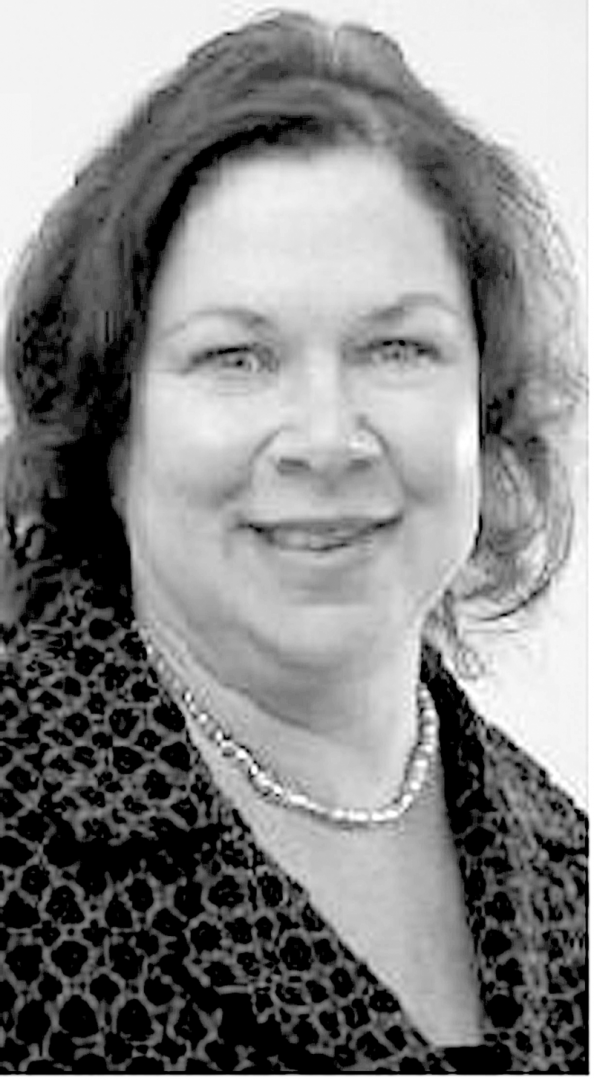
Kelly Koch

Kelly Koch

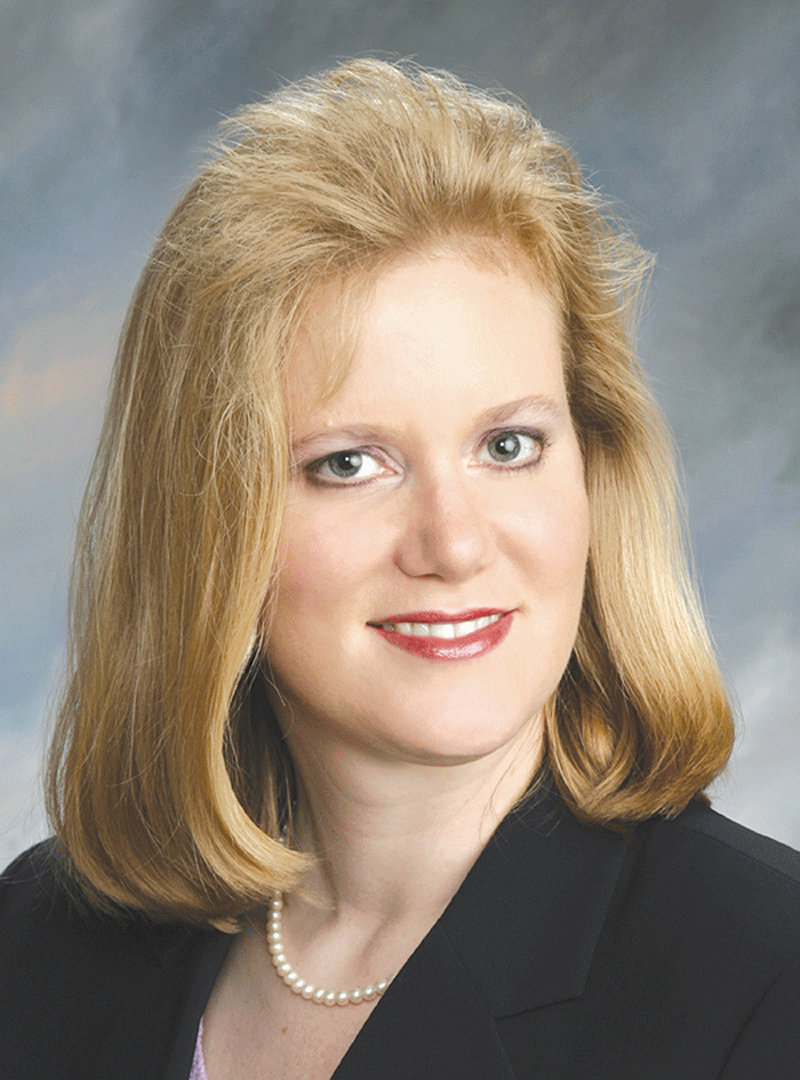
While recognition as part of the 40 Under Forty might be the latest addition to Kelly Koch’s trophy case, it certainly isn’t the first.
She laughed when describing the three things that she really wanted to do when she graduated from college. “I wanted to do sports TV, I wanted to teach — that was one of my minors — and at some point I wanted to do something with law. I’ll admit that I wasn’t really mature enough to do the last one, so I figured the sports route would be the best first choice.”
Apparently, it was.
While working at ESPN for nine years, she produced features for SportsCenter and worked on various documentaries. For her efforts, she won a CableACE Award and a Sports Emmy. While at ESPN, she coached and taught at a high school in Connecticut, but there was still that last goal to fulfill.
“I thought that a good time for a career change was right around when I turned 30,” she explained, “and when I was in law school at Western New England College, I had the luxury of getting involved in a lot of student activities.” That’s how she modestly described her role as president of the Student Bar Assoc. and winning the prestigious Dean’s Award for Outstanding Contribution to the Law School.
While the list of her successes sets Koch apart from the crowd, there is one award that doesn’t come with a statuette, yet it’s the one for which is most proud. For the past four years, she has been a Big Sister to a girl named Chelsea.
“After I took the bar and got settled,” she said, “I went over and signed up at Big Brothers Big Sisters. I wanted to have the interaction with a kid who needed someone to help with homework, or just to play sports with.
“She’s grown up to be a part of my family, and I’ve become part of theirs,” Koch continued, adding that this partnership has proven to be what she calls a “perfect match for both of us.”
— Dan Chase

DBA Certificates Departments

The following Business Certificates and Trade Names were issued or renewed during the month of March 2011.

AGAWAM

Insurance Center of N.E.
1070 Suffield St.
David Florian

Knock Out Fitness
297 Springfield St.
Karen Ollari

Sarat Ford Lincoln
245 Springfield St.
John Sarat Jr.

W.C. Pet Care
604 South West St.
Corrine Messenger

AMHERST

Cherewatti Farm
572 North East St.
Ilona Cherewatti

M & M Links
28 Amity St.
Ronnie Abdullah

Studio 116
460 West St.
Daniel R. Cooper

Studio E Haircare
9 East Pleasant St.
Elizabeth Hunt

Swallow Farms Capital Management
9 Swallow Farms Road
William F. Lindsey

Thompson Business Solutions
232 North East St.
Sarah Thompson

CHICOPEE

Monro Muffler & Brake Inc.
451 Memorial Dr.
John N. Van Heel

Roman’s Automotive
524 Chicopee St.
Joseph Kruzel

EAST LONGMEADOW

Fit to Ride
80 Denslow Road
James Pelletier

GiVin Beauty
35 Harkness Ave.
Julie Palazzi

Golden Eon Productions
14 Alandale Dr.
Dyanne Puglia

Subway
24 Shaker Road
John Moylan

GREENFIELD

HGA International
72 Montagne City Road
Andrey Agapov

Tractor Supply Company
72 Newton St.
Scott Sloan

Valle Studio
14 Long Ave.
Kristen P. Valle

HADLEY

Dance the Divine Wedding
128 Bay Road
Tracy Vernon

Gardenscapes
43 East St.
Debra Windoloski

Kellogg Playschool
214 Moody Bridge
Barbara Kellogg

Long Radio
30 Russell St.
Keith Imriglio

New Age Marketing
115 West St.
D. T. Tonchette

Phillips 66
110 Russell St.
Gary Kaneb

HOLYOKE

High St. Liquors
648 High St.
Rajendra B. Pandit

Metras Income Tax
224 Lyman St.
Lena Gauthier

Pat’s Fine Foods
1693 Northampton St.
Sagheer Nawaz

Rack Room Shoes
50 Holyoke St.
Peter R. Barr

Today’s Nails
50 Holyoke St.
Charles P. Tran

LUDLOW

Bella Couture Salon & Day Spa
154 East St.
Michelle Ruark

Marta Law Offices
30 Chestnut St.
Paulo G. Marta

Voyik & Voyik LLC
409 West St.
Jennifer Voyik

NORTHAMPTON

Whole Family Chiropractic
144 Franklin St.
Jill E. Smith

PALMER

Gallagher Trackside Motors
1316 South Main St.
Peter Gallagher

Matrix
1363 Main St.
Manuel F. Esteves

Tony V. Entertainment
65 Springfield St.
Anthony Valley

SOUTHWICK

Allstar Mechanical
57 Granville Road
Scott Grunwald

PJC Property Service
1 Consolini Dr.
Peter Consolini

SPRINGFIELD

A Bica Bar & Grill
278 Main St.
Q & M Christys Inc.

ACC Business
361 Bridge St.
Karen Dionio

All Star Lounge
382 Dwight St.
Victor Bruno

Americacarparts.com
56 West Alvord St.
Wichai Sinpunpakd

Anderson Services LLC
1104 Bay St.
Mark D. Anderson

Antim LLC
32 Hancock St.
Lynn Bledsoe

Aqui Me Quedo Restaurant
15 Locust St.
Luis A. Mejia

Arce’s Tax Service
2460 Main St.
Awilda Hernandez

Ayala Excavating and Trucking
92 Clayton St.
Manuel Ayala

Bia Fitness
560 Nassau Dr.
Krystal M. Say

Celebrating Home
141 Wollaston St.
Yesenia Rodriguez

Chikiyadas Creations
23 Beech St.
Luis A. Torres

DJ Purcyse
30 Amanda St.
Jason L. Culp

Delgado’s Towing
100 Verge St.
Leonel Delgado

Flo Barber Shop
278 Oakland St.
Jason Arias

WESTFIELD

Angelo’s Market
3 Lewis St.
Angel Morales

Back Drop Junction
3 Logan Ave.
David Burgess

Great White Cleaning Company
10 Day Ave.
Scott Texeira

M & W Property Maintenance and Odd Job Service
404 Granville Road
Leslie White

Mount Tekoa Group LLC
254 Falley Dr.
Patricia Richardson

Royal Icings
68 Gary Dr.
Susan Forest

WEST SPRINGFIELD

American Laser Skincare
111 Elm St.
Steven R. Brown

Elm Street Flowers
82 Elm St.
Gail Kelly

Inter-Technologies Inc.
451 Dewey St.
Yury Psehnichny

Kelly Ross Photography
1346 Elm St.
Kelly A. Ross

Lynch Flooring
115 Frederick St.
Peter L. Lynch

R&S Oil
20 Roanoke Ave.
Laura Benoit

Richard’s Deli Restaurant Inc.
875 Memorial Ave.
Brian Cleland

Santiago’s Recycling
203 Circuit Ave.
Daniel Santiago

Scheer Enterprise LLC
14 Colony Road
Joseph Scheer

Super Washing Well Laundry
1126 Union St.
David S. Cortis

Taco Bell / Pizza Hut
298 Memorial Ave.
Taco Bell of America Inc.

Tomasko Electric
848 Elm St.
Richard Tomasko

BANKRUPTCIES

The following bankruptcy petitions were recently filed in U.S. Bankruptcy Court. Readers should confirm all information with the court.

1880 House
LaBelle, Michelle R.
a/k/a Carr, Michelle R.
3704 South Athol Road
Athol, MA 01331
Chapter: 7
Filing Date: 03/13/11

A & O Transport Services
Sluder, Ricky K.
Sluder, Kimberly A.
163 Main St., 2nd Fl.
Athol, MA 01331
Chapter: 7
Filing Date: 02/28/11

Aitighli, Rachid
126 Quabog St.
Warren, MA 01083
Chapter: 7
Filing Date: 03/07/11

AJ Norman Painting Contractors
Normoyle, James P.
11 Maiden Lane
Wilbraham, MA 01095
Chapter: 7
Filing Date: 03/11/11

Anderson, Laurel M.
56 Glenvale St.
Springfield, MA 01119
Chapter: 7
Filing Date: 03/08/11

Baillargeon, Luke R.
72 Walnut St., Fl. 1
Chicopee, MA 01020
Chapter: 7
Filing Date: 03/02/11

Bartlett, Amy Ann
58 New Hampshire Ave.
Pittsfield, MA 01201
Chapter: 7
Filing Date: 03/10/11

Beach, Michelle Lee
a/k/a Heaton-Beach, Michelle
29 Pilgrim Road
Springfield, MA 01118
Chapter: 7
Filing Date: 03/10/11

Belba, Patricia A.
196 Center St.
Lee, MA 01238
Chapter: 7
Filing Date: 03/08/11

Berkshire Stone Works
Doyle, Albert
Doyle, Jannine
81 Daytona St.
Pittsfield, MA 01201
Chapter: 13
Filing Date: 03/01/11

Duong, Dennis Thanh
a/k/a Duong, Lam Thanh
668 Dickinson St.
Springfield, MA 01108
Chapter: 7
Filing Date: 03/02/11

Boone, Jennifer L.
a/k/a Duda, Jennifer L.
6 McBride Road
Unit B
Wales, MA 01081
Chapter: 7
Filing Date: 03/09/11

Breault, Angela P.
142 Skeele St.
Chicopee, MA 01013
Chapter: 13
Filing Date: 03/02/11

Bullens, Thomas J.
Bullens, Linda S.
31 Pauline Lane
Westfield, MA 01085
Chapter: 7
Filing Date: 03/04/11

Calkins, Nicholas C.
40 Duryea St.
Springfield, MA 01104
Chapter: 7
Filing Date: 03/15/11

Champagne, Luce M.
63 Watson St.
Chicopee, MA 01020
Chapter: 7
Filing Date: 03/04/11

Cote, Douglas A.
Cote, Marya C.
370 Ridge Road
Athol, MA 01331
Chapter: 7
Filing Date: 02/28/11

Coughlin, Hilary W.
107 Wenonah Road
Longmeadow, MA 01106
Chapter: 7
Filing Date: 03/09/11

Crespo, Jose L.
Otero, Sonia N.
193 Santa Barbara St.
Springfield, MA 01104
Chapter: 7
Filing Date: 03/01/11

Crochetiere, Diane Marie
55 Beaumont Ave.
Chicopee, MA 01013
Chapter: 7
Filing Date: 03/03/11

Davies, Frank
310 Stafford St., Apt. 1303
Springfield, MA 01104
Chapter: 7
Filing Date: 03/01/11

Dibrindisi, Dolores T.
60 Avis Circle
Florence, MA 01062
Chapter: 7
Filing Date: 03/07/11

Dicenzo, Michael J.
Dicenzo, Christine A.
P.O. Box 138
Pittsfield, MA 01202
Chapter: 7
Filing Date: 03/04/11

DNA Printworks
McCarthy, Daniel S.
478 Kings Highway
West Springfield, MA 01089
Chapter: 7
Filing Date: 03/09/11

Duquette, Ronald G.
Duquette, Debra M.
368 Holyoke St.
Ludlow, MA 01056
Chapter: 13
Filing Date: 03/08/11

Dwyer, Carroll Henry
54 Bridge St., Apt. 54
South Hadley, MA 01075
Chapter: 7
Filing Date: 03/09/11

Dziadek, Bernard J.
437 Granby Road
South Hadley, MA 01075
Chapter: 7
Filing Date: 03/09/11

Edery, Armand
10 Keefe Ave.
Holyoke, MA 01040
Chapter: 7
Filing Date: 03/11/11

Ela, Richard B.
Ela, Cheryl A.
a/k/a Heinonen, Cheryl A.
40 Yankee Drummer Dr.
Warren, MA 01083
Chapter: 7
Filing Date: 03/14/11

Ezyk, Shane M.
12 Oakdale Place
Easthampton, MA 01027
Chapter: 7
Filing Date: 03/11/11

Farooqui, Amir A.
11 Eastwood Circle
Ludlow, MA 01056
Chapter: 7
Filing Date: 03/14/11

Fiorentino, Angelo M.
340 Cooley St.
Springfield, MA 01128
Chapter: 7
Filing Date: 03/04/11

Fontaine, Doreen F.
945 Jenks Road
Cheshire, MA 01225
Chapter: 7
Filing Date: 03/08/11

Fortes, Gregory E.
102 Memory Lane
Orange, MA 01364
Chapter: 7
Filing Date: 03/07/11

Foss, Judith A.
98 Spadina Parkway
Pittsfield, MA 01201
Chapter: 7
Filing Date: 03/15/11

Getto, Robert A.
34 Whitman St.
Chicopee, MA 01013
Chapter: 7
Filing Date: 03/07/11

Girard, Andrew P.
76 Lakeview St.
Pittsfield, MA 01201
Chapter: 7
Filing Date: 03/10/11

Godin-Conz, Jaclyn Marie
a/k/a Kraus, Jaclyn Marie
35 Ward Ave.
Easthampton, MA 01027
Chapter: 7
Filing Date: 03/09/11

Guyer, Jeffrey A.
Guyer, Amy J.
a/k/a Evangelisto, Amy J.
53 Yorkshire Ave.
Pittsfield, MA 01201
Chapter: 7
Filing Date: 03/15/11

Hasperg, Nicole M.
119 Daniels Terrace
Cheshire, MA 01225
Chapter: 7
Filing Date: 03/15/11

Hirsch, Jeffrey A.
106 Inverness Lane
Longmeadow, MA 01106
Chapter: 13
Filing Date: 03/05/11

Holby, Brenda
365 Main St., #7
Sturbridge, MA 01566
Chapter: 7
Filing Date: 03/11/11

Holloway, Myron C.
858 Silver Lake St.
Athol, MA 01331
Chapter: 7
Filing Date: 02/28/11

Hussain, Irum
11 Eastwood Circle
Ludlow, MA 01056
Chapter: 7
Filing Date: 03/14/11

Ilg, Priscilla M.
120 South Main St.
Orange, MA 01364
Chapter: 13
Filing Date: 03/07/11

Jaime, Janet
39 Hillside Ave.
West Springfield, MA 01089
Chapter: 7
Filing Date: 03/14/11

James, Jade R.
18 Wandering Meadows
Wilbraham, MA 01095
Chapter: 13
Filing Date: 03/07/11

Jenney, Debra L.
26 Duryea St.
Springfield, MA 01104
Chapter: 7
Filing Date: 03/02/11

Kibodya, Mohamed A.
54 Homestead Ave.
Indian Orchard, MA 01151
Chapter: 7
Filing Date: 03/01/11

King, Sharon K.
P.O.Box 1145
Westfield, MA 01086
Chapter: 7
Filing Date: 03/01/11

Knowlton, Richard J.
Knowlton, Ann M.
889 Suffield St.
Agawam, MA 01001
Chapter: 7
Filing Date: 03/02/11

Laramee-Santaniello, Patricia L.
76 Main St.
Wilbraham, MA 01095
Chapter: 7
Filing Date: 03/15/11

Lareau, David R.
138 St. James St.
Chicopee, MA 01020
Chapter: 7
Filing Date: 03/07/11

Latina, Dorothy Rose
3 Heritage Lane
Westfield, MA 01085
Chapter: 13
Filing Date: 03/04/11

Leary, Frances J.
36 Crestwood St.
Springfield, MA 01107
Chapter: 7
Filing Date: 03/03/11

Lehmann, Crystal M.
70 South John St.
Pittsfield, MA 01201
Chapter: 7
Filing Date: 03/14/11

Lemieux, Richard Alan
Lemieux, Carolyn Margaret
17 Fuller St.
North Adams, MA 01247
Chapter: 7
Filing Date: 03/04/11

Lescarbeau, Joy P.
193 North St.
North Adams, MA 01247
Chapter: 7
Filing Date: 03/12/11

Link, Herbert
22 Lessey St. Apt 104
Amherst, MA 01002
Chapter: 7
Filing Date: 03/02/11

Lord, Julie A.
30 Conway St.
South Deerfield, MA 01373
Chapter: 13
Filing Date: 03/11/11

Maldonado, Sylvia
395 Tokeneke Road
Holyoke, MA 01040
Chapter: 7
Filing Date: 03/11/11

Maloney, James E.
Maloney, Angel M.
57 Richmond Ave.
Pittsfield, MA 01201
Chapter: 7
Filing Date: 03/10/11

Manzi Fiorentino, Marie A.
72 Kathleen St.
Springfield, MA 01128
Chapter: 7
Filing Date: 03/04/11

Marhoub, Chaibia
126 Quabog St.
Warren, MA 01083
Chapter: 7
Filing Date: 03/07/11

Mastriani, Vincent
Mastriani, Donna
1050 Carew St.
Springfield, MA 01104
Chapter: 7
Filing Date: 03/07/11

Matosky, Jessica M.
115 Sunridge Dr.
Springfield, MA 01118
Chapter: 7
Filing Date: 03/09/11

Monday, Debra C.
a/k/a DeRose, Debra C.
P.O. Box 418
Ludlow, MA 01056
Chapter: 13
Filing Date: 03/04/11

Nicolazzo, Anthony Pasquale
751 Scott Road
Oakham, MA 01068
Chapter: 7
Filing Date: 03/10/11

Nieves, Rhonda
70 Martel Road
Springfield, MA 01119
Chapter: 7
Filing Date: 03/13/11

Normandin, Jason M.
Normandin, Sandra E.
430 Walnut Hill Road
Orange, MA 01364
Chapter: 7
Filing Date: 03/03/11

Ortiz, Marcelino
82 Bridge St., Apt 6A
Northampton, MA 01060
Chapter: 7
Filing Date: 03/02/11

Pearson, Maria C.
60 Ionia St.
Springfield, MA 01109
Chapter: 7
Filing Date: 03/15/11

Precious Memories Childcare
LaFountain, Melissa L.
a/k/a Cucchi, Melissa L.
440 Fredette St.
Athol, MA 01331
Chapter: 7
Filing Date: 03/13/11

Profit Valley Printing
Ostapovicz, Michael Aaron
391 Pleasant St.
Holyoke, MA 01040
Chapter: 7
Filing Date: 03/09/11

Richardson, Beulah Brooks
699 North Westfield St.
Feeding Hills, MA 01030
Chapter: 7
Filing Date: 03/03/11

Rivera, Roberto
500 Hancock St., Apt.
Springfield, MA 01105
Chapter: 7
Filing Date: 03/02/11

Robert, Michael A.
49 Michael Sears Road
Belchertown, MA 01007
Chapter: 7
Filing Date: 03/08/11

Roberts, Francis M.
1460 Main St.
Palmer, MA 01069
Chapter: 7
Filing Date: 03/11/11

Rodriguez, Alicia
280 Dickinson St.
Springfield, MA 01108
Chapter: 7
Filing Date: 03/09/11

Rodriguez, Julio A.
47 Grosvenor St
Springfield, MA 01107
Chapter: 7
Filing Date: 03/11/11

Routhier, Kevin J.
Routhier, Susan C.
a/k/a Morris, Susan C.
a/k/a Paradysz, Susan C.
16 Exeter St.
Easthampton, MA 01027
Chapter: 7
Filing Date: 03/11/11

Sadler, Christopher G.
P.O. Box 48
Russell, MA 01071
Chapter: 7
Filing Date: 03/01/11

Santiago, Carmen C.
15 Van Horn Place
Springfield, MA 01104
Chapter: 13
Filing Date: 03/02/11

Schwarz, James T.
178 Woodlawn Ave.
Pittsfield, MA 01201
Chapter: 7
Filing Date: 03/10/11

Smith, Dorothy J.
100 Edgemont St.
Springfield, MA 01109
Chapter: 7
Filing Date: 03/04/11

Somes, Wendy K.
3 A Wildwood Lane
Goshen, MA 01032
Chapter: 7
Filing Date: 03/01/11

Sparrow, Michael
22 4th Ave.
Cheshire, MA 01225
Chapter: 7
Filing Date: 03/10/11

Sperry, Norman A.
430 Pleasant St.
Holyoke, MA 01040
Chapter: 13
Filing Date: 03/11/11

Stephenson, Sandra E.
P.O. Box 1426
Holyoke, MA 01041
Chapter: 7
Filing Date: 03/15/11

Stevens, Robert C.
81 Dartmouth St.
Pittsfield, MA 01201
Chapter: 7
Filing Date: 03/10/11

Swan, Kevin S.
Swan, Laurie E.
1747 West Royalston Road
Athol, MA 01331
Chapter: 7
Filing Date: 03/07/11

Thompson, Barbara J.
437 East St.
Chicopee, MA 01020
Chapter: 7
Filing Date: 03/15/11

Tuttle, Mary A.
13A Highland Village
Ware, MA 01082
Chapter: 7
Filing Date: 03/11/11

Unique Designs
Malone, Christopher T.
Malone, Carol E.
a/k/a March-Malone, Carol E.
101 Upton St.
Springfield, MA 01104
Chapter: 7
Filing Date: 03/11/11

Wasuk, David M.
1 Jennifer St.
Lenox, MA 01240
Chapter: 13
Filing Date: 03/09/11

Wasuk, Sue A.
1 Jennifer St.
Lenox, MA 01240
Chapter: 13
Filing Date: 03/09/11

Watkins, Robert D.
376 King Road
Athol, MA 01331
Chapter: 7
Filing Date: 03/13/11

Weber, Scott F.
80 Damon Road #7204
Northampton, MA 01060
Chapter: 7
Filing Date: 03/11/11

Wells, Michael Robert
Wells, Lisa Ann
80 Wheeler Ave.
Springfield, MA 01118
Chapter: 13
Filing Date: 03/02/11

Williams, Kimberly A.
22 Pinney St.
Palmer, MA 01069
Chapter: 7
Filing Date: 03/04/11

Williams, William R.
11 Flynt Ave.
Monson, MA 01057
Chapter: 7
Filing Date: 03/04/11

Wright, Keith M.
3 A Wildwood Lane
Goshen, MA 01032
Chapter: 7
Filing Date: 03/01/11

Wyman, William E.
218 Spring St.
Athol, MA 01331
Chapter: 7
Filing Date: 03/07/11

Zina, John F.
21 Wilson Road
Belchertown, MA 01007
Chapter: 7
Filing Date: 03/03/11

Departments Incorporations

The following business incorporations were recorded in Hampden, Hampshire, and Franklin counties and are the latest available. They are listed by community.

BECKET

Ozzie’s Glass Inc., 71 Pill Dr., Becket, MA 01223. Michael Ozner, same. Manufacture and sale of blown glass

BRIMFIELD

Jesse Via Concrete Services Inc., 8 Governor Fairbanks Road, Brimfield, MA 01010. Jesse Via, same. Concrete services.

CHICOPEE

J.Kosiorek Inc., 769 Burnett Road, Chicopee, MA 01020. James Kosiorek, same. Restaurant.

EAST LONGMEADOW

Negotiation Works Inc., 27 High Meadow Circle, East Longmeadow, MA 01028. Joshua Weiss, Ph.D., same. Negotiation training and consultation services.

Perron’s Automotive Inc., 14 Center Square, East Longmeadow, MA 01028. Brian Perron, 186 Chestnut St., East Longmeadow, MA 01028. Automotive repair services.

Power Conservation Systems Inc., 12-14 Somers Road, East Longmeadow, MA 01028. Christopher Duby, 56 Lawnwood St., Agawam, MA 01001. Energy conservation consultation services.

FEEDING HILLS

KLC Auto Sales Inc., 825 Springfield St., Feeding Hills, MA 01030. Francis Connor, 40 Woodbridge Dr., Suffield, CT 06078. Automobile sales.

LEE

Modern Motels Inc., 185 Stockbridge Road, Lee, MA 01238. Richard Proctor, same. Motel.

Otto’s Breakfast and Deli Inc., 85 Main St., Lee, MA 01238. Paul Face, same. Restaurant.

NORTH ADAMS

Monument Square Consulting Group Inc., 229 Corinth St., North Adams, MA 01247. John Barrett, same. Consultation services for public matters and private business.

NORTHAMPTON

Ink & Toner Solutions Inc., 12 Main St., Northampton, MA 01060. Serges Lariviere, 47 West Pelham Road, Shutesbury, MA 02072. Own, operate, sell, service, and repair printers and copies.

PALMER

Kahm Transportation Corp., 20 Wilbraham St., Palmer, MA 01069. Eric Miller, 1900 Linden Blvd., Brooklyn, N.Y. 11207. Trucking services.

PITTSFIELD

Intradermal Designs Inc., 409 North St., Pittsfield, MA 01201. Wesley Lamore, same. Tatoo and body piercing shop.

SOUTHWICK

Our Community Food Pantry Inc., 220 College Highway, Southwick, MA 01077. Julie Cecchini, 366 North Loomis St., Southwick, MA 01077. Operate a food pantry for poor and needy residents of Southwick, Granville, and Tolland, MA.

SPRINGFIELD

Hoops 2 Build Hope Inc., 5 Barrington Dr., Springfield, MA 01129. Colin Tabb, same. Non-profit ministry aimed to bring excitement, love and hope through the development of basketball facilities and programs.

JPML Holdings Inc., 390 Dickinson St., Springfield, MA 01108. Phung Minh Le, 390 Dickinson St., Springfield, MA 01108. Phung Minh Le, 14 Crystal Ave., Springfield, MA 01108. Wholesale and retail of cellular phones and electronics.

Laprise Inc., 1365 Main St., Springfield, MA 01103. Ronald Laprise, 6 Canterbury Lane, Feeding Hills, MA 01030. Chiropractic office.

NGC Industries Inc., 20 Maple St., Springfield, MA, 01103. Roland Berthiaume, 585 Cooley St., Springfield, MA 01128. Manufacture, promote, and sell spinal-traction devices.

The Law Offices of Michael D. Facchini, P.C., 824 Liberty St., Sprngfield, MA 01104. Michael Facchini, same. General law practice.

The Law Offices of Keith Minoff, P.C., 1350 Main St., Suite 1300, Springfield, MA, 01103. Keith Minoff, same. General law practice.

Mend Maddie’s Heart Inc., 151 Forest Park Ave., Springfield, MA 01108. Cynthia Jean Sattal, same. Spread awareness of congenital heart defects.

STURBRIDGE

Ink Jet Tech Inc., 51 South Shore Dr., Sturbridge, MA 01566. Fred Neuenschwander, same.

WEST SPRINGFIELD

Kazak Trucking Inc., 75 Irving St., West Springfield, MA 01089. Sergey Pirogov, same. Trucking services.

The Law Offices of Mary Paier Powers, P.C., 689 Westfield St., West Springfield, MA 01089. Mary Paier Powers, 25 Appaloosa Lane, West Springfield, MA 01089. General law practice.

Court Dockets Departments

The following is a compilation of recent lawsuits involving area businesses and organizations. These are strictly allegations that have yet to be proven in a court of law. Readers are advised to contact the parties listed, or the court, for more information concerning the individual claims.

FRANKLIN
SUPERIOR COURT
Phyllis R. Perry, executrix of the estate of Richard R. Perry v. John G. Savage Realty Corp. and James Fitzgibbons
Allegation: While performing work on property owned by John G. Savage Realty and contracted by James Fitzgibbons, the plaintiff fell through the roof deck to the cement floor below and died: $10,774.27
Filed: 1/19/11

HAMPDEN
SUPERIOR COURT
Bernadino Smith v. American International College
Allegation: Loss of college tuition and false inducement to sign Sallie Mae loan: $24,000+
Filed: 1/7/11

Jimbob Aviation Inc. v. Taylor Companies Inc.
Allegation: Breach of lease agreement: $145,000
Filed: 1/11/11

Seaboard Drilling v. Pappas Enterprises Inc.
Allegation: Non-payment of labor and materials for sub-surface testing and environmental engineering: $45,836.88
Filed: 1/6/11

Woronoco Hydro, LLC v. Ocean State Jobbers Inc.
Allegation: Outstanding balance for electrical services: $95,000
Filed: 12/15/10

HAMPSHIRE
SUPERIOR COURT
Kaestle Boos Associates Inc. v. the Town of Granby, by and through the Granby Safety Committee
Allegation: Breach of contract by failing to pay for services rendered: $115,000
Filed: 2/23/11
Michelle Papineau v. Mount Holyoke College
Allegation: Employment discrimination: $25,000+
Filed: 2/7/11

NORTHAMPTON
DISTRICT COURT
Jane Doe v. Cooley Dickinson Hospital
Allegation: Breach of contract and HIPAA violation: $100,000
Filed: 2/11/11

Swan Associates Inc. v. Boulanger’s Plumbing & Heating Inc.
Allegation: Breach of contract and failure to pay: $17,876
Filed: 2/15/11

PALMER DISTRICT COURT
Mactec Engineering & Consulting Inc. v. Sub-Surface Informational Surveys Inc.
Allegation: Breach of contract by failing to confirm the location of all utilities and failing to reimburse the plaintiff remediation costs: $12,536.65
Filed: 1/4/11

SPRINGFIELD DISTRICT COURT
Liberty Mutual Insurance Co. v. Yanez Construction
Allegation: Non-payment of workers’ compensation policy: $32,326.34
Filed: 2/1/11

Linda Wortman v. Comcast of MA
Allegation: Negligent performance of work in plaintiff’s home, causing injury: $20,236.83
Filed: 1/31/11

NCMIC Finance Corp. v. Langlois Family Chiropractic Inc.
Allegation: Non-payment on judgment: $19,133.78
Filed: 2/1/11

Shirley Peaks v. Costco Wholesale Corp.
Allegation: Negligence in property maintenance, causing slip and fall: $5,183
Filed: 2/14/11

WESTFIELD
DISTRICT COURT
Pioneer Valley Winnelson Co. v. Eric’s Plumbing and Heating
Allegation: Non-payment of goods sold and delivered: $16,028.58
Filed: 2/4/11

Sections Supplements
Make Sure They Fall Within the Parameters of State Regulations

Benjamin Bristol

Benjamin Bristol

An employee damages property while at work. The employer offers to waive disciplinary action for the mishap if employee pays for damage through wage deductions. Sounds reasonable, right?
As reasonable as this may seem, the Mass. Supreme Judicial Court (SJC) recently declared that one such policy, which had been used by ABC Disposal Inc. (ABC), violated the Massachusetts Wage Act.
ABC is a solid-waste and recycling trucking business whose drivers had, on occasion, damaged ABC’s trucks as well as property of third parties. To promote safety and discourage careless driving, ABC implemented a policy where it would evaluate each instance of damage to see if it could have been prevented. If ABC found that the damage was preventable, it would then offer the driver two choices: pay for the damage or be disciplined. The drivers who chose to pay for the damages would authorize the employer, in writing, to deduct payments from their wages. The average amount that was deducted was $15 to $30 per week. ABC’s policy successfully reduced its property-damage costs. In fact, ABC’s costs relating to damage done to company vehicles and third-party property dropped by 78%.
Apparently, at least one ABC employee did not like this arrangement, because the Mass. Attorney General’s Office received an anonymous complaint concerning the policy in 2006. In response, the attorney general launched an investigation and ultimately concluded that ABC’s policy violated the Massachusetts Wage Act by creating ‘special contracts.’
A special contract is an arrangement where an employee agrees to accept less than his or her total amount of earned wages, and thereby circumvents the Wage Act’s purpose: to protect employees’ right to their earned wages. After the attorney general arrived at this conclusion, a civil citation was issued ordering ABC to pay $21,487.96 in restitution and a penalty of $9,410.
ABC filed a lawsuit in state court to annul the attorney general’s citation and uphold the validity of its policy. ABC argued that it was not engaging in special contracts, but was instead making deductions that were ‘valid setoffs,’ which are permitted by the Wage Act. The attorney general disagreed, and argued that the valid-setoff provision of the Wage Act has a very limited scope and did not apply to ABC’s policy.
All valid setoffs under the Wage Act, according to the attorney general, “implicitly involve some form of due process through the court system, or occur at an employee’s direction and in the employee’s interests.” The trial court sided with ABC, and the attorney general appealed to the SJC.
The SJC gave deference to the attorney general’s interpretation of the Wage Act and found that ABC’s policy did not entail valid setoffs. The SJC explained that valid setoffs exist only where there is a “clear and established debt” owed by the employee to the employer. The SJC stated that ABC’s policy did not create clear and established debts due to the one-sided method of assessing whether the employee was responsible for the damages and how much the damages would cost. Instead of a valid setoff, the SJC viewed ABC’s policy as creating special contracts where the employee had to choose from two “unpalatable” options: wage deductions or disciplinary action.
The SJC agreed with the attorney general that this policy contravened the purpose of the Wage Act. As a result, the SJC declared ABC’s policy unlawful and required ABC to pay the restitution and penalty costs. Although the restitution and penalty that ABC was ordered to pay may appear costly, employers should note that this amount can be much higher, especially if an employee files a lawsuit on their own.
Indeed, not only does the Wage Act give the attorney general the authority to penalize employers who violate its terms, the Wage Act also allows employees to file lawsuits on their own and on behalf of others. If the employee prevails, the court will take the amount the employer owes for lost wages and benefits — and triple it. Clearly, these numbers can begin to add up quickly, particularly if multiple employees join in and institute a class action.
Now that we know how the SJC and attorney general view voluntary-deduction agreements like the one discussed above, employers must remain cautious when contemplating whether they can take such deductions, even when the employee assents.
The good news is that the SJC’s ruling does not prohibit wage deductions altogether; employers just need to make sure their deductions fall within one of the Wage Act’s narrow exceptions, such as a valid setoff. However, even if you believe that your policy may fit within one of these narrow exceptions, the safer course is to consult with counsel to see if your policy qualifies. Such a preventative measure is well-worth the time, especially if an employee questions your policy and contacts the attorney general to evaluate its validity.

Benjamin Bristol, Esq. specializes exclusively in management-side labor and employment law at Royal LLP, a woman-owned, boutique, management-side labor and employment law firm; (413) 586-2288; [email protected]

Sections Supplements
Department of Labor Puts the Pressure on Employees

Michael Leahy

Michael Leahy

Late last year, the American Bar Assoc. (ABA) announced what it called a “first-of-its-kind partnership between a federal agency … and the private bar.”
The federal agency, in this case, the Department of Labor (DOL), and the ABA have teamed in a bold initiative to pair potential plaintiffs with private-sector plaintiffs’ attorneys to bring lawsuits against employers under the Fair Labor Standards Act (FLSA) and the Family Medical Leave Act (FMLA).
Currently, employees who bring an FLSA or FMLA complaint that is not resolved by the DOL’s Wage and Hour Division are referred to a toll-free telephone number that connects them with the ABA’s attorney-referral system. The Department of Labor will also share relevant documents from an employee’s case file with the private attorney to assist in any private lawsuit.
We expect this initiative to result in an increase in wage-and-hour litigation over FLSA and FMLA violations, including costly collective and class-action cases.
These cases are particularly attractive for plaintiffs’ attorneys, since attorneys’ fees are available if the verdict is in favor of the employee. In addition, since the DOL will share much of the employee’s case file, plaintiffs’ attorneys may be more likely to believe a case is strong, or may see more upside in taking cases where the DOL has already completed much of the investigatory heavy lifting. Given the current regulatory environment, it is expected that this practice will spread to both federal and Massachusetts agencies that oversee labor and employment law.
This DOL-ABA Referral Initiative is in line with a more aggressive DOL stance under the Obama administration. Last year, the DOL launched its ‘We Can Help’ initiative aimed at encouraging underpaid or misclassified workers to file complaints against their employers. The Web site for the We Can Help program includes a large banner which reads, “How To File a Complaint.” Employees who follow that link are walked through the process of getting a complaint against their employer rolling.
That’s not the worst of the problem: last December, the DOL’s Office of the Solicitor of Labor developed an aggressive operating plan for 2011 for the future, under which the solicitor will be taking a more active roll in the administrative and pre-litigation phases of DOL investigations. The solicitor is also undertaking a ‘liquidated damages pilot project’ to assist the DOL in seeking double damages. The solicitor even plans to identify egregious cases for criminal prosecution.
Massachusetts employers must be particularly cautious, given the active plaintiff’s bar here and the Commonwealth’s own aggressive regulators.
Earlier this year, the Mass. attorney general’s office was successful in a case it brought against an employer who deducted money from an employee’s pay to compensate for damages he caused to the company’s vehicle.
Meanwhile, the plaintiffs’ bar in Massachusetts is among the most successful in the country at suing employers. Just last month, Massachusetts attorneys were successful in their efforts to certify a class-action suit against Starbucks for its practices related to employee tips.
Wage-and-hour issues can be tricky, and the basis for legal determinations is not always intuitive. Many well-meaning employers mistakenly classify non-exempt workers as exempt, or mistakenly treat workers as independent contractors rather than employees. FMLA determinations can also be confusing. In light of the DOL’s unusually aggressive posture, it is recommended that all employers play it safe and call their labor and employment counsel to review their wage-and-hour policies.
This approach may well spread to other employment issues. A thorough employment practice audit now can save headaches and money down the road.
Given the DOL’s stance here, it’s not worth taking a chance.

Michael B. Leahy is an associate with the law firm of Skoler, Abbott & Presser, P.C., which exclusively represents management interests with regard to legal issues concerning labor and employment. He concentrates his practice in employment counseling and litigation. He is admitted to practice in state and federal courts in Massachusetts and state courts in New York. This column is not intended as legal advice related to individual situations; (413) 737-4753; [email protected]

Opinion
Mentors Program Is a Big Step Forward

It’s way too early to even make an attempt at quantifying or qualifying the potential impact from a new program known as Valley Venture Mentors (VVM), but only a few months into the proceedings, this seems to be one of the best ideas — and most encouraging signs for progress in the broad realm of economic development — that we’ve seen in some time.
As the name suggests, VVM is about mentoring, specifically of young entrepreneurs who have ventures that — as the program’s CEO, Paul Silva, so eloquently put it — are “not quite ready for prime time.” It is the goal of the VVM to make them ready, or at least more ready. And if it succeeds, organizers say, it will help more companies over that initial hump and also keep more startups from leaving this region for Worcester, Boston, or other communities where more support systems exist.
But let’s back up a minute. The VVM was created to fill a critical need in this region, what Silva and others describe as a bridge between the classroom and the so-called real world. It’s an important bridge, a support structure that is paramount to building a stronger base of young companies that can potentially mature into major employers.
Over the past several years, UMass Amherst and several area colleges, including Springfield Technical Community College, Bay Path, Western New England, Elms, and others, have made great strides in not only teaching entrepreneurship, but fostering it as well. Indeed, these programs have not simply encouraged students to consider entrepreneurship as a viable career option — a thought that needs to be reinforced — and presented the basics (Entrepreneurship 101, if you will), they have also helped trigger some startup operations.
But then … well, there’s nothing between these programs and that aforementioned real world, which can be cruel and is always ultra-challenging. Without a support system in place to help them confront this world, young entrepreneurs often fail to advance their concepts, or, if they have the means to do so, they take their ideas to Boston or some other region where there is a support system.
Neither scenario is appealing for Western Mass., but they have become the norm, not the exception.
To reverse these trends — something that certainly won’t happen overnight — Silva and others have put the VVM in place. Meetings between mentors and selected ‘teams’ began in February and will continue on the fourth Wednesday of each month. After first getting a broad overview from each team, smaller groups of mentors have begun to drill down and address specific issues ranging from financing to protection of intellectual property; from building a business model to making an effective elevator pitch.
It would be wonderful to think that the formation of VVM is going to bring quick and profound change to the business landscape in Western Mass. Those who created this initiative know better. They understand that nothing will happen quickly and change will be incremental. Companies employing hundreds of people will not suddenly sprout up in Hadley, Hampden, and Holyoke because of monthly mentoring sessions in a law firm’s conference room in downtown Springfield.
But if things go as organizers project, that bridge now in place between the classroom and the real world will enable more young entrepreneurs to successfully make that journey from the former to the latter. And with those crossings will come jobs, more vibrancy, and, perhaps most important, a mindset that ideas can be developed in this region.
That’s why this concept is so promising.

Court Dockets Departments

The following is a compilation of recent lawsuits involving area businesses and organizations. These are strictly allegations that have yet to be proven in a court of law. Readers are advised to contact the parties listed, or the court, for more information concerning the individual claims.

CHICOPEE DISTRICT COURT
Wilfred Tisdell v. AGE Institute of MA Inc.
Allegation: Negligent maintenance of parking lot, causing trip and fall: $25,000+
Filed: 1/24/11

FRANKLIN SUPERIOR COURT
Phyllis R. Perry, as executrix of the estate of Richard E. Perry v. John G. Savage Realty Corp. and James Fitzgibbons
Allegation: Failure to provide reasonable safety and negligence, causing wrongful death: $10,774.27
Filed: 1/19/11

Siliconezone, LLC v. Lamson & Goodnow, LLC
Allegation: Non-payment of goods sold and delivered: $189,026.16
Filed: 2/8/11

HAMPDEN SUPERIOR COURT
Raipher Pelligrino Associates, P.C. v. Roger A. Proulx Trust
Allegation: In an effort to avoid payment of legal services, the defendant fraudulently conveyed real estate into his trust: $55,761.50
Filed: 12/8/10

Scarfo Construction v. Shawn’s Lawns Inc., RIV Construction Group, and HD Westfield, MA Landlord, LLC
Allegation: Failure to pay under the terms of a construction agreement: $33,965.10
Filed: 12/8/10

Seaboard Drilling Inc. v. Environmental Associates Inc.
Allegation: Non-payment of labor and materials on resurfacing test and environmental engineering services: $45,836.88
Filed: 1/6/11
Woronoco Hydro, LLC v. Woronoco Realty, LLC
Allegation: Non-payment of electrical power supplied: $95,000
Filed: 12/15/10

HAMPSHIRE SUPERIOR COURT
Bunker Hill Insurance Co., as subrogee of Amanda and Kathleen Wilson v. Richard’s Fuel & Heating Inc.
Allegation: Failure to make a timely delivery of heating oil, causing freeze-up of plumbing and heating systems: $51,823.23
Filed: 1/31/11

David Atwood, as administrator of the estate of Matthew Atwood v. Center for International Studies Inc.
Allegation: Negligence in supervision and care of study abroad student causing wrongful death: $2 million
Filed: 2/3/11

HOLYOKE DISTRICT COURT
Compound East, LLC v. Deerfield Woodworking
Allegation: Breach of agreement in which defendant agreed to leave premises in broom-clean condition and to remove all possessions: $4,832.71
Filed: 1/11/11

Wolfpac Technologies Inc. v. Neu Tradition Millwork Inc.
Allegation: Non-payment for goods sold and delivered: $18,331.12
Filed: 1/10/11

NORTHAMPTON DISTRICT COURT
Commonwealth of MA State Lottery Commission v. the Village General Store, Robert E. Jones, Stanley J. Ryes, and Judith M. Jones-Ryes
Allegation: Breach of written contract to forward commissions owed to the Commonwealth as lottery sales agents: $14,256.65
Filed: 1/13/11

SPRINGFIELD DISTRICT COURT
John Deere Landscapes Inc. v. New England Landscapes & Irrigation and Paul D. Santucci
Allegation: Non-payment for goods sold and delivered: $4,711.97
Filed: 12/21/10

L & B Truck Services Inc. v. Autotech Repossession Inc.
Allegation: Non-payment for truck repairs: $10,234.26
Filed: 12/21/10

United Rentals Inc. v. Do Val Remodeling Inc.
Allegation: Non-payment for materials, equipment, and services on a construction project: $5,207.84
Filed: 12/20/10

United Rentals Inc. v. New England Electrical Contracting Corp.
Allegation: Non-payment for materials, equipment, and services on a construction project: $4,942.14
Filed: 12/20/10

United Rentals Inc. v. North Eastern Operations Contracting Group, LLC
Allegation: Non-payment for materials, equipment, and services on a construction project: $5,299.48
Filed: 12/20/10

United Rentals Inc. v. Prism Developers Inc.
Allegation: Non-payment for materials, equipment, and services on a construction project: $5,462.29
Filed: 12/28/10

United Rentals Inc. v. RLB Contracting Company, LLC
Allegation: Non-payment for materials, equipment, and services on a construction project: $5,114.17
Filed: 12/20/10

WESTFIELD DISTRICT COURT
Everett J. Prescott Inc. v. Shawn’s Lawns Inc. and Patricia M. Wendell
Allegation: Non-payment for labor and materials supplied on a project: $9,603.72
Filed: 1/20/11

Sections Supplements
Restaurants Strive to Better Accommodate Food Allergies

Perigee’s Dawn LaRochelle

Perigee’s Dawn LaRochelle says one of her goals is to avoid making people with allergies and other dietary restrictions feel like second-class citizens.

Ralph Santaniello knows something about dietary trends. And he knows the difference between temporary fads and changes that seem more permanent.
“When we opened nine years ago, the big thing was Atkins, no carbs,” said the co-owner of the Federal Restaurant in Agawam. “Today, it’s gluten-free. Back then, we heard someone had a gluten allergy or celiac disease probably once every two or three months. Now it’s at least once a night.”
Dawn LaRochelle has also seen a significant uptick in food allergies. She operates Perigee Restaurant and Apogee Catering in Lee, and says a full 30% of her catering clientele has restrictions based on celiac, a genetic disorder which typically manifests as intestinal sensitivity to gluten, a protein found in wheat and other grains.
“I have a tremendous interest in — and concern for — people who have food allergies, as well as with voluntary dietary restrictions, like kosher or vegetarian diets,” LaRochelle said. “I come from a family of physicians, and I’ve seen first-hand the effects of allergies on people and how devastating it is, feeling like they can’t go out, can’t do anything.”
But that’s changing, at least at some restaurants that put a priority on making people with food allergies of all types feel welcome and safe (more on that later). In the meantime, a state law that went into effect last year mandates a series of steps restaurants must take to educate their staff about the dangers of food allergies and avoiding reactions — which can be deadly — in patrons.
Dr. Jonathan Bayuk, an allergist and immunologist with Hampden County Physician Associates, founded the Western Mass. Food Allergy Network several years ago to help the food-allergic public navigate experiences like dining out. He noted that the Massachusetts law, in a way, follows up on federal guidelines for food packaging, which, in recent years, requires the presence of any of seven allergens — eggs, milk, wheat, fish, soy, peanuts, and tree nuts — to be prominently labeled; producers even warn consumers if a food product has been manufactured on shared equipment.
“Obviously, restaurant menus don’t come with that kind of packaging,” Bayuk said. “So the state has begun the process of making sure people know what’s in the dishes.”
This month, HCN examines what’s in the law, why it was implemented, and other ways in which restaurants are ensuring that guests’ experiences are safe, no matter what their allergy.

Something to Chew On
Ming Tsai, chef and owner of Blue Ginger restaurant in Wellesley and occasional television personality, worked with state Sen. Cynthia Stone Creem to craft the language of the bill and then lobbied on its behalf. A national spokesman for the Food Allergy and Anaphylaxis Network (FAAN), Tsai said he wanted the law to mandate simple, inexpensive measures that would be not only effective but realistic for restaurants of all types to implement.
“I’m so proud that Massachusetts is the first state to pass such comprehensive legislation,” Tsai noted in a statement on his Web site after Gov. Patrick signed the bill. “I’ve always said that, if you are in the restaurant industry, it’s your duty to serve everyone safe food.”
FAAN estimates that more than 12 million Americans, 3 million of them children, have food allergies, and that food-related anaphylaxis results in about 150 deaths and more than 50,000 emergency-room visits each year.
Such allergies are also on the rise, though doctors have not determined exactly why. One theory Bayuk has cited, known as the ‘hygeine hypothesis,’ posits that the immune system, which is designed to fight the parasites, worms, and other organisms humans encounter, has less to do these days and has become a bit, well, bored. The idea is that Americans — with their fixation on cleaning products, hand sanitizers, and reluctance to let kids play outside as much as in the past — have created an aseptic environment, and in the absence of those pathogens, our bodies have become oversentitized to allergens, typically proteins, that should pose no threat to humans.
Recognizing this sharp rise in food allergies and how such conditions could threaten diners, the state’s new law requires, among other things:
• The placement in restaurant kitchens of a poster providing general information on food allergies as they relate to food preparation;
• Menus to include a statement that the customer should inform the waitstaff of any food-allergy issue;
• Standard food-service courses to include the viewing of an approved food-allergy video; and
• The state Department of Public Health to develop a voluntary program for restaurants to be designated as ‘food-allergy friendly’ and to maintain a listing of restaurants receiving that designation on its Web site. In order to receive such a designation, restaurants would be required to make available to the public a master list of all the ingredients used in the preparation of each item on the menu. Tsai said this aspect of the law was inspired by the ‘Food Bible’ he keeps at Blue Ginger, detailing all the ingredients used in each menu item.
The year before the Massachusetts law was passed, FAAN produced a 60-page guide for restaurants that includes case studies, best practices, up-to-date research, food-labeling information, and practical strategies for avoiding cross-contamination of food items, as well as suggested procedures for keeping guests safe and steps to prepare for an allergic emergency. Restaurants are able to download and use the guide as a basis for their food-allergy-management programs.
“Studies show that reactions in restaurants are often caused by lack of staff education about food allergy,” said Anne Muñoz-Furlong, founder and CEO of FAAN. “In a number of situations, the guests did not inform the staff of their allergy. Serving guests with food allergies requires staff education and clear communication between guests and staff. This training program helps staff achieve those goals so everyone can have an enjoyable and safe restaurant meal.”
Bayuk sees the law as a good step forward, particularly considering that restaurants tend to vary widely in their treatment of the food-allergy issue.
“Most restaurants, I would say, are open to talking about it, but don’t want to give you any guarantees,” he said, adding that some national chains, like Chili’s, are diligent about posting all their ingredient information online, but other eateries have been slower to educate the public. “It depends on the server in back and the manager; it’s confusing if they don’t understand how foods can cross-react. Parents [of food-allergic children] are used to this, and if they don’t get the answers they want, they’ll just leave.”

Safe Havens
But they don’t always have to leave. LaRochelle, for one, wants every patron at Perigee to feel welcome and safe, regardless of allergy or other dietary restriction.
She told HCN that she got into cooking when she was 15. She had decided to become a vegetarian, but her mother didn’t want to cook separate meals for her, so she learned how to cook for herself. As it turned out, her family liked her food so much that her mother and sister eventually turned vegetarian as well.
LaRochelle, who has since gone back to eating meat, remembers vividly what it was like to go to restaurants as a vegetarian. “My only option was was either pasta primavera — which might have chicken stock in it — or extras of the side vegetables everyone else was getting with their main course. Or I can have X, but without the Y,” she said. “No matter what I did, I always felt like a second-class citizen, like the dinners being prepared for me weren’t as good as everyone else’s.”
So she made a point of producing a menu at Perigee that offers numerous items — clearly marked on the menu as such — that are appropriate in their unaltered form for kosher, vegetarian, and gluten-allergic customers. She’s also willing to alter dishes for diners with other food allergies — her staff is allergy-trained — and the menu, based on what’s in season in the Berkshires, changes regularly, so customers can return again and again without having to repeat the same meal.
“As a patron of the restaurant, you want to feel comfortable. You can grill my servers about anything; I want you taken care of,” LaRochelle said. “I’m in hospitality because I want to be hospitable. At the end of the day, no matter how great the food is, one week later, people aren’t going to remember what they ate or drank, but they will remember how they felt at your restaurant, and if your response to their allergy made the meal something special.”
The Federal’s Santaniello said servers will direct customers to allergen-free options — including a ‘you be the chef’ section where diners can craft their own combination of entrée, sauce, and sides — and said the menu is extensive enough that chefs don’t have to alter many dishes. “We don’t want to take too many things from the entrée, because if we take too much away, you won’t enjoy it,” he said.
Still, “we’re a little different than some restaurants because we’re fine dining, and we make almost everything from scratch,” Santaniello said. “That doesn’t mean there aren’t still some sauces and bases made at a different time, with ingredients in them you can’t take out, but we can tailor entrees to what a person’s needs are. If it’s a gluten allergy, we can make an entrée without gluten. Nut allergy is another big one. The key is to make sure that guests, at the end of the day, have as good an experience as they can despite their allergy to gluten or any kind of food.”
Bayuk is gratified that many restaurants do go out of their way to provide options and reassurance to food-allergic patrons. But the dining-out experience, he said, can still be a minefield.
“I haven’t heard an overwhelming sigh of relief from parents,” he said of the restaurant law. “Every day, I see parents of kids with food allergies, and they still struggle with this. There’s so much more awareness at many places regardless of the state law, so I’m optimistic. But you still need to be careful.”

Joseph Bednar can be reached at [email protected]

Sections Supplements
An Effective Way to Plan for Succession in a Closely Held Business

Julie Lackner, Esq.

Julie Lackner, Esq.

Planning for an estate that includes an interest in a closely-held business always requires special attention. Not only will the business likely be the culmination of a lifetime of work, it is usually a large part of the owner’s estate. If the business interest is in the form of S-corporation stock, even greater care must be taken to ensure that the benefits of S-corporation treatment are not lost.
An S corporation enjoys substantial income-tax benefits because its shareholders are subject to only one layer of taxation, instead of the two layers imposed upon a C corporation. In order for a corporation to qualify for S treatment, a number of requirements must be met as follows:
• The corporation can have no more than 100 shareholders;
• No shareholder can be a non-resident alien individual;
• The corporation can have only one class of stock; and
• No shareholder can be an entity other than estates, certain charities, and certain types of trusts.
The primary operating document in an estate plan is often a revocable trust, so care must be taken to ensure that the trust complies with the S-corporation rules and that the beneficiaries of the trust are qualified shareholders. If either of these conditions is not met, the disastrous result will be that the corporation will lose its S status and its favorable tax treatment for all its shareholders.
One type of trust that always qualifies as a shareholder of an S corporation is the statutorily created Electing Small Business Trust (ESBT). The ESBT was created by Congress in 1996 as a means of authorizing a discretionary trust to be a qualified shareholder. Prior to the creation of the ESBT, the only type of trust that was authorized to hold S corporation stock after the death of the grantor was the Qualified Subchapter S Trust (QSST).
The QSST has the drawback, however, of allowing only a single-income beneficiary, to whom all of the income of the trust must be distributed currently. The income beneficiary is also the only beneficiary of the trust principal while he or she is alive. These restrictions on the trust diminish its usefulness as an estate-planning tool. The ESBT, on the other hand, allows for multiple-income beneficiaries, among whom the trustee can distribute income and principal at the trustee’s discretion, as well as allow income to be accumulated within the trust.
There are only two requirements for a trust to qualify as an ESBT:
• All of the beneficiaries must be either individuals who are U.S. citizens or resident aliens, estates, or certain types of charitable organizations; and
• None of the beneficiaries can have acquired his or her interest in the trust by purchase or taxable exchange.
For purposes of determining whether an S corporation has fewer than 100 shareholders, all the potential current beneficiaries of the trust are counted. A potential current beneficiary is any beneficiary to whom the trustee is required or has the discretion to make current distributions of income or principal. A beneficiary who has only a future interest in the trust is not counted as a shareholder of the ESBT. On the other hand, for purposes of determining whether all the individual beneficiaries are U.S. citizens or resident aliens, all the beneficiaries of the trust, including those holding a remainder or reversionary interest, are taken into account.
To elect ESBT treatment, the trustee must sign and file a specified statement with the IRS. The statement must include:
 • The name, address, and taxpayer-identification number of the trust;
• The potential current beneficiaries, and the S corporations in which the trust currently holds stock;
• An identification of the election as an ESBT election made under the relevant Internal Revenue Code section;
• The first date on which the trust owned stock in each S corporation;
• The date on which the election is to become effective (not earlier than 15 days and two months before the date on which the election is filed); and
• Representations signed by the trustee stating that the trust and all the potential current beneficiaries meet the definitional requirements of the relevant code section.
The ESBT has the advantage of greater flexibility for estate-planning purposes, but it carries a higher tax cost than most other trusts. For the portion of an ESBT that holds S-corporation stock, the trust is taxed at the highest individual income-tax rate, regardless of whether it distributes the income from the S-corporation stock to the beneficiaries. If the beneficiaries of the trust are not in the highest income tax bracket, the ESBT can carry a significant tax cost. For example, in 2010, the highest marginal income-tax rate was 35%.
All the income of the ESBT would be taxed at that rate, even if was distributed to beneficiaries who were all in the 15% bracket. For a $10,000 distribution, that is the difference between paying taxes of $3,500 versus $1,500. Furthermore, the trust cannot take many of the deductions or offsetting losses that would be available to an individual beneficiary.
The trustee must weigh the options and determine whether the greater flexibility is worth the higher tax cost of the ESBT. Although the election to be treated as an ESBT is irrevocable, the ESBT can be converted to a QSST under certain circumstances to take advantage of pass-through taxation.
The ESBT can be a very useful tool in planning for an estate that will hold S-corporation stock. It provides greater flexibility, albeit at a higher tax cost, than other subchapter S-qualified trusts. Such trusts must be carefully drafted, however, because their many technical requirements can prove to be a trap for the unwary.
 
Julie R. Lackner is an estate-planning attorney with the Springfield-based regional law firm Bacon Wilson, P.C. She is a member of the Estate Planning Council of Hampden County and the National Academy of Elder Law Attorneys; (413) 781-0560; baconwilson.com; bwlaw.blogs

Cover Story
Separating Hype from Reality on Debt Relief

Cover March 14, 2011

Cover March 14, 2011

Millions of Americans are drowning in debt and desperate for a lifeline, so it’s no wonder ads touting easy debt relief are so alluring. But they can also be deceptive, glossing over the harsh realities and limitations of the debt-settlement industry; in fact, these programs leave many customers worse off than when they enrolled. Solutions to spiraling debt — bankruptcy among them — do exist, financial experts say, but finding the right remedy takes an understanding of all the options and a willingness to accept that there are no easy answers.

Michael Katz keeps a box of tissues behind his desk. And they get a lot of use from the people who sit down to talk with him about their crippling debt, and the reasons — unemployment, divorce, medical bills, or perhaps plain old bad decisions — it has spiraled out of control.
It’s not just feelings of anxiety and helplessness, but often a sense of desperation that brings them to tears — and to promising-sounding solutions, like debt-settlement companies that promise to drastically reduce or eliminate that crushing red tide.
Reality, they often find, paints a far different picture.
“So many people I talk to found these agencies through a television commercial or on the Internet, and in a very high percentage of cases, they have no idea about the legitimacy of the agency,” said Katz, an attorney with Bacon Wilson, P.C. who specializes in business and insolvency law and co-chairs the firm’s bankruptcy department.
“Most people who come to see me who have been in one of these programs found them to be unsuccessful and basically worthless,” he continued, explaining that many of them charged membership fees in the hundreds of dollars, followed by a monthly maintenance fee. This monthly payment typically goes into a ‘dedicated account’ which builds up over time, and is eventually used to make ‘full and final’ settlement offers to one or more of a customer’s creditors.

Thom Fox

Thom Fox says people should be wary of companies that want to enroll them in a program without offering credit counseling.

Sometimes these are accepted, and an account settled. However, Katz said, “the problem with that is, during this time, your debts are still earning interest and still accruing fees and late charges. Some people who started the plan with X dollars of debt find that, by the time the settlement is offered, the debt has grown to twice that, and they owe as much at the end of the plan as when they started.”
That anecdotal evidence is backed up by a Federal Trade Commission (FTC) study determining that 65% of people who leave debt-settlement programs do so without receiving any settlements whatsoever. Overall, during the survey period, they paid $55.6 million in fees while receiving just $58.1 million in savings from settlements — essentially a wash.
However, the FTC points out, those figures don’t include other costs typically associated with debt-settlement programs, such as late fees and interest charges from creditors, meaning the cost of using such a program, in many cases, far outweights the benefits.
“The FTC received a couple thousand complaints about these services, and that put them on the radar,” said Thom Fox, community outreach director at Cambridge Credit Counseling Corp. in Agawam. “When the FTC did its report, the findings were startling to many people.”
The data eventually led the FTC to amend its Telemarketing Sales Rule. The new regulations, which went into effect in October, set tighter restrictions on how debt-settlement companies — specifically those that solicit customers by phone or receive phone calls in response to ads — conduct their business.
But consumers must still be wary of the remedies they seek to get out of debt, Fox said. In this issue, BusinessWest examines what those options are, and why becoming debt-free is almost never as easy as a TV commercial might make it sound.

Cards on the Table
For instance, Fox said, a consumer might owe $10,000 on a credit card, and the creditor might accept a $7,000 settlement. But while payments to a debt-relief firm are amassing in escrow, that $10,000 can rise at an alarming rate. “Your creditor’s not being paid during that time, the bills pile up, you fall behind, and maybe you get sued,” he said, adding that debt-settlement programs have rarely explained that to clients, but now they have to lay it all out.
Under the new FTC rule, debt-relief companies that run ads or engage in telemarketing will not be able to charge upfront fees until three conditions have been met: the service successfully renegotiates, settles, reduces, or otherwise alters the terms of at least one debt; a written settlement, debt-management plan, or other agreement is worked out between the consumer and the creditor; and the consumer has made at least one payment to the creditor as a result of this agreement.
Also, debt-relief services cannot require that consumers set aside payments in a dedicated account unless the account is maintained at an insured financial institution; the consumer owns the funds (including any interest accrued); and the consumer can withdraw the funds at any time without penalty. In addition, the debt-relief firm cannot own, control, or have any affiliation with the company administering the account, nor receive any referral fees from it.
Finally, before the consumer signs up for any debt-relief service, the company must disclose certain aspects of their services, including how long it will take for consumers to see results, how much it will cost, the negative consequences that could result from using debt-relief services, and detailed information about dedicated accounts if they require them.
The Better Business Bureau (BBB) heartily supports the changes. From December 2007 — roughly the start of the Great Recession — through late 2010, the BBB received more than 6,000 complaints from consumers about debt-relief or debt-settlement companies. Complainants typically said they were charged large up-front fees in exchange for a promise — soon proven empty — to significantly reduce or eliminate their debt.
But consumers aren’t out of the woods because of a rule change, the bureau stresses, and still need to use caution when enlisting a third party to help them get out of debt.
“The debt-relief industry has flourished in the current economy, and you can bet that many unscrupulous companies are feverishly trying to figure out ways to get around the new laws, such as relying less on telephones to solicit new customers,” said Alison Southwick, BBB spokesperson. “While these new rules provide effective new protections, consumers still need to be on the lookout for deceptive debt-relief services.”
Fox said the rule takes aim at all sorts of misleading marketing practices, from promising to cut personal debt by 75% to using President Obama’s image in ads, giving the debt-relief service the appearance of government approval.
“A lot of these things are going away” with the new rules in place, Fox told BusinessWest. “They’re trying to get rid of deceptive advertising, give people proper disclaimers, and empower people with knowledge. Debt settlement can hurt people as well as help them.”
Katz added that people facing debt issues have local options — banks, lawyers, and agencies like Cambridge, to name a few — that provide a level of security that an out-of-state debt-relief firm might not.
“That way, if you have issues or problems, you know where to find someone to help you,” he said. “You can go to a local office and sit down with someone to talk about a program, rather than doing business with someone you and I and, frankly, sometimes Google has never heard of, who has no desire to be a responsible citizen or work out your concern.”

Problem Not Solved

Mike Katz

Mike Katz says bankruptcy can be preferable to debt relief because it erases all the debt at once so that an individual can begin to rebuild his credit rating.

One drawback to debt settlement, Katz said, is its piecemeal approach to fixing the problem. For instance, if two of an individual’s 10 creditors eventually accept a final offer, that still leaves eight more debts that remain — and, in most cases, have only grown since the start of the process. “Whether you’re shot with eight bullets or 10, you’re still mortally wounded,” he quipped.
Another issue, he explained, is the problem of ‘phantom income.’ It can take several forms.
“If you owe the bank $200,000 on your home and the bank forecloses on the house, and the house sells for $100,000, by law the bank is required to report the money being written off to the taxing authorities, including the IRS and the Mass. Department of Revenue, and they issue a 1099 to you as well as to the IRS,” he said. “Therefore, you owe federal and state income tax on the amount of debt being written off by the lender, and must pay taxes on it at the same rate as your own personal income tax.”
Similarly, Katz explained, “any debt that’s settled through one of the debt-settlement agencies will result in phantom income being produced. And we have found that, in virtually every agency we have dealt with, that fact has never been disclosed to people until the end of the term.”
As an example, he noted that someone with $50,000 in debt who settles for $25,000 might be taxed 30% on the $25,000 written off, or $7,500.
Opting instead for Chapter 7 bankruptcy proceedings, he noted, does not produce any phantom income and might cost as little as $2,000 to erase the entire debt, and the individual can start rebuilding his ruined credit score immediately, especially if he’s diligent about paying other bills, such as a mortgage or car payment. Choosing debt settlement can be equally devastating to one’s credit rating — again, something customers weren’t always told in the past — with little chance of improving it during the life of the plan, which might be three years or more.
“You don’t get any extra credit unless you pay your creditors in full,” Katz said. “So it’s better to do the Chapter 7 and start building your credit back three years earlier than not having it paid in full and still having a black mark on your credit. That’s the reality.”
That’s not to say bankruptcy is the only answer — “it’s not a good thing for anybody,” he said — but he recommended at least talking to a lawyer with expertise in that field.
If someone is considering using a debt-relief agency, Katz said, at minimum they should go online and search for positive or negative comments about that firm. But even then, they should be aware that companies often hire people to post false comments on message boards, praising their services or blasting a competitor’s, a practice that extends to other service industries as well, such as restaurants and hotels.
“So when you see reports online, you have to take them with some skepticism because you don’t know who’s writing them,” he noted, adding that the Better Business Bureau is often a more reliable resource to investigate customers’ experience with various agencies.
A good start, Fox said, is to seek help from a nonprofit agency, which is more likely to focus on the needs of each client, and not just the bottom line.
“Let’s say 100 people call me tomorrow; we’ll offer a debt-management program to roughly 20 of them. That’s about how many would qualify. But the remaining 80% receive personalized advice regarding their situation. Our average employee has been here eight years and has made a career out of helping people with their finances.”

No Quick Fix
The mistake many consumers make, Fox said — and one that has been exacerbated by those ads trumpeting quick, dramatic debt reduction — is relying on a one-size-fits-all program to solve their problem quickly. But the first step in the journey out of the red has to be a serious study and understanding of their own situation, how it developed, and what it will take to avoid future setbacks.
To that end, Cambridge Credit Counseling conducts hundreds of seminars each year — reaching about 7,000 people in Western Mass. annually — in addition to issuing publications and maintaining a weekly YouTube show called Your Money. That’s in addition to spending hours at a time providing free, intensive counseling services to its clients, whether they’re among the 20% referred to debt-management programs or the 80% who aren’t.
“Our goal is empowerment. Maybe 90% of the people who call us have never put a budget into play. They understand their income, but they don’t understand their expenses,” he said — and, specifically, which ones can easily be reduced or eliminated.
“The best learning experiences are the mistakes you make, not the triumphs you have,” Fox continued. “But people aren’t learning financial literacy in their school systems, although that philosophy started changing after the financial collapse. Money is a central aspect of life, and people need to know how to manage it.”
It’s an issue close to the heart of Brady Chianciola, assistant vice president and regional manager at PeoplesBank, who has initiated a series of financial-literacy programs for area students.
“Locally, we’re trying to start young and educate the youth of the region with financial-literacy initiatives,” he said of the school-based programs in Springfield and other Pioneer Valley communities — from budgeting and recognizing the difference between needs and wants to seminars on mortgages and mutual-fund investing.
“No matter what, you need to know about the complex financial landscape we live in,” Chianciola said. “We certainly understand how easy it is to get into trouble, and we hope that, by the time they get out into the real world, they’ll understand these concepts and not fall into some of the traps and scams out there.”
In talking to parents, Chianciola is encouraged by their support of the program. “They say they didn’t have this education,” he told BusinessWest, “but they’re excited about their kids starting young and not falling into the same pitfalls they did.”
Fox said his agency is providing a crash course to people who are learning the hard way. “Our counseling sessions can be an hour and a half, two hours. We do an in-depth budget analysis. We can’t give anyone advice without a full understanding of their goals and situation and aspirations. We can’t build a plan from nothing.”
While making sure any solution fits the individual is simple common sense, he said, it’s a practice that has been neglected by debt-relief services and people who are clamoring for an easy way out — when one usually doesn’t exist.
In most cases, Fox said, “there’s not going to be a quick answer. If anyone gives you a quick answer just to enroll you in their program for debt settlement or debt management, you’re with the wrong agency. Walk away; nobody benefits from that. They’re not providing value if they’re pushing you into a program that’s going to hurt you.”
In too many cases, the end result is more debt — and more tears to wipe away.

Joseph Bednar can be reached at [email protected]

Features
Chambers Assess Value of ACCGS During Time of Transition

ACCGS President Jeff Ciuffreda

ACCGS President Jeff Ciuffreda

With its leadership in transition and having endured one high-profile defection, the Affiliated Chambers of Commerce of Greater Springfield got a needed break when the East of the River Five Town Chamber of Commerce recently decided to remain under its umbrella. The work is only beginning, however, for new ACCGS President Jeff Ciuffreda, who is committed to forging a new vision for the organization, improving communication among members, and finding new ways to demonstrate the value of a regional voice in the business community.

For the Affiliated Chambers of Commerce of Greater Springfield, this was a decidedly precarious spot.
With the ACCGS already in transition mode — Jeff Ciuffreda succeeded long-time President Russell Denver in the head chair — the ACCGS endured a high-profile defection in January when the West of the River Chamber of Commerce, which represents West Springfield and Agawam, cut its ties with the regional organization.
Now it waited for a decision from the East of the River Five Town Chamber of Commerce (ERC5). If that body — representing Ludlow, Wilbraham, Hampden, Longmeadow, and East Longmeadow — defected as well, the Affiliated Chambers would suddenly be a shell of its former self.
However, after a four-month review of its situation, balancing the pros and cons of staying versus striking out on its own, the ERC5 chose not to defect, but instead to remain under the ACCGS umbrella.
“One of our tasks in going through this was to review all processes and make sure they’re working efficiently for all members,” said Tammy Bordeaux, branch manager at PeoplesBank in East Longmeadow and chairman of the East of the River board. “I can tell you that the board finds great value in being part of the ACCGS.”
The decision was a massive relief to Ciuffreda. Losing the ERC5 would have drained another 240 members after the exodus of 230 with the West of the River loss, leaving only the 550-member Springfield Chamber and the much smaller Professional Women’s Chamber.
The contrasting decisions across the Connecticut River highlight a clear divide in perceptions of the ACCGS and the value it provides as a regional chamber voice. Ciuffreda said the ERC5 recognized that value in three areas.
“One was networking opportunities — the opportunity to sell their product, if you will,” he told BusinessWest. “And then our legislative activities always rank very high. And the third thing is just the opportunity to be a good corporate citizen with some of the events the chamber puts on. Those were the major things the chambers wanted to hear about.”
Relief, however, gives way to new challenges for the new president — namely, fortifying the Affiliated Chambers’ connections, improving communication among current members, and forging a new vision going forward. And Ciuffreda says he’s excited to tackle all three.

New Alliance
Soon after its defection, the West of the River Chamber (WRC) announced its new affiliation with the Massachusetts Chamber of Business and Industry. But Debra Boronski, MassCBI president, said the move wasn’t about switching allegiances, but about gaining autonomy, and that her organization simply provides valuable benefits to independent chambers.
“If anything, the Massachusetts Chamber stepped in to help the West of the River Chamber. We have services we can offer that are similar to those of the ACCGS,” Boronski said, adding that the WRC wanted to be an independent organization and use its resources locally, but still appreciated the statewide networking and lobbying power the MassCBI provides.
Dale Mazanec, chairman of the West of the River Chamber, said its board of directors also spent a great deal of time examining its past activity within the ACCGS and how that larger body benefited its members, and decided it would be better served by breaking away and affiliating with the MassCBI, an organization created just four years ago by Boronski, a former ACCGS executive.
“You still have the opportunity to network locally if this is what you enjoy,” Mazanec told his members in a statement after the decision. “Most importantly, your membership in the WRC now gives you a base membership in a state chamber of commerce which will provide you with up-to-date information and active advocacy on issues that impact your bottom line.”
“We are a lobbying organization,” Boronski said. “Our primary concern is working with lawmakers on issues affecting all businesses in Massachusetts; we take positions with a statewide perspective.”
She and Mazanec both noted two recent law changes that the MassCBI promoted, one being an increase in small-claims limits from $2,500 to $7,500.
“We increased the ability of businesses to get back what they would have received from businesses that are not paying their bills,” she said. “That is worth millions and millions of dollars. Springfield alone had 6,000 small-claims cases last year, so if the cap goes from $2,500 to $7,500, that’s potentially $30 million returned to the business community.”
In addition, “we also had change in the state procurement law so that now, government agencies have permission to give Massachusetts corporations preference when bidding on state contracts,” Boronski said. “It’s not a mandate, which we wanted, but they’re being given permission.”
By focusing on statewide advocacy, she said the MassCBI gives local chambers a connection to statewide resources while letting them operate their day-to-day business independently — a preference shared by the Holyoke and Chicopee chambers, which have rejected invitations to join the ACCGS, and the Westfield chamber, which was affiliated for a few years before striking out on its own again.
At the same time, though, Boronski stressed that Western Mass. is a unique part of the Commonwealth, one that deserves special attention from the MassCBI. To that end, the chamber has developed a program called the Western Mass. Chamber Presidents Forum that will bring together chamber leaders throughout the region on a regular basis. The first event will be held on March 30 in conjunction with the Westfield Chamber of Commerce.
“There are 14 chambers of commerce in Western Mass., and all of them are unique and independent, but all of them agree that a regional voice and an opportunity to meet monthly would be of great value, so the Massachusetts chamber has stepped in to facilitate the development of that program,” she explained. “We’ll offer them information and resources so they can develop positions or statements on programs that fit the need of their demographic in Western Mass.”

Support System

Tammy Bordeaux

Tammy Bordeaux says the ERC5 finds value in the regional resources it can access through the Affiliated Chambers.

Despite the departure of the West of the River chamber, Bordeaux said her board is pleased with the autonomy East of the River members have as part of the Affiliated Chamber. “The ERC5 has its own individual chamber, but has the ability to access all the resources the ACCGS has to offer.
“We see value in the extended networking powers we get with Outlook, the Business Expo, and all the After 5s and breakfasts our members have the ability to attend,” she continued. “From a marketing standpoint, it extends our marketing ability from the 240 members ERC5 has to 800; our board members see that the ACCGS allows our individual communities access to the regional-level information and regional-level advocacy. We certainly have confidence in Jeff, and we look forward to working with him.”
Ciuffreda said the ERC5 also appreciates having its executive director, Sarah Tsitso, working full-time in the ACCGS offices, giving those communities a constant connection to the regional body’s activities and decisions.
“They have a dedicated person to respond to their changing needs or priorities,” he explained, “and behind that person, because of our regional structure, is a team to do the legislative advocacy and event management.”
Bordeaux agreed. “Certainly, one of the positive aspects is shared resources, and Sarah is extremely dynamic for us. Those shared resources allow our board and committees to use their time to the best of their ability helping businesses grow.”
Ciuffreda stressed, however, that chambers aligned with the ACCGS can still forge their own identity, and is pleased that the East of the River chamber feels comfortable with the level of independence it has.
“They have their own board, so if they want to sponsor a golf tournament that benefits a scholarship fund, we’re able to do that for them,” he said. “It’s their unique brand in their communities, but at the same time, they realized that they were able to reach out with a regional organization to a larger audience.”
For example, “in legislative affairs, we can reach out to Springfield legislators and explain to them, say, the importance of Ludlow Mills, that it’s not just a Ludlow project, but that a lot of their workers will cross the bridge and go to work there. It’s a regional concept; what’s good for one community either benefits the other or wouldn’t be possible without other communities. I think they saw that they could preserve what makes their communities unique, but also the value of acting in a regional manner.”

Forward Thinking
Ciuffreda said the proposal he prepared for the West of the River Chamber was a strong one, but he was unable to present it in time. Still, he stands by the value and relevance of the Affiliated Chambers in its current form.
He admitted there are ways the ACCGS can improve how it serves its members, and said the change in leadership and the recent challenge of keeping its members on board (or losing them) provides an opportunity to rethink some of its procedures.
For example, “I’m not sure we communicated to the board and to our members enough, so I think we’ll be sharing more information,” he said. “I’ll use the word ‘transparent’ — to make our board meetings more interactive, to be sure that any questions are responded to immediately. We’re going to listen.”
Ciuffreda and ACCGS leadership will also spend the next few months engaging in strategic planning to create a vision of what the organization should be going forward. There’s plenty to consider, he said, from outreach to companies that have not participated in many chamber activities to the growing profile of nonprofits in the regional business community.
“We have to get a better ebb and flow of information to and from our members,” he said. “Everything is on the table.”

Joseph Bednar can be reached at [email protected]

DBA Certificates Departments

The following Business Certificates and Trade Names were issued or renewed during the month of March 2011.

AGAWAM

Elite Systems
1075 Main St.
Jon-Paul Rodier

Family Bike of Agawam
270 Maple St.
Trevor Emond

Industrial Sandblasting
109 Ramah Circle
John Desrosiers

Mylocaline
301 Springfield St.
Usman Rashad

Noyes Accounting
65 Broz Ter.
Eric Noyes

WAN Associates
37 Dogwood Lane
Carol Nemes

CHICOPEE

Country Looks Designs Gift Baskets
68 Raylo St.
Lynne Robitaille

Life Path Solutions
381 Chicopee St.
Luzelessia Casanova

EASTHAMPTON

Captain Jack’s Roadside Shack
232 Northampton St.
Kevin Sahagian

Fleury’s Outdoor Power Equipment
126 Northampton St.
Stephen Fleury

Promark Graphics
10 O’Neill St.
Gregg Lambert

R & H Roofing Inc.
59 South St.
Henry Hopkins

EAST LONGMEADOW

Jennifer Guinipero @ JMG Salon
37 Maple St.
Jennifer Guinipero

Powerhouse Training LLC
80 Denslow Road
Jonathan Davis

GREENFIELD

Daily Nuggets
324 Wells St.
Robert Apteker

KDS Dance Supplies
49 Bank Row
Karen F. O’Hare

M.C.P. Development & Design
32 High St.
Peter Salryman

Spalding Affordable Custom Cleaning
256 Davis St.
William Spalding

HOLYOKE

7-Eleven
539 Pleasant St.
Mohinder Grewal

Cellarmaster Cases
1450 Northampton St.
Gordon Alexander

Custom Embroiderers
50 Holyoke St.
Clayton Chow

Sahara Gas & Snack LLC
582 South St.
Hatem Rajad

LUDLOW

Envision Wellness-Acupuncture & Chinese Herbal Medicine
77 Winsor St.
Cristina Carreira

Ludlow Public Market
46 Birch St.
Isidoro Fernandez

Voyik & Voyik LLC
409 West St.
Jennifer Voyik

NORTHAMPTON

Boomerang Booksellers
139 Federal St.
Mark Brumberg

Eco-Renovations
90 Conz St.
David Gandner

Nuevva
117 Conz St.
The Fleet Excellence Network

Swing Graphics
36 Marker St.
Gregory Perham, Jr.

The Valley Swiac School
46 Round Hill Road
Craig R. Collins

SOUTHWICK

Debby-Debby Fitness
208 College Highway
Deborah Seyller

J Nine Fashion
549 College Highway
Tnuy Pham

Specialty Metal Products
23 Eagle St.
Steven Pulaski

SPRINGFIELD

Jack Chen Chinese Restaurant
1193 Sumner Ave.
Jin Q. Chen

Moriarty Law Firm
34 Mulberry St.
Marshall Theodore

My Mangu Restaurant
130 Walnut St.
Jose A. Javier-Vargas

New England Business Association
66 Industry Ave.
Jeannine Pavlak

New Era Barber Shop
902 Carew St.
Juan Santana

NightsTV
1156 Dwight St.
Eric Maldonado

Osaka Japanese Hibachi
1380 Boston Road
Wai T. Cheng

Pafumi’s State Inspection
354 Main St.
Joseph M. Pafumi

Paul’s Barber Shop
1597 Main St.
Pablo R. Torres

Peter Pan Bus Line
1776 Main St.
Brian R. Stefano

Reilly Property Management
95 State St.
Kevin Reilly

Roache Properties
82 Fargo St.
Don Roache

S & P Design and Construction
73 Kipling St.
James Santamaria

Scott’s Guitar Exchange
107 Enfield St.
Scott M. Urzedowski

Selion Management Service
169 White St.
Joseph Wanyonyi

Skit Records
40 Dubois St.
Frank Morales

Springfield Falcons Hockey
45 Falcons Way
N. Bruce Landon

Starchild Salon
1085 State St.
Pauline Morris

Telejobforce
73 Mobilehome Way
Edith I. Savoy

Zheng’s Garden II LLC
415 Cooley St.
Michael Zheng

WESTFIELD

Cornerstone-Good Goth
77 Mill St.
Marianne DelDolori

Country Store
518 Southampton Road
Taskeen H. Butt

Ezra’s Mercantile
34 Elm St.
Lou Sirois

Flowers by Joanne
1358 East Mountain Road
Joanne Janik

Coache Construction
15 Lozier Ave.
Gene Coache

J.M.C.
18 King St.
James J. Merati

Novix
202 Union St.
Anatoliy Novik

Roman Landscaping and Property Management
13 Furrow St.
Eric Roman

WEST SPRINGFIELD

Affordable Property Services
52 Ravenwood Lane
Todd Freeman

Avis Rent-a-Car System Inc.
2161 Riverdale St.
Matteo J. Rettura

Eger Associates
12 Royce Circle
Michael Eger

Friendly Car Wash
668 Westfield St.
James D. Porter

Simple Pleasures of Mind
1111 Elm St.
Mary-Anne Diblasio

Total Women’s Health Care Inc.
46 Daggett Dr.
Aleli L. Villanueva

The Travel Group Inc.
1111 Elm St.
Michael S. Egan

Departments People on the Move

John J. Szczepanek

John J. Szczepanek

John J. Szczepanek has been appointed Manager of the Laboratory at Holyoke Medical Center. He had formerly been Chemistry Supervisor at the facility.
•••••
John Murgatroyd has been named the Regional Sales Manager for the Small Business Administration (SBA) division of TD Bank. He will manage a team of business-development officers to originate SBA loans and enhance the TD brand within the northeast SBA business segment, including the Boston and Springfield-Hartford regions.
•••••


Victoria J. Noble, M.D.

Victoria J. Noble, M.D.

Victoria J. Noble, M.D., has joined the Medical Staff of Wing Memorial Hospital and Medical Centers, and is providing internal-medicine services at the Wing Medical Center in Wilbraham. Noble received her medical degree from the University of Vermont College of Medicine and completed her residency at Baystate Medical Center.
•••••
Marcos A. Marrero recently joined the Pioneer Valley Planning Commission in Springfield as a Land Use and Environment Planner.
•••••


St. Germain Investment Management, with offices in Springfield and Hartford, Conn., announced the following:
Christine M. Andrzejewski

Christine M. Andrzejewski

• Christine M. Andrzejewski has joined the firm in the Client Services Group; and


Tanya Longo

Tanya Longo

• Tanya Longo has joined the firm in the Client Services Group.
•••••
Sean T. Mitchell has joined Cooley Dickinson Hospital in Northampton as Director of Major Gifts. He is responsible for increasing the number of donors and support for Cooley Dickinson at the level of $10,000 or more.
•••••


Stephen Greenberg, M.D.

Stephen Greenberg, M.D.

Stephen Greenberg, M.D. has been appointed Medical Director of Adult Services at Providence Behavioral Health Hospital in Holyoke. He is responsible for the overall supervision and direction of psychiatric care for Adult Psychiatric Services, including psychiatric diagnostic evaluations, medication management, and participation in team meetings. Board-certified in psychiatry, Greenberg earned his medical degree from Northwestern University Medical School in Chicago. He completed his residency in psychiatry at Montefiore Hospital and Medical Center in Bronx, N.Y., and received fellowship training in clinical psychiatry at the New York Hospital, Westchester Division, in White Plains, N.Y.
•••••
Robert D. Hoyt recently received the 2010 George Warren Fuller Award from the New England Water Works Assoc., the region’s largest and oldest not-for-profit organization of water-works professionals. Hoyt has been Manager of the Worcester Department of Public Works water-filtration plant in Holden for 14 years.
•••••
Bulkley, Richardson and Gelinas, LLP, with offices in Springfield, Amherst, and Boston, announced the following:
Kelly A. Koch

Kelly A. Koch

• Kelly A. Koch has joined the firm as an Associate Attorney in the Domestic Relations Department. She handles matters relating to divorce, child custody, antenuptial agreements, post-divorce issues, guardianships and probate litigation;


George W. Adams IV

George W. Adams IV

• George W. Adams IV has joined the firm as an Associate Attorney in the Business/Finance Department. Adams focuses on general corporate and business matters;


Christopher J. Visser

Christopher J. Visser

• Christopher J. Visser has joined the firm as an Associate Attorney in the Litigation/Alternative Dispute Resolution Department. He focuses on medical malpractice litigation; and


Abena A. Mainoo

Abena A. Mainoo

• Abena A. Mainoo has joined the firm as an Associate Attorney in the Litigation/ADR Department. She handles commercial and corporate litigation matters, primarily for large financial institutions.
•••••
Kazimierz Borawski has joined United Bank in West Springfield as Vice President of Finance. He is responsible for coordinating all phases of financial planning and forecasting, reporting of financial results, analysis and reporting of profitability, asset-liability management reporting, and peer-group comparisons. He will also assist in preparation of materials for investors and analysts.
•••••
Steven M. Vitorino has joined TD Insurance Inc., a subsidiary of TD Bank, as a Vice President and Regional Market Producer for Surety Sales, with offices in West Springfield and Wethersfield, Conn. He is responsible for providing a range of surety services, including bond underwriting and claim handling, to contractors and business owners across the TD Bank footprint from Maine to Florida.
•••••
Carol Cloe Klyman

Carol Cloe Klyman

Carol Cloe Klyman has been appointed to the Professional Advisors Board of Mason-Wright Foundation. Klyman is an elder-law and estate-planning attorney with Shatz, Schwartz & Fentin.
•••••
For the fourth year in a row, Springfield Attorney Paul Nicolai has been listed in The Best Lawyers in America, cited for his expertise in commercial litigation. Nicolai founded Nicolai Law Group in 1988 after serving as Company Counsel and Assistant Clerk for Friendly Ice Cream Corp. More than 3 million confidential evaluations by 39,000 of the country’s leading attorneys help formulate the lists for the annual publication.
•••••
Egan, Flanagan and Cohen, P.C. of Springfield announced the following:
• John J. Egan has been named a New England Super Lawyer. Egan has had extensive trial experience in civil litigation for more than 40 years. His practice concentrates in civil litigation, including business and shareholder disputes, eminent-domain and land-valuation disputes, employment discrimination, personal injury, and First Amendment issues;
• Edward J. McDonough Jr. has been named a New England Super Lawyer. McDonough’s work covers a wide range of disputes, including accident and injury claims, insurance disputes, employment-discrimination litigation, product liability, medical malpractice, and civil-rights litigation;
• Maurice M. Cahillane has been named a New England Super Lawyer. His practice areas include litigation, labor and employment law, commercial law, age discrimination, administrative law, and municipal law;
• Katharine Pacella Costello has been named a Rising Star in Boston magazine. She specializes in employment litigation, including discrimination claims, contract disputes, wage-act claims, harassment claims, and non-competition agreements; and
• Joseph M. Pacella has been named a Rising Star in Boston magazine. He primarily practices in civil litigation, including personal injury, business litigation, and zoning and real-estate disputes.
•••••
Christel Harju of Meyers Brothers Kalicka, P.C. has accepted positions on both the Finance Committee and the Board of Directors of the Food Bank of Western Massachusetts. She has worked as a Senior Associate in the Audit Department since 2006.
•••••
W. F. Young Inc. announced the following:
• Steve Gootzeit has been appointed Director of Marketing;
• Tom Johnson has been named National Sales Manager for Animal Health Care Products;
• Laurie Klafeta has been named Export Sales Administrator; and
• Molly O’Brien has expanded her role as Advertising Supervisor with new responsibilities.
•••••
Paul V. Erwin has joined NUVO Bank & Trust Co. in Springfield as Chief Financial Officer.
•••••
Eric Taylor has joined the American Institute of Economic Research in Great Barrington as a Graphic Artist and Web Content Manager.
•••••
Suzette Fontaine Collins has announced the opening of Fontaine and Collins in Westfield. Collins is an experienced trust and estate-management advisor and will offer services as a personal trustee, as well as estate and trust administration, consulting, and estate settlement.
•••••
Anabela A. Blake has been promoted to Manager of the TD Bank branch at 52 East St. in Ludlow. An Assistant Vice President, she is responsible for new-business development, consumer and business lending, and managing personnel and day-to-day operations at the store serving customers throughout the region.
•••••
Bethany D. Hinton has been named Loan Servicing Officer for Florence Savings Bank.
•••••
Laurie A. Rosner has been appointed Executive in Residence in the Master in Business Administration in Entrepreneurial Thinking and Innovative Practices program at Bay Path College in Longmeadow. Rosner is a Vice President of Marketing and Administrative Services Officer at Rockville Bank.
•••••
Hyde Tools of Southbridge announced the following:
• Robert B. Clemence has been promoted to a Vice President of Sales position; and
• Louis A. Oleksy Jr. has been promoted to a Vice President of Sales position.
•••••
Bozena Dabek has joined Easthampton Savings Bank as Senior Vice President and Chief Financial Officer.

DBA Certificates Departments

The following Business Certificates and Trade Names were issued or renewed during the month of February 2011.

AGAWAM

CES Logistics
335 Walnut St.
George Ammirato

Gonyeas Business Support
32 Wildflower Lane
Judith Gonyea

Hidden Treasures
143 Main St.
Laura Albano

Holly’s Consignment
1325 Springfield St.
Holly Kirby

Second Wind Yoga
327 Walnut St.
William Clark

TLC Transport LLC
91 Ramah Circle
Jo-Anne Candido

CHICOPEE

Great China Restaurant
690 Grattan St.
Li Q. Gao

LS Cleaning Services
954 Chicopee St.
Luciano C. Santos

EASTHAMPTON

Aaron’s Roll-Off Service
1 Loomis Way
Joel Keefe

All Things Relaxation
21 South St.
Jessica Berger

Skull Factory
12 Matthew Dr.
Eric Talbot

Three Posies
2 Franklin St.
Bronwen Hodgkinson

EAST LONGMEADOW

Landmark Realtors
60 North Main St.
Thomas Avezzie

Red Carpet Nails
424 North Main St.
Kwang Shin

Vanie’s Hair and Nails
613 North Main St.
Stephanie Le

GREENFIELD

D’Angelo Grilled Sandwiches
68 Mohawk Trail
Land Corporation

Soucie Styles
94 Main St.
Amy Soucie

The Laundry
176 Federal St.
Alexander Fiorey

The Solar Express
120 Fox Hill Road
Alexander Fiorey

HOLYOKE

Diaz Auto Sales
829 Main St.
Jose R. Diaz

N.F. Creed Communications
2 Pheasant Dr.
Nancy F. Creed

Vin’s Car Wash
185 South St.
Paul J. Mazzariello

LUDLOW

All Day All Night Fitness
56 East St.
Carol J. Morello

Compass Professional Services
733 Chapen St.
Kathleen Duke

Warrior Nation Xtreme Fighters Alliance
885 East St.
Jess G. Camp

NORTHAMPTON

John Geryk Plumbing & Heating
20 Jackson St.
John T. Geryk

MIS Cleaning
377 Florence Road
Patricia Mizula

Northampton Cab
68 Bradford St.
Seemo Amzil

Paradise Food Group
139 Federal St.
Donna B. Lilborn

Rich Clothing For Men
22 Masonic St.
Nancy Donato

SOUTHWICK

Donna M. Houghton Licensed Massage Therapist
405 North Loomis St.
Donna M. Houghton

Hairsworks Salon
320 College Highway
Paula Zering

New England Academic Specialties
1 Cody Lane
Kristen Coccia

SPRINGFIELD

Ahisha’s Snow Removal
1303 Bay St.
Ahisha L. Fontanez

Anderson Home Improvement
777 St. James Ave.
Frederick C. Anderson

Appleby’s Neighborhood Grille
1349 Boston Road
Rebecca R. Tilden

Car-Venience
6 Lawton St.
Glen D. Porter

Clinton Nursery School
1590 Sumner Ave.
Karen L. Hachadourian

Conquest
351 Bridge St.
AT & T Corporation

Cumberland Farms
70 Parker St.
Cumberland Farms Inc.

CVS Pharmacy
1242 Parker St.
Isabel B. Amado

Doggy Dooz
1512 Allen St.
Paula L. Cox

Downtown Convenience
160 Worthington St.
Nafees Awan

Eternal Nail Salon Inc.
1195 Sumner Ave.
Nicole Chen

Fantastico Wraps and Salads
1500 Main St.
Nazario J. Settembre

Fresh Anointing Ministries
711 Dwight St.
Anthony Darryl

Healing Hands Ministries
158 Chestnut St.
Clive Ryan

Heavenly Essence
280 Oakland St.
Hamzah Latif

House of Tickets
340 Cooley St.
Bruce M. Cooper

Interior Motives Publishing
97 Lumae St.
Keith L. Walker

J. Methe Construction
34 Newport St.
Jeremy D. Methe

WESTFIELD

Gene Paulson Health & Happiness
31 Ridgeway St.
Eugene Paulson

GG’s Auto Repair Inc.
988 Southampton Road
John R. Gagnon

Greg Mastroianni Electrician
110 Joseph Ave.
Greg Mastroianni

Gulfstream
33 Elise St.
Gulfstream Aerospace

Household Handyman
130 Park Dr.
Edwin Pemberton

Leger’s Field Services
77 Valley View Dr.
Gary M. Leger

Lethe-Rasa Freelancing
12 Chestnut St.
Hunter Elliot

Ryan’s Package
31 Franklin St.
Edwin O. Anderson

Seasons for Gifting
19 Old Park Lane
Kathie Mazza

WEST SPRINGFIELD

Atwood Fire & Security
33 Sylvan St.
George Condon III

Coppa Law Group
1012 Memorial Ave.
Vittorio Coppa

Kevin T. Boyle Plumbing and Heating
19 Rochelle St.
Kevin T. Boyle

Long Radio
1102 Riverdale St.
W. T. Mitus Company Inc.

Lower Pioneer Valley Educational
174 Brush Hill Ave.
Anne S. McKenzie

Naatz Law Office
1012 Memorial Ave.
Carrie A. Naatz

New Image Décor N More.com
129 Apple Ridge Road
Linda M. Guiel

Shades of Jade
1138 Memorial Ave.
JB Studios Inc.

Departments People on the Move

Robert F. Borawski

Robert F. Borawski

Robert F. Borawski has been elected Chairman of the Board of Directors of Florence Savings Bank. Borawski is President of Borawski Insurance Co. in Northampton. He is a Certified Insurance Counselor and a Licensed Insurance Advisor. Borawski was elected a Corporator of Florence Savings Bank in 1981 and a Director in 1992.
•••••
Abby Mahoney

Abby Mahoney

Abby Mahoney has been selected as Director of Career Services at American International College in Springfield. Mahoney will maintain the career library, Web site, database, and current job listings, as well as plan and conduct career days, job fairs and a majors fair. She will also design and deliver workshops, seminars, and fairs to assist students with job-search strategies such as interviewing, résumé writing, mock interviews, and other related supports. Mahoney will also contact, schedule, and arrange guest speakers from local businesses, the community, and alumni to present information about specific careers.
•••••
Roberta Hillenberg-Gang has been appointed Link Senior Project Coordinator for the Link to Libraries Inc.’s collaboration to offer read-aloud programs to area public elementary schools with Loomis Communities residents.
•••••
Pamela Simpson

Pamela Simpson

Pamela Simpson has been promoted to Commercial Banking Officer at United Bank. Working from United’s Northampton branch, Simpson’s primary responsibility will be business development in the Hampshire County marketplace.
•••••
Denise Remillard

Denise Remillard

Denise Remillard has joined the Insurance Center of New England in Agawam as Manager of Human Resources.
•••••
Mark A. Germain has been appointed Vice President and Partner in charge of technology at Gomes, DaCruz & Tracy. He will have overall responsibility for the development, implementation, and support of internal technology-related design and procedures as well as providing clients with technology consulting. He will also be responsible for providing accounting and tax services, focusing on the construction and manufacturing industries.
•••••
van Schouwen Associates in Longmeadow announced the following:
• Shannon Filippelli has been promoted to Director of Strategic Communications; and
• Staasi Heropoulos has been hired as Manager of Strategic Communications.
•••••
Kate Reagan has been hired by PeoplesBank as a Mortgage Consultant.
•••••
Attorney Danielle P. Ferrucci has been named a Partner at the law firm of Shipman & Goodwin in Hartford, Conn. Ferrucci’s practice encompasses the areas of estate planning, estate settlement, and trust administration. She also represents individual and corporate fiduciaries and beneficiaries in contested matters in probate courts throughout Connecticut.
•••••
The Chicopee Chamber of Commerce announced the following:
• Richard Kos of Egan, Flanagan & Cohen, P.C., has been named Incoming Chair of the Board of Directors;
• Tina Kuselias of BusinessWest has been named to the Board of Directors;
• Cid Inacio of Chicopee Savings Bank has been named to the Board of Directors;
• Corey Briere of Complete IT Solutions has been named to the Board of Directors;
• Ben Garvey of Insurance Center of New England Inc. has been named to the Board of Directors; and
• Lt. Col. James G. Bishop of Westover Air Reserve Base has been named to the Board of Directors.
•••••
Gregory B. Chiecko, Sales Director at the Eastern States Exposition in West Springfield, has been elected to the International Assoc. of Fairs and Expositions’ Board of Directors and will serve as Chair of Zone 1 of the organization, which includes the Northeast U.S. as well as New Brunswick, Newfoundland, Nova Scotia, and Prince Edward Island in Canada.
•••••
Attorney William Hart, specializing in estate planning with the law firm of Bulkley, Richardson & Gelinas, has been appointed to the Professional Advisors Board of the Mason-Wright Foundation. The foundation provides housing and daily-living services to the elderly, regardless of their ability to pay.

Court Dockets Departments

The following is a compilation of recent lawsuits involving area businesses and organizations. These are strictly allegations that have yet to be proven in a court of law. Readers are advised to contact the parties listed, or the court, for more information concerning the individual claims.

CHICOPEE DISTRICT COURT
Brooke L. Langlais, ppa Victoria I. Morris v. Crickets Corner Learning Center Inc.
Allegation: While under the care of the defendant, the plaintiff was injured by a space heater left unattended: $5,500
Filed: 2/7/11
FRANKLIN SUPERIOR COURT
Rebecca Mae Higgins v. Hampden Custom Vision, Andrew Walkowiak, O.D., and John F. Warren, M.D.
Allegation: Negligence during the course of eye surgery causing permanent vision impairment: $25,000+
Filed: 1/6/11

Takisha Burton v. MA Dept. of State Police
Allegation: Negligence in the operation of a state police cruiser, causing injury: $57,608.61
Filed: 1/10/11
HAMPDEN SUPERIOR COURT
Commonwealth Packaging Corp. v. Daniel Fitzgerald and CCES, LLC
Allegation: Failure to perform work in timely manner: $51,702.58
Filed: 12/6/10

Edgar Guerra v. Farmland Foods Inc.
Allegation: Employee discrimination: $25,000+
Filed: 12/6/10

Jacquelynne M. Williams v. City of Holyoke, Robert Kane, and Michael J. Sullivan
Allegation: Claim against municipality for discrimination in the workplace: $248,000
Filed: 12/3/10

Shimizu Corp. v. Dow Roofing Systems Inc.
Allegation: Failure of a roof sold by the defendant: $1,000,000
Filed: 12/6/10

Thomas and Jean Despard v. Lumber Liquidators
Allegation: Breach of contract and warranties of sale: $80,000
Filed: 12/3/10

HAMPSHIRE SUPERIOR COURT
Laurel Arel v. Wing Memorial Hospital and Andrew B. Chertoff, M.D.
Allegation: Failure to diagnose: $400,000
Filed: 1/28/11

Mitchell J. Fondakowski v. Bowditch, LLC
Allegation: Failure to pay wages: $25,000+
Filed: 1/18/11

Walter Warchut, executor of the estate of Sally Warchut v. M. Kubair Kareem, M.D. and Kimat Gul Khatak, M.D.
Allegation: Negligence in diagnosis, resulting in death: $25,000+
Filed: 1/14/11

HOLYOKE DISTRICT COURT
Daybreak Fast Freight Inc. v. New A.D.E. Inc.
Allegation: Non-payment for transportation services: $4,068.42
Filed: 1/18/11

Margaret Alexander v. Kmart Corporation
Allegation: Negligence in property maintenance, causing slip and fall: $6,000
Filed: 1/18/11

NORTHAMPTON DISTRICT COURT
Daily Hampshire Gazette Inc. v. Night Timez and William D. Bergren
Allegation: Non-payment of advertising services rendered: $11,174.86
Filed: 1/10/11

SPRINGFIELD DISTRICT COURT
Aydyn Clayton, a minor, ppa Nicole Clayton v. Eastfield Mall shopping center; Central Specialties, LTD; and Tubular Engineering & Supply Co.
Allegation: Negligence causing injury to minor. Two-year-old injured in a stroller offered for use by the Eastfield Mall: $27,810.54
Filed: 1/5/11

Bank of America, N.A. v. Compton Doors Inc.
Allegation: Non-payment of a promissory note: $91,603.94
Filed: 12/16/10

Janet and Michael Young v. BSF Construction Inc.
Allegation: Breach of residential contract for services: $19,769.10
Filed: 1/5/11

The MVA Center for Rehabilitation Inc. v. The Premier Insurance Group
Allegation: Defendant was denied payment for reasonable and necessary medical bills and services rendered: $2,616.45
Filed: 12/13/10

United Rentals Inc. v. Tremont Caulking & Coating Inc.
Allegation: Non-payment for materials, equipment, and services on a construction project: $6,416.59
Filed: 1/6/11

Williams Distributing Corp. v. DEA Entertainment, LLC
Allegation: Non-payment for goods sold and delivered: $4,212.76
Filed: 1/13/11

WESTFIELD DISTRICT COURT
Accurate Mechanical Corp. v. J. Calabrese Farms, LLC
Allegation: Breach of service contract for plumbing and gas pipe work: $10,000
Filed: 1/3/11

Simplicity Engineering, N.E. Inc. v. First Financial Brokerage Inc.
Allegation: Failure to return deposit and breach of contract: $24,353.78
Filed: 1/20/11

Features
The Nominations Are In, and the Judges Are Hard at Work

40 Under FortyHector Toledo was getting ready to leave on a long-awaited school-break-week vacation in Maine, where it’s quite cold in February, but there’s still plenty to do. He said he was looking forward to spending some time away from work and with his family, including his in-laws. And while the slate was pretty full, he said there would be some down time to relax.
Well, maybe there was some down time.
Toledo, vice president and Retail Sales director for Hampden Bank, and proud member of BusinessWest’s 40 Under Forty class of 2008, agreed to be a judge for this year’s program, and further agreed to devote some of his vacation time to the cause. He may have wound up donating more than he planned.
Indeed, Toledo left Hampden Bank headquarters in downtown Springfield with a three-inch-thick packet under his arm, representing the nominations of more than 100 people. Toledo and four other judges will wrap up the scoring of those individuals this week, and then the 40 Under Forty class of 2011 will be known.
The winners will be notified later this week, and the fifth class of 40 will be announced in BusinessWest’s April 25 edition, with the annual gala slated for June 23 at the Log Cabin Banquet & Meeting House.
Kate Campiti, associate publisher and advertising director at BusinessWest, said the heavy workload for this year’s judges speaks well of the 40 Under Forty program, and the region as a whole.
“When we started this initiative, we believed that becoming a member of this club — having a 40 Under Forty award on one’s desk and the ceremonial plaque on one’s wall or cubicle — would become an honor, something to strive for, and it has,” she explained. “Meanwhile, we believed the program would become a way for businesses, nonprofit agencies, and government organizations to showcase their young talent and, in essence, show it off. And that’s happened as well, as evidenced by the number of nominations we’ve received in year five.”
The nominations, which include everything from assorted professionals to entrepreneurs getting businesses off the ground or to the next level, to a high-school student already donating time a number of nonprofits, truly runs the gamut, said Campiti, adding that the judges “really have their work cut out for them this year.”
Those judges are a diverse group, as well, representing several fields within business and two classes of the 40 Under Forty program. They, too, will be recognized on June 23, and they will have earned their applause and BusinessWest’s tokens of thanks (still to be determined to build suspense). Our judges are:

Hector Toledo

Hector Toledo

• Hector Toledo, who, in addition to his work with the bank, has long been very active in the community. He is currently chair of the Board of Trustees at Springfield Technical Community College (from which he graduated), and has long been active with the Juvenile Diabetes Foundation, Springfield’s libraries, his church, and a host of other nonprofit groups;
• Dianne Fuller Doherty, regional director of the Western Mass. Regional Office of the Massachusetts Small Business Development Center Network (MSBDC) since 1992. Part of the Isenberg School of Management at UMass Amherst, the MSBDC offers free and confidential business-advisory services, training programs, and information and referral to small businesses in Western Mass. Previously, she founded and served as president and CEO of Doherty-Tzoumas Marketing, a full-service advertising and public-relations firm based in Springfield. Active in civic affairs in the Greater Springfield area, Doherty is a founder of the Women’s Fund of Western Mass., an
Dianne Fuller Doherty

Dianne Fuller Doherty

endowment to support women and girls. She also serves on the boards of the Pioneer Valley Plan for Progress, Bay Path College, the Community Foundation of Western Mass. and the Regional Technology Corp. She is also a board member of Digital Divide Data, a U.S.-based, nonprofit corporation that offers employment and educational opportunities to disadvantaged youth in Cambodia and Laos, by addressing the technology divide;

  • Eric Gouvin, a professor of Law at the Western New England College School of Law and director of the WNEC Law and Business Center for Entrepreneurship, which provides a number of services to ‘low-income’ business owners, including clinical support and several forms of community outreach. Prior to joining the faculty at WNEC, Gouvin practiced corporate, commercial, and banking law with a large firm in Portland, Maine. He worked on

Eric Gouvin

Eric Gouvin

matters for business clients ranging from Fortune 500 companies to small, closely held concerns. He has been very involved in entrepreneurship education, having founded the Small Business Clinic at the WNEC School of Law, serving on the Board of Editors for the Kauffman Foundation’s eLaw Web site, and being a member of the Board of Advisors for the Scibelli Enterprise Center and for the Harold Grinspoon Charitable Foundation’s Entrepreneurship Initiative. His areas of scholarly interest include corporate, banking, and entrepreneurship law, often with an international or comparative perspective;

• Jeffrey Hayden, director of the Kittrredge Center for Business and Workforce Development at Holyoke Community College, which houses a number of workforce-development programs, the Mass Export Center, and WISER, the World Institute for Strategic Economic Research. Previously, he was the long-time director of the Holyoke Office of Planning and Development and the Holyoke Economic Development and Industrial Corp. In those capacities, he worked on a wide range of economic-development-related programs, and also assisted dozens of small businesses with efforts to locate and expand within Holyoke; and

Jeffrey Hayden

Jeffrey Hayden


• Michael Vann, a principal with the Vann Group, a professional-services firm that provides small to mid-size businesses with solutions such as accounting and bookkeeping, human resources, recruiting, and strategic advisory services. He is responsible for the day-to-day operations of the group’s strategic-advisory services and merger/acquisition activities, where he serves as the trusted adviser to several of the group’s key clients. In addition to his duties with the Vann Group, he serves on the Board of the Alden Credit Union and is actively involved in a number of charitable organizations. He is a member of the 40 Under Forty Class of 2007.
Michael Vann

Michael Vann

For more information on the 40 Under Forty gala or to order tickets — $60 per person ($50 for members of the Young Professional Society of Greater Springfield and Northampton Area Young Professionals), with tables of 10 available — call (413) 781-8600, or visit www.businesswest.com.

DBA Certificates Departments

The following Business Certificates and Trade Names were issued or renewed during the months of January and February 2011.

AGAWAM

Elmwood Car & Van Controls
521 River Road
William A. Douglas

Garden Art
32 Church St.
Ken Guerin

Rosemarie’s Salon @ Sebastian’s
333 Walnut St.
Rosemarie Brandoli

Sandy’s K-9
84 Maple St.
Silke Lanski

Twice But Nice
525 Springfield St.
Nicholas Grimaldi

Wicked Leather
53 Fairview St.
Robert Alves

Wideorbit
67 Hunt St.
Diana Falvo

CHICOPEE

Bernie’s Service Station
105 Montgomery St.
Daniel Bernashe

Chicopee Jiffy Lube
2017 Memorial Dr.
Richard Smith

Daigle’s Truck Master Inc.
57 Fuller St.
Jeffrey Daigle

Nasa’s Auto Service LLC
817 Front St.
Michael Wayne Asselin

Lara’s Destiny Hair Salon
1512 Memorial Dr.
Lara Torrao

Power On
115 Beauregard Terrace
Rvi’shan Yo

GREENFIELD

Barlow Tree & Landscaping
77 Davis St.
Bryan Barlow

Daily Nuggets
324 Wells St.
Robert Apteker

Greenfield Corporate Center Café
101 Munson St.
Simon Guy

Sigda Flower Shop
284 High St.
Richard Sigda

Spalding Affordable Custom Cleaning
256 Davis St.
William Spalding

HOLYOKE

Jizay’s Global Tech
101 High St.
Marcos J. Alvarao

Klassic Eye Brow
50 Holyoke St.
Sukhpal Kaur

Law Office of Joseph E. Best, Esq.
328 High St.
Joseph E. Best

Ponce Store
254 Maple St.
Efrain Resto

T-Mobile
50 Holyoke St.
Harvey Woodford

LONGMEADOW

Gold Courier
35 Erskine Dr.
Stephen Goldstein

LUDLOW

Lara’s Destiny House Salon & Day Spa
293 State St.
Lara Torrao

Joseph Testori Electrical Contractor
71 New Crest St.
Joseph Testori

SOUTHWICK

Donna M. Houghton Licensed Massage Therapist
405 North Loomis St.
Donna M. Houghton

Hairsworks Salon
320 College Hwy.
Paula Zering

New England Academic Specialties
1 Cody Lane
Kristen A. Coccia

SPRINGFIELD

Garcia’s Painting
878 Liberty St.
Luis A. Garcia

Good Shepherd Realty
107 Blaine St.
Richard Fontaine

Imperial Bakery
345 Main St.
Maria Tirado

J. Methe Construction
34 Newport St.
Jeremy D. Methe

Jack Chen Chinese Restaurant
1193 Sumner Ave.
Jin Q. Chen

Pair A Dice Clean
19 Dewey St.
Elizabeth Y. Ruiz

Sullivan Service
14 Brighton St.
Brendan Patrick

Super Class Laundry
1771 Boston Road
Bhanu B. Tiwari

The Hook Up
72 Bancroft St.
Rafael J. Sierra

WESTFIELD

Cornerstone-Good Goth
77 Mill St.
Marianne Deidolori

Del Photocraft
46 Spruce St.
Michael C. DelMonte

Gary’s Auto Repair
11 Bartlett St.
Gary Francis

J.M.C.
18 King St.
James J. Merati

WEST SPRINGFIELD

Allston Antiques
820 Union St.
William P. Youngworth IV

Cal’s Wood-Fired Grill & Bar
1068 Riverdale St.
Calamari’s III Inc.

Capzice Creative Hair Salon
553 Main St.
Lilia Dzhenzherukha

Case Handyman and Remodeling
380 Union St.
New England Handyman Services

Charlie’s Diner
218 Union St.
Michael Alfano

Dan’s Domestic Auto Repair
23 Sumner St.
Daniel E. Chraplak

Samtronix
274 Westfield St.
Osama Jalal

The Healing Zone Therapeutic Mass
201 Westfield St.
Nanci J. Newton

Video Chat Shopping
104 Kings Highway
George Colon

Court Dockets Departments

The following is a compilation of recent lawsuits involving area businesses and organizations. These are strictly allegations that have yet to be proven in a court of law. Readers are advised to contact the parties listed, or the court, for more information concerning the individual claims.

GREENFIELD DISTRICT COURT
Paul R. Gelinas v. Neu Tradition Millwork Inc.
Allegation: Non-payment of consulting services rendered: $5,126.37
Filed: 1/5/11

HAMPDEN SUPERIOR COURT
Rite-Now Container Co. v. International Paper Co.
Allegation: Breach of employee duty of loyalty, defamation, and loss of commercial business: $300,000
Filed: 11/30/10

Stock Building Supply, LLC v. Nu Truss Inc.
Allegation: Non-payment of goods sold and delivered: $29,464.46
Filed: 11/26/10

HAMPSHIRE SUPERIOR COURT
Kristen Brunton v. Playtex Products Inc., Toys R Us Inc., and Dr. William Sears
Allegation: Breach of implied warranty for a Playtex Pump and negligence in design, causing personal injury: $50,585
Filed: 1/10/11

HOLYOKE DISTRICT COURT
Clark & Falcetti Inc. v. Inglewood Development Corp.
Allegation: Non-payment of services rendered: $1,045.95
Filed: 11/15/10

Natalie Kennedy v. Holiday Inn
Allegation: Failure to maintain premises, causing fall: $4,933
Filed: 11/23/10

PALMER DISTRICT COURT
Gilbert & Sons Insulation v. Custom Design Builders
Allegation: Non-payment of insulation work completed: $7,754.66
Filed: 11/2/10

SPRINGFIELD DISTRICT COURT
Autozone Parts Inc. v. Midas
Allegation: Breach of contract and failure to repay Autozone Parts for items purchased: $10,367.34
Filed: 11/30/10

Bank of America v. C.J. Murphy Associates Inc.
Allegation: Non-payment of monies owed: $63,186.64
Filed: 12/1/10

Colleen Moyston v. Motel 6
Allegation: Negligent maintenance of premises, causing slip and fall: $4,833.63
Filed: 12/3/10

Thurston Foods Inc. v. 1171 Main Street, LLC d/b/a McCaffrey’s Public House
Allegation: Non-payment of goods sold and delivered: $5,239.19
Filed: 11/24/10

United Rentals v. New England Facility Management
Allegation: Non-payment for materials, equipment, and services provided on a construction project: $12,640.88
Filed: 12/2/10

Sections Supplements
New CORI Measure Impacts Employers’ Hiring Processes

Amy Royal

Amy Royal

Prior to hiring a prospective employee, many businesses opt to conduct background checks, some of which include checks into an applicant’s criminal history. Indeed, obtaining information about an applicant’s criminal records and general background can be quite helpful for verifying the veracity of an applicant and in learning more information about an individual who is otherwise an unknown commodity.
The ways in which businesses can obtain and use criminal-offender record information (CORI) during the hiring process was limited by the state’s CORI-reform law, which Gov. Deval Patrick signed into law last summer. CORI records include information and data related to the nature and disposition of a criminal charge, arrest, pre-trial and other judicial proceedings, sentencing, incarceration, rehabilitation, or release.
The impetus for the new law was to make it easier for individuals to secure employment. In fact, in supporting the law, Patrick announced that “the best way to break the cycle of recidivism is to make it possible for people to get a job.” The first piece of the new CORI law went into effect on Nov. 4, 2010; other sections will not take effect until early next year.
Under the portion of the CORI law that took effect last November, it became unlawful for employers to ask job applicants about their criminal-offender record information, including information about arrests, criminal charges, and incarceration, on an “initial written application.”
Benjamin Bristol

Benjamin Bristol

The new CORI law created this prohibition by amending Mass. General Laws Chapter 151B, Section 4, our state’s anti-discrimination law. Before this new amendment, employers could ask job applicants about felony convictions and certain misdemeanor convictions that were not protected from disclosure. The only exceptions to the conviction-question ban on initial job applications occur when federal or state law disqualifies an applicant for that position because of a conviction or where an employer is subject to an obligation under federal or state law not to employ an individual who has been convicted.
Unfortunately, the term ‘initial written application’ was not defined in the new law, so it remains unclear whether the new CORI law was intended to prohibit job interviewers from asking about criminal-offender record information later on in the application process, such as during an interview. The Mass. Commission Against Discrimination (MCAD), the state administrative agency that enforces our state’s anti-discrimination law, has taken the position that a job interviewer may inquire about convictions in very limited circumstances. Indeed, the MCAD has indicated that questions about convictions are permissible as long as the interviewer does not ask about any of the following:
• An arrest that did not result in a conviction;
• A criminal detention or disposition that did not result in a conviction;
• A first conviction for any of the following misdemeanors: drunkenness, simple assault, speeding, minor traffic violations, affray, or disturbance of the peace;
• A conviction for a misdemeanor where the date of the conviction predates the inquiry by more than five years; and
• Sealed records and juvenile offenses.
Without question, this list presents more problems than it does solutions for employers. Since interviews usually consist of broad and open-ended questions, it is very likely that the interviewer who asks about an applicant’s past convictions will erroneously lead the applicant to disclose conduct that the MCAD deems protected, which could ultimately result in litigation. This is true even if a question is well-intentioned; it could still be seen as a violation.
To avoid this problem, employers should train their interviewers on the proper questions to ask applicants, and provide their interviewers with a written set of questions to help steer the discussion away from unlawful inquiries.
In addition to the initial-application piece of the new law, another provision, slated to take effect on Feb. 6, 2012, will further restrict an employer’s ability to obtain criminal conviction history. While employers will still be able to obtain criminal information from the CORI database, they will no longer be able to receive felony convictions that have been closed for more than 10 years or misdemeanor convictions that have been closed for more than five years. Currently, employers may receive information about felony convictions occurring up to 15 years earlier and misdemeanor convictions occurring up to 10 years earlier.
Another provision that takes effect on Feb. 6, 2012 will require employers to create and implement a written policy if the employer annually conducts more than four criminal background investigations. This written policy must include language notifying applicants of the following: that the employer will give copies of the policy and the information obtained during the criminal background investigation to the applicant; that there is a potential for an adverse decision based on the criminal background investigation; and the steps applicants can take to correct their criminal record. Employers must then make sure that the applicant receives a copy of the policy and the information obtained during the investigation.
Also effective Feb. 6, 2012, the new law will prohibit employers from retaining a terminated employee’s CORI information for more than seven years from the last day of employment. The same rule will also apply to job applicants; thus, employers will be prohibited from retaining an unsuccessful applicant’s information for more than seven years from the date of the decision not to hire.
However, Feb. 6, 2012 will bring some good news for employers. Specifically, under another section that takes effect that day, the new law will protect employers from claims of negligent hiring when relying solely on CORI records and not conducting additional criminal background checks prior to hiring an applicant. This provision will also protect employers who fail to hire an applicant because of erroneous information on the applicant’s CORI.
In this ever-increasingly litigious society, employers should routinely gather all available information regarding a prospective employee before deciding whether or not to hire them. In light of the new CORI law, employers who are currently using criminal-record information in their hiring process should review their current policies and practices to ensure compliance with the new law.

Amy B. Royal, Esq. and Benjamin A. Bristol, Esq. specialize exclusively in management-side labor and employment law at Royal LLP, a woman-owned, boutique, management-side labor- and employment-law firm; (413) 586-2288; [email protected]

Sections Supplements
How to Avoid Turning Private Estate Matters into Public Conflicts

Carol Cioe Klyman

Carol Cioe Klyman

Litigators love conflict.
In the world of trust and estates litigation, an innocent transaction, such as adding a child’s name to a bank account, could set the stage for a legal battle royal after the parent’s death.
Consider the questions mom will not be around to answer. Did she put Johnny’s name on her account because she wanted him to be able to withdraw funds while she was living, or rather to inherit the account when she died? Or did she intend to give Johnny access to the money just in case something happened to her, but she really wanted all her children to split the account when she died?
The siblings never got along that well, but think about what could happen in this family when mom is no longer around to referee.
Walk into most courthouses these days, and you will soon realize that ambiguity and conflict mean money. Trust and estates litigation is booming in no small part because the innocent transactions of life conflict with family dynamics and the complex realities of the legal system. Litigators sue, but estate-planning attorneys try their best to keep clients out of court. So here, from my observations, files, and trials, and those of my colleagues, are some of the mistakes that can drive what should be private matters into public conflict.
1. DIY estate planning. Filling out forms from the Internet for wills, trusts, and powers of attorney is the easy part. Thinking through the ramifications of those documents takes knowledge and skill. Most people plan one or two generations ahead, but life is not that simple.
Divorce, biology, human frailty, and the simple passage of time all affect our planning. It also takes knowledge to separate the useful from the flawed in these Internet documents. Litigators will exploit ambiguities and unintended consequences.
2. Not having a will, power of attorney, and health care proxy. If you don’t have these basic documents, the government controls where your property goes and monitors who makes decisions about your health care and your funds. If you become incapacitated, a judge will appoint a guardian and conservator to take care of your financial and medical affairs. Families often disagree over who will serve in these roles, and these conflicts often end up in court. These cases can be brutal, costly, and time-consuming.
The judge, usually the person in the room who knows the least about your case, is confronted with choosing between children, as often as not appointing a professional who is a stranger to the family.
3. The law of unintended consequences. Even people who have estate plans can fail to consider the consequences. In one glaring example that came across my desk some years ago, a man terminally ill with cancer thought he had provided for his adult children in his will, signed six months before his death. The will left everything to his second wife, whom he had married two years previously, and then to his five children if she were dead. When he died, his wife inherited his entire estate, and his children got nothing.
His children sued. The case settled with the widow agreeing to give them their father’s property at her death. Many such cases end only after protracted and expensive litigation that leaves the children empty-handed.
4. “My child will do the right thing.” I can’t tell you how many times a client has told me, “I’m leaving everything to my daughter. She knows what I want.” The law favors certainty over sentiment. The certainty is, the daughter owns everything at the parent’s death. Fortunately, in most cases, the child will do the right thing when a parent dies. However, at times the ‘right thing’ is unclear.
The person in charge may believe she knows exactly what the deceased person wanted. Others may disagree, and even resent the authority given to the favored person.
5. Promising more than you deliver. Many lawsuits are won and lost over the issue of a promised inheritance that failed to materialize. In many of these cases, the neglected survivor performed an uncompensated service expecting to be rewarded later. In one recent case, a son was promised he would inherit the family business and real estate if he ‘employed’ his mother at a substantial salary and paid her living expenses.
He faithfully performed his obligations until her death. Unfortunately for the son, the mother changed her estate plan in the intervening years and split the business among her children when she died. The dutiful son sued his siblings and won. The sympathetic judge found that the son acted based on his mother’s promise and should be compensated for his trouble.
6. Picking the wrong person to be in charge. A corollary to this is, “Sheila is the oldest, so I’ll name her.” Much sadness, loss, and many expensive lawsuits arise from this mistake. An executor of a will, trustee of a trust, and agent with power of attorney or health care authority — each of these jobs requires a person of intelligence, honor, loyalty, and diligence. Putting the wrong person in charge can completely derail a perfectly crafted estate plan.
Individuals abuse the trust placed in them when they use funds for their own purposes, contradict their principal’s instructions, or fail to follow the directions expressed in the decedent’s will. These cases run the gamut: a grandmother serving as executor of her daughter’s will spent her grandchildren’s inheritance on herself; an agent transferred property owned by her incapacitated mother to herself without permission; an executor used estate funds to repair and improve his own home. Often the people who are wronged — an incapacitated person, trust beneficiaries, a decedent’s heirs — have the law on their side but cannot recover what was lost or taken. The wrongs can occur many years before discovery, and perpetrators often are poor and ‘judgment-proof,’ and not required by the court to have insurance to cover losses.
7. Dueling powers of attorneys. When a parent cannot choose which child to put in charge, they sometimes put too many children in charge. They will sign a power of attorney naming one child, a second power of attorney (sometimes drafted by a different lawyer) naming another child, and so forth. The question then becomes, who is really in charge?
If the parent is incapacitated, unable to pick the first among equals, and the children can’t agree, the decision will end up in court. My advice is to say what you mean in one document only, and don’t let your children bully you into creating another. If you can’t pick one and then another as backup, you can name two serving together, but it is best for an odd number to serve in case a tiebreaker is needed. You might also spread the jobs of executor, attorney-in-fact, and health care agent among your trusted family members so no one feels slighted.
8. Failing to name successor executors, agents, and trustees. If an office is vacant, the court may need to appoint an individual or corporation to serve. Refer to points 2, 3, 5, and 6 for the ramifications.
9. Not specifying how taxes are paid when you die. If you leave assets of more than $1 million, Massachusetts will tax your estate (more than $5 million, and the federal government is also interested). Unless you decide differently, taxes are paid from general probate assets, which do not include specific assets bequeathed in a will, insurance policies, annuities, retirement accounts, and other assets with beneficiaries. The result could be that the people you want to benefit the most will pay all the taxes and receive the least.
10. Specifying that taxes be paid from tax-exempt assets. Some assets transferred at death, such as gifts to charity or to a trust for a surviving spouse, are exempt from estate tax and can actually result in reduced taxes for an estate. However, an improperly drafted estate plan can cause a portion of these exempt assets to be spent on estate taxes, reducing the amount of the exempt gift, and in turn increasing the taxable estate and the tax bill — a mathematical spiral that often ends in court. Charities, marital trust beneficiaries, and litigators can do the math.
11. The ostrich estate plan. Pretending problems don’t exist, and not meeting them head-on, is a gift that keeps on giving to a litigator. A parent may disinherit a child or children for any reason, sometimes out of sheer dislike. Most parents can’t live with the thought of treating one child differently, even a child with substance-abuse, financial, or marriage problems, or perhaps physical or mental challenges. Failing to address these issues by sweeping them under the rug or pretending they don’t exist can be destructive to the family. With proper planning, children can be protected from themselves in many positive ways.
However, if ever your loved ones would have reason to race to their lawyer, an estate plan that singles out a child with problems, disinherits children, or leaves the entire estate to the poodle would be it. Care must be taken to evidence that the parent acted willfully and with full understanding. Plans that seem irrational or flippant leave much room for doubt and speculation — and make a litigator’s day.

Attorney Carol Cioe Klyman is a shareholder with Shatz, Schwartz and Fentin, P.C., Springfield, Northampton, and Albany, N.Y. Her practice concentrates in the areas of elder law, estate and special-needs planning, estate administration, and trusts and estates litigation. She is a fellow of the American College of Trust and Estates Counsel and immediate past president of the Hampden County Estate Planning Council; (413) 737-1131.

Class of 2011 Difference Makers

Police Chief, City of Holyoke

Anthony Scott

Anthony Scott

Anthony Scott was talking about his penchant for garnering media attention.

He insists that he’s not a publicity hound, and that newspaper headlines and broadcast sound bites “have just happened” — everywhere he’s gone, including Holyoke.

But Scott, the city’s police chief since 2001, freely admits that he tries to align himself with the press — “I meet the media on their grounds” — and use its reach to get his various messages across. “You can’t sit down and talk to 40,000 people,” he said, noting the approximate population of the Paper City, “but you can use the media to reach them.”

As for what he does with the press and how he does it, he summons a few quotes from an old Cajun friend, passed along when Scott was a young officer with the New Orleans Police Department.

“He told me to never get into a pissing contest with someone who buys their ink by the barrel, their paper by the ton, or their videotape by the mile,” Scott told BusinessWest, acknowledging that this is time-honored advice uttered by many. “He also said that, if you can’t say something kind, nice, or good, tell the truth.”

And through a 44-year career in law enforcement, that’s exactly what Scott has been doing — telling the truth. Sometimes, actually, much of the time, it comes with a little sarcasm, and more often than not it hurts those to whom he’s referring. But this certainly has never stopped the truly outspoken Scott, who will be retiring in April, from speaking his mind.

Consider these comments concerning various topics and constituencies:

On the Holyoke City Council, with which he has butted heads seemingly since the day he arrived: “It’s funny … but when an individual gets 400 or maybe 1,000 votes, they suddenly think they know more about your job than you do. I’ve only been doing this for 40-something years. I’m not trying to be a smart aleck, but I think I know a little more about law enforcement than the average politician.”

On his seemingly incessant criticism of judges for what he considers light sentences and releasing criminals on their own recognizance, and whether this campaign has made an impact: “The judiciary won’t admit it, but it has. We can see that judges are getting a little stiffer on the sentencing and bails are increasing. I’ve been a royal pain in their tuckus; they don’t like me, and personally, I don’t care. I’m here to look out for the citizens of Holyoke, and I’m going to do that until the day I walk out of this office.”

And how about this letter, which Scott wrote to the state parole board when informed that one Angel Santiago, found guilty of breaking and entering and assault on a police officer, was scheduled for a parole hearing just six days into a 60-day sentence? “Inmate Santiago hasn’t had sufficient time to adjust to the luxuries in his present surroundings within the House of Corrections before you are in a rush to push him out the door and back into the civilized community to which he has shown nothing but contempt. Once again I ask that you excuse my sense of right and wrong, but scheduling a parole hearing does not appear to be in the best interest of public safety, nor does it send a message that one must pay for the crimes they commit. Inmate Santiago is a thief, and at the young age of 21, inmate Santiago has been arraigned 11 times in the Holyoke and Springfield district courts. To even consider this rascal for parole is an insult to me, the arresting officers, and the citizens of Holyoke.”

Scott told BusinessWest that he considers such letter-writing, such telling it like it is, to be an important part of his job. He describes all of these various efforts as part of his work to be a voice for victims — and he says there are not enough of them.

“You have a lot of people out there who are very vocal about the rights of criminals, and how fairly criminals should be treated when they go to court,” he said. “There are a lot of voices out there. But not a lot of voices saying, ‘how about the victims of crime?’”

For standing up for victims and, more importantly, for making Holyoke an inhospitable place for criminals and would-be criminals, Chief Scott has made another headline, this time as one of BusinessWest’s Difference Makers for 2011.

And the chief found a little irony in the fact that he was being honored by a business publication, because he has a degree in business, and, more to the point, he approaches crime like a business.

Well, to be more specific, he says he wants to make it so criminals won’t want to do business in his city.

“If a business is operating within a city and that city continues to raise its taxes and raise its fees, and the business overhead gets to be expensive for them, they’ll relocate,” he explained. “They’ll go to another city where the taxes are lower and the fees are low enough so they can operate and make a profit.

“I look at that the same way I do at criminals,” he continued. “I try to make the overhead as high as possible; I try to wreck their drug business, I try to get fees and fines increased … and those individuals from the dark side, the attorneys, help me out a lot. They charge a great deal of money for their services. So the criminal has to pay higher attorney fees, higher fines, they lose their drugs — so they are going to seek out a city that’s not driving up the overhead. I get calls from correctional officers working in Massachusetts and Connecticut who tell me that the criminal element is telling other criminals, ‘don’t go to Holyoke — that chief is crazy.’”

Dark side?

Lawyers probably like Scott because his war on crime has created more business for them, but if they don’t, it really doesn’t matter to him. As he said, he’s told the City Council on many occasions, “I don’t do touchy-feely. My job is to remove the criminal element from the street and make the community safe.”

Scott will reach mandatory retirement age (65) in a few months, and is stepping down in April. He said his plan for life after police work — and it seems well-thought-out — is to do consulting work with police departments, handle background checks on candidates for executive positions, and similar investigatory work. He said he won’t miss the judges — and took one more shot on his way out the door, saying he’ll be extra careful in retirement “because, if I get arrested for a parking ticket, I’m going to jail” — or the city councilors. He will miss the people of Holyoke, though.

“They welcomed me into their community and made me feel at home,” he said, adding that he’s not quite sure what retirement will bring for him.

Probably more of what he’s been doing all along: telling the truth.

— George O’Brien

Company Notebook Departments

Credit Union Unveils
New Brand ID
CHICOPEE — Alden Credit Union, formerly Aldenville Credit Union, has adopted a new brand identity and completed a major renovation of its main office. The credit union’s image makeover includes a new logo, new slogan — Banking. No Boundaries — and a new Web site. Although Alden’s core services and mission are not changing, the credit union has a renewed commitment to growing and serving an increasing number of members in Hampden and Hampshire counties, according to Alden President Adam Corcoran. He noted in a statement that the credit union remains an independent, nonprofit financial cooperative, owned and governed by its members. Corcoran added that the board of directors sought to modernize the credit union’s look and achieve differentiation from other area financial institutions. Alden’s main office, at 710 Grattan St., has been extensively renovated consistent with the new name and brand identity. Jos. Chapdelaine & Sons of East Longmeadow oversaw the renovation project. For more information on Alden Credit Union, visit
www.aldencu.com.

Columbia Gas Initiates Environmental Program; Partners with West Side on Project
WESTBOROUGH — Columbia Gas of Massachusetts recently announced an environmental initiative with the Nature Conservancy to support local projects. For each customer who enrolls in the Columbia Gas free direct e-bill paperless billing service between now and April 1, the company will contribute $10 to help the Nature Conservancy restore rivers for migratory fish in Southeastern Mass., and more natural water flows along the dammed waterways of the Connecticut River in Western Massachusetts. A check for the company’s contribution based on enrollment in the paperless billing service will be presented to the Massachusetts chapter of the Nature Conservancy on or before Earth Day, April 22. For more information, visit www.columbiagasma.com. In other company news, Columbia Gas recently announced its partnership with the city of West Springfield to look at energy-saving opportunities, particularly at West Springfield High School. The recently completed project invested in new, high-efficiency natural-gas boilers to replace the old, inefficient boilers. The new boilers are projected to significantly lower heating costs while maintaining a comfortable educational environment for the students, according to West Springfield Mayor Ed Gibson. Gibson noted in a statement that the project is estimated to save approximately $33,700 each year for the city, which represents an approximate savings of 27,000 therms annually. The annual energy saved from the single project is enough to heat approximately 33 homes for one year, added Gibson. Building on the success of the first project, Gibson and the city of West Springfield are working with TRANE (an energy-service company) to complete four additional school-building projects and a municipal office-building project. All five buildings are eligible to receive additional Columbia Gas incentives.

Elms Offers Sport Management Major
CHICOPEE — Beginning in the fall, Elms College will offer sport management as a full major. The revised program takes an interdisciplinary approach, combining coursework from accounting, management, marketing, law, coaching, psychology, and sociology with sports-management classes to deliver a unique and comprehensive curriculum. The blend of existing and new courses, and the inclusion of coaching courses in particular, set the program apart from its competitors, according to Elms College President Mary Reap, IHM, Ph.D., in a statement. The major also requires an internship. While the emphasis is on sport management, a 38-credit business core still serves as the foundation for the program, ensuring that students become proficient in the different functional areas of business. For more information, call the admission office at (413) 592-3189 or visit www.elms.edu/sportmanagement.

95,000 Pounds of Food Donated Through Big Y Program
SPRINGFIELD — In a chain-wide effort to help the hungry within their local communities, all Big Y Supermarkets initiated a Sack Hunger campaign during the holidays, which netted 95,000 pounds of food. More than 8,000 Big Y bags of food were recently distributed to area soup kitchens, food pantries, senior food programs, day-care centers and other agencies, according to Big Y President and COO Charles D’Amour. The program consisted of a large, green, reusable grocery bag filled with staple non-perishable food items selected by local food banks. The sacks included corn flakes, long-grain rice, elbow macaroni, kidney beans, peanut butter, cut green beans, sweet peas, whole-kernel corn, chunk light tuna, and quick oats. Big Y customers purchased the pre-assembled bags for $10 each, and then Big Y distributed the bags to each region’s local food bank for distribution to those in need. The campaign began Nov. 1 and ran through the end of 2010.

Holyoke Blue Sox Choose Design Group
HOLYOKE — The Wild Apple Design Group has been contracted by NECBL’s Holyoke Blue Sox to serve as its sales agency for all team promotional opportunities, according to Blue Sox owner Barry Wadsworth. The partnership will offer all-new, “exciting offerings” to businesses and fans, added Wadsworth. The Blue Sox will welcome fans to MacKenzie Stadium for a fourth season, playing 25 games in June and July. A not-for-profit team partially funded by Major League Baseball (MLB), the Blue Sox conduct educational school tours that promote great work ethics, fitness, and team play. Drawn from the top college programs in the country, many Blue Sox players are drafted into MLB teams, including the Red Sox, White Sox, Brewers, Nationals, Braves, Blue Jays, Tigers, Angels, and Mariners. Wild Apple Design Group is marketer and publisher of Town Planner, Your Community Calendar, which marks its 25th anniversary this year.

Amherst Firm Receives Honor Award
AMHERST — Kuhn Riddle Architects (KRA) has received the 2010 Honor Award from the Western Massachusetts American Institute of Architects for its ‘Meadow House.’ The award recognizes excellence in design and considers submissions by architects throughout Western Mass. Meadow House is a design for a group of sustainable homes on a rural site in Hadley. The single-story houses are 2,000 square feet with three bedrooms and an open floor plan. Jurors called the project “beautifully restrained,” noting that it revealed a “clarity, simplicity, and depth of understanding of the space.” The project’s site strategy was praised for “claiming the site without dominating it.” Two other KRA projects were recognized at the awards ceremony in December. KRA’s ‘Stanley Street Houses,’ which are featured in a recently published book on pro-bono projects, received a Special Mention Award. Jurors praised the way the project challenged the idea of what a Habitat for Humanity house can be while maintaining a clear connection to vernacular references. Also, the Ken Burns Wing of the Jerome Liebling Center was one of three projects recognized as a finalist. Jurors noted the successful way that the new addition both harmonizes and contrasts with the existing building.

Departments People on the Move

The Holyoke-based accounting firm Meyers Brothers Kalicka, P.C. announced the following:

James T. Krupienski

James T. Krupienski

• James T. Krupienski, CPA, MSA has been promoted to Senior Manager in the Audit and Accounting Division of the firm. In this role, he will be a key contributor in two distinct niches within the firm. A member of MBK’s health care niche, Krupienski works with an array of medical and dental groups in Western Mass. and Connecticut, providing accounting and consultative services. He also brings 10 years of experience to the firm’s employee-benefits division, providing a strong focus on compliance audits and employee-benefit-related consultative services.
Scott Adams

Scott Adams

• Senior Associate Scott Adams has earned the certified valuation analyst (CVA) designation through the National Assoc. of Certified Valuation Analysts (NACVA). Business valuations are a tool often used by business owners, stockholders, bankers, financial planners, attorneys, and others, when an objective analysis of a business worth is indicated. This may occur in scenarios that range from mergers and acquisitions, succession planning, stockholder disputes, estate planning, and gifting to transitional life events such as divorce. The certified valuation analyst is the premier accreditation for providing business valuation and litigation support consulting services, and the certification process is open only to licensed, certified public accountants who meet NACVA’s rigorous standards of professionalism, expertise, objectivity, and integrity.
•••••
Julie Cowan has been appointed to the Board of Trustees of the Clarke Schools for Hearing and Speech in Northampton. Cowan is a Vice President for Commercial Lending at TD Bank.
•••••
Pamela Wells

Pamela Wells

Pamela Wells, Resident Service Manager at the Springfield Housing Authority, was recently appointed to the Springfield Advisory Board of the Department of Transitional Assistance. Her appointment to the advisory board is through 2013.
•••••
American International College in Springfield announced the following:
• Thomas E. Dybick has been appointed Vice President for Finance; and
• Linda Dagradi has been hired as the Associate Vice President for Student Financial Services.
•••••
Mary Fallon

Mary Fallon

Mary Fallon, Media Director at Garvey Communication Associates Inc., recently attained Google AdWords Individual Certification. Fallon passed two exams to gain certification, including an advanced-level exam on search advertising covering best practices for managing AdWords campaigns.
•••••
William Murphy has joined Connie Laplante Real Estate in Franklin, Hampshire, and Hampden counties. Real-estate offices are located in Belchertown and South Hadley.
•••••
Marcos A. Marrero recently joined the Pioneer Valley Planning Commission in Springfield as a Land Use and Environment Planner.
•••••
Christina Cronin was recently qualified as a Certified Fund-raising Professional by CFRE International. Cronin is Director of Major Gifts and Campaign Coordinator for Wilbraham & Monson Academy.
•••••
Kimberly A. Klimczuk

Kimberly A. Klimczuk

Attorney Kimberly A. Klimczuk has returned to Skoler, Abbott & Presser, P.C., in Springfield. Her focus is labor law and employment litigation.
•••••
Arthur Marshall has been awarded the accredited Senior Appraiser designation by the American Society of Appraisers. He is employed at Berry, Dunn, McNeil & Parker.
•••••
Caroline Fisher

Caroline Fisher

Caroline Fisher, M.D. Ph.D., has been appointed Medical Director of Child and Adolescent Services at Providence Behavioral Health Hospital in Holyoke. In addition to her responsibilities in Holyoke, she serves as Medical Director of Pediatric Behavioral Health, LLC, in West Boylston, and as editor-in-chief of the Carlat Child Psychiatry Report.
•••••
U.S. Sen. Scott P. Brown has named Nick Powers to serve as his Constituent-services Representative for Western Mass. Powers is available to provide assistance to constituents in navigating federal programs ranging from veterans’ benefits to Social Security.
•••••
Bethany Hinton

Bethany Hinton

Bethany D. Hinton has been named Loan Servicing Officer of Florence Savings Bank.
•••••
Certified Public Accountant Linda Syniec has joined the firm of S. Reichelt & Co. Her expertise is in providing tax services to clients in most every industry group, including closely held private companies and high-net-worth individuals.
•••••
The Western Massachusetts Jewish Ledger announced the region’s Jewish Movers & Shakers for 2010:
• Robert Engell, working in health care management, has used his experience to help rebuild the health care system in Afghanistan;
• Susan Jaye-Kaplan, co-founder of Link to Libraries, collects and distributes new and gently used books to elementary-school libraries and nonprofit organizations for children in Western Mass. and Northern Conn.;
• Jeremy Pava has served on the board of the Harold Grinspoon Foundation for 20 years, and is president of the Hebrew High School of New England;
• Rabbi Saul Perlmutter instituted the Ride to Provide, an annual event for students at UMass Amherst Hillel that brings cyclists together to raise funds and to enjoy a scenic bike ride through Amherst. In addition, an executive director of the Hillel House for more than 35 years, Perlmutter has helped UMass Hillel grow from an office in the Student Union to a three-story building and a home to Jewish students at the school. Along with his responsibilities at Hillel, Perlmutter is also rabbi at Congregation Sons of Zion in Holyoke;
• Shamu Sadeh is director of ADAMAH, the farming fellowship for young Jews at the Isabella Freedman Jewish Retreat Center. A leader in the Jewish food movement, Sadeh is an environmental-studies instructor, Jewish educator, writer, organic farmer, and wilderness guide;
• Barbara Sanofsky founded the Pioneer Valley chapter of the Pomegranate Guild of Judaic Needlework, an organization of Jewish needle artists that create ceremonial objects for their synagogues, homes, and communities. She has been named president of the national organization, which has chapters throughout North America; and
• Ruth Webber recently received the 2010 Kipnis Wilson/Friedland Award, the biennial lifetime achievement award given by the Jewish Federations of North America.
•••••
PeoplesBank of Holyoke announced the following:
Heidi Nowak

Heidi Nowak

• Heidi Nowak Leonard has been appointed a Mortgage Consultant. She is responsible for residential mortgage business in the Greater Westfield area; and
Kate Reagan

Kate Reagan

• Kate Reagan has been appointed a Mortgage Consultant. She will be responsible for residential mortgage business in South Hadley, Northampton, Easthampton, and the surrounding areas.
•••••
Kate Phelon

Kate Phelon

Kate Phelon has been named executive director of the Greater Westfield Chamber of Commerce.
•••••
Erik Skar has been named Vice President of the Board of Directors at the Pioneer Valley Montessori School of Springfield. He is a financial-services professional at MassMutual.
•••••
The law firm Shatz, Schwartz and Fentin, of Springfield and Northampton, has several members currently serving on boards and committees throughout the region, including:
• Ellen W. Freyman, appointed by Gov. Deval L. Patrick to the Springfield Technical Community College Assistance Corp.;
• L. Alexandra Hogan, serving as a member of the board of Junior Achievement of Western Massachusetts; and
• Carol Cioe Klyman, named to the editorial board of the National Academy of Elder Law Attorneys Journal.
•••••
Merriam-Webster Inc. of Springfield announced the following:
• Jane Mairs has joined the firm as Director of English Language Learning Publishing;
• Meghan Lieberwirth has been promoted to Director of Marketing; and
• Matthew Dube has been named Business Development Manager.
•••••
The Williston Northampton School announced the following:
• Peter Valine has been named Dean of Faculty; and
• Jen Fulcher has been named Director of the Middle School.

Sections Supplements
Making Early Identification of Your Child’s Special Needs
Melissa R. Gillis

Melissa R. Gillis

Dennis G. Egan

Dennis G. Egan

Parents of young children, particularly children under the age of 5, often wonder whether their child is meeting all the important developmental milestones. Many guiltily admit that they want to know how their son or daughter compares to other kids their age, and they become concerned if they hear that another child can do something theirs cannot.
Sometimes these worries simply trouble loving parents who want the best for their children, and they soon realize that their child just needed a little more time to accomplish the same task. Other times, and at an ever-rising level over the past decade, the concerns of parents are justified, leaving them to wonder, ‘what do I do now, and whose attention can I bring this to?’
If this situation sounds familiar, the first step in the identification process is to bring your concerns to your child’s pediatrician. The doctor can be a very powerful influence when making the initial decision about whether to seek formal testing, and also later when determining what types of services are important and appropriate.
Between the ages of 1 and 3 (or prior to the start of preschool), your child is entitled to a free assessment/screening, typically referred by a pediatrician. This is usually performed by the infant-and-toddler program in your area. If the results of the assessment indicate and identify a need, the commonwealth will provide your child with certain services, potentially in and out of your home, free of charge.
Once your child reaches the age of 3, the types and availability of those services may change. These are the preschool years, whereby your child will receive services through an individual education program (IEP) designed just for them and administered by the early-intervention program located within your town. This IEP, subject to review and revision, follows your child into kindergarten at age 5 and beyond. Parents have a right to be involved in the contents of the IEP, and you should remain as involved as possible.
From the special-education perspective, having a child attend a private or public preschool can be pivotal. Preschool is often the first social interaction outside the home or parent-supervised playdates a child has. Because there are so many quickly changing and growing stages up until the time a child begins to read and write, there is more than one appropriate time to discover a special need.
When your child has been attending a private preschool, and you learn that early intervention is needed, you may be faced with the difficult decision of whether to take the child out of the private school, where he or she has become comfortable, and enroll them in your town’s early-childhood program. You may ponder the benefit of continuing to pay for a more expensive private school when a public alternative is available.
It is important to note, however, that the private preschool can still be used as a valuable social-skills developmental tool for continued interaction in a safe environment that your child already trusts. In those instances, the private preschool can be used in conjunction with the town program for services to ensure that your child is receiving the best overall services and is engaged in the best possible action plan to suit his or her particular need.
Prior to the preschool years, your child may not yet have been identified as having a special need for which services are required and necessary. It is important to recognize that the lack of identification is not necessarily a parental failure, but can be due to the fact that your child has not yet been placed in a situation where his or her need would be discovered. Parents should always embrace the assessment suggestion and never shy away from it. Neglecting to identify your child’s need sets them up for unnecessary difficulties in later school years. Early intervention can have a huge impact on the overall development of a child and his or her ability to succeed in school.
By way of example, a trained preschool teacher can recognize and identify issues involving hand-eye coordination, speech, and independent social interactions that may not be obvious to a parent who is with their child every day. If a teacher suggests that your child should have an assessment, it is because they have observed your child on multiple occasions having difficulties or experiencing an inability to meet a developmental stage that is imperative to continued learning and/or social development. Additionally, sometimes a need is not discoverable until kindergarten or even first grade, when a child begins to read, write, and engage in reading comprehension. A disservice is done to a child, however, if an assessment is not performed when a delay or disability is suspected.
Remember, you are your child’s strongest advocate. If you suspect your child may have a special need, show your strength and concern as a parent and get them the assistance they are entitled to.

Melissa R. Gillis, Esq. is an associate with Bacon Wilson, P.C. in the special-education, family, and real-estate departments; (413) 781-0560; [email protected]. Dennis G. Egan Jr. is an associate with Bacon Wilson, P.C, concentrating in special-education, business, and corporate law; (413) 781-0560; [email protected]

Sections Supplements
What the Recently Passed Tax Legislation Means for You

The Tax Relief, Unemployment Insurance Reauthorization and Job Creation Act of 2010 (the 2010 Tax Relief Act) was signed into law Dec. 17, 2010, avoiding what would have been one of the largest tax increases in history if Congress and the president had not compromised.

Terri Judycki, CPA, MST

Terri Judycki, CPA, MST

As background, in 2001 and 2003 Senate Republicans were not certain they could pass permanent tax cuts with the required votes. As a result, both the 2001 and 2003 tax cut acts were passed as reconciliation bills that needed fewer votes. Under the ‘Byrd rule,’ bills passed under reconciliation may not alter federal revenue for more than 10 years. Consequently, the 2001 and 2003 tax cuts were scheduled to sunset after 2010.
The 2010 Tax Relief Act extends the Bush-era individual income tax cuts for all taxpayers and makes many other changes. A brief description of some of the provisions follows.

Individual Income Tax Rates
The sunsetting of the tax cuts would have resulted in tax rates of 15%, 28%, 31%, 36%, and 39.6%. Under the 2010 Tax Relief Act, individual income-tax rates will remain at the current levels for 2010 and 2011: 10%, 15%, 25%, 28%, 33%, and 35%.

Capital Gains/Qualified Dividends
The maximum rate of 15% for long-term capital gains and qualified dividends have also been extended through 2012. Taxpayers in the 10% and 15% tax brackets continue to pay 0% on this income. Had this provision been permitted to expire, the maximum rate of tax would have been 20% on long-term capital gains, 39.6% on qualified dividends.

Itemized Deduction and
Personal Exemption Limitations
Higher-income individuals would again have found their itemized deductions and personal exemptions reduced. Under the 2010 Tax Relief Act, higher-income taxpayers will receive benefit of the full deduction through 2012.

Marriage Penalty Relief
This refers only to the tax penalty. The expiring tax provisions provided that the standard deduction and the 15% tax bracket for married couples filing jointly were double that of a single filer. This is extended through 2012.

Alternative Minimum Tax (AMT)
The 2010 Tax Relief Act includes an AMT patch for 2010 and 2011. The patch provides increased exemption amounts to avoid impacting many middle-class taxpayers.

Charitable Incentives
The Tax Relief Act extends several charitable incentives, including tax-free distributions from IRAs to charitable organizations.

Individual Tax Credits
The act extends various credits through 2012, including the $1,000 child tax credit and the American Opportunity Tax Credit for higher education expenses.

Individual Tax Extenders
Expiring at the end of 2009, the following were extended for 2010 and 2011: state and local sales-tax deduction, higher-education tuition deduction, and teacher’s classroom-expense deduction.

Payroll Tax Cut
For 2011 only, the employee portion of the Social Security tax is reduced from 6.2% to 4.2%. The self-employment tax rate is also reduced by 2%. In 2009 and 2010, the Making Work Pay credit provided a $400 credit to single filers and $800 to taxpayers filing jointly, subject to phaseout for higher-income taxpayers. This new payroll tax ‘holiday’ has no income limitation. Therefore, jointly filing taxpayers who make more than $40,000 will receive more under the new holiday, while those public employees who do not pay into Social Security will not receive any benefit.

Section 179 Expensing
Under Section 179, a business meeting certain limits can currently expense the cost of asset purchases. The 2010 Small Business Jobs Act increased the expense limit to $500,000 for businesses with maximum investment for the year of $2 million for 2010 and 2011. The 2010 Tax Relief Act provides for a 2012 limit of $125,000 for businesses with a maximum investment of $500,000, indexed for inflation. Setting the 2012 limit now may permit businesses to budget capital improvements.

Bonus Depreciation
Under the 2010 Small Business Jobs Act, businesses could claim 50% bonus depreciation on qualified assets. Under the Tax Relief Act, bonus depreciation is increased to 100% for qualifying assets placed in service between Sept. 9, 2010 and Dec. 31, 2011. For assets placed in service during 2012, 50% bonus depreciation will apply. While 100% bonus depreciation sounds like Section 179 expensing, bonus depreciation is not subject to limitations for businesses that make large capital-asset purchases and is not subject to the Section 179 income limitations. Unlike Section 179 expensing, bonus depreciation can create or increase a net operating loss. On the other hand, many states do not allow bonus depreciation, but do allow Section 179 if claimed on the federal return.

Tax Credits
Several credits were extended, including the research credit that had expired at the end of 2009, as well as various energy credits.

Estate and GST Taxes
The 2001 tax cut phased out the estate and generation-skipping transfer (GST) taxes so that they were fully repealed in 2010. In 2009, there was a $3.5 million estate/GST tax exemption and a 45% estate-tax rate. In 2010, in lieu of estate taxes, a modified carryover basis would apply to assets owned by a decedent. In 2011, the estate/GST tax was scheduled to return with a $1 million exemption and estate tax rates up to 60%.
The 2010 Tax Relief Act reinstates the estate tax for decedents dying after Dec. 31, 2009, but with a $5 million exemption and a 35% estate tax rate. Estates of decedents dying in 2010 have the option to elect either the new estate tax or the modified carryover basis. There are also significant opportunities for GST tax planning, but those changes are too technical for this article. Suffice it to say that many wealthy taxpayers should be funding new GST trusts by the end of 2010. The new estate-tax regime is once again temporary and scheduled to sunset at the end of 2012.

Conclusion
The 2010 Tax Relief Act also included temporary extension of unemployment insurance, with the total cost estimated at about $858 billion by the Joint Committee on Taxation.
The new law allows taxpayers to plan through 2012, a presidential election year. One of the bigger battles this year concerned extending the tax cuts for higher-income taxpayers, not just those making less than $200,000 if single ($250,000 if filing jointly) as proposed by the Obama administration. It’s reasonable to expect that debate to resurface in 2012. n

Terri Judycki, CPA, MST, is senior tax manager with the certified public accounting firm Meyers Brothers Kalicka, P.C., based in Holyoke; (413) 536-8510.

Sections Supplements
How Do Banks Decide Where to Direct Their Charitable Giving?

Tom Brown

Tom Brown says bank executives and employees see charitable giving as part of their corporate responsibility.

Virtually all banks, particularly ones with deep roots in the communities they serve, make a point of giving to nonprofits and other organizations and events that benefit a wide variety of people; in fact, they’re required by law to disburse a specific percentage of their charitable assets each year. And with community needs so great, especially in sluggish economic times, banks must develop strategies to determine which causes to support. Those decisions are not always easy.

There’s a good reason why many nonprofits and other local causes approach banks for funding, said Tom Brown.
“That’s where the money is.”
But, more important, banks have also long established themselves as reliable, go-to donors for a host of community endeavors. Most banks have established foundations for that purpose and are required by law to donate at least 5% of those assets annually.
“The commitment of all the community banks in the Valley is important,” said Brown, senior vice president of retail banking at Easthampton Savings Bank (ESB). “In so many local projects, you’ll see that some bank is a lead sponsor. All community banks take that as our corporate responsibility.”
And the need, according to administrators at several area banks, has never been greater.
“This is a subject near and dear to my heart,” said Rick DeBonis, senior vice president of marketing at Hampden Bank. “We do a lot in the community with respect to supporting in terms of money and in terms of sweat and rolling up our sleeves. We’re very involved.
“We get requests on a daily basis, coming to me or someone else in the organization,” he continued, noting that banks must develop strategies to sort through what is often a sea of pitches. “We have certain guidelines we use, the first of which is the relevance to the bank’s mission statement and our overall objectives as a community bank.”
That means supporting causes that have a direct impact on the greatest number of area residents, said DeBonis, noting a few examples, including schools, youth athletic programs, and, increasingly, cultural events. “We’re looking for not just nonprofits, but things that bring the community together and could have a psychological benefit as well as a financial benefit, in many cases. It’s a broad spectrum of organizations and activities, and we are happy to be a part of it.”
Dena Hall, vice president of marketing and community relations at United Bank, said her institution focuses on specific areas of interest when sorting through grant requests, specifically education, health and human services, youth programs, and cultural programs.
“We will entertain proposals and review the proposals as a group and make decisions whether to fund it,” she said of United, which operates a foundation worth $5.5 million at last count — meaning a minimum annual disbursement of $275,000 to qualified nonprofits — and also a community-sponsorship budget that makes smaller donations to area causes and events.
In either case, “the organization has to operate in the communities we serve, and there are certain things we will not fund” — salaried positions, for example, seeing that the typical United grant of $5,000 to $10,000 wouldn’t cover a significant amount of a paycheck.
However, there have been larger contributions, including recent support of Baystate Medical Center’s ‘Hospital of the Future’ expansion project. “We felt the scope of that project was wide,” Hall said, and it covers a lot of the same areas where our customers live, and we felt it would benefit our customers in the region we serve, so we participated in this great campaign to give our region a wonderful new hospital.”
Doug Burr, senior vice president and director of marketing at Florence Savings Bank, said his bank’s giving is reflective of the communities it serves, so it contributes to 501(c)3 groups that do business in its market.
“We feel we should take on community needs,” he said. “We can’t take on national and international needs; we can’t make a difference there, but we certainly can make a significant impact here in the local community — with a local hospital, a local library, a local school. And we feel good about that.”
For this issue, BusinessWest visits several local banks to discover how they decide how to distribute a finite amount of money to deserving organizations — and why they consider it a crucial part of their community mission.

Getting the Vote Out
“Because of who we are and the fact that we’re a mutual bank, here since 1873,” Burr said, “one of our core principles really is community giving and taking care of our customers. We’ve always said that, being a mutual savings bank, we pay our dividends back to the community because we don’t have stockholders.”
With that reputation, he told BusinessWest, Florence Savings Bank is typically one of the first doors to get knocked on by organizations looking to boost capital campaigns or fund drives.
“Because we’re a local, community bank, we don’t have a really formal process for our giving program,” he said. “People who have a need sit down and talk to me, the guy that makes the actual decisions. That face-to-face can’t always be done in larger organizations, and it’s a real benefit.”
Nine years ago, FSB took that informal approach a step further, launching a program called Customers’ Choice Community Grants. That effort allows the bank’s customers to vote a share of $50,000 to their favorite local organizations, agencies, and schools. The money is allocated by percentage of votes; every organization that gets 1% of the vote gets a percentage of the money.
That often results in some good-natured lobbying among agency leaders, school principals, and others to persuade FSB customers to throw them a few votes — which, of course, serves as free advertising for the bank.
Burr said he and President John Heaps developed the idea as a way to determine if the bank’s giving patterns matched community priorities. For the most part, that has proven to be the case.
“It validated a lot of the giving we did in the past,” Burr said. “When I look at the top 100 vote-getters, they’re all organizations we’re familiar with and have helped. At first, I was amazed how many nonprofits are in our area — about 300 each got a vote — and it kind of answered our question, are we doing what customers would want us to do?”
The bank uses that data to shape the direction of its larger donations, he added, but it has also drawn new retail customers who appreciate the way the bank connects with its market communities through the voting program.
“It’s a powerful thing,” Burr said. “In one sense, it’s the right thing to do, but it’s also powerful from a business-development perspective. And our employees feel good about the bank supporting these organizations; this is their home, and we’re helping our friends and neighbors as well as our customers.”

Narrowing the Field
All banks have to develop strategies for distributing philanthropic dollars, and many, like United and Hampden, narrow their focus to a few areas of interest.
“One of the biggest questions is, what has the potential to positively impact the community in the broadest way; what affects the most people?” DeBonis said, noting that his bank gets input not only from the organizations themselves, but in many cases from employees who sit on their boards.
“Mix all these together, and we make decisions as to what makes the most sense. Like I’ve said, the need has never been greater, and we have found that we cannot say yes to everybody; there have to be some particular guidelines with respect to how we allocate those funds.”
Brown, at ESB, agrees.
“It begins with requests, which come in from a lot of different sources,” Brown said. “We try to focus on local organizations, and for us, the three predominant areas of our contributions would be education, human services, and arts programs. But the focal point is local; we’re not usually contributing to large, national organizations, but instead local, grassroots, homegrown entities within our market.”
The other priority is an organization that will benefit a large group of people, he added. That opens the door to some national agencies, like the United Way, that support a wide range of local constituencies, but still leaves room for annual support of efforts like sports teams and school yearbooks, as well as one-time community events.
“When the town of Hadley had its 350th, we were major sponsors of that,” Brown said. “When Easthampton has its bear festival, we’re major sponsors of that. If a community is building a new playground, we may decide to sponsor that. We’ve always looked at this as our community dividend. It’s our responsibility, as a community bank, to give back.
“And it’s not always just about money,” he was quick to add. “Most of our 170 employees are involved in some way with some organization in the community, with a wide range of activities, from raking and shoveling on cleanup day to serving as a board chair or board member. Many organizations have told us that’s as important as writing a check. If you look at the employees of the bank, from the president to the tellers, you’ll find them active in the communities in which we operate.”

Stretching the Dollars
Hall said she and other decision-makers want to be sure that United Bank’s charitable efforts benefit the largest group of constituents and that the projects it funds are viable. “We’re never the only funder, but we’re looking for organizations with multiple funders and track records of success.”
Although United has funded and will fund smaller organizations with smaller grants, she said, it focuses mainly on organizations that can make a long-term impact on its communities — for example, funding a new emergency-rescue vehicle for the Red Cross, afterschool programs at the YMCA, or textbooks for Ludlow schools’ ‘literacy closet.’
Like many banks, Hall makes a point of sharing news of such grants in United’s publication, Yankee Connections, which only leads to further requests. “When it comes out, I get calls from organizations asking, ‘can I get your guidelines?’” She has also moved to communicating giving news on the bank’s Facebook page. “I feel like we’re talking to a whole new group of nonprofit organizations by publishing there.”
Which, of course, only leads to more decisions to make. While Hampden Bank was recently honored by the Western Mass. Assoc. of Fundraising Professionals with its 200 Outstanding Philanthropic Corporation award — for its support of Mercy Medical Center’s ICU and surgical center projects, among other efforts — DeBonis lamented that more worthy causes exist than the bank can support, even just in its market communities.
“There are some things out there that we’d love to fund and sponsor, but we have to look realistically at the cost of participation in relation to the overall dollars available,” he said.
He and others who spoke with BusinessWest understand all-too-clearly that the sluggish economy, just now emerging slowly from a crippling recession, has put the squeeze on nonprofits and other charitable causes, and the size of the average request has grown.
“It’s important for everyone to realize that every bank has a limit on what they can give away,” Brown said. “We try to meet these needs, but we’re trying to spread around a finite number of dollars. It’s not a bottomless pit of money, and we’re trying to be as equitable as we can and fair to everyone.”
These days, that’s just part of what it means to be a community bank.

Joseph Bednar can be reached at [email protected]

Departments People on the Move

People on the Move

van Schouwen Associates, LLC, of Longmeadow announced the following:

Shannon Filipelli

Shannon Filipelli

• Shannon Filippelli has been promoted to Director of Strategic Communications; and
Staasi Heropoulos

Staasi Heropoulos

• Staasi Heropoulos has been hired as Manager of Strategic Communications.
The expanded staffing and organizational changes come as the firm inks several contracts for new business with a regional bank, national retailer, international component R&D test firm, health care services organization, and other companies.
•••••
Dr. Michael Coppola has been elected President of the Washington, D.C.-based American Sleep Apnea Assoc. for 2011. Coppola, who specializes in pulmonary and sleep medicine, has served on the association’s Board of Directors since 2004. He is President and CEO of Springfield Medical Associates. He also serves as an Associate Clinical Professor of Medicine at Tufts University School of Medicine.
•••••
Jeffrey Corrigan has been named Vice President of Human Resources at the Brattleboro Retreat, Brattleboro, Vt. Corrigan has close to 30 years of experience in leading human resources in health care settings.
•••••
Marta Nichols has been appointed CitiStat Director for the City of Springfield. Nichols will be responsible for managing the development and implementation of CitiStat, Performance Management and ACE/LEAN, including the development of all policies, processes, and communication programs. Nichols will also serve as a member of the steering committees that drive Continuous Improvement Springfield, as well as identify, analyze, prioritize, and make recommendations to the committee. Additionally, she will advise Mayor Domenic J. Sarno and Chief Administrative and Financial Officer Lee C. Erdmann on department activities, problems, and performance.
•••••
Christina M. Sousa

Christina M. Sousa

TD Bank has named Christina M. Sousa the Store Manager of the Ludlow Center store at 549 Center St. An Assistant Vice President, she is responsible for new-business development, consumer and business lending, and managing personnel and day-to-day operations at the store.
•••••
Attorney Rosemary J. Nevins has been named Senior Counsel at Royal LLP, 270 Pleasant St., Northampton. Nevins has more than 25 years of experience in labor and employment law.
•••••
John Kennedy has been named Vice Chancellor for University Relations at UMass Amherst. He will direct the campus’ marketing, branding, and communication efforts. He will also oversee units responsible for communications and marketing, news and media relations, and external relations and university events.
•••••
The Central Massachusetts South Chamber of Commerce in Sturbridge announced the following:
• Michael Detarando, of Incom, has been named to the Board of Directors;
• Jonathan Kelley, of Savers Bank, has been named to the Board of Directors;
• James Leaming, of Yogi Bear’s Jellystone Park, has been named to the Board of Directors; and
• Thea Marcoux, of SCHOTT North America, has been named to the Board of Directors.
•••••
Denise McCarthy

Denise McCarthy

Denise McCarthy has joined Marcotte Ford in Holyoke as Business Development Manager. She is responsible for generating new business for the dealership by cultivating Internet inquiries as well as communicating with existing prospects and customers. She also promotes the dealership through participation in the Holyoke and Chicopee Chambers of Commerce and off-site marketing and community events.
•••••
Alfredo Batista has joined Keller Williams Realty in its Longmeadow office.
•••••
David Barclay has been appointed as Director of Development at Historic Deerfield.
•••••
Psychologist L. Saxon Elliott has joined James Levine Associates in Westfield and South Hadley.
•••••
Jeremy M. Leblond, a Certified Public Accountant, has joined the firm of Aaron Smith, Certified Public Accountants and Business Consultants, of East Longmeadow, as a Manager.
•••••
Attorney Carol Cioe Klyman, of the firm Shatz, Schwartz and Fentin, of Springfield and Northampton, has been elected as a Fellow of the Board of Regents of the American College of Trust and Estate Counsel.
•••••
Bradley Newell has joined Consolidated Health Plans in Springfield as Chief Financial Officer.
•••••
Northampton Planning Director Wayne Feiden has been nominated as an honorary member of the American Institute for Architects. His nomination states that Northampton has received the highest score in Massachusetts for sustainability in five of the past six years.
•••••
Tom O’Regan has been hired at UMass Amherst as the Manager who oversees emergency preparedness planning and response activities for the campus.
•••••
Frank DeCaro was recently honored as one of PepsiCo’s top performers worldwide with induction into the inaugural group of Chairman’s Circle of Champion winners. He was among 216 Associates from PepsiCo’s more than 250,000-person global operations team to win the honor.
•••••
Henry J. Drapalski Jr. has been named the Center for Human Development’s Vice President of Business Planning & Analysis. He will be responsible for analyzing business operations and fiscal performance and planning future growth for the $58 million, nonprofit agency.

Court Dockets Departments

The following is a compilation of recent lawsuits involving area businesses and organizations. These are strictly allegations that have yet to be proven in a court of law. Readers are advised to contact the parties listed, or the court, for more information concerning the individual claims.

FRANKLIN SUPERIOR COURT
Paula Parsons, as executrix of the estate of Catherine Wellinger v. The Arbors at Greenfield
Allegation: Negligence and failure to provide adequate staffing and supervision, leading to wrongful death: $25,000+
Filed: 11/15/10

HAMPDEN SUPERIOR COURT
Alton E. Gleason Co. v. Cardaropoli Realty
Allegation: Breach of contract: $49,150
Filed: 11/12/10

Baystate Contracting Services Inc. v. Weston Sampson CMR Inc.
Alle gation: Failure to pay under the terms of a construction agreement: $122,031.70
Filed: 11/11/10

Bradco Supply v. Multi-State Roofing Inc.
Allegation: Non-payment of goods sold and delivered: $34,916.38
Filed: 11/3/10

Central Mutual Insurance v. All Hose Inc.
Allegation: Negligence causing fire damage to a property leased to defendant: $263,326.89
Filed: 11/5/10

Michelle Ruby v. Cyalume Technologies Inc.
Allegation: Unfair and deceptive business practices: $268,000
Filed: 11/9/10

Western Mass. Electric Co. v. Springfield Technology Corp.
Allegation: Non-payment of utility services rendered: $158,542.50
Filed: 11/3/10

NORTHAMPTON DISTRICT COURT
EMAP Limited v. The October Co. d/b/a/ Chemetal
Allegation: Breach of contract and unjust enrichment: $18,251.95
Filed: 12/13/10

SPRINGFIELD DISTRICT COURT
Accutech Insulation & Contracting v. Springfield Group Inc.
Allegation: Non-payment of materials, equipment, and services on a construction project: $16,677.46
Filed: 11/22/10

Performance Food Group v. Elita 7, LLC d/b/a/ Donna Kay Rest Home
Allegation: Non-payment of goods provided on credit account: $34,935.88
Filed: 11/23/10

Performance Food Group v. Samco and Jason J. Boucher
Allegation: Non-payment of goods provided on credit account: $47,220.82
Filed: 11/23/10

Performance Food Group v. Worcester Light d/b/a Anna Maria Rest Home
Allegation: Non-payment of goods provided on credit account: $35,072.77
Filed: 11/23/10

United Rentals v. Converted Organics Inc.
Allegation: Non-payment of materials, equipment, and services on a construction project: $19,068.62
Filed: 11/19/10

United Rentals v. Maxton Technology Inc.
Allegation: Non-payment of materials, equipment, and services provided on a construction project: $27,506.31
Filed: 11/22/10

WESTFIELD DISTRICT COURT
Pioneer Valley Winnelson Co. v. Statewide Mechanical Contracting Inc.
Allegation: Non-payment of goods sold and delivered: $22,440.99
Filed: 12/8/10

Sections Supplements
Health Reform Adds a Twist to Long-term Care Insurance

Imagine that long-term care insurance meets Medicaid, and you will begin to have some idea about the new CLASS Act. CLASS is a program established by the new health care reform law, and it stands for Community Living Assistance Services and Supports.
At a time when long-term care costs are expensive and only becoming more so, the program represents the first major attempt of the federal government to provide long-term care benefits. The program went into effect on Jan. 1, 2011, but it is unlikely that you’ll be able to enroll before 2012 because a number of details still need to be ironed out.

Julie Lackner, Esq.

Julie Lackner, Esq.

The program will be administered by the federal Department of Health and Human Services (HHS) and its secretary, Kathleen Sebelius. CLASS is completely voluntary and is meant to provide cash benefits to working adults who become functionally disabled.
The program is similar to private long-term care insurance because you pay the premiums. It resembles Medicaid, however, in that it offers lifetime benefits and can’t exclude people with pre-existing conditions.

Who Can Enroll?
Any working adult can participate. You must be over 18 years old and actively employed. The details of what constitutes actively employed will be determined by the HHS, but will include part-time employees who earn enough to pay Social Security taxes, or about $1,120 per year. It will also include self-employed people. Retirees, unless they continue to work part-time, will not be eligible. Patients in nursing homes and other institutions, as well as incarcerated people, will be eligible to enroll. The most attractive part of CLASS is that you are not ineligible if you already have health issues.
One major drawback of private long-term care insurance is that you are often disqualified for pre-existing conditions. The CLASS legislation prohibits this kind of underwriting. As long as you can pay the premiums for five years and continue to work at least part-time during three of those years, you can enroll, and you won’t be excluded from receiving benefits. You can either become enrolled through your employer, or you can enroll on your own if your employer decides not to participate. The method for enrolling on your own hasn’t yet been determined, but it will be up to HHS to institute that. If your employer signs up, then all employees will be automatically included. Nevertheless, you can always choose to opt out of the system.

How Much Will It Cost?
Payments for the cost of the premiums will be deducted directly from your paycheck if you enroll through your employer. When the Congressional Budget Office analyzed the legislation, it estimated that monthly premiums would average around $120. This means that, if you get paid weekly, about $30 will come out of each paycheck to pay the premiums for your coverage. Your employer will have the option of deciding whether it wants to cover any of the cost of the premiums. If you’re lucky, your employer may decide to do so as an additional part of the benefits package it offers to employees.
Under the law, premiums can be lower for younger people and higher for older participants. Generally, this makes sense because younger people will usually be paying the premiums for a longer period of time. Additionally, there are some very attractive provisions: premiums are intended to remain the same throughout a person’s lifetime, and people with health issues cannot be charged higher premiums. For people below the federal poverty line and for working students, there will be a special low premium that may be as little as $5 per month. All the premium information has to be determined by HHS by October 2012. Until then, no one knows for sure how much CLASS will cost.

How Do I Get Benefits?
The CLASS Act has various vesting requirements that you must meet before you can become eligible for benefits. First of all, you must pay the premiums for at least five years before you are eligible for benefits. Second, you must have been actively working at least three of those five years. Special rules will apply if you drop out of the program and then subsequently reapply. If you re-enroll within 90 days, your premiums will not change. After 90 days, however, the premium may be adjusted based on your current age. So if you join the program when you are 22, drop out for more than three months when you are 40, then re-enroll a year later, your new premium will be based on your current age of 40, and it is sure to be higher than the premium you had at age 22.
In addition to meeting the vesting requirements, you must have a qualifying level of disability to begin receiving benefits. The benefits granted by the program will depend on the level of physical and/or cognitive disability. The qualifying level of disability is defined as being unable to perform at least two or three of the Activities of Daily Living (ADLs), which include eating, bathing, and dressing yourself. Alternatively, the qualifying level of disability can be met if you require substantial supervision due to cognitive impairment. The disability must occur for at least 90 days consecutively to qualify. But as long as a qualifying level of disability exists, you can continue to receive benefits.

How Large Are the Benefits?
CLASS will pay a cash benefit of no less than $50 per day on average. This means that some people will receive more than $50 and some will receive less, but the average amount paid out cannot be less than $50. The benefit will depend on the level of disability and will increase annually to keep up with inflation. The beauty of CLASS is that there is no lifetime limit on benefits. If you’re eligible for benefits under CLASS and you get into a car accident at age 40 resulting in the need for care for the rest of your life, you’ll get a payment from the government every month, adjusted for inflation, as long as you live.
One criticism of the program is that CLASS could never cover the entire cost of long-term care in a nursing home. Although that is likely to be true, even $50 a day will help finance extra help at home, or take care of part of the cost of assisted living or adult day care. With the cost of a private room in a nursing home averaging over $9,700 per month in Massachusetts in 2010, every little bit helps.
CLASS can provide assistance to people who have pre-existing conditions and would never be able to obtain long-term care insurance. It can also provide benefits to those who make too much money to qualify for Medicaid but not enough to pay the premiums on private insurance. The bottom line is that CLASS is likely to be a winner because it will cost less than long-term care insurance, while providing benefits to more people.

Julie R. Lackner, Esq. is an associate attorney with the Springfield-based law firm Bacon Wilson, P.C. She handles all aspects of estate planning and elder law; (413) 781-0560; baconwilson.com; bwlaw.blogs.com

Sections Supplements
Filing Is One Option, But There Are Many Paths to Recovery

If your business is in financial trouble, it may be tempting to consider filing a Chapter 11 bankruptcy petition. There may be many potential benefits: it puts at least a temporary stop to creditor collection efforts, it provides a venue in which to reduce a company’s debts, and it may create the vehicle from which to emerge from bankruptcy as a leaner, stronger company.

Steven Weiss

Steven Weiss

However, Chapter 11 is no automatic panacea for an ailing business.
Chapter 11 proceedings are expensive and a considerable distraction to the regular conduct of business. There will be supervision and reporting requirements with an unsecured-creditors committee and the U.S. trustee. The fees for the company’s bankruptcy attorneys and other professionals are considerable. Also, there will almost certainly be reductions in revenue immediately after customers learn of a Chapter 11 filing. And while it is relatively easy to get into Chapter 11, successfully emerging from bankruptcy is by no means assured. Fortunately, there are simpler, less costly alternatives; indeed, the best reorganizations are usually the ones that never see the inside of the bankruptcy court.
Perhaps the most important part of the reorganization analysis is to take a cold, dispassionate look at a business to see if there is really a core business that can be successful. This can be particularly difficult for owners of small businesses, who may have spent their adult lives developing the operation, or for owners who have taken over operations from the family founders of the business. However, there is little point to incurring the financial — and emotional — efforts of reorganization if there is little chance of success. So business owners need to ask some tough questions.
Are the financial troubles attributable to a one-time event, such as the loss of a major customer? Or are they due to a steady decline in revenue? Are certain parts of the business dragging down the other, more profitable lines? Are there weaknesses with current management that can be resolved? Is the amount of debt that won’t go away easily, e.g., bank debt and tax obligations, too high to be addressed even in a reorganization?
Because it is obviously difficult for a business owner to give these questions a truly unbiased analysis, it is useful, and probably imperative, to involve legal and financial advisors in the process.
If there is a viable business plan, the next step is to determine whether the plan can be accomplished without a Chapter 11 reorganization, and the first part of this process is to determine the primary sources of the financial pressure. For instance, if a secured lender is threatening collection action, then management’s efforts should be focused on reaching some accommodation with the lender. Secured lenders obviously have to be concerned with customers’ performance; however, except in rare instances, lenders would rather have a client continue to operate and make payments than have to liquidate their collateral.
Thus, banks may be willing to enter into forbearance agreements. Typically, these agreements provide for reduced payments and time to restructure a business or seek alternate financing. Lenders may also be willing to allow borrowers to liquidate unnecessary assets or business lines on a going-concern basis, which will usually generate better results than an auction sale.
If, on the other hand, the primary business is suffering pressure from trade creditors, there are other tactics. Fortunately for small businesses, unsecured creditors have limited legal remedies and little leverage in collection efforts, especially if the bank lender has a blanket lien on all of the business assets. And most sophisticated creditors know this. So trade creditors are often willing to take a significant discount on their claims simply because getting something is better than nothing. These discounts can be affected in a number of ways, depending on the circumstances of each business.
In some instances, arrangements can be made with individual creditors. If the creditor pressure is broadly based, making individual settlements may not be practical. Surprisingly, a carefully worded letter from counsel, explaining the circumstances and proposing either a moratorium on debt payments or discounted settlements to all trade creditors, may be accepted by the overwhelming majority. In some circumstances, particularly in larger businesses in which there are concentrated creditor bodies, groups of creditors may combine to form an informal committee to negotiate a settlement with creditors.
Many — indeed, maybe most — Chapter 11s being filed in recent years are not true reorganizations; instead, they result in sales of the company’s business as a going concern. Again, while there may be reasons to sell a business through the bankruptcy process, there are non-bankruptcy alternatives to a court-supervised sale.
Chief among these are assignments for the benefit of creditors. These are non-judicial business liquidations conducted under Massachusetts law. Management can choose the assignee, usually an attorney with bankruptcy and collection expertise. The assignee conducts his or her due diligence to ensure that the sale transaction is a fair disposition of the assets, and that there will be at least some meaningful dividend to unsecured creditors.
The assignee has wide latitude in how the sale will take place; while it can be by auction, he or she can also sell the assets as a going concern, which may contain terms favorable to management, such as employment agreements.
Once the assets are sold, the assignee notifies all creditors and provides them with a form for submitting their claims. If sufficient numbers of creditors accept the assignment, the assignee then makes a distribution to creditors. Again, the benefit to trade creditors is that they receive partial payment on their claims far more quickly than would be the case in liquidation proceedings in bankruptcy court.
Ultimately, Chapter 11 is like any other legal strategy; it may be useful, but only in the right circumstances, and only after other, less costly alternatives are considered.

Attorney Steven Weiss is a partner with Springfield-based Shatz, Schwartz and Fentin. He concentrates his practice in the areas of commercial and consumer bankruptcy, reorganization, and litigation. Weiss supervises the firm’s bankruptcy, reorganization, and workout practice; represents creditors, debtors, and others in both commercial and consumer bankruptcy cases throughout Massachusetts; and has been a member of the private panel of Chapter 7 Trustees for the District of Massachusetts since 1987, and also serves as a Chapter 11 trustee; (413) 737-1131.

Court Dockets Departments

The following is a compilation of recent lawsuits involving area businesses and organizations. These are strictly allegations that have yet to be proven in a court of law. Readers are advised to contact the parties listed, or the court, for more information concerning the individual claims.

CHICOPEE DISTRICT COURT
F&M Landscaping v. Popeye Chicken & Biscuits
Allegation: Non-payment of snowplowing and sanding services rendered: $26,214.63
Filed: 12/6/10

GREENFIELD DISTRICT COURT
Old Dominion Freight Line Inc. v. Neu Tradition Millwork Inc.
Allegation: Non-payment of trucking and freight-transportation services rendered: $2,708.49
Filed: 11/19/10

HAMPDEN SUPERIOR COURT
Bonnier Corp. v. Webcloseout.com, Inc.
Allegation: Non-payment of advertising services: $32,554.52
Filed: 11/23/10

Duke Concrete Products v. Northeast Mesa, LLC & Guilio Burra and Campanelli Westfield, LLC
Allegation: Non-payment of equipment provided and services rendered on construction project: $51,505.36
Filed: 11/22/10

Howard Remmich v. Medeiros/Williams Chevrolet Inc.
Allegation: Breach of warranty: $72,089
Filed: 11/14/10

Lisa Sotov v. Baystate Health Systems Inc., Aida Rivera, and Antonia Delgado
Allegation: Defendant disclosed confidential medical information, causing emotional distress: $25,000+
Filed: 11/19/10

Rafael Alicia v. Lorenver Po, M.D., et al
Allegation: Overdose of cholesterol medications, resulting in kidney failure: $44,317.92
Filed: 10/28/10

York International Corp. v. Statewide Mechanical Contracting Inc.
Allegation: Non-payment of goods sold and delivered and services rendered: $100,564
Filed: 11/4/10

HAMPSHIRE SUPERIOR COURT
Katie Davis and Christopher Wolcott, individually and as parents of Lucas Wolcott v. Edward J. Patton, M.D.
Allegation: Medical malpractice: $120,000
Filed: 11/29/10

NORTHAMPTON DISTRICT COURT
TBF Financial, LLC v. Davtam Insurance Associates Inc.
Allegation: Breach of lease agreement: $4,711.97
Filed: 11/22/10

SPRINGFIELD DISTRICT COURT
Brenda Aulet and Javier Hernandez v. Drive USA 2 Inc.
Allegation: Breach of warranty: $17,373.72
Filed: 11/9/10

Joseph Simons Division of the Bell Pump Service Co. v. Lessard Plumbing & Heating Co.
Allegation: Non-payment of goods sold and delivered: $10,924.68
Filed: 11/17/10

Leahy Press Inc. v. Wholesale Printing Inc.
Allegation: Non-payment of goods sold and delivered: $14,701.95
Filed: 11/8/10

Neuro-Psychology Associates of Western Mass v. Cigna Corp.
Allegation: Failure to pay medical claims: $8,882.30
Filed: 11/16/10

Performance Food Group v. Cuisine of Mark Connolly Inc.
Allegation: Non-payment of goods provided on credit account: $9,635.53
Filed: 11/23/10

United Rentals v. Behrend Construction Co. Inc.
Allegation: Non-payment of materials, equipment, and services rendered: $9,028.03
Filed: 11/9/10

Sections Supplements
Assistance Is Available to Those Who Qualify Financially

Hyman G. Darling

Hyman G. Darling

There are currently approximately 25 million veterans alive in the U.S., many of whom are not disabled. In addition, there are more than 9 million surviving spouses of veterans, many of whom will need long-term care or are currently receiving long-term-care benefits. The Veterans’ Administration has benefits available to assist veterans and their spouses with financial and other necessary services. Often these benefits allow a veteran or their spouse to remain at home rather than requiring assisted living or long-term care in a nursing-home environment.
This article will describe the various available options. It must be noted, however, that many services are available only to veterans who qualify financially and have honorable discharges.
A significant document that a veteran needs is the DD-214, or Separation from Service document. If it is missing, you are urged to apply to the Veterans’ Administration for a replacement copy so that, when the time comes that you need assistance with your care, you will have the required evidence of an honorable-discharge status.
One important benefit that you should be aware of is a service pension. The Veterans’ Administration (VA) provides a monthly cash payment to wartime veterans who meet active-duty and discharge requirements, who are either 65 years or older, or disabled. These veterans must also have a limited income or status requirement. Benefits are also available to a surviving spouse of the wartime veteran. At this time, the unmarried veteran may receive up to $985 per month while a married veteran may receive up to $1,291 per month, and a surviving spouse may receive up to $661 per month. There may be an additional payment available if the spouse is at home with dependent children. This is especially significant if there is a disabled child who is living at home and dependent on the parent for support, as this circumstance may increase the VA benefit further.
A slightly higher monthly payment may also be available to wartime veterans who are confined to their home for medical reasons. An unmarried veteran may receive up to $1,204 per month, and a married veteran may receive up to $1,510 per month. If there is a surviving spouse in the home, he or she may receive up to $808 per month, again, with additional benefits available in some cases if there are dependent children.
One of the most popular and most-frequently used benefits is called the pension with aid and attendance (A&A). This benefits veterans or spouses who require assistance to perform activities of daily living (ADL), or those residing in an assisted-living facility or nursing home. A&A offers the highest monthly payment. Usually a care manager, social worker, or admissions director at a facility will suggest that a veteran apply for this benefit. An unmarried veteran may receive up to $1,644 per month, and if married, they may receive up to $1,949 per month, while a surviving spouse may receive up to $1,056 per month. There are also additional funds available for a dependent child. It is noteworthy that this type of benefit is available to veterans who served during wartime, but did not necessarily serve directly in the war overseas, and this veteran must also be either disabled or over the age of 65.
To receive A&A benefits you also must have served 90 days of active duty, with at least 1 day beginning or ending during any period of war. After Sept. 1, 1980, the active-duty requirement increased to 180 days, and you must have been discharged under circumstances other than dishonorable. You must also be unemployable and reasonably certain that you will be unemployable in the future. In addition, you must suffer from a disability that makes it impossible for you to stay gainfully employed.
There are also additional tests to ensure that a veteran or spouse will qualify for benefits. At the current time, a married veteran and spouse may have no more than $80,000 in countable assets (this excludes a home and vehicle). A single veteran or surviving spouse must have less than this amount. This is somewhat of a guideline, and it is anticipated in the future that there will be stricter guidelines for determining eligibility.
Also, currently, there is no transfer penalty for gifting or transferring of assets for the purchase of an annuity or establishment of an irrevocable trust. However, any transfers are still countable for Medicaid purposes if you or your spouse need long-term care benefits in the future. It is very important that legal counsel is considered in this type of situation to be sure that all issues regarding gift taxes, Medicaid issues, veterans benefits, and all other estate-planning considerations are reviewed before any transfers are made irrevocably.
The veteran or the veteran’s spouse must have ‘income for veteran’s purposes’ that is less than the benefit for which you are applying. This amount, known as IVAP, is calculated by taking your gross income from all sources, less countable medical expenses. Countable medical expenses are considered those that are out of pocket and recurring on a continuous basis, and are expected to be paid throughout your lifetime. In the event that your IVAP is greater than or equal to the annual benefit amount, then you will not qualify for VA benefits.
If you or your spouse qualify for a regular pension and are housebound, your maximum allowable increases, as does the annual benefit amount. The VA defines housebound as being substantially confined to the home or immediate premises due to a disability that will likely remain throughout your lifetime. A veteran with no benefits who is housebound is eligible for benefits of up to $14,457 annually. A surviving spouse with no dependents who is housebound must have an IVAP of less than $9,696.
If the veteran or spouse is able to establish through medical evidence that they require the aid and attendance of another person to perform the ADLs, a special monthly pension may be provided. The VA defines the need for aid and attendance as:
• Requiring the aid of another person to perform at least two activities of daily living, such as eating, bathing, dressing, or undressing;
• Being blind or nearly blind; or
• Being a patient in a nursing home.
In the event that the applicant or recipient of VA benefits is institutionalized, then a substantial portion of those funds would probably have to be paid to the long-term care facility that is providing the benefits.
The application process for special monthly pension benefits from the VA may be somewhat tedious and slow. While the VA is attempting to process applications more quickly, the current delay is anywhere from six months to a year. When filing an application, be sure to submit all information on time and in a single package, maintaining copies of all documents in your own file in the event that they are misplaced by the VA.
Remember to include your discharge paper (DD-214) with medical evidence, proof of medical expenses, verifications from physicians, a death certificate of a deceased veteran, marriage certificate, and the properly completed application. Once the application has been approved, benefits may be retroactive to the month after the month the application was received.
Time is of the essence in filing an application, so benefits may begin as soon as possible. Again, it is important to consider consulting an appropriate legal advisor, usually an elder-law attorney, or possibly an attorney who has been certified through the Veterans’ Administration, as only those who are certified may file appeals on behalf of a client.

Attorney Hyman G. Darling is chairman of Bacon Wilson, P.C.’s Estate Planning and Elder Law departments. His areas of expertise include all areas of estate planning, probate, and elder law. Darling is accredited by the Department of Veterans Affairs (VA) to prepare, present, and prosecute claims for veterans before the VA. He hosts a popular estate-planning blog at bwlaw.blogs.com; (413) 781-0560; baconwilson.com

Sections Supplements
Elms College to Introduce M.B.A. with Three Concentrations

David Kimball and Kerry Calnan

David Kimball and Kerry Calnan say the new M.B.A. program at Elms College, slated to start in the fall, provides a solid growth opportunity for the school.


Kerry Calnan acknowledged there was already a crowded field when it came to M.B.A. programs being offered in this region — before Elms College decided to enter the mix with three offerings slated to make their debuts this fall.
To stand out in this field, programs have to be somewhat unique, provide intrinsic value to students, provide the skills needed in the modern workforce, and address the many changes that are taking place in the broad realm of graduate programs in business administration, said Calnan, director of the program, who believes that Elms has all that covered, convincingly.
“M.B.A students are younger, less likely to come from disciplines other than traditional business disciplines, and expect course-delivery methods that go beyond the traditional classroom model,” said Calnan, an accounting professor at the college. “Elms College’s M.B.A. will provide the flexibility and accelerated delivery expected by today’s students.”
Elaborating, Calnan said the new M.B.A. program will offer concentrations in accounting, health care leadership, and management, and will be delivered in an accelerated hybrid format, with 11-week terms that allow students to combine online and on-campus classes, or take the entire program online. The program also features a community-service component to engage students in solving business problems within their own community.
Looking at the sum of these parts, meaning the concentrations, community work, and other components, Walter Breau, vice president of Academic Affairs at Elms, said the 82-year-old college is “taking its foundational strengths and building on them.
“I’m always looking for strategic initiatives to move forward,” he continued. “We have very high-quality programs and a great reputation in the health care field, in nursing, autism, and other areas, and I see the business area as another center of high quality where we can leverage what we have into future programming.”
Noting that a high percentage of Elms students stay in this region upon graduation, Breau said the M.B.A. is considered another opportunity to “educate young people and keep them in the Pioneer Valley.”
Administrators are projecting, conservatively, that each concentration will attract at least 10 students for the fall semester, and they wouldn’t be surprised if that number is easily exceeded.
“The feedback we’ve been getting is tremendous,” said David Kimball, chair of the college’s Business and Law Division. “The Facebook inquiries have been off the charts, with alumni being very interested; some were in accounting, others want health care leadership … all three tracks are drawing interest.”
For this issue, BusinessWest takes an in-depth look at Elms’ new offerings, how school leaders believe they will advance the college’s mission, and why they believe these offerings will stand out in that increasingly crowded field.

Course of Action
Kimball told BusinessWest that M.B.A. programs have been talked about at the Elms for some time now. And often the discussions involved the school’s business and accounting students who were enjoying, and appreciating, their undergraduate experience at the Elms and asking if they could continue on there.
“As they would approach graduation, our students would ask about graduate programs they could do on campus,” he said, adding that these queries provided not only inspiration, but evidence of a solid core of potential students. “So there will be some retention of those students who want to stay and enjoy their experience here.”
For a number of reasons that he would articulate, Breau said school administrators and the board of directors decided that the time was simply right to forge ahead with a multi-faceted M.B.A. program.
Several factors played into this decision that the timing was right, said Breau, listing everything from the school’s strong track record in placing students in graduate programs, to changes in the accounting field (individuals are not being hired by most firms unless they have completed 150 credits of work, or a fifth year of education), to an expansion of the region’s health care sector and the subsequent need for more individuals with advanced degrees.
“Health care needs are only increasing here in Western Mass., and we have some tremendous health care facilities in this area,” he explained. “I see our program helping any of the health care enterprises in this region moving forward, because leadership is becoming an increasingly important component, and these institutions are looking for ways to not only keep their people but help them move up the ladder.”
As they moved forward with its M.B.A initiative, Elms administrators sought feedback from local business leaders in order to ensure that the offerings would provide the educational background and help develop the skills needed to succeed in today’s changing workplace, said Calnan.
“There’s an increasing need for advanced education in order to be more effective in the workplace, and our program fits the needs of the market,” she explained, adding that Elms administrators were influenced, and motivated, by acknowledged changes in graduate business administration degrees, as outlined in the popular book on that subject, Rethinking the M.B.A.
“Today’s M.B.A.s are very different from those in the past,” she noted. “We need to develop programs that will meet this new need, rather than continue on with the old philosophy of what an M.B.A. should look like.
“Today, you don’t see people from other disciplines, like engineering, getting into M.B.A. programs, at least as much as you once did,” she continued. “Now, it’s generally a business student, and they’re doing it when they’re much younger and with much less experience than they had in the past. So this program tries to blend both pieces, meaning the older, traditional approach and the new approach, along with a hybrid delivery.”
Calnan said one of the distinctions of the program, and a facet that will add value and thus drive enrollment, will be its faculty, most of whom are practitioners and experts from area businesses and nonprofits.
“We have a strong commitment to excellence, and we’ve worked very hard going after top executives in all fields to be a part of this program, and in two different ways,” she explained. “First, in an advisory capacity, and then as instructors, or partners with current instructors.
“For example, there’s a course in global political economy and its impact on social and ethical responsibility,” she continued, “and it will be taught primarily by a corporate mergers and acquisitions person from MassMutual, and it will be partnered with our own Theology department, where one of our professors will co-facilitate all of the discussions during the 11 weeks. So by partnering with corporate business and community members to be involved in delivering the program, as well as advising us as a college on curriculum and important trends going on in the world of business, those two pieces should help drive our enrollment in each of those tracks.”
To build awareness of the new programs and gauge interest, Elms administrators are using a broad range of marketing and communication strategies. These include the traditional — everything from billboards on I-91 to direct mail, to an open house and information session slated for Jan. 11 at the Alumni Library — to the new and non-traditional, including social media and especially Facebook.
“We’re getting a lot of very good response already — there are a number of current students who have expressed interest in staying on and getting an M.B.A. here,” said Kimball. “There’s been a good deal of excitement generated; we’re creating a buzz.”

School of Thought
Summing up what the new M.B.A. program means for the college, Calnan said that, in the simplest of terms, it is a tremendous growth opportunity and a chance to expand the mission.
“This will impact the school in a profound way,” she explained. “Graduate programs are a way for a college to sustain and grow — that’s where the growth potential lies.”
Time will tell if the school can indeed make its program stand out amid a strong field of competitors, but administrators believe they have offerings that will resonate within the marketplace and provide a degree of progress, literally and figuratively, for this Catholic institution.

George O’Brien can be reached at [email protected]

Opinion
A Taxing Situation for Businesses

Massachusetts general law allows cities and towns to tax business properties at a higher rate than residential properties even though all properties are assessed the same way, at full and fair market value. While this practice dates back to 1984, there really isn’t any factual or sound reasoning for it other than to shift some of the property-tax burden off of residents and onto business. That said, 106 of the 351 communities in Massachusetts take advantage of this option, and some of them now have a business tax rate more than twice that of residents.
One other property tax faced by businesses but not residents is a tax on ‘personal property.’ This levy is assessed on objects ranging from the dentist or hairdresser’s chair to the local variety store’s cash register, all of which is taxed at the business-tax rate.
Businesses face many other fees, taxes, and costs, ranging from their annual license to workers’ compensation insurance, unemployment insurance, and health care costs. All of these are either set or regulated on a regional or statewide basis, and therefore all would be using the same rate structure or tax table, as for unemployment insurance taxes. Let me note here that the per-employee cost of unemployment insurance is now the highest of any state. While these costs might cause an economic disadvantage to a Massachusetts business, they do not affect decisions on where to locate within the state.
Back to the local property tax that is set by an annual vote of elected officials. In the Greater Springfield area, five towns within the Affiliated Chambers of Commerce of Greater Springfield — East Longmeadow, Hampden, Longmeadow, Ludlow, and Wilbraham — all have a single rate for both business and residents. At the hearing prior to the vote, residents often speak out, as in Longmeadow this year, asking for property-tax relief, meaning a shift of more taxes onto businesses. Those boards of selectmen have consistently seen the folly in doing that and realize that any shift at all would severely burden a sector so vital to a town’s makeup.
In three other communities — Agawam, Springfield, and West Springfield — it is a different story; all three have adopted a higher business rate. One should note that these communities are surrounded by the other communities mentioned above, and many of those communities do have land zoned for business and therefore have very competitive rates.
This year, in each of the three communities with two rates, the councilors heard from the business community that this rate is important to them, especially in their efforts to survive this difficult economy, keep their doors open, and maintain jobs. As you think of these words, picture the stores that make up the fabric of the community; the barber or hairdresser you go to, where you have your car serviced, where you run to pick up that item or gift you forgot about. One other way to understand the importance of this issue is to look at the vacant storefront that once had a business in it with two to five people employed there.
At one of the hearings, it was noted that the difference in tax rates between Springfield and Ludlow, two communities joined by a very short bridge, is such that a barber on the Springfield side of the bridge would have to perform almost 200 more haircuts than his counterpart on the Ludlow side of the bridge just to pay the increased taxes due to his location. Several other examples showed that, when you break down the tax burden by the square foot of a property, those similar businesses in cities with two rates were paying more than twice as much per square foot as those in single-rate communities.
So, the question is: are local property-tax rates really important to local businesses? They certainly are when businesses make decisions about where to locate, whether to employ that extra person, often from the neighborhood, or simply whether to keep the doors open. In advocating for a fairer split of taxes, it is the business community’s hope that they can survive, prosper, and grow, and, more importantly, that other businesses will come into the city or town and expand the tax base. That way everyone, businesses and residents alike, win.

Jeffrey Ciuffreda is vice president of Government Affairs for the Affiliated Chambers of Commerce of Greater Springfield; (413) 787-1555.

Features
Success in His Chosen Field Was No Accident

Rick Recor, owner, Rick’s Auto Body

Rick Recor, owner, Rick’s Auto Body

Rick Recor was recalling his early days as an entrepreneur, more than 35 years ago, when he hung out his shingle in the highly competitive world of auto-body work.
When asked if that venture, like the current operation on Pasco Road, put his first name over the door, he had to pause and think.
“You know … it was so long ago, I don’t even remember,” he told BusinessWest. “It must have, because I don’t recall ever naming it anything else. But when I look back, I don’t think it even had a name; I was doing almost exclusively wholesale at the time.”
So you might say that both Recor and his operation have made names for themselves in this business — and well outside it — over the past four decades. Indeed, by most standards, Rick’s has become one of the more well-known and established brands in the region, an accomplishment made possible by everything from heavy repeat business to a highly orchestrated billboard campaign that continues today, although on a much smaller scale than 10 years ago.
And now, as then, Recor is heavily involved with even the most minute of details involving all facets of this business, something he believes casual observers of his enterprise probably don’t know or understand.
“I’m not out on some island like Tahiti, which is what some people think,” he said. “I’m out there [in the shop] on production, every day. I look at every car before it goes off for delivery, and I look at it during the repair process, as well. I’m in here six days a week, and working hard; I have to — that’s the nature of this business.”
From very humble beginnings — a business with no name and just a few customers — Recor has grown his venture into one of the largest of its kind in the region, one with 40 employees, and maybe 100 cars in the shop at any given time. Rick’s will handle more than 3,000 jobs in a typical year.
Much has changed since those early days. “When I first started, it took two people to take a bumper off a car. That’s how much one weighed, maybe 200 or 300 pounds — they were all chrome; now, you can do it with one finger because everything is so light for fuel economy,” Ricor noted, citing just one example.
But the basics haven’t changed, he continued, listing solid customer service, attention to detail, and the need to generate business volume as just some of the things in that category.
For this, the latest installment in its Profiles in Business series, BusinessWest chronicles the winding road Recor took to this point in his life and career, and in the process gets a crash course in the auto-body business.

Scratching the Surface
As he talked about the ins and outs of his chosen field, Recor made repeated reference to a red Corvette parked in the back corner of the huge garage. Much of the front end had had been stripped off, and the hood was gone, revealing the powerful engine.
“The ‘BP’ written on the windshield stands for ‘blueprint,’” said Recor, referring to the battle plan for returning the car to its pre-mishap condition and the name of the technician who will carry it out — written next to those two letters. The BP follows the disassembly, or tear down, of the damaged portions of a vehicle, a process followed by the cataloguing, ordering, and checking of replacement parts, sequential steps that are carried out methodically to avoid having to do things twice, a very high priority given the low margins shop owners work under in this state (more on that later).
Recor said he gets involved in each of these steps and others that follow, including paint-shop work and final inspection before the car goes back to its owner, a regimen he describes as “orchestrating” each and every job that comes into the shop, including the longest and most expensive project to date — repairs to a Mercedes that totaled $68,000.
“There were more than 300 parts involved with that one job, when you count every nut and clip,” he said, adding that he inspected every step in that endeavor, as he has with every job, right down to a simple fender replacement.
Aside from the six months he was being treated for and recovering from throat cancer in 2005, this is the way it’s been for Recor since he first entered the world of auto body work after dropping out of high school in the early ’70s.
He started with sanding and taping duties for Boston Road Motors in Springfield, for which his father sold used cars. Later, he went to work for Central Chevrolet in West Springfield, where he painted cars and started the progression from employee to employer.
“I mentioned to (owner) Floyd Voke that I could paint a lot more cars if I had some people helping me,” he recalled. “He said that, if I split the ticket, split the compensation, I could hire people. So I did, I hired two people. They prepped the cars and I painted them, and I worked til 10 o’clock at night.”
After painting cars for a few other area dealers, he decided, in 1974, that it was time to go into business for himself.
He set up shop in a one-car garage behind Millie’s Pierogi on Broadway Street in Chicopee, and started doing work for a few auto dealers in the area.
He steadily added customers and, with his name now on the signs and work orders, grew the business into progressively larger garages. In 1997, he moved into a 40,000-square-foot facility on Pasco Road that was formerly home to Grossman’s Lumber. There, he now manages a truly family business.
Indeed, his wife, Mari Tarpinian, a long-time travel-bureau employee who was downsized when that industry shrank, joined Rick’s several years ago. She’s responsible for marketing and human resources, and handled most all of the myriad logistics, including the rugged permitting process, involved with getting the new digital sign now outside the business up and running.
Meanwhile, Recor’s sister-in-law, Susan, is the office manager, and his father-in-law, Leo, now in his 80s, picks up and drops off customers and “chases parts,” among other duties.
Not officially family members, but certainly critical to the organization, are the 40 or so other employees, said Recor, noting that many have been with him for two decades or more.

Framework for Success
As he gave BusinessWest a tour of the many departments within the sprawling shop, Recor would occasionally stop at a car, reach in an open window, pull the work order off the dashboard, and point to the line at the bottom of the page where it lists who referred the customer in question.
In each case, and not coincidentally — remember, he knows practically everything about each car in the garage — the words ‘return customer’ were stamped onto that line.
“Repeat business is very important in this field,” he explained while reaching into another window. “We have to generate volume, and to do that, we have to give people reasons to come back, not look somewhere else the next time.”
Elaborating, Recor said that he and all other players in this sector are continually challenged by the hourly rates that insurance companies are willing to pay for work done. Those rates average perhaps $37 per hour, he continued, and with the highly skilled workers he employs and his considerable overhead, there is literally no margin for error.
“We’re working with the lowest labor rate in the country, which makes it very hard to make a profit,” he explained. “To be profitable you have to be as efficient as possible, and you need to be as thorough as possible, because there’s no time to do anything twice.”
While discussing his business and how he handles its many challenges, Recor had to clear his throat often, and took repeated hits off a bottle of water. The dryness is one of the lingering effects of his throat cancer; another was the loss of roughly half his hearing.
He described his course of treatment and recovery as the most difficult time of his career, when he was left with no choice but to relinquish his orchestration duties and let someone else supervise the shop.
“It was hard, but you seem to forget about work when your health is an issue,” he explained. “It just not that important anymore.”
These days, work is paramount again, and, as always, Recor is singularly focused on the 60 or 70 cars that are in his shop and in various stages of repair. He said he enjoys riding his motorcycle when the weather allows, and likes to get away to New York City with Mari. But his first love appears to be his orchestrating at the shop. Which is good, because he’s at it maybe 60 hours a week.
“The best part of my job is that I still love what I do, and to me, that’s everything,” he said. “I’m usually one of the first people here, and I’m the last one to leave. I like it that way.”
Now 58, Recor said that while at various points in his career he thought about possibly expanding and opening multiple locations, he is content with his one shop.
“It’s too late in the game for me now; it’s always been my dream to be where I’m at, but it just took too long to get there,” he said, adding that the logistical difficulties of major expansion, as well as the problems he would have finding enough qualified help, have stifled those ambitions.
But looking back over 35 years, he can say that he’s certainly enjoyed this ride, and there are many miles still to travel.

George O’Brien can be reached at
[email protected]

Sections Supplements
StenTel Keeps the Information Flowing

President Ray Catuogno

President Ray Catuogno

Ray Catuogno didn’t graduate high school with plans to become a court reporter. But when opportunity knocked, he ran with it, and eventually founded a company that employs about 700 people nationwide, providing transcription services for the medical, legal, law-enforcement, and insurance fields. His story is a case study in how embracing new technology, and being willing to change with the times, have continually opened doors for growth.

In the front lobby of StenTel in Springfield, several shelves are lined with decades-old typewriters, adding machines, and other outmoded devices.
One is a Dictaphone that used wax cylinders to make recordings; to erase a message and start over, the wax was simply heated and melted. Against another wall sits a Graphotype, a century-old machine that punched words onto paper from metal plates. One of the typewriters dates from the 19th century.
Among these devices, which Raymond Catuogno has collected over a lifetime in the transcription industry, is the first dictation machine he used to record court proceedings some 40 years ago. He would keypunch words onto reel-to-reel tapes, which a secretary would type onto paper. “How far we’ve come,” he said.
Indeed, Catuogno — who launched Catuogno Court Reporting in 1978 and later expanded the business to medical dictation and other fields under the name StenTel — is now president of a nationwide network of transcription services that employs the Internet and state-of-the-art communication tools to provide clients with same-day or next-day turnaround.
“We’ve grown to approximately 700 people working for the firm, across the United States,” he said. “Most of them work out of their homes, using the Internet, doing transcription for us.”
It’s a classic story of a business model that rode a wave of technological advances to grow market share. In this issue, BusinessWest examines how StenTel has continually staked out new ground on the cutting edge, and why this family business is well-positioned for the next wave of changes, particularly in health care.

Courting a Career
Catuogno’s life may have been completely different had he not taken a typing course as a teenager.
“After high school, I wanted to build skyscrapers and bridges around the world. But my father said, ‘geez, Ray, I don’t have the money to send you to college; what about joining the Navy on the GI Bill?’ I said, ‘sure, Pop, no problem, I can do that,’ and I joined the Navy.”
He ended up stationed in Key West, Fla., and because he had taken that high-school typing class, he was assigned an administrative role there. Later, his boss sent him to Newport, R.I., where he went through the Naval War College, learning about military law. After that, he returned to Florida, where he served as a court reporter for Navy court martials in Key West and similar Air Force proceedings at Homestead Joint Air Reserve Base in Miami.
“Back and forth along the Florida Keys for three and a half years … that was a really good duty,” he recalled with a smile.
After his military service, Catuogno brought his skills back home to Springfield, where he took a job as a court reporter at Hampden Superior Court, and also started picking up freelance work in courts across the region. In 1978, sensing a growing opportunity, he launched Catuogno Court Reporting, and eventually grew it to five offices, in Springfield, Boston, Worcester, Chelmsford, and Providence, R.I.
But that was only the beginning.
“Over the course of time, we ended up helping a gentleman out with medical transcription, and medical transcription was becoming a national type of business, so we started doing that, too,” Catuogno said. Transcription for insurance companies and police departments soon followed.
But medical transcription was a slower process back then, and required employees who were local.
“The way it used to be done was on tapes — cassette tapes, or even reel-to-reel tapes when we first began — and it’s changed along the way,” he said. “We went from tapes to phone dictation with 800 numbers, and then, of course, to the Internet.”
Catuogno’s son George joined the company in the mid-’80s and eventually took the reins of the medical-transcription side of the business.
“When we entered into medical transcription, we were transcribing cassette tapes for the first customers we picked up,” the younger Catuogno told BusinessWest. But even after the Internet, “we saw an opportunity to further develop that part of the business and do it well. We wanted to get the technology that would allow us to pick up and support customers anywhere in the United States, and wouldn’t be limited to the local region.
“When we went down that road,” he continued, “we saw what technology was available, and we saw an opportunity to develop our own technology.”
The breakthrough was the company’s development and patent of a system of combining audio and text in the same database, allowing doctors, police officers, or other clients to dictate information into the system and print out the transcript from the same location the next day. That technology allowed Sten-Tel to grow rapidly nationwide.
StenTel has since adopted speech-recognition technology and developed a product called Natural Language Processing, that codifies items such as problems, findings, allergies, procedures, lab tests, etc. That capability will streamline the construction of electronic medical records, which will soon be required of all medical practices in the U.S.
That federal mandate, George Catuogno said, will only make cutting-edge medical-transcription services more important, as doctors, by and large, are not going to want to keypunch their own records.
“That’s just not going to happen. In smaller markets, the low-volume guys may be willing to do that, or have their staff do some of that work,” he said, but he predicts most offices will rely on transcription professionals who can create those documents with speed, completeness, and efficiency. “In the end, time is money for these guys.”

New Opportunities
StenTel has built its client roster to more than 7,000, including some of the largest hospitals in the region, including Baystate Medical Center, Mercy Medical Center, Holyoke Medical Center, Wing Memorial Hospital, and UMass Medical Center, as well as Mass General and Brigham and Women’s Hospital in Boston.
“Police, lawyers, doctors — they use handheld recording devices, and they download those through the Internet, and thousands of reports come here daily,” Ray Catuogno said. “Transcriptionists located across the country access those reports, transcribe them in their homes, and then send them back to our mainframes.”
From his start in a one-room office on State Street, Catuogno’s Springfield operation now occupies the entire sixth floor of Monarch Place downtown. And with additional space has come new avenues for business.
“Our five New England offices are set up for attorneys to use,” he said, gesturing around the large conference room where he spoke to BusinessWest. “Lawyers come in and do arbitrations or depositions here just about every day. It gives attorneys a neutral place to go, which works well for the legal profession.”
The offices are also equipped with videoconferencing equipment, so individuals, groups, or companies can connect to some 10,000 sites around the world. “We can connect to China, Russia, Japan, South America, Europe … almost anywhere in the world.”
Like the use of StenTel offices by attorneys, this was a service that grew organically, and made sense. “It’s expensive to fly, and time-consuming,” Catuogno said. “Here, talking to someone on the TV screen, within five minutes, it’s like they’re here in the room. It’s amazing how it works.”
When asked what he enjoys most about this work, Catuogno immediately cited the relationships he has built over 45 years in the profession — with attorneys and court personnel, insurance companies and medical practices, and the public, but especially with the people his growing business employs.
“One of the things I enjoy is seeing young people come into this business and start their lives — lots of them don’t even have an apartment or an automobile — and then begin to grow,” he said. “As their lives evolve, down the road, you see them get their car, get their apartment, eventually become engaged, get married, have children, and really launch their lives.
“I call them all my family, my working family,” Catuogno continued. “I feel close to all the people here, and I love to see their successes. That’s probably my favorite part of doing this work today.”
But it’s a family business in the literal sense, too, as three of Ray’s children work in the Springfield office full-time, and another daughter, a teacher, helps out during the summer.
“That’s the exciting part,” he said. “The family being here means the business will continue for years to come and, I’m sure, become a much larger and more exciting business with all the new technologies coming on line.”
Whether it’s giving credit to the people who helped grow StenTel into a major player in transcription or proudly displaying those typewriters and dictation machines from the last century or two, Catuogno hasn’t forgotten the past as he looks to what promises to be a bright future. n

Joseph Bednar can be reached
at [email protected]