Home Posts tagged Law (Page 35)
Health Care Sections
Understanding the Pros and Cons of This Handy Estate-planning Tool

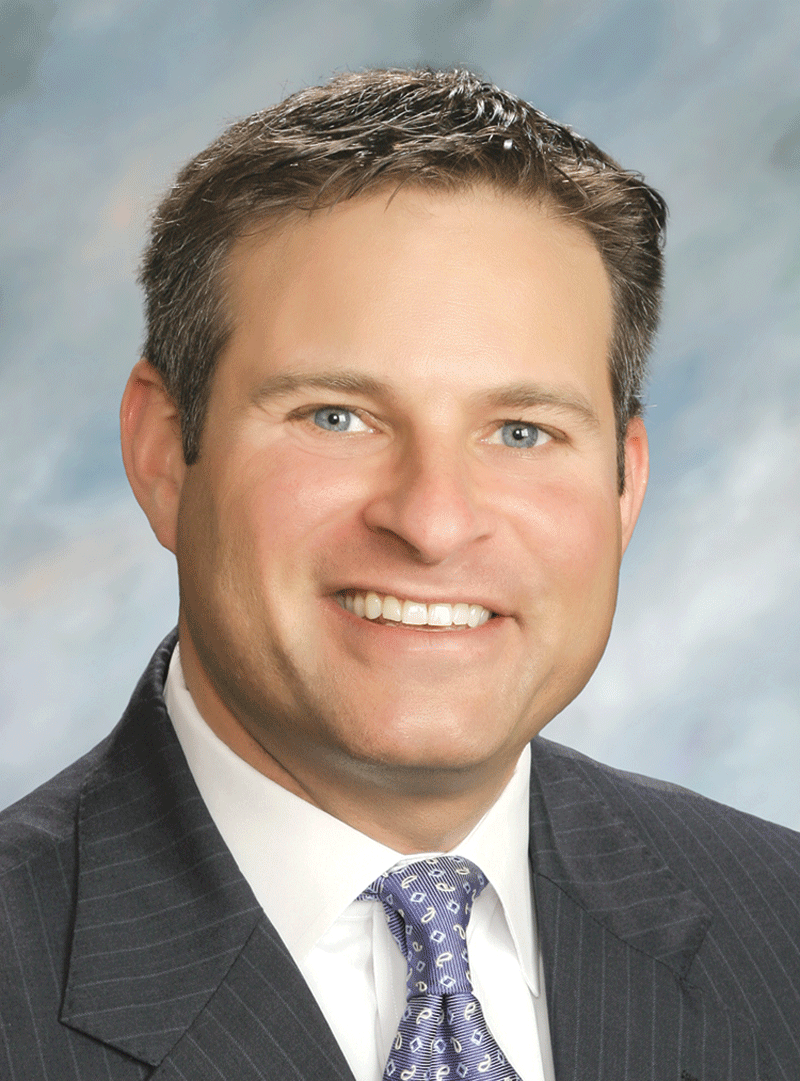
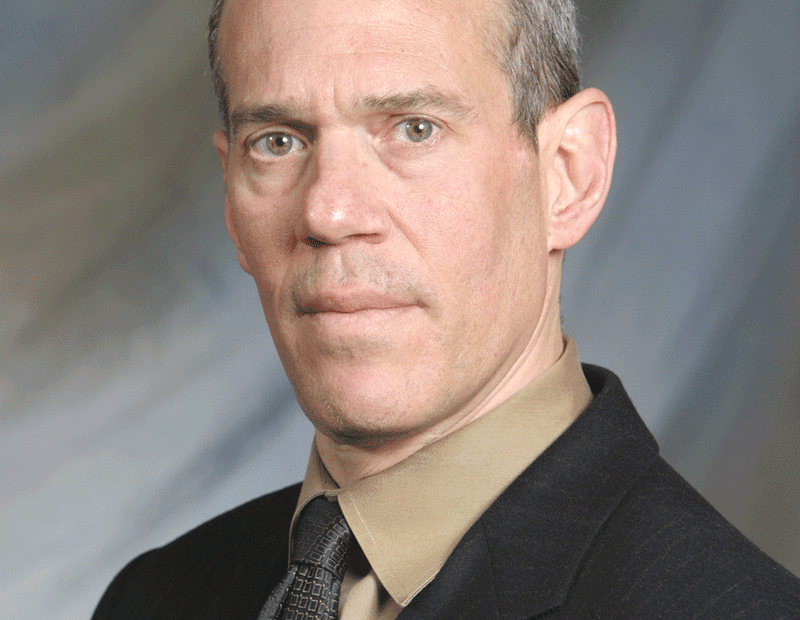
Todd C. Ratner

Todd C. Ratner

Your home is typically the most valuable asset that you own. Estate-planning and elder-law attorneys are frequently asked how one’s home can ultimately be transferred to a client’s children without the necessity of probate or exposure to long-term care expenses.
One particularly useful and common document for this is called a deed with life estate. It has many advantages; however, there are some issues that must be discussed and resolved prior to the transfer to ensure that it will be in the best interests of all those involved.

Demystifying the Deed
A deed with a reserved life estate is used when you wish to both pass your real property to someone upon your death and also protect the property from nursing-home liens. This document may also make it possible for you to live in and maintain control of the property until your death.
The individual or individuals reserving the life estate are referred to as life tenants. The individual or individuals that receive a future interest in the property are referred to as remaindermen. The procedure to complete this transaction involves the execution of a deed, which is recorded in the appropriate Registry of Deeds.
The life tenant has certain duties and obligations to fulfill, including responsibility for paying real-estate taxes and homeowner’s insurance, and making all repairs and performing all maintenance required to keep the property in good working order.

Potential Benefits
There are significant potential benefits when utilizing a deed with life estate.
• Probate avoidance: Upon the death of the life tenant, the life estate is extinguished. The remaindermen become the full owner(s) of the property, thereby avoiding probate. Avoiding probate saves the estate the expense, time, and publicity of the probate process.
• Protection from nursing home liens: A deed reserving a life estate is a gift that triggers a five-year waiting period for Medicaid benefits. Five years after the transfer, the penalty period expires, and Medicaid benefits can be obtained without having to sell the home. Therefore, this technique is best-utilized when it is unlikely that you would be admitted to a nursing home within five years.
• Stepped-up basis: Since your home remains an asset in your estate for estate-tax purposes, at the time of your death, the remaindermen will receive a ‘stepped-up’ basis in the real estate that is equal to the fair market value of the real estate at the time of your death. This means that, when the remaindermen sell the property, they should be able to avoid capital-gains tax if the property does not appreciate in value prior to the sale. This typically helps reduce or eliminate your heirs’ potential tax liability.

Inherent Risks
As attractive as this transaction sounds, there are some potential pitfalls and risks that you should carefully consider prior to executing a deed with life estate. When you sign this document, you give an actual interest in your property to the remaindermen. From that point onward, should you ever wish to sell or mortgage the property, you and all of the remaindermen must agree to do so, and all of you would need to sign the necessary documents.
In addition, in the event that any of the remaindermen experience financial or legal difficulties, such as divorce or bankruptcy, their interest in your property will be considered an asset in the proceedings. As such, you should assess the risk for these potential difficulties prior to transferring your property.
A deed reserving a life estate is not an option to be undertaken without serious consideration. There are other options available when it comes to protecting your home from nursing-home costs or avoiding probate. When determining your best course of action, it is highly recommended that you consult an experienced estate-planning or elder-law attorney so that you understand all considerations, options, and alternatives.

Todd C. Ratner is an estate-planning, business, and real-estate attorney with the law firm Bacon Wilson, P.C. He is a member of the National Academy of Elder Law Attorneys and the Estate Planning Council of Hampden County. He is also a recipient of Boston Magazine’s Super Lawyers Rising Stars distinction from 2007 to 2010; (413) 781-0560; baconwilson.com/attorneys/ratner_2

Cover Story
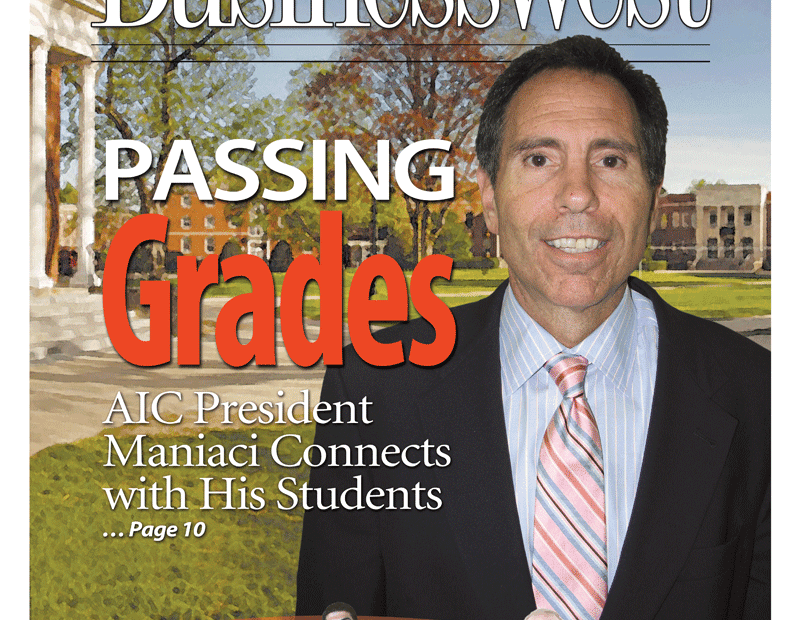
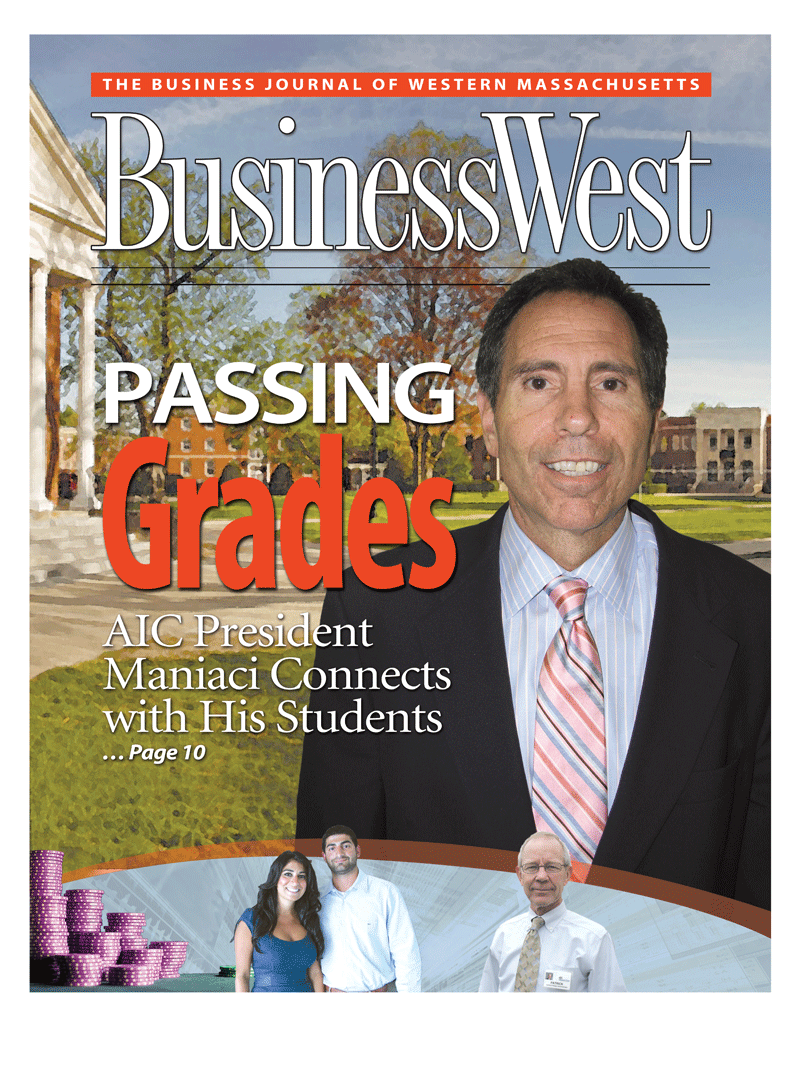
For the ‘Prez,’ It’s All About Building Connections


Vince Maniaci was talking about the profile of the typical American International College student.
Before doing so, the school’s president made a point of qualifying things by noting that there is a great deal of diversity on his campus, and that individuals with varied backyards wind up there. That said, though, he admitted that many have certain things in common.
For starters, a good percentage of the student population comes from urban areas, he told BusinessWest, and most do not come from what would be considered wealth, as evidenced by the fact that 51% are eligible for federal Pell Grants.
“A lot of our students are smart enough to have gone to any college in the country,” he said, “but for the fact that they’ve had virtually no academic foundation, no intellectual stimulus, growing up. Many of them come from homes where their parents have not gone to college, and they didn’t even know anyone who had gone to college.
“They’ve gone to schools that are not particularly strong, but they’re inherently bright,” he continued, “and they realized at some point that getting an education is a way to improve quality of life. So they come here, and when they get here, their value added is tremendous, because they want to be in school, and they don’t have a sense of entitlement.”
In other words … they are a lot like Maniaci was when he agreed to join a childhood friend and attend City College of San Francisco 35 years ago — mostly with the mindset of playing sports — and also when he moved on from there to the University of California at Berkeley, where he would earn a degree in Sociology.
And this is a big reason why Maniaci feels very comfortable on the campus wedged between Boston Road and Wilbraham Road in Springfield’s economically challenged Mason Square neighborhood, and also why he feels he connects well with the student body.
So well, he said, that most students call him ‘prez’ or by his first name.
And with that, he walked over to the bookcase at the front of his office and grabbed a well-worn, youth-sized football bearing the logo of the team he watched growing up — the San Francisco 49ers.
“This has touched a lot of hands,” he said of its condition, while noting that he takes it with him to the school’s quad most Friday afternoons, and invariably winds up playing catch — and sometimes a quick pick-up game — with several students. “This is a tool I use to build connections.”
But it’s just one of many tools, he stressed, as he reached behind his desk for another — a multi-page rundown of the incoming students this fall, complete with small pictures of each one.
“I try to memorize all the students’ names; each year it gets a little harder because each year I get a little older,” said Maniaci, 53, adding that he spends a good deal of time on this exercise because he believes that a college president calling a student by his or her first name is much more than a symbolic gesture. And he goes well beyond just names.
Indeed, he gets to know a little of each student’s story, and if he sees that one of them is having problems academically, he’ll seek out that individual and offer some advice and encouragement.
“Knowing someone’s name, knowing where a kid is from, knowing what a kid’s story is … those are the kinds of things you can know at a small institution, and those are the things that, if you’re willing to know, can make a difference in someone’s life,” he said.
But there’s much more to his job than simply making connections with students, he acknowledged, adding that one of his priorities has been long-term strategic planning, with ‘long’ being a decidedly relative term in this age of constant change in higher education.
“Strategic planning is critical, now more than ever, because the landscape is moving faster on every level,” he explained. “The economic landscape is highly volatile, technology is changing the shape and form of pedagogy … everything’s evolving at a rapid rate.”
For this, the latest in its profile series, BusinessWest talked with the colorful Maniaci about everything from the state of higher education to the condition of his throwing arm, to phrases he uses like “mission-attractive and market-adaptive” to describe what his school must become.

Making Big Gains
As he spoke, Maniaci made a few references to a talk he would soon be giving to the school’s incoming freshman athletes.
An address from the prez has become part of an orientation of sorts for the students, said Maniaci, adding that he had been thinking about what he will say, and was likely to meet the request of the program’s leader and relate his experiences in community college and then Berkeley, and the lessons to be drawn from them.
It’s a story he shared with BusinessWest, and it starts with his youth — and cultural heritage.
“My parents were both Sicilian, and they spoke the Sicilian dialect as a first language, and in that culture, it’s actually considered disrespectful, at least as far as I knew, to be better-educated than your father,” he said, perhaps to help explain why he wasn’t a great student in high school and had no real plans to go to college.
But he was a pretty good athlete, and much heavier (225 pounds) than he is today. And thus, with the urging of a former youth football teammate, he went to San Francisco City College, basically to perform on the gridiron. (The school had — and still has — a solid tradition of excellence in that sport, he said, noting that O.J. Simpson played there before going to USC.)
Maniaci tore up his knee in the third game he played in, however, and was left to ponder what was next. And this is the part of the story that he emphasizes for the incoming freshmen.
“I wanted to hang out, because I got to know the guys and was having fun, and the only way to do this was to actually go to class,” he explained. “I’ve always been competitive by nature, and I started to think that, if I could be competitive in sports, why should the guy next to me in the classroom be any better than me if I try to do my best?
“So I got what I call ‘competitive with an edge,’” he continued. “I looked at the guy across the aisle from me and said, ‘he’s no smarter than I am,’ and I started to apply myself. And I did three very basic things which I still hold today as being the platform for success: show up, do everything you’re asked to do, and do the best you can.”
He’s followed those guidelines along a circuitous route to the president’s office at AIC, one that continued at Berkley — which he chose mostly because of its affordability — and then at law school, although, by the time he graduated, he had pretty much decided that he didn’t want to be a lawyer.
“I did not like the adversarial nature of law,” he said, adding that he eventually took a job that made him part of a small fund-raising campaign at the University of San Francisco to build a health and recreation center.
He stayed at USF for five years and three different positions, all in the broad realm of development, before moving on to Occidental College in Los Angeles in a vertical move, and from there to the University of Tulsa and eventually to Bellarmine University in Louisville, Ky., and the position of vice president for Institutional Advancement.
It was while in that job that he started thinking about running his own college, and then applying for such jobs.
When asked how he came to the AIC campus, he said the choice — for himself and the college — came down not to credentials, although they always play some part, but to the overall fit.
“I believe that the key to a presidency is not necessarily who’s the smartest, who’s the best writer, or who’s the best manager,” he explained. “But it really has to do with the chemistry, the fit. I was an urban guy, I have a very strong urban sensibility, and the kind of students we get here remind me a lot of the kind of kid that I was.”

Scoring Points
Since Maniaci arrived at AIC, the football-tossing activity has been a constant —  “it gives the students a lift, it creates a sense a humanity for the administration, and it creates a sense of campus community,” he said — as has his work to memorize names, as well as a well-documented tradition of donning blue jeans and a baseball cap and helping students unload cars on moving-in day each September.
Such practices are components of his operating style, and methods to ease the transition to college for students who, as he said, probably have no real academic foundation, and could use some support.
“One thing I know about college-aged kids is that they don’t need older people — adults, for lack of a better term — a lot in their lives, but when they need you, they really need you, and you have to be there. When a kid knows that there’s someone in their life who’s there for them, it subconsciously creates a sense of confidence and well-being in that individual that helps them excel.
“One of the things I do is look through the five-week warnings for our freshmen,” he continued. “And if I see a kid got a warning, just pulling that kid aside and saying, ‘hey, Johnny or Betty, I saw that you didn’t do so well in English; are you going to class? Have you talked to your professor? Are you thinking of that?’ … all that can make a difference.”
And while being careful not to make too many analogies to sports, he thought one was appropriate for this point in the discussion.
“It’s human nature; if you know someone’s watching, you tend to play a little better, you get a little more jazzed about playing,” he said of athletic competition. “And if you think someone’s watching how you’re doing academically, you tend to think about it a little more subconsciously.”
Today, Maniaci is watching, counseling, and tossing spirals to students from a few blocks away, a few time zones away, and even a few continents away, as evidenced by the collection of gifts from foreign students now crowding the front left corner of his desk. It includes items from Egypt, Russia, Holland, China, Brazil, and many other nations.
And it speaks to the reach of the strategic-planning initiatives the school has undertaken, he told BusinessWest, adding that the first such plan, blueprinted soon after he arrived, was focused squarely on two priorities — being “mission-centric and market-smart,” with the goal of increasing enrollment.
“To that end, we focused on attraction and retention, using financial aid, athletics, and transfers as a point of emphasis,” he said, “and also trying to generate more revenue on the perimeter from our graduate programs.
“We were astonishingly successful in all areas,” he continued. “Our enrollment grew by 125% over the past six years; there are few institutions in higher education that have seen that kind of growth.”
The school’s efforts to increase enrollment have taken a number of forms, even marketing in several areas of California where getting seats at public two- or four-year colleges is becoming ever-more challenging. To date, 19 students from the Golden State have enrolled at AIC, a number Maniaci thought would be much higher, but is still respectable in his estimation.
But the abrupt changes to the economy that started in mid-2008 and have continued since have certainly slowed the pace of progress at AIC, he continued, because the demographic constituency served by the school has been the one most impacted by the recession and slow recovery.
“It turned almost overnight … the private loan market dried up, the unemployment rate soared, and when that happens, kids from those backgrounds tend to be impacted the most,” he said. “So what was a growth market turned almost overnight into a mature market. And when that happens, those kinds of tactics don’t work as well.”
So the strategic plan has been tweaked somewhat, he said, noting that, while being mission-centric and market-driven are still important, given the sluggish economy and the ongoing changes in higher education, those qualities are no longer enough.
“So now I’m focused on us being what I call ‘mission-attractive and market-adaptive,’” he said. “What I mean is that we have to move the demand curve; this comes down to affordability, and when I talk about affordability, I’m not talking about price and cost, but about offering an education that parents and students are willing to either pay for out of pocket or borrow to obtain.”
“Our mission, what we’re offering, has to have a strong sense of attraction,” he continued, adding that to be market-adaptive, he means identifying, on what he called the “perimeter,” strong programs in degree-completion, graduate, and non-traditional-student initiatives to boost volume.
“We need to identify what’s strong and what the market demands,” he said, “and we need to be able to move into it quickly, effectively, and efficiently, whether it’s using different kinds of delivery functions through technology, or the pedagogy has to change. We have to get there, and we have to be equally willing to move out of it when the market changes, because things are moving that fast.”

Getting to the End Zone
Returning to this thoughts about AIC’s students and common traits among them, Maniaci again focused on how few, if any, have any sense of entitlement. It’s most evident on the day the diplomas are handed out.
“Our graduations are a thing of beauty,” he explained, “because you see the pride and joy in the families, many of whom are watching this child, who’s now a woman or man, reaching an aspiration they never dreamed of. And you see the pride in the faces of the students, too; it’s really a great, rewarding experience to be able to do that.”
Maniaci remembers feeling the same way when he graduated from San Francisco City College and then Berkeley. He has that and many other things in common with his students, which is why he’s been able to relate to them, and not just in the quad with a football in his hands.

George O’Brien can be reached at [email protected]

DBA Certificates Departments

The following Business Certificates and Trade Names were issued or renewed during the month of August 2011.

AGAWAM

Bonavita Law Office
1775 Main St.
Anthony Bonavita

Jack Patterson Medical Sales
77 Debra Lane
Jack Patterson

Pondside Garage
704 Springfield St.
John Warren

Pure Power RF
50 Witheridge St.
Fred Stefanik

Silver Leaf Enterprises, LLC
36 Danny Lane
Bradley Wright

AMHERST

Game Central Station
220 North Pleasant St.
Younis Ghulam

Minuteman Cleaners Inc.
5 Pray St.
Moon J. Chang

V.I.D. Nail
181B University Dr.
Huy N. Thai

Winsome Smiles
50 Autumn Lane
Danielle Intile

CHICOPEE

Accounting Solutions
64 Robin Ridge Road
Traci Hopkins

Cosmo Cut & Style Salon
1890 Memorial Dr.
Viet N. Nguyen

Royal Coach Limousines, LLC
658 Fuller Road
John Garcia

HADLEY

Easy Mattress Stores, LLC
206 Russell St.
Paul Neto

Gomes Homes Health Care
18 New Lane
Ester Gomes

HOLYOKE

All in One Plus
92 Suffolk St.
Javier Rosa

B & V Automotive
101 North Bridge St.
Robert S. Vogel

M & L Car Audio & Clothing Accessories
119 High St.
Miguel A. Vega

Points East Accupuncture and Herbal Medicine
4 Open Square Way
Mark Mamuszka

The Hair Place
103 Chapin St.
Ronald E. Holland

NORTHAMPTON

L & T Respess Books
136 West St.
Linwood Respess

Pilar’s Cleaning Service
51 Con St.
Pilar Serpa

Kelli @ Continuous Creations
30 North Maple St.
Kelli Richardson

SOUTHWICK

Dang Shades
45 Rosewood Lane

Jimmy’s Pizza
81 Point Grove Road
K & S Restaurant Group, LLC

NWST, LLC
267 Hillside Road
Ralph Depalma

Silvercrest Farm
233 Mortvining Road
Paul Gregoire

Splatter Room
108 Congamond Road
Jeffrey Caron

SPRINGFIELD

M & P Cleaning Services
49 Ranney St.
Michely Acevedo

Omar’s Fashion
469 Main St.
Djibrilla Bonkano

Orchard Medical Associate
835 Worcester St.
Kevin Epstein

P & J Rentals
31 Florida St.
Jack Rodrigues

Pea Soup Catering
183 Emerson St.
Dianna Lemieux

Quick Pic Convenience Store
1343 Carew St.
Amir M. Paracha

Radiance Wellness Center
108 Dartmouth St.
Will G. Llewellyn

Santos Home Repair
76 Edgement St.
Jesus M. Santos

Smartalk
351 Bridge St.
Leonard Weitz

The Onlinebiz
55 Revere St.
Ormond Husbands

Town Pizza
459 Main St.
Waqar S. Khokhar

Travel Adventures
26 Hanson Dr.
Yelena Vatnikova

Wicked Tan
1760 Boston Road
Anna M. Major

WESTFIELD

DAS Alarm Systems Inc.
845 Airport Industrial Park Road
David Schenna

Debbie Reynolds Dance Academy
132 Elm St.
Debbie Reynolds

Guidance for Inner Peace
509 Southwick Road
Janice Pagano

Mayflowers at Pilgrim Candle Market Place
16 Union Ave.
Melissa Fouche

Menard Construction & Design
46 Stuart Place
Dennis Menard

P & C Group
50 Castle Hill Road
Paul Byrne

Patriot Freightliner Western Star, LLC
910 Southampton Road
Deborah Barss

Real China
116 Elm St.
Bizhen Zhu

Roberts Construction
31 Valley View Dr.
Jeffrey Roberts

Salvador’s Engraving and Awards
22 North Cherry St.
Bernadette Salvador Toomey

Shaker Farms Country Club
866 Shaker Road
Daniel Kotowicz

Tina Escalante Cleaning Service
80 George St.
Tina F. Escalante

TSC International
20 Camelot Lane
Todd S. Cieplinski

Western Mass Alliance
21-25 Montgomery St.
Brandon Palmer

Yellow Stonehouse Farm
354 Root Road
Constance Adams

WEST SPRINGFIELD

Absolute Transportation
59 Day St.
Ismat Niyazov

Agawam Melody Band
181 Park Ave.
George W. David

Anthony Wheeler Real Estate
116 Cedar Woods Glenn
Anthony Wheeler

Avada Hearing Care Center
459 Riverdale St.
Edbar Corporation Inc.

Capital Enterprises
172 Harwich Road
Arthur A. Arena

Discount Medical Depot, LLC
70 Windsor ST.
John Crean

Entre Computer Center
138 Memorial Ave.
P.C. Enterprises Inc.

HGL Transport
59 Lowell St.
Latipsha Kaimov

Kozar Realty, LLC
70 Greystone Ave.
Steven Kozar

LTG, Inc.
41 Oleander St.
Rachel L. Aibee

Mass Trans Insurance Agency
54 Oleander St.
Roman Shtetan

Music Tuitions
66 Irving St.
Mera Goroshit

Quality Appraisal Company
73 Rogers Ave.
Donald C. Pinkerman

The Friendly Barber Shop
90 Elm St.
Daniel V. Dineen

The Klassic Beauty Spot
2003 Riverdale St.
Sukhpal Kaur

Departments People on the Move

Nicolle Cestero

Nicolle Cestero

has been named Associate Vice President of Human Resources at American International College in Springfield. Her role includes overseeing recruitment, employment relations, compliance with governing regulations, HR process and procedures, classification and compensation services, and performance management. Cestero will also focus on benefits administration, training and development, and contract negotiations.
•••••
Big Y Foods Inc. in Springfield announced the following:
Guy McFarlane

Guy McFarlane

• Guy McFarlane has been appointed Senior Director of Fresh Foods.
Gary Bolduc
Gary Bolduc

Gary Bolduc

• Gary Bolduc has been appointed Director of Meat and Seafood.
•••••
Allan Costello has joined Berkshire Bank as Senior Vice President and Audit and Compliance Manager. He will lead the internal audit and compliance teams throughout the company.
•••••
Fallon Community Health Plan has named Attorney Gerard Campbell as Privacy Officer and Compliance Manager at its Worcester headquarters. He will serve as the company’s primary resource for questions related to privacy and confidentiality as they pertain to FCHP and its employees, customers, vendors, and business partners.
•••••
Chicopee Savings Bank announced the following:
Anthony Antonopoulos

Anthony Antonopoulos

• Anthony Antonopoulos has been promoted to Vice President of Compliance and serves as the bank’s Security Officer;
Henry Downey

Henry Downey

• Henry Downey has been promoted to Vice President of Commercial Lending; and
Elizabeth Maroney

Elizabeth Maroney

• Elizabeth Maroney has been promoted to Vice President of Loan Administration.
•••••
The Western Mass Wellness Center in West Springfield announced the following:
Kelley Hamaoui

Kelley Hamaoui

• Tai Chi instructor Kelley Hamaoui has begun offering tai chi classes;
Bonnie Coopersmith

Bonnie Coopersmith

• Bonnie Coopersmith, LMFT, a licensed Individual and Relationship Therapist, has begun offering consultation services;
• Carleen Eve Fischer Hoffman, owner of the Clutter Doctor, has formed the Western Mass. Clutter Support Group through the wellness center; and
Lynn LaDuke

Lynn LaDuke

• Lynn LaDuke has joined the wellness center as a presenter and speaker on holistic options for pain relief for fibromyalgia sufferers. Her program is titled Restoring Quality of Life.
•••••
Bevan Brunelle has been appointed Marketing Manager at CityStage & Symphony Hall in Springfield.
•••••
MassMutual Retirement Services in Springfield announced the following:
• Garrett Carlough has joined MassMutual as Sales Director. He is based in New York City and is providing additional coverage for New York City, Long Island, Westchester County, Rockland County, and Northern New Jersey; and
• Andrew Hanlon has been appointed Sales Director. He is based in Boston, increasing coverage for eastern Massachusetts, Rhode Island, New Hampshire, and Maine.
•••••
Danielle Goldaper has been named Director of Alumni Relations and Annual Giving at American International College in Springfield.
•••••
Best Tile of Springfield announced the following:
•  Walt Sawa, Manager, has announced his retirement after 44 years of service with the company.
• Karen Belezarian-Tesini has been promoted to Branch Manager. She has served as Showroom Manager since 1996.
•••••
Mark Haynes, President and Chief Operating Officer of Environmental Compliance Services in Agawam, has been elected to the Board of Directors of the Massachusetts  Chamber of Business and Industry.
•••••
Karen Stonehouse has been invited by the U.S. Department of Justice’s Office for Victims of Crime to take part in establishing a national curriculum to train new protective-service caseworkers. This initiative is part of a nationwide pilot program to develop standardized competency trainings that can be used as a framework by other states to adapt to fit their regulations. In most states, the protective-service caseworkers are the first responders to report elder abuse, neglect, and financial exploitation. Stonehouse will conduct a course titled “Working within the Criminal Justice System” in September. She is a Supervisor in the Protective Services Unit at Greater Springfield Senior Services Inc., based in Springfield.
•••••
Wayne Budd, a longtime member of AAA Southern New England’s Board of Directors and most recently the Vice Chairman of AAA’s National Board of Directors, will now serve as Chairman of the national board. A Springfield native, Budd is a Senior Counsel at the Boston law firm of Goodwin Procter, and is a former U.S. attorney and former U.S. associate attorney general.
•••••
Michael Tucker, President of Greenfield Co-operative Bank, has been elected Treasurer of the Mass. Bankers Assoc.
•••••
Keith G. Roy Construction of Westfield announced the following:
• Keith Roy, President, has completed the Vinyl Siding Institute’s certified installer program; and
• Joshua Roy, Crew Leader, has also completed the certified installer program.
The firm has been in operation since 1946 and is a second-generation, family-owned company that provides siding and roofing installation and repair as well as other home-construction services.
•••••
Linda Carfora has been named Assistant Director of Educational Services for the Willie Ross School for the Deaf in Longmeadow. She is responsible for coordination of the school’s two campuses, the management of the center-based home campus in Longmeadow as well as the partnership, mainstreaming campus in the East Longmeadow Public Schools.
•••••
Shanda Reynelli has been appointed Clinical Director of Children’s Services for the Center for Human Development, based in Springfield. Reynelli, a licensed mental health counselor, will oversee clinical services for all CHD programs serving children and adolescents.
•••••
Thomas Devivo has joined the Charter Department sales team at Peter Pan Bus Lines in Springfield. Devivo handles outside charter sales business for Peter Pan throughout the Greater New York and Northeast areas.
•••••
Western New England University in Springfield recently announced new members of its Board of Trustees. They are:
∙ Stephen J. Rourke, Vice President of System Planning for ISO New England.
∙ Neville S. Bogle, Senior Financial Consultant with Travelers Insurance Co. in Hartford, Conn.
∙ Robert W. Dobek, Pharmacist, in Massachusetts and Connecticut.

Chamber Corners Departments

ACCGS
www.myonlinechamber.com
(413) 787-1555

• Sept. 6: Springfield Chamber of Commerce board of directors meeting, noon-1 p.m. at the TD Bank Conference Center, Springfield.

• Sept. 7: Business @ Breakfast, 7:15-9 a.m.,Twin Hills Country Club. Members, $20; non-members, $30. To reserve tickets, contact Cecile Larose at (413) 755-1313 or [email protected].

• Sept. 9: ACCGS Legislative Steering Committee meeting, 8-9 a.m., TD Bank Conference Center, Springfield.

• Sept. 14: After 5, 5-7 p.m. at Mama Iguana’s, Main Street, Northampton. Members, $10; non-members, $20. To reserve tickets, contact Cecile Larose at (413) 755-1313 or [email protected].

• Sept. 15: ACCGS board of directors meeting, 8-9 a.m., TD Bank Conference Center, Springfield.

• Sept. 19: ACCGS Golf Tournament, Ludlow Country Club, Tony Lema Drive, Ludlow. Shotgun start at noon. Cost per golfer, $150. Contact Cecile Larose, [email protected].

• Sept. 21: ERC board of directors meeting, 8-9 a.m., the Gardens of Wilbraham, Community Room, 2 Lodge Lane, Wilbraham.

• Sept. 21: ACCGS ambassadors meeting, 4-5 p.m., EDC Conference Room, Springfield.

• Sept. 21: PWC Luncheon, “Up the Ladder: The Power of Education.” Special guest speaker: Carol Leary, president, Bay Path College. Reserve tickets through Lynn Johnson, [email protected].

• Sept. 30: Hampden/Wilbraham Golf Classic, Country Club of Wilbraham. Shotgun start at noon. Cost per golfer: $110. Contact Sarah Tsitso, [email protected].

Amherst Area Chamber of Commerce
www.amherstarea.com
(413) 253-0700

• August 31: The University of Massachusetts Amherst & Amherst Area Chamber of Commerce 45th Annual Community Breakfast, 7:30-9. Hosted by UMass Amherst Student Union Ballroom (free parking in the Campus Center Garage). Sponsored by UMass Amherst and the Amherst Area Chamber of Commerce. Tickets are $8 when you register and pay on-line at www.umassconferenceservices.com/registration. Tickets will be available at the door for $10. For more information, call (413) 577-1101, or [email protected].

• Sept. 7: Multi Chamber After 5 Networking Event, 5-7 p.m. at Cooley Dickinson Hospital. (Amherst Area Chamber, Greater Easthampton Chamber, and Greater Northampton Chamber). Sponsored by: Traditional Health First, UMass Fine Arts Center, and Murphy McCoubrey Attorneys at Law. Tickets: $5 for chamber members; $10 for non-members. RSVP at (413) 253-0700, or [email protected].

• Sept. 21: Chamber breakfast, 7:15-9 a.m. Hosted by: Applewood at Amherst. Topic updates on North and South Amherst and Kendrick Park. Sponsored by Elite Home Health Agency. Tickets: $15 for chamber members; $20 for non-members.
RSVP at (413) 253-0700 or [email protected].

Chicopee Chamber of Commerce
www.chicopeechamber.org
(413) 594-2101

• Sept. 7: Summer Sizzle, 4:30-7:30 p.m., Chicopee Moose Family Center #1849, 244 Fuller Road, Chicopee. Tickets: $20 for members, or if you have five or more employees, $18 each; $25 for non-members. Sponsors: Championship: Pilgrim Interiors Inc., Chicopee Electronics, LLC, and United Bank; Pennant: Dave’s Truck Repair Inc., Days Inn, and Wingate at South Hadley.

• Sept. 21: Salute breakfast, 7:15-9 a.m. at the MassMutual Learning & Conference Center, 350 Memorial Dr., Chicopee. Tickets: $19 for members; $26 for non-members.

• Sept. 27: Rake in the Business Table Top Expo & Business Networking Event, 4:30- 7 p.m. at the Castle of Knights, 1599 Memorial Dr., Chicopee. Presented by the Chicopee, Greater Holyoke, Greater Westfield, and the North Central Connecticut Chambers of Commerce. Exhibitor fee: $100 per table. Admission fee: $5 pre-registered, $10 at the door. Sign up online www.chicopeechamber.org, or call (413) 594-2101

Greater Easthampton Chamber of Commerce
www.easthamptonchamber.org
(413) 527-9414

• Sept. 7: Multi-Chamber Networking Event, 5-7 p.m., Cooley Dickinson Hospital, Northampton. Join with the Greater Easthampton, Amherst Area, and Greater Northampton Chambers for a special evening of business networking. Sponsored by: Fleury Lumber Company and Innovative Business Systems. Door prizes, hors d’ouevres, host beer and wine. Tickets: $10. RSVP to [email protected] or (413) 527-9414 by Sept. 6.

• Sept. 24: Recycling Day, 8:30 a.m-1 p.m. Responsibly dispose of your old computer, monitor, television, stereo and/or home and office appliances. Open to all members of area communities. Location: Valley Recycling, 245 Easthampton Road (Route 10), Northampton. Contact the chamber office at (413) 527-9414 or [email protected] for recycling fees. Recycling services courtesy of Duseau Trucking, Hatfield. Proceeds to benefit chamber community programs.

Northampton Area Young Professional Society
www.thenayp.com
(413) 584-1900

• Sept. 15: Vote the Valley, 5-7 p.m., Springfield Country Club, West Springfield. YPS (Young Professional Society of Greater Springfield) in Partnership with NAYP (Northampton Area Young Professionals) bring back Vote the Valley.

Quaboag Hills Chamber of Commerce
www.qvcc.biz
(413) 283-2418

South Hadley/Granby Chamber of Commerce
www.shchamber.com
(413) 532-6451

• Sept. 13: Skinner Museum Stroll, 5-7 p.m. Sponsored by Mount Holyoke College. Special guest: Lynn Pasquerella, president of Mount Holyoke College. Highlights: tours of Skinner Museum collection; refreshments under the tent. Tickets: $5 for chamber members.

Greater Westfield Chamber of Commerce
www.westfieldbiz.org
(413) 568-1618

• Sept. 12: Mayor’s Coffee Hour, 8-9 a.m. Hosted by the Holiday Inn Express, Barnes Meeting Room. Complimentary coffee and Danish. Call the Chamber office at (413) 568-1618 if you plan on attending.

• Sept. 16: Chamber September Breakfast. Registration begins at 7:15 a.m. Hosted by 104th Fighter Wing Air National Guard Base, 175 Falcon Dr., Westfield. Guest speaker will be Allan W. Blair, President and CEO of the Economic Development Council of Western Mass. Cost: members, $20; non-members, $25. Contact Carrie Dearing at (413) 568-1618 or at [email protected].

• Sept. 27: 14th Annual Rake in the Business Table Top Showcase. The Greater Westfield, Chicopee, Greater Holyoke, and North Central Connecticut Chambers of Commerce will hold a multi-chamber trade show. Members may purchase a table for $100; purchase includes four complimentary admission tickets. Admission for the public is $5 for anyone who pre-registers, $10 at the door. Sponsorship opportunities are also available at a platinum, gold, or silver level. Call the Carrie at (413) 568-1618 or e-mail, [email protected].

YPS-Young Professional Society of Greater Springfield
www.springfieldyps.com

• Sept. 15: Vote the Valley, 5-7 p.m. at Springfield Country Club, West Springfield. YPS (Young Professional Society of Greater Springfield) in Partnership with NAYP (Northampton Area Young Professionals) bring back Vote the Valley.

Court Dockets Departments

The following is a compilation of recent lawsuits involving area businesses and organizations. These are strictly allegations that have yet to be proven in a court of law. Readers are advised to contact the parties listed, or the court, for more information concerning the individual claims.

CHICOPEE DISTRICT COURT
Tayisha Guzman v. Chicopee Village Townhouses
Allegation: Negligent maintenance of property, causing slip and fall: $3,389.33
Filed: 6/30/11

HAMPDEN SUPERIOR COURT
Edwin Diaz v. CSX Intermobil Inc.
Allegation: Defendant misclassified as an independent contractor instead of employee, transferring numerous costs unlawfully from the defendant to the plaintiff: $495,463.91
Filed: 4/25/11

Geodesign Inc. v. Purcell Associates and the Town of West Springfield
Allegation: Collection of outstanding fees for design services rendered on a construction project: $1,090,295
Filed: 4/20/11

Peter Mayberry v. Allcare Dental Management Inc.
Allegation: Medical malpractice: $50,000+
Filed: 4/27/11

Ted Ondrick Company, LLC v. Green River Development, LLC
Allegation: Non-payment of paving services rendered: $25,350.30
Filed: 5/6/11

HAMPSHIRE SUPERIOR COURT
Rose P. Gamin v. Five Star Aviation Inc.
Allegation: Crash of aircraft due to negligence of maintenance facility: $65,000
Filed: 7/18/11

NORTHAMPTON DISTRICT COURT
JP Elastomerics Corp. v. Soltech Inc.
Allegation: Breach of contract and failure to pay commission: $16,646.80
Filed: 6/14/11

Shawn Mineau and Kevin Mullen v. Decosino Construction and Five Star Building Construction
Allegation: Failure to pay prevailing wages: $25,000
Filed: 6/9/11

Michael Elbery v. City Tire Inc.
Allegation: Unfair and deceptive trade practices and fraud: $10,000
Filed: 6/27/11

SPRINGFIELD DISTRICT COURT
Advanta Bank Corp. v. Alpha Builders Inc.
Allegation: Non-payment on credit account: $10,533.95
Filed: 6/19/11

Arthur C. Lamb Co. Inc. v. National Maintenance and Service Corp.
Allegation: Non-payment of goods sold and delivered: $8,417.37
Filed: 6/3/11

Beacon Sales Co. v. Keith G. Roy Home Improvement and Construction
Allegation: Non-payment of goods sold and delivered: $10,629.76
Filed: 6/19/11

BSI, LLC v. Tigar Refrigeration Co., LLC
Allegation: Non-payment of goods sold and delivered: $9,123.72
Filed: 6/19/11

Catherine Nguyen v. Faces of Phobia
Allegation: Plaintiff was injured after being struck in the face by another patron who was startled and trying to flee: $24,999.99
Filed: 6/6/11

Concord Electrical Supply Limited v. Precision Electric Enterprise, LLC
Allegation: Non-payment of goods sold and delivered: $22,243.99
Filed: 6/24/11

WESTFIELD DISTRICT COURT
Industrial Air Solutions v. Creative Hardware Floors Inc.
Allegation: Enforcement of a previous judgment: $5,488.54
Filed: 6/3/11

Law Sections
Autism Legislation: What It Means for Your Child

By MELISSA R. GILLIS, Esq. and DENNIS G. Egan Jr.

Melissa R. Gillis

Melissa R. Gillis

Imagine this: an issue so big that when the governor signs a much-anticipated bill into law so many parents and families want to view the historic event that the signing has to take place at Fenway Park in Boston, instead of the State House, to accommodate the crowd.
Well, that’s exactly what happened on August 3, 2010 when Gov. Deval Patrick signed House Bill 4935 (an Act Relative to Insurance Coverage for Autism Spectrum Disorder, or ARICA) into law. As the crowd cheered, Massachusetts, finally having recognized the unfair and unreasonable burden imposed on families with children diagnosed with autism, became the 23rd state to pass such legislation.
Effective Jan. 1, 2011, private health-insurance plans, employees and retirees under the state plan, hospital service plans, and HMOs are now required to provide coverage of evidence-based, medically necessary autism therapies for diagnosed persons of all ages. After being deemed medically necessary by a doctor, coverage will include habilitative and rehabilitative treatments, psychiatric and other therapeutic care, diagnostic tests, applied behavioral analysis and health treatments, pharmaceuticals, and other care provided, prescribed, or ordered by a licensed physician or psychologist for a person on the autism spectrum, including speech, occupational therapy, and physical therapy. There is no age restriction for any of these treatments to begin or end.
Additionally, insurers cannot establish dollar-amount, annual, or lifetime service limitations on the required coverage that are less than that for other physical conditions, and they are prohibited from limiting the number of visits an individual makes to an autism-service provider. Implementation of ARICA is, however, based on each policy’s specific annual renewal date, so coverage goes into effect only when your company’s insurance plan renews after Jan. 1, 2011.
Dennis G. Egan

Dennis G. Egan

There are several types of plans, however, that are not subject to ARICA. These include self-funded plans, which are regulated by ERISA and therefore subject to federal laws, unless they comply with state laws as a matter of practice. Importantly, services received under MassHealth and CommonHealth are also not subject to ARICA.
Contacting your employer is the easiest way to determine if they are subject to this new law, and for those covered by MassHealth and CommonHealth, families with autistic children under the age of 9 can apply for the Mass. Children’s Autism Medicaid Waiver through the Department of Developmental Services. Additionally, if your plan is regulated by ERISA, the recently enacted federal health care reform contains language that will eventually cover autism treatment. Other caveats to the new law include a clause wherein insurers can opt out of providing coverage for three years if their costs rise by more than1% per year. However, this determination is to be made based on an independent review and not by the insurers themselves.
Opponents of ARICA and small-business owners argue that the cost of providing health care benefits to employees will become even more difficult for businesses already struggling to absorb rising plan premiums. Concerned that increased costs will ultimately cause business owners to offer less-quality health care packages or be reluctant to hire new employees who would be eligible for health insurance, they may have no alternative but to pass the cost along to employees.
ARICA leaves those who are skeptical asking, ‘what’s the catch?’ Many suspicious parents believe the insurance companies will use it as a way to deny claims and force parents to jump through a number of hoops before agreeing to cover services, or that some will simply give up trying. Others don’t want their children to be forced into a label of being on the autism spectrum disorder, and urge everyone to make sure there are proper medical assessments and treatments prior thereto, which seemingly is a catch-22 scenario in and of itself.
Yet advocates, including Autism Speaks, say this law is one of the most comprehensive in the nation, and will finally provide families with the relief desperately needed so that children can receive the therapies they deserve in order to meet their full developmental potential. Your child will no longer be denied, and parents will no longer have to pay out of pocket for health treatment if it’s deemed medically necessary because of an autism diagnosis. Other ARICA proponents argue that, until now, many parents were prevented from actually getting a diagnosis of autism for their child because of a lack of proper insurance coverage.
Under ARICA, educational services provided under an individualized education plan are unaffected. But while insurers are not required to pay for in-school services, studies show that, in other states that have similar legislation, towns and the states themselves end up actually saving money because, when children with autism receive appropriate treatment, more of them are likely to be able to participate in regular classes, thereby reducing the cost of expensive special-education services.
That said, as with any new law or significant change, time is required to work out the kinks, but generally speaking, Massachusetts has certainly made a huge step in the right direction with the acknowledgement that autism is a growing national health crisis, if not an epidemic, and that the time is now for insurance companies to assist families in ensuring their children get the proper treatment and care, just as they would for the flu or common cold.

Melissa R. Gillis, Esq. is an associate with Bacon Wilson, P.C. in the special education, family, and real estate departments; (413) 781-0560; [email protected]. Dennis G. Egan Jr. is an associate with Bacon Wilson, P.C, concentrating in special education, business, and corporate law; (413) 781-0560; [email protected]

Departments Picture This

Send photos with a caption and contact information to:  ‘Picture This’ c/o BusinessWest Magazine, 1441 Main Street, Springfield, MA 01103 or to [email protected]

Kids Safety Event

LibbosTeamClownFireTruck1At left, the staff and family members of the Law Offices of Thomas M. Libbos, P.C. hand out hundreds of free bike safety helmets to children at the 3rd Annual Kids Safety Event staged recently at the Naismith Memorial Basketball Hall of Fame. From left, are: attorney Thomas Libbos, Samantha Wrinkle, Catherine Wrinkle, Melissa Cintron, and attorney Katherine Lamondia-Wrinkle. Below left, Shriners Clown Lenny Horowitz, a.k.a. “Paintbrush,” waves from a Springfield Fire Department Fire Truck during the event, which was produced by Market Mentors LLC of West Springfield.


Extreme Makeover

Extreme-Makeover-Home-EditionExtreme Makeover: Home Edition is coming to Springfield. That announcement was made recently in front of City Hall, with dozens of city officials, volunteers, and builders in attendance. Here, Brad Campbell, left, executive director of the Home Builders and Remodelers Association of Western Mass., standing with Springfield Mayor Domenic Sarno, thanks Western New England University students for volunteering their time to help with the project, which will kick-off with the ceremonial “door knock” at the home of the lucky family on Sept. 11. At right is Nick Riley, owner of N. Riley Construction and lead builder for this project. Visit http://www.joinextreme.com/mass to register as a volunteer or donate to the project. For behind the scenes photos and videos visit http://www.facebook.com/emheSpringfield.

Entrepreneurship Sections
, entity

Jeffrey Fialky

Jeffrey Fialky

Individuals forming new business enterprises, or perhaps those whose business enterprises have matured to the standpoint of pursuing the next level, often approach their accountants and attorneys when considering whether or not to incorporate.
Really, the term ‘incorporate’ is euphemistic for whether an individual, and in some cases multiple business partners, should proceed (or continue to proceed) on their own behalf or, alternatively, form a limited-liability entity pursuant to the laws of the respective jurisdiction. The question of whether to engage in business operations in an individual capacity or to form a limited-liability entity within which to conduct business operations is generally a question answered by a thorough analysis of the respective liabilities and tax implications.

Sole Proprietorship
The simplest manner of doing business is in the form of a sole proprietorship. That said, a sole proprietorship is a bit misleading by name, in that it is not a business entity, but rather the absence of a business entity.
There are no registration or filing requirements, and simply engaging in the business operation commences the sole proprietorship, in the individual’s own name, or on their own behalf. As a result, an individual who engages in a business practice as a sole proprietor personally exposes himself to any liabilities that could arise as a result of such business operations without any legal protection from same.
While an individual doing business as a sole proprietor may register a fictitious name in which to conduct his or her business by filing a DBA certificate in the community in which the business operates, from a legal standpoint, the fact that the business operates pursuant to a fictitious name has no bearing or legal effect relative to liability. By way of example, assume Joe Smith, d/b/a XYS Construction, is named in a lawsuit as a result of an injury occurring to a third party on a job site. A judgment against Joe, personally, could certainly result in a lien against Joe’s personal residence, subject to subsequent sale in order to satisfy such judgment.

General Partnership
Another form of business operation is a general partnership. This consists of essentially two or more individual sole proprietors engaging in business operations in a joint capacity. Often, a general partnership will be governed pursuant to the terms of a partnership agreement; however, such as with a sole proprietorship, there is no formal legal registration requirement.
Additionally, as with a sole proprietorship, the general partnership does not protect the individual partners from personal liability arising out of the business operations. Worse, partners pursuant to a general partnership are not only liable personally for their own acts or omissions relative to the ongoing business venture, but, additionally, each individual is personally liable for the acts of other partners in the partnership.

Corporation
For many reasons, including avoiding the personal liability attributed to sole proprietorships and general partnerships, parties are often counseled to consider forming limited-liability legal entities, which provide a barrier of protection for the business owners.
Among the host of legal entities available for formation, the most commonly used in contemporary business are the corporation and limited-liability company (LLC). That said, the term ‘corporation,’ as generally used, often includes two specific types of corporations ­— subchapter ‘C’ corporations (C corps) and subchapter ‘S’ corporations (S corps), the distinction between which arises pursuant to the respective subchapter of the IRS tax code.
Generally speaking, a corporation is a legal entity that is formed by the filing of articles of organization, is governed by its bylaws, and which is owned by its stockholders. Corporations are managed by their board of directors, with day-to-day operations overseen by their officers. Unlike a sole proprietorship or general partnership, a corporation is an independent legal identity, which is independent from that of its stockholders. Accordingly, a substantial degree of protection is afforded to owners of the corporation relative to liabilities arising as a result of the ongoing business operations of the corporation. The tax treatment of a corporation, including the potential tax effect on individual stockholders, varies in accordance with the nature of the corporation formed, specifically whether it is a C corp or an S corp.

C Corporations
Subchapter C corporations, or C corps, enjoy the benefits of limited liability for stockholders, and are operated pursuant to the traditional corporate formality of being governed by their directors and officers. One significant potential tax disadvantage to C corps, however, is the potential for double taxation of corporate earnings. C corps pay tax on income at the corporate level, and in the event that earnings are distributed to stockholders as dividends, the dividends are often subject to tax at the individual shareholder level upon distribution. This so-called potential for ‘double taxation’ can often be avoided by forward thinking and anticipatory tax planning.

S Corporations
Unlike C corps, subchapter S corporations, or S corps, while providing many of the advantages of the limited liability corporate structure as provided by a C corporation, have the added advantage of not being subject to the potential for double taxation. In fact, income and losses from the business flow through to the individual stockholders and are reported on their personal tax returns. That said, S corps are subject to their own specific limitations and potential disadvantages, most notably the fact that they are limited to a maximum number of stockholders, that stockholders generally must be individuals as opposed to other legal entities, that the S corporation may not have more than one class of stock (e.g. common vs. preferred), and that distributions must be in direct percentage to ownership interest.

LLC
Another commonly utilized business entity is the limited liability company (LLC), which is an entity that shares many characteristics of sole proprietorships and general partnerships, but with the limited liability protection afforded to corporations. The LLC, much like a corporation, is formed by the filing with the secretary of the respective state jurisdiction, with a simple certificate of organization filing, and payment of the respective registration fee. Unlike a corporation, which is owned by its stockholders, LLCs are owned by its member or members, as opposed to directors and officers, and managed by their manager or managers.
LLCs afford a great degree of flexibility in that most states have enacted a limited-liability company act permitting LLCs to be owned by a single member, to have multiple classes of membership (e.g. common vs. preferred), and to determine the capital structure, ownership, and management, all as determined by the business owners. Additionally, unlike S corps, profits and losses may be allocated in a manner that is disproportionate to direct percentages of ownership interests.
Unlike a corporation, which is operated pursuant to its articles and bylaws, LLCs are operated pursuant to a document called an operating agreement, which is a recitation of the respective rights and obligations of each member and manager of the LLC.
Members of an LLC have additional flexibility relative to taxation in that members can be taxed much like a sole proprietor or like a partnership, although distributions to members may be subject to self-employment taxes.
As a result of the flexibility of LLCs and the avoidance of the potential for double taxation, they provide ideal entities for the purposes of taking title to real-estate holdings and investments. For similar reasons, LLCs are additionally valuable tools for estate-planning purposes.

In Summation
As you can see, the determination of whether to form a limited liability entity and, if so, the choice of entity itself, is a fact-dependent analysis. Naturally, consultation with legal and tax professionals is recommended to ensure that you may enjoy the maximum level of liability protection and the most favorable tax consequences for your situation.

Jeffrey Fialky is an associate with the regional law firm Bacon Wilson, P.C, specializing in business, corporate, municipal, and real-estate law. A former assistant district attorney in Hampden County, Fialky joined the firm after a decade of holding senior attorney positions with some of the country’s most prominent telecommunications and cable television companies, where he negotiated large-scale licensing, acquisition, and distribution agreements; (413) 781-0560; baconwilson.com/attorneys/fialky

Court Dockets Departments

The following is a compilation of recent lawsuits involving area businesses and organizations. These are strictly allegations that have yet to be proven in a court of law. Readers are advised to contact the parties listed, or the court, for more information concerning the individual claims.

CHICOPEE DISTRICT COURT
The Levato Supply Co. v. Theroux’s Plumbing & Heating Inc.
Allegation: Non-payment of plumbing and heating goods: $6,755.67
Filed: 3/17/11

FRANKLIN SUPERIOR COURT
Paula Denton v. Northeast Foundation for Children Inc. and Roxanne Kriete
Allegation: Breach of contract for employment: $84,307.75
Filed: 5/25/11

Stephanie Nace and Jordan Carriere v. Salon 107 and Debra Mathey
Allegation: Breach of employment contract for services, labor, and materials: $30,000
Filed: 6/8/11

GREENFIELD DISTRICT COURT
Capital One Bank v. Piano Service
Allegation: Monies owed for credit advanced: $12,405.90
Filed: 4/7/11

HAMPDEN SUPERIOR COURT
Geodesign Inc. v. Purcell Associates, et al
Allegation: Collection for the value of design services rendered on a construction project: $1,090,295
Filed: 5/16/11

Imedicor Inc. v. MassMutual Life Insurance Co.
Allegation: Non-payment of goods sold and delivered: $520,000
Filed: 4/18/11

Peter Mayberry v. Allcare Dental Management, LLC
Allegation: Medical malpractice: $50,000
Filed: 4/27/11

Six Flags New England v. Air Shield Inc.
Allegation: Defendant designed, constructed, and erected a canopy structure, which later collapsed: $66,000
Filed: 5/5/11

HOLYOKE DISTRICT COURT
Barbara Stone v. Macy’s at the Holyoke Mall
Allegation: While shopping at Macy’s, plaintiff was thrown to the ground by two Macy’s employees, causing personal injury: $2,479.43
Filed: 5/3/11

PALMER DISTRICT COURT
Sentry Services Inc. v. RB Enterprises
Allegation: Non-payment of loam and fill supplied: $24,611.77
Filed: 5/24/11

SPRINGFIELD DISTRICT COURT
Bradco Supply v. CDC Custom Exteriors and Home Improvement Inc.
Allegation: Non-payment of goods sold and delivered: $7,049.51
Filed: 4/28/11

Capital One Bank v. Craftsmen’s Corner
Allegation: Monies owed on credit account: $5,196.90
Filed: 5/11/11

Capital One Bank v. Bannon & Ferrari Granite Inc.
Allegation: Monies owed for credit advanced: $18,278.56
Filed: 5/2/11

Liberty Mutual Insurance Co. v. RPM Restoration & Waterproofing Inc.
Allegation: Non-payment on two workers’ compensation policies: $44,615.88
Filed: 4/28/11

Law Sections
Businesses Must Take the Necessary Steps to Protect Themselves

Peter Shrair

Peter Shrair

The Great Recession taught many of us a number of lessons in dealing with our own business and that of our customers. As the businesses that survived the recession learned, in addition to monitoring expenses and trying to carefully guard scarce resources, there are protocols that can be implemented on a regular basis to protect ourselves.
One such instrument is a commercial credit application. This article is not intended to discuss consumer credit transactions; rather, it is simply trying to elaborate on some of the mechanisms that might be used in a commercial setting.
Most entrepreneurs know that two types of credit are available — secured credit and trade credit. Secured credit is typically borrowing from a bank or other institutional lender, which places a lien on business assets and provides a business with working capital or term debt for equipment and other asset acquisition. The majority of credit, however, is trade credit from one business to another. Trade credit is an unsecured promise to pay for the delivery of goods or services.
Most businesses decide on an informal basis what credit terms to provide to their various customers. In order to do this effectively, many use credit-reporting services, and others employ informal procedures they have developed and implemented over time. This writer advocates that a complete credit application should be had from all trade creditors, which can provide information that could prove critical in determining whether to extend credit, how much credit to extend, and what to do if there is a default in payment.
Generally, on a credit application you want to start with the exact name of the account debtor. Whether it is a corporation, limited liability company, partnership, or an individual, you should be careful to specify its correct name. Oftentimes, businesses use a ‘trade name,’ and you should look at the secretary of state’s Web site to verify the correct entity name. The credit application should not be done in the trade name. Further, a responsible person in your organization should review each credit application prior to any credit being extended.
Under the credit application, I would recommend obtaining information as to the owner of the real estate, as well as the owner of any equipment. It is helpful to obtain bank-account information because you have the ability at times to attach certain bank accounts prior to judgment if a default occurs.
In Massachusetts, as in most states, legal fees are the responsibility of each party unless the rule has been varied by contract or statute. As such, you generally want to include a sentence such as, “the undersigned agrees to pay all costs of collection, including reasonable counsel fees if any invoice or other obligation is past due.” By having a representative of the customer sign the credit application and agree to these terms prior to extending credit (not simply placing them on an invoice), you have a better chance that you will be awarded counsel fees if a collection action is started.
You may wish to include terms for service charges as well, and these would also need to be stated in your terms and conditions.
Often, you may be able to secure a guarantee whereby an owner of a business will become personally responsible for the debts of his or her company. This becomes a bargaining consideration and could prove useful. Again, you want to be cautious that the person who executes the personnel guarantee is not a salesman, but rather the owner of the business.
Some companies that extend large amounts of credit or sell large pieces of equipment actually take a security interest in the items being sold. This, too, can be accomplished through a credit application if a security agreement has been included.
If you are operating in the state of Connecticut, then it is imperative that you include the so-called Connecticut pre-judgment waiver paragraph in your document, which allows you to attach assets without notice in certain cases.
If you use general terms and conditions, you want to be sure that an account debtor has agreed to them, and I would advocate that these general terms and conditions also be placed directly on the credit application.
While this article is intended to simply be a brief overview of some of the protections afforded with a credit application, you should remember that the application can be as large or small as necessary to fulfill the needs of your business in determining the critical questions outlined above.

Peter Shrair is managing partner of the Springfield-based law firm Cooley Shrair; (413) 781-0750.

Law Sections
Massive Employee Class Actions Are More Difficult to Maintain

By AMY B. ROYAL, Esq. and BENJAMIN A. BRISTOL, Esq.

Amy Royal

Amy Royal

The U.S. Supreme Court’s recent decision that halted the Dukes v. Wal-Mart 11-year litigation saga appears to signal an end to certain types of employee class actions.
A class action is a lawsuit that is brought by an individual plaintiff, or small group of individual plaintiffs, who represent a larger group of plaintiffs. Many in the media have reported that this decision will frustrate a majority of class actions. However, in reality, this decision will likely have a much narrower scope, and may prove effective only against class actions involving a very large number of plaintiffs.
In the Dukes case, 1.5 million female employees and ex-employees of Wal-Mart — the “nation’s largest private employer,” according to Justice Antonin Scalia — from across the country claimed that their local managers, who had discretion in making pay and promotion decisions, favored men in making those decisions, and that such actions had an unlawful, disparate impact on women in violation of Title VII of the Civil Rights Act of 1964.
The female workers claimed that they were entitled to various forms of relief, including back pay and punitive damages. The workers claimed that the discrimination was common to all female employees at Wal-Mart due to a strong and uniform corporate culture that permits bias against women and infects the discretionary decision-making of every Wal-Mart manager. The class initially received certification at the federal trial-court level, which was then affirmed in the appellate court.
Benjamin Bristol

Benjamin Bristol

The general question before the Supreme Court was whether this ‘class’ of 1.5 million female workers had enough facts in common to join together as a legal class to sue Wal-Mart. The court concluded that it did not.
Rule 23 of the Federal Rules of Civil Procedure governs class certification and provides that a party seeking class certification must demonstrate the following:
• the class is so numerous that joinder is impracticable;
• there are questions of law and fact common to the class;
• the claims and defenses of the representative party are typical of the claims or defenses of the class; and
• the representative parties will fairly and adequately protect the interests of the class.
In reaching its decision, the Supreme Court found that this megaclass could not meet the commonality prong as required under the rules. Specifically, the court noted that the female workers failed to point to a common corporate policy that led to gender discrimination against all of them. “The only corporate policy that the plaintiffs’ evidence convincingly establishes is Wal-Mart’s ‘policy’ of allowing discretion by local supervisors over employment matters,” the court explained. “On its face, of course, that is just the opposite of a uniform employment practice that would provide the commonality needed for a class action; it is a policy against having uniform employment practices.”
This ruling was procedural in nature, i.e., this particular class did not meet the definition for certification as defined under the rules. There was no substantive ruling on the merits of any of these claims, i.e., whether or not discrimination actually occurred. This means these cases are not necessarily over. Although they cannot be brought in this massive form because of the lack of commonality among the individuals, they could be brought in smaller classes or as individuals.
Class actions can arise in numerous employment contexts due to the abundance of laws that apply to the relationship between an employer and its employees. For instance, wage-and-hour laws can provide fertile ground for class actions because violations of such laws can be committed uniformly against a group of employees, or even an entire workforce.
Some examples of wage-and-hour violations that could form a basis for class actions include failing to provide employees with the statutorily mandated meal period, minimum wage, overtime compensation, or compensation for certain types of time spent traveling. Misclassifying employees as exempt or paying nonexempt employees on a salary basis are some other missteps that may lead to class actions. Such actions may also arise where employees are misclassified as independent contractors.
Wage-and-hour class actions can be particularly expensive for Massachusetts employers because the Massachusetts Wage Act awards successful plaintiffs with treble damages, or three times the amount they are owed, for certain violations. Independent-contractor misclassification can result in additional costs due to the numerous laws that are implicated besides wage and hour laws, such as workers’ compensation laws.
In light of these considerations, employers are well-advised to remain vigilant and routinely review their policies and practices for compliance with applicable laws, even in light of the Dukes decision. For, even if a group of employees fails to become certified as a class, that result may prove to be an empty victory if each class member elects to proceed on their own, and a single lawsuit begins multiplying into many more.

Amy B. Royal, Esq. and Benjamin A. Bristol, Esq. specialize exclusively in management-side labor and employment law at Royal LLP, a woman-owned, boutique, management-side labor- and employment-law firm; (413) 586-2288; [email protected]; [email protected]

Departments Incorporations

The following business incorporations were recorded in Hampden, Hampshire, and Franklin counties and are the latest available. They are listed by community.

AMHERST

Sing This Summer Inc., 137 Pine St., Amherst, MA 01002. Jonathan Hirsh, same. Vocal training and coaching.

CHICOPEE

Zohra Inc., 659 Grattan St., Chicopee, MA 01020. Umar Bhatti, same. Convenience store.

GREAT BARRINGTON

Rude Movement Inc., 14 Berkshire Circle, Great Barrington, MA 01230. Jordan Ivey Weller, same. Organization designed to encourage good public behavior among citizens of Massachusetts.

HOLYOKE

Sybm Inc., 10 Beacon Ave., Holyoke, MA 01040. Alizabeth Bernadette Showers, same. To improve the communities in which we live by adding value through everyday contributions in the arts, education, and enterprise. Sybm hopes to create a renaissance like movement restoring the belief in our youth and young adults the ability to dream without fear.

Victory Home Healthcare Inc., 717 Northampton St., Unit 41, Holyoke, MA 01040. Jacob Waah, same. Home health care services.

Western Mass Safety and Fire Education Assoc. Inc., 600 High St., Holyoke, MA 01040. Michael Richard, 10 Heritage Lane, Monson, MA 01057.

HUNTINGTON

The Huntington Public library Foundation Inc., 7 Main St., Huntington, MA 01050. Karen Wittshirk, 143 Pond Brook Road, Huntington, MA 01050. Nonprofit organization formed to support and promote the Huntington Public Library.

INDIAN ORCHARD

Seven Oceans Inc., 967 Worcester St., Apt 3, Indian Orchard, MA 01151. Ramzan Ali, same. Convenience store.

Western Mass Hackerspace Corp., 34 Front St., Indian Orchard, MA 01151. Patrick Cagan, 11 Lewis St., Westfield, MA 01085. To promote and encourage technical, scientific, and artistic skills through individual projects, social collaboration and education.

LENOX

Stockbridge Motorcar Company Inc., 150 Hubbard St., Lenox, MA 01240. Automotive repairs and sales.

Women’s Interactive Network Inc., 213 Main St., Lenox, MA 01240. Laura Fetherolf, same.

LONGMEADOW

Springfield Rifles Inc., 100 Jonquil lane, Longmeadow, MA 01106. Youth hockey program.

NORTHAMPTON

Rich Denno Inc., 551 Florence Road, Northampton, MA 01062. Richard Denno, same. Construction.

Wayde James Inc., 49 Pine Brook Curv, Northampton, MA 01060. Wayde James, same. Construction.

SOUTH DEERFIELD

Primo Pizzeria & Restaurant Inc., 4B Sugerloaf St., South Deerfield, MA 01373. Ismael Alvarado, 275 East Hadley Road, Amherst, MA 01002. Pizzeria and restaurant

SPRINGFIELD

Quality Import Management Inc., 626 Carew St., Springfield, MA 01104. Jhoan Cruz, same. Roumeliotis Law Group, P.C. 51 Taylor St., Springfield, MA 01103. George Roumeliotis, same. Professional law services and consultation.

Royal Professional Inc., 101 Mulberry St., #113, Springfield, MA 01105. Avihen Levanon, same. Retail hair sales products.

Sh Wireless Inc., 1365A Liberty St., Springfield, MA 01104. Jin Hong, 2334 Founders Way, Saugus, MA 01906. Cellular phone sales and service.

Springfield Wildcats Inc., 179 Warrenton St., Springfield, MA 01109. Crystal Mendoza, same. Youth football and cheerleading program for grades 3-8.

St. James Property Mgmt. Inc., 706 Saint James Ave., Springfield, MA 01104. Carlos Rivera, 90 Paramount St., Springfield, MA 01104. Commercial property-management company.

Varsity Entertainment Group Inc., 202 Northampton Ave., Springfield, MA 01109. Heath Richardson, same. Music composition.

WEST SPRINGFIELD

Tri-State Fabricators Inc., 49 Apricot Hill Lane, West Springfield, MA 01089. Mark Edwards, same. Metal fabrications and construction.

WILBRAHAM

Wilbraham Construction Inc., 10 Beechwood Dr., Wilbraham, MA 01095. Judy Bergdoll, same. Construction

WILLIAMSBURG

Scotti’s Inc., 151 Sugar Hill Road, Williamsburg, MA 01096. Pierre Brisson, same. Limited food service and recreation.

WILLIAMSTOWN

Willows For Holidays Inc., 480 Williamstown, MA 01267. Bhupinder Sabharwal, same. Motel.

Departments People on the Move

United Bank announced the following:

Barbara-Jean DeLoria

Barbara-Jean DeLoria

• Barbara-Jean DeLoria has been named Senior Vice President of Commercial and Retail Lending. She has been with United since 1989, most recently serving as a senior vice president and commercial lending officer. She also has overall responsibility for the bank’s consumer lending department. In her new role, DeLoria will remain based at the bank’s corporate headquarters in West Springfield and will maintain her commercial-lending portfolio, in addition to her new responsibility for managing the bank’s retail lending division, which includes consumer and residential lending. DeLoria is treasurer of the Affiliated Chamber of Commerce of Greater Springfield and serves on the Professional Women’s Chamber. She also serves on boards for the Weston Rehabilitation Center for Women, the Massachusetts Small Business Review Board, and Springfield Rifles Hockey Inc. She is a teacher for the Center of Financial Training (CFT) and president of Dress for Success of Western Mass.; and
Milly Parzychowski

Milly Parzychowski

has been hired as Assistant Vice President and Residential Lending Sales Manager. She is a new addition to the United Bank team, bringing with her decades of experience in mortgage financing in the Greater Springfield area. As the assistant vice president and residential lending sales manager based at the bank’s corporate headquarters in West Springfield, Parzychowski is responsible for managing the residential-lending team of originators, as well as residential-mortgage business development. Parzychowski joins the bank from Mortgage Master in West Springfield, where she served as senior loan officer, a position she had also held previously with Family Choice Mortgage Corp. in West Springfield. She serves as chair of the Board of Directors for the Agawam Small Business Assistance Center, is immediate past president of the West Springfield/Agawam Kiwanis Club, and is active in several charitable organizations.
•••••
Attorney Susan Fentin, a partner with Skoler, Abbott & Presser, P.C., will be a key speaker at the 2011 Advanced Employment Issues Symposium in Nashville, Tenn. on Oct. 6 and 7. Fentin will be part of the keynote panel that will begin the symposium and will be speaking on independent contractor misclassification, a topic of significance for employers in Massachusetts and elsewhere in the U.S.
•••••
Tamara Fricke

Tamara Fricke

The Massachusetts Chamber of Business and Industry announced that Tamara Fricke has been named Vice President and Manager of Chamber Relations. She comes to the chamber with more than 15 years of professional experience in managing sales, marketing, and information-technology initiatives.
•••••
Dietz & Co. Architects announced the following:
• Jamie Kelliher has joined the firm. He graduated from Cornell University with a bachelor of Architecture degree and the University of Arizona with a master of Architecture degree in Urban Design. Prior to joining Dietz & Co. Architects, he worked at Drachman Institute for Regional Development in Tucson, Ariz. and Paolo Soleri/Arcosanti Planning Office in Mayer, Ariz., where he acquired experience working on complex, high-end, award-winning, multi-family, mixed-use building projects. He collaborated on the Soleri Bridge and Plaza in Scottsdale, Ariz., where the design incorporated hallmarks of Paolo Soleri’s signature style and was also designed to bring awareness of our human connection to the sun and the natural world;
Josh Payne

Josh Payne

• Josh Payne has joined the firm as an Architectural Associate. He graduated from Roger Williams University with a bachelor of Architecture Degree and studied planning, architectural design, and art history for a semester at Palazzo Rucellai in Florence, Italy. He acquired valuable experience collaborating on complex, high-end residential projects at a design firm in Great Barrington;
Kris Kennedy

Kris Kennedy

• Kris Kennedy has joined the firm as an Architectural Associate. He came to Dietz as an intern in the spring of 2010 and has since earned his master of Architecture degree from UMass Amherst. He was one of three graduates honored by the faculty of the Tau Sigma Delta National Honor Society, which is the only national honor society in architecture. He also acquired his certification as LEED AP BD+C. He was involved as a session chair at the NESEA Conference BE11 this past Spring. He is most interested in sustainability and community engagement through design; and
• Mark Hellen has joined the firm. He graduated from New York University and Boston Architectural College with a master of Architecture degree. Prior to joining the firm, he spent over 10 years at CBT in Boston, working on various educational, residential, and commercial projects. His extensive list of experience, regionally, includes the design of Turner Hill Cottage Development, a residential project on an exclusive golf course in Ipswich, Mass., and Northfield Mount Hermon Rhodes Art Center, an educational project encompassing multiple classroom, art, and performance spaces. His most complex past project is Champlain College, which included adding four dormitory buildings to an existing neighborhood.
•••••
Kristen Adams

Kristen Adams

Kristen Adams has been named eMarketing Officer for Florence Savings Bank.  Adams joined FSB in June, having worked most recently as an Internet Marketing Manager at the Janlynn Corporation. Active in the community, Adams is a volunteer at Big Brothers Big Sisters and a member of Northampton Area Young Professionals.
•••••
Attorney Ryan Alekman, a Partner of Alekman DiTusa in Springfield, has been elected to a two-year term on the Board of Governors of the Massachusetts Academy of Trial Attorneys. A graduate of the Western New England College School of Law, he handles personal-injury and criminal-defense cases.
•••••
Nuvo Bank & Trust Co. has promoted Susan Fearn to Assistant Vice President in addition to her duties as Client Sales and Service Manager.
•••••
Brian O’Shea, Manager of the Holyoke McDonald’s, 285 Maple St., and Jeremy Zimowsky, manager of the 2194 Northampton St., Holyoke McDonald’s, are recipients of Outstanding Restaurant Manager awards by the Connecticut and Western Mass. McDonald’s Owner-Operator Assoc. The award recognizes managers whose McDonald’s restaurants operate at an outstanding level and exemplify leadership following McDonald’s key initiatives. The top 10% of restaurant managers are bestowed with the honor.
•••••
The Mass. Society of Certified Public Accountants Inc. recently elected its board of directors for the 2011-12 fiscal year. The MSCPA board of directors sets policies, manages programs, and oversees activities that benefit the 10,500-plus-member organization and accounting profession. The following will serve as board officers:
• Stuart Benton, CPA, Bradford Soapworks Inc., as chairman;
• Kenneth Kirkland, CPA, KAF Financial Group, as chairman-elect;
• Merrill Puopolo, CPA, CBIZ, Tofias & Mayer Hoffman McCann P.C. – Tofias New England Division, as vice-chairwoman of finance;
• Tracy Noga, CPA, Bentley University, as vice chairwoman;
• William Mahoney, CPA, Edelstein & Co. LLP, as vice chairman;
• Jeffrey Solomon, CPA, Levine Katz Nannis + Solomon P.C., as past chairman; and
• Theodore Flynn, CAE, MSCPA, as president and CEO.
The following will sit on the board as members: Cheryl Burke, DiCicco Gulman & Co. LLP; Frank Constance, CPA, Coles & Bodoin LLP; Kristin Costa, CPA, Braver P.C.; Paul Gerry Jr., CPA, Gray Gray & Gray LLP; Gerald Gerson, CPA, Litman Gerson LLP; Scott Levy, CPA, Grant Thornton LLP; Kevin Martin Jr., CPA, MST, Kevin Martin & Associates P.C.; Carla McCall, CPA, Alexander Aronson Finning & Co. P.C.; Robb Morton, CPA, CITP, Boiselle Morton & Associates LLP; George Neble, CPA, Ernst & Young LLP; Charles O’Donnell, CPA, Hans Kissle Co. Inc.; and Carolyn Stall, CPA, Stall Advisors LLC.
•••••
The Springfield Technical Community College Foundation recently welcomed three new members to its board:
Raymond Berry

Raymond Berry

• Raymond Berry is Senior Vice President for Finance and Administration for the United Way of Pioneer Valley. He previously held positions at MARC: Community Resources, the Springfield Housing Authority, and the Mason Square Development Corp.;
Sheila King Goodwin

Sheila King Goodwin

• Sheila King Goodwin is Senior Vice President of Retail for PeoplesBank and previously held management positions at Citizens Bank and Fleet Bank; and
Michael Weekes

Michael Weekes

• Michael Weekes of Longmeadow is President and CEO of the Massachusetts Council of Human Service Providers, the state’s largest human-service
trade association, and also of the Human Services Providers Charitable Foundation.

Court Dockets Departments

The following is a compilation of recent lawsuits involving area businesses and organizations. These are strictly allegations that have yet to be proven in a court of law. Readers are advised to contact the parties listed, or the court, for more information concerning the individual claims.

CHICOPEE DISTRICT COURT
Ted Ondrick Co. Inc. v. Bruschi Brothers Inc.
Allegation: Breach of written agreement: $14,608.90
Filed: 6/13/11

FRANKLIN SUPERIOR COURT
Kevin Bonfilio v. Main Street Bar & Grille, et al
Allegation: While at the defendant’s tavern, plaintiff was beaten by two intoxicated patrons, suffering permanent injuries: $235,840
Filed: 5/16/11
Patterson Farm, LLC v. Agronomic Field Services, LLC and Allan Smith
Allegation: Failure to pay for trucks purchased and services rendered: $51,380.41
Filed: 5/27/11

GREENFIELD DISTRICT COURT
Veronica Willard v. Fisher Express Inc.
Allegation: Breach of partnership conversion: $25,000
Filed: 5/27/11

HAMPDEN SUPERIOR COURT
Concrete Services Inc. v. Bruschi Brothers Inc., et al
Allegation: Breach of contract and unfair and deceptive trade practices: $6,161.52
Filed: 5/6/11

Barbara Ostrowski v. Robert S. Wool, M.D. and Women’s Health Group of Western Mass. Inc.
Allegation: Medical malpractice: $80,000
Filed: 5/5/11
Ted Ondrick Co., LLC v. Green River Development, LLC and John Christopher
Allegation: Non-payment of paving services rendered: $25,350.30
Filed: 5/6/11

HOLYOKE DISTRICT COURT
Falcetti & Clark Electrical Supply v. Specialty Loose Leaf Inc.
Allegation: Non-payment of electrical services supplied: $5,000
Filed: 4/22/11

PALMER DISTRICT COURT
Irene Spring v. Mass. Central Railroad Corp.
Allegation: While traveling in a car under a train-track overpass, part of the railroad support structure fell and struck the plaintiff’s vehicle: $9,576.33
Filed: 5/24/11

SPRINGFIELD DISTRICT COURT
Heritage Electric Inc. v. Lexington Development
Allegation: Non-payment of electric labor and materials: $5,470
Filed: 5/2/11

Liberty Mutual Fire Insurance Co. v. NIHEN Construction Co. Inc.
Allegation: Non-payment on two workers’ compensation policies: $16,925.34
Filed: 5/16/11

Nassau Lens Co. Inc. v. Occhali Eye Boutique, LLC
Allegation: Non-payment of goods sold and delivered: $10,115.11
Filed: 4/11/11

The MVA for Rehabilitation v. Commerce Insurance Co.
Allegation: Denial of payment for medical bills: $3,870.52
Filed: 4/18/11

Features
This Family Business Owner Is Driven to Succeed

Damon Cartelli President and General Manager,  Fathers & Sons Collection

Damon Cartelli President and General Manager, Fathers & Sons Collection


Damon Cartelli was clicking his way to the Boston College football Web site to see which opponents would be coming to the Heights, as the Chestnut Hill campus is called, for games this fall.
Years ago, he probably would have known the schedule by heart, and the fact that this alum and long-time season-ticket holder didn’t on this occasion — not to mention the hard truth that most of this year’s tickets will be used by friends, family members (his father likes to go), and very good customers — speaks volumes about the changes that have taken place in his life since he was a diehard regular at Alumni Stadium.
For starters, his two children are now 5 and 8, and both will be playing soccer this fall, and on Saturdays, which will take care of some of those Eagles’ games. Also, there are the two titles on his business card — president and general manager of Fathers & Sons Collection, as well as the one you don’t see: he’s also general sales manager until he hires a new one. All that keeps him quite busy. And then, there’s the fishing boat he intends to keep on the water and, more specifically, a favorite spot about 30 miles off Block Island, for as long as the weather permits.
Add it all up, and there probably won’t be much time for football this autumn. But Cartelli has accepted this as part of his progression as husband, father, and business owner. In short, priorities have changed, if not his loyalty to his alma mater.
Change has certainly come to the family business. Indeed, Cartelli, who came to Fathers & Sons  — or back to it, as the case may be — after aspirations to enter the legal profession failed to materialize nearly 20 years ago (more on that later), has moved out of the large shadow cast by his father, Bob, and is now presiding over the host of dealerships on Memorial Avenue in West Springfield, and is co-owner (with his father) of two dealerships in Greenfield as well.
He acquired Fathers & Sons in September 2008, and has managed to keep his sense of humor about that major acquisition coming just as the economy was going into freefall and the auto industry was just weeks away from the most disastrous period in its history.
“My timing was impeccable,” he joked, adding quickly that, while it’s been a long, hard slog, the family business has made what amounts to a nearly full recovery from the days when showrooms across the country were devoid of customers and inventories were mounting.
Indeed, as he talked about sales of Audi, the hottest of several brands the company sells, he looked at a list of cars slated for delivery in the coming weeks. “Let’s see … sold, sold, sold, sold,” he said, running his finger down a roster of various models and lamenting that he didn’t have more product to sell. “Sold, sold, sold … it’s a good problem to have — I guess.”
Other brands, including some Volvo models, are faring well also, he said, adding that, as the car industry continues to get healthier, change continues to come to the business. There are fewer dealerships overall, and greater consolidation, all of which make it more difficult to do what he’s done — rise in the ranks and own a small chain of dealerships — unless one has a great deal of luck or the kind of family-run operation he ascended within.
“The capital involved to get into this business is intensive,” he explained. “I don’t think it’s realistic for people to think they can come in out of college or even years after and say, ‘I want to own a dealership’ unless they’re in a family or have some family wealth, or hit it big somewhere, somehow to have the capital to get it going.
“The difference now is keeping it going once you get it started — that’s more challenging, and for a number of reasons,” he continued. “Anyone can own one if you have the money, but how do you keep it going, keep it profitable, and keep everyone employed?”
For this, the latest installment of its Profiles in Business series, BusinessWest talked at length with Cartelli about all that’s happening with his work and life, thus answering the question about why he’s been less visible at BC home games.

Not Idle Talk
For his talk with BusinessWest, Cartelli sat down behind the desk in the sales manager’s office, which is around the corner from the space with his own name on the door.
“This is where I’ve been spending a lot of my time lately,” he explained, adding that, while he continues his search for a new occupant for that office, he is carrying out most all of that job’s responsibilities — up to and including sitting in warm vehicles in the parking lot trying to figure out where noises, identified by concerned customers, might be originating.
“You can’t hear the noise if the air conditioner is on,” he explained. “So it gets pretty hot in those cars.”
Cartelli is certainly experienced in identifying noises, as he is with virtually every other aspect of the industry. Indeed, like many who are now managing second- or third-generation family operations, he grew up in the business, learning every nuance, from washing cars when he was in grade school to stacking parts during his adolescence, to learning how to sell when he was still a senior in high school.
He said some of the earliest memories are eating lunch with his grandfather, Domenic, at the counter in the Sears Roebuck store near the rotary on Memorial Avenue in West Springfield; the original Fathers & Sons was located across the street.
Actually, our story starts years earlier, when Domenic opened a gas station on   High Street in Holyoke and eventually won a Pontiac franchise. The second generation of the family, Damon’s father, Bob, eventually joined the business and diversified it into foreign cars such as Jaguar and MG, before splitting off that segment of the operation and going into business on Memorial Avenue.
Damon Cartelli said that he did just about everything one can do at a dealership while growing up, from sweeping floors to cleaning cars; from tracking parts to basic work in the body shop. In his senior year in high school, he received from tutoring from long-time sales manager Vinny Fusaro in the art of the auto sale.
“I learned a lot from him about the psychology of selling and the ins and outs of taking care of customers,” he explained. “And those essentials haven’t changed, really, from the steps and process of meeting the customer, greeting the customer, finding common ground, and then listening to their needs and matching them with a vehicle that meets those needs.
“It’s funny — everything’s been changed and turned upside-down by the Internet,” he continued, “but the basic steps of selling haven’t changed a bit from when I started 22 years ago, and I’m sure Vinny would say the same thing, and he started in the ’60s.”
But while Cartelli grew up in the car business, he said he was not his plan to make it a career. Instead, after majoring in political science and pre-law at BC, his objective was to enter the legal field.
“My uncle was an attorney, and my cousin was an attorney, and they both tried to dissuade me from that profession,” he said with a laugh. “But I still enjoyed the banter, the back-and-forth nature of the work, the intellectual conversation, the writing, all of that. That’s what I was going to do.
“I tried to get an internship at the State House for the summer, and then go to law school in the fall,” he continued. “The internship never came together, and by fall I wasn’t ready for law school. My father said, ‘come on home, I have some work for you.’”
That work turned out to be at his summer home in Sturbridge, sanding decks, painting walls, and other forms of “manual labor,” as he called it.
“I decided that was the birds — I just wasn’t cut out for that — and I eventually took him up on his offer to join the business,” he said of his re-entry of sorts into auto sales. Over the next several years, he would have several titles on his business card, including used car manager, new car manager, and eventually general manager.
When Cartelli ascended to GM in 2002, what he called “an interesting management dynamic,” a power struggle of sorts developed. Elaborating, he said while he was more or less in charge of running the operation, his father was still president, visible, and quite accessible, which led to some problems.

His Coupe Runneth Over
“We had a lot of employees who had been here for years and years,” he explained, “and if they didn’t like what I had to say, well, it was like if you didn’t like what dad said, go see mom.’
“If they didn’t like what I was telling them, they’d go see my dad, and maybe he would — without talking to me, because he didn’t know they’d come to me — tell them something different. It was definitely a difficult period in terms of managing that dynamic between the two of us and staying on top of communications.”
In 2008, Damon acquired the dealership from his father and thus shed himself of the problem — as his father focused on the Greenfield operations — only to have to trade it for something far worse.
That would be the Great Recession, which rocked virtually every sector of the economy, but shook the auto industry to its core.
Looking back on those anxious times, Cartelli said business all but came to a halt for a few months, and what followed was a prolonged period marked by uncertainty, desperate measures such as Cash for Clunkers, and wholesale changes to the local auto scene.
Several dealerships, especially smaller outfits and suburban operations, closed their doors, and many names that had dominated the landscape for decades disappeared during the recession or the shakeup that followed it, he explained, leaving fewer family operations. It’s a trend that seems destined to continue.
“For years, that’s how it went — family operations passed from one generation the next,” he continued. “But the business is heading in a different direction now, with conglomerates and chains gobbling up all the mom-and-pop stores and franchisers trying to consolidate and getting rid of a lot of those smaller, family-run business that have been around for decades.”
When asked about the many hats he’s wearing now, Cartelli said his schedule is definitely more crowded, but he can handle it, in large part due to a talented staff that handles their assignments well. More to the point, he doesn’t really have a choice.
“Being general sales manager has been good … it’s allowed me to get my hands dirty a little bit; it’s not good to be isolated and out of the action and away from the pulse of what’s going on,” he explained. “I’ve actually been enjoying this for the past few weeks, talking to customers, getting a feel for where they’re at, what they’re doing, what they want to accomplish, and how we can help them.”
Meanwhile, he’s dealing with the lack of Audi inventory, which is one of the many new realities of the auto industry these days.
“The challenge with Audi is inventory, inventory, inventory — we can’t get enough,” he said while explaining the many reasons why. “Three or four years ago, dealers were carrying 60 to 90 to 120 days’ supply of inventory. When the economic downturn hit, manufacturers cut production, and we went down to 30 to 45 days’ supply. And the manufacturers realized that, if we have that kind of supply, they don’t have to incentivize us as much, and they make more money per car.
“Now that we’re coming out of it and they’re starting to build more cars, they’re very cognizant of the fact that they don’t want too many cars on the lots, because if they do, they’ll have to incentivize more, and that will reduce their margins,” he continued. “Plus, with the world economy, they’re shipping a lot of cars; they’re not cutting production — they’re just cutting the production that’s coming to the U.S.”

Gearing Up
As he talked with BusinessWest just after the July 4th holiday, Cartelli said that weekend marked his first on the water with his boat — the latest he had ever started a season.
His June schedule was packed, he explained, especially on weekends, forcing the late start. July will be a little better, although when he talked to BusinessWest he was preparing to head to Chicago and a Kia dealers’ meeting that would take care of another weekend. “My plate is definitely full,” he said.
It will be even moreso in the fall, as soccer starts for his children and other endeavors compete for his time.
The trips to Chestnut Hill are now few and far between, he said, adding quickly that, while he still cares greatly about how his Eagles fare against UMass, Notre Dame, and the teams from the Atlantic Coast Conference, there are many more pressing matters at the moment.
Such as getting out from behind the sales manager’s desk and meeting some customers.

George O’Brien can be reached at [email protected]

Opinion
The Law of Unintended Consequences

I had an appointment with a client recently who told me that she was shocked to see how empty a restaurant was in downtown Springfield a few nights earlier. The reason she was so surprised was that this particular restaurant was relatively untouched by the tornado that tore through the center of the city on June 1. The owner stated that the reason things were so quiet was that people were simply afraid to come back.
Having read or viewed many articles and newscasts discouraging people from traveling to impacted areas (for completely understandable reasons) immediately after the tornadoes struck, I believe the law of unintended consequences might be starting to take effect in this region.
For instance, I myself have tried to stay clear of any impacted areas (unless going there to help with cleanup efforts). However, even though these intentions have been sound, the businesses that exist in these locations are suffering continued damages by this mindset. Many of these organizations were already struggling due to the recent, prolonged recession well before the tornadoes touched down. If their difficulties are now compounded by a sustained dropoff in business, a large number of them might not make it through to the other side. This could create a second wave of negative events for our region.
I write this in the hope that those who are in a position to do so can help spread the word regarding those conducting business in areas impacted by the recent tornado. I’ve already reached out to the leadership of Springfield encouraging them to use their amplified microphone to continue to spread the word that businesses are open and eager to serve — and that, when possible, individuals and business owners should do what they can to support these ventures.
I truly feel that those living and working in bordering communities need to be encouraged to travel back into impacted areas. The average local resident catches the news only on occasion, so it will take a genuine, concerted effort to convince people that it’s not only OK to come back, but such support is genuinely needed.
What we need is for individuals and business owners to think about both the direct and indirect victims of the tornadoes when they make decisions about where to stage the next staff luncheon or where to have their next date night. I’m a small-business owner in East Longmeadow, and I’ve been thinking a lot about how fortunate I’ve been to escape these tornadoes unscathed. But I’ve also been thinking about my counterparts in downtown Westfield, the center of West Springfield, the South End of Springfield, Wilbraham, or Monson who have been far less fortunate.
All businesses in our area are challenged by the economy, competition, and other factors. Businesses located in the paths of the tornadoes have been dealt an added blow that may prove crippling unless people step up and help in very simple ways.
My concern is long-term. If things are handled well, our entire region could use this experience as an opportunity to grow and prosper. However, if mishandled, we could see large-scale business closures and abandoned homes that could take many years to recover from.
Perhaps if we each do a little, then it might be enough to keep our collective community growing in the right direction.

Edward Zemba is president and co-owner of Robert Charles Photography; (413) 525-4263.

Opinion
Launching a Quest for Leadership

When we think about leaders, the discussion tends to gravitate — as it does when the subject is entrepreneurs — toward whether such individuals are born or cultivated.
The answer, with regard to each, is both.
Leaders, like entrepreneurs, simply must possess certain inherent traits, without which they won’t succeed. But we believe that leadership, like entrepreneurship, can be encouraged, developed, and, in effect, produced.
Which is why we are very encouraged by the creation of an initiative known as Leadership Pioneer Valley (see story, page 6). Spawned by the Plan for Progress and, more specifically, Action Item 7 in a 2004 update of that document — “Recruit and train a new generation of leaders” — the program was launched with the broad goal of creating an abundance of something the region will certainly need in the years to come.
Based on models created locally and in other communities, Leadership Pioneer Valley (LPV) will attempt to take people with inherent leadership qualities and provide training and insight that will help shape them into effective leaders than can serve — and benefit — this region in the decades to come.
In the ‘About Us’ section concerning LPV on the Pioneer Valley Planning Commission’s Web site, it notes that the 10-month program that recruits enter “immerses participants in an inspiring and enlightening curriculum that examines critical issues that the region’s numerous and diverse areas. During the program, participants expand their leadership skills while gaining connections, greater commitment to community stewardship, and cultural competency.” Roughly translated, this means that LPV intends to give participants an education in the Valley, its assets, challenges, goals, and aspirations — and then provide them with some opportunities to do something meaningful with that education.
We’re obviously hopeful that LPV can succeed with that overall mission, because this region has a number of very large challenges facing it, and none of them can be overcome without leadership.
For example:
• The region as a whole and most all of its larger communities must still reinvent themselves from former manufacturing centers into … well, something else. Unfortunately, most cities in the Valley carry that descriptive phrase ‘former manufacturing hub’ and have nothing to replace it with;
• While developing new sources of jobs, the region and its individual communities have to create a workforce with the skills needed to take on those new jobs, and thus attract new employers to the 413 area code;
• Springfield, the capital of Western Mass., is emerging from the economic meltdown that made it the butt of jokes for the better part of a decade, but it is still far from being the vibrant urban center everyone wants it to become; and
• The minority populations (soon to become the majority) in cities like Springfield and Holyoke need to become much more engaged in their communities and part of the pattern of progress. They have strength in numbers, but they’re not fully utilizing this asset.
These are just some of the myriad issues and challenges confronting our region, and the truth is that none of them are recent phenomena. They have been issues for many years — decades, actually — because the solutions are elusive; they don’t come easy.
And they won’t come through chance, fate, or the law of averages. They will come only through effective leadership that understands the region and the people who call it home, and are committed to moving it forward.
That’s why LPV is a critical development for Western Mass., and why we hope it will succeed in its all-important assignment.

Departments People on the Move

Daniel X. Montagna has joined the law firm of Brodeur-McGan as an Associate Attorney. He graduated cum laude from Western New England College School of Law in Springfield, where he was a member of Western New England Law Review.
•••••

Jaimye R. K. Hebert

Jaimye R. K. Hebert

Jaimye R. K. Hebert has joined Monson Savings Bank as Vice President and Commercial Loan Officer. Hebert brings more than 10 years of commercial lending experience to her position, including managing all aspects of a commercial-loan portfolio in excess of $80 million.
•••••
Deborah Gagnon has been appointed Corporate Outreach Officer for Country Bank. In the newly created position, she will oversee the implementation of the bank’s Community Advisory Council and community-outreach activities.
•••••
Christopher Venne is the winner of United Bank’s Service Excellence Award for the second quarter of 2011. The quarterly award recognizes an employee whose on-the-job performance exemplifies excellence in service. As a floating teller, Venne helps keep staffing levels consistent by moving among United’s Springfield branches as needed. In addition, he can be seen escorting customers to their car if the occasion demands, as well as helping foreign-speaking individuals communicate with bank staff.
•••••
STCU Credit Union has hired Michael S. Ostrowski as its President and Chief Executive Officer. His career in financial services spans lending, branch administration, and senior management.
•••••
Nancy Bazanchuk

Nancy Bazanchuk

Nancy Bazanchuk, Disability Resources Program Director for the Center for Human Development, has been inducted into the New England Wheelchair Athletic Association (NEWAA) Hall of Fame. The NEWAA Hall of Fame recognizes the accomplishments and contributions of people who promote sports for disabled persons, are role models for disabled youth, and encourage people of all ages to become more active. The NEWAA also selected Natalie Stebbins as its Female Athlete of the Year. Stebbins has been a Disability Resources member for seven years.
•••••
Greenfield Fire Chief Michael Winn has graduated from the 19th offering of the state firefighting academy’s chief fire officer management training program in Stow.
•••••
Christine Finnie has joined the Coldwell Banker Residential Brokerage office in Longmeadow. As a Sales Associate, Finnie provides residential real-estate services in Longmeadow and the surrounding communities of East Longmeadow, Hampden, and Wilbraham.
•••••
Steven Weiss

Steven Weiss

Steven Weiss of Shatz, Schwartz and Fentin, P.C., of Springfield, is included in a new book titled Inside the Minds: Representing Small Businesses in Bankruptcy, from Thomson Reuters’ Aspatore Books. Weiss, Shareholder and Chair of the Bankruptcy Department, wrote the chapter “Advising Small  Business Clients About Chapter 11,” which includes critical bankruptcy information, guidance, and a checklist. Weiss concentrates his practice in the areas of commercial and consumer bankruptcy, reorganization, and litigation. He supervises the firm’s bankruptcy, reorganization, and workout practice, and represents creditors, debtors, and others in commercial and consumer bankruptcy cases throughout the state.
•••••
The Pioneer Valley Planning Commission, based in Springfield, recently honored three area leaders for their contributions to the region and the commonwealth at its 49th annual meeting on June 9.
• Paul E. Hills, Executive Director of the Ware Community Development Department, was recognized for his work in support of regional initiatives and programs and for his successful efforts in community development for the town;
• Stanley W. Kulig, Public Works Superintendent for the city of Chicopee, was honored for his work in promoting and overseeing Connecticut River cleanup efforts, bike path and walkway projects, and infrastructure improvements; and
• David F. Woods, Chair of Leadership Pioneer Valley, was honored for his dedication to creating an advanced leadership-development program that will support emerging and existing leaders in the region’s business, nonprofit, and public sectors.
•••••
The Massachusetts Municipal Wholesale Electric Co. (MMWEC), based in Ludlow, elected its officers and four directors during the Joint Action Agency’s May 4 annual conference. They are:
• Kevin P. Kelly, Manager of the Groton Electric Light Department, was elected to the Board of Directors to complete the one year remaining on the term of Thomas R. Josie, retired General Manager of Shrewsbury’s Electric & Cable Operations;
• Jonathan V. Fitch, Manager of Princeton Municipal Light Department, was reelected to a three-year term as a Director;
• Robert V. Jolly, General Manager of the Marblehead Municipal Light Department, was reelected to a three-year term as a Director;
• James M. Lavelle, Manager of the Holyoke Gas & Electric Department, was reelected to a three-year term as a Director;
• Jonathan V. Fitch also was elected to his second one-year term as Chairman of the Board; and
• Peterf D. Dion, General Manager of the Wakefield Municipal Gas & Light Department, was reelected to his third one-year term as President of MMWEC.
• Additional MMWEC officers for the coming year, as elected by the board, are Ronald C. DeCurzio, Chief Executive Officer and Secretary; James B. Kline, Treasurer; Alan R. Menard, Assistant Treasurer; Nancy A. Brown, Assistant Secretary, and Nicholas J. Scobbo Jr., General Counsel.
• Other MMWEC directors, elected previously by the membership, are Gary R. Babin, Director of the Mansfield Municipal Electric Department; Jeffrey R. Cady, Manager of the Chicopee Municipal Lighting Plant; and Sean Hamilton, General Manager of the Sterling Municipal Light Department.
• Michael J. Flynn and Paul Robbins serve on the board as Gubernatorial Appointees. Flynn also represents the Town of Wilbraham on the board, with Luis Vitorino and John M. Flynn representing the towns of Ludlow and Hampden, respectively.

DBA Certificates Departments

The following Business Certificates and Trade Names were issued or renewed during the month of June 2011.

AGAWAM

Commonwealth Cannon
1063 Main St.
Michael Mercadante

Francis Kelly Massage Therapy
1 South End Bridge Circle
Kathy Porcello

Sophia’s Nail Care
854 Suffield St.
Viet Q. Nguyen

The Sand Trap
1399 Suffield St.
Nicholas Ventrice

AMHERST

High Horse Brewery and Bistro
24 North Pleasant St.
Jason Dicaprio

Painting Unlimited Wood Carving
233 North Pleasant St.
Alvaro Ramos-Jaco

Rhys Davies Design
41 Blue Hills Road
Rhys Davies

Vici Hair Studio and Beauty Bar
189 North Pleasant St.
Maria Amarosa

HOLYOKE

Chris’ Cut & Design
910 Hampden St.
Kenneth A. Adams

Fashion Nails
293 High St.
Quynh Dao

Fish-on Tackle
98 Nonotuck St.
Elsa D. Tenczar

Old Navy
50 Holyoke St.
Thomas Croston

Strum’s Deli & Meats
502 Westfield Road
David Amedeo

The Creative Strategy Agency
4 Open Square Way
Alfonso Santaniello

NORTHAMPTON

Brewmaster Jack
13 Market St.
Tyler Guilmette

Champaca Journeys
35 New South St.
John Leupold

Country Comfort
153 Main St.
Eva Trager

Creative Roots Landscape Design
39 Matthew Dr.
Anthony Medeiros

Honeybee Reflexology
68 Cherry St.
Jeanell Innerarity

Kevin’s Haircuts
128 King St.
Kevin Ovitt

SOUTHWICK

Fox Den Restaurant
161 Sheep Pasture Road
Paul Bshara

LDLTS
18 Sheep Pasture Road
John Parker

Moo-Licious Farm
258 Feeding Hills Road
Joseph Deedy

SPRINGFIELD

AWU
41 Somerst St.
Germain Anthony Bryan

ACE Taxi
295 Allen St.
Yasir E. Osman

Apartment Listings
180 Massachusetts Ave.
Raja S. Akbar

Cathy’s Food Consulting
807 Worthington St.
Perla Quioto

Dales’ Corner
142 Dickinson St.
Tazeen Rafiq

Dearprisoner.com
53 Lester St.
Morning Bambi

E.T.K’s Nothing Fancy
65 Dickinson St.
Eugenia M. Finnell

Enoch Construction
118 Cornell St.
Clive L. Ryan

Finishing Touch
69 Clayton St.
Alfred Shattelroe

Glamorous Canine Salon
258 Main St.
Julie Slatton

Highly Blessed Entertainment
44 Prospect St.
Jennifer Ray

J & R Mowing Service
98 Orange St.
Roberto Vicente

Jenny Beauty Solon
618 Belmont Ave.
Jose J. Vargas

Larry’s Landscaping
410 Grayson Dr.
Larry Croteau

Law Office of Nancy Louise
83 State St.
Nancy Louise

Lazy Valley Winery
30-40 Front St.
Scott D. Santaniello

WESTFIELD

All-Stars Dance Center
209 Root Road
Kim Starsiak

DAS Alarm Systems, Inc.
845 Airport Industrial Park Road
David Schenna

Mama Cakes
31 Elm St.
Kimberly McNutt

Menard Construction & Design
46 Stuart Place
Dennis Menard

New Corner Variety
2 Crown St.
Laura Parker

Professional Handyman
20 Old Feeding Hills Road
Keith Meyer

Swayger Plumbing & Heating
18 Llewellyn Dr.
Michael Swayger

Yellow Stonehouse Farm
354 Root Road
Constance L. Adams

WEST SPRINGFIELD

Balise Collision Repair Center
1800 Riverdale St.
Balise Motor Sales Company

Balise Honda
400 Riverdale St.
Balise Motor Sales Company

Kohl’s
935 Riverdale St.
Cheryl Oswald

Masstrans Insurance Agency
54 Oleander St.
Roman Shtefan

New York Sound & Motion
180 Doty Cir.
Edward Brown III

Superior Cuts
450 Main St.
Ricardo Guzman

Top of the Line Goalkeeping
65 Craig Dr.
Matthew Andrea

Court Dockets Departments

The following is a compilation of recent lawsuits involving area businesses and organizations. These are strictly allegations that have yet to be proven in a court of law. Readers are advised to contact the parties listed, or the court, for more information concerning the individual claims.

CHICOPEE
DISTRICT COURT
The Levato Supply Co. Inc. v. Theroux’s Plumbing & Heating Inc.
Allegation: Non-payment of plumbing and heating goods and materials: $6,755.67
Filed: 3/17/11

HAMPDEN
SUPERIOR COURT
Bank of America v. Alactronic Inc.
Allegation: Non-payment of a small-business loan: $135,077.38
Filed: 1/24/11

David Leishman v. Patient EDU, LLC; Steven Graziano; and Michael Schulman
Allegation: Non-payment of a promissory note: $150,000
Filed: 3/1/11

Dhanesh Dookhran v. Baystate Affiliated Practice Organization
Allegation: Breach of employment contract and non-payment of wages: $36,490.42
Filed: 2/18/11

Gail Hill and Johnny Mayweather, as guardians of Dwayne Mayweather v. Guidewire Inc.
Allegation: Negligent supervision in a group home causing harm: $182,781.92
Filed: 2/14/11

McNair Business Machines Inc. v. KRM Equipment
Allegation: Misappropriation and misuse of trade-secret information: $250,000
Filed: 3/1/11

Raymond and Kim West v. Sunnyside Corp., JKM Construction, and D.L. Bean Company Inc.
Allegation: Negligence in construction of a housing community causing flooding to adjacent property: $407,812
Filed: 3/3/11

Robert Donahue, M.D. v. Cataract and Laser Center West, LLC; John Frangie, M.D.; Nancy Balin, M.D.; and John Papale, M.D.
Allegation: Breach of fiduciary duties and breach of partnership agreement: $145,000
Filed: 3/4/11

HAMPSHIRE SUPERIOR COURT
Viola A. Benoit v. Cooley Dickinson Hospital, et al
Allegation: Negligence in elevator maintenance causing injury: $30,103.52
Filed: 4/13/11

HOLYOKE
DISTRICT COURT
Day International v. Berkshire-Westwood Graphics Group Inc.
Allegation: Non-payment of goods sold and delivered: $57,930.16
Filed: 3/7/11

NORTHAMPTON
DISTRICT COURT
Border Concepts Inc. v. Angelo’s Garden Harvest Inc.
Allegation: Non-payment of landscape and garden-related goods: $5,725.46
Filed: 4/26/11

SPRINGFIELD
DISTRICT COURT
Comcast Spotlight Inc. v. Nissan of Bourne
Allegation: Non-payment of advertising services: $19,886.79
Filed: 3/11/11

Chase Management Services Inc. v. Bayview Loan Servicing Inc. and IB Property Holdings
Allegation: Non-payment of labor and services: $18,889.54
Filed: 3/14/11

Departments Picture This

Send photos with a caption and contact information to:  ‘Picture This’ c/o BusinessWest Magazine, 1441 Main Street,  Springfield, MA 01103 or to [email protected]

Woman of the Year

WomensChamber1WomensChamber2The Professional Women’s Chamber (PWC) honored Kate Kane, managing director with the Springfield Group of the Northwestern Mutual Financial Network in Springfield, with its annual Woman of the Year Award at a dinner on May 18 at the Springfield Sheraton. Kane was honored for her outstanding leadership, professional accomplishments, and service to the community. In accepting her award, Kane said, “I have learned more of value in my volunteer work than I have ever given back to the organizations I serve, and I want to thank all the community organizations and their amazing and dedicated staffs for offering me the chance to help.” Top left, Kane and her husband, Craig Knowlton. At left, Kane greets some of the many guests.


Grand Opening

HampdenBankGrandOpenHampden Bank opened its 10th office at 977 Boston Road on May 24, featuring a ribbon-cutting ceremony. Seen here, from left, are Springfield Mayor Domenic Sarno; state Rep. Angelo Puppolo, with a proclamation from the House; Thomas Burton, president and CEO of Hampden Bank; and Peg Daoust, retail banking manager of the Boston Road office.


Legislative Outlook

ScottBrownScottBrownChamberThe East of the River 5 Town Chamber of Commerce (ERC5) and the Affiliated Chambers of Commerce of Greater Springfield (ACCGS) staged their first mid-year legislative outlook luncheon on May 27 at the Country Club of Wilbraham. The keynote speaker for the luncheon was U.S. Sen. Scott Brown, who spoke about the economy, the federal budget, health care, and small business. Brown spent about an hour at the luncheon, meeting local residents, signing copies of his book, answering questions, and offering his comments. During the event, Wilbraham Selectman Pat Brady spoke about issues impacting municipal government and the people it serves. Tom Creed, a past chairman of the ACCGS Legislative Steering Committee, provided an update on legislative issues at the state level that are impacting member businesses. Left, Brown poses with members of  ERC5 Board of Directors, as well as staff from the ACCGS. At below left, Brown, spends time greeting guests, including ERC5 board members, from left, Carmina Fernandes of the Law Offices of Carmina Fernandes, and Gloria Faria and Cidalia Inacio, both of Chicopee Savings Bank.


YMCA Campaign Breakfast

YMCA 1YMCA 2
YMCA 3YMCA 4The YMCA of Greater Springfield staged its 2011 Annual Campaign Breakfast on May 20 at Springfield. The keynote speaker was Carlton Fisk, who regaled attendees with stories of his playing days with the Red Sox. The event itself raised more than $120,000, and the campaign has netted more than $325,000. Left from top, YMCA Board Chairman Sam Hanmer (left), CEO of FieldEddy Inc., bids on one of the many auction items signed by Fisk (Springfield Mayor Domenic Sarno is at his right); participants in the Y-TIP (YMCA-Teen Incentive Program) take a bow after performing for the audience; ‘Pudge’ Fisk accentuates one of his comments with a finger point; Karen Mercier, accounting manager for the Y, holds up a Fisk bat while Robin Olejarz, CFO, watches for new bidders.

Law Sections
Law-school Graduates Find Evidence of a Soft Job Market

LawSchoolDPartThey entered law school just as the economy started to collapse and the legal field began to downsize in dramatic fashion. The members of the Western New England University School of Law class of 2011 knew early on in the pursuit of their degree that the job market wouldn’t be healthy when they graduated, and thus they are not surprised by what are generally meager prospects. Some have managed to find quality jobs, but many are looking at an immediate future clouded by question marks.

Peter Meggers described himself as one of the fortunate ones … and then quickly tacked on an adverb to punctuate that assessment.
“I’d guess I’d say I’m one of the extremely fortunate ones,” said Meggers, a member of the class of 2011 at the Western New England College School of Law, who will soon be carrying a business card that identifies him as an associate with the Hartford-based firm Halloran & Sage.
He told BusinessWest that he’ll be handling a diverse mix of duties, but probably a steady diet of insurance defense work to start, and will be earning a salary that exceeds expectations grounded mostly in anecdotal evidence about what he would likely find in the job market.
Much of that evidence came in the form of commentary from friends of colleagues who are simply not as fortunate as Meggers, and whose job-search results would more closely resemble the norm than the exception.

Art Gaudio

Art Gaudio says the laws of supply and demand clearly indicate a need for fewer law-school graduates for the foreseeable future.

“From what I hear, not everyone is having much luck,” he said, referring to classmates. “It’s pretty grim out there right now.”
Melanie Stevens, another of those in the ‘fortunate’ category, agreed. She has a job waiting for her at the Portland, Maine-based firm Friedman, Gaythwaite, Wolf & Leavit pending her passing the Maine bar exam. But most of her classmates are not faring as well.
“From what I’m hearing, it’s awful out there,” she said. “There are no jobs, and when you do find a job, the firm wants attorneys who have experience. I don’t know many people who have been able to find a job.”
Art Gaudio, dean of the law school, says he probably won’t have a very clear picture of just how the latest graduates of Western New England College School of Law are faring in their search for employment until next February. That’s when the results of a survey of that class, detailing where they are working and in what capacity, should be in. (The school waits nine months after commencement for this exercise because history has shown that this is a suitable timeframe to give graduates time to pass the bar and conduct a job search.)
But he has a pretty good idea what that survey will show.
Indeed, he predicts only slight improvement after this past February’s results, which revealed that 77% of all graduates and 83% of survey respondents had found work in the legal field. (When times are better, that first number is closer to 90%).
This modest trend northward shows that, while the recession is technically over, recovery has been slow, and many businesses still lack the wherewithal or confidence (or both) to add employees, said Gaudio, adding that law firms of all sizes fall into this category. Meanwhile, if firms are hiring, they are generally being more selective about who they bring on, simply because they can, with many experienced lawyers looking for a job, or a better one, after industry-wide downsizing at the height of the downturn.
As a result of all this, the employment picture remains fuzzy not merely for the class of 2001 but for the foreseeable future as well — so much so that the law school is cutting admissions for next fall by 20%, from 125 down to 100, a move consistent with what other institutions are doing, Gaudio continued, adding that the simple laws of supply and demand dictate such action.
“At least for the short term, the need for lawyers is down, and the faculty here is taking a proactive stance on this,” he said. “We’re going to reduce the number of people we’re admitting, at least for now, and the reason is what’s happening on the demand side. Why should we put out lawyers who can’t get jobs?”
Similar reductions have come during other severe economic downturns, Gaudio told BusinessWest, citing the early ’80s and early ’90s as examples. The duration of these challenging periods varies, he went on, but this one will likely be longer than normal because of the severity of the economic turmoil and the decline in demand for a number of legal services, from real estate to business transactions to simple wills, which people are apparently content to put off until their economic situation improves.
Eventually, though, the job market will bounce back, said Gaudio, as the economy inevitably improves and, perhaps more importantly, the huge numbers of Baby Boom-age lawyers begin to retire in large numbers.
For this issue and its focus on law, BusinessWest talked with several members of the class of 2011. Most of these individuals have jobs with firms or attractive clerkships lined up, but collectively, they relate a story of a still-lackluster job market.

Offering Testimony
Those who donned caps and gowns for ceremonies at Springfield Symphony Hall on May 21 began their journey through law school in September 2008, or just as the bottom was falling out of the U.S. economy.
By then, the stock market, which was still above 12,000 in early June, was moving south of 9,000 and seemingly losing a few hundred points a day. Financial giants were either going under — Lehman Brothers, for example — or getting bailed out by the federal government, like AIG.
The Great Recession that ensued took its toll on virtually every sector of the economy, including the legal profession, as firms of all sizes responded to sharp reductions in real-estate, transactional, and corporate work by laying off staff, cutting salaries, and imposing formal and informal hiring freezes.
Matters were worst for the class of 2008, said Gaudio, noting that, by the time they’d passed the bar, the job market was in tatters. Things weren’t much better for those graduating in 2009, but there was some improvement for last year’s class, and the needle continues to move in the right direction, but in modest increments, and certainly not fast enough for many of this year’s class.
With no hard data on the class of 2011 coming for another eight months, Gaudio based his projections for the most recent graduates on the experiences of the class of 2010 and commentary from several sources, including the National Assoc. of Law Placement, that matters are slowly improving.
“Many of them [members of the class of 2010] were able get jobs, and the kinds of jobs they were looking to get, but there just weren’t as many as in the past,” he said, again speculating that this year’s graduates will fare slightly better.
But testimony from some of the fortunate ones would indicate that, while the market may well have improved, finding a good job takes persistence, a varied résumé, and a little luck as well.
Meggers took what in better economic times would be considered a typical route to his job at Halloran & Sage, which has a number of offices in Connecticut. He applied at the firm at the beginning of his second year, and earned one of three highly sought-after summer associate’s positions. A month after that 12-week assignment was over, he was offered permanent employment.
For most members of his class, it’s been a longer, harder search, and one that is likely just beginning. “I’d have to say that only a small percentage of people in my class have solid jobs right now, and many of those who do have jobs had to settle for something less than what they wanted.”
And this has left more than a few second-guessing their decision to go to law school, he continued, adding that many members of his class have large amounts of debt and earning potential (for the immediate future, anyway) that doesn’t justify the advanced degree.
Stevens had a similar assessment.
“Most people I know don’t have jobs and don’t know what they’re going to do when they pass the bar,” she told BusinessWest, adding that many are already looking for work outside the legal field. “Everyone’s fear is that loans are going to come due in the fall and no one’s going to be able to pay them.
“Everyone thought that, if you went to law school, you’d have job offers — and that changed very quickly over the last years,” she continued, adding that while most are not surprised by the sluggish job market, they are nonetheless disappointed. “It’s scary right now; there are just no jobs. And that made commencement somewhat bittersweet; people were happy to be done with law school, but in the back of their minds they’re wondering where they’re going to find something and when.”
Rob Preziosi is another of the fortunate few. He’s been accepted into the Army Judge Advocate General (JAG) Corps, and will be attending JAG School in Charlottsville, Va. perhaps as early as next February. But while his path is clear, most of his classmates are confronting question marks.
“Unfortunately, I know of plenty of smart, capable colleagues that simply have no prospects,” he said.
Robin Gallagher, who has secured a clerkship in the Federal District Court in Hartford and is quite content with that assignment, said that, in this tough job market, those faring well, or at least better, managed to diversify their experiences in law school.
“Those who participated in a number of areas, like Moot Court, Law Review, externships [as she did, in Federal Court in Springfield], and public-interest opportunities, are the same ones that are finding jobs,” said the South Windsor, Conn. resident. “Some people are disappointed with the job opportunities that are out there, but I’ve found that the people who took greatest advantage of the opportunities available in law school are the ones finding work now.”

Degree of Difficulty
For the longer term, the job prospects for recent law-school graduates will eventually improve, said Gaudio, noting that, while the recession may push back the retirement date for many Baby Boomers in the legal profession, members of that large constituency will ultimately move on.
“And we’ll need to replace those people,” he continued, putting himself in that category, having graduated from law school 44 years ago. “Eventually, I think there’s going to be considerable improvement on the demand side.”
For now, though, good jobs are at a relative premium, and for many members of the class of 2011 — those outside the ‘extremely fortunate’ category — it may be a while before they can put to use those skills they’ve acquired over the past three years.

George O’Brien can be reached at [email protected]

Features
He’s Kept His Focus on Job Creation and Retention

Allan Blair

Allan Blair President of the Economic Development Council of Western Mass.


Allan Blair says his passion for photography started taking form just before his first son, Colin, was born in 1978.
“My wife was getting close with him, and I said to myself, ‘you better figure out how to take pictures,’” Blair recalled, adding that he bought a camera and managed to gain a degree of competence just as he was also becoming a father.
Over the years, he’s taken his hobby to a different level — and many different places — as the walls in his office attest. There are some framed photos from a trip several years ago to the town of St. Andrews in Scotland (the famous golf course, the world’s oldest, appears in the background in one of them), where Colin studied for a year. There are also a few scenes from Amsterdam, which Blair visited as part of a contingent from Western Mass. on one of the first international flights out of Bradley Airport in 2008 — a short-lived program, as it would turn out. And there’s an intriguing shot of an indoor mall in Melbourne taken while Blair was visiting his younger son, Justin, while he was studying in that Australian city.
“My wife, Sheila, has a better eye than I do,” he explained, “so she’ll often identify subjects or approaches to subjects that I don’t see, and I execute the photograph; it’s good teamwork.”
While some friends and colleagues are aware of Blair’s proficiency with a camera, most are more attuned to his efforts with regard to another form of big-picture developing. Indeed, as president of the Economic Development Council (EDC) of Western Mass., Blair is the individual most closely associated with the region’s overall economic health and well-being, and efforts to improve it.
This is a job that comes fully loaded with rewards, challenges, and expectations (many of them inherently unreasonable, he said, but more commentary on that later). It is also what Blair calls a complex, multi-faceted extension of his first real job, as a vocational counselor with the state Division of Employment Security, now known as the Division of Employment & Training, and subsequent work administering the Springfield chamber’s jobs program.
The common denominator, he said, is putting people to work, an assignment he finds both tremendously important and quite fulfilling.
“The one common thread that always stuck with me was that the importance of a job to a person’s feeling of worth is almost inestimable,” he explained. “Every person, no matter how down and out and destitute they might have been, wanted to be self-reliant; they wanted to be able to take care of their family.
“It’s somewhat ironic, the circuitous route I’ve taken,” he went on. “Being on the job-creation side, trying to provide the jobs or attract the jobs for people like those I worked with all those years ago, seems like closure, coming full-circle. Instead of working with individuals, I’m working with companies and regions and municipalities to create jobs and retain jobs.”
This task of putting people into employment situations has evolved considerably over the past 40 years, said Blair, speaking to his tenure in the broad realm of economic-development-related work. “It’s a different mindset; it’s not so much real-estate-based any more as it is business-to-business growth,” he explained, noting that in the past, much more emphasis has been placed on selling the region and recruiting companies here. “It’s a transition that’s been taking place over the past 30 years or so, and it has accelerated in the 21st century, where technology has been adopted to products and processes.”
And it has become much more difficult, he continued, as the cost of doing business in this region becomes an increasingly negative factor, as the regional and national economy moves increasingly away from manufacturing, and, perhaps most important, as the gap widens between the skills necessary for today’s technology-centered jobs and the skills most area residents possess.
The size of this gap became readily, and disturbingly, apparent with the deep economic downturn that started more than three years ago, said Blair, and it now looms as the biggest challenge for the region moving forward.
“In all my career, I’ve never seen such a dislocation between the skill preparation of the worker and the skill requirements of the new jobs,” he said. “There are going to be some who can make the transition and retool, and there are going to be many who can’t.”
For this, the latest in the ongoing series called Profiles in Business, Blair talked at length about this gap and the challenges it presents, as well as the many ways in which economic-development work has changed over the years.

Definitive Answers
When asked for his working definition of the phrase economic development, Blair gave a slight smile and a nod that indicated he’s been asked that question quite often over his career, and had a well-thought-out answer.
“I’ve given my definition of economic development to different groups over the years, and the more experienced I get, the more that definition morphs a little bit,” he explained. “Economic development, as I see it, is creating increasing investment in our region — and, ultimately, a city or town — that generates increased tax revenue to the municipality and the state and creates jobs; that’s my simple definition.
“But if I were to expand it, I would say that it is really also community development,” he continued, “because in order to have an environment that is conductive to those investments being made, you need to have a municipality as a host that can provide adequate services to the company and municipalities where the workers live that provide good school systems, public safety, and neighborhoods to keep those employees in our market. I see it as two sides of the same coin; the growth in taxes for any city or town enables that community to improve and increase the level of service it provides to both companies and residents, and as a result we all benefit, if it all works.”
Blair has been honing this definition since not long after he graduated from UMass Amherst and took that job with the Division of Employment Security, one that made a lasting impression and, in many ways, set a tone for his life’s work.
“That job with DES probably had one of the biggest influences on my future career and my perspective,” he told BusinessWest. “I was responsible for dealing with unemployed teenagers and trying to help them determine some sort of vocational choice, and often it meant referring them to the [chamber’s] jobs center, where in those days they got a stipend to go to school and either earn a GED or learn a trade.
“Over the years, as I’ve experienced the downsizing of our manufacturing sector and the big job losses at the Van Norman plant, American Bosch, and the Armory, those good-paying jobs that were family-supporting jobs were lost,” he continued, “and I never forgot the lessons I learned in those first four years after I was out of college about the importance of work.”
From his work with the chamber’s jobs center, Blair went on to become the organization’s vice president of administration and finance, a post that involved considerable legislative work. He eventually became executive vice president, and left in 1984 to become president of Westover Metropolitan Development Corp., which manages several industrial parks on land that was once part of Westover Air Force Base.
In 1993, he added the title of president of Westmass Area Development Corp. after that entity, which developed a number of industrial parks first in Springfield and then other cities and towns, successfully emerged from Chapter 11 bankruptcy. And in 1996, Blair became the first president of the EDC, an umbrella agency that includes a number of economic-development groups, including Westover, Westmass, the Greater Springfield Convention and Visitors Bureau, and other organizations.
In the mid-’90s, while doing all this, Blair took on another challenge, or detour, as he called it — earning his juris doctor from Western New England College School of Law. The four-and-a-half-year odyssey of night school was a learning experience on a number of levels, he told BusinessWest, adding that his pursuit of a law degree posed some challenges and taxed his schedule, while also providing him with career flexibility and, ultimately, some acquired analytical skills for his chosen day job.
“Just as I finished, and I got notification that I’d passed the bar, was when the EDC was created,” he explained. “I had to make a choice between a law career and this career, and I chose this. But the experience in law school provided a unique framework for looking at things, and in the world I’m in, with a lot of real-estate work, there were immediate applications for what I was learning at night.
“I found it to be really exciting and interesting,” he continued. “That may sound crazy to people who went to law school right out of college and probably hated the experience, but as a mid-lifer doing it with all my life experiences to date, it was really interesting to see how it all fit together.”
He credits his family with helping him to manage what was an even more complicated process of balancing life and work, and providing needed inspiration. “I wasn’t around much in those days, but I used to make it home for dinner, even on law-school nights, just to look my kids in the eye and give my wife a kiss on the cheek and say, ‘I’m still around, and don’t forget it,’” he said. “There were many nights when my kids and I were studying in the same room together, and that was pretty neat; Colin graduated from high school the same year I got through the bar, so that was a major celebration.”
It was a capped off with a trip to Wimbledon, where the tennis-loving Blair family took in a few matches — and Allan took several hundred pictures.

Moving Experiences
There have been some celebrations in his professional life, as well.
Indeed, Blair listed off a number of accomplishments from his career, including the broad category of industrial-park development, or creation of those neighborhoods that sparked the kinds of investments he spoke of. Such parks have been created in Chicopee at Westover, and also Agawam, East Longmeadow, Westfield, and other communities, resulting in the creation or retention of thousands of jobs.
Individual success stories include the recruitment of Emery Air Freight to Westover in the mid-’80s early in his career (another short-lived triumph, as major players FedEx and UPS soon dominated the market); bringing Sundor Brands, later to be acquired by Procter & Gamble, to Airpark West; attracting C&S Grocers to the north side of Westfield, where it built a massive freezer warehouse, in the mid-’90s; and the improbable rescue of Westmass from bankruptcy.
“In 1991, when they filed, I got involved with a number of people in the effort to salvage their properties and holdings because of my belief in having these neighborhoods available for expansion,” Blair told BusinessWest. “This was the first not-for-profit bankruptcy in Massachusetts that was successful, and it took a lot of hard work and imagination to make it happen.”
In recent years, the major economic-development triumphs have been fewer, different in nature, and more difficult to quantify and qualify, said Blair, adding that the recession has taken a hard toll on development efforts in this region and many others. Meanwhile, much of the workload for groups like the EDC has evolved and diversified over the years, becoming less real-estate focused. This is a process that really began in the ’70s, he explained.
“The source of jobs today is very different from when I started with Westover in the early ’80s, or even when I was with the chamber in the ’70s, when we were relying upon a number of very large employers, particularly in manufacturing, but also in financial services,” he told BusinessWest. “And most of those companies grew here — they developed out of someone’s garage into these great things or they fell from the Armory as intellectual property that propagated around the region and grew. Almost none of them moved into Western Mass.; they grew in here.
“The job-creation strategy in those days was to attract another big manufacturer that wanted to be around this big nest of companies, but even then, the growth was incremental,” he continued. “The difference today is that, while we’re still going to try to attract that prospect that’s looking around the country or the Northeast — we still need to have that flag out and about in front of those decision makers — most of our growth is going to come from small businesses, and with them, growth is in fives, 10s, and 20s at a time.”
And to accomplish growth of this nature, the region needs to have a different infrastructure in place than the one that has existed in recent decades — one that nurtures entrepreneurship and innovation, he explained, adding that, ironically, the region grew into a manufacturing mecca more a century ago because of such an environment.
“Most all of the big companies we have today — and that list includes MassMutual, Smith & Wesson, Big Y, the hospitals, and the colleges — and the plethora of smaller companies all started when someone had a good idea and took a risk,” he continued. “Today, we’re spending a lot of our time working on making sure that we have a robust infrastructure that supports new-business formation, provides ample capital for growth, and has plenty of mentorship and interactive opportunities for people to nurture their good ideas, because that’s where our future is.
“We’ve turned a lot of attention to the process of understanding it, figuring out what can enhance it, and then trying to put these things in place with partners who have more interest or more resources to bear,” he went on. “The problems of small businesses are different, and we need an infrastructure that can address them.”

Getting the Picture
Accompanying these changes in overall philosophy with regard to economic development have been several factors — many of them beyond the control of leaders in this region — that have made the tasks of job creation and retention much more difficult, said Blair as he addressed the subject of expectations regarding the EDC, and how he believes many of them are not realistic.
The biggest of these factors is the recession, which is over from the textbook-definition standpoint only, he said, adding that the prolonged downturn has created stagnancy and quiet — in both a literal and figurative sense — unlike anything he’s witnessed in his lengthy career.
“The phone literally stopped ringing for almost three years,” he explained. “Those phone calls from brokers, site selectors, and real-estate people inquiring about opportunities to invest in the region just stopped. And with growth literally halting and corresponding layoffs and contractions happening, the ranks of the unemployed grew exponentially. And probably the most compelling comment on this period as we look back on it is going to be that the rebound that’s coming is going to be more of a jobless recovery than anyone anticipated.
“It’s not just that the number of jobs may be down,” he continued, “but that the new jobs created will be very different from the skill sets of the people who are unemployed.”
This sizable gap poses a dilemma for economic-development leaders, he went on, noting that it creates questions about whether the region should continue trying to attract knowledge-based jobs for which many residents are simply not qualified, as it has for several years now, or shift the focus to industries with lower-skilled jobs, such as distribution.
“And this has implications for everything,” he told BusinessWest, “implications for marketing, land use — if you decide to go after more distribution than manufacturing, for example, the amount of land used is greater, so you’re chewing up that resource faster — and other factors. I don’t have the answer, but this has created a need for us to re-examine some of our strategies and targets.”
Another factor is the cost of doing business in this region, he said, adding that, despite the efforts of state and local officials to mitigate the overall impact, those numbers are more of an issue than ever before.
“By virtue of where we are in the world, those costs are higher than in lots of other places,” Blair explained. “In the ’50s, ‘60s, and ‘70s, it wasn’t that far out of whack with the rest of the country, and it didn’t matter anyway because the products were being produced here and companies wanted to stay.
“Today, if we as a state are not nurturing businesses that are producing high-value products that can absorb the underlying costs of doing business, we’re going to lose the manufacturing that we currently have,” he continued. “And the only way for companies to create those products is to be constantly innovating, finding that new thing, putting that new tweak on an existing product, designing a machine that makes something 10% cheaper so they can continue to stay on top and be unique and competitive.”
All this brings Blair to perhaps his most critical observation — that effective economic development requires more partnerships than ever before, with players that can assume key roles in creating an environment that fosters entrepreneurship and innovation and then provides the support network needed to help businesses get to the proverbial next level.
“The economic-development effort is much more of a partnership today than it ever was,” he said. “It always had to be, but there was a lot more room for lone rangers to go out there and make a deal, drag a company back, and put it in a building. Today, it’s such a complex decision-making exercise as to where a company locates that there has to be a broader circle of partners. That includes the planners, the municipal economic-development people, and higher education and other workforce-talent-development people, because that’s the biggest issue companies face.
“The circle of those of us involved in economic development, the collaborators, is much bigger today than ever before,” he continued. “And it has to continue to be flexible because of the sheer complexity involved. We’ve done a good job of responding to this change, this evolution, and we have to continue doing so, because if we don’t, we’re going to lose.”
While coping with all this change and evolution, Blair said he also has to deal with the high expectations for the EDC, a situation magnified by the recession and the critical need for jobs, especially in urban centers trying to reinvent themselves.
“When things are this difficult, people look to organizations like ours for solutions,” he explained. “They expect, because we have the leadership of our region involved, that we’re going to figure out some solutions and somehow put the resources there to make things happen. But those solutions are not easy to recognize.
“I’m sure that people are disappointed that we haven’t been able to create more jobs and attract more jobs to this region,” he continued. “I can say definitively that it’s not for lack of effort and it’s not for lack of trying to find a new, smarter, better way of doing what we do; things have just changed, and it’s going to take a while for us to get back in the game. And if misery loves company, we’re certainly not the only ones facing this.”

A Developing Story
Now 62, Blair told BusinessWest that, while he’s not fixated on the subject, thoughts of retirement and what it might be like enter his head every so often.
“At some point, you turn the corner,” he said, “and realize that you won’t be here for the next cycle of whatever it is you’ve been working on for years and years — someone else will be doing that.”
There will be several options if he decides to stay active professionally when that day comes, he continued, referring to his vast experience in real estate and other economic-development matters, not to mention that law degree he earned 15 years ago.
For now, though, he is focused on that career-long devotion to putting people into jobs and leading the region’s response to change in how that assignment is carried out. “I love what I do, and I’m still totally committed to working with our region for our economic growth and benefit.”
As the economic-development landscape continues to evolve, and recruitment of companies to Western Mass. absorbs less of his time, there will likely be fewer opportunities to add to that collection of photos in his office.
But then again, his attention has always been on the really big picture.

George O’Brien can be reached at [email protected]

Court Dockets Departments

The following is a compilation of recent lawsuits involving area businesses and organizations. These are strictly allegations that have yet to be proven in a court of law. Readers are advised to contact the parties listed, or the court, for more information concerning the individual claims.

HAMPDEN SUPERIOR COURT
Baystate Gas Co. v. Springfield Water and Sewer Commission
Allegation: Negligence in water-system maintenance causing damage to defendant’s gas pipe system: $105,729.73
Filed: 3/7/11

Cooper Excavating and Trucking Inc. v. the Concrete Kings
Allegation: Failure to pour a concrete floor suitable for supporting heavy equipment: $71,000
Filed: 3/18/11

Leonard Belcher Inc. v. Caldwell’s Corner, LLC and Robert A. Germinara
Allegation: Non-payment of goods sold and delivered: $25,808.45
Filed: 3/7/11

Melissa D. Williams v. Superior Mortgage Corp.
Allegation: Deceit pertaining to pre-approval mortgage certificate: $30,000
Filed: 3/15/11

Nicholas Katsoulis v. Spartan Brake and Muffler Shop
Allegation: Negligence causing a fire resulting in loss of business and damages to tenant on the property: $117,000
Filed: 3/17/11

Ronald and Brenda Tyson, as administrators of the estate of Richard Tyson v. the Yankee Candle Co. Inc. and Patrick J. Zak
Allegation: Injury in the workplace causing death: $1,047,000
Filed: 3/16/11

T.D. Bank v. Nick Cerio’s Kempo’s Karate
Allegation: Non-payment of three promissory notes: $45,054.49
Filed: 3/11/11

Westbank v. Sweeney Transportation Inc.
Allegation: Complaint for breach of contract and unjust enrichment: $47,399.36
Filed: 3/8/11

HAMPSHIRE SUPERIOR COURT
Beth Sjogren-Miller v. UMass Memorial Healthcare Inc.
Allegation: Breach of employment contract: $100,000
Filed: 4/29/11

Jessica Baceski v. Lia Honda of Northampton
Allegation: Employment discrimination: $25,000+
Filed: 4/20/11

HOLYOKE DISTRICT COURT
The Darcy Co. v. Miller Development Enterprise
Allegation: Non-payment for goods and services: $7,896.87
Filed: 2/25/11

NORTHAMPTON DISTRICT COURT
Patrick J. Melnick Jr. v. Tommy-Car Corp.
Allegation: Breach of warranty and failure to fix car clutch: $2,484.94
Filed: 5/5/11

SPRINGFIELD DISTRICT COURT
Citadel Broadcasting Co. v. the Cleaning Co.
Allegation: Non-payment of advertising services: $6,197.12
Filed: 3/18/11

Hardy Ansah v. Bucknell Transmission Inc.
Allegation: The defendant caused damage to the plaintiffs’ motor vehicle: $20,000
Filed: 3/15/11

Western Mass. Electric v. Hampden County Food and Beverage Corp.
Allegation: Non-payment of utility services: $11,997.66
Filed: 3/3/11

Departments People on the Move

Jason Randall has been named Director of Human Resources at Peter Pan Bus Lines of Springfield. He will supervise the Human Resources and Benefits Administration departments, handling the needs of more than 800 employees at its bases of operation in Massachusetts, Rhode Island, Connecticut, Greater New York/New Jersey, and Washington, D.C. locations.
•••••
Monson Savings Bank announced the following:

Lisa Gerulaitis

Lisa Gerulaitis

• Lisa Gerulaitis has been appointed a Mortgage Originator; and
• Marline Charette-Strange has been appointed a Mortgage Originator.

Marline Charette-Strange

Marline Charette-Strange

•••••
Interior Designer Sarah Sopelak was among the 31 recent winners from the national California Paints’ Color Challenge. Two of her designed color schemes were selected by three interior-design judges among thousands of applicants. Her color schemes can be viewed at www.californiapaints.com/designergallery/sarahsopelak.html. Sopelak works as an interior designer with both Jablonski DeVriese Architects of Springfield and Lexington Group Inc. of West Springfield. She has become a LEED Accredited Professional (Leadership in Energy and Environmental Design), and is an allied member of the American Society of Interior Designers. The concept for her winning interior color scheme is based on the tropical fruit mango. Satellite, her winning exterior color scheme, is based on the concept of the Earth’s atmosphere, the exosphere.
•••••
Brian Wolf

Brian Wolf

Brian Wolf has joined Hatch Mott MacDonald in Holyoke as a Principal Project Manager. He will direct many of the firm’s projects to ensure the best possible results are done on time and within budget, and meet client expectations while maintaining safety and quality.
•••••
Personal Fitness Trainer Lynne Marie Wanamaker has joined the Northampton Athletic Club. Wanamaker will create custom exercise programs for adults who want to be stronger and live longer.
•••••
Doug Coombs

Doug Coombs

Doug Coombs, a Sales Associate in the Coldwell Banker Residential Brokerage office in Longmeadow, has been recognized with the Coldwell Banker International President’s Elite Award. The distinguished honor is awarded to the top 1% of approximately 90,000 sales associates worldwide in the Coldwell Banker system. With more than 30 years of real-estate experience, Coombs has created marketing systems to help sell houses across the spectrum. These systems helped him sell more than 70 houses last year, five times the national average, and placed him in the top 10 of all Coldwell Banker agents in New England.
•••••
Attorney Kelley Cooper Miller

Attorney Kelley Cooper Miller

Attorney Kelley Cooper Miller has joined Royal LLP of Northampton, serving in the areas of ERISA law, employee benefits, and taxation matters.
•••••
John Rogers, Associate Vice President for Institutional Effectiveness at American International College, Springfield, was recently recognized at a conference in Montreal. Rogers and his colleague, Khim Sim, a professor of Accounting at Western Washington State University, presented a research paper at the annual conference of the Decision Sciences Institute. Rogers and Sim received an award for the best academic paper in Application of Management Theory, one of five papers to receive awards out of 170 presentations at the conference. The annual conference draws academic researchers from around the world, and papers are peer-reviewed for acceptance and deal with all areas of management science, including financial modeling, consumer behavior, operations management, and organization behavior and systems theory. Rogers and Sim studied the use of lean and Six Sigma techniques to reorganize and dramatically improve productivity at Callaway Golf, formerly the Spalding plant in Chicopee. Their field study showed how management was able to engage both workers and staff of the plant in a comprehensive program of organizational change.
•••••
The Lathrop Communities announced the following:
• Shardool S. Parmar, President of Pioneer Valley Hotel Group, has been named to the Board; and
• Judith Rabig, Vice President of Research and Innovation at the Overlook Institute, Masonic Health Systems, has been named to the Board.
•••••
The Quabaug Corp. in North Brookfield announced the following:
• Eric Rosen has been named President and Chief Operating Officer;
• Nancy Beaudoin has been named Wellness Manager;
• Daniel Fleck has been named Process Chemist; and
• Leon Jablonski has been named Utility Supervisor.
•••••
Gisella Caputi-Zawasky has been promoted to Manager at the TD Bank branch office at 958 State St. in Springfield.
•••••
O’Reilly, Talbot & Okun, with offices in Springfield and Westborough, announced the following:
• Robert Kirchherr has been promoted to Principal;
• Edward Weagle has been promoted to Associate; and
• Valerie Tillinghast has been promoted to Associate.
•••••
Westfield Bank announced the following:
• Denise Begley has been promoted to Assistant Vice President of Retail Operations and Customer Relations;
• Kelly Pignatare has been promoted to Assistant Vice President of Small Business Sales; and
• Cristina Bussell has been promoted to Assistant Vice President and Human Resources Manager.
•••••
Katya Berezovskaya

Katya Berezovskaya

Katya Berezovskaya has joined Country Bank as Retail Lending Development Officer. She has more than 13 years of experience in the finance industry and an extensive background in residential lending. Prior to joining Country Bank, she worked with TD Banknorth Mortgage Group and Bank of America Home Loans.
•••••
Michele Lincoln

Michele Lincoln

Michele Lincoln has joined Kitchens by Chapdelaine as a Designer. She holds a degree in architectural design, CKD accreditation from the National Kitchen and Bath Assoc., and has more than 23 years of experience in the kitchen and bath home-remodeling industry.

Court Dockets Departments

The following is a compilation of recent lawsuits involving area businesses and organizations. These are strictly allegations that have yet to be proven in a court of law. Readers are advised to contact the parties listed, or the court, for more information concerning the individual claims.

FRANKLIN SUPERIOR COURT
Town Of Montague v. First Light Power Resources Inc. et al
Allegation: Breach of covenant to maintain, replace, and repair bridge: $1,000,000
Filed: 3/31/11

GREENFIELD DISTRICT COURT
Direct Energy Business v. Sonivya Inc.
Allegation: Non-payment of electrical services: $10,254.14
Filed: 3/21/11

HAMPDEN SUPERIOR COURT
Joseph Freedman Co. Inc. and the Excelsior Insurance Co. v. CJ’s Towing Unlimited Inc.
Allegation: The defendant is asserting a lien for towing recovery costs in an amount disputed by plaintiffs: $31,814
Filed: 2/7/11
The City of Westfield v. The Sun Life Assurance Co. of Canada and Global Benefits Strategies Inc.
Allegation: Negligence and breach of contract in connection with a health-insurance policy and negligence by an insurance consultant: $753,000
Filed: 2/7/11

Palmer Paving Corp. v. Phoenix Plaza Corp.
Allegation: Breach of contract for labor, materials, and services rendered: $49,596.14
Filed: 2/10/11

HAMPSHIRE SUPERIOR COURT
Eastern Wholesale Fence Co. Inc. v. Hadley Fence Company, LLC
Allegation: Non-payment of goods sold and delivered: $88,878.79
Filed: 3/3/11

Wells Fargo Bank v. RDT Associates, LLC
Allegation: Complaint to enforce foreign money judgment: $317,936.74
Filed: 4/4/11

Westfield Radiology Associates v. Valley Medical Group, P.C.
Allegation: Non-payment of radiological services provided: $200,000+
Filed: 3/22/11

NORTHAMPTON DISTRICT COURT

Hampden/Zimmerman Electric Supply Inc. v. S.E. Sulenski Roofing & Siding Inc.
Allegation: Monies owed for goods and services provided: $9,021.37
Filed: 3/23/11

Marianne P. Foster v. John Gil Inc.
Allegation: Breach of contract for paving services: $11,000
Filed: 4/8/11

PALMER DISTRICT COURT
City Electric Supply Company v. A & D Electric, LLC
Allegation: Non-payment of goods sold and delivered: $7,803.25
Filed: 1/28/11

FPC Financial, FSB v. Sentry Services Inc.
Allegation: Money owed on credit-card agreement: $19,636.45
Filed: 1/25/11

SPRINGFIELD DISTRICT COURT
Arrow Concrete Produsts Inc. v. J.D. Contracting Inc.
Allegation: Non-payment of goods sold and delivered: $15,485.48
Filed: 2/28/11
Agar Supply Company Inc. v. George’s Pizza
Allegation: Non-payment of goods sold and delivered: $8,506.97
Filed: 1/27/11

Global Environmental Services, LLC v. Tonertown, LLC
Allegation: Non-payment of goods sold and delivered: $22,400
Filed: 1/24/11

Public Service Mutual Insurance v. Gamoto, LLC
Allegation: Non-payment of commercial liability insurance premium: $1,713
Filed: 1/24/11

United Refrigeration Inc. v. Statewide Mechanical Contracting Inc.
Allegation: Non-payment of goods sold and delivered: $8,090.44
Filed: 2/23/11

WESTFIELD DISTRICT COURT
Capital One Bank, N.A. v. Two Little Guys Tree Farm
Allegation: Monies owed for credit advanced: $21,492.24
Filed: 3/11/11

Departments Picture This

Send photos with a caption and contact information to:  ‘Picture This’ c/o BusinessWest Magazine, 1441 Main Street, Springfield, MA 01103 or to [email protected]

The Power of Choice

Women’s Leadership Conference 1
Bay Path College staged its 16th annual Women’s Leadership Conference on April 29 at the MassMutual Center. More than 1,000 attendees took in the day-long event, which took the theme ‘The Power of Choice,’ and featured keynoters Wes Moore, a youth advocate, Army veteran, business leader, and author of The Other Wes Moore; Alison Levine, team captain of the first American women’s Everest expedition; and Victoria Kennedy, attorney and advocate for health care reform and women’s issues.
Women’s Leadership ConferenceAt above left, Levine (center) talks with Bay Path President Carol Leary and her husband, Noel. Bottom left, the large crowd mingles in the concourse area.


Coming Together

Elms College and Springfield Technical Community CollegeElms College and Springfield Technical Community College recently announced a new partnership through which classes in an Elms bachelor’s degree completion program in social work will be held at STCC. The program will benefit STCC students and alumni, as well as area residents with associate’s degrees, who are interested in a career in social work. Seen at the announcement are, left to right: Richard Parkin, assistant vice president for Academic Affairs, STCC; Walter Breau, vice president for Academic Affairs, Elms College; Ira Rubenzahl, President, STCC; and Sr. Mary Reap, Ph.D., President, Elms College.


Celebrating Entrepreneurship

Harold Grinspoon1
Harold Grinspoon2
Harold Grinspoon3
Harold Grinspoon4The Harold Grinspoon Charitable Foundation Entrepreneurship Initiative Awards Ceremony and Banquet was staged April 27 at the Log Cabin Banquet & Meeting House in Holyoke. The event featured an Elevator Pitch Competition featuring representatives of all the area colleges and universities. From top left: Lindsay Weaver, winner of the Elevator Pitch Competition, shares her idea for a business called Polar-EYES (a soft contact lens that provides outdoor UV protection, the power of polarization, and can transition from dark to light as traditional sunglasses do); Harold Grinspoon (light jacket) and keynote speaker Johnny (Earle) Cupcakes (center, front) are joined by the spirit winners from area colleges; Nate Lare, a student entrepreneur whose company, RDS Enterprise, provides a self-contained, semi-permanent disaster-relief housing kit, was the runner-up in the Elevator Pitch Competition; Adena Lavin (right), a student entrepreneur from Mt. Holyoke College, is seen at her exhibit of kale snacks. Her business is called ‘Pow! Chow,’ and she’s assisted by Lauren Palulis. Their exhibit was was one of 35 at the awards ceremony.
Photos by Shana Sureck


Not Just Business as Usual

Not Just Business as Usual1
Not Just Business as Usual2
Not Just Business as Usual3Al Verrecchia, retired CEO and chairman of the board of Hasbro, was the keynote speaker for a program titled Not Just Business as Usual, presented by the Springfield Technical Community College Foundation on April 26. Event organizers also honored two area companies, Balise Motor Sales and Smith & Wesson, for their continued success and contributions to the local community. From top, STCC President Ira Rubenzahl (right) with Smith & Wesson CEO Michael Golden, and Rubenzahl with Balise President Jeb Balise. Emcee Frank Quigley (left), president of F.D. Quigley & Associates, a member of the STCC Foundation Board, and vice president of the STCC Alumni Advisory Board, with Michael Oleksak, executive vice president of Berkshire Bank and president of the STCC Foundation Board.


Royal LLP Open House

Royal LLPThe law firm Royal LLP staged an elaborate open house on April 14 at its new location at 270 Pleasant St. in Northampton. Here, Principal Amy Royal, left, with Anne Weiss, owner of Weiss Consulting.

Health Care Sections
Navigating the Minefield of Long-distance Caregiving

Gina Barry

By Gina M. Barry, Esq.

There comes a point when most of our nation’s elders will need assistance with various tasks, such as household management, bathing, dressing, medication management, meal preparation and eating, transferring, and/or using the restroom. In the past, such assistance was typically provided by family members; however, with the increased mobility of our society, it is now common for family members to be too physically distant to provide hands-on care.
It is also common for an elder to be unwilling to move closer to their family, even if staying where they are means receiving care from someone other than their family members. Although the distance creates many hazards, steps can be taken to allow successful navigation of the minefield of legal, financial, and administrative issues that lie in wait for the long-distance caregiver.
The most common legal issue associated with providing proper care and oversight from a distance involves establishing proper legal authority to ensure ongoing care in the event of incapacity of the elder. When proper legal authority is not established, caregiving can be interrupted, leaving the elder at risk for physical, mental, and/or financial harm.
This legal issue can be easily resolved through the elder’s execution of a durable power of attorney and health care proxy. The durable power of attorney and health care proxy are two distinct legal documents that give a person the elder chooses the authority to make financial and medical decisions on the elder’s behalf if the elder is incapacitated.
In the event that a durable power of attorney and health care proxy are not established and the elder loses capacity, it will be necessary to petition the probate court to appoint a conservator and/or guardian to make financial and medical decisions for the elder. The process of having a conservator or guardian appointed is expensive, time-consuming, and results in the elder’s loss of privacy and legal rights. As such, the overseer of the elder’s care should discuss with the elder the need to establish these documents while the elder is still capable of executing them.
In addition, end-of-life decisions should be discussed with the elder, and the elder’s wishes should be memorialized in writing within the proper legal document. Ideally, the estate plan will also include a will, which provides clear instructions as to the disposition of the elder’s estate upon their passing away.
Because the law varies from state to state, another common legal pitfall arises when the estate planning documents that have been established are not valid or are not recognized. This pitfall usually arises because: (1) the documents were not properly prepared or executed; (2) the documents were prepared in the caregiver’s state and are not recognized in the elder’s state; or (3) the documents were prepared in the elder’s state and the elder moves to the caregiver’s state where documents are not recognized.
To avoid the pitfall of having unusable estate-planning documents, it is best to hire elder-law attorneys practicing in both the elder’s and the caregiver’s states, so that you can be sure the advice you receive will pertain to the law of each state, and any necessary state-specific provisions will be incorporated into the estate-plan documents. Otherwise, it is possible that the elder could lose the protection of the documents, especially if the elder moves after losing his or her capacity to execute new documents.
Financing care is another area loaded with potential problems for the long-distance caregiver. Many times, the elder expects that public benefits (Medicaid) will pay for his or her care needs. Again, each state has different rules relative to obtaining approval for public benefits, and there are vast differences between the states as to various issues, including, but not limited to, asset and income limits, the effects of long-term-care insurance, and the effects of past gifts. Again, it is imperative to consider the rules in both states when planning if there is any possibility that the elder will relocate.
Further, there are also differences in the reach of each state’s estate-recovery rules, which are the rules that allow the state to recover benefits paid for care from the estate of a recipient who has passed away. Here, proper planning can ensure that benefits will be obtained as efficiently as possible and, at the same time, minimize the exposure of the elder’s estate to recovery efforts.
With respect to administrative issues, coordinating caregivers can be a daunting task. It can also be a serious mistake to rely on an elder’s self-reported care needs, because many do not recognize their own needs when they arise. As such, every long-distance caregiver should hire a geriatric care manager in the elder’s area. A geriatric care manager is a health care professional with training in gerontology, social work, and nursing. In most cases, the geriatric care manager will conduct an assessment of the elder and develop an individualized care plan.
In the long-distance-caregiving situation, the geriatric care manager will act as a liaison for the distant caregiver. Here, the geriatric care manager will oversee the elder’s care, providing a report to the caregiver at regular intervals and alerting the caregiver to any potential problems. The geriatric care manager’s additional oversight not only provides peace of mind for the long distance caregiver, but also guards the caregiver from claims that he or she is not conscientiously carrying out his or her duties due to the distance and/or lack of personal oversight.
Even though long-distance caregiving is a minefield, the wisest of caregivers knows that hiring professionals in the elder’s area, the caregiver’s area, or both is the equivalent of employing a minesweeper. With proper planning and the advice of elder-care professionals, caregivers can defuse or altogether avoid the mines and successfully navigate the minefield of long-distance caregiving.

Gina M. Barry is a partner with Bacon Wilson, P.C. She is a member of the National Assoc. of Elder Law Attorneys, the Estate Planning Council, and the Western Massachusetts Elder Care Professionals Assoc. She concentrates her practice in the areas of estate and asset-protection planning, probate administration and litigation, guardianships, conservatorships, and residential real estate; (413) 781-0560; baconwilson.com

40 Under 40 Cover Story The Class of 2011
This Diverse Group Finds Ways to Stand Out and Give Back
April 25, 2011

April 25, 2011

The ‘club’ has now reached 200 members.
Indeed, with this announcement of the Class of 2011, there are now five groups of 40 Under Forty winners, each one distinct, but with several common denominators that run through all the classes.
The most important of these is a willingness to find the time, energy, and, yes, passion to not simply perform a job or manage a business or nonprofit — but also contribute to the community in some way, or several ways.
Like the groups before it, the Class of 2011 is diverse, with each story unique in some ways. Perhaps the most unique is that of a 16-year-old high-school student who became the youngest winner to date through his work in the community, which ranges from tutoring Somali refugees to work on the Web site for Link to Libraries; from involvement with a teen-philanthropy organization to membership in the aptly-named Don’t Just Sit There, a ‘good-works’ group that assists a number of causes.
Looking over this group of 40 individuals, it would be fair to say that none of them ‘just sit there,’ and most all of them could be considered truly inspirational. Here are some other examples:
• A lawyer who has also served for several years on the board of the Forest Park Zoological Society, but also recently helped initiate a new program to mentor fledgling entrepreneurs, thus improving their odds of survival and staying in Western Mass.;
• A melanoma survivor — and marketing manager for the Food Bank of Western Mass. — who founded SurvivingSkin.org and now actively promotes a message of sun safety while also helping to raise awareness and funds to fight the disease;
• A loan-review officer for a local bank who finds a number of ways to give back to the community, including work as a mentor to young women at the Mass. Career Development Institute;
• The regional director of the Mass. Office of Business Development, who helps area companies secure needed state assistance to grow and add jobs, while also helping young men learn life lessons (and a better jump-shot technique) as a high-school basketball coach; and
• A Web-site designer who has also created a recognition program that is inspiring Springfield-based businesses to become more earth-friendly in everything from how they make their products to how they build out their office space.
There are about three dozen more stories like these in this special section introducing the Class of 2011, which will be honored at BusinessWest’s annual 40 Under Forty Gala on June 23 at the Log Cabin Banquet and Meeting House.
We hope you’ll enjoy these stories and become inspired to find your own ways to stand out in the community and give back to it.

2011 40 Under Forty Winners:

Kelly Albrecht
Gianna Allentuck
Briony Angus
Delania Barbee
Monica Borgatti
Nancy Buffone
Michelle Cayo
Nicole Contois
Christin Deremian
Peter Ellis
Scott Foster
Stephen Freyman
Benjamin Garvey
Mathew Geffin
Nick Gelfand
Mark Germain
Elizabeth Gosselin
Kathryn Grandonico
Jaimye Hebert
Sean Hemingway
Kelly Koch
Jason Mark
Joan Maylor
Todd McGee
Donald Mitchell
David Pakman
Timothy Plante
Maurice  Powe
Jeremy Procon
Kristen Pueschel
Meghan Rothschild
Jennifer Schimmel
Amy Scott
Alexander Simon
Lauren Tabin
Lisa Totz
Jeffrey Trant
Timothy Van Epps
Michael Vedovelli
Beth Vettori

Photography for this special section by Denise Smith Photography


Meet Our Judges

This year’s nominations were scored by a panel of five judges, who accepted the daunting challenge of reviewing more than 110 nominations, and scoring individuals based on several factors, ranging from achievements in business to work within the community. BusinessWest would like to thank these outstanding members of the Western Mass. business community for volunteering their time to the fifth annual 40 Under Forty competition. They are:

Diane Fuller Doherty

Diane Fuller Doherty

• Diane Fuller Doherty, regional director of the Western Mass. Regional Office of the Massachusetts Small Business Development Center Network. Previously, she founded and served as president and CEO of Doherty-Tzoumas Marketing.  She is a founder of the Women’s Fund of Western Mass., and also serves on the boards of the Pioneer Valley Plan for Progress, Bay Path College, and the Community Foundation of Western Mass.

Eric Gouvin

Eric Gouvin

• Eric Gouvin, a professor of Law at the WNEC School of Law and director of WNEC’s Law and Business Center for Entrepreneurship. Previously, he practiced corporate, commercial, and banking law in Portland, Me. He founded the Small Business Clinic at WNEC School of Law, serves on the Board of Editors for the Kauffman Foundation’s eLaw web site, and is a member of the Board of Advisors for the Scibelli Enterprise Center and Harold Grinspoon Charitable Foundation’s Entrepreneurship Initiative.

Hector Toledo

Hector Toledo

• Hector Toledo, vice president and Retail Sales director for Hampden Bank, and member of BusinessWest’s 40 Under Forty class of 2008. He is currently chair of the Board of Trustees at Springfield Technical Community College (from which he graduated), and has long been active with the Juvenile Diabetes Foundation, Springfield’s libraries, his church, and a host of other nonprofit groups.

Jeffrey Hayden

Jeffrey Hayden

• Jeffrey Hayden, director of the Kittrredge Center for Business and Workforce Development at Holyoke Community College, which houses a number of workforce-development programs, the Mass Export Center, and WISER, the World Institute for Strategic Economic Research. Previously, he was director of the Holyoke Office of Planning and Development and the Holyoke Economic Development and Industrial Corp.

Michael Vann

Michael Vann

• Michael Vann, a principal with The Vann Group, a professional services firm that provides small-to mid-size businesses with solutions such as accounting and bookkeeping, human resources, recruiting and strategic advisory services. He handles day-to-day operations of the group’s strategic advisory services and merger/acquisition activities. He is actively involved in a number of charitable organizations, and is a member of the 40 Under Forty Class of 2007.

Court Dockets Departments
The following is a compilation of recent lawsuits involving area businesses and organizations. These are strictly allegations that have yet to be proven in a court of law. Readers are advised to contact the parties listed, or the court, for more information concerning the individual claims.

GREENFIELD DISTRICT COURT
Frederick and Helga Schmidt v. Shree Vinayak Inc.
Allegation: Negligence in property maintenance causing damage to neighbor’s roof: $50,000
Filed: 2/25/11

HAMPDEN SUPERIOR COURT
Barbara Lane, as Administrator of I.U.O.E. Local 98 Health and Welfare, et al v. HD Westfield, MA Landlord, LLC, Home Depot USA, Inc, and RIV Construction Group Inc.
Allegation: RIV has failed to pay for work performed on a construction project: $250,108.07
Filed: 2/2/11

Chicopee Concrete Services Inc. v. Lampasona Concrete Corporation, RIV Construction Group Inc., and HD Westfield, MA Landlord, LLC
Allegation: Failure to pay under the terms of a construction project: $597,892.14
Filed: 1/13/11

D.A. Sullivan & Sons Inc. v. City of Springfield
Allegation: Breach of a construction contract: $364,260.33
Filed: 1/26/11

Kenneth H. Stomski Sr. v. Tootsie Roll Industries Inc.
Allegation: Plaintiff was eating chocolate covered cherries manufactured by the plaintiff when he bit into rust particles causing injury to his teeth: $26,200
Filed: 2/1/11

HAMPSHIRE SUPERIOR COURT
Darren D. Powell and Paul S. Bargreen v. CBR Realty Corporation and John Regish
Allegation: Plaintiff claims that the defendant improperly conducted a foreclosure sale and dispensed monies from that sale: $295,474.41
Filed: 3/23/11

Moss Nutrition Products Inc. v. Everest Software Inc.
Allegation: Breach of contract and failure to perform software services: $91,662
Filed: 3/30/11

NORTHAMPTON DISTRICT COURT
American Express Bank, FSB v. Firehaus Studio Inc. and Liza Cunningham
Allegation: Non-payment of judgment: $10,468.04
Filed: 3/23/11

Land Air Express of New England Inc. v. Valley Marketing Inc.
Allegation: Non-payment of freight services: $45,405.17
Filed: 3/8/11

PALMER DISTRICT COURT
Gerald F. Belanger v. Stephens and Michaels Associates Inc., and World’s Foremost Bank
Allegation: Violation of consumer protection and fair-debt-collection practices: $6,000
Filed: 1/18/11

Western Mass Electric v. Pakam Warehouse Inc.
Allegation: Non-payment of utility services: $3,346.27
Filed: 12/3/10

SPRINGFIELD DISTRICT COURT
Bank of America, N.A. v. Thomas Daly Painting
Allegation: Non-payment on a small business loan agreement: $36,568.63
Filed: 2/25/11

Comcast Spotlight Inc. v. Dick’s Beantown Comedy Vault
Allegation: Non-payment of advertising services rendered: $4,622.60
Filed: 2/23/11

Comcast Spotlight Inc. v. Stingray Body Art
Allegation: Non-payment of advertising services rendered: $4,927.03
Filed: 2/17/11

Plimpton & Hills Corporation v. Riverstone Plumbing & Heating
Allegation: Non-payment of goods sold and delivered: $15,917.95
Filed: 2/17/11

Swenson Granite Company, LLC v. Maplescape Landscape, LLC
Allegation: Non-payment of goods sold and delivered: $4,529.41
Filed: 1/20/11

WESTFIELD DISTRICT COURT
CMC Joist & Deck v. Package Industries Inc., U.S. Builders, and Ronald E. Schortmann
Allegation: Breach of construction contract for services, labor, and materials: $24,847
Filed: 3/28/11

WWLP Broadcasting, LLC v. Aging at Home
Allegation: Non-payment of advertising services rendered: $14,180
Filed: 3/22/11

Departments Picture This
Foundation Awards

Foundation AwardsPeople’s United Community Foundation recently announced that it awarded $30,000 in grants to nonprofit agencies in Western Mass. Six organizations received funding in support of their programs. Here, Tim Crimmins Jr., (fourth from left), officer of People’s United Community Foundation and Massachusetts President of People’s United Bank, presents award checks to, from left: Donna Barbieri, vice president of Business Banking for People’s United Bank, representing Gray House; Lynn Cantell, growth manager and senior vice president of People’s United Bank, representing Top Floor Learning Inc.; Jane Lennox, chief development officer for the Clarke School for the Deaf; Michael Abbate, director of Finance and Administration for the Western Mass. Enterprise Fund; Monica Borgatti, Resource Development and Communications director for Pioneer Valley Habitat for Humanity; Sandy Belkin, president of the Pioneer Valley Habitat for Humanity Board of Directors; Ron Willoughby, Springfield Rescue Mission executive director; and Joe Manna, development director for the Springfield Rescue Mission.

Transactional Law Meet

Transactional Law MeetWestern New England College School of Law students Isaac Mass and Julie McKenna (left), topped a field of 30 teams in the national Transactional Law Meet held in Philadelphia. Mass and McKenna received their first place award from judges (from left), Joan  Schwartz, associate general counsel of Airgas Inc.; Kenneth Young, partner at Dechert LLP; Jason Koenig, principal at Hale Capital Partners; and Charles Middleton, senior vice president and tax counsel at Oxbow Corp.

Send photos with a caption and contact information to: ‘Picture This’ c/o BusinessWest Magazine, 1441 Main Street, Springfield, MA 01103 or to [email protected]

Banking and Financial Services Sections
These Are Commercial Loans at Below-market Interest Rates

Gary Fentin

Gary Fentin


For business owners and nonprofit managers, there is a way to finance your next capital project from your own bank, on the same terms you would obtain conventionally — but at a reduced interest rate.
The vehicle is a tax-exempt bond issued by the Mass. Development Finance Agency (“MassDevelopment”), a product that comes in several forms, including industrial revenue bonds (IRBs), bonds for nonprofit organizations (501c3 bonds), and bonds for other eligible entities.
But what is a tax-exempt bond? What do they cost? How do you get one? Who is eligible? Are they more trouble than they’re worth?  These are all commonly asked questions.
This article is geared primarily to tax-exempt bonds that are purchased by a bank or single lending institution. Bonds that are publicly issued or credit-enhanced involve additional parties and additional cost. Here are the answers to those questions and several others.

What is a Tax-exempt Bond? It is a financing vehicle that works basically like a loan from a bank that satisfies certain federal tax and MassDevelopment requirements. From the borrower’s and the bank’s perspective, it looks and feels like a regular bank loan, typically with the same payment terms and collateral as the borrower would obtain generally, but with a lower interest rate.

What are the federal tax requirements? The primary federal tax requirement is that the project finance capital costs incurred for qualified initiatives. Although there are other federal tax requirements, if your project qualifies and you feel that a bond is cost effective, you should contact MassDevelopment or the author of this article to inquire regarding qualification.

What are the MassDevelopment requirements? MassDevelopment must approve the project and the applicant. This is a fairly straightforward process that includes speaking to the local MassDevelopment representative for Western Mass., Frank Canning, and completing and submitting an application. Canning will coordinate with one of the agency’s bond counsels to review the application and to prepare the forms of votes for the agency approval and notices of public hearing. Shatz, Schwartz and Fentin, P.C. is the only approved MassDevelopment bond counsel firm with offices located west of Worcester.

What is a qualified project? Tax-exempt bonds are available to finance eligible capital costs incurred in Massachusetts by manufacturing companies, 501(c)(3) entities, and certain assisted-living and long-term-care facility developers, affordable rental housing developers, and solid waste and recycling facilities.

What do they cost? The cost of an IRB includes the following: (1) the cost the borrower would otherwise incur to close a conventional loan for the same project with a bank (2) plus MassDevelopment’s issuance fee and the cost of bond counsel, which is generally $12,000 to $13,000. For a bond amount of $2 million, MassDevelopment’s fee would be $20,000 (1%) for a manufacturing project, or $10,000 (.5%) for a 501(c)(3) project, plus $13,000 bond-counsel fee, for a total of about $33,000 for a manufacturing project and $23,000 for a 501(c)(3) project.

Are they worth the money? Typically the interest rate on a bond is up to 2% or more less than conventional financing.  For a $2 million bond, the interest savings could be $40,000 in the first year, which would pay all of the extra issuance costs in one year. The savings on a $1 million bond ($20,000) would pay the extra issuance costs in about one year for a 501(c)(3) project, and in about 1.5 years for a manufacturing project.

What does bond counsel do? Bond counsel is responsible for filing the necessary federal and state approval and filing documents, drafting the basic bond documents, and issuing an opinion that interest payments received on the bond are exempt from federal taxation. The exemption from federal taxation of interest on the bond is the reason that the bank can charge a lower interest rate and still earn a similar after-tax yield as it would have received on a conventional loan.
Bond counsel is also allowed to represent the borrower or the bank, in addition to acting as bond counsel.

Who should you contact to see if you are eligible? Frank Canning at MassDevelopment, 1350 Main St. 11th Floor, Springfield, MA 01103; (413) 731-8848; [email protected]

How long do they take to get?  A bond can usually close on the same closing schedule the bank and the borrower would use for a conventional loan. Generally it takes about 4-6 weeks to close a bond from the issuance of a bank’s commitment letter, which is the time that the borrower and the bank generally need to prepare and submit their respective due diligence items.

Attorney Gary S. Fentin is a shareholder of Shatz, Schwartz and Fentin, P.C., and concentrates his practice in the areas of commercial and real estate finance and development, industrial revenue bonds, affordable housing, estate planning, business law, and business foreclosures and workouts. He is the only approved bond counsel for Massachusetts Development Finance Agency with offices located west of Worcester;  (413) 737-1131.

Opinion
To Keep Jobs, Don’t Kill Tax Incentives

The debate about state economic policy has escalated in recent weeks, fueled by Fidelity’s decision to move jobs to neighboring states. While it’s good to have an honest and open conversation about state economic policy, we shouldn’t focus the discussion so narrowly that we miss the bigger picture.
Every month thousands of Massachusetts companies make decisions about adding, locating, or reducing jobs. The question is how to make more of those decisions go in our favor. The best way to do so is by sustaining the state’s leading industries, including financial services.
Financial services is a huge, under-realized contributor to Massachusetts’ economic strength, directly employing nearly 170,000 people and supporting one to two times that number of jobs in related industries.
The tax benefits from those jobs are immense — income tax payments representing 20% of total income-tax collections, hundreds of millions of dollars in state sales taxes, and hundreds of millions in property taxes.
How can this economic cluster be protected and nurtured in the face of competition and technological innovation that enables many of its functions to be performed anywhere in the world? A key answer can be found in a forward-thinking tax policy enacted in the mid-1990s — single-sales-factor apportionment.
The single sales factor bases firms’ state income tax on their sales in Massachusetts, instead of on a combination of sales, property, and payroll. It has been unfairly labeled a “Fidelity tax break’’ — unfair because it affects an entire industry, not just one company, and because it is not a tax break.
When Massachusetts passed a single sales factor law in the mid-1990s, it lowered the cost of employing people here. It spurred the creation of thousands of new jobs, preserved thousands more, and was fully complied with by the companies it affected.
More than half of all states have adopted some form of single-sales-factor apportionment. The adoption of single sales by neighboring and competitor states should lead us not to question its effectiveness or validity, but to strengthen our resolve to preserve it.
The financial services story — of large economic impacts, and tax policies that promote growth — applies equally to manufacturing, high technology, and other critical industries.
If we preserve the single-sales-factor, and take additional steps to lower the cost of job creation, we will win more than our fair share of battles for jobs and investment.
The future of the Massachusetts economy depends on it.

Michael Widmer is president of the Massachusetts Taxpayers Foundation. Jim Klocke is executive vice president of the Greater Boston Chamber of Commerce.

40 Under 40 The Class of 2011
President, the Sandri Companies

Tim Van Epps

Tim Van Epps

Tim Van Epps remembers the conversation vividly.
It was Christmas night, 2004. He was enjoying a single-malt scotch with his father-in-law, W.A. (Bill) Sandri, when the conversation turned in a direction he wasn’t expecting. “He asked me if I would be interested in coming to his office, taking a look at the family business [the Sandri Companies], and giving my opinion on things. That was the first time he had ever raised the subject.”
And thus began more conversations — and some hard vetting on the part of company executives — that would eventually prompt Van Epps to leave a lucrative job as a portfolio manager for Sovereign Bank and take the helm at one of Franklin County’s largest employers, a deeply diversified, $200 million company involved in everything from gas stations (116 of them under the Sunoco flag) to photovoltaic installations; from a host of clean-energy ventures to three semi-private, high-end golf courses.
It is Van Epps’ goal to continue this diversification, thus further expanding a company currently boasting 500 employees — and counting. “Right now, we can’t build office space fast enough for new people.”
Many of these employees wouldn’t know Van Epps by face, which is good because he likes to pop into his gas station/convenience stores and other businesses while on the road in a form of Undercover Boss work that, he said, keeps him in touch with things happening on the ground.
While working to continually expand the family business, Van Epps is also busy within the community. He’s on the board at Franklin Medical Center and the Greenfield Community College Foundation, and is a member of the Western Mass. Chapter of the Young President’s Organization. He’s also a big supporter of Big Brothers Big Sisters, for which he helps organize a golf tournament that has become a key fund-raiser.
Meanwhile he travels extensively with his wife, Wendy, and children, Aiden, Aaron, and Ashley — Singapore was one recent destination — leaving Van Epps with little time for golf on his company’s courses, including Crumpin-Fox in Bernardston.
Which, at this moment, is his only regret.
— George O’Brien

40 Under 40 The Class of 2011
Attorney, the Law Offices of Brooks and Powe

Maurice Powe

Maurice Powe

When Maurice Powe was a young boy, his grandmother made it her mission to feed seniors in their neighborhood. She sent him to deliver the meals she cooked and told him to sit down and talk with the recipients in their homes.
“I learned to meet people where they were and try to build a common ground of understanding,” he said. “My mother and father also made sure I understood the importance of giving back. It was always important in our home to help the less fortunate. We called it ‘doing the right thing.’”
Powe feels blessed because many people helped him to go to law school and become an attorney. Today, he gives back through his profession and his volunteerism. He is on the Board of Directors for the NAACP of Springfield, the Urban League of Springfield, and theaBrethren.
This father of three keeps photos on his office wall of several football teams he coached for the Springfield Academics Athletics Arts Achievement Assoc. He has also coached youth football and basketball teams in Longmeadow, and was a recipient of the 2010 Massachusetts Bar Assoc. Community Service Award.
When he works with young athletes, he strives to teach them teamwork, commitment, and an important life lesson: “although they may get beat up and knocked down in life, they have to get back up. I tell them they show a lot about who they are if they do that.”
Powe says everyone has a story and a past, which they bring to every situation. “It goes a long way in trying to understand them,” he said. “I just try to treat people with respect and dignity and work hard for them whether they are having good times or bad. I listen to them and hear them, which is the start of a good relationship between any attorney and client.” He is also a zealous advocate for civil rights in lawsuits that involve discrimination.
His accomplishments all stem from his core beliefs. He is definitely doing the right thing — for all the right reasons.
— Kathleen Mitchell

40 Under 40 The Class of 2011
Director of Estate and Business Planning, MassMutual Financial Group; City Councilor, City of Holyoke

Todd McGee

Todd McGee

Todd McGee loves tax law. “That,” he said, “makes me probably the most boring person you’ll ever meet.”
Well, no. But he admits his career choice surprised him.
McGee originally wanted to work in criminal law. As a law student at Western New England College, he was required to take one class in tax law — “I figured I’d get my D and get out of there,” he said — but his professor managed to make the subject so engaging that he took another. And another. “For whatever reason, I fell in love with taxes.”
He went on to earn a master’s degree in Taxation at Boston University and to work in business planning for law firms in Connecticut and Massachusetts, including Bacon Wilson in Springfield. “Then MassMutual came calling,” he said.
Constant changes in his field are part of what appeals to McGee. “With tax law, you have a set of rules, but those rules can be changed by a revised ruling, or something that comes from the IRS changing estate-tax laws. And everything you’ve done, now you have to go back and see if you have to fix it. It’s always changing. Law is never stagnant for me; it’s always something fresh.”
He’s also putting his law skills to use in public service, now in his third term as a Holyoke city councilor.
“I’ve always been involved in politics,” he said, noting that his father and grandfather were also politically active. So when the incumbent councilor from his ward didn’t seek re-election, McGee threw his hat in the ring. During his second term, he was asked, because of his background, to be chair of the council’s Finance Committee.
“It’s a great job because I know the area — I was born and raised here — and I love helping people,” said McGee, who can be seen on weekends volunteering as a basketball or soccer coach.
“I’m a guy who loves to get involved where I can,” he added. “When I was young, my family and my friends in my neighborhood took care of me. I want to give back for what they did for me.”
— Joseph Bednar

40 Under 40 The Class of 2011
Attorney, Bulkley, Richardson and Gelinas, LLP

Kelly Koch

Kelly Koch

While recognition as part of the 40 Under Forty might be the latest addition to Kelly Koch’s trophy case, it certainly isn’t the first.
She laughed when describing the three things that she really wanted to do when she graduated from college. “I wanted to do sports TV, I wanted to teach — that was one of my minors — and at some point I wanted to do something with law. I’ll admit that I wasn’t really mature enough to do the last one, so I figured the sports route would be the best first choice.”
Apparently, it was.
While working at ESPN for nine years, she produced features for SportsCenter and worked on various documentaries. For her efforts, she won a CableACE Award and a Sports Emmy. While at ESPN, she coached and taught at a high school in Connecticut, but there was still that last goal to fulfill.
“I thought that a good time for a career change was right around when I turned 30,” she explained, “and when I was in law school at Western New England College, I had the luxury of getting involved in a lot of student activities.” That’s how she modestly described her role as president of the Student Bar Assoc. and winning the prestigious Dean’s Award for Outstanding Contribution to the Law School.
While the list of her successes sets Koch apart from the crowd, there is one award that doesn’t come with a statuette, yet it’s the one for which is most proud. For the past four years, she has been a Big Sister to a girl named Chelsea.
“After I took the bar and got settled,” she said, “I went over and signed up at Big Brothers Big Sisters. I wanted to have the interaction with a kid who needed someone to help with homework, or just to play sports with.
“She’s grown up to be a part of my family, and I’ve become part of theirs,” Koch continued, adding that this partnership has proven to be what she calls a “perfect match for both of us.”
— Dan Chase

40 Under 40 The Class of 2011
Community Engagement Coordinator, ACCESS Springfield Promise Program

Delania Barbee

Delania Barbee

Growing up in Springfield gave Delania Barbee the realization of how her professional life would be dedicated. “We can’t strengthen a community unless we can strengthen the young people and our young adults,” she said.
With the wisdom of someone decades older than she, Barbee said her life has been about breaking through polarizing statistics. One of the most important of those distinctions, she said, was graduating from Smith College cum laude, on the same timetable as her peers — as a single mother.
After college, she was one of the pioneering members of her hometown’s ACCESS program, an organization committed to helping students in need find ways to matriculate into higher education. The program was the first of its kind outside Boston, and Barbee was instrumental in tailoring this outfit for Springfield.
“Financial barriers are one of the main reasons why people don’t go to school,” she explained, “and my role is to meet people in the community wherever they are, to help them with those barriers.”
Working with the city’s financial-aid advisors, Barbee is doing her part to help break another statistic — the current graduation rate of 53%.
But there’s even more work to be done, she said. “While we don’t have an educated workforce the way other communities do, I want to make sure that people can work in the communities where they live.”
To that end, Barbee has set her sights on law school, so that she can better help people through the process of starting businesses in Springfield —  “not just as an attorney,” she said, “but as a counselor for them.”
Add to her goals the book she’s working on about hip-hop culture and black feminism, and it’s safe to say that Barbee will be making a change in her community for many years to come. “By raising the economic and educational qualities in Springfield,” she said, “this will add to the proud history that we have here.”
And for this local hero, that’s a pretty good rap.
— Dan Chase

40 Under 40 The Class of 2011
Project Manager, Tighe & Bond

Briony Angus

Briony Angus

Briony Angus admits to being a bit of a policy wonk when it comes to land use and the environment.
“I’ve always been interested in environmental issues,” said Angus, who started her career in the public sector, including a stint as a Mass. Environmental Policy Act analyst for the Executive Office of Energy and Environmental Affairs.
“I like law and regulations, and I liked administering laws and regulations and enforcing laws and regulations,” she said. “Now, at Tighe & Bond, I’m happy to be working on the other side of the table.”
Her interest in land-use planning started in graduate school; “I got a lot of very interesting work opportunities and internships that jump-started me into the field,” Angus said. Today, her role is equally varied. “I do an enormous amount of different things and wear a number of hats; it’s a pretty diverse work experience.”
Most notably, Angus is what Tighe & Bond calls its “wind-energy champion,” and is heavily involved in growing the firm’s renewable-energy market. She manages several wind-energy projects underway at the firm, including Holyoke Gas & Electric’s plans to develop a renewable-energy project on Mt. Tom, and she frequently provides expert guidance to clients on regulatory, technical, policy, and financing issues related to such efforts.
“My earliest start in the energy field came from when I did greenhouse-gas-emissions inventories for a couple of New England municipalities,” she said, “and there has always been an energy-efficiency or clean-energy focus to my professional career.”
Angus says she has been continually inspired by her mentors — “I’ve always been very lucky to have extraordinary bosses my entire career” — and is proud to be keying innovative projects at her firm during its centennial year.
“I’m excited to be helping the team expand into new areas like renewable energy,” she said. “The fact that Tighe & Bond is interested in developing these new services is a testament to how successful it’s been over the past 100 years. And it’s personally fulfilling to know that I’m at least getting people to think about their energy choices.”
— Joseph Bednar