Home Posts tagged Security (Page 7)
Agenda Departments

Women’s Fund Leadership Workshop
Dec. 6: The Women’s Fund of Western Massachusetts (WFWM) will offer a community workshop addressing strategic negotiation, leadership, and conflict. The workshop is based on the WFWM’s popular Leadership Institute for Political and Public Impact (LIPPI), a 10-month training program that equips women to become more involved as civic leaders in their communities; impact policy on the local, state, and national levels, serve on boards; and seek and hold on to elected positions. Running from 9:15 a.m. to 2:30 p.m. at Holyoke Community College, the workshop will address conflict from the starting point of understanding human behavior to the end goal of developing successful courses of action that will enhance leadership. This program will be led by Brenda and Debbie Oppermann. Brenda Oppermann is an advisor and senior program manager for several organizations, including the U.S. Agency for International Development, the United Nations, the Organization for Security and Cooperation in Europe, the U.S Army, the Multi-national Corps – Iraq, International Security and Assistance Force – Afghanistan, the U.S. Institute of Peace, and assorted NGOs. Debbie Oppermann is an administrator and consultant specializing in program development, implementation, and management in the nonprofit and government sectors. The workshop is open to the public. Tickets start at $40 for small nonprofit professionals and students, while standard tickets are $60. Donations are also accepted above the $60 ticket price to help ensure the Women’s Fund is able to provide community workshops at discounted rates for small nonprofits and young professionals. Register online at www.womensfund.net or by contacting Julie Holt, office manager, at (413) 529-0087, ext. 10.

SSO ‘Home for the Follidays’ Concert
Dec. 6: More than 100 choral voices, an audience sing-along, and a chorus line of tap-dancing Santas — all that and more is on the slate for the Springfield Symphony Orchestra’s annual “Home for the Follidays” concert at Symphony Hall. Guest conductor Harvey Felder will lead members of the Springfield Symphony Orchestra and renowned Jeans ‘n’ Classics vocalists Gavin Hope and Andrea Koziol in delivering a festive musical celebration with a hint of rock. The evening’s holiday performance will continue this year’s partnership with Jeans ‘n’ Classics, star performers in the arts and entertainment scene, who combine popular sounds with the power of a world-class symphony. The show will also feature the return of the SSO’s Tap Dancing Santas, under the direction of choreographer and dance instructor David Michael Bovat, plus special guest cantor Martin Levson from Sinai Temple in Springfield, as well as a visit from St. Nick himself. The evening will also feature the SSO’s 12th annual silent auction, a fund-raising event that benefits its educational and outreach programs. Auction items include spa packages, ski lift tickets, a getaway weekend, restaurant gift cards, and much more. Items will be available for browsing and bidding before the performance and during intermission, and winning bidders may claim their items immediately following the concert. The SSO will also continue its tradition of supporting Springfield’s Children’s Study Home with a toy drive. On concert night, audience members are encouraged to make the holidays a little happier for local families in need by bringing a donation of a new, unwrapped toy. Collection bins will be available on the lobby level at Symphony Hall. “Home for the Follidays” will begin at 7:30 p.m., with doors opening at 6 p.m. For group and individual tickets, call the Springfield Symphony Box Office at (413) 733-2291 or visit in person at 1350 Main St., Springfield. Tickets are also available online at tickets.springfieldsymphony.org.

Financial-education Event
Dec. 6:
Monson Savings Bank will conduct a financial-education event for veterans, service members, and their families, in collaboration with Monson High School and the Veterans Task Force of the MassSaves Coalition. The event will be held from 5:30 to 7:30 p.m. at Monson High School at 55 Margaret St. in Monson. There will be workshops on budgeting, setting financial goals, dealing with debt, and repairing credit. Attendees may also speak one-on-one with financial coaches and get help pulling and reviewing credit reports. All of the speakers and coaches are approved by the Department of Defense. There will be a kids’ activities table, supervised by National Honor Society students, so that parents can bring their children and also take full advantage of the program. Refreshments will be served, and the event is free. Questions about the event can be directed to Carolyn Weeks, manager of MSB’s Monson branch, at (413) 9267-1215.

Difference Makers
March 19: The sixth annual Difference Makers award program, staged by BusinessWest, will be held at the Log Cabin Banquet & Meeting House. Details on the event will be published in upcoming issues of the magazine. Difference Makers is a program, launched in 2009, that recognizes groups and individuals that are, as the name suggests, making a difference in this region. The editors and publishers of BusinessWest will accept nominations for the class of 2015 through Dec. 15. The nomination form is available online at www.businesswest.com/difference-makers-nomination-form.

Daily News

WESTBOROUGH — Berkshire Bank has furthered its presence in Eastern Mass. with the opening of a new full-service branch and financial-service center located at 303 Turnpike Road in Westborough.

Bank executives and the community welcomed the new facility with a ribbon-cutting ceremony on Nov. 20. Included in the ceremony was a $10,000 donation to four community nonprofit organizations: the YMCA, the Boys and Girls Club Metro-West, the Westborough Food Pantry, and Westborough High School Robotics.

Berkshire Bank’s Westborough financial center offers a network of financial services, including personal and business banking, mortgages, insurance, and wealth management. The full-service branch includes Berkshire Bank’s state-of-the-art teller pod design, which provides more personalized service, faster transactions, improved accuracy, and enhanced security. The financial center covers 10,000 square feet, and the floor plans were designed to maximize teamwork and efficiency while enabling staff to easily shift tasks to respond to customer traffic.

“The new Westborough center was designed with our customers in mind — it is a contemporary banking experience and an excellent next step in our growth here in Eastern Massachusetts,” said Tami Gunsch, senior vice president, Retail Banking. “Offering the full gamut of financial services, our new financial headquarters and branch delivers the highest-quality service and responsiveness to customers. The design of the facility is conducive to personal engagement with our customers, even during the busiest moments.”

Banking and Financial Services Sections
Pioneer Valley Credit Union Takes a Service-focused Approach

By KEVIN FLANDERS

Anabela Pereira Grenier

In her 30 years with PVCU, Anabela Pereira Grenier has seen assets rise from $2 million to $52 million.

Once a fledgling establishment operating out of a single post office room in 1923, Pioneer Valley Credit Union now runs five branches and offers a wide array of services and programs to its members.

Celebrating her 30th year with the institution, President and CEO Anabela Pereira Grenier has witnessed most of this growth just during her tenure. Since she started with PVCU, the credit union has increased its assets from $2 million to $52 million, in addition to expanding from 900 members to 7,500. It wasn’t always easy — especially during the recent recession — but PVCU has weathered the storm, she said, and emerged even stronger.

“We are the oldest operating postal credit union in the nation,” Pereira Grenier said of PVCU, which began as an institution exclusively for postal workers nearly a century ago. “It took a while, but once membership grew, we really took off.”

In 2008, right after the financial-industry collapse, PVCU officials decided to reach out to major Western Mass. employer groups in an attempt to stabilize business through a turbulent period. The decision not only provided an infusion of short-term momentum, but ultimately helped the member-owned credit union steer a course toward sustained success.

Baystate Health added PVCU as its credit union in 2008, followed by Westover Air Reserve Base. Later, Westfield’s Savage Arms and other prominent employers came on board, and the credit union now serves several other large companies and organizations, as well as federal employees in Springfield.

“We have increased our staff by more than 50% to keep up with the demand of the programs we offer,” said Trecia Marchand, vice president of marketing and business development. “Everyone is excited about the growth we have experienced. People know they can trust us when they see that these large employers have entrusted us with their most valuable assets — their employees.”

Creating Solutions

For Pereira Grenier and her team, the impetus behind every decision is member satisfaction. She said her staff understands the constraints of a challenging economy and strives to make it as easy as possible for members to navigate their finances, which has led to the creation of several innovative approaches.

For example, the CU on the Go Mobile Branch Solution was launched to enable members to use PVCU’s financial services at their workplaces. The project has been successful, she said, especially for people whose schedules don’t allow them to visit the credit union during normal business hours.

“When people see that their credit union is there to help them and provide services, they really appreciate it,” added Marchand, who has been with PVCU for eight years. “Employers don’t have to pay to offer this employee benefit. We bring the services to them — it’s a win-win situation for everyone.”

To ensure that members understand their options, PVCU has also developed a training system that elevates loan officers to certified financial life coaches. The certification process takes about one year, during which time loan officers learn how to familiarize members with financial practices and explain complex procedures in coherent, easily understandable presentations.

A session between a member and a financial life coach, Pereira Grenier said, is usually a one-on-one meeting tailored toward the member’s individual needs. From teaching people about their credit scores to analyzing how their budgets can be improved, the goal of every life coach is to help people save money and gain knowledge.

Additionally, the credit union offers financial-literacy courses for larger audiences, usually a few times yearly. PVCU is also amenable to visiting employers upon request for large group presentations.

“We are very dedicated to financial literacy,” Pereira Grenier told BusinessWest, “and have invested a lot of time and money into training our financial life coaches.”

Solid Services

In a competitive industry, Pereira Grenier said, PVCU has tried to set itself apart through consistent, ever-expanding member services. For individuals looking to improve their homes’ energy efficiency, PVCU has partnered with the Mass Save Heat Loan program to offer 0% loans. And for members who step through the doors with a loan application, it’s possible for them to come out with a check in a half-hour or less.

To accomplish that goal, the PVCU staff processes everything in-house, with no outsourcing or external complications, improving efficiency and keeping members coming back for additional programs.

“When others are trying to take money away from people, we are offering services that put money back into their pockets,” Marchand said, noting that the credit union’s investor-rewards checking program pays eight times more than the national average for interest-bearing accounts of its kind.

Moreover, the credit union pays money on debit transactions and also provides members an opportunity to donate their cash-back rewards to charity. The institution has partnered with Baystate Health Foundation, the Children’s Study Home, and the Soldiers Home in Holyoke as charitable partners for this program. For members interested in participating, they can choose which charity they will benefit with their rewards. In addition, PVCU is engaged in a number of other charitable and community-outreach efforts, including an annual essay contest for seventh- and eighth-graders and college scholarships for high-school seniors.

PVCU also offers online banking, express banking, mobile banking, online information about financial coaching, and myriad other services and programs. It’s all about keeping up with technology and utilizing it in advantageous ways, Pereira Grenier says.

Speaking of technology, the credit union’s marketing team continues to employ everything from social media to radio ads to promote PVCU’s services. The staff also works closely with human-resources departments of member companies to keep their employees apprised of upcoming events and opportunities. Whether someone is buying a used car, applying for a student loan, purchasing a home, or simply trying to learn how best to manage money, the staff is always available to help members create a plan to achieve sustainable financial security.

Total Team Effort

Originally chartered to “promote thrift among its members and to make loans to its members for provident purposes,” PVCU previously operated on Dwight and Main streets in Springfield before eventually shifting to its main office to 246 Brookdale Dr. in 1991. But continued staff growth has necessitated major restructuring and rearranging within the building, which the leadership team agrees is a great problem to have, especially at a time when many businesses have needed to make cuts to services.

Pereira Grenier remembers how spacious the main office was back in 1991, when PVCU had only a handful of employees working in the building. But with major staff increases over the last 20 years, the building has undergone a makeover to ensure that the office remains comfortable and welcoming to both employees and members. The basement, once used solely for record retention, now houses offices for the HR, marketing, and operations departments, as well as the credit union’s call center. Loan officers and service representatives, meanwhile, occupy the main floor for ease of member accessibility.

“We feel it is important to have our loan officers right there on the main floor where they are easy for members to reach,” Marchand said. The credit union strives for a similar environment at its other locations: at Baystate Medical Center and at 1883 Main St. in Springfield; at Westover Air Reserve Base in Chicopee; and at Savage Arms in Westfield. PVCU also operates a number of ATM locations in Springfield, Chicopee, and Holyoke.

“In the three years I have been here, the morale is at an all-time high,” said Human Resources Coordinator Jennie McPherson. “We have gone from a transaction culture to a consultative culture, and everyone is excited about what we are doing for our members. We all work well together as a team, and it’s a very inclusive environment. When we do off-site team-building exercises, staff members are happy to attend.”

McPherson and Marchand agree that PVCU’s success starts from the top, with the leadership Pereira Grenier has provided for three decades, and especially since taking over as president and CEO in 1998. They say employees have been inspired by how hard she works and her commitment to achieving success.

“She is a leader who really believes in what she’s doing every day, and the team comes together because of that,” Marchand said.

Guided by an 11-member board of directors that sets policy, governed by its members, and led by a dedicated staff, she added, PVCU is poised to continue its success into 2015. Invested in far more than its bottom line, Pereira Grenier and her team understand that, in this business, everything starts and finishes with member satisfaction.

Daily News

AMHERST – Gov. Deval Patrick today announced $1.5 million in funding to build on his administration’s efforts to make Massachusetts a hub for the emerging water innovation sector. Patrick was joined by UMass Amherst and Environmental Protection Agency (EPA) officials as they announced $4.1 million in federal funding for a national center for drinking water innovation at the university. “All over the world and right here at home in the Commonwealth, water challenges are threatening the environment and the economy,” said Patrick. “Investing in the development of water innovation technologies not only protects precious natural resources and public health but creates high-quality local jobs.” The Water Infrastructure Bill, signed by Patrick in August, calls for $1.5 million in investments from the Massachusetts Department of Environmental Protection for water innovation. The federally funded center, announced today by the EPA, will be one of two national research centers focused on testing and demonstrating cutting-edge technologies for small drinking water systems. The Patrick Administration, through MassCEC matched the federal investment with a $100,000 grant. “Under governor Patrick’s leadership, Massachusetts has pursued cost-effective innovations to address environmental concerns,” said Curt Spalding, U.S. Environmental Protection Agency regional administrator for New England. “We are very pleased to join the governor as both EPA and the Commonwealth announce investments in further research and technology development at UMass Amherst that will help continue to provide clean and safe drinking water to people.” Providing safe, clean drinking water is critical for maintaining the health and security of the Commonwealth, said UMass Amherst Chancellor Kumble R. Subbaswamy. “Researchers here at UMass Amherst are on the front lines of efforts to make sure that clean water is a reality for all our communities and citizens. This new funding will help the Commonwealth’s flagship campus make an important contribution to this key public need.” During the Massachusetts-Israel Innovation Partnership Mission in May, Patrick announced the winners of the first Massachusetts-Israel Innovation Partnership (MIIP) water innovation challenge. The governor made this announcement with Israeli Chief Scientist Avi Hasson during the U.S.-Israel Connected Summit “Going Global with Water Tech” forum. The MIIP was launched in 2011 as a direct result of governor Patrick’s first Innovation Partnership Mission to Israel. During that ten-day trade mission in March 2011, a coalition of the state’s leading business executives and senior government officials explored growth opportunities of common interest for Massachusetts’ and Israel’s innovation industries. During that mission Patrick and Shalom Simhon, Israeli minister of Economy signed a memorandum of understanding in Jerusalem resulting in this partnership. “Safe, reliable drinking water has always been a critical need. In the 21st Century, we will need to develop new technologies to meet growing demand,” said Congressman Jim McGovern. “I’m pleased that the federal government is joining with the Commonwealth and UMass Amherst in this promising effort.”

Daily News

WILBRAHAM — Monson Savings Bank will conduct a complimentary workshop titled “Market Update & End of Year Investment Strategies” on Tuesday, Dec. 2, from 5 to 6:30 p.m. at the Gardens of Wilbraham at 2301 Boston Road, Wilbraham.

This event, free and open to the public, will be presented by Steven Russo, CFA, executive vice president and senior investment officer at Plimoth Investment Advisors. The event is designed to give people an informed, objective, and balanced explanation of what’s going on with the markets and in our economy.

“We’re very pleased to be offering this event at this time, particularly given the recent volatility in the stock market,” said Steven Lowell, President of Monson Savings Bank. “Steve Russo is extremely knowledgeable, a good speaker, and he has no agenda other than to provide objective information.”

Russo has the overall responsibility for directing investment policy and managing the day-to-day activities of the investment team at Plimoth Investment Advisors. He has more than 20 years of experience in managing investment portfolios and has worked at some of the largest investment institutions worldwide. At Plimoth Investment Advisors, he works with both individual and institutional investment clients, determining asset-allocation policy, conducting security analysis, and managing client portfolios to meet their specific needs and circumstances. He holds a bachelor’s degree in economics and a master’s degree in finance, both from Suffolk University. He is a recipient of the chartered financial analyst (CFA) designation.

Those interested in attending may RSVP by contacting Anna Driscoll at (413) 267-1221 or [email protected]. Seating is limited, and refreshments will be served.

Departments Picture This

Send photos with a caption and contact information to: ‘Picture This’c/o BusinessWest Magazine, 1441 Main Street, Springfield, MA 01103 or to [email protected]

Celebrating a Century of Caring

Dr.-Keroack-Addressing-CrowdDr.-Keroack-Ann-Errichetti-Leslie-and-Lyman-WoodVNA-Staff-at-100th3
It has been 100 years since the Baystate Visiting Nurse Assoc. & Hospice was founded in 1914 as a baby-feeding association to help immigrant mothers care for their newborns. Since that time, the BVNAH has adapted to the times and the needs of the community, including being one of the first in the nation to adopt hospice care in 1988. On Oct. 23, Baystate Visiting Nurse Assoc. & Hospice celebrated 100 years of caring for the community with a special celebration at the Lyman and Merrie Wood Museum of Springfield History. Wood, whose late wife Merrie received care from the BVNAH hospice service, served as chair of the 100th-anniversary celebration, and spoke at the program along with Maura McQueeney, president of the Baystate Visiting Nurse Assoc. & Hospice and post-acute executive for Baystate Health, and Dr. Mark Keroack, president and CEO of Baystate Health. Top, Keroack addresses the audience; middle, Keroack and his wife, Ann Errichetti, and Lyman Wood and his wife, Leslie; at Bottom, VNA staff members.

Cutting the Cable

VIT_RibbonCutting
On Oct. 24, technology-solutions provider VertitechIT staged a ‘cable cutting,’ a slight twist on the traditional ribbon-cutting, to mark the grand opening of its new corporate headquarters in Holyoke’s Open Square complex. Pictured, from left: John Aubin, Open Square architect; Greg Pellerin, VertitechIT principal; Michael Feld, VertitechIT CEO; Holyoke Mayor Alex Morse; Kathleen Anderson, president of the Greater Holyoke Chamber of Commerce; and State Rep. Aaron Vega, D-Holyoke, holding his 11-month-old son Odin.

HRU Awards

20141023_hru_010520141023_hru_013820141023_hru_006320141023_hru_0078
Human Resources Unlimited staged its annual recognition and fund-raising event on Oct. 23 at Springfield Country Club. From top to bottom: Carol Tourangeau and Edward Sokolowski, right, financial advisor with Pioneer Valley Financial Group, LLC, the event’s table sponsor, present Timm Marini of FieldEddy Insurance with HRU’s 2014 Armand Tourangeau Volunteer of the Year Award; from left, Sokolowski, guest speaker Danielle Goodwin, operations coordinator from Pioneer Valley Financial Group, LLC, and Donald Kozera, president of Human Resources Unlimited; HRU’s 2014 Rookie Employer of the Year Award winner Dave Zononi, left, managing director of Total Cleaning Plus, with Dan Flynn, senior vice president and market manager with People’s United Bank, the event’s silver sponsor; Marc Criscitelli, left, vice president of Employee Benefits for FieldEddy Insurance, the event’s gold sponsor, presents HRU’s 2014 Employer of the Year Award to Christopher Crean, vice president of Safety and Security, Peter Pan Bus Lines.

Daily News

EASTHAMPTON — On Nov. 8 and Dec. 6, the Women’s Fund of Western Massachusetts (WFWM) will offer community workshops that address strategic negotiation, leadership, and conflict. The workshops are based on the WFWM’s popular Leadership Institute for Political and Public Impact (LIPPI), a 10-month training program that equips women to become more involved as civic leaders in their communities; impact policy on the local, state, and national levels, serve on boards; and seek and hold on to elected positions.

The first workshop, scheduled for Nov. 8, from 9:15 a.m. to 1 p.m. at Bay Path University, will be led by Joshua Weiss, program director for Bay Path’s master’s degree program in Leadership and Negotiation. Weiss is a senior fellow at the Harvard Negotiation Project and co-founder of its Global Negotiation Initiative. He is also the founder of Negotiation Works Inc. and has consulted for a number of Fortune 500 companies, the United Nations, and the U.S. government. Participants will learn to broaden their concept of negotiation and learn a concrete negotiation framework applicable to most situations.

The second workshop, scheduled for Dec. 6 from 9:15 a.m. to 2:30 p.m. at Holyoke Community College, will address conflict from the starting point of understanding human behavior to the end goal of developing successful courses of action that will enhance leadership. This program will be led by Brenda and Debbie Oppermann. Brenda Oppermann is an advisor and senior program manager for several organizations, including the U.S. Agency for International Development, the United Nations, the Organization for Security and Cooperation in Europe, the U.S Army, the Multi-national Corps – Iraq, International Security and Assistance Force – Afghanistan, the U.S. Institute of Peace, and assorted NGOs. Debbie Oppermann is an administrator and consultant specializing in program development, implementation, and management in the nonprofit and government sectors.

Workshops are open to the public. Tickets start at $40 for small nonprofit professionals and students, while standard tickets are $60. Donations are also accepted above the $60 ticket price to help ensure the Women’s Fund is able to provide community workshops at discounted rates for small nonprofits and young professionals. Register online at www.womensfund.net or by contacting Julie Holt, office manager, at (413) 529-0087, ext. 10.

Daily News

NORTHAMPTON — Royal LLP, a woman-owned, boutique, management-side labor and employment law firm, is announced that Amy Royal, principal and founding partner of the firm, has been selected as one of the New England Super Lawyers and has been included in the 2014 issue of New England Super Lawyers magazine. Super Lawyers include attorneys throughout New England who are nominated by their peers as outstanding lawyers and then go through an extensive selection process.

With nearly 15 years of experience, Royal has successfully defended employers in both federal and state courts as well as before administrative agencies in a variety of areas of employment law, including employment discrimination and sexual harassment, unfair competition, breach of contract and wrongful discharge claims, workers’ compensation, and Family and Medical Leave Act, Employee Retirement Income Security Act, and Fair Labor Standards Act violations, with a special emphasis on wage-and-hour class actions. She regularly advises non-union clients on maintaining a union-free workplace and performs other preventive work such as wage-and-hour law compliance, record-keeping audits, drafting of employee manuals and affirmative-action plans, and management training. In addition, she assists unionized clients during contract negotiations, at arbitrations, and with respect to employee grievances and unfair-labor-practice charges.

Royal’s accolades also include Massachusetts Lawyers Weekly’s 2012 Top Women of Law award, recognizing her as a top female lawyer in Massachusetts, as well as BusinessWest’s prestigious 40 Under Forty award, recognizing her for outstanding leadership in the Pioneer Valley business community.

Daily News

SPRINGFIELD — Gov. Deval Patrick announced on Tuesday that the MBTA will present to the board of the Mass. Department of Transportation (MassDOT) the recommended company to manufacture and deliver 284 new subway cars for the Red and Orange Lines, replacing decades-old vehicles.

Joined by MassDOT Secretary and CEO Richard Davey and MBTA General Manager Dr. Beverly Scott, as well as state and local officials, Patrick announced that the recommended company, CNR MA, will build a 150,000-square-foot facility in Springfield to assemble the vehicles, creating more than 250 new manufacturing and construction jobs in the region. The contract is pending approval by the MassDOT board, which is schedule to meet today to vote on the recommendation.

The contract with CNR MA will include the purchase of 152 new Orange Line vehicles and 132 new Red Line vehicles to replace the 44-year old Red Line cars and 32-year old Orange Line cars. The contract also includes the option to purchase an additional 58 Red Line cars. The new cars will provide improved reliability, accessibility, and energy efficiency. New car features include increased capacity and additional seating, wider and electrically operated doors, four accessible areas per car, LED lighting, modern HVAC systems, and advanced passenger-information and announcement systems.

“This is a critical investment in the future of public transportation in Greater Boston and in the economic well-being of Western Mass.,” said Patrick. “It will open up opportunities for the residents of the Pioneer Valley by creating quality construction and manufacturing jobs that will propel growth in the region for years to come.”

The design process will take approximately three years for the Orange Line cars and an additional 15 months for the Red Line. Pilot cars for the Orange Line are to be delivered in early 2018, and the Red Line pilot cars will be delivered about a year later. Delivery of production cars will occur at a rate of approximately four cars per month between winter 2018 and winter 2021 for the Orange Line and between fall 2019 and spring 2021 for the Red Line.

CNR MA intends to build a new manufacturing facility for final assembly of the Red and Orange Line vehicles at 655 Page Blvd. in Springfield. This facility will serve as CNR MA’s U.S. Headquarters. CNR MA plans to build a facility that includes more than 150,000 square feet of manufacturing and office space. The facility will also include a dynamic test track, which will enable testing prior to shipment of the vehicles to the MBTA. CNR MA plans to invest $60 million of its own resources into the facility. CNR MA estimates the new facility will create more than 150 new manufacturing jobs and 100 new construction jobs. Construction of the new plant is expected to begin in the fall of 2015.

“The awarding of this contract is the culmination of years of work and development by teams at MassDOT and the MBTA,” said Davey. “By making this important investment, and ensuring that it provides for new jobs and increases economic opportunity in Massachusetts, we are making a commitment to the future of sustainable, accessible public transit that is more reliable, more frequent, and better serves the needs of our Commonwealth.”

The new Orange Line cars will replace the entire current fleet that has an average of 1.5 million miles on them. On a typical weekday, the Orange Line fleet carries more than 200,000 people. The order will also increase the fleet size, allowing for increased passenger capacity and decreased passenger wait times by reducing headways from six minutes to four during rush hour. The Red Line order will replace the current fleet of ‘No. 1’ cars, and the additional contract option would allow for replacement of the 27-year old ‘No. 2’ cars. The ‘No. 1’ cars have an average of 2.3 million miles, and the ‘No. 2’ cars an average of 1.4 million miles; these cars currently run on the Red Line, which serves an average of 272,000 customers on a typical weekday.

“Today marks an important step in improving the daily commutes of hundreds of thousands of our MBTA customers,” said Scott. “By replacing the aging fleets of Red and Orange Line cars, we will be able to reduce travel and wait times, increase capacity, and improve accessibility, security, and the overall experience for our customers.”

The total project budget is approximately $1.3 billion, and includes the funds necessary to expand and improve the MBTA’s rail-car maintenance and storage facilities in Medford and Boston. Made possible by the passage of the Transportation Finance Law last year, the Orange and Red Line car-procurement project is funded entirely by state transportation bond funds. The request for proposals was released a year ago, and six companies submitted proposals. Of the six proposals, four of them met the minimum requirements and were rated on criteria including technical and manufacturing experience, past performance, quality assurance, and price. CNR MA submitted the lowest bid at $556.6 million.

Daily News

HOLYOKE — Catherine Sypek has earned the Professional Plan Consultant designation in the area of retirement-plan consulting. Sypek is a top-performing financial-services representative for Holyoke-based Dowd Financial Services, with offices in Holyoke, Hadley, Southampton, Indian Orchard, and Ludlow.

Recent regulatory changes to the retirement-plan industry has not only sparked an urgency to ensure adequate resources for retirement-plan professionals, it also has beneficiaries of those plans worried about the security of their financial futures. Sypek’s goal is to set her clients at ease, and she has now been recognized with a professional designation for her knowledge and service.

Court Dockets Departments

The following is a compilation of recent lawsuits involving area businesses and organizations. These are strictly allegations that have yet to be proven in a court of law. Readers are advised to contact the parties listed, or the court, for more information concerning the individual claims.


CHICOPEE DISTRICT COURT

DeMarys Nieves and Megan Seymour, through her father and next friend, Robert Seymour v. Lane Construction

Allegation: Negligence in repair of a manhole, so that its cover came off, striking the plaintiff’s car and causing personal injury: $5,647.12

Filed: 8/8/14


HAMPDEN SUPERIOR COURT

Andrew R. Shadduck v. GMAC Mortgage, LLC and GMAC Bank

Allegation: Wrongful foreclosure: $100,000

Filed: 9/3/14


Chicopee Concrete Services Inc. v. W.J. Mountford Co. and Western Surety Co.

Allegation: Breach of contract for concrete services provides: $83,693.75

Filed: 9/8/14


Garreb Cox v. Massachusetts Property Insurance Underwriting Associates

Allegation: Refusal to pay homeowners insurance claim: $200,000

Filed: 9/2/14


Ted Ondrick Co., LLC v. Sentry Services Inc. and Rehab. Institute of Western Mass., LLC

Allegation: Non-payment for labor and materials: $169,610.19

Filed: 8/26/14


HAMPSHIRE SUPERIOR COURT

Anthony Rodriques v. Mark Medaugh, DDS

Allegation: Dental malpractice: $1,200

Filed: 9/15/14


John Regish and CBR Realty Corp. v. Paul Savage, Esq. and Bacon Wilson, P.C.

Allegation: Legal malpractice and breach of contract: $437,636

Filed: 8/4/14


Marion Excavating Co. Inc. v. Mountainbrook, LLC

Allegation: Non-payment of services rendered: $89,755.36

Filed: 8/6/14


NORTHAMPTON DISTRICT COURT

Laurel Neathawk v. Southampton Housing for the Elderly Inc.

Allegation: Failure to maintain plumbing in safe and adequate manner causing second-degree burns: $5,067

Filed: 8/29/14


The Robert Baker Co. v. Angelo’s Golden Harvest Inc.

Allegation: Non-payment of goods sold and delivered: $7,169.01

Filed: 8/26/14


U.S. Foods Inc. v. Spoleto Inc. d/b/a Pizzeria Paradiso and Claudio Guerra

Allegation: Non-payment of goods sold and delivered: $25,000

Filed: 9/14/14


SPRINGFIELD DISTRICT COURT


Castella Imports Inc. v. Lansal Inc. d/b/a Hot Mama’s Foods

Allegation: Non-payment of goods sold and delivered: $10,985.26

Filed: 8/22/14


Nancy Rossi v. Northeast Specialty Corp. d/b/a Nescor

Allegation: Breach of contract and failure to perform work or refund deposit: $11,936

Filed: 8/28/14


New England Fire and Security Inc. v. Hub Electric Inc.

Allegation: Non-payment of services rendered: $4,908.31

Filed: 8/29/14


Perkins Paper, LLC v. Crust Pizza and Deli, LLC and Eleni and Nicholas Eliopoulos

Allegation: Non-payment of goods sold and delivered: $5,441.65

Filed: 9/15/14

Departments Incorporations

The following business incorporations were recorded in Hampden, Hampshire, and Franklin counties and are the latest available. They are listed by community.

CHICOPEE

W. McCray Inc., 122 Gilbert Ave., Chicopee, MA 01013. Vicki L. Cotton, same. Bar and restaurant.

EAST LONGMEADOW

Thrilos Inc., 152 Brookhaven Dr., East Longmeadow, MA 01028. Tom Makris, same. Restaurant and bar.

GRANBY

Setter Landscaping Inc., 161 Kendall St., Granby, MA 01033. Marc R. Tremblay, same. Landscaping.

HOLYOKE

School of Dance His Grace Covers Us Inc., 59 Pine St., Holyoke, MA 01040. Raquel Velazquez, same. Religious dance school.

NORTHAMPTON

Saxslab U.S. Inc., 518 Pleasant St., Northampton, MA 01060. Karsten Joensen, same. Production of components for sax’s instrumentation.

Sue and Mel Inc., 67 Prospect St., Northampton, MA 01060. Susan Famiglietti, same. Retail food service.

SPRINGFIELD

Safelink Security Corp., 91 Mildred Ave., Springfield, MA 01104. Nicholas B. Graveline, same. Residential and commercial security system sales.

STS Transport Inc., 132 Croyden Terrace, Springfield, MA 01104. Stefan Tsikhotskiy, same. Transportation.

Valley Sports Foundation Inc., 100 Congress St., Suite 1101, Springfield, MA 01104. Clark Eckhoff, 4011 Stoneridge Dr., Wausau, WI 54403. Encourage development in the sport of baseball.

WEST SPRINGFIELD

Vets4Vets Inc., 425 Union St., West Springfield, MA 01089. Robert Russell, same. Serving disabled veterans and their families.

West Springfield Family Dental, PC, 1098 Memorial Ave., West Springfield, MA 01089. Stella Minster, 122 Primrose Dr., Longmeadow, MA 01106. Dentist’s office.

Banking and Financial Services Sections
Greenfield Savings Bank Emphasizes Community Ties

Rebecca Caplice

Greenfield Savings Bank President Rebecca Caplice

Rebecca Caplice laughed when asked whether Greenfield Savings Bank had seen growth of its online and mobile services among younger customers.

“You’d be surprised at the acceptance across the board,” said Caplice, the bank’s president. “My father is 87 years old, and he’s on Facebook and Twitter every day. It’s really not just young people asking for these things; we are all attached to those mobile devices. I can hardly remember what it was like when someone in a group of people had a question, and no one knew the answer. Now we just look it up.”

In other words, Caplice said, banks had better offer robust options in electronic banking if they want to attract new customers — of all generations, not just Millennials. It’s one of many ways the banking world has evolved, and continues to do so.

“We have all kinds of ways to access your banking services. And we’re seeing growth in those electronic channels,” she told BusinessWest — but that growth has not come at the expense of branch traffic. “You read the industry press and see all these articles — ‘the branch bank is dead.’ But in our experience, our branch traffic hasn’t declined, even as other types of traffic have increased. We’re seeing people use several channels interchangeably, depending on what they’re doing.

“Sometimes a single transaction might use more than one channel; they might start someplace and end up somewhere else. That has been a real change,” she added. “Take mortgage applications, for example. More than half of our mortgage applications use an online channel to do part of the process electronically; then they’ll come in. I guess that speaks to people wanting to do things on their time, not the bank’s time.”

If there’s any difference between older and younger customers when it comes to technology, it’s not comfort with the tools, but with security fears.

“That’s where the separation occurs,” Caplice said. “It’s not the technology that’s frightening, but the younger people have less of a concern about security and privacy. I guess being brought up in a world where technology is all around you gives you a certain comfort level with that. I think those of us who have been on the planet a little longer don’t have that ease of comfort.”

Making Change

Caplice has seen plenty of change in the banking industry since arriving at GSB in 1991, and even since taking the reins as president in 2007. But her 23-year arc at the bank has also given her some deep roots in Franklin County, where the bank enjoys a 50% market share in savings deposits and is also the county’s number-one lender.

But GSB — which, along with Greenfield Cooperative Bank, is one of only two institutions located in Greenfield 20 years ago that are still around today — has expanded gradually over the years. It merged in 1967 with the Crocker Institution for Savings in Turners Falls, making that office its first branch outside of Greenfield, and added another branch in South Deerfield in 1972.

Additions during Caplice’s time at the bank include branches in Shelburne Falls and Conway; the opening of the Amherst Financial Center in 2002, marking the bank’s first physical presence in Hampshire County; and the recent opening of its first Hampshire County branch, in Northampton.

Greenfield Savings Bank

Greenfield Savings Bank has been a fixture in its namesake town for 145 years.

“When we made that next step into Hampshire County, it was almost like we were following a growing customer base there — Franklin County customers work there and said, ‘boy, I wish I had a branch in Northampton.’ So we saw an opportunity there, even though we’re still the dominant player here. You can’t take your eyes off that; you have to look outside your boundaries.”

As the region gains more distance from the Great Recession — although the economy can hardly be described as booming — commercial loan volume is up at GSB as well. “We’ve seen a lot of growth in commercial loans in the last four or five years. Ask any banker, and they’ll tell you the same thing.”

Rising demand for commercial loans runs the gamut, she said, including a manufacturing base in Franklin County that has suffered in recent years but is slowly gaining steam. “This region has a history and legacy of skilled blue-collar workers, and as those workers have transitioned into more precision machining, those industries have been doing very well.”

Meanwhile, the bank has differentiated itself in the market with unique products, like its trust business, which GSB started to cultivate during the 1990s when other banks with strong trust divisions, particularly Bank of New England and Shawmut Bank, left the Franklin County landscape. It now offers the region’s only in-house trust and investment department — a business most small banks don’t normally delve into.

“These are really high-touch banking services; we can manage people’s money, pay their bills, take care of their property, or take care of their estate. Sometimes a trust is set up for a child with special needs. It’s all kinds of high-touch financial management,” Caplice said. “And there is no bank in the Valley that has a locally controlled trust department. We’re at about $200 million under management, which gets us to a size that is respectable in the industry.”

It’s an interesting time for investment services in general, she added, especially with the massive wealth transfer from the GI Generation to their Boomer children. “The Baby Boomers’ parents are dying, so we’re seeing this transfer.

“There’s also a shift in what people’s goals are financially,” she continued, particularly at the other end of the generational spectrum, with the Millennials, and their relationship with banking institutions.

“In community banks, we’ve always emphasized our role in the community — that’s important,” Caplice said. “And we’ve got this generation that’s eventually going to be in charge, and they care deeply about causes. Yes, they want to earn money on their investments, but they also ask, ‘what are your values, and are those values the same as my values?’ I think that was not so much the case in other generations. It will be interesting to see how that impacts our business.”

Local Flavor

With a 145-year history in Greenfield, GSB has certainly cultivated strong bonds with the towns it calls home.

For example, about five years ago, the bank partnered with institutions ranging from the Economic Development Council of Western Mass. to Greenfield Community College in spearheading a project to revitalize a series of downtown buildings. The development model brought together several property owners, representing more than a dozen buildings, who used tax-credit financing, facilitated by GSB, to fund renovations of the vacant sites.

“Taking on those projects individually wouldn’t have been cost-effective, but the project resulted in the renovation of those buildings in the core of the downtown,” Caplice said.

Before that, almost a decade ago, the bank launched an initiative called ‘civic action accounts,’ by which GSB donates money to school districts and other organizations based on how often customers use their debit cards.

Meanwhile, bank employees regularly set out to perform random acts of kindness. “I think that’s one thing that makes this place special,” Caplice said. “Each branch office plans its own events, and for the most part, they have nothing to do with banking. Maybe they’ll go up and down the street putting money in everyone’s meters, or wash every car that comes through the lot, to handing out free ice cream in Dixie cups. If you go to work proud of what’s going on in the organization and you’re having a good time, I think that resonates with customers, even though the activity itself has nothing to do with the business.”

Caplice was quick to add that Greenfield Savings Bank employees sit on many nonprofit boards, and the bank offers resources to various causes, but the smaller acts of kindness are often what customers, and prospective customers, notice. It’s part of a culture at the bank that the Massachusetts Chamber of Commerce honored several years ago with its Employer of Choice Award.

“If we create an atmosphere where the people who work here want to come to work, because they have fun and are permitted to do things they know change people’s lives, that attitude is infectious. You can feel it when you walk into a place,” she said. “We pay a lot of attention to culture; we think that’s really critical.”

After all, even in today’s fast-paced, high-tech banking landscape, there’s still room for kindness — and maybe a little ice cream.

Joseph Bednar can be reached at [email protected]

Daily News

PITTSFIELD — Berkshire Bank announced that it has partnered with IBM Security Trusteer Rapport to offer online banking fraud-protection software for bank customers at no charge.

Trusteer Rapport works with customers’ current antivirus software and web browsers to provide comprehensive protection for their online banking. The product was developed by the online security experts at Trusteer and currently protects more than 30 million users worldwide. It is optimized to stop financial malware and prevent financial fraud. It adds an extra layer of security to the antivirus software consumers are already using.

From the moment it is installed, IBM Security Trusteer Rapport protects devices and mitigates financial malware infections. Trusteer Rapport works by protecting internet connections and creating a tunnel for safe communication with Berkshire Bank’s online banking by detecting and blocking any attempt by malware to compromise a consumer’s browser and online banking session. By stopping malware’s behavior, Trusteer Rapport’s innovative technology protects consumers’ sensitive and private information.

For more information about IBM Security Trusteer Rapport, visit any Berkshire Bank branch or call (800) 773-5601.

Opinion
Electricity Grid Bending, and Might Break

By MARC BROWN
For the past two years, New England has seen its energy rates rise from $.036 per kWh in 2012 to $.056 per kWh in 2013 — more than a 50% increase. New England ratepayers paid an additional $3 billion for the energy we consumed last winter, and as a result of capacity shortages in the most recent auction, we will be doling out an additional $1.8 billion in payments to generators just to be available.

The regional organization which oversees our energy grid, ISO New England, has repeatedly warned us of our overreliance on natural gas for electricity generation, which currently accounts for more than half of our capacity. Add to that 8,000 megawatts of expected-to-retire generation over the next decade, and New England is looking at a real future capacity shortfall — a gap that all of the energy efficiency, conservation, and demand response in the world won’t be able to close.

Rightfully, ISO’s warnings have led to panic among the region’s legislators and bureaucrats — ironic, considering that they and their predecessors supported, promoted, and enacted policies that have led us to our current situation — as well as high prices and dwindling base-load capacity. Policies like renewable portfolio standards, the renewable greenhouse-gas initiative, net metering, and others have favored expensive, intermittent renewable power at the expense of more affordable and reliable base-load options.

We are going to need new base-load generation to power our homes, businesses, hospitals, and schools. Unfortunately, the way the energy markets are designed offer little incentive for new investment. Capacity markets are too shallow (three years) and are subject to price caps that are in place to protect ratepayers, but in the long run may do more harm than good. Extending capacity to five, six, seven, or more years might be enough incentive to bring new capacity into the region. It may also provide some financial security to natural-gas electricity generators, allowing them to make longer-term fuel commitments, which in turn should spur private investment in new natural-gas pipelines. Ratepayers could ultimately benefit from a market that trades higher capacity payments for lower energy payments.

New Hampshire’s Northern Pass (1,200 MW) and the Footprint natural-gas plant in Salem (700 MW) are two projects that could bring much-needed base-load power to New England, but both have been met with opposition. Footprint, whose future is in question, has been opposed by environmental groups like the Conservation Law Foundation because it is a fossil-fuel generator, despite the fact that it emits half of the CO2 and none of the SOX of the plant that it would replace. Northern Pass has been opposed by myriad environmental groups, as well as the New England Power Generators Assoc. (NEPGA), a trade organization representing the owners of more than 100 electric power plants in New England who control more than 80% of New England’s generating capacity.

NEPGA’s responsibility is to advocate for its membership, many of whom have benefited from the high prices that have hit ratepayers the past two winters. ISO’s day-ahead electricity auction is a “clearing auction,” which means that all generators who clear the market receive the marginal (or highest) cleared rate. For example, if a 1,000-MW generator bids into the market at $20 per megawatt hour to cover its cost of generation and the market clears at $50 per MWh, the generator will make $30 per MWh in profit, or $720,000 for that day. During a cold week this past January when the average day-ahead price exceeded $262 per MWh, a 1000-MW generator would have received more than $44 million in energy payments alone.

New Englanders are looking for relief from high energy costs, regulators are looking to ensure reliability, and, despite their poor track record, policy makers are looking to address our long-term energy needs. Sooner, rather than later, New England is going to need more base-load electricity to replace retirements.

The Farmers’ Almanac is predicting another bitterly cold winter for New Englanders. Vermont Yankee and its 600 MW (600,000 homes) will be powering down for good at the end of December. Run to your local hardware store and get your generator now, because, if January 2015 is as frigid as January 2014, rolling blackouts might be in our future — and while not all of us will be surprised, some of us will have a lot of explaining to do.

Marc Brown is the executive director of the New England Ratepayers Assoc., the nonprofit dedicated to protecting ratepayers in New England.

Business Management Sections
This Growing Trend Can Make Employers Tipsy

By GREG PELLERIN
An airplane pilot wants to bring his own propeller to work. A fireman insists on bringing his hose from home. A student says, “to heck with the textbook the teacher wants me to read; I’ll find one I like better.”

These scenarios might appear to be somewhat preposterous, but what if the pilot, fireman, and student insist that their ‘stuff’ will allow them to work better, faster, and more effectively? What’s an airline executive, fire chief, or teacher to say in response?

Greg Pellerin

Greg Pellerin

BYOD, short for ‘bring your own device,’ is the latest headache facing IT departments across the country and around the world. In increasing numbers, employees are insisting on bringing their laptop computers, tablets, and cell phones to work with them — security and compliance be damned. BYOD has employers scrambling to balance worker satisfaction, productivity, and the benefits of not having to pay for all this stuff, with the potential for sensitive data breaches, violations of privacy laws, and the need to have IT people well-versed in supporting the variety of end-user devices now being brought into the workplace.

BYOD even has its own Wikipedia page. “BYOD is making significant inroads in the business world, with about 75% of employees in high-growth markets such as Brazil and Russia and 44% in developed markets already using their own technology at work,” it reads. “In most cases, businesses simply can’t block the trend. Companies like Workspot believe that BYOD may help employees be more productive.  Others say it increases employee morale and convenience by using their own devices and makes the company look like a flexible and attractive employer. Many feel that BYOD can even be a means to attract new hires, pointing to a survey that indicates 44% of job seekers view an organization more positively if it supports their device.”

One of the biggest challenges for BYOD is in the healthcare industry. The electronic health record (EHR) mandate set by the federal government has doctors and nurses expecting instant access to information. Oftentimes, that means using their own cell phones, laptops, or tablets, which comes with the risk of exposing sensitive data, in violation of HIPAA regulations.

According to Anders Lofgren, writing for Health Management Technology, “banning devices outright isn’t an option, as about 70% of IT specialists and physicians already use mobile devices to access electronic health records.” Lofgren suggests implementing a comprehensive BYOD policy as soon as possible. Here are some suggestions on what to include.

• Start by Defining BYOD
. Mobile phones may be permitted, but iPhones, Android devices, and, heaven forbid, Blackberrys require different security protocols.

• Implement MDM. That stands for mobile device management, and basically means registering each and every device with your IT department.  It’ll be up to IT to set security policies and determine how data will be accessed, stored, and used.  They’ll also decide what apps will be allowed or banned, a potential major hurdle for any BYOD policy. MDM will also mean new, complex passwords, something employees generally dislike with a passion.

• Acceptable Use. Most companies have rules about corporate-issued mobile devices governing what an employee can and cannot do. That policy needs to be reassessed with BYOD, since personal devices can be used to access potentially offensive material using the company’s network connection. Do I hear First Amendment lawsuit?

• Termination. What happens when an employee leaves the company? You can’t take back his or her phone, but you must be able to remove e-mail access and other proprietary applications. When will this process occur, and how will it be enforced?

Embracing BYOD may be a necessity in keeping a 21st-century employee happy and productive, but, like BYOB, liability questions can arise if an accident occurs on the way home. n

Greg Pellerin is a 15-year veteran of the telecommunications and IT industries and a co-founder of VertitechIT, one of the fastest-growing business and healthcare IT networking and consulting firms in the U.S.;  (413) 268-1605; [email protected]

Accounting and Tax Planning Sections
Making Your Tax Return a Year-round Commitment

By CHRIS MARINI

Tax season can often be a stressful time of year for just about everyone. The key to reducing this stress is keeping records organized and accessible.

Christopher Marini

Christopher Marini

This will make the preparation process run as smoothly as possible and create a system of backup for the numbers on a return, which is referred to as an audit trail. If your audit trail is accurate and easy to follow, it will help you potentially avoid additional taxes in the event that you are selected for an audit.

By following the eight tips below, your next tax return will be quicker and more accurate than ever before.

1. Keep All Documents Together

By ensuring that all tax-related documents are kept in the same spot, you can eliminate questions such as ‘where did I put that?’ or ‘did I ever receive that?’ This could potentially save hours spent searching a home or, even worse, weeks spent waiting for an additional copy to be mailed to you. Documents received throughout the year may include real-estate and excise-tax bills, medical bills, co-pays, and prescriptions. In addition to those documents, and your own records maintained throughout the year, here is a brief list of the most common forms people receive after year end:

• W2 (wages)
• 1099-MISC (independent contracting)
• 1099-DIV (dividend income)
• 1099-SSA (Social Security proceeds)
• 1098 (home mortgage taxes/interest)
• K1 (partnership income)
• 1099-INT (interest income)
• 1099-B (capital gains)
• 1099-R (retirement distributions)
• 1098-T (higher-education tuition)

2. Stay on Top of Withholdings

If you had a large amount of taxes due in past years, you may find yourself in a similar situation this year. There are several methods available to ensure you withhold enough taxes throughout the year to avoid the burden of having to make a single large payment and incurring any related penalties.

One potential way is to change how much you are withholding from your W2. Your company’s HR department can help you change this on your Form W4. Lower numbers mean more tax is withheld, so if you are claiming a 2 and owe taxes, consider changing to a 1 or 0. Another possible method to help withhold enough is by using estimated tax payments. Estimates are quarterly prepayments of taxes, which are often used by business owners or individuals with a high level of income. Also, remember to inform your tax preparer of any life changes, such as marriage, divorce, birth of a child, or death of a spouse, which can affect how much withholdings are needed.

3. Regularly Update Mileage Logs (Form 4562/2106)

If you own a small business or have unreimbursed mileage expenses from a job, you are able to claim this as a deduction on your return. You can claim this deduction using the standard mileage rate or actual expenses. The key to either method is having supporting documentation to help keep your audit trail accurate.

In order to calculate your deduction properly, it is important to keep detailed records of your mileage. One quick and easy strategy you might try is purchasing a small pocket notebook and keeping it in your center console. Whenever you use your vehicle for a business trip, simply set your odometer and jot down the miles (excluding commuting mileage).

If you forget to set the odometer, Google Maps is always a useful tool. At the end of the year, add up all the trips in the notebook to arrive at your total business mileage. Additionally, remember to keep your receipts for parking and tolls, and add them up at year end as well.

4. Summarize Higher-education Costs (Form 8863)

Each higher-education institution you or your child attends is required to issue a 1099-T; however, there is often additional information to consider that is not included on a 1099-T. This includes amounts paid for books, a well as scholarships and grants received that were not paid directly to the school.

Because it is important to capture all activity, consider making a summary sheet of all education costs and assistance received. Costs should include all amounts from the college bill in addition to textbooks. Remember to keep copies of all book receipts as backup documentation.

5. Keep Track of Fair Rental Days (Schedule E)

If you rent out a vacation home, it is necessary to know how many days it was rented at fair rental value. Your tax preparer will also need to know how many days the home was used by either yourself or any family member.

To do this, try keeping a miniature monthly calendar at home, exclusively for the purpose of keeping track of usage. For any day that it is used personally or by a family member, put a ‘P’on the day for ‘personal.’ For any day that it is rented to someone at fair rental value, put an ‘R’ on that day for ‘rented.’ At the end of the year, go through your calendar and determine the amount of days used personally and rented out.

6. Substantiate Business Revenue and Expenses

For small business owners who file a Schedule C, E, or F, it is important to keep detailed and supported records. Purchasing a computer program, such as QuickBooks, will help you keep better track of business data. To maintain a proper audit trail for your business, be sure to maintain supporting documentation for each transaction you enter into your software.

For the very small businesses, it may not be cost-effective to purchase financial software. If you fall into this category, try keeping a bin at your desk to store copies of each check for revenue and receipts for expenses. Then, on a monthly basis, use a blank spreadsheet or notebook to record all data from the bin. This will be much easier than trying to summarize all 12 months at once. Keep in mind that charge-card statements cannot be used to substantiate deductions; rather, detailed receipts are needed.

7. Keep a Log of Childcare Expenses (Form 2441)

Parents who both have earnings can deduct expenses paid to a childcare provider, which includes day cares, independent sitters, and summer camps. For each expense, keep records of which child the expense relates to. Additionally, you will need to request the EIN or SSN for each provider.

Keep a log of these expenses at home, and update it each time you write a childcare check. To create an even more effective audit trail, include copies of checks paid to each childcare provider or ask them to provide you with a statement of annual amounts paid. At year end, use the log to create a summary sheet, totaling by child and then provider.

8. Maintain Records of Charitable Contributions (Schedule A)

Make your donations with checks or online. The IRS will not allow a deduction for unsupported cash donations. Additionally, remember to take copies of each check or online payment as proof of each payee and amount. At the end of the year, create your summary sheet, breaking down the amounts paid to each organization, with the supporting copies attached behind as additional backup documentation. There are more stringent rules for larger donations, so be sure to consult your tax preparer.

Also, if any benefit is received as a direct result of the contribution, it must be subtracted from the contribution amount. For example, if you donated $1,000 to the Jimmy Fund and received two Red Sox tickets valued at $50 each, you could deduct only $900.

By following whichever of these eight tips apply to you, you will make your next tax return quicker and easier to prepare, and more accurate. Additionally, in the event you are ever audited, you can feel confident in the ability of your backup documentation to uphold the figures presented on your return.

So, this year, challenge yourself to get organized, and make your tax return a year-round commitment.

Chris Marini is an audit and accounting associate with the Holyoke-based public accounting firm Meyers Brothers Kalicka, P.C.; (413) 322-3549; [email protected]

Daily News

LONGMEADOW — Jennifer Lesser Henley, director of Security Operations for the social-media giant Facebook, will be the keynote speaker at Bay Path University’s second annual Cybersecurity Summit, “Security: Changing the Game,” on Friday, Sept. 5 in the Blake Student Commons. Breakfast begins at 7:30 a.m., with the lecture immediately following at 8 a.m.

The conference will address security in the world of social media and how everyone plays a role in keeping people safe and making the Internet a more secure place — and, particularly, how Facebook, the acknowledged game changer in social media, is approaching the new world of cybersecurity. Lesser Henley will also share how she has risen to the top and has become a leader in the cybersecurity profession. With more than 15 years of industry experience, she is responsible for organizational management, road map and budget for her team, along with program management for major initiatives within Facebook and for the community. Lesser Henley also coordinates awareness campaigns, most notably Facebook’s popular “Hacktober” events for National Cybersecurity Awareness Month in October.

Larry Snyder, who leads Bay Path’s Cybersecurity Management program, noted that, “in a world where information can be increasingly compromised over the Internet, the perspective from Facebook will be particularly valuable to attendees of the conference.”

The summit is presented by Bay Path’s Master of Science in Cybersecurity Management program, which was launched last October as the first of its kind in New England. The summit is free to attend and open to the public. To attend in person or virtually, register at graduate.baypath.edu. For more information, contact Ann Cantin at [email protected].

Agenda Departments

Old Sturbridge Village Family Fun Days
Aug. 31 to Sept. 2: Bring the whole family to Old Sturbridge Village on Labor Day weekend, when the largest outdoor history museum in the Northeast opens its doors to children for free (normally, youth admission is $8). Guests are invited to play baseball the way early New Englanders did, make a craft, join a game of French & English (tug of war), meet the oxen in training, try their hand at marbling paper, see a puppet show, watch a toy fire-balloon flight, visit the Freeman Farm, stop and see craftsmen at work, and much more. In addition, the weekend will feature appearances by Bob Olson, performing 19th-century magic, as well as the Old Sturbridge Village Singers and the Old Sturbridge Village Dancers. Adult admission is $24. For more information, call (800) 733-1830 or visit www.osv.org.

Bay Path College Cybersecurity Summit
Sept. 5: Jennifer Lesser Henley, director of Security Operations for the social-media giant Facebook, will be the keynote speaker at Bay Path University’s second annual Cybersecurity Summit, “Security: Changing the Game,” in the Blake Student Commons. Breakfast begins at 7:30 a.m., with the lecture immediately following at 8 a.m. The conference will address security in the world of social media and how everyone plays a role in keeping people safe and making the Internet a more secure place. The summit is presented by Bay Path’s Master of Science in Cybersecurity Management program, which was launched last October as the first of its kind in New England. The summit is free to attend and open to the public. To attend in person or virtually, register at graduate.baypath.edu. For more information, contact Ann Cantin at [email protected].

Workshop Series on Growing a Business
Sept. 5: The Greater Chicopee Chamber of Commerce, in collaboration with Common Capital Inc., is presenting a six-part workshop series, “Taking Care of Business: How to Develop and Grow Your Business.” Sponsored by Common Capital, this series addresses best practices for all types of businesses. The first session, being staged on Sept. 5, is “From Startup to Finish: Financing Your Business.” This first workshop will be held at the Residence Inn by Marriott Springfield/Chicopee. The other five seminar topics are: “Negotiating and Understanding Leases,” “Human Resources: Best Practices for Small Businesses,” “How to Retain Your Top Talent,” “Is Your Website Working for You?” and “Strategic Networking: Networking to Increase Profitability.” Facilitators for each seminar are experts in their respective fields. The cost is $20 per workshop for chamber members and $30 for non-members, or $120 for all six sessions for chamber members and $150 for all six sessions for non-members, meaning one session is free when signing up for the entire series. Register online at www.chicopeechamber.org under Upcoming Events, or call (413) 594-2101.

ACA Roundtable Seminar
Sept. 11: With changes coming to the Affordable Care Act in 2015, business owners and managers need to ensure that their companies are up to speed on the newest developments, including the employer mandate, which will go into effect next year. Attorney Channez Rogers, an associate with the Northampton-based firm Royal LLP, will lead a roundtable-style seminar where she will provide practical pointers to assist attendees with helping their organizations stay current with the latest Obamacare provisions. Rogers will cover topics such as what to include in a comprehensive package, who is subject to the employer mandate and how to comply, and penalties for non-compliance. The seminar will be staged at Royal LLP’s offices, at 270 Pleasant St. in Northampton, from 8 to 9 a.m. The cost is $30 per person, and advance registration and payment are required. Seating will be limited. Contact Ann-Marie Marcil at (413) 586-2288 or e-mail [email protected] to register or if you have any questions about this seminar.

Western Mass. Business Expo
Oct. 29: BusinessWest will present its fourth annual Western Mass. Business Expo at the MassMutual Center in downtown Springfield. The business-to-business show, which last year drew more than 2,000 visitors, will feature more than 150 booths, seminars, and Show Floor Theater presentations; breakfast and lunch programs; and a day-capping Expo Social. Comcast Business will again be Presenting Sponsor, while the social will be sponsored by Northwestern Mutual and MGM Springfield. Silver Sponsors are Health New England, DIF Design, and Johnson & Hill Staffing. Education sponsor is the Isenberg School of Management at UMass Amherst. Additional sponsorship opportunities are available. For more information on sponsorships or booth purchase, call (413) 781-8600.

Daily News

FLORENCE — Florence Savings Bank, a mutually owned savings bank serving the Pioneer Valley through nine branch locations, is offering area residents free document-shredding services at its Community Shred Day, Sept. 13, from 9 a.m. to noon at the bank’s Granby office at 68 Pleasant St.

Florence Savings Bank was one of the first organizations in the Pioneer Valley to provide this free service. For the last eight years, the bank has hosted two Shred Day events annually. Area residents are invited to bring up to five shoeboxes of personal paperwork they would like shredded. There is no cost for this service, nor do participants need to be customers of the bank to participate. All shredding is done on site, in view of the customer.

Attendees will also receive helpful information about other ways to protect themselves from identity theft and fraud. Additionally, those in attendance at the event will have the opportunity to participate in a drawing for a free, in-home shredder. Two of these shredders will be raffled off at this event.

The program is part of the bank’s ongoing commitment to increase awareness of the potential dangers of fraud and identity theft. Identity theft can occur when sensitive information is not properly destroyed and falls into the wrong hands. Security experts recommend that documents no longer needed, such as credit-card offerings or statements, medical bills, payroll statements, and any documents that contain names, account numbers, or Social Security numbers, should be shredded rather than simply discarded into the trash.

“Because identity theft can occur whether you write a check by hand, bank online, or use debit, credit, or ATM cards, there are some basic precautions that everyone should take,” said Michele Bennett, Florence Savings Bank’s security manager. “For example, never release sensitive data to callers or e-mails, unless you initiated the contact. Shred all card transaction receipts, as well as sensitive documents, if you no longer need them for your records. Review your credit reports periodically, monitor your activity closely, replace paper statements with electronic statements, and carry only what you need in your wallet/purse. And it’s important to select personal identification numbers (PINs) that will be difficult for others to guess or decode, and never write your PINs where they can be easily accessed (i.e., such as on the backs of the cards or in your wallet.”

In addition to the Shred Day events, the bank’s website, www.florencesavings.com, is a resource for valuable information about how to protect against ID theft and fraud. Additional information can be found on the bank’s Facebook page (www.facebook.com/florencesavingsbank), and in its newsletter.

Law Sections
WNEU, Like All Law Schools, Is Adjusting to Lower Enrollment

Eric Gouvin

Eric Gouvin says WNEU Law, like any business weathering a storm, is focused on both increasing revenues and reducing expenses.

Eric Gouvin says there is ongoing discussion and debate within higher education about why enrollment is down at law schools across the nation.

But there is no debating that this decline is real and quite dramatic — some observers are even speculating that some institutions may not survive it — and that there is little to suggest that things are going to improve significantly any time soon, said Gouvin, dean of the Western New England University School of Law.

“It’s all across the country, a national trend, and while people have different perspectives on what’s happening and why it’s happening, no one can deny that it is happening,” he told BusinessWest. “There are fewer people going to law school — it’s as simple as that.”

Nationally, first-year enrollment for the fall of 2013 fell 11% from the previous year, and 24% over the past three years, according the American Bar Assoc., and, overall, law-school enrollment is at its lowest level (39,675 for 2013-14) since the late ’70s. At WNEU, first-year enrollment in the day (full-time) program has fallen from 133 in 2009 to a projected 95 for this fall, a 28% decline.

But that fall number actually represents an increase from a year ago, when only 85 people entered the program.

“We exceeded our expectations for this fall — we budgeted for fewer than 85,” said Gouvin, crediting “talented admissions people” and apparently attractive pricing and programs (more on those variables later) for the slight surge in the numbers for this fall. But sharp enrollment declines from the days before the Great Recession are real, and most analysts expect them to continue, he went on, adding that WNEU, like most other schools, is adjusting to what some are calling a new reality.

Overall, the law school is doing what businesses do when they face fiscal adversity, said Gouvin, and that is creating ways to both enhance revenues and cut expenses without impacting quality. The school is trimming staff through attrition — several faculty members have retired, and more are expected to do so over the next few years — while also adding new programs, some of them to attract students who aren’t necessarily looking to pursue a career practicing law. Such initiatives include a master of laws and letters (LLM) degree in estate planning and elder law, introduced in 2004, and other programs.

“That’s a supplemental source of income for us,” he said of the LLM offering, adding that the school will roll out a similar program for non-lawyers in 2015.

“This is for accountants, financial planners, and insurance professionals who need to deal with a lot of heavy-duty legal issues around planning for clients, but don’t want to spend three or four years getting a JD, and don’t need to,” he explained. “They just need some working knowledge of those technical provisions that will allow them to work better with counsel, and that’s why we think this will be an attractive offering.”

What’s more, the school is taking steps to make itself more competitive when it comes to attracting those who are willing to go to law school. These include freezing tuition for the next three years and becoming more aggressive and imaginative with scholarships and other forms of aid.

“We need more revenue, obviously, but increasing tuition for the JD (juris doctor) program is a non-starter — there’s a lot of price sensitivity right now,” Gouvin explained. “One of the things applicants focus on is affordability and a cost-benefit analysis. So we have frozen tuition for the next few years and are using that as a tool so students can look at us and say, ‘I know what I’m getting into here — I’m not going to be surprised by a tuition jump in the second or third year.’”

For this issue and its focus on law, BusinessWest talked with Gouvin about the decline in law-school enrollment, — and how WNEU is responding to what has become a considerable challenge for institutions across the country.

Making a Case

Gouvin said that, overall, many people in academia are uncomfortable with the notion of talking about higher education as a business and discussing matters within the framework of the law of supply and demand.

But for administrators at the nation’s law schools, there is no real choice in the matter. The decline in enrollment is that severe, and the outlook for the immediate future calls for little change in the forecast.

As Gouvin mentioned, there is some debate about why this happening, with theories including the recent troubles law-school graduates have had finding work amid an economic recovery that has been less than robust in many parts of the country, as well as an unwillingness among larger numbers of young people to take on the massive amounts of debt that most law-school students incur, given the uneasiness in the job market.

While the talk and speculation continue about why law schools are facing what many are now describing as a crisis, much of the discussion has shifted to what schools are doing in response.

Indeed, steps taken by various institutions have included everything from freezing tuition to offering buyouts to faculty and staff to creating more programs to people who won’t ever practice law, but may well need some of the skill sets lawyers possess. At New England Law School in Boston, the dean took a voluntary 25% pay cut to help balance the books.

At WNEU, said Gouvin, the broad goals are to trim expenses without impacting the overall quality of the program, become a more efficient operation, and make the school as competitive as possible in what has become a more intense battle for top students.

The school already has some competitive edges, said the dean, adding that the task at hand is to take full advantage of them.

One such advantage is price.

“Our tuition is $39,400, and while that sounds like a lot of money, when you compare it to other law schools, it’s a bargain,” he said. “Among private institutions, we’re very low.”

Another edge, says Gouvin, is simple geography. Western New England is the only accredited law school in the Commonwealth west of Greater Boston, he noted, adding that this uniqueness provides opportunities in the form of internships and clerkships in area courts and with judges assigned to courts in this region. Meanwhile, the rural location is attractive to those who don’t want to go to school in a big city and have no intention of working in one.

“We have a monopoly on really great placement with judges and agencies,” he said. “In addition, we have some great clinical programs that provide hands-on experience.

“A lot of the people who come here don’t want to be in a big city,” he went on. “Many of our students are from small and medium-sized cities, and they intend to go back to those communities to practice law.”

Still another advantage for the school is its programming, which Gouvin believes is more experiential in nature than what many competitors are offering.

“Addressing what lawyers do in real life is high on our list,” he told BusinessWest, “and we’re hoping that program offerings, together with an attractive price, make a good case for us.”

While working to increase revenues, the school is also focused on the other side of the equation — expenses, said Gouvin, adding that WNEU has become more efficient out of both desire and necessity.

“No one loves to see a downturn, but they often make you focus on things that maybe you took for granted,” he explained. “You look at things and ask yourself, ‘can we do that differently and better?’ And there have been several instances where we could.”

As examples, he listed merging some operations, such as the library and alumni services, with the university, and other steps that help avoid duplication of efforts.

“We have people in the law who are now what I would call utility players,” he noted. “They don’t say, ‘I do this, and this is all I do’; now it’s ‘I do whatever needs to be done to move the ball ahead.’”

Final Arguments

Gouvin said much of the conjecture regarding the decline in law-school enrollment concerns whether this all temporary, and if so, how temporary.

“That’s the million-dollar question,” he said, adding quickly that no one really knows the answer. Variables include everything from how much more the economy will rebound to when the Baby Boom-age (and older) attorneys will retire en masse (many have put retirement on hold because of the economy), and much more work traditionally handled by attorneys will instead be undertaken by paralegals and others without law degrees — an ongoing trend that has many in the industry concerned about job security.

While watching all these factors play out, law-school administrators have little choice but to adjust to a changing landscape and not merely hope that conditions will improve.

As Gouvin said, they have to make their case — and make it a compelling one.


George O’Brien can be reached at [email protected]

Daily News

LONGMEADOW — Jennifer Lesser Henley, director of Security Operations for the social-media giant Facebook, will be the keynote speaker at Bay Path University’s second annual Cybersecurity Summit, “Security: Changing the Game,” on Sept. 5 in the Blake Student Commons. Breakfast begins at 7:30 a.m., with the lecture immediately following at 8 a.m.

The conference will address security in the world of social media and how everyone plays a role in keeping people safe and making the Internet a more secure place — and, particularly, how Facebook, the acknowledged game changer in social media, is approaching the new world of cybersecurity. Lesser Henley will also share how she has risen to the top and has become a leader in the cybersecurity profession.

With more than 15 years of industry experience, she is responsible for organizational management, road map and budget for her team, along with program management for major initiatives within Facebook and for the community. Lesser Henley also coordinates awareness campaigns, most notably Facebook’s popular “Hacktober” events for National Cybersecurity Awareness Month in October.

Larry Snyder, who leads Bay Path’s Cybersecurity Management program, noted that, “in a world where information can be increasingly compromised over the Internet, the perspective from Facebook will be particularly valuable to attendees of the conference.”

The summit is presented by Bay Path’s Master of Science in Cybersecurity Management program, which was launched last October as the first of its kind in New England. The summit is free to attend and open to the public. To attend in person or virtually, register at graduate.baypath.edu. For more information, contact Ann Cantin at [email protected].

Daily News

EASTHAMPTON — The Women’s Fund of Western Massachusetts (WFWM) has named Elizabeth Barajas-Román the foundation’s new CEO.

Barajas-Román has been a leader in progressive movements, including advocating at the national level for the health and rights of immigrant women and their families. Most recently she was a manager at the Pew Charitable Trusts, where she directed a portfolio of partners that campaigned for state and federal policy change to improve government performance on issues that impact children’s health. Barajas-Román brings a background in impactful philanthropy, data-driven strategy design, fund-raising through philanthropic partnerships, and creating coalitions and mobilizing partners.

“We are very excited to have Elizabeth as the new head of the Women’s Fund,” said Michelle Theroux, chair of the WFWM board of directors. “Her experience, nationally as well as locally, provides a unique perspective for the fund as we continue to grow and bring attention to the issues surrounding women, girls, and our community.”

Previously, as the director of policy at National Latina Institute for Reproductive Health (NLIRH), Barajas-Román directed the organization’s Washington, D.C.-based office, where she was instrumental in expanding the visibility of NLIRH on the national stage. Barajas-Román was frequently invited to be a voice in national policy discussions in the media, at the White House, on Capitol Hill, and in target states. In addition, Barajas-Román’s leadership has been recognized by several national fellowships, including the Center for Progressive Leadership Executive Fellowship, the Rockwood Leadership Institute, and an appointment to the American Public Health Assoc. Committee on Women’s Rights.

“I’m thrilled to be leading this dynamic public foundation at such an important time,” said Barajas-Román. “Women are at the center of every issue impacting families today: healthcare, equal pay and economic security, safety and freedom from violence. A Women’s Fund is able to highlight these issues, aggregate resources, and collaborate with existing community organizations to develop impactful, sustainable solutions.”

Barajas-Román’s background also includes positions as a journalist, researcher, and director of policy and operations at a primary-care clinic for uninsured youth in Boston. She is a certified project-management professional, is a graduate of Oberlin College, and received her master’s degree in international policy from Harvard University.

The Women’s Fund of Western Massachusetts advances social-change philanthropy to create economic and social equality for women and girls in Western Mass. through grant making and strategic initiatives. Since 1997, the WFWM has awarded more than $2 million in grants to more than 101 programs in the four counties of Western Mass.

The WFWM is building its capacity to be the go-to organization for all issues related to improving the lives of women and girls. Most recently, the foundation did this this by creating the Leadership Institute for Political and Public Impact (LIPPI), which has equipped 140 women from across the four western counties to become civic leaders in their communities; to impact policy on the local, state, and national levels; and to seek and retain elected positions.

Sections Technology
Hogan Technology Is in the Business of IT Solutions

Sean, left, and Andrew Hogan

Sean, left, and Andrew Hogan have been in business since 1986 and keep pace with innovative technology that helps their clients.

Many companies experience frustration and setbacks when a problem occurs with their computer, Internet, or telephone system. And if all three stop working simultaneously, as many did during the freak October snowstorm of 2011, company officials often don’t know which provider to call first.

Sean and Andrew Hogan, who co-own Hogan Technology in Easthampton, have solved that problem. Their company’s motto is, “why call three companies when you can call one?”

In fact, they have flipped the way the typical repair model operates. Rather than waiting for a problem to occur, then responding to it, Hogan employees constantly monitor clients’ Internet-technology systems, which allows them to identify problems and resolve them before the client is even aware they exist.

“Technology is imperfect, and it is inevitable that things will go wrong,” Sean said. “If they didn’t, there would be no need for our company. But we understand that, if a business’ computer or phone system goes down, they are out of business until the problem is fixed, so our emphasis is on managed service. What makes us different from other companies is that we provide a comprehensive, bundled solution.”

That requires expertise in many areas. “There are a lot of parts and pieces to technological systems, and it can be very confusing,” said Sean. “So we become a company’s management team, which relieves a lot of duties for office managers or people assigned to the job.”

He added that this is especially important for small firms that do not have a full-time Internet-technology expert. “One person in the office usually gets assigned to support its IT system because that person enjoys working with computers. But the Internet is vast and has so many specialties, one person alone cannot have enough knowledge to fix every problem,” he told BusinessWest.

It can also be difficult for employees who don’t know the language used by computer experts to talk to a software representative, especially since so many companies run specialized software related to their industry.

But Hogan Technology has a bevy of experts who handle these issues.

“We monitor everything related to a company’s systems,” said Sean. “Our team receives an alert on potential outages, so we address them before they become a problem. By being proactive, we are partnering with our clients. And if we keep their business up and running, they are happy.”

He added that this approach saves time and money. “Our model has really evolved; the old way of doing things was to have a company call when something broke, then run out to fix it. But the hourly cost of doing that can be very expensive. A company could go several months with very small bills, then have a major failure. And since businesses can’t live without technology, they have to pay to fix the problem.”

To eliminate that issue, Hogan Technology charges a monthly fee, which helps clients avoid unexpected charges.

The company also has a full-time employee dedicated to customer support who spends her time calling clients to check how their systems are running. “She’s an advocate for them,” Sean said.

Another unusual service is free: lifetime employee training. “Whenever there is a turnover in staff or a new person is hired, we send in a trainer. The people who use our equipment should be our biggest fans,” said Andrew, noting that, if individuals find the training easy to understand, they become proponents of Hogan Technology, which can translate into word-of-mouth advertising.

“We implemented lifetime training because we heard so many customers complain about technology they had been using in the past,” he went on. “They told us they didn’t know how to use it or keep it up to date.”

Keeping Pace

Hogan Technology was founded in 1986 as Hogan Associates by John Hogan and his sons, Sean and Andrew.

The idea for the family business was born after John gave Sean an article to read about the ethernet, which was the newest technology at the time. He was in college, saw it as an opportunity to create a business dedicated to the professional installation of communications systems, and said the trio’s skills fit well with the vision.

At the time, John was retired after 35 years in the communications industry, and he and Sean were working part-time doing computer networking for a local firm, while Andrew was in sales.

“No one had ethernet networking, but everyone needed it, so we were able to get a lot of work,” Sean recalled, adding that, prior to that development, there was no industry standard for cables and wiring, so communication systems could not be linked.

The company quickly became profitable. “In the early years, we had no competition — we all wore tool belts and were laborers,” Sean said, recalling how personal computers replaced terminal servers and high-speed cables were required to support developing technology.

Since its humble beginnings, the company has kept pace with change and gone above and beyond for its clients. For example, years ago, it was not uncommon for Sean and Andrew to drive the company’s bucket truck several hours to fix a problem for a customer on a weekend.

“We take our business very seriously,” Sean told BusinessWest, reiterating that they realize it’s essential for businesses to stay operational at all times.

In time, the name Hogan Associates was changed to Hogan Communications, then changed again to Hogan Technology to reflect the work they were doing.

The company has won a number of awards, and today its ideal client is a business owner who allows Hogan to manage and support all of the company’s technology. The brothers are proud of the service they provide, and in 27 years, they have never had a year in which they lost money.

Part of this success is due to their dedication to maintaining seamless service, which can include overseeing technology needs that change due to a move or expansion. “We specialize in helping customers move. It’s a stressful time for them,” Sean said.

Before the physical move takes place, Andrew examines drawings of the new space and makes recommendations about the cabling the client will need to handle its audiovisual and conference needs. He also checks the wi-fi capability of the building and provides a design for security infrastructure.

“We look at everything that plays into their computer network and consult with them about what they need,” Sean said.

They also deal with their Internet service. “We sell and support every Internet provider, and because we are a master agent, we are able to customize solutions. After all that is complete, we coordinate the physical move of the technology and connect it so the customer has very little or no down time,” Sean said.

For example, the firm was hired to partner with Benchmark Carbide in Springfield when the company moved to a new location. “They needed someone who could handle all aspects of their technology,” Sean explained, adding that this included their phone system, computer networking, and computer installation.

Continued Support

The company currently has 21 employees and about 700 clients. In the past, it limited its customer base to businesses within a three-hour drive, but today Hogan has clients across the nation and handles their international phone systems.

“For example, we have a customer in Agawam with offices in Europe,” Sean explained. “We set up a voice-over-IP system that connects their phones through one network.”

The company’s resources are further enhanced by membership in the Technology Assurance Group, comprised of 105 communication companies in North America who work together. “We are like a brotherhood and provide support to each other,” said Sean.

Andrew agreed. “We attend owners meetings, which allow us to find out what is working well in the industry and what is not working. A lot of things come and go, and we approach every item we sell with the belief that there needs to be a return on investment for our clients.

“If we can prove the equipment we offer them will make their company more productive, efficient, and drive profits, we truly are partners with them,” he added, noting that the affiliation “also gives us buying power so we can compete with larger companies.”

Hogan Technology strives to develop long-term relationships and has clients who have been with them for 20 years. “We meet with every customer quarterly to see what their pain points are and help them forecast what they will need to keep active and productive,” Andrew said. “Then we develop a plan based on their budget and needs. They might not be able to get everything at once, but we come up with a solution and implement it so they can add things as their budget allows.”

Autumn Leshinski

Autumn Leshinski works full-time as a customer advocate and calls clients to make sure their systems are running smoothly.

Sean said this is important because many companies have had buyer’s remorse after purchasing technology that became outdated quickly. “We become a trusted advisor to them because technology is our business,” he explained.

They also hold frequent educational seminars to keep clients abreast of major changes, such as cloud-based voice services. “During the October 2011 snowstorm, many services were down, but the cloud was never down. And the beauty of having this service is that, if an event like that occurs, we can redirect all of a company’s phone lines to their cell phones or to a temporary office; it’s part of a disaster plan we set up for each client,” Sean said.

Their own back-up plan includes an office in South Carolina as well as a virtual server in the cloud.

Master Plan

Although Hogan Technology cannot control everything that happens to a client’s information-technology system, Sean said, it can resolve any problems related to it.

“In order for a company to stay up and running, it needs a partner in technology — someone who is committed to the relationship and has the resources to support them,” he said. And when that company is Hogan Technology, he said, assurances that all is well are sure to be met.

Sections Technology
When It Comes to IT, Responsibility Is Reaching to the Top

By GREG PELLERIN

Greg Pellerin

Greg Pellerin

When it comes to your company’s IT infrastructure, whose job is it, anyway? Who takes the blame (or maybe even the fall) if something goes wrong? More and more, responsibility for an IT failure is reaching all the way to the executive suite.

In May, Target CEO Gregg Steinhafel resigned after a major data-security breach. Some said it wasn’t his fault, but the company’s board disagreed, saying it was a result of underinvestment in Target’s IT systems. The Associated Press quoted Daniel Ives, analyst for FBR Capital Markets, who said, “ultimately, it’s the CIO and the IT managers that are really more in the weeds, but just like the head coach of a football or basketball team that doesn’t make the playoffs, the CEO is ultimately responsible.”

And consider the case of James Thaw, president and CEO of Athens Regional Health System in Georgia. Thaw’s organization, like almost every hospital in America, had invested millions in implementation of an electronic health record (EHR) system. Whether there was pressure on the IT department to roll out the new software before it was fully tested is unclear, but according to the Athens Banner-Herald, the result was near-chaos.

Physicians sent a formal letter of complaint to the hospital’s administration claiming the implementation process was too aggressive and resulted in “medication errors, orders being lost or overlooked, emergency-department patients leaving after long waits, and an inpatient who wasn’t seen by a physician for five days.”

The letter was published less than two weeks after the hospital’s PR department proudly touted the new, integrated system as “the most meaningful and largest-scale information-technology system in its 95 year history.”

Thaw and Chief Information Officer Gretchen Tegethoff have since resigned.  Whether they were responsible for pressing the ‘go live’ button prematurely is unknown. Most hospitals contract with a team of external consultants who sit alongside representatives of the institution’s medical and administrative staff to oversee implementation over a one- to four-year timeframe. The fate of those consultants and team members is unknown.

So, what’s an executive to do? Most CEOs got to where they are because of their strategic abilities, not necessarily their technical strengths. What questions should they be asking their staff regarding major IT decisions?

“It comes down to two words: integration and communication,” said Michael Feld, president of VertitechIT, a nationally renowned expert consultant in IT management, and the acting chief technology officer at Lancaster General Hospital.  “IT is the engine that keeps an organization running, but oftentimes, CEOs will treat the department as a necessary evil.  Your IT people need to know where the company is going and how technology will play a role in that growth. When they don’t, you’ve got problems.”

Feld offers up three areas of advice on how to avoid an IT disaster that could have implications in the C-suite and the entire company:

• You wouldn’t think of launching a new sales or product initiative without announcing and getting buy-in from the sales and marketing departments. Integrate your IT department in the same way. Make sure everyone, from your chief information officer to front-line system engineers, understand issues that affect the life of the company.  Everyone should understand IT’s role in achieving those goals.

• Plan an off-site retreat with your CIO. He or she is, after all, no different than the CEO, one level down. Senior company executives need to know what your network can do, not necessarily how it’s done. Place the focus on understanding risks, benefits, costs, and the relationships all of them have to each other.

• Put your personal biases on the shelf. That new company initiative may have been born in your office, but it’s easy to fool yourself into believing that IT can just make it happen. Keep asking questions and challenge whether your internal systems and people are ready to press ‘go.’ Is there a fail-safe, redundant backup plan in place when something goes wrong? Are your internal people trained and fluent in its operation, and are there outside resources lined up for those special situations? If the answer is no, find out why.

No one wants to just throw money at a problem, hoping it will go away. But you can’t fight a fire without a long enough hose, and that new fire truck will be useless if there’s not enough water coming from the hydrant. In the end, it’s the chief that will take responsibility if things spin out of control. To paraphrase Smokey the Bear, ultimately, you can prevent forest fires. n


Greg Pellerin is a 15-year veteran of the telecommunications and IT industries and a co-founder of VertitechIT, one of the fastest-growing business and healthcare IT networking and consulting firms in the country; (413) 268-1605; [email protected]

Daily News

GLASTONBURY, Conn. — United Bank announced the promotions of four individuals who work for the bank in their West Springfield and Worcester markets:

• Jennifer Boyle, who currently holds the title of marketing information officer, has been promoted to assistant vice president. She joined United Bank in 2005 and is the administrator of the bank’s new marketing customer information system, Harland Touché Analyzer. She is responsible for all aspects of market research and strategic use of customer data to achieve deposit and loan growth and manage the Marketing Department’s customer-communication programs. She reports to Dena Hall, Western Mass. regional president and CMO.

• Jennifer DeBarge, who currently holds the title of marketing officer, has been promoted to assistant vice president. She joined United’s Marketing Department in 2003, where she has held the roles of marketing assistant, marketing specialist, and marketing manager. She is the day-to-day marketing administrator providing support to business-line managers. She manages the relationship with United’s marketing agency and other vendors, working closely with them to execute marketing campaigns and media plans. She also holds the title of vice president, grants officer for the United Bank Foundation.

• Lisa Rood, regional manager for the Worcester and Northern Conn. branches, has been promoted to vice president. She joined United Bank in 2006 as branch operations supervisor, became a retail bank specialist in 2007, and was named retail trainer in 2009. As a regional manager, she is responsible for the administration and efficient operation of managing branches, including operations, product sales, customer service, and security and safety.

• Darilynn Nardi, regional manager for the Springfield region branches, has been promoted to vice president. She joined United Bank in 2006 as branch administration officer. In September 2012, she was promoted to regional manager of the Springfield region, where she is responsible for the administration and efficient operation of managing branches, including operations, product sales, customer service, and security and safety.

Meetings & Conventions Sections
Hotel Northampton Blends Location, History, and Amenities

Mansour Ghalibaf

Mansour Ghalibaf says the key to his success at the Hotel Northampton is listening to guests and always striving to meet their needs.

The recipe for success at the Hotel Northampton, which hosts about 1,000 meetings and conventions every year, contains ingredients that are difficult to replicate.
First, there is the old-fashioned historic charm of the hotel itself, which was built in 1927 with great attention to detail and an elegant ballroom designed for formal affairs. Next is the advanced technology available to meeting planners, including state-of-the-art sound systems and audio-visual equipment.
Then there’s a third fundamental — the hotel’s location.
It is set in the heart of Northampton’s thriving downtown, which allows people who attend business retreats, meetings, and conferences to season their stay with visits to eclectic shops, restaurants, museums, and art and entertainment venues.
But perhaps the most critical ingredient is owner Mansour Ghalibaf’s belief about the importance of catering to clients and surpassing their expectations.
“Everything we do is for our guests,” said Ghalibaf, who has 33 years of experience in the hotel business, began working at Hotel Northampton in 1990, and purchased it in 2006. “We listen to our customers, and whatever they want … they get.”
That extends to unusual ethnic foods. “We have had people who are planning weddings ask for foods that are not on our menu. Our chef has gotten recipes from them, and we have prepared the food under their guidance and had them taste it to be sure we got it right,” he told BusinessWest.
He added that many people who come to the hotel to stage a social event such as a retirement party need help with the planning process. “We know it’s something people don’t do often, and we want their event to be successful, so our staff members act as consultants and advise them on what they need to do,” he said. “We want them to be happy.”
In fact, Hotel Northampton’s service and amenities have caused it to be featured in more than one edition of Yankee magazine, and the hotel and Ghalibaf have also won a number of awards.
But he doesn’t seek that type of publicity. He prefers to go about his business quietly, showing due respect to guests and conference planners whose events range from meetings that take half of a day to itineraries that last up to a week.
“Every group needs a different type of setup, and we have a lot of repeat business from groups who come here and appreciate the high quality of our food as well as the service,” he said. “We conduct a follow-up survey which is sent to all of the managers who attend a conference, then review the results. It’s important to listen to your customers, and it’s something we have done for a long time.”

Staying Power
The hotel has 6,000 square feet of meeting space for event planners to choose from, with offerings that range from the formal to the informal. There are also 196 rooms for overnight stays, which include a cottage with two suites and two large rooms.
The hotel’s insider boardroom, which Ghalibaf describes as “elegant,” is often used for meetings of 18 people or fewer, while the executive boardroom can hold up to 20.
The T.K. Room is larger and can accommodate up to 45 meeting participants, while the Northampton Room holds 50 to 55. “It has windows on three sides and is a very bright room,” he said.
The Hampshire Room holds up 80 people, but large groups often prefer to stage meetings in the ballroom, where tables and audio-visual equipment are set up according to need.
MeetingsNoHoHotelart“The hotel has a lot of the technological equipment that groups need, and we also work with a local company, so we are able to provide everything from lighting to a closed-circuit camera,” Ghalibaf noted. In addition, wireless and wired Internet access is available throughout the hotel.
Meeting planners also have their choice of two award-winning restaurants on the premises — the historic Wiggins Tavern and Coolidge Park Café, which offers seasonal outdoor dining.
But there is a wide variety of other eateries within walking distance, and the hotel’s location definitely adds to its appeal.
“Northampton is a vibrant city with theaters, restaurants, and shops with welcoming merchants, which helps to make our hotel exclusive and very unique,” said Ghalibaf, adding that many firms that host retreats for their managerial staff look for a place where they can enjoy local comedy, restaurants, and other attractions, and Hotel Northampton gives them that option. “We’ve had groups that also schedule activities such as whitewater rafting or golf; the atmosphere and number of things to do here allows participants to enjoy each other’s company and build camaraderie.”
The food is also a source of pride, and Ghalibaf said the hotel has received an untold number of letters from guests who rave about the cuisine. “Most of our ingredients are fresh. We don’t try to save money on food.”
The menu is enhanced by the fact that he is serving his second term as chair of the Mass. Restaurant Assoc., which gives him access to a variety of chefs. “The hospitality community is close-knit, and everyone helps each other,” said Ghalibaf, adding that restaurants in Northampton have borrowed food from other nearby eateries if they run out of an item. “These things all make a difference, and our guests reap the benefits.”

On Location
The Hotel Northampton was built in 1927, thanks to funding by the chamber of commerce and local businesses that felt the city needed an upscale place for guests to stay.
Three years later, entrepreneur Lewis Wiggins moved the Wiggins Restaurant from Hopkinton, N.H. to Northampton, where it was attached to the hotel’s lower level. The tavern had been built in 1786 by his grandfather, Benjamin Wiggins, and the move was tricky.
In order to accomplish it, the building had to be disassembled, then carefully reconstructed, using the carved paneling, hand-hewn beams, and stone and brick hearths brought to the site from New Hampshire.
When the restoration was complete, Lewis, who was a renowned antique collector, filled the tavern with antiques from the original building as well as others purchased throughout New England.
He continued to add to the collection, and by 1937, two staff members were assigned to mingle with guests and discuss the hotel and its antiques. Many of these pieces still grace the hallways, restaurants, and lobby of the hotel, which went through a number of owners over the years.
Ghalibaf was hired in 1990 to handle the hotel’s operations and budget, and in 2006, he purchased it with partner and hotelier Tony Murquett from the United Kingdom. Since that time, Ghalibaf has worked to improve the property and provide noteworthy service in the historic setting, which appeals to wedding planners as well as conference planners.
In fact, the hotel hosts about 75 weddings each year, and many are held in the ballroom. “Discriminating couples appreciate its atmosphere. There is nothing like it in Massachusetts — it’s very elegant and was designed for balls,” said Ghalibaf, as he talked about the room’s arched windows and historic charm.

The Hotel Northampton

The Hotel Northampton hosts about 75 weddings per year, many of them in its sumptuous ballroom.

However, he allows only one wedding a day to take place on the property. “We give the space exclusively to the bride and groom. It’s their day,” he explained, adding that the hotel works with local businesses that provide wedding cakes, photography, and horse-and-buggy rides.
Event planners also find the space attractive, and in some instances, classroom-style tables are set up for a morning or afternoon meeting. When it ends, participants are given a break, while employees, including members of the management staff, rush to replace the long tables with round ones so lunch or dinner can be enjoyed beneath the enormous crystal chandelier in the room’s unusual setting. However, some groups choose to eat in Wiggins Tavern, while others dine downtown.
“The ability to enjoy downtown Northampton also makes our hotel exclusive and very unique,” said Ghalibaf. “But the bottom line is that, if people have a good experience, they will come back.”
This pattern extends to Hollywood actors and actresses. Indeed, Ghalibaf noted an instance where word of mouth, which has increased the hotel’s business exponentially, made a difference.
It occurred when actor Michael Caine was staying at Hotel Northampton during the filming of the movie The Cider House Rules — several scenes were shot on the grounds of the former Northampton State Hospital.
“He was in our cottage for two weeks and no one knew it,” said Ghalibaf. “The staff kept it quiet, and we did a lot of work behind the scenes because we wanted to respect his time and privacy. As a result, he was able to put on a hat and sit in the café without anyone bothering him.”
When Caine returned to Hollywood, he told his peers about the experience, and later, actor Mel Gibson stayed at the hotel during the filming of Edge of Darkness.
Tom Cruise and Nicole Kidman also stayed there during the first days of the filming of Malice. In addition, the Dalai Lama was a guest at the hotel in 2007 when he came to the city to speak at Smith College. Ghalibaf said his hotel stay required unusual security measures, but everything possible was done to secure his privacy. “We try our best to provide comfort and relaxation and fill every need.”

Landmark Decision
Other factors play into the success of the hotel, which is listed in the National Trust for Historic Preservation’s Historic Hotels of America. They include the fact that General Manager Essie Motameni has more than 40 years of experience in the hotel business, as well as frequent upgrades to the property, such as new locks installed last month that work when a guest holds an electronically programmed card in front of the door of their room.
“We take care of our guests and all of their needs and provide 21st-century technology and convenience with the charm of yesteryear,” said Ghalibaf, recounting ingredients in the recipe that is responsible for the Hotel Northampton’s award-winning success.

Columns Sections
Is Coach Class Really Cheaper Than Business Class?

By FRANC JEFFREY

Most business owners are acutely aware that every penny they spend on what might be considered non-essentials is one cent that’s not being invested back in their business, whether it’s flying three executives from New York City to Chicago to meet with a prospect, or flying 100 executives from New York to Frankfurt  to attend a major pharmaceutical conference.

There’s a lot of time and energy spent on financially planning these all-important trips. But there’s one cost-saving measure that you should skip. Simply put, flying anything less than first class is not only a strategic mistake, but could hurt a potential deal.

A little TLC and some much-appreciated extra leg room might not seem worth the added expense of paying for a ticket upgrade. But have you really thought about what that higher fare buys you?

In a recent New York Times article, David Liu, co-founder and CEO of TheKnot.com, explained why he thinks business owners and executives should rethink their habits of flying coach.

“I’ll never forget one of my first meetings with a venture capitalist,” recalls Liu. “I booked the round-trip ticket for less than $200. Of course, on the way back, there were three layovers. It didn’t matter to me because any money I saved could be used to hire personnel.

“It was a great meeting because she understood how we were trying to grow the business. I told her that I was leaving for the airport at 3 p.m. for a red-eye back to the East Coast. She was really confused because, obviously, a red-eye flight doesn’t leave midafternoon. But then, I told her my flight from Los Angeles had several layovers and I was actually going to get back to New York at 6 a.m. She looked at me like I was crazy.”

Adds Liu, “I remember her telling me that travel can make people stressed, and they couldn’t afford to have a stressed-out CEO. She rebooked the flight for me and got me a first-class ticket. I’ve always remembered her advice that having a chief executive who is half-dead from bizarre travel schedules doesn’t do a company any good. Unless your company is in its infancy or dire financial straits, take a clear-eyed look at the costs associated with economy, and the case for avoiding cattle class becomes clear.”

It seems quite clear that companies should consider more than simply the cost when it comes to booking travel for their employees. Businesses instead should be making travel plans that are based around what the executive or company wants to achieve from the trip, and understand that important contracts can be lost as a result of staff arriving fatigued by their travel experience.

The majority of those deciding on business travel policy, whether it is HR, finance, or procurement personnel, tend to base policy on their own science, but almost exclusively base that decision from a cost perspective. However, to ensure that the process of travel is efficient, effective, and safe, a much wider focus is required.

Companies should be asking the question: “how can we expect our executive to win a major piece of business if they are being asked to make a presentation after getting up at 4 a.m. and sitting in a cramped seat for a long, trans-Atlantic flight?” Even a short-haul flight averaging four hours can easily equate to an eight-hour working day when traveling to and from the airport, checking in, and security and immigration queues are taken into account.

This will be a tiring experience for the employee, and particularly so when traveling economy. Work productivity in economy is limited, due to lack of space, facilities, and distractions. With long-haul destinations, economy flights can have an even greater negative impact upon the performance and well-being of the employee.

It is important to research all aspects when considering business travel options, particularly when business travel remains the third-highest expense for any business. This is particularly true when the journey is undertaken overnight, when the traveller may get little or no rest, leaving them fatigued for the business ahead.

Those in charge of booking travel should consider a higher class of cabin with flat or partially flat beds to ensure the employee is comfortable and well-rested. And a number of airlines have been doing their part to see that top executives and other business travelers arrive at their meeting at the top of their game.

Lufthansa Airlines offers first-class passengers a dedicated lounge featuring beds, showers, office space, special security screening, and chauffeured limousines directly to the aircraft.

Don Buckenburg, Lufthansa’s managing director for sales, North America, says that many airlines offer a suite of enclosed space with a door, creating a passenger’s “own little cabin.”

“When we developed first class, we asked customers what they wanted, and our customers responded that they like open space, but they also like privacy,” said Buckenburg. “So now you have a seat, but a wall that separates you. You press a button, and a wall comes up.” The retractable wall allows couples or fellow travelers to decide whether to be connected or separated.

In addition, according to Buckenburg, flight attendants are specially trained to serve first class, understanding how to “read” the passenger differently and knowing the wine and menus with precision.

Bountiful food, sparkling champagne, and walls that go up and down are all very nice. But ask business travelers what they want most on their flight, and the overwhelming majority will respond in unison — “more leg room.” The bottom line is, nobody wants to limp into an important business meeting.

Flying coach tends to be uncomfortable for anyone of larger than average height or weight. The leg room is limited, so your knees might be cramped against the seat in front of you, and you might find your shoulders are pressed against your neighbor. Plus-size passengers might also find that the armrests are too close together to sit comfortably in one seat. And sleeping is hard for some because the seats recline only a few inches in coach.

Airlines such as Delta are now offering up to four inches more leg room and 50% more seat recline in their business class. That might not sound like much difference for the additional cost, unless you’re a 6-foot, 4-inch CEO flying from Chicago to Paris. And then it sounds like heaven.

At all times, the purpose of the trip must be taken into account to ensure employees can perform to their best ability and achieve the goals set forth by the company.

You may find that pivotal business results, such as winning that crucial contract, are not being achieved due to inefficient travel policies, which could have a serious financial impact on the business. As a result, many business organizations are finding that business class flights are in reality much cheaper than economy class for the majority of their traveling executives — particularly when weighed against the potential for lost business.

Franc Jeffrey is CEO of EQ Travel, with offices in the United Kingdom and Boston. With more  than 25 years experience in worldwide corporate travel, Jeffrey is an experienced travel and event-management professional, with a track record in corporate-travel management, negotiating rates, and implementing travel technologies; [email protected]; www.eqtravel.com

Daily News

WASHINGTON, D.C. — U.S. Sens. Edward Markey and Elizabeth Warren, U.S. Rep. Richard Neal, and Massachusetts Gov. Deval Patrick congratulated Hampden County Sheriff Michael Ashe Jr. for being honored this week at the White House as a “Champion of Change” for his exemplary work establishing a model continuum of supported community re-entry for offenders.

Ashe is chief administrator of the Hampden County Correctional Center, which supervises approximately 1,450 offenders in five levels of security — medium, minimum, pre-release, day reporting, and after-incarceration support. As part of his re-entry effort, Ashe has utilized some 300 community partnerships to help offenders find 523 jobs in 2013, and more than 10,000 jobs in the past 20 years, having an impact on recidivism and public safety.

The Champions of Change program was created as an opportunity for the White House to feature individuals doing extraordinary things to empower and inspire members of their communities. This spring, Markey and Neal nominated Ashe for the White House Champion of Change Award in the category of Expanding Reentry Employment Opportunities.

“Sheriff Ashe is one of the most passionate and innovative public officials in the country, and this recognition honors his nearly four decades of exemplary service to the people of Massachusetts,” said Markey. “He has led the charge in implementing rehabilitation and re-entry polities for incarcerated individuals that have become the model for facilities across the country. His motto as sheriff is ‘strength reinforced with decency; firmness dignified with fairness,’ and this recognition from the White House honors these ideals and his extraordinary record of achievement.”

Added Neal, “I was honored to nominate my great friend Mike Ashe for the Champions of Change Award. In my opinion, there is no one in law enforcement more deserving of this special recognition from the White House than Sheriff Ashe. It is a fitting tribute to a remarkable career in public service.”

Daily News

GREENFIELD — The town of Greenfield announced recently that implementation of the town’s technology master plan is underway. The master plan, an initiative started by Mayor William Martin in the fall of 2010, is another step in the mayor’s continuing “Stabilize and Expand Greenfield” Campaign, an effort to create a sustainable and resilient community that also prepares for opportunities created by external forces in the form of jobs, grants, loans, and recreational, cultural, and societal enhancements, as well as upgrades related to infrastructure, buildings, and quality of life. The plan includes upgrading the town’s information-technology assets and building a town-wide ‘last-mile’ broadband infrastructure to serve every business and resident that chooses to subscribe. “This is the culmination of three years of independent research and planning,” Martin said. “We have read and reread the information, discussed with internal and external experts, and now seek to follow a pathway outlined by this research and discussion that will produce a new, technology-rich future for the town of Greenfield. It will allow us, as local providers, to serve our citizens and businesses in a proactive, efficient, and user-friendly manner. We will have the ability to provide Internet access to many of our citizens who cannot currently access the Internet today or are prevented from a rapid and broad connection.” Beginning in 2010, Martin and Economic Development Director Robert Pyers began an effort to focus on the town’s lack of telecommunications and information-technology infrastructure. They believed that an investment in technology would help spur economic development, enhance public-health and public-safety communications, increase quality educational opportunities, and encourage government efficiency and local democracy. Research had also shown that investing in technology would help the town retain technology-based businesses and spur a knowledge-based economy while helping residents take advantage of the global educational, economic, and entertainment resources available through the Internet. “Over the course of the past three years, we have engaged three consulting firms to plan our approach,” said Martin. “The three Massachusetts-based consulting firms include Kelley Management Group Inc. of Wilbraham, JFK Systems of Somerset, and the Skyline Group from Uxbridge. Each has completed their studies and presented their strategic recommendations, which we are now deploying.” Kelley Management Group produced a Municipal Telecommunications Business Plan, which recommends that Greenfield move forward as a municipal telecommunications services provider with full town ownership and control. KMG’s business plan suggests the town will provide the best telecommunications services to every municipal entity, business, and residence at the lowest possible cost. Martin has accepted this plan and is moving forward with the creation of a town-owned Greenfield Technology Division, which will operate a break-even business with reserves for investment into future capital expenditures. JFK Systems developed a comprehensive municipal information-technology strategic plan, which defines and coordinates how the town focuses its IT resources and provides a consistent process necessary to link the various IT departments’ plans and initiatives with the needs of the citizens of Greenfield. The Skyline Group produced a municipal LAN/WAN site-assessment report and recommendations for the town’s municipally owned and town-occupied buildings. This report gives an assessment, inventory, and analysis of current network infrastructure, along with the risks associated with the current deployment. It also provides recommendations to achieve network enrichments in preparation for the town’s new municipal telecommunications network and services. Implementation of the technology master plan is a three-step process that is currently underway. The process begins with upgrading and/or selecting new municipal IT business applications that support the town’s business processes and incorporate industry standards and best-practice functionality and technologies. The next step in the process involves a redefinition of the technical requirements of the newly selected municipal IT business applications — requirements such as CPU speed, memory, data-networking speed, storage, data management, security, data sharing, etc. — and then building an optimal IT infrastructure, including computers, printers, servers, local area networking, etc., required to support it. The final step is the town’s most ambitious and will have the greatest impact on the community: Greenfield will build a low-cost, high-speed ‘last-mile’ broadband infrastructure to support the town’s new IT infrastructure, and to meet the voice, data, and Internet needs of every business and resident.

Law Sections
Holland & Bonzagni Helps Clients Protect Their Intellectual Property

Partner Donald Holland

Partner Donald Holland

Don Holland says most people don’t realize that a patent application in the U.S. can be a long, tedious process, taking on average three to five years. It’s more believable when one considers the sheer volume of existing and potential patents.

For example, back in the 1970s, Holland — who has an aerospace engineering degree in addition to his law degree — was employed at the U.S. Patent and Trademark Office, working on rotary pumps and turbines for jet engines.

“It’s amazing to think there are 230,000 patents in that area alone,” he told BusinessWest — representing a tiny sample of all the patents issued by the U.S., across all industries.

It doesn’t help, he added, that patent examiners almost always reject an application on first submittal, because they want to build a record of diligence and avoid the impression that they’re not doing their job. “So it’s not a smooth road.”

But it’s a fascinating one for Holland, who left the Patent Office in 1981 to launch his own intellectual-property law firm. He was joined in 1989 by a partner, Mary Bonzagni — a former student from his teaching days at Western New England College School of Law — to form Longmeadow-based Holland & Bonzagni.

Although they’re registered as ‘patent attorneys’ (the only term technically allowed by the American Bar Assoc.), their work runs much deeper than that, encompassing patents, trademarks, copyrights, trade secrets, product licensing, litigation, and general counseling — in other words, just about anything a client needs to bring new products to market and then zealously safeguard those products.

“In this field,” Holland said, “I like to say that nobody dies, and nobody goes to jail. Instead, you do everything you can to help clients succeed with their products and services without impediments from copycats.”

He detailed one memorable case involving a manufacturer of household items who took action against Christmas Tree Shops. The discount chain had bought seconds from the client one year, then wanted firsts at seconds prices the following year. When the client refused, the chain commissioned Asian manufacturers to create cheaper knock-offs of his products.

Holland & Bonzagni did some investigating, then assembled a team of sheriffs to seize 117,000 items from the stores to assess the level of damage to the plaintiff. Within six weeks, Christmas Tree Shops ceased its knockoff sales, wrote the plaintiff a six-figure check — and then became its best customer.

Another high-profile case involved Yankee Candle, which successfully sued New England Candle Co. for copying the look of the Yankee Candle storefronts at its Enfield store.

Those types of cases might make news, Holland said, but they only scratch the surface of a broad palette of services — and a rich education in intellectual-property law — that the firm brings to its clients. For this issue’s focus on law, BusinessWest sat down with Holland to learn more about a field that continues to challenge and gratify him today, 33 years after taking on his first client.


Stock in Trade

The firm has expanded its client base significantly since then, he noted, working with between 100 and 200 companies every year and dealing with patent and trademark issues in between 50 and 75 countries.

“We’re no different than any other intellectual-property firm,” he said. “Most patent attorneys are either engineers or have strong science backgrounds. Recently, there are patent attorneys who are computer programmers, too. I’m an aerospace engineer, and Mary is a chemist.” In fact, she was working with a solid-waste management firm on a sludge-recycling project in Detroit when she started to consider other career paths for her organic-chemistry background, and pursued her law degree at WNEC.

The firm’s clients are generally industrial corporations, both foreign and domestic, and include manufacturers of aircraft, food, paper products, biomedical equipment, computer software, chemicals, electronic components, and other high-tech items. It also services chains of restaurants, hospitals, and other businesses. Bonzagni does a good deal of work for paper companies, including one area firm that makes security threads for currency.

“My work is 50% trademark work, which is a lot of fun,” Holland said, adding that the firm has a long-standing policy of representing only companies it admires, from regional names like Yankee Candle and Friendly’s to much smaller firms. “We’ve said we don’t do work for anyone we don’t like, and we stand by that. Early in our practice, we wanted to work for people we respect and enjoy, and that’s what we still try to do.”

The first step in trademark work, he explained, is determining which brands are the most sacred to a company — “the brands a company would be ticked if someone else copied.” Why not protect all of them? It comes down to budget, as each action costs money and time.

“If you say, ‘you have 40 trademarks, and you need to register all of them,’ you’re not going to get the work,” he said. “They don’t want to spend that kind of money. Typically, you take a look at the top three to five trademarks, and analyze which can be protected and to what extent. We suggest to them which marks should be registered.” Trademarks, he added, are applied to products, and service marks to services.

This work to protect trademarks becomes critical when another company copies a product name or look.

“If a client has registered its name and the registration has become incontestable, that’s one half of the lawsuit; you don’t have to prove who owns your name,” Holland said. “So when you go to court, you’ve already proven one of two things. The second is whether someone has infringed that trademark, or has used a mark confusingly similar.” Generally, consumers are surveyed as part of the legal action, and if 35% of them are confused by the similar names or logos, the plaintiff has proven his case.

Litigating a trademark violation can take one to three years and cost upwards of $200,000, but patent litigation ­— a claim that a company has copied a patented product design — can be much more involved, lasting four to eight years and costing between $500,000 and $2 million, depending on the type of case and the parties involved.


Knowledge Is Power

Beyond litigation and consulting with clients on how to bring their products to market and grow their business, education is a large part of Holland & Bonzagni’s mission.

After teaching intellectual-property law for 23 years at WNEC, Holland now teaches in the Paralegal Studies program at Bay Path College. “I have  a lot of fun teaching,” he said. “My patent professor was able to get a patent job for anyone in class who wanted to go into the patent profession, so it has been my pleasure to teach students about the fun and rewards of being intellectual-property attorneys.”

The firm also presents seminars on a number of subjects in the broad realm of trademarks, trade secrets, counterfeit goods, licensing technology, Internet piracy, and more.

“We have 10 different seminars tailored for different clients, which we give at no charge after we establish a relationship with the client,” he said, before adding, “I typically will tell the owner or president of the company that there will be no charge for the seminar — if somebody will give me a tour.”

Holland has also authored a booklet titled Corporate Guide to Patents, Trademarks, Copyrights, and Trade Secrets, and the firm posts industry news on its website, www.hblaw.org. Currently, visitors can read about the America Invents Act passed by Congress last year that shifts the U.S. from a first-to-invent to a first-to-file system, meaning only the first person to file a patent application can receive a patent, unless the first inventor publicly disclosed the invention beforehand and filed a patent application within 12 months after that disclosure.

In other words, there is no longer a one-year grace period for an inventor to keep an invention totally secret before deciding to file a U.S. patent application. Someone with knowledge of the invention could conceivably beat the earlier inventor to Patent Office and prevail.

“A lot of companies don’t know this until they’ve been burned,” Holland said. “Under the old system, you had a grace period. Now, if you’ve invested $2 million, $3 million, $5 million in a product, competitors could copy the product and don’t have to spend the millions you did in research and development.”

Other challenges exist for inventors, he added. For instance, there’s no such thing as a worldwide patent, meaning if someone wants to market a product in, say, Europe, Canada, and Australia, they need to pay separate fees and go through individual processes in each country. Fortunately, 2015 will see the emergence of a single European patent, covering most European Union members and reducing filing costs by more than 75%.

Meanwhile, the Internet age has produced its own raft of trademark issues, including the practice known as ‘typosquatting,’ where someone will create a website almost named after a real company — www.smythandwesson.com, for instance, with the ‘i’ replaced with a ‘y’ — to draw in users who misspell a URL.


Back to the Drawing Board

Holland continuously came back to how impressed he is with the clients he works with, and how much he learns from them.

“People are brilliant at what they do, but sometimes too humble to recognize it,” he said, citing as one example the man who created the x-ray arm that moves around a patient. “Previously, the table moved. His invention is now in 5,600 hospitals.”

Then there’s another favorite client, a company that claims roughly 10% of the U.S. market share for beef. “It was fun going out to visit them and represent them in all sorts of trademark matters and patent matters.”

When it comes to fascinating clients, however, “everyone has them,” he told BusinessWest. “I’m not alone. Go to any intellectual-property firm, and they have clients as good as ours or better.”

And, as a general rule, those clients are not in the mood for lengthy legal battles. They just want to get on with their business.

“Some law firms are all about wins and losses,” Holland said. “But I’ve learned that our clients just want to solve a problem and move on to the next matter. They just want to sell their product or service and not get involved in a lawsuit.”

He laughed when he recalled his fastest-ever litigation, a copycat case where the documentation was clear and the case was settled in two weeks — and the defendant ended up purchasing work from the client. Most cases are much more complex, keeping the staff at Holland & Bonzagni — which also includes two paralegals and four support staff — busy.

Holland said the firm wants to grow, but it’s difficult to get lawyers to commit to Springfield. “We’ve been looking for three or four years. If you graduate law school, do you want to go to Boston or New York, or Springfield? Unless you grew up here and know how great the area is, it’s tough to see it.”

So hiring, like patent law, isn’t a smooth road, either. But it’s all part of the challenge for an engineer and a scientist who found, in the broad realm of intellectual-property law, a far more satisfying path. n


Joseph Bednar can be reached at [email protected]

Daily News

WASHINGTON, D.C. — Members of the U.S. House Ways and Means Committee, including U.S. Reps. Richard Neal (D-Mass.), Dave Reichert (R-Wash.), Ron Kind (D-Wis.), Erik Paulsen (R-Minn.), Earl Blumenauer (D-Ore.), Pat Tiberi (R-Ohio), Charles Boustany (R-La.), and Bill Pascrell (D-N.J.), have introduced legislation designed to spur more employee ownership in private industry. The Promotion and Expansion of Private Employee Ownership Act of 2014 aims to eliminate barriers that a business and its owners currently face in establishing a new S corporation ESOP or expanding the employee-ownership stake in an S corporation. Congress created the S-corporation ESOP structure to encourage and expand retirement savings, giving more workers in private companies the chance to own their companies through an ESOP-qualified retirement savings program. Among its provisions, the bill aims to enable owners of S corporations to sell their stock to an ESOP, encourage the flow of bank capital to ESOP-owned S corporations, provide needed technical assistance for companies that may be interested in forming an S ESOP, ensure that small businesses that become ESOPs retain their SBA certification, and affirm the importance of preserving the S ESOP structure in the Internal Revenue Code. “At a time when almost half of American workers lack retirement accounts, the S ESOP structure lets employees share in the capital as owners of their companies and provides workers meaningful retirement accounts,” said Reichert. Added Kind, “this bill empowers companies to become employee-owned, creates new employee owners, and provides retirement security to more American workers. Growing our economy and adding jobs is a priority, and employee ownership is a proven model to do just that.”

Sections Technology
Understand the Pros and Cons of Technology Investments

By GREG PELLERIN

Greg Pellerin

Greg Pellerin

Bill Gates and the president of General Motors were having lunch. Gates boasted of the innovations his company had made. “If GM had kept up with technology the way Microsoft has, we’d all be driving $25 cars that get 1,000 miles per gallon.”

“I suppose that’s true,” the GM exec agreed. “But would you really want your car to crash twice a day?”

I think of this story whenever we’re asked by a client to justify the return on their technology investment. The latest and greatest may be better, but is it right for you, and how will it show up on the bottom line?

Take the healthcare industry, for example. Institutions are spending hundreds of millions — and, in some cases, billions — of dollars to meet new federal electronic healthcare (EHR) guidelines. Taxpayer dollars are in part funding the transition so that doctors can talk to the emergency room, radiology can talk to oncology, nurses can talk to the pharmacy, and everybody can talk to the accounting department.

Linking all systems together will invariably help improve patient care and no doubt provide accountability when it comes to paying for it all. That should help Washington’s bottom line as well as those of the insurance industry. But what about the hospitals? Hundreds of millions of dollars in up-front expense and tens of millions of dollars in annual system maintenance costs later, will it all be worth it?

A discussion on the subject took place recently on a LinkedIn forum, and the arguments for and against, can, quite frankly, be made for any business, inside or outside the healthcare world.

The Pros

• Technology reduces fraud, waste, and abuse;

• When used correctly, inter-department communication will drastically improve, making for a more efficient organization and happy customers (patients); and

• New-data analysis can identify strengths and weaknesses, driving process improvement and lowering costs.

The Cons

• The cost of installing and integrating software that, in the case of EHR, runs $250 million. An additional $30 million a year will need to be spent to keep it all running. That can only be recouped, some say, through massive cutbacks in personnel (either that, or as one online-forum participant suggested, “reduce the average physician’s salary by $100,000 a year!” That’s not going to happen).

• The system is broken. Hospitals, like many businesses, are being asked to improve quality even though they will need to spend more to operate and be paid less to do it.

Ask the Right Questions

So how do you judge ROI when it comes to a technology investment for your business? Start by doing a thorough LEAN analysis of your organization and industry. Begin by asking yourself two simple questions:

Why am I doing this? It may be something thrust upon you by the state or federal government, an industry group, the age and/or performance of your existing infrastructure, or security concerns.

How will it make my business better? Technology is often touted as making an organization more efficient, augmenting existing or opening up new capabilities, or allowing for increased capacity.

If you’re satisfied with the answers, make sure you then have a solid understanding of your existing network, because that needs to be the benchmark for your comparison. You don’t have to join the local ‘geek squad,’ but you should be asking the bits-and-bytes experts for a reasonable overview of your current systems, processes, and personnel. If you can’t understand it, tell them to go back to the drawing board. Throw out the acronyms and have them make their pitch again. You want an understanding of all the hardware and software you’re using today. You want assurances that all processes are documented and reviewed for optimal performance. And, finally, you want to know that you have the right team in place to run what you have now and handle the changes ahead.

With all of these answers in hand, you can now weigh the capital expense of the hardware or software against the resulting increases in operating expense and determine if the spending is appropriate for your business size and complexity.

Return on investment is not a simple ‘A + B’ calculation. But if you follow the process, you just may keep your ROI from turning into an IOU


Greg Pellerin is a 15-year veteran of the telecommunications and IT industries and a co-founder of VertitechIT, one of the fastest-growing business and healthcare IT networking and consulting firms in the country; (413) 268-1605; [email protected]
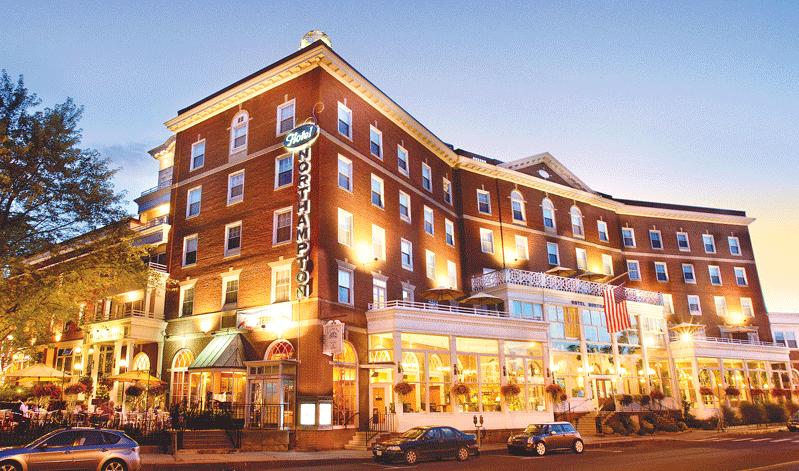
DBA Certificates Departments

The following Business Certificates and Trade Names were issued or renewed during the month of and May 2014.

AGAWAM

Colonial Food Store
39 Southwick St.
Shahzad Chaudhry

GET Woodworking
346 Springfield St.
Gyslain Turgeon

Motor City Car Company
91 Ramah Circle
Peter Zurlino

CHICOPEE

Double J’s Landscaping
37 Rivest Court
Justin Pouliot

Lawn Champs Lawn Care
21 York St.
Ryan Franczek

Ondrick Natural Earth, LLC
729 Fuller Road
Adam J. Ondrick

PC Steven Computer Repair
46 Florence St.
Stephen Schaeneman

Rejuvenations
246 Montcalm St.
Marci Ryder

Rivers Variety & Wireless
130 Chicopee St.
Kisean Donaldson

GREENFIELD

AAC Flooring & Tile
12 Verde Dr.
Aleksander Komerzan

Eli & Olivia Pure Honey
280 Leyden Road
Bruce Baker

Institute for Wilderness and Emergency Medicine
41 Solar Way
Nicole Thurrell

JMB Bookkeeping
18 Carpenters Lane
JoAnne Bernot

Kobe Idibachi Sushi Bar
254 Mohawk Trail
Asian Buffett of Greenfield

Pleasant Street Community Garden
141 Davis St.
Alice Timmons

The Cookie Factory
224 ½ Federal St.
Shelley Phillips

PALMER

A-Plus Landscaping & Construction
1132 Thorndike St.
Robert Taylor

APA Construction Property Maintenance
3 Fairfield Dr.
Andrew Fredette

Balicki Auto Body Inc.
92 Bacon Road
Philip Balicki

Cornerstone Artistry
21 Wilbraham St.
Timothy Becker

Palmer Auto Wash
1219 Thorndike St.
Raymond Recor

RB Enterprises
2 Nipmuck St.
Raymond Briton

SOUTHWICK

Flo Castonguay
8 Crystal Dr.
Florence Castonguay

Jardan Movers & More
93 Bungalow St.
Christopher Jones

Lafrenier Trucking Company
5 Echo Road
Jon Lafrenier

Rehab Resolutions Inc.
627 College Hwy.
Sofia Zanarella

SPRINGFIELD

JZ Fashion
1611 Main St.
Joel Vargas

KD Custom Design
28 Mountainview St.
Keith Anderson

Kyle’s Security
256 Boston Road
Kyle A. Burns

Liem’s Hardwood Flooring
46 Burton St.
Liem V. Thai

Martys Re
272 Main St.
Martin J. Dietter

Mason Fortune
16 Leatherleaf Cir.
Shequinna Barton

Massachusetts Refrigerant
100 Verge St.
Thomas M. Washer

Michael J. Gelinas Electric
4 Rogers Ave.
Michael J. Gelinas

Mopeds Unlimited
42 Arbutus St.
Leslie K. Seabrooks

NJ Home Improvement
112 Belvidere St.
Ismael Medina

New York Sound & Motion
90 Carando Dr.
Edward W. Brown

Northeast Plumbing & Heating
16 Raman St.
William Walker

PG Lawn and Home Maintenance
82 Westford Ave.
Patricia Gentry

Plaster Party Time
1760 Boston Road
John A. Muise

Que Huong Restaurant
281 Belmont Ave.
Tri M. Bui

R.Y.S.E.
97 Mill St.
Judith E. Crowell

Religious Ritual Activities
213 Commonwealth Ave.
Hari P. Adhikari

S & N Transportation
209 Ramblewood Dr.
Steven Delmas

Sevi & Anu Inc.
1121 State St.
Satish Kumar

Sweetcakes Shoes & More
42 Wayne St.
Marcus Jordan

Top Mechanical Service
77 Ellsworth Ave.
Raymond M. Barainard

Tropical African Market
810 Main St.
Nana Lawrence

United States Veterans
1350 Main St.
Luann Beaulieu

Up Town Bills & Payment
302 Hancock St.
Rolando Rijo

V.J. Auto Sales
282 Locust St.
Victor S. Jimenez

WESTFIELD

Odd Job Doctor
8 Yale St.
Robyn Banks

RPM Wood Finishing Group Inc.
221 Union St.
RPM Wood Finishing Group

The Scrub Peddler
10 Fawn Ln.
Ellen T. Majka

WEST SPRINGFIELD

Bear Spirit Design
42 Murray Place
Cindy S. White

Bob’s Discount Furniture
135 Memorial Ave.
John J. Sullivan

C.R. Landscaping
92 Chilson Road
Patrick Butler

C.V.D.
31 Capital St.
Daniel R. Gold

Capital Realty Inc.
125 Capital Dr.
Capital Realty, Inc.

Energia Massage
1111 Elm St.
Yesenia Camareno

Maximum Pawn Company
1142 Memorial Ave.
Maximino M. Salvador

Olympia Junior Hockey
125 Capital Dr.
Patrick Tabb

Travelodge
437 Riverdale St.
Yogi Rana

Two Elements
102 Overlook Dr.
Christopher Anthony

West Springfield 15
864 Riverdale St.
Efrain E. Hague

Company Notebook Departments

NUVO Bank Announces First-quarter Results
SPRINGFIELD — NUVO Bank & Trust Co. announced net income of $67,000, or $0.02 per basic and fully diluted shares for the quarter ended March 31, 2014, compared to $2,122,000, or $1.13 per basic and fully diluted shares, for the quarter ended March 31, 2013. The bank’s book value per share increased from $5.23 per share at Dec. 31, 2013 to $5.27 per share at March 31, 2014. The $2,055,000 decrease in net income primarily reflects the fact that, in the first quarter of 2013, the bank was able to fully utilize a deferred tax benefit of $2,057,000, which more than offset income before taxes of $65,000. In the first quarter of 2014, the bank had income before taxes of $111,000 and no deferred tax benefit and a tax provision of $44,000. The per-share results during the first quarter of 2014 reflect the impact of the issuance of 974,454 shares in a private offering that closed on April 30, 2013. Diluted per-share results were also impacted by the fact that, in the private offering, the bank also issued 487,227 rights along with the shares of common stock. The $46,000 increase in pre-tax income reflects increases in net interest income and non-interest income of $241,000 and $31,000, respectively, which were partially offset by a $106,000 increase in the provision for loan losses and an increase of $120,000 in non-interest expense. Total assets at March 31, 2014 were $145.0 million compared to $135.2 million at Dec. 31, 2013, which is an increase of $9.8 million (7.3%). Cash and cash equivalents increased $1.8 million (27.2%) to $8.7 million at March 31, 2014, from $6.8 million at December 31, 2013. Total loans increased $8.2 million (7.0%) to $126.5 million at March 31, 2014, from $118.3 million at December 31, 2013. Deposits increased $9.8 million (8.4%) to $125.9 million at March 31, 2014, from $116.1 million at December 31, 2013. Stockholders’ equity increased $98,000 (0.7%) to $14.7 million at March 31, 2014 from $14.6 million at Dec. 31, 2013.

Hot Table to Open Two New Stores This Fall
SPRINGFIELD — Springfield-based Hot Table, a chain of fast-casual dining locations, will expand this fall with two new stores in Hadley and Glastonbury, Conn. The Hot Table team, brothers John and Chris DeVoie, opened their original restaurant, featuring signature paninis, in Springfield’s 16 Acres neighborhood in 2007. They followed up with a store in downtown Springfield in 2009, and another in Enfield, Conn. in 2012. They are now hoping to grow upon that success by opening their fourth and fifth locations in the heart of two of the busiest shopping districts in the Hartford/Springfield region. The Glastonbury store will be located in the Griswold Shoppes on Main Street, next to Bertucci’s, and is slated to open in early September. The Hadley store will be located in a new plaza on Route 9, in front of Home Depot, and will open in November. A cross between Panera Bread and Subway, Hot Table specializes in grilled panini sandwiches that are made-to-order for each customer.  The stores also offer fresh, made-to-order salads, soups, desserts, and a variety of specialty coffees. The fast-casual style of service at Hot Table is designed to ensure that the diner has quick service and the freshest of ingredients. Each location will employ about 20 people. Hours of operation will be Monday through Saturday, from 7:30 a.m. to 9 p.m.

Fair-housing Grant Expands WNEU Law Partnership with MCAD
SPRINGFIELD — Western New England University School of Law announced recently that it is expanding its partnership with the Mass. Commission Against Discrimination (MCAD) through a program to train law students in the substantive and procedural issues related to fair-housing practices under federal and state law. This collaborative program will allow the university’s School of Law to expand its offerings of specialized classes, externships, and practice-based legal opportunities to train the next generation of fair-housing lawyers in Western Mass. A grant of $30,500 was made by MCAD to assist in creating the new curriculum and managing externship opportunities. The law school’s partnership with MCAD was made possible by a Fair Housing Assistance Program (FHAP) Partnership Project grant awarded to MCAD by the U.S. Department of Housing and Urban Development’s Office of Fair Housing and Equal Opportunity. The law students participating in the program will assist in the representation of fair-housing complainants, many of whom are tenants with limited English proficiency. The program will be implemented in partnership with attorneys and staff from MCAD and the Massachusetts Fair Housing Center (MFHC), the oldest fair-housing advocacy organization in Massachusetts. “This grant from HUD will enhance our law school’s ability to positively impact fair-housing issues in cities and towns throughout Western Mass. by expanding the experiential and classroom training for law students interested in civil rights and fair-housing issues,” remarked Harris Freeman, professor of Legal Research & Writing at Western New England University School of Law. Added Commissioner Jamie Williamson, chair of the Mass. Commission Against Discrimination, “we are very excited to have the opportunity to work more closely with our partners at Western New England University School of Law. Residential segregation remains a pressing problem in Western Mass. Law students will investigate and litigate cases of housing discrimination, and will have the opportunity to work closely with indigent pro se complainants.” In light of the deeply rooted, segregated housing patterns in Springfield, Holyoke, and Pittsfield, and given the frequency of housing discrimination throughout Western Mass., this educational partnership is an important opportunity for Western New England University to serve the legal needs of Western Mass. residents. “The grant will expand our students’ ability to learn by participating in all facets of advocacy and adjudication of fair-housing claims in the housing courts, the MCAD, and with the Mass. Fair Housing Center,” said Freeman. “We are looking forward to deepening our partnerships with all three institutions and organizations.” The award and collaboration come following the 2014 Northeast Regional Fair Housing and Civil Rights Conference, which was held in Springfield in April. The conference, attended by 512 people, was co-sponsored by the U.S. Department of Housing and Urban Development, MCAD, HAPHousing, Western New England University, and the U.S. Equal Employment Opportunity Commission.

Easthampton Savings Bank Recognizes Employee Volunteers
EASTHAMPTON — Easthampton Savings Bank recently recognized employee volunteers at the recent Service Awards and Recognition event held at the Log Cabin Banquet and Meeting House in Holyoke. Three CRA Community Service Awards were given out. Paula Auclair, a mortgage loan originator in the South Hadley office, received an award for performing 149 hours of CRA activity and 658 total volunteer hours. Jeni Cutter, a training specialist in the Main Street, Easthampton office was given an award for completing 192 hours of CRA activity and 220 total volunteer hours. Lori Ingraham, AVP/controller for the bank, was recognized for performing 136 hours of CRA activity and 557 total volunteer hours. Three Community Service Awards were given out. Katrina Dziedzic, AVP branch officer in the Westfield Office, was given an award for completing 275 volunteer hours. Jessica West, branch officer for the Northampton Street, Easthampton office was recognized for performing 420 volunteer hours. Lidia Zoltowski, a teller in the Main Street, Easthampton office, received an award for completing 261 volunteer hours. Two awards were presented to board members. Dr. James Hayden, DVM, was presented with the ESB Director Community Service Award. Daniel Polachek received the ESB Corporator Community Service Award. “In 2013, employees of Easthampton Savings Bank put in over 12,000 volunteer hours. When coupled with our direct financial investment, the bank donated nearly $750,000 in money and resources throughout the communities we serve,” said ESB President and CEO Matthew Sosik. “We are proud of our employees’ commitment to their communities and wanted to recognize them for their hard work.”

Jewish Geriatric Services Elects Officers and New Directors, Presents Awards
LONGMEADOW — Jewish Geriatric Services Inc. (JGS) presented the 2014 JGS Chairman’s Service Award to Carol Kantany Casartello and Charles (Charlie) Casartello Jr., and elected officers and new directors at its annual meeting on May 20 at the Julian J. Leavitt Family Jewish Nursing Home. The Chairman’s Service Award is given annually by JGS board members to individuals who have demonstrated an extraordinary dedication to JGS and the elders and families served by the organization. Kantany Casartello has served as the clerk-magistrate of the Westfield District Court for more than 20 years. Charlie Casartello is a partner with Pellegrini, Seeley, Ryan and Blakesley, P.C. in Springfield, focusing on personal-injury litigation, workers’ compensation, and Social Security law. Their commitment to JGS and the people it serves began in 2001 when Kantany Casartello’s parents, Christopher and Jane Kantany, moved into Ruth’s House, an assisted-living residence. Kantany Casartello has served on the JGS board of directors and executive committee, as well as many other committees, including strategic planning, governance, and nominating. She coordinated and participates in an interdenominational Protestant worship service at the nursing home, and has trained and served as a Spectrum Home Health and Hospice volunteer. Charlie Casartello is a eucharistic minister for Roman Catholics at the nursing home and Ruth’s House. He has also served on the JGS rebranding committee since 2012. “It is an honor to pay tribute to Carol and Charlie for their long and varied support and service to JGS. It has been my pleasure to work with them on several projects, like the formation of the Ruth’s House Family Council, that have had a positive impact on the quality of service delivered across our service continuum,” said Susan Kline, outgoing chair of the JGS board of directors. Dr. Robert Baevsky, physician and director of Informatics at the Emergency Department of Baystate Medical Center, was installed as the new chairman of the board. Baevsky first started volunteering with JGS in 1972, and has served as treasurer and participated on numerous committees, including the medical services committee. He has also had loved ones cared for at JGS. “It is a privilege to be your next chairman and a true honor to join the ranks of those before me, who helped govern and shape JGS, and plan for a new JGS that will transform not only our brick and mortar, but also usher in a new world of care across all services,” Baevsky said in accepting the appointment. Martin Baicker, president and CEO of JGS, called it “an exciting time for JGS, a continuation of a long tradition of caring and embracing culture change that will culminate with a new name for our organization and a new world of person-centered care in more home-like, intimate surroundings, improving not only the care we provide, but also enhancing the dignity of those living here.” Other officers elected to a two-year term include Susan Goldsmith, first vice chair; Rudy D’Agostino, treasurer; and Carol Kantany Casartello, clerk. Elected to new second-year terms on the board of directors were Mark Dindas, Brad Foster, and Amy Wistreich.

F&F Store Opens in Holyoke Mall
HOLYOKE — F&F, an international, ‘of-the-moment’ fashion brand, has opened its doors in the Holyoke Mall. The brand is a British-inspired international fashion label that carries a broad range of affordable fashion for men, women, and children. F&F is the only clothing brand that is owned by Tesco, the third-largest retailer in the world. F&F is now among the top fashion brands in Europe with more than 1,600 locations worldwide. One of the latest retail brands to be represented by Retail Group of America, F&F plans to open further stores in the U.S. in 2014.

Women’s Bar Foundation Honors MassMutual, Law Firm with Pro Bono Award
BOSTON – The Women’s Bar Foundation of Massachusetts (WBF) recently honored volunteers for their service to the organization’s low-income clients. Among the recipients were MassMutual and the Springfield-based law firm Heisler, Feldman, McCormick & Garrow, P.C. for their unique partnership, which has been instrumental in the success of the WBF’s housing-court program in Hampden and Hampshire counties. This program provides legal assistance to low-income tenants and landlords who appear in these courts, unrepresented, on ‘eviction day.’ Dorothy Varon, assistant vice president and counsel at MassMutual, accepting the award on behalf of the company, said “MassMutual has long been committed to making the communities where we live and work a better place, and an important part of our participation involves donating our own talent and expertise in areas where we can make a positive difference in people’s lives. We’re grateful for the opportunity to partner with Heisler, Feldman, McCormick & Garrow, P.C., to deliver pro bono services to people who need them, and are honored to share this recognition with such an outstanding law firm.” Suzanne Garrow, a partner at the firm, said, “the members of my firm and I are so proud to be a part of the Women’s Bar Foundation’s pro bono housing court project and see this as important work toward preventing homelessness.”

TSM Design Chosen to Promote SC2 Hartford
SPRINGFIELDb — TSM Design was selected by the city of Hartford’s Development Services team to promote a 15-month contest that will result in detailed, actionable economic-development plans for the city. SC2 Hartford is an EDA grant-funded competition that invites interdisciplinary teams to produce innovative proposals and plans that maximize Hartford’s assets and address an entrenched set of issues. SC2 Hartford relies on community engagement and encourages people with distinctive skills to come together, form teams, and compete for prize money totaling $900,000. Hartford’s goal is to establish the city as the place where first-time, serial, and second-stage entrepreneurs start and grow their companies with ease. TSM Design is charged with developing effective strategies to reach a variety of stakeholders and to convert awareness into action. Individuals must register on the SC2 Hartford website, form teams, and then submit their proposals by Sept. 24. According to Stephen Cole, senior project manager of economic development in Hartford’s Development Services department, “we chose TSM Design because they are uniquely suited to communicate complex economic principles and public policy in meaningful ways to small-business owners and members of the community. The level of understanding and excitement that TSM Design brings to our project demonstrates the firm’s experience working with diverse community partners in multi-cultural communities.” Hartford is one of only three cities in the country to have won the opportunity to participate in this innovative program of the Obama Administration. Greensboro, N.C. and Las Vegas share the distinction with Hartford. “SC2 Hartford is a high-profile, game-changing initiative,” said TSM Design Principal Nancy Urbschat. “We’re honored to participate in what is now our new adopted city.”

Departments Incorporations

The following business incorporations were recorded in Hampden, Hampshire, and Franklin counties and are the latest available. They are listed by community.

CHICOPEE

Scott Allan Collection Inc., 87 Bay State Road, Chicopee, MA 01020. Scott A. Bieda, same. Clothing and apparel.
Stucco Works Inc., 49 Dakota Dr., Chicopee, MA 01013. Vasiliy Zverev, same. Masonry.

EAST LONGMEADOW

West of the River Chamber of Commerce Foundation Inc., 143 Shaker Road, East Longmeadow, MA 01028. Robert MacDonald, 65 Apricot Hill Lane, West Springfield, MA 01089. To promote, develop, sponsor, and assist in the betterment of the business community of West Springfield and Agawam through fundraising, educational, vocational, and other efforts and activities, including charitable activities.

HADLEY

R. Christopher & Associates Inc., 31 East Hadley Road, Hadley, MA 01035. Traeci J. Stevens, same. Security conflicts.

LONGMEADOW

Stevens Blair Recruiting Inc., 32 Edgewood Ave., Longmeadow, MA 01106. Caroline Krafcik, same. Consulting and healthcare marketing research services.

LENOX

Prevista Inc., 2 Pinecrest Dr., Lenox, MA 01240. Leisl M. Moriarty, same. Meeting, event, and program consultation and management.

NORTH ADAMS

Tarm Tax Services Inc., 131 Ashland St., Ste. 250, North Adams, MA 01247. Tara J. Ferriter, 17 Willow St., North Adams, MA 01247. Tax preparation, taxpayer representation, and bookkeeping.

NORTHAMPTON

Western Mass FC Inc., 16 Dana St., Northampton, MA 01060. Jonathan A. Scagel, 32 Pleasant View Dr., Hatfield, MA 01038. To offer high quality, competitive sports teams and instruction to the children of Hampden, Hampshire, and Franklin counties. Including but not limited to fundraising and sponsorship of said sports teams and any and all other lawful purposes.

SHEFFIELD

Smarter 1 Inc., 742 Barnum St., Sheffield, MA 01257. Donald Reinauer, same. Manufacture and sale of computer and telephone equipment.

SOUTHAMPTON

Western Mass Spray Foam Inc., 37 Maple St., Southampton, MA 01073. John L. Meunier, same. Insulation services.

SOUTHWICK

Pro Tour & Cruises Inc., 194 South Longyard Road, Southwick, MA 01077. Kasie Provencal, same. Tours and cruises.

SPRINGFIELD

Pioneer Films Inc., 83 Ontario St., Springfield, MA 01104. Angel Martinez, same. To inspire the community through the art of filmmaking. We will promote events to audition members of the community to join us in producing: biographies, documentaries, short films, and feature length films.

WESTFIELD

MMC Specialty Roofing Inc., 50 Valley View Dr., Westfield, MA 01085. Donald M. Wurster, same. Construction and roofing.
VP Transport Inc., 121 B Otis St., Westfield, MA 01085. Valeriy Pozhar, same. Trucking.

Banking and Financial Services Sections
You Can’t Start Too Early, but You Can Certainly Start Too Late

By PATRICIA M. FAGINSKI

It’s highly likely that you started working sometime in your 20s with a retirement goal that was 40 years or so away. It’s also likely that you saved very little toward retirement in those years. For most Americans, that means they started too late.

But wait — you say you started saving in your 30s. Isn’t  that pretty good? Well, it’s certainly better than nothing, but it’s still late. Why do I say that? The numbers don’t lie, and to prove it, let’s see what happens to two savers, assuming an annual 8% return.

Both save $3,000 per year, but one starts at 25 and stops saving at 35. The other starts at 35 and continues to save for the next 30 years (see chart below).

Surprisingly, the early saver outpaces the later saver. Why? The magic of compound interest.

As a financial planner now approaching age 40, the implications of this data certainly resonate with me. It certainly doesn’t mean things are hopeless for those 40 and above, but it does mean you probably need to budget, dig deep, and find places to help you meet your retirement goals.

Understanding the best ways to start saving, including the need to start early, is key to saving enough for retirement. Here are some other points to consider:

• Contribute to your 401(k), as much as you can to the maximum, which will lower your current income taxes;
• Take full advantage of your company retirement plan;
• Create a monthly budget so that you fully understand where you are spending your money; and
• Within your budget, set aside a specific dollar amount for an emergency fund. You should have at least three to six months of savings set aside.

SavingsChartNo matter where you find yourself on the age spectrum, it’s essential to take a hard look at your finances. Yes, it’s daunting, but retirement will be the most expensive thing you ever do. With that said, I find that most people spend more time researching a new car purchase than they spend on retirement planning.

If it’s too overwhelming, call a planner and get some help. They will work with you to figure out where you stand now, establish your vision of a successful retirement goal, and formulate a plan to get you there. The work isn’t over, though — you still need to put the plan into action and monitor it for any deviations.

A good retirement plan will likely have a robust mix of investments, as well as insurance, pension plan/IRA/qualified funds, planning to maximize and integrate Social Security, and tax sensitivity.

Daunting? Sure, but with proper guidance it is manageable, giving you peace of mind that you are on the right track. A plan started late is better than no plan at all — but it really pays to start early.

Patricia M. Faginski is vice president and financial advisor at St. Germain Investment Management in Springfield; (413) 733-5111.

Banking and Financial Services Sections
A Thorough Analysis Can Help You Leverage IT as an Advantage

By GREG PELLERIN

Greg Pellerin

Greg Pellerin

“Cleanup in aisle 4!”

I was walking the aisles at my local grocery store last weekend when that all- too-familiar phrase was heard over the PA system.  I smiled and thought how cliché it had become.

‘Can’t wait for a good spring cleaning’ is another one that always makes me chuckle, but for a different reason. What’s so special about the spring that precludes us from doing that much-needed cleanup right now?

And so it goes with your IT network. More than ever before, an organization’s success is tied to technology. The challenge for many, however, is that data requirements have outgrown current infrastructure, and the perceived cost and complexity to upgrade is daunting, and therefore postponed until it’s too late.

Here’s the true story of a company that got moving just in time.

OAL Was Going AWOL

“We felt like we were spending too much time saying, ‘how much will this cost?’ not ‘how will this make us better?’” said Bill Weik, CEO of Orthopedic Associates of Lancaster, Pa. Founded in 1972, OAL is one of the most respected medical practices in Central Pennsylvania. The organization went paperless in 2003, one of the first in the country to do so, and the technology challenges began emerging soon after that.

“We’re one of those companies where we’re big enough to need IT support, but we don’t think it should be that difficult,” said Weik. He noted that OAL had already installed a practice-management system and e-mail, which met the practice’s needs back then. “When it came to tech support, we had an outsourced company that would come in a couple of days a week. But when we installed a PACS system in 2006, we decided we wanted an internal resource.”

The Best-laid Plans

“Our guy was trying to be the network engineer, the desktop manager, and more,” Weik said.
“He fixed things and did things that proved to be detrimental over time to our existing systems. It was like putting a bandage on a serious infection.”

In short, it was time for spring cleaning. OAL sought advice from a business partner, the chief information officer for the hospital with whom it was aligned. He recommended a well-respected IT and networking consultant with ties to the local healthcare community. As the hospital’s IT networking partner, it not only understood the complexities of current healthcare-technology needs, but could project five and 10 years into the future. The consultant recommended, then implemented, the following:

• A complete site assessment to define operational goals and identify current technology gaps;

• A networking, switching, routing, and security review to evaluate against best practices and create a road map to leverage IT as a competitive advantage; and

• A PC, server, and user-device inventory that included assessment of hardware condition, expandability, life expectancy, and replacement cost.

“They submitted a proposal to overhaul every server and every PC — everything except the cat-5 wire,” said Weik. The assessment also included a maintenance and replacement schedule as well as an outsourced monitoring and support plan. “The consultant made IT work for us, instead of us working for the IT department. Since we’re so technology-dependent, we got beyond the frustrations. Now, we’re running our business, and IT is there to support it.”


Where Do I Begin?

Technology-refresh decisions can be daunting, so start with an assessment.  Bring in an outside consultant with a fresh perspective.

Through on-site analysis and interviews with key organizational stakeholders, the consultant’s report should define IT operational goals and identify current technology gaps. An in-depth review of all of your critical technology areas should include an evaluation against best practices and provide a road map to better leverage IT as a competitive advantage. A complete cataloguing of organizational hardware, including an assessment of condition, expandability, life expectancy, and replacement cost, should also be performed. Then, and only then, can a good cleaning process begin.


What Time Is It? Where You Work?

Here in the northeast, nine feet of snow is finally gone, trees are budding, and healthcare and business IT professionals are awakening from their winter slumber to assess and refresh.

Spring is time for taking a fresh look around and fighting through that urge to push off today what you can do tomorrow. It’s also a time for that cleanup in aisle 4, before someone slips and can’t get up.


Greg Pellerin is a 15-year veteran of the telecommunications and IT industries and a co-founder of VertitechIT, a Holyoke-based business and healthcare IT networking and consulting firm; (413) 268-1605; [email protected]

Departments People on the Move

Springfield Mayor Domenic Sarno announced recently that he has appointed Attorney Mary McNally as the new Executive Director of the Springfield Parking Authority (SPA). “Mary brings a wealth of experience with her from the Hampden County District Attorney’s Office as well as serving as the previous SPA Board Chairwoman, said Sarno. “Attorney McNally has played a pivotal role in the turnaround in the operations of the authority. I look forward to working with her in an increased capacity as we continue to utilize the SPA as an economic-development tool in downtown Springfield.” McNally has most recently served as Chief Operating Officer and Chief Financial Officer in the Hampden District Attorney’s Office under District Attorney Mark Mastroianni. In addition, McNally was appointed in 2010 as Chairwoman of the Springfield Parking Authority by Sarno. During her tenure, she has overseen the refinancing of authority debt and institution of the SPA Capital Improvement Plan and the SPA-funded Downtown Security Plan.  Previously, she operated a Springfield-based law practice for 27 years. “I am pleased to be named the Executive Director of the Springfield Parking Authority,” said McNally. “I look forward to the opportunity to contribute and engage the authority in the growing economic-development renaissance in the city and to serve the residents and businesses of our great city.” Springfield Parking Authority Chairman Al Chwalek said that “Mary, as Chairwoman, has done a great job leading the Parking Authority through the last two transformative years. Now, as the new Executive Director, she is poised to partner the authority with several major projects in the city.” McNally, a resident of Springfield, is a graduate of Western New England School of Law as well as Elms College. Her bar admissions include the state of Massachusetts and the U.S. District Court.
•••••

Daniel Patrick Morrissey

Daniel Patrick Morrissey

The regional law firm Bacon Wilson, P.C. announced that Attorney Daniel Patrick Morrissey has joined its office. He will continue practicing in the areas of civil litigation, personal injury, workers’ compensation and immigration law. He currently serves as an Adjunct Professor of Spanish at Elms College, President of the Forest Park Business Assoc., and Vice Chairman of the Springfield Zoning Board of Appeals. He also is a member of the Kiwanis Club of Springfield and a past board member of the Puerto Rican Cultural Center. He received his law degree from Western New England University School of Law, a master’s degree in Spanish from Middlebury College, and his undergraduate degree from UMass Amherst. Morrissey will be based at the law firm’s Springfield office. With 40 attorneys, Bacon Wilson, P.C. is the largest law firm in Western Mass. Additionally, it boasts 65 paralegals, secretaries, and other support staff to assist with clients’ legal work. The firm’s four offices are located in Springfield, Westfield, Northampton, and Amherst.
•••••
Steve Shaw

Steve Shaw

The Holyoke-based IT networking and consulting firm VertitechIT has named Steve Shaw Vice President. Shaw will head up marketing and communications and assist with business-development efforts for the firm, which has offices in five states. Shaw has spent 30 years in the marketing and communications industries as a television reporter, production-agency founder, and multi-media network executive. “Business IT consulting is often viewed as a commodity,” said VertitechIT CEO Michael Feld. “Steve’s experience as a communicator, entrepreneur, and business executive gives us the opportunity to brand ourselves as a unique player in the IT marketplace.” VertitechIT is a leading provider of IT networking services to the healthcare and business communities throughout the Northeast and across the country. The company recently opened its new national headquarters in Holyoke.
•••••
Paul Mokrzecki

Paul Mokrzecki

Easthampton Savings Bank announced that Paul Mokrzecki has been named Senior Vice President of the ESB Government Banking Division. In that role, Mokrzecki will be responsible for all facets of municipal depository and lending activities. He comes to ESB with a depth of experience in municipal banking and municipal government. Prior to joining ESB, Mokrzecki spent 14 years as Senior Vice President of Government Banking at People’s United Bank, formerly Bank of Western Mass. He built an understanding for municipal banking needs by working as treasurer for the towns of Hadley and Greenfield for a combined 24 years prior to becoming a banker. “We are extremely lucky to have Paul join our team,” said ESB President and CEO Matthew Sosik. “He is highly respected in the municipal community, and he has a deep pool of contacts throughout the cities and towns in Massachusetts. His vast municipal banking experience will elevate our Government Banking division to new heights. Combining Paul’s expertise with ESB’s customer-first philosophy will be an attractive mix to municipalities looking at their banking options.” Mokrzecki has a bachelor’s degree from Syracuse University and an MBA from UMass Amherst. He is a member of the Franklin/Hampshire Collectors and Treasurers Assoc., the Berkshire County Collectors and Treasurers Assoc., and the Worcester County Collectors and Treasurers Assoc. He is a past board member of the Mass. Collectors and Treasurers Assoc. (MCTA). Mokrzecki has served as an instructor at the MCTA annual school for more than 20 years. He is a certified Massachusetts municipal treasurer and a certified Massachusetts municipal collector.
•••••
Mansour Ghalibaf

Mansour Ghalibaf

The National Restaurant Assoc. Educational Foundation recently honored Mansour Ghalibaf, owner of Hotel Northampton, as one of its 2014 Faces of Diversity American Dream Award winners. The honorees were recognized at a gala on April 29, during the National Restaurant Assoc. Public Affairs Conference in Washington, D.C. “The restaurant industry has provided opportunities for millions of people throughout the U.S., and the recipients of the 2014 Faces of Diversity award demonstrate the incredible opportunities they have been able to create as a result of working in the restaurant industry,” said Rob Gifford, executive vice president of strategic operations and philanthropy for the National Restaurant Assoc. and the National Restaurant Assoc. Educational Foundation. “We are proud to recognize the achievements of Mansour. His dedication to the industry and commitment to achieving his dream is truly exceptional.” In 1979, Ghalibaf, an Iranian immigrant, was attending college and working in a restaurant to pay his tuition when he was told he would be deported back to Tehran — at the height of the Iranian Revolution. Along with those closest to him, Ghalibaf endured a tense month under scrutiny from government officials and was on the brink of homelessness before he secured a visa to remain in the U.S. His status no longer in jeopardy, Ghalibaf pursued the American dream with dedication: he completed his college degree, got married, and continued to excel in the hospitality industry. His persistence and passion for the industry allowed him to work his way up from the kitchen to a hotel owner. After serving as general manager of the historic, 106-room Hotel Northampton for 16 years, Ghalibaf purchased the hotel and has since grown sales from $2 million to $7 million. Ghalibaf has been named Restaurateur of the Year by the Massachusetts Restaurant Assoc. and was inducted into the Massachusetts Hospitality Hall of Fame. “It is an incredible honor to receive this award, which celebrates the American dream,” he said. “Rarely do success stories come down to a sole individual, and I am so grateful for the many friends, family, co-workers, and associates — including those in the organizations that nominated and selected me for this distinction — who have been essential to my success. The hospitality industry is one place where the American dream is still within reach. We are without a doubt in the best business in the world.”
•••••
Consolidated Health Plans (CHP) announced that Juan Campbell has joined the company to lead its sales division. In this role, Campbell will be responsible for leading new-business development of student health, special risk, and other consumer products. Campbell brings a wealth of experience in sales, operations, strategic marketing, and business-development strategies to CHP. He has more than 20 years of experience in the health-insurance marketplace serving the needs of commercial clients. He earned a bachelor’s degree from Western New England University and completed the Executive Management Program from Stephen M. Ross School of Business at the University of Michigan. He serves on the board of directors for the Children’s Study Home and the Westmass Area Development Corp., and on the Legislative Steering Committee of the Affiliated Chambers of Commerce of Greater Springfield.
•••••
Dr. John Schreiber has been appointed President of Baystate Medical Practices and chief physician executive of Baystate Health, joining the health system’s senior leadership team. Schreiber comes to Baystate from Tufts Medical Center in Boston, where he served as Chairman of the Department of Pediatrics. He was also chief administrative officer and pediatrician-in-chief of the Floating Hospital for Children, the 100-bed primary affiliate children’s hospital for Tufts University School of Medicine.

Banking and Financial Services Sections
Recent Data Breaches Should Serve as a Wake-up Call for Businesses

By LARRY SNYDER, Ph.D.

Larry Snyder

Larry Snyder

All organizations, regardless of industry or size, are subject to cybersecurity risks. So if you have a business and you don’t have a cybersecurity plan or cybersecurity business unit, as the famous line from a popular movie states, you should “be afraid … be very afraid.”

Security breaches have an enormous impact on organizations. They can result in loss of investments, legal costs, and an erosion of consumer and investor confidence. One needs to look no further than the recent Target breach to understand how publicized breaches negatively impact the reputation of an organization.

According to IBM’s “2012 Mid-year Trend and Risk Report,” companies are attacked an average of 2 million times a week. The report also indicates a 38% increase in reported incidences of loss, theft, and exposure of personally identifiable information as compared to the previous year.  Keep in mind, this report was issued prior to the third-quarter breaches of retail organizations that resulted in the compromise of more than 100 million records.

Risk Based Security released a report in February 2014 indicating that more than 822 million records were exposed during data breaches in 2013, nearly double the previous high-water mark. That equates to 2.2 million records per day, or 1,560 per minute.

Regulations such as Mass. Gen. Laws § 93H-1 et seq. and 201CMR 17.00 increased administrative responsibilities for understanding and managing cybersecurity risks within organizations.

To build the business case that it is imperative for industries to address cybersecurity concerns, we must first quantify the threat. While the data on security breaches continues to be a bit murky, as there is really no incentive for organizations to fully disclose when and what they have lost, the available data provides a somber view.

The “2013 Cost of Data Breach Study: Global Analysis” released by the Ponemon Institute reveals that, globally, the average cost of a data breach has increased from $130 per record to $136. In this same report, the U.S. has cited an average cost of $188 per record. For context, this means the Target breach cost approximately $20.68 million.

The Computer Security Institute and the FBI conduct an annual survey of computer crime and security. The majority of respondents are organizations with annual revenue over $10 million that allocate some portion of their overall IT budget toward information security. As alarming as the number of reported breach incidents is, what is perhaps more worrisome is the number of organizations that could not determine if they had experienced a data breach. According to the CSI/FBI survey, 9.1% of those surveyed indicated that they did not know if their organization had experienced a security incident in the previous year.

The reaction to recent breaches has led the public and investors to call on industries to develop a more proactive approach to cybersecurity risks. Effective governance principles demand that an organization’s leadership re-evaluate the role cybersecurity has within their organization. No longer can security be viewed as an expense that is implemented as an afterthought or a reactive exercise under the category of ‘the cost of doing business.’ The integration of technology into every aspect of an organization’s daily operation has made cybersecurity controls essential for continued success. In essence, cybersecurity has moved from an expense to a stand-alone business unit. While these units will not produce direct profit for an organization, they add revenue indirectly.

Organizations that effectively protect their proprietary data, including customer information, and can effectively respond to security breaches send a clear message to the public, investors, and regulatory agencies about their attitude toward security, and reap the rewards through increased consumer engagement.

Every level of an industry, including management, staff, vendors, and suppliers, has the responsibility of addressing and responding to cybersecurity risks. As a business unit, cybersecurity personnel are responsible not only for identifying risks, but also for implementing controls for early detection, investigating and mitigating cyberthreats, and taking corrective action to prevent further exploitation.

To accomplish this, cybersecurity departments must address the following essential elements:

• Improve threat detection through the implementation of risk intelligence and forecasting;
• Conduct security data-management analytics;
• Employ organizational risk consultants;
• Develop secure control design and implementation that aligns with business needs; and
• Implement organizational change through information-security awareness and training programs.

The data breaches of 2013 must serve as a wake-up call for business owners, managers, and cybersecurity professionals. If your organization cannot determine whether it has experienced a data breach, if you do not have an effective cybersecurity risk-management program, or if you have not positioned the cybersecurity function in your organization as an essential business unit, you are putting your organization at risk … a risk from which it may not recover.

Larry Snyder, Ph.D is director of the new MS in Cybersecurity Management program at Bay Path College. He has nearly two decades of experience in law enforcement, fraud detection, and auditing, working in this capacity for the U.S. Army and in a variety of industries. He is a pioneer in the field of cybersecurity management education and, prior to joining Bay Path, worked with the State University of New York’s Herkimer County Community College in obtaining national certification for its Cybersecurity program from the Committee on National Security Systems; (413) 565-1294; [email protected]