Home Posts tagged Security (Page 8)
Sections Women in Businesss
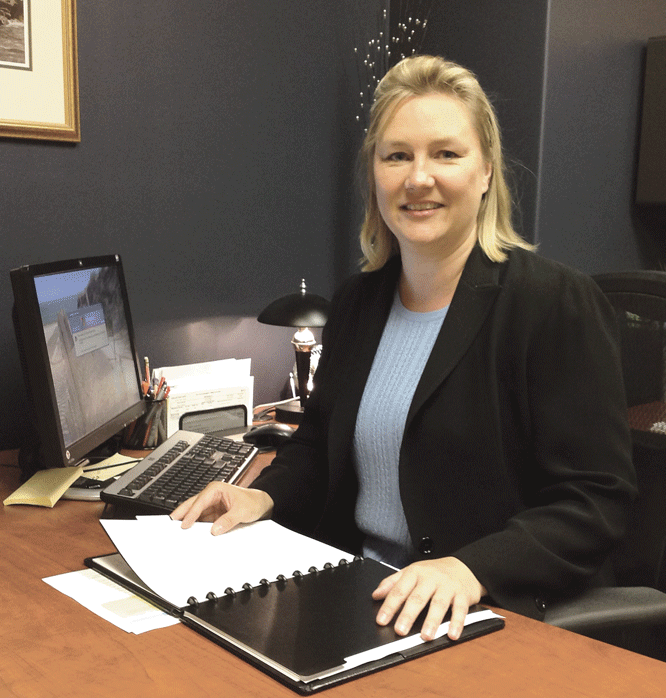
Maura McCaffrey Takes the Helm at Health New England
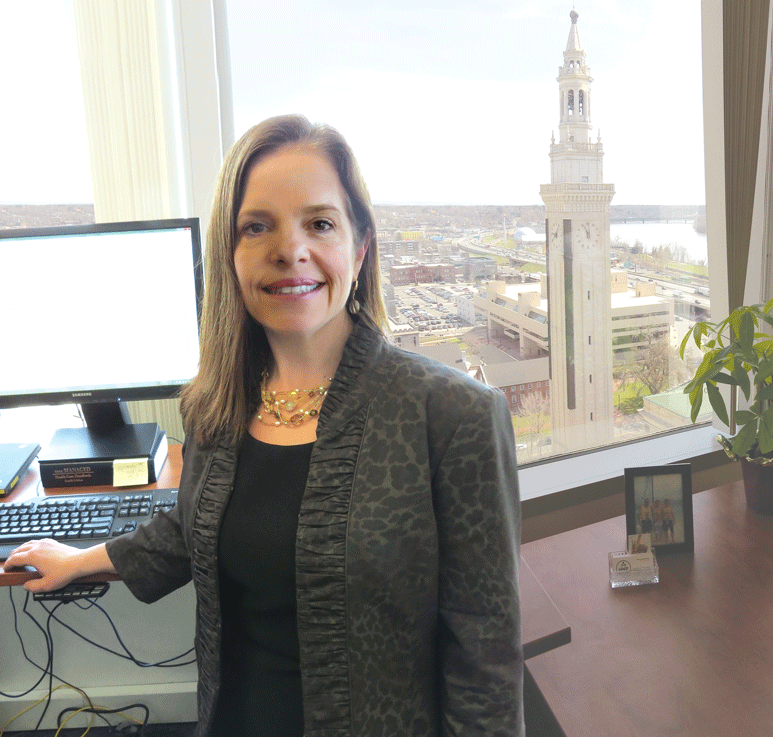
Maura McCaffreyMaura McCaffrey remembers reading the want ad in her Sunday paper — Health New England was looking for a clinical pharmacist — and thinking this was a job she really wanted.

She had gotten to know many members of the staff at the Springfield-based health-insurance provider while working as a sales representative and then regional account executive for the pharmaceutical giant Eli Lilly, and had come to respect the company’s culture and team-focused way of doing business.

But there were some complications to making this career move. Indeed, McCaffrey and her family were living 75 miles east of Springfield at the time. Her twin sons were 4 years old. She had an office in her home, made her own hours, and drove a company car she would have to relinquish.

After some soul searching, though, she decided to apply, with the thinking that this was very likely to be a short-term assignment, a line or two on her résumé, and merely the latest example of what she described as a career-long pattern of being able to put personal fears and insecurities aside and take some risks to advance professionally. “My plan was to figure out what I could about managed care, and I thought I would be here 18 months, two years at the most.”

It didn’t work out that way, and she told BusinessWest that she knew this would be the case early, probably on her first day at HNE. But she didn’t tell her husband that until well after those 18 months she had originally given herself to figure out if this was going to work.

“I told my husband, ‘I have to apply for this job, I have to work at Health New England — this is my opportunity to find out what this company is all about,’” she recalled. “And he said, ‘well, that’s a little impulsive; you just read a newspaper, we live 90 minutes away. You want to take that job and make that commute?’

“I said I thought it would be worth it for 18 months,” she went on. “Three years later, my husband said, ‘you’re either all in on this and we’re going to move the family, or you’re going to find something else.’ And I said, ‘I’m all in — I just haven’t finished learning everything I want to learn from Health New England.’”

In the decade since, she’s gone from all in to all the way to the top.

Indeed, she recently succeeded Peter Straley as president and CEO, completing a succession process that began heating up over the past several months as Straley let his intention to retire be known, but has actually been a work in progress for several years.

hnelogo_cmykAs she talked with BusinessWest about her ascension, one that has quickly made HNE one of the largest women-led business in the region, McCaffrey said the company essentially put her on a path to the CEO’s office, and she took it, along with many more of those risks she described earlier.

There were several changes to the title on the business card along the way — she served as everything from Pharmacy Services manager to vice president of Marketing, Business Development & Medicare to chief executive officer — and that learning process she described earlier never stopped, and it won’t now that she has the corner office, she said.

Looking forward, McCaffrey said there are a number of challenges facing the healthcare industry and payers such as HNE, especially when it comes to controlling the cost of care and, overall, making the community healthier.

These two missions go hand in hand, she said, adding that the industry must somehow move from its current, and highly inefficient, fee-for-service model to one that rewards providers for keeping people from getting sick, not simply treating them when they take ill.

And one of the keys to progress is inspiring individuals to take responsibility for their own health, she went on.

For this issue, BusinessWest talked at length with McCaffrey about everything from that path she took to the CEO’s office to the factors that are keeping more women from gaining such a title, to the prospects for real — and effective change — in the business of providing affordable healthcare.

Exercise in Firm Leadership

When it comes to taking control of one’s health, McCaffrey, like her predecessor, practices what she preaches.

She said she’s generally up by 4 each morning and starts her day with exercise, for a minimum of 10 minutes, but usually much more. She’s at her desk by 6 or 6:30 — “that’s my best thinking time” — and quite often, that desk sits three and a half feet in the air.

Indeed, McCaffrey’s workspace includes a desk leaf complete with a small motor that elevates it to a height by which she can work while standing, which, she states, is far more healthy than sitting for eight or 10 hours.

“I sit in meetings all day, which isn’t good for you,” she noted, “so I stand when I’m doing e-mails and other work.”

How McCaffrey, the proud daughter of Irish immigrants who came to this country in the early ’60s, arrived at the CEO’s office with the so-called ‘standing desk’ is an intriguing story, one that begins at an old-fashioned corner drugstore in her hometown of Leominster, roughly 20 miles north of Worcester.

There, after school, she worked the soda fountain, scooped ice cream, served coffee, sold cigarettes and lottery tickets, and, when the pharmacist was busy, would go out back and help him fill prescriptions, usually doing the paperwork in this era before computers.

Eventually, the store’s owner tried to convince her to attend pharmacy school — and had to keep on trying, because she was initially, and continually, resistant to that idea.

“I said, ‘are you crazy? How would I ever know all these prescriptions and all this stuff?’” she recalled, adding that the pharmacist eventually tried to persuade her by highlighting the job-security aspects of the profession — one has to be licensed to do this work — and when that didn’t work, he focused on financial security and schedule flexibility.

“But again, I said, ‘thanks, but no thanks,’” she went on, adding that he finally sold her when he said she could attend UConn or the University of Rhode Island and pay in-state tuition because Massachusetts didn’t have a public pharmacy school. That was welcome news because she was paying for college herself.

As she was graduating from URI, the pharmacist who started her down this road was selling his five stores to CVS, but he essentially made McCaffrey part of the deal, so she worked for that chain for several years, and thoroughly enjoyed the work.

“I loved every minute of it — it was a phenomenal career,” she told BusinessWest. “You saw when people were getting healthier or better, or they’d share stories about their families — it was a great job, and I had a great team to work with.”

Part of that job was to do community-support programs, where she would speak on behalf of CVS and talk about the benefit of pharmacists or educate the public about their medications. And in the course of doing so, she became acquainted with people in the pharmaceutical industry, who encouraged her to join them.

Eventually — after being reminded that, if this didn’t work out, she could go back to pharmacy work — she made the leap, joining Eli Lilly first as a senior sales representative and then as a regional account executive, handling much of Central and Western Mass. and working with companies like HNE.

And this brings us back to that want ad she read in the Sunday paper, and the learning that she wanted to continue.

Healthy Outlook

As she talked about her first years with HNE, McCaffrey said there were plenty of learning opportunities, which eventually exposed her to every department in the company, the people who worked in them, and the processes for achieving continuous improvement and growth.

“They allowed me to take on opportunities that were stretch-risk assignments for departments where I had no idea, technically, what they did,” she explained. “But I knew I could work with people and I could help manage people, and we could get to the outcomes. And I also knew that, if you gave me time and let me sit down and work with people, I could understand the department and what they were doing.

“One of these was the call center,” she went on, “and later, it was enrollment, provider relations, and credentialing. I didn’t have a strong background in those departments, the people here are team players, but it’s all about collaboration; they’re OK if you’re not the world’s leading expert on call centers — as long as you’re willing to jump in, learn about it, look for opportunities to improve, and take care to develop the people on these teams, which I was.”

Taking full advantage of the opportunities given her, McCaffrey started moving up the ladder, from clinical pharmacist to Pharmacy Services manager to director of Pharmacy & Service Operations to vice president of Pharmacy & Service Operations. Then came another one of the exercises in risk-taking — assuming a new position essentially created for her: vice president of Marketing & Business Development.

“I had some marketing background from Eli Lilly — they put us through great training programs, but I didn’t go to college for marketing,” she explained, adding that she leaned on those who did to help build the HNE brand, while also engaging in business-development initiatives, such as launching the Medicare and Medicaid product lines.

After six years in that role, she was promoted to COO, another newly created position, which included everything she was already doing, in addition to sales and a new IT department.

By the spring of 2013, she found herself spending more and more time at Baystate Health — HNE’s parent company — working with its CEO, Mark Tolosky, and board members, and filling in for Straley at a number of meetings and events. Late that summer, not long after Straley made clear his intention to retire and the timeline to do so, Tolosky offered her the CEO’s job. She took over early last month.

Her new office is slightly larger than the one she’s occupied the past few years, and the responsibilities are certainly greater, but McCaffrey said her management style and her approach to working with others within the company won’t change.

When asked to describe it, she returned to that word ‘collaboration,’ which she described as the opposite of dictating, which is certainly not her style.

“I believe that, if you get teams to work together, you get a better product than if just one person is in a dictatorship role,” she said. “But, likewise, you can’t be afraid to make decisions; you need someone who can be decisive and, with either limited data or as much data as you have, make those decisions.

“More importantly, my leadership style is based on what we call our high-performance culture,” she went on, adding that there are three steps to creating it:

• Make sure employees know and understand that they are responsible for their own performance;

• Likewise, employees are responsible for the success of those who are critical to helping them get their job done, what the company calls ‘shareholders’; and

• Make it clear that employees have to give up their own agendas for the good of the company.

“You need to develop core relationships with the people you work with,” she went on. “To me, that’s the cornerstone of the high-performance culture we have here; you must develop relationships, even with the most challenging people, the people that are most difficult for you, the people who have opposite personalities than you. My expectation is that you will then understand where someone is coming from and empathize, put yourself in their shoes.”

Future Tense

Teamwork and a high-performance culture has enabled HNE to outperform competitors that are exponentially larger, said McCaffrey, and those qualities will be needed moving forward as the landscape for health plans becomes ever more challenging.

Looking ahead, she said that change is necessary — that aforementioned shift from the traditional pay-per-service model to one that rewards providers for keeping people from getting sick — and that it is happening, albeit not as quickly as most people would like.

“If we’re changing the way we practice medicine, from the fee-for-service, do-more-and-you-get-paid-more world, to one of population management and being responsible for a global budget for people, while at all times maintaining the highest-quality care possible … that’s not going to happen overnight,” she said. “But can I look out on Western Mass. and see flickers of positive behavior? I absolutely can.”

“But even with continued progress in population management, the real key to creating a healthier community will be to inspire people to take control of their own health and well-being,” said McCaffrey.

“That’s a challenge for every provider that interacts with someone; it’s a challenge for every disease-management group,” she told BusinessWest. “How do you convince someone that wearing a pedometer and walking 10,000 steps a day is really a good thing? They can read the material, they understand that, and they understand that, if they eat McDonald’s three times a week, that’s not good for their heart. Moving from knowing something to doing something, or not doing something, is the key.”

Now one of the few women in top-leadership positions among the region’s largest employers, McCaffrey was asked about these numbers and whether they are likely to change.

She said they might, if the business community becomes more willing to give women such opportunities and, more importantly, if women are willing to take the risks and do the hard work necessary to seize those opportunities.

“Women have to be willing to take risks and put themselves out there,” she said, adding that this goes for men as well. “If you want to sit back and hope that someone comes to you someday and says ‘would you like to be a CEO?’ then the chances of that happening are slim to none.

“But if you’re willing to manage your fears and your insecurities and say, ‘I don’t know how to manage a call center, but I know how to manage people, and if you know how to do that part of a job, the technical aspects will take care of themselves,’ then you can get the role you want — there’s no doubt in my mind,” she went on. “You have to be able to put aside those fears and say, ‘I can do this.’ You can’t be afraid; you can’t let fear hold you back.”

Bottom Line

It’s been a very intriguing 10 years for both the healthcare industry and McCaffrey since she told her husband she was “all in” on Health New England.

She’s shown repeatedly that she’s able to put aside those fears and insecurities she mentioned and not only reach for opportunities, but grasp them as well.

This is a philosophy that she believes permeates the entire company, and she’s intent on keeping it that way, as evidenced by the language in a global e-mail she sent to the staff just after she officially took over as CEO.

“I said that I was excited about what’s in store for us,” she recalled. “I said that there are times of change still ahead, and that if we keep to the core of who and what our company is, we can look at this change as opportunity and growth for the company.”

And as she goes about that assignment, she can certainly lead by example.

George O’Brien can be reached at [email protected]

DBA Certificates Departments

The following Business Certificates and Trade Names were issued or renewed during the month of and April 2014.

AMHERST

Amherst Survival Center
138 Sunderland Road
Mindy Domb

Head Games Beauty Supply
67 North Pleasant St.
Erica Wilson-Perkins

The Homestead
500 Sunderland Ave.
Peter Emmet

Woodland Associates
67 Hulst Road
Michael Hutton-Woodland

CHICOPEE

4 Quality Home Construction
116 Hampden St.
Denis Borisov

Bottle in the Smoke
76 Meadow St.
Jonathan Fannin

Greenski Contracting
188 Irene St.
Jeremy Greene

R & J Transport, LLC
106 Fletcher Circle
Robert Craig

LUDLOW

Chicago Pneumatic Construction Equipment
151 Carmelina’s Circle
Mining, Rock Excavation & Construction, LLC

Liberty Tax Service
61 East St.
Steven Kowalski

Massachusetts Refrigerant Abatement
100 State St.
Thomas Washer

Monark Complementary Health
110 Clearwater Circle
Monica Gagnon

Moonlight Café
387 East St.
Ten-Go, Inc.

NORTHAMPTON

Ann Xtra Hand
33 Roe Ave.
Patricia A. Rick

Couples Center of the Pioneer Valley
182 Main St.
Katherine Waddell

Greg’s Auto Repair
376 Easthampton Road
Jeffrey Tenczar

Leading The Way Doggie Daycare
18 Chestnut St.
Melissa Mehlman

Mike’s Along For The Ride
157 Prospect Ave.
Michael Cahill

R & L Healthcare Consulting
35 New South St.
Robin Lango

Room 6 Salon
140 Pine St.
Melanie Burnett

Steady Pine Publishing
8 Hockanon Road
Kerim May

System Technology RX
19 Whittier St.
John Celentano

SOUTHWICK

Diversified Technical Products
6 Pearl Brook Road
David Thompson

G.J. Battles Remodeling
49 Point Grove Road
Gregory Battles

LJ’s Unlimited Landscaping
10 Lexington Circle
Leonard Allen III

Ming House
648 College Highway
Shuming Chen

Our Community Food Pantry Inc.
220 College Highway
Pauline Cebula

SPRINGFIELD

K & S Wholesaler
258 Main St.
Warren Costa

Kevin Conway Auto Sales
200 Orange St.
William McCarthy

Kimi, LLC
38 Kingoke Lane
Kimberly K. Weaver

Maidpro
527 Belmont St.
Heewon Yang

Majestic Barber Shop 2
322 St. James Ave.
Misael Colon

Mi Antojito Bakery
126 Walnut St.
Marilyn Gali

Mobile Welding
74 Joan St.
Michael Skrabely

My Sister’s Stuff
143 Main St.
Angela M. Enos

Mylrose Lawn Care
9 Flint St.
Anthony Brown

NEFW Pro Wrestling
61 Starling Road
Shileen L. Gallerani

No B.S. Property Maintenance
261 Oakland St.
Corey J. Scott

North End Pizzeria
2550 Main St.
Daniel E. Ojeda

One Stop Mart
477 Boston Road
Ramchandra Parekh

Pioneer Valley Industries
16 Esther St.
William J. Kern II

Protemp
24 Hiawatha St.
Sean Gould

Red’s Variety, LLC
1196 St. James Ave.
Natalie A. Henry

Rhino Linings of Springfield
50 Verge St.
Michael T. Dancy

Rumba Music Shop
2633 Main St.
Felix Perez

S & K Distribution, LLC
165 Avocado St.
Ray Steele

United States Veterans
1350 Main St.
Luann Beaulieu

Uno Chicago Grill
1722 Boston Road
Uno Restaurants, LLC

Unstoppable Auto Club
511 East Columbus Ave.
Zenita Roman

WESTFIELD

Big Big Box, LLC
66 Industrial Park Road
Anthony Gleason

CZ Power Body Work
31 Elm St.
Hong Zhang

John Guagliardo’s American Dream
100 Steiger Dr.
John Guagliardo

Millrite Machine Inc.
587 Southampton Road
Robert F. Valcourt

Noble Medical Group
115 West Silver St.
Ronald Bryant

Step by Step Cooking
21 Sunflower Lane
Patrice Mercier

WEST SPRINGFIELD

Allied Heating & Air Conditioning
101 Circuit Ave.
Gary Giordano

Bathcrest of Western Mass.
176 Labelle St.
James E. Belle-Isle

BBC Trucking
58 Amherst St.
William C. Della

Drollett Plumbing & Heating
1 High St.
Jamie L. Drollett

ER Portal Software Group
59 Interstate Dr.
Edward Garibian

Father & Son Home Improvement
65 Verdugo St.
Peter Dzhenzherukha

J.I.S. Roofing Company
103 Ashley Ave.
Justin Grimm

Safaribudget.com
71 Craig Dr.
Aloyce C. Assenga

Sam’s
96 Southworth St.
Ivan Banari

Spartan Auto Care Center
865 Memorial Ave.
Nicholas Katsoulis

Thistle Security Products
78 Mercury Court
Angus Rushlow

Trinity Fitness Options
50 Thomas Dr.
Jessica Benchin

BANKRUPTCIES

The following bankruptcy petitions were recently filed in U.S. Bankruptcy Court. Readers should confirm all information with the court.

Albrecht, Susan A.
79 Talbot Road
Springfield, MA 01119
Chapter: 7
Filing Date: 03/13/14

Andrews, Sandra E.
3 Field Dr.
Sturbridge, MA 01566
Chapter: 7
Filing Date: 03/13/14

Berthiaume, Nathan
413 Belchertown Road
Ware, MA 01082
Chapter: 7
Filing Date: 03/12/14

Bourgeois, Michael
15 1/2 North St.
South Hadley, MA 01075
Chapter: 7
Filing Date: 03/14/14

Butler, James M.
70 Ruthven St.
Springfield, MA 01128
Chapter: 7
Filing Date: 03/11/14

Celestial Visions Inc.
Kopec, Celeste A.
61 Parallel St.
Springfield, MA 01104
Chapter: 7
Filing Date: 03/13/14

Cronin, John M.
22 Carol Lane
Holyoke, MA 01040
Chapter: 7
Filing Date: 03/12/14

Dockum, Thelma G.
Phins Hill Manor
50 West State St., AP
Granby, MA 01033
Chapter: 7
Filing Date: 03/14/14

Dubois, Holly Beth
76 Monroe St.
Chicopee, MA 01020
Chapter: 7
Filing Date: 03/15/14

Fondon, Tommy L.
Fondon, Janine
189 Braeburn Road
East Longmeadow, MA 01028
Chapter: 7
Filing Date: 03/11/14

Fontaine, Gregory J.
37 Steuben St.
Indian Orchard, MA 01151
Chapter: 7
Filing Date: 03/15/14

Gay, Albert T.
Gay, Tanya L.
94 Jacob St.
Chicopee, MA 01020
Chapter: 7
Filing Date: 03/13/14

Goff, Jeffrey M.
Goff, Amy R.
64 Biddle St.
Springfield, MA 01129
Chapter: 7
Filing Date: 03/13/14

Hamade, Yasser M.
127 Woodcrest Circle
Springfield, MA 01020
Chapter: 7
Filing Date: 03/13/14

Hojnowski, Krista A.
17 Adams St., Apt. 6
Chicopee, MA 01013
Chapter: 7
Filing Date: 03/13/14

Kronoff, Charles R.
Kronoff, Mary Beth
577 Suffield St.
Agawam, MA 01001
Chapter: 7
Filing Date: 03/11/14

McCann, Shawn P.
3 Oakwood Road
Brimfield, MA 01010
Chapter: 7
Filing Date: 03/13/14

Murray, Erin N.
68 Knollwood Road
Brimfield, MA 01010
Chapter: 7
Filing Date: 03/14/14

Pashko, Joseph M.
53 West School St.
West Springfield, MA 01089
Chapter: 7
Filing Date: 03/13/14

Penoyer, Curtis J.
Penoyer, Sonya C.
P.O. Box 528
Bondsville, MA 01009
Chapter: 7
Filing Date: 03/13/14

Raffloer, Evelyn
417 Springfield St., #140
Agawam, MA 01001
Chapter: 7
Filing Date: 03/14/14

Rivera, Albert
Murphy-Rivera, Kimberly A.
245 Allen Road
Belchertown, MA 01007
Chapter: 13
Filing Date: 03/14/14

Features
J. Polep Distribution Services Evolves with the Times

Jeff Polep, president of J. Polep Distribution Services

Jeff Polep, president of J. Polep Distribution Services

Stop by the Chicopee headquarters of J. Polep Distribution Services, and the first thing you’re greeted with is an old-fashioned cigar-store Indian standing beside the front door.

The adjoining office of Jeff Polep, fourth-generation president of this 116-year-old family business, is also strewn with kitschy memorabilia from the past century, but it’s that wooden Indian who tells the most significant story — one that starts with Polep’s great-grandfather launching a small-time enterprise, Polep Tobacco Co., in Salem, Mass.

“He started with candy and tobacco, but we diversified into groceries to survive,” Polep said. “Since then, we’ve kept diversifying.”

Today, J. Polep ranks among the top 12 convenience-store distributors in the country, servicing about 4,500 chain and independent retailers in New England, New York, and — most recently — Pennsylvania and New Jersey.

Much of that expansion has come in just the past several years, with the addition of alcohol products and an ice-cream and frozen-food division in 2007, and the purchase of Springfield Smoked Fish in 2011 and two Connecticut meat-processing plants, Mucke’s and Grote and Weigel, in 2012. Meanwhile, “we recently went into produce, both fruits and vegetables, and we’re carrying about 200 items,” Polep said.

All of this reflects the fourth generation’s constant focus on diversification.

“That’s where most of the growth has come,” Polep said, adding that some product additions have worked out better than others. “We’ve had exceptional growth in the ice-cream business; we sell a lot of ice cream.” Meanwhile, he added, alcohol products haven’t been as lucrative, although they do turn a profit.

In the past decade, J. Polep also launched Rachael’s Food Corp., named after Polep’s daughter. The Rachael’s line includes candy and other snack foods, but also a number of refrigerated products — from sandwiches and salads to meat products — that comprise the only foods that the Polep company produces on its own.

J. Polep also tries to find synergies among the Rachael’s products, such as putting smoked salmon from Rachael’s Springfield Smoked Fish on the sandwiches it makes in its commissary — which, like its meat-processing plants, is a USDA-inspected facility. “Anything we can cross-merchandise is pretty good for us.”

Meanwhile, the company’s salespeople, armed with iPads and other modern devices, are constantly restocking stores and tracking how each product is selling. “Our main function was always convenience stores,” Polep said, “but over the past few years, we’ve gone into fresh foods, healthy foods, natural foods. That’s been really good for us.”

Back from the Dead

Polep likes to show visitors a photograph hanging in the lobby, probably from around 1910. It shows his grandfather, Charles, standing on the running board of a truck driven by his great-grandfather, Sam. He says that photograph — and the hard work and legacy it represents — has inspired him to keep growing the company, even during dark days like the mid-1980s.

“In 1984, my father and uncle sold the business,” he said, adding that they believed the sale, to Trade Development Corp. (TDC), would bring security as well as access to the larger corporation’s expertise and buying power. They were wrong. “Within two years, the company that bought us went bankrupt.”

Polep, who managed the Chicopee operation for TDC, was determined to keep the business alive, but he had a non-compete agreement in his contract that barred him from restarting the company after TDC filed Chapter 11. After a week hashing out the issue in a Texas bankruptcy court, however, a judge released him from the contract. But that was only the beginning.

“We had to start all over again,” he said, adding that this included a name change from Polep Candy & Tobacco Co. to J. Polep Distribution Services. Many of the first employees he brought back worked for free for the first couple months, enabling him to hire about 50 more. And keep growing, steadily, for almost 30 years.

“We went from zero business to almost $1 billion; we’re over $900 million now,” he said, adding that J. Polep currently employs about 630 people, with distribution centers in Chicopee and Woburn, as well as Providence, R.I. and West Haven, Conn. “I’m glad it worked out the way it worked out. It was a lesson learned. We have a good, successful business, and we know that’s because of our employees. They’re loyal. We can’t do it without them.”

Speaking of hardships, much of the company’s recent growth coincided with the Great Recession. Asked whether those years, which impacted so many industries in the Northeast, affected his company, Polep offered a simple “yes … and no” — and for a perhaps surprising reason.

“We didn’t really get hurt too badly by the recession because tobacco items sell better when there are economic issues out there,” he explained.

While it has been a core product for J. Polep since the beginning, tobacco sales have been shaped by a number of different trends.

“There have been a lot of changes in the tobacco business alone. It’s gone way beyond cigarettes, pipe tobacco, and other tobacco products,” Polep said. “The biggest diversification lately has been e-cigarettes. Right now, we sell a lot of e-cigs. A lot.”

At a time when government taxes tobacco heavily and society increasingly frowns on its use — bans in restaurants, workplaces, and a host of other public spaces are simply making it more inconvenient to smoke — e-cigarettes, a smokeless product that uses nicotine vapor, have been widely embraced, particularly by the younger generation.

“Some people are trying to quit smoking, no doubt, and this is a vehicle that helps them achieve that result,” Polep said. “But many people are smoking e-cigs who never smoked cigarettes because it’s an enjoyment for them.”

Healthy Sales

While cigarettes — which are still J. Polep’s top product — may not be in vogue, healthy and organic food is, and the company is starting to take advantage of that trend.

“We’ve now gotten into about 450 colleges with good, healthy alternatives, all the different food groups,” Polep said. “That’s a very, very successful business — although our slow season for colleges is coming up within the month.”

That’s OK, he added, because convenience-store sales rocket up during the summer, more than making up for summer break on campuses. When the weather turns warmer, he explained, people are out driving more, and more apt to make a quick stop for a soda or a snack. “In the winter, they go to the supermarket, load up, and stick it in the fridge or freezer.”

The college crowd may be a solid market for healthier foods, but stores are following suit, he said. “A lot of convenience stores have taken on the organic and natural products we have for the colleges, and they’ve set up healthy sections. And they’re selling.”

While J. Polep has thrived by staying atop trends and making savvy acquisitions of other companies — about two dozen in the last 30 years — it’s ramping up geographic expansion as well. The most recent moves, into Pennsylvania and New Jersey, represent a significant step for the company, but a necessary one if it expects to grow in ways other than diversification.

“If you think about it, in New England, we’re on a peninsula, so we can’t really go much further — we’ll eventually run into the ocean,” he said with a laugh. “The only way we can grow geographically now is by going south to pick up new business.”

He sees the potential of J. Polep to expand beyond its current territory to become an even bigger presence in the eastern half of the U.S., but any growth will have to be gradual and sustainable. “I think it will take us a little while to be satisfied with Pennsylvania and New Jersey. But we’ve grown tremendously through acquisition over the years, so territory growth makes sense.”

The company will continue to take a multi-pronged approach to growth, especially as the recession fades into the past and competition heats up. “We did have an advantage selling certain types of products during the recession,” Polep said. “But things have gotten better, and our industry is looking for more business, so the competition is fierce.”

J. Polep doesn’t seem primed to make the mistakes of the mid-’80s anytime soon, though — not with the fifth generation so firmly entrenched. Polep’s son, Eric, who was a district manager in Boston, returned to Chicopee to learn more of the business. Meanwhile, daughter Rachael works in human resources, and his son-in-law, Adam Kramer, works in food service. They’re all interested in preserving the 116-year legacy and moving it forward, he told BusinessWest.

“And they can have it, at this point. I’m just doing it for them,” he said, expressing pride that his family has continuously grown what has become one of the nation’s most prominent distribution companies — “except for that hiccup of two years, of course.”

Distributing the Wealth

For now, he says, being president gives him something interesting to do every day until the next generation takes over, and he’s fine with that.

“It’s really simple,” he said when asked what he enjoys most about his role. “It’s something new and different every day. We have 600-plus employees, 80 drivers, 100 sales-type people — they all make business interesting and fun. I never walk into the same situation two days in a row.”

That’s easy to see, with hundreds of different products rolling off the conveyer belts every day and being shipped to thousands of destinations. J. Polep has come a long way indeed from that old, black-and-white photo in the lobby, and that 116-year-old dream of making a living selling candy and cigarettes. n

Joseph Bednar can be reached at [email protected]

Law Sections
Here Are 10 Important Points to Ponder — and Remember

By MICHELE J. FEINSTEIN and ANN I. WEBER

When you decide to get married for the first time, estate planning is probably the last thing on your mind. But if your marriage does not endure because of death or divorce and you later want to remarry, marriage, life, and death may be a little more complicated.

Here are some pointers to keep in mind if you or someone you love are contemplating remarriage.

• Do you have a will? If not, the Commonwealth has written one for you.

If a spouse in a second marriage dies without a will and has children from a prior marriage, under Massachusetts law, the survivor will receive the first $100,000 and one-half of the balance of the estate.

If this is not your plan of choice, you should have a will and perhaps a revocable trust which clearly sets out your wishes.

• If you want to leave your estate entirely to your children, your spouse may have the right to challenge your will and receive the share prescribed by statute.

Under Massachusetts law, a spouse can waive the provisions in the decedent’s will and elect to take the share prescribed by statute. For example, if you die leaving children from a prior marriage, your spouse can force a distribution equal to the income interest in one-third of your probate estate (and potentially the assets of your revocable trust if you have one) plus $25,000 distributed outright from that share.

Your spouse cannot benefit from any provisions in the will in his or her favor, but can continue to receive the benefit of property passing outside of the probate process, i.e., proceeds of life insurance or retirement plans and jointly held assets, etc.

• If you have a will which was signed prior to your marriage and you die before signing a new one, your spouse may receive a share of your estate even though he or she is not mentioned in the will.

In such a case, your spouse will receive the share he or she would have received if there had been no will from the portion of the estate not left to your children or grandchildren, unless your will was made in contemplation of the marriage or you provided for your spouse outside the will with life insurance, retirement benefits, jointly held assets, etc.

• Do you have minor or disabled children?

While your former spouse will probably be guardian of your children, your may not want him or her to control assets passing to or for the benefit of your children. You can name a conservator or a trustee of a children’s or special-needs trust to control these assets for the benefit of your children.

• Do you have a prenuptial agreement?

If so, you and your spouse may have relinquished rights to each other’s estates. You can, however, include your new spouse in your will, as any provisions in favor of your spouse will trump the prenup.

• Do you have a divorce decree or separation agreement?

If so, you may have obligations under these agreements. Your attorney should review these documents in order to be sure that your new plan does not contravene these obligations.

• Do the combined assets of you and your spouse exceed $1 million? Do they exceed $5.34 million?

If so, you may need a revocable trust or perhaps some additional planning to minimize your state and federal estate taxes, respectively.

• Are you receiving Social Security retirement benefits based on a former spouse’s earning records?

If so, your remarriage may affect your benefits. If you are receiving benefits based on your divorced spouse’s earnings record, your benefits will end upon your remarriage and be recalculated based on you or your new spouse’s earnings, whichever is higher. If your benefits are based on a deceased spouse’s record and you are 60 or older at your remarriage, you will receive the higher of the three worker’s benefits. However, if you are under 60 when you remarry, you will forfeit your widow’s benefits permanently.

• Are you concerned about the costs of long-term care? Your marital status may affect your eligibility for benefits.

MassHealth has different eligibility criteria for single and married persons applying for nursing-home coverage, with some very favorable options applying to married couples.  In particular, assets can be transferred to the well spouse without a transfer disqualification, special types of annuities can be purchased to accelerate eligibility, and the well spouse will be entitled to keep $117,240 of countable assets.

While this works well when the children likely to inherit belong to both spouses, traditional planning can cause problems down the line for blended families if the ill spouse’s children are excluded as beneficiaries of the well spouse’s estate.

• Do you want your children or other individuals to be beneficiaries of your qualified retirement plan(s)?

If so, your new spouse will need to sign a notarized waiver of these benefits in order for these beneficiaries to take. Qualified plans include defined benefit or contribution plans, profit-sharing plans, and 401(b) and 401(k) plans.

Attorneys Ann I. Weber and Michele J. Feinstein are partners with the Springfield-based law firm Shatz, Schwartz and Fentin, P.C. Weber concentrates her practice in the areas of estate-tax planning, estate administration, probate, and elder law; (413) 737-1131; www.ssfpc.com. Feinstein concentrates her practice in the areas of estate planning and administration, elder law, probate litigation, health law, and corporate and business planning; (413) 737-1131; www.ssfpc.com

40 Under 40 The Class of 2014
Vice President and Financial Advisor, St. Germain Investment Management, age 39

Patty-Faginski-02Patty Faginski’s business card declares that she is a vice president and financial advisor. But she likes to consider herself an educator.

That’s because she spends a good deal of her time providing invaluable lessons — in everything from the need to have a portfolio that’s diverse, to the importance of savings for one’s retirement starting at a very young age.

“A lot of my job comes down to education on financial planning and what people are doing with their money,” she explained. “I consider it my job to help them understand the importance of asset allocation — that’s what it comes down to.”

And she finds this work extremely rewarding, because financial security doesn’t happen by accident — it’s achieved through careful creation of a plan and then effective execution of that plan, and she is involved with both, usually through a conservative approach to investing.

“What I like most about this job is meeting new people, finding out about their lives, figuring out what’s going to work for them in retirement, and giving them goals to set — and meet,” she said.

Faginski started her career in retail, managing a store and its 50 employees, before shifting to financial services and, more specifically, a job in the trust department with the old Woronoco Savings Bank (now Berkshire Bank). She was recruited to St. Germain in 2003, and has moved steadily up the ranks, from assistant vice president in the sales department to vice president and manager of Client Services, to her current post, which she assumed last year.

While assisting, and educating, many of the company’s more than 5,000 clients, Faginski, a single mother of a daughter and a son, is also active in the community, especially with Big Brothers Big Sisters. She’s served on that agency’s board for seven years and recently helped coordinate a major fund-raiser at the Colony Club that gave the organization some needed exposure and opportunities to cultivate new relationships. She has also been active with Habitat for Humanity and the Heifer Project, and is currently the leader of a Brownie troop.

While these various responsibilities make time management a serious challenge, she finds time for activities such as hiking and other sports, and spending time with her children — her most important investment of all.

— George O’Brien

40 Under 40 The Class of 2014
Chief Operating Officer, Northeast Security Solutions Inc., age 27

David-Condon-01It’s not easy having a Roman numeral at the end of your name.

That’s one of the things G. David Condon IV has found out during his career, and somewhat the hard way. Indeed, while with family members and very close friends he goes by George, to the rest of the world he’s David, his middle name. And this has come about far more out of necessity than choice, because he works in a family business, just down the hall from George David Condon III.

“Customers would call looking for George,” he explained. “We’d ask, ‘which one?’ They’d reiterate, ‘George Condon,’ and we’d again say, ‘which one?’ They’d say, ‘Big George,’ and we’d say, ‘do you mean the older George or the taller George?’ To clear it all up, I started going by David.”

By whatever name he’s called, Condon is a rising star in the local business community, and now a 40 Under Forty winner. He is working with his father to expand and diversify the family business, Northeast Security Solutions Inc., while also rising within the ranks of the local Rotary Club district, and even finding time to play on the road and in studio with a garage band known as Scrap Iron Sun.

With the company, which he joined in 2008 after graduating from UMass Amherst’s Isenberg School of Management, and now serves as COO, he sums up his duties with the phrase ‘everything else.’ “You have a bookkeeper, you have technicians, and an office manager, and I’m kind of everything else.”

He was one of the youngest people ever to join the West Springfield Rotary Club, then was its youngest president, and now he’s one of the youngest assistant district governors for District 7890, acting as a liaison of sorts between several of the area clubs and the district.

He and his wife, Michaelan, are expecting their first child in August. They don’t know the gender yet and don’t want to know. What they do know is that, if it’s a boy, he won’t be named George David Condon V.

“As someone who has had to go through the frustration of having the same name as someone else,” he said, “I’m ending the streak by not putting my kid through that.”

— George O’Brien

Banking and Financial Services Cover Story Sections
St. Germain Investment Management Gets Personal

COVER0314bWhen gauging the reputation of St. Germain Investment Management, Tim Suffish says, one measure is the number of non-clients who call out of the blue.

“It happens all the time,” he said. “People call with questions, and we just give the advice. We’re more than happy to take the calls. It’s a sign that the company is doing things right when random people call us and are reaching out for something. They’re always shocked and appreciative when one of the financial advisors spend time on the phone with them with no expectation of anything in return.”

Suffish, the firm’s senior vice president of equity markets, said it’s a reflection of the name St. Germain has built in Greater Springfield for the past 90 years. But the company, launched by D.J. St. Germain in 1924, hit some, well, depressing times in its early days.

“D.J. did fantastic with his investments the first five years. Then 1929 came along and wiped out a decent portion of his net worth,” said Mike Matty, the company’s current president, adding that surviving the Great Depression sparked the firm’s long-standing focus on investing conservatively.

“He realized that not losing an investment is every bit as important as making money. That has guided our conservative philosophy, and it’s the way we continue to make money,” Matty said. “During the most recent downturn, eight or nine people said to us, ‘we know we’re not going back to the old highs,’ and yet, this week, we’re at new highs. We hit a billion last year in assets under management.”

Matty, however, prefers to talk about people, not numbers, when considering how St. Germain has grown since the days of D.J.

Mike Matty

Mike Matty, president of St. Germain Investment Management

“It’s easy to start a business, but it’s tough to stay in business 90 years. The way you do that is treat the clients right, and we’ve done a terrific job with that philosophy,” he said. “We have a great team here; they could all work in Boston or New York, or wherever they want to be. But we all like working here in Western Mass.; we all want to be here.”

Suffish said there’s a certain satisfaction that comes with helping clients — whose only exposure to retirement savings to that point might be a company-sponsored 401(k) plan — really think about what they want from their golden years.

“They’re thinking about retirement, planning to leave their job and go from earning and putting money away for retirement to taking money from their retirement account,” he said. “It’s huge. People who haven’t gone through it don’t realize how … not traumatic, necessarily, but how serious it is, and the consideration and planning that goes into it.

“Once you’re into retirement, you want to make the most of it, so you don’t outlive your money,” he went on. “That’s our meat and potatoes; the most important thing we do is sitting down and talking with clients, people entrusting us with everything they have to last them through their last days.”

Human Touch

Matty said St. Germain had long been known strictly as an investment manager, but about a decade ago, the company began to broaden its scope to all-around financial planning.

“We now do comprehensive financial planning with people. We take a look at where their income streams are in retirement; are they adequately covered? And we’re the go-to call for people on other financial questions — buying a car, refinancing a house, whatever it may be, we get a call. That’s worked out very well for us.

“Life has gotten much more complicated these days,” he continued. “People get exposed to an immense amount of information overload on the Internet. Can you sit down and Google it? Sure, but you’ll see 150,000 results. People say to us, after trying to figure it out on their own, ‘I want to talk to someone who actually walks the walk before I do this.’ That’s what we’re great at.”

Mike Matty, left, and Tim Suffish

Mike Matty, left, and Tim Suffish say their most important job is talking one-on-one with clients and understanding their expectations for life after retirement.

Matty and Suffish are both CFAs, or chartered financial analysts. “CFAs are the financial-analysis equivalent of CPAs,” Matty said. “We’re super-knowledgeable, highly trained people. It’s New York or Boston expertise, accessible in Western Mass. at a reasonable cost.”

Suffish said a client was in reviewing his account recently and saw a photograph of D.J. St. Germain with a 1930s-era Packard. “He said, ‘I remember going for a ride in that car.’ The company has been here a long time, and the experience has been consistent. People change sometimes, but the St. Germain way keeps people here a long time.”

Still, the company has experienced a growth spurt in the past decade. When Suffish came on board in 2004, he was the seventh employee; now 20 people work there. But that growth has not come at the expense of the personal touch that has long been a priority.

“When people pick up the phone and call us, they get a receptionist, not voice mail. An automated voice drives people crazy,” Matty said. “It’s one of many small touches, one of the things that sets us apart from a lot of other financial firms out there. If you’ve got a half-million parked with a big brokerage firm, you’re a cog in the wheel there. To us, you’re a client. You’re going to hear from us, and we want to hear from you. You’re not just a nameless, faceless account number. We want to get to know you.”

And know your partner as well — even if that meeting comes late in the game.

“In a lot of cases, one spouse will open an account,” he said, and after that client dies, “we almost become a surrogate spouse for the survivor because they know nothing about the household finances.”

In such cases, the survivor’s concerns often boil down to one simple question.

“They ask, ‘can I live in the lifestyle I know now? That’s all I need to know.’ They don’t want to talk about realized gains versus unrealized gains. They say, ‘I’m a machinist. I’m hiring you guys to manage the money because that’s what you do.’

Such clients appreciate a conservative approach that stays the course, Matty said. “To us, the name of the game is giving people most of the upside and preventing them from losing much on the downside. More people get scared out of the market by losses than pulled into it by greed. And they pull out at exactly the wrong time.”

Age-old Concerns

Matty said a client’s age plays a factor in asset allocation, or what percentage of money is tied up in stocks, bonds, and other vehicles.

“We’ve extended out in the past few years beyond just a conservative stock philosophy,” he added, noting that equity-income accounts — a type of mutual fund that invests in companies with a history of solid dividend payments — have become a prominent part of the roster.

“Even with what we do on the management side, making sure we build a diverse portfolio, those types of stocks are still going to be a bumpy ride,” Suffish said. “When there’s a scare overseas or interest rates do something funny, those stocks will move around a bit.” But, he added, building a portfolio that focuses on income generation through dividend growth is a good fit for many clients.

Beyond that, conventional wisdom on asset mix has shifted over the years, he said. It used to be that subtracting one’s age from 100 gave the recommended percentage of assets in stocks. Now, it’s closer to 120 minus one’s age.

“But everyone is unique,” he added, and financial advisors must take into consideration factors like Social Security projections, pensions, retirement-account balances, expected inheritance, and overall lifestyle expectations.

“If somebody is 75 years old and has all their needs met by income sources like pension and Social Security, that client can afford to be more invested in stocks,” Suffish said. “The most important thing at St. Germain is the conversation between the financial advisor and the client. It’s not like picking Coke over Pepsi; that’s a very small factor. The most important thing is the conversation between the financial advisor and the client, us knowing them and their situation, and getting the financial mix right.”

It’s definitely a more complex financial world, Matty said.

“Fifty years ago, when you turned 65 years old, you could rely on Social Security and probably had a pension. Life expectancy was not a whole lot longer after retirement, and you had some pretty reliable income sources. People had more homogeneity,” he told BusinessWest.

“Now, we have 65-year-olds taking up skiing. They plan to live 30 more years. People are saying, ‘I don’t think Social Security is going to be there for me.’ Virtually no one has a pension anymore. There’s no homogeneity,” he went on. “A client might say, ‘I’ve got aged parents, and I’m taking care of a special-needs son, who will probably live with me forever. And there’s longevity in my family; people live into their 90s.’ Everyone is unique. In these circumstances, we really need to spend time getting to know you.”

Clients run the gamut, Matty said, from individuals with accounts large enough to grab the attention of a larger firm to people who have worked hard their entire lives to amass a couple hundred thousand dollars, or less.

“I tell these folks, ‘I know to you it’s a lot of money; it’s all you’ve got. I want to treat you with respect.’ We absolutely can take on folks who have millions, but if your money is significantly less, that’s fine by us too. People here are not paid on commission. They’re perfectly happy to sit down with a guy with $150,000 or a guy with $1.5 million.”

Committed, Not Commissioned

That policy of no commissions is uncommon in the industry, Matty said. “I don’t want to incentivize people here to do anything other than what’s in the best interest of the client. If they have cash in the bank, let them keep it in the bank. I’d rather spend time working with people, making a little bit off them every year, and keep them another 90 years, rather than get a big commission off them, then go out and find new clients next year. We have people here whose great-grandparents had accounts — people who have been here since the 1930s.”

St. Germain’s independence also allows advisors to give non-biased information, he said. “We’re not trying to sell any products to you. And at a lot of financial firms, people who work at the firm don’t have their money invested there. That’s not the case here.

“We live here, we work here, and we’re part of the community here, and we do our share to support the community that has supported us for the past 90 years,” he continued. “We try to give back at both the corporate level and personal level; virtually everyone here is volunteering or serving on boards, as well as all the financial support we give.”

Still, Matty said, what many clients appreciate most is simply being able to call and speak to someone with answers.

“I think we’re easy to talk to,” he said. “It’s a simple point, but it means an awful lot. Some people might prefer a website, but I find, especially as people get older, they want to call and talk to the same person, and not have to explain their circumstances every time. As clients get older, they really appreciate that.”

It’s an approach that has worked since D.J. St. Germain drove that Packard around Springfield — and will continue long after those who remember him are gone.

Joseph Bednar can be reached at [email protected]

Banking and Financial Services Sections
Banking Leaders Say Retailers Should Bear Burden of Data Breaches

SecurityWhen it comes to data breaches and identity theft, Target isn’t the only target.

The retail chain made news of the worst sort in December when it reported a security breach that compromised the financial information of tens of millions of customers.

The fallout affected the banks that issued the credit and debit cards that were compromised, and since that event, banking-industry leaders have been speaking out about the impact of such breaches on their operations.

“When a retailer like Target speaks of its customers having ‘zero liability’ from fraudulent transactions, it is because our nation’s banks are making customers whole, not the retailer that suffered the breach,” said James Reuter, executive vice president of Colorado-based FirstBank, representing the American Bankers Assoc. (ABA) in testimony before the Senate Banking Subcommittee on National Security and International Trade and Finance.

“Banks swiftly research and reimburse customers for unauthorized transactions,” he continued, “and normally exceed legal requirements by making customers whole within days of the customer alerting them.”

High-profile breaches like the one that befell Target have reignited a long-running debate over consumer data-security policy. The issues being discussed include what security and breach notification standards should apply to businesses, and who should be responsible for covering the costs of fraud resulting from breaches.

For its part, the ABA believes Congress should pass data-security legislation that holds retailers and others to high, uniform, nationwide standards for safeguarding sensitive customer information, just as banks have long had a similar obligation to protect their customers’ sensitive financial information. The ABA is also advocating that those responsible for data breaches should be responsible for their costs.

For its part, Target admitted it didn’t read the signs of a potential problem in December.

Just a few days before Christmas, Target disclosed that a data breach compromised 40 million credit and debit card accounts between Nov. 27 and Dec. 15. A few weeks later, the retailer said hackers also stole personal information — including names, phone numbers, and e-mail and mailing addresses — from as many as 70 million customers.

“Like any large company, each week at Target there are a vast number of technical events that take place and are logged,” said company spokeswoman Molly Snyder in a statement soon after the incident. “Through our investigation, we learned, after these criminals entered our network, a small amount of their activity was logged and surfaced to our team. That activity was evaluated and acted upon. Based on their interpretation and evaluation of that activity, the team determined that it did not warrant immediate follow-up. With the benefit of hindsight, we are investigating whether, if different judgments had been made, the outcome may have been different.”

According to Target, hackers broke into its network by infiltrating a vendor’s computers. Then the criminals installed malicious software in the checkout system for some 1,800 Target stores across the U.S. The sheer scope of the crime could eventually surpass the 90 million customer records compromised in 2007 when thieves stole data from T.J. Maxx, Marshalls, and HomeGoods stores.

Target’s chief information officer, Beth Jacob, resigned recently, and the store said it is overhauling some of its divisions that handle security and technology. It is also accelerating a $100 million plan to roll out chip-based credit-card technology, which it claims is more secure than traditional magnetic-stripe cards.

Far-reaching Problem

The data-breach issue extends far beyond a major retailer or two, and is an irksome one for banks. The Identity Theft Resource Center reported more than 600 consumer data breaches in 2013 — a 30% increase over 2012.

Reuter testified that banks receive pennies for each dollar of fraud losses and other costs they incur in protecting their customers from fraud, and that, while banks bear more than 60% of reported fraud losses, they have accounted for less than 8% of reported breaches since 2005.

Data breaches can fall into two categories: unintentional and intentional. An unintentional breach — often due to the negligence of an employee who mishandles or inadvertently exposes data — does not always lead to fraud.

Intentional breaches occur when data is accessed, viewed, stolen, or used by someone who is not authorized to do so — in many cases, criminals who target the company in an attempt to steal consumers’ personal and financial information, either to use it to commit fraud or to sell it to others. This often leads to new financial accounts in the victims’ names, counterfeit cards, and phishing scams.

Debit-card fraud accounted for 54% of industry loss, followed by check fraud at 37%, and online banking and electronic transactions at 9%, according to the ABA. Typically, Reuter said, when fraud occurs or is likely to, banks will close the account, eat the loss, and reissue the card. Meanwhile, banks stopped $9 out of every $10 of attempted deposit-account fraud in 2012, according to the ABA’s 2013 Deposit Account Fraud Survey Report.

“Financial fraud, including identity fraud, is a very real risk that must be taken seriously,” writes Frank Keating, ABA president and CEO. “The best way to contend with financial fraud is to prevent it from ever happening in the first place. Banks use sophisticated technology and monitoring techniques, intricate firewalls, and other methods of securing customer data, but there are steps consumers must take as well.”

The ABA offers a number of tips to help consumers protect themselves from becoming victims of financial fraud:

• Don’t provide your Social Security number or account information to anyone who contacts you online or over the phone. Protect your PINs and passwords and do not share them with anyone. Use a combination of letters and numbers for your passwords and change them periodically. Do not reveal sensitive or personal information on social-networking sites.

• Shred sensitive papers, including receipts, bank statements, and unused credit-card offers before throwing them away, and keep an eye out for missing mail from creditors.

• Consider enrolling in online banking to reduce the likelihood of paper statements being stolen. Monitor your online accounts regularly for fraudulent transactions. Sign up for text or e-mail alerts from your bank for certain types of transactions, such as online purchases or transactions of more than $500.

• Order a free copy of your credit report every four months from one of the three credit reporting agencies.

• Make sure the virus-protection software on your computer is active and up to date. When conducting business online, make sure your browser’s padlock or key icon is active. Also look for an ‘s’ after the ‘http’ to be sure the website is secure.
For mobile devices, use the passcode lock, which will make it more difficult for thieves to access your information if your device is lost or stolen.

Everyone’s Business

Stronger vigilance by all parties — retailers, banks, and consumers — will make a dent in the incidence of data theft, Reuter said, although it won’t stop all of it, which is why the ABA continues to press Congress on the issue.

“Banks, retailers, processors, and all other participants in the payment system must share the responsibility of keeping the system secure, reliable, and functioning in order to preserve customer trust,” Reuter testified.

“That responsibility should not fall predominantly on the financial-services sector,” he added. “Banks are committed to doing their share, but cannot be the sole bearer of that responsibility. Policymakers, card networks, and all industry participants have a vital role to play in addressing the regulatory gaps that exist in our payment system, and we stand ready to assist in that effort.” n

Joseph Bednar can be reached at [email protected]

Departments Picture This

Send photos with a caption and contact information to:  ‘Picture This’ c/o BusinessWest Magazine, 1441 Main Street, Springfield, MA 01103 or to [email protected]

Camping for Chicken
ChicFilA-GuyChickFilA-TruckThe day before Chick-fil-A opened its doors at 501 Memorial Dr. in Chicopee, hardy Chick-fil-A followers from as far away as Philadelphia were pitching tents in a wet, snow-filled parking lot with hopes that they’d be one of the first 100 in line for the Feb. 20 grand opening at 6 a.m. The quick-food restaurant is known for giving away free Chick-fil-A for a year to the first 100 adults on site when the doors open to each new store. The new restaurant, which recently filled 90 new jobs, provided security, entertainment, games, and, of course, plenty of fresh Chick-fil-A for those in line. At left, owner/operator Robert Hewes stands in the parking lot-turned-campground. Right, the tents start to take over parking spaces, awaiting opening day.

Crowd Catering
Skin-Catering-210Skin-Catering-53-2A crowdsourcing event to support SkinCatering, a spa in downtown Springfield and South Hadley, owned by Leanne Sedlak, was staged recently at 180Fit Gym at One Financial Plaza in Springfield.  The event, Cater to Your Entrepreneurial Spirit, was organized to help Sedlak raise $3,500 for materials and setup costs for relaunching her all-natural skin-care line nationally and continue building her customer base. Left, supporters pose for a group shot. At right, from left, are Pam Thornton, Business Development manager, United Personnel; Sedlak; Michelle Crosby, Business Banking branch manager at PeoplesBank; and Elizabeth Ginter, president of Ellis Title Company.
Photos by Dani.Fine Photography

Shop and Talk
Photo-Feb-11,-5-53-30-PMPhoto-Feb-11,-6-09-36-PMNetworking and shopping, not necessarily in that order, were the missions of the night as the Professional Women’s Chamber of Western Massachusetts celebrated Ladies Night at Kate Gray Boutique in Longmeadow.  New and existing members packed the elegant boutique, above, and, at left, stopped long enough to pose for a group picture.

Wine and History
WistariahurstWine2More than 100 people attended the annual I Love Wine event on Feb. 15 at Holyoke’s Wistariahurst Museum, the historic 26-room mansion and former home of two generations of the prominent Skinner Family, manufacturers of nationally renowned silks and satins. A focal point on the Holyoke landscape since 1874, the museum offers a permanent collection of decorative arts, paintings and prints, and textiles, in addition to a wide variety of educational and musical programs and events. The event proceeds will support the museum’s ongoing endeavors. Here, Christine Johnson, a representative from Carolina Wine Co., pours Dave Griffin Jr. and his wife, Corinne, a sample of fine wine.
Photos courtesy of Joseph Aberdale

Insurance Sections
If the Answer Is ‘No,’ the Consequences Could Be Costly


By MICHAEL LEVIN

When it comes to cyber security and data breaches, no system is infallible. Some of the largest companies in the world have been victims of data breaches.  Recently, the Swansea, Mass. Police Department contracted the CrytoLocker computer virus, and paid ransom to gain access to their files.

While large breaches like those at Target, Neiman Marcus, and Yahoo! receive great media attention, smaller breaches occur daily without much fanfare. A common misconception is that malicious hackers target only large companies. However, small and mid-sized companies are often perceived — for good reasons — as easier targets due to their limited IT resources.

What is the incentive for criminals to steal data? There is a large black market for stolen identities. Some estimates put the value of stolen personal identifiable information (PII) and personal health information (PHI) at $5-$10 per record, depending on the information. Malicious hackers who gain access to computer systems have the potential to modify accounts-payable data and change bank routing numbers.

Human Error

Another common misconception is that most breaches result from a hacker sitting behind a computer in some foreign country. Malicious hacker activity has and will continue to occur; however, some studies estimate that approximately 50% to 60% of breaches result from simple human and system errors.

For example, unencrypted laptops and smartphones that are lost or stolen pose a large threat, as do data backups brought home by an employee for off-site storage. Lost or weak passwords continue to be an issue as well. It’s fairly common to see a sticky note on an employee’s computer monitor with their username and password to access the enterprise software system (hopefully not the controller).

In addition, people often mistakenly send e-mails to someone other than the intended recipient. How many times have you replied to an e-mail that started with, “I think you meant to send this to another person?” If the e-mail contains PII or PHI, this may be a breach.

Not understanding the technology in your office can also result in a breach. Affinity Health Plan Inc. settled with the U.S. Department of Health and Human Services (HHS) for $1.2 million when it returned leased photocopiers with 344,579 personal health-information records on the copier’s hard drives (yes, modern copiers have hard drives that store data).

Human error breaches are not limited to digital data. Improper disposal of documents that contained PII or PHI has led to breaches. The list of exposures on the human-error side alone is limited only by one’s imagination.

Cyber Risk Management

Implementing preventative measures, best practices, and a strong backup solution help reduce, but not eliminate, the risk. An incidence-response plan that details responsibilities and vendors is crucial to quickly address a breach and to avoid panic buying. Many state laws have time deadlines for certain actions.  The clock is ticking once a breach has been identified. A written policy and plan detailing security measures will be of assistance should you be interviewed by the Office of Civil Rights, HHS, or the state attorney general.

Potential Cost of a Cyber Incident

Expenses from a data breach or a cyber incident vary and can be quite high. Beyond the intangible cost associated with the loss of consumer confidence, organizations may face lawsuits, regulatory expenses, regulatory-defense costs, notification costs, and business-interruption losses.

In order to limit the damage, organizations often hire public-relations firms, outsource call centers, provide credit monitoring for at least a year (required by law in some states), and provide identity-fraud insurance.

Forensic specialists may be required to identify and remediate the source of a breach that results from an organization’s computer systems. Again, the clock is ticking. Not finding and resolving all the issues with a system creates further exposure down the road.

As discussed earlier, part of a comprehensive cyber risk-management program is to have a good backup solution and to monitor it regularly to ensure that data is consistently backed up. Without a solid backup strategy, organizations may incur data-restoration and computer-program-restoration expenses — assuming the data and programs can be restored.


Cyber-liability Insurance

It is important to understand that a general-liability insurance policy typically does not respond to cyber exposures. Available cyber-liability insurance coverages include network and information-security liability, security-breach remediation and notification, hacker damage, crisis-management expenses, business interruption, cyber extortion, media, data restoration, and computer fraud.

Today’s cyber-insurance policies are flexible so that you can choose coverages based on your unique needs, exposures, and risk tolerance. Developing a meaningful cyber-insurance program requires an understanding of an organization’s IT systems, data-security best practices, and level of employee education.

In Summary

Whether or not they realize it, most organizations, no matter the size, have some sort of cyber-security or data-breach exposure. If you store personal identifiable information or personal health information, your risks increase exponentially. And these risks are here to stay.

There are far too many cyber-security exposures to be covered in a single article. It is important to work with an insurance agent who is capable of understanding your exposures and who can match insurance coverages and carriers to meet your unique needs. A properly structured cyber-liability insurance policy can be an important element to an organization’s overall cyber-risk-management program and long-term sustainability. n


Michael Levin is an account executive at the Dowd Insurance Agency, a full-service agency providing personal, commercial, and financial-planning needs, with six offices in Western Mass.; (413) 538-7444; [email protected]

Law Sections
Clerk of Courts Laura Gentile Has a Lot on Her Docket

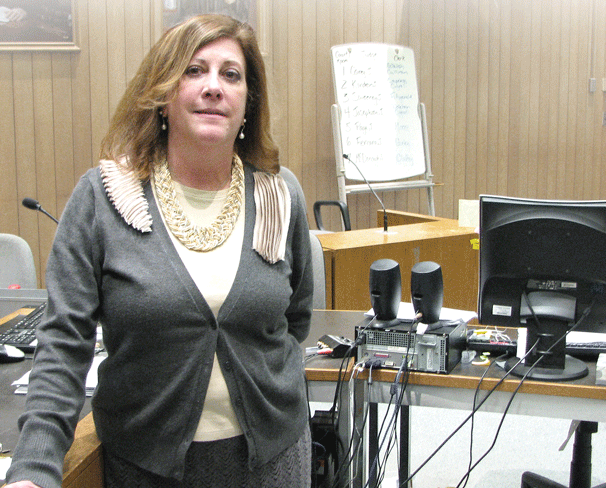
Clerk of Courts Laura Gentile

Clerk of Courts Laura Gentile

For almost two decades, Laura Gentile has been exposed to plenty of things she’d rather not think about — violent crimes, sex offenders, families torn apart, and much more. As a parent, it affects her.
“My son says I worry about him too much,” she told BusinessWest, “but it’s because I’ve seen so much over the years.”
That boy was just a toddler when Gentile left her position at her family’s law firm 18 years ago to become an assistant clerk in Hampden County Superior Court.
“That’s how I got my start in the field of law,” said Gentile, who earned her law degree at Western New England College. “I initially worked with my father and brother at a law firm called Santaniello, Posnik & Basile. It was great fun, but then the opportunity came up to be an assistant clerk. My son was 2 at the time, and it provided more regular hours. So I decided, even though I loved practicing law, that it was in his best interest that I take more stable hours.”
And 16 years later, she decided it was time for another change — this one rather unexpected — when Clerk of Courts Brian Lees decided in early 2012 not to run for that position again. Gentile believed her many years in that office qualified her for the clerk’s job, and those sentiments were supported by collegues who encouraged her to run.
She did, and eventually prevailed in a crowded Democratic primary before running unopposed in the November election. All through that often-contentious campaign, she said that experience — not just in managing an office, which some of her opponents had, but as a lawyer — was the key to handling the position effectively.
And 13 months into her tenure, she believes she’s more than validated that argument.
She said her experience both as a lawyer and in the clerk’s office has helped her make some needed changes — in matters such as cross-training personnel, for example — and with some issues that some might consider out of the clerk’s purview.
At the top of that list has been her recent, and persistent, efforts to convince the Legislature, the press, and anyone else who will listen that the 35-year-old Hampden County Hall of Justice must be replaced with a more modern, better-located facility.
In reference to the former, she said many courtrooms are too small and the technology being used is old and obsolete. As for the latter, she said the probable construction of a $1 billion casino across State Street from the Hall of Justice is a nightmare in the making.
“MGM is going to be built,” she said, adding that, between the probable highway reconstruction and then constant casino traffic, she worries about accessibility issues for the courthouse. “I think it will be very problematic. I’m not sure the powers that be have focused on that enough, to find out what our impact will be. Before they start to build the casino, I think somebody needs to look at that. That’s my first concern.”
For this issue’s focus on law, BusinessWest sits down with Gentile to talk about the expansive responsibilities of her office, the physical limitations of the courthouse, and the kinds of cases she has dealt with closely over the years — and have caused her so much parental anxiety.

Face of the Court

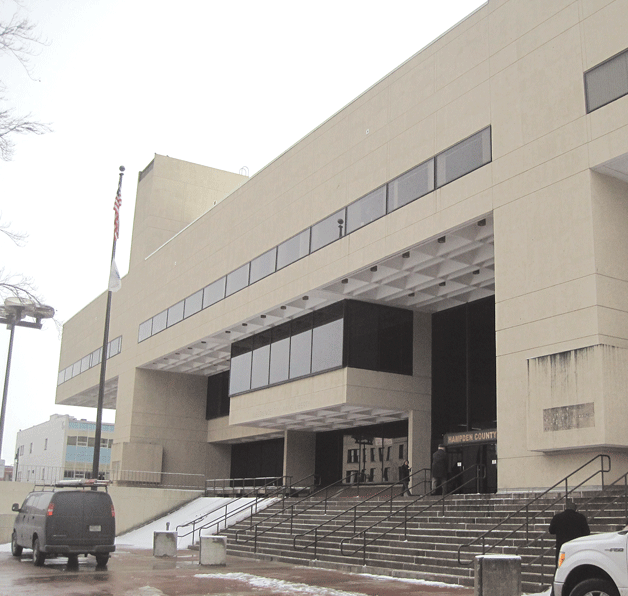
Hampden County Hall of Justice

Laura Gentile has been busy persuading legislators and others that the 35-year-old Hampden County Hall of Justice would be seriously and negatively impacted by a Springfield casino, and should be replaced.

Looking back over her first year at the helm of the clerk’s office, Gentile said her transition has been a relatively smooth, easy one, and for those reasons she mentioned earlier.
“I knew what the job entailed,” she explained. “What has been challenging for me, but in a good way, an exciting way, is dealing with the administrative, managerial aspect of it. And I know that my experience as an assistant clerk for 16 years provided me with the skills to effectively manage this office.”
It’s an office that those with law degrees understand and greatly respect, but one that most not in that profession need a primer on. So Gentile offered one.
“The Superior Court clerk’s office in Springfield is, essentially, where every case, criminal and civil, begins and ends,” she explained. “If it’s a civil case, it begins with the lawyer filing a complaint and us taking it over the counter. We keep all the records, anything that goes into the court or comes out of the court. On the criminal side, it begins with an indictment; we take the indictments and we process them. Again, we start a file, and anything that goes into court or out of court comes through us.
“Once the case goes to trial, we are responsible for assisting the court, and we’re the conduit between the court and the jury for many things,” she continued. “We keep all exhibits, all evidence; we’re responsible for storing it. When the case is concluded, whether it’s civil or criminal, we close it up. And we’re always a conduit between the lawyers and the court. We’re the face of the court, basically.”
When she moved into the clerk’s office, she recognized some things that needed changing.
“One thing I set about doing was cross-training employees,” she said, noting that this initiative was launched out of sheer necessity — there are currently nine assistant clerks doing the work once handled by 12.
“Over the years, I realized that work came to a halt if someone was on vacation or out sick because only that person did that particular job,” she explained. I didn’t think that was an effective or efficient way to run an office, so one of the first things I did was cross-train employees, so now the work continues to flow.”
Another problem, she explained, was that bail monies were not always accounted for when transferred between courts. “For instance, bail that should be in Superior Court was still in the outlying district court, and there was no procedure in place to make sure that bail got transferred to this office. So I completely revamped that procedure.
“Again, it’s the knowledge I had being in this office for many years that gave me the skills to do all those things and make these different changes,” she added. “I hardly consider myself any kind of bookkeeper or anything like that, but just knowing the procedure and the legal aspect of how bail goes from one court to another made it very easy for me to come up with a procedure and policy to follow to make sure we’re getting the bail money that needs to be transferred here.”
Those are just two examples, Gentile said, in a job that offers something new to tackle every day.
“That’s what I like about the job. This morning, walking in, someone stopped me and said, ‘I can’t believe the way the office is being run.’ Everyone is so happy and more efficient, and it makes me feel good to hear that. From the feedback I’m getting, the people who work here seem much happier. My philosophy is, if you’re happy at work, you’re going to come to work and do a good job. And I think that’s what’s happening here.”

Assisting the Assistants
Gentile said she can still do the work of an assistant clerk, in a pinch, but they have their own broad set of responsibilities. There are eight courtrooms in Superior Court — six criminal and two civil — and a judge is assigned to each courtroom. “I assign an assistant clerk to each judge for the month, or a session; a session begins the first Monday of the month. Each clerk is responsible for his or her session.”
Assistant clerks prepare cases for trial, work with the judge to select and empanel the jury, and handle all the evidence and exhibits — and the paperwork attendant to all these roles.
These days, “I spend most of my time in the office because there are duties I have to attend to every day for the managerial, administrative aspect of the job. In the courtroom, you’re primarily dealing with the judge,” Gentile said, noting that the assistant clerk is responsible for bringing motions for the judge to rule on, then getting the responses back to the office so they can be processed.
Cases run the gamut — including serious crimes such as murder, home invasion, assault and battery, and robberies.
“We deal with life felonies all the time,” she said, noting that last year’s murder trial involving a Domino’s pizza driver wound up in both criminal and civil court, when the victim’s family sued the pizza chain for wrongful death. “In that case, the criminal case is the underlying basis for bringing the civil action against Domino’s; in their contention, Domino’s was negligent in carrying out their responsibility to their employee.”
Civil cases can include some serious matters as well, including ‘Mary Moe’ cases involving minor girls seeking the permission of the court to have an abortion. “We talk them through that procedure,” Gentile said.
Superior Court also processes SDPSs, or sexually dangerous person cases, which deal with the question of releasing someone convicted of a sexual crime back into the community, and a judge must determine whether that person is still a public risk. “Even though it feels like a criminal case, and it’s sort of administered as a criminal case, technically it’s a civil case,” Gentile explained.
Often in such cases, the district attorney’s office is the plaintiff, trying to block an impending release, but many times, the convicted individual initiates the process. “They’re entitled to ask for a review periodically to have their case presented, and they hope to have some new information that would allow them to be released.”

A Gamble for the Court?

Gentile has recently added a new line to her job description — that of being a vocal advocate for building a new Hampden County Hall of Justice. She’s working with state Sen. Gale Candaras and other legislators to bring courthouse issues to the state’s attention, and has won considerable attention in the local press.
“There are some really compelling issues that I feel warrant us getting a new courthouse,” she told BusinessWest. “I know people say, ‘this courthouse is only 30 years old; why do we need a new courthouse?’ What people don’t understand is, the money is there for new courthouses; it’s just a matter of, is it going to be built someplace where they need it more than we do, or built someplace where it’s not needed as much as we do? That’s the reason for advocacy — not because, ‘hey, we need a newer, prettier building.’”
To Gentile, the question comes down to MGM’s plans to build a casino across the street. If the plan is approved by the state’s Gaming Commission — and most observers believe it will — there will be traffic problems during a construction process expected to take at least two years, and then more when the resort casino opens.
But it’s not her only issue. Space has become a problem as well; five of the six criminal courtrooms aren’t big enough by modern standards, a dearth of elevators leads to waits of 15 to 20 minutes in the morning, and security isn’t state of the art.
“Our court officers are not allowed to carry guns or weapons, and there’s really no mechanism in place, no technology in place, to be able to alert other officers when there’s a problem. They have to rely on these antiquated radios,” she said.
“And there’s no technology in the building as far as wi-fi and things of that nature. In the courtroom, we still have a DVD player with knobs on it,” she said, adding that modern courthouses rely much more on cutting-edge, wireless technology, rather than grappling with cords and plugs.
In addition, “the lockup facility is way too small, and that segues into constitutional issues; there’s really no place a lawyer can have a private conversation with his client,” she said, while space to store evidence is tight as well.
But the casino remains her number-one concern. “I like it here, but I just don’t think anyone has taken a look at what the impact of the casino is going to be if we remain in this location.”

Great Escapes

Modern courtrooms are designed for safety for a reason, Gentile said, noting that it’s a running joke among her colleagues that she always seemed to be the clerk when a defendant totally lost his composure.
“I’ve been in the courtroom on a number of those occasions when a defendant was found guilty,” she said. “Two cases come to mind immediately, both murder cases, where the defendant flipped out. Both times it was because he heard his mother crying, and that was the trigger, and he went crazy.
“I remember one case where it took something like three court officers and two police officers that had been in the courtroom because they were involved in the case, plus the defendant’s lawyer, to subdue this man, who was a really big guy,” she recalled. “He was literally right next to me, and I had nowhere to go; I was basically trapped, unless I wanted to jump over the desk — and I would have, had he gotten any closer to me.
“In these situations,” she continued, “you need to know how to act quickly and calmly, and you have to know how to assist the judge and how to assist the jurors, who are very, very frightened. You need to look out for the court staff and make sure that you can get help.”
She praised her courthouse’s officers as being particularly adept at analyzing situations and recognizing when additional security needs to be on hand.
“We don’t have nearly as many melees as we would if we didn’t have such good court officers,” she said. “But as an assistant clerk, your responsibility is to the entire courtroom.”
She doesn’t get the same opportunities these days, of being in the courtroom and making sure proceedings run smoothly and justice is done — a role that extends from responding to those occasional melees to informing the judge if a juror is falling asleep.
“The clerk is a conduit between the judge and everyone else in the courtroom,” Gentile said. “Everything goes through the clerk.”
And now, the whole office goes through her. It’s a challenge she courts every day.

Joseph Bednar can be reached at [email protected]

Health Care Sections
Casino Buzz Puts Spotlight on Gambling Addiction

GambleAddictArtThe casino age may be underway in Massachusetts, causing some to worry that large, flashy gaming resorts will introduce the scourge of gambling addiction in the Bay State.
Too late, says Dr. Baxter Chandler. Compulsive gambling is already a widespread problem.
“Massachusetts has one of the most successful lotteries in the world, and we have keno, and two large casinos within easy driving distance,” said Chandler, director of Behavioral Health Services at Holyoke Medical Center (HMC). “So problem gambling is not a new problem, but it is more recognized now as an issue.
“It’s a really tricky thing,” he continued. “A lot of people out there do scratch tickets or keno, and they don’t have the finances to do that. It’s easy to say, ‘Uncle John? All he does is scratch tickets.’ But if Uncle John is spending $400 a week on scratch tickets and only gets $600 in Social Security, then it’s a problem.”
But with the prospect of a casino resort in Springfield’s South End — the state’s Gaming Commission will choose one Western Mass. site for a casino early in 2014, and the $800 million MGM Springfield proposal is the only one on the table after voters in West Springfield and Palmer rejected casino bids — the issue of gambling addiction is certainly taking on a higher profile.
It’s timely, then, that the entire outpatient behavioral-health staffs of HMC and one of its affiliates, River Valley Counseling Center, recently earned the MA-PGS (Massachusetts Problem Gambling Specialist) certificate administered by the Mass. Council on Compulsive Gambling (MCCG).

Dr. Baxter Chandler

Dr. Baxter Chandler says health professionals typically don’t consider gambling a vice in itself, but are concerned about its effect on people’s lives when it spins out of control.

“Sometimes we get calls from health professionals asking us what we can do,” said Sasha Russell, program specialist in communications for the MCCG. “We can offer training to get them certified.”
The agency has also ramped up its efforts to get more behavioral-health professionals into the certificate program through a ‘training institute’ being set up in cities around the Bay State; Springfield will host one of those eight-week programs in April. “That will be done to get more people in Western Mass. on track toward getting the Massachusetts Problem Gambling special certificate.”
At the heart of the council’s efforts is the reality that, although there are some similarities between compulsive gambling and other addictions, such as alcoholism and substance abuse, problem gamblers have their own set of problems.
“Walking into this, a lot of us thought we could apply everything we know about addictions to problem gambling — how different can it be?” Chandler said. “And there are a lot of similarities, that’s true, but there are things that can set it apart.”
That’s why Holyoke Medical Center and River Valley Counseling have been working to expand and enhance their addiction-treatment services to cater specifically to this clientele.
“If someone comes in who’s never had a problem with alcohol or drugs,” Chandler said, “and you put them into a group where they’re the only gambler and everyone else is using substances, it can work, but a lot of times they don’t feel connected — they think, ‘I don’t do cocaine; I do keno.’ A lot of times, relatability is an issue. One thing we’re working hard to do is meeting people where they’re at.”

Risk and Reward
Still, Chandler and Russell were quick to clarify that gambling addiction is no mere loss of control, but has physiological similarities to substance abuse.
“Many times, people, depending on their background, feel like it’s a control thing; they think they just don’t know how to control themselves,” Russell said. “But people don’t realize the effect that gambling has. They don’t realize that, when you gamble, it releases the same dopamine in the brain as if you did drugs — as if you did cocaine.”
Although a gambler isn’t actually putting a chemical into his body, Chandler added, “according to the brain studies they’ve done on compulsive gamblers, similar areas of the brain light up, as if someone is using a substance.”
Science author and blogger Steven Kotler breaks down some of this research in an article titled “High as Hell: the Evolution of Our Gambling Addiction.”
“Scientists long believed that dopamine was pure pleasure,” he notes. “It was thought of as the reward portion of the body’s need/reward system. You wanted something fundamental to survival — like a next meal or a sexual partner — and when you got that thing, the brain released a little dopamine, so the next time you were faced with a similar situation (like being hungry), you would remember that feeding yourself felt damn good.”
But Kotler cites the work of several scientists, including Greg Berns, associate professor of Psychiatry and Behavioral Sciences at Emory University, suggesting that dopamine is actually released not when one receives the desired reward, but when one takes the risk to do the thing that leads to the reward.
In other words, a gambler doesn’t have to win at slots to get the dopamine ‘hit’; simply pulling the lever will do that. “And associating risk with reward is a gambler’s bread and butter,” Kotler writes.
The initial consequences of compulsive gambling are different than substance abuse, in that they’re largely financial, Chandler said. But physical and psychological effects tend to follow — as well as a proclivity toward other addictions.
“Problem gamblers are prone to having suicidal thoughts; their suicide rates are higher,” he explained. “If they feel trapped, that can trigger a higher rate of substance abuse. We fully expect to be treating a lot of people with dual diagnoses here, people with depression, anxiety, co-morbid anxiety disorders, all associated with problem gambling.
“For some people, once they get their problem gambling under control, maybe the other symptoms go away. For others, there may be biological depression. Either way, we focus on treating it all at once, not compartmentalizing it.”
According to the MCCG, between 2% and 3% of the population has experienced ‘disordered gambling’ in their lifetimes, a loose umbrella term for gambling behaviors that disrupt an individual’s family, social, or vocational life in some way. By that estimation, up to 185,000 Massachusetts residents have likely engaged in disordered gambling at some point.
“When they come in for treatment, you’re asking them to abstain from gambling. For most people, it’s not about cutting back, but ceasing gambling, similar to someone coming in for alcohol,” Chandler said. “We support groups like Gamblers Anonymous and encourage a lot of people to check that out.”
HMC offers a three-week partial-hospitalization program for more serious cases, typically those involving dual diagnoses, such as severe depression or other addictions. Chandler said the hospital works closely with River Valley to match each patient with the appropriate type of care, from group counseling to individualized work.
“For many years, gambling has been sort of lumped in with all addiction,” Chandler said. “When someone comes in for treatment, we’ve always asked, ‘do you have an issue with gambling?’ Now we’re paying even more attention, making sure we’re asking the right questions.”

Upping the Ante
Gambling addiction accounts for some $7 billion a year in added healthcare and criminal-justice costs, according to the National Council on Problem Gambling, and a significant portion of that has nothing to do with casinos. But the issue certainly has taken on a higher profile in Massachusetts over the past two years.
“Casino gambling has been legalized, so now it’s much more in the forefront in Western Mass.,” Chandler said of his dealings with the MCCG. “For many years, we had contact with them. But now that Western Mass. is looking to get a casino, everyone is sort of scrambling to respond to that.”
Russell described the council as largely a referral service. “When people call our helpline, we try to connect them to an outpatient service in their area or a Gamblers Anonymous meeting. We have packets of information we send to support them and get them on a path to recovery.”
The MCCG also hosts an annual weekend retreat for people in recovery, offering various workshops on how to stay on track. And, of course, it has ramped up efforts to bring behavioral-health professionals into its certificate program.
“One thing I’m really proud of is, prior to us doing this training, there were probably three or four people with this certificate in Western Mass.,” Chandler said. “We were able to train nearly 25 people.”
He was quick to note that gambling in itself is not necessarily a vice. “One thing I respect about the Mass. Council on Compulsive Gambling is that they’re neutral on the issue of gambling itself. And as treatment providers, we’re not pro or against gambling, but we’re concerned with the impact it has on people’s lives.
“The same is true of alcohol,” he continued. “Alcohol by itself is not an evil thing. But if it impairs a person’s life, there are consequences. We can say the same about food, exercise, anything.”
Russell agreed. “It’s just like with any sort of drug or alcohol,” she said. “Some people can take a drug or drink alcohol and be fine and cut themselves off. Same thing with gambling — some people do it just to be social, and it’s not a cause for concern.”
One challenge is for people to recognize they have a problem, Chandler said, and the first signs are always the financial repercussions.
“If someone has to borrow money or obtain money in a way that gets them into trouble, just to cover gambling debts or continue gambling, that’s a big sign,” he told BusinessWest. “If people lie about their gambling, where they were, or how much they won or lost, withholding that information from people, that’s a sign, too. In a lot of cases, other people recognize the problem long before the individual does.”
Theoretically, Western Mass. could see a rise in problem gambling from locals who join the ranks of casino addicts — typically, 10% of a casino’s patrons account for 90% of its revenue — but Russell stressed that the lure of gambling is as close as the nearest convenience store, and has been for decades.
“A lot of people don’t think about it because gambling is such a big part of society in general,” she said. “It’s even in the everyday vernacular — like when people say, ‘wanna make a bet?’ So they don’t realize how many people can’t control themselves. They just don’t understand it.”

Joseph Bednar can be reached at [email protected]

Court Dockets Departments

The following is a compilation of recent lawsuits involving area businesses and organizations. These are strictly allegations that have yet to be proven in a court of law. Readers are advised to contact the parties listed, or the court, for more information concerning the individual claims.

CHICOPEE DISTRICT COURT
Arnold’s & Eddies Food Inc. v. West Street Bar & Grill Inc. d/b/a Maximum Capacity
Allegation: Breach of contract and monies owed: $7,054
Filed: 12/4/13

Gwendolyn A. Corden v. Family Dollar Store
Allegation: Negligent property maintenance causing injury: $3,640
Filed: 11/15/13

Ondrick Natural Earth, LLC v. Connecticut Valley Landscaping Inc. and Steve E. Bercume
Allegation: Breach of contract and monies owed: $5,516.49
Filed: 11/18/13

HAMPDEN SUPERIOR COURT
American Express v. Brent J. Bertelli and Bertelli Holdings
Allegation: Breach of contract: $39,000
Filed: 11/26/13

HAMPSHIRE SUPERIOR COURT
Blake Group Holdings Inc. d/b/a Blake Equipment v. Richard A. Baker d/b/a Geosun Design
Allegation: Non-payment of goods sold and delivered: $41,497.13
Filed: 12/10/13

NORTHAMPTON DISTRICT COURT
Donald F. Kelloway Jr. v. Core Security Technologies
Allegation: Suit on previous judgment: $3,337.24
Filed: 10/17/13

John P. O’Rourke v. The Hampshire Council of Governments
Allegation: Failure to pay wages: $3,859.24
Filed: 11/5/13

Sesac Inc. v. Cutting Edge Broadcasting Inc. d/b/a WEIB-FM 106.3
Allegation: Breach of performance license agreement: $16,867.64
Filed: 10/7/13

SPRINGFIELD DISTRICT COURT
Board of Trustees Wentworth Condominium Trust v. J.W.O. Realty Inc. and Tallage, IMR
Allegation: Unpaid condominium common-area charges: $4,669.50
Filed: 12/2/13

East Baking Co. Inc. v. Papa’s Bread & Snack Co.
Allegation: Non-payment of goods sold and delivered: $33,880.50
Filed: 12/4/13

Goodless Electric Co. Inc. v. Target Restoration Inc.
Allegation: Non-payment for electrical goods and services rendered: $8,852.90
Filed: 11/22/13

Jaya Lodgings, LLC d/b/a Candlewood Suites v. Energy Smart Resources Inc.
Allegation: Breach of contract, misrepresentation, and monies owed: $57,600
Filed: 12/2/13

Skyworks, LLC v. Optimum Building and Inspection Services Inc.
Allegation: Balance remaining for rental equipment provided: $4,928.50
Filed: 11/20/13

Sections Technology
Jeremiah Beaudry Colors in a Successful Story of Entrepreneurship

By MICHAEL REARDON

Jeremiah Beaudry

Jeremiah Beaudry took his youthful passion for computer repair and turned it into a successful business.

By the time Jeremiah Beaudry was 10 years old, he was building computers.
By the time he was 14, he was running his uncle’s computer repair shop, and by the time he turned 15, he had started his own computer business.
Call him a prodigy. Call him a wunderkind. The bottom line is, the owner of Bloo Solutions in Chicopee knew exactly what he wanted to do in life, and was very good at it from a young age.
“My uncle, Len Beaudry, had his own computer shop in Leominster called Computer HMO,” Beaudry told BusinessWest. “He would drop off broken computers at our house, and my Dad would put them in the basement, and I would go down there and play with them. They were like Lego sets to me.”
When he was 13, Beaudry worked summers repairing computers in his uncle’s shop. The next summer, he ran the business while Len was away. Beaudry mostly taught himself about computers, as he scoured the Internet for instructional videos and any other resources he could find.
“I broke things constantly,” he said. “I’d spend days figuring out what I did wrong. I learned by getting my hands on it and why I did what I did.”
At 15, he opened his business, initially called CBOS Computers, out of his basement at home.
“It was a silly name; it stood for Can’t Beat Our Service,” Beaudry said with a chuckle.
Beaudry, now 30, recently sat in his small computer shop on Grattan Street in Chicopee, surrounded by computers in various stages of assembly and repair, to talk about his business and his formula for success. He was relaxed in blue jeans and a T-shirt, and takes a genuine interest in other people, asking a visitor how he got started in his business.
The choice of the name Bloo Solutions, with the unconventional spelling of the word ‘blue,’ was simple. Beaudry loves the color and designed many websites using different variations of blue. When he went to register the domain name, he found another company called Blue Solutions existed, so he simply changed the spelling.
The venture has carved out a niche as a resource for small businesses throughout the region seeking information-technology solutions. Beaudry provides a wide range of services, including website design, repairs and troubleshooting, virus removal, network and security setup, and more.
He has also offered advice to clients on the right computer or entertainment center to buy, and even on how best to market their products or services.
“What I like most is solving problems for people,” Beaudry explained. “I like to know I’m doing something to make a positive difference in somebody’s business.”

Web of Intrigue
A native of South Hadley, Beaudry graduated from South Hadley High School in 2001. Before earning that diploma, though, he was earning a salary with his own business, one focused mostly on repairing computers owned by clients of his father, an independent financial manager.
“I learned a lot … they were patient with me,” he said, adding that having a father who worked for himself had a big influence on him. “Having flexibility is more important than having stability sometimes.”
In the beginning, Beaudry would make cold calls to area business owners trying to  grow his client roster. In 1999, he scored his first big website-design job when he was hired by Tekoa Country Club in Westfield.
“I got a $4,000 contract to do their website,” he said. “It was unbelievable to me. Since then, I’ve never advertised. Business has been all word of mouth. It’s grown organically.”
Beaudry took a break from the business to attend Bentley College in Waltham. While at school, he worked at a local Radio Shack, which he hated. Indeed, that experience only reinforced his resolve to work for himself and enjoy both the freedom and responsibilities that come with being an entrepreneur.
“I was working someone else’s schedule,” Beaudry said of his time at Radio Shack. “It was the same thing every day. I wasn’t helping anyone; I was just selling things. I probably lasted there only four to six months.”
Bentley College didn’t take either. Beaudry found a client in Hingham, a retail store called Beauty and Main, that was expanding and needed help with updating its computer system to accommodate the move.
“They expanded from one to eight stores, and my job was to install software in all of their stores all over New England,” Beaudry said. “They were 80% of my revenue. I had a couple of people working for me at the time, helping with that project.”
That’s when Beaudry decided to leave Bentley behind and move back to South Hadley. He worked out of his house for 10 years before getting married and starting a family. Beaudry, his wife Chelsea, and son Daxton, who was born in June, live just over a mile away from his shop.
“Having a home office did the trick for a long time,” he said. “But then you start a family, and the office becomes the baby’s room. Plus, I needed a place to meet clients or where they could drop off their computers.”
Bloo Solutions has been at the Grattan Street location for about three and a half years. Beaudry has one employee, his South Hadley High School friend, Joshua Charland, an IT consultant, and more than 100 clients, about 25 of them steady.
“We try to be a one-stop shop,” Beaudry explained. “We target small businesses. We can be their outsourced IT department; they can come to us with all of their questions.”
Chicopee attorney Robert Lefebvre of Gelinas & Lefebvre has been a client of Bloo Solutions for about 10 years, from the time he met Beaudry through a marketing group. At the time, his four-attorney office needed help replacing equipment and updating its system. Since then, Beaudry has been like the office’s own IT department.
“Jeremiah has provided many services for us,” Lefebvre said. “He’s been phenomenal in helping our practice.”
The services provided by Bloo Solutions to Lefebvre’s law firm have evolved over the years to everything from designing the website to updating equipment; from installing backup systems to online marketing, and more.
“Jeremiah is indispensible,” Lefebvre said. “I’ve referred him to many different clients and businesses, and they’ve gotten the same great results that we have. For what he does, you usually have to hire a larger company that would cost you much more money. He provides a unique service to small companies.”
According to Lefebvre, what really impressed him about Beaudry was his commitment to getting to know how the law firm was run so he could better determine exactly the kind of services it would need.
“He’s reliable,” Lefebvre said. “He would research what other, similar firms are doing on issues involving security, and he would come back with recommendations so he could adequately structure our systems.”
Another Chicopee client, A. Crane Construction, retains Bloo Solutions for several IT projects, including the redesign of the company’s website, social-media marketing, IT solutions, and other work.
“Jeremiah is extremely detail-oriented,” said A.J. Crane, owner of the company. “He’s very serious about his business, which is not a common trait among many young business people. He treats his business like we treat ours. He’s very personable, very respectful.”
If Beaudry doesn’t have the answer, he has other experts he can recommend to do the job, he noted. And he is willing to refer his clients to someone who can help with a problem that is out of his area of expertise.
“He always finds the solution for us, even if it doesn’t make money for him,” Crane said.

Technically Speaking
Beaudry told BusinessWest that he’s diligent about keeping up with the ever-changing high-tech landscape. Computer viruses and other destructive bugs are getting more sophisticated and stealthy, and that keeps him busy educating his clients and installing or updating preventative solutions.
“One of the biggest things we do is to make sure clients’ network and security protocol are consistent so viruses won’t infect their computers,” he said. “It’s important to put protections in place so that, if a virus gets into your system, you won’t have much downtime. Downtime costs money, so we try to minimize it so you’re up and running in hours, not days. Nothing is more vital than having backups to your computer system.”
By providing such solutions, Beaudry has kept his clients from feeling blue — or, in this case, bloo, which has become the color of success.

Court Dockets Departments

The following is a compilation of recent lawsuits involving area businesses and organizations. These are strictly allegations that have yet to be proven in a court of law. Readers are advised to contact the parties listed, or the court, for more information concerning the individual claims.

CHICOPEE DISTRICT COURT
Baystate Elevator Co. v. CDM Properties, LLC
Allegation: Breach of written elevator maintenance agreement: $10,000
Filed: 10/25/13

Mary Lou Sanborn v. Lapinski Electric Inc. and Christopher Lapinski
Allegation: Breach of settlement agreement: $15,000
Filed: 11/7/13

GREENFIELD DISTRICT COURT
Emily Bauer v. ServiceNet Inc. and Micah Matthia
Allegation: Negligent operation of a vehicle causing injury: $24,999
Filed: 11/6/13

Yvette Ramirez v. Holyoke Mall Co., L.P.
Allegation: Negligent maintenance of property causing injury: $3,634.86
Filed: 10/17/13

HAMPDEN SUPERIOR COURT
Jack Clemente v. Gary Martinelli and Martinelli Descenza PC
Allegation: Unfair and deceptive acts in representation as a personal attorney: $700,000
Filed: 10/25/13

Jose Feliciano v. Basketball League of Western MA, Roman Catholic Diocese of Springfield, Holy Name Parish, and Springfield Heat Youth Basketball
Allegation: Negligent hiring, failure to provide adequate security, assault and battery by a coach: $8,440.32
Filed: 10/23/13

Pioneer Valley Hotels Inc. v. Set in Concrete Inc.
Allegation: Breach of contract and negligence: $31,425
Filed: 11/5/13

William Wessig v. Edward Desarkis d/b/a Deluxe Limousine Service
Allegation: Defendant misclassified plaintiff as an independent contractor and failed to pay wages and overtime: $30,000
Filed: 11/8/13

HAMPSHIRE SUPERIOR COURT
Amcor Inc. v. Hi-De Liners Inc.
Allegation: Non-payment of goods sold and delivered: $96,491.28
Filed: 9/4/13

CNH Capital America, LLC v. Scott Hutkowski d/b/a Long Plain Farm
Allegation: Action for redelivery and repossession of certain goods and money damages as a result of default under the terms of a security agreement: $25,847.96
Filed: 9/13/13

HOLYOKE DISTRICT COURT
Inter-Ocean Investments d/b/a Fine Writing, LLC v. Jaishri J. Singh d/b/a ABC Gifts
Allegation: Unpaid credit-card charges: $2,115.79
Filed: 11/8/13

Juan C. Arevalo v. Philip B. Rayder, the Martin-Brower Co., LLC, CJ Transportation, LLC, and Reyes Holding Inc.
Allegation: Negligent operation of a motor vehicle: $13,173.49
Filed: 9/26/13

SPRINGFIELD DISTRICT COURT
Liberty Mutual Insurance Co. v. DB Installation Inc.
Allegation: Balance due on workers’ compensation policy: $6,990.17
Filed: 9/25/13

The Travelers Indemnity Co. v. Thomas Engwer III d/b/a Thomas Engwer Trucking
Allegation: Breach of contract and monies owed: $10,821.00
Filed: 10/16/13

Community Profile Features
Culture, Education Boost Business in Williamstown

Carl and Marilyn Faulkner

Carl and Marilyn Faulkner have survived myriad setbacks in the tourism industry to remain a regional draw.

Carl Faulkner has never played professional baseball.
His name, however, is engraved inside a New York Yankees World Series ring on display in an antique curio cabinet in the great room of the Williams Inn, on the green in the heart of Williamstown.
Faulkner and his wife, Marilyn, have been the inn’s proprietors since 1979, and the ring is just one of many mementos that validate just how respected the the couple is by thousands of tourists who have visited the area, famous thespians who have performed in the Williamstown Theater Festival, and students and alumni of Williams College, located mere yards away.
“I’ve never been to a Yankee game, but for 30 years I knew George Steinbrenner because he used to come for his college reunion. He said he was fed up with Cooperstown and wanted the fans here to be able to see and touch a real ring,” Faulkner said, adding with a sly smile that he believes Steinbrenner added Faulkner’s name to the ring to deter him from selling it.
All who know Carl Faulkner know he would never do such a thing, but the dry humor and easy demeanor are among the many reasons he and Marilyn have attracted so many return guests, both celebs and regular folks, to this small town on Route 2, the famous Mohawk Trail.
Whether for a Williams College reunion or commencement, a play at the famous Williamstown Theater, a visit to the Sterling and Francine Clark Art Institute — known affectionately as ‘the Clark’ — or an exhibit at the Massachusetts Museum of Contemporary Art (MASS MoCA) in nearby North Adams, Williamstown isn’t easy to get to, but legions of alumni, and fans of culture and natural beauty, think the town and its unique attributes are well worth the trip.
In fact, those making the trek from the Mohawk Trail, or the Mass Pike and Route 7 from the south, can currently see economic development in progress on the Williams campus and at the Clark.
James Kolesar, vice president for public affairs at Williams College for the past 29 years, told BusinessWest that a new, three-story Sawyer Library, now under construction, will replace the original, soon-to-be-demolished library, located about 50 yards away, making way for a formal quadrangle. Throw in the massive, three-year, $50 million renovation and expansion project at the Clark, which should be complete by the end of 2014, and there is a firm foundation for economic growth in Williamstown.
“Our academic reputation is a draw, certainly, no question about it,” said Kolesar, noting that Williams stacks up well in stature with Harvard, Yale, Dartmouth, Brown, and archrival Amherst College. “With our 1,000 employees and operating expenditures of more than $190 million, that’s $82 million in capital improvements from us, plus the Clark improvements.”
Williamstown is not without its issues, however. The Great Recession affected businesses here much the same as in other Western Mass. communities, and when Hurricane Irene struck in 2011, a popular mobile-home park was essentially wiped out, further shrinking an already-low inventory of affordable housing.
Meanwhile, the aforementioned new economic development and ongoing roadwork — courtesy of the federal stimulus program — will be positive for the town in the long run, but Faulkner calls the disruptions they cause in the meantime “medicine that has to be swallowed” (more on this later).
But the biggest challenge this town of 7,870 residents (2,000 of whom are Williams College students) faces, according to Town Manager Peter Fohlin, isn’t what one would expect — it’s a lack of land. Specifically, “we don’t have enough developable land for me to respond to inquires I get.”
The issue, he said, isn’t due to infrastructure or the mountainous terrain surrounding the town, but the fact that a collection of successful farms, producing mostly cattle for beef and not available for sale, comprises much of the usable land.
For this month’s Community Profile, BusinessWest ventured to the most northwestern point of the Commonwealth to learn more about the business life of Williamstown and how the community, even with the logistical challenges of its far-flung location and lack of buildable land, is making the most of its educational, cultural, and natural advantages.

Cultural Values
Like Carl Faulkner, Fohlin has his own sense of humor. He proudly states that Williamstown isn’t that remote, but, rather, “centrally located four hours from everywhere.”
Fohlin’s ability to make fun of himself in his municipal position — in which, he says, he’s often dodging verbal bullets — is on display each year for the Fourth of July parade.
“Instead of Peter being in front waving, he’s at the back behind the horses with a shovel and a broom,” said Marilyn Faulkner, laughing. “That’s the kind of guy he is.”
That upbeat attitude will help as Fohlin, the five-member select board, and other departments in town seek to replace its outdated high school and police and fire stations, among other issues. While citizens are “engaged in lively debate over priorities and affordability” when it comes to municipal needs, he said, Williamstown has a lot on its plate for a small community.

James Kolesar

James Kolesar says Williams Colleges provides an excellent educational and cultural anchor for business in Williamstown.

Also on that plate is the fate of those who used to live in the Spruces, a 100-acre planned mobile-home community. Fohlin said the park was a “showcase” when it was built in the 1950s. “It had a ferris wheel, a fountain, and a groundbreaking government structure in which the people in the park voted their own officials and managed their own rules,” a predecessor of the now-common ownership associations in many residential communities.
But the swift floodwaters from Irene severely damaged 160 of its 225 mobile homes; almost 5% of Williamstown’s non-student population was made homeless in a day. Fohlin said the remaining homes will ultimately be moved because they are in a flood plain, and the housing authority is working on a 40- to 60-unit project for those living temporarily with family or friends.
Kolesar said the loss of the park damaged the town’s socioeconomic diversity, which is already lacking for a combination of reasons, among them fewer jobs for young people, which keeps them from returning after high school or college graduation, as well as increasing real-estate costs.
The town does boast a significant percentage of second homeowners, and some, Faulkner said, are faces that might not be familiar, but as CEOs of major corporations or notable alumni, their names certainly are. “It’s such a desirable place to live, and that drives the property values up,” added Kolesar.

Road Well Traveled
The guest ledger at the Williams Inn, especially from Clark visitors, has been truncated for the past three years due to the massive expansion project. The final phase includes construction of a new visitor, exhibition, and conference center, as well as a comprehensive landscape plan for the 140-acre property. During this period, the Stone Hill Center on campus is housing some of the more famous works, but several others have been loaned out to other galleries across the nation for the duration of construction.
“It makes me cry,” Carl said, feigning the wipe of a tear from his cheek. “We are usually busy for lunch, but it’s been much less so over the past couple years, and with this most recent two-week closure, we had almost no one.”
But the Faulkners are no strangers to setbacks; it’s just part of the tourism industry. Hoteliers all their lives in New England, they suffered through the 1970s gas shortage, and 9-11 slowed all tourism in the U.S., but the tightening of the American and Canadian borders by Homeland Security has caused problems with bus tours, he said. Canadian bus-tour companies now encourage Americans to fly to Canada, skipping American border-security checks and, as a result, bypassing the Berkshires region, Williamstown businesses, and the Williams Inn.
Amid the recent Great Recession, visitorship was also down, and then the federal stimulus to create jobs offered many towns funds to improve roadways, which tore up Main Street and the green in front of the inn for almost two years. When Irene’s rains took out the Spruces, the Mohawk Trail — the most scenic route into town — was also massively damaged.
But the innkeepers remain upbeat, replacing those missing customers with tourists from Europe and Australia, and are focusing on the region’s residents with seasonal events like the German Oktoberfest they recently staged for hundreds of attendees over a two-week period. Next up is a month and a half of holiday programming, which has always proven popular.

Good Company
Fohlin and Kolesar both say Williamstown’s selling points reflect the American Dream — a town that is safe, has an excellent educational system (the Mt. Greylock Regional School District), and little traffic in the real sense of the word.
Certainly, Williams College remains one of the main draws in town, and Kolesar sees the institution as the main anchor of business in the Williamstown area — economically, culturally, and socially.
Yes, prospective students who appreciate city life might see four years in this remote area of the Northern Berkshires as a deal breaker. “But, for some students, it’s a plus,” said Kolesar. “By and large, students who end up coming here end up falling in love with the area, not just the college.”
Faulkner agrees. “The college is like having a good uncle in town,” he added. “And we do have a strong feeling that better days are ahead.”

Elizabeth Taras can be reached at [email protected]

Commercial Real Estate Sections
Developer Edwards Says Springfield Is Poised for Rebirth

Harrison Place

Glenn Edwards wants to attract UMass to the Harrison Place block by touting a ‘campus’ of services students might need.

It’s no exaggeration to say that Glenn Edwards is bullish on Springfield.
“I love Springfield,” the real-estate developer told BusinessWest from his New York office. “My friends call it Glennfield because I talk about it so much — how beautiful my buildings are and how great the city is, with its museums and symphony and everything else.”
The buildings he refers to comprise the Main Street block between Harrison Avenue and Falcon Drive, including Harrison Place, the Johnson’s Bookstore Building, the Northwestern Mutual Building, and several other properties, which he acquired between 2005 and 2007.
That was just before the Great Recession struck, but Edwards more than weathered that storm, reporting more lease activity in the block over the past year than he’s experienced in a long time — at a time when Springfield’s downtown is on the rise, buoyed not just by a probable $800 million casino development, but plenty of other commercial activity, and possibly plans for a UMass satellite campus.
“For me, it’s a freak of nature that it’s not successful on its own because of its location,” Edwards said of Springfield’s accessibility to Boston, New York, Hartford, and Albany. “Yes, it’s had hardships downtown, but so did Harlem, Tribeca, Brooklyn, the Back Bay, the Fens — so many places can identify.”
But Springfield has plenty going for it, Edwards said, and it’s difficult not to put the casino — which MGM Resorts International has proposed to build in the South End of the city — at the top of that list, especially now that voters in West Springfield and, shockingly, Palmer have rejected casino projects in their communities. That leaves Springfield with the only proposal standing in Western Mass. mere months before the state’s Gaming Commission makes its decisions on where to issue licenses for the gaming palaces.
“How can someone turn down a billion-dollar venture?” Edwards said of the stunning defeat of Mohegan Sun’s casino proposal for Palmer. “But I was telling everyone from day one that Springfield was the logical selection. The city is in such need of this investment.”
He compared the city’s central business district to an ocean where a whale — MGM — might splash down, raising all boats. With MGM buying up properties and business tenants facing lease expirations, Edwards hopes other landlords in Springfield get the benefit of their relocations, rather than, say, Longmeadow or Northampton.
“If we take 200,000 square feet of retail and office out of the market, it immediately changes the demand equation for space in the city, and that is favorable, no matter what MGM does,” he explained. “If MGM never builds a casino but takes 200,000 to 300,000 square feet out of the market, the market would benefit. There’s an oversupply of space right now because the population hasn’t been growing in Springfield for 30 years.”
His vision is for other property owners to absorb the displaced tenants and use the influx of capital to further improve their properties, creating more demand to do business downtown. He has already been busy making improvements to his Main Street buildings, but his sense of optimism certainly needs no polishing up.
“The only thing that could get me really shook up is if MGM is not selected by the Gaming Commission — and that’s certainly not guaranteed; there are no guarantees in life,” he said. “Other than that, my outlook is very, very positive.”

Schools of Thought

Edwards says he has long been optimistic about Springfield, well before MGM was a factor. “Over the last year, we’ve had more activity — renewals of major tenants, new prospects looking, and new leases signed — than in any other year. And this is before the demand changes with MGM taking 14 acres and all the tenants to be displaced.”
He says companies are starting to look to Springfield for its reasonable real-estate costs, compared to other cities, and noticing the improvements being made by city officials in the business improvement district, which include everything from better lighting to an increased police presence. “The streets are much safer because of what the BID and Mayor Sarno have done, and all those things are laying the groundwork for a UMass or an MGM to look at Springfield seriously and say, ‘we want to be a part of this.’”
UMass? Quite possibly. Edwards was referring to the state university system’s recent investigation into whether Springfield might one day house a satellite campus.
“We applied for the UMass location,” he told BusinessWest. “When we did, what we said was, ‘we have a bank, we have a Fedex, a sports bar, a convenience store, a coffee shop, we’ll have a sandwich shop soon.”
That eatery will replace a B’Shara’s restaurant that recently closed in the Market Place alley behind the row of Main Street buildings. “We’ve actually turned down a few prospects; we want someone who has a good vision for it. We’re not going to take the first person; we’ll wait. We turned down startups that didn’t have the capital or the knowhow.”
In the upper floors of his buildings, he added, are tenants ranging from insurance and financial-services firms to a chiropractor and a dental office. “We are like a little city by itself. We’re trying to get UMass to embrace the downtown campus, so we’re promoting the Market Place where the street is closed off. It’s immaculate and safe, and cameras and plantings from the BID have changed the whole feel of that.”
Edwards said UMass responded positively to his properties and mix of tenants, but the most important goal is simply for the university to locate somewhere downtown.
“It’s not in our control. We hope and pray they follow through and move downtown; that’s the primary goal, that we end up with UMass taking up to 50,000 square feet downtown, whether they do that in my building or in two or three buildings. That would be an ideal situation for the city, to have all those students and faculty and visitors walking around the city from building to building. We’ll take any piece of that, or no piece, but it’s just so important to keep building on this Knowledge Corridor as one component to whatever else is going on downtown, from Union Station to the Paramount to MGM and sports and concerts. We hope it comes to fruition.”
Edwards has experienced some setbacks, like when the Dennis Group, a major tenant in Harrison Place, moved out in 2009 and relocated to the nearby Fuller Block. “That was the only major loss we had, and we didn’t lose them to going out of business or relocating out of Springfield. We just couldn’t supply them with enough space.”
And he said he wanted Cambridge College, which moved into Tower Square earlier this year, to locate in one of his buildings. But he also believes that success for any downtown landlord is a positive for all property owners, because it helps build overall momentum.
“I want everyone to do well downtown. If they do well, we’re going to do well,” he told BusinessWest. “We thought we had a great location for Cambridge College. But from a psychological standpoint, I’m just thrilled that they have a campus downtown. They didn’t select me, but life goes on. I hope that UMass comes downtown, that Union Station is filled; these are all very favorable things.
“Really, what it comes down to is, people want to go to a place where something is going on; they want their customers to come to a place where something is going on,” he continued. “And Springfield has something going on right now. If I was the only one getting tenants, and no one else was getting any tenants, eventually all my tenants would leave. I can’t do this alone. Kudos to the mayor, the City Council, all the people who are working very hard to make this happen.”

Looking Up
Meanwhile, Edwards said he’s poured hundreds of thousands of dollars into his buildings, often in ways that aren’t immediately noticeable, from elevator improvements to security cameras to high-tech wiring. “Now we’ll be spending on cosmetic things, to attract new tenants and enhance the experience of existing tenants. And I’m just one landlord. We’re all going to do this.”
It has often been a challenge to draw tenants to a downtown characterized by a shrinking population and too many commercial vacancies, but the tide might be turning; out of 260,000 square feet in Edwards’ Springfield properties, only 75,000 remain untenanted, and he’s currently negotiating over 30,000 of it.
He laughed when he mentioned his business partner, who’s 89 years old. “It’s hard to get him excited, but he’s so excited about Springfield. He calls me every day, asking, ‘what’s happening today?’ There is an excitement around this city you wouldn’t believe.”

Joseph Bednar can be reached at [email protected]

Law Sections
Modern Technology Results in a Number of Novel Legal Issues

By KATHERINE McCARTHY
There is no question that communication has become more convenient and accessible due to advancements in technology. Computers, mobile devices, and other types of electronics play a significant role in much of our daily lives. But the everyday use of such modern technology has resulted in many complex and novel legal issues.
This article will highlight the particular issues the use of electronics presents in family-law cases, and what every spouse anticipating or involved in a divorce proceeding should know.

Electronic Evidence
Technology has changed the face of traditional evidence. Common types of electronic evidence attorneys routinely come across in their practice include information obtained from social-media sites (Facebook, Twitter, MySpace, LinkedIn, YouTube), global positioning system (GPS) tracking, text messaging, e-mail, blogging, files stored on a computer, and websites.
These types of electronic evidence are increasingly being introduced into family-law cases. For example, in the context of a highly contested divorce case, a family-law attorney is aware that a wealth of relevant information may be gleaned from the opposing party’s public Facebook or other social-media page. Too often, spouses do not realize the implications of posting comments and pictures on social-media sites. A spouse could easily damage his or her credibility in a divorce proceeding by posting questionable content on social media.
In a divorce case, custody is often an issue that is front and center. If, for example, a parent appears in pictures or makes comments on Facebook that suggest overindulgence in alcohol or other substances during his or her time with the parties’ child, this could negatively impact that parent’s request for custody. More generally, it is important to recognize that anything published on a social-networking site can resurface in litigation, and can have a negative impact on the parent or spouse’s credibility before the court.
Deleting a particular comment, message, or picture from a social-media site may not be enough. It is, perhaps, not surprising that technology exists that can resurrect information a person mistakenly believed had been successfully deleted from a website or computer hard drive. Similarly, changing one’s Facebook security settings to private is not enough because the user’s information could show up on the Facebook pages of those on their ‘friend’ list who have not made their pages private. Social-media account records can also be subpoenaed for use in a court proceeding.
Additionally, individuals should be aware that posting derogatory or negative comments about their spouse on a social-media site could have legal consequences. Such comments could result in an unnecessary defamation lawsuit, or, depending on the severity of the circumstances, a lawsuit for harassment or infliction of emotional distress.
The point here is that individuals involved in family-law disputes must be extremely careful before publishing anything on social media. As a best practice, spouses should refrain altogether from publishing any information about their pending case, their spouse, or anything else that could negatively affect his or her credibility before the court. If an individual has already posted such information, they should take the material down immediately to mitigate any potential repercussions that may follow.

Privacy Concerns
Another increasingly common issue in family-law cases concerns one spouse surreptitiously monitoring or spying on the other spouse. Emotions can run extremely high during a divorce, and some individuals have an inclination to spy on a spouse whom they suspect is behaving poorly, perhaps believing that discovered information may give the spying spouse an upper hand in a divorce. However, these individuals fail to recognize that their actions are oftentimes in violation of the law and could make them susceptible to serious ramifications.
It is true that privacy and wiretapping laws tend to vary from situation to situation. Even so, all too often spouses incorrectly assume that, because they are married, it is OK to log on to their spouse’s social-media and e-mail accounts or look at their spouse’s cell-phone content. It is important to understand what types of actions are potentially illegal.
In the electronic age, spying has become much more sophisticated. An increasing number of people are utilizing spyware technology to monitor their spouses’ online activity. Spyware is software that may be uploaded onto a computer, enabling a user to monitor and track the web activity of a specific person. Spyware software is available at retail stores and online for a modest cost. Once uploaded, the software is often difficult for the novice computer user to detect.
What many people do not know is that Massachusetts has adopted several protective privacy and wiretap laws that carry both civil and criminal penalties for violations. Uploading spyware software to a spouse’s computer, even if that computer is shared with the spouse, could run afoul of these laws. Further, just because one can purchase spyware online or at a retail store, that does not necessarily mean that the software may be legally used to monitor a spouse’s web or cell-phone activity. Illegally obtained evidence not only raises ethical considerations for the spying spouse’s attorney, but such evidence will likely be kept out of a court proceeding by a judge, rendering it useless.
Individuals also too often have the misconceived notion that it is permissible to secretly hack into their spouse’s e-mail, cell-phone and social-media accounts, and are surprised to hear that what they are doing could be illegal. A typical scenario a family-law attorney may encounter involves a client who feels strongly that, because they are still married, he or she is free to monitor the other spouse’s communications.
Similarly, because two spouses share a computer, one spouse may feel justified in monitoring the other spouse’s Internet activity. However, it is illegal under both Massachusetts and federal law to gain unauthorized access to a computer system. Individuals should be aware that logging onto their spouse’s online accounts and viewing his or her e-mails or messages without permission could subject the spying spouse to criminal penalties. This is especially true if the spied-on spouse maintains exclusive control over the device or if the account is password-protected. Further, as a general rule, secret video or voice recording of another person, even a household member, is illegal.
The current state of the law regarding unauthorized access to a spouse’s cell phone is less clear. Courts have recognized a diminished expectation of privacy between spouses, which means that what may be deemed an offensive invasion of privacy between non-married persons may not be recognized as such between spouses. But it is important that individuals are aware that the trend in Massachusetts courts is toward protecting the privacy of individuals, including individuals within a marriage. Hence, just because a spouse guesses or secretly learns the password to the other spouse’s cell phone does not mean that it is permissible to view its contents. Additionally, cell phones, particularly smartphones, are similar to computer systems. Courts could interpret the unauthorized access of a cell phone as falling within the purview of the law prohibiting the unauthorized access to a computer system, resulting in possible criminal liability.
Very often, information obtained by a spying spouse involves the other spouse’s extramarital affair. However, proof of adultery in and of itself does not hold much weight in a contemporary divorce action in Massachusetts. Hence, the risks simply outweigh the benefits in most cases.

What Everyone Should Know
Family-law cases are emotionally charged proceeding. Rational people may display seemingly irrational behavior in the midst of a highly contested divorce. That is why it is important for everyone who is party to a divorce to have a clear understanding from the outset of proper use of electronics and social media. Information about a pending divorce or child-custody issues simply should not appear on social-media accounts. Individuals should also avoid posting anything that may be harmful to their case.
And no matter how tempting it may be to secretly monitor a spouse’s e-mail, social-media accounts and cell-phone contents, doing so could expose the spying spouse to criminal or civil penalties. Anyone considering taking any such action should refrain from doing so and consult a qualified divorce attorney.

Katherine McCarthy works at Robinson Donovan, P.C., where she concentrates on domestic relations. She received her J.D. from Northeastern University School of Law in May; (413) 732-2301; kmccarthy@robinson-donovan

Law Sections
Benefits Landscape in Massachusetts Changes After DOMA Ruling

By AMELIA J. HOLMSTROM, Esq.

Amelia J. Holmstrom, Esq.

Amelia J. Holmstrom, Esq.

Massachusetts law has recognized same-sex marriages since 2003, but until recently, the Defense of Marriage Act (DOMA) had interfered with Massachusetts employers’ ability to grant same-sex couples full equality under the law.
DOMA governs all federal statutes, including the Employee Retirement Income Security Act (ERISA) and the Family and Medical Leave Act (FMLA). Section 3 of DOMA defined the term ‘marriage’ as between one man and one woman, and ‘spouse’ meant a person of the opposite sex. On June 25, however, the Supreme Court ruled that Section 3 of DOMA was unconstitutional.
The decision, United States v. Windsor, means that state law will now apply to the definition of marriage and spouse, which means that in states where same-sex marriages are legal, state law will take control. Under Massachusetts law, same-sex spouses will now receive all the benefits granted under federal law to opposite-sex spouses. The Windsor decision requires employers to adopt new policies and procedures because the decision impacts employee benefits and certain job-protected leaves and also has tax implications.
ERISA governs some health-benefit plans as well as retirement benefits offered to employees. Many Massachusetts employers have fully insured health plans, and those plans are governed by state law. Since DOMA governs federal laws, same-sex spouses have been covered under state plans since 2003. Some employers have self-insured health plans, which are governed by ERISA.
Prior to the Windsor decision, Massachusetts employers with self-insured ERISA benefit plans were not required to offer such plans to the same-sex spouses of their employees. The court’s decision changes this; Massachusetts employers with ERISA benefit plans are now required to offer insurance to a qualifying employee’s same-sex spouse. And, under COBRA, same-sex spouses who are already enrolled in the company’s insurance will need to receive the opportunity to continue their health-insurance benefits under the same circumstances that apply to opposite-sex spouses.
Qualified employee retirement plans, such as 401(k) and pension plans, are also affected by the decision. The ruling affects who is considered an automatic beneficiary, spousal consent for non-spouse beneficiaries, QDRO protection, automatic death benefits, and the timing and amounts of death-benefit payments, special roll-over rules, hardship distribution criteria, and minimum distribution rules.
These changes to employee benefit plans also raise tax implications. Many employers in Massachusetts already allowed same-sex spouses to be covered under the employee’s insurance plan, but for most such employees, the value of the healthcare coverage provided to the same-sex spouse was subject to federal income and employment taxes. To make matters more complicated, the value of the benefits was not subject to Massachusetts income and employment taxes because those benefits were not considered income under Massachusetts law. After the court’s ruling, same-sex spouses are considered spouses for employee benefit purposes under federal law, and the value of health-insurance benefits provided to those spouses is not considered taxable income.
The court’s decision also affects a same-sex spouse’s use of FMLA leave. Before the Windsor decision, DOMA prevented employers from granting FMLA leave to employees to care for their same-sex spouses. Accordingly, an employer who granted leave to an employee to care for his or her same-sex spouse could not count that leave time against the employee’s FMLA entitlement. This meant that employees who were granted non-FMLA leave time to care for their same-sex spouse were still entitled to leave under the FMLA for reasons other than caring for their same-sex spouse. Thus, some employees received double the amount of job-protected leave. Since the DOMA decision, Massachusetts employers must permit employees to take FMLA leave to care for a same-sex spouse with a serious health condition, and that leave may be counted against the employee’s annual FMLA allotment.
For Massachusetts employers with operations in other states that do not recognize same-sex marriage, the Internal Revenue Service and Department of Labor (DOL) have issued guidance clarifying the impact of the decision in those states. Specifically, same-sex couples legally married in a jurisdiction with laws authorizing such marriages will be treated as married for federal tax and ERISA purposes, regardless of whether they reside in a state where their marriage is recognized. In contrast, however, the DOL’s FMLA guidance provides that an individual will only qualify as a spouse for FMLA purposes if the employee was married to the same-sex spouse in a state where such marriages are legal and if the couple also resides in a state that recognizes same-sex marriages.
You need to take steps to ensure that your policies and procedures are in compliance with the changes in federal law that have followed the court’s Windsor decision. To be sure that you are making the right changes, you should consult your insurance carrier, retirement-benefits administrator, and labor and employment counsel.

Amelia J. Holstrom joined Skoler, Abbott & Presser in 2012 after serving as a judicial law clerk to the judges of the Connecticut Superior Court, where she assisted with complex matters at all stages of litigation. Her practice is focused on labor law and employment litigation; (413) 737-4753; skoler-abbott.com

Law Sections
Remember: ‘Irrevocable’ Ain’t What It Used to Be

By CAROL C. KLYMAN, Esq.

Carol C. Klyman, Esq.

Carol C. Klyman, Esq.

So, who has a trust and why do we care if it’s ill?
It turns out that there are more people than you think who have set up or are beneficiaries of irrevocable trusts that, for one reason or another, are no longer desirable.
Maybe the law or the reasons for the trust have changed. Sometimes businesses that have been managed through a trust for a period of time may not currently be operating optimally for tax, business, and/or family purposes. Perhaps some provisions of the trust that were originally helpful now cause legal or family problems for the beneficiaries. Maybe the trust has simply outlived its usefulness.  Perhaps the laws under which the trust was created are no longer in force.
Can you get out, how, and who decides where you end up? What, exactly, does ‘irrevocable’ mean when applied to a trust?
The Bay State has a long and fairly rich tradition of allowing modification to irrevocable trusts, which now has been amplified by the passage of the Massachusetts Uniform Trust Code in 2012 and a new court decision in 2013. The types of irrevocable trusts that could be affected are, among others, irrevocable trusts holding life insurance, trusts holding businesses for family and/or non-family members, special-needs trusts, and family and revocable trusts that have become irrevocable at the settlor’s death. What follows are some of the ways to modify irrevocable trusts under current law.

Pursuant to the Trust Instrument

• Contingency clauses. Many well-drafted trusts contain contingency clauses that allow the trustee to terminate the trust, to merge it with similar but not identical trusts, and to amend it to bring it into compliance with tax or other laws.
• Termination clauses. These clauses allow the trustee to distribute trust property out to the beneficiaries when it is too small to make trust administration economically viable.
• Special powers of appointment. These are powers that can be retained by the settlor or granted to a beneficiary. They allow trust property to be distributed or held in trust as directed by the person holding the power. This can be very helpful for minor or disabled beneficiaries or those who may have creditor issues, and is an elegant way of amending the trust without recourse to the trustee, the courts, or other beneficiaries.

Under the New Uniform Trust Code
A trust can be modified under the new UTC as follows:
• Without court approval but with the consent of all the beneficiaries and the settlor (M.G.L. c 203E, Section 411);
• With court approval with consent of the all the beneficiaries and with a court determination that modification is not inconsistent with a material purpose of the trust (M.G.L. c 203E, Section 411); and
• By the court where, because of circumstances not anticipated by the settlor, modification or termination will further the purposes of the trust (M.G.L. c 203E, Section 412).

Pursuant to Case Law
The courts in Massachusetts have allowed trust modification in some of the following circumstances:
• To distribute trust property outright or to appoint property in further trust pursuant to a special power retained by the settlor or granted to a beneficiary even though the trust option may not be specifically mentioned (Loring v. Karri-Davies, 1976);
• To implement intended planning to reduce estate or generation-skipping taxes (First Agricultural Bank v. Coxe, 1990, and its progeny);
• To disclaim a trustee power or beneficiary provision even though there is no express provision in the trust (McClintock v. Schahill, 1998); and
• To ‘decant’ trust property into a successor trust without consent of a court or trust beneficiary under the trustee authority, to distribute to or for the benefit of trust beneficiaries (Morse v. Kraft, 2013).

Some Pitfalls
But, beware, there are traps for the unwary!
Sometimes changes can trigger tax, creditor, or government eligibility problems that didn’t exist previously, and this can make the cure much worse that the disease. Here are some of the pitfalls:
• Loss of tax benefits such as the marital deduction or the generation-skipping tax exemption. Many revocable trusts are set up to maximize the use of the Massachusetts or federal estate-tax exemptions ($5.25 million and $1 million, respectively). At the death of the settlor, the trust becomes irrevocable. Any changes made pursuant to any of the methods above must take care not to lose the benefit of these exemptions.
• Loss of eligibility for MassHealth or other benefit programs. Supplemental-needs trusts and other discretionary trusts may be designed to allow the beneficiary to maintain eligibility for MassHealth, supplemental security income, Social Security disability insurance, veterans-assistance programs, or some rent-subsidy programs. Any outright distribution or transfers to a successor trust that allows the beneficiary independent access to trust assets or income can result in loss of eligibility for these benefits and a disaster for the affected beneficiary.
• Exposure to creditors. Some trusts are designed to shield a beneficiary from the claims of creditors. If these protections are not maintained in the successor trust, the beneficiary may end up with nothing.

Moral of the Story
If you have an irrevocable trust, have it reviewed by a knowledgeable attorney to be sure it meets your needs under your current circumstances, and, if not, ask about using one or more or the above methods to make changes. If you are contemplating creating an irrevocable trust, discuss viable exit strategies as part of your plan.
Remember … irrevocable just ain’t what it used to be!

Carol Cioe Klyman, Esq. is a shareholder of Shatz, Schwartz and Fentin, P.C., whose practice concentrates in the areas of elder law, estate and special-needs planning, estate administration, and trusts and estates litigation. She is a fellow of the American College of Trust and Estates Counsel and immediate past president of the Hampden County Estate Planning Council; (413) 737-1131; www.ssfpc.com

Construction Sections
Region’s Construction Activity Is a Mixed Bag

R.J. Chapdelaine

R.J. Chapdelaine says he’s busy with both remodeling jobs and new homes, like this one going up in West Springfield.

In the post-recession world of construction, when jobs are few and far between, diversity is a good thing.
“We’re on the upswing. It was a pretty solid year, a lot of phone calls,” said A.J. Crane, operations manager at A. Crane Construction in Chicopee. “It’s nice for us that we’re kind of diverse; we don’t specialize in any one thing. We’re interested in quality more than anything.
“A lot of guys do just kitchens and baths, or just additions, or just houses,” he continued. “But we had a really diverse year. We were all over the map — a lot of commercial work, a lot of residential work.”
The general consensus among the builders BusinessWest spoke with is that housing is rebounding from the recession faster than commercial building, but that’s not true for every contractor.
“We’re actually doing a little more commercial, which is different for us,” Crane said. “It’s typically like 60-40 residential, and it’s the other way around this year. It’s not that we’re doing less residential; we’re just doing more commercial. But it doesn’t matter to us who the property owners are — commercial businesses, government, homeowners — we’re interested in doing the work.”
Joe Marois, president of Marois Construction in South Hadley, said his workload picked up this year, but the near horizon is less encouraging.
“So far, we’ve survived the year,” he told BusinessWest. “We’ve been very busy, but we have very guarded profits we have to be careful about, because there’s not a whole lot of foreseeable work right now. Things have slowed down a little bit; my contemporaries are saying the same thing.”
Paul Ugolini, president of Western Builders in Granby, is one of them.
“We’re in the same predicament — we’re having a good year, not bad, we’re paying the bills, but it looks like it’s going to slump off,” he noted. “The way this market is, there’s just not much commercial work out there. It seems like the colleges and universities aren’t spending too much money these days, and that’s a problem for us.”
However, he noted, “we do have some housing backlog. We’re going to be doing four buildings in Holyoke, and there’s some housing in Easthampton we’ll chase — but you still have to land it.”
As for the commercial market, it tends to lag behind single-family homes, Ugolini noted, and builders hope activity starts to perk up soon. “The way this business is, it’s been rough the last few years. It’s just supply and demand — there are a lot of contractors, but not a lot of work.”

Moving Along
Crane said he’s gotten mixed messages from fellow builders. “From what we’ve heard, people are very busy or very slow — there aren’t a lot of guys in between.”
One rising trend has to do with next-generation housing, he noted — “older people moving back in with their kids, kids moving back in with their parents. We just finished one of those up.”
This is more than a localized phenomenon, according to Jed Kolko, chief economist for Trulia Trends.
During the recession, he notes at truliablog.com, fewer households were created than normal. Typically, 1.1 million new households are added each year in the U.S., mostly due to population growth. However, from the first quarter of 2008 to the first quarter of 2011, only 450,000 new households were created annually. “Slower household growth means less demand for homes, so annual construction starts dropped during this period from a norm of 1.4 million to below 600,000. Most recently, only 521,000 households were created between the first quarter of 2012 and the first quarter of 2013.”

Paul Ugolini

Paul Ugolini says his company has a residential backlog, but commercial projects remain frustratingly elusive.

A big part of this slowdown, he notes, is due to young people living with parents or doubling up with roommates rather than buying their own house. “Since most kids won’t live with their parents forever, these young adults represent pent-up demand for housing that the recovery should unleash. The problem is, the kids aren’t moving out yet.”
RJ Chapdelaine, president of Jos. Chapdelaine & Sons in East Longmeadow — which focuses largely on residential building and remodeling — said business is definitely on the upswing.
“Right now, we’re working on two new homes, and we’ve been working on quite a few additions and renovations,” he noted. “Our kitchen and bath renovations have been very solid, and we’re feeling as though things are heading in a more positive direction. We’re even anticipating starting a new 10-lot subdivision in East Longmeadow. We’ve had quite a lot of good feedback.”
Meanwhile, “I got three calls yesterday for new homes. That, to me, is a good sign — that people want to talk about new homes. It’s very refreshing. Hopefully, it’s a good sign; over the last few years, those calls were more rare, and the fact that we’re starting to get new-home calls and larger remodel jobs is nice.”
Chapdelaine credits a couple of colliding developments — an improving economy giving consumers confidence to make big purchases again, and still-low mortgage rates (and the fear that they won’t stay that low forever).
“I would say some of it is pent-up desire,” he said. “People have been sitting for awhile, and they’re starting to see the rates creep back up a little bit, and it puts them in a position where they feel they need to move because the rates are obviously still at historic lows, and they don’t want to see them creep up to where they were even two, three, five years ago. So they’re thinking it might be time to build or remodel.

Crisis of Confidence
Kolko notes, however, that the housing market has a long way to rebound, and it will — eventually.
“Jobs will help, but the job recovery for young people still has a long way to go,” he writes. “While more young adults are working now than a year ago, their employment rate is still much closer to the worst of the recession than to pre-recession levels. As late as mid-2008, 71% of adults ages 18-34 were employed. That dropped to a low of 65% in mid-2011 and has risen back only to 66.8%. But you don’t get a job one day and move out of mom and dad’s the next. It could still take years before young people have built up the savings and economic security to leave the nest.”
Meanwhile, the commercial sector is still feeling a distinct lack of security and confidence, Marois noted, partly driven by the chaos coming out of Washington, represented most recently by the federal shutdown, and lingering uncertainty over the Affordable Care Act, which will increasingly impact employers in 2014.
“You have to throw into the mix what’s going on in Washington,” he said. “The shutdown has had far-reaching effects, given the fact that we’ve got looming budget cuts, and the healthcare law is starting to look like it will be a problematic program to get initiated. I think it’s going to have an impact on everyone’s confidence going forward with projects. It’s affecting our psyche right now.”
All those factors, layered atop an economy that never returned to pre-recession levels, makes it difficult to generate building activity.
“I’m not too confident in the traditional way we used to do things,” Marois said. “Our way of thinking, running businesses and understanding the economy, seems to be different right now because it’s intermixed with uncertainty over new programs and new regulations. It’s a time like we’ve never seen before.”
In short, largely commercial builders are hoping that they soon begin to see the signs of life appearing in the housing-construction market.
“We’re pretty optimistic. Things seem to be a lot better than they were,” Chapdelaine said, echoing Crane’s perception as he added, “we hear there’s no middle ground; you’re either very busy or very slow. I’m glad to be on the busy side.”

Joseph Bednar can be reached at [email protected]

Opinion
The Mandate for Medical Marijuana

One year ago, the Mass. Medical Society (MMS) was busy lobbying against a ballot question that proposed to legalize marijuana in the Commonwealth for medicinal purposes.
Its leaders argued that marijuana has never been subjected to clinical trials like every other prescription. That its benefits are unproven on a large scale. That doctors are concerned about violating federal law.
All valid arguments. But after voters overwhelmingly approved medical marijuana at the polls, the MMS didn’t just rehash the same complaints. Rather, over the next several months, doctors found a seat at the table with the state Department of Public Health (DPH), contributing to the regulations being hammered out.
For example, when the state laid out certain conditions for which marijuana would be an acceptable treatment, the society argued for language that the condition must be ‘debilitating.’ And it insisted that physicians certifying patients for the drug must have a real, established relationship with those individuals.
In short, despite its concerns — and the MMS remains vocal about the lack of clinical trials — it recognized that, like in 19 other states and the District of Columbia, the ship of public opinion had sailed. Marijuana was now legal for medicinal purposes. At that point, the goal was simply to craft as solid a set of rules as possible to govern its use.
It’s an example worth noting by the many Commonwealth residents and municipal officials who retain serious qualms about introducing pot into their neighborhoods. But arguing against medical marijuana now is as ineffectual as arguing against casinos. They’re both definitely coming to this area.
That said, communities like Springfield and dozens of others in Western Mass. are right to establish temporary moratoriums on any economic activity related to marijuana. Why? Because the DPH’s guidelines — it will award up to 35 licenses across the state to sell the drug — don’t address every issue that cities and towns might have.
Questions abound. Are there public-safety concerns arising from new drug use in neighborhoods, even if it’s legally prescribed? What if a patient certified by a doctor to use marijuana lives in federally subsidized housing? Will marijuana be sold, as Springfield’s top health official posed, near unlicensed day-care centers? How will marijuana dispensaries be regulated on the local level? What privacy and security issues might arise?
But anyone who thinks medical marijuana is still a question of if, not when, might as well get elected to Congress and try to repeal Obamacare, to name another controversial piece of legislation that’s not going anywhere. The states that have legalized the drug for medicinal purposes have not imploded in a hazy stupor, and polls show that most people feel the benefits far outweigh the drawbacks.
Those drawbacks should be considered, though, and cities have the right to do so. But at the end of the day, like casinos, this is one bet the state — and a majority of its voters — are willing to make, and that mandate should be respected.

Departments Picture This

Send photos with a caption and contact information to:  ‘Picture This’ c/o BusinessWest Magazine, 1441 Main Street, Springfield, MA 01103 or to [email protected]

Tea for Many
20131003_sq_0006LadyPodiumPlenty of creative hats graced the seventh annual Square One Tea, held at the Log Cabin Banquet and Meeting House. More than 300 men and women from the private and public sectors came together to support Square One, as proceeds will help to fund early-education programming, as well as family services and support. Left: from left, Kathryn Kirby, Youth Employment Manager at the Regional Employment Board of Hampden County; Kimberley Lee, vice president of advancement for Square One; Kathy Cardinale, principal of Cardinale Design; Francie Richardson, account manager at NEPM; and Pamela Kirby. Right: Joan Kagan, president and CEO of Square One, addresses the sellout crowd.


School’s In
Ribbon-CuttingBaystate Academy Charter Public School, a college preparatory school founded by Baystate Health in Springfield, opened its doors recently with a formal ribbon-cutting ceremony and community day. Students participated in dancing and other activities at the school’s newly renovated campus on Franklin Street. The academy has a curricular focus on health sciences and a longer school day, encouraging students to engage in extracurricular activities and community service. Pictured, from left: students Nathan Santiago, Aidan Kesler, Mulan Foggs, Jayden Orr, Aaliyah Lopez, and Taryn Cheeks; Dean of Students and trustee Marjorie Hurst; and Tim Sneed, the school’s executive director, take part in the ribbon cutting.


Center for Recovery
Frank_Gallo2Michael_StraiteThe Center for Human Development recently announced the opening of the Traumatic Stress Recovery Center, a new outpatient clinic, located at 342 Birnie Ave. in Springfield. An open house introduced Clinic Director Frank Gallo, left, a retired Rhode Island police officer and former associate professor of Criminal Justice at Western New England University. At right is Michael Straite, director of the state Department of Veterans’ Services.

Virtual Concerns
CYBERCyberspace has been called a “bad neighborhood with bad people lurking in virtual places.” Bay Path College, in collaboration with the Economic Development Council of Western Mass., recently hosted a Cybersecurity Summit focusing on anti-terrorism and information security, to launch its new master’s degree program in Cybersecurity Management. Pictured, from left, are keynote speaker Robert Milton, retired commander of the London Metropolitan Police Service, New Scotland Yard, and Managing Director, Milton Tezelin Ltd. providing international
antiterrorism security training; David Martin, Risk Management Expert; and Dr. Larry Snyder, Director of Bay Path’s MS in Cybersecurity Management.


Celebrity Weekend
YcelebrityJeffSattlerTravisBestReneeMcDonald_KirkSmithThe YMCA of Greater Springfield’s Celebrity Classic Weekend recently brought together celebrities for a weekend of socializing, golf, and bowling. The fund-raiser will enable the Y to continue to improve the lives of area teens. Pictured at the Cold Spring Golf Club in Belchertown is YMCA Board Chair Jeff Sattler, retired NBA player and Springfield native Travis Best, Renee MacDonald, and YMCA of Greater Springfield President and CEO Kirk Smith.


Tribute to Jimmy
3-with-statueStatueFamily and friends of Jim Vinick, long-time Dana-Farber Cancer Institute supporter and BusinessWest 2013 Difference Maker, joined him on Oct. 12 to unveil a statue he commissioned to celebrate Dana-Farber’s rich history. The bronze sculpture features Dr. Sidney Farber, a pioneer in childhood cancer, and his 12-year-old patient, Einar “Jimmy” Gustafson, whose bedside broadcast on the radio program Truth or Consequences in 1948 moved New Englanders to champion the fight against cancer. Above left, from left, are Vinick; Suzanne Fountain, director of the Jimmy Fund; and Brian Hanlon, the sculptor who created the statue.

Education Sections
Bay Path Looks to Carve a Niche in Emerging Field of Cybersecurity

Larry Snyder

Larry Snyder says positioning Bay Path College as a hub of cybersecurity expertise is an ambitious, but attainable, goal.

Larry Snyder says his broad goal is to help position Bay Path College as a “hub of cybersecurity in Western Mass.”
That’s a somewhat ambitious but certainly attainable goal, he said, noting that there are many aspects to the process of getting there, starting with the school’s decision to create what is believed to be the first master’s degree program in cybersecurity management in New England, which will be led by Snyder and launched later this month. There is also the Cybersecurity Management Summit, which the college will host on Oct. 11, featuring Robert Milton, retired commander of the Metropolitan Police Service, or New Scotland Yard (more on that later).
And in the fall of 2014, the school will launch an undergraduate program in cybersecurity, said Snyder, who has held titles ranging from director of the CyberSecurity Research Center at Herkimer Community College in New York to manager of fraud operations at First USA Bank in Wilmington, Del.
If all goes as planned, he told BusinessWest, Bay Path could soon join schools such as UMass, Utica, the University of Maryland, Stonybrook, and Champlain College as recognized leaders in academic programs and research in the emerging field of cybersecurity.
More importantly, though, it will be training individuals for a growing number of jobs in this emerging field, and thus helping to meet one of the recognized challenges moving forward — making sure there is an adequate supply of talent to enable the business community and society in general to cope with a security problem that grows larger and more ominous each year.
And the new master’s program will address one of the more pressing and immediate needs, said Snyder, citing a documented lack of management-level individuals to lead programs and individuals in the fight against cyberthreats.
“This program grew out of the sense that there was an opportunity — something was missing,” he explained. “Cybersecurity had been around for a while — there are lots of technical cybersecurity programs in academia — but what was missing, at the master’s level, was this cybersecurity management focus.”
Bay Path’s new 36-credit, online program will address this void, he said, by training people for some of those positions he’s held — in both academia and business — and a host of others.
And there will be great demand for such individuals, he said, enough to give graduates choices and some clout.
“The really great part about this — and what I tell students when I meet with them — is that they can really write their own career path,” he noted. “Typically, you’d expect them to fall into that chief information security officer level, but you’ll also see them as compliance officer, senior auditor in an accounting firm, and many others. It’s so wide open right now, and it really depends on the industry you’re interested in.
“This is a great time to get into the field,” he went on. “It’s been a great time for about 10 to 15 years, and it’s going to be a great time for another 20 years, I expect. These graduates are going to be able to take this field in a whole new direction.”
For this issue and its focus on education, BusinessWest takes an in-depth look at Bay Path’s new master’s program and its broader efforts to take a leadership position in a field where the prospects are bright and the job opportunities are expected to be plentiful.

Technically Speaking
“Digital Forensics.” “Financing, Cost Control, and Project Management of Cybersecurity Organizations.” “Information Assurance Manage-ment and Analytics.”
These are just a few of the 12 courses currently planned for the Master of Science in Cybersecurity Management program, said Snyder, noting that about 10 students have signed up for the program, and he expects probably double that number by the time it is launched at the end of this month.
And these individuals come from a number of industry sectors, he said, listing everything from accounting to gaming; from banking to law enforcement. This diversity provides more evidence of both the scope of the issue of cybersecurity moving forward and its promise when it comes to jobs in this field.
“President Obama calls it one of the most serious economic and national-security issues we face as a nation,” said Snyder, noting also that some of the nation’s leading industries are vulnerable to the ever-expanding threat of online attacks, cybercrime, and digital espionage. “Our financial systems, power grids, telecommunications, water supplies, flight operations, and military communications are all online, making them vulnerable to this growing, global form of cyberwar.”
Snyder has been on the front lines of this war, as someone both fighting the threats directly and teaching those who will join the swelling ranks of those hired to keep their employers’ interests safe.
A former military police officer in the U.S. Army, he would later serve as loss prevention/operations manager for Jamesway/Ames in New Jersey, manager of Fraud Operations for First USA Bank, and senior information systems auditor for NBT Bank in Canajoharie, N.Y., before shifting into academia.
He’s served as an adjunct professor focusing on crime investigation and cybersecurity at Utica, but his more recent, and far-reaching, work came at Herkimer County Community College, where he received accreditation for a cybersecurity program from the Committee on National Security Systems (CNSS), developed a curriculum, and handled ongoing assessment of the program and individual courses to meet standards set by the industry, the State University of New York, and the Middle States Commission on Higher Education.
At Bay Path, his first assignment is the get the new master’s degree program off the ground and win accreditation for it. He described it as a much-needed vehicle for training individuals for mid-level management positions in a host of sectors that will “bridge the gap between upper management and technologists that will be working for them.”
But his broader mission is to make the school that “cybersecurity hub” he described.
And the upcoming Cybersecurity Management Summit is one of many initiatives being undertaken with that goal in mind.
Subtitled “The Human Side of Cybersecurity Management,” the event will feature thoughts from Milton about the global challenges associated with this emerging specialty, and provide first-hand examples of what he has learned about human nature and its relationship to cybercrimes and cyberterrorism in particular.
The summit will also include a panel featuring, among others, Snyder and Marisa Viveros, vice president of IBM Corp. and leader of something called the Cyber Security Innovation Initiative. She will discuss efforts to create a pipeline of talent in cybersecurity and encourage collaboration between industry, government, and academic institutions.
Meanwhile, the undergraduate program in cybersecurity, currently on the drawing board and slated to begin a year from now, will represent another step forward in the process of gaining regional and national prominence in this field of study.
That program will have two focal points, or majors, he explained. One will be in ‘cybersecurity and information assurance,’ which will involve computer programming, and the other will be in ‘digital forensics,’ an emerging field that holds significant promise for Bay Path because there are currently very few degree programs in this realm.
“Digital forensics involves treating the computer, cell phone, or other electronic device as a crime scene,” he explained, noting that there will be demand for people trained to do this work. “Students will learn how to conduct a search for evidence on that particular device, and process it in the same way they would if they were at a more traditional crime scene collecting fingerprints or blood.”

Keys to Success

Summing up his outlook — and his assignment moving forward — Synder said that, in time, and perhaps not much of it, Bay Path could become a center of academic excellence in cybersecurity.
“We want to make an impact in this area,” he told BusinessWest. “This is a new endeavor for Bay Path, and something not typically connected to the school — this is not a technical school. But the management focus really hits home; we have a good business program here, and a good criminal-justice program. This is going to be a real growth program for Bay Path.”
That’s because ever-improving technology has fostered new types of crime and breeds of criminals — and a steadily growing need for people to fight it.

George O’Brien can be reached at [email protected]

Employment Sections
NEBA Marks 30 Years of Breaking Barriers to Getting Hired

Jeannine Pavlak

Jeannine Pavlak says NEBA’s success rate of placing individuals with disabilities in jobs is higher than the national standard for such efforts.

Fresh out of college in the 1980s, Jeannine Pavlak found her ideal job — helping others do the same.
“I had just graduated and wanted to do something in the social-service field. I was interested in many different avenues,” she told BusinessWest. “But at the time, in the early 1980s, employment was becoming a hot topic.”
She wound up interviewing with New England Business Associates, a then-new organization dedicated to helping people with disabilities — physical, emotional, behavioral, etc. — find employment.
“I interviewed with many different organizations, but NEBA was the only one — that’s not true now, but it was at the time — that provided individualized, integrated employment” for such individuals, she explained. “I’ve always had a belief that people can work — and should work — and this matched my own personal philosophy.”
She never left, and today serves as executive director as NEBA gets ready to celebrate its 30th anniversary with a party on Oct. 18 at the Log Cabin Banquet and Meeting House.
Over those years, she has overseen the implementation of several innovative programs, including one that helps disabled people become entrepreneurs. But NEBA remains, at its heart, dedicated to matching employers with workers who have encountered a host of challenges to entering the job market. “It’s amazing when it happens,” Pavlak said. “It really changes people’s lives so much.”
Established in 1983, NEBA now serves more than 400 people annually — ranging in age from 15 to 68 — through employment, self-employment, skill building, and community-inclusion programs. But they’re not the only ones who benefit, she said, citing the organization’s positive effects on businesses and the region’s overall economic development.
“As a service provider, we recognize each individual’s unique gifts and talents and maximize these unique strengths in the workplace,” the company’s mission statement explains. “As a business partner, we understand the needs of employers and ensure a successful job match that enhances their bottom line. And as a contributor, we improve economic and community conditions by preparing and placing a talented source of workers eager to become self-sufficient and contributing members of their communities.”
The initial intent, Pavlak said, was to work with people with developmental disabilities who weren’t being offered employment because of their challenges. “We really originated to work with a small group of people to demonstrate that anyone, regardless of their level of disability, can be successfully employed.”
Since then, NEBA has evolved somewhat. “Now anyone who has challenges to entering the workforce, we help support,” she said, noting that the organization contracts with the Department of Developmental Disabilities, the Mass. Rehabilitation Commission, the Bureau of Rehabilitation Services, the Department of Transitional Assistance, and local school systems for students transitioning from high school. NEBA is also a registered employment network through the Social Security Administration’s Ticket to Work program.
“Many folks are just having trouble finding employment for a variety of reasons; they might not have a very high education, or might be the only one there for their child and not have any group of support.”
But NEBA is most well-known for its work with the disabled, and Pavlak is especially proud of how efficiently it achieves its goals, consistently charting an employment rate for people with disabilities between 85% and 92%. “The national standard is lower than that” for similar agencies, she noted. “We’ve always achieved higher that the national average, and we’re one of the top providers in Massachusetts.”

Individual Attention
The reasons for that success are myriad, Pavlak told BusinessWest. “Really, the biggest thing is, our services are individualized. We really get to know the person, and we also really understand what the employer needs. If we’re placing someone who doesn’t meet the employer’s needs or where the individual doesn’t want to be, it won’t be a successful match.
“So we make sure we’re matching people properly,” she continued. “We spend time with employers, finding out what are the greatest challenges to employing people and what positions have the highest turnover. The population we serve, they want to work, and historically, once somebody’s employed, particularly with a disability, they’re not looking to move on to a different job; they want that work. When we find them good job matches, they tend to be long-term employees.”
Many businesses are repeat customers, she added. Because NEBA has been doing this work for 30 years, “we have a lot of relationships we can call upon with different employers. And if they’re not hiring, they may give us a sense of who might be hiring. Employers know us, and they know we’re going to do what we say we’re going to do.”
That includes plenty of initial job preparation to make sure clients are ready for interviewing and have a résumé, among other soft skills.
However, once a client finds work, “employers are expected to train that employee like they’d train anyone else,” Pavlak said, but NEBA still sends a staff member in to reinforce that training, and if the employer wants to add more duties to the client’s job description, they can consult with NEBA on that as well. “Our goal is for their co-workers to be their natural support, as it is for all of us. But we check in monthly with the employer to make sure things are fine.”
Pavlak said their involvement with NEBA clients has been eye-opening for many companies, and some businesses are clearly more progressive than others when it comes to hiring people with disabilities.
“Certainly some employers have very clear policies promoting this; they want to hire people with disabilities,” she said. “But the majority of businesses haven’t had the opportunity to hire people with disabilities.
“There are a lot of stereotypes out there, like liability; people are fearful if they have disabled workers, workers’ compensation claims will increase,” she continued. “We help educate them that liability and workers’ compensation is based on past history and the jobs you’re hiring for, not whom you’re hiring. There was a study done by DuPont over 20 years showing that people with disabilities actually have fewer injuries on the job because they’re much more aware.”
Another plus is that NEBA clients seem to give a more predictable effort on the job than the workforce as a whole, she said. “I’ve had employers say to me, ‘the work is always consistent. Out of all my employees, the person placed by NEBA does the same amount of work every day.’ They say other employees might give 100% one day, just top-notch, and another day give 60%; they’re much less consistent with their work.”

Starting Strong
Clients of New England Business Associates are doing more than finding employment; they’re also starting businesses and creating jobs.
Much of that success is being achieved through the NEBA Business Development Center (BDC), which provides clients with the entrepreneurial training necessary to develop a business concept, write a business plan, and implement a business.
“The Business Development Center is my most exciting project,” Pavlak said. “That was set up to help people with disabilities start their own businesses. When we first started it locally, there weren’t a lot of resources available for people with disabilities to start their own businesses. We collaborated with the Scibelli Enterprise Center, and we were set up initially as a consulting center, but quickly turned into a business incubator.”
The BDC mentors participants in the day-to-day operation of a new business venture, introduces them to a network of fellow entrepreneurs, and helps them access resources like the Senior Corps of Retired Executives and the Small Business Administration.
Adam Anderson is one NEBA client who has launched and maintained a successful business, Wilbraham Web Design. He had an interest in working with computers but eventually found an affinity for web design and started learning about small-business ownership and attending business courses at Springfield Technical Community College. By the end of 2006, his first year in business, Anderson already had numerous clients.
Pavlak explained that such companies are able to keep accessing the incubator for training in various aspects of their business, such as marketing strategy, as they grow. “We really look at ourselves as part of the economic-development arm,” she said. “So far, we have started 35 active businesses, and out of these 35 businesses, they’ve had to hire 23 additional employees.”
She can point to hundreds of success stories over the years — both entrepreneurs and people who simply wanted to land a steady job — as reflective of how important NEBA is for job seekers frustrated by the barriers they encounter.
“It can be difficult to access the job market on a few different levels,” she told BusinessWest. “It certainly helps them to identify where their strengths lie and learn how to sell that to the employer. Everyone has something to give, and if we match them appropriately, it can be a real benefit to an employer. People struggle most with how they sell ourselves. For our clients, it’s even more difficult to do that.”
Meanwhile, some clients have to overcome their uncertainty about how employment will affect the disability benefits they already receive. “We have a certified work incentive counselor meet with them and show them exactly how work will affect their benefits, and it takes the fear away,” Pavlak said. “What happens, in most cases, is that they’re better off getting their employers’ benefits.”
One benefit that can’t be measured, of course, is the simple pride clients take in having their skills recognized and put to use in a well-paying job.
“It’s so uplifting to do this work,” she said. “It makes you feel good on so many different levels.”

Joseph Bednar can be reached at [email protected]

Briefcase Departments

West Springfield Voters Kill Hard Rock Casino
WEST SPRINGFIELD — West Springfield residents made a strong statement against a resort casino there, with 55% of referendum voters saying no, and killing the chances of Hard Rock International developing the project on the grounds of the Eastern States Exposition. That trims the number of competitors for the sole Western Mass. casino license to just two; Springfield voters have already approved (by a 58-42 margin) a proposal by MGM Resorts International to built a casino in the city’s South End, while Palmer residents will vote in November on whether to approve Mohegan Sun’s project there. The Mass. Gaming Commission is expected to issue a license for one of these projects early in 2014. In West Springfield, 7,578 residents, or 45.7%, turned out to vote, with the proposition losing by 752 votes. According to campaign finance documents filed with the city, Hard Rock and the pro-casino movement spent $936,920 trying to get the project approved, while opponents working with No Casino West Springfield Inc. spent $1,765 — totals which do not reflect a surge of late spending by both sides in the campaign’s final days.

Four Sites Offered for UMass Facility in Downtown Springfield
SPRINGFIELD — Four sites in downtown Springfield have been offered as potential locations for a satellite facility of UMass Amherst, the Republican reported earlier this month. The offers came in response to a request for proposals issued by the university in August. School officials stipulated that they were interested in leasing approximately 25,000 square feet of space in the downtown area and have the ability to double that space at a later date. The four companies that sumitted bids, and their proposed sites, are:
• 1350 Main St., LLC, which is offering space at One Financial Plaza;
• JGT Mass LLC, which is offering space at 1391 Main St. (Harrison Place);
• Massachusetts Mutual Life Insurance Co., which is offering space at 1500 Main St. (Tower Square); and
• Opal Real Estate Group, which is offering space at the Peter Pan Bus Station on Main Street.

Cathedral High School Tornado Claims Settled
SPRINGFIELD — The Diocese of Springfield and Catholic Mutual have announced an amicable resolution of all claims for June 1, 2011 tornado damage to Cathedral High School (CHS); St. Michael’s Academy (SMA), including the preschool and middle-school facilities; and the St. Michael’s Priests Residence building. In addition, other claims relating to damage to property owned by the diocese, including the Our Lady of Mt. Carmel and St. Jude Mission properties in Springfield, have been resolved as part of the agreement. When experts for Catholic Mutual and the diocese did not agree on the cost to repair damage from the tornado to the CHS/SMA middle-school building and other properties, the parties agreed to submit their disagreement to a reference procedure outlined in Massachusetts law to resolve such disputes. That process began in September 2012 and concluded in July 2013. Under the terms of this settlement agreement, within 30 days of its execution, Catholic Mutual will make a payment of $40 million. This amount will be in addition to the $19.9 million previously advanced to the diocese by Catholic Mutual and another $2 million paid directly by Catholic Mutual to Service Master for their initial cleanup services at the site. The diocese will add an additional $200,000 from insurance reserves. This settlement brings all disputes regarding property damage to a final conclusion, without the possibility of further legal challenges. Mike Intrieri, president and CEO of Catholic Mutual, said he is “happy that the process led to this complete settlement without the need for further legal proceedings. We wish the Diocese of Springfield well.” The diocese has already announced plans for partial demolition at the Surrey Road site.

Economic Gulf Grows Between Rich, Poor
WASHINGTON, D.C. — The gulf between the richest 1% and the rest of America is the widest it has been since the 1920s, according to an analysis of Internal Revenue Service figures dating to 1913 by economists at the University of California Berkeley, the Paris School of Economics, and Oxford University. The wealthiest 1% of Americans earned more than 19% of the country’s household income last year — their biggest share since 1928, the year before the stock-market crash — while the top 10% captured a record 48% of total earnings last year. One of the analysts, Berkeley’s Emmanuel Saez, said the incomes of the richest Americans surged last year in part because they cashed in stock holdings to avoid higher capital-gains taxes that took effect in January. In 2012, the incomes of the top 1% rose nearly 20% compared with a 1% increase for the remaining 99%. The richest Americans were hit hard by the financial crisis; their incomes fell more than 36% during the Great Recession of 2007-09 as stock prices plummeted, while incomes for the bottom 99% fell just 11.6%. But since the recession officially ended in June 2009, the top 1% have enjoyed the benefits of rising corporate profits and stock prices, with 95% of the income gains reported since 2009 going to the top 1%. The top 1% of American households had pre-tax income above $394,000 last year, while the top 10% had income exceeding $114,000. The income figures include wages, pension payments, dividends, and capital gains from the sale of stocks and other assets. They do not include so-called transfer payments from government programs such as unemployment benefits and Social Security. The income share of the top 1% bottomed out at 7.7% in 1973 and has risen steadily since the early 1980s, according to the analysis. Economists point to several reasons for widening income inequality, including competition with lower-wage labor in China and other developing countries, resulting in outsourcing of jobs, while technology continues to replace workers in performing routine tasks.

Banking and Financial Services Sections
Could Mobile Technology Change How We Use ATMs?

Imagine connecting a debit card to a smartphone app and ‘ordering’ cash from your bank at home, then driving to an ATM machine, scanning a QR code with the phone, and receiving the cash in seconds.
That day may not be too far off. ATMs that utilize customers’ mobile devices are already commonplace in Asia, and Americans increasingly rely on their smartphones and tablets for many daily activities.
In fact, according to the U.S. Federal Reserve, in 2012, 87% of mobile-phone users used their device to check an account balance or recent transactions, while 53% used it to transfer money between accounts, and 49% have downloaded their bank’s mobile app. The percentage of mobile users who received text-message alerts from their bank, made a bill payment with their device, or used it to locate an ATM all hover above one in four, while 21% have actually deposited a check using their phone’s camera.
“The explosion of mobile device usage and the burgeoning mobile payments scene may leave some wondering if there’s a need for a simple cash-dispensing device when more transactions are shifting to the digital form,” notes Gary Wollenhaupt, a contributing writer for ATM Marketplace, in a wide-ranging report titled “Five Ways Mobile Technology Will Revolutionize ATMs.”
Shifting delivery of some services to mobile devices, he argues, could cut operational costs, and Alan Goode, an analyst with Juniper Research in England, agrees.
“Data from the U.S. is already pointing to the fact that there is a slowdown in the physical ATM market, and it won’t be changed by the deployment of intelligent mobile ATM solutions that allow mobile users to get statements [and] make payments via their mobile phones,” Goode notes in a report called “Mobile: the ATM in Your Pocket.”
Wollenhaupt notes that major ATM manufacturers have already announced technology that integrates mobile devices with ATM functionality, in an effort to both boost the convenience of ATM use and address the security concerns raised by using a card and PIN code in a public place.
“In effect, the mobile device reproduces an ATM’s keypad and monitor and its ability to authenticate users,” he explains. “Pre-staging an ATM transaction on a mobile device leverages that fact. But is it a real way to make ATMs safer or faster, or is it a technology solution ahead of the marketplace?”
Manufacturers are taking different approaches, he continues. “For instance, the device may incorporate GPS technology to ensure the physical location of the mobile device. Also, systems may trigger a transaction with a bar code or a number sequence. The goal is the same: to provide a cardless, simple-to-use way to get cash at the ATM.”

Five Benefits
But does this get-cash-quick sector of banking need a revolution? ATM Marketplace sets out five specific ways in which mobile technology will change ATMs for the better:
• Pre-staging transactions. Pre-staging an ATM transaction on a mobile device, Wollenhaupt notes, provides a simple, cardless way to get cash at the ATM. For instance, with the software developed by ATM industry giant NCR Inc., bank customers may conduct cash withdrawals without the need for an ATM card, by using an app on a mobile device that’s linked to a bank account.
Well before approaching the ATM, the customer enters a password on the mobile device to initiate the transaction and elects the account and amount of cash to be withdrawn, then completes the transaction using a QR code on the ATM screen. In short, consumers receive cash within seconds without having to use a card or PIN number at the point of the transaction, and an e-receipt for the transaction is delivered by e-mail.
Other ATM manufacturers, including Wincor Nixdorf and Diebold, have also developed mobile ATM solutions.
• Contactless transactions. The ubiquity of such technology in the North American market is still many years down the road, Wollenhaupt maintains, but ATM manufacturers and banks are preparing for that change.
“Thinking further ahead, this kind of contactless technology at both ATMs and point-of-sale terminals may mean the end of plastic cards in a decade or two,” adds Mike Lee, CEO of the ATM Industry Assoc., writing at banknews.com.
• Serving the unbanked. Nearly 60 million Americans are either unbanked or underbanked, yet smartphones allow consumers to carry a virtual financial institution (FI) in their pockets, Wollenhaupt notes.
“The result is that the unbanked have options for many financial services without the need for an FI. However, they may still need ATMs. Prepaid card providers could offer mobile-enabled ATM transactions to give unbanked prepaid card users the same access to cash available to customers with traditional FI relationships.”
• Expanded ATM services. ATMs and mobile digital commerce can leverage technology to improve the customer experience, Wollenhaupt argues.
“Mobile is changing the entire banking landscape, meaning that more transactions are being done by mobile devices, hitting deployers’ margins. The answer to the increase in mobile-device transactions may be to look beyond cash dispensing at the ATM in order to increase ATM usage.”
Some examples, he notes, include lottery tickets, loading prepaid cards, content downloads, device-charging services, and buying prepaid phone minutes or money orders. “In a number of markets outside the U.S., ATMs offer an array of expanded services that provide a revenue stream in addition to interchange and surcharge fees.”
• Expanded ATM/mobile capabilities. “Mobile devices have radically altered consumers’ expectations of what technology can deliver to them,” Wollenhaupt writes. “They expect services beyond simply dispensing cash. FIs could lead the way in providing mobile technology that offers advanced services, as well as ATMs that can do everything from dispensing cash to processing loans.”

Securing Services

A recent report by Mondato, an advisory firm on mobile financial services, notes that mobile-based services at the ATM can hold a variety of benefits, from enhancing the convenience of transactions to reducing security risks related to lost or stolen cards. Meanwhile, entering passwords and other details on a smartphone, rather than on an ATM screen, may better protect the privacy of the user’s personal information.
In addition, “in some deployments, leveraging mobile can reduce the time spent waiting in line for an ATM. For instance, customers can prepare transactions on their phone while in the queue, and then simply scan their phone at the ATM to complete the withdrawal.”
Meanwhile, Mondato notes, integrating mobile channels with ATMs offers long-term advantages for financial institutions, particularly as they increasingly face competition from mobile and online commerce.
In addition, “ATM manufacturers also have an incentive to integrate mobile into their technology, with the rise of mobile cutting into existing revenue streams. For instance, adding mobile channels can enable ATM providers to expand their service offerings and keep up with new technology.”
Richard Bernstein, marketing director of Phoenix Kiosk, writes at Kiosk Marketplace that, while almost everyone carries their mobile phone everywhere they go, making consumer activity easier requires some type of additional hardware, and by integrating banking activity with a device that is already on the person, the problem of available hardware is solved.
“This technology is here and already exists in both hardware and software form. Standardization is the current bottleneck preventing these technologies from rapidly moving forward,” Bernstein notes. “By enabling payments via smartphones, the number of payment options increases.”
The Mondato report concurs. “For mobile technology to spur increased ATM usage, machines with this modernized technology must be ubiquitous across a given network. If this does not occur, consumers may become disillusioned by the entire concept and potentially shift their payment habits to electronic channels. As ATM manufacturers face an increasingly mature market and the rise of mobile payments, it will be in their best interest to support this technology and stay ahead of the curve.”
Added Bernstein, “it will not be too long before mobile payments are the norm in kiosk solutions. Companies should always be looking toward what the future holds and be one step ahead.”

Joseph Bednar can be reached at [email protected]

Departments People on the Move

Burkhart Pizzanelli, P.C. a certified public accounting firm in West Springfield, announced that Deborah Penzias and Julie Quink have been admitted as partners to the firm. They join partners Richard Burkhart, Salvatore Pizzanelli, and Thomas Pratt.  Penzias, who joined the firm in 1998, is a graduate of the State University of New York at Oswego with a BS in Accounting, and has more than 25 years of experience in public accounting. She services a diverse client base and specializes in the taxation, accounting, consulting, and information-technology areas of the practice. She serves on the finance committee of Beit Ahavah, and was formerly on the board of directors and the finance committees of Congregation B’nai Israel and the Lander Grinspoon Academy — the Solomon Schechter School of the Pioneer Valley. Quink has more than 20 years of experience in public accounting and three years in private, corporate accounting. She joined the firm in 2011 and is a graduate of Elms College with a BS in Accounting. She specializes in the accounting and auditing, financial-reporting, and litigation-support segments of the practice.
•••••
Florence Savings Bank recently announced the promotion of Michelle Bennett to Vice President. Bennett has been the bank’s Security Officer since 2007, where she oversaw all aspects of security for the bank’s offices and ATM locations, including fraud prevention and mitigation for customers’ accounts. In that position, Bennett implemented a number of programs designed to protect customers, including FraudWatch Plus, a state-of the art fraud-detection and protection system for debit cards that electronically monitors transactions looking for suspicious or fraudulent actively, and she initiated programs to train bank staff on the recognition and detection of fraudulent situations, including elder exploitation. Bennett also created a number of education programs to help customers and members of the public prevent fraud; the most notable of these programs is FSB Shred Days. She attended Westfield State University, where she earned a BA in English with a concentration in literature.
•••••
Janet Casey, Principal of Marketing Doctor, a full-service advertising agency in West Springfield, was recently selected for a two-year term as a National Delegate from Massachusetts to Vision 2020, a national organization based in Philadelphia that is committed to achieving women’s economic and social equality through specific goals. Casey will join Carla Oleska, Executive Director of the Women’s Fund, as a Massachusetts delegate, leading projects in the Commonwealth and across the country to accelerate leadership among women and men to reach a new dimension of American excellence by the year 2020, the centennial celebration of the 19th Amendment, which granted women the right to vote. Vision 2020 is comprised of 100 delegates from across the country.
•••••
Monson Savings Bank recently announced the promotion of Karen Cartier to Assistant Vice President, Collections, and Fraud Officer.  Cartier, who joined Monson Savings in 2001, has served the banking industry for more than 20 years, beginning her career as a part-time collector. She was promoted to Collections & Fraud Officer in 2006. She currently serves as president of the Security Loss Prevention Assoc. of Massachusetts and is a River East School to Career student mentor. Serving on The March of Dimes board of directors, she has been the chair or co-chair of the Chef’s Signature Auction for the March of Dimes for several years, and is the co-founder of the Forever in Our Hearts Charity Fund to benefit Shriners Hospitals for Children.
•••••
The Springfield-based law firm Robinson Donovan P.C. announced that the following attorneys were recently named by their peers to Best Lawyers in America 2014:
James Martin — franchise law, real-estate law;
Jeffrey McCormick — personal injury litigation (plaintiffs), personal-injury litigation (defendants);
Carla Newton — family law;
Nancy Frankel Pelletier — personal-injury litigation (defendants);
Patricia Rapinchuk — employment law (management), litigation labor, and employment;
Jeffrey Roberts — corporate law, trusts and estates; and
Richard Gaberman — corporate law, real-estate law; tax law; trusts and estates. Gaberman was also named a Best Lawyers’ 2014 Springfield, Mass. Lawyer of the Year for trusts and estates.
•••••
Amy Royal, founding Senior Partner and head of the litigation department of Royal LLP, the woman-owned, management-side labor and employment law firm in Northampton, has been appointed to the board of the Mass. State Council, the state chapter of the national organization Society for Human Resource Management. SHRM is the world’s largest association devoted to human-resource management, serving the needs of HR professionals and advancing the interests of the HR profession.
•••••
Skoler, Abbott & Presser, P.C., a Springfield-based labor and employment law firm, announced that four of the firm’s attorneys were recently selected by their peers for inclusion in The Best Lawyers in America 2014. Additionally, Ralph Abbott was named the Best Lawyers 2014 Springfield, Mass. Labor Law – Management Lawyer of the Year for the second time in three years, succeeding Jay Presser, who was named best in that category last year.
• Ralph Abbott Jr., a partner since 1975, represents management in labor relations and employment-related matters, providing employment-related advice to employers, assisting clients in remaining union-free, and representing employers before the National Labor Relations Board;
Jay Presser has more than 35 years of experience litigating employment cases and has successfully defended employers in civil actions and jury trials and handled cases in all areas of employment law, including discrimination, sexual harassment, wrongful discharge, wage and hour, FMLA, ERISA, and defamation;
• John Glenn, a partner since 1979, represents management in labor relations and employment-related matters. In addition to providing employment-related advice to employers, he assists clients in remaining union-free and represents employers before the NLRB; and
• Timothy Murphy, partner in the firm, joined Skoler-Abbott after serving as General Counsel to an area labor union and serving as an Assistant District Attorney for the Hampden County District Attorney’s Office. His practice includes labor relations and employment litigation, as well as employment counseling.
•••••
Springfield College announced the following:
Pam McCray was named Assistant Director of Sports Communications and will help facilitate all aspects of media and sports information relating to the 26 intercollegiate men’s and women’s sports teams at the school. McCray joins the Springfield College Athletic Department after a tenure as a sports reporter for the Republican masslive.com. Along with her print media experience, McCray served as a production assistant for ABC 40/Fox 6 in Springfield. McCray is currently working on her MS at Springfield College, majoring in physical education and athletic administration. Prior to enrolling at SC, McCray earned a BS in communications and mass media from Western New England University in 2010.
Richard Wood, who has been a faculty member since 2007 in the Department of Exercise Science and Sport Studies, was named the new Director of the Center for Wellness Education and Research (CWER), which is housed in the Springfield College School of Health, Physical Education and Recreation. During his tenure, Wood has been educating in the area of nutrition and conducting research related to lifestyle modification in the treatment of chronic metabolic disease. Prior to his time at SC, he served as a postdoctoral research associate at the University of Pittsburgh School of Medicine in the Division of Endocrinology and Metabolism. Wood earned a Ph.D. in nutritional science from the University of Connecticut in 2006, his MS in applied exercise science in 2001, and BS in 1999 in athletic training from Springfield College.

Sections Technology
Understand the Dangers of Insufficient Backup Procedures

By SEAN HOGAN

Sean Hogan

Sean Hogan

Today’s businesses are operating at a blistering pace, and IT infrastructure has become the backbone of small to mid-sized businesses (SMBs) across the nation. The complexity and strain placed on networks has exposed these businesses to greater security threats than ever before.

Natural disasters, power outages, employee errors, and failed system upgrades all pose significant threats to the network, and failing to address these risks can cause severe network damage and immobilize a company for hours, days, or weeks. The best way to combat this dynamic is to understand the risks, address the problem, and make sure the proper precautions have been taken.

One of the risks most easily mitigated is when data simply hasn’t been backed up. Oftentimes, organizations fail to have a regular backup procedure in place, whether partially or completely, and having a data-backup program can help get around this issue.

According to Symantec’s 2011 SMB Disaster Preparedness Survey, “only half [of SMBs] back up at least 60% of their data,” meaning they would lose 40% of their data in the event of a disaster. In addition, organizations often fail to back up corporate PCs, or take an all-or-nothing approach if it can’t be all-inclusive. For example, of those surveyed, 31% don’t back up e-mail, 21% don’t back up application data, and 17% don’t back up customer data.

The biggest benefit to having a process in place is that employees never have to redo work. If data is ever lost, it can be recovered rather quickly and with minimal effort.

Another risk to address is failing to protect branch offices or telecommuters. ‘Out of sight, out of mind’ doesn’t exactly fare too well in the corporate arena. When businesses are subject to compliance or regulatory standards, they must ensure that all company endpoints are protected in an appropriate fashion. When there is a centralized IT support staff, they can often overlook users that are not primarily in the office, as in the case of salespeople, for example.

Failure to consistently back up company data is another common oversight. The benefit of having an automated or regularly scheduled backup is paramount. According to Enterprise Security Group, even with all the advancements in storage technology, only about 20% of backup jobs are successful. This is exactly why consistency and frequency are such key metrics in evaluating any backup solution.

Utilizing outdated equipment such as tape or disk media poses a threat in that these solutions are hardware, meaning they can be lost, stolen, or improperly stored. Any of those situations usually results in irretrievable data, therefore rendering that equipment useless when a recovery is most needed.

Today’s business continuity and disaster-recovery solutions address these risks and provide a software-based solution that virtualizes all data to the cloud. This enhances overall performance by providing greater accuracy, efficiency, security, and archiving functionality to a business’s disaster-recovery plan.

Simply put, technology has come too far for businesses to have to deal with the notion of losing important data and risking going out of business. With today’s powerful solutions and the assistance of a trusted IT advisor, SMBs can protect themselves, their employees, and their customers’ data from these threats.


Sean Hogan is president of Easthampton-based Hogan Technology, a business-technology company that specializes in increasing customer profitability and efficiency through the use of technology www.teamhogan.com

Columns Sections
Taking Steps Now Can Lessen Your Tax Burden for 2013

Jim Barrett

Jim Barrett

It may seem that you just filed or extended your 2012 tax return, but it isn’t too early to start planning for your 2013 return. There have been significant changes in tax law recently, so to avoid unpleasant and costly surprises, it makes more sense than ever to take a midyear look at your tax situation.

Even before the first dollar of income or deduction hits your return, be aware of the listed personal information, including Social Security numbers. Tax fraud through the use of identity theft tops the IRS 2013 list of tax scams. Tax returns and tax information should be safeguarded.

Shredding is the recommended means for disposing of unneeded records and returns. Keep in mind also that the IRS does not initiate contact with taxpayers by e-mail to request personal or financial information, so don’t be a victim of a phishing scam.

If you are on the move, notify the IRS of your change of address. For name changes because of marriage or divorce, for example, be sure to notify your local Social Security Administration office.

A number of new tax provisions referred to below apply at various thresholds, including certain levels of wages and self-employment income, adjusted gross income, and overall taxable income. Watch for the break points that might put you in a higher tax bracket or limit your deductions.

Tax planning to reduce income and/or consolidate deductions may avoid various limitations in the tax law. Contributing to qualified retirement plans, deferring income, investing for tax-exempt income, and grouping deductions into 2013 are just some of the midyear planning opportunities that could reduce your taxes. The new thresholds aren’t consistent through the various limitations, so it’s more important than ever to perform calculations to determine the best strategies.

Shifting income and future appreciation from investments to family members by means of gifting may be a tax-planning opportunity. For gift-tax purposes, the annual exclusion in 2013 has been increased from $13,000 to $14,000. Each year, this amount may be given to each of any number of recipients with no tax consequences.

In addition, the estate, gift, and generation-skipping transfer tax has been permanently set at a top rate of 40%, with a $5.25 million exemption for total lifetime gifts or for estates of decedents dying in 2013. However, when dependent children are still under 19, or under 24 while full-time students, the so-called ‘kiddie tax’ applies the parents’ tax rate to the children’s investment income in excess of $2,000 for 2013. That may reduce in the short term the income-tax benefit of shifting income.


Personal Income

First off, check your 2013 income-tax withholding or 2013 estimated tax payments, particularly if you receive self-employment income. An underpayment penalty will apply on April 15, 2014, if your 2013 withholding and estimated tax payments do not equal at least 90% of your 2013 total tax.

Other exceptions apply based on your prior-year tax. If your estimates equal or exceed 100% of your 2012 total tax (110% if your 2012 adjusted gross income exceeded $150,000), the penalty will not apply.

Be sure to report all of your income. The IRS is watching for unreported offshore bank accounts and brokerage accounts. There is nothing wrong with international investments, but all of the related income must be reported on Form 1040, and information about foreign accounts must be separately reported on Form TD F 90-22.1.

Starting in 2013, an additional 0.9% Medicare tax is being applied to wages and self-employment income for those whose earnings exceed certain thresholds:

• For single taxpayers, the tax applies to wages and self-employment income exceeding $200,000.

• For married taxpayers filing joint returns, the tax applies to wages and self-employment income on joint income exceeding $250,000.

Employers may not withhold this new tax if individual wages do not exceed the threshold. But if joint wages exceed the threshold, a tax underpayment may result if the new tax is not considered in estimated tax requirements.

Beginning in 2013, the top rate on dividend income and long-term capital gains has increased from 15% to 20% for taxable income in excess of $400,000 for single taxpayers and $450,000 for married taxpayers filing jointly.

In addition, the new 3.8% Medicare tax on net investment income will apply. Net investment income includes income from passive activities, so there may be an opportunity to take another look at your businesses and consider their classification, grouping elections, tax basis in these entities, etc., to help minimize this tax.

The application of the new 3.8% tax starts at adjusted gross income of $200,000 for single taxpayers and $250,000 for married taxpayers filing jointly. Consequently, for these higher-income individuals, a combined top tax of 23.8% on dividends and long-term capital gains can apply.

Reducing long-term capital-gain income by selling capital-loss investments to offset the capital gain is a tax-planning opportunity, resulting in a lower overall gain subject to tax. For taxpayers with taxable income (including capital gain and dividend income) of up to $72,500, the capital gain and dividend income is taxed at a 0% rate. In addition, the 15% rate applies at lower levels of taxable income. Therefore, planning techniques to shift income or deductions between years could affect the rate at which your capital gain and dividend income are taxed.

Other tax-planning opportunities to reduce the new 3.8% tax include:

• Investing in tax-free municipal bonds;

• Reducing investment income subject to tax with investment expenses and account-maintenance fees;

• Avoiding the tax with qualified plan contributions;

• Deferring the tax with installment sales and like-kind exchanges; and

• Grouping passive partnership profit-and-loss investments to minimize overall passive income subject to the tax.


Business Income

Several business provisions in the tax law are available only through 2013. For this reason, it may be prudent to plan to use them by the end of the year. They include:

• Section 179 expensing of up to $500,000 of new or used equipment when total fixed asset additions do not exceed $2 million for the year;

• Lesser expensing is available when fixed-asset additions exceed $2 million but are less than $2.5 million;

• No deduction is available when fixed asset additions equal or exceed $2.5 million;

• A 50% bonus depreciation on new equipment;

• A 15-year rather than a 39-year cost recovery on qualified leasehold improvements and restaurant and retail assets;

• Research and development credits; and

• The Work Opportunity Tax Credit.

Midyear and year-end planning may be especially important for Section 179 expensing, which is scheduled to drop from $500,000 in 2013 to $25,000 in 2014, and for bonus depreciation, which is scheduled to expire totally after year end.

Starting in 2013, taxpayers may deduct $5 per square foot of office space, up to 300 square feet, annually for as much as $1,500 in deductions in computing deductible expenses for a home office in lieu of actual expenses. While simplifying record keeping, a larger deduction might be computed on actual expenses. A home-office deduction generally is allowed only when a portion of a home is used as the principal place of business and exclusively for business — not just as a convenience for bringing work home.


Deductions from Gross Income

Certain deductions from gross income have been extended only through the end of the year, so it may be prudent to begin identifying opportunities to take advantage of those tax breaks. Among the provisions are:

• Deduction of up to $250 for K-12 teachers’ expenses; and

• Deduction of up to $4,000 of tuition and related expenses (limited at higher income levels).

Some of these deductions may not be available for taxpayers at various levels of higher income.


Retirement Savings

In a typical qualified retirement plan, a tax deduction is allowed when contributions are made to the plan, and future distributions are taxable. For a Roth IRA, no deduction is allowed for contributions, but distributions of original contributions and income are tax-free.

Last year, a qualified retirement plan could allow participants to contribute to a Roth account. Plans also could allow participants to convert pre-tax accounts to Roth accounts, but only for amounts participants had a right to withdraw, usually because they were at least 59 1/2.

Starting in 2013, any amount in a non-Roth account can be rolled over to a Roth account in the same employer plan, whether or not the participant is 59 1/2. The conversion is subject to regular income tax but not an early distribution penalty.


Personal Exemptions

Each taxpayer and dependent in a tax return is allowed a personal exemption of $3,900, which reduces taxable income and the related income tax. A limitation that was in the tax law several years ago has been resurrected in 2013. For single taxpayers with more than $250,000 of adjusted gross income and married taxpayers filing joint returns with adjusted gross income over $300,000, the amount of each personal exemption is reduced, causing an increase in total tax.

Personal exemptions are completely phased out at adjusted gross income of $372,501 for single taxpayers and $422,501 for married taxpayers filing joint returns. Tax planning that reduces taxable income may have the added benefit of preserving more of the personal exemptions.


Itemized Deductions

The total amount of itemized deductions — frequently consisting of state income taxes, real-estate taxes, mortgage interest expense, and charitable contributions — is reduced for single taxpayers with more than $250,000 in adjusted gross income and married taxpayers filing joint returns with adjusted gross income in excess of $300,000. A taxpayer may not lose more than 80% of itemized deductions.


State Taxes

Midyear and year-end tax projections are especially important for state taxes. Just like the IRS, states generally impose withholding and estimated-tax requirements, and they charge underpayment penalties if sufficient payments are not made during the year.

State taxes are deductible in computing federal income tax, but the timing of payments may be important. One tax-planning strategy is to prepay by Dec. 31, 2013 state-tax estimates (due in January 2014) and projected balances (due on April 15, 2014) to accelerate deductions into 2013.

However, this strategy is not beneficial for a year in which you are paying the alternative minimum tax, since the AMT doesn’t allow deductions for taxes, including state income taxes. If this sounds complicated, that’s because it is. A tax projection is the best way to approach this issue.


Charitable Contributions

A number of natural disasters have already occurred this year. Unfortunately, disasters bring out scam artists who impersonate charities to obtain money or private information under false pretenses. Be sure to verify charitable organizations before sending a check or providing a credit-card number.

Now is the time to document charitable contributions made so far this year. Receipts or canceled checks are required for donations of up to $250, and a separate acknowledgment letter from the charity is required for contributions of $250 or more. The acknowledgment letter must state whether any goods or services were provided to you by the charity.

Only your contribution in excess of the fair market value of anything you received is deductible. For example, if you buy a $250 ticket to a charity ball and a dinner valued by the charity at $75 is served, the excess payment of $175 is tax-deductible.

With an increase in the capital-gains tax from 15% to 20% this year for higher-income taxpayers, it may be advantageous to contribute appreciated stocks held longer than one year directly to a charity. In that case, the full, fair-market value of the contribution would be deductible, but the related capital gain is not subject to tax.

A transfer of IRA assets directly to a charity is also permitted through the end of the year. No charitable deduction is allowed because a deduction was permitted when the IRA originally was funded. However, the transfer is not a taxable distribution from the account, yet it fulfills the obligation of the required minimum distribution for taxpayers over age 70 1/2.


Tax Rates

The so-called Bush tax cuts have been extended permanently for most taxpayers, avoiding an increase in all tax brackets. But the top rate has increased from 35% to 39.6% for single taxpayers with more than $400,000 in taxable income and for married taxpayers filing a joint return with more than $450,000 in taxable income.

Coupled with the new 3.8% tax on net investment income and the expanded 0.9% Medicare tax, tax planning is an important midyear exercise, especially for higher-income taxpayers. However, midyear tax planning is important for all taxpayers who want to reduce their tax liability and avoid surprises at tax-return filing time.


Credits

The dependent care credit for children under 13 has been permanently extended. Eligible expenses of up to $3,000 for one child and up to $6,000 for two or more children are allowed.

The credit is reduced from 35% to 20% when adjusted gross income exceeds $43,000. A planning opportunity exists by first electing up to $5,000 in pre-tax dependent care during open enrollment in employee benefit plans this fall and then using the dependent-care credits for expenses above that amount.

The child-tax credit has been made permanent. The credit of up to $1,000 per child is available for dependent children under age 17. The credit is reduced and eventually eliminated when adjusted gross income exceeds $75,000 for single taxpayers or $110,000 for married taxpayers filing a joint return. Tax planning to reduce adjusted gross income may provide a larger child-tax credit for the year.

The American Opportunity Tax Credit for college costs has been extended for five years through 2017. A credit of up to $2,500 may be claimed during the first four years of college. The credit phases out for adjusted gross income in excess of $80,000 for single taxpayers and $160,000 for married taxpayers filing a joint return.

The $1,500 credit for new windows and doors has expired, but a credit of up to $500 for residential energy property is still available if prior years’ credits were not taken.

Credits in particular are valuable because they reduce taxes dollar-for-dollar, while deductions reduce the amount of income subject to tax.


Conclusion

To benefit from midyear tax planning, a projection of 2013 — and possibly 2014 — income and deductions and income taxes for the year can be performed now and then updated for a final year-end look. Taking some time to plan now can save real tax dollars in 2013 or, at the very least, push taxes to later years.

Contact your CPA to help you plan to take action now to reduce your 2013 tax burden.


James Barrett is managing partner of Meyers Brothers Kalicka in Holyoke; (413) 536-8510; [email protected]

Briefcase Departments

Springfield Voters OK MGM Proposal

SPRINGFIELD — Springfield voters went to the polls on July 16 and endorsed an $800 million casino proposal by MGM Resorts International. Voters supported the MGM plan by a vote of 13,973 to 10,260, with roughly 25% of registered voters turning out. MGM now moves to the next phase of the competition for the lone Western Mass. casino license — review by the Mass. Gaming Commission. The commission’s votes on licenses for three regions — Western Mass., Eastern Mass., and the southeastern part of the state — are expected in early 2014. MGM plans to build in the tornado-damaged South End neighborhood — more specifically, a multi-block area between State and Union streets, Main Street, and East Columbus Avenue.


West Springfield Voters to Consider Casino Question on Sept. 10

WEST SPRINGFIELD — The West Springfield Town Council voted unanimously to set Sept. 10 as the date for a referendum on Hard Rock Hotel & Casino New England’s proposal to build an $800 million casino project near the Big E. Many of the 60 onlookers at the vote wore T-shirts reading “Westside Support Hard Rock, Yes.” One council member was absent. Hard Rock would like to construct a destination resort casino project on 38 acres on the Eastern States Exposition campus off Memorial Avenue. Plans include a 12-story hotel, a Hard Rock Café, and a parking deck. Hard Rock has also taken out options to buy property along Circuit Avenue to use for additional parking. West Springfield voters must approve the project for it to move ahead. The Massachusetts Gaming Commission may authorize up to three casinos in the state, with one slated for Western Mass. In another recent vote, Springfield voters approved the project proposed by MGM Resorts International to build a casino in the city’s South End.


PVPC ‘State of the People’ Report Receives Award

SPRINGFIELD — The Pioneer Valley Planning Commission has been selected as the recipient of the 2013 Medium Metro General Achievement Award by the National Association of Regional Councils (NARC). PVPC received the award in June at NARC’s 47th annual conference and exhibition in Philadelphia. The award recognizes the 10-year update of the “State of the People of the Pioneer Valley” report, which provides simple and familiar images to help evaluate eight categories of health and well-being indicators for the people who live in the region: children and youth; the elderly population; education; health and safety; economic security; housing; civic, arts, and recreation; and the environment. Each indicator is evaluated with a letter grade, and maps are provided to examine equity by comparing communities throughout the region. A unique function of this report is that it evaluates every topic area as well as each individual indicator with a letter grade (A-F), making it easier to quickly get a sense of the trends described by the data. Grades incorporate trends for the region over time, the Pioneer Valley’s comparison to rates statewide, and two measures of equity between the communities within the region. The report is the product of a vibrant working partnership among eight of the major foundations, hospitals, and planning organizations in the Pioneer Valley, including the Beveridge Family Foundation Inc., the Community Foundation of Western Mass., Cooley Dickinson Hospital, the Irene E. and George A. Davis Foundation, the Franklin Regional Council of Governments, Partners for a Healthier Community Inc., the United Way of Hampshire County, and the United Way of Pioneer Valley. “This expansive collaboration is the result of many regional partners coming together with the goal of having available good, accessible, and easy-to-comprehend data about the trends in our region,” said PVPC Executive Director Timothy Brennan. “The hope is that this data will help drive strategic decision making for funding, planning, and service organizations, and that having a shared understanding of the state of our people will give us a shared sense of goals for our region.” The National Assoc. of Regional Councils (NARC) serves as a national voice for regionalism by advocating for regional cooperation as the most effective way to address a variety of community planning and development opportunities and issues. In service to this mission, the NARC General Achievement Awards recognize excellence in programs and services of regional councils and metropolitan planning organizations across the U.S., thereby contributing to better and more efficient government. In past years, PVPC has submitted successful NARC annual award nominations for Valley Vision 2, the regional land-use plan for the Pioneer Valley region (in 2008); for the Plan for Progress, the region’s economic-development plan (in 2005); and on behalf of the Mass. Assoc. of Regional Councils, of which PVPC is a member (in 2004). The 2013 “State of the People” report is available at www.pvpc.org/stateofthepeople.

Features
Impacts of the Supreme Court’s Decision are Wide-ranging

By KATHRYN von SCHOELER, Esq., CARLA NEWTON, Esq., and MICHAEL SIMOLO, Esq.
On June 16, the U.S. Supreme Court issued a 5-4 decision in the case of Windsor v. United States holding that Section 3 of the Defense of Marriage Act (DOMA), enacted by Congress and signed by President Clinton in September 1996, was unconstitutional. In essence, the court held that Section 3, which provided the federal definition of marriage as a union between a man and a woman, deprived same-sex couples of equal liberty.
As a result, for all federal purposes, same-sex marriages are to be treated in the same manner as heterosexual marriages.
Massachusetts, of course, was the vanguard in the same-sex-marriage arena in 2004, when its own Supreme Judicial Court held in Goodridge v. Department of Public Health that it was unconstitutional (referring to the Massachusetts constitution) to allow only heterosexual couples to marry. Notwithstanding that decision, however, no same-sex couple married in Massachusetts (or in any other state that allows same-sex marriage) enjoyed the federally created benefits (and burdens) of marriage. In essence, such couples were married for state purposes, but not for federal purposes.
With the Supreme Court’s historic Windsor decision, however, all same-sex couples legally married under state law will be treated as legally married under federal law. The consequences of this ruling range from the truly historic to the mundane, but they are all important, and they will all have an impact well beyond the same-sex couples directly affected. This article will explore, on a basic level, some of those consequences for both individuals and businesses.

Business Considerations
The Windsor case raises several issues for employers and employees:
• Couples in federally recognized same-sex marriages may now file joint tax returns. As a result, affected employees may want to consider amending their IRS Form W-4 so that their employers can withhold the correct federal income tax from their pay;
• Employees who were previously precluded from including their same-sex spouse from their health plan may now add their federally recognized spouses and their stepchildren;
• Employers who already offered health benefits to same-sex spouses, but were required to treat the value of that benefit as taxable income to their employee, are no longer required to do so, which will reduce both the record-keeping and overall tax burdens of both employer and employee;
• Employers who previously ‘grossed up’ the affected employees’ pay to compensate for the taxed health benefit will no longer need to do so to achieve net pay equity for employees in same-sex marriages;
• Employees who have access to flexible spending accounts may now use the accounts to cover the expenses of their same-sex spouse and step-children;
• Individuals in same-sex marriages will now be entitled to survivor benefits from a federally recognized spouse’s pension or other tax qualified plan;
• Employees in federally recognized same-sex marriages who work for employers subject to the Family and Medical Leave Act (FMLA) will be entitled to the benefits of the act to care for a federally recognized same-sex spouse, and employers who had created FMLA-like policies for their employees in same-sex marriages may now abandon those policies; and
• The immigration status of individuals in federally recognized same-sex marriages will change, and in many cases, this will eliminate administrative burdens on the immigrant employee and his or her employer.

Changes for Individuals
The Windsor case involved an estate-tax dispute, and the court’s decision brings about numerous changes in the estate-planning and individual income-tax realms. Initially, it is important to note that, because Section 3 of DOMA has been ruled unconstitutional, it is deemed void from its inception. As a result, same-sex married couples may want to amend earlier tax returns as discussed below.
Those amendments may be curtailed, however, by applicable statutes of limitation. These limitations issues do add some urgency to considerations of amending previously filed returns. The changes now in effect include the following:
• Married same-sex couples now enjoy the unlimited marital deduction for both gift- and estate-tax planning. As such, all sums gifted during life, or bequeathed at death, by one spouse to the other will pass gift- and estate-tax free. It should be possible to amend previous estate- and gift-tax returns to obtain these benefits, subject to the applicable statute of limitations.
• Married same-sex couples may now ‘gift split’ during life to third parties for gift-tax purposes.
• Married same-sex couples may now enjoy the so-called ‘spousal rollover’ for certain retirement and IRA plans. This provides more tax advantages than previously available to same-sex couples. Also, married same-sex couples will now be automatically entitled to the survivor benefits of certain of their spouse’s retirement accounts absent a signed waiver.
• Married same-sex spouses may now enjoy ‘portability’ for estate-tax purposes — that is, the use of their deceased spouse’s unused estate-tax exemption, even absent the use of a so-called ‘shelter trust.’
• Most obviously, married same-sex couples now have the ability to file joint federal income-tax returns, as well as to amend previously filed separate income-tax returns, subject to limitations issues. Note that, for certain high- and low-income couples, the elimination of the ability to file as a single individual may actually result in a tax increase.
• Married same-sex couples will now be entitled to spousal and survivor Social Security benefits.
Inevitably, any law that impacts marriage will also have some impact on both marriage planning and divorce. While divorce is a matter of state law, DOMA had the effect of both limiting the options available when couples divorced and imposing tax burdens not suffered by heterosexual couples.
Options now available for prenuptial planning or for divorcing couples include:
• Spousal support (alimony) and unallocated family support will be recognized and treated as taxable to the recipient and deductible by the payor.
• Retirement benefits can be assigned and transferred by a qualified domestic-relations order without creating a taxable event.
• Marital assets can be assigned to either spouse at the time of divorce without creating a taxable event.
• Spouses will enjoy greater options for coverage of health benefits at time of divorce.
• Parties to marriages which exceed 10 years will qualify for spousal Social Security benefits after divorce under the same criteria as have been in place for heterosexual married couples.
Numerous questions remain on several issues relating to DOMA, including tax issues for previously divorced same-sex couples (impacting alimony and ‘basis’ for capital-gains purposes in certain transferred property). The exact resolution of some of these questions will play out over time as the IRS and related entities issue guidance on them.
It is clear, however, that the impact of this ruling will be wide-ranging, both on employers and individuals, and that care must be taken in exploring, understanding, and implementing the changes that the Windsor case has brought about.

Kathryn von Schoeler is an attorney with Robinson Donovan, P.C., specializing in employment law; (413) 732-2301. Carla Newton is an attorney with Robinson Donovan, P.C., specializing in employment law; (413) 732-2301. Michael Simolo is an attorney with Robinson Donovan, P.C., specializing in estate planning, estate and trust administration, business law, and fiduciary litigation; (413) 732-2301.

Construction Sections
Rebuilding Together Helps Transform a Springfield Neighborhood

Frank Nataloni

Frank Nataloni says the energy created on Tyler Street and the way the project brought people together was a gratifying benefit.

Frank Nataloni compared the bustling scene to a film set. But what the throngs of people created was far more impactful than a lively matinee.
“It was like a movie,” he said of the day in April when more than 1,000 volunteers descended on Tyler Street, in Springfield’s Old Hill neighborhood, to renovate, repair, and refurbish 25 homes there. The ‘cluster rebuild’ was a project of the Springfield affiliate of Rebuilding Together, a wide-reaching organization that promotes a National Rebuilding Day every spring.
According to Nataloni, owner of Curio Kitchens & Baths in Springfield and president of the local Rebuilding Together board, the organization had long participated in that event by helping dozens of needy homeowners around the city on a single day to repair their homes. But the group had never tackled an entire street at once.
“This was the first time we had tried this,” he told BusinessWest. “The reality was, it went far beyond what we anticipated. And we feel like it’s something we will continue to do.”
Colleen Loveless, executive director of Rebuilding Together Springfield — which restores houses year-round, including 71 in 2012 — said the project was modeled after a similar effort in another part of the Northeast.
“The Philadelphia affiliate did an excellent job the year prior. We’d gone and attended a conference training on cluster rebuilds, and it really made a lot of sense to revitalize a neighborhood,” she explained. “I know we do it house by house, but with a cluster, you can have a sustainable, profound impact on the entire community. And by really focusing on one block, we were able to leverage funding and volunteers, and increase our economies of scale and savings.”
Nataloni agreed. “I think it was probably one of the best ideas we’ve had in quite awhile because it promoted a lot of energy. Before, we’d fix a house, but it was still in an area where the next house could have been twice as bad. When we did one street, all of a sudden, it changed the neighborhood.”
Rebuilding Together Springfield referred to the project as a Green-N-Fit Neighborhood Cluster Rebuild, emphasizing a goal of creating energy-efficient and healthy homes, not just better-looking ones. Major renovations included the conversion from oil heat to natural gas, with street hook-ups as part of an in-kind donation by Columbia Gas and A-Plus HVAC, as well as new and proper insulation of homes and apartments.
About 70 area businesses donated resources to the project, which included new roofs, energy-efficient windows and doors, proper ventilation, mold remediation, pest control, painting, ‘age-in-place’ modifications, electrical and plumbing repairs, smoke and carbon-monoxide detector installation, deadbolt locks, vinyl siding and ramps, and yard cleanup, fencing, landscaping, and planting of shrubs and flowers.
“We focused on healthy and energy-efficient homes, and also reduced the carbon footprint, which helps everyone, not just the people in the neighborhoods,” Loveless said. “We did the full gamut of work, from exterior to interior — repairs, modifications, making things handicapped accessible, age-in-place modifications. We really improved people’s quality of life.”

Meeting a Need

Before-and-after shots

Before-and-after shots of 171 Tyler St. represent one of the 25 Old Hill homes that benefited from the recent ‘cluster rebuild.’

After deciding to do a cluster rebuild — which was totally funded by private businesses, organizations, and individuals — the question became where.
“We spoke with the city and also MassMutual, our largest sponsor,” Loveless said. “Old Hill is the poorest neighborhood in Springfield; it may be the poorest in Massachusetts. As far as median income, it’s in the bottom 15% nationwide. We were able to reach out to plenty of people; we have a good base of volunteers and a good board of directors who supported this effort financially.”
She noted that several homeowners in the neighborhood had benefited in the past from restoration and rebuilding projects funded by HAPHousing, Springfield Housing Services, and Habitat for Humanity, but plenty of opportunity remained. “People had lived there 35, 40, 45 years, through some hard times, and their neighborhood has seen its struggles. These people were in need. A lot of senior citizens there are on Social Security, and the cost to repair or replace a roof, for example, was really prohibitive, something they could not afford.”
Rebuilding Together has been assisting homeowners since the early 1990s, one at a time, all over the city and throughout the year, but the idea of a one-street cluster revitalization appealed to the organization, said Nataloni, noting that the choice of street was a good one, and not just for its economic demographics.
“In hindsight, it was perfect. It’s a long, level street,” he explained, adding that it was easy to establish a staging area to coordinate volunteers and deliveries. Meanwhile, residents from Tyler and surrounding streets regularly walked down the street to see what was going on, generating palpable energy in the neighborhood. “It was such a good thing. When I think about all the work we did, some of the houses were in tough shape, and we were able to improve them. It’s a modest-income area, and now that’s one concern they don’t have to have.”
Loveless said volunteers were able to close down the whole street to traffic. “That was helpful, because we were able to bring our deliveries up and down the street, dump large piles of mulch and topsoil on the street. Volunteers came up with wheelbarrows and planted shrubs and flowers.”
The neighborhood benefited in other ways as well. Volunteers spruced up a neighborhood playground on nearby Pendleton Avenue and created a community garden for growing fresh fruits and vegetables. They also made improvements to the Old Hill Neighborhood Council office on Eastern Avenue and Quincy Street, and to the Masonic Lodge on Tyler Street. “We put black fencing in and actually gave the neighbors a whole new look right down the street.”
Loveless said about 80% to 85% of the work was completed on that one April day, which was followed by a week of ‘punch-list’ activity in June, featuring volunteers from the New England Lutheran Synod Church, the United Methodist Action Reach-Out Mission by Youth, and Liberty Mutual.
“It was a true community effort — church groups, individuals, community centers, the neighbors themselves,” she told BusinessWest. “So many were involved, along with businesses and organizations throughout Massachusetts and even outside the state. It made such a profound impact, and we were able to get so many resources to people.”

Raising All Boats
Rebuilding Together is no stranger to amassing resources; it enlisted 5,000 volunteers last year in rebuilding 71 homes — in the process earning the Booz Allen Hamilton Management Excellence Award as the top affiliate of the year among some 200 Rebuilding Together chapters nationwide.
“When I first got involved with this, I was looking for something to put some energy into that would make an impact,” Nataloni said. “My business is on Boston Road in Springfield, and I know the needs in the city, so to me, this was a good fit.
“The people that we help, we’re happy to be involved with them,” he added, citing examples like a woman who simply needed to replace her windows to keep her home insulated, but couldn’t because of health and financial issues. Nataloni also finds it gratifying that so many people from the area are willing to lend a hand. “We had kids from the Western New England football team, kids from Springfield College … they’re in the city, and this helps the entire city. It’s a really good feeling.”
He said the cluster rebuild impacted Tyler Street in social ways as well. “There were a lot of residents who never knew who their neighbors were, never talked to them,” he noted. “One gentleman, who hadn’t been on his front porch for five years, actually came out and introduced himself to the others. It went beyond my wildest dreams. I couldn’t have planned that. Even in situations where the house was a rental and the landlord wasn’t participating in the total program, the tenants came out on their own and fixed up their yard. You can’t buy that. That’s the type of impact; it was just exponential, really.”
Rebuilding Together tracks the impact of its work every year, and much of it is fiscal. For instance, the 71 home projects in 2012 — 37 of them damaged by the June 2011 tornado — generated $75,500 in tax revenue for the city when 23 homeowners paid back taxes prior to work being completed on their homes, and another $49,000 in property taxes from 14 homeowners who were able to remain in their homes after repairs were completed.
“All year long, we work on houses throughout the city, depending on what funding comes through,” Loveless said, noting that those funds are typically leveraged so that every dollar spent generates $4 in the local economy.
“Every single month of the year, we’re working on homes, although some months are busier than others,” she said, noting that volunteers are generated through schools, churches, businesses, and old-fashioned word of mouth.
“A lot of people hear about us and say, ‘hey, I’d like to participate,’” she said. “It’s great because we do a full range of volunteer work on homes, so you don’t have to have special skills; you can plant trees, lay down mulch, help paint a house, do cleanups, things like that. Then there’s skilled work like installing kitchens and new roofs.”
Nataloni said the goal was to impact as many homes at once as possible, but the individual stories resonate. For instance, one of the repaired homes is owned by Oscar and Carol Granado, who have lived in their home for 32 years and raised their children there. Oscar is a U.S. Marine Corps veteran who still works full-time at age 72 to provide good health insurance for his wife, who is undergoing treatment for breast cancer. For families like this, home repairs — including efforts to simply make their residences healthier — often fall by the wayside.
“Go down the list: there’s all kinds of issues, big and small, and, again, you’re doing something and seeing an immediate impact,” Nataloni told BusinessWest, again explaining why he values the hands-on nature of Rebuilding Together. “It’s not like, ‘OK, here’s a check,’ and you don’t know where it goes.
“One thing I’ve heard throughout all this is that, in our country, we spend billions of dollars all over the world and do a lot of great things in a lot of great places,” he said. “But the reality is, there are a lot of things that need to be done right here that fall under the current of what people are aware of. That’s why I enjoy being a part of Rebuilding Together.”

Joseph Bednar can be reached at [email protected]

Banking and Financial Services Sections
Mobile Banking Is the Hot Trend in Personal Finance

MobileBankingDPartMore than ever, Susan Wilson says, people aren’t content to just get around. They want to get things done, even while moving from place to place.
“Everyone is on the go, and everyone’s got some kind of mobile device, whether it’s an iPad or an iPhone,” said Wilson, vice president of Corporate Responsibility at PeoplesBank. “Take a look out the window and watch people walking down the street.”
Indeed, smartphones and tablets have made it possible for individuals to e-mail and text friends, engage in social media, and play games while on the move. And, increasingly, get a little banking done.
“Right now, we have a mobile browser and mobile apps for both iPhone and Android,” said Mike Raposo, eChannel product manager at PeoplesBank. “They can use it for transaction history, transfers, and bill payments, and we have some graphs to track their expenses; these are the main components of the mobile app right now.”
Five years after introducing mobile products to customers, the bank has witnessed a dramatic rise in their use, he noted. “We typically see about 50% growth in mobile users each year, and that’s pretty consistent with what we’re forecasting going forward.”
Joan Klinakis, senior vice president of Operations at United Bank, said her institution also launched mobile banking about five years ago and has seen a steady increase in its use.
“It is definitely becoming more and more popular,” she told BusinessWest. “We have an app customers can use; you can find it in the iTunes app store or the Google Play shop if you have an Android.” Like most banks, United also has a text offering, where customers can text a code to check information like balance transfers.
The ubiquitous nature of mobile devices has most banks following suit, including Florence Savings Bank, which introduced what it considers a ‘basic’ mobile suite in March, said Becky Lynch, eproduct manager.
“The customer can either use the browser on their cell phone, use our app if they’re running iPhone or Android, and also do SMS texting to do basic functions like account history and transferring funds, as well as get the bank’s locations and that type of information.”

Becky Lynch says Florence Savings Bank will soon expand on its recently launched mobile platform.

Becky Lynch says Florence Savings Bank will soon expand on its recently launched mobile platform.

Increasingly, a smartphone culture is becoming more accustomed to moving functions once performed on desktops to the computers they carry in their pockets and purses. Rohit Sharma of Virtusa Corp., an information-technology consulting firm, recently wrote at banktech.com that mobile devices have already displaced desktop-based Internet access and will soon become the preferred vehicle for carrying out banking activities.
In fact, as far back as late 2010, according to research by Google, more consumers were using smartphones to access the Internet than PCs, and that trend has only accelerated. “As such,” Sharma said, “the tipping point for smartphones has already arrived.”
And banks, increasingly, are responding to that shift.

Smart Response
Klinakis said use of United’s mobile platform continues to grow every month, a direct result of people becoming more reliant on their smartphones and tablets. “That seems to be where everyone is going; we see a steady increase month after month in adoption rates.”
And the shift seems to be occurring across all age groups, not just the younger generations who were the first to embrace online banking a decade ago. “It doesn’t seem to be age-related any longer,” she told BusinessWest. “It may have started out that way, but these devices are popular across the board, and everyone is following suit.”
United is no stranger to technological change, having delivered online-banking options since 1997. “Back then, we still had to mail floppy discs to customers,” Klinakis said with a laugh. “I think mobile is still something that’s still up and coming; it hasn’t plateaued yet. It’s still moving in a forward direction.”
Raposo agrees. “As more and more mobile phones and tablets get in people’s hands, the age doesn’t really matter. Whoever has mobile devices use them for their banking,” he said. “Especially over the last few years, people are feeling more secure using mobile devices for everything.”
Data security is, of course, a concern, but it’s one that customers are less anxious about, according to the banks we spoke with.
In fact, “they say nothing. They just forge ahead and use these services,” Lynch said. “We have a level of trust with them. We consider mobile part of our online channel, even though it’s not Internet-based, because the service goes through all the same security reviews and risk assessment that our online banking does. Customers don’t ask about it because they know we’re securing their online banking session, and they think of them similarly.”
Wilson agreed, noting that, “based on our adoption rates, we would say it’s not a primary concern.”
Those rates, she added, have been strong. “We’ve seen tremendous growth. We started this journey in 2008 when we introduced the mobile app, and since then we’ve been adding to it. Last year we introduced the mobile triple play,” which is a combination of browser, app, and text services on one platform.

Joan Klinakis

Joan Klinakis says growth in mobile banking is largely related to Americans’ increasing reliance on their smartphones.

Although customers turn to mobile banking for a number of uses, Wilson noted, transferring funds seems to be one of the most popular, based on the bank’s internal statistics. “Sometimes people are making some sort of impulse purchase and want to transfer the funds to make sure they’re available.” Meanwhile, she added, mobile bill payment is on the rise as well.
Lynch said the majority of users of Florence Savings Bank’s mobile services check balances and transfer funds. “If you need to pay a bill, you can move money from one account to another to avoid fees. You can set up alerts based on low balance and any other kind of activity. You can move money into savings, that kind of thing.”

Making Connections
Chrissy Kiddy, eChannel specialist at PeoplesBank, told BusinessWest that even mobile users who don’t want to download an app can engage in commerce on their smart devices through a ‘responsive website.’
“In the past, PeoplesBank has always prided itself on offering customers the tools they need to be financially successful. In the case of mobile devices like smartphones and tablets, we’ve taken it upon ourselves to launch a new, responsive website that really optimizes to whatever mobile device you’re on, which makes navigation much simpler for our customers.”
The issue with many websites is that they’re optimized to be viewed on a PC screen, not on the smaller screen of a mobile device, but PeoplesBank has customized its website to be easily readable and navigable on any device.
“Whether they have a smartphone or tablet or desktop, they’re able to see all the information they need to see in order to make the transaction — do online banking, view products, view rates,” Kiddy explained. “No longer do customers have to pinch and zoom on mobile devices. Our customers are now able to receive accurate online information and view it on their mobile devices.”
She cited a report at mashable.com suggesting that many mobile users would rather use their browsers than an app, so providing both makes sense. “We’ve now optimized our website and app to cover all customer bases.”
Klinakis agreed that many customers still want to use a browser, and the banktech.com report suggested that online banking on desktops isn’t going away anytime soon.
“Smartphones are predominately used for transactional or quick access, such as looking up restaurants, products, or transit information. A consumer is more likely to use a tablet or a desktop for more analysis-based activity,” Sharma said. “In terms of banking, one can think of transactions being completed through mobile devices, but budgets or financial planning will still be done on desktops, potentially to be replaced by tablets.”
Klinakis added that more mobile features could be in the works, including the ability for customers to snap a photo of a check and send the image to the bank to deposit it. “That’s one of the key things I hear everyone moving toward. In general, customers seem to like that feature.”
As for Florence, it’s relatively new mobile platform won’t stay ‘basic’ for long.
“We will continue to enhance it, to offer solutions that will allow for some bill payments and mobile alerts — account alerts you set up yourself to deliver to your cell phone,” said Lynch. “You’ll eventually have the ability to deposit checks using the camera on your cell phone — what we refer to as ‘consumer deposit capture.’ That’s really kind of a next step. Big banks have been doing it for awhile. For us, we’re just trying to analyze risks and costs, and we’ll more than likely have more solutions soon.”

Rolling It Out
With only a few months under its figurative belt, Florence’s suite of mobile services are being used by only some 5% of customers, and the bank has tried to roll it out quietly as it evaluates user response and gauges what needs to be done next. But if the accounts of other banks hold true, the user rate won’t remain in the single digits for long.
“It really goes hand in hand with smartphone adoption, which isn’t surprising,” Lynch said. “If people are comfortable with a smartphone, they’ll want to get their banking done as well.”

Joseph Bednar can be reached at [email protected]

DBA Certificates Departments

The following Business Certificates and Trade Names were issued or renewed during the month of and June 2013.

AGAWAM

AHP Plumbing
533 South West St.
Kenneth Perry

KMJ Videography
49 Morningside Circle
Frank Disco

Valley Painting
77 Autumn St.
Ken Zeltner

Wicked in Pink Run
53 Fairview St.
Robert Alves

AMHERST

Amherst Coffee
28 Amity St.
Mukunda Feldman

Custom Events
330 Pine St.
Karen Berrio

Dunn, Etal
989 South East St.
David Dunn

Homespun Event Design
71 North Pleasant St.
Amanda Robertson

CHICOPEE

BMG Home Services, LLC
149 Beauchamp Ter.
Marek Gusciora

Jerards Home Improvement and Commercial Services
16 Dale St.
Jorge Raul Rivera

Olus Painting
269 Chicopee St.
Elmira Usmonova

Profiles Hair and Nails
12 Sheridan St.
Lisa Ann Lefebvre

Signature Hair
1189 Memorial Dr.
Hang Bui

The Hair Force
358 Britton St.
Pamela Doyle

HADLEY

Horton Tank Graphics
47 East St.
Arthur Larson

Sobasko Cordwood & Logging
28 Lawrence Plain Road
Anthony Sobasko

The Work Horse Group Inc.
43 West St.
Susan R. Woods

Valley Dentists
138 Russell St.
Connecticut River Valley Dentist

HOLYOKE

C-Mart
1500 Northampton St.
Syed R. Mobeen

Hidden Hollow Floral Designs
244 Rock Valley Road
Marcia Cassidy

Kennedy Fried Chicken
333 High St.
Yasser Hussain

La Copa Inc.
447 Main St.
Aida DeJesus

Providence Behavioral Health Hospital
1233 Main St.
Daniel P. Moen

NORTHAMPTON

Beets and Barley Catering
184 North St.
Leslie L. Lucio

CD Laborers
80 Damon Road
Christopher Ducey

Minute Clinic Diagnostic of MA
366 King St.
Kimberly DeSousa

Northampton Country Club
135 Main St.
James Casagrande

Uptown Paws
123 Hawley St.
Robin Mulligan

PALMER

Eddy’s
21 Wilbraham St.
Ed Francis

Fusions Mods
18 Barker St.
Todd Nulph

TLD Assets
1118 Park St.
Darnel Ali

Wedgewood Motel
1430 Park St.
Stanley R. Lamb

SPRINGFIELD

Lindsay Entertainment
45 Crabtree St.
Maurice Lindsay

Mara’s Hands of Light
11 Eton St.
Mara M. Veronesi

Network Technology Academy
1655 Main St.
Ronald L. Cook

New Divas
1153 Main St.
Ramon DeJesus

Nunez Tax Services
196 Dickinson St.
Sonia N. Torres

Panda House
1673 Main St.
Yong H. Chen

Perez Family Restaurant
57 Taylor St.
Jorge Perez Jr.

Recovery Express
119 Wilbraham Ave.
Calvin V. Wilson

Richard Electric
71 Mayfair Ave.
Richard Lantigua

Rico Peru Latin Flava
176 ½ Main St.
Juliano J. Callirgos

Signature Turf Services
75 Woodlawn St.
David C. McAlary

Six Corner Barber Shop
296 Hancock St.
John Miller

South End Package Store
32 Fort Pleasant Ave.
Faiza Atif

Spring Valley Mart
612 Carew St.
Masood Ghani

Sudsy Bubbles Inc.
555 State St.
Kelly M. Healey

The E-Store
98 William Road
Kencin Junior

The Paintball King, LLC
1655 Boston Road
Baldomero Martinez

UR Discount Tobacco
1207 Parker St.
Fazal U. Rehman

VIP Cuts
445 Main St.
Andres Ortiz

William Home Improvement
71 Greene St.
William Aponte

Woman of Confidence Coach
20 Orlando St.
Dawn Leaks

XXX Security & Protection
446 Franklin St.
Damaris Rodriguez

WEST SPRINGFIELD

Delta Affordable Construction
33 Birnie Ave.
Vladimir Gargun

Eci Biotech Recruiters
569 Elm St.
William Beattie

Exportacion/Importacion
33 Allen St.
Armando Ramirez

Healing Temple Outreach
9 Willow Ave.
Barbara A. Washington

Ladder 8
139 South Blvd.
Alanna Burwell

Minute Clinic Diagnostic
928 Riverdale St.
Kimberly DeSousa

Northern Granite, LLC
380 Union St.
Vyacheslav Katko

Toomey-O’Brien Funeral Home
1043 Westfield St.
Francis X. O’Brien

Wedding Inspirations
31 Field St.
Jessica M. Dziewit

West Side Tire & Auto Services
930 Memorial Ave.
Holyoke Tire & Auto

Insurance Sections
Cyber Liability Is the Hot Trend in Business Insurance

Cyber TheftEven one electronic security breach is a headache for businesses that store their customers’ financial records. Millions of thefts? That’s much worse.
“They’re like mosquitoes,” said William Trudeau, president of the Insurance Center of New England in Agawam. “It’s one of those things where one or two bites isn’t too bad, with five bites, you’ve got an itch, but if you have 5,000 bites, you might die. For a small bank, if someone steals 100 ATM cards, it’s going to be not fun. But if, all of a sudden, they steal the records of 20,000 ATM cards and are withdrawing money all over the world for two days, it could get ugly.”
It’s not just banks that worry about such breaches. Large retailers, which keep the credit-card records of their customers on file, are at risk as well, as the TJ Maxx incident that came to light six years ago.
In that case, hackers gained access to company databases in 2005 and stole the personal information of more than 45 million credit and debit cards — but the company didn’t discover the theft until two years later. TJ Maxx later claimed that 75% of the cards were either expired at the time of the breach, or the personal information on them was masked. But the international ring of thieves did use much of the data to enrich themselves before they were arrested — and the various consequences of the incident eventually cost the clothing chain more than $130 million.
“After the TJ Maxx incident, Massachusetts law mandated self-reporting and potential fines per incident,” Trudeau said, but the costs stemming from such a breach can range widely, from PR work to restore brand reputation to individual and class-action lawsuits.

Bill Trudeau

Bill Trudeau says companies victimized by hackers can run up massive expenses even before customer lawsuits arrive.

“Say a company wants to rectify things, says that it won’t happen again,” he continued. “So they pay for two years of ID theft protection for anyone who wants it. Then you need to do notification by third-party certified mail to all customers. Say I’ve got 30,000 records, so I’ve got to send out 30,000 pieces of mail from a certified facility, costing maybe $90,000. Then, how many will take me up on two years of identity-theft protection? Maybe 10%?
“What you have here are first-party costs,” he went on. “It’s not someone saying, ‘OK, I lost 20 grand, and now I’m suing you.’ You’ve got a lawyer in your office saying you need to do certain things now, even though there’s no lawsuit yet. But who’s going to pay the $90,000 for mailings? Who’s going to pay for the ID-theft protection? There’s a huge potential for loss, even before the lawsuits arrive.”
As a result, cyber liability is one of the hottest terms in the insurance world, one that agents have been busy telling their clients about.
“We’ve been concentrating on this kind of insurance,” said Robert Gilbert, president of the Dowd Insurance Agencies in Holyoke. “I read four trade publications each week, and every single one, every week for the past year, has had an article about what we call cyber-liability insurance. That includes Internet liability, cyber-security … anything that can attack your computer and cause loss of data.”
And businesses make a mistake if they assume that large, national retailers are the only ones at risk. Verizon issued a report on data-breach investigations last year that analyzed data from 855 reported incidents that resulted in 174 million compromised records in 2011. That study revealed that 71% of breaches struck organizations with fewer than 100 employees.
Bob Gilbert

Bob Gilbert says his agency has been busy informing business-insurance clients of the need for cyber-liability coverage.

As a result, Gilbert said his agency has been busy notifying its clients about cyber threats and the insurance products available to protect them, noting that banks, retailers, restaurants, and medical businesses are among those with the most potential threat exposure. “We’re talking about businesses where customers are using credit cards. That data is capturable. Large retailers are constantly taking credit cards because that’s how most people pay for things. So it’s significant.”

Growing Concern
Earlier this spring, Best’s Review cited several recent surveys that shed light on the extent of the cybercrime problem and how it concerns businesses. For instance, a survey by American International Group found that corporate executives are more concerned about cyberthreats than any other major business risk, with 85% of the 258 surveyed saying they are ‘very’ or ‘somewhat’ concerned about it.
Meanwhile, a Deloitte Tech Trends poll of 1,749 business professionals found that 28% of those surveyed reported at least one known cyberattack in the past year; 9% reported more than one breach. And those are just the known cases.
According to the Ponemon Institute, which has been reporting on the cost of cybercrimes for the past three years, the average cost to a company from data theft is $194 per record breached — meaning it takes just 515 such records stolen to reach a six-figure loss, a tough pill to swallow for small to mid-sized companies.
That’s why cyber-liability insurance is so important. Trudeau cited one product his company promotes, Beazley Breach Response, which covers many of the first-wave expenses of cybercrime, including notification and credit-monitoring services for up to 5 million affected individuals, as well as forensic and legal assistance, PR costs, and other benefits, with separate coverage limits for third-party claims.
“Many policies offer first-party coverage — that is, they will pay you for things like business interruption, the cost of notifying customers of a breach, and even the expense of hiring a public-relations firm to repair any damage done to your image as a result of a cyber attack,” business-technology writer Minda Zetlin noted recently in Inc. magazine. “Having this cash available in the event of a crippling hack can keep the lights on until you’re able to resume your normal cash flow. A good policy can even cover any regulatory fines or penalties you might incur because of a data breach.”
Early response, aided by such coverage, can be critical, Trudeau said. “Depending on how good the response is, you don’t always get to the liability point if you self-report that you’ve had a breach.”
Considering the rate at which businesses are attacked and hacked, Gilbert said, it’s tremendously risky for companies that store sensitive data to ignore their need for cyber-liability coverage.
“When private data has been hacked, the expense to go through it is tremendous — you have notify all the people in the database, there are advertising expenses, possibly litigation,” he explained. “As technology has changed so rapidly, so has the expertise of criminals. The insurance marketplace never anticipated the seriousness of these crimes.”
But it’s certainly paying attention now. “When you’re hacked, and someone has access to everything in your computer, they can throw viruses in there or extort your business with the threat of viruses,” Gilbert added. “There are so many different areas of exposure, so it has become a very big issue.”
Customer notification alone can be a major hassle, considering that 46 of the 50 U.S. states have notification laws, the details of which vary by state — and many breaches affect customers in multiple states. “You should talk to your risk manager or agent,” Gilbert tells clients. “Do you have this coverage? What do you need to secure it? If nothing else, we make them aware of the exposures they face.
“It definitely interrupts your business. You have a loss of income, a loss of profits,” he added. “We talk to clients about what their exposures are today and what to do about it.”

Constant Threats

In a world where data theft is pervasive — from restaurant waiters carrying ‘skimmers’ in their pockets to lift debit-card information to international hackers hammering their way into large corporations — companies increasingly realize that it’s up to them to both better secure their data and seek out a realistic level of coverage, Trudeau said.
“When doing an assessment, ask, what’s the exposure risk? What exposures do we have, and how could we get in trouble?” he said, re-emphasizing that those risks run from the debit-card information stored at Big Y to the HIPAA-protected patient data at medical practices.
“It doesn’t matter if you’re a big company or a small company,” Kelly Bissell, who heads Deloitte’s Information Technology Risk Management Team, told Best’s Review. “It matters what data you have that’s valuable to them. The bad guys don’t discriminate.”
It’s also dangerous for businesses to assume they’re protected against data breaches of third-party vendors, experts say, since they provided them that information in the first place. Nor is there any guarantee a cloud provider will cover a company against a data breach in the cloud. It all comes back to speaking with an insurance agent to make sure all contingencies are accounted for.
“Every time you open the paper, another bank has gotten hacked,” Gilbert said. “Criminals today are pretty smart. They’re not using guns and knives anymore; they’re sitting somewhere in Russia or somewhere in Oklahoma — it doesn’t matter where.”
And that changing world has forced changes in the insurance realm, with the advent of products that are becoming an increasingly necessary part of companies’ risk-management strategies.
“This type of coverage has been developed to meet a need,” Gilbert said. “With what’s going on with cybercriminals, it’s very important that, every account we go out on, we’re bringing up things they don’t have. That way, at least we’ve done our job.”

Joseph Bednar can be reached at [email protected]

Sections Technology
Concrete Goals Are Critical to Designing a Successful Website

Jason Mark of Gravity Switch

Jason Mark of Gravity Switch says search engine optimization is important, but there are markets where it is impossible to rank high on a search list.

In 1998, when Jason Mark was teaching a class on Internet strategy, he told students that, before they used any type of technology to create a website, they needed to identify their goals and what they were trying to accomplish.
“Even though there is so much different technology that developers can use today, the exact same process still needs to take place,” said the co-founder of Gravity Switch in Northampton. “People need to know what their goals are, and businesses should not assume that technology will fix all their problems. If it were that easy, their competitors would have already done it.”
Experts agree that, in order to create a successful website, the developer needs to know exactly what a business wants to accomplish because, without that information, it becomes impossible to calculate whether the return on investment will justify the cost.
Dan Green, president of the Green Internet Group in Springfield, says the first step involves a diagnosis of the problem a company is trying to solve. “Otherwise, it’s like a doctor giving the same medicine to every patient.”
Many businesses have not kept up with cutting-edge technology, but there is often no real need to do so. “One of my colleagues did a recent study that showed 48% of restaurants don’t have a website,” Green said, adding that it’s possible to have strong Internet presence without one due to social media and other networking tools.
“But the way people search for a business is a critical aspect of all web marketing; you need to know your customer’s intent and what problem they are trying to solve when they type something in to the search bar,” he said, noting, for example, that if someone wants a plumber, what they require differs greatly from someone looking to purchase an automated time clock for their business, which typically involves research.
Dan Green

Dan Green says well written material is critical to the success of any website.

Peter Ellis, creative director for DIF Design in Springfield, says social media and mobile devices have led to changes in consumer expectations. In the past, many businesses had separate websites for desktop and mobile users, and the mobile versions were often limited to basic contact information. But responsive design has changed the way the industry operates.
“We prepare websites to be intuitive, so they automatically adjust to the size of the device the person is using,” Ellis explained. “The quality and success of a website is based on how it appears to their target audience.”
Lawrence Shea agrees. “There is more and more mobile web traffic every year, and if someone goes on your website and it is not optimized, people may not think you are competitive,” said the owner of Web Wizard in Springfield.
Mark said 10% to 75% of the visitors at many websites are using mobile devices. “If you don’t know how people are accessing your site, you need to find out,” he told BusinessWest, adding that content needs to flow in a way that doesn’t require people to pinch the screen or zoom in frequently.
Ellis concurs, and says social media has shortened people’s attention spans and changed expectations. “People want instant gratification, and if it takes them 10 to 15 seconds to find a phone number or restaurant menu, they may leave the site,” he said.
Google predicts that, by the end of this year, 51% of all Internet traffic will come from mobile devices. However, experts say this does not mean that every business should have a responsive website.
But their site should correspond to their specific goals, and designers say outdated websites often fail to attract new customers because they were not built with a specific purpose in mind.
“In this day and age, just having a website is not enough. The business owner needs to know what they want to communicate, who their customer is, and how they want to present that information,” Ellis said.
In the past, people were willing to hit tabs on a menu to get information. But today, the home page needs to be a mini-version of the entire website. “You need to give the visitor enough information to make a decision without having to navigate to a secondary page,” he continued.
And although social media can play a real role in success and is changing the way businesses interact with their customers, it also doesn’t mean every company needs to be on Twitter or have a Facebook page. “There are hundreds of platforms that should be considered,” Ellis said, adding that experts are knowledgeable about what will work best.

Climate Change
When someone types in words on a search bar, they are apt to call up the first websites listed by the search engine. But getting a top spot is not easy, and Ellis says many variables are involved in search-engine optimization, or SEO. They begin with how a website has been built, since search engines dramatically change the way they operate every three to six months. For example, Google started requiring a certain number of words on a page, and if a site contains only contact information, it may be deemed less important than others.
Still, having pertinent information on a home page is not enough. “It has to be placed strategically, which depends on what customers are seeking from a business,” Ellis said.
In addition, frequent updates are necessary. “We suggest doing an update monthly,” Ellis said, adding that “the shelf life of the average website is two to three years. A website may look good and work and function well, but not comply with current search-engine criteria.”
Shea agrees and advises companies to choose nine keywords their competitors are not using. And although a small business may not be able to compete on the wb with large companies, it can beat competitors by focusing on the local market, he said.
Green calls matching content to customer intent “context mapping,” and says the return on investment for businesses seeking leads that result in a purchase can take more than a year if their product costs thousands of dollars, which makes it critical to recognize the phases involved in decision making, which are very different for a coffeemaker and an automobile. “People really need to think about how complex the sale is, how competitive the marketing is in their industry, who they are selling to, and what they are selling,” he said. “These things must all be considered before you can design a website that is effective. It’s easy to create one that is pretty, but what people are seeking is a desirable outcome.”
So, although design, function, and content are important, small businesses may need to employ a different marketing strategy when competing for customers via the Web.
Ellis has a client who specializes in foreign car repair, and his strategy is to identify specific work he does, such as repairing BMW exhaust systems. “It’s absolutely critical to have a strategically designed website to be competitive. But there is no road map to success. There is just knowledge, best practices, and things to avoid. It is a journey that needs to be developed between a customer and a web designer based on overall goals and strategies,” he said.
Once a website is operational, it’s important to access the data connected to it. But although Green and other experts say statistics are important and many businesses have that information, they often don’t know how to analyze it or what to do with it. “Businesses need someone who can take the data and make recommendations in line with their goals,” he said, adding that companies are often using several marketing tools, so it becomes tricky to determine which one is getting the best results.
But once that has been identified, it can be translated into their website. “Once you have defined your goal or how you want your brand to appear online, you need to execute a plan,” Ellis said.
Mark agrees, and says analytic software is useful in determining how often people visit a page, then leave it. If it’s a high percentage, it means action is warranted. “But it really comes down to math and where to invest for profit. There are definitely cases in which to invest in the Internet, but you need a smart plan, and there are markets you can’t make inroads into by using the Internet,” he said.
In many cases, it is better to refine an existing website and drive more traffic there rather than investing in a new one, Mark added. For example, if a business generating less than $2 million annually is competing against an industry giant, there is an instant return on investment if they update a website that made them look like a mom-and-pop operation. The Internet can also be effective in generating leads, if used properly.
“We can consistently get people leads at almost half the cost of other methods, and those leads are better-qualified,” Mark said. “But it’s all about math, and people should not have their website redesigned until they understand how it will add value. It should never be done just because it is out of date.”

Effective Measures
Many business owners are concerned about the program a developer is going to use for their website. Mark said more than 75% of the top 1 million websites in the world run on WordPress, Drupal, or Joomla. “All three are very powerful, stable, and well-supported. In my mind, there is no reason to use anything but those three.”
Shea added that fads, such as using ribbons on a site, tend to have short lifespans, so it’s important to stick to things proven to improve the user experience. His specialty is e-commerce, and he says people using mobile devices often access a website because they want to make a purchase, so listing prices is useful.
“People will pay for branding and convenience, especially if they can do one-click buying,” he said.
However, security is critical for businesses engaging in e-commerce. “The last thing a company needs is to have their site hacked,” Shea said.
Social media can also play a key role in marketing. But some strategies are more effective than others, so knowledge is key. For example, the number-one reason people don’t open an e-mail is because they don’t recognize the sender, Ellis said.
Shea says a plug-in tool, such as the free Mail Chimp (for people who send fewer than 2,000 e-mails per month) may be needed to maintain a professional appearance and keep responses organized. However, rules must be adhered to even in this realm, because more than six e-mails sent to the same user each month can be dubbed as spam.
Green said blogging is another effective tool that is often left out of the mix. However, posts must be made frequently and must contain fresh content.
“It takes time, but if you put in the effort, it will pay off,” Shea added.
But, again, strategy depends on goals. “What’s right for your flower shop might not be right for the shop across the street from a college,” Green said.
Business owners may also not be aware of praise or criticism regarding their company on Facebook or other sites. “Most people have comments about their business on the Internet they don’t know about,” Green noted.
Ellis agreed. “It’s important to know both the positive and negative and filter them through your goal,” he said.
Green told BusinessWest that knowing whether or not to react to a post is important. “If someone says something bad about a business and has a small Internet presence, it may go away. But if you jump on it, it may escalate,” he said, adding that, if a business is not well-run, social media will amplify the negatives.
He advises business owners to study negative comments because the feedback can be valuable. They also need to know the statistics before launching a social-media marketing plan. “It’s very complicated to figure out the return on investment with social media. You can do well if your audience uses it, but you have to be honest, interesting, and run a reasonably good business.”
Still, only 5% of online business leads result from this medium, so focusing on other issues, such as the strength of one’s sales force and the search engine a website uses, may prove more fruitful.
However, good writing is something that makes a real difference, especially since a business has only three to five seconds to capture someone’s interest. “The most highly viewed content is the headline,” Green said. “But if you don’t have a starting point and a key-performance indicator that you plan to measure, it’s difficult to define success or know what to do in terms of improvement.”
Shea concurs. “Content is key, but presentation is also important,” he said. “It’s the first impression people have of your business.”

Bottom Line
Although some business owners feel pressured to update their website and use social media, Green said, it may not be relevant to their goals. “You need to measure what you are doing to determine if you are making progress.”
Mark agrees. “Think forward three years,” he advised. “Don’t get caught up in what’s new. You may need to talk to experts to determine the best path, but everything you do should be driven by your goals.”

Sections Technology
How to Manage the Minefield of Electronically Stored Information

Amy Royal

Amy Royal

“They say I’m old-fashioned, and live in the past, but sometimes I think progress progresses too fast!” — The Lorax, Dr. Seuss

We live and work in a digital age. More than 89 billion corporate e-mails are sent and received each year, and more than 300,000 pages of text can be stored on one computer alone.
Electronically stored information (ESI) comes in a multitude of different file types and formats, including, but not limited to, e-files or electronic documents that exist on a user’s hard drive, a network drive, or a document management system; word-processing documents, such as Word or RTF; PowerPoint presentations and Excel spreadsheets; graphic files, such as PDFs, TIFs, or JPEGs; web pages or web-based data; video or sound files; server or web based e-mail; and Outlook/Exchange. ESI may be stored duplicatively as well; for example, an e-mail may be stored in Outlook and on that same user’s BlackBerry or iPhone.
The volume of ESI continues to grow and multiply rapidly just in the course of ordinary business operations. Because of the sheer and ever-expanding volume of ESI, storing and managing it can be extremely overwhelming, costly, and burdensome for businesses. Yet, not properly storing and maintaining certain ESI may present legal liabilities.
To ensure that necessary ESI is being maintained and that unnecessary ESI is being purged, companies should implement a comprehensive document retention-and-destruction policy that specifically addresses ESI. Presently, many companies may not even have a formalized written plan that describes how and where their paper documents will be stored and when they will be destroyed, let alone addresses the storage and destruction of ESI. In fact, since having such a policy is not mandatory, for many companies, less-formalized standards, which have not been memorialized in writing, have evolved over time as a matter of practice.
Establishing a written comprehensive document retention-and-destruction policy is a best practice for two primary reasons: legal compliance and legal defense. In our digital age, because many documents are electronically stored, establishing such a policy that also specifically addresses the storage, retention, and destruction of ESI is crucial. Indeed, ESI presents unique challenges because of its volume and the difficulty in accessing and retrieving it.
From a legal-compliance standpoint, there are myriad laws that mandate the types of documents that must be retained, the ways in which they must be stored, and the length of time they must be kept. For example, wage-and-hour laws require businesses to maintain certain payroll records containing information such as the employee’s name, address, Social Security number, and job title and the hours worked and amount paid to that employee for each pay period. In an increasingly digital workplace, this type of payroll information may only be stored electronically.
Accessing and retrieving that information, and otherwise ensuring its preservation, is critical to demonstrate compliance should a company face a federal or state governmental audit. Furthermore, privacy laws require that businesses reasonably and adequately safeguard confidential or private information whether it is stored in paper or electronic form. Thus, a formalized written policy should account for these as well as a variety of other issues and detail the ways in which the company intends to comply.
From a litigation-defense standpoint, companies have a legal obligation to preserve all relevant documents if litigation arises or if litigation is threatened. In other words, once a lawsuit is filed or anticipated, companies cannot lose or inadvertently destroy documents that are germane to litigation. Therefore, not having a document retention and destruction policy that specifically addresses ESI when faced with litigation or the possibility of litigation can have devastating consequences.
For example, if a former employee’s attorney requests relevant ESI that cannot be accessed or retrieved, or was otherwise deleted, a court may determine that there was a failure to preserve such relevant information and impose severe penalties and sanctions against the company.
To minimize the risk of inadvertent deletion of ESI, a company’s document retention-and-destruction policy should contain two essential provisions: a litigation-hold provision and a departing-employee provision. A litigation-hold procedure ensures that the requisite steps are taken to preserve relevant documents.  A carefully crafted litigation-hold section will identify the triggers for a hold on documents, the steps to be taken once a hold has been initiated, the types of records and data that must be preserved, and the forms in which such records and data must be preserved, the consequences for failure to preserve such data, and the name of the person at the company who can be contacted with questions or for technical assistance.
Procedures regarding the length of the retention of a departing employee’s ESI should also be included in a document retention-and-destruction policy, even when litigation is not anticipated. Too often, an unexpected lawsuit ensues, and it is discovered too late that a former employee had created ESI pertinent to the company’s defense. Indeed, oftentimes, within days after the employee’s departure, IT has reset the former employee’s computer so that another employee can use it. Thus, creating a policy that includes a set time period for the deletion of a departing employee’s ESI when litigation is not anticipated is very important.
Having a set time period can otherwise be beneficial, especially for those companies that tend to retain anything and everything. Consider, for example, a snarky e-mail that has been kept too long and now surfaces in litigation that otherwise was not expected or anticipated. If the company had a document retention-and-destruction policy that included a specific time period for deletion, such an e-mail would have been long since gone.
A carefully crafted document retention-and-destruction policy can otherwise be advantageous to companies insofar as it helps to reduce costs, eliminates the retention of redundant or unnecessary documents, maximizes computer-server storage space; and provides organized and streamlined systems for maintaining and managing documents.
Keeping paper documents organized and maintained is relatively easy; however, as noted throughout, the same is not true for ESI. Preserving ESI is very complicated and requires extraordinary coordination between upper management, human resources, legal counsel, and IT.
To minimize your company’s legal risks, you should act now by creating a formalized document retention-and-destruction policy that incorporates standards for safeguarding and disposing of ESI.
At implementation, you should train your staff to ensure they understand the policy and their relation to it. After implementation, you should periodically audit your company’s overall compliance with the policy.

Amy B. Royal, Esq. specializes exclusively in management-side labor and employment law at Royal LLP, a woman-owned, SOMWBA-certified, boutique, management-side labor and employment law firm; (413) 586-2288; [email protected]

Sections Technology
The Effect of ‘Bring Your Own Device’ on Today’s Businesses

By CHARLIE TZOUMAS

Charlie Tzoumas

Charlie Tzoumas

Gartner Inc. recently reported that ‘bring your own device’ (BYOD) programs, which allow users to conduct their daily business activities with their smartphones and tablets, are the “most radical shift in enterprise client computing.”
But despite the potential cost savings in not having to purchase and maintain expensive computer equipment, this new shift to BYOD does bring serious concerns about both network performance and security.

In the Beginning
When portable technology first made its foray into the business world, it was typically through the use of company-provided laptops and cell phones, which were intended solely for professional purposes. While these were difficult to maintain and expensive to purchase, they provided each IT department with almost full control over which devices could access a given company’s network.
With the dawning of these devices for personal use, however, employees were reluctant to sacrifice their iPhones, iPads, and Android devices while at the office, which led to the push for BYOD.
As time has gone on, more and more businesses have accepted that their employees will use at least one — and sometimes two, three, or more — personal devices while in the office. It’s easy to imagine that at least one of your colleagues uses a laptop for day-to-day business activities, an iPad to take notes during a meeting, and/or a smartphone while sitting in traffic en route to the office.
On the bright side, this means that IT departments do not need to conduct as much training as they may have once needed to, but this also means that there are increasing security risks and more bandwidth congestion on these networks, which can be far worse of an inconvenience if not handled correctly.

Keeping Tabs on Network Performance
Gartner also stated that 80% of recently installed corporate wireless networks will become obsolete by 2015 due to poor infrastructure planning, and this is largely because of the growth of BYOD and the impact that this influx of devices can have on a network’s performance.
As more and more devices are added to a network, that network logically slows down. If there are enough devices, it can get overwhelmed. An overwhelmed network dramatically affects productivity, causes unnecessary anxiety for everyone involved, and, at the most severe level, can completely shut down an entire company until the situation is resolved.
How can this be fixed? Businesses must ensure that their internal wireless networks can handle these influxes of devices while still delivering the same speed and performance that their employees need to get their jobs done. Cable operators and other service providers carry a majority of the bandwidth responsibility, so choose a communications partner that has a high-capacity backbone that can be easily scaled up or down to mirror whatever needs your business may have. And make sure your provider can do this quickly, as waiting around for weeks to upgrade your bandwidth can have dramatic effects on your bottom line.

Identifying and Eliminating
Security Risks
Since the devices now being brought into today’s office environments are not company-owned, the IT department does not have full control over them, which means that accidental malware downloads or computer viruses are not only commonplace, but can easily spread to an entire company’s network in a matter of seconds.
If these devices do not have the proper security safeguards in place to protect them, they can potentially allow unknown users to access sensitive company data, which puts the entire organization at risk.
How have IT departments been addressing these concerns? They’ve focused on finding ways to limit access to critical data or to verify employee identities when accessing certain devices and applications, data, or other company resources. Software is consistently being introduced to the market — some of it coming from places as unexpected as the cable company, like Comcast’s recently introduced Upware platform — to allow software administrators to set controls so that users cannot access certain programs without prior authorization.
It may seem minor, but these small changes can help to protect your network from a number of security risks, many of which you may not even know you have.

BYOD Is Here to Stay
At the end of the day, the ability for employees to access corporate networks from their personal devices 24/7 does improve productivity and can drive business growth — and when that also translates to less cost, training, and support required on the IT department’s part, it’s unlikely that it will be going away anytime soon.
And that’s good, because Jupiter Research recently predicted that the number of BYOD devices would double by 2014, which means that enterprises really don’t have a choice, since the number of devices already in the hands of their employees makes it relatively impossible for businesses to ignore them. In fact, a large percentage of supporters for BYOD are C-level company executives themselves, who ultimately oversee IT management and push for BYOD programs to be implemented because they, too, want to use their own devices.
This means that IT departments need to invest in a reliable network infrastructure that has the capacity and bandwidth to support this growing trend, and that offers the scalability and security features to accommodate the ever-changing needs of their employees. Doing this will not only make their lives much easier and less anxiety-ridden, but will also help to improve the ultimate longevity of their company.

Charlie Tzoumas is regional vice president of Comcast Business; [email protected]