Home Posts tagged Technology (Page 7)
Autos Sections

Supply and Demand

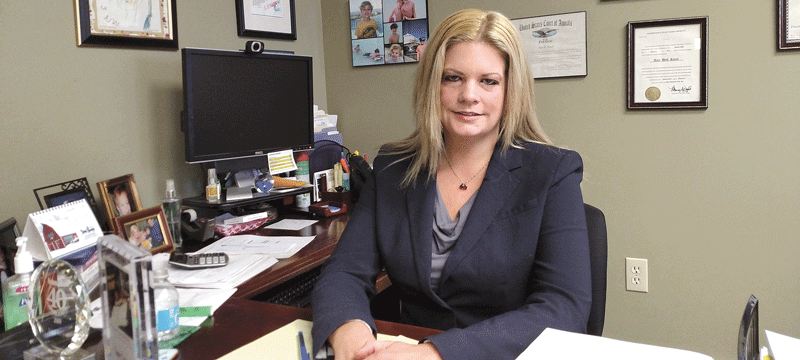
Jennifer Cernak

Jennifer Cernak says technology and connectivity features often appeal to younger buyers.

With the Millennial generation quickly becoming a more powerful force in the economy — totaling around 85 million, they’re now in their 20s and 30s, and their spending clout is only growing — auto dealers have definitely taken notice.

“They’re becoming more influential in the purchase of durable goods, including vehicles,” said Bill Peffer, president and chief operating officer of Balise Motor Sales. “They’re buying for themselves as they get older, but many are still living with their parents, so they’re also influencing their parents’ decisions. That’s quite a reversal from the Baby Boomers, who wanted to break free of the Greatest Generation and develop their own tastes.”

One way Millennials are changing the car-buying process is in their reliance on technology, specifically the online experience of car shopping.

According to Automotive News, more than 90% of car shoppers begin the journey online, visiting an average of 18 sites, including Google, online shopping networks, and social media, before showing up at a dealership, usually unannounced. However, Millennials take this process further, visiting an average of 25 sites before buying a vehicle.

“They definitely use technology to find what they need before they come into the store,” Peffer said. “Not too many years ago, the average consumer visited four or five stores. Now, with the explosion of technology and social media and the Internet, they’re making visits to far fewer stores before they actually make their purchase.”

Most Millennials don’t like to negotiate. They have information; they know what the cost is. They do their negotiating online.”

The average, actually, is fewer than two, he said. “They go to one store, and if the experience isn’t pleasant, if it’s not to their satisfaction, they go to the next one. Particularly with Millennials, they know what they want; the question is, are you able to meet their needs? You have to arrive at a mutually acceptable price and respect the convenience of when they want to make the purchase.”

J.D. Power reports that Millennials — usually defined as the generation born between 1980 and 1998 — bought 4 million cars and trucks in 2015, their share of the new-car market jumping to 28% — a number expected to rise steadily each year, with some estimates having them accounting for 75% of all purchases by 2025. So dealers need to understand their habits and preferences.

“I think it forces everyone to be on their game. It forces dealers to adopt — and not only adopt, but utilize — technology to fulfill the dealer’s end of the process,” Peffer said. “This is how shopping has evolved, not just for vehicles, but for everything. You can shop from your house for a suit at 10 o’clock at night.”

As for car shopping, he continued, “the deal has to be completed in the store, but we can make it convenient as well. We can deliver the car to the house for a test drive. We help the consumers make the decision where and when they want to.”

It’s all about meeting demand — for a generation of car buyers that can be well, demanding.

What’s New?

Jennifer Cernak, co-owner of Cernak Buick in Easthampton, understands the demands placed on a dealership by a prepared shopper.

“Most customers have already spotted the car they want; they’ve seen it online, and they know what they’re looking for,” she said.

Young people tend to appreciate technology, she said, from smartphone apps that connect a smartphone’s navigation feature to the vehicle, and infotainment apps like Pandora, Apple CarPlay, and Android Auto.

“There’s definitely some cutting-edge technology,” she said. “People don’t always think of that when they think of Buick; they don’t realize we have some of the latest and greatest technology and features out there.”

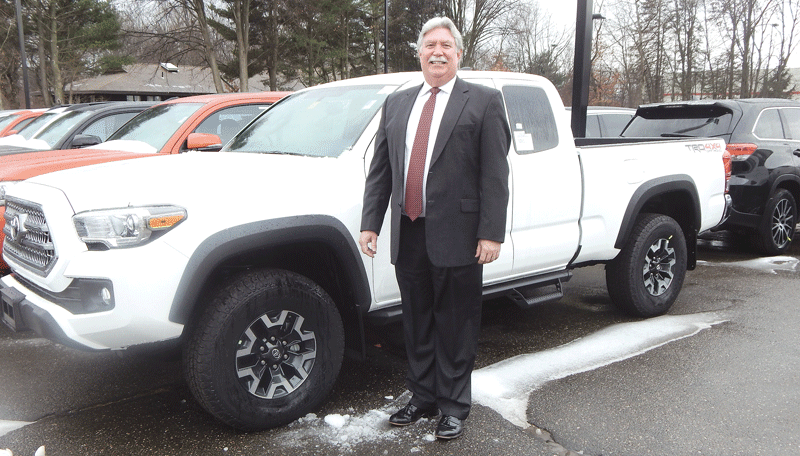
Bill Peffer

Bill Peffer says young, Internet-savvy shoppers, armed with data before they arrive at the dealership, are changing the car-buying game.

While Millennials certainly appreciate infotainment and connectivity packages — features that make the car a sort of platform for all one’s personal tech — that’s only one part of what they’re looking for in a car, Peffer said.

The second big draw is safety features — everything from lane-departure sensors and active braking systems to multiple airbags and safety shields: in other words, components that both help avoid crashes and protect riders in the case of one.

The third attraction is, quite simply, value, a concept that goes beyond the bottom-line price, encompassing everything from how well a vehicle holds its resale value to how it will serve their lifestyle and needs. That explains the popularity of compact SUVs, or crossovers, because they tend to support the activities of families and outdoor enthusiasts at a more reasonable price than larger SUVs.

Cernak noted that the Buick Encore compact SUV has broad, cross-generational appeal, and that includes Millennials, who appreciate features like all-wheel drive, Bluetooth connectivity, in-car wi-fi, backup cameras, and being able to start the car from their phone — a mix of traditional and thoroughly modern amenities. “The younger generation seems to like these things — not that the older generation doesn’t like them too. But older buyers are looking for a more traditional luxury experience.”

She also said young buyers are increasingly leasing, but that’s true across the generations. “More and more people are leasing. If someone likes to get in a brand-new car every few years, it can be more affordable. Some people just want to keep up with the latest and greatest.”

Peffer likewise doesn’t see much difference in the popularity of leasing between the generations, but noted that, as a whole, the New England region leads the country, along with the West Coast, in the percentage of car shoppers who choose that option. “I don’t see that waning. No matter what the generation, it’s a great option.”

Jeff Sarat, president of Sarat Ford Lincoln in Agawam, said he sees plenty of crossover in what vehicles and elements of the car-buying experience appeal to the different generations, though he noted that some of the company’s outreach, particularly search-engine marketing, is created with younger, more tech-savvy consumers in mind.

One big difference, however, is the loyalty factor. Baby Boomers were far more likely to develop brand and even dealer loyalty and return for new product every few years for decades. Millennials, Sarat said, are less likely to forge those bonds, and are much more willing to switch models, brands, and dealerships if they see more value elsewhere.

“Millennials are apt to jump around a little bit, meaning they might go with a Volkswagen this time and then next time try a Ford,” Sarat said. “Maybe their friend recommended a car they thought was phenomenal, so they try that. They’re more likely to switch around, and they don’t have set buying habits, so you really have to work to make them a customer for life. We try to do that with everyone, of course, but with Millennials, if you don’t stay in contact with them, they’re more likely to move around.”

Unfounded Fears

According to Business Insider, there was some concern in the auto-sales industry about how enthusiastic the growing Millennial generation would be; among the questions were whether they’d reject SUVs and whether they would gravitate toward mass transit. But those fears proved unfounded, as young professionals and families were a key factor in the industry’s surge to its current sales pace, which has topped 17 million for two straight years, with the same expected in 2017.

Yes, Millennials are demanding, and their penchant for Internet research doesn’t make things easier on auto dealers, but it’s not a negative, Peffer said; it just means dealers have to know as much as buyers do, and be ready to clearly explain subtle differences in pricing and features, skills they should already have.

“Most Millennials don’t like to negotiate. They have information; they know what the cost is. They do their negotiating online. They come in knowing exactly what they want to pay,” he told BusinessWest. “This is how shopping has evolved in the overall economy. The question is, are you able to meet their needs?”

Joseph Bednar can be reached at [email protected]

Daily News

SPRINGFIELD — Jared James, a national real-estate speaker and trainer, will be the featured speaker at the 24th annual Education Fair & Expo taking place on April 4 at the MassMutual Center in Springfield. The event is sponsored by the Realtor Assoc. of Pioneer Valley.

The program features a day of educational presentations including two breakout sessions from James, three continuing-education classes, and two technology classes. A sellout trade show with more than 50 vendors is anticipated. Anyone interested in attending as a trade-show vendor should contact Kim Harrison, membership and meetings coordinator at the Realtor Assoc. of Pioneer Valley, at (413) 785-1328 or [email protected] by March 10.

Banking and Financial Services Sections

Business at Hand

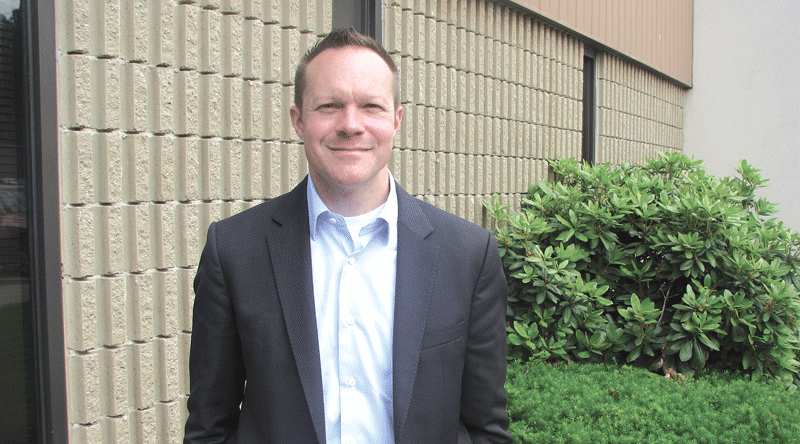
Steve Lowell

Steve Lowell says a surge in usage of Monson Savings Bank’s mobile offerings has coincided with a downturn in branch traffic.

You never know what will persuade any given customer to switch banks, Karen Buell says.

Buell, vice president of Customer Technologies at PeoplesBank, recalled a couple of non-customers who recently visited a branch to cash checks. When they saw the bank had recently introduced Apple Pay, Android Pay, and Samsung Pay for its customers, they returned — to open accounts.

“Wow. What a win,” said Buell, who has been tracking the usage rate of the bank’s electronic and mobile banking offerings for years. PeoplesBank launched its first mobile app for iPhones in 2009, one of the first 50 financial institutions in the U.S. to do so. Today, 34% of all the institution’s checking-account holders use mobile services. But it was still pleasantly surprising to see those services create a customer on the spot.

Maybe it shouldn’t be a surprise, particularly among the younger crowd. A study last year by the Federal Reserve reported that 67% of Millennials now use mobile banking, compared to 18% of consumers age 60 or over. This usage gap is projected to widen further as the youngest of the 85 million-strong Millennial generation enters the workforce.

Steve Lowell, president of Monson Savings Bank (MSB), says about half of that institution’s customers bank online, and of this group, more than half, about 60%, use the mobile app — up from 31% three years ago and 8% in 2011, the year the app launched.

Customers can perform a number of banking tasks on their mobile devices, Lowell said, including transferring funds between accounts, making loan and bill payments, taking pictures of their checks to make deposits online, and sending money to other banks through an app called Popmoney.

He said adoption has been strong by customers of all ages, but especially Millennials, who have come to expect robust online and mobile services in many areas of life.

“If you don’t have mobile banking, you won’t get the Millennial generation. That said, we have people in their 80s using their smartphones to do their banking. It’s definitely skewed toward the younger generation, but we see it across all age groups,” he said, noting that he uses the function himself. “It’s so easy to use.”

Buell reports similar momentum driven by younger customers at PeoplesBank, noting that 51% of Millennial customers use mobile check deposit, a service the bank began offering in 2014, compared to 24% of the bank’s Gen-X customers and 16% of Baby Boomers. Given those demographics, it seems like demand for mobile banking will only rise.

“Our customer base has enjoyed this for a while, and we’ve had great adoption of it,” Buell said. Specifically, mobile check deposit has grown 140% in overall usage between 2014 and 2016, and total checks deposited rose by 133%. At the same time, total dollars deposited through mobile check deposit went up 202%, partly because the bank increased the dollar-amount limits for that service for many customers based on their balances and relationship with the bank.

Karen Buell

Karen Buell, seen here in PeoplesBank’s Customer Innovation Lab, says the bank has made just about all its e-banking activities accessible on mobile devices, with more to come.

“We’re constantly looking at data to determine how to serve customers better,” said Buell, who also oversees PeoplesBank’s Customer Innovation Lab, which, as the name suggests, develops new products for retail and business customers. “We saw that some mobile-deposit users were still coming to the branch for larger items, so we made some changes and gave them significantly higher limits to accommodate their needs.”

Making Change

Industry analysts have long noted that adoption of mobile banking followed a path similar to online banking, with some customers enthusiastic early adopters, and others initially reluctant for a variety of reasons, often having to do with security, or perceptions thereof.

“I think that’s absolutely the case,” Lowell said. “You still have to have that discussion with people who are concerned about security. But once we run through the precautions we have, and the logins they have to go through, they get pretty comfortable with it. And once they’ve tried it for a while, they get hooked on it. It’s such a convenience; it makes life easier. Of course, people have the right to be concerned about cybersecurity. But the more they learn about it, the less of a concern it is.”

Surging use of mobile banking has, naturally, raised questions about the future of physical branches — or, at least, their rate of expansion — but these are the same questions that arose when desktop online banking was introduced, and institutions have long asserted there will always be a need for brick-and-mortar offices. But Lowell says it’s something to keep an eye on.

“It’s a really important consideration. From 2013 to 2015, we didn’t see a significant decline in branch traffic — maybe 5% year over year — but from 2015 to 2016, we saw a 19% decrease in branch traffic; we went from roughly 555,000 transactions at our branches in 2015 to 452,000 transactions in 2016,” he explained, noting that, at the same time, the overall customer base has increased.

“We definitely see a transition — not just in mobile banking, but in electronic banking in general — and we’ve adjusted our staffing levels as a result of that, and we’re looking at adjusting our hours. We may not need to be open as many hours as we used to be. It’s something we’re watching really closely.”

Industry analysis is mixed on this topic. The Federal Reserve study indicated that even regular users of mobile banking still want to use other banking channels, from visiting an ATM or branch to withdraw cash to speaking with a customer-service representative or loan officer.

Specifically, survey respondents were asked about their use of five distinct banking channels. In the previous 12 months, 83% of smartphone owners with bank accounts visited a branch, 82% used an ATM, 82% used online banking, 53% used mobile banking, and 29% used telephone banking.

But electronic channels have had an impact on branch growth across the U.S. More than 1,600 branches shut down during 2015, the last year for which full figures are available, and several large, national institutions continued to shed offices in 2016.

The branches that remain boast fewer staff as well, from an average of 13 full-time employees per branch in 2004 to fewer than six last year. A recent study by Citi, “Digital Disruption,” predicts that new technologies could cause up to 30% of branch positions to disappear by 2025.

“People find it more convenient to do their banking from home,” Lowell said. “Our strategy is to do whatever is easy for them — they’re the customer, and we want to develop our relationship with them and make things as easy as possible.”

More to Come

Still, despite the concerns, mobile technology has stirred plenty of excitement in the industry. Lowell is enthusiastic about some advances just around the corner for MSB customers, including CardValet, technology that allows users to turn a debit card on and off with their phones, rendering it useless if stolen, and set custom-designed alerts for things like low balances and cleared checks, instantly transferring money between accounts to protect against overdraws. Another upcoming function is the ability to pay bills by taking photos of the invoice and the check.

“At this point, we’ve really put most of what you can do from your desktop onto your phone,” Buell said, noting that 60% of all electronic-banking logins at PeoplesBank are now made from mobile devices. Last fall, the bank launched fingerprint authentication, which allows users to log in without needing a username or password. The bank is also looking to introduce technology that uses the GPS function on smartphones to shut down a debit card when it’s not in the vicinity of the phone, to combat use of stolen cards.

“We want to be first to market with these things for our customers,” she told BusinessWest. “We’re really committed to being early adopters of technology, so they can get all the functionality of of a national bank, but the personal customer experience of a local bank.”

Joseph Bednar can be reached at [email protected]

Law Sections

Value-added Proposition

Amy Royal

Amy Royal says her marketing strategy has long emphasized providing helpful resources through blogs, newsletters, and seminars.

There was a time when law firms simply didn’t advertise their services; it was considered unseemly. Those days are long gone, and marketing is now an accepted, even necessary part of the business. But for today’s practices, marketing goes well beyond print and radio ads. With the help of the Internet, firms are increasingly getting the word out by writing articles and blogs on important legal issues and connecting with the public through informational seminars — building credibility with the public and possibly creating clients down the road, but adding value for audiences in the meantime.

Generations ago, Michele Feinstein said, the legal profession’s code of ethics was simple when it came to promoting a law firm.

“It was, ‘thou shalt not advertise,’” said the shareholder attorney with Springfield-based Shatz, Schwartz & Fentin. “Then it changed, but it’s still a very regulated thing — the question of what constitutes appropriate advertising.”

To prove it, she dug out a thick volume of Massachusetts Supreme Judicial Court codes and eventually found the professional-conduct guidelines addressing marketing, or, to quote the section title, “Communications Concerning a Lawyer’s Services.”

This two-page-long rule governs appropriate outlets for advertising and what firms can and cannot promise in ads, among other minutiae. Feinstein is right: the rules are much more lenient today, with language conceding the importance of television and print media in reaching the public. But — aside from the more-strident messaging sometimes employed by personal-injury firms — it’s still an industry whose marketing echoes its restrained past.

Michele Feinstein

Michele Feinstein

When I started my practice, we never thought about marketing. Certainly, they never tell you about that in law school. But the practice has had to evolve with the modern-day realities of how people meet and connect, and how they find and talk with their lawyers.”


That’s not to say there aren’t other ways to stand out, however.

“When I started my practice, we never thought about marketing. Certainly, they never tell you about that in law school,” Feinstein said. “But the practice has had to evolve with the modern-day realities of how people meet and connect, and how they find and talk with their lawyers.

“Certainly, word of mouth is important, but these days, the modern equivalent is the Internet: search engines, blogs, newsletters, and other forms of Internet presence,” she went on. “That technology didn’t exist 20 years ago.”

Shatz, Schwartz & Fentin has employed the Internet like many other area firms have: not only to get its name out, but to do so in a way that provides value to clients and the public, she explained, such as an online newsletter that focuses on estate planning and elder law, and a blog that addresses issues in myriad areas of the law. Traditional print media is useful too, she said, as seen in the articles the firm writes for BusinessWest and other outlets.

Amy Royal also sees the benefits of a multi-pronged approach to marketing. Her Northampton-based employment-law firm, Royal, P.C., hosts a robust blog; the firm’s attorneys contribute articles to area press outlets (including, again, BusinessWest); and they also conduct seminars and trainings for the public and fellow lawyers alike.

“We stay abreast of developments in the law, both on the federal and state side, and we tailor our trainings as well as our blog posts to making sure our clients stay up to date,” she said. “There are a lot of moving parts, a lot of change happening on the federal side, going to an entirely different administration … on any issue, we want to demonstrate credibility for perspective clients, so hopefully people say, ‘they’re experts in that area.’”

That credibility and recognition often translates into more business, a philosophy shared by Michael Gove, who launched the Gove Law Office, LLC, in Northampton in 2013.

Michael Gove

Michael Gove

I think [our marketing efforts] ensure that we’re top of mind for people. Then, when someone has a legal issue, they may think of us, because they saw us recently in the paper, or online, or at a chamber event. We find we get referrals from those things.”


When it comes to marketing, he told BusinessWest, he has always focused on three areas: personal relationships with referral sources, trying to find reasons to be in the news as much as possible — for example, distributing press releases when the firm adds an attorney — and online marketing, which includes some paid advertising but more informational material, including a blog, providing resources to people who might then turn to Gove for legal services.

“I think it helps ensure that we’re top of mind for people,” he said. “Then, when someone has a legal issue, they may think of us, because they saw us recently in the paper, or online, or at a chamber event. We find we get referrals from those things.”

In a crowded market for law firms, those referrals and phone calls out of the blue are valuable, said the lawyers we spoke with about their marketing strategies. But laying the groundwork for that recognition doesn’t happen overnight.

Standing Out

Royal understands the importance of standing out in the Western Mass. legal community.

“There’s a lot of competition here in a small area; we’re saturated with lawyers in our region, and we have a law school here turning out new lawyers every year,” she said. “So what do you do to set yourself apart?”

The first step, she said, was focusing on a very specific niche — in her case, as a boutique firm that represents employers only — and building a brand around that niche in a number of ways.

“Our  niche provides a natural focus for our marketing strategies,” she explained. “Because of our defined services, we’re not everything to everyone, and maybe that’s a recipe for failure — to be too generalized. We’ve really focused on our marketplace and focused on developing a strong, recognized brand with targeted, consistent messaging.”

That messaging takes both active and passive forms, she added. Passive outreach includes the blog, newsletters, seminars, social-media outreach, trade shows, and anything that establishes the firm’s expertise in its field without being an actual, traditional advertisement — something Royal has largely eschewed, though both her firm and Shatz, Schwartz & Fentin utilize BusinessWest as part of their marketing efforts each year.

“We don’t do passive marketing thinking we’re going to have a direct sale from it, necessarily, but just to build brand awareness in the community,” Royal explained. “Then, of course, we do active marketing, direct relationship building. That happens in a variety of ways: through community involvement, business events, networking events, where we zero in on who our target is.”

Feinstein agrees that outreach that amounts to sharing information with the public brings marketing benefits that may not be realized right away.

“We write articles, we give seminars where we speak to the public, we do advanced trainings for lawyers — quite a bit of that. We feel that these sorts of marketing efforts, if they don’t immediately create a client — though they may — they certainly, at minimum, give us secondary recognition. People see our blogs, read our articles, hear our name when we’re giving a talk, and later on, if they need a lawyer and ask around and our name comes up, it’s familiar.”

In fact, it’s impossible to tell when such efforts will result in client work, she said. Sometimes it’s the next day, and sometimes it’s years down the road, when someone comes in with materials they’ve been saving since the event, and now they need help.

“The fact that they also see we’re doing trainings for other lawyers, which we do a lot of, I think confirms, or enhances, the fact that we are knowledgeable in a particular area and are recognized by our peers as such.”

While passive marketing has its benefits, Gove said, he’s not averse to paid ads as well. Most of his efforts in this area are targeted at avvo.com, a website with a national reach. “It’s a way for people who need answers to legal questions find lawyers. We’ve found a lot of success there.”

As for more traditional media advertising, Gove said he plans more narrowly targeted messaging. As a bilingual firm, he wants to expand more into Spanish-speaking communities, so he intends to approach media outlets that have inroads in that population.

“But, really, the three main pillars to our marketing are personal relationships, getting in the news, and being visible online. We’re definitely not advertising in the Republican or in the yellow pages. It’s not like it was 20 years ago.”

That said, the strategy has largely paid off for this growing firm, which expanded with a second office in Ludlow in 2014. “I think we’ve done a good job of growing, by making sure we’re visible and helpful.”

Word Up

Feinstein also considers her firm’s various passive marketing efforts to be a form of help, of public service.

“All we’ve ever done — writing articles, whether for legal journals or the Reminder or BusinessWest; lecturing and giving talks; that kind of stuff — gets our name out, gets the word out, but it also provides value, and we feel like that comes back to you in one way or another. It doesn’t have to be a one-to-one correlation. That’s fine with us; we have an obligation to serve the public by providing information, which we take seriously.

“People appreciate the difference between that kind of marketing and some general slogan, like ‘call us and we’ll fight for you,’ or ‘we’ll take your case seriously,’” she went on. “We provide real information and something to think about, and if people have concerns, we tell them to see their advisor. Whether that advisor is us or someone else, we’re still providing value.”

The Supreme Judicial Court’s rules on advertising state that “questions of effectiveness and taste in advertising are matters of speculation and subjective judgment,” which is a far cry from “thou shalt not advertise.” But lawyers should take their messaging seriously, Royal said.

“A lot of law firms maybe don’t think of themselves as a business first, which they are; they think of themselves as practitioners first,” she told BusinessWest. “But we treat this law firm as a business and attack our marketing that way. What we’ve done has been very strategic from the beginning.”

Joseph Bednar can be reached at [email protected]

Autos Sections

A High-revving Engine

Carla Cosenzi

Carla Cosenzi says sales have been on the rise for several years at TommyCar Auto Group, and she expects this trend to continue at its dealerships.

Initial national projections for 2017 called for the recent rise in auto sales to level off and then perhaps slow down. But those forecasts have been adjusted recently. Indeed, the experts say a host of favorable factors, from low gas prices to a stable economy to the advanced age of many cars on the road, will continue to fuel increases in sales volume.

John Kupec III has been in the automobile-sales industry for 40 years. But he has never seen trade-ins with as many miles as the ones being brought to Gale Toyota in Enfield today.

“We’re seeing cars come in with more than 250,000 miles,” the general sales manager told BusinessWest.

Indeed, a poll conducted last month by market research company IHS Markit shows the average age of light vehicles on the road is 11.5 years, and the trend Kupec observed is mirrored at other dealerships.

“This week alone, I saw trade-ins with 160,000 miles, 180,000 miles, and 240,000 miles — vehicles last longer than they used to, but people have taken it to the extreme,” said John Lewis, general manager at Chrysler Jeep Dodge Ram and Bertera Fiat and Collision Center in West Springfield, as he spoke about reasons that led so many people to keep their vehicles for a decade or more.

John Kupec

John Kupec is optimistic about the year ahead, and says Gale Toyota of Enfield hopes to increase sales by 10% to 15%.

The practice began in 2008 when the economy crashed. Consumer confidence plummeted, 401(k) plans lost their value, and people worried about job security and began to realize they could drive their vehicles much longer than they had believed possible without incurring a lot of repairs.

“Today alone, we took in a 2001 with 160,000 miles and a 2005 with 155,000 miles,” said Craig Dodenstein, sales manager for Toyota of Greenfield, who noted that people usually upgrade to a new vehicle when the cost of repairs becomes prohibitive.

Sales began to rise a few years ago in line with a renewed confidence in the economy that has slowly taken root. But last fall, the National Automobile Dealers Assoc. predicted 2017 would be the year in which sales would reach their peak and begin to slow down. That projection was changed, however; now, sales of new vehicles in the U.S. are expected to remain above 17 million for the third straight year in a row, and even rise slightly toward the second half of the year.


Chart of area Auto Dealers


Aging vehicles still on the road have resulted in pent-up demand, and that factor, coupled with new models, aggressive manufacturer incentives, low interest rates, reasonable gas prices, and an upswing in the economy, are fueling optimism at local dealerships for the coming year.

“Last month, our sales were up 10% over January of last year, and we expect a 20% increase in 2017,” Lewis said, attributing the number not only to the company’s reputation and the service it offers, but the fact that Subaru sales have climbed and a new $5 million Chrysler Jeep Dodge dealership is under construction, which hindered sales last year when they started working from trailers.

Fathers & Sons in West Springfield also has a new dealership, an $18 million facility that is home to Audi and Volkswagen franchises.

“We want to grow, plan to grow, and have the tools in our arsenal to do it,” said Sales Manager Ethan Prentiss. “In December, Volkswagen had the best month in company history, and this year we expect a 10% to 12% increase in Volkswagen and Audi sales, and an 8% to 10% increase in Volvo sales,” he said, referring to the company’s other dealership on Memorial Avenue, which houses the largest dedicated Volvo dealership in the country in terms of square footage.

Ethan Prentiss

Ethan Prentiss says the demand for SUVs and crossovers such as the new Volkswagen Touareg continue to rise at Fathers & Sons Volkswagen.

Incentives are also boosting sales, and Kupec said Toyota’s are higher than they have been in decades. “The manufacturer is offering 0% interest on some models, which they have never done before; hefty rebates of $2,000 to $3,000; and bonus cash on leases,” he said. “We’re off to a great start and hope to have a 10 to 15% increase this year in sales.”

Bill Peffer concurred. “It’s a very exciting industry to be in, and our outlook for 2017 is very, very positive,” said the president and chief operating officer of Balise Motor Sales, which has 24 stores in three states. “The market is very strong, and any volatility has been offset by manufacturer incentives. There are tons of new choices for customers — it’s a very good time to buy a car, truck, or SUV.”

For this issue and its focus on auto sales, BusinessWest looks at the current landscape within the industry and what the road ahead might bring.

Getting into High Gear

Last June, Volkswagen agreed to buy back its 2.0L diesel vehicles after a lawsuit that proved it had used emissions-system-defeating software. The VW Group also agreed to pay owners $5,100 to $10,000 in additional compensation on top of a fix or buyback of their car.

The negative press that ensued made sales challenging for a period of time, but buybacks began last October and accounted for a quarter of the Volkswagen sales at Fathers & Sons in December.

“These people would normally not be in the market for a new car, and the projection is that we will be able to retain 25% of them; many of our customers love the way their Volkswagens drive and handle,” Prentiss said, explaining that this situation, coupled with the new dealership and a lineup of exciting new products, is not the only reason for the projected increase in sales.

“We are now a negotiation-free dealership, which is what customers want,” he continued. “Buying a vehicle here has become all about the experience. Our salespeople are non-commissioned, and customers can find what they are looking for and complete the purchase within two hours.

“We give them our best price up front and make it fun to buy a car,” he continued, adding that Volvo sales are also up, as the manufacturer broke records last year due to the launch of a new image and the release of new products.

Toyota of Greenfield is another dealership that has undergone change. It moved into a new, $7 million dealership last winter and held a grand opening last May, so 2016 was a year of transition as they were able to move out of the trailers they worked in during 2015 while construction was underway.

“We’re looking for a 5% to 10% increase in sales this year, and if January was any indication, we are headed in the right direction,” said Dodenstein, adding that January sales had almost tripled over last year’s numbers by the third week of the month.

Although the new dealership certainly makes a difference, manufacturer incentives and new products add to the enticements. The new electric Prius Prime is a leader in its class; it gets 133 miles per gallon, beat a preliminary 22-mile electric volt range estimate with 25 miles, and gets 54 mpg in hybrid mode.

Meanwhile, Carla Cosenzi said last year was a great one for TommyCar Auto Group, which includes Hyundai, Nissan, Buick, GMC, and Volkswagen franchises. Some stores did especially well, including Hyundai, which experienced strong demand for entry-level vehicles.

“Hyundai gives customers a lot of value for their dollar, including technology, safety, and the aggressive pricing people are looking for,” Cosenzi explained, noting that consumers are excited about the fact that new technology is standard in many brands of entry-level models and ranges from adaptive cruise control to lane assist, collision warning, and backup cameras.

TommyCar is expecting another excellent year, and the sales of the new Volkswagen Golf All Trac station wagon, which has all-wheel drive, accelerated right after it was released. In addition, SUVs and crossovers are becoming increasingly popular, such as the 2017 seven- passenger Nissan Rogue and Volkswagen Tiguan.

“People want the space, comfort, and luxury they provide. They are more expensive than compact cars, but with interest rates and gas at all-time lows. they’re affordable,” Cosenzi noted.

Other local dealers agree that the demand for trucks, crossover vehicles, and SUVs is growing. They point to the fact that unemployment rates are low, people use trucks to do business, and buyers of all ages want to be able to travel in the winter.

“The weather in New England is unpredictable, and people want mobility whether they are driving to the ski slope or have the kids in their vehicle during a snowstorm,” Peffer said, adding that today’s crossovers and SUVs offer that versatility.

He noted the trend has changed over the past few decades. “Station wagons were popular from the ’40s through the ’70s. But when Chrysler came out with a minivan in the ’80s, the evolution of SUVs began, and so did the way people chose to be mobile,” he told BusinessWest, noting that crossovers and SUVs are affordable, offer more utility than mid-sized cars, and get good gas mileage.

Prentiss said Fathers & Sons sells seven-seat vehicles as quickly as they get them, and Audi’s Q7 and Volvo’s XC90 SUV models are popular because they offer utility plus plenty of cargo space. In addition, Volkswagen’s Tiguan and Golf All Trac have made the brand competitive with Honda and Toyota.

Changing Landscape

Local dealers say leasing has increased and accounts for a good portion of their new-car transactions.

“Leasing allows people to move into cars with low payments without the hassle of long-term maintenance; they can lease them to drive what they want and turn in the car before the warranty is up, as opposed to incurring costs over a six-year loan period,” said Peffer, noting that, a decade or two ago, leasing was reserved for commercial buyers, but today it has gone mainstream, and a third or more of Balise’s new-vehicle sales are leases.

Leasing is also popular at Bertera and accounts for 38% of its new-car business. “Technology is moving so fast, and people want the latest advances. Plus, a segment of the population is always going to have a payment, and they can get a brand-new car every two to three years with a lease,” Lewis said.

He explained that the average payment on a purchased $40,000 vehicle is $500 a month for six years, but the same vehicle can be leased for $300 to $350 a month with very little money down, which makes it attractive.

Kupec noted that the appeal extends to different age and economic groups, especially since people who do a lot of driving can build additional miles into a lease.

“People are more receptive to leasing than ever before,” he said, adding that 40% of the store’s new-car transactions are leases.

Prentiss told BusinessWest that a large portion of Millennials would rather lease than buy a new vehicle. “It has to do with their psychology; they think a three-year lease is long enough.”

The market for electric vehicles is also growing. Cosenzi said the Hyundai Ioniq, which is scheduled to come out in the next month, will have a battery-only model with an electric driving range of 124 miles and an EPA rating of 136 miles per gallon.

Positive Signs

From a big-picture, national-economy perspective, the road ahead is certainly marked by unpredictability and guarded optimism.

In the auto industry, through, there would appear to be fewer potential bumps in that road and apparently smooth riding. As noted by all those we spoke with, a number of factors are contributing to greater confidence on the part of consumers, and this is translating into greater activity at area dealerships.

As they say in this business, there is plenty of tread left on those tires.

Daily News

NORTHAMPTON — Dr. Robert Fazzi, founder and managing partner of Fazzi Associates, announced that Tim Ashe has been promoted to chief operating officer and is now responsible for the firm’s day-to-day leadership.

Ashe joined Fazzi in 2006 and became a partner in 2007. Since that time, he has led the firm’s Operational Consulting Division to provide organizational, operational, turnaround, and change-management services to home-care and hospice agencies across the country. Under his leadership, Fazzi has helped hundreds of agencies improve outcomes and profitability through best practices in organizational structure, clinical and operational processes, and new models for staffing, supervision, and care management. More recently, he also assumed responsibility for the company’s Outsourced Billing, Finance, and Information Technology divisions.

Along-time leader in the field of home care and hospice, Ashe’s expertise and career has included a unique blend of clinical, operational, fiscal, and academic roles. He is a frequent presenter at national and state conferences and is often asked to contribute to industry forums. He is also the co-director of the 2016-17 National Home Care and Hospice State of the Industry Study.

Dr. Robert Fazzi, the firm’s founder, will continue as Fazzi’s managing partner. But in transferring the leadership of the firm’s daily operations to Ashe, Fazzi will devote more time to the company’s future investments as well as to national and international community-based-care issues that are near and dear to his heart.

“I want to say, at this milestone in Fazzi’s history, that I am extremely proud of what we have accomplished and contributed to our industry thus far, and I’m also incredibly excited about what the future holds,” Fazzi said. “Tim is an incredible leader. I am looking forward to working closely with him as we expand our national and international efforts.”

Daily News

WESTFIELD — NetLogix engaged a third-party monitoring system, SmileBack, in 2016 that allows customers to rate their satisfaction with each service event. In 2016, NetLogix received an extremely favorable customer satisfaction rating of 99.4%. This is an aggregate rating over thousands of service events from clients.

“We are honored that our clients are happy with the services we provide,” said Marco Liquori, CEO of NetLogix. “We continue to listen to our clients to understand and deliver the best customer experience and IT services in the region.”

NetLogix posts on its website the rolling, 90-day customer-satisfaction (CSAT) scores. SmileBack also recognized NetLogix in its Dec. 21, 2016 blog as being a standout with the highest net CSAT score achieved in 2016. NetLogix is one of thousands of service providers that use the service.

Headquartered in Westfield, NetLogix is a network-management, cloud, and systems technology integrator providing end-to-end solutions that ensure business integrity for small, medium, and enterprise-level clients.

Daily News

EASTHAMPTON — Matthew Sosik, president and CEO of bankESB, announced the promotion of three individuals. Maryann Geiger was promoted to senior vice president and director of Operations; Michael Fitzgerald was promoted to assistant vice president, senior IT officer; and Emily Drapeau was promoted to assistant vice president, Electronic Banking.

Geiger joined the bank in 2002 as Deposit Operations supervisor and in 2003 was promoted to Deposit Operations officer. She was promoted to assistant vice president, Deposit Operations in 2006 and was promoted to vice president, Deposit Operations in 2013.

Geiger is responsible for implementing strategic initiatives and management of customer service and operations of the bank’s call center, electronic banking channels, ATM network, and processing of deposit products and services. She is also responsible for Bank Secrecy Act and fraud management.

She has more than 36 years of banking experience and graduated from the New England School of Financial Studies. She is a volunteer for Highland Valley Elderly Money Management Services.

Fitzgerald started with the bank in 2004 as a systems administrator and was promoted to IT manager in 2011. In 2014, he was promoted to IT officer and then to senior IT officer in 2015.

He graduated from the Graduate School of Banking’s Bank Technology Management School in 2013. He is a volunteer for Junior Achievement of Western Mass. and participates with his family running Toys for Tots fund-raisers and collecting jars of peanut butter and jelly to donate to local food pantries.

Drapeau joined the bank as a teller in 1995 and was promoted to customer service representative in 1997. She became a senior teller in 2000 and Deposit Operations specialist in 2001. She was promoted to Deposit Operations supervisor in 2004 before being promoted to Deposit Operations manager in 2011. She was promoted to Deposit Operations officer in 2014. She graduated from the New England School for Financial Studies in 2012.

Daily News

SPRINGFIELD — Business leaders, public officials, and community members will attend the graduation of the Massachusetts Manufacturing Accelerator, the nation’s first manufacturing accelerator, hosted by Valley Venture Mentors, 1500 Main St., Suite 125, Springfield, on Monday, January 30 at 5 p.m.

Meet the seven Massachusetts manufacturers whose businesses have benefited from the program and learn how they are bringing the manufacturing industry into the 21st Century. Guests includes representatives from Gov. Charlie Baker’s office, the Massachusetts Technology Collaborative, and more.

Daily News

SPRINGFIELD — Valley Venture Mentors (VVM) announced the 2017 Startup Accelerator cohort this week. The 36 startups, chosen from more than 200 applicants received from around the world, represent high-quality, early-stage startups across more than eight industries, including technology, beauty, healthcare, transportation, and publishing.

“We are excited by the diversity of industries represented in this cohort,” VVM CEO Liz Roberts said. “We are honored that they are choosing to invest their time in our accelerator. They will get intensive training, mentorship, and resources to take their startups to the next level.”

Sixty-five percent of this year’s startups are led by women, and 36% are led by people of color. International teams from Canada, India, and Ghana will participate.

“Educating startup founders is all about helping them minimize their startup risks. Over the next four months, these entrepreneurs and their teams are going to spend time analyzing their products, services, business models, and the markets they intend to disrupt,” said Paul Silva, VVM chief innovation officer and co-founder. “They will learn from successful entrepreneurs — people who have been exactly where these founders are.”

VVM Startup Accelerator participants also develop relationships with funders and are eligible to win up to $50,000 in equity-free cash at the end of the program. The winners will be announced on Thursday, May 25 at an awards ceremony with an expected 600 people in attendance at the MassMutual Center. VVM’s visionary partners include MassMutual, MassDevelopment, the Irene E. and George A. Davis Foundation, MassTech Collaborative, and the Community Foundation of Western Massachusetts.

Another aspect of this year’s program is VVM’s partnership with Pathlight, a local organization which serves people with intellectual disabilities. The two organizations put out a national call for entrepreneurs with technology ideas that could increase independence for those with intellectual disabilities. After a rigorous selection process, two such startups were selected to participate in the accelerator: Galactic Smarties and Habit Stackr.

Several of the companies accepted to the 2017 VVM Startup Accelerator are graduates of VVM’s mentorship program, including AlignMeeting, Bhlue Publishing, FootCare by Nurses, Hot Oven Cookies, Listen2aBook, Lumme, RecordME, Streamliners, TripleTote, and Yummy Yammy.

The 2017 VVM Startup Accelerator cohort includes:

• AlignMeeting, business-productivity software facilitating best meeting practices to improve team efficiency before, during, and long after meetings;

• AuCoDe, the Google Alerts of controversies and crisis situations, providing early detection as a signal for hedge funds;

• Barakat Bundle, a curated package of life-saving solutions for mothers and newborns in South Asia;

• Bhlue Publishing, a cloud-based career-development platform for teens and young adults who are struggling to figure out a career direction;

• Bharat Babies, which produces developmentally appropriate children’s books that are inspired by the stories of India and South Asia;

• Connecticut Horse, a bimonthly print and online magazine for horse enthusiasts in Connecticut;

• Emotive Agility Training Center, a consulting company offering training tools and curricula for people with autism to crack the non-verbal code of social interactions;

• Enrichment Express, which provides instructors with the curriculum, materials, and logistical support needed to teach engaging enrichment classes to children 5 to 12 years old;

• Ernest Pharmaceuticals, programmed bacteria to eliminate metastatic cancer;

• Fields Center, which provides help for individuals with autism and families;

• FirmOffer, a software solution for legal recruiting enabling law students to make binding offers to law firms;

• FootCare by Nurses, foot-wellness experts;

• Galactic Smarties, which makes technology that supports independence for people of all ages and abilities;

• GeneRisk, which identifies genetic variants of autism allowing for better understanding of risk and ID targets for more personalized intervention;

• Genoverde Biosciences Inc., an agricultural biotech startup focused on improving crop yield for commercial farming through bioengineering;

• Habit Stackr, which helps people keep daily routines through brain science and a mobile app;

• Hot Oven Cookies, a handcrafted cookie bakery specializing in the delivery and curbside sales of warm, gourmet cookies;

• Kwema, which developed a smart bracelet that can call for help to friends and family, authorities, and Kwema’s safety communities;

• Listen2aBook, which makes audiobook production accessible to everyone;

• Lumme Inc., a startup funded by the National Cancer Institute that develops smart technology to help people quit smoking;

• M1 Tapes, which makes premium, contractor-grade tape measures;

• MEANS Database, a nonprofit technology company devoted to business-friendly food recovery;

• MyBarber, which provides on-site haircuts at offices, apartment complexes, and co-working spaces;

• NERv Technology, which is developing an implantable biochip platform to detect post-operative complications;

• New England Breath Technologies, which developing a pain-free diabetic monitoring device to improve outcomes of patients;

• Nonspec, which has created a low-ost, durable, and adjustable prosthetic system;

• Paysa, which is developing a fingerprint-authorized cashless payment system for stores in rural India with the goal of increasing bank-account owners;

• ProjectMQ, a social-media app for independent game studios and fans worldwide;

• RateFrame, which helps users highlight and share the best parts of any video;

• RecordME, a studio-recording company that provides hardware, engineers, and distribution so content creators and venues can make more money;

• Streamliners, which sells aerodynamic devices to the trucking industry, saving $4,000 per truck per year in fuel costs, paying for itself in three months;

• Trabapido, an online marketplace that helps individuals and businesses find and hire service providers, such as plumbers, painters, and tutors;

• TripBuddy, a ride-sharing startup;

• Tripletote, which manufactures consumer products that help people carry items as they travel, commute, shop, and work;

• VaxAtlas, which provide real-time access to one’s vaccine history, helping to avoid unnecessary repeat vaccines, identify missed vaccines, and alert for outbreaks; and

• Yummy Yammy, which helps busy people eat better, one deliciously addictive sweet potato at a time.

Daily News

SPRINGFIELD — Springfield Technical Community College (STCC) announced the promotion of Barb Chalfonte to serve in the newly created role of vice president of Institutional Effectiveness.

The creation of the new position elevates Institutional Effectiveness (IE) and underscores the importance of seeking to enhance the college’s processes and promote student success, STCC President John Cook said. With Chalfonte at the helm, IE will become its own division and have a broader reach. Previously, Institutional Effectiveness had been nested under Academic Affairs.

Chalfonte, who came to STCC in 2010, had served as dean of Institutional Effectiveness and senior research analyst. In her new role, Chalfonte will report directly to Cook and serve as part of his cabinet.

“This is a tangible way to show how much we as an institution value research, data, and assessment,” Cook said. “Given the strategic goals in our Student Success Plan, it’s about integrating process improvement, and putting a large enough umbrella over the work so that it is institution-wide.”

Created in 2012, Institutional Effectiveness helps sustain and improve the teaching and learning environment through ongoing data and research-based planning, assessment, and improvement processes. The work of this division going forward will be to facilitate and promote planning and analysis throughout the college.

“We collaborate with diverse groups to review the college’s mission, goals, and outcomes and demonstrate the achievements of our faculty, staff, and students,” Chalfonte said.

Often colleges have several offices charged with enhancing pedagogy, institutional research, enrollment analysis, and assessment. STCC, however, is one of only a few community colleges in the Northeast that integrates this work into a single entity. Bringing these offices under one umbrella fosters collaboration toward the mission of supporting students as they transform their lives.

The Institutional Effectiveness department includes the offices of Assessment, Institutional Research, and Professional Development. The department also supports strategic planning, process improvement, enrollment reporting, and New England Assoc. of Schools and Colleges (NEASC) accreditation activities and reporting, and convenes the Student Success Council.

Since 2012, the IE department has helped to obtain more than $2.7 million in funding, including a $650,000 state grant for assessment-related work and a state-funded convening grant to explore initiatives and research related to Hispanic-serving institutions. IE was part of a group that crafted a $2.1 million Title III grant that supports pedagogy- and cultural-competency-related professional development. Members of the IE team contributed to the $3.4 million HSI-STEM grant that the college received last year to help Hispanic and low-income students obtain degrees in science, technology, engineering, and math.

Chalfonte brings a background in science and learning research to the position. She earned a doctorate from Princeton University in cognitive psychology and a bachelor’s degree from Williams College in psychology. She is an adjunct faculty member in the Psychology Department at Westfield State University.

After receiving her Ph.D., she taught in the Psychology Department at Mount Holyoke College and worked as a researcher at the National Priorities Project in Northampton before joining STCC.

“My academic concentration is how people learn and remember,” said Chalfonte. “That’s the heart of learning and teaching. The key concepts of memory and learning apply to what we do here, to the systems that we build.”

Chalfonte strongly believes in the mission of institutions like STCC, which have an open-enrollment policy that allows anyone with a high-school diploma or equivalent to be admitted. She served as data coach for Achieving the Dream, an initiative that champions institutional improvement and student success. Part of her work was to help community colleges close race/ethnicity- and income-based achievement gaps.

Class of 2017 Difference Makers

Cut and Dried

In Business and the Community, Denis Gagnon Is a Role Model
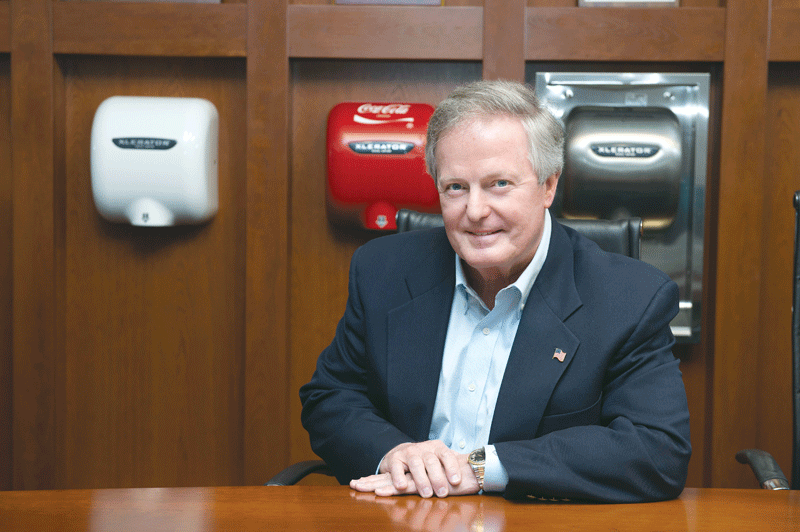
Denis Gagnon

Denis Gagnon

Denis Gagnon Sr. was asked about the origins of the signed, framed Tom Brady jersey that dominates one wall of his spacious office at Excel Dryer in East Longmeadow.

Rather than answer that question, he bolted up out of his chair and said, “think that’s nice? I’ve got something better … follow me.”

And with that, he walked briskly down the hall, with BusinessWest in tow, to the conference room, apologized as he ever-so-briefly interrupted a meeting in progress, and proudly pointed to a huge framed, autographed photo of Malcolm Butler, depicting the moment he stepped in front of Russell Wilson’s final pass in the 2015 Super Bowl, sealing a Patriots victory.

“How about that?” Gagnon, the company’s president, said of the photo, a gift from Pats owner Robert Kraft, who is now a valued customer of Excel Dryer, which, according to company literature — not to mention most people who have placed their hands under one of its products — has revolutionized the long-maligned hand-dryer industry.

Later, amid considerable and quite necessary prodding, he grudgingly revealed that signed photos and jerseys are just some of the many benefits that have come through what is now a very solid and multi-faceted marketing relationship between the Patriots and Excel (and donations to the team’s charitable foundation), up to and including the opportunity for Gagnon to actually get on the hallowed turf at Gillette Stadium, practice with the team, and play some catch with TB 12.

As noted, such reflections came reluctantly, because it is simply not in Gagnon’s nature to call attention to his actions or accomplishments. Those who know him well say he basically just goes quietly — and quite efficiently — about his business.
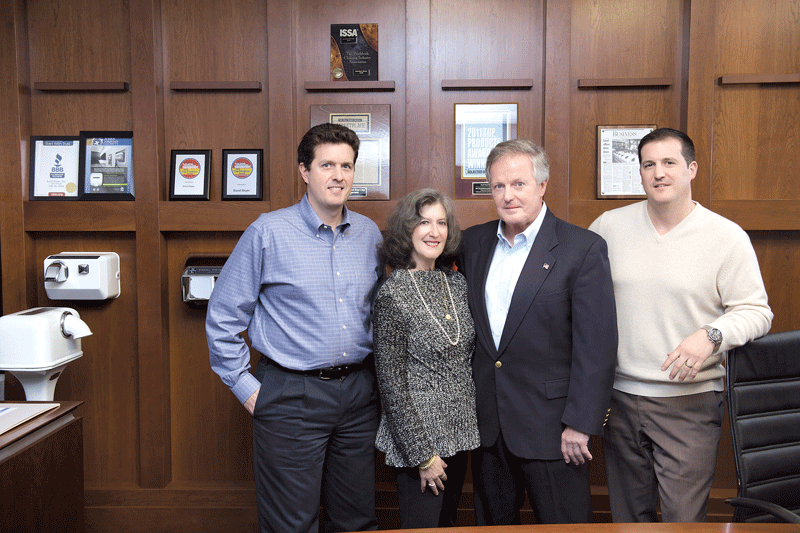
Denis Gagnon with his wife, Nancy, and sons Denis Jr., left, and Bill, right.

Denis Gagnon with his wife, Nancy, and sons Denis Jr., left, and Bill, right.

And by ‘business,’ they aren’t referring specifically to Excel and its signature product, the XLERATOR, although that’s certainly a big part of the conversation — the part referring to his strong entrepreneurial instincts, success in making the company’s products a global phenomenon, and even pride that the dryers are made not only in America (the only ones that can make such a claim), but in the 413 area code.

“I’m in the men’s room at Heathrow Airport … and I see East Longmeadow, Mass. on the XLERATOR,” recalled Gene Cassidy, president of the Big E, who has known Gagnon for years, “and it sends shivers up my spine; I wanted everyone in the lavatory to know that I knew Denis Gagnon.”

No, by ‘business,’ they were mostly referring to Gagnon’s strong track record of service to the community, which is notable for many reasons.

For starters, there’s simply the depth of that service, which includes everything from decades of work with the Boy Scouts and the Children’s Study Home to his multi-layered involvement with Link to Libraries (LTL).

There is also his ability to inspire others to become involved and make a difference in their own way.

He’s a man who not only sees the need, but takes action. He is very empathetic to those people in need and especially the young people of our community.”

Dana Barrows, a financial advisor with Northwestern Mutual, another long-time acquaintance and long-time LTL volunteer, explains.

“I was in Denis’ office four years ago, and I saw a picture of him with Springfield Mayor Domenic Sarno,” he recalled. “I said, ‘what are you doing?’ and he replied that he was reading a book to school kids as part of Link to Libraries. And he told me I should check it out.

“I did, I’ve been reading ever since, and I’ve thoroughly enjoyed every minute of it,” he said, adding that this is but a small example of how Gagnon not only gets involved, but gets others to follow suit.

Humbly, Gagnon said simply, “if you have the good fortune of being in a good corporate job or owning your own business, like we’ve been able to do, you have a responsibility to give back to that community.”

And this philosophy was certainly handed down to his children, including those involved with him at Excel, Denis Jr. and Bill, who are both very active in the community (Bill is a member of BusinessWest’s 40 Under Forty class of 2013).

Mike Suzor, assistant to the president at Springfield Technical Community College and a serial entrepreneur himself, was a classmate of Gagnon’s at Cathedral High School, in the class of 1968. He remembers Gagnon as an excellent student, a multi-sport athlete, and someone who knew what it took to succeed on any stage, or playing field.
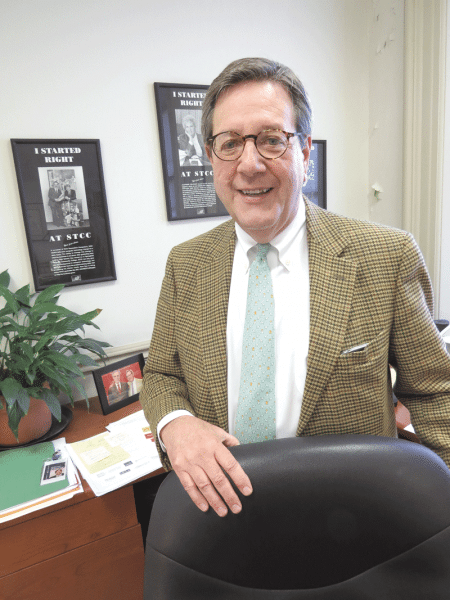
Mike Suzor

Mike Suzor, a long-time friend and former classmate of Denis Gagnon’s at Cathedral, says Gagnon has always understood what it takes to succeed at any level.

“I never met his parents, but they must have been great people,” he said, “because Denis learned very early on the value of honesty, integrity, and hard work — ‘don’t pass it off to someone else; get it done yourself.’ That attitude was there in high school, and it has stayed with him all through his career.”

“If you measure success financially, then he’s clearly successful,” Suzor went on. “But if you measure success by what kind of human being someone is … he’s one of the most successful people I’ve ever met.”

Rarified Air

Over the past 18 years or so, Gagnon has sat across from interviewers representing all manner of media outlets curious about the XLERATOR, from the small weekly paper that covers Longmeadow and East Longmeadow to the Wall Street Journal; from a host of trade publications, such as Restaurant Daily News, to Inc. magazine.

While the comments vary, obviously, he will undoubtedly tell the inquirer something he told BusinessWest back in 2003 — that, as entrepreneurial gambles go, Excel Dryer was anything but a rock-solid bet.

That’s because the company made a product that, by Gagnon’s own admission, people don’t like or want — electric hand dryers, a product that, historically, didn’t dry people’s hands as much as they would like.

As he explained back then, and has gone on explaining ever since, most businesses and institutions that installed hand dryers in those days did so because satisfying the customer — and that’s a relative term in this case — was not a priority, and saving money was. As examples, he listed airports, train stations, colleges, municipal buildings, sports stadiums, and even correctional facilities.

Today, businesses and institutions like those mentioned above, but also some certainly not on that list, are installing Excel models because they do place a premium on customer service — and also on protecting the environment and saving money.

Changing the hand-dryer landscape wasn’t exactly the stated mission when Gagnon bought a piece of Excel in 1992 and later acquired the entire company, but it quickly became not only a goal, but an obsession — one of those who knew Gagnon well firmly believed he would succeed with, even given the chosen product’s dubious history and uncertain future.

To explain, Suzor went into the wayback machine to Cathedral High, then home to 3,000 students, and memories of Gagnon the student-athlete.

“He was an incredible wrestler and first-team All-Western Mass. placekicker,” Suzor recalled. “In the wintertime, he would go out and kick field goals in the snow to practice; he was absolutely dedicated to excellence and doing whatever it took to be the best he could be. Going back to high school, he showed that.”

This pattern would continue at UMass Amherst and later in business, especially at what was then Milton Bradley, later Hasbro, and now Cartamundi, where Gagnon would rise in the ranks to vice president of International Sales.

This was a rewarding job in a number of ways, but also one that took him away from home quite often (he was responsible for the Pacific Rim region).

Desiring a change, and something closer to home, he and his wife Nancy would both join her family’s business, Springfield-based Bassett Boat, and he would help it achieve dramatic growth in the late ’80s. But the deep and lengthy recession that began at the end of that decade put a serious hurt on discretionary spending and thus the boat business, and Gagnon began searching for an entrepreneurial adventure of his own.

He and a partner thoroughly researched options, and set their sights on Excel Dryer, but the partner got cold feet, leaving Gagnon to pursue plan B, as he called it, which was to acquire a piece of that company and acquire the rest over time as he ran its sales and marketing efforts.

By 1997, when the acquisition was complete, he would begin the process of changing the equation when it came to the product that seemingly no one liked or wanted by partnering with (and essentially bankrolling) some inventors with a revolutionary new concept.

In time, it would come to be called the XLERATOR, which, as that name suggests, was painstakingly designed to reduce the time it took to dry one’s hands, while actually getting the job done.

Gagnon explains the technology, sort of, in one of the many interviews he’s given, this one with Restaurant Daily News.

“If I could describe the new drying system in layman’s terms, I would say that it delivers a focused, high-velocity air stream, which blows off excess water in three to four seconds,” he told that publication, “and evaporates the remaining boundary layer of moisture very rapidly. With a conventional hand dryer, it takes over 20 seconds before effective evaporation takes place, and 30 to 45 seconds overall to completely dry your hands.”

Denis Gagnon

Denis Gagnon stands beside one of the first XLERATORs, the hand dryer that changed perceptions about that product.

He skipped over much of the proprietary science and engineering that would eventually solve a noise problem and enable the XLERATOR to live up to its considerable promise and become the best-selling hand dryer in the world, with more than a million units now in use.

The map outside Gagnon’s office, the one with multi-colored push pins on seemingly every continent (covering more than 70 countries in which the product is now sold), does an effective job of explaining how far this company has come in less than two decades.

Having a Blast

But there are other ways to measure its success, and at Excel, there are many of them, including:

• Evolution of the venture into a true family business. Indeed, while Denis Gagnon is president, his wife, Nancy, who has been involved with the company from the beginning, serves as vice president, while son Bill, who joined after college when Denis was developing the XLERATOR and has since helped grow the company, is vice president of Marketing and Sales, and son Denis Jr. is vice president of International Sales;

• Continued expansion and diversification of the product line, including a new “XLERATOR integrated sink system,” as Gagnon described it (there’s a prototype at the Fort restaurant in Springfield and 168 of them at MGM’s new casino in Maryland). Developed in collaboration with Sloan Valve, it includes an automatic soap dispenser, automatic faucet, and an automatic dryer coming out of what looks like a faucet head. “You never have to leave the sink — you soap, wash, and dry your hands right there,” he explained, adding that the product is being brought to the marketplace by a separate LLC called D13 Group, run by his son Bill and son-in-law Lance;

• Continued expansion of the plant complex in East Longmeadow to accommodate a growing company and staff (the company now employs 49 people). Town officials recently approved plans for 5,000 square feet of additional warehouse, R&D, and engineering space;

• Official designation as an American-made product and being named as the inaugural winner of the ‘Made in the USA Certified Award’ in the ‘medium company’ category in 2013; and

• Continued exposure in the press. Over the years, the company and the XLERATOR has earned all kinds of ink and face time. It was one of Terry Bradshaw’s ‘picks of the week,’ on his CNN Headline News segment, for example, and has also been on the Science Channel’s How It’s Made show, the Discovery Channel’s Things We Love to Hate series (actually, the show was about how the XLERATOR is changing perceptions about hand dryers), and many more.

But, as noted earlier, success in business is really only one chapter in the Denis Gagnon story, and not the most important one, according to those who know him well.

Excel Dryer employees

Excel Dryer employees gather for a shot at the plant in East Longmeadow. The company has registered explosive growth in recent years.

Instead, it’s his work within the community that resonates most.

As he talked about that work — again, something he doesn’t like to do and would rather leave to others — he referenced a more-than-half-century-long relationship with the Boy Scouts of America and the many lessons imparted him through that involvement.

Especially those from his youth. Indeed, Gagnon, a member of Troop 424, which met at the Nativity Church in the Willimansett section of Chicopee, became an Eagle Scout at the age of 12, something that couldn’t be done today (one needs to be at least 14) and was a very rare achievement back then.

He remembers some of the scout credos, or marching orders, if you will, and said they’ve never left him.

“What’s the motto of the Boy Scouts? ‘Do a good turn daily’ — in other words, do something to give back to help other people,” he explained. “They teach you to be self-reliant, but they also teach you to give back, and that stays with you.”

Likewise, he’s never really left the Boy Scouts. He served as board president for eight years, for example, and, during that time, merged the Pioneer Valley Council and the Great Trails Council into the Western Massachusetts Council of the Boy Scouts of America. And he’s still on the board.

In addition, he’s been a long-time supporter of a number of agencies, including the United Way, the American Red Cross, Western New England University (he’s a trustee), and a host of veterans’ organization, including Wounded Warriors.

Also on that list is the Children’s Study Home, the oldest nonprofit in Western Mass., which was created in 1865 as the Springfield Home for Friendless Women and Children, serving mostly the widows of Civil War veterans.

He’s served that agency, which provides a host of innovative and educational programs to strengthen children and families, in a number of roles, including the current one — president emeritus.

“That means that, whenever something big happens, they know who to call,” he joked, adding that his son Bill is now on the board.

Buy the Book

Actually, a number of agencies have called Gagnon’s number over the years, generally because he rarely says ‘no,’ but especially because he does much more than simply write a check.

That was the case with Link to Libraries, which, as that name suggests, places books on school-library shelves, but also brings business leaders into the classroom to read and essentially adopt the school in question.

Excel Dryer now sponsors two schools, and eight people at Excel volunteer to read, he said, adding that this is a company-wide effort that goes beyond read-alouds. Indeed, the company has funded a field trip to Sturbridge Village and other initiatives. And, as noted, Gagnon has encouraged others, including Barrows, to become involved and sponsor schools themselves.

Susan Jaye-Kaplan, founder of Link to Libraries and one of the first Difference Makers brought to the stage at the Log Cabin back in 2009, said Gagnon’s involvement with LTL is a good example of how he immerses himself in a cause and offers support that goes well beyond a cash contribution.

“He’s one of the most humble and caring men that I know,” said Jaye-Kaplan, who was one of many to invoke the phrase ‘role model’ as she talked about Gagnon. “He has never forgotten where he comes from or the people who helped make him the man he is today.

“He’s a man who not only sees the need, but takes action,” she went on. “He is very empathetic to those people in need and especially the young people of our community.”

Cassidy agreed, and put to use some of the same words and phrases others would deploy as they talked about Gagnon: ‘quiet,’ ‘humble,’ ‘generous,’ ‘impressive,’ ‘family man,’ and ‘inspiring,’ to name a few.

“He works quietly and mostly behind the scenes,” he said. “I’ve taken a lot of inspiration from him throughout my career from the way he works with people, the way he deals with adversity, and especially his generosity to the community.”

Barrows, who’s been doing business in Western Mass. for more than 40 years now, went so far as to put Gagnon in the same company (and sentence) as the late Dick Stebbins, the long-time regional president of BayBank whom most credit with setting the standard locally when it comes to community service, and said Gagnon is essentially the standard bearer for his generation.

Stebbins and Gagnon had different platforms in the business community — the former with a large public corporation, and the latter with a much smaller, family-owned company, but both worked in essentially the same way, Barrows explained.

“When I think of the people of that stature in today’s Pioneer Valley business community, I think of John and Steve Davis, and I think of Denis Gagnon,” he explained, adding that there may be others he is less familiar with.

“Denis is a little more private, a little more anonymous with his work in the community,” he went on. “But his actions speak very loudly. He’s a major player, and he inspires others with what he does and how he does it.”

Suzor agreed, noting that, in his philanthropic efforts, as with his business exploits, Gagnon takes a measured, results-driven approach to his giving.

“Even with his generosity, he would want to know the plan — ‘if I’m giving you money, what are you going to do with it? How are you going to use it? And how are you going to measure how successful you are at using it?’” he explained. “He’s a very bright businessman who always says, ‘let’s do what makes sense, and let’s not do what doesn’t make sense,’ and it was the same with his work in the community.”

Cut and Dried

In Business and the Community, Denis Gagnon Is a Role Model
That’s the Ticket

Returning to the subject of the Patriots and the various perks derived from that relationship, Gagnon noted that the company now has several season tickets.

In what should come as no surprise to anyone who knows him, Gagnon doesn’t use them much himself. (In fact, by late December, he had taken in only the Rams game a few weeks earlier, and that very ugly loss to Buffalo in early October, when Brady was still serving his Deflategate ‘vacation,’ as the quarterback called it).

Indeed, as any smart businessperson would, he bestows most of those tickets on very good customers and those who may attain such status. But he also puts them to use within the community — he donates tickets to the Boy Scouts, for example, for one of its fund-raisers, and, through his son Denis Jr., a board member with the United Way, that organization has received a few as well.

That’s a small example, but one of many, of someone who very quietly and humbly goes about his business — or businesses, as the case may be.

There’s the one that makes electric dryers, and then there’s the business of giving back to the community.

He’s, well, very hands-on, as one might say, with both — and certainly making a difference across Western Mass. in every sense of that phrase.

George O’Brien can be reached at [email protected]

Opinion

Opinion

By Christopher Geehern

Three-quarters of Massachusetts employers would face increases in their compensation costs if state lawmakers pass a $15 per hour minimum wage, according to two recent surveys by Associated Industries of Massachusetts (AIM). And those compensation increases would be enough to force some companies to postpone hiring or consider leaving the Commonwealth altogether.

Both the monthly survey question attached to the AIM Business Confidence Index in December and the annual AIM HR Practices Survey, also taken in December, found that 13% of companies employed people at the former $10 per hour state minimum wage, while another 24% employed people at between $10 and $15 per hour and would have to raise those wages if the minimum moved to $15.

Thirty-four percent employed people at slightly more than $15 and would have to increase pay for some of those employees to deal with wage compression. Thirty-seven percent of companies said they pay much more than $15 per hour and will not be affected by a minimum-wage increase. The Massachusetts minimum wage rose by $1 to $11 per hour on Jan. 1, the final step in a three-year increase.

“While we are empathetic with the challenges facing lower-wage staff, it is also the case that we will employ fewer hourly employees at higher minimum wages. Each dollar increase costs our company $1.5 million per year,” wrote one employer on the Business Confidence Survey.

Another noted, “this would be too much for the small-business community to absorb. You’ll lose many small businesses.”

AIM believes that raising the minimum wage to $15 per hour, while emotionally appealing and politically expedient, is an ineffective way to address income inequality. Raising the minimum wage, in fact, represents a fundamental distraction from addressing the real economic impediments that prevent all Massachusetts citizens from sharing in the state’s prosperity. These are the same impediments, ironically, that contribute to the persistent skills shortage that threatens innovation and economic growth in Massachusetts.

Workers are ultimately compensated according to the skills, education, work ethic, and value they bring to the enterprise.

Minimum-wage increases impose an arbitrary standard of value on entry-level jobs, disproportionately burdening small businesses while creating no long-term improvement in living standards for people at the lower end of the wage scale. The issue in an economy with a staggering 3.3% unemployment rate is not how to raise the wage but instead how to raise the economic value of each employee.

Consider a sandwich shop in Cambridge serving food to employees of companies such as Google, Biogen, or Novartis that have made Massachusetts a global center for information technology, biosciences, research, and development.

Given the degree to which those highly paid professionals are bidding up housing and other prices in Massachusetts, increasing the minimum wage for the restaurant workers represents a dead-end and pyrrhic victory that keeps them outside the economic mainstream.

The task instead should be to pave the way for those restaurant employees to cross the street and join the high-value economy, which will once and for all allow them to support their families and achieve financial stability.

How does that happen? Start by improving the ability of our educational system to teach all students, reducing the long waiting lists for vocational schools, making community colleges accountable for graduating students with the skills needed in the marketplace, creating more high-tech software-coding academies, and promoting other efficient structures to provide people with the skills to succeed in the areas of fastest economic growth.

Those tasks are far more complex than raising the minimum wage but ultimately more effective. The alternative is not attractive.

Christopher Geehern is executive vice president of Marketing & Communication at Associated Industries of Massachusetts.

Education Sections

Course of Action

Julia Chevan (right) leads Associate Professor of Physical Therapy Angela Abeyta Campbell

Julia Chevan (right) leads Associate Professor of Physical Therapy Angela Abeyta Campbell through an exercise in the simulation lab at Springfield College.

Many students work hard to earn a college degree, then find there are no jobs that match their credentials.

But the demand for people to work in healthcare settings continues to rise, and high-school graduates or individuals seeking a career change are likely to be hired quickly after graduating from a certificate or degree program in any of several fields.

“Each year, we graduate 125 to 150 students from our healthcare programs, and they walk into jobs within months of passing their exams,” said Julia Chevan, dean of Springfield College School of Health Sciences and Rehabilitation Studies. “In the past three years, our placement rate has been 100%.”

Christopher Scott told the BusinessWest that students in all 75 of the healthcare programs at Springfield Technical Community College are in great demand, and their placement rate is also high. “The lowest figure is 90%; we have close to a 99% placement rate for nursing, and 100% for medical stenography,” said the dean of the college’s School of Health and Patient Simulation.

These numbers bear out what is happening on the job front both regionally and nationally, and what is expected in the years to come.

Indeed, the Bureau of Labor Statistics estimates there will be 2.3 million new jobs in healthcare occupations by 2024. Growth in the field is much faster than the average for all other occupations, and the types of jobs available are almost unlimited.

Several things account for the demand: more people have insurance, and due to advances in medicine, adults are living longer.

“Baby Boomers are getting older, people are having fewer children, and there are not enough young people to care for the aging population,” said Holly Martin-Peele, interim dean of Health Sciences at Holyoke Community College (HCC), adding that there will always be people who get sick and need healthcare.

Elizabeth Hayward-Jansen agreed. “Many students come here with tunnel vision: they tell us they want to become a nurse because it’s a job they know about. There is certainly a demand for nurses, but we try to educate them about other options: there are literally more than 200 allied health careers,” said the professor in HCC’s Foundations of Health program.

Officials from area colleges are doing all they can to prepare students for fulfilling careers in these fields, which includes working with community partners that include Baystate Health and Mercy Medical Center, which is part of the Sisters of Providence Health System.

They have created new degree and certificate programs in response to demand, and some offer options such as hybrid schooling, which is done mostly online and only requires students to be in the classroom for a limited number of sessions.

Christopher Scott and Karolyn Ryan

Christopher Scott and Karolyn Ryan say STCC offers students a 10-month and associate-degree program for students who want to become a medical assistant.

Officials at STCC report that one of the fastest-growing fields is medical assisting. “There is a tremendous demand, and Baystate calls us all the time looking for graduates,” said Karolyn Ryan, chair of the Medical Assistant Department at STCC.

The school offers a two-year degree program as well as a Pathways certificate program that can be completed in one year. Entry-level pay is $14 per hour or about $30,000 annually, and most graduates are hired as soon as they complete their studies.

“These programs also prepare them to go into other fields,” Ryan said, explaining that graduates with an associate degree often end up as office or clinic practice managers or in leadership roles because there are two prongs to the program: clinical skills, and administrative skills, such as billing and coding.

Students in both programs take the same classes for the first 10 months. At that point, they become eligible to take the certification exam, and some start working immediately, while others continue their schooling and complete the requirements needed for an associate degree.

“Many people find this career very rewarding because they can work in an administrative role, have the gratification that comes from helping people at tough times in their lives, or use it as a stepping stone to go on to other programs,” Ryan, said noting that many of their graduates have enrolled in respiratory therapy, nursing, or radiography programs.

The Commonwealth doesn’t require medical assistants to be certified, but due to changing insurance regulations, Ryan said, medical facilities cannot get reimbursed by insurers such as Medicare and Medicaid unless their nursing assistants are certified.

As a result, Baystate Health approached STCC two years ago and asked for help because the exam has to be taken within five years of graduation and many employees had passed that mark. The college responded by starting a program that prepared the working professionals to take the exam. More than 150 students took part, and the final class finished last summer.

Scott said STCC also hopes to start a medical-assistant program with evening classes and will work with its partners to find ways for students in them to fulfill internship requirements that are usually done during the day.

For this issue and its focus on employment, BusinessWest looks at several other college programs in the healthcare field, many of which have been developed, amended, or expanded in response to feedback from community partners.

Expanding Options

Dental hygiene is a popular associate-degree course at STCC, and Scott said it attracts a large number of applicants.

“We operate a clinic for the community and deliver dental care at a reduced cost; we’re trying to increase its size so we can accept more students,” he said, noting that students work in highly supervised settings.

The median wage for licensed dental hygienists is $70,000, although the Bureau of Labor Statistics reports salaries range from $60,000 to $98,000.

Radiology is another fast-growing field, and due to the demand for specialization, STCC will soon kick off two new, one-year certificate programs in MRI and CAT scans. Both will involve hybrid learning and will be open to radiologic technicians who have completed an associate-degree program.

“It will give them the opportunity to go into a specific area where they can work with the latest technology available,” Scott said.

Medical stenography is also popular but highly competitive; there are hundreds of applicants for the ten new spots at STCC each year.


A large number of nurses are retiring, and as graduates advance into specialty areas, there is a real need to backfill open positions.”


In addition, the demand for nurses is so great that the college added 20 openings to its program last year.

“A large number of nurses are retiring, and as graduates advance into specialty areas, there is a real need to backfill open positions,” Scott said, noting that STCC offers an associate-degree program and has articulation agreements with baccalaureate programs in the area, and its advisory boards spend a lot of time researching what the community needs.

“Our community partners ground us and drive our mission of educating students to provide community healthcare, and we adapt to address local needs,” he continued.

Specialized Study

Springfield College offers three graduate-degree programs that include a three-year doctorate program in physical therapy, a master’s degree in physician assistant studies, and a master’s degree in occupational therapy.

“The college also has a number of other programs in healthcare, including nutrition, athletic training, and clinical exercise physiology, and these three specifically address professions with an identified workforce shortage,” Chevan said.

She added that occupational therapy is attractive to adults who want to change careers due to its many rewards and the diverse settings where they are employed.

“Most people only think of three areas when they envision where occupational therapists work: in schools with children who have developmental issues, in outpatient clinics as a therapist, or at a rehabilitation hospital,” she said, explaining that many people don’t know their training includes behavioral health, which qualifies them to work with patients with psychological disorders. For example, they may be employed at a clinic and help people who have panic attacks or a brain injury, or who suffer from depression. Entry-level hourly pay averages $33.39, and in 2014 the median annual salary was $78,810.

“Their goal is to help the person manage the world independently in a way that has meaning to them,” Chevan said.

The physician assistant master of science degree is another popular option. The Bureau of Labor Statistics reports that such professionals are needed in a wide variety of settings, and the career is ranked as one of the fastest-growing areas in healthcare, with a median hourly wage of $47.20 and an average annual salary of $98,120.

“But there are no shortcuts to this degree, and admission is very competitive,” Chevan said, noting that it’s a 27-month, full-time program with seven semesters; students must maintain a 3.0 cumulative grade point average with at least a ‘B’ grades, and must have been employed in healthcare before they can apply for the program.

The college’s doctorate in physical therapy is a clinical degree, which Chevan noted is different than a Ph.D. or doctor of philosophy degree. She told BusinessWest that, although physical-therapy assistants can begin working in the field with an associate degree, only licensed physical therapists with a doctorate can manage a patient’s plan of care.

Students who choose to pursue their doctorate degree can enter an accelerated, three-year undergraduate program, or take the more traditional route that requires three additional years of schooling after earning a bachelor’s degree. Starting salaries for physical therapists with their doctoral degrees begin at about $86,000.

But participants in all of the healthcare programs at Springfield College work together in team settings to ensure they understand their role as part of an interprofessional team of providers and prepare them to collaborate with peers after they enter the workforce.

Chevan said Springfield College works hard to makes changes to programs that reflect what the nation, community, and local healthcare providers need.

For example, after the Institute of Medicine issued a report titled “To Err is Human: Building a Safer Health System,” outlining strategies to prevent accidents from occurring as a result of poor communication between people in the healthcare field, the college made adjustments to its curriculum that put more emphasis on team building, safety, and health simulation.

Unique Program

Holyoke Community College started a Foundations of Health (FOH) program in 2010 that introduces students to a wide variety of careers and includes two tracks; one leads to a certificate or an associate degree, while the other prepares students to transfer to a four-year college or university.

Laura Christoph, acting department chair for the program, says it was developed to meet the needs of local healthcare employers and help the 800 to 1,000 students at HCC who elect to enter the healthcare field each year.

“It’s especially important since most of them start out thinking they want to become nurses, and the college only admits a limited number of applicants each year,” she told BusinessWest.

However, students can begin this pathway by becoming certified as a nursing assistant, which requires completing a 15-week semester, then passing the state exam. Entry-level pay is about $12 per hour, which increases to $15 to $18 with experience, and the demand for people with this training continues is on the rise.

“We recently received a call from a local healthcare organization that wants to start an affiliation with us because they are having a problem attracting and retaining CNAs,” said Hayward-Jansen, explaining that they often get some experience in the workforce, then leave their jobs to continue their education.

However, there are many other career paths to choose from, and one of the first courses all FOH students take is titled “Introduction to Health Careers,” which introduces them to a variety of career choices. Other courses help students determine whether they want to work directly with patients or enter an administrative field, such as the college’s one-year course in medical coding and billing.

“Insurance-company regulations have become so complex that it’s vital for every physician’s office to have a well-trained billing practitioner,” Martin-Peele said, adding that the certificate is ideal for people who need to continue working, as most classes are held online or in the evenings.

However, Christoph noted that, although hybrid or online courses are becoming increasingly popular, some students prefer to be in a classroom, where they can interact with peers and learn directly from the instructor, so HCC does its best to offer students both options.

The school also responds to feedback from its partners. To that end, in 2014 it developed a direct care and community health certificate program.

Janet Grant, the community health worker certificate coordinator and Department of Labor grant manager, says it can be an especially good career choice for people who are bilingual, as these workers provide services that include helping non-English-speaking clients fill out forms and access healthcare, which can be difficult because of issues that range from transportation to language barriers.

Other job-related activities include client advocacy, health education, and health-system navigation to promote, support, and protect the health of individuals and families.

“Many urgent-care centers are starting to employ community healthcare workers,” said Grant, adding that the certificate program takes only a year to complete, and entry-level pay is $15 to $16 per hour.

It has become a popular offering, and students in the program often become certified, then continue their education because an associate degree in the field allows them to become a supervisor or middle manager, while a bachelor’s degree in an area such as public health opens up a wide range of opportunities.

But every student who enters the FOH program is assigned to an advisor who helps them decide what courses to take to meet their goals, and Hayward-Jansen has helped many, whose choices have included public-health professionals, physical-activity therapists, occupational therapists, registered dieticians, or clinical nutritionists.

“These career paths are expanding,” she said, adding that the need for nutritionists and dieticians is increasing to help people with chronic conditions such as diabetes and heart disease.

Changing Landscape

This spring, HCC will launch a new paramedic program in collaboration with STCC, which is one example of how institutions of higher education work closely with each other and their partners to make needed changes to programs or start new ones.

Due to advances in medicine and the way healthcare is delivered, which includes a dramatic increase in walk-in clinics and urgent-care centers, the possibilities are seemingly endless.

It’s good news for people willing to spend valuable time, money, and energy seeking a healthcare certificate or degree because, in today’s world, graduates are almost guaranteed a job that will pay well, be rewarding, and yield untold benefits and opportunities for growth in years to come.

Daily News

LONGMEADOW — The need for genetic counselors keeps growing; there are just 4,000 certified genetic counselors in the country today, or one for every 80,000 Americans. To respond to this need, Bay Path University has launched a new master of science program in genetic counseling, naming Nancy Steinberg Warren program director.

“I am excited to help launch Bay Path’s genetic counseling graduate program,” Warren said. “By taking advantage of current instructional technology through hybrid course delivery, students from varied backgrounds will have maximum accessibility and flexibility to become genetic counselors in 21 months. Graduates will be poised to fill future clinical, research, and laboratory-based roles in this growing field.”

The program is a hybrid of on-ground and online learning that will prepare graduates for careers in the burgeoning field of genetic counseling. As a profession, genetic counseling is the process of helping people understand and adapt to the medical, psychological, and familial implications of genetic contributions to disease.

The program will accommodate students in the university’s East Longmeadow graduate health science facility, the Philip H. Ryan Health Science Center. Online courses and hands-on field-work experience in nearby genomic laboratories will further prepare students for the growing list of jobs available in the industry.

Warren comes to Bay Path with more than 30 years of experience in genetic counseling. Her primary expertise has been in education and training of students, healthcare professionals, and the public. She developed and directed the genetic-counseling graduate program at the University of Cincinnati for two decades, and she was interim director of the Long Island University Genetic Counseling Program in 2013. She has held many leadership roles in the field, including serving on the board of the National Society of Genetic Counselors (NSGC) and the American Board of Genetic Counseling.

Warren is credited with developing a web-based cultural and linguistic competence toolkit for the genetic-counseling profession and an online case-module series approved for continuing education, the Genetic Counseling Cultural Competence Toolkit, available at geneticcounselingtookit.com. In 2013, she was further recognized as a thought leader in the field as the first recipient of the NSGC Cultural Competency Award. She holds a bachelor’s degree in biology from the State University of New York at Stony Brook, and a master’s degree in human genetics from Sarah Lawrence College.

Daily News

SPRINGFIELD — Greentown Labs, a Somerville-based company that provides resources for clean-technology startups, recently announced plans to open an office at Springfield Technology Park.

The alliance between Springfield Technology Park and Greentown Labs will allow those developing prototypes in Eastern Mass. to link with the existing precision-manufacturing industry in Western Mass. to help in the manufacturing of new products. Greentown’s entrepreneurs are particularly focused on early-stage energy and clean-technology startup companies.

Greentown provides space and resources to early-stage companies, including a prototype lab, co-location space, and a shared machine shop and electronics shop, and hosts a range of clean-technology entrepreneurs and startups. Currently, Greentown Labs is home to more than 50 clean-tech startups developing prototypes in its shared lab and office space.

The new Greentown Labs location was made possible with funding from the Irene E. & George A. Davis Foundation along with assistance from the Massachusetts Clean Energy Center and MassDevelopment. Other partners include the Western Mass. Economic Development Council, the Regional Employment Board of Hampden County, and the Massachusetts Manufacturing Extension.

Future plans include the potential development of a Center for Advanced Manufacturing Excellence to be housed at the Technology Park, with the goal to support and grow the region’s precision-manufacturing sector.

Daily News

WEST SPRINGFIELD — The Woodworking Shows are coming to the Eastern States Exposition this weekend, Jan. 13-15. Boilard Lumber, a local, family-owned supplier of building supplies, welcomes show attendees to see live demonstrations of DeWalt, Fein, and Porter-Cable tools.

“With the right tools, you can finish any job,” said Bob Boilard, vice president of Boilard Lumber. “This is a great opportunity for professionals and do-it-yourself enthusiasts to see the latest advancements in technology by some of the most popular tool manufacturers. We’ll be showcasing many different tools, and I’m really excited to demonstrate the DeWalt track saw that delivers precise, straight, splinter-free cuts with a unique, continuous anti-kickback mechanism and riving knife that prevents kickback when engaged. This tool was also designed with optimum ergonomics in mind, which means it’s comfortable to use and precise.”

Boilard Lumber will also be demonstrating the MultiMaster series of Fein tools, including blade and dust extractors, which are available for sale.

General admission to the Woodworking Shows is $14 at the door (cash only) or $12 if purchased online. Admission is included with the purchase of a paid education and seminar registration. Children under 15 years old are admitted free if accompanied by an adult. Active-duty military, fire, and police with valid ID are admitted free of charge.

Show hours are Friday, Jan. 13, noon to 6 p.m.; Saturday, Jan. 14, 10 a.m. to 6 p.m.; and Sunday, Jan. 15, 10 a.m. to 3 p.m.

In addition to tool-vendor exhibitions, the Woodworking Shows have built a reputation for sharing educational programming by offering woodworking presentations and seminars by nationally renowned woodworking experts. For a full list of show programming or to purchase tickets online, visit thewoodworkingshows.com.

Daily News

WILBRAHAM — The Gaudreau Group Insurance and Financial Services Agency recently welcomed back to its team Kate Roy, director of Marketing. In her new role, Roy helps communicate the firm’s mission: “we help our clients discover, protect, and enhance the people, places, and things that are important to them.”

Working closely with the Gaudreau Group’s strategy advisors, account managers, and President Jules Gaudreau, Roy delivers communications that help current and prospective clients understand the benefits of working with the Gaudreau Group. As a certified insurance counselor, she has a deep understanding of the insurance industry and worked for several years in the personal-insurance business, both for a large national carrier and for several agencies.

“We’re excited to have Kate back on our team. Her combination of marketing expertise and in-depth insurance experience is rare, resulting in a greater ability to communicate the Gaudreau Group’s mission to a broad audience in a unique and effective way,” Gaudreau said.

A graduate of Springfield Technical Community College’s teleproduction technology program, Roy has experience in several different media channels. She was featured on roughnotes.com, the online presence of Rough Notes magazine, for her expertise on digital marketing in the insurance-agency world. She is also a graduate of the Springfield Leadership Institute, has volunteered with the East of the River Five Town Chamber of Commerce (ERC5) and Minnechaug Regional High School’s Career Readiness collaboration, and is a current contributor to the Westfield Education to Business Alliance.

Roy was with the Gaudreau Group previously from 2008 to 2014 in customer-service and administrative roles. Prior to her years in the insurance industry, she was a videographer and editor for a local NBC TV affiliate.

Sections Technology

Data Delivery

Pioneer Training President Don Lesser

Pioneer Training President Don Lesser

Don Lesser wasn’t planning on a career in computers, but the field found him through a series of opportunities that arose during the 1980s. Those became the basis for Pioneer Training, which, for more than a quarter-century, has helped companies in myriad fields navigate the ever-changing world of technology and make their operations more efficient.

The computer field was an accidental career for many people back in the 1980s, Don Lesser says, because it was so new. He counts himself as one of those who stumbled into it, and he’s grateful he did.

In 1977, Lesser earned a master of fine arts degree in fiction writing. While in the MFA course, he learned word processing, which was a boon to novel writers, who would previously edit their work and then spend two weeks retyping it. An interest in computing soon followed.

In the 1980s, he started doing corporate training and technical writing as part of the Pioneer Valley PC User Group, which he chaired for several years. As part of the group, he started teaching classes on how to use DOS word processors and other equipment. That led him to Valley Data, then a large tech company in the region, which asked him to teach computer classes.

That led to even broader opportunities, which he recognized, creating the company known today as Pioneer Training.

“Other companies weren’t happy about sending people to Valley Data for training, so we broke off and became a separate company,” Lesser said. “Everyone needed training back in those days; it was new to everyone. People didn’t even know not to press ‘enter’ at the end of every line.”

“Throughout the ’80s,” he went on, “I was using word processing, but I also got interested in programming. I asked the fateful question, ‘how does this all work?’ The answer was ‘zeroes and ones.’ But I needed to know more than that.”

In 1990, Lesser forged a partnership with two others and started offering computer classes in the Hampshire Mall in Hadley. In 1995, with a need to expand, the business moved to a suite of offices on Bobala Road in Holyoke. During these years, the company grew to seven employees and 20 consultants, and the outfit was conducting 12 to 16 classes a week.

“Once you do training for somebody, they tend to trust you,” he said, and companies began approaching Pioneer for other services, including database programming and automation. In fact, those areas of the business began to grow until, around 2003, they were outpacing the training aspect of the company. “By 2006, training had really fallen off, and programming had taken off. So we followed the market.”

The company no longer needed the large classroom space in Holyoke, so in 2008, Lesser and a smaller, core group of team members moved to their current, smaller space in Northampton, where they still conduct classes in Microsoft Access, Excel, Google Apps, PowerPoint, Windows 10, Word, and other software — but focus mainly on other services to clients.


List of Computer Network/IT Services in Western Mass.


These days, training is 30% of the business, and the rest is programming, he explained. “To be honest, most public classes don’t run frequently. But we do private classes; for example, a law firm will call us and say, ‘we need some training,’ and either we’ll go down there and set up computers in their conference room, or they’ll send people here.”

Today, Lesser, as company president works with three others — Mannie White, director of training; Graham Ridley, consultant and director of programming; and Deb Napier, consultant and programmer — to meet the ever-changing computer needs of a loyal client base. Although training is still in the name, the company does much more than that.

Breaking It Down

Take programming, for instance. “A lot of programming consists of automating tasks for departments … turning a two-day process into a 20-minute process, most of which is watching the computer work,” Lesser told BusinessWest.

“We’re smaller now, so we don’t need a lot of companies to keep going,” he said. “New clients come in, we figure out what they need, provide it, and add them to the fold. Most of our new opportunities are smaller companies in this area. And a lot of small companies are quite behind what the MassMutuals are doing. We’re bringing them up to speed; that’s where our bread and butter is.”

Some need more help than others, he added — even if they don’t think so. “A couple of companies are still in Word Perfect, and they prefer not to leave Word Perfect, and we have to accommodate them.”

Many small and medium-size companies, he explained, start out by tracking company data on Excel spreadsheets. As they grow and their operations become more complex, working with a web of spreadsheets can become unwieldy and time-consuming. So Pioneer Training helps clients move to Microsoft Access, which is a more robust data-management tool that also saves employees time.

Other services Pioneer provides might include designing a database from scratch that meets a company’s current needs; automating complicated tasks so they can be performed by non-technical users; creating custom forms for inputting data; creating standardized, yet flexible, custom reports for the most effective data display; updating an existing database to meet a company’s changing needs; creating processes for regular data imports and exports; and consolidating data for better data mining.

Clients include companies from a wide range of industries. Pioneer’s database projects, for example, include developing a process-router database for a national metals testing and finishing company, which tracks and organizes processing steps required for complex metal-plating work; and work for a local transport firm to consolidate several processes that manage its day-to-day operations into one Access database.

Meanwhile, examples of Pioneer’s office-automation clients include a regional bank in Western Mass., for which it automated the creation and printing of a certified letter form for bank letters; developed a set of macros to automate printing of letters from the bank to customers; and created a set of 42 separate charts to track loan categories. Meanwhile, for an international bioscience and lab reporting firm, Pioneer developed an automated process to extract data from lab reports, create charts based on the extracted data, and insert charts and data into a Word template for use in court proceedings. It also simplified the company’s billing by analyzing data and producing a number of reports summarizing data in various categories.

The team at Pioneer Training

The team at Pioneer Training, from left: Don Lesser, Deb Napier, Mannie White, and Graham Ridley.

As for its training arm, Pioneer maintains many repeat clients in a number of fields, from colleges to law firms to nonprofits. As one example, Western New England University wanted to offer staff the opportunity to upgrade their Word, Excel, and Outlook skills beyond the basics, so Lesser and his team designed a training program to meet the university’s goals, running a well-attended series of classes in all three applications.

On a national scale, Pioneer also developed online training courses for Pearson Education and reviewed the manuals for Microsoft Office 2000 and 2003, which involved testing every step in the book and flagging errors. “I feel like I’m one of four people in America who has written a formula for every function built into Excel,” Lesser said.

Lesser feels there’s more opportunity out there — “people still need training,” he said, “but fewer companies want to pay for it” — but the volume of work coming in keeps the four team members plenty busy, and he’s happy with the size of the business and the level of trust he has in White, Ridley, and Napier.

“We’ll tell you what works best for your company,” he said. “If people don’t feel like you’re holding them hostage, they’ll call when they need you, and they’ll be happy.”

Looking Back

Lately, Lesser has been producing training materials for Sanderson MacLeod, a brush manufacturer in Palmer.

“I started out doing corporate training, and now it’s coming full circle,” he told BusinessWest. “It’s technical, teaching someone how to use the machines to create the brushes. It’s not computers, not Microsoft Office-based, but they still need the training. I like to think of what I do as a spectrum, with pure training on one end and pure consulting on the other end, and I’m really happy to be anywhere along that line.”

Of the 50 people in that MFA program he took back in 1977, he said, maybe 20 are still writing fiction. Most of the others, like Lesser, wound up in far different fields, although he has continued to write, including a stint as a food columnist for the Daily Hampshire Gazette.

“That was the beauty of the computer industry in the ’80s. You didn’t set out to be a computer person,” he said. “I think a lot of artists — musicians, writers — fell into it. There was a lot of overlap. I’ve noticed that programming is a lot like writing. The output is different, but it comes from the same place inside me. I’ll see a problem and envision the solution fully developed. The work is getting the pieces down to make sure they work.”

When they do, that’s his personal reward.

“I think of it as moral work, in that we’re doing good for people, and we’re making their lives easier and better. I don’t want to put down any other occupation, but it’s not a matter of figuring out how to get money from someone who doesn’t want to give it to you; it’s a matter of figuring out how to solve somebody’s problem. It’s satisfying.”

Joseph Bednar can be reached at [email protected]

Bankruptcies Departments

The following bankruptcy petitions were recently filed in U.S. Bankruptcy Court. Readers should confirm all information with the court.

Amaya, Maritza D.
31 John St.
Chelsea, MA 02150
Chapter: 13
Filing Date: 12/15/16

Barona, Jorge S.
Barona, Kristine
a/k/a Rolley, Kristine E.
45 Ramblewood Dr.
Springfield, MA 01118
Chapter: 7
Filing Date: 12/08/16

Benoit, Michael P.
Benoit, Breanna E.
27 High St.
Granby, MA 01033
Chapter: 7
Filing Date: 12/02/16

Bombardier, Wilfrid R.
212 Notch Road
North Adams, MA 01247
Chapter: 7
Filing Date: 12/07/16

Boudreau, Marciano Talula
123 East St.
Hadley, MA 01035
Chapter: 13
Filing Date: 12/08/16

Bourdeau, William R.
Moineau, Katharine S.
PO Box 27
Ware, MA 01082
Chapter: 7
Filing Date: 12/02/16

Carson, Kevin David
Carson, Sarah Lorajean
34 Monska Dr.
Easthampton, MA 01027
Chapter: 7
Filing Date: 12/07/16

Culbertson, David C.
63 McKinley Ave.
Ludlow, MA 01056
Chapter: 13
Filing Date: 12/05/16

Delgado, Luis
70 Chestnut St.
Springfield, MA 01103
Chapter: 7
Filing Date: 12/13/16

Dueno Zambrana, Maribel
483 Kings Highway
West Springfield, MA 01089
Chapter: 13
Filing Date: 12/02/16

Family Roasters Inc.
Vargas, Benjamin
71 Cochran St.
Chicopee, MA 01020
Chapter: 7
Filing Date: 12/05/16

fotopete.com
Catellier, Pierre Andre
17 Grandview St.
Springfield, MA 01118
Chapter: 7
Filing Date: 12/05/16

Gargano, Jason
Gargano, Michelle M.
177 Berkshire Ave.
Southwick, MA 01077
Chapter: 7
Filing Date: 12/07/16

Gero, William T.
268 Highland Ave.
Pittsfield, MA 01201
Chapter: 7
Filing Date: 12/08/16

Gonzalez, Aida
a/k/a Rosado, Aida Gonzalez
306 Oakland St.
Springfield, MA 01108
Chapter: 7
Filing Date: 12/13/16

Gutermann, Holly V.
97 Winsor St. #7
Ludlow, MA 01056
Chapter: 7
Filing Date: 12/07/16

Hogan, Michael W.
Menard-Hogan, Joanne R.
157 Main St.
Hatfield, MA 01038
Chapter: 7
Filing Date: 12/10/16

Hoyt, Robert E.
3180 Foster St.
Palmer, MA 01069
Chapter: 7
Filing Date: 12/01/16

Hutchinson, Michele M.
119 Cote Road
Monson, MA 01057
Chapter: 7
Filing Date: 12/14/16

John C. Marcus Contracting
Marcus, John C.
Marcus, Toni R.
a/k/a Francisco-Marcus, Toni R.
123 Shawinigan Dr.
Ludlow, MA 01056
Chapter: 7
Filing Date: 12/07/16

KWJ Mechanical Services
Johnson, Kris W.
Johnson, Kathleen
a/k/a Francisco-Johnson, Kathleen
193 Marion Circle
Ludlow, MA 01056
Chapter: 13
Filing Date: 12/15/16

Leatherman, James
90 Hall Road, #71
Sturbridge, MA 01566
Chapter: 7
Filing Date: 12/05/16

Mace, Linnea L.
182 Division St.
Great Barrington, MA 01230
Chapter: 7
Filing Date: 12/15/16

Maruca, Pamela
a/k/a Lando-Maruca, Pamela
81 South Maple St.
Westfield, MA 01085
Chapter: 7
Filing Date: 12/13/16

Medina, Marcos A.
483 Kings Highway
West Springfield, MA 01089
Chapter: 13
Filing Date: 12/02/16

Moretti, Frances E.
379 East St.
Pittsfield, MA 01201
Chapter: 7
Filing Date: 12/07/16

Morrison, Christine M.
786 Wheelwright Road
Barre, MA 01005
Chapter: 13
Filing Date: 12/14/16

MP Mechanical
Potter, Michael C.
38 Whitman St.
Chicopee, MA 01013
Chapter: 7
Filing Date: 12/03/16

Murray, Annmary
86 Oxford Place, Apt. D
West Springfield, MA 01089
Chapter: 7
Filing Date: 12/13/16

Music Studio Direct Inc.
Music Technology Learning
Schachere, Arnold M.
78 Emerson Road
Longmeadow, MA 01106
Chapter: 7
Filing Date: 12/05/16

Mustafa, Firas Robert
12 Bullens St.
Chicopee, MA 01013
Chapter: 13
Filing Date: 12/09/16

Nannen, Angela C.
143 East Allen Ridge Road
Springfield, MA 01118
Chapter: 7
Filing Date: 12/07/16

Newton-Irelan, Paul Thomas
204 Housatonic St.
Lenox, MA 01240
Chapter: 7
Filing Date: 12/01/16

Parro, Jayme A.
6 Overlook Dr.
Belchertown, MA 01007
Chapter: 7
Filing Date: 12/08/16

Puzyn, Anthony
90 Hall Road, #71
Sturbridge, MA 01566
Chapter: 7
Filing Date: 12/05/16

Ray, Shane
18 Siara St.
Adams, MA 01220
Chapter: 7
Filing Date: 12/09/16

Renaud, Robert P.
545 North Washington St.
Washington, MA 01223
Chapter: 7
Filing Date: 12/15/16

Savoie, Scott A.
111 Myrtle St., #2
Springfield, MA 01151
Chapter: 13
Filing Date: 12/08/16

Schelb, Justin M.
140 Chestnut St.
Springfield, MA 01103
Chapter: 7
Filing Date: 12/13/16

Sears, Gregory Albert
33 Falvey St.
West Springfield, MA 01089
Chapter: 7
Filing Date: 12/01/16

Simply Computing
Dugan, Deborah R.
a/k/a Dugan, Debbe
a/k/a Dugan-Birk, Deborah R.
29 Walnut St.
Turners Falls, MA 01376
Chapter: 7
Filing Date: 12/15/16

Smith, Albert T.
PO Box 486
West Warren, MA 01092
Chapter: 7
Filing Date: 12/13/16

Tallman, Grant S.
218 Shaker Road
East Longmeadow, MA 01028
Chapter: 7
Filing Date: 12/05/16

White, Jane E.
150 Ashland St.
North Adams, MA 01247
Chapter: 7
Filing Date: 12/09/16

Daily News

SPRINGFIELD — Are you an experienced IT professional seeking your next career move? FIT Staffing will host a job fair from 2 to 4 p.m. on Thursday, Jan. 26 at the UMass Center at Tower Square, 1500 Main St., in downtown Springfield.

Job Fair 2.0 will provide attendees with the opportunity to connect with employers in the Western Mass. and Hartford County areas who are seeking talented IT professionals for their organizations. Participating companies in the healthcare, finance, manufacturing, and insurance industries will be looking for qualified candidates for their mid- to senior-level IT roles.

FIT Staffing will provide light refreshments, and no registration is required for job seekers. For more information, contact [email protected].

FIT Staffing is a Springfield-based, women-owned staffing company that connects qualified information-technology professionals with local businesses looking to hire top technical talent.

Community Spotlight Features

Community Spotlight

Chris Marsden and Stephen Shatz

Chris Marsden and Stephen Shatz say the new solar farm on the town’s capped landfill will generate revenue as well as green energy.


The idea of change in Stockbridge might seem antithetical to its nature, because the town’s economy is centered on tourism driven by its quintessential New England charm.

Indeed, thousands of people flock to Stockbridge each year to frequent its quaint downtown shops or visit iconic attractions that include Tanglewood, the Norman Rockwell Museum, and the Kripalu Center for Yoga and Health.

But change has taken place in the town in recent years. Some of it has been unplanned, while other measures have been carefully crafted to retain its ambience, while keeping up with the times.

“Between 1996 and 2010, our population decreased by almost 25%, and the median age went from 39 to 55, which we now think is over age 60,” said Select Board member Stephen Shatz. “Unfortunately, it’s a fact of life in Berkshire County, and even though we don’t have all of the tools we need to respond, we are trying.”

To that end, the town has taken a proactive stance to find ways to keep pace with technology and continue to provide police, ambulance, and fire services to its 1,800 year-round residents as well as its second homeowners and the 7,000 visitors who add to the population every week during the summer.

The cost for those services is high, but Stockbridge has taken a piece of seemingly useless property — its capped landfill — and put it to use in ways that will generate new income as well as green energy.

The first project is a cell-phone tower that Verizon is erecting on the southern end of the landfill. It should be completed next spring and will make a significant difference because 50% of the town has no cell service and downtown tourists are often surprised when told they have to walk uphill to use their phones.

Shatz said some businesses, including the Red Lion Inn, have put in boosters to help with the problem, but the lack of service also presents a public-safety issue as police officers and first responders need to communicate via cell phones when a problem or emergency occurs.

Shatz has been working on the issue for three years, and says town officials were pleased to have Verizon win the bid to build the cell tower.

He added that Verizon spent almost $400,000 to rebuild a 1,500-foot road to provide access to the southern end of the landfill where the new tower is under construction. Underground circuits were also installed; excavation began recently, and plans are in place to complete construction this winter and have the tower operational by April, although inclement winter weather could affect the schedule.

“Verizon has been a wonderful partner in this venture,” Shatz said, adding that Stockbridge will receive $24,000 in rent annually for the next 20 years for the land, plus half of any co-location income received from other cellphone carriers who use the tower.

The access road, which was completed in early October, made a second project possible on the capped landfill, which is also under construction.

Ameresco is building a 900,000-kilowatt solar facility and when it’s complete, the town will receive rent from the company for 20 years as well as net-metering credits.

Shatz noted that crews have been working weekends to ensure the solar facility is mechanically connected to the National Grid’s power grid by Jan. 8, which is the deadline for federal and state tax incentives.

Stockbridge Facilities Manager Chris Marsden has visited the site daily since work began in August and says the project has been complicated by regulations associated with a capped landfill.

“But the Department of Environmental Protection has been very helpful in making the positive reuse of this land possible,” he said. “They have offered us advice and information about how to proceed so we don’t damage the cap and maintain standards that have to be upheld.”

He described the reuse of the landfill as an unusual venture.

“The property couldn’t have been used for recreation or development, and was costing the town money to maintain. But we have turned it into a valuable piece of land that will generate revenue from the leases and net-metering credits, which is icing on the cake,” Marsden told BusinessWest.

Shatz added that every square foot of the landfill has been put to use.

“It’s also important to have Stockbridge become part of the effort to produce renewable energy; we’re a green community and will be the first town in the Berkshires to finish a solar project,” he said, noting that the town’s Green Committee, led by Laura Dubester, received a $140,000 state grant last year to insulate public buildings and continuously work to find funding for green projects.

New Pathways

Stockbridge has six bridges in need of major repairs, and a plan is being formulated to address the problem. Several are on Route 183, a well-traveled corridor that connects Great Barrington and Lenox, continues into Stockbridge, and runs past the main gate to Tanglewood before continuing on toward the Norman Rockwell Museum and the Kripalu Center for Yoga and Health.

“Mass DOT has downgraded one of the bridges every year for the past five years and has restricted access to heavy vehicles on it,” Shatz said, explaining that the town needs six bridges because the Housatonic River runs through it, as do a number of streams.

“We’ve underfunded infrastructure in the past and are paying the price for not having banked money for it. It’s an important issue because, when a bridge fails here, it’s more than an inconvenience, it’s a loss of revenue for our cultural institutions,” he continued. “They provide employment and the tourist dollars that float the Stockbridge boat. Tanglewood alone has a $50 million economic impact on the region, which is very significant.”

A special town meeting will be held next month to authorize spending $2.6 million to repair the bridges, which would be funded through a bond.

“It will cost $1 million in engineering expenses to reconstruct three of the bridges, but we hope to do that next year,” Shatz said, adding that the town will apply for a state grant to make needed repairs to the largest bridge after the engineering report is complete, and further work will be planned for the future.

Raising revenue and cutting costs are two items that rank high on the town’s priority list, and a joint meeting recently took place with the towns of Lee and Lenox to discuss the viability of sharing a town administrator.

In late July, Jorja Ann Marsden retired from her position of town administrator after 31 years of public service. Her position was filled temporarily several months ago when Danielle Fillio was promoted from administrative assistant to interim town administrator, but the future of that position is a matter of speculation.

“There has been a fair amount of disagreement over the idea of sharing a town manager; it’s a contentious issue because some people fear the loss of Stockbridge’s identity,” Shatz said, explaining that a public meeting will be held Jan. 9 to discuss the issue. Discussion could determine whether it is on the agenda at the annual town meeting in May.

He noted that the combined population of the three towns is 12,000, and sharing a town administrator would allow them to hire a full-time finance director and a planner/grant administrator, which none of the communities can afford on their own.

Several years ago, forward-thinking town officials decided the town needed to come up with a plan for the future. To that end, a Visionary Project Committee was formed and two planning consultants were hired to help develop a set of recommendations that could be implemented over the next 20 years and possibly lead to the creation of a new master plan.

The committee issued a report in May titled “Planning a Way Forward” and presented it to the all-volunteer Planning Board.

“It’s important as Stockbridge’s last master plan was completed in 1996, and the time has come to evaluate changes that have taken place or need to be made,” Shatz said.

The report includes input from several public meetings where a wide variety of topics were discussed. Common themes included the need to improve traffic flow and parking downtown as well as to increase transportation options.

The importance of luring new businesses as well as attracting and retaining young people and families were other key elements mentioned in the report.

Planning Board Secretary Jennifer Carmichael said a public meeting was held after the report was made public. In addition, several business owners and residents scheduled meetings with the board to discuss matters that concern them.

“We’re also still getting input from town officials,” Carmichael said, noting that, when the process is complete, the Planning Board will decide how to proceed with the recommendations in the report.

But positive change continues in town. A $4 million renovation to Stockbridge Library, Museum and Archives was completed last spring, and people from nearby towns have been taking advantage of new programs and activities, along with state-of-the-art improvements that include a new multi-purpose room in the main part of the building that holds 35 people.

“The library is absolutely exquisite, and its offerings include a cooking club, book club, speaker series, and expansion of the children’s programs,” Shatz said, explaining that the library houses historic artifacts, dates back to the darkest days of the Civil War, and was started by a group of public-spirited men who believed it was central to the life of the town.

Into the Future

Although Stockbridge is a great place to live and visit, its leader say, the town lacks employment opportunities needed to attract and retain young people.

“We don’t have jobs, so we have find a way to manage our resources better,” Shatz said.

Officials are doing their best to make that happen, and hope revenue from Verizon’s cell-phone tower and the Ameresco solar farm, combined with infrastructure improvements, will help to resolve their challenges without disturbing the character that has made Stockbridge a destination people return to time and time again.


Stockbridge at a glance

Year Incorporated: 1739
Population: 1,800
Area: 23.7 square miles
County: Berkshire
Residential Tax Rate: $9.59
Commercial Tax Rate: $9.59
Median Household Income: $60,732
MEDIAN FAMILY Income: $65,469
Type of government: Town Administrator; Board of Selectmen; Open Town Meeting
Largest Employers: Tanglewood; Norman Rockwell Museum; Red Lion Inn
* Latest information available

Opinion

Editorial

As we noted last issue, 2016 was, in many ways, and across the region, a year of progress. The economy didn’t grow by leaps and bounds — although the stock market certainly soared after the election — but that’s been the trend for roughly eight years now.

Overall, there was notable movement of the needle in the right directions — on economic development, entrepreneurship, revitalization of downtown Springfield, progress in efforts to reinvent the so-called Gateway Cities, and much more.

As the new year approaches, our basic hope is for essentially more of all of the above. Here, though, are some more specific thoughts on what we’d like to see:

• Continued movement in response to the aging Baby Boom generation. Everyone is talking about it, which is a good thing, but companies, and the region as a whole, have to move beyond talk. Baby Boomers are retiring in great numbers, and companies are waking up to the fact that, unless they are proactive, they may be facing a huge void in talent.

Much of the focus is on leadership and the higher rungs of a company’s management, but the problem will be felt at all levels. Succession planning is a must, as are steps to train people — in everything from soft skills to ever-advancing technology — so that, when it’s their time to lead, they’re ready.

• More and better efforts to promote the region. This goes well beyond efforts to find a new logo or slogan to somehow replace ‘Pioneer Valley’ and/or ‘Arrive Curious/Leave Inspired,’ which certainly needs replacing. And it goes further than making greater use of Dr. Seuss and his worldwide fame to promote Springfield, as one consultant has recommended. We’re talking about real marketing campaigns — for Springfield and the region, whatever we decide to call it from now on.

With MGM due to open in 18 months or so, the Dr. Seuss museum nearly ready to open its doors, Union Station set for its rebirth, and Springfield primed to put its troubled past behind it, the world needs to know what’s going on here. Yes, this takes money, but the region needs to find some and tell its story with a loud and effective voice.

• More momentum on entrepreneurship. We’ve managed to create quite a bit of it over the past few years, through Valley Venture Mentors, the EDC, other agencies, and the region’s colleges and universities, but the region as a whole needs to keep the pedal to the metal.

As we’ve said countless times, promoting entrepreneurship and mentoring those who choose that course is one of this region’s best economic-development strategies. Large numbers of jobs will not come overnight, and there is certainly a temptation to become frustrated with the pace of progress. But entrepreneurship is a huge part of this region’s business history, and there are many chapters still to write.

• A continued focus on keeping talent here. In some of the more rural areas of this region (such as Stockbridge: see story, page 10), the exodus of young people is reaching what amounts to crisis proportions. Indeed, the average age of the residents of some of the communities in Franklin and Berkshire counties is approaching 60, and this is dangerous territory.

Young people are leaving because there are no jobs — or no jobs that can become careers. With fewer and fewer young people, cities and towns lose vibrancy, tax dollars, and leadership. The problem is less acute in Hampden and Hampshire counties, but it remains a threat.

Elected officials and economic-development leaders have to work together to diversify economies and bring good jobs to some of these towns. If they don’t, they will pay a huge price down the road.

Construction Sections

Building Expectations

constructiondpartThe construction sector has always been a good barometer when it comes to the economy and what may happen with it in the foreseeable future. And this historical trend is one of many reasons why cautious optimism abounds in the region. Indeed, many firms report that they have a number of projects on the books for the year ahead and beyond, and that these projects involve a number of economic sectors.


Gagliarducci Construction in Springfield has been in business since 1916, and the fourth-generation, family-owned company has had to switch its focus many times over the years to keep pace with change. It specializes in excavation, earth moving, site work, and mobile crushing of stone, concrete, and asphalt, and the majority of its current projects are centered in educational and healthcare settings.

And it is extremely busy, reflective of a trend involving many players within the broad construction sector — one that is generating a good deal of optimism within the industry, and probably outside as well, because the sector has historically been a good barometer regarding the economy and what will happen with it.

“We have jobs on the books that extend well into 2018,” said Jerome Gagliarducci as he and his son Jay talked about their business history and projections for the future. “Most of the jobs are in the private sector and involve hospitals and schools. Between 2000 and 2006, we did a lot of work for the Massachusetts Department of Transportation, but education and healthcare are a big part of the Western Mass. economy, and this is where the money is being spent now. There are a lot of colleges in the Pioneer Valley, and we’re glad to be involved in their ongoing projects.”

Still, having jobs booked this far in advance of a new year is not something they take for granted. “There have been times when all of our projects were completed by the end of the fall or winter and we had nothing scheduled for the upcoming year,” said Jay Gagliarducci. “We have been lucky: it’s unusual to have so many new jobs lined up this early that will continue into the future.”

Eric Forish, president of Forish Construction Inc. in Westfield, said his firm has also fared well.

“We’re celebrating our 70th year in business, and the last few years have been good ones; I credit that to our staff and expect that work in the commercial construction industry will continue to move in a positive direction,” he told BusinessWest, noting that the company typically has six or seven major projects taking place simultaneously.

Holyoke-based Daniel O’Connell’s Sons Inc. also reports that 2016 has been a good year. The company also has offices in Franklin, New Haven, Conn., and Kingston, N.Y., and President Jeff Bardell is often on the road. He told BusinessWest that entirely different dynamics exist in Eastern and Western Mass.

“Things are booming in the Boston area inside of Route 128. It’s obvious to drivers because there are so many cranes up,” Bardell said. Construction is also taking place in Western Mass., but not at the same level, and work in the public sector has declined.

“Work has been pretty steady here for the past few years, but the amount of roadwork, wastewater-treatment work, and public infrastructure spending has decreased over the past 12 months,” Bardell went on, noting that work in that sector was much more prevalent four or five years ago.

However, institutional jobs have filled the gap. “Colleges are still spending money, and we have done some nice projects,” he said.

Bardell believes some people are waiting for the work on Interstate 91 and the MGM casino in Springfield to be complete before launching new projects.

“A lot of people are looking at Springfield and hoping redevelopment will occur when the casino is finished,” he said, adding that one of O’Connell’s largest jobs in Springfield is the $60 million Union Station intermodal transportation center.

Eric Forish

Eric Forish says the $4 million, LEED-certified Westfield Transit Pavilion at Elm and Arnold streets is one of many projects his firm is working on at present.

It includes a 120,000-square-foot historical renovation to the old station in the downtown Railroad Historic District. The project has been complex and includes construction of a new, 24-bay bus terminal; a 480-car parking facility; and upgrades to the landscaping and hardscapes around the area.

Before the work began, Union Station consisted of two vacant buildings: a three-story terminal and a two-story baggage building that were both constructed in 1926.

“We’ve been working vigorously to wrap up the project and are very close to being done,” Bardell said, adding that he expects that to happen in the first quarter of 2017.

For this edition and its focus on construction, BusinessWest looks at a host of projects keeping commercial builders busy, as well as what they have lined up for the future.

Going Up

Bardell said O’Connell recently completed new residence halls at Amherst College. Four new dorms were erected as part of a greenway campus project, which will include demolishing the old dorms and building a 250,000-square-foot science center and expansive greenway along the full length of the landscape that can be used for recreation and relaxation.

Jerome and Jay Gagliarducci

Jerome and Jay Gagliarducci say they have work booked into 2018 and expect to be very busy in the coming year.

Another project at UMass Amherst will be completed in January, but right now work is still underway on its historic South College building. It includes a renovation of 30,000 square feet in the structure, built in 1886, and a four-story, 67,500-square-foot addition that will provide new common areas, faculty offices, classrooms, and an auditorium.

“The new building will be LEED-certified,” Bardell said. “It will be used next semester, and furniture is being moved into it now.”

The company has other ongoing projects in the educational sector. It just finished a $110 million job at Vassar College centered around an 80,000-square-foot Bridge Building that spans two sections of campus terrain and connects to the school’s Olmsted Hall via a two-level skywalk.

In addition, a $2 million renovation and addition to Philips Exeter Academy Center’s theater in Exeter, N.H. is underway. The job started two months ago and will expand the space to 63,000 square feet.

Four months ago, O’Connell began working on the $9 million Dartmouth College Hood Museum expansion and renovation project, which involves a restoration and addition to the existing gallery space. When it is finished by the end of next year, there will be five new galleries and advanced technology classrooms.

The company also has a few smaller jobs, including a renovation project at the Culinary Institute of America in Poughkeepsie, N.Y.

Another project in that state is at the Trinity-Pawling School, where O’Connell began working on a 27,000-square-foot addition to the Smith Field House about a month ago that will be complete sometime next year. “It will be used for basketball, lacrosse, and other sports,” Bardell said.

In addition to jobs in the educational sector, O’Connell has projects in other realms. Six months ago, it began a $29 million dollar upgrade to an existing wastewater-treatment plant that serves Mansfield, Foxborough, and Norton in the eastern part of the state.

Work on the MFN Regional Treatment Plant entails installing new aeration facilities, chemical facilities, and electrical upgrades as well as concrete work, and is expected to take another two years.

O’Connell is also doing a $17 million project in Providence, R.I. on the Providence River Pedestrian Bridge that connects two sides of the city and includes sections of a riverfront park.

“We’re optimistic as we look ahead at the coming year,” said Bardell. “We have some backlog, which we like, and are always looking for new work.”

Varied Portfolios

The majority of Gagliarducci’s projects take two to three years to complete.

“We’re usually the first on a site and the last to leave it. But it is a challenge to predict a year ahead of time exactly when we will be needed,” Jay said, explaining that schedules change from one month to the next, and although the end date is usually firm, weather and production by other trades affect the timetable.

Right now, all of the company’s work is institutional, and there has been plenty of it.

It just finished an addition at Baystate Franklin Medical Center in Greenfield and started one at Baystate Wing Hospital in Palmer that will open in 2018.

“We dig the foundations and put in sewer, water, and drainage systems, which is work that people don’t see,” Jerome explained, adding that such work takes place at the start of a project, while work at the end of a project involves paving, curbing, sidewalks, and more.

Galiarducci has also broken ground at the site of the new Pope Francis High School in Springfield, which is slated to open in the fall of 2018. This school is being built on 40 acres of open space, which is unusual in this area; most of the company’s projects involve working in or around existing structures.


List of General Contractors in Western Mass.


The company was just hired to undertake work in a massive renovation of what’s known as Building 19 at Springfield Technical Community College, and that job will carry over into 2018.

Gagliarducci worked with O’Connell on the Amherst College greenway residence project, and will complete phase 1 of another large project at the Isenberg School of Management at UMass Amherst this month, which involves relocating water, sewer, and drainage lines in the footprint and moving them to allow for new construction.

Although the work may not sound complex, renovations and additions in tight spots can be quite challenging. “UMass presented real challenges because we had to work around the student traffic,” Jay told BusinessWest.

Deerfield Academy has also hired the firm to do site work for a new hockey arena. The project began in March and will be completed in 2018.

“It involves a lot of digging inside the foundation to support the renovation,” Jerome said, explaining that the firm will put in new sewer lines, curbing, and a parking lot.

Later this winter, it will begin a drainage project at Springfield Armory Museum.

This is a federal project, as the museum is owned by the government, and will include new sewer lines and curbing, sidewalks, and pavement. The work should be finished by the end of next year. “We’re also starting phase 2 of an over-55 community in Hadley,” he noted.

The first phase consisted of building seven or eight units, most of which have been spoken for, and the second phase will commence next spring when Gagliarducci will do site work to allow additional housing units to be built.

The company is also involved with the new South End Community Center in Springfield. Jay noted that Fontaine Brothers is building the new center on Marble Street and his firm is doing the sitework, which began in September.

Westfield’s Gaslight District Improvement Project is also on Gagliarducci’s roster. “It was our job to put in the water, sewer and drainage lines, as well as the sidewalks, curbs, and two parking lots, in addition to reconstructing several streets,” Jerome said, explaining that the project began two and a half years ago and involves major reconstruction in the area.

Future Endeavors

Forish Construction has a mix of ongoing projects that include the new $4 million Westfield Transit Pavilion at Elm and Arnold streets. The glass and steel building will have five bus berths, a shelter for passengers, a coffee shop, and administrative offices, and will be surrounded by brick walkways. Parking will be available in an adjacent facility, and there will be repair stations and racks for bicycles.

“It is the first major piece of the city’s long-term downtown redevelopment plan that will be completed,” Forish said, noting that the pavilion will be LEED-certified.

Several buildings were knocked down to make way for the new pavilion, which will make it more convenient for Westfield State students to travel to and from the university via a shuttle that runs between them.

The company has also several projects underway or that have been recently completed at UMass Amherst, including a roughly $4 million renovation to the W.E.B. Du Bois Library. “It is our third major project in this library, which they are redoing floor by floor,” Forish said.

Auto dealerships rank high on the company’s list of projects, and include work for Sarat Ford, Curry Nissan, and Sarat-Lincoln.

“We’re just wrapping up a renovation and addition to Lia Chrysler on King Street in Northampton,” Forish said, noting it is adjacent to Lia’s Honda store.

No one can predict the future, but work has been steady for Forish and other commercial contractors.

“We have a number of projects already under contract for 2017,” Forish said, noting that they include auto dealerships as well as private industrial buildings and the company is always active in the public sector and plans to bid on some local projects.

He told BusinessWest his optimism stems in part from the fact that Donald Trump is the new president-elect.

“It appears he is business-friendly and wants to see growth in U.S. and an increase in jobs here as opposed to abroad. We are already seeing a rise in the stock market, and people are optimistic about the direction the country is headed in, so we are hopeful that good things will come to fruition,” Forish said.

In the meantime, commercial contractors will continue to work hard to complete current projects, bid on new jobs, and rely on the stellar reputations that have kept them busy for generations as they plan for the New Year and beyond.

Health Care Sections

Life-saving Knowledge

Barbara Pummell says students who take STCC’s EMT Basics course need to be prepared to put in a lot of work outside the classroom.

Barbara Pummell says students who take STCC’s EMT Basics course need to be prepared to put in a lot of work outside the classroom.

If a medical crisis occurs when Joan Osana is nearby, he feels confident that he can take control of the situation until help arrives.

The 25-year-old father of two just completed an Emergency Medical Technician (EMT) Basics course at Springfield Technical Community College, and although it involved a tremendous amount of study, he is happy he signed up for it.

“I gained a lot of knowledge in a short period of time that will help me throughout my entire life. I would advise others to take the course,” Osana said, adding that he hopes to become a firefighter, and gaining the basic certification in EMT is a stepping stone towards that goal.

Holyoke resident Daniel Rivera also takes pride in the knowledge and skills he mastered during the EMT course that ended a few weeks ago. “I want to save lives and assist people in any way that I can so I can make a difference in my community,” said the 30-year-old father.

His ultimate goals are to become a paramedic, which would fulfill a dream, then study fire science and become a firefighter.

Rivera told BusinessWest he worked in the masonry field until he saved up enough money to buy a home and take the course. “It was my goal for many years, but in the past I couldn’t take time off from work for it. Now, I can focus on what I am learning.”

The 170-hour class takes place in four-hour sessions, either three days or three nights a week, and is popular, but very difficult as it covers a great deal of medical information taught in the classroom as well as in hands-on, simulated settings.

In the past, it was a non-credit offering from the Department of Continuing Education’s Workforce Development Program and could not be applied toward a college degree. But that is about to change: STCC recently announced EMT Basics will be offered next fall as a seven-credit course that can be applied toward an associate degree in fire protection and safety technology or another field of study, although students may still choose the non-credit option.

Christopher Scott said STCC made the decision so more students can afford the course, which costs $1,400 without financial aid and will now number among classes that could qualify for a federal loan or Pell grant. The interim dean of the School of Health and Patient Simulation added that STCC also wanted to help its community partners, who have said there is a real need for EMTs in the Pioneer Valley.

The course credits will also be transferable next fall to other degree programs, including Greenfield Community College’s paramedic certificate course or associate degree in fire science technology, or the bachelor’s-degree program in emergency medical service at Springfield College.

Although EMT Basics is an entry-level course, Scott said, it’s a building block; the next level is Advanced EMT, followed by EMT Paramedic, which is a two-year course.

Barbara Pummell of Human Services Training Consultants Inc. in West Springfield has taught the course for 30 years and told HCN that students who complete it become eligible to take a practical written exam and become registered, then can apply to the state for licensure, which allows them to work for a municipal or private ambulance service. Licensure also raises their status under Civil Service and gives job candidates a better chance at being hired if they want to become a firefighter.

Challenging Curriculum

Pummell’s students come from many walks of life and have included a flight nurse for an ambulance service, physical therapists, physician’s assistants, nurses, and people in non-medical occupations. Although the majority live locally, others have come from as far away as Saudi Arabia or the Dominican Republic.

However, some students aren’t fully prepared for the amount of study the course demands due to the amount of material it covers.

Medical problems addressed include allergic reactions, respiratory issues, wound care, fractures, cardiac problems, how to immobilize a patient after a serious motor-vehicle accident, pediatric care, care for the elderly, and care for people with special needs, which can include autism, someone on a ventilator, a paralyzed individual, or a person with a feeding tube or tracheostomy tube.

“Students also learn about the legal aspects of the profession and how their actions affect them as well as the patients they deal with,” Pummell said.

Lessons are taught about how to deal with someone with a communicable disease such as meningitis, the flu, or pneumonia, and what they need to wear as protection — at minimum, gloves and a mask. “Students are taught to ask questions before they touch a patient,” the instructor noted.

However, the first thing they learn is cardiopulmonary resuscitation, or CPR, and each student must pass a practical exam and short written test and become certified by American Heart Assoc. before they can continue their coursework.

The next topic taught deals with the use of oxygen and other delivery devices, as well as how to splint arms and legs.

“As students became proficient in these skills, we advance to overall scenarios,” Pummell explained, adding that they learn to prioritize needs.

For example, if a woman falls down a flight of stairs and is having difficulty breathing, that must be addressed before injuries are taken into consideration.

Participants also learn how to respond to childbirth, which is taught not only in the classroom, but with a childbirth mannequin that can simulate different situations such as a breech birth or when an umbilical cord comes out before the baby, which can be very dangerous.

The course also takes life-threatening situations into account, such as when an ambulance is called to a scene where bullets are flying. Pummell said the ambulance must be parked a short distance away from the high-risk area until police arrive and deem it safe for the EMT team to enter.

“It’s heartrending when you can’t help someone who is ill or injured, but it’s critical to stay away until it’s safe,” she said, adding that she knows an EMT in Springfield who has experienced bullets flying by his head. “EMTs go in as a team of two, and if anything happens to their partner, their focus switches to that person.”

Scene safety also comes into play during a motor-vehicle accident. Firefighters have to be called if someone needs to be extricated from their vehicle, and a police presence is also critical for safety.

Another part of the curriculum deals with hazardous materials; EMTs can’t take care of a person until they are decontaminated, which is usually done by firefighters.

Pediatrics also comprises a large area of study, as caring for an adult or older adolescent is markedly different than helping an infant or toddler.

“Children’s bodies aren’t well-formed until they are 18. Their bones aren’t hard, and their muscles are not fully developed, so they are more susceptible to injury,” Pummell told BusinessWest, noting that small differences can be critical. For example, a child’s tongue takes up more room in their mouth than an adult’s tongue, which means they are more likely to choke if they lose consciousness as it can slide to the back of the throat and block the airway.

The course is rigorous, and students must be prepared to work hard inside and outside of the classroom, as in addition to time spent at STCC they must accumulate 128 hours of online work that includes exercises and quizzes designed to reinforce what they learn in textbooks and during the hands-on portion of the class.

Students also learn what medications they are allowed to administer. “If they are working for an ambulance service, they can assist a patient with an inhaler, use an EpiPen if the person shows signs or symptoms of a life-threatening allergic reaction, or administer Narcan,” Pummell said, explaining that the latter is a nasal spray used when a opiate overdose is known or suspected.

Other procedures are taught in more advanced courses, but the basic class teaches them how to discern whether they need to call a paramedic who can intercept the ambulance or meet them at the scene.

Eye to the Future

Scott said the course is ideal for people interested in the medical field as it gives them real insights into what will be involved.

“EMT Basics provides students with an entry-level opportunity that allows them to explore the healthcare field experience as well as patient care, and gives them the ability to advance either in a degree program or on the career ladder,” he said.

Rivera said the knowledge he gained has tremendous value. “It provides you with a lot of information that sticks with you. I really enjoyed the hands-on learning and feel confident that I can administer CPR and do a patient assessment.”

Which will fulfill his desire — and the wishes of other students seeking careers that will make a difference in their own lives, as well as the lives of others.

Daily News

BOSTON — The New England Information Office of the U.S. Bureau of Labor Statistics (BLS) released data on occupational employment and wages for scienc, technology, engineering, and math (STEM) occupations in Massachusetts’ metropolitan areas and divisions for May 2015. These data are supplied by the Occupational Employment Statistics (OES) program, which produces employment and wage estimates for the U.S., by state, and by metropolitan area for more than 800 occupations.

Among selected metropolitan areas in Massachusetts, the Boston-Cambridge-Nashua New England City and Town Area (Boston NECTA) had wages that were significantly higher than the respective national averages for three STEM occupations — computer user support specialists ($63,840), applications software developers ($109,540), and systems software developers ($115,180).

Leominster ($58,940) also had above-average wages for computer user support specialists, while Pittsfield ($40,790) had wages that were significantly lower than the U.S. average for this occupation.

Wages for applications software developers in the Lawrence NECTA division ($112,050) were significantly higher than the national average of $102,160. Conversely, Springfield ($94,610) had wages that were significantly below the national average for this occupation.

The Boston NECTA had a combined employment of 69,990 for the three selected STEM occupations, with 49,230 of these jobs in the Boston-Cambridge-Newton NECTA division. Among the other selected areas, Worcester and Springfield had a combined employment of 2,630 and 2,450, respectively, for the three occupations.

Daily News

EAST LONGMEADOW — HUB International New England, a division of HUB International Limited, a leading global insurance-brokerage, risk-advisory, and employee-benefits firm, announced that Lynn Citarella recently accepted the position of account manager, small commercial accounts in the East Longmeadow office.

In her new position, Citarella is responsible for the day-to-day management and servicing of small-business accounts, including, but not limited to, processing renewals, preparing summaries of insurance, verifying policy and policy-change information, recommending appropriate coverage options and changes, and meeting sales goals.

Citarella has been an employee of HUB International for more than 22 years and is a designated certified insurance counselor. Over the course of her career at HUB, she has held positions in the fields of information technology and mergers and acquisitions and has worked in various HUB offices in Connecticut and Eastern Mass.

HUB International New England also announce that Monique Matz, a commercial lines account manager in the East Longmeadow office, recently earned her property and casualty licenses.

Daily News

SPRINGFIELD — Committed to the latest advancements in orthotic and prosthetic technology, Orthotics & Prosthetics Labs Inc. announced its latest acquisitions: the revolutionary new Spectra 3D scanner and Canfit software from Vorum, and Create Orthotics and Prosthetics’ 3D printing system.

According to Canada-based manufacturer Vorum, Spectra digitally captures millions of measurements of the body’s surface and creates an ultra-accurate, three-dimensional computer model. This model is then adjusted within Vorum’s Canfit software for the proper fit and sent to a 3D printer for fabrication.

“Spectra and Canfit have given us a new way to enhance a patient’s experience,” said Jim Haas, certified orthotist and president of Orthotics & Prosthetics Labs. “A previously time-consuming process is now completed in just a few hours, translating into better patient care and superior outcomes.”

The Spectra scanner captures an extremely accurate image of the patient’s limb within minutes. That image is then quickly and easily manipulated within the Canfit software, eliminating the need for plaster modification. Once adjusted for optimal fit, the resulting customized model is ready for fabrication with the Create 3D printing system.

In addition to the enhanced accuracy, this innovative digital process means increased productivity, digital modifications instead of having to physically redo casting, a more consistent end product, and software storage of the scan, whereas casts are destroyed.

Orthotics & Prosthetics Labs has seen these advantages benefit many already, such as infants who need reshaping helmets and patients with severe spinal disorders who need custom braces.

Daily News

SPRINGFIELD — Melanie Gagnon, a working student who is in real estate sales, sees a new program at Springfield Technical Community College as a terrific opportunity to take her career to a higher level.

“I personally don’t want to devote my life 100% to just selling houses,” said Gagnon, 36, of Springfield. “I don’t want to be residential. I want to be a part of bigger things, and this helps.”

What types of bigger things? That could mean possibly working as a community or regional planner, or taking a job that requires emergency planning such as when a city is devastated by a natural disaster.

Gagnon is one of four students currently pursuing a degree through a new STCC major called Real Estate Planning and Sustainable Development. Professor Warren Hall, department chair in the Architecture and Building Technology program at STCC, developed the option for students like Gagnon and others who have an eye on a career in sustainable community development, architectural design or a related field.

Real Estate Planning and Sustainable Development provides students with necessary training and an affordable path to a bachelor’s degree, or even a master’s degree, said Hall, who served for seven years on the Planning Board in Pelham and also was Pelham’s commissioner to the Pioneer Valley Planning Commission.

Hall said the new program was designed in response to changes in the building and planning industry.

“The fact is with so much of what we do today we need to look through that lens of sustainability,” Hall said. “That’s something the industry has been stressing.”

“Sustainability” in community development refers to the concept of planning to meet not only the current needs of residents, but to ensure adequate resources are available for future generations. Hall teaches students to consider factors such as the environmental impact of community development. Sustainable development also considers the social impact involved with urban growth and sprawl.

Real Estate Planning and Sustainable Development is one of three options in STCC’s Architecture and Building Technology program. The others are Architecture and Project Management. The new option officially starts in fall 2017.

The Real Estate Planning and Sustainable Development major was created for students who plan to complete at least their bachelor’s degree after earning their associate degree from STCC. After earning a bachelor’s degree, students may choose to explore career options, but they also might decide to continue their academic studies in a variety of graduate-degree programs, such as Master of Architecture, Master of Design Studies or Master of Regional Planning.

Hall highlighted one of the exciting and affordable options his students can choose: They can continue to earn their master’s in regional planning through a unique “2+2+1” agreement between STCC and the UMass at Amherst.

Students complete two years at STCC and then transfer to UMass or Westfield State University for another two years to receive a bachelor’s degree. After earning the bachelor’s degree, they would enroll in a one-year master’s in regional planning program at UMass.

“These students can have a master’s degree in regional planning in five years. That’s amazing,” Hall said.

Daily News

SPRINGFIELD — American International College (AIC) has been awarded $186,400 over three years in support of the Center for Excellence in Teaching, Learning, and Scholarship. The grant was received from the Davis Educational Foundation, established by Stanton and Elisabeth Davis after Stanton Davis’s retirement as chairman of Shaw’s Supermarkets Inc.

In an effort to strengthen and bring together student support services in one accessible location on campus, AIC created the Center for Academic Success (CAS) in 2008 with support from Davis Educational Foundation and others. CAS offers a number of student-support programs, including mentoring and advising, a writing program, tutoring, and support for first-generation college students. The AIC Center for Excellence in Teaching, Learning, and Scholarship (CETLS) is designed to complement the efforts of CAS by enhancing a vibrant academic culture at AIC. The mission of CETLS is to provide all faculty members with opportunities to achieve and be recognized for teaching excellence, be supported in scholarship, and grow through collaboration and community.

When CETLS was created in 2014, a regular schedule of workshops and grants for travel to conferences on teaching and learning were offered to AIC faculty for the first time. CETLS now offers a variety of opportunities for faculty development.

“American International College is grateful for support from Davis Educational Foundation, which was key to the creation of the Center for Academic Success,” said Raj Parikh, AIC’s executive vice president for Academic Affairs. “As AIC is committed to robust student-support services, the college additionally makes a concomitant investment in faculty support and development, outcomes assessment, and technology tools. For faculty at AIC, whose primary focus is teaching, the next logical step is advancing the improvement of teaching, which will naturally impact student learning. By providing an accessible location, expertise, and resources, the Center for Excellence in Teaching, Learning, and Scholarship embodies AIC’s commitment to faculty development and student success.”

In addition to augmenting funding for faculty development, thereby supporting high-quality instruction for AIC’s diverse student body, the grant allows AIC to equip the faculty technology lab, providing cutting-edge technology training and teaching-outcomes assessment.

Manufacturing Sections

Turn of the Screw

Sam Everett and Almeiro Serena say managers walk through the OMG plant

Sam Everett and Almeiro Serena say managers walk through the OMG plant several times a day to talk to employees and ensure there are no problems.

Hubert McGovern says people might wonder why a company would choose to manufacture screws in Agawam when they could be made far more inexpensively overseas.

“Twenty years ago, someone asked our board of directors why we hadn’t moved to China,” McGovern, president of OMG Roofing Products, told BusinessWest. “Many manufacturers have moved jobs overseas, and it’s no different in the screw business. But that’s not our story.”

Indeed, this story is a unique and a distinctive saga of success. OMG Inc. has created a line of specialty systems and products that have set it apart from its competitors, established a global presence, and recorded sales that totaled $275 million in the past year. Its products include screws for commercial roofing, hidden-fastening systems for residential decking and trim, hot-melt adhesive systems, log home fasteners, and insulation adhesives and related products used in the commercial and residential construction business.

“We’ve had a more than 10% annual compound growth rate since 1995,” McGovern said, adding that the company is a subsidiary of Handy & Harman Ltd., which is publicly traded on the NASDAQ Capital Market under the symbol HNH. “We make more than one billion screws per year, process approximately 150 pounds of steel every day, and consume 36 million pounds of carbon steel wire every year.”

The company’s growth and culture has been painstakingly crafted. Although safety is its top priority, the company is well-aware that its employees have played an enormous role in its success, and a great deal of time and energy are focused on ensuring they have opportunities to grow personally, financially, and professionally.

“People are the most important part of our company; we want our employees to be successful,” said McGovern. “We believe if they succeed and get ahead financially, they will feel good about working here, which will help the company do well and move forward. We know that our employees are behind all of our efforts.”

He added that, since stress can hinder performance at work, OMG has put programs in place to alleviate it that address wellness, physical health, and financial matters.

These include free exercise classes conducted in a large conference room or at a local gym during lunchtime and at the end of the day, periodic fitness and wellness challenges with awards, and a plethora of program offerings that range from swimming to yoga to TRX classes to accommodate people of different fitness levels.

Each year, the company also stages an ongoing series of events ranging from holiday lunches to raffles for highly sought-after sports-related tickets. including Patriots games and even the World Series.

“We go above and beyond to give people experiences they wouldn’t normally get,” McGovern said, before borrowing the well-known phrase “people don’t care how much you know until they know how much you care.”

Employees at OMG Roofing Products

Employees at OMG Roofing Products show off medals they won at a recent company fitness challenge.

OMG also offers Dave Ramsey’s Smart Dollar financial-wellness program free to its employees. It consists of 17 videos focused on personal finance that can be viewed online. Each one is about a half-hour in length, and topics range from budgeting to investing.

“Several people have been able to reduce their debt because of this program,” McGovern noted.

Professional development is ongoing, takes place on site and off, and is another important element of the company’s success. “We encourage people to push themselves, learn new skills, and take their own personal development to the next level by building on their strengths,” said Director of Communications Sam Everett, adding that the company also offers tuition reimbursement.

An employee of the month is also recognized; people can nominate themselves or their peers, and the winner (sometimes there are several a month) receives a jacket and monetary award.

Open dialogue and communication at all levels of the organization are an important part of the company’s culture; there are daily gemba walks through the factory to keep managers abreast of what is taking place at the manufacturing level.

“We’re always looking for ways to help people achieve their personal goals,” said Sarah Corrigan, director of Human Resources.

For this edition and its focus on manufacturing, BusinessWest looks at other measures that have helped OMG become a leader in the roofing and fastener industry, as well as what it has done to sustain that success.

Through the Roof

OMG was started in 1981 by Art and Esther Jacobsen, who named their business Olympic Fasteners Inc. They bought and sold screws for the commercial roofing industry, and in 1984, after experiencing great success, they moved the firm to Agawam and began manufacturing their own line of fasteners.

In 2000, the company name was changed to OMG Inc., and since that time, it has continued to grow by expanding the product line as well as its geographic footprint.

Today, the company employs more than 500 people, operates four manufacturing plants — in Agawam; Addison, Ill.; Arden, N.C.; and Rockford, Minn. — and has warehousing and distribution centers in Massachusetts, North Carolina, Illinois, Nevada, Canada, China, and Europe. It also has a team of nearly 60 field-sales representative across the country and in China and Western Europe.

However, the majority of employees work at the company’s headquarters in five buildings that contain 445,000 square feet, including 20,000 square feet of office and warehouse space in different areas of Agawam Industrial Park.

Since its beginnings, the business has been split into two divisions. The first is roofing products; that division specializes in insulation and membrane-fastening systems, roof-insulation adhesives, retrofit roof drains, pipe supports, as well as engineered edge-metal systems, and innovative productivity tools for low-slope commercial roofing applications.

Its second division is called FastenMaster, which makes a wide range of fastening systems and tools for residential applications.

Much of the firm’s ability to continue to compete in a global market is due to its product-development teams, which have created unique offerings.

They include RhinoBond, an advanced insulation and membrane attachment system based on induction technology that uses the same fastener and plate to secure both the insulation and waterproofing cover to a roof without penetrating the roofing material.

“We took induction technology and turned it into a tool to install commercial roofs,” Everett said, explaining that screws and washer plates are used to hold down insulation on roofs. The roofing material is placed on top of the insulation, then an induction tool is used to heat up the plates, bonding them to the membrane cover layer and holding the roof in place.

“Historically, insulation had to be screwed in place through the roof membrane or the waterproofing layer. But this product eliminates the need to poke holes in the roof, and because the attachment points are spread evenly across it, each fastener has to do less work to keep it in place when the wind blows,” Everett said, noting that the system is gaining popularity, and demand for it is growing.

Another product created by the FastenMaster division is its Cortex Hidden Deck Fastening System, which is used for PVC trim and on decks made of composite materials, such as Trex, to hide fastener heads so they are virtually invisible.

“We developed a screw called Trap-Ease with an integrated bit system that sets the screw depth and allows each screw to be covered with a plug stamped out of the exact material as the decking or trim,” McGovern said. “The product is gaining a very high market share and can also be used to secure trim on a house and the corners of moulding.”

He told BusinessWest that OMG practices lean manufacturing, which is a method of continuous improvement to eliminate waste and improve processes.
“It relies on participation by the entire organization,” he explained. To that end, small groups of employees are pulled from different departments on an ongoing basis to address problems and figure out how a process can be improved, which sets OMG apart from its competitors.

“The philosophy behind lean manufacturing has to be driven over several years to see results; it’s a journey that never ends,” McGovern added, noting that company officials also meet with employees in groups of 40 or 50 several times a year to communicate goals and performance initiatives.

The company is actively recruiting for 30 positions and plans to add an additional 20 jobs over the next several months; new positions will open in part due to a $15 million expansion underway in Agawam that will allow OMG to heat-treat its products in house instead of outsourcing the work.

A building that was used for warehousing is being converted into an area where the heat-treating can take place. Everett said the warehouse has been moved into space the company rented in the industrial park.

On Top of Things

OMG owes its success to its culture and efforts to set the company apart from competitors. And it has done well; it is the largest roofing-fastener supplier for commercial roofs in the country, and more than 65% of all commercial, industrial, and institutional buildings in the U.S. have one or more of its products on their roof.

“We’re a U.S. manufacturer, which is a pretty rare entity, so we have had to do something substantially different than just making screws and selling them,” McGovern noted. “We’ve focused on innovation, operational excellence, marketing, and creating a strong sales culture.”

And, of course, developing the people behind the scenes who are, after all, the driving force that has helped OMG secure its business in a rapidly changing world, and stay on top of things, as they say in the roofing business.

DBA Certificates Departments

The following business certificates and trade names were issued or renewed during the month of November 2016.

BELCHERTOWN

Arcadia Construction
27 Eskett Road
Robert Mileski

Grumpy Gramps
41 Stebbins St.
David Benedetti

Liberty Blues Designs
75 South Liberty St.
Cynthia Ablicki

New England’s Hidden Treasures
204 Munsell St.
Briana Gosselin

Quabbin Painting and Construction
340 State St.
William Landford

CHICOPEE

Freedom Body Products
1628 Westover Road
Michele Thais Oparowski

Jiffy Lube #119
2017 Memorial Dr.
Daniel Ramras

K Lawrence Construction
260 Grove St.
Karl Lawrence

New England Radon Testing and Mitigation
686 Britton St.
Ashley Bissell, Joshua McPherson

Riverbend Medical Group Inc.
1109 Granby Road
Richard Shuman, M.D.

Riverbend Medical Group Inc.
444 Montgomery St.
Richard Shuman, M.D.

WOW
19 Blanan Dr.
Juliette Noonan

GREENFIELD

BGH Dental
207 Silver St.
Bagley, Goodwin & Hrinda, P.C.

Bill’s Auto Sales
330 Federal St.
William Redmond

Hair It Is
258 Main St.
Wendi Rose

Hangar of Greenfield Inc.
30-44 Federal St.
Harold Tramazzo

Indian by Nature
286 Main St.
Madan Rathore

HOLYOKE

East and West
50 Holyoke St.
Zehao Gan

La Pescaderia Restaurant
389 Main St.
Victoria Williams

Onix Landscaping
589 Pleasant St., 2R
Onix Gonzalez

Rehab Resolutions Inc.
98 Lower Westfield Road
Sofio Zanzarella

NORTHAMPTON

Alport Hearing Rep Services
139 Greenleaf Dr.
Stephen Alport

Dust Dancer Domestic Engineer
42 Fruit St.
Patricia Trant

Emerald Ki
11 Arnold Ave., Apt. 1B
Megha Amira Arraj

Gayla Berry Enterprises
8 Hockanum Road, #8
Gayla Berry

His & Hers Energy Effiency
12 Perkins Ave.
Adin Maynard

Jiffy Lube #1164
188 North King St.
Daniel Ramras

Mullberry St. Exchange
7 Mullberry St.
Wayne Andrews Jr.

Reboot Enterprise
21 Brisson Dr.
Matthew Hamel, Brian Elim

Trailer Tech USA
50 Hatfield St., Unit 2
Billy Davis Jr.

PALMER

Affordable Fences and Decks
34 Beech St.
Leonard Boyer

Do It Rite
Route 51
Steven Kusek

Leisure Motors Inc.
1317 Main St.
Peter Scagliarini

Russo’s Lakeside Seafood & Steakhouse LLC
2092 Palmer Road
Steven Giard

Supply Stop & More
1009 Central St.
Ivan Vlasyuk

Yield Management Corp.
148 Hovey Road
Robert Brown

SOUTHWICK

Agnes and Dora by Nickie D
299 College Highway
Douglas Seymour

Delreo Home Improvement
131A North Lake Ave.
Gary Delcamp

Fresh Food
195 College Highway
Kulh Thacung

Happy Nails & Spa
610 College Highway, #19
Tam Tran

SPRINGFIELD

Alice’s Photobooth
78 Chauncey Dr.
Alice Baiyee

Baked Beauty Bar
94 Island Pond Road
Irene Mendez

Dainty Doll Dresses
1455 Bay St.
Paula Wilson

Danny’s Home Maintenance
420 Roosevelt Ave.
Daniel Blais

Empower Wearables
27 Wesson St.
Ryan Nault

Global Cell Corp.
1655 Boston Road
Kyarisha Magar

Hunter Financial
57 Florence St.
Darnel Hunter

Johanna’s Cleaning Service
303 Maple St., #353
Johanna Gaston

Luis A. Romero Painting
77 Chester St.
Luis Romero

Nena’s Products
90 Audubon St.
Marilyn White, Peter White

NEO Technology Solutions
225 Carando Dr.
Oncore Manufacturing

Rivas Auto Care
812 Cottage St.
Victor Rivas

Seania Care
180 Warrenton St.
Shenee Jheanell

Sport Clips
302 Cooley St.
Ian Coogan

Springfield Pedicab
1350 Main St., 5th Floor
Frankie Mozell

Star 86
101 Mulberry St.
Kimothy Jones

Torres Transport
181 Daviston St.
Miguel Torres

Transport USA
30 Clayton St.
Simeon Mayers

Unique Landscaping
31 San Miguel St.
Carlos Santiago

V & G Auto Repair
294 Darwell St.
Vicente Rosario

V Nails & Spa, LLC
368 Cooley St.
Vy Lefebvre

Who Dat Jerk Chicken
755 Liberty St.
Ricardo Wilson

Wilbraham Road F.L. Roverts
1200 Wilbraham Road
Tony El-Nemr

WARE

Ateks Tree
51 West St.
Andrew Hogan

Chantel Bleau Accounting Services
228 West St.
Chantel Bleau

Fancy Nails
54 Main St.
Ut Nguyen

Jett Property Services
40 Coffey Hill Road
Tracey Giard, John Giard

WESTFIELD

Monty’s Motorsports LLC
518 Southampton Road
Monty’s Motorsports

Rain
252 Elm St.
Bocage Inc.

Rob Alberti’s Event Services
1310 Russell Road
Robert Alberti

Skyline Trading Co.
Skyline Beer Co.
124 Elm St.

U30 Cat & Small Dog Wellness Center
69 Southwick Road
William Faircloth

Westfield Community Education
4 School St.
Domus Inc.

Westfield Financial Management Services
141 Elm St.
Westfield Bank

Westfield Music
347 Elm St.
Joshua Friend

Briefcase Departments

Local Nonprofit Launches
White House Initiative

SPRINGFIELD — On Nov. 30, the White House announced the Diversify Access to Capital Pledge, in which a group of angel investors, venture capitalists, and startup accelerators, including more than 30 organizations, pledge to increase access to seed and early-stage capital to entrepreneurs from diverse groups. Participating organizations represent more than 11,000 investors deploying more than $800 million in investment dollars across the country. “Our goal is to catalyze early-seed investors to fund startups founded by entrepreneurs from underrepresented groups who historically have had less access to capital,” said Liz Roberts, CEO of Valley Venture Mentors (VVM), one of the pledge signers. “This is one of VVM’s core values and, frankly, common sense when it comes to finding the best investments, innovations, and startups.” VVM, funded in part by the MassMutual Foundation, is honoring this commitment through training and mentoring diverse entrepreneurs. To date, VVM has graduated 174 startups via its Mentorship and Accelerator programs. In last year’s Accelerator cohort, approximately 50% of the startups were women-led, and 36% led by people of color. Other local firms, such as the Springfield Venture Fund, also signed the pledge and are invested in making a difference. “We are thrilled to be a signer to the Diversify Access to Capital Pledge and garner national recognition for helping to grow the entrepreneurial ecosystem of Western Massachusetts,” said Jay Leonard, co-manager at the Springfield Venture Fund. In October, the White House Office of Science and Technology Policy and the Department of Commerce Office of Innovation and Entrepreneurship invited Roberts, as part of a select group of angel investors and those working to create more angel and seed capital, to a conversation at the White House. This group worked to identify best practices in stimulating broader access to risk capital for entrepreneurs, including for entrepreneurs from backgrounds historically and currently underrepresented in science and tech entrepreneurship. The pledge was an organic byproduct of that meeting.

Volunteers Needed for
Tax-preparation Program

SPRINGFIELD — Volunteers are needed to participate in this year’s Volunteer Income Tax Assistance (VITA) program. VITA offers free tax preparation for low- to moderate-income residents in Hampden County. The program relies on dedicated volunteers to provide free tax preparation from late January through mid-April. No experience is necessary, and all volunteers are trained by the Internal Revenue Service. Volunteers prepare taxes, greet clients, translate, and coordinate VITA sites. “Last year our volunteers completed more than 5,000 tax returns, free of charge,” said Jennifer Kinsman, United Way director of Community Impact. “These volunteers are an enormous asset to our community.” The VITA program runs from Jan. 29 through April 15. Volunteer training will take place in December. For more information or to volunteer, call (413) 263-6500 or (413) 612-0206.

State Releases Report
on Opioid Epidemic

BOSTON — The Baker-Polito administration has released “The Massachusetts Opioid Epidemic: a Data Visualization of Findings from the Chapter 55 Report.” The visualization can be viewed at www.mass.gov/chapter55. This website is designed to complement the recent release of the Chapter 55 Report, an unprecedented public/private partnership that reviewed opioid-related data sets from a variety of sources to better understand the opioid epidemic. The report was a product of the Chapter 55 of the Acts of 2015 signed into law by Gov. Charlie Baker in August 2015. “This project represents our latest effort to use and present data to better understand the opioid epidemic and inform our residents about one of the great public-health challenges of our time,” Baker said. “It is also an example of drawing talent from across state government and working with our external partners to create a tool that makes this important report accessible to more people.” The online site, produced by a MassIT and the Mass. Department Public Health (DPH) partnership, is an online, multi-media resource which illustrates and explains the complex nature of the disease of addiction, the role that legal prescription medications and illegal substances play in the epidemic, its impact across the demographic spectrum in Massachusetts, and what steps are being taken to address this fundamental public-health crisis in communities across the state. “The Chapter 55 report was truly groundbreaking in the depth of its analysis and its use of advanced data to understand the underlying causes of opioid-related deaths,” said Secretary of Health and Human Services Marylou Sudders. “We hope that this new way of communicating the data helps underscore the challenges ahead and our resolve for addressing this crisis.” Led by DPH, the Chapter 55 analysis involved 10 data sets from 5 different government agencies. In total, 29 groups from government, higher education, and the private sector provided information and expertise. This level of partnership is what makes the Chapter 55 report a milestone achievement in Massachusetts. Before this legislation was passed, such a comprehensive look at the opioid epidemic in the Commonwealth would not have been possible. “This innovative tool takes us beyond charts and statistics in a way that allows even greater insight into the devastating impact of the opioid epidemic in Massachusetts,” said Public Health Commissioner Dr. Monica Bharel. “We hope it will be a useful resource to help inform policymakers, stakeholders, and community members understand where we are, and how we move forward.”

Daily News

SPRINGFIELD — The state named Springfield Technical Community College (STCC) a 2016 Leading by Example Award Winner in the higher-education category for its efforts to advance energy efficiency and sustainability on campus.

Gov. Charlie Baker and Lt. Gov. Karyn Polito recently recognized STCC and other state agencies, public colleges, municipalities, and public-sector individuals for their leadership in promoting clean energy and environmental initiatives with the 10th annual Leading by Example Awards.

The Leading by Example program — a division of the Department of Energy Resources — coordinates clean energy and environmental opportunities at facilities owned and operated by the Commonwealth.

“As a member of the Greater Springfield community, we believe it is our responsibility to be good stewards of the environment and promote the use of clean energy and sustainable practices,” said Joseph DaSilva, STCC’s vice president of Administration and chief financial officer. “We are proud of the accomplishments we have made so far. We continue to develop and implement new initiatives regularly. All of our initiatives are not only environmentally necessary, but also save us a great deal of money operationally.”

According the Department of Energy Resources, STCC was recognized for its progress and creative approach to reducing its carbon footprint. STCC has reduced greenhouse-gas emissions more than 40% percent since 2011. The college is implementing several sustainability efforts, including energy efficiency, waste reduction, recycling, and a green building renovation.

Highlights of STCC’s clean-energy efforts include upgrading the heating system in fiscal year 2014, saving an estimated $200,000 a year; adding insulation, upgraded windows, and installed LED lights across campus to address efficiency challenges in historic buildings; connecting the curriculum of the Architecture and Building Technology Program to the historic building-renovation project targeting LEED (Leadership in Energy & Environmental Design) Silver certification; switching to single-stream recycling in 2015, and upgrading containers and signage; reducing use of disposable water bottles with six bottle-filling stations on campus; implementing a double-sided printing requirement, reducing paper waste and saving an estimated $14,000 a year in printing costs; and streamlining the campus shuttle route to save fuel and reduce emissions.

“As Massachusetts works to reduce energy costs, usage, and emissions, our state, municipal, and public partners continue to set an impressive example for others to follow,” Baker said. “The foresight to embrace energy and environmental innovations throughout the Commonwealth’s cities, towns, universities, and other locations saves taxpayers and ratepayers millions.”

Added Polito, “Massachusetts’ colleges, universities, and municipalities are on the front lines of energy and environmental innovation. Our administration is committed to ensuring that the Commonwealth continues to be an example for the positive benefits of adopting clean energy and environmental practices.”

Daily News

HOLYOKE — The state Board of Higher Education unanimously approved Christina Royal as the next president of Holyoke Community College.

Royal traveled to Boston on Nov. 29 for her official interview with the Board of Higher Education. The HCC board of trustees voted unanimously on Nov. 3 to recommend Royal as the successor to William Messner.

“Holyoke Community College has made an excellent choice in Christina Royal,” said Carlos Santiago, commissioner of Higher Education. “Her demonstrated record of success and commitment to high-quality education make her the perfect candidate for this role, and we look forward to having her at HCC.”

Royal, is now the provost and vice president of Academic Affairs at Inver Hills Community College in Inver Grove Heights, Minn. She visited the HCC campus at the start of November for a series of interviews and meetings with a presidential search committee, trustees, staff, faculty, and students. She was one of three finalists who visited the HCC campus earlier this semester.

Royal plans to start work at HCC on Monday, Jan. 9, when she will become the fourth president in the 70-year history of HCC and the first woman to hold the position.

“We’re pretty excited about it,” said Robert Gilbert, chair of the HCC board of trustees. “I think you’ll see a lot of interesting thoughts and ideas coming from Christina. I know we picked the right person for the coming years to continue the mission of HCC.”

Royal holds a PhD in education from Capella University, as well as a master’s degree in educational psychology and a bachelor’s degree in math from Marist College.

She joined Inver Hills Community College in 2013. Prior to that, she served as associate vice president for E-learning and Innovation at Cuyahoga Community College in Cleveland and director of Technology-assisted Learning for the School of Graduate and Continuing Education at Marist College. She has also worked as the director of Curriculum for the Beacon Institute of Learning and was the manager of Research and Development at CompUSA.

Messner retired in August after serving for 12 years. He succeeded David Bartley (1975-2003) and George Frost (1946-75), the school’s founding president. Since Messner’s departure, William Fogarty, vice president of Administration and Finance, has been serving as interim president.

Daily News

SPRINGFIELD — On Nov. 30, the White House announced the Diversify Access to Capital Pledge, in which a group of angel investors, venture capitalists, and startup accelerators, including more than 30 organizations, pledge to increase access to seed and early-stage capital to entrepreneurs from diverse groups. Participating organizations represent more than 11,000 investors deploying more than $800 million in investment dollars across the country.

“Our goal is to catalyze early-seed investors to fund startups founded by entrepreneurs from underrepresented groups who historically have had less access to capital,” said Liz Roberts, CEO of Valley Venture Mentors (VVM), one of the pledge signers. “This is one of VVM’s core values and, frankly, common sense when it comes to finding the best investments, innovations, and startups.”

VVM, funded in part by the MassMutual Foundation, is honoring this commitment through training and mentoring diverse entrepreneurs. To date, VVM has graduated 174 startups via its Mentorship and Accelerator programs. In last year’s Accelerator cohort, approximately 50% of the startups were women-led, and 36% led by people of color.

Other local firms, such as the Springfield Venture Fund, also signed the pledge and are invested in making a difference. “We are thrilled to be a signer to the Diversify Access to Capital Pledge and garner national recognition for helping to grow the entrepreneurial ecosystem of Western Massachusetts,” said Jay Leonard, co-manager at the Springfield Venture Fund.

In October, the White House Office of Science and Technology Policy and the Department of Commerce Office of Innovation and Entrepreneurship invited Roberts, as part of a select group of angel investors and those working to create more angel and seed capital, to a conversation at the White House. This group worked to identify best practices in stimulating broader access to risk capital for entrepreneurs, including for entrepreneurs from backgrounds historically and currently underrepresented in science and tech entrepreneurship. The pledge was an organic byproduct of that meeting.

Daily News

PITTSFIELD — Berkshire Bank announced a new product, Teen Checking, its newest deposit product designed to promote financial responsibility and teach teens important money basics.

As teenagers grow, they need to learn money basics, and that includes managing a checking account. Those skills might be more valuable today than ever before: 36% of college students at four-year institutions noted that overdrafting and managing a bank account are the leading causes of financial stress, according to the 2015 Money Matters on Campus survey by education technology firm EverFi and Higher One, a college financial-services company. Furthermore, 12% indicated they never check their balances because they are too nervous.

The Teen Checking product is available to individuals aged 15 to 17 with an adult co-owner and is intended to provide teens the freedom to use their own debit card to make purchases and manage a checking account using online and mobile banking.

The account has been tailored to meet the needs of teens, with a specific focus on immediate access. The convenience of account information is made possible through free online banking, e-statements, and mobile banking. In addition, the free debit card has a reduced limit for minors. Berkshire Bank’s website also provides financial-education resource options for teens and parents to explore and discuss.

Starting a checking account early for teens is a key way to avoid pitfalls later. “It helps them learn concepts related to money and gives them valuable experience,” said Tami Gunsch, executive vice president, Retail Banking. “Remember that, while your child has watched you swipe a debit card for years, he or she may not fully understand how the transaction works. A debit card connected to an account is essentially the same as cash.”

Law Sections

Courting Change

Shareholders A Craig Brown, right, and Michael Sweet

Shareholders A Craig Brown, right, and Michael Sweet, like most of the attorneys at Doherty Wallace Pillsbury & Murphy have a number of practice areas.

When four respected attorneys came together 49 years ago to form Doherty, Wallace, Pillsbury & Murphy, they had solid ideas about where they would focus their practice. But in the decades since, this Springfield-based institution, while still true to its corporate and litigation roots, has become far more nimble, specialized, and adaptable to changes in the legal field driven by regulatory shifts, technological advances, and evolving client needs. In doing so, it has forged one of the region’s true local success stories.

Laws, as any attorney knows, are far from static. And a law firm that wants to not only survive, but thrive and grow over five decades must recognize how to pivot and adapt.

Take, for example, education law, an area where Doherty, Wallace, Pillsbury & Murphy has bolstered its roster of attorneys in recent years.

“The business of running a school or college is subject to more regulation than you would ever believe,” said shareholder Craig Brown, noting that the firm’s clients include American International College, Williston Northampton School, and Wilbraham & Monson Academy. “They have to sort through a lot of regulatory challenges, and they have a lot of employment-law issues right now. At AIC, they’re wrestling with the idea of shared governance; the faculty feels they have a voice in decision making that affects the academic side of the house. Where is the line drawn?”

Another recent challenge for educational institutions is making their websites accessible to people with disabilities, which is now required by law.

“Schools are a lot like businesses, but they have this regulatory climate,” Brown added. “It’s an emerging area of the law.”

Another example of an evolving area of the law is intellectual property. Shareholder Deborah Basile spearheads Doherty Wallace’s practice in this field, and enjoys the challenge.

“I love working with inventors and working with businesses that have new product lines,” she told BusinessWest. “They want to protect some intellectual property surrounding those, or have developed a new feature in a product line they’ve sold for a long time.”

The Internet has added new wrinkles as well.

“Everyone has a website now; that’s the way we do business, and using the Internet properly and carefully is another aspect of my practice,” she explained. “For example, a manufacturing company needs to be careful in terms of what to expose or disclose in terms of a unique business method or unique product.”

That said, recent modifications in patent law have made it easier for inventors to protect themselves, she added — the rare societal trend that may make her work easier, not thornier. In any case, “identifying what your intellectual property is and protecting it going forward is a critical growth area for us.”

Doherty Wallace, now boasting about two dozen attorneys, has been based in Springfield since its inception, when four attorneys with diverse strengths came together in 1967.

“Fred Pillsbury was generally recognized as the best litigator in the area,” Brown said. “He was named a judge just two years earlier, but it was too boring, so he came off the Superior Court bench. Lou Doherty was a well-regarded business and general corporate lawyer. Bob Murphy was a labor lawyer, and Dudley Wallace was a tax lawyer.”

The firm slowly built on that core — including Lou Doherty’s son, Paul, who led the firm for decades until his passing in January — and their commitment was evident to their younger associates.

“Fred Pillsbury was a magnet for business, and an engine that helped grow the firm,” Brown said, explaining that he had a nerve disorder that eventually took his life, but even when he could barely function, he still came in to practice as much as he could. “It was a remarkable thing.”

Today, the firm maintains — as it always has — strong roots in business law and litigation, but has become more specialized over time.

“The days of one lawyer with one assistant who types are fading,” said shareholder Michael Sweet. “Everyone here is focused on how to best staff projects in the most effective way for clients.”

Information Age

The key, as always, is smart change, Sweet said, even as the firm extends its lease at Monarch Place — where it has done business since the tower opened — for another 10 years.

“One of the key aspects of the decision to stay here long-term is recognizing we’re not done adapting,” he said. “We realize things are going to change, and when we planted our roots here, we knew we could be successful here, and have the capacity to grow and change.”

Computer technology has added layers of challenge to the practice of law, Sweet noted.

“The tech world in general has impacted this profession like it has everything else. The focus is on efficiency and specialization,” Sweet said, adding that the firm has continually recruited attorneys with expertise in growing specialty areas, from Basile, who launched the intellectual-property group, to a pending hire to bolster the firm’s depth in employment law, a field that is seeing plenty of change due to a constantly shifting regulatory landscape. “We continue to look at our clients and ask, ‘what kinds of services do our clients need?’ and then we go out and recruit in those areas.”

Shareholders Jeffrey Meehan, left, and Barry Ryan

Shareholders Jeffrey Meehan, left, and Barry Ryan, are among the players on the large and talented team at Doherty Wallace Pillsbury & Murphy.

Technology has also changed the way people behave, which also affects the practice of law, said shareholder Jeffrey Meehan. Take, for example, all the smartphone video being instantly recorded of … well, everything, from crimes in progress to protests gone awry. That has a major impact on the world of litigation, which is Meehan’s specialty.

The digital culture will even shape the firm’s upcoming renovation of its office, with a library used for decades to store bound books of information to be replaced by a finance and accounting department that needs more space.

But while so much data is at lawyers’ fingertips via computer these days, the information age has also made clients less patient, Brown noted. The past model of putting correspondence in the mail and waiting days or weeks for a response just doesn’t cut it anymore. “Instead, you’re e-mailing a document and expecting a review within a very short amount of time. Over the course of hours, literally, you can negotiate, make changes, and finalize the transaction documents. That puts an incredible amount of stress on a lawyer.”

Still, one key to being successful is to use the technology to benefit client relationships, not hinder them, Sweet said, stressing that relationships are still cultivated with care at the firm, not in haste. “We’re definitely not built on one quick hit with e-mails. We have not lost focus on the relationships, which, at the end of the day, are more important than those e-mails.”

Basile agreed. “We’re entrenched in the old-fashioned virtues of what it was like to be a lawyer back in the ’60s and ’70s, how you provided personal services on a slow and steady basis. But we also have to keep up with what we need to compete in this very responsive world we live in.”

Other changes at Doherty Wallace are being driven by retirements and new opportunities for veteran attorneys. The firm lost two long-time members recently to judgeships, as Michele Ouimet-Rooke was appointed a District Court judge earlier this year, and last week, Michael Callan was sworn in as a Superior Court judge.

“So we’ve been looking at the future and making investments in the future,” Brown said, “which we need to do to continue to be viable.”

Deep Roots

Brown has seen plenty of change in the city that has dominated his life. He was born in Springfield and has fond memories of a thriving downtown, and then, once the bustle of the peak years faded, of efforts to revitalize it, with redevelopment projects like Market Place, which Doherty Wallace was involved in.

“There was an ongoing attempt to pull Springfield up, and it never worked, and the effort stopped for a while,” he said. But now, he added, major economic-development pieces like MGM Springfield and Union Station, and a general sense of renewal downtown, has people excited again. “It’s an abundance of changes that create opportunities and bring Springfield to where we’d all like it to be — a thriving city.”

Doherty Wallace will enjoy the benefits of that renewed energy, Sweet said, at least for the next 10 years and, in all likelihood, much longer.

“The fact that we’re sitting here in downtown Springfield when other firms have left is telling,” he added. “At the end of the day, what you do as an organization is more important than what you say, and our firm has made a decision to stay here long-term. That’s more evidence of how we feel about the region. We’re hiring new lawyers, and we’re fortunate to have a lot of business, and interest from lawyers who want to come work here.”

Basile agreed. “There are a lot of great things about Springfield, and the people here at Doherty Wallace are really hopeful about the future,” she said. “We see the big picture, and we’re committed to the city.”

Brown told BusinessWest the region has never seen a project with as much transformative potential as the casino, due partly to the way it will be integrated with the entire downtown and have the ability to attract more business, which in turn may attract more residents, in a cycle of growth.

Meehan hopes so. He says the Pioneer Valley has always been a “poor cousin” to Boston as far as business growth, wealth, and opportunities, and noted that developments like the casino have run concurrent to backward steps as well, like Bank of America leaving the downtown area. “I’m scratching my head about that because they seemed to have some business here.”

One constant at Doherty Wallace, no matter the economic climate, has been a focus on volunteerism and community involvement, something Paul Doherty, famous for helping out with local organizations and initiatives, often without having to be asked.

“He set the example of how to be involved in the community,” Brown said. “It’s deeply part of the culture here, and everyone feels it, and everyone is encouraged to commit to the community.”

Sweet went even further, noting that this culture is one of the things that attracts people to work at Doherty Wallace. “It’s one of the reasons I chose to work here. We’re a significant part of the community in all ways.”

A Significant Loss

Brown recalls being hired to work alongside Doherty in 1977; in the interview, he was asked how he felt about working Saturdays. He immediately realized that this was a workplace that demanded much, but he learned the work was immensely rewarding as well.

“Paul was the leader of this law firm,” he said. “He set the tone in terms of the culture, the community involvement, the quality of lawyering. He was very focused on us providing the highest-quality service at all times.”

Basile agreed. “Paul was my mentor. He taught me how to be a lawyer,” she said. “The sad thing is, he wasn’t done. He had more to do. He was still committed to this city, to this law firm, and to inspiring those of us he left behind.”

Brown said Doherty knew everyone, and everyone knew him — and he valued those relationships far beyond his practice.

“Those relationships are what has endured over the decades, and those lessons on how to be a lawyer, how to give back to the community,” he told BusinessWest. “That’s all Paul Doherty. We were blessed to have him as long as we had him, and we still have him with us.”

That sentiment provides more than enough motivation for this half-century-old law firm that has experienced plenty of change, and welcomes whatever may come next.

Joseph Bednar can be reached at [email protected]

Daily News

LONGMEADOW — Andrew Steiner has been named executive director of JGS Lifecare’s Leavitt Family Jewish Home (JNH). He brings more than 20 years of diverse experience improving the quality of care and quality of life of seniors. He will be responsible for the day-to-day management of the Joint Commission-accredited, 200-bed, long-term-care nursing home located in Longmeadow.

Before joining JGS Lifecare, Steiner served as president of Sycamore Health Care Consultants, LLC, a consulting firm specializing in senior housing and health care, policy and compliance, reimbursement programming, healthcare technology integration, operations and turnaround management, marketing, and real-estate investment.

In addition, Steiner has served as the executive director of the 205-bed Abbott Terrace Health Center in Waterbury, Conn. In this role, he implemented and managed programs for residents with Alzheimer’s disease and related dementias, pulmonary rehabilitation, and cardiac care management. He also developed and implemented partnerships with regional hospital networks and delivered significant improvements in patient care and customer-service outcomes.

Prior to this, Steiner served as director of Strategic Planning for National Health Care Associates in Wethersfield, Conn., coordinating business planning and strategies for more than 40 skilled-nursing facilities in six states with more than 4,000 beds under management.

“Andrew clearly brings to JNH a wealth of administrative experience in clinical, long-term, and sub-acute settings, as well as a diverse programming background,” said Martin Baicker, president and CEO of JGS. “His wide-ranging skills and expertise will be a critical asset to JNH as we introduce the patient-centered ‘green house’ model of care in our nursing home over the next few years. We feel confident that, under his leadership, this new range of service will continue to grow our legacy of more than a century of proud caretaking, and fulfill our mission to provide quality eldercare services to the people of our community.”

Steiner teaches health systems management at the University of Connecticut School of Business. He is also active on many local boards and organizations, including the Jewish Federation of Greater Hartford and Hartford Hospital, and has served the Florida Health Care Assoc., the Illinois Department of Professional Regulation, and Dominican University.

Steiner holds a master of public health degree in community health sciences and gerontology from the University of Illinois at Chicago, and a bachelor’s degree in business administration, emphasis in marketing, from the Kogod School of Business Administration, American University, Washington, D.C. He is licensed as a nursing-home administrator in Connecticut and Massachusetts.

Daily News

WESTFIELD — The Community Foundation of Western Massachusetts recently announced the recipients of two Tighe & Bond college scholarship awards. These scholarships honor several of Tighe & Bond’s former leaders and provide support for local college students pursuing engineering degrees. Founded in 1991, the Community Foundation of Western Massachusetts administers more than 550 charitable funds, which have been created either by or for the benefit of Pioneer Valley residents.

Tighe & Bond established its first memorial scholarship fund in 1996 to honor past President George McDonnell, and in 1999 set up another scholarship to honor past President Edward Bayon. In 2006, the firm established yet another scholarship to honor past President Philip Sheridan.

Nam Pham, a 2016 graduate of Cathedral High School, is this year’s recipient of the Philip W. Sheridan – Tighe & Bond Scholarship. He is attending Northeastern University to study civil engineering.

Damond Davis, a 2016 graduate of Roger L. Putnam Vocational Technical High School, is also a recipient of the Philip W. Sheridan – Tighe & Bond Scholarship. He is attending Western New England University to study civil-engineering technology.

“Tighe & Bond established these annual scholarships to honor the careers and contributions of three former company leaders who were instrumental in setting the long-term direction and success of the company Our goal is to help fund higher education for talented young students who are pursuing engineering careers,” said David Pinsky, president and CEO of the civil and environmental engineering firm “Plus, the Community Foundation does an exceptional job administering these funds to well-deserving recipients who will go on to build successful careers and make valuable contributions to their communities.”