Home 2012 (Page 12)
Opinion
The Mortgage Deal with the Devil

The long-awaited mortgage deal between the federal government, 49 state attorneys general, and five big banks that was announced last month is pretty thin gruel, but it could have been a lot worse.
Under the deal, the banks will provide relief to homeowners in a deal variously described as ranging from $25 billion to more than $40 billion. But a look at the fine print suggests that only about $5 billion in cash will actually change hands. Some $1.5 billion will go directly to homeowners who went through foreclosure, with each receiving about $2,000. Other cash will go to states to help distressed homeowners.
The rest of the money will be granted in the form of ‘credits’ to banks that refinance loans or reduce principal amounts of underwater mortgages. But this is, in fact, funny money. Much of this writedown has already been taken by the banks, which know that an underwater mortgage is worth far less than its nominal value.
In exchange for agreeing to refinance loans, the banks will get protection from penalties narrowly related to the ‘robo-signing’ scandal, in which an assembly line of clerks certified that mortgages had been properly recorded and transferred when, in fact, they were not.
The Obama administration dearly wanted this deal so that it could demonstrate greater help for homeowners and, in turn, relieve the damaging impact of the housing collapse on the economic recovery. The administration’s main programs to date, the Home Affordable Mortgage Program and later the Home Affordable Refinance Program, have been notable failures because they were voluntary for the banks. Bankers got to decide who qualified, and the most seriously underwater homeowners were not eligible. Housing prices have continued to decline.
The actual relief under this latest deal is a drop in the bucket measured against the $700 billion by which mortgages are underwater. The best thing that can be said for the deal is that it could be a down payment for much deeper homeowner relief, if state attorneys general and the newly activated federal prosecutorial task force get serious about bigger criminal and civil suits against banks.
That hope was almost precluded by the agreement. The banks bargained hard for broader protection against future liability. They didn’t get it mainly because progressive state attorneys general held out for the right to continue investigating, filing civil suits, and criminal prosecutions. Recently, as if to demonstrate his seriousness, New York’s Eric Schneiderman filed a suit against Mortgage Electronic Registration System (MERS), the largely illegal electronic mortgage transfer and recording system set up by the big banks to expedite mortgage securitization.
Thanks to pressure from Schneiderman and four other progressive attorneys general, it’s still open season for all other civil and criminal liability related to fraudulent activities by banks and their confederates in the creation, packaging, and marketing of mortgage-backed securities whose abuse was at the heart of the financial collapse.
The question now is whether federal and state law-enforcement agencies will use the authority they have. For the first three years of the Obama administration, the feds have gone far too easy on the banks. Though Schneiderman has been added to a newly activated federal task force, it remains to be seen whether the same Justice Department and Securities and Exchange Commission (SEC) that declined to take vigorous action have truly reversed course.
Ideally, we didn’t need this settlement now. It would have been better for prosecutors to mount more cases, not just related to robo-signing and MERS but aimed at the fraud at the heart of mortgage securitization. Then, prosecutors could extract penalties that more accurately fit the crime—specifically fines and mortgage relief as restitution, well into the hundreds of billions of dollars.
This is said to be Schneiderman’s goal, both in agreeing to join the settlement once it was revised so as not to tie his hands and taking part in the Justice Department task force.
The settlement is (barely) better than nothing only if pressure is kept on the Obama administration to view it not as an end but as a beginning. The signs are good that Schneiderman and the other progressive attorneys general see it that way. But it will take quite a deathbed conversion for the Justice Department and SEC to reverse their record of the past three years.

Robert Kuttner is co-founder and co-editor of the American Prospect.

Features
Amherst Area Chamber Focuses on Brand Building

Tony Maroulis

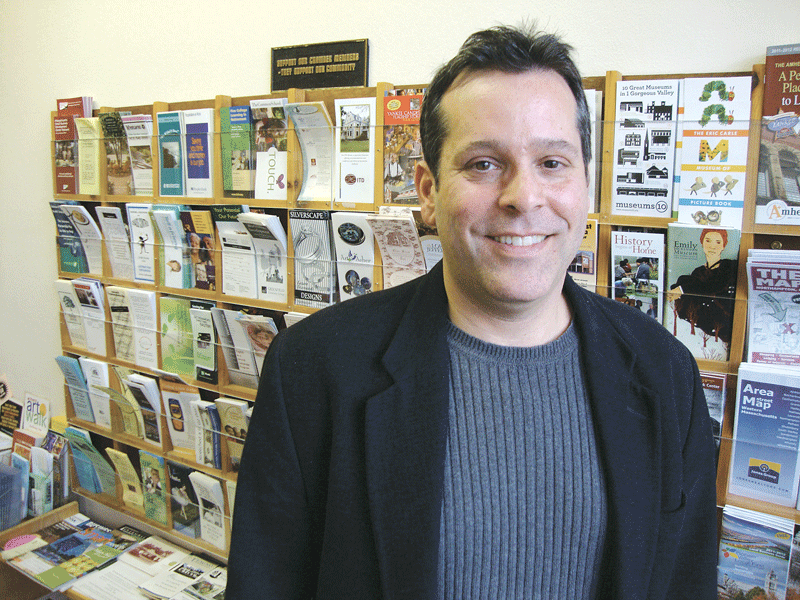
Tony Maroulis says protecting and enhancing the Amherst brand is now part of the mission for the Amherst Area Chamber.

Tony Maroulis was talking about the broad mission of the Amherst Area Chamber of Commerce, and how it’s changed considerably over the past 56 years.
And time and again, he came to the words ‘brand’ and ‘branding,’ which he used to describe not only his organization, but the town of Amherst itself and, especially, its historic, eclectic, and hugely popular downtown.
“The approach that we have taken, and the approach you have to take, is to establish what the core brand is,” said Maroulis, executive director of the chamber. “In Amherst, that is its downtown and the educational institutions. You have to keep that in mind when crafting any strategy.”
Building, protecting, and promoting the brand are critical to the success of everything from attracting and retaining businesses to luring tourists and retirees, to enabling the colleges and UMass Amherst — which give the area so much of its identity and vibrancy — to successfully recruit faculty and staff, said Maroulis, adding that such work also facilitates growth of other areas of Amherst and surrounding communities as well.
“If the strength of the downtown is at peak levels, and you have a visible vibrancy where people are coming, you know you’re driving on all cylinders,” he said. “That really starts to expand and extend to the health and vitality of South and North Amherst as well, and then the other communities.
“It’s about strengthening that brand, and that brand really is about Amherst. Not to detract from other towns, but you have to consider what people on a national level know about your brand identity. And they know Emily Dickinson, the colleges. You have to make sure that you keep that core brand strengthened.”
Historically, what was then called the Amherst Chamber of Commerce was founded in 1956 by a group of businessmen who banded together to forge partnership opportunities in their town.  “Many of those families that were instrumental in forming the chamber at that time are still active in the community — the Jones family, the Puffer family. It has been an enduring institution, and one that has had participation from these families and others from generation to generation,” Maroulis said.
But, he noted, as the community has grown from its bucolic background into one of New England’s best-known college towns, the business sector, and the chamber, have evolved with it.
The chamber’s role has expanded over the years, he said, from a small networking organization that would stage fund-raisers and promote member businesses, into an agency that is increasingly about advocacy, and more involved in the politics and planning of the town and region. “We’re much more heavily invested than our role traditionally has been,” he said.
Over the past 10 years, beginning with one of his predecessors, John Coull, the ACC expanded to include some outlying districts that have an intrinsic connection to the Amherst hub — Hadley’s route 9 corridor, the Franklin County town of Sunderland — and, thus, the organization grew into its present name, and is now the AACC.
“There are, in fact, businesses from 20 surrounding communities who are members,” Maroulis said, “because they realize the importance of a presence here in this town.”
For this issue, BusinessWest looks at how Maroulis and the AACC have been getting down to business in order for that brand to translate to higher goals, both within the business community, but also into a philosophical and social dimension that some might deem outside the purview of a chamber of commerce.

Neighborhood Watch
Maroulis pointed to one of the best-known local examples of a civic brand: downtown Northampton.
“They’ve been building upon that since Thornes Market took off decades ago,” he explained. “That affected the commerce on King and Pleasant streets. But that also affected the decision of a business like Kollmorgen wanting to stay. And so, if the strength of the downtown — maintaining a quaint New England character, yet also its emerging urban type of feel and sophistication — is fully intact, then that’s going to mean we can attract businesses in our own outlying areas.
“They’re going to want to be here because that core is strong,” he continued. “They’re going to want to have that access to the businesses downtown, and also see their community members in the village square.”
Building upon the civic strength of Amherst requires some evolution. Adjacent to the downtown parking garage, a new construction, a five-story building nears completion. With retail at the ground level and residences on the upper floors, it represents the first project of this scope and size in Amherst in decades.
“This new building is exciting in many dimensions,” Maroulis said. “It proves that you can do infill projects, with zero-lot-line construction, right in downtown Amherst. That’s important not only to the development community, that it can get done, but also to the community at large, to let them know what the possibilities can be.”
Also in the final stages of completion is Amherst’s Business Improvement District. “The fact that downtown landlords are putting money into the enterprise of downtown is truly exciting,” he said. “They are creating something that is sustainable. This isn’t membership-based; everyone is opting in, and they’re sticking it out as long as they have those buildings. It says a lot about the dedication of those participants.
“Those landlords’ faith that we can continue to move our downtown forward is important,” he added. “And it’s a hugely positive sign. As we promote this brand, having that sustainable resource to maintain it on a regular basis allows downtown to continue to be competitive in the marketplace.”

Community Action Plan
Maroulis noted that, at peak levels, pre-recession, the AACC numbered somewhere around 650 members. “We’re back down to around 520, 550,” he added. “So we’re still pretty strong. That’s reflective of the strength of this community, and for one great reason, we can thank our educational institutions.”
The public school system for the Amherst region is legendary for its academic excellence.  But he allowed that the town is sensitive to its social needs.
“Nearly 40% of our school-age population is on free or reduced-price school lunches,” he explained. “And there is a significant percentage of our population that is right around the poverty level. If we don’t address some of these issues, we simply can’t continue to be competitive. And that’s why it is so important to be forward-thinking now.”
When pressed to explain the role of a chamber of commerce in such a sociopolitical forum, Maroulis said the answer was far simpler than the problem itself.
“The chamber is an organization that is very close to the culture and norms of our backyard,” he said. “It’s not just business for business’ sake, or just for profit’s sake. As we are reflective of what our community looks like, we’ve been involved, and we continue to get involved, in all facets of this conversation. I don’t think it is a big jump to wonder, if you have a poor school system, how does that affect the real-estate market?”
That reasoning is also reflective of other aspects of the town’s vibrancy. “This is key to attracting faculty who want to come here — generally speaking, not making the same money that they may make in a larger research university,” he explained. “We have some very talented faculty who could just as easily be teaching at Ivy League schools, but they have chosen to be here for the quality of life.
“I’ve had many of my professor friends talk about the sacrifices in terms of salary, but the quality of life and the excellent school system were significant draws,” he added. “If that school system erodes, how much harder is it to continue to attract that caliber of faculty?”

Planning for the Future
Maroulis joked that, in another lifetime, he might want to be an urban or town planner. Zoning and master-plan agendas with regard to working, walkable village centers have been on the front burners of the AACC as Amherst negotiates its town, gown, and development issues.
He credits the generational breadth of his board for both its legacy and its visionary abilities in maintaining the concept of the town’s strong brand, which has and will continue to have currency in these ongoing conversations. While some business families have been active for decades, there is a younger group of professionals that will ensure that the AACC remains vital well into the future.
Maroulis added that partnerships with other regional organizations have a symbiotic relationship with the college town’s business community — not just the newly created BID, but the Greater Northampton Chamber of Commerce and their collaboration to start a Hampshire County Regional Tourism Council.
“What we are is about community,” he said. “And we stress, both from our mission and in our actions, that being a part of something larger, participating in that, is a long-term blueprint for success. You can’t be on an island by yourself.”

Home Builders Sections
Home & Garden Show Offers Businesses Valuable Exposure

Brad Campbell

Brad Campbell says the home show is a valuable source of funds for the Home Builders & Remodelers Assoc., but more critical as a marketing tool.

To call the Western Mass. Home & Garden Show a lifeline for certain businesses, says Brad Campbell, would certainly be underselling it.
“I know of one foam-insulation company that gets 60% of its business from the home show,” said Campbell, president of the Home Builders & Remodelers Assoc. of Western Mass., the organization that has been putting on the show for the past 58 years. This year’s event takes place on March 22-25, at the Eastern States Exposition.
That 60% figure isn’t an isolated example, he told BusinessWest. For some companies, the leads generated over those four days may account for up to 70% of their business for the year.
“The home show gives vendors the opportunity to market to an audience that normally wouldn’t see their name,” he explained. “They get in front of consumers for four days — more than 20,000 consumers, in fact. That, by itself, is a tremendous value.”
That exposure is, in many ways, a reflection of the goals of the association itself, Campbell noted.
“We’re an independent group made up of builders, remodelers, and what I call allied industries, industries that support builders and remodelers,” he said. “We have about 400 members, and our purpose is to represent the interests of those industries, both legislatively and by helping our members develop themselves as stronger business people. We offer education to our members to try to help them run their business more effectively and efficiently.”
The home show, he explained, started as a way to generate revenue to support the association.
“Like any trade group, we’re supported by dues from members. We try to keep dues as low as possible, and the home show has been able to be our funding mechanism to accomplish that. But that’s a minor point; the real purpose of the home show is that it gives the community the opportunity to see and touch and feel these new products we’ve developed, and incorporate them into their homes. It’s developed over the years to be a spotlight for these products and services.”
For this issue, BusinessWest sits down with Campbell to learn how the Home & Garden show continues to evolve in its 58th year, and why it continues to be that vital lifeline — or, at the very least, a springboard into a busy spring — for so many companies.

Bricks and More
The scope of the home show has definitely expanded, Campbell explained, noting that it’s no longer just a showcase for new products and construction- and landscaping-related services. Visitors can learn how to finance their projects by visiting one of a whopping 10 banks and credit unions that will set up shop at the show. Other exhibitors — more than 350 in all, in more than 90 different categories — run the gamut from inspection services to security and alarm systems; Internet and communications to moving and storage; duct cleaning to pianos and organs.
“We even have automobiles at the home show,” he added. “It’s no longer just about homes; it’s about lifestyle, how we live our lives, whether it’s improving our backyards, creating an escape from the day-to-day, or the vehicles we drive, or the sheds we put things in. Sheds have also become a big portion of the show.”
The theme of this year’s show is ‘Rebuilding Western Mass., Rebuilding Lives,’ a nod to a freak series of weather events last year that turned countless lives upside down across the region.
“A lot of consumers haven’t figured out how they’re going to do it,” Campbell said in reference to said rebuilding. “This is a place where they can talk to professionals, talk to suppliers, architects, and find a way through the maze of how to get back on their feet.”
Responding to the storms of 2011, he noted, some fields (roofing and siding, for instance) were booming from the get-go, but much of the new construction still hasn’t happened because property owners and insurance companies continue to deal with claims, so there’s plenty of opportunity on the table for companies in dozens of specialties. “A lot of people were underinsured or uninsured,” he added. “We’ve all heard horror stories. It’s been interesting.”
That brought Campbell back to one role of the Home Builders & Remodelers Assoc., and that is as a resource for consumers looking for construction services. The home show, he said, is one way to get that message across, by enhancing the group’s profile.
“That’s one thing that gets lost about our association,” he noted. “When consumers are trying to figure out which builders or remodelers to use, when they have questions, we’re possibly the best source for that information. When consumers call, we do the research. We have a referral program for our members, so when a consumer calls and wants work done on their home, we’ll find a member willing to do the work. Sometimes people think of the Yellow Pages first, but here, we’ve got the resources.”

Solar Proprietors
Those consumer questions often center around options for energy-efficient products, an increasingly noteworthy trend in building. At the home show, that’s reflected in everything from solar and geothermal products to a company like Eco Building Bargains, which specializes in repurposing discarded building supplies.
“We’re seeing more technology, more energy-efficient products,” Campbell said. “That’s what consumers are looking for. This year we have three or four solar companies, where in the past we’d have one. High-efficiency heating and cooling systems always play a big role.”
Also on the rise at the show — perhaps reflecting an improving economy — are luxury items, from pools and hot tubs to central vacuum systems and other gadgets that make home life a little easier.
Speaking of making life easier, Campbell’s organization aims to do just that for area nonprofits, many of whom are offered free booth space at the show. The Home Builders & Remodelers Assoc. has partnered in the past with the Red Cross, Shriners Hospital, Rebuild Together Springfield, the American Cancer Society, Habitat for Humanity, Harmony House, and many others. It also maintains a scholarship program for members’ children, which has doled out some $400,000 to date.
“We try to give nonprofits the opportunity to get in front of people and explain who they are and what they do; that’s an important component of community service that we’re promoting heavily,” he explained.
This year, the association is working with Homes for Our Troops to build a house in Granby for Marine Sgt. Joshua Bouchard, who lost his left leg and broke his back after his vehicle drove over an explosive device in Afghanistan in 2009.
Efforts like that, Campbell said, make it clear that “the culture of home shows is such not just about doing business. One thing I’ve found is that people actually go to these to see old friends, people they haven’t caught up with in recent years. It’s a social event as well as a consumer event.”
And if it helps to rebuild a few lives — from tornado victims to an injured Marine — then it’s a show even more worth seeing.

Joseph Bednar can be reached at [email protected]

Landscape Design Sections
Design Professionals Navigates Shifting Landscape in a Competitive Field

Peter DeMallie (right, with Ben Wheeler)

Peter DeMallie (right, with Ben Wheeler) says factors like ADA compliance and ecological concerns have made landscape architecture more complex over the years.

Peter DeMallie says some people have an image of landscape architects hauling potted plants and bags of mulch into a torn-up backyard.
“Landscape architecture is not just selecting plant species and outlining them on a map of the property,” said DeMallie, president of Design Professionals Inc. “That’s a very small component of what landscape architects do.”
Rather, the projects his company tackles tend to be much larger in scale, with significant elements of civil engineering, site planning, and land surveying, some of the other specialties of this South Windsor, Conn.-based firm.
“The crux of our landscape-architecure business supports our other disciplines, our civil-engineering and land-surveying business, and most of that work is for commercial and industrial clients,” said Benjamin Wheeler, a landscape architect and director of Operations for the company.
Design Professionals, which celebrated 25 years in business last year, has worked on more than 2,500 projects in more than 120 communities in Connecticut, Massachusetts, and Rhode Island, encompassing residential, retail, office, and industrial sites, as well as schools, churches, parks and sports fields, and municipal facilities.
“We average 100 new projects a year, and that’s over all disciplines,” DeMallie said. “Not all those have a landscape-architecture component, but a large number of them do.
“We aren’t the type of firm that goes into somebody’s backyard,” he added, before correcting himself somewhat and detailing some relatively larger-scale residential jobs. “They’re primarily high-end residences looking for professional designs in and around the pool, associated landscaping, waterfalls … we can do that, but typically for the higher-end market.”
In fact, residential work used to be a larger portion of the business, before the housing market collapsed in 2008 and launched the Great Recession.
“The demand for services dropped off appreciably during the recession, and even after the official recession end. The economic impact to our business, to the design marketplace, was heavily impacted,” DeMallie said.
Many anticipated projects were backlogged, he explained, and residential work in particular suffered; “as for single-family subdivisions, we have worked on one in the last three years. Forty percent of our business used to be residential; now it’s probably under 20%.”
Still, Design Professionals has stayed busy with projects ranging from a Fedex Ground distribution center in South Windsor to the design of the Farmington Sports Arena, which features a mix both natural- and artificial-surface fields.
DeMallie and Wheeler recently sat down with BusinessWest to talk about how the company has grown over the past quarter-century, and particularly how the business of landscape architecture has changed over that time. It’s a complicated field, to be sure, even though the outcome is often fun and games.

Green Acres
One current job that is strictly a landscape-architecture project involves extensive work at South Windsor High School, bringing the grounds and athletic fields up to code, including handicapped access under the Americans with Disabilities Act.
“ADA compliance is a component of every single project now, whether public or private sector, whether it’s an educational facility, police station, industrial facility, office space, you name it,” said DeMallie. “It’s one of the many challenges for every site.”
Another major shift has been the increasing prominence of ecological concerns over the past few decades, and the expanding maze of regulatory hassles that surround those issues.
“Environmentally, if you think back as late as the 1960s or even the 1970s, wetlands was not a major factor,” he noted. “But preservation of inland wetlands has grown — the recognition of those sites as important environmental assets. Wetlands on site or adjacent to the site have become a major issue. The idea is to avoid the impact of wetlands, but if it can’t be avoided, you must minimize the impacts and justify the impacts.”
“Erosion control and sedimentation control were an afterthought years ago,” he added. “Now it’s standard operating procedure.”
He laughed when he evoked the pre-1970 view of filling in a wetland as a positive thing — “you were just removing mosquitoes. It has changed a lot.”
Wheeler said “low-impact development” has become a watchword, and referred to a retail project in Easthampton, Conn. that was approved under new local parking-lot regulations. One component of those guidelines is that stormwater runoff is directed into ‘rain gardens’ rather than into underground systems. “The gardens are planted with material that’s appropriate and can tolerate both moist and dry conditions.”
The benefit, he explained, has to do with keeping runoff, which may contain anything from fertilizers to debris from the metals on cars, out of the municipal water system.
“Another trend in site design, also part of the green movement, is that you’re seeing more use of LED lighting for [outdoor] fixtures,” he explained. “The technology is those is rapidly improving, so much that I think, in a very few years, we’re going to see even more extensive use of LED lights for site lighting. We’re not quite there in all projects, but in certain situations, it does make sense.”
DeMallie noted that the costs of such amenities are coming down as well, and site owners are always looking to affect the bottom line.
“You can save a lot on energy efficiency,” Wheeler said. “You spent more on the install, but there’s a long-term return on investment.”

Breaking New Ground
The sheer range of the firm’s portfolio is impressive. “Every retail development has a landscape-architecture component,” DeMallie said. A good example is Buckland Commons in South Windsor, a two-building project in South Windsor that includes a bank, retail space, and offices.
“As a landscape architect, I worked to develop multiple concepts for the property, and after one concept was selected, we moved forward with the local approval process,” Wheeler explained. “The site design included signage, determining plant species and their proper location, also a decorative screening wall. I also helped determine the appropriate amount of lighting for the site and worked closely with soil scientists to come up with a wetland mitigation plan, because there was some direct wetland impact with that project.”
That’s a good example of the range of skill sets that go into many commercial, industrial, and municipal projects — it’s no surprise that the Landscape Architecture program at Ohio State University, where Wheeler earned his degree, is housed in the School of Engineering. “It’s a pretty diverse profession,” he said. “I’m constantly working with engineers and surveyors on projects.”
But, again, not as many residential projects as in the past. DeMallie said it’s not just the housing market that has impacted that side of the business, but inadequate long-term planning by communities, with plenty of McMansions and over-55 housing erected over the past decade or two, but not nearly enough affordable homes for young professionals.
“That’s one of the problems in the Hartford and Springfield area,” he said. “The farther you go out from Hartford and Springfield, beyond the heavily urbanized city and suburban areas, as you get into the exurban areas, there’s still land available — but most don’t have full utilities to support it.
“It’s no surprise to anyone that this region has lost some of its young workforce, and one reason is that we don’t have the housing projects to meet their desires and needs, as well as affordable mass transit. It affects our ability as an employer to attract and retain employees with the skill sets we want.”
Still, the company has navigated changes in its industry before, and will continue to do so as the impact of the recession begins to lift. After all, the landscape is always changing — and Design Professionals continues to shape it.

Joseph Bednar can be reached at [email protected]

Banking and Financial Services Sections
Measure Reforming Alimony Is Certainly History in the Making

Get ready, payers and recipients — a new statute is in town, and after so many years, it’s finally about alimony.
In an historic move, Gov. Deval Patrick signed into law “An Act Reforming Alimony in the Commonwealth,” which went into effect March 1. This Massachusetts statutory law, known as M.G.L. c. 208, §§ 48-55 inclusive, defines alimony, classifies it prospectively into four categories, and applies retroactively to existing orders. Gone are the days of unjustified lifetime alimony awards, the extension of alimony past the payer’s retirement age, and the ability of a recipient spouse to receive alimony during their cohabitation with another.
Understandably, judges and lawyers alike are both excited and nervous with such a tremendous new practice tool. From the court’s perspective, the apprehension stems from both its ability to handle the imminent floodgate of litigation and the amount of judicial discretion inherent in the wording of the statute itself. From the lawyers’ perspective, it’s the unknown judicial interpretation of the law to each specific fact pattern, coupled with the technical skill it will take to make effective arguments about how the law applies to each case.
In an attempt to preserve judicial discretion, balance consistency with flexibility, encourage settlement, provide finality, and for the comingled effect of situations where there is child support, this law has potential loopholes and room for creative arguments, much to the dismay of those who seek determinative rules for dealing with the one issue that arguably creates the largest amount of contested divorce litigation.
Specifically, the act is designed to accomplish the following:
• Articulate and define alimony into four separate categories: general-term alimony, rehabilitative alimony, reimbursement alimony, and transitional alimony;
• Set durational time limits that mandate termination of alimony awards no later than a certain date, determined by the length of the marriage;
• Provide parameters for setting the form, amount, and duration of alimony, including the definition of income;
• Suspend, reduce, or terminate alimony upon the cohabitation of the recipient spouse; and
• Terminate alimony upon the payer attaining retirement age, as defined by Social Security.
Retroactively, all existing alimony awards are considered general-term alimony. These awards can now be modified by termination or reduction, should a change in circumstances occur whereby the payer no longer has the ability to pay and/or the recipient’s need is reduced.
In addition, the act provides per-se (meaning that no other circumstance is required) grounds for termination of alimony upon any of the following circumstances:
• Remarriage of the recipient spouse;
• Death of either spouse;
• No later than a certain date pursuant to the act’s articulated durational limits;
• The payer attaining the full retirement age; or, most anticipated,
• The cohabitation of the recipient spouse.
The act also establishes a schedule setting forth when modifications can be filed, seemingly designed to allow both payer and recipient the opportunity for future financial planning, as well as decreasing the immediate judicial burden relative to the opened floodgates of litigation. Specifically, the schedules are for reaching the age of retirement and exceeding durational limits for payment. Notably, however, if there is a basis for modification in addition to an award exceeding durational limits or the payor reaching the full retirement age, the filing schedule is inapplicable, and March 1, 2012 is the magic date.
Testing the statute in Massachusetts courts will help clarify one of the main questions domestic lawyers receive from clients who are paying alimony: whether a recipient’s cohabitation with another person post-divorce, in and of itself, is sufficient to warrant termination. Currently, Massachusetts case law allows for alteration or termination of alimony on the basis of cohabitation only when myriad other factors exist, including the economic benefit and change in circumstance received from the non-spouse co-habitator.
Pursuant to the act, however, general-term alimony will now statutorily be suspended, reduced, or terminated upon the cohabitation of the recipient spouse when the payor shows that the recipient spouse has maintained a common household for a continuous period of at least three months. Evidence of maintaining a common household will surely be a great source of litigation, and includes sharing a primary residence, economic interdependence of the couple, economic dependence of one person on the other, oral or written statements or representations made to third parties regarding the relationship of the persons, engaging in conduct and collaborative roles in furtherance of their life together, and the benefit in the life of the recipient, both from the new relationship and their community reputation as a couple.
Overall, the time is ripe for alimony payers to pull out their old agreements and consult with a creative attorney who is knowledgeable about this substantive change in Massachusetts law. Before each payer goes through this process, however, it is important to note that, if the effect of the existing agreement provides that it “survives as an independent contract” and is “incorporated but not merged” into the actual divorce judgment, the act specifically states that no modification is allowed. If, however, your agreement “merges and incorporates” into the judgment of divorce, a consult will determine if and when the opportunity is ripe to file a modification action, seeking either a reduction or termination.
To those people who have been paying alimony longer than they were married, or who are paying alimony to an ex-spouse who has been living with someone else for years, this measure represents true relief. The light at the end of the tunnel is now in sight and burning bright. Although lawyers cannot yet predict how individual judges will interpret the specific language of the act, the message is clear: alimony in marriages fewer than 20 years in duration is no longer forever.

Melissa R. Gillis, Esq. is an attorney with Bacon Wilson, P.C. in the domestic, special education, and real estate departments; (413) 781-0560; baconwilson.com/attorneys/gillis. Thomas R. Reidy, Esq. is a member of the domestic relations team; (413) 781-0560; baconwilson.com/attorneys/reidy

Banking and Financial Services Sections
Many Homeowners Facing Foreclosure Won’t Be Helped by This Deal

Thomas J. Fox

Thomas J. Fox

From the beginning of 2007 until early 2012, approximately 4 million families lost their homes to foreclosure. While the wave of foreclosures was unsettling, the stories that emerged in 2010 about the process being riddled with sloppy recordkeeping were far more disturbing.
These issues came to light because of the practice known as ‘robo-signing,’ through which families lost their homes based on forged or unreviewed documents. After a year of investigations and negotiations, state attorneys general and the federal government announced a $26 billion settlement with five of the biggest mortgage lenders over improprieties ranging from robo-signing to failing to negotiate in good faith with homeowners. Those lenders include Bank of America, JPMorgan Chase, Wells Fargo, Citigroup, and Ally Financial. How did we get here, and what does this settlement offer? Let’s take a look.
Over the past decade, home ownership exploded across the U.S. Banks and other lenders spent billions of dollars to develop a seamless operation that took new mortgages, bundled them into securities, and sold them as investments. While I’m not going to get into the depth of shenanigans involved in this approach, suffice it to say things did not work out as the lenders and investors anticipated. When borrowers began to default, banks found themselves in a game of catch-up, and they failed to devote enough manpower to deal with the magnitude of the crisis. The institutions’ inability to keep up with homeowners’ requests for workout agreements forced them to cut corners.
When lenders began robo-signing foreclosures, they landed in the crosshairs of just about every consumer advocate and lawmaker. Instead of the required review of documents, lenders had automated the process, and inadvertently begun foreclosing on homeowners who were not in default, or owed no money.
That’s the background; now let’s review the settlement. The terms require the five lenders to contribute at least $10 billion for reducing the principal on loans for borrowers who are either delinquent or at imminent risk of default and are underwater — meaning they owe more on their mortgages than their homes are worth. At least $3 billion is earmarked for refinancing loans for borrowers current on their mortgages and underwater. Up to $7 billion will go toward other kinds of assistance, including forbearance of principal for unemployed borrowers, anti-blight programs, and short sales.
One of the more controversial portions of the settlement is the $1.5 billion set aside for cash payments to borrowers whose homes were sold or taken in foreclosure between Jan. 1, 2008 and Dec. 31, 2011; officials estimate that as many as 750,000 borrowers could receive checks for $1,500 to $2,000, which barely covers the costs of title insurance or moving.
The settlement also calls for $3.5 billion to be used to repay public funds lost as a result of servicers’ misconduct and to fund housing counselors, legal aid, and other public programs determined by the attorneys general. However, many states are already considering those funds to fill budget shortfalls or help with other problems, such as prolonged unemployment. An additional $1 billion will be paid by Bank of America to resolve a separate federal investigation related to alleged wrongful conduct involving inflated appraisals of Federal Housing Administration-insured mortgages.  Half of that $1 billion will be used to fund a loan-modification program for Countrywide borrowers who are underwater on their mortgages.
Federal and state officials promoted the settlement as a significant step in holding the banks accountable for abusive and illegal foreclosure paperwork practices, and one that will provide relief to homeowners. However, despite the billions secured to help homeowners, the aid will help a relatively small portion of the millions of borrowers who are delinquent and facing foreclosure, especially since mortgages owned by the government’s housing-finance agencies, Fannie Mae and Freddie Mac, will not be covered under the deal. That excludes about half the nation’s mortgages.
The door is still open for further actions against the banking industry. Prosecutors and regulators still have the right to investigate other elements that contributed to the housing bubble, like the assembly of risky mortgages into securities that were sold to investors and later soured, as well as insurance and tax fraud.
How will this all play out? Only time will tell.

Thomas J. Fox is the community outreach director at Cambridge Credit Counseling, an Agawam-based professional housing and debt-counseling agency. He is an AFCPE-accredited credit counselor and an NCHEC-certified housing counselor; (413) 241-2362; [email protected]; twitter.com/thomasjfox

Banking and Financial Services Sections
How This Tax-saving Vehicle Can Work for Your Company

Kristina Drzal-Houghton

Kristina Drzal-Houghton

If your closely held company earns significant income from exporting US-made products — or from engineering or architectural services on foreign construction projects — consider forming an interest charge domestic international sales corporation (IC-DISC).
Although exporters often think of newly produced property as export property, used equipment and even scrap also qualify.
In its most recent form, the IC-DISC can provide a permanent 20% tax savings (or even more) for qualifying U.S. exporters. In certain cases, it eliminates U.S. tax entirely on the majority of export income. In addition, distributions to individual shareholders are currently taxed at a maximum rate of 15% — providing a way to convert 35% ordinary income to 15% qualified dividend income. Of course, this assumes that the U.S. exporter generates operating profits and is creating taxable income in the U.S.
To make the most of this strategy, it’s a good idea to act soon. An IC-DISC is relatively inexpensive to set up and operate, and it can reduce your federal tax rate on a portion of net export income by up to 20 percentage points. This differential was originally set to expire on Dec. 31, 2010, but Congress extended it in late December 2010 to Dec. 31, 2012.
Many practitioners strongly believe that this differential will be extended past 2012 even if tax rates on ordinary income increase. In addition to benefiting sole proprietorships and pass-through entities, exporters operating their business via a C corporation can benefit by using the IC-DISC to eliminate double taxation on a majority of their export income, as well as to reduce the need to incur additional payroll taxes on income paid to their shareholders or officers. The IC-DISC is not a tax shelter.

What Is an IC-DISC?
An IC-DISC is a ‘paper’ entity used as a tax-savings vehicle. It is a domestic C corporation, but must request and receive IRS approval to be treated as an IC-DISC for federal tax purposes. It also must maintain its own bank account, keep separate accounting records, and file U.S. tax returns. It does not require corporate substance or form, office space, employees, or tangible assets. It simply serves as a conduit for export tax savings. An important feature of the IC-DISC is that shareholders can be corporations, individuals, or a combination of these. The IC-DISC can be incorporated in one of the 50 states or in the District of Columbia.

How Does It Work?
The owner-managed exporting company forms a special U.S. corporation that elects to be an IC-DISC. The election is made on IRS Form 4876-A, which must be filed within 90 days after the beginning of the tax year. Here are more specifications:
• The exporting company pays the IC-DISC a commission;
• The exporting company deducts the commission from ordinary income taxed at up to 35%;
• The IC-DISC pays no tax on the commission as long it passes two main tests known as the qualified export receipts test and the qualified export assets test. The qualified export receipts test requires that 95% of the gross receipts of the IC-DISC constitute qualified export receipts. The qualified export assets test requires that 95% of the assets of the IC-DISC be qualified export assets. Qualified export assets include accounts receivable, temporary investments, export property, and loans to producers.
• Shareholders of an IC-DISC are not taxed until the earnings are distributed as dividends. However, the shareholders must pay annual interest on the tax deferred. Shareholders that are individuals pay income tax on qualified dividends at the capital-gains rate of 15%. The result may be a 20% or more tax savings on the  commission.
The following calculation shows how the owners can save a combined $500,000 in federal income taxes. Let’s assume an S corporation has $20 million in qualifying export sales and $5 million in net export income on those sales. If the company has an IC-DISC subsidiary, it can pay the IC-DISC commissions up to the greater of 50% of its export net income or 4% of its export gross receipts. In this case, the maximum commission is 50% of net income, or $2.5 million. The S corporation shareholder has reduced pass-through income by the $2.5 million commissions expense. At 35%, this is a reduction of $875,000.
Assuming the IC-DISC fully distributes the commission as a dividend, the shareholder will have $2.5 million of qualifying dividend income taxed at 15% or $375,000. The net of these two items is the $500,000 tax savings.
For U.S. exporters, the IC-DISC is the only remaining tax-saving opportunity. If you are unsure about whether or not an IC-DISC will work, ask the following questions:
• Do you have any transactions outside of the U.S.?
• Do you use overseas distribution?
• Does your product cross any borders?
• Are you generating operating income?
If the answer to any of these questions is yes, an IC-DISC could be a valuable tax-savings vehicle for your business.
On the surface, the rules covering the IC-DISC may seem simple. However, to maximize the tax benefit, a qualified IC-DISC advisor should be engaged. Many times an IC-DISC expert can double if not triple the tax benefit the IC-DISC provides by applying their indepth understanding of how to structure the IC-DISC and using the complex advance pricing rules that the Internal Revenue Code allows for determining the tax benefit. A firm that has proven IC-DISC expertise, offers fixed fees, and optimizes the IC-DISC on a transactional basis (which almost always provides the best result) should be chosen.

Kristina Drzal-Houghton, CPA, MST, is the partner in charge of Taxation at Holyoke-based Meyers Brothers Kalicka, P.C.; (413) 536-8510.

Banking and Financial Services Sections
Know the Rules to Avoid Costly Workers’ Compensation Risks

By DAVID MOTOSKY, CRM

David Matosky

David Matosky

There is no doubt that the cost to employers of providing workers’ compensation insurance benefits for their employees can be a significant budget line item. Just as significant can be the potential cost to employers when they hire non-employees within the usual course and scope of their business operations who might be uninsured for workers’ compensation, without even knowing it.
Whether an employer hires casual labor to help complete a specific project, contracts with a subcontractor to provide specific services to the employer, or hires an independent contractor to perform direct work for or on behalf of the employer, workers’ compensation laws are pretty clear. In the vast majority of cases, an employer will be held responsible for workers’ compensation benefits payable to uninsured ‘contractors.’ But there is an easy way for employers, regardless of their business or industry, to practice sound risk management and avoid the potential of having their loss experience and workers’ compensation insurance costs negatively impacted by workers who aren’t on their direct payroll.
Requiring a current and valid certificate of insurance evidencing proof of workers’ compensation insurance from anyone who does work for you is a simple and practical way to reduce your potential exposure in this area.
In Massachusetts, it is presumed that any person performing services for another is an employee unless the employer can meet the following three-part test:
• One, the individual is free from control and direction in connection with the performance of the service, both under his contract for the performance of service and in fact;
• Two, the service is performed outside the usual course of business of the employer; and
• Three, the individual is customarily engaged in an independently established trade, occupation, profession, or business of the same nature as that involved in the service performed. An employer’s failure to demonstrate all of the above sufficiently establishes an employer/employee relationship under the law.
Let’s first get a clear understanding of the two basic components that directly impact an employer’s workers’ compensation expenses: the direct insurance premium cost to the employer, and the employer’s loss experience. In theory, there is a direct correlation between the two. To the extent that loss experience is favorable, the premium cost will be low. Conversely, to the extent that loss experience is poor, the premium cost will be high.
There are three premium-bearing components that directly impact an employer’s workers’ compensation insurance premium cost: annual payroll, manual-class-code rates, and the employer’s experience-modification factor (and its companion ARAP surcharge, if applicable).
The annual payroll amount is initially estimated by an employer prior to the inception date of the policy, and is subject to audit at the end of the policy term. Payroll includes salary, wages, two-thirds of overtime expenses, casual and temporary labor costs, and payments made to subcontractors that are uninsured for their own workers’ compensation exposures. There is a direct correlation between payroll and premium — the higher the payroll, the higher the premium; the lower the payroll, the lower the premium.
The manual-class-code rates are set and established by the Mass. Workers’ Compensation Rating and Inspection Bureau, and subject to approval by the Mass. Division of Insurance. There are hundreds of class codes, each assigned to a specific classification, that recognizes the predominant work functions of an employee. At the inception of each policy term, the manual class-code rates are applied to the annual payroll amount per classification of employees, per $100 of payroll, to calculate the manual premium. At expiration of each policy term, the insurance company will perform an audit of the payroll to determine the actual classification and payroll exposures during the policy term.
The insurer will charge additional premium if payroll was underreported, or refund premium if payroll was overestimated, subject to any class-code minimum premium. There is a direct correlation between the manual-class-code rates and premium — the higher the rates, the higher the premium; the lower the rates, the lower the premium.
Insurance companies can file for approval of rate deviations from the established manual rates. In what is referred to as the voluntary insurance market, deviated rates are readily available and plentiful. Policies written through the Mass. Workers’ Compensation Assigned Risk Pool (MWCARP), the market of last resort in the state, are written with only the manual rates applied, without the potential for savings of deviated rates, or premium discounts, for that matter. In general, employers with favorable loss experience have many options available in the voluntary market, whereas employers with poor loss experience or high hazard operations end up in the pool.
An experience-modification factor, and any companion ARAP surcharge, is calculated on an annual basis by the Mass. Workers’ Compensation Rating and Inspection Bureau (WCRIB) for each employer, prior to the inception of each policy term. The experience-modification factor is applied to manual premium to calculate standard premium. Any applicable ARAP surcharge is then applied to the standard premium to calculate the additional surcharge. Those employers that operate in multiple states in addition to Massachusetts have their calculations performed by the National Council on Compensation Insurance (NCCI), using the same basic formula. For smaller employers that aren’t eligible for experience rating, a merit-rating calculation is performed by the WCRIB. Merit rating acts in a similar fashion to experience rating.
In very basic terms, an experience-modification factor, and any companion ARAP surcharge, rewards an employer that has favorable loss experience by applying a credit to their premium, and penalizes an employer which has negative loss experience by applying a debit to their premium. There is a direct correlation between the experience-modification factor and premium — the higher the experience-modification factor, the higher the premium; the lower the experience-modification factor, the lower the premium.
An experience-modification factor of 1.0 is neutral, with no credit or debit applied. An experience modification factor of 1.1 applies a debit of 10% to premium. An experience modification factor of 0.9 applies a credit of 10% to premium.
Prior to Oct. 23, 2002, sole proprietors and partners of legal partnerships were unable to cover themselves as employees under a worker’s compensation policy that they purchased. The change to M.G.L. Chapter 152 allowed a sole proprietor or partner to elect coverage; otherwise they would not be covered under the policy for any work-related injury. If coverage election is made, the minimum payroll for premium computation purposes for each respective employee is set by the state on an annual basis, based upon the state’s average weekly wage (AWW). Currently, this minimum payroll amount for policies effective Oct. 1, 2011 and after is $41,300, even if the actual payroll is less.
At the same time, the change to M.G.L. 152 made it possible for certain corporate officers and directors to exempt themselves from coverage by applying to the Mass. Department of Industrial Accidents (DIA) for approval. If approved by the DIA, the payroll of the respective officer or director would not be included for premium-computation purposes. The officer or director must own at least 25% of the issued and outstanding corporate stock. If the corporation has no employees, other than those officers that have exercised their right of exemption, the corporation is not required to carry workers’ compensation insurance. If the corporation has other employees, or subsequently hires an employee, they must secure coverage in compliance with M.G.L. Chapter 152.
Any newly formed corporations are encouraged to consider the right of exemption and file Form 153 with the DIA for approval in a timely manner. Otherwise you run the risk of being issued a stop-work order (SWO) by the DIA. Over the past several years, the DIA has been aggressively investigating employers to ensure the existence of valid insurance in compliance with the law, issuing SWOs and assessing fines for noncompliance.
In January 2004, the DIA clarified that legal partnerships include LLCs and LLPs, and therefore the members of an LLC and the partners of an LLP may also elect to carry workers’ compensation insurance coverage for themselves. As is the case with sole proprietors, if coverage election is not made, there will be no coverage under the policy for any work-related injury.
Certificates of insurance evidencing workers’ compensation that are issued to sole proprietors and legal partnerships should list on them whether or not the sole proprietor or partners have elected coverage or not. If the certificate of insurance you are provided is silent as to the election of coverage, you are encouraged to contact the insurance agent or insurance company that has issued the certificate for clarification.
A word of caution when it comes to certificates of insurance and your reliance upon them — they may not be worth the paper they are printed on. They only provide a snapshot of the insurance coverage in force at the instant ‘print file’ was hit. Since that time, the policy could have been cancelled for misrepresentation or non-payment of premium.
The bottom line is that every employer should require, track, and maintain on file certificates of insurance from any person or employer that they enter into contracts with. Otherwise, a potential work-related injury to an uninsured employee will negatively impact your loss experience, increase your experience modification factor, and certainly increase your workers’ compensation insurance cost for years to come.
If you ever have any questions or concerns regarding the validity of a certificate of insurance, or how hiring a subcontractor or independent contractor might impact your own workers’ compensation insurance policy and its cost, your best bet is to rely upon the advice of your local independent insurance agent.

David Matosky is operations director for First American Insurance Agency in Chicopee, and has earned the designation of certified risk manager;
[email protected]

Banking and Financial Services Sections
PeoplesBank Surpassed $1 Million in Charitable Giving in 2011

Tom Senecal visits with students at Square One in Springfield.

Tom Senecal visits with students at Square One in Springfield. PeoplesBank donated $25,000 to the organization to help it recover from the June 2011 tornado.

Tom Senecal says the spate of weather disasters and resulting multi-level recovery efforts probably had something to do with PeoplesBank passing the $1 million mark in charitable contributions in 2011.
After all, the bank committed $200,000 for relief efforts in the wake of the June 1 tornadoes that devastated neighborhoods in Springfield, West Springfield, Westfield, Monson, and other communities.
But Senecal, the bank’s chief financial officer, believes the Holyoke-based institution probably would have reached that milestone even if the region hadn’t been visited by those twisters, which created needs that probably couldn’t have been imagined on May 31.
That’s because the needle had been moving steadily toward that number for the past several years — donations totaled $850,000 in 2010 and $705,000 in 2009 — and also because the bank had a very solid year with regard to the bottom line, and sought to redirect profits back to the community as a reflection of the culture at the 127-year-old bank — and to address growing needs in many areas, said Senecal.
“We were seeing a tremendous need in all the communities we do business in,” he told BusinessWest. “Some of it was related to the tornadoes, but it was across the board, really, from gifts to several senior centers to donations to hospital capital campaigns.
“We’re a mutual institution, and we do not have stockholders,” he said. “We believe, as a result of that, that it’s our responsibility to give back to the communities we do business in.”
And while surpassing the $1 million mark is a noteworthy achievement, like the bank’s consistently high ranking on the Boston Business Journal’s listing of the most charitable companies in the state (38th in the last survey), what’s behind that number — meaning the direction this philanthropy takes — is the more significant story, he told BusinessWest.
Indeed, the bank continues to focus its efforts on three major areas — health care, education, and what he called “environmentally friendly initiatives,” with that latest category being a far-more-recent phenomenon, meaning the past decade or so. The weather calamities, especially the tornado, created new types of need, Senecal noted, and new and different ways for PeoplesBank to lend its support to the community.
Susan Wilson, vice president of Marketing at PeoplesBank

Susan Wilson, vice president of Marketing at PeoplesBank, tours the new Leverett Elementary School greenhouse that was funded by a donation from the bank.

Examples range from a $25,000 donation to early-childhood-education provider Square One, which saw its downtown Springfield facilities, including its operations center and some programs for children, leveled by the tornado that plowed through the south end of the city, to gifts to several impacted communities for reforestation efforts.
“We made that donation to Square One within the first week after the tornado struck to help with emergency needs that they had within the community,” he said, adding that contributions were also made to a number of organizations involved in relief efforts, such as the Red Cross, the Community Foundation, and others.
But, as Senecal said, there was more to the bank’s surge past the $1 million mark than the wrath of Mother Nature.
Indeed, 2011 was a year when state and especially federal budget cuts hit a number of nonprofit agencies quite hard, said Senecal, adding that PeoplesBank stepped forward to help many of these institutions.
“Government cutbacks have forced nonprofits to seek alternative sources of funding so they can continue their missions,” he said, adding that more reductions are likely in the years ahead, meaning that need will continue to increase.
There was also the bank’s ongoing expansion, he said, noting that, when the institution widens its reach into a different community or neighborhood, it punctuates its presence with donations targeted for that area. This trend was continued recently in Springfield and West Springfield (the bank opened its latest branch there last year), and it will be witnessed in Northampton when it opens its first full-service branch there (and 19th overall) later this year.
“We reach out to the community to find causes that can have as much impact as possible in the cities and towns in which we do business,” he said of this pattern, adding that the ongoing expansion efforts are a big reason why overall donations within the Western Mass. region have increased more than 40% since 2008.
Looking back on 2011 and reaching the $1 million milestone, he noted that that there were donations made to roughly 400 organizations. Many were tornado-related in some way, he continued, noting that a total of $80,000 was donated to five communities for so-called “re-greening efforts.”
Overall, though, contributions were focused on those three main areas of concentration, said Senecal, noting that, in health care, donations were made to senior centers, hospitals, other care providers, and specific initiatives to improve the overall health and well-being of area communities.
There were many contributions in the broad realms of education and the environment as well, he went on, adding that some managed to overlap.
Such was the case with a donation put toward the building of a greenhouse at the Leverett Elementary School in Leverett, Mass.
But Senecal stressed that donations to the community are not limited to checks from the bank, or monetary contributions.
Indeed, PeoplesBank employees were ranked third in the state by the Boston Business Journal in terms of charitable giving from their pockets, and fourth when it comes to volunteer hours donated within the community, statistics that are a big part of the bank’s philanthropic track record.
“When you talk about a corporate culture of giving, it’s not just at the president’s level or the PeoplesBank level,” he explained. “It comes from all the employees.”

— George O’Brien

Banking and Financial Services Sections
The 401(k) Coach Gets Write to It

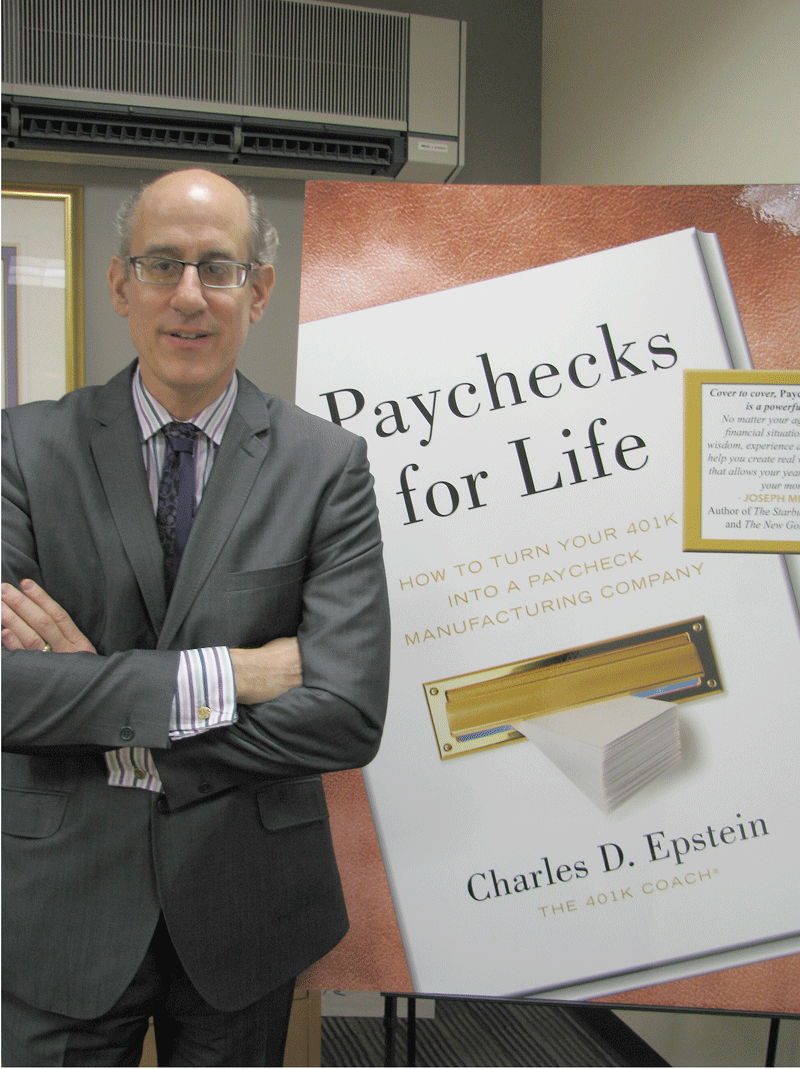
Charlie Epstein says that, as he was pondering a title for his recently released book, he was, for a very short time by his estimation, thinking about something Steven Covey-like — “maybe ‘Nine Habits of Highly Successful Savers.’”
But while those habits, or principles, as he calls them, are, indeed, the foundation of the book, and he has a patent pending on them, he opted instead for a phrase he started putting to use several years ago  — ‘paychecks for life’ — because he believes it’s far more forceful, attention-grabbing, and to the point.
And it also helps him in his quest to entertain as well as educate, a quality he maintains is missing from most everything else that has been written on the subject.
“When I was starting in the retirement industry and reading through what was available for educational material … it was absolutely atrocious,” Epstein, president of Epstein Financial Services and the 401(k) Coach, told BusinessWest. “The average person comes into a 401(k) meeting with the expectation that they’ll be asleep in 10 minutes. You have to create a Disney-like experience for people today; you have to entertain them.
“That’s hard to do, but the principles are engaging — and they’re simple,” he went on, while explaining his approach taken with Paychecks for Life: How to Turn Your 401(k) into a Paycheck Manufacturing Company, a detailed look at effective retirement saving — although Epstein doesn’t use the word retirement any more.
Well, he does, but only in an exercise he’s probably repeated several hundred times, in which he asks the person he’s sitting across from (be it a reporter, client, or potential client) to give Webster’s definition of the term. Usually he doesn’t wait long before giving the answer himself — ‘to be put out of use’ — and then asking, “do you know anyone who’s working to be out of use?”
So he’s created the phrases ‘desirement,’ ‘desirement plan,’ ‘desirement mortgage,’ ‘desirement years,’ and others, which are at the heart of his motivation to pen and then self-publish Paychecks for Life.
“My book is not about how to invest your money better,” he explained. “It’s about the nine principles to get you to save smarter, and then how to maximize this mechanism that the government calls the 401(k).”
Elaborating, Epstein said he wrote the book ($22.99 hardcover, available through Amazon and paychecksforlife.com) to change people’s attitudes about saving for the years after they’re done working. When asked what needs to be changed, he said many things, but especially the still-wildly held opinion that Social Security or a company pension will be there and be an adequate source of income, and also the sentiment among many people that they simply cannot afford to save for retirement — or save enough to create what Epstein calls a paycheck-manufacturing company.
Which brings Epstein to one of those nine principles, the ‘desirement mortgage’ (which he calls the centerpiece of the book), and the many parallels he makes between this and a traditional mortgage.
Indeed, Epstein advises individuals to follow what he terms the “home-ownership formula for success” when they craft a retirement-savings strategy, with the following thought processes:
• You identified your dream house and what it would cost;
• You committed to paying for your dream house within a certain period of time;
• You calculated what it would cost, i.e. what you could afford to finance each month as a mortgage payment;
• You saved for your down payment;
• You adjusted your plan and budget to overcome unforeseen financial obstacles that might prevent you from achieving your dream of home ownership;
• You never stopped believing you could save for and finace your goal of home ownership; and
• You achieved your dream (desirement) and purchased your first home.
For this issue, BusinessWest turns some of the pages in Epstein’s book, in a figurative sense, while talking with the author to gain some perspective about how he came to write Paychecks for Life, and why he firmly believes it will successfully change some mindsets.

Past Is Prologue
“Your Annual Eviction Notices.”
That’s the title Epstein put on one of the earlier, introductory chapters of his book, and it’s a phrase designed to grab some attention, but also to drive home his points about Social Security and company pensions.
He notes that, when most people get their annual Social Security statements in the mail, they immediately turn to the page that breaks down what they’ll receiving in benefits if they retire at 62, 65, and 67, respectively. What just about everyone neglects to do, Epstein goes on, is look at the first page, where the following notice is printed:
“Social Security is a compact between generations. Since 1935, America has kept the promise of security for its workers and their families. Now, however, the Social Security system is facing serious financial problems, and action is needed soon to make sure the system will be sound when today’s younger workers are ready for retirement. In 2015, we will begin paying more in benefits than we collect in taxes. Without changes, by 2037 the Social Security Trust Fund will be able to pay only about 76 cents for each dollar of scheduled benefits.”
While discussing this fine print, as he called it, Epstein digressed to talk about why he and many others believe the Social Security system must be changed — with wealthy Americans removed from it, among other adjustments — but quickly returned to the matter at hand, which was getting readers to think well beyond checks issued by the U.S. Treasury when they consider their desirement years.
And the same goes for pension plans, he writes. “In 2007, of all the Fortune 500 pension plans that existed in 1996, 25% had been terminated, closed, or frozen. Between 1996 and 2007, Fortune 500 plans were closed or frozen at the average rate of 3% per year. In 2006, Verizon and IBM shocked the corporate world by freezing their pension plans (managers only in the case of Verizon), which created a standard that others soon followed.”
Which brings Epstein back to the 401(k) — the vehicle that enables employees to put a portion of their current income (a contribution) into several investments on a pre-tax basis — which has been the victim of some negative PR in recent years. Examples include the term ‘201(k),’ used often during the height of the Great Recession, when participants were seeing their balances take hits of 30% or more, and also a Time magazine cover which came out in October 2009 with the headline, “Why It’s Time to Retire the 401(k) (and What You Can Do Instead).”
“That was the worst journalism I think I’ve ever seen in my life,” he said of the Time article, adding that such bad press helped inspire Paychecks for Life. But the seed had actually been planted well before, when the idea of the 401(k) as a paycheck-manufacturing plant started gelling in his imagination.
But merely having such a plan isn’t enough to meet that mission of providing paychecks for life, Epstein told BusinessWest, noting that this simple fact is what compelled him to draft his nine principles for carrying out that task — and then writing about them. They are, in order:
• Act like an entrepreneur;
• Determine your desirement mortgage;
• Use other people’s money to capitalize your business;
• Harness the power of compound interest;
• Use technology to save automatically;
• Manage risk by outsourcing;
• Control fees and expenses;
• Guarantee your paychecks for life with annuities; and
• Take advantage of tax benefits with a Roth.
All the principles are important, said Epstein, noting that, together, they send a clear message — that, for a 401(k) to work as designed, the participant must take full ownership of it. His book, in essence, explains how to do that.

The Plot Thickens
It all starts, literally and figuratively, with that part about thinking like an entrepreneur, writes Epstein, who adds to the generally used definitions of that term his own spin: “one who figures out what products and services are needed and then finds the people (talent) who can make the idea become reality, all the while spending less money than will be received. In other words, one who recognizes opportunities and seizes them.”
Elaborating, Epstein notes that, when he asks many business owners to identify their retirement plan, they almost always answer, ‘you’re sitting in it.’ The bottom line is that entrepreneurs work hard to create value in their business so they can later transform it into paychecks for life. Employees need to do the same thing, he writes, through a 401(k).
“Your employer is saying, in essence, ‘I’m going to give you an opportunity to build a business inside my business that you can sell someday,’” he explained. “The government calls it the 401(k); I call it your own personal paycheck-manufacturing company, the single greatest mechanism you have to accumulate wealth in the most tax-advantaged way — but you have to act like an entrepreneur.”
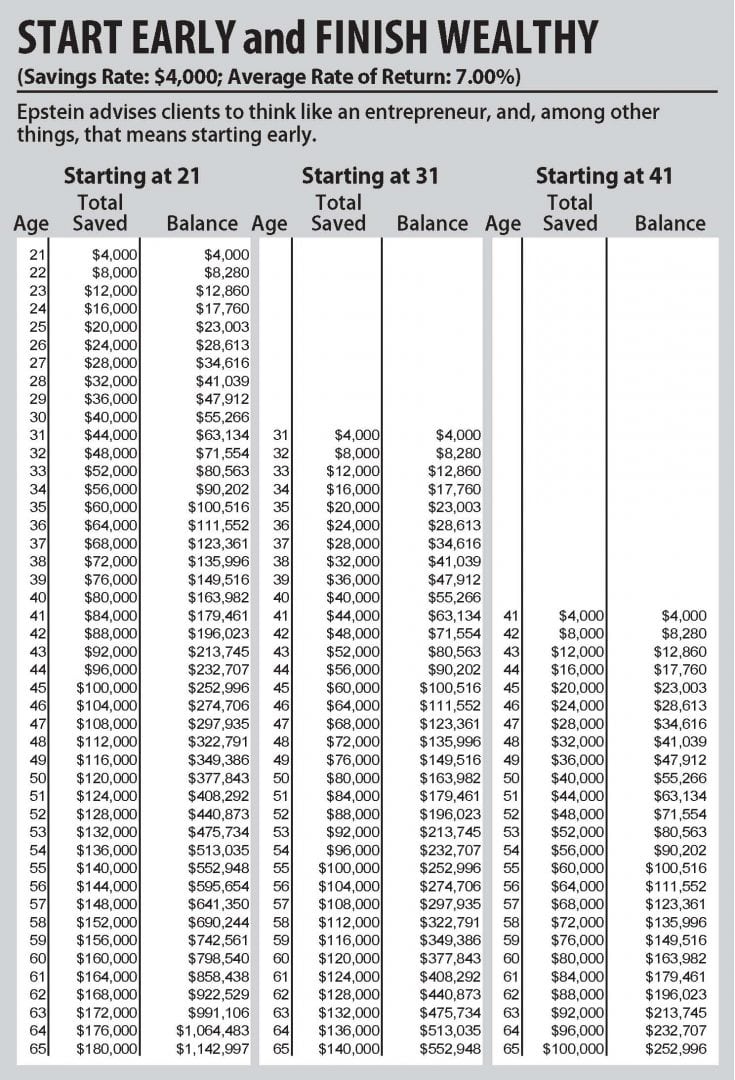
There are similar calls to action, supporting charts and graphs, acronyms (such as YEM, your employer’s money; and USM, Uncle Sam’s money), and what Epstein calls ‘paychecks-for-life action steps’ for each of the principles. Consider these as typical:
• “The dollars you invest in your PCM Co. are like the employees your boss hires to work in his or her company, only better. Your employees work 24/7/365 and never complain. Hire as many as you can as fast as you can.”
• “To act like an entrepreneur, you must practice marginal thinking. Always think and act in small increments. The results will be exponential.”
• “Uncle Sam’s money (USM) is offered to you interest-free. You can either take it now and invest in your PCM Co. or let Uncle Sam keep it, never to be seen again.”
• “Think of your desirement mortgage the same way you do your home mortgage. Use the lowest interest rate possible and sleep at night. Treat it with respect. Never gamble with it.”
• “Slow and steady wins the race. Compounding takes a while to get started, but once it does, the process accelerates, and your savings grow more substantially every year.”
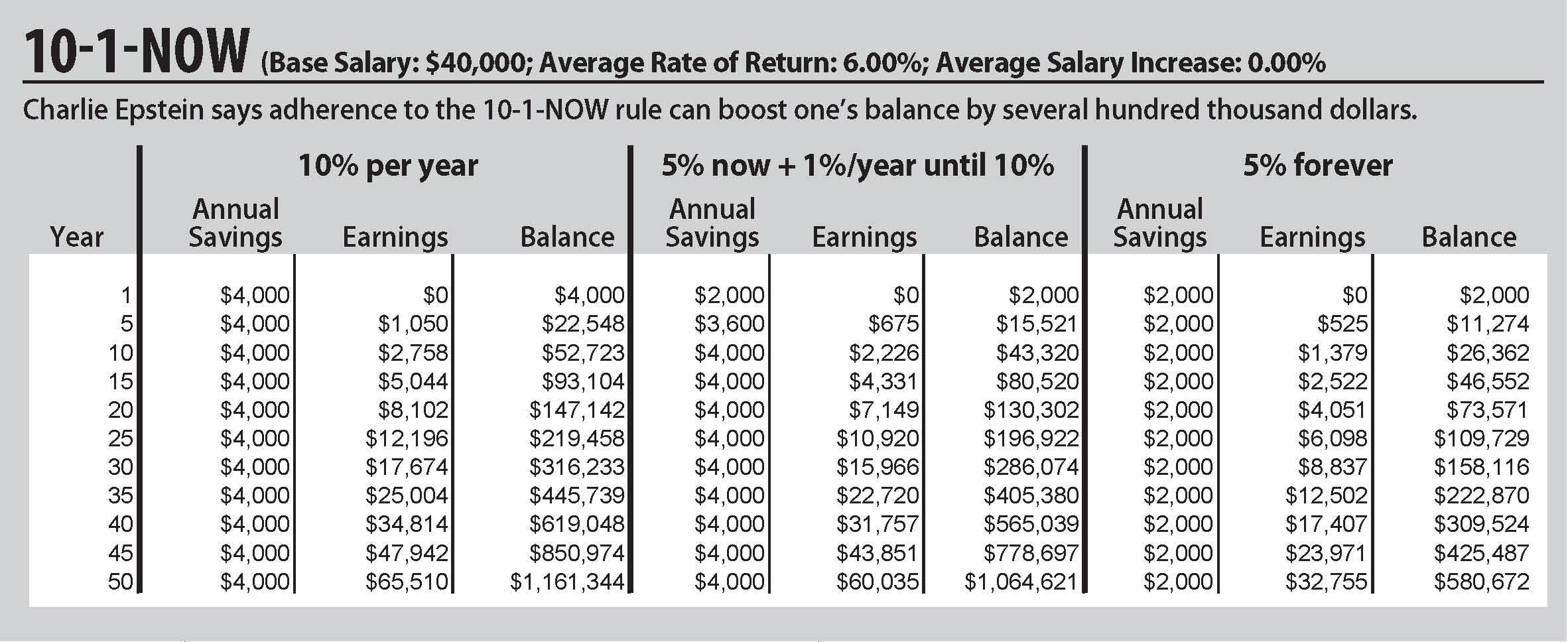
Epstein also uses a number of catchphrases and mantras he hopes will become part of the reader’s vocabulary, such as the ‘10-1-NOW’ rule.
The ‘10’ stands for 10% of the participant’s pay — the number Epstein and other experts say is needed to generate those paychecks for life. As for the ‘1,’ if you can’t save 10% now, increase the contribution by 1% of your earnings until you get to 10%.
“If you can get a participant to increase their contribution by just 1% to 2% a year, the impact is hundreds of thousands of dollars,” he said, making use of the chart that appears on page 36 to drive home his point.
Overall, Epstein said he tried to make the book entertaining — and he believes he’s done that — “but you can’t get away from the numbers — although I made the numbers simple.”
As for his own numbers, Epstein said the initial printing of the book was for 5,000 copies, which are selling well thus far. There are two main audiences, he continued, listing the “advisor world” and individuals, with the former being the primary target at present.
More than 1,000 copies have been sold to date, with Legg Mason putting in an order for 500, he told BusinessWest, adding that Epstein Financial and the 401(k) Coach is in the process of packaging the nine principles so that advisers can effectively purchase material to teach them to clients and potential clients.
“There will be a video for each principle, and instructions on how to teach them,” he explained, “because advisors need to know how to teach these principles and educate and entertain people.”
As he talked about Paychecks for Life, Epstein — recently named one of the Top 100 Most Influential People by 401(k) Wire — repeatedly referred to it as his first book, with the clear implication that there would be more.
He gave no specifics on potential subject matter for future works, but hinted strongly that they will be similar in their intent to inform, educate, and help people enjoy a long, comfortable desirement.
And they will undoubtedly entertain as well, as Epstein strives to not only keep people awake through an intense discussion of effective 401(k) management, but firmly focused on his now-copyrighted and registered phrase ‘desirement planning.’

George O’Brien can be reached at [email protected]

Chamber Corners Departments

Affiliated Chambers of Commerce of Greater Springfield
www.myonlinechamber.com
(413) 787-1555

• March 6: Springfield Chamber of Commerce Board of Directors’ meeting, noon to 1 p.m., TD Bank Conference Center, Springfield.
• March 7: ACCGS Business @ Breakfast, Springfield Marriott. Doors open at 7:15 a.m. Cost is $20 for members, $30 for non-members.
• March 8: ACCGS Board of Directors meeting, 8- 9 a.m., TD Bank Conference Center, Springfield.
• March 9: ACCGS Legislative Steering Committee, 8-9 a.m., TD Bank Conference Center, Springfield.
• March 14: ACCGS After 5, 5-7 p.m.
• March 14: Professional Women’s Chamber Up the Ladder: The Healthcare Business, 11:30 a.m.-1 p.m., MassMutual Room at the Basketball Hall of Fame, Springfield. Guest Speaker will be Susan Toner, vice president of Development, Baystate Health. Cost is $25 for members, $35 for non-members. Hosted by Max’s Tavern.
• March 21: ERC Board of Directors meeting, 8-9 a.m.,  the Gardens of Wilbraham Community Room, 2 Lodge Lane, Wilbraham.

Amherst Area
Chamber of Commerce
www.amherstarea.com
413-253-0700

• March 14: Chamber Breakfast, 7:15-9 a.m., at the the Courtyard by Marriott. Craig Melin, president and CEO of Cooley Dickinson Hospital, will will be the featured speaker. Sponsored by Cooley Dickinson Hospital and VNA & Hospice of Northampton. Cost is $5 for members, $10 for non-members.
• March 28: Margarita Madness, 5-7 p.m., at the Eric Carle Museum of Picture Book Art. The public is invited to this margarita-tasting event; guests can sample 12 margaritas and vote for their favorites. The cost is $25 per person, $40 per couple. Chamber members, $20 per person. Sponsored by MassLive.com, the Valley Advocate, Greenfield Savings Bank, Applewood at Amherst, Copycat Amherst, Encharter Insurance LLC, Hope & Feathers Framing, Johnny’s Tavern, Judie’s Restaurant, 30 Boltwood, Lit, the Pub, UMass Fine Arts Center, Your Promotional Consultant/NEPM, and more.

Chicopee Chamber of Commerce
www.chicopeechamber.org
(413) 594-2101

• March 2: Shining Stars Banquet, 6:30-10 p.m., Castle of Knights, 1599 Memorial Dr., in Chicopee. Recognizing the Business of the Year — MicroTek Inc.; Citizen of the Year — Vern Campbell of Chicopee Visiting Nurse Assoc.; and Chamber Volunteer of the Year — Ron Proulx of Dave’s Truck Repair Inc. Tickets are $60 each. Sign up online at www.chicopeechamber.org
• March 21: March Salute Breakfast,  7:15-9 a.m. at the MassMutual Learning & Conference Center, 350 Memorial Dr., Chicopee. Tickets are $19 for members and $26 for non-members. Sign up online at www.chicopeechamber.org
• March 21: Table Top Expo & Business Networking Event, 4:30-7 p.m. at the Log Cabin Banquet & Meeting House, 500 Easthampton Road in Holyoke. Presented by the Chicopee, Greater Holyoke, Greater Easthampton, and Greater Northampton chambers of commerce. More than 175 exhibitors and 600 visitors are expected. Tickets are $5 pre-registered, $10 at the door. Sign up online at www.chicopeechamber.org

Franklin County
Chamber of Commerce
www.franklincc.org
(413) 773-5463

• March 23: Monthly Chamber Breakfast Series, 7:30-9 a.m., Greenfield Grille, Federal St., Greenfield. Theme: “Art and Business in Partnership: Fostering Our Local Economy.” The keynote speaker will be Peter Kageyama, authority on community development. Presenters: Meri Jenkins, Mass. Cultural Council; Matthew Glassman, Double Edge Theater; Dee Schneidman, New England Foundation for the Arts; and Erica Wheeler, Soulful Landscape Program. Tickets: $12 for members, $15 for non-members. Sponsored by Greenfield Savings Bank. This is followed by the Creative Economy Summit 3 in downtown Greenfield, March 23 and 24. Theme is “Art and Business in Partnership.” Admission is $35. Features practical workshops for two days, and many noted speakers and presenters; www.creativeeconomysummit.com

Greater Easthampton
Chamber of Commerce
www.easthamptonchamber.org
(413) 527-9414

• March 8: Networking by Business Card Exchange, 5-7 p.m., at Harley-Davidson of Southampton, 17 College Highway, Southampton. Sponsored by Puffer Printing and Copy Center. Door prizes, hors d’ouevres, host beer and wine. Tickets: $5 for members, $15 for future members.
• March 16: St. Patrick’s Day Luncheon, noon-2 p.m., at the Clarion Hotel & Conference Center, One Atwood Dr., Northampton. Honored guest: Molly Bialecki, Distinguished Young Woman of Greater Easthampton. Sponsored by Easthampton Learning Foundation and Finck & Perras Insurance Agency. Tickets are $21.95 for members, $23.95 for non-members.
• March 21: 18th annual Table Top Exposition & Business Networking Event, 4:30-7 p.m, at the Log Cabin Banquet & Meeting House, 500 Easthampton Road, Holyoke. Presented by the Greater Easthampton, Chicopee, Greater Holyoke, and Greater Northampton chambers of commerce. Exhibitor table fee: $100 (must be a member). Contact participating chambers for more info. Attendee-only tickets: $5 in advance, $10 at the door.

Greater Holyoke
Chamber of Commerce
www.holycham.com
(413) 534-3376

• March 1: Leadership Holyoke opening session, 8 a.m. Hosted by Holyoke Community College.
• March 15: St. Patrick’s Salute Breakfast, 7:30 a.m., at the Log Cabin Banquet & Meeting House. Cost: $20.
• March 19: Checkpoint Legislative Luncheon, 11:30 a.m., at the Log Cabin Banquet & Meeting House. Presented by Chicopee, Greater Holyoke, and Greater Westfield chambers of Commerce. Keynote speaker will be U.S. Sen. Scott Brown. Sponsored by Charter Oak Insurance and Financial Services Co.; Associated Industries of Massachusetts; Sullivan, Hayes & Quinn, LLC; Columbia Gas of Massachusetts; Mestek Inc.; GZA Proactive by Design; and Westfield Bank. Cost: $35 for members of presenting chambers, $45 for non-members.
• March 21: Table Top Expo, 4:30-7 p.m. (March 28 snow date), at the Log Cabin Banquet & Meeting House. Presented by the Greater Holyoke, Chicopee, Greater Easthampton, and Greater Northampton chambers of commerce. Annual event with up to 180 exhibitors and 700 attendees. Tables (members of presenting chambers only) are $100. Attendee cost: $5 in advance, $10 at the door. For a list of sponsors, check the BusinessWest ad.

Greater Northampton
Chamber of Commerce
www.explorenorthampton.com
(413) 584-1900

• March 7: March Arrive @5, 5-7p.m., at the Montessori School of Northampton, 51 Bates St,, Northampton; $10 for members. Casual mix and mingle with colleagues and friends. Sponsored by King Auto Body.
• March 9: Annual Meeting, noon-2 p.m., at the Clarion Hotel & Conference Center, 1 Atwood Dr., Northampton.
• March 21: 18th Annual Table Top Exposition & Business Networking Event, 4:30-7 p.m., at the the Log Cabin Banquet and Meeting House, 500 Easthampton Road, Holyoke. Tickets are $5 in advance, $10 at the door.

Northampton Area
Young Professional Society
www.thenayp.com
(413) 584-1900

• March 8: NAYP Monthly Networking Event, 5-8 p.m., at Spare Time Family Fun Center, 525 Pleasant St., Northampton. Free for members, $5 for guests.

Greater Westfield
Chamber of Commerce
www.westfieldbiz.org
(413) 568-1618

• March 5: Mayor’s Coffee Hour, 8-9 a.m. Meet Mayor Dan Knapik and learn about what’s happening in Westfield. Open to the public. Hosted by Tighe & Bond, 53 Southampton Road, Westfield. To register, contact Carrie Dearing at (413) 568-1618 or [email protected]
• March 16: Annual St. Patrick Day’s Breakfast, 7:15-9 a.m. at Westfield State University, 577 Western Ave., Westfield. Guest speaker will be George O’Brien, editor of BusinessWest Magazine. Entertainment by some of the Dan Kane Singers. Cost: $25 for chamber members, $30 for non-members. To reserve tickets, contact Carrie Dearing at (413) 568-1618 or [email protected]
• March 19: CheckPoint 2012 Annual Legislative Luncheon at the Log Cabin Banquet & Meeting House, 500 Easthampton Road, Holyoke. Keynote speaker is U.S. Sen. Scott Brown. A collaboration between the Greater Westfield, Chicopee, and Greater Holyoke chambers of commerce. Cost: $35 for chamber members, $45 for non-members. To reserve tickets, contact Carrie Dearing at (413) 568-1618 or [email protected]
• March 28: WestNet Plus One!, 5- 7 p.m. Come and network with fellow chamber members and meet new members and businesses in the area. Guest speaker will be Patrick Berry, president of the Westfield News. Hosted by PeoplesBank, 281 East Main St., Westfield.  Cost: $10 for chamber members, $15 cash for non-members. Don’t forget your business cards! To register, contact Carrie Dearing at (413) 568-1618 or [email protected]
• March 31: 2012 Spring Southwick Economic Development Commission (EDC) Home & Business Show, 10 a.m.-3 p.m. at Southwick Town Hall, 454 College Highway. This tabletop exhibit of Southwick businesses is free to the public, and the EDC will be collecting non-perishable food items for the local food pantry. Several free seminars will be held. Visit www.southwickma.info for more information.

Young Professional Society of Greater Springfield
www.springfieldyps.com

• March 10: 2nd Annual “Young Professionals Cup” Dodgeball Tournament, 10 a.m.-7 p.m.,  Springfield College. The YPS is partnering up with Springfield College to bring the Pioneer Valley the most epic dodge ball tournament of this decade. The battle for the Young Professionals Cup will consist of 48 coed, eight-person teams. The tournament will be a points-based, round-robin format, with each team playing a minimum of three games.
• March 15: March Third Thursday Networking/Social Event, 5-7 p.m.,
the Still Bar & Grill,  858 Suffield St., Agawam. This event is, as always, free for YPS members and $10 for non-members, and will include food and a cash bar.

Departments People on the Move

Carole Desroches

Carole Desroches

Carole Desroches has been appointed Assistant Vice President/Investment Officer at Westfield Bank. She has 16 years of experience in the banking industry, and will work primarily out of the corporate office. She will work with Westfield Bank’s investment portfolio to develop new strategies and provide ongoing analysis.
•••••
EBTEC of Agawam recently recognized nine employees, each with more than 25 years of service, representing 255 years of combined employment at the high-energy-beam-manufacturing facility. Those honored were:
• Christopher English;
• Daniel Hebert;
• Cathy Anderson;
• Mark Modzeleski;
• Mathew Girouard;
• Vincent Mammano;
• Paul Krassler;
• David Maheu, and
• Brian Havens.
•••••
Carla J. Potts has been named Coordinator of Media Relations in the Marketing and Communications Department at Springfield Technical Community College.
•••••
Chicopee Savings Bank announced the following:
• Irene Alves has been promoted to Assistant Vice President of Retail Lending Operations;
• Gloria Faria has been promoted to Assistant Vice President of Retail Banking and also manages the bank’s Ludlow office;
• Clare Ladue has been promoted to Assistant Vice President of Retail Banking and is also managing the main office in Chicopee;
• Becky Elias has been promoted to Portfolio Manager; and
• Sarah Medeiros has been promoted to Credit Officer.
•••••
Dan Carstens, publisher of the Airport News & Bradley International Cargo Guide, will serve as Marketing Consultant to the Connecticut Airport Authority (CAA). His role includes identifying new routes and enhancements for Bradley International Airport and the state’s general-aviation airports. The CAA was established last July to develop, improve, and operate Bradley International and the state’s five general airports (Danielson, Groton/New London, Hartford Brainard, Waterbury-Oxford, and Windham).
•••••
Shaun Dwyer has been named First Vice President and Commercial Team Leader for Berkshire Bank in the Pioneer Valley.
•••••
MassMutual’s Retirement Services Division in Springfield announced the following:
• John Budd has been appointed National Practice Leader covering the division’s institutional retirement products. In this newly created role, Budd is responsible for leading MassMutual’s distribution strategy for its stable-value investment-only and defined-benefit businesses, working with the division’s managing directors and their key advisor relationships; and
• Brian Mezey has joined the division as Managing Director of Institutional Sales. In this role, Mezey is responsible for working with retirement-plan advisors in mid-sized and large markets, and is partnered with Andy Hanlon covering the Eastern New England region.
•••••
Market Mentors in West Springfield announced the following:
• Jessica Lemieux has joined the firm as an Account Executive. She is responsible for managing accounts and client expectations, as well as outreach for new business;
• Karin O’Keefe has joined the firm as Account Coordinator and Manager of Digital Advertising. She will coordinate various accounts and oversee all social networking and digital advertising; and
• Laura Stopa has joined the firm and will assist the Art Director with Web coding and design.
•••••
Charles Frago

Charles Frago

Charles Frago has joined Wolf & Co., P.C. of Boston as a Principal on the tax-service team of Wolf’s Financial Institutions group. Frago will focus on tax planning, compliance, mergers and acquisitions, stock-based compensation, and preparing clients for tax examinations.
•••••
John P. O’Rourke has been named Director of Electricity for the Hampshire Council of Governments. He will lead the Hampshire Electricity Program, and work to expand the customer base by providing lower-cost electricity to government entities, school districts, nonprofits, and businesses throughout Western Mass.
•••••
Syeda Maham Al Rafai has joined Hatch Mott MacDonald in Holyoke as an Engineer. She is experienced in AutoCAD and Risa2D beam-column design, and will enroll in the engineer-in-training program for the state of Massachusetts.
•••••
Michael Natale was recently named Vice President of Sales for Leonard E. Belcher Inc. He will oversee all sales operations of the multi-branded, multi-state distributor.
•••••
Thomas W. Barney, Certified Financial Planner, has joined Heaphy Trust Group and Heaphy Investments, which offer investment-management, financial-planning, and fiduciary services to individuals, nonprofits, and retirement plans.
•••••
Susan Barbiasz has been promoted to Manager of the Chicopee Savings Bank Ware branch. She will manage the day-to-day operations of the branch office located at Gibbs Crossing on Palmer Road.
•••••
Michele A. Rooke has been named a Shareholder with the law firm of Doherty, Wallace, Pillsbury & Murphy. Rooke joined the firm in 2002 after serving as an Assistant District Attorney for Hampden County. She represents plaintiffs and defendants in a variety of civil-litigation matters. Her practice also includes criminal defense.

Agenda Departments

‘Music for the Eyes’ Exhibition, Reception
Through April 7: The artwork of Preston Trombly, host of Sirius/XM Satellite Radio’s nationally broadcast Symphony Hall channel, titled “Music for the Eyes,” will be exhibited through April 7 at the Arno Maris Gallery in Ely Hall on the Westfield State University campus. An artist reception at the gallery is planned for Feb. 29 from 5:30 to 8 p.m. On March 7 at 9:30 a.m., Trombly will present a lecture on his work at the gallery titled “Confluence of Creativity: Similarities Between Composing Music and Making Visual Art.” Regular gallery hours are Tuesday through Friday from 2 to 5 p.m., Thursday from 2 to 7 p.m., and Saturday from 1 to 5 p.m. For more information, call (413) 572-4400 or visit www.westfield.ma.edu/galleries.

Manufacturing Seminar
Feb. 29: Presentations by the Economic Development Council of Western Mass., MassDevelopment, Massachusetts Offices of International Trade and Investment, and Associated Industries of Massachusetts will highlight a seminar titled “Promoting Manufacturing in Massachusetts,” from 4 to 7 p.m. at the Springfield Country Club, 1375 Elm St., West Springfield. A networking reception is also planned. For more information or to register, contact Gloria Fischer at [email protected].

Zonta Club to Fete Gobi
March 12: State Rep. Anne M. Gobi has been chosen by the Zonta Club of Quaboag Valley to receive its Founders Day Award. Gobi will be honored at the club’s dinner meeting at 5:30 p.m. at the Ludlow Country Club, 1 Tony Lema Dr., Ludlow. Gobi was first elected to the Massachusetts House of Representatives in 2001, and represents the 11 towns of the 5th Worcester District. She previously taught in the public school system, and opened her own law practice in 1996. She has worked with Legal Assistance Corporation of Central Mass. to provide free legal services to victims of domestic violence. She is currently a member of the Women’s Caucus, and has co-sponsored bills to update 209A restraining orders to give victims greater protections and enhance the ability of law enforcement to act on the orders. The Founders Day Award is given annually to a woman in the greater Quaboag area who exemplifies the ideals of Zonta International, a service organization of business and professional women. The event is open to the public and tickets must be reserved by March 1. Tickets are $18 payable by March 1, or $20 payable at the door. For more information, contact Marge Cavanaugh at (413) 283-6448 or via e-mail to [email protected], or visit www.zontaqv.org.

Women in Philanthropy Conference
March 13: Women in Philanthropy of Western Mass. will host a conference titled “Growing Philanthropy, New Visions, New Voices,” from 8 a.m. to 4 p.m. at the MassMutual Center, 1277 Main St., Springfield. The event features nationally known leaders in the field of fund development, and is appropriate for women and men who are seasoned professionals or newcomers to the field. Workshops will be led by Penelope Burk, author of Donor-Centered Fundraising; Phil Cubeta, chair in Philanthropy of the American College; and Karen Osborne, president of the Osborne Group. The keynote address, titled “New Leadership for a New Nonprofit Sector,” will be presented by Rosetta Thurman. In addition, sessions will be led by Diana McLain Smith, chief transformation officer of New Profit Inc.; Kristin Leutz and Katie Allan Zobel of the Community Foundation of Western Mass.; Phyllis Williams-Thompson of the Prematurity Campaign of the March of Dimes; Deborah Koch, director of grants at Springfield Technical Community College; Dennis Bidwell of Bidwell Advisors; and Joe Waters and Joanna MacDonald, co-authors of Cause Marketing for Dummies. For more conference details, visit www.wipwm.com. The cost of the conference, with an early discount, is $140. For more information, contact Carol Constant at (413) 222-1761 or [email protected].

Financing Your Business
March 16: The Mass. Small Business Development Center Network will host a lecture titled “Financing Your Business” from 9 to 11 a.m. at the Scibelli Enterprise Center, 1 Federal St., Springfield. Speakers will include Ray Milano of the U.S. Small Business Administration, Gary Besser of First Niagara Bank, and Christopher Sikes, director of Common Capital Inc. Topics include what lenders are looking for, SBA loan programs, new SBA programs, and venture capital and grants. For more information, call (413) 737-6712 or visit www.msbdc.org/wmass. The cost is $40.

Pioneer Valley USO Gala
March 16: The Log Cabin on Easthampton Road in Holyoke will be the setting for the second annual dinner-dance gala of the Pioneer Valley USO. The featured speaker will be American Captain Richard Phillips, who offered himself as a hostage to save his crew from Somali pirates and was freed in a high-seas rescue by U.S. Navy SEALS. The gala theme will be “Proud to be an American.” A cocktail hour at 6 p.m. will be followed by the dinner program at 7. Heroes from each branch of the U.S. Armed Forces and top Pioneer Valley USO supporters will be honored. The Western Massachusetts All Stars Band, led by Joe Pereira, will provide the evening’s entertainment. Tickets are $45 per person and are available online at www.pioneervalleyuso.org or by calling (413) 557-3290. Tickets are limited. The mission of the Pioneer Valley USO is to “lift the spirits of America’s troops and their families.”

Difference Makers
March 22: BusinessWest will stage its Fourth Annual Difference Makers Celebration at the Log Cabin Banquet & Meeting House in Holyoke. The program recognizes area individuals and organizations that are truly making a difference in this region. This year’s honorees are:
• Donald and Charlie D’Amour, chairman/CEO and president/COO, respectively, of Big Y Foods;
• William Messner, president of Holyoke Community College;
• Majors Tom and Linda-Jo Perks, officers with the Springfield Corps of the Salvation Army;
• Bob Schwarz, executive vice president of Peter Pan Bus Lines; and
• The Women’s Fund of Western Massachusetts.
The awards ceremony will feature entertainment, butlered hors d’ oeuvres, and introductions of the winners. Tickets are $55 per person, with tables of 10 available. For more information or to order tickets, call (413) 781-8600, e-mail [email protected], or visit www.businesswest.com.

Women’s Leadership Conference
March 23: Keynote speakers Sister Helen Prejean, Marjora Carter, and Ashley Judd will share personal stories, as well as insightful advice and perspectives, during Bay Path College’s annual event at the MassMutual Center in downtown Springfield. The theme for the 7:30 a.m. to 4:30 p.m. event is “Lead with Compassion.” Prejean is a member of the Sisters of St. Joseph of Medaille and an anti-death penalty activist, while Carter, an eco-entrepreneur, is president of the Majora Carter Group, and Judd is a film and stage actor and human-rights activist. For more information on the conference or to register, visit www.baypathconference.com or call Briana Sitler, director of special programs, at (413) 565-1066.

Author Lecture
March 28: Internationally acclaimed author Tom Perrotta will read from his upcoming novel, The Leftovers, at 10:10 a.m. and 11:15 a.m. in Scibelli Hall Theater, as part of the Ovations series at Springfield Technical Community College. The talks are free and open to the public. Two of Perrotta’s books, Election and Little Children, have been made into movies, and five novels have been national bestsellers. For more information, call (413) 755-4233.

Not Just Business as Usual
April 5: Former NBA player and businessman Ulysses “Junior” Bridgeman will be the guest speaker at the Springfield Technical Community College Foundation’s third annual Not Just Business as Usual event at the Naismith Memorial Basketball Hall of Fame in Springfield. A cocktail and networking reception is planned from 5:30 to 7 p.m., followed by the dinner program from 7 to 9 p.m. Bridgeman spent most of his 12-year NBA career with the Milwaukee Bucks, but also played for the Los Angeles Lakers. He is the current franchise owner of more than 160 Wendy’s and 120 Chili’s restaurants. The event encourages local businesses to come together for an evening to network, learn from one another, and support student success. Funds from the event will provide students access to opportunities through scholarships, technology, and career direction to be successful future employees and citizens. “It’s a time to celebrate innovations, change, and our region’s success,” said STCC Foundation Interim Director Robert LePage. A variety of sponsorship opportunities are available, and individual tickets are $175 each. For more information, contact LePage at (413) 755-4477 or [email protected].

Constitution Café
April 10: Author and philosopher Christopher Phillips’ latest book, Constitution Café, draws on the nation’s rebellious past to incite meaningful change today. He proposes that Americans revise the Constitution every so often, not just to reflect the changing times, but to revive and perpetuate the original revolutionary spirit. He will present a free lecture at 8 p.m. in the dining hall at Blake Student Commons, on the Bay Path College campus, 588 Longmeadow St., Longmeadow. The lecture is part of the annual Kaleidoscope series. For more information, call (413) 565-1000 or visit www.baypath.edu.

Marketing Basics Seminar
April 11: The Mass. Small Business Development Center Network will host a lecture titled “Marketing Basics” from 3 to 5 p.m. at the Greater Northampton Chamber of Commerce, 99 Pleasant St., Northampton. Dianne Doherty of the MSBDC Network will present the workshop that will focus on the basic disciplines of marketing, beginning with research (primary, secondary, qualitative, and quantitative). For more information, call (413) 737-6712 or visit www.msbdc.org/wmass. The cost is $40.

Slam Poet Lecture
April 13: Taylor Mali, a former high-school teacher who has emerged from the slam-poetry movement as one of its leaders, will discuss his performances at 10:10 a.m. and 11:15 a.m. in Scibelli Hall Theater, as part of the Ovations series at Springfield Technical Community College. The talks are free and open to the public. For more information, call (413) 755-4233.

Comedy Night to
Benefit Charities
April 21: Smith & Wesson Corp. will host a benefit comedy show to support two local children’s charities, the Shriners Hospitals for Children and the Ronald McDonald House, beginning at 6 p.m. at the Cedars Banquet Hall, 419 Island Pond Road, Springfield. Tickets are $30 per person, and include the show, hot and cold hors d’oeuvres prior to the show, a cash bar, raffles, fund-raising, games, and music. Teddie Barrett of Teddie B. Comedy will emcee the event, featuring professional comedians Bill Campbell, Dan Crohn, and Stacy Yannetty Pema. For tickets or more information, contact Phyllis Settembro, Smith & Wesson, (413) 747-3597; Karen Motyka, Shriners Hospital, (413) 787-2032; or Jennifer Putnam, Ronald McDonald House, (413) 794-5683.

Walk of Champions
May 6: The Goodnough Dike area of the Quabbin Reservoir will be the setting for the seventh annual Walk of Champions in Ware. Participants walk in honor or in memory of loved ones affected by cancer, with the determination to make a difference in those affected by the disease. The event offers a five-mile or two-mile walk, with entertainment and refreshments along the route. For more information, visit www.baystatehealth.org/woc or e-mail Michelle Graci, manager of fund-raising events at Baystate Health at [email protected].

40 Under Forty
June 21: BusinessWest will present its sixth class of regional rising stars at its annual 40 Under Forty gala at the Log Cabin Banquet & Meeting House in Holyoke. Nominations are currently being scored by a panel of five judges. The 40 highest scorers will be feted at the June 21 gala, which will feature music, lavish food stations, and introductions of the winners. Tickets are $60 per person, with tables of 10 available. Early registration is advised, as seating is limited. For more information, call (413) 781-8600, ext. 100, or visit www.businesswest.com.

Western Mass.
Business Expo
Oct. 11: BusinessWest will again present the Western Mass. Business Expo. The event, which made its debut last fall at the MassMutual Center in downtown Springfield, will feature more than 180 exhibitors, seminars, special presentations, breakfast and lunch programs, and the year’s most extensive networking opportunity. Comcast Business Class will again be the presenting sponsor of the event. Details, including breakfast and lunch agendas, seminar topics, and featured speakers, will be printed in the pages of BusinessWest over the coming months. For more information or to purchase a booth, call (413) 781-8600, or e-mail [email protected], or visit www.wmbexpo.com.

Briefcase Departments

Construction Backlog Falls 3.2% in 4th Quarter
WASHINGTON, D.C. — Associated Builders and Contractors (ABC) recently released its Construction Backlog Indicator (CBI) for the fourth quarter of 2011, which declined 3.2% from the previous quarter, from 8.1 months to 7.8 months, but is still up 10.9% compared to the fourth quarter of 2010. CBI is a forward-looking economic indicator that measures the amount of non-residential construction work under contract to be completed in the future. “Overall, the latest CBI numbers indicate a degree of stalling in the recovery of the nation’s non-residential construction industry, likely due to a combination of the soft patch that developed in the broader economy early last year, a number of seasonal factors, and the winding down of federal stimulus projects,” said ABC Chief Economist Anirban Basu. “But the good news is that, given the recent acceleration in economic and employment growth, CBI is positioned to rebound more forcefully during the quarters ahead. In addition, the most recent data reflect the ongoing expansion in privately funded construction activity as opposed to the contraction of publicly funded construction. Basu noted that the nation’s smaller construction firms are gaining an advantage from this shift, in contrast to the decreased construction activity among the larger firms that had benefited from earlier federal stimulus projects and military-base-realignment-related construction.” Regionally, the construction backlog expanded in the Northeast from the third quarter to the fourth quarter, but declined in the South and West, and was essentially unchanged in the middle states. Also, the construction backlog is higher in every region of the nation compared to one year ago. Companies in the south, some of which are located in high-growth states such as Louisiana, Oklahoma, and Texas, reported the lengthiest backlog at 8.9 months, up 14.7% from the fourth quarter of 2010. “The disparity between regional construction activity is on the rise,” said Basu. “One year ago, the difference in backlog between the South region, with the lengthiest backlog, and the West region, with the shortest backlog, was 1.98 months. During the fourth quarter of 2011, this gap rose to 2.81 months, with the South reporting a backlog of 8.92 months and the West at 6.11 months. The South appears to be the region most positively impacted by rebounding non-residential construction, largely due to its central importance to the nation’s energy industry.” Basu added that the West “continues to deal with many issues, including the impact of weak residential real-estate markets and stressed state fiscal conditions, both of which impact the vitality of broader regional economies.”

MMWEC, Utilities Receive Energy-efficiency Grant
LUDLOW — A first-time grant of $200,000 from the state Department of Energy Resources (DOER) will enable three municipal utilities and the Massachusetts Municipal Wholesale Electric Co. (MMWEC) to expand energy-efficiency programs for their commercial and industrial customers. Using the MMWEC energy-efficiency program model, the MMWEC member utilities in Westfield, Chicopee, and Ipswich received grants totaling $142,500, primarily to bolster customer-rebate programs that offset the cost of making energy-efficient improvements. MMWEC received a grant of $7,500 to promote its energy-efficiency program and assist municipal utilities with delivery of related customer services. “This grant is certainly a welcomed contribution to expanding the energy-efficiency services provided by these municipal utilities,” said MMWEC CEO Ronald C. DeCurzio. “We are hoping the allocation of these funds can be expanded in the future to benefit additional municipal utilities and their customers.” MMWEC coordinated the competitive grant-application process for its member utilities in Westfield, Chicopee, and Ipswich, while the Reading municipal utility also received funding for an energy-saving water-heating program. The MMWEC members will use the grants to increase rebates and energy-audit funding for commercial and industrial customers. Generally, the efficiency measures covered include improvements in heating and cooling, windows, boilers and furnaces, lighting, energy-monitoring systems, and insulation. The grants are funded through proceeds from the Regional Greenhouse Gas Initiative, a regional cap-and-trade, emissions-reduction program that has generated more than $150 million for Massachusetts through the sale of emission allowances. “Westfield is delighted to be among the first municipal utilities in Massachusetts to receive a grant from the DOER,” said Westfield Gas & Electric General Manager Daniel J. Howard. “We have worked hard at initiating a program for our commercial and industrial customers that promotes conservation and energy efficiency while expanding existing programs to our residential customers.” Chicopee Electric Light Manager Jeffrey R. Cady echoed those sentiments. “The DOER grant will enable Chicopee to move forward with expanding programs to better serve our customers and help meet our system needs with energy efficiency and conservation initiatives,” said Cady. “Using energy efficiently is essential in delivering a reliable and economic supply of electricity to Chicopee consumers. This grant will keep us moving in that direction.” MMWEC is a nonprofit, public corporation and political subdivision of the Commonwealth of Massachusetts that provides a variety of power-supply, financial, risk-management, and other services to the state’s consumer-owned municipal utilities.

Company Notebook Departments

PeoplesBank Passes $1M Giving Threshold
HOLYOKE — PeoplesBank recently announced a historic milestone for the 127-year-old institution: for the first time in its history, the bank contributed more than $1 million to local charitable and civic causes. “We are focused on the possible,” said President and CEO Douglas A. Bowen in making the announcement. “We feel it is possible to create a better community through our charitable giving and volunteer efforts. It is something that we are very passionate about, and it is this passion that makes us who we are.” In a year marked by the widespread devastation caused by the June tornadoes, the bulk of the bank’s charitable giving went toward human services. PeoplesBank committed $200,000 for tornado-relief efforts in the aftermath of the storm. Keeping to its track record of supporting environmentally friendly initiatives, $80,000 of that commitment was spent on regreening five of the impacted communities, including $40,000 for Springfield to help it return to its former status of ‘Tree City USA.’ The bank also made substantial contributions to education, including a greenhouse for students of the Leverett Elementary School. “We had been looking around for different ways to try and raise enough money to build a greenhouse, which is a fairly large expenditure,” said Suzie Chang, a volunteer and parent at the school. “So we were especially excited and thrilled that PeoplesBank decided to make a leadership gift of this size, because it enabled us to just go ahead and do the entire project.” According to Bowen, direct financial contributions are not the only way the bank is making a difference in Western Mass. “Writing a check is not the whole story. At PeoplesBank, we are actively encouraging and facilitating volunteerism. Our employees want to have a direct hand in helping the community. In fact, they were ranked third in the state for most-generous employees, and fourth for volunteer hours donated.”

Hampden Bancorp Reports 19% Increase in Net Income
SPRINGFIELD — Hampden Bancorp Inc., the holding company for Hampden Bank, recently announced net income for the three months ended Dec. 31, 2011 of $694,000 or $0.12 per fully diluted share, as compared to $491,000, or $0.18 per fully diluted share, for the same period in 2010. The company had an increase in net-interest income of $197,000 for the three months ended Dec. 31, compared to the same period in 2010. There was a decrease in interest and dividend income, including fees, of $362,000, or 5.6%, for the three months ended Dec. 31 compared to the three months ended Dec. 31, 2010. This decrease in interest income was mainly due to a decrease in loan income of $257,000 and a decrease in debt-securities income of $100,000. For the three-month period ended Dec. 31, interest expense decreased by $559,000, or 28.7%, compared to the three-month period ended Dec. 31, 2010. The company had net income for the six months ended Dec. 31, 2011 of $1.2 million, or $0.20 per fully diluted share, as compared to $1.0 million, or $0.16 per fully diluted share, for the same period in 2010. The organization’s total assets decreased $5.1 million, or 0.9%, from $573.3 million at June 30, 2011 to $568.2 million at Dec. 31, 2011. Net loans, including loans held for sale, increased $1.7 million, or 0.4%, to $399.8 million at Dec. 31, 2011. Securities decreased $5.8 million, or 5.2%, to $106.1 million as of Dec. 31, 2011 compared to June 30, 2011, and cash and cash equivalents decreased $6.2 million, or 19.9%, to $24.9 million at Dec. 31, 2011. The board of directors declared and increased the quarterly cash dividend to $0.04 per common share, payable on Feb. 28 to shareholders of record at the close of business on Feb. 14.

Dressbarn Plans Donation Drive
WESTFIELD — Dressbarn is teaming up with the nonprofit organization Dress for Success to gather more than 60,000 articles of clothing as part of its S.O.S. ­— Send One Suit — weekend donation drive on March 1-4. This year’s clothing drive marks the 10th consecutive year Dressbarn and Dress for Success have partnered to help women in need receive professional business attire. All 825 Dressbarn stores across the country, including the shop in Westfield, will serve as dropoff sites for new or gently used professional attire including suits, dress shirts, blazers, pants, dresses, and shoes that will be used to benefit women seeking to transition into the workforce. All of the collected professional items will be given to Dress for Success, which will then distribute the articles to women looking to gain a job or trying to re-enter the workforce.

Baystate Medical Center Plans Healing Garden
SPRINGFIELD — Patients, visitors, and staff at Baystate Medical Center will benefit from the therapeutic qualities provided by a new healing garden that will serve as the centerpiece of its Hospital of the Future, which opens its doors on March 2. Recognizing the importance of a holistic approach to medicine and the health benefits that gardens provide, Charles and Elizabeth D’Amour and Big Y have provided funding for the new healing garden, whose fountain, labyrinth, numerous plants, benches, and more will serve as a respite for those visiting Baystate. In recognition of the D’Amour family’s longstanding commitment to Baystate Medical Center and to create a healthy community, Mark R. Tolosky, president and CEO of Baystate Health, announced the official name of the garden as the D’Amour Family Healing Garden. “We are humbled and privileged to be able to honor our entire Big Y family of employees and customers by contributing to Baystate Health’s Hospital of the Future,” said Charles L. D’Amour, Big Y president and CEO. “Elizabeth and I are particularly proud to lend our efforts to support Baystate’s mission to improve the health of our neighbors, friends, and people in our communities, and we hope that this healing garden will provide comfort, support, and healing for all.” Tolosky noted that the hospital is grateful for the ongoing support of the D’Amour family over the years. “Their philanthropic support has been instrumental in helping us to carry out our mission of providing quality patient care and clinical excellence in a setting close to home, where residents throughout Western Mass. can benefit from the latest technology and specialized care,” he said. Tolosky added that studies have shown that access to an outdoor garden where patients and their families can relax in a beautiful, natural environment can have a positive effect on their physical and mental well-being. “The D’Amours’ latest gift to the hospital now makes this possible, not only for our patients and visitors, but for our health care staff who also need a place to get away and enjoy a moment for themselves,” he added. Located off the hospital’s main lobby, the garden is easily accessible to patients, staff, and anyone visiting the hospital.

MassMutual Retirement Services Records Third Year of Record Sales
SPRINGFIELD — MassMutual Retirement Services’ 2011 sales results mark the highest in the division’s 65-year history, surpassing its record-breaking sales performance of 2010. Written sales for 2011 exceeded $6 billion, representing a 13% increase over 2010. Assets under management in retirement plans administered by MassMutual also reached a new record of $55 billion at year end 2011, a 7% increase over the same period last year. The division also enjoyed record net cash flow in 2011, surpassing $3.5 billion for the first time in division history. “MassMutual’s strong sponsor retention rate of 95%, along with the sustained sales momentum in the company’s retirement plan business, have directly contributed to our 2011 record results,” said Elaine Sarsynski, executive vice president of MassMutual’s Retirement Services Division and chairman and CEO of MassMutual International LLC. “In addition to growing our core retirement-plan business in the corporate segment, MassMutual’s success in the nonprofit market was exceptional, with a 29% increase in sales vs. 2010.” Sarsynski added that MassMutual’s stable value/investment only and professional employer organization markets also enjoyed strong growth. “Our broad capabilities make MassMutual a provider of choice in the industry — one that delivers high-value, high-touch service,” she added.

Maybury Material Handling Receives Industry Award
EAST LONGMEADOW — Maybury Material Handling has been awarded MVP (Most Valuable Partner) status for 2011 in a new program from the industry’s trade association, the Material Handling Equipment Distributors Assoc. To earn the award, the company demonstrated a commitment to business excellence, professionalism, and good stewardship. MVP status requires a company to provide evidence of their commitment to their partners in business, including their customers, employees, and suppliers. Companies must satisfy criteria in industry relations, customer relations, peer-to-peer networking, training for employees, and business best practices. Brian Boals, UNARCO’s director of distributor sales, recommended Maybury for the honor, noting that “Maybury’s partnership with UNARCO is exemplary of the model to which we would like all dealer partners to aspire.” John Maybury, president of Maybury Material Handling, noted, that “our business success is dependent on forming partnerships with top-rated industrial suppliers like UNARCO and in hiring and developing associates that consistently display our values of integrity, teamwork, ongoing improvement, and customer-service excellence. They deserve every bit of this recognition.”

Berkshire Bank Receives National Recognition for Community Commitment
PITTSFIELD — Berkshire Bank has received national recognition for its contributions to the community from the American Bankers Assoc. (ABA) through the organization’s Community Bank Award Program. Berkshire Bank was one of more than 200 entrants to be awarded a certificate of recognition for its ‘outstanding work’ in the community through the efforts of its Employee Volunteer Program. “We are extremely honored to receive this recognition from the ABA, and take great pride in the contributions that we make to the community through our Employee Volunteer Program, as well as through the financial support we are able to provide to nonprofit organizations doing important work,” said Sean Gray, executive vice president of retail banking. “At Berkshire Bank, community involvement is ingrained in our culture. Our team members are always eager to give back in a variety of ways, including company-wide projects and individual initiatives such as board service.” In 2011, Berkshire Bank employees donated 26,620 hours of community service through both individual employee efforts and company-sponsored projects. Through the bank’s corporate employee-volunteer program, employees completed 67 projects last year in which more than 50% of the bank’s 800 employees participated. These projects included a company-wide food drive to support local food pantries, a care-package drive for soldiers serving overseas, assistance with tornado-relief efforts, mentoring efforts in local schools, winter coat collection, and various work projects throughout the bank’s service area. Gray noted that, of the 7,363 federally insured banks currently operating in the U.S., fewer than 1% were honored in 2011 with the ABA award for work in the community.

Synergy Physical Therapy Opens in Northampton
NORTHAMPTON — Physical therapists Jim Lyons and Bill Hogan recently opened a clinic, Synergy Physical Therapy, behind the Northampton Athletic Club on Carlon Drive. Lyons noted that the goal of the clinic is to “create the best physical-therapy clinic in the region and merge it with the health and fitness goals that Northampton Athletic Club has achieved, giving patients the best continuum of care on their wellness journey.” Hogan added that their commitment to patients is to “help restore function, improve mobility, relieve pain, and prevent or limit permanent physical disability.” Lyons is a graduate of Springfield College and American International College and is currently pursuing his doctorate in Physical Therapy with a concentration in manual therapy from the University of St. Augustine. He has experience working with a variety of orthopedic and neurologic conditions in all age groups, as well as pre- and post-surgical patients. Hogan started his career as an athletic trainer working with high-school, college, professional, and recreational athletes and broadened his scope of practice by acquiring a master’s degree in Physical Therapy. He has worked with geriatric and spinal rehabilitations, and his specialties are sports medicine, orthopedics, and manual therapy.

Monson Savings Involves Community in Giving
MONSON — For the second year, Monson Savings Bank asked the community to help plan the bank’s giving activities by inviting area residents to vote for the organizations they would like the bank to support during 2012. Hundreds of people weighed in and voted for more than 65 organizations doing community service work in Monson, Hampden, and Wilbraham, according to Steven Lowell, bank president. “Charitable giving is absolutely part of the fabric of this bank,” he said. “In 2011, we made more than $134,000 in contributions to local and regional causes, which were in part guided by the input we received through this process last year. We feel it is important to engage our communities like this and are pleased that so many people responded to our request for input.” The top vote getters are Greene Room Productions, Link to Libraries, Monson Bellman Antique Fire Apparatus Club/Museum, Opacum Land Trust, Monson Tornado Volunteers, Quaboag Highlanders Pipes and Drums, Trees Bring Hope, Monson Free Library, Wilbraham Soccer Club, and the Replanting Monson Tree Committee. Four of the 10 organizations were new to the top 10 list this year. “The fact that the list changes somewhat from year to year demonstrates the value of our reaching out to ask people for their input,” said Lowell, adding that “we are very pleased to be part of a community that is so committed to helping people, to volunteerism, and to great causes.”

Departments Incorporations

The following business incorporations were recorded in Hampden, Hampshire, and Franklin counties and are the latest available. They are listed by community.

AMHERST

The Explore Disc Golf Foundation Inc., 28 South Mount Holyoke Dr., Amherst, MA 01002. Brian Giggey, same. Aiding disc golf growth and course development.

EAST LONGMEADOW

JSD Equipment Sales and Repair Inc., 145 Stonehill Road, East Longmeadow, MA 01028. John Dickson, same. Sales, repair, and leasing of equipment.

Snickers and Friends Cat Rescue Inc., 16 Knollwood Dr., East Longmeadow, MA 01028. Lisa St. Denis, same. Rescue and care for abandoned cats.

FLORENCE

Strong and Healthy Smiles Inc., 40 Main St., Suite 204, Florence, MA 01062. Suzanne Keller, same. General dentistry.

GREAT BARRINGTON

Neonet Technologies Inc., 210 Main St., second floor, Great Barrington, MA 01230. Frank Scharenorth, same. Computer services.

N.E.W. Productions Inc., 80 Castle Hill Ave., Great Barrington, MA 01230. Nicki Wilson, same. Producing agency.

HOLYOKE

Run Holyoke Inc., 143 Maple St., Holyoke, MA 01040. John Kane, 33 Clarence St., Bellingham, MA 02019. Manages athletic events, music concerts, and festivals in Western Mass.

INDIAN ORCHARD

Tanvi Inc., 265 Pasco Road, Indian Orchard, MA 01151. Mohammad Nasim Galani, 21 Montford St., Springfield, MA 01109. Video store and convenience store.

NORTH ADAMS

Northern Berkshire Pregnancy Support Center Inc., 61 Main St., Suite 202, North Adams, MA 01247. Paula Labonte, 125 Musterfield Heights, Clarksburg, MA 01247. Assists women in dealing with the physical, emotional, economic, and social problems associated with pregnancy.

Taconic Construction Corp., 192 Union St., North Adams, MA 01247. Ari Grosman, 242 East Broadway, No 7, Long Beach, NY 11561. Construction and demolition contractor.

Tax Solutions of the Berkshires Inc., 1000 Massachusetts Ave., North Adams, MA 01247. Jacqueline Demarsico, same. Tax preparation services and bookkeeping services.

NORTHAMPTON

Men’s College Squash Association Inc., 50 Union St., Unit 2, Northampton, MA 01060. Bob Callahan, 130 Central Ave., Lewiston, ME 04240. Promotion, development, and administration of men’s intercollegiate squash.

T&C Auto Corp., 48 Damon Road, Northampton, MA 01060. Carla Cosenzi, 64 Redfern Dr., Longmeadow, MA 01106. Automobile dealer.

Wiredwest Communications Cooperative Corp., 99 Main St., Northampton, MA 01060. Monica Webb, 185 Beartown Mountain Road, Monterey, MA 01245. Provides high-quality Internet, phone, television, and ancillary services.

PALMER

Lloyd Professional Services Inc., 1029 Wilson St., Palmer, MA 01069. Norman Lloyd, same. Sales.

The Yellow House Inc., 1479 North Main St., Palmer, MA 01069. Bonny Rathbone, 20 Brown St., Palmer, MA 01069. Provides volunteer directed, non-credit educational programs for Western Mass. residents.

PITTSFIELD

Kidzone Child Care/Educational Center Inc., 10 Lyman St., Pittsfield, MA 01201. Susan Robert, same. Childcare and educational center.

SOUTH HADLEY

Strategy Wins Inc., 3 Spring Meadows, South Hadley, MA 01075. Jill Hambley, same. Marketing consulting and business and brand strategy.

SPRINGFIELD

Stand-Up Community Development Corp., 181 Chestnut St., Suite B, Springfield, MA 01103. Ricardo Viruet, 2201 Wilbraham Road, Springfield, MA 01129. Provides youth oriented athletic, educational, and health programs.

Yummy Cuisine Inc., 453 Belmont Ave., Springfield, MA 01108. Xiaoqing Liu, same. Food service.

WESTFIELD

Summit Lock Services Inc., 86 Summit Lock Road, Westfield, MA 01085. Nancy Twohig, 157 Norwood Terrace, Holyoke, MA 01040. Trucking and landscaping.

Westfield Transport Inc., 24 Bates St., Westfield, MA 01085. Dartanyan Gasanov, same. Transportation services.

WEST SPRINGFIELD

Khush Family Inc., 82 Pierce St., West Springfield, MA 01089. Khushal Gogri, same. Newsstand in mall.

Kocel Inc., 9 Norman St., West Springfield, MA 01089. Huseyin Elevulu, 311 Plaza Dr., Middletown, CT 06457. Pizza restaurant.

MTZ Tours Inc., 900 Riverdale St., West Springfield, MA 01089. Alfred Burney Sr., 40 Grant Place, Irvington, NJ 07111. Passenger transportation.
WILLIAMSTOWN

Sand Springs Recreational Center Inc., 61 School St., Williamstown, MA 01267. Janette Dudley, same. Provides a place for outdoor recreation and fitness to promote education and health.

Building Permits Departments

The following building permits were issued during the month of January 2012.

AMHERST

Amereda Hess Corporation
468 West St.
$5,700 — Replace existing coffee island with new one

FL Roberts & Company Inc.
373 Northampton Road
$5,000 — Minor alterations to existing building for Liberty Tax Service

Snell Street, LLC
11 Moody Field Road
$34,000 — Install roof grid tied solar panels

CHICOPEE

Main Street Property
340 McKinstry Ave.
$4,185 — Install duct distribution for HVAC unit

Mass Mutual
350 Memorial Dr.
$106,000 — Build garage

Triad LLC
34 Simone Road
$30,000 — Renovations

Standex International
939 Chicopee St.
$55,000 — Strip and re-roof

GREENFIELD

31 Ames Street, LLC
31 Ames St.
$17,000 — New roof

Amy McMahan
10 Fiske Ave.
$4,000 — New ductwork

Baystate Franklin Medical Center
164 High St.
$239,000 — CT installation and renovations

Greenfield Acres, LLC
10 Congress St.
$85,000 — Replace existing fire alarm system

Peter Bagley
207 Silver St.
$35,000 — New refrigeration system

HADLEY

CBR Realty Corporation
8 River Dr.
$5,000 — Renovations

Floranine, LLC
285 Russell St.
$50,000 — Construct metal-frame greenhouse

Pyramid Mall of Hadley Newco, LLC
4 Clinton Sq.
$1,158,000 — Interior remodel

HOLYOKE

Holyoke Mall Company, L.P.
50 Holyoke St.
$177,000 — Remodel existing Wet Seal store

LUDLOW

Big Y Foods Inc.
433 Center St.
$24,500 — Alterations

JB Meats
137 Center St.
$18,250 — Re-shingle

Miracle Method
541 Center St.
$8,000 — Alterations

SOUTH HADLEY

Mount Holyoke College
9 Woodbridge St.
$3,600 — New roof

Mount Holyoke College
73 College St.
$7,400 — New roof

Mount Holyoke College
14 Silver St.
$11,000 — New roof

SPRINGFIELD

Baystate Medical Center
759 Chestnut St.
$45,000 — Create new entrance into family waiting room

City of Springfield
36 Court St.
$120,000 — Interior renovations

Colvest/Springfield 1, LLC
793B Boston Road
$29,000 — Renovations for new tenant space

Monarch Enterprises
627 Cottage St.
$5,000 — Pre-built unit

Pearson-Cooley Development
305 Bicentennial Highway
$38,700 — Interior renovations for lounge

The Association for Community Living
220 Brookdale St.
$77,000 — New roof

WESTFIELD

Lucier Development, LLC
139 Union St.
$210,000 — Renovations to commercial building

Martin Malinowski
501 Southampton Road
$596,000 — Construct new office showroom facility

National Industrial Portfolio
111 Southampton Road
$25,000 — Add handicap ramp

Peter Picknelly
27 Washington St.
$100,000 — Interior demo for new apartments

Sergio Bonivita
79 Mainline Dr.
$2,000 — Interior renovations

WEST SPRINGFIELD

Baystate Health
361 Whitney Ave.
$12,000 — Interior remodel of existing office space

DDR Corporation
935 Riverdale St.
$39,000 — Renovate retail space for hearing aid store

H & P Realty, LLC
38 Brushwood Road
$80,000 — Strip and re-roof

Konover Corporation
380 Union St.

Opinion
Making the Most of the Casino Era

Optimize.
That’s word we keep hearing with regard to casinos these days.
Springfield Mayor Domenic Sarno used it liberally after the former Westinghouse site off Route 291 was acquired by a casino developer, and people started thinking about the possibility of the City of Homes as the site for a facility. Kevin Kennedy, the city’s recently named chief development officer, used it as well, as he talked with BusinessWest and other media outlets about his goals and aspirations moving forward.
And Stephen Crosby, named chair of the Massachusetts Gaming Commission last fall, and now known as the ‘casino czar’ in some quarters, put that term to work as he talked with us about how he hopes his panel may go well beyond regulating casinos, and also work with them to “maximize the public good” (see story, page 6).
All this talk of optimization is centered on the fact that the time for talking about whether expanded gaming is good for the state is over — casinos are now the law in the Commonwealth. Now, instead, it’s time to discuss how to make casinos good for the state. Or at least better than what many of the naysayers are predicting.
And we hope that this talk is considerably more than just rhetoric, because casinos are much more than a source of jobs and what amounts to a giant ATM machine for the state; they are a potentially disruptive force in the local economy.
Therefore, it’s incumbent upon the state, its casino commission, host communities, and impacted businesses and entertainment venues to not just ‘do’ casinos, but do them right.
Which is why we were encouraged by Crosby’s comments, specifically those about going beyond the role of regulator — although, as he said, his panel will certainly be that — and into the position of partner, or collaborator, with the gaming industry on the broad assignment of getting this right.
To date, so much of the focus has been on where the casinos will be located and which developer is to be chosen. And this is obviously important, especially in the communities where sites have been proposed — Springfield, Holyoke, Palmer, Brimfield, and others — and communities that neighbor those cities and towns.
But what’s potentially much more important is how the casinos will operate, and in what ways they can work with local communities to not simply minimize traffic problems or contribute economically to education systems or other civic priorities.
When Kennedy talked with BusinessWest in the Jan. 16 issue, he spoke of the vast potential of a casino located in the so-called North Blocks section of Springfield, just beyond the arch. Such a facility would be one of the key pieces in a downtown-revitalization strategy, he said, adding that a casino there would also benefit a soon-to-be-revitalized Union Station and its adjoining parking facility. Meanwhile, according to his vision, that North End casino would make use of downtown facilities, such as Symphony Hall, CityStage, and the Paramount for shows, thus spreading the wealth in both a figurative and literal sense.
The odds of such a proposal becoming reality are quite long, to use an industry term, but they are an example of the kind of outside-the-box, or, in this case, outside-the-casino thinking that will be needed in the months and years to come.
As the casino process moves forward, we need ‘optimize’ to become more than a word, more than a goal. It must be a guiding force as expanded gaming becomes reality in this state.

Departments Picture This

Send photos with a caption and contact information to:  ‘Picture This’ c/o BusinessWest Magazine, 1441 Main Street, Springfield, MA 01103 or to [email protected]

Watt’s Happening

WMECOCheckPresentation7587The $296 million expansion of Baystate Medical Center, opening in early March, promises to offer the latest in medical technology, patient care, and comfort. However, it represents the latest thinking in another area, too — energy efficiency in major building construction. Energy efficiency was a top priority for Baystate in conceiving, designing, and building the facility; architects and builders put in advanced cooling and heating systems, energy-efficient lighting, and a green roof to save on energy costs. In recognition of these efforts, Western Mass. Electric Co. President and COO Peter Clarke, left, presented a $426,373 incentive check to Baystate CEO Mark Tolosky. This is the largest energy incentive awarded by WMECo for 2011. Thanks to Baystate’s commitment and WMECo’s support, these changes will save 3,282,269 kWh and about $459,000 in operating costs each year.

By the Book

booksphotoHampden-based Rediker Software recently teamed up with the local nonprofit organization Link to Libraries as part of their Caring Community Project to assemble literacy book bags for children entering kindergarten in Holyoke and Springfield public schools. Pictured, from left, are Rediker Chief Financial Officer Gayle Rediker, Stacie Ann Walker, Ofelia Cruz, and David Tivoli. Link to Libraries has assembled more than 2,800 Welcome to Kindergarten literacy kits and donated more than 50,000 new books since the organization’s inception in 2008.


WMAS Radiothon at Baystate

Radiothon-Susan-and-DJAbove, Susan Toner, vice president of Development at Baystate Health and executive director of the Baystate Health Foundation, speaks with Chris Kellogg, morning host of the Kellogg Krew on 94.7 WMAS, during the 94.7 WMAS Radiothon to benefit Baystate Children’s Hospital. The 11th annual Radiothon was held from Feb. 16-18. Bottom, Amy Weiswasser, whose son, Alex, was born prematurely and spent time in the Davis Neonatal Intensive Care Unit at Baystate Children’s Hospital, speaks with Kellogg during the event. Weiswasser serves as a member of Baystate’s Family Advisory Council and NICU Parent to Parent.

Education Sections
Sport-management Graduates Are Covering Their Bases

Lisa Masteralexis

Lisa Masteralexis says sport management is a growing industry, but also a competitive one.

Sport management is a broad term, Lisa Masteralexis said, but one way to narrow it down is to focus on the games people watch, not just play.
“Our students can go work anywhere in the industry, combining business and sports, but what they don’t do is recreation, health, fitness, those types of sports,” said Masteralexis, head of the Mark H. McCormack Department of Sport Management at UMass Amherst.
“We focus on spectator sports — imagine anything someone goes to see, then all of the support industries around that,” she added. “Think of the teams, the leagues, facilities, media, college athletics, Olympic sports, even high-school sports … really, anything a fan might go see, then all the sports businesses that go along with that.”
Sport-management students at Springfield College are taught the ins and outs of the industry through four lenses, said Matthew Pantera, professor and chair of the school’s Sport Management & Recreation Department. “There are four major areas: administration and management; event management and planning; maintenance, upkeep, and design of facilities; and problem solving. Those are highly transferable to quite a few degrees.”
In other words, he said, these are typically students with an interest in sports, but especially in what goes on behind the scenes; they are the individuals the fans aren’t watching when they click on the TV or file into the bleachers.
“We have kids working for ESPN, the Red Sox, the Miami Dolphins, doing sports marketing for the Basketball Hall of Fame, these types of organizations,” said Mei-Lin Yeh-Lane, professor of Sport Management at American International College. “Some are kids who like to work in the college or university arena.”
With a sport-management degree, “they can work as a sports agent; they can do event management, organizing a basketball, golf, or tennis tournament; they can join a marketing team to promote services or products; those types of things.”
In fact, the list is much longer, and while dreams of becoming the next Theo Epstein or Scott Boras might fall short, the spectator-sport industry in the U.S. — and internationally — has proven to be diverse, fast-growing, and relatively hardy even during recessions.
At the same time, however, college programs that teach students the business and behind-the-scenes aspects of sports have proliferated as well.
Adam Perri, pictured with Cookie Rojas.

Adam Perri, a 2011 graduate of Springfield College, now works as a marketing and sales representative with the Pawtucket Red Sox; he’s pictured with Cookie Rojas, general manager of sales for the Pawsox.

“There has been a lot of growth in the field, an incredible number of programs that have been developed over the past 20 years, and to be frank, I don’t think there are enough jobs out there for the number of students coming out of these programs,” Masteralexis told BusinessWest. “I feel like we’re in a position of luxury, having 40 years of alumni going out and making their way in the field; it’s more challenging for newer programs.”
The reason, she said, is all about connections.

Record Books
In those four decades the UMass program, part of the Isenberg School of Management, has been in existence, the school has cultivated an extensive alumni network, which is a great benefit to students seeking internships and eventual employment.
“As you can imagine, these positions are very competitive, and you have to connect with someone inside to get in; these teams and other organizations get thousands of unsolicited résumés,” said Masteralexis, meaning that it helps to tap into the influence of an alumnus or professor.
“We have alumni who really support our program by supporting internships, special projects, experiential learning … they really support our students in a mentoring capacity,” she explained. “We have an internship director and an internship database, hundreds of organizations where we place students, and some find internships on their own. In a nutshell, there are more internships than we have students to fill them.”
The same isn’t necessarily true for paying jobs upon graduation, which is why those internships are so crucial. In fact, many students are persuaded to take on multiple internships, both during the school year and over the summer, to set themselves apart from their competition and also broaden those networking opportunities that have become so valuable.
“With the growth in the industry, there are so many more internship opportunities, and I think the industry is recognizing the value of interns,” Masteralexis said. “However, one of the challenges is that many of these organizations do not pay students. It can be a difficult venture for a student who doesn’t come from means to live in New York City for the summer unpaid. How many of us could do that? So that’s very challenging.”
Pantera also recognizes the value of networking while in school, adding that Springfield College, which has operated its sport-management program for 30 years, has long cultivated invaluable relationships.
“We’re one of the few schools that visit every single one of these sites,” he told BusinessWest. “The fact that we go visit the Celtics and the Red Sox and the Indianapolis Colts with a professor helps us stay differentiated because not many schools are nurturing those contacts by visiting.”
Those efforts pay off when job openings arise, he added. “We just had a woman, in the middle of her master’s degree, get recruited by the Celtics in corporate luxury-box sales.”
In all, Springfield College is affiliated with approximately 900 organizations, large and small, throughout the U.S. and abroad, and around their junior year, students take on an internship, putting in 480 hours over a 12- to 15-week period. “Faculty members actually do visit them and see how they’re doing,” Pantera said. “It also gives us an opportunity to keep current with what’s going on, to stay on the cutting edge.”
As at UMass, the AIC program is part of the School of Business Administration, peppered with courses in sports marketing, finances and economics, communications, and the international aspects of the industry, in addition to those ubiquitous internships and experiential-learning opportunities
“As we know, sports are an important part of our lives,” Yeh-Lane said, noting that AIC’s program is relatively new compared to other disciplines, but growing, taking in about 25 freshmen per year.
“Sport management is a multi-billion-dollar industry, and it’s definitely more than professional sports teams. There’s event organizing, handling players’ contracts, budgeting and resource allocating. From a management perspective, there’s a really wide range of options, depending on what a student wants to do.”

Hire Ground
Although it’s been around since 1982, Pantera said, the Springfield College program has remained small, recruiting about 40 sport-management students and another 20 recreation-management students per year, as opposed to, say, UMass, which boasts between 400 and 450 undergraduates and 30 to 35 graduate students at any given time. One reason is to maximize opportunities, both on campus and in the field, for each student.
“Sixty is not that big a number, and we’re looking for leaders,” he told BusinessWest. “They’re getting face-to-face work with our professors. We don’t have graduate students teaching courses; we’re the ones in the classroom, and on the front lines with the students, and that’s an advantage of a Springfield degree.”
The sport-management industry, in all its diversity and vibrancy, “is a lot of fun, and a lot of work,” he added. “And it’s fun for us to work with the students and see them set goals for themselves. And it’s neat when they say, ‘I just graduated, and I got hired.’”
Getting there isn’t easy, Masteralexis reiterated, but “if you make a commitment to this industry, you can move up. We have alumni at the highest level — presidents, CEOs, and general managers, Division I conference directors, heads of Olympic programs, and some of the heads of ESPN and other organizations have come through the program. It’s a challenging road, often with long hours and low pay at the beginning, but once you get on track, you can advance.”
The types of students attracted to sport management tend to be personable and team-oriented, as much of the industry is very collaborative. “They’re people who want to be part of a team. And it’s constantly exciting.
“Our students have a passion for the business side of sports,” Masteralexis added. “I had a former student tell me, ‘the alarm goes off in the morning, and I want to go to work because it’s so much fun.’ I think that plays a role in the attraction. It’s like working in music or entertainment — it’s not the same thing every single day. Every day, there’s a new plan or new product to sell. One day, you might have a hidden gem like Jeremy Lin or Tim Tebow, and another day, you may have some disaster to deal with, but every day is a unique opportunity and a unique challenge.”
One thing it’s not (unless you’re Epstein or Boras, anyway) is a chance to be in the spotlight — that’s reserved for the players on the field — or to relax and cheer, like the spectators in the stands. “We tell students, ‘when everyone else is having fun, you’re working, creating fun for them.’”
For those who succeed in this competitive, fast-moving field, that’s reward enough.

Joseph Bednar can be reached at [email protected]

Features
A Conversation with the ‘Casino Czar’

Stephen Crosby says the Gaming Commission will be a regulator

Stephen Crosby says the Gaming Commission will be a regulator, but it may also collaborate with the casino industry to maximize the public good.

Stephen Crosby, the recently named chair of the Massachusetts Gaming Commission, says the top priority for his panel is to conduct a process that will be above reproach. But in many ways, that test could become a mere baseline for the commission, he told BusinessWest in a wide-ranging interview, adding that the five-member body could go well beyond the role of regulator and become what he called a “proactive participant” in the process of optimizing the advent of casino gambling for the public good.
Transparency.
That’s a word Stephen Crosby used very early and quite often as he talked about the process for determining how casino licenses will be awarded in the Bay State. Named chairman of the state’s Gaming Commission roughly three months ago by Gov. Deval Patrick, Crosby doesn’t know everything about how that process will shake out — actually, he doesn’t know many things, right down to where his office will be — but what he does know is that it will be a very public, highly transparent procedure.
In short, there shouldn’t be any doubts about whether the selection process was conducted fairly, honestly, and free of politics, said Crosby, who sat down with BusinessWest recently at the Newton Marriott to discuss what he knows and what he believes about this critical juncture in the state’s history, during which all eyes will be on him and the four other commission members, due to be chosen by the end of next month.
“Nothing will be as public as this,” said Crosby, who will step down at least temporarily from his role as dean of the John W. McCormack Graduate School of Public Studies at UMass Boston to take on his new role. “The governor wants this to be a clean process, and we do have to figure out how to maximize transparency, which goes to the issue of having the public and participants think this was on the level.””
But while he wants the process to be above reproach — something a similar process in Pennsylvania certainly wasn’t (more on that later) — Crosby himself wants much more from it. Indeed, he told BusinessWest that he believes the Gaming Commission may be able to partner with developers to “optimize” (another word he used often) the coming of casinos to the Bay State.
“There’s another metric for success beyond that baseline,” he said, referring to a process that passes the fairness test. “And that is to figure out a way that, when this is over and people look back at the process, they say, ‘wow, these people really thought outside of the box; they thought of a way to take the leverage of expanded gaming in Massachusetts and turn it into a really creative public good.’”
And while the commission will ultimately be tasked with answering some huge questions about where casinos will go and how they will be regulated, it will get there by asking some, said Crosby, adding that the queries about what should drive the panel’s decisions will likely be put to many different constituencies.
“We’re going to want to know what smart, interesting people think,” he said, adding quickly that specifics of the process are far from being settled. “I think we’d want to ask everyone we could think of asking — all the affected constituences, people with experience in this, people from the affected communities, religious leaders, and the parties [developers] themselves; I think we’d want to ask them to help us think creatively and determine why it’s good to do this or bad to do that.”
Crosby acknowledged that there is no manual, or road map, for this assignment, and that this is both part of the challenge and opportunity awaiting the commission — a body that almost always appears in print with the adjective ‘powerful’ preceding it — and something that appealed to him when asked by the governor to take the job.
“Given that the issue of whether we’re going to have expanded gaming or not has been decided, the matter of who is going to be responsible for trying to see that it’s done in whatever is the appropriate way … that’s an interesting challenging that appealed to me,” he said. “This is so de-novo — there’s a piece of legislation, and that’s it, nothing else. There’s no office space, no rules or regs, and, other than what’s in the law, there’s no standards.
“What I found so interesting about this,” he continued, “was the chance to take something from absolute ground zero to, hopefully, the end of the process, where the public and participants thought the process was on the level.”

Background — Check
Crosby, 66, said that, for the record, he’s “never been much of an enthusiast of gaming as a way to raise revenues,” but has been pragmatic in his outlook.
In a 2003 Boston Globe op-ed piece, he wrote during the casino debate that the state could hardly do worse with gaming than it did with the lottery system, which he said shortchanged communities to the point of “promoting gambling for the sake of gambling.”
He went on to write that casinos would likely funnel more gambling proceeds to cities and towns than the lottery and might actually reduce the overall amount of gambling, and “that’s probably a public-policy good.”
At this moment, though, his views on casino gambling are entirely moot. Casinos are now the law, he said, and it’s essentially his commission’s assignment to carry out the law — or at least those portions that pertain to the licensing and operating of facilities.
And he will bring to his role as chairman of that body vast experience in business — he’s started or managed several different companies — as well as public service, education, and law (he earned a J.D. at Boston University after earning a bachelor’s degree at Harvard).
His business background includes a number of ventures, ranging from a contract-publishing outfit called the Crosby Vandenburgh Group, which counted ESPN and AMC among its clients, to something called Interactive Radio Corp., which devised a unique method of delivering low-cost, two-way, GPS-informed data to in-vehicle radios and telematics units.
His public-sector experience includes stints as chief of staff for Gov. Jane Swift in 2002, and secretary of the state Executive Office of Administration and Finance under Gov. Paul Cellucci. And in recent years, he’s been called upon to lead or serve on a number of review panels; in 2009, Patrick chose him to head a panel studying compensation of top managers at the state’s quasi-public agencies, and in 2010, Crosby was chosen by the Supreme Judicial Court to serve on a task force assigned to review hiring practices in the patronage-plagued probation department.
He’s also been a frequent guest commentator in the media, with appearances, or op-eds, in forums ranging from CNN to the Boston Business Journal to the New York Times.
Called even-handed and a good listener by many colleagues and observers in press accounts since his appointment by the governor, Crosby said he believes the sum of his various experiences will benefit him during this high-profile, high-stakes assignment.
“I’ve been deeply involved in every aspect of public-policy making and public-institution building and evaluating,” he said of his résumé. “I’ve been an entrepreneur, I’ve had experience with the press, I know a lot about public and private finance, and I’m a lawyer.”
He’s already had to exercise some of these skills, especially working with the press. Indeed, he’s done a number of interviews like this one, in which he’s discussed the commission’s task and how it will likely be carried out, but he’s also had to answer questions about whether some of the decisions regarding casinos have already been made — literally, if not figuratively.
He was asked recently by the Boston Globe, for example, to comment on some analysts’ conjecture that the reason so few casino proposals have been developed for the eastern region of the state (one of three created by the gaming legislation) was because potential bidders believed a license for those who want to build at Suffolk Downs in East Boston was a fait accompli, due to support from legislative leaders.
“Any suggestion that this process is somehow wired is absolutely and totally false,” Crosby told the Globe. “I would hope no prospective operator would elect not to participate in Eastern Mass. due to a [misrepresentation], because it is absolutely not predetermined.”
What Crosby says he doesn’t have is extensive knowledge about the casino industry; thus, he intends to go about learning, a process that is already well-underway. He said he’s absorbing background in the form of studies on the industry regarding everything from return on investment to compulsive gambling, to “the key pressure points for income and expense.”
Meanwhile, he’s looking at best practices in other states, and also into what went wrong in Pennsylvania, where the process became mired in controversy and, eventually, lawsuits. Crosby is still learning about that experience, but has read some of the grand-jury reports.
“The commissioners felt tremendously under the gun to get moving — the state was in need of the revenue,” he said. “And I think the governing environment put pressure on them to move quickly.
“They either didn’t want to do or didn’t have time to do proper vetting of the parties involved,” he continued. “It was, at best, a poor process, and something I think we can learn from.”

Dicey Situation
When asked about the factors that will eventually determine which parties are awarded licenses — the $64,000 question on everyone’s mind — Crosby said there will be many considerations, some perhaps still to be determined.
He summed it up this way when talking about the requests for proposals (RFPs) that will eventually be issued and then evaluated — and the wording that may be included:
“Eliciting from the prospective providers what we really care about — after we’ve figured out what we’ll really care about — will be its own art form.”
Elaborating, he said many of the factors to be weighed are known (they’re in the law), and it all starts with what he called the ‘cleanliness’ of the proposition, meaning that the party behind the proposal is above reproach. Other matters that will play into the decisions, he continued, include everything from economic development, with the matter of quality jobs being one of the priorities laid out in the legislation, to the impact on host communities, surrounding communities, and entertainment venues in a given region.
And one of the issues for the commission to decide, he went on, is just how subjective or objective the decision-making process will be.
“We’ll have to decide to what extent we want to try to objectify the ratings,” he explained, adding that doing so “is good from a standpoint of transparency and clarity of analysis, as opposed to subjectifying the analysis, which gives us more flexibility to think broadly and outside the box about how these values are manifest.
“There are benefits to both approaches,” he continued, “and that’s something the commission will have to figure out.”
And while doing so, the commission will also have to determine the level to which it wants to proactively engage the casino industry and impacted constituencies in that process of optimizing expanded gaming.
“We know we’re going to get some jobs, and we know we’re going to get some revenue to the state,” he explained, “but all of these people that have a financial interest in being part of this are A, smart and creative; B, they’re resourceful; and C, we would like to think about how we get their intelligence, creativity, and resources to not only advance their financial good, but also a broader public good.
“Is there a way to optimize the greater good beyond just not doing this badly?” he continued, noting that this is a compelling question that the commission will have to answer. “And whether we are able to articulate any such aspirations remains to be seen, but these are aspirations that I think will be interesting and provocative to talk about, and that we’ll be asking everyone around to help us with.”
Summing things up — and speaking for himself and not the committee, obviously — Crosby said he hopes the panel will ultimately think proactively and decide, with the help of the various constituencies and interest groups involved, whether it can go beyond being a mere regulator and also step into the role of partner with the casino industry.
“Do we want to collaborate with the industry in maximizing the public good?” he asked. “Should we be proactive in suggesting ideas, locations, and business strategies? Should we try to learn about and contribute to the discussion about potential competition with other states?
“I don’t know the answers to these questions,” he went on. “We are absolutely going to be a regulator, there’s no question about that, and an exceedingly rigorous regulator at that. But should we also be a proactive participant? That’s a question that needs to be talked about.”

The Bottom Line
When asked if the process that lies ahead is in some ways intimidating, Crosby said that’s too strong a word.
“We’re going to try to extrapolate from the multiple experiences that have been had across the country, and couple that with our own probably considerable experience, as well as a commitment to be as collaborative as humanly possible,” he explained, “to do well something that has been done many times before.
“Is this intimidating? No, but it will certainly be challenging,” he continued, adding that there are many things the public and casino developers can bet on from this commission — including that concept of transparency.

George O’Brien can be reached at [email protected]

Features
Franklin County Chamber of Commerce Oversees a Diverse Region

Ann Hamilton says area business people tend to be focused on community

Ann Hamilton says area business people tend to be focused on community, not just making money.

Not far from the front door of the Franklin County Chamber of Commerce is downtown Greenfield’s intersection of routes 2 and 5, two of the three major arteries through the area. This interchange, along with the interstate just down the hill, is doing a good job of keeping the county linked in.
“The entire county is 725 square miles and 26 towns,” Ann Hamilton, president of the FCCC, said recently, “and we are considered the most rural section of the Commonwealth. But those roads, and Route 91 in particular, make us better off than the Berkshires or even Central Mass.
“Because of I-91,” she added, “we have a direct pipeline to the New York metropolitan area.”
In recent years, that intersection of routes 2 and 5 has seen an increase in locally owned storefront businesses along the main drag in Greenfield. While this is a good reflection of the larger region around this county seat — Franklin County has strived to remain vital throughout the dark days of the recession — it also halts the notion that the city is yet another example of the all-too-familiar exodus of business from American urban cores.
Overseeing these streetscapes, and the larger events that attract visitors to these towns, is the FCCC, and in a conversation with BusinessWest, Hamilton modestly indicated all that her office does. Yet, that modesty is belied by the sheer number of roles she and her staff members play.
In addition to the traditional roles of the chamber — publishing a newsletter, organizing member breakfasts, and other events — the FCCC is also the area’s regional tourist council, and operates the busy visitor’s center just off the rotary exit from 91. It also hosts a small-business development center, dispensing free business advice several times per month.
The chamber addresses larger issues of economic development by assisting businesses with zoning and expansion issues, and by providing relocation packages for interested parties, as well as finding employees for members and linking job seekers to available opportunities within the region.
“Our board has 28 directors, which is large, but it reflects the diversity in geography and commerce here,” said Hamilton, adding that the chamber is actively involved with two smaller business organizations, one in Montague and another in Shelburne. We also have a good relationship with our elected officials, and we keep that strong, so that if business issues come up, we can be a voice in the Legislature.”
While the FCCC is an administrative powerhouse for the region, it’s also strongly event-oriented. Hamilton said that the popular series of festivals her office coordinates throughout the year continues to be a powerful draw from outside the county and, in many cases, outside the country.
Planning for one of these events, the Green River Festival, has been underway almost since the curtain closed on last year’s performance, a concert series that featured Emmylou Harris, Patty Larkin, and Toots and the Maytals, among many others.
Now, it’s time to get down to business for the year ahead. Pausing for a moment from the mountain of work requiring her attention, Hamilton told how that happens in Franklin County.

Persons of Interest
The overall business demographic in Franklin County is dominated by smaller enterprises, she noted. Upward of 85% of the sector is comprised of businesses with 10 or fewer employees. Baystate Franklin Medical Center, in Greenfield, is one of the largest employers, along with Greenfield Community College and the municipalities.
Hamilton joked that it has been a common refrain over the past year to say that Franklin County is “burning the candle at both ends,” referring to the bookend candle makers — Yankee Candle in the south, and the burgeoning enterprise that is Kringle Candle farther north.
But those two businesses, which both draw visitors from well outside the region, are emblematic of something more characteristic of many of the commercial ventures in the county. “Many of these businesses that started here, then grew here, want to continue here,” she explained. “Several of them, Channing Bete as another example, are in their third generation.”
This notion of a business community tied to the location was a common refrain, and, in many ways, was her explanation for why Greenfield, Shelburne Falls, Deerfield, and other towns have kept a steady course with little fluctuation over the years.
“Franklin County is a wonderful place to work and to live,” she stated. “Maybe in other areas, business issues are a bit more political, and you’ve got turf issues, but this is a community. The business community knows each other, likes each other, and wants to work together.”
Added to that are towns with distinct identities — from the artisans of Shelburne Falls to the professional outdoor-recreation opportunities in the more rural towns, to the increasingly noteworthy restaurateurs in Greenfield. Hamilton labeled it all as ‘diversity.’
“There’s not a lot of overlap,” she added. “But also, you should realize that there are a lot of business people in this area who are so community-minded. It’s not just about running a business and making money. There’s not a lot of corporate hullabaloo; everyone is very real. There’s a lot of character here, in our buildings and landscape, and we try to maintain that and celebrate it.”

Performing Artists
When asked about the challenges her office faces, Hamilton began by saying, “it is true — the business climate has changed, here and elsewhere.”
Franklin County lacks the industrial-park development that has become a godsend for other municipalities in the area, and she admits that this has been a problem. “We’ve had some challenges in siting a large business that might call,” she said. “There’s no place to put a 50,000-square-foot business that wants to open next month. And we don’t have a large inventory of open buildings.
“But there are always some vacancies and movement along main streets in downtowns,” she continued, “and it’s been pretty constant that there’s always going to be someone new with their own creative idea.”
That creativity is reflected in the FCCC’s event programming, spread throughout the year. To draw people to Franklin County, Hamilton said her office puts an enormous amount of time and resources into a series of events to capitalize on visitors’ exposure to those merchants and ventures found in the area. This means important tourist dollars not just from overnight guests, but also day trippers who may return several times in a year.
The 18th annual Cider Days will be held the first weekend in October, showcasing the boozier side of apples as they become hard cider. “People come from all over the country to sample all the different varieties,” Hamilton said. “Last year, a couple came from Sweden just for that event.”
This year will be the eighth year of Fiber Twist, which is a celebration of all things wild and wooly — literally. “It’s an event for people to show off their sheep, alpaca, all the animals that make wool,” she explained. “It’s a marketplace for yarns, fabrics, spinning materials, dyers, hooked rug makers, and artisans in all forms of spun fibers.”
Perhaps the most popular, or most widely attended, event is the Green River Festival. Hamilton said it started out 25 years ago, primarily as a hot-air-balloon spectacle, but it has become one of this area’s hot stops along the summer music circuit.
“It costs a lot to put these on,” she admitted, “and we’ve barely broken even a few times, but it brings people to the area. They visit and find why they would want to come back. So maybe half the audience is somewhat local, and the others, are from out of state. It’s a family friendly event; we would definitely do better financially if we sold beer, but we’ve kept it family friendly.”
Past performers have run the gamut, and include 10,000 Maniacs, Lucinda Williams, Neko Case, Alison Krauss and Union Station, Taj Mahal, Leo Kottke, to They Might Be Giants. This year’s lineup is a closely guarded secret until the official unveiling on April 1, no fooling.
The event might be a lot of work, but Hamilton again modestly offered that this is simply another example of what her office does best — which is, as it happens, rather many things.
“We do what we can,” she said. “We don’t have a lot of funds to give out, but I have the best job in the world. It’s a supportive atmosphere here in Franklin County, which makes it all work.”

Manufacturing Sections
Chamberlain Group Has Become a Model of Success

Lisa and Eric Chamberlain

Lisa and Eric Chamberlain say their immersion in all things anatomy-related was like going to medical school.

They were working in Hollywood special effects when someone suggested that they take their model-making talents and put them to use making lifelike body parts for medical training. That’s how Eric and Lisa Chamberlain entered an exciting new field with a world of growth potential. They’ve become a leader in that realm because of something they’ve taken from their days working on Arnold Schwarzenegger movies — what Lisa called a “propensity for invention.”

It’s called the ‘bullet-time effect,’ a term that has come to describe a filming technique that goes way, way beyond simple slow motion.
Perhaps the best-known example of this effect are the sequences in the movie The Matrix, where, for example, the character played by Keanu Reeves leaps in the air and appears to suspend there while the point of view rotates 360 degrees around him to reveal a series of improbable, hyper-slow-motion activities, such as bullets flying at and past him.

Eric and Lisa Chamberlain were part of the team that designed the camera system for those sequences, and, as it turned out, this was to be their last real work in Hollywood special effects. Indeed, by that time (1998), their talents with model making — on display in several other movies, including Judge Dredd, Eraser, and Starship Troopers — had caught the attention of someone in a completely different field: the making of physical models (body parts) for medical training.
That individual, Mark Curtis, a subcontractor who did staff training for medical-device makers, eventually gave the Chamberlains a few projects, such as one to build a human leg on which individuals could practice saphenous vein dissection. Before long, the two were hooked. And soon, they saw this emerging industry as a way to trade the erratic lifestyle of a special-effects artist — “it’s OK if you’re willing to live like a gypsy,” said Lisa, noting an inconsistency in work and thus cash flow — for something more potentially stable. Meanwhile, it was also as a way to remain in the Berkshires, a region they had come to love.
Fast-forwarding through the ensuing 12 years — and a steep learning curve on the broad subject of anatomy (more on that later) — the Chamberlain Group, the company formed by the couple, has become an industry leader in physical model making. Its customers include medical-device makers such as Johnson & Johnson, Boston Scientific, and Intuitive Surgical, as well as medical care providers ranging from Johns Hopkins to the Lahey Clinic to Baystate Medical Center.
The company currently does business in 48 states and 50 countries, supplying customers with everything from entire hearts (some that beat) to a synthetic bowl product, called Tactility, developed in collaboration with Baystate for use in the training of residents.
And when asked how this success was accomplished, both Eric and Lisa Chamberlain went back to their days with The Matrix and several Arnold Schwarzenegger movies to help find answers.
“When you work in special effects, you have a propensity toward invention,” said Lisa. “You’re essentially recreating something from scratch, without relying too much on the work you’ve done before. Doing something new was just part of the game, and that has kept us very open-minded to learning and developing.”
This open-mindedness, coupled with film work involving three dimensions, has transferred nicely to the making of body parts, said Eric, noting that the team at Chamberlain Group, like special-effects artists, are, in a nutshell, problem solvers and solution finders.
“Each project is different and has its own set of challenges,” he said, while drawing comparisons to his previous line of work. “You’re just diving in each time; the learning curve is different with every project.”
Lisa Chamberlain did not disclose sales figures, but growth for the Chamberlain Group has been steady, and the outlook is positive, despite predictions made years ago that the medical field would, like aerospace, come to rely on computer simulation for much if not all of its training.
For this issue, BusinessWest takes a look at what goes on inside the Chamberlain Group facilities in Great Barrington, and why the company’s operating slogan, “Bringing Practice to the Practice of Medicine,” has become a formula for success.

Body of Evidence
There’s a framed copy of the poster from the first Ghostbusters movie hanging on a wall just off the front lobby of the company’s headquarters. It’s one of many mementos from the days when the Chamberlains were working for R/Greenberg Associates in New York, where they met.
Eric was head of physical effects for the production company, specializing in miniature models, mechanical effects, and motion controls, while working on pictures ranging from Ghostbusters to Tootsie, while Lisa worked more on the promotions end, working on posters (like the one on the wall), trailers, and other forms of advertising.
Seeking to get away from the bustle of Gotham, the Chamberlains and others at R/Greenberg headed for the Berkshires to join a budding special-effects house called Mass Illusion, where they created a memorable explosion scene in Eraser, among many other credits.
By 1997, however, a number of circumstances were colliding to bring the couple into the medical field. Mass Illusion was in the process of migrating to the West Coast, Mark Curtis was starting to feed projects to the freelance model makers, and the Chamberlains were looking for more stability in their careers.
At first, they had no idea of what they were getting into with medical models, understanding only that it was work — which they needed.
“We said, ‘sure, what’s that?’” noted Lisa, when recalling Curtis’s initial inquiries. “We were like all good freelancers — you take the work first and figure it out after.
“Eventually, we saw this as a way to take our talents and put them to a different end, we felt, and a more meaningful end,” she said. “And the anatomy part became very attractive to us, so much so that we thought that, from an intellectual-curiosity standpoint, this would be a great opportunity, and from a wanting-to-stay-in-the-Berkshires standpoint, it would potentially make for a more even-keeled life.”
Near the end of 1998, the two had made up their minds to take their careers in this new direction — and they took several Mass Illusion artists along for the ride.
But first, they had to learn anatomy. Actually, they learned it as they went, burying their noses in Gray’s Anatomy and other 3-inch-thick volumes, while also asking myriad questions of physicians and even attending several surgical procedures to observe first-hand how and why physicians do what they do.
Eric joked that they thought about taking a college course or two on the subject, but couldn’t find the time because their business was growing so fast. “Anatomy was a real learning curve,” he said. “It was almost like going to med school.”
Lisa agreed. “There was a huge amount of learning,” said the college English major, who can now recite the names of hundreds of surgical procedures or the corresponding acronyms. “We learned a procedure, an anatomical sequence at a time, and we always tell our clients, ‘teach us as if you were teaching a resident or a physician about your new device.
“We know our stuff — because we have to,” she went on, “And we’re pleased when we hear surgeons say, as one did last week, ‘boy, you guys really know a lot of anatomy.’”

In the Right Vein

Lisa Chamberlain, seen here with one of the many heart models

Lisa Chamberlain, seen here with one of the many heart models made by the company, says a “propensity for invention” has helped drive consistent growth.

They’ve heard that phrase, or words to that effect, many times over the years, as they’ve introduced new products and added new lines to the client list, a process that gained some serious momentum after the Chamberlains attended a medical-device convention for the Society of Thoracic Surgeons in Fort Lauderdale in the winter of 2000.
“We went there essentially to see who the competition was, and what we found was that there was very little competition,” Lisa explained. “We got very excited and said, ‘there’s real potential here to make a business. We passed out business cards — we had no real sales/marketing plan or any experience in those areas — and started a contact at a time, and a project a time.”
Much of the early work was with hearts, which led to the development of several different models, including one that beats, as well as accompanying component parts such as small blood vessels for bypass-surgery training, radial arteries for harvesting, and many others. Eventually, though, the company branched out into other areas of the anatomy, and in each case, the products involved what she called “involved interaction.”
The basic operating strategy, she continued, is to “wait for the phone to ring” with requests from medical-device makers and health care providers for specific (and sometimes very specific) training aids.
Such was the case with Baystate and Tactility, she explained, noting that the product, developed in conjunction with Baystate with the help of a $150,000 grant from the John Adams Innovation Institute, represents a significant improvement over the pig intestine that had been used in resident training.
There is no catalog, per se, although several products are listed on the Web site, said Chamberlain, because the company believes it serves its customers better by engaging them in what they desire to purchase.
“Not every piece of anatomy is designed to do what it is that you want to do with it,” she explained, choosing the words carefully. “So we try to engage our clients to find out what their needs are, and then meet those needs.”
The company produces perhaps 100 different models of the heart, she continued, all with some standard equipment, but with variations on the theme depending on the intended subject matter for training.
When it comes to making trainers for medical-device makers, said Lisa, the company usually starts with a prototype sent by the manufacturer with the purpose of familiarizing Chamberlain Group artisans with the device’s use and “tissue interaction,” which she called a critical part of the learning process when it comes to manufacturing useful tissues that behave like the real thing.
This is part of what she called a “knowledge-extraction process” the company goes through with clients, and while discussing it, she again drew comparisons to movie special-effects work, and specifically those aspects of creating things from scratch — and working tirelessly to create a solution.
“We’re serious people taking a serious approach,” she explained. “You don’t get to the top of the industry in visual effects by working a 9-to-5 job. That was never our mode, and it’s not our mode today.”
One of company’s early clients (and still a steady customer) is Intuitive Surgical, maker of the da Vinci surgical robot, said Lisa, noting that, about a decade ago, the Chamberlain Group developed something called the ‘robotic trainer kit,’ a simple skills kit that has enabled the company’s products to reach markets around the world, and remains one of its best-selling items.
Word-of-mouth referrals, coupled with a high degree of mobility within the medical-device-manufacturing industry, have certainly helped the Chamberlain Group, she went on. “People move around a lot from company to company, and as they’ve moved, people who have had good experiences with us have brought us with them as a resource for their new company.”

A Leg Up on Competitors
As he talked about how the company’s products are taken from a phone call to conception to the training facility, Eric Chamberlain, who handles the design and development aspects of the business, stared at his computer, equipped with 3-D design software.
There, he demonstrated for BusinessWest how a model begins to take shape digitally, with scanned images from CT scans or MRIs. And he used, as an example, actual patient data, specifically an individual with an abdominal aortic aneurism, or AAA, as it’s known in medical circles, for use in creation of a kit to train people in how to treat that condition.
“It occurs when … the aorta passes through the diaphragm, and down lower it bifurcates into the fenurals,” said Eric, exercising some of that knowledge of anatomy he has absorbed over the years. “Right at that bifurcation, the aorta loses its resiliency, and it bulges, and depending on how much it bulges it can be very dangerous, because it can burst.”
As he deftly manipulated his mouse, Chamberlain was able to isolate the bulging aorta and create a 3-D view of it. This piece can then be exported, he explained, and the company can make a mold for it, machine it with milling equipment, or 3-D print it using state-of-the-art technology that uses thousands of thin layers of powder which adhere together.
Using these processes, the company has created the ‘liliac artery approach training model for AAA stenting, with replaceable aorta’ and several hundred other kits involving individual body parts and systems that look and feel like the real thing, and, more importantly, provide invaluable hands-on learning opportunities for those who will use them.
And to ensure that the products provide those experiences, the company works closely with its clients — and immerses itself in a learning process — to gain the complete understanding of the anatomy, mechanical interface, and procedure subtleties necessary for the product to fulfill its intended mission — that aforementioned involved interaction.
Lisa Chamberlain told BusinessWest there is no five-year plan for this business, primarily because the industry, the technology, and the needs within the medical community are changing at much too rapid a pace for that, as their first 12 years in business have clearly shown.
“The industry has changed tremendously — the whole field of what is called health care simulation is in its infancy still, but it’s a whole lot bigger infant than it was when we got involved; it was really embryonic in the early days, and it’s now emerged as a whole new field in health care education, and we were just lucky enough to be a part of it.”
And because this pace of growth is expected to only accelerate as the infant continues to grow, the Chamberlains see a bright future for their venture, in work for both medical-device makers — who will need trainers on which residents and physicians can become proficient with their instruments and robots — and health care facilities that want to train individuals in an environment that is as close to the real thing as possible.
Which brings Lisa Chamberlain back to the subject of virtual-reality simulators, and her contention that they have only limited application in the health care field. “This is a pedal-hits-the-metal problem,” she explained. “When you have an instrument in your hand and you are touching tissue, if you don’t have appropriate haptic feedback [software that gauges applied force], you can negatively train.”
Harkening back to the Chamberlains’ special-effects background one more time, she said their experience in that industry revealed to them the limitations of computer graphics, something that fuels optimism about their future in business.
“So when the industry said that all this will go computer-based,” said Lisa, gesturing to the work being done in their shop, “we didn’t really think so, and in fact there is a shaking out of that process that’s going on right now.”
Drawing an analogy to the architectural field, she said that, while computer animation is allowing those in the profession to see and understand how a building will look and function long before it’s built, many in that profession still draw by hand on drafting tables.
“Traditional apprenticeship-oriented professions, such as architecture, such as medicine, have had an inherent resistant to change,” she explained, adding that this phenomenon — coupled with the rapid pace of innovation in surgical technique and, therefore, the need to continually train physicians and residents — adds up to opportunities for those making physical models.

Roll the Credits
Beyond the Ghostbusters poster, there are few reminders of the Chamberlains’ “other life,” as Lisa called it, creating special effects for Hollywood.
On one wall, there’s a map of the world with push pins in every country and state the company has penetrated. Meanwhile, other wall space is devoted to images of anatomy more likely to be found in a physician’s office.
But while they’ve left the movie business behind, they’ve taken many important lessons with them, especially that “propensity for invention” that Lisa mentioned.
It has served them well, and helped create a model of entrepreneurship and business success — in more than ways than one.

George O’Brien can be reached at [email protected]

Employment Sections
Thing5, United Personnel Ramp Up Search for 500 Employees

Patricia Canavan

Patricia Canavan says Thing5 has generated excitement not only in the number of new jobs, but their broad scope.

The announcement that Thing5 would relocate to downtown Springfield and hire 500 new employees this year was met with suitable excitement by city officials hungry for more economic development downtown, as well as by career seekers even hungrier for well-paying jobs.
But the initial excitement has given way to a sobering, yet intriguing, question: how does a company hire that many qualified people that quickly?
“This is an exciting opportunity for our community, in the number of jobs being brought to downtown, but also the scope of the jobs,” Patricia Canavan said. “To a degree, there’s something for almost everyone.”
Canavan is president of United Personnel Services, whose offices are right across Main Street from One Financial Plaza, soon to be renamed the Thing5 Building when the company moves into about 20,000 square feet of prime real estate there — with plans to occupy more space down the line. And United — contracted by Thing5 to locate and, in many cases, train those hundreds of new employees — has wasted no time in getting started.
“We’ve geared up on our end,” Canavan said. “We’re working Saturdays and evenings, bringing on some new staff, and working with our experienced recruiters because of the volume of paperwork.
“This is an exciting opportunity, particularly in this current economic environment,” she added, noting that her firm has tackled large-scale hires before, for clients such as Smith & Wesson. “We love to be a human-resource partner to companies in growth mode. Helping to further a business is something our staff loves, and it’s exciting.”

Bigger Things
Thing5, which provides call-center services for the hospitality industry, has been in a growth mode that forced Managing Director David Thor to look outside his current headquarters at the Basketball Hall of Fame. He didn’t have to look far to find ideal class A space in the heart of Springfield’s downtown.
But filling up the building’s sixth floor is no overnight effort.
“The majority of the positions are fairly entry-level, contact-center service types of positions, taking e-mails and calls,” Canavan said. “There’s a need for bilingual candidates as well as English-only candidates.”
However, “there are also some high-level management positions available,” she added. “Because they’re growing so fast, they need to have a variety of management-level people to manage the growth and promote quality standards.”
Thor noted that, as an ‘inbound’ call center, these employees are not tasked with cold calls and selling people on a product. “These are more like modern-day travel agent positions — booking rooms, advising about reservations at certain hotels.”
Beyond those entry-level positions, however, is a support structure that includes training, quality assurance, information technology, and other roles. “For every 25 or so agents, there’s a leader agent, and then a supervisory position above that, and the management infrastructure that manages the whole team,” he explained.
The response to Thing5’s big news in January certainly reverberated around a region still struggling to recover from the Great Recession.
“After the press conference announcing Thing5’s presence downtown, we saw an unprecedented flood of applications, which is great,” Canavan said — and not just for those who will make the cut. News like this, she explained, tends to draw out job seekers who might have become frustrated and slowed their search, and who might be ideal fits for other clients of United Personnel.
“We work to identify those people who can meet needs in our community, and we help them access other great opportunities,” she told BusinessWest.
For Thing5, “people need to meet minimum requirements, certain work experience, and as a result of our interviews and the screening process we’re putting people through, some people are not meeting those requirements,” she explained. “The good news is, Thing5 is not the only company out there We are very, very busy. We are seeing a turnaround in the economy, and a multitude of jobs available.”
As a result, Canavan said, “the thing that’s kind of nice for folks applying at Thing5 is that, if it doesn’t work out, there are other opportunities being placed through us. We do have a pretty robust training program for people we think could benefit from training. If you have great data-entry skills but don’t know Excel, we can train you in Excel. That is a general philosophy of the company — there are opportunities available, and we help people see them.”

First Steps
For applicants who land jobs at Thing5, Canavan explained that United will have a significant role in training — “our piece of the orientation is pretty robust” — before Thing5 takes over for task-specific training.
‘Robust’ is also an apt word for what will happen downtown if more employment stories like this one emerge in the neighborhood; this one move alone reduces the amount of vacant space in One Financial Plaza by 25%, and will increase the number of people working in the high-rise by 60%, with more growth possible in the near future.
“We’re being careful” in keeping the initial growth to around 500, Thor said. “We think this business has great potential and can grow well beyond that. But we don’t know that for sure.”
Evan Plotkin, president of NAI Plotkin, which co-owns the building, recently told BusinessWest he hopes such developments create a critical mass of people downtown that could, in turn, spur additional retail, restaurants, entertainment, and even residential addresses.
But all that starts with finding those 500 workers.
“When we look at Thing5’s record, their growth has been fairly exponential, so it’s fantastic for our community,” Canavan said. “We are so thrilled to be a part of that. There are challenges of staffing this project — it’s a lot of people, and we have to interview and screen many multiples of 500, then train them. We’ve been working hard to get the word out, recruit, get a variety of ways to reach the widest audience possible.
Thor said the company has had reasonable success so far with the entry-level positions. “We’re more than satisfied with what they’ve been able to find. With some of the more skilled positions, like technology and some of the management positions, we’ve had a harder time.”
However, he noted that Thing5 has always professed a “no-barriers” philosophy of promoting from within and allowing employees to further their experience. “If you talk to the people in the company, most of them had some other position before that.”
And opportunities are what Canavan, and United Personnel, are all about.
“Something I’m always struck by is how many opportunities there are for people, even in this tough job market,” she said. “Right now, we’re seeing people we’ve placed getting into companies and creating their own opportunities. We can be a great resource for people, whether they’re going to Thing5 or somewhere else.”

Joseph Bednar can be reached at [email protected]
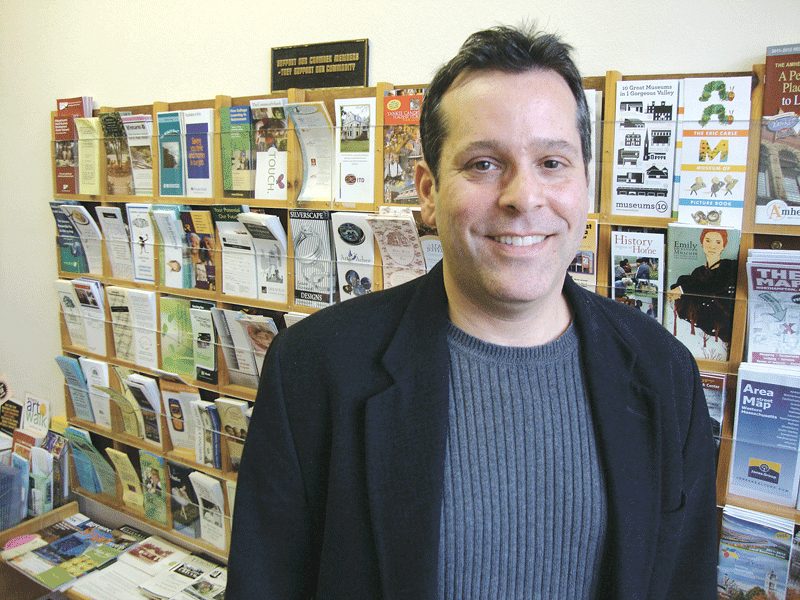
Employment Sections
Understanding Reasonable Accommodations and the Interactive Process

Karina L. Schrengohst

Karina L. Schrengohst

Federal law pertaining to disability discrimination can be challenging to navigate for employers.
For example, an employee, Jill, does not say to her supervisor, “I need a reasonable accommodation for my disability.” Instead, she says, “I’m having a hard time getting to work on time because of the medical treatments I’m undergoing.” And an employee, Jack, does not say to his supervisor, “I am a qualified individual with a disability, and I’m exercising my rights under the Americans with Disabilities Act.” Instead, he says, “my wheelchair doesn’t fit under my desk.”
These examples illustrate one challenge that employers face under the ADA: identifying requests for accommodation. The law does not require an employee to make any reference to the ADA or use any magic words, such as ‘disability’ or ‘reasonable accommodation,’ when requesting an accommodation.
Thus, supervisors and managers need to be able to recognize the variety of ways in which a request for an accommodation may be articulated. Jill did not explicitly request a change to her work schedule, and Jack did not explicitly ask that a modification be made to his workspace; however, in both scenarios there is either an expressed or obvious connection to a medical condition or impairment that might be a disability. Both Jack and Jill are making requests for a reasonable accommodation.
The ADA requires that an employer provide a reasonable accommodation to an applicant or employee with a disability, unless such accommodation would cause an undue hardship to the employer. A reasonable accommodation is a modification or change to the workplace that enables an individual with a disability to apply for a job, perform job duties, or enjoy the benefits and privileges of employment.
Reasonable accommodations are determined on a case-by-case basis and may include, for example, modifying work schedules, granting time off, making the workplace accessible by wheelchair, or providing an interpreter. An employer does not have to provide an accommodation if it would cause undue hardship to the employer. Whether an accommodation would cause undue hardship is evaluated in light of the difficulty of providing such accommodation, the disruption to the employer’s operations, and the cost in relation to the financial resources of the employer. The difficultly, disruption, or expense must be significant.
Another difficult area of the ADA that employers must tackle is engaging in the interactive process with an employee with a disability in need of accommodation. The interactive process is simply an informal, interactive dialogue between the employer and the employee to identify the limitations resulting from the disability and discuss reasonable accommodation options. There should be direct communication between the employer and the employee in which both parties explore possible accommodations. The employee may offer options for what he or she thinks would be the most effective and preferred accommodation, and the employer may offer alternative suggestions. The goal of the interactive process is that the employer and the employee work together in identifying reasonable and effective accommodations.
The interactive process does not require that an employer provide the employee’s preferred accommodation. If there is more than one effective accommodation, the employer has the discretion to choose the most-cost-effective, least-burdensome accommodation.
For example, an employee, Sarah, has a severe learning disability, and reading is extremely difficult. Her supervisor sends her detailed written memoranda that she has trouble understanding. However, she has no difficulty understanding oral communication. Sarah requests that her employer install a computer program with voice output, and that her supervisor send all written memoranda through e-mail, which the computer can then read to her. The supervisor asks whether a digital voice recorder would accomplish the same objective, and Sarah agrees that it would.
Since both accommodations are effective, the employer may choose to provide a digital voice recorder so that Sarah’s supervisor can record her memoranda and then Sarah can listen to them.
In recent years, federal law has greatly expanded the definition of disability, thus making it easier for disabled individuals to come within the ADA’s protection. As a result of this broadening of the scope of protection, there has been a shift in disability-discrimination cases from determining whether an employee is disabled under the law to whether an employer complied with its obligations under the ADA. This also means that, as more employees fall under the protection of the ADA, there are more occasions for employers to face the risk of non-compliance.
One way employers can reduce their risk is to ensure that they are prepared to navigate difficult issues that arise under the ADA. Toward this end, supervisors and managers should be trained to identify a request or need for an accommodation. In addition, once an issue is identified, the individual(s) responsible for handling such requests must be properly prepared to engage in an interactive dialogue with the employee.

Karina L. Schrengohst, Esq. specializes exclusively in management-side labor and employment law at Royal LLP, a woman-owned, boutique, management-side labor- and employment-law firm; (413) 586-2288; [email protected]

Education Sections
Bay Path Initiative Is Designed to Position Graduates for Success

Kathleen Bourque, left, and Carol Leary

Kathleen Bourque, left, and Carol Leary

It’s called WELL, short for Women as Empowered Learners and Leaders, a new program at Bay Path College in Longmeadow designed to test and enhance leadership skills. It’s part of a bold initiative to reposition the school as ‘the new American women’s college for the 21st century,’ an endeavor launched with the goal of enabling women to seize the opportunities that await them in what Bay Path’s president calls “the New America.”

Carol Leary wants to plant a stake in the ground that will distinguish Bay Path College as a learning environment where graduates can master the skills and rounded education necessary for success in what she calls “the new America.”
That stake is grounded in ethical behavior, good citizenship, financial literacy, a solid academic education, and the knowledge that volunteerism and health and fitness play a vital role in a woman’s well-being. “We want to become known as ‘the new American women’s college for the 21st century,’” Leary said.
To that end, faculty, staff, and college officials at the Longmeadow campus spent 10 months taking a thoughtful look at their course offerings as well as the skills graduates will need to transcend barriers in the future.
“We began looking at our evolution, and realized our history included some very interesting and bold initiatives that changed the status quo in many ways,” Leary said. “We have been educating and advocating for women since 1897, and the DNA of Bay Path is very entrepreneurial, so we had to take a close look at our environment to figure out how to best serve our population. The America of tomorrow will be a very different place, so we also had to determine what it will be like, as well as what we could do to promote the advancement of women to meet the demands of the workforce in the future.”
Although women have made many gains in recent years, there are still arenas where tremendous opportunity exists, Leary told BusinessWest.
“Women have so much potential to go further in business, science, law, and heath-related fields, and will play a critical role in the future of this country,” she explained, citing statistics to back up her statement. “About 50% of all professional and management positions in this country are held by women, yet women hold very, very few of the top leadership positions. There are eight women CEO’s in Fortune 500 companies, but that only accounts for 3.6% of the positions. And although 60% of college students are female, only 26% of college presidents are women. The glass is half-full, so women will have the opportunity to achieve these positions in the future.”
Transforming this vision into reality is an involved process, but everyone at Bay Path is excited about it. Their new program, known as WELL (Women as Empowered Learners and Leaders), contains a revamped curriculum and speaks to the broad goals the school has outlined.

Building Confidence
WELL, launched in September, includes mandated courses, or ‘destinations,’ for each year of study. However, the focus of the program is rooted in liberal arts. “We believe that studying liberal arts gives students a depth, breadth, and appreciation of the world,” said Leary.
The first WELL course, which all students take during their first semester, teaches them about leadership styles. They figure out their own style and identify their passions as they learn to work in collaboration with others. Leary said understanding leadership styles, which range from authoritarian to laissez-faire, can go a long way when employees work on projects with people whose styles differ from their own.
“We want to create a learning environment with many opportunities where students can test and enhance their leadership skills,” said Leary. “They need to learn how to hone these skills in a way that helps them achieve their dreams; we want women to dream boldly about what they want to do with their lives.”
She explained that this does not mean every woman needs to become a CEO. “But when they see a problem, we want them to step out of their comfort zone and say, ‘I will make a difference in this person’s life or change the way things are being done.’ The whole environment we are trying to create is so much broader than what students can learn inside a classroom.”
Leary has an open-door policy and often invites students into her office to talk about how they can facilitate change on campus. If they want to start a new club, she urges them to create a business plan to “solve the problem” and bring it back it back to her.
About six months ago, she gave an international student the title of ‘presidential ambassador’ and had her put together a plan detailing how the college could attract and recruit more international students.
In addition, a freshman was paid an hourly fee to interview students and find out what they thought when they heard the words “new American women’s college.” The student was given a deadline for the project, which included research to determine the number of students she would need to interview from each class to get a fair representation.
“We’re creating an environment with expectations. During our open house, we tell the young women that each one of them has incredible potential,” Leary said, adding that adult learners in their One Day a Week Saturday program say Bay Path has given them a second chance at success.
“The WELL program helps students find their voice as women so their inner spirit can be translated into leadership and they can take the initiative and solve problems,” she continued. “We want them to be willing to volunteer and be part of a team. If we create an environment where their potential is valued and we show them that we believe in them, they will soar to incredible heights.”
Kathleen Bourque, vice president for Institutional Advancement, agreed.  “A lot of women have never stopped to take stock of their own value. We want to give them that opportunity and also give them experiences that will allow them to grow.”

Practical Matters
During their sophomore year, students will take a course in financial literacy, which is especially important since the majority of women in the undergraduate program are first-generation college students. “We want to make sure they know how to invest for retirement and do so immediately after they get their first paycheck,” Leary said.
The course will also teach students how to read the fine print in contracts, whether they are purchasing an automobile or signing a rental agreement or home mortgage. “Some of our students don’t know how to balance a checkbook. They need to have these skills to become financially independent and be able to support themselves and their families,” she explained.
Health and fitness is another area WELL addresses. “If you model fitness to young people, they will incorporate it into their lifestyle and continue it when they have families,” Leary said. Their program includes education about nutrition, so the calorie count and salt content is listed on the menu of foods served in the cafeteria. Fitness instructor Rob Panetti also creates a daily list of ‘Rob’s picks,’ or food choices he recommends, and often sits with students while they eat to discuss their diets.
In addition, “when we introduced a boxing class, 90 students signed up,” Leary said, attesting to the enthusiasm the program is generating.
The college has also added a number of new offerings designed to provide more life skills. They include a Toastmaster’s group to enhance communication skills, and new fields of study, including majors in neuroscience and biochemistry, which will be introduced next fall. Bay Path is also in the process of getting the accreditation needed to offer a master’s degree for physician assistants, and a new online completer program was launched in January that allows women to transfer up to 60 credits (which can include credits for life experience) towards a bachelor’s degree.
“Women will play a greater role in the new America, and these programs will respond to the needs of the future of this country as well as the region,” Leary said. “The new America will be diverse and a place where people will need to think globally every day and understand how we fit into the global economy.”
Ethics is another area incorporated into the WELL program. In the past, students signed an honor code on their first day of classes agreeing to behave in an ethical manner. But the new program will take things a step further by introducing ethical dilemmas graduates may face in their chosen professions. “Ethical behavior is one of the most critical things we can teach,” Leary said.
The plan is to rotate the chair in ethics between academic departments so students in different disciplines can be exposed to situations they may face in the workplace. Faculty members will also be available to speak about the topic in public schools, which reflects Bay Path’s focus on community service.
“That value is introduced the day students arrive on campus,” Leary said, explaining that every new student must take part in a community-service project. Endeavors have ranged from working at Goodwill Industries to reading to children at Square One in Springfield, to cleaning up embankments along the Connecticut River.

Enhanced Tradition
On the first day of classes each year, the school holds an ‘awakening’ ceremony that begins at about 5:30 a.m. Students and staff members gather in a circle after walking around campus with lit candles, and speeches are given about the alpha and the omega — beginning and end — of their life on campus. “We use the circle as a symbol of community,” Leary said. “It’s a very moving experience, and one that is very spiritual.”
The ceremony is also an introduction and segue into ‘the new American women’s college for the 21st century,’ a place where dreams are born, and also where education encompasses the critical values, knowledge, and skills students will need to fulfill their potential on a rapidly changing planet.

Company Notebook Departments

NEPA to Manage
Life Laboratories
SPRINGFIELD — The Sisters of Providence Health System has announced a collaboration with New England Pathology Associates (NEPA) to manage Life Laboratories. Dr. Scott Wolf, senior vice president of medical affairs and chief medical officer at Mercy Medical Center, noted that the collaboration will make Life Laboratories the first and only physician-led and physician-managed clinical laboratory in the region. Dr. Lanu Stoddart will serve as the pathologist administrator, directing the operation and growth of Life Laboratories. A member of NEPA since November 2009, Stoddart has extensive experience in clinical pathology laboratory operations, serving in the past as medical director of S.E.D. Medical Laboratories in New Mexico and currently as chief of pathology at Harrington Memorial Hospital in Southbridge. Dr. Krystyna Sikorska will continue in her role as medical director of Life Laboratories. The innovative management relationship has already been recognized nationally, with NEPA invited to formally present its concept at the 2012 G2 Intelligence Pathology Institute Conference in Florida, according to Wolf. “For patients, the change at Life Laboratories will be transparent,” he said. “Likewise, daily operations of Life Laboratories will remain essentially unchanged. For physicians and their practices, however, direct access to physician managers will provide a unique feature and benefit.” Life Laboratories is a full-service medical diagnostic laboratory that conducts approximately 4 million tests per year for three hospitals, physician group practices, mental-health facilities, dozens of long-term care facilities, and hundreds of physicians.

Berkshire Hills Reports
Fourth-quarter Growth
PITTSFIELD — Berkshire Hills Bancorp Inc. recently reported fourth-quarter 2011 core earnings per share totaling $0.44, increasing by 57% compared to $0.28 in the fourth quarter of 2010. This increase resulted from ongoing organic growth together with the benefit of the acquisitions of Rome Bancorp and Legacy Bancorp, according to a statement by Berkshire President and CEO Michael Daly. Fourth-quarter GAAP (generally accepted accounting principles) net income included merger-related expenses, together with income from discontinued operations. These non-core items together equated to a net charge of $0.04 per share and resulted in GAAP net income of $0.40 per share, compared to $0.26 per share in the fourth quarter of 2010. For the full year, core earnings per share increased by 53% to $1.56 in 2011, compared to $1.02 in 2010. GAAP net earnings per share totaled $0.98 for 2011 compared to $1.00 in 2010. “Our merger integrations are now completed, allowing us to focus on revenue enhancements going forward,” said Daly.

MMWEC Refunding
Saves Utilities $16.8M
LUDLOW — A refunding bond issue recently closed by the Massachusetts Municipal Wholesale Electric Co. (MMWEC) will save $16.8 million for 28 state municipal utilities, strengthening their ability to secure stable and reliable power resources for the future, according to MMWEC CEO Ronald DeCurzio. In favorable market conditions, MMWEC issued $164.8 million in tax-exempt revenue bonds with a total interest cost of 1.2%. Proceeds from the bond issue and other available funds will be used to refund and retire approximately $214 million in higher-interest bonds issued by MMWEC in 2001. The refunding savings will be realized over the life of the bonds, which mature between 2012 and 2016. “This refunding will certainly give the municipal light departments greater flexibility to position their energy portfolios in pursuing physical assets for the longer term, from 2016 and beyond,” said DeCurzio. The 2012 MMWEC bonds are rated A+ by Fitch Ratings and have A ratings from Standard & Poor’s, all with a stable outlook, added DeCurzio. The underwriting team included Morgan Stanley, lead manager, and BMO Capital Markets. PFM Financial Management Inc. served as MMWEC’s financial advisor, with Nixon Peabody LLP acting as bond counsel. MMWEC is a nonprofit, public corporation and political subdivision of the Commonwealth of Massachusetts that provides a variety of power-supply, financial, risk-management, and other services to the state’s consumer-owned municipal utilities.

Columbia Gas Announces Reduction in Winter Costs
WESTBOROUGH — Effective Feb. 1, the winter rates for natural gas will reduce a typical residential customer’s total heating bill over the next three months by nearly 11%, according to Steve Bryant, president of Columbia Gas of Massachusetts. The reduction is a result of lower natural-gas commodity costs. Natural gas is sold in a unit measurement called a ‘therm,’ equivalent to 100,000 British thermal units (BTU) of energy. The rate reduction of $0.1378 per therm would save a natural-gas heating customer $22 in February, if using 160 therms of gas. “Lower gas bills in the middle of the winter is great news for the many families who are struggling to make ends meet,” said Bryant. “Natural-gas prices have remained stable for the last few years, and today’s cost to customers is as low as nearly 10 years ago. That is a claim we are proud to announce to our customers.” Bryant added that help is available for customers struggling to cope with household finances and winter heating bills. For more information, call (800) 882-5454 or visit www.columbiagasma.com.

Couple Chooses New Career Path Together
NORTHAMPTON and WESTWOOD — The Honorable E. Chouteau Levine, a retired Massachusetts Probate and Family Court judge, and William Levine, a veteran divorce lawyer and mediator, recently launched Levine Dispute Resolution Center, LLC (LDRC). The new firm provides private and cost-effective dispute-resolution services such as mediation, arbitration, and related impartial professional services. The Levines resolve all manner of family law and probate matters, and will also address elder, small-business, and other kinds of disputes in their Greater Boston (Westwood) and Western Mass. (Northampton) offices. LDRC is described as a first-of-its-kind venture in that, while there are many mediators in the market, there is no other partnership operating as a team with the probate and family-law experience of the Levines, according to the couple. The Levines both believe strongly that most family disputes can and should be resolved by facilitated negotiation rather than by legal confrontation, and they are launching LDRC to provide a non-threatening way for parties in dispute to do so. For more information on their services, visit www.levinedisputeresolution.com.

Colony Hills Capital Closes on Alabama Property
WILBRAHAM — Colony Hills Capital (CHC) recently announced the closing of its $28 million purchase of a multifamily housing property in the growing Alabama suburb of Hoover. The garden-style apartment property, occupying more than 45 acres, is the first to be purchased by the privately held real-estate investment group since its formation in 2008, according to Glenn Hanson, principal director and founder of CHC. “It is a momentous occasion for us to report the successful closing on our first property as a significant acquisition,” he said. “Riverchase Landing is a wonderful community that is well-located, and it holds tremendous promise for our investors.” The Hoover property is a suburb outside Birmingham. Hanson noted that the property was built in three phases, consists of 468 units, and has approximately 740,000 square feet. Colony Hills Capital is a Massachusetts limited-liability company with an express investment focus on multi-family rental properties falling within specific demographic, socioeconomic, and real-estate markets that are cash-flow-positive on acquisition, generating outsized investor returns, according to Hanson.

ESB Announces
Fourth-quarter Results
EASTHAMPTON — William Hogan Jr., president and CEO of Easthampton Savings Bank, reported to the directors at the quarterly meeting that the bank experienced exceptional growth in assets, deposits, loans, and capital in the fourth quarter. The bank’s total assets have grown to almost $942 million. Bozena Dabek, senior vice president and CFO, further reported that the bank’s total assets increased almost $56 million over last year. “That’s an increase of 6%,” she noted. “Our capital ratio ended the year at 12.06%; we continue to be one of the best-capitalized banks in the area.” Denise Laizer, senior vice president and chief lending officer, noted that, over the past year, total loans increased 10% or almost $61 million, an increase of almost $13 million over the last quarter. Total loans now stand at $648 million. Thomas Brown, senior vice president of Retail Banking, reported on the bank’s unprecedented deposit growth, which was up more than $52 million for the year. That’s an increase of 7%, and total deposits now stand at almost $756 million.

Features

WRC Launches Wicked Wednesdays
WEST SPRINGFIELD — The West of the River Chamber of Commerce (WRC) has a new lineup of events for the business community as well as career-minded students, including Wicked Wednesdays. Starting in March, Wicked Wednesdays will be conducted on the first Wednesday of every month, to be hosted by various businesses throughout Agawam and West Springfield. The gatherings are free for members and $10 for non-members. The first event is planned for March 7 at 5 p.m. at Westfield Bank, 206 Park St., West Springfield. For more information about Wicked Wednesdays or other events, visit www.ourwrc.com or call (413) 426-3880.

Construction Employment Hits Two-year High
WASHINGTON, D.C. — The construction sector added 21,000 jobs in January as a second consecutive month of unseasonably mild winter weather helped the industry raise employment to a two-year high, according to an analysis of new federal employment data recently released by Associated General Contractors of America. Association officials cautioned that the gains remain fragile amid declining public-sector investments in construction and infrastructure. “Although it’s great news that the industry has added 52,000 jobs in the past two months, the unemployment rate in construction is still double that of the overall economy, and construction employment remains at 1996 levels,” said Ken Simonson, the association’s chief economist. “It will take another month or two to see if the recent job growth reflects a sustained pickup or merely acceleration of home building and highway projects that normally halt when the ground freezes in December and January.” Total construction employment now stands at 5,572,000, or 0.4% higher than a month earlier, and 116,000 (21%) higher than in January 2011 — which was an exceptionally cold and snowy month in many regions, noted Simonson. He added that construction employment is still 28% below its peak level of 7,726,000 in April 2006 and is no higher than in August 1996. The industry’s unemployment rate in January was 17.7%, not seasonally adjusted, Simonson noted. The rate was down from 22.5% a year earlier but still double the all-industry rate of 8.8% (8.5%, seasonally adjusted). Job gains occurred at similar rates across the major construction segments in the past year, added Simonson. Heavy and civil-engineering construction employment grew by 2.6% or 21,000 jobs from January 2011 to last month. Non-residential building and specialty trade contractors increased their combined employment by 2% (17,000 jobs), while employment among residential building and specialty trade contractors rose by 2.1% (41,000 jobs), he said. Association officials said the across-the-board increase in construction jobs was heartening, but they were concerned that an ongoing failure to enact highway and other infrastructure funding in Washington would drag down employment numbers across the industry, especially in heavy and civil-engineering construction. “While it is encouraging to see some recent progress on aviation and surface transportation measures, it is vital that Congress and the White House make passing key infrastructure and pro-growth measures a top priority,” said Stephen Sandherr, the association’s CEO. “Without adequate long-term funding for infrastructure, competitive tax rates, and fewer costly regulatory hurdles, the construction industry may lose many of the jobs it has gained in the past year.”

Submissions Sought for Mass. Chamber Awards
BOSTON — The Massachusetts Chamber of Commerce is seeking submissions for the annual Business of the Year and Employer of Choice awards. Business of the Year recipients receive statewide visibility for companies that have dedicated resources toward working with lawmakers in Boston and Washington, D.C., to make changes and support laws that improve the business climate in Massachusetts. The Employer of Choice award, sponsored by the Employers Association of the NorthEast, provides statewide visibility for companies that have developed a culture for transforming and rewarding employee performance. The awards committee ranks companies based on the following criteria: company culture, training and development, communication, performance recognition and rewards, life/work balance, and Employer of Choice-related results of on-site visits performed. An award will also be presented to a business in the manufacturing and non-manufacturing/service sectors. Applications will be accepted until April 9. Winners of both awards will receive invitations to attend the Massachusetts Business Summit in September in Hyannis, where they will meet other business leaders from across Massachusetts, as well as state and local elected officials, and will be recognized at a luncheon in their honor on Sept. 11. The application process is free. For more information or to obtain an application, visit www.masschambersummit.com or call (617) 512-9667 or (413) 426-3850. The Massachusetts Chamber of Commerce provides legislative advocacy, marketing, networking, and educational and informational programs for businesses across the state. The chamber also provides managerial services for local chambers of commerce and professional organizations such as the West of the River Chamber of Commerce and the Realtors Commercial Alliance of Massachusetts.

Employers Step Up
Hiring in January
WASHINGTON, D.C. — The nation’s labor market posted strong gains in January, according to a recent statement by Secretary of Labor Hilda Solis. “The economy added 257,000 private-sector jobs last month, exceeding expectations, while the unemployment rate dropped to 8.3% — its lowest level since February 2009,” said Solis. “These numbers show that the labor market continues on a positive trajectory.” More than 3.7 million private-sector jobs have been created over the last 23 months, according to revised numbers from the Bureau of Labor Statistics. January’s job growth was the strongest in nine months. The unemployment rate among African-Americans fell by 2.2% in January down to 13.6% — the largest one-month drop in recorded history. “The national unemployment rate has fallen by 0.8% in the last five months,” added Solis. “The drop in unemployment has been driven by employment gains, not workers leaving the labor force. We’re seeing accelerated growth in our labor force across almost every industry.” Solis noted that the manufacturing industry surged in January, adding 50,000 jobs. “Over the past year, we’ve added 235,000 manufacturing jobs,” she said. “More products are rolling off the assembly line marked ‘made in the USA.’ We can build on this encouraging trend if Congress acts on the president’s proposals to remove tax incentives for companies that ship American jobs overseas and invests in training programs so our workers can fill existing openings in advanced manufacturing. January’s employment numbers exceeded all forecasts and provide the strongest evidence yet that our economic recovery is on track.”

Census Bureau Reports Post-recession Growth in 10 of 11 Service Sectors
WASHINGTON, D.C. — The U.S. Census Bureau recently released its 2010 Service Annual Survey, which shows that, of the nation’s 11 service sectors, 10 showed an increase in revenues for employer firms between 2009 and 2010. Only the finance and insurance sector showed a loss ($27.2 billion, down 0.8%). “The statistics presented in this year’s Service Annual Survey are noteworthy,” said Thomas Mesenbourg, the Census Bureau’s deputy director. “We are able to present a six-year trend that clearly shows the impact the most recent recession had on certain service sectors. At the same time, the newly released 2010 statistics show that, in some industries, there is evidence of a statistically significant change in an upward direction.” These figures are the first findings from this survey to track the revenues of services after the December 2007 to June 2009 recession. The survey provides the most comprehensive national statistics available annually on service activity in the U.S. Since 2009, the survey has been expanded to collect data for all service industries, capturing 55% of U.S. gross domestic product (GDP). Previously, the survey accounted for only 30% of GDP.
“Increases varied widely across service sectors,” said Mesenbourg. For example, the information sector increased from $1.08 trillion to $1.1 trillion. Within this sector, Internet publishing and broadcasting continued to see increased revenues, up 11.3% from $19.1 billion to $21.3 billion in 2010. Television broadcasting increased 12.0% from $31.6 billion to $35 billion. Cable and subscription other programming as well as wireless telecommunications carriers also saw increases in revenue of 7.3% and 5.3%, respectively, to $55.2 billion and $195.5 billion. However, revenues for newspaper and periodical publishers continued to fall. Newspaper publishers declined by 4.6% to $34.7 billion, and periodical publishers declined 1.8% to $38.4 billion. Wired telecommunications carriers continued to decline, falling 2.3% to $168.8 billion. Health care and social-assistance revenue continued to increase for employer firms, rising to $1.9 trillion in 2010, an increase of 4.0%. Hospitals increased revenue to $822.6 billion, up 4.5% from 2009. Nursing and residential care facilities also rose 4.4% to $192 billion.  The finance and insurance sector had a small decline to $3.3 trillion in revenues in 2010, decreasing 0.8% from the prior year. Revenues for securities and commodity exchanges decreased 1.5% to $10.9 billion, while miscellaneous intermediation revenue rose 16.0% to $23.6 billion. Among other sectors covered by the Service Annual Survey, the utilities sector showed estimated revenues of $501.7 billion, an increase of 5.0% from $477.6 billion in 2009. Arts, entertainment, and recreation increased 2.0% to $192 billion in revenue. Revenues for the transportation and warehousing sector were $640.2 billion in 2010, up 7.6% from $595.2 billion in 2009. The real-estate rental and leasing sector had total revenues of $356.0 billion, up 1.8% from 2009. New subsectors added last year to this sector included real estate and lessors of nonfinancial, intangible assets. For measures of sampling variability and other survey information, visit www.census.gov/svsd/www/cv.html.

Retailers Say January
Ends on Mixed Note
NEW YORK — The fiscal month of January ended on a mixed note for retailers, as retail sales rose marginally on a week-over-week basis. For the week ending Jan. 28, weekly retail sales rose modestly by 0.1%, according to the International Council of Shopping Centers (ICSC) and the Goldman Sachs Weekly Chain Store Sales Index. However, on a year-over-year basis, retail sales rose sharply by 3.9% to end the fiscal month, which was lifted by a weather-depressed sales performance during the same week of 2011. “With the fiscal month and year coming to a close this past week, retail sales once again showed how much sales patterns can shift, especially in January,” said Michael Niemira, ICSC vice president of research and chief economist. “The good news is that sales on a year-over-year basis continue to show strength, which is a positive sign as the industry moves into the new fiscal year beginning this week.” For January, ICSC Research anticipates that January comparable-store sales for the retail industry will increase by 2% to 3% on a year-over-year basis when retailers release their monthly sales figures in February. The Weekly Chain Store Sales Snapshot measures U.S. nominal same-store or comparable-store sales excluding restaurant and vehicle demand. The weekly index is constructed as a sales-weighted geometric average growth rate to preserve long-term consistency, and is statistically benchmarked to a broad-based, monthly retail-industry sales aggregate that currently represents approximately 40 retail chain stores, also compiled by ICSC.

Departments People on the Move

Barbara Benoit has been appointed Director of Graduate Enrollment, Management and Services at Assumption College in Worcester. She is responsible for recruiting and screening prospective students for Assumption’s graduate programs in business, counseling psychology, rehabilitation counseling, school counseling, and special education.
•••••
JC Schnabl has been named the Assistant Vice Chancellor for Alumni Relations at UMass Amherst and Executive Director of the UMass Amherst Alumni Assoc.
•••••
Associated Industries of Massachusetts announced the following:
• Kristen Lepore has joined the organization as Vice President of Government Affairs. She will manage efforts in the areas of health care cost control and health insurance for employers; and
• Brad MacDougall has been promoted from Associate Vice President of Government Affairs to Vice President. He will assume responsibility for the agency’s work on taxation issues.
•••••
Edward Garbacik, Vice President of FSB Financial Group at Florence Savings Bank, has completed his CFP certification requirements that are required by the Certified Financial Planner Board of Standards. Individuals seeking certified financial planner certification are required to complete coursework and exams covering the seven major financial planning areas — general principles of financial planning, insurance planning and risk management, employee-benefits planning, investment planning, income-tax planning, retirement planning, and estate planning. CFP certificants must also agree to meet ongoing continuing-education requirements and uphold the CFP Board’s Code of Ethics and Professional Responsibility, Rules of Conduct, and Financial Planning Practice Standards.
•••••
Greenfield Savings Bank announced the following:
• Christopher Caouette has been promoted to Vice President and Commercial Credit Officer; and
• Jean Dobias has been promoted to Assistant Vice President and Trust Officer.
•••••
Amanda Moyer has been named Director of Account Services at Market Mentors in West Springfield.
•••••
Joseph Knapik has joined the corporate office of Environmental Compliance Services in Agawam as Director of Training and Facilities Services. He will play a key role in developing the firm’s underground storage tank operator training program. He will also be spearheading additional product launches, primarily in the training field, and will develop and expand the firm’s suite of health and safety training course offerings. Additionally, he will direct the implementation of educational, informational, and service products for the regulated business community.
•••••
The law firm Bulkley Richardson announced the addition of four attorneys to the firm’s Litigation/Alternative Dispute Resolution Department. John P. Pucci, Andrew Levchuk and J. Lizette Richards will represent clients in all types of civil and criminal litigation, in responding to government investigations, and in conducting corporate internal investigations. They will practice from the firm’s Springfield and Boston offices. Jamie L. Kessler will handle financial services litigation from the firm’s Boston office.

John P. Pucci

John P. Pucci

• Pucci, a partner, of Northampton, is one of Massachusetts’ top civil and criminal trial lawyers, with particular experience in the areas of white-collar criminal defense and state and federal regulatory agency matters. He is the former chief of the U.S. Attorney’s Office in Springfield, and has been a Fellow in the American College of Trial Lawyers since 2002. In his career, Pucci has been named to The Best Lawyers in America, and Boston Magazine’s Massachusetts Super Lawyers and Top 100 Lawyers in Massachusetts. He was most recently a Partner at Fierst, Pucci & Kane in Northampton.
Andrew Levchuk

Andrew Levchuk

• Levchuk, Counsel, brings high-level national experience in corporate compliance and integrity as well as experience in data privacy and Internet security to Bulkley Richardson. He served as senior trial attorney in both the DOJ Criminal Division’s Public Integrity Section and its Computer Crime and Intellectual Property Section. In 2006-2007, he chaired the U.S. delegation to the G8 Subgroup on High-Tech Crime.  He has tried cases across the country and has argued 30 appellate cases in the U.S. Courts of Appeals. Most recently, he served as Deputy Chief of the Human Rights and Special Prosecutions Section of the Criminal Division of the U.S. Department of Justice. At Bulkley Richardson, he will handle complex civil and criminal litigation and responses to government investigations, as well as advise clients in matters of data security and corporate compliance.
J. Lizette Richards

J. Lizette Richards

• Richards, an Associate, joins the firm with significant civil and criminal litigation experience in areas such as mail and wire fraud, tax fraud, and healthcare fraud. In the past, she worked as a New Hampshire public defender, and, during the past seven years, she was an associate at Fierst, Pucci & Kane in Northampton.
Jamie L. Kessler

Jamie L. Kessler

• Kessler, an Associate, previously served for two years as a law clerk and paralegal at Bulkley Richardson.

Chamber Corners Departments

ACCGS
www.myonlinechamber.com
(413) 787-1555

• Feb. 15: ERC Board of Directors’ Meeting, 8-9 a.m., the Gardens of Wilbraham, Community Room, 2 Lodge Lane, Wilbraham.

• Feb. 15: ACCGS Ambassadors Meeting, 4-5 p.m., EDC Conference Room, Springfield.

• Feb. 16: ACCGS Executive Committee Meeting, 12-1 p.m., TD Bank Conference Room, Chamber Offices.

• Feb. 16: Springfield Leadership Institute begins. For information, contact Lynn Johnson at [email protected].

Chicopee Chamber of Commerce
www.chicopeechamber.org
(413) 594-2101

• Feb. 15: Chicopee Chamber Salute Breakfast/Annual Meeting, 7:15-9 a.m., Castle of Knights, 1599 Memorial Dr., Chicopee. Cost: $19 for members, $26 for non-members preregistered.

• Feb. 22: Chicopee Chamber Business After Hours, 5-7 p.m., Hu Ke Lau, 705 Memorial Dr., Chicopee. Joint networking event with the Massachusetts Latino Chamber of Commerce. Cost: $5 for members, $15 for non-members pre-registered. Sign up online at www.chicopeechamber.org, or call (413) 594-2101.

Franklin County Chamber of Commerce
www.franklincc.org
(413) 773-5463

• Feb. 24: Breakfast Series, 7:30-9 a.m., Chandler’s at Yankee Candle, Deerfield. Topic: “I Love My Job” — a panel of local speakers happy in their work. Sponsored by Yankee Candle Co. Cost: $12 for members, $15 for non-members.

Greater Holyoke Chamber of Commerce
www.holycham.com
(413) 534-3376

• Feb. 15: Chamber After Hours, 5-7 p.m., Mrs. Mitchell’s Kitchen, 514 Westfield Road, Holyoke. Sponsored by Holyoke Credit Union. Cost: $10 for members, $15 cash for non-members. Make a reservation by calling the chamber at (413) 534-3376 or online at holycham.com.

• Feb. 17: Legislative Luncheon, 12-2 p.m., Log Cabin Banquet & Meeting House. Keynote speaker: Therese Murray. Cost: $36. Purchase tickets by calling the chamber at (413) 534-3376 or online at holycham.com.

Greater Westfield Chamber of Commerce
www.westfieldbiz.org
(413) 568-1618

• Feb. 15: February WestNet, 5-7 p.m., Tekoa Country Club, 459 Russell Road, Westfield. Guest speaker: Rich Rubin, executive director of the American Red Cross Westfield Chapter. Cost: $10 for members, $15 cash for non-members. Networking, cash bar, and free hors d’oeurvres. Call Carrie Dearing at (413) 568-1618 to register.

Agenda Departments

Headache Relief Lecture
Feb. 15: Dr. Karin Johnson from Baystate Medical Center’s Neurodiagnostic & Sleep Center will present a free lecture titled “Headache Relief,” as part of Bay Path College’s Kaleidoscope series. Johnson will discuss the causes and theories about the physiology of migraines, as well as headache-treatment options, including trigger prevention, myofascial release, and abortive and preventative medications, at the Springfield JCC, 1160 Dickinson St., Springfield. Pre-registration is recommended by calling (413) 739-4715 or sending an e-mail to [email protected].

Human Service Forum Breakfast
Feb. 16: The Human Service Forum, which recently released a report showing the impact of human, social, and health service organizations on the region’s economy, will share the data at its monthly gathering from 8 to 9:30 a.m. at the Delaney House, 1 Country Club Road, Holyoke. Victor Woolridge, vice president at Cornerstone Real Estate Advisors, will give the keynote address. The program cost is $25 for HSF members and $35 for non-members. To register or for more information, visit www.humanserviceforum.org.

Holyoke Chamber Legislative Luncheon
Feb. 17: State Sen. Therese Murray, president of the Massachusetts Senate, will be the keynote speaker at Issues 2012, the annual legislative luncheon of the Greater Holyoke Chamber of Commerce. The 11:45 a.m. event is planned at the Log Cabin Banquet and Meeting House in Holyoke. State Sen. Michael Knapik will also present remarks, as well as Holyoke Mayor Alex Morse and state Rep. Michael Kane. Tickets are $36 per person and may be obtained at www.holyokechamber.com or by calling (413) 534-3376. Tables may be reserved for groups of eight or 10.

Historical Lecture at Wistariahurst Museum
Feb. 20: Alan Swedlund, professor emeritus of Anthropology at UMass Amherst, will lecture on his 30-year research into the history of mortality in the Connecticut Valley as part of the Wistariahurst Museum’s Historical Lecture Series. Swedlund’s program is planned at 6 p.m., and a $5 donation is suggested. Swedlund’s approach incorporates medical history with social history, and he uses documents from valley towns to identify epidemics and causes of death. Diaries, letters, newspapers, and other sources combine to tell the story from any given town. The lecture will be accompanied by historical images from the area. Swedlund’s most recent book is titled Shadows in the Valley: A Cultural History of Illness, Death and Loss in New England, 1840-1916. The Wistariahurst Museum is located at 238 Cabot St., Holyoke. For more information on the event, call (413) 322-5660 or visit www.wistariahurst.org.

Anthropologist Lecture
Feb. 22: Susan Darlington, a professor at Hampshire College, will discuss her latest book, The Ordination of a Tree: The Thai Buddhist Environmental Movement, as part of the Ovations series at Springfield Technical Community College. Darlington has studied the work of Buddhist monks in Thailand who are engaged in rural development and environmental conservation. The science-based talks, at 10:10 a.m. and 11:15 a.m. in Scibelli Hall Theater, will also include insights into religion and social activism. The presentations are free and open to the public. For more information, call (413) 755-4233.

ACCGS Outlook Luncheon
Feb. 27: Congressman Richard Neal and Michael Widmer, president of the Massachusetts Taxpayers Foundation, are featured speakers at the Affiliated Chambers of Commerce of Greater Springfield’s annual Outlook Luncheon. The event is planned from 11:30 a.m. to 1:30 p.m. at the MassMutual Center in downtown Springfield. In addition to remarks by Neal and Widmer, Springfield Mayor Domenic Sarno will outline the recently unveiled Rebuild Springfield Plan. For more information or to register, contact Cecile Larose at [email protected] or visit www.myonlinechamber.com.
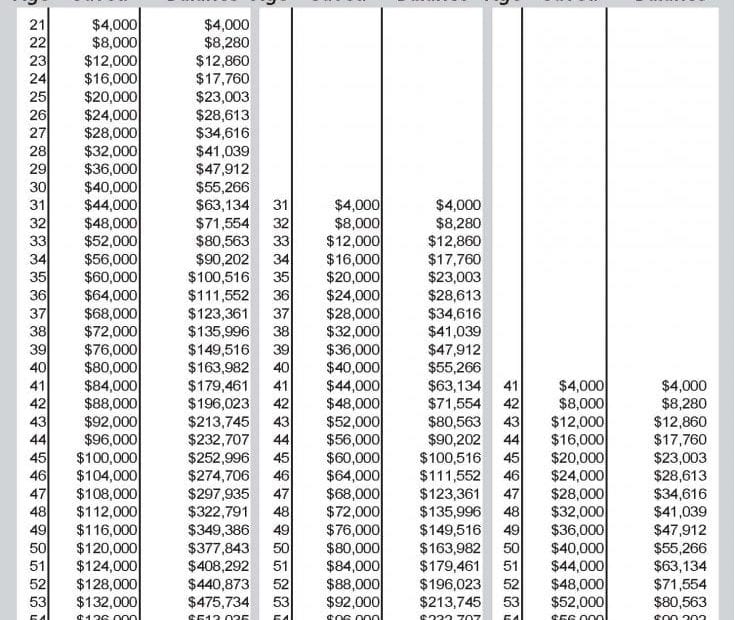
Manufacturing Seminar
Feb. 29: Presentations by the Economic Development Council of Western Mass., MassDevelopment, Massachusetts Offices of International Trade and Investment, and Associated Industries of Massachusetts will highlight a seminar titled “Promoting Manufacturing in Massachusetts,” from 4 to 7 p.m. at the Springfield Country Club, 1375 Elm St., West Springfield. A networking reception is also planned. For more information or to register by Feb. 4, contact Gloria Fischer at [email protected].

Difference Makers
March 22: BusinessWest will stage its Fourth Annual Difference Makers Celebration at the Log Cabin Banquet & Meeting House in Holyoke. The program recognizes area individuals and organizations that are truly making a difference in this region. The winners will be announced in the Feb. 13 edition of BusinessWest. The awards ceremony will feature entertainment, butlered hors d’oeuvres, and introductions of the winners. Tickets are $55 per person, with tables of 10 available. For more information or to order tickets, call (413) 781-8600, e-mail [email protected], or visit www.businesswest.com.

Women’s Leadership Conference
March 23: Keynote speakers Sister Helen Prejean, Marjora Carter, and Ashley Judd will share personal stories, as well as insightful advice and perspectives, during Bay Path College’s annual Women’s Leadership Conference at the MassMutual Center in downtown Springfield. The theme for the 7:30 a.m. to 4:30 p.m. event is “Lead with Compassion.” Prejean is a member of the Sisters of St. Joseph of Medaille and an anti-death-penalty activist; Carter, an eco-entrepreneur, is president of the Majora Carter Group; and Judd is a film and stage actor and human-rights activist. For more information on the conference or to register, log onto www.baypathconference.com or call Briana Sitler, director of special programs, at (413) 565-1066.

Bestselling Author Lecture
March 28: Internationally acclaimed author Tom Perrotta will read from his upcoming novel, The Leftovers, at 10:10 a.m. and 11:15 a.m. in Scibelli Hall Theater, as part of the Ovations series at Springfield Technical Community College. The talks are free and open to the public. Two of Perrotta’s books, Election and Little Children, have been made into movies, and five novels have been national bestsellers. For more information, call (413) 755-4233.

Not Just Business as Usual
April 5: Former NBA player and businessman Ulysses “Junior” Bridgeman will be the guest speaker at the Springfield Technical Community College Foundation’s third annual Not Just Business as Usual event at the Naismith Memorial Basketball Hall of Fame in Springfield. A cocktail and networking reception is planned from 5:30 to 7 p.m., followed by the dinner program from 7 to 9. Bridgeman spent most of his 12-year NBA career with the Milwaukee Bucks, but also played for the Los Angeles Lakers. He is the current franchise owner of more than 160 Wendy’s and 120 Chili’s restaurants. The event encourages local businesses to come together for an evening to network, learn from one another, and support student success. Funds from the event will provide students access to opportunities — through scholarships, technology, and career direction — to be successful future employees and citizens. “It’s a time to celebrate innovations, change, and our region’s success,” said STCC Foundation Interim Director Robert LePage. A variety of sponsorship opportunities are available, and individual tickets cost $175 each. For more information, contact LePage at (413) 755-4477 or e-mail [email protected].

Lecture by Author of Constitution Café
April 10: Author and philosopher Christopher Phillips’ latest book, Constitution Café, draws on the nation’s rebellious past to incite meaningful change today. He proposes that Americans revise the Constitution every so often, not just to reflect the changing times, but to revive and perpetuate the original revolutionary spirit. He will present a free lecture at 8 p.m. in the dining hall at Blake Student Commons on the Bay Path College campus, 588 Longmeadow St., Longmeadow. The lecture is part of the annual Kaleidoscope series. For more information, call (413) 565-1000 or visit www.baypath.edu.

Slam Poet Lecture
April 13: Taylor Mali, a former high-school teacher who has emerged from the slam-poetry movement as one of its leaders, will discuss his performances at 10:10 a.m. and 11:15 a.m. in Scibelli Hall Theater, as part of the Ovations series at Springfield Technical Community College. The talks are free and open to the public. For more information, call (413) 755-4233.

40 Under Forty
June 21: BusinessWest will present its sixth class of regional rising stars at its annual 40 Under Forty gala at the Log Cabin Banquet & Meeting House in Holyoke. Nominations are currently being sought for the popular program, which recognizes young people in realms including business, education, health care, nonprofit management, and government service. Nominations, which are due Feb. 17, will be scored by a team of five judges. The 40 highest scorers will be feted at the June 21 gala, which will feature music, lavish food stations, and introductions of the winners. Tickets cost $60 per person, with tables of 10 available. Early registration is advised, as seating is limited. For more information, call (413) 781-8600, ext. 100, or visit www.businesswest.com.

Class of 2012 Difference Makers

Chairman/CEO and President/COO, Big Y Foods Inc.

Charlie, left, and Donald D’Amour. Photo courtesy of Big Y Foods

Charlie, left, and Donald D’Amour.
Photo courtesy of Big Y Foods

It’s called the Y-AIM Program.

The A stands for ‘achieve academically.’ The I, ‘inspire to attend college,’ and the M, ‘move toward personal, family, and community advancement.’

The Y? Well, that’s there for two of the main drivers in this ambitious initiative, the YMCA of Greater Springfield and the 75-year-old local grocery chain Big Y, which provided financial and logistical support to help get it off the ground, and remains a strong supporter.

In a nutshell, the program, which started with Springfield Sci-Tech High School and has recently been expanded to two more schools, places youth advocates in those facilities to help young people stay connected, engaged, motivated, and productive. And the first-year results were stunning.

In a school system where the dropout rate is just under 50%, 38 of the 39 seniors who participated in the initiative’s pilot program graduated, 36 applied to college, and all of them were accepted; two more entered the military.

“And these were at-risk kids,” said Charlie D’Amour, president and COO of Big Y. “This was not a selected pool of kids who would do well anywhere; they were clearly at risk of dropping out and not finishing high school.”

Participation in the Y-AIM program is just one of myriad reasons why D’Amour and his cousin Donald (chairman and CEO), the sons of Big Y founders Gerry and Paul D’Amour, respectively, have been chosen as Difference Makers for 2012. The two have long records of success in business, community service, and philanthropy, and perhaps the best thing they’ve done is involve other executives at Big Y, rank-and-file employees, and customers in many of the initiatives, a point they reiterated many times.

Here is just a partial list of those reasons:

• Company growth. Under their joint leadership, which unofficially began in the late ’80s (the transfer of power was a fluid process), Donald and Charlie D’Amour have more than doubled the size of the family business, with total sales now above $1.5 billion, and a projected annual economic impact (payroll and spending at local businesses) of $375 million.

• Employment in Big Y food and liquor stores in Massachusetts and Connecticut, which now totals more than 10,000. Meanwhile, over the years, the company has provided several thousand people with their first job, a fact the two cousins say they are seemingly reminded of every day.

• Community service to area organizations and institutions. While there are many lines on both résumés, Donald is perhaps best known for his work with the Springfield Library & Museums. In fact, one of the facilities is now known as the Michele & Donald D’Amour Fine Arts Museum in recognition of their many contributions of time, money, and inspiration. Charlie, meanwhile, is most known for his long service to Baystate Health; he’s been on the board of directors for many years, and was president in 2009 when the critical decision was made to move forward with the $296 million Hospital of the Future project, despite the fact that the economy was in free fall.

• Many contributions in the broad realm of education, from Y-AIM to a scholarship program that has awarded more than $3 million to date, to the Homework Helpline, a one-on-one homework-assistance service for students in kindergarten through grade 12.

• Donations of food by the Big Y corporation to area food pantries that average an estimated $5 million annually.

• Contributions in health care, perhaps the most notable being a financial donation that put the D’Amour name over Baystate Health’s cancer center.

• Fund-raising efforts staged at Big Y stores to benefit the victims of disasters ranging from the tornado in Springfield to the earthquake in Haiti, to the tsunami in Japan.

• An annual giving campaign involving employees which now raises in excess of $350,000, with all proceeds spent locally.

• The BEST (Big Y Employees Sharing Time) program, through which employees of specific stores donate time to the host community for initiatives ranging from park cleanup to service at a local shelter.

On the occasion of their being selected as Difference Makers for 2012, BusinessWest conducted a lengthy phone interview with the two cousins (Donald now winters in Florida), which was laced with good-natured barbs between the two, who grew up delivering watermelons together for the business their fathers were then taking to the next level.

Consider this exchange:

While noting that his time spent on endeavors within the community has escalated over the years, Charlie said, “people say I’m pretty good at what I do here at Big Y; they joke that maybe I should try doing it full-time.” To which Don remarked, “they’re not joking.”

But the two were much more serious when talking about that lengthy list of reasons why they’ll be honored at the Log Cabin on March 22. Indeed, when asked about the motivations for their work with area institutions and within the broad realm of philanthropy, Charlie said, “we look for things that can have an impact.”

“We’re focused on health, education, and hunger, because we’re in the food business,” he continued. “We look for programs that are going to be meaningful in the community and that will have direct impact.”

Don concurred, noting that, in many respects, he and Charlie are continuing and escalating a tradition of giving back started by their fathers.

“They set the tone for us,” Donald said of his father and uncle. “They were always doing things in the community — and they were very busy, too; they worked around the clock. I’m not saying that we don’t work hard, but Gerry would work at home on Sundays doing the ads, and those two were always on the phone talking to one another.

“They didn’t have a lot of leisure time,” he continued. “But they somehow found the time to get involved in the community. They sat on local community boards, be it chambers of commerce, hospitals, or colleges, and were always in a philanthropic mode. They set a very good precedent for us.”

Don noted that his paternal grandmother was a schoolteacher, and she impressed upon his father and uncle the importance of education, a philanthropic attitude that has manifested itself in many ways, from donations of time and money by the first generation to Western New England University, where the library now bears the names of Big Y’s founders, to the Homework Helpline.

The Y-AIM program is the latest example of this focus on education, and the results speak for themselves, said Charlie.

“There is so much being thrown at the Springfield schools to try to move that needle and improve graduation rates and improve college matriculation rates,” he said. “And they’re nowhere near as successful in terms of getting results as this one, and I think it’s because of its comprehensive nature with youth advocates in the schools working directly with these young people.”

There is a work component to the program, said Don, noting that many participants land jobs with Big Y, and for most of them, it’s their first work experience. Providing such opportunities is a responsibility all those at the company take very seriously, he noted.

Charlie agreed. “We have to teach these young people how to dress, work with the public, read a schedule, and what to do with a paycheck,” he explained. “It’s very gratifying to see that sense of empowerment that these kids feel when they earn their first paycheck and it’s their money.”

For providing a path to those first paychecks — and for the many other reasons listed (and not listed) above, Donald and Charlie D’Amour, and all those in the Big Y family involved in their efforts, are truly Difference Makers.

— George O’Brien

Class of 2012 Difference Makers

President, Holyoke Community College

WilliamMessner Photo by Denise Smith Photography

WilliamMessner
Photo by Denise Smith Photography

As he talked about Holyoke Community College, what has transpired since he arrived there in 2004, and what he envisions moving forward, Bill Messner dropped the name Ruben Sepulveda early and quite often.

And with good reason.

Sepulveda is now in what amounts to his junior year at Amherst College, studying Psychology. This is worlds — and even dreams — removed from the existence he knew after dropping out of high school in New York and spending considerable time homeless or living in the boiler room of the pool hall where he used to hustle to put a few dollars in his pocket.

His fortunes changed in a huge way not long after relocating to Holyoke and, more specifically, a chance encounter with HCC Adult Learning Center (ALC) Director Aliza Ansell in the gas station across the street from CareerPoint, where the ALC program was then housed. Fast-forwarding a little, Ansell convinced Sepulveda to take a college placement test. He scored well and eventually enrolled in HCC, majoring in Psychology. His bigger goal was to transfer to a four-year institution, and after a tutoring session with a student at Amherst College, he knew that’s where he wanted to land; he even carried a business card with the school’s name and logo on it in his wallet, looking at it often to inspire him.

“I realized I had to see the dream to make it a reality,” he told a writer for an HCC publication not long after becoming the first HCC student to transfer to Amherst in decades.

Sepulveda’s compelling journey goes a long way toward explaining why Messner, HCC’s third president, has been named a Difference Maker for 2012. It doesn’t tell the whole story, but it hits on the overriding theme of Messner’s tenure — creating opportunities, or what he calls “pathways.”

And that work started virtually the day he arrived on the Homestead Avenue campus. Actually, it goes back further, to one of his interviews for the job, when he asked, in essence, why did a community-college campus in a city that was 41% Latino have a mere 14% of its students from that demographic?

After taking over, he went about leading efforts to do something about those numbers. Indeed, Messner has made increasing enrollment and strengthening college relationships with the Latino community one of his top priorities. During his tenure, the number of Latino students has increased 67%, and they now make up 20% of the student body, a number that is continually rising.

Such improvement stemmed from a recognized need to change the direction the school had taken for what was then more than a half-century, he said, adding that general agreement on what needed to be done made it that much easier to move forward as a campus.

“The world had changed over the course of the 50 years of the school’s history, and I think many individuals agreed that the next step in the institution’s evolution was that we had to make it more accessible to the changing population of Western Mass.,” he explained. “We had to open the doors, get off campus, and become more involved in the community than we had heretofore.”

Achieving progress in this evolutionary process is one of many accomplishments Messner can cite since his arrival, and they all contribute to his designation as a Difference Maker. Others, which in some way contribute to the big picture, include:

• The opening of the Kittredge Center for Business & Workforce Development and the emergence of that facility as one of the region’s key resources for workforce training, professional development, and personal growth, through a number of innovative programs.

• Success in the long and challenging fight to create the Picknelly Adult & Family Education Center in the old downtown fire station in Holyoke. The PAFEC is a collaboration between HCC and its partners in the Juntos Collaborative, and it provides GED preparation and testing, adult basic education, workforce-development classes, English for speakers of other languages (ESOL), tutoring, mentoring, career counseling, and other services.

• Training and Workforce Options (TWO), a unique collaboration between HCC and Springfield Technical Community College established to support the workforce-training needs of the region’s businesses and nonprofits.

• Planned expansion of the campus through the pending acquisition of the former Grynn & Barrett photo studio and converting it into a health sciences building.

• Expansion of what are known as Holyoke Community College School District Partnerships. Over the past several years, HCC has significantly grown its partnerships with area school systems in ongoing efforts to meet community needs and make the college more accessible. In particular, the college has worked closely with both Holyoke and Springfield to help them deal with the challenges of enhancing student success. Overall, HCC has two dozen public-school outreach initiatives throughout the Pioneer Valley, such as the Gateway to College program, which brings at-risk high-school students to the campus from Agawam, Holyoke, Longmeadow, Ludlow, Palmer, and Springfield.

Through these efforts and others, Messner has advanced his primary mission of creating those pathways he described, while also putting greater emphasis on the middle word in the college’s name — ‘community’ — through programs, policies, and, in Messner’s own case, leading by doing.

Indeed, he has become involved with a number of organizations and initiatives, including Wistariahurst, the United Way of Pioneer Valley, the Economic Development Council of Western Mass., the Pioneer Valley Planning Commission, the Holyoke Chamber of Commerce, Holyoke Medical Center, the Holyoke Innovation District Task Force, and others.

“I’ve spent a good deal of my time off campus involved in a variety of community endeavors, as one way of demonstrating what this institution should be all about,” he said. “Another way of doing that, beyond the president getting off campus, is the institution getting off campus. The transportation center is perhaps the most visible example of that, but so is the Ludlow Adult Learning Center, which serves a large immigrant population there. And the Kittredge Center, even though it’s on campus, is another example.

“It’s another visible manifestation of the fact that we’re here to serve the community, not just in the traditional sense that we have for 50-some-odd years,” he continued, “but in an array of ways, such as seminars, workshops, meetings, and more.”

Looking back on these efforts — and ahead to what must come next — Messner came back to those two words access and pathways, and again summoned the name Ruben Sepulveda. He’s only one of many who have been impacted by the school’s heightened focus on access and community, but he exemplifies many campus-wide strategic initiatives.

These include everything from strengthening ties to the Five Colleges, including Amherst — Messner went so far as to say that one of his unofficial goals is to change that phrase to ‘Six Colleges,’ with HCC joining the club — to bringing the demographic mix of the college more in line with the communities it serves.

And as he goes about that work, he can find some affirmation in some words Sepulveda penned in an essay at HCC years ago:

“Contrary to what most people think about underprivileged people — those with substandard education, those who are part of the cycle of mediocrity, those people we see on the bus, or dragging baby carriages with babies in tow, or just released from prison — they are not empty inside,” he wrote. “They are not content with the lives they have. They want more; they dream of more.”

For helping to carve the pathways to more, Bill Messner is truly a Difference Maker.

— George O’Brien

Class of 2012 Difference Makers

Executive Vice President, Peter Pan Bus Lines

Bob Schwarz Photo by Denise Smith Photography

Bob Schwarz
Photo by Denise Smith Photography

The walls and credenza in Bob Schwarz’s office are cluttered with mementos and awards from a more-than-40-year career in business and community service — and together, they tell a compelling story.

While many of the items are individual in nature, most involve the company, Peter Pan Bus Lines, for which he has worked for more than 25 years. And that’s appropriate, because most times it’s hard to separate one from the other. And more than a few items involve occupants of the White House, or occupants in the making.

First, there’s the picture from Bill Clinton’s first inaugural parade. It shows, crossing in front of the reviewing stand, the Peter Pan bus that Clinton and key members of his election team took on the first 1,000 miles of his post-convention campaign in 1992. Schwarz was one of the company’s employees who made the trip down. Meanwhile, there are a few framed, handwritten notes to Schwarz from George H.W. Bush, dating to his days as ambassador to the United Nations in the early ’70s, when the two had become acquainted. He signed them using the nickname many knew him by: ‘Augy.’

But perhaps his most treasured item is the national Community Champion Award that he received from the U.S. Interagency Council on Homelessness in 2008, for which he made another trip to Washington. And there’s a story behind this one that he likes to tell.

“I didn’t take a bus this time, and I should have,” he recalled. “My wife didn’t want me to wear my suit down, so I packed it. And of course, the airline lost my luggage — and really didn’t seem too interested in finding it. The experience gave me the opportunity to know a little about what it feels like to be in a city with nothing but the shirt on your back.”

Schwarz was eventually hooked up with a clean shirt, tie, and jacket, and received his award from then-‘homeless czar’ Philip Mangano, who praised him for his efforts as part of a nationwide program to end homelessness. Locally, Schwarz told BusinessWest, that effort was not about placing people in shelters, but instead in finding them permanent housing.

“It’s been proven that putting people in shelters does not really put a stop to their being homeless,” he explained. “It’s just a stopgap; we need more permanent solutions.”

Schwarz’s work to stem the tide of homelessness constitutes one of several reasons why he was chosen as a Difference Maker for 2012. Others include his work with the United Way, the Eastern States Exposition, the New Leadership Charter School and its library, which he helped create, and especially as chair of the Literacy Works Cabinet of the Regional Employment Board.

And as he talked about these various initiatives and his involvement with them, Schwarz said he’s been helped tremendously over the years by the very positive influence of role models in the broad realm of community service. Exposure to them came through his work with the Greater Springfield Chamber of Commerce, which he served in several capacities, from manager of Government Affairs to president.

“I was this young kid managing a chamber, and I had this incredible opportunity to work with and learn from so many great business leaders,” he said. “People like James Martin at MassMutual, Wilson Brinnell at Third National Bank, Bill Janes at S.I.S., and then later Bill Clark at MassMutual, Paul Doherty [a Springfield attorney], and David Starr [publisher of the Republican]; these individuals began to instill in me a philosophy about corporate social responsibility and the responsibility of the business community to give back.”

Perhaps the most influential of these role models, however, was the man he would later go to work for, Peter Picknelly, president of Peter Pan, who was chairman of the Greater Springfield Convention and Visitors Bureau when Schwarz started with the chamber and was later its volunteer president.

“There was no one more generous in giving to his city than Peter Picknelly,” Schwarz told BusinessWest. “Peter really believed in Springfield, and also in the responsibility to become active in community organizations; it was a way of life at Peter Pan.

“Peter told me that, if I ever decided to get a legitimate job, I should give him a call,” Schwarz continued with a laugh, noting that, a few years after that initial proposition/challenge, he took up Picknelly on his offer, joining the company in 1986.

Since then, he has become involved in a number of the transportation and real-estate-related ventures initiated by Peter Pan and its subsidiaries. This includes everything from the bus line’s decision in the late ’80s to take on archrival Greyhound by expanding its reach along the East Coast (there’s a framed Boston Globe business page story on this move hanging in his office) to the current efforts to revitalize the property in Springfield’s Court Square.

But amid his exploits in business, he has always devoted considerable time and energy to community service. And while this commitment to giving back has manifested itself in many ways, the two most notable have been his efforts to promote adult literacy and the fight against homelessness — and both were in many ways inspired by Picknelly.

Recalling his work with literacy efforts, Schwarz said they really started when Bill Ward, whom he hired to manage what was known many years ago as the Private Industry Council, asked him to serve on the board of what’s now called the Regional Employment Board of Hampden County. “And when you become a member of Bill’s board, you don’t just become a member; he gives you an assignment.”

And Schwarz’s was (and is) adult basic education (ABE) and English as a second language, two causes that became the focus of a project in Holyoke originally conceived by Peter Picknelly — transforming the old main fire station into a combination transportation hub and ABE center.

“It became a passion for me, and a natural when Peter Sr. decided to build the transportation center,” Schwarz recalled. “He saw this as an opportunity to do something very unique and very different, and do something that hadn’t been done before in this country, which was Peter’s style, and something that would make a real contribution.”

Meanwhile, Schwarz said his work with the homeless was in many ways inspired by views of a tent city on the route taken by the funeral procession following Picknelly’s death in 2004 — and commentary offered by Picknelly’s son, Peter.

“He said, ‘this is not the Springfield my father loved and worked all his life to build; we simply can’t have homelessness,’” Schwarz recalled, noting that he was later approached to join (and become the first chair of) then-Mayor Charles Ryan’s program to eliminate homelessness in the city, called the Housing First Initiative.

“I’ve had the chance to participate in a lot of volunteer efforts over the years, but this was one of the most challenging and interesting assignments I’d ever taken on,” Schwarz told BusinessWest. “It was a very interesting time when street and individual homelessness was on the rise, and the ULI report came out and said, ‘the city of Springfield will never reach its revitalization potential unless the issue of homelessness is dealt with.’”

Only a few years into the 10-year initiative, homelessness had been reduced by 39%, said Schwarz, adding that one of the keys to achieving such results was the creation of the Homeless Resource Center on Worthington Street, a feat he called one of the most rewarding of his life because of the economic and logistical challenges to overcome.

“The economy was lousy; this was a time when individuals were losing their jobs and businesses were cutting back,” he said. “To think that you could raise $1 million in private capital to put toward a homeless resource center is pretty remarkable. The people in Las Vegas wouldn’t have given us high odds of success, but we did it, because it was the right time and the right thing to do.”

Because of his hard work in such endeavors and track record for gaining results, Schwarz will have to make room for another item on his credenza — the plaque recognizing him as a Difference Maker for 2012.

— George O’Brien

Class of 2012 Difference Makers

Represented by Carla Oleska and Shonda Pettiford

Carla Oleska, right, and Shonda Pettiford. Photo by Denise Smith Photography

Carla Oleska, right, and Shonda Pettiford.
Photo by Denise Smith Photography

Carla Oleska calls it “a full briefcase of skills.”

That’s the term she used to describe what participants in the Leadership Institute for Political and Public Impact (LIPPI) come away with beyond the certificate they’re given upon completion of the program.

Elaborating, she said LIPPI, created in 2010 by the Women’s Fund of Western Massachusetts, is a year-long program focused on providing participants ages 18 to 60 with the knowledge, skills, courage, and, perhaps most importantly, the confidence necessary to become civic leaders in their communities, impact policy on the local, state, and national levels, and seek and hold on to elected positions.

And the LIPPI program is perhaps the most visible example of how the Women’s Fund, which Oleska has served as CEO since 2006, has adjusted and modernized its mission in recent years to reflect changing times.

“In the beginning, we used to speak about addressing the needs of women and girls,” she explained, noting that, at the time (the mid-’90s), such needs included programs involving economic self-sufficiency, housing, domestic abuse, sexual abuse, education, and much more. “Today, when we look at this time period, what we say is that this fund builds better communities for everyone in Western Mass. by investing in the lives of women and girls. And there’s a real distinction there.

“When you look around today, our social needs are gargantuan,” she continued. “One of the most underutilized resources is the unique talents of women — underutilized because they are not sitting around the decision-making tables; they are not framing the conversations and addressing the problems and issues in our country. So today, we’re investing in their talents because we believe that the more women we begin including in those discussions around the table, the more women we put in leadership positions, the better off our communities will be.”

This important change in language and focus, as well as manifestations of it, such as LIPPI, are just some of many reasons why the Women’s Fund has been chosen as one of BusinessWest’s Difference Makers for 2012.

Another is the nearly $2 million in grants the fund has awarded since 1998 to groups ranging from the Hampden County Correctional Institute to the Global Women’s History Collaborative; from the Railroad Street Youth Project in Great Barrington to Girls Inc. in Holyoke.

But perhaps the biggest reason is the fund’s ability to adapt and evolve to remain relevant and impactful in a constantly changing society. Current Women’s Fund board President Shonda Pettiford calls this “being nimble and responsive,” and she considers it perhaps the fund’s most important character trait.

“Times are changing for women in our communities,” she told BusinessWest, “and we’re responding in part to their needs, but also to their aspirations and supporting those, and I can see us becoming more involved in work similar to LIPPI, where we’re focused on building leadership skills and ability.”

Tracing the history of the Women’s Fund of Western Massachusetts, Oleska said it originates with the Fourth World Conference on Women in Beijing in 1995.

More than 60 women from this region were at that conference, highlighted by a speech from Hilary Clinton, who said, “women’s rights are human rights,” noted Oleska, adding that the contingent, while on a bus ride back from touring the Great Wall and inspired by what they heard, discussed options for ways to bring the energy from the conference back to Western Mass.

Their answer was to create a Women’s Fund, a component of the Women’s Funding Network, which now boasts more than 160 members, or funds, worldwide. The local fund is now one of three in the Bay State, with the others serving the Boston area and the southeastern region of the Commonwealth.

From the start, the mission has been to “advance social-change philanthropy to create economic and social equality for women and girls in Western Mass. through grant-making and strategic initiatives,” said Oleska, adding that the fund deviated from the practice of building up its endowment before supporting any initiatives.

“As soon as the money they were raising started earning interest, that first board was determined to get money right out into the communities of the four western counties,” she recalled, adding that the fund topped $1 million in grants after only a decade in existence, and is just one round of awards away from the $2 million threshold.

Oleska, who was an early grantee (her organization, Step Forward, an academic-advancement program for girls, was awarded funds in 1998), said the organization is funded primarily by individual donations, the smallest of which has been $3 in change, a bequest she cites often as symbolic of the way the fund can take seemingly small gifts and aggregate them into something significant.

“When you take that $3 in change and you connect it with $3,000, the impact of that combined funding presents all kinds of opportunities for our grantee organizations,” she explained, adding that a $10 donation made directly to an organization usually won’t have the same impact as $10 given to the Women’s Fund, which then becomes part of a larger donation to that same organization.

But beyond the monetary donation, the grantee also receives a series of professional-development workshops, with the intent of helping them strategically achieve their mission, she continued — to help those organizations work smarter, not harder.

And this is one of the many ways in which the Women’s Fund goes well beyond merely writing checks, said Pettiford, and into the broad realm of creating connections.

“The Women’s Fund, for me, is very personal — there are many personal relationships formed because of it,” she explained. “The funds we allocate help programs run, and run more effectively.

“But we also form relationships with some of these organizations, and they get to understand the fund as well,” she continued. “Through the fund, they get opportunities to connect with others who are doing similar work. Meanwhile, those of us involved with the fund as volunteers and as staff also get to connect with all these people in different parts of Western Mass. who support the same concepts and ideas and have the same values.”

Which brings her back to that word investments and, more specifically, to the LIPPI program, which, in a nutshell, helps women overcome a tendency to underestimate their abilities.

It does so through monthly, full-day sessions (staged on Saturdays for convenience) that are designed to build both skills and confidence while exposing women of all ages to successful role models. These sessions focus on subjects ranging from public speaking to effective board participation, from how to speak with elected officials to citizen activism.

The results from the first year are impressive. Five of the participants have run for office or are doing so; one woman was elected to the board of her housing development, the first tenant to do so; one woman was accepted into the Yale Women’s Campaign School; and another worked on the campaign of Holyoke’s new mayor, Alex Morse.

Looking forward, Oleska has set the ambitious goal of reaching the $3 million mark in grants by the fund’s 15th birthday, and to continue to expand the organization’s reach into every corner of the four-county area. But the most compelling goal is simply to continue efforts to be nimble, another word she used repeatedly, and continue to make investments that are paying dividends, as reflected in this comment from a LIPPI graduate:

“Participation in the LIPPI cohort has essentially provided affirmation, inspiration, and permission to continue to follow my life’s work, to develop my voice, and work collectively with the women in Berkshire County and beyond.”

That’s what comes with a full briefcase of skills. For providing that — and doing much more for women, girls, and communities — the Women’s Fund of Western Massachusetts is truly a Difference Maker.

— George O’Brien