A chart of regional accounting firms





Jeff Cissell saw many scenes like this throughout New England during the harsh January of 2011.
That’s why he considers peace of mind one of the many services his company, Cissell Investigative Engineering, provides.
“I feel like we’re actually helping people in that way,” he said. “People don’t know why something is happening, and they get scared. Sometimes all we’re doing is giving them peace of mind. They see a crack and think the structure is ready to fall down. But 99% of the time, it’s a common thing, and we can make a simple suggestion to keep it from happening again. Most times, they’re just happy to know they don’t have to move out.”
Cissell’s job is essentially to uncover why an adverse event — from a torn-up roof to a workplace accident — took place, and the extent of the property damage. He works for a variety of clients, but mostly insurance companies — specifically, claims adjusters trying to assess liability after a storm, fire, or other incident causes damage to a property.
He said 2011 — which began with a harsh, icy January that took its toll on roofs, but also included the June 1 tornadoes, a microburst and a tropical storm later in the summer, and the freak snowstorm just before Halloween that took down countless trees — was an exceptionally busy year, but every season provides plenty of opportunities.
“A lot of damage, a lot of structural issues arose out of those events,” he said. “Usually what happens is, claims adjusters will call us to take a look at a problem when they have questions about whether a policy would cover it.
“We don’t interpret the policy,” he emphasized, “but we interpret why the damage occurred. We go in there and objectively look at what the problem is and come up with a conclusion about what caused it, and the insurance company uses that information to decide whether it’s covered and what the extent of that coverage should be. We also provide some qualified ideas about how to make the repairs.”
For example, he said, “a lot of times, we’re asked to come take a look after a hailstorm comes through. Hail generates different-sized pellets, with different wind velocities and different wind directions. We’ve been successful in ascertaining when hail has damaged a roof and when it hasn’t. We’ve developed some fairly sophisticated ways to ascertain that.”
It’s an important task, and not just for insurance purposes, but sometimes to save homeowners money out of pocket. Cissell noted that many out-of-state roofing contractors moved into Massachusetts after the ice and snow of January 2011 and stuck around after the tornado, and they typically want to push customers for major repairs.
“People want an objective opinion. When they ask a roofer what the problem is, they’ll say they need a new roof. The same goes for a window salesman; they’ll say you need a new window. We don’t sell anything; we just tell you why something happened. I’ve personally been involved in dozens of cases where we come in after someone told a homeowner they needed a new roof, and we find something that can be fixed quickly.”
For this issue’s focus on construction services, Cissell spoke recently with BusinessWest about how his Connecticut-based company, which works at sites across Southern New England and beyond, is bringing clients a welcome dose of clarity when it’s needed most.
When Disaster Strikes
The 2011 tornado rattled plenty of Western Mass. home and business owners — not just those with obvious, catastrophic loss, but those whose properties might have been buffeted by wind and debris to a lesser — and difficult-to-determine — extent.
“When the tornado went through, a lot of people were scared; it’s one thing to lose a few shingles, but another to sustain roof damage to the structure itself,” Cissell said. “If a structure has been compromised, there are clues for us to find. We’ve done about 5,000 of these, so we know where to look.”
Roofs, in fact, comprise a good portion of Cissell’s investigative business, and on this front he’s seen it all, from a shopping-center roof that collapsed weeks after the building was vacated to flat-roofed schools that couldn’t handle ice and snow buildup — some of which had inherent structural defects to begin with.
Property managers reach out to Cissell as well, when they’re unsure about the extent of storm damage or don’t understand where a water leak is coming from. “A large complex in New York called us when people were getting mold on their walls and they couldn’t understand why,” he said. “We can determine where the potential water sources are.”
Cissell is also called upon in legal proceedings in cases like slip-and-fall injuries, to determine whether a property or business owner should be liable for damages. “Are there code-related conditions? We determine who’s responsible for the accident — did someone just lose their balance and fall, or did something contribute to that?
“Sometimes we’re working for the defense, and sometimes we’re working for the plaintiff,” he added. “It doesn’t matter who is buttering our bread. But we don’t take sides; we apply scientific methods to come up with an answer. For example, we have a machine that tests the friction of surfaces. And we can stand up in court and take a lot of the subjectivity out of insurance liability.”
He said building a reputation for objectivity is critical to the success of his business, and clients appreciate that quality — even when his findings don’t match up with their hopes. “I tell them, ‘I’ll tell you what you need to know, not necessarily what you want to hear, and let the chips fall where they may.’”
He recalled a case where a worker was installing trim on a building and fell over a handrail. But the investigation concluded that he had failed to secure himself according to normal worksite protocol. “That’s why he fell. He was suing the property owner, but he was, in fact, violating all kinds of OSHA rules. He should have known better.”
Whether it’s a home or business owner faced with such an incident, he added, “most people don’t know why something happens and what they are obligated to do. But we look at these things objectively.”
By ‘we,’ Cissell is also referring to a team of independent professionals who work as subcontractors for his investigative business. Paul Huijing, a Wilbraham-based general contractor, is one of them.
“I’ve done mostly roofs lately — looking at storm damage, hail damage, and whether it’s significant or not,” Huijing said. “I’ve also looked at structural issues with severe winters, where we’ve had the weight of ice and snow cause cracks and structural problems.”
Some of these are minor and easily fixed, he explained, but homeowners usually can’t determine this on their own. He echoed Cissell’s contention that a roofer or other contractor isn’t always the best source of information because they’re trying to sell additional products and services.
“I was on a roof the other day; there were some cracks in the roofing,” he recalled. “A roofer had gone up there and told the homeowner they had some wind damage; I went there and looked at it, and they had some cracks in the roofing material, but it wasn’t the result of wind damage, just the expansion and contraction of the shingles themselves.”
Career Change
Cissell, who studied engineering in college and earned his master’s in environmental engineering, has worked in a variety of settings over the years, specializing in power and petrochemical plants, wastewater-treatment facilities, and construction, along with a stop in Clinton, Conn. as the town engineer. In 1991, he hung out his own shingle, doing mainly design work for various clients.
But when an attorney for an architect asked him to look at a slip-and-fall claim, his career path began to change. “I was looking for another revenue stream and include more of my talents. So I started doing more and more of this, and by 2003, I was doing very little site-design work; that just kind of faded away. By 2005, my work was almost exclusivfely forensics-related.”
Cissell Investigative Engineering performs work throughout Connecticut, Massachusetts, and Rhode Island, as well as Western New York — essentially anywhere within a two-hour drive.
“There aren’t a lot of people doing this, in part because it’s so multidisciplinary; not everyone has the tools to do it,” he said. “The guys who work best for me get their hands dirty and aren’t afraid of climbing a ladder. They think of the big picture and don’t focus on just one possibility; they bring all the tools to the table.”
Even though he might show up at a house as a representative of an insurance company, Huijing said his role as an investigator provides an opportunity for education as well.
“I usually end up meeting the homeowner there, so I can at least educate them about what’s going on,” he told BusinessWest. “So I feel that adds value; what I find may or may not be covered, but hopefully they learn more about their house and other peripheral issues — what does the chimney look like? Do they have enough ventilation? If I’m in an attic, I might talk about how they need more insulation, and how they can get that through the MassSave program at reduced cost. I try to bring my broad experience to the homeowner in addition to the specific thing I’m looking at.”
But the education aspect is often a two-way street, Huijing noted.
“It’s an interesting sideline for me because my main business is building and remodeling, and it’s useful and instructive to see these problems,” he said. “You are only the sum of your mistakes or what you’ve learned from other people’s mistakes, so it’s a good way for me to gain even more experience on items I might not normally see.”
As for Cissell, he loves the variety of the work, with a roster of jobs that constantly changes. “This just conglomerates all the experiences I’ve had in my career,” he said. “Plus, it’s fairly quick; I get an assignment, and we usually have things figured out in a day or two.”
Which is a relief for property owners clamoring for answers — and a little peace of mind.
Joseph Bednar can be reached at [email protected]
Construction Industry Adds Jobs in December
WASHINGTON, D.C. — The nation’s construction industry gained 30,000 jobs in December despite an overall increase in the industry unemployment rate, according to the Jan. 4 employment report by the U.S. Labor Department. That is the fastest pace of construction employment growth since February 2011. Year over year, construction employment has risen by 18,000 jobs, or 0.3%. The construction unemployment rate for December was 13.5% (not seasonally adjusted) — up from 12.2% from November, but down from 16% the same time last year. The non-residential building construction sector added 7,000 jobs in December for a total of 12,200 jobs (1.9%) added during 2012. Non-residential specialty trade contractors gained 5,600 jobs for the month, but have lost 25,000 jobs (1.2%) compared to one year ago. The residential building sector added 5,800 jobs in December, but lost 6,600 jobs (1.2%) during the past 12 months. Residential specialty trade contractors added 12,300 jobs in December and have added 36,400 jobs (2.5%) since December 2011. The heavy and civil engineering construction sector lost 700 jobs for the month, but has added 400 jobs during the course of the past year. Across all industries, the nation added 155,000 jobs as the private sector expanded by 168,000 jobs and the public sector shrunk by 13,000 jobs. According to the Bureau of Labor Statistics’ household survey, the national unemployment rate stood at 7.8% in December, the same rate as November’s revised data. “It is tempting to believe the December 2012 employment report bodes well for nation’s construction industry,” said Associated Builders and Contractors Chief Economist Anirban Basu. “Employment growth was widespread, impacting general and specialty trade contractors alike — the largest monthly increase in construction employment in nearly two years. However, industry stakeholders will need to wait at least another month for some clarity regarding construction employment patterns.”
Casino Developers Spar over Picknelly
PALMER and SPRINGFIELD — Casino developers in Palmer and Springfield are sparring over which project may claim businessman Peter Picknelly, head of Peter Pan Bus Lines, who initially invested in the Mohegan Sun-backed venture in Palmer before joining Penn National Gaming in a casino proposal in the North End of Springfield. While Picknelly says he is no longer involved with the Palmer deal, his former partners say he remains legally bound to that project, and they have threatened legal action to stop Picknelly from moving forward with Penn-National in Springfield. However, the Penn National project will occupy land currently used for the Peter Pan bus terminal, and Picknelly has said he will be a 50% partner in the development. Picknelly and Penn National say he has no obligation to any other casino effort, and they have threatened a lawsuit of their own if the Palmer group interferes with Picknelly’s pursuit of a casino license in Springfield. The Penn National and Mohegan Sun projects are competing for the sole Western Mass. resort-casino license, as well as MGM Resorts, which has proposed a project in the South End of Springfield.
Foreclosures Down in Massachusetts
BOSTON — Fewer Massachusetts homeowners went into foreclosure and lost their properties to lenders in November. There were 295 completed foreclosures in November, a decline of almost 60% from November 2011, according to the Warren Group, a Boston company that tracks real estate. Between January and November, the number of completed foreclosures fell to 7,158, a drop of nearly 8% compared to the first 11 months of 2011. Last year is also likely to have the smallest number of completed foreclosures in the state since 2006, when the housing crisis began. “It’s been quite a positive year for the local housing market,” said Timothy Warren Jr., chief executive of the Warren Group. “An improving employment picture combined with government-backed programs are leading to fewer mortgage delinquencies.” The news added to growing sentiment that the state’s housing market is rebounding. Sales of single-family homes increased to 43,652 during the first 11 months of the year, surpassing the number of sales for all of 2011, according to the Warren Group. Lenders also initiated fewer foreclosures in November. Foreclosure starts dropped to 983, for a 3% decline from the same month in 2011.
The following Business Certificates and Trade Names were issued or renewed during the month of January 2013.
AGAWAM
Bob’s Barber Shop
13 Maple St.
Bob Germano
Customeyes Fabrication & Design
81 Stony Hill Road
Erik Deliefde
AMHERST
Auto Plus
205 University Dr.
Michael Englert
Rosalie Eisen Life Coach
180 Aubinwood Road
Rosalie Eisen
Zoen Resources
26 Woodlot Road
Irma Gonzalez
CHICOPEE
Car Master
176 Granby Road
Leonid Ignatyuk
Metro Chrysler Dodge Jeep Ram
650 Memorial Dr.
Aldo M. Bertera
Top Dog Auto Service
238 Meadow St.
George Bruso
HADLEY
Adventure Outfitters
451 Russell St.
Michael Zabre
Elaine Center at Hadley
20 North Maple St.
Sun Bridge Healthcare, LLC
Escapes for Everyone
1 Rocky Hill Road
Diane Kieras-Ciolkos
Go Calendars
367 Russell St.
SRV, LLC
Restore Physical Therapy
220 Russell St.
Patricia Young
River Walrus Music
141 West St.
Mark Applegate
HOLYOKE
Dollar N’ Things
50 Holyoke St.
Mamta Arora
Mambo Café
497 High St.
Cruz Rosario
NORTHAMPTON
Clarity
20 Hampton Ave.
Christopher Landry
E-Modern
30 North Maple St.
Christopher Kennedy
Finn Street Partners
35 New South St.
Jeffrey A. Lefferts
His & Hers Energy Efficiency
12 Perkins Ave.
Adin Maynard
Letica Inc.
35 South Park Terrace
Amy Briggs
Pedalmed.com
16 Taylor St.
Jill Griffin
Translationspot
158 Turkey Hill Road
Claire M. Huttlinger
Tryon Common
20 Elm St.
James Laing
Tully O’Reilly’s Pub
1 Pearl St.
Tully McColgan
SOUTHWICK
Audio-Visions
30 Granville Road
Michael Vecchio
General Contracting Solutions Inc.
229 College Highway
Stephen Wesolowski
Nor’Easter Organic Life, LLC
515 College Highway
Bret Mitchell
Samantha & Crystal’s Dance Dreams
4 North Longyard Road
Samantha Nadeau
Southwick Enterprise Computer
92 Davis Road
Michael Massarelli
SPRINGFIELD
Millennium Matrix Group
57 Walden St.
Darnel J. Ali
New England Import and Export
646 Page Boulevard
Riswan M. Raufdeen
Nonnie’s Cucina
306 Pasco Road
Rosa Marchese
Paramount Annex
1716 Main St.
John D. Motto
Perez Landscaping
1157 Sumner Ave.
Edwin Perez
R.R.S. Cell Phones & Accessories
895 Carew St.
Raynard R. Stone
Rijo Enterprises, LLC
1072 State St.
Jose M. Rijo
Springfield Painting
15 Lynebrook Road
Nicholas Francis
Stop & Go market
91 Chestnut St.
Farman Elahi
Strong Enterprises
75 Strong St.
Roger Raymond
Suburban Heating Oil
60 Hannon St.
Scott Blais
United Auto Sales Inc.
874 Berkshire Ave.
Joseph M. Nigro
Video Game Giants
85 Oakland St.
Jose E. Aguilar Jr.
Wheeler’s Convenience
954 State St.
Tabassum Firdous
Wheels on Wheels
6 Roosevelt Ave.
Eric M. Finch
Yanna Di’Dio Renovations
12 Filmer St.
Ignazio Di’Dio
Zas Enterprise Inc.
910 State St.
Mohammed Z. Islam
WESTFIELD
Baystate Tool Supply
107 Dana St.
Brad Colby
Home Made Food Bakery
83 Main St.
Vadim Sirotcenko
Homeowners Constructions
77 Mill St.
Michael Ventrice
KJ Developers
28 Chestnut St.
David Diem
WEST SPRINGFIELD
Bertelli’s Skate Shop
726 Main St.
Jay Passerini
Costco Liquors
119 Daggett Dr.
Costco Atlantic Inc.
Delta Bulk Transport
66 Western Ave.
Bruce A. Voight
Greenough Paper Company Inc.
54 Heywood Ave.
Greenough Paper Company Inc.
The following bankruptcy petitions were recently filed in U.S. Bankruptcy Court. Readers should confirm all information with the court.
Alvarado, Celia J.
232 Breckwood Blvd.
Springfield, MA 01109
Chapter: 7
Filing Date: 12/11/12
Alvarado, William J.
Guzman, Idalia
142 Lamplighter Lane
Springfield, MA 01119
Chapter: 7
Filing Date: 12/04/12
Auclair, Anthony J.
Auclair, Kathryn L.
2 Ridge Road
Monson, MA 01069
Chapter: 7
Filing Date: 12/14/12
Bailey, Mitzie L.
109 Malden St.
Springfield, MA 01108
Chapter: 7
Filing Date: 12/01/12
Barros Auto Service
Barros, Fernando A.
25 Joy St.
Ludlow, MA 01056
Chapter: 7
Filing Date: 12/10/12
Bohigian, Tamara K.
384 North Main Road
Otis, MA 01253
Chapter: 7
Filing Date: 12/04/12
Boulware, Stella M.
a/k/a Holmes, Stella
61 Kimberly Ave., 2nd Fl.
Springfield, MA 01108
Chapter: 7
Filing Date: 12/04/12
Buescher, William
86 Pine Grove
Amherst, MA 01002
Chapter: 7
Filing Date: 12/13/12
Cestaro, Arthur T.
Cestaro, Ann M.
20 Taylor St.
Pittsfield, MA 01201
Chapter: 7
Filing Date: 12/13/12
Charvis-Richardson, Sherry
619 Union St.
Springfield, MA 01109
Chapter: 7
Filing Date: 12/01/12
Chevalier, Mark W.
Chevalier, Janine M.
165 Yale St.
Ludlow, MA 01056
Chapter: 7
Filing Date: 12/07/12
Chirgwin, Alicja M.
13 School St., Apt. 18
Holyoke, MA 01040-3482
Chapter: 7
Filing Date: 12/06/12
Chisholm, Scott D.
Chisholm, Michelle Harper
272 Steiger Dr.
Westfield, MA 01085
Chapter: 7
Filing Date: 12/10/12
Connors, Ryan
207 Corona St.
Springfield, MA 01104
Chapter: 7
Filing Date: 12/14/12
Cooley, Michael J.
27 Cottage Ave.
Southampton, MA 01073
Chapter: 7
Filing Date: 12/13/12
Diaz, Betzaida
a/k/a Guptar-Diaz, Betzaida
54 Stanley Court
Chicopee, MA 01020
Chapter: 7
Filing Date: 12/03/12
Dubour, Richard R.
19 Fullerton St.
Indian Orchard, MA 01151
Chapter: 7
Filing Date: 12/14/12
Dwyer, Jeremiah M.
Dwyer, Darlene A.
30 Linwood St.
Greenfield, MA 01301
Chapter: 7
Filing Date: 12/13/12
Feliberty, Yarmyn
31 Florida St.
Springfield, MA 01109
Chapter: 7
Filing Date: 12/13/12
Ferrington, Denise E.
1746 Memorial Dr.
Chicopee, MA 01020
Chapter: 7
Filing Date: 12/13/12
Fominyam, Grace E.
9 West St.
Ware, MA 01082
Chapter: 7
Filing Date: 12/10/12
French, Earl D.
French, Susan L.
PO Box 707
Sturbridge, MA 01566
Chapter: 7
Filing Date: 12/05/12
Frew, Monica L.
116 Westwood Dr. #9
Sturbridge, MA 01566
Chapter: 7
Filing Date: 12/05/12
Galway, William J.
93 Grochmal Ave., Lot 9
Indian Orchard, MA 01151
Chapter: 7
Filing Date: 12/04/12
Gervais, Mark A.
Gervais, Shannon F.
49 North St., Apt. 5
Agawam, MA 01001
Chapter: 7
Filing Date: 12/06/12
Green, Erica Marie
a/k/a Belben, Erica
PO BOX 51309
Indian Orchard, MA 01151
Chapter: 7
Filing Date: 12/10/12
Guest, Lee
Guest, Molly B.
34 Maple St.
Williamstown, MA 01267
Chapter: 7
Filing Date: 12/11/12
Hanscom, Debbie A.
188 River Dr.
Hadley, MA 01035
Chapter: 7
Filing Date: 12/14/12
Johnson, Ryan
Johnson, Devon
307 Elm St., Apt. #2
Pittsfield, MA 01201
Chapter: 7
Filing Date: 12/14/12
Lamothe, David G.
Lamothe, Angela C.
a/k/a Bovino, Angela C.
101 Dana St.
Westfield, MA 01085
Chapter: 7
Filing Date: 12/11/12
Langille-Shiner, Elizabeth A.
105 East Housatonic St.
Pittsfield, MA 01201
Chapter: 7
Filing Date: 12/07/12
Martinell, Violet M.
362 Granville Road, Unit 218
Westfield, MA 01085
Chapter: 7
Filing Date: 12/05/12
Mathiesen, Craig L.
61 Mountainview St.
Springfield, MA 01108
Chapter: 7
Filing Date: 12/05/12
Milette, Shane L.
28 Wendell Place
Springfield, MA 01105
Chapter: 7
Filing Date: 12/03/12
Nolan, James
15 Kimberly Dr.
South Hadley, MA 01075
Chapter: 7
Filing Date: 12/05/12
Norman, Amy Green
a/k/a Green, Amy Beth
23 High St.
Westfield, MA 01085
Chapter: 7
Filing Date: 12/12/12
Norton, Eric L.
65 Regwood Dr.
Phillipston, MA 01331
Chapter: 11
Filing Date: 12/12/12
Opare-Addo, Duoduwa Vera
43 Dorne St., 2nd Fl.
Springfield, MA 01105
Chapter: 7
Filing Date: 12/04/12
Orhan, Frankie Lee Josette
a/k/a Pecor, Frankie Lee Josette
24 Hampden St.
Westfield, MA 01085
Chapter: 7
Filing Date: 12/06/12
Parsley, David W.
45 Lucille St.
Pittsfield, MA 01201
Chapter: 7
Filing Date: 12/12/12
Peterson, Deborah J.
1028 Baptist Hill Road
Palmer, MA 01069
Chapter: 7
Filing Date: 12/10/12
Pettes, Jake
240 Pommogussett Road
Rutland, MA 01543
Chapter: 7
Filing Date: 12/04/12
Pitts, Edward A.
139 Monastery Ave.
West Springfield, MA 01089
Chapter: 7
Filing Date: 12/13/12
Rhodes, Richard F.
72 High St., Apt. 3
Greenfield, MA 01301
Chapter: 7
Filing Date: 12/11/12
Rivera, Angel
Rivera, Fatima B.
600 Pequoig Ave.
Athol, MA 01331
Chapter: 13
Filing Date: 12/10/12
Roman-Suarez, Jose M.
104 Rosewell St.
Springfield, MA 01109
Chapter: 7
Filing Date: 12/07/12
Santiago, Jaime
Dones, Sindya
25 William St., 2nd Fl.
Chicopee, MA 01020
Chapter: 7
Filing Date: 12/04/12
Sinclair, Carissa Lynn
14A Mill Village Road
South Deerfield, MA 01373
Chapter: 7
Filing Date: 12/14/12
Smith, Lynne N.
377 Amherst Road
Pelham, MA 01002
Chapter: 7
Filing Date: 12/01/12
Smith, Patricia A.
464 Westfield Road
Holyoke, MA 01040
Chapter: 7
Filing Date: 12/14/12
Stockwood, Christopher David
473 Brookside Road
Athol, MA 01331
Chapter: 7
Filing Date: 12/05/12
Stockwood, Danalynn
a/k/a Velazquez, Danalynn Ruiz
473 Brookside Road
Athol, MA 01331
Chapter: 7
Filing Date: 12/05/12
Turgeon, Wendy A.
61 Moreau Dr.
Chicopee, MA 01020
Chapter: 7
Filing Date: 12/13/12
Vazquez, Angel L.
22 Reed St.
Chicopee, MA 01020
Chapter: 7
Filing Date: 12/03/12
Walczak, Michael T.
202 Furnace St.
North Adams, MA 01247
Chapter: 7
Filing Date: 12/12/12
Weeden, Janice C.
75 South St. #27
Bernardston, MA 01337
Chapter: 7
Filing Date: 12/12/12
Wrisley, Patrick J.
Wrisley, Linda M.
187 Leyden Road
Greenfield, MA 01301
Chapter: 7
Filing Date: 12/11/12
 It’s an event, says Kate Campiti, that’s long overdue.
“I’ve had conversations with many 40 Under Forty honorees who’ve said they wish there were a way they could get together with other winners for a networking opportunity,” said Campiti, associate publisher of BusinessWest, adding that many of these individuals value their standing in what has become a highly desirable club throughout Western Mass.
“They include their status as a 40 Under Forty winner on résumés, in e-mail signatures, and when talking with clients and potential clients,” she noted. “Not only does this honor open doors for them, but they also give other honorees a preference on business relationships over other individuals and companies without a 40 Under Forty title.”
Given that reality, a reunion event was only a matter of time.
“After having these conversations and realizing the fraternity that has been made of 40 Under Forty honorees, we decided to give them what they asked for with a reunion exclusively for the 40 Under Forty winners,” Campiti said.
That event will take place the evening of Feb. 7 at the Log Cabin Banquet and Meeting House in Holyoke, which has hosted several 40 Under Forty events. This high-energy networking event is exclusively for the 40 Under Forty winners from the classes of 2006 through 2012, as well as judges and sponsors. The evening will include hors d’oeuvres and entertainment, as well as a high-profile speaker, Health New England CEO Peter Straley. Overall, said Campiti, this will be an ideal venue for the 240 past honorees to meet each other and build relationships.
Jaimye Hebert, a 2011 honoree who served as a judge for the class of 2012 (see story, page 13), plans on attending, adding that she’s grateful for the opportunity to be a part of the 40 Under Forty legacy.
“It’s such a great event,” said Hebert, vice president at Monson Savings Bank, of the annual June gathering celebrating the year’s winners. “I call it the best networking event of the year for the region.”
Campiti said the Feb. 7 reunion, which is being sponsored by Bacon Wilson, Fathers & Sons, Moriarty & Primack, Northwestern Mutual, and Paragus Strategic IT, will take that annual opportunity to make connections to the next level by assembling an elite who’s who of Western Mass. professionals.
“We’ve said this before,” she noted, “but the 40 Under Forty program has become a status symbol and level of achievement that many of the young professionals in our region aspire to. Each year, we’ve seen an increase in the number of nominations we receive, and those nominations span every sector and industry.”
With the support of groups like the Young Professional Society of Greater Springfield and Northampton Area Young Professionals, which have both encouraged nominations from their ranks and seen many members achieve the award, the 40 Under Forty program has even created a competition of sorts for young up-and-comers.
“We’ve heard directly from previous winners and those vying for the honor who said they had increased — or are increasing — their volunteerism on various nonprofit boards, as well as their business skills, by taking courses and working with mentors, in an effort to be worthy of a 40 Under Forty award,” Campiti said. “This healthy competition only helps our region by strengthening our young professionals and future leaders.”
The reunion also coincides with nomination season for the class of 2013. Nomination forms may be found on page 17 of this issue or at businesswest.com, and entries will be accepted through Feb. 15.
“Each year, not only does the number of nominations increase,” Campiti said, “but so do the breadth and depth of the nominees, their skill sets, the industries they work in, their volunteerism, and their commitment to the health and vitality of our region. I think we’re all a little surprised, and pleasantly so, that the nominations we’ve seen come in show no sign of dwindling in quantity or, more importantly, quality.” n
William Bither III Atalasoft
Kimberlynn Cartelli Fathers & Sons
Amy Caruso MassMutual Financial Group
Denise Cogman Springfield School Volunteers
Richard Corder Cooley Dickinson Hospital
Katherine Pacella Costello Egan, Flanagan & Cohen, P.C.
A. Rima Dael Berkshire Bank Foundation of Pioneer Valley
Nino Del Padre Del Padre Visual Productions
Antonio Dos Santos Robinson Donovan, P.C.
Jake Giessman Academy Hill School
Jillian Gould Eastfield Mall
Michael Gove Lyon & Fitzpatrick, LLP
Dena Hall United Bank
James Harrington Our Town Variety & Liquors
Christy Hedgpeth Spalding Sports
Francis Hoey III Tighe & Bond
Amy Jamrog The Jamrog Group, Northwestern Mutual
Cinda Jones Cowls Land & Lumber Co.
Paul Kozub V-1 Vodka
Bob Lowry Bueno y Sano
G.E. Patrick Leary Moriarty & Primack, P.C.
Todd Lever Noble Hospital
Audrey Manring The Women’s Times
Daniel Morrill Wolf & Company
Joseph Pacella Egan, Flanagan & Cohen, P.C.
Arlene Rodriquez Springfield Technical Community College
Craig Swimm WMAS 94.7
Sarah Tanner United Way of Pioneer Valley
Mark Tanner Bacon Wilson, P.C.
Michelle Theroux Child & Family Services of Pioneer Valley Inc.
Tad Tokarz Western MA Sports Journal
Dan Touhey Spalding Sports
Sarah Leete Tsitso Fred Astaire Dance
Michael Vann The Vann Group
Ryan Voiland Red Fire Farm
Erica Walch Speak Easy Accent Modification
Catherine West Meyers Brothers Kalicka, P.C.
Michael Zaskey Zasco Productions, LLC
Edward Zemba Robert Charles Photography
Carin Zinter The Princeton Review
Michelle Abdow Market Mentors
Matthew Andrews Best Buddies of Western Mass.
Rob Anthony WMAS
Shane Bajnoci Cowls Land & Lumber Co.
Steve Bandarra Atlas TC
Dr. Jonathan Bayuk Hampden County Physician Associates
Delcie Bean IV Valley Computer Works (Paragus Strategic IT)
Brendan Ciecko Ten Minute Media
Todd Cieplinski Universal Mind Inc.
William Collins Spoleto Restaurant Group
Michael Corduff Log Cabin Banquet and Meeting House
Amy Davis New City Scenic & Display
Dave DelVecchio Innovative Business Systems Inc.
Tyler Fairbank EOS Ventures
Timothy Farrell F.W. Farrell Insurance
Jeffrey Fialky Bacon Wilson, P.C.
Dennis Francis America’s Box Choice
Kelly Galanis Westfield State College
Jennifer Glockner Winstanley Associates
Andrea Hill-Cataldo Johnson & Hill Staffing Services
Steven Huntley Valley Opportunity Council
Alexander Jarrett Pedal People Cooperative
Kevin Jourdain City of Holyoke
Craig Kaylor Hampden Bank / Hampden Bancorp Inc.
Stanley Kowalski III FloDesign Inc.
Marco Liquori NetLogix Inc.
Azell Murphy Cavaan City of Springfield
Michael Presnal The Federal Restaurant
Melissa Shea Sullivan, Hayes & Quinn
Sheryl Shinn Hampden Bank
Ja’Net Smith Center for Human Development
Diana Sorrentini-Velez Cooley, Shrair, P.C.
Meghan Sullivan Sullivan, Hayes & Quinn
Michael Sweet Doherty Wallace Pillsbury & Murphy
Heidi Thomson Girls Inc.
Hector Toledo Hampden Bank
William Trudeau Jr. Insurance Center of New England
David Vermette MassMutual Financial Services
Lauren Way Bay Path College
Paul Yacovone Brain Powered Concepts
Marco Alvan Team Link Brazilian Jiu Jitsu
Gina Barry Bacon Wilson, P.C.
Maggie Bergin The Art of Politics
Daniel Bessette Get Set Marketing
Brandon Braxton NewAlliance Bank
Dena Calvanese Gray House
Edward Cassell Park Square Realty
Karen Chadwell Doherty, Wallace, Pillsbury and Murphy, P.C.
Kate Ciriello MassMutual Financial Group
Kamari Collins Springfield Technical Community College
Mychal Connolly Sr. Stinky Cakes
Todd Demers Family Wireless
Kate Glynn A Child’s Garden and Impish
Andrew Jensen Jx2 Productions, LLC
Kathy LeMay Raising Change
Ned Leutz Webber & Grinnell Insurance Agency
Scott MacKenzie MacKenzie Vault Inc.
Tony Maroulis Amherst Area Chamber of Commerce
Seth Mias Seth Mias Catering
Marjory Moore Chicopee Public Schools
Corey Murphy First American Insurance Agency Inc.
Mark Hugo Nasjleti Go Voice for Choice
Joshua Pendrick Royal Touch Painting
Christopher Prouty Studio99Creative
Adam Quenneville Adam Quenneville Roofing
Michael Ravosa Morgan Stanley
Kristi Reale Meyers Brothers Kalicka, P.C.
Amy Royal Royal & Klimczuk, LLC
Michelle Sade United Personnel
Scott Sadowsky Williams Distributing Corp.
Gregory Schmidt Doherty, Wallace, Pillsbury & Murphy, P.C.
Gretchen Siegchrist Media Shower Productions
Erik Skar MassMutual Financial Services
Paul Stallman Alias Solutions
Renee Stolar J. Stolar Insurance Co.
Tara Tetreault Jackson and Connor
Chris Thompson Springfield Falcons Hockey Team
Karl Tur Ink & Toner Solutions, LLC
Michael Weber Minuteman Press
Brenda Wishart Aspen Square Management
Nancy Bazanchuk Disability Resource Program,
Center for Human Development
Raymond Berry United Way of Pioneer Valley
David Beturne Big Brothers Big Sisters of Hampden County
Maegan Brooks The Law Office of Maegan Brooks
Karen Buell PeoplesBank
Shanna Burke Nonotuck Resource Associates
Damon Cartelli Fathers & Sons
Brady Chianciola PeoplesBank
Natasha Clark Springfield School Volunteers
Julie Cowan TD Bank
Karen Curran Thomson Financial Management Inc.
Adam Epstein Dielectrics Inc.
Mary Fallon Garvey Communication Associates
Daniel Finn Pioneer Valley Local First
Owen Freeman-Daniels Foley-Connelly Financial Partners and
Foley Insurance Group
Lorenzo Gaines ACCESS Springfield Promise Program
Thomas Galanis Westfield State College
Anthony Gleason II Roger Sitterly & Son Inc. and
Gleason Landscaping
Allen Harris Berkshire Money Management Inc.
Meghan Hibner Westfield Bank
Amanda Huston Junior Achievement of Western Mass. Inc.
Kimberly Klimczuk Royal, LLP
James Krupienski Meyers Brothers Kalicka, P.C.
David Kutcher Confluent Forms, LLC
James Leahy City of Holyoke and Alcon Laboratories
Kristin Leutz Community Foundation of Western Mass.
Meghan Lynch Six-Point Creative Works
Susan Mielnikowski Cooley, Shrair, P.C.
Jill Monson Adam Quenneville Roofing & Siding Inc.
and Inspired Marketing & Promotions
Kevin Perrier Five Star Building Corp.
Lindsay Porter Big Y Foods
Brandon Reed Fitness Together
Boris Revsin CampusLIVE Inc.
Aaron Vega Vega Yoga & Movement Arts
Ian Vukovich Florence Savings Bank
Thomas Walsh City of Springfield
Sean Wandrei Meyers Brothers Kalicka, P.C.
Byron White Pazzo Ristorante
Chester Wojcik Design Construction Group
Peter Zurlino Atlantico Designs and Springfield Public Schools
Kelly Albrecht left-click Corp.
Gianna Allentuck Springfield Public Schools
Briony Angus Tighe & Bond
Delania Barbee ACCESS Springfield Promise Program
Monica Borgatti Pioneer Valley Habitat for Humanity
Nancy Buffone University of Massachusetts
Michelle Cayo Country Bank
Nicole Contois Springfield Housing Authority
Christin Deremian Human Resources Unlimited/Pyramid Project
Peter Ellis DIF Design
Scott Foster Bulkley, Richardson and Gelinas, LLP
Stephen Freyman Longmeadow High School
Benjamin Garvey Insurance Center of New England
Mathew Geffin Webber and Grinnell
Nick Gelfand NRG Real Estate Inc.
Mark Germain Gomes, DaCruz and Tracy, P.C.
Elizabeth Gosselin Commonwealth Packaging
Kathryn Grandonico Lincoln Real Estate
Jaimye Hebert Monson Savings Bank
Sean Hemingway Center for Human Development
Kelly Koch Bulkley, Richardson and Gelinas, LLP
Jason Mark Gravity Switch
Joan Maylor Stop and Shop Supermarkets
Todd McGee MassMutual Financial Group
Donald Mitchell Western Mass. Development Collaborative
David Pakman Vivid Edge Media Group/The David Pakman Show
Timothy Plante City of Springfield/Springfield Public Schools
Maurice Powe The Law Offices of Brooks and Powe
Jeremy Procon Interstate Towing Inc.
Kristen Pueschel PeoplesBank
Meghan Rothschild SurvivingSkin.org
Jennifer Schimmel Greater Springfield Habitat for Humanity
Amy Scott Wild Apple Design Group
Alexander Simon LogicTrail, LLC
Lauren Tabin PeoplesBank
Lisa Totz ITT Power Solutions
Jeffrey Trant Human Resources Unlimited
Timothy Van Epps Sandri Companies
Michael Vedovelli Mass. Office of Business Development
Beth Vettori Rockridge Retirement Community
Allison Biggs Graphic Designer
Christopher Connelly Foley/Connelly Financial Partners
Scott Conrad Center for Human Development
Erin Corriveau Reliable Temps Inc.
Carla Cosenzi Tommy Car Corp.
Ben Craft Baystate Medical Center
Michele Crochetiere YWCA of Western Mass.
Christopher DiStefano DiStefano Financial Group
Keshawn Dodds 4King Edward Enterprises Inc.
Ben Einstein Brainstream Design
Michael Fenton Shatz, Schwartz, and Fentin, P.C.
Tim Fisk The Alliance to Develop Power
Elizabeth Ginter Ellis Title Co.
Eric Hall Westfield Police Department
Brendon Hutchins St. Germain Investment Management
Kevin Jennings Jennings Real Estate
Kristen Kellner Kellner Consulting, LLC
Dr. Ronald Laprise Laprise Chiropractic & Wellness
Danielle Lord O’Connell Care at Home & Staffing Services
Waleska Lugo-DeJesus Westfield State University
Trecia Marchand Pioneer Valley Federal Credit Union
Ryan McCollum RMC Strategies
Sheila Moreau MindWing Concepts Inc.
Kelli Ann Nielsen Springfield Academy Middle School
Neil Nordstrom Pediatric Services of Springfield
Edward Nuñez Freedom Credit Union
Adam Ondrick Ondrick Natural Earth
Gladys Oyola City of Springfield
Shardool Parmar Pioneer Valley Hotel Group
Vincent Petrangelo Raymond James
Terry Powe Elias Brookings Museum Magnet School
Jennifer Reynolds Meyers Brothers Kalicka, P.C.
Jessica Roncarati-Howe AIDS Foundation of Western Mass.
Dan Rukakoski Tighe & Bond
Dr. Nate Somers Center for Human Development
Joshua Spooner Western New England University
College of Pharmacy
Jaclyn Stevenson Winstanley Partners
Jason Tsitso R & R Windows Contractors
Sen. James Welch State Senator, First Hampden District
Karen Woods Yankee Candle Co.


Since BusinessWest launched its 40 Under Forty program in 2007, we have recognized 240 young professionals who have made their mark across Western Mass. — not only for their career success, but their commitment to their communities. Several winners who later made the transition to judge — last year, that meant poring over a thick stack of almost 120 nominations — say that dual perspective gives them an even greater appreciation for the depth and breadth of talent that continues to make 40 Under Forty a coveted badge of distinction in this region.
Five years ago, Hector Toledo was chosen for an exclusive fraternity in Western Mass. — the BusinessWest 40 Under Forty.
Three years later, he relived the experience from the other side, when he was asked to be one of the judges selecting the class of 2011.
“It was pretty difficult,” said Toledo, vice president and retail sales director at Hampden Bank. “So many of them had multiple nominations, and it was tough, not having been through the process before, to get a sense of what was exceptional and what was ordinary.”
Fortunately, he said, the ‘exceptional’ side was well-represented. He was especially struck by the quality of very young talent in the region — those honorees who are nowhere close to pushing 40. Indeed, while many winners over the past six years had been in the professional world for a decade or more, some were just starting out when BusinessWest came calling.
For instance, in 2008, Toledo’s fellow honorees included both 20-year-old Brendan Ciecko, president of Ten Minute Media; and 21-year-old Delcie Bean, president of Valley Computer Works, now known as Paragus Strategic IT. Perhaps more strikingly, in 2011, the year Toledo served as a judge, the class included 16-year-old Stephen Freyman, whose volume of community service sets a high bar for other high-school students to match.
“That was fascinating to see,” Toledo said of the region’s youth movement. “This area is just so full of high-quality young individuals, it gives you a lot of hope for Western Mass.”
Each year’s nominations — typically well over 100 — are carefully examined by an independent panel of judges. Over the years, several of those have come from the ranks of former winners, like Toledo.
Jaimye Hebert, an honoree in 2011 and a judge last year, said she looked for nominees with a strong work-life balance.
“That was the biggest thing — someone with success in their career, maybe raising a family, but also contributing to their community on top of that,” said Hebert, vice president at Monson Savings Bank.
She noted that she was impressed by people equally committed to where they live and work — “for example, somebody who lives in Belchertown and works in Springfield, and they’re not just involved in Springfield because they work there, but also involved in the town where they live.
“I’m also big on helping children, community sports, things like that,” said Hebert, who counts coaching soccer among the many ways she stays invested in others. “I think it was really apparent, looking at the nominations, which people are really putting themselves out there, which is fantastic.”
We Are Young
The 40 Under Forty program was launched in 2007 as a way to spotlight the accomplishments of younger professionals throughout Western Mass. — not only their on-the-job achievements, but their often-extensive volunteer work with organizations that benefit their communities.
There were many motivations for creating the program, said BusinessWest Editor George O’Brien, listing everything from a desire to identify rising stars to encouraging individuals to get involved in the community and, in short, do the things needed to become a 40 Under Forty winner. And while the bar was set high, expectations have been exceeded, he said, noting that there was a record number of nominations last year, and the annual June gala to salute winners has been sold out well in advance for the past several years.
“In six short years, 40 Under Forty has become a brand, as well as a goal for many young people in the business community, nonprofit sector, and public-service realm,” said O’Brien. “It’s become a benchmark, if you will, a symbol of excellence that, above all, identifies someone as a leader.”
Over the years, the program has highlighted individuals from a wide range of businesses and industries, including nonprofits. In addition, a healthy number of honorees each year are true entrepreneurs, individuals who have taken risks, developed their own business plans, and built companies that in turn create jobs.
Fairly ranking each nominee was a challenge, Hebert said, but one she welcomed.
“I did a three-part process,” she explained. “The first night, I read everything — every single page. The second night, I scored them all. Then, on the third night, I rescored them to make sure the scores were consistent. I know how important it is to a lot of people. It’s an overwhelming honor and a distinguishing mark people want on their résumé. So I took it very seriously.”
Toledo took his time as well. “I had to go through a few times to make sure everyone got a fair shake,” he recalled, noting that he’d be impressed by an entry, then would have to go back and adjust his scale when he saw the “extraordinary” work of nominees further down the pile.
Toledo said community service was a very important factor in judging nominees. “I was really impressed with some of the individuals who were doing things before work, after work, on the weekends … spending time doing things they were passionate about, that often have little or nothing to do with their jobs.”
Toledo’s own involvement in the community — he serves on multiple boards and committees — was noted when he was honored in 2008, and he’s gratified to see that so many young professionals share the same enthusiasm.
“I do a good amount of nonprofit activities, some work-related and some that’s important to me on a personal level,” he told BusinessWest. “That means a lot to me, so it’s good to see so many people giving up their private time, their family time, to help out in the community.”
Michael Vann, a 2007 honoree who judged nominations for the class of 2011, said he built a spreadsheet to rank nominees according to the criteria that mattered most to him, including leadership and entrepreneurship.
By taking a completely objective approach, Vann, president and CEO of the Vann Group, was surprised when some nominees he was familiar with — and that he assumed would rank high — were surpassed in his ratings by others he was just learning about. “I didn’t play favorites,” he noted.
Set the World on Fire
Although he enjoyed his experience as an honoree six years ago, “I actually enjoyed being a judge even more,” Vann said, comparing it to being asked to be a baseball Hall of Fame voter.
Indeed, others who have transitioned from winner to judge say they took on the challenge partly because they’re proud of their association with the region’s most prestigious award for young professionals.
Hebert is especially gratified that not many financial-services professionals were chosen for her 40 Under Forty class in 2011, a year when, instead, many individuals from the nonprofit sector were chosen. Indeed, the makeup of each class is very different, but there’s usually at least some representation from fields including education, law, finance, media, medicine, creative arts, nonprofits, government, retail, restaurants, and green business, among others.
“We definitely have an abundance of talent, and we have a great network of people coming up in this area, who have chosen to stay here and really contribute to this region as a whole,” she added. “That’s huge; not every region in the country has that, so we’re fortunate here.”
As with the past six installments of 40 Under Forty, this year’s winners — chosen, again, by a judging panel of area business leaders and previous honorees — will be profiled in the April 22 issue of BusinessWest (always a must-read edition) and toasted at the annual gala reception on June 20.
The nomination form can be found HERE. It will appear in upcoming issues as well. The deadline for entries is Feb. 15.
Joseph Bednar can be reached at [email protected]


Superintendent Daniel Warwick pays frequent visits to the district’s 54 schools and enjoys interacting with students.
Warwick has been on the job since last July, and his goals are lofty, given the fact that 85% to 90% of the city’s students come from low-income families, which creates a host of academic, social, and emotional challenges. But his deep commitment and history of success prove that he knows what it will take to fulfill what he calls “The Springfield Promise: A Culture of Equity and Proficiency to Raise the Bar and Close the Gap.”
arwick wants to lower the dropout rate and increase the graduation rate, which stood at 11.7% and 52.1%, respectively, last year. His vision is to create a district where “parents and community members move into Springfield for the privilege of sending their students to schools that are striving in a culture of equity and proficiency.”
It’s no easy task, as the system serves approximately 26,000 students in 46 schools at 54 sites, including eight alternative programs. They speak numerous foreign languages and are from diverse family, religious, and ethnic backgrounds. “In schools with high levels of poverty, there are good excuses to rationalize poor performance. But I approached the job with a no-excuses mantra and the attitude that we are going to change the outcome for our students,” Warwick said,
His reasoning is based on past endeavors in Springfield, honed during his tenure as principal at Glenwood School in the Liberty Heights section of the city. “When I took it over, it was one of the lowest-performing schools in the Commonwealth,” Warwick said.
But he instituted measures that turned it around, and within a few years, “Glenwood was the highest-performing high-poverty school in the state,” the superintendent noted, adding that he was feted with a bevy of state and national awards, including the coveted National Blue Ribbon School Award from the U.S. Department of Education and the Commonwealth Compass Award from the state.
His multi-pronged plan for the city’s school system includes instituting programs in every school similar to those he developed at Glenwood, changing the way subjects are taught, as well as developing an individual plan for every student at risk. “You have to believe that this work can be done and then have a deep commitment to do the hard work necessary to execute it,” he said.
However, he knows this will take time, and says the entire community is needed to ensure success. “We need the business community and faith-based communities to support the schools,” Warwick said. “Education is the key to the success of the future of our community. And the only way Springfield will be successful is if we have a highly effective school system. The future of the city depends on it.”
Rounded Perspective
Warwick grew up in Springfield, and his entire career has been spent in the city’s schools, making him uniquely aware of the challenges and opportunities.
“I absolutely believe that every student can learn, and I want to meet every student’s needs so they can reach their potential,” he said. “I have a ‘no child left behind’ mentality, so every student who is struggling will have an individual plan that will be monitored to ensure they are getting the services they need.”
He began work as a substitute teacher at age 21 after graduating from Westfield State College. After that, he was hired as a special-education teacher for severely emotionally disturbed students in an alternative middle- and high-school program situated in the Springfield Boys and Girls Club. “A lot of them were in the juvenile justice system,” he recalled.
He spent 10 years as a teacher and two years as a special-education coordinator, then was named supervisor of the department.
“There were tremendous challenges in trying to meet all of the needs of different populations with finite resources. So I did a lot of program development,” Warwick explained, adding that he was able to reduce the number of students in private schools or residential facilities. “The whole idea was to keep the kids in the least restrictive environment and still provide them services, which also freed up money that could be spent on all students.”

Daniel Warwick shows off the National Blue Ribbon School Award, one of many honors he earned during his tenure as principal of Glenwood School.
Over the past few decades, Warwick has held many roles in the school system. One of the most pivotal was his 13-year stint as principal at Glenwood School, where he achieved extraordinary success. “I did a lot of research and had a reading coordinator and an instructional leadership team,” he said, adding that measures he instituted were later adopted across the district.
Warwick went on to serve as an assistant superintendent from 2004 to 2008. “One of my key roles was special education, but I also supervised one-third of the city’s schools and dealt with operational issues, such as budgeting and staffing allocations,” he said. “During that time, the schools in my zone made twice as much progress as the other zones.”
He said he worked closely with Special Education Director Mary Anne Morris to improve services and set up quality programs.
When he was named assistant superintendent for all of the city’s schools in 2008, he implemented evaluations of school principals and led the district’s efforts in obtaining state approval for construction of a new vocational high school.
Before being appointed superintendent, he served as deputy superintendent for more than a year. He managed the district’s budgeting team and successfully led contract negotiations with bargaining unions. Warwick also spearheaded the redesign of the district’s lowest-performing schools, which resulted in such exemplary improvements that state officials hailed Springfield public schools as a model for rapid transformation.
Multi-pronged Approach
Warwick said he put a lot of time into developing his five-year plan for the future. It contains four key points and is a result of his work with several superintendents, a great deal of research into best practices, and his own experiences and observations.
The first key is to coach, develop, and evaluate educators with the goal of improving instruction.
“All of the research that has been done talks about the importance of quality teaching,” he said. “And teacher effectiveness and strong instructional leadership are the key variables in raising student achievement.”
The state recently issued new regulations that change the way schools are evaluated, and Warwick said he was aware of what they would be when he created his plan. However, each school district has to implement changes based on negotiations with its teachers’ unions.
This has been done in Springfield, and one important change is that principals will be able to conduct unannounced observations in the classroom. “The focus will be on improving instruction, which will require a tremendous amount of training because principals will have to become instructional experts, along with the teachers. But it will make a huge difference,” Warwick said.
The state will also begin providing data about individual student achievement. “This will help us judge the quality of teaching and will play a major role in the goal of improving instruction,” Warwick said.
The second area of focus will be to develop and implement what Warwick refers to as a “world-class, 21st-century curriculum that will deliver on our promise that all students graduate college and are career-ready.”
It will require a strong focus on literacy as well as a multi-tiered system of support for instruction at all levels, backed by ongoing assessments. “There will be an entirely new curriculum taught in a new way that will be a challenge for every community in Massachusetts,” he said.
Warwick explained that the new core standards are far more rigorous than what was demanded in the past. “It will require teachers to teach differently by putting more emphasis on higher-order thinking skills, reasoning, and literacy skills. The state can issue mandates, but only quality implementation at the district level will make them a success.”
Teams of teachers have been meeting in Springfield and will continue collaborations for the next 18 months. But Warwick expects it will take three years and a great deal of professional development to get the new system up and running.
What makes it especially challenging is that Springfield’s high poverty rate generally leads to poor attendance. In addition, the school population includes a high incidence of English language learners, and families move frequently, which results in great gaps in learning.
“We also have a number of homeless children and students who are in the custody of Child and Family Services,” Warwick said. “Poverty results in social and emotional issues, and families typically don’t get help for them.”
The School Department has been working with the Irene E. and George A. Davis Foundation to offer more preschool classes, which are critical to student success, especially since many students entering school don’t have the language skills they need.
The city also has 10 schools with a Level 4 state rating, which means they need significant improvement.
But the third component to Warwick’s plan will help to address that, as it involves continuous improvement based on a new system of data dashboards.
“The dashboards will allow educators to see how every youngster in their class is doing compared to students across the state and the country, and allow them to make instructional decisions based on the data,” he said.
There will also be something called the Dropout Early Warning Indicator System, which factors in attendance and discipline problems, beginning in kindergarten.
The final key is to remove obstacles to learning and student achievement. This will include positive behavioral interventions and individual plans for at-risk students. Warwick said clinical counseling; an expanded array of afterschool, summer, and night-school programs; homework help centers; home/school parent liaisons; parent and community focus groups; strengthening alternative school models; and adding recreational supports, such as sports, will make a difference in “battling the negative effects of poverty.”
Continuum of Progress
Warwick said he expects to receive new data from the state this month about how his district is faring.
“I’m sure it will show we are moving in a positive direction; we plan to intervene one school at a time, and knowing what has to be done is very helpful,” he said.
“When I took the job, I understood what the district needed,” he continued. “It will take an enormous amount of work to implement it, but we will continue to remove obstacles to learning and student achievement. It’s a privilege and an honor to serve as superintendent, and I take the responsibility very seriously.”

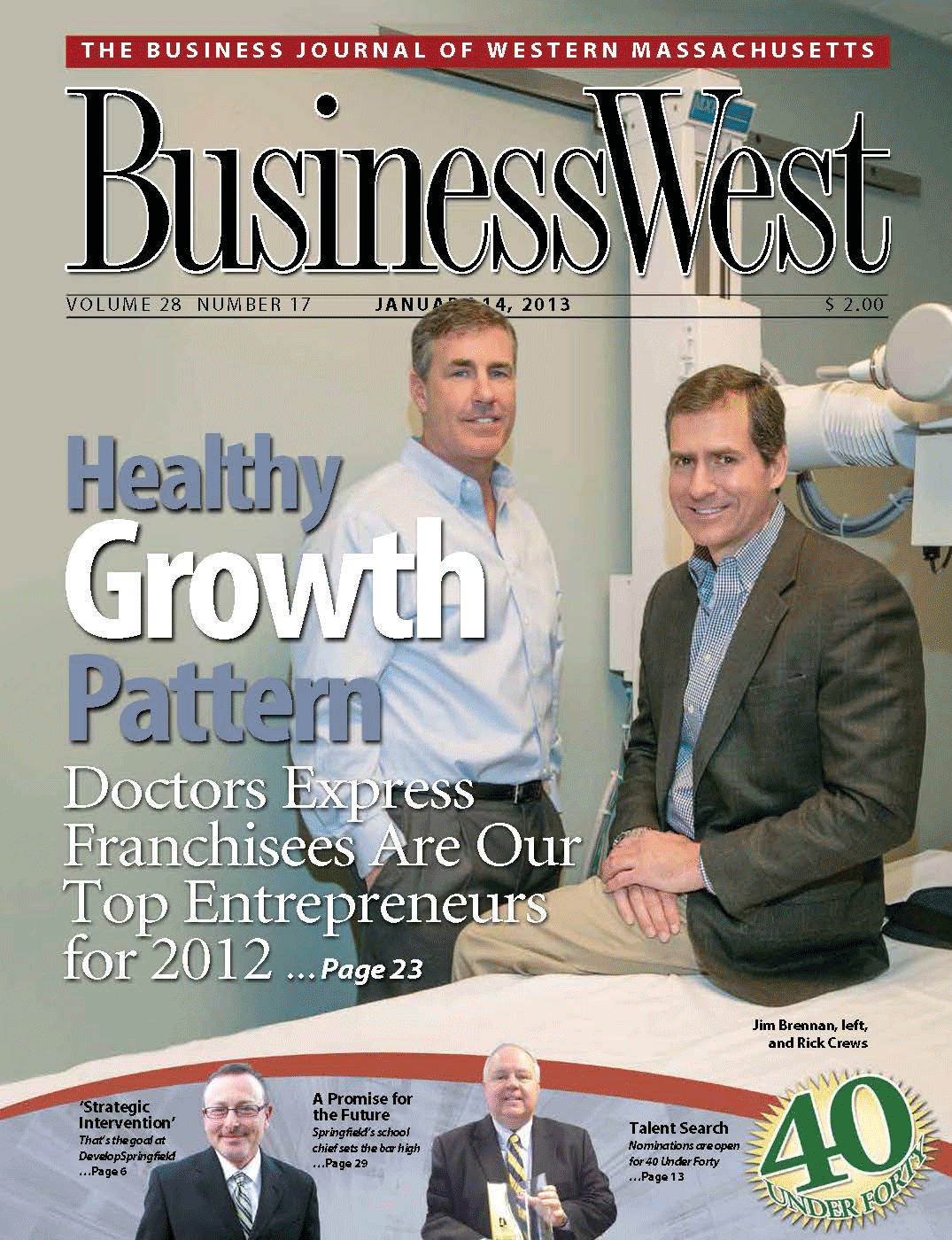 Neither Rick Crews nor Jim Brennan remembers many of the specific details from that lunch they had together at Max’s Tavern in the late fall of 2009.
What they do recall is that, by the time the check came, they had a plan — or at least the resolve to begin the process of putting one together.
And it was certainly an ambitious plan.
Indeed, instead of going into business together and operating a single franchise of a growing national chain of urgent-care centers called Doctors Express — which was one of the options they discussed at that lunch — they decided instead to become what’s known as master franchisees, overseeing not a location of this chain, which offers an alternative to crowded emergency rooms and the primary-care physician’s office when it’s closed, but a region, in this case most of New England.
Taking that step would be a radical career departure for both Crews, who was essentially downsized from his job running the Springfield office for the financial-services giant UBS and looking for his next opportunity, and Brennan, who owned an investment-management company bearing his name that specialized in small-business investment, mezzanine financing, and commercial real estate.
But they believed they had the necessary ingredients — from entrepreneurial drive to trust in one another’s instincts and abilities — to take the plunge.
“The enthusiasm that we both showed for the idea was a big factor in allowing us to move forward,” said Crews. “We both saw a great opportunity, and we were on the same page on a lot of different things; we had, and still have, a shared vision of where we can go.”
Fast-forward roughly two and a half years from when they opened the doors to their first location on Cooley Street in Springfield. The two partners now have two locations locally (the other is in West Springfield), with plans for others in the formative stage. They also have two locations in the Greater Boston area (with three more on the way) opened as part of a large initiative funded by a capital raise in 2011, as well as five other Eastern Mass. sites now operated by franchisees. And there are plans being considered to take the brand into a number of other markets, from Central Mass. to New Hampshire and Maine.
Brennan said the goal is to have perhaps 30 locations throughout their New England territory within two or three years.
Beyond the physical expansion, though, what has been equally impressive is the trailblazing nature of this enterprise, which operates in a field, urgent care, that is still a relative unknown in some parts of the state and the New England region. The two partners have become a model operation for others exploring the Doctors Express franchise with regard to everything from marketing and generating press to finding new and different ways to improve the patient experience.
These include everything from high-definition TVs in examination rooms at some locations, to help ease the wait for the physician, to water bottles and cookies for all patients.
In recognition of the speed and efficiency with which Crews and Brennan have taken the Doctors Express brand across the state, and for the aggressive yet calculated way in which they carried out the plan they outlined over lunch, Crews and Brennan have been named BusinessWest’s Top Entrepreneurs for 2012.
Thus, they are the latest recipients of an award the magazine initiated in 1995 to pay homage to this region’s long history of entrepreneurship and to recognize those who are adding to that legacy and writing new chapters for an ongoing story. They join an eclectic roster of winners that includes Balise Motor Sales President Jeb Balise, former Springfield Technical Community College President Andrew Scibelli, Maybury Material Handling President John Maybury, Cooley Dickinson Hospital President Craig Melin, the Holyoke Gas & Electric Department, and last year’s honoree, Herbie Flores, director of the New England Farm Workers’ Council and aggressive investor in downtown Springfield.
“Rick Crews and Jim Brennan embody the true spirit of entrepreneurship,” said BusinessWest Publisher John Gormally. “They’ve dared to dream big and, in the process of doing so, have assumed a great deal of risk. They’re ambitious, confident, and imaginative, but above all else, they’re determined to succeed.
“And their impressive track record to date and promise for continued expansion makes them worthy recipients of our Top Entrepreneur award,” he went on. “Together, they’re a great addition to a long list of inspiring entrepreneurs and those who run their organizations with a decidedly entrepreneurial mindset.”
For this issue, BusinessWest takes an indepth look at how far Crews and Brennan have already taken their joint venture, and where they want to take it next.
Taking the Pulse of a Business
The front lobby of the West Springfield Doctors Express location was crowded on this Friday afternoon, with most of the two dozen chairs occupied by people of different ages and with varying degrees of discomfort.
Most were exhibiting flu-like symptoms, said Brennan as he sat down with BusinessWest for this interview. Both he and Crews would then go on to quote both newspaper articles and medical-industry reports about what was already a heavy flu season and would likely get worse as the winter wore on.
“With this epidemic of the flu, we’ve had to adjust our staffing model and put on more providers and healthcare staff,” said Brennan. “These are things that weren’t planned on and forecasted, but they’re part of doing business in healthcare today; you adjust to the need that’s out there.”
This subject matter is a world or two away from what Crews and Brennan knew professionally only four years ago. It’s certainly a far cry from what they might have been talking about had things gone differently when Crews took his search for a new career path to a higher level in the summer of 2009 after opting to leave UBS and take a severance package rather than go from full-time to part-time.
By then, he had logged several meetings with Steven Rosenkrantz, owner of the local office of a franchise called Entrepreneur’s Source, which, as the name suggests (sort of), matches aspiring entrepreneurs with franchises.
“I was looking for something where I could be the boss, and also run a business where people would leave happier than when they came in — those were the two priorities,” said Crews, adding that Rosenkrantz put a number of possibilities in front of him, from Cartridge World, a toner-cartridge sales enterprise, to Sports Clips, a haircutting chain. He even looked at opening a sports bar in South Hartford.
“I’m really glad I didn’t go that route,” he told BusinessWest, adding that Rosenkrantz eventually put Doctors Express, a chain started in Baltimore by an emergency-room physician, on the table for consideration.
Actually, there were two proposals — a single location of that franchise, or the master-franchisee designation, which would involve Massachusetts, Vermont, New Hampshire, Maine, and a portion of Connecticut.
“I liked the master-franchisee concept, but I’d knew I’d need a partner to do that, and Jim was the first person I thought of,” Crews explained, while setting the scene for that aforementioned lunch on Springfield’s riverfront.
The two had known each other for years by then and done some business together, and there was also the requisite comfort level and shared vision needed to create a business partnership.
“He coached my son in basketball, and I coached his son in baseball,” said Crews. “We had a good friendship prior to this, and we would often talk about going into business together someday.
“We got along, and we had a lot in common,” he continued. “We’re great dads, good husbands, we’re family-oriented and community-oriented … we coached sports. We made for a good team.”
Equally important, though, were the things they didn’t have in common, said Brennan, noting that their vastly different business skill sets have meshed nicely.
“Rick has been with a Fortune 500 company and managed 30 type-A personalities plus administrative staff, and that’s not my forte,” he explained. “I’m more independent, and while I don’t want to say I’m more creative, my skill set would be creative financing, expansion of a growing business, mezzanine financing, real estate, and small-business speculation. Having these skills and putting them together with Rick’s has made for an outstanding relationship, and that’s the key to our success.”
In the Right Vein
As they talked about all that’s happened since they became business partners, Brennan and Crews said that, while success has seemingly come quickly and easily, there have been some intriguing learning curves and growing pains to contend with, and that process is ongoing.
It has involved everything from honing the art and science of choosing locations — the basic theory is to choose a site with 50,000 people within three miles of the front door, but it’s far more complex than that — to the process of educating patients and healthcare professionals about the emergence of urgent-care facilities, especially in the Boston area, where it is still very much a foreign concept.
And then, there was simply the matter of learning the business of providing healthcare itself, which was outwardly daunting, because neither had anything approaching experience in medicine.
Crews took on that assignment aggressively and creatively, making himself chief administrator of the Cooley Street location for the first nine months of its existence. When asked what he learned on that job, he glanced toward the ceiling, offered a heavy sigh, and said, “what didn’t I learn?”
As he explained, “I wanted to learn the ins and outs of the business, and what better way to do that to actually run the center? I learned about healthcare — about insurance companies, coding, billing, staffing, scheduling challenges, working with doctors … how to run an urgent-care center.
“It was challenging, but it was also fun,” he continued. “Every day I was learning something new.”
Tracing the progression of their venture, or franchise territory, Crews and Brennan said that, even as they were cutting the ribbon on the Cooley Street location, there were discussions taking place about where to go next.
And ultimately, those decisions involved both ends of the state. Locally, after consideration of several locations, the decision was made to expand into West Springfield, with a facility that could draw residents from several neighboring communities, including Agawam, Westfield, and Holyoke; that location opened in 2012.
Meanwhile, only a few months after the Springfield facility opened its doors, the partners embarked on a capital raise aimed at netting $4 million to fuel a push into the Greater Boston area. That offering attracted the attention of investors locally, but also from across the country, said Brennan, adding that the first location funded by that group opened in Saugus early last month. Another, in Dedham, will open soon, and a letter of intent for a third, in Arlington, was recently inked. Eventually, there will be five sites sprung from that Boston offering, for which Crews and Brennan are general partners, with a 50% stake.
In addition, the partners operate a management company with five Boston-area franchisees under it. Those locations are in Braintree, Natick, Waltham, and North Andover, with another facility to open soon in Watertown.
This growth has necessitated expansion of the company’s corporate offices in Longmeadow, said Crews, adding that the team now includes Project Manager Melissa Nelson, charged with helping franchisees get their operations off the ground and running efficiently, as well as Controller Tim Sterett, who helps the partners plan and forecast for the future.
There are also people on the ground in various markets, including Western Mass., but especially the Greater Boston area, educating various constituencies about urgent care, how it is cost-effective for those who seek it, and how it can reduce congestion in the emergency room while also becoming a feeder service for hospitals.
“We have a business-development manager who is out in the community every day talking about urgent care,” said Crews. “We’ve also formed a co-op amongst all our franchisees, with the money to be spent monthly on advertising. Starting in a week, we’ll be doing our first TV commercials in Boston; we’ve been doing radio for the past month.”
Charting Results
Together, the team that Crews and Brennan has put together is scouting new locations in several areas of Massachusetts and a few bordering states, while also continuing that process of educating the public and the healthcare community about the concept of urgent care, and also striving to constantly improve the patient experience.
Which brings Crews back to those TVs in the examination rooms — now standard equipment in the Boston-area facilities and likely to be added at local locations.
“When someone goes into an exam room, they don’t like to wait for a doctor,” he explained. “So we have a policy that no one is supposed to wait more than 10 minutes for a doctor. However, depending on what you’re there for, you could be in the exam room for a long period of time. Having a TV in there helps to distract them from thinking about how long they’ve been there, and that’s especially true if you have children; it’s nice if they can put on Spongebob or the Disney Channel.”
Such attention to detail and the patient experience has helped Doctors Express gain acceptance and solid word-of-mouth referrals, said Brennan, adding that, from a big-picture perspective, success has come by creating relationships and making connections on a number of levels.
“When we go into a market, it’s important for us to create relationships not only with the primary-care physicians and hospitals, but also the medical groups in those areas,” Brennan explained. “There’s a new world of ACOs [accountable-care organizations] out there, and it’s important that we stay in contact with them and provide our services to those groups.
“Whether it’s Boston or Worcester, or wherever we go, one of the first things we do is reach out,” he continued. “We need to explain our story and what our plans are, and to date, we’ve been received very well. Originally, it was ‘who are you guys?’ because no one had ever heard of us, not just in our marketplace or in Boston, but in general. Now, most people have at least heard of Doctors Express.”
Looking ahead, the two partners said they are exploring a number of growth options. Locally, they’re looking for a location north of Springfield, perhaps in Chicopee. Meanwhile, they’re eyeing the Worcester market as the next possible expansion point, but also looking at potential opportunities in New Hampshire and Maine.
And from a bigger-picture perspective, they’re considering the possibility of taking their territory public, a move that would provide the infusion of capital needed to place dozens of proverbial push pins on a map of New England.
“That’s an aspiration, and there’s a way to get there,” said Brennan. “It all starts with the success we’re having, and we need to keep growing — it’s a snowball effect. I don’t think we’re there yet, though; we need to expand our business and get a good handle on what our revenues will be. If we continue to grow the way we are, maybe in a year we’ll know a lot more about whether that’s something we want to do.”
But the success of this venture can’t be measured simply by how many, and how quickly, locations can opened, said Crews, adding that there must be a balance between physical growth and maintaining high standards of quality in the locations already up and running. And the partners work hard to achieve that balance.
“You can’t just open center after center after center,” he told BusinessWest. “You have to make sure each location is successful and doing things properly, and that the service you’re providing is consistent and excellent. So there’s a lot of detail involved with every center that we open, and we also have to make sure our franchisees are opening with the same level of detail, service, and everything else. You have to spend the time and make sure you’re doing it right with each one — and it does take time.”
“And that’s the great thing about the master-franchisee concept,” he went on. “We can bring in great people under us to replicate exactly what we’re doing.”
Evidence that they are doing things right comes from the steady stream of phone calls from current and potential Doctors Express franchisees looking for advice and guidance about everything from marketing to staffing levels.
“I think I field at least two calls a week from people around the country, either current franchisees or potential franchisees,” said Crews. “They’re interested in what we’re doing, how we’re doing it, and why we’re so successful.”
Added Brennan, “with continued success, opportunities arise. Our goal is just to keep moving forward, continue growing, and keep our focus on what has made us successful and not deviate from that.”
Polishing the Script
Looking back, both Crews and Brennan are quite happy that they didn’t take the Cartridge World route or open that sports bar in Greater Hartford — not that they wouldn’t have been successful with either entrepreneurial gambit.
They just believe that, in Doctors Express, they’ve found a perfect match between a potential-laden business opportunity and their own talents and entrepreneurial drive.
“There hasn’t been a day when I haven’t gotten out of bed and looked forward to going to work — I love it,” said Crews. “I love the challenges — getting pulled in a million directions is where I thrive, and as we get bigger and busier, I get pulled in more directions. Yes, there are a lot of challenges that we face, but it’s exciting to work through them.”
Listening to that, it’s clear that the prognosis is continued progress for BusinessWest’s Top Entrepreneurs for 2012.
• 2011: Heriberto Flores, director of the New England Farm Workers’ Council and Partners for Community
• 2010: Bob Bolduc, founder and CEO of Pride
• 2009: The Holyoke Gas & Electric Department
• 2008: Arlene Kelly and Kim Sanborn, founders of Human Resource Solutions and Convergent Solutions Inc.
• 2007: John Maybury, president of Maybury Material Handling
• 2006: Rocco, Jim, and Jayson Falcone, principals of Rocky’s Hardware Stores and Falcone Retail Properties
• 2005: James (Jeb) Balise, president of Balise Motor Sales
• 2004: Craig Melin, president and CEO of Cooley Dickinson Hospital
• 2003: Tony Dolphin, president of Springboard Technologies
• 2002: Timm Tobin, then-president of Tobin Systems Inc.
• 2001: Dan Kelley, then-president of Equal Access Partners
• 2000: Jim Ross, Doug Brown, and Richard DiGeronimo, then-principals of Concourse Communications
• 1999: Andrew Scibelli, then-president of Springfield Technical Community College
• 1998: Eric Suher, president of E.S. Sports in Holyoke
• 1997: Peter Rosskothen and Larry Perreault, co-owners of the Log Cabin Banquet and Meeting House
• 1996: David Epstein, president and co-founder of JavaNet and the JavaNet Café
George O’Brien can be reached at [email protected]
The following business incorporations were recorded in Hampden, Hampshire, and Franklin counties and are the latest available. They are listed by community.
AMHERST
Lincoln Management Company Inc., 25 North Pleasant St., Amherst, MA 01002. Kathleen Grandonico, 4011 Bayside Road, Fort Meyers Beach, FL 33931. Real estate management and leasing.
CHICOPEE
Renkie Enterprises Inc., 21 Reed Ave., Chicopee, MA 01020. Scott Rooney, same. Drywall installation.
MONTGOMERY
Newstate Inc., 50 Newstate Road, Montgomery, MA 01085. James Wall, same. General contractor in vertical construction.
NORTH ADAMS
Optimization by Design Methods Inc., 31 Bracewell Ave., North Adams, MA 01247. Stephen Thomas Potvin, same. Software consultation.
NORTHAMPTON
Qiang Feng Inc., 261 King St., Northampton, MA 01060. Yi Qiang Chen, same. Food service.
Queen Bee Cupkakery Inc., 150 Main St., Suite 29, Northampton, MA 01060. Lawrence Macari, same. Bakery.
PITTSFIELD
Lake Onota Village Tenant Association, 2 Cypress Lane, Pittsfield, MA 01201. Rosario Cantoni, same. Provides a variety of administrative and organizational support to the landlords and tenants of the Lake Onota Village.
Lotus Salon and Spa Inc., 770 Williams St., Pittsfield, MA 01201. Constance Luttrell, 146 Karen Dr., Pittsfield, MA 01201. Salon and day spa.
SPRINGFIELD
La Campesa Seafood Restaurant Inc., 2550 Main St., Springfield, MA 01107. Rafael Dominguez, 72 Lebano St., Springfield, MA 01109. Restaurant.
Law Office of Robert Rzeszutek, P.C., 824 Liberty St., Springfield, MA 0104. Robert Rzeszutek, same. Law practice.
Legend Care Inc., 74 Grover St., Springfield, MA 01104. Mariam Saleh, same. Facilitates relationships between patients from overseas and hospitals here in the USA.
Marian Apostolate Ministries Inc., 55 Maple St., Suite 8, Springfield, MA 01105. Jayson Brunelle, same. Charitable organization designed to fund food banks and soup kitchens; to fund shelters for the homeless; to purchase and ship religious literature (specifically, bibles) to Christian missions in third-world nations; and to funding crisis-pregnancy centers.
MSF Financial Inc., 47 Hollywood St., Apt. 21, Springfield, MA 01108. Marcus Foster, same. Small business credit counseling and consulting organization to help small business owners with alternative methods to save money and establish a business credit line to help grow their business.
Rise and Shine Coach Services Inc., 229 Frenbank Road, Apt. 11 Springfield, MA 01129. Janell Caldwell, same. Transportation of school children.
WESTFIELD
Road Jet Transport Corp., 87 Southwick Road, Westfield, MA 01085. Maksim Zhuk, same. Provides dedicated services of transporting foods, commercial goods, vehicles, and other commodities via flatbed, container, and heavy hauling trailers on a for-hire basis.
ACCGS
www.myonlinechamber.com
(413) 787-1555
• Feb. 6: Business@Breakfast, 7:30-9 a.m., at the Springfield Marriott. The monthly Business@Breakfast series pays tribute to individuals, businesses, and organizations for major contributions to civic and economic growth and for actions that reflect honor on the region. The Business@Breakfast gives your company exposure to business owners, upper management, and salespeople. For reservations, contact Cecile Larose at (413) 755-1313.
• Feb. 13: Murder Mystery! After Hours, 5-7 p.m. at City Place Inn and Suites, 711 Dwight St., Springfield. For reservations, contact Cecile Larose at (413) 755-1313.
AMHERST AREA
CHAMBER OF COMMERCE
www.amherstarea.com
(413) 253-0700
• Jan. 23: Chamber After Five, 5-7 p.m. Location to be announced. Admission is $5 for members, $10 for non-members. Visit
www.amherstarea.com for more information.
• Feb. 13: Amherst Area Chamber Breakfast, 7:15-9:05 a.m., at the Hampshire College Red Barn. Features a Hampshire County Regional Tourist Council update. Cost is $17 for members, $20 for non-members. RSVP to [email protected] or register online at www.amherstarea.com.
• Feb. 27: Chamber After 5, 5-7 p.m. at the Hampshire Athletic Club, 90 Gatehouse Road, Amherst. Admission is $10 for members, $15 for non-members. For more information, visit www.amherstarea.com.
CHICOPEE CHAMBER OF COMMERCE
www.chicopeechamber.org
(413) 594-2101
• Feb. 20: February Annual Meeting/Salute Breakfast, 7:15-9 a.m., at the Castle of Knights. Tickets are $20 for members, $26 for non-members.
• Feb. 27: February Business After Hours, 5-7 p.m., at NUVO Bank & Trust Co. Admission is $5 for members, $15 for non-members.
FRANKLIN COUNTY
CHAMBER OF COMMERCE
www.franklincc.org
(413) 773-5463
For more information on our upcoming events, visit the chamber online at www.franklincc.org.
GREATER EASTHAMPTON CHAMBER OF COMMERCE
www.easthamptonchamber.org
(413) 527-9414
• Jan. 24: Chamber Annual Meeting and Annual Awards Dinner, 5 p.m., Southampton Country Club. We’ll review a successful 2012 and celebrate member milestones. The event will feature presentation of awards for Business, Business Person, and Community Service Members of the Year. Event Sponsor is Easthampton Savings Bank. Cost is $30 per person, inclusive. For more information, e-mail [email protected].
GREATER HOLYOKE
CHAMBER OF COMMERCE
www.holycham.com
(413) 534-3376
• Jan. 16: Chamber Business Networking, 5-7 p.m., at Homewood Suites, 375 Whitney Ave., Holyoke. Sponsored by CareerPoint. Admission is $10 for members and $15 cash for non-members. If you are a member of the hospitality industry or a small retailer, please attend as the chamber’s guest at no charge. Call the chamber at (413) 534-3376 to register, or visit holyokechamber.com to sign up.
• Jan. 17: The Greater Holyoke Chamber of Commerce and the Holyoke Police Department are teaming up to co-host the chamber’s Open House and a ribbon cutting at the grand opening of the department’s ‘Hub’ office. The events will take place at 176 and 177 High St., 4-7 p.m. Both events are open and free to the public.
• Jan. 28: Basics of Marketing Seminar, 8:30-10 a.m., chamber office. Learn some free and low-cost ideas on marketing your business. Cost is $10 for members and $20 for non-members. A continental breakfast is included in the price. Call the chamber at (413) 534-3376 to register or visit holyokechamber.com to sign up.
GREATER NORTHAMPTON CHAMBER OF COMMERCE
www.explorenorthampton.com
(413) 584-1900
• Feb. 6: Arrive @5, 5-7 p.m., at Easthampton Savings Bank, 241 Northampton St., Easthampton. Arrive when you can, stay as long as you can; a casual mix and mingle with colleagues and friends. Admission is $10 for members, $15 for non-members.
NORTHAMPTON AREA YOUNG PROFESSIONAL SOCIETY
www.thenayp.com
(413) 584-1900
For more information on our upcoming events, visit the society online at www.thenayp.com.
PROFESSIONAL WOMEN’S CHAMBER
www.professionalwomenschamber.com
(413) 755-1310
• Jan. 16: Business Expo, 11:30 a.m.-1:30 p.m., at Max’s Tavern at the Basketball Hall of Fame. Sign up to showcase your company’s products and services or to attend the event. Display price includes a draped table and lunch for one. General-admission tickets include specialty sandwiches, fruit, chips, and dessert. Tabletop cost (includes one lunch ticket): $70 for PWC members, $100 for non-members. Admission cost (lunch included): $25 for PWC members, $35 for non-members.
QUABOAG HILLS
CHAMBER OF COMMERCE
www.qvcc.biz
(413) 283-2418
For more information on our upcoming events, visit the chamber online at www.qvcc.biz.
SOUTH HADLEY/GRANBY CHAMBER OF COMMERCE
www.shchamber.com
(413) 532-6451
For more information on our upcoming events, visit the chamber online at www.shchamber.com.
THREE RIVERS
CHAMBER OF COMMERCE
www.threeriverschamber.org
413-283-6425
For more information on our upcoming events, visit the chamber online at www.threeriverschamber.org.
WEST OF THE RIVER
CHAMBER OF COMMERCE
www.ourwrc.com
(413) 426-3880
• Feb. 6: Wicked Wednesday, 5-7 p.m., at Chez Josef, 176 Shoemaker Lane, Agawam. Free for chamber members, $10 for non-members. Wicked Wednesdays are monthly social events, hosted by various businesses and restaurants, that bring members and non-members together to network in a laid-back atmosphere. For more information, contact the chamber office at (413) 426-3880, or e-mail [email protected].
• Feb. 28: Legislative Breakfast, 7-9 a.m., at Springfield Country Club, 1375 Elm St., West Springfield. Panel of elected officials will include state Reps. Nicholas Boldyga and Michael Finn, Agawam Mayor Richard Cohen, West Springfield Mayor Greg Neffinger, and state Sen. Michael Knapik. Tickets are $25 for members, $30 for non-members. For more information, contact the chamber office at (413) 426-3880, or e-mail [email protected].
GREATER WESTFIELD
CHAMBER OF COMMERCE
www.westfieldbiz.org
(413) 568-1618
• Feb. 4: Mayor’s Coffee Hour, 8-9 a.m., at Miss Sweets, 4 Russell Road, Westfield. The mayor will share information about what’s happening in the city. For more information or to register, contact Pam Bussell at the chamber office at (413) 568-1618.
• Feb. 13: February WestNet, 5-7 p.m., at Shaker Farms Country Club, 866 Shaker Road, Westfield. Meet chamber members and bring your business cards. Sponsored by Ashton Services. Admission is $10 for chamber members, $15 for non-members. Payment can be made in advance or at the door with cash or check. Walk-ins are welcomed. Call the chamber at (413) 568-1618 or e-mail Pam Bussell at [email protected]. Your first WestNet is always free.
YOUNG PROFESSIONAL SOCIETY OF GREATER SPRINGFIELD
www.springfieldyps.com
• Jan. 17: January Third Thursday Networking Event, 5-7 p.m. at he Colony Club, 1500 Main St., Springfield. The event is free for members, $10 for non-members. For more information, visit www.springfieldyps.com/events.
• Feb. 21: February Third Thursday Networking Event, 5-7 p.m., at Samuel’s Tavern, 1000 West Columbus Ave, Springfield. The event is free for members, $10 for non-members. For more information, visit www.springfieldyps.com/events.
‘Perfect Pitch’ Program
Jan. 22: The Scibelli Enterprise Center in Springfield will host a day-long program called “Perfect Pitch,” delivered by Linda Plano, a seasoned entrepreneur’s coach and professional who is familiar with academic programs. As its name implies, the program helps entrepreneurs perfect their company’s pitch to a variety of audiences. Plano, via her firm, Plano and Simple, is subsidizing the cost of this workshop through her sponsorship of ACTION, the Assoc. of Cleantech Incubators of New England, of which the SEC is a member, so the fee is only $50 per participant, and food is included. Non-cleantech companies are also encouraged to attend. Registration is available online at www.planoandsimple.com/ppworkshop-2013-01-22-springfield-mass. Attendance will be limited. There are some valuable pre-workshop webinars and advising sessions described on the website as well.
Essence Editor to Speak
Feb. 5: Susan Taylor of Essence magazine will speak at Springfield Technical Community College at 11 a.m. in the Scibelli Hall gym as part of the STCC Diversity Council Event Series. The presentation, which coincides with Black History Month, is free and open to the public. Taylor’s name is synonymous with Essence magazine, the brand she built as the magazine’s fashion and beauty editor, editor in chief, and editorial director. For nearly three decades, Taylor has been the driving force behind one of the most celebrated black-owned businesses of our time and a legend in the magazine-publishing world. She is the only African-American woman to be recognized by the Magazine Publishers of America with the Henry Johnson Fisher Award, the industry’s highest honor, and the first to be inducted into the American Society of Magazine Editors Hall of Fame. Taylor also is the recipient of the NAACP President’s Award for visionary leadership and has honorary degrees from more than a dozen colleges and universities. A fourth-generation entrepreneur and the author of four books, she supports a host of organizations dedicated to moving the black community forward, but her passion and focus today is with the National Cares Mentoring Movement, a call to action which she founded in 2006 as Essence Cares. The National Cares Mentoring Movement (www.caresmentoring.org) is a massive campaign to recruit 1 million able adults to help secure children who are in peril and losing ground. Taylor’s presentation is sponsored by PeoplesBank, Hampden Bank, the STCC Diversity Council, the Springfield Department of Health and Human Services, Baystate Health, Health New England, MassMutual, and the United Way of Pioneer Valley.
HP Vendor Showcase
Feb. 5: Entre Computer and vendor partner Hewlett Packard (HP) will exhibit the latest technologies and products for 2013 from 4 to 9 p.m. at the Naismith Memorial Basketball Hall of Fame in Springfield. The event, hosted by Hewlett Packard and strategic partners, will introduce new information from Entre, Intel, and Microsoft, who will all be present to discuss the latest innovations from their companies, including the new HP Business Tablet featuring Windows 8 and Intel technology, HP point-of-sale products, and digital signage. The event will highlight HP’s innovation in personal computers and printing. Some of the educational topics covered will include mobile computing, Microsoft Windows 8, and a host of leading-edge solutions, followed by dinner and a partner technology exposition. Entre Computer invites all qualifying customers, businesses, healthcare providers, manufacturers, banks, and retailers to the exhibit, and all are welcome to a complimentary, self-guided tour of the Hall of Fame at the conclusion of the program. Attendance and seating are limited, and pre-registration is required by visiting hpbroadband.com. For additional information, contact Entre Computer at (413) 736-2112 or e-mail [email protected].
40 Under Forty Reunion
Feb. 7: BusinessWest will stage a reunion featuring the first six classes of its 40 Under Forty program at the Log Cabin Banquet & Meeting House in Holyoke. The event, open only to 40 Under Forty winners, event judges, and sponsors, will begin at 5:30 p.m. and feature a talk from Peter Straley, president of Health New England, about leadership and community involvement. For more information on the event, call (413) 781-8600 or e-mail [email protected].
Difference Makers 2013
March 21: The annual Difference Makers award program, staged by BusinessWest, will be held at the Log Cabin Banquet & Meeting House starting at 5 p.m. Details on the event will be published in upcoming issues of the magazine. Difference Makers is a program, launched in 2009, that recognizes groups and individuals that are, as the name suggests, making a difference in this region. Several dozen nominations for the award have been received, and are now being reviewed. The winners will be announced in the magazine’s Feb. 11 issue. For more information, call (413) 781-8600.
The following is a compilation of recent lawsuits involving area businesses and organizations. These are strictly allegations that have yet to be proven in a court of law. Readers are advised to contact the parties listed, or the court, for more information concerning the individual claims.
HAMPDEN SUPERIOR COURT
D1 Mold & Tool, LLC v. Diecast Connections Co. Inc.
Allegation: Complaint on unpaid judgment: $79,964.82
Filed: 12/3/12
David A. Ratner and Ellendave, LLC v. Lampert, Hausler, & Rodman, P.C.
Allegation: Failure to discover restrictions while performing title search of land purchased by plaintiff: $500,000
Filed: 11/28/12
Kim Kauri v. Eastern Connection Operating Inc.
Allegation: Wrongful classification as independent contractor: $55,000
Filed: 11/26/12
Marr Scaffolding Co. v. Capco Steel Corp., NEI & FRC Construction, City View II, LLC, Northeast Interiors Inc., and City View Commons II, L.P.
Allegation: Breach of contract: $49,428.36
Filed: 11/9/12
Ralph Ridgeway v. Sang Ho Lee, DDS and Aspen Dental Management
Allegation: Negligent performance of a root canal causing injury and disfigurement: $161,500
Filed: 11/29/12
HAMPSHIRE SUPERIOR COURT
TTLR Inc. d/b/a Treasures and Thomas C. Kirkpatrick v. Charter Communications, Inc. and White Mountain Cable, LLC
Allegation: Damage to a sprinkler in a warehouse where plaintiff had stored property causing extensive damage: $100,000+
Filed: 12/10/12
NORTHAMPTON DISTRICT COURT
Catherine Durie, M.D. v. Clinical and Support Options Inc.
Allegation: Misrepresentation made by the plaintiff’s employer that it would provide Dr. Durie with professional liability insurance: $23,190.00
Filed: 11/19/12
Joseph Barron v. Walmart Inc.
Allegation: Negligence in property maintenance causing injury: $20,500
Filed: 12/13/12
SPRINGFIELD DISTRICT COURT
Biomaxx Inc. d/b/a/ PA Pellets v. George E. Dupuis d/b/a Turnpike Acres
Allegation: Breach of contract: $15,910
Filed: 11/23/12
EJ Associates Inc. d/b/a/ Auth Fuels v. Giggle Gardens Inc.
Allegation: Non-payment of heating oil and other services rendered: $8,890.44
Filed: 11/30/12
Jenny Rios v. United Plastics Group Inc.
Allegation: Negligent maintenance of property causing slip and fall: $4,366
Filed: 11/5/12
John Kostek and Jennifer B. Margolis v. D. Johndrow Landscaping Inc.
Allegation: Failure to complete work, performance in an unworkmanlike manner, and deceptive trade practices: $15,000
Filed: 11/15/12
Kenneth Polastry v. HP Hood, LLC
Allegation: Failure to repair steel doors on a truck causing injury to the plaintiff while he was performing security services: $7,700
Filed: 11/5/12
Nelson Noyes v. Solutia Inc.
Allegation: Breach of employment agreement: $25,000+
Filed: 11/21/12
U.S. Foods Inc. v. Chef Lou’s Gourmet Foods, LLC d/b/a Abudanza, and Luis Maravilha
Allegation: Non-payment of goods sold and delivered: $23,641.96
Filed: 11/12/12
WESTFIELD DISTRICT COURT
Christopher Pighetti v. Tommy D’s Court Yard Pub
Allegation: Negligence in property maintenance causing slip and fall: $24,500
Filed: 11/9/12

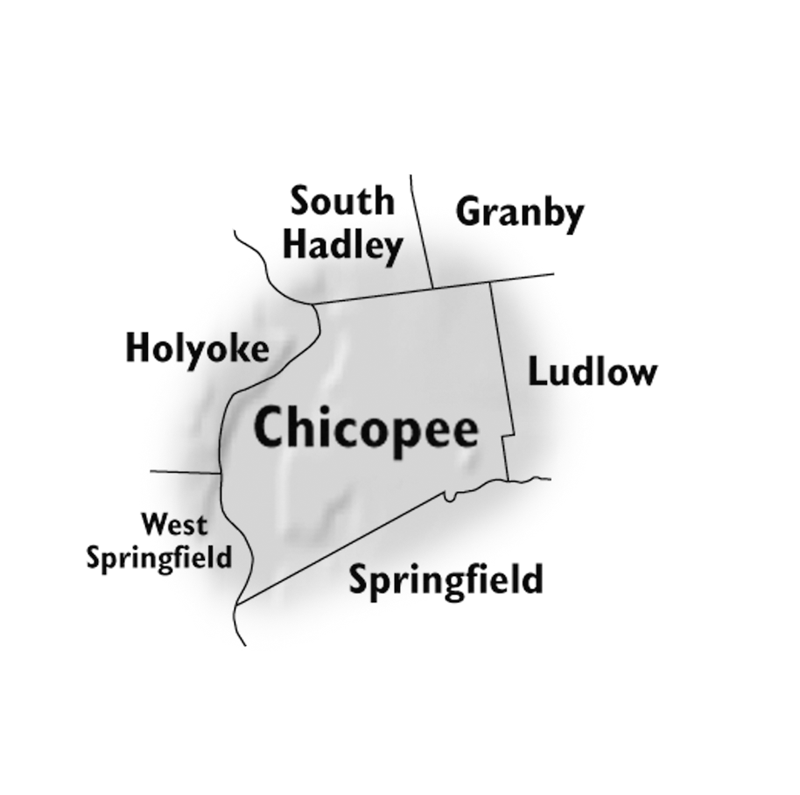 Editor’s Note: In an effort to keep its readership abreast of what’s happening in cities and towns across Western Mass., BusinessWest is commencing a year-long series of community profiles. We begin with the second-largest city in the region — Chicopee.
There is a small, carved wooden turtle that sits on Michael Bissonnette’s desk in Chicopee City Hall. It’s been there since early 2007, near the end of his first full year as mayor of this city of just over 55,000 residents.
As of yet, the turtle has no name, said Bissonnette, adding that it won’t until the so-called River Mills Project, a 65-acre brownfield site along the Chicopee River involving the former Uniroyal and Facemate manufacturing complexes, is fully ready for redevelopment. The initiative, marked by lengthy court fights and the complicated process of acquiring property and securing the funds to remediate it, has been nearly 30 years in the making. But there has been some dramatic progress in recent years, which brings the mayor back to his turtle.
“It’s my reminder to be patient — all good things come in time,” said Bissonnette, noting that the story of the tortoise and the hare resonates in Chicopee, where city leaders believe they are winning an important race for greater vibrancy, job opportunities, and tax revenue by being diligent and doing things right, and not necessarily quickly — although the pace of progress has picked up considerably (more on that later).
But patience is not the city’s only virtue, said the mayor, also citing perseverance, imagination, and even an ability to embrace modern telecommunications technology in an effort to better serve residents.
Indeed, just before speaking with BusinessWest, Bissonnette, a prolific user of Facebook and other forms of social media to communicate with various constituencies, texted a directive to the Department of Public Works to meet a resident’s request to have a street sanded.
“We’re in a digital age, and its all part of our ability to reach out and be customer-friendly,” said the mayor. “And I can be responsive to that.”
Beyond the visible progress at what is usually called simply the ‘Uniroyal site,’ greatly facilitated by the city’s ability to win funding for participation with the state’s Brownfields Support Team (BST), there are many other signs of growth and vibrancy in the city.
They include the Marriott Residence hotel now taking shape as part of the Chicopee Crossing project on Memorial Drive, progress with ongoing work to replace the Davitt Bridge in the heart of downtown, and two new, state-of-the art high schools built over the past decade.
Meanwhile, the city has been able to maintain and even grow its strong manufacturing base — which accounts for 22% to 25% of the jobs in the community — and is looking to add more in both existing manufacturing facilities and a 110-acre parcel near the Massachusetts Turnpike recently acquired by the Westover Metropolitan Development Corp.
From a fiscal standpoint, the city has rarely been in a stronger situation, with an A+ credit rating and $15 million in the so-called ‘rainy-day fund,’ the high-water mark for that account.
Summing up what has happened and what could happen in the years to come, Tom Haberlin, the city’s economic development director and long-time planning and development official, said the community has honed its can-do attitude with an even more business-friendly approach in City Hall.
“Chicopee remains a very easy place to get things done,” he said. “It doesn’t have the levels of bureaucracy you see in other cities, and this has helped us in many ways over the years.”
As BusinessWest begins its year-long series of community profiles, it starts with Chicopee, an old industrial city that that has stayed true to those roots while also managing to diversify its economy.
Progress Report
Bissonnette acknowledged that the phrase ‘running the city like a business’ has been used and overused in recent years and has lost some of its meaning. But this is exactly the approach he has taken since he was first elected in 2005, and he believes it has paid dividends.
Elaborating, he said the broad goal of his administration is to eliminate or minimize bureaucracy and politics (to the extent that it can), and create operating systems that remove barriers to progress, not add more.
“I can’t tell you how many developers have complimented the process, saying that we cut red tape and bend over backwards to accommodate the needs of the private sector, and that has paid off,” Bissonnette said. “The idea that a government is going to function more like a business is very appealing to the private sector, and it’s an extension of our business-friendly approach.

Mayor Michael Bissonnette says Chicopee takes a business-friendly attitude.
Meanwhile, he went on, the city has been aggressive in its pursuit of state and federal funding for various initiatives, such as the Uniroyal site, a character trait that has enabled it to advance a number of infrastructure and development projects.
That aggressiveness has paid off, said Haberlin, with grant awards on a scale not often often seen in a city this size.
“It’s very rare for a city to get these types of awards, and it’s a tribute to those that put the proposal together,” Haberlin said, referring specifically to funding secured for the Uniroyal project. “The BST knew that this project was moving at a very rapid rate and they would get the biggest bang for their dollar and it would be spent effectively.”
Kate Brown, the city’s long-time planning director, agreed.
“That turtle should have blisters on its feet,” she said with a laugh, “because, after the brownfields team was put together, this thing just took off. But nobody believed it could happen this fast.”
While work on the Uniroyal site proceeds ahead of schedule, city officials are enthusiastic about additional development opportunities in several parts of the city, including the Memorial Drive area, downtown, and the 110-acre site acquired by the Westover Metropolitan Development Corp.
“Potentially, that could be the springboard for some huge economic development,” said Haberlin, adding that the property is coming on line as city officials and regional economic-development leaders are hearing their phones ring again with regard to companies looking for places to locate or expand.
Haberlin referenced one manufacturer he chose not to name that was interested in existing real estate in the city, an attractive alternative to new building.
“It’s the first real inquiry we’ve seen in six or seven years,” he noted, adding that this company’s interest goes well beyond the routine tire-kicking witnessed in recent years.
Haberlin said Chicopee has a decent inventory of manufacturing and distribution facilities that were built at or near the $125-per-square-foot price point but are now selling for perhaps 20% to 25% of the cost, creating opportunities for both businesses and the city.
“The quality that this particular manufacturer is looking at couldn’t even be built today at that [$125-per-square-foot] cost, so they’re really trying to take advantage of the values out here,” he explained.
Momentum Is Building
Looking ahead, Bissonnette said city officials are working aggressively to properly position the city for everything from new manufacturing-sector jobs to a casino in Western Mass.
With regard to the latter, the mayor said he certainly hasn’t given up on the prospect of a gaming facility in his city — “we fully expect a casino to be built adjacent to Chicopee, if not in Chicopee” — but will be prepared to benefit no matter where it goes.
As for the former, the city has created a number of partnerships aimed at making sure it has a large and qualified workforce in place for current employers and potential new ones.
If a company is interested in workers with a particular skill set, said the mayor, relationships with Springfield Technical Community College, Holyoke Community College, Chicopee Comprehensive High School, Branford Hall Career Institute, and Porter and Chester Institute can facilitate the process of creating customized training programs.
“We say to interested precision-manufacturing companies, ‘tell us what you want us to train these students in, and we’ll train to suit,’” he noted, adding that, at Chicopee Comp, an advisory group with experts across different areas of manufacturing is helping the city to figure out what manufacturing jobs may look like in the future, and what skill sets will be necessary to secure one.
And while consistently looking for better ways to assist employers and potential employers, the city is always searching for new and more effective ways to serve constituents as well, said the mayor.
This includes use of social media as a way to communicate with residents, hear and read their concerns, and, in essence, create a dialogue on the issues facing the community, he told BusinessWest.
In addition to the mayor’s use of Facebook and Twitter, the internal information technology department, which maintains the city’s website, has been decentralized, a process that Bissonnette calls rare in municipalities.
This makes each department head accountable for uploading and maintaining his or her department’s up-to-date information. Going a step further, Bissonnette told BusinessWest that Chicopee was recently selected to be the only city in Hampden County, in conjunction with Boston, to get a smart app for smartphones through a three-year ‘efficiency in government’ grant from the state.
The app will be implemented in the spring to allow for complaints to make it to the proper department in real time; the Chicopee Police Department and DPW, the two entities that receive the most requests, will be the first to go live, bringing more of the transparency in government that Bissonnette said the city wants and needs.
After all, he said, it shouldn’t be a mystery about how to get a pothole filled or a sign replaced. “And you shouldn’t have to know somebody to get your street plowed or your trash picked up.”
The Finish Line
Bissonnette told BusinessWest that another of his goals moving forward is to revamp the city’s charter. Among those things on his wish list are a four-year term for the mayor (it’s currently two, which he believes adds up to too much time campaigning and not enough time managing the city) and revisions to create a strong-mayor form of government.
Whether he succeeds with those goals remains to be seen. As for most others, including the prospects for his turtle getting a name, he is eternally optimistic.
“We’re a can-do community,” he said. “We get things done.”
Elizabeth Taras can be reached at [email protected]
UMass Amherst will celebrate a major milestone this year, its 150th anniversary as a land-grant institution and the start of its role as the state university (see story, page 32).
It’s a chance to mark the school’s long history and effectively tell the story of how it has grown, matured, and become a national leader in many academic realms and a rising power in the research world. And that’s a story that definitely needs to be told, because far too many state residents, alums, state and regional economic-development leaders, and, yes, UMass trustees don’t know it as well as they should.
The 150th anniversary will provide an excellent opportunity to educate people on all that has happened in Amherst, and about the promise of much more to come.
But there is perhaps a much bigger, more important goal for the university as celebrates its beginnings at the height of the Civil War.
This would be the opportunity to re-connect with the alumni base and create more passion for the state university and its critical role in this state.
Indeed, for reasons that are somewhat difficult to articulate, there is a definite lack of passion when it comes to the university and its huge alumni base, at least when compared to the strong bond that graduates of institutions like Holy Cross, Boston College, Harvard, Amherst, Williams, and others have for their schools. And this level of passion also pales beside the fervor that graduates of other state universities across the country have for their schools.
Perhaps one of the reasons is sports — UMass does not have the high-profile programs of a Michigan, Ohio State, Florida, or Alabama. But, then again, Holy Cross and Amherst don’t have big-time sports, either. Perhaps it’s the fact that UMass must operate in the same small state as literally dozens of prestigious private institutions, including four within just a few miles of the campus. Perhaps it’s because UMass is the school that some people attend because they can’t attend those others.
Whatever the reason, the lack of a passionate alumni base has no doubt impacted the university, and not just in terms of the ridiculously low turnout for football games last fall at Gillette Stadium after the school made the risky and expensive leap to the Mid-America Conference and the so-called Football Bowl Subdivision — although that’s part of it.
This dispassion also affects donations to the school, thus limiting its overall growth opportunities, while it may also play a the role in the fact that UMass, like other public schools in the Commonwealth, has long been underfunded in comparison to institutions in other states.
A 150th-birthday celebration, even one on the huge scale that organizers are planning, is not going to change this equation overnight. But it can start to move the needle more in the desired direction.
If the university can succeed in drawing area alumni to the wide range of events on the Amherst campus, where they’ll see the cranes in the air and talk to current students, and if it’s able to attract alums from the eastern part of the state to events to be staged in Boston in October, then perhaps some important connections and reconnections can be made.
One of the sesquicentennial organizers used the phrase ‘light a fire’ to describe what he hopes might happen with the alumni base attending the various events to be staged. That’s being quite optimistic.
But it seems very realistic that the school can use this event to educate, inspire, and perhaps prompt alumni to scour their closets in search of maroon clothing. If it can do that, then maybe the passion level can start to rise.
Ruining the economy means never having to say you’re sorry. And it means never having to take ownership of, or even acknowledge, the desolation that has washed over the country over the last five years.
Most of the instigators of the 2008 financial collapse (the ones that survived the crash intact) have long since moved on. They were greatly aided by a government policy that extracted cash, but not admissions of guilt, as the price of walking away from the collapse. As a recent filing in a Manhattan courtroom shows, that policy continues to leave victims of the financial meltdown in the lurch years after the crisis itself.
The prominent hedge-fund manager John Paulson approached Goldman Sachs in late 2006, when the subprime-mortgage market was sputtering toward its inevitable end. Banks were acquiring, and reselling, flawed mortgages at a furious pace. Paulson told Goldman he wanted to bet against some of the worst mortgages the banks were pushing onto the market. The result was a mortgage instrument named Abacus 2007-AC1.
Goldman’s Abacus deal was like a rancid, $2 billion subprime sausage. The bank took risky slices of 90 subprime-mortgage bonds, stuffed them together, and sold the new mortgage instrument to investors. Normally, investors in deals like Goldman’s Abacus made money when their mortgages performed. Paulson laid a relatively modest bit of money on the other end of the deal, betting that the mortgages would fail; when they did, he’d make a killing.
Deals like Goldman’s Abacus were the worst stuff the financial crisis produced, since they concentrated the riskiest, lowest-rated bits of dozens of disparate mortgage bonds into a single instrument. That’s what Paulson’s fund was looking for: a loser of a deal to bet against. Paulson’s fund selected shaky mortgages to stuff into Abacus, then had Goldman sell the instrument to other clients.
The Abacus deal blew up months after it closed, netting Paulson’s firm a quick $1 billion. A Senate subcommittee investigating the financial crisis would later label Paulson’s role in crafting Abacus a massive conflict of interest; an executive at a rival investment bank compared it to a gambler betting against a football team after asking the team’s coach to bench his quarterback. The Securities and Exchange Commission sued Goldman in 2010 for allowing Paulson’s fund to craft the deal for itself, and extracted a $550 million settlement.
Goldman never admitted any wrongdoing connected to Abacus. That’s normal. Federal regulators’ most vigorous response to the 2008 financial collapse was to buttonhole financial firms into paying a civil fine, without ever making the firms admit that the fines represented punishment for grave misdeeds. Companies paid to make cases go away and never had to admit guilt. This arrangement enabled the SEC to issue press releases trumpeting multi-million-dollar fines against unpopular banks and mortgage companies, while shielding the companies from far greater liabilities that would follow the firms’ admission of securities fraud. So while Goldman conceded it made mistakes in not describing Paulson’s true Abacus role, the bank didn’t have to cop to any wrongdoing. For the ridiculously profitable bank, it’s as if the whole affair never happened.
Although Goldman didn’t get hit with a foul over Abacus, it certainly caused harm. Investors lost billions. A financial insurer called ACA Financial, which backed the safest half of Abacus and lost millions in the deal, sued Goldman over Abacus two years ago. ACA claims Goldman lied, telling the insurer Paulson was betting with the mortgage instrument, not against it. The insurer has been chasing Goldman for $120 million, and for two years, Goldman has been hiding behind the fine print in its SEC settlement.
The government’s Abacus settlement said that, while the SEC was happy to take the bank’s money, it wasn’t making it admit to doing anything wrong. That’s been enough to let Goldman dodge wider accountability from the customers, like ACA, that it put on the wrong side of a deal built to fail. Out of frustration, ACA’s lawyers moved last week to draw Paulson’s hedge fund into their suit against Goldman. But that effort is really just a leverage play to try to break Goldman — a firm that has danced away from Abacus thus far, because its federal regulator let it dodge accountability and contrition.
Paul M. McMorrow is an associate editor at CommonWealth Magazine.
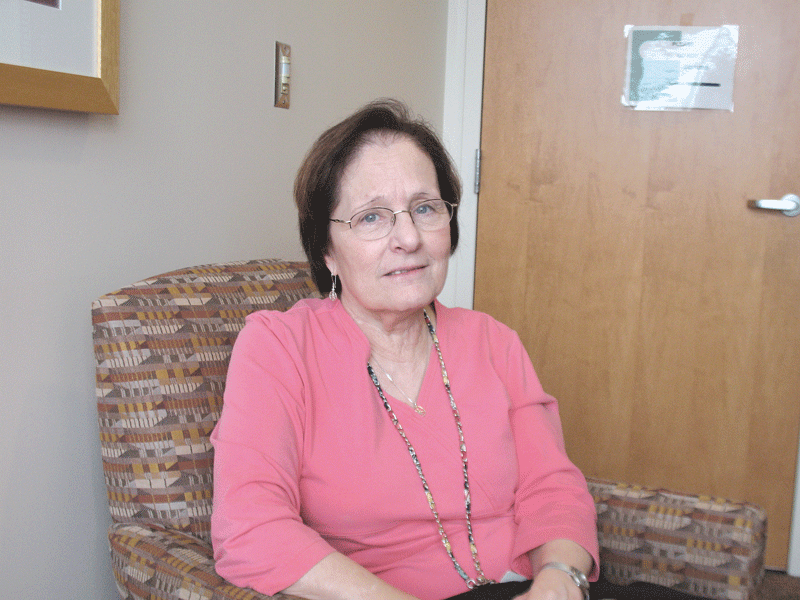
Ann Buscemi says it’s important to understand what’s important to each patient before crafting an individualized strategy for hypnosis.
“I always make sure people I’m working with understand that I am their guide,” said Quinlan, an oncology social worker at the D’Amour Center for Cancer Care in Springfield, who uses hypnosis with some patients who are struggling with anxiety and other aspects of a cancer diagnosis. “I’m not doing anything to them; they’re allowing themselves to enter this hypnotic trance state. It’s a skill they actually have inside them. My goal is to help them do that on their own.”
Some patients begin the process with skepticism, she added, spurred partly by distorted perceptions about hypnosis from the entertainment world. “I always explain what hypnosis is and what it isn’t. It won’t make you undress or cluck like a chicken … unless, of course, you want to cluck like a chicken.”
In short, it’s not a loss of control, she explained. Quite the opposite, hypnosis done for the right reasons is empowering. “Basically, people feel like they possess a tool inside of them that allows them to feel like they can deal with the stress in their life. People are most stressed when they feel like there’s nothing they can do about their situation; they want a tool like this to manage their stress.”
Ann Buscemi, a certified hypnotherapist and educator who spends part of her time working with patients at Cooley Dickinson Hospital, conducts a program there for pregnant women called Deep Relaxation for Pregnancy, Birth, and Beyond.
“It’s not centered on the outcome being a guaranteed, non-medicated birth, but focuses on confidence and feeling comfortable and calm, regardless of what comes your way in birth, because birth is always unique and different,” she told BusinessWest.
“What I’ve found, from many, many years working with pregnant women, is that, if I can help them find a quiet space within, and allow their body to do the work it knows how to do, everyone will be in a better place; it’s better for the woman, better for the partner, and better for the baby.”
Women in the program learn to enter a hypnotic state in order to relax and regulate their breathing, but the process is also beneficial for women preparing for a scheduled cesarean birth, she said, to deal with the anxiety of what is, in fact, major surgery.
“We really focus on the relaxation piece,” said Buscemi, who also teaches a class for nurse midwives on the basics of childbirth education. “The feedback I get from the midwifery center is that it really makes a difference.”
For this month’s focus on healthcare, BusinessWest explores what hypnosis in a medical setting involves, and why many patients grappling with fear, anxiety, pain, and other issues find the process liberating — and healing.
Free Your Mind
Buscemi, like Quinlan, emphasizes the free-will element of hypnosis, reiterating that it’s most effective on individuals who are open to it and understand what it is.
“A lot of people fear it because, so often, we hear about a guy at the Hu Ke Lau bringing people up on stage, and they start quacking like a duck. If someone wants that to happen, it will happen; it’s not mind control. You can’t make somebody do anything against who they are, religiously or ethically.”
So, how does hypnosis work?
“It’s getting to that subconscious space where I can plant a seed for positive results,” Buscemi explained. “It’s sort of moving beyond your fears and anxiety and introducing positive words, positive images, deep relaxation, lower blood pressure, and, again, better outcomes.
Much of the success of hypnosis is improved confidence and attitude, she explained, adding that each individual experiences the specifics differently. For example, in learning to breathe during labor, “you can think of your breath in any way you wish. Some women see their breath as fueling their body, so their body can do the work. Other women see it as a parachute above their body; they see it as a means of staying outside their body and therefore not getting in the way. … I never say, ‘you must do it this way.’”
Buscemi said she tries to bring a sense of humor to the process as well, again, to decrease the tension of impending childbirth. “Having a baby can be incredibly scary for people, and I try to help them find that quiet space.”
As an oncology social worker, Quinlan’s job entails a number of functions. “Hypnosis is a small part of what I do on a regular basis,” she said, “and not every patient I work with would necessarily want to think about hypnosis as something helpful to them. For those who are interested, I would discuss it with them as an option in the bigger picture of helping them cope with cancer.
“There are, for sure, situations that come up where I have been able to use hypnosis,” she added. “Essentially, the first step is working with the patient to establish what their goals are. I’m very goal-oriented.”

Marlene Quinlan says pain relief isn’t one of her goals in treating cancer patients, although some find they’re able to manage their pain more effectively afterward.
“Hypnosis won’t make you do anything you don’t want to do,” Quinlan said. “That’s why it’s important, when doing an assessment, to find out what their goals really are, if it’s what they really want. If I receive a referral to help someone quit smoking, and during my assessment, I hear them saying, in so many words, that they’re not really interested in quitting, that can be an obstacle.”
Therefore, some patients need more conventional counseling first to get to the bottom of what they really want, or to assure themselves that they really want what hypnosis could help them achieve.
“It’s not a magic pill,” she told BusinessWest. “And one session of hypnosis isn’t going to cure all your ills, although many people think of it that way.” In fact, sometimes the first session doesn’t involve hypnosis at all, but is a thorough assessment of the patient’s mindset and goals.
The Rest Will Follow
Buscemi also conducts hypnotherapy for cancer patients, through the Cancer Connection in Northampton.
“It’s really taking time with people who are looking at surgery or chemotherapy or radiation therapy, and focusing on healing,” she explained. “It’s really challenging to be faced with a diagnosis — a life-threatening diagnosis — and then everything you have to do to get through it.
“I’ve found, in working with people at the Cancer Connection, that they haven’t thought about being OK,” she continued. “I help them come up with visualization and focus, seeing themselves as healed, helping them through their fear, anxiety, and stress, using the things going on around them and within them to help them promote more relaxation.”
While different patients call for different techniques, Buscemi said she often uses a “color healing” form of visualization, where chemotherapy patients picture the liquids going into their bodies as a healing color. Similarly, “I’ve written a script about powerful beams of light for working with a man with prostate cancer.”
Every case is different, she said. “I take the time to find out what they love. Do they love the beach? Then let’s use [images of] waves, waves of healing. You have to make it something they can relate to, never something I think they should be thinking about. I think that’s important; I don’t know what’s going to work for people, so it’s a discovery time for me.”
Buscemi also creates a CD that patients can use at home — before, during, or after their treatments — to practice self-hypnosis as an ongoing tool. “That’s important, that they have this tool to listen to anytime,” she said. “I’m not just planting a seed, but really pressing it in and making sure it’s well-sown in their mind.”
Anytime a patient can relax — whether it’s a woman giving birth, a patient prepping for surgery, or someone sitting in a dentist’s chair — it makes life easier for everyone, including the care provider, Buscemi said. And often, when hypnosis is conducted in conjunction with serious procedures, “you need less anesthesia, you leave the hospital earlier, you need less pain medication. That mind-body piece is significant, and it makes a difference.”
The concept of seeking hypnosis before a surgical procedure has been promoted by Massachusetts psychotherapist Peggy Huddleston, who offers a course to healthcare providers called “Prepare for Surgery, Heal Faster.”
Huddleston’s process involves using visualization to turn surgery worries into positive, healing imagery; listening to her relaxation CD or mp3; asking family and friends to wrap the patient in a “blanket of love” before surgery; and using “healing statements” during and after surgery that, she claims, reduce the need for pain medication in most patients.
“You’re planting a suggestion that the surgery will go well, and recovery will go well,” Quinlan said. “Entering that procedure feeling really positive about the outcome can help you.”
Hypnosis can also help them with ancillary stressors for cancer patients, she added. “Some people have difficulty sleeping, and cancer does create anxiety, which causes difficulty sleeping. If I can teach them how to relax and go into a trance state at bedtime, they’ll sleep better” — and, in circular fashion, reduce the stress that caused the sleeplessness to begin with.
Peace of the Action
Some hypnotherapists use the process for pain relief, but Quinlan is careful with how she frames that idea.
“I never say to somebody, ‘if you see me and we do hypnosis, it will help you with your pain,’” she told BusinessWest. “But a couple of my patients have had pain issues, and they’ve actually been able, as a side effect of hypnosis, to feel like their pain has improved. I think they’re able to relax, and there’s less tension in their bodies, and therefore they’ve felt some relief from their pain, but I don’t promote that as a substitute for whatever pain management is being promoted by their doctors.”
She also stressed that hypnosis is not a cure-all, and is generally undertaken in tandem with other treatment modalities.
“Often, in conjunction with hypnosis, we’re also doing counseling around what they’re thinking and feeling, and somehow, the combination of these things helps them reframe their thoughts on the situation.
“If you’re focusing on your fears,” she added, “you’re going to have anxiety. But if you’re finding a way to distract yourself and not always be focused on your fears, and having some mastery over your stress, I think I can help you get into a better place emotionally.”
Buscemi says her work is gratifying on a number of levels.
“I know this works; I know it makes a difference,” she said, but she’s still thrilled when patients tell her the process has helped them in some way, and honored that she can be a part of helping them through events both happy — the birth of a child — and traumatic, like cancer.
“That’s a gift to me,” she said. “It reminds me how precious life is.”
Joseph Bednar can be reached at [email protected]


As a child, Dr. Shewee-Tian Chou recalls, he watched his father treat people using acupuncture and thought he had magical powers.
But it has made a remarkable difference in her life and is a modality she has turned to repeatedly for pain and other problems.
“I would probably be in a wheelchair without acupuncture; I was looking for anything that would help me when I found it,” she said, adding that she has rheumatoid arthritis, fibromyalgia, lung cancer, and severe allergies. “I don’t know how it works, but for me it has been a miracle.”
Angotti said her family doctor sent her for treatments when physical therapy failed to relieve the pain she was suffering as a result of from fibromyalgia. “It was so bad that I couldn’t walk,” she told BusinessWest. Acupuncture has also helped with stabbing pain that occurred after she had a portion of a lung removed and medication made her so nauseous she couldn’t continue taking it. “It helped me breathe better and has also helped my allergies.”
Marianne Mahoney and her family have also benefited from acupuncture.
“I began getting it for my daughter when she was 7 years old,” she said, explaining that she was uncomfortable with the idea of putting the girl on steroids for a long period of time for an autoimmune disease. “I did a lot of research and was concerned about the side effects of the drug. And I have no doubt that Chinese medicine was one of the factors in her slow, but profound, recovery.”
She also utilized acupuncture herself after a variety of surgeries that resulted in pain and complications. “It works on all aspects of your health and well-being. Every time I have acupuncture, I get a deep sense of immediate relaxation, and it has provided me with enormous relief over a period of time,” she said.
Angotti and Mahoney are among millions of people who have turned to acupuncture for help in relieving pain and curing conditions that range from insomnia to infertility, headaches, asthma, depression, anxiety, and more.
The treatment, as defined by the National Center for Complementary and Alternative Medicine, is a procedure that stimulates points on the body through a variety of techniques. The one most often scientifically studied involves penetrating the skin with thin, solid, metallic needles that are manipulated by the acupuncturist or by electrical stimulation.
“It’s a great treatment for a variety of conditions and has been used for more than 5,000 years,” said licensed acupuncturist and nationally certified herbalist Susana Byers, who has offices in Easthampton and Amherst. “The great strength of Chinese medicine is that it is truly holistic, since it treats the connection of body, mind, and spirit as one. In fact the World Health Organization recognizes acupuncture as effective for treating allergies, depression, dysmenorrhea, headache, knee pain, low back pain, adverse reactions to radiation and chemotherapy, as well as a host of other conditions.”
Dr. Shewee-Tian Chou, of the Acupuncture and General Medicine Center in Springfield, is a licensed physician in China as well as the U.S. He practices Eastern and Western medicine, incorporating Chinese herbs and other modalities into the treatment plan as needed.
He began studying acupuncture in China 57 years ago under his father’s tutelage. “When I was 7 years old, I saw my father help people in wheelchairs and thought he had magical powers,” he told BusinessWest, adding that he spent years studying Chinese medicine, became a physician in the Republic of China, then went on to study Western medicine to gain modern scientific knowledge, and finally became a board-registered physician in Massachusetts.
“In Oriental medicine, a disease is viewed as the result of an imbalance in the body,” Chou said; practitioners of acupuncture aim to correct that imbalance.
The needles used in the treatment are usually about the size of a cat’s whisker, so there is little if any pain and no bruising. They typically remain in place for 15 to 30 minutes. In ancient times, they were manipulated by hand, but today, battery-operated electrical stimulation is used, which is consistent and comfortable.
“But the needles must pierce the skin to a certain depth and in a certain direction,” Chou explained. “It is not a simple procedure that someone educated in Western medicine can learn in a short period of time.”
And success depends on the severity of the problem. “The longer someone waits, the longer it will take to fix,” he said.
Inner Workings
Although many people turn to acupuncture to resolve a specific issue, others use it to maintain their health and well-being.
“There are many diseases and physiological dysfunctions that do not yet amount to a disease that can be cured by acupuncture,” said Chou, explaining that sometimes people go to their doctor with vague symptoms and leave without a diagnosis, but still don’t feel right.
Byers concurs. “Acupuncturists are interested in your diet, your lifestyle, and all aspects of your life as it impacts your health,” she said. “A lot of people feel there is something wrong with them, yet nothing shows up in tests, so their doctors send them home. But they still don’t feel right. And acupuncture is really good at putting the body back in balance by improving the immune system.”
The cost of private sessions typically range from $60 to $125, although there are low-cost clinics at which treatments cost $20 to $40. And some acupuncturists use a sliding scale.
“People generally feel somewhat better after one treatment, but to fully resolve a problem may take a number of treatments,” Byers said.
Chou said his working definition of acupuncture is that it “works to normalize physiological functions by balancing the chemicals in the body.”
Chinese medicine says energy comes from chemicals, and energy runs through meridians in the body. “Even water has a chemical formula,” he said, adding that chemicals are used in every bodily function, including digestion.
Chou was the director of a hospital in China that employed both types of medicine, and he treated people from all over the world, including a doctor from Florida who wanted to learn acupuncture. He also trained many practitioners in the discipline.
He said the modality was first discovered about 5,000 years ago when a cave dweller’s illness was cured due to pressure from pointed objects on certain parts of the body. “And experience taught man to apply pointed bamboo, wooden sticks, or rocks to certain locations on the body to treat illnesses. Gradually, Chinese physicians discovered the nerve centers strategically located at certain vital points of the body, Chou noted.
But although acupuncture is an ancient form of medicine, it did not become popular in the U.S. until 1972, when President Nixon’s secretary of State, Henry Kissinger, traveled to China accompanied by a journalist for the New York Times. The journalist had an emergency appendectomy in a Chinese hospital, and doctors there used acupuncture to relieve his pain.
However, Byers says many misconceptions exist about the treatment. “Some people think it’s nothing more than a placebo. It’s very hard to prove how it works in a way that Western medicine accepts. But there are many scientific studies that show that it is effective,” she said.
Byers offered more insight in how acupuncture works. She explained that, when life energy, known in Chinese medicine as ‘qi’ (pronounced ‘chee’), doesn’t move smoothly through the body, it is due to a blockage in the meridian. For example, when a person has neck or shoulder pain and feels a knot or hard spot, it is the result of the blockage of energy.
Chou said treatments enhance the immune system by causing the brain to release positive chemicals. “Acupuncture stimulates the skin, and the nerve endings transmit the sensation through the spine to the brain. Then the brain discharges chemicals, including endorphins, hormones, and others which the body needs to fight the disease and increase the immune system. The brain produces chemicals instead of the person having to take medication.”
The goal is holistic treatment of the entire person, since a blockage can result in a variety of symptoms or conditions that can affect people in different ways.
“We treat the person, not the disease. For example, if someone is suffering from insomnia, it may be due to a variety of reasons,” said Byers, adding that causes could range from constipation to worry or anxiety.
“There is not one treatment strategy for any Western disease,” she told BusinessWest. “But acupuncture is very good at helping people minimize sickness, such as the effects of colds and allergies. We can help to build their immune system or treat their fever and sore throat. And if they have a cold, they may also have neck or shoulder pain or a runny nose, and we can treat that, too.”
Chou said acupuncture is effective in treating many problems at once, as some are secondary. It works because “we are trying to normalize physiological functions. And different combinations lead the brain to produce different chemicals.”
Scientific studies show acupuncture relieves pain in the body by releasing natural painkillers or opiates, Byers said. But depression often occurs in conjunction with chronic pain.
Mahoney agrees. “When you are ill or injured and have a bad outcome, you get depressed,” she said. “And our bodies can’t be well if we are emotionally stressed. But acupuncture doesn’t separate the two. Acupuncturists look at your whole system, and the way it works is amazing.”
Both Chou and Byers cited cases of people with a wide range of conditions they have helped. Byers recalled, from her early training, conducting an externship at a Veterans’ Administration hospital where acupuncture was used to treat patients who could no longer take pain medication due to damage to their kidneys. “It provided them with the only pain relief they could get,” she said. “And there is a cumulative effect with treatments. The more you have, the longer the relief lasts.”
Health Maintenance
Byers often combines acupuncture with Chinese herbal medicine, which she says is quite safe as long as the herbs are obtained from a licensed, certified practitioner.
“Many people use acupuncture as a last resort,” she said. “But it is more effective if people seek treatment earlier. It is very valuable and is a complementary form of treatment that can be used in combination with Western medicine.”
Mahoney agrees. “Acupuncture is phenomenal,” she said. “I have a smile on my face after a treatment. And we are lucky to have many skilled acupuncturists in Western Mass.”

Kristina Drzal-Houghton
Early on Jan. 1, the Senate, by an overwhelming vote of 89 to 8, approved H.R. 8, the “American Taxpayer Relief Act.” Late the same day, the House of Representatives followed suit and passed the bill by a vote of 257 to 167. The President quickly signed and enacted the bill into law on Jan. 3.
Understand that the American Tax Relief Act is nowhere close to the sweeping legislation envisioned by the president after the November election. It is effectively a stopgap measure to prevent the onus of the expiration of the Bush-era tax cuts from falling on middle-income taxpayers. The Budget Control Act of 2011 imposed sequestration (across-the-board spending cuts), effective after 2012. The American Taxpayer Relief Act temporarily postpones sequestration for two months. Congress is likely to revisit tax policy and spending cuts when it tackles the expected increase on the nation’s debt limit in February.
The American Taxpayer Relief Act of 2012 makes permanent for 2013 and beyond the lower Bush-era income-tax rates for all, except for taxpayers with taxable income above $400,000 or $450,000, depending on tax-filing status. Income above these thresholds will be taxed at 39.6%.
While this means that the federal tax-payroll withholdings for most taxpayers will not be changing, nevertheless, all taxpayers will find less in their paycheck in 2013. The tax relief act effectively raises taxes for all wage earners (and those self-employed) by not extending the 2012 payroll-tax holiday that reduced the OASDI part of Social Security taxes from 6.2% to 4.2% on earned income up to the Social Security wage base of $113,700 for 2013.
While the individual marginal tax rates of 10%, 15%, 25%, 28%, 33%, and 35% will remain, for those individuals with income above the $400,000/$450,000 threshold, the bracket ranges for the 35% rate now cover only a relatively small sliver of what constituted the upper-income range. On the positive side, taxpayers who find themselves in this higher 39.6% tax bracket will continue to benefit from the extension of the Bush-era rates below the 39.6% amount.
Other Changes
The American Taxpayer Relief Act also extends the beneficial Bush-era tax rate of 15% for capital gains and dividends. However, these same taxpayers will find themselves subject to a higher capital-gains and dividends rate of 20%, up from the previous 15%. All others will continue to enjoy the old, preferential rates, including the zero-percent rate, if their total income does not exceed the 15% bracket. Installment payments received after 2012 are subject to the tax rates for the year of the payment, not the year of the sale.
Also effective for 2013 and later is the Patient Protection and Affordable Care Act’s (PPACA, better known as Obamacare) 3.8% additional tax on net investment income for taxpayers with taxable income exceeding the thresholds of $200,000 or $250,000, depending on filing status. Therefore, starting in 2013, capital gains for these high-income taxpayers will effectively become 23.8%. In anticipation, many taxpayers completed transactions in 2012 to benefit from these lower rates. If any of these transactions are eligible for installment reporting, careful consideration should be given to the effect of such an election.
Short-term capital gains remained taxed at the ordinary income marginal rates. The 28% and 25% rates for certain long-term gains also remain unchanged.
The American Taxpayer Relief Act ‘patches’ the alternative minimum tax (AMT) for 2012 and subsequent years by increasing the exemption amounts and allowing non-refundable personal credits to the full amount of the individual’s regular tax against AMT. Without the patch, the AMT exemption amounts for 2012 would have been significantly reduced as compared to 2011. This patch saves more than 60 million taxpayers from being subject to AMT on returns filed in 2012.
The American Taxpayer Relief Act officially revives the phaseout of itemized deductions and personal exemptions for higher-income taxpayers. This phase-out, known as the ‘Pease’ limitation, was eliminated by the 2010 Tax Relief Act. However, its return will impact fewer taxpayers since the thresholds have increased to $300,000 for married taxpayers and $250,000 for single taxpayers. These thresholds are approximately 165% of the inflated thresholds under the previous sunset rules.
In summarizing the phaseout thresholds for the various changes, you should note that, in almost all cases, if a married couple elects to file separately, most of the thresholds are cut to one-half of the higher married threshold, which is lower than the stated single thresholds.
The recently passed legislation retained the $5 million exclusion for decedents dying after Dec. 31, 2012 and permanently provides for a maximum tax rate of 40%. Of course, ‘permanent’ is a very relative term.
Also retained and made permanent is the ‘portability’ between spouses. This allows a surviving spouse to use any unused exclusion of their previously deceased spouse. These rates and exclusions apply to gifts made after Dec. 31, 2012 as well.
Other noteworthy extensions for individual income tax payers include:
• Permanently extending the $1,000 per-child tax credit, subject to comparable phase-out provisions;
• Earned-income credit provisions in the Bush-era and subsequent legislation are extended through 2017, while some provisions are made permanent;
• Adoption credit/assistance provisions were extended permanently, subject to comparable phase-out provisions;
• The child and dependent-care credit amounts and expenditure caps from Bush-era enhancements are permanently extended;
• The American Opportunity Tax Credit for qualifying tuition was extended through 2017, subject to comparable phaseout provisions;
• Provisions related to above-the-line tuition deductions and certain student-loan interest deductions have been extended;
• The teacher classroom-expense deduction for up to $250 was extended through 2013;
• The exclusion from income of up to $5,250 of qualifying, employer-provided education assistance was extended permanently; and
• Tax-free distributions of up to $100,000 (per taxpayer, per year) to charities from IRAs by individuals over age 70 1/2 was extended through Dec. 31, 2013.
Many popular but temporary tax extenders relating to businesses are also included in the American Taxpayer Relief Act. Among them is Code Section 179 small-business expensing, research credit, and the Work Opportunity Tax Credit.
The American Taxpayer Relief Act extends through 2013 the enhanced $500,000 Code Section 179 dollar limitation for 2012 and 2013. The rule allowing off-the-shelf computer software is also extended. Also extended is the 50% bonus depreciation through 2013; the limitation was previously set at $139,000 for 2012 and $25,000 for 2013.
The act extends through 2013 the Research Tax Credit. This credit had expired at the end of 2011, but continues to enjoy bipartisan support in Congress, and President Obama has called for making the credit permanent.
The measure also extends through 2013 the Work Opportunity Tax Credit, which rewards employers that hire individuals from targeted groups with a tax credit.
Many other business provisions and credits with extremely narrow application were also extended through 2013. Perhaps the most notable is the reduced recognition period of five years for S corporations with built-in gains.
Bottom Line
To properly evaluate how this tax act affects you or your business individually, you should consult with your tax adviser. However, you should keep in mind that, since the passage of the 2010 Tax Relief Act, several proposals for comprehensive tax reform have been unveiled in Washington that may hold promise for a more permanent solution.
For example, a presidential panel developed the so-called Simpson-Bowles plan. Also, the GOP has put forward several proposals for comprehensive tax reform, also calling for reduced individual income-tax rates, while both parties struggle to strike a grand bargain.
Later in 2013, a broader, more permanent solution may be found.
Kristina Drzal-Houghton, CPA MST is the partner in charge of Taxation at Holyoke-based Meyers Brothers Kalicka, P.C.; (413) 536-8510.


James Sheils
•••••
Gov. Deval Patrick has appointed Westfield State University alums Terrell Hill and Steven Marcus to serve as members of the Westfield State University Board of Trustees. Hill is the founding principal of High School Inc., Hartford’s public insurance and finance academy, which opened in 2009. The school is a National Academy Foundation finance academy, whose goal is to prepare young people for college and career success based on industry-focused curricula, work-based learning experiences, and business-partner expertise. Marcus is a licensed, certified social worker who has dedicated his life to improving the lives of those in need as CEO and owner of multiple diversified healthcare enterprises, including New England Geriatrics and West Central Family and Counseling. The board is comprised of 11 trustees, one of whom is elected by the student body and one who represents the alumni; all are appointed by the governor and serve for a five-year term.
•••••
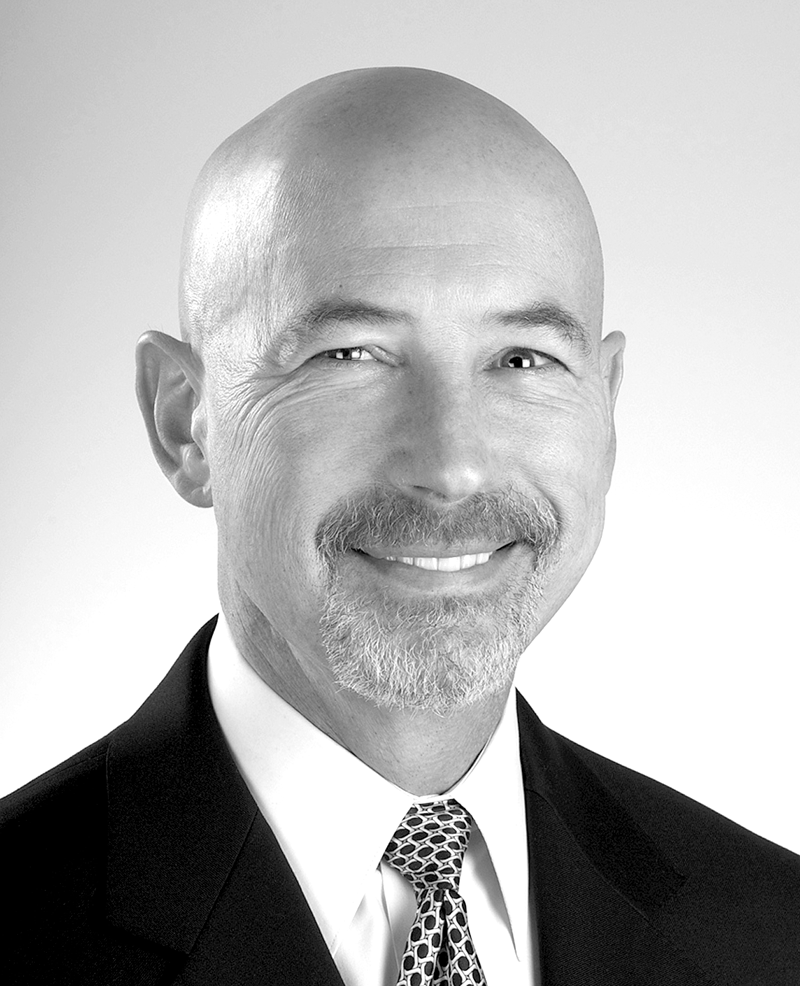
Michael Daly
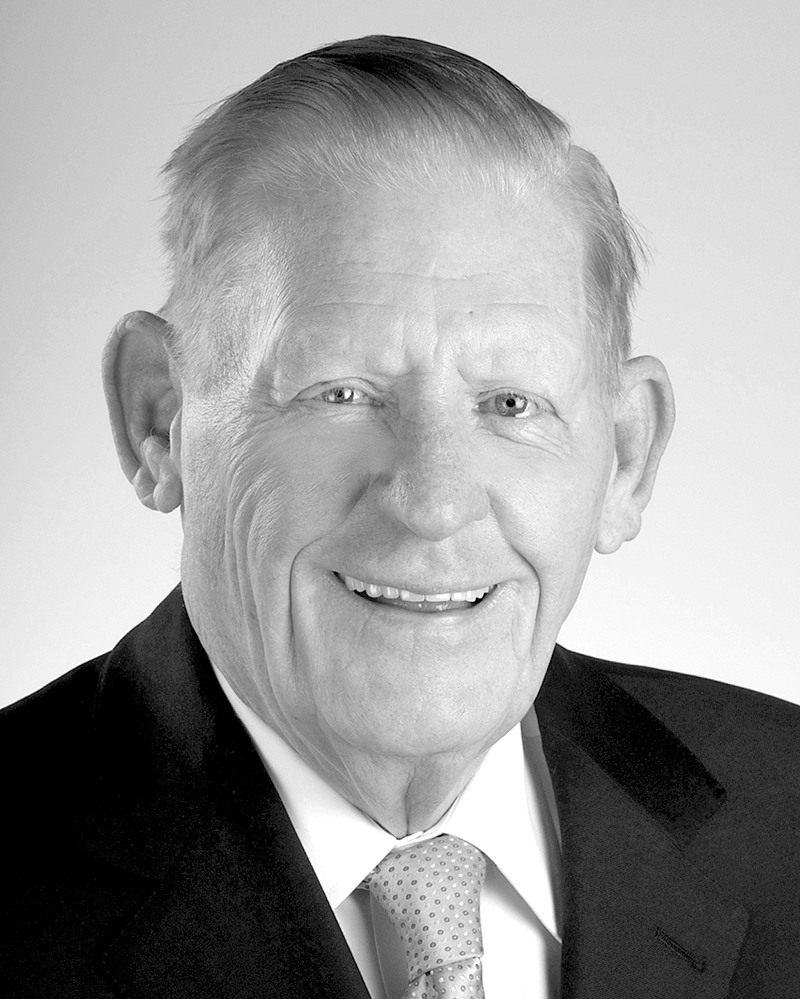
Lawrence Bossidy
•••••
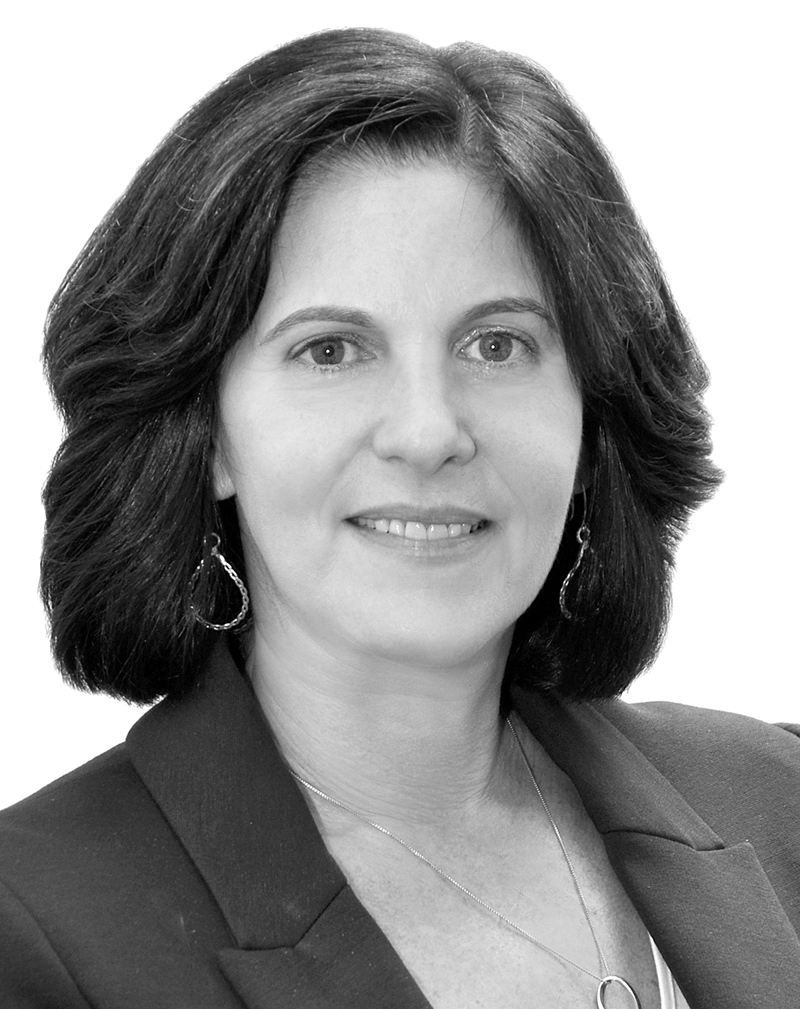
Joan Ingersoll
•••••
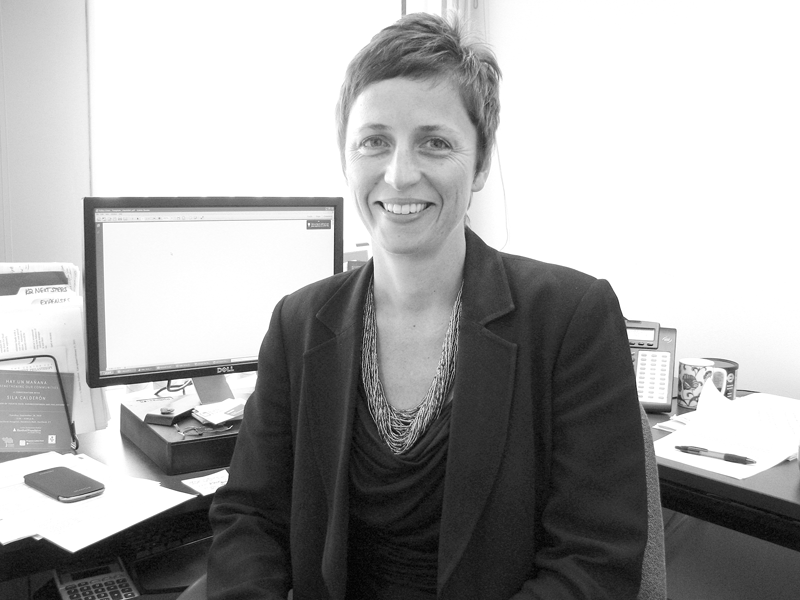
Katie Allan Zobel
•••••
Elms College recently honored senior Laura Fusini with the Bishop Joseph F. Maguire Award during the Western Massachusetts Chiefs of Police Association (WMCOPA) President’s Inaugural and Annual Awards meeting. The award was established by WMCOPA in honor of retired Bishop Joseph Maguire in recognition of his outstanding service as the association’s chaplain for 33 years. The honor, which includes $1,000 to assist in meeting educational goals and professional objectives, is given annually to an Elms College junior or senior who is enrolled in the field of religious studies, or has made outstanding contributions to the community-service or campus-ministry programs. An English and Religious Studies double major with a 3.8 GPA, Fusini participates in a Bible study group and is the editor of Bloom, the college’s student-run literary magazine. She has been a Deanery Scholar all four years at Elms and will participate in a college service trip to Baltimore in January, where she will work in a soup kitchen and food pantry.
•••••
Florence Savings Bank announced the following:

Shelley Daughdrill

Kristen Adams
•••••
Jody Dion has joined the Wing Memorial Hospital and Medical Centers team as the new executive director of VNA and Hospice. She will be replacing Barbara Hitchcock, who is retiring after 12 years in the role. Dion has more than 20 years of experience in home healthcare and was most recently manager of Quality Improvement at UMass Memorial Medical Center Home Health and Hospice. She is a registered physical therapist. Wing Memorial VNA and Hospice is located at 40 Wright St., Palmer. For information or to make an appointment, call (413) 283-9715.
Springfield College, STCC Sign Articulation Agreement for IT Students
SPRINGFIELD — Springfield Technical Community College (STCC) and Springfield College recently signed an articulation agreement allowing students at Springfield College to take Information Technology classes at STCC, recognizing the high quality of the Computer and IT Security program offered at STCC. Additionally, the agreement allows STCC students completing an associate’s degree in Computer Information Technologies to transfer to Springfield College as juniors in their Computer and Information Sciences major. “The agreement between STCC and Springfield College is historic because it gives bilateral pathways for STCC students to continue their education by earning a bachelor’s degree at Springfield College and it allows Springfield College students to gain access to the computer networking and security curriculum and expertise offered at STCC,” said Brian Candido, STCC Computer Information Technologies program chairman and associate professor. “It is a true win-win scenario for all students and faculty at both institutions.” Candido said the two colleges have been working together in this capacity since 2008 through the Cooperative Colleges of Greater Springfield (CCGS). The formal signing of this articulation agreement not only creates an opportunity for STCC students to transfer to Springfield College as juniors, but also allows STCC students to become eligible for school-based scholarships based on their grade-point averages. For Springfield College student Karon Perkins, the partnership between STCC and Springfield College gives him access to a top-notch IT program as well as a chance to experience campus life at another college besides his own. “STCC offers a good selection of programs not offered at Springfield College,” said Perkins. “And having the opportunity to come to STCC gives me a taste of a different college — what it’s like to be on a different campus — and I’ve learned a lot.” Leona Ittleman, dean of STCC’s School of Business and Information Technologies, credits both STCC and Springfield College faculty for the work they have done to make this agreement between the campuses a reality. “Some of our best students transfer to Springfield College and receive the benefits of our colleagues’ experience and dedication to student learning,” she noted. The Computer and Information Sciences major at Springfield College is a professional program that offers a solid core of theoretical and applied computer-science courses and provides students with the choice of one of four required concentrations: Information Systems, Software Development, Game Programming, or Internet and Network Security.
Big Y Raises $194,000 to Fight Breast Cancer
SPRINGFIELD — In order to raise awareness and funds to fight breast cancer, all Big Y Supermarkets donated proceeds from the company’s October initiative “Partners of Hope” to 17 breast-cancer support groups throughout Massachusetts and Connecticut. This month-long program reflects the partnership, commitment, and support of breast-cancer awareness and research that are so vital for many. In October, Big Y raised $194,000, which was donated to nearly two dozen organizations. Locally, these included the Women’s Imaging Center at Berkshire Medical Center, Rays of Hope, and the Mercy Breast Care Center. “Big Y is committed to promoting breast-cancer awareness to our community,” said Big Y CEO Donald D’Amour. “Over the past five years, we’ve made tremendous progress thanks to our customers, vendors, and employees. In addition, these funds benefit local programs throughout our region. It is truly a collaborative effort.” Since 2007, the chain has raised more than $863,000 for this cause. During the entire month of October, specially marked ‘pink’ products and promotions involved almost every department in the store. Big Y donated a portion of the proceeds from several departments, including floral and produce. Many other items with pink packaging were available, and their manufacturers also made a donation of a portion of their proceeds for breast-cancer research as well. Big Y’s pink, reusable, earth-friendly shopping bag highlighting the breast-cancer awareness campaign were available, and every store promoted Partners of Hope pink ribbons for $1 as a way of generating additional proceeds for breast-cancer organizations throughout Massachusetts and Connecticut.
Cooley Dickinson Named a Leapfrog Top Hospital
NORTHAMPTON — Cooley Dickinson Hospital is one of 92 hospitals nationwide and eight in Massachusetts named to the Leapfrog Group’s annual list of Top Hospitals, which was announced on Dec. 4 at Leapfrog’s annual meeting. “It is because our doctors, nurses, allied-health professionals, and staff take the steps necessary to ensure that our patients receive safe, high-quality care that Cooley Dickinson achieved this recognition,” said Craig Melin, president and CEO. “Being named a Top Hospital is validation from an independent authority that our staff is continuously focused on delivering a high quality of care. Ultimately, our patients benefit most from our efforts, because they are less likely to experience quality or safety events at Cooley Dickinson.” Leah Binder, president and CEO of the Leapfrog Group, said the Top Hospital distinction “is by far the most competitive award a hospital can receive. Leapfrog holds hospitals to the highest standards on behalf of our purchaser members and their employees. By achieving the Top Hospital accolade, Cooley Dickinson has demonstrated exemplary performance across all areas of quality and patient safety that are analyzed on the Leapfrog Hospital Survey.” Besides announcing this year’s Top Hospitals, the Leapfrog Group focused on transparency as the key to improved hospital safety at its annual meeting. Cooley Dickinson was selected as a Top Hospital out of nearly 1,200 hospitals participating in the Leapfrog Group’s annual survey. Hospitals reaching this achievement include academic medical centers, teaching hospitals, children’s hospitals, and community hospitals in rural, suburban, and urban settings.
Top Hospital selections are based on the results of the Leapfrog Group’s annual hospital survey, which measures hospitals’ performance on patient safety and quality, focusing on three critical areas of hospital care: how patients fare, resource use, and management structures in place to prevent errors. The results of the survey are posted at www.leapfroggroup.org/cp.
PVPC Issues Top 10 ‘Resolves’ for 2013
SPRINGFIELD — The Pioneer Valley Planning Commission has released its top 10 ‘resolves’ for 2014. In condensed form, these include commitments to: (1) work in concert with a broad array of partnering organizations to support, guide, and complete a regionwide economic-growth study targeted at 500 small and mid-sized Pioneer Valley firms demonstrating significant growth and job-expansion potential; (2) participate in and contribute to a statewide transportation-funding advocacy campaign and strive to ensure that the priority transportation needs and projects of the Pioneer Valley are addressed in an effective, timely, and equitable manner; (3) organize and undertake a regional effort designed to coordinate as well as provide technical assistance to potential
casino host and surrounding communities that are located within the Pioneer Valley region, working with the Mass. Gaming Commission, affected municipalities, casino developers, and other interested parties; (4) organize and launch the PVPC’s scheduled 10-year review and overhaul of the Pioneer Valley Plan for Progress; (5) continue with support provided by the Commonwealth’s District Local Technical Assistance Program to pursue
a variety of municipal shared-service initiatives and planning projects based on a regionwide solicitation process; (6) assist and support the Mass. Department of Transportation and the federal Railroad Administration as these agencies jointly launch the long-awaited ‘Inland Route’ rail-passenger-service feasibility analysis, and help to focus this study on the Boston-Worcester-Springfield east-west rail corridor and its potential to connect these cities and their surrounding areas with New York City and Montreal; (7) prepare, refine, and issue the draft and final versions of seven distinct element plans (e.g., food security, housing, climate change, etc.) which have been developed by the PVPC staff in tandem with work groups that were convened to provide advice, expertise, and feedback; (8) initiate, with 10 project partners, a two-year, $1.9 million Centers for Disease Control-funded Community Transformation Project aimed at improving the health of Springfield residents adversely affected by chronic diseases through healthy food and nutrition programs, physical activities, public-health interventions and infrastructure improvement projects, among others; (9) continue efforts undertaken over the past two years to assist PVPC communities to recover from the June 2011 tornado and pursue measures that could strengthen the level of community resilience to better address and respond to future natural and man-made disasters; and (10) work with state lawmakers and Massachusetts legislators in Washington to shape and advance policy and legislative initiatives at both the federal and state level that support and benefit
the Pioneer Valley and its member communities and residents. The complete list of resolves is available at www.pvpc.org/resources/2013%20resolves.pdf.
Construction Industry Loses Jobs in November
WASHINGTON, D.C. — National construction-industry employment fell by 20,000 jobs in November, pushing the sector’s unemployment rate to 12.2%, up from 11.4% the previous month, according to the Dec. 7 employment report by the U.S. Department of Labor. Year over year, construction employment is down by 6,000 jobs, or 0.1%. The non-residential building construction sector lost 4,300 jobs in November. The residential building construction sector lost 6,800 jobs for the month and has lost 15,700 jobs, or 2.8%, since November 2011. Non-residential specialty trade contractors lost 7,400 jobs for the month and have lost 16,000 jobs, or 0.8%, year over year. In contrast, residential specialty trade contractors added 3,200 jobs in November and have added 20,700 jobs, or 1.4%, compared to the same time last year. Heavy and civil-engineering construction sector employment decreased by 3,800 jobs in November, but has increased by 5,900 jobs, or 0.7%, during the past 12 months. Across all industries, the nation added 146,000 jobs as the private sector expanded by 147,000 jobs and the public sector shrunk by 1,000 jobs. The national unemployment rate decreased to 7.7% in November from 7.9% in October. “If there was any question that the construction industry continues to struggle in this economy, [this] Labor Department employment report provided the answer,” said Associated Builders and Contractors Chief Economist Anirban Basu. “In November, the economy essentially wiped out the previous gains that had been registered in the construction industry.” The other major sector to lose jobs in November was manufacturing. The fact that construction and manufacturing both lost jobs is not coincidental, Basu said, as many economic decision makers have adopted a wait-and-see attitude due to the nation’s fiscal cliff and other sources of uncertainty, including geopolitical uncertainty. “While many businesses maintain their standard daily operations, and some even add jobs in the process, larger decisions and investments are put on hold. These decisions often revolve around major investments in plants and equipment. When these types of expenditures are postponed, related industries like manufacturing and construction suffer.”
The following business incorporations were recorded in Hampden, Hampshire, and Franklin counties and are the latest available. They are listed by community.
AGAWAM
Anderson Cleaning Inc., 295 Silver St., Unit A, Agawam, MA 01001. Trina Gomes, same. Providing cleaning and related services to all entities, private individuals, businesses, and governmental agencies.
Ansh Arya Inc., 36 Yarmouth Dr., Agawam, MA 01001. Dinesh Patel, same. Purchase, lease, acquire, own, operate maintain, mortgage, and sell retail stores or departments.
BELCHERTOWN
J & D of B-Town Inc., 6 Park St., Belchertown, MA 01007. Andre Dupont, 53 Meadow Pond Road, Belchertwon, MA 01007. Pizza shop.
CHESTER
Chester Costume Company Inc., 10 Middlefield Road, Chester, MA 01011. William Ivey Long, same. Costume designer.
FEEDING HILLS
All I want for Christmas Inc., 778 Springfield St., Feeding Hills, MA 01030. Jo-Anne Ryan, same. Nonprofit organization established to collect and distribute food, clothing, household items, and toys to indigent families.
FLORENCE
Gleason Johndrow Landscaping Inc., 383 Westhampton Road, Florence MA 01062. Anthony Gleason II, 20 Florence Road, Apt. 1, Easthampton, MA 01027. Landscaping services.
HOLYOKE
George G. Clarke Post 801 Veterans of Foreign Wars Inc., 310 Appleton St., Holyoke, MA 01040. Peter Thorpe, 281 Chauncey Walker St., Lot 505 Belchertown, MA 01007. Fraternal, patriotic, historical, and educational organization dedicated to preserve and strengthen comradeship among its members: to assist worthy comrades, to perpetuate the memory and history of our dead, and to assist their widows and orphans to maintain true allegiance to the government of the United States of America.
Golden Chopsticks Wang Inc., 1735 Northampton St., Holyoke, MA 01040. Meng Shou Wang, 271 West Franklin St., Holyoke, MA 01040. Restaurant.
Iglesia Misionera El Buen Ca Mino Inc., 141 High St., Holyoke, MA 01040. Jose Oyola, 53 North Bridge St., Holyoke, MA 01040. Church.
NORTH ADAMS
Greylock Bowl and Golf Inc., 41 Roberts Dr., North Adams, MA 01247. James Shaker, 103 Notch Road, North Adams, MA 01247. Bar and restaurant.
Kidspace Inc., 1040 Mass Moca Way, North Adams, MA 01247. Christina Olsen, 340 Pine Cobble Road, Williamstown, MA 01267. To foster the inclusion of art in education and promote the understanding and teaching of art by and through learning opportunities designed for elementary and middle school students, teachers, and families.
SPRINGFIELD
Celebration of Hope of W. MA., Inc., 185 Belmont Ave., Springfield, MA 01108. Barbara Turcotte, 80 Lehigh St., Springfield, MA 01104. Nonprofit organization designed to: (a) raise awareness of and providing education on cancer, regardless of type, including information on its causes, its known risk factors, it’s devastating effects on sufferers and their families, as well as providing education on practices that may mitigate the onset of cancer; (b) support pediatric and adult cancer cures and cancer research; (c) undertake all other lawful activities calculated to effect its stated corporate purposes provided however that these further activities will not otherwise adversely affect its charitable, literary, educational, and scientific purposes/activities.
Duval Acquisition Inc., 1776 Main St., Springfield, MA 01103. Peter Picknelly, 330 Park Dr., Springfield, MA 01106. Precision grinding machine shop.
WEST SPRINGFIELD
Grinspoon Management Services Inc., 380 Union St., West Springfield, MA 01089. Steven Grinspoon, same. Management of property interests.
WESTFIELD
Citizens Helping Citizens Inc., Southwick Road, Apt. B8, Westfield, MA 01085. Andrew Hiserodt, same. To provide food and water to individuals affected by natural disasters throughout the USA.
Direct Auto Promotions Auburn Inc., 300 East Main St., Westfield, MA 01085. David Dicienzo, same. The purchases, sales, maintenance leasing, and financing of automobiles and trucks.
Direct Auto Realty Auburn Inc., 300 East Main St., Westfield, MA 0108. David Dicienzo, same. The purchase, sale, and maintenance of real property.
WILBRAHAM
G2G Racing Inc., 21 Oakland St., Wilbraham, MA 01095. Mary McGrath, same. Auto racing simulation.
The following Business Certificates and Trade Names were issued or renewed during the month of December 2012.
AGAWAM
Creative Cousins
23 Halladay Dr.
Tina Wetmore
Nails 2000
1325 Springfield St.
Duong B. Duong
AMHERST
Epic Filmmakers
4 Charles Lane
David Long
Moriarty Woodworking
145 Glendale Road
Mark Moriarty
O’Carroll Associates International Consulting
1000 Bay Road
Ide B. O’Carroll
CHICOPEE
Hebert Creatives
47 Lester St.
Kenneth Hebert
Jewelry by Kat
75 Sheridan St.
Karen Tillman
Profiles Hair & Nail Salon
12 Sheridan St.
Dawn B. Ortiz
The Open Door Resolution
142 Skeele St.
Angela Breault-Klusman
HADLEY
Barbara’s Bella Message
187 Russell St.
Santa B. Pabon
BioMat Clinic
245 Russell St.
Judy M. Lacroix
Chili’s Bar and Grill
426 Russell St.
Pepper Dining, Inc.
Chipotle Mexican Grill
334 Russell St.
Chipotle of Colorado
Megan’s Treasures
367 Russell St.
Nancy Oles
Quarters
8 Railroad St.
Greg Stutsman
HOLYOKE
Good Fellas Barbershop
665 High St.
Jason Alicea
The Body Shop
50 Holyoke St.
Robert D. Smith
NORTHAMPTON
7 Eleven
60 King St.
Richard Blau
Deep River Valley Construction, LLC
113 Market St.
Sky Agnitti
Exito Clothing Company
384 Spring St.
Andrew Gilbert
Hampshire Ear, Nose, and Throat
61 Locust St.
Bethany J. King
Jim’s Variety
15 West Farms Road
Tahir Humayun
Lafleur Consulting Services, LLC
244 South St.
Daryl Lafleur
Northampton Naturopathic Associates, LLC
30 North King St.
Chris M. Deszynski
Trailer Tech USA
50 Hatfield St.
Billy J. Davis Jr.
SOUTHWICK
All the Small Things Handyman Service
4 North Longyard Road
Zachary Colson
L & B Workshop
1 Lauren Lane
Laura Brannen
Misty Valley Farm
18 Curtis Road
Violet Hall
The Log and Country Home Couter, LLC
61 Granville Road
James Ayotte Jr.
SPRINGFIELD
Able Cleaning Company
68 Harrison Ave.
Wendy Mota
Afterlife Tattoo Studio
378 Dwight St.
David Bissaillon
Alli Educational Enterprises
352 Cooley St.
Deborah Y. Alli
Cali Nail Care
2460 Main St.
Kelly Huang
Castellano Restaurant
2895 Main St.
Hector L. Ortiz
City of Homes General Construction
41 Audubon St.
Arelis Agron
Cordero Enterprise
546 Worthington St.
Angel Cordero
Every Day Healthy Food
70 Chestnut St.
Luz S. Ramirez
Fighting Arts Academy
190 Verge St.
Jeremy Libiszewski
Grow & Improve
54 Kittrell St.
Latoya Antoinette
Ho Home Improvement
341 Oakland St.
Nghe V. Ho
Imperial Super Grocery
1072 State St.
Jose M. Rijo
John-Son Home Consultants
197 Commonwealth Ave.
John Lawrence
Joseph Mini Mart
135 Dwight St.
Hamidah Imran
Koshar, LLC
121 Spring St.
Aamir Wani
Lucky Nails, LLC
415 Cooley St.
Chau K. Tu
Marcella’s Family Kitchen
137 State St.
Marcella Spruell
WESTFIELD
A & M Small Engine
36 Mechanic St.
Richard Paquette
Bertera Dodge
167 Springfield Road
Aldo M. Bertera
SEI MA 2, LLC
330 Main St.
Ray Simmons
Sisboom Ba Custom Sewing
24 Elm St.
Kelly B. Houlihan
Studio 1 Workshop
80 West Silver St.
Marie Matthews
WEST SPRINGFIELD
Mass Gardener
916 Piper Road
Pavel Zhuk
Pro Tool and Machine
349 Cold Spring Ave.
Miroslaw Guzek
The UPS Store
900 Riverdale St.
Joseph A. Martin
Victory International Store Inc.
573 Union St.
Andrey Kolesnichenko
The following bankruptcy petitions were recently filed in U.S. Bankruptcy Court. Readers should confirm all information with the court.
Ahmed, Yusuf I.
124 Russell St.
Sunderland, MA 01375
Chapter: 7
Filing Date: 11/28/12
Allen, Andrea L.
27 Meadowbrook Lane
Palmer, MA 01069
Chapter: 7
Filing Date: 11/21/12
Armour, Carol Ann
111 Valentine St.
Agawam, MA 01001
Chapter: 7
Filing Date: 11/28/12
Balbony, Laura A.
52 North Blvd.
West Springfield, MA 01089
Chapter: 7
Filing Date: 11/29/12
Batistelli, Tara
58 Briarwood Ave.
Springfield, MA 01118
Chapter: 7
Filing Date: 11/29/12
Brenes, Carlos L.
83 St. James Ave.
Springfield, MA 01109
Chapter: 7
Filing Date: 11/20/12
Bruce, Timothy B.
Bruce, Kelly M.
19 Calkins Ave.
East Longmeadow, MA 01028
Chapter: 13
Filing Date: 11/19/12
Censabella, Michael R.
Censabella, Kimberly
5 Birch Glen Road
Springfield, MA 01119
Chapter: 7
Filing Date: 11/29/12
Cerrone, Joan J.
630 Chicopee St.
Chicopee, MA 01013
Chapter: 7
Filing Date: 11/30/12
Christian, Adolphus P.
P.O. Box 80653
Springfield, MA 01138
Chapter: 7
Filing Date: 11/16/12
Ciccone, Carole J.
361 Main St.
Barre, MA 01005
Chapter: 7
Filing Date: 11/30/12
Clark, David Kenneth
192 Old Belchertown Road
Ware, MA 01082
Chapter: 7
Filing Date: 11/29/12
Conant, Sharon
109 Joseph Dr.
Pittsfield, MA 01201
Chapter: 7
Filing Date: 11/23/12
Dellapenna, Karen I.
a/k/a Bedard, Karen I.
265 S. Main St.
Orange, MA 01364
Chapter: 7
Filing Date: 11/30/12
Didierjean, Cheryl A.
a/k/a Long, Cheryl A.
735 Memorial Dr., #103
Chicopee, MA 01020
Chapter: 7
Filing Date: 11/30/12
Donahue, Cindy Lee
44 Laro Road
Westfield, MA 01085
Chapter: 7
Filing Date: 11/28/12
Dones, Emilia
17 Atwood Place
Springfield, MA 01105
Chapter: 7
Filing Date: 11/28/12
Dumas, Jane E.
25 Circle Dr.
West Springfield, MA 01089
Chapter: 7
Filing Date: 11/19/12
Emerson, Phillip A.
180 Beauchamp Terrace
Chicopee, MA 01020
Chapter: 7
Filing Date: 11/20/12
Fitzpatrick, Robert Alan
Fitzpatrick, Barbara Evelyn
25 Hill Crest Place
Amherst, MA 01002
Chapter: 7
Filing Date: 11/17/12
Ford, Wayne R.
Ford, Frances M.
164 Old Lyman Road
Chicopee, MA 01020
Chapter: 7
Filing Date: 11/30/12
Fortin, Derek J.
316 West Pomeroy Lane
Amherst, MA 01002
Chapter: 7
Filing Date: 11/28/12
Goodfield, William Granger
PO Box 271
Hardwick, MA 01037
Chapter: 7
Filing Date: 11/27/12
Gordon, Gary L.
204 Elm Street
Agawam, MA 01001
Chapter: 7
Filing Date: 11/26/12
Hale, Lakisha
154 Jewett St.
Springfield, MA 01129
Chapter: 7
Filing Date: 11/21/12
Hess, Stephanie Barbara
554 Broadway St.
Chicopee, MA 01020
Chapter: 7
Filing Date: 11/27/12
Hitchcock, Emily
3339 Boston Road
Wilbraham, MA 01095
Chapter: 7
Filing Date: 11/21/12
Jodoin, Christopher
Jodoin, Lueen
1736 Main St.
Agawam, MA 01001
Chapter: 7
Filing Date: 11/21/12
JSH Enterprises, LLC
490 Pittsfield Road
Lenox, MA 01240
Chapter: 11
Filing Date: 11/16/12
Katz, Darren P.
Katz, Amy T.
3 Dehon Road
Great Barrington, MA 01230
Chapter: 7
Filing Date: 11/23/12
Larabee, Dean R.
Larabee, Marigrace A.
72 Cooley Ave.
East Longmeadow, MA 01028
Chapter: 7
Filing Date: 11/21/12
Lugo, Jessica L.
94 Saint Lawrence Ave.
Springfield, MA 01104
Chapter: 7
Filing Date: 11/30/12
Madden, Kelly Ann
15 Beacon Ave.
Pittsfield, MA 01201
Chapter: 7
Filing Date: 11/27/12
McCarroll, Sandra
64 Bay St.
Springfield, MA 01109
Chapter: 13
Filing Date: 11/19/12
Medina, Maria Christina
413 Pleasant St. #4B
Holyoke, MA 01040
Chapter: 7
Filing Date: 11/29/12
Melendez, Jose L.
Melendez, Olga E.
47 Marquette St.
Springfield, MA 01104
Chapter: 7
Filing Date: 11/21/12
Montuori, Elaine M.
281 Cooley St.
Springfield, MA 01128
Chapter: 7
Filing Date: 11/29/12
Navroski, Jacob L.
Providence Court
379 East St., #403
Pittsfield, MA 01201
Chapter: 7
Filing Date: 11/21/12
O’Brien, Maryann G.
One Second Ave.
Westfield, MA 01085
Chapter: 7
Filing Date: 11/29/12
Old & New Remodeling
Dobrski, Przemyslaw S.
271 Linden St.
Holyoke, MA 01040
Chapter: 7
Filing Date: 11/21/12
Olds, Joseph E.
390 Chapel St.
Lee, MA 01238
Chapter: 7
Filing Date: 11/28/12
Orr, Charlene R.
60 Briggs St.
Indian Orchard, MA 01151
Chapter: 7
Filing Date: 11/30/12
Oslizlo, Rita N.
50 Oak Hill Road
Pittsfield, MA 01201
Chapter: 7
Filing Date: 11/28/12
Ovitt, Wayne B.
Ovitt, Felicia A.
69 Daytona Ave.
Pittsfield, MA 01201
Chapter: 7
Filing Date: 11/28/12
Perez, Maggie
114 Arthur Ave.
Athol, MA 01331
Chapter: 7
Filing Date: 11/30/12
Popowski, Kimberly R.
a/k/a Pompa, Kimberly R.
P.O. Box 1074
Westfield, MA 01085
Chapter: 7
Filing Date: 11/30/12
Pratt, Sally J.
a/k/a Fahey, Sally J.
a/k/a Card, Sally J.
61 Smith St.
Athol, MA 01331
Chapter: 7
Filing Date: 11/30/12
Reddin, Gail Ann
6 Treehouse Circle #2
Easthampton, MA 01027
Chapter: 7
Filing Date: 11/19/12
Reid, Robert S.
19 Highland Ave.
Greenfield, MA 01301
Chapter: 7
Filing Date: 11/16/12
Robertson, Steven Ray
Robertson, Dwanna Lynn
615 Main St., Apt. 36
Amherst, MA 01002
Chapter: 7
Filing Date: 11/17/12
Roissing, Andrew J.
322 Somers Road
Hampden, MA 01036
Chapter: 7
Filing Date: 11/20/12
Rosado, Manuel
487 Newbury St.
Springfield, MA 01104
Chapter: 7
Filing Date: 11/29/12
Ryznic, Charles Robert
97 Locust St.
Northampton, MA 01060
Chapter: 7
Filing Date: 11/21/12
Sady, Jeanne Marsha
a/k/a Bolduc-Sady, Jeanne M.
45 Robin Dr.
Ludlow, MA 01056
Chapter: 7
Filing Date: 11/26/12
Santiago, Waleska
216 Pearl St., Apt. 4R
Springfield, MA 01105
Chapter: 7
Filing Date: 11/19/12
Sliech, Dorothy A.
52 Edgewater Road
Agawam, MA 01001
Chapter: 7
Filing Date: 11/26/12
Snape, Diana J.
PO Box 179
Southampton, MA 01073
Chapter: 7
Filing Date: 11/26/12
Steiger, Barbara F.
515 Canon Circle
Springfield, MA 01118
Chapter: 7
Filing Date: 11/30/12
Strange, Polly
47 Washington Ave., Apt. 2E
North Adams, MA 01247
Chapter: 7
Filing Date: 11/28/12
Swiercz, Elzbieta A.
PO Box 341
Enfield, CT 06083
Chapter: 7
Filing Date: 11/30/12
Sylvester, Lawrence E.
175B Mormon Hollow Road
Millers Falls, MA 01349
Chapter: 7
Filing Date: 11/30/12
Tirado, Betsy E.
188 Lucerne Road
Springfield, MA 01119
Chapter: 13
Filing Date: 11/19/12
Tweedie, Jeffrey M.
Tweedie, Kimberly J.
16 Laurel Dr.
Ware, MA 01082
Chapter: 7
Filing Date: 11/29/12
Urgin, Andrei
23 Pennsylvania Ave.
Chicopee, MA 01013
Chapter: 7
Filing Date: 11/21/12
Vallecillo, Carmen M.
170 Cambria St.
Springfield, MA 01118
Chapter: 7
Filing Date: 11/28/12
Veremchuck, Natalya S.
44 Sprague St.
West Springfield, MA 01089
Chapter: 13
Filing Date: 11/30/12
Verrocchi, Pamela D.
13 Pinnacle Road
Monson, MA 01057
Chapter: 7
Filing Date: 11/27/12
Walker, Liselot Y.
65A Bear Hole Road
West Springfield, MA 01089
Chapter: 7
Filing Date: 11/29/12
Wentz, Stewart E.
68 Lombard Ave.
P O Box 136
Athol, MA 01331
Chapter: 7
Filing Date: 11/30/12
Whalley, Kyle J.
377 Granville Road
Southwick, MA 01077
Chapter: 7
Filing Date: 11/21/12
Williams, Lula L.
52 Savoy Ave.
Springfield, MA 01104-2008
Chapter: 7
Filing Date: 11/30/12
Woike, Timothy R.
1707 North Main St.
Palmer, MA 01069
Chapter: 7
Filing Date: 11/28/12
Woods, Emily J.
7 White Birch Ave.
Chicopee, MA 01020
Chapter: 7
Filing Date: 11/29/12
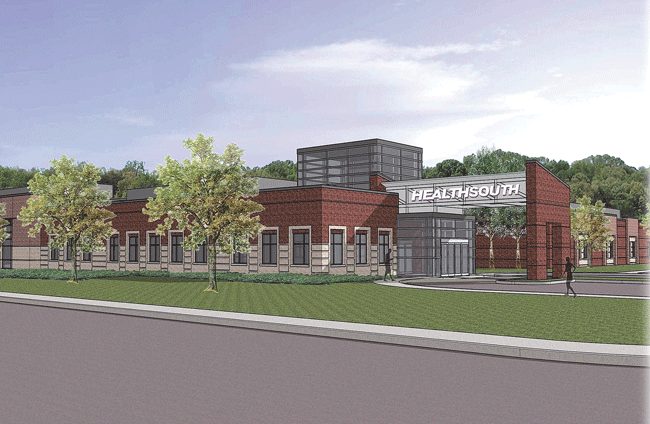

Westmass President Kenn Delude
It was the time just before, during, and since the Great Recession of 2008, and in some respects, it’s still ongoing.
“It was painfully slow,” Delude, president of Westmass Area Development Corp., recalled, looking back (although he alternated between the past and present tenses) on that time when the phone literally didn’t ring for weeks and sales of industrial-park parcels were extremely few and very far between. “I’ve seen many downturns in the economy, but nothing as broad-based as that, nothing that severe.”
But it was at the height of this development drought that Westmass started putting together the most ambitious project in its 52-year existence — redevelopment of the sprawling Ludlow Mills complex in the center of that community. And despite the hardships and the realization that the slump would continue into 2014 and probably beyond, the Westmass board never wavered in its pursuit of the mill property, said Delude, and for two very good reasons.
The first was the realization that, eventually, the development climate would change and there would once again be demand for land and space in which companies could expand, he said, noting that, while Westmass and Westover Metropolitan Development Corp. have adequate supplies of property at the moment, both organizations must think decades out. The second reason was that the mills provided a unique opportunity for Westmass to do something groundbreaking — in both a literal and figurative sense.
“Strategically, this was a decision made by the board to take on a brownfield project, to get involved in a community, and obviously get involved and deal with the issues concerning preservation,” he explained during an interview in the Westmass office within the complex. “Overall, we wanted to create a model for property like this that could be used elsewhere or inspire other parties such as municipalities to take on something like this.
“We have countless mills throughout our region, and they’re located, like this one, by beautiful rivers,” he continued. “They have prime locations from many perspectives, but they’re underutilized, or they’ve fallen into disrepair.”
Westmass is roughly 18 months into what will probably be at least a 20-year endeavor to redevelop the mills and fill the adjoining 170 acres of greenfield property. But already there is a good deal of momentum, despite the still-sluggish economy.
Indeed, the steel is due to be delivered within days for the next phase of construction of a new, $27 million HealthSouth rehabilitation hospital on a parcel in the center of the mill complex. And in conjunction with that project, plans are being developed for the first stage of a riverwalk that will connect the site with the nearby Chicopee River in ways that could promote further development. Meanwhile, plans are moving forward for a senior-housing complex to be created in what’s known as Mill 10.
At the same time, the phone has actually started to ring again in the Westmass office, said Delude, noting that there has been interest expressed in some of the larger green parcels within the mill complex.
And in another development that is expected to create still more momentum, the project was recently included in the third round of funding for the state’s Brownfield Support Team (BST) initiative. Launched in 2008 by Lt. Gov. Tim Murray, the BST brings together local, state, and federal agencies to help advance and accelerate redevelopment efforts involving brownfield sites.
Such designation has triggered progress at both the former Uniroyal site in Chicopee and the former Chapman Valve complex in Indian Orchard, said Delude, adding that BST involvement will bring needed resources and expertise to the matter of readying sites for future new construction or reuse.
“This gives us access to a team that can help us understand and perhaps deal with some of the challenges a developer and a community face when trying to redevelop property like this,” he said. “You have very stringent energy codes and greenhouse-gas analyses, and goals you’re trying to achieve, and, at the same time, you’ve got historic-preservation regulations to contend with. There are a number of issues to address, and these consultants can help us find answers.”
For this issue and its focus on commercial real estate, BusinessWest takes an in-depth look at the Ludlow Mills project and how a picture is starting to develop across the vast, blank canvas it represents.
Milling About
As he talked with BusinessWest about the mill project — something he’s done on several occasions since it was first put on the drawing board in 2009 — Delude said it does many things for Westmass.
For starters, it gives the agency an immediate, and always welcome, revenue source.
Indeed, the agency is now a landlord and property manager, collecting rent from nearly three dozen tenants. This additional income, especially at a time when the many business owners are still hesitant about taking on new construction and the cost of such work is considerably more than retrofitting existing space, provides the agency with needed stability.
Meanwhile, it also provides much greater diversity, he said, noting that, in addition to developable, often shovel-ready land that is currently not in high demand, Westmass now has former mill property in its portfolio, and it comes in many shapes and sizes, and with myriad potential uses. The development corporation also gains needed acreage for larger-scale projects, and even 6,000-square-foot stockhouses — dozens of them were used to store raw materials at the jute-manufacturing complex — that could serve effectively as incubator facilities for startups and next-stage companies.

An architect’s rendering of the new HealthSouth facility now starting to take shape at the Ludlow Mills complex.
“The perfect scenario would be to have someone as a lease tenant,” he continued, “and as they became successful and grew, they would be able to build new at Ludlow Mills on another location. There would be a natural continuity there, and people wouldn’t have to leave the area, or even the community, to grow.”
All this, or at least much of it, was envisioned by Delude and the Westmass board as the Ludlow Mills acquisition started to take shape in the midst of that deep downturn that Delude described.
Retelling the story of how this project came to be, Delude said the nearly 1.5 million-square-foot mill complex was once the very heart of Ludlow’s economy — so much so that the clock tower at the corner of one of the mills has become the unofficial symbol of Ludlow, used on the town seal as well as the masthead of the weekly Ludlow Register.
After the mill operations shut down, the complex became home to a host to a number of businesses across several sectors, including manufacturing and distribution. The maze of buildings and adjacent undeveloped land, totaling more than 1,000 acres, caught the attention of Westmass officials as they scouted opportunities to expand the agency’s reach, portfolio of developable land, and roster of business opportunities.
Delude acknowledged that the project is seemingly far removed from the agency’s primary business model — creating, marketing, and, eventually, filling business parks (it now has five across Hampden and Hampshire counties) — but is firmly in keeping with the Westmass mission of creating opportunities for economic development in the region.
Building Momentum
The vast potential of the Ludlow Mills for creating different kinds of development opportunities is driven home by the first two announced projects for the site.
One is a $20 million plan forwarded by WinnDevelopment to build 83 units of senior housing on four floors of what’s known as Mill 10, built in 1907. It represents one of many forms of possible reuse of an existing structure, said Delude, adding that this proposal also meets a recognized need for such a facility in Ludlow, and thus presents an opportunity for many long-time residents to continue living in that community.
The second project, the new HealthSouth rehabilitation hospital, is new construction, and represents an opportunity for Westmass and the mill complex to enable a business to expand and stay within the region or, in this case, in the town of Ludlow itself.
“We wanted to stay in Ludlow, but at the same time we knew we couldn’t stay here,” said HealthSouth president Scott Keen, referring to the old Ludlow Hospital, which currently houses his facility and is only a few hundred yards from the mill complex. “From a business perspective, if you’re in a town that’s supported you for many years, and the community supports you, and you’ve had a successful business, it makes no sense to do anything but try to find a way to stay, and that the mill gave us an opportunity to do.”
Elaborating, he said the complex provided the acreage and the location the growing venture needed to take an operation inconveniently spaced over five floors of the old community hospital and move it to a facility with nearly 20,000 additional square feet all on one floor.
Moving forward, Westmass wants to create more of both types of development opportunities, said Delude, adding that the mill complex offers the size, flexibility, and existing facilities to meet almost any need.
To prove it, he went to a large, aerial photo of the complex, complete with blocks of yellow designed to show what could potentially be built in certain areas of the parcel.
For example, the area around the site of the new HealthSouth facility is suitable for buildings 10,000 to 40,000 square feet in size, while the greenfield further to the east is suitable for buildings of 60,000 to 150,000 square feet. Meanwhile, those aforementioned stockhouses can accommodate smaller ventures, and the existing mill structures can house a wide range of business and residential ventures.
“The broad goal for us is to be as flexible to the market-driven demand as possible,” said Delude.
And this is where the potential to create a working model for other communities and development agencies to emulate comes into focus, he continued, adding that there are similar mill complexes (although not as large) across the state that present the same set of challenges and potential opportunities.
“When we met with legislators on Beacon Hill to discuss funding for this project, there were a number who identified with this project and the challenges and were encouraging us to forward, because they had their own mill experiences,” said Delude, referring to officials from Haverhill, Lawrence, and other former manufacturing centers.
This connection, coupled with the large scale of the project, were certainly factors that led the Ludlow initiative to be chosen for assistance from the Brownfield Support Team, he went on, adding that the technical support from the BST will help facilitate and accelerate efforts to make the site ready for the various kinds of development it can support.
Meetings with the team will commence later this month, he went on, adding that the expertise provided by team members may help remove some of the potential roadblocks to the development, specifically the need to balance historic-preservation efforts with increasing demands — both at the legislative level and within the business community — for buildings that are energy-efficient.
“These buildings were built in the early 1900s — they’re energy-inefficient by nature,” said Delude. “For the first time, the Department of Energy Resources will be on a round of Brownfield Support Team intiative projects, and they’re interested in use of renewable energies and sustainability, and that hits the sweet spot with us and these older buildings.”
Progress in Site
Delude said the high-profile nature of the Ludlow Mills project brings with it a certain amount of pressure to succeed, but overall, the fact that high-ranking state officials, including Gov. Deval Patrick, are watching this project is a very positive thing.
“They want us to succeed, and they’re giving us the tools to succeed,” he said of state officials. “If there is any pressure, it’s internal to ourselves; we want to succeed, and we want to do it as quickly as possible, but there is a natural process that has to take place, and it starts with infrastructure, and it starts with preparing for the development that we’ve modeled and that we hope to achieve.
“We have a lot of people behind this project and enthusiastically supporting this project,” he went on, adding quickly, “it would nice if the economy would support it as well.”
It will — eventually — but even now, the sluggish times are not enough to dampen enthusiasm for a project that promises to be historic on a number of levels.
George O’Brien can be reached at [email protected]


Sheryl McQuade calls Berkshire Bank’s blend of financial clout and personal service “thinking big and acting small.”
The Wall Street development is the bank’s recent move from NASDAQ to the New York Stock Exchange, which became official in November, around the same time that eight former Connecticut Bank and Trust (CBT) branches — which Berkshire acquired earlier in 2012 — officially converted to their new name, Berkshire Bank — CBT Region.
“Connecticut is a new market for us. We made an investment in Connecticut by way of our acquisition of CBT, and we did so because the Connecticut market offers significant opportunities for commercial and retail banking,” said Sheryl McQuade, senior vice president and regional commercial leader for the Greater Hartford market.
“We believe Berkshire Bank has a unique value proposition,” said McQuade, who admitted that any expansion into Connecticut is fraught with challenge, because the region is arguably as overbanked as Western Mass. “It’s not like we’re the first game in town there, but we believe, because of our size — which is about $5.5 billion now — matched with our product capabilities and diverse business lines, we can offer everything a large, regional bank can, but so do in a more nimble fashion.”
The Connecticut acquisition ostensibly benefits former CBT customers due to the banks’ comparative size; CBT had assets of about $280 million, and commercial loan limits of around $3 million, while Berkshire Bank can conduct deals in the $15 million range. McQuade also touted the bank’s growing suite of products in retail and business banking, insurance, and wealth management.
None of which, she said, will matter if Berkshire Bank doesn’t effectively integrate itself into the culture of its new communities, and that takes more than size. It’s a strategy that McQuade calls “thinking big and acting small,” and for this month’s focus on banking and finance, she and other bank leaders explained to BusinessWest exactly what that entails.
Growing Footprint
Berkshire Bank is no stranger to growth, having taken an aggressive approach to geographic expansion in recent years.
In the summer of 2011, the bank acquired Legacy Bancorp of Pittsfield, bringing 15 branches under its umbrella in Western Mass. and New York. That move came on the heels of other, smaller acquisitions, including New York-based Rome Bancorp earlier in 2011 — a series of moves that, including the CBT merger, has seen Berkshire expand its footprint from 43 to 75 branches in less than 20 months.
Last year, Sean Gray, executive vice president of Retail Banking, told BusinessWest that Berkshire Bank looks to organic growth first — as he put it, “getting the most out of our existing footprint.”
But the past decade has seen this Pittsfield-based institution make headway in New York, Vermont, Central Mass., and now Connecticut. Gray said Berkshire looks for banks that share a similar culture when seeking consolidation opportunities, but the leaders of its Springfield and Hartford markets say they’ve launched an ambitious strategy to introduce a unique, customer-focused culture in new branches.
For example, “we’re launching a new program called MyBanker,” said Lori Gazzillo, assistant vice president of Community Relations. “When we talk about relationship banking, we’re talking about personal bankers who work with individuals who have various financial needs, whether it’s loans or insurance or deposits. They can go to this one person for all their banking needs — somebody they can call about anything, who can connect them with the services they need.”
Branch design is also being overhauled to reflect a more personal, less institutional touch, McQuade said. The bank’s Springfield headquarters, where she and Chamberlain sat down with BusinessWest, is a good example, with its coffee station at the entrance, and where customers are invited to sit down with tellers, no longer separated by an impersonal counter.
“This will be the design going forward in our new branches,” Gazzillo said, adding that older branches will be renovated to match. “This new design enhances teller technology, and it’s a more personalized situation; it’s also more efficient as transactions go, and it’s more inviting, with a café and comfortable chairs and a common room.”
That common room is another way Berkshire is trying to connect with its communities. Each branch will offer local nonprofits and other organizations a space, equipped with multi-media, wi-fi, and videoconferencing equipment, to hold meetings. “It’s a way to offer something back to the communities we’re operating in,” McQuade said, “versus a lot of banks pushing people away from bricks and mortar and toward online banking.”
That’s a constant concern for banks these days, which are trying to serve two distinct constituencies — the traditional, older-skewing customer who prefers face-to-face transactions, and the younger, more mobile crowd that has embraced banking on computers, smartphones, and tablets.
“Berkshire Bank has really invested in a lot of products and technological capabilities,” McQuade said. “On the commercial side, we’re not dependent on branches to serve our customers; we have remote deposit and other tools that a large, regional bank would have.”
However, Gazzillo said, “we think it needs to be both. People are becoming more high-tech, relying on their phones and iPads, and we’re working on rolling out a mobile-banking platform. But customers still want to see someone on a personal level. It’s important to keep up with both, and we’re large enough to do that.”

Sue Chamberlain says it’s important to cater effectively to both the high-tech, mobile crowd and those who want face-to-face interaction.
Culture Change
Gazzillo knows that Berkshire — which dubs itself “America’s most exciting bank” in its marketing materials — has bitten off quite a bit with its recent acquisitions, but she feels the institution has the right strategy to thrive in a highly competitive financial-services landscape.
“We’re succeeding at a time, and in a banking environment, where it’s difficult for banks to succeed,” she said. “We have been expanding, and we’ve acquired a number of banks, but it’s a careful process of looking at the culture and philosophy of a bank and making sure it fits within our own banking culture.
“We’re doing it the right way,” she said, “by providing customers with the tools and resources they need, and a level of personal service that they want. I’m proud of that, and happy with what we’re doing.”
Reflecting that emphasis, Berkshire Bank delayed the changeover of CBT branches by about six months because the company was going through a major upgrade to its operating system across all branches, and didn’t want to put the new, Connecticut-based customers through two separate conversions.
Meanwhile, Berkshire is trying to ease the transition for Nutmeg Staters in other ways. “Part of that is by hiring capable, talented people who are seasoned and experienced in their own communities,” McQuade said. “I’ve hired several people in Connecticut who have a history and relationships in their markets.”
The bank remains committed, Gazzillo said, to meeting community needs as well, across its entire four-state footprint.
“We have a foundation, and as far as financial contributions go, we give $1.5 million,” she said, but added that money is just one element of community involvement; others include a volunteer culture and a benefit that offers employees paid time off to volunteer at nonprofits in their communities. “That’s a big component of who we are, of being a community partner.”
McQuade credited bank President and CEO Michael Daly, who recently added chairman of the board to his business card, for setting the institution — which originally focused mostly on commercial banking — on a path to strong growth across many niches.
“He had the vision to grow the bank’s commercial business, but in a relationship-banking fashion, principally because, in addition to all our capabilities in commercial banking, we have wealth management, an insurance group — a lot of things that can be leveraged as part of a deliberate, relationship-banking strategy,” she explained — one that attempts to draw in young customers and meet their needs for life.
And, now, aims to bring a little excitement to Connecticut, too.
Joseph Bednar can be reached at [email protected]
Building Your Future
Jan. 8: MassMutual and Western New England University are teaming up to present the MassMutual Building Your Future Conference from 8 a.m. to 3:45 p.m. at WNEU. More than 400 Springfield public- and private-school students in grades 10 through 12 are scheduled to attend.
The free conference is designed to give students the tools and knowledge to construct a blueprint for their education and careers. Workshops will touch on college and career planning, problem solving, and time- and money-management skills. MassMutual Academic Achievers earn an invitation to the conference by maintaining a B average or better for four consecutive marking periods during grades 10 through 12.
“Choosing the right career path is imperative to a successful future, but many of our young people aren’t aware of local career opportunities,” said Nick Fyntrilakis, vice president for Community Responsibility at MassMutual, adding that the conference “exposes students to career opportunities that are available in financial services at MassMutual and beyond. Our programs encourage students to excel academically and gain valuable exposure to rewarding careers.”
This year’s conference will offer students a variety of hands-on activities in various fields, including financial services, business, information technology, broadcast communications, criminal justice, medicine, and the sciences. Workshops will also address the college admissions process, paying for college, making a good first impression, and preparing for life’s curveballs. The keynote speaker will be Terrell Hill, principal at High School Inc., a four-year, college-preparatory school for students in grades 9 through 12 who are interested in pursuing careers in the insurance and financial-services industries. Other highlights of the conference include a video contest and a raffle featuring a laptop computer, flatscreen televisions, iPods, and other prizes. The snow date for the conference is Jan. 11. To register, visit www1.wne.edu/massmutual/byf.
Essence Editor to Speak
Feb. 5: Susan Taylor of Essence magazine will speak at Springfield Technical Community College at 11 a.m. in the Scibelli Hall gym as part of the STCC Diversity Council Event Series. The presentation, which coincides with Black History Month, is free and open to the public. Taylor’s name is synonymous with Essence magazine, the brand she built as the magazine’s fashion and beauty editor, editor in chief, and editorial director. For nearly three decades, Taylor has been the driving force behind one of the most celebrated black-owned businesses of our time and a legend in the magazine-publishing world. For 27 years, Taylor authored one of the magazine’s most popular columns, “In the Spirit.” She is the only African-American woman to be recognized by the Magazine Publishers of America with the Henry Johnson Fisher Award, the industry’s highest honor, and the first to be inducted into the American Society of Magazine Editors Hall of Fame. Taylor also is the recipient of the NAACP President’s Award for visionary leadership and has honorary degrees from more than a dozen colleges and universities.
A fourth-generation entrepreneur and the author of four books, she supports a host of organizations dedicated to moving the black community forward, but her passion and focus today is with the National Cares Mentoring Movement, a call to action which she founded in 2006 as Essence Cares. The National Cares Mentoring Movement (www.caresmentoring.org) is a massive campaign to recruit 1 million able adults to help secure children who are in peril and losing ground. Taylor’s presentation is sponsored by PeoplesBank, Hampden Bank, the STCC Diversity Council, the Springfield Department of Health and Human Services, Baystate Health, Health New England, MassMutual, and the United Way of Pioneer Valley.
40 Under Forty Reunion
Feb. 7: BusinessWest will stage a reunion featuring the first six classes of its 40 Under Forty program at the Log Cabin Banquet & Meeting House in Holyoke. The event, open only to 40 Under Forty winners, event judges, and sponsors, will begin at 5:30 p.m. and feature a talk from Peter Straley, president of Health New England, about leadership and community involvement. For more information on the event, call (413) 781-8600 or e-mail [email protected].
Charlotte’s Web Exhibit
Through April 22: The Eric Carle Museum of Picture Book Art in Amherst is offering a rare opportunity for guests to see selections from the 20th-century classic Charlotte’s Web, written by E.B. White and illustrated by Garth Williams. “Some Book! Some Art! Selected Drawings by Garth Williams for Charlotte’s Web” will be on exhibit through April 22, and celebrates Williams’s 100th birthday and the 60th anniversary of the book. For more information, visit, www.carle museum.org.
Difference Makers 2013
March 21: The annual Difference Makers award program, staged by BusinessWest, will be held at the Log Cabin Banquet & Meeting House, starting at 5 p.m. Details on the event will be published in upcoming issues of the magazine. Difference Makers is a program, launched in 2009, that recognizes groups and individuals that are, as the name suggests, making a difference in this region. Several dozen nominations for the award have been received, and are now being reviewed. The winners will be announced in the magazine’s Feb. 11 issue. For more information, call (413) 781-8600.
AMHERST AREA CHAMBER OF COMMERCE
www.amherstarea.com
(413) 253-0700
• Jan. 9: Chamber Annual Meeting Luncheon, noon to 1:30 p.m. Location to be announced. Cost: $25 fior members, $30 for non-members. For more information, visit www.amherstarea.com.
• Jan. 23: Chamber After Five, 5-7 p.m. Location to be announced. Tickets: $5 for members, $10 for non-members. For more information, visit www.amherstarea.com.
GREATER EASTHAMPTON CHAMBER OF COMMERCE
www.easthamptonchamber.org
(413) 527-9414
• Jan. 24: Chamber Annual Meeting and Annual Awards Dinner to Celebrate Member Milestones, 5 p.m., Southampton Country Club, 329 College Highway, Southampton. Review of a successful 2012, annual awards presentation for business, business person, and community-service members of the year, and to honor members’ business milestones. Event sponsor: Easthampton Savings Bank. Cost: $30 per person, inclusive. For more information, visit [email protected].
GREATER HOLYOKE CHAMBER OF COMMERCE
www.holycham.com
(413) 534-3376
• Jan. 9: Winners Circle, 5-7 p.m., Yankee Pedlar, 1866 Northampton St., Holyoke. Sponsored by Dowd Insurance Agency, Holyoke Community College, Holyoke Medical Center, PeoplesBank, and Resnic, Beauregard, Waite & Driscoll. Cost: $25. Call the chamber at (413) 534-3376 to register or sign up at holyokechamber.com.
• Jan. 16: Chamber Business Networking, 5-7 p.m., Homewood Suites, 375 Whitney Ave., Holyoke. Sponsored by CareerPoint. Cost: $10 for members, $15 cash for non-members. If you are a member of the hospitality industry or a small retailer, please attend as the chamber’s guest at no charge. Call the chamber at (413) 534-3376 to register or sign up at holyokechamber.com.
• Jan. 17: The Greater Holyoke Chamber of Commerce and the Holyoke Police Department are teaming up to co-host the chamber’s open house and a ribbon cutting at the grand oppening of the HPD’s ‘Hub’ office. The events will take place at 176 and 177 High St., 4-7 p.m. Both events are free and open to the public.
• Jan. 28: Basics of Marketing Seminar, 8:30-10 a.m. Learn some free and low-cost ideas on marketing your business. Cost: $10 for members, $20 for non-members. A continental breakfast is included in the price. Call the chamber at (413) 534-3376 to register or sign up at holyokechamber.com.
GREATER WESTFIELD CHAMBER OF COMMERCE
www.westfieldbiz.org
(413) 568-1618
• Jan. 9: WestNet. 5-7 p.m., at the Westwood Restaurant and Pub, 94 North Elm St., Westfield. Sponsored by For K9s and Felines. Guest speaker: Ray Maagero, Liberty Tax. Tickets: $10 cash for members, $15 cash for non-members. Your first WestNet is always free. Hors d’oeuvres and cocktails, door prizes, great networking opportunity. Bring your business cards. To register, contact Pam Bussell at the chamber office, (413) 568-1618, or by e-mail at [email protected].


A view from the north of Penn National’s proposed Hollywood Casino Springfield.
Tim Wilmott says that, if a company was going to build a casino in Springfield, it probably couldn’t pick a more challenging site for such a project than the one Penn National has chosen in Springfield’s North End.
After all, the $800 million proposal, to be called Hollywood Casino Springfield, involves relocating two of the city’s largest businesses — the Republican, its 330 employees, and its massive press operation, as well as Peter Pan Bus Lines and its more than 250 local employees — and then remediating those properties and making them ready for construction. Those moves come complete with myriad headaches and a very large price tag.
But this high degree of difficulty and the benefits to be derived from such an aggressive course are big parts of what makes this site so attractive to the Wyomissing, Pa.-based company, said Wilmott, its president.
Indeed, it is his belief that, by taking on a location that has, in addition to these stern logistical challenges, vast potential for further economic development, or what Penn National officials call a “ripple effect,” the casino operator has gained an edge in what all are expecting to be a spirited and expensive competition to win the license to operate in Western Mass.
“We took a look a lot of Western Mass. communities as we were deciding where to focus our efforts in this state,” he explained. “Clearly, we thought the Western Mass. region gave us the greatest chance of victory, and as we looked at the various locations in that zone, we felt that, to win the overall bid, we had to have the greatest community impact — and this site provides that.”

The relocation of the Republican and the creation of Republican Village Square in the heart of downtown are part of what Penn National officials call the “ripple effect.”
Meanwhile, Peter Pan’s various business operations would also be relocated, Wilmott continued, with transportation-related units going across Main Street to a revitalized Union Station, and others (administrative personnel, for example) moving to Union Station or the center of the downtown.
“Given the energy that our development would have in that part of downtown Springfield, with the relocation of the Republican, the relocation of Peter Pan Bus Lines, and the revitalization of Union Station and the Paramount Theater,” said Wilmott, “we thought that all of these things give us a lot of credibility, both at the city level and at the state level. We think it gives us the best chance to win the bid.”
This potential ripple effect prompted Wilmott to draw comparisons between the Springfield initiative and a casino Penn National opened just over two months ago in Columbus, Ohio.
There, at the behest of city officials, the company essentially put aside a proposal to locate a casino in the arena district of the city, and instead blueprinted plans to place one on the site of a former Delphi Auto Parts manufacturing facility in a neighborhood plagued by poverty and crime.
“It was listed as one of the poorest communities, not only in Ohio but in all of the Midwest — their dubious distinction was to be listed as the ‘loneliest town in America’ at one point by one of the travel magazines,” said Eric Schippers, Penn National’s vice president of Public Affairs.
He told BusinessWest that the ripple effect in that community is still in its infancy stage, but there is evidence that the casino is becoming a catalyst for growth (much more on that later).
For this issue, BusinessWest continues its series of stories on the battle for the Western Mass. casino license with an in-depth look at Penn National’s plans for the North Side of Springfield, and how company officials believe it will more than stand up to the competition.
Roll of the Dice
Penn National staged an elaborate unveiling of its plans for the North End on Dec. 20 at the refurbished Paramount Theater.
The red carpet, with a decidedly Las Vegas-like look and feel, drew more than 200 people, and allowed Wilmott and other officials with the company to present long-awaited details on the Hollywood casino. Specific aspects of the plan had been kept under wraps, by and large, while the company hammered out an agreement to acquire an option on the Republican’s properties from the paper’s parent company, Advance Publications Inc., he said, according to an agreement was reached just days before the unveiling.
Penn National, an operator of casinos and racetracks that currently has 26 facilities in 18 states, is proposing a 300,000-square-foot casino-resort complex, including a 250-room hotel, 100,000 square feet of gaming space, 2,000 square feet of retail, and extensive renovations to the nearby Paramount. Company officials project roughly 2,500 construction jobs and 1,500 permanent jobs.
Plans call for what Jay Snowden, Penn National’s senior vice president, dubbed a “regionally focused” mix of restaurants and clubs, including a sports bar that would become former Boston College and New England Patriots star Doug Flutie’s first foray into the hospitality business.
Other planned restaurants include Davio’s, a chain of steakhouses owned by Springfield native Steve Difillippo; Ole Mexican, a Boston-based chain; b.good, a high-end burger chain; and a deli to be operated by the Scherff family, owners of the downtown Springfield landmark the Student Prince.
The broad plan has been formalized over the past several months, said Schippers, but in reality, it has been perhaps 20 years in the making.
Indeed, the proposal unveiled at the Paramount is similar in a great many ways to a concept first proposed by the late Peter L. Picknelly, then-president of Peter Pan Bus Lines, noted Schippers, adding that it made a good deal of sense in the early ’90s, and still does today.
That’s because it involves minimum disruption of residential neighborhoods; makes effective use of nearby highways, especially Routes 91 and 291, to create easy access; and creates economic-development opportunities in a low-income neighborhood — the North End.
“I don’t think he [the elder Picknelly] was envisioning some of the significant additional ripple effect that we’re going to bring about,” said Shippers. “But certainly his vision for revitalizing the North End and making it a gateway to the downtown is consistent with what we’re proposing.”
Wilmott agreed, and told BusinessWest that Picknelly’s two-decade-old vision eventually became the focus of the company’s efforts once it decided to enter the Massachusetts casino contest.
Elaborating, and echoing officials with other casino operators focusing on this market, Wilmott said Western Mass. (and, more specifically, Springfield) offers perhaps the clearest path to a casino license in the Bay State — most believe Suffolk Downs is a virtual lock for the Boston-area license, and the Southeastern Mass. license fight is complicated by possible participation by the Wampanoag tribe — and also the best geography.
And by that, he meant access to lucrative markets to the west, south, and east of the city, a location that makes entry into the Massachusetts market well worth the expense, and the risks, involved with such a gambit.
“As we look at every market, we look at the location and the proximity of customers to that specific location,” Wilmott explained. “As we look at the demographics of the Springfield MSA [metropolitan statistical area] with its location to Hartford, with its location to the west and Albany, and also to the east, we like what we see. When we look at all of these studies, proximity always wins the battle in terms of where customers want to visit a casino.
He said he sees little chance that three casinos in Massachusetts will saturate the regional market, because there remains limited competition from the two Connecticut casinos, which, while they are down somewhat from pre-recession days in terms of overall revenue, are still two of the largest casino operations in the country.
“There is always the risk that, over time, the state of Massachusetts, after its gets this initial lot of licenses, will fall in love with the revenue and say, ‘let’s open this to further expansion,’” he continued. “We run that risk in every jurisdiction we operate in, and it’s up to the lawmakers in that state to determine how far they want to go with this. It’s always a risk we run when we make investments in new jurisdictions.”
Penn National now finds itself in a two-way fight to get on a referendum ballot in Springfield — although there is a good chance that both its plan and another submitted by MGM Resorts International for the South End wind up before voters — and, for the moment, anyway, a three-way contest for the Western Mass. license, with Mohegan Sun’s proposal for Palmer still very much in the mix.
Headline News
As he gauged the fight ahead — without commenting on rival MGM’s plans (something both camps have been asked to refrain from by Springfield officials) — Wilmott said he liked his company’s chances moving forward.
The ripple effect is a big part of the reason why, he noted, but there are others as well, starting with access and traffic flow.
Snowden told BusinessWest that, beyond the additional development opportunities, the North End site offered perhaps the best scenario when it came to getting traffic in and out of a Springfield-based casino.
“The more time we spent in Springfield understanding the traffic-congestion problems that exist, we felt that the location in the North End offered the best solution,” he said. “That’s because, regardless of whether you’re coming from the north via 91 or 90, or from the south along 91, or from the east of 291, we have three separate ramping-system solutions. We really felt that this provided us the best point of access from any direction, and would help to mitigate the traffic concerns in Springfield.”
But what separates Penn National’s plans from others, Wilmott believes, is its ability to create new jobs and help spark economic-development activity in those areas of the city to which dislocated businesses and employees are moved.
In the case of the Republican and its non-printing operations, he noted that, while dozens of employees will be moved only a few blocks, the impact will be significant on retailers in the central business district and perhaps on the commercial real-estate market as a whole.
Meanwhile, he continued, relocation of the printing facilities and employees will help fill some industrial-park space in the northeast corner of the city.
George Arwady, publisher of the Republican, summed things up simply by saying, “we’re in the way here,” meaning the newspaper’s 180,000-square-foot facility, including the massive press, happens to be where the casino wants to go.
Getting out of the way will be a two-part process that will require some logistical maneuvering, he told BusinessWest, adding that a second, currently unused printing press owned by Advance Publications and currently warehoused in Michigan would be brought to Springfield to enable the company to continue printing its own newspaper, as well as several others it now prints in a growing business venture, while the current press is dismantled and moved.
“It’s a very unusual situation … we’re not a partner in this project, we’re not an investor, we’re not in the casino business — we’re just selling our property,” he explained, adding that, as the process advances, there could be triggers that would actually result in the start of construction of a new printing facility before a casino license is granted.
As for the non-printing operations and personnel, Arwady said the company is seeking to lease class A office space “in the heart of downtown.” He wasn’t more specific, and didn’t say how much space would be needed, but the Dec. 20 unveiling included some details of a facility to be known as “Republican Village Square.”
“The newspaper is actively seeking vacant Class A office space and public gathering space, and we already have had design firms looking at options,” said Arwady. “The Republican plans to use the power of its affiliated website, MassLive.com, to create an interactive, 21st-century village square to bring large numbers of people together for a wide range of fun and community-building activities; at lunchtime, after work, on the evenings and weekends, this aspect of the project will bring new energy and life to the very center of the city.
“Although the details are still under development, we plan to use our combined media strength in English and Spanish to make this new site the place to be in the entire region,” he continued. “Not just for browsing the web and enjoying a cup of coffee, but also for public meetings, blood drives, the creation of video on MassLive and YouTube, singing groups, art shows, and a thousand other purposes. … The goal would be to create a beehive of activity in the heart of downtown 24-7, instead of only during the workday. This would be good for our business, and also very, very good for the heart of our city.”
Meanwhile, Peter A. Picknelly, CEO of Peter Pan Bus Lines and a 50% partner with Penn National in the Hollwood Casino Springfield project, told BusinessWest that his company was always supportive of the city’s efforts to revitalize Union Station, and was asked on several occasions to be a tenant in that facility. The big problem with that equation, he went on, was redevelopment of the existing bus terminal and related facilities — or, to be more precise, lack of viable opportunities to do so.
“We’re in a building across the street [from Union Station], it works for us, we pay ourselves rent, we have vendors that pay us money,” he explained. “We’ve told the city that, while we support Union Station, we simply can’t leave this property abandoned and go next door and pay rent. That’s illogical, and no business person would do that.”
The proposed Hollywood casino effectively solves that problem, he went on, adding that the Penn National plan creates ripples by bolstering the Union Station initiative and requiring Peter Plan to relocate other departments in other parts of the city.
Elaborating, he said there are three business operations that would be moved: the bus-company operation would be moved into Union Station, while administration and support personnel would move to either Union Station or 31 Elm St., currently being developed by the Picknelly-owned company Opal Management, depending on space availability and lease structure in the station, among other conditions. The third facet of the business, maintenance, would be relocated to a new facility, he went on, adding that the company is currently looking at property on Tapley Street and other sites for new construction.
“This proposal is what I view as true urban renewal,” said Picknelly. “And that’s why we picked Penn National as a partner; they embraced this concept. We didn’t just want to build a casino in Springfield; we want to use a casino to help revitalize the city.”
Placing their Bets
This notion of urban renewal is the point that Penn National officials will be stressing as the process moves forward, said Wilmott, adding that the next stage involves finalizing proposals for review by both the city and the state.
Final bids are due by Jan. 3, he continued, adding that Springfield officials are looking for specific details on everything from revenue projections to traffic plans to human resources. The city will then decide if it wants to enter into negotiations with one or both operators on what’s known as local-impact fee. Ballot questions on one or both plans would come much later in the year.
Assessing the landscape, Penn National says the Springfield competition will be highly competitive, and one they believe could ultimately be decided — if other considerations, ranging from finances to impact on public safety to traffic, are relatively equal — by that community impact, or ripple effect, that Wilmott described.
And with that, he, Snowden, and Schippers returned to Columbus, Ohio and the company’s project there.
The casino opened just a few weeks ago, they stressed, but work that began well before the ceremonial ribbon was cut has created a growing sense of momentum in that neighborhood.
“We’ve worked with a coalition of business owners in West Columbus to talk about how we can be a catalyst for other positive development in that area,” said Schippers, “so there’s a new spring in the step of the business community there.
“Like in Springfield, we believe there is going to be a very positive ripple effect there after we’re underway and in a fully stable environment,” he continued, adding that among the developments are a new restaurant in the area near the casino, movement to redevelop an all-but-abandoned car lot, and action among elected officials to make investments in the infrastructure there.
“There have been road improvements, transportation studies have been conducted, and now it appears that the state will be investing more in getting better access and better roads to that area,” said Schippers. “Other businesses have announced plans to add shifts or make new investments, and people are exploring the addition of another hotel, which would create even more of a catalytic effect.”
The same types of things will likely take place in Springfield, said Snowden, starting with the activity to result from the need to relocate the two impacted businesses along Main Street.
“There won’t be just one construction project taking place in Springfield,” he noted. “You’re going to have the elements of the Republican relocation and the same with Peter Pan. It’s not just the breaking of ground in a single phase for the casino, hotel, parking, and restaurants, but also the ripple effect taking place at the same time.”
Wilmott agreed.
“That’s why we liked this site in the first place,” he said. “All things being equal — if we’re matching MGM in terms of impact fees to the community, for example — we think the site is more valuable to the long-term economic development of Springfield than other sites. And that’s why we believe that site should win out.”
Trump Card?
Time will tell if those at Penn National are right in their assessment of this contest and their proposal. For now, they are guardedly optimistic about their chances in this high-stakes competition, primarily because they like the hand they’re playing.
There are many aspects to their plan, but they’re betting that the ripple effect to be created by their $800 million facility will be the deciding factor — and ultimately enough to claim the prize in the middle of the table.
George O’Brien can be reached at [email protected]
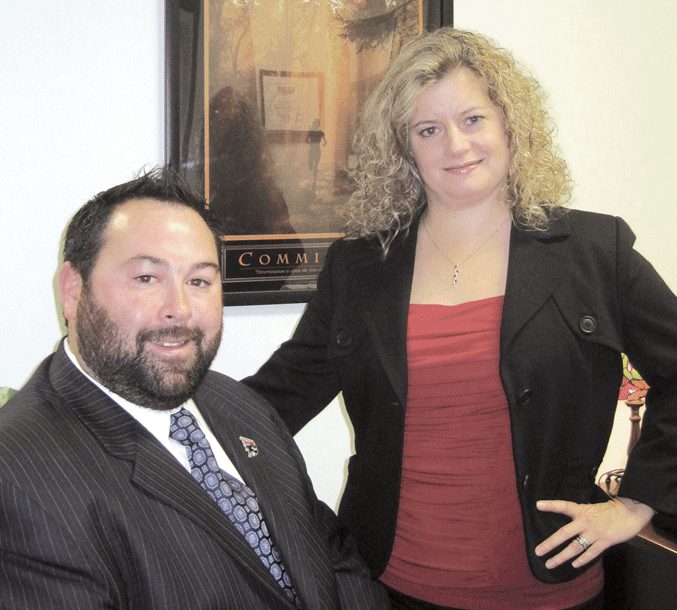

Chris Thomson and Pam Thornton say the primary challenge for YPS is to effectively communicate that it is much more than a networking organization.
“Can you imagine being a 22-year-old accounting graduate from UMass who has a chance to meet with Mark O’Connell?” asked Thompson rhetorically, referring to the recently named president and CEO of Wolf & Co., P.C., who was the featured business executive at a recent YPS CEO Luncheon. “You can’t put a price tag on having a face-to-face with a decision maker like that. ”
Indeed, in addition to valuable insight about the accounting industry and business in general, O’Connell provided his luncheon guests with indisputable evidence that one doesn’t haven’t to leave Western Mass. to script a success story. O’Connell, a long-time partner with the firm, has long worked out of the Springfield office rather than the firm’s headquarters facility in Boston, and he made a conscious decision to keep that business mailing address when he was chosen this past summer to lead the company.
Those career decisions enable YPS’s marketing slogan — ‘Live, Work, Play, and Stay’ — to resonate, said Thompson, a long-time YPS member, adding that exposing the group’s membership to more of these stories is one of many formal and informal goals moving forward for the organization, which recently turned five, and marked that milestone by completing a new, three-year strategic plan.
That document, which calls for hiring a full-time executive director, among other steps, addresses goals and aspirations, but also perceptions about the group and apparent misperceptions as well, said Pam Thornton, business-development director for United Personnel and current president of the organization.
Elaborating, she said YPS is perceived by many as simply a networking group, a view facilitated by the group’s popular and highly visible Third Thursday gatherings.
Those get-togethers will continue, she went on, adding that networking remains a high priority for the organization. But there are other missions, ranging from educating members about issues and the region in general to helping members get involved in the community, to, overall, providing motivation for young people to stay in this area.
“YPS is all about graduating youth into the business world, and I see it as a foundation, a funnel, a vehicle for all of the things this area is concerned about in retaining talent,” said Thornton, adding that the new strategic plan emphasizes this mindset.
Summing up the plan and what its architects hope it will accomplish, Thompson said it was crafted with the broad goal of greatly reducing the volume of questions relative to why the organization exists, what it does, and how it carries out its mission.
“There was no blueprint back then,” he explained, referring to the group’s early days, while noting that, with a firm plan in place, YPS can better articulate its charge — and carry it out.
For this issue, BusinessWest talked with several YPS members about the state of their organization at this important stage of its development, and where it can, and should, go from here.
Young Ideas
If success can be measured in numbers, such as those related to membership, then YPS can certainly claim a number of victories since its formation in the summer of 2007.
It now boasts more than 500 individual members and 50 corporate members. Meanwhile, its e-mail list has grown to more than 2,000. And there have been other forms of validation: BusinessWest chose the group as one of the first recipients of its Difference Makers award in 2009, and state Sen. James Welch (D-West Springfield) is sponsoring legislation to develop a ‘Young Professional Commission,’ which would give the 11 YP organizations across the Commonwealth a voice on Beacon Hill.
“What makes YPS important is that many of the decision makers, not only in our region, but everywhere, tend to be further along in their careers,” said Welch. “YPS represents those that are a little earlier in their careers and gives them a bit more of a voice when it comes to decision making and influencing policy and the direction the region wants to go in.”
The commission would also be a key element in ongoing efforts across the Commonwealth to keep young professionals — what Welch and others call “intellectual capital” — in the Bay State, thus making it a more attractive state in which to do business.
Yet, despite these triumphs, there is still an apparent lack of awareness, even among some YPS members, about the group’s official mission and the work it does within the community and for its members.
These were revealed at a series of focus groups staged last summer and facilitated by Ronn Johnson, president of R.D. Johnson Consulting.
Among the findings was that nagging perception of the group as simply a networking organization, a view that is somewhat troubling, but perhaps understandable. That’s because, from the start, YPS has stressed the importance of networking and building relationships, both from a business perspective and a community-involvement standpoint.
“That’s where the disconnect has been; we were a young, social business group that built strong foundations through networking,” said Thornton. “When you look at the chamber, that’s what they do, too … it’s called building relationships; you aren’t going to do business with someone you don’t like.”
The group’s networking activities, especially its Third Thursdays, will continue, said those we spoke with, because they remain one of the few — and most effective — vehicles for young people to build those relationships. But YPS will emphasize other aspects of its charge, and more forcefully articulate them.
The need to do so was made clear at the focus groups, said Kishore Parmar, vice president of the Pioneer Valley Hotel Group, who was asked to be an observer and administrator at two of the sessions, which solicited feedback from area business and nonprofit leaders.
He noted that many of these participants were aware of YPS, but opined that its mission was not clearly stated.
“That’s the biggest issue with them,” he told BusinessWest. “They wanted to know what our end goal was, to see it written down, and to see it formally introduced.”
Youth Is Served
To do all this, and create that more solid blueprint that Thompson described, the group’s strategic plan sets a number of goals and methods for realizing them.
One of the key provisions is hiring an executive director, a step necessitated by the group’s profound growth, and a measure that will give YPS a face and a voice in the community and an important layer of management.
“There are many nonprofits out there that function quite well without an executive director, but they really only get legs when they have someone who can manage the organization on a full-time basis,” Thornton told BusinessWest. “So we will be approaching key stakeholders in the community to invest in YPS.”
The strategic plan also calls for a sustainable organizational structure that will explore more funding opportunities through grant and fee-based programs; a task force to oversee a fund-development plan; the possibility of a conversion from a 501(c)(6) to a 501(c)(3), allowing a charitable arm of YPS; and strengthening community, key-stakeholder, and political partnerships.
Other facets of the plan include additional focus on fostering “an inclusive, culturally competent, and community-relevant organization in the eyes of its members and the broader community.” Thornton said YPS is already taking a number of steps in the realm of diversity, “but we can always do better.”
She noted that the 16 members of the board of directors will be attending a diversity-education seminar in January, bringing what they learn back to members.
Another component of the strategic initiative focuses on what the group calls work/life development opportunities.
“When we look to the future, we want people to view us as what they asked us to be,” Thornton explained. “The feedback that we got was about professional-development programming, education reform, real-estate concerns, casinos and a forum about that issue — and they really want to be connected in the community through volunteerism, but they want someone to show them how to do that.”
Part of this assignment will involve simply making young people aware of the many kinds of professional-development opportunities that exist in this region, said Thompson, noting that several colleges and workforce-development agencies provide workshops and other programs, many of them free of charge, but young professionals often don’t know about them.
Welch agrees. “Young professionals know from experience that, when they were first starting out in their careers, they didn’t necessarily know what resources were out there and available to them.”
And while many in the business community are focused on what YPS can do for them and their employees, Thornton believes these same people have to ask what they can do to help YPS.
“Maybe employers need to take a step back and see how they can become involved; young people need the elder community to be mentors, and those employers have a role in YPS,” she explained. “And the only way to do that is to engage young people, mentor them, give credence and value to the things that they’re interested in … and that’s how to keep young professionals in the area.”
Still another stated goal within the strategic plan is to create vehicles through which the board can more effectively communicate with current and potential members, partners, and the general public through the YPS website and other marketing strategies. Such efforts are expected to help increase membership, facilitate recruitment of sponsors, and solidify efforts to retain young talent across the region.
“When the question is asked, ‘what does YPS do?’ we’ll be able to answer that though our website, e-mails, and a consistent brand,” said Thornton. “These are big goals, and we’ll need time to realize them.”
Goal Keepers
Summing up what he saw and heard at the last summer’s focus groups, Parmar said there is a perception among many that YPS is “finding its way” and evolving into a viable organization that is promoting intelligent discussions and generating tangible results.
“There are more doers, and they’re rising up,” he said, adding that, moving forward, the group’s basic challenge is to encourage more area business leaders to voice such opinions, and eventually prompt use of the word ‘found’ rather than ‘finding.’
Generating such dialogue — and changes in perception — will take some time, but with a new strategic plan in place, those within the organization believe YPS has a blueprint in place for building on what has already become a success story.
Elizabeth Taras can be reached at [email protected]
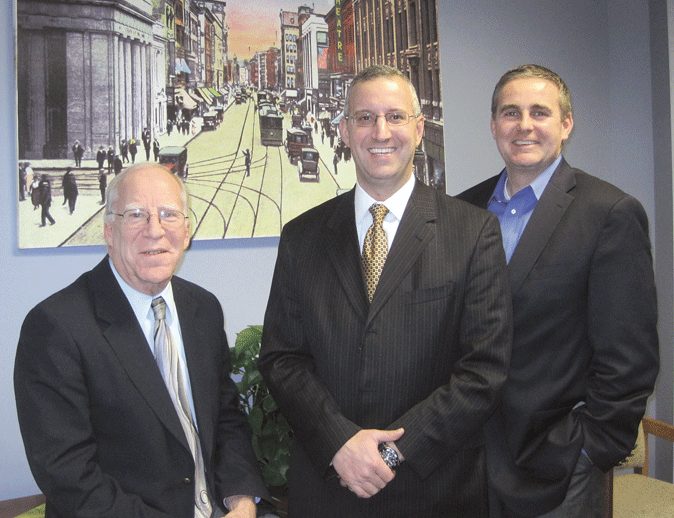

Springfield Chamber leaders (from left) Jeff Ciuffreda, Jeff Fialky, and Patrick Leary all say that casinos are just one of many issues on the agency’s crowded plate.
But the Springfield Chamber of Commerce isn’t focusing on those specific matters, and it probably won’t, said Leary, a partner with the Springfield-based accounting firm Moriarty & Primack and current president of the chamber’s board. But that doesn’t mean the organization isn’t getting involved in what would be the largest development project in the city’s history if it comes to fruition.
Instead, the chamber is taking a more global view, one that can best be described as providing a voice for its membership on this all-important issue, said Leary.
“North End, South End … regardless of who it is and where it is, we’re more concerned that the chamber’s members aren’t forgotten in this whole process,” he told BusinessWest. “It would be very easy to have a casino move into the North End or South End and start siphoning business away from the central business district and pulling employees away from our membership; we need to look at all those issues that are going to affect our membership.”
Jeffrey Ciuffreda, executive director of the 550-member Springfield Chamber, as well as the larger Affiliated Chambers of Commerce of Greater Springfield, agreed.
He said the chamber has thus far decided, as an organization, to endorse the concept of a Springfield-based casino — with some stated suggestions, or requests, designed to protect the interests of existing businesses in the city.
These include:
• “A preferential procurement program for gods and services from Springfield businesses with measurable goals”;
• “Employing those unemployed and underemployed,” with an emphasis on those residing in Springfield now or in the future in market rate housing; and
• “Enhancement of downtown Springfield and the city as a whole,” among others.
The wording on the chamber’s measure sums up the charge for the group during the casino fight. The organization voted to “support a Springfield-based casino development that adequately addresses the issues and concerns of the membership of the Springfield Chamber of Commerce.”
So, in many respects, the chamber is taking the same approach with casinos that it does with other issues impacting the local business community, said Ciuffreda, listing everything from tax classification and efforts to lower the commercial rate to zoning policy and matters involving the compensation and term length of Springfield’s mayor.
The common denominator, he said, is creating an environment in which the city and its business community can succeed.
“We have a very large and diverse membership base in Springfield,” said Ciuffreda. “Our mission is to effectively represent these businesses, advocate for them, and, in general, create a business-friendly environment in the city.”
For this issue, BusinessWest concludes its Getting Down to Business series with an in-depth look at the Springfield Chamber, which finds itself in the middle of a hotly contested battle for the Western Mass. casino license, but also has a number of other matters on its plate.
Playing Their Cards
When asked about the chamber’s role with casinos moving forward, Ciuffreda said the time for debate about whether expanded gaming is something the state wants or needs is over — legislation passed just over a year ago allows up to three casinos and a slots parlor — and the chamber’s current assignment reflects this.
“Now, the issue of ‘do you want a casino?’ is off the table,” he said, while acknowledging that city residents must still approve a referendum on a casino plan or plans. “The issue now is ‘how does this benefit Springfield?’”
Elaborating, he said the chamber’s official role is to communicate the desires and concerns of its membership and the business community as a whole, and to secure itself a seat at the table in discussions with casino operators — both literally and figuratively.
Concerning the former, Kate Kane, managing director of the Springfield office of Northwestern Mutual Financial/the Zuzdo Group, and a former Springfield Chamber board member, has been appointed to an ad-hoc committee appointed by mayor Domenic Sarno to review competing casino proposals; she will, in essence, represent the chamber and its membership on the panel. As for the latter, the chamber intends to be quite visible and vocal as negotiations continue with casino operators, said both Leary and Ciuffreda.
And to carry out that assignment, the chamber has appointed its own casino subcommittee, one that has met several times and thoroughly researched other urban centers with casinos, including Detroit, Kansas City, Mo., and Biloxi, Miss.
“We discussed the good and the bad of having a casino, how they [operators] negotiated, and whether they even negotiated,” said Leary, “and the board voted to endorse the Springfield-based casino with the provision that we’re going to have certain items that we need to have addressed before we’ll fully endorse and advocate for casinos.”
Both Ciuffreda and Leary said they’re impressed with the plans of both casino operators (MGM and Penn National) proposing facilities in Springfield, just as they were with Ameristar’s concept for the former Westinghouse site before that company withdrew from the competition. But both also added that some of the promises to hire minorities and women are already part of the state’s gaming legislation.
While other chambers had to reach out and call for the casino developers to do something specific on that front, “it’s already built into ours,” Ciuffreda said.
“Not taking anything away from MGM or Penn National; there’s a minimum standard [through the legislation], and they’ve exceeded those standards,” he continued. “But it’s a compliment to Gov. Patrick and the Legislature for writing a very solid measure that protects what we have right now and adds to it.”
East Meets West
Yet, as the pitched casino battle plays itself out, the Springfield chamber will have other matters to address, which collectively fall under the category of giving its membership a strong, clear, united voice in both Springfield City Hall and Beacon Hill.
Indeed, advocacy is one of the most visible and impactful ways that the chamber brings value to its members through the long reach of the ACCGS, said Ciuffreda, adding that there are many ways in which this aspect of the group’s mission is carried out.
For starters, there’s the ACCGS’s annual bus trip to the State House every April, a program that brings 65 area business and nonprofit leaders to Boston to meet with delegation members, gain insight into pressing issues impacting the business community, and express their view on such issues.
“Boston just doesn’t see that many people in that building at one time from Western Mass.,” said Leary. “And that translates to 65 business leaders who represent literally thousands of people.”
And while the chamber brings its members to Boston, it has also succeeded in bringing Boston-based elected officials to Springfield. Indeed, Ciuffreda secured Jay Gonzalez, secretary of the Executive Office of Administration and Finance, as a speaker for a recent luncheon program, and has consistently brought top officials within the Patrick administration — and the governor himself — for area events.
“I see it as a win-win situation,” he said of such high-profile speaking engagements. “Area business owners and managers get to hear directly from these officials, and we can provide a large audience for them.”
Chamber visibility in Springfield City Hall is far more constant, obviously, said Ciuffreda, adding that the chamber has been, and continues to be, vocal on issues ranging from tax classification to city-wide zoning policy; from tornado recovery to the mayor’s salary.
That last item is still a matter to be settled, he continued, adding that it is one of many action items to result from the 2007 Urban Land Institute study on Springfield, which took place as the city was struggling to fight its way out of receivership and blueprint an economic-development strategy for the years ahead.
The report’s recommendations for City Hall included lengthening the mayor’s term in office from two to four years, adding a chief financial officer (those steps have already been taken), and raising the mayor’s salary above its current $95,000, in an effort to consistently attract top talent to that position.
“It’s a sensitive issue when you talk about a pay increase for a mayor,” said Jeffrey Fialky, a partner with the law firm Bacon Wilson and chamber board member, as he talked about why the chamber is involved in such matters. “But it’s such an important part of the ability to retain strong serving mayors as well as the ability to attract new mayoral candidates.”
Tim Murphy, a partner with the law firm Skoler, Abbott, & Presser, P.C., represented the chamber on the compensation committee, and explained its recommendations. “The pay has been $95,000 since 1997,” he explained. “What the committee was able to agree on was immediately increasing the mayor’s pay to $110,000 and having an annual cost-of-living increase of 2.5% going forward.”
Ciuffreda said the pay issue is slated to be resurrected in 2013, and is an important consideration for the city as it looks to ensure strong leadership in the corner office in the years and decades to come.
Education is another matter the chamber, and the ACCGS as a whole, is addressing in many ways and on many levels, said Ciuffreda, adding that it is involved in everything from early education to efforts to reduce the city’s disturbingly high dropout rates, to initiatives involving training and retaining key members of the workforce.
One stated goal is supporting efforts to close the so-called skills gap in the region, a factor contributing to difficulties for many companies with filling open positions, even at a time of high unemployment, and stifling growth efforts for some ventures.
One such initiative is the Precision Manufacturing Training Program (PMTP), a pilot program aimed at providing individuals with the skills needed to succeed in today’s technology-oriented precision-manufacturing sector.
“There’s a big emphasis on the veterans returning from Iraq and Afghanistan,” said Ciuffreda, adding that the state is looking to expand the program based on the success of an initial thrust involving more than 130 participants.
The PMTP is funded by a $750,000 grant from the Executive Office of Housing and Economic Development through the work of the chamber, the Regional Employment Board of Hampden County, and the Economic Development Council of Western Mass., and will take place at Springfield Technical Community College and Westfield Vocational Technical High School.
Odds Are
Ciuffreda said a series of circumstances — from geography to what is perceived to be a more open competitive landscape in the Western Mass. region — has made Springfield ground zero in the casino fight.
This development has added new challenges and more layers of involvement to the Springfield chamber’s itinerary. But casinos are just one of many issues that will compete for the group’s energy and attention.
The bigger assignment is to keep providing that aforementioned voice for its members, something it has done for more than a century now, and will keep doing long after the casino is built — wherever it winds up.
Elizabeth Taras can be reached at [email protected]
The Western Mass. casino license now up for grabs is not the proverbial elephant in the room.
Rather, it’s a herd of elephants in a very small room.
As we’ve said on more than a few occasions, this will be the largest development project in this region’s history — roughly three times the size, cost-wise, of Baystate Health’s massive ‘Hospital of the Future’ project, and perhaps four or five times the size of any new project over the past few decades in terms of new jobs.
So the heated competition to secure that coveted license will certainly be the story of 2013. But it won’t be the only one. Here are a few others that may compete for headlines as the year progresses.
Holyoke
Mayor Alex Morse has become the subject of discussion, conjecture, and more than a few jokes since he reversed field on casinos in late November, and then reversed it again a few weeks later. It now seems certain that Holyoke will continue to go about economic development the way the young mayor said it should — by cultivating and attracting small businesses, creating vibrancy in the downtown, promoting innovation, and, overall, convincing people who 10, 20, or 30 years ago wouldn’t have considered Holyoke a place to live or start a business, to look at it in a new light.
Several weeks ago, BusinessWest related the stories of several business owners who had either found or rediscovered the city and made it their company mailing address, and in some cases, their residential address as well. With the casino issue now apparently in the city’s rearview mirror, it will be interesting to see if Morse and his administration can continue to build momentum and generate vibrancy the old-fashioned way, meaning without 3,000 slot machines and a 300-room hotel.
The High Performance Computing Center
This is part of the Holyoke equation, and a big part, but also a slightly different story. Since the plans for the computing center were put on the table, city officials and area economic-development leaders have worn out the word ‘leverage’ when talking about the center, which changes the landscape in the center of Holyoke, but only brings a few dozen full-time jobs.
Just how Holyoke and the region as a whole goes about this leveraging process will be one of the stories that will start to unfold in 2013.
Ludlow Mills
As the story on page 36 relates, this is a very visible, potential-laden project that bears watching. This is the largest brownfield mill redevelopment project in New England, and it has enormous potential to bring jobs and vibrancy to the region. Already there is some momentum at the site — two projects have been announced, including a new, $27 million HealthSouth rehabilitation hospital, and the project was recently included in the third round of funding for the state’s Brownfield Support Team initiative — although the economy is still not cooperating with any redevelopment project.
Ludlow Mills will be a 20- or even 30-year initiative, but 2013 could be an important year in terms of laying the groundwork for future success.
Union Station
Whether a casino goes in Springfield’s North End or South End, or in Palmer, plans to revitalize Union Station will finally come off the drawing board in 2013 after more than four decades of talk, speculation, and pulling together the needed funding.
Soon, a portion of the site, the old baggage building, will be razed, and restoration work and construction of a new intermodal transportation center will commence. What will become of Union Station depends in some part on where the casino is built and how much involvement the eventual winner of that sweepstakes has in this initiative. But perhaps the bigger question is whether city officials can succeed with efforts to enable the station to gain and keep the attention of the business community. It will be interesting to see how things unfold.
Last Spring, Gary Bernice raced into a banquet hall, leapt on top of a chair, and led 100 young jazz musicians in a full-blown, off-the-charts performance at the NEPR Arts & Humanities Award. I knew I had to meet him.
The Springfield High School of Science and Technology (Sci-Tech) welcomed Bernice as its new band director in 2007. Initially comprised of only 20 students, the band has grown 15-fold under Bernice’s direction.
So why is this important to the region’s business community?
Today, just as in 2007, the vast majority of students have never picked up an instrument before meeting Bernice. In fact, an entire generation of students within the Springfield public schools has had little to no exposure to the visual and performing arts.
There are 2,076 teachers in the district; only 70 are visual- and performing-arts teachers. Currently, 11 elementary schools have no designated art teacher; many schools have a part-time instructor. In that case, students receive only 24 hours of instruction during the entire course of the school year. What’s more, it’s up to each school principal to determine whether or not to offer visual and performing arts as part of the school’s curriculum.
With a student population of 25,000 and so few arts educators, you can see why some kids get little or no art, music, theater, or dance.
I recently spoke with Carol Hausamann, a retired Springfield public-school drama teacher. She said it was a sad day in 1992 when the decision was made to cut visual and performing arts from the district’s curriculum.
Wayne Abercrombie, director of the Children’s Chorus of Springfield, recently told me about the physical effect of not having vocal music in the schools. “Kids come to our choir without developed vocal muscles,” he said. “The good news is, we can do something about it.”
I’m not saying that the Springfield public schools have no visual and performing arts. I’m saying there aren’t nearly enough — especially when you consider the positive impact they have on students’ academic performance.
A recent longitudinal study among at-risk youth found that 75% of eighth-graders from poor households showed significantly higher scores in science and reading when involved in the arts from kindergarten through elementary school. With 80% of students within the district coming from low-income households, Springfield should take this study to heart.
Just under 84% of Sci-Tech students are from low-income households and are already proving that such a relationship with the arts can be extremely beneficial. According to Bernice, students who were enrolled in band for more than one year have a graduation rate of 80%. Students who stayed in band for two or more years have a dropout rate of 0%.
Keep in mind: the band is a pretty significant proportion of Sci-Tech’s students. This fall, Bernice had 588 students — nearly half the school — trying to get into the band. He could take only 300.
Without diving too deep into the data, it seems pretty clear that art, music, theater, and dance are more than extracurricular activities. And with a decreasing district graduation rate of 52.1% (down from 53% in 2010), the Springfield public schools could use some more of Bernice’s graduation magic.
In a perfect world, every Springfield school would have a Gary Bernice engaging his students and making music. That’s not possible, but with compelling data about the efficacy of programs like the Sci-Tech jazz band and an annual district budget of more than $410 million, it’s clear that we could be doing better.
The Springfield public schools’ number-one core value is: “our students will always come first.” Given this, I trust we’ll see the return of visual and performing arts to the curriculum in every classroom, and in every school, in the district.
Nancy Urbschat is president of Springfield-based TSM Design.

Jim Mumm
Not surprisingly, many of these same leaders say, “most of our employees aren’t top performers, and most don’t care.” Let’s take a closer look and see what’s going on.
The success of an employee is no accident; success is a function of how well a leader understands, teaches, and executes the four roles of leadership: supervisor, coach, trainer, and mentor. But does a good leader just have natural talent, or is he great at creating and following a well-thought-out, repeatable, and therefore scientific plan?
In the supervisor role, the manager has the primary responsibility for monitoring, interpreting, and responding to the day-to-day activities of the employee to keep them individually and collectively working toward individual, departmental, and company goals. The supervisor’s role is to have ‘super’ vision; he or she must know what’s going on and act upon this information.
Identifying the activities that need to be tracked is only half of the performance-monitoring formula. Identifying the amount and frequency of activity is the other half.
The Supervisor
Each employee must be monitored to ensure that he or she is performing the right activity, the right amount and frequency, and at a specified and minimum level of quality. Determining what and how much should be done, evaluating the performance of those tasks, and facilitating changes in performance when necessary are the most essential functions the manager performs. All other management roles — training, coaching, and mentoring — evolve out of this interaction. As you can see, the metrics of what, how much, and at what quality level are all measurable and trainable. Therefore, the supervisory role is definitely science.
The Coach
The coach’s primary role is to be supportive and motivational, focusing on the participant’s application of skills toward maximum performance in the team environment.
Think back to a time when you had a really good coach who helped you perform as an athlete, business leader, speaker or salesperson. Although I think we’d all agree that these memorable coaches are special people, everything they do can be duplicated and learned. Therefore, even this inspirational and seemingly difficult role is based on science.
My guess is that, if you asked great coaches how to develop hyper-performing people and teams, they would give you a well-thought-out formula that they use again and again to turn out consistent winners. The results seem so magical that they appear to be out of our reach as mere mortals — but they’re not.
The Trainer
The role of the trainer is primarily concerned with the development of competence in the trainee. The same argument applies to trainers. Yes, there is a continuum of poor to great trainers, but great training technique can be learned, duplicated, and documented. Therefore it, too, is science.
The Mentor
Finally, the mentor typically socializes the mentee by example into the nuances of the norms and values of both the role and the company. Once again, this is a learnable, repeatable, and therefore scientific role.
It is pretty obvious that the skills necessary to be a good leader can be learned. One doesn’t need to be, and typically isn’t, born with sufficient natural leadership abilities. All these skills can be trained and developed. Therefore, getting the most out of your people has to be mostly science, with a nod to those special, highly gifted and talented coaches, mentors, and trainers we’ve all had the privilege to know. The good news is that leaders can — and must — continuously improve their skills.
Jim Mumm is CEO of Sandler Training, serving Western Mass., as well as an award-winning trainer, author, speaker, and entrepreneur; (646) 330-5217; www.jimmumm.sandler.com