Home Articles posted by George O'Brien (Page 16)
Education Special Coverage

Challenge Accepted

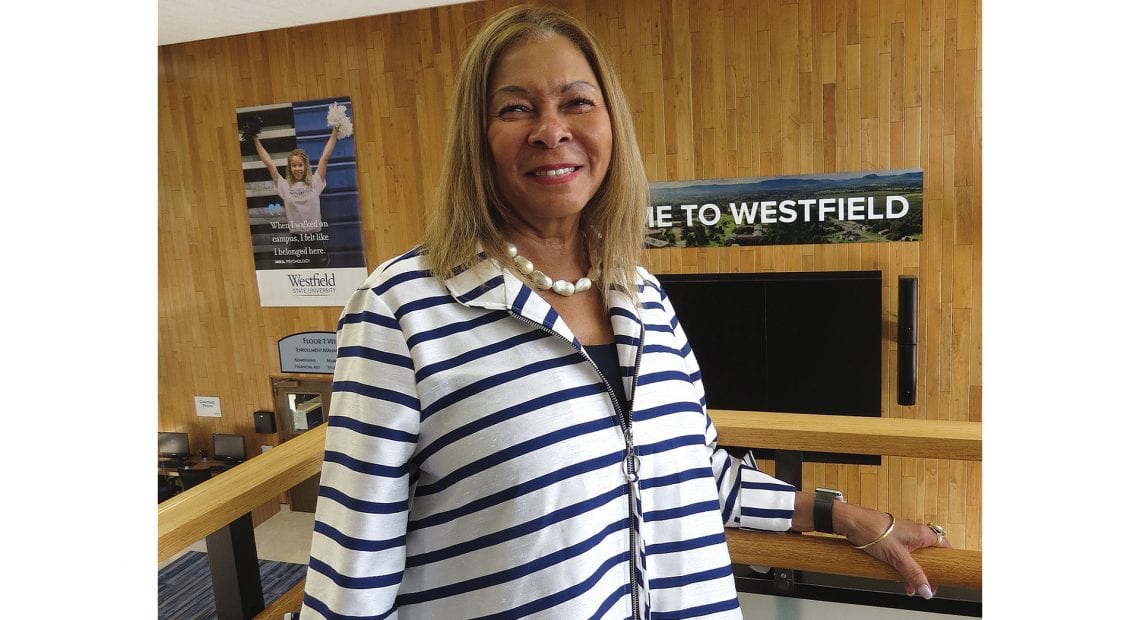
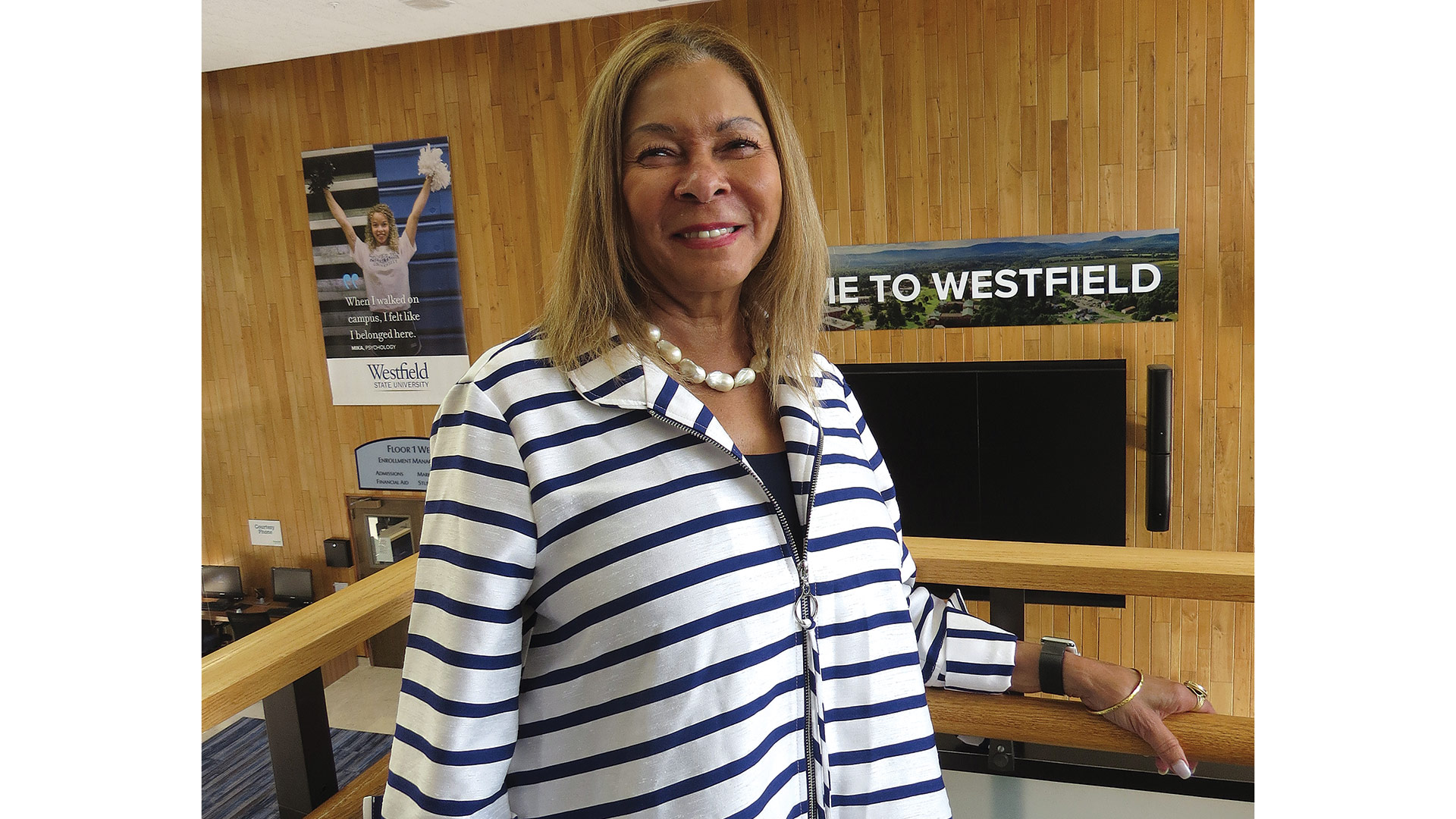
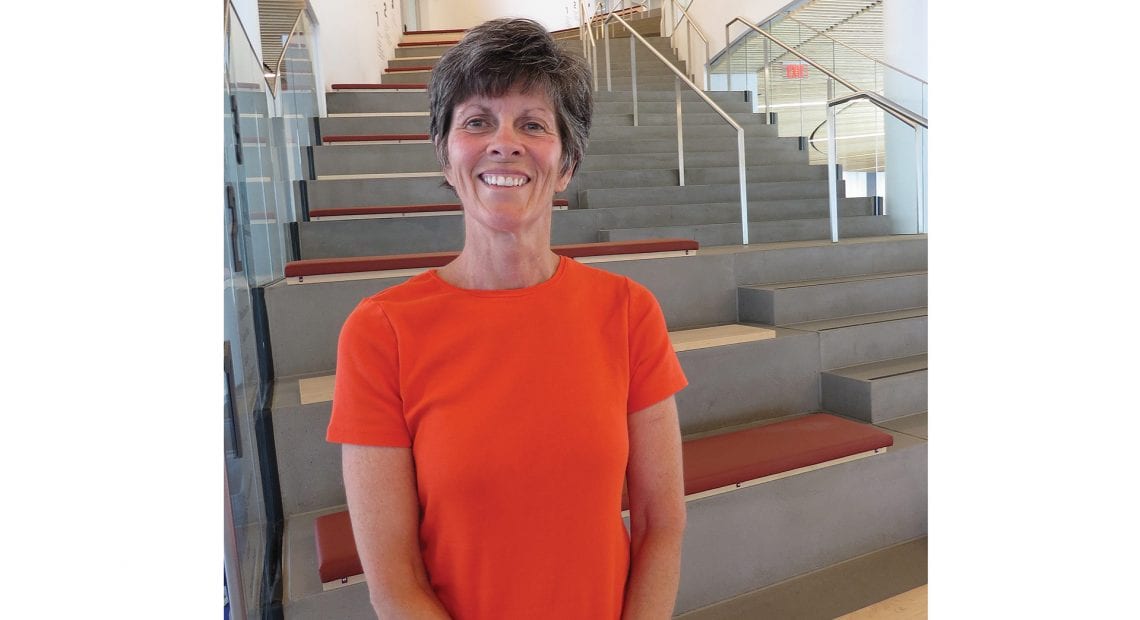
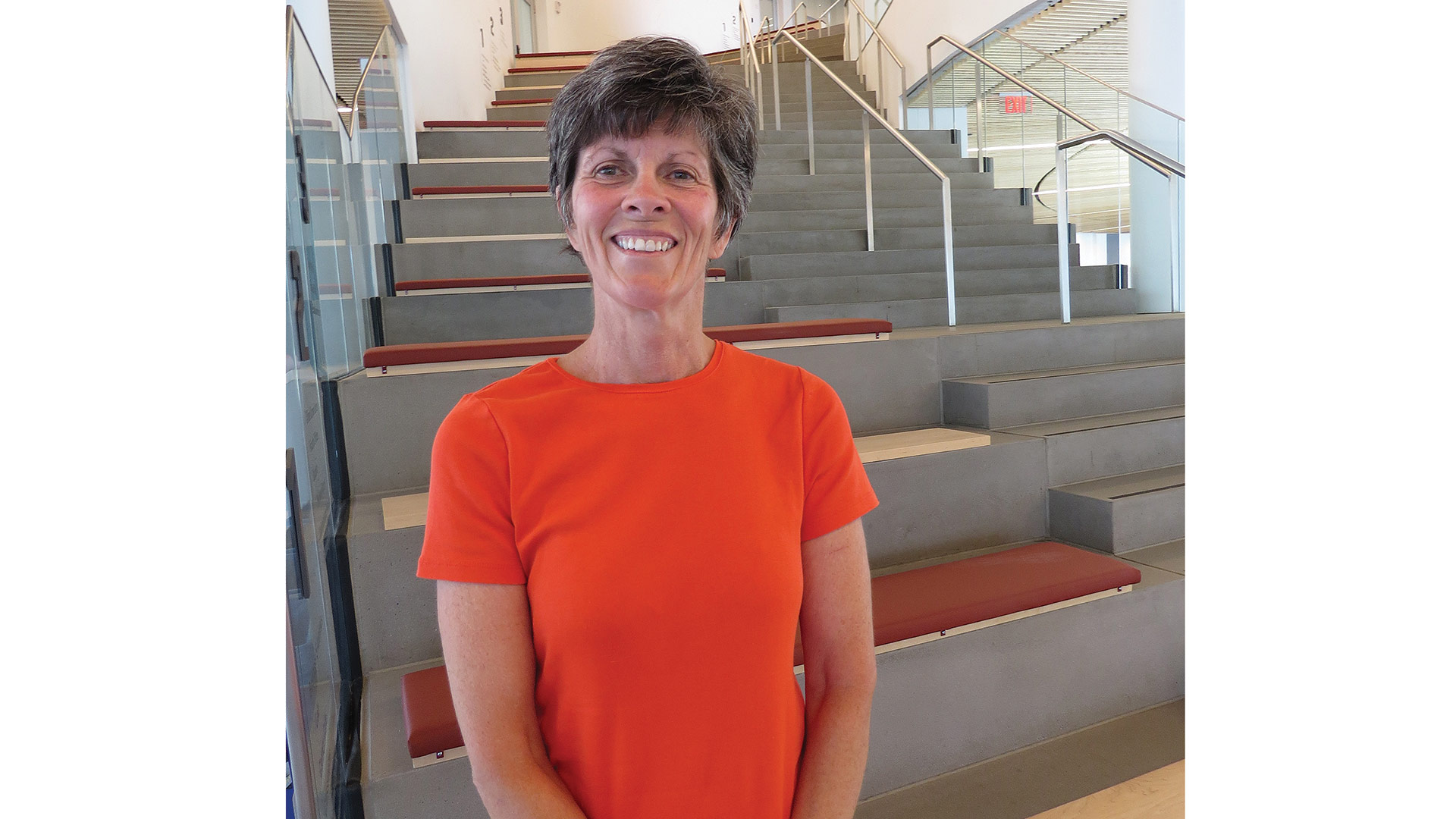
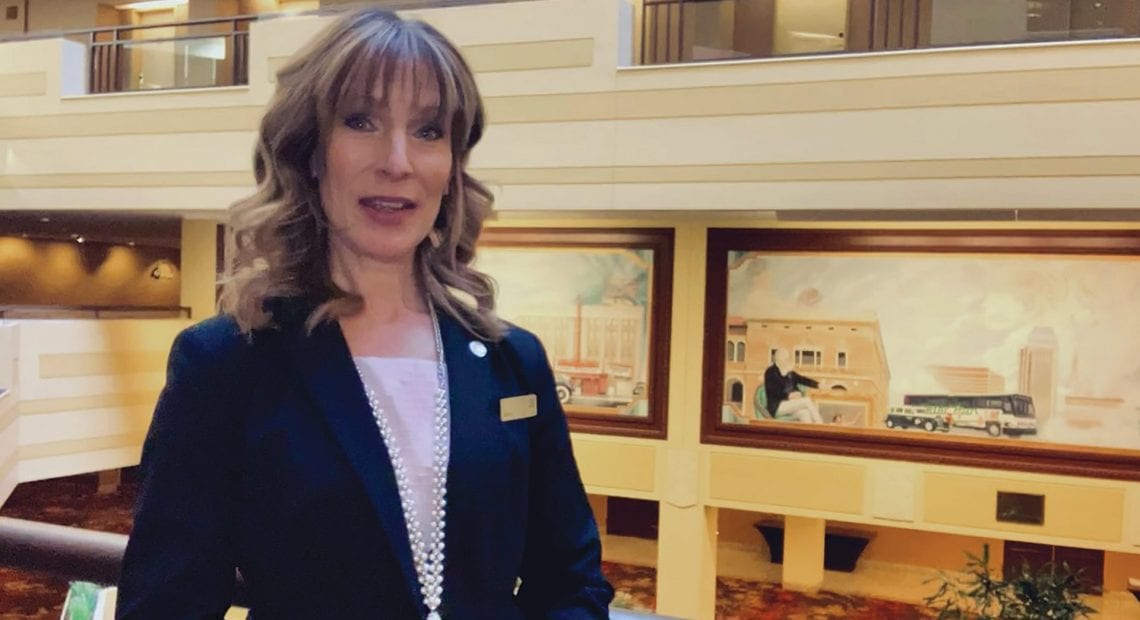
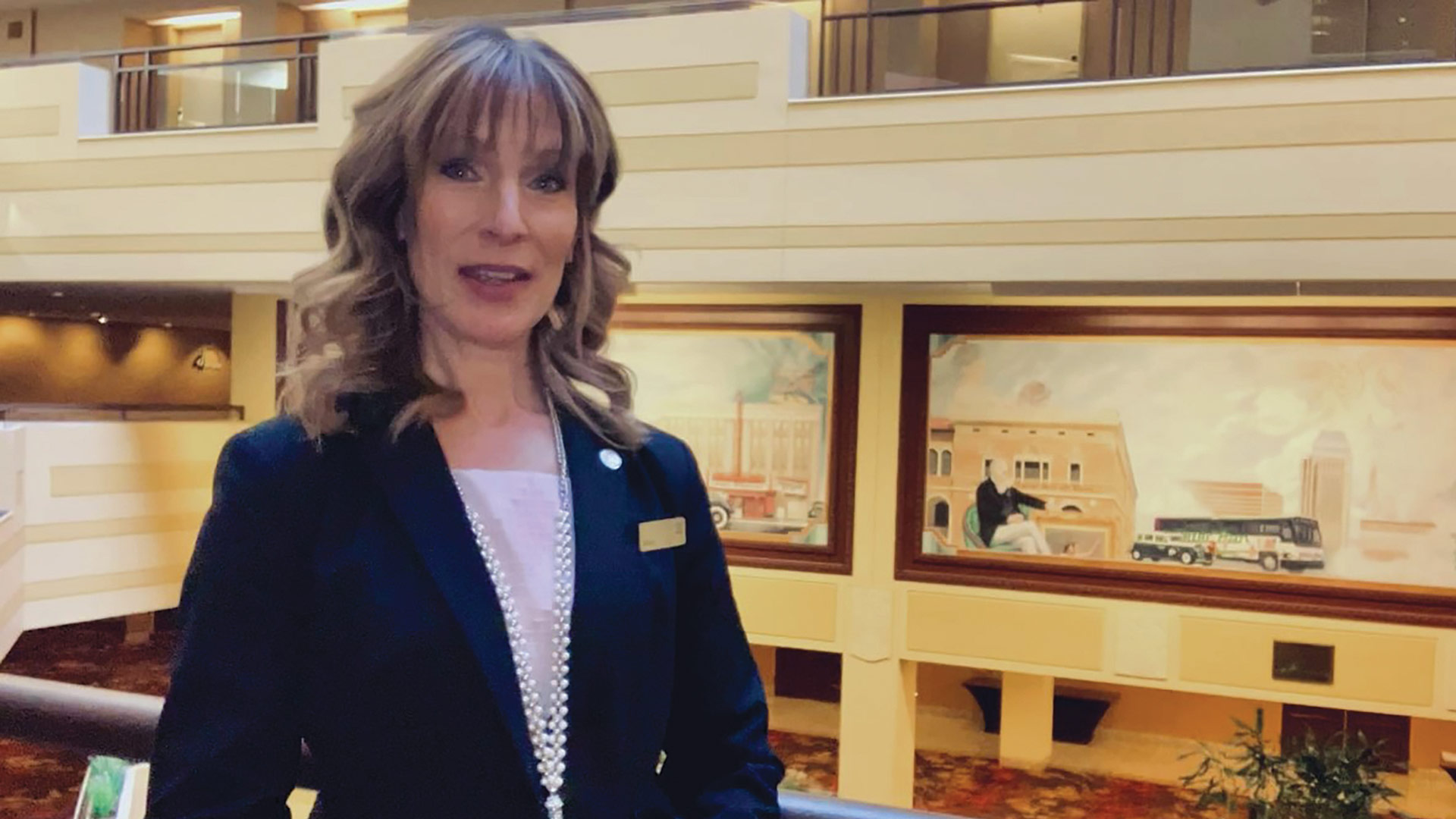
Linda Thompson, the 21st president of Westfield State University.

Linda Thompson had never applied for a college presidency position before a recruiter called and invited her to pursue that post at Westfield State University. She listened, and agreed it was time to take a 40-year-career in healthcare, public policy, and healthcare education to a new and much higher plane. She becomes WSU’s 21st president at a challenging time, especially as schools large and small return to something approaching normal after 16 months of life in a pandemic. But with her diverse background, she believes she’s ready for that challenge.


Linda Thompson remembers not only the call from the headhunter, made to gauge her interest in applying for the president’s position at Westfield State University, but the words of encouragement that accompanied it.

“She said, ‘Linda, I think you’re ready to think about being a president,’” said Thompson, who at the time was dean of the College of Nursing and Health Sciences at UMass Boston and hadn’t pursued a president’s position before. “She said, ‘you’re a dean now … look at the work deans do; they raise money, they create new programs, they create partnerships, they work with the board. The things you do as a dean are the things you’ll do as a president.”

More important than the recruiter thinking she was ready for the post at WSU, Thompson knew she was ready, even if she needed a little convincing.

“I thought I had the right background at this point in time to make a difference at this specific university,” she said, adding that it’s much more than the 35 years in higher education in various positions within nursing and health-sciences programs that gave her the confidence to enter and then prevail in the nationwide search for the school’s 21st president. It was also experience in public policy, working with a host of elected leaders to address a wide range of health and public-safety issues and, essentially, problem-solve.

“Education, to me, is a ticket out of poverty; it’s a ticket for creating wonderful solutions for society and for people.”

“Most of my career, I’ve worked with children and youth, trying to develop programs and policies to promote healthy outcomes for children, youth, and families,” she explained. “I started out, like most people in nursing, in a hospital and moved to community and public-health work. I really became interested in high-risk children just based on my work in public health, seeing how children who grew up in poverty, children who grew up in less-than-fortunate environments, were impacted by those circumstances.”

She points to her own family as an example, and noted that her two older sisters both died young, one from a gunshot wound at age 21 and the other from complications from diabetes during her second pregnancy as a teen.

“I always thought that the reason I thrived was education,” she told BusinessWest. “Education, to me, is a ticket out of poverty; it’s a ticket for creating wonderful solutions for society and for people. I’ve been blessed; I’ve not only had the opportunity to work as a nurse, I’ve also had the opportunity to work to develop programs for children who were in the justice system, people who were in state custody. I did work all over the country looking at ways we can promote good outcomes for people who had the misfortune to be engaged in the criminal-justice system.

Linda Thompson says Westfield State University learned a number of lessons during the pandemic

Linda Thompson says Westfield State University learned a number of lessons during the pandemic, and it will apply them as the school, its students, faculty, and staff return to something approaching normal this fall.

“I worked for the governor of Maryland for five years and developed programs and policies for children and youth statewide,” she went on. “We looked at how we could develop inter-disciplinary or trans-disciplinary programs, starting with education, all the way to how we need to work with housing and economic development to create good outcomes for families and for children.”

Thompson arrives at the rural WSU campus at an intriguing time for all those in higher education. Smaller high-school graduating classes have contributed to enrollment challenges at many institutions, and even some closures of smaller schools, and the soaring cost of a college education has brought ever-more attention to the value of such an education and how schools provide it.

Meanwhile, institutions will be returning to something approaching normal this fall after enduring two and a half semesters of life in a global pandemic, an experience that tested all schools in every way imaginable and also provided learning experiences and opportunities to do things in a different, and sometimes better, way.

Thompson acknowledged these developments and said they will be among the challenges and opportunities awaiting her as she takes the helm at the 182-year-old institution, founded by Horace Mann, whose pioneering efforts in education — and inclusion — are certainly a source of inspiration for her.

“He wanted to look at how education is important to a new society — a society that was going to be self-governed and where people needed to understand how to engage in civil society. I was very intrigued with this history, the inclusive nature of his approach to higher education, and how he looked back at some of the historical development of what I will call democracies in ancient Greece and the importance of an educated community to support democracies and health societies.”

For this issue and its focus on education, BusinessWest talked at length with Thompson about Horace Mann, the challenges facing those in higher education, and why she believes WSU is well-positioned to meet them head-on.


Grade Expectations

As noted earlier, Thompson brings a diverse portfolio of experience to her latest challenge.

Our story begins in 1979, when she began her career as a clinical nurse specialist in the Obstetrics and Gynecology Department at Henry Ford Hospital in Detroit. Soon thereafter, she would begin interspersing jobs in education with those in the public sector.

Linda Thompson says the timing was right for her to pursue a college presidency, and Westfield State University was the ideal fit.

Linda Thompson says the timing was right for her to pursue a college presidency, and Westfield State University was the ideal fit.

In 1987, she became assistant dean at the School of Nursing at Coppin State College in Baltimore, and two years later took a job as director of the Office of Occupational Medicine and Safety in Baltimore. In 1993, she joined the school of Nursing at the University of Maryland, where she would hold a variety of positions between 1993 and 2003, with a four-year diversion in the middle to serve as special secretary for Children, Youth & Families in the Maryland Governor’s Office.

In 2003, she became dean of Nursing at Oakland University in Troy, Mich., and later returned to the East Coast, where she would join the staff at North Carolina A&T State University, first as provost and vice chancellor for Academic Affairs, then as associate vice chancellor for Outreach, Professional Development & Distance Education.

“I see myself as a servant leader, a person who tries to see how I can help another person maximize their opportunity to dig deep inside themselves, and identify their strengths and bring those strengths out.”

In 2013, she became dean of the College of Nursing and Health Sciences and a professor of Nursing at West Chester University in Pennsylvania, and in 2017, she came to UMass Boston, serving as dean of the College of Nursing and Health Services.

Slicing through all that, she said she’s had decades of experience working collaboratively with others to achieve progress in areas ranging from student success to diversity with staff and faculty; from forging partnerships with private-sector institutions to creating strategic plans; from creating new academic programs to securing new philanthropic revenue streams for faculty research.

And she intends to tap into all that experience as she leads WSU out of the pandemic and into the next chapter in its history.

As she does so, she intends to lean heavily on Horace Mann, considered by many to be the father of public education, for both inspiration and direction. In many respects, they share common viewpoints about the importance of education and inclusion.

“This whole idea of looking at healthy communities and using education to strengthen communities resonated with me,” Thompson explained. “And it resonated with me given some of the things we’re starting to see with our divided country; how do we get people educated so that they’re able to know how to be critical thinkers, how to separate fact from fiction, and how to begin looking at the importance of creating communities where everyone is healthy? To me, healthy is more than physical health — it’s emotional and social and environmental, this whole way that we look at values that really enable people to thrive and survive in society.”

Looking forward, she said she has many goals and ambitions for the school, with greater diversity and inclusion at the top of the list. She pointed to UMass Boston, which she described as one of the most diverse schools in the country, as both a model and a true reflection of the demographic changes that have taken place in the U.S.

“Those diverse populations are the future of higher education in this country,” she told BusinessWest. “We are becoming a majority minority population, and there are opportunities to reach out to communities of color and stress the importance of education to be part of a lifestyle where we’re constantly looking at ways to engage with people and give them tools to thrive.”


Course of Action

Thompson arrived at the WSU campus at the start of this month. She will use the two months before the fall semester begins to make connections — both on campus and within the community.

She said the calendar was quickly filling up with appointments with area civic, business, and education leaders, at which she will gauge needs, come to fully understand how the university partners with others to meet those needs, and discuss ways to broaden WSU’s impact and become even more of a difference maker in the community.
The discussions with business leaders will focus on the needs of the workforce and how to make graduates more workforce-ready, she said, adding that the school has been a reliable supplier of qualified workers to sectors ranging from education to healthcare to criminal justice.

Meanwhile, the meetings with those in education focus on widening and strengthening a pipeline of students through K-12 and into higher education, and also on finding paths for those who can’t, for various reasons, take such a direct path.

“For those who are not able to go to college right after high school, how do make it easy for these adults to come back to school?” she asked, adding that she will work with others to answer that question.

And some of the answers may have been found during the pandemic, she went on, noting that, out of necessity, educators used technology to find new and different ways to teach and engage students. And this imagination and persistence — not to mention the direct lessons learned about how to do things, especially with regard to remote learning — will carry on into this fall, when the campus returns to ‘normal’ and well beyond.

“For us, moving forward, I’ll think we’ll never go back to the way we educated people before,” she told BusinessWest, “because people have learned to do this work in a different kind of way, and the public has learned that this is an option moving forward to give people an opportunity to return to college.”

When asked about what she brings to her latest challenge, Thompson reiterated that it’s more than her work in higher education, as significant as that is. It’s also her work in public policy, and, more specifically, working in partnership with others to address global issues.

She counts among her mentors David Mathews, former president of the University of Alabama and secretary of Health, Education, and Welfare under President Ford. She worked with him when he was leading the Kettering Foundation.

“I spent time with him learning about the way he approached leadership and the way he approached democracy,” she noted. “I’ve been a dean, and I’ve had experience as a provost; overall, I believe I have the right set of skills to use the lessons I’ve learned to help develop the next set of community leaders in all fields.

“We need to look at a way that we can create curriculum and graduate people who are innovative, who are critical thinkers, who know how to research on their own, who know to look at problems and how to work in teams with other people in order to create solutions,” she went on. “These are things I’ve learned in my life, and those are things I want to impart to the students who come to this campus.”

As for her leadership style, Thompson described it this way: “I look at creating a vision and an idea and working with and through people — people who are above me, people who work alongside me, people who are younger — and learning from people at all levels and ages and stages of their development.

“I tend to see myself as someone who is transformational,” she went on. “I see myself as a servant leader, a person who tries to see how I can help another person maximize their opportunity to dig deep inside themselves, and identify their strengths and bring those strengths out.”


George O’Brien can be reached at [email protected]

Education

Maintaining Momentum

Anne Massey

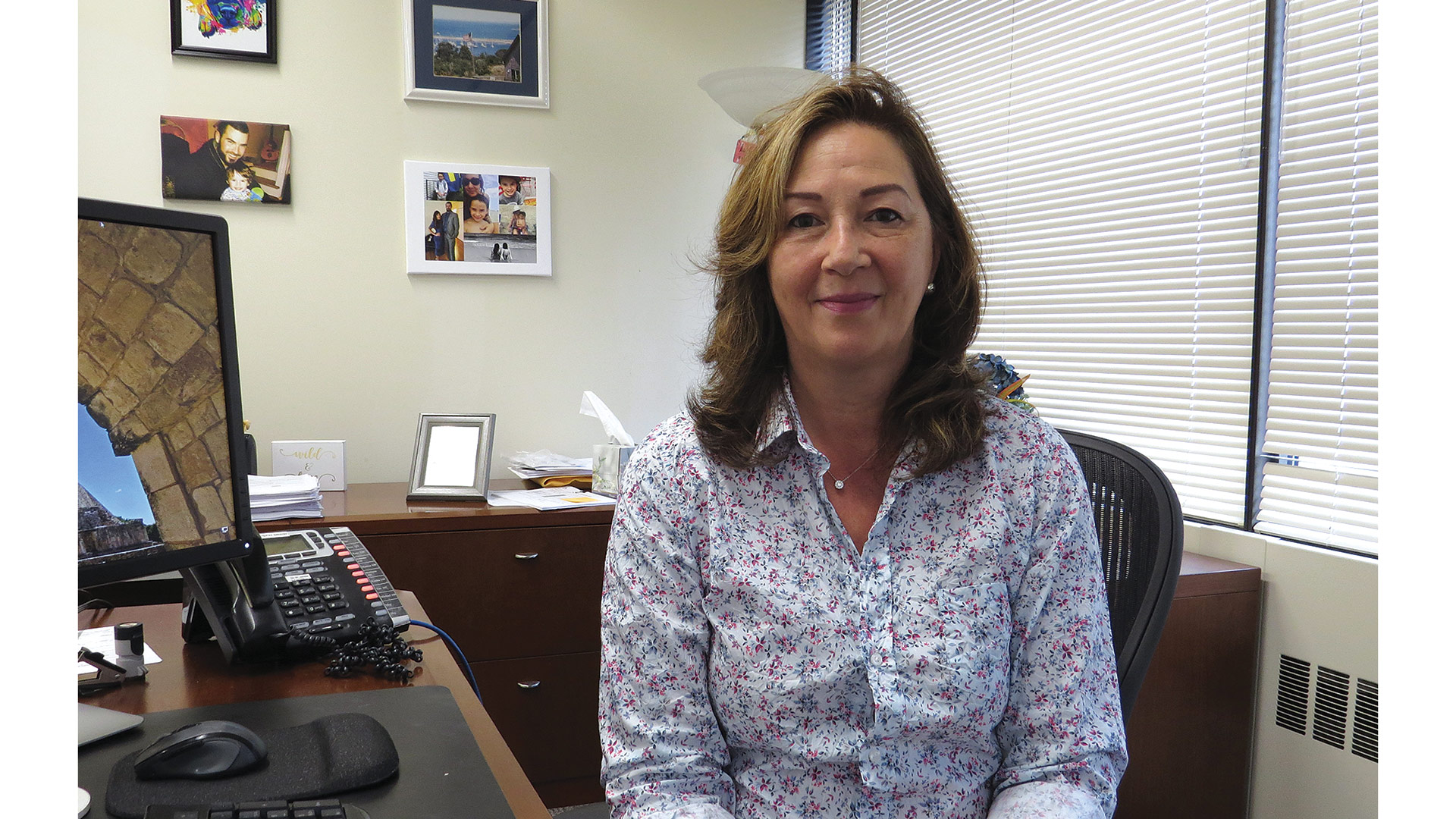
Anne Massey says that early on, she told faculty and staff at Isenberg that the pandemic was not to be looked at as “a short-term problem we’re just trying to solve.” Instead, it has been a learning experience on many levels.


When Anne Massey arrived at the Isenberg School of Management at UMass Amherst in the late summer of 2019, she came with a lengthy set of plans, goals, and ambitions for an institution that was steadily moving up in the ranks of the nation’s business schools and determined to further enhance its reputation.

The overarching plan was to decide what was being done right, what could be done better, and how the school could continue and even accelerate its ascendency with those rankings.

Massey was already making considerable headway with such initiatives when COVID-19 arrived just eight months later and turned normalcy on its ear. But she was determined not to let the pandemic create a loss of focus or momentum.

And almost 16 months after students went home for a spring break from which they would not return, she can say with a great deal of confidence that she has succeeded with that broad mission.

In fact, the pandemic may in some ways have even created more momentum for Isenberg, which is now the top-ranked public business school in the Northeast.

Indeed, those at the school have used the past 15 months as a valuable learning experience, said Massey, who was most recently the chair of the Wisconsin School of Business. She stressed repeatedly that this was a time, as challenging as it was, not to simply get through or survive, and as a homework assignment for her staff, she strongly recommended Ryan Holiday’s book The Obstacle Is the Way — The Timeless Art of Turning Trials Into Triumph.

“I said early on that we’re not going to be looking at this pandemic, and all the things that it wrought for us in terms of remote teaching, remote learning, and remote work, as a short-term problem that we’re just trying to solve,” she explained. “I said that we’re going to learn things, and we’re going to carry them over to when we came back and be better than we were in March of 2020.”

She believes the school will be better because of how it has learned to use technology to do things differently and in some ways better than before, but also because of the many experiences working together as a team to address challenges and find solutions.

“I said early on that we’re not going to be looking at this pandemic, and all the things that it wrought for us in terms of remote teaching, remote learning, and remote work, as a short-term problem that we’re just trying to solve. I said that we’re going to learn things, and we’re going to carry them over to when we came back and be better than we were in March of 2020.”

Moving forward, Massey said those at Isenberg, whether they’ve read Holiday’s book or not, are responding well to the notion of looking at obstacles as opportunities and not letting challenges, even global pandemics, stand in the way of achieving goals and improving continuously.

As she noted, this mindset will serve the institution well in the future as it and all of its many competitors prepare to return to normal, but not a world exactly like the one that existed 16 months ago.

“It was also obvious to me in March and April of 2020 that everyone was going to be forced to be remote, at least for some period of time,” she said. “We’d been in the online space for 20 years, so we were ahead of the game. But now, suddenly, everyone was going to be playing the game. They weren’t all going to be good at it; some of them still aren’t good at it, but think they are.

“But now, there are going to be more people joining this competitive space,” she went on. “And some of them have more resources than we do. So we needed to say, ‘we’re just going to keep plowing forward. We need to be better than they were because that’s the only way we’re going to maintain our competitive position.”

For this issue and its focus on education, BusinessWest talked at length with Massey about her challenging and, in many ways, intriguing first two years at the helm at Isenberg, and especially about how the school will take the experiences from the pandemic and use them to make the school, as she said, better than it was before anyone heard of COVID-19.


Getting Down to Business

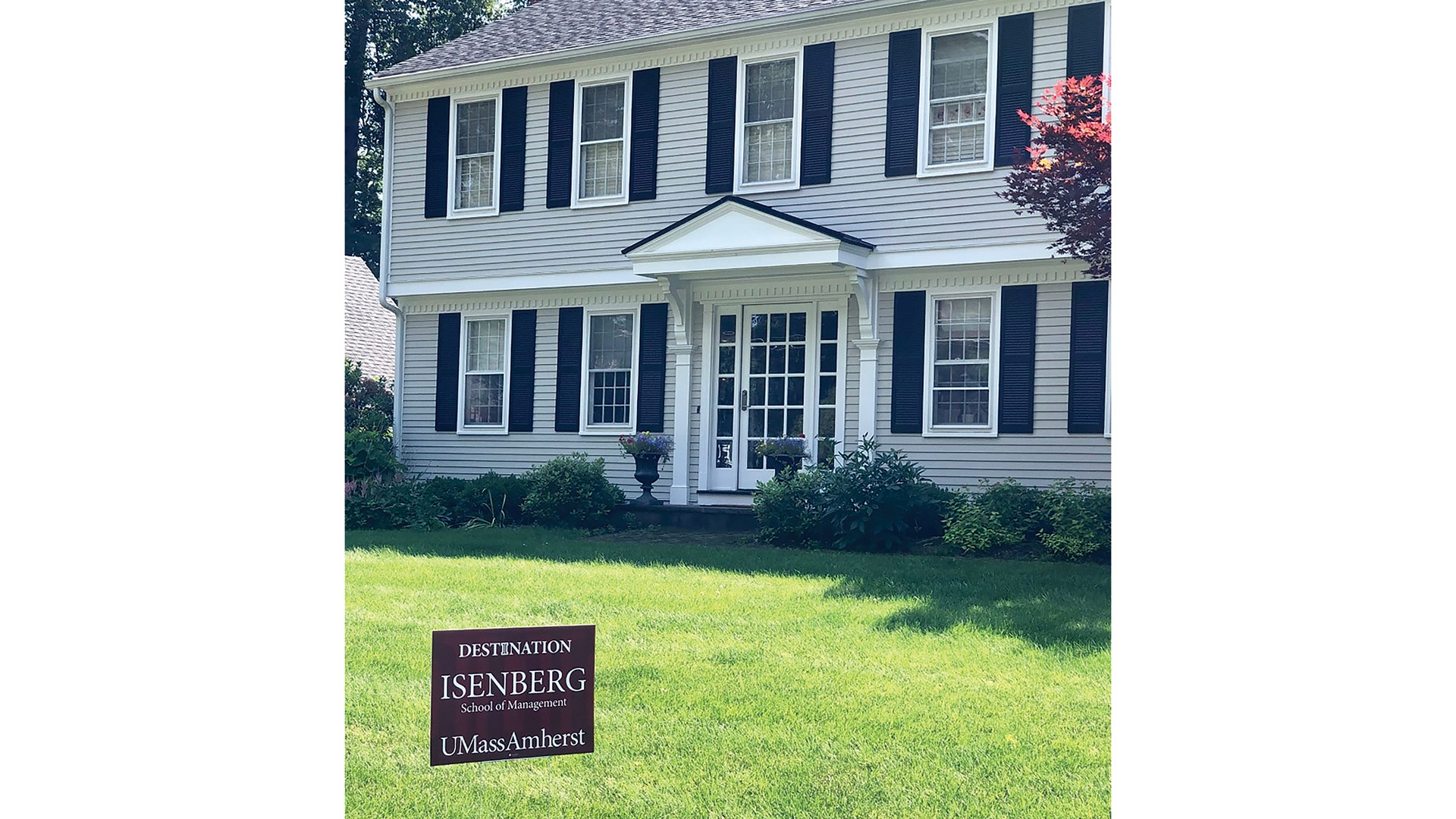
The lawn signs were first introduced a year or so ago.

They say ‘Destination Isenberg,’ and were intended to be placed on the front lawns of the homes of students bound for the school — enrollment in which is increasingly becoming a point of pride.

While those first signs to be issued were technically accurate, many of the students didn’t have the Amherst campus as their actual destination because of COVID, said Massey, adding that that the latest signs — they’re at the printer now and will be distributed soon — speak the full truth: students will be back in the fall.

There will be a party in August to welcome them to campus, and planning continues for an orientation that will feature programs and events not only for freshmen but also the sophomores who couldn’t enjoy such an experience last fall because of the pandemic. As part of those celebrations, there will be recognition of the national-champion UMass hockey team, which included 15 players who are enrolled at Isenberg.

The students will be coming back to the ultra-modern, $62 million Isenberg Innovation Hub, which opened in January 2019 and sat mostly quiet for the bulk of the pandemic. They’ll be coming back to a school now ranked 53rd in the country by U.S. News & World Report when it comes to undergraduate programs (34th among public schools).

The ‘Destination Isenberg’ signs soon to grace lawns

The ‘Destination Isenberg’ signs soon to grace lawns across the country will have real meaning this year, with the school back to fully in-person learning this fall.

They’ll be returning to a school where enrollment continues to grow even as competition increases and high-school graduating classes shrink. “We have the largest incoming class ever,” Massey said. “We have more than we probably should have, but we’ll deal with it.”

But they won’t be returning to the same school. Indeed, as she noted, they’ll be coming back to, or joining, an Isenberg that used the pandemic as a learning laboratory of sorts, one that will stand the school in good stead as it continues its quest for continuous improvement and movement up the rankings in an even more competitive environment.

She said this work actually started before the pandemic, soon after she arrived on the campus. She started with a survey that went out to faculty and staff that included three key questions:

• ‘What unexploited opportunities do you see for Isenberg?’

• ‘What’s standing in our way of those opportunities?’ and

• ‘Given what you know, what do you think Anne Masse should focus on for the next year?’

She received a 95% response rate to that survey, and the answers provided considerable fodder for discussion at what would eventually be more than 30 meetings with various groups within the school, including faculty and staff.

She then developed five key priorities for maintaining and enhancing the school’s reputation for excellence and went “on the road,” as she put it, visiting alumni in Boston, New York, San Francisco, and other cities. These visits continued until the pandemic arrived, she said, adding that, while the road trips have to come to a halt, the work of developing these priorities, identifying areas in which the school needs to invest, and shaping all this into a strategic plan have continued unabated.

Getting back to the pandemic, Massey actually had considerable experience on her résumé in the realm of research regarding virtual teams and how they function. And that work came in handy during the pandemic, especially as it related to communication, coordination, and relationships among individuals in those teams.

“We have the tools and technology that support communication and that support collaboration and coordination of our work,” she explained. “But the relationship building and maintaining relationships is something that people often don’t pay attention to. They get wrapped up in the work, and not the nature of the team and the relationships amongst the team members.”

Flashing back to March 2020, when students, faculty, and staff were sent home for spring break, Massey said she knew they wouldn’t be coming back anytime soon and that all operations, from teaching to recruiting to development, would have to go remote.

“I knew that we had the tools, but what we really needed to focus on were the connections,” she told BusinessWest, adding that she soon launched what became knowns as the Dean’s Briefing, which, as that name suggests, was a briefing sent out to faculty and staff almost weekly.

“Sometimes it was a pat on the back, sometimes it was ‘I know how hard it is,’ sometimes it was personal, sometimes it was about what was going on at the university and what we thought the summer was going to look like and what the fall would look like; it was always about trying to keep people in the loop,” she said, adding that she encouraged the associate deans, the department, and others to do the same with their own group. “They needed to maintain communication that was positive and supportive.”


Driving Forces

At the same time, Massey emphasized the importance of the faculty engaging with students and helping them through a difficult and unprecedented time.

Because not all faculty members had taught online, or certainly to that extent, the school named five Isenberg teaching fellows, all of them experts in remote learning, who are assigned to one or a few departments and a cohort of faculty.

“They took the ball and ran with it,” Massey said, adding quickly that she wasn’t sure at first how this initiative would go over. “They had workshops, they had brown-bag lunches, they used Zoom, they coached people, they surfaced new best practices, they shared ideas … they even wrote a few research papers that have been published. They were phenomenal.”

Lessons learned from the pandemic and these teaching fellows will carry over into ‘normal’ times, she said, adding that she’s expecting to get back on the road in the fall and continue to push the five priorities for the school as it works to sustain and enhance its overall reputation for excellence, a key driver of those all-important rankings.

“They’re all about reputation in various ways,” Massey said of the rankings, of which there are many across several categories, from undergraduate offerings to part-time MBA programs. “The question that I asked over a year ago, and that I always ask, is ‘how might we sustain or advance our reputation for excellence in all we do? And excellence in terms of students and our quality of students, the quality of our faculty and their research, the placement of our students, what the recruiters think, and companies once students are working for them and they’re out a few years. Do they deliver the goods? All of that.”

Listing those priorities, which all intersect, she started with attracting exceptional students, which means more than those with the top GPAs. It also means achieving diversity and attracting students with a commitment to their communities, she said, adding that another priority is sustaining faculty excellence, especially at a time when business schools, and higher education in general, is facing what Massey described as a “looming retirement problem.”

“It’s becoming more and more difficult to attract and retain faculty; we’re not producing Ph.D.s at the rate that we probably need to,” she explained. “So I’m always thinking about how we can make this a good place for prospective faculty, and then, when we get them, how do we keep them? And how do we support them in their research efforts, and how do we support them becoming better teachers?”

Another priority is what Massey called “enabling career success,” which involves both current students and alumni, many of whom were impacted by the pandemic and the toll it took on employers in many sectors. To address this matter, she created an Office of Career Success and integrated the Chase Career Center with the school’s Business and Professional Communications faculty in an effort to expand services to alumni as well as current students.

Still other priorities include “creating global citizens and inclusive leaders” and “inspiring innovation in teaching and learning,” Massey said, adding that she wants Isenberg to be a significant player in business education, especially when it comes to advances in teaching and the use of emerging technology.

“How do we use 3D? What about augmented reality?” she asked, adding that these are just some of the questions she and others at the school are addressing. “One of our initiatives when it comes to inspiring innovation in teaching and learning is the creation of a ‘technology sandbox,’ a dedicated space where new and emerging technologies will be available for our faculty to play with and our staff to play with — because you can’t provide support for something if you don’t know how to use it — and for our students to play with.”


Positive Signs

Getting back to those lawn signs, Massey, who has one in her yard (her son attends the school), said they’re great exposure for Isenberg, especially outside of Massachusetts, where the name is somewhat less-known, but becoming better-known.

“It’s good to have them all over the country, and the students love them,” she said, adding that these are literal signs of growth and progress at Isenberg, but there are many others, from the record class for the fall of 2020 to its longstanding home at to the top of the rankings of public business schools in the Northeast — it’s been there since 2015.

There were signs of progress during the pandemic as well, she said, even if they’re harder to see. The school was determined not to lose momentum during that challenging time and to turn that obstacle into an opportunity.

Time will tell just how successful that mission was, but Massey already considers it a triumph for all those at the school.


George O’Brien can be reached at [email protected]

Women in Businesss

Shoebox Greetings

Suzanne Murphy has put UTCA on a path to continued growth and influence — in this region and well beyond.

As she looked back on 30 years in business — and a very different kind of business, to be sure — Suzanne Murphy retold a story she’s recounted probably hundreds of times.

It concerns the conversation one of her clients had with the firm it was leaving to start doing business with Murphy’s Unemployment Tax Control Associates (UTCA) — as related by that client.

“He said, ‘I just got off the phone with our current vendor, and I told them I was moving my business to your company — and they laughed and said, ‘that’s a little shoebox out in Western Mass.,’’” Murphy recalled, adding that the implication was clear — that those in this region are not on the cutting edge in this realm. “He then said, ‘I was sure to tell them that this was one highly organized, very effective shoebox, and that’s where I was taking my business. And I also told them to think about those kinds of comments and how they land out in Western Mass.’”

Murphy said those remarks, which date back to the early days of her venture, and especially those referring to the size of her company and its mailing address, have stuck with her all these years, especially as she continues to add clients — and employees — from across the country.

Indeed, no one is laughing at this not-so-little shoebox anymore — although UTCA is still rather small when compared to some of the giants that also handle unemployment matters for businesses, although they do it as one of myriad services rather than focusing energies on that one area (we’ll get to all that later). In fact, UTCA has emerged as a regional and national leader in this realm.

“From all we’ve heard, the governor and the Legislature have no intention of revisiting this matter, and I think that’s very shortsighted.”

And most of the reason why is its founder, a thoughtful, enterprising entrepreneur who sat down with BusinessWest recently to talk about everything from her business and how it has evolved to the future of work and where it’s conducted in the wake of the pandemic, to the state’s recent decision not to use some of the $5 billion in federal stimulus money coming its way to help businesses absorb the massive unemployment-insurance costs facing them.

That controversy over the so-called solvency assessment has certainly put Murphy and her company’s work under a much brighter light. Indeed, while she’s been very successful at what she does, companies don’t need UTCA’s services until they need them — and over the years, it has operated in relative anonymity, if that’s the right word.

But the recent debate over the solvency assessment and state’s decision to not use stimulus funds, and instead stretch the payments out over the next 20 years, has brought Murphy and her firm to settings ranging from an East of the River Five Town Chamber of Commerce (ERC5) webinar to BusinessWest’s podcast.

It’s a subject she’s passionate about, and she believes the state’s decision will have some long-term ramifications.

“I think it’s ill-advised, and I think it will put the state at a competitive disadvantage,” she said, noting that many bordering states and others as well are friendlier from an unemployment-tax standpoint. “From all we’ve heard, the governor and the Legislature have no intention of revisiting this matter, and I think that’s very shortsighted.”

As for where people work, Murphy said the pandemic has shown her — and it should have shown every employer — that workers don’t need to be in the office to be effective, and they don’t even have to be in Massachusetts, which is good for employers, but potentially not so good for the Bay State, especially given its recent stance on unemployment costs and the manner in which other states have become much more business-friendly in that regard.


Taxing Situation

As she talked with BusinessWest, Murphy was preparing for what she expects to be — and really hopes will be — the last move her company makes. Or, at least, the last move she will make.

Indeed, as she walked amid furniture and boxes with sticky notes on them to tell the movers where to put them, she said she was trading space at 1350 Main St. in downtown Springfield for a building she purchased in West Springfield, one more suited to the hybrid/remote work model the company has adopted, and one that will even let employees work outdoors of they so choose.

“We want to make it a modern, fun place to work,” she explained, adding that the company should be moved in by mid-July.

The move is the latest of several, an indication of how UTCA has grown over the years, not only in size, but in stature within the realm of unemployment and, as the name on the letterhead says, unemployment tax control.

Murphy was handling such work for a larger firm, one that is no longer in business, when she decided it was time to go into business for herself — with a different business model.

That model was to take a handful of clients that were encouraging her to strike out on her own and start a business in Western Mass. and launch a venture focused entirely on helping companies manage and reduce their unemployment costs.

“I was toying with the idea of doing something, but I was still unclear on whether this was the path I wanted to take,” she recalled, adding that she credits those clients with being persistent and convincing her to take the plunge.

Starting with just herself and a single employee, she he took that small but reliable block of clients and continually built upon that base, primarily by differentiating herself from the larger competitors — “huge data warehouses,” as she described them — such as Equifax and Experian, for which unemployment services are part of a one-stop-shop model and, typically, a loss leader.

The differentiation, in addition to focusing solely on unemployment-tax matters, comes in the company’s proactive, rather than reactive, approach to serving clients, said Murphy, adding that, in this industry, it is generally understood that, in order to protect an organization from unwarranted claim costs, the most effective measures an employer can implement must occur before the employee has separated.

“ I feel the market needs a reliable, responsible, client-focused broker in the industry, and I’m going to keep slugging as long as I can.”

Elaborating, she said UTCA helps companies identify and target cost drivers, and then works with them to develop solutions for reducing them, an MO that has resonated with a wide range of clients.

The firm now boasts 20 employees, including Murphy’s daughter, Meghan Avery, senior vice president; and son, Evan Murphy, director of client development, as well as a number of independent contractors who handle hearings in a number of different states.

Getting back to those giants in the industry, Murphy said trying to compete with them, at least with regard to price, is extremely difficult, and this is why so many smaller players have not been able to stay in business over the years. She’s determined not to join the growing list of casualties.

“I would not do that my clients; I feel the market needs a reliable, responsible, client-focused broker in the industry, and I’m going to keep slugging as long as I can,” she said, adding that she laments the loss of many smaller players.

“I’d welcome more privately held, small or medium-sized competitors from the perspective that they be expected to be more focused on results, unable to confuse the marketplace with a very diluted spectrum of services or a blitz of advertising,” she explained. “It’s said that iron sharpens iron, and I think there’s a lot of truth to that. There’s plenty of business to go around and no shortage of complexity or issues employers must contend with in our space.”


Market Forces

There has certainly been enough business in recent months, as companies of all sizes have been forced to contend with the huge bill that has come due in the wake of huge numbers of people going on unemployment due to the pandemic and the deep toll it took on businesses across virtually every sector.

Indeed, Murphy described that period as by far the busiest of her career, dominated by helping clients handle both legitimate and fraudulent claims — and there were large numbers of both.

And then came what most would describe as a controversy regarding the solvency assessment and the decision of the governor and the Legislature about how to address it.

From her position on the front lines of this battle, Murphy heard directly from a number of small and mid-sized business owners facing huge assessments, often through no fault of their own, at a time when many were still struggling to fully dig their way out from the pandemic. Thus, she became highly visible, and highly vocal, in efforts to convince the Legislature to use money from the American Rescue Plan to offset those costs to businesses. Despite those efforts, Gov. Charlie Baker and the Legislature have instead opted to spread out the payments — an estimated $7 billion in total — over 20 years, a decision that disappoints her on many levels.

“There need to be discussions about tax equity and tax justice. The larger corporations are not going to feel this as much. But the smaller and medium-sized businesses are going to be far more disadvantaged; it’s going to impact them detrimentally. There’s no upside to how this was managed.”

“The governor and the Legislature believe the fix has been provided and nothing more needs to be done,” she said. “And that could not be further from the sentiments that we are experiencing on the ground, from our clients, and even those who aren’t clients — people who have reached out to us because they know of our role on this issue.

“There need to be discussions about tax equity and tax justice,” she went on. “The larger corporations are not going to feel this as much. But the smaller and medium-sized businesses are going to be far more disadvantaged; it’s going to impact them detrimentally. There’s no upside to how this was managed.”

As noted earlier, this controversy has put UTCA, and especially Murphy, under a brighter spotlight. For her, it’s a different role, one she’s accepted enthusiastically because of what’s at stake and because of the way her clients — and, as she said, non-clients, too — are now in the line of fire.

“It has morphed into more of an activist role, especially with our work with the ERC5,” she noted, adding that such involvement is important in that it helps bring the perspective of the small-business owner — often lost on those in power, in her view — into the forefront.

But the pandemic has done more than bring unprecedented levels of business — and visibility — to the company. Indeed, Murphy said it has also provided lessons in how work can be done, and where.

Elaborating, she said her company, like many others, has adapted a hybrid/remote model of work, with many employees working from home. But because of the technology available, home doesn’t have to be in the 413, or even in Massachusetts. And as employers look at whom they might hire and where they live, unemployment-tax rates and policies will likely play an increasingly significant factor in those decisions.

“Massachusetts will have to compete with every other state now — and there are 21 other states that have chosen to use federal stimulus funds to offset their losses on their unemployment trust funds,” she explained. “Massachusetts has used zero dollars for that purpose, and has chosen to strap employers with a 20-year assessment.

“We have two positions to fill,” she went on. “And now, we can interview and hire people from Michigan or Texas or California, and those will be the jurisdictional states for unemployment. As more employers with remote workforces become aware of this, they may be more prone to hire people from states where the unemployment-tax burden is much less.”

This changing playing field allows UTCA, and all companies, for that matter, to cast a wider net, said Murphy, and attract talent that was formerly out of reach because of geography.

“We used to talk about getting people from the eastern part of the state to relocate to Western Mass., and that was a difficult task,” she told BusinessWest. “All that has shifted; we can now focus on recruiting directly in the market where our competitor is — or wherever we want to be. We can do our homework and attract people within our industry who have niche experience and knowledge, or we can attract others who are in a demographic we want to focus on to make our company more diverse, as well as productive. And I would be surprised if businesses do not see the opportunity there to have a very robust workforce that will give them a competitive advantage.

Doing her homework and staying on the cutting edge of trends and new developments in business has enabled Murphy to take that ‘small shoebox’ referenced by that jilted competitor all those years ago and turn it into a much bigger shoebox — and, more importantly, one of the region’s more intriguing business success stories.


George O’Brien can be reached at [email protected]
Cover Story

Beyond the Firewall

The recent spate of high-profile cyberattacks, many involving paid ransoms featuring six or seven zeroes, has brought an ongoing, and escalating, problem even more to the forefront. Businesses are being advised that the problem needs to be managed — before the worst happens. That means having a detailed plan involving many layers to keep things safe.


As he talks about cybersecurity, Charlie Christianson, owner of CMD Technology Group, equates that art and science (mostly science) to an onion.

By that, he means it has layers — many of them — with each one being important to the desired end in this matter: keeping one’s data, business, financial information, and perhaps life and livelihood safe.

“The goal isn’t to have one be-all, end-all product or solution that’s going to protect you — it’s a variety of things,” he explained. “It’s about trying to put as many layers between the threat on the outside and the asset, which is at the core.

“Most people understand the firewall discussion,” he went on. “But what they’re starting to understand is that it’s not just the stuff that protects you — it’s your staff, it’s your people, it’s the training, it’s the education, it’s the policies, and having all that in place.”

Christenson, like everyone else in this business, has been making this onion analogy — or whatever phraseology they use to get their points across — quite often these days. That’s because cybersecurity — mostly in the form of high-profile, as in very high-profile, attacks — has been in the news lately. Again. Or still, to be more accurate.

These attacks have come one after another: the Colonial Pipeline, the steamship service to the islands in Massachusetts, the meat company JBS, and many others.

Collectively, what these hacks have shown that businesses across all sectors are vulnerable, and this isn’t a problem for other people to worry about.

That has always been the case, said those we spoke with, but the recent spate of cyberattacks and the relentless coverage of them have served as a needed wakeup call for business owners of all sizes, most of which — the number varies depending on who you talk to, but it’s at least 50% — are simply not ready to handle or respond to the kind of attacks seen lately.

Charlie Christianson

Charlie Christianson likens cybersecurity to an onion; both have, or should have, many layers.

Which brings Christianson back to his onion, and Phil Bianco to diabetes, or type 2 diabetes, to be exact.

“It’s always easier to prevent diabetes than to treat it after the fact,” said Bianco, chief technical officer with Melillo Consulting, which has three offices in the Northeast, including one in Springfield. “It’s the same thing with security — it’s always easier to manage things prior to the incident and be prepared for that and act appropriately.”

Elaborating, he said there are many elements to the process of managing before something bad happens, everything from having your system assessed so that vulnerabilities can be identified to acting on the recommendations listed in that assessment; from training employees on how spot suspicious e-mails to knowing what to do and whom to call when your system is attacked.

And while Melillo and all other firms in this business sector will do remediation — coming in after the hack and putting things back as they were, to the extent possible — and “stop the bleeding,” as Bianco put it, businesses would find it much better, and cheaper, if they hired the same company to handle preparation and prevention and work to eliminate the cuts that cause the bleeding.

“The goal isn’t to have one be-all, end-all product or solution that’s going to protect you — it’s a variety of things. It’s about trying to put as many layers between the threat on the outside and the asset, which is at the core.”

The high-profile cyberattacks of the past few weeks are an indication of how widespread the problem is, but they are also misleading to some extent, said those we spoke with, because they have involved mostly larger businesses and entities with very deep pockets, as evidenced by the size of the ransoms they paid. The sobering reality is that small businesses are a more attractive target because they are likely to be less prepared for such an attack.

“Cyberattacks are really a numbers game, and small businesses are less likely to invest in the cybersecurity practices, so they’re seen as low-hanging fruit,” said Lauren Ostberg, an attorney with the Springfield-based firm Bulkley Richardson (and a member of BusinessWest’s 40 Under Forty class of 2021), who helped spearhead the launch of the firm’s cybersecurity practice.

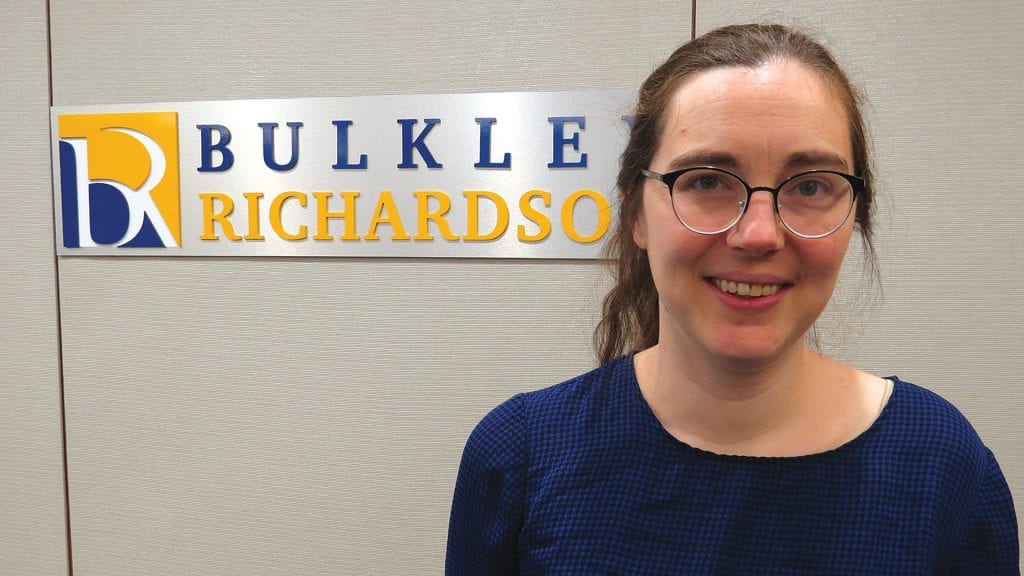
Lauren Ostberg

Lauren Ostberg says small businesses, many without IT teams or sophisticated cybersecurity systems, are low-hanging fruit for hackers.

“And these attackers also sell each other pre-made malware, so less sophisticated attackers can just send out 100 different phishing e-mails, see what sticks, and then attack there,” she explained. “So nonprofits are at risk, small- to medium-sized businesses are at risk, and, in most cases, they don’t have the insurance to back them up to minimize that risk, and they don’t realize how vulnerable they are.”

Everyone should now understand just how vulnerable they are, said those we spoke with, adding quickly that some remain slow to take action and adjust to what is a troubling new world order. Those who don’t adjust do so at their peril, said these experts, adding that recent events show just how easy it is to be attacked, and how painful, costly, and time-consuming it is to repair the damage that’s been done.


What the Hack?

As they talked about those behind all the cyberattacks going on in the world right now, those we spoke with used a wide array of descriptive adjectives to let people know just whom they’re dealing with.

Words like sophisticated, diabolical, persistent, and relentless were used early and quite often, as was another that should get the hair up on every business owner: automated.

“It is only a matter of time before any organization falls victim to one of these attacks,” said Joel Mollison, president of Westfield-based Northeast IT, who said this inevitability shouldn’t prompt paralysis, but instead well-thought-out action to prevent (to the extent possible) such an attack, and then recover as quickly and painlessly as possible if an attack does occur.

“It’s always easier to prevent diabetes than to treat it after the fact. It’s the same thing with security — it’s always easier to manage things prior to the incident and be prepared for that and act appropriately.”

Mollison puts it in clear perspective, if anyone wasn’t already sure.

“Typically, we find that most organizations have basic security measures in place, but rarely understand their level of potential exposure or impact on operations during such an event,” he said. “The ability to recover from one of these events varies widely based on size of the organization, data volume, and locations of data and services. Even in the best-case scenarios, this process can take many days or weeks.

“Business operations are almost always crippled to a marginal capacity while systems are recovered,” he went on. “The financial impact, even without having to pay a ransom, is often devastating, and most cyber liability policies are underfunded, which compounds the problem. There are also compliance, reporting, and legal factors that are part of the recovery process that are often overlooked.”

Stan Bates, director of Business Development for Melillo, agreed. Relating some recent and current cases his firm is handling, he said they effectively communicate how widespread the problem is, what issues and problems are confronting business owners, the costs involved (and there are many of them), and the direction this matter is taking.

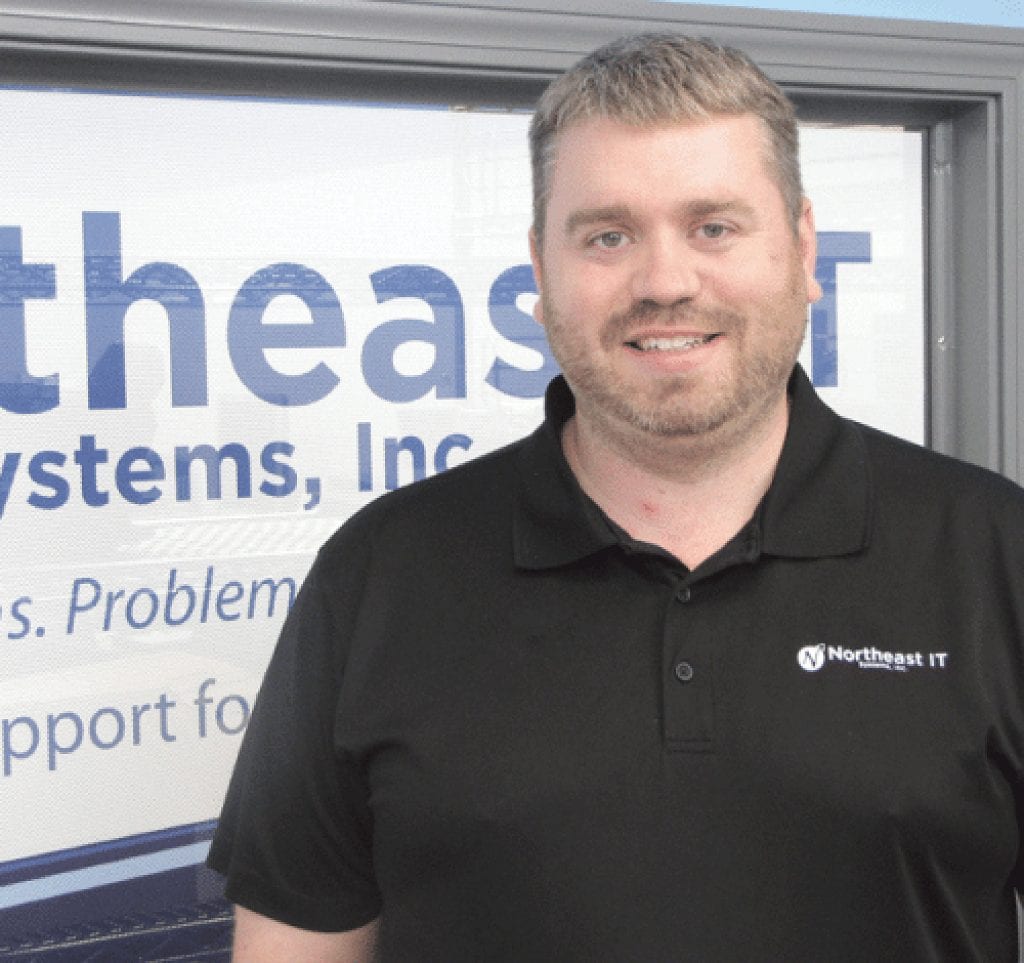
Joel Mollison

Given the sophistication and persistence of today’s cybercriminals, Joel Mollison says it’s only a matter of time before any organization falls victim to an attack.

One involves a large nonprofit in the healthcare sector, he said, adding that this client found out the hard way all that can be involved with returning things to the way they were before the attack.

“It got hit really hard, and they called us to help fix the situation,” Bates recalled. “They were hacked, they put their system down, they were out of e-mail, they were out of just about everything you can think of. The sad part was they weren’t prepared to know what to do, and to top it off, their insurance company forced them to use their security group, which had a limited knowledge of their network, and pay for those services, while also paying us to come in and help those guys understand what they had and fix it.

“They’re up and running,” he went on. “But it took about two weeks.”

Another case involves a small machine shop in the Hartford area, he said, adding that this small business has been informed that, if it wants to keep getting contracts from the federal government, it must meet a series of guidelines regarding cyberattacks and being fully prepared for them. “It’s going to run about $4,000 to $5,000 a month for us to monitor and secure his system and hit the score the federal government is telling him to hit.”


Something’s Phishy

These anecdotes are just some of many that help tell the story of how cybersecurity is becoming a huge issue for business owners and managers, one they can no longer ignore — not that they could really ignore it before.

Indeed, such sobering messages have been delivered with increasing frequency over the past several weeks as the high-profile attacks — and the ransom payments that include six and sometimes seven zeroes — come with increasing regularity. And they have certainly stimulated some interest within the business community, and also government offices and nonprofits, to be ready, or at least more ready.

“The conversations have changed. In the past, there were certain people you could talk to until you were blue in the face, and it was purely a dollars-and-cents discussion: ‘you want me to spend how much in a firewall, or this piece of software?’ Now, it’s ‘what can we do?’”

“The conversations have changed,” Christianson said. “In the past, there were certain people you could talk to until you were blue in the face, and it was purely a dollars-and-cents discussion: ‘you want me to spend how much in a firewall, or this piece of software?’ Now, it’s ‘what can we do?’”

Ostberg agreed. “People are taking the matter more seriously, and they’re taking me more seriously when I tell them they have to plan for cybersecurity incidents,” she said. “I’ve noticed an increase in concern, especially about ransomware, which can really cripple a business.

“The Massachusetts regulations and the advice I give my clients provide a lot of good ideas about ways to prevent or mitigate some of the risk that would be caused by some of the hacks we’re seeing,” she went on. “And it’s focused on building layers of prevention.”

At or near the top of any list of prevention measures is training, specifically involving the detection of phishing e-mails, which comprise the entry point for most of the hacks that occur today, according to those we spoke with.

Melillo Consulting

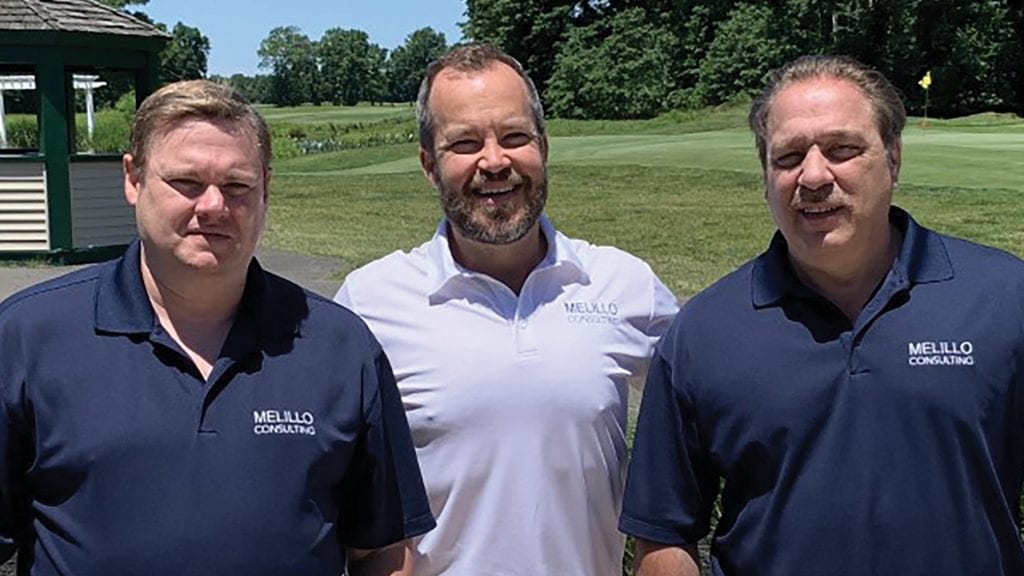
Members of the team at Melillo Consulting, from left, Phil Bianco, Doug Morrison, and Stan Bates.

As they talked about these e-mails, they summoned some of those same adjectives as they tried to convey just how sophisticated they have become.

“The phishing is getting more elaborate, and the social engineering that goes behind it is far more advanced than what we’ve seen in the past,” said Doug Morrison, practice director for the Development Operations team at Melillo. “It used to be that the e-mails were intentionally easy to sleuth out, because that way they could weed out the people they didn’t want; they wanted the people who were easily fooled to click on the link. But now, it’s getting very elaborate and very difficult to tell real e-mails from the fake e-mails.”

With this level of sophistication, Bianco said, it really is only a matter of time before someone makes a mistake and opens the door for a cyberattacker. But training and knowing to be on alert and skeptical of everything remotely suspicious are still critical to help minimize such incidents.

“Know who you’re doing business with,” he said. “Trust an e-mail if it’s someone you’ve done business with in the past. And if it isn’t someone you’ve done business with in the past, be skeptical of that; if you’re in question, send it over to your IT team, and let them take a look at it. If they see a bad e-mail, they can tell you immediately, ‘hey, we’ve seen this before, this is not something you should work with — please delete this or quarantine this,’ or, if they haven’t seen it, they can send it on to an anti-spam or anti-virus protection service that they’ve engaged with, and that individual or group can look at it across multiple things that they’ve seen.”

In dealing with suspicious e-mails, Bates cited his own firm as an example of the kind of rigorous training that can and should go on.

“We do quarterly training — each employee has to take a test and pass it,” he explained. “It’s terribly difficult, but it instills in your mind some of the things that are going on out there. Just the other day, we got hit, but everyone in the organization was smart enough, because of their training, to delete before they opened.”


Backup Plan

Because of the seeming inevitability that these sophisticated phishing attacks will succeed, businesses of all sizes need to have all the other layers of that onion to fully protect themselves from attacks — the training and the policies, in addition to the hardware and software.

“You have to have all the other layers in place because you simply cannot rely on humans not to click on e-mails at the pace that they’re required to do,” said Morrison, noting, as others did, that subsequent layers include a firewall, backing up all information, and encryption of information.

As noted, there are layers to backing up information, said the experts we spoke with, noting that the best solution is to isolate the backups as much as possible from the main network.

“Most companies do back up, but these malwares that do ransomware are pretty sophisticated,” Bianco explained. “The average time that that individual has compromised your network is typically a month or more. And in that month or more, they can go through and encrypt your backups as well as your production-installed system, your code bases, and things like that.

“Know who you’re doing business with. Trust an e-mail if it’s someone you’ve done business with in the past. And if it isn’t someone you’ve done business with in the past, be skeptical of that.”

“And they have a pretty sophisticated map of what your environment looks like, so we’ve been working with customers to do what’s called air-gabbing backups,” he went on. “Once that infrastructure is backed up, it’s completely separated from your network, so it can’t be encrypted.”

Christianson agreed, and noted that such independent, often off-site backup systems need to not only be in place, but be monitored as well.

“We’ve all heard the stories … people think they’re backing up for a long period of time, only to find out that, when they need it, the backups are not working,” he said. “That’s why people are starting to realize that it’s really important to have these systems monitored in some fashion, and that there are multiple layers.”

As for whether to pay that ransom … most consultants, and lawyers like Ostberg, certainly recommend against that practice, although that hasn’t stopped many of those who have been attacked from paying out millions in Bitcoin.

“One of the things that’s just awful is seeing people pay the ransom,” Christianson said, “because that’s not the answer. You’re just encouraging them to come back — and they will come back, not to mention the fact that they give you the key and you get your data, but you have no idea what they dropped in there and left for a back door.

“Honestly, in some cases, the only way to know is to reformat it, reinstall it all, scan the heck out of the data, and bring it back from the ground up,” he went on. “Or, manage a good disaster-recovery backup plan.”

Which brings him all the way back to that onion he referenced at the top. It should have many, many layers, he said, with more added as they become available and necessary, because what worked and what was enough a few years ago probably isn’t enough now, and certainly won’t be enough a few years and maybe even a few months from now.

That’s how quickly and profoundly the scene is changing when it comes to cybersecurity and protecting a business, nonprofit, school system, government agency, or household from those who would do it harm.

Managing the problem is all-important, said those who spoke with, but what’s most important is managing it before the worst happens — because doing so can often prevent the worst from happening.


George O’Brien can be reached at [email protected]
Insurance

Cover Story

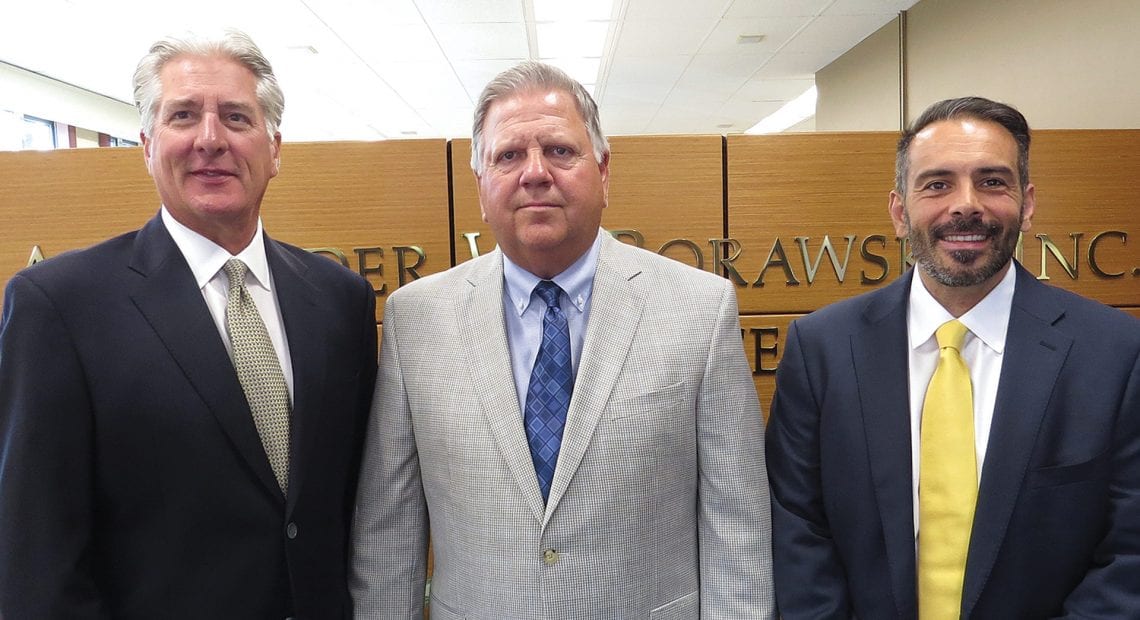
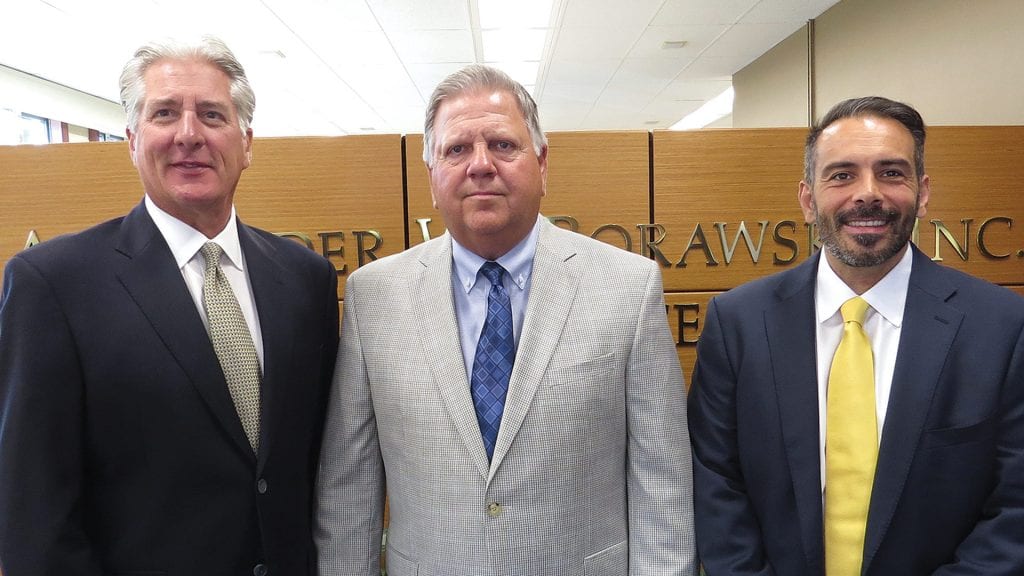
From left, Bob Borawski, Dave Malek, and Mark Rosa, the leadership team at Borawski Insurance.

From left, Bob Borawski, Dave Malek, and Mark Rosa, the leadership team at Borawski Insurance.

As he talked about insurance, and also about the agency started by his grandfather almost 91 years ago, Bob Borawski drew a number of analogies to the banking industry.

Specifically, he referenced an ongoing pattern of mergers, acquisitions, and overall consolidation that has left fewer players, and far fewer smaller, independent agencies.

In banking, said Borawski, who has been on the board at Florence Bank for many years now, this activity has created opportunities for those players with a track record of strong customer service and the ability to fill a void left by those agencies swallowed up by larger interests with fewer ties to — and employees living in — the 413. At the same time, while rates and prices are always important in banking, relationships are more important.

And, by and large, it’s the same in insurance, Borawski said.

“Anyone can give a rate that’s a half or five-eighths of a percentage point less,” he said in reference to banks. “But beyond the rate, you want to have a good relationship with your client. Like an independent bank, we have a focus on being independent — we’ve chosen not to be gobbled up by one of the larger players because we think independence is important. We still think people appreciate being local.”

Dave Malek, vice president of the company, who came aboard nearly 30 years ago, agreed.

“It really is all about relationships,” he noted. “And I think that is what gets lost when you get swallowed up by a larger conglomerate.”

In essence, Borawski said, he, Malek, and the other 15 employees at this company launched at the height of the Great Depression in 1930, are continuing a pattern of personalized customer service and relationship building that was started by his grandfather, Alexander Borawski, and continued by his father, Robert.

“These days, people are always saying, ‘we can save you…,’ ‘we can save you…,’ ‘we can save you…’ — and that’s great until something goes wrong and all that savings took coverages away and didn’t provide what you should have had.”

And this pattern has served the company well, especially when it comes to commercial lines, where the Borawski company has built a large and diverse portfolio that continues to grow.

Indeed, at present, commercial accounts comprise roughly 75% of the book of business, said Malek, adding that the portfolio includes everything from manufacturers to auto dealers; nonprofits to general contractors.

And this commercial business has spawned growth in numerous areas, especially employee benefits but also personal lines, said Borawski, adding that the ability to provide a wide range of products and services to customers has been a formula for growth going back nine decades, but especially in the past 30 years as the company has sharpened its focus on its commercial portfolio.

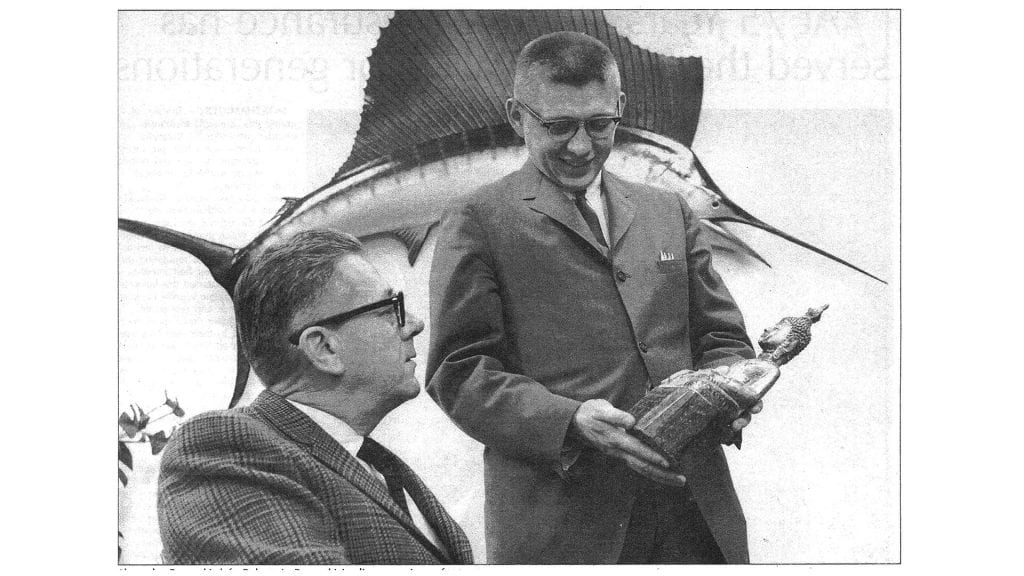
The first and second generations of leadership at Borawski Insurance: Alexander Borawski, left, and Robert Borawski.

The first and second generations of leadership at Borawski Insurance: Alexander Borawski, left, and Robert Borawski.

Overall, this agency has been conducting business in much the same way it has since the doors opened, even if COVID-19 forced some changes when it came to where employees were working and how work was done.

Moving forward, the business plan calls for simply “more of the same,” said Borawski, adding that the company intends to take full advantage of the trend toward consolidation within the industry and continue its focus on relationship building.

“You’re either moving forward or moving backward, and our plan is to continue to grow our way — organically,” he said, adding that he believes the company is certainly well-positioned to achieve that goal.

For this issue and its focus on insurance, BusinessWest talked with several team members at Borawski to get a full understanding of not only where it’s been, but where it wants to go and how it intends to get there.


Independent Thinking

Borawski told BusinessWest that, upon graduating from Stonehill College in 1980, he had no plans to join the family business. Instead, he went to work for then-emerging office-supply company W.B. Mason as a salesperson.

“There were probably 35 people there at the time; I really liked it and had no intention of leaving,” he said, adding that his career took a critical turn a few years later when, while he was home for Thanksgiving, his father, who joined the agency in the early ’60s, commenced a discussion on succession.

“He said, ‘what am I going to do with this business?’ and we continued to talk,” Borawski recalled, adding that, soon thereafter, he came back home to join the company as a salesperson; eventually, he would succeed his father as president in 1992.

By then, he was also working to take a friendship on the golf course with Malek to a much different level. The two were members at what was Hickory Ridge Country Club in Amherst (the club closed a few years ago), and while talking golf and shop — Malek had been in the insurance business for roughly a decade by then — a discussion commenced about Malek coming to the Borawski agency and “helping build something,” Bob said.

That something was the aforementioned commercial-lines division that has grown so dramatically over time.

“We made a lot of cold calls over those years,” said Borawski, adding that, in addition to that time-honored strategy, the business has benefited tremendously from referrals that have led to new customers of all sizes in both the commercial- and personal-lines sides of the business.

Overall, the company has decided to grow organically, not through acquisition, as many others have. Again, as in banking, growing organically means, to a large extent, taking customers from other players, something that’s accomplished through hard work, a strong track record, a deep portfolio of products and services, relationships with carriers (Borawski works with more than 30 of them), and — here comes that phrase again — relationship building.

“Business just doesn’t fly in the door — you’ve got to go find it,” he explained. “You have to hunt it and track it.”

That’s because the competition, as in banking, is fierce. To stand out, an agency has to possess those qualities listed above, said all those we spoke with, and especially a desire to work with clients to find solutions for them, not just get a signature at the bottom of a policy — or series of policies.

“One of the things that we try to do differently is evaluate someone’s insurance program, and not just from the perspective of price,” Malek said. “It’s important to understand what their needs are and what we’re trying to provide for them, rather than just focus on the bottom-line price, because, in most cases, that doesn’t end up working out.

“Insurance is an intangible. You can’t touch or feel it until you need it. And we try to get people to understand just that — that everything is great until something goes wrong. And when it goes wrong, you need to know that you’re going to be put back to where you were prior to that.”

“You get what you pay for, and we work to get people to pay for the right coverage,” he went on. “These days, people are always saying, ‘we can save you…,’ ‘we can save you…,’ ‘we can save you…’ — and that’s great until something goes wrong and all that savings took coverages away and didn’t provide what you should have had. No one goes to the cheapest doctor for a reason.”

Mark Rosa, senior account executive, agreed, and noted that he and others in similar positions at the company strive to be advisors, not merely salespeople.

“It’s not just a game of show and tell and salesmanship — we want to advise as well,” he noted, adding that business owners who are experts at whatever business sector they have chosen are not necessarily — and not likely to be — experts on the many different insurance and employee-benefit products available today and which ones might be best for their company.

This desire to advise is another strong attribute that has served the company well during this time of consolidation within the industry, said Rosa, adding that, with those mergers and acquisitions, a personal brand of service is generally lost, creating opportunity for those who can still provide it.

“From a new-business standpoint, many people have made up their mind that they want to go somewhere else,” he explained. “It doesn’t take much for a client to figure out that things won’t be the same as they used to be. They figure that out pretty quickly, and that’s when the phone starts to ring.”


Bottom Line

While there are certainly many direct comparisons between banking and insurance, there are some important differences as well, Malek explained.

“Insurance is an intangible,” he noted. “You can’t touch or feel it until you need it. And we try to get people to understand just that — that everything is great until something goes wrong. And when it goes wrong, you need to know that you’re going to be put back to where you were prior to that.

“One of the things that we pride ourselves on is that we’re able to give people that sense of comfort to understand that their business is going to run just as if nothing happened,” he went on, adding that not all agencies can successfully provide this level of comfort.

Those that can think independently — in every sense of that phrase — can do it better than others. And that’s what has allowed this company to thrive for almost a century now, and prompt it to look toward the future with no plans to change how it does business.


George O’Brien can be reached at [email protected]

Cover Story

The Next Stage

The governor calls the last phase of his reopening plan the ‘new normal.’ It’s a phrase people are already tired of, even if they use it themselves. Life in the new normal isn’t like it was during the pandemic, and it isn’t like it was in 2019, either. As the stories below reveal, it’s a different time — a time everyone has been waiting for since workers packed up their things and headed home to work in March 2020. It’s a time of opportunity and a chance to recover some of what’s been lost. But there are still a number of challenges and questions to be answered, involving everything from workforce issues to when business travel will resume, to just how much pent-up demand there is for products and services.

Hall of Fame

Shrine is poised to rebound from a season of hard losses

Bradley International Airport

Facility gains altitude after pandemic-induced declines

White Lion Brewing

After a year to forget, this Springfield label is ready to roar

The Starting Gate at GreatHorse

Reopening timeline prompts excitement, but also trepidation

The Sheraton Springfield

Downtown mainstay sees new signs of life, anticipates many more

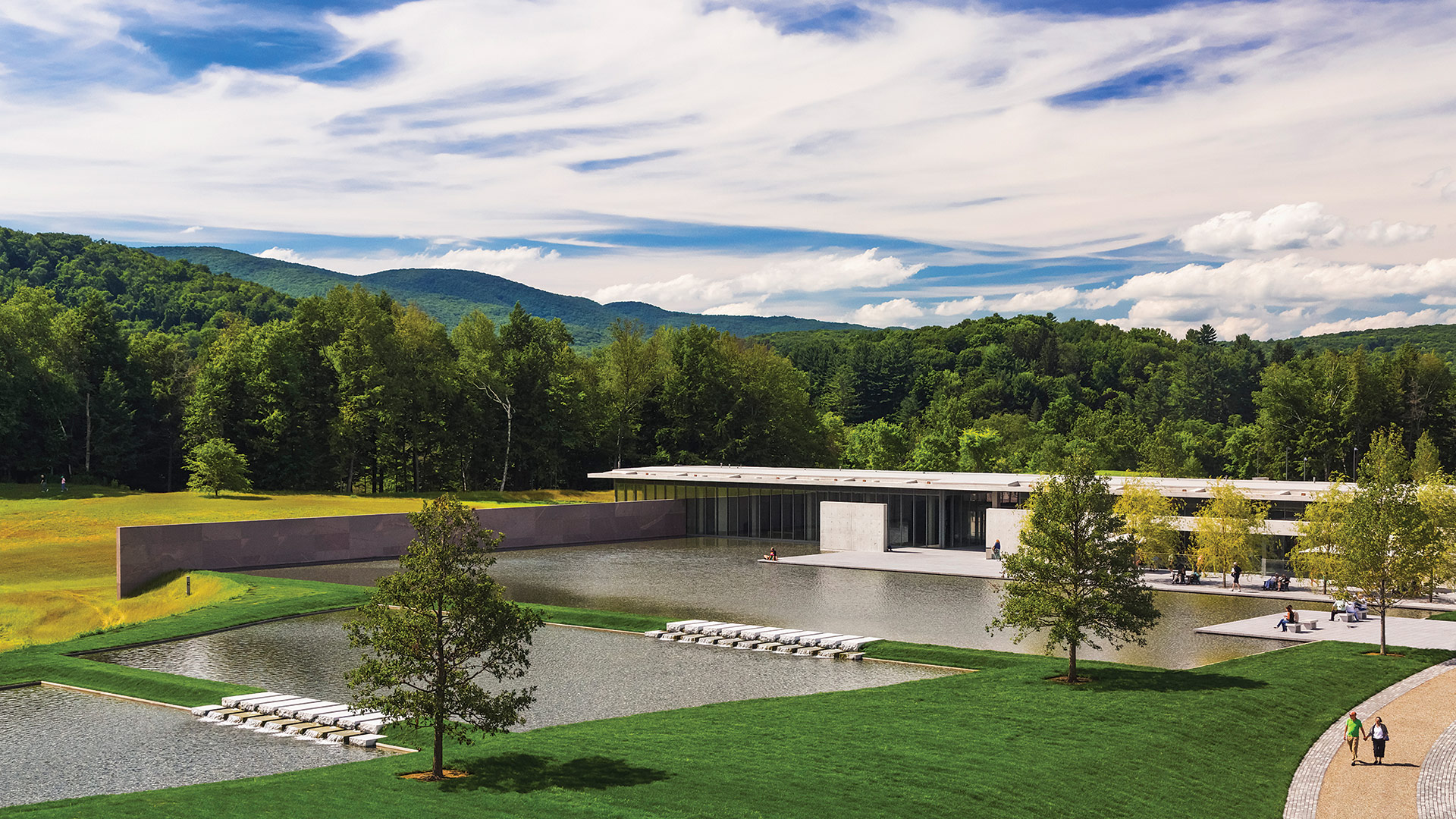
The Clark Art Institute

This Berkshires staple has exhibited patience and flexibility

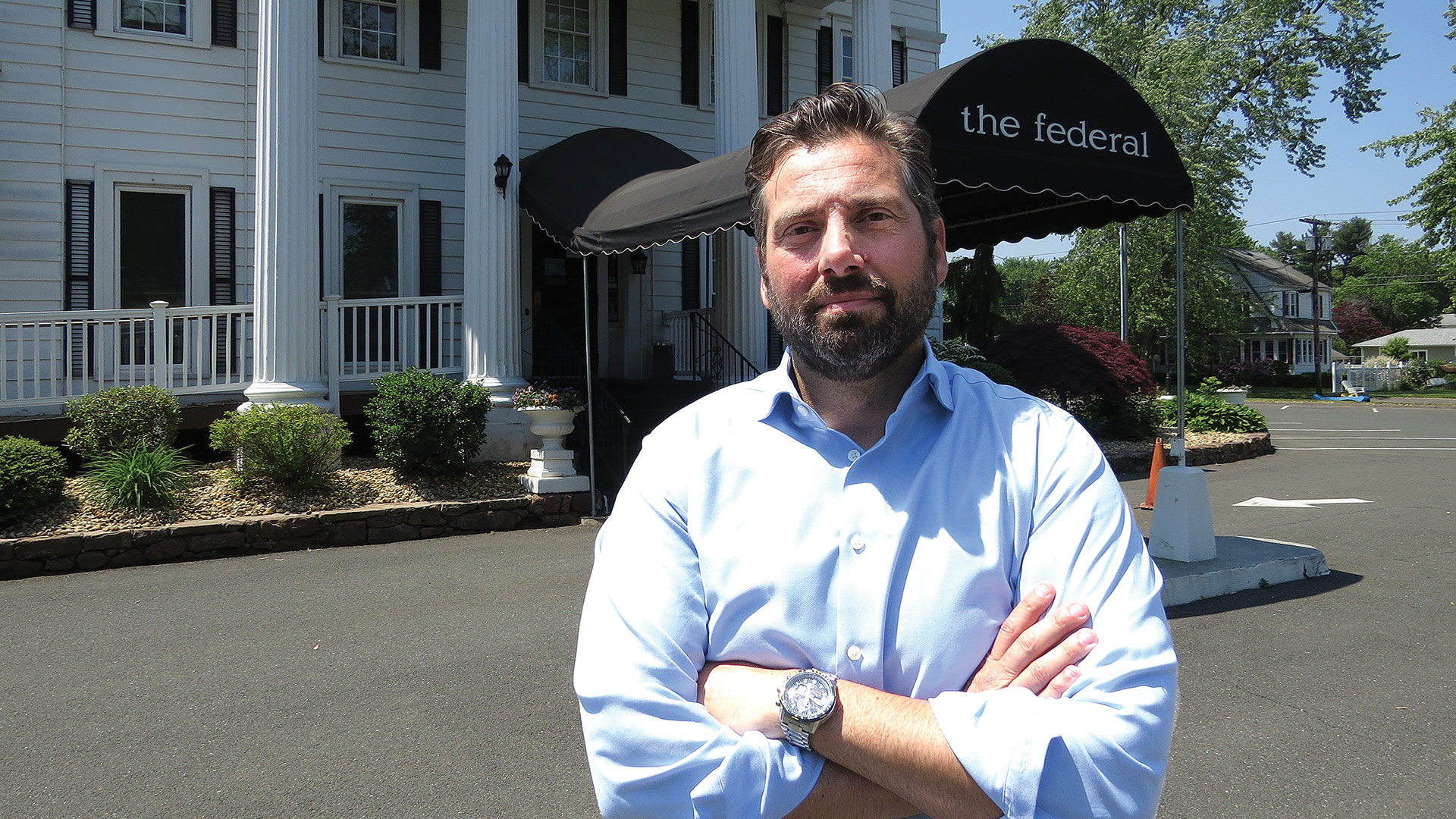
The Federal Restaurant Group

At these eateries, guests will determine pace of reopening


Opinion

Editorial

By George O’Brien


Andy Yee

Andy Yee

Andy Yee, who passed away late last month, was the true definition of a serial entrepreneur. Even though he had a number of businesses, especially restaurants within the Bean Group, he was always looking for that next challenge, that next opportunity.

He took on each project with an abundance of energy and enthusiasm that was as inspiring as it was contagious. And many of his undertakings were not just business ventures — they were game changers in our local communities, difficult yet successful efforts to save institutions such as the Student Prince in downtown Springfield and the White Hut in West Springfield from being relegated to the past tense.

In 2015, BusinessWest named Yee and several of his business partners, including Peter Pan Chairman and CEO Peter Picknelly and Kevin and Michael Vann, as Difference Makers for their efforts to save the Student Prince. And that title certainly fit him. He was a difference maker as a business owner and entrepreneur, as a family man, and as a leader in the community.

“He was a difference maker as a business owner and entrepreneur, as a family man, and as a leader in the community.”

The Student Prince was struggling when Yee and Picknelly stepped forward. Theirs was a business proposition, to be sure, but it was much more than that. It was an effort to save something that had become a part of the fabric of the city and of the region. It was more about community than it was about dollars and cents — although Yee, a very smart businessperson, was also focused on the dollars and cents as well.

The same was true with the White Hut in West Springfield — a different kind of restaurant, to be sure, but with a very similar brand of emotional attachment. Today, both establishments live on, and Yee is a huge reason why.

As a business writer who interviewed him dozens of times over the past two decades, I was always struck by how energetic he was, how hands-on he was in every endeavor he became involved with, and how he always had one eye on the present and the other on the future, trying to anticipate what was to come and be ready for it.

That is the essence of a leader, and that’s another word that fits Yee like a glove.

His latest endeavor is a restaurant project in Court Square in Springfield, another landmark that needed someone to step forward and give it a new direction, a new future. Yee was part of a large team doing just that.

We sincerely hope this project moves forward. It will be difficult without his leadership, his enthusiasm, and his ability to get the tough projects done. It will be a fitting tribute — yet another one — to how he had the ability to not only open a business, but change a community for the better — and make a huge difference.

He will be missed.

Features

Facility Gains Altitude After Pandemic-induced Declines

The addition of new flights from carriers

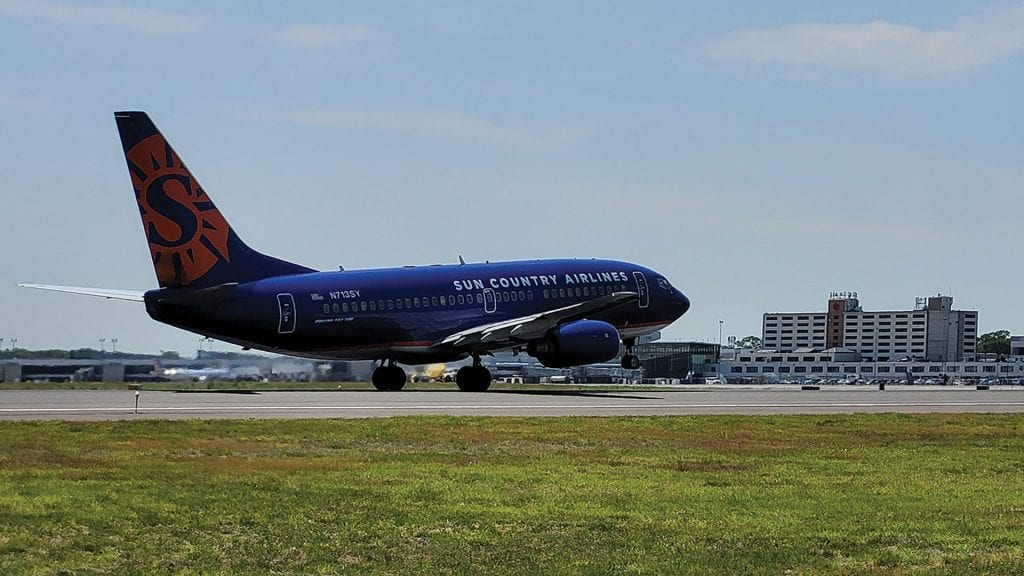
The addition of new flights from carriers Breeze Airways and Sun Country Airlines is one of many signs of progress and vibrancy at Bradley International Airport.

Kevin Dillon can see a number of signs of much-needed progress at Bradley International Airport, starting with the parking garage.

Until quite recently, it was all the parking the airport needed to handle not only the passenger volume at the facility, but all the employees as well. In fact, it was far more than enough. But over the past few months, things have started changing.

“Now, most days, we’re starting to fill the parking garage, and we opened up two additional surface lots — and that’s a good sign,” said Dillon, executive director of the Connecticut Airport Authority, adding that there are many others indicating that Bradley is gradually returning to pre-pandemic levels of vibrancy, including the restaurants and retail shops that are reopening their doors after being closed for months, new carriers introducing routes out of the airport, and, most important, climbing passenger totals.

“We’re pleased with the way the numbers are starting to roll out, although we still have a ways to go,” he said, noting that most all travel at present is leisure in nature. “At the beginning of the year, we were still down 60% compared to pre-pandemic levels; now, on any given day, we’re down 40% to 50% — it can shift any day. And it really does seem to correspond with the vaccine rollout here in the region. The more people got vaccinated, the more people started to fly. The more people start to fly, the more people see that, and they start to get a level of confidence.

“As we look toward the summer, we are expecting a very healthy summer travel period,” he went on. “What you’re starting to see in terms of some of these airline announcements and route announcements is a recognition on the part of the airlines, as well, that this recovery is well underway.”

Elaborating, he said it’s difficult to project where the airport will be by the end of the summer in terms of those passenger-volume numbers, but he believes that, if current trends continue (and most all signs point toward that eventuality), then Bradley might be down only about 25% from pre-pandemic levels — a big number, to be sure, but a vast improvement over the past 14 months.

Overall, a number of factors will determine when and to what extent Bradley fully recovers all it has lost to the pandemic, including everything from business travel to international flights.

Let’s start with the former, which, by Dillon’s estimates, accounts for roughly half the travel in and out of Bradley.

While some business travel has returned, the numbers are still way down from before the pandemic, he said, adding that the next several months could be critical when it comes to the question of when, and to what extent, business travel comes back.

He expects the numbers to start to improve once businesses set their own internal policies for when employees can return to the office and resume many of the patterns that saw wholesale changes after COVID-19 arrived in March 2020.

“If you still have people telecommuting for COVID purposes, what does that say to the employee about required business travel?” he asked, adding that there has to be a “reckoning” within the business community as to where it’s going with some of its pandemic-related policies.

“If you still have people telecommuting for COVID purposes, what does that say to the employee about required business travel?”

Dillon said there are two types of business travel. One involves businesses traveling to see customers, a tradition he expects will return once COVID-related fears subside. The other is inter-company travel, where a business sends an employee from one of its locations to a different one. It’s this kind of travel that seems most imperiled, if that’s the proper word, by teleconferencing, Zoom, and other forms of technology, and it’s this mode that will likely lag behind the other.

As for international flights, these, too, will be among the last aspects of the airport’s business to return to something approaching pre-COVID conditions, said Dillon, noting that Air Canada is severely limited by severe restrictions on travel to that country. Meanwhile, Aer Lingus, which initiated flights out of Bradley in 2016, is still ramping up after restrictions on overseas flights were lifted in the fall of 2020. Nothing has been confirmed, but he is anticipating a return of that carrier in the spring of 2022.

Meanwhile, getting back to those signs of life — and progress — that Dillon noted, some new additions to the list were added late last month in the form of two new carriers. Actually, one is new, the other is an existing freight and charter carrier expanding into passenger service.

The former is Salt Lake City-based Breeze Airways, the fifth airline startup founded by David Neeleman, which will launch non-stop flights out of Bradley this summer, including Charleston, Columbus, Norfolk, and Pittsburgh. The latter is Sun Country Airlines, which will be expanding its footprint at the airport with the introduction of passenger service to Minneapolis.

Dillon noted that several of those new destinations, and especially Charleston and Norfolk, are primarily leisure-travel spots, meaning they could get off to solid starts as Americans look to make up for lost time when it comes to getting away from it all.

Looking at the big picture, Dillon said decisions in Connecticut and Massachusetts to move up their ‘reopening’ dates and accelerate the return to a ‘new normal’ will only help Bradley gain altitude as it continues to climb back from what has been a dismal 14 months since the pandemic struck.


—George O’Brien

Features

This Berkshires Staple Has Exhibited Patience and Flexibility

The Clark, which now features exhibits

The Clark, which now features exhibits indoors and outdoors at its Williamstown campus, will take it slow as the state enters the ‘new normal’ and gradually increase capacity. Photo by of Jeff Goldberg coutesy of Clark Art Institute

Victoria Tanner Salzman says it was a complete coincidence that the Sterling and Francine Clark Art Institute’s first-ever outdoor exhibition opened just a few months after COVID-19 arrived in Western Mass.

It takes years of planning to bring such an exhibit to fruition, she explained, and that was certainly the case with Ground/work, a collection of eight works created by six international artists that are found in varied locations across the Clark’s sprawling, 140-acre campus in Williamstown.

“These installations are embedded in a landscape that is ever-changing — both daily and seasonally,” according to a description on the institute’s website. “Ground/work highlights the balance between fragility and resilience that both nature and the passage of time reveal, while offering fresh experiences with every visit.”

Tanner Salzman, the Clark’s director of Communications, noted that “this exhibit has given our visitors the opportunity to see art outdoors, indoors, or both. And we’ve gotten tremendous response from our visitors about the experience; you can wander our trails and walk through our meadow and come upon these pieces and hopefully enjoy them.”

The phenomenal timing of Ground/work has been one of the many factors that has enabled the Clark to more than weather what has been a protracted and quite challenging storm, said Tanner Salzman, adding that others include a host of virtual initiatives and limited visitation marked by strict adherence to COVID policies and best practices to keep visitors and staff safe at all times.

“We’re taking this as opportunity to put our toes in the water and begin to feel more acclimated to going back to the new normal, if you will.”

“At certain points over the past year, the governor’s orders increased capacity, but we chose, at those points, to remain at a lower capacity just out of concern for the comfort of our visitors and the safety of everyone,” she explained. “We’ve either been at the capacity level prescribed by the state or below it.”

And as the state moves up its timetable for fully reopening the economy and removing restrictions on businesses of all kinds, the Clark will continue to be diligent and err, if that’s even the right word, on the side of caution, she told BusinessWest.

“We are taking it slowly, but we will increase our capacity; our current operating capacity is permitted to be 50%, but we’ve chosen to operate at a lower capacity,” she explained, adding that the facility planned to increase to that 50% level on May 29. And moving forward, it plans to increase the numbers as the conditions permit. “We will adjust upwards as we feel it’s best for everyone to do so.

“We’re taking this as opportunity to put our toes in the water and begin to feel more acclimated to going back to the new normal, if you will,” she went on. “We’ll take a look at it on a weekly basis, and certainly our hope is to be in a position in the summer where we’ll hopefully bump it back up. But we have not made that decision yet.”

While watching and adjusting as the conditions permit, the Clark will apply some of the lessons it learned during the pandemic, said Tanner Salzman, echoing the sentiments of business owners and managers across virtually every sector of the economy.

And many of these lessons involve using technology to broaden the Clark’s audience and bring its collections and programs to people who might not otherwise make it to Williamstown.

“We were learning lessons every day throughout this, and I’m sure that some of the practices that we adopted during this period will find a carry-over life as we move forward,” she explained. “We are certainly looking very hard at virtual events and continuing them; we found great success in doing such events, and we recognize that it allows us to open our doors to people who cannot necessarily be here to walk through them for an event. Instead of just having people at a live event at the Clark, we’ve had people tuning in from all around the world, people regularly coming onto live Zoom calls from California, Florida, all over, so we will want to continue that.

“I think there’s a hybrid model out there that we settle into as we move forward,” she went on, adding that there was a very limited amount of virtual programming before COVID. “We’ve done all sorts of things over the past year-plus, from gallery tours to lectures; Q&A conversations with curators to podcasts. We’re enthusiastic about finding ways to adapt these virtual programs into the menu we offer on a regular basis.”

Looking back on 2020, Tanner Salzman said the opening of Ground/work was certainly slowed by COVID. Pieces were arriving from the around the world, she explained, and as borders were closing and studios were closing as well, the process of bringing those works to Williamstown became more complicated and time-consuming, with the exhibit taking shape over time.

“We had to be more flexible and a little more patient,” she said, adding that these qualities have served the Clark well in very aspect of coping with the pandemic and effectively serving art lovers from across the country and around the world.

And flexibility and patience will continue to be the watchwords as this institution continues through that phase known as the ‘new normal.’


—George O’Brien

Features

Downtown Mainstay Sees New Signs of Life, Anticipates Many More

Stacey Gravanis

Stacey Gravanis says the phones starting ringing seemingly within minutes after the governor announced the new timetable for the final stage of his reopening plan.


Stacey Gravanis doesn’t particularly like that phrase ‘new normal’ (and she’s certainly not alone in that opinion). She prefers ‘return to life’ to describe what’s happening at her business, the Sheraton Springfield, and the broad hospitality sector.

And that choice of phrase certainly speaks volumes about what’s been happening — or not happening, as the case may be — in the hotel industry over the past 14 months. In short, there haven’t been many signs of life, at least life as these facilities knew it before COVID-19.

“The bottom just fell out,” she said, for all categories of business for the hotel — corporate and leisure stays, events, conventions, visitors to the casino, weddings, even the business from the military and airlines (flight crews flying into Bradley staying overnight came to a screeching halt in mid-March 2020). And it would be months before any of that came back, and then it was mostly the airline and military business, said Gravanis.

“Our customers are reacting. I have said there’s not going to be this switch that flips, and the business is just going to come back. But it felt like that day, someone did flip a switch because the phones were going crazy. What we budgeted for June … we already have it on the books.”

“When it first started, we were tracking the loss on a weekly basis; we had a spread sheet that we would review,” she recalled. “And then we just stopped reviewing it, because everything, everything, canceled. Reviewing it was pointless; we were just focused on how to rebuild.”

That rebuilding process started over the last two quarters of 2020, she said, adding that, by May, occupancy reached 40%, 10% above what she actually budgeted, said Gravanis, who then provided needed perspective by noting that, in a ‘normal’ May, buffeted by college graduations and other events, occupancy reaches 90%.

She expects the numbers to continue climbing, and while she expected the timeline for fully reopening to be accelerated, and was preparing for that eventuality, the response from the public has been more immediate and more pronounced than she anticipated.

“Our customers are reacting,” she told BusinessWest. “I have said there’s not going to be this switch that flips, and the business is just going to come back. But it felt like that day, someone did flip a switch because the phones were going crazy. What we budgeted for June … we already have it on the books.”

On the other end of those phone calls have been clients across a broad spectrum, including everything from leisure travelers with newfound confidence to book rooms for this summer to those planning to participate in a recently announced three-on-three basketball tournament, to brides looking to bring more guests to weddings that were booked for this June and July.

“Some wanted to double their numbers,” she recalled. “We had a wedding for 175 people that’s now 250 people, booked for the end of June.”

The hotel can handle such developments, she said, but it requires staffing up, which is one of the question marks and challenges moving forward, said Gravanis, adding that another concerns just when — and to what extent — corporate travel, a large and important part of the portfolio at the Sheraton, returns.

“We’re seeing a slow, slow return of business travel,” she explained, adding that corporate gatherings are critical to the hotel’s success, accounting for perhaps 40% of overall group/convention business. “We have heard some encouraging news from some of our tower tenants [Monarch Place] that they will be starting to return in June. We knew it would be the last to come back.”

But will it return to pre-COVID levels?

“I feel that it will,” she said, offering a few questions, the answers to which are on the minds of everyone who relies on business travel. “Who’s not sick of being behind a screen? And are those Zoom meetings as productive as bringing everyone together and putting them in the same room?”

As for staffing, she said the Sheraton has benefited greatly from corporate direction to keep key personnel amid large-scale furloughs and layoffs, on the theory that it would be difficult to replace them. That theory certainly has validity, she said, and keeping those personnel has helped the hotel as it returns to life.

Still, the Sheraton, like most businesses in this sector, is struggling to find enough help to handle the new waves of business now arriving.

“You may have 25% of your interviews actually show up,” she said with a noticeable amount of frustration in her voice — because she handles the interviews. “The hiring crisis hasn’t really hurt us yet because we have such talented managers, and every employee who works for us can work in multiple disciplines — they’re all cross-trained; our front-desk people can also drive a shuttle and jump into laundry. That said, we’re struggling just like everyone else.”

She remains optimistic, though, that these struggles won’t interfere with this downtown landmark’s long-awaited return to life.


—George O’Brien

Features

The Basketball Hall of Fame


John Doleva

John Doleva stands in the new Kobe Bryant exhibit at the Basketball Hall of Fame, which is drawing considerable attention and is now one of many reasons for optimism at the shrine.


John Doleva says it was probably within minutes after Vanessa Bryant, widow of the NBA star and entrepreneur Kobe Bryant, posted an Instagram photo of her in the new exhibit at the Basketball Hall of Fame dedicated to Kobe — a photo that has garnered 17 million ‘likes’ — when the phone started ringing.

On the other end were people — from this region, but also across the country — who wanted to know more about the exhibit and how long it would be running.

“The phones been ringing off the hook,” said Doleva, the long-time president and CEO of the Hall. “We’ve had calls from all across the country, but especially from California, with people saying, ‘I want to come see it; don’t take it down.’”

Vanessa Bryant’s Instagram post, followed soon thereafter by an article on her visit to the Hall in Us Weekly magazine and the response to both, is one of many things going right for the Hall of Fame a year and change after everything — as in everything — started going wrong.

Indeed, at the start of 2020, the year was shaping up as potentially the best in the Hall’s history. A star-studded class, headlined by Bryant, Tim Duncan, and Kevin Garnett, was going to be inducted that September. Meanwhile, a series of major additions and renovations to the Hall were being completed, prompting expectations for a surge in visitation. A commemorative coin was slated to be launched, one that was projected to become a major fundraiser for the shrine. And plans were being finalized for a massive three-on-three basketball tournament, with the Hall as a major player — and drawing card for participating teams.

And then … it all went away.

The induction ceremonies, a major source of funding for the Hall, were pushed back several times, and eventually to last month, and moved to Mohegan Sun in Connecticut. The commemorative coin was scrapped, and the three-on-three tournament, dubbed Hooplandia, was scrubbed as well.

“The phones been ringing off the hook. We’ve had calls from all across the country, but especially from California, with people saying, ‘I want to come see it; don’t take it down.’”

As for the Hall’s renovation, COVID-19 actually provided an opportunity to slow down the pace of work and add two new attractions — the Kobe Bryant exhibit and another exhibit that allows visitors to virtually join the set with TNT’s NBA broadcast team, which includes Charles Barkley and Shaquille O’Neal, and read a few highlights.

In recent weeks, visitation to this new, more modern, more immersive Hall has been steadily increasing, said Doleva, who expects that pattern to continue, and for a number of reasons, ranging from Vanessa Bryant’s Instagram post to the fact that many people who might otherwise be heading to the Cape or Martha’s Vineyard this summer will be coming to Western Mass. for day trips because they can’t book rooms or cottages at those destinations.

“Our traffic right now is ahead of pre-pandemic, 2019 numbers, and our pre-bookings for upcoming weekends are excellent,” he noted. “On a normal Saturday in May, we would get 300 to 400 people; last Saturday (May 22), we had 660. School is not out yet, and yet we’re still seeing a few hundred on a weekday.

“Our projections are that this will be the best summer we’ve ever had; we’re going to be aggressive in our promotion of visitation — we didn’t invest $21 million to hope and pray people come,” he went on, adding that he’s expecting 100,000 visitors to visit this summer, a 30% to 40% increase over what has been typical over the years.

And the governor’s moving of the reopening date from Aug. 1 to May 29 will certainly help in this regard, he said, adding that June and especially July are key months for the shrine.

“We were anxiously awaiting the green flag — and now we’re ready to run,” he told BusinessWest, noting that, while some businesses were not fully ready for May 29, the Hall was, and especially grateful for gaining nine critical weeks.

Overall, Doleva believes 2021 will, in many respects, be the year that 2020 wasn’t for the Hall. There will actually be two induction ceremonies, with the class of 2021, headlined by former Celtics Paul Pearce and Bill Russell (to be honored as the first black coach in the NBA), to be celebrated in September at the MassMutual Center, as well as a return of collegiate basketball tournaments that benefit the Hall. Meanwhile, Doleva is also projecting a strong surge in corporate events and outings at the Hall as the business world gradually returns to something approaching normal.

He said the Hall boasts a number of amenities, including a theater with seating for several hundred and Center Court, which can seat more than 400 for a sit-down dinner and now includes a 14-by-40-foot video screen.

“We’re getting a lot of interest, a lot of calls,” he said, noting that a few banquet facilities closed due to COVID, and the Hall stands to benefit whenever the business community and other constituencies are ready and willing to gather in large numbers again.

Getting back to those calls from California and the Kobe Bryant exhibit, Doleva said the typical lifespan for such a display is at least three to five years, and perhaps longer. He joked that those at the Hall are telling those callers, ‘why don’t you buy your tickets today, and we’ll hold it until you come.’”

Enthusiasm for that exhibit is just one of many reasons why those at the Hall of Fame believe they can fully rebound from a year that saw a number of hard losses.


—George O’Brien

Features

Reopening Timeline Prompts Excitement, but Also Trepidation

Greathorse GM Bryan Smithwick

Greathorse GM Bryan Smithwick is optimistic about the last two quarters of 2021, but, like all those in the hospitality sector, he has real concerns about the process of staffing up.

Bryan Smithwick believes he’s like most business owners and managers in the broad hospitality sector when he says that the news of the accelerated timeline for fully reopening the state was greeted with a mix of excitement, anticipation, and trepidation.

The first two elements are a function of just how bad 2020 was — we’ll get to that in a minute — while the third is obviously a reflection of a labor market the likes of which even those businesses owners with several decades of experience have never seen before.

“It’s like … great, we got the green light to go ahead and reopen and start hosting large audiences,” said Smithwick, general manager of the Starting Gate at GreatHorse, the high-end private golf club in Hampden. “But the labor market is so challenging right now. It’s awesome that the deadline was moved up, and moved up so significantly, but I think businesses thought they would have more time to plan, more time to really get their employees re-engaged with work — those employees who had been laid off — and even find new employees.

“The time frame was greatly reduced,” he went on. “And in the post-COVID world — I think I can say we’re in the post-COVID world now — that’s the greatest challenge we face, finding employees and getting geared up. We’re going to execute well over 80 weddings in 2021, and finding staff that can meet the business levels and get prepared is something we’re really struggling with right now.”

Looking back on 2020, Smithwick said it was certainly a great year for the golf business.

Indeed, while play was up at the public and semi-public courses, the private clubs benefited as well, with individuals and families deciding that, if they couldn’t travel, they should invest in a country-club membership.

That was certainly true at GreatHorse, which opened in 2015.

“For people who had been contemplating private-club membership, COVID really was the stimulus that made people take a hard look at all that private clubs have to offer,” he noted. “The safe-haven effect, and the relevance of clubs, was certainly strengthened during that emotional time, and we saw tremendous growth in our membership at GreatHorse, and we’ve continued to see that into the first and second quarters of 2021; we’ve really grown that side of our business.”

Unfortunately, the same could not be said of the banquet and event side of the ledger, one that has become an all-important part of the portfolio at the club.

“It’s awesome that the deadline was moved up, and moved up so significantly, but I think businesses thought they would have more time to plan, more time to really get their employees re-engaged with work — those employees who had been laid off — and even find new employees.”

Pretty much every event that was on the books after March 2020 was canceled or, in the case of weddings, pushed back a year or two, said Smithwick, adding that it was a year of “emotional conversations” with clients (and especially brides), pivoting, and trying to make the most of an extremely difficult time.

“We were only able to execute about 15% of the weddings that we had planned in 2020,” he told BusinessWest. “We were able to salvage the overwhelming majority of our weddings and shift them into 2021 and some even into 2022, but, overall, it was a lost year for revenue on that side of the business.”

While the outlook for this year is gradually improving, the shifting of those weddings slated for 2020 consumed a number of the dates in 2021 — and some in 2022 — limiting the overall revenue potential of this year and next, said Smithwick, adding quickly that projections are for a solid balance of the year — even if most weddings will not increase in size in proportion with the loosening of COVID restrictions — and an especially strong fourth quarter, with the anticipated return of holiday parties.

“It’s nice to know that we will have an opportunity this year to secure some December revenue,” he noted. “Without holiday parties, December can really be a soft month.”

But while the general outlook is positive, some question marks remain concerning the ‘new normal’ and challenges when it comes to making a full recovery, especially in regard to staffing.

Returning to that subject, and speaking for everyone who shares his title or something approximating it, Smithwick repeatedly stressed that finding and retaining good help is the most pressing issue facing those in this sector, and one that has made this transition into the new normal exciting but also daunting on several levels.

Taking a deep dive into the matter, he said a number of factors influence this problem. That list includes veterans of this industry (servers, bartenders, even managers) simply leaving it for something else during a very difficult 2020, generous unemployment benefits that have made sitting on the sidelines even when jobs are available an attractive proposition, and difficulty with bringing on interns from overseas, something GreatHorse had done with great success prior to COVID.

“Traditionally, we would work with J1 students from South Africa to England,” he explained, referring to the visa program that offers cultural and exchange opportunities in this country through initiatives overseen by the U.S. State Department. “With COVID being a world pandemic, we have not had access to the students looking to do internships in the hospitality sector; we’re really hit a roadblock with every avenue we’ve chosen, from job fairs to working with local hospitality schools to putting referral bonuses in place for existing employees.

“It’s tough, really tough. I’m not going to lie — it’s the most suppressed labor market for hospitality that I’ve seen in my career,” Smithwick went on. “Our staffing levels are not where they need to be; we’re just not having much success finding servers and bartenders, which is the key for our business model here.”

That’s why an otherwise joyous and exciting time is also being met with a dose of trepidation on the side.


—George O’Brien

Features

After a Year to Forget, This Springfield Label Is Ready to Roar

Ray Berry, seen here at the canning line at White Lion’s downtown Springfield brewery

Ray Berry, seen here at the canning line at White Lion’s downtown Springfield brewery, is moving on from ‘cans to go’ to the next chapter in the story of this intriguing business venture.


He called the promotion ‘cans to go,’ which pretty much says it all.

Indeed, while he could brew his craft-beer label, White Lion, at his new facility on the ground floor in Tower Square, Ray Berry couldn’t sit any visitors at the attached pub because the facility wasn’t finished and painstakingly slow in its progress. But he could sell cans to go — and he did, quite a few of them, in fact — on Wednesdays and Saturdays from 2:30 to 7 p.m.

May 26 was the last of those Wednesdays, and the last day for the promotion. Berry was sad to see them go. Well … sort of, but not really.

He called a halt to cans to go so he could direct 100% of his energies into the next phase of the White Lion story, a chapter that has been delayed more than a full year by COVID-19 — the opening of that much-anticipated downtown brew pub and a resumption of outdoor events with the now familiar White Lion logo attached to them.

“We want to make sure all the I’s are dotted and T’s are crossed, take a pause, exhale, and made sure everything is in place for our June opening,” he said. “We want to be ready to really hit the ground running.”

As he talked with BusinessWest, Berry was checking the schedules of a number of prominent elected officials, trying to find a date when most of them could attend a ribbon-cutting for the opening of his downtown facility. That ceremony will be both a beginning and an end — a beginning, as we noted, of an exciting new chapter, and the end of 15 months of COVID-fueled frustration that didn’t derail White Lion, but struck at the absolute worst time for the brand born in 2014.

“COVID set us back a full year,” he said, adding that the owners of Tower Square, who also act as the general contractor for the buildout of his facility, had set May 2020 as the date for that project to turn the key and open for business. “We’ve been creative, and we’ve made a number of pivots along the way and diversified our portfolio, but the bottom line is we lost a full year and more.”

He said moving up the timetable for fully reopening the state will certainly help, giving him an additional 10 weeks of operating without restrictions that he wasn’t anticipating — although he was watching the situation closely and was hoping the date would be moved.

“We’ve been creative, and we’ve made a number of pivots along the way and diversified our portfolio, but the bottom line is we lost a full year and more.”

“We were already going to gear up for some sort of opening during the month of June,” he explained. “But we always wanted to be in a situation where any opening would be an unrestricted opening first, rather than a restricted opening, so we’re very happy to be in this new normal.”

Berry acknowledged that the office crowd that has helped make his outdoor events so successful — and will be one of his target groups for his Tower Square facility — hasn’t come back yet, may not return until the fall, and certainly may not be all that it was, sizewise, at the start of 2020. But he said that audience is just part of the success formula for this endeavor and that the ultimate goal is to bring people into downtown from outside it.

“We’ve never predicated our business model on one particular group,” he explained. “Craft breweries are destinations — they are considered experiences to the consumer. So consumers will take it upon themselves to find out where the local craft breweries are.

“Even when we had cans to go two days a week, we would have an influx of people from outside the area who would say they were driving through or were eating somewhere local downtown and looked up ‘local breweries,’ and White Lion popped up, so they came in.”

As for other aspects of the White Lion business, Berry said the beer garden that was a fixture in the park across Main Street from Tower Square will return in some form in 2021 — and at multiple locations. He’s currently in discussions with those running Springfield’s Business Improvement District and other business partners to schedule what he called “a series of special events that will encourage people to come out and support the local businesses in the downtown corridor.”

Overall, a dream that was years in the making took another full year to finally be fully realized. But, at long last, White Lion is ready to roar to life in downtown Springfield.


—George O’Brien

Features

At These Eateries, Guests Will Determine Pace of Reopening

Ralph Santaniello

Ralph Santaniello says his customers, and not the governor, will determine how quickly and how profoundly he increases capacity at the venues within the Federal Restaurant Group.

Ralph Santaniello says he’s read the language contained in Gov. Charlie Baker’s decision to bring the state into the final stage of his reopening plan at least a dozen times.

And each time, he came away with the conclusion that the phrase ‘no restrictions’ means … well, no restrictions.

“That means no more mask requirements, no more tables being six feet apart, no barriers, no restrictions on capacity,” said Santaniello, director of Operations for the Federal Restaurant Group, which includes the Federal in Agawam, Vinted in West Hartford, and Posto in Longmeadow.

But just because it’s there in black and white doesn’t mean this restaurant group has to go as far and especially as fast (the date for full reopening was moved from Aug. 1 to May 29, as everyone knows by now) as the governor says it can.

And it won’t.

Indeed, Santaniello — several times, in fact — said it will be customers, the buying public, and not the governor who ultimately determines the pace at which these restaurants work their way back to where they were in the winter of 2020, before COVID-19 reached Western Mass.

“We’re not just going to turn on the faucet right away and have everything back to normal day one — the guests are going to decide things,” he noted. “What we’ll probably do is eliminate the barriers and slowly introduce more seating so the guests get comfortable. We’ll start to ramp up and ease our way back and see how things go.”

For example, while the requirement that tables be six feet apart has been lifted, the three restaurants in the group won’t immediately turn back the clock on such spacing, and will likely start with tables four feet apart and gradually reduce that number, again, with the pace of change and distance set by the public and its perceived comfort level with the surroundings.

“We’re not just going to turn on the faucet right away and have everything back to normal day one — the guests are going to decide things.”

Overall, as his group ramps up in the wake of the reopening announcement, Santaniello is projecting a solid balance to 2021, although projecting numbers is somewhat difficult. He noted, for example, that last summer was very strong for the three restaurants, all of which had outdoor dining, and one reason was because far fewer people were able to vacation out of the area. This summer, more might be able to, but most spots on the Cape and elsewhere are sold out.

“If spring is any indication, our reservations are up — they’re up to even 2019 levels,” he said, adding that the calls for reservations and booking events started picking up several weeks ago as the number of COVID cases started declining and the number of people vaccinated kept increasing.

Santaniello is projecting a strong fourth quarter, which is traditionally the most important three months for most restaurants, and especially the one he was sitting in while talking with BusinessWest, the Federal in Agawam, located in an historic home built just before the Civil War.

It has become a popular gathering spot year-round, he said, but business peaks during the holidays, and he is expecting a hard run on dates in December for holiday parties, especially after most companies, and families, went without last year.

But the next several months will feature a number of challenges, said Santaniello, noting rising food prices and especially the ongoing labor shortages as the two most pressing items on the list. The latter is the one keeping most restaurateurs up at night, he noted, adding quickly that he’s certainly in that group counting sheep.

“Last year, I had employees I was trying to keep on the payroll and no customers; this year, it feels like I have a ton of customers and no employees,” he said. “A good percentage of our employees have not come back yet, or some have left the industry; some are not ready to come to work for any of a number of reasons. Everyone has to do what’s right for them.”

He noted that the problem will actually limit the amount of business he can take on for the foreseeable future.

“Last year, I had employees I was trying to keep on the payroll and no customers; this year, it feels like I have a ton of customers and no employees.”

Indeed, while the Federal has historically been open six nights a week (Sundays are reserved for events), it will go down to five and possibly to four (Wednesday through Saturday, with events on Sunday), in large part due to the staffing situation.

Overall, though, the outlook for 2021 is obviously much better than 2020, he said, adding that he’s optimistic that the employment situation will eventually stabilize, probably by the fall, and overall business, by most projections, will continue to improve as customers feel more comfortable with being indoors and around other people.

“I think we’re going to have a great summer, and it’s going to be an even better fourth quarter,” Santaniello said. “The second quarter is shaping out great, the third quarter will be good, and the fourth quarter and the holiday season will be really, really good.”


—George O’Brien

Daily News

Andy Yee, who passed away Thursday, was the true definition of a serial entrepreneur. Even though he had a number of businesses, especially restaurants, he was always looking for that next challenge, that next opportunity.

Andy Yee

Andy Yee, 1961-2021

And he took on each project with an abundance of energy and enthusiasm that was as inspiring as it was contagious. And many of his undertakings were not just business ventures — they were game changers in our local communities, difficult yet successful efforts to save institutions such as the Student Prince in Springfield and the White Hut in West Springfield from being relegated to the past tense.

In 2015, BusinessWest named Yee and several of his business partners, including Peter Pan Chairman and CEO Peter Picknelly and Kevin and Michael Vann, as Difference Makers for their efforts to save the Student Prince. And that title certainly suited him. He was a difference maker as a business owner and entrepreneur, as a family man, and as a leader in the community.

As a business writer who interviewed him dozens of times over the past two decades, I was always struck by how energetic he was, how hands-on he was in every endeavor he became involved with, and how he always had one eye on the present and the other on the future, trying to anticipate what was to come and be ready for it.

That is the essence of a leader, and that’s another word that fits Yee like a glove.

His latest endeavor is a restaurant project in Court Square in Springfield, another landmark that needed someone to step forward and give it a new direction, a new future. Yee was part of a large team doing just that.

We sincerely hope this project moves forward. It will be difficult without his leadership, his enthusiasm, and his ability to get the tough projects done. But when it’s complete, it will be a fitting tribute — yet another one — to how Andy Yee had the ability to not only open a business, but change a community for the better, and make a huge difference.

He will be missed.

Features Special Coverage

Relief, Joy … and Anxiety, Too


While it was not exactly unexpected news, in some quarters, at least, Gov. Charlie Baker’s recent announcement that he was accelerating the reopening of Massachusetts — shifting the date for removing most restrictions on businesses from Aug. 1 to May 29 and also removing most mask mandates — nonetheless sent shockwaves through the business community.

And for different reasons.

For tourism-related businesses, the announcement means they gain nine precious weeks during their peak time of the year to operate without the restrictions that have hamstrung them since March 2020. Everyone was looking longingly toward that time, but it comes sooner than most anticipated.

Indeed, for those businesses and many others, the announcement comes at a time when they’re struggling to find enough workers to handle the current pace of business, let alone the surge expected to come when the restrictions are lifted, adding another rather large dose of anxiety on that issue.

And, speaking of anxiety, for those businesses that were struggling with the challenge of when and how to fully reopen their offices and bring back employees who have been working remotely, the governor’s announcement brings more layers of intrigue to what were already-complicated decisions.

As for the lifting of the mask mandate — the governor and CDC have decided that vaccinated individuals no longer have to wear masks indoors or outdoors — it has created a whole new set of headaches for employers who already had enough to deal with, said Meredith Wise, president of the Employers Assoc. of the NorthEast, adding that faith in the honor system is not shared by many employers and employees alike.

Meredith Wise

“Things are very volatile in many respects. One of our members said, ‘we’ve gotten into a period where we’re intolerant of other people’s views and perspectives, and all this adds one more layer that can potentially cause a problem in the workplace.’”

“Things are very volatile in many respects,” she said, adding that differing opinions about whether vaccinated individuals should still wear masks in the workplace prompted a fistfight recently between two now-former employees of a company in Rhode Island, an EANE member. “One of our members said, ‘we’ve gotten into a period where we’re intolerant of other people’s views and perspectives, and all this adds one more layer that can potentially cause a problem in the workplace.’”

So it was certainly with a mix of emotions that the business community greeted the news that the state has finally reached the fourth stage of the reopening plan the governor announced almost exactly a year ago: what Baker calls the ‘new normal.’

There was definitely some joy and relief, especially in the beleaguered hospitality sector, said Rick Sullivan, president and CEO of the Western Massachusetts Economic Development Council, who predicted both a quick and profound impact on such businesses.

Rick Sullivan

Rick Sullivan

“All of our destination locations are going to see a pretty quick uptick in business; I think there’s a huge amount of pent-up demand in the travel and tourism industry for people to get away.”

“I know people are pretty excited about it,” he said, adding that he’s had discussions with many in the hospitality sector who were looking forward to the day when they could be at full capacity — and now it’s almost here. “All of our destination locations are going to see a pretty quick uptick in business; I think there’s a huge amount of pent-up demand in the travel and tourism industry for people to get away.

“I think people are really ready for some quality time,” he went on. “And that means travel and taking advantage of the venues we have here in Western Mass. for day trips.”

Nancy Creed, president of the Springfield Regional Chamber, agreed, noting that gaining those two all-important summer months will provide a much-needed lift for businesses in that sector.

“This is great for the hospitality sector — they really need those summer months,” she said, adding that the difference between May 29 and Aug. 1 for that sector is immense.

That said, the governor’s announcement is only the latest of many that have caught business owners and managers by surprise and left them somewhat flat-footed, with little time to adjust to changing conditions.

Nancy Creed

Nancy Creed

“Some people were a little shell-shocked with the announcement.”

“Some people were a little shell-shocked with the announcement,” said Creed, adding that this sentiment applies to everything from restaurants and tourist attractions ramping up for full capacity to business owners of all sizes now having to deal with questions on mask wearing, requiring vaccinations, bringing remote workers back to the office, and more.

Wise agreed. She said the announcement from the governor has left some wondering just what to do, especially when it comes to many of the precautions they’ve been taking for the past 14 months.

“There are definitely factions within management teams and organizations that are saying, ‘yay … let’s throw away all the masks and do away with all the social distancing and just get back to the way we used to operate,” said Wise, noting that EANE’s hotline has been flooded with calls on various aspects of the reopening plan and mask mandates. “But then there are concerns about whether people have been vaccinated or not. Do businesses put something out that says, ‘if you’re vaccinated, you don’t have to wear a mask?’ And if they do, will there then be peer pressure for people who haven’t been vaccinated to stop wearing a mask because they don’t want to stand out?”


Changing on the Fly — Again

Peter Rosskothen, owner of the Log Cabin Banquet & Meeting House, the Delaney House restaurant, and other hospitality-related businesses, has lived through a number of announcements from the governor and has become adept at changing on the fly. Still, this change is abrupt and huge in scale.

“This reversal is traumatic in some ways,” he said the day after the announcement came down. “Everything we’ve been doing for the last year and half is out the door in 10 days. Think of all the things we were doing … and now we’re just flipping a switch and going back to the old way, like with buffets. Now it’s suddenly OK to let people serve themselves? It just doesn’t seem right mentally.”

This change has him excited on some levels — he has a number of weddings booked for those two months, and now the bride and groom can invite more people to those ceremonies — but there is some apprehension as well, especially when it comes to the daunting task of staffing up for larger volumes of business.

“This reversal is traumatic in some ways. Everything we’ve been doing for the last year and half is out the door in 10 days.”

In no way is this remotely one of those proverbial good problems to have, he told BusinessWest, adding that businesses across the hospitality sector have been struggling mightily to not just hire people, but keep them for any length of time amid immense competition for good help.

“I’ve heard that there’s one restaurant that’s paying people $1,000 if they stay for three months,” he noted, adding that many others have resorted to sign-on bonuses and other types of incentives to get people in the door.

He hasn’t taken that step yet (he’s thinking about it), but he is increasing hourly wages, a step he believes will help but certainly not solve what has been a persistent problem made worse, in his opinion and that of many others, by generous unemployment benefits and an overall relaxing of rules requiring those out of work to look for employment. Meanwhile, he’s not sure how these soaring labor costs will impact his ability to do business.

“This labor shortage is going to radically increase our labor costs,” he explained. “We were ready for a minimum wage of $15, and we were planning on that in our pricing. But $15 is not good enough post-COVID.”

As for people who are employed, the governor’s decision to move up the timetable for fully reopening the state is, as noted, bringing fresh emphasis to a problem many employers were looking to deal with later, rather than sooner.

That problem is simply deciding who comes back, when, and under what circumstances. Wise told BusinessWest several weeks ago that many employers were struggling with this issue because employees had grown accustomed to working from home and many of them would prefer to keep on doing so, even as their managers would prefer they return.

Compromises in the form of hybrid schedules are one solution, said Wise, adding that the new timetable for fully reopening the state is creating a new sense of urgency among some employers, whether they like it or not.

“Organizations probably thought they had a few more months before they had to actually roll out any new policies and procedures regarding how and when they’re going to bring people back and whether they’re going to require them to come back full-time or work a hybrid schedule,” she told BusinessWest. “Now, with everything being lifted as of May 29, do they rush this, do they put it on steroids and get it going a lot faster, or do they still take their time and be more thoughtful and more planned?”

Knowing that business owners are uncertain about how to handle this situation, EANE is preparing to survey its members on this matter, said Wise, adding that the results will be eagerly awaited by those pressed to make decisions.

“Everyone wants to know what everyone else is doing,” she told BusinessWest. “They want to know how to compare and benchmark against everyone else.”

What happens in offices in Springfield, Northampton, and other communities will certainly play a role in how quickly and profoundly some businesses bounce back, said Sullivan, adding that he expects that aspect of the economy to emerge much more slowly than the tourism sector.

“The bounceback to the office work as it was before the pandemic is going to be slower than the travel and tourism industry because everyone is going to be careful and methodical when it comes to opening back up,” he explained, adding that it might be fall or a little sooner before most offices are back to something approaching pre-pandemic conditions. “There will still be a significant amount of mask wearing and social distancing, especially in a larger office setting, even with the relaxed CDC guidelines.”


Back to Normal?

In many respects, the governor’s announcement amounts to more pivoting, said Creed, adding that, by now, most businesses have gotten pretty good at it — a trend she expects to continue into the governor’s ‘new normal’ stage of reopening the state.

“If there’s one thing we’ve learned through all of this, it’s that we can absolutely can pivot, and we’re incredibly resilient and can adjust,” she said. “So now, we just have to adjust to slowly getting back to normal.”

Meanwhile, for Rosskothen, the acceleration of the state’s reopening plan means something else — getting back to doing business as he did before the pandemic.

“The exciting thing about this is that we’re going to be real managers again,” he told BusinessWest. “Instead of thinking about how we can get free money from the government, I’m 100% switching to becoming a manager — how do we manage this labor shortage? How do we motivate staff? How do we get staff ready so we can manage this influx of business that’s right around the corner?

“It’s real management again,” he went on. “No complaining about COVID or restrictions … it’s about work, and that’s a good thing.”

That’s just one of many good things to come from an announcement that brought a large helping of joy and relief, but with some anxiety on the side.


George O’Brien can be reached at [email protected]

Commercial Real Estate Special Coverage

Getting Down to Business

WestMass CEO Jeff Daley (left) and Sean O’Donnell (right), the agency’s Economic Development planner and leasing manager, with metal sculptor Kamil Peters, who relocated to Ludlow Mills last summer.

WestMass CEO Jeff Daley (left) and Sean O’Donnell (right), the agency’s Economic Development planner and leasing manager, with metal sculptor Kamil Peters, who relocated to Ludlow Mills last summer.

The primary role of the Westmass Area Development Corp. — as the agency recently stressed in a letter to area stakeholders — is to “to manage the entire economic-development process — from conception to completion.” How it performs that role is changing and expanding, however — not just in its portfolio of development and property reuse, including its industrial parks and the ever-intriguing Ludlow Mills project, but as a valuable consultant for businesses and communities with a vision.

The letters, 150 of them, went out earlier this month.

They were sent to mayors, economic-development leaders, and other officials in communities across the four counties of Western Mass., dozens of area cities and towns, and served as introductions, invitations, and reminders all at the same time.

Officials in those communities were and are being invited to take full advantage of the talent and resources available at Westmass Area Development Corp. — the not-for-profit economic and real-estate development firm established in 1960 by state-enabling legislation — to help with a wide range of projects, from urban-renewal plans to environmental permitting; from complex site-related issues to specialized tax incentives.

The reminder part? Well, Westmass has been offering this kind of assistance to area communities almost from the start, but under the leadership of Jeff Daley, who took the helm at the agency in the summer of 2019, consulting work has become a much larger part of the business plan for the agency, which is promoting such services more heavily — and in a number of ways.

Like with those those letters, which quickly get to the heart of the matter.

“Every community, no matter its size or complexity, requires an ongoing economic-development effort to ensure financial stability of that community,” it reads. “Ideally, through the public-private partnership process, commonly shared economic-development goals can be identified and ultimately achieved. The primary role of Westmass is to manage the entire economic-development process — from conception to completion — and [be] engaged throughout all stages.”

“Westmass has always had some foot in the consulting business, helping communities and developers. But given my background, what I want to bring to the table is really opening the door for businesses and communities with economic and real-estate development projects; we’re really ramping things up.”

There are already some good examples of how Westmass with worked with area communities to achieve stated goals, said Daly, citing assistance with managing grants that helped land the Green High Performance Computing Center in Holyoke and some similar assistance with bringing the Holyoke Community College MGM Culinary Arts Center to reality.

The goal moving forward is to add to the portfolio and become more of a contributing force when it comes to economic development and property reuse in the region.

“Westmass has always had some foot in the consulting business, helping communities and developers,” he explained. “But given my background, what I want to bring to the table is really opening the door for businesses and communities with economic and real-estate development projects; we’re really ramping things up.”

That background he mentioned includes his own private consulting firm, CJC Development Advisors, and a stint as director of the Westfield Redevelopment Authority, during which he worked on several projects in the city’s downtown. He is now part of a team that also includes Sara la Cour, vice president of Operations for Westmass, and Sean O’Donnell, Economic Development planner and leasing manager for the agency.

Nick Moran, founder of Iron Duke Brewing

Nick Moran, founder of Iron Duke Brewing, is expanding his operation at the Ludlow Mills, making the complex more of a destination.

Overall, this consulting arm is now one of three main prongs to the Westmass operation, with the others being industrial-park management — the agency oversees several parks, including facilities in Agawam, Chicopee, East Longmeadow, Hadley, and Westfield, most of which are fully leased — and redevelopment of the Ludlow Mills site, a 15-to 20-year project that Daly believes can serve as a model for what other communities can do with old mill buildings and complex brownfield sites.

The mill now boasts 30 tenants, including a senior housing complex, a rehabilitation hospital, and a host of smaller businesses, including several recent arrivals. That list includes Kamil Peters, a contemporary metal sculptor who relocated to the mill from Holyoke (more on him later); Westnet Inc., a medical-supplies distributor, which moved in earlier this year; and Herron Automation, a machinist and CNC operator.

It also includes a tenant that isn’t new but is intriguing nonetheless. That would be Iron Duke Brewery, which almost left the mill in the protracted legal battle over whether lease conditions were violated, but wound up staying and is now in an expansion mode, with work on a new beer garden slated to begin later this year.

For this issue and its focus on commercial real estate, BusinessWest takes an in-depth look at how Westmass intends to broaden its impact in the region by helping area cities and towns take complex projects off the drawing board and make them reality.


Not Run of the Mill

Returning to that letter sent out to area communities, it’s part of a larger effort on the part of those at Westmass to create more visibility for the agency, make its expertise and resources known to more municipal officials and developers, and, in general, tell its story. A move downtown, to offices in Monarch Place, is part of that initiative.

“We’ve certainly experienced enough in this now that we can go in and help cities and towns with buildings like this, whether they’re mills or old dilapidated structures; we can help them go in and see what can be done.”

Other components, part of a new multi-year strategic plan being reviewed by the Westmass board, include a revamped, far more modern website and more extensive use of social media, said Daly, adding that many in the region believe Westmass is only in the business of developing industrial parks. That’s a big part of the mission, he noted, but it’s not the whole story.

And he wants to write more chapters in the broad realm of consulting, where, he believes, there is considerable room for growth. That’s because of the wide range of experience the agency can bring to the table, including assistance to both communities and developers in many realms.

These include everything from business-improvement districts (la Cour ran the Amherst BID for many years) to district-improvement financing, one of Daly’s areas of expertise.

“When I started my own private business, it was a shot in the dark because I saw what communities didn’t have and what developers were missing,” he explained. “And it proved to be very successful very quickly. I’m taking the same passion I had for that kind of work in my private practice and rolling it into Westmass’ purview to help area communities, because that’s what we’re here to do — develop properties, help communities, and create jobs.”

Daly said Westmass is targeting all communities west of Worcester when it comes to its consulting arm. And while smaller communities without economic-development staffs can certainly benefit from such services, larger municipalities can as well, and some already have.

Kamil Peters is one of a number of new tenants at Ludlow Mills

Kamil Peters is one of a number of new tenants at Ludlow Mills that are giving the complex a different look and feel.

The full list of areas for which Westmass can assist developers and municipalities also includes strategic planning for integrated project permitting, project financing and incentives, public procurement and grant management, and site acquisition and redevelopment of historic buildings, greenfields, and brownfields.

That last category brings us back to Ludlow Mills, which encompasses all three of those types of property. It is certainly historic — the mills played a huge role in the growth and development of Ludlow, and there is a large mix of brownfields and greenfields being redeveloped.

And with its experience in redeveloping the mill complex, Westmass has established itself as a leader of sorts in this kind of large, very complex redevelopment.

“This is the biggest mill in the region, and it’s very time-consuming and capital-intensive,” he noted. “But we’ve certainly experienced enough in this now that we can go in and help cities and towns with buildings like this, whether they’re mills or old dilapidated structures; we can help them go in and see what can be done.”

Often with such projects, environmental issues are a key consideration — and a major stumbling block, he went on, adding that this was certainly the case with Ludlow Mills. Over the past 11 years, Westmass has applied for and received several million dollars worth of grants from the Environmental Protection Agency (EPA) and the state to clean the site and make it ready for redevelopment.

The latest EPA grant, totaling $461,000 (word of approval was just received), will enable Westmass to clean 10 buildings on the site with roofs loaded with asbestos, preparing them for eventual demolition and redevelopment of five to six acres of property.

“It was a competitive and comprehensive program that we applied for,” said Daly, “and we’re grateful to the EPA to get selected for exactly what we asked for.”

The property in question, just south of the Ludlow Senior Center, includes several of the stockhouses that populate the site. Some may remain standing, said Daly, but the ‘clean dirt’ that will result from demolition of those deemed unsavable will give Westmass a real opportunity to add to its eclectic mix of tenants in the mill complex.

“I was in Holyoke for 10 years. My space was starting to close in on me a little bit. I was invited to take a look here and found it had ample power, the price was reasonable, and there were already things going on here, like Iron Duke. I decided I wanted to be part of it.”

That tenant base has evolved over the years, said O’Donnell, and now includes a number of storage-related ventures, several light manufacturers, the brewery, a battery sales and servicing company, the senior housing complex, and even a wholesale florist.

Then, there’s Peters, who has transformed one of the high-ceilinged stockhouses into a new studio. On the day BusinessWest visited, he was working on a number of wooden benches (he does woodworking as well) for a new client that is transforming what was the late actor Christopher Reeves’ estate in the Berkshires into a mix of Airbnb and event space. He was also doing some work for Harold Grinspoon, one of BusinessWest’s recently honored Difference Makers, who is, in addition to being a successful business owner and philanthropist, a prolific sculptor.

Known for his metal masks, Peters said he found Ludlow Mills at the suggestion of a few friends and colleagues who thought the space would provide him space to work — and grow.

“I was in Holyoke for 10 years,” he noted. “My space was starting to close in on me a little bit. I was invited to take a look here and found it had ample power, the price was reasonable, and there were already things going on here, like Iron Duke. I decided I wanted to be part of it.”

The plan moving forward is to make the mill more of destination, which could attract many different kinds of businesses, said Daly, adding that, as noted, this is both a brownfields project — redevelopment of the old mill buildings — and greenfields, specifically 37 acres of undeveloped land which is drawing considerable interest and will certainly attract much more when a private road to that property, one of many priorities for Westmass at this site, is constructed.

Meanwhile, a $7 million project to construct a public road along the Chicopee River, which will create frontage for several properties, should also put the mill property on more radar screens.

Overall, the evolving mix of tenants is “changing the dynamic” at the mill complex, said Daly, adding that, with the beer garden and tenants like Peters, who has a goal to create an artists’ gallery in his space, the mill does become a destination.

“Businesses like this are bringing people here after work, on weekends … it’s not just a 7-to-3 manufacturing facility anymore,” he told BusinessWest. “It’s driving a different economy of scale with who comes here and the money they’re spending. It’s a neat concept that we’ve stumbled into, if you will.”


Bottom Line

It’s the kind of concept that Westmass would like to help other area communities stumble into.

With those letters that went out earlier this month, as well as other initiatives undertaken recently to improve its visibility, Westmass is not exactly broadening its mission, but rather putting more emphasis on what could be called another ‘growth area’ for the agency.

It’s all part of a larger strategic plan aimed at making an agency that has been a driving force in economic development in this region an even more powerful engine.


George O’Brien can be reached at [email protected]
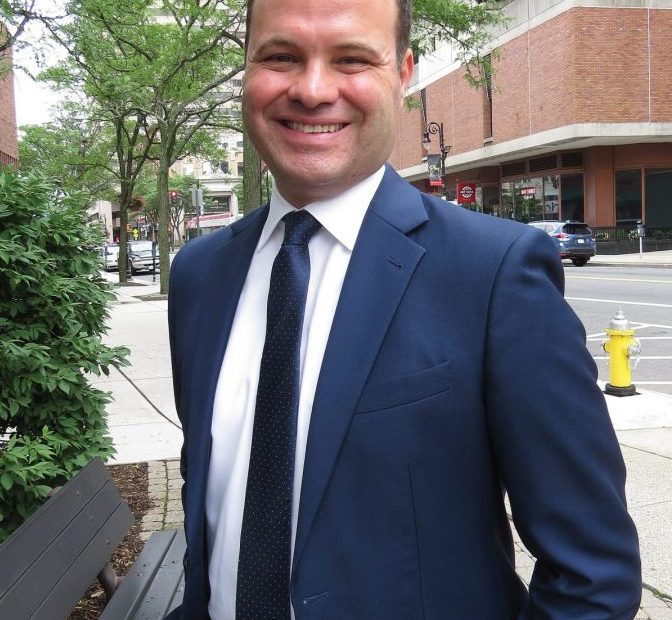
Nonprofit Management

Taking Things to a Higher Gear

Bob Charland

Bob Charland


While providing BusinessWest a tour of the facilities that were once home to the makers of Absorbine Jr., Bob Charland stopped at the top of the stairs leading to the huge basement.

“You want to see what 2,000 bikes looks like … there you go,” he said, gesturing with his hand toward a room absolutely crammed with bicycles of every color, size, and shape imaginable. “And that’s just a fraction of what we have here.”

Indeed, on the other side of a wall that divides the basement are probably another 1,000 bikes, he said, adding that more are stored in a facility in Palmer and still more in a trailer. Meanwhile, in other parts of the massive home for the nonprofit known as Pedal Thru Youth, several hundred bikes are in various stages of being ready for delivery to various constituencies, including 200 that are ready for delivery to working homeless individuals in Hartford.

These rooms filled with bikes go a long way toward telling the story of this unique individual known to most as simply “the Bike Man” and the nonprofit he created four years ago. But there is much more to that story as well, as his tour makes clear.

“There’s nothing in the stores; I was in a bike shop the other day, and there were maybe four bikes there, and these were the high-end models that sell for a few thousand dollars.”

There are also large supplies of clothes for the needy here, as well as backpacks filled with health supplies bound for the homeless, wheelchairs being retrofitted, and bicycles customized for those with special needs.

There’s also a bedroom that Charland adjourns to when he’s working very late (which happens often) and is simply too tired to drive home — which happens “once in a while.”

Collectively, the stops on the tour tell of the mission and the inestimable energy and passion that Charland brings to his work, which has certainly evolved since he launched Pedal Thru Youth and evolved even further in the wake of the pandemic.


Changing Lanes

Indeed, when COVID-19 shut down schools (to which this agency provides a large number of bikes), the economy in general, and non-essential businesses and nonprofits, Charland shifted to making cloth masks and distributing them to police departments and other destinations.

“I was bored,” he said when recalling those first few weeks after COVID arrived. “I know how to sew, so I started sewing face masks at home with my stepson. We then started putting the masks, hand sanitizer, and gloves in backpacks and handing them out to police departments, because those departments certainly weren’t ready for COVID — they didn’t have enough supplies.”

Just some of the thousands of bikes waiting to be repaired and prepared for delivery to children

Just some of the thousands of bikes waiting to be repaired and prepared for delivery to children, veterans, and other constituencies at the headquarters for Pedal Thru Youth in Springfield.

The story went viral on social media, and People magazine published a piece that caught the attention of Samsonite, which sent Charland some industrial sewing machines, fabric, and elastic so he could ramp up production of masks.

“We ended up having nine sewing machines out in the community,” he said, adding that he soon had more than 100 masks coming his way each day that he started distributing to senior centers, nursing homes, and a host of police departments.

Because of that initiative, Charland’s agency was deemed essential. And soon, most of the focus was back on bikes and other, more traditional aspects of its mission. But there was some pivoting as well.

With schools closed, many of the donations of bicycles shifted to the homeless and veterans groups, he noted, adding that he also teamed up with the Massachusetts Military Support Foundation to bring food to veterans’ organizations.

Getting back to bicycles … this is still the primary mission of Pedal Thru Youth, and the work of repairing and readying those thousands of bikes that have been donated or collected by police departments, public-works employees, and others has gone on throughout the pandemic.

The donations have mostly been much smaller in scale — again, because most schools remain closed or not open to the public — but Charland has improvised.

“There’s nothing in the stores; I was in a bike shop the other day, and there were maybe four bikes there, and these were the high-end models that sell for a few thousand dollars.”

“We did a very large donation of bikes, 169 of them, to West Springfield, but, because the schools were closed, we had to go house to house to deliver the bikes to individual families,” he said, adding that now, as the pandemic is easing, there is greater demand and an even a greater sense of urgency — if that’s possible.

That’s because bicycles — and bicycle parts — are now firmly on the growing list of items that are in demand, but also short supply. As in very short. During COVID, with children out of school, demand for bikes soared, Charland explained, adding that manufacturers have struggled mightily to build inventory amid supply-chain issues.

“There’s nothing in the stores; I was in a bike shop the other day, and there were maybe four bikes there, and these were the high-end models that sell for a few thousand dollars,” he said, adding that this dynamic is generating more individual requests for bikes from families and nonprofits in need.

Pedal Thru Youth is better equipped to handle larger requests and bulk deliveries of a few dozen or a few hundred bicycles, but, out of necessity, it has adjusted, as with those deliveries to West Springfield families. Overall, he meets roughly 90% of the individual requests for bicycles.

He tries to meet this demand not all by myself, but pretty close.

He has some help from some volunteers, including a few individuals involved in the program called Roca, which strives to end recidivism and return offenders to society through job placement and other initiatives. They assist with basic repairs to bicycles — Charland handles the more difficult work — and getting them ready for transport.

On average, he and his volunteers will get roughly 20 bikes ready for the road each day, said Charland, adding that many of the donated bikes are in decent shape, and those needing considerable work are often stripped down for parts.

In addition to traditional bicycles, requests are soaring for bikes for children with special needs. And they come from not only Western Mass., but across the country. Charland had a few ready to go out the door on the day BusinessWest visited, but there are roughly 90 requests for such bikes on his desk.


Pedaling On

Meanwhile, as he goes about meeting these requests, he battles a number of health issues, most recently three hernias, and shoulder and kidney issues that now keep him from working for a living and waging legal battles for workers’ comp. This is addition to a head injury that has long impacted his quality of life.

He said he soldiers on because of the satisfaction he gets from his various efforts, especially the delivery of a bicycle — and a helmet, water bottle, and first-aid kit — to a child in need.

“I love what I do,” he said simply. “This is a lot of fun, and to see the look on the kids’ faces … that’s what drives me.”


George O’Brien can be reached at [email protected]
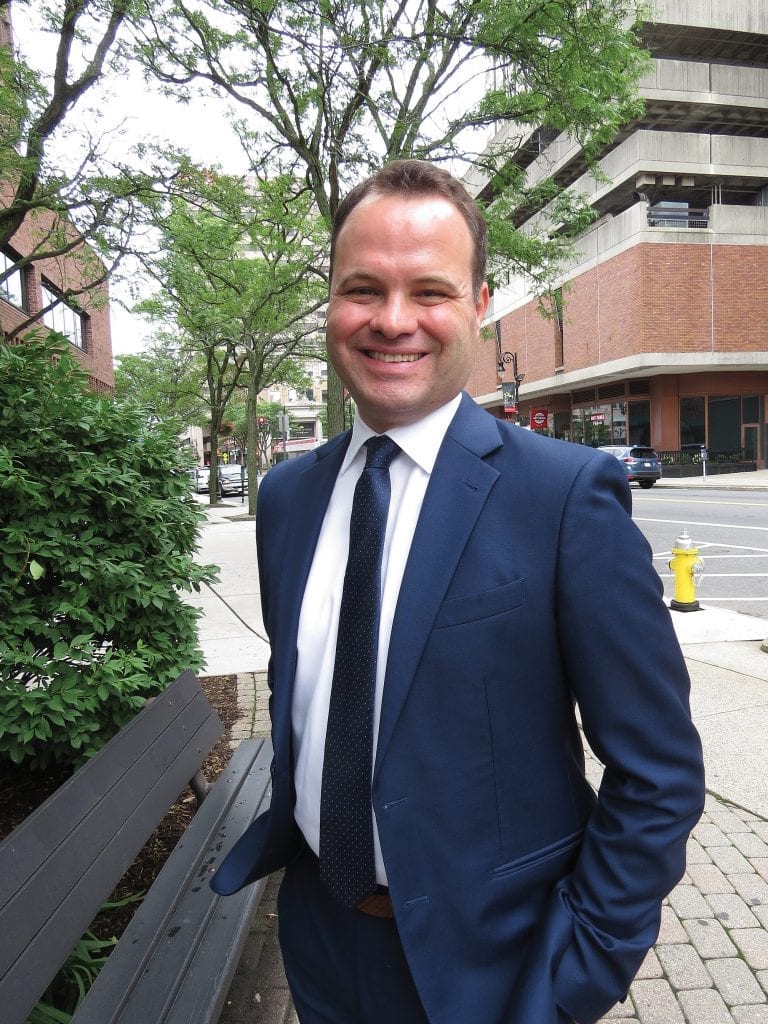
Features Special Coverage

Generating Results

Holyoke G&E Manager Jim Lavelle

Holyoke G&E Manager Jim Lavelle at the hydroelectric facility at the Hadley Falls Dam.

Holyoke Gas & Electric was recently recognized among a handful of utilities nationwide for its leadership in transforming to a carbon-free energy system. That designation, from the Smart Electric Power Alliance, underscores a green-energy mindset at the municipal utility that is not only earth-friendly, but a powerful force when it comes to economic development in the Paper City.

Jim Lavelle acknowledged that Holyoke Gas & Electric (HG&E) has some decided advantages when it comes to clean energy and reducing its carbon footprint.

Take, for example, the hydroelectric facility at the Hadley Falls Dam on the Connecticut River, capable of generating 33 megawatts of electricity, as well as some smaller hydro units located throughout the Holyoke canal system that produce another 15 megawatts — clean-power generation that is beyond the means of many utilities, especially municipal operations.

“We’re extremely fortunate that we have this infrastructure at our disposal — 50 megawatts of hydro in our backyard,” said Lavelle, general manager of HG&E. “It’s a tremendous asset that we try to take full advantage of.”

But HG&E’s commitment to a carbon-free energy system goes well beyond the hydroelectric facility. Indeed, it also includes early adoption of utility-grade solar power (20 megawatts in all), punctuated by the Mount Tom Solar & Energy Storage System. That facility, built near the site of a former fossil-fuel plant, is a large, utility-scale battery and the second such system to be installed in the state, drawing power directly from the solar farm, the largest community solar project in the Commonwealth.

“We’re extremely fortunate that we have this infrastructure at our disposal — 50 megawatts of hydro in our backyard. It’s a tremendous asset that we try to take full advantage of.”

That commitment also includes a diverse power-supply portfolio that includes hydro, solar, nuclear, and wind, as well as efficiency and conservation programs and development of emerging clean-energy technologies, all of which have the utility well-positioned to meet the state’s net-zero target by 2050 (established in the recent clean-energy bill), as well as incremental benchmarks for 2030 (50% below 1990’s emissions levels) and 2040 (75% below).

But long before these mandates and net-zero targets were put in place, HG&E was taking full advantage of its assets, especially those in the clean-energy category, and promoting what it called “cost-competitive clean energy.”

The Massachusetts Green High Performance Computing Center

The Massachusetts Green High Performance Computing Center is located in Holyoke, in large part, because of the low-cost, green energy available there.

This track record, coupled with many recent initiatives, has earned HG&E recognition among a handful of utilities nationwide for its leadership in transforming to a carbon-free energy system by the Smart Electric Power Alliance (SEPA) and a spot on the 2021 Utility Transformation Leaderboard. There, it joins just nine other utilities, all of them much larger, including Southern California Edison, Green Mountain Power in Vermont, and Consolidated Edison of New York.

While Lavelle is clearly proud of the award, what it means, and what it says about his utility, he is focused as much on what it — and all of the utility’s efforts toward clean, modern energy — mean for Holyoke. Indeed, the municipal utility and its lower-cost energy have always been selling points and economic-development engines, he said, but they become even more so as the energy becomes cleaner and greener.

“We have a ‘green team’ here that does a lot of our advanced planning on carbon-footprint management, but we also have everyone involved in some way, shape, or form in this effort. Our team is really engaged, and it’s good to see how passionate people are about working toward this objective and how creative they are.”

This was in evidence with the Massachusetts Green High Performance Computing Center, which is based in Holyoke, in large part, because of the availability of vast amounts of clean, lower-cost energy, said Lavelle, adding that these factors also played sizable roles in bringing two huge cannabis-production facilities to the city, with more on the way. And as companies of all kinds look to reduce their carbon footprints, embrace clean energy, and perhaps escape the high lease rates of major urban areas, HG&E and its drive to a carbon-free energy system could bring more businesses to the Paper City.

But while the utility has made great progress in the broad realm of clean energy, it acknowledges there will be stern challenges as it continues down this road.

“With this climate bill … if everyone’s going to convert their gas and oil and propane — their inefficient systems — to cleaner electric systems, that’s going to put a huge demand on our electric capacity,” Lavelle said. “So what we’re forecasting is that we could potentially see a tripling of our electric kilowatt-hour sales by 2050, depending on how we navigate from here to there.

“And even today, we’re seeing that, in certain neighborhoods, all it takes is one resident to put in an electric vehicle, and it taxes the transformer that’s serving that neighborhood,” he went on, adding that upgrading these transformers, built for a different time, will be just one of the many tests awaiting a utility that is committed to being ready for whatever the future brings. And that’s another reason why it’s one of just 10 utilities on SEPA’s short list.

The Mount Tom Solar facility

The Mount Tom Solar facility is the largest community solar project in the Commonwealth.

For this issue, BusinessWest takes an in-depth look at Holyoke G&E’s ongoing efforts — and true leadership — with regard to clean-energy transformation, what it means for a city looking to make history of a different kind, and what the road to hitting the state’s benchmarks might look like.


Scaling Up

As he gave BusinessWest a tour of the Hadley Falls Dam facility, which has been powering businesses for more than 150 years, Lavelle talked at length about what else goes on there.

Indeed, this is the site of the Robert E. Barrett Fishway, and the fishlift there helps migrating fish over the dam. In a normal spring, the facility would be visited by dozens of school classes on field trips — and other visitors — who can watch American shad, sea lamprey, sturgeon, and (hopefully) a few Atlantic salmon make their way through the lift and over the dam to resume their journey north. This is not a normal spring, however, and the fishway is closed due to COVID-19.

The work of ferrying fish over the dam continues, however, as does the work of producing electricity at the twin turbines, production that, as noted, is just one of the reasons HG&E finds itself among those utilities identified by SEPA as taking the lead in transforming to a carbon-free energy system.

As it went about completing its report on the state of clean-energy transformation and identifying utilities now on its leaderboard, SEPA listed what it calls the “four dimensions of utility transformation” — clean-energy resources, corporate leadership, modern grid enablement, and allied actions and engagement.

As he talked about his utilities efforts, Lavelle touched on all these elements, starting with those clean-energy resources.

HG&E now has many of them, he said, listing the dam, the Mount Tom Solar and Energy Storage System, and others, which, together, create a diverse, increasingly clean power-supply portfolio.

Beyond this portfolio is a mindset to embrace clean energy, efficiency, conservation, and planning for tomorrow, a mindset that has existed for many years now, long before the state started setting net-zero goals.

“We have a ‘green team’ here that does a lot of our advanced planning on carbon-footprint management, but we also have everyone involved in some way, shape, or form in this effort,” Lavelle noted. “Our team is really engaged, and it’s good to see how passionate people are about working toward this objective and how creative they are.”

The latest example of this passion and creativity is the Mount Tom Energy Storage System. Operated by ENGIE Storage (formerly Green Charge Networks), it is designed to keep electric rates stable by reducing rising demand-based charges for HG&E and its customers by storing energy needed to reduce peak loads — in a clean, environmentally friendly manner.

“Two of the highest-cost elements in our energy ledger are capacity and transmission costs,” said Jonathon Zwirko, HG&E’s project engineer and Energy Resources coordinator. “By timing things properly and discharging the batteries at the right time, we’re able to save on both capacity and transmission costs.”

Through the use of this battery system, which can store 6 megawatt hours of energy at a rate of up to 3 megawatts per hour, the utility can save 2% to 2.5% on its total energy costs annually, a number that will go higher when a second, larger battery facility, this one on Water Street, goes online later this month.

Jim Lavelle at HG&E’s energy-storage system

Jim Lavelle at HG&E’s energy-storage system, the second such system to be installed in the state.

The solar facility and energy-storage facility are just a few components of a diverse clean-power portfolio that, as noted, also includes hydro, wind, and nuclear, a portfolio that gives the utility flexibility and the ability to offer competitive rates, Lavelle said.

As noted, this powerful combination has helped bring some businesses to Holyoke that might not otherwise have considered that zip code.

That’s especially true of the cannabis businesses, including large manufacturers, that have, well, put down roots in the city. They’ve been drawn by the hundreds of thousands of square feet of available mill space, said Zwirko, but even more important to them is the large amounts of green, comparatively cheap electricity needed for all elements of the operations, but especially the lights that enable plants to grow.

Green Thumb Industries is currently operating a plant on Appleton Street that consumes roughly 1.5 megawatts of electricity, said Zwirko, noting that Trulieve, which recently moved into the old Conklin Furniture complex just a few hundred yards from the Hadley Falls Dam, will, when operating at peak capacity, consume 4 megawatts. By contrast, Holyoke Medical Center and Holyoke Community College each consume roughly a half-megawatt.

“If we see a tripling of our load, and that power has to come from carbon-free sources, that will be a real challenge. Different camps think offshore wind will fill in a lot of the gaps, but if we’re going to see a tripling of load, every other utility is going to see a tripling of load, so there will be a huge demand.”

So these are huge users of electricity, he went on, adding quickly that HG&E can handle several more of these facilities.

“There are about 10 others that have received licenses and are in the process of construction,” he said, “and we probably have another handful that are knocking on our door, with that 5-megawatt request — each — which we’re prepared to handle.”

Lavelle agreed.

“Part of our strategy with our local grid has been anticipating this growth,” he told BusinessWest, adding that, starting with the computing center, which consumes roughly 4 megawatts, the city has anticipated that it’s blend of clean, inexpensive power would attract more large-scale users. “We weren’t anticipating the cannabis industry at that time, but were targeting and anticipating data-related loads.

The hydroelectric faciliity at the Hadley Falls Dam

The hydroelectric faciliity at the Hadley Falls Dam is just one of HG&E’s many assets when it comes to green energy.

“We’d like to see more people, more jobs, tied to these developments, and while we haven’t seen that on the data side, we’re seeing it on the cannabis side,” he went on, adding that, with improvements made to the system, the city and its utility can accommodate another 15 or 20 megawatts worth of cannabis-related businesses.


Watt’s Happening?

While the utility is well-positioned to handle the needs of the present — and the addition of several more cannabis-related businesses — the future, as noted, is dotted with question marks, especially when it comes to what’s becoming known as ‘electrification’ — of cars and many other things

“If we see a tripling of our load, and that power has to come from carbon-free sources, that will be a real challenge,” Lavelle said. “Different camps think offshore wind will fill in a lot of the gaps, but if we’re going to see a tripling of our load, every other utility is going to see a tripling of load, so there will be a huge demand.”

In the face of these seemingly inevitable surges in demand, utilities, including HG&E, will have to put an even greater emphasis on energy efficiency, conservation, and education to stem the tide, he went on.

“We’re going to have to do those things so we don’t see a tripling of load,” he said. “Can we mitigate, or offset, that growth through energy efficiency and energy conservation and educate people on how to use less energy? We’ll have to. We’ll need to educate people about how to charge their electric vehicles at the right time — at night, right now — at off-peak times.”

Elaborating, he said there will likely be more of what he called “behavioral incentives” that are already being used to change attitudes about clean energy and reduce surges in demand.

Summing up HG&E’s efforts toward transforming its energy system, Lavelle channeled Kermit the Frog by implying strongly that it’s not easy being green. In fact, it’s quite challenging.

But it’s necessary, and for many reasons. The state is demanding it, and, increasingly, customers, both residential and commercial, are demanding it as well.

Well before these demands became loud in nature, HG&E was committed to exploring and implementing strategies to make its power portfolio cleaner and more earth-friendly, knowing they would pay off, not with awards and accolades (although those have come, too) but in cost reductions and opportunities for the city to grow and attract new businesses.

These investments are certainly starting to pay off, and as they do so, HG&E is making a powerful statement, literally and figuratively.


George O’Brien can be reached at [email protected]
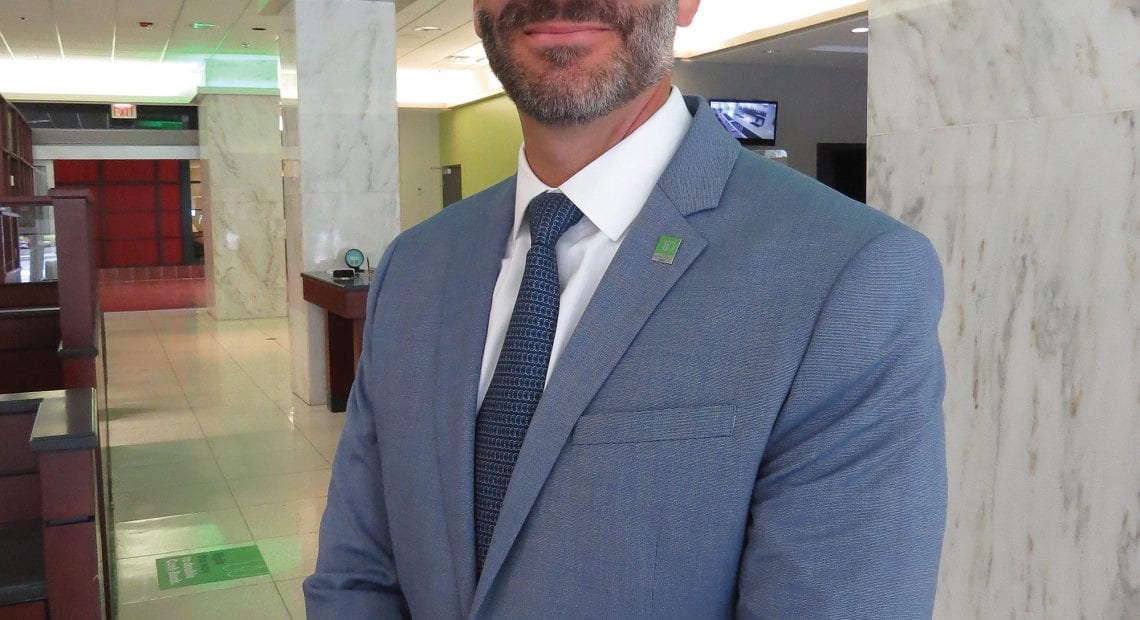
Restaurants Special Coverage

Chain of Events

John (right) and Chris LaVoie at Hot Table’s location in Tower Square.

John (right) and Chris LaVoie at Hot Table’s location in Tower Square.

Hot Table, now a chain of panini restaurants, started humbly in 2007 with a small location in the Breckwood Shoppes in Springfield. The brand has come a long way since then, and in many different ways. There are now seven locations, with plans for four more to open this year or early next, including the first free-standing facility. After that … well, the partners talk of having perhaps 50 stores by the end of this decade. What they do know is that growth will be controlled — and strategic in nature.

John DeVoie gestured toward an array of architect’s renderings of Hot Table’s first free-standing facility, complete with a mobile pickup window, planned for Memorial Drive in Chicopee, and said, “that’s our future.”

He then corrected himself and said, “well … that’s a big part of our future.”

Indeed, the future takes a number of shapes and directions for this growing chain of panini restaurants. Indeed, while construction is due to start on that Chicopee location later this year or early in 2022, work will begin before that on new locations within shopping malls in Framingham and West Hartford, with an additional location planned for a development, blueprinted by Pride Stations owner Bob Bolduc, to reshape the land inside the jug handle off turnpike exit 3 in Westfield with Hot Table and Starbucks.

Overall, this chain, which started with one small restaurant in the Breckwood Shoppes across Wilbraham Road from Western New England University and now has seven locations, has aggressive plans to add four more restaurants by the end of this year and reach perhaps 50 by the end of this decade.

“For the most part, we’re keeping our efforts focused on New England,” said John, who launched the chain with his brother, Chris, and another partner in 2007. “And over the next 10 years, we want to become a well-known, regional brand.”

This brand is striving for a mix of free-standing facilities like the one in Chicopee and more locations leased in retail centers, and, overall, a “balanced portfolio,” said Chris, adding that the goal is measured growth.

“We’re very excited to grow, but we want to grow the right way,” he told BusinessWest. “We don’t want to add overhead and layers of management just to support a few more stores; we want to be very strategic about how and where we expand.”

Overall, with four new stores on the drawing board, 2021 is certainly shaping up as a milestone year in the company’s history, one that will take it to new markets and in new directions. This growth and territorial expansion come at a time when many restaurants have been fighting to merely survive the COVID-19 — and some haven’t. Hot Table itself was hit hard initially.

“In March and April, when the pandemic hit, we weren’t sure we had a company — we had an 80% plunge in revenue,” John recalled. “We had the same ‘what the heck just hit us?’ experience that just about everyone in the restaurant business did.”

But within the fast-casual category within this sector, many chains bounced back quickly and have enjoyed success since, said John, adding that many have benefited from the takeout nature of most business and also from an added delivery component.

Hot Table invested in an app that enables consumers to order from the menu and arrange delivery through Grubhub or another provider, said John, adding that the technology served to introduce the brand to new audiences.

An architect’s rendering of Hot Table’s first free-standing location

An architect’s rendering of Hot Table’s first free-standing location, slated for a parcel on Memorial Drive in Chicopee.

“That was a silver lining for us,” he explained. “We had a lot of folks discover us who might have just been at home ordering from a third-party platform, who had never been in one of our stores.”

And this is just one of the ways the pandemic has actually benefited Hot Table, he went on, adding that it has made real estate both more available and more affordable.

So much so that the company, which has long considered Boston far out of its reach when it comes to real-estate prices, is being encouraged to take a good look at the Hub.

Whether this chain can actually attain a Boston address for one its locations is one of the many questions that will be answered over the next several years. For now, the company is focused on 2021, and all that it has on its plate — literally as well as figuratively.

For this issue and its focus on restaurants, BusinessWest talked with the brothers DeVoie and third partner Rich Calcasola, based in Charlotte, N.C., to get a sense for where this brand can go next and how big the portfolio can become.


Ingredients for Success

As he referenced those architectural renderings of the Chicopee site, John DeVoie pointed to what could become the ‘golden arches’ for this chain. That would be the tall red signage, or marquee, with what has become the company’s brand — a stylized slice of panini bread with grill marks running across it, with the words ‘Hot Table’ over it.

It’s not really possible to put such large, pronounced signage on the existing locations within shopping plazas, he said, adding that the new look represents another breakthrough for the company and an opportunity to not only sell more paninis, but grow its brand.

“When you build your own building, you have the opportunity to think about what your brand says on the outside — what is the golden arch for us?” he noted. “And it’s a long way from our origins at the Breckwood Shoppes.”

By that, he meant not just the marquee, but the free-standing store concept, locations on both ends of the state, aggressive plans to add four stores in just over a year, and ongoing talk about where to go next.

“For the most part, we’re keeping our efforts focused on New England. And over the next 10 years, we want to become a well-known, regional brand.”

But before talking more about the present and future, let’s recap how we got here.

Our story begins in 2006, when John and Chris, both successful in corporate sales, decided they wanted to make money for themselves, instead of someone else, and started to focus on the restaurant industry.

Blending vast amounts of experience with taking corporate clients with a healthy appetite for entrepreneurship out to eat, they started shaping a concept for the growing fast-casual category of eatery, and followed the advice of their sister, who told them about a dining model she encountered on a trip to Italy — cafés of sorts called tavola calda, which translates, literally, to ‘hot table,’ and their parents, who suggested a made-to-order panini concept.

For their first location, the two chose the Breckwood Shoppes, which they knew well because they both graduated from Western New England. The site wouldn’t attract any of the huge players in the fast-casual arena — Chipotle, Chick-fil-A, Panera Bread, Shake Shack, and others — because of the demographics of the surrounding area, but for them, it worked.

It blended the college crowd — students, professors, staff, and administration alike — with a thickly settled neighborhood, large traffic volume, and visitors to other shops in the plaza.

The large players in smart casual wouldn’t have gone where Hot Table went next — Tower Square in downtown Springfield, in 2009 — either. But the brothers, enticed by the large population of office workers in surrounding towers and an attractive offer from then-owner MassMutual, decided to roll the dice. And they essentially rolled a ‘7.’ Indeed, the site has become a popular lunchtime destination — even moreso with recent arrivals such as Cambridge College and UMass Amherst Center at Springfield — and has even thrived during the pandemic without most of those workers and students.

“We’re pretty close to last year’s numbers, overall,” said John, comparing 2020 with 2019. “What’s happened is that this has become a delivery hub for people in West Springfield, Chicopee, and other cities and towns.

“With the new model of how we do business — we have more than 30,000 users of our app, which allows people to order and then utilize a third-party platform for delivery — our business model shifted,” he went on. “So now, we’re way above pre-pandemic sales levels overall.”

After Tower Square, the DeVoie brothers, now partnering with Calcasola, have been focusing on where the large players in fast-casual have put down stakes. In fact, the strategy has been to follow them — on the theory that their research into where to locate is certainly solid — and, in doing so, create more of a critical mass of quality eateries, which creates dining destinations.

“In March and April, when the pandemic hit, we weren’t sure we had a company — we had an 80% plunge in revenue. We had the same ‘what the heck just hit us?’ experience that just about everyone in the restaurant business did.”

This was the case with the company’s next locations — in Enfield (2012) and Glastonbury, Conn. (2014), Route 9 in Hadley (also 2014), Marlborough (2017), and Worcester (2019). And that’s also the case, to one extent or another, with the Chicopee (there’s a Chick-fil-A right next door), Framingham, Hartford, and Westfield locations.

“People just drive there to eat, and you get in the rotation,” Chris said. “When Chick-Fil-A and other competitors came to Enfield, our sales went up.”


Location, Location, Location

When asked about the chain’s ‘formula’ when it comes to identifying markets they want to be in and then locations within those markets, the partners said it involves a blend of science and intuition, but mostly critical masses of traffic, retail, diners, and, yes, competitors.

All these ingredients are found in Hadley, said Calcasola, noting not only the large college population (there are four colleges within a few miles of the store’s location on Route 9), but also a host of fast-casual competitors and a large and growing cluster of retail that draws people from three counties.

Most of these same essentials can be found in Worcester, in the chain’s site in the the Trolley Yard, a mixed-use development that is also home to Starbucks, Chipotle, Sprint, and other national brands. Indeed, Worcester boasts seven colleges and a growing business base, said Chris, noting that it benefits greatly from being within easier commuting distance from Boston.

Meanwhile, in Marlboro, there are no colleges, little retail, and a less-dense population than in other communities the chain calls home. But there are a number of office parks and hotels, said John, adding that this was the store most impacted by the pandemic — although it, too, has rebounded.

An architect’s rendering of Hot Table’s first free-standing location

The Hot Table chain has come a long way since the opening of its first location in the Breckwood Shoppes in Springfield.

In Chicopee, Memorial Drive has been transformed into a retail destination over the past decade, said Chris, noting that the changes have caught the attention of Chipotle, Buffalo Wild Wings, and Chick Fil-A, which made that the address for its first (and still only) location in Western Mass.

Meanwhile, the Framingham store now under construction and set to open in June is in Shoppers World, a large retail complex boasting 27 stores, including Chick-Fil-A, Olive Garden, TGI Fridays, and Chipotle.

“That whole area is called the Golden Triangle,” said John, referring to the retail district in Framingham and Natick. “And it’s the number-one retail destination in metro Boston. So it’s kind of a big jump for us, but our business model now supports that.”

By ‘big jump,’ he meant, among other things, the rates for the property being leased, which was also the case in West Hartford and a spot in Corbin’s Corner next to Shake Shack, although, as noted earlier, the pandemic has eased some of the sticker shock, while also creating some opportunities as stores — and restaurants — went out of business.

“There are more opportunities in the form of spaces becoming available,” said Calcasola. “Meanwhile, the asking price dropped in some locations, including West Hartford; we’re still paying a good amount of money, but not what they were advertising it for a year and half ago.”

As to the question of where the chain might go next, there are many ways to answer it.

For starters, the company wants to go where those major brands listed several times above are going. In fact, that’s usually the first question being asked, said Chris, noting that, as Hot Table ponders whether to expand into Rhode Island, the presence of other chains is a key consideration.

“We’re pretty close to last year’s numbers, overall. What’s happened is that this has become a delivery hub for people in West Springfield, Chicopee, and other cities and towns.”

“We’ll ask if there are Chick Fil-As and Chipotles around,” he told BusinessWest. “Wherever they’re going, that’s where we want to be. We want to compete with the nationals.”

Availability of real estate is another issue, said John, adding that the company has long sought to be on Riverdale Street in West Springfield, specifically the stretch south of I-91, but has not been able to secure a location because of exclusivity clauses secured by some competitors. Meanwhile, price remains an issue in some areas, including Boston, although the pandemic, as noted, might bring that city into reach.

“We have a consultant that we work with. Before the pandemic, he said, ‘guys, don’t even bother going into Boston; it’s crazy — don’t do it,’” said John. “The last meeting we had with him, he said, ‘you may want to think about exploring opportunities in Boston.’”


Pressing On

When and if the company goes down that road remains to be seen. For now, its principals, as noted, have other things on their plate.

Lots of them.

Indeed, this will be a year when Hot Table takes giant strides toward becoming that established brand the partners want it to be, a year when that image of the panini top with the grill marks on it becomes known in new markets and in new ways, like that sign on the property in Chicopee.

That location isn’t the future — but it is a big part of the future, with additional growth and territorial expansion on the menu.

As John DeVoie said, this company has come a long way from the Breckwood Shoppes — and in all kinds of ways.


George O’Brien can be reached at [email protected]
Class of 2021

Regional Director of Marketing & Communications, Trinity Health of New England; Age 38

Amy Ashford got her start within the healthcare sector not in marketing, but in human resources. It was a chance conversation in the ladies’ room with the CEO of the hospital where she was employed that changed the trajectory of her career.

“She said, “we have a position in marketing, and I think you’d be a really great fit for it; would you consider it?’” Ashford recalled, adding that she had lunch with the director of that department, and … well, that was not only the start of a friendship that continues to this day, but the next important step in a journey that has taken her from a supporting role with a hospital in New Hampshire to her current role as regional director of Marketing & Communications for Trinity Health of New England.

There were steps in between, and all that accumulated knowledge and experience has certainly been needed during what Ashford described as the most difficult test, and in some ways the most rewarding experience, of her career — coordinating the region’s communications efforts during the COVID-19 pandemic.

“Those first several months, it was basically crisis communications and trying to keep the community as updated as possible,” she recalled, adding that she and other administrators were hunkered down (safely) in an incident command center. “Things were changing quickly, and it was our duty, and our responsibility, to communicate with people as much as possible.”

While excelling in her field — she recently received the Society for Health Care Strategy and Market Development’s Rising Star Award — Ashford is also active within the community. She has been the second vice president of the board of directors for Big Brothers Big Sisters of Hampden County since 2014, and is also a former board member for Symphony Hall and CityStage.

Returning to her relationship with the woman who first hired her to do marketing, Ashford said she remains a mentor to this day, and the experience has prompted her to seek out opportunities to mentor young people in this profession, which she finds quite rewarding.

“That lesson has really stuck with me, and I take very seriously the opportunity to mentor younger people in the marketing field,” she said. “I enjoy helping them grow and advance their careers.”


—George O’Brien

Class of 2021

CEO and Founder, Tech180; Age 39

To borrow a phrase from the industry it serves, Easthampton-based Tech180 has certainly taken off over the past few years.

Indeed, the company, founded by Chris Bakker — one of the true entrepreneurs in the class of 2021 — and now located in the Paragon Arts & Industry building in Easthampton, is gaining altitude in a highly competitive industry through his efforts to modernize and streamline the necessary but inefficient process of testing and certifying flight-worthy vehicles.

As Bakker, who earned his bachelor’s degree in electrical engineering and computer science at the University of California at Berkeley, explained it, “an aircraft has a lot of different computers on it that handle all sorts of things, like the flight controls, the engines … anything that moves on the aircraft has its own computer. And that computer has software on it that needs to be tested.

“To test that product, you don’t want to just put it on an airplane and then hope it doesn’t crash,” he went on. “You want to be able to test in a laboratory environment and make sure it’s completely vetted and safe before it goes on an aircraft.”

By creating such an environment, or testing system — one that “simulates the airplane” — Bakker and his team have enabled the company he and a few partners started in 2018 to grow to 30 employees and expand its footprint for a third time, adding a large warehouse and more manufacturing capacity to its suite of offices and existing manufacturing space.

In late 2020, the company announced an official partnership with NI (formerly National Instruments) and SET, two companies in the test industry. This partnership has brought Tech180 access to a larger pool of potential clients.

Such access is needed because, while COVID-19 hit every industry hard, it hit aerospace really hard, Bakker said. The company has responded by diversifying and adding military clients — flexibility that should serve it well when the market picks up again, which experts predict it will.

When asked what he does when he’s not working, Bakker joked that he “doesn’t do anything besides work.” What ‘spare’ time he does have is reserved for family — his wife, Rebecca, and daughters Inara and Juno — and also for sustainability and environmental causes.

Indeed, Bakker has served on the board of Grow Food Northampton and is currently involved in efforts to promote solarization, including at the mill buildings where Tech180 and other businesses are located.


—George O’Brien

Class of 2021

Assistant General Counsel and Director of Legal Services, Health New England; Age 37

When asked why she became a lawyer, Ashley Bogle started by explaining why, for a long time, she didn’t want to become a lawyer.

“I thought that all attorneys did was argue — like on Law & Order. I’m not really a fighter, so I really didn’t want to do that,” she explained, adding that she took a different route and became a pre-pharmacy major. She eventually worked in a pharmacy and didn’t enjoy what she was doing, to put it mildly, so she went to work for a law firm as a legal assistant, an experience that changed her perspective — and her career track.

Meanwhile, Bogle found Health New England through a staffing agency in 2010 and, after graduating from UConn School of Law, worked her way up at HNE to the twin duties of assistant general counsel and director of Legal Services. She described her work as a “mixed bag,” everything from reviewing contracts to keeping track of the regulatory filings with respect to maintaining licenses and accreditation.

But there is another important aspect to her work at HNE. Indeed, Bogle co-chairs the company’s diversity, inclusion, and belonging (DEIB) committee, which guides the organization toward its goals of embedding DEIB into its mission, operations, community outreach, and practices in several areas, including associate engagement, corporate social responsibility, recruitment and retention of diverse talent, advancing health outcomes, and community engagement. Bogle has initiated a diversity and inclusion e-mail inbox to allow associates to share feedback about DEIB within the organization, and regularly shares updates to all HNE associates via biweekly town halls.

“We want to push forward a diversity mindset and an equity mindset,” she explained. “It’s been a lot of work, but it’s been very exciting, and the organization as a whole has been very supportive of these efforts.”

In 2020, Bogle was appointed to represent HNE in the Massachusetts Assoc. of Health Plans’ recently established Racial Disparities Work Group, advancing the work of two important initiatives on behalf of MAHP’s member health plans.

Meanwhile, she is also very active within the community, volunteering for meal service at Friends of the Homeless, taking part in community-service projects through the United Way’s Day of Caring, and fundraising and organizing events for Go Red American Heart Assoc. Heart Walks.


—George O’Brien

Class of 2021

Primary-care Physician, Health Services for the Homeless; Age 34

It’s called ‘street outreach.’

That’s what Dr. Jessica Bossie calls the work she does on Thursday afternoons and Fridays, and it’s aptly named.

That’s because she is, quite literally, on the streets — and also under bridges, in homeless camps, and in other locations, bringing needed healthcare directly to the homeless population in Western Mass.

“Sometimes it’s Main Street in Northampton or some of the drags in Springfield — we know where our patients panhandle; we know where they go,” she explained. “If we need to find them for something serious, we’ll go find them — and we do.”

Street outreach is part of an extremely broad set of responsibilities for Bossie, the only primary-care physician working within a Springfield-based but regionally focused program called Health Services for the Homeless.

Others include seeing patients at both the Worthington Street homeless shelter in Springfield on Mondays and Wednesdays, and the homeless shelter in Northampton on Tuesdays and Thursdays; acting as a repository of information for a transient population that crosses many city and county lines; directing a harm-reduction program for the homeless patients who suffer from chronic alcohol abuse; and even overseeing and operating all aspects of an 800-square-foot community vegetable garden in Barre.

Her work is difficult to describe in much detail in this space. Suffice it to say it is 24/7 and involves caring for and advocating for the homeless population in Hampden, Hampshire, and Franklin counties, work that involves both treatment and prevention. This work resonated with the judges for this year’s 40 Under Forty program, as Bossie was the highest scorer among nearly 200 nominees.

A graduate of Boston University School of Medicine and the mother of three young girls, Bossie said she always intended to serve underserved populations, and was specifically interested in substance-abuse treatment. She had some direct exposure to Boston’s highly acclaimed healthcare program for the homeless, and has brought many of its best practices to this region.

When asked what she found most rewarding about her work, she said it’s the “human component,” the relationships she’s made with her patients.

“It’s wonderful to be able to help them in ways they’ve been wanting but haven’t found a way to get before,” she said. “Even after they move on, some of my patients travel hours just to come back and see me. It’s really flattering, and we develop these really amazing, really strong relationships.”


—George O’Brien

Class of 2021

Special Programs Coordinator, Gateway to College, Holyoke Community College; Age 39

Julissa Colón can certainly relate to those individuals she assists through the Holyoke Community College (HCC) Gateway to College program.

Indeed, when she was 19, she left college when she had her first child. She thought the opportunity to earn a college degree had passed her by.

She was wrong, of course. She now has an associate degree from HCC and a bachelor’s degree in Latin American studies from Smith College, with a minor in history. What she needed to earn those diplomas was some encouragement and a path forward — and that’s exactly what she helps provide to others who have left traditional education.

“These are students who have already left high school or are on the verge of leaving,” Colón said. “They don’t leave because they’re not smart, they don’t leave because they’re not capable; they leave because of life. Some of them have had to go to work; some of them have stayed back so many times they feel too old to be in traditional school; some are homeless; some have had children, or they’re ill, or their parents are ill.

“What they all have in common, though, is that they don’t want to give up — they do want their high-school diploma, they do want to be successful, they do have dreams,” she went on, adding that Gateway exists to build a unique pathway to success for each student.

Colón joined Gateway a decade ago and has been instrumental in transforming the program, according to Vivian Ostrowski, the program’s director, who nominated her for this award. She said Colón is also a big reason why the program now enjoys an 83% graduation rate for those who left traditional school.

While rising in the ranks from clerk to office manager to Special Programs coordinator, she has drawn on her own experiences, and also her mother’s (she came to Holyoke from Puerto Rico) to help her understand and appreciate her students’ experiences, and also to help guide them and keep their dreams alive.

She said students often ask her to describe her role, and her answer is usually something like this: “I’m like your high-school guidance counselor and your college advisor and your auntie and a social worker — I’m all those things wrapped into one.”

She’s something else as well: a tremendous role model.


—George O’Brien

Class of 2021

Associate Director of Diversity Recruitment and Enrollment, UMass Amherst; Age 33

Xiomara Albán DeLobato had to pack up a lot of things for her 40 Under Forty photo shoot. She wanted to tell her story visually and explain what’s important her.

That’s Brody the boxer, her best friend, on the other end of the leash. That’s the Ecuadorian flag to the left; her parents emigrated from there to the U.S. And that’s the LGBTQ flag to the right, which represents who she is and symbolizes a core driver of the work she does.

The pennants? They explain where she works (UMass Amherst), where she worked previously (Elms College, Springfield College, and the University of New Hampshire), and where she’s earned degrees (Elms and UNH). There’s also signage for Girls Inc., which she serves as a board member and Development chair, and also as sponsorship chair of the agency’s annual Spirit of Girls event, as well as for Veritas Prep Charter School, which she’s a trustee, and the Springfield Public Forum, where she sits on the board of directors.

As for the books, they represent some of the reading she’s been doing when it comes to her work, which has also become … a passion.

Indeed, DeLobato is the first person to hold her job title at UMass Amherst — something that speaks volumes about the growing importance of this role — and it’s a title that effectively and succinctly sums up what she does.

Sort of.

There are many responsibilities attached to this position, but she smashed it all down to a simple and powerful sentence. “We want to create a sense of belonging.”

As she explained, “universities are seeing the need for their communities to be inclusive. It does take intentionality — you can’t just say, ‘we’re a diverse place and an inclusive place’ without mindfully and very intentionally creating spaces that are inclusive for all our students. We need to do our very best to make people understand that this is a place where they belong.”

This is the real meaning of diversity, equity, and inclusion (DEI) and the foundation of all of her work, which includes everything from developing strategic DEI goals to actively shifting the culture within the enrollment-management division to focus on DEI.

Yes, DeLobato had to pack up the car for her photo shoot. But, by doing so, she helped explain who she is — and why she’s a member of the class of 2021.


—George O’Brien

Class of 2021

Director of Nursing, Mercy Medical Center; Age 35

Lindsey Gamble doesn’t have any trouble recalling the time and the circumstances when she first decided she wanted to be a nurse.

She was 12 years old, and her mother was pregnant with her fourth child. Lindsey made up her mind that she wanted to witness the birth of that child, and successfully lobbied those at the hospital for the right to be in the room. She’s very glad she did.

“It was the best day of my life,” she said. “I immediately knew I wanted to become a nurse and hopefully deliver babies at one point — but definitely nursing. It was a really positive experience.”

She used it to propel herself into a career in nursing, one that eventually did include a stint as a labor and delivery nurse before she made the transition to management roles within the Nursing Department at Mercy Medical Center.

Today, Gamble is director of Nursing, a broad role that carries with it many responsibilities, including staffing, budgeting, training, and ongoing education of the nursing staff. And that list became even longer during the past 14 months of COVID-19.

Indeed, at the start of the pandemic, Gamble implemented a daily huddle to keep the day and night shifts up to date on the changing protocols and testing for the virus, while also collaborating with the departments of Respiratory Therapy and Education to cross-train nurses to perform certain duties to relieve the workload for respiratory therapists. She also coordinated ‘resiliency rounds’ to allow frontline staff to decompress and take care of themselves, and worked with the Philanthropy team to coordinate the many food donations and deliveries to frontline workers.

She also played a key role in the opening of Mercy’s Innovation Unit, designed to ensure that families of COVID patients stay connected with the patient and the care team during their hospital stay — a connection that became especially important when the hospital could no longer allow visitors.

Gamble is also active in the community, especially at the school her children attend, Enfield Montessori. There, she’s a volunteer — handling everything from reading in the classroom to teaching gym to working in the cafeteria — and also serves on the advancement committee.

Meanwhile, at Mercy, she has been instrumental in the hospital’s annual holiday campaign to collect hygiene products and clothing items for the homeless.

In other words, she’s a true leader — in all aspects of her life.


—George O’Brien

Class of 2021

Director of Procurement, Logistics, and Special Projects, Auxiliary Enterprises, UMass Amherst; Age 39

Chris Howland says it was a phone call that ultimately “changed the trajectory of my life’s path.”

It was 2003, and he was a senior at UMass Amherst, working toward a degree in animal science. Looking for some needed pocket money, he made a call to the university’s Auxiliary Enterprises in hopes of getting part-time job. Long story short, he did. But what he really found was a very rewarding career.

“I had aspirations to maybe become a veterinarian or work in a lab,” he told BusinessWest. “But I really didn’t know what I wanted to do. Once I graduated in May, those in Auxiliary Services invited me to stay on through the summer, and then in the fall … I just continued on and kept taking on more responsibilities and moving my way up in the ranks.”

That’s putting it mildly.

Today, he’s director of Procurement, Logistics, and Special Projects for Auxiliary Enterprises, which includes residential and retail dining (the largest and most-awarded collegiate food service on the country; Princeton Review has ranked it number one for ‘Best Campus Food’ for five years running) as well as catering, concessions, food trucks, the University Club in Amherst, conference services, and more. He currently oversees an annual spending budget of more than $30 million (in a normal, non-pandemic year) and a staff of 10 who administer bids, contracts, vendor payments, accounts payable, and much more.

It’s intriguing work, with “a number of moving parts,” as he put it, with one of the more intriguing — and rewarding — being the ability to work directly with many of the farms he worked with, and learned from, as a student majoring in animal science, like Mapleline Farm in Hadley, which provides milk to the university.

“It’s like coming full circle for me to be able to understand their business, help them with sourcing their milk, and telling their story,” Howland said. “And I’ve been able to do that with a lot of different farmers.”

While his work keeps him busy, as in very busy, he says weekends are reserved for family time, and he, his wife Karen, and two daughters, Emma and Violet, are looking forward to the day when loosened pandemic restrictions will allow for more day trips to museums, zoos, aquariums, and other places that blend fun with learning.


—George O’Brien

Class of 2021

Academic Matters Coordinator, Graduate and Professional Programs, Isenberg School of Management, UMass Amherst; Age 32

As a student in UMass Amherst’s sport management program, Matt Kushi harbored dreams of being an athletic director at a small college or high school. Such dreams never came to pass, but Kushi has forged an intriguing and rewarding career nonetheless.

Actually … two of them.

By day, he’s Academic Matters coordinator for the graduate and professional programs at the Isenberg School of Management at UMass Amherst. And by … well, day and night, actually, he operates Kushi Farm and North Hadley Chili Pepper Co., LLC, which, as that name suggests, specializes in hot peppers and hot-pepper products, including jelly.

Both pursuits came about as he was trying to figure out what to do with his life after graduation from UMass in 2010 into a down economy where jobs, especially those in sport management, were scarce.

At Isenberg, Kushi serves as a liaison between his office and faculty and staff for several graduate and professional programs. He also coordinates academic matters such as scheduling courses, classroom technology needs, and course evaluations.

As for the peppers … well, that’s a continuation of a family tradition, and family business, that goes back a century or so, one that Kushi, who also majored in history, discovered while doing some research for Hadley’s 350th birthday. Indeed, his great-grandfather grew tobacco and asparagus (the crop for which Hadley is famous) on land Kushi now tills (and lives on) today.

“I found that very interesting, that I had farming in my blood,” he said, noting that he started dabbling in growing vegetables and giving them to people in 2010. “The next year, I took a 20-by-20 plot in the family garden and started growing a few things like peppers and cucumbers and started selling them to people, and found I could make a few dollars.”

Today, he sells his peppers, which he describes as “middle-hot” jalapenos and hot red cherry peppers, wholesale, mostly to regional distributor Pioneer Valley Growers. It’s a business that’s taken root (pun intended), but is only one of many passions competing for his time.

Kushi is also chair of Amherst’s Agricultural Commission, a member of the Massachusetts Farm Bureau, coordinator of Hadley’s holiday tree-lighting ceremony, and owner and president of the MDK Initiative, which operates a special-projects entity with a focus on disability, diversity, and inclusion, and educational resources for families of individuals with disabilities.


—George O’Brien

Class of 2021

Partner, Alekman DiTusa; Age 32

Laura Mangini is a huge fan of true crime.

Her podcast list is dominated by shows within that genre, and her bookshelves boast several selections from that broad category.

This has been pretty much a lifelong passion, or obsession, she told BusinessWest, adding that she entered Westfield State University’s criminal justice program with the intention of one day joining the FBI as a profiler.

Her career path changed when one of those CJ classes gave her an introduction to, and an appreciation for, the judiciary system. She attended law school at UConn and, upon graduation, soon joined the Springfield-based firm Alekman DiTusa, becoming a partner this past January.

She specializes in personal injury, and also representing victims of crime, sexual abuse, and sexual assault, as well as those taken advantage of by insurance companies. In one recent high-profile case, she obtained a $2.5 million verdict on behalf of a 28-year-old man from the Berkshires who was sexually abused by his mother’s live-in boyfriend as a child.

“I love litigating and the adrenaline that comes along with that,” she said. “But what’s rewarding is doing the work for the clients; especially in the crime-victims area, many of your clients are people who have been pushed aside, or no one has taken them seriously, or no one has stood up for them. The most rewarding part for me is to be that person who stood up for them.”

Mangini is active with a number of professional associations. She is currently co-chair of the Western Mass. Committee of the Women’s Bar Assoc., and has served on the board of the Hampden County Bar Assoc. since 2015. She is also a member of the Massachusetts Academy of Trial Lawyers, the National Crime Victims Bar Assoc., and the American Assoc. of Justice.

In the community, she volunteers her time with both the District Court and Housing Court Lawyer for a Day programs, and frequently participates in the Lawyer on the Line program, in which lawyers volunteer to provide free legal advice via a phone bank set up by the bar association. She is also active in her firm’s community-outreach efforts, volunteering for Revitalize Community Development Corp.’s annual GreenNFit Neighborhood Rebuild day each year.

When not working, she enjoys the outdoors, hiking, mountain biking, kayaking, and hanging out with her chocolate lab.


—George O’Brien

Class of 2021

Deputy Chief of Staff for State Sen. Eric Lesser; Chicopee City Councilor; Age 29

Joel McAuliffe can’t remember a time when he wasn’t in public service. Well … he can, but he has to go back to his high-school days, and even then, he was involved in politics and looking for ways to become more so.

He first ran for a seat on the Chicopee School Committee when he was 18 and tried again when he was 20. Neither run was successful, but he was eventually hired as the Communications director for Mayor Richard Kos in 2014, a stint that lasted three years and only served to whet his appetite for public service.

Indeed, he ran for City Council in 2017 against a long-time incumbent. He remembers hearing from supporters that he should “wait for his turn.” But he decided this was his turn, and he triumphed in a hard-fought race. He’s still on the Council, working hard for the residents of Ward 1, near Westover Air Reserve Base, and, overall, to “keep the city affordable.”

Meanwhile, he also serves as deputy chief of staff for State Sen. Eric Lesser, himself a member of the Forty Under 40 class of 2015. That role is the latest McAuliffe has held in a seven-year stint with Lesser, calling himself a “jack of all trades.”

Both jobs keep him quite busy, but he has many other things on his plate as well. He got engaged last August and is currently planning a wedding and house hunting in the city that isn’t just a home, but a passion. He’s currently involved with a project to bring the city’s residents municipal broadband service, one of the many initiatives aimed at improving quality of life in Chicopee and positioning it for growth and vibrancy in the years and decades to come.

“Chicopee is at a crossroads,” McAuliffe said. “We have a tremendous opportunity in front of us … we’re primed for success in a post-COVID world that will be filled with people working remotely and relying on technology.”

When asked about his ultimate ambition when it comes to public service, he gave an answer that speaks volumes about what he’s done already — and what might come next.

“Whatever is it that I do, politically, civically, professional work-wise … I want to be doing something that, in my opinion, gives back to the community and elevates the people who don’t have a voice.”


—George O’Brien

Class of 2021

Client Relationship Manager, Traffic Manager, Market Mentors, LLC; Age 27

Sarah Murphy went to college just outside Boston — at Lasell University in Auburndale — and was thinking about a summer internship in the Hub between her junior and senior years. But the city is expensive, and she quickly determined it was too expensive, so she opted to come back home to Agawam for summer break.

With some guidance from a friend, Bob Greeley, owner of R.J. Greeley Co., she readjusted her sights for an internship and started by talking with Michelle Abdow, owner of Market Mentors. That talk led — eventually — to the start of a career in the marketing business, and an intriguing job with many moving parts.

That’s eventually, because Murphy later interned in Boston for a large marketing firm and had to make the decision about which side of the state to work in. She chose Springfield, and Market Mentors, and has never looked back.

“In Boston, it felt like I would have been a little fish in a big pond,” she explained. “In coming here, I feel like I’m making more of an impact being with a smaller agency — and that spoke volumes to me.”

That impact, as she called, it, can be seen both in the agency and within the community.

Indeed, Murphy is now relationship manager and ‘traffic manager,’ a new position in which she handles a number of responsibilities and builds on experience gained while working her way up the ladder.

“I’m the liaison between the account executives and the other departments at the agency — I’m the middle person between our AEs and our copy and design, digital, and web departments,” she explained. “And I manage the deadlines for all of our projects. You might say I’m the hub for the agency; all the workflow goes through me.”

As noted, she is also quite active in the community, continuing a pattern that started in college, when she traveled to Uganda for two months with the Shoulder to Shoulder program and assisted seventh-grade school children by teaching science. Today, she’s an involved board member for the Foundation for TJO Animals, which supports the Thomas J. O’Connor Animal Control & Adoption Center.

With TJO, she helps lead many of its fundraising and outreach events, such as the Ride Like an Animal Motorcycle Run and Car Show. She also volunteers additional time at the adoption center, providing companionship to the shelter’s numerous animals.


—George O’Brien

Class of 2021

Manager, Audit & Assurance Department, Meyers Brothers Kalicka, P.C.; Age 31

Like most who venture into the broad realm of accounting, Matt Nash discovered early on that he had an affinity for numbers. But, again, like most of those who join this profession, he discovered this business isn’t really about numbers; it’s about relationships and helping business owners and managers cope with the challenges and opportunities that come their way.

And that was before COVID-19.

The pandemic has merely served to amplify those sentiments, said Nash, manager in the Audit & Assurance Department at Holyoke-based Meyers Brothers Kalicka, who, since joining the company as an intern a decade ago, has risen in the ranks and taken on a host of new responsibilities within the firm, while also becoming quite active within the community as well.

“It’s making it more fun,” he said of the pandemic, with a discernable amount of sarcasm in his voice. Speaking with BusinessWest at the height of tax season, he said the firm is helping clients navigate a host of COVID-related matters, from two rounds of Paycheck Protection Program grants to the Employee Retention Credit, to simply keeping the doors open in the wake of falling revenues. “It keeps it interesting.”

And that phrase applies to much more than accounting and auditing. Indeed, Nash and his wife, Riley, welcomed their first child, Brooks, just a few months after COVID arrived, with the pandemic adding new layers of intrigue to what is always a memorable and challenging time.

“Any time my parents or my wife’s parents wanted to see our son, it was almost like a two-week quarantine for them,” he recalled. “My father-in-law wasn’t able to hold my son for three or four months after he was born. It definitely made things much more difficult.”

As for his work in the community, Nash, a native of West Springfield, said he wants to give back to the region, and the firm not only encourages its employees to do so, it facilitates that process by giving them the time to get involved.

Nash is a board member with Springfield School Volunteers, a member of the Ronald McDonald House golf tournament committee, a mentor for the Westfield State University accounting program, a volunteer for Greater Springfield Habitat for Humanity, and a co-leader of his firm’s community initiative to help ‘stuff the bus’ for the United Way of Pioneer Valley.


—George O’Brien

Class of 2021

Attorney, Bulkley Richardson; Age 35

Lauren Ostberg took a winding road to Western Mass. — as one can see from the maps she and her husband and two sons are holding up in the accompanying photo.

Indeed, she’s also lived in Ohio (she grew up there), Vermont, Tennessee, Pennsylvania, Montana (“it’s delightful — and cold — there, but there are no speed limits in most places”), and also Argentina for a short time.

She and her husband came to Western Mass. for a variety of reasons, and here, she’s found not only a home, but a professional niche, if you will — one she wasn’t necessarily thinking about when attending law school at Vanderbilt: cybersecurity.

Indeed, Scott Foster, co-chair of Bulkley Richardson’s cybersecurity practice (and a 40 Under Forty honoree in 2011), describes her as the “heart and soul” of that group, and one of the driving forces in its creation.

In this role, she has been instrumental in the launch of a well-respected series, CyberSafe, an in-person seminar turned virtual (because of COVID-19) that focuses on topics like preparation, implementation, and response to ensure that businesses and organizations are aware of their legal obligations; safeguards to stay protected; and what to in the event of a breach.

She has delivered cybersecurity presentations to large groups on a variety of topics, including WISPs (written information security programs), and contributed to articles on this broad subject for publications including BusinessWest.

“It’s a lot of fun, both intellectually and in terms of the work on the ground,” she said of cybersecurity law. It’s fun intellectually because the law and its applicability are always changing — even the definition of ‘personal information’ is constantly changing.

“And you also get some of the adrenaline you get from litigation,” she went on, “in responding to potential breaches for clients, like writing notification letters to attorneys general, crafting notices to consumers, counseling people on whether or not to pay the ransom … it’s all really interesting stuff, and very important.”

When not helping clients keep their businesses safe, Ostberg, who started her career as a freelance journalist and creative writer, is a regular participant in New England Public Media’s Valley Voices, with one of her stories taking the runner-up prize in the 2019 Valley Voices Championship. She is also active in the community, co-managing an annual fundraising campaign for the United Way of Pioneer Valley and also serving on Easthampton’s Cultural Council.


—George O’Brien

Class of 2021

Project Manager and Estimator, Chicopee Industrial Contractors Inc.; Age 32

Liz Sauer says she’s getting used to it. Sort of. At least in some respects.

She’s referring to her responsibilities in a field — rigging, moving machinery, and related work — still heavily dominated by men, and, more specifically, to the annoying questions she gets, almost exclusively from men.

“They’ll ask how long I’ve been doing this kind of work,” said Sauer, adding that the implication is that she hasn’t been doing it very long, and thus her credentials are in question. “And they’ll ask if my father owns the company.”

Sauer says she never wants to appear fazed or upset with those questions, and has worked overtime to make sure she isn’t. Better still, she has developed an intriguing response mechanism, one that essentially turns the tables on those questioning her.

Indeed, while she says she hasn’t become “sassy enough” to ask any of her inquisitors if their father owns the company they work for, she will ask them how long they’ve been doing what they’re doing.

“The responses often lead to lively conversations and relationship building in a business — and industry — where that’s very important,” said Sauer, who is now a proud member of an all-female leadership team at Chicopee Industrial Contractors, one that has steered the company through the many challenges presented by COVID-19.

But there is much more to her résumé than her duties at CIC. Indeed, Sauer is the founder of Route to Rise Yoga and currently offers classes at a Windsor, Conn.-based studio called Wabi Sabi Yoga & Wellness Center. She also advocates for yoga and wellness in the workplace at the Eversource Health and Wellness Fair, and facilitates small-group active workplace chair yoga for the Commonwealth Care Alliance.

Sauer, who holds a master’s degree in fine arts from the University of Florida, is also a mixed-media artist with a strong emphasis on fiber arts, sculpture, and figure drawing. Meanwhile, dance has been a constant passion throughout her life, and, with her partner, Gregg Todd, she offers workshops involving yoga, dance, and couples connectivity through shared movement. Both professional dancers, the duo perform a fusion of Latin-inspired modern dance.

When asked how she finds time for all that, she said she makes time — somehow — while also saving a few moments to offer a defiant ‘no’ when asked if her father owns the company.


—George O’Brien

Class of 2021

Owner, Filmmaker, and Director, Chris Teebo Films; Age 38

“His camera was his paintbrush, and his canvas his screen.”

That’s how Judy Matt, president of the Spirit of Springfield, chose to sum up the life and work of Chris Thibault, who created some stunning videos for the agency and its Bright Nights holiday lighting display in Forest Park. As she did so, one could sense the pain of having to use the past tense — a pain felt by all who came to know him, even if only for a short while.

Thibault is BusinessWest’s first posthumous 40 Under Forty honoree. He passed away in February, during the nomination period, and the many who nominated him felt firmly that, because of his body of work, his professionalism, the manner in which he touched those he worked with and for, and the way in which he took a long and difficult cancer battle public and inspired countless people in the process, he earned a place within the class of 2021.

And they’re right.

Thibault was an entrepreneur, launching his production company, T-Bo Productions, in 2004. But while he was a businessman, he was, to most, an artist — one who took ideas and goals and turned them into video works of art. Over the years, he worked with a number of area clients, including Spirit of Springfield, Big Y, Mercedes-Benz of Springfield, the Greater Springfield Convention and Visitors Bureau, Health New England, and many others.

There were no small projects in his mind, said his wife, Missy, and he approached every project with passion and energy.

“Some people can immerse themselves in their work, and it can have a negative effect — like it was too much,” she explained. “With him, it seemed like a very natural balance. He put everything he had into each and every project. That’s how he did things.”

He kept doing things that way even as cancer ate away at his body and made it more difficult to work and create, and this was just one of the many ways he inspired others. Another was the way he and Missy shared their cancer battle with the world.

“That just came naturally to us because we love to document,” she explained. “He always said, ‘the story is king,’ and he had a story of his own that he felt he had a responsibility to tell.”

By telling it, he took his already-considerable talents as an artist to an even higher level.


—George O’Brien

Cover Story COVID-19

Help Wanted

Long before COVID-19 arrived in Western Mass., businesses across many sectors were struggling to find adequate supplies of good help. But now, just as the economy seems ready to surge, the problem, fueled increasingly by unemployment benefits that are conspiring to keep workers on the sidelines, is getting considerably worse, with no real end in sight.


Steve Corrigan has been in the landscaping business for more than 40 years now, and for most of that time, finding good help has been a challenge — to one degree or another.

But he says he’s never seen anything quite like this.

“Between our Chicopee location, a small branch we have in Wilbraham, and the office we have in Manchester, Conn., we probably have 12 to 15 positions we could fill tomorrow if we could find the people,” said Corrigan, president of Mountain View Landscapes and Lawncare, adding that this is a mighty big ‘if’ at the moment. “It’s crazy what’s going on — and it’s across the board.”

Indeed, his company is one of countless businesses across virtually every sector of the economy that are struggling mightily to fill positions, even as unemployment remains somewhat high in the wake of the COVID-19 pandemic. There are many reasons for this imbalance between open positions and adequate supplies of qualified help, but the main culprit comes in the form of federal unemployment benefits, including a $300 weekly bonus that is part of the American Rescue Plan. These benefits, say area employers, are serving as a strong deterrent to putting people back into the workforce.

“When you do the math, if you took a person making $20 an hour … with their normal unemployment, they’d be getting $500 to $600 a week,” said Corrigan. “Throw another 300 bucks on top of it … and why would you go to work for $20 an hour? It doesn’t make sense.”

Employers have been posing similar questions since the first stimulus-related unemployment benefits — complete with a $600 weekly bonus — were approved roughly a year ago. But the situation is even more precarious now, because the economy, after a slow to very slow 2020, depending on the sector of the economy, is starting to rev up again. And just as companies are looking forward to consumers going back out again and spending some of the money they’ve been saving over the past 14 months, businesses are being hit with pervasive hiring issues — and deep concerns about if and when the situation might improve.

As noted, the problem exists across the board — with landscapers, home-improvement companies, and pool installers; restaurants and banquet facilities; golf courses and local farm stands; manufacturers and service businesses.

In response to the problem, employers have tried a number of strategies — from sign-on bonuses to higher wages to rewards for referrals that lead to new hires. Meanwhile, most all forms of marketing for businesses in a variety of sectors now include references to looking for help, being a great place to work, or both.

For the most part, these strategies seem to be generating lukewarm results, with those unemployment benefits being just one of many issues to contend with. Another is the inability, or unwillingness, on the part of most states, including this one, to enforce the basic rules pertaining to unemployment eligibility.

Greg Omasta, right, seen here with his son, Chris, at the new Walsh Park in Springfield

Greg Omasta, right, seen here with his son, Chris, at the new Walsh Park in Springfield, says his company has responded to the ongoing challenge of finding workers by hiking wages above the average for this region.

“Most of the states have done away with the requirement that people on unemployment actively look for work,” said Meredith Wise, president and CEO of the Employers Assoc. of the NorthEast, which has seen its hotline handle a number of calls related to this matter and a host of related issues. “In pre-pandemic times, if people were on unemployment, they had to prove that they were physically out there looking for work — applying for jobs, looking at the help-wanted ads, and actively seeking work. And those with the state would occasionally ask them to prove that they were doing all this. With the pandemic, the employment offices have been overrun, and states took away that requirement that you were looking for work.”

Perhaps the best hopes for area employers are that returning college students and area high-school students soon to be off for the summer might increase the pool of applicants — and that the unemployment benefits are due to expire in September.

But even those hopes are tempered by the realization that September is a ways off, and the benefits may well be extended by elected officials who have already shown a willingness to do that.

“It’s crazy what’s going on — and it’s across the board.”

So companies, some of them with the help of EANE and even area marketing companies, are honing their messages and updating their hiring strategies in the hope they will have enough warm bodies to take advantage of what is expected to be an uptick — if not a surge — in the economy.

For this issue, we look at what they’re up against and what they doing in the face of this growing challenge to their ongoing success.


Labor Pains

As they talked with BusinessWest about the hiring challenges they’re now facing, business owners, almost with one voice, said that COVID has simply exacerbated a problem that has existed for some time now.

Indeed, the phrase ‘skills gap’ has been a part of the local lexicon for years now, with many businesses, especially those in manufacturing, but in other sectors as well, struggling to find adequate supplies of help, with the degree of difficulty varying with the relative condition of the economy.

Chad Jzyk, HR business partner for Charter Next Generation (CNG), a Turners Falls-based manufacturer of plastic blown film for the medical industry, said the company has been challenged to find help for several years now. But the problem has reached a new level in recent months.

“There’s not a huge availability of workers — the pipeline of basic-skilled applicants is really non-existent,” he noted, adding that the company has been running with one and a half to two open positions monthly on an almost constant basis for some time now. COVID has made the situation worse, at a time when the opposite might be expected because of the number of people out of work, and for several reasons, he said.

“With the stimulus checks and unemployment extension, the availability of workers has been impacted in a negative way,” he said, referring to both the number of applicants in the pool and their willingness to accept an employment opportunity.

“We’ve tried to engage with a couple of temporary agencies,” he went on. “In the past, it was common that you would have an applicant pool of temporary workers of between 15 and 20 people that were already pre-screened and ready to go — you’d call the employment agency and, pretty much on the spot, get someone in 24 hours. Working with a few local agencies that we’ve traditionally worked with … there’s no applicant pool; they’re seeing the same thing.”

Jzyk said the company’s hiring challenges have yet to directly impact production or limit its ability to take on new orders. However, he said it does limit CNG’s ability to be more “proactive,” as he put it, and do more when it comes to training and flexibility with employees’ responsibilities.

For other employers, the shortage of workers represents a real threat to day-to-day operations and especially the ability to handle the larger volumes of business expected as the region returns to something approaching normal as vaccinations rise and consumers venture back out to restaurants, bars, museums, stores, and more.

Nadim Kashouh, owner of Nadim’s Downtown Mediterranean Grill in downtown Springfield, said he’s looking forward to the return of shows to the MassMutual Center and other forms of vibrancy, but he quickly, as in very quickly, changed to the subject of staffing and his ongoing concerns about whether he can find enough help to handle whatever surge comes.

Meredith Wise says the escalating challenges facing employers looking to hire are prompting wage skirmishes in some sectors.

“I hesitate to get too excited because one of the things we’re dealing with right now is the lack of people who want to work,” he told BusinessWest, gesturing to a lighted message board behind the bar. Among the many messages being delivered is that help is wanted — and that display is just one of many ways that point is being made.

“We have created a commercial that focuses on how our patio will be open soon,” he said. “But it also notes that we’re looking to hire people — we need to keep letting people know that.”

Fran Beaulieu, second-generation president of Phil Beaulieu & Sons Home Improvement in Chicopee, said the hiring crunch, which is certainly nothing new for that sector, has resulted from a number of factors, with COVID-related issues being only the latest additions.

Overall, fewer people have been getting into the trades, he said, and this has left the region with a shortage of carpenters and other specialists.

“You basically have an entire generation that didn’t get into the trade,” he noted, adding that, despite a wide-ranging effort involving social media and other strategies, the company has a workforce that is 30% short of what is needed. And this harsh reality is certainly impacting the firm’s ability to take on jobs — at a time when jobs are plentiful, again, due to COVID and people home so much and often of a mind to improve their surroundings.

“Finding projects has never been the problem; the problem has been managing your labor in accordance with how many projects you have sold,” Beaulieu said. “You almost have to stop selling after a while because you just don’t have the help.”


Hire Power

In the wake of the ongoing struggle to find adequate supplies of help, area businesses are taking a number of steps, with aggressive marketing of their staffing needs being just one of them.

Indeed, companies have initiated hiring bonuses and rewards for those who refer candidates who eventually sign on. Meanwhile, others are hiking wages, said Wise, adding that, in some sectors, wage skirmishes have arisen, the likes of which have not been seen in some time, if ever.

“What we’re seeing happening, and it’s a little scary, is that, for some positions, wage battles have ensued,” she said. “People are saying, ‘I’ll pay you $2 more an hour to come work for me because I need the help,’ and the employee goes back to his employer and says, ‘they’re willing to give me $2 more an hour; will you give me $3 more an hour to stay here?’

“There are some positions where people are willing to pay a premium to get individuals to come to work,” she went on. “And it’s starting to affect different kinds of businesses.”

One of them is the broad landscaping and lawncare sector, she noted, which has historically faced challenges to maintaining adequate staffing and is now seeing its problems escalate due to the many aspects of COVID.

Greg Omasta, owner of Hadley-based Omasta Landscaping Inc., said this has certainly been a trying year.

“Most of the states have done away with the requirement that people on unemployment actively look for work.”

“The government incentives allow people to stay home and get paid more than if they actually went to their job on a daily basis — so some of the problems small businesses are facing in this country are inflicted by our government,” he told BusinessWest, adding that some of those the company had to lay off at the end of last season have opted not to come back when offered the chance, instead choosing to collect unemployment. “But there’s a general lack of people out there in the labor force who want to work hard, like in the trade we’re in, the landscaping business. A lot of people want to sit beyond a computer screen and punch a keyboard all day.”

Historically, the company, like others in this sector, has relied heavily on legal immigrants, many from Mexico and Guatemala, he said, adding that even this pipeline has become less reliable in recent years.

As a result of this ongoing challenge, he said the company has changed the way it compensates employees, with the goal of attracting and retaining better candidates. By and large, it’s a strategy that has worked, although this year, given the many additional COVID-related challenges and responses within the industry, it is certainly being tested.

“We’re probably one of the higher-paying landscape contractors in the area,” said Omasta, whose company handles a number of large commercial accounts and municipal facilities, such as the recently reopened Pynchon Plaza in downtown Springfield, as well as residential customers. “We do that because we try to attract better people and keep those people here. Paying that higher hourly wage makes a difference in the people that we’re able to find, keep, and employ.”

Corrigan, who can certainly relate to all that, said his company hired someone to handle recruiting full-time just before COVID hit. To say her job has become difficult, and frustrating, in the wake of the pandemic and the various stimulus packages would be an understatement.

“She’s at her wit’s end with people right now,” he said, adding that, between a hesitancy to work among many people and drug tests often standing in the way of those do want to work, the talent pool has become increasingly smaller.

Chad Jzyk

Chad Jzyk

“There’s not a huge availability of workers — the pipeline of basic-skilled applicants is really non-existent.”

And this shrinking pool has definitely impacted Mountain View’s ability to expand the commercial side of its business and grow.

“We’ve had discussions — heated discussions — in our budgeting processes,” Corrigan said. “We ask ourselves, ‘how can you grow if you can’t get the help?’ And the obvious answer is, ‘you can’t.’”


The Job at Hand

It is that obvious answer that is keeping many business owners and managers awake at night.

Indeed, at a time when the challenges seem to be mounting for businesses of all sizes and in most all sectors — Omasta referenced the rising cost of materials such as lumber, still-escalating fuel prices, the specter of inflation, and the very real possibility of higher corporate taxes — finding good help is the one that poses the biggest threat to companies at a time when many are poised to break out from pandemic-induced doldrums.

What will happen between now and September, and even after September, remains to be seen, but it seems clear that these scary times, as Wise and others called them, are certainly far from over.


George O’Brien can be reached at [email protected]
Commercial Real Estate Special Coverage

Progress Report

Roughly 14 months after COVID-19 arrived in Western Mass., the commercial real-estate market is showing some signs of life, especially with industrial properties, which are in considerable demand, with limited supply. But as companies start to return to their offices, questions remain concerning just how much space businesses will need long-term and how much demand there will be for the large inventories of space now, or soon to be, available.

Pat Goggins has been selling and leasing real estate in and around Northampton for almost a half-century now. It’s very safe to say that he knows that market better than anyone.

And he feels comfortable now, a full year and change after COVID-19 first arrived in this region, in saying that the Northampton market has “bottomed out, and is starting to work its way back to what it had become.”

He bases this assessment on a number of things — from new leases being signed for some vacated properties downtown to interest in some other buildings for sale and lease, to the lease rates themselves, which, he said, haven’t changed appreciably in 20 years now.

“We’re seeing some new activity that is creating some positive vibes,” said Goggins, president of Goggins Real Estate Inc., adding that, while challenges remain and COVID continues to take a toll on Northampton, there are many signs that a corner of sorts is being turned.

Using slightly different words and phrases, other commercial real-estate brokers and managers we spoke with said essentially the same as Goggins, that the market is moving back toward — here comes that phrase again — ‘something approaching normal, or a new normal.’ Meaning, they believe, that the worst is likely over.

“We still have a ways to go, but there is movement back to normalcy,” said Mitch Bolotin, a principal with Springfield-based Colebrook Realty Services, who is using, among other things, the parking-lot test when it comes to what’s happening within this market.

Pat Goggins

Pat Goggins

“We still have a ways to go, but there is movement back to normalcy.”

Indeed, he said the parking lots at the PeoplesBank building in Holyoke, 1441 Main St. in Springfield, and the Basketball Hall of Fame complex in Springfield, just some of the properties managed by the company, are more populated than they were just a few months ago, and much more full than last fall. The cars in those lots are evidence that businesses are, in fact, returning to their offices and the buildings are moving closer to pre-COVID levels of occupancy and vibrancy.

Still, hard questions remain about just how many more cars will be returning to those lots — and when. And these questions — which are being asked in urban areas across the Northeast and, indeed, across the country — will likely determine to just what extent the market fully recovers. Indeed, as leases have expired over the past year, some companies have downsized, said Bolotin, a few have actually upsized to give employees more space in the wake of COVID, and others are essentially standing pat.

Meanwhile, when it comes to negotiating new leases, most tenants have been able to take advantage of a market that favors them and secure a number that certainly isn’t higher, and in many cases is lower.

Ken Vincunas, president of Agawam-based Development Associates, which manages several office buildings in this region, including the Greenfield Corporate Center and Agawam Crossing, said that nearly 14 months after COVID forced many people to work remotely, questions linger about when and if businesses will summon employees back to the office, and how many will actually come back.

“I think people like to work at home,” he said. “Businesses want them to come back, but I’m not sure the employees will want to go back.”

Meanwhile, some segments of the commercial market, especially industrial properties, are vibrant, if not white-hot, said Vincunas, noting that there isn’t enough inventory to meet a growing need.

Ken Vincunas says, others, like industrial, have been very active

While COVID has slowed some segments of the commercial real-estate market, Ken Vincunas says, others, like industrial, have been very active, with inventories struggling to meet demand.

“The bulk of our portfolio is industrial, and that’s all pretty strong right now — inventory for that is very low, and prices are very high,” he said, adding that the market for medical real estate — and his company has some of it in the portfolio as well — remains strong.

For this issue and its focus on commercial real estate, BusinessWest takes an in-depth look at what’s happening within the local market and what may happen as the region continues its pursuit of ‘normal’ — whatever that means.


Down on Main Street

As he talked about the Northampton market and what has happened within it over the past year or so, Goggins used the word ‘generational’ to describe the changes to the landscape.

By that, he meant many of the businesses that have become synonymous with Paradise City were started by people his age — Baby Boomers at or now approaching retirement.

“Downtown Northampton took off in the ’70s, and it was fueled by people who were contemporaries of mine who came into town or who were part of the community and decided to open restaurants and shops,” he said. “It was fueled by the Baby Boom generation.”

And what COVID did was push some of those entrepreneurs into retirement maybe a little sooner than they were planning, he said, adding that this led to some high-profile vacancies on Main Street, a phrase he uses to connote both that specific thoroughfare and the whole of the downtown. Those vacancies include the massive Silverscape Designs building, a former bank; 147 Main St., formerly Cathy Cross; 162 Main St., formerly Artisan Gallery; and others.

In recent weeks, though, new tenants have been secured for many of these properties, he said, noting that Rebekah Brooks Jewelry has moved into the Cathy Cross space, 25 Central has taken the Artisan Gallery space, and Cotton Gallery has moved into 153 Main St., formerly Thelo. This movement reflects his earlier-stated sentiments that the market has, in fact, bottomed out and is moving back up again, although there is still work to do.

“The vacancy rate is higher than what we would prefer, but we’re nipping away at it,” he said, adding that the emerging cannabis industry has played a factor in these efforts, and it could play a still-larger role moving forward, with nearly a dozen ventures at some stage of the permitting process.

As for the Silverscape property, he said there has been some interest expressed in it, but it is a large space with some accompanying challenges when it comes to a new use.

“It’s not for the faint of heart,” he told BusinessWest, adding that, while the former bank spaces, like teller windows, were imaginatively integrated into the jewelry store’s design, they may in some ways limit what can easily be done with the space now.

The Silverscape Designs building in downtown Northampton

The Silverscape Designs building in downtown Northampton, now on the market, will present opportunities and challenges to its next owner, said Pat Goggins, adding “it’s not for the feint of heart.”

Assessing the office market, Goggins echoed others in noting that, while more businesses are returning to the spaces they completely or partially vacated last March, there are questions about whether businesses that had to rely on people working remotely will bring everyone — or anyone — back to the office.

Vincunas said he has a diverse list of tenants at the Greenfield Corporate Center, including some state agencies that he is not concerned about when it comes to downsizing or not renewing, but also some financial-services and technology-related tenants for which there are some questions moving forward.

“People have learned to work outside the office, so we can’t be sure what will happen long-term,” he said, adding quickly that, for the short term, the property has benefited from COVID in one respect — the regional jury-pool operation has moved into 25,000 square feet of space at the facility for at least a year.

“They couldn’t space people out for jury-pool selection at all the courthouses — there just wasn’t room — so they created an off-site central-clearinghouse type of space,” he told BusinessWest. “We had a big piece of space, so they took it.”

Boloton said he’s seeing some evidence that, while the experiences of the past year have shown that remote working can be effective, most businesses want their workers back together in one place.

“I’ve seen it with a number of businesses … they’ve said, ‘we’re working at home, we’ve figured it out, but there’s still a need to be in the office, and, over time, people want to be in the office,’” he said, adding that the parking-lot test, as unscientific as it is, provides some evidence that companies are working their way back to their office spaces. “It’s a matter of want to, and need to, and there’s a slow progression back. There’s a steady return toward coming back to the office; we’re not there, but we’re getting closer every day.”

For other evidence of progress, he cited the recent closing of a deal with a business to lease 27,000 square feet of office space in a property at 11 Interstate Dr. in West Springfield. He could not disclose the new tenant, but said it was an existing Western Mass. business that is expanding.

“It’s a market that has some areas of slowdown reaction to the pandemic,” he said, listing retail in that category. “But there are other areas that are busy, and we can’t find inventory. Industrial is very strong, and we have a lot of transactions for users buying buildings, so we have a number of properties under contract.”


Bottom Line

Between the parking-lot test, some new leases being inked, and tight inventories in the industrial market, the commercial real-estate landscape seems to be changing in this region — and for the better.

That said, many questions remain about the market and especially the office buildings that are not only home to many types of companies, but also generate business at neighboring service- and hospitality-related enterprises.

It may be some time before all those questions are answered, but for now, it seems the worst may well be over and, as Goggins and others noted, this sector is moving steadily closer to something approximating normal.


George O’Brien can be reached at [email protected]
Business of Aging

Wave Dynamics

Since they started entering the world just after World War II, the Baby Boomers have influenced society in general, and the business community in particular, in all kinds of ways. The same is true when it comes to the healthcare sector, especially as the oldest members of this huge and proud generation turn 75. The impact of such a large and aging group can be seen in everything from hearing practices to the many facets of the long-term care system. And in some ways, COVID has provided a preview of what it is to come.


As she talked about the massive Baby Boom generation, how its oldest members turn 75 this year, and about how almost all the Boomers could now be classified as senior citizens, Dr. Maura Brennan summoned a phase she attributed to her mother, but which she uses often as well: “No one gets out of life alive.”

She used those words to convey the thought that, while this Baby Boom generation may in many ways be healthier than those that preceded it — fewer smokers and more exercisers, for example — and it has enjoyed access to better healthcare and innumerable advances in treatment, from artificial joints to improved cancer care, its members will eventually see their health decline, and they will need increasing amounts of care. And many already do.

“I don’t believe this generation, which I am part of, will readily tolerate limited access to the best care.”

While Brennan — a 70-year-old geriatrician and palliative-care physician — says people being able to live longer is in itself a success story, it has also become a challenge, for today, and especially tomorrow.

Which brings us back to those oldest Boomers, those born just after World War II, who turn 75 this year. That’s the age when, statistically, people begin to see their needs for healthcare increase, said Brennan, adding that, as one might logically assume, when a large number of people hit that threshold all at once, the system will be taxed — in all kinds of ways.

“As one might imagine, it’s going to impact virtually every sector and specialty, with the possible exceptions of OB and pediatrics,” she explained. “We’re going to see increasing numbers of older people; not all those folks are going to be frail and complicated, but there will be an increasing number of people with multiple medical problems.

Dr. Maura Brennan

Dr. Maura Brennan says the healthcare system is struggling to meet demand for direct-care workers, and the situation might get worse.

“The numbers and the complexity will rise,” she went on. “And it will impact every area of healthcare, with probably the biggest impact being in home care and nursing-home care because, personally, I don’t believe this generation, which I am part of, will readily tolerate limited access to the best care that’s going to allow them to stay in their homes and communities as long as possible.”

Mary Flahive-Dickson, chief operating officer at East Longmeadow-based Golden Years Home Care, agreed. She said the milestone age being reached by the oldest of Baby Boomers provides an opportunity to look hard at what’s in store for the healthcare system and ask the question: is it fully prepared for the challenges to come? And, if not, what needs to be done so it might be better prepared?

In many ways, Flahive-Dickson said, the COVID-19 pandemic has actually provided a preview of sorts for what’s coming as this large generation ages, with regard to everything from telehealth to the way the overall healthcare system was tested by sheer volume of cases and even vaccination efforts, to the manner in which the need for home-care services is growing.

During the pandemic, this need was fueled by growing fears of nursing homes and other senior-living facilities. Many of those fears still persist, but for Baby Boomers, by and large, the greater issue is simply wanting to remain independent — and in the home — as long as possible.

Eric Aasheim, a certified senior advisor and owner of Oasis Senior Living of Western Massachusetts, agreed. Aasheim, who assists seniors and family members through the complex process of transitioning from home to senior-living communities across this region, said the entire long-term-care sector will be tested by the aging of this generation.

“What I see, and what I worry about, is that the long-term-care system — and that includes in-home care, nursing homes, and assisted living — is just not ready for the sheer volume of patients and residents that they’re going to have,” he told BusinessWest. “And even though these individuals living longer and their resources are being depleted, there are so few places that have any kind of programs for low-income seniors. Unless something dramatically changes in terms of the number of assisted-living facilities that can serve low-income residents, there won’t be needed options for seniors.”

Meanwhile, besides sheer size and that sense of independence and not wanting to rely on others, the Baby Boom generation boasts some other characteristics as well, including what could be described as denial when it comes to getting old and admitting some aspects of their health have deteriorated.

“That’s not a disaster or a tsunami. That’s one of the greatest success stories in modern history; people are able to live longer and enjoy their lives better.”

And that’s why, even though she is generally seeing more patients than she was years ago, Dr. Susan Bankoski Chunyk, an audiologist, says she’s seeing a continuation of, and perhaps even an exacerbation of, an annoying trend whereby people will put off seeking help for their hearing years after they acknowledge they have a problem, due to lingering perceptions about hearing aids making people look old and feeble, even though modern technology has changed that landscape.

And that’s just one example of why there are still many question marks about how and to what degree this generation will present challenges and opportunities moving forward.


Age-old Challenges

Before getting into any real detail about the Baby Boom generation and its advancing age, Brennan wanted to set the proper tone for the discussion.

Indeed, she told BusinessWest that years, if not decades, of talk about a ‘silver tsunami’ have succeeded in casting discussion about the aging Boomers — and, again, she’s a proud, card-carrying member of that generation — in often-negative tones.

Mary Flahive-Dixon

Mary Flahive-Dixon says most Baby Boomers want to age in place, in their own homes.

“This notion of the silver tsunami makes the aging of the population sound like an impending natural disaster over which we have no control that’s going to sweep everything away,” she said. “It feels to me, and most geriatrics leaders, like we’re framing things wrong; we’re setting this up as ‘us versus them’ — us young healthy, productive people against those old people who are going to overrun the system. These people are … us. They’re our neighbors, our teachers, our relatives.”

That said, a lot of ‘us’ are getting on in years. Indeed, maybe half or more of all Boomers can now get a senior discount at the movies, the golf course, and the pharmacy. And large numbers of them are now over 70, which means many aspects of the healthcare system — from eye care to urology; orthopedics to hearing care — are certainly already seeing an impact, and it will only grow as more Boomers reach 70, 80, 90, and beyond.

Restating the matter (again, she doesn’t want to classify it as a problem), Brennan said the Baby Boom generation is indeed large (it’s estimated that, by 2035, 10% of the population will be 85 or older; it’s closer to 6% now), and its members are living longer than the generations that preceded them, again, because of better health and better healthcare.

“That’s not a disaster or a tsunami,” she said. “That’s one of the greatest success stories in modern history; people are able to live longer and enjoy their lives better.”

That’s true, but so is what her mother said so often: that no one gets out of life alive.

“Some period of decline is going to occur for virtually all of us — unless we die in our sleep from a funny heart rhythm or get hit by a truck crossing Main Street,” she told BusinessWest. “And the causes of death in recent years have shifted; if you look back 50 or 80 years, the causes of death were frequently things like trauma, infection, death in childbirth — things that take you rather quickly when you were reasonably functional prior to that. That is no longer true. And with the successes we’ve had, and with people living longer, they are increasingly likely to die of multiple progressing chronic diseases.”

What does all this mean? Increasingly, Brennan said, people will need more care from more people as they age and approach end of life — a team-based approach, if you will.

“We’re going to have to think about care a different way because it’s not all about the doctors and the nurses,” she explained. “People will need hands-on home care, they’ll need symptom management, they’ll need direct-care workers who are grossly underpaid and overworked, and who churn through the system, with tremendous turnover.

“We’re struggling to meet those needs now, and it’s perceived to be, and is, a major problem,” she went on. “And if we do not alter the way we are paying, recruiting, supporting, and respecting those people, it will be infinitely worse. We’re going to need to restructure things, pay people differently, and offer them different kinds of professional development and career ladders that will make those positions more attractive; otherwise, we have a self-perpetuating situation. It’s the classic axiom — the system produces exactly the kinds of results it was designed to produce. If we don’t change the system, you get what you’ve got.”

Another issue that will have to addressed regards the number of specialists that will be needed to care for this larger generation of older residents, said Brennan, referring to geriatrics doctors, general nurse practitioners, social workers, pharmacists, and more.

Dr. Susan Bankoski Chunyk

Dr. Susan Bankoski Chunyk says people still put off seeking treatment for hearing loss due to outdated perceptions about hearing aids.

“As the number of older folks is increasing, the number of experts is not increasing, not one iota,” she told BusinessWest. “And, in fact, in some fields, such as geriatric medicine, the number of certified geriatricians has actually probably declined somewhat because we’re not replacing people who are retiring with equal numbers of new grads.”


The Shape of Things to Come

Flahive-Dickson agreed, noting that among the Boomers now in or approaching retirement are large numbers of healthcare workers. Replacing them and making the kinds of systemic changes Brennan mentioned will be just some of the many challenges facing the healthcare system moving forward.

Several of the others involve the growing trend of people wanting to age in place — and especially in their own home.

And this brings her back to COVID and what has been learned during the pandemic.

“More care was moving toward the home, basically as a result of general anxiety about facility care — about being in hospital, about being in a skilled nursing facility,” she explained. “Because of this crisis, we’ve seen more people want to get their care in the home.”

And this is a trend she expects will continue into the future as more people from this huge generation confront questions about the care they need and how and where they want it provided.

But questions arise from this supposition — many of them, in fact, including whether there will be enough providers to care for all those people who will want to stay in their homes, and also whether the payers are willing and able to adjust to a changing landscape of need and pay for services they currently don’t cover.

Again, Flahive-Dickson said the pandemic has provided an intriguing lens for looking at the problem — and the future as well.

“If COVID has done anything for us, it has previewed what is to come,” she told BusinessWest. “The pandemic has shown us that this surge in home care is a glimpse of the future. And it has provided this glimpse not only to healthcare professionals and the general population, but also to regulatory bodies, such as Medicare and Medicare Advantage.

“They have had to relax a lot of rules,” she went on. “As the Medicare population is continuing to grow, Medicare benefits haven’t caught up to that, and this is a huge problem. There are fewer than a dozen states that even offer non-medical home-care services to be paid for by a plan, and that plan is a singular plan, and that’s Medicare Advantage. In Western Mass., no one has a Medicare Advantage plan that offers the benefits of non-medical support, so it’s either out of pocket, or you have to qualify for one of the few programs that cover this.”

As for home-care workers, she said a number of demographic trends (Boomers generally had smaller families than the generations that preceded them) and other issues point toward individuals needing someone outside the family to care for them — and real challenges when it comes to having a steady supply of workers to provide that care.

That’s another lesson from COVID, she said, referring to the law of supply and demand, which was certainly exacerbated by a pandemic during which many had apprehensions about working in others’ homes.

“Fewer and fewer family members are capable of being a caregiver, either because there are fewer families, period, or … because family members might be on a different coast,” she explained. “Just because you grew up in Springfield doesn’t mean you stay in Springfield.”

Aasheim agreed, noting that these demographic trends are just some of the challenges facing the Baby Boom generation. Another is their own lack of preparedness for what is to come — financially and otherwise.

He said that only one individual in 10 has long-term-care insurance, and this is a matter to be addressed — just not when someone is 75 or even 65; those products have to be bought much sooner. Meanwhile, not enough members of this generation (and it’s not exactly unique in this regard) have their ducks in a row when it comes to needed documents — and needed preparation for poor health that often comes on suddenly and without much warning.

“What I try to focus on with the Boomers are the things they can do now, before that eventuality,” he explained. “This includes having discussions with your family about what your preferences are in terms of long-term care, gathering the documents together, getting power of attorney and a healthcare proxy, all those things. That’s what I hammer away with them — get that stuff done now, while you’re still healthy and you have the energy and the mental capacity to deal with it, so your family doesn’t have to handle it in crisis mode a few years down the line.”

Unfortunately, he said, many don’t heed this advice.

“They all nod when I talk to them in these presentations, but are they going home and getting that stuff together? My thought would be, probably not,” he went on. “Because most of the calls I get are from people who are in crisis mode.”

Bankowski Chunyk is another who wishes that more Boomers would heed some advice. Or at least listen to family members telling them they can’t hear as well as they used to, and should do something about it.

She told BusinessWest that the hearing industry talked a lot about the Baby Boom generation years (make that decades) ago, and how its size and advancing age would comprise a great opportunity for audiologists, one they should be prepared to seize.

Bankowski Chunyk did prepare, but she said the wave hasn’t been nearly as big as all those experts predicted it would be, largely because of … well, human nature, as well as lingering perceptions about hearing aids and what they say about those who wear them.

She said data shows that, between 1989 and 2019, the average age of an individual being fitted for a hearing aid for the first time fell from 66 to 65.

“I’m not sure a lot of progress was made getting people to address their hearing,” she said with some sarcasm in her voice, adding that, while there are certainly more people of that age than there were several years ago, sheer volume is not creating the immense opportunity that was predicted back in the ’80s and ’90s.

Whether it will materialize eventually or not, she doesn’t know — but she does know the Boomers are perhaps more vain when it comes to hearing aids than the generations that preceded them, so her industry has some work to do to change those perceptions.


Bottom Line

Perceptions are not the only thing that will have to change if the Baby Boomers, and those in the healthcare system who will care for them, will adequately manage this sizable demographic shift.

Brennan is right when she warns about this challenge becoming an ‘us versus them’ scenario, but she’s also right (and her mother was right) when she said that no gets through life alive.

As this generation ages, it will present enormous challenges to a healthcare sector that in many ways seems unprepared for what’s coming. That’s evidenced by the number of comments that began with the words ‘if things don’t change’ — comments referring to everything from workforce to accommodations for low-income seniors.

Only time will tell if things will, indeed, change. What is known is that the Boomers, as they have at every other phase of their life, will alter the landscape as they reach 75 — and beyond. And in all kinds of ways.

Community Spotlight

Community Spotlight


Nadim's

Nadim Kashouh says the return of office workers will be critical to the success of businesses downtown.

The wording in the initial guidance that has come down on the $2 trillion American Rescue Plan, and, more specifically, the $130.2 billion designated for city and county fiscal relief, is somewhat vague and leaves a lot to the imagination.

“Funds can be used to respond to the COVID-19 public-health emergency and its negative economic impacts, including assistance to households, small businesses, and nonprofits, or aid to impacted industries, such as tourism, travel, and hospitality,” it reads, before going on to note that such funds may also be used for everything from investments in water, sewer, and broadband infrastructure to “providing government services in a way that covers the revenue gaps created by the COVID-19 emergency.”

As he reads this guidance, Tim Sheehan, Springfield’s chief Economic Development officer, draws immediate parallels to the federal money Springfield received nearly a decade ago in the wake of the June 1, 2011 tornado that tore through several parts of the city. Even the dollar amounts — roughly $100 million, in each case — are strikingly similar.

“Some of the outcomes resulting from the funding that came from the tornado assistance were transformative for Springfield,” he noted, adding that a reconstruction fund of $96.7 million was put to a number of uses, including business assistance, housing replacement and reconstruction, infrastructure, and more. “And we’re looking to similarly deploy, very strategically, the resources we have from the rescue plan so that we have a similar result.”

How, and how effectively, Springfield can put its American Rescue Plan funds to work will likely play an important role when it comes to how quickly and profoundly the city can recover from a very different kind of disaster. And, like many area communities, Springfield has been hard hit by the pandemic, with many question marks looming over the future.

A city that was in the midst of what many were calling a renaissance in the years leading up to COVID saw much of its momentum halted or certainly slowed by the pandemic. A central business district that was thriving and teeming with events, activity, and new businesses has been eerily quiet, with many constituencies — from office workers to hockey fans; beer garden attendees to concertgoers — absent or in far smaller numbers.

As for those office workers, there are now lingering questions about when they will return (the vast majority haven’t yet) and how many of them will return, casting the future of the office towers that dominate the skyline into doubt.

But there are some signs of life and abundant optimism for the balance of this year and beyond.

Indeed, as he talked with BusinessWest on a quiet late Tuesday afternoon, Nadim Kashouh was looking forward to the upcoming weekend — moreso than any time probably since last Father’s Day, when he struggled mightily to keep up with a flood of takeout orders.

Gymnastics — in the form of youth competitions featuring teams from across New England — were returning to the MassMutual Center for the first time in more than a year. And Kashouh’s eatery, Nadim’s Downtown Mediterranean Grill, located just a block from the convention center, always does well when the gymnasts come to town.

“If they turn right when they leave the building, they find us — and a lot of them do turn right,” said Kashouh, noting that not many people have been coming to town, as in downtown, since COVID changed the landscape in March 2020. “It’s exciting to have the gymnastics back.”

And there are other signs of life as well. The AHL’s Springfield Thunderbirds are not playing hockey — they are one of three teams in the league to essentially opt out of play in a abbreviated 2021 season — but they are gearing up for the 2021-22 slate, and management is optimistic there will be considerable pent-up demand for their product (see related story HERE).

“Some of the outcomes resulting from the funding that came from the tornado assistance were transformative for Springfield. And we’re looking to similarly deploy, very strategically, the resources we have from the rescue plan so that we have a similar result.”

Meanwhile, in Pynchon Plaza, various works by the sculptor Don Gummer are now on display, yet another sign that the Quadrangle, one of the city’s tourism mainstays, is moving ever closer to something approaching normal (see related story HERE).

While COVID has certainly slowed the pace of progress in Springfield, it has also provided an opportunity to step back, look at some of the key development challenges and opportunities in the city, and work to be ready for the proverbial ‘other side’ of the pandemic. That’s been the case with two key areas downtown — the area around MGM Springfield, which is underperforming in many ways, and the so-called ‘blast zone,’ the area surrounding the site of the natural-gas explosion in November 2012 (more on these later).

“Our thought process throughout this has been to take the mindset, ‘once we’re through it, we want to be ready to go,’” Sheehan said. “And some of the funding that is coming will be able to help those initiatives be realized.”

For this latest installment of its Community Spotlight series, BusinessWest takes an in-depth look at the City of Homes and its prospects for not merely turning back the clock to the vibrancy it enjoyed pre-COVID, but taking further steps forward.


Food for Thought

As the owner of one of the more prominent and visible restaurants downtown, Kashouh has long been a popular voice with the local media when it comes to commentary about business downtown and the impact of everything from the casino to the Thunderbirds; from concerts at Symphony Hall and the MassMutual Center to, yes, those gymnastics competitions.

As he did son again with BusinessWest, he first flashed back to the view in very early 2020, a time when, as he put it, “the pieces had fallen into place and everything was clicking.”

Over the past 13 months, of course, most of the pieces have fallen out of place, he said, adding that most of the key ingredients for success at his establishment — the shows on weekend nights; the hockey games, conventions, and other events at the MassMutual Center; and, especially, the downtown office workers — have been mostly missing in action as a direct result of the pandemic.

He said they’re all important, but perhaps the most critical is the office traffic, which consistently filled the restaurant at lunch and often the bar area after 5 o’clock. These days, the office crowd is a fraction of what it was, and the impact is profound.

“We saw a few of the old faces back in here today, and it was exciting — you’re seeing some of the regular faces back,” he said, referring to some commercial lenders once based downtown. “But we used to see them three or four times a week and sometimes twice a day; now, you see them once, and you hope to see them again next week — maybe.

“It’s going to be a while before things go back to where they were before,” he went on. “I was hoping that by summer things would be back to normal, but now it doesn’t look like it.”

Given this obvious trickle-down effect, the question of when, and to what extent, the office workers return to downtown looms large over the city and those in the Economic Development office.

Indeed, Sheehan, citing a story he read recently involving Citibank and its announced intention to downsize its office footprint in New York by roughly 40%, said it is becoming obvious that the pandemic will change the way businesses approach their real-estate needs moving forward, leading to endless speculation about the office market and the businesses that rely on it.

The former Willys-Overland building is now accepting lease applications

The former Willys-Overland building is now accepting lease applications, one of the first signs of redevelopment in Springfield’s so-called ‘blast zone.’

As for the present tense, the situation has improved — but only marginally.

“People are starting to come back to downtown to work, but it’s not fully engaged, and I don’t think it’s going to be until sometime late fall,” Sheehan said. “And I don’t think we’re really going to get back to 100% until the turn of the calendar to 2022. And that obviously has a ripple effect on all the businesses that depend on that population coming in every day, so that’s an ongoing concern for the city.”

This brings him back to that language in the guidance concerning the American Rescue Plan, which, he said, could and likely will extend to efforts to help keep existing businesses downtown and bring new ones there.

“Our objective, in terms of deployment of resources, is to keep as many leases in place and tenants in place as possible, and maintain, to the level that we can, the value of those leases,” he explained, “so that we don’t ultimately experience a huge negative devaluation in the commercial real-estate market.”

The process, already underway, starts with understanding the needs on both sides of the equation, meaning landlord and tenant, he went on, adding that some business sectors are doing better than others, with service and hospitality (those businesses relying on direct interaction with the public) faring the worst.

Overall, the city could access as much as $127 million in Rescue Act funds, depending on how the ‘county’ portion of the award is allocated, said Sheehan, adding that city officials are having discussions with the those at the Treasury Department about how they can be deployed.

Speaking in general terms, which is all he can really do at this point, he said the broad goal of this latest round of funding will be to provide a “softer landing” to the wild, turbulent ride COVID has given the city, which differentiates this round from the funding provided in the CARES Act in 2020.

“With the CARES Act funding, we were in the throes of the virus and the public-health orders associated with it,” he explained. “That funding was basically to alleviate the distress. With this round, it’s about how we’re going to rebuild after the virus and bring the economy back to … not necessarily what we had before, but, hopefully, even better.

“The CARES Act was wound triage,” he went on. “The funding that we’re dealing with in terms of the rescue plan is more post-operative care — that’s the analogy you would use.”


Forward Thinking

While the city has been mostly living within the moment during the pandemic and dealing with the day to day, planning for the future has gone on, again, with an eye toward enabling the city to emerge from the pandemic with an opportunity to seize whatever opportunities present themselves.

In recent months, there has been increasing speculation, as businesses realize they may not need to be in urban centers like New York and Boston with their (previously) sky-high lease rates, and individuals realize they don’t need to live in those cities to work for companies based in them, that there are opportunities for communities like Springfield.

Sheehan acknowledged the possibilities and, like others in recent months, said the city needs to market itself and otherwise position itself as a viable, lower-cost option to Boston.

Meanwhile, as noted, planning officials have used the COVID period to closely examine two potential-laden but challenged areas of the city, one identified as the ‘Northeast Downtown District,” a.k.a. the blast zone, and the area in and around the convention center and MGM Springfield.

The latter is the focal point of a master development plan created by Chicago Consultants Studio Inc. (CCS) and approved by the City Council in March. In it, the authors write, “MGM delivered a Casino District; the city must now drive the surrounding area development.” In the report, the consultants note what has become obvious: that, despite the city’s and MGM’s significant investment in time, design, money, and commitments to “integrate the casino into the urban fabric, the MGM complex has yet to foster important catalytic economic development and vibrancy outside the confines of the casino district.”

This unexpectedly stymied market, which prompted an urgent revisiting of the so-called Implementation Blueprint drafted for that area in 2018 as the casino was preparing to open, has resulted from a number of factors, they note, including:

• MGM’s decision to “overpay” for key properties critical to the project (an average of 240% over market) has driven an artificial increase in area property valuations, which has yet to correct itself;

• Resulting area rents do not reflect realistic market rates, which has turned away high-quality tenants interested in being adjacent to a casino anchor;

• News of MGM and potential future expansion created area-wide speculation, market inactivity, and a ‘wait-and-see’ attitude in anticipation of a buyout, which is clearly not in MGM’s plans; and

• Resulting property disinvestment, code violations, foreclosures, auctions, and growing blight in prime areas adjacent to the casino were all exacerbated on some levels by the pandemic.

Recognizing the pressing need and urgency for reinvestment in the immediate areas around MGM and the MassMutual Center, the city has narrowed the near-term focus of the Implementation Blueprint to a phase-one district generally bound by I-91/East Columbus Avenue, Harrison Street, Chestnut Street, and Union Street. Within that area, CCS has identified a number of properties that are in transition, vacant, or underutilized, including the Masonic Building, Colonial Block, Old First Church, 101 State St., 13-31 Elm St. (currently being renovated into housing and other uses), and the Civic Center Parking Garage.

The property across Main Street from MGM Springfield

The property across Main Street from MGM Springfield remains underutilized and largely vacant, despite expectations the casino would prompt greater vibrancy.

For this phase-one district, the city, through CCS, has advanced a three-part master development strategy that includes a Main Street and Convention Center Zoning Overlay District and other measures designed to stimulate and facilitate investment in that area, said Sheehan, adding that, while opportunities exist, COVID may in some ways be limiting what’s possible.

“We have to very flexible in terms of looking at what can be done with those properties,” he told BusinessWest. “My concern is that most of the foreclosed portfolio has office space above the ground-floor retail, for lack of a better word. Given the existing office market, I think we have to be very flexible with regard to adaptive reuse.”

Springfield at a glance

Year Incorporated: 1852
Population: 154,758
Area: 33.1 square miles
County: Hampden
Residential tax rate: $18.90
Commercial tax rate: $39.23
Median Household Income: $35,236
Median Family Income: $51,110
Type of government: Mayor, City Council
Largest Employers: Baystate Health, MassMutual Financial Group, Big Y Foods, MGM Springfield, Mercy Medical Center, CHD, Smith & Wesson Inc.
* Latest information available

As for the Northeast Downtown District, or blast zone, a master plan released in January and now still in the public comment period notes that, while that area, characterized by historic brick buildings and warehouses, has suffered a number of setbacks in recent years, including the gas explosion, it still “holds tremendous potential for redevelopment as a transit-oriented neighborhood.”

“We saw a few of the old faces back in here today, and it was exciting — you’re seeing some of the regular faces back. But we used to see them three or four times a week and sometimes twice a day; now, you see them once, and you hope to see them again next week — maybe.”

Elaborating, the report’s authors note that, “anchored by the newly renovated Union Station and the potential connectivity afforded by an anticipated increase in rail service in the coming years, the district is ripe for market-rate, multi-family residential development. And, in addition to a relatively affordable cost of living, the area benefits from being within walking distance of downtown amenities and cultural attractions, including the Springfield Museums.”

This potential is reflected in the ongoing renovation of the former Willys-Overland manufacturing facility on Chestnut Street into market-rate housing, said Sheehan, adding that more developments of this kind could follow.

One key to such efforts, as well as the revitalization of such areas as Apremont Triangle and the development of a needed “mixed-use commercial spine,” as noted by the report’s authors, is making Chestnut Street a two-way corridor, said Sheehan, adding that this change will dramatically increase traffic through the area and provide better linkage to other areas of the downtown, thus stimulating development activity.


Bottom Line

There is little doubt that COVID has slowed the pace of momentum in Springfield, a city that spent the better part of 20 years digging out of a deep fiscal morass and successfully reinventing its downtown as a vibrant hub for business, innovation, tourism, and nightlife.

The pandemic put much of that in what can best be described as a holding pattern, one that many see as thankfully coming to an end in the coming months and certainly by the end of this year.

When and how profoundly the city recovers from all that COVID has wrought remains to be seen, but with the gymnasts returning to the MassMutual Center, sculptures now adorning Pynchon Plaza, and the Thunderbirds selling season tickets for the 2021-22 season, there are now ample signs of life and sources of optimism.

Amd with them come more expressions of confidence that the city can not only regain what’s been lost, but surge even higher than in the days before the pandemic.


George O’Brien can be reached at [email protected]